window.__IS_SSR__=true
window.__INITIAL_STATE__={
"attachmentsReducer": {
"audio_0": {
"type": "attachments",
"id": "audio_0",
"imgSizes": {
"kqedFullSize": {
"file": "https://ww2.kqed.org/news/wp-content/themes/KQED-unified/img/audio_bgs/background0.jpg"
}
}
},
"audio_1": {
"type": "attachments",
"id": "audio_1",
"imgSizes": {
"kqedFullSize": {
"file": "https://ww2.kqed.org/news/wp-content/themes/KQED-unified/img/audio_bgs/background1.jpg"
}
}
},
"audio_2": {
"type": "attachments",
"id": "audio_2",
"imgSizes": {
"kqedFullSize": {
"file": "https://ww2.kqed.org/news/wp-content/themes/KQED-unified/img/audio_bgs/background2.jpg"
}
}
},
"audio_3": {
"type": "attachments",
"id": "audio_3",
"imgSizes": {
"kqedFullSize": {
"file": "https://ww2.kqed.org/news/wp-content/themes/KQED-unified/img/audio_bgs/background3.jpg"
}
}
},
"audio_4": {
"type": "attachments",
"id": "audio_4",
"imgSizes": {
"kqedFullSize": {
"file": "https://ww2.kqed.org/news/wp-content/themes/KQED-unified/img/audio_bgs/background4.jpg"
}
}
},
"placeholder": {
"type": "attachments",
"id": "placeholder",
"imgSizes": {
"thumbnail": {
"file": "https://cdn.kqed.org/wp-content/uploads/2024/12/KQED-Default-Image-816638274-2000x1333-1-160x107.jpg",
"width": 160,
"height": 107,
"mimeType": "image/jpeg"
},
"medium": {
"file": "https://cdn.kqed.org/wp-content/uploads/2024/12/KQED-Default-Image-816638274-2000x1333-1-800x533.jpg",
"width": 800,
"height": 533,
"mimeType": "image/jpeg"
},
"medium_large": {
"file": "https://cdn.kqed.org/wp-content/uploads/2024/12/KQED-Default-Image-816638274-2000x1333-1-768x512.jpg",
"width": 768,
"height": 512,
"mimeType": "image/jpeg"
},
"large": {
"file": "https://cdn.kqed.org/wp-content/uploads/2024/12/KQED-Default-Image-816638274-2000x1333-1-1020x680.jpg",
"width": 1020,
"height": 680,
"mimeType": "image/jpeg"
},
"1536x1536": {
"file": "https://cdn.kqed.org/wp-content/uploads/2024/12/KQED-Default-Image-816638274-2000x1333-1-1536x1024.jpg",
"width": 1536,
"height": 1024,
"mimeType": "image/jpeg"
},
"fd-lrg": {
"file": "https://cdn.kqed.org/wp-content/uploads/2024/12/KQED-Default-Image-816638274-2000x1333-1-1536x1024.jpg",
"width": 1536,
"height": 1024,
"mimeType": "image/jpeg"
},
"fd-med": {
"file": "https://cdn.kqed.org/wp-content/uploads/2024/12/KQED-Default-Image-816638274-2000x1333-1-1020x680.jpg",
"width": 1020,
"height": 680,
"mimeType": "image/jpeg"
},
"fd-sm": {
"file": "https://cdn.kqed.org/wp-content/uploads/2024/12/KQED-Default-Image-816638274-2000x1333-1-800x533.jpg",
"width": 800,
"height": 533,
"mimeType": "image/jpeg"
},
"post-thumbnail": {
"file": "https://cdn.kqed.org/wp-content/uploads/2024/12/KQED-Default-Image-816638274-2000x1333-1-672x372.jpg",
"width": 672,
"height": 372,
"mimeType": "image/jpeg"
},
"twentyfourteen-full-width": {
"file": "https://cdn.kqed.org/wp-content/uploads/2024/12/KQED-Default-Image-816638274-2000x1333-1-1038x576.jpg",
"width": 1038,
"height": 576,
"mimeType": "image/jpeg"
},
"xxsmall": {
"file": "https://cdn.kqed.org/wp-content/uploads/2024/12/KQED-Default-Image-816638274-2000x1333-1-160x107.jpg",
"width": 160,
"height": 107,
"mimeType": "image/jpeg"
},
"xsmall": {
"file": "https://cdn.kqed.org/wp-content/uploads/2024/12/KQED-Default-Image-816638274-2000x1333-1-672x372.jpg",
"width": 672,
"height": 372,
"mimeType": "image/jpeg"
},
"small": {
"file": "https://cdn.kqed.org/wp-content/uploads/2024/12/KQED-Default-Image-816638274-2000x1333-1-672x372.jpg",
"width": 672,
"height": 372,
"mimeType": "image/jpeg"
},
"xlarge": {
"file": "https://cdn.kqed.org/wp-content/uploads/2024/12/KQED-Default-Image-816638274-2000x1333-1-1020x680.jpg",
"width": 1020,
"height": 680,
"mimeType": "image/jpeg"
},
"full-width": {
"file": "https://cdn.kqed.org/wp-content/uploads/2024/12/KQED-Default-Image-816638274-2000x1333-1-1920x1280.jpg",
"width": 1920,
"height": 1280,
"mimeType": "image/jpeg"
},
"guest-author-32": {
"file": "https://cdn.kqed.org/wp-content/uploads/2025/01/KQED-Default-Image-816638274-1333x1333-1-160x160.jpg",
"width": 32,
"height": 32,
"mimeType": "image/jpeg"
},
"guest-author-50": {
"file": "https://cdn.kqed.org/wp-content/uploads/2025/01/KQED-Default-Image-816638274-1333x1333-1-160x160.jpg",
"width": 50,
"height": 50,
"mimeType": "image/jpeg"
},
"guest-author-64": {
"file": "https://cdn.kqed.org/wp-content/uploads/2025/01/KQED-Default-Image-816638274-1333x1333-1-160x160.jpg",
"width": 64,
"height": 64,
"mimeType": "image/jpeg"
},
"guest-author-96": {
"file": "https://cdn.kqed.org/wp-content/uploads/2025/01/KQED-Default-Image-816638274-1333x1333-1-160x160.jpg",
"width": 96,
"height": 96,
"mimeType": "image/jpeg"
},
"guest-author-128": {
"file": "https://cdn.kqed.org/wp-content/uploads/2025/01/KQED-Default-Image-816638274-1333x1333-1-160x160.jpg",
"width": 128,
"height": 128,
"mimeType": "image/jpeg"
},
"detail": {
"file": "https://cdn.kqed.org/wp-content/uploads/2025/01/KQED-Default-Image-816638274-1333x1333-1-160x160.jpg",
"width": 160,
"height": 160,
"mimeType": "image/jpeg"
},
"kqedFullSize": {
"file": "https://cdn.kqed.org/wp-content/uploads/2024/12/KQED-Default-Image-816638274-2000x1333-1.jpg",
"width": 2000,
"height": 1333
}
}
},
"news_11758348": {
"type": "attachments",
"id": "news_11758348",
"meta": {
"index": "attachments_1716263798",
"site": "news",
"id": "11758348",
"found": true
},
"parent": 11758329,
"imgSizes": {
"apple_news_ca_landscape_5_5": {
"file": "https://ww2.kqed.org/app/uploads/sites/10/2019/06/RS37956_IMG_5993-qut-1044x783.jpg",
"width": 1044,
"mimeType": "image/jpeg",
"height": 783
},
"apple_news_ca_square_4_0": {
"file": "https://ww2.kqed.org/app/uploads/sites/10/2019/06/RS37956_IMG_5993-qut-470x470.jpg",
"width": 470,
"mimeType": "image/jpeg",
"height": 470
},
"twentyfourteen-full-width": {
"file": "https://ww2.kqed.org/app/uploads/sites/10/2019/06/RS37956_IMG_5993-qut-1038x576.jpg",
"width": 1038,
"mimeType": "image/jpeg",
"height": 576
},
"thumbnail": {
"file": "https://ww2.kqed.org/app/uploads/sites/10/2019/06/RS37956_IMG_5993-qut-160x120.jpg",
"width": 160,
"mimeType": "image/jpeg",
"height": 120
},
"post-thumbnail": {
"file": "https://ww2.kqed.org/app/uploads/sites/10/2019/06/RS37956_IMG_5993-qut-672x372.jpg",
"width": 672,
"mimeType": "image/jpeg",
"height": 372
},
"kqedFullSize": {
"file": "https://ww2.kqed.org/app/uploads/sites/10/2019/06/RS37956_IMG_5993-qut.jpg",
"width": 1920,
"height": 1440
},
"apple_news_ca_landscape_4_7": {
"file": "https://ww2.kqed.org/app/uploads/sites/10/2019/06/RS37956_IMG_5993-qut-632x474.jpg",
"width": 632,
"mimeType": "image/jpeg",
"height": 474
},
"large": {
"file": "https://ww2.kqed.org/app/uploads/sites/10/2019/06/RS37956_IMG_5993-qut-1020x765.jpg",
"width": 1020,
"mimeType": "image/jpeg",
"height": 765
},
"complete_open_graph": {
"file": "https://ww2.kqed.org/app/uploads/sites/10/2019/06/RS37956_IMG_5993-qut-1200x900.jpg",
"width": 1200,
"mimeType": "image/jpeg",
"height": 900
},
"apple_news_ca_landscape_4_0": {
"file": "https://ww2.kqed.org/app/uploads/sites/10/2019/06/RS37956_IMG_5993-qut-536x402.jpg",
"width": 536,
"mimeType": "image/jpeg",
"height": 402
},
"apple_news_ca_portrait_12_9": {
"file": "https://ww2.kqed.org/app/uploads/sites/10/2019/06/RS37956_IMG_5993-qut-1122x1440.jpg",
"width": 1122,
"mimeType": "image/jpeg",
"height": 1440
},
"medium": {
"file": "https://ww2.kqed.org/app/uploads/sites/10/2019/06/RS37956_IMG_5993-qut-800x600.jpg",
"width": 800,
"mimeType": "image/jpeg",
"height": 600
},
"apple_news_ca_portrait_4_0": {
"file": "https://ww2.kqed.org/app/uploads/sites/10/2019/06/RS37956_IMG_5993-qut-354x472.jpg",
"width": 354,
"mimeType": "image/jpeg",
"height": 472
},
"apple_news_ca_portrait_9_7": {
"file": "https://ww2.kqed.org/app/uploads/sites/10/2019/06/RS37956_IMG_5993-qut-840x1120.jpg",
"width": 840,
"mimeType": "image/jpeg",
"height": 1120
},
"apple_news_ca_landscape_12_9": {
"file": "https://ww2.kqed.org/app/uploads/sites/10/2019/06/RS37956_IMG_5993-qut-1832x1374.jpg",
"width": 1832,
"mimeType": "image/jpeg",
"height": 1374
},
"apple_news_ca_square_9_7": {
"file": "https://ww2.kqed.org/app/uploads/sites/10/2019/06/RS37956_IMG_5993-qut-1104x1104.jpg",
"width": 1104,
"mimeType": "image/jpeg",
"height": 1104
},
"apple_news_ca_portrait_4_7": {
"file": "https://ww2.kqed.org/app/uploads/sites/10/2019/06/RS37956_IMG_5993-qut-414x552.jpg",
"width": 414,
"mimeType": "image/jpeg",
"height": 552
},
"apple_news_ca_square_12_9": {
"file": "https://ww2.kqed.org/app/uploads/sites/10/2019/06/RS37956_IMG_5993-qut-1472x1440.jpg",
"width": 1472,
"mimeType": "image/jpeg",
"height": 1440
},
"apple_news_ca_portrait_5_5": {
"file": "https://ww2.kqed.org/app/uploads/sites/10/2019/06/RS37956_IMG_5993-qut-687x916.jpg",
"width": 687,
"mimeType": "image/jpeg",
"height": 916
},
"full-width": {
"file": "https://ww2.kqed.org/app/uploads/sites/10/2019/06/RS37956_IMG_5993-qut-1920x1440.jpg",
"width": 1920,
"mimeType": "image/jpeg",
"height": 1440
},
"apple_news_ca_square_4_7": {
"file": "https://ww2.kqed.org/app/uploads/sites/10/2019/06/RS37956_IMG_5993-qut-550x550.jpg",
"width": 550,
"mimeType": "image/jpeg",
"height": 550
},
"apple_news_ca_landscape_9_7": {
"file": "https://ww2.kqed.org/app/uploads/sites/10/2019/06/RS37956_IMG_5993-qut-1376x1032.jpg",
"width": 1376,
"mimeType": "image/jpeg",
"height": 1032
},
"apple_news_ca_square_5_5": {
"file": "https://ww2.kqed.org/app/uploads/sites/10/2019/06/RS37956_IMG_5993-qut-912x912.jpg",
"width": 912,
"mimeType": "image/jpeg",
"height": 912
}
},
"publishDate": 1561923793,
"modified": 1561923815,
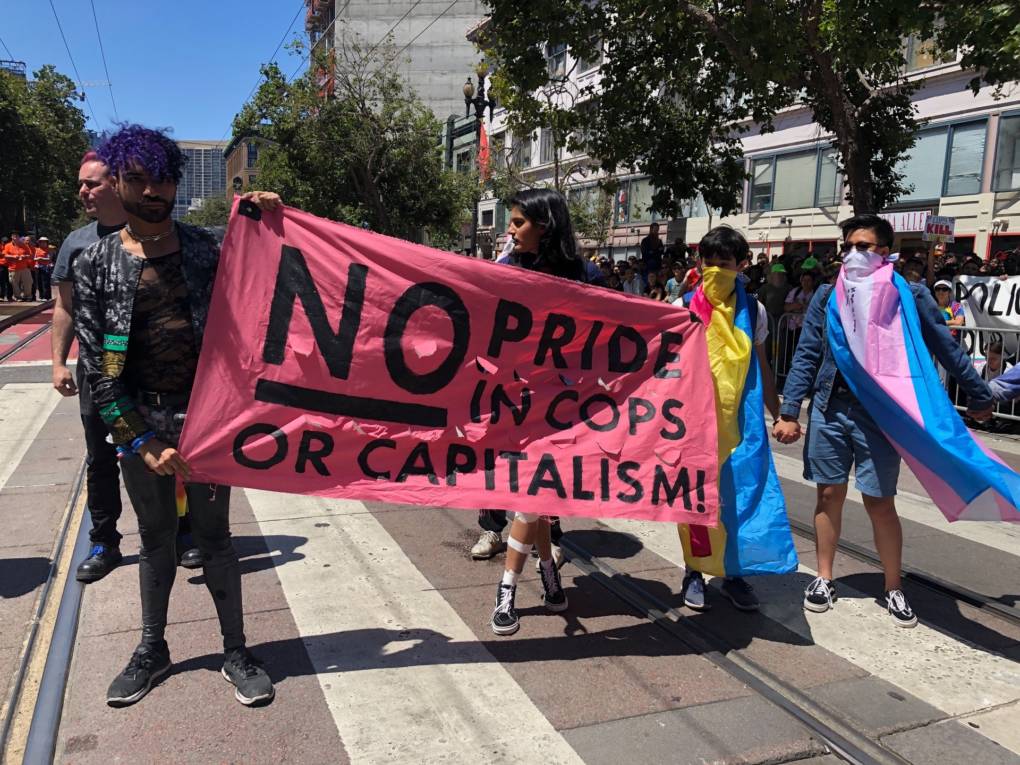
"caption": "A group of protesters block the San Francisco Pride Parade on June 30, 2019, over police and corporate presence at Pride.",
"description": "A group of protesters block the San Francisco Pride Parade on June 30, 2019, over police and corporate presence at Pride.",
"title": "RS37956_IMG_5993-qut",
"credit": "Liliana Michelena/KQED",
"status": "inherit",
"isLoading": false,
"fetchFailed": false
},
"news_11758027": {
"type": "attachments",
"id": "news_11758027",
"meta": {
"index": "attachments_1716263798",
"site": "news",
"id": "11758027",
"found": true
},
"parent": 11758014,
"imgSizes": {
"apple_news_ca_landscape_5_5": {
"file": "https://ww2.kqed.org/app/uploads/sites/10/2019/06/RS37783__M6A0688-qut-1044x783.jpg",
"width": 1044,
"mimeType": "image/jpeg",
"height": 783
},
"apple_news_ca_square_4_0": {
"file": "https://ww2.kqed.org/app/uploads/sites/10/2019/06/RS37783__M6A0688-qut-470x470.jpg",
"width": 470,
"mimeType": "image/jpeg",
"height": 470
},
"twentyfourteen-full-width": {
"file": "https://ww2.kqed.org/app/uploads/sites/10/2019/06/RS37783__M6A0688-qut-1038x576.jpg",
"width": 1038,
"mimeType": "image/jpeg",
"height": 576
},
"thumbnail": {
"file": "https://ww2.kqed.org/app/uploads/sites/10/2019/06/RS37783__M6A0688-qut-160x107.jpg",
"width": 160,
"mimeType": "image/jpeg",
"height": 107
},
"post-thumbnail": {
"file": "https://ww2.kqed.org/app/uploads/sites/10/2019/06/RS37783__M6A0688-qut-672x372.jpg",
"width": 672,
"mimeType": "image/jpeg",
"height": 372
},
"kqedFullSize": {
"file": "https://ww2.kqed.org/app/uploads/sites/10/2019/06/RS37783__M6A0688-qut.jpg",
"width": 1920,
"height": 1280
},
"apple_news_ca_landscape_4_7": {
"file": "https://ww2.kqed.org/app/uploads/sites/10/2019/06/RS37783__M6A0688-qut-632x474.jpg",
"width": 632,
"mimeType": "image/jpeg",
"height": 474
},
"large": {
"file": "https://ww2.kqed.org/app/uploads/sites/10/2019/06/RS37783__M6A0688-qut-1020x680.jpg",
"width": 1020,
"mimeType": "image/jpeg",
"height": 680
},
"complete_open_graph": {
"file": "https://ww2.kqed.org/app/uploads/sites/10/2019/06/RS37783__M6A0688-qut-1200x800.jpg",
"width": 1200,
"mimeType": "image/jpeg",
"height": 800
},
"apple_news_ca_landscape_4_0": {
"file": "https://ww2.kqed.org/app/uploads/sites/10/2019/06/RS37783__M6A0688-qut-536x402.jpg",
"width": 536,
"mimeType": "image/jpeg",
"height": 402
},
"apple_news_ca_portrait_12_9": {
"file": "https://ww2.kqed.org/app/uploads/sites/10/2019/06/RS37783__M6A0688-qut-1122x1280.jpg",
"width": 1122,
"mimeType": "image/jpeg",
"height": 1280
},
"medium": {
"file": "https://ww2.kqed.org/app/uploads/sites/10/2019/06/RS37783__M6A0688-qut-800x533.jpg",
"width": 800,
"mimeType": "image/jpeg",
"height": 533
},
"apple_news_ca_portrait_4_0": {
"file": "https://ww2.kqed.org/app/uploads/sites/10/2019/06/RS37783__M6A0688-qut-354x472.jpg",
"width": 354,
"mimeType": "image/jpeg",
"height": 472
},
"apple_news_ca_portrait_9_7": {
"file": "https://ww2.kqed.org/app/uploads/sites/10/2019/06/RS37783__M6A0688-qut-840x1120.jpg",
"width": 840,
"mimeType": "image/jpeg",
"height": 1120
},
"apple_news_ca_landscape_12_9": {
"file": "https://ww2.kqed.org/app/uploads/sites/10/2019/06/RS37783__M6A0688-qut-1832x1280.jpg",
"width": 1832,
"mimeType": "image/jpeg",
"height": 1280
},
"apple_news_ca_square_9_7": {
"file": "https://ww2.kqed.org/app/uploads/sites/10/2019/06/RS37783__M6A0688-qut-1104x1104.jpg",
"width": 1104,
"mimeType": "image/jpeg",
"height": 1104
},
"apple_news_ca_portrait_4_7": {
"file": "https://ww2.kqed.org/app/uploads/sites/10/2019/06/RS37783__M6A0688-qut-414x552.jpg",
"width": 414,
"mimeType": "image/jpeg",
"height": 552
},
"apple_news_ca_square_12_9": {
"file": "https://ww2.kqed.org/app/uploads/sites/10/2019/06/RS37783__M6A0688-qut-1472x1280.jpg",
"width": 1472,
"mimeType": "image/jpeg",
"height": 1280
},
"apple_news_ca_portrait_5_5": {
"file": "https://ww2.kqed.org/app/uploads/sites/10/2019/06/RS37783__M6A0688-qut-687x916.jpg",
"width": 687,
"mimeType": "image/jpeg",
"height": 916
},
"full-width": {
"file": "https://ww2.kqed.org/app/uploads/sites/10/2019/06/RS37783__M6A0688-qut-1920x1280.jpg",
"width": 1920,
"mimeType": "image/jpeg",
"height": 1280
},
"apple_news_ca_square_4_7": {
"file": "https://ww2.kqed.org/app/uploads/sites/10/2019/06/RS37783__M6A0688-qut-550x550.jpg",
"width": 550,
"mimeType": "image/jpeg",
"height": 550
},
"apple_news_ca_landscape_9_7": {
"file": "https://ww2.kqed.org/app/uploads/sites/10/2019/06/RS37783__M6A0688-qut-1376x1032.jpg",
"width": 1376,
"mimeType": "image/jpeg",
"height": 1032
},
"apple_news_ca_square_5_5": {
"file": "https://ww2.kqed.org/app/uploads/sites/10/2019/06/RS37783__M6A0688-qut-912x912.jpg",
"width": 912,
"mimeType": "image/jpeg",
"height": 912
}
},
"publishDate": 1561755095,
"modified": 1561831328,
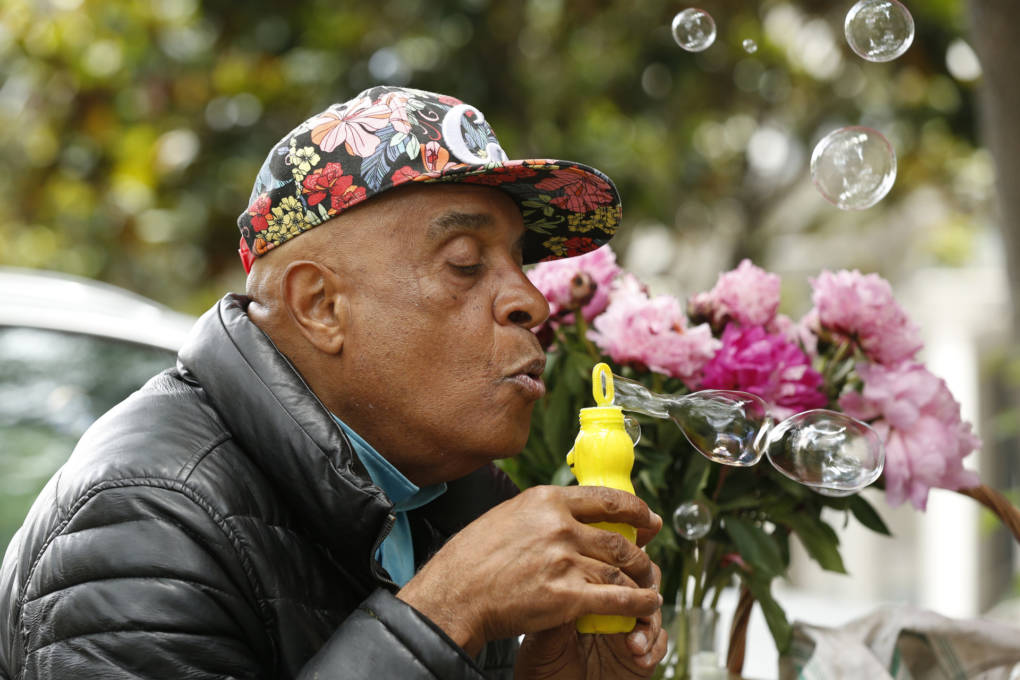
"caption": "After 38 years on the same corner, Guy Clark has become a neighborhood fixture in San Francisco's Castro District; he's won the community over with his daily blooms and bubbles.",
"description": null,
"title": "RS37783__M6A0688-qut",
"credit": "Stephanie Lister/KQED",
"status": "inherit",
"isLoading": false,
"fetchFailed": false
},
"news_11758242": {
"type": "attachments",
"id": "news_11758242",
"meta": {
"index": "attachments_1716263798",
"site": "news",
"id": "11758242",
"found": true
},
"parent": 11758234,
"imgSizes": {
"apple_news_ca_square_4_0": {
"file": "https://ww2.kqed.org/app/uploads/sites/10/2019/06/Black-Hair-470x449.jpg",
"width": 470,
"mimeType": "image/jpeg",
"height": 449
},
"thumbnail": {
"file": "https://ww2.kqed.org/app/uploads/sites/10/2019/06/Black-Hair-160x90.jpg",
"width": 160,
"mimeType": "image/jpeg",
"height": 90
},
"post-thumbnail": {
"file": "https://ww2.kqed.org/app/uploads/sites/10/2019/06/Black-Hair-672x372.jpg",
"width": 672,
"mimeType": "image/jpeg",
"height": 372
},
"kqedFullSize": {
"file": "https://ww2.kqed.org/app/uploads/sites/10/2019/06/Black-Hair.jpg",
"width": 800,
"height": 449
},
"apple_news_ca_landscape_4_7": {
"file": "https://ww2.kqed.org/app/uploads/sites/10/2019/06/Black-Hair-632x449.jpg",
"width": 632,
"mimeType": "image/jpeg",
"height": 449
},
"apple_news_ca_portrait_4_7": {
"file": "https://ww2.kqed.org/app/uploads/sites/10/2019/06/Black-Hair-414x449.jpg",
"width": 414,
"mimeType": "image/jpeg",
"height": 449
},
"apple_news_ca_portrait_5_5": {
"file": "https://ww2.kqed.org/app/uploads/sites/10/2019/06/Black-Hair-687x449.jpg",
"width": 687,
"mimeType": "image/jpeg",
"height": 449
},
"apple_news_ca_square_4_7": {
"file": "https://ww2.kqed.org/app/uploads/sites/10/2019/06/Black-Hair-550x449.jpg",
"width": 550,
"mimeType": "image/jpeg",
"height": 449
},
"apple_news_ca_landscape_4_0": {
"file": "https://ww2.kqed.org/app/uploads/sites/10/2019/06/Black-Hair-536x402.jpg",
"width": 536,
"mimeType": "image/jpeg",
"height": 402
},
"medium": {
"file": "https://ww2.kqed.org/app/uploads/sites/10/2019/06/Black-Hair-800x449.jpg",
"width": 800,
"mimeType": "image/jpeg",
"height": 449
},
"apple_news_ca_portrait_4_0": {
"file": "https://ww2.kqed.org/app/uploads/sites/10/2019/06/Black-Hair-354x449.jpg",
"width": 354,
"mimeType": "image/jpeg",
"height": 449
}
},
"publishDate": 1561812091,
"modified": 1561812151,
"caption": "California lawmakers have passed a bill banning discrimination against people who wear natural hairstyles such as braids.",
"description": "California lawmakers have passed a bill banning discrimination against people who wear natural hairstyles such as braids.",
"title": "Black Hair",
"credit": "Westend61/Getty Images/Westend61",
"status": "inherit",
"isLoading": false,
"fetchFailed": false
},
"news_11758233": {
"type": "attachments",
"id": "news_11758233",
"meta": {
"index": "attachments_1716263798",
"site": "news",
"id": "11758233",
"found": true
},
"parent": 11758219,
"imgSizes": {
"apple_news_ca_landscape_5_5": {
"file": "https://ww2.kqed.org/app/uploads/sites/10/2019/06/RS37927_0M6A0928-qut-1044x783.jpg",
"width": 1044,
"mimeType": "image/jpeg",
"height": 783
},
"apple_news_ca_square_4_0": {
"file": "https://ww2.kqed.org/app/uploads/sites/10/2019/06/RS37927_0M6A0928-qut-470x470.jpg",
"width": 470,
"mimeType": "image/jpeg",
"height": 470
},
"twentyfourteen-full-width": {
"file": "https://ww2.kqed.org/app/uploads/sites/10/2019/06/RS37927_0M6A0928-qut-1038x576.jpg",
"width": 1038,
"mimeType": "image/jpeg",
"height": 576
},
"thumbnail": {
"file": "https://ww2.kqed.org/app/uploads/sites/10/2019/06/RS37927_0M6A0928-qut-160x102.jpg",
"width": 160,
"mimeType": "image/jpeg",
"height": 102
},
"post-thumbnail": {
"file": "https://ww2.kqed.org/app/uploads/sites/10/2019/06/RS37927_0M6A0928-qut-672x372.jpg",
"width": 672,
"mimeType": "image/jpeg",
"height": 372
},
"kqedFullSize": {
"file": "https://ww2.kqed.org/app/uploads/sites/10/2019/06/RS37927_0M6A0928-qut.jpg",
"width": 1920,
"height": 1220
},
"apple_news_ca_landscape_4_7": {
"file": "https://ww2.kqed.org/app/uploads/sites/10/2019/06/RS37927_0M6A0928-qut-632x474.jpg",
"width": 632,
"mimeType": "image/jpeg",
"height": 474
},
"large": {
"file": "https://ww2.kqed.org/app/uploads/sites/10/2019/06/RS37927_0M6A0928-qut-1020x648.jpg",
"width": 1020,
"mimeType": "image/jpeg",
"height": 648
},
"complete_open_graph": {
"file": "https://ww2.kqed.org/app/uploads/sites/10/2019/06/RS37927_0M6A0928-qut-1200x763.jpg",
"width": 1200,
"mimeType": "image/jpeg",
"height": 763
},
"apple_news_ca_landscape_4_0": {
"file": "https://ww2.kqed.org/app/uploads/sites/10/2019/06/RS37927_0M6A0928-qut-536x402.jpg",
"width": 536,
"mimeType": "image/jpeg",
"height": 402
},
"apple_news_ca_portrait_12_9": {
"file": "https://ww2.kqed.org/app/uploads/sites/10/2019/06/RS37927_0M6A0928-qut-1122x1220.jpg",
"width": 1122,
"mimeType": "image/jpeg",
"height": 1220
},
"medium": {
"file": "https://ww2.kqed.org/app/uploads/sites/10/2019/06/RS37927_0M6A0928-qut-800x508.jpg",
"width": 800,
"mimeType": "image/jpeg",
"height": 508
},
"apple_news_ca_portrait_4_0": {
"file": "https://ww2.kqed.org/app/uploads/sites/10/2019/06/RS37927_0M6A0928-qut-354x472.jpg",
"width": 354,
"mimeType": "image/jpeg",
"height": 472
},
"apple_news_ca_portrait_9_7": {
"file": "https://ww2.kqed.org/app/uploads/sites/10/2019/06/RS37927_0M6A0928-qut-840x1120.jpg",
"width": 840,
"mimeType": "image/jpeg",
"height": 1120
},
"apple_news_ca_landscape_12_9": {
"file": "https://ww2.kqed.org/app/uploads/sites/10/2019/06/RS37927_0M6A0928-qut-1832x1220.jpg",
"width": 1832,
"mimeType": "image/jpeg",
"height": 1220
},
"apple_news_ca_square_9_7": {
"file": "https://ww2.kqed.org/app/uploads/sites/10/2019/06/RS37927_0M6A0928-qut-1104x1104.jpg",
"width": 1104,
"mimeType": "image/jpeg",
"height": 1104
},
"apple_news_ca_portrait_4_7": {
"file": "https://ww2.kqed.org/app/uploads/sites/10/2019/06/RS37927_0M6A0928-qut-414x552.jpg",
"width": 414,
"mimeType": "image/jpeg",
"height": 552
},
"apple_news_ca_square_12_9": {
"file": "https://ww2.kqed.org/app/uploads/sites/10/2019/06/RS37927_0M6A0928-qut-1472x1220.jpg",
"width": 1472,
"mimeType": "image/jpeg",
"height": 1220
},
"apple_news_ca_portrait_5_5": {
"file": "https://ww2.kqed.org/app/uploads/sites/10/2019/06/RS37927_0M6A0928-qut-687x916.jpg",
"width": 687,
"mimeType": "image/jpeg",
"height": 916
},
"full-width": {
"file": "https://ww2.kqed.org/app/uploads/sites/10/2019/06/RS37927_0M6A0928-qut-1920x1220.jpg",
"width": 1920,
"mimeType": "image/jpeg",
"height": 1220
},
"apple_news_ca_square_4_7": {
"file": "https://ww2.kqed.org/app/uploads/sites/10/2019/06/RS37927_0M6A0928-qut-550x550.jpg",
"width": 550,
"mimeType": "image/jpeg",
"height": 550
},
"apple_news_ca_landscape_9_7": {
"file": "https://ww2.kqed.org/app/uploads/sites/10/2019/06/RS37927_0M6A0928-qut-1376x1032.jpg",
"width": 1376,
"mimeType": "image/jpeg",
"height": 1032
},
"apple_news_ca_square_5_5": {
"file": "https://ww2.kqed.org/app/uploads/sites/10/2019/06/RS37927_0M6A0928-qut-912x912.jpg",
"width": 912,
"mimeType": "image/jpeg",
"height": 912
}
},
"publishDate": 1561810509,
"modified": 1561810682,
"caption": "The transgender pride flag is held high during the Trans March at Dolores Park on June 28, 2019.",
"description": "The transgender pride flag is held high during the Trans March at Dolores Park on June 28, 2019.",
"title": "RS37927_0M6A0928-qut",
"credit": "Sruti Mamidanna/KQED",
"status": "inherit",
"isLoading": false,
"fetchFailed": false
},
"news_11757503": {
"type": "attachments",
"id": "news_11757503",
"meta": {
"index": "attachments_1716263798",
"site": "news",
"id": "11757503",
"found": true
},
"parent": 11757445,
"imgSizes": {
"apple_news_ca_landscape_5_5": {
"file": "https://ww2.kqed.org/app/uploads/sites/10/2019/06/06262019_Google-Pride-Parade-qut-1044x783.jpg",
"width": 1044,
"mimeType": "image/jpeg",
"height": 783
},
"apple_news_ca_square_4_0": {
"file": "https://ww2.kqed.org/app/uploads/sites/10/2019/06/06262019_Google-Pride-Parade-qut-470x470.jpg",
"width": 470,
"mimeType": "image/jpeg",
"height": 470
},
"twentyfourteen-full-width": {
"file": "https://ww2.kqed.org/app/uploads/sites/10/2019/06/06262019_Google-Pride-Parade-qut-1038x576.jpg",
"width": 1038,
"mimeType": "image/jpeg",
"height": 576
},
"thumbnail": {
"file": "https://ww2.kqed.org/app/uploads/sites/10/2019/06/06262019_Google-Pride-Parade-qut-160x106.jpg",
"width": 160,
"mimeType": "image/jpeg",
"height": 106
},
"post-thumbnail": {
"file": "https://ww2.kqed.org/app/uploads/sites/10/2019/06/06262019_Google-Pride-Parade-qut-672x372.jpg",
"width": 672,
"mimeType": "image/jpeg",
"height": 372
},
"kqedFullSize": {
"file": "https://ww2.kqed.org/app/uploads/sites/10/2019/06/06262019_Google-Pride-Parade-qut.jpg",
"width": 1920,
"height": 1273
},
"apple_news_ca_landscape_4_7": {
"file": "https://ww2.kqed.org/app/uploads/sites/10/2019/06/06262019_Google-Pride-Parade-qut-632x474.jpg",
"width": 632,
"mimeType": "image/jpeg",
"height": 474
},
"large": {
"file": "https://ww2.kqed.org/app/uploads/sites/10/2019/06/06262019_Google-Pride-Parade-qut-1020x676.jpg",
"width": 1020,
"mimeType": "image/jpeg",
"height": 676
},
"complete_open_graph": {
"file": "https://ww2.kqed.org/app/uploads/sites/10/2019/06/06262019_Google-Pride-Parade-qut-1200x796.jpg",
"width": 1200,
"mimeType": "image/jpeg",
"height": 796
},
"apple_news_ca_landscape_4_0": {
"file": "https://ww2.kqed.org/app/uploads/sites/10/2019/06/06262019_Google-Pride-Parade-qut-536x402.jpg",
"width": 536,
"mimeType": "image/jpeg",
"height": 402
},
"apple_news_ca_portrait_12_9": {
"file": "https://ww2.kqed.org/app/uploads/sites/10/2019/06/06262019_Google-Pride-Parade-qut-1122x1273.jpg",
"width": 1122,
"mimeType": "image/jpeg",
"height": 1273
},
"medium": {
"file": "https://ww2.kqed.org/app/uploads/sites/10/2019/06/06262019_Google-Pride-Parade-qut-800x530.jpg",
"width": 800,
"mimeType": "image/jpeg",
"height": 530
},
"apple_news_ca_portrait_4_0": {
"file": "https://ww2.kqed.org/app/uploads/sites/10/2019/06/06262019_Google-Pride-Parade-qut-354x472.jpg",
"width": 354,
"mimeType": "image/jpeg",
"height": 472
},
"apple_news_ca_portrait_9_7": {
"file": "https://ww2.kqed.org/app/uploads/sites/10/2019/06/06262019_Google-Pride-Parade-qut-840x1120.jpg",
"width": 840,
"mimeType": "image/jpeg",
"height": 1120
},
"apple_news_ca_landscape_12_9": {
"file": "https://ww2.kqed.org/app/uploads/sites/10/2019/06/06262019_Google-Pride-Parade-qut-1832x1273.jpg",
"width": 1832,
"mimeType": "image/jpeg",
"height": 1273
},
"apple_news_ca_square_9_7": {
"file": "https://ww2.kqed.org/app/uploads/sites/10/2019/06/06262019_Google-Pride-Parade-qut-1104x1104.jpg",
"width": 1104,
"mimeType": "image/jpeg",
"height": 1104
},
"apple_news_ca_portrait_4_7": {
"file": "https://ww2.kqed.org/app/uploads/sites/10/2019/06/06262019_Google-Pride-Parade-qut-414x552.jpg",
"width": 414,
"mimeType": "image/jpeg",
"height": 552
},
"apple_news_ca_square_12_9": {
"file": "https://ww2.kqed.org/app/uploads/sites/10/2019/06/06262019_Google-Pride-Parade-qut-1472x1273.jpg",
"width": 1472,
"mimeType": "image/jpeg",
"height": 1273
},
"apple_news_ca_portrait_5_5": {
"file": "https://ww2.kqed.org/app/uploads/sites/10/2019/06/06262019_Google-Pride-Parade-qut-687x916.jpg",
"width": 687,
"mimeType": "image/jpeg",
"height": 916
},
"full-width": {
"file": "https://ww2.kqed.org/app/uploads/sites/10/2019/06/06262019_Google-Pride-Parade-qut-1920x1273.jpg",
"width": 1920,
"mimeType": "image/jpeg",
"height": 1273
},
"apple_news_ca_square_4_7": {
"file": "https://ww2.kqed.org/app/uploads/sites/10/2019/06/06262019_Google-Pride-Parade-qut-550x550.jpg",
"width": 550,
"mimeType": "image/jpeg",
"height": 550
},
"apple_news_ca_landscape_9_7": {
"file": "https://ww2.kqed.org/app/uploads/sites/10/2019/06/06262019_Google-Pride-Parade-qut-1376x1032.jpg",
"width": 1376,
"mimeType": "image/jpeg",
"height": 1032
},
"apple_news_ca_square_5_5": {
"file": "https://ww2.kqed.org/app/uploads/sites/10/2019/06/06262019_Google-Pride-Parade-qut-912x912.jpg",
"width": 912,
"mimeType": "image/jpeg",
"height": 912
}
},
"publishDate": 1561586078,
"modified": 1561589635,
"caption": "Revelers celebrate on the Google float at Cibeles square during the WorldPride 2017 parade in Madrid on July 1, 2017.",
"description": "Revellers celebrate on the Google float at Cibeles square during the WorldPride 2017 parade in Madrid on July 1, 2017.",
"title": "Google San Francisco Pride Parade",
"credit": "GERARD JULIEN/AFP/Getty Images",
"status": "inherit",
"isLoading": false,
"fetchFailed": false
},
"news_11757482": {
"type": "attachments",
"id": "news_11757482",
"meta": {
"index": "attachments_1716263798",
"site": "news",
"id": "11757482",
"found": true
},
"parent": 11757154,
"imgSizes": {
"apple_news_ca_landscape_5_5": {
"file": "https://ww2.kqed.org/app/uploads/sites/10/2019/06/RS31551_Pride-2018-qut-1044x783.jpg",
"width": 1044,
"mimeType": "image/jpeg",
"height": 783
},
"apple_news_ca_square_4_0": {
"file": "https://ww2.kqed.org/app/uploads/sites/10/2019/06/RS31551_Pride-2018-qut-470x470.jpg",
"width": 470,
"mimeType": "image/jpeg",
"height": 470
},
"twentyfourteen-full-width": {
"file": "https://ww2.kqed.org/app/uploads/sites/10/2019/06/RS31551_Pride-2018-qut-1038x576.jpg",
"width": 1038,
"mimeType": "image/jpeg",
"height": 576
},
"thumbnail": {
"file": "https://ww2.kqed.org/app/uploads/sites/10/2019/06/RS31551_Pride-2018-qut-160x120.jpg",
"width": 160,
"mimeType": "image/jpeg",
"height": 120
},
"post-thumbnail": {
"file": "https://ww2.kqed.org/app/uploads/sites/10/2019/06/RS31551_Pride-2018-qut-672x372.jpg",
"width": 672,
"mimeType": "image/jpeg",
"height": 372
},
"kqedFullSize": {
"file": "https://ww2.kqed.org/app/uploads/sites/10/2019/06/RS31551_Pride-2018-qut.jpg",
"width": 1920,
"height": 1440
},
"apple_news_ca_landscape_4_7": {
"file": "https://ww2.kqed.org/app/uploads/sites/10/2019/06/RS31551_Pride-2018-qut-632x474.jpg",
"width": 632,
"mimeType": "image/jpeg",
"height": 474
},
"large": {
"file": "https://ww2.kqed.org/app/uploads/sites/10/2019/06/RS31551_Pride-2018-qut-1020x765.jpg",
"width": 1020,
"mimeType": "image/jpeg",
"height": 765
},
"complete_open_graph": {
"file": "https://ww2.kqed.org/app/uploads/sites/10/2019/06/RS31551_Pride-2018-qut-1200x900.jpg",
"width": 1200,
"mimeType": "image/jpeg",
"height": 900
},
"apple_news_ca_landscape_4_0": {
"file": "https://ww2.kqed.org/app/uploads/sites/10/2019/06/RS31551_Pride-2018-qut-536x402.jpg",
"width": 536,
"mimeType": "image/jpeg",
"height": 402
},
"apple_news_ca_portrait_12_9": {
"file": "https://ww2.kqed.org/app/uploads/sites/10/2019/06/RS31551_Pride-2018-qut-1122x1440.jpg",
"width": 1122,
"mimeType": "image/jpeg",
"height": 1440
},
"medium": {
"file": "https://ww2.kqed.org/app/uploads/sites/10/2019/06/RS31551_Pride-2018-qut-800x600.jpg",
"width": 800,
"mimeType": "image/jpeg",
"height": 600
},
"apple_news_ca_portrait_4_0": {
"file": "https://ww2.kqed.org/app/uploads/sites/10/2019/06/RS31551_Pride-2018-qut-354x472.jpg",
"width": 354,
"mimeType": "image/jpeg",
"height": 472
},
"apple_news_ca_portrait_9_7": {
"file": "https://ww2.kqed.org/app/uploads/sites/10/2019/06/RS31551_Pride-2018-qut-840x1120.jpg",
"width": 840,
"mimeType": "image/jpeg",
"height": 1120
},
"apple_news_ca_landscape_12_9": {
"file": "https://ww2.kqed.org/app/uploads/sites/10/2019/06/RS31551_Pride-2018-qut-1832x1374.jpg",
"width": 1832,
"mimeType": "image/jpeg",
"height": 1374
},
"apple_news_ca_square_9_7": {
"file": "https://ww2.kqed.org/app/uploads/sites/10/2019/06/RS31551_Pride-2018-qut-1104x1104.jpg",
"width": 1104,
"mimeType": "image/jpeg",
"height": 1104
},
"apple_news_ca_portrait_4_7": {
"file": "https://ww2.kqed.org/app/uploads/sites/10/2019/06/RS31551_Pride-2018-qut-414x552.jpg",
"width": 414,
"mimeType": "image/jpeg",
"height": 552
},
"apple_news_ca_square_12_9": {
"file": "https://ww2.kqed.org/app/uploads/sites/10/2019/06/RS31551_Pride-2018-qut-1472x1440.jpg",
"width": 1472,
"mimeType": "image/jpeg",
"height": 1440
},
"apple_news_ca_portrait_5_5": {
"file": "https://ww2.kqed.org/app/uploads/sites/10/2019/06/RS31551_Pride-2018-qut-687x916.jpg",
"width": 687,
"mimeType": "image/jpeg",
"height": 916
},
"full-width": {
"file": "https://ww2.kqed.org/app/uploads/sites/10/2019/06/RS31551_Pride-2018-qut-1920x1440.jpg",
"width": 1920,
"mimeType": "image/jpeg",
"height": 1440
},
"apple_news_ca_square_4_7": {
"file": "https://ww2.kqed.org/app/uploads/sites/10/2019/06/RS31551_Pride-2018-qut-550x550.jpg",
"width": 550,
"mimeType": "image/jpeg",
"height": 550
},
"apple_news_ca_landscape_9_7": {
"file": "https://ww2.kqed.org/app/uploads/sites/10/2019/06/RS31551_Pride-2018-qut-1376x1032.jpg",
"width": 1376,
"mimeType": "image/jpeg",
"height": 1032
},
"apple_news_ca_square_5_5": {
"file": "https://ww2.kqed.org/app/uploads/sites/10/2019/06/RS31551_Pride-2018-qut-912x912.jpg",
"width": 912,
"mimeType": "image/jpeg",
"height": 912
}
},
"publishDate": 1561584172,
"modified": 1561584194,
"caption": "A parade participant dances in front of community grand Marshall Brian “Chickpea” Busta at the 2018 San Francisco Pride parade.",
"description": "A parade participant dances in front of community grand Marshall Brian “Chickpea” Busta at the 2018 San Francisco Pride parade.",
"title": "RS31551_Pride 2018-qut",
"credit": "Anne Wernikoff/KQED",
"status": "inherit",
"isLoading": false,
"fetchFailed": false
},
"news_11757217": {
"type": "attachments",
"id": "news_11757217",
"meta": {
"index": "attachments_1716263798",
"site": "news",
"id": "11757217",
"found": true
},
"parent": 11756955,
"imgSizes": {
"apple_news_ca_landscape_5_5": {
"file": "https://ww2.kqed.org/app/uploads/sites/10/2019/06/Ghost-Ship-Memorial-Rose-1044x783.jpg",
"width": 1044,
"mimeType": "image/jpeg",
"height": 783
},
"apple_news_ca_square_4_0": {
"file": "https://ww2.kqed.org/app/uploads/sites/10/2019/06/Ghost-Ship-Memorial-Rose-470x470.jpg",
"width": 470,
"mimeType": "image/jpeg",
"height": 470
},
"twentyfourteen-full-width": {
"file": "https://ww2.kqed.org/app/uploads/sites/10/2019/06/Ghost-Ship-Memorial-Rose-1038x576.jpg",
"width": 1038,
"mimeType": "image/jpeg",
"height": 576
},
"thumbnail": {
"file": "https://ww2.kqed.org/app/uploads/sites/10/2019/06/Ghost-Ship-Memorial-Rose-160x107.jpg",
"width": 160,
"mimeType": "image/jpeg",
"height": 107
},
"post-thumbnail": {
"file": "https://ww2.kqed.org/app/uploads/sites/10/2019/06/Ghost-Ship-Memorial-Rose-672x372.jpg",
"width": 672,
"mimeType": "image/jpeg",
"height": 372
},
"kqedFullSize": {
"file": "https://ww2.kqed.org/app/uploads/sites/10/2019/06/Ghost-Ship-Memorial-Rose.jpg",
"width": 1920,
"height": 1281
},
"apple_news_ca_landscape_4_7": {
"file": "https://ww2.kqed.org/app/uploads/sites/10/2019/06/Ghost-Ship-Memorial-Rose-632x474.jpg",
"width": 632,
"mimeType": "image/jpeg",
"height": 474
},
"large": {
"file": "https://ww2.kqed.org/app/uploads/sites/10/2019/06/Ghost-Ship-Memorial-Rose-1020x681.jpg",
"width": 1020,
"mimeType": "image/jpeg",
"height": 681
},
"complete_open_graph": {
"file": "https://ww2.kqed.org/app/uploads/sites/10/2019/06/Ghost-Ship-Memorial-Rose-1200x801.jpg",
"width": 1200,
"mimeType": "image/jpeg",
"height": 801
},
"apple_news_ca_landscape_4_0": {
"file": "https://ww2.kqed.org/app/uploads/sites/10/2019/06/Ghost-Ship-Memorial-Rose-536x402.jpg",
"width": 536,
"mimeType": "image/jpeg",
"height": 402
},
"apple_news_ca_portrait_12_9": {
"file": "https://ww2.kqed.org/app/uploads/sites/10/2019/06/Ghost-Ship-Memorial-Rose-1122x1281.jpg",
"width": 1122,
"mimeType": "image/jpeg",
"height": 1281
},
"medium": {
"file": "https://ww2.kqed.org/app/uploads/sites/10/2019/06/Ghost-Ship-Memorial-Rose-800x534.jpg",
"width": 800,
"mimeType": "image/jpeg",
"height": 534
},
"apple_news_ca_portrait_4_0": {
"file": "https://ww2.kqed.org/app/uploads/sites/10/2019/06/Ghost-Ship-Memorial-Rose-354x472.jpg",
"width": 354,
"mimeType": "image/jpeg",
"height": 472
},
"apple_news_ca_portrait_9_7": {
"file": "https://ww2.kqed.org/app/uploads/sites/10/2019/06/Ghost-Ship-Memorial-Rose-840x1120.jpg",
"width": 840,
"mimeType": "image/jpeg",
"height": 1120
},
"apple_news_ca_landscape_12_9": {
"file": "https://ww2.kqed.org/app/uploads/sites/10/2019/06/Ghost-Ship-Memorial-Rose-1832x1281.jpg",
"width": 1832,
"mimeType": "image/jpeg",
"height": 1281
},
"apple_news_ca_square_9_7": {
"file": "https://ww2.kqed.org/app/uploads/sites/10/2019/06/Ghost-Ship-Memorial-Rose-1104x1104.jpg",
"width": 1104,
"mimeType": "image/jpeg",
"height": 1104
},
"apple_news_ca_portrait_4_7": {
"file": "https://ww2.kqed.org/app/uploads/sites/10/2019/06/Ghost-Ship-Memorial-Rose-414x552.jpg",
"width": 414,
"mimeType": "image/jpeg",
"height": 552
},
"apple_news_ca_square_12_9": {
"file": "https://ww2.kqed.org/app/uploads/sites/10/2019/06/Ghost-Ship-Memorial-Rose-1472x1281.jpg",
"width": 1472,
"mimeType": "image/jpeg",
"height": 1281
},
"apple_news_ca_portrait_5_5": {
"file": "https://ww2.kqed.org/app/uploads/sites/10/2019/06/Ghost-Ship-Memorial-Rose-687x916.jpg",
"width": 687,
"mimeType": "image/jpeg",
"height": 916
},
"full-width": {
"file": "https://ww2.kqed.org/app/uploads/sites/10/2019/06/Ghost-Ship-Memorial-Rose-1920x1281.jpg",
"width": 1920,
"mimeType": "image/jpeg",
"height": 1281
},
"apple_news_ca_square_4_7": {
"file": "https://ww2.kqed.org/app/uploads/sites/10/2019/06/Ghost-Ship-Memorial-Rose-550x550.jpg",
"width": 550,
"mimeType": "image/jpeg",
"height": 550
},
"apple_news_ca_landscape_9_7": {
"file": "https://ww2.kqed.org/app/uploads/sites/10/2019/06/Ghost-Ship-Memorial-Rose-1376x1032.jpg",
"width": 1376,
"mimeType": "image/jpeg",
"height": 1032
},
"apple_news_ca_square_5_5": {
"file": "https://ww2.kqed.org/app/uploads/sites/10/2019/06/Ghost-Ship-Memorial-Rose-912x912.jpg",
"width": 912,
"mimeType": "image/jpeg",
"height": 912
}
},
"publishDate": 1561497946,
"modified": 1561497996,
"caption": "A rose hangs from a memorial outside the Ghost Ship warehouse on June 17, 2019.",
"description": "A rose hangs from a memorial outside the Ghost Ship warehouse on June 17, 2019.",
"title": "Ghost-Ship-Memorial-Rose",
"credit": "Stephanie Lister/KQED",
"status": "inherit",
"isLoading": false,
"fetchFailed": false
},
"news_11756680": {
"type": "attachments",
"id": "news_11756680",
"meta": {
"index": "attachments_1716263798",
"site": "news",
"id": "11756680",
"found": true
},
"parent": 11756665,
"imgSizes": {
"apple_news_ca_landscape_5_5": {
"file": "https://ww2.kqed.org/app/uploads/sites/10/2019/06/RS37868_GettyImages-1156293962-qut-1044x783.jpg",
"width": 1044,
"mimeType": "image/jpeg",
"height": 783
},
"apple_news_ca_square_4_0": {
"file": "https://ww2.kqed.org/app/uploads/sites/10/2019/06/RS37868_GettyImages-1156293962-qut-470x470.jpg",
"width": 470,
"mimeType": "image/jpeg",
"height": 470
},
"twentyfourteen-full-width": {
"file": "https://ww2.kqed.org/app/uploads/sites/10/2019/06/RS37868_GettyImages-1156293962-qut-1038x576.jpg",
"width": 1038,
"mimeType": "image/jpeg",
"height": 576
},
"thumbnail": {
"file": "https://ww2.kqed.org/app/uploads/sites/10/2019/06/RS37868_GettyImages-1156293962-qut-160x116.jpg",
"width": 160,
"mimeType": "image/jpeg",
"height": 116
},
"post-thumbnail": {
"file": "https://ww2.kqed.org/app/uploads/sites/10/2019/06/RS37868_GettyImages-1156293962-qut-672x372.jpg",
"width": 672,
"mimeType": "image/jpeg",
"height": 372
},
"kqedFullSize": {
"file": "https://ww2.kqed.org/app/uploads/sites/10/2019/06/RS37868_GettyImages-1156293962-qut.jpg",
"width": 1920,
"height": 1387
},
"apple_news_ca_landscape_4_7": {
"file": "https://ww2.kqed.org/app/uploads/sites/10/2019/06/RS37868_GettyImages-1156293962-qut-632x474.jpg",
"width": 632,
"mimeType": "image/jpeg",
"height": 474
},
"large": {
"file": "https://ww2.kqed.org/app/uploads/sites/10/2019/06/RS37868_GettyImages-1156293962-qut-1020x737.jpg",
"width": 1020,
"mimeType": "image/jpeg",
"height": 737
},
"complete_open_graph": {
"file": "https://ww2.kqed.org/app/uploads/sites/10/2019/06/RS37868_GettyImages-1156293962-qut-1200x867.jpg",
"width": 1200,
"mimeType": "image/jpeg",
"height": 867
},
"apple_news_ca_landscape_4_0": {
"file": "https://ww2.kqed.org/app/uploads/sites/10/2019/06/RS37868_GettyImages-1156293962-qut-536x402.jpg",
"width": 536,
"mimeType": "image/jpeg",
"height": 402
},
"apple_news_ca_portrait_12_9": {
"file": "https://ww2.kqed.org/app/uploads/sites/10/2019/06/RS37868_GettyImages-1156293962-qut-1122x1387.jpg",
"width": 1122,
"mimeType": "image/jpeg",
"height": 1387
},
"medium": {
"file": "https://ww2.kqed.org/app/uploads/sites/10/2019/06/RS37868_GettyImages-1156293962-qut-800x578.jpg",
"width": 800,
"mimeType": "image/jpeg",
"height": 578
},
"apple_news_ca_portrait_4_0": {
"file": "https://ww2.kqed.org/app/uploads/sites/10/2019/06/RS37868_GettyImages-1156293962-qut-354x472.jpg",
"width": 354,
"mimeType": "image/jpeg",
"height": 472
},
"apple_news_ca_portrait_9_7": {
"file": "https://ww2.kqed.org/app/uploads/sites/10/2019/06/RS37868_GettyImages-1156293962-qut-840x1120.jpg",
"width": 840,
"mimeType": "image/jpeg",
"height": 1120
},
"apple_news_ca_landscape_12_9": {
"file": "https://ww2.kqed.org/app/uploads/sites/10/2019/06/RS37868_GettyImages-1156293962-qut-1832x1374.jpg",
"width": 1832,
"mimeType": "image/jpeg",
"height": 1374
},
"apple_news_ca_square_9_7": {
"file": "https://ww2.kqed.org/app/uploads/sites/10/2019/06/RS37868_GettyImages-1156293962-qut-1104x1104.jpg",
"width": 1104,
"mimeType": "image/jpeg",
"height": 1104
},
"apple_news_ca_portrait_4_7": {
"file": "https://ww2.kqed.org/app/uploads/sites/10/2019/06/RS37868_GettyImages-1156293962-qut-414x552.jpg",
"width": 414,
"mimeType": "image/jpeg",
"height": 552
},
"apple_news_ca_square_12_9": {
"file": "https://ww2.kqed.org/app/uploads/sites/10/2019/06/RS37868_GettyImages-1156293962-qut-1472x1387.jpg",
"width": 1472,
"mimeType": "image/jpeg",
"height": 1387
},
"apple_news_ca_portrait_5_5": {
"file": "https://ww2.kqed.org/app/uploads/sites/10/2019/06/RS37868_GettyImages-1156293962-qut-687x916.jpg",
"width": 687,
"mimeType": "image/jpeg",
"height": 916
},
"full-width": {
"file": "https://ww2.kqed.org/app/uploads/sites/10/2019/06/RS37868_GettyImages-1156293962-qut-1920x1387.jpg",
"width": 1920,
"mimeType": "image/jpeg",
"height": 1387
},
"apple_news_ca_square_4_7": {
"file": "https://ww2.kqed.org/app/uploads/sites/10/2019/06/RS37868_GettyImages-1156293962-qut-550x550.jpg",
"width": 550,
"mimeType": "image/jpeg",
"height": 550
},
"apple_news_ca_landscape_9_7": {
"file": "https://ww2.kqed.org/app/uploads/sites/10/2019/06/RS37868_GettyImages-1156293962-qut-1376x1032.jpg",
"width": 1376,
"mimeType": "image/jpeg",
"height": 1032
},
"apple_news_ca_square_5_5": {
"file": "https://ww2.kqed.org/app/uploads/sites/10/2019/06/RS37868_GettyImages-1156293962-qut-912x912.jpg",
"width": 912,
"mimeType": "image/jpeg",
"height": 912
}
},
"publishDate": 1561234066,
"modified": 1561234175,
"caption": "Tom Hanks attends the European premiere of Disney and Pixar's \"Toy Story 4\" at the Odeon Luxe Leicester Square on June 16, 2019 in London, England. A Bay Area native, Hanks has referenced his origins more than once during his latest movie tour.",
"description": null,
"title": "Disney and Pixar's Toy Story 4 European Premiere",
"credit": "Gareth Cattermole/Getty Images",
"status": "inherit",
"isLoading": false,
"fetchFailed": false
},
"news_11756076": {
"type": "attachments",
"id": "news_11756076",
"meta": {
"index": "attachments_1716263798",
"site": "news",
"id": "11756076",
"found": true
},
"parent": 11749853,
"imgSizes": {
"apple_news_ca_landscape_5_5": {
"file": "https://ww2.kqed.org/app/uploads/sites/10/2019/06/RS37342_IMG_1473-qut-1044x783.jpg",
"width": 1044,
"mimeType": "image/jpeg",
"height": 783
},
"apple_news_ca_square_4_0": {
"file": "https://ww2.kqed.org/app/uploads/sites/10/2019/06/RS37342_IMG_1473-qut-470x470.jpg",
"width": 470,
"mimeType": "image/jpeg",
"height": 470
},
"twentyfourteen-full-width": {
"file": "https://ww2.kqed.org/app/uploads/sites/10/2019/06/RS37342_IMG_1473-qut-1038x576.jpg",
"width": 1038,
"mimeType": "image/jpeg",
"height": 576
},
"thumbnail": {
"file": "https://ww2.kqed.org/app/uploads/sites/10/2019/06/RS37342_IMG_1473-qut-160x120.jpg",
"width": 160,
"mimeType": "image/jpeg",
"height": 120
},
"post-thumbnail": {
"file": "https://ww2.kqed.org/app/uploads/sites/10/2019/06/RS37342_IMG_1473-qut-672x372.jpg",
"width": 672,
"mimeType": "image/jpeg",
"height": 372
},
"kqedFullSize": {
"file": "https://ww2.kqed.org/app/uploads/sites/10/2019/06/RS37342_IMG_1473-qut.jpg",
"width": 1920,
"height": 1440
},
"apple_news_ca_landscape_4_7": {
"file": "https://ww2.kqed.org/app/uploads/sites/10/2019/06/RS37342_IMG_1473-qut-632x474.jpg",
"width": 632,
"mimeType": "image/jpeg",
"height": 474
},
"large": {
"file": "https://ww2.kqed.org/app/uploads/sites/10/2019/06/RS37342_IMG_1473-qut-1020x765.jpg",
"width": 1020,
"mimeType": "image/jpeg",
"height": 765
},
"complete_open_graph": {
"file": "https://ww2.kqed.org/app/uploads/sites/10/2019/06/RS37342_IMG_1473-qut-1200x900.jpg",
"width": 1200,
"mimeType": "image/jpeg",
"height": 900
},
"apple_news_ca_landscape_4_0": {
"file": "https://ww2.kqed.org/app/uploads/sites/10/2019/06/RS37342_IMG_1473-qut-536x402.jpg",
"width": 536,
"mimeType": "image/jpeg",
"height": 402
},
"apple_news_ca_portrait_12_9": {
"file": "https://ww2.kqed.org/app/uploads/sites/10/2019/06/RS37342_IMG_1473-qut-1122x1440.jpg",
"width": 1122,
"mimeType": "image/jpeg",
"height": 1440
},
"medium": {
"file": "https://ww2.kqed.org/app/uploads/sites/10/2019/06/RS37342_IMG_1473-qut-800x600.jpg",
"width": 800,
"mimeType": "image/jpeg",
"height": 600
},
"apple_news_ca_portrait_4_0": {
"file": "https://ww2.kqed.org/app/uploads/sites/10/2019/06/RS37342_IMG_1473-qut-354x472.jpg",
"width": 354,
"mimeType": "image/jpeg",
"height": 472
},
"apple_news_ca_portrait_9_7": {
"file": "https://ww2.kqed.org/app/uploads/sites/10/2019/06/RS37342_IMG_1473-qut-840x1120.jpg",
"width": 840,
"mimeType": "image/jpeg",
"height": 1120
},
"apple_news_ca_landscape_12_9": {
"file": "https://ww2.kqed.org/app/uploads/sites/10/2019/06/RS37342_IMG_1473-qut-1832x1374.jpg",
"width": 1832,
"mimeType": "image/jpeg",
"height": 1374
},
"apple_news_ca_square_9_7": {
"file": "https://ww2.kqed.org/app/uploads/sites/10/2019/06/RS37342_IMG_1473-qut-1104x1104.jpg",
"width": 1104,
"mimeType": "image/jpeg",
"height": 1104
},
"apple_news_ca_portrait_4_7": {
"file": "https://ww2.kqed.org/app/uploads/sites/10/2019/06/RS37342_IMG_1473-qut-414x552.jpg",
"width": 414,
"mimeType": "image/jpeg",
"height": 552
},
"apple_news_ca_square_12_9": {
"file": "https://ww2.kqed.org/app/uploads/sites/10/2019/06/RS37342_IMG_1473-qut-1472x1440.jpg",
"width": 1472,
"mimeType": "image/jpeg",
"height": 1440
},
"apple_news_ca_portrait_5_5": {
"file": "https://ww2.kqed.org/app/uploads/sites/10/2019/06/RS37342_IMG_1473-qut-687x916.jpg",
"width": 687,
"mimeType": "image/jpeg",
"height": 916
},
"full-width": {
"file": "https://ww2.kqed.org/app/uploads/sites/10/2019/06/RS37342_IMG_1473-qut-1920x1440.jpg",
"width": 1920,
"mimeType": "image/jpeg",
"height": 1440
},
"apple_news_ca_square_4_7": {
"file": "https://ww2.kqed.org/app/uploads/sites/10/2019/06/RS37342_IMG_1473-qut-550x550.jpg",
"width": 550,
"mimeType": "image/jpeg",
"height": 550
},
"apple_news_ca_landscape_9_7": {
"file": "https://ww2.kqed.org/app/uploads/sites/10/2019/06/RS37342_IMG_1473-qut-1376x1032.jpg",
"width": 1376,
"mimeType": "image/jpeg",
"height": 1032
},
"apple_news_ca_square_5_5": {
"file": "https://ww2.kqed.org/app/uploads/sites/10/2019/06/RS37342_IMG_1473-qut-912x912.jpg",
"width": 912,
"mimeType": "image/jpeg",
"height": 912
}
},
"publishDate": 1561060526,
"modified": 1561060662,
"caption": "Damburger's signature burger, with its super thin patty.",
"description": null,
"title": "RS37342_IMG_1473-qut",
"credit": "Lisa Morehouse/KQED",
"status": "inherit",
"isLoading": false,
"fetchFailed": false
},
"news_11756103": {
"type": "attachments",
"id": "news_11756103",
"meta": {
"index": "attachments_1716263798",
"site": "news",
"id": "11756103",
"found": true
},
"parent": 11756094,
"imgSizes": {
"apple_news_ca_landscape_5_5": {
"file": "https://ww2.kqed.org/app/uploads/sites/10/2019/06/RS37797_Long-DIstance-Paola-featured-image-qut-1044x783.jpg",
"width": 1044,
"mimeType": "image/jpeg",
"height": 783
},
"apple_news_ca_square_4_0": {
"file": "https://ww2.kqed.org/app/uploads/sites/10/2019/06/RS37797_Long-DIstance-Paola-featured-image-qut-470x470.jpg",
"width": 470,
"mimeType": "image/jpeg",
"height": 470
},
"twentyfourteen-full-width": {
"file": "https://ww2.kqed.org/app/uploads/sites/10/2019/06/RS37797_Long-DIstance-Paola-featured-image-qut-1038x576.jpg",
"width": 1038,
"mimeType": "image/jpeg",
"height": 576
},
"thumbnail": {
"file": "https://ww2.kqed.org/app/uploads/sites/10/2019/06/RS37797_Long-DIstance-Paola-featured-image-qut-160x107.jpg",
"width": 160,
"mimeType": "image/jpeg",
"height": 107
},
"post-thumbnail": {
"file": "https://ww2.kqed.org/app/uploads/sites/10/2019/06/RS37797_Long-DIstance-Paola-featured-image-qut-672x372.jpg",
"width": 672,
"mimeType": "image/jpeg",
"height": 372
},
"kqedFullSize": {
"file": "https://ww2.kqed.org/app/uploads/sites/10/2019/06/RS37797_Long-DIstance-Paola-featured-image-qut.jpg",
"width": 1500,
"height": 1000
},
"apple_news_ca_landscape_4_7": {
"file": "https://ww2.kqed.org/app/uploads/sites/10/2019/06/RS37797_Long-DIstance-Paola-featured-image-qut-632x474.jpg",
"width": 632,
"mimeType": "image/jpeg",
"height": 474
},
"large": {
"file": "https://ww2.kqed.org/app/uploads/sites/10/2019/06/RS37797_Long-DIstance-Paola-featured-image-qut-1020x680.jpg",
"width": 1020,
"mimeType": "image/jpeg",
"height": 680
},
"complete_open_graph": {
"file": "https://ww2.kqed.org/app/uploads/sites/10/2019/06/RS37797_Long-DIstance-Paola-featured-image-qut-1200x800.jpg",
"width": 1200,
"mimeType": "image/jpeg",
"height": 800
},
"apple_news_ca_landscape_4_0": {
"file": "https://ww2.kqed.org/app/uploads/sites/10/2019/06/RS37797_Long-DIstance-Paola-featured-image-qut-536x402.jpg",
"width": 536,
"mimeType": "image/jpeg",
"height": 402
},
"apple_news_ca_portrait_12_9": {
"file": "https://ww2.kqed.org/app/uploads/sites/10/2019/06/RS37797_Long-DIstance-Paola-featured-image-qut-1122x1000.jpg",
"width": 1122,
"mimeType": "image/jpeg",
"height": 1000
},
"medium": {
"file": "https://ww2.kqed.org/app/uploads/sites/10/2019/06/RS37797_Long-DIstance-Paola-featured-image-qut-800x533.jpg",
"width": 800,
"mimeType": "image/jpeg",
"height": 533
},
"apple_news_ca_portrait_4_0": {
"file": "https://ww2.kqed.org/app/uploads/sites/10/2019/06/RS37797_Long-DIstance-Paola-featured-image-qut-354x472.jpg",
"width": 354,
"mimeType": "image/jpeg",
"height": 472
},
"apple_news_ca_portrait_9_7": {
"file": "https://ww2.kqed.org/app/uploads/sites/10/2019/06/RS37797_Long-DIstance-Paola-featured-image-qut-840x1000.jpg",
"width": 840,
"mimeType": "image/jpeg",
"height": 1000
},
"apple_news_ca_square_9_7": {
"file": "https://ww2.kqed.org/app/uploads/sites/10/2019/06/RS37797_Long-DIstance-Paola-featured-image-qut-1104x1000.jpg",
"width": 1104,
"mimeType": "image/jpeg",
"height": 1000
},
"apple_news_ca_portrait_4_7": {
"file": "https://ww2.kqed.org/app/uploads/sites/10/2019/06/RS37797_Long-DIstance-Paola-featured-image-qut-414x552.jpg",
"width": 414,
"mimeType": "image/jpeg",
"height": 552
},
"apple_news_ca_square_12_9": {
"file": "https://ww2.kqed.org/app/uploads/sites/10/2019/06/RS37797_Long-DIstance-Paola-featured-image-qut-1472x1000.jpg",
"width": 1472,
"mimeType": "image/jpeg",
"height": 1000
},
"apple_news_ca_portrait_5_5": {
"file": "https://ww2.kqed.org/app/uploads/sites/10/2019/06/RS37797_Long-DIstance-Paola-featured-image-qut-687x916.jpg",
"width": 687,
"mimeType": "image/jpeg",
"height": 916
},
"apple_news_ca_square_4_7": {
"file": "https://ww2.kqed.org/app/uploads/sites/10/2019/06/RS37797_Long-DIstance-Paola-featured-image-qut-550x550.jpg",
"width": 550,
"mimeType": "image/jpeg",
"height": 550
},
"apple_news_ca_landscape_9_7": {
"file": "https://ww2.kqed.org/app/uploads/sites/10/2019/06/RS37797_Long-DIstance-Paola-featured-image-qut-1376x1000.jpg",
"width": 1376,
"mimeType": "image/jpeg",
"height": 1000
},
"apple_news_ca_square_5_5": {
"file": "https://ww2.kqed.org/app/uploads/sites/10/2019/06/RS37797_Long-DIstance-Paola-featured-image-qut-912x912.jpg",
"width": 912,
"mimeType": "image/jpeg",
"height": 912
}
},
"publishDate": 1561063148,
"modified": 1561160279,
"caption": "Long Distance podcast host and creator Paola Mardo conducts an interview in L.A.'s historic Filipinotown. ",
"description": "Long Distance podcast host and creator Paola Mardo conducts an interview in L.A.'s historic Filipinotown. ",
"title": "Long Distance Paola Mardo",
"credit": "Courtesy of Patrick Epino",
"status": "inherit",
"isLoading": false,
"fetchFailed": false
},
"news_11755886": {
"type": "attachments",
"id": "news_11755886",
"meta": {
"index": "attachments_1716263798",
"site": "news",
"id": "11755886",
"found": true
},
"parent": 11755724,
"imgSizes": {
"apple_news_ca_landscape_5_5": {
"file": "https://ww2.kqed.org/app/uploads/sites/10/2019/06/RS37743__DSC0984-qut-1044x783.jpg",
"width": 1044,
"mimeType": "image/jpeg",
"height": 783
},
"apple_news_ca_square_4_0": {
"file": "https://ww2.kqed.org/app/uploads/sites/10/2019/06/RS37743__DSC0984-qut-470x470.jpg",
"width": 470,
"mimeType": "image/jpeg",
"height": 470
},
"twentyfourteen-full-width": {
"file": "https://ww2.kqed.org/app/uploads/sites/10/2019/06/RS37743__DSC0984-qut-1038x576.jpg",
"width": 1038,
"mimeType": "image/jpeg",
"height": 576
},
"thumbnail": {
"file": "https://ww2.kqed.org/app/uploads/sites/10/2019/06/RS37743__DSC0984-qut-160x107.jpg",
"width": 160,
"mimeType": "image/jpeg",
"height": 107
},
"post-thumbnail": {
"file": "https://ww2.kqed.org/app/uploads/sites/10/2019/06/RS37743__DSC0984-qut-672x372.jpg",
"width": 672,
"mimeType": "image/jpeg",
"height": 372
},
"kqedFullSize": {
"file": "https://ww2.kqed.org/app/uploads/sites/10/2019/06/RS37743__DSC0984-qut.jpg",
"width": 1920,
"height": 1282
},
"apple_news_ca_landscape_4_7": {
"file": "https://ww2.kqed.org/app/uploads/sites/10/2019/06/RS37743__DSC0984-qut-632x474.jpg",
"width": 632,
"mimeType": "image/jpeg",
"height": 474
},
"large": {
"file": "https://ww2.kqed.org/app/uploads/sites/10/2019/06/RS37743__DSC0984-qut-1020x681.jpg",
"width": 1020,
"mimeType": "image/jpeg",
"height": 681
},
"complete_open_graph": {
"file": "https://ww2.kqed.org/app/uploads/sites/10/2019/06/RS37743__DSC0984-qut-1200x801.jpg",
"width": 1200,
"mimeType": "image/jpeg",
"height": 801
},
"apple_news_ca_landscape_4_0": {
"file": "https://ww2.kqed.org/app/uploads/sites/10/2019/06/RS37743__DSC0984-qut-536x402.jpg",
"width": 536,
"mimeType": "image/jpeg",
"height": 402
},
"apple_news_ca_portrait_12_9": {
"file": "https://ww2.kqed.org/app/uploads/sites/10/2019/06/RS37743__DSC0984-qut-1122x1282.jpg",
"width": 1122,
"mimeType": "image/jpeg",
"height": 1282
},
"medium": {
"file": "https://ww2.kqed.org/app/uploads/sites/10/2019/06/RS37743__DSC0984-qut-800x534.jpg",
"width": 800,
"mimeType": "image/jpeg",
"height": 534
},
"apple_news_ca_portrait_4_0": {
"file": "https://ww2.kqed.org/app/uploads/sites/10/2019/06/RS37743__DSC0984-qut-354x472.jpg",
"width": 354,
"mimeType": "image/jpeg",
"height": 472
},
"apple_news_ca_portrait_9_7": {
"file": "https://ww2.kqed.org/app/uploads/sites/10/2019/06/RS37743__DSC0984-qut-840x1120.jpg",
"width": 840,
"mimeType": "image/jpeg",
"height": 1120
},
"apple_news_ca_landscape_12_9": {
"file": "https://ww2.kqed.org/app/uploads/sites/10/2019/06/RS37743__DSC0984-qut-1832x1282.jpg",
"width": 1832,
"mimeType": "image/jpeg",
"height": 1282
},
"apple_news_ca_square_9_7": {
"file": "https://ww2.kqed.org/app/uploads/sites/10/2019/06/RS37743__DSC0984-qut-1104x1104.jpg",
"width": 1104,
"mimeType": "image/jpeg",
"height": 1104
},
"apple_news_ca_portrait_4_7": {
"file": "https://ww2.kqed.org/app/uploads/sites/10/2019/06/RS37743__DSC0984-qut-414x552.jpg",
"width": 414,
"mimeType": "image/jpeg",
"height": 552
},
"apple_news_ca_square_12_9": {
"file": "https://ww2.kqed.org/app/uploads/sites/10/2019/06/RS37743__DSC0984-qut-1472x1282.jpg",
"width": 1472,
"mimeType": "image/jpeg",
"height": 1282
},
"apple_news_ca_portrait_5_5": {
"file": "https://ww2.kqed.org/app/uploads/sites/10/2019/06/RS37743__DSC0984-qut-687x916.jpg",
"width": 687,
"mimeType": "image/jpeg",
"height": 916
},
"full-width": {
"file": "https://ww2.kqed.org/app/uploads/sites/10/2019/06/RS37743__DSC0984-qut-1920x1282.jpg",
"width": 1920,
"mimeType": "image/jpeg",
"height": 1282
},
"apple_news_ca_square_4_7": {
"file": "https://ww2.kqed.org/app/uploads/sites/10/2019/06/RS37743__DSC0984-qut-550x550.jpg",
"width": 550,
"mimeType": "image/jpeg",
"height": 550
},
"apple_news_ca_landscape_9_7": {
"file": "https://ww2.kqed.org/app/uploads/sites/10/2019/06/RS37743__DSC0984-qut-1376x1032.jpg",
"width": 1376,
"mimeType": "image/jpeg",
"height": 1032
},
"apple_news_ca_square_5_5": {
"file": "https://ww2.kqed.org/app/uploads/sites/10/2019/06/RS37743__DSC0984-qut-912x912.jpg",
"width": 912,
"mimeType": "image/jpeg",
"height": 912
}
},
"publishDate": 1560979851,
"modified": 1570199775,
"caption": "The facade of the Ghost Ship warehouse in Oakland on June 17, 2019.",
"description": "The facade of the Ghost Ship warehouse in Oakland, CA, June 17, 2019",
"title": "Ghost Ship warehouse exterior",
"credit": "Stephanie Lister/KQED",
"status": "inherit",
"isLoading": false,
"fetchFailed": false
},
"news_11755533": {
"type": "attachments",
"id": "news_11755533",
"meta": {
"index": "attachments_1716263798",
"site": "news",
"id": "11755533",
"found": true
},
"parent": 11755372,
"imgSizes": {
"apple_news_ca_landscape_5_5": {
"file": "https://ww2.kqed.org/app/uploads/sites/10/2019/06/IMG_7232-1044x783.jpg",
"width": 1044,
"mimeType": "image/jpeg",
"height": 783
},
"apple_news_ca_square_4_0": {
"file": "https://ww2.kqed.org/app/uploads/sites/10/2019/06/IMG_7232-470x470.jpg",
"width": 470,
"mimeType": "image/jpeg",
"height": 470
},
"twentyfourteen-full-width": {
"file": "https://ww2.kqed.org/app/uploads/sites/10/2019/06/IMG_7232-1038x576.jpg",
"width": 1038,
"mimeType": "image/jpeg",
"height": 576
},
"thumbnail": {
"file": "https://ww2.kqed.org/app/uploads/sites/10/2019/06/IMG_7232-160x90.jpg",
"width": 160,
"mimeType": "image/jpeg",
"height": 90
},
"post-thumbnail": {
"file": "https://ww2.kqed.org/app/uploads/sites/10/2019/06/IMG_7232-672x372.jpg",
"width": 672,
"mimeType": "image/jpeg",
"height": 372
},
"kqedFullSize": {
"file": "https://ww2.kqed.org/app/uploads/sites/10/2019/06/IMG_7232.jpg",
"width": 2048,
"height": 1152
},
"apple_news_ca_landscape_4_7": {
"file": "https://ww2.kqed.org/app/uploads/sites/10/2019/06/IMG_7232-632x474.jpg",
"width": 632,
"mimeType": "image/jpeg",
"height": 474
},
"large": {
"file": "https://ww2.kqed.org/app/uploads/sites/10/2019/06/IMG_7232-1020x574.jpg",
"width": 1020,
"mimeType": "image/jpeg",
"height": 574
},
"complete_open_graph": {
"file": "https://ww2.kqed.org/app/uploads/sites/10/2019/06/IMG_7232-1200x675.jpg",
"width": 1200,
"mimeType": "image/jpeg",
"height": 675
},
"apple_news_ca_landscape_4_0": {
"file": "https://ww2.kqed.org/app/uploads/sites/10/2019/06/IMG_7232-536x402.jpg",
"width": 536,
"mimeType": "image/jpeg",
"height": 402
},
"apple_news_ca_portrait_12_9": {
"file": "https://ww2.kqed.org/app/uploads/sites/10/2019/06/IMG_7232-1122x1496.jpg",
"width": 1122,
"mimeType": "image/jpeg",
"height": 1496
},
"medium": {
"file": "https://ww2.kqed.org/app/uploads/sites/10/2019/06/IMG_7232-800x450.jpg",
"width": 800,
"mimeType": "image/jpeg",
"height": 450
},
"apple_news_ca_portrait_4_0": {
"file": "https://ww2.kqed.org/app/uploads/sites/10/2019/06/IMG_7232-354x472.jpg",
"width": 354,
"mimeType": "image/jpeg",
"height": 472
},
"apple_news_ca_portrait_9_7": {
"file": "https://ww2.kqed.org/app/uploads/sites/10/2019/06/IMG_7232-840x1120.jpg",
"width": 840,
"mimeType": "image/jpeg",
"height": 1120
},
"apple_news_ca_landscape_12_9": {
"file": "https://ww2.kqed.org/app/uploads/sites/10/2019/06/IMG_7232-1832x1374.jpg",
"width": 1832,
"mimeType": "image/jpeg",
"height": 1374
},
"apple_news_ca_square_9_7": {
"file": "https://ww2.kqed.org/app/uploads/sites/10/2019/06/IMG_7232-1104x1104.jpg",
"width": 1104,
"mimeType": "image/jpeg",
"height": 1104
},
"apple_news_ca_portrait_4_7": {
"file": "https://ww2.kqed.org/app/uploads/sites/10/2019/06/IMG_7232-414x552.jpg",
"width": 414,
"mimeType": "image/jpeg",
"height": 552
},
"apple_news_ca_square_12_9": {
"file": "https://ww2.kqed.org/app/uploads/sites/10/2019/06/IMG_7232-1472x1472.jpg",
"width": 1472,
"mimeType": "image/jpeg",
"height": 1472
},
"apple_news_ca_portrait_5_5": {
"file": "https://ww2.kqed.org/app/uploads/sites/10/2019/06/IMG_7232-687x916.jpg",
"width": 687,
"mimeType": "image/jpeg",
"height": 916
},
"full-width": {
"file": "https://ww2.kqed.org/app/uploads/sites/10/2019/06/IMG_7232-1920x1080.jpg",
"width": 1920,
"mimeType": "image/jpeg",
"height": 1080
},
"apple_news_ca_square_4_7": {
"file": "https://ww2.kqed.org/app/uploads/sites/10/2019/06/IMG_7232-550x550.jpg",
"width": 550,
"mimeType": "image/jpeg",
"height": 550
},
"apple_news_ca_landscape_9_7": {
"file": "https://ww2.kqed.org/app/uploads/sites/10/2019/06/IMG_7232-1376x1032.jpg",
"width": 1376,
"mimeType": "image/jpeg",
"height": 1032
},
"apple_news_ca_square_5_5": {
"file": "https://ww2.kqed.org/app/uploads/sites/10/2019/06/IMG_7232-912x912.jpg",
"width": 912,
"mimeType": "image/jpeg",
"height": 912
}
},
"publishDate": 1560894228,
"modified": 1560900436,
"caption": "Max Harris, one of two men facing 36 counts of involuntary manslaughter stemming from the Dec. 2, 2016, Ghost Ship warehouse fire on the stand June 17, 2019.",
"description": "Max Harris, one of two men facing 36 counts of involuntary manslaughter stemming from the Dec. 2, 2016, Ghost Ship warehouse fire on the stand June 17, 2019.",
"title": "Max Harris Ghost Ship Trial defendant",
"credit": "Vicki Behringer/KQED",
"status": "inherit",
"isLoading": false,
"fetchFailed": false
}
},
"audioPlayerReducer": {
"postId": "stream_live",
"isPaused": true,
"isPlaying": false,
"pfsActive": false,
"pledgeModalIsOpen": true,
"playerDrawerIsOpen": false,
"liveAudioPlayStartedAt": 0,
"liveAudioPlayContext": ""
},
"authorsReducer": {
"byline_news_11758234": {
"type": "authors",
"id": "byline_news_11758234",
"meta": {
"override": true
},
"slug": "byline_news_11758234",
"name": "\u003ca href=\"https://www.npr.org/people/599521272/sasha-ingber\">Sasha Ingber\u003c/a>\u003cbr>NPR",
"isLoading": false
},
"dclyde": {
"type": "authors",
"id": "104",
"meta": {
"index": "authors_1716337520",
"id": "104",
"found": true
},
"name": "Don Clyde",
"firstName": "Don",
"lastName": "Clyde",
"slug": "dclyde",
"email": "dclyde@kqed.org",
"display_author_email": false,
"staff_mastheads": [],
"title": "KQED Contributor",
"bio": "Don Clyde is an online producer, reporter and copy editor for KQED News. Before venturing into journalism, he worked as a medical device engineer and scientist for nearly a decade after earning a degree in physics from UC Berkeley. He loves travel, reading, living in Oakland, and most importantly, a good walk. Email him at dclyde@kqed.org or follow him @clydedon.",
"avatar": "https://secure.gravatar.com/avatar/decd3e640c3eedbd0a574275aebb2d19?s=600&d=blank&r=g",
"twitter": "clydedon",
"facebook": null,
"instagram": null,
"linkedin": null,
"sites": [
{
"site": "artschool",
"roles": [
"editor"
]
},
{
"site": "news",
"roles": [
"administrator"
]
},
{
"site": "futureofyou",
"roles": [
"editor"
]
},
{
"site": "about",
"roles": [
"editor"
]
},
{
"site": "mindshift",
"roles": [
"contributor"
]
},
{
"site": "bayareabites",
"roles": [
"contributor"
]
},
{
"site": "lowdown",
"roles": [
"editor"
]
},
{
"site": "stateofhealth",
"roles": [
"administrator"
]
},
{
"site": "spark",
"roles": [
"administrator"
]
},
{
"site": "trulyca",
"roles": [
"administrator"
]
},
{
"site": "imagemakers",
"roles": [
"administrator"
]
},
{
"site": "science",
"roles": []
},
{
"site": "education",
"roles": [
"editor"
]
},
{
"site": "quest",
"roles": [
"subscriber"
]
},
{
"site": "checkplease",
"roles": [
"subscriber"
]
},
{
"site": "forum",
"roles": [
"editor"
]
},
{
"site": "perspectives",
"roles": [
"editor"
]
}
],
"headData": {
"title": "Don Clyde | KQED",
"description": "KQED Contributor",
"ogImgSrc": "https://secure.gravatar.com/avatar/decd3e640c3eedbd0a574275aebb2d19?s=600&d=blank&r=g",
"twImgSrc": "https://secure.gravatar.com/avatar/decd3e640c3eedbd0a574275aebb2d19?s=600&d=blank&r=g"
},
"isLoading": false,
"link": "/author/dclyde"
},
"kqed": {
"type": "authors",
"id": "236",
"meta": {
"index": "authors_1716337520",
"id": "236",
"found": true
},
"name": "KQED News Staff",
"firstName": "KQED News Staff",
"lastName": null,
"slug": "kqed",
"email": "faq@kqed.org",
"display_author_email": false,
"staff_mastheads": [],
"title": null,
"bio": null,
"avatar": "https://secure.gravatar.com/avatar/ef0e801a68c4c54afa9180db14084167?s=600&d=blank&r=g",
"twitter": null,
"facebook": null,
"instagram": null,
"linkedin": null,
"sites": [
{
"site": "arts",
"roles": [
"contributor"
]
},
{
"site": "news",
"roles": [
"editor"
]
},
{
"site": "futureofyou",
"roles": [
"author"
]
}
],
"headData": {
"title": "KQED News Staff | KQED",
"description": null,
"ogImgSrc": "https://secure.gravatar.com/avatar/ef0e801a68c4c54afa9180db14084167?s=600&d=blank&r=g",
"twImgSrc": "https://secure.gravatar.com/avatar/ef0e801a68c4c54afa9180db14084167?s=600&d=blank&r=g"
},
"isLoading": false,
"link": "/author/kqed"
},
"sasha-khokha": {
"type": "authors",
"id": "254",
"meta": {
"index": "authors_1716337520",
"id": "254",
"found": true
},
"name": "Sasha Khokha",
"firstName": "Sasha",
"lastName": "Khokha",
"slug": "sasha-khokha",
"email": "skhokha@kqed.org",
"display_author_email": true,
"staff_mastheads": [
"news"
],
"title": "Host, The California Report Magazine",
"bio": "Sasha Khokha is the host of \u003cem>The California Report's \u003c/em> weekly magazine program, which takes listeners on sound-rich excursions to meet the people that make the Golden State unique -- through audio documentaries and long-form stories. As \u003cem>The California Report's\u003c/em> Central Valley Bureau Chief based in Fresno for nearly a dozen years, Sasha brought the lives and concerns of rural Californians to listeners around the state. Her reporting helped expose the hidden price immigrant women janitors and farmworkers may pay to keep their jobs: sexual assault at work. It inspired two new California laws to protect them from sexual harassment. She was a key member of the reporting team for the Frontline film \u003cem>Rape on the Night Shift, \u003c/em>which was nominated for two national Emmys. Sasha has also won a national Edward R. Murrow and a national PRNDI award for investigative reporting, as well as multiple prizes from the Society for Professional Journalists. Sasha is a proud alum of the UC Berkeley Graduate School of Journalism and Brown University and a member of the South Asian Journalists Association.",
"avatar": "https://secure.gravatar.com/avatar/e4b5e1541aaeea2aa356aa1fb2a68950?s=600&d=blank&r=g",
"twitter": "KQEDSashaKhokha",
"facebook": null,
"instagram": null,
"linkedin": null,
"sites": [
{
"site": "news",
"roles": [
"editor"
]
},
{
"site": "stateofhealth",
"roles": [
"author"
]
},
{
"site": "science",
"roles": [
"author"
]
},
{
"site": "quest",
"roles": [
"subscriber"
]
}
],
"headData": {
"title": "Sasha Khokha | KQED",
"description": "Host, The California Report Magazine",
"ogImgSrc": "https://secure.gravatar.com/avatar/e4b5e1541aaeea2aa356aa1fb2a68950?s=600&d=blank&r=g",
"twImgSrc": "https://secure.gravatar.com/avatar/e4b5e1541aaeea2aa356aa1fb2a68950?s=600&d=blank&r=g"
},
"isLoading": false,
"link": "/author/sasha-khokha"
},
"shutson": {
"type": "authors",
"id": "11216",
"meta": {
"index": "authors_1716337520",
"id": "11216",
"found": true
},
"name": "Sonja Hutson",
"firstName": "Sonja",
"lastName": "Hutson",
"slug": "shutson",
"email": "shutson@kqed.org",
"display_author_email": false,
"staff_mastheads": [],
"title": "KQED Contributor",
"bio": "Sonja Hutson is a former reporter for KQED's Silicon Valley desk and weekend newscasts. She primarily covers tech and housing. Sonja is a Bay Area native and now lives in San Francisco. When she's not working, you can find her camping, skiing, scuba diving, and struggling with the New York Times Crossword. Email: \u003ca href=\"mailto:shutson@kqed.org\">shutson@kqed.org. \u003c/a>Twitter: \u003ca href=\"https://twitter.com/SonjaHutson\">@SonjaHutson\u003c/a>",
"avatar": "https://secure.gravatar.com/avatar/7537c5e36818614e599b6c0f41d72b7a?s=600&d=blank&r=g",
"twitter": "SonjaHutson",
"facebook": null,
"instagram": null,
"linkedin": null,
"sites": [
{
"site": "arts",
"roles": [
"author"
]
},
{
"site": "news",
"roles": [
"subscriber"
]
}
],
"headData": {
"title": "Sonja Hutson | KQED",
"description": "KQED Contributor",
"ogImgSrc": "https://secure.gravatar.com/avatar/7537c5e36818614e599b6c0f41d72b7a?s=600&d=blank&r=g",
"twImgSrc": "https://secure.gravatar.com/avatar/7537c5e36818614e599b6c0f41d72b7a?s=600&d=blank&r=g"
},
"isLoading": false,
"link": "/author/shutson"
},
"rlevi": {
"type": "authors",
"id": "11260",
"meta": {
"index": "authors_1716337520",
"id": "11260",
"found": true
},
"name": "Ryan Levi",
"firstName": "Ryan",
"lastName": "Levi",
"slug": "rlevi",
"email": "rlevi@KQED.org",
"display_author_email": false,
"staff_mastheads": [],
"title": "KQED Contributor",
"bio": "Ryan Levi was a reporter and podcast producer at KQED News from 2016-2019. He worked on \u003ca href=\"https://www.kqed.org/news/series/baycurious\">Bay Curious\u003c/a>, \u003ca href=\"https://www.kqed.org/news/tag/the-bay/\">The Bay, \u003c/a>and \u003ca href=\"https://podcasts.apple.com/us/podcast/the-california-report-magazine/id1314750545\">The California Report Magazine\u003c/a>, as well as hosting and producing the weekly \u003ca href=\"https://www.kqed.org/news/program/qedup/\">Q'ed Up podcast. \u003c/a>He also helped inaugurate KQED's weekend news coverage in 2017 as one of two original digital producers. Ryan holds degrees in multimedia journalism and Spanish from the University of Missouri.",
"avatar": "https://secure.gravatar.com/avatar/4cb2ddd028ac8807d1adf09609c5555d?s=600&d=blank&r=g",
"twitter": "ryan_levi",
"facebook": null,
"instagram": null,
"linkedin": null,
"sites": [
{
"site": "arts",
"roles": [
"editor"
]
},
{
"site": "news",
"roles": [
"subscriber"
]
},
{
"site": "stateofhealth",
"roles": [
"editor"
]
},
{
"site": "science",
"roles": [
"editor"
]
},
{
"site": "forum",
"roles": [
"administrator"
]
},
{
"site": "perspectives",
"roles": [
"administrator"
]
}
],
"headData": {
"title": "Ryan Levi | KQED",
"description": "KQED Contributor",
"ogImgSrc": "https://secure.gravatar.com/avatar/4cb2ddd028ac8807d1adf09609c5555d?s=600&d=blank&r=g",
"twImgSrc": "https://secure.gravatar.com/avatar/4cb2ddd028ac8807d1adf09609c5555d?s=600&d=blank&r=g"
},
"isLoading": false,
"link": "/author/rlevi"
},
"bhernandez": {
"type": "authors",
"id": "11359",
"meta": {
"index": "authors_1716337520",
"id": "11359",
"found": true
},
"name": "Bianca Hernandez",
"firstName": "Bianca",
"lastName": "Hernandez",
"slug": "bhernandez",
"email": "bhernandez@kqed.org",
"display_author_email": false,
"staff_mastheads": [],
"title": "KQED Contributor",
"bio": "Bianca Hernandez is a former Interactive Producer for KQED. She has produced at KGPE, KSEE24 and Sierra Magazine. In 2011 she received an undergraduate degree in Journalism and Anthropology from CSU, Chico . She earned a Master's from the University of Southern California in 2013, where she completed a documentary on teenage farmworkers. She is an avid Jane Austen fan and takes lightsaber combat class for fun.",
"avatar": "https://secure.gravatar.com/avatar/75b3424851e2f9fa131f2cb6a051aeac?s=600&d=blank&r=g",
"twitter": "bookhoarding",
"facebook": null,
"instagram": null,
"linkedin": null,
"sites": [
{
"site": "arts",
"roles": []
},
{
"site": "news",
"roles": []
},
{
"site": "science",
"roles": []
},
{
"site": "forum",
"roles": []
}
],
"headData": {
"title": "Bianca Hernandez | KQED",
"description": "KQED Contributor",
"ogImgSrc": "https://secure.gravatar.com/avatar/75b3424851e2f9fa131f2cb6a051aeac?s=600&d=blank&r=g",
"twImgSrc": "https://secure.gravatar.com/avatar/75b3424851e2f9fa131f2cb6a051aeac?s=600&d=blank&r=g"
},
"isLoading": false,
"link": "/author/bhernandez"
},
"aehsanipour": {
"type": "authors",
"id": "11580",
"meta": {
"index": "authors_1716337520",
"id": "11580",
"found": true
},
"name": "Asal Ehsanipour",
"firstName": "Asal",
"lastName": "Ehsanipour",
"slug": "aehsanipour",
"email": "aehsanipour@kqed.org",
"display_author_email": false,
"staff_mastheads": [],
"title": "Reporter and Producer",
"bio": "Asal Ehsanipour is a producer and reporter for Rightnowish, Bay Curious and The California Report Magazine. She is also a producer for \u003ca href=\"https://www.thedoubleshift.com/\">The Double Shift\u003c/a>, a podcast about a new generation of working mothers. In 2018, Asal was named an Emerging Journalist Fellow by the Journalism and Women’s Symposium. Her work has appeared on KQED, KALW, PRI’s The World, and in several food and travel publications.",
"avatar": "https://secure.gravatar.com/avatar/c0e210438f5dca1b76921ff9f0eada52?s=600&d=blank&r=g",
"twitter": null,
"facebook": null,
"instagram": null,
"linkedin": null,
"sites": [
{
"site": "arts",
"roles": []
},
{
"site": "news",
"roles": [
"author",
"edit_others_posts"
]
}
],
"headData": {
"title": "Asal Ehsanipour | KQED",
"description": "Reporter and Producer",
"ogImgSrc": "https://secure.gravatar.com/avatar/c0e210438f5dca1b76921ff9f0eada52?s=600&d=blank&r=g",
"twImgSrc": "https://secure.gravatar.com/avatar/c0e210438f5dca1b76921ff9f0eada52?s=600&d=blank&r=g"
},
"isLoading": false,
"link": "/author/aehsanipour"
},
"smamidanna": {
"type": "authors",
"id": "11581",
"meta": {
"index": "authors_1716337520",
"id": "11581",
"found": true
},
"name": "Sruti Mamidanna",
"firstName": "Sruti",
"lastName": "Mamidanna",
"slug": "smamidanna",
"email": "smamidanna@kqed.org",
"display_author_email": false,
"staff_mastheads": [],
"title": null,
"bio": null,
"avatar": "https://secure.gravatar.com/avatar/b6365bcdef7e2060671a7124aa076048?s=600&d=blank&r=g",
"twitter": null,
"facebook": null,
"instagram": null,
"linkedin": null,
"sites": [
{
"site": "news",
"roles": [
"author"
]
}
],
"headData": {
"title": "Sruti Mamidanna | KQED",
"description": null,
"ogImgSrc": "https://secure.gravatar.com/avatar/b6365bcdef7e2060671a7124aa076048?s=600&d=blank&r=g",
"twImgSrc": "https://secure.gravatar.com/avatar/b6365bcdef7e2060671a7124aa076048?s=600&d=blank&r=g"
},
"isLoading": false,
"link": "/author/smamidanna"
},
"lmichelena": {
"type": "authors",
"id": "11605",
"meta": {
"index": "authors_1716337520",
"id": "11605",
"found": true
},
"name": "Liliana Michelena",
"firstName": "Liliana",
"lastName": "Michelena",
"slug": "lmichelena",
"email": "lmichelena@kqed.org",
"display_author_email": false,
"staff_mastheads": [],
"title": "KQED Contributor",
"bio": null,
"avatar": "https://secure.gravatar.com/avatar/71c36efdf4f703ea9f10fdf7cb06c7c5?s=600&d=blank&r=g",
"twitter": null,
"facebook": null,
"instagram": null,
"linkedin": null,
"sites": [
{
"site": "news",
"roles": [
"subscriber"
]
}
],
"headData": {
"title": "Liliana Michelena | KQED",
"description": "KQED Contributor",
"ogImgSrc": "https://secure.gravatar.com/avatar/71c36efdf4f703ea9f10fdf7cb06c7c5?s=600&d=blank&r=g",
"twImgSrc": "https://secure.gravatar.com/avatar/71c36efdf4f703ea9f10fdf7cb06c7c5?s=600&d=blank&r=g"
},
"isLoading": false,
"link": "/author/lmichelena"
}
},
"pagesReducer": {
"news_category_arts-and-culture": {
"type": "terms",
"id": "news_223",
"meta": {
"index": "terms_1716263798",
"site": "news",
"id": "223",
"score": 11.240525
},
"featImg": null,
"name": "Arts and Culture",
"description": null,
"taxonomy": "category",
"headData": {
"twImgId": null,
"twTitle": null,
"ogTitle": null,
"ogImgId": null,
"twDescription": null,
"description": null,
"title": "Arts and Culture Archives | KQED News",
"ogDescription": null
},
"ttid": 231,
"slug": "arts-and-culture",
"isLoading": false,
"title": "Arts and Culture",
"pageMeta": {
"site": "news",
"WpPageTemplate": "page-topic-editorial",
"currentPage": 58
},
"blocks": [
{
"blockName": "kqed/post-list",
"attrs": {
"layout": "cardArticle2",
"query": "posts/news?category=arts-and-culture",
"seeMore": false,
"paginated": true,
"page": 58
}
},
{
"blockName": "kqed/ad"
}
]
}
},
"pfsSessionReducer": {},
"postsReducer": {
"stream_live": {
"type": "live",
"id": "stream_live",
"audioUrl": "https://hls.kqed.org/hls/kqed_app/playlist.m3u8",
"title": "Live Stream",
"excerpt": "Live Stream information currently unavailable.",
"link": "/radio",
"featImg": "",
"label": {
"name": "KQED Live",
"link": "/"
}
},
"stream_kqedNewscast": {
"type": "posts",
"id": "stream_kqedNewscast",
"audioUrl": "https://www.kqed.org/.stream/anon/radio/RDnews/newscast.mp3?_=1",
"title": "KQED Newscast",
"featImg": "",
"label": {
"name": "88.5 FM",
"link": "/"
}
},
"news_11758329": {
"type": "posts",
"id": "news_11758329",
"meta": {
"index": "posts_1716263798",
"site": "news",
"id": "11758329",
"score": null,
"sort": [
1561924695000
]
},
"parent": 0,
"labelTerm": {
"site": "news"
},
"blocks": [],
"publishDate": 1561924695,
"format": "standard",
"disqusTitle": "SF Pride Parade Briefly Halted by Anti-Police, Anti-Corporate Protest",
"title": "SF Pride Parade Briefly Halted by Anti-Police, Anti-Corporate Protest",
"headTitle": "KQED News",
"content": "\u003cp>\u003cem>Updated Sunday, 9:24 p.m.\u003c/em>\u003c/p>\n\u003cp>A small group of protesters blocked the San Francisco Pride Parade for just under an hour on Sunday, over police presence and corporate involvement in Pride festivities.\u003c/p>\n\u003cp>Around 11 a.m., about a dozen people sat down on Market Street near 6th Street. The parade paused about a half block away while police surrounded the protesters.\u003c/p>\n\u003cp>A police spokesperson said the protesters \"broke down barricades and threw water bottles at officers.\" Two people were arrested and charged with battery on a police officer, resisting arrest and interfering with a parade route, and one officer sustained non-life threatening injuries.\u003c/p>\n\u003cp>\"Police do not make us feel safe,\" said one of the protesters on a megaphone, eliciting cheers from the parade watchers standing along the street. The protest was organized by Abolish ICE SF and Gay Shame, an organization that has been pushing for the \u003ca href=\"https://www.kqed.org/arts/13857994/activists-demand-a-police-free-pride-as-sfpd-ramps-up-its-gay-friendly-image\" rel=\"noopener\" target=\"_blank\">exclusion of police\u003c/a> from Pride.\u003cbr>\nhttps://twitter.com/KQEDnews/status/1145412018502959105\u003c/p>\n\u003cp>[ad fullwidth]\u003c/p>\n\u003cp>After a little under an hour, the protesters got up and started chanting, \"50 minutes for 50 years,\" in reference to the 50th anniversary of the 1969 Stonewall riots in New York City that are often cited as having sparked the LGBTQ rights movement in the United States.\u003c/p>\n\u003cp>The protesters read a list of demands that included no police presence at any Pride-related event, the release of transgender people being held in San Francisco jail, no corporate involvement in Pride, an end to homeless sweeps in the lead up to the parade and making Pride more accessible to people with disabilities.\u003c/p>\n\u003cp>[aside tag='san-francisco-pride' label='Coverage of San Francisco Pride']\"The system of policing upholds white supremacy, hetero-patriarchy, gender binaries and capitalist rule,\" a protester said over a megaphone, reading out the demands.\u003c/p>\n\u003cp>\"Our second demand is no corporations in Pride,\" the protester continued. \"They profit from our communities while simultaneously exploiting, investing and benefiting from the prison industrial complex which disproportionately impacts black and brown and queer and trans communities.\"\u003c/p>\n\u003cp>The crowd seemed mostly supportive of the protest, cheering them on and at one point breaking out into a chant of, \"We support you!\"\u003c/p>\n\u003cp>\"Cops are mechanisms of violence,\" said a protest organizer who goes by the name Mary Jane Ma after the parade had resumed. \"They are the primary interaction that queer and trans people have with the state, almost always in a way that harms them physiologically or physically, and they have no place that has to do with our collective liberation.\"\u003c/p>\n\u003cp>Anti-police and anti-corporate sentiments have been a part of the conversation leading up to this year's Pride. In addition to mid-parade protest, a group of Google employees unsuccessfully asked San Francisco Pride to \u003ca href=\"https://www.kqed.org/news/11757445/google-wont-be-kicked-out-of-sf-pride-despite-petition-by-its-own-employees\" target=\"_blank\" rel=\"noopener\">not allow\u003c/a> their employer to be a part of Pride because of homophobic content on Google-owned YouTube.\u003c/p>\n\u003cp>Many of those disillusioned Google employees marched in the parade in protest of Google's continued role in the festivities.\u003c/p>\n\u003cp>\"If Google won't take a stand, than the world needs to demand that Google change that and take a stand,\" said the protest's lead organizer, who declined to give his name for fear over his job.\u003c/p>\n\u003cp>\u003c/p>\n\u003cp>\u003cem>KQED's Kathleen Quillian contributed to this report.\u003c/em>\u003c/p>\n\n",
"disqusIdentifier": "11758329 https://ww2.kqed.org/news/?p=11758329",
"disqusUrl": "https://ww2.kqed.org/news/2019/06/30/sf-pride-parade-briefly-halted-by-anti-police-anti-corporate-protest/",
"stats": {
"hasVideo": false,
"hasChartOrMap": false,
"hasAudio": false,
"hasPolis": false,
"wordCount": 542,
"hasGoogleForm": false,
"hasGallery": false,
"hasHearkenModule": false,
"iframeSrcs": [],
"paragraphCount": 17
},
"modified": 1561955062,
"excerpt": "The protesters blocked the parade for about an hour as they read out demands that included getting police and corporations out of Pride.",
"headData": {
"twImgId": "",
"twTitle": "",
"ogTitle": "",
"ogImgId": "",
"twDescription": "",
"description": "The protesters blocked the parade for about an hour as they read out demands that included getting police and corporations out of Pride.",
"title": "SF Pride Parade Briefly Halted by Anti-Police, Anti-Corporate Protest | KQED",
"ogDescription": "",
"schema": {
"@context": "https://schema.org",
"@type": "NewsArticle",
"headline": "SF Pride Parade Briefly Halted by Anti-Police, Anti-Corporate Protest",
"datePublished": "2019-06-30T12:58:15-07:00",
"dateModified": "2019-06-30T21:24:22-07:00",
"image": "https://cdn.kqed.org/wp-content/uploads/2020/02/KQED-OG-Image@1x.png",
"isAccessibleForFree": "True",
"publisher": {
"@type": "NewsMediaOrganization",
"@id": "https://www.kqed.org/#organization",
"name": "KQED",
"logo": "https://cdn.kqed.org/wp-content/uploads/2020/02/KQED-OG-Image@1x.png",
"url": "https://www.kqed.org",
"sameAs": [
"https://www.facebook.com/KQED",
"https://twitter.com/KQED",
"https://www.instagram.com/kqed/",
"https://www.tiktok.com/@kqedofficial",
"https://www.linkedin.com/company/kqed",
"https://www.youtube.com/channel/UCeC0IOo7i1P_61zVUWbJ4nw"
]
}
}
},
"guestAuthors": [],
"slug": "sf-pride-parade-briefly-halted-by-anti-police-anti-corporate-protest",
"status": "publish",
"path": "/news/11758329/sf-pride-parade-briefly-halted-by-anti-police-anti-corporate-protest",
"audioTrackLength": null,
"parsedContent": [
{
"type": "contentString",
"content": "\u003cdiv class=\"post-body\">\u003cp>\u003cp>\u003cem>Updated Sunday, 9:24 p.m.\u003c/em>\u003c/p>\n\u003cp>A small group of protesters blocked the San Francisco Pride Parade for just under an hour on Sunday, over police presence and corporate involvement in Pride festivities.\u003c/p>\n\u003cp>Around 11 a.m., about a dozen people sat down on Market Street near 6th Street. The parade paused about a half block away while police surrounded the protesters.\u003c/p>\n\u003cp>A police spokesperson said the protesters \"broke down barricades and threw water bottles at officers.\" Two people were arrested and charged with battery on a police officer, resisting arrest and interfering with a parade route, and one officer sustained non-life threatening injuries.\u003c/p>\n\u003cp>\"Police do not make us feel safe,\" said one of the protesters on a megaphone, eliciting cheers from the parade watchers standing along the street. The protest was organized by Abolish ICE SF and Gay Shame, an organization that has been pushing for the \u003ca href=\"https://www.kqed.org/arts/13857994/activists-demand-a-police-free-pride-as-sfpd-ramps-up-its-gay-friendly-image\" rel=\"noopener\" target=\"_blank\">exclusion of police\u003c/a> from Pride.\u003cbr>\u003c/p>\u003c/div>",
"attributes": {
"named": {},
"numeric": []
}
},
{
"type": "component",
"content": "",
"name": "singleTwitterStatus",
"attributes": {
"named": {
"id": "1145412018502959105"
},
"numeric": []
}
},
{
"type": "contentString",
"content": "\u003cdiv class=\"post-body\">\u003cp>\n\u003cp>\u003c/p>\u003c/div>",
"attributes": {
"named": {},
"numeric": []
}
},
{
"type": "component",
"content": "",
"name": "ad",
"attributes": {
"named": {
"label": "fullwidth"
},
"numeric": [
"fullwidth"
]
}
},
{
"type": "contentString",
"content": "\u003cdiv class=\"post-body\">\u003cp>\u003c/p>\n\u003cp>After a little under an hour, the protesters got up and started chanting, \"50 minutes for 50 years,\" in reference to the 50th anniversary of the 1969 Stonewall riots in New York City that are often cited as having sparked the LGBTQ rights movement in the United States.\u003c/p>\n\u003cp>The protesters read a list of demands that included no police presence at any Pride-related event, the release of transgender people being held in San Francisco jail, no corporate involvement in Pride, an end to homeless sweeps in the lead up to the parade and making Pride more accessible to people with disabilities.\u003c/p>\n\u003cp>\u003c/p>\u003c/div>",
"attributes": {
"named": {},
"numeric": []
}
},
{
"type": "component",
"content": "",
"name": "aside",
"attributes": {
"named": {
"tag": "san-francisco-pride",
"label": "Coverage of San Francisco Pride "
},
"numeric": []
}
},
{
"type": "contentString",
"content": "\u003cdiv class=\"post-body\">\u003cp>\"The system of policing upholds white supremacy, hetero-patriarchy, gender binaries and capitalist rule,\" a protester said over a megaphone, reading out the demands.\u003c/p>\n\u003cp>\"Our second demand is no corporations in Pride,\" the protester continued. \"They profit from our communities while simultaneously exploiting, investing and benefiting from the prison industrial complex which disproportionately impacts black and brown and queer and trans communities.\"\u003c/p>\n\u003cp>The crowd seemed mostly supportive of the protest, cheering them on and at one point breaking out into a chant of, \"We support you!\"\u003c/p>\n\u003cp>\"Cops are mechanisms of violence,\" said a protest organizer who goes by the name Mary Jane Ma after the parade had resumed. \"They are the primary interaction that queer and trans people have with the state, almost always in a way that harms them physiologically or physically, and they have no place that has to do with our collective liberation.\"\u003c/p>\n\u003cp>Anti-police and anti-corporate sentiments have been a part of the conversation leading up to this year's Pride. In addition to mid-parade protest, a group of Google employees unsuccessfully asked San Francisco Pride to \u003ca href=\"https://www.kqed.org/news/11757445/google-wont-be-kicked-out-of-sf-pride-despite-petition-by-its-own-employees\" target=\"_blank\" rel=\"noopener\">not allow\u003c/a> their employer to be a part of Pride because of homophobic content on Google-owned YouTube.\u003c/p>\n\u003cp>Many of those disillusioned Google employees marched in the parade in protest of Google's continued role in the festivities.\u003c/p>\n\u003cp>\"If Google won't take a stand, than the world needs to demand that Google change that and take a stand,\" said the protest's lead organizer, who declined to give his name for fear over his job.\u003c/p>\n\u003cp>\u003c/p>\n\u003cp>\u003cem>KQED's Kathleen Quillian contributed to this report.\u003c/em>\u003c/p>\n\n\u003c/div>\u003c/p>",
"attributes": {
"named": {},
"numeric": []
}
}
],
"link": "/news/11758329/sf-pride-parade-briefly-halted-by-anti-police-anti-corporate-protest",
"authors": [
"11260"
],
"categories": [
"news_223",
"news_8"
],
"tags": [
"news_19542",
"news_138",
"news_93",
"news_116",
"news_3123",
"news_1579",
"news_22585"
],
"featImg": "news_11758348",
"label": "news"
},
"news_11758014": {
"type": "posts",
"id": "news_11758014",
"meta": {
"index": "posts_1716263798",
"site": "news",
"id": "11758014",
"score": null,
"sort": [
1561831437000
]
},
"parent": 0,
"labelTerm": {
"site": "news",
"term": 72
},
"blocks": [],
"publishDate": 1561831437,
"format": "audio",
"disqusTitle": "Meet the Flower Guy Who's Watched the Castro Change Over 38 Years",
"title": "Meet the Flower Guy Who's Watched the Castro Change Over 38 Years",
"headTitle": "The California Report | KQED News",
"content": "\u003cp>Wearing a baseball cap patterned with bright, colorful flowers, \u003ca href=\"https://www.facebook.com/pages/Guys-Flowers/227347704057025\" target=\"_blank\" rel=\"noopener\">Guy Clark\u003c/a> is arranging bouquets of tulips, sunflowers and peonies. It's a sunny morning at his flower stand at the corner of 15th and Noe in San Francisco's Gay Mecca, the Castro District.\u003c/p>\n\u003cp>“These are called daylilies,” he explains, pointing to the first bouquet lined against the wall. \"The color is so vibrant. I love these pink ones — I got them because of Pride Week.\"\u003c/p>\n\u003cp>Clark has been selling flowers on this exact corner for the last 38 years. He's witnessed the evolution of the Pride movement, the AIDS epidemic and most recently, gentrification throughout the Castro.\u003c/p>\n\u003cp>Though the neighborhood has undergone many changes since Clark set up shop in 1981, his presence on this Castro corner has been a constant.\u003c/p>\n\u003cp>“Every day when I wake up I'm so excited to get out here and just tantalize the community with these beauties,” Clark says with a laugh.\u003c/p>\n\u003cp>[ad fullwidth]\u003c/p>\n\u003cp>Indeed, a visit to Clark’s flower stand not only involves admiring customers of all ages, but also frequent greetings with locals he's befriended over the years.\u003c/p>\n\u003cfigure id=\"attachment_11758020\" class=\"wp-caption alignnone\" style=\"max-width: 800px\">\u003cimg class=\"size-medium wp-image-11758020\" src=\"https://ww2.kqed.org/news/wp-content/uploads/sites/10/2019/06/RS37778__M6A0607-qut-800x533.jpg\" alt=\"\" width=\"800\" height=\"533\" srcset=\"https://ww2.kqed.org/app/uploads/sites/10/2019/06/RS37778__M6A0607-qut-800x533.jpg 800w, https://ww2.kqed.org/app/uploads/sites/10/2019/06/RS37778__M6A0607-qut-160x107.jpg 160w, https://ww2.kqed.org/app/uploads/sites/10/2019/06/RS37778__M6A0607-qut-1020x680.jpg 1020w, https://ww2.kqed.org/app/uploads/sites/10/2019/06/RS37778__M6A0607-qut-1200x800.jpg 1200w, https://ww2.kqed.org/app/uploads/sites/10/2019/06/RS37778__M6A0607-qut.jpg 1920w\" sizes=\"(max-width: 800px) 100vw, 800px\">\u003cfigcaption class=\"wp-caption-text\">Guy Clark and a customer on the corner of 15th and Noe, where Clark has been selling flowers for 38 years. \"It's like giving out gold,\" he says. \u003ccite>(Stephanie Lister/KQED)\u003c/cite>\u003c/figcaption>\u003c/figure>\n\u003cp>“You see that little guy right there?” asks Clark, pointing to a toddler in a stroller pushed by his grandmother. “I remember his father when he was a little kid; they used to come down the street and I would teach him his colors. This is the second generation.”\u003c/p>\n\u003cp>\u003cstrong>The 1970s San Francisco Scene Blooms\u003c/strong>\u003c/p>\n\u003cp>Guy Clark calls it “a magical moment in history” when he first arrived in San Francisco.\u003c/p>\n\u003cp>“It was the time of hippies — free love all over the place. And I think it was around one of the first gay parades. Men, women, children — it was almost mandatory at that time that you go to the parade.”\u003c/p>\n\u003cp>Clark also remembers the small-town, family feel that permeated San Francisco’s queer scene back in those days. He says Castro Street wasn’t the queer center it is now; other San Francisco neighborhoods like North Beach and Polk Street had notable queer communities, too.\u003c/p>\n\u003cp>“You know, back in the day we used to call it 'Mecca,' ” says Clark about San Francisco. “If you really wanted to live your life fully you come to ‘Mecca’ because you could be yourself here. It was like a home.”\u003c/p>\n\u003cp>Clark spent his nights at local hubs like the I-Beam, a gay nightclub in Haight-Ashbury, which closed in 1994. He remembers bringing his instruments, playing with conga drummers and dancing onstage to numbers by \u003ca href=\"https://www.kqed.org/arts/13854644/how-the-world-caught-up-to-sylvester\" target=\"_blank\" rel=\"noopener\">Sylvester\u003c/a>, whose No. 1 hit on Billboard’s dance music chart, “\u003ca href=\"https://www.youtube.com/watch?v=VyAHULpMXKQ\" target=\"_blank\" rel=\"noopener\">You Make Me Feel (Mighty Real)\u003c/a>” set the soundtrack for local queer liberation.\u003c/p>\n\u003cp>As Sylvester became an emblem of gay pride for people in the Castro District and around the country, so did his back up singers, the \u003ca href=\"https://en.wikipedia.org/wiki/The_Weather_Girls\" target=\"_blank\" rel=\"noopener\">Weather Girls\u003c/a>, who found their own fame with their 1982 No. 1 hit, “It’s Raining Men.”\u003c/p>\n\u003cp>https://www.youtube.com/watch?v=l5aZJBLAu1E\u003c/p>\n\u003cp>\"That was the song of the day,” laughs Clark. “It was almost like a theme song, an anthem. People just went berserk.”\u003c/p>\n\u003cp>San Francisco and the Castro have undergone dramatic changes since Clark first started selling flowers here. Still, he insists that the area maintains some of its old charm.\u003c/p>\n\u003cp>“It's still the same,” he says. “I see people from all over the world coming to San Francisco to enjoy the type of life we have here, the freedom we have here. You can’t be yourself everywhere.”\u003c/p>\n\u003cp>\u003cstrong>Giving Away Flowers Through the AIDS Crisis \u003c/strong>\u003c/p>\n\u003cp>Clark was selling flowers as the AIDS epidemic swept the gay community in the 1980s and '90s -- an era in which the San Francisco Department of Public Health \u003ca href=\"https://www.sfdph.org/dph/files/reports/RptsHIVAIDS/HIVAIDAnnlRpt1999.pdf\" target=\"_blank\" rel=\"noopener\">reported\u003c/a> the disease killed more than 18,000 people in the city\u003c/p>\n\u003cp>Clark explains that the \u003ca href=\"https://www.ebar.com/\" target=\"_blank\" rel=\"noopener\">Bay Area Reporter\u003c/a>, the country’s longest continuously published LGBTQ newspaper, offered a resource for the San Francisco’s gay community as the disease spread through the city.\u003c/p>\n\u003cp>“Every week people would look through [the paper] for the obituaries,” says Clark. “It went from one inch to the whole page, and then two pages.”\u003c/p>\n\u003cfigure id=\"attachment_11758019\" class=\"wp-caption alignnone\" style=\"max-width: 800px\">\u003cimg class=\"size-medium wp-image-11758019\" src=\"https://ww2.kqed.org/news/wp-content/uploads/sites/10/2019/06/RS37777__M6A0599-qut-800x533.jpg\" alt=\"\" width=\"800\" height=\"533\" srcset=\"https://ww2.kqed.org/app/uploads/sites/10/2019/06/RS37777__M6A0599-qut-800x533.jpg 800w, https://ww2.kqed.org/app/uploads/sites/10/2019/06/RS37777__M6A0599-qut-160x107.jpg 160w, https://ww2.kqed.org/app/uploads/sites/10/2019/06/RS37777__M6A0599-qut-1020x680.jpg 1020w, https://ww2.kqed.org/app/uploads/sites/10/2019/06/RS37777__M6A0599-qut-1200x800.jpg 1200w, https://ww2.kqed.org/app/uploads/sites/10/2019/06/RS37777__M6A0599-qut.jpg 1920w\" sizes=\"(max-width: 800px) 100vw, 800px\">\u003cfigcaption class=\"wp-caption-text\">During the AIDS epidemic, Clark gave away flowers to gay community members who were rapidly losing their loves ones to the disease. \u003ccite>(Stephanie Lister/KQED)\u003c/cite>\u003c/figcaption>\u003c/figure>\n\u003cp>He says it was common to see a familiar face at his flower stand one week, only to find their picture in an obituary a few weeks later. He also remembers men approaching him after losing a partner to AIDS, asking if he would help them arrange flowers for their funeral.\u003c/p>\n\u003cp>“‘I don't have a lot of money, but I really want it to be beautiful,' ” he recalls them saying.\u003c/p>\n\u003cp>“I told them, ‘We'll pull out all the stops. We'll make sure your lover gets to the other side in dignity and beauty,’ ” says Clark. “I just started doing one funeral after the next after the next after the next.”\u003c/p>\n\u003cp>Clark says he began giving away flowers for funerals weekly while also joining the local community in organized acts of resistance.\u003c/p>\n\u003cp>“We protested. We marched. We did everything we possibly could,” he says. “And some of us survived. We were able to share the meaning of humanity. We just held hands, and hugs, and prayed.”\u003c/p>\n\u003cp>That went on for years, until the number of people dying of AIDS began to decline in 1995.\u003c/p>\n\u003cp>“When the obituaries went back down to just a few names, it was a sigh of relief,” says Clark with a sigh himself. “We we could finally see through the clouds of AIDS. We could finally see the sun shining.”\u003c/p>\n\u003cp>\u003cstrong>A Gentrifying Castro\u003c/strong>\u003c/p>\n\u003cp>Clark used to live just four doors down from his flower stand.\u003c/p>\n\u003cp>“Best commute in the world,” he says, pointing to a yellow building just a stone’s throw from where he still works. He remembers the avocado tree in the back, which he planted himself.\u003c/p>\n\u003cp>“At that time I thought everything was written in stone, that this is the way it's going to be.”\u003c/p>\n\u003cp>However, Clark says that after 28 years, he received notice that he’d have to leave the apartment building during a major renovation. Though the landlord told Clark that tenants would be allowed to return to the building, Clark says he was unable to afford the hike in rent.\u003c/p>\n\u003cp>“I just didn't have a million dollars,” says Clark, who was homeless for a time after that. “It wasn't that I didn't have money; I couldn't find an affordable place to live in San Francisco anymore.”\u003c/p>\n\u003cp>Clark says he spent some time living in a property manager’s garage, but was eventually asked to leave that space as well. After losing both his dad and his home in the span of a year, Clark says he was “ready for the bridge.” Today, he credits his enduring relationships with his loyal customers for helping him recover from his depression.\u003c/p>\n\u003cp>“When I was evicted out of [my apartment] I was so bitter, I was so angry,” he says. “Finally when I realized that my home and my garage didn't define who I am, it made me stronger. It made me more resilient. I can still sell flowers. I’ve still got my permit, and it did get better. I don't have as many flowers, but I've got more customers. And it seems like it worked out for the best.”\u003c/p>\n\u003cp>\u003cstrong>Becoming A Neighborhood Fixture\u003c/strong>\u003c/p>\n\u003cp>After 38 years on the corner of 15th and Noe, Clark has become a local icon who is always willing to greet customers with blooms, bubbles and a smile.\u003c/p>\n\u003cfigure id=\"attachment_11758023\" class=\"wp-caption alignnone\" style=\"max-width: 800px\">\u003cimg class=\"wp-image-11758023 size-medium\" src=\"https://ww2.kqed.org/news/wp-content/uploads/sites/10/2019/06/RS37781__M6A0627-qut-800x533.jpg\" alt=\"\" width=\"800\" height=\"533\" srcset=\"https://ww2.kqed.org/app/uploads/sites/10/2019/06/RS37781__M6A0627-qut-800x533.jpg 800w, https://ww2.kqed.org/app/uploads/sites/10/2019/06/RS37781__M6A0627-qut-160x107.jpg 160w, https://ww2.kqed.org/app/uploads/sites/10/2019/06/RS37781__M6A0627-qut-1020x680.jpg 1020w, https://ww2.kqed.org/app/uploads/sites/10/2019/06/RS37781__M6A0627-qut-1200x800.jpg 1200w, https://ww2.kqed.org/app/uploads/sites/10/2019/06/RS37781__M6A0627-qut.jpg 1920w\" sizes=\"(max-width: 800px) 100vw, 800px\">\u003cfigcaption class=\"wp-caption-text\">Clark in front of his flower stand on a sunny San Francisco morning in June 2019. \u003ccite>(Stephanie Lister/KQED)\u003c/cite>\u003c/figcaption>\u003c/figure>\n\u003cp>Clark says he feels “like the uncle” and has story after story of adult customers he’s known since childhood. He says his flower stand has even introduced him to celebrity customers like Bobby McFerrin and Tracy Chapman.\u003c/p>\n\u003cp>When asked what his plans for the future, Clark says retirement isn’t in the cards for him.\u003c/p>\n\u003cp>“I bought a ukulele and I have a guitar,” Clark says. He plans on bringing his instruments to the flower stand to sing songs for his customers.\u003c/p>\n\u003cp>[ad floatright]\u003c/p>\n\u003cp>“If I die out here selling flowers, what a way to go!\" he laughs. \"Right to heaven from the flower stand.”\u003c/p>\n\n",
"disqusIdentifier": "11758014 https://ww2.kqed.org/news/?p=11758014",
"disqusUrl": "https://ww2.kqed.org/news/2019/06/29/meet-the-flower-guy-whos-watched-the-castro-change-over-38-years/",
"stats": {
"hasVideo": true,
"hasChartOrMap": false,
"hasAudio": false,
"hasPolis": false,
"wordCount": 1523,
"hasGoogleForm": false,
"hasGallery": false,
"hasHearkenModule": false,
"iframeSrcs": [],
"paragraphCount": 44
},
"modified": 1567110603,
"excerpt": "Guy Clark has sold flowers on this exact corner in San Francisco’s Castro District for 38 years.",
"headData": {
"twImgId": "",
"twTitle": "",
"ogTitle": "",
"ogImgId": "",
"twDescription": "",
"description": "Guy Clark has sold flowers on this exact corner in San Francisco’s Castro District for 38 years.",
"title": "Meet the Flower Guy Who's Watched the Castro Change Over 38 Years | KQED",
"ogDescription": "",
"schema": {
"@context": "https://schema.org",
"@type": "NewsArticle",
"headline": "Meet the Flower Guy Who's Watched the Castro Change Over 38 Years",
"datePublished": "2019-06-29T11:03:57-07:00",
"dateModified": "2019-08-29T13:30:03-07:00",
"image": "https://cdn.kqed.org/wp-content/uploads/2020/02/KQED-OG-Image@1x.png",
"isAccessibleForFree": "True",
"publisher": {
"@type": "NewsMediaOrganization",
"@id": "https://www.kqed.org/#organization",
"name": "KQED",
"logo": "https://cdn.kqed.org/wp-content/uploads/2020/02/KQED-OG-Image@1x.png",
"url": "https://www.kqed.org",
"sameAs": [
"https://www.facebook.com/KQED",
"https://twitter.com/KQED",
"https://www.instagram.com/kqed/",
"https://www.tiktok.com/@kqedofficial",
"https://www.linkedin.com/company/kqed",
"https://www.youtube.com/channel/UCeC0IOo7i1P_61zVUWbJ4nw"
]
}
}
},
"guestAuthors": [],
"slug": "meet-the-flower-guy-whos-watched-the-castro-change-over-38-years",
"status": "publish",
"audioUrl": "https://www.kqed.org/.stream/anon/radio/tcr/2019/07/GuyClarkNewVErsion.mp3",
"audioTrackLength": 338,
"path": "/news/11758014/meet-the-flower-guy-whos-watched-the-castro-change-over-38-years",
"audioDuration": 351000,
"parsedContent": [
{
"type": "contentString",
"content": "\u003cdiv class=\"post-body\">\u003cp>\u003cp>Wearing a baseball cap patterned with bright, colorful flowers, \u003ca href=\"https://www.facebook.com/pages/Guys-Flowers/227347704057025\" target=\"_blank\" rel=\"noopener\">Guy Clark\u003c/a> is arranging bouquets of tulips, sunflowers and peonies. It's a sunny morning at his flower stand at the corner of 15th and Noe in San Francisco's Gay Mecca, the Castro District.\u003c/p>\n\u003cp>“These are called daylilies,” he explains, pointing to the first bouquet lined against the wall. \"The color is so vibrant. I love these pink ones — I got them because of Pride Week.\"\u003c/p>\n\u003cp>Clark has been selling flowers on this exact corner for the last 38 years. He's witnessed the evolution of the Pride movement, the AIDS epidemic and most recently, gentrification throughout the Castro.\u003c/p>\n\u003cp>Though the neighborhood has undergone many changes since Clark set up shop in 1981, his presence on this Castro corner has been a constant.\u003c/p>\n\u003cp>“Every day when I wake up I'm so excited to get out here and just tantalize the community with these beauties,” Clark says with a laugh.\u003c/p>\n\u003cp>\u003c/p>\u003c/div>",
"attributes": {
"named": {},
"numeric": []
}
},
{
"type": "component",
"content": "",
"name": "ad",
"attributes": {
"named": {
"label": "fullwidth"
},
"numeric": [
"fullwidth"
]
}
},
{
"type": "contentString",
"content": "\u003cdiv class=\"post-body\">\u003cp>\u003c/p>\n\u003cp>Indeed, a visit to Clark’s flower stand not only involves admiring customers of all ages, but also frequent greetings with locals he's befriended over the years.\u003c/p>\n\u003cfigure id=\"attachment_11758020\" class=\"wp-caption alignnone\" style=\"max-width: 800px\">\u003cimg class=\"size-medium wp-image-11758020\" src=\"https://ww2.kqed.org/news/wp-content/uploads/sites/10/2019/06/RS37778__M6A0607-qut-800x533.jpg\" alt=\"\" width=\"800\" height=\"533\" srcset=\"https://ww2.kqed.org/app/uploads/sites/10/2019/06/RS37778__M6A0607-qut-800x533.jpg 800w, https://ww2.kqed.org/app/uploads/sites/10/2019/06/RS37778__M6A0607-qut-160x107.jpg 160w, https://ww2.kqed.org/app/uploads/sites/10/2019/06/RS37778__M6A0607-qut-1020x680.jpg 1020w, https://ww2.kqed.org/app/uploads/sites/10/2019/06/RS37778__M6A0607-qut-1200x800.jpg 1200w, https://ww2.kqed.org/app/uploads/sites/10/2019/06/RS37778__M6A0607-qut.jpg 1920w\" sizes=\"(max-width: 800px) 100vw, 800px\">\u003cfigcaption class=\"wp-caption-text\">Guy Clark and a customer on the corner of 15th and Noe, where Clark has been selling flowers for 38 years. \"It's like giving out gold,\" he says. \u003ccite>(Stephanie Lister/KQED)\u003c/cite>\u003c/figcaption>\u003c/figure>\n\u003cp>“You see that little guy right there?” asks Clark, pointing to a toddler in a stroller pushed by his grandmother. “I remember his father when he was a little kid; they used to come down the street and I would teach him his colors. This is the second generation.”\u003c/p>\n\u003cp>\u003cstrong>The 1970s San Francisco Scene Blooms\u003c/strong>\u003c/p>\n\u003cp>Guy Clark calls it “a magical moment in history” when he first arrived in San Francisco.\u003c/p>\n\u003cp>“It was the time of hippies — free love all over the place. And I think it was around one of the first gay parades. Men, women, children — it was almost mandatory at that time that you go to the parade.”\u003c/p>\n\u003cp>Clark also remembers the small-town, family feel that permeated San Francisco’s queer scene back in those days. He says Castro Street wasn’t the queer center it is now; other San Francisco neighborhoods like North Beach and Polk Street had notable queer communities, too.\u003c/p>\n\u003cp>“You know, back in the day we used to call it 'Mecca,' ” says Clark about San Francisco. “If you really wanted to live your life fully you come to ‘Mecca’ because you could be yourself here. It was like a home.”\u003c/p>\n\u003cp>Clark spent his nights at local hubs like the I-Beam, a gay nightclub in Haight-Ashbury, which closed in 1994. He remembers bringing his instruments, playing with conga drummers and dancing onstage to numbers by \u003ca href=\"https://www.kqed.org/arts/13854644/how-the-world-caught-up-to-sylvester\" target=\"_blank\" rel=\"noopener\">Sylvester\u003c/a>, whose No. 1 hit on Billboard’s dance music chart, “\u003ca href=\"https://www.youtube.com/watch?v=VyAHULpMXKQ\" target=\"_blank\" rel=\"noopener\">You Make Me Feel (Mighty Real)\u003c/a>” set the soundtrack for local queer liberation.\u003c/p>\n\u003cp>As Sylvester became an emblem of gay pride for people in the Castro District and around the country, so did his back up singers, the \u003ca href=\"https://en.wikipedia.org/wiki/The_Weather_Girls\" target=\"_blank\" rel=\"noopener\">Weather Girls\u003c/a>, who found their own fame with their 1982 No. 1 hit, “It’s Raining Men.”\u003c/p>\u003c/p>\u003cp>\u003cspan class='utils-parseShortcode-shortcodes-__youtubeShortcode__embedYoutube'>\n \u003cspan class='utils-parseShortcode-shortcodes-__youtubeShortcode__embedYoutubeInside'>\n \u003ciframe\n loading='lazy'\n class='utils-parseShortcode-shortcodes-__youtubeShortcode__youtubePlayer'\n type='text/html'\n src='//www.youtube.com/embed/l5aZJBLAu1E'\n title='//www.youtube.com/embed/l5aZJBLAu1E'\n allowfullscreen='true'\n style='border:0;'>\u003c/iframe>\n \u003c/span>\n \u003c/span>\u003c/p>\u003cp>\u003cp>\"That was the song of the day,” laughs Clark. “It was almost like a theme song, an anthem. People just went berserk.”\u003c/p>\n\u003cp>San Francisco and the Castro have undergone dramatic changes since Clark first started selling flowers here. Still, he insists that the area maintains some of its old charm.\u003c/p>\n\u003cp>“It's still the same,” he says. “I see people from all over the world coming to San Francisco to enjoy the type of life we have here, the freedom we have here. You can’t be yourself everywhere.”\u003c/p>\n\u003cp>\u003cstrong>Giving Away Flowers Through the AIDS Crisis \u003c/strong>\u003c/p>\n\u003cp>Clark was selling flowers as the AIDS epidemic swept the gay community in the 1980s and '90s -- an era in which the San Francisco Department of Public Health \u003ca href=\"https://www.sfdph.org/dph/files/reports/RptsHIVAIDS/HIVAIDAnnlRpt1999.pdf\" target=\"_blank\" rel=\"noopener\">reported\u003c/a> the disease killed more than 18,000 people in the city\u003c/p>\n\u003cp>Clark explains that the \u003ca href=\"https://www.ebar.com/\" target=\"_blank\" rel=\"noopener\">Bay Area Reporter\u003c/a>, the country’s longest continuously published LGBTQ newspaper, offered a resource for the San Francisco’s gay community as the disease spread through the city.\u003c/p>\n\u003cp>“Every week people would look through [the paper] for the obituaries,” says Clark. “It went from one inch to the whole page, and then two pages.”\u003c/p>\n\u003cfigure id=\"attachment_11758019\" class=\"wp-caption alignnone\" style=\"max-width: 800px\">\u003cimg class=\"size-medium wp-image-11758019\" src=\"https://ww2.kqed.org/news/wp-content/uploads/sites/10/2019/06/RS37777__M6A0599-qut-800x533.jpg\" alt=\"\" width=\"800\" height=\"533\" srcset=\"https://ww2.kqed.org/app/uploads/sites/10/2019/06/RS37777__M6A0599-qut-800x533.jpg 800w, https://ww2.kqed.org/app/uploads/sites/10/2019/06/RS37777__M6A0599-qut-160x107.jpg 160w, https://ww2.kqed.org/app/uploads/sites/10/2019/06/RS37777__M6A0599-qut-1020x680.jpg 1020w, https://ww2.kqed.org/app/uploads/sites/10/2019/06/RS37777__M6A0599-qut-1200x800.jpg 1200w, https://ww2.kqed.org/app/uploads/sites/10/2019/06/RS37777__M6A0599-qut.jpg 1920w\" sizes=\"(max-width: 800px) 100vw, 800px\">\u003cfigcaption class=\"wp-caption-text\">During the AIDS epidemic, Clark gave away flowers to gay community members who were rapidly losing their loves ones to the disease. \u003ccite>(Stephanie Lister/KQED)\u003c/cite>\u003c/figcaption>\u003c/figure>\n\u003cp>He says it was common to see a familiar face at his flower stand one week, only to find their picture in an obituary a few weeks later. He also remembers men approaching him after losing a partner to AIDS, asking if he would help them arrange flowers for their funeral.\u003c/p>\n\u003cp>“‘I don't have a lot of money, but I really want it to be beautiful,' ” he recalls them saying.\u003c/p>\n\u003cp>“I told them, ‘We'll pull out all the stops. We'll make sure your lover gets to the other side in dignity and beauty,’ ” says Clark. “I just started doing one funeral after the next after the next after the next.”\u003c/p>\n\u003cp>Clark says he began giving away flowers for funerals weekly while also joining the local community in organized acts of resistance.\u003c/p>\n\u003cp>“We protested. We marched. We did everything we possibly could,” he says. “And some of us survived. We were able to share the meaning of humanity. We just held hands, and hugs, and prayed.”\u003c/p>\n\u003cp>That went on for years, until the number of people dying of AIDS began to decline in 1995.\u003c/p>\n\u003cp>“When the obituaries went back down to just a few names, it was a sigh of relief,” says Clark with a sigh himself. “We we could finally see through the clouds of AIDS. We could finally see the sun shining.”\u003c/p>\n\u003cp>\u003cstrong>A Gentrifying Castro\u003c/strong>\u003c/p>\n\u003cp>Clark used to live just four doors down from his flower stand.\u003c/p>\n\u003cp>“Best commute in the world,” he says, pointing to a yellow building just a stone’s throw from where he still works. He remembers the avocado tree in the back, which he planted himself.\u003c/p>\n\u003cp>“At that time I thought everything was written in stone, that this is the way it's going to be.”\u003c/p>\n\u003cp>However, Clark says that after 28 years, he received notice that he’d have to leave the apartment building during a major renovation. Though the landlord told Clark that tenants would be allowed to return to the building, Clark says he was unable to afford the hike in rent.\u003c/p>\n\u003cp>“I just didn't have a million dollars,” says Clark, who was homeless for a time after that. “It wasn't that I didn't have money; I couldn't find an affordable place to live in San Francisco anymore.”\u003c/p>\n\u003cp>Clark says he spent some time living in a property manager’s garage, but was eventually asked to leave that space as well. After losing both his dad and his home in the span of a year, Clark says he was “ready for the bridge.” Today, he credits his enduring relationships with his loyal customers for helping him recover from his depression.\u003c/p>\n\u003cp>“When I was evicted out of [my apartment] I was so bitter, I was so angry,” he says. “Finally when I realized that my home and my garage didn't define who I am, it made me stronger. It made me more resilient. I can still sell flowers. I’ve still got my permit, and it did get better. I don't have as many flowers, but I've got more customers. And it seems like it worked out for the best.”\u003c/p>\n\u003cp>\u003cstrong>Becoming A Neighborhood Fixture\u003c/strong>\u003c/p>\n\u003cp>After 38 years on the corner of 15th and Noe, Clark has become a local icon who is always willing to greet customers with blooms, bubbles and a smile.\u003c/p>\n\u003cfigure id=\"attachment_11758023\" class=\"wp-caption alignnone\" style=\"max-width: 800px\">\u003cimg class=\"wp-image-11758023 size-medium\" src=\"https://ww2.kqed.org/news/wp-content/uploads/sites/10/2019/06/RS37781__M6A0627-qut-800x533.jpg\" alt=\"\" width=\"800\" height=\"533\" srcset=\"https://ww2.kqed.org/app/uploads/sites/10/2019/06/RS37781__M6A0627-qut-800x533.jpg 800w, https://ww2.kqed.org/app/uploads/sites/10/2019/06/RS37781__M6A0627-qut-160x107.jpg 160w, https://ww2.kqed.org/app/uploads/sites/10/2019/06/RS37781__M6A0627-qut-1020x680.jpg 1020w, https://ww2.kqed.org/app/uploads/sites/10/2019/06/RS37781__M6A0627-qut-1200x800.jpg 1200w, https://ww2.kqed.org/app/uploads/sites/10/2019/06/RS37781__M6A0627-qut.jpg 1920w\" sizes=\"(max-width: 800px) 100vw, 800px\">\u003cfigcaption class=\"wp-caption-text\">Clark in front of his flower stand on a sunny San Francisco morning in June 2019. \u003ccite>(Stephanie Lister/KQED)\u003c/cite>\u003c/figcaption>\u003c/figure>\n\u003cp>Clark says he feels “like the uncle” and has story after story of adult customers he’s known since childhood. He says his flower stand has even introduced him to celebrity customers like Bobby McFerrin and Tracy Chapman.\u003c/p>\n\u003cp>When asked what his plans for the future, Clark says retirement isn’t in the cards for him.\u003c/p>\n\u003cp>“I bought a ukulele and I have a guitar,” Clark says. He plans on bringing his instruments to the flower stand to sing songs for his customers.\u003c/p>\n\u003cp>\u003c/p>\u003c/div>",
"attributes": {
"named": {},
"numeric": []
}
},
{
"type": "component",
"content": "",
"name": "ad",
"attributes": {
"named": {
"label": "floatright"
},
"numeric": [
"floatright"
]
}
},
{
"type": "contentString",
"content": "\u003cdiv class=\"post-body\">\u003cp>\u003c/p>\n\u003cp>“If I die out here selling flowers, what a way to go!\" he laughs. \"Right to heaven from the flower stand.”\u003c/p>\n\n\u003c/div>\u003c/p>",
"attributes": {
"named": {},
"numeric": []
}
}
],
"link": "/news/11758014/meet-the-flower-guy-whos-watched-the-castro-change-over-38-years",
"authors": [
"11580"
],
"programs": [
"news_72"
],
"categories": [
"news_223",
"news_6266",
"news_8"
],
"tags": [
"news_1510",
"news_21534",
"news_3252",
"news_4613",
"news_38"
],
"featImg": "news_11758027",
"label": "news_72"
},
"news_11758234": {
"type": "posts",
"id": "news_11758234",
"meta": {
"index": "posts_1716263798",
"site": "news",
"id": "11758234",
"score": null,
"sort": [
1561812372000
]
},
"parent": 0,
"labelTerm": {},
"blocks": [],
"publishDate": 1561812372,
"format": "standard",
"disqusTitle": "Hair Discrimination Against African Americans Set to Be Banned in California",
"title": "Hair Discrimination Against African Americans Set to Be Banned in California",
"headTitle": "The California Report | KQED News",
"content": "\u003cp>Afros, braids, dreadlocks and twists. California lawmakers have passed a bill to protect black employees and students by outlawing discrimination against people who wear those hairstyles.\u003c/p>\n\u003cp>\"The history of our nation is riddled with laws and societal norms that equated 'blackness,' and the associated physical traits, for example, dark skin, kinky and curly hair to a badge of inferiority,\" \u003ca href=\"http://leginfo.legislature.ca.gov/faces/billTextClient.xhtml?bill_id=201920200SB188\">the bill\u003c/a> notes.\u003c/p>\n\u003cp>It contends that professionalism was, and still is, tied to European standards, and that restrictive grooming policies have unfairly targeted black workers and students more than any other group.\u003c/p>\n\u003cp>The measure, referred to as the CROWN Act (Create a Respectful and Open Workplace for Natural Hair), passed Thursday in the state Senate, 69 to 0.\u003c/p>\n\u003cp>\"While we got no No votes, there were some people who chose to abstain,\" Sen. Holly Mitchell, D-Los Angeles, told NPR. She added, \"I have no idea why they abstained.\"\u003c/p>\n\u003cp>[ad fullwidth]\u003c/p>\n\u003cp>Mitchell says she has received numerous letters from distraught constituents.\u003c/p>\n\u003cp>\"The sheer volume of women and men and parents of students who have been sent home because someone deems their braids, twists or locks were inappropriate for workplace settings, the sheer volume of people, suggests this clearly is a law whose time has come,\" Mitchell said (while she was getting her hair groomed).\u003c/p>\n\u003cp>She recalled the viral video of a black high school wrestler in New Jersey who was forced \u003ca href=\"https://www.npr.org/2018/12/27/680470933/after-h-s-wrestler-told-to-cut-his-dreadlocks-or-forfeit-adults-come-under-scrut\">to cuts\u003c/a> his dreadlock or forfeit a match.\u003c/p>\n\u003cp>And then there is \u003ca href=\"https://www.npr.org/sections/codeswitch/2016/10/23/498734157/dreadlocks-decision-raises-another-question-what-is-race\">Chastity Jones\u003c/a>, a black woman who said she lost a job opportunity in Alabama because she refused to cut off her dreadlocks. A federal appeals court ruled in her case that dreadlocks were not an immutable characteristic of black people.\u003c/p>\n\u003cp>California's bill contends that the definition of race would include \"traits historically associated with race,\" such as hair texture and \"protective styles,\" like twists and braids.\u003c/p>\n\u003cp>The beauty brand Dove, which was widely \u003ca href=\"https://www.npr.org/sections/thetwo-way/2017/10/08/556523422/dove-expresses-regret-for-ad-that-missed-the-mark\">criticized in 2017\u003c/a> for a body lotion ad featuring a black woman who took off her shirt to become a white woman, has \u003ca href=\"https://www.dove.com/us/en/stories/campaigns/the-crown-act.html\">supported the measure\u003c/a>.\u003c/p>\n\u003cp>\u003ca href=\"https://sd30.senate.ca.gov/news/news/2019-06-18-june-18-2019-abc6-tv-providence-ri-new-york-state-lawmaker-introduces-crown-act\">New York\u003c/a> and \u003ca href=\"https://legiscan.com/NJ/bill/S3945/2018\">New Jersey\u003c/a> have proposed similar legislation. New York City enacted its own policy in February which protects cornrows, Afros, fades and other hairstyles.\u003c/p>\n\u003cp>\"Black hairstyles are protected racial characteristics under the (New York City Human Rights Law) because they are an inherent part of Black identity,\" \u003ca href=\"https://www1.nyc.gov/assets/cchr/downloads/pdf/Hair-Guidance.pdf\">New York's Commission on Human Rights said\u003c/a>.\u003c/p>\n\u003cp>Now passed, the California bill heads to the governor to be signed.\u003c/p>\n\u003cp>\u003c/p>\n\u003cp>Copyright 2019 NPR. To see more, visit https://www.npr.org.\u003c/p>\n\n",
"disqusIdentifier": "11758234 https://ww2.kqed.org/news/?p=11758234",
"disqusUrl": "https://ww2.kqed.org/news/2019/06/29/hair-discrimination-against-african-americans-set-to-be-banned-in-california/",
"stats": {
"hasVideo": false,
"hasChartOrMap": false,
"hasAudio": false,
"hasPolis": false,
"wordCount": 421,
"hasGoogleForm": false,
"hasGallery": false,
"hasHearkenModule": false,
"iframeSrcs": [],
"paragraphCount": 17
},
"modified": 1562005604,
"excerpt": "The bill says that workplace dress codes and grooming policies that ban Afros, braids and other hairstyles burden or punish black employees more than any other group.",
"headData": {
"twImgId": "",
"twTitle": "",
"ogTitle": "",
"ogImgId": "",
"twDescription": "",
"description": "The bill says that workplace dress codes and grooming policies that ban Afros, braids and other hairstyles burden or punish black employees more than any other group.",
"title": "Hair Discrimination Against African Americans Set to Be Banned in California | KQED",
"ogDescription": "",
"schema": {
"@context": "https://schema.org",
"@type": "NewsArticle",
"headline": "Hair Discrimination Against African Americans Set to Be Banned in California",
"datePublished": "2019-06-29T05:46:12-07:00",
"dateModified": "2019-07-01T11:26:44-07:00",
"image": "https://cdn.kqed.org/wp-content/uploads/2020/02/KQED-OG-Image@1x.png",
"isAccessibleForFree": "True",
"publisher": {
"@type": "NewsMediaOrganization",
"@id": "https://www.kqed.org/#organization",
"name": "KQED",
"logo": "https://cdn.kqed.org/wp-content/uploads/2020/02/KQED-OG-Image@1x.png",
"url": "https://www.kqed.org",
"sameAs": [
"https://www.facebook.com/KQED",
"https://twitter.com/KQED",
"https://www.instagram.com/kqed/",
"https://www.tiktok.com/@kqedofficial",
"https://www.linkedin.com/company/kqed",
"https://www.youtube.com/channel/UCeC0IOo7i1P_61zVUWbJ4nw"
]
}
}
},
"guestAuthors": [],
"slug": "hair-discrimination-against-african-americans-set-to-be-banned-in-california",
"status": "publish",
"sourceUrl": "https://www.npr.org/",
"audioUrl": "https://www.kqed.org/.stream/anon/radio/tcr/2019/07/Nelsonnaturalhair.mp3",
"nprByline": "\u003ca href=\"https://www.npr.org/people/599521272/sasha-ingber\">Sasha Ingber\u003c/a>\u003cbr>NPR",
"audioTrackLength": 80,
"source": "NPR",
"path": "/news/11758234/hair-discrimination-against-african-americans-set-to-be-banned-in-california",
"audioDuration": 80000,
"parsedContent": [
{
"type": "contentString",
"content": "\u003cdiv class=\"post-body\">\u003cp>\u003cp>Afros, braids, dreadlocks and twists. California lawmakers have passed a bill to protect black employees and students by outlawing discrimination against people who wear those hairstyles.\u003c/p>\n\u003cp>\"The history of our nation is riddled with laws and societal norms that equated 'blackness,' and the associated physical traits, for example, dark skin, kinky and curly hair to a badge of inferiority,\" \u003ca href=\"http://leginfo.legislature.ca.gov/faces/billTextClient.xhtml?bill_id=201920200SB188\">the bill\u003c/a> notes.\u003c/p>\n\u003cp>It contends that professionalism was, and still is, tied to European standards, and that restrictive grooming policies have unfairly targeted black workers and students more than any other group.\u003c/p>\n\u003cp>The measure, referred to as the CROWN Act (Create a Respectful and Open Workplace for Natural Hair), passed Thursday in the state Senate, 69 to 0.\u003c/p>\n\u003cp>\"While we got no No votes, there were some people who chose to abstain,\" Sen. Holly Mitchell, D-Los Angeles, told NPR. She added, \"I have no idea why they abstained.\"\u003c/p>\n\u003cp>\u003c/p>\u003c/div>",
"attributes": {
"named": {},
"numeric": []
}
},
{
"type": "component",
"content": "",
"name": "ad",
"attributes": {
"named": {
"label": "fullwidth"
},
"numeric": [
"fullwidth"
]
}
},
{
"type": "contentString",
"content": "\u003cdiv class=\"post-body\">\u003cp>\u003c/p>\n\u003cp>Mitchell says she has received numerous letters from distraught constituents.\u003c/p>\n\u003cp>\"The sheer volume of women and men and parents of students who have been sent home because someone deems their braids, twists or locks were inappropriate for workplace settings, the sheer volume of people, suggests this clearly is a law whose time has come,\" Mitchell said (while she was getting her hair groomed).\u003c/p>\n\u003cp>She recalled the viral video of a black high school wrestler in New Jersey who was forced \u003ca href=\"https://www.npr.org/2018/12/27/680470933/after-h-s-wrestler-told-to-cut-his-dreadlocks-or-forfeit-adults-come-under-scrut\">to cuts\u003c/a> his dreadlock or forfeit a match.\u003c/p>\n\u003cp>And then there is \u003ca href=\"https://www.npr.org/sections/codeswitch/2016/10/23/498734157/dreadlocks-decision-raises-another-question-what-is-race\">Chastity Jones\u003c/a>, a black woman who said she lost a job opportunity in Alabama because she refused to cut off her dreadlocks. A federal appeals court ruled in her case that dreadlocks were not an immutable characteristic of black people.\u003c/p>\n\u003cp>California's bill contends that the definition of race would include \"traits historically associated with race,\" such as hair texture and \"protective styles,\" like twists and braids.\u003c/p>\n\u003cp>The beauty brand Dove, which was widely \u003ca href=\"https://www.npr.org/sections/thetwo-way/2017/10/08/556523422/dove-expresses-regret-for-ad-that-missed-the-mark\">criticized in 2017\u003c/a> for a body lotion ad featuring a black woman who took off her shirt to become a white woman, has \u003ca href=\"https://www.dove.com/us/en/stories/campaigns/the-crown-act.html\">supported the measure\u003c/a>.\u003c/p>\n\u003cp>\u003ca href=\"https://sd30.senate.ca.gov/news/news/2019-06-18-june-18-2019-abc6-tv-providence-ri-new-york-state-lawmaker-introduces-crown-act\">New York\u003c/a> and \u003ca href=\"https://legiscan.com/NJ/bill/S3945/2018\">New Jersey\u003c/a> have proposed similar legislation. New York City enacted its own policy in February which protects cornrows, Afros, fades and other hairstyles.\u003c/p>\n\u003cp>\"Black hairstyles are protected racial characteristics under the (New York City Human Rights Law) because they are an inherent part of Black identity,\" \u003ca href=\"https://www1.nyc.gov/assets/cchr/downloads/pdf/Hair-Guidance.pdf\">New York's Commission on Human Rights said\u003c/a>.\u003c/p>\n\u003cp>Now passed, the California bill heads to the governor to be signed.\u003c/p>\n\u003cp>\u003c/p>\n\u003cp>Copyright 2019 NPR. To see more, visit https://www.npr.org.\u003c/p>\n\n\u003c/div>\u003c/p>",
"attributes": {
"named": {},
"numeric": []
}
}
],
"link": "/news/11758234/hair-discrimination-against-african-americans-set-to-be-banned-in-california",
"authors": [
"byline_news_11758234"
],
"programs": [
"news_72"
],
"categories": [
"news_223",
"news_8",
"news_13"
],
"featImg": "news_11758242",
"label": "source_news_11758234"
},
"news_11758219": {
"type": "posts",
"id": "news_11758219",
"meta": {
"index": "posts_1716263798",
"site": "news",
"id": "11758219",
"score": null,
"sort": [
1561811828000
]
},
"parent": 0,
"labelTerm": {
"site": "news"
},
"blocks": [],
"publishDate": 1561811828,
"format": "image",
"disqusTitle": "PHOTOS: SF Pride Weekend Kicks Off With Trans March",
"title": "PHOTOS: SF Pride Weekend Kicks Off With Trans March",
"headTitle": "KQED News",
"content": "\u003cp>Thousands of people filled Dolores Park and marched down Market Street on Friday as part of the 16th annual Trans March.\u003c/p>\n\u003cp>Held on the Friday of Pride weekend since 2004, the \u003ca href=\"https://www.transmarch.org/trans-march-2019/\" target=\"_blank\" rel=\"noopener\">Trans March\u003c/a> is billed as the largest trans Pride event in San Francisco and one of the largest in the world. Daytime festivities included a resource fair, family area and musical and dance performances at Dolores Park, all leading up to a march down Market Street toward Taylor and Turk streets in honor of the \u003ca href=\"https://www.kqed.org/arts/11838357/in-66-on-one-hot-august-night-trans-women-fought-for-their-rights\" target=\"_blank\" rel=\"noopener\">1966 riot\u003c/a> at Compton's Cafeteria led by transgender women.\u003c/p>\n\u003cp>\"We have so much to celebrate, and it’s important to be out here in celebration with community and allies,\" said Sister Golda Lox of the Sisters of Perpetual Indulgence, \"(but) also it's a place for us to rise up against the still many things we need to fight for and towards with community and love.\"\u003c/p>\n\u003cfigure id=\"attachment_11758224\" class=\"wp-caption aligncenter\" style=\"max-width: 800px\">\u003cimg class=\"size-medium wp-image-11758224\" src=\"https://ww2.kqed.org/news/wp-content/uploads/sites/10/2019/06/RS37915_0M6A0870-qut-800x533.jpg\" alt=\"'I’m a proud queer trans woman of color,' said Sera Fernando. 'I want to empower the most marginalized communities of the LGBTQ wide spectrum, especially black trans women, to achieve more.'\" width=\"800\" height=\"533\" srcset=\"https://ww2.kqed.org/app/uploads/sites/10/2019/06/RS37915_0M6A0870-qut-800x533.jpg 800w, https://ww2.kqed.org/app/uploads/sites/10/2019/06/RS37915_0M6A0870-qut-160x107.jpg 160w, https://ww2.kqed.org/app/uploads/sites/10/2019/06/RS37915_0M6A0870-qut-1020x680.jpg 1020w, https://ww2.kqed.org/app/uploads/sites/10/2019/06/RS37915_0M6A0870-qut-1200x800.jpg 1200w, https://ww2.kqed.org/app/uploads/sites/10/2019/06/RS37915_0M6A0870-qut.jpg 1920w\" sizes=\"(max-width: 800px) 100vw, 800px\">\u003cfigcaption class=\"wp-caption-text\">'I’m a proud queer trans woman of color,' said Sera Fernando. 'I want to empower the most marginalized communities of the LGBTQ wide spectrum, especially black trans women, to achieve more.' \u003ccite>(Sruti Mamidanna/KQED)\u003c/cite>\u003c/figcaption>\u003c/figure>\n\u003cfigure id=\"attachment_11758225\" class=\"wp-caption aligncenter\" style=\"max-width: 800px\">\u003cimg class=\"size-medium wp-image-11758225\" src=\"https://ww2.kqed.org/news/wp-content/uploads/sites/10/2019/06/RS37914_0M6A0866-qut-800x533.jpg\" alt=\"Enrique Cancél bikes through the Trans March crowd at Dolores Park. Cancél has lived in San Francisco for 25 years and attended every Pride celebration. 'This is a gathering of the tribes. This is when we come out in celebration and try to be as inclusive as we can be. It’s wonderful.'\" width=\"800\" height=\"533\" srcset=\"https://ww2.kqed.org/app/uploads/sites/10/2019/06/RS37914_0M6A0866-qut-800x533.jpg 800w, https://ww2.kqed.org/app/uploads/sites/10/2019/06/RS37914_0M6A0866-qut-160x107.jpg 160w, https://ww2.kqed.org/app/uploads/sites/10/2019/06/RS37914_0M6A0866-qut-1020x680.jpg 1020w, https://ww2.kqed.org/app/uploads/sites/10/2019/06/RS37914_0M6A0866-qut-1200x800.jpg 1200w, https://ww2.kqed.org/app/uploads/sites/10/2019/06/RS37914_0M6A0866-qut.jpg 1920w\" sizes=\"(max-width: 800px) 100vw, 800px\">\u003cfigcaption class=\"wp-caption-text\">Enrique Cancél bikes through the Trans March crowd at Dolores Park. Cancél has lived in San Francisco for 25 years and attended every Pride celebration. 'This is a gathering of the tribes. This is when we come out in celebration and try to be as inclusive as we can be. It’s wonderful.' \u003ccite>(Sruti Mamidanna/KQED)\u003c/cite>\u003c/figcaption>\u003c/figure>\n\u003cfigure id=\"attachment_11758223\" class=\"wp-caption aligncenter\" style=\"max-width: 800px\">\u003cimg class=\"size-medium wp-image-11758223\" src=\"https://ww2.kqed.org/news/wp-content/uploads/sites/10/2019/06/RS37916__M6A0913-qut-800x533.jpg\" alt=\"Hundreds gathered in Dolores Park for a day of Trans March festivities before being joined by more people for an evening march through the city.\" width=\"800\" height=\"533\" srcset=\"https://ww2.kqed.org/app/uploads/sites/10/2019/06/RS37916__M6A0913-qut-800x533.jpg 800w, https://ww2.kqed.org/app/uploads/sites/10/2019/06/RS37916__M6A0913-qut-160x107.jpg 160w, https://ww2.kqed.org/app/uploads/sites/10/2019/06/RS37916__M6A0913-qut-1020x680.jpg 1020w, https://ww2.kqed.org/app/uploads/sites/10/2019/06/RS37916__M6A0913-qut-1200x800.jpg 1200w, https://ww2.kqed.org/app/uploads/sites/10/2019/06/RS37916__M6A0913-qut.jpg 1920w\" sizes=\"(max-width: 800px) 100vw, 800px\">\u003cfigcaption class=\"wp-caption-text\">Hundreds gathered in Dolores Park for a day of Trans March festivities before being joined by more people for an evening march through the city. \u003ccite>(Sruti Mamidanna/KQED)\u003c/cite>\u003c/figcaption>\u003c/figure>\n\u003cfigure id=\"attachment_11758222\" class=\"wp-caption aligncenter\" style=\"max-width: 800px\">\u003cimg class=\"size-medium wp-image-11758222\" src=\"https://ww2.kqed.org/news/wp-content/uploads/sites/10/2019/06/RS37917__M6A0939-qut-800x1200.jpg\" alt=\"Sister Golda Lox (R) alongside Sister Uma Bushburns (L) at Dolores Park. For Sister Golda Lox, Pride is an important time for celebration and awareness. 'We have so much to celebrate and it’s important to be out here in celebration with community and allies, (but) also it's a place for us to rise up against the still many things we need to fight for and towards with community and love." Written around Sister Golda Lox's skirt are the names of some of the trans women that have been murdered in 2018 and 2019.\" width=\"800\" height=\"1200\" srcset=\"https://ww2.kqed.org/app/uploads/sites/10/2019/06/RS37917__M6A0939-qut-800x1200.jpg 800w, https://ww2.kqed.org/app/uploads/sites/10/2019/06/RS37917__M6A0939-qut-160x240.jpg 160w, https://ww2.kqed.org/app/uploads/sites/10/2019/06/RS37917__M6A0939-qut-1020x1530.jpg 1020w, https://ww2.kqed.org/app/uploads/sites/10/2019/06/RS37917__M6A0939-qut-1920x2880.jpg 1920w, https://ww2.kqed.org/app/uploads/sites/10/2019/06/RS37917__M6A0939-qut.jpg 1365w\" sizes=\"(max-width: 800px) 100vw, 800px\">\u003cfigcaption class=\"wp-caption-text\">Sister Golda Lox (R) alongside Sister Uma Bushburns (L) at Dolores Park. For Sister Golda Lox, Pride is an important time for celebration and awareness. 'We have so much to celebrate and it’s important to be out here in celebration with community and allies, (but) also it's a place for us to rise up against the still many things we need to fight for and towards with community and love.\" Written around Sister Golda Lox's skirt are the names of some of the trans women that have been murdered in 2018 and 2019. \u003ccite>(Sruti Mamidanna/KQED)\u003c/cite>\u003c/figcaption>\u003c/figure>\n\u003cfigure id=\"attachment_11758229\" class=\"wp-caption aligncenter\" style=\"max-width: 800px\">\u003cimg class=\"size-medium wp-image-11758229\" src=\"https://ww2.kqed.org/news/wp-content/uploads/sites/10/2019/06/RS37918__M6A1015-qut-800x533.jpg\" alt=\"The first line of marchers in the 2019 Trans March lead the way down Market Street. The Trans March has taken place on the Friday of Pride weekend since 2004.\" width=\"800\" height=\"533\" srcset=\"https://ww2.kqed.org/app/uploads/sites/10/2019/06/RS37918__M6A1015-qut-800x533.jpg 800w, https://ww2.kqed.org/app/uploads/sites/10/2019/06/RS37918__M6A1015-qut-160x107.jpg 160w, https://ww2.kqed.org/app/uploads/sites/10/2019/06/RS37918__M6A1015-qut-1020x680.jpg 1020w, https://ww2.kqed.org/app/uploads/sites/10/2019/06/RS37918__M6A1015-qut-1200x800.jpg 1200w, https://ww2.kqed.org/app/uploads/sites/10/2019/06/RS37918__M6A1015-qut.jpg 1920w\" sizes=\"(max-width: 800px) 100vw, 800px\">\u003cfigcaption class=\"wp-caption-text\">The first line of marchers in the 2019 Trans March lead the way down Market Street. The Trans March has taken place on the Friday of Pride weekend since 2004. \u003ccite>(Sruti Mamidanna/KQED)\u003c/cite>\u003c/figcaption>\u003c/figure>\n\u003cfigure id=\"attachment_11758230\" class=\"wp-caption aligncenter\" style=\"max-width: 800px\">\u003cimg class=\"size-medium wp-image-11758230\" src=\"https://ww2.kqed.org/news/wp-content/uploads/sites/10/2019/06/RS37919__M6A1106-qut-800x533.jpg\" alt=\"The Trans March starts down Market Street before turning down Taylor Street toward Turk Street and the site of the 1966 Compton's Cafeteria riot led by transgender women.\" width=\"800\" height=\"533\" srcset=\"https://ww2.kqed.org/app/uploads/sites/10/2019/06/RS37919__M6A1106-qut-800x533.jpg 800w, https://ww2.kqed.org/app/uploads/sites/10/2019/06/RS37919__M6A1106-qut-160x107.jpg 160w, https://ww2.kqed.org/app/uploads/sites/10/2019/06/RS37919__M6A1106-qut-1020x680.jpg 1020w, https://ww2.kqed.org/app/uploads/sites/10/2019/06/RS37919__M6A1106-qut-1200x800.jpg 1200w, https://ww2.kqed.org/app/uploads/sites/10/2019/06/RS37919__M6A1106-qut.jpg 1920w\" sizes=\"(max-width: 800px) 100vw, 800px\">\u003cfigcaption class=\"wp-caption-text\">The Trans March starts down Market Street before turning down Taylor Street toward Turk Street and the site of the 1966 Compton's Cafeteria riot led by transgender women. \u003ccite>(Sruti Mamidanna/KQED)\u003c/cite>\u003c/figcaption>\u003c/figure>\n\u003cfigure id=\"attachment_11758232\" class=\"wp-caption aligncenter\" style=\"max-width: 800px\">\u003cimg class=\"size-medium wp-image-11758232\" src=\"https://ww2.kqed.org/news/wp-content/uploads/sites/10/2019/06/RS37923__M6A1183-qut-800x554.jpg\" alt=\"Two people embrace along Market Street during the Trans March.\" width=\"800\" height=\"554\" srcset=\"https://ww2.kqed.org/app/uploads/sites/10/2019/06/RS37923__M6A1183-qut-800x554.jpg 800w, https://ww2.kqed.org/app/uploads/sites/10/2019/06/RS37923__M6A1183-qut-160x111.jpg 160w, https://ww2.kqed.org/app/uploads/sites/10/2019/06/RS37923__M6A1183-qut-1020x707.jpg 1020w, https://ww2.kqed.org/app/uploads/sites/10/2019/06/RS37923__M6A1183-qut-1200x831.jpg 1200w, https://ww2.kqed.org/app/uploads/sites/10/2019/06/RS37923__M6A1183-qut.jpg 1920w\" sizes=\"(max-width: 800px) 100vw, 800px\">\u003cfigcaption class=\"wp-caption-text\">Two people embrace along Market Street during the Trans March. \u003ccite>(Sruti Mamidanna/KQED)\u003c/cite>\u003c/figcaption>\u003c/figure>\n\u003cfigure id=\"attachment_11758226\" class=\"wp-caption aligncenter\" style=\"max-width: 800px\">\u003cimg class=\"size-medium wp-image-11758226\" src=\"https://ww2.kqed.org/news/wp-content/uploads/sites/10/2019/06/RS37913__M6A1249-qut-800x533.jpg\" alt=\"Teo Octavia (R), poses with friend and fellow API Equality member, Ethan Li (L). Teo is a documentary filmmaker and organizer who specifically works with queer transgender Asian American youth in Oakland. 'For me Pride means building resilience and healing among our youth so they can continue to persist and resist until they’ve reached their wildest dreams and fulfilled their wildest visions. To know that they belong, that they have a home, and that they will be powerful change-makers today and in the future.'\" width=\"800\" height=\"533\" srcset=\"https://ww2.kqed.org/app/uploads/sites/10/2019/06/RS37913__M6A1249-qut-800x533.jpg 800w, https://ww2.kqed.org/app/uploads/sites/10/2019/06/RS37913__M6A1249-qut-160x107.jpg 160w, https://ww2.kqed.org/app/uploads/sites/10/2019/06/RS37913__M6A1249-qut-1020x680.jpg 1020w, https://ww2.kqed.org/app/uploads/sites/10/2019/06/RS37913__M6A1249-qut-1200x800.jpg 1200w, https://ww2.kqed.org/app/uploads/sites/10/2019/06/RS37913__M6A1249-qut.jpg 1920w\" sizes=\"(max-width: 800px) 100vw, 800px\">\u003cfigcaption class=\"wp-caption-text\">Teo Octavia (R), poses with friend and fellow API Equality member, Ethan Li (L). Teo is a documentary filmmaker and organizer who specifically works with queer transgender Asian American youth in Oakland. 'For me Pride means building resilience and healing among our youth so they can continue to persist and resist until they’ve reached their wildest dreams and fulfilled their wildest visions. To know that they belong, that they have a home, and that they will be powerful change-makers today and in the future.' \u003ccite>(Sruti Mamidanna/KQED)\u003c/cite>\u003c/figcaption>\u003c/figure>\n\u003cfigure id=\"attachment_11758227\" class=\"wp-caption aligncenter\" style=\"max-width: 800px\">\u003cimg class=\"size-medium wp-image-11758227\" src=\"https://ww2.kqed.org/news/wp-content/uploads/sites/10/2019/06/RS37912__M6A1110-qut-800x533.jpg\" alt=\"Resting under a sign that reads, 'Everyday needs a splash of fairy dust," Kenny Cowan and David Starkovich cheer on marchers and encourage everyone to 'believe in magic.'\" width=\"800\" height=\"533\" srcset=\"https://ww2.kqed.org/app/uploads/sites/10/2019/06/RS37912__M6A1110-qut-800x533.jpg 800w, https://ww2.kqed.org/app/uploads/sites/10/2019/06/RS37912__M6A1110-qut-160x107.jpg 160w, https://ww2.kqed.org/app/uploads/sites/10/2019/06/RS37912__M6A1110-qut-1020x680.jpg 1020w, https://ww2.kqed.org/app/uploads/sites/10/2019/06/RS37912__M6A1110-qut-1200x800.jpg 1200w, https://ww2.kqed.org/app/uploads/sites/10/2019/06/RS37912__M6A1110-qut.jpg 1920w\" sizes=\"(max-width: 800px) 100vw, 800px\">\u003cfigcaption class=\"wp-caption-text\">Resting under a sign that reads, 'Everyday needs a splash of fairy dust,\" Kenny Cowan and David Starkovich cheer on marchers and encourage everyone to 'believe in magic.' \u003ccite>(Sruti Mamidanna/KQED)\u003c/cite>\u003c/figcaption>\u003c/figure>\n\u003cp>[ad fullwidth]\u003c/p>\u003cp>\u003c/p>\n",
"disqusIdentifier": "11758219 https://ww2.kqed.org/news/?p=11758219",
"disqusUrl": "https://ww2.kqed.org/news/2019/06/29/photos-s-f-pride-weekend-kicks-off-with-trans-march/",
"stats": {
"hasVideo": false,
"hasChartOrMap": false,
"hasAudio": false,
"hasPolis": false,
"wordCount": 580,
"hasGoogleForm": false,
"hasGallery": false,
"hasHearkenModule": false,
"iframeSrcs": [],
"paragraphCount": 5
},
"modified": 1561959487,
"excerpt": "The Trans March has been held on the Friday of Pride weekend in San Francisco since 2004.",
"headData": {
"twImgId": "",
"twTitle": "",
"ogTitle": "",
"ogImgId": "",
"twDescription": "",
"description": "The Trans March has been held on the Friday of Pride weekend in San Francisco since 2004.",
"title": "PHOTOS: SF Pride Weekend Kicks Off With Trans March | KQED",
"ogDescription": "",
"schema": {
"@context": "https://schema.org",
"@type": "NewsArticle",
"headline": "PHOTOS: SF Pride Weekend Kicks Off With Trans March",
"datePublished": "2019-06-29T05:37:08-07:00",
"dateModified": "2019-06-30T22:38:07-07:00",
"image": "https://cdn.kqed.org/wp-content/uploads/2020/02/KQED-OG-Image@1x.png",
"isAccessibleForFree": "True",
"publisher": {
"@type": "NewsMediaOrganization",
"@id": "https://www.kqed.org/#organization",
"name": "KQED",
"logo": "https://cdn.kqed.org/wp-content/uploads/2020/02/KQED-OG-Image@1x.png",
"url": "https://www.kqed.org",
"sameAs": [
"https://www.facebook.com/KQED",
"https://twitter.com/KQED",
"https://www.instagram.com/kqed/",
"https://www.tiktok.com/@kqedofficial",
"https://www.linkedin.com/company/kqed",
"https://www.youtube.com/channel/UCeC0IOo7i1P_61zVUWbJ4nw"
]
}
}
},
"guestAuthors": [],
"slug": "photos-s-f-pride-weekend-kicks-off-with-trans-march",
"status": "publish",
"path": "/news/11758219/photos-s-f-pride-weekend-kicks-off-with-trans-march",
"audioTrackLength": null,
"parsedContent": [
{
"type": "contentString",
"content": "\u003cdiv class=\"post-body\">\u003cp>\u003cp>Thousands of people filled Dolores Park and marched down Market Street on Friday as part of the 16th annual Trans March.\u003c/p>\n\u003cp>Held on the Friday of Pride weekend since 2004, the \u003ca href=\"https://www.transmarch.org/trans-march-2019/\" target=\"_blank\" rel=\"noopener\">Trans March\u003c/a> is billed as the largest trans Pride event in San Francisco and one of the largest in the world. Daytime festivities included a resource fair, family area and musical and dance performances at Dolores Park, all leading up to a march down Market Street toward Taylor and Turk streets in honor of the \u003ca href=\"https://www.kqed.org/arts/11838357/in-66-on-one-hot-august-night-trans-women-fought-for-their-rights\" target=\"_blank\" rel=\"noopener\">1966 riot\u003c/a> at Compton's Cafeteria led by transgender women.\u003c/p>\n\u003cp>\"We have so much to celebrate, and it’s important to be out here in celebration with community and allies,\" said Sister Golda Lox of the Sisters of Perpetual Indulgence, \"(but) also it's a place for us to rise up against the still many things we need to fight for and towards with community and love.\"\u003c/p>\n\u003cfigure id=\"attachment_11758224\" class=\"wp-caption aligncenter\" style=\"max-width: 800px\">\u003cimg class=\"size-medium wp-image-11758224\" src=\"https://ww2.kqed.org/news/wp-content/uploads/sites/10/2019/06/RS37915_0M6A0870-qut-800x533.jpg\" alt=\"'I’m a proud queer trans woman of color,' said Sera Fernando. 'I want to empower the most marginalized communities of the LGBTQ wide spectrum, especially black trans women, to achieve more.'\" width=\"800\" height=\"533\" srcset=\"https://ww2.kqed.org/app/uploads/sites/10/2019/06/RS37915_0M6A0870-qut-800x533.jpg 800w, https://ww2.kqed.org/app/uploads/sites/10/2019/06/RS37915_0M6A0870-qut-160x107.jpg 160w, https://ww2.kqed.org/app/uploads/sites/10/2019/06/RS37915_0M6A0870-qut-1020x680.jpg 1020w, https://ww2.kqed.org/app/uploads/sites/10/2019/06/RS37915_0M6A0870-qut-1200x800.jpg 1200w, https://ww2.kqed.org/app/uploads/sites/10/2019/06/RS37915_0M6A0870-qut.jpg 1920w\" sizes=\"(max-width: 800px) 100vw, 800px\">\u003cfigcaption class=\"wp-caption-text\">'I’m a proud queer trans woman of color,' said Sera Fernando. 'I want to empower the most marginalized communities of the LGBTQ wide spectrum, especially black trans women, to achieve more.' \u003ccite>(Sruti Mamidanna/KQED)\u003c/cite>\u003c/figcaption>\u003c/figure>\n\u003cfigure id=\"attachment_11758225\" class=\"wp-caption aligncenter\" style=\"max-width: 800px\">\u003cimg class=\"size-medium wp-image-11758225\" src=\"https://ww2.kqed.org/news/wp-content/uploads/sites/10/2019/06/RS37914_0M6A0866-qut-800x533.jpg\" alt=\"Enrique Cancél bikes through the Trans March crowd at Dolores Park. Cancél has lived in San Francisco for 25 years and attended every Pride celebration. 'This is a gathering of the tribes. This is when we come out in celebration and try to be as inclusive as we can be. It’s wonderful.'\" width=\"800\" height=\"533\" srcset=\"https://ww2.kqed.org/app/uploads/sites/10/2019/06/RS37914_0M6A0866-qut-800x533.jpg 800w, https://ww2.kqed.org/app/uploads/sites/10/2019/06/RS37914_0M6A0866-qut-160x107.jpg 160w, https://ww2.kqed.org/app/uploads/sites/10/2019/06/RS37914_0M6A0866-qut-1020x680.jpg 1020w, https://ww2.kqed.org/app/uploads/sites/10/2019/06/RS37914_0M6A0866-qut-1200x800.jpg 1200w, https://ww2.kqed.org/app/uploads/sites/10/2019/06/RS37914_0M6A0866-qut.jpg 1920w\" sizes=\"(max-width: 800px) 100vw, 800px\">\u003cfigcaption class=\"wp-caption-text\">Enrique Cancél bikes through the Trans March crowd at Dolores Park. Cancél has lived in San Francisco for 25 years and attended every Pride celebration. 'This is a gathering of the tribes. This is when we come out in celebration and try to be as inclusive as we can be. It’s wonderful.' \u003ccite>(Sruti Mamidanna/KQED)\u003c/cite>\u003c/figcaption>\u003c/figure>\n\u003cfigure id=\"attachment_11758223\" class=\"wp-caption aligncenter\" style=\"max-width: 800px\">\u003cimg class=\"size-medium wp-image-11758223\" src=\"https://ww2.kqed.org/news/wp-content/uploads/sites/10/2019/06/RS37916__M6A0913-qut-800x533.jpg\" alt=\"Hundreds gathered in Dolores Park for a day of Trans March festivities before being joined by more people for an evening march through the city.\" width=\"800\" height=\"533\" srcset=\"https://ww2.kqed.org/app/uploads/sites/10/2019/06/RS37916__M6A0913-qut-800x533.jpg 800w, https://ww2.kqed.org/app/uploads/sites/10/2019/06/RS37916__M6A0913-qut-160x107.jpg 160w, https://ww2.kqed.org/app/uploads/sites/10/2019/06/RS37916__M6A0913-qut-1020x680.jpg 1020w, https://ww2.kqed.org/app/uploads/sites/10/2019/06/RS37916__M6A0913-qut-1200x800.jpg 1200w, https://ww2.kqed.org/app/uploads/sites/10/2019/06/RS37916__M6A0913-qut.jpg 1920w\" sizes=\"(max-width: 800px) 100vw, 800px\">\u003cfigcaption class=\"wp-caption-text\">Hundreds gathered in Dolores Park for a day of Trans March festivities before being joined by more people for an evening march through the city. \u003ccite>(Sruti Mamidanna/KQED)\u003c/cite>\u003c/figcaption>\u003c/figure>\n\u003cfigure id=\"attachment_11758222\" class=\"wp-caption aligncenter\" style=\"max-width: 800px\">\u003cimg class=\"size-medium wp-image-11758222\" src=\"https://ww2.kqed.org/news/wp-content/uploads/sites/10/2019/06/RS37917__M6A0939-qut-800x1200.jpg\" alt=\"Sister Golda Lox (R) alongside Sister Uma Bushburns (L) at Dolores Park. For Sister Golda Lox, Pride is an important time for celebration and awareness. 'We have so much to celebrate and it’s important to be out here in celebration with community and allies, (but) also it's a place for us to rise up against the still many things we need to fight for and towards with community and love." Written around Sister Golda Lox's skirt are the names of some of the trans women that have been murdered in 2018 and 2019.\" width=\"800\" height=\"1200\" srcset=\"https://ww2.kqed.org/app/uploads/sites/10/2019/06/RS37917__M6A0939-qut-800x1200.jpg 800w, https://ww2.kqed.org/app/uploads/sites/10/2019/06/RS37917__M6A0939-qut-160x240.jpg 160w, https://ww2.kqed.org/app/uploads/sites/10/2019/06/RS37917__M6A0939-qut-1020x1530.jpg 1020w, https://ww2.kqed.org/app/uploads/sites/10/2019/06/RS37917__M6A0939-qut-1920x2880.jpg 1920w, https://ww2.kqed.org/app/uploads/sites/10/2019/06/RS37917__M6A0939-qut.jpg 1365w\" sizes=\"(max-width: 800px) 100vw, 800px\">\u003cfigcaption class=\"wp-caption-text\">Sister Golda Lox (R) alongside Sister Uma Bushburns (L) at Dolores Park. For Sister Golda Lox, Pride is an important time for celebration and awareness. 'We have so much to celebrate and it’s important to be out here in celebration with community and allies, (but) also it's a place for us to rise up against the still many things we need to fight for and towards with community and love.\" Written around Sister Golda Lox's skirt are the names of some of the trans women that have been murdered in 2018 and 2019. \u003ccite>(Sruti Mamidanna/KQED)\u003c/cite>\u003c/figcaption>\u003c/figure>\n\u003cfigure id=\"attachment_11758229\" class=\"wp-caption aligncenter\" style=\"max-width: 800px\">\u003cimg class=\"size-medium wp-image-11758229\" src=\"https://ww2.kqed.org/news/wp-content/uploads/sites/10/2019/06/RS37918__M6A1015-qut-800x533.jpg\" alt=\"The first line of marchers in the 2019 Trans March lead the way down Market Street. The Trans March has taken place on the Friday of Pride weekend since 2004.\" width=\"800\" height=\"533\" srcset=\"https://ww2.kqed.org/app/uploads/sites/10/2019/06/RS37918__M6A1015-qut-800x533.jpg 800w, https://ww2.kqed.org/app/uploads/sites/10/2019/06/RS37918__M6A1015-qut-160x107.jpg 160w, https://ww2.kqed.org/app/uploads/sites/10/2019/06/RS37918__M6A1015-qut-1020x680.jpg 1020w, https://ww2.kqed.org/app/uploads/sites/10/2019/06/RS37918__M6A1015-qut-1200x800.jpg 1200w, https://ww2.kqed.org/app/uploads/sites/10/2019/06/RS37918__M6A1015-qut.jpg 1920w\" sizes=\"(max-width: 800px) 100vw, 800px\">\u003cfigcaption class=\"wp-caption-text\">The first line of marchers in the 2019 Trans March lead the way down Market Street. The Trans March has taken place on the Friday of Pride weekend since 2004. \u003ccite>(Sruti Mamidanna/KQED)\u003c/cite>\u003c/figcaption>\u003c/figure>\n\u003cfigure id=\"attachment_11758230\" class=\"wp-caption aligncenter\" style=\"max-width: 800px\">\u003cimg class=\"size-medium wp-image-11758230\" src=\"https://ww2.kqed.org/news/wp-content/uploads/sites/10/2019/06/RS37919__M6A1106-qut-800x533.jpg\" alt=\"The Trans March starts down Market Street before turning down Taylor Street toward Turk Street and the site of the 1966 Compton's Cafeteria riot led by transgender women.\" width=\"800\" height=\"533\" srcset=\"https://ww2.kqed.org/app/uploads/sites/10/2019/06/RS37919__M6A1106-qut-800x533.jpg 800w, https://ww2.kqed.org/app/uploads/sites/10/2019/06/RS37919__M6A1106-qut-160x107.jpg 160w, https://ww2.kqed.org/app/uploads/sites/10/2019/06/RS37919__M6A1106-qut-1020x680.jpg 1020w, https://ww2.kqed.org/app/uploads/sites/10/2019/06/RS37919__M6A1106-qut-1200x800.jpg 1200w, https://ww2.kqed.org/app/uploads/sites/10/2019/06/RS37919__M6A1106-qut.jpg 1920w\" sizes=\"(max-width: 800px) 100vw, 800px\">\u003cfigcaption class=\"wp-caption-text\">The Trans March starts down Market Street before turning down Taylor Street toward Turk Street and the site of the 1966 Compton's Cafeteria riot led by transgender women. \u003ccite>(Sruti Mamidanna/KQED)\u003c/cite>\u003c/figcaption>\u003c/figure>\n\u003cfigure id=\"attachment_11758232\" class=\"wp-caption aligncenter\" style=\"max-width: 800px\">\u003cimg class=\"size-medium wp-image-11758232\" src=\"https://ww2.kqed.org/news/wp-content/uploads/sites/10/2019/06/RS37923__M6A1183-qut-800x554.jpg\" alt=\"Two people embrace along Market Street during the Trans March.\" width=\"800\" height=\"554\" srcset=\"https://ww2.kqed.org/app/uploads/sites/10/2019/06/RS37923__M6A1183-qut-800x554.jpg 800w, https://ww2.kqed.org/app/uploads/sites/10/2019/06/RS37923__M6A1183-qut-160x111.jpg 160w, https://ww2.kqed.org/app/uploads/sites/10/2019/06/RS37923__M6A1183-qut-1020x707.jpg 1020w, https://ww2.kqed.org/app/uploads/sites/10/2019/06/RS37923__M6A1183-qut-1200x831.jpg 1200w, https://ww2.kqed.org/app/uploads/sites/10/2019/06/RS37923__M6A1183-qut.jpg 1920w\" sizes=\"(max-width: 800px) 100vw, 800px\">\u003cfigcaption class=\"wp-caption-text\">Two people embrace along Market Street during the Trans March. \u003ccite>(Sruti Mamidanna/KQED)\u003c/cite>\u003c/figcaption>\u003c/figure>\n\u003cfigure id=\"attachment_11758226\" class=\"wp-caption aligncenter\" style=\"max-width: 800px\">\u003cimg class=\"size-medium wp-image-11758226\" src=\"https://ww2.kqed.org/news/wp-content/uploads/sites/10/2019/06/RS37913__M6A1249-qut-800x533.jpg\" alt=\"Teo Octavia (R), poses with friend and fellow API Equality member, Ethan Li (L). Teo is a documentary filmmaker and organizer who specifically works with queer transgender Asian American youth in Oakland. 'For me Pride means building resilience and healing among our youth so they can continue to persist and resist until they’ve reached their wildest dreams and fulfilled their wildest visions. To know that they belong, that they have a home, and that they will be powerful change-makers today and in the future.'\" width=\"800\" height=\"533\" srcset=\"https://ww2.kqed.org/app/uploads/sites/10/2019/06/RS37913__M6A1249-qut-800x533.jpg 800w, https://ww2.kqed.org/app/uploads/sites/10/2019/06/RS37913__M6A1249-qut-160x107.jpg 160w, https://ww2.kqed.org/app/uploads/sites/10/2019/06/RS37913__M6A1249-qut-1020x680.jpg 1020w, https://ww2.kqed.org/app/uploads/sites/10/2019/06/RS37913__M6A1249-qut-1200x800.jpg 1200w, https://ww2.kqed.org/app/uploads/sites/10/2019/06/RS37913__M6A1249-qut.jpg 1920w\" sizes=\"(max-width: 800px) 100vw, 800px\">\u003cfigcaption class=\"wp-caption-text\">Teo Octavia (R), poses with friend and fellow API Equality member, Ethan Li (L). Teo is a documentary filmmaker and organizer who specifically works with queer transgender Asian American youth in Oakland. 'For me Pride means building resilience and healing among our youth so they can continue to persist and resist until they’ve reached their wildest dreams and fulfilled their wildest visions. To know that they belong, that they have a home, and that they will be powerful change-makers today and in the future.' \u003ccite>(Sruti Mamidanna/KQED)\u003c/cite>\u003c/figcaption>\u003c/figure>\n\u003cfigure id=\"attachment_11758227\" class=\"wp-caption aligncenter\" style=\"max-width: 800px\">\u003cimg class=\"size-medium wp-image-11758227\" src=\"https://ww2.kqed.org/news/wp-content/uploads/sites/10/2019/06/RS37912__M6A1110-qut-800x533.jpg\" alt=\"Resting under a sign that reads, 'Everyday needs a splash of fairy dust," Kenny Cowan and David Starkovich cheer on marchers and encourage everyone to 'believe in magic.'\" width=\"800\" height=\"533\" srcset=\"https://ww2.kqed.org/app/uploads/sites/10/2019/06/RS37912__M6A1110-qut-800x533.jpg 800w, https://ww2.kqed.org/app/uploads/sites/10/2019/06/RS37912__M6A1110-qut-160x107.jpg 160w, https://ww2.kqed.org/app/uploads/sites/10/2019/06/RS37912__M6A1110-qut-1020x680.jpg 1020w, https://ww2.kqed.org/app/uploads/sites/10/2019/06/RS37912__M6A1110-qut-1200x800.jpg 1200w, https://ww2.kqed.org/app/uploads/sites/10/2019/06/RS37912__M6A1110-qut.jpg 1920w\" sizes=\"(max-width: 800px) 100vw, 800px\">\u003cfigcaption class=\"wp-caption-text\">Resting under a sign that reads, 'Everyday needs a splash of fairy dust,\" Kenny Cowan and David Starkovich cheer on marchers and encourage everyone to 'believe in magic.' \u003ccite>(Sruti Mamidanna/KQED)\u003c/cite>\u003c/figcaption>\u003c/figure>\n\u003cp>\u003c/p>\u003c/div>",
"attributes": {
"named": {},
"numeric": []
}
},
{
"type": "component",
"content": "",
"name": "ad",
"attributes": {
"named": {
"label": "fullwidth"
},
"numeric": [
"fullwidth"
]
}
},
{
"type": "contentString",
"content": "\u003cdiv class=\"post-body\">\u003cp>\u003c/p>\u003cp>\u003c/p>\n\u003c/div>\u003c/p>",
"attributes": {
"named": {},
"numeric": []
}
}
],
"link": "/news/11758219/photos-s-f-pride-weekend-kicks-off-with-trans-march",
"authors": [
"11581"
],
"categories": [
"news_223",
"news_8"
],
"tags": [
"news_1839",
"news_138",
"news_20004",
"news_3123",
"news_1579",
"news_2486"
],
"featImg": "news_11758233",
"label": "news"
},
"news_11757445": {
"type": "posts",
"id": "news_11757445",
"meta": {
"index": "posts_1716263798",
"site": "news",
"id": "11757445",
"score": null,
"sort": [
1561591836000
]
},
"guestAuthors": [],
"slug": "google-wont-be-kicked-out-of-sf-pride-despite-petition-by-its-own-employees",
"title": "Google Won't Be Kicked Out of SF Pride — Despite Petition by Its Own Employees",
"publishDate": 1561591836,
"format": "audio",
"headTitle": "Google Won’t Be Kicked Out of SF Pride — Despite Petition by Its Own Employees | KQED",
"labelTerm": {
"site": "news"
},
"content": "\u003cp>Organizers of the San Francisco Pride Parade said Wednesday that Google will remain a participant, despite employees of the tech giant asking for the company’s removal from the festivities.\u003c/p>\n\u003cp>[pullquote size='small' align='right' citation='San Francisco Pride']‘Google has been a considerate partner of SF Pride for a number of years, and has historically been a strong ally to LGBTQ+ communities.’[/pullquote]As first reported by \u003ca href=\"https://www.bloomberg.com/news/articles/2019-06-26/google-workers-petition-sf-pride-to-exclude-company-from-parade\">Bloomberg\u003c/a>, nearly 100 Google employees signed a \u003ca href=\"https://medium.com/@BanGoogleFromPride/an-open-petition-to-the-san-francisco-pride-board-of-directors-f8164486c2e4\">letter\u003c/a> sent to San Francisco Pride’s board of directors criticizing how the company handles hate speech on YouTube and other Google products. The parade is scheduled for Sunday.\u003c/p>\n\u003cp>“We have spent countless hours advocating for our company to improve policies and practices regarding the treatment of LGBTQ+ persons, the depiction of LGBTQ+ persons, and harassment and hate speech directed at LGBTQ+ persons, on YouTube and other Google products,” the employees wrote. “Whenever we press for change, we are told only that the company will ‘take a hard look at these policies.’ But we are never given a commitment to improve, and when we ask when these improvements will be made, we are always told to be patient.”\u003c/p>\n\u003cp>San Francisco Pride said that while Google needs to do more to protect LGBTQ+ creators on its platforms, it has been receptive to criticism.\u003c/p>\n\u003cp>“Google has been a considerate partner of SF Pride for a number of years, and has historically been a strong ally to LGBTQ+ communities,” San Francisco Pride said in a \u003ca href=\"http://www.sfpride.org/wp-content/uploads/2019/06/Statement-on-Participation-of-Google-2019.pdf\">statement\u003c/a>. “Google has long offered substantial benefits to their same-sex couple and transgender employees, and shown valuable public advocacy, opposing unfair legislation targeting LGBTQ communities, particularly trans individuals.”\u003c/p>\n\u003cp>[aside tag='san-francisco-pride' label='Coverage of San Francisco Pride']Workers involved with the letter had asked Google to allow them to walk with the company’s parade contingent and protest, but Google refused.\u003c/p>\n\u003cp>Google said employees can protest at the parade, just not with the company, because the day is personally meaningful to many workers marching.\u003c/p>\n\u003cp>“Google has marched in the San Francisco Pride Parade for more than a decade and we are excited to continue the tradition this weekend,” a Google spokesperson said in a statement. “We are grateful for SF Pride’s partnership and leadership.”\u003c/p>\n\u003cp>Google most recently came under fire for saying videos by conservative comedian Steven Crowder containing homophobic and racist jokes about journalist Carlos Maza \u003ca href=\"https://twitter.com/TeamYouTube/status/1136341801109843968\">did not violate\u003c/a> its policies. The next day, the company took away Crowder’s ability to make money from his channel.\u003c/p>\n\u003cp>[ad fullwidth]\u003c/p>\n\u003cp>\u003c/p>\n",
"blocks": [],
"excerpt": "Google will be marching in Sunday's San Francisco Pride Parade and remain a sponsor of the event, despite a petition sent to organizers asking that the company be removed.",
"status": "publish",
"parent": 0,
"modified": 1721122022,
"stats": {
"hasAudio": false,
"hasVideo": false,
"hasChartOrMap": false,
"iframeSrcs": [],
"hasGoogleForm": false,
"hasGallery": false,
"hasHearkenModule": false,
"hasPolis": false,
"paragraphCount": 11,
"wordCount": 447
},
"headData": {
"title": "Google Won't Be Kicked Out of SF Pride — Despite Petition by Its Own Employees | KQED",
"description": "Google will be marching in Sunday's San Francisco Pride Parade and remain a sponsor of the event, despite a petition sent to organizers asking that the company be removed.",
"ogTitle": "",
"ogDescription": "",
"ogImgId": "",
"twTitle": "",
"twDescription": "",
"twImgId": "",
"schema": {
"@context": "https://schema.org",
"@type": "NewsArticle",
"headline": "Google Won't Be Kicked Out of SF Pride — Despite Petition by Its Own Employees",
"datePublished": "2019-06-26T16:30:36-07:00",
"dateModified": "2024-07-16T02:27:02-07:00",
"image": "https://cdn.kqed.org/wp-content/uploads/2020/02/KQED-OG-Image@1x.png",
"isAccessibleForFree": "True",
"publisher": {
"@type": "NewsMediaOrganization",
"@id": "https://www.kqed.org/#organization",
"name": "KQED",
"logo": "https://cdn.kqed.org/wp-content/uploads/2020/02/KQED-OG-Image@1x.png",
"url": "https://www.kqed.org",
"sameAs": [
"https://www.facebook.com/KQED",
"https://twitter.com/KQED",
"https://www.instagram.com/kqed/",
"https://www.tiktok.com/@kqedofficial",
"https://www.linkedin.com/company/kqed",
"https://www.youtube.com/channel/UCeC0IOo7i1P_61zVUWbJ4nw"
]
}
}
},
"audioUrl": "https://www.kqed.org/.stream/anon/radio/RDnews/2019/06/HutsonGooglePride.mp3",
"sticky": false,
"audioTrackLength": 62,
"path": "/news/11757445/google-wont-be-kicked-out-of-sf-pride-despite-petition-by-its-own-employees",
"audioDuration": 62000,
"parsedContent": [
{
"type": "contentString",
"content": "\u003cdiv class=\"post-body\">\u003cp>\u003cp>Organizers of the San Francisco Pride Parade said Wednesday that Google will remain a participant, despite employees of the tech giant asking for the company’s removal from the festivities.\u003c/p>\n\u003cp>\u003c/p>\u003c/div>",
"attributes": {
"named": {},
"numeric": []
}
},
{
"type": "component",
"content": "‘Google has been a considerate partner of SF Pride for a number of years, and has historically been a strong ally to LGBTQ+ communities.’",
"name": "pullquote",
"attributes": {
"named": {
"size": "small",
"align": "right",
"citation": "San Francisco Pride",
"label": ""
},
"numeric": []
}
},
{
"type": "contentString",
"content": "\u003cdiv class=\"post-body\">\u003cp>As first reported by \u003ca href=\"https://www.bloomberg.com/news/articles/2019-06-26/google-workers-petition-sf-pride-to-exclude-company-from-parade\">Bloomberg\u003c/a>, nearly 100 Google employees signed a \u003ca href=\"https://medium.com/@BanGoogleFromPride/an-open-petition-to-the-san-francisco-pride-board-of-directors-f8164486c2e4\">letter\u003c/a> sent to San Francisco Pride’s board of directors criticizing how the company handles hate speech on YouTube and other Google products. The parade is scheduled for Sunday.\u003c/p>\n\u003cp>“We have spent countless hours advocating for our company to improve policies and practices regarding the treatment of LGBTQ+ persons, the depiction of LGBTQ+ persons, and harassment and hate speech directed at LGBTQ+ persons, on YouTube and other Google products,” the employees wrote. “Whenever we press for change, we are told only that the company will ‘take a hard look at these policies.’ But we are never given a commitment to improve, and when we ask when these improvements will be made, we are always told to be patient.”\u003c/p>\n\u003cp>San Francisco Pride said that while Google needs to do more to protect LGBTQ+ creators on its platforms, it has been receptive to criticism.\u003c/p>\n\u003cp>“Google has been a considerate partner of SF Pride for a number of years, and has historically been a strong ally to LGBTQ+ communities,” San Francisco Pride said in a \u003ca href=\"http://www.sfpride.org/wp-content/uploads/2019/06/Statement-on-Participation-of-Google-2019.pdf\">statement\u003c/a>. “Google has long offered substantial benefits to their same-sex couple and transgender employees, and shown valuable public advocacy, opposing unfair legislation targeting LGBTQ communities, particularly trans individuals.”\u003c/p>\n\u003cp>\u003c/p>\u003c/div>",
"attributes": {
"named": {},
"numeric": []
}
},
{
"type": "component",
"content": "",
"name": "aside",
"attributes": {
"named": {
"tag": "san-francisco-pride",
"label": "Coverage of San Francisco Pride "
},
"numeric": []
}
},
{
"type": "contentString",
"content": "\u003cdiv class=\"post-body\">\u003cp>Workers involved with the letter had asked Google to allow them to walk with the company’s parade contingent and protest, but Google refused.\u003c/p>\n\u003cp>Google said employees can protest at the parade, just not with the company, because the day is personally meaningful to many workers marching.\u003c/p>\n\u003cp>“Google has marched in the San Francisco Pride Parade for more than a decade and we are excited to continue the tradition this weekend,” a Google spokesperson said in a statement. “We are grateful for SF Pride’s partnership and leadership.”\u003c/p>\n\u003cp>Google most recently came under fire for saying videos by conservative comedian Steven Crowder containing homophobic and racist jokes about journalist Carlos Maza \u003ca href=\"https://twitter.com/TeamYouTube/status/1136341801109843968\">did not violate\u003c/a> its policies. The next day, the company took away Crowder’s ability to make money from his channel.\u003c/p>\n\u003cp>\u003c/p>\u003c/div>",
"attributes": {
"named": {},
"numeric": []
}
},
{
"type": "component",
"content": "",
"name": "ad",
"attributes": {
"named": {
"label": "fullwidth"
},
"numeric": [
"fullwidth"
]
}
},
{
"type": "contentString",
"content": "\u003cdiv class=\"post-body\">\u003cp>\u003c/p>\n\u003cp>\u003c/p>\n\u003c/div>\u003c/p>",
"attributes": {
"named": {},
"numeric": []
}
}
],
"link": "/news/11757445/google-wont-be-kicked-out-of-sf-pride-despite-petition-by-its-own-employees",
"authors": [
"11216"
],
"categories": [
"news_223",
"news_8",
"news_248"
],
"tags": [
"news_93",
"news_20004",
"news_1579",
"news_22585"
],
"featImg": "news_11757503",
"label": "news"
},
"news_11757154": {
"type": "posts",
"id": "news_11757154",
"meta": {
"index": "posts_1716263798",
"site": "news",
"id": "11757154",
"score": null,
"sort": [
1561585137000
]
},
"guestAuthors": [],
"slug": "your-guide-to-sf-pride-2019-events-and-parade",
"title": "Your Guide to SF Pride 2019 Events and Parade",
"publishDate": 1561585137,
"format": "image",
"headTitle": "Your Guide to SF Pride 2019 Events and Parade | KQED",
"labelTerm": {
"site": "news"
},
"content": "\u003cp>It’s time for \u003ca href=\"http://www.sfpride.org/\" target=\"_blank\" rel=\"noopener\">San Francisco Pride\u003c/a> weekend. Have questions? We’ve got you covered.\u003c/p>\n\u003cp>\u003cstrong>What is SF Pride Weekend?\u003c/strong>\u003c/p>\n\u003cp>The two-day event is the culmination of Lesbian, Gay, Bisexual and Transgender Pride Month, which is held in June to honor the \u003ca href=\"https://www.loc.gov/lgbt-pride-month/about/\" target=\"_blank\" rel=\"noopener\">Stonewall riots\u003c/a>. [aside postID='arts_13859162,arts_13858167,arts_13854639' label='Queer History']Pride \u003ca href=\"http://www.sfpride.org/community-calendar/\" target=\"_blank\" rel=\"noopener\">events\u003c/a> are held throughout June across the city.\u003c/p>\n\u003cp>According to \u003ca href=\"http://www.sfpride.org/\" target=\"_blank\" rel=\"noopener\">the SF Pride website\u003c/a>, “the San Francisco Pride Celebration and Parade is the largest gathering of the LGBT community and allies in the nation,” which is not an overstatement. Last year, organizers estimated 100,000 people attended the parade alone, with an additional 50,000 participants.\u003c/p>\n\u003cp>This year’s theme is “Generations of Resistance,” which is a nod to the 50th anniversary of the Stonewall riots, Compton’s Cafeteria riot and the history of the community in San Francisco.\u003c/p>\n\u003cp>SF Pride weekend itself is comprised of two components: the celebration and the parade.\u003c/p>\n\u003cp>\u003cstrong>Where will it be?\u003c/strong>\u003c/p>\n\u003cp>\u003ca href=\"http://www.sfpride.org/celebration/\" target=\"_blank\" rel=\"noopener\">The celebration\u003c/a> will be at Civic Center Plaza from noon to 6 p.m. Saturday and from 11 a.m. to 6 p.m. Sunday. There isn’t a fee to enter, but donations of $1 to $5 are requested at the gate. This event features multiples stages, speakers, performers and vendors. This year’s guest list includes Kristin Beck, Pabllo Vittar and Amara La Negra. The \u003ca href=\"https://www.thesisters.org/\" target=\"_blank\" rel=\"noopener\">Sisters of Perpetual Indulgence\u003c/a> will also be celebrating 40 years of community service, ministry and outreach.\u003c/p>\n\u003cp>https://twitter.com/SFPride/status/1137064466808496128\u003c/p>\n\u003cp>\u003cimg loading=\"lazy\" decoding=\"async\" class=\"aligncenter size-medium wp-image-11757473\" src=\"https://ww2.kqed.org/news/wp-content/uploads/sites/10/2019/06/2019_celebration_revised_sat-800x470.png\" alt=\"\" width=\"800\" height=\"470\">\u003c/p>\n\u003cp>The \u003ca href=\"http://www.sfpride.org/parade/\" target=\"_blank\" rel=\"noopener\">SF Pride Parade\u003c/a> up Market Street starts Sunday at 10:30 a.m. and runs from Embarcadero BART to Civic Center. There are about 200 contingents in the parade itself, ranging from local organizations to corporate floats.\u003c/p>\n\u003cp>\u003cimg loading=\"lazy\" decoding=\"async\" class=\"aligncenter size-full wp-image-11757480\" src=\"https://ww2.kqed.org/news/wp-content/uploads/sites/10/2019/06/Screen-Shot-2016-04-29-at-12.10.11-PM.png\" alt=\"\" width=\"720\" height=\"852\" srcset=\"https://cdn.kqed.org/wp-content/uploads/sites/10/2019/06/Screen-Shot-2016-04-29-at-12.10.11-PM.png 720w, https://cdn.kqed.org/wp-content/uploads/sites/10/2019/06/Screen-Shot-2016-04-29-at-12.10.11-PM-160x189.png 160w\" sizes=\"(max-width: 720px) 100vw, 720px\">\u003c/p>\n\u003cp>One of the mainstays is \u003ca href=\"https://www.dykesonbikes.org/sf-pride-parade\" target=\"_blank\" rel=\"noopener\">Dykes on Bikes\u003c/a>, who traditionally kick off the parade. This year’s \u003ca href=\"http://www.sfpride.org/grand-marshals/\" target=\"_blank\" rel=\"noopener\">list of grand marshals\u003c/a> includes Mrs. Vera, Vincent Crisostomo, Donna Personna and Mrs. Billie Cooper, along with celebrity guests from \u003ca href=\"https://www.starz.com/series/vida\" target=\"_blank\" rel=\"noopener\">“Vida”\u003c/a> and \u003ca href=\"https://www.netflix.com/title/80211563\" target=\"_blank\" rel=\"noopener\">“Tales of the City.”\u003c/a>\u003c/p>\n\u003cp>There is also the \u003ca href=\"https://www.transmarch.org/\" target=\"_blank\" rel=\"noopener\">Trans March\u003c/a> on Friday and the \u003ca href=\"https://www.thedykemarch.org/\" target=\"_blank\" rel=\"noopener\">Dyke March\u003c/a> on Saturday.\u003c/p>\n\u003cp>https://twitter.com/sfmta_muni/status/1143904347153190912\u003c/p>\n\u003cp>https://twitter.com/transmarch/status/1143506039892922368\u003c/p>\n\u003cp>\u003cstrong>What should you bring?\u003c/strong>\u003c/p>\n\u003cp>There are restrictions on what can be brought into the celebration area—so alcohol, drones, coolers and \u003ca href=\"http://www.sfpride.org/celebration/\" target=\"_blank\" rel=\"noopener\">various other items\u003c/a> will not be allowed into the space. (Booze will be sold inside the Civic Center venue by some vendors if you have need.)\u003c/p>\n\u003cp>The high temperature is expected to be around 63, so water (stay hydrated!), sunscreen and layers are a must. Yes, sunscreen. The weather can be fickle and you don’t want to risk an unfortunate sunburn that’ll stick around until the end of the season.\u003c/p>\n\u003cp>Attendees are discouraged from bringing bags, but if need be they cannot be larger than 18 square inches.\u003c/p>\n\u003cp>A backup charger would also be beneficial, if not for taking great photos, then for keeping tabs on safety alerts.\u003c/p>\n\u003cp>https://twitter.com/SFFDPIO/status/1141057410250891264\u003c/p>\n\u003cp>\u003cstrong>How do you get there?\u003c/strong>\u003c/p>\n\u003cp>If you’re heading to the celebration, Civic Center Muni and BART stops will be the most direct way to get there. Depending on where you want to view the parade, anything from Embarcadero to Civic Center Muni and BART should get you there.\u003c/p>\n\u003cp>If you are taking Muni to the event (or anywhere downtown), you should check the \u003ca href=\"https://www.sfmta.com/project-updates/san-francisco-pride-civic-center-celebration\" target=\"_blank\" rel=\"noopener\">reroutes schedule\u003c/a> that will go into effect starting Friday. The reroutes will affect the 5-Fulton, 5-Owl, 19-Polk and 21-Hayes.\u003c/p>\n\u003cp>https://twitter.com/sfmta_muni/status/1143877850866626560\u003c/p>\n\u003cp>It’s not suggested that you drive to Pride, but if you choose to do so, organizers have provided some pre-paid parking information.\u003c/p>\n\u003cp>https://twitter.com/SFPride/status/1141412358247669760\u003c/p>\n\u003cp>There will also be \u003ca href=\"https://www.sfmta.com/project-updates/san-francisco-pride-civic-center-celebration#street\" target=\"_blank\" rel=\"noopener\">road closures\u003c/a>. Streets around the Civic Center will be closed through early Monday morning, with some closures starting as early as Thursday. The parade route up Market will also result in closures, so be prepared to reroute in order to avoid traffic and crowds (because there will be crowds).\u003c/p>\n\u003cp>The San Francisco Police Department has a handy safety video for all your Pride needs.\u003c/p>\n\u003cp>https://twitter.com/SFPD/status/1143236096286846977\u003c/p>\n\u003cp>\u003cstrong>FYI\u003c/strong>\u003c/p>\n\u003cp>Activists have questioned having police presence at SF Pride “\u003ca href=\"https://www.kqed.org/arts/13857994/activists-demand-a-police-free-pride-as-sfpd-ramps-up-its-gay-friendly-image\" target=\"_blank\" rel=\"noopener\">given the long history of police brutality against the queer and trans community.\u003c/a>” Gay Shame wrote an open letter to the organizers, but SF Pride has not responded to KQED’s multiple requests for comment on the issue.\u003c/p>\n\u003cp>\u003cstrong>What hashtag should people use on social media?\u003c/strong>\u003c/p>\n\u003cp>#SFPride2019\u003c/p>\n\u003cp>Tag @KQEDNews in your Twitter and Instagram posts and we might feature your photos and videos!\u003c/p>\n\u003cp>[ad fullwidth]\u003c/p>\n\u003cp>\u003c/p>\n",
"blocks": [],
"excerpt": "It’s the last full weekend of June, so that means it’s time for San Francisco Pride weekend.",
"status": "publish",
"parent": 0,
"modified": 1721121986,
"stats": {
"hasAudio": false,
"hasVideo": false,
"hasChartOrMap": false,
"iframeSrcs": [],
"hasGoogleForm": false,
"hasGallery": false,
"hasHearkenModule": false,
"hasPolis": false,
"paragraphCount": 31,
"wordCount": 789
},
"headData": {
"title": "Your Guide to SF Pride 2019 Events and Parade | KQED",
"description": "It’s the last full weekend of June, so that means it’s time for San Francisco Pride weekend.",
"ogTitle": "",
"ogDescription": "",
"ogImgId": "",
"twTitle": "",
"twDescription": "",
"twImgId": "",
"schema": {
"@context": "https://schema.org",
"@type": "NewsArticle",
"headline": "Your Guide to SF Pride 2019 Events and Parade",
"datePublished": "2019-06-26T14:38:57-07:00",
"dateModified": "2024-07-16T02:26:26-07:00",
"image": "https://cdn.kqed.org/wp-content/uploads/2020/02/KQED-OG-Image@1x.png",
"isAccessibleForFree": "True",
"publisher": {
"@type": "NewsMediaOrganization",
"@id": "https://www.kqed.org/#organization",
"name": "KQED",
"logo": "https://cdn.kqed.org/wp-content/uploads/2020/02/KQED-OG-Image@1x.png",
"url": "https://www.kqed.org",
"sameAs": [
"https://www.facebook.com/KQED",
"https://twitter.com/KQED",
"https://www.instagram.com/kqed/",
"https://www.tiktok.com/@kqedofficial",
"https://www.linkedin.com/company/kqed",
"https://www.youtube.com/channel/UCeC0IOo7i1P_61zVUWbJ4nw"
]
}
}
},
"sticky": false,
"path": "/news/11757154/your-guide-to-sf-pride-2019-events-and-parade",
"audioTrackLength": null,
"parsedContent": [
{
"type": "contentString",
"content": "\u003cdiv class=\"post-body\">\u003cp>\u003cp>It’s time for \u003ca href=\"http://www.sfpride.org/\" target=\"_blank\" rel=\"noopener\">San Francisco Pride\u003c/a> weekend. Have questions? We’ve got you covered.\u003c/p>\n\u003cp>\u003cstrong>What is SF Pride Weekend?\u003c/strong>\u003c/p>\n\u003cp>The two-day event is the culmination of Lesbian, Gay, Bisexual and Transgender Pride Month, which is held in June to honor the \u003ca href=\"https://www.loc.gov/lgbt-pride-month/about/\" target=\"_blank\" rel=\"noopener\">Stonewall riots\u003c/a>. \u003c/p>\u003c/div>",
"attributes": {
"named": {},
"numeric": []
}
},
{
"type": "component",
"content": "",
"name": "aside",
"attributes": {
"named": {
"postid": "arts_13859162,arts_13858167,arts_13854639",
"label": "Queer History "
},
"numeric": []
}
},
{
"type": "contentString",
"content": "\u003cdiv class=\"post-body\">\u003cp>Pride \u003ca href=\"http://www.sfpride.org/community-calendar/\" target=\"_blank\" rel=\"noopener\">events\u003c/a> are held throughout June across the city.\u003c/p>\n\u003cp>According to \u003ca href=\"http://www.sfpride.org/\" target=\"_blank\" rel=\"noopener\">the SF Pride website\u003c/a>, “the San Francisco Pride Celebration and Parade is the largest gathering of the LGBT community and allies in the nation,” which is not an overstatement. Last year, organizers estimated 100,000 people attended the parade alone, with an additional 50,000 participants.\u003c/p>\n\u003cp>This year’s theme is “Generations of Resistance,” which is a nod to the 50th anniversary of the Stonewall riots, Compton’s Cafeteria riot and the history of the community in San Francisco.\u003c/p>\n\u003cp>SF Pride weekend itself is comprised of two components: the celebration and the parade.\u003c/p>\n\u003cp>\u003cstrong>Where will it be?\u003c/strong>\u003c/p>\n\u003cp>\u003ca href=\"http://www.sfpride.org/celebration/\" target=\"_blank\" rel=\"noopener\">The celebration\u003c/a> will be at Civic Center Plaza from noon to 6 p.m. Saturday and from 11 a.m. to 6 p.m. Sunday. There isn’t a fee to enter, but donations of $1 to $5 are requested at the gate. This event features multiples stages, speakers, performers and vendors. This year’s guest list includes Kristin Beck, Pabllo Vittar and Amara La Negra. The \u003ca href=\"https://www.thesisters.org/\" target=\"_blank\" rel=\"noopener\">Sisters of Perpetual Indulgence\u003c/a> will also be celebrating 40 years of community service, ministry and outreach.\u003c/p>\u003c/p>\u003c/div>",
"attributes": {
"named": {},
"numeric": []
}
},
{
"type": "component",
"content": "",
"name": "singleTwitterStatus",
"attributes": {
"named": {
"id": "1137064466808496128"
},
"numeric": []
}
},
{
"type": "contentString",
"content": "\u003cdiv class=\"post-body\">\u003cp>\n\u003cp>\u003cimg loading=\"lazy\" decoding=\"async\" class=\"aligncenter size-medium wp-image-11757473\" src=\"https://ww2.kqed.org/news/wp-content/uploads/sites/10/2019/06/2019_celebration_revised_sat-800x470.png\" alt=\"\" width=\"800\" height=\"470\">\u003c/p>\n\u003cp>The \u003ca href=\"http://www.sfpride.org/parade/\" target=\"_blank\" rel=\"noopener\">SF Pride Parade\u003c/a> up Market Street starts Sunday at 10:30 a.m. and runs from Embarcadero BART to Civic Center. There are about 200 contingents in the parade itself, ranging from local organizations to corporate floats.\u003c/p>\n\u003cp>\u003cimg loading=\"lazy\" decoding=\"async\" class=\"aligncenter size-full wp-image-11757480\" src=\"https://ww2.kqed.org/news/wp-content/uploads/sites/10/2019/06/Screen-Shot-2016-04-29-at-12.10.11-PM.png\" alt=\"\" width=\"720\" height=\"852\" srcset=\"https://cdn.kqed.org/wp-content/uploads/sites/10/2019/06/Screen-Shot-2016-04-29-at-12.10.11-PM.png 720w, https://cdn.kqed.org/wp-content/uploads/sites/10/2019/06/Screen-Shot-2016-04-29-at-12.10.11-PM-160x189.png 160w\" sizes=\"(max-width: 720px) 100vw, 720px\">\u003c/p>\n\u003cp>One of the mainstays is \u003ca href=\"https://www.dykesonbikes.org/sf-pride-parade\" target=\"_blank\" rel=\"noopener\">Dykes on Bikes\u003c/a>, who traditionally kick off the parade. This year’s \u003ca href=\"http://www.sfpride.org/grand-marshals/\" target=\"_blank\" rel=\"noopener\">list of grand marshals\u003c/a> includes Mrs. Vera, Vincent Crisostomo, Donna Personna and Mrs. Billie Cooper, along with celebrity guests from \u003ca href=\"https://www.starz.com/series/vida\" target=\"_blank\" rel=\"noopener\">“Vida”\u003c/a> and \u003ca href=\"https://www.netflix.com/title/80211563\" target=\"_blank\" rel=\"noopener\">“Tales of the City.”\u003c/a>\u003c/p>\n\u003cp>There is also the \u003ca href=\"https://www.transmarch.org/\" target=\"_blank\" rel=\"noopener\">Trans March\u003c/a> on Friday and the \u003ca href=\"https://www.thedykemarch.org/\" target=\"_blank\" rel=\"noopener\">Dyke March\u003c/a> on Saturday.\u003c/p>\u003c/p>\u003c/div>",
"attributes": {
"named": {},
"numeric": []
}
},
{
"type": "component",
"content": "",
"name": "singleTwitterStatus",
"attributes": {
"named": {
"id": "1143904347153190912"
},
"numeric": []
}
},
{
"type": "contentString",
"content": "\u003cdiv class=\"post-body\">\u003cp>\u003c/p>\u003c/div>",
"attributes": {
"named": {},
"numeric": []
}
},
{
"type": "component",
"content": "",
"name": "singleTwitterStatus",
"attributes": {
"named": {
"id": "1143506039892922368"
},
"numeric": []
}
},
{
"type": "contentString",
"content": "\u003cdiv class=\"post-body\">\u003cp>\n\u003cp>\u003cstrong>What should you bring?\u003c/strong>\u003c/p>\n\u003cp>There are restrictions on what can be brought into the celebration area—so alcohol, drones, coolers and \u003ca href=\"http://www.sfpride.org/celebration/\" target=\"_blank\" rel=\"noopener\">various other items\u003c/a> will not be allowed into the space. (Booze will be sold inside the Civic Center venue by some vendors if you have need.)\u003c/p>\n\u003cp>The high temperature is expected to be around 63, so water (stay hydrated!), sunscreen and layers are a must. Yes, sunscreen. The weather can be fickle and you don’t want to risk an unfortunate sunburn that’ll stick around until the end of the season.\u003c/p>\n\u003cp>Attendees are discouraged from bringing bags, but if need be they cannot be larger than 18 square inches.\u003c/p>\n\u003cp>A backup charger would also be beneficial, if not for taking great photos, then for keeping tabs on safety alerts.\u003c/p>\u003c/p>\u003c/div>",
"attributes": {
"named": {},
"numeric": []
}
},
{
"type": "component",
"content": "",
"name": "singleTwitterStatus",
"attributes": {
"named": {
"id": "1141057410250891264"
},
"numeric": []
}
},
{
"type": "contentString",
"content": "\u003cdiv class=\"post-body\">\u003cp>\n\u003cp>\u003cstrong>How do you get there?\u003c/strong>\u003c/p>\n\u003cp>If you’re heading to the celebration, Civic Center Muni and BART stops will be the most direct way to get there. Depending on where you want to view the parade, anything from Embarcadero to Civic Center Muni and BART should get you there.\u003c/p>\n\u003cp>If you are taking Muni to the event (or anywhere downtown), you should check the \u003ca href=\"https://www.sfmta.com/project-updates/san-francisco-pride-civic-center-celebration\" target=\"_blank\" rel=\"noopener\">reroutes schedule\u003c/a> that will go into effect starting Friday. The reroutes will affect the 5-Fulton, 5-Owl, 19-Polk and 21-Hayes.\u003c/p>\u003c/p>\u003c/div>",
"attributes": {
"named": {},
"numeric": []
}
},
{
"type": "component",
"content": "",
"name": "singleTwitterStatus",
"attributes": {
"named": {
"id": "1143877850866626560"
},
"numeric": []
}
},
{
"type": "contentString",
"content": "\u003cdiv class=\"post-body\">\u003cp>\n\u003cp>It’s not suggested that you drive to Pride, but if you choose to do so, organizers have provided some pre-paid parking information.\u003c/p>\u003c/p>\u003c/div>",
"attributes": {
"named": {},
"numeric": []
}
},
{
"type": "component",
"content": "",
"name": "singleTwitterStatus",
"attributes": {
"named": {
"id": "1141412358247669760"
},
"numeric": []
}
},
{
"type": "contentString",
"content": "\u003cdiv class=\"post-body\">\u003cp>\n\u003cp>There will also be \u003ca href=\"https://www.sfmta.com/project-updates/san-francisco-pride-civic-center-celebration#street\" target=\"_blank\" rel=\"noopener\">road closures\u003c/a>. Streets around the Civic Center will be closed through early Monday morning, with some closures starting as early as Thursday. The parade route up Market will also result in closures, so be prepared to reroute in order to avoid traffic and crowds (because there will be crowds).\u003c/p>\n\u003cp>The San Francisco Police Department has a handy safety video for all your Pride needs.\u003c/p>\u003c/p>\u003c/div>",
"attributes": {
"named": {},
"numeric": []
}
},
{
"type": "component",
"content": "",
"name": "singleTwitterStatus",
"attributes": {
"named": {
"id": "1143236096286846977"
},
"numeric": []
}
},
{
"type": "contentString",
"content": "\u003cdiv class=\"post-body\">\u003cp>\n\u003cp>\u003cstrong>FYI\u003c/strong>\u003c/p>\n\u003cp>Activists have questioned having police presence at SF Pride “\u003ca href=\"https://www.kqed.org/arts/13857994/activists-demand-a-police-free-pride-as-sfpd-ramps-up-its-gay-friendly-image\" target=\"_blank\" rel=\"noopener\">given the long history of police brutality against the queer and trans community.\u003c/a>” Gay Shame wrote an open letter to the organizers, but SF Pride has not responded to KQED’s multiple requests for comment on the issue.\u003c/p>\n\u003cp>\u003cstrong>What hashtag should people use on social media?\u003c/strong>\u003c/p>\n\u003cp>#SFPride2019\u003c/p>\n\u003cp>Tag @KQEDNews in your Twitter and Instagram posts and we might feature your photos and videos!\u003c/p>\n\u003cp>\u003c/p>\u003c/div>",
"attributes": {
"named": {},
"numeric": []
}
},
{
"type": "component",
"content": "",
"name": "ad",
"attributes": {
"named": {
"label": "fullwidth"
},
"numeric": [
"fullwidth"
]
}
},
{
"type": "contentString",
"content": "\u003cdiv class=\"post-body\">\u003cp>\u003c/p>\n\u003cp>\u003c/p>\n\u003c/div>\u003c/p>",
"attributes": {
"named": {},
"numeric": []
}
}
],
"link": "/news/11757154/your-guide-to-sf-pride-2019-events-and-parade",
"authors": [
"11359"
],
"categories": [
"news_223",
"news_8"
],
"tags": [
"news_20004",
"news_3123",
"news_1579",
"news_1345"
],
"featImg": "news_11757482",
"label": "news"
},
"news_11756955": {
"type": "posts",
"id": "news_11756955",
"meta": {
"index": "posts_1716263798",
"site": "news",
"id": "11756955",
"score": null,
"sort": [
1561499005000
]
},
"parent": 0,
"labelTerm": {
"site": "news"
},
"blocks": [],
"publishDate": 1561499005,
"format": "audio",
"disqusTitle": "Ghost Ship Defendant's Wife Says Law Enforcement Had Been Through Warehouse Many Times",
"title": "Ghost Ship Defendant's Wife Says Law Enforcement Had Been Through Warehouse Many Times",
"headTitle": "KQED News",
"content": "\u003cp>\u003cem>Updated Wednesday, June 26, 1:50 p.m.\u003c/em>\u003c/p>\n\u003cp>Micah Allison, the wife of Ghost Ship trial defendant Derick Almena, testified Tuesday that Oakland law enforcement officials and fire department personnel had passed through the Ghost Ship warehouse many times in the years leading up to the Dec. 2, 2016 blaze that killed 36 people.\u003c/p>\n\u003cp>Under questioning from Tony Serra, who represents master tenant Almena, Allison testified Oakland Fire investigator Maria Sabatini had visited the warehouse following a September 2014 arson fire that was climbing the outside of the warehouse.\u003c/p>\n\u003cp>Allison's testimony contradicts testimony Sabatini gave on May 21 in which Sabatini said she did not enter the warehouse following the 2014 fire.\u003c/p>\n\u003cp>Allison said Sabatini had entered the warehouse after the fire department put out that fire out to check if the interior was safe.\u003c/p>\n\u003cp>[aside tag='ghost-ship-trial' label='More Ghost Ship Trial Coverage']\u003c/p>\n\u003cp>She said Sabatini walked through the lower level of the warehouse, up through the back stairs and then down through the front stairs. Allison said Sabatini had positive things to say about the warehouse, and had crossed herself in front of an image of Jesus.\u003c/p>\n\u003cp>Allison also said Tuesday that police officers and Child Protective Services individuals had been through the warehouse a number of times. She said CPS had been there to make sure the building was safe for her three children, who she has with Almena. She said CPS had never asked them to make changes to the building. She also testified that building inspectors had never visited the warehouse leading up to the 2016 fire, and that no agency had issued notice about code violations.\u003c/p>\n\u003cp>Although the cause of the deadly 2016 fire was never determined, Sabatini’s \u003ca href=\"https://www.kqed.org/news/11748993/ghost-ship-trial-fire-investigator-casts-doubt-on-defenses-arson-theory\" target=\"_blank\" rel=\"noopener\">testimony from May 21\u003c/a> cast doubt that the blaze was caused by arson. The defense has argued arson was the cause of the blaze, and that neither Almena nor co-defendant Max Harris could have done anything to prevent it.\u003c/p>\n\u003cp>Prosecutors argue that Almena and Harris, who has been described as creative director of the warehouse, illegally converted the warehouse into an unsafe living space stuffed with flammable materials and lacking proper safety measures like fire alarms, well-lit exits and sprinkler systems, making them criminally liable.\u003c/p>\n\u003cp>Almena and Harris each face 36 counts of involuntary manslaughter stemming from the 2016 blaze, which occurred during an electronic music event.\u003c/p>\n\u003cp>[ad fullwidth]\u003c/p>\n\u003cp>Allison’s testimony on Tuesday began emotionally as she sat next to a large image of her family taken approximately six years earlier, which included Almena and their three children.\u003c/p>\n\u003cp>“That’s my family,” said Allison crying after Serra asked her to describe the photo.\u003c/p>\n\u003cp>Allison told Serra a number of safety improvements had been made at the building, including the removal of grates from the second-floor windows and the installation of a side door and front stairs. She said there were rules against smoking and open flames, including burning candles, in the building.\u003c/p>\n\u003cp>Alameda County Assistant District Attorney Casey Bates asked Allison during cross-examination Tuesday why there was a rule against open flames in the warehouse, and whether it was because the warehouse was a \"combustible structure.\" Allison said the rule was implemented \"for added safety.\" Asked if the \"vast majority\" of materials in the warehouse was wood or flammable, Allison said the interior was made up of \"a lot of different materials.\"\u003c/p>\n\u003cp>Serra asked whether requests had been made to the landlords to make fire safety improvements to the building, to which Allison answered yes. She testified that Kai Ng, son of landlord Chor Ng, had visited the building at least three or four times in the years they had lived there, and that those visits occurred while others were living in the Ghost Ship at the time. She said the landlords had never personally told her to bring the building up to code.\u003c/p>\n\u003cp>Bates asked Allison during cross-examination if a number of modifications to the warehouse, including opening up a large hole in the second-level floor, had the required permits, to which she replied no. She also said inspections of those modifications didn't happen.\u003c/p>\n\u003cp>When asked by Serra how rent was established for tenants of the warehouse, Allison described it as \"an organic process.\"\u003c/p>\n\u003cp>\"It depended on the person and on what they could afford and the space,\" Allison said. She also testified that Almena set up arrangements with tenants to do house work, including cleaning, in exchange for reduced rent.\u003c/p>\n\u003cp>When Bates asked Allison who was responsible for interviewing potential tenants, she said, \"Everybody, whoever was available.\" She said the interviewers typically included herself, Harris, Almena and sometimes others. She said three to four people would typically participate in the interview.\u003c/p>\n\u003cp>Allison said she and her husband generally shared a similar vision for the warehouse, as a space to create art and host theater, dance classes and workshops. She described it as a place “where traditional arts could be learned” and where experimental and multimedia art could be created inspired by traditional arts.\u003c/p>\n\u003cp>Allison also said Almena didn’t profit from events that were held in the warehouse.\u003c/p>\n\u003cp>Tyler Smith, who represents Harris, asked Allison if Harris had ever bossed anyone around, established rent, established live-work relationships or hired anyone from outside to make improvements to the warehouse. She said he hadn't.\u003c/p>\n\u003cp>Curtis Briggs, who also represents Harris, said these were several of the reasons his client should be acquitted.\u003c/p>\n\u003cp>\u003cstrong>Cross Examination of Allison Continues Wednesday; Two Defense Witnesses Testify\u003c/strong>\u003c/p>\n\u003cp>Under continued cross-examination by Bates on Wednesday, Allison reaffirmed that Sabatini arrived at the warehouse at approximately 10:00 a.m. to inspect the warehouse following a September 2014 couch fire outside of the warehouse. She said four to five other firefighters had also entered the warehouse.\u003c/p>\n\u003cp>Bates also asked Allison to identify fire escapes in a series of pictures of the Ghost Ship exterior, to which she said they were not visible. Under Bates' questioning, Allison indicated that only roof access was available.\u003c/p>\n\u003cp>Tony Serra called Thomas Cappel to the stand Wednesday. Cappel said he has been a friend of Almena's for 20 years, and had visited the Ghost Ship four to five times. Cappel described the warehouse as being undesirable when he first visited, but that later it became beautiful.\u003c/p>\n\u003cp>Asked by Serra if he ever felt like the warehouse was a fire hazard, Cappel said no. Under cross-examination from Alameda County Deputy District Attorney Autrey James, Cappel said he didn't know if the Ghost Ship had smoke detectors, alarms or sprinkler systems.\u003c/p>\n\u003cp>Serra also called on Daniel Keenan, who has been an Oakland firefighter since 1991. \u003c/p>\n\u003cp>Keenan testified he had helped his daughter move out of the warehouse in December 2013. Keenan said we went into the warehouse once to help her move a refrigerator out. He said he didn't find the warehouse to be cluttered at the time and didn't perceive any hazards in the warehouse.\u003c/p>\n\u003cp>\u003cem>This story includes reporting from Bay City News.\u003c/em>\u003c/p>\n\u003cp>[ad floatright]\u003c/p>\n",
"disqusIdentifier": "11756955 https://ww2.kqed.org/news/?p=11756955",
"disqusUrl": "https://ww2.kqed.org/news/2019/06/25/ghost-ship-defendants-wife-says-law-enforcement-had-been-through-warehouse-many-times/",
"stats": {
"hasVideo": false,
"hasChartOrMap": false,
"hasAudio": false,
"hasPolis": false,
"wordCount": 1184,
"hasGoogleForm": false,
"hasGallery": false,
"hasHearkenModule": false,
"iframeSrcs": [],
"paragraphCount": 34
},
"modified": 1561647893,
"excerpt": "Micah Allison, wife of Ghost Ship master tenant Derick Almena, testified Tuesday that Oakland law enforcement and fire personnel had many opportunities to assess the warehouse's safety in the years before the 2016 blaze that killed 36 people.",
"headData": {
"twImgId": "",
"twTitle": "",
"ogTitle": "",
"ogImgId": "",
"twDescription": "",
"description": "Micah Allison, wife of Ghost Ship master tenant Derick Almena, testified Tuesday that Oakland law enforcement and fire personnel had many opportunities to assess the warehouse's safety in the years before the 2016 blaze that killed 36 people.",
"title": "Ghost Ship Defendant's Wife Says Law Enforcement Had Been Through Warehouse Many Times | KQED",
"ogDescription": "",
"schema": {
"@context": "https://schema.org",
"@type": "NewsArticle",
"headline": "Ghost Ship Defendant's Wife Says Law Enforcement Had Been Through Warehouse Many Times",
"datePublished": "2019-06-25T14:43:25-07:00",
"dateModified": "2019-06-27T08:04:53-07:00",
"image": "https://cdn.kqed.org/wp-content/uploads/2020/02/KQED-OG-Image@1x.png",
"isAccessibleForFree": "True",
"publisher": {
"@type": "NewsMediaOrganization",
"@id": "https://www.kqed.org/#organization",
"name": "KQED",
"logo": "https://cdn.kqed.org/wp-content/uploads/2020/02/KQED-OG-Image@1x.png",
"url": "https://www.kqed.org",
"sameAs": [
"https://www.facebook.com/KQED",
"https://twitter.com/KQED",
"https://www.instagram.com/kqed/",
"https://www.tiktok.com/@kqedofficial",
"https://www.linkedin.com/company/kqed",
"https://www.youtube.com/channel/UCeC0IOo7i1P_61zVUWbJ4nw"
]
}
}
},
"guestAuthors": [],
"slug": "ghost-ship-defendants-wife-says-law-enforcement-had-been-through-warehouse-many-times",
"status": "publish",
"audioUrl": "https://www.kqed.org/.stream/anon/radio/RDnews/2019/06/clyde20190625.mp3",
"audioTrackLength": 64,
"path": "/news/11756955/ghost-ship-defendants-wife-says-law-enforcement-had-been-through-warehouse-many-times",
"audioDuration": 64000,
"parsedContent": [
{
"type": "contentString",
"content": "\u003cdiv class=\"post-body\">\u003cp>\u003cp>\u003cem>Updated Wednesday, June 26, 1:50 p.m.\u003c/em>\u003c/p>\n\u003cp>Micah Allison, the wife of Ghost Ship trial defendant Derick Almena, testified Tuesday that Oakland law enforcement officials and fire department personnel had passed through the Ghost Ship warehouse many times in the years leading up to the Dec. 2, 2016 blaze that killed 36 people.\u003c/p>\n\u003cp>Under questioning from Tony Serra, who represents master tenant Almena, Allison testified Oakland Fire investigator Maria Sabatini had visited the warehouse following a September 2014 arson fire that was climbing the outside of the warehouse.\u003c/p>\n\u003cp>Allison's testimony contradicts testimony Sabatini gave on May 21 in which Sabatini said she did not enter the warehouse following the 2014 fire.\u003c/p>\n\u003cp>Allison said Sabatini had entered the warehouse after the fire department put out that fire out to check if the interior was safe.\u003c/p>\n\u003cp>\u003c/p>\u003c/div>",
"attributes": {
"named": {},
"numeric": []
}
},
{
"type": "component",
"content": "",
"name": "aside",
"attributes": {
"named": {
"tag": "ghost-ship-trial",
"label": "More Ghost Ship Trial Coverage "
},
"numeric": []
}
},
{
"type": "contentString",
"content": "\u003cdiv class=\"post-body\">\u003cp>\u003c/p>\n\u003cp>She said Sabatini walked through the lower level of the warehouse, up through the back stairs and then down through the front stairs. Allison said Sabatini had positive things to say about the warehouse, and had crossed herself in front of an image of Jesus.\u003c/p>\n\u003cp>Allison also said Tuesday that police officers and Child Protective Services individuals had been through the warehouse a number of times. She said CPS had been there to make sure the building was safe for her three children, who she has with Almena. She said CPS had never asked them to make changes to the building. She also testified that building inspectors had never visited the warehouse leading up to the 2016 fire, and that no agency had issued notice about code violations.\u003c/p>\n\u003cp>Although the cause of the deadly 2016 fire was never determined, Sabatini’s \u003ca href=\"https://www.kqed.org/news/11748993/ghost-ship-trial-fire-investigator-casts-doubt-on-defenses-arson-theory\" target=\"_blank\" rel=\"noopener\">testimony from May 21\u003c/a> cast doubt that the blaze was caused by arson. The defense has argued arson was the cause of the blaze, and that neither Almena nor co-defendant Max Harris could have done anything to prevent it.\u003c/p>\n\u003cp>Prosecutors argue that Almena and Harris, who has been described as creative director of the warehouse, illegally converted the warehouse into an unsafe living space stuffed with flammable materials and lacking proper safety measures like fire alarms, well-lit exits and sprinkler systems, making them criminally liable.\u003c/p>\n\u003cp>Almena and Harris each face 36 counts of involuntary manslaughter stemming from the 2016 blaze, which occurred during an electronic music event.\u003c/p>\n\u003cp>\u003c/p>\u003c/div>",
"attributes": {
"named": {},
"numeric": []
}
},
{
"type": "component",
"content": "",
"name": "ad",
"attributes": {
"named": {
"label": "fullwidth"
},
"numeric": [
"fullwidth"
]
}
},
{
"type": "contentString",
"content": "\u003cdiv class=\"post-body\">\u003cp>\u003c/p>\n\u003cp>Allison’s testimony on Tuesday began emotionally as she sat next to a large image of her family taken approximately six years earlier, which included Almena and their three children.\u003c/p>\n\u003cp>“That’s my family,” said Allison crying after Serra asked her to describe the photo.\u003c/p>\n\u003cp>Allison told Serra a number of safety improvements had been made at the building, including the removal of grates from the second-floor windows and the installation of a side door and front stairs. She said there were rules against smoking and open flames, including burning candles, in the building.\u003c/p>\n\u003cp>Alameda County Assistant District Attorney Casey Bates asked Allison during cross-examination Tuesday why there was a rule against open flames in the warehouse, and whether it was because the warehouse was a \"combustible structure.\" Allison said the rule was implemented \"for added safety.\" Asked if the \"vast majority\" of materials in the warehouse was wood or flammable, Allison said the interior was made up of \"a lot of different materials.\"\u003c/p>\n\u003cp>Serra asked whether requests had been made to the landlords to make fire safety improvements to the building, to which Allison answered yes. She testified that Kai Ng, son of landlord Chor Ng, had visited the building at least three or four times in the years they had lived there, and that those visits occurred while others were living in the Ghost Ship at the time. She said the landlords had never personally told her to bring the building up to code.\u003c/p>\n\u003cp>Bates asked Allison during cross-examination if a number of modifications to the warehouse, including opening up a large hole in the second-level floor, had the required permits, to which she replied no. She also said inspections of those modifications didn't happen.\u003c/p>\n\u003cp>When asked by Serra how rent was established for tenants of the warehouse, Allison described it as \"an organic process.\"\u003c/p>\n\u003cp>\"It depended on the person and on what they could afford and the space,\" Allison said. She also testified that Almena set up arrangements with tenants to do house work, including cleaning, in exchange for reduced rent.\u003c/p>\n\u003cp>When Bates asked Allison who was responsible for interviewing potential tenants, she said, \"Everybody, whoever was available.\" She said the interviewers typically included herself, Harris, Almena and sometimes others. She said three to four people would typically participate in the interview.\u003c/p>\n\u003cp>Allison said she and her husband generally shared a similar vision for the warehouse, as a space to create art and host theater, dance classes and workshops. She described it as a place “where traditional arts could be learned” and where experimental and multimedia art could be created inspired by traditional arts.\u003c/p>\n\u003cp>Allison also said Almena didn’t profit from events that were held in the warehouse.\u003c/p>\n\u003cp>Tyler Smith, who represents Harris, asked Allison if Harris had ever bossed anyone around, established rent, established live-work relationships or hired anyone from outside to make improvements to the warehouse. She said he hadn't.\u003c/p>\n\u003cp>Curtis Briggs, who also represents Harris, said these were several of the reasons his client should be acquitted.\u003c/p>\n\u003cp>\u003cstrong>Cross Examination of Allison Continues Wednesday; Two Defense Witnesses Testify\u003c/strong>\u003c/p>\n\u003cp>Under continued cross-examination by Bates on Wednesday, Allison reaffirmed that Sabatini arrived at the warehouse at approximately 10:00 a.m. to inspect the warehouse following a September 2014 couch fire outside of the warehouse. She said four to five other firefighters had also entered the warehouse.\u003c/p>\n\u003cp>Bates also asked Allison to identify fire escapes in a series of pictures of the Ghost Ship exterior, to which she said they were not visible. Under Bates' questioning, Allison indicated that only roof access was available.\u003c/p>\n\u003cp>Tony Serra called Thomas Cappel to the stand Wednesday. Cappel said he has been a friend of Almena's for 20 years, and had visited the Ghost Ship four to five times. Cappel described the warehouse as being undesirable when he first visited, but that later it became beautiful.\u003c/p>\n\u003cp>Asked by Serra if he ever felt like the warehouse was a fire hazard, Cappel said no. Under cross-examination from Alameda County Deputy District Attorney Autrey James, Cappel said he didn't know if the Ghost Ship had smoke detectors, alarms or sprinkler systems.\u003c/p>\n\u003cp>Serra also called on Daniel Keenan, who has been an Oakland firefighter since 1991. \u003c/p>\n\u003cp>Keenan testified he had helped his daughter move out of the warehouse in December 2013. Keenan said we went into the warehouse once to help her move a refrigerator out. He said he didn't find the warehouse to be cluttered at the time and didn't perceive any hazards in the warehouse.\u003c/p>\n\u003cp>\u003cem>This story includes reporting from Bay City News.\u003c/em>\u003c/p>\n\u003cp>\u003c/p>\u003c/div>",
"attributes": {
"named": {},
"numeric": []
}
},
{
"type": "component",
"content": "",
"name": "ad",
"attributes": {
"named": {
"label": "floatright"
},
"numeric": [
"floatright"
]
}
},
{
"type": "contentString",
"content": "\u003cdiv class=\"post-body\">\u003cp>\u003c/p>\n\u003c/div>\u003c/p>",
"attributes": {
"named": {},
"numeric": []
}
}
],
"link": "/news/11756955/ghost-ship-defendants-wife-says-law-enforcement-had-been-through-warehouse-many-times",
"authors": [
"104"
],
"categories": [
"news_223",
"news_6188",
"news_8"
],
"tags": [
"news_21915",
"news_20259",
"news_25388",
"news_21354",
"news_18"
],
"featImg": "news_11757217",
"label": "news"
},
"news_11756665": {
"type": "posts",
"id": "news_11756665",
"meta": {
"index": "posts_1716263798",
"site": "news",
"id": "11756665",
"score": null,
"sort": [
1561291252000
]
},
"parent": 0,
"labelTerm": {
"site": "news"
},
"blocks": [],
"publishDate": 1561291252,
"format": "standard",
"disqusTitle": "5 Things You Didn't Know About Tom Hanks' East Bay Roots",
"title": "5 Things You Didn't Know About Tom Hanks' East Bay Roots",
"headTitle": "KQED News",
"content": "\u003cp>It has been so long that people often forget, but Tom Hanks never does. Bay Area is home for the Oscar-winning actor, who has been reppin' hard during his most recent media tour promoting \u003cem>Toy Story 4\u003c/em>.\u003c/p>\n\u003cp>Born in Concord in 1956, Hanks spent his formative years in the region, which he once called \"the most beautiful place on earth.\" Hanks' parents \u003ca href=\"https://www.rollingstone.com/movies/features/mr-big-19880630\">divorced when he was five\u003c/a>, and he and his siblings and step-siblings were constantly shuffled around the East Bay, including Fruitvale and Alameda.\u003c/p>\n\u003cp>Just last week, he proudly flexed some Oakland cred when evoking his childhood \u003ca href=\"https://www.youtube.com/watch?v=07C0iF2eznY\" target=\"_blank\" rel=\"noopener\">playing Spades\u003c/a>, and later bid the Oakland Coliseum adieu in this very special way.\u003c/p>\n\u003cp>[youtube https://www.youtube.com/watch?v=mYjw3B6K9qw?start=388]\u003c/p>\n\u003cp>Fair enough.\u003c/p>\n\u003cp>[ad fullwidth]\u003c/p>\n\u003cp>Hanks does have very special memories in the Bay, which he reminds us of every so often:\u003c/p>\n\u003col>\n\u003cli>\u003cstrong>He grew up here... all over the place\u003c/strong>\u003c/li>\n\u003c/ol>\n\u003cp>The actor attended the now-closed John Swett Elementary School, Bret Harte Junior High, and Skyline High School, all in Oakland, as well as the now-closed Woodstock Elementary in Alameda.\u003c/p>\n\u003cp>Last time Hanks was in the area —at least publicly— he was reminded of his time at Woodstock Elementary by one of his classmates, who still keeps their third- and fourth-grade class pictures.\u003c/p>\n\u003cp>Hanks is in the third row, the fourth from the left, in both pictures.\u003c/p>\n\u003cblockquote class=\"twitter-tweet\">\n\u003cp dir=\"ltr\" lang=\"en\">Remember Mrs Castles class. I was Kathe Knight ..last one last row on 3rd grade pic. 1st one 2nd row on 4th grade. Time flies. \u003ca href=\"https://t.co/l7a5qxgTR0\">pic.twitter.com/l7a5qxgTR0\u003c/a>\u003c/p>\n\u003cp>— Kathe Hamilton (@Kathe_Hamilton) \u003ca href=\"https://twitter.com/Kathe_Hamilton/status/958585478055383042?ref_src=twsrc%5Etfw\">January 31, 2018\u003c/a>\u003c/p>\u003c/blockquote>\n\u003cp>Later, in the early 1970s, Hanks took a drama class with Rawley Farnsworth at Skyline High School, and life was never the same. The actor thanked Farnsworth in his \u003ca href=\"https://youtu.be/bBuDMEpUc8k\" rel=\"noopener\" target=\"_blank\">Oscar acceptance speech for \u003cem>Philadelphia\u003c/em>\u003c/a> in 1994. Farnsworth returned the honor in 2002, when his pupil received the American Film Institute's Life Achievement Award.\u003c/p>\n\u003cp>[youtube https://www.youtube.com/watch?v=IpXPwjjGMxM]\u003c/p>\n\u003cp>\u003cstrong>2. He \"owes it all\" to the local community college\u003c/strong>\u003c/p>\n\u003cp>After graduating from Skyline High School in 1974, Hanks attended Chabot College, in Hayward. There, he took classes that still inform his work, such as Oral Interpretation, Drama as Performance, and Studies in Shakespeare. “That place made me what I am today,” he recounted in 2015, in an \u003ca href=\"https://www.nytimes.com/2015/01/14/opinion/tom-hanks-on-his-two-years-at-chabot-college.html\" target=\"_blank\" rel=\"noopener\">opinion piece\u003c/a> for The New York Times.\u003c/p>\n\u003cp>After two years at Chabot, he transferred to Cal State Sacramento, where he majored in Theater Arts. He moved to New York City in 1979, and later settled in Southern California.\u003c/p>\n\u003cp>He never forgot his loyalties, though.\u003c/p>\n\u003cp>[youtube https://www.youtube.com/watch?v=srk0DbP9_o4]\u003c/p>\n\u003cp>\u003cstrong>3. He is very sour about the Raiders moving to Las Vegas\u003c/strong>\u003c/p>\n\u003cp>Early 2017, the team announced they were leaving Oakland, breaking the hearts of tens of thousands of fans. The actor of \u003cem>Forrest Gump\u003c/em> and \u003cem>Big\u003c/em> \u003ca href=\"https://www.mercurynews.com/2017/04/26/tom-hanks-has-something-to-say-about-raiders-move/\" target=\"_blank\" rel=\"noopener\">was ready to boycott the league\u003c/a> altogether.\u003c/p>\n\u003cp>“You cannot take the Silver and Black, put them in an air-conditioned dome in the desert, make them play on artificial turf within a stone’s throw of the fountains of Caesar’s Palace, and call them the Raiders,” said the Skyline alum, who is also a fan of the Oakland Athletics.\u003c/p>\n\u003cp>Growing up, Hanks idolized Raiders' legendary quarterback Ken Stabler, and once recalled using pliers to change the channel on his old TV set, searching for the football game.\u003c/p>\n\u003cp>Stabler's \"throw deep!\" became a motto of sorts for Hanks, who referenced it in his acceptance speech at the 2017 People's Choice Awards.\u003c/p>\n\u003cp>[youtube https://www.youtube.com/watch?v=25vOG48zJkE?start=101]\u003c/p>\n\u003cp>\u003cstrong>4. He once lived in a houseboat in Alameda\u003c/strong>\u003c/p>\n\u003cp>Back in his late teens, Hollywood's favorite everyman lived on a 1,152-square-foot, two-bedroom houseboat docked at Alameda's Barnhill Marina.\u003c/p>\n\u003cp>https://twitter.com/tomhanks/status/1050141366225915906\u003c/p>\n\u003cp>The floating home was put up for sale for $600,000 in October 2018, but only \u003ca href=\"https://www.realtor.com/realestateandhomes-detail/2394-Mariner-Square-Dr-1C_Alameda_CA_94501_M21908-36011?\" target=\"_blank\" rel=\"noopener\">sold for $400,000\u003c/a> last April.\u003c/p>\n\u003cp>\u003cstrong>5. He is fond of the Oakland Coliseum, but in a different way\u003c/strong>\u003c/p>\n\u003cp>As he recalled in his interview with Jimmy Kimmel, Hanks once sold peanuts and soda outside the Oakland Coliseum during A's games. However, he was too young to know you cannot just walk around with wads of cash.\u003c/p>\n\u003cp>\"I was robbed twice,\" he recalled. Professional vendors did not like to see him around, either.\u003c/p>\n\u003cp>\u003c/p>\n\u003cp>\"That guy yelled at me!\" he remembered about a particularly rude one. \"So tear that place down!\"\u003c/p>\n\n",
"disqusIdentifier": "11756665 https://ww2.kqed.org/news/?p=11756665",
"disqusUrl": "https://ww2.kqed.org/news/2019/06/23/5-things-you-didnt-know-about-tom-hanks-east-bay-roots/",
"stats": {
"hasVideo": true,
"hasChartOrMap": false,
"hasAudio": false,
"hasPolis": false,
"wordCount": 762,
"hasGoogleForm": false,
"hasGallery": false,
"hasHearkenModule": false,
"iframeSrcs": [],
"paragraphCount": 32
},
"modified": 1561250338,
"excerpt": null,
"headData": {
"twImgId": "",
"twTitle": "",
"ogTitle": "",
"ogImgId": "",
"twDescription": "",
"description": "It has been so long that people often forget, but Tom Hanks never does. Bay Area is home for the Oscar-winning actor, who has been reppin' hard during his most recent media tour promoting Toy Story 4. Born in Concord in 1956, Hanks spent his formative years in the region, which he once called "the most",
"title": "5 Things You Didn't Know About Tom Hanks' East Bay Roots | KQED",
"ogDescription": "",
"schema": {
"@context": "https://schema.org",
"@type": "NewsArticle",
"headline": "5 Things You Didn't Know About Tom Hanks' East Bay Roots",
"datePublished": "2019-06-23T05:00:52-07:00",
"dateModified": "2019-06-22T17:38:58-07:00",
"image": "https://cdn.kqed.org/wp-content/uploads/2020/02/KQED-OG-Image@1x.png",
"isAccessibleForFree": "True",
"publisher": {
"@type": "NewsMediaOrganization",
"@id": "https://www.kqed.org/#organization",
"name": "KQED",
"logo": "https://cdn.kqed.org/wp-content/uploads/2020/02/KQED-OG-Image@1x.png",
"url": "https://www.kqed.org",
"sameAs": [
"https://www.facebook.com/KQED",
"https://twitter.com/KQED",
"https://www.instagram.com/kqed/",
"https://www.tiktok.com/@kqedofficial",
"https://www.linkedin.com/company/kqed",
"https://www.youtube.com/channel/UCeC0IOo7i1P_61zVUWbJ4nw"
]
}
}
},
"guestAuthors": [],
"slug": "5-things-you-didnt-know-about-tom-hanks-east-bay-roots",
"status": "publish",
"path": "/news/11756665/5-things-you-didnt-know-about-tom-hanks-east-bay-roots",
"audioTrackLength": null,
"parsedContent": [
{
"type": "contentString",
"content": "\u003cdiv class=\"post-body\">\u003cp>\u003cp>It has been so long that people often forget, but Tom Hanks never does. Bay Area is home for the Oscar-winning actor, who has been reppin' hard during his most recent media tour promoting \u003cem>Toy Story 4\u003c/em>.\u003c/p>\n\u003cp>Born in Concord in 1956, Hanks spent his formative years in the region, which he once called \"the most beautiful place on earth.\" Hanks' parents \u003ca href=\"https://www.rollingstone.com/movies/features/mr-big-19880630\">divorced when he was five\u003c/a>, and he and his siblings and step-siblings were constantly shuffled around the East Bay, including Fruitvale and Alameda.\u003c/p>\n\u003cp>Just last week, he proudly flexed some Oakland cred when evoking his childhood \u003ca href=\"https://www.youtube.com/watch?v=07C0iF2eznY\" target=\"_blank\" rel=\"noopener\">playing Spades\u003c/a>, and later bid the Oakland Coliseum adieu in this very special way.\u003c/p>\n\u003cp>\u003c/p>\u003cp>\u003cspan class='utils-parseShortcode-shortcodes-__youtubeShortcode__embedYoutube'>\n \u003cspan class='utils-parseShortcode-shortcodes-__youtubeShortcode__embedYoutubeInside'>\n \u003ciframe\n loading='lazy'\n class='utils-parseShortcode-shortcodes-__youtubeShortcode__youtubePlayer'\n type='text/html'\n src='//www.youtube.com/embed/mYjw3B6K9qw?start=388'\n title='//www.youtube.com/embed/mYjw3B6K9qw?start=388'\n allowfullscreen='true'\n style='border:0;'>\u003c/iframe>\n \u003c/span>\n \u003c/span>\u003c/p>\u003cp>\u003c/p>\n\u003cp>Fair enough.\u003c/p>\n\u003cp>\u003c/p>\u003c/div>",
"attributes": {
"named": {},
"numeric": []
}
},
{
"type": "component",
"content": "",
"name": "ad",
"attributes": {
"named": {
"label": "fullwidth"
},
"numeric": [
"fullwidth"
]
}
},
{
"type": "contentString",
"content": "\u003cdiv class=\"post-body\">\u003cp>\u003c/p>\n\u003cp>Hanks does have very special memories in the Bay, which he reminds us of every so often:\u003c/p>\n\u003col>\n\u003cli>\u003cstrong>He grew up here... all over the place\u003c/strong>\u003c/li>\n\u003c/ol>\n\u003cp>The actor attended the now-closed John Swett Elementary School, Bret Harte Junior High, and Skyline High School, all in Oakland, as well as the now-closed Woodstock Elementary in Alameda.\u003c/p>\n\u003cp>Last time Hanks was in the area —at least publicly— he was reminded of his time at Woodstock Elementary by one of his classmates, who still keeps their third- and fourth-grade class pictures.\u003c/p>\n\u003cp>Hanks is in the third row, the fourth from the left, in both pictures.\u003c/p>\n\u003cblockquote class=\"twitter-tweet\">\n\u003cp dir=\"ltr\" lang=\"en\">Remember Mrs Castles class. I was Kathe Knight ..last one last row on 3rd grade pic. 1st one 2nd row on 4th grade. Time flies. \u003ca href=\"https://t.co/l7a5qxgTR0\">pic.twitter.com/l7a5qxgTR0\u003c/a>\u003c/p>\n\u003cp>— Kathe Hamilton (@Kathe_Hamilton) \u003ca href=\"https://twitter.com/Kathe_Hamilton/status/958585478055383042?ref_src=twsrc%5Etfw\">January 31, 2018\u003c/a>\u003c/p>\u003c/blockquote>\n\u003cp>Later, in the early 1970s, Hanks took a drama class with Rawley Farnsworth at Skyline High School, and life was never the same. The actor thanked Farnsworth in his \u003ca href=\"https://youtu.be/bBuDMEpUc8k\" rel=\"noopener\" target=\"_blank\">Oscar acceptance speech for \u003cem>Philadelphia\u003c/em>\u003c/a> in 1994. Farnsworth returned the honor in 2002, when his pupil received the American Film Institute's Life Achievement Award.\u003c/p>\n\u003cp>\u003c/p>\u003cp>\u003cspan class='utils-parseShortcode-shortcodes-__youtubeShortcode__embedYoutube'>\n \u003cspan class='utils-parseShortcode-shortcodes-__youtubeShortcode__embedYoutubeInside'>\n \u003ciframe\n loading='lazy'\n class='utils-parseShortcode-shortcodes-__youtubeShortcode__youtubePlayer'\n type='text/html'\n src='//www.youtube.com/embed/IpXPwjjGMxM'\n title='//www.youtube.com/embed/IpXPwjjGMxM'\n allowfullscreen='true'\n style='border:0;'>\u003c/iframe>\n \u003c/span>\n \u003c/span>\u003c/p>\u003cp>\u003c/p>\n\u003cp>\u003cstrong>2. He \"owes it all\" to the local community college\u003c/strong>\u003c/p>\n\u003cp>After graduating from Skyline High School in 1974, Hanks attended Chabot College, in Hayward. There, he took classes that still inform his work, such as Oral Interpretation, Drama as Performance, and Studies in Shakespeare. “That place made me what I am today,” he recounted in 2015, in an \u003ca href=\"https://www.nytimes.com/2015/01/14/opinion/tom-hanks-on-his-two-years-at-chabot-college.html\" target=\"_blank\" rel=\"noopener\">opinion piece\u003c/a> for The New York Times.\u003c/p>\n\u003cp>After two years at Chabot, he transferred to Cal State Sacramento, where he majored in Theater Arts. He moved to New York City in 1979, and later settled in Southern California.\u003c/p>\n\u003cp>He never forgot his loyalties, though.\u003c/p>\n\u003cp>\u003c/p>\u003cp>\u003cspan class='utils-parseShortcode-shortcodes-__youtubeShortcode__embedYoutube'>\n \u003cspan class='utils-parseShortcode-shortcodes-__youtubeShortcode__embedYoutubeInside'>\n \u003ciframe\n loading='lazy'\n class='utils-parseShortcode-shortcodes-__youtubeShortcode__youtubePlayer'\n type='text/html'\n src='//www.youtube.com/embed/srk0DbP9_o4'\n title='//www.youtube.com/embed/srk0DbP9_o4'\n allowfullscreen='true'\n style='border:0;'>\u003c/iframe>\n \u003c/span>\n \u003c/span>\u003c/p>\u003cp>\u003c/p>\n\u003cp>\u003cstrong>3. He is very sour about the Raiders moving to Las Vegas\u003c/strong>\u003c/p>\n\u003cp>Early 2017, the team announced they were leaving Oakland, breaking the hearts of tens of thousands of fans. The actor of \u003cem>Forrest Gump\u003c/em> and \u003cem>Big\u003c/em> \u003ca href=\"https://www.mercurynews.com/2017/04/26/tom-hanks-has-something-to-say-about-raiders-move/\" target=\"_blank\" rel=\"noopener\">was ready to boycott the league\u003c/a> altogether.\u003c/p>\n\u003cp>“You cannot take the Silver and Black, put them in an air-conditioned dome in the desert, make them play on artificial turf within a stone’s throw of the fountains of Caesar’s Palace, and call them the Raiders,” said the Skyline alum, who is also a fan of the Oakland Athletics.\u003c/p>\n\u003cp>Growing up, Hanks idolized Raiders' legendary quarterback Ken Stabler, and once recalled using pliers to change the channel on his old TV set, searching for the football game.\u003c/p>\n\u003cp>Stabler's \"throw deep!\" became a motto of sorts for Hanks, who referenced it in his acceptance speech at the 2017 People's Choice Awards.\u003c/p>\n\u003cp>\u003c/p>\u003cp>\u003cspan class='utils-parseShortcode-shortcodes-__youtubeShortcode__embedYoutube'>\n \u003cspan class='utils-parseShortcode-shortcodes-__youtubeShortcode__embedYoutubeInside'>\n \u003ciframe\n loading='lazy'\n class='utils-parseShortcode-shortcodes-__youtubeShortcode__youtubePlayer'\n type='text/html'\n src='//www.youtube.com/embed/25vOG48zJkE?start=101'\n title='//www.youtube.com/embed/25vOG48zJkE?start=101'\n allowfullscreen='true'\n style='border:0;'>\u003c/iframe>\n \u003c/span>\n \u003c/span>\u003c/p>\u003cp>\u003c/p>\n\u003cp>\u003cstrong>4. He once lived in a houseboat in Alameda\u003c/strong>\u003c/p>\n\u003cp>Back in his late teens, Hollywood's favorite everyman lived on a 1,152-square-foot, two-bedroom houseboat docked at Alameda's Barnhill Marina.\u003c/p>\u003c/p>\u003c/div>",
"attributes": {
"named": {},
"numeric": []
}
},
{
"type": "component",
"content": "",
"name": "singleTwitterStatus",
"attributes": {
"named": {
"id": "1050141366225915906"
},
"numeric": []
}
},
{
"type": "contentString",
"content": "\u003cdiv class=\"post-body\">\u003cp>\n\u003cp>The floating home was put up for sale for $600,000 in October 2018, but only \u003ca href=\"https://www.realtor.com/realestateandhomes-detail/2394-Mariner-Square-Dr-1C_Alameda_CA_94501_M21908-36011?\" target=\"_blank\" rel=\"noopener\">sold for $400,000\u003c/a> last April.\u003c/p>\n\u003cp>\u003cstrong>5. He is fond of the Oakland Coliseum, but in a different way\u003c/strong>\u003c/p>\n\u003cp>As he recalled in his interview with Jimmy Kimmel, Hanks once sold peanuts and soda outside the Oakland Coliseum during A's games. However, he was too young to know you cannot just walk around with wads of cash.\u003c/p>\n\u003cp>\"I was robbed twice,\" he recalled. Professional vendors did not like to see him around, either.\u003c/p>\n\u003cp>\u003c/p>\n\u003cp>\"That guy yelled at me!\" he remembered about a particularly rude one. \"So tear that place down!\"\u003c/p>\n\n\u003c/div>\u003c/p>",
"attributes": {
"named": {},
"numeric": []
}
}
],
"link": "/news/11756665/5-things-you-didnt-know-about-tom-hanks-east-bay-roots",
"authors": [
"11605"
],
"categories": [
"news_223",
"news_8"
],
"tags": [
"news_18053",
"news_18",
"news_17596",
"news_21490"
],
"featImg": "news_11756680",
"label": "news"
},
"news_11756490": {
"type": "posts",
"id": "news_11756490",
"meta": {
"index": "posts_1716263798",
"site": "news",
"id": "11756490",
"score": null,
"sort": [
1561162844000
]
},
"parent": 0,
"labelTerm": {},
"blocks": [],
"publishDate": 1561162844,
"format": "standard",
"disqusTitle": "The California Story Behind the Mai Tai and the Damburger",
"title": "The California Story Behind the Mai Tai and the Damburger",
"headTitle": "KQED News",
"content": "\u003cp>\u003cstrong>\u003ca href=\"https://www.kqed.org/news/11755932/an-island-drink-with-california-roots-the-mai-tai-turns-75\" target=\"_blank\" rel=\"noopener noreferrer\">An Island Drink with California Roots: The Mai Tai Turns 75\u003c/a>\u003c/strong>\u003cbr>\nIt's summer! You’re sitting on the beach, sand between your toes, sunglasses on. What else could make this picture postcard complete? How about a Mai Tai? This rum cocktail probably makes you think of Hawaii. But it was born right here in California. The Mai Tai turns 75 this year, and we figured we’d give The California Report’s Suzie Racho the tough assignment of tracking down its true origins as part of our series Golden State Plate.\u003c/p>\n\u003cp>\u003cstrong>\u003ca href=\"https://www.kqed.org/news/11756094/long-distance-podcast-connects-filipinos-across-the-diaspora\">Long Distance: Podcast Connects Filipino Stories Across the Diaspora\u003c/a>\u003c/strong>\u003cbr>\nIt wasn’t just Mai Tais that got their start in California, but also the tiki bar itself. It all started with Don the Beachcomber in Los Angeles. Many of the bartenders in those original tiki bars were Filipino. That’s a story featured in “Long Distance,” a new podcast about the Filipino Diaspora. Host Sasha Khokha talks with host and creator Paola Mardo.\u003c/p>\n\u003cp>\u003cstrong>\u003ca href=\"https://www.kqed.org/news/11749853/a-humble-burger-helped-fuel-the-building-of-shasta-dam-and-shaped-a-community-in-redding\" target=\"_blank\" rel=\"noopener noreferrer\">A Humble Burger Helped Fuel the Building of the Shasta Dam and Shaped a Community in Redding\u003c/a>\u003c/strong>\u003cbr>\nIn Redding, there’s a hamburger joint that’s been making its signature item the same way since the 1930s: a burger so thin it gets crispy on the edges, and never, ever comes with a tomato. For the series California Foodways, Lisa Morehouse found that this humble burger helped fuel one of the biggest engineering feats in the state’s history.\u003c/p>\n\u003cp>\u003cstrong>UC Davis Honors Chicano Activist and Broadcaster With Posthumous Degree\u003c/strong>\u003cbr>\nThis past weekend, UC Davis conferred a degree that was 25 years in the making. It was awarded to a student who built a statewide reputation as a broadcaster and Chicano rights activist, and who didn’t live to see the impact of his work. KPCC’s Adolfo Guzman-Lopez brings us his story.\u003c/p>\n\u003cp>[ad fullwidth]\u003c/p>\u003cp>\u003c/p>\n",
"disqusIdentifier": "11756490 https://ww2.kqed.org/news/?p=11756490",
"disqusUrl": "https://ww2.kqed.org/news/2019/06/21/the-california-story-behind-the-mai-tai-and-the-damburger/",
"stats": {
"hasVideo": false,
"hasChartOrMap": false,
"hasAudio": false,
"hasPolis": false,
"wordCount": 322,
"hasGoogleForm": false,
"hasGallery": false,
"hasHearkenModule": false,
"iframeSrcs": [],
"paragraphCount": 6
},
"modified": 1594421125,
"excerpt": "An Island Drink with California Roots, Podcast Connects Filipino Diaspora, The Humble Burger That Fueled the Big Dam, UC Degree For Late Chicano Activist",
"headData": {
"twImgId": "",
"twTitle": "",
"ogTitle": "",
"ogImgId": "",
"twDescription": "",
"description": "An Island Drink with California Roots, Podcast Connects Filipino Diaspora, The Humble Burger That Fueled the Big Dam, UC Degree For Late Chicano Activist",
"title": "The California Story Behind the Mai Tai and the Damburger | KQED",
"ogDescription": "",
"schema": {
"@context": "https://schema.org",
"@type": "NewsArticle",
"headline": "The California Story Behind the Mai Tai and the Damburger",
"datePublished": "2019-06-21T17:20:44-07:00",
"dateModified": "2020-07-10T15:45:25-07:00",
"image": "https://cdn.kqed.org/wp-content/uploads/2020/02/KQED-OG-Image@1x.png",
"isAccessibleForFree": "True",
"publisher": {
"@type": "NewsMediaOrganization",
"@id": "https://www.kqed.org/#organization",
"name": "KQED",
"logo": "https://cdn.kqed.org/wp-content/uploads/2020/02/KQED-OG-Image@1x.png",
"url": "https://www.kqed.org",
"sameAs": [
"https://www.facebook.com/KQED",
"https://twitter.com/KQED",
"https://www.instagram.com/kqed/",
"https://www.tiktok.com/@kqedofficial",
"https://www.linkedin.com/company/kqed",
"https://www.youtube.com/channel/UCeC0IOo7i1P_61zVUWbJ4nw"
]
}
}
},
"guestAuthors": [],
"slug": "the-california-story-behind-the-mai-tai-and-the-damburger",
"status": "publish",
"sourceUrl": "https://www.kqed.org/news/tag/tcrarchive/",
"audioUrl": "https://www.kqed.org/.stream/anon/radio/tcrmag/2019/06/20190621tcrmag.mp3",
"audioTrackLength": 1753,
"source": "The California Report Magazine",
"path": "/news/11756490/the-california-story-behind-the-mai-tai-and-the-damburger",
"audioDuration": 1753000,
"parsedContent": [
{
"type": "contentString",
"content": "\u003cdiv class=\"post-body\">\u003cp>\u003cp>\u003cstrong>\u003ca href=\"https://www.kqed.org/news/11755932/an-island-drink-with-california-roots-the-mai-tai-turns-75\" target=\"_blank\" rel=\"noopener noreferrer\">An Island Drink with California Roots: The Mai Tai Turns 75\u003c/a>\u003c/strong>\u003cbr>\nIt's summer! You’re sitting on the beach, sand between your toes, sunglasses on. What else could make this picture postcard complete? How about a Mai Tai? This rum cocktail probably makes you think of Hawaii. But it was born right here in California. The Mai Tai turns 75 this year, and we figured we’d give The California Report’s Suzie Racho the tough assignment of tracking down its true origins as part of our series Golden State Plate.\u003c/p>\n\u003cp>\u003cstrong>\u003ca href=\"https://www.kqed.org/news/11756094/long-distance-podcast-connects-filipinos-across-the-diaspora\">Long Distance: Podcast Connects Filipino Stories Across the Diaspora\u003c/a>\u003c/strong>\u003cbr>\nIt wasn’t just Mai Tais that got their start in California, but also the tiki bar itself. It all started with Don the Beachcomber in Los Angeles. Many of the bartenders in those original tiki bars were Filipino. That’s a story featured in “Long Distance,” a new podcast about the Filipino Diaspora. Host Sasha Khokha talks with host and creator Paola Mardo.\u003c/p>\n\u003cp>\u003cstrong>\u003ca href=\"https://www.kqed.org/news/11749853/a-humble-burger-helped-fuel-the-building-of-shasta-dam-and-shaped-a-community-in-redding\" target=\"_blank\" rel=\"noopener noreferrer\">A Humble Burger Helped Fuel the Building of the Shasta Dam and Shaped a Community in Redding\u003c/a>\u003c/strong>\u003cbr>\nIn Redding, there’s a hamburger joint that’s been making its signature item the same way since the 1930s: a burger so thin it gets crispy on the edges, and never, ever comes with a tomato. For the series California Foodways, Lisa Morehouse found that this humble burger helped fuel one of the biggest engineering feats in the state’s history.\u003c/p>\n\u003cp>\u003cstrong>UC Davis Honors Chicano Activist and Broadcaster With Posthumous Degree\u003c/strong>\u003cbr>\nThis past weekend, UC Davis conferred a degree that was 25 years in the making. It was awarded to a student who built a statewide reputation as a broadcaster and Chicano rights activist, and who didn’t live to see the impact of his work. KPCC’s Adolfo Guzman-Lopez brings us his story.\u003c/p>\n\u003cp>\u003c/p>\u003c/div>",
"attributes": {
"named": {},
"numeric": []
}
},
{
"type": "component",
"content": "",
"name": "ad",
"attributes": {
"named": {
"label": "fullwidth"
},
"numeric": [
"fullwidth"
]
}
},
{
"type": "contentString",
"content": "\u003cdiv class=\"post-body\">\u003cp>\u003c/p>\u003cp>\u003c/p>\n\u003c/div>\u003c/p>",
"attributes": {
"named": {},
"numeric": []
}
}
],
"link": "/news/11756490/the-california-story-behind-the-mai-tai-and-the-damburger",
"authors": [
"236"
],
"categories": [
"news_223",
"news_24114"
],
"tags": [
"news_21268",
"news_22018",
"news_28233"
],
"featImg": "news_11756076",
"label": "source_news_11756490"
},
"news_11756094": {
"type": "posts",
"id": "news_11756094",
"meta": {
"index": "posts_1716263798",
"site": "news",
"id": "11756094",
"score": null,
"sort": [
1561162305000
]
},
"guestAuthors": [],
"slug": "long-distance-podcast-connects-filipinos-across-the-diaspora",
"title": "Long Distance Podcast Connects Filipinos Across the Diaspora",
"publishDate": 1561162305,
"format": "standard",
"headTitle": "Long Distance Podcast Connects Filipinos Across the Diaspora | KQED",
"labelTerm": {},
"content": "\u003cp>\u003cem>California is home to one of the largest populations of Filipinos in the world outside of the Filipines, so it’s fitting that a California-based producer is the first to start a podcast dedicated to stories of the Filipino diaspora.\u003ca href=\"http://longdistanceradio.com\"> Long Distance \u003c/a>moves beyond typical immigrant narratives to share thoughtful tales of love, loss, history, and humor. In its first season, the podcast featured stories about a hate cr\u003c/em>\u003cimg loading=\"lazy\" decoding=\"async\" class=\"wp-image-11756130 alignright\" src=\"https://ww2.kqed.org/news/wp-content/uploads/sites/10/2019/06/RS37811_LD-CoverArt-qut-800x800.jpg\" alt=\"\" width=\"267\" height=\"267\" srcset=\"https://cdn.kqed.org/wp-content/uploads/sites/10/2019/06/RS37811_LD-CoverArt-qut-800x800.jpg 800w, https://cdn.kqed.org/wp-content/uploads/sites/10/2019/06/RS37811_LD-CoverArt-qut-160x160.jpg 160w, https://cdn.kqed.org/wp-content/uploads/sites/10/2019/06/RS37811_LD-CoverArt-qut-1020x1020.jpg 1020w, https://cdn.kqed.org/wp-content/uploads/sites/10/2019/06/RS37811_LD-CoverArt-qut-1200x1200.jpg 1200w, https://cdn.kqed.org/wp-content/uploads/sites/10/2019/06/RS37811_LD-CoverArt-qut.jpg 1920w, https://cdn.kqed.org/wp-content/uploads/sites/10/2019/06/RS37811_LD-CoverArt-qut-1472x1472.jpg 1472w, https://cdn.kqed.org/wp-content/uploads/sites/10/2019/06/RS37811_LD-CoverArt-qut-1104x1104.jpg 1104w, https://cdn.kqed.org/wp-content/uploads/sites/10/2019/06/RS37811_LD-CoverArt-qut-912x912.jpg 912w, https://cdn.kqed.org/wp-content/uploads/sites/10/2019/06/RS37811_LD-CoverArt-qut-550x550.jpg 550w, https://cdn.kqed.org/wp-content/uploads/sites/10/2019/06/RS37811_LD-CoverArt-qut-470x470.jpg 470w\" sizes=\"auto, (max-width: 267px) 100vw, 267px\">\u003cem>ime in Stockton, a Filipina American rapper’s immigrant journey, and an undocumented couple’s love story in Los Angeles. Long Distance is also one of six podcasts selected for the first cohort of the \u003ca href=\"https://googlecp.prx.org/\">Google/PRX Podcast creator program.\u003c/a>\u003c/em>\u003c/p>\n\u003cp>\u003cem>The California Report Magazine’s host Sasha Khokha sat down with Long Distance’s producer and host Paola Mardo in Los Angeles. What follows are excerpts of their conversation, edited for brevity and clarity.\u003c/em>\u003c/p>\n\u003cp>https://youtu.be/Nas-LZfk3v8\u003c/p>\n\u003cp>\u003cstrong>What made you want to start a podcast focused on the Filipino-American experience? \u003c/strong>\u003c/p>\n\u003cp>I was born in L.A. but I grew up in the Philippines, the Bay Area, and Kuala Lumpur. So when I moved back to L.A. after college, I got really interested in just learning more about the community here. If you drive around L.A., there are all these signs that say “Historic Filipinotown.” I wanted to know what that meant. So I started interviewing people in the Historic Filipinotown community to learn more about their stories. And as I started listening, I realized I could relate to their stories because of our diaspora connection. I decided to make a podcast about the diaspora that includes stories about places like Historic Filipinotown, but also other parts of the country and the world.\u003c/p>\n\u003cfigure id=\"attachment_11756120\" class=\"wp-caption alignnone\" style=\"max-width: 600px\">\u003cimg loading=\"lazy\" decoding=\"async\" class=\"size-full wp-image-11756120\" src=\"https://ww2.kqed.org/news/wp-content/uploads/sites/10/2019/06/Long-Distance-historical-photos.jpg\" alt=\"\" width=\"600\" height=\"400\" srcset=\"https://cdn.kqed.org/wp-content/uploads/sites/10/2019/06/Long-Distance-historical-photos.jpg 600w, https://cdn.kqed.org/wp-content/uploads/sites/10/2019/06/Long-Distance-historical-photos-160x107.jpg 160w\" sizes=\"auto, (max-width: 600px) 100vw, 600px\">\u003cfigcaption class=\"wp-caption-text\">L to R: Carlene Sobrino Bonnivier takes a break from trying to pick strawberries in Salinas, California circa 1970s; Gregory Villanueva, age 8, hangs his hand-washed socks on a clothesline in the backyard of his family’s home. His family had just moved from the Temple-Beaudry area in Historic Filipinotown to El Sereno in East Los Angeles. Paola Mardo interviewed these families for an episode on LA’s historic Filipinotown. \u003ccite>(Couresy Paola Mardo)\u003c/cite>\u003c/figcaption>\u003c/figure>\n\u003cfigure id=\"attachment_11756117\" class=\"wp-caption alignnone\" style=\"max-width: 509px\">\u003cimg loading=\"lazy\" decoding=\"async\" class=\" wp-image-11756117\" src=\"https://ww2.kqed.org/news/wp-content/uploads/sites/10/2019/06/RS37801_Long-Distance-little-manila-center-qut-800x533.jpg\" alt=\"\" width=\"509\" height=\"339\" srcset=\"https://cdn.kqed.org/wp-content/uploads/sites/10/2019/06/RS37801_Long-Distance-little-manila-center-qut-800x533.jpg 800w, https://cdn.kqed.org/wp-content/uploads/sites/10/2019/06/RS37801_Long-Distance-little-manila-center-qut-160x107.jpg 160w, https://cdn.kqed.org/wp-content/uploads/sites/10/2019/06/RS37801_Long-Distance-little-manila-center-qut-1020x680.jpg 1020w, https://cdn.kqed.org/wp-content/uploads/sites/10/2019/06/RS37801_Long-Distance-little-manila-center-qut-1200x800.jpg 1200w, https://cdn.kqed.org/wp-content/uploads/sites/10/2019/06/RS37801_Long-Distance-little-manila-center-qut.jpg 1500w\" sizes=\"auto, (max-width: 509px) 100vw, 509px\">\u003cfigcaption class=\"wp-caption-text\">The Little Manila Center in Stockton, California, after it was vandalized in what Filipino leaders consider a hate crime. \u003ccite>(Courtesy of Patrick Epino)\u003c/cite>\u003c/figcaption>\u003c/figure>\n\u003cp>\u003cstrong>How does a story about a tiki bar fit into a podcast about the Filipino diaspora?\u003c/strong>\u003c/p>\n\u003cp>[ad fullwidth]\u003c/p>\n\u003cp>I’ve always wanted to know about the first Filipinos who came to Los Angeles, and what life was like for them. I caught a glimpse of this life in a book called “Filipinos in Hollywood,” by Carina Montoya. It’s where I found a photograph of Ray Buhen, behind\u003c/p>\n\u003cfigure id=\"attachment_11756111\" class=\"wp-caption alignleft\" style=\"max-width: 306px\">\u003cimg loading=\"lazy\" decoding=\"async\" class=\" wp-image-11756111\" src=\"https://ww2.kqed.org/news/wp-content/uploads/sites/10/2019/06/RS37804_Long-Distance-Tiki-Bar-3-qut-800x533.jpg\" alt=\"\" width=\"306\" height=\"204\" srcset=\"https://cdn.kqed.org/wp-content/uploads/sites/10/2019/06/RS37804_Long-Distance-Tiki-Bar-3-qut-800x533.jpg 800w, https://cdn.kqed.org/wp-content/uploads/sites/10/2019/06/RS37804_Long-Distance-Tiki-Bar-3-qut-160x107.jpg 160w, https://cdn.kqed.org/wp-content/uploads/sites/10/2019/06/RS37804_Long-Distance-Tiki-Bar-3-qut-1020x680.jpg 1020w, https://cdn.kqed.org/wp-content/uploads/sites/10/2019/06/RS37804_Long-Distance-Tiki-Bar-3-qut-1200x800.jpg 1200w, https://cdn.kqed.org/wp-content/uploads/sites/10/2019/06/RS37804_Long-Distance-Tiki-Bar-3-qut.jpg 1500w\" sizes=\"auto, (max-width: 306px) 100vw, 306px\">\u003cfigcaption class=\"wp-caption-text\">Photo of Ray Buhen at the Tiki Ti in Los Angeles. \u003ccite>(Courtesy of Patrick Epino)\u003c/cite>\u003c/figcaption>\u003c/figure>\n\u003cp>a bamboo bar, serving a crowd of white men and women. Ray looks proud — happy even, — as if he’s thinking, “Hey, I’m living the American dream.”\u003c/p>\n\u003cp>I wanted to know more about his story. So I spent some time in tiki bars, with Ray’s son, and with tiki aficionados and experts. I talked with Pacific Islander artists and activists. What I ended up finding was a lot more than just a little-known chapter in Filipino and American history. The story of tiki touches on a lot of issues we’re still struggling with in America today: the difference between appreciating and appropriating culture, race and pop culture, escapism and the American dream.\u003c/p>\n\u003cp>\u003cstrong>Last year, you produced a\u003ca href=\"https://www.kqed.org/news/11429742/an-immigrant-love-story-four-decades-in-the-making\"> story for The California Report\u003c/a> about a couple who had been high school sweethearts in the Philippines, and were reunited in L.A. four decades later. How did you update their story for the podcast? \u003c/strong>\u003c/p>\n\u003cp>[Terry and Jun] were high school sweethearts separated after graduation and then reconnected 40 years later. One of them was living in Saudi Arabia as an overseas Filipino worker (OFW). And one of them was living in Los Angeles. After restarting their relationship on social media, they finally reconnected in Los Angeles at the airport. They were afraid to marry because they were undocumented, and didn’t want to attract attention. But after the first story aired, we stayed in touch.\u003c/p>\n\u003cfigure id=\"attachment_11756114\" class=\"wp-caption aligncenter\" style=\"max-width: 1500px\">\u003cimg loading=\"lazy\" decoding=\"async\" class=\"wp-image-11756114 size-full\" src=\"https://ww2.kqed.org/news/wp-content/uploads/sites/10/2019/06/RS37807_Long-Distance-Terry-and-Jun-qut.jpg\" alt=\"\" width=\"1500\" height=\"1000\" srcset=\"https://cdn.kqed.org/wp-content/uploads/sites/10/2019/06/RS37807_Long-Distance-Terry-and-Jun-qut.jpg 1500w, https://cdn.kqed.org/wp-content/uploads/sites/10/2019/06/RS37807_Long-Distance-Terry-and-Jun-qut-160x107.jpg 160w, https://cdn.kqed.org/wp-content/uploads/sites/10/2019/06/RS37807_Long-Distance-Terry-and-Jun-qut-800x533.jpg 800w, https://cdn.kqed.org/wp-content/uploads/sites/10/2019/06/RS37807_Long-Distance-Terry-and-Jun-qut-1020x680.jpg 1020w, https://cdn.kqed.org/wp-content/uploads/sites/10/2019/06/RS37807_Long-Distance-Terry-and-Jun-qut-1200x800.jpg 1200w\" sizes=\"auto, (max-width: 1500px) 100vw, 1500px\">\u003cfigcaption class=\"wp-caption-text\">Terry and Jun dance at their wedding, four decades after they were childhood sweethearts. \u003ccite>(Courtesy of Paola Mardo)\u003c/cite>\u003c/figcaption>\u003c/figure>\n\u003cp>Terry told me last year that she got her visa, and she and Jun were finally going to get married. They wanted to kind of seal that love and celebrate it through a wedding where they invited close friends and family. And it was really sweet.\u003c/p>\n\u003cp>\u003cstrong>You guys have a lot of listener engagement. Who’s your audience?\u003c/strong>\u003c/p>\n\u003cp>https://www.youtube.com/watch?time_continue=155&v=7Xzydnx5Rg0\u003c/p>\n\u003cp>When we first started back in October, the people listening were mostly millennials — a lot of Filipino Americans but also Filipinos all over the world. We have listeners in Saudi Arabia, Australia, Singapore, even the Philippines, which surprised me because podcasting in the Philippines is still growing — it’s not too popular of a medium yet. I wasn’t sure if they’d be interested in stories about people who left the country, left the homeland. But I’ve gotten emails from people from the Philippines who are very interested to know this because we touch on stories and even histories that they don’t learn at school in the Philippines.\u003c/p>\n\u003cp>\u003cstrong>What’s coming up in Season Two of Long Distance? \u003c/strong>\u003c/p>\n\u003cp>\u003c/p>\n\u003cp>We did one-on-one interviews with listeners about what they want to hear more. Folks are telling us they want more history, more stories about the LGBT community. And more about food. We’re hoping to take the show beyond California stories and start talking to Filipinos across the U.S., even abroad.\u003c/p>\n\n",
"blocks": [],
"excerpt": "Producer Paola Mardo talks about moving beyond typical immigrant narratives with tales of love, loss, history, and humor. ",
"status": "publish",
"parent": 0,
"modified": 1739493828,
"stats": {
"hasAudio": false,
"hasVideo": true,
"hasChartOrMap": false,
"iframeSrcs": [],
"hasGoogleForm": false,
"hasGallery": false,
"hasHearkenModule": false,
"hasPolis": false,
"paragraphCount": 17,
"wordCount": 1009
},
"headData": {
"title": "Long Distance Podcast Connects Filipinos Across the Diaspora | KQED",
"description": "Producer Paola Mardo talks about moving beyond typical immigrant narratives with tales of love, loss, history, and humor. ",
"ogTitle": "",
"ogDescription": "",
"ogImgId": "",
"twTitle": "",
"twDescription": "",
"twImgId": "",
"schema": {
"@context": "https://schema.org",
"@type": "NewsArticle",
"headline": "Long Distance Podcast Connects Filipinos Across the Diaspora",
"datePublished": "2019-06-21T17:11:45-07:00",
"dateModified": "2025-02-13T16:43:48-08:00",
"image": "https://cdn.kqed.org/wp-content/uploads/2020/02/KQED-OG-Image@1x.png",
"isAccessibleForFree": "True",
"publisher": {
"@type": "NewsMediaOrganization",
"@id": "https://www.kqed.org/#organization",
"name": "KQED",
"logo": "https://cdn.kqed.org/wp-content/uploads/2020/02/KQED-OG-Image@1x.png",
"url": "https://www.kqed.org",
"sameAs": [
"https://www.facebook.com/KQED",
"https://twitter.com/KQED",
"https://www.instagram.com/kqed/",
"https://www.tiktok.com/@kqedofficial",
"https://www.linkedin.com/company/kqed",
"https://www.youtube.com/channel/UCeC0IOo7i1P_61zVUWbJ4nw"
]
}
}
},
"source": "Food",
"sourceUrl": "https://www.kqed.org/food",
"audioUrl": "https://www.kqed.org/.stream/anon/radio/tcrmag/2019/06/20190621btcrmag.mp3",
"sticky": false,
"path": "/news/11756094/long-distance-podcast-connects-filipinos-across-the-diaspora",
"audioTrackLength": null,
"parsedContent": [
{
"type": "contentString",
"content": "\u003cdiv class=\"post-body\">\u003cp>\u003cp>\u003cem>California is home to one of the largest populations of Filipinos in the world outside of the Filipines, so it’s fitting that a California-based producer is the first to start a podcast dedicated to stories of the Filipino diaspora.\u003ca href=\"http://longdistanceradio.com\"> Long Distance \u003c/a>moves beyond typical immigrant narratives to share thoughtful tales of love, loss, history, and humor. In its first season, the podcast featured stories about a hate cr\u003c/em>\u003cimg loading=\"lazy\" decoding=\"async\" class=\"wp-image-11756130 alignright\" src=\"https://ww2.kqed.org/news/wp-content/uploads/sites/10/2019/06/RS37811_LD-CoverArt-qut-800x800.jpg\" alt=\"\" width=\"267\" height=\"267\" srcset=\"https://cdn.kqed.org/wp-content/uploads/sites/10/2019/06/RS37811_LD-CoverArt-qut-800x800.jpg 800w, https://cdn.kqed.org/wp-content/uploads/sites/10/2019/06/RS37811_LD-CoverArt-qut-160x160.jpg 160w, https://cdn.kqed.org/wp-content/uploads/sites/10/2019/06/RS37811_LD-CoverArt-qut-1020x1020.jpg 1020w, https://cdn.kqed.org/wp-content/uploads/sites/10/2019/06/RS37811_LD-CoverArt-qut-1200x1200.jpg 1200w, https://cdn.kqed.org/wp-content/uploads/sites/10/2019/06/RS37811_LD-CoverArt-qut.jpg 1920w, https://cdn.kqed.org/wp-content/uploads/sites/10/2019/06/RS37811_LD-CoverArt-qut-1472x1472.jpg 1472w, https://cdn.kqed.org/wp-content/uploads/sites/10/2019/06/RS37811_LD-CoverArt-qut-1104x1104.jpg 1104w, https://cdn.kqed.org/wp-content/uploads/sites/10/2019/06/RS37811_LD-CoverArt-qut-912x912.jpg 912w, https://cdn.kqed.org/wp-content/uploads/sites/10/2019/06/RS37811_LD-CoverArt-qut-550x550.jpg 550w, https://cdn.kqed.org/wp-content/uploads/sites/10/2019/06/RS37811_LD-CoverArt-qut-470x470.jpg 470w\" sizes=\"auto, (max-width: 267px) 100vw, 267px\">\u003cem>ime in Stockton, a Filipina American rapper’s immigrant journey, and an undocumented couple’s love story in Los Angeles. Long Distance is also one of six podcasts selected for the first cohort of the \u003ca href=\"https://googlecp.prx.org/\">Google/PRX Podcast creator program.\u003c/a>\u003c/em>\u003c/p>\n\u003cp>\u003cem>The California Report Magazine’s host Sasha Khokha sat down with Long Distance’s producer and host Paola Mardo in Los Angeles. What follows are excerpts of their conversation, edited for brevity and clarity.\u003c/em>\u003c/p>\u003c/p>\u003cp>\u003cspan class='utils-parseShortcode-shortcodes-__youtubeShortcode__embedYoutube'>\n \u003cspan class='utils-parseShortcode-shortcodes-__youtubeShortcode__embedYoutubeInside'>\n \u003ciframe\n loading='lazy'\n class='utils-parseShortcode-shortcodes-__youtubeShortcode__youtubePlayer'\n type='text/html'\n src='//www.youtube.com/embed/Nas-LZfk3v8'\n title='//www.youtube.com/embed/Nas-LZfk3v8'\n allowfullscreen='true'\n style='border:0;'>\u003c/iframe>\n \u003c/span>\n \u003c/span>\u003c/p>\u003cp>\u003cp>\u003cstrong>What made you want to start a podcast focused on the Filipino-American experience? \u003c/strong>\u003c/p>\n\u003cp>I was born in L.A. but I grew up in the Philippines, the Bay Area, and Kuala Lumpur. So when I moved back to L.A. after college, I got really interested in just learning more about the community here. If you drive around L.A., there are all these signs that say “Historic Filipinotown.” I wanted to know what that meant. So I started interviewing people in the Historic Filipinotown community to learn more about their stories. And as I started listening, I realized I could relate to their stories because of our diaspora connection. I decided to make a podcast about the diaspora that includes stories about places like Historic Filipinotown, but also other parts of the country and the world.\u003c/p>\n\u003cfigure id=\"attachment_11756120\" class=\"wp-caption alignnone\" style=\"max-width: 600px\">\u003cimg loading=\"lazy\" decoding=\"async\" class=\"size-full wp-image-11756120\" src=\"https://ww2.kqed.org/news/wp-content/uploads/sites/10/2019/06/Long-Distance-historical-photos.jpg\" alt=\"\" width=\"600\" height=\"400\" srcset=\"https://cdn.kqed.org/wp-content/uploads/sites/10/2019/06/Long-Distance-historical-photos.jpg 600w, https://cdn.kqed.org/wp-content/uploads/sites/10/2019/06/Long-Distance-historical-photos-160x107.jpg 160w\" sizes=\"auto, (max-width: 600px) 100vw, 600px\">\u003cfigcaption class=\"wp-caption-text\">L to R: Carlene Sobrino Bonnivier takes a break from trying to pick strawberries in Salinas, California circa 1970s; Gregory Villanueva, age 8, hangs his hand-washed socks on a clothesline in the backyard of his family’s home. His family had just moved from the Temple-Beaudry area in Historic Filipinotown to El Sereno in East Los Angeles. Paola Mardo interviewed these families for an episode on LA’s historic Filipinotown. \u003ccite>(Couresy Paola Mardo)\u003c/cite>\u003c/figcaption>\u003c/figure>\n\u003cfigure id=\"attachment_11756117\" class=\"wp-caption alignnone\" style=\"max-width: 509px\">\u003cimg loading=\"lazy\" decoding=\"async\" class=\" wp-image-11756117\" src=\"https://ww2.kqed.org/news/wp-content/uploads/sites/10/2019/06/RS37801_Long-Distance-little-manila-center-qut-800x533.jpg\" alt=\"\" width=\"509\" height=\"339\" srcset=\"https://cdn.kqed.org/wp-content/uploads/sites/10/2019/06/RS37801_Long-Distance-little-manila-center-qut-800x533.jpg 800w, https://cdn.kqed.org/wp-content/uploads/sites/10/2019/06/RS37801_Long-Distance-little-manila-center-qut-160x107.jpg 160w, https://cdn.kqed.org/wp-content/uploads/sites/10/2019/06/RS37801_Long-Distance-little-manila-center-qut-1020x680.jpg 1020w, https://cdn.kqed.org/wp-content/uploads/sites/10/2019/06/RS37801_Long-Distance-little-manila-center-qut-1200x800.jpg 1200w, https://cdn.kqed.org/wp-content/uploads/sites/10/2019/06/RS37801_Long-Distance-little-manila-center-qut.jpg 1500w\" sizes=\"auto, (max-width: 509px) 100vw, 509px\">\u003cfigcaption class=\"wp-caption-text\">The Little Manila Center in Stockton, California, after it was vandalized in what Filipino leaders consider a hate crime. \u003ccite>(Courtesy of Patrick Epino)\u003c/cite>\u003c/figcaption>\u003c/figure>\n\u003cp>\u003cstrong>How does a story about a tiki bar fit into a podcast about the Filipino diaspora?\u003c/strong>\u003c/p>\n\u003cp>\u003c/p>\u003c/div>",
"attributes": {
"named": {},
"numeric": []
}
},
{
"type": "component",
"content": "",
"name": "ad",
"attributes": {
"named": {
"label": "fullwidth"
},
"numeric": [
"fullwidth"
]
}
},
{
"type": "contentString",
"content": "\u003cdiv class=\"post-body\">\u003cp>\u003c/p>\n\u003cp>I’ve always wanted to know about the first Filipinos who came to Los Angeles, and what life was like for them. I caught a glimpse of this life in a book called “Filipinos in Hollywood,” by Carina Montoya. It’s where I found a photograph of Ray Buhen, behind\u003c/p>\n\u003cfigure id=\"attachment_11756111\" class=\"wp-caption alignleft\" style=\"max-width: 306px\">\u003cimg loading=\"lazy\" decoding=\"async\" class=\" wp-image-11756111\" src=\"https://ww2.kqed.org/news/wp-content/uploads/sites/10/2019/06/RS37804_Long-Distance-Tiki-Bar-3-qut-800x533.jpg\" alt=\"\" width=\"306\" height=\"204\" srcset=\"https://cdn.kqed.org/wp-content/uploads/sites/10/2019/06/RS37804_Long-Distance-Tiki-Bar-3-qut-800x533.jpg 800w, https://cdn.kqed.org/wp-content/uploads/sites/10/2019/06/RS37804_Long-Distance-Tiki-Bar-3-qut-160x107.jpg 160w, https://cdn.kqed.org/wp-content/uploads/sites/10/2019/06/RS37804_Long-Distance-Tiki-Bar-3-qut-1020x680.jpg 1020w, https://cdn.kqed.org/wp-content/uploads/sites/10/2019/06/RS37804_Long-Distance-Tiki-Bar-3-qut-1200x800.jpg 1200w, https://cdn.kqed.org/wp-content/uploads/sites/10/2019/06/RS37804_Long-Distance-Tiki-Bar-3-qut.jpg 1500w\" sizes=\"auto, (max-width: 306px) 100vw, 306px\">\u003cfigcaption class=\"wp-caption-text\">Photo of Ray Buhen at the Tiki Ti in Los Angeles. \u003ccite>(Courtesy of Patrick Epino)\u003c/cite>\u003c/figcaption>\u003c/figure>\n\u003cp>a bamboo bar, serving a crowd of white men and women. Ray looks proud — happy even, — as if he’s thinking, “Hey, I’m living the American dream.”\u003c/p>\n\u003cp>I wanted to know more about his story. So I spent some time in tiki bars, with Ray’s son, and with tiki aficionados and experts. I talked with Pacific Islander artists and activists. What I ended up finding was a lot more than just a little-known chapter in Filipino and American history. The story of tiki touches on a lot of issues we’re still struggling with in America today: the difference between appreciating and appropriating culture, race and pop culture, escapism and the American dream.\u003c/p>\n\u003cp>\u003cstrong>Last year, you produced a\u003ca href=\"https://www.kqed.org/news/11429742/an-immigrant-love-story-four-decades-in-the-making\"> story for The California Report\u003c/a> about a couple who had been high school sweethearts in the Philippines, and were reunited in L.A. four decades later. How did you update their story for the podcast? \u003c/strong>\u003c/p>\n\u003cp>[Terry and Jun] were high school sweethearts separated after graduation and then reconnected 40 years later. One of them was living in Saudi Arabia as an overseas Filipino worker (OFW). And one of them was living in Los Angeles. After restarting their relationship on social media, they finally reconnected in Los Angeles at the airport. They were afraid to marry because they were undocumented, and didn’t want to attract attention. But after the first story aired, we stayed in touch.\u003c/p>\n\u003cfigure id=\"attachment_11756114\" class=\"wp-caption aligncenter\" style=\"max-width: 1500px\">\u003cimg loading=\"lazy\" decoding=\"async\" class=\"wp-image-11756114 size-full\" src=\"https://ww2.kqed.org/news/wp-content/uploads/sites/10/2019/06/RS37807_Long-Distance-Terry-and-Jun-qut.jpg\" alt=\"\" width=\"1500\" height=\"1000\" srcset=\"https://cdn.kqed.org/wp-content/uploads/sites/10/2019/06/RS37807_Long-Distance-Terry-and-Jun-qut.jpg 1500w, https://cdn.kqed.org/wp-content/uploads/sites/10/2019/06/RS37807_Long-Distance-Terry-and-Jun-qut-160x107.jpg 160w, https://cdn.kqed.org/wp-content/uploads/sites/10/2019/06/RS37807_Long-Distance-Terry-and-Jun-qut-800x533.jpg 800w, https://cdn.kqed.org/wp-content/uploads/sites/10/2019/06/RS37807_Long-Distance-Terry-and-Jun-qut-1020x680.jpg 1020w, https://cdn.kqed.org/wp-content/uploads/sites/10/2019/06/RS37807_Long-Distance-Terry-and-Jun-qut-1200x800.jpg 1200w\" sizes=\"auto, (max-width: 1500px) 100vw, 1500px\">\u003cfigcaption class=\"wp-caption-text\">Terry and Jun dance at their wedding, four decades after they were childhood sweethearts. \u003ccite>(Courtesy of Paola Mardo)\u003c/cite>\u003c/figcaption>\u003c/figure>\n\u003cp>Terry told me last year that she got her visa, and she and Jun were finally going to get married. They wanted to kind of seal that love and celebrate it through a wedding where they invited close friends and family. And it was really sweet.\u003c/p>\n\u003cp>\u003cstrong>You guys have a lot of listener engagement. Who’s your audience?\u003c/strong>\u003c/p>\u003c/p>\u003cp>\u003cspan class='utils-parseShortcode-shortcodes-__youtubeShortcode__embedYoutube'>\n \u003cspan class='utils-parseShortcode-shortcodes-__youtubeShortcode__embedYoutubeInside'>\n \u003ciframe\n loading='lazy'\n class='utils-parseShortcode-shortcodes-__youtubeShortcode__youtubePlayer'\n type='text/html'\n src='//www.youtube.com/embed/7Xzydnx5Rg0'\n title='//www.youtube.com/embed/7Xzydnx5Rg0'\n allowfullscreen='true'\n style='border:0;'>\u003c/iframe>\n \u003c/span>\n \u003c/span>\u003c/p>\u003cp>\u003cp>When we first started back in October, the people listening were mostly millennials — a lot of Filipino Americans but also Filipinos all over the world. We have listeners in Saudi Arabia, Australia, Singapore, even the Philippines, which surprised me because podcasting in the Philippines is still growing — it’s not too popular of a medium yet. I wasn’t sure if they’d be interested in stories about people who left the country, left the homeland. But I’ve gotten emails from people from the Philippines who are very interested to know this because we touch on stories and even histories that they don’t learn at school in the Philippines.\u003c/p>\n\u003cp>\u003cstrong>What’s coming up in Season Two of Long Distance? \u003c/strong>\u003c/p>\n\u003cp>\u003c/p>\n\u003cp>We did one-on-one interviews with listeners about what they want to hear more. Folks are telling us they want more history, more stories about the LGBT community. And more about food. We’re hoping to take the show beyond California stories and start talking to Filipinos across the U.S., even abroad.\u003c/p>\n\n\u003c/div>\u003c/p>",
"attributes": {
"named": {},
"numeric": []
}
}
],
"link": "/news/11756094/long-distance-podcast-connects-filipinos-across-the-diaspora",
"authors": [
"254"
],
"programs": [
"news_72"
],
"categories": [
"news_223",
"news_24114",
"news_1169",
"news_8",
"news_33520"
],
"tags": [
"news_20855",
"news_5056",
"news_4",
"news_784",
"news_244"
],
"featImg": "news_11756103",
"label": "source_news_11756094"
},
"news_11755724": {
"type": "posts",
"id": "news_11755724",
"meta": {
"index": "posts_1716263798",
"site": "news",
"id": "11755724",
"score": null,
"sort": [
1560980994000
]
},
"parent": 0,
"labelTerm": {
"site": "news"
},
"blocks": [],
"publishDate": 1560980994,
"format": "standard",
"disqusTitle": "‘I Didn’t Go Back In': Ghost Ship Defendant Harris Said He Thought Everyone Was Getting Out",
"title": "‘I Didn’t Go Back In': Ghost Ship Defendant Harris Said He Thought Everyone Was Getting Out",
"headTitle": "KQED News",
"content": "\u003cp>\u003cem>Updated 7:10 p.m.\u003c/em>\u003c/p>\n\u003cp>Ghost Ship trial defendant Max Harris, during emotional testimony on Wednesday, said he regrets he didn’t go upstairs to help people leave the building on the night of the Dec. 2, 2016 Oakland warehouse fire that killed 36, because he thought everyone was escaping.\u003c/p>\n\u003cp>Alameda County Deputy District Attorney Autrey James asked Harris eight times, one for each person that died in the blaze that Harris said he knew, if he had gone upstairs to make sure they had escaped. To each question, Harris responded no.\u003c/p>\n\u003cp>“I wish I went upstairs,” Harris said. “I don’t know if I’d be here right now.”\u003c/p>\n\u003cp>James asked, “You didn’t go back in to make sure everyone got out?”\u003c/p>\n\u003cp>“I didn’t go back in. I wish I did. I wish I did,” Harris answered.\u003c/p>\n\u003cp>[aside tag='ghost-ship-trial' label='More Ghost Ship Trial Coverage']\u003c/p>\n\u003cp>Harris also said he didn’t want to block the people who were coming down a set of stairs during the fire.\u003c/p>\n\u003cp>Harris said in testimony Wednesday that he had grabbed a fire extinguisher from his living space after he noticed the fire in the back of the warehouse, but said the extinguisher spray couldn’t reach the fire. \u003c/p>\n\u003cp>After dropping the extinguisher, Harris said he grabbed his cellphone and laptop and began running back and forth in a hallway, yelling to warn people of the fire. He said he did that for at least several minutes and then left the building to stand near a doorway and shine a light through it as a signal to people who still might be inside.\u003c/p>\n\u003cp>In his testimony Wednesday, Harris also reversed earlier statements he had made to investigators about whether the rear stairs of the warehouse were blocked on the night it burned down.\u003c/p>\n\u003cp>Harris told the court that the rear stairs were, in fact, not blocked, and that previous information he had given to investigators was based on incorrect information at the time.\u003c/p>\n\u003cp>James played video for the jury of Harris telling investigators six months after the fire — and after his arrest — that the rear stairs to the second floor were blocked near the bottom.\u003c/p>\n\u003cp>But in court, Harris responded to James’ questioning by saying that his understanding of the situation was not correct in the aftermath of the fire.\u003c/p>\n\u003cp>“I relayed my understanding at the time, which I now know is not accurate,” Harris said in court. “I heard a lot of misinformation after this first happened.”\u003c/p>\n\u003cp>Harris said he was also trying to be helpful to investigators at the time and that much of his misunderstanding had been corrected after hearing testimony and information about people using the stairs on the night of the blaze.\u003c/p>\n\u003cp>Harris and master tenant Derick Almena face 36 involuntary manslaughter charges stemming from the blaze in the unpermitted Oakland residence and performance venue on the night of an electronic music party.\u003c/p>\n\u003cp>Prosecutors argue that Harris and Almena illegally converted the warehouse into an unsafe living space stuffed with flammable materials and lacking proper safety measures like fire alarms, well-lit exits and sprinkler systems. Defense attorneys argue the blaze was started by an act of arson.\u003c/p>\n\u003cp>Harris answered a line of questioning from James about whether he had shown guests where exits were located in the warehouse.\u003c/p>\n\u003cp>Harris responded that he didn’t feel compelled to point out exits or the location of the rear or front sets of stairs. He said his understanding was that everyone knew where the stairs were.\u003c/p>\n\u003cp>“I wouldn’t be expecting something to happen,” Harris said. The exits were clear, he said, and one of them had an exit sign, but it was not lit.\u003c/p>\n\u003cp>[ad fullwidth]\u003c/p>\n\u003cp>Harris also testified that he was a point-of-contact person for the Dec. 2 electronic music party, but said a lot of people “were working together on this.” He said people who didn’t live at the warehouse had promoted the event.\u003c/p>\n\u003cp>Harris said he believed he had shown Jon Hrabko, who was promoting the event, around the lower level of the warehouse, but wasn’t sure if he had shown him the back set of stairs.\u003c/p>\n\u003cp>James asked Harris about a list of duties that could be considered managerial roles at the warehouse. Regarding rent, Harris said he collected it from other tenantsand deposited it in the landlords’ bank account.\u003c/p>\n\u003cp>James also asked if Harris served as the \"point person\" at the Ghost Ship, citing an October 2016 email to the landlords about an attempt to lease an adjacent auto body shop, to which Harris answered, “In that instance, yes.”\u003c/p>\n\u003cp>Harris also said that he had served an eviction notice to one tenant.\u003c/p>\n\u003cp>Curtis Briggs, who represents Harris, said outside of court that Harris’ testimony will exonerate him.\u003c/p>\n\u003cp>“We’re really proud of Max. We’re excited that he finally got to testify and speak his truth after two years in custody in Santa Rita jail. He finally got to speak,” Briggs said. “They have no evidence against him. We’re very optimistic at this point.” \u003c/p>\n\u003cp>Harris’ defense is expected to call two more witnesses on Thursday. Tony Serra, who represents Almena, is expected to call his first three witnesses on Thursday as well.\u003c/p>\n\u003cp>\u003c/p>\n",
"disqusIdentifier": "11755724 https://ww2.kqed.org/news/?p=11755724",
"disqusUrl": "https://ww2.kqed.org/news/2019/06/19/night-of-ghost-ship-blaze-defendant-max-harris-reverses-earlier-claims-on-exits/",
"stats": {
"hasVideo": false,
"hasChartOrMap": false,
"hasAudio": false,
"hasPolis": false,
"wordCount": 919,
"hasGoogleForm": false,
"hasGallery": false,
"hasHearkenModule": false,
"iframeSrcs": [],
"paragraphCount": 31
},
"modified": 1560997962,
"excerpt": "Defendant Max Harris said, in third day of testimony, that rear stairs of warehouse were not blocked, as he had previously stated, on night of fatal fire in December 2016 that killed 36.",
"headData": {
"twImgId": "",
"twTitle": "",
"ogTitle": "",
"ogImgId": "",
"twDescription": "",
"description": "Defendant Max Harris said, in third day of testimony, that rear stairs of warehouse were not blocked, as he had previously stated, on night of fatal fire in December 2016 that killed 36.",
"title": "‘I Didn’t Go Back In': Ghost Ship Defendant Harris Said He Thought Everyone Was Getting Out | KQED",
"ogDescription": "",
"schema": {
"@context": "https://schema.org",
"@type": "NewsArticle",
"headline": "‘I Didn’t Go Back In': Ghost Ship Defendant Harris Said He Thought Everyone Was Getting Out",
"datePublished": "2019-06-19T14:49:54-07:00",
"dateModified": "2019-06-19T19:32:42-07:00",
"image": "https://cdn.kqed.org/wp-content/uploads/2020/02/KQED-OG-Image@1x.png",
"isAccessibleForFree": "True",
"publisher": {
"@type": "NewsMediaOrganization",
"@id": "https://www.kqed.org/#organization",
"name": "KQED",
"logo": "https://cdn.kqed.org/wp-content/uploads/2020/02/KQED-OG-Image@1x.png",
"url": "https://www.kqed.org",
"sameAs": [
"https://www.facebook.com/KQED",
"https://twitter.com/KQED",
"https://www.instagram.com/kqed/",
"https://www.tiktok.com/@kqedofficial",
"https://www.linkedin.com/company/kqed",
"https://www.youtube.com/channel/UCeC0IOo7i1P_61zVUWbJ4nw"
]
}
}
},
"guestAuthors": [],
"slug": "night-of-ghost-ship-blaze-defendant-max-harris-reverses-earlier-claims-on-exits",
"status": "publish",
"path": "/news/11755724/night-of-ghost-ship-blaze-defendant-max-harris-reverses-earlier-claims-on-exits",
"audioTrackLength": null,
"parsedContent": [
{
"type": "contentString",
"content": "\u003cdiv class=\"post-body\">\u003cp>\u003cp>\u003cem>Updated 7:10 p.m.\u003c/em>\u003c/p>\n\u003cp>Ghost Ship trial defendant Max Harris, during emotional testimony on Wednesday, said he regrets he didn’t go upstairs to help people leave the building on the night of the Dec. 2, 2016 Oakland warehouse fire that killed 36, because he thought everyone was escaping.\u003c/p>\n\u003cp>Alameda County Deputy District Attorney Autrey James asked Harris eight times, one for each person that died in the blaze that Harris said he knew, if he had gone upstairs to make sure they had escaped. To each question, Harris responded no.\u003c/p>\n\u003cp>“I wish I went upstairs,” Harris said. “I don’t know if I’d be here right now.”\u003c/p>\n\u003cp>James asked, “You didn’t go back in to make sure everyone got out?”\u003c/p>\n\u003cp>“I didn’t go back in. I wish I did. I wish I did,” Harris answered.\u003c/p>\n\u003cp>\u003c/p>\u003c/div>",
"attributes": {
"named": {},
"numeric": []
}
},
{
"type": "component",
"content": "",
"name": "aside",
"attributes": {
"named": {
"tag": "ghost-ship-trial",
"label": "More Ghost Ship Trial Coverage "
},
"numeric": []
}
},
{
"type": "contentString",
"content": "\u003cdiv class=\"post-body\">\u003cp>\u003c/p>\n\u003cp>Harris also said he didn’t want to block the people who were coming down a set of stairs during the fire.\u003c/p>\n\u003cp>Harris said in testimony Wednesday that he had grabbed a fire extinguisher from his living space after he noticed the fire in the back of the warehouse, but said the extinguisher spray couldn’t reach the fire. \u003c/p>\n\u003cp>After dropping the extinguisher, Harris said he grabbed his cellphone and laptop and began running back and forth in a hallway, yelling to warn people of the fire. He said he did that for at least several minutes and then left the building to stand near a doorway and shine a light through it as a signal to people who still might be inside.\u003c/p>\n\u003cp>In his testimony Wednesday, Harris also reversed earlier statements he had made to investigators about whether the rear stairs of the warehouse were blocked on the night it burned down.\u003c/p>\n\u003cp>Harris told the court that the rear stairs were, in fact, not blocked, and that previous information he had given to investigators was based on incorrect information at the time.\u003c/p>\n\u003cp>James played video for the jury of Harris telling investigators six months after the fire — and after his arrest — that the rear stairs to the second floor were blocked near the bottom.\u003c/p>\n\u003cp>But in court, Harris responded to James’ questioning by saying that his understanding of the situation was not correct in the aftermath of the fire.\u003c/p>\n\u003cp>“I relayed my understanding at the time, which I now know is not accurate,” Harris said in court. “I heard a lot of misinformation after this first happened.”\u003c/p>\n\u003cp>Harris said he was also trying to be helpful to investigators at the time and that much of his misunderstanding had been corrected after hearing testimony and information about people using the stairs on the night of the blaze.\u003c/p>\n\u003cp>Harris and master tenant Derick Almena face 36 involuntary manslaughter charges stemming from the blaze in the unpermitted Oakland residence and performance venue on the night of an electronic music party.\u003c/p>\n\u003cp>Prosecutors argue that Harris and Almena illegally converted the warehouse into an unsafe living space stuffed with flammable materials and lacking proper safety measures like fire alarms, well-lit exits and sprinkler systems. Defense attorneys argue the blaze was started by an act of arson.\u003c/p>\n\u003cp>Harris answered a line of questioning from James about whether he had shown guests where exits were located in the warehouse.\u003c/p>\n\u003cp>Harris responded that he didn’t feel compelled to point out exits or the location of the rear or front sets of stairs. He said his understanding was that everyone knew where the stairs were.\u003c/p>\n\u003cp>“I wouldn’t be expecting something to happen,” Harris said. The exits were clear, he said, and one of them had an exit sign, but it was not lit.\u003c/p>\n\u003cp>\u003c/p>\u003c/div>",
"attributes": {
"named": {},
"numeric": []
}
},
{
"type": "component",
"content": "",
"name": "ad",
"attributes": {
"named": {
"label": "fullwidth"
},
"numeric": [
"fullwidth"
]
}
},
{
"type": "contentString",
"content": "\u003cdiv class=\"post-body\">\u003cp>\u003c/p>\n\u003cp>Harris also testified that he was a point-of-contact person for the Dec. 2 electronic music party, but said a lot of people “were working together on this.” He said people who didn’t live at the warehouse had promoted the event.\u003c/p>\n\u003cp>Harris said he believed he had shown Jon Hrabko, who was promoting the event, around the lower level of the warehouse, but wasn’t sure if he had shown him the back set of stairs.\u003c/p>\n\u003cp>James asked Harris about a list of duties that could be considered managerial roles at the warehouse. Regarding rent, Harris said he collected it from other tenantsand deposited it in the landlords’ bank account.\u003c/p>\n\u003cp>James also asked if Harris served as the \"point person\" at the Ghost Ship, citing an October 2016 email to the landlords about an attempt to lease an adjacent auto body shop, to which Harris answered, “In that instance, yes.”\u003c/p>\n\u003cp>Harris also said that he had served an eviction notice to one tenant.\u003c/p>\n\u003cp>Curtis Briggs, who represents Harris, said outside of court that Harris’ testimony will exonerate him.\u003c/p>\n\u003cp>“We’re really proud of Max. We’re excited that he finally got to testify and speak his truth after two years in custody in Santa Rita jail. He finally got to speak,” Briggs said. “They have no evidence against him. We’re very optimistic at this point.” \u003c/p>\n\u003cp>Harris’ defense is expected to call two more witnesses on Thursday. Tony Serra, who represents Almena, is expected to call his first three witnesses on Thursday as well.\u003c/p>\n\u003cp>\u003c/p>\n\u003c/div>\u003c/p>",
"attributes": {
"named": {},
"numeric": []
}
}
],
"link": "/news/11755724/night-of-ghost-ship-blaze-defendant-max-harris-reverses-earlier-claims-on-exits",
"authors": [
"104"
],
"categories": [
"news_223",
"news_6188",
"news_8"
],
"tags": [
"news_19542",
"news_20259",
"news_20258",
"news_25388"
],
"featImg": "news_11755886",
"label": "news"
},
"news_11755372": {
"type": "posts",
"id": "news_11755372",
"meta": {
"index": "posts_1716263798",
"site": "news",
"id": "11755372",
"score": null,
"sort": [
1560894544000
]
},
"parent": 0,
"labelTerm": {
"site": "news"
},
"blocks": [],
"publishDate": 1560894544,
"format": "standard",
"disqusTitle": "Defendant Max Harris Admits Lying to Police About People Living at Ghost Ship",
"title": "Defendant Max Harris Admits Lying to Police About People Living at Ghost Ship",
"headTitle": "KQED News",
"content": "\u003cp>\u003cem>Updated 6:45 p.m.\u003c/em>\u003c/p>\n\u003cp>Under cross-examination in the Ghost Ship trial Tuesday, defendant Max Harris admitted that he had lied to an Oakland police officer in June 2015 about whether people lived in the warehouse known as the Ghost Ship, which burned down in 2016, killing 36.\u003c/p>\n\u003cp>Alameda County Deputy District Attorney Autrey James played footage from a police body camera, showing Harris speaking to Officer Brian Kline, who asked him if anyone lived in the warehouse.\u003c/p>\n\u003cp>In the video Harris can be heard responding that no one lived in the warehouse, which he called a 24-hour artwork space.\u003c/p>\n\u003cp>[aside tag='ghost-ship-trial' label='More Ghost Ship Trial Coverage']\u003c/p>\n\u003cp>On the stand, James asked Harris if he had felt the need to lie to the officer because he might be evicted, to which Harris answered yes. Harris said he feared becoming homeless because he lived in an \"alternative space\" and didn't have the protections of people living in apartments.\u003c/p>\n\u003cp>Harris and master tenant Derick Almena each face 36 counts of involuntary manslaughter stemming from the Dec. 2, 2016 blaze in the unpermitted Oakland residence and performance venue the night of an electronic music party.\u003c/p>\n\u003cp>Prosecutors argue that Harris and Almena illegally converted the warehouse into an unsafe living space stuffed with flammable materials and lacking proper safety measures like fire alarms, well-lit exits and sprinkler systems. Defense attorneys argue the blaze was started by an act of arson.\u003c/p>\n\u003cp>The defense has tried to play down any managerial role Harris may have had at the Ghost Ship warehouse. He has been referred to as a creative director and second-in-command to Almena.\u003c/p>\n\u003cp>Harris' defense attorney, Tyler Smith, asked Harris about a thread of messages he wrote on the dating app Tinder, in which he said that he \"managed\" a live/work space in the Fruitvale district. Harris said he didn't consider his involvement at the warehouse to be a job, but rather saw it as an \"exchange situation.\" He added that he didn't pay rent, but instead worked there for a place to live. When asked by James about the title in the Tinder messages, Harris said he was trying to get a date.\u003c/p>\n\u003cp>During cross-examination, James displayed a number of emails for the jury, some directed to warehouse landlords Kai or Eva Ng, in which Harris signed off with the title executive director. Harris responded that titles like executive director, creative director and manager did not exist at the warehouse, and that he had used them to “seem official” and so that he would be “taken seriously.”\u003c/p>\n\u003cp>When James asked if the titles in the emails were untrue, Harris replied, “Yes, a misrepresentation.”\u003c/p>\n\u003cp>“Everyone was a leader who took initiative,” Harris said. But when James asked if there was any authority, Harris answered “none at all.”\u003c/p>\n\u003cp>[ad fullwidth]\u003c/p>\n\u003cp>Smith asked Harris at the end of his questioning if, in the wake of the fire, there was anything he would have done differently.\u003c/p>\n\u003cp>\"I think of that a lot,\" Harris answered. \"I knew a lot of the people. I wish I had done more. There are an infinite number of things I wish I did that night and before.\"\u003c/p>\n\u003cp>Cross-examination of Harris is expected to continue Wednesday.\u003c/p>\n\u003cp>\u003c/p>\n",
"disqusIdentifier": "11755372 https://ww2.kqed.org/news/?p=11755372",
"disqusUrl": "https://ww2.kqed.org/news/2019/06/18/ghost-ship-trial-defendant-admits-lying-to-police-about-people-living-in-warehouse/",
"stats": {
"hasVideo": false,
"hasChartOrMap": false,
"hasAudio": false,
"hasPolis": false,
"wordCount": 557,
"hasGoogleForm": false,
"hasGallery": false,
"hasHearkenModule": false,
"iframeSrcs": [],
"paragraphCount": 18
},
"modified": 1561043824,
"excerpt": "Under cross-examination, Max Harris said he lied because he feared eviction from the converted warehouse space.",
"headData": {
"twImgId": "",
"twTitle": "",
"ogTitle": "",
"ogImgId": "",
"twDescription": "",
"description": "Under cross-examination, Max Harris said he lied because he feared eviction from the converted warehouse space.",
"title": "Defendant Max Harris Admits Lying to Police About People Living at Ghost Ship | KQED",
"ogDescription": "",
"schema": {
"@context": "https://schema.org",
"@type": "NewsArticle",
"headline": "Defendant Max Harris Admits Lying to Police About People Living at Ghost Ship",
"datePublished": "2019-06-18T14:49:04-07:00",
"dateModified": "2019-06-20T08:17:04-07:00",
"image": "https://cdn.kqed.org/wp-content/uploads/2020/02/KQED-OG-Image@1x.png",
"isAccessibleForFree": "True",
"publisher": {
"@type": "NewsMediaOrganization",
"@id": "https://www.kqed.org/#organization",
"name": "KQED",
"logo": "https://cdn.kqed.org/wp-content/uploads/2020/02/KQED-OG-Image@1x.png",
"url": "https://www.kqed.org",
"sameAs": [
"https://www.facebook.com/KQED",
"https://twitter.com/KQED",
"https://www.instagram.com/kqed/",
"https://www.tiktok.com/@kqedofficial",
"https://www.linkedin.com/company/kqed",
"https://www.youtube.com/channel/UCeC0IOo7i1P_61zVUWbJ4nw"
]
}
}
},
"guestAuthors": [],
"slug": "ghost-ship-trial-defendant-admits-lying-to-police-about-people-living-in-warehouse",
"status": "publish",
"audioUrl": "https://www.kqed.org/.stream/anon/radio/RDnews/2019/06/ghostshiptrial20190618.mp3",
"path": "/news/11755372/ghost-ship-trial-defendant-admits-lying-to-police-about-people-living-in-warehouse",
"audioTrackLength": null,
"parsedContent": [
{
"type": "contentString",
"content": "\u003cdiv class=\"post-body\">\u003cp>\u003cp>\u003cem>Updated 6:45 p.m.\u003c/em>\u003c/p>\n\u003cp>Under cross-examination in the Ghost Ship trial Tuesday, defendant Max Harris admitted that he had lied to an Oakland police officer in June 2015 about whether people lived in the warehouse known as the Ghost Ship, which burned down in 2016, killing 36.\u003c/p>\n\u003cp>Alameda County Deputy District Attorney Autrey James played footage from a police body camera, showing Harris speaking to Officer Brian Kline, who asked him if anyone lived in the warehouse.\u003c/p>\n\u003cp>In the video Harris can be heard responding that no one lived in the warehouse, which he called a 24-hour artwork space.\u003c/p>\n\u003cp>\u003c/p>\u003c/div>",
"attributes": {
"named": {},
"numeric": []
}
},
{
"type": "component",
"content": "",
"name": "aside",
"attributes": {
"named": {
"tag": "ghost-ship-trial",
"label": "More Ghost Ship Trial Coverage "
},
"numeric": []
}
},
{
"type": "contentString",
"content": "\u003cdiv class=\"post-body\">\u003cp>\u003c/p>\n\u003cp>On the stand, James asked Harris if he had felt the need to lie to the officer because he might be evicted, to which Harris answered yes. Harris said he feared becoming homeless because he lived in an \"alternative space\" and didn't have the protections of people living in apartments.\u003c/p>\n\u003cp>Harris and master tenant Derick Almena each face 36 counts of involuntary manslaughter stemming from the Dec. 2, 2016 blaze in the unpermitted Oakland residence and performance venue the night of an electronic music party.\u003c/p>\n\u003cp>Prosecutors argue that Harris and Almena illegally converted the warehouse into an unsafe living space stuffed with flammable materials and lacking proper safety measures like fire alarms, well-lit exits and sprinkler systems. Defense attorneys argue the blaze was started by an act of arson.\u003c/p>\n\u003cp>The defense has tried to play down any managerial role Harris may have had at the Ghost Ship warehouse. He has been referred to as a creative director and second-in-command to Almena.\u003c/p>\n\u003cp>Harris' defense attorney, Tyler Smith, asked Harris about a thread of messages he wrote on the dating app Tinder, in which he said that he \"managed\" a live/work space in the Fruitvale district. Harris said he didn't consider his involvement at the warehouse to be a job, but rather saw it as an \"exchange situation.\" He added that he didn't pay rent, but instead worked there for a place to live. When asked by James about the title in the Tinder messages, Harris said he was trying to get a date.\u003c/p>\n\u003cp>During cross-examination, James displayed a number of emails for the jury, some directed to warehouse landlords Kai or Eva Ng, in which Harris signed off with the title executive director. Harris responded that titles like executive director, creative director and manager did not exist at the warehouse, and that he had used them to “seem official” and so that he would be “taken seriously.”\u003c/p>\n\u003cp>When James asked if the titles in the emails were untrue, Harris replied, “Yes, a misrepresentation.”\u003c/p>\n\u003cp>“Everyone was a leader who took initiative,” Harris said. But when James asked if there was any authority, Harris answered “none at all.”\u003c/p>\n\u003cp>\u003c/p>\u003c/div>",
"attributes": {
"named": {},
"numeric": []
}
},
{
"type": "component",
"content": "",
"name": "ad",
"attributes": {
"named": {
"label": "fullwidth"
},
"numeric": [
"fullwidth"
]
}
},
{
"type": "contentString",
"content": "\u003cdiv class=\"post-body\">\u003cp>\u003c/p>\n\u003cp>Smith asked Harris at the end of his questioning if, in the wake of the fire, there was anything he would have done differently.\u003c/p>\n\u003cp>\"I think of that a lot,\" Harris answered. \"I knew a lot of the people. I wish I had done more. There are an infinite number of things I wish I did that night and before.\"\u003c/p>\n\u003cp>Cross-examination of Harris is expected to continue Wednesday.\u003c/p>\n\u003cp>\u003c/p>\n\u003c/div>\u003c/p>",
"attributes": {
"named": {},
"numeric": []
}
}
],
"link": "/news/11755372/ghost-ship-trial-defendant-admits-lying-to-police-about-people-living-in-warehouse",
"authors": [
"104"
],
"categories": [
"news_223",
"news_6188",
"news_8"
],
"tags": [
"news_20259",
"news_25388"
],
"featImg": "news_11755533",
"label": "news"
}
},
"podcastsReducer": {
"isFetching": false,
"fetchFailed": false,
"hasFetched": false,
"podcasts": {}
},
"radioProgramsReducer": {
"isFetching": false,
"fetchFailed": false,
"hasFetched": false,
"radioPrograms": {}
},
"radioSearchSegmentsReducer": {},
"programsReducer": {
"all-things-considered": {
"id": "all-things-considered",
"title": "All Things Considered",
"info": "Every weekday, \u003cem>All Things Considered\u003c/em> hosts Robert Siegel, Audie Cornish, Ari Shapiro, and Kelly McEvers present the program's trademark mix of news, interviews, commentaries, reviews, and offbeat features. Michel Martin hosts on the weekends.",
"airtime": "MON-FRI 1pm-2pm, 4:30pm-6:30pm\u003cbr />SAT-SUN 5pm-6pm",
"imageSrc": "https://cdn.kqed.org/wp-content/uploads/2024/04/All-Things-Considered-Podcast-Tile-360x360-1.jpg",
"officialWebsiteLink": "https://www.npr.org/programs/all-things-considered/",
"meta": {
"site": "news",
"source": "npr"
},
"link": "/radio/program/all-things-considered"
},
"american-suburb-podcast": {
"id": "american-suburb-podcast",
"title": "American Suburb: The Podcast",
"tagline": "The flip side of gentrification, told through one town",
"info": "Gentrification is changing cities across America, forcing people from neighborhoods they have long called home. Call them the displaced. Now those priced out of the Bay Area are looking for a better life in an unlikely place. American Suburb follows this migration to one California town along the Delta, 45 miles from San Francisco. But is this once sleepy suburb ready for them?",
"imageSrc": "https://cdn.kqed.org/wp-content/uploads/2024/04/American-Suburb-Podcast-Tile-703x703-1.jpg",
"officialWebsiteLink": "/news/series/american-suburb-podcast",
"meta": {
"site": "news",
"source": "kqed",
"order": 19
},
"link": "/news/series/american-suburb-podcast/",
"subscribe": {
"npr": "https://rpb3r.app.goo.gl/RBrW",
"apple": "https://itunes.apple.com/WebObjects/MZStore.woa/wa/viewPodcast?mt=2&id=1287748328",
"tuneIn": "https://tunein.com/radio/American-Suburb-p1086805/",
"rss": "https://ww2.kqed.org/news/series/american-suburb-podcast/feed/podcast",
"google": "https://podcasts.google.com/feed/aHR0cHM6Ly9mZWVkcy5tZWdhcGhvbmUuZm0vS1FJTkMzMDExODgxNjA5"
}
},
"baycurious": {
"id": "baycurious",
"title": "Bay Curious",
"tagline": "Exploring the Bay Area, one question at a time",
"info": "KQED’s new podcast, Bay Curious, gets to the bottom of the mysteries — both profound and peculiar — that give the Bay Area its unique identity. And we’ll do it with your help! You ask the questions. You decide what Bay Curious investigates. And you join us on the journey to find the answers.",
"imageSrc": "https://cdn.kqed.org/wp-content/uploads/2024/04/Bay-Curious-Podcast-Tile-703x703-1.jpg",
"imageAlt": "KQED Bay Curious",
"officialWebsiteLink": "/news/series/baycurious",
"meta": {
"site": "news",
"source": "kqed",
"order": 3
},
"link": "/podcasts/baycurious",
"subscribe": {
"apple": "https://podcasts.apple.com/us/podcast/bay-curious/id1172473406",
"npr": "https://www.npr.org/podcasts/500557090/bay-curious",
"rss": "https://ww2.kqed.org/news/category/bay-curious-podcast/feed/podcast",
"amazon": "https://music.amazon.com/podcasts/9a90d476-aa04-455d-9a4c-0871ed6216d4/bay-curious",
"stitcher": "https://www.stitcher.com/podcast/kqed/bay-curious",
"spotify": "https://open.spotify.com/show/6O76IdmhixfijmhTZLIJ8k"
}
},
"bbc-world-service": {
"id": "bbc-world-service",
"title": "BBC World Service",
"info": "The day's top stories from BBC News compiled twice daily in the week, once at weekends.",
"airtime": "MON-FRI 9pm-10pm, TUE-FRI 1am-2am",
"imageSrc": "https://cdn.kqed.org/wp-content/uploads/2024/04/BBC-World-Service-Podcast-Tile-360x360-1.jpg",
"officialWebsiteLink": "https://www.bbc.co.uk/sounds/play/live:bbc_world_service",
"meta": {
"site": "news",
"source": "BBC World Service"
},
"link": "/radio/program/bbc-world-service",
"subscribe": {
"apple": "https://itunes.apple.com/us/podcast/global-news-podcast/id135067274?mt=2",
"tuneIn": "https://tunein.com/radio/BBC-World-Service-p455581/",
"rss": "https://podcasts.files.bbci.co.uk/p02nq0gn.rss"
}
},
"californiareport": {
"id": "californiareport",
"title": "The California Report",
"tagline": "California, day by day",
"info": "KQED’s statewide radio news program providing daily coverage of issues, trends and public policy decisions.",
"imageSrc": "https://cdn.kqed.org/wp-content/uploads/2024/04/The-California-Report-Podcast-Tile-703x703-1.jpg",
"imageAlt": "KQED The California Report",
"officialWebsiteLink": "/californiareport",
"meta": {
"site": "news",
"source": "kqed",
"order": 8
},
"link": "/californiareport",
"subscribe": {
"apple": "https://podcasts.apple.com/us/podcast/kqeds-the-california-report/id79681292",
"amazon": "https://music.amazon.com/podcasts/26099305-72af-4542-9dde-ac1807fe36d5/kqed-s-the-california-report",
"npr": "https://www.npr.org/podcasts/432285393/the-california-report",
"stitcher": "https://www.stitcher.com/podcast/kqedfm-kqeds-the-california-report-podcast-8838",
"rss": "https://ww2.kqed.org/news/tag/tcram/feed/podcast"
}
},
"californiareportmagazine": {
"id": "californiareportmagazine",
"title": "The California Report Magazine",
"tagline": "Your state, your stories",
"info": "Every week, The California Report Magazine takes you on a road trip for the ears: to visit the places and meet the people who make California unique. The in-depth storytelling podcast from the California Report.",
"airtime": "FRI 4:30pm-5pm, 6:30pm-7pm, 11pm-11:30pm",
"imageSrc": "https://cdn.kqed.org/wp-content/uploads/2024/04/The-California-Report-Magazine-Podcast-Tile-703x703-1.jpg",
"imageAlt": "KQED The California Report Magazine",
"officialWebsiteLink": "/californiareportmagazine",
"meta": {
"site": "news",
"source": "kqed",
"order": 10
},
"link": "/californiareportmagazine",
"subscribe": {
"apple": "https://podcasts.apple.com/us/podcast/the-california-report-magazine/id1314750545",
"google": "https://podcasts.google.com/feed/aHR0cHM6Ly9mZWVkcy5tZWdhcGhvbmUuZm0vS1FJTkM3NjkwNjk1OTAz",
"npr": "https://www.npr.org/podcasts/564733126/the-california-report-magazine",
"stitcher": "https://www.stitcher.com/podcast/kqed/the-california-report-magazine",
"rss": "https://ww2.kqed.org/news/tag/tcrmag/feed/podcast"
}
},
"city-arts": {
"id": "city-arts",
"title": "City Arts & Lectures",
"info": "A one-hour radio program to hear celebrated writers, artists and thinkers address contemporary ideas and values, often discussing the creative process. Please note: tapes or transcripts are not available",
"imageSrc": "https://ww2.kqed.org/radio/wp-content/uploads/sites/50/2018/05/cityartsandlecture-300x300.jpg",
"officialWebsiteLink": "https://www.cityarts.net/",
"airtime": "SUN 1pm-2pm, TUE 10pm, WED 1am",
"meta": {
"site": "news",
"source": "City Arts & Lectures"
},
"link": "https://www.cityarts.net",
"subscribe": {
"tuneIn": "https://tunein.com/radio/City-Arts-and-Lectures-p692/",
"rss": "https://www.cityarts.net/feed/"
}
},
"closealltabs": {
"id": "closealltabs",
"title": "Close All Tabs",
"tagline": "Your irreverent guide to the trends redefining our world",
"info": "Close All Tabs breaks down how digital culture shapes our world through thoughtful insights and irreverent humor.",
"imageSrc": "https://cdn.kqed.org/wp-content/uploads/2025/02/CAT_2_Tile-scaled.jpg",
"imageAlt": "KQED Close All Tabs",
"officialWebsiteLink": "/podcasts/closealltabs",
"meta": {
"site": "news",
"source": "kqed",
"order": 1
},
"link": "/podcasts/closealltabs",
"subscribe": {
"apple": "https://podcasts.apple.com/us/podcast/close-all-tabs/id214663465",
"rss": "https://feeds.megaphone.fm/KQINC6993880386",
"amazon": "https://music.amazon.com/podcasts/92d9d4ac-67a3-4eed-b10a-fb45d45b1ef2/close-all-tabs",
"spotify": "https://open.spotify.com/show/6LAJFHnGK1pYXYzv6SIol6?si=deb0cae19813417c"
}
},
"code-switch-life-kit": {
"id": "code-switch-life-kit",
"title": "Code Switch / Life Kit",
"info": "\u003cem>Code Switch\u003c/em>, which listeners will hear in the first part of the hour, has fearless and much-needed conversations about race. Hosted by journalists of color, the show tackles the subject of race head-on, exploring how it impacts every part of society — from politics and pop culture to history, sports and more.\u003cbr />\u003cbr />\u003cem>Life Kit\u003c/em>, which will be in the second part of the hour, guides you through spaces and feelings no one prepares you for — from finances to mental health, from workplace microaggressions to imposter syndrome, from relationships to parenting. The show features experts with real world experience and shares their knowledge. Because everyone needs a little help being human.\u003cbr />\u003cbr />\u003ca href=\"https://www.npr.org/podcasts/510312/codeswitch\">\u003cem>Code Switch\u003c/em> offical site and podcast\u003c/a>\u003cbr />\u003ca href=\"https://www.npr.org/lifekit\">\u003cem>Life Kit\u003c/em> offical site and podcast\u003c/a>\u003cbr />",
"airtime": "SUN 9pm-10pm",
"imageSrc": "https://cdn.kqed.org/wp-content/uploads/2024/04/Code-Switch-Life-Kit-Podcast-Tile-360x360-1.jpg",
"meta": {
"site": "radio",
"source": "npr"
},
"link": "/radio/program/code-switch-life-kit",
"subscribe": {
"apple": "https://podcasts.apple.com/podcast/1112190608?mt=2&at=11l79Y&ct=nprdirectory",
"google": "https://podcasts.google.com/feed/aHR0cHM6Ly93d3cubnByLm9yZy9yc3MvcG9kY2FzdC5waHA_aWQ9NTEwMzEy",
"spotify": "https://open.spotify.com/show/3bExJ9JQpkwNhoHvaIIuyV",
"rss": "https://feeds.npr.org/510312/podcast.xml"
}
},
"commonwealth-club": {
"id": "commonwealth-club",
"title": "Commonwealth Club of California Podcast",
"info": "The Commonwealth Club of California is the nation's oldest and largest public affairs forum. As a non-partisan forum, The Club brings to the public airwaves diverse viewpoints on important topics. The Club's weekly radio broadcast - the oldest in the U.S., dating back to 1924 - is carried across the nation on public radio stations and is now podcasting. Our website archive features audio of our recent programs, as well as selected speeches from our long and distinguished history. This podcast feed is usually updated twice a week and is always un-edited.",
"airtime": "THU 10pm, FRI 1am",
"imageSrc": "https://cdn.kqed.org/wp-content/uploads/2024/04/Commonwealth-Club-Podcast-Tile-360x360-1.jpg",
"officialWebsiteLink": "https://www.commonwealthclub.org/podcasts",
"meta": {
"site": "news",
"source": "Commonwealth Club of California"
},
"link": "/radio/program/commonwealth-club",
"subscribe": {
"apple": "https://itunes.apple.com/us/podcast/commonwealth-club-of-california-podcast/id976334034?mt=2",
"google": "https://podcasts.google.com/feed/aHR0cDovL3d3dy5jb21tb253ZWFsdGhjbHViLm9yZy9hdWRpby9wb2RjYXN0L3dlZWtseS54bWw",
"tuneIn": "https://tunein.com/radio/Commonwealth-Club-of-California-p1060/"
}
},
"forum": {
"id": "forum",
"title": "Forum",
"tagline": "The conversation starts here",
"info": "KQED’s live call-in program discussing local, state, national and international issues, as well as in-depth interviews.",
"airtime": "MON-FRI 9am-11am, 10pm-11pm",
"imageSrc": "https://cdn.kqed.org/wp-content/uploads/2024/04/Forum-Podcast-Tile-703x703-1.jpg",
"imageAlt": "KQED Forum with Mina Kim and Alexis Madrigal",
"officialWebsiteLink": "/forum",
"meta": {
"site": "news",
"source": "kqed",
"order": 9
},
"link": "/forum",
"subscribe": {
"apple": "https://podcasts.apple.com/us/podcast/kqeds-forum/id73329719",
"google": "https://podcasts.google.com/feed/aHR0cHM6Ly9mZWVkcy5tZWdhcGhvbmUuZm0vS1FJTkM5NTU3MzgxNjMz",
"npr": "https://www.npr.org/podcasts/432307980/forum",
"stitcher": "https://www.stitcher.com/podcast/kqedfm-kqeds-forum-podcast",
"rss": "https://feeds.megaphone.fm/KQINC9557381633"
}
},
"freakonomics-radio": {
"id": "freakonomics-radio",
"title": "Freakonomics Radio",
"info": "Freakonomics Radio is a one-hour award-winning podcast and public-radio project hosted by Stephen Dubner, with co-author Steve Levitt as a regular guest. It is produced in partnership with WNYC.",
"imageSrc": "https://ww2.kqed.org/news/wp-content/uploads/sites/10/2018/05/freakonomicsRadio.png",
"officialWebsiteLink": "http://freakonomics.com/",
"airtime": "SUN 1am-2am, SAT 3pm-4pm",
"meta": {
"site": "radio",
"source": "WNYC"
},
"link": "/radio/program/freakonomics-radio",
"subscribe": {
"npr": "https://rpb3r.app.goo.gl/4s8b",
"apple": "https://itunes.apple.com/us/podcast/freakonomics-radio/id354668519",
"tuneIn": "https://tunein.com/podcasts/WNYC-Podcasts/Freakonomics-Radio-p272293/",
"rss": "https://feeds.feedburner.com/freakonomicsradio"
}
},
"fresh-air": {
"id": "fresh-air",
"title": "Fresh Air",
"info": "Hosted by Terry Gross, \u003cem>Fresh Air from WHYY\u003c/em> is the Peabody Award-winning weekday magazine of contemporary arts and issues. One of public radio's most popular programs, Fresh Air features intimate conversations with today's biggest luminaries.",
"airtime": "MON-FRI 7pm-8pm",
"imageSrc": "https://cdn.kqed.org/wp-content/uploads/2024/04/Fresh-Air-Podcast-Tile-360x360-1.jpg",
"officialWebsiteLink": "https://www.npr.org/programs/fresh-air/",
"meta": {
"site": "radio",
"source": "npr"
},
"link": "/radio/program/fresh-air",
"subscribe": {
"npr": "https://rpb3r.app.goo.gl/4s8b",
"apple": "https://itunes.apple.com/WebObjects/MZStore.woa/wa/viewPodcast?s=143441&mt=2&id=214089682&at=11l79Y&ct=nprdirectory",
"tuneIn": "https://tunein.com/radio/Fresh-Air-p17/",
"rss": "https://feeds.npr.org/381444908/podcast.xml"
}
},
"here-and-now": {
"id": "here-and-now",
"title": "Here & Now",
"info": "A live production of NPR and WBUR Boston, in collaboration with stations across the country, Here & Now reflects the fluid world of news as it's happening in the middle of the day, with timely, in-depth news, interviews and conversation. Hosted by Robin Young, Jeremy Hobson and Tonya Mosley.",
"airtime": "MON-THU 11am-12pm",
"imageSrc": "https://cdn.kqed.org/wp-content/uploads/2024/04/Here-And-Now-Podcast-Tile-360x360-1.jpg",
"officialWebsiteLink": "http://www.wbur.org/hereandnow",
"meta": {
"site": "news",
"source": "npr"
},
"link": "/radio/program/here-and-now",
"subsdcribe": {
"apple": "https://itunes.apple.com/WebObjects/MZStore.woa/wa/viewPodcast?mt=2&id=426698661",
"tuneIn": "https://tunein.com/radio/Here--Now-p211/",
"rss": "https://feeds.npr.org/510051/podcast.xml"
}
},
"hidden-brain": {
"id": "hidden-brain",
"title": "Hidden Brain",
"info": "Shankar Vedantam uses science and storytelling to reveal the unconscious patterns that drive human behavior, shape our choices and direct our relationships.",
"imageSrc": "https://ww2.kqed.org/radio/wp-content/uploads/sites/50/2018/05/hiddenbrain.jpg",
"officialWebsiteLink": "https://www.npr.org/series/423302056/hidden-brain",
"airtime": "SUN 7pm-8pm",
"meta": {
"site": "news",
"source": "NPR"
},
"link": "/radio/program/hidden-brain",
"subscribe": {
"apple": "https://itunes.apple.com/us/podcast/hidden-brain/id1028908750?mt=2",
"tuneIn": "https://tunein.com/podcasts/Science-Podcasts/Hidden-Brain-p787503/",
"rss": "https://feeds.npr.org/510308/podcast.xml"
}
},
"how-i-built-this": {
"id": "how-i-built-this",
"title": "How I Built This with Guy Raz",
"info": "Guy Raz dives into the stories behind some of the world's best known companies. How I Built This weaves a narrative journey about innovators, entrepreneurs and idealists—and the movements they built.",
"imageSrc": "https://ww2.kqed.org/news/wp-content/uploads/sites/10/2018/05/howIBuiltThis.png",
"officialWebsiteLink": "https://www.npr.org/podcasts/510313/how-i-built-this",
"airtime": "SUN 7:30pm-8pm",
"meta": {
"site": "news",
"source": "npr"
},
"link": "/radio/program/how-i-built-this",
"subscribe": {
"npr": "https://rpb3r.app.goo.gl/3zxy",
"apple": "https://itunes.apple.com/us/podcast/how-i-built-this-with-guy-raz/id1150510297?mt=2",
"tuneIn": "https://tunein.com/podcasts/Arts--Culture-Podcasts/How-I-Built-This-p910896/",
"rss": "https://feeds.npr.org/510313/podcast.xml"
}
},
"hyphenacion": {
"id": "hyphenacion",
"title": "Hyphenación",
"tagline": "Where conversation and cultura meet",
"info": "What kind of no sabo word is Hyphenación? For us, it’s about living within a hyphenation. Like being a third-gen Mexican-American from the Texas border now living that Bay Area Chicano life. Like Xorje! Each week we bring together a couple of hyphenated Latinos to talk all about personal life choices: family, careers, relationships, belonging … everything is on the table. ",
"imageSrc": "https://cdn.kqed.org/wp-content/uploads/2025/03/Hyphenacion_FinalAssets_PodcastTile.png",
"imageAlt": "KQED Hyphenación",
"officialWebsiteLink": "/podcasts/hyphenacion",
"meta": {
"site": "news",
"source": "kqed",
"order": 15
},
"link": "/podcasts/hyphenacion",
"subscribe": {
"apple": "https://podcasts.apple.com/us/podcast/hyphenaci%C3%B3n/id1191591838",
"spotify": "https://open.spotify.com/show/2p3Fifq96nw9BPcmFdIq0o?si=39209f7b25774f38",
"youtube": "https://www.youtube.com/c/kqedarts",
"amazon": "https://music.amazon.com/podcasts/6c3dd23c-93fb-4aab-97ba-1725fa6315f1/hyphenaci%C3%B3n",
"rss": "https://feeds.megaphone.fm/KQINC2275451163"
}
},
"jerrybrown": {
"id": "jerrybrown",
"title": "The Political Mind of Jerry Brown",
"tagline": "Lessons from a lifetime in politics",
"info": "The Political Mind of Jerry Brown brings listeners the wisdom of the former Governor, Mayor, and presidential candidate. Scott Shafer interviewed Brown for more than 40 hours, covering the former governor's life and half-century in the political game – and Brown has some lessons he'd like to share. ",
"imageSrc": "https://cdn.kqed.org/wp-content/uploads/2024/04/The-Political-Mind-of-Jerry-Brown-Podcast-Tile-703x703-1.jpg",
"imageAlt": "KQED The Political Mind of Jerry Brown",
"officialWebsiteLink": "/podcasts/jerrybrown",
"meta": {
"site": "news",
"source": "kqed",
"order": 18
},
"link": "/podcasts/jerrybrown",
"subscribe": {
"npr": "https://www.npr.org/podcasts/790253322/the-political-mind-of-jerry-brown",
"apple": "https://itunes.apple.com/us/podcast/id1492194549",
"rss": "https://ww2.kqed.org/news/series/jerrybrown/feed/podcast/",
"tuneIn": "http://tun.in/pjGcK",
"stitcher": "https://www.stitcher.com/podcast/kqed/the-political-mind-of-jerry-brown",
"spotify": "https://open.spotify.com/show/54C1dmuyFyKMFttY6X2j6r?si=K8SgRCoISNK6ZbjpXrX5-w",
"amazon": "https://music.amazon.com/podcasts/44420f75-3b0e-4301-ab3b-16da6b09e543/the-political-mind-of-jerry-brown"
}
},
"latino-usa": {
"id": "latino-usa",
"title": "Latino USA",
"airtime": "MON 1am-2am, SUN 6pm-7pm",
"info": "Latino USA, the radio journal of news and culture, is the only national, English-language radio program produced from a Latino perspective.",
"imageSrc": "https://ww2.kqed.org/radio/wp-content/uploads/sites/50/2018/04/latinoUsa.jpg",
"officialWebsiteLink": "http://latinousa.org/",
"meta": {
"site": "news",
"source": "npr"
},
"link": "/radio/program/latino-usa",
"subscribe": {
"npr": "https://rpb3r.app.goo.gl/xtTd",
"apple": "https://itunes.apple.com/WebObjects/MZStore.woa/wa/viewPodcast?s=143441&mt=2&id=79681317&at=11l79Y&ct=nprdirectory",
"tuneIn": "https://tunein.com/radio/Latino-USA-p621/",
"rss": "https://feeds.npr.org/510016/podcast.xml"
}
},
"marketplace": {
"id": "marketplace",
"title": "Marketplace",
"info": "Our flagship program, helmed by Kai Ryssdal, examines what the day in money delivered, through stories, conversations, newsworthy numbers and more. Updated Monday through Friday at about 3:30 p.m. PT.",
"airtime": "MON-FRI 4pm-4:30pm, MON-WED 6:30pm-7pm",
"imageSrc": "https://cdn.kqed.org/wp-content/uploads/2024/04/Marketplace-Podcast-Tile-360x360-1.jpg",
"officialWebsiteLink": "https://www.marketplace.org/",
"meta": {
"site": "news",
"source": "American Public Media"
},
"link": "/radio/program/marketplace",
"subscribe": {
"apple": "https://itunes.apple.com/WebObjects/MZStore.woa/wa/viewPodcast?s=143441&mt=2&id=201853034&at=11l79Y&ct=nprdirectory",
"tuneIn": "https://tunein.com/radio/APM-Marketplace-p88/",
"rss": "https://feeds.publicradio.org/public_feeds/marketplace-pm/rss/rss"
}
},
"masters-of-scale": {
"id": "masters-of-scale",
"title": "Masters of Scale",
"info": "Masters of Scale is an original podcast in which LinkedIn co-founder and Greylock Partner Reid Hoffman sets out to describe and prove theories that explain how great entrepreneurs take their companies from zero to a gazillion in ingenious fashion.",
"airtime": "Every other Wednesday June 12 through October 16 at 8pm (repeats Thursdays at 2am)",
"imageSrc": "https://cdn.kqed.org/wp-content/uploads/2024/04/Masters-of-Scale-Podcast-Tile-360x360-1.jpg",
"officialWebsiteLink": "https://mastersofscale.com/",
"meta": {
"site": "radio",
"source": "WaitWhat"
},
"link": "/radio/program/masters-of-scale",
"subscribe": {
"apple": "http://mastersofscale.app.link/",
"rss": "https://rss.art19.com/masters-of-scale"
}
},
"mindshift": {
"id": "mindshift",
"title": "MindShift",
"tagline": "A podcast about the future of learning and how we raise our kids",
"info": "The MindShift podcast explores the innovations in education that are shaping how kids learn. Hosts Ki Sung and Katrina Schwartz introduce listeners to educators, researchers, parents and students who are developing effective ways to improve how kids learn. We cover topics like how fed-up administrators are developing surprising tactics to deal with classroom disruptions; how listening to podcasts are helping kids develop reading skills; the consequences of overparenting; and why interdisciplinary learning can engage students on all ends of the traditional achievement spectrum. This podcast is part of the MindShift education site, a division of KQED News. KQED is an NPR/PBS member station based in San Francisco. You can also visit the MindShift website for episodes and supplemental blog posts or tweet us \u003ca href=\"https://twitter.com/MindShiftKQED\">@MindShiftKQED\u003c/a> or visit us at \u003ca href=\"/mindshift\">MindShift.KQED.org\u003c/a>",
"imageSrc": "https://cdn.kqed.org/wp-content/uploads/2024/04/Mindshift-Podcast-Tile-703x703-1.jpg",
"imageAlt": "KQED MindShift: How We Will Learn",
"officialWebsiteLink": "/mindshift/",
"meta": {
"site": "news",
"source": "kqed",
"order": 12
},
"link": "/podcasts/mindshift",
"subscribe": {
"apple": "https://podcasts.apple.com/us/podcast/mindshift-podcast/id1078765985",
"google": "https://podcasts.google.com/feed/aHR0cHM6Ly9mZWVkcy5tZWdhcGhvbmUuZm0vS1FJTkM1NzY0NjAwNDI5",
"npr": "https://www.npr.org/podcasts/464615685/mind-shift-podcast",
"stitcher": "https://www.stitcher.com/podcast/kqed/stories-teachers-share",
"spotify": "https://open.spotify.com/show/0MxSpNYZKNprFLCl7eEtyx"
}
},
"morning-edition": {
"id": "morning-edition",
"title": "Morning Edition",
"info": "\u003cem>Morning Edition\u003c/em> takes listeners around the country and the world with multi-faceted stories and commentaries every weekday. Hosts Steve Inskeep, David Greene and Rachel Martin bring you the latest breaking news and features to prepare you for the day.",
"airtime": "MON-FRI 3am-9am",
"imageSrc": "https://cdn.kqed.org/wp-content/uploads/2024/04/Morning-Edition-Podcast-Tile-360x360-1.jpg",
"officialWebsiteLink": "https://www.npr.org/programs/morning-edition/",
"meta": {
"site": "news",
"source": "npr"
},
"link": "/radio/program/morning-edition"
},
"onourwatch": {
"id": "onourwatch",
"title": "On Our Watch",
"tagline": "Deeply-reported investigative journalism",
"info": "For decades, the process for how police police themselves has been inconsistent – if not opaque. In some states, like California, these proceedings were completely hidden. After a new police transparency law unsealed scores of internal affairs files, our reporters set out to examine these cases and the shadow world of police discipline. On Our Watch brings listeners into the rooms where officers are questioned and witnesses are interrogated to find out who this system is really protecting. Is it the officers, or the public they've sworn to serve?",
"imageSrc": "https://cdn.kqed.org/wp-content/uploads/2024/04/On-Our-Watch-Podcast-Tile-703x703-1.jpg",
"imageAlt": "On Our Watch from NPR and KQED",
"officialWebsiteLink": "/podcasts/onourwatch",
"meta": {
"site": "news",
"source": "kqed",
"order": 11
},
"link": "/podcasts/onourwatch",
"subscribe": {
"apple": "https://podcasts.apple.com/podcast/id1567098962",
"google": "https://podcasts.google.com/feed/aHR0cHM6Ly9mZWVkcy5ucHIub3JnLzUxMDM2MC9wb2RjYXN0LnhtbD9zYz1nb29nbGVwb2RjYXN0cw",
"npr": "https://rpb3r.app.goo.gl/onourwatch",
"spotify": "https://open.spotify.com/show/0OLWoyizopu6tY1XiuX70x",
"tuneIn": "https://tunein.com/radio/On-Our-Watch-p1436229/",
"stitcher": "https://www.stitcher.com/show/on-our-watch",
"rss": "https://feeds.npr.org/510360/podcast.xml"
}
},
"on-the-media": {
"id": "on-the-media",
"title": "On The Media",
"info": "Our weekly podcast explores how the media 'sausage' is made, casts an incisive eye on fluctuations in the marketplace of ideas, and examines threats to the freedom of information and expression in America and abroad. For one hour a week, the show tries to lift the veil from the process of \"making media,\" especially news media, because it's through that lens that we see the world and the world sees us",
"airtime": "SUN 2pm-3pm, MON 12am-1am",
"imageSrc": "https://ww2.kqed.org/radio/wp-content/uploads/sites/50/2018/04/onTheMedia.png",
"officialWebsiteLink": "https://www.wnycstudios.org/shows/otm",
"meta": {
"site": "news",
"source": "wnyc"
},
"link": "/radio/program/on-the-media",
"subscribe": {
"apple": "https://itunes.apple.com/us/podcast/on-the-media/id73330715?mt=2",
"tuneIn": "https://tunein.com/radio/On-the-Media-p69/",
"rss": "http://feeds.wnyc.org/onthemedia"
}
},
"pbs-newshour": {
"id": "pbs-newshour",
"title": "PBS NewsHour",
"info": "Analysis, background reports and updates from the PBS NewsHour putting today's news in context.",
"airtime": "MON-FRI 3pm-4pm",
"imageSrc": "https://cdn.kqed.org/wp-content/uploads/2024/04/PBS-News-Hour-Podcast-Tile-360x360-1.jpg",
"officialWebsiteLink": "https://www.pbs.org/newshour/",
"meta": {
"site": "news",
"source": "pbs"
},
"link": "/radio/program/pbs-newshour",
"subscribe": {
"apple": "https://itunes.apple.com/us/podcast/pbs-newshour-full-show/id394432287?mt=2",
"tuneIn": "https://tunein.com/radio/PBS-NewsHour---Full-Show-p425698/",
"rss": "https://www.pbs.org/newshour/feeds/rss/podcasts/show"
}
},
"perspectives": {
"id": "perspectives",
"title": "Perspectives",
"tagline": "KQED's series of daily listener commentaries since 1991",
"info": "KQED's series of daily listener commentaries since 1991.",
"imageSrc": "https://cdn.kqed.org/wp-content/uploads/2025/01/Perspectives_Tile_Final.jpg",
"imageAlt": "KQED Perspectives",
"officialWebsiteLink": "/perspectives/",
"meta": {
"site": "radio",
"source": "kqed",
"order": 14
},
"link": "/perspectives",
"subscribe": {
"apple": "https://podcasts.apple.com/us/podcast/id73801135",
"npr": "https://www.npr.org/podcasts/432309616/perspectives",
"rss": "https://ww2.kqed.org/perspectives/category/perspectives/feed/",
"google": "https://podcasts.google.com/feed/aHR0cHM6Ly93dzIua3FlZC5vcmcvcGVyc3BlY3RpdmVzL2NhdGVnb3J5L3BlcnNwZWN0aXZlcy9mZWVkLw"
}
},
"planet-money": {
"id": "planet-money",
"title": "Planet Money",
"info": "The economy explained. Imagine you could call up a friend and say, Meet me at the bar and tell me what's going on with the economy. Now imagine that's actually a fun evening.",
"airtime": "SUN 3pm-4pm",
"imageSrc": "https://ww2.kqed.org/radio/wp-content/uploads/sites/50/2018/04/planetmoney.jpg",
"officialWebsiteLink": "https://www.npr.org/sections/money/",
"meta": {
"site": "news",
"source": "npr"
},
"link": "/radio/program/planet-money",
"subscribe": {
"npr": "https://rpb3r.app.goo.gl/M4f5",
"apple": "https://itunes.apple.com/us/podcast/planet-money/id290783428?mt=2",
"tuneIn": "https://tunein.com/podcasts/Business--Economics-Podcasts/Planet-Money-p164680/",
"rss": "https://feeds.npr.org/510289/podcast.xml"
}
},
"politicalbreakdown": {
"id": "politicalbreakdown",
"title": "Political Breakdown",
"tagline": "Politics from a personal perspective",
"info": "Political Breakdown is a new series that explores the political intersection of California and the nation. Each week hosts Scott Shafer and Marisa Lagos are joined with a new special guest to unpack politics -- with personality — and offer an insider’s glimpse at how politics happens.",
"airtime": "THU 6:30pm-7pm",
"imageSrc": "https://cdn.kqed.org/wp-content/uploads/2024/04/Political-Breakdown-2024-Podcast-Tile-703x703-1.jpg",
"imageAlt": "KQED Political Breakdown",
"officialWebsiteLink": "/podcasts/politicalbreakdown",
"meta": {
"site": "radio",
"source": "kqed",
"order": 5
},
"link": "/podcasts/politicalbreakdown",
"subscribe": {
"apple": "https://podcasts.apple.com/us/podcast/political-breakdown/id1327641087",
"amazon": "https://music.amazon.com/podcasts/e0c2d153-ad36-4c8d-901d-f1da6a724824/political-breakdown",
"npr": "https://www.npr.org/podcasts/572155894/political-breakdown",
"stitcher": "https://www.stitcher.com/podcast/kqed/political-breakdown",
"spotify": "https://open.spotify.com/show/07RVyIjIdk2WDuVehvBMoN",
"rss": "https://ww2.kqed.org/news/tag/political-breakdown/feed/podcast"
}
},
"possible": {
"id": "possible",
"title": "Possible",
"info": "Possible is hosted by entrepreneur Reid Hoffman and writer Aria Finger. Together in Possible, Hoffman and Finger lead enlightening discussions about building a brighter collective future. The show features interviews with visionary guests like Trevor Noah, Sam Altman and Janette Sadik-Khan. Possible paints an optimistic portrait of the world we can create through science, policy, business, art and our shared humanity. It asks: What if everything goes right for once? How can we get there? Each episode also includes a short fiction story generated by advanced AI GPT-4, serving as a thought-provoking springboard to speculate how humanity could leverage technology for good.",
"airtime": "SUN 2pm",
"imageSrc": "https://cdn.kqed.org/wp-content/uploads/2024/04/Possible-Podcast-Tile-360x360-1.jpg",
"officialWebsiteLink": "https://www.possible.fm/",
"meta": {
"site": "news",
"source": "Possible"
},
"link": "/radio/program/possible",
"subscribe": {
"apple": "https://podcasts.apple.com/us/podcast/possible/id1677184070",
"spotify": "https://open.spotify.com/show/730YpdUSNlMyPQwNnyjp4k"
}
},
"pri-the-world": {
"id": "pri-the-world",
"title": "PRI's The World: Latest Edition",
"info": "Each weekday, host Marco Werman and his team of producers bring you the world's most interesting stories in an hour of radio that reminds us just how small our planet really is.",
"airtime": "MON-FRI 2pm-3pm",
"imageSrc": "https://cdn.kqed.org/wp-content/uploads/2024/04/The-World-Podcast-Tile-360x360-1.jpg",
"officialWebsiteLink": "https://www.pri.org/programs/the-world",
"meta": {
"site": "news",
"source": "PRI"
},
"link": "/radio/program/pri-the-world",
"subscribe": {
"apple": "https://itunes.apple.com/us/podcast/pris-the-world-latest-edition/id278196007?mt=2",
"tuneIn": "https://tunein.com/podcasts/News--Politics-Podcasts/PRIs-The-World-p24/",
"rss": "http://feeds.feedburner.com/pri/theworld"
}
},
"radiolab": {
"id": "radiolab",
"title": "Radiolab",
"info": "A two-time Peabody Award-winner, Radiolab is an investigation told through sounds and stories, and centered around one big idea. In the Radiolab world, information sounds like music and science and culture collide. Hosted by Jad Abumrad and Robert Krulwich, the show is designed for listeners who demand skepticism, but appreciate wonder. WNYC Studios is the producer of other leading podcasts including Freakonomics Radio, Death, Sex & Money, On the Media and many more.",
"airtime": "SUN 12am-1am, SAT 2pm-3pm",
"imageSrc": "https://ww2.kqed.org/radio/wp-content/uploads/sites/50/2018/04/radiolab1400.png",
"officialWebsiteLink": "https://www.wnycstudios.org/shows/radiolab/",
"meta": {
"site": "science",
"source": "WNYC"
},
"link": "/radio/program/radiolab",
"subscribe": {
"apple": "https://itunes.apple.com/us/podcast/radiolab/id152249110?mt=2",
"tuneIn": "https://tunein.com/radio/RadioLab-p68032/",
"rss": "https://feeds.wnyc.org/radiolab"
}
},
"reveal": {
"id": "reveal",
"title": "Reveal",
"info": "Created by The Center for Investigative Reporting and PRX, Reveal is public radios first one-hour weekly radio show and podcast dedicated to investigative reporting. Credible, fact based and without a partisan agenda, Reveal combines the power and artistry of driveway moment storytelling with data-rich reporting on critically important issues. The result is stories that inform and inspire, arming our listeners with information to right injustices, hold the powerful accountable and improve lives.Reveal is hosted by Al Letson and showcases the award-winning work of CIR and newsrooms large and small across the nation. In a radio and podcast market crowded with choices, Reveal focuses on important and often surprising stories that illuminate the world for our listeners.",
"airtime": "SAT 4pm-5pm",
"imageSrc": "https://ww2.kqed.org/radio/wp-content/uploads/sites/50/2018/04/reveal300px.png",
"officialWebsiteLink": "https://www.revealnews.org/episodes/",
"meta": {
"site": "news",
"source": "npr"
},
"link": "/radio/program/reveal",
"subscribe": {
"apple": "https://itunes.apple.com/us/podcast/reveal/id886009669",
"tuneIn": "https://tunein.com/radio/Reveal-p679597/",
"rss": "http://feeds.revealradio.org/revealpodcast"
}
},
"rightnowish": {
"id": "rightnowish",
"title": "Rightnowish",
"tagline": "Art is where you find it",
"info": "Rightnowish digs into life in the Bay Area right now… ish. Journalist Pendarvis Harshaw takes us to galleries painted on the sides of liquor stores in West Oakland. We'll dance in warehouses in the Bayview, make smoothies with kids in South Berkeley, and listen to classical music in a 1984 Cutlass Supreme in Richmond. Every week, Pen talks to movers and shakers about how the Bay Area shapes what they create, and how they shape the place we call home.",
"imageSrc": "https://cdn.kqed.org/wp-content/uploads/2024/04/Rightnowish-Podcast-Tile-500x500-1.jpg",
"imageAlt": "KQED Rightnowish with Pendarvis Harshaw",
"officialWebsiteLink": "/podcasts/rightnowish",
"meta": {
"site": "arts",
"source": "kqed",
"order": 16
},
"link": "/podcasts/rightnowish",
"subscribe": {
"npr": "https://www.npr.org/podcasts/721590300/rightnowish",
"rss": "https://ww2.kqed.org/arts/programs/rightnowish/feed/podcast",
"apple": "https://podcasts.apple.com/us/podcast/rightnowish/id1482187648",
"stitcher": "https://www.stitcher.com/podcast/kqed/rightnowish",
"google": "https://podcasts.google.com/feed/aHR0cHM6Ly9mZWVkcy5tZWdhcGhvbmUuZm0vS1FJTkMxMjU5MTY3NDc4",
"spotify": "https://open.spotify.com/show/7kEJuafTzTVan7B78ttz1I"
}
},
"science-friday": {
"id": "science-friday",
"title": "Science Friday",
"info": "Science Friday is a weekly science talk show, broadcast live over public radio stations nationwide. Each week, the show focuses on science topics that are in the news and tries to bring an educated, balanced discussion to bear on the scientific issues at hand. Panels of expert guests join host Ira Flatow, a veteran science journalist, to discuss science and to take questions from listeners during the call-in portion of the program.",
"airtime": "FRI 11am-1pm",
"imageSrc": "https://cdn.kqed.org/wp-content/uploads/2024/04/Science-Friday-Podcast-Tile-360x360-1.jpg",
"officialWebsiteLink": "https://www.wnycstudios.org/shows/science-friday",
"meta": {
"site": "news",
"source": "npr"
},
"link": "/radio/program/science-friday",
"subscribe": {
"apple": "https://itunes.apple.com/WebObjects/MZStore.woa/wa/viewPodcast?s=143441&mt=2&id=73329284&at=11l79Y&ct=nprdirectory",
"tuneIn": "https://tunein.com/radio/Science-Friday-p394/",
"rss": "http://feeds.wnyc.org/science-friday"
}
},
"snap-judgment": {
"id": "snap-judgment",
"title": "Snap Judgment",
"tagline": "Real stories with killer beats",
"info": "The Snap Judgment radio show and podcast mixes real stories with killer beats to produce cinematic, dramatic radio. Snap's musical brand of storytelling dares listeners to see the world through the eyes of another. This is storytelling... with a BEAT!! Snap first aired on public radio stations nationwide in July 2010. Today, Snap Judgment airs on over 450 public radio stations and is brought to the airwaves by KQED & PRX.",
"airtime": "SAT 1pm-2pm, 9pm-10pm",
"imageSrc": "https://cdn.kqed.org/wp-content/uploads/2024/05/Snap-Judgment-Podcast-Tile-703x703-1.jpg",
"imageAlt": "KQED Snap Judgment",
"officialWebsiteLink": "https://snapjudgment.org",
"meta": {
"site": "arts",
"source": "kqed",
"order": 4
},
"link": "https://snapjudgment.org",
"subscribe": {
"apple": "https://podcasts.apple.com/us/podcast/snap-judgment/id283657561",
"npr": "https://www.npr.org/podcasts/449018144/snap-judgment",
"stitcher": "https://www.pandora.com/podcast/snap-judgment/PC:241?source=stitcher-sunset",
"spotify": "https://open.spotify.com/show/3Cct7ZWmxHNAtLgBTqjC5v",
"rss": "https://snap.feed.snapjudgment.org/"
}
},
"soldout": {
"id": "soldout",
"title": "SOLD OUT: Rethinking Housing in America",
"tagline": "A new future for housing",
"info": "Sold Out: Rethinking Housing in America",
"imageSrc": "https://cdn.kqed.org/wp-content/uploads/2024/04/Sold-Out-Podcast-Tile-703x703-1.jpg",
"imageAlt": "KQED Sold Out: Rethinking Housing in America",
"officialWebsiteLink": "/podcasts/soldout",
"meta": {
"site": "news",
"source": "kqed",
"order": 13
},
"link": "/podcasts/soldout",
"subscribe": {
"npr": "https://www.npr.org/podcasts/911586047/s-o-l-d-o-u-t-a-new-future-for-housing",
"apple": "https://podcasts.apple.com/us/podcast/introducing-sold-out-rethinking-housing-in-america/id1531354937",
"rss": "https://feeds.megaphone.fm/soldout",
"spotify": "https://open.spotify.com/show/38dTBSk2ISFoPiyYNoKn1X",
"stitcher": "https://www.stitcher.com/podcast/kqed/sold-out-rethinking-housing-in-america",
"tunein": "https://tunein.com/radio/SOLD-OUT-Rethinking-Housing-in-America-p1365871/"
}
},
"spooked": {
"id": "spooked",
"title": "Spooked",
"tagline": "True-life supernatural stories",
"info": "",
"imageSrc": "https://cdn.kqed.org/wp-content/uploads/2024/10/Spooked-Podcast-Tile-703x703-1.jpg",
"imageAlt": "KQED Spooked",
"officialWebsiteLink": "https://spookedpodcast.org/",
"meta": {
"site": "news",
"source": "kqed",
"order": 7
},
"link": "https://spookedpodcast.org/",
"subscribe": {
"apple": "https://podcasts.apple.com/us/podcast/spooked/id1279361017",
"npr": "https://www.npr.org/podcasts/549547848/snap-judgment-presents-spooked",
"spotify": "https://open.spotify.com/show/76571Rfl3m7PLJQZKQIGCT",
"rss": "https://feeds.simplecast.com/TBotaapn"
}
},
"tech-nation": {
"id": "tech-nation",
"title": "Tech Nation Radio Podcast",
"info": "Tech Nation is a weekly public radio program, hosted by Dr. Moira Gunn. Founded in 1993, it has grown from a simple interview show to a multi-faceted production, featuring conversations with noted technology and science leaders, and a weekly science and technology-related commentary.",
"airtime": "FRI 10pm",
"imageSrc": "https://cdn.kqed.org/wp-content/uploads/2024/04/Tech-Nation-Radio-Podcast-Tile-360x360-1.jpg",
"officialWebsiteLink": "http://technation.podomatic.com/",
"meta": {
"site": "science",
"source": "Tech Nation Media"
},
"link": "/radio/program/tech-nation",
"subscribe": {
"rss": "https://technation.podomatic.com/rss2.xml"
}
},
"ted-radio-hour": {
"id": "ted-radio-hour",
"title": "TED Radio Hour",
"info": "The TED Radio Hour is a journey through fascinating ideas, astonishing inventions, fresh approaches to old problems, and new ways to think and create.",
"airtime": "SUN 3pm-4pm, SAT 10pm-11pm",
"imageSrc": "https://ww2.kqed.org/radio/wp-content/uploads/sites/50/2018/04/tedRadioHour.jpg",
"officialWebsiteLink": "https://www.npr.org/programs/ted-radio-hour/?showDate=2018-06-22",
"meta": {
"site": "news",
"source": "npr"
},
"link": "/radio/program/ted-radio-hour",
"subscribe": {
"npr": "https://rpb3r.app.goo.gl/8vsS",
"apple": "https://itunes.apple.com/WebObjects/MZStore.woa/wa/viewPodcast?s=143441&mt=2&id=523121474&at=11l79Y&ct=nprdirectory",
"tuneIn": "https://tunein.com/radio/TED-Radio-Hour-p418021/",
"rss": "https://feeds.npr.org/510298/podcast.xml"
}
},
"thebay": {
"id": "thebay",
"title": "The Bay",
"tagline": "Local news to keep you rooted",
"info": "Host Devin Katayama walks you through the biggest story of the day with reporters and newsmakers.",
"imageSrc": "https://cdn.kqed.org/wp-content/uploads/2024/04/The-Bay-Podcast-Tile-703x703-1.jpg",
"imageAlt": "KQED The Bay",
"officialWebsiteLink": "/podcasts/thebay",
"meta": {
"site": "radio",
"source": "kqed",
"order": 2
},
"link": "/podcasts/thebay",
"subscribe": {
"apple": "https://podcasts.apple.com/us/podcast/the-bay/id1350043452",
"amazon": "https://music.amazon.com/podcasts/d800ea4c-7a2c-42f2-b861-edaf78a5db0b/the-bay",
"npr": "https://www.npr.org/podcasts/586725995/the-bay",
"stitcher": "https://www.stitcher.com/podcast/kqed/the-bay",
"spotify": "https://open.spotify.com/show/4BIKBKIujizLHlIlBNaAqQ",
"rss": "https://feeds.megaphone.fm/KQINC8259786327"
}
},
"thelatest": {
"id": "thelatest",
"title": "The Latest",
"tagline": "Trusted local news in real time",
"info": "",
"imageSrc": "https://cdn.kqed.org/wp-content/uploads/2025/05/The-Latest-2025-Podcast-Tile-703x703-1.jpg",
"imageAlt": "KQED The Latest",
"officialWebsiteLink": "/thelatest",
"meta": {
"site": "news",
"source": "kqed",
"order": 6
},
"link": "/thelatest",
"subscribe": {
"apple": "https://podcasts.apple.com/us/podcast/the-latest-from-kqed/id1197721799",
"npr": "https://www.npr.org/podcasts/1257949365/the-latest-from-k-q-e-d",
"spotify": "https://open.spotify.com/show/5KIIXMgM9GTi5AepwOYvIZ?si=bd3053fec7244dba",
"rss": "https://feeds.megaphone.fm/KQINC9137121918"
}
},
"theleap": {
"id": "theleap",
"title": "The Leap",
"tagline": "What if you closed your eyes, and jumped?",
"info": "Stories about people making dramatic, risky changes, told by award-winning public radio reporter Judy Campbell.",
"imageSrc": "https://cdn.kqed.org/wp-content/uploads/2024/04/The-Leap-Podcast-Tile-703x703-1.jpg",
"imageAlt": "KQED The Leap",
"officialWebsiteLink": "/podcasts/theleap",
"meta": {
"site": "news",
"source": "kqed",
"order": 17
},
"link": "/podcasts/theleap",
"subscribe": {
"apple": "https://podcasts.apple.com/us/podcast/the-leap/id1046668171",
"npr": "https://www.npr.org/podcasts/447248267/the-leap",
"stitcher": "https://www.stitcher.com/podcast/kqed/the-leap",
"spotify": "https://open.spotify.com/show/3sSlVHHzU0ytLwuGs1SD1U",
"rss": "https://ww2.kqed.org/news/programs/the-leap/feed/podcast"
}
},
"the-moth-radio-hour": {
"id": "the-moth-radio-hour",
"title": "The Moth Radio Hour",
"info": "Since its launch in 1997, The Moth has presented thousands of true stories, told live and without notes, to standing-room-only crowds worldwide. Moth storytellers stand alone, under a spotlight, with only a microphone and a roomful of strangers. The storyteller and the audience embark on a high-wire act of shared experience which is both terrifying and exhilarating. Since 2008, The Moth podcast has featured many of our favorite stories told live on Moth stages around the country. For information on all of our programs and live events, visit themoth.org.",
"airtime": "SAT 8pm-9pm and SUN 11am-12pm",
"imageSrc": "https://ww2.kqed.org/radio/wp-content/uploads/sites/50/2018/04/theMoth.jpg",
"officialWebsiteLink": "https://themoth.org/",
"meta": {
"site": "arts",
"source": "prx"
},
"link": "/radio/program/the-moth-radio-hour",
"subscribe": {
"apple": "https://itunes.apple.com/us/podcast/the-moth-podcast/id275699983?mt=2",
"tuneIn": "https://tunein.com/radio/The-Moth-p273888/",
"rss": "http://feeds.themoth.org/themothpodcast"
}
},
"the-new-yorker-radio-hour": {
"id": "the-new-yorker-radio-hour",
"title": "The New Yorker Radio Hour",
"info": "The New Yorker Radio Hour is a weekly program presented by the magazine's editor, David Remnick, and produced by WNYC Studios and The New Yorker. Each episode features a diverse mix of interviews, profiles, storytelling, and an occasional burst of humor inspired by the magazine, and shaped by its writers, artists, and editors. This isn't a radio version of a magazine, but something all its own, reflecting the rich possibilities of audio storytelling and conversation. Theme music for the show was composed and performed by Merrill Garbus of tUnE-YArDs.",
"airtime": "SAT 10am-11am",
"imageSrc": "https://cdn.kqed.org/wp-content/uploads/2024/04/The-New-Yorker-Podcast-Tile-360x360-1.jpg",
"officialWebsiteLink": "https://www.wnycstudios.org/shows/tnyradiohour",
"meta": {
"site": "arts",
"source": "WNYC"
},
"link": "/radio/program/the-new-yorker-radio-hour",
"subscribe": {
"apple": "https://itunes.apple.com/us/podcast/id1050430296",
"tuneIn": "https://tunein.com/podcasts/WNYC-Podcasts/New-Yorker-Radio-Hour-p803804/",
"rss": "https://feeds.feedburner.com/newyorkerradiohour"
}
},
"the-sam-sanders-show": {
"id": "the-sam-sanders-show",
"title": "The Sam Sanders Show",
"info": "One of public radio's most dynamic voices, Sam Sanders helped launch The NPR Politics Podcast and hosted NPR's hit show It's Been A Minute. Now, the award-winning host returns with something brand new, The Sam Sanders Show. Every week, Sam Sanders and friends dig into the culture that shapes our lives: what's driving the biggest trends, how artists really think, and even the memes you can't stop scrolling past. Sam is beloved for his way of unpacking the world and bringing you up close to fresh currents and engaging conversations. The Sam Sanders Show is smart, funny and always a good time.",
"airtime": "FRI 12-1pm AND SAT 11am-12pm",
"imageSrc": "https://cdn.kqed.org/wp-content/uploads/2025/11/The-Sam-Sanders-Show-Podcast-Tile-400x400-1.jpg",
"officialWebsiteLink": "https://www.kcrw.com/shows/the-sam-sanders-show/latest",
"meta": {
"site": "arts",
"source": "KCRW"
},
"link": "https://www.kcrw.com/shows/the-sam-sanders-show/latest",
"subscribe": {
"rss": "https://feed.cdnstream1.com/zjb/feed/download/ac/28/59/ac28594c-e1d0-4231-8728-61865cdc80e8.xml"
}
},
"the-splendid-table": {
"id": "the-splendid-table",
"title": "The Splendid Table",
"info": "\u003cem>The Splendid Table\u003c/em> hosts our nation's conversations about cooking, sustainability and food culture.",
"imageSrc": "https://cdn.kqed.org/wp-content/uploads/2024/04/The-Splendid-Table-Podcast-Tile-360x360-1.jpg",
"officialWebsiteLink": "https://www.splendidtable.org/",
"airtime": "SUN 10-11 pm",
"meta": {
"site": "radio",
"source": "npr"
},
"link": "/radio/program/the-splendid-table"
},
"this-american-life": {
"id": "this-american-life",
"title": "This American Life",
"info": "This American Life is a weekly public radio show, heard by 2.2 million people on more than 500 stations. Another 2.5 million people download the weekly podcast. It is hosted by Ira Glass, produced in collaboration with Chicago Public Media, delivered to stations by PRX The Public Radio Exchange, and has won all of the major broadcasting awards.",
"airtime": "SAT 12pm-1pm, 7pm-8pm",
"imageSrc": "https://ww2.kqed.org/radio/wp-content/uploads/sites/50/2018/04/thisAmericanLife.png",
"officialWebsiteLink": "https://www.thisamericanlife.org/",
"meta": {
"site": "news",
"source": "wbez"
},
"link": "/radio/program/this-american-life",
"subscribe": {
"apple": "https://itunes.apple.com/WebObjects/MZStore.woa/wa/viewPodcast?s=143441&mt=2&id=201671138&at=11l79Y&ct=nprdirectory",
"rss": "https://www.thisamericanlife.org/podcast/rss.xml"
}
},
"tinydeskradio": {
"id": "tinydeskradio",
"title": "Tiny Desk Radio",
"info": "We're bringing the best of Tiny Desk to the airwaves, only on public radio.",
"airtime": "SUN 8pm and SAT 9pm",
"imageSrc": "https://cdn.kqed.org/wp-content/uploads/2025/04/300x300-For-Member-Station-Logo-Tiny-Desk-Radio-@2x.png",
"officialWebsiteLink": "https://www.npr.org/series/g-s1-52030/tiny-desk-radio",
"meta": {
"site": "news",
"source": "npr"
},
"link": "/radio/program/tinydeskradio",
"subscribe": {
"rss": "https://feeds.npr.org/g-s1-52030/rss.xml"
}
},
"wait-wait-dont-tell-me": {
"id": "wait-wait-dont-tell-me",
"title": "Wait Wait... Don't Tell Me!",
"info": "Peter Sagal and Bill Kurtis host the weekly NPR News quiz show alongside some of the best and brightest news and entertainment personalities.",
"airtime": "SUN 10am-11am, SAT 11am-12pm, SAT 6pm-7pm",
"imageSrc": "https://cdn.kqed.org/wp-content/uploads/2024/04/Wait-Wait-Podcast-Tile-300x300-1.jpg",
"officialWebsiteLink": "https://www.npr.org/programs/wait-wait-dont-tell-me/",
"meta": {
"site": "news",
"source": "npr"
},
"link": "/radio/program/wait-wait-dont-tell-me",
"subscribe": {
"npr": "https://rpb3r.app.goo.gl/Xogv",
"apple": "https://itunes.apple.com/WebObjects/MZStore.woa/wa/viewPodcast?s=143441&mt=2&id=121493804&at=11l79Y&ct=nprdirectory",
"tuneIn": "https://tunein.com/radio/Wait-Wait-Dont-Tell-Me-p46/",
"rss": "https://feeds.npr.org/344098539/podcast.xml"
}
},
"weekend-edition-saturday": {
"id": "weekend-edition-saturday",
"title": "Weekend Edition Saturday",
"info": "Weekend Edition Saturday wraps up the week's news and offers a mix of analysis and features on a wide range of topics, including arts, sports, entertainment, and human interest stories. The two-hour program is hosted by NPR's Peabody Award-winning Scott Simon.",
"airtime": "SAT 5am-10am",
"imageSrc": "https://cdn.kqed.org/wp-content/uploads/2024/04/Weekend-Edition-Podcast-Tile-360x360-1.jpg",
"officialWebsiteLink": "https://www.npr.org/programs/weekend-edition-saturday/",
"meta": {
"site": "news",
"source": "npr"
},
"link": "/radio/program/weekend-edition-saturday"
},
"weekend-edition-sunday": {
"id": "weekend-edition-sunday",
"title": "Weekend Edition Sunday",
"info": "Weekend Edition Sunday features interviews with newsmakers, artists, scientists, politicians, musicians, writers, theologians and historians. The program has covered news events from Nelson Mandela's 1990 release from a South African prison to the capture of Saddam Hussein.",
"airtime": "SUN 5am-10am",
"imageSrc": "https://cdn.kqed.org/wp-content/uploads/2024/04/Weekend-Edition-Podcast-Tile-360x360-1.jpg",
"officialWebsiteLink": "https://www.npr.org/programs/weekend-edition-sunday/",
"meta": {
"site": "news",
"source": "npr"
},
"link": "/radio/program/weekend-edition-sunday"
}
},
"racesReducer": {},
"racesGenElectionReducer": {},
"racesGenElection2026Reducer": {},
"racesGeneralEl2026Reducer": {},
"radioSchedulesReducer": {},
"listsReducer": {
"posts/news?category=arts-and-culture": {
"isFetching": false,
"latestQuery": {
"from": 684,
"size": 12
},
"vitalsOnly": false,
"totalRequested": 12,
"isLoading": false,
"isLoadingMore": true,
"total": {
"value": 2217,
"relation": "eq"
},
"items": [
"news_11758329",
"news_11758014",
"news_11758234",
"news_11758219",
"news_11757445",
"news_11757154",
"news_11756955",
"news_11756665",
"news_11756490",
"news_11756094",
"news_11755724",
"news_11755372"
],
"complete": true
}
},
"recallGuideReducer": {
"intros": {},
"policy": {},
"candidates": {}
},
"savedArticleReducer": {
"articles": [],
"status": {}
},
"newslettersReducer": {
"isFetching": false,
"fetchFailed": false,
"hasFetched": false,
"newsletters": {},
"isSubscribing": false,
"isUnsubscribing": false,
"subscribedNewsletters": {}
},
"termsReducer": {
"about": {
"name": "About",
"type": "terms",
"id": "about",
"slug": "about",
"link": "/about",
"taxonomy": "site"
},
"arts": {
"name": "Arts & Culture",
"grouping": [
"arts",
"pop",
"trulyca"
],
"description": "KQED Arts provides daily in-depth coverage of the Bay Area's music, art, film, performing arts, literature and arts news, as well as cultural commentary and criticism.",
"type": "terms",
"id": "arts",
"slug": "arts",
"link": "/arts",
"taxonomy": "site"
},
"artschool": {
"name": "Art School",
"parent": "arts",
"type": "terms",
"id": "artschool",
"slug": "artschool",
"link": "/artschool",
"taxonomy": "site"
},
"bayareabites": {
"name": "KQED food",
"grouping": [
"food",
"bayareabites",
"checkplease"
],
"parent": "food",
"type": "terms",
"id": "bayareabites",
"slug": "bayareabites",
"link": "/food",
"taxonomy": "site"
},
"bayareahiphop": {
"name": "Bay Area Hiphop",
"type": "terms",
"id": "bayareahiphop",
"slug": "bayareahiphop",
"link": "/bayareahiphop",
"taxonomy": "site"
},
"campaign21": {
"name": "Campaign 21",
"type": "terms",
"id": "campaign21",
"slug": "campaign21",
"link": "/campaign21",
"taxonomy": "site"
},
"careers": {
"name": "Careers",
"type": "terms",
"id": "careers",
"slug": "careers",
"link": "/careers",
"taxonomy": "site"
},
"checkplease": {
"name": "KQED food",
"grouping": [
"food",
"bayareabites",
"checkplease"
],
"parent": "food",
"type": "terms",
"id": "checkplease",
"slug": "checkplease",
"link": "/food",
"taxonomy": "site"
},
"education": {
"name": "Education",
"grouping": [
"education"
],
"type": "terms",
"id": "education",
"slug": "education",
"link": "/education",
"taxonomy": "site"
},
"elections": {
"name": "Elections",
"type": "terms",
"id": "elections",
"slug": "elections",
"link": "/elections",
"taxonomy": "site"
},
"events": {
"name": "Events",
"type": "terms",
"id": "events",
"slug": "events",
"link": "/events",
"taxonomy": "site"
},
"event": {
"name": "Event",
"alias": "events",
"type": "terms",
"id": "event",
"slug": "event",
"link": "/event",
"taxonomy": "site"
},
"filmschoolshorts": {
"name": "Film School Shorts",
"type": "terms",
"id": "filmschoolshorts",
"slug": "filmschoolshorts",
"link": "/filmschoolshorts",
"taxonomy": "site"
},
"food": {
"name": "KQED food",
"grouping": [
"food",
"bayareabites",
"checkplease"
],
"type": "terms",
"id": "food",
"slug": "food",
"link": "/food",
"taxonomy": "site"
},
"forum": {
"name": "Forum",
"relatedContentQuery": "posts/forum?",
"parent": "news",
"type": "terms",
"id": "forum",
"slug": "forum",
"link": "/forum",
"taxonomy": "site"
},
"futureofyou": {
"name": "Future of You",
"grouping": [
"science",
"futureofyou"
],
"parent": "science",
"type": "terms",
"id": "futureofyou",
"slug": "futureofyou",
"link": "/futureofyou",
"taxonomy": "site"
},
"jpepinheart": {
"name": "KQED food",
"relatedContentQuery": "posts/food,bayareabites,checkplease",
"parent": "food",
"type": "terms",
"id": "jpepinheart",
"slug": "jpepinheart",
"link": "/food",
"taxonomy": "site"
},
"liveblog": {
"name": "Live Blog",
"type": "terms",
"id": "liveblog",
"slug": "liveblog",
"link": "/liveblog",
"taxonomy": "site"
},
"livetv": {
"name": "Live TV",
"parent": "tv",
"type": "terms",
"id": "livetv",
"slug": "livetv",
"link": "/livetv",
"taxonomy": "site"
},
"lowdown": {
"name": "The Lowdown",
"relatedContentQuery": "posts/lowdown?",
"parent": "news",
"type": "terms",
"id": "lowdown",
"slug": "lowdown",
"link": "/lowdown",
"taxonomy": "site"
},
"mindshift": {
"name": "Mindshift",
"parent": "news",
"description": "MindShift explores the future of education by highlighting the innovative – and sometimes counterintuitive – ways educators and parents are helping all children succeed.",
"type": "terms",
"id": "mindshift",
"slug": "mindshift",
"link": "/mindshift",
"taxonomy": "site"
},
"news": {
"name": "News",
"grouping": [
"news",
"forum"
],
"type": "terms",
"id": "news",
"slug": "news",
"link": "/news",
"taxonomy": "site"
},
"newsletters": {
"name": "newsletters",
"type": "terms",
"id": "newsletters",
"slug": "newsletters",
"link": "/newsletters",
"taxonomy": "site"
},
"perspectives": {
"name": "Perspectives",
"parent": "radio",
"type": "terms",
"id": "perspectives",
"slug": "perspectives",
"link": "/perspectives",
"taxonomy": "site"
},
"podcasts": {
"name": "Podcasts",
"type": "terms",
"id": "podcasts",
"slug": "podcasts",
"link": "/podcasts",
"taxonomy": "site"
},
"pop": {
"name": "Pop",
"parent": "arts",
"type": "terms",
"id": "pop",
"slug": "pop",
"link": "/pop",
"taxonomy": "site"
},
"pressroom": {
"name": "Pressroom",
"type": "terms",
"id": "pressroom",
"slug": "pressroom",
"link": "/pressroom",
"taxonomy": "site"
},
"quest": {
"name": "Quest",
"parent": "science",
"type": "terms",
"id": "quest",
"slug": "quest",
"link": "/quest",
"taxonomy": "site"
},
"radio": {
"name": "Radio",
"grouping": [
"forum",
"perspectives"
],
"description": "Listen to KQED Public Radio – home of Forum and The California Report – on 88.5 FM in San Francisco, 89.3 FM in Sacramento, 88.3 FM in Santa Rosa and 88.1 FM in Martinez.",
"type": "terms",
"id": "radio",
"slug": "radio",
"link": "/radio",
"taxonomy": "site"
},
"root": {
"name": "KQED",
"image": "https://ww2.kqed.org/app/uploads/2020/02/KQED-OG-Image@1x.png",
"imageWidth": 1200,
"imageHeight": 630,
"headData": {
"title": "KQED | News, Radio, Podcasts, TV | Public Media for Northern California",
"description": "KQED provides public radio, television, and independent reporting on issues that matter to the Bay Area. We’re the NPR and PBS member station for Northern California."
},
"type": "terms",
"id": "root",
"slug": "root",
"link": "/root",
"taxonomy": "site"
},
"science": {
"name": "Science",
"grouping": [
"science",
"futureofyou"
],
"description": "KQED Science brings you award-winning science and environment coverage from the Bay Area and beyond.",
"type": "terms",
"id": "science",
"slug": "science",
"link": "/science",
"taxonomy": "site"
},
"stateofhealth": {
"name": "State of Health",
"parent": "science",
"type": "terms",
"id": "stateofhealth",
"slug": "stateofhealth",
"link": "/stateofhealth",
"taxonomy": "site"
},
"support": {
"name": "Support",
"type": "terms",
"id": "support",
"slug": "support",
"link": "/support",
"taxonomy": "site"
},
"thedolist": {
"name": "The Do List",
"parent": "arts",
"type": "terms",
"id": "thedolist",
"slug": "thedolist",
"link": "/thedolist",
"taxonomy": "site"
},
"trulyca": {
"name": "Truly CA",
"grouping": [
"arts",
"pop",
"trulyca"
],
"parent": "arts",
"type": "terms",
"id": "trulyca",
"slug": "trulyca",
"link": "/trulyca",
"taxonomy": "site"
},
"tv": {
"name": "TV",
"type": "terms",
"id": "tv",
"slug": "tv",
"link": "/tv",
"taxonomy": "site"
},
"voterguide": {
"name": "Voter Guide",
"parent": "elections",
"alias": "elections",
"type": "terms",
"id": "voterguide",
"slug": "voterguide",
"link": "/voterguide",
"taxonomy": "site"
},
"guiaelectoral": {
"name": "Guia Electoral",
"parent": "elections",
"alias": "elections",
"type": "terms",
"id": "guiaelectoral",
"slug": "guiaelectoral",
"link": "/guiaelectoral",
"taxonomy": "site"
},
"news_category_arts-and-culture": {
"isLoading": true
},
"news_223": {
"type": "terms",
"id": "news_223",
"meta": {
"index": "terms_1716263798",
"site": "news",
"id": "223",
"found": true
},
"relationships": {},
"featImg": null,
"name": "Arts and Culture",
"description": null,
"taxonomy": "category",
"headData": {
"twImgId": null,
"twTitle": null,
"ogTitle": null,
"ogImgId": null,
"twDescription": null,
"description": null,
"title": "Arts and Culture Archives | KQED News",
"ogDescription": null
},
"ttid": 231,
"slug": "arts-and-culture",
"isLoading": false,
"link": "/news/category/arts-and-culture"
},
"source_news_11758234": {
"type": "terms",
"id": "source_news_11758234",
"meta": {
"override": true
},
"name": "NPR",
"link": "https://www.npr.org/",
"isLoading": false
},
"source_news_11756490": {
"type": "terms",
"id": "source_news_11756490",
"meta": {
"override": true
},
"name": "The California Report Magazine",
"link": "https://www.kqed.org/news/tag/tcrarchive/",
"isLoading": false
},
"source_news_11756094": {
"type": "terms",
"id": "source_news_11756094",
"meta": {
"override": true
},
"name": "Food",
"link": "https://www.kqed.org/food",
"isLoading": false
},
"news_8": {
"type": "terms",
"id": "news_8",
"meta": {
"index": "terms_1716263798",
"site": "news",
"id": "8",
"found": true
},
"relationships": {},
"featImg": null,
"name": "News",
"description": null,
"taxonomy": "category",
"headData": {
"twImgId": null,
"twTitle": null,
"ogTitle": null,
"ogImgId": null,
"twDescription": null,
"description": null,
"title": "News Archives | KQED News",
"ogDescription": null
},
"ttid": 8,
"slug": "news",
"isLoading": false,
"link": "/news/category/news"
},
"news_19542": {
"type": "terms",
"id": "news_19542",
"meta": {
"index": "terms_1716263798",
"site": "news",
"id": "19542",
"found": true
},
"relationships": {},
"featImg": null,
"name": "featured",
"description": null,
"taxonomy": "tag",
"headData": {
"twImgId": null,
"twTitle": null,
"ogTitle": null,
"ogImgId": null,
"twDescription": null,
"description": null,
"title": "featured Archives | KQED News",
"ogDescription": null
},
"ttid": 19559,
"slug": "featured",
"isLoading": false,
"link": "/news/tag/featured"
},
"news_138": {
"type": "terms",
"id": "news_138",
"meta": {
"index": "terms_1716263798",
"site": "news",
"id": "138",
"found": true
},
"relationships": {},
"featImg": null,
"name": "Gay Pride",
"description": null,
"taxonomy": "tag",
"headData": {
"twImgId": null,
"twTitle": null,
"ogTitle": null,
"ogImgId": null,
"twDescription": null,
"description": null,
"title": "Gay Pride Archives | KQED News",
"ogDescription": null
},
"ttid": 142,
"slug": "gay-pride",
"isLoading": false,
"link": "/news/tag/gay-pride"
},
"news_93": {
"type": "terms",
"id": "news_93",
"meta": {
"index": "terms_1716263798",
"site": "news",
"id": "93",
"found": true
},
"relationships": {},
"featImg": null,
"name": "Google",
"description": null,
"taxonomy": "tag",
"headData": {
"twImgId": null,
"twTitle": null,
"ogTitle": null,
"ogImgId": null,
"twDescription": null,
"description": null,
"title": "Google Archives | KQED News",
"ogDescription": null
},
"ttid": 96,
"slug": "google",
"isLoading": false,
"link": "/news/tag/google"
},
"news_116": {
"type": "terms",
"id": "news_116",
"meta": {
"index": "terms_1716263798",
"site": "news",
"id": "116",
"found": true
},
"relationships": {},
"featImg": null,
"name": "police",
"description": null,
"taxonomy": "tag",
"headData": {
"twImgId": null,
"twTitle": null,
"ogTitle": null,
"ogImgId": null,
"twDescription": null,
"description": null,
"title": "police Archives | KQED News",
"ogDescription": null
},
"ttid": 120,
"slug": "police",
"isLoading": false,
"link": "/news/tag/police"
},
"news_3123": {
"type": "terms",
"id": "news_3123",
"meta": {
"index": "terms_1716263798",
"site": "news",
"id": "3123",
"found": true
},
"relationships": {},
"featImg": null,
"name": "pride",
"description": null,
"taxonomy": "tag",
"headData": {
"twImgId": null,
"twTitle": null,
"ogTitle": null,
"ogImgId": null,
"twDescription": null,
"description": null,
"title": "pride Archives | KQED News",
"ogDescription": null
},
"ttid": 3141,
"slug": "pride",
"isLoading": false,
"link": "/news/tag/pride"
},
"news_1579": {
"type": "terms",
"id": "news_1579",
"meta": {
"index": "terms_1716263798",
"site": "news",
"id": "1579",
"found": true
},
"relationships": {},
"featImg": null,
"name": "San Francisco Pride",
"description": null,
"taxonomy": "tag",
"headData": {
"twImgId": null,
"twTitle": null,
"ogTitle": null,
"ogImgId": null,
"twDescription": null,
"description": null,
"title": "San Francisco Pride Archives | KQED News",
"ogDescription": null
},
"ttid": 1591,
"slug": "san-francisco-pride",
"isLoading": false,
"link": "/news/tag/san-francisco-pride"
},
"news_22585": {
"type": "terms",
"id": "news_22585",
"meta": {
"index": "terms_1716263798",
"site": "news",
"id": "22585",
"found": true
},
"relationships": {},
"featImg": null,
"name": "YouTube",
"description": null,
"taxonomy": "tag",
"headData": {
"twImgId": null,
"twTitle": null,
"ogTitle": null,
"ogImgId": null,
"twDescription": null,
"description": null,
"title": "YouTube Archives | KQED News",
"ogDescription": null
},
"ttid": 22602,
"slug": "youtube",
"isLoading": false,
"link": "/news/tag/youtube"
},
"news_72": {
"type": "terms",
"id": "news_72",
"meta": {
"index": "terms_1716263798",
"site": "news",
"id": "72",
"found": true
},
"relationships": {},
"featImg": "https://ww2.kqed.org/app/uploads/sites/10/2014/10/TCR-2-Logo-Web-Banners-03.png",
"name": "The California Report",
"description": null,
"taxonomy": "program",
"headData": {
"twImgId": null,
"twTitle": null,
"ogTitle": null,
"ogImgId": null,
"twDescription": null,
"description": null,
"title": "The California Report Archives | KQED News",
"ogDescription": null
},
"ttid": 6969,
"slug": "the-california-report",
"isLoading": false,
"link": "/news/program/the-california-report"
},
"news_6266": {
"type": "terms",
"id": "news_6266",
"meta": {
"index": "terms_1716263798",
"site": "news",
"id": "6266",
"found": true
},
"relationships": {},
"featImg": null,
"name": "Housing",
"description": null,
"taxonomy": "category",
"headData": {
"twImgId": null,
"twTitle": null,
"ogTitle": null,
"ogImgId": null,
"twDescription": null,
"description": null,
"title": "Housing Archives | KQED News",
"ogDescription": null
},
"ttid": 6290,
"slug": "housing",
"isLoading": false,
"link": "/news/category/housing"
},
"news_1510": {
"type": "terms",
"id": "news_1510",
"meta": {
"index": "terms_1716263798",
"site": "news",
"id": "1510",
"found": true
},
"relationships": {},
"featImg": null,
"name": "AIDS",
"description": null,
"taxonomy": "tag",
"headData": {
"twImgId": null,
"twTitle": null,
"ogTitle": null,
"ogImgId": null,
"twDescription": null,
"description": null,
"title": "AIDS Archives | KQED News",
"ogDescription": null
},
"ttid": 1522,
"slug": "aids",
"isLoading": false,
"link": "/news/tag/aids"
},
"news_21534": {
"type": "terms",
"id": "news_21534",
"meta": {
"index": "terms_1716263798",
"site": "news",
"id": "21534",
"found": true
},
"relationships": {},
"featImg": null,
"name": "Castro",
"description": null,
"taxonomy": "tag",
"headData": {
"twImgId": null,
"twTitle": null,
"ogTitle": null,
"ogImgId": null,
"twDescription": null,
"description": null,
"title": "Castro Archives | KQED News",
"ogDescription": null
},
"ttid": 21551,
"slug": "castro",
"isLoading": false,
"link": "/news/tag/castro"
},
"news_3252": {
"type": "terms",
"id": "news_3252",
"meta": {
"index": "terms_1716263798",
"site": "news",
"id": "3252",
"found": true
},
"relationships": {},
"featImg": null,
"name": "Castro district",
"description": null,
"taxonomy": "tag",
"headData": {
"twImgId": null,
"twTitle": null,
"ogTitle": null,
"ogImgId": null,
"twDescription": null,
"description": null,
"title": "Castro district Archives | KQED News",
"ogDescription": null
},
"ttid": 3270,
"slug": "castro-district",
"isLoading": false,
"link": "/news/tag/castro-district"
},
"news_4613": {
"type": "terms",
"id": "news_4613",
"meta": {
"index": "terms_1716263798",
"site": "news",
"id": "4613",
"found": true
},
"relationships": {},
"featImg": null,
"name": "gentrification",
"description": null,
"taxonomy": "tag",
"headData": {
"twImgId": null,
"twTitle": null,
"ogTitle": null,
"ogImgId": null,
"twDescription": null,
"description": null,
"title": "gentrification Archives | KQED News",
"ogDescription": null
},
"ttid": 4632,
"slug": "gentrification",
"isLoading": false,
"link": "/news/tag/gentrification"
},
"news_38": {
"type": "terms",
"id": "news_38",
"meta": {
"index": "terms_1716263798",
"site": "news",
"id": "38",
"found": true
},
"relationships": {},
"featImg": null,
"name": "San Francisco",
"description": null,
"taxonomy": "tag",
"headData": {
"twImgId": null,
"twTitle": null,
"ogTitle": null,
"ogImgId": null,
"twDescription": null,
"description": null,
"title": "San Francisco Archives | KQED News",
"ogDescription": null
},
"ttid": 58,
"slug": "san-francisco",
"isLoading": false,
"link": "/news/tag/san-francisco"
},
"news_13": {
"type": "terms",
"id": "news_13",
"meta": {
"index": "terms_1716263798",
"site": "news",
"id": "13",
"found": true
},
"relationships": {},
"name": "Politics",
"slug": "politics",
"taxonomy": "category",
"description": null,
"featImg": null,
"headData": {
"title": "Politics | KQED News",
"description": null,
"ogTitle": null,
"ogDescription": null,
"ogImgId": null,
"twTitle": null,
"twDescription": null,
"twImgId": null
},
"ttid": 13,
"isLoading": false,
"link": "/news/category/politics"
},
"news_1839": {
"type": "terms",
"id": "news_1839",
"meta": {
"index": "terms_1716263798",
"site": "news",
"id": "1839",
"found": true
},
"relationships": {},
"featImg": null,
"name": "Dolores Park",
"description": null,
"taxonomy": "tag",
"headData": {
"twImgId": null,
"twTitle": null,
"ogTitle": null,
"ogImgId": null,
"twDescription": null,
"description": null,
"title": "Dolores Park Archives | KQED News",
"ogDescription": null
},
"ttid": 1854,
"slug": "dolores-park",
"isLoading": false,
"link": "/news/tag/dolores-park"
},
"news_20004": {
"type": "terms",
"id": "news_20004",
"meta": {
"index": "terms_1716263798",
"site": "news",
"id": "20004",
"found": true
},
"relationships": {},
"featImg": null,
"name": "LGBTQ",
"description": null,
"taxonomy": "tag",
"headData": {
"twImgId": null,
"twTitle": null,
"ogTitle": null,
"ogImgId": null,
"twDescription": null,
"description": null,
"title": "LGBTQ Archives | KQED News",
"ogDescription": null
},
"ttid": 20021,
"slug": "lgbtq",
"isLoading": false,
"link": "/news/tag/lgbtq"
},
"news_2486": {
"type": "terms",
"id": "news_2486",
"meta": {
"index": "terms_1716263798",
"site": "news",
"id": "2486",
"found": true
},
"relationships": {},
"featImg": null,
"name": "transgender",
"description": null,
"taxonomy": "tag",
"headData": {
"twImgId": null,
"twTitle": null,
"ogTitle": null,
"ogImgId": null,
"twDescription": null,
"description": null,
"title": "transgender Archives | KQED News",
"ogDescription": null
},
"ttid": 2501,
"slug": "transgender",
"isLoading": false,
"link": "/news/tag/transgender"
},
"news_248": {
"type": "terms",
"id": "news_248",
"meta": {
"index": "terms_1716263798",
"site": "news",
"id": "248",
"found": true
},
"relationships": {},
"featImg": null,
"name": "Technology",
"description": null,
"taxonomy": "category",
"headData": {
"twImgId": null,
"twTitle": null,
"ogTitle": null,
"ogImgId": null,
"twDescription": null,
"description": null,
"title": "Technology Archives | KQED News",
"ogDescription": null
},
"ttid": 256,
"slug": "technology",
"isLoading": false,
"link": "/news/category/technology"
},
"news_1345": {
"type": "terms",
"id": "news_1345",
"meta": {
"index": "terms_1716263798",
"site": "news",
"id": "1345",
"found": true
},
"relationships": {},
"featImg": null,
"name": "SF Pride",
"description": null,
"taxonomy": "tag",
"headData": {
"twImgId": null,
"twTitle": null,
"ogTitle": null,
"ogImgId": null,
"twDescription": null,
"description": null,
"title": "SF Pride Archives | KQED News",
"ogDescription": null
},
"ttid": 1357,
"slug": "sf-pride",
"isLoading": false,
"link": "/news/tag/sf-pride"
},
"news_6188": {
"type": "terms",
"id": "news_6188",
"meta": {
"index": "terms_1716263798",
"site": "news",
"id": "6188",
"found": true
},
"relationships": {},
"featImg": null,
"name": "Law and Justice",
"description": null,
"taxonomy": "category",
"headData": {
"twImgId": null,
"twTitle": null,
"ogTitle": null,
"ogImgId": null,
"twDescription": null,
"description": null,
"title": "Law and Justice Archives | KQED News",
"ogDescription": null
},
"ttid": 6212,
"slug": "law-and-justice",
"isLoading": false,
"link": "/news/category/law-and-justice"
},
"news_21915": {
"type": "terms",
"id": "news_21915",
"meta": {
"index": "terms_1716263798",
"site": "news",
"id": "21915",
"found": true
},
"relationships": {},
"featImg": null,
"name": "Derick Almena",
"description": null,
"taxonomy": "tag",
"headData": {
"twImgId": null,
"twTitle": null,
"ogTitle": null,
"ogImgId": null,
"twDescription": null,
"description": null,
"title": "Derick Almena Archives | KQED News",
"ogDescription": null
},
"ttid": 21932,
"slug": "derick-almena",
"isLoading": false,
"link": "/news/tag/derick-almena"
},
"news_20259": {
"type": "terms",
"id": "news_20259",
"meta": {
"index": "terms_1716263798",
"site": "news",
"id": "20259",
"found": true
},
"relationships": {},
"featImg": null,
"name": "Ghost Ship",
"description": null,
"taxonomy": "tag",
"headData": {
"twImgId": null,
"twTitle": null,
"ogTitle": null,
"ogImgId": null,
"twDescription": null,
"description": null,
"title": "Ghost Ship Archives | KQED News",
"ogDescription": null
},
"ttid": 20276,
"slug": "ghost-ship",
"isLoading": false,
"link": "/news/tag/ghost-ship"
},
"news_25388": {
"type": "terms",
"id": "news_25388",
"meta": {
"index": "terms_1716263798",
"site": "news",
"id": "25388",
"found": true
},
"relationships": {},
"featImg": null,
"name": "Ghost Ship Trial",
"description": null,
"taxonomy": "tag",
"headData": {
"twImgId": null,
"twTitle": null,
"ogTitle": null,
"ogImgId": null,
"twDescription": null,
"description": null,
"title": "Ghost Ship Trial Archives | KQED News",
"ogDescription": null
},
"ttid": 25405,
"slug": "ghost-ship-trial",
"isLoading": false,
"link": "/news/tag/ghost-ship-trial"
},
"news_21354": {
"type": "terms",
"id": "news_21354",
"meta": {
"index": "terms_1716263798",
"site": "news",
"id": "21354",
"found": true
},
"relationships": {},
"featImg": null,
"name": "Max Harris",
"description": null,
"taxonomy": "tag",
"headData": {
"twImgId": null,
"twTitle": null,
"ogTitle": null,
"ogImgId": null,
"twDescription": null,
"description": null,
"title": "Max Harris Archives | KQED News",
"ogDescription": null
},
"ttid": 21371,
"slug": "max-harris",
"isLoading": false,
"link": "/news/tag/max-harris"
},
"news_18053": {
"type": "terms",
"id": "news_18053",
"meta": {
"index": "terms_1716263798",
"site": "news",
"id": "18053",
"found": true
},
"relationships": {},
"featImg": null,
"name": "Concord",
"description": null,
"taxonomy": "tag",
"headData": {
"twImgId": null,
"twTitle": null,
"ogTitle": null,
"ogImgId": null,
"twDescription": null,
"description": null,
"title": "Concord Archives | KQED News",
"ogDescription": null
},
"ttid": 18087,
"slug": "concord",
"isLoading": false,
"link": "/news/tag/concord"
},
"news_17596": {
"type": "terms",
"id": "news_17596",
"meta": {
"index": "terms_1716263798",
"site": "news",
"id": "17596",
"found": true
},
"relationships": {},
"featImg": null,
"name": "Oakland Coliseum",
"description": null,
"taxonomy": "tag",
"headData": {
"twImgId": null,
"twTitle": null,
"ogTitle": null,
"ogImgId": null,
"twDescription": null,
"description": null,
"title": "Oakland Coliseum Archives | KQED News",
"ogDescription": null
},
"ttid": 17630,
"slug": "oakland-coliseum",
"isLoading": false,
"link": "/news/tag/oakland-coliseum"
},
"news_21490": {
"type": "terms",
"id": "news_21490",
"meta": {
"index": "terms_1716263798",
"site": "news",
"id": "21490",
"found": true
},
"relationships": {},
"name": "Tom Hanks",
"slug": "tom-hanks",
"taxonomy": "tag",
"description": null,
"featImg": null,
"headData": {
"title": "Tom Hanks | KQED News",
"description": null,
"ogTitle": null,
"ogDescription": null,
"ogImgId": null,
"twTitle": null,
"twDescription": null,
"twImgId": null,
"metaRobotsNoIndex": "noindex"
},
"ttid": 21507,
"isLoading": false,
"link": "/news/tag/tom-hanks"
},
"news_24114": {
"type": "terms",
"id": "news_24114",
"meta": {
"index": "terms_1716263798",
"site": "news",
"id": "24114",
"found": true
},
"relationships": {},
"featImg": null,
"name": "Food",
"description": null,
"taxonomy": "category",
"headData": {
"twImgId": null,
"twTitle": null,
"ogTitle": null,
"ogImgId": null,
"twDescription": null,
"description": null,
"title": "Food Archives | KQED News",
"ogDescription": null
},
"ttid": 24131,
"slug": "food",
"isLoading": false,
"link": "/news/category/food"
},
"news_21268": {
"type": "terms",
"id": "news_21268",
"meta": {
"index": "terms_1716263798",
"site": "news",
"id": "21268",
"found": true
},
"relationships": {},
"featImg": null,
"name": "tcrarchive",
"description": null,
"taxonomy": "tag",
"headData": {
"twImgId": null,
"twTitle": null,
"ogTitle": null,
"ogImgId": null,
"twDescription": null,
"description": null,
"title": "tcrarchive Archives | KQED News",
"ogDescription": null
},
"ttid": 21285,
"slug": "tcrarchive",
"isLoading": false,
"link": "/news/tag/tcrarchive"
},
"news_22018": {
"type": "terms",
"id": "news_22018",
"meta": {
"index": "terms_1716263798",
"site": "news",
"id": "22018",
"found": true
},
"relationships": {},
"featImg": null,
"name": "TCRMag",
"description": null,
"taxonomy": "tag",
"headData": {
"twImgId": null,
"twTitle": null,
"ogTitle": null,
"ogImgId": null,
"twDescription": null,
"description": null,
"title": "TCRMag Archives | KQED News",
"ogDescription": null
},
"ttid": 22035,
"slug": "tcrmag",
"isLoading": false,
"link": "/news/tag/tcrmag"
},
"news_28233": {
"type": "terms",
"id": "news_28233",
"meta": {
"index": "terms_1716263798",
"site": "news",
"id": "28233",
"found": true
},
"relationships": {},
"featImg": null,
"name": "tcrmag2",
"description": null,
"taxonomy": "tag",
"headData": {
"twImgId": null,
"twTitle": null,
"ogTitle": null,
"ogImgId": null,
"twDescription": null,
"description": null,
"title": "tcrmag2 Archives | KQED News",
"ogDescription": null
},
"ttid": 28250,
"slug": "tcrmag2",
"isLoading": false,
"link": "/news/tag/tcrmag2"
},
"news_1169": {
"type": "terms",
"id": "news_1169",
"meta": {
"index": "terms_1716263798",
"site": "news",
"id": "1169",
"found": true
},
"relationships": {},
"featImg": null,
"name": "Immigration",
"description": null,
"taxonomy": "category",
"headData": {
"twImgId": null,
"twTitle": null,
"ogTitle": null,
"ogImgId": null,
"twDescription": null,
"description": null,
"title": "Immigration Archives | KQED News",
"ogDescription": null
},
"ttid": 1180,
"slug": "immigration",
"isLoading": false,
"link": "/news/category/immigration"
},
"news_33520": {
"type": "terms",
"id": "news_33520",
"meta": {
"index": "terms_1716263798",
"site": "news",
"id": "33520",
"found": true
},
"relationships": {},
"featImg": null,
"name": "Podcast",
"description": null,
"taxonomy": "category",
"headData": {
"twImgId": null,
"twTitle": null,
"ogTitle": null,
"ogImgId": null,
"twDescription": null,
"description": null,
"title": "Podcast Archives | KQED News",
"ogDescription": null
},
"ttid": 33537,
"slug": "podcast",
"isLoading": false,
"link": "/news/category/podcast"
},
"news_20855": {
"type": "terms",
"id": "news_20855",
"meta": {
"index": "terms_1716263798",
"site": "news",
"id": "20855",
"found": true
},
"relationships": {},
"featImg": null,
"name": "Filipino",
"description": null,
"taxonomy": "tag",
"headData": {
"twImgId": null,
"twTitle": null,
"ogTitle": null,
"ogImgId": null,
"twDescription": null,
"description": null,
"title": "Filipino Archives | KQED News",
"ogDescription": null
},
"ttid": 20872,
"slug": "filipino",
"isLoading": false,
"link": "/news/tag/filipino"
},
"news_5056": {
"type": "terms",
"id": "news_5056",
"meta": {
"index": "terms_1716263798",
"site": "news",
"id": "5056",
"found": true
},
"relationships": {},
"featImg": null,
"name": "Filipino Americans",
"description": null,
"taxonomy": "tag",
"headData": {
"twImgId": null,
"twTitle": null,
"ogTitle": null,
"ogImgId": null,
"twDescription": null,
"description": null,
"title": "Filipino Americans Archives | KQED News",
"ogDescription": null
},
"ttid": 5077,
"slug": "filipino-americans",
"isLoading": false,
"link": "/news/tag/filipino-americans"
},
"news_4": {
"type": "terms",
"id": "news_4",
"meta": {
"index": "terms_1716263798",
"site": "news",
"id": "4",
"found": true
},
"relationships": {},
"featImg": null,
"name": "los angeles",
"description": null,
"taxonomy": "tag",
"headData": {
"twImgId": null,
"twTitle": null,
"ogTitle": null,
"ogImgId": null,
"twDescription": null,
"description": null,
"title": "los angeles Archives | KQED News",
"ogDescription": null
},
"ttid": 4,
"slug": "los-angeles",
"isLoading": false,
"link": "/news/tag/los-angeles"
},
"news_784": {
"type": "terms",
"id": "news_784",
"meta": {
"index": "terms_1716263798",
"site": "news",
"id": "784",
"found": true
},
"relationships": {},
"featImg": null,
"name": "Stockton",
"description": null,
"taxonomy": "tag",
"headData": {
"twImgId": null,
"twTitle": null,
"ogTitle": null,
"ogImgId": null,
"twDescription": null,
"description": null,
"title": "Stockton Archives | KQED News",
"ogDescription": null
},
"ttid": 794,
"slug": "stockton",
"isLoading": false,
"link": "/news/tag/stockton"
},
"news_244": {
"type": "terms",
"id": "news_244",
"meta": {
"index": "terms_1716263798",
"site": "news",
"id": "244",
"found": true
},
"relationships": {},
"featImg": null,
"name": "undocumented immigrants",
"description": null,
"taxonomy": "tag",
"headData": {
"twImgId": null,
"twTitle": null,
"ogTitle": null,
"ogImgId": null,
"twDescription": null,
"description": null,
"title": "undocumented immigrants Archives | KQED News",
"ogDescription": null
},
"ttid": 252,
"slug": "undocumented-immigrants",
"isLoading": false,
"link": "/news/tag/undocumented-immigrants"
},
"news_20258": {
"type": "terms",
"id": "news_20258",
"meta": {
"index": "terms_1716263798",
"site": "news",
"id": "20258",
"found": true
},
"relationships": {},
"featImg": null,
"name": "Ghost Ship Fire",
"description": null,
"taxonomy": "tag",
"headData": {
"twImgId": null,
"twTitle": null,
"ogTitle": null,
"ogImgId": null,
"twDescription": null,
"description": null,
"title": "Ghost Ship Fire Archives | KQED News",
"ogDescription": null
},
"ttid": 20275,
"slug": "ghost-ship-fire",
"isLoading": false,
"link": "/news/tag/ghost-ship-fire"
}
},
"userPermissionsReducer": {
"wpLoggedIn": false
},
"eventsReducer": {},
"fssReducer": {},
"tvDailyScheduleReducer": {},
"tvWeeklyScheduleReducer": {},
"tvPrimetimeScheduleReducer": {},
"tvMonthlyScheduleReducer": {},
"userAccountReducer": {
"user": {
"email": null,
"emailStatus": "EMAIL_UNVALIDATED",
"loggedStatus": "LOGGED_OUT",
"loggingChecked": false,
"articles": [],
"firstName": null,
"lastName": null,
"phoneNumber": null,
"fetchingMembership": false,
"membershipError": false,
"memberships": [
{
"id": null,
"startDate": null,
"firstName": null,
"lastName": null,
"familyNumber": null,
"memberNumber": null,
"memberSince": null,
"expirationDate": null,
"pfsEligible": false,
"isSustaining": false,
"membershipLevel": "Prospect",
"membershipStatus": "Non Member",
"lastGiftDate": null,
"renewalDate": null,
"lastDonationAmount": null
}
]
},
"authModal": {
"isOpen": false,
"view": "LANDING_VIEW"
},
"error": null
},
"youthMediaReducer": {},
"checkPleaseReducer": {
"filterData": {
"region": {
"key": "Restaurant Region",
"filters": [
"Any Region"
]
},
"cuisine": {
"key": "Restaurant Cuisine",
"filters": [
"Any Cuisine"
]
}
},
"restaurantDataById": {},
"restaurantIdsSorted": [],
"error": null
},
"userAgentReducer": {
"userAgent": "Mozilla/5.0 AppleWebKit/537.36 (KHTML, like Gecko; compatible; ClaudeBot/1.0; +claudebot@anthropic.com)",
"isBot": true
},
"requestOutcomesReducer": {
"notFound": []
},
"navPromosReducer": {
"isFetching": false,
"fetchFailed": false,
"hasFetched": true,
"promos": {
"news": {},
"podcasts-radio": {},
"video-tv": {},
"events": {},
"support": {
"name": "Shop exclusive Bay Area offers",
"link": "https://shop.kqed.org/",
"imageURL": "https://cdn.kqed.org/wp-content/uploads/2026/11/Nav-Support-KQED-Marketplace@2x-e29b8111.png",
"description": "100% of net proceeds go to support KQED’s mission."
}
}
}
}