window.__IS_SSR__=true
window.__INITIAL_STATE__={
"attachmentsReducer": {
"audio_0": {
"type": "attachments",
"id": "audio_0",
"imgSizes": {
"kqedFullSize": {
"file": "https://ww2.kqed.org/news/wp-content/themes/KQED-unified/img/audio_bgs/background0.jpg"
}
}
},
"audio_1": {
"type": "attachments",
"id": "audio_1",
"imgSizes": {
"kqedFullSize": {
"file": "https://ww2.kqed.org/news/wp-content/themes/KQED-unified/img/audio_bgs/background1.jpg"
}
}
},
"audio_2": {
"type": "attachments",
"id": "audio_2",
"imgSizes": {
"kqedFullSize": {
"file": "https://ww2.kqed.org/news/wp-content/themes/KQED-unified/img/audio_bgs/background2.jpg"
}
}
},
"audio_3": {
"type": "attachments",
"id": "audio_3",
"imgSizes": {
"kqedFullSize": {
"file": "https://ww2.kqed.org/news/wp-content/themes/KQED-unified/img/audio_bgs/background3.jpg"
}
}
},
"audio_4": {
"type": "attachments",
"id": "audio_4",
"imgSizes": {
"kqedFullSize": {
"file": "https://ww2.kqed.org/news/wp-content/themes/KQED-unified/img/audio_bgs/background4.jpg"
}
}
},
"placeholder": {
"type": "attachments",
"id": "placeholder",
"imgSizes": {
"thumbnail": {
"file": "https://cdn.kqed.org/wp-content/uploads/2024/12/KQED-Default-Image-816638274-2000x1333-1-160x107.jpg",
"width": 160,
"height": 107,
"mimeType": "image/jpeg"
},
"medium": {
"file": "https://cdn.kqed.org/wp-content/uploads/2024/12/KQED-Default-Image-816638274-2000x1333-1-800x533.jpg",
"width": 800,
"height": 533,
"mimeType": "image/jpeg"
},
"medium_large": {
"file": "https://cdn.kqed.org/wp-content/uploads/2024/12/KQED-Default-Image-816638274-2000x1333-1-768x512.jpg",
"width": 768,
"height": 512,
"mimeType": "image/jpeg"
},
"large": {
"file": "https://cdn.kqed.org/wp-content/uploads/2024/12/KQED-Default-Image-816638274-2000x1333-1-1020x680.jpg",
"width": 1020,
"height": 680,
"mimeType": "image/jpeg"
},
"1536x1536": {
"file": "https://cdn.kqed.org/wp-content/uploads/2024/12/KQED-Default-Image-816638274-2000x1333-1-1536x1024.jpg",
"width": 1536,
"height": 1024,
"mimeType": "image/jpeg"
},
"fd-lrg": {
"file": "https://cdn.kqed.org/wp-content/uploads/2024/12/KQED-Default-Image-816638274-2000x1333-1-1536x1024.jpg",
"width": 1536,
"height": 1024,
"mimeType": "image/jpeg"
},
"fd-med": {
"file": "https://cdn.kqed.org/wp-content/uploads/2024/12/KQED-Default-Image-816638274-2000x1333-1-1020x680.jpg",
"width": 1020,
"height": 680,
"mimeType": "image/jpeg"
},
"fd-sm": {
"file": "https://cdn.kqed.org/wp-content/uploads/2024/12/KQED-Default-Image-816638274-2000x1333-1-800x533.jpg",
"width": 800,
"height": 533,
"mimeType": "image/jpeg"
},
"post-thumbnail": {
"file": "https://cdn.kqed.org/wp-content/uploads/2024/12/KQED-Default-Image-816638274-2000x1333-1-672x372.jpg",
"width": 672,
"height": 372,
"mimeType": "image/jpeg"
},
"twentyfourteen-full-width": {
"file": "https://cdn.kqed.org/wp-content/uploads/2024/12/KQED-Default-Image-816638274-2000x1333-1-1038x576.jpg",
"width": 1038,
"height": 576,
"mimeType": "image/jpeg"
},
"xxsmall": {
"file": "https://cdn.kqed.org/wp-content/uploads/2024/12/KQED-Default-Image-816638274-2000x1333-1-160x107.jpg",
"width": 160,
"height": 107,
"mimeType": "image/jpeg"
},
"xsmall": {
"file": "https://cdn.kqed.org/wp-content/uploads/2024/12/KQED-Default-Image-816638274-2000x1333-1-672x372.jpg",
"width": 672,
"height": 372,
"mimeType": "image/jpeg"
},
"small": {
"file": "https://cdn.kqed.org/wp-content/uploads/2024/12/KQED-Default-Image-816638274-2000x1333-1-672x372.jpg",
"width": 672,
"height": 372,
"mimeType": "image/jpeg"
},
"xlarge": {
"file": "https://cdn.kqed.org/wp-content/uploads/2024/12/KQED-Default-Image-816638274-2000x1333-1-1020x680.jpg",
"width": 1020,
"height": 680,
"mimeType": "image/jpeg"
},
"full-width": {
"file": "https://cdn.kqed.org/wp-content/uploads/2024/12/KQED-Default-Image-816638274-2000x1333-1-1920x1280.jpg",
"width": 1920,
"height": 1280,
"mimeType": "image/jpeg"
},
"guest-author-32": {
"file": "https://cdn.kqed.org/wp-content/uploads/2025/01/KQED-Default-Image-816638274-1333x1333-1-160x160.jpg",
"width": 32,
"height": 32,
"mimeType": "image/jpeg"
},
"guest-author-50": {
"file": "https://cdn.kqed.org/wp-content/uploads/2025/01/KQED-Default-Image-816638274-1333x1333-1-160x160.jpg",
"width": 50,
"height": 50,
"mimeType": "image/jpeg"
},
"guest-author-64": {
"file": "https://cdn.kqed.org/wp-content/uploads/2025/01/KQED-Default-Image-816638274-1333x1333-1-160x160.jpg",
"width": 64,
"height": 64,
"mimeType": "image/jpeg"
},
"guest-author-96": {
"file": "https://cdn.kqed.org/wp-content/uploads/2025/01/KQED-Default-Image-816638274-1333x1333-1-160x160.jpg",
"width": 96,
"height": 96,
"mimeType": "image/jpeg"
},
"guest-author-128": {
"file": "https://cdn.kqed.org/wp-content/uploads/2025/01/KQED-Default-Image-816638274-1333x1333-1-160x160.jpg",
"width": 128,
"height": 128,
"mimeType": "image/jpeg"
},
"detail": {
"file": "https://cdn.kqed.org/wp-content/uploads/2025/01/KQED-Default-Image-816638274-1333x1333-1-160x160.jpg",
"width": 160,
"height": 160,
"mimeType": "image/jpeg"
},
"kqedFullSize": {
"file": "https://cdn.kqed.org/wp-content/uploads/2024/12/KQED-Default-Image-816638274-2000x1333-1.jpg",
"width": 2000,
"height": 1333
}
}
},
"news_11756103": {
"type": "attachments",
"id": "news_11756103",
"meta": {
"index": "attachments_1716263798",
"site": "news",
"id": "11756103",
"found": true
},
"parent": 11756094,
"imgSizes": {
"apple_news_ca_landscape_5_5": {
"file": "https://ww2.kqed.org/app/uploads/sites/10/2019/06/RS37797_Long-DIstance-Paola-featured-image-qut-1044x783.jpg",
"width": 1044,
"mimeType": "image/jpeg",
"height": 783
},
"apple_news_ca_square_4_0": {
"file": "https://ww2.kqed.org/app/uploads/sites/10/2019/06/RS37797_Long-DIstance-Paola-featured-image-qut-470x470.jpg",
"width": 470,
"mimeType": "image/jpeg",
"height": 470
},
"twentyfourteen-full-width": {
"file": "https://ww2.kqed.org/app/uploads/sites/10/2019/06/RS37797_Long-DIstance-Paola-featured-image-qut-1038x576.jpg",
"width": 1038,
"mimeType": "image/jpeg",
"height": 576
},
"thumbnail": {
"file": "https://ww2.kqed.org/app/uploads/sites/10/2019/06/RS37797_Long-DIstance-Paola-featured-image-qut-160x107.jpg",
"width": 160,
"mimeType": "image/jpeg",
"height": 107
},
"post-thumbnail": {
"file": "https://ww2.kqed.org/app/uploads/sites/10/2019/06/RS37797_Long-DIstance-Paola-featured-image-qut-672x372.jpg",
"width": 672,
"mimeType": "image/jpeg",
"height": 372
},
"kqedFullSize": {
"file": "https://ww2.kqed.org/app/uploads/sites/10/2019/06/RS37797_Long-DIstance-Paola-featured-image-qut.jpg",
"width": 1500,
"height": 1000
},
"apple_news_ca_landscape_4_7": {
"file": "https://ww2.kqed.org/app/uploads/sites/10/2019/06/RS37797_Long-DIstance-Paola-featured-image-qut-632x474.jpg",
"width": 632,
"mimeType": "image/jpeg",
"height": 474
},
"large": {
"file": "https://ww2.kqed.org/app/uploads/sites/10/2019/06/RS37797_Long-DIstance-Paola-featured-image-qut-1020x680.jpg",
"width": 1020,
"mimeType": "image/jpeg",
"height": 680
},
"complete_open_graph": {
"file": "https://ww2.kqed.org/app/uploads/sites/10/2019/06/RS37797_Long-DIstance-Paola-featured-image-qut-1200x800.jpg",
"width": 1200,
"mimeType": "image/jpeg",
"height": 800
},
"apple_news_ca_landscape_4_0": {
"file": "https://ww2.kqed.org/app/uploads/sites/10/2019/06/RS37797_Long-DIstance-Paola-featured-image-qut-536x402.jpg",
"width": 536,
"mimeType": "image/jpeg",
"height": 402
},
"apple_news_ca_portrait_12_9": {
"file": "https://ww2.kqed.org/app/uploads/sites/10/2019/06/RS37797_Long-DIstance-Paola-featured-image-qut-1122x1000.jpg",
"width": 1122,
"mimeType": "image/jpeg",
"height": 1000
},
"medium": {
"file": "https://ww2.kqed.org/app/uploads/sites/10/2019/06/RS37797_Long-DIstance-Paola-featured-image-qut-800x533.jpg",
"width": 800,
"mimeType": "image/jpeg",
"height": 533
},
"apple_news_ca_portrait_4_0": {
"file": "https://ww2.kqed.org/app/uploads/sites/10/2019/06/RS37797_Long-DIstance-Paola-featured-image-qut-354x472.jpg",
"width": 354,
"mimeType": "image/jpeg",
"height": 472
},
"apple_news_ca_portrait_9_7": {
"file": "https://ww2.kqed.org/app/uploads/sites/10/2019/06/RS37797_Long-DIstance-Paola-featured-image-qut-840x1000.jpg",
"width": 840,
"mimeType": "image/jpeg",
"height": 1000
},
"apple_news_ca_square_9_7": {
"file": "https://ww2.kqed.org/app/uploads/sites/10/2019/06/RS37797_Long-DIstance-Paola-featured-image-qut-1104x1000.jpg",
"width": 1104,
"mimeType": "image/jpeg",
"height": 1000
},
"apple_news_ca_portrait_4_7": {
"file": "https://ww2.kqed.org/app/uploads/sites/10/2019/06/RS37797_Long-DIstance-Paola-featured-image-qut-414x552.jpg",
"width": 414,
"mimeType": "image/jpeg",
"height": 552
},
"apple_news_ca_square_12_9": {
"file": "https://ww2.kqed.org/app/uploads/sites/10/2019/06/RS37797_Long-DIstance-Paola-featured-image-qut-1472x1000.jpg",
"width": 1472,
"mimeType": "image/jpeg",
"height": 1000
},
"apple_news_ca_portrait_5_5": {
"file": "https://ww2.kqed.org/app/uploads/sites/10/2019/06/RS37797_Long-DIstance-Paola-featured-image-qut-687x916.jpg",
"width": 687,
"mimeType": "image/jpeg",
"height": 916
},
"apple_news_ca_square_4_7": {
"file": "https://ww2.kqed.org/app/uploads/sites/10/2019/06/RS37797_Long-DIstance-Paola-featured-image-qut-550x550.jpg",
"width": 550,
"mimeType": "image/jpeg",
"height": 550
},
"apple_news_ca_landscape_9_7": {
"file": "https://ww2.kqed.org/app/uploads/sites/10/2019/06/RS37797_Long-DIstance-Paola-featured-image-qut-1376x1000.jpg",
"width": 1376,
"mimeType": "image/jpeg",
"height": 1000
},
"apple_news_ca_square_5_5": {
"file": "https://ww2.kqed.org/app/uploads/sites/10/2019/06/RS37797_Long-DIstance-Paola-featured-image-qut-912x912.jpg",
"width": 912,
"mimeType": "image/jpeg",
"height": 912
}
},
"publishDate": 1561063148,
"modified": 1561160279,
"caption": "Long Distance podcast host and creator Paola Mardo conducts an interview in L.A.'s historic Filipinotown. ",
"description": "Long Distance podcast host and creator Paola Mardo conducts an interview in L.A.'s historic Filipinotown. ",
"title": "Long Distance Paola Mardo",
"credit": "Courtesy of Patrick Epino",
"status": "inherit",
"isLoading": false,
"fetchFailed": false
},
"news_11755886": {
"type": "attachments",
"id": "news_11755886",
"meta": {
"index": "attachments_1716263798",
"site": "news",
"id": "11755886",
"found": true
},
"parent": 11755724,
"imgSizes": {
"apple_news_ca_landscape_5_5": {
"file": "https://ww2.kqed.org/app/uploads/sites/10/2019/06/RS37743__DSC0984-qut-1044x783.jpg",
"width": 1044,
"mimeType": "image/jpeg",
"height": 783
},
"apple_news_ca_square_4_0": {
"file": "https://ww2.kqed.org/app/uploads/sites/10/2019/06/RS37743__DSC0984-qut-470x470.jpg",
"width": 470,
"mimeType": "image/jpeg",
"height": 470
},
"twentyfourteen-full-width": {
"file": "https://ww2.kqed.org/app/uploads/sites/10/2019/06/RS37743__DSC0984-qut-1038x576.jpg",
"width": 1038,
"mimeType": "image/jpeg",
"height": 576
},
"thumbnail": {
"file": "https://ww2.kqed.org/app/uploads/sites/10/2019/06/RS37743__DSC0984-qut-160x107.jpg",
"width": 160,
"mimeType": "image/jpeg",
"height": 107
},
"post-thumbnail": {
"file": "https://ww2.kqed.org/app/uploads/sites/10/2019/06/RS37743__DSC0984-qut-672x372.jpg",
"width": 672,
"mimeType": "image/jpeg",
"height": 372
},
"kqedFullSize": {
"file": "https://ww2.kqed.org/app/uploads/sites/10/2019/06/RS37743__DSC0984-qut.jpg",
"width": 1920,
"height": 1282
},
"apple_news_ca_landscape_4_7": {
"file": "https://ww2.kqed.org/app/uploads/sites/10/2019/06/RS37743__DSC0984-qut-632x474.jpg",
"width": 632,
"mimeType": "image/jpeg",
"height": 474
},
"large": {
"file": "https://ww2.kqed.org/app/uploads/sites/10/2019/06/RS37743__DSC0984-qut-1020x681.jpg",
"width": 1020,
"mimeType": "image/jpeg",
"height": 681
},
"complete_open_graph": {
"file": "https://ww2.kqed.org/app/uploads/sites/10/2019/06/RS37743__DSC0984-qut-1200x801.jpg",
"width": 1200,
"mimeType": "image/jpeg",
"height": 801
},
"apple_news_ca_landscape_4_0": {
"file": "https://ww2.kqed.org/app/uploads/sites/10/2019/06/RS37743__DSC0984-qut-536x402.jpg",
"width": 536,
"mimeType": "image/jpeg",
"height": 402
},
"apple_news_ca_portrait_12_9": {
"file": "https://ww2.kqed.org/app/uploads/sites/10/2019/06/RS37743__DSC0984-qut-1122x1282.jpg",
"width": 1122,
"mimeType": "image/jpeg",
"height": 1282
},
"medium": {
"file": "https://ww2.kqed.org/app/uploads/sites/10/2019/06/RS37743__DSC0984-qut-800x534.jpg",
"width": 800,
"mimeType": "image/jpeg",
"height": 534
},
"apple_news_ca_portrait_4_0": {
"file": "https://ww2.kqed.org/app/uploads/sites/10/2019/06/RS37743__DSC0984-qut-354x472.jpg",
"width": 354,
"mimeType": "image/jpeg",
"height": 472
},
"apple_news_ca_portrait_9_7": {
"file": "https://ww2.kqed.org/app/uploads/sites/10/2019/06/RS37743__DSC0984-qut-840x1120.jpg",
"width": 840,
"mimeType": "image/jpeg",
"height": 1120
},
"apple_news_ca_landscape_12_9": {
"file": "https://ww2.kqed.org/app/uploads/sites/10/2019/06/RS37743__DSC0984-qut-1832x1282.jpg",
"width": 1832,
"mimeType": "image/jpeg",
"height": 1282
},
"apple_news_ca_square_9_7": {
"file": "https://ww2.kqed.org/app/uploads/sites/10/2019/06/RS37743__DSC0984-qut-1104x1104.jpg",
"width": 1104,
"mimeType": "image/jpeg",
"height": 1104
},
"apple_news_ca_portrait_4_7": {
"file": "https://ww2.kqed.org/app/uploads/sites/10/2019/06/RS37743__DSC0984-qut-414x552.jpg",
"width": 414,
"mimeType": "image/jpeg",
"height": 552
},
"apple_news_ca_square_12_9": {
"file": "https://ww2.kqed.org/app/uploads/sites/10/2019/06/RS37743__DSC0984-qut-1472x1282.jpg",
"width": 1472,
"mimeType": "image/jpeg",
"height": 1282
},
"apple_news_ca_portrait_5_5": {
"file": "https://ww2.kqed.org/app/uploads/sites/10/2019/06/RS37743__DSC0984-qut-687x916.jpg",
"width": 687,
"mimeType": "image/jpeg",
"height": 916
},
"full-width": {
"file": "https://ww2.kqed.org/app/uploads/sites/10/2019/06/RS37743__DSC0984-qut-1920x1282.jpg",
"width": 1920,
"mimeType": "image/jpeg",
"height": 1282
},
"apple_news_ca_square_4_7": {
"file": "https://ww2.kqed.org/app/uploads/sites/10/2019/06/RS37743__DSC0984-qut-550x550.jpg",
"width": 550,
"mimeType": "image/jpeg",
"height": 550
},
"apple_news_ca_landscape_9_7": {
"file": "https://ww2.kqed.org/app/uploads/sites/10/2019/06/RS37743__DSC0984-qut-1376x1032.jpg",
"width": 1376,
"mimeType": "image/jpeg",
"height": 1032
},
"apple_news_ca_square_5_5": {
"file": "https://ww2.kqed.org/app/uploads/sites/10/2019/06/RS37743__DSC0984-qut-912x912.jpg",
"width": 912,
"mimeType": "image/jpeg",
"height": 912
}
},
"publishDate": 1560979851,
"modified": 1570199775,
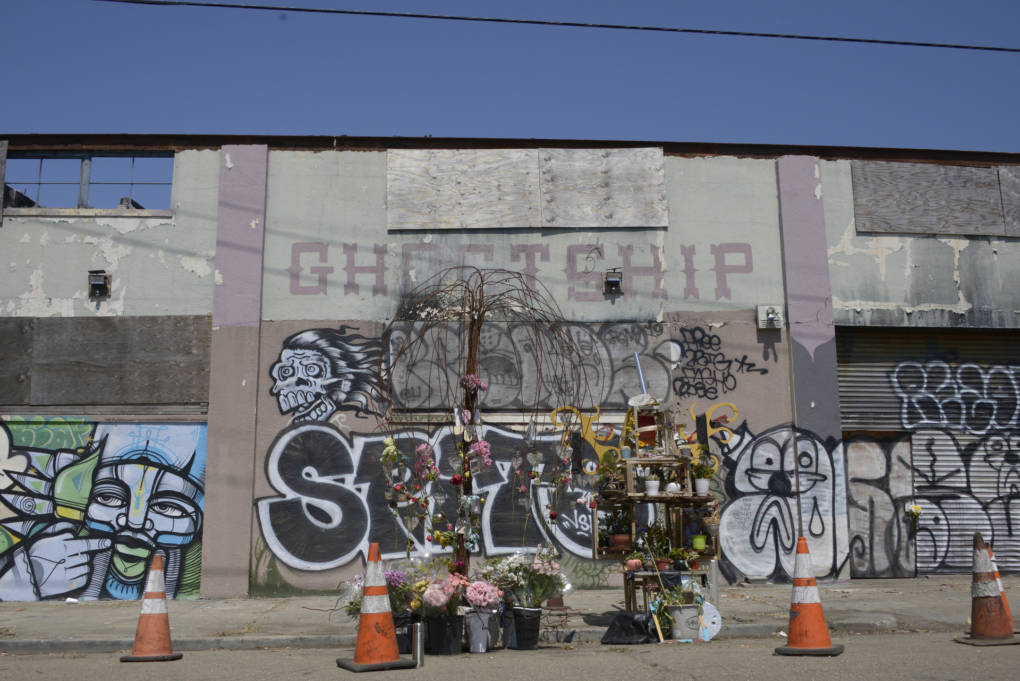
"caption": "The facade of the Ghost Ship warehouse in Oakland on June 17, 2019.",
"description": "The facade of the Ghost Ship warehouse in Oakland, CA, June 17, 2019",
"title": "Ghost Ship warehouse exterior",
"credit": "Stephanie Lister/KQED",
"status": "inherit",
"isLoading": false,
"fetchFailed": false
},
"news_11755533": {
"type": "attachments",
"id": "news_11755533",
"meta": {
"index": "attachments_1716263798",
"site": "news",
"id": "11755533",
"found": true
},
"parent": 11755372,
"imgSizes": {
"apple_news_ca_landscape_5_5": {
"file": "https://ww2.kqed.org/app/uploads/sites/10/2019/06/IMG_7232-1044x783.jpg",
"width": 1044,
"mimeType": "image/jpeg",
"height": 783
},
"apple_news_ca_square_4_0": {
"file": "https://ww2.kqed.org/app/uploads/sites/10/2019/06/IMG_7232-470x470.jpg",
"width": 470,
"mimeType": "image/jpeg",
"height": 470
},
"twentyfourteen-full-width": {
"file": "https://ww2.kqed.org/app/uploads/sites/10/2019/06/IMG_7232-1038x576.jpg",
"width": 1038,
"mimeType": "image/jpeg",
"height": 576
},
"thumbnail": {
"file": "https://ww2.kqed.org/app/uploads/sites/10/2019/06/IMG_7232-160x90.jpg",
"width": 160,
"mimeType": "image/jpeg",
"height": 90
},
"post-thumbnail": {
"file": "https://ww2.kqed.org/app/uploads/sites/10/2019/06/IMG_7232-672x372.jpg",
"width": 672,
"mimeType": "image/jpeg",
"height": 372
},
"kqedFullSize": {
"file": "https://ww2.kqed.org/app/uploads/sites/10/2019/06/IMG_7232.jpg",
"width": 2048,
"height": 1152
},
"apple_news_ca_landscape_4_7": {
"file": "https://ww2.kqed.org/app/uploads/sites/10/2019/06/IMG_7232-632x474.jpg",
"width": 632,
"mimeType": "image/jpeg",
"height": 474
},
"large": {
"file": "https://ww2.kqed.org/app/uploads/sites/10/2019/06/IMG_7232-1020x574.jpg",
"width": 1020,
"mimeType": "image/jpeg",
"height": 574
},
"complete_open_graph": {
"file": "https://ww2.kqed.org/app/uploads/sites/10/2019/06/IMG_7232-1200x675.jpg",
"width": 1200,
"mimeType": "image/jpeg",
"height": 675
},
"apple_news_ca_landscape_4_0": {
"file": "https://ww2.kqed.org/app/uploads/sites/10/2019/06/IMG_7232-536x402.jpg",
"width": 536,
"mimeType": "image/jpeg",
"height": 402
},
"apple_news_ca_portrait_12_9": {
"file": "https://ww2.kqed.org/app/uploads/sites/10/2019/06/IMG_7232-1122x1496.jpg",
"width": 1122,
"mimeType": "image/jpeg",
"height": 1496
},
"medium": {
"file": "https://ww2.kqed.org/app/uploads/sites/10/2019/06/IMG_7232-800x450.jpg",
"width": 800,
"mimeType": "image/jpeg",
"height": 450
},
"apple_news_ca_portrait_4_0": {
"file": "https://ww2.kqed.org/app/uploads/sites/10/2019/06/IMG_7232-354x472.jpg",
"width": 354,
"mimeType": "image/jpeg",
"height": 472
},
"apple_news_ca_portrait_9_7": {
"file": "https://ww2.kqed.org/app/uploads/sites/10/2019/06/IMG_7232-840x1120.jpg",
"width": 840,
"mimeType": "image/jpeg",
"height": 1120
},
"apple_news_ca_landscape_12_9": {
"file": "https://ww2.kqed.org/app/uploads/sites/10/2019/06/IMG_7232-1832x1374.jpg",
"width": 1832,
"mimeType": "image/jpeg",
"height": 1374
},
"apple_news_ca_square_9_7": {
"file": "https://ww2.kqed.org/app/uploads/sites/10/2019/06/IMG_7232-1104x1104.jpg",
"width": 1104,
"mimeType": "image/jpeg",
"height": 1104
},
"apple_news_ca_portrait_4_7": {
"file": "https://ww2.kqed.org/app/uploads/sites/10/2019/06/IMG_7232-414x552.jpg",
"width": 414,
"mimeType": "image/jpeg",
"height": 552
},
"apple_news_ca_square_12_9": {
"file": "https://ww2.kqed.org/app/uploads/sites/10/2019/06/IMG_7232-1472x1472.jpg",
"width": 1472,
"mimeType": "image/jpeg",
"height": 1472
},
"apple_news_ca_portrait_5_5": {
"file": "https://ww2.kqed.org/app/uploads/sites/10/2019/06/IMG_7232-687x916.jpg",
"width": 687,
"mimeType": "image/jpeg",
"height": 916
},
"full-width": {
"file": "https://ww2.kqed.org/app/uploads/sites/10/2019/06/IMG_7232-1920x1080.jpg",
"width": 1920,
"mimeType": "image/jpeg",
"height": 1080
},
"apple_news_ca_square_4_7": {
"file": "https://ww2.kqed.org/app/uploads/sites/10/2019/06/IMG_7232-550x550.jpg",
"width": 550,
"mimeType": "image/jpeg",
"height": 550
},
"apple_news_ca_landscape_9_7": {
"file": "https://ww2.kqed.org/app/uploads/sites/10/2019/06/IMG_7232-1376x1032.jpg",
"width": 1376,
"mimeType": "image/jpeg",
"height": 1032
},
"apple_news_ca_square_5_5": {
"file": "https://ww2.kqed.org/app/uploads/sites/10/2019/06/IMG_7232-912x912.jpg",
"width": 912,
"mimeType": "image/jpeg",
"height": 912
}
},
"publishDate": 1560894228,
"modified": 1560900436,
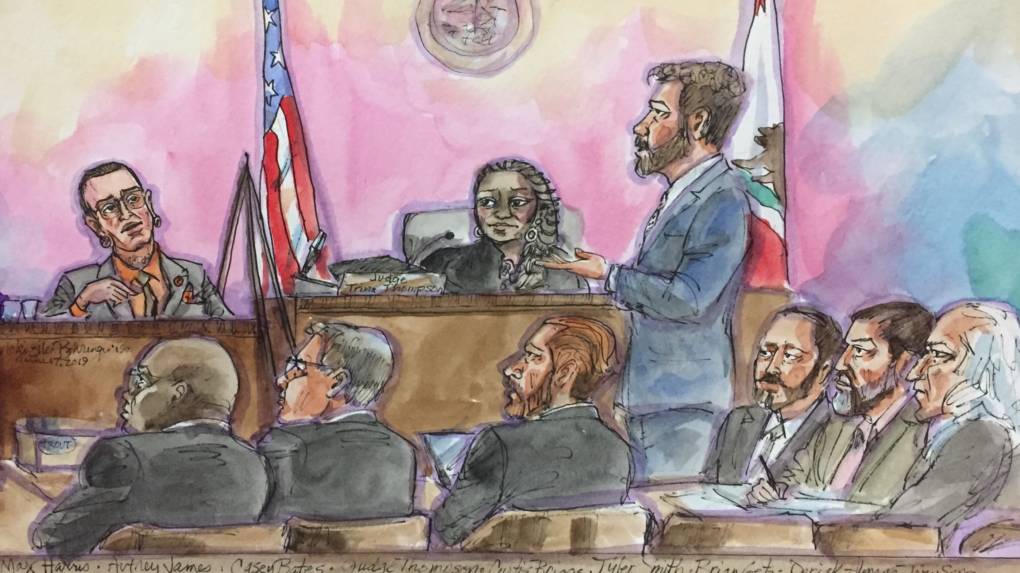
"caption": "Max Harris, one of two men facing 36 counts of involuntary manslaughter stemming from the Dec. 2, 2016, Ghost Ship warehouse fire on the stand June 17, 2019.",
"description": "Max Harris, one of two men facing 36 counts of involuntary manslaughter stemming from the Dec. 2, 2016, Ghost Ship warehouse fire on the stand June 17, 2019.",
"title": "Max Harris Ghost Ship Trial defendant",
"credit": "Vicki Behringer/KQED",
"status": "inherit",
"isLoading": false,
"fetchFailed": false
},
"news_11755318": {
"type": "attachments",
"id": "news_11755318",
"meta": {
"index": "attachments_1716263798",
"site": "news",
"id": "11755318",
"found": true
},
"parent": 11755274,
"imgSizes": {
"apple_news_ca_landscape_5_5": {
"file": "https://ww2.kqed.org/app/uploads/sites/10/2019/06/IMG_7233-1044x783.jpg",
"width": 1044,
"mimeType": "image/jpeg",
"height": 783
},
"apple_news_ca_square_4_0": {
"file": "https://ww2.kqed.org/app/uploads/sites/10/2019/06/IMG_7233-470x470.jpg",
"width": 470,
"mimeType": "image/jpeg",
"height": 470
},
"twentyfourteen-full-width": {
"file": "https://ww2.kqed.org/app/uploads/sites/10/2019/06/IMG_7233-1038x576.jpg",
"width": 1038,
"mimeType": "image/jpeg",
"height": 576
},
"thumbnail": {
"file": "https://ww2.kqed.org/app/uploads/sites/10/2019/06/IMG_7233-160x90.jpg",
"width": 160,
"mimeType": "image/jpeg",
"height": 90
},
"post-thumbnail": {
"file": "https://ww2.kqed.org/app/uploads/sites/10/2019/06/IMG_7233-672x372.jpg",
"width": 672,
"mimeType": "image/jpeg",
"height": 372
},
"kqedFullSize": {
"file": "https://ww2.kqed.org/app/uploads/sites/10/2019/06/IMG_7233-e1560819268707.jpg",
"width": 1920,
"height": 1079
},
"apple_news_ca_landscape_4_7": {
"file": "https://ww2.kqed.org/app/uploads/sites/10/2019/06/IMG_7233-632x474.jpg",
"width": 632,
"mimeType": "image/jpeg",
"height": 474
},
"large": {
"file": "https://ww2.kqed.org/app/uploads/sites/10/2019/06/IMG_7233-1020x573.jpg",
"width": 1020,
"mimeType": "image/jpeg",
"height": 573
},
"complete_open_graph": {
"file": "https://ww2.kqed.org/app/uploads/sites/10/2019/06/IMG_7233-1200x675.jpg",
"width": 1200,
"mimeType": "image/jpeg",
"height": 675
},
"apple_news_ca_landscape_4_0": {
"file": "https://ww2.kqed.org/app/uploads/sites/10/2019/06/IMG_7233-536x402.jpg",
"width": 536,
"mimeType": "image/jpeg",
"height": 402
},
"apple_news_ca_portrait_12_9": {
"file": "https://ww2.kqed.org/app/uploads/sites/10/2019/06/IMG_7233-1122x1496.jpg",
"width": 1122,
"mimeType": "image/jpeg",
"height": 1496
},
"medium": {
"file": "https://ww2.kqed.org/app/uploads/sites/10/2019/06/IMG_7233-800x450.jpg",
"width": 800,
"mimeType": "image/jpeg",
"height": 450
},
"apple_news_ca_portrait_4_0": {
"file": "https://ww2.kqed.org/app/uploads/sites/10/2019/06/IMG_7233-354x472.jpg",
"width": 354,
"mimeType": "image/jpeg",
"height": 472
},
"apple_news_ca_portrait_9_7": {
"file": "https://ww2.kqed.org/app/uploads/sites/10/2019/06/IMG_7233-840x1120.jpg",
"width": 840,
"mimeType": "image/jpeg",
"height": 1120
},
"apple_news_ca_landscape_12_9": {
"file": "https://ww2.kqed.org/app/uploads/sites/10/2019/06/IMG_7233-1832x1374.jpg",
"width": 1832,
"mimeType": "image/jpeg",
"height": 1374
},
"apple_news_ca_square_9_7": {
"file": "https://ww2.kqed.org/app/uploads/sites/10/2019/06/IMG_7233-1104x1104.jpg",
"width": 1104,
"mimeType": "image/jpeg",
"height": 1104
},
"apple_news_ca_portrait_4_7": {
"file": "https://ww2.kqed.org/app/uploads/sites/10/2019/06/IMG_7233-414x552.jpg",
"width": 414,
"mimeType": "image/jpeg",
"height": 552
},
"apple_news_ca_square_12_9": {
"file": "https://ww2.kqed.org/app/uploads/sites/10/2019/06/IMG_7233-1472x1472.jpg",
"width": 1472,
"mimeType": "image/jpeg",
"height": 1472
},
"apple_news_ca_portrait_5_5": {
"file": "https://ww2.kqed.org/app/uploads/sites/10/2019/06/IMG_7233-687x916.jpg",
"width": 687,
"mimeType": "image/jpeg",
"height": 916
},
"full-width": {
"file": "https://ww2.kqed.org/app/uploads/sites/10/2019/06/IMG_7233-1920x1079.jpg",
"width": 1920,
"mimeType": "image/jpeg",
"height": 1079
},
"apple_news_ca_square_4_7": {
"file": "https://ww2.kqed.org/app/uploads/sites/10/2019/06/IMG_7233-550x550.jpg",
"width": 550,
"mimeType": "image/jpeg",
"height": 550
},
"apple_news_ca_landscape_9_7": {
"file": "https://ww2.kqed.org/app/uploads/sites/10/2019/06/IMG_7233-1376x1032.jpg",
"width": 1376,
"mimeType": "image/jpeg",
"height": 1032
},
"apple_news_ca_square_5_5": {
"file": "https://ww2.kqed.org/app/uploads/sites/10/2019/06/IMG_7233-912x912.jpg",
"width": 912,
"mimeType": "image/jpeg",
"height": 912
}
},
"publishDate": 1560819241,
"modified": 1560819328,
"caption": "Max Harris, One of two men facing 36 counts of involuntary manslaughter stemming from the Dec. 2, 2016 Ghost Ship warehouse fire took the stand Monday, June 17, 2019.",
"description": null,
"title": "IMG_7233",
"credit": "Vicki Behringer/KQED",
"status": "inherit",
"isLoading": false,
"fetchFailed": false
},
"news_11755107": {
"type": "attachments",
"id": "news_11755107",
"meta": {
"index": "attachments_1716263798",
"site": "news",
"id": "11755107",
"found": true
},
"parent": 11755103,
"imgSizes": {
"apple_news_ca_landscape_5_5": {
"file": "https://ww2.kqed.org/app/uploads/sites/10/2019/06/RS37724_IMG_5525-qut-1044x783.jpg",
"width": 1044,
"mimeType": "image/jpeg",
"height": 783
},
"apple_news_ca_square_4_0": {
"file": "https://ww2.kqed.org/app/uploads/sites/10/2019/06/RS37724_IMG_5525-qut-470x470.jpg",
"width": 470,
"mimeType": "image/jpeg",
"height": 470
},
"twentyfourteen-full-width": {
"file": "https://ww2.kqed.org/app/uploads/sites/10/2019/06/RS37724_IMG_5525-qut-1038x576.jpg",
"width": 1038,
"mimeType": "image/jpeg",
"height": 576
},
"thumbnail": {
"file": "https://ww2.kqed.org/app/uploads/sites/10/2019/06/RS37724_IMG_5525-qut-160x120.jpg",
"width": 160,
"mimeType": "image/jpeg",
"height": 120
},
"post-thumbnail": {
"file": "https://ww2.kqed.org/app/uploads/sites/10/2019/06/RS37724_IMG_5525-qut-672x372.jpg",
"width": 672,
"mimeType": "image/jpeg",
"height": 372
},
"kqedFullSize": {
"file": "https://ww2.kqed.org/app/uploads/sites/10/2019/06/RS37724_IMG_5525-qut.jpg",
"width": 1920,
"height": 1440
},
"apple_news_ca_landscape_4_7": {
"file": "https://ww2.kqed.org/app/uploads/sites/10/2019/06/RS37724_IMG_5525-qut-632x474.jpg",
"width": 632,
"mimeType": "image/jpeg",
"height": 474
},
"large": {
"file": "https://ww2.kqed.org/app/uploads/sites/10/2019/06/RS37724_IMG_5525-qut-1020x765.jpg",
"width": 1020,
"mimeType": "image/jpeg",
"height": 765
},
"complete_open_graph": {
"file": "https://ww2.kqed.org/app/uploads/sites/10/2019/06/RS37724_IMG_5525-qut-1200x900.jpg",
"width": 1200,
"mimeType": "image/jpeg",
"height": 900
},
"apple_news_ca_landscape_4_0": {
"file": "https://ww2.kqed.org/app/uploads/sites/10/2019/06/RS37724_IMG_5525-qut-536x402.jpg",
"width": 536,
"mimeType": "image/jpeg",
"height": 402
},
"apple_news_ca_portrait_12_9": {
"file": "https://ww2.kqed.org/app/uploads/sites/10/2019/06/RS37724_IMG_5525-qut-1122x1440.jpg",
"width": 1122,
"mimeType": "image/jpeg",
"height": 1440
},
"medium": {
"file": "https://ww2.kqed.org/app/uploads/sites/10/2019/06/RS37724_IMG_5525-qut-800x600.jpg",
"width": 800,
"mimeType": "image/jpeg",
"height": 600
},
"apple_news_ca_portrait_4_0": {
"file": "https://ww2.kqed.org/app/uploads/sites/10/2019/06/RS37724_IMG_5525-qut-354x472.jpg",
"width": 354,
"mimeType": "image/jpeg",
"height": 472
},
"apple_news_ca_portrait_9_7": {
"file": "https://ww2.kqed.org/app/uploads/sites/10/2019/06/RS37724_IMG_5525-qut-840x1120.jpg",
"width": 840,
"mimeType": "image/jpeg",
"height": 1120
},
"apple_news_ca_landscape_12_9": {
"file": "https://ww2.kqed.org/app/uploads/sites/10/2019/06/RS37724_IMG_5525-qut-1832x1374.jpg",
"width": 1832,
"mimeType": "image/jpeg",
"height": 1374
},
"apple_news_ca_square_9_7": {
"file": "https://ww2.kqed.org/app/uploads/sites/10/2019/06/RS37724_IMG_5525-qut-1104x1104.jpg",
"width": 1104,
"mimeType": "image/jpeg",
"height": 1104
},
"apple_news_ca_portrait_4_7": {
"file": "https://ww2.kqed.org/app/uploads/sites/10/2019/06/RS37724_IMG_5525-qut-414x552.jpg",
"width": 414,
"mimeType": "image/jpeg",
"height": 552
},
"apple_news_ca_square_12_9": {
"file": "https://ww2.kqed.org/app/uploads/sites/10/2019/06/RS37724_IMG_5525-qut-1472x1440.jpg",
"width": 1472,
"mimeType": "image/jpeg",
"height": 1440
},
"apple_news_ca_portrait_5_5": {
"file": "https://ww2.kqed.org/app/uploads/sites/10/2019/06/RS37724_IMG_5525-qut-687x916.jpg",
"width": 687,
"mimeType": "image/jpeg",
"height": 916
},
"full-width": {
"file": "https://ww2.kqed.org/app/uploads/sites/10/2019/06/RS37724_IMG_5525-qut-1920x1440.jpg",
"width": 1920,
"mimeType": "image/jpeg",
"height": 1440
},
"apple_news_ca_square_4_7": {
"file": "https://ww2.kqed.org/app/uploads/sites/10/2019/06/RS37724_IMG_5525-qut-550x550.jpg",
"width": 550,
"mimeType": "image/jpeg",
"height": 550
},
"apple_news_ca_landscape_9_7": {
"file": "https://ww2.kqed.org/app/uploads/sites/10/2019/06/RS37724_IMG_5525-qut-1376x1032.jpg",
"width": 1376,
"mimeType": "image/jpeg",
"height": 1032
},
"apple_news_ca_square_5_5": {
"file": "https://ww2.kqed.org/app/uploads/sites/10/2019/06/RS37724_IMG_5525-qut-912x912.jpg",
"width": 912,
"mimeType": "image/jpeg",
"height": 912
}
},
"publishDate": 1560729066,
"modified": 1592512002,
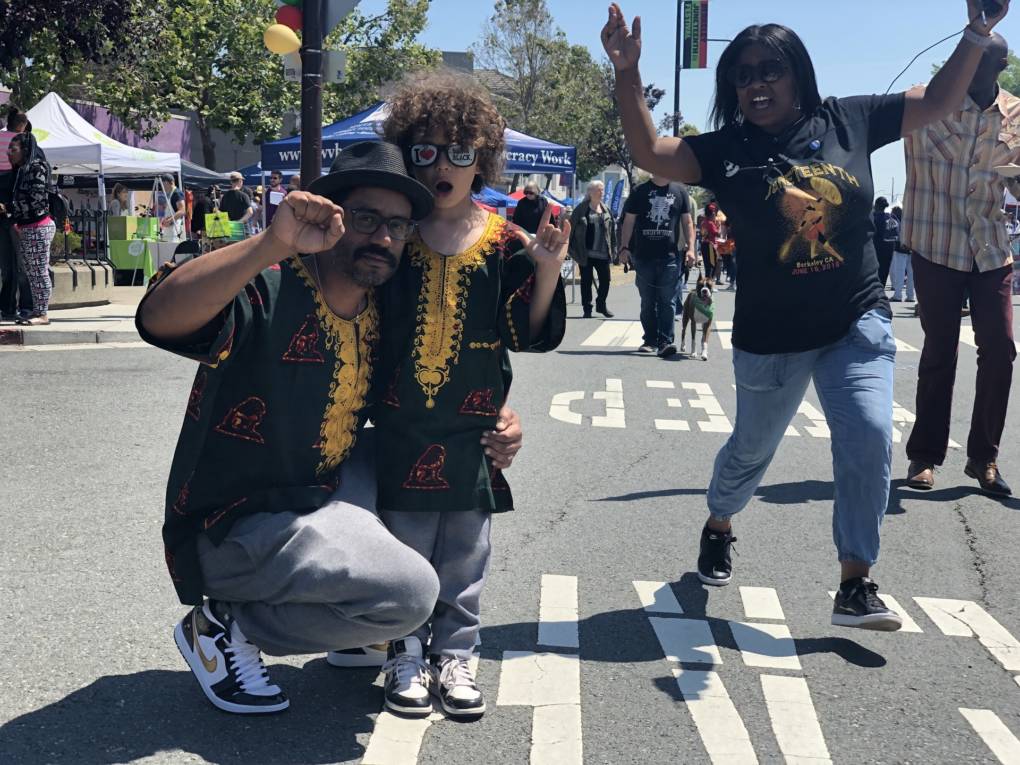
"caption": "Dakh Jones and his son Enrico (and a Juneteenth photobomber) celebrate Black pride in South Berkeley at the 2019 Berkeley Juneteenth Festival.",
"description": "Dakh Jones and his son Enrico (and a Juneteenth photobomber) celebrate black pride in South Berkeley, where Jones was born and raised. 'It's significant that this celebration has not completely phased out, that it's still important for the Berkeley city,' he said.",
"title": "RS37724_IMG_5525-qut",
"credit": "Liliana Michelena/KQED",
"status": "inherit",
"isLoading": false,
"fetchFailed": false
},
"news_11748703": {
"type": "attachments",
"id": "news_11748703",
"meta": {
"index": "attachments_1716263798",
"site": "news",
"id": "11748703",
"found": true
},
"parent": 11748637,
"imgSizes": {
"apple_news_ca_landscape_5_5": {
"file": "https://ww2.kqed.org/app/uploads/sites/10/2019/05/Firefighter-Ghost-Ship-Oakland-1044x783.jpg",
"width": 1044,
"mimeType": "image/jpeg",
"height": 783
},
"apple_news_ca_square_4_0": {
"file": "https://ww2.kqed.org/app/uploads/sites/10/2019/05/Firefighter-Ghost-Ship-Oakland-470x470.jpg",
"width": 470,
"mimeType": "image/jpeg",
"height": 470
},
"twentyfourteen-full-width": {
"file": "https://ww2.kqed.org/app/uploads/sites/10/2019/05/Firefighter-Ghost-Ship-Oakland-1038x576.jpg",
"width": 1038,
"mimeType": "image/jpeg",
"height": 576
},
"thumbnail": {
"file": "https://ww2.kqed.org/app/uploads/sites/10/2019/05/Firefighter-Ghost-Ship-Oakland-160x107.jpg",
"width": 160,
"mimeType": "image/jpeg",
"height": 107
},
"post-thumbnail": {
"file": "https://ww2.kqed.org/app/uploads/sites/10/2019/05/Firefighter-Ghost-Ship-Oakland-672x372.jpg",
"width": 672,
"mimeType": "image/jpeg",
"height": 372
},
"kqedFullSize": {
"file": "https://ww2.kqed.org/app/uploads/sites/10/2019/05/Firefighter-Ghost-Ship-Oakland.jpg",
"width": 1920,
"height": 1280
},
"apple_news_ca_landscape_4_7": {
"file": "https://ww2.kqed.org/app/uploads/sites/10/2019/05/Firefighter-Ghost-Ship-Oakland-632x474.jpg",
"width": 632,
"mimeType": "image/jpeg",
"height": 474
},
"large": {
"file": "https://ww2.kqed.org/app/uploads/sites/10/2019/05/Firefighter-Ghost-Ship-Oakland-1020x680.jpg",
"width": 1020,
"mimeType": "image/jpeg",
"height": 680
},
"complete_open_graph": {
"file": "https://ww2.kqed.org/app/uploads/sites/10/2019/05/Firefighter-Ghost-Ship-Oakland-1200x800.jpg",
"width": 1200,
"mimeType": "image/jpeg",
"height": 800
},
"apple_news_ca_landscape_4_0": {
"file": "https://ww2.kqed.org/app/uploads/sites/10/2019/05/Firefighter-Ghost-Ship-Oakland-536x402.jpg",
"width": 536,
"mimeType": "image/jpeg",
"height": 402
},
"apple_news_ca_portrait_12_9": {
"file": "https://ww2.kqed.org/app/uploads/sites/10/2019/05/Firefighter-Ghost-Ship-Oakland-1122x1280.jpg",
"width": 1122,
"mimeType": "image/jpeg",
"height": 1280
},
"medium": {
"file": "https://ww2.kqed.org/app/uploads/sites/10/2019/05/Firefighter-Ghost-Ship-Oakland-800x533.jpg",
"width": 800,
"mimeType": "image/jpeg",
"height": 533
},
"apple_news_ca_portrait_4_0": {
"file": "https://ww2.kqed.org/app/uploads/sites/10/2019/05/Firefighter-Ghost-Ship-Oakland-354x472.jpg",
"width": 354,
"mimeType": "image/jpeg",
"height": 472
},
"apple_news_ca_portrait_9_7": {
"file": "https://ww2.kqed.org/app/uploads/sites/10/2019/05/Firefighter-Ghost-Ship-Oakland-840x1120.jpg",
"width": 840,
"mimeType": "image/jpeg",
"height": 1120
},
"apple_news_ca_landscape_12_9": {
"file": "https://ww2.kqed.org/app/uploads/sites/10/2019/05/Firefighter-Ghost-Ship-Oakland-1832x1280.jpg",
"width": 1832,
"mimeType": "image/jpeg",
"height": 1280
},
"apple_news_ca_square_9_7": {
"file": "https://ww2.kqed.org/app/uploads/sites/10/2019/05/Firefighter-Ghost-Ship-Oakland-1104x1104.jpg",
"width": 1104,
"mimeType": "image/jpeg",
"height": 1104
},
"apple_news_ca_portrait_4_7": {
"file": "https://ww2.kqed.org/app/uploads/sites/10/2019/05/Firefighter-Ghost-Ship-Oakland-414x552.jpg",
"width": 414,
"mimeType": "image/jpeg",
"height": 552
},
"apple_news_ca_square_12_9": {
"file": "https://ww2.kqed.org/app/uploads/sites/10/2019/05/Firefighter-Ghost-Ship-Oakland-1472x1280.jpg",
"width": 1472,
"mimeType": "image/jpeg",
"height": 1280
},
"apple_news_ca_portrait_5_5": {
"file": "https://ww2.kqed.org/app/uploads/sites/10/2019/05/Firefighter-Ghost-Ship-Oakland-687x916.jpg",
"width": 687,
"mimeType": "image/jpeg",
"height": 916
},
"full-width": {
"file": "https://ww2.kqed.org/app/uploads/sites/10/2019/05/Firefighter-Ghost-Ship-Oakland-1920x1280.jpg",
"width": 1920,
"mimeType": "image/jpeg",
"height": 1280
},
"apple_news_ca_square_4_7": {
"file": "https://ww2.kqed.org/app/uploads/sites/10/2019/05/Firefighter-Ghost-Ship-Oakland-550x550.jpg",
"width": 550,
"mimeType": "image/jpeg",
"height": 550
},
"apple_news_ca_landscape_9_7": {
"file": "https://ww2.kqed.org/app/uploads/sites/10/2019/05/Firefighter-Ghost-Ship-Oakland-1376x1032.jpg",
"width": 1376,
"mimeType": "image/jpeg",
"height": 1032
},
"apple_news_ca_square_5_5": {
"file": "https://ww2.kqed.org/app/uploads/sites/10/2019/05/Firefighter-Ghost-Ship-Oakland-912x912.jpg",
"width": 912,
"mimeType": "image/jpeg",
"height": 912
}
},
"publishDate": 1558403173,
"modified": 1560470740,
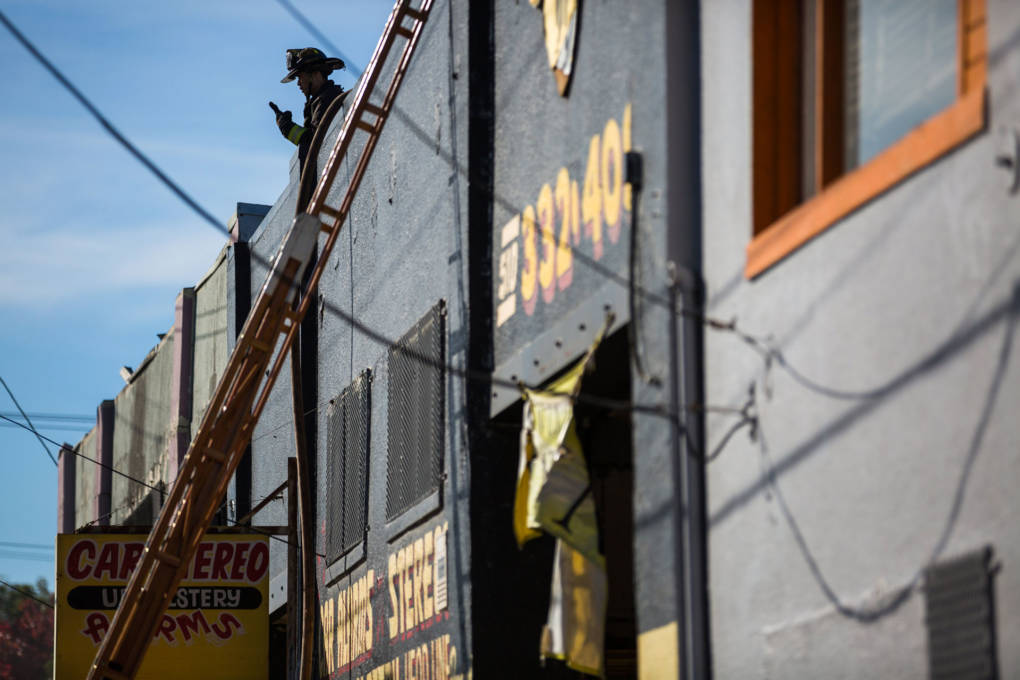
"caption": "A firefighter works on the roof of a building next to the Ghost Ship warehouse one day after the Dec. 2, 2016, blaze that killed 36 people.",
"description": "A firefighter works on the roof of a building next to the Ghost Ship warehouse one day after the Dec. 2, 2016 blaze which killed 36 people.",
"title": "Firefighter-Ghost-Ship-Oakland",
"credit": "Nick Otto/AFP/Getty Images",
"status": "inherit",
"isLoading": false,
"fetchFailed": false
},
"news_11737489": {
"type": "attachments",
"id": "news_11737489",
"meta": {
"index": "attachments_1716263798",
"site": "news",
"id": "11737489",
"found": true
},
"title": "ghost-ship-trial-2",
"publishDate": 1554258114,
"status": "inherit",
"parent": 11737333,
"modified": 1740008073,
"caption": "The Alameda County Superior Courthouse in Oakland, seen on April 2, 2019.",
"credit": "Stephanie Lister/KQED",
"altTag": "The Alameda County Superior Courthouse, pictured on April 2, 2019.",
"description": "The Alameda County Superior Courthouse, pictured on April 2, 2019.",
"imgSizes": {
"thumbnail": {
"file": "https://cdn.kqed.org/wp-content/uploads/sites/10/2019/04/ghost-ship-trial-2-160x107.jpg",
"width": 160,
"height": 107,
"mimeType": "image/jpeg"
},
"medium": {
"file": "https://cdn.kqed.org/wp-content/uploads/sites/10/2019/04/ghost-ship-trial-2-800x534.jpg",
"width": 800,
"height": 534,
"mimeType": "image/jpeg"
},
"large": {
"file": "https://cdn.kqed.org/wp-content/uploads/sites/10/2019/04/ghost-ship-trial-2-1020x681.jpg",
"width": 1020,
"height": 681,
"mimeType": "image/jpeg"
},
"complete_open_graph": {
"file": "https://cdn.kqed.org/wp-content/uploads/sites/10/2019/04/ghost-ship-trial-2-1200x801.jpg",
"width": 1200,
"height": 801,
"mimeType": "image/jpeg"
},
"post-thumbnail": {
"file": "https://cdn.kqed.org/wp-content/uploads/sites/10/2019/04/ghost-ship-trial-2-672x372.jpg",
"width": 672,
"height": 372,
"mimeType": "image/jpeg"
},
"twentyfourteen-full-width": {
"file": "https://cdn.kqed.org/wp-content/uploads/sites/10/2019/04/ghost-ship-trial-2-1038x576.jpg",
"width": 1038,
"height": 576,
"mimeType": "image/jpeg"
},
"full-width": {
"file": "https://cdn.kqed.org/wp-content/uploads/sites/10/2019/04/ghost-ship-trial-2-1920x1281.jpg",
"width": 1920,
"height": 1281,
"mimeType": "image/jpeg"
},
"guest-author-32": {
"file": "https://cdn.kqed.org/wp-content/uploads/sites/10/2019/04/ghost-ship-trial-2-32x32.jpg",
"width": 32,
"height": 32,
"mimeType": "image/jpeg"
},
"guest-author-50": {
"file": "https://cdn.kqed.org/wp-content/uploads/sites/10/2019/04/ghost-ship-trial-2-50x50.jpg",
"width": 50,
"height": 50,
"mimeType": "image/jpeg"
},
"guest-author-64": {
"file": "https://cdn.kqed.org/wp-content/uploads/sites/10/2019/04/ghost-ship-trial-2-64x64.jpg",
"width": 64,
"height": 64,
"mimeType": "image/jpeg"
},
"guest-author-96": {
"file": "https://cdn.kqed.org/wp-content/uploads/sites/10/2019/04/ghost-ship-trial-2-96x96.jpg",
"width": 96,
"height": 96,
"mimeType": "image/jpeg"
},
"guest-author-128": {
"file": "https://cdn.kqed.org/wp-content/uploads/sites/10/2019/04/ghost-ship-trial-2-128x128.jpg",
"width": 128,
"height": 128,
"mimeType": "image/jpeg"
},
"apple_news_ca_landscape_12_9": {
"file": "https://cdn.kqed.org/wp-content/uploads/sites/10/2019/04/ghost-ship-trial-2-1832x1281.jpg",
"width": 1832,
"height": 1281,
"mimeType": "image/jpeg"
},
"apple_news_ca_landscape_9_7": {
"file": "https://cdn.kqed.org/wp-content/uploads/sites/10/2019/04/ghost-ship-trial-2-1376x1032.jpg",
"width": 1376,
"height": 1032,
"mimeType": "image/jpeg"
},
"apple_news_ca_landscape_5_5": {
"file": "https://cdn.kqed.org/wp-content/uploads/sites/10/2019/04/ghost-ship-trial-2-1044x783.jpg",
"width": 1044,
"height": 783,
"mimeType": "image/jpeg"
},
"apple_news_ca_landscape_4_7": {
"file": "https://cdn.kqed.org/wp-content/uploads/sites/10/2019/04/ghost-ship-trial-2-632x474.jpg",
"width": 632,
"height": 474,
"mimeType": "image/jpeg"
},
"apple_news_ca_landscape_4_0": {
"file": "https://cdn.kqed.org/wp-content/uploads/sites/10/2019/04/ghost-ship-trial-2-536x402.jpg",
"width": 536,
"height": 402,
"mimeType": "image/jpeg"
},
"apple_news_ca_portrait_12_9": {
"file": "https://cdn.kqed.org/wp-content/uploads/sites/10/2019/04/ghost-ship-trial-2-1122x1281.jpg",
"width": 1122,
"height": 1281,
"mimeType": "image/jpeg"
},
"apple_news_ca_portrait_9_7": {
"file": "https://cdn.kqed.org/wp-content/uploads/sites/10/2019/04/ghost-ship-trial-2-840x1120.jpg",
"width": 840,
"height": 1120,
"mimeType": "image/jpeg"
},
"apple_news_ca_portrait_5_5": {
"file": "https://cdn.kqed.org/wp-content/uploads/sites/10/2019/04/ghost-ship-trial-2-687x916.jpg",
"width": 687,
"height": 916,
"mimeType": "image/jpeg"
},
"apple_news_ca_portrait_4_7": {
"file": "https://cdn.kqed.org/wp-content/uploads/sites/10/2019/04/ghost-ship-trial-2-414x552.jpg",
"width": 414,
"height": 552,
"mimeType": "image/jpeg"
},
"apple_news_ca_portrait_4_0": {
"file": "https://cdn.kqed.org/wp-content/uploads/sites/10/2019/04/ghost-ship-trial-2-354x472.jpg",
"width": 354,
"height": 472,
"mimeType": "image/jpeg"
},
"apple_news_ca_square_12_9": {
"file": "https://cdn.kqed.org/wp-content/uploads/sites/10/2019/04/ghost-ship-trial-2-1472x1281.jpg",
"width": 1472,
"height": 1281,
"mimeType": "image/jpeg"
},
"apple_news_ca_square_9_7": {
"file": "https://cdn.kqed.org/wp-content/uploads/sites/10/2019/04/ghost-ship-trial-2-1104x1104.jpg",
"width": 1104,
"height": 1104,
"mimeType": "image/jpeg"
},
"apple_news_ca_square_5_5": {
"file": "https://cdn.kqed.org/wp-content/uploads/sites/10/2019/04/ghost-ship-trial-2-912x912.jpg",
"width": 912,
"height": 912,
"mimeType": "image/jpeg"
},
"apple_news_ca_square_4_7": {
"file": "https://cdn.kqed.org/wp-content/uploads/sites/10/2019/04/ghost-ship-trial-2-550x550.jpg",
"width": 550,
"height": 550,
"mimeType": "image/jpeg"
},
"apple_news_ca_square_4_0": {
"file": "https://cdn.kqed.org/wp-content/uploads/sites/10/2019/04/ghost-ship-trial-2-470x470.jpg",
"width": 470,
"height": 470,
"mimeType": "image/jpeg"
},
"kqedFullSize": {
"file": "https://cdn.kqed.org/wp-content/uploads/sites/10/2019/04/ghost-ship-trial-2.jpg",
"width": 1920,
"height": 1281
}
},
"isLoading": false,
"fetchFailed": false
},
"news_11753527": {
"type": "attachments",
"id": "news_11753527",
"meta": {
"index": "attachments_1716263798",
"site": "news",
"id": "11753527",
"found": true
},
"parent": 11753524,
"imgSizes": {
"apple_news_ca_square_4_0": {
"file": "https://ww2.kqed.org/app/uploads/sites/10/2019/06/YB-470x470.jpg",
"width": 470,
"mimeType": "image/jpeg",
"height": 470
},
"twentyfourteen-full-width": {
"file": "https://ww2.kqed.org/app/uploads/sites/10/2019/06/YB-800x576.jpg",
"width": 800,
"mimeType": "image/jpeg",
"height": 576
},
"thumbnail": {
"file": "https://ww2.kqed.org/app/uploads/sites/10/2019/06/YB-160x120.jpg",
"width": 160,
"mimeType": "image/jpeg",
"height": 120
},
"post-thumbnail": {
"file": "https://ww2.kqed.org/app/uploads/sites/10/2019/06/YB-672x372.jpg",
"width": 672,
"mimeType": "image/jpeg",
"height": 372
},
"kqedFullSize": {
"file": "https://ww2.kqed.org/app/uploads/sites/10/2019/06/YB.jpg",
"width": 800,
"height": 600
},
"apple_news_ca_landscape_4_7": {
"file": "https://ww2.kqed.org/app/uploads/sites/10/2019/06/YB-632x474.jpg",
"width": 632,
"mimeType": "image/jpeg",
"height": 474
},
"apple_news_ca_portrait_4_7": {
"file": "https://ww2.kqed.org/app/uploads/sites/10/2019/06/YB-414x552.jpg",
"width": 414,
"mimeType": "image/jpeg",
"height": 552
},
"apple_news_ca_portrait_5_5": {
"file": "https://ww2.kqed.org/app/uploads/sites/10/2019/06/YB-687x600.jpg",
"width": 687,
"mimeType": "image/jpeg",
"height": 600
},
"apple_news_ca_square_4_7": {
"file": "https://ww2.kqed.org/app/uploads/sites/10/2019/06/YB-550x550.jpg",
"width": 550,
"mimeType": "image/jpeg",
"height": 550
},
"apple_news_ca_landscape_4_0": {
"file": "https://ww2.kqed.org/app/uploads/sites/10/2019/06/YB-536x402.jpg",
"width": 536,
"mimeType": "image/jpeg",
"height": 402
},
"medium": {
"file": "https://ww2.kqed.org/app/uploads/sites/10/2019/06/YB-800x600.jpg",
"width": 800,
"mimeType": "image/jpeg",
"height": 600
},
"apple_news_ca_portrait_4_0": {
"file": "https://ww2.kqed.org/app/uploads/sites/10/2019/06/YB-354x472.jpg",
"width": 354,
"mimeType": "image/jpeg",
"height": 472
}
},
"publishDate": 1560102074,
"modified": 1560102098,
"caption": "YouTube's decision not to ban a right-wing vlogger for targeting a gay journalist has rekindled debates around hate speech, censorship, and whether companies \"walk the walk\" of supporting LGBTQ people during Pride Month.",
"description": null,
"title": "YB",
"credit": "Chris McGrath/Getty Images",
"status": "inherit",
"isLoading": false,
"fetchFailed": false
},
"news_11753480": {
"type": "attachments",
"id": "news_11753480",
"meta": {
"index": "attachments_1716263798",
"site": "news",
"id": "11753480",
"found": true
},
"parent": 11753466,
"imgSizes": {
"apple_news_ca_landscape_5_5": {
"file": "https://ww2.kqed.org/app/uploads/sites/10/2019/06/There-There-1180x787-1044x783.jpg",
"width": 1044,
"mimeType": "image/jpeg",
"height": 783
},
"apple_news_ca_square_4_0": {
"file": "https://ww2.kqed.org/app/uploads/sites/10/2019/06/There-There-1180x787-470x470.jpg",
"width": 470,
"mimeType": "image/jpeg",
"height": 470
},
"twentyfourteen-full-width": {
"file": "https://ww2.kqed.org/app/uploads/sites/10/2019/06/There-There-1180x787-1038x576.jpg",
"width": 1038,
"mimeType": "image/jpeg",
"height": 576
},
"thumbnail": {
"file": "https://ww2.kqed.org/app/uploads/sites/10/2019/06/There-There-1180x787-160x107.jpg",
"width": 160,
"mimeType": "image/jpeg",
"height": 107
},
"post-thumbnail": {
"file": "https://ww2.kqed.org/app/uploads/sites/10/2019/06/There-There-1180x787-672x372.jpg",
"width": 672,
"mimeType": "image/jpeg",
"height": 372
},
"kqedFullSize": {
"file": "https://ww2.kqed.org/app/uploads/sites/10/2019/06/There-There-1180x787.jpg",
"width": 1180,
"height": 787
},
"apple_news_ca_landscape_4_7": {
"file": "https://ww2.kqed.org/app/uploads/sites/10/2019/06/There-There-1180x787-632x474.jpg",
"width": 632,
"mimeType": "image/jpeg",
"height": 474
},
"large": {
"file": "https://ww2.kqed.org/app/uploads/sites/10/2019/06/There-There-1180x787-1020x680.jpg",
"width": 1020,
"mimeType": "image/jpeg",
"height": 680
},
"apple_news_ca_landscape_4_0": {
"file": "https://ww2.kqed.org/app/uploads/sites/10/2019/06/There-There-1180x787-536x402.jpg",
"width": 536,
"mimeType": "image/jpeg",
"height": 402
},
"apple_news_ca_portrait_12_9": {
"file": "https://ww2.kqed.org/app/uploads/sites/10/2019/06/There-There-1180x787-1122x787.jpg",
"width": 1122,
"mimeType": "image/jpeg",
"height": 787
},
"medium": {
"file": "https://ww2.kqed.org/app/uploads/sites/10/2019/06/There-There-1180x787-800x534.jpg",
"width": 800,
"mimeType": "image/jpeg",
"height": 534
},
"apple_news_ca_portrait_4_0": {
"file": "https://ww2.kqed.org/app/uploads/sites/10/2019/06/There-There-1180x787-354x472.jpg",
"width": 354,
"mimeType": "image/jpeg",
"height": 472
},
"apple_news_ca_portrait_9_7": {
"file": "https://ww2.kqed.org/app/uploads/sites/10/2019/06/There-There-1180x787-840x787.jpg",
"width": 840,
"mimeType": "image/jpeg",
"height": 787
},
"apple_news_ca_square_9_7": {
"file": "https://ww2.kqed.org/app/uploads/sites/10/2019/06/There-There-1180x787-1104x787.jpg",
"width": 1104,
"mimeType": "image/jpeg",
"height": 787
},
"apple_news_ca_portrait_4_7": {
"file": "https://ww2.kqed.org/app/uploads/sites/10/2019/06/There-There-1180x787-414x552.jpg",
"width": 414,
"mimeType": "image/jpeg",
"height": 552
},
"apple_news_ca_portrait_5_5": {
"file": "https://ww2.kqed.org/app/uploads/sites/10/2019/06/There-There-1180x787-687x787.jpg",
"width": 687,
"mimeType": "image/jpeg",
"height": 787
},
"apple_news_ca_square_4_7": {
"file": "https://ww2.kqed.org/app/uploads/sites/10/2019/06/There-There-1180x787-550x550.jpg",
"width": 550,
"mimeType": "image/jpeg",
"height": 550
},
"apple_news_ca_square_5_5": {
"file": "https://ww2.kqed.org/app/uploads/sites/10/2019/06/There-There-1180x787-912x787.jpg",
"width": 912,
"mimeType": "image/jpeg",
"height": 787
}
},
"publishDate": 1560056686,
"modified": 1560056772,
"caption": "'There There' by Tommy Orange was one of the most recommended books about the Bay Area and California in our social media callout.",
"description": "'There There' by Tommy Orange was one of the most recommended books about the Bay Area and California in our social media callout.",
"title": "There-There-1180x787",
"credit": "Sandhya Dirks/KQED",
"status": "inherit",
"isLoading": false,
"fetchFailed": false
},
"news_11753472": {
"type": "attachments",
"id": "news_11753472",
"meta": {
"index": "attachments_1716263798",
"site": "news",
"id": "11753472",
"found": true
},
"parent": 11753459,
"imgSizes": {
"apple_news_ca_landscape_5_5": {
"file": "https://ww2.kqed.org/app/uploads/sites/10/2019/06/RS37616_Image-from-iOS-50-qut-1044x783.jpg",
"width": 1044,
"mimeType": "image/jpeg",
"height": 783
},
"apple_news_ca_square_4_0": {
"file": "https://ww2.kqed.org/app/uploads/sites/10/2019/06/RS37616_Image-from-iOS-50-qut-470x470.jpg",
"width": 470,
"mimeType": "image/jpeg",
"height": 470
},
"twentyfourteen-full-width": {
"file": "https://ww2.kqed.org/app/uploads/sites/10/2019/06/RS37616_Image-from-iOS-50-qut-1038x576.jpg",
"width": 1038,
"mimeType": "image/jpeg",
"height": 576
},
"thumbnail": {
"file": "https://ww2.kqed.org/app/uploads/sites/10/2019/06/RS37616_Image-from-iOS-50-qut-160x120.jpg",
"width": 160,
"mimeType": "image/jpeg",
"height": 120
},
"post-thumbnail": {
"file": "https://ww2.kqed.org/app/uploads/sites/10/2019/06/RS37616_Image-from-iOS-50-qut-672x372.jpg",
"width": 672,
"mimeType": "image/jpeg",
"height": 372
},
"kqedFullSize": {
"file": "https://ww2.kqed.org/app/uploads/sites/10/2019/06/RS37616_Image-from-iOS-50-qut.jpg",
"width": 1920,
"height": 1440
},
"apple_news_ca_landscape_4_7": {
"file": "https://ww2.kqed.org/app/uploads/sites/10/2019/06/RS37616_Image-from-iOS-50-qut-632x474.jpg",
"width": 632,
"mimeType": "image/jpeg",
"height": 474
},
"large": {
"file": "https://ww2.kqed.org/app/uploads/sites/10/2019/06/RS37616_Image-from-iOS-50-qut-1020x765.jpg",
"width": 1020,
"mimeType": "image/jpeg",
"height": 765
},
"complete_open_graph": {
"file": "https://ww2.kqed.org/app/uploads/sites/10/2019/06/RS37616_Image-from-iOS-50-qut-1200x900.jpg",
"width": 1200,
"mimeType": "image/jpeg",
"height": 900
},
"apple_news_ca_landscape_4_0": {
"file": "https://ww2.kqed.org/app/uploads/sites/10/2019/06/RS37616_Image-from-iOS-50-qut-536x402.jpg",
"width": 536,
"mimeType": "image/jpeg",
"height": 402
},
"apple_news_ca_portrait_12_9": {
"file": "https://ww2.kqed.org/app/uploads/sites/10/2019/06/RS37616_Image-from-iOS-50-qut-1122x1440.jpg",
"width": 1122,
"mimeType": "image/jpeg",
"height": 1440
},
"medium": {
"file": "https://ww2.kqed.org/app/uploads/sites/10/2019/06/RS37616_Image-from-iOS-50-qut-800x600.jpg",
"width": 800,
"mimeType": "image/jpeg",
"height": 600
},
"apple_news_ca_portrait_4_0": {
"file": "https://ww2.kqed.org/app/uploads/sites/10/2019/06/RS37616_Image-from-iOS-50-qut-354x472.jpg",
"width": 354,
"mimeType": "image/jpeg",
"height": 472
},
"apple_news_ca_portrait_9_7": {
"file": "https://ww2.kqed.org/app/uploads/sites/10/2019/06/RS37616_Image-from-iOS-50-qut-840x1120.jpg",
"width": 840,
"mimeType": "image/jpeg",
"height": 1120
},
"apple_news_ca_landscape_12_9": {
"file": "https://ww2.kqed.org/app/uploads/sites/10/2019/06/RS37616_Image-from-iOS-50-qut-1832x1374.jpg",
"width": 1832,
"mimeType": "image/jpeg",
"height": 1374
},
"apple_news_ca_square_9_7": {
"file": "https://ww2.kqed.org/app/uploads/sites/10/2019/06/RS37616_Image-from-iOS-50-qut-1104x1104.jpg",
"width": 1104,
"mimeType": "image/jpeg",
"height": 1104
},
"apple_news_ca_portrait_4_7": {
"file": "https://ww2.kqed.org/app/uploads/sites/10/2019/06/RS37616_Image-from-iOS-50-qut-414x552.jpg",
"width": 414,
"mimeType": "image/jpeg",
"height": 552
},
"apple_news_ca_square_12_9": {
"file": "https://ww2.kqed.org/app/uploads/sites/10/2019/06/RS37616_Image-from-iOS-50-qut-1472x1440.jpg",
"width": 1472,
"mimeType": "image/jpeg",
"height": 1440
},
"apple_news_ca_portrait_5_5": {
"file": "https://ww2.kqed.org/app/uploads/sites/10/2019/06/RS37616_Image-from-iOS-50-qut-687x916.jpg",
"width": 687,
"mimeType": "image/jpeg",
"height": 916
},
"full-width": {
"file": "https://ww2.kqed.org/app/uploads/sites/10/2019/06/RS37616_Image-from-iOS-50-qut-1920x1440.jpg",
"width": 1920,
"mimeType": "image/jpeg",
"height": 1440
},
"apple_news_ca_square_4_7": {
"file": "https://ww2.kqed.org/app/uploads/sites/10/2019/06/RS37616_Image-from-iOS-50-qut-550x550.jpg",
"width": 550,
"mimeType": "image/jpeg",
"height": 550
},
"apple_news_ca_landscape_9_7": {
"file": "https://ww2.kqed.org/app/uploads/sites/10/2019/06/RS37616_Image-from-iOS-50-qut-1376x1032.jpg",
"width": 1376,
"mimeType": "image/jpeg",
"height": 1032
},
"apple_news_ca_square_5_5": {
"file": "https://ww2.kqed.org/app/uploads/sites/10/2019/06/RS37616_Image-from-iOS-50-qut-912x912.jpg",
"width": 912,
"mimeType": "image/jpeg",
"height": 912
}
},
"publishDate": 1560039873,
"modified": 1560039944,
"caption": "Oscar Grant's mother Wanda Johnson (center) stands in front of the mural of her son outside the Fruitvale BART station with the BART Board of Directors on June 8, 2019.",
"description": "Oscar Grant's mother Wanda Johnson (center) stands in front of the mural of her son outside the Fruitvale BART station with the BART Board of Directors on June 8, 2019.",
"title": "RS37616_Image from iOS (50)-qut",
"credit": "Sonja Hutson/KQED",
"status": "inherit",
"isLoading": false,
"fetchFailed": false
},
"news_11752965": {
"type": "attachments",
"id": "news_11752965",
"meta": {
"index": "attachments_1716263798",
"site": "news",
"id": "11752965",
"found": true
},
"parent": 11752925,
"imgSizes": {
"apple_news_ca_landscape_5_5": {
"file": "https://ww2.kqed.org/app/uploads/sites/10/2019/06/manny-1044x783.jpg",
"width": 1044,
"mimeType": "image/jpeg",
"height": 783
},
"apple_news_ca_square_4_0": {
"file": "https://ww2.kqed.org/app/uploads/sites/10/2019/06/manny-470x470.jpg",
"width": 470,
"mimeType": "image/jpeg",
"height": 470
},
"twentyfourteen-full-width": {
"file": "https://ww2.kqed.org/app/uploads/sites/10/2019/06/manny-1038x576.jpg",
"width": 1038,
"mimeType": "image/jpeg",
"height": 576
},
"thumbnail": {
"file": "https://ww2.kqed.org/app/uploads/sites/10/2019/06/manny-160x120.jpg",
"width": 160,
"mimeType": "image/jpeg",
"height": 120
},
"post-thumbnail": {
"file": "https://ww2.kqed.org/app/uploads/sites/10/2019/06/manny-672x372.jpg",
"width": 672,
"mimeType": "image/jpeg",
"height": 372
},
"kqedFullSize": {
"file": "https://ww2.kqed.org/app/uploads/sites/10/2019/06/manny-e1559938634163.jpg",
"width": 1920,
"height": 1440
},
"apple_news_ca_landscape_4_7": {
"file": "https://ww2.kqed.org/app/uploads/sites/10/2019/06/manny-632x474.jpg",
"width": 632,
"mimeType": "image/jpeg",
"height": 474
},
"large": {
"file": "https://ww2.kqed.org/app/uploads/sites/10/2019/06/manny-1020x765.jpg",
"width": 1020,
"mimeType": "image/jpeg",
"height": 765
},
"complete_open_graph": {
"file": "https://ww2.kqed.org/app/uploads/sites/10/2019/06/manny-1200x900.jpg",
"width": 1200,
"mimeType": "image/jpeg",
"height": 900
},
"apple_news_ca_landscape_4_0": {
"file": "https://ww2.kqed.org/app/uploads/sites/10/2019/06/manny-536x402.jpg",
"width": 536,
"mimeType": "image/jpeg",
"height": 402
},
"apple_news_ca_portrait_12_9": {
"file": "https://ww2.kqed.org/app/uploads/sites/10/2019/06/manny-1122x1496.jpg",
"width": 1122,
"mimeType": "image/jpeg",
"height": 1496
},
"medium": {
"file": "https://ww2.kqed.org/app/uploads/sites/10/2019/06/manny-800x600.jpg",
"width": 800,
"mimeType": "image/jpeg",
"height": 600
},
"apple_news_ca_portrait_4_0": {
"file": "https://ww2.kqed.org/app/uploads/sites/10/2019/06/manny-354x472.jpg",
"width": 354,
"mimeType": "image/jpeg",
"height": 472
},
"apple_news_ca_portrait_9_7": {
"file": "https://ww2.kqed.org/app/uploads/sites/10/2019/06/manny-840x1120.jpg",
"width": 840,
"mimeType": "image/jpeg",
"height": 1120
},
"apple_news_ca_landscape_12_9": {
"file": "https://ww2.kqed.org/app/uploads/sites/10/2019/06/manny-1832x1374.jpg",
"width": 1832,
"mimeType": "image/jpeg",
"height": 1374
},
"apple_news_ca_square_9_7": {
"file": "https://ww2.kqed.org/app/uploads/sites/10/2019/06/manny-1104x1104.jpg",
"width": 1104,
"mimeType": "image/jpeg",
"height": 1104
},
"apple_news_ca_portrait_4_7": {
"file": "https://ww2.kqed.org/app/uploads/sites/10/2019/06/manny-414x552.jpg",
"width": 414,
"mimeType": "image/jpeg",
"height": 552
},
"apple_news_ca_square_12_9": {
"file": "https://ww2.kqed.org/app/uploads/sites/10/2019/06/manny-1472x1472.jpg",
"width": 1472,
"mimeType": "image/jpeg",
"height": 1472
},
"apple_news_ca_portrait_5_5": {
"file": "https://ww2.kqed.org/app/uploads/sites/10/2019/06/manny-687x916.jpg",
"width": 687,
"mimeType": "image/jpeg",
"height": 916
},
"full-width": {
"file": "https://ww2.kqed.org/app/uploads/sites/10/2019/06/manny-1920x1440.jpg",
"width": 1920,
"mimeType": "image/jpeg",
"height": 1440
},
"apple_news_ca_square_4_7": {
"file": "https://ww2.kqed.org/app/uploads/sites/10/2019/06/manny-550x550.jpg",
"width": 550,
"mimeType": "image/jpeg",
"height": 550
},
"apple_news_ca_landscape_9_7": {
"file": "https://ww2.kqed.org/app/uploads/sites/10/2019/06/manny-1376x1032.jpg",
"width": 1376,
"mimeType": "image/jpeg",
"height": 1032
},
"apple_news_ca_square_5_5": {
"file": "https://ww2.kqed.org/app/uploads/sites/10/2019/06/manny-912x912.jpg",
"width": 912,
"mimeType": "image/jpeg",
"height": 912
}
},
"publishDate": 1559866336,
"modified": 1559942796,
"caption": "Manny Yekutiel, founder of Manny's, a cafe, bookstore and community events space in Sam Francisco's Mission District, poses with a copy of 'The Mueller Report.' Manny's hosted a live reading of the 444-page report on June 6, 2019.",
"description": "Manny Yekutiel, founder of Manny's, a cafe, bookstore and community events space in Sam Francisco's Mission District, poses with a copy of The Mueller Report. Manny's hosted a live reading of the 444-page report on June 6, 2019.",
"title": "manny",
"credit": "Chloe Veltman/KQED",
"status": "inherit",
"isLoading": false,
"fetchFailed": false
},
"news_11751265": {
"type": "attachments",
"id": "news_11751265",
"meta": {
"index": "attachments_1716263798",
"site": "news",
"id": "11751265",
"found": true
},
"parent": 11748586,
"imgSizes": {
"apple_news_ca_landscape_5_5": {
"file": "https://ww2.kqed.org/app/uploads/sites/10/2019/05/RS37228_IMG_6105-qut-1044x783.jpg",
"width": 1044,
"mimeType": "image/jpeg",
"height": 783
},
"apple_news_ca_square_4_0": {
"file": "https://ww2.kqed.org/app/uploads/sites/10/2019/05/RS37228_IMG_6105-qut-470x470.jpg",
"width": 470,
"mimeType": "image/jpeg",
"height": 470
},
"twentyfourteen-full-width": {
"file": "https://ww2.kqed.org/app/uploads/sites/10/2019/05/RS37228_IMG_6105-qut-1038x576.jpg",
"width": 1038,
"mimeType": "image/jpeg",
"height": 576
},
"thumbnail": {
"file": "https://ww2.kqed.org/app/uploads/sites/10/2019/05/RS37228_IMG_6105-qut-160x107.jpg",
"width": 160,
"mimeType": "image/jpeg",
"height": 107
},
"post-thumbnail": {
"file": "https://ww2.kqed.org/app/uploads/sites/10/2019/05/RS37228_IMG_6105-qut-672x372.jpg",
"width": 672,
"mimeType": "image/jpeg",
"height": 372
},
"kqedFullSize": {
"file": "https://ww2.kqed.org/app/uploads/sites/10/2019/05/RS37228_IMG_6105-qut.jpg",
"width": 1920,
"height": 1280
},
"apple_news_ca_landscape_4_7": {
"file": "https://ww2.kqed.org/app/uploads/sites/10/2019/05/RS37228_IMG_6105-qut-632x474.jpg",
"width": 632,
"mimeType": "image/jpeg",
"height": 474
},
"large": {
"file": "https://ww2.kqed.org/app/uploads/sites/10/2019/05/RS37228_IMG_6105-qut-1020x680.jpg",
"width": 1020,
"mimeType": "image/jpeg",
"height": 680
},
"complete_open_graph": {
"file": "https://ww2.kqed.org/app/uploads/sites/10/2019/05/RS37228_IMG_6105-qut-1200x800.jpg",
"width": 1200,
"mimeType": "image/jpeg",
"height": 800
},
"apple_news_ca_landscape_4_0": {
"file": "https://ww2.kqed.org/app/uploads/sites/10/2019/05/RS37228_IMG_6105-qut-536x402.jpg",
"width": 536,
"mimeType": "image/jpeg",
"height": 402
},
"apple_news_ca_portrait_12_9": {
"file": "https://ww2.kqed.org/app/uploads/sites/10/2019/05/RS37228_IMG_6105-qut-1122x1280.jpg",
"width": 1122,
"mimeType": "image/jpeg",
"height": 1280
},
"medium": {
"file": "https://ww2.kqed.org/app/uploads/sites/10/2019/05/RS37228_IMG_6105-qut-800x533.jpg",
"width": 800,
"mimeType": "image/jpeg",
"height": 533
},
"apple_news_ca_portrait_4_0": {
"file": "https://ww2.kqed.org/app/uploads/sites/10/2019/05/RS37228_IMG_6105-qut-354x472.jpg",
"width": 354,
"mimeType": "image/jpeg",
"height": 472
},
"apple_news_ca_portrait_9_7": {
"file": "https://ww2.kqed.org/app/uploads/sites/10/2019/05/RS37228_IMG_6105-qut-840x1120.jpg",
"width": 840,
"mimeType": "image/jpeg",
"height": 1120
},
"apple_news_ca_landscape_12_9": {
"file": "https://ww2.kqed.org/app/uploads/sites/10/2019/05/RS37228_IMG_6105-qut-1832x1280.jpg",
"width": 1832,
"mimeType": "image/jpeg",
"height": 1280
},
"apple_news_ca_square_9_7": {
"file": "https://ww2.kqed.org/app/uploads/sites/10/2019/05/RS37228_IMG_6105-qut-1104x1104.jpg",
"width": 1104,
"mimeType": "image/jpeg",
"height": 1104
},
"apple_news_ca_portrait_4_7": {
"file": "https://ww2.kqed.org/app/uploads/sites/10/2019/05/RS37228_IMG_6105-qut-414x552.jpg",
"width": 414,
"mimeType": "image/jpeg",
"height": 552
},
"apple_news_ca_square_12_9": {
"file": "https://ww2.kqed.org/app/uploads/sites/10/2019/05/RS37228_IMG_6105-qut-1472x1280.jpg",
"width": 1472,
"mimeType": "image/jpeg",
"height": 1280
},
"apple_news_ca_portrait_5_5": {
"file": "https://ww2.kqed.org/app/uploads/sites/10/2019/05/RS37228_IMG_6105-qut-687x916.jpg",
"width": 687,
"mimeType": "image/jpeg",
"height": 916
},
"full-width": {
"file": "https://ww2.kqed.org/app/uploads/sites/10/2019/05/RS37228_IMG_6105-qut-1920x1280.jpg",
"width": 1920,
"mimeType": "image/jpeg",
"height": 1280
},
"apple_news_ca_square_4_7": {
"file": "https://ww2.kqed.org/app/uploads/sites/10/2019/05/RS37228_IMG_6105-qut-550x550.jpg",
"width": 550,
"mimeType": "image/jpeg",
"height": 550
},
"apple_news_ca_landscape_9_7": {
"file": "https://ww2.kqed.org/app/uploads/sites/10/2019/05/RS37228_IMG_6105-qut-1376x1032.jpg",
"width": 1376,
"mimeType": "image/jpeg",
"height": 1032
},
"apple_news_ca_square_5_5": {
"file": "https://ww2.kqed.org/app/uploads/sites/10/2019/05/RS37228_IMG_6105-qut-912x912.jpg",
"width": 912,
"mimeType": "image/jpeg",
"height": 912
}
},
"publishDate": 1559257015,
"modified": 1559675107,
"caption": "Fleetwood Macramé is a Bay Area-based tribute band that performs Fleetwood Mac's greatest hits for superfans of all ages.",
"description": "Fleetwood Macramé is a Bay Area-based tribute band that performs Fleetwood Mac's greatest hits for superfans of all ages.",
"title": "RS37228_IMG_6105-qut",
"credit": "Courtesy of Rachael DeSouza",
"status": "inherit",
"isLoading": false,
"fetchFailed": false
}
},
"audioPlayerReducer": {
"postId": "stream_live",
"isPaused": true,
"isPlaying": false,
"pfsActive": false,
"pledgeModalIsOpen": true,
"playerDrawerIsOpen": false,
"liveAudioPlayStartedAt": 0,
"liveAudioPlayContext": ""
},
"authorsReducer": {
"byline_news_11753524": {
"type": "authors",
"id": "byline_news_11753524",
"meta": {
"override": true
},
"slug": "byline_news_11753524",
"name": "Danny Nett \u003cbr> NPR",
"isLoading": false
},
"dclyde": {
"type": "authors",
"id": "104",
"meta": {
"index": "authors_1716337520",
"id": "104",
"found": true
},
"name": "Don Clyde",
"firstName": "Don",
"lastName": "Clyde",
"slug": "dclyde",
"email": "dclyde@kqed.org",
"display_author_email": false,
"staff_mastheads": [],
"title": "KQED Contributor",
"bio": "Don Clyde is an online producer, reporter and copy editor for KQED News. Before venturing into journalism, he worked as a medical device engineer and scientist for nearly a decade after earning a degree in physics from UC Berkeley. He loves travel, reading, living in Oakland, and most importantly, a good walk. Email him at dclyde@kqed.org or follow him @clydedon.",
"avatar": "https://secure.gravatar.com/avatar/decd3e640c3eedbd0a574275aebb2d19?s=600&d=blank&r=g",
"twitter": "clydedon",
"facebook": null,
"instagram": null,
"linkedin": null,
"sites": [
{
"site": "artschool",
"roles": [
"editor"
]
},
{
"site": "news",
"roles": [
"administrator"
]
},
{
"site": "futureofyou",
"roles": [
"editor"
]
},
{
"site": "about",
"roles": [
"editor"
]
},
{
"site": "mindshift",
"roles": [
"contributor"
]
},
{
"site": "bayareabites",
"roles": [
"contributor"
]
},
{
"site": "lowdown",
"roles": [
"editor"
]
},
{
"site": "stateofhealth",
"roles": [
"administrator"
]
},
{
"site": "spark",
"roles": [
"administrator"
]
},
{
"site": "trulyca",
"roles": [
"administrator"
]
},
{
"site": "imagemakers",
"roles": [
"administrator"
]
},
{
"site": "science",
"roles": []
},
{
"site": "education",
"roles": [
"editor"
]
},
{
"site": "quest",
"roles": [
"subscriber"
]
},
{
"site": "checkplease",
"roles": [
"subscriber"
]
},
{
"site": "forum",
"roles": [
"editor"
]
},
{
"site": "perspectives",
"roles": [
"editor"
]
}
],
"headData": {
"title": "Don Clyde | KQED",
"description": "KQED Contributor",
"ogImgSrc": "https://secure.gravatar.com/avatar/decd3e640c3eedbd0a574275aebb2d19?s=600&d=blank&r=g",
"twImgSrc": "https://secure.gravatar.com/avatar/decd3e640c3eedbd0a574275aebb2d19?s=600&d=blank&r=g"
},
"isLoading": false,
"link": "/author/dclyde"
},
"sasha-khokha": {
"type": "authors",
"id": "254",
"meta": {
"index": "authors_1716337520",
"id": "254",
"found": true
},
"name": "Sasha Khokha",
"firstName": "Sasha",
"lastName": "Khokha",
"slug": "sasha-khokha",
"email": "skhokha@kqed.org",
"display_author_email": true,
"staff_mastheads": [
"news"
],
"title": "Host, The California Report Magazine",
"bio": "Sasha Khokha is the host of \u003cem>The California Report's \u003c/em> weekly magazine program, which takes listeners on sound-rich excursions to meet the people that make the Golden State unique -- through audio documentaries and long-form stories. As \u003cem>The California Report's\u003c/em> Central Valley Bureau Chief based in Fresno for nearly a dozen years, Sasha brought the lives and concerns of rural Californians to listeners around the state. Her reporting helped expose the hidden price immigrant women janitors and farmworkers may pay to keep their jobs: sexual assault at work. It inspired two new California laws to protect them from sexual harassment. She was a key member of the reporting team for the Frontline film \u003cem>Rape on the Night Shift, \u003c/em>which was nominated for two national Emmys. Sasha has also won a national Edward R. Murrow and a national PRNDI award for investigative reporting, as well as multiple prizes from the Society for Professional Journalists. Sasha is a proud alum of the UC Berkeley Graduate School of Journalism and Brown University and a member of the South Asian Journalists Association.",
"avatar": "https://secure.gravatar.com/avatar/e4b5e1541aaeea2aa356aa1fb2a68950?s=600&d=blank&r=g",
"twitter": "KQEDSashaKhokha",
"facebook": null,
"instagram": null,
"linkedin": null,
"sites": [
{
"site": "news",
"roles": [
"editor"
]
},
{
"site": "stateofhealth",
"roles": [
"author"
]
},
{
"site": "science",
"roles": [
"author"
]
},
{
"site": "quest",
"roles": [
"subscriber"
]
}
],
"headData": {
"title": "Sasha Khokha | KQED",
"description": "Host, The California Report Magazine",
"ogImgSrc": "https://secure.gravatar.com/avatar/e4b5e1541aaeea2aa356aa1fb2a68950?s=600&d=blank&r=g",
"twImgSrc": "https://secure.gravatar.com/avatar/e4b5e1541aaeea2aa356aa1fb2a68950?s=600&d=blank&r=g"
},
"isLoading": false,
"link": "/author/sasha-khokha"
},
"shossaini": {
"type": "authors",
"id": "3214",
"meta": {
"index": "authors_1716337520",
"id": "3214",
"found": true
},
"name": "Sara Hossaini",
"firstName": "Sara",
"lastName": "Hossaini",
"slug": "shossaini",
"email": "shossaini@kqed.org",
"display_author_email": true,
"staff_mastheads": [
"news"
],
"title": "KQED Reporter",
"bio": "Sara Hossaini came to general assignment reporting at KQED in 2013 after two winters reporting at Wyoming Public Radio. She holds a bachelor's degree in broadcast journalism from the University of Nebraska-Lincoln. Her radio romance began after a bitter breakup with documentary film (Ok, maybe it's still complicated). Her first simultaneous jobs in San Francisco were as Associate Producer on a PBS film series through the Center for Asian American Media and as a butler. She likes to trot, plot and make things with her hands.",
"avatar": "https://secure.gravatar.com/avatar/060e9f56b9554e17942e89f413242774?s=600&d=blank&r=g",
"twitter": "mshossaini",
"facebook": null,
"instagram": null,
"linkedin": null,
"sites": [
{
"site": "news",
"roles": [
"author"
]
},
{
"site": "stateofhealth",
"roles": [
"author"
]
}
],
"headData": {
"title": "Sara Hossaini | KQED",
"description": "KQED Reporter",
"ogImgSrc": "https://secure.gravatar.com/avatar/060e9f56b9554e17942e89f413242774?s=600&d=blank&r=g",
"twImgSrc": "https://secure.gravatar.com/avatar/060e9f56b9554e17942e89f413242774?s=600&d=blank&r=g"
},
"isLoading": false,
"link": "/author/shossaini"
},
"cveltman": {
"type": "authors",
"id": "8608",
"meta": {
"index": "authors_1716337520",
"id": "8608",
"found": true
},
"name": "Chloe Veltman",
"firstName": "Chloe",
"lastName": "Veltman",
"slug": "cveltman",
"email": "cveltman@kqed.org",
"display_author_email": true,
"staff_mastheads": [],
"title": "Arts and Culture Reporter",
"bio": "Chloe Veltman is a former arts and culture reporter for KQED. Prior to joining the organization, she launched and led the arts bureau at Colorado Public Radio, served as the Bay Area's culture columnist for the New York Times, and was the founder, host and executive producer of VoiceBox, a national award-winning weekly podcast/radio show and live events series all about the human voice. Chloe is the recipient of numerous prizes, grants and fellowships including a Webby Award for her work on interactive storytelling, both the John S Knight Journalism Fellowship and Humanities Center Fellowship at Stanford University, the Sundance Arts Writing Fellowship and a Library of Congress Research Fellowship. She is the author of the book \"On Acting\" and has appeared as a guest lecturer at Yale University and the San Francisco Conservatory of Music among other institutions. She holds a BA in english literature from King's College, Cambridge, and a Masters in Dramaturgy from the Central School of Speech and Drama/Harvard Institute for Advanced Theater Training.\r\n\u003ca href=\"https://www.chloeveltman.com\">www.chloeveltman.com\u003c/a>",
"avatar": "https://secure.gravatar.com/avatar/55403394b00a1ddab683952c2eb2cf85?s=600&d=blank&r=g",
"twitter": "chloeveltman",
"facebook": null,
"instagram": null,
"linkedin": null,
"sites": [
{
"site": "arts",
"roles": []
},
{
"site": "news",
"roles": [
"author"
]
},
{
"site": "pop",
"roles": [
"editor"
]
},
{
"site": "science",
"roles": []
}
],
"headData": {
"title": "Chloe Veltman | KQED",
"description": "Arts and Culture Reporter",
"ogImgSrc": "https://secure.gravatar.com/avatar/55403394b00a1ddab683952c2eb2cf85?s=600&d=blank&r=g",
"twImgSrc": "https://secure.gravatar.com/avatar/55403394b00a1ddab683952c2eb2cf85?s=600&d=blank&r=g"
},
"isLoading": false,
"link": "/author/cveltman"
},
"slefebvre": {
"type": "authors",
"id": "11091",
"meta": {
"index": "authors_1716337520",
"id": "11091",
"found": true
},
"name": "Sam Lefebvre",
"firstName": "Sam",
"lastName": "Lefebvre",
"slug": "slefebvre",
"email": "sdlefebvre@gmail.com",
"display_author_email": false,
"staff_mastheads": [],
"title": "KQED Contributor",
"bio": "Sam Lefebvre is an award-winning reporter at KQED Arts. He has worked as an editor and columnist at the \u003cem>East Bay Express\u003c/em>, \u003cem>SF Weekly \u003c/em>and Impose Magazine, and his journalism and criticism has appeared in \u003cem>The New York Times\u003c/em>, the Guardian and Pitchfork.",
"avatar": "https://secure.gravatar.com/avatar/49d39b42930b77fb13784ddd9fa63fe780666b71bf289368509dba576b64e69b?s=600&d=blank&r=g",
"twitter": "Lefebvre_Sam",
"bluesky": null,
"facebook": null,
"instagram": null,
"linkedin": null,
"sites": [
{
"site": "arts",
"roles": [
"subscriber"
]
},
{
"site": "news",
"roles": [
"author"
]
}
],
"headData": {
"title": "Sam Lefebvre | KQED",
"description": "KQED Contributor",
"ogImgSrc": "https://secure.gravatar.com/avatar/49d39b42930b77fb13784ddd9fa63fe780666b71bf289368509dba576b64e69b?s=600&d=blank&r=g",
"twImgSrc": "https://secure.gravatar.com/avatar/49d39b42930b77fb13784ddd9fa63fe780666b71bf289368509dba576b64e69b?s=600&d=blank&r=g"
},
"isLoading": false,
"link": "/author/slefebvre"
},
"shutson": {
"type": "authors",
"id": "11216",
"meta": {
"index": "authors_1716337520",
"id": "11216",
"found": true
},
"name": "Sonja Hutson",
"firstName": "Sonja",
"lastName": "Hutson",
"slug": "shutson",
"email": "shutson@kqed.org",
"display_author_email": false,
"staff_mastheads": [],
"title": "KQED Contributor",
"bio": "Sonja Hutson is a former reporter for KQED's Silicon Valley desk and weekend newscasts. She primarily covers tech and housing. Sonja is a Bay Area native and now lives in San Francisco. When she's not working, you can find her camping, skiing, scuba diving, and struggling with the New York Times Crossword. Email: \u003ca href=\"mailto:shutson@kqed.org\">shutson@kqed.org. \u003c/a>Twitter: \u003ca href=\"https://twitter.com/SonjaHutson\">@SonjaHutson\u003c/a>",
"avatar": "https://secure.gravatar.com/avatar/7537c5e36818614e599b6c0f41d72b7a?s=600&d=blank&r=g",
"twitter": "SonjaHutson",
"facebook": null,
"instagram": null,
"linkedin": null,
"sites": [
{
"site": "arts",
"roles": [
"author"
]
},
{
"site": "news",
"roles": [
"subscriber"
]
}
],
"headData": {
"title": "Sonja Hutson | KQED",
"description": "KQED Contributor",
"ogImgSrc": "https://secure.gravatar.com/avatar/7537c5e36818614e599b6c0f41d72b7a?s=600&d=blank&r=g",
"twImgSrc": "https://secure.gravatar.com/avatar/7537c5e36818614e599b6c0f41d72b7a?s=600&d=blank&r=g"
},
"isLoading": false,
"link": "/author/shutson"
},
"rlevi": {
"type": "authors",
"id": "11260",
"meta": {
"index": "authors_1716337520",
"id": "11260",
"found": true
},
"name": "Ryan Levi",
"firstName": "Ryan",
"lastName": "Levi",
"slug": "rlevi",
"email": "rlevi@KQED.org",
"display_author_email": false,
"staff_mastheads": [],
"title": "KQED Contributor",
"bio": "Ryan Levi was a reporter and podcast producer at KQED News from 2016-2019. He worked on \u003ca href=\"https://www.kqed.org/news/series/baycurious\">Bay Curious\u003c/a>, \u003ca href=\"https://www.kqed.org/news/tag/the-bay/\">The Bay, \u003c/a>and \u003ca href=\"https://podcasts.apple.com/us/podcast/the-california-report-magazine/id1314750545\">The California Report Magazine\u003c/a>, as well as hosting and producing the weekly \u003ca href=\"https://www.kqed.org/news/program/qedup/\">Q'ed Up podcast. \u003c/a>He also helped inaugurate KQED's weekend news coverage in 2017 as one of two original digital producers. Ryan holds degrees in multimedia journalism and Spanish from the University of Missouri.",
"avatar": "https://secure.gravatar.com/avatar/4cb2ddd028ac8807d1adf09609c5555d?s=600&d=blank&r=g",
"twitter": "ryan_levi",
"facebook": null,
"instagram": null,
"linkedin": null,
"sites": [
{
"site": "arts",
"roles": [
"editor"
]
},
{
"site": "news",
"roles": [
"subscriber"
]
},
{
"site": "stateofhealth",
"roles": [
"editor"
]
},
{
"site": "science",
"roles": [
"editor"
]
},
{
"site": "forum",
"roles": [
"administrator"
]
},
{
"site": "perspectives",
"roles": [
"administrator"
]
}
],
"headData": {
"title": "Ryan Levi | KQED",
"description": "KQED Contributor",
"ogImgSrc": "https://secure.gravatar.com/avatar/4cb2ddd028ac8807d1adf09609c5555d?s=600&d=blank&r=g",
"twImgSrc": "https://secure.gravatar.com/avatar/4cb2ddd028ac8807d1adf09609c5555d?s=600&d=blank&r=g"
},
"isLoading": false,
"link": "/author/rlevi"
},
"aehsanipour": {
"type": "authors",
"id": "11580",
"meta": {
"index": "authors_1716337520",
"id": "11580",
"found": true
},
"name": "Asal Ehsanipour",
"firstName": "Asal",
"lastName": "Ehsanipour",
"slug": "aehsanipour",
"email": "aehsanipour@kqed.org",
"display_author_email": false,
"staff_mastheads": [],
"title": "Reporter and Producer",
"bio": "Asal Ehsanipour is a producer and reporter for Rightnowish, Bay Curious and The California Report Magazine. She is also a producer for \u003ca href=\"https://www.thedoubleshift.com/\">The Double Shift\u003c/a>, a podcast about a new generation of working mothers. In 2018, Asal was named an Emerging Journalist Fellow by the Journalism and Women’s Symposium. Her work has appeared on KQED, KALW, PRI’s The World, and in several food and travel publications.",
"avatar": "https://secure.gravatar.com/avatar/c0e210438f5dca1b76921ff9f0eada52?s=600&d=blank&r=g",
"twitter": null,
"facebook": null,
"instagram": null,
"linkedin": null,
"sites": [
{
"site": "arts",
"roles": []
},
{
"site": "news",
"roles": [
"author",
"edit_others_posts"
]
}
],
"headData": {
"title": "Asal Ehsanipour | KQED",
"description": "Reporter and Producer",
"ogImgSrc": "https://secure.gravatar.com/avatar/c0e210438f5dca1b76921ff9f0eada52?s=600&d=blank&r=g",
"twImgSrc": "https://secure.gravatar.com/avatar/c0e210438f5dca1b76921ff9f0eada52?s=600&d=blank&r=g"
},
"isLoading": false,
"link": "/author/aehsanipour"
}
},
"pagesReducer": {
"news_category_arts-and-culture": {
"type": "terms",
"id": "news_223",
"meta": {
"index": "terms_1716263798",
"site": "news",
"id": "223",
"score": 11.241959
},
"featImg": null,
"name": "Arts and Culture",
"description": null,
"taxonomy": "category",
"headData": {
"twImgId": null,
"twTitle": null,
"ogTitle": null,
"ogImgId": null,
"twDescription": null,
"description": null,
"title": "Arts and Culture Archives | KQED News",
"ogDescription": null
},
"ttid": 231,
"slug": "arts-and-culture",
"isLoading": false,
"title": "Arts and Culture",
"pageMeta": {
"site": "news",
"WpPageTemplate": "page-topic-editorial",
"currentPage": 57
},
"blocks": [
{
"blockName": "kqed/post-list",
"attrs": {
"layout": "cardArticle2",
"query": "posts/news?category=arts-and-culture",
"seeMore": false,
"paginated": true,
"page": 57
}
},
{
"blockName": "kqed/ad"
}
]
}
},
"pfsSessionReducer": {},
"postsReducer": {
"stream_live": {
"type": "live",
"id": "stream_live",
"audioUrl": "https://streams.kqed.org/kqedradio",
"title": "Live Stream",
"excerpt": "Live Stream information currently unavailable.",
"link": "/radio",
"featImg": "",
"label": {
"name": "KQED Live",
"link": "/"
}
},
"stream_kqedNewscast": {
"type": "posts",
"id": "stream_kqedNewscast",
"audioUrl": "https://www.kqed.org/.stream/anon/radio/RDnews/newscast.mp3?_=1",
"title": "KQED Newscast",
"featImg": "",
"label": {
"name": "88.5 FM",
"link": "/"
}
},
"news_11756094": {
"type": "posts",
"id": "news_11756094",
"meta": {
"index": "posts_1716263798",
"site": "news",
"id": "11756094",
"score": null,
"sort": [
1561162305000
]
},
"guestAuthors": [],
"slug": "long-distance-podcast-connects-filipinos-across-the-diaspora",
"title": "Long Distance Podcast Connects Filipinos Across the Diaspora",
"publishDate": 1561162305,
"format": "standard",
"headTitle": "Long Distance Podcast Connects Filipinos Across the Diaspora | KQED",
"labelTerm": {},
"content": "\u003cp>\u003cem>California is home to one of the largest populations of Filipinos in the world outside of the Filipines, so it’s fitting that a California-based producer is the first to start a podcast dedicated to stories of the Filipino diaspora.\u003ca href=\"http://longdistanceradio.com\"> Long Distance \u003c/a>moves beyond typical immigrant narratives to share thoughtful tales of love, loss, history, and humor. In its first season, the podcast featured stories about a hate cr\u003c/em>\u003cimg loading=\"lazy\" decoding=\"async\" class=\"wp-image-11756130 alignright\" src=\"https://ww2.kqed.org/news/wp-content/uploads/sites/10/2019/06/RS37811_LD-CoverArt-qut-800x800.jpg\" alt=\"\" width=\"267\" height=\"267\" srcset=\"https://cdn.kqed.org/wp-content/uploads/sites/10/2019/06/RS37811_LD-CoverArt-qut-800x800.jpg 800w, https://cdn.kqed.org/wp-content/uploads/sites/10/2019/06/RS37811_LD-CoverArt-qut-160x160.jpg 160w, https://cdn.kqed.org/wp-content/uploads/sites/10/2019/06/RS37811_LD-CoverArt-qut-1020x1020.jpg 1020w, https://cdn.kqed.org/wp-content/uploads/sites/10/2019/06/RS37811_LD-CoverArt-qut-1200x1200.jpg 1200w, https://cdn.kqed.org/wp-content/uploads/sites/10/2019/06/RS37811_LD-CoverArt-qut.jpg 1920w, https://cdn.kqed.org/wp-content/uploads/sites/10/2019/06/RS37811_LD-CoverArt-qut-1472x1472.jpg 1472w, https://cdn.kqed.org/wp-content/uploads/sites/10/2019/06/RS37811_LD-CoverArt-qut-1104x1104.jpg 1104w, https://cdn.kqed.org/wp-content/uploads/sites/10/2019/06/RS37811_LD-CoverArt-qut-912x912.jpg 912w, https://cdn.kqed.org/wp-content/uploads/sites/10/2019/06/RS37811_LD-CoverArt-qut-550x550.jpg 550w, https://cdn.kqed.org/wp-content/uploads/sites/10/2019/06/RS37811_LD-CoverArt-qut-470x470.jpg 470w\" sizes=\"auto, (max-width: 267px) 100vw, 267px\">\u003cem>ime in Stockton, a Filipina American rapper’s immigrant journey, and an undocumented couple’s love story in Los Angeles. Long Distance is also one of six podcasts selected for the first cohort of the \u003ca href=\"https://googlecp.prx.org/\">Google/PRX Podcast creator program.\u003c/a>\u003c/em>\u003c/p>\n\u003cp>\u003cem>The California Report Magazine’s host Sasha Khokha sat down with Long Distance’s producer and host Paola Mardo in Los Angeles. What follows are excerpts of their conversation, edited for brevity and clarity.\u003c/em>\u003c/p>\n\u003cp>https://youtu.be/Nas-LZfk3v8\u003c/p>\n\u003cp>\u003cstrong>What made you want to start a podcast focused on the Filipino-American experience? \u003c/strong>\u003c/p>\n\u003cp>I was born in L.A. but I grew up in the Philippines, the Bay Area, and Kuala Lumpur. So when I moved back to L.A. after college, I got really interested in just learning more about the community here. If you drive around L.A., there are all these signs that say “Historic Filipinotown.” I wanted to know what that meant. So I started interviewing people in the Historic Filipinotown community to learn more about their stories. And as I started listening, I realized I could relate to their stories because of our diaspora connection. I decided to make a podcast about the diaspora that includes stories about places like Historic Filipinotown, but also other parts of the country and the world.\u003c/p>\n\u003cfigure id=\"attachment_11756120\" class=\"wp-caption alignnone\" style=\"max-width: 600px\">\u003cimg loading=\"lazy\" decoding=\"async\" class=\"size-full wp-image-11756120\" src=\"https://ww2.kqed.org/news/wp-content/uploads/sites/10/2019/06/Long-Distance-historical-photos.jpg\" alt=\"\" width=\"600\" height=\"400\" srcset=\"https://cdn.kqed.org/wp-content/uploads/sites/10/2019/06/Long-Distance-historical-photos.jpg 600w, https://cdn.kqed.org/wp-content/uploads/sites/10/2019/06/Long-Distance-historical-photos-160x107.jpg 160w\" sizes=\"auto, (max-width: 600px) 100vw, 600px\">\u003cfigcaption class=\"wp-caption-text\">L to R: Carlene Sobrino Bonnivier takes a break from trying to pick strawberries in Salinas, California circa 1970s; Gregory Villanueva, age 8, hangs his hand-washed socks on a clothesline in the backyard of his family’s home. His family had just moved from the Temple-Beaudry area in Historic Filipinotown to El Sereno in East Los Angeles. Paola Mardo interviewed these families for an episode on LA’s historic Filipinotown. \u003ccite>(Couresy Paola Mardo)\u003c/cite>\u003c/figcaption>\u003c/figure>\n\u003cfigure id=\"attachment_11756117\" class=\"wp-caption alignnone\" style=\"max-width: 509px\">\u003cimg loading=\"lazy\" decoding=\"async\" class=\" wp-image-11756117\" src=\"https://ww2.kqed.org/news/wp-content/uploads/sites/10/2019/06/RS37801_Long-Distance-little-manila-center-qut-800x533.jpg\" alt=\"\" width=\"509\" height=\"339\" srcset=\"https://cdn.kqed.org/wp-content/uploads/sites/10/2019/06/RS37801_Long-Distance-little-manila-center-qut-800x533.jpg 800w, https://cdn.kqed.org/wp-content/uploads/sites/10/2019/06/RS37801_Long-Distance-little-manila-center-qut-160x107.jpg 160w, https://cdn.kqed.org/wp-content/uploads/sites/10/2019/06/RS37801_Long-Distance-little-manila-center-qut-1020x680.jpg 1020w, https://cdn.kqed.org/wp-content/uploads/sites/10/2019/06/RS37801_Long-Distance-little-manila-center-qut-1200x800.jpg 1200w, https://cdn.kqed.org/wp-content/uploads/sites/10/2019/06/RS37801_Long-Distance-little-manila-center-qut.jpg 1500w\" sizes=\"auto, (max-width: 509px) 100vw, 509px\">\u003cfigcaption class=\"wp-caption-text\">The Little Manila Center in Stockton, California, after it was vandalized in what Filipino leaders consider a hate crime. \u003ccite>(Courtesy of Patrick Epino)\u003c/cite>\u003c/figcaption>\u003c/figure>\n\u003cp>\u003cstrong>How does a story about a tiki bar fit into a podcast about the Filipino diaspora?\u003c/strong>\u003c/p>\n\u003cp>[ad fullwidth]\u003c/p>\n\u003cp>I’ve always wanted to know about the first Filipinos who came to Los Angeles, and what life was like for them. I caught a glimpse of this life in a book called “Filipinos in Hollywood,” by Carina Montoya. It’s where I found a photograph of Ray Buhen, behind\u003c/p>\n\u003cfigure id=\"attachment_11756111\" class=\"wp-caption alignleft\" style=\"max-width: 306px\">\u003cimg loading=\"lazy\" decoding=\"async\" class=\" wp-image-11756111\" src=\"https://ww2.kqed.org/news/wp-content/uploads/sites/10/2019/06/RS37804_Long-Distance-Tiki-Bar-3-qut-800x533.jpg\" alt=\"\" width=\"306\" height=\"204\" srcset=\"https://cdn.kqed.org/wp-content/uploads/sites/10/2019/06/RS37804_Long-Distance-Tiki-Bar-3-qut-800x533.jpg 800w, https://cdn.kqed.org/wp-content/uploads/sites/10/2019/06/RS37804_Long-Distance-Tiki-Bar-3-qut-160x107.jpg 160w, https://cdn.kqed.org/wp-content/uploads/sites/10/2019/06/RS37804_Long-Distance-Tiki-Bar-3-qut-1020x680.jpg 1020w, https://cdn.kqed.org/wp-content/uploads/sites/10/2019/06/RS37804_Long-Distance-Tiki-Bar-3-qut-1200x800.jpg 1200w, https://cdn.kqed.org/wp-content/uploads/sites/10/2019/06/RS37804_Long-Distance-Tiki-Bar-3-qut.jpg 1500w\" sizes=\"auto, (max-width: 306px) 100vw, 306px\">\u003cfigcaption class=\"wp-caption-text\">Photo of Ray Buhen at the Tiki Ti in Los Angeles. \u003ccite>(Courtesy of Patrick Epino)\u003c/cite>\u003c/figcaption>\u003c/figure>\n\u003cp>a bamboo bar, serving a crowd of white men and women. Ray looks proud — happy even, — as if he’s thinking, “Hey, I’m living the American dream.”\u003c/p>\n\u003cp>I wanted to know more about his story. So I spent some time in tiki bars, with Ray’s son, and with tiki aficionados and experts. I talked with Pacific Islander artists and activists. What I ended up finding was a lot more than just a little-known chapter in Filipino and American history. The story of tiki touches on a lot of issues we’re still struggling with in America today: the difference between appreciating and appropriating culture, race and pop culture, escapism and the American dream.\u003c/p>\n\u003cp>\u003cstrong>Last year, you produced a\u003ca href=\"https://www.kqed.org/news/11429742/an-immigrant-love-story-four-decades-in-the-making\"> story for The California Report\u003c/a> about a couple who had been high school sweethearts in the Philippines, and were reunited in L.A. four decades later. How did you update their story for the podcast? \u003c/strong>\u003c/p>\n\u003cp>[Terry and Jun] were high school sweethearts separated after graduation and then reconnected 40 years later. One of them was living in Saudi Arabia as an overseas Filipino worker (OFW). And one of them was living in Los Angeles. After restarting their relationship on social media, they finally reconnected in Los Angeles at the airport. They were afraid to marry because they were undocumented, and didn’t want to attract attention. But after the first story aired, we stayed in touch.\u003c/p>\n\u003cfigure id=\"attachment_11756114\" class=\"wp-caption aligncenter\" style=\"max-width: 1500px\">\u003cimg loading=\"lazy\" decoding=\"async\" class=\"wp-image-11756114 size-full\" src=\"https://ww2.kqed.org/news/wp-content/uploads/sites/10/2019/06/RS37807_Long-Distance-Terry-and-Jun-qut.jpg\" alt=\"\" width=\"1500\" height=\"1000\" srcset=\"https://cdn.kqed.org/wp-content/uploads/sites/10/2019/06/RS37807_Long-Distance-Terry-and-Jun-qut.jpg 1500w, https://cdn.kqed.org/wp-content/uploads/sites/10/2019/06/RS37807_Long-Distance-Terry-and-Jun-qut-160x107.jpg 160w, https://cdn.kqed.org/wp-content/uploads/sites/10/2019/06/RS37807_Long-Distance-Terry-and-Jun-qut-800x533.jpg 800w, https://cdn.kqed.org/wp-content/uploads/sites/10/2019/06/RS37807_Long-Distance-Terry-and-Jun-qut-1020x680.jpg 1020w, https://cdn.kqed.org/wp-content/uploads/sites/10/2019/06/RS37807_Long-Distance-Terry-and-Jun-qut-1200x800.jpg 1200w\" sizes=\"auto, (max-width: 1500px) 100vw, 1500px\">\u003cfigcaption class=\"wp-caption-text\">Terry and Jun dance at their wedding, four decades after they were childhood sweethearts. \u003ccite>(Courtesy of Paola Mardo)\u003c/cite>\u003c/figcaption>\u003c/figure>\n\u003cp>Terry told me last year that she got her visa, and she and Jun were finally going to get married. They wanted to kind of seal that love and celebrate it through a wedding where they invited close friends and family. And it was really sweet.\u003c/p>\n\u003cp>\u003cstrong>You guys have a lot of listener engagement. Who’s your audience?\u003c/strong>\u003c/p>\n\u003cp>https://www.youtube.com/watch?time_continue=155&v=7Xzydnx5Rg0\u003c/p>\n\u003cp>When we first started back in October, the people listening were mostly millennials — a lot of Filipino Americans but also Filipinos all over the world. We have listeners in Saudi Arabia, Australia, Singapore, even the Philippines, which surprised me because podcasting in the Philippines is still growing — it’s not too popular of a medium yet. I wasn’t sure if they’d be interested in stories about people who left the country, left the homeland. But I’ve gotten emails from people from the Philippines who are very interested to know this because we touch on stories and even histories that they don’t learn at school in the Philippines.\u003c/p>\n\u003cp>\u003cstrong>What’s coming up in Season Two of Long Distance? \u003c/strong>\u003c/p>\n\u003cp>\u003c/p>\n\u003cp>We did one-on-one interviews with listeners about what they want to hear more. Folks are telling us they want more history, more stories about the LGBT community. And more about food. We’re hoping to take the show beyond California stories and start talking to Filipinos across the U.S., even abroad.\u003c/p>\n\n",
"blocks": [],
"excerpt": "Producer Paola Mardo talks about moving beyond typical immigrant narratives with tales of love, loss, history, and humor. ",
"status": "publish",
"parent": 0,
"modified": 1739493828,
"stats": {
"hasAudio": false,
"hasVideo": true,
"hasChartOrMap": false,
"iframeSrcs": [],
"hasGoogleForm": false,
"hasGallery": false,
"hasHearkenModule": false,
"hasPolis": false,
"paragraphCount": 17,
"wordCount": 1009
},
"headData": {
"title": "Long Distance Podcast Connects Filipinos Across the Diaspora | KQED",
"description": "Producer Paola Mardo talks about moving beyond typical immigrant narratives with tales of love, loss, history, and humor. ",
"ogTitle": "",
"ogDescription": "",
"ogImgId": "",
"twTitle": "",
"twDescription": "",
"twImgId": "",
"schema": {
"@context": "https://schema.org",
"@type": "NewsArticle",
"headline": "Long Distance Podcast Connects Filipinos Across the Diaspora",
"datePublished": "2019-06-21T17:11:45-07:00",
"dateModified": "2025-02-13T16:43:48-08:00",
"image": "https://cdn.kqed.org/wp-content/uploads/2020/02/KQED-OG-Image@1x.png",
"isAccessibleForFree": "True",
"publisher": {
"@type": "NewsMediaOrganization",
"@id": "https://www.kqed.org/#organization",
"name": "KQED",
"logo": "https://cdn.kqed.org/wp-content/uploads/2020/02/KQED-OG-Image@1x.png",
"url": "https://www.kqed.org",
"sameAs": [
"https://www.facebook.com/KQED",
"https://twitter.com/KQED",
"https://www.instagram.com/kqed/",
"https://www.tiktok.com/@kqedofficial",
"https://www.linkedin.com/company/kqed",
"https://www.youtube.com/channel/UCeC0IOo7i1P_61zVUWbJ4nw"
]
}
}
},
"source": "Food",
"sourceUrl": "https://www.kqed.org/food",
"audioUrl": "https://www.kqed.org/.stream/anon/radio/tcrmag/2019/06/20190621btcrmag.mp3",
"sticky": false,
"path": "/news/11756094/long-distance-podcast-connects-filipinos-across-the-diaspora",
"audioTrackLength": null,
"parsedContent": [
{
"type": "contentString",
"content": "\u003cdiv class=\"post-body\">\u003cp>\u003cp>\u003cem>California is home to one of the largest populations of Filipinos in the world outside of the Filipines, so it’s fitting that a California-based producer is the first to start a podcast dedicated to stories of the Filipino diaspora.\u003ca href=\"http://longdistanceradio.com\"> Long Distance \u003c/a>moves beyond typical immigrant narratives to share thoughtful tales of love, loss, history, and humor. In its first season, the podcast featured stories about a hate cr\u003c/em>\u003cimg loading=\"lazy\" decoding=\"async\" class=\"wp-image-11756130 alignright\" src=\"https://ww2.kqed.org/news/wp-content/uploads/sites/10/2019/06/RS37811_LD-CoverArt-qut-800x800.jpg\" alt=\"\" width=\"267\" height=\"267\" srcset=\"https://cdn.kqed.org/wp-content/uploads/sites/10/2019/06/RS37811_LD-CoverArt-qut-800x800.jpg 800w, https://cdn.kqed.org/wp-content/uploads/sites/10/2019/06/RS37811_LD-CoverArt-qut-160x160.jpg 160w, https://cdn.kqed.org/wp-content/uploads/sites/10/2019/06/RS37811_LD-CoverArt-qut-1020x1020.jpg 1020w, https://cdn.kqed.org/wp-content/uploads/sites/10/2019/06/RS37811_LD-CoverArt-qut-1200x1200.jpg 1200w, https://cdn.kqed.org/wp-content/uploads/sites/10/2019/06/RS37811_LD-CoverArt-qut.jpg 1920w, https://cdn.kqed.org/wp-content/uploads/sites/10/2019/06/RS37811_LD-CoverArt-qut-1472x1472.jpg 1472w, https://cdn.kqed.org/wp-content/uploads/sites/10/2019/06/RS37811_LD-CoverArt-qut-1104x1104.jpg 1104w, https://cdn.kqed.org/wp-content/uploads/sites/10/2019/06/RS37811_LD-CoverArt-qut-912x912.jpg 912w, https://cdn.kqed.org/wp-content/uploads/sites/10/2019/06/RS37811_LD-CoverArt-qut-550x550.jpg 550w, https://cdn.kqed.org/wp-content/uploads/sites/10/2019/06/RS37811_LD-CoverArt-qut-470x470.jpg 470w\" sizes=\"auto, (max-width: 267px) 100vw, 267px\">\u003cem>ime in Stockton, a Filipina American rapper’s immigrant journey, and an undocumented couple’s love story in Los Angeles. Long Distance is also one of six podcasts selected for the first cohort of the \u003ca href=\"https://googlecp.prx.org/\">Google/PRX Podcast creator program.\u003c/a>\u003c/em>\u003c/p>\n\u003cp>\u003cem>The California Report Magazine’s host Sasha Khokha sat down with Long Distance’s producer and host Paola Mardo in Los Angeles. What follows are excerpts of their conversation, edited for brevity and clarity.\u003c/em>\u003c/p>\u003c/p>\u003cp>\u003cspan class='utils-parseShortcode-shortcodes-__youtubeShortcode__embedYoutube'>\n \u003cspan class='utils-parseShortcode-shortcodes-__youtubeShortcode__embedYoutubeInside'>\n \u003ciframe\n loading='lazy'\n class='utils-parseShortcode-shortcodes-__youtubeShortcode__youtubePlayer'\n type='text/html'\n src='//www.youtube.com/embed/Nas-LZfk3v8'\n title='//www.youtube.com/embed/Nas-LZfk3v8'\n allowfullscreen='true'\n style='border:0;'>\u003c/iframe>\n \u003c/span>\n \u003c/span>\u003c/p>\u003cp>\u003cp>\u003cstrong>What made you want to start a podcast focused on the Filipino-American experience? \u003c/strong>\u003c/p>\n\u003cp>I was born in L.A. but I grew up in the Philippines, the Bay Area, and Kuala Lumpur. So when I moved back to L.A. after college, I got really interested in just learning more about the community here. If you drive around L.A., there are all these signs that say “Historic Filipinotown.” I wanted to know what that meant. So I started interviewing people in the Historic Filipinotown community to learn more about their stories. And as I started listening, I realized I could relate to their stories because of our diaspora connection. I decided to make a podcast about the diaspora that includes stories about places like Historic Filipinotown, but also other parts of the country and the world.\u003c/p>\n\u003cfigure id=\"attachment_11756120\" class=\"wp-caption alignnone\" style=\"max-width: 600px\">\u003cimg loading=\"lazy\" decoding=\"async\" class=\"size-full wp-image-11756120\" src=\"https://ww2.kqed.org/news/wp-content/uploads/sites/10/2019/06/Long-Distance-historical-photos.jpg\" alt=\"\" width=\"600\" height=\"400\" srcset=\"https://cdn.kqed.org/wp-content/uploads/sites/10/2019/06/Long-Distance-historical-photos.jpg 600w, https://cdn.kqed.org/wp-content/uploads/sites/10/2019/06/Long-Distance-historical-photos-160x107.jpg 160w\" sizes=\"auto, (max-width: 600px) 100vw, 600px\">\u003cfigcaption class=\"wp-caption-text\">L to R: Carlene Sobrino Bonnivier takes a break from trying to pick strawberries in Salinas, California circa 1970s; Gregory Villanueva, age 8, hangs his hand-washed socks on a clothesline in the backyard of his family’s home. His family had just moved from the Temple-Beaudry area in Historic Filipinotown to El Sereno in East Los Angeles. Paola Mardo interviewed these families for an episode on LA’s historic Filipinotown. \u003ccite>(Couresy Paola Mardo)\u003c/cite>\u003c/figcaption>\u003c/figure>\n\u003cfigure id=\"attachment_11756117\" class=\"wp-caption alignnone\" style=\"max-width: 509px\">\u003cimg loading=\"lazy\" decoding=\"async\" class=\" wp-image-11756117\" src=\"https://ww2.kqed.org/news/wp-content/uploads/sites/10/2019/06/RS37801_Long-Distance-little-manila-center-qut-800x533.jpg\" alt=\"\" width=\"509\" height=\"339\" srcset=\"https://cdn.kqed.org/wp-content/uploads/sites/10/2019/06/RS37801_Long-Distance-little-manila-center-qut-800x533.jpg 800w, https://cdn.kqed.org/wp-content/uploads/sites/10/2019/06/RS37801_Long-Distance-little-manila-center-qut-160x107.jpg 160w, https://cdn.kqed.org/wp-content/uploads/sites/10/2019/06/RS37801_Long-Distance-little-manila-center-qut-1020x680.jpg 1020w, https://cdn.kqed.org/wp-content/uploads/sites/10/2019/06/RS37801_Long-Distance-little-manila-center-qut-1200x800.jpg 1200w, https://cdn.kqed.org/wp-content/uploads/sites/10/2019/06/RS37801_Long-Distance-little-manila-center-qut.jpg 1500w\" sizes=\"auto, (max-width: 509px) 100vw, 509px\">\u003cfigcaption class=\"wp-caption-text\">The Little Manila Center in Stockton, California, after it was vandalized in what Filipino leaders consider a hate crime. \u003ccite>(Courtesy of Patrick Epino)\u003c/cite>\u003c/figcaption>\u003c/figure>\n\u003cp>\u003cstrong>How does a story about a tiki bar fit into a podcast about the Filipino diaspora?\u003c/strong>\u003c/p>\n\u003cp>\u003c/p>\u003c/div>",
"attributes": {
"named": {},
"numeric": []
}
},
{
"type": "component",
"content": "",
"name": "ad",
"attributes": {
"named": {
"label": "fullwidth"
},
"numeric": [
"fullwidth"
]
}
},
{
"type": "contentString",
"content": "\u003cdiv class=\"post-body\">\u003cp>\u003c/p>\n\u003cp>I’ve always wanted to know about the first Filipinos who came to Los Angeles, and what life was like for them. I caught a glimpse of this life in a book called “Filipinos in Hollywood,” by Carina Montoya. It’s where I found a photograph of Ray Buhen, behind\u003c/p>\n\u003cfigure id=\"attachment_11756111\" class=\"wp-caption alignleft\" style=\"max-width: 306px\">\u003cimg loading=\"lazy\" decoding=\"async\" class=\" wp-image-11756111\" src=\"https://ww2.kqed.org/news/wp-content/uploads/sites/10/2019/06/RS37804_Long-Distance-Tiki-Bar-3-qut-800x533.jpg\" alt=\"\" width=\"306\" height=\"204\" srcset=\"https://cdn.kqed.org/wp-content/uploads/sites/10/2019/06/RS37804_Long-Distance-Tiki-Bar-3-qut-800x533.jpg 800w, https://cdn.kqed.org/wp-content/uploads/sites/10/2019/06/RS37804_Long-Distance-Tiki-Bar-3-qut-160x107.jpg 160w, https://cdn.kqed.org/wp-content/uploads/sites/10/2019/06/RS37804_Long-Distance-Tiki-Bar-3-qut-1020x680.jpg 1020w, https://cdn.kqed.org/wp-content/uploads/sites/10/2019/06/RS37804_Long-Distance-Tiki-Bar-3-qut-1200x800.jpg 1200w, https://cdn.kqed.org/wp-content/uploads/sites/10/2019/06/RS37804_Long-Distance-Tiki-Bar-3-qut.jpg 1500w\" sizes=\"auto, (max-width: 306px) 100vw, 306px\">\u003cfigcaption class=\"wp-caption-text\">Photo of Ray Buhen at the Tiki Ti in Los Angeles. \u003ccite>(Courtesy of Patrick Epino)\u003c/cite>\u003c/figcaption>\u003c/figure>\n\u003cp>a bamboo bar, serving a crowd of white men and women. Ray looks proud — happy even, — as if he’s thinking, “Hey, I’m living the American dream.”\u003c/p>\n\u003cp>I wanted to know more about his story. So I spent some time in tiki bars, with Ray’s son, and with tiki aficionados and experts. I talked with Pacific Islander artists and activists. What I ended up finding was a lot more than just a little-known chapter in Filipino and American history. The story of tiki touches on a lot of issues we’re still struggling with in America today: the difference between appreciating and appropriating culture, race and pop culture, escapism and the American dream.\u003c/p>\n\u003cp>\u003cstrong>Last year, you produced a\u003ca href=\"https://www.kqed.org/news/11429742/an-immigrant-love-story-four-decades-in-the-making\"> story for The California Report\u003c/a> about a couple who had been high school sweethearts in the Philippines, and were reunited in L.A. four decades later. How did you update their story for the podcast? \u003c/strong>\u003c/p>\n\u003cp>[Terry and Jun] were high school sweethearts separated after graduation and then reconnected 40 years later. One of them was living in Saudi Arabia as an overseas Filipino worker (OFW). And one of them was living in Los Angeles. After restarting their relationship on social media, they finally reconnected in Los Angeles at the airport. They were afraid to marry because they were undocumented, and didn’t want to attract attention. But after the first story aired, we stayed in touch.\u003c/p>\n\u003cfigure id=\"attachment_11756114\" class=\"wp-caption aligncenter\" style=\"max-width: 1500px\">\u003cimg loading=\"lazy\" decoding=\"async\" class=\"wp-image-11756114 size-full\" src=\"https://ww2.kqed.org/news/wp-content/uploads/sites/10/2019/06/RS37807_Long-Distance-Terry-and-Jun-qut.jpg\" alt=\"\" width=\"1500\" height=\"1000\" srcset=\"https://cdn.kqed.org/wp-content/uploads/sites/10/2019/06/RS37807_Long-Distance-Terry-and-Jun-qut.jpg 1500w, https://cdn.kqed.org/wp-content/uploads/sites/10/2019/06/RS37807_Long-Distance-Terry-and-Jun-qut-160x107.jpg 160w, https://cdn.kqed.org/wp-content/uploads/sites/10/2019/06/RS37807_Long-Distance-Terry-and-Jun-qut-800x533.jpg 800w, https://cdn.kqed.org/wp-content/uploads/sites/10/2019/06/RS37807_Long-Distance-Terry-and-Jun-qut-1020x680.jpg 1020w, https://cdn.kqed.org/wp-content/uploads/sites/10/2019/06/RS37807_Long-Distance-Terry-and-Jun-qut-1200x800.jpg 1200w\" sizes=\"auto, (max-width: 1500px) 100vw, 1500px\">\u003cfigcaption class=\"wp-caption-text\">Terry and Jun dance at their wedding, four decades after they were childhood sweethearts. \u003ccite>(Courtesy of Paola Mardo)\u003c/cite>\u003c/figcaption>\u003c/figure>\n\u003cp>Terry told me last year that she got her visa, and she and Jun were finally going to get married. They wanted to kind of seal that love and celebrate it through a wedding where they invited close friends and family. And it was really sweet.\u003c/p>\n\u003cp>\u003cstrong>You guys have a lot of listener engagement. Who’s your audience?\u003c/strong>\u003c/p>\u003c/p>\u003cp>\u003cspan class='utils-parseShortcode-shortcodes-__youtubeShortcode__embedYoutube'>\n \u003cspan class='utils-parseShortcode-shortcodes-__youtubeShortcode__embedYoutubeInside'>\n \u003ciframe\n loading='lazy'\n class='utils-parseShortcode-shortcodes-__youtubeShortcode__youtubePlayer'\n type='text/html'\n src='//www.youtube.com/embed/7Xzydnx5Rg0'\n title='//www.youtube.com/embed/7Xzydnx5Rg0'\n allowfullscreen='true'\n style='border:0;'>\u003c/iframe>\n \u003c/span>\n \u003c/span>\u003c/p>\u003cp>\u003cp>When we first started back in October, the people listening were mostly millennials — a lot of Filipino Americans but also Filipinos all over the world. We have listeners in Saudi Arabia, Australia, Singapore, even the Philippines, which surprised me because podcasting in the Philippines is still growing — it’s not too popular of a medium yet. I wasn’t sure if they’d be interested in stories about people who left the country, left the homeland. But I’ve gotten emails from people from the Philippines who are very interested to know this because we touch on stories and even histories that they don’t learn at school in the Philippines.\u003c/p>\n\u003cp>\u003cstrong>What’s coming up in Season Two of Long Distance? \u003c/strong>\u003c/p>\n\u003cp>\u003c/p>\n\u003cp>We did one-on-one interviews with listeners about what they want to hear more. Folks are telling us they want more history, more stories about the LGBT community. And more about food. We’re hoping to take the show beyond California stories and start talking to Filipinos across the U.S., even abroad.\u003c/p>\n\n\u003c/div>\u003c/p>",
"attributes": {
"named": {},
"numeric": []
}
}
],
"link": "/news/11756094/long-distance-podcast-connects-filipinos-across-the-diaspora",
"authors": [
"254"
],
"programs": [
"news_72"
],
"categories": [
"news_223",
"news_24114",
"news_1169",
"news_8",
"news_33520"
],
"tags": [
"news_20855",
"news_5056",
"news_4",
"news_784",
"news_244"
],
"featImg": "news_11756103",
"label": "source_news_11756094"
},
"news_11755724": {
"type": "posts",
"id": "news_11755724",
"meta": {
"index": "posts_1716263798",
"site": "news",
"id": "11755724",
"score": null,
"sort": [
1560980994000
]
},
"parent": 0,
"labelTerm": {
"site": "news"
},
"blocks": [],
"publishDate": 1560980994,
"format": "standard",
"disqusTitle": "‘I Didn’t Go Back In': Ghost Ship Defendant Harris Said He Thought Everyone Was Getting Out",
"title": "‘I Didn’t Go Back In': Ghost Ship Defendant Harris Said He Thought Everyone Was Getting Out",
"headTitle": "KQED News",
"content": "\u003cp>\u003cem>Updated 7:10 p.m.\u003c/em>\u003c/p>\n\u003cp>Ghost Ship trial defendant Max Harris, during emotional testimony on Wednesday, said he regrets he didn’t go upstairs to help people leave the building on the night of the Dec. 2, 2016 Oakland warehouse fire that killed 36, because he thought everyone was escaping.\u003c/p>\n\u003cp>Alameda County Deputy District Attorney Autrey James asked Harris eight times, one for each person that died in the blaze that Harris said he knew, if he had gone upstairs to make sure they had escaped. To each question, Harris responded no.\u003c/p>\n\u003cp>“I wish I went upstairs,” Harris said. “I don’t know if I’d be here right now.”\u003c/p>\n\u003cp>James asked, “You didn’t go back in to make sure everyone got out?”\u003c/p>\n\u003cp>“I didn’t go back in. I wish I did. I wish I did,” Harris answered.\u003c/p>\n\u003cp>[aside tag='ghost-ship-trial' label='More Ghost Ship Trial Coverage']\u003c/p>\n\u003cp>Harris also said he didn’t want to block the people who were coming down a set of stairs during the fire.\u003c/p>\n\u003cp>Harris said in testimony Wednesday that he had grabbed a fire extinguisher from his living space after he noticed the fire in the back of the warehouse, but said the extinguisher spray couldn’t reach the fire. \u003c/p>\n\u003cp>After dropping the extinguisher, Harris said he grabbed his cellphone and laptop and began running back and forth in a hallway, yelling to warn people of the fire. He said he did that for at least several minutes and then left the building to stand near a doorway and shine a light through it as a signal to people who still might be inside.\u003c/p>\n\u003cp>In his testimony Wednesday, Harris also reversed earlier statements he had made to investigators about whether the rear stairs of the warehouse were blocked on the night it burned down.\u003c/p>\n\u003cp>Harris told the court that the rear stairs were, in fact, not blocked, and that previous information he had given to investigators was based on incorrect information at the time.\u003c/p>\n\u003cp>James played video for the jury of Harris telling investigators six months after the fire — and after his arrest — that the rear stairs to the second floor were blocked near the bottom.\u003c/p>\n\u003cp>But in court, Harris responded to James’ questioning by saying that his understanding of the situation was not correct in the aftermath of the fire.\u003c/p>\n\u003cp>“I relayed my understanding at the time, which I now know is not accurate,” Harris said in court. “I heard a lot of misinformation after this first happened.”\u003c/p>\n\u003cp>Harris said he was also trying to be helpful to investigators at the time and that much of his misunderstanding had been corrected after hearing testimony and information about people using the stairs on the night of the blaze.\u003c/p>\n\u003cp>Harris and master tenant Derick Almena face 36 involuntary manslaughter charges stemming from the blaze in the unpermitted Oakland residence and performance venue on the night of an electronic music party.\u003c/p>\n\u003cp>Prosecutors argue that Harris and Almena illegally converted the warehouse into an unsafe living space stuffed with flammable materials and lacking proper safety measures like fire alarms, well-lit exits and sprinkler systems. Defense attorneys argue the blaze was started by an act of arson.\u003c/p>\n\u003cp>Harris answered a line of questioning from James about whether he had shown guests where exits were located in the warehouse.\u003c/p>\n\u003cp>Harris responded that he didn’t feel compelled to point out exits or the location of the rear or front sets of stairs. He said his understanding was that everyone knew where the stairs were.\u003c/p>\n\u003cp>“I wouldn’t be expecting something to happen,” Harris said. The exits were clear, he said, and one of them had an exit sign, but it was not lit.\u003c/p>\n\u003cp>[ad fullwidth]\u003c/p>\n\u003cp>Harris also testified that he was a point-of-contact person for the Dec. 2 electronic music party, but said a lot of people “were working together on this.” He said people who didn’t live at the warehouse had promoted the event.\u003c/p>\n\u003cp>Harris said he believed he had shown Jon Hrabko, who was promoting the event, around the lower level of the warehouse, but wasn’t sure if he had shown him the back set of stairs.\u003c/p>\n\u003cp>James asked Harris about a list of duties that could be considered managerial roles at the warehouse. Regarding rent, Harris said he collected it from other tenantsand deposited it in the landlords’ bank account.\u003c/p>\n\u003cp>James also asked if Harris served as the \"point person\" at the Ghost Ship, citing an October 2016 email to the landlords about an attempt to lease an adjacent auto body shop, to which Harris answered, “In that instance, yes.”\u003c/p>\n\u003cp>Harris also said that he had served an eviction notice to one tenant.\u003c/p>\n\u003cp>Curtis Briggs, who represents Harris, said outside of court that Harris’ testimony will exonerate him.\u003c/p>\n\u003cp>“We’re really proud of Max. We’re excited that he finally got to testify and speak his truth after two years in custody in Santa Rita jail. He finally got to speak,” Briggs said. “They have no evidence against him. We’re very optimistic at this point.” \u003c/p>\n\u003cp>Harris’ defense is expected to call two more witnesses on Thursday. Tony Serra, who represents Almena, is expected to call his first three witnesses on Thursday as well.\u003c/p>\n\u003cp>\u003c/p>\n",
"disqusIdentifier": "11755724 https://ww2.kqed.org/news/?p=11755724",
"disqusUrl": "https://ww2.kqed.org/news/2019/06/19/night-of-ghost-ship-blaze-defendant-max-harris-reverses-earlier-claims-on-exits/",
"stats": {
"hasVideo": false,
"hasChartOrMap": false,
"hasAudio": false,
"hasPolis": false,
"wordCount": 919,
"hasGoogleForm": false,
"hasGallery": false,
"hasHearkenModule": false,
"iframeSrcs": [],
"paragraphCount": 31
},
"modified": 1560997962,
"excerpt": "Defendant Max Harris said, in third day of testimony, that rear stairs of warehouse were not blocked, as he had previously stated, on night of fatal fire in December 2016 that killed 36.",
"headData": {
"twImgId": "",
"twTitle": "",
"ogTitle": "",
"ogImgId": "",
"twDescription": "",
"description": "Defendant Max Harris said, in third day of testimony, that rear stairs of warehouse were not blocked, as he had previously stated, on night of fatal fire in December 2016 that killed 36.",
"title": "‘I Didn’t Go Back In': Ghost Ship Defendant Harris Said He Thought Everyone Was Getting Out | KQED",
"ogDescription": "",
"schema": {
"@context": "https://schema.org",
"@type": "NewsArticle",
"headline": "‘I Didn’t Go Back In': Ghost Ship Defendant Harris Said He Thought Everyone Was Getting Out",
"datePublished": "2019-06-19T14:49:54-07:00",
"dateModified": "2019-06-19T19:32:42-07:00",
"image": "https://cdn.kqed.org/wp-content/uploads/2020/02/KQED-OG-Image@1x.png",
"isAccessibleForFree": "True",
"publisher": {
"@type": "NewsMediaOrganization",
"@id": "https://www.kqed.org/#organization",
"name": "KQED",
"logo": "https://cdn.kqed.org/wp-content/uploads/2020/02/KQED-OG-Image@1x.png",
"url": "https://www.kqed.org",
"sameAs": [
"https://www.facebook.com/KQED",
"https://twitter.com/KQED",
"https://www.instagram.com/kqed/",
"https://www.tiktok.com/@kqedofficial",
"https://www.linkedin.com/company/kqed",
"https://www.youtube.com/channel/UCeC0IOo7i1P_61zVUWbJ4nw"
]
}
}
},
"guestAuthors": [],
"slug": "night-of-ghost-ship-blaze-defendant-max-harris-reverses-earlier-claims-on-exits",
"status": "publish",
"path": "/news/11755724/night-of-ghost-ship-blaze-defendant-max-harris-reverses-earlier-claims-on-exits",
"audioTrackLength": null,
"parsedContent": [
{
"type": "contentString",
"content": "\u003cdiv class=\"post-body\">\u003cp>\u003cp>\u003cem>Updated 7:10 p.m.\u003c/em>\u003c/p>\n\u003cp>Ghost Ship trial defendant Max Harris, during emotional testimony on Wednesday, said he regrets he didn’t go upstairs to help people leave the building on the night of the Dec. 2, 2016 Oakland warehouse fire that killed 36, because he thought everyone was escaping.\u003c/p>\n\u003cp>Alameda County Deputy District Attorney Autrey James asked Harris eight times, one for each person that died in the blaze that Harris said he knew, if he had gone upstairs to make sure they had escaped. To each question, Harris responded no.\u003c/p>\n\u003cp>“I wish I went upstairs,” Harris said. “I don’t know if I’d be here right now.”\u003c/p>\n\u003cp>James asked, “You didn’t go back in to make sure everyone got out?”\u003c/p>\n\u003cp>“I didn’t go back in. I wish I did. I wish I did,” Harris answered.\u003c/p>\n\u003cp>\u003c/p>\u003c/div>",
"attributes": {
"named": {},
"numeric": []
}
},
{
"type": "component",
"content": "",
"name": "aside",
"attributes": {
"named": {
"tag": "ghost-ship-trial",
"label": "More Ghost Ship Trial Coverage "
},
"numeric": []
}
},
{
"type": "contentString",
"content": "\u003cdiv class=\"post-body\">\u003cp>\u003c/p>\n\u003cp>Harris also said he didn’t want to block the people who were coming down a set of stairs during the fire.\u003c/p>\n\u003cp>Harris said in testimony Wednesday that he had grabbed a fire extinguisher from his living space after he noticed the fire in the back of the warehouse, but said the extinguisher spray couldn’t reach the fire. \u003c/p>\n\u003cp>After dropping the extinguisher, Harris said he grabbed his cellphone and laptop and began running back and forth in a hallway, yelling to warn people of the fire. He said he did that for at least several minutes and then left the building to stand near a doorway and shine a light through it as a signal to people who still might be inside.\u003c/p>\n\u003cp>In his testimony Wednesday, Harris also reversed earlier statements he had made to investigators about whether the rear stairs of the warehouse were blocked on the night it burned down.\u003c/p>\n\u003cp>Harris told the court that the rear stairs were, in fact, not blocked, and that previous information he had given to investigators was based on incorrect information at the time.\u003c/p>\n\u003cp>James played video for the jury of Harris telling investigators six months after the fire — and after his arrest — that the rear stairs to the second floor were blocked near the bottom.\u003c/p>\n\u003cp>But in court, Harris responded to James’ questioning by saying that his understanding of the situation was not correct in the aftermath of the fire.\u003c/p>\n\u003cp>“I relayed my understanding at the time, which I now know is not accurate,” Harris said in court. “I heard a lot of misinformation after this first happened.”\u003c/p>\n\u003cp>Harris said he was also trying to be helpful to investigators at the time and that much of his misunderstanding had been corrected after hearing testimony and information about people using the stairs on the night of the blaze.\u003c/p>\n\u003cp>Harris and master tenant Derick Almena face 36 involuntary manslaughter charges stemming from the blaze in the unpermitted Oakland residence and performance venue on the night of an electronic music party.\u003c/p>\n\u003cp>Prosecutors argue that Harris and Almena illegally converted the warehouse into an unsafe living space stuffed with flammable materials and lacking proper safety measures like fire alarms, well-lit exits and sprinkler systems. Defense attorneys argue the blaze was started by an act of arson.\u003c/p>\n\u003cp>Harris answered a line of questioning from James about whether he had shown guests where exits were located in the warehouse.\u003c/p>\n\u003cp>Harris responded that he didn’t feel compelled to point out exits or the location of the rear or front sets of stairs. He said his understanding was that everyone knew where the stairs were.\u003c/p>\n\u003cp>“I wouldn’t be expecting something to happen,” Harris said. The exits were clear, he said, and one of them had an exit sign, but it was not lit.\u003c/p>\n\u003cp>\u003c/p>\u003c/div>",
"attributes": {
"named": {},
"numeric": []
}
},
{
"type": "component",
"content": "",
"name": "ad",
"attributes": {
"named": {
"label": "fullwidth"
},
"numeric": [
"fullwidth"
]
}
},
{
"type": "contentString",
"content": "\u003cdiv class=\"post-body\">\u003cp>\u003c/p>\n\u003cp>Harris also testified that he was a point-of-contact person for the Dec. 2 electronic music party, but said a lot of people “were working together on this.” He said people who didn’t live at the warehouse had promoted the event.\u003c/p>\n\u003cp>Harris said he believed he had shown Jon Hrabko, who was promoting the event, around the lower level of the warehouse, but wasn’t sure if he had shown him the back set of stairs.\u003c/p>\n\u003cp>James asked Harris about a list of duties that could be considered managerial roles at the warehouse. Regarding rent, Harris said he collected it from other tenantsand deposited it in the landlords’ bank account.\u003c/p>\n\u003cp>James also asked if Harris served as the \"point person\" at the Ghost Ship, citing an October 2016 email to the landlords about an attempt to lease an adjacent auto body shop, to which Harris answered, “In that instance, yes.”\u003c/p>\n\u003cp>Harris also said that he had served an eviction notice to one tenant.\u003c/p>\n\u003cp>Curtis Briggs, who represents Harris, said outside of court that Harris’ testimony will exonerate him.\u003c/p>\n\u003cp>“We’re really proud of Max. We’re excited that he finally got to testify and speak his truth after two years in custody in Santa Rita jail. He finally got to speak,” Briggs said. “They have no evidence against him. We’re very optimistic at this point.” \u003c/p>\n\u003cp>Harris’ defense is expected to call two more witnesses on Thursday. Tony Serra, who represents Almena, is expected to call his first three witnesses on Thursday as well.\u003c/p>\n\u003cp>\u003c/p>\n\u003c/div>\u003c/p>",
"attributes": {
"named": {},
"numeric": []
}
}
],
"link": "/news/11755724/night-of-ghost-ship-blaze-defendant-max-harris-reverses-earlier-claims-on-exits",
"authors": [
"104"
],
"categories": [
"news_223",
"news_6188",
"news_8"
],
"tags": [
"news_19542",
"news_20259",
"news_20258",
"news_25388"
],
"featImg": "news_11755886",
"label": "news"
},
"news_11755372": {
"type": "posts",
"id": "news_11755372",
"meta": {
"index": "posts_1716263798",
"site": "news",
"id": "11755372",
"score": null,
"sort": [
1560894544000
]
},
"parent": 0,
"labelTerm": {
"site": "news"
},
"blocks": [],
"publishDate": 1560894544,
"format": "standard",
"disqusTitle": "Defendant Max Harris Admits Lying to Police About People Living at Ghost Ship",
"title": "Defendant Max Harris Admits Lying to Police About People Living at Ghost Ship",
"headTitle": "KQED News",
"content": "\u003cp>\u003cem>Updated 6:45 p.m.\u003c/em>\u003c/p>\n\u003cp>Under cross-examination in the Ghost Ship trial Tuesday, defendant Max Harris admitted that he had lied to an Oakland police officer in June 2015 about whether people lived in the warehouse known as the Ghost Ship, which burned down in 2016, killing 36.\u003c/p>\n\u003cp>Alameda County Deputy District Attorney Autrey James played footage from a police body camera, showing Harris speaking to Officer Brian Kline, who asked him if anyone lived in the warehouse.\u003c/p>\n\u003cp>In the video Harris can be heard responding that no one lived in the warehouse, which he called a 24-hour artwork space.\u003c/p>\n\u003cp>[aside tag='ghost-ship-trial' label='More Ghost Ship Trial Coverage']\u003c/p>\n\u003cp>On the stand, James asked Harris if he had felt the need to lie to the officer because he might be evicted, to which Harris answered yes. Harris said he feared becoming homeless because he lived in an \"alternative space\" and didn't have the protections of people living in apartments.\u003c/p>\n\u003cp>Harris and master tenant Derick Almena each face 36 counts of involuntary manslaughter stemming from the Dec. 2, 2016 blaze in the unpermitted Oakland residence and performance venue the night of an electronic music party.\u003c/p>\n\u003cp>Prosecutors argue that Harris and Almena illegally converted the warehouse into an unsafe living space stuffed with flammable materials and lacking proper safety measures like fire alarms, well-lit exits and sprinkler systems. Defense attorneys argue the blaze was started by an act of arson.\u003c/p>\n\u003cp>The defense has tried to play down any managerial role Harris may have had at the Ghost Ship warehouse. He has been referred to as a creative director and second-in-command to Almena.\u003c/p>\n\u003cp>Harris' defense attorney, Tyler Smith, asked Harris about a thread of messages he wrote on the dating app Tinder, in which he said that he \"managed\" a live/work space in the Fruitvale district. Harris said he didn't consider his involvement at the warehouse to be a job, but rather saw it as an \"exchange situation.\" He added that he didn't pay rent, but instead worked there for a place to live. When asked by James about the title in the Tinder messages, Harris said he was trying to get a date.\u003c/p>\n\u003cp>During cross-examination, James displayed a number of emails for the jury, some directed to warehouse landlords Kai or Eva Ng, in which Harris signed off with the title executive director. Harris responded that titles like executive director, creative director and manager did not exist at the warehouse, and that he had used them to “seem official” and so that he would be “taken seriously.”\u003c/p>\n\u003cp>When James asked if the titles in the emails were untrue, Harris replied, “Yes, a misrepresentation.”\u003c/p>\n\u003cp>“Everyone was a leader who took initiative,” Harris said. But when James asked if there was any authority, Harris answered “none at all.”\u003c/p>\n\u003cp>[ad fullwidth]\u003c/p>\n\u003cp>Smith asked Harris at the end of his questioning if, in the wake of the fire, there was anything he would have done differently.\u003c/p>\n\u003cp>\"I think of that a lot,\" Harris answered. \"I knew a lot of the people. I wish I had done more. There are an infinite number of things I wish I did that night and before.\"\u003c/p>\n\u003cp>Cross-examination of Harris is expected to continue Wednesday.\u003c/p>\n\u003cp>\u003c/p>\n",
"disqusIdentifier": "11755372 https://ww2.kqed.org/news/?p=11755372",
"disqusUrl": "https://ww2.kqed.org/news/2019/06/18/ghost-ship-trial-defendant-admits-lying-to-police-about-people-living-in-warehouse/",
"stats": {
"hasVideo": false,
"hasChartOrMap": false,
"hasAudio": false,
"hasPolis": false,
"wordCount": 557,
"hasGoogleForm": false,
"hasGallery": false,
"hasHearkenModule": false,
"iframeSrcs": [],
"paragraphCount": 18
},
"modified": 1561043824,
"excerpt": "Under cross-examination, Max Harris said he lied because he feared eviction from the converted warehouse space.",
"headData": {
"twImgId": "",
"twTitle": "",
"ogTitle": "",
"ogImgId": "",
"twDescription": "",
"description": "Under cross-examination, Max Harris said he lied because he feared eviction from the converted warehouse space.",
"title": "Defendant Max Harris Admits Lying to Police About People Living at Ghost Ship | KQED",
"ogDescription": "",
"schema": {
"@context": "https://schema.org",
"@type": "NewsArticle",
"headline": "Defendant Max Harris Admits Lying to Police About People Living at Ghost Ship",
"datePublished": "2019-06-18T14:49:04-07:00",
"dateModified": "2019-06-20T08:17:04-07:00",
"image": "https://cdn.kqed.org/wp-content/uploads/2020/02/KQED-OG-Image@1x.png",
"isAccessibleForFree": "True",
"publisher": {
"@type": "NewsMediaOrganization",
"@id": "https://www.kqed.org/#organization",
"name": "KQED",
"logo": "https://cdn.kqed.org/wp-content/uploads/2020/02/KQED-OG-Image@1x.png",
"url": "https://www.kqed.org",
"sameAs": [
"https://www.facebook.com/KQED",
"https://twitter.com/KQED",
"https://www.instagram.com/kqed/",
"https://www.tiktok.com/@kqedofficial",
"https://www.linkedin.com/company/kqed",
"https://www.youtube.com/channel/UCeC0IOo7i1P_61zVUWbJ4nw"
]
}
}
},
"guestAuthors": [],
"slug": "ghost-ship-trial-defendant-admits-lying-to-police-about-people-living-in-warehouse",
"status": "publish",
"audioUrl": "https://www.kqed.org/.stream/anon/radio/RDnews/2019/06/ghostshiptrial20190618.mp3",
"path": "/news/11755372/ghost-ship-trial-defendant-admits-lying-to-police-about-people-living-in-warehouse",
"audioTrackLength": null,
"parsedContent": [
{
"type": "contentString",
"content": "\u003cdiv class=\"post-body\">\u003cp>\u003cp>\u003cem>Updated 6:45 p.m.\u003c/em>\u003c/p>\n\u003cp>Under cross-examination in the Ghost Ship trial Tuesday, defendant Max Harris admitted that he had lied to an Oakland police officer in June 2015 about whether people lived in the warehouse known as the Ghost Ship, which burned down in 2016, killing 36.\u003c/p>\n\u003cp>Alameda County Deputy District Attorney Autrey James played footage from a police body camera, showing Harris speaking to Officer Brian Kline, who asked him if anyone lived in the warehouse.\u003c/p>\n\u003cp>In the video Harris can be heard responding that no one lived in the warehouse, which he called a 24-hour artwork space.\u003c/p>\n\u003cp>\u003c/p>\u003c/div>",
"attributes": {
"named": {},
"numeric": []
}
},
{
"type": "component",
"content": "",
"name": "aside",
"attributes": {
"named": {
"tag": "ghost-ship-trial",
"label": "More Ghost Ship Trial Coverage "
},
"numeric": []
}
},
{
"type": "contentString",
"content": "\u003cdiv class=\"post-body\">\u003cp>\u003c/p>\n\u003cp>On the stand, James asked Harris if he had felt the need to lie to the officer because he might be evicted, to which Harris answered yes. Harris said he feared becoming homeless because he lived in an \"alternative space\" and didn't have the protections of people living in apartments.\u003c/p>\n\u003cp>Harris and master tenant Derick Almena each face 36 counts of involuntary manslaughter stemming from the Dec. 2, 2016 blaze in the unpermitted Oakland residence and performance venue the night of an electronic music party.\u003c/p>\n\u003cp>Prosecutors argue that Harris and Almena illegally converted the warehouse into an unsafe living space stuffed with flammable materials and lacking proper safety measures like fire alarms, well-lit exits and sprinkler systems. Defense attorneys argue the blaze was started by an act of arson.\u003c/p>\n\u003cp>The defense has tried to play down any managerial role Harris may have had at the Ghost Ship warehouse. He has been referred to as a creative director and second-in-command to Almena.\u003c/p>\n\u003cp>Harris' defense attorney, Tyler Smith, asked Harris about a thread of messages he wrote on the dating app Tinder, in which he said that he \"managed\" a live/work space in the Fruitvale district. Harris said he didn't consider his involvement at the warehouse to be a job, but rather saw it as an \"exchange situation.\" He added that he didn't pay rent, but instead worked there for a place to live. When asked by James about the title in the Tinder messages, Harris said he was trying to get a date.\u003c/p>\n\u003cp>During cross-examination, James displayed a number of emails for the jury, some directed to warehouse landlords Kai or Eva Ng, in which Harris signed off with the title executive director. Harris responded that titles like executive director, creative director and manager did not exist at the warehouse, and that he had used them to “seem official” and so that he would be “taken seriously.”\u003c/p>\n\u003cp>When James asked if the titles in the emails were untrue, Harris replied, “Yes, a misrepresentation.”\u003c/p>\n\u003cp>“Everyone was a leader who took initiative,” Harris said. But when James asked if there was any authority, Harris answered “none at all.”\u003c/p>\n\u003cp>\u003c/p>\u003c/div>",
"attributes": {
"named": {},
"numeric": []
}
},
{
"type": "component",
"content": "",
"name": "ad",
"attributes": {
"named": {
"label": "fullwidth"
},
"numeric": [
"fullwidth"
]
}
},
{
"type": "contentString",
"content": "\u003cdiv class=\"post-body\">\u003cp>\u003c/p>\n\u003cp>Smith asked Harris at the end of his questioning if, in the wake of the fire, there was anything he would have done differently.\u003c/p>\n\u003cp>\"I think of that a lot,\" Harris answered. \"I knew a lot of the people. I wish I had done more. There are an infinite number of things I wish I did that night and before.\"\u003c/p>\n\u003cp>Cross-examination of Harris is expected to continue Wednesday.\u003c/p>\n\u003cp>\u003c/p>\n\u003c/div>\u003c/p>",
"attributes": {
"named": {},
"numeric": []
}
}
],
"link": "/news/11755372/ghost-ship-trial-defendant-admits-lying-to-police-about-people-living-in-warehouse",
"authors": [
"104"
],
"categories": [
"news_223",
"news_6188",
"news_8"
],
"tags": [
"news_20259",
"news_25388"
],
"featImg": "news_11755533",
"label": "news"
},
"news_11755274": {
"type": "posts",
"id": "news_11755274",
"meta": {
"index": "posts_1716263798",
"site": "news",
"id": "11755274",
"score": null,
"sort": [
1560822444000
]
},
"guestAuthors": [],
"slug": "co-defendant-max-harris-tells-jury-there-was-no-sort-of-authority-figure-at-ghost-ship",
"title": "Defendant Max Harris Tells Jury, 'There Was No Sort of Authority Figure' at Ghost Ship",
"publishDate": 1560822444,
"format": "standard",
"headTitle": "Defendant Max Harris Tells Jury, ‘There Was No Sort of Authority Figure’ at Ghost Ship | KQED",
"labelTerm": {
"term": 72,
"site": "news"
},
"content": "\u003cp>One of two men facing 36 counts of involuntary manslaughter stemming from the Dec. 2, 2016, Ghost Ship warehouse fire took the stand Monday and testified for more than three hours about his role at the unpermitted residence and venue.\u003c/p>\n\u003cp>Max Harris, wearing an orange shirt and a checkered pocket square, described himself as a powerless, janitor-like figure at the Oakland warehouse who only referred to himself as creative or executive director ironically, to make light of the fact that Ghost Ship was run as a freewheeling, nonhierarchical collective.\u003c/p>\n\u003cp>[aside label=\"More on the Ghost Ship Trial\" tag=\"ghost-ship-trial\"]\u003c/p>\n\u003cp>“There was no sort of authority figure,” he said. “It was a co-dreaming situation.”\u003c/p>\n\u003cp>Prosecutors allege Harris and codefendant Derick Almena, the warehouse’s lease-holder, built and operated Ghost Ship with a willful disregard for safety, making them criminally responsible for the deaths the night of an electronic music event. But the defense says Harris and Almena are scapegoats for the landlord and police and fire officials who visited the warehouse without flagging unsafe conditions.\u003c/p>\n\u003cp>Harris’ testimony showed “the way it really functioned at the warehouse,” defense attorney Curtis Briggs told reporters outside the courthouse.\u003c/p>\n\u003cp>“It was organic, he wasn’t somebody who was actually in charge,” Briggs said.\u003c/p>\n\u003cp>Harris acknowledged that he collected other tenants’ rent, and once served a resident with a three-day eviction notice that he sourced from the internet. But he said he only received free rent in exchange for cleaning and lending his skills as an artist, not for performing the duties of a property manager.\u003c/p>\n\u003cp>Harris said other tenants similarly received free or discounted rent for what he called a “work trade” arrangement.\u003c/p>\n\u003cp>He said Oakland fire officials and police officers entering the warehouse “dozens of times” before the fire, including an Oct. 30, 2016, incident in which officials went upstairs to access the roof. At no point, Harris said, did anyone tell him they considered the warehouse a “firetrap.”\u003c/p>\n\u003caside class=\"pullquote alignleft\">‘It was organic, he wasn’t somebody who was actually in charge’\u003ccite>Curtis Briggs, defense attorney\u003c/cite>\u003c/aside>\n\u003cp>He also sought to clarify recorded statements to fire investigators, which jurors heard earlier in the trial, regarding his role in tending to the improvised electrical system. The warehouse’s electricity was routed in through automobile repair shop next door, and it went out approximately once a month.\u003c/p>\n\u003cp>In the recording played for jurors, Harris described fuses “literally” exploding, resulting in the power outages. But on Monday, he said it was the responsibility of the neighboring business to replace them. Harris also said he complained about the power to the landlord, who then hired an unlicensed electrician. Harris said the electrician, Ben Cannon, worked on outlet boxes in the adjoining buildings.\u003c/p>\n\u003cp>Briggs, outside the courthouse, said that since the prosecution has suggested the fire resulted from the electrical setup, the unlicensed contractor and the landlord should be the ones on trial.\u003c/p>\n\u003cp>Investigators previously testified they could only determine where and not how the fire started.\u003c/p>\n\u003cp>Harris called the workers at the neighboring automobile repair shop “intimidating,” saying he would wave, but didn’t feel comfortable talking to them and that he suspected that it was “like a chop-shop or something.”\u003c/p>\n\u003cfigure id=\"attachment_11755323\" class=\"wp-caption aligncenter\" style=\"max-width: 1920px\">\u003cimg loading=\"lazy\" decoding=\"async\" class=\"size-full wp-image-11755323\" src=\"https://ww2.kqed.org/news/wp-content/uploads/sites/10/2019/06/IMG_7236-e1560820517826.jpg\" alt=\"\" width=\"1920\" height=\"1080\">\u003cfigcaption class=\"wp-caption-text\">Max Harris, one of the two men facing 36 counts of involuntary manslaughter stemming from the Dec. 2, 2016, Ghost Ship warehouse fire, downplayed his role at the unpermitted residence and venue during his testimony on Monday, June 17, 2019. Codefendant Derick Almena sits at the defense table. \u003ccite>(Vicki Behringer/KQED)\u003c/cite>\u003c/figcaption>\u003c/figure>\n\u003cp>Harris also described his role in arranging the ill-fated electronic music event. He said any tenant could authorize an event at the warehouse, and that he connected with Ryan O’Keefe and Jon Hrabko, whom he called the gig’s “organizers,” through a mutual friend, Micah Danemayer, who ultimately died in the fire.\u003c/p>\n\u003cp>That night, Harris said, he agreed to stamp hands at the door, but he wasn’t the one who collected money. He said the event was “NOTAFLOF,” an acronym standing for “no one turned away for lack of funds.” After greeting some 80 to 90 people, Harris said he went to the bathroom, when he saw a faint glow in the warehouse.\u003c/p>\n\u003cp>“It didn’t look right,” he said. As he walked towards the glow, he heard someone shout, “Fire!” At that point, Harris said he recovered a fire extinguisher from his studio and then aimed it at the flames crawling across the ceiling, but that he realized the stream of retardant was completely ineffectual on the blaze.\u003c/p>\n\u003cp>“I was in panic mode,” he said. “A voice in my head or my chest said, ‘Get out.'”\u003c/p>\n\u003caside class=\"pullquote alignright\">‘I was in panic mode. A voice in my head or my chest said, ‘Get out”\u003ccite>Max Harris, codefendant in Ghost Ship fire trial\u003c/cite>\u003c/aside>\n\u003cp>Harris opened his testimony by describing his multidisciplinary practice as an artist. He called himself a student of the “common thread” between the world’s religions and said he is a practicing Buddhist.\u003c/p>\n\u003cp>“I’m a child of God,” he said, noting that his many tattoos reference “nature and spiritual or religious traditions.”\u003c/p>\n\u003cp>He said he moved in to Ghost Ship in 2014.\u003c/p>\n\u003cp>“My options were very limited,” he said.\u003c/p>\n\u003cp>Prosecutors are expected to cross-examine Harris on Tuesday.\u003c/p>\n\u003cp>[ad fullwidth]\u003c/p>\n\u003cp>\u003c/p>\n",
"blocks": [],
"excerpt": "Max Harris described the unpermitted venue and residence as a leaderless collective.",
"status": "publish",
"parent": 0,
"modified": 1721121546,
"stats": {
"hasAudio": false,
"hasVideo": false,
"hasChartOrMap": false,
"iframeSrcs": [],
"hasGoogleForm": false,
"hasGallery": false,
"hasHearkenModule": false,
"hasPolis": false,
"paragraphCount": 26,
"wordCount": 945
},
"headData": {
"title": "Defendant Max Harris Tells Jury, 'There Was No Sort of Authority Figure' at Ghost Ship | KQED",
"description": "Max Harris described the unpermitted venue and residence as a leaderless collective.",
"ogTitle": "",
"ogDescription": "",
"ogImgId": "",
"twTitle": "",
"twDescription": "",
"twImgId": "",
"schema": {
"@context": "https://schema.org",
"@type": "NewsArticle",
"headline": "Defendant Max Harris Tells Jury, 'There Was No Sort of Authority Figure' at Ghost Ship",
"datePublished": "2019-06-17T18:47:24-07:00",
"dateModified": "2024-07-16T02:19:06-07:00",
"image": "https://cdn.kqed.org/wp-content/uploads/2020/02/KQED-OG-Image@1x.png",
"isAccessibleForFree": "True",
"publisher": {
"@type": "NewsMediaOrganization",
"@id": "https://www.kqed.org/#organization",
"name": "KQED",
"logo": "https://cdn.kqed.org/wp-content/uploads/2020/02/KQED-OG-Image@1x.png",
"url": "https://www.kqed.org",
"sameAs": [
"https://www.facebook.com/KQED",
"https://twitter.com/KQED",
"https://www.instagram.com/kqed/",
"https://www.tiktok.com/@kqedofficial",
"https://www.linkedin.com/company/kqed",
"https://www.youtube.com/channel/UCeC0IOo7i1P_61zVUWbJ4nw"
]
}
}
},
"audioUrl": "https://www.kqed.org/.stream/anon/radio/tcr/2019/06/LeFebvreGhostshipdebrief.mp3",
"sticky": false,
"audioTrackLength": 65,
"path": "/news/11755274/co-defendant-max-harris-tells-jury-there-was-no-sort-of-authority-figure-at-ghost-ship",
"audioDuration": 65000,
"parsedContent": [
{
"type": "contentString",
"content": "\u003cdiv class=\"post-body\">\u003cp>\u003cp>One of two men facing 36 counts of involuntary manslaughter stemming from the Dec. 2, 2016, Ghost Ship warehouse fire took the stand Monday and testified for more than three hours about his role at the unpermitted residence and venue.\u003c/p>\n\u003cp>Max Harris, wearing an orange shirt and a checkered pocket square, described himself as a powerless, janitor-like figure at the Oakland warehouse who only referred to himself as creative or executive director ironically, to make light of the fact that Ghost Ship was run as a freewheeling, nonhierarchical collective.\u003c/p>\n\u003cp>\u003c/p>\u003c/div>",
"attributes": {
"named": {},
"numeric": []
}
},
{
"type": "component",
"content": "",
"name": "aside",
"attributes": {
"named": {
"label": "More on the Ghost Ship Trial ",
"tag": "ghost-ship-trial"
},
"numeric": []
}
},
{
"type": "contentString",
"content": "\u003cdiv class=\"post-body\">\u003cp>\u003c/p>\n\u003cp>“There was no sort of authority figure,” he said. “It was a co-dreaming situation.”\u003c/p>\n\u003cp>Prosecutors allege Harris and codefendant Derick Almena, the warehouse’s lease-holder, built and operated Ghost Ship with a willful disregard for safety, making them criminally responsible for the deaths the night of an electronic music event. But the defense says Harris and Almena are scapegoats for the landlord and police and fire officials who visited the warehouse without flagging unsafe conditions.\u003c/p>\n\u003cp>Harris’ testimony showed “the way it really functioned at the warehouse,” defense attorney Curtis Briggs told reporters outside the courthouse.\u003c/p>\n\u003cp>“It was organic, he wasn’t somebody who was actually in charge,” Briggs said.\u003c/p>\n\u003cp>Harris acknowledged that he collected other tenants’ rent, and once served a resident with a three-day eviction notice that he sourced from the internet. But he said he only received free rent in exchange for cleaning and lending his skills as an artist, not for performing the duties of a property manager.\u003c/p>\n\u003cp>Harris said other tenants similarly received free or discounted rent for what he called a “work trade” arrangement.\u003c/p>\n\u003cp>He said Oakland fire officials and police officers entering the warehouse “dozens of times” before the fire, including an Oct. 30, 2016, incident in which officials went upstairs to access the roof. At no point, Harris said, did anyone tell him they considered the warehouse a “firetrap.”\u003c/p>\n\u003caside class=\"pullquote alignleft\">‘It was organic, he wasn’t somebody who was actually in charge’\u003ccite>Curtis Briggs, defense attorney\u003c/cite>\u003c/aside>\n\u003cp>He also sought to clarify recorded statements to fire investigators, which jurors heard earlier in the trial, regarding his role in tending to the improvised electrical system. The warehouse’s electricity was routed in through automobile repair shop next door, and it went out approximately once a month.\u003c/p>\n\u003cp>In the recording played for jurors, Harris described fuses “literally” exploding, resulting in the power outages. But on Monday, he said it was the responsibility of the neighboring business to replace them. Harris also said he complained about the power to the landlord, who then hired an unlicensed electrician. Harris said the electrician, Ben Cannon, worked on outlet boxes in the adjoining buildings.\u003c/p>\n\u003cp>Briggs, outside the courthouse, said that since the prosecution has suggested the fire resulted from the electrical setup, the unlicensed contractor and the landlord should be the ones on trial.\u003c/p>\n\u003cp>Investigators previously testified they could only determine where and not how the fire started.\u003c/p>\n\u003cp>Harris called the workers at the neighboring automobile repair shop “intimidating,” saying he would wave, but didn’t feel comfortable talking to them and that he suspected that it was “like a chop-shop or something.”\u003c/p>\n\u003cfigure id=\"attachment_11755323\" class=\"wp-caption aligncenter\" style=\"max-width: 1920px\">\u003cimg loading=\"lazy\" decoding=\"async\" class=\"size-full wp-image-11755323\" src=\"https://ww2.kqed.org/news/wp-content/uploads/sites/10/2019/06/IMG_7236-e1560820517826.jpg\" alt=\"\" width=\"1920\" height=\"1080\">\u003cfigcaption class=\"wp-caption-text\">Max Harris, one of the two men facing 36 counts of involuntary manslaughter stemming from the Dec. 2, 2016, Ghost Ship warehouse fire, downplayed his role at the unpermitted residence and venue during his testimony on Monday, June 17, 2019. Codefendant Derick Almena sits at the defense table. \u003ccite>(Vicki Behringer/KQED)\u003c/cite>\u003c/figcaption>\u003c/figure>\n\u003cp>Harris also described his role in arranging the ill-fated electronic music event. He said any tenant could authorize an event at the warehouse, and that he connected with Ryan O’Keefe and Jon Hrabko, whom he called the gig’s “organizers,” through a mutual friend, Micah Danemayer, who ultimately died in the fire.\u003c/p>\n\u003cp>That night, Harris said, he agreed to stamp hands at the door, but he wasn’t the one who collected money. He said the event was “NOTAFLOF,” an acronym standing for “no one turned away for lack of funds.” After greeting some 80 to 90 people, Harris said he went to the bathroom, when he saw a faint glow in the warehouse.\u003c/p>\n\u003cp>“It didn’t look right,” he said. As he walked towards the glow, he heard someone shout, “Fire!” At that point, Harris said he recovered a fire extinguisher from his studio and then aimed it at the flames crawling across the ceiling, but that he realized the stream of retardant was completely ineffectual on the blaze.\u003c/p>\n\u003cp>“I was in panic mode,” he said. “A voice in my head or my chest said, ‘Get out.'”\u003c/p>\n\u003caside class=\"pullquote alignright\">‘I was in panic mode. A voice in my head or my chest said, ‘Get out”\u003ccite>Max Harris, codefendant in Ghost Ship fire trial\u003c/cite>\u003c/aside>\n\u003cp>Harris opened his testimony by describing his multidisciplinary practice as an artist. He called himself a student of the “common thread” between the world’s religions and said he is a practicing Buddhist.\u003c/p>\n\u003cp>“I’m a child of God,” he said, noting that his many tattoos reference “nature and spiritual or religious traditions.”\u003c/p>\n\u003cp>He said he moved in to Ghost Ship in 2014.\u003c/p>\n\u003cp>“My options were very limited,” he said.\u003c/p>\n\u003cp>Prosecutors are expected to cross-examine Harris on Tuesday.\u003c/p>\n\u003cp>\u003c/p>\u003c/div>",
"attributes": {
"named": {},
"numeric": []
}
},
{
"type": "component",
"content": "",
"name": "ad",
"attributes": {
"named": {
"label": "fullwidth"
},
"numeric": [
"fullwidth"
]
}
},
{
"type": "contentString",
"content": "\u003cdiv class=\"post-body\">\u003cp>\u003c/p>\n\u003cp>\u003c/p>\n\u003c/div>\u003c/p>",
"attributes": {
"named": {},
"numeric": []
}
}
],
"link": "/news/11755274/co-defendant-max-harris-tells-jury-there-was-no-sort-of-authority-figure-at-ghost-ship",
"authors": [
"11091"
],
"programs": [
"news_72"
],
"categories": [
"news_223",
"news_6188",
"news_8"
],
"tags": [
"news_21915",
"news_20013",
"news_19542",
"news_20259",
"news_20258",
"news_25388",
"news_21354",
"news_17996"
],
"featImg": "news_11755318",
"label": "news_72"
},
"news_11755103": {
"type": "posts",
"id": "news_11755103",
"meta": {
"index": "posts_1716263798",
"site": "news",
"id": "11755103",
"score": null,
"sort": [
1560734780000
]
},
"parent": 0,
"labelTerm": {
"site": "news"
},
"blocks": [],
"publishDate": 1560734780,
"format": "standard",
"disqusTitle": "PHOTOS: Berkeley Juneteenth Festival Celebrates Black Pride and Community in the Face of Displacement",
"title": "PHOTOS: Berkeley Juneteenth Festival Celebrates Black Pride and Community in the Face of Displacement",
"headTitle": "KQED News",
"content": "\u003cp>Diversity and black pride were the focus of the 33rd annual \u003ca href=\"http://www.berkeleyjuneteenth.org/\" target=\"_blank\" rel=\"noopener noreferrer\">Berkeley Juneteenth Festival\u003c/a>, a celebration that took over three blocks in the Adeline-Alcatraz corridor of South Berkeley on Sunday.\u003c/p>\n\u003cp>To the sound of drums and raps, thousands celebrated the day — June 19, 1865 — that the last former slaves learned they were free, two and a half years after President Abraham Lincoln signed the Emancipation Proclamation.\u003c/p>\n\u003cp>Berkeley's festival, held annually since 1986 (save once in 2008) is the longest running Juneteenth celebration in Northern California and has come to commemorate not only black history and traditions, but also the preservation of community in light of increasing displacement.\u003c/p>\n\u003cp>Roughly \u003ca href=\"http://www.bayareacensus.ca.gov/cities/Berkeley70.htm\" target=\"_blank\" rel=\"noopener noreferrer\">one-fifth\u003c/a> of Berkeley's population in the 1980 census, African Americans \u003ca href=\"https://factfinder.census.gov/faces/tableservices/jsf/pages/productview.xhtml?src=CF\" target=\"_blank\" rel=\"noopener noreferrer\">now represent only 8.6% of the city\u003c/a>.\u003c/p>\n\u003cp>\"When I was a kid, South Berkeley was almost all black, and as a whole, the city was a lot more integrated and diverse,\" said Dakh Jones, a 40-year-old local entrepreneur.\u003c/p>\n\u003cp>[ad fullwidth]\u003c/p>\n\u003cp>Now raising a 6-year-old in North Berkeley, Jones said he did not fully realize the extent of the changes until he sent his son to school.\u003c/p>\n\u003cp>\"If feels strange to feel like that in my own hometown, so I come to Juneteenth to celebrate my heritage, and to show my son what it used to be like,\" he said.\u003c/p>\n\u003cp>City Councilmember Ben Bartlett remembers how Berkeley was once known for its blackness.\u003c/p>\n\u003cp>\"We were able to dig in and create our own economy and create prosperity on our own terms,\" he said.\u003c/p>\n\u003cp>Bartlett's family was one of the first black families to settle in South Berkeley. However, the Lorin District only became the center of black life in the city after the internment of the Japanese who \u003ca href=\"https://anchoreditions.com/blog/dorothea-lange-censored-photographs?fbclid=IwAR3bHJJpr0evhk45CDxBmHDOXvoW3X3BeEORxurtl2u-2w1zAn5hLUfqskw\" target=\"_blank\" rel=\"noopener noreferrer\">used to own property there\u003c/a>.\u003c/p>\n\u003cp>\"Juneteenth is really an evolving concept,\" Bartlett said, \"because while we're trapped in poverty and while we're not allowed to achieve the American dream and access the resources, we're not really free.\"\u003c/p>\n\u003cp>See more pictures and read more testimonies from the event below:\u003c/p>\n\u003cfigure id=\"attachment_11824733\" class=\"wp-caption alignnone\" style=\"max-width: 1920px\">\u003cimg class=\"size-full wp-image-11824733\" src=\"https://ww2.kqed.org/app/uploads/sites/10/2020/06/RS37728_IMG_5506-qut.jpg\" alt=\"\" width=\"1920\" height=\"1440\" srcset=\"https://ww2.kqed.org/app/uploads/sites/10/2020/06/RS37728_IMG_5506-qut.jpg 1920w, https://ww2.kqed.org/app/uploads/sites/10/2020/06/RS37728_IMG_5506-qut-160x120.jpg 160w, https://ww2.kqed.org/app/uploads/sites/10/2020/06/RS37728_IMG_5506-qut-800x600.jpg 800w, https://ww2.kqed.org/app/uploads/sites/10/2020/06/RS37728_IMG_5506-qut-1020x765.jpg 1020w, https://ww2.kqed.org/app/uploads/sites/10/2020/06/RS37728_IMG_5506-qut-1832x1374.jpg 1832w, https://ww2.kqed.org/app/uploads/sites/10/2020/06/RS37728_IMG_5506-qut-1376x1032.jpg 1376w, https://ww2.kqed.org/app/uploads/sites/10/2020/06/RS37728_IMG_5506-qut-1044x783.jpg 1044w, https://ww2.kqed.org/app/uploads/sites/10/2020/06/RS37728_IMG_5506-qut-632x474.jpg 632w, https://ww2.kqed.org/app/uploads/sites/10/2020/06/RS37728_IMG_5506-qut-536x402.jpg 536w\" sizes=\"(max-width: 1920px) 100vw, 1920px\">\u003cfigcaption class=\"wp-caption-text\">Members of the SambaFunk! collective dance and drum during the 2019 Berkeley Juneteenth Festival. \u003ccite>(Liliana Michelena/KQED)\u003c/cite>\u003c/figcaption>\u003c/figure>\n\u003cfigure id=\"attachment_11755113\" class=\"wp-caption aligncenter\" style=\"max-width: 800px\">\u003cimg class=\"wp-image-11755113 size-medium\" src=\"https://ww2.kqed.org/news/wp-content/uploads/sites/10/2019/06/RS37726_IMG_5519-qut-800x600.jpg\" alt=\"Frank Bodden aka Papa Smurf has been a regular at Berkeley Juneteenth for 20 years. He remembers his youth traveling up and down Adeline Street. 'The black population in the Bay Area is getting smaller, but we're like roaches — we know how to survive.'\" width=\"800\" height=\"600\" srcset=\"https://ww2.kqed.org/app/uploads/sites/10/2019/06/RS37726_IMG_5519-qut-800x600.jpg 800w, https://ww2.kqed.org/app/uploads/sites/10/2019/06/RS37726_IMG_5519-qut-160x120.jpg 160w, https://ww2.kqed.org/app/uploads/sites/10/2019/06/RS37726_IMG_5519-qut-1020x765.jpg 1020w, https://ww2.kqed.org/app/uploads/sites/10/2019/06/RS37726_IMG_5519-qut-1200x900.jpg 1200w, https://ww2.kqed.org/app/uploads/sites/10/2019/06/RS37726_IMG_5519-qut.jpg 1920w, https://ww2.kqed.org/app/uploads/sites/10/2019/06/RS37726_IMG_5519-qut-1832x1374.jpg 1832w, https://ww2.kqed.org/app/uploads/sites/10/2019/06/RS37726_IMG_5519-qut-1376x1032.jpg 1376w, https://ww2.kqed.org/app/uploads/sites/10/2019/06/RS37726_IMG_5519-qut-1044x783.jpg 1044w, https://ww2.kqed.org/app/uploads/sites/10/2019/06/RS37726_IMG_5519-qut-632x474.jpg 632w, https://ww2.kqed.org/app/uploads/sites/10/2019/06/RS37726_IMG_5519-qut-536x402.jpg 536w\" sizes=\"(max-width: 800px) 100vw, 800px\">\u003cfigcaption class=\"wp-caption-text\">Frank Bodden aka Papa Smurf has been a regular at Berkeley Juneteenth for 20 years. He remembers his youth traveling up and down Adeline Street. 'The black population in the Bay Area is getting smaller, but we're like roaches — we know how to survive.' \u003ccite>(Liliana Michelena/KQED)\u003c/cite>\u003c/figcaption>\u003c/figure>\n\u003cfigure id=\"attachment_11755110\" class=\"wp-caption aligncenter\" style=\"max-width: 800px\">\u003cimg class=\"wp-image-11755110 size-medium\" src=\"https://ww2.kqed.org/news/wp-content/uploads/sites/10/2019/06/RS37730_IMG_5470-2-qut-800x600.jpg\" alt=\"'This is my Independence Day,' says Akilah Shaheed (L), Office Manager for Health Black Families Inc., pictured with her mother Jeanine. 'Every year we celebrate Juneteenth knowing every physical slave was released.'\" width=\"800\" height=\"600\" srcset=\"https://ww2.kqed.org/app/uploads/sites/10/2019/06/RS37730_IMG_5470-2-qut-800x600.jpg 800w, https://ww2.kqed.org/app/uploads/sites/10/2019/06/RS37730_IMG_5470-2-qut-160x120.jpg 160w, https://ww2.kqed.org/app/uploads/sites/10/2019/06/RS37730_IMG_5470-2-qut-1020x765.jpg 1020w, https://ww2.kqed.org/app/uploads/sites/10/2019/06/RS37730_IMG_5470-2-qut-1200x900.jpg 1200w, https://ww2.kqed.org/app/uploads/sites/10/2019/06/RS37730_IMG_5470-2-qut.jpg 1920w, https://ww2.kqed.org/app/uploads/sites/10/2019/06/RS37730_IMG_5470-2-qut-1832x1374.jpg 1832w, https://ww2.kqed.org/app/uploads/sites/10/2019/06/RS37730_IMG_5470-2-qut-1376x1032.jpg 1376w, https://ww2.kqed.org/app/uploads/sites/10/2019/06/RS37730_IMG_5470-2-qut-1044x783.jpg 1044w, https://ww2.kqed.org/app/uploads/sites/10/2019/06/RS37730_IMG_5470-2-qut-632x474.jpg 632w, https://ww2.kqed.org/app/uploads/sites/10/2019/06/RS37730_IMG_5470-2-qut-536x402.jpg 536w\" sizes=\"(max-width: 800px) 100vw, 800px\">\u003cfigcaption class=\"wp-caption-text\">'This is my Independence Day,' says Akilah Shaheed (L), Office Manager for Health Black Families Inc., pictured with her mother Jeanine. 'Every year we celebrate Juneteenth knowing every physical slave was released.' \u003ccite>(Liliana Michelena/KQED)\u003c/cite>\u003c/figcaption>\u003c/figure>\n\u003cfigure id=\"attachment_11755111\" class=\"wp-caption aligncenter\" style=\"max-width: 800px\">\u003cimg class=\"wp-image-11755111 size-medium\" src=\"https://ww2.kqed.org/news/wp-content/uploads/sites/10/2019/06/RS37732_IMG_5460-qut-800x600.jpg\" alt=\"'In my mind, [Juneteenth] is the actual independence day of America, the day that all of us became free,' said city councilman Ben Bartlett. He became a city councilmember several years ago when his own mother was facing displacement.\" width=\"800\" height=\"600\" srcset=\"https://ww2.kqed.org/app/uploads/sites/10/2019/06/RS37732_IMG_5460-qut-800x600.jpg 800w, https://ww2.kqed.org/app/uploads/sites/10/2019/06/RS37732_IMG_5460-qut-160x120.jpg 160w, https://ww2.kqed.org/app/uploads/sites/10/2019/06/RS37732_IMG_5460-qut-1020x765.jpg 1020w, https://ww2.kqed.org/app/uploads/sites/10/2019/06/RS37732_IMG_5460-qut-1200x900.jpg 1200w, https://ww2.kqed.org/app/uploads/sites/10/2019/06/RS37732_IMG_5460-qut.jpg 1920w, https://ww2.kqed.org/app/uploads/sites/10/2019/06/RS37732_IMG_5460-qut-1832x1374.jpg 1832w, https://ww2.kqed.org/app/uploads/sites/10/2019/06/RS37732_IMG_5460-qut-1376x1032.jpg 1376w, https://ww2.kqed.org/app/uploads/sites/10/2019/06/RS37732_IMG_5460-qut-1044x783.jpg 1044w, https://ww2.kqed.org/app/uploads/sites/10/2019/06/RS37732_IMG_5460-qut-632x474.jpg 632w, https://ww2.kqed.org/app/uploads/sites/10/2019/06/RS37732_IMG_5460-qut-536x402.jpg 536w\" sizes=\"(max-width: 800px) 100vw, 800px\">\u003cfigcaption class=\"wp-caption-text\">'In my mind, [Juneteenth] is the actual independence day of America, the day that all of us became free,' said city councilman Ben Bartlett. He became a city councilmember several years ago when his own mother was facing displacement. \u003ccite>(Liliana Michelena/KQED)\u003c/cite>\u003c/figcaption>\u003c/figure>\n\u003cfigure id=\"attachment_11755118\" class=\"wp-caption aligncenter\" style=\"max-width: 800px\">\u003cimg class=\"wp-image-11755118 size-medium\" src=\"https://ww2.kqed.org/news/wp-content/uploads/sites/10/2019/06/RS37731_IMG_5464-qut-800x600.jpg\" alt=\"Former rent board commissioner Christina Murphy (L) and Margy Wilkinson (R), both Berkeley residents, used the Juneteenth festival to raise awareness of affordable housing. 'This whole area used to give back to families of low income and people of color,' said Murphy. 'When they started displacing people and taking out the businesses, we started losing the colors of Juneteenth.'\" width=\"800\" height=\"600\" srcset=\"https://ww2.kqed.org/app/uploads/sites/10/2019/06/RS37731_IMG_5464-qut-800x600.jpg 800w, https://ww2.kqed.org/app/uploads/sites/10/2019/06/RS37731_IMG_5464-qut-160x120.jpg 160w, https://ww2.kqed.org/app/uploads/sites/10/2019/06/RS37731_IMG_5464-qut-1020x765.jpg 1020w, https://ww2.kqed.org/app/uploads/sites/10/2019/06/RS37731_IMG_5464-qut-1200x900.jpg 1200w, https://ww2.kqed.org/app/uploads/sites/10/2019/06/RS37731_IMG_5464-qut.jpg 1920w, https://ww2.kqed.org/app/uploads/sites/10/2019/06/RS37731_IMG_5464-qut-1832x1374.jpg 1832w, https://ww2.kqed.org/app/uploads/sites/10/2019/06/RS37731_IMG_5464-qut-1376x1032.jpg 1376w, https://ww2.kqed.org/app/uploads/sites/10/2019/06/RS37731_IMG_5464-qut-1044x783.jpg 1044w, https://ww2.kqed.org/app/uploads/sites/10/2019/06/RS37731_IMG_5464-qut-632x474.jpg 632w, https://ww2.kqed.org/app/uploads/sites/10/2019/06/RS37731_IMG_5464-qut-536x402.jpg 536w\" sizes=\"(max-width: 800px) 100vw, 800px\">\u003cfigcaption class=\"wp-caption-text\">Former rent board commissioner Christina Murphy (L) and Margy Wilkinson (R), both Berkeley residents, used the Juneteenth festival to raise awareness of affordable housing. 'This whole area used to give back to families of low income and people of color,' said Murphy. 'When they started displacing people and taking out the businesses, we started losing the colors of Juneteenth.' \u003ccite>(Liliana Michelena/KQED)\u003c/cite>\u003c/figcaption>\u003c/figure>\n\u003cfigure id=\"attachment_11755106\" class=\"wp-caption aligncenter\" style=\"max-width: 800px\">\u003cimg class=\"wp-image-11755106 size-medium\" src=\"https://ww2.kqed.org/news/wp-content/uploads/sites/10/2019/06/RS37723_IMG_5529-qut-800x600.jpg\" alt=\"Rapper and educator Brandon 'Griot B' Brown moved to the Bay Area from Los Angeles to further his message of emancipation of the people of color. 'At Berkeley Juneteenth, the elders can show their roots and transmit it to us, the transplants and the people that were displaced,' he said. 'This is how we say, "We are still here."'\" width=\"800\" height=\"600\" srcset=\"https://ww2.kqed.org/app/uploads/sites/10/2019/06/RS37723_IMG_5529-qut-800x600.jpg 800w, https://ww2.kqed.org/app/uploads/sites/10/2019/06/RS37723_IMG_5529-qut-160x120.jpg 160w, https://ww2.kqed.org/app/uploads/sites/10/2019/06/RS37723_IMG_5529-qut-1020x765.jpg 1020w, https://ww2.kqed.org/app/uploads/sites/10/2019/06/RS37723_IMG_5529-qut-1200x900.jpg 1200w, https://ww2.kqed.org/app/uploads/sites/10/2019/06/RS37723_IMG_5529-qut.jpg 1920w, https://ww2.kqed.org/app/uploads/sites/10/2019/06/RS37723_IMG_5529-qut-1832x1374.jpg 1832w, https://ww2.kqed.org/app/uploads/sites/10/2019/06/RS37723_IMG_5529-qut-1376x1032.jpg 1376w, https://ww2.kqed.org/app/uploads/sites/10/2019/06/RS37723_IMG_5529-qut-1044x783.jpg 1044w, https://ww2.kqed.org/app/uploads/sites/10/2019/06/RS37723_IMG_5529-qut-632x474.jpg 632w, https://ww2.kqed.org/app/uploads/sites/10/2019/06/RS37723_IMG_5529-qut-536x402.jpg 536w\" sizes=\"(max-width: 800px) 100vw, 800px\">\u003cfigcaption class=\"wp-caption-text\">Rapper and educator Brandon 'Griot B' Brown moved to the Bay Area from Los Angeles to further his message of emancipation of the people of color. 'At Berkeley Juneteenth, the elders can show their roots and transmit it to us, the transplants and the people that were displaced,' he said. 'This is how we say, \"We are still here.\"' \u003ccite>(Liliana Michelena/KQED)\u003c/cite>\u003c/figcaption>\u003c/figure>\n\u003cfigure id=\"attachment_11755117\" class=\"wp-caption aligncenter\" style=\"max-width: 800px\">\u003cimg class=\"wp-image-11755117 size-medium\" src=\"https://ww2.kqed.org/news/wp-content/uploads/sites/10/2019/06/RS37733_IMG_5456-qut-800x600.jpg\" alt=\"Gloria Haney raised her kids in Berkeley before moving to El Sobrante. 'I've been coming to Juneteenth from the very beginning,' she said. 'My father was alive then, and he would fly up from L.A., and this is where he would sit. He's gone on to meet the Lord, and we're taking over and continuing on.'\" width=\"800\" height=\"600\" srcset=\"https://ww2.kqed.org/app/uploads/sites/10/2019/06/RS37733_IMG_5456-qut-800x600.jpg 800w, https://ww2.kqed.org/app/uploads/sites/10/2019/06/RS37733_IMG_5456-qut-160x120.jpg 160w, https://ww2.kqed.org/app/uploads/sites/10/2019/06/RS37733_IMG_5456-qut-1020x765.jpg 1020w, https://ww2.kqed.org/app/uploads/sites/10/2019/06/RS37733_IMG_5456-qut-1200x900.jpg 1200w, https://ww2.kqed.org/app/uploads/sites/10/2019/06/RS37733_IMG_5456-qut.jpg 1920w, https://ww2.kqed.org/app/uploads/sites/10/2019/06/RS37733_IMG_5456-qut-1832x1374.jpg 1832w, https://ww2.kqed.org/app/uploads/sites/10/2019/06/RS37733_IMG_5456-qut-1376x1032.jpg 1376w, https://ww2.kqed.org/app/uploads/sites/10/2019/06/RS37733_IMG_5456-qut-1044x783.jpg 1044w, https://ww2.kqed.org/app/uploads/sites/10/2019/06/RS37733_IMG_5456-qut-632x474.jpg 632w, https://ww2.kqed.org/app/uploads/sites/10/2019/06/RS37733_IMG_5456-qut-536x402.jpg 536w\" sizes=\"(max-width: 800px) 100vw, 800px\">\u003cfigcaption class=\"wp-caption-text\">Gloria Haney raised her kids in Berkeley before moving to El Sobrante. 'I've been coming to Juneteenth from the very beginning,' she said. 'My father was alive then, and he would fly up from L.A., and this is where he would sit. He's gone on to meet the Lord, and we're taking over and continuing on.' \u003ccite>(Liliana Michelena/KQED)\u003c/cite>\u003c/figcaption>\u003c/figure>\n\u003cfigure id=\"attachment_11755112\" class=\"wp-caption aligncenter\" style=\"max-width: 800px\">\u003cimg class=\"wp-image-11755112 size-medium\" src=\"https://ww2.kqed.org/news/wp-content/uploads/sites/10/2019/06/RS37729_IMG_5490-qut-800x600.jpg\" alt=\"Approximately 3,000 people, including Bay Area elders and families, celebrated Juneteenth in South Berkeley on June 16, 2019.\" width=\"800\" height=\"600\" srcset=\"https://ww2.kqed.org/app/uploads/sites/10/2019/06/RS37729_IMG_5490-qut-800x600.jpg 800w, https://ww2.kqed.org/app/uploads/sites/10/2019/06/RS37729_IMG_5490-qut-160x120.jpg 160w, https://ww2.kqed.org/app/uploads/sites/10/2019/06/RS37729_IMG_5490-qut-1020x765.jpg 1020w, https://ww2.kqed.org/app/uploads/sites/10/2019/06/RS37729_IMG_5490-qut-1200x900.jpg 1200w, https://ww2.kqed.org/app/uploads/sites/10/2019/06/RS37729_IMG_5490-qut.jpg 1920w, https://ww2.kqed.org/app/uploads/sites/10/2019/06/RS37729_IMG_5490-qut-1832x1374.jpg 1832w, https://ww2.kqed.org/app/uploads/sites/10/2019/06/RS37729_IMG_5490-qut-1376x1032.jpg 1376w, https://ww2.kqed.org/app/uploads/sites/10/2019/06/RS37729_IMG_5490-qut-1044x783.jpg 1044w, https://ww2.kqed.org/app/uploads/sites/10/2019/06/RS37729_IMG_5490-qut-632x474.jpg 632w, https://ww2.kqed.org/app/uploads/sites/10/2019/06/RS37729_IMG_5490-qut-536x402.jpg 536w\" sizes=\"(max-width: 800px) 100vw, 800px\">\u003cfigcaption class=\"wp-caption-text\">Approximately 3,000 people, including Bay Area elders and families, celebrated Juneteenth in South Berkeley on June 16, 2019. \u003ccite>(Liliana Michelena/KQED)\u003c/cite>\u003c/figcaption>\u003c/figure>\n\u003cfigure id=\"attachment_11755108\" class=\"wp-caption aligncenter\" style=\"max-width: 800px\">\u003cimg class=\"wp-image-11755108 size-medium\" src=\"https://ww2.kqed.org/news/wp-content/uploads/sites/10/2019/06/RS37722_IMG_5530-qut-800x600.jpg\" alt=\"The event included live musical and dance performances by local artists, open sports and bouncy houses, as well as food vendors and commercial stands.\" width=\"800\" height=\"600\" srcset=\"https://ww2.kqed.org/app/uploads/sites/10/2019/06/RS37722_IMG_5530-qut-800x600.jpg 800w, https://ww2.kqed.org/app/uploads/sites/10/2019/06/RS37722_IMG_5530-qut-160x120.jpg 160w, https://ww2.kqed.org/app/uploads/sites/10/2019/06/RS37722_IMG_5530-qut-1020x765.jpg 1020w, https://ww2.kqed.org/app/uploads/sites/10/2019/06/RS37722_IMG_5530-qut-1200x900.jpg 1200w, https://ww2.kqed.org/app/uploads/sites/10/2019/06/RS37722_IMG_5530-qut.jpg 1920w, https://ww2.kqed.org/app/uploads/sites/10/2019/06/RS37722_IMG_5530-qut-1832x1374.jpg 1832w, https://ww2.kqed.org/app/uploads/sites/10/2019/06/RS37722_IMG_5530-qut-1376x1032.jpg 1376w, https://ww2.kqed.org/app/uploads/sites/10/2019/06/RS37722_IMG_5530-qut-1044x783.jpg 1044w, https://ww2.kqed.org/app/uploads/sites/10/2019/06/RS37722_IMG_5530-qut-632x474.jpg 632w, https://ww2.kqed.org/app/uploads/sites/10/2019/06/RS37722_IMG_5530-qut-536x402.jpg 536w\" sizes=\"(max-width: 800px) 100vw, 800px\">\u003cfigcaption class=\"wp-caption-text\">The event included live musical and dance performances by local artists, open sports and bouncy houses, as well as food vendors and commercial stands. \u003ccite>(Liliana Michelena/KQED)\u003c/cite>\u003c/figcaption>\u003c/figure>\n\u003cblockquote class=\"twitter-tweet\">\n\u003cp dir=\"ltr\" lang=\"en\">The celebrations go on, now with better weather! ☀️ \u003ca href=\"https://twitter.com/hashtag/Juneteenth?src=hash&ref_src=twsrc%5Etfw\">#Juneteenth\u003c/a> \u003ca href=\"https://t.co/618ZOolPIV\">pic.twitter.com/618ZOolPIV\u003c/a>\u003c/p>\n\u003cp>— KQED News (@KQEDnews) \u003ca href=\"https://twitter.com/KQEDnews/status/1140370981208199168?ref_src=twsrc%5Etfw\">June 16, 2019\u003c/a>\u003c/p>\u003c/blockquote>\n\u003cp>\u003c/p>\n\u003cp>\u003ca href=\"https://platform.twitter.com/widgets.js\">https://platform.twitter.com/widgets.js\u003c/a>\u003c/p>\n\n",
"disqusIdentifier": "11755103 https://ww2.kqed.org/news/?p=11755103",
"disqusUrl": "https://ww2.kqed.org/news/2019/06/16/photos-berkeley-juneteenth-festival-celebrates-black-pride-and-community-in-the-face-of-displacement/",
"stats": {
"hasVideo": false,
"hasChartOrMap": false,
"hasAudio": false,
"hasPolis": false,
"wordCount": 756,
"hasGoogleForm": false,
"hasGallery": false,
"hasHearkenModule": false,
"iframeSrcs": [],
"paragraphCount": 15
},
"modified": 1592493151,
"excerpt": "The event celebrates the day — June 19, 1865 — that the last former slaves learned they were free, two and a half years after President Abraham Lincoln signed the Emancipation Proclamation.",
"headData": {
"twImgId": "",
"twTitle": "",
"ogTitle": "",
"ogImgId": "",
"twDescription": "",
"description": "The event celebrates the day — June 19, 1865 — that the last former slaves learned they were free, two and a half years after President Abraham Lincoln signed the Emancipation Proclamation.",
"title": "PHOTOS: Berkeley Juneteenth Festival Celebrates Black Pride and Community in the Face of Displacement | KQED",
"ogDescription": "",
"schema": {
"@context": "https://schema.org",
"@type": "NewsArticle",
"headline": "PHOTOS: Berkeley Juneteenth Festival Celebrates Black Pride and Community in the Face of Displacement",
"datePublished": "2019-06-16T18:26:20-07:00",
"dateModified": "2020-06-18T08:12:31-07:00",
"image": "https://cdn.kqed.org/wp-content/uploads/2020/02/KQED-OG-Image@1x.png",
"isAccessibleForFree": "True",
"publisher": {
"@type": "NewsMediaOrganization",
"@id": "https://www.kqed.org/#organization",
"name": "KQED",
"logo": "https://cdn.kqed.org/wp-content/uploads/2020/02/KQED-OG-Image@1x.png",
"url": "https://www.kqed.org",
"sameAs": [
"https://www.facebook.com/KQED",
"https://twitter.com/KQED",
"https://www.instagram.com/kqed/",
"https://www.tiktok.com/@kqedofficial",
"https://www.linkedin.com/company/kqed",
"https://www.youtube.com/channel/UCeC0IOo7i1P_61zVUWbJ4nw"
]
}
}
},
"guestAuthors": [],
"slug": "photos-berkeley-juneteenth-festival-celebrates-black-pride-and-community-in-the-face-of-displacement",
"status": "publish",
"path": "/news/11755103/photos-berkeley-juneteenth-festival-celebrates-black-pride-and-community-in-the-face-of-displacement",
"audioTrackLength": null,
"parsedContent": [
{
"type": "contentString",
"content": "\u003cdiv class=\"post-body\">\u003cp>\u003cp>Diversity and black pride were the focus of the 33rd annual \u003ca href=\"http://www.berkeleyjuneteenth.org/\" target=\"_blank\" rel=\"noopener noreferrer\">Berkeley Juneteenth Festival\u003c/a>, a celebration that took over three blocks in the Adeline-Alcatraz corridor of South Berkeley on Sunday.\u003c/p>\n\u003cp>To the sound of drums and raps, thousands celebrated the day — June 19, 1865 — that the last former slaves learned they were free, two and a half years after President Abraham Lincoln signed the Emancipation Proclamation.\u003c/p>\n\u003cp>Berkeley's festival, held annually since 1986 (save once in 2008) is the longest running Juneteenth celebration in Northern California and has come to commemorate not only black history and traditions, but also the preservation of community in light of increasing displacement.\u003c/p>\n\u003cp>Roughly \u003ca href=\"http://www.bayareacensus.ca.gov/cities/Berkeley70.htm\" target=\"_blank\" rel=\"noopener noreferrer\">one-fifth\u003c/a> of Berkeley's population in the 1980 census, African Americans \u003ca href=\"https://factfinder.census.gov/faces/tableservices/jsf/pages/productview.xhtml?src=CF\" target=\"_blank\" rel=\"noopener noreferrer\">now represent only 8.6% of the city\u003c/a>.\u003c/p>\n\u003cp>\"When I was a kid, South Berkeley was almost all black, and as a whole, the city was a lot more integrated and diverse,\" said Dakh Jones, a 40-year-old local entrepreneur.\u003c/p>\n\u003cp>\u003c/p>\u003c/div>",
"attributes": {
"named": {},
"numeric": []
}
},
{
"type": "component",
"content": "",
"name": "ad",
"attributes": {
"named": {
"label": "fullwidth"
},
"numeric": [
"fullwidth"
]
}
},
{
"type": "contentString",
"content": "\u003cdiv class=\"post-body\">\u003cp>\u003c/p>\n\u003cp>Now raising a 6-year-old in North Berkeley, Jones said he did not fully realize the extent of the changes until he sent his son to school.\u003c/p>\n\u003cp>\"If feels strange to feel like that in my own hometown, so I come to Juneteenth to celebrate my heritage, and to show my son what it used to be like,\" he said.\u003c/p>\n\u003cp>City Councilmember Ben Bartlett remembers how Berkeley was once known for its blackness.\u003c/p>\n\u003cp>\"We were able to dig in and create our own economy and create prosperity on our own terms,\" he said.\u003c/p>\n\u003cp>Bartlett's family was one of the first black families to settle in South Berkeley. However, the Lorin District only became the center of black life in the city after the internment of the Japanese who \u003ca href=\"https://anchoreditions.com/blog/dorothea-lange-censored-photographs?fbclid=IwAR3bHJJpr0evhk45CDxBmHDOXvoW3X3BeEORxurtl2u-2w1zAn5hLUfqskw\" target=\"_blank\" rel=\"noopener noreferrer\">used to own property there\u003c/a>.\u003c/p>\n\u003cp>\"Juneteenth is really an evolving concept,\" Bartlett said, \"because while we're trapped in poverty and while we're not allowed to achieve the American dream and access the resources, we're not really free.\"\u003c/p>\n\u003cp>See more pictures and read more testimonies from the event below:\u003c/p>\n\u003cfigure id=\"attachment_11824733\" class=\"wp-caption alignnone\" style=\"max-width: 1920px\">\u003cimg class=\"size-full wp-image-11824733\" src=\"https://ww2.kqed.org/app/uploads/sites/10/2020/06/RS37728_IMG_5506-qut.jpg\" alt=\"\" width=\"1920\" height=\"1440\" srcset=\"https://ww2.kqed.org/app/uploads/sites/10/2020/06/RS37728_IMG_5506-qut.jpg 1920w, https://ww2.kqed.org/app/uploads/sites/10/2020/06/RS37728_IMG_5506-qut-160x120.jpg 160w, https://ww2.kqed.org/app/uploads/sites/10/2020/06/RS37728_IMG_5506-qut-800x600.jpg 800w, https://ww2.kqed.org/app/uploads/sites/10/2020/06/RS37728_IMG_5506-qut-1020x765.jpg 1020w, https://ww2.kqed.org/app/uploads/sites/10/2020/06/RS37728_IMG_5506-qut-1832x1374.jpg 1832w, https://ww2.kqed.org/app/uploads/sites/10/2020/06/RS37728_IMG_5506-qut-1376x1032.jpg 1376w, https://ww2.kqed.org/app/uploads/sites/10/2020/06/RS37728_IMG_5506-qut-1044x783.jpg 1044w, https://ww2.kqed.org/app/uploads/sites/10/2020/06/RS37728_IMG_5506-qut-632x474.jpg 632w, https://ww2.kqed.org/app/uploads/sites/10/2020/06/RS37728_IMG_5506-qut-536x402.jpg 536w\" sizes=\"(max-width: 1920px) 100vw, 1920px\">\u003cfigcaption class=\"wp-caption-text\">Members of the SambaFunk! collective dance and drum during the 2019 Berkeley Juneteenth Festival. \u003ccite>(Liliana Michelena/KQED)\u003c/cite>\u003c/figcaption>\u003c/figure>\n\u003cfigure id=\"attachment_11755113\" class=\"wp-caption aligncenter\" style=\"max-width: 800px\">\u003cimg class=\"wp-image-11755113 size-medium\" src=\"https://ww2.kqed.org/news/wp-content/uploads/sites/10/2019/06/RS37726_IMG_5519-qut-800x600.jpg\" alt=\"Frank Bodden aka Papa Smurf has been a regular at Berkeley Juneteenth for 20 years. He remembers his youth traveling up and down Adeline Street. 'The black population in the Bay Area is getting smaller, but we're like roaches — we know how to survive.'\" width=\"800\" height=\"600\" srcset=\"https://ww2.kqed.org/app/uploads/sites/10/2019/06/RS37726_IMG_5519-qut-800x600.jpg 800w, https://ww2.kqed.org/app/uploads/sites/10/2019/06/RS37726_IMG_5519-qut-160x120.jpg 160w, https://ww2.kqed.org/app/uploads/sites/10/2019/06/RS37726_IMG_5519-qut-1020x765.jpg 1020w, https://ww2.kqed.org/app/uploads/sites/10/2019/06/RS37726_IMG_5519-qut-1200x900.jpg 1200w, https://ww2.kqed.org/app/uploads/sites/10/2019/06/RS37726_IMG_5519-qut.jpg 1920w, https://ww2.kqed.org/app/uploads/sites/10/2019/06/RS37726_IMG_5519-qut-1832x1374.jpg 1832w, https://ww2.kqed.org/app/uploads/sites/10/2019/06/RS37726_IMG_5519-qut-1376x1032.jpg 1376w, https://ww2.kqed.org/app/uploads/sites/10/2019/06/RS37726_IMG_5519-qut-1044x783.jpg 1044w, https://ww2.kqed.org/app/uploads/sites/10/2019/06/RS37726_IMG_5519-qut-632x474.jpg 632w, https://ww2.kqed.org/app/uploads/sites/10/2019/06/RS37726_IMG_5519-qut-536x402.jpg 536w\" sizes=\"(max-width: 800px) 100vw, 800px\">\u003cfigcaption class=\"wp-caption-text\">Frank Bodden aka Papa Smurf has been a regular at Berkeley Juneteenth for 20 years. He remembers his youth traveling up and down Adeline Street. 'The black population in the Bay Area is getting smaller, but we're like roaches — we know how to survive.' \u003ccite>(Liliana Michelena/KQED)\u003c/cite>\u003c/figcaption>\u003c/figure>\n\u003cfigure id=\"attachment_11755110\" class=\"wp-caption aligncenter\" style=\"max-width: 800px\">\u003cimg class=\"wp-image-11755110 size-medium\" src=\"https://ww2.kqed.org/news/wp-content/uploads/sites/10/2019/06/RS37730_IMG_5470-2-qut-800x600.jpg\" alt=\"'This is my Independence Day,' says Akilah Shaheed (L), Office Manager for Health Black Families Inc., pictured with her mother Jeanine. 'Every year we celebrate Juneteenth knowing every physical slave was released.'\" width=\"800\" height=\"600\" srcset=\"https://ww2.kqed.org/app/uploads/sites/10/2019/06/RS37730_IMG_5470-2-qut-800x600.jpg 800w, https://ww2.kqed.org/app/uploads/sites/10/2019/06/RS37730_IMG_5470-2-qut-160x120.jpg 160w, https://ww2.kqed.org/app/uploads/sites/10/2019/06/RS37730_IMG_5470-2-qut-1020x765.jpg 1020w, https://ww2.kqed.org/app/uploads/sites/10/2019/06/RS37730_IMG_5470-2-qut-1200x900.jpg 1200w, https://ww2.kqed.org/app/uploads/sites/10/2019/06/RS37730_IMG_5470-2-qut.jpg 1920w, https://ww2.kqed.org/app/uploads/sites/10/2019/06/RS37730_IMG_5470-2-qut-1832x1374.jpg 1832w, https://ww2.kqed.org/app/uploads/sites/10/2019/06/RS37730_IMG_5470-2-qut-1376x1032.jpg 1376w, https://ww2.kqed.org/app/uploads/sites/10/2019/06/RS37730_IMG_5470-2-qut-1044x783.jpg 1044w, https://ww2.kqed.org/app/uploads/sites/10/2019/06/RS37730_IMG_5470-2-qut-632x474.jpg 632w, https://ww2.kqed.org/app/uploads/sites/10/2019/06/RS37730_IMG_5470-2-qut-536x402.jpg 536w\" sizes=\"(max-width: 800px) 100vw, 800px\">\u003cfigcaption class=\"wp-caption-text\">'This is my Independence Day,' says Akilah Shaheed (L), Office Manager for Health Black Families Inc., pictured with her mother Jeanine. 'Every year we celebrate Juneteenth knowing every physical slave was released.' \u003ccite>(Liliana Michelena/KQED)\u003c/cite>\u003c/figcaption>\u003c/figure>\n\u003cfigure id=\"attachment_11755111\" class=\"wp-caption aligncenter\" style=\"max-width: 800px\">\u003cimg class=\"wp-image-11755111 size-medium\" src=\"https://ww2.kqed.org/news/wp-content/uploads/sites/10/2019/06/RS37732_IMG_5460-qut-800x600.jpg\" alt=\"'In my mind, [Juneteenth] is the actual independence day of America, the day that all of us became free,' said city councilman Ben Bartlett. He became a city councilmember several years ago when his own mother was facing displacement.\" width=\"800\" height=\"600\" srcset=\"https://ww2.kqed.org/app/uploads/sites/10/2019/06/RS37732_IMG_5460-qut-800x600.jpg 800w, https://ww2.kqed.org/app/uploads/sites/10/2019/06/RS37732_IMG_5460-qut-160x120.jpg 160w, https://ww2.kqed.org/app/uploads/sites/10/2019/06/RS37732_IMG_5460-qut-1020x765.jpg 1020w, https://ww2.kqed.org/app/uploads/sites/10/2019/06/RS37732_IMG_5460-qut-1200x900.jpg 1200w, https://ww2.kqed.org/app/uploads/sites/10/2019/06/RS37732_IMG_5460-qut.jpg 1920w, https://ww2.kqed.org/app/uploads/sites/10/2019/06/RS37732_IMG_5460-qut-1832x1374.jpg 1832w, https://ww2.kqed.org/app/uploads/sites/10/2019/06/RS37732_IMG_5460-qut-1376x1032.jpg 1376w, https://ww2.kqed.org/app/uploads/sites/10/2019/06/RS37732_IMG_5460-qut-1044x783.jpg 1044w, https://ww2.kqed.org/app/uploads/sites/10/2019/06/RS37732_IMG_5460-qut-632x474.jpg 632w, https://ww2.kqed.org/app/uploads/sites/10/2019/06/RS37732_IMG_5460-qut-536x402.jpg 536w\" sizes=\"(max-width: 800px) 100vw, 800px\">\u003cfigcaption class=\"wp-caption-text\">'In my mind, [Juneteenth] is the actual independence day of America, the day that all of us became free,' said city councilman Ben Bartlett. He became a city councilmember several years ago when his own mother was facing displacement. \u003ccite>(Liliana Michelena/KQED)\u003c/cite>\u003c/figcaption>\u003c/figure>\n\u003cfigure id=\"attachment_11755118\" class=\"wp-caption aligncenter\" style=\"max-width: 800px\">\u003cimg class=\"wp-image-11755118 size-medium\" src=\"https://ww2.kqed.org/news/wp-content/uploads/sites/10/2019/06/RS37731_IMG_5464-qut-800x600.jpg\" alt=\"Former rent board commissioner Christina Murphy (L) and Margy Wilkinson (R), both Berkeley residents, used the Juneteenth festival to raise awareness of affordable housing. 'This whole area used to give back to families of low income and people of color,' said Murphy. 'When they started displacing people and taking out the businesses, we started losing the colors of Juneteenth.'\" width=\"800\" height=\"600\" srcset=\"https://ww2.kqed.org/app/uploads/sites/10/2019/06/RS37731_IMG_5464-qut-800x600.jpg 800w, https://ww2.kqed.org/app/uploads/sites/10/2019/06/RS37731_IMG_5464-qut-160x120.jpg 160w, https://ww2.kqed.org/app/uploads/sites/10/2019/06/RS37731_IMG_5464-qut-1020x765.jpg 1020w, https://ww2.kqed.org/app/uploads/sites/10/2019/06/RS37731_IMG_5464-qut-1200x900.jpg 1200w, https://ww2.kqed.org/app/uploads/sites/10/2019/06/RS37731_IMG_5464-qut.jpg 1920w, https://ww2.kqed.org/app/uploads/sites/10/2019/06/RS37731_IMG_5464-qut-1832x1374.jpg 1832w, https://ww2.kqed.org/app/uploads/sites/10/2019/06/RS37731_IMG_5464-qut-1376x1032.jpg 1376w, https://ww2.kqed.org/app/uploads/sites/10/2019/06/RS37731_IMG_5464-qut-1044x783.jpg 1044w, https://ww2.kqed.org/app/uploads/sites/10/2019/06/RS37731_IMG_5464-qut-632x474.jpg 632w, https://ww2.kqed.org/app/uploads/sites/10/2019/06/RS37731_IMG_5464-qut-536x402.jpg 536w\" sizes=\"(max-width: 800px) 100vw, 800px\">\u003cfigcaption class=\"wp-caption-text\">Former rent board commissioner Christina Murphy (L) and Margy Wilkinson (R), both Berkeley residents, used the Juneteenth festival to raise awareness of affordable housing. 'This whole area used to give back to families of low income and people of color,' said Murphy. 'When they started displacing people and taking out the businesses, we started losing the colors of Juneteenth.' \u003ccite>(Liliana Michelena/KQED)\u003c/cite>\u003c/figcaption>\u003c/figure>\n\u003cfigure id=\"attachment_11755106\" class=\"wp-caption aligncenter\" style=\"max-width: 800px\">\u003cimg class=\"wp-image-11755106 size-medium\" src=\"https://ww2.kqed.org/news/wp-content/uploads/sites/10/2019/06/RS37723_IMG_5529-qut-800x600.jpg\" alt=\"Rapper and educator Brandon 'Griot B' Brown moved to the Bay Area from Los Angeles to further his message of emancipation of the people of color. 'At Berkeley Juneteenth, the elders can show their roots and transmit it to us, the transplants and the people that were displaced,' he said. 'This is how we say, "We are still here."'\" width=\"800\" height=\"600\" srcset=\"https://ww2.kqed.org/app/uploads/sites/10/2019/06/RS37723_IMG_5529-qut-800x600.jpg 800w, https://ww2.kqed.org/app/uploads/sites/10/2019/06/RS37723_IMG_5529-qut-160x120.jpg 160w, https://ww2.kqed.org/app/uploads/sites/10/2019/06/RS37723_IMG_5529-qut-1020x765.jpg 1020w, https://ww2.kqed.org/app/uploads/sites/10/2019/06/RS37723_IMG_5529-qut-1200x900.jpg 1200w, https://ww2.kqed.org/app/uploads/sites/10/2019/06/RS37723_IMG_5529-qut.jpg 1920w, https://ww2.kqed.org/app/uploads/sites/10/2019/06/RS37723_IMG_5529-qut-1832x1374.jpg 1832w, https://ww2.kqed.org/app/uploads/sites/10/2019/06/RS37723_IMG_5529-qut-1376x1032.jpg 1376w, https://ww2.kqed.org/app/uploads/sites/10/2019/06/RS37723_IMG_5529-qut-1044x783.jpg 1044w, https://ww2.kqed.org/app/uploads/sites/10/2019/06/RS37723_IMG_5529-qut-632x474.jpg 632w, https://ww2.kqed.org/app/uploads/sites/10/2019/06/RS37723_IMG_5529-qut-536x402.jpg 536w\" sizes=\"(max-width: 800px) 100vw, 800px\">\u003cfigcaption class=\"wp-caption-text\">Rapper and educator Brandon 'Griot B' Brown moved to the Bay Area from Los Angeles to further his message of emancipation of the people of color. 'At Berkeley Juneteenth, the elders can show their roots and transmit it to us, the transplants and the people that were displaced,' he said. 'This is how we say, \"We are still here.\"' \u003ccite>(Liliana Michelena/KQED)\u003c/cite>\u003c/figcaption>\u003c/figure>\n\u003cfigure id=\"attachment_11755117\" class=\"wp-caption aligncenter\" style=\"max-width: 800px\">\u003cimg class=\"wp-image-11755117 size-medium\" src=\"https://ww2.kqed.org/news/wp-content/uploads/sites/10/2019/06/RS37733_IMG_5456-qut-800x600.jpg\" alt=\"Gloria Haney raised her kids in Berkeley before moving to El Sobrante. 'I've been coming to Juneteenth from the very beginning,' she said. 'My father was alive then, and he would fly up from L.A., and this is where he would sit. He's gone on to meet the Lord, and we're taking over and continuing on.'\" width=\"800\" height=\"600\" srcset=\"https://ww2.kqed.org/app/uploads/sites/10/2019/06/RS37733_IMG_5456-qut-800x600.jpg 800w, https://ww2.kqed.org/app/uploads/sites/10/2019/06/RS37733_IMG_5456-qut-160x120.jpg 160w, https://ww2.kqed.org/app/uploads/sites/10/2019/06/RS37733_IMG_5456-qut-1020x765.jpg 1020w, https://ww2.kqed.org/app/uploads/sites/10/2019/06/RS37733_IMG_5456-qut-1200x900.jpg 1200w, https://ww2.kqed.org/app/uploads/sites/10/2019/06/RS37733_IMG_5456-qut.jpg 1920w, https://ww2.kqed.org/app/uploads/sites/10/2019/06/RS37733_IMG_5456-qut-1832x1374.jpg 1832w, https://ww2.kqed.org/app/uploads/sites/10/2019/06/RS37733_IMG_5456-qut-1376x1032.jpg 1376w, https://ww2.kqed.org/app/uploads/sites/10/2019/06/RS37733_IMG_5456-qut-1044x783.jpg 1044w, https://ww2.kqed.org/app/uploads/sites/10/2019/06/RS37733_IMG_5456-qut-632x474.jpg 632w, https://ww2.kqed.org/app/uploads/sites/10/2019/06/RS37733_IMG_5456-qut-536x402.jpg 536w\" sizes=\"(max-width: 800px) 100vw, 800px\">\u003cfigcaption class=\"wp-caption-text\">Gloria Haney raised her kids in Berkeley before moving to El Sobrante. 'I've been coming to Juneteenth from the very beginning,' she said. 'My father was alive then, and he would fly up from L.A., and this is where he would sit. He's gone on to meet the Lord, and we're taking over and continuing on.' \u003ccite>(Liliana Michelena/KQED)\u003c/cite>\u003c/figcaption>\u003c/figure>\n\u003cfigure id=\"attachment_11755112\" class=\"wp-caption aligncenter\" style=\"max-width: 800px\">\u003cimg class=\"wp-image-11755112 size-medium\" src=\"https://ww2.kqed.org/news/wp-content/uploads/sites/10/2019/06/RS37729_IMG_5490-qut-800x600.jpg\" alt=\"Approximately 3,000 people, including Bay Area elders and families, celebrated Juneteenth in South Berkeley on June 16, 2019.\" width=\"800\" height=\"600\" srcset=\"https://ww2.kqed.org/app/uploads/sites/10/2019/06/RS37729_IMG_5490-qut-800x600.jpg 800w, https://ww2.kqed.org/app/uploads/sites/10/2019/06/RS37729_IMG_5490-qut-160x120.jpg 160w, https://ww2.kqed.org/app/uploads/sites/10/2019/06/RS37729_IMG_5490-qut-1020x765.jpg 1020w, https://ww2.kqed.org/app/uploads/sites/10/2019/06/RS37729_IMG_5490-qut-1200x900.jpg 1200w, https://ww2.kqed.org/app/uploads/sites/10/2019/06/RS37729_IMG_5490-qut.jpg 1920w, https://ww2.kqed.org/app/uploads/sites/10/2019/06/RS37729_IMG_5490-qut-1832x1374.jpg 1832w, https://ww2.kqed.org/app/uploads/sites/10/2019/06/RS37729_IMG_5490-qut-1376x1032.jpg 1376w, https://ww2.kqed.org/app/uploads/sites/10/2019/06/RS37729_IMG_5490-qut-1044x783.jpg 1044w, https://ww2.kqed.org/app/uploads/sites/10/2019/06/RS37729_IMG_5490-qut-632x474.jpg 632w, https://ww2.kqed.org/app/uploads/sites/10/2019/06/RS37729_IMG_5490-qut-536x402.jpg 536w\" sizes=\"(max-width: 800px) 100vw, 800px\">\u003cfigcaption class=\"wp-caption-text\">Approximately 3,000 people, including Bay Area elders and families, celebrated Juneteenth in South Berkeley on June 16, 2019. \u003ccite>(Liliana Michelena/KQED)\u003c/cite>\u003c/figcaption>\u003c/figure>\n\u003cfigure id=\"attachment_11755108\" class=\"wp-caption aligncenter\" style=\"max-width: 800px\">\u003cimg class=\"wp-image-11755108 size-medium\" src=\"https://ww2.kqed.org/news/wp-content/uploads/sites/10/2019/06/RS37722_IMG_5530-qut-800x600.jpg\" alt=\"The event included live musical and dance performances by local artists, open sports and bouncy houses, as well as food vendors and commercial stands.\" width=\"800\" height=\"600\" srcset=\"https://ww2.kqed.org/app/uploads/sites/10/2019/06/RS37722_IMG_5530-qut-800x600.jpg 800w, https://ww2.kqed.org/app/uploads/sites/10/2019/06/RS37722_IMG_5530-qut-160x120.jpg 160w, https://ww2.kqed.org/app/uploads/sites/10/2019/06/RS37722_IMG_5530-qut-1020x765.jpg 1020w, https://ww2.kqed.org/app/uploads/sites/10/2019/06/RS37722_IMG_5530-qut-1200x900.jpg 1200w, https://ww2.kqed.org/app/uploads/sites/10/2019/06/RS37722_IMG_5530-qut.jpg 1920w, https://ww2.kqed.org/app/uploads/sites/10/2019/06/RS37722_IMG_5530-qut-1832x1374.jpg 1832w, https://ww2.kqed.org/app/uploads/sites/10/2019/06/RS37722_IMG_5530-qut-1376x1032.jpg 1376w, https://ww2.kqed.org/app/uploads/sites/10/2019/06/RS37722_IMG_5530-qut-1044x783.jpg 1044w, https://ww2.kqed.org/app/uploads/sites/10/2019/06/RS37722_IMG_5530-qut-632x474.jpg 632w, https://ww2.kqed.org/app/uploads/sites/10/2019/06/RS37722_IMG_5530-qut-536x402.jpg 536w\" sizes=\"(max-width: 800px) 100vw, 800px\">\u003cfigcaption class=\"wp-caption-text\">The event included live musical and dance performances by local artists, open sports and bouncy houses, as well as food vendors and commercial stands. \u003ccite>(Liliana Michelena/KQED)\u003c/cite>\u003c/figcaption>\u003c/figure>\n\u003cblockquote class=\"twitter-tweet\">\n\u003cp dir=\"ltr\" lang=\"en\">The celebrations go on, now with better weather! ☀️ \u003ca href=\"https://twitter.com/hashtag/Juneteenth?src=hash&ref_src=twsrc%5Etfw\">#Juneteenth\u003c/a> \u003ca href=\"https://t.co/618ZOolPIV\">pic.twitter.com/618ZOolPIV\u003c/a>\u003c/p>\n\u003cp>— KQED News (@KQEDnews) \u003ca href=\"https://twitter.com/KQEDnews/status/1140370981208199168?ref_src=twsrc%5Etfw\">June 16, 2019\u003c/a>\u003c/p>\u003c/blockquote>\n\u003cp>\u003c/p>\n\u003cp>\u003ca href=\"https://platform.twitter.com/widgets.js\">https://platform.twitter.com/widgets.js\u003c/a>\u003c/p>\n\n\u003c/div>\u003c/p>",
"attributes": {
"named": {},
"numeric": []
}
}
],
"link": "/news/11755103/photos-berkeley-juneteenth-festival-celebrates-black-pride-and-community-in-the-face-of-displacement",
"authors": [
"3214"
],
"categories": [
"news_223",
"news_8"
],
"tags": [
"news_6385",
"news_129",
"news_4750",
"news_20519",
"news_19542",
"news_4613",
"news_23528",
"news_18"
],
"featImg": "news_11755107",
"label": "news"
},
"news_11754404": {
"type": "posts",
"id": "news_11754404",
"meta": {
"index": "posts_1716263798",
"site": "news",
"id": "11754404",
"score": null,
"sort": [
1560471054000
]
},
"parent": 0,
"labelTerm": {
"site": "news"
},
"blocks": [],
"publishDate": 1560471054,
"format": "audio",
"disqusTitle": "Ghost Ship Trial: Witness Calls Defendant Max Harris Truthful, Dependable",
"title": "Ghost Ship Trial: Witness Calls Defendant Max Harris Truthful, Dependable",
"headTitle": "KQED News",
"content": "\u003cp>A character witness for the defense in the Ghost Ship trial testified Thursday that Max Harris, who has been described as creative director of the Oakland warehouse that caught fire in 2016 and killed 36 people, was honest and dependable.\u003c/p>\n\u003cp>[aside tag='ghost-ship-trial' label='More Ghost Ship Trial Coverage']\u003c/p>\n\u003cp>\"Max was always one you could count on to tell the truth, even if it was self-inflicting,\" said artist Mike Funkhouser, who lived at the Ghost Ship for about one year in 2015 and 2016. \"In a constantly changing community, Max was a pillar. You could depend on him.\"\u003c/p>\n\u003cp>He called Harris an active working artist like the rest of the people living there and described him as a \"helpful resource in the warehouse,\" bringing tools and other equipment to other artists when they needed them.\u003c/p>\n\u003cp>Harris' defense attorneys had called three other character witnesses to testify on Monday and Wednesday.\u003c/p>\n\u003cp>[ad fullwidth]\u003c/p>\n\u003cp>Alameda County Deputy District Attorney Autrey James asked Funkhouser during cross-examination if he would change his opinion about Harris if he saw video of Harris telling law enforcement that no one lived in the Ghost Ship. Funkhouser responded, \"For me personally, I don't think he would go around spouting lies about one event, stretching the truth.\"\u003c/p>\n\u003cp>Harris and master tenant Derick Almena both face 36 counts of involuntary manslaughter for the Dec. 2, 2016, blaze on the night of an electronic music party. Prosecutors argue the defendants converted the warehouse into an illegal, unsafe living space stuffed from floor to ceiling with flammable materials. They argue that proper safety measures weren't installed, like well-lit exits, signs and sprinklers.\u003c/p>\n\u003cp>The defense has argued that the blaze was caused by an act of arson.\u003c/p>\n\u003cp>Funkhouser, who said he paid $500 a month in rent, said he \"loved\" the warehouse and described it as being \"full of beautiful art\" and \"an amazing, creative environment.\"\u003c/p>\n\u003cp>Funkhouser also described those living in the Ghost Ship as trying to \"be proactive about the elements of danger\" and that \"it was something on our minds at all time[s],\" in response to questions about safety from Tyler Smith, who represents Harris. Funkhouser said there was an \"ongoing project\" to bring back fire extinguishers to the warehouse, but said it was a communal effort.\u003c/p>\n\u003cp>Prosecutor James asked Funkhouser if he saw fire sprinklers in the warehouse. Funkhouser responded that he saw pipes but didn't know if they were sprinklers. Funkhouser also said that at least three of the five to seven people who lived there while he was there had smoke alarms in their living areas.\u003c/p>\n\u003cp>Russell Butler, a musician and visual artist, also testified Thursday that he was going to perform the night of the blaze. He described arriving at the warehouse at approximately 9 p.m. and then setting up his equipment. He said he then stepped out in front of the warehouse to get some fresh air before the show. He said he then saw thick smoke billowing, and for about four to five minutes people ran out of the building. He said that after about five minutes, no one else came out.\u003c/p>\n\u003cp>Butler testified he lost 17 friends the night of the fire.\u003c/p>\n\u003cp>Butler said he also previously hosted an electronic music event at Ghost Ship on Jan. 30, 2016, paying $1,000 to rent space for the 200 to 300 people he said attended. He said he had coordinated with Harris for the Jan. 30 occasion, but said Harris had no role in coordinating the Dec. 2, 2016, music event.\u003c/p>\n\u003cp>\u003c/p>\n\u003cp>Harris is expected to take the stand Monday. Alameda County Judge Trina Thompson said an overflow room will be set up to accommodate victims' families and others interested in the trial.\u003c/p>\n\n",
"disqusIdentifier": "11754404 https://ww2.kqed.org/news/?p=11754404",
"disqusUrl": "https://ww2.kqed.org/news/2019/06/13/ghost-ship-trial-witness-calls-defendant-max-harris-truthful-dependable/",
"stats": {
"hasVideo": false,
"hasChartOrMap": false,
"hasAudio": false,
"hasPolis": false,
"wordCount": 628,
"hasGoogleForm": false,
"hasGallery": false,
"hasHearkenModule": false,
"iframeSrcs": [],
"paragraphCount": 17
},
"modified": 1560471259,
"excerpt": "'In a constantly changing community, Max was a pillar. You could depend on him,' artist Mike Funkhouser said of defendant Max Harris on Thursday.",
"headData": {
"twImgId": "",
"twTitle": "",
"ogTitle": "",
"ogImgId": "",
"twDescription": "",
"description": "'In a constantly changing community, Max was a pillar. You could depend on him,' artist Mike Funkhouser said of defendant Max Harris on Thursday.",
"title": "Ghost Ship Trial: Witness Calls Defendant Max Harris Truthful, Dependable | KQED",
"ogDescription": "",
"schema": {
"@context": "https://schema.org",
"@type": "NewsArticle",
"headline": "Ghost Ship Trial: Witness Calls Defendant Max Harris Truthful, Dependable",
"datePublished": "2019-06-13T17:10:54-07:00",
"dateModified": "2019-06-13T17:14:19-07:00",
"image": "https://cdn.kqed.org/wp-content/uploads/2020/02/KQED-OG-Image@1x.png",
"isAccessibleForFree": "True",
"publisher": {
"@type": "NewsMediaOrganization",
"@id": "https://www.kqed.org/#organization",
"name": "KQED",
"logo": "https://cdn.kqed.org/wp-content/uploads/2020/02/KQED-OG-Image@1x.png",
"url": "https://www.kqed.org",
"sameAs": [
"https://www.facebook.com/KQED",
"https://twitter.com/KQED",
"https://www.instagram.com/kqed/",
"https://www.tiktok.com/@kqedofficial",
"https://www.linkedin.com/company/kqed",
"https://www.youtube.com/channel/UCeC0IOo7i1P_61zVUWbJ4nw"
]
}
}
},
"guestAuthors": [],
"slug": "ghost-ship-trial-witness-calls-defendant-max-harris-truthful-dependable",
"status": "publish",
"audioUrl": "https://www.kqed.org/.stream/anon/radio/RDnews/2019/06/clyde20190613.mp3",
"path": "/news/11754404/ghost-ship-trial-witness-calls-defendant-max-harris-truthful-dependable",
"audioTrackLength": null,
"parsedContent": [
{
"type": "contentString",
"content": "\u003cdiv class=\"post-body\">\u003cp>\u003cp>A character witness for the defense in the Ghost Ship trial testified Thursday that Max Harris, who has been described as creative director of the Oakland warehouse that caught fire in 2016 and killed 36 people, was honest and dependable.\u003c/p>\n\u003cp>\u003c/p>\u003c/div>",
"attributes": {
"named": {},
"numeric": []
}
},
{
"type": "component",
"content": "",
"name": "aside",
"attributes": {
"named": {
"tag": "ghost-ship-trial",
"label": "More Ghost Ship Trial Coverage "
},
"numeric": []
}
},
{
"type": "contentString",
"content": "\u003cdiv class=\"post-body\">\u003cp>\u003c/p>\n\u003cp>\"Max was always one you could count on to tell the truth, even if it was self-inflicting,\" said artist Mike Funkhouser, who lived at the Ghost Ship for about one year in 2015 and 2016. \"In a constantly changing community, Max was a pillar. You could depend on him.\"\u003c/p>\n\u003cp>He called Harris an active working artist like the rest of the people living there and described him as a \"helpful resource in the warehouse,\" bringing tools and other equipment to other artists when they needed them.\u003c/p>\n\u003cp>Harris' defense attorneys had called three other character witnesses to testify on Monday and Wednesday.\u003c/p>\n\u003cp>\u003c/p>\u003c/div>",
"attributes": {
"named": {},
"numeric": []
}
},
{
"type": "component",
"content": "",
"name": "ad",
"attributes": {
"named": {
"label": "fullwidth"
},
"numeric": [
"fullwidth"
]
}
},
{
"type": "contentString",
"content": "\u003cdiv class=\"post-body\">\u003cp>\u003c/p>\n\u003cp>Alameda County Deputy District Attorney Autrey James asked Funkhouser during cross-examination if he would change his opinion about Harris if he saw video of Harris telling law enforcement that no one lived in the Ghost Ship. Funkhouser responded, \"For me personally, I don't think he would go around spouting lies about one event, stretching the truth.\"\u003c/p>\n\u003cp>Harris and master tenant Derick Almena both face 36 counts of involuntary manslaughter for the Dec. 2, 2016, blaze on the night of an electronic music party. Prosecutors argue the defendants converted the warehouse into an illegal, unsafe living space stuffed from floor to ceiling with flammable materials. They argue that proper safety measures weren't installed, like well-lit exits, signs and sprinklers.\u003c/p>\n\u003cp>The defense has argued that the blaze was caused by an act of arson.\u003c/p>\n\u003cp>Funkhouser, who said he paid $500 a month in rent, said he \"loved\" the warehouse and described it as being \"full of beautiful art\" and \"an amazing, creative environment.\"\u003c/p>\n\u003cp>Funkhouser also described those living in the Ghost Ship as trying to \"be proactive about the elements of danger\" and that \"it was something on our minds at all time[s],\" in response to questions about safety from Tyler Smith, who represents Harris. Funkhouser said there was an \"ongoing project\" to bring back fire extinguishers to the warehouse, but said it was a communal effort.\u003c/p>\n\u003cp>Prosecutor James asked Funkhouser if he saw fire sprinklers in the warehouse. Funkhouser responded that he saw pipes but didn't know if they were sprinklers. Funkhouser also said that at least three of the five to seven people who lived there while he was there had smoke alarms in their living areas.\u003c/p>\n\u003cp>Russell Butler, a musician and visual artist, also testified Thursday that he was going to perform the night of the blaze. He described arriving at the warehouse at approximately 9 p.m. and then setting up his equipment. He said he then stepped out in front of the warehouse to get some fresh air before the show. He said he then saw thick smoke billowing, and for about four to five minutes people ran out of the building. He said that after about five minutes, no one else came out.\u003c/p>\n\u003cp>Butler testified he lost 17 friends the night of the fire.\u003c/p>\n\u003cp>Butler said he also previously hosted an electronic music event at Ghost Ship on Jan. 30, 2016, paying $1,000 to rent space for the 200 to 300 people he said attended. He said he had coordinated with Harris for the Jan. 30 occasion, but said Harris had no role in coordinating the Dec. 2, 2016, music event.\u003c/p>\n\u003cp>\u003c/p>\n\u003cp>Harris is expected to take the stand Monday. Alameda County Judge Trina Thompson said an overflow room will be set up to accommodate victims' families and others interested in the trial.\u003c/p>\n\n\u003c/div>\u003c/p>",
"attributes": {
"named": {},
"numeric": []
}
}
],
"link": "/news/11754404/ghost-ship-trial-witness-calls-defendant-max-harris-truthful-dependable",
"authors": [
"104"
],
"categories": [
"news_223",
"news_6188",
"news_8"
],
"tags": [
"news_20259",
"news_25388"
],
"featImg": "news_11748703",
"label": "news"
},
"news_11753779": {
"type": "posts",
"id": "news_11753779",
"meta": {
"index": "posts_1716263798",
"site": "news",
"id": "11753779",
"score": null,
"sort": [
1560220223000
]
},
"parent": 0,
"labelTerm": {
"site": "news"
},
"blocks": [],
"publishDate": 1560220223,
"format": "standard",
"disqusTitle": "Ghost Ship Trial: Defense Calls Key Witness to Support Arson Claim",
"title": "Ghost Ship Trial: Defense Calls Key Witness to Support Arson Claim",
"headTitle": "KQED News",
"content": "\u003cp>During testimony Monday in the Ghost Ship trial, defense witness Sharon Evans recounted that on the night of the Dec. 2, 2016 warehouse fire that killed 36, she was waiting in line at a taco truck when she overheard a group of men reveling in their role in the nearby blaze.\u003c/p>\n\u003cp>“I heard them repeat that no one was gonna make it out of the building alive,” she said, describing the men as “ecstatic” and “happy about the way it was burning.”\u003c/p>\n\u003cp>The witness, key to the defense’s claim that the fire resulted from arson, said she and a friend had left church in East Oakland and were driving on International Boulevard when they saw the warehouse billowing smoke, and then circled the block at least 20 times before stopping for tacos in the parking lot of Goodwill.\u003c/p>\n\u003cp>While she was waiting in line, Evans said, a group of 14 to 19 men approached from the direction of the warehouse. She called the men “Spaniards,” later clarifying she meant Mexican-American, and said she thought they were “possibly some type of gang.” Evans said she waited weeks before approaching authorities because she feared for her life.\u003c/p>\n\u003cp>[aside label=\"related coverage\" tag=\"ghost-ship\"]\u003c/p>\n\u003cp>It was a tetchy day in court as prosecutors strenuously objected to Evans’ testimony on the grounds of hearsay, and for most of the morning successfully prevented her from telling jurors what she overheard. But when Alameda County prosecutor Casey Bates played a recording of Evans giving investigators an earlier statement (in an effort to highlight inconsistencies in her accounts), it opened the door for defense attorney Tony Serra to ask about what else she said in the interview.\u003c/p>\n\u003cp>During cross-examination, prosecutors drew attention to Evans' differing explanations of why she was in the area that night and questioned why she didn’t go to one of several taco trucks closer to her church. The prosecution also asked what time she noticed smoke, and Evans said 9:30 p.m. or 9:45 p.m., well before the fire is known to have started.\u003c/p>\n\u003cp>In comments to reporters outside the courthouse, Serra said Evans \"embodies our defense.\"\u003c/p>\n\u003cp>Evans was one of the first witnesses called by counsel for Max Harris, who along with Derick Almena faces 36 counts of involuntary manslaughter. Prosecutors say Almena and Harris built and operated the unpermitted Fruitvale district residence and event venue with willful disregard for safety, making them criminally responsible for the fire.\u003c/p>\n\u003cp>The defense argues the fire resulted not from their clients' actions or negligence, but from an act of arson, and have attempted to shift blame to the government officials who visited the warehouse without flagging unsafe conditions.\u003c/p>\n\u003cp>The defense also called Michael Russell, who paid $400 a month to live in an Airstream trailer inside the warehouse. Russell said the trailer did not contain gasoline or propane. The night of the fire he said was in the trailer when he overheard a \"scuffle\" downstairs and saw two to three men fleeing the building as it filled with smoke.\u003c/p>\n\u003cp>\"At first I thought it was a standard fight,\" he recalled. \"Then I heard someone yell, 'Fire!'\"\u003c/p>\n\u003cp>As Russell rushed towards the front door, he said, he passed a woman in a red beanie and green dress at the foot of the staircase shouting, \"Don't come down the stairs, there's a fire, this is the will of the spirit of the forest.\"\u003c/p>\n\u003cp>Russell also testified that he felt safe in the warehouse, calling descriptions of the shoddily constructed staircase overstated, but said that the rear staircase would be difficult to find for people who didn't already know it was there.\u003c/p>\n\u003cp>Asked if the tenants made decisions collectively, Russell said Almena was \"definitely in charge in many ways,\" describing him as being at the top of the warehouse hierarchy, with Harris acting as second-in-command.\u003c/p>\n\u003cp>Russell said he is a plaintiff in a civil lawsuit against Pacific Gas & Electric and the City of Oakland, among other entities, but that it does not name Almena or Harris as defendants.\u003c/p>\n\u003cp>[ad fullwidth]\u003c/p>\n\u003cp>The defense also recalled witness James Bowron, the Oakland Fire Department battalion chief who previously testified about his command the night of the fire and challenged his claim that he wouldn't have done anything differently.\u003c/p>\n\u003cp>Bowron stood by his decision not to tell his subordinates that he'd learned people were still in the warehouse, saying that by the time he arrived, there was \"extremely low survivability\" due to the fuel load and smoke inside.\u003c/p>\n\u003cp>Serra, in an aggressive line of questioning that elicited rapid objections, called Bowron's decision a \"disgrace\" and again claimed that the firefighter's testimony is designed to shield the City of Oakland from civil liability.\u003c/p>\n\u003cp>Brian Hough, whose son Travis died in the fire, told reporters outside the courthouse that, in his view, the arson defense didn't matter. \"My son and 35 other people died because of the negligence of having a firetrap,\" he said.\u003c/p>\n\u003cp>The defense will continue calling witnesses on Wednesday.\u003c/p>\n\u003cp>\u003c/p>\n",
"disqusIdentifier": "11753779 https://ww2.kqed.org/news/?p=11753779",
"disqusUrl": "https://ww2.kqed.org/news/2019/06/10/ghost-ship-trial-defense-calls-key-witness-to-support-arson-claim/",
"stats": {
"hasVideo": false,
"hasChartOrMap": false,
"hasAudio": false,
"hasPolis": false,
"wordCount": 860,
"hasGoogleForm": false,
"hasGallery": false,
"hasHearkenModule": false,
"iframeSrcs": [],
"paragraphCount": 23
},
"modified": 1560271293,
"excerpt": "Sharon Evans testified that she overheard a group of men reveling in their role in the deadly fire.",
"headData": {
"twImgId": "",
"twTitle": "",
"ogTitle": "",
"ogImgId": "",
"twDescription": "",
"description": "Sharon Evans testified that she overheard a group of men reveling in their role in the deadly fire.",
"title": "Ghost Ship Trial: Defense Calls Key Witness to Support Arson Claim | KQED",
"ogDescription": "",
"schema": {
"@context": "https://schema.org",
"@type": "NewsArticle",
"headline": "Ghost Ship Trial: Defense Calls Key Witness to Support Arson Claim",
"datePublished": "2019-06-10T19:30:23-07:00",
"dateModified": "2019-06-11T09:41:33-07:00",
"image": "https://cdn.kqed.org/wp-content/uploads/2020/02/KQED-OG-Image@1x.png",
"isAccessibleForFree": "True",
"publisher": {
"@type": "NewsMediaOrganization",
"@id": "https://www.kqed.org/#organization",
"name": "KQED",
"logo": "https://cdn.kqed.org/wp-content/uploads/2020/02/KQED-OG-Image@1x.png",
"url": "https://www.kqed.org",
"sameAs": [
"https://www.facebook.com/KQED",
"https://twitter.com/KQED",
"https://www.instagram.com/kqed/",
"https://www.tiktok.com/@kqedofficial",
"https://www.linkedin.com/company/kqed",
"https://www.youtube.com/channel/UCeC0IOo7i1P_61zVUWbJ4nw"
]
}
}
},
"guestAuthors": [],
"slug": "ghost-ship-trial-defense-calls-key-witness-to-support-arson-claim",
"status": "publish",
"path": "/news/11753779/ghost-ship-trial-defense-calls-key-witness-to-support-arson-claim",
"audioTrackLength": null,
"parsedContent": [
{
"type": "contentString",
"content": "\u003cdiv class=\"post-body\">\u003cp>\u003cp>During testimony Monday in the Ghost Ship trial, defense witness Sharon Evans recounted that on the night of the Dec. 2, 2016 warehouse fire that killed 36, she was waiting in line at a taco truck when she overheard a group of men reveling in their role in the nearby blaze.\u003c/p>\n\u003cp>“I heard them repeat that no one was gonna make it out of the building alive,” she said, describing the men as “ecstatic” and “happy about the way it was burning.”\u003c/p>\n\u003cp>The witness, key to the defense’s claim that the fire resulted from arson, said she and a friend had left church in East Oakland and were driving on International Boulevard when they saw the warehouse billowing smoke, and then circled the block at least 20 times before stopping for tacos in the parking lot of Goodwill.\u003c/p>\n\u003cp>While she was waiting in line, Evans said, a group of 14 to 19 men approached from the direction of the warehouse. She called the men “Spaniards,” later clarifying she meant Mexican-American, and said she thought they were “possibly some type of gang.” Evans said she waited weeks before approaching authorities because she feared for her life.\u003c/p>\n\u003cp>\u003c/p>\u003c/div>",
"attributes": {
"named": {},
"numeric": []
}
},
{
"type": "component",
"content": "",
"name": "aside",
"attributes": {
"named": {
"label": "related coverage ",
"tag": "ghost-ship"
},
"numeric": []
}
},
{
"type": "contentString",
"content": "\u003cdiv class=\"post-body\">\u003cp>\u003c/p>\n\u003cp>It was a tetchy day in court as prosecutors strenuously objected to Evans’ testimony on the grounds of hearsay, and for most of the morning successfully prevented her from telling jurors what she overheard. But when Alameda County prosecutor Casey Bates played a recording of Evans giving investigators an earlier statement (in an effort to highlight inconsistencies in her accounts), it opened the door for defense attorney Tony Serra to ask about what else she said in the interview.\u003c/p>\n\u003cp>During cross-examination, prosecutors drew attention to Evans' differing explanations of why she was in the area that night and questioned why she didn’t go to one of several taco trucks closer to her church. The prosecution also asked what time she noticed smoke, and Evans said 9:30 p.m. or 9:45 p.m., well before the fire is known to have started.\u003c/p>\n\u003cp>In comments to reporters outside the courthouse, Serra said Evans \"embodies our defense.\"\u003c/p>\n\u003cp>Evans was one of the first witnesses called by counsel for Max Harris, who along with Derick Almena faces 36 counts of involuntary manslaughter. Prosecutors say Almena and Harris built and operated the unpermitted Fruitvale district residence and event venue with willful disregard for safety, making them criminally responsible for the fire.\u003c/p>\n\u003cp>The defense argues the fire resulted not from their clients' actions or negligence, but from an act of arson, and have attempted to shift blame to the government officials who visited the warehouse without flagging unsafe conditions.\u003c/p>\n\u003cp>The defense also called Michael Russell, who paid $400 a month to live in an Airstream trailer inside the warehouse. Russell said the trailer did not contain gasoline or propane. The night of the fire he said was in the trailer when he overheard a \"scuffle\" downstairs and saw two to three men fleeing the building as it filled with smoke.\u003c/p>\n\u003cp>\"At first I thought it was a standard fight,\" he recalled. \"Then I heard someone yell, 'Fire!'\"\u003c/p>\n\u003cp>As Russell rushed towards the front door, he said, he passed a woman in a red beanie and green dress at the foot of the staircase shouting, \"Don't come down the stairs, there's a fire, this is the will of the spirit of the forest.\"\u003c/p>\n\u003cp>Russell also testified that he felt safe in the warehouse, calling descriptions of the shoddily constructed staircase overstated, but said that the rear staircase would be difficult to find for people who didn't already know it was there.\u003c/p>\n\u003cp>Asked if the tenants made decisions collectively, Russell said Almena was \"definitely in charge in many ways,\" describing him as being at the top of the warehouse hierarchy, with Harris acting as second-in-command.\u003c/p>\n\u003cp>Russell said he is a plaintiff in a civil lawsuit against Pacific Gas & Electric and the City of Oakland, among other entities, but that it does not name Almena or Harris as defendants.\u003c/p>\n\u003cp>\u003c/p>\u003c/div>",
"attributes": {
"named": {},
"numeric": []
}
},
{
"type": "component",
"content": "",
"name": "ad",
"attributes": {
"named": {
"label": "fullwidth"
},
"numeric": [
"fullwidth"
]
}
},
{
"type": "contentString",
"content": "\u003cdiv class=\"post-body\">\u003cp>\u003c/p>\n\u003cp>The defense also recalled witness James Bowron, the Oakland Fire Department battalion chief who previously testified about his command the night of the fire and challenged his claim that he wouldn't have done anything differently.\u003c/p>\n\u003cp>Bowron stood by his decision not to tell his subordinates that he'd learned people were still in the warehouse, saying that by the time he arrived, there was \"extremely low survivability\" due to the fuel load and smoke inside.\u003c/p>\n\u003cp>Serra, in an aggressive line of questioning that elicited rapid objections, called Bowron's decision a \"disgrace\" and again claimed that the firefighter's testimony is designed to shield the City of Oakland from civil liability.\u003c/p>\n\u003cp>Brian Hough, whose son Travis died in the fire, told reporters outside the courthouse that, in his view, the arson defense didn't matter. \"My son and 35 other people died because of the negligence of having a firetrap,\" he said.\u003c/p>\n\u003cp>The defense will continue calling witnesses on Wednesday.\u003c/p>\n\u003cp>\u003c/p>\n\u003c/div>\u003c/p>",
"attributes": {
"named": {},
"numeric": []
}
}
],
"link": "/news/11753779/ghost-ship-trial-defense-calls-key-witness-to-support-arson-claim",
"authors": [
"11091"
],
"categories": [
"news_223",
"news_6188",
"news_8"
],
"tags": [
"news_21915",
"news_20259",
"news_20258",
"news_25388",
"news_21354",
"news_18",
"news_6107"
],
"featImg": "news_11737489",
"label": "news"
},
"news_11753524": {
"type": "posts",
"id": "news_11753524",
"meta": {
"index": "posts_1716263798",
"site": "news",
"id": "11753524",
"score": null,
"sort": [
1560104677000
]
},
"parent": 0,
"labelTerm": {},
"blocks": [],
"publishDate": 1560104677,
"format": "standard",
"disqusTitle": "YouTube Faces Backlash for Not Banning a Conservative YouTuber for Directly Harassing a Gay Journalist",
"title": "YouTube Faces Backlash for Not Banning a Conservative YouTuber for Directly Harassing a Gay Journalist",
"headTitle": "KQED News",
"content": "\u003cp>\u003cem>Editor's note: This story contains terms that many will find offensive.\u003c/em>\u003c/p>\n\u003cp>YouTube has announced it will be taking steps to remove supremacist content and will re-examine its anti-harassment policy — following days of backlash surrounding its decision not to ban a right-wing YouTuber for targeting a gay journalist.\u003c/p>\n\u003cp>The initial announcement came after Vox host Carlos Maza tweeted a viral thread on May 30 highlighting the racist and homophobic abuse he's faced. Over the past few days, the company has released two \u003ca href=\"https://youtube.googleblog.com/2019/06/taking-harder-look-at-harassment.html\" target=\"_blank\" rel=\"noopener\">blog posts\u003c/a> saying it would review its existing policies, as well as take steps to ban content that tries to \u003ca href=\"https://youtube.googleblog.com/2019/06/our-ongoing-work-to-tackle-hate.html\" target=\"_blank\" rel=\"noopener\">justify discrimination\u003c/a> based on traits like sexual orientation, race and gender.\u003c/p>\n\u003cp>The back-and-forth tapped into a broader discussion around social media companies and what their obligation is to prevent harassment and hate speech on their platforms.\u003c/p>\n\u003cp>The controversy also comes at the start of LGBTQ Pride Month. So while YouTube's support team announced that the homophobic language by right-wing YouTuber Steven Crowder — who has more than 3.8 million subscribers — against Maza didn't violate its terms of service, the platform was also promoting rainbow and Pride-themed marketing.\u003c/p>\n\u003cp>[ad fullwidth]\u003c/p>\n\u003cp>That apparent disconnect touches on an ongoing criticism that social media giants benefit from the LGBTQ community without doing enough to protect those creators — many of whom say that marginalized people disproportionately shoulder the consequences when a platform doesn't enforce its policies.\u003c/p>\n\u003cp>Some employees at Google, YouTube's parent company, also seem to have indicated that they're troubled by that dissonance, NPR media correspondent David Folkenflik \u003ca href=\"https://www.wbur.org/hereandnow/2019/06/06/youtube-vox-criticized-homophobia\" target=\"_blank\" rel=\"noopener\">told\u003c/a> Here & Now.\u003c/p>\n\u003cp>https://twitter.com/gaywonk/status/1134263774591037441\u003c/p>\n\u003cp>In his Twitter thread last week, Maza posted a montage of personal attacks he's faced over the past two years, both from Crowder and his fans. In videos responding to Maza's work for Vox, Crowder has repeatedly referred to Maza in derogatory ways, including calling him a \"lispy sprite,\" an \"angry little queer\" and a \"gay Mexican.\" (Maza is Cuban American.)\u003c/p>\n\u003cp>Maza has since received waves of vitriol, and had his personal phone number published online. In his store, Crowder sold a T-shirt depicting Che Guevara with a limp wrist, and a homophobic slur printed underneath. A version of that shirt with Maza's name on it appeared on a separate online store this week.\u003c/p>\n\u003cp>YouTube's support team initially replied to the thread on Tuesday, saying that although Crowder's videos were \"clearly hurtful,\" he hadn't violated the company's policies against hate speech and harassment. The company argued that it's vital for users to be able to express their opinions, even if they're \"deeply offensive.\"\u003c/p>\n\u003cp>https://twitter.com/gaywonk/status/1134263774591037441\u003c/p>\n\u003cp>As NPR's Folkenflik explained: \"As [Maza] brought up pressure, as other journalists looked at it, as a lot of them teased out inconsistencies in the way in which YouTube had enacted its policies — YouTube said we're gonna demonetize [Crowder].\"\u003c/p>\n\u003cp>YouTube followed up to say the decision to demonetize — or remove ads from his videos — could be reversed, if Crowder addresses \"all of the issues\" with his channel, which includes linking to his store that sells the Guevara T-shirt.\u003c/p>\n\u003cp>A Google spokesperson declined to comment further on the Crowder decision.\u003c/p>\n\u003cp>https://twitter.com/TeamYouTube/status/1136341801109843968?ref_src=twsrc%5Etfw%7Ctwcamp%5Etweetembed%7Ctwterm%5E1136341801109843968&ref_url=https%3A%2F%2Fwww.npr.org%2F2019%2F06%2F08%2F730608664%2Fis-youtube-doing-enough-to-stop-harassment-of-lgbtq-content-creators\u003c/p>\n\u003cp>This debate has opened up a few cans of worms.\u003c/p>\n\u003cp>Every minute, hundreds of \u003ca href=\"https://www.bloomberg.com/news/articles/2019-05-23/google-s-secret-trashy-video-ai-cleans-up-youtube-homepage\" target=\"_blank\" rel=\"noopener\">hours\u003c/a> of video is uploaded to YouTube, and the site relies heavily on algorithms and user reporting to flag inappropriate content.\u003c/p>\n\u003cp>Some argue that banning users for perceived harassment or hate speech amounts to censorship, and that enforcing those policies might inadvertently sweep up other content — satire, comedy, videos addressing actual hate speech.\u003c/p>\n\u003cp>And companies like Facebook and YouTube, both of which provide some financial support to NPR, have long argued that they're neutral platforms, committed to free speech.\u003c/p>\n\u003cp>Maza says his conflict with Crowder illustrates a key problem at YouTube.\u003c/p>\n\u003cp>\"That is not a bug in the system,\" Maza says. \"That's YouTube working as it's supposed to work. YouTube rewards engaging content. Hate speech is engaging. So YouTube rewards hate speech.\"\u003c/p>\n\u003cp>But Maza says the issue isn't that someone is saying mean things; it's that others are being incited to continue harassing targets of abuse — and that platforms like YouTube continue to profit from LGBTQ people and people of color without adequately supporting them.\u003c/p>\n\u003cp>\"It wants to create an impression that it's a company that cares about marginalized groups, but it doesn't want to implement policies that actually deal with the realities of how marginalized groups operate on speech platforms,\" Maza said.\u003c/p>\n\u003cp>\"When social media giants don't enforce anti-abuse policies, the people who suffer the most are the ones who most badly need access to speech platforms. So marginalized groups, people of color, queer people,\" he said.\u003c/p>\n\u003cp>Waves of high-profile LGBTQ creators have posted their support for Maza, including Olympic figure skater Adam Rippon and Tyler Oakley, who rose to fame on YouTube and has 7.4 million subscribers.\u003c/p>\n\u003cp>https://twitter.com/tyleroakley/status/1136235446671949824?ref_src=twsrc%5Etfw%7Ctwcamp%5Etweetembed%7Ctwterm%5E1136235446671949824&ref_url=https%3A%2F%2Fwww.npr.org%2F2019%2F06%2F08%2F730608664%2Fis-youtube-doing-enough-to-stop-harassment-of-lgbtq-content-creators\u003c/p>\n\u003cp>Other LGBTQ YouTubers have also continued to speak out about the \u003ca href=\"https://www.buzzfeednews.com/article/laurenstrapagiel/lgbt-creators-youtube-harassment-carlos-maza\" target=\"_blank\" rel=\"noopener\">harassment\u003c/a> they have faced on the platform — and their frustration with its lack of response.\u003c/p>\n\u003cp>\"We've seen with other platforms that if you don't enforce these kinds of policies, what ends up happening is not that the targets of abuse and the abusers end up living in harmony,\" Maza says. \"It's that the targets of the abuse leave, and the abusers end up running the platform.\"\u003c/p>\n\u003cp>This week, activists reportedly lobbied San Francisco Pride to exclude Google from this year's parade over the ongoing controversy.\u003c/p>\n\u003cp>Spokesperson Fred Lopez told NPR that San Francisco Pride is monitoring the situation and has \"raised these concerns with our contacts at Google\" — but said the company is a sponsor of the 2019 parade and is still a \"registered contingent.\"\u003c/p>\n\u003cp>YouTube has previously drawn criticism in 2017 and 2018, when gay and transgender creators claimed the platform was demonetizing and placing unnecessary age \u003ca href=\"https://www.theverge.com/2018/6/4/17424472/youtube-lgbt-demonetization-ads-algorithm\" target=\"_blank\" rel=\"noopener\">restrictions\u003c/a> on their videos.\u003c/p>\n\u003cp>The company published a blog post in 2017 addressing the concerns, saying its algorithms \"sometimes make mistakes in understanding context and nuances\" when determining what videos to restrict. The company said it would update its system and promised to do better.\u003c/p>\n\u003cp>But reports of LGBTQ YouTubers having their content restricted surfaced again the following year. Several creators, including \u003ca href=\"https://www.youtube.com/watch?v=6LnYJi_64a0\" target=\"_blank\" rel=\"noopener\">Chase Ross\u003c/a> and \u003ca href=\"https://www.youtube.com/watch?v=CC3OOXD_2MA\" target=\"_blank\" rel=\"noopener\">Hank Green\u003c/a>, said the platform was adding homophobic advertisements to videos with LGBTQ content.\u003c/p>\n\u003cp>[ad floatright]\u003c/p>\n\u003cp>The company publicly \u003ca href=\"https://twitter.com/YouTube/status/1013104843412660224?s=20\" target=\"_blank\" rel=\"noopener\">apologized\u003c/a> for the ads in June 2018, tweeting: \"It's critical to us that the LGBTQ community feels safe, welcome, equal, and supported on YouTube. ... we are committed to working with you to get this right.\"\u003c/p>\n\n",
"disqusIdentifier": "11753524 https://ww2.kqed.org/news/?p=11753524",
"disqusUrl": "https://ww2.kqed.org/news/2019/06/09/youtube-faces-backlash-for-not-banning-a-conservative-youtuber-for-directly-harassing-a-gay-journalist/",
"stats": {
"hasVideo": false,
"hasChartOrMap": false,
"hasAudio": false,
"hasPolis": false,
"wordCount": 1210,
"hasGoogleForm": false,
"hasGallery": false,
"hasHearkenModule": false,
"iframeSrcs": [],
"paragraphCount": 33
},
"modified": 1560104744,
"excerpt": "For the last two years, Steven Crowder, who has more than three million YouTube subscribers, has published personal homophobic and racist attacks on Vox host Carlos Maza, who identifies as gay and Latino.",
"headData": {
"twImgId": "",
"twTitle": "",
"ogTitle": "",
"ogImgId": "",
"twDescription": "",
"description": "For the last two years, Steven Crowder, who has more than three million YouTube subscribers, has published personal homophobic and racist attacks on Vox host Carlos Maza, who identifies as gay and Latino.",
"title": "YouTube Faces Backlash for Not Banning a Conservative YouTuber for Directly Harassing a Gay Journalist | KQED",
"ogDescription": "",
"schema": {
"@context": "https://schema.org",
"@type": "NewsArticle",
"headline": "YouTube Faces Backlash for Not Banning a Conservative YouTuber for Directly Harassing a Gay Journalist",
"datePublished": "2019-06-09T11:24:37-07:00",
"dateModified": "2019-06-09T11:25:44-07:00",
"image": "https://cdn.kqed.org/wp-content/uploads/2020/02/KQED-OG-Image@1x.png",
"isAccessibleForFree": "True",
"publisher": {
"@type": "NewsMediaOrganization",
"@id": "https://www.kqed.org/#organization",
"name": "KQED",
"logo": "https://cdn.kqed.org/wp-content/uploads/2020/02/KQED-OG-Image@1x.png",
"url": "https://www.kqed.org",
"sameAs": [
"https://www.facebook.com/KQED",
"https://twitter.com/KQED",
"https://www.instagram.com/kqed/",
"https://www.tiktok.com/@kqedofficial",
"https://www.linkedin.com/company/kqed",
"https://www.youtube.com/channel/UCeC0IOo7i1P_61zVUWbJ4nw"
]
}
}
},
"guestAuthors": [],
"slug": "youtube-faces-backlash-for-not-banning-a-conservative-youtuber-for-directly-harassing-a-gay-journalist",
"status": "publish",
"sourceUrl": "www.npr.org/",
"nprByline": "Danny Nett \u003cbr> NPR",
"source": "NPR",
"path": "/news/11753524/youtube-faces-backlash-for-not-banning-a-conservative-youtuber-for-directly-harassing-a-gay-journalist",
"audioTrackLength": null,
"parsedContent": [
{
"type": "contentString",
"content": "\u003cdiv class=\"post-body\">\u003cp>\u003cp>\u003cem>Editor's note: This story contains terms that many will find offensive.\u003c/em>\u003c/p>\n\u003cp>YouTube has announced it will be taking steps to remove supremacist content and will re-examine its anti-harassment policy — following days of backlash surrounding its decision not to ban a right-wing YouTuber for targeting a gay journalist.\u003c/p>\n\u003cp>The initial announcement came after Vox host Carlos Maza tweeted a viral thread on May 30 highlighting the racist and homophobic abuse he's faced. Over the past few days, the company has released two \u003ca href=\"https://youtube.googleblog.com/2019/06/taking-harder-look-at-harassment.html\" target=\"_blank\" rel=\"noopener\">blog posts\u003c/a> saying it would review its existing policies, as well as take steps to ban content that tries to \u003ca href=\"https://youtube.googleblog.com/2019/06/our-ongoing-work-to-tackle-hate.html\" target=\"_blank\" rel=\"noopener\">justify discrimination\u003c/a> based on traits like sexual orientation, race and gender.\u003c/p>\n\u003cp>The back-and-forth tapped into a broader discussion around social media companies and what their obligation is to prevent harassment and hate speech on their platforms.\u003c/p>\n\u003cp>The controversy also comes at the start of LGBTQ Pride Month. So while YouTube's support team announced that the homophobic language by right-wing YouTuber Steven Crowder — who has more than 3.8 million subscribers — against Maza didn't violate its terms of service, the platform was also promoting rainbow and Pride-themed marketing.\u003c/p>\n\u003cp>\u003c/p>\u003c/div>",
"attributes": {
"named": {},
"numeric": []
}
},
{
"type": "component",
"content": "",
"name": "ad",
"attributes": {
"named": {
"label": "fullwidth"
},
"numeric": [
"fullwidth"
]
}
},
{
"type": "contentString",
"content": "\u003cdiv class=\"post-body\">\u003cp>\u003c/p>\n\u003cp>That apparent disconnect touches on an ongoing criticism that social media giants benefit from the LGBTQ community without doing enough to protect those creators — many of whom say that marginalized people disproportionately shoulder the consequences when a platform doesn't enforce its policies.\u003c/p>\n\u003cp>Some employees at Google, YouTube's parent company, also seem to have indicated that they're troubled by that dissonance, NPR media correspondent David Folkenflik \u003ca href=\"https://www.wbur.org/hereandnow/2019/06/06/youtube-vox-criticized-homophobia\" target=\"_blank\" rel=\"noopener\">told\u003c/a> Here & Now.\u003c/p>\u003c/p>\u003c/div>",
"attributes": {
"named": {},
"numeric": []
}
},
{
"type": "component",
"content": "",
"name": "singleTwitterStatus",
"attributes": {
"named": {
"id": "1134263774591037441"
},
"numeric": []
}
},
{
"type": "contentString",
"content": "\u003cdiv class=\"post-body\">\u003cp>\n\u003cp>In his Twitter thread last week, Maza posted a montage of personal attacks he's faced over the past two years, both from Crowder and his fans. In videos responding to Maza's work for Vox, Crowder has repeatedly referred to Maza in derogatory ways, including calling him a \"lispy sprite,\" an \"angry little queer\" and a \"gay Mexican.\" (Maza is Cuban American.)\u003c/p>\n\u003cp>Maza has since received waves of vitriol, and had his personal phone number published online. In his store, Crowder sold a T-shirt depicting Che Guevara with a limp wrist, and a homophobic slur printed underneath. A version of that shirt with Maza's name on it appeared on a separate online store this week.\u003c/p>\n\u003cp>YouTube's support team initially replied to the thread on Tuesday, saying that although Crowder's videos were \"clearly hurtful,\" he hadn't violated the company's policies against hate speech and harassment. The company argued that it's vital for users to be able to express their opinions, even if they're \"deeply offensive.\"\u003c/p>\u003c/p>\u003c/div>",
"attributes": {
"named": {},
"numeric": []
}
},
{
"type": "component",
"content": "",
"name": "singleTwitterStatus",
"attributes": {
"named": {
"id": "1134263774591037441"
},
"numeric": []
}
},
{
"type": "contentString",
"content": "\u003cdiv class=\"post-body\">\u003cp>\n\u003cp>As NPR's Folkenflik explained: \"As [Maza] brought up pressure, as other journalists looked at it, as a lot of them teased out inconsistencies in the way in which YouTube had enacted its policies — YouTube said we're gonna demonetize [Crowder].\"\u003c/p>\n\u003cp>YouTube followed up to say the decision to demonetize — or remove ads from his videos — could be reversed, if Crowder addresses \"all of the issues\" with his channel, which includes linking to his store that sells the Guevara T-shirt.\u003c/p>\n\u003cp>A Google spokesperson declined to comment further on the Crowder decision.\u003c/p>\u003c/p>\u003c/div>",
"attributes": {
"named": {},
"numeric": []
}
},
{
"type": "component",
"content": "",
"name": "singleTwitterStatus",
"attributes": {
"named": {
"id": "1136341801109843968"
},
"numeric": []
}
},
{
"type": "contentString",
"content": "\u003cdiv class=\"post-body\">\u003cp>\n\u003cp>This debate has opened up a few cans of worms.\u003c/p>\n\u003cp>Every minute, hundreds of \u003ca href=\"https://www.bloomberg.com/news/articles/2019-05-23/google-s-secret-trashy-video-ai-cleans-up-youtube-homepage\" target=\"_blank\" rel=\"noopener\">hours\u003c/a> of video is uploaded to YouTube, and the site relies heavily on algorithms and user reporting to flag inappropriate content.\u003c/p>\n\u003cp>Some argue that banning users for perceived harassment or hate speech amounts to censorship, and that enforcing those policies might inadvertently sweep up other content — satire, comedy, videos addressing actual hate speech.\u003c/p>\n\u003cp>And companies like Facebook and YouTube, both of which provide some financial support to NPR, have long argued that they're neutral platforms, committed to free speech.\u003c/p>\n\u003cp>Maza says his conflict with Crowder illustrates a key problem at YouTube.\u003c/p>\n\u003cp>\"That is not a bug in the system,\" Maza says. \"That's YouTube working as it's supposed to work. YouTube rewards engaging content. Hate speech is engaging. So YouTube rewards hate speech.\"\u003c/p>\n\u003cp>But Maza says the issue isn't that someone is saying mean things; it's that others are being incited to continue harassing targets of abuse — and that platforms like YouTube continue to profit from LGBTQ people and people of color without adequately supporting them.\u003c/p>\n\u003cp>\"It wants to create an impression that it's a company that cares about marginalized groups, but it doesn't want to implement policies that actually deal with the realities of how marginalized groups operate on speech platforms,\" Maza said.\u003c/p>\n\u003cp>\"When social media giants don't enforce anti-abuse policies, the people who suffer the most are the ones who most badly need access to speech platforms. So marginalized groups, people of color, queer people,\" he said.\u003c/p>\n\u003cp>Waves of high-profile LGBTQ creators have posted their support for Maza, including Olympic figure skater Adam Rippon and Tyler Oakley, who rose to fame on YouTube and has 7.4 million subscribers.\u003c/p>\u003c/p>\u003c/div>",
"attributes": {
"named": {},
"numeric": []
}
},
{
"type": "component",
"content": "",
"name": "singleTwitterStatus",
"attributes": {
"named": {
"id": "1136235446671949824"
},
"numeric": []
}
},
{
"type": "contentString",
"content": "\u003cdiv class=\"post-body\">\u003cp>\n\u003cp>Other LGBTQ YouTubers have also continued to speak out about the \u003ca href=\"https://www.buzzfeednews.com/article/laurenstrapagiel/lgbt-creators-youtube-harassment-carlos-maza\" target=\"_blank\" rel=\"noopener\">harassment\u003c/a> they have faced on the platform — and their frustration with its lack of response.\u003c/p>\n\u003cp>\"We've seen with other platforms that if you don't enforce these kinds of policies, what ends up happening is not that the targets of abuse and the abusers end up living in harmony,\" Maza says. \"It's that the targets of the abuse leave, and the abusers end up running the platform.\"\u003c/p>\n\u003cp>This week, activists reportedly lobbied San Francisco Pride to exclude Google from this year's parade over the ongoing controversy.\u003c/p>\n\u003cp>Spokesperson Fred Lopez told NPR that San Francisco Pride is monitoring the situation and has \"raised these concerns with our contacts at Google\" — but said the company is a sponsor of the 2019 parade and is still a \"registered contingent.\"\u003c/p>\n\u003cp>YouTube has previously drawn criticism in 2017 and 2018, when gay and transgender creators claimed the platform was demonetizing and placing unnecessary age \u003ca href=\"https://www.theverge.com/2018/6/4/17424472/youtube-lgbt-demonetization-ads-algorithm\" target=\"_blank\" rel=\"noopener\">restrictions\u003c/a> on their videos.\u003c/p>\n\u003cp>The company published a blog post in 2017 addressing the concerns, saying its algorithms \"sometimes make mistakes in understanding context and nuances\" when determining what videos to restrict. The company said it would update its system and promised to do better.\u003c/p>\n\u003cp>But reports of LGBTQ YouTubers having their content restricted surfaced again the following year. Several creators, including \u003ca href=\"https://www.youtube.com/watch?v=6LnYJi_64a0\" target=\"_blank\" rel=\"noopener\">Chase Ross\u003c/a> and \u003ca href=\"https://www.youtube.com/watch?v=CC3OOXD_2MA\" target=\"_blank\" rel=\"noopener\">Hank Green\u003c/a>, said the platform was adding homophobic advertisements to videos with LGBTQ content.\u003c/p>\n\u003cp>\u003c/p>\u003c/div>",
"attributes": {
"named": {},
"numeric": []
}
},
{
"type": "component",
"content": "",
"name": "ad",
"attributes": {
"named": {
"label": "floatright"
},
"numeric": [
"floatright"
]
}
},
{
"type": "contentString",
"content": "\u003cdiv class=\"post-body\">\u003cp>\u003c/p>\n\u003cp>The company publicly \u003ca href=\"https://twitter.com/YouTube/status/1013104843412660224?s=20\" target=\"_blank\" rel=\"noopener\">apologized\u003c/a> for the ads in June 2018, tweeting: \"It's critical to us that the LGBTQ community feels safe, welcome, equal, and supported on YouTube. ... we are committed to working with you to get this right.\"\u003c/p>\n\n\u003c/div>\u003c/p>",
"attributes": {
"named": {},
"numeric": []
}
}
],
"link": "/news/11753524/youtube-faces-backlash-for-not-banning-a-conservative-youtuber-for-directly-harassing-a-gay-journalist",
"authors": [
"byline_news_11753524"
],
"categories": [
"news_223",
"news_8",
"news_248"
],
"tags": [
"news_20004",
"news_20003",
"news_22585"
],
"featImg": "news_11753527",
"label": "source_news_11753524"
},
"news_11753466": {
"type": "posts",
"id": "news_11753466",
"meta": {
"index": "posts_1716263798",
"site": "news",
"id": "11753466",
"score": null,
"sort": [
1560068150000
]
},
"parent": 0,
"labelTerm": {},
"blocks": [],
"publishDate": 1560068150,
"format": "image",
"disqusTitle": "The Best Books About the Bay Area and California (According to You)",
"title": "The Best Books About the Bay Area and California (According to You)",
"headTitle": "Bay Curious | The California Report | KQED News",
"content": "\u003cp>The \u003ca href=\"https://www.kqed.org/news/series/baycurious\" target=\"_blank\" rel=\"noopener\">Bay Curious\u003c/a> podcast team is always in the mood for a good book, but now that summer is finally here and months of beautiful weather (and maybe a little less work) are stretched out in front of us, it feels like an especially good time to get reading.\u003c/p>\n\u003cp>Being Bay Curious, we're particularly interested in books that explore the Bay Area and California. So we put out a call on \u003ca href=\"https://twitter.com/KQED/status/1137122075657641984\" target=\"_blank\" rel=\"noopener\">Twitter\u003c/a>, \u003ca href=\"https://www.instagram.com/p/BybPKehBMyn/\" target=\"_blank\" rel=\"noopener\">Instagram\u003c/a> and \u003ca href=\"https://www.facebook.com/KQEDnews/photos/a.117611171646622/2717080268366353/?type=3&theater\" target=\"_blank\" rel=\"noopener\">Facebook\u003c/a> for \u003cem>your\u003c/em> recommendations for your favorite Bay Area and California books — and y'all came through.\u003c/p>\n\u003cp>From hundreds of your great suggestions, here are the 10 most recommended books (in no particular order) about the Bay Area and California. Plus, scroll down for a few bonus recommendations from local authors and librarians.\u003c/p>\n\u003cp>\u003cstrong>1. \"Tales of the City\" by Armistead Maupin\u003c/strong>\u003c/p>\n\u003cfigure id=\"attachment_11753482\" class=\"wp-caption aligncenter\" style=\"max-width: 800px\">\u003cimg class=\"size-medium wp-image-11753482\" src=\"https://ww2.kqed.org/news/wp-content/uploads/sites/10/2019/06/Image-from-iOS-7-800x600.jpg\" alt=\"A well-worn copy of Armistead Maupin's 'Tales of the City.' It was the San Francisco Public Library's One City One Book pick in 2014.\" width=\"800\" height=\"600\" srcset=\"https://ww2.kqed.org/app/uploads/sites/10/2019/06/Image-from-iOS-7-800x600.jpg 800w, https://ww2.kqed.org/app/uploads/sites/10/2019/06/Image-from-iOS-7-160x120.jpg 160w, https://ww2.kqed.org/app/uploads/sites/10/2019/06/Image-from-iOS-7-1020x765.jpg 1020w, https://ww2.kqed.org/app/uploads/sites/10/2019/06/Image-from-iOS-7-1200x900.jpg 1200w, https://ww2.kqed.org/app/uploads/sites/10/2019/06/Image-from-iOS-7-1920x1440.jpg 1920w, https://ww2.kqed.org/app/uploads/sites/10/2019/06/Image-from-iOS-7-1832x1374.jpg 1832w, https://ww2.kqed.org/app/uploads/sites/10/2019/06/Image-from-iOS-7-1376x1032.jpg 1376w, https://ww2.kqed.org/app/uploads/sites/10/2019/06/Image-from-iOS-7-1044x783.jpg 1044w, https://ww2.kqed.org/app/uploads/sites/10/2019/06/Image-from-iOS-7-632x474.jpg 632w, https://ww2.kqed.org/app/uploads/sites/10/2019/06/Image-from-iOS-7-536x402.jpg 536w, https://ww2.kqed.org/app/uploads/sites/10/2019/06/Image-from-iOS-7.jpg 2048w\" sizes=\"(max-width: 800px) 100vw, 800px\">\u003cfigcaption class=\"wp-caption-text\">A well-worn copy of Armistead Maupin's 'Tales of the City.' It was the San Francisco Public Library's One City One Book pick in 2014. \u003ccite>(Ryan Levi/KQED)\u003c/cite>\u003c/figcaption>\u003c/figure>\n\u003cp>In the words of \u003ca href=\"https://www.instagram.com/p/BybPKehBMyn/\" target=\"_blank\" rel=\"noopener\">one person on Instagram\u003c/a>, \"Tales of the city because duh.\" Maupin's classic story of the residents of 28 Barbary Lane in San Francisco started out as a serialized column in the San Francisco Chronicle in 1976. It eventually grew into a \u003ca href=\"https://www.kqed.org/pop/10814/armistead-maupin-on-saying-goodbye-to-san-francisco-and-tales-of-the-city\" target=\"_blank\" rel=\"noopener\">nine-book series\u003c/a> and is the inspiration for a \u003ca href=\"https://www.kqed.org/pop/111091/everything-you-need-to-know-about-tales-of-the-city-before-the-netflix-update\" target=\"_blank\" rel=\"noopener\">new Netflix series\u003c/a>. \"I loved the characters when they were young and full of hope in their new city,\" said another on Instagram. \"It is both a snapshot in time and truly, truly timeless.\"\u003c/p>\n\u003cp>[ad fullwidth]\u003c/p>\n\u003cp>\u003cstrong>2. \"Slouching Towards Bethlehem\" by Joan Didion\u003c/strong>\u003c/p>\n\u003cp>\"When I first went to San Francisco, I did not even know what I wanted to find out, and so I just stayed around awhile and made a few friends,\" writes Joan Didion in the \u003ca href=\"https://www.saturdayeveningpost.com/2017/06/didion/\" target=\"_blank\" rel=\"noopener\">titular essay\u003c/a> of her classic collection chronicling California in the 1960s. Covering one of the most eventful decades in the state's history, these essays range from the hippies of San Francisco's Haight-Ashbury to the lifestyles of the rich and the famous in Los Angeles. As a portrayal of a particular place in time, they're essential reading.\u003c/p>\n\u003cp>\u003cstrong>3. \"The Golden State\" by Lydia Kiesling\u003c/strong>\u003c/p>\n\u003cp>\"The Golden State\" has only been out for less than a year, but given the number of you who cited it as a piece of great California literature, it may have already attained \"instant classic\" status. Kiesling's novel centers around Daphne, a young mother who flees her life in San Francisco with her toddler and drives to the fictional California desert town of Altavista. Esmé Weijun Wang, the San Francisco author of \"The Collected Schizophrenias,\" calls Kiesling's debut novel \"a beautiful book about motherhood and being a person who is trying to gain her footing in her life and in the world.\"\u003c/p>\n\u003cp>\u003cstrong>4. \"East of Eden\" by John Steinbeck\u003c/strong>\u003c/p>\n\u003cp>https://twitter.com/kittykendra1972/status/1137465426995113984\u003c/p>\n\u003cp>Steinbeck featured heavily in your recommendations with California classics like \"The Grapes of Wrath\" and \"Cannery Row,\" but \"East of Eden\" was the work that you mentioned most. This sprawling tale of two families — the Trasks and the Hamiltons — takes place in the Salinas Valley where Steinbeck grew up, and mirrors the biblical story of Cain and Abel. \"It brought me home when I read it living in Japan,\" wrote one person on Instagram.\u003c/p>\n\u003cp>\u003cstrong>5. \"The Language of Flowers\" by Vanessa Diffenbaugh\u003c/strong>\u003c/p>\n\u003cp>Another debut novel, \"The Language of Flowers\" is about Victoria Jones who has spent her childhood \u003ca href=\"https://www.npr.org/2011/08/27/139985995/speaking-of-foster-care-in-the-language-of-flowers\" target=\"_blank\" rel=\"noopener\">bouncing between foster homes\u003c/a> in Northern California and finds her greatest connection is to flowers. Diffenbaugh was born in San Francisco, grew up in Chico, and now lives in Monterey, where she and her husband are foster parents. She also started a nonprofit dedicated to helping young people transitioning out of the foster system.[aside postID=forum_2010101871317 label='More Books!']\u003c/p>\n\u003cp>\u003cstrong> 6. \"The Joy Luck Club\" by Amy Tan\u003c/strong>\u003c/p>\n\u003cp>Published in 1989, \"The Joy Luck Club\" weaves together the story of four mothers — all Chinese immigrants who moved to San Francisco and bonded over mahjong — and their U.S.-born daughters. \"It’s a beautiful story about strong Chinese mothers and their strong American daughters,\" wrote one person on Instagram.\u003c/p>\n\u003cp>\u003cstrong> 7. \"Season of the Witch\" by David Talbot\u003c/strong>\u003c/p>\n\u003cp>A nonfiction classic, \"Season of the Witch\" tells the story of one of the darkest and most chaotic periods of San Francisco's history: the late 1960s through the early 1980s. Talbot goes from the city's days as the center of the counterculture revolution to the dark years of the 1970s filled with serial killers, political assassinations and the tragedy of Jonestown — and, finally, the HIV/AIDS epidemic that ravaged the city's gay population.\u003c/p>\n\u003cp>\u003cstrong>8. \"Lucky Boy\" by Shanthi Sekaran\u003c/strong>\u003c/p>\n\u003cp>https://twitter.com/ESchiola/status/1137177121053265920\u003c/p>\n\u003cp>\"Lucky Boy\" explores the story of an Indian-American woman and a young undocumented immigrant from Mexico who comes to Berkeley with her infant son. Sekaran, who has lived in Berkeley for more than a decade, has said the city was the perfect place to set this story with its mix of good intentions and intense privilege. \"Sometimes those two elements don’t mix,\" Sekaran \u003ca href=\"https://www.berkeleyside.com/2017/01/10/lucky-boy-shanthi-sekaran-captures-mix-berkeley\" target=\"_blank\" rel=\"noopener\">told Berkeleyside\u003c/a>. \"Sometimes people’s good intentions blind them to their own insensitivities.\"\u003c/p>\n\u003cp>\u003cstrong> 9. \"Daughter of Fortune\" by Isabel Allende\u003c/strong>\u003c/p>\n\u003cp>Given the Gold Rush's pivotal role in California history and culture, of course your recommendations would include works that explore it. \"Daughter of Fortune\" follows the journey of Eliza, a young woman who leaves her home in Chile for Gold Rush San Francisco in search of her first love, and finds California to be worlds away from the sheltered life she lived back in South America. Allende's book hit popular heights when it was selected for \u003ca href=\"https://www.oprah.com/oprahsbookclub/daughter-of-fortune-by-isabel-allende/all\" target=\"_blank\" rel=\"noopener\">Oprah's Book Club\u003c/a> in 2000.\u003c/p>\n\u003cp>\u003cstrong> 10. \"There There\" by Tommy Orange\u003c/strong>\u003c/p>\n\u003cp>\"There There\" chronicles the intersecting lives of generations of Native Americans living in Oakland. The book takes its title from an often-misunderstood quote about the Town from Oakland-raised writer Gertrude Stein. \u003ca href=\"https://www.kqed.org/news/11679230/boots-riley-tommy-orange-and-the-summer-of-the-oakland-artist\" target=\"_blank\" rel=\"noopener\">Orange said\u003c/a> writing this book was in part an attempt to make Oakland and Native Americans — especially those living in cities — more visible.\u003c/p>\n\u003cp>\u003cstrong>Honorable Mentions go to:\u003c/strong> \"The Tortilla Curtain\" by T.C. Boyle, \"Sourdough\" and \"Mr. Penumbra's 24-Hour Bookstore\" by Robin Sloan, \"The Maltese Falcon\" by Dashiell Hammett, \"The Circle\" by Dave Eggers, and \"The Girls\" by Emma Cline.\u003c/p>\n\u003ch3>Bonus Recommendations from Local Authors and Librarians:\u003c/h3>\n\u003cp>We couldn't resist getting some expert opinions on this one, so we reached out to a few local authors and the Oakland Public Library for their recommendations. (Spoiler: They love a lot of the same books as you clearly do.)\u003c/p>\n\u003cp>\u003cstrong>Margaret Wilkerson Sexton, author of \"A Kind of Freedom\" and \"The Revisioners\":\u003c/strong>\u003c/p>\n\u003cul>\n\u003cli>\"There There\" by Tommy Orange\u003c/li>\n\u003cli>\"The Golden State\" by Lydia Kiesling\u003c/li>\n\u003cli>\"Goodbye, Vitamin\" by Rachel Khong\u003c/li>\n\u003cli>\"Elsewhere, California\" by Dana Johnson\u003c/li>\n\u003c/ul>\n\u003cp>\u003cstrong>Vanessa Hua, author of \"Deceit and Other Possibilities\" and \"A River of Stars\":\u003c/strong>\u003c/p>\n\u003cul>\n\u003cli>\"The Golden State\" by Lydia Kiesling\u003c/li>\n\u003cli>\"Bone\" by Fae Myenne Ng\u003c/li>\n\u003cli>\"The Far Away Brothers: Two Young Brothers and the Making of an American Life\" by Lauren Markham\u003c/li>\n\u003cli>\"The Joy Luck Club\" by Amy Tan\u003c/li>\n\u003cli>\"The Oracles: My Filipino Grandparents in America\" by Pati Navalta Poblete\u003c/li>\n\u003cli>\"In the Country of Women: A Memoir\" by Susan Straight\u003c/li>\n\u003cli>\"Every Night is Ladies Night\" by Michael Jaime Becerra\u003c/li>\n\u003cli>\"Unaccompanied\" by Javier Zamora\u003c/li>\n\u003cli>\"Ordinary Light: A Memoir\" by Tracy K. Smith\u003c/li>\n\u003c/ul>\n\u003cp>\u003cstrong>Lydia Kiesling, author of \"The Golden State\":\u003c/strong>\u003c/p>\n\u003cul>\n\u003cli>\"A River of Stars\" by Vanessa Hua\u003c/li>\n\u003cli>\"Off Course\" by Michelle Huneven\u003c/li>\n\u003cli>\"Woman No. 17\" by Edan Lepucki\u003c/li>\n\u003cli>\"There There\" by Tommy Orange\u003c/li>\n\u003cli>\"Lord of California\" by Andrew Valencia\u003c/li>\n\u003cli>\"Deep Singh Blue\" by Ranbir Singh Sidhu\u003c/li>\n\u003cli>\"Gold Fame Citrus\" by Claire Vaye Watkins\u003c/li>\n\u003c/ul>\n\u003cp>[ad floatright]\u003c/p>\n\u003cp>The librarians from the Oakland Public Library sent a list of \u003ca href=\"https://www.documentcloud.org/documents/6144425-Favorite-Books-About-California-and-the-Bay-Area.html\" target=\"_blank\" rel=\"noopener\">more than 60 recommendations\u003c/a> of great California and Bay Area books. Below is a small sampling:\u003c/p>\n\u003cul>\n\u003cli>\u003cstrong>For adults:\u003c/strong> \"Better to Reign in Hell: Inside the Raiders Fan Empire\" by Jim Miller and Kelly Mayhew, \"California: A History\" by Kevin Starr, \"Kindred\" by Octavia Butler, \"Valencia\" by Michelle Tea\u003c/li>\n\u003cli>\u003cstrong>For teens:\u003c/strong> \"Internment\" by Samira Ahmed, \"The 57 Bus: A True Story of Two Teenagers and the Crime That Changed Their Lives\" by Dashka Slater, \"You Know Me Well\" by Nina LaCour and David Levithan, \"Little Brother\" by Cory Doctorow\u003c/li>\n\u003cli>\u003cstrong>For kids:\u003c/strong> \"Esperanza Rising\" by Pam Muñoz Ryan, \"Smile\" by Raina Telgemeier, \"A Jar of Dreams\" by Yoshiko Uchida, \"The Port Chicago 50: Disaster, Mutiny, and the Fight for Civil Rights\" by Steve Sheinkin\u003c/li>\n\u003c/ul>\n\n",
"disqusIdentifier": "11753466 https://ww2.kqed.org/news/?p=11753466",
"disqusUrl": "https://ww2.kqed.org/news/2019/06/09/10-of-the-best-books-about-the-bay-area-and-california-according-to-you/",
"stats": {
"hasVideo": false,
"hasChartOrMap": false,
"hasAudio": false,
"hasPolis": false,
"wordCount": 1442,
"hasGoogleForm": false,
"hasGallery": false,
"hasHearkenModule": false,
"iframeSrcs": [],
"paragraphCount": 31
},
"modified": 1560119564,
"excerpt": "From American classics to recent bestsellers, you shared with us your favorite books about the Bay Area and California.",
"headData": {
"twImgId": "",
"twTitle": "",
"ogTitle": "",
"ogImgId": "",
"twDescription": "",
"description": "From American classics to recent bestsellers, you shared with us your favorite books about the Bay Area and California.",
"title": "The Best Books About the Bay Area and California (According to You) | KQED",
"ogDescription": "",
"schema": {
"@context": "https://schema.org",
"@type": "NewsArticle",
"headline": "The Best Books About the Bay Area and California (According to You)",
"datePublished": "2019-06-09T01:15:50-07:00",
"dateModified": "2019-06-09T15:32:44-07:00",
"image": "https://cdn.kqed.org/wp-content/uploads/2020/02/KQED-OG-Image@1x.png",
"isAccessibleForFree": "True",
"publisher": {
"@type": "NewsMediaOrganization",
"@id": "https://www.kqed.org/#organization",
"name": "KQED",
"logo": "https://cdn.kqed.org/wp-content/uploads/2020/02/KQED-OG-Image@1x.png",
"url": "https://www.kqed.org",
"sameAs": [
"https://www.facebook.com/KQED",
"https://twitter.com/KQED",
"https://www.instagram.com/kqed/",
"https://www.tiktok.com/@kqedofficial",
"https://www.linkedin.com/company/kqed",
"https://www.youtube.com/channel/UCeC0IOo7i1P_61zVUWbJ4nw"
]
}
}
},
"guestAuthors": [],
"slug": "10-of-the-best-books-about-the-bay-area-and-california-according-to-you",
"status": "publish",
"sourceUrl": "https://www.kqed.org/news/series/baycurious",
"source": "Bay Curious",
"path": "/news/11753466/10-of-the-best-books-about-the-bay-area-and-california-according-to-you",
"audioTrackLength": null,
"parsedContent": [
{
"type": "contentString",
"content": "\u003cdiv class=\"post-body\">\u003cp>\u003cp>The \u003ca href=\"https://www.kqed.org/news/series/baycurious\" target=\"_blank\" rel=\"noopener\">Bay Curious\u003c/a> podcast team is always in the mood for a good book, but now that summer is finally here and months of beautiful weather (and maybe a little less work) are stretched out in front of us, it feels like an especially good time to get reading.\u003c/p>\n\u003cp>Being Bay Curious, we're particularly interested in books that explore the Bay Area and California. So we put out a call on \u003ca href=\"https://twitter.com/KQED/status/1137122075657641984\" target=\"_blank\" rel=\"noopener\">Twitter\u003c/a>, \u003ca href=\"https://www.instagram.com/p/BybPKehBMyn/\" target=\"_blank\" rel=\"noopener\">Instagram\u003c/a> and \u003ca href=\"https://www.facebook.com/KQEDnews/photos/a.117611171646622/2717080268366353/?type=3&theater\" target=\"_blank\" rel=\"noopener\">Facebook\u003c/a> for \u003cem>your\u003c/em> recommendations for your favorite Bay Area and California books — and y'all came through.\u003c/p>\n\u003cp>From hundreds of your great suggestions, here are the 10 most recommended books (in no particular order) about the Bay Area and California. Plus, scroll down for a few bonus recommendations from local authors and librarians.\u003c/p>\n\u003cp>\u003cstrong>1. \"Tales of the City\" by Armistead Maupin\u003c/strong>\u003c/p>\n\u003cfigure id=\"attachment_11753482\" class=\"wp-caption aligncenter\" style=\"max-width: 800px\">\u003cimg class=\"size-medium wp-image-11753482\" src=\"https://ww2.kqed.org/news/wp-content/uploads/sites/10/2019/06/Image-from-iOS-7-800x600.jpg\" alt=\"A well-worn copy of Armistead Maupin's 'Tales of the City.' It was the San Francisco Public Library's One City One Book pick in 2014.\" width=\"800\" height=\"600\" srcset=\"https://ww2.kqed.org/app/uploads/sites/10/2019/06/Image-from-iOS-7-800x600.jpg 800w, https://ww2.kqed.org/app/uploads/sites/10/2019/06/Image-from-iOS-7-160x120.jpg 160w, https://ww2.kqed.org/app/uploads/sites/10/2019/06/Image-from-iOS-7-1020x765.jpg 1020w, https://ww2.kqed.org/app/uploads/sites/10/2019/06/Image-from-iOS-7-1200x900.jpg 1200w, https://ww2.kqed.org/app/uploads/sites/10/2019/06/Image-from-iOS-7-1920x1440.jpg 1920w, https://ww2.kqed.org/app/uploads/sites/10/2019/06/Image-from-iOS-7-1832x1374.jpg 1832w, https://ww2.kqed.org/app/uploads/sites/10/2019/06/Image-from-iOS-7-1376x1032.jpg 1376w, https://ww2.kqed.org/app/uploads/sites/10/2019/06/Image-from-iOS-7-1044x783.jpg 1044w, https://ww2.kqed.org/app/uploads/sites/10/2019/06/Image-from-iOS-7-632x474.jpg 632w, https://ww2.kqed.org/app/uploads/sites/10/2019/06/Image-from-iOS-7-536x402.jpg 536w, https://ww2.kqed.org/app/uploads/sites/10/2019/06/Image-from-iOS-7.jpg 2048w\" sizes=\"(max-width: 800px) 100vw, 800px\">\u003cfigcaption class=\"wp-caption-text\">A well-worn copy of Armistead Maupin's 'Tales of the City.' It was the San Francisco Public Library's One City One Book pick in 2014. \u003ccite>(Ryan Levi/KQED)\u003c/cite>\u003c/figcaption>\u003c/figure>\n\u003cp>In the words of \u003ca href=\"https://www.instagram.com/p/BybPKehBMyn/\" target=\"_blank\" rel=\"noopener\">one person on Instagram\u003c/a>, \"Tales of the city because duh.\" Maupin's classic story of the residents of 28 Barbary Lane in San Francisco started out as a serialized column in the San Francisco Chronicle in 1976. It eventually grew into a \u003ca href=\"https://www.kqed.org/pop/10814/armistead-maupin-on-saying-goodbye-to-san-francisco-and-tales-of-the-city\" target=\"_blank\" rel=\"noopener\">nine-book series\u003c/a> and is the inspiration for a \u003ca href=\"https://www.kqed.org/pop/111091/everything-you-need-to-know-about-tales-of-the-city-before-the-netflix-update\" target=\"_blank\" rel=\"noopener\">new Netflix series\u003c/a>. \"I loved the characters when they were young and full of hope in their new city,\" said another on Instagram. \"It is both a snapshot in time and truly, truly timeless.\"\u003c/p>\n\u003cp>\u003c/p>\u003c/div>",
"attributes": {
"named": {},
"numeric": []
}
},
{
"type": "component",
"content": "",
"name": "ad",
"attributes": {
"named": {
"label": "fullwidth"
},
"numeric": [
"fullwidth"
]
}
},
{
"type": "contentString",
"content": "\u003cdiv class=\"post-body\">\u003cp>\u003c/p>\n\u003cp>\u003cstrong>2. \"Slouching Towards Bethlehem\" by Joan Didion\u003c/strong>\u003c/p>\n\u003cp>\"When I first went to San Francisco, I did not even know what I wanted to find out, and so I just stayed around awhile and made a few friends,\" writes Joan Didion in the \u003ca href=\"https://www.saturdayeveningpost.com/2017/06/didion/\" target=\"_blank\" rel=\"noopener\">titular essay\u003c/a> of her classic collection chronicling California in the 1960s. Covering one of the most eventful decades in the state's history, these essays range from the hippies of San Francisco's Haight-Ashbury to the lifestyles of the rich and the famous in Los Angeles. As a portrayal of a particular place in time, they're essential reading.\u003c/p>\n\u003cp>\u003cstrong>3. \"The Golden State\" by Lydia Kiesling\u003c/strong>\u003c/p>\n\u003cp>\"The Golden State\" has only been out for less than a year, but given the number of you who cited it as a piece of great California literature, it may have already attained \"instant classic\" status. Kiesling's novel centers around Daphne, a young mother who flees her life in San Francisco with her toddler and drives to the fictional California desert town of Altavista. Esmé Weijun Wang, the San Francisco author of \"The Collected Schizophrenias,\" calls Kiesling's debut novel \"a beautiful book about motherhood and being a person who is trying to gain her footing in her life and in the world.\"\u003c/p>\n\u003cp>\u003cstrong>4. \"East of Eden\" by John Steinbeck\u003c/strong>\u003c/p>\u003c/p>\u003c/div>",
"attributes": {
"named": {},
"numeric": []
}
},
{
"type": "component",
"content": "",
"name": "singleTwitterStatus",
"attributes": {
"named": {
"id": "1137465426995113984"
},
"numeric": []
}
},
{
"type": "contentString",
"content": "\u003cdiv class=\"post-body\">\u003cp>\n\u003cp>Steinbeck featured heavily in your recommendations with California classics like \"The Grapes of Wrath\" and \"Cannery Row,\" but \"East of Eden\" was the work that you mentioned most. This sprawling tale of two families — the Trasks and the Hamiltons — takes place in the Salinas Valley where Steinbeck grew up, and mirrors the biblical story of Cain and Abel. \"It brought me home when I read it living in Japan,\" wrote one person on Instagram.\u003c/p>\n\u003cp>\u003cstrong>5. \"The Language of Flowers\" by Vanessa Diffenbaugh\u003c/strong>\u003c/p>\n\u003cp>Another debut novel, \"The Language of Flowers\" is about Victoria Jones who has spent her childhood \u003ca href=\"https://www.npr.org/2011/08/27/139985995/speaking-of-foster-care-in-the-language-of-flowers\" target=\"_blank\" rel=\"noopener\">bouncing between foster homes\u003c/a> in Northern California and finds her greatest connection is to flowers. Diffenbaugh was born in San Francisco, grew up in Chico, and now lives in Monterey, where she and her husband are foster parents. She also started a nonprofit dedicated to helping young people transitioning out of the foster system.\u003c/p>\u003c/div>",
"attributes": {
"named": {},
"numeric": []
}
},
{
"type": "component",
"content": "",
"name": "aside",
"attributes": {
"named": {
"postid": "forum_2010101871317",
"label": "More Books! "
},
"numeric": []
}
},
{
"type": "contentString",
"content": "\u003cdiv class=\"post-body\">\u003cp>\u003c/p>\n\u003cp>\u003cstrong> 6. \"The Joy Luck Club\" by Amy Tan\u003c/strong>\u003c/p>\n\u003cp>Published in 1989, \"The Joy Luck Club\" weaves together the story of four mothers — all Chinese immigrants who moved to San Francisco and bonded over mahjong — and their U.S.-born daughters. \"It’s a beautiful story about strong Chinese mothers and their strong American daughters,\" wrote one person on Instagram.\u003c/p>\n\u003cp>\u003cstrong> 7. \"Season of the Witch\" by David Talbot\u003c/strong>\u003c/p>\n\u003cp>A nonfiction classic, \"Season of the Witch\" tells the story of one of the darkest and most chaotic periods of San Francisco's history: the late 1960s through the early 1980s. Talbot goes from the city's days as the center of the counterculture revolution to the dark years of the 1970s filled with serial killers, political assassinations and the tragedy of Jonestown — and, finally, the HIV/AIDS epidemic that ravaged the city's gay population.\u003c/p>\n\u003cp>\u003cstrong>8. \"Lucky Boy\" by Shanthi Sekaran\u003c/strong>\u003c/p>\u003c/p>\u003c/div>",
"attributes": {
"named": {},
"numeric": []
}
},
{
"type": "component",
"content": "",
"name": "singleTwitterStatus",
"attributes": {
"named": {
"id": "1137177121053265920"
},
"numeric": []
}
},
{
"type": "contentString",
"content": "\u003cdiv class=\"post-body\">\u003cp>\n\u003cp>\"Lucky Boy\" explores the story of an Indian-American woman and a young undocumented immigrant from Mexico who comes to Berkeley with her infant son. Sekaran, who has lived in Berkeley for more than a decade, has said the city was the perfect place to set this story with its mix of good intentions and intense privilege. \"Sometimes those two elements don’t mix,\" Sekaran \u003ca href=\"https://www.berkeleyside.com/2017/01/10/lucky-boy-shanthi-sekaran-captures-mix-berkeley\" target=\"_blank\" rel=\"noopener\">told Berkeleyside\u003c/a>. \"Sometimes people’s good intentions blind them to their own insensitivities.\"\u003c/p>\n\u003cp>\u003cstrong> 9. \"Daughter of Fortune\" by Isabel Allende\u003c/strong>\u003c/p>\n\u003cp>Given the Gold Rush's pivotal role in California history and culture, of course your recommendations would include works that explore it. \"Daughter of Fortune\" follows the journey of Eliza, a young woman who leaves her home in Chile for Gold Rush San Francisco in search of her first love, and finds California to be worlds away from the sheltered life she lived back in South America. Allende's book hit popular heights when it was selected for \u003ca href=\"https://www.oprah.com/oprahsbookclub/daughter-of-fortune-by-isabel-allende/all\" target=\"_blank\" rel=\"noopener\">Oprah's Book Club\u003c/a> in 2000.\u003c/p>\n\u003cp>\u003cstrong> 10. \"There There\" by Tommy Orange\u003c/strong>\u003c/p>\n\u003cp>\"There There\" chronicles the intersecting lives of generations of Native Americans living in Oakland. The book takes its title from an often-misunderstood quote about the Town from Oakland-raised writer Gertrude Stein. \u003ca href=\"https://www.kqed.org/news/11679230/boots-riley-tommy-orange-and-the-summer-of-the-oakland-artist\" target=\"_blank\" rel=\"noopener\">Orange said\u003c/a> writing this book was in part an attempt to make Oakland and Native Americans — especially those living in cities — more visible.\u003c/p>\n\u003cp>\u003cstrong>Honorable Mentions go to:\u003c/strong> \"The Tortilla Curtain\" by T.C. Boyle, \"Sourdough\" and \"Mr. Penumbra's 24-Hour Bookstore\" by Robin Sloan, \"The Maltese Falcon\" by Dashiell Hammett, \"The Circle\" by Dave Eggers, and \"The Girls\" by Emma Cline.\u003c/p>\n\u003ch3>Bonus Recommendations from Local Authors and Librarians:\u003c/h3>\n\u003cp>We couldn't resist getting some expert opinions on this one, so we reached out to a few local authors and the Oakland Public Library for their recommendations. (Spoiler: They love a lot of the same books as you clearly do.)\u003c/p>\n\u003cp>\u003cstrong>Margaret Wilkerson Sexton, author of \"A Kind of Freedom\" and \"The Revisioners\":\u003c/strong>\u003c/p>\n\u003cul>\n\u003cli>\"There There\" by Tommy Orange\u003c/li>\n\u003cli>\"The Golden State\" by Lydia Kiesling\u003c/li>\n\u003cli>\"Goodbye, Vitamin\" by Rachel Khong\u003c/li>\n\u003cli>\"Elsewhere, California\" by Dana Johnson\u003c/li>\n\u003c/ul>\n\u003cp>\u003cstrong>Vanessa Hua, author of \"Deceit and Other Possibilities\" and \"A River of Stars\":\u003c/strong>\u003c/p>\n\u003cul>\n\u003cli>\"The Golden State\" by Lydia Kiesling\u003c/li>\n\u003cli>\"Bone\" by Fae Myenne Ng\u003c/li>\n\u003cli>\"The Far Away Brothers: Two Young Brothers and the Making of an American Life\" by Lauren Markham\u003c/li>\n\u003cli>\"The Joy Luck Club\" by Amy Tan\u003c/li>\n\u003cli>\"The Oracles: My Filipino Grandparents in America\" by Pati Navalta Poblete\u003c/li>\n\u003cli>\"In the Country of Women: A Memoir\" by Susan Straight\u003c/li>\n\u003cli>\"Every Night is Ladies Night\" by Michael Jaime Becerra\u003c/li>\n\u003cli>\"Unaccompanied\" by Javier Zamora\u003c/li>\n\u003cli>\"Ordinary Light: A Memoir\" by Tracy K. Smith\u003c/li>\n\u003c/ul>\n\u003cp>\u003cstrong>Lydia Kiesling, author of \"The Golden State\":\u003c/strong>\u003c/p>\n\u003cul>\n\u003cli>\"A River of Stars\" by Vanessa Hua\u003c/li>\n\u003cli>\"Off Course\" by Michelle Huneven\u003c/li>\n\u003cli>\"Woman No. 17\" by Edan Lepucki\u003c/li>\n\u003cli>\"There There\" by Tommy Orange\u003c/li>\n\u003cli>\"Lord of California\" by Andrew Valencia\u003c/li>\n\u003cli>\"Deep Singh Blue\" by Ranbir Singh Sidhu\u003c/li>\n\u003cli>\"Gold Fame Citrus\" by Claire Vaye Watkins\u003c/li>\n\u003c/ul>\n\u003cp>\u003c/p>\u003c/div>",
"attributes": {
"named": {},
"numeric": []
}
},
{
"type": "component",
"content": "",
"name": "ad",
"attributes": {
"named": {
"label": "floatright"
},
"numeric": [
"floatright"
]
}
},
{
"type": "contentString",
"content": "\u003cdiv class=\"post-body\">\u003cp>\u003c/p>\n\u003cp>The librarians from the Oakland Public Library sent a list of \u003ca href=\"https://www.documentcloud.org/documents/6144425-Favorite-Books-About-California-and-the-Bay-Area.html\" target=\"_blank\" rel=\"noopener\">more than 60 recommendations\u003c/a> of great California and Bay Area books. Below is a small sampling:\u003c/p>\n\u003cul>\n\u003cli>\u003cstrong>For adults:\u003c/strong> \"Better to Reign in Hell: Inside the Raiders Fan Empire\" by Jim Miller and Kelly Mayhew, \"California: A History\" by Kevin Starr, \"Kindred\" by Octavia Butler, \"Valencia\" by Michelle Tea\u003c/li>\n\u003cli>\u003cstrong>For teens:\u003c/strong> \"Internment\" by Samira Ahmed, \"The 57 Bus: A True Story of Two Teenagers and the Crime That Changed Their Lives\" by Dashka Slater, \"You Know Me Well\" by Nina LaCour and David Levithan, \"Little Brother\" by Cory Doctorow\u003c/li>\n\u003cli>\u003cstrong>For kids:\u003c/strong> \"Esperanza Rising\" by Pam Muñoz Ryan, \"Smile\" by Raina Telgemeier, \"A Jar of Dreams\" by Yoshiko Uchida, \"The Port Chicago 50: Disaster, Mutiny, and the Fight for Civil Rights\" by Steve Sheinkin\u003c/li>\n\u003c/ul>\n\n\u003c/div>\u003c/p>",
"attributes": {
"named": {},
"numeric": []
}
}
],
"link": "/news/11753466/10-of-the-best-books-about-the-bay-area-and-california-according-to-you",
"authors": [
"11260"
],
"programs": [
"news_72"
],
"series": [
"news_17986"
],
"categories": [
"news_223",
"news_8"
],
"tags": [
"news_24374",
"news_18880",
"news_19542"
],
"featImg": "news_11753480",
"label": "source_news_11753466"
},
"news_11753459": {
"type": "posts",
"id": "news_11753459",
"meta": {
"index": "posts_1716263798",
"site": "news",
"id": "11753459",
"score": null,
"sort": [
1560041118000
]
},
"parent": 0,
"labelTerm": {
"site": "news"
},
"blocks": [],
"publishDate": 1560041118,
"format": "standard",
"disqusTitle": "BART Unveils Oscar Grant Mural and Street Sign at Fruitvale Station",
"title": "BART Unveils Oscar Grant Mural and Street Sign at Fruitvale Station",
"headTitle": "KQED News",
"content": "\u003cp>BART unveiled a mural of Oscar Grant on Saturday at the Fruitvale station where Grant was fatally shot by a BART police officer 10 years ago. The transit agency also unveiled street signs naming a previously unnamed adjacent street Oscar Grant III Way.\u003c/p>\n\u003cp>Grant was killed by BART Police Officer Johannes Mehserle on New Year's Day 2009 while the 22-year-old Grant was unarmed and lying face down on the station platform, and the cell phone video of the shooting helped spark a national conversation on police killings. Mehserle was convicted of involuntary manslaughter and has said he meant to pull his Taser and not his gun when he shot Grant.\u003c/p>\n\u003cp>\"The mural and the street doesn't bring him back, but it gives a sense of atonement for us in a small part,\" said Wanda Johnson, Grant's mother, at the unveiling Saturday. Johnson says she's going to keep pushing for BART to rename the Fruitvale station after her son.\u003c/p>\n\u003cfigure id=\"attachment_11753473\" class=\"wp-caption aligncenter\" style=\"max-width: 800px\">\u003cimg src=\"https://ww2.kqed.org/news/wp-content/uploads/sites/10/2019/06/RS37617_Image-from-iOS-49-qut-800x600.jpg\" alt=\"The previously unnamed street outside the Fruitvale BART station now bears Oscar Grant's name.\" width=\"800\" height=\"600\" class=\"size-medium wp-image-11753473\" srcset=\"https://ww2.kqed.org/app/uploads/sites/10/2019/06/RS37617_Image-from-iOS-49-qut-800x600.jpg 800w, https://ww2.kqed.org/app/uploads/sites/10/2019/06/RS37617_Image-from-iOS-49-qut-160x120.jpg 160w, https://ww2.kqed.org/app/uploads/sites/10/2019/06/RS37617_Image-from-iOS-49-qut-1020x765.jpg 1020w, https://ww2.kqed.org/app/uploads/sites/10/2019/06/RS37617_Image-from-iOS-49-qut-1200x900.jpg 1200w, https://ww2.kqed.org/app/uploads/sites/10/2019/06/RS37617_Image-from-iOS-49-qut.jpg 1920w, https://ww2.kqed.org/app/uploads/sites/10/2019/06/RS37617_Image-from-iOS-49-qut-1832x1374.jpg 1832w, https://ww2.kqed.org/app/uploads/sites/10/2019/06/RS37617_Image-from-iOS-49-qut-1376x1032.jpg 1376w, https://ww2.kqed.org/app/uploads/sites/10/2019/06/RS37617_Image-from-iOS-49-qut-1044x783.jpg 1044w, https://ww2.kqed.org/app/uploads/sites/10/2019/06/RS37617_Image-from-iOS-49-qut-632x474.jpg 632w, https://ww2.kqed.org/app/uploads/sites/10/2019/06/RS37617_Image-from-iOS-49-qut-536x402.jpg 536w\" sizes=\"(max-width: 800px) 100vw, 800px\">\u003cfigcaption class=\"wp-caption-text\">The previously unnamed street outside the Fruitvale BART station now bears Oscar Grant's name. \u003ccite>(Sonja Hutson/KQED)\u003c/cite>\u003c/figcaption>\u003c/figure>\n\u003cp>The mural, on the outside wall of the station, shows Grant smiling in front of the Oakland skyline with a dove above it. It was painted by local artist Senay “Refa One” Alkebulan. \u003c/p>\n\u003cp>When he died, Grant left behind a 4-year-old daughter, Tatiana. She is 14 now and attended the unveiling, even though she usually avoids the station because of what happened to her dad.\u003c/p>\n\u003cp>[ad fullwidth]\u003c/p>\n\u003cp>\"I feel actually happy because we have a community who actually support us and understands that it's hard for our family,\" she said.[aside postID=news_11717416,news_11744106,arts_13848020 label='The Legacy of Oscar Grant']\u003c/p>\n\u003cp>As happy as the mural makes her, she said she likely still won't come to the station. She prefers to visit her dad at his grave.\u003c/p>\n\u003cp>\"It makes me more sad as I get older,\" Tatiana said. \"I finally understand that he's gone, that he's not here. Because when my mom said that he was gone when I was little I thought, 'Oh, maybe he's on a trip or far away for a minute,' but now I know he's actually dead.\"\u003c/p>\n\u003cp>Lateefah Simon, who sits on the BART Board of Directors, described Grant's death as the start of a movement around the country that pushed back against police shootings of young black men.\u003c/p>\n\u003cp>\"It forced law enforcement officers, mothers like Wanda Johnson, members of the community to put a mirror towards the historical reality and current reality of rogue law enforcement in the face of black men,\" Simon said. \"It's extremely radical to have the government agency responsible for the death of a young man honor him in this way. And BART is trying to atone for this horrible tragedy. And there's more work to do.\"\u003c/p>\n\u003cp>\u003c/p>\n\u003cp>Simon said she wants more implicit bias training for BART police officers and to select a new police chief who's compassionate and collaborates with other public service agencies, like the Department of Human Services.\u003c/p>\n\n",
"disqusIdentifier": "11753459 https://ww2.kqed.org/news/?p=11753459",
"disqusUrl": "https://ww2.kqed.org/news/2019/06/08/bart-unveils-oscar-grant-mural-and-street-sign-at-fruitvale-station/",
"stats": {
"hasVideo": false,
"hasChartOrMap": false,
"hasAudio": false,
"hasPolis": false,
"wordCount": 519,
"hasGoogleForm": false,
"hasGallery": false,
"hasHearkenModule": false,
"iframeSrcs": [],
"paragraphCount": 13
},
"modified": 1560041118,
"excerpt": "The cell phone video of Grant being fatally shot by a BART police officer on New Year's Day 2009 helped spark a national conversation on police killings.",
"headData": {
"twImgId": "",
"twTitle": "",
"ogTitle": "",
"ogImgId": "",
"twDescription": "",
"description": "The cell phone video of Grant being fatally shot by a BART police officer on New Year's Day 2009 helped spark a national conversation on police killings.",
"title": "BART Unveils Oscar Grant Mural and Street Sign at Fruitvale Station | KQED",
"ogDescription": "",
"schema": {
"@context": "https://schema.org",
"@type": "NewsArticle",
"headline": "BART Unveils Oscar Grant Mural and Street Sign at Fruitvale Station",
"datePublished": "2019-06-08T17:45:18-07:00",
"dateModified": "2019-06-08T17:45:18-07:00",
"image": "https://cdn.kqed.org/wp-content/uploads/2020/02/KQED-OG-Image@1x.png",
"isAccessibleForFree": "True",
"publisher": {
"@type": "NewsMediaOrganization",
"@id": "https://www.kqed.org/#organization",
"name": "KQED",
"logo": "https://cdn.kqed.org/wp-content/uploads/2020/02/KQED-OG-Image@1x.png",
"url": "https://www.kqed.org",
"sameAs": [
"https://www.facebook.com/KQED",
"https://twitter.com/KQED",
"https://www.instagram.com/kqed/",
"https://www.tiktok.com/@kqedofficial",
"https://www.linkedin.com/company/kqed",
"https://www.youtube.com/channel/UCeC0IOo7i1P_61zVUWbJ4nw"
]
}
}
},
"guestAuthors": [],
"slug": "bart-unveils-oscar-grant-mural-and-street-sign-at-fruitvale-station",
"status": "publish",
"path": "/news/11753459/bart-unveils-oscar-grant-mural-and-street-sign-at-fruitvale-station",
"audioTrackLength": null,
"parsedContent": [
{
"type": "contentString",
"content": "\u003cdiv class=\"post-body\">\u003cp>\u003cp>BART unveiled a mural of Oscar Grant on Saturday at the Fruitvale station where Grant was fatally shot by a BART police officer 10 years ago. The transit agency also unveiled street signs naming a previously unnamed adjacent street Oscar Grant III Way.\u003c/p>\n\u003cp>Grant was killed by BART Police Officer Johannes Mehserle on New Year's Day 2009 while the 22-year-old Grant was unarmed and lying face down on the station platform, and the cell phone video of the shooting helped spark a national conversation on police killings. Mehserle was convicted of involuntary manslaughter and has said he meant to pull his Taser and not his gun when he shot Grant.\u003c/p>\n\u003cp>\"The mural and the street doesn't bring him back, but it gives a sense of atonement for us in a small part,\" said Wanda Johnson, Grant's mother, at the unveiling Saturday. Johnson says she's going to keep pushing for BART to rename the Fruitvale station after her son.\u003c/p>\n\u003cfigure id=\"attachment_11753473\" class=\"wp-caption aligncenter\" style=\"max-width: 800px\">\u003cimg src=\"https://ww2.kqed.org/news/wp-content/uploads/sites/10/2019/06/RS37617_Image-from-iOS-49-qut-800x600.jpg\" alt=\"The previously unnamed street outside the Fruitvale BART station now bears Oscar Grant's name.\" width=\"800\" height=\"600\" class=\"size-medium wp-image-11753473\" srcset=\"https://ww2.kqed.org/app/uploads/sites/10/2019/06/RS37617_Image-from-iOS-49-qut-800x600.jpg 800w, https://ww2.kqed.org/app/uploads/sites/10/2019/06/RS37617_Image-from-iOS-49-qut-160x120.jpg 160w, https://ww2.kqed.org/app/uploads/sites/10/2019/06/RS37617_Image-from-iOS-49-qut-1020x765.jpg 1020w, https://ww2.kqed.org/app/uploads/sites/10/2019/06/RS37617_Image-from-iOS-49-qut-1200x900.jpg 1200w, https://ww2.kqed.org/app/uploads/sites/10/2019/06/RS37617_Image-from-iOS-49-qut.jpg 1920w, https://ww2.kqed.org/app/uploads/sites/10/2019/06/RS37617_Image-from-iOS-49-qut-1832x1374.jpg 1832w, https://ww2.kqed.org/app/uploads/sites/10/2019/06/RS37617_Image-from-iOS-49-qut-1376x1032.jpg 1376w, https://ww2.kqed.org/app/uploads/sites/10/2019/06/RS37617_Image-from-iOS-49-qut-1044x783.jpg 1044w, https://ww2.kqed.org/app/uploads/sites/10/2019/06/RS37617_Image-from-iOS-49-qut-632x474.jpg 632w, https://ww2.kqed.org/app/uploads/sites/10/2019/06/RS37617_Image-from-iOS-49-qut-536x402.jpg 536w\" sizes=\"(max-width: 800px) 100vw, 800px\">\u003cfigcaption class=\"wp-caption-text\">The previously unnamed street outside the Fruitvale BART station now bears Oscar Grant's name. \u003ccite>(Sonja Hutson/KQED)\u003c/cite>\u003c/figcaption>\u003c/figure>\n\u003cp>The mural, on the outside wall of the station, shows Grant smiling in front of the Oakland skyline with a dove above it. It was painted by local artist Senay “Refa One” Alkebulan. \u003c/p>\n\u003cp>When he died, Grant left behind a 4-year-old daughter, Tatiana. She is 14 now and attended the unveiling, even though she usually avoids the station because of what happened to her dad.\u003c/p>\n\u003cp>\u003c/p>\u003c/div>",
"attributes": {
"named": {},
"numeric": []
}
},
{
"type": "component",
"content": "",
"name": "ad",
"attributes": {
"named": {
"label": "fullwidth"
},
"numeric": [
"fullwidth"
]
}
},
{
"type": "contentString",
"content": "\u003cdiv class=\"post-body\">\u003cp>\u003c/p>\n\u003cp>\"I feel actually happy because we have a community who actually support us and understands that it's hard for our family,\" she said.\u003c/p>\u003c/div>",
"attributes": {
"named": {},
"numeric": []
}
},
{
"type": "component",
"content": "",
"name": "aside",
"attributes": {
"named": {
"postid": "news_11717416,news_11744106,arts_13848020",
"label": "The Legacy of Oscar Grant "
},
"numeric": []
}
},
{
"type": "contentString",
"content": "\u003cdiv class=\"post-body\">\u003cp>\u003c/p>\n\u003cp>As happy as the mural makes her, she said she likely still won't come to the station. She prefers to visit her dad at his grave.\u003c/p>\n\u003cp>\"It makes me more sad as I get older,\" Tatiana said. \"I finally understand that he's gone, that he's not here. Because when my mom said that he was gone when I was little I thought, 'Oh, maybe he's on a trip or far away for a minute,' but now I know he's actually dead.\"\u003c/p>\n\u003cp>Lateefah Simon, who sits on the BART Board of Directors, described Grant's death as the start of a movement around the country that pushed back against police shootings of young black men.\u003c/p>\n\u003cp>\"It forced law enforcement officers, mothers like Wanda Johnson, members of the community to put a mirror towards the historical reality and current reality of rogue law enforcement in the face of black men,\" Simon said. \"It's extremely radical to have the government agency responsible for the death of a young man honor him in this way. And BART is trying to atone for this horrible tragedy. And there's more work to do.\"\u003c/p>\n\u003cp>\u003c/p>\n\u003cp>Simon said she wants more implicit bias training for BART police officers and to select a new police chief who's compassionate and collaborates with other public service agencies, like the Department of Human Services.\u003c/p>\n\n\u003c/div>\u003c/p>",
"attributes": {
"named": {},
"numeric": []
}
}
],
"link": "/news/11753459/bart-unveils-oscar-grant-mural-and-street-sign-at-fruitvale-station",
"authors": [
"11216"
],
"categories": [
"news_223",
"news_6188",
"news_8",
"news_1397"
],
"tags": [
"news_269",
"news_19542",
"news_147"
],
"featImg": "news_11753472",
"label": "news"
},
"news_11752925": {
"type": "posts",
"id": "news_11752925",
"meta": {
"index": "posts_1716263798",
"site": "news",
"id": "11752925",
"score": null,
"sort": [
1559940786000
]
},
"guestAuthors": [],
"slug": "few-people-are-diving-into-it-so-s-f-authors-and-politicos-read-the-full-mueller-report-out-loud",
"title": "Few People Are Diving Into It. So S.F. Authors and Politicos Read the Full Mueller Report Out Loud",
"publishDate": 1559940786,
"format": "audio",
"headTitle": "Few People Are Diving Into It. So S.F. Authors and Politicos Read the Full Mueller Report Out Loud | KQED",
"labelTerm": {
"site": "news"
},
"content": "\u003cp>On Thursday, Christine Pelosi was on stage at Manny’s, a cafe, events space and bookstore in San Francisco, reading aloud from an enormous white paperback.\u003c/p>\n\u003cp>[pullquote size=“medium” align=”right” citation=\"Manny Yekutiel\"]‘This report is the most important document in our politics right now, and almost no one’s read it. I want to know what the guy wrote.’[/pullquote]\u003c/p>\n\u003cp>“Manafort met with Kilimnik a second time at the Grand Havana Hotel Club in New York City,” read the Democratic Party political strategist and daughter of House Speaker Nancy Pelosi in a purposeful voice. “Kilimnik wrote to Manafort requesting that they meet …” Pelosi paused for effect. “… Using coded language.”\u003c/p>\n\u003cp>The lines sound like they could be ripped from a spy thriller by John le Carré. But they aren’t. They’re from \u003ca href=\"https://www.justice.gov/storage/report.pdf\" target=\"_blank\" rel=\"noopener\">“The Mueller Report,”\u003c/a> the findings of the federal investigation into Russian interference in the 2016 election.\u003c/p>\n\u003cp>Pelosi was among more than 40 local luminaries who took turns reading the report in full at \u003ca href=\"http://www.welcometomannys.com/\" target=\"_blank\" rel=\"noopener\">Manny’s\u003c/a> over a span of 16 hours. Other readers on the roster included bestselling author Dave Eggers, New York Times writer Kate Conger, activist Cleve Jones, California Deputy Attorney General Leif Dautch and State Assemblywoman Buffy Wicks.\u003c/p>\n\u003cfigure id=\"attachment_11752967\" class=\"wp-caption aligncenter\" style=\"max-width: 800px\">\u003cimg loading=\"lazy\" decoding=\"async\" class=\"size-medium wp-image-11752967\" src=\"https://ww2.kqed.org/news/wp-content/uploads/sites/10/2019/06/christine-pelosi-800x478.png\" alt=\"Christine Pelosi reads from The Mueller Report\" width=\"800\" height=\"478\" srcset=\"https://cdn.kqed.org/wp-content/uploads/sites/10/2019/06/christine-pelosi-800x478.png 800w, https://cdn.kqed.org/wp-content/uploads/sites/10/2019/06/christine-pelosi-160x96.png 160w, https://cdn.kqed.org/wp-content/uploads/sites/10/2019/06/christine-pelosi-1020x609.png 1020w, https://cdn.kqed.org/wp-content/uploads/sites/10/2019/06/christine-pelosi-1200x717.png 1200w, https://cdn.kqed.org/wp-content/uploads/sites/10/2019/06/christine-pelosi.png 1326w\" sizes=\"(max-width: 800px) 100vw, 800px\">\u003cfigcaption class=\"wp-caption-text\">Christine Pelosi reads from ‘The Mueller Report.’ \u003ccite>(Chloe Veltman/KQED)\u003c/cite>\u003c/figcaption>\u003c/figure>\n\u003cp>The founder of Manny’s, Manny Yekutiel, said he rallied the readers at only two days’ notice after writer and friend Cary McClelland suggested the idea of a live reading. McClelland lent his reading skills as well.\u003c/p>\n\u003cp>“I feel a sense of civic responsibility to do this,” said Yekutiel. “The fire of San Francisco burns bright. People are looking at us to see our reaction to what’s happening in our politics and in our capital today.”\u003c/p>\n\u003cp>[ad fullwidth]\u003c/p>\n\u003cp>The reading in San Francisco’s Mission District follows on the heels of a \u003ca href=\"https://www.nytimes.com/2019/05/31/theater/mueller-report-reading-taylor-mac.html\" target=\"_blank\" rel=\"noopener\">similar event in New York last weekend\u003c/a>. That 24-hour marathon took place at \u003ca href=\"http://x.dmndr.com/the-arc/\" target=\"_blank\" rel=\"noopener\">The Arc\u003c/a>, a venue in Long Island City. Its theater-heavy cast included Taylor Mac, Oskar Eustis and Eisa Davis, among others.\u003c/p>\n\u003cp>Attendees in San Francisco said hearing the report aloud was helpful. With its 444 heavily redacted pages — not including appendices — Mueller’s findings are a tough read.\u003c/p>\n\u003cfigure id=\"attachment_11752977\" class=\"wp-caption aligncenter\" style=\"max-width: 800px\">\u003cimg loading=\"lazy\" decoding=\"async\" class=\"size-medium wp-image-11752977\" src=\"https://ww2.kqed.org/news/wp-content/uploads/sites/10/2019/06/report-redacted-800x600.jpg\" alt=\"One of the many redacted sections of the Mueller Report.\" width=\"800\" height=\"600\">\u003cfigcaption class=\"wp-caption-text\">One of the many redacted sections of ‘The Mueller Report.’ \u003ccite>(Chloe Veltman/KQED)\u003c/cite>\u003c/figcaption>\u003c/figure>\n\u003cp>“I had so much trouble reading the report,” said San Francisco resident Rod Neves. “I just thought, I’ll come listen to it.”\u003c/p>\n\u003cp>Thousands of other people watched the reading remotely via a \u003ca href=\"http://www.welcometomannys.com/e/live-full-reading-of-the-mueller-report-62875645749/\" target=\"_blank\" rel=\"noopener\">livestream\u003c/a> on Facebook.\u003c/p>\n\u003cp>[aside postID=news_11750701,news_11749076 label='The Mueller Report']\u003c/p>\n\u003cp>Even though The Washington Post’s print edition of the Mueller Report is currently \u003ca href=\"https://www.amazon.com/gp/bestsellers/books/ref=sr_bs_0_books_1\" target=\"_blank\" rel=\"noopener\">in the top 10 on Amazon’s bestseller list\u003c/a>, and the report is also available from many other sources, including \u003ca href=\"https://www.documentcloud.org/documents/5955118-The-Mueller-Report.html\" target=\"_blank\" rel=\"noopener\">free ones online\u003c/a>, \u003ca href=\"http://cdn.cnn.com/cnn/2019/images/04/30/rel6c.-.mueller.report.pdf\" target=\"_blank\" rel=\"noopener\">polls\u003c/a> and \u003ca href=\"https://www.washingtonpost.com/graphics/2019/politics/who-read-the-mueller-report/?noredirect=on&utm_term=.3f2260bcc657\" target=\"_blank\" rel=\"noopener\">media reports\u003c/a> say readership of the hefty document has been relatively low so far.\u003c/p>\n\u003cp>“This report is the most important document in our politics right now, and almost no one’s read it,” said Yekutiel. “I want to know what the guy wrote.”\u003c/p>\n\u003cp>San Francisco Supervisor Hillary Ronen hadn’t read the report until she joined in the proceedings at Manny’s. She said she has followed media coverage closely, but that going to the source is a game changer for her.\u003c/p>\n\u003cp>“I read for 30 minutes and it’s altered my feelings about this entire situation,” Ronen said, adding she was planning to read the report’s sections about obstruction of justice at home.\u003c/p>\n\u003cp>“I’ve been worried about impeachment proceedings and what that will do for the Democratic chance of taking back the White House. But once you read even a little bit of this text, there really isn’t another option here.”\u003c/p>\n\u003cp>\u003c/p>\n",
"blocks": [],
"excerpt": "More than 40 San Francisco authors and political luminaries took turns reading the dense, 444-page Mueller Report at Manny's over a span of 16 hours on Thursday.",
"status": "publish",
"parent": 0,
"modified": 1721154563,
"stats": {
"hasAudio": false,
"hasVideo": false,
"hasChartOrMap": false,
"iframeSrcs": [],
"hasGoogleForm": false,
"hasGallery": false,
"hasHearkenModule": false,
"hasPolis": false,
"paragraphCount": 19,
"wordCount": 683
},
"headData": {
"title": "Few People Are Diving Into It. So S.F. Authors and Politicos Read the Full Mueller Report Out Loud | KQED",
"description": "More than 40 San Francisco authors and political luminaries took turns reading the dense, 444-page Mueller Report at Manny's over a span of 16 hours on Thursday.",
"ogTitle": "",
"ogDescription": "",
"ogImgId": "",
"twTitle": "",
"twDescription": "",
"twImgId": "",
"schema": {
"@context": "https://schema.org",
"@type": "NewsArticle",
"headline": "Few People Are Diving Into It. So S.F. Authors and Politicos Read the Full Mueller Report Out Loud",
"datePublished": "2019-06-07T13:53:06-07:00",
"dateModified": "2024-07-16T11:29:23-07:00",
"image": "https://cdn.kqed.org/wp-content/uploads/2020/02/KQED-OG-Image@1x.png",
"isAccessibleForFree": "True",
"publisher": {
"@type": "NewsMediaOrganization",
"@id": "https://www.kqed.org/#organization",
"name": "KQED",
"logo": "https://cdn.kqed.org/wp-content/uploads/2020/02/KQED-OG-Image@1x.png",
"url": "https://www.kqed.org",
"sameAs": [
"https://www.facebook.com/KQED",
"https://twitter.com/KQED",
"https://www.instagram.com/kqed/",
"https://www.tiktok.com/@kqedofficial",
"https://www.linkedin.com/company/kqed",
"https://www.youtube.com/channel/UCeC0IOo7i1P_61zVUWbJ4nw"
]
}
}
},
"audioUrl": "https://www.kqed.org/.stream/anon/radio/RDnews/2019/06/VeltmanMuellerReading.mp3",
"sticky": false,
"audioTrackLength": 107,
"path": "/news/11752925/few-people-are-diving-into-it-so-s-f-authors-and-politicos-read-the-full-mueller-report-out-loud",
"parsedContent": [
{
"type": "contentString",
"content": "\u003cdiv class=\"post-body\">\u003cp>\u003cp>On Thursday, Christine Pelosi was on stage at Manny’s, a cafe, events space and bookstore in San Francisco, reading aloud from an enormous white paperback.\u003c/p>\n\u003cp>\u003c/p>\u003c/div>",
"attributes": {
"named": {},
"numeric": []
}
},
{
"type": "component",
"content": "‘This report is the most important document in our politics right now, and almost no one’s read it. I want to know what the guy wrote.’",
"name": "pullquote",
"attributes": {
"named": {
"size": "“medium”",
"align": "”right”",
"citation": "Manny Yekutiel",
"label": ""
},
"numeric": []
}
},
{
"type": "contentString",
"content": "\u003cdiv class=\"post-body\">\u003cp>\u003c/p>\n\u003cp>“Manafort met with Kilimnik a second time at the Grand Havana Hotel Club in New York City,” read the Democratic Party political strategist and daughter of House Speaker Nancy Pelosi in a purposeful voice. “Kilimnik wrote to Manafort requesting that they meet …” Pelosi paused for effect. “… Using coded language.”\u003c/p>\n\u003cp>The lines sound like they could be ripped from a spy thriller by John le Carré. But they aren’t. They’re from \u003ca href=\"https://www.justice.gov/storage/report.pdf\" target=\"_blank\" rel=\"noopener\">“The Mueller Report,”\u003c/a> the findings of the federal investigation into Russian interference in the 2016 election.\u003c/p>\n\u003cp>Pelosi was among more than 40 local luminaries who took turns reading the report in full at \u003ca href=\"http://www.welcometomannys.com/\" target=\"_blank\" rel=\"noopener\">Manny’s\u003c/a> over a span of 16 hours. Other readers on the roster included bestselling author Dave Eggers, New York Times writer Kate Conger, activist Cleve Jones, California Deputy Attorney General Leif Dautch and State Assemblywoman Buffy Wicks.\u003c/p>\n\u003cfigure id=\"attachment_11752967\" class=\"wp-caption aligncenter\" style=\"max-width: 800px\">\u003cimg loading=\"lazy\" decoding=\"async\" class=\"size-medium wp-image-11752967\" src=\"https://ww2.kqed.org/news/wp-content/uploads/sites/10/2019/06/christine-pelosi-800x478.png\" alt=\"Christine Pelosi reads from The Mueller Report\" width=\"800\" height=\"478\" srcset=\"https://cdn.kqed.org/wp-content/uploads/sites/10/2019/06/christine-pelosi-800x478.png 800w, https://cdn.kqed.org/wp-content/uploads/sites/10/2019/06/christine-pelosi-160x96.png 160w, https://cdn.kqed.org/wp-content/uploads/sites/10/2019/06/christine-pelosi-1020x609.png 1020w, https://cdn.kqed.org/wp-content/uploads/sites/10/2019/06/christine-pelosi-1200x717.png 1200w, https://cdn.kqed.org/wp-content/uploads/sites/10/2019/06/christine-pelosi.png 1326w\" sizes=\"(max-width: 800px) 100vw, 800px\">\u003cfigcaption class=\"wp-caption-text\">Christine Pelosi reads from ‘The Mueller Report.’ \u003ccite>(Chloe Veltman/KQED)\u003c/cite>\u003c/figcaption>\u003c/figure>\n\u003cp>The founder of Manny’s, Manny Yekutiel, said he rallied the readers at only two days’ notice after writer and friend Cary McClelland suggested the idea of a live reading. McClelland lent his reading skills as well.\u003c/p>\n\u003cp>“I feel a sense of civic responsibility to do this,” said Yekutiel. “The fire of San Francisco burns bright. People are looking at us to see our reaction to what’s happening in our politics and in our capital today.”\u003c/p>\n\u003cp>\u003c/p>\u003c/div>",
"attributes": {
"named": {},
"numeric": []
}
},
{
"type": "component",
"content": "",
"name": "ad",
"attributes": {
"named": {
"label": "fullwidth"
},
"numeric": [
"fullwidth"
]
}
},
{
"type": "contentString",
"content": "\u003cdiv class=\"post-body\">\u003cp>\u003c/p>\n\u003cp>The reading in San Francisco’s Mission District follows on the heels of a \u003ca href=\"https://www.nytimes.com/2019/05/31/theater/mueller-report-reading-taylor-mac.html\" target=\"_blank\" rel=\"noopener\">similar event in New York last weekend\u003c/a>. That 24-hour marathon took place at \u003ca href=\"http://x.dmndr.com/the-arc/\" target=\"_blank\" rel=\"noopener\">The Arc\u003c/a>, a venue in Long Island City. Its theater-heavy cast included Taylor Mac, Oskar Eustis and Eisa Davis, among others.\u003c/p>\n\u003cp>Attendees in San Francisco said hearing the report aloud was helpful. With its 444 heavily redacted pages — not including appendices — Mueller’s findings are a tough read.\u003c/p>\n\u003cfigure id=\"attachment_11752977\" class=\"wp-caption aligncenter\" style=\"max-width: 800px\">\u003cimg loading=\"lazy\" decoding=\"async\" class=\"size-medium wp-image-11752977\" src=\"https://ww2.kqed.org/news/wp-content/uploads/sites/10/2019/06/report-redacted-800x600.jpg\" alt=\"One of the many redacted sections of the Mueller Report.\" width=\"800\" height=\"600\">\u003cfigcaption class=\"wp-caption-text\">One of the many redacted sections of ‘The Mueller Report.’ \u003ccite>(Chloe Veltman/KQED)\u003c/cite>\u003c/figcaption>\u003c/figure>\n\u003cp>“I had so much trouble reading the report,” said San Francisco resident Rod Neves. “I just thought, I’ll come listen to it.”\u003c/p>\n\u003cp>Thousands of other people watched the reading remotely via a \u003ca href=\"http://www.welcometomannys.com/e/live-full-reading-of-the-mueller-report-62875645749/\" target=\"_blank\" rel=\"noopener\">livestream\u003c/a> on Facebook.\u003c/p>\n\u003cp>\u003c/p>\u003c/div>",
"attributes": {
"named": {},
"numeric": []
}
},
{
"type": "component",
"content": "",
"name": "aside",
"attributes": {
"named": {
"postid": "news_11750701,news_11749076",
"label": "The Mueller Report "
},
"numeric": []
}
},
{
"type": "contentString",
"content": "\u003cdiv class=\"post-body\">\u003cp>\u003c/p>\n\u003cp>Even though The Washington Post’s print edition of the Mueller Report is currently \u003ca href=\"https://www.amazon.com/gp/bestsellers/books/ref=sr_bs_0_books_1\" target=\"_blank\" rel=\"noopener\">in the top 10 on Amazon’s bestseller list\u003c/a>, and the report is also available from many other sources, including \u003ca href=\"https://www.documentcloud.org/documents/5955118-The-Mueller-Report.html\" target=\"_blank\" rel=\"noopener\">free ones online\u003c/a>, \u003ca href=\"http://cdn.cnn.com/cnn/2019/images/04/30/rel6c.-.mueller.report.pdf\" target=\"_blank\" rel=\"noopener\">polls\u003c/a> and \u003ca href=\"https://www.washingtonpost.com/graphics/2019/politics/who-read-the-mueller-report/?noredirect=on&utm_term=.3f2260bcc657\" target=\"_blank\" rel=\"noopener\">media reports\u003c/a> say readership of the hefty document has been relatively low so far.\u003c/p>\n\u003cp>“This report is the most important document in our politics right now, and almost no one’s read it,” said Yekutiel. “I want to know what the guy wrote.”\u003c/p>\n\u003cp>San Francisco Supervisor Hillary Ronen hadn’t read the report until she joined in the proceedings at Manny’s. She said she has followed media coverage closely, but that going to the source is a game changer for her.\u003c/p>\n\u003cp>“I read for 30 minutes and it’s altered my feelings about this entire situation,” Ronen said, adding she was planning to read the report’s sections about obstruction of justice at home.\u003c/p>\n\u003cp>“I’ve been worried about impeachment proceedings and what that will do for the Democratic chance of taking back the White House. But once you read even a little bit of this text, there really isn’t another option here.”\u003c/p>\n\u003cp>\u003c/p>\n\u003c/div>\u003c/p>",
"attributes": {
"named": {},
"numeric": []
}
}
],
"link": "/news/11752925/few-people-are-diving-into-it-so-s-f-authors-and-politicos-read-the-full-mueller-report-out-loud",
"authors": [
"8608"
],
"categories": [
"news_223",
"news_8",
"news_13"
],
"tags": [
"news_24298",
"news_25297",
"news_17968",
"news_20963",
"news_21120",
"news_38"
],
"featImg": "news_11752965",
"label": "news"
},
"news_11748586": {
"type": "posts",
"id": "news_11748586",
"meta": {
"index": "posts_1716263798",
"site": "news",
"id": "11748586",
"score": null,
"sort": [
1559700443000
]
},
"parent": 0,
"labelTerm": {
"site": "news",
"term": 72
},
"blocks": [],
"publishDate": 1559700443,
"format": "image",
"disqusTitle": "Fleetwood Macramé Breathes Life Into '70s Nostalgia Rock for Millennials",
"title": "Fleetwood Macramé Breathes Life Into '70s Nostalgia Rock for Millennials",
"headTitle": "The California Report | KQED News",
"content": "\u003cp>Dressed in a black lace dress — with a macramé mandala draped across her band's keyboard — Linda Moody takes the stage to channel her inner witch.\u003c/p>\n\u003cp>\"Now, I know you guys are going to sing along to this one,\" she croons into her microphone.\u003c/p>\n\u003cp>Moody plays Stevie Nicks in \u003ca href=\"https://www.fleetwoodmacrame.com/\">Fleetwood Macramé\u003c/a>, a Bay Area-based Fleetwood Mac tribute band. Whether they're booming through the Great American Music Hall or crammed into the tiny upstairs of Oakland's Elbo Room, Fleetwood Macramé's shows feel both intimate and electric as fans scream-sing along to classics that first came out in the 1970s. Songs like \"Go Your Own Way\" and \"The Chain\" were on heavy rotation 40 years ago and they still are today.\u003c/p>\n\u003cp>Fleetwood Mac's tunes flood the radio, and play everywhere from \u003ca href=\"https://www.youtube.com/watch?v=7UtzHXC66ro&t=3s\">car commercials\u003c/a> to the dentist's office. The music has also made its way to a younger generation of superfans who weren't even alive during the \"Rumours\"-era peak of Fleetwood Mac's fame. Nonetheless, they seem to have claimed the music as their own, as if they're uncovering it for the first time.\u003c/p>\n\u003cfigure id=\"attachment_11751251\" class=\"wp-caption aligncenter\" style=\"max-width: 800px\">\u003cimg class=\"size-medium wp-image-11751251\" src=\"https://ww2.kqed.org/news/wp-content/uploads/sites/10/2019/05/RS37210_IMG_5858-qut-800x533.jpg\" alt=\"\" width=\"800\" height=\"533\" srcset=\"https://ww2.kqed.org/app/uploads/sites/10/2019/05/RS37210_IMG_5858-qut-800x533.jpg 800w, https://ww2.kqed.org/app/uploads/sites/10/2019/05/RS37210_IMG_5858-qut-160x107.jpg 160w, https://ww2.kqed.org/app/uploads/sites/10/2019/05/RS37210_IMG_5858-qut-1020x680.jpg 1020w, https://ww2.kqed.org/app/uploads/sites/10/2019/05/RS37210_IMG_5858-qut-1200x800.jpg 1200w, https://ww2.kqed.org/app/uploads/sites/10/2019/05/RS37210_IMG_5858-qut.jpg 1920w\" sizes=\"(max-width: 800px) 100vw, 800px\">\u003cfigcaption class=\"wp-caption-text\">Fleetwood Macramé shows aim to create an inclusive, supportive environment for fans young and old. \u003ccite>(Courtesy of Rachael DeSouza)\u003c/cite>\u003c/figcaption>\u003c/figure>\n\u003cp>According to a \u003ca href=\"http://digg.com/2018/fleetwood-mac-2018-millennial-trend\" target=\"_blank\" rel=\"noopener\">2018 article on Digg\u003c/a>, there was a 58% uptick in Fleetwood Mac listening among millennials on Spotify over a two-year period. The members of Fleetwood Macramé say they see this trend reflected in their own audience.\u003c/p>\n\u003cp>\"These 20-somethings come to our shows and know every word, know every song,\" says Kirsten Shallenberg, singer and keyboardist of Fleetwood Macramé. \"And they wax rhapsodic with one of us afterwards about how deep the lyrics are, how beautiful it is, and how much it means to them.\"\u003c/p>\n\u003cp>Why has Fleetwood Mac's music boomeranged back into the public consciousness? Or, better yet, what is behind Fleetwood Mac's persistent mega-popularity?\u003c/p>\n\u003cfigure id=\"attachment_11751257\" class=\"wp-caption aligncenter\" style=\"max-width: 800px\">\u003cimg class=\"wp-image-11751257 size-medium\" src=\"https://ww2.kqed.org/news/wp-content/uploads/sites/10/2019/05/RS37219_IMG_5933-qut-800x533.jpg\" alt=\"\" width=\"800\" height=\"533\" srcset=\"https://ww2.kqed.org/app/uploads/sites/10/2019/05/RS37219_IMG_5933-qut-800x533.jpg 800w, https://ww2.kqed.org/app/uploads/sites/10/2019/05/RS37219_IMG_5933-qut-160x107.jpg 160w, https://ww2.kqed.org/app/uploads/sites/10/2019/05/RS37219_IMG_5933-qut-1020x680.jpg 1020w, https://ww2.kqed.org/app/uploads/sites/10/2019/05/RS37219_IMG_5933-qut-1200x800.jpg 1200w, https://ww2.kqed.org/app/uploads/sites/10/2019/05/RS37219_IMG_5933-qut.jpg 1920w\" sizes=\"(max-width: 800px) 100vw, 800px\">\u003cfigcaption class=\"wp-caption-text\">Linda Moody says singing songs like \"Gypsy\" and \"Sara\" feels like a spiritual experience. \u003ccite>(Courtesy of Rachael DeSouza)\u003c/cite>\u003c/figcaption>\u003c/figure>\n\u003ch3>'People Get to Relive What the Songs Mean to Them'\u003c/h3>\n\u003cp>\"Dreams unwind / Love's a state of mind,\" frontwoman Linda Moody serenades the crowd at the Great American Music Hall during a show in February, draping her face with a sheer black shawl. As the song picks up, she seems to be convulsing with occult spirituality.\u003c/p>\n\u003cp>Moody might resemble Stevie Nicks, but Fleetwood Macramé is not a tribute band that simply mimics its inspiration. Rather, band members say they want to emulate the spirit of Fleetwood Mac while offering an intimate real-life setting for people to experience the music.\u003c/p>\n\u003cp>\"I see our band as camp song leaders,\" says Moody. \"When we invite everybody to pretend they're in the band with us, they get to relive what the songs mean to them.\"\u003c/p>\n\u003cp>According to Moody, it was evident from Fleetwood Macramé's beginnings back in 2016 that the music casts a spell on concertgoers. She says people were singing and crying throughout their very first show. But by the end of the night, scores of them approached Moody to share memories about what the music means to them: stories of how Fleetwood Mac reminds them of parents who have passed away, or how a love of the music offered a commonality for family members with fraught relationships.\u003c/p>\n\u003cp>Fleetwood Macramé says that these strong reactions to the music have persisted since the tribute band formed three years ago.\u003c/p>\n\u003cp>\"Every show, we all get accosted, loved up, happily approached by so many people who really want to look one of us in the eye and tell us how magical and important that experience was for them,\" says keyboardist Shallenberg, who began playing with the band in 2017. \"It's different reasons, but it happens at every show.\"\u003c/p>\n\u003cp>https://www.youtube.com/watch?v=mwgg1Pu6cNg\u003c/p>\n\u003ch3>'It’s the Soundtrack to My Childhood'\u003c/h3>\n\u003cp>As the band's frontwoman, Moody empathizes with the strong sense of nostalgia that Fleetwood Mac's music evokes.\u003c/p>\n\u003cp>\"It's the soundtrack of my childhood,\" she says. She even shows me a little shrine in her room at home, sitting across from a photo of Stevie Nicks tacked to her wall. Moody recalls singing songs like \"\u003ca href=\"https://www.youtube.com/watch?v=mwgg1Pu6cNg\">Gypsy\u003c/a>\" into her hairbrush as a girl. The song has since held her hand through some of her darkest moments.\u003c/p>\n\u003cp>\"That explains why people in the audience are crying hearing these songs, because they mean so much,\" says Moody. \"And if you're a musician or if you're a big fan of music like I am, music has saved your life.”\u003c/p>\n\u003cfigure id=\"attachment_11751269\" class=\"wp-caption aligncenter\" style=\"max-width: 800px\">\u003cimg class=\"wp-image-11751269 size-medium\" src=\"https://ww2.kqed.org/news/wp-content/uploads/sites/10/2019/05/RS37232_IMG_6132-qut-800x533.jpg\" alt=\"\" width=\"800\" height=\"533\" srcset=\"https://ww2.kqed.org/app/uploads/sites/10/2019/05/RS37232_IMG_6132-qut-800x533.jpg 800w, https://ww2.kqed.org/app/uploads/sites/10/2019/05/RS37232_IMG_6132-qut-160x107.jpg 160w, https://ww2.kqed.org/app/uploads/sites/10/2019/05/RS37232_IMG_6132-qut-1020x680.jpg 1020w, https://ww2.kqed.org/app/uploads/sites/10/2019/05/RS37232_IMG_6132-qut-1200x800.jpg 1200w, https://ww2.kqed.org/app/uploads/sites/10/2019/05/RS37232_IMG_6132-qut.jpg 1920w\" sizes=\"(max-width: 800px) 100vw, 800px\">\u003cfigcaption class=\"wp-caption-text\">Linda Moody (aka Stevie Nicks) and Marcos Saenz (aka Lindsey Buckingham) perform together as Fleetwood Mac's famously volatile rock duo. \u003ccite>(Courtesy of Rachael DeSouza)\u003c/cite>\u003c/figcaption>\u003c/figure>\n\u003ch3>'It Makes You Feel More Human'\u003c/h3>\n\u003cp>Fleetwood Macramé honors the full spectrum of Fleetwood Mac's catalog with zealous commitment. Though it varies from show to show, the roster covers ballads for the brokenhearted like \"Silver Springs,\" howling rock tunes like \"Big Love\" and upbeat bops like \"Don’t Stop.\"\u003c/p>\n\u003cp>\"There’s something special about the combination of songs that express anger and heartbreak, and then songs about the possibility of love or loving yourself,\" says Shallenberg.\u003c/p>\n\u003cp>She says the assortment of songs allows listeners to ride a wave of emotions, granting people permission to feel love, rage, and hope — all in the same night.\u003c/p>\n\u003cp>\"It's not just party music. It's not just sad music,\" she says. \"It really is a roller coaster. It makes you feel more human.\"\u003c/p>\n\u003ch3>'Our Shows Provide This Big Sense of Community'\u003c/h3>\n\u003cp>The therapeutic nature of the music not only offers an emotional outlet for concertgoers, but also allows the band to forge deep connections with fans like Lisa \"Binky\" Merigian, who you can find air drumming in the front row.\u003c/p>\n\u003cp>\"I'm a superfan,\" says Merigian. \"I'm like a Fleetwood Macramé superfan.\"\u003c/p>\n\u003cp>Merigian comes to every Fleetwood Macramé show with her mom, Diane Payne, who lost her home during the \u003ca href=\"https://www.kqed.org/news/tag/camp-fire\" target=\"_blank\" rel=\"noopener\">Camp Fire\u003c/a> that devastated Paradise last November. Payne has attended roughly a dozen Fleetwood Macramé shows since moving to San Rafael to live with her daughter.\u003c/p>\n\u003cp>\"I think this makes you feel good,\" says Payne. \"The crowd gets into it, sings along, and it just lifts you up.\"\u003c/p>\n\u003cp>\"This has been an amazing healing process for her,\" agrees Merigian, who says the audience has taken Payne under its wing. \"They look out for her on the dance floor. They make sure she's not getting trampled, they bring her water. And the band has adopted her like their mom.”\u003c/p>\n\u003cfigure id=\"attachment_11751266\" class=\"wp-caption aligncenter\" style=\"max-width: 800px\">\u003cimg class=\"size-medium wp-image-11751266\" src=\"https://ww2.kqed.org/news/wp-content/uploads/sites/10/2019/05/RS37230_IMG_6113-qut-800x533.jpg\" alt=\"\" width=\"800\" height=\"533\" srcset=\"https://ww2.kqed.org/app/uploads/sites/10/2019/05/RS37230_IMG_6113-qut-800x533.jpg 800w, https://ww2.kqed.org/app/uploads/sites/10/2019/05/RS37230_IMG_6113-qut-160x107.jpg 160w, https://ww2.kqed.org/app/uploads/sites/10/2019/05/RS37230_IMG_6113-qut-1020x680.jpg 1020w, https://ww2.kqed.org/app/uploads/sites/10/2019/05/RS37230_IMG_6113-qut-1200x800.jpg 1200w, https://ww2.kqed.org/app/uploads/sites/10/2019/05/RS37230_IMG_6113-qut.jpg 1920w\" sizes=\"(max-width: 800px) 100vw, 800px\">\u003cfigcaption class=\"wp-caption-text\">Kirsten Shallenberg, a classically trained musician, says Fleetwood Macramé's shows offer a safe, supportive space for concertgoers. \u003ccite>(Courtesy of Rachael DeSouza)\u003c/cite>\u003c/figcaption>\u003c/figure>\n\u003cp>Keyboardist Shallenberg believes the music offers refuge during life’s difficult moments, or when the world feels uncertain. Moreover, she theorizes that Fleetwood Mac’s music — and the band's shows in particular — provide a safe space in today's increasingly volatile political climate.\u003c/p>\n\u003cp>\"America feels more unsure than it has in the past,\" says Shallenberg, noting that the younger generation is likely feeling the impact especially keenly.\u003c/p>\n\u003cp>\"There's a lot of stressful, unpleasant things happening,\" says Shallenberg. \"But I wonder if coming to a show, singing Fleetwood Mac, putting your arms around your community and singing together is a way to let some of that go.\"\u003c/p>\n\u003cfigure id=\"attachment_11751256\" class=\"wp-caption alignnone\" style=\"max-width: 800px\">\u003cimg class=\"size-medium wp-image-11751256\" src=\"https://ww2.kqed.org/news/wp-content/uploads/sites/10/2019/05/RS37218_IMG_5925-qut-800x533.jpg\" alt=\"\" width=\"800\" height=\"533\" srcset=\"https://ww2.kqed.org/app/uploads/sites/10/2019/05/RS37218_IMG_5925-qut-800x533.jpg 800w, https://ww2.kqed.org/app/uploads/sites/10/2019/05/RS37218_IMG_5925-qut-160x107.jpg 160w, https://ww2.kqed.org/app/uploads/sites/10/2019/05/RS37218_IMG_5925-qut-1020x680.jpg 1020w, https://ww2.kqed.org/app/uploads/sites/10/2019/05/RS37218_IMG_5925-qut-1200x800.jpg 1200w, https://ww2.kqed.org/app/uploads/sites/10/2019/05/RS37218_IMG_5925-qut.jpg 1920w\" sizes=\"(max-width: 800px) 100vw, 800px\">\u003cfigcaption class=\"wp-caption-text\">Tori Fulkerson-Jones (aka John McVie) is the bassist of Fleetwood Macramé. \u003ccite>(Courtesy of Rachael DeSouza)\u003c/cite>\u003c/figcaption>\u003c/figure>\n\u003ch3>'That Sort of Witchiness Is Very Alive in the Lesbian Community'\u003c/h3>\n\u003cp>Bassist Tori Fulkerson-Jones believes that a rekindled Fleetwood Mac obsession is tied to a current cultural zeitgeist of witches and tarot cards. She suspects that our political climate has reignited a spiritual awakening similar to that of the '60s and '70s, and so the younger generation returns to music of that time.\u003c/p>\n\u003cp>Indeed, Stevie Nicks has long served as a bewitching emblem of feminism for people young and old. To unleash your inner Stevie is to embrace the most mystical, strange, unapologetically femme version of yourself — even if that version vows to haunt her ex-lovers. (\"I'll follow you down til' the sound of my voice will haunt you / You'll never get away from the sound of the woman that loves you\")\u003c/p>\n\u003cp>\"[Stevie Nicks] is powerful. She's expressing femininity, but not in a way that looks weak,\" explains Moody. \"I think it's that sort of witchiness is very alive in the lesbian community.\"\u003c/p>\n\u003cp>Just as Nicks has long been a beloved queer icon, Fleetwood Macramé itself has always had a strong queer membership. They agree that the music's universal lyrics — and ambiguous gender pronouns — lend themselves to misfits, outsiders and young people embracing their sexuality.\u003c/p>\n\u003cp>\"For people that are experiencing the world different from the mainstream, there's a lot of space in her music to see yourself and the possibility of yourself without being boxed in by certain words or certain perspectives,\" says bassist Fulkerson-Jones.\u003c/p>\n\u003cfigure id=\"attachment_11751241\" class=\"wp-caption aligncenter\" style=\"max-width: 800px\">\u003cimg class=\"size-medium wp-image-11751241\" src=\"https://ww2.kqed.org/news/wp-content/uploads/sites/10/2019/05/RS37201_IMG_5814-qut-800x533.jpg\" alt=\"\" width=\"800\" height=\"533\" srcset=\"https://ww2.kqed.org/app/uploads/sites/10/2019/05/RS37201_IMG_5814-qut-800x533.jpg 800w, https://ww2.kqed.org/app/uploads/sites/10/2019/05/RS37201_IMG_5814-qut-160x107.jpg 160w, https://ww2.kqed.org/app/uploads/sites/10/2019/05/RS37201_IMG_5814-qut-1020x680.jpg 1020w, https://ww2.kqed.org/app/uploads/sites/10/2019/05/RS37201_IMG_5814-qut-1200x800.jpg 1200w, https://ww2.kqed.org/app/uploads/sites/10/2019/05/RS37201_IMG_5814-qut.jpg 1920w\" sizes=\"(max-width: 800px) 100vw, 800px\">\u003cfigcaption class=\"wp-caption-text\">Jai Bird Carrell says Fleetwood Mac's music helped her embrace her identity; drumming for Fleetwood Macramé is her way of giving back. \u003ccite>(Courtesy of Rachael DeSouza)\u003c/cite>\u003c/figcaption>\u003c/figure>\n\u003cp>Drummer Jai Bird Carrell says the music takes her back to being a queer kid growing up in the Midwest and Texas.\u003c/p>\n\u003cp>\"I didn't see a lot of people who looked like me,\" says Carrell. \"I never saw anybody that looked like me, or talked like me, acted like me, or maybe felt like me. I didn't feel like I identified with anybody.\"\u003c/p>\n\u003cp>Through breakups and life's low moments, Carrell says Fleetwood Mac’s music served as a catalyst for self-growth and self-love.\u003c/p>\n\u003cp>\"Fleetwood Mac has been my best friend,\" she says. \"I found my identity with that band. It has a universal message, but it speaks to everyone no matter where you come from or your walk of life.\"\u003c/p>\n\u003cp>The message, she says, is to \"be who you are.\"\u003c/p>\n\u003ch3>'You Really Should Cry'\u003c/h3>\n\u003cp>The versatility of Fleetwood Mac's appeal manifests through the diverse crowds that Fleetwood Macramé attracts: tech dudes in the Richmond, lesbians in Berkeley, gay men in the Mission.\u003c/p>\n\u003cp>The crowds may differ, \"but the thing that ties everything together is that the crowd is all holding hands and crying and singing 'Landslide' together,\" says Moody.\u003c/p>\n\u003cp>https://www.youtube.com/watch?v=JN4yrkPJgVM\u003c/p>\n\u003cp>Moody introduces \"Landslide,\" the grand finale of the show at the Great American Music Hall, by encouraging the audience to join together. \"I feel like this music really brings everybody together, and it feels like family,\" Moody calls into the crowd. \"I hope you’ll sing with us.\"\u003c/p>\n\u003cp>\"Landslide\" makes you feel like you’re being wrapped in one of Stevie's silk shawls. It hits home for the vast range of Fleetwood Macramé audience members, including Tanner Smith, a young classic rock fan who works a marketing job in San Francisco. He saw the original Fleetwood Mac live in Washington, D.C., a few years ago.\u003c/p>\n\u003cp>\"I was just sitting here with this vat of popcorn and they started playing 'Landslide,' \" he says. \"And I started crying into my popcorn.\"\u003c/p>\n\u003cp>Smith insists that he doesn't typically lose his composure while listening to Fleetwood Mac, but concedes that there's magic in the music. Drummer Carrell agrees.\u003c/p>\n\u003cfigure id=\"attachment_11751272\" class=\"wp-caption aligncenter\" style=\"max-width: 800px\">\u003cimg class=\"wp-image-11751272 size-medium\" src=\"https://ww2.kqed.org/news/wp-content/uploads/sites/10/2019/05/RS37234_IMG_6161-qut-800x533.jpg\" alt=\"\" width=\"800\" height=\"533\" srcset=\"https://ww2.kqed.org/app/uploads/sites/10/2019/05/RS37234_IMG_6161-qut-800x533.jpg 800w, https://ww2.kqed.org/app/uploads/sites/10/2019/05/RS37234_IMG_6161-qut-160x107.jpg 160w, https://ww2.kqed.org/app/uploads/sites/10/2019/05/RS37234_IMG_6161-qut-1020x680.jpg 1020w, https://ww2.kqed.org/app/uploads/sites/10/2019/05/RS37234_IMG_6161-qut-1200x800.jpg 1200w, https://ww2.kqed.org/app/uploads/sites/10/2019/05/RS37234_IMG_6161-qut.jpg 1920w\" sizes=\"(max-width: 800px) 100vw, 800px\">\u003cfigcaption class=\"wp-caption-text\">From left: Kirsten Shallenberg (aka Christine McVie), Tori Fulkerson-Jones (aka John McVie), Jai Bird Carrell (aka Mick Fleetwood), Linda Moody (aka Stevie Nicks), and Marcos Saenz (aka Lindsey Buckingham). \u003ccite>(Courtesy of Rachael DeSouza)\u003c/cite>\u003c/figcaption>\u003c/figure>\n\u003cp>\"You really should cry,\" says Carrell. \"If you don't, something's wrong.\"\u003c/p>\n\u003cp>She says that by the end of the night fans are linked arm in arm in a circle that extends onstage, swaying and singing at the top of their lungs.\u003c/p>\n\u003cp>\"It's goosebumps good,\" she says.\u003c/p>\n\u003cp>I think the music resonates because whoever you are, no matter what life's thrown at you, you'll find yourself reflected in these lyrics. You take this love — here at this show — and you take it down into everyday life. Here tonight, Fleetwood Macramé holds space for anyone in search of crystal visions and a sprinkle of gold dust.\u003c/p>\n\u003cp>[ad fullwidth]\u003c/p>\n\u003cp>[ad floatright]\u003c/p>\n",
"disqusIdentifier": "11748586 https://ww2.kqed.org/news/?p=11748586",
"disqusUrl": "https://ww2.kqed.org/news/2019/06/04/crystal-visions-and-a-sprinkle-of-gold-dust-fleetwood-macrame-brings-70s-rock-to-the-bay-area/",
"stats": {
"hasVideo": true,
"hasChartOrMap": false,
"hasAudio": false,
"hasPolis": false,
"wordCount": 2079,
"hasGoogleForm": false,
"hasGallery": false,
"hasHearkenModule": false,
"iframeSrcs": [],
"paragraphCount": 50
},
"modified": 1562798073,
"excerpt": "This Fleetwood Mac tribute band brings the spirit of the songs to the community and helps people find themselves in the music.",
"headData": {
"twImgId": "",
"twTitle": "",
"ogTitle": "",
"ogImgId": "",
"twDescription": "",
"description": "This Fleetwood Mac tribute band brings the spirit of the songs to the community and helps people find themselves in the music.",
"title": "Fleetwood Macramé Breathes Life Into '70s Nostalgia Rock for Millennials | KQED",
"ogDescription": "",
"schema": {
"@context": "https://schema.org",
"@type": "NewsArticle",
"headline": "Fleetwood Macramé Breathes Life Into '70s Nostalgia Rock for Millennials",
"datePublished": "2019-06-04T19:07:23-07:00",
"dateModified": "2019-07-10T15:34:33-07:00",
"image": "https://cdn.kqed.org/wp-content/uploads/2020/02/KQED-OG-Image@1x.png",
"isAccessibleForFree": "True",
"publisher": {
"@type": "NewsMediaOrganization",
"@id": "https://www.kqed.org/#organization",
"name": "KQED",
"logo": "https://cdn.kqed.org/wp-content/uploads/2020/02/KQED-OG-Image@1x.png",
"url": "https://www.kqed.org",
"sameAs": [
"https://www.facebook.com/KQED",
"https://twitter.com/KQED",
"https://www.instagram.com/kqed/",
"https://www.tiktok.com/@kqedofficial",
"https://www.linkedin.com/company/kqed",
"https://www.youtube.com/channel/UCeC0IOo7i1P_61zVUWbJ4nw"
]
}
}
},
"guestAuthors": [],
"slug": "crystal-visions-and-a-sprinkle-of-gold-dust-fleetwood-macrame-brings-70s-rock-to-the-bay-area",
"status": "publish",
"audioUrl": "https://www.kqed.org/.stream/anon/radio/tcrmag/2019/05/FleetwoodMacrame.mp3",
"audioTrackLength": 385,
"path": "/news/11748586/crystal-visions-and-a-sprinkle-of-gold-dust-fleetwood-macrame-brings-70s-rock-to-the-bay-area",
"audioDuration": 371000,
"parsedContent": [
{
"type": "contentString",
"content": "\u003cdiv class=\"post-body\">\u003cp>\u003cp>Dressed in a black lace dress — with a macramé mandala draped across her band's keyboard — Linda Moody takes the stage to channel her inner witch.\u003c/p>\n\u003cp>\"Now, I know you guys are going to sing along to this one,\" she croons into her microphone.\u003c/p>\n\u003cp>Moody plays Stevie Nicks in \u003ca href=\"https://www.fleetwoodmacrame.com/\">Fleetwood Macramé\u003c/a>, a Bay Area-based Fleetwood Mac tribute band. Whether they're booming through the Great American Music Hall or crammed into the tiny upstairs of Oakland's Elbo Room, Fleetwood Macramé's shows feel both intimate and electric as fans scream-sing along to classics that first came out in the 1970s. Songs like \"Go Your Own Way\" and \"The Chain\" were on heavy rotation 40 years ago and they still are today.\u003c/p>\n\u003cp>Fleetwood Mac's tunes flood the radio, and play everywhere from \u003ca href=\"https://www.youtube.com/watch?v=7UtzHXC66ro&t=3s\">car commercials\u003c/a> to the dentist's office. The music has also made its way to a younger generation of superfans who weren't even alive during the \"Rumours\"-era peak of Fleetwood Mac's fame. Nonetheless, they seem to have claimed the music as their own, as if they're uncovering it for the first time.\u003c/p>\n\u003cfigure id=\"attachment_11751251\" class=\"wp-caption aligncenter\" style=\"max-width: 800px\">\u003cimg class=\"size-medium wp-image-11751251\" src=\"https://ww2.kqed.org/news/wp-content/uploads/sites/10/2019/05/RS37210_IMG_5858-qut-800x533.jpg\" alt=\"\" width=\"800\" height=\"533\" srcset=\"https://ww2.kqed.org/app/uploads/sites/10/2019/05/RS37210_IMG_5858-qut-800x533.jpg 800w, https://ww2.kqed.org/app/uploads/sites/10/2019/05/RS37210_IMG_5858-qut-160x107.jpg 160w, https://ww2.kqed.org/app/uploads/sites/10/2019/05/RS37210_IMG_5858-qut-1020x680.jpg 1020w, https://ww2.kqed.org/app/uploads/sites/10/2019/05/RS37210_IMG_5858-qut-1200x800.jpg 1200w, https://ww2.kqed.org/app/uploads/sites/10/2019/05/RS37210_IMG_5858-qut.jpg 1920w\" sizes=\"(max-width: 800px) 100vw, 800px\">\u003cfigcaption class=\"wp-caption-text\">Fleetwood Macramé shows aim to create an inclusive, supportive environment for fans young and old. \u003ccite>(Courtesy of Rachael DeSouza)\u003c/cite>\u003c/figcaption>\u003c/figure>\n\u003cp>According to a \u003ca href=\"http://digg.com/2018/fleetwood-mac-2018-millennial-trend\" target=\"_blank\" rel=\"noopener\">2018 article on Digg\u003c/a>, there was a 58% uptick in Fleetwood Mac listening among millennials on Spotify over a two-year period. The members of Fleetwood Macramé say they see this trend reflected in their own audience.\u003c/p>\n\u003cp>\"These 20-somethings come to our shows and know every word, know every song,\" says Kirsten Shallenberg, singer and keyboardist of Fleetwood Macramé. \"And they wax rhapsodic with one of us afterwards about how deep the lyrics are, how beautiful it is, and how much it means to them.\"\u003c/p>\n\u003cp>Why has Fleetwood Mac's music boomeranged back into the public consciousness? Or, better yet, what is behind Fleetwood Mac's persistent mega-popularity?\u003c/p>\n\u003cfigure id=\"attachment_11751257\" class=\"wp-caption aligncenter\" style=\"max-width: 800px\">\u003cimg class=\"wp-image-11751257 size-medium\" src=\"https://ww2.kqed.org/news/wp-content/uploads/sites/10/2019/05/RS37219_IMG_5933-qut-800x533.jpg\" alt=\"\" width=\"800\" height=\"533\" srcset=\"https://ww2.kqed.org/app/uploads/sites/10/2019/05/RS37219_IMG_5933-qut-800x533.jpg 800w, https://ww2.kqed.org/app/uploads/sites/10/2019/05/RS37219_IMG_5933-qut-160x107.jpg 160w, https://ww2.kqed.org/app/uploads/sites/10/2019/05/RS37219_IMG_5933-qut-1020x680.jpg 1020w, https://ww2.kqed.org/app/uploads/sites/10/2019/05/RS37219_IMG_5933-qut-1200x800.jpg 1200w, https://ww2.kqed.org/app/uploads/sites/10/2019/05/RS37219_IMG_5933-qut.jpg 1920w\" sizes=\"(max-width: 800px) 100vw, 800px\">\u003cfigcaption class=\"wp-caption-text\">Linda Moody says singing songs like \"Gypsy\" and \"Sara\" feels like a spiritual experience. \u003ccite>(Courtesy of Rachael DeSouza)\u003c/cite>\u003c/figcaption>\u003c/figure>\n\u003ch3>'People Get to Relive What the Songs Mean to Them'\u003c/h3>\n\u003cp>\"Dreams unwind / Love's a state of mind,\" frontwoman Linda Moody serenades the crowd at the Great American Music Hall during a show in February, draping her face with a sheer black shawl. As the song picks up, she seems to be convulsing with occult spirituality.\u003c/p>\n\u003cp>Moody might resemble Stevie Nicks, but Fleetwood Macramé is not a tribute band that simply mimics its inspiration. Rather, band members say they want to emulate the spirit of Fleetwood Mac while offering an intimate real-life setting for people to experience the music.\u003c/p>\n\u003cp>\"I see our band as camp song leaders,\" says Moody. \"When we invite everybody to pretend they're in the band with us, they get to relive what the songs mean to them.\"\u003c/p>\n\u003cp>According to Moody, it was evident from Fleetwood Macramé's beginnings back in 2016 that the music casts a spell on concertgoers. She says people were singing and crying throughout their very first show. But by the end of the night, scores of them approached Moody to share memories about what the music means to them: stories of how Fleetwood Mac reminds them of parents who have passed away, or how a love of the music offered a commonality for family members with fraught relationships.\u003c/p>\n\u003cp>Fleetwood Macramé says that these strong reactions to the music have persisted since the tribute band formed three years ago.\u003c/p>\n\u003cp>\"Every show, we all get accosted, loved up, happily approached by so many people who really want to look one of us in the eye and tell us how magical and important that experience was for them,\" says keyboardist Shallenberg, who began playing with the band in 2017. \"It's different reasons, but it happens at every show.\"\u003c/p>\u003c/p>\u003cp>\u003cspan class='utils-parseShortcode-shortcodes-__youtubeShortcode__embedYoutube'>\n \u003cspan class='utils-parseShortcode-shortcodes-__youtubeShortcode__embedYoutubeInside'>\n \u003ciframe\n loading='lazy'\n class='utils-parseShortcode-shortcodes-__youtubeShortcode__youtubePlayer'\n type='text/html'\n src='//www.youtube.com/embed/mwgg1Pu6cNg'\n title='//www.youtube.com/embed/mwgg1Pu6cNg'\n allowfullscreen='true'\n style='border:0;'>\u003c/iframe>\n \u003c/span>\n \u003c/span>\u003c/p>\u003cp>\u003ch3>'It’s the Soundtrack to My Childhood'\u003c/h3>\n\u003cp>As the band's frontwoman, Moody empathizes with the strong sense of nostalgia that Fleetwood Mac's music evokes.\u003c/p>\n\u003cp>\"It's the soundtrack of my childhood,\" she says. She even shows me a little shrine in her room at home, sitting across from a photo of Stevie Nicks tacked to her wall. Moody recalls singing songs like \"\u003ca href=\"https://www.youtube.com/watch?v=mwgg1Pu6cNg\">Gypsy\u003c/a>\" into her hairbrush as a girl. The song has since held her hand through some of her darkest moments.\u003c/p>\n\u003cp>\"That explains why people in the audience are crying hearing these songs, because they mean so much,\" says Moody. \"And if you're a musician or if you're a big fan of music like I am, music has saved your life.”\u003c/p>\n\u003cfigure id=\"attachment_11751269\" class=\"wp-caption aligncenter\" style=\"max-width: 800px\">\u003cimg class=\"wp-image-11751269 size-medium\" src=\"https://ww2.kqed.org/news/wp-content/uploads/sites/10/2019/05/RS37232_IMG_6132-qut-800x533.jpg\" alt=\"\" width=\"800\" height=\"533\" srcset=\"https://ww2.kqed.org/app/uploads/sites/10/2019/05/RS37232_IMG_6132-qut-800x533.jpg 800w, https://ww2.kqed.org/app/uploads/sites/10/2019/05/RS37232_IMG_6132-qut-160x107.jpg 160w, https://ww2.kqed.org/app/uploads/sites/10/2019/05/RS37232_IMG_6132-qut-1020x680.jpg 1020w, https://ww2.kqed.org/app/uploads/sites/10/2019/05/RS37232_IMG_6132-qut-1200x800.jpg 1200w, https://ww2.kqed.org/app/uploads/sites/10/2019/05/RS37232_IMG_6132-qut.jpg 1920w\" sizes=\"(max-width: 800px) 100vw, 800px\">\u003cfigcaption class=\"wp-caption-text\">Linda Moody (aka Stevie Nicks) and Marcos Saenz (aka Lindsey Buckingham) perform together as Fleetwood Mac's famously volatile rock duo. \u003ccite>(Courtesy of Rachael DeSouza)\u003c/cite>\u003c/figcaption>\u003c/figure>\n\u003ch3>'It Makes You Feel More Human'\u003c/h3>\n\u003cp>Fleetwood Macramé honors the full spectrum of Fleetwood Mac's catalog with zealous commitment. Though it varies from show to show, the roster covers ballads for the brokenhearted like \"Silver Springs,\" howling rock tunes like \"Big Love\" and upbeat bops like \"Don’t Stop.\"\u003c/p>\n\u003cp>\"There’s something special about the combination of songs that express anger and heartbreak, and then songs about the possibility of love or loving yourself,\" says Shallenberg.\u003c/p>\n\u003cp>She says the assortment of songs allows listeners to ride a wave of emotions, granting people permission to feel love, rage, and hope — all in the same night.\u003c/p>\n\u003cp>\"It's not just party music. It's not just sad music,\" she says. \"It really is a roller coaster. It makes you feel more human.\"\u003c/p>\n\u003ch3>'Our Shows Provide This Big Sense of Community'\u003c/h3>\n\u003cp>The therapeutic nature of the music not only offers an emotional outlet for concertgoers, but also allows the band to forge deep connections with fans like Lisa \"Binky\" Merigian, who you can find air drumming in the front row.\u003c/p>\n\u003cp>\"I'm a superfan,\" says Merigian. \"I'm like a Fleetwood Macramé superfan.\"\u003c/p>\n\u003cp>Merigian comes to every Fleetwood Macramé show with her mom, Diane Payne, who lost her home during the \u003ca href=\"https://www.kqed.org/news/tag/camp-fire\" target=\"_blank\" rel=\"noopener\">Camp Fire\u003c/a> that devastated Paradise last November. Payne has attended roughly a dozen Fleetwood Macramé shows since moving to San Rafael to live with her daughter.\u003c/p>\n\u003cp>\"I think this makes you feel good,\" says Payne. \"The crowd gets into it, sings along, and it just lifts you up.\"\u003c/p>\n\u003cp>\"This has been an amazing healing process for her,\" agrees Merigian, who says the audience has taken Payne under its wing. \"They look out for her on the dance floor. They make sure she's not getting trampled, they bring her water. And the band has adopted her like their mom.”\u003c/p>\n\u003cfigure id=\"attachment_11751266\" class=\"wp-caption aligncenter\" style=\"max-width: 800px\">\u003cimg class=\"size-medium wp-image-11751266\" src=\"https://ww2.kqed.org/news/wp-content/uploads/sites/10/2019/05/RS37230_IMG_6113-qut-800x533.jpg\" alt=\"\" width=\"800\" height=\"533\" srcset=\"https://ww2.kqed.org/app/uploads/sites/10/2019/05/RS37230_IMG_6113-qut-800x533.jpg 800w, https://ww2.kqed.org/app/uploads/sites/10/2019/05/RS37230_IMG_6113-qut-160x107.jpg 160w, https://ww2.kqed.org/app/uploads/sites/10/2019/05/RS37230_IMG_6113-qut-1020x680.jpg 1020w, https://ww2.kqed.org/app/uploads/sites/10/2019/05/RS37230_IMG_6113-qut-1200x800.jpg 1200w, https://ww2.kqed.org/app/uploads/sites/10/2019/05/RS37230_IMG_6113-qut.jpg 1920w\" sizes=\"(max-width: 800px) 100vw, 800px\">\u003cfigcaption class=\"wp-caption-text\">Kirsten Shallenberg, a classically trained musician, says Fleetwood Macramé's shows offer a safe, supportive space for concertgoers. \u003ccite>(Courtesy of Rachael DeSouza)\u003c/cite>\u003c/figcaption>\u003c/figure>\n\u003cp>Keyboardist Shallenberg believes the music offers refuge during life’s difficult moments, or when the world feels uncertain. Moreover, she theorizes that Fleetwood Mac’s music — and the band's shows in particular — provide a safe space in today's increasingly volatile political climate.\u003c/p>\n\u003cp>\"America feels more unsure than it has in the past,\" says Shallenberg, noting that the younger generation is likely feeling the impact especially keenly.\u003c/p>\n\u003cp>\"There's a lot of stressful, unpleasant things happening,\" says Shallenberg. \"But I wonder if coming to a show, singing Fleetwood Mac, putting your arms around your community and singing together is a way to let some of that go.\"\u003c/p>\n\u003cfigure id=\"attachment_11751256\" class=\"wp-caption alignnone\" style=\"max-width: 800px\">\u003cimg class=\"size-medium wp-image-11751256\" src=\"https://ww2.kqed.org/news/wp-content/uploads/sites/10/2019/05/RS37218_IMG_5925-qut-800x533.jpg\" alt=\"\" width=\"800\" height=\"533\" srcset=\"https://ww2.kqed.org/app/uploads/sites/10/2019/05/RS37218_IMG_5925-qut-800x533.jpg 800w, https://ww2.kqed.org/app/uploads/sites/10/2019/05/RS37218_IMG_5925-qut-160x107.jpg 160w, https://ww2.kqed.org/app/uploads/sites/10/2019/05/RS37218_IMG_5925-qut-1020x680.jpg 1020w, https://ww2.kqed.org/app/uploads/sites/10/2019/05/RS37218_IMG_5925-qut-1200x800.jpg 1200w, https://ww2.kqed.org/app/uploads/sites/10/2019/05/RS37218_IMG_5925-qut.jpg 1920w\" sizes=\"(max-width: 800px) 100vw, 800px\">\u003cfigcaption class=\"wp-caption-text\">Tori Fulkerson-Jones (aka John McVie) is the bassist of Fleetwood Macramé. \u003ccite>(Courtesy of Rachael DeSouza)\u003c/cite>\u003c/figcaption>\u003c/figure>\n\u003ch3>'That Sort of Witchiness Is Very Alive in the Lesbian Community'\u003c/h3>\n\u003cp>Bassist Tori Fulkerson-Jones believes that a rekindled Fleetwood Mac obsession is tied to a current cultural zeitgeist of witches and tarot cards. She suspects that our political climate has reignited a spiritual awakening similar to that of the '60s and '70s, and so the younger generation returns to music of that time.\u003c/p>\n\u003cp>Indeed, Stevie Nicks has long served as a bewitching emblem of feminism for people young and old. To unleash your inner Stevie is to embrace the most mystical, strange, unapologetically femme version of yourself — even if that version vows to haunt her ex-lovers. (\"I'll follow you down til' the sound of my voice will haunt you / You'll never get away from the sound of the woman that loves you\")\u003c/p>\n\u003cp>\"[Stevie Nicks] is powerful. She's expressing femininity, but not in a way that looks weak,\" explains Moody. \"I think it's that sort of witchiness is very alive in the lesbian community.\"\u003c/p>\n\u003cp>Just as Nicks has long been a beloved queer icon, Fleetwood Macramé itself has always had a strong queer membership. They agree that the music's universal lyrics — and ambiguous gender pronouns — lend themselves to misfits, outsiders and young people embracing their sexuality.\u003c/p>\n\u003cp>\"For people that are experiencing the world different from the mainstream, there's a lot of space in her music to see yourself and the possibility of yourself without being boxed in by certain words or certain perspectives,\" says bassist Fulkerson-Jones.\u003c/p>\n\u003cfigure id=\"attachment_11751241\" class=\"wp-caption aligncenter\" style=\"max-width: 800px\">\u003cimg class=\"size-medium wp-image-11751241\" src=\"https://ww2.kqed.org/news/wp-content/uploads/sites/10/2019/05/RS37201_IMG_5814-qut-800x533.jpg\" alt=\"\" width=\"800\" height=\"533\" srcset=\"https://ww2.kqed.org/app/uploads/sites/10/2019/05/RS37201_IMG_5814-qut-800x533.jpg 800w, https://ww2.kqed.org/app/uploads/sites/10/2019/05/RS37201_IMG_5814-qut-160x107.jpg 160w, https://ww2.kqed.org/app/uploads/sites/10/2019/05/RS37201_IMG_5814-qut-1020x680.jpg 1020w, https://ww2.kqed.org/app/uploads/sites/10/2019/05/RS37201_IMG_5814-qut-1200x800.jpg 1200w, https://ww2.kqed.org/app/uploads/sites/10/2019/05/RS37201_IMG_5814-qut.jpg 1920w\" sizes=\"(max-width: 800px) 100vw, 800px\">\u003cfigcaption class=\"wp-caption-text\">Jai Bird Carrell says Fleetwood Mac's music helped her embrace her identity; drumming for Fleetwood Macramé is her way of giving back. \u003ccite>(Courtesy of Rachael DeSouza)\u003c/cite>\u003c/figcaption>\u003c/figure>\n\u003cp>Drummer Jai Bird Carrell says the music takes her back to being a queer kid growing up in the Midwest and Texas.\u003c/p>\n\u003cp>\"I didn't see a lot of people who looked like me,\" says Carrell. \"I never saw anybody that looked like me, or talked like me, acted like me, or maybe felt like me. I didn't feel like I identified with anybody.\"\u003c/p>\n\u003cp>Through breakups and life's low moments, Carrell says Fleetwood Mac’s music served as a catalyst for self-growth and self-love.\u003c/p>\n\u003cp>\"Fleetwood Mac has been my best friend,\" she says. \"I found my identity with that band. It has a universal message, but it speaks to everyone no matter where you come from or your walk of life.\"\u003c/p>\n\u003cp>The message, she says, is to \"be who you are.\"\u003c/p>\n\u003ch3>'You Really Should Cry'\u003c/h3>\n\u003cp>The versatility of Fleetwood Mac's appeal manifests through the diverse crowds that Fleetwood Macramé attracts: tech dudes in the Richmond, lesbians in Berkeley, gay men in the Mission.\u003c/p>\n\u003cp>The crowds may differ, \"but the thing that ties everything together is that the crowd is all holding hands and crying and singing 'Landslide' together,\" says Moody.\u003c/p>\u003c/p>\u003cp>\u003cspan class='utils-parseShortcode-shortcodes-__youtubeShortcode__embedYoutube'>\n \u003cspan class='utils-parseShortcode-shortcodes-__youtubeShortcode__embedYoutubeInside'>\n \u003ciframe\n loading='lazy'\n class='utils-parseShortcode-shortcodes-__youtubeShortcode__youtubePlayer'\n type='text/html'\n src='//www.youtube.com/embed/JN4yrkPJgVM'\n title='//www.youtube.com/embed/JN4yrkPJgVM'\n allowfullscreen='true'\n style='border:0;'>\u003c/iframe>\n \u003c/span>\n \u003c/span>\u003c/p>\u003cp>\u003cp>Moody introduces \"Landslide,\" the grand finale of the show at the Great American Music Hall, by encouraging the audience to join together. \"I feel like this music really brings everybody together, and it feels like family,\" Moody calls into the crowd. \"I hope you’ll sing with us.\"\u003c/p>\n\u003cp>\"Landslide\" makes you feel like you’re being wrapped in one of Stevie's silk shawls. It hits home for the vast range of Fleetwood Macramé audience members, including Tanner Smith, a young classic rock fan who works a marketing job in San Francisco. He saw the original Fleetwood Mac live in Washington, D.C., a few years ago.\u003c/p>\n\u003cp>\"I was just sitting here with this vat of popcorn and they started playing 'Landslide,' \" he says. \"And I started crying into my popcorn.\"\u003c/p>\n\u003cp>Smith insists that he doesn't typically lose his composure while listening to Fleetwood Mac, but concedes that there's magic in the music. Drummer Carrell agrees.\u003c/p>\n\u003cfigure id=\"attachment_11751272\" class=\"wp-caption aligncenter\" style=\"max-width: 800px\">\u003cimg class=\"wp-image-11751272 size-medium\" src=\"https://ww2.kqed.org/news/wp-content/uploads/sites/10/2019/05/RS37234_IMG_6161-qut-800x533.jpg\" alt=\"\" width=\"800\" height=\"533\" srcset=\"https://ww2.kqed.org/app/uploads/sites/10/2019/05/RS37234_IMG_6161-qut-800x533.jpg 800w, https://ww2.kqed.org/app/uploads/sites/10/2019/05/RS37234_IMG_6161-qut-160x107.jpg 160w, https://ww2.kqed.org/app/uploads/sites/10/2019/05/RS37234_IMG_6161-qut-1020x680.jpg 1020w, https://ww2.kqed.org/app/uploads/sites/10/2019/05/RS37234_IMG_6161-qut-1200x800.jpg 1200w, https://ww2.kqed.org/app/uploads/sites/10/2019/05/RS37234_IMG_6161-qut.jpg 1920w\" sizes=\"(max-width: 800px) 100vw, 800px\">\u003cfigcaption class=\"wp-caption-text\">From left: Kirsten Shallenberg (aka Christine McVie), Tori Fulkerson-Jones (aka John McVie), Jai Bird Carrell (aka Mick Fleetwood), Linda Moody (aka Stevie Nicks), and Marcos Saenz (aka Lindsey Buckingham). \u003ccite>(Courtesy of Rachael DeSouza)\u003c/cite>\u003c/figcaption>\u003c/figure>\n\u003cp>\"You really should cry,\" says Carrell. \"If you don't, something's wrong.\"\u003c/p>\n\u003cp>She says that by the end of the night fans are linked arm in arm in a circle that extends onstage, swaying and singing at the top of their lungs.\u003c/p>\n\u003cp>\"It's goosebumps good,\" she says.\u003c/p>\n\u003cp>I think the music resonates because whoever you are, no matter what life's thrown at you, you'll find yourself reflected in these lyrics. You take this love — here at this show — and you take it down into everyday life. Here tonight, Fleetwood Macramé holds space for anyone in search of crystal visions and a sprinkle of gold dust.\u003c/p>\n\u003cp>\u003c/p>\u003c/div>",
"attributes": {
"named": {},
"numeric": []
}
},
{
"type": "component",
"content": "",
"name": "ad",
"attributes": {
"named": {
"label": "fullwidth"
},
"numeric": [
"fullwidth"
]
}
},
{
"type": "contentString",
"content": "\u003cdiv class=\"post-body\">\u003cp>\u003c/p>\n\u003cp>\u003c/p>\u003c/div>",
"attributes": {
"named": {},
"numeric": []
}
},
{
"type": "component",
"content": "",
"name": "ad",
"attributes": {
"named": {
"label": "floatright"
},
"numeric": [
"floatright"
]
}
},
{
"type": "contentString",
"content": "\u003cdiv class=\"post-body\">\u003cp>\u003c/p>\n\u003c/div>\u003c/p>",
"attributes": {
"named": {},
"numeric": []
}
}
],
"link": "/news/11748586/crystal-visions-and-a-sprinkle-of-gold-dust-fleetwood-macrame-brings-70s-rock-to-the-bay-area",
"authors": [
"11580"
],
"programs": [
"news_72"
],
"categories": [
"news_223",
"news_8"
],
"featImg": "news_11751265",
"label": "news_72"
}
},
"podcastsReducer": {
"isFetching": false,
"fetchFailed": false,
"hasFetched": false,
"podcasts": {}
},
"radioProgramsReducer": {
"isFetching": false,
"fetchFailed": false,
"hasFetched": false,
"radioPrograms": {}
},
"radioSearchSegmentsReducer": {},
"programsReducer": {
"all-things-considered": {
"id": "all-things-considered",
"title": "All Things Considered",
"info": "Every weekday, \u003cem>All Things Considered\u003c/em> hosts Robert Siegel, Audie Cornish, Ari Shapiro, and Kelly McEvers present the program's trademark mix of news, interviews, commentaries, reviews, and offbeat features. Michel Martin hosts on the weekends.",
"airtime": "MON-FRI 1pm-2pm, 4:30pm-6:30pm\u003cbr />SAT-SUN 5pm-6pm",
"imageSrc": "https://cdn.kqed.org/wp-content/uploads/2024/04/All-Things-Considered-Podcast-Tile-360x360-1.jpg",
"officialWebsiteLink": "https://www.npr.org/programs/all-things-considered/",
"meta": {
"site": "news",
"source": "npr"
},
"link": "/radio/program/all-things-considered"
},
"american-suburb-podcast": {
"id": "american-suburb-podcast",
"title": "American Suburb: The Podcast",
"tagline": "The flip side of gentrification, told through one town",
"info": "Gentrification is changing cities across America, forcing people from neighborhoods they have long called home. Call them the displaced. Now those priced out of the Bay Area are looking for a better life in an unlikely place. American Suburb follows this migration to one California town along the Delta, 45 miles from San Francisco. But is this once sleepy suburb ready for them?",
"imageSrc": "https://cdn.kqed.org/wp-content/uploads/2024/04/American-Suburb-Podcast-Tile-703x703-1.jpg",
"officialWebsiteLink": "/news/series/american-suburb-podcast",
"meta": {
"site": "news",
"source": "kqed",
"order": 19
},
"link": "/news/series/american-suburb-podcast/",
"subscribe": {
"npr": "https://rpb3r.app.goo.gl/RBrW",
"apple": "https://itunes.apple.com/WebObjects/MZStore.woa/wa/viewPodcast?mt=2&id=1287748328",
"tuneIn": "https://tunein.com/radio/American-Suburb-p1086805/",
"rss": "https://ww2.kqed.org/news/series/american-suburb-podcast/feed/podcast",
"google": "https://podcasts.google.com/feed/aHR0cHM6Ly9mZWVkcy5tZWdhcGhvbmUuZm0vS1FJTkMzMDExODgxNjA5"
}
},
"baycurious": {
"id": "baycurious",
"title": "Bay Curious",
"tagline": "Exploring the Bay Area, one question at a time",
"info": "KQED’s new podcast, Bay Curious, gets to the bottom of the mysteries — both profound and peculiar — that give the Bay Area its unique identity. And we’ll do it with your help! You ask the questions. You decide what Bay Curious investigates. And you join us on the journey to find the answers.",
"imageSrc": "https://cdn.kqed.org/wp-content/uploads/2024/04/Bay-Curious-Podcast-Tile-703x703-1.jpg",
"imageAlt": "KQED Bay Curious",
"officialWebsiteLink": "/news/series/baycurious",
"meta": {
"site": "news",
"source": "kqed",
"order": 3
},
"link": "/podcasts/baycurious",
"subscribe": {
"apple": "https://podcasts.apple.com/us/podcast/bay-curious/id1172473406",
"npr": "https://www.npr.org/podcasts/500557090/bay-curious",
"rss": "https://ww2.kqed.org/news/category/bay-curious-podcast/feed/podcast",
"amazon": "https://music.amazon.com/podcasts/9a90d476-aa04-455d-9a4c-0871ed6216d4/bay-curious",
"stitcher": "https://www.stitcher.com/podcast/kqed/bay-curious",
"spotify": "https://open.spotify.com/show/6O76IdmhixfijmhTZLIJ8k"
}
},
"bbc-world-service": {
"id": "bbc-world-service",
"title": "BBC World Service",
"info": "The day's top stories from BBC News compiled twice daily in the week, once at weekends.",
"airtime": "MON-FRI 9pm-10pm, TUE-FRI 1am-2am",
"imageSrc": "https://cdn.kqed.org/wp-content/uploads/2024/04/BBC-World-Service-Podcast-Tile-360x360-1.jpg",
"officialWebsiteLink": "https://www.bbc.co.uk/sounds/play/live:bbc_world_service",
"meta": {
"site": "news",
"source": "BBC World Service"
},
"link": "/radio/program/bbc-world-service",
"subscribe": {
"apple": "https://itunes.apple.com/us/podcast/global-news-podcast/id135067274?mt=2",
"tuneIn": "https://tunein.com/radio/BBC-World-Service-p455581/",
"rss": "https://podcasts.files.bbci.co.uk/p02nq0gn.rss"
}
},
"californiareport": {
"id": "californiareport",
"title": "The California Report",
"tagline": "California, day by day",
"info": "KQED’s statewide radio news program providing daily coverage of issues, trends and public policy decisions.",
"imageSrc": "https://cdn.kqed.org/wp-content/uploads/2024/04/The-California-Report-Podcast-Tile-703x703-1.jpg",
"imageAlt": "KQED The California Report",
"officialWebsiteLink": "/californiareport",
"meta": {
"site": "news",
"source": "kqed",
"order": 8
},
"link": "/californiareport",
"subscribe": {
"apple": "https://podcasts.apple.com/us/podcast/kqeds-the-california-report/id79681292",
"amazon": "https://music.amazon.com/podcasts/26099305-72af-4542-9dde-ac1807fe36d5/kqed-s-the-california-report",
"npr": "https://www.npr.org/podcasts/432285393/the-california-report",
"stitcher": "https://www.stitcher.com/podcast/kqedfm-kqeds-the-california-report-podcast-8838",
"rss": "https://ww2.kqed.org/news/tag/tcram/feed/podcast"
}
},
"californiareportmagazine": {
"id": "californiareportmagazine",
"title": "The California Report Magazine",
"tagline": "Your state, your stories",
"info": "Every week, The California Report Magazine takes you on a road trip for the ears: to visit the places and meet the people who make California unique. The in-depth storytelling podcast from the California Report.",
"airtime": "FRI 4:30pm-5pm, 6:30pm-7pm, 11pm-11:30pm",
"imageSrc": "https://cdn.kqed.org/wp-content/uploads/2024/04/The-California-Report-Magazine-Podcast-Tile-703x703-1.jpg",
"imageAlt": "KQED The California Report Magazine",
"officialWebsiteLink": "/californiareportmagazine",
"meta": {
"site": "news",
"source": "kqed",
"order": 10
},
"link": "/californiareportmagazine",
"subscribe": {
"apple": "https://podcasts.apple.com/us/podcast/the-california-report-magazine/id1314750545",
"google": "https://podcasts.google.com/feed/aHR0cHM6Ly9mZWVkcy5tZWdhcGhvbmUuZm0vS1FJTkM3NjkwNjk1OTAz",
"npr": "https://www.npr.org/podcasts/564733126/the-california-report-magazine",
"stitcher": "https://www.stitcher.com/podcast/kqed/the-california-report-magazine",
"rss": "https://ww2.kqed.org/news/tag/tcrmag/feed/podcast"
}
},
"city-arts": {
"id": "city-arts",
"title": "City Arts & Lectures",
"info": "A one-hour radio program to hear celebrated writers, artists and thinkers address contemporary ideas and values, often discussing the creative process. Please note: tapes or transcripts are not available",
"imageSrc": "https://ww2.kqed.org/radio/wp-content/uploads/sites/50/2018/05/cityartsandlecture-300x300.jpg",
"officialWebsiteLink": "https://www.cityarts.net/",
"airtime": "SUN 1pm-2pm, TUE 10pm, WED 1am",
"meta": {
"site": "news",
"source": "City Arts & Lectures"
},
"link": "https://www.cityarts.net",
"subscribe": {
"tuneIn": "https://tunein.com/radio/City-Arts-and-Lectures-p692/",
"rss": "https://www.cityarts.net/feed/"
}
},
"closealltabs": {
"id": "closealltabs",
"title": "Close All Tabs",
"tagline": "Your irreverent guide to the trends redefining our world",
"info": "Close All Tabs breaks down how digital culture shapes our world through thoughtful insights and irreverent humor.",
"imageSrc": "https://cdn.kqed.org/wp-content/uploads/2025/02/CAT_2_Tile-scaled.jpg",
"imageAlt": "KQED Close All Tabs",
"officialWebsiteLink": "/podcasts/closealltabs",
"meta": {
"site": "news",
"source": "kqed",
"order": 1
},
"link": "/podcasts/closealltabs",
"subscribe": {
"apple": "https://podcasts.apple.com/us/podcast/close-all-tabs/id214663465",
"rss": "https://feeds.megaphone.fm/KQINC6993880386",
"amazon": "https://music.amazon.com/podcasts/92d9d4ac-67a3-4eed-b10a-fb45d45b1ef2/close-all-tabs",
"spotify": "https://open.spotify.com/show/6LAJFHnGK1pYXYzv6SIol6?si=deb0cae19813417c"
}
},
"code-switch-life-kit": {
"id": "code-switch-life-kit",
"title": "Code Switch / Life Kit",
"info": "\u003cem>Code Switch\u003c/em>, which listeners will hear in the first part of the hour, has fearless and much-needed conversations about race. Hosted by journalists of color, the show tackles the subject of race head-on, exploring how it impacts every part of society — from politics and pop culture to history, sports and more.\u003cbr />\u003cbr />\u003cem>Life Kit\u003c/em>, which will be in the second part of the hour, guides you through spaces and feelings no one prepares you for — from finances to mental health, from workplace microaggressions to imposter syndrome, from relationships to parenting. The show features experts with real world experience and shares their knowledge. Because everyone needs a little help being human.\u003cbr />\u003cbr />\u003ca href=\"https://www.npr.org/podcasts/510312/codeswitch\">\u003cem>Code Switch\u003c/em> offical site and podcast\u003c/a>\u003cbr />\u003ca href=\"https://www.npr.org/lifekit\">\u003cem>Life Kit\u003c/em> offical site and podcast\u003c/a>\u003cbr />",
"airtime": "SUN 9pm-10pm",
"imageSrc": "https://cdn.kqed.org/wp-content/uploads/2024/04/Code-Switch-Life-Kit-Podcast-Tile-360x360-1.jpg",
"meta": {
"site": "radio",
"source": "npr"
},
"link": "/radio/program/code-switch-life-kit",
"subscribe": {
"apple": "https://podcasts.apple.com/podcast/1112190608?mt=2&at=11l79Y&ct=nprdirectory",
"google": "https://podcasts.google.com/feed/aHR0cHM6Ly93d3cubnByLm9yZy9yc3MvcG9kY2FzdC5waHA_aWQ9NTEwMzEy",
"spotify": "https://open.spotify.com/show/3bExJ9JQpkwNhoHvaIIuyV",
"rss": "https://feeds.npr.org/510312/podcast.xml"
}
},
"commonwealth-club": {
"id": "commonwealth-club",
"title": "Commonwealth Club of California Podcast",
"info": "The Commonwealth Club of California is the nation's oldest and largest public affairs forum. As a non-partisan forum, The Club brings to the public airwaves diverse viewpoints on important topics. The Club's weekly radio broadcast - the oldest in the U.S., dating back to 1924 - is carried across the nation on public radio stations and is now podcasting. Our website archive features audio of our recent programs, as well as selected speeches from our long and distinguished history. This podcast feed is usually updated twice a week and is always un-edited.",
"airtime": "THU 10pm, FRI 1am",
"imageSrc": "https://cdn.kqed.org/wp-content/uploads/2024/04/Commonwealth-Club-Podcast-Tile-360x360-1.jpg",
"officialWebsiteLink": "https://www.commonwealthclub.org/podcasts",
"meta": {
"site": "news",
"source": "Commonwealth Club of California"
},
"link": "/radio/program/commonwealth-club",
"subscribe": {
"apple": "https://itunes.apple.com/us/podcast/commonwealth-club-of-california-podcast/id976334034?mt=2",
"google": "https://podcasts.google.com/feed/aHR0cDovL3d3dy5jb21tb253ZWFsdGhjbHViLm9yZy9hdWRpby9wb2RjYXN0L3dlZWtseS54bWw",
"tuneIn": "https://tunein.com/radio/Commonwealth-Club-of-California-p1060/"
}
},
"forum": {
"id": "forum",
"title": "Forum",
"tagline": "The conversation starts here",
"info": "KQED’s live call-in program discussing local, state, national and international issues, as well as in-depth interviews.",
"airtime": "MON-FRI 9am-11am, 10pm-11pm",
"imageSrc": "https://cdn.kqed.org/wp-content/uploads/2024/04/Forum-Podcast-Tile-703x703-1.jpg",
"imageAlt": "KQED Forum with Mina Kim and Alexis Madrigal",
"officialWebsiteLink": "/forum",
"meta": {
"site": "news",
"source": "kqed",
"order": 9
},
"link": "/forum",
"subscribe": {
"apple": "https://podcasts.apple.com/us/podcast/kqeds-forum/id73329719",
"google": "https://podcasts.google.com/feed/aHR0cHM6Ly9mZWVkcy5tZWdhcGhvbmUuZm0vS1FJTkM5NTU3MzgxNjMz",
"npr": "https://www.npr.org/podcasts/432307980/forum",
"stitcher": "https://www.stitcher.com/podcast/kqedfm-kqeds-forum-podcast",
"rss": "https://feeds.megaphone.fm/KQINC9557381633"
}
},
"freakonomics-radio": {
"id": "freakonomics-radio",
"title": "Freakonomics Radio",
"info": "Freakonomics Radio is a one-hour award-winning podcast and public-radio project hosted by Stephen Dubner, with co-author Steve Levitt as a regular guest. It is produced in partnership with WNYC.",
"imageSrc": "https://ww2.kqed.org/news/wp-content/uploads/sites/10/2018/05/freakonomicsRadio.png",
"officialWebsiteLink": "http://freakonomics.com/",
"airtime": "SUN 1am-2am, SAT 3pm-4pm",
"meta": {
"site": "radio",
"source": "WNYC"
},
"link": "/radio/program/freakonomics-radio",
"subscribe": {
"npr": "https://rpb3r.app.goo.gl/4s8b",
"apple": "https://itunes.apple.com/us/podcast/freakonomics-radio/id354668519",
"tuneIn": "https://tunein.com/podcasts/WNYC-Podcasts/Freakonomics-Radio-p272293/",
"rss": "https://feeds.feedburner.com/freakonomicsradio"
}
},
"fresh-air": {
"id": "fresh-air",
"title": "Fresh Air",
"info": "Hosted by Terry Gross, \u003cem>Fresh Air from WHYY\u003c/em> is the Peabody Award-winning weekday magazine of contemporary arts and issues. One of public radio's most popular programs, Fresh Air features intimate conversations with today's biggest luminaries.",
"airtime": "MON-FRI 7pm-8pm",
"imageSrc": "https://cdn.kqed.org/wp-content/uploads/2024/04/Fresh-Air-Podcast-Tile-360x360-1.jpg",
"officialWebsiteLink": "https://www.npr.org/programs/fresh-air/",
"meta": {
"site": "radio",
"source": "npr"
},
"link": "/radio/program/fresh-air",
"subscribe": {
"npr": "https://rpb3r.app.goo.gl/4s8b",
"apple": "https://itunes.apple.com/WebObjects/MZStore.woa/wa/viewPodcast?s=143441&mt=2&id=214089682&at=11l79Y&ct=nprdirectory",
"tuneIn": "https://tunein.com/radio/Fresh-Air-p17/",
"rss": "https://feeds.npr.org/381444908/podcast.xml"
}
},
"here-and-now": {
"id": "here-and-now",
"title": "Here & Now",
"info": "A live production of NPR and WBUR Boston, in collaboration with stations across the country, Here & Now reflects the fluid world of news as it's happening in the middle of the day, with timely, in-depth news, interviews and conversation. Hosted by Robin Young, Jeremy Hobson and Tonya Mosley.",
"airtime": "MON-THU 11am-12pm",
"imageSrc": "https://cdn.kqed.org/wp-content/uploads/2024/04/Here-And-Now-Podcast-Tile-360x360-1.jpg",
"officialWebsiteLink": "http://www.wbur.org/hereandnow",
"meta": {
"site": "news",
"source": "npr"
},
"link": "/radio/program/here-and-now",
"subsdcribe": {
"apple": "https://itunes.apple.com/WebObjects/MZStore.woa/wa/viewPodcast?mt=2&id=426698661",
"tuneIn": "https://tunein.com/radio/Here--Now-p211/",
"rss": "https://feeds.npr.org/510051/podcast.xml"
}
},
"hidden-brain": {
"id": "hidden-brain",
"title": "Hidden Brain",
"info": "Shankar Vedantam uses science and storytelling to reveal the unconscious patterns that drive human behavior, shape our choices and direct our relationships.",
"imageSrc": "https://ww2.kqed.org/radio/wp-content/uploads/sites/50/2018/05/hiddenbrain.jpg",
"officialWebsiteLink": "https://www.npr.org/series/423302056/hidden-brain",
"airtime": "SUN 7pm-8pm",
"meta": {
"site": "news",
"source": "NPR"
},
"link": "/radio/program/hidden-brain",
"subscribe": {
"apple": "https://itunes.apple.com/us/podcast/hidden-brain/id1028908750?mt=2",
"tuneIn": "https://tunein.com/podcasts/Science-Podcasts/Hidden-Brain-p787503/",
"rss": "https://feeds.npr.org/510308/podcast.xml"
}
},
"how-i-built-this": {
"id": "how-i-built-this",
"title": "How I Built This with Guy Raz",
"info": "Guy Raz dives into the stories behind some of the world's best known companies. How I Built This weaves a narrative journey about innovators, entrepreneurs and idealists—and the movements they built.",
"imageSrc": "https://ww2.kqed.org/news/wp-content/uploads/sites/10/2018/05/howIBuiltThis.png",
"officialWebsiteLink": "https://www.npr.org/podcasts/510313/how-i-built-this",
"airtime": "SUN 7:30pm-8pm",
"meta": {
"site": "news",
"source": "npr"
},
"link": "/radio/program/how-i-built-this",
"subscribe": {
"npr": "https://rpb3r.app.goo.gl/3zxy",
"apple": "https://itunes.apple.com/us/podcast/how-i-built-this-with-guy-raz/id1150510297?mt=2",
"tuneIn": "https://tunein.com/podcasts/Arts--Culture-Podcasts/How-I-Built-This-p910896/",
"rss": "https://feeds.npr.org/510313/podcast.xml"
}
},
"hyphenacion": {
"id": "hyphenacion",
"title": "Hyphenación",
"tagline": "Where conversation and cultura meet",
"info": "What kind of no sabo word is Hyphenación? For us, it’s about living within a hyphenation. Like being a third-gen Mexican-American from the Texas border now living that Bay Area Chicano life. Like Xorje! Each week we bring together a couple of hyphenated Latinos to talk all about personal life choices: family, careers, relationships, belonging … everything is on the table. ",
"imageSrc": "https://cdn.kqed.org/wp-content/uploads/2025/03/Hyphenacion_FinalAssets_PodcastTile.png",
"imageAlt": "KQED Hyphenación",
"officialWebsiteLink": "/podcasts/hyphenacion",
"meta": {
"site": "news",
"source": "kqed",
"order": 15
},
"link": "/podcasts/hyphenacion",
"subscribe": {
"apple": "https://podcasts.apple.com/us/podcast/hyphenaci%C3%B3n/id1191591838",
"spotify": "https://open.spotify.com/show/2p3Fifq96nw9BPcmFdIq0o?si=39209f7b25774f38",
"youtube": "https://www.youtube.com/c/kqedarts",
"amazon": "https://music.amazon.com/podcasts/6c3dd23c-93fb-4aab-97ba-1725fa6315f1/hyphenaci%C3%B3n",
"rss": "https://feeds.megaphone.fm/KQINC2275451163"
}
},
"jerrybrown": {
"id": "jerrybrown",
"title": "The Political Mind of Jerry Brown",
"tagline": "Lessons from a lifetime in politics",
"info": "The Political Mind of Jerry Brown brings listeners the wisdom of the former Governor, Mayor, and presidential candidate. Scott Shafer interviewed Brown for more than 40 hours, covering the former governor's life and half-century in the political game – and Brown has some lessons he'd like to share. ",
"imageSrc": "https://cdn.kqed.org/wp-content/uploads/2024/04/The-Political-Mind-of-Jerry-Brown-Podcast-Tile-703x703-1.jpg",
"imageAlt": "KQED The Political Mind of Jerry Brown",
"officialWebsiteLink": "/podcasts/jerrybrown",
"meta": {
"site": "news",
"source": "kqed",
"order": 18
},
"link": "/podcasts/jerrybrown",
"subscribe": {
"npr": "https://www.npr.org/podcasts/790253322/the-political-mind-of-jerry-brown",
"apple": "https://itunes.apple.com/us/podcast/id1492194549",
"rss": "https://ww2.kqed.org/news/series/jerrybrown/feed/podcast/",
"tuneIn": "http://tun.in/pjGcK",
"stitcher": "https://www.stitcher.com/podcast/kqed/the-political-mind-of-jerry-brown",
"spotify": "https://open.spotify.com/show/54C1dmuyFyKMFttY6X2j6r?si=K8SgRCoISNK6ZbjpXrX5-w",
"amazon": "https://music.amazon.com/podcasts/44420f75-3b0e-4301-ab3b-16da6b09e543/the-political-mind-of-jerry-brown"
}
},
"latino-usa": {
"id": "latino-usa",
"title": "Latino USA",
"airtime": "MON 1am-2am, SUN 6pm-7pm",
"info": "Latino USA, the radio journal of news and culture, is the only national, English-language radio program produced from a Latino perspective.",
"imageSrc": "https://ww2.kqed.org/radio/wp-content/uploads/sites/50/2018/04/latinoUsa.jpg",
"officialWebsiteLink": "http://latinousa.org/",
"meta": {
"site": "news",
"source": "npr"
},
"link": "/radio/program/latino-usa",
"subscribe": {
"npr": "https://rpb3r.app.goo.gl/xtTd",
"apple": "https://itunes.apple.com/WebObjects/MZStore.woa/wa/viewPodcast?s=143441&mt=2&id=79681317&at=11l79Y&ct=nprdirectory",
"tuneIn": "https://tunein.com/radio/Latino-USA-p621/",
"rss": "https://feeds.npr.org/510016/podcast.xml"
}
},
"marketplace": {
"id": "marketplace",
"title": "Marketplace",
"info": "Our flagship program, helmed by Kai Ryssdal, examines what the day in money delivered, through stories, conversations, newsworthy numbers and more. Updated Monday through Friday at about 3:30 p.m. PT.",
"airtime": "MON-FRI 4pm-4:30pm, MON-WED 6:30pm-7pm",
"imageSrc": "https://cdn.kqed.org/wp-content/uploads/2024/04/Marketplace-Podcast-Tile-360x360-1.jpg",
"officialWebsiteLink": "https://www.marketplace.org/",
"meta": {
"site": "news",
"source": "American Public Media"
},
"link": "/radio/program/marketplace",
"subscribe": {
"apple": "https://itunes.apple.com/WebObjects/MZStore.woa/wa/viewPodcast?s=143441&mt=2&id=201853034&at=11l79Y&ct=nprdirectory",
"tuneIn": "https://tunein.com/radio/APM-Marketplace-p88/",
"rss": "https://feeds.publicradio.org/public_feeds/marketplace-pm/rss/rss"
}
},
"masters-of-scale": {
"id": "masters-of-scale",
"title": "Masters of Scale",
"info": "Masters of Scale is an original podcast in which LinkedIn co-founder and Greylock Partner Reid Hoffman sets out to describe and prove theories that explain how great entrepreneurs take their companies from zero to a gazillion in ingenious fashion.",
"airtime": "Every other Wednesday June 12 through October 16 at 8pm (repeats Thursdays at 2am)",
"imageSrc": "https://cdn.kqed.org/wp-content/uploads/2024/04/Masters-of-Scale-Podcast-Tile-360x360-1.jpg",
"officialWebsiteLink": "https://mastersofscale.com/",
"meta": {
"site": "radio",
"source": "WaitWhat"
},
"link": "/radio/program/masters-of-scale",
"subscribe": {
"apple": "http://mastersofscale.app.link/",
"rss": "https://rss.art19.com/masters-of-scale"
}
},
"mindshift": {
"id": "mindshift",
"title": "MindShift",
"tagline": "A podcast about the future of learning and how we raise our kids",
"info": "The MindShift podcast explores the innovations in education that are shaping how kids learn. Hosts Ki Sung and Katrina Schwartz introduce listeners to educators, researchers, parents and students who are developing effective ways to improve how kids learn. We cover topics like how fed-up administrators are developing surprising tactics to deal with classroom disruptions; how listening to podcasts are helping kids develop reading skills; the consequences of overparenting; and why interdisciplinary learning can engage students on all ends of the traditional achievement spectrum. This podcast is part of the MindShift education site, a division of KQED News. KQED is an NPR/PBS member station based in San Francisco. You can also visit the MindShift website for episodes and supplemental blog posts or tweet us \u003ca href=\"https://twitter.com/MindShiftKQED\">@MindShiftKQED\u003c/a> or visit us at \u003ca href=\"/mindshift\">MindShift.KQED.org\u003c/a>",
"imageSrc": "https://cdn.kqed.org/wp-content/uploads/2024/04/Mindshift-Podcast-Tile-703x703-1.jpg",
"imageAlt": "KQED MindShift: How We Will Learn",
"officialWebsiteLink": "/mindshift/",
"meta": {
"site": "news",
"source": "kqed",
"order": 12
},
"link": "/podcasts/mindshift",
"subscribe": {
"apple": "https://podcasts.apple.com/us/podcast/mindshift-podcast/id1078765985",
"google": "https://podcasts.google.com/feed/aHR0cHM6Ly9mZWVkcy5tZWdhcGhvbmUuZm0vS1FJTkM1NzY0NjAwNDI5",
"npr": "https://www.npr.org/podcasts/464615685/mind-shift-podcast",
"stitcher": "https://www.stitcher.com/podcast/kqed/stories-teachers-share",
"spotify": "https://open.spotify.com/show/0MxSpNYZKNprFLCl7eEtyx"
}
},
"morning-edition": {
"id": "morning-edition",
"title": "Morning Edition",
"info": "\u003cem>Morning Edition\u003c/em> takes listeners around the country and the world with multi-faceted stories and commentaries every weekday. Hosts Steve Inskeep, David Greene and Rachel Martin bring you the latest breaking news and features to prepare you for the day.",
"airtime": "MON-FRI 3am-9am",
"imageSrc": "https://cdn.kqed.org/wp-content/uploads/2024/04/Morning-Edition-Podcast-Tile-360x360-1.jpg",
"officialWebsiteLink": "https://www.npr.org/programs/morning-edition/",
"meta": {
"site": "news",
"source": "npr"
},
"link": "/radio/program/morning-edition"
},
"onourwatch": {
"id": "onourwatch",
"title": "On Our Watch",
"tagline": "Deeply-reported investigative journalism",
"info": "For decades, the process for how police police themselves has been inconsistent – if not opaque. In some states, like California, these proceedings were completely hidden. After a new police transparency law unsealed scores of internal affairs files, our reporters set out to examine these cases and the shadow world of police discipline. On Our Watch brings listeners into the rooms where officers are questioned and witnesses are interrogated to find out who this system is really protecting. Is it the officers, or the public they've sworn to serve?",
"imageSrc": "https://cdn.kqed.org/wp-content/uploads/2024/04/On-Our-Watch-Podcast-Tile-703x703-1.jpg",
"imageAlt": "On Our Watch from NPR and KQED",
"officialWebsiteLink": "/podcasts/onourwatch",
"meta": {
"site": "news",
"source": "kqed",
"order": 11
},
"link": "/podcasts/onourwatch",
"subscribe": {
"apple": "https://podcasts.apple.com/podcast/id1567098962",
"google": "https://podcasts.google.com/feed/aHR0cHM6Ly9mZWVkcy5ucHIub3JnLzUxMDM2MC9wb2RjYXN0LnhtbD9zYz1nb29nbGVwb2RjYXN0cw",
"npr": "https://rpb3r.app.goo.gl/onourwatch",
"spotify": "https://open.spotify.com/show/0OLWoyizopu6tY1XiuX70x",
"tuneIn": "https://tunein.com/radio/On-Our-Watch-p1436229/",
"stitcher": "https://www.stitcher.com/show/on-our-watch",
"rss": "https://feeds.npr.org/510360/podcast.xml"
}
},
"on-the-media": {
"id": "on-the-media",
"title": "On The Media",
"info": "Our weekly podcast explores how the media 'sausage' is made, casts an incisive eye on fluctuations in the marketplace of ideas, and examines threats to the freedom of information and expression in America and abroad. For one hour a week, the show tries to lift the veil from the process of \"making media,\" especially news media, because it's through that lens that we see the world and the world sees us",
"airtime": "SUN 2pm-3pm, MON 12am-1am",
"imageSrc": "https://ww2.kqed.org/radio/wp-content/uploads/sites/50/2018/04/onTheMedia.png",
"officialWebsiteLink": "https://www.wnycstudios.org/shows/otm",
"meta": {
"site": "news",
"source": "wnyc"
},
"link": "/radio/program/on-the-media",
"subscribe": {
"apple": "https://itunes.apple.com/us/podcast/on-the-media/id73330715?mt=2",
"tuneIn": "https://tunein.com/radio/On-the-Media-p69/",
"rss": "http://feeds.wnyc.org/onthemedia"
}
},
"pbs-newshour": {
"id": "pbs-newshour",
"title": "PBS NewsHour",
"info": "Analysis, background reports and updates from the PBS NewsHour putting today's news in context.",
"airtime": "MON-FRI 3pm-4pm",
"imageSrc": "https://cdn.kqed.org/wp-content/uploads/2024/04/PBS-News-Hour-Podcast-Tile-360x360-1.jpg",
"officialWebsiteLink": "https://www.pbs.org/newshour/",
"meta": {
"site": "news",
"source": "pbs"
},
"link": "/radio/program/pbs-newshour",
"subscribe": {
"apple": "https://itunes.apple.com/us/podcast/pbs-newshour-full-show/id394432287?mt=2",
"tuneIn": "https://tunein.com/radio/PBS-NewsHour---Full-Show-p425698/",
"rss": "https://www.pbs.org/newshour/feeds/rss/podcasts/show"
}
},
"perspectives": {
"id": "perspectives",
"title": "Perspectives",
"tagline": "KQED's series of daily listener commentaries since 1991",
"info": "KQED's series of daily listener commentaries since 1991.",
"imageSrc": "https://cdn.kqed.org/wp-content/uploads/2025/01/Perspectives_Tile_Final.jpg",
"imageAlt": "KQED Perspectives",
"officialWebsiteLink": "/perspectives/",
"meta": {
"site": "radio",
"source": "kqed",
"order": 14
},
"link": "/perspectives",
"subscribe": {
"apple": "https://podcasts.apple.com/us/podcast/id73801135",
"npr": "https://www.npr.org/podcasts/432309616/perspectives",
"rss": "https://ww2.kqed.org/perspectives/category/perspectives/feed/",
"google": "https://podcasts.google.com/feed/aHR0cHM6Ly93dzIua3FlZC5vcmcvcGVyc3BlY3RpdmVzL2NhdGVnb3J5L3BlcnNwZWN0aXZlcy9mZWVkLw"
}
},
"planet-money": {
"id": "planet-money",
"title": "Planet Money",
"info": "The economy explained. Imagine you could call up a friend and say, Meet me at the bar and tell me what's going on with the economy. Now imagine that's actually a fun evening.",
"airtime": "SUN 3pm-4pm",
"imageSrc": "https://ww2.kqed.org/radio/wp-content/uploads/sites/50/2018/04/planetmoney.jpg",
"officialWebsiteLink": "https://www.npr.org/sections/money/",
"meta": {
"site": "news",
"source": "npr"
},
"link": "/radio/program/planet-money",
"subscribe": {
"npr": "https://rpb3r.app.goo.gl/M4f5",
"apple": "https://itunes.apple.com/us/podcast/planet-money/id290783428?mt=2",
"tuneIn": "https://tunein.com/podcasts/Business--Economics-Podcasts/Planet-Money-p164680/",
"rss": "https://feeds.npr.org/510289/podcast.xml"
}
},
"politicalbreakdown": {
"id": "politicalbreakdown",
"title": "Political Breakdown",
"tagline": "Politics from a personal perspective",
"info": "Political Breakdown is a new series that explores the political intersection of California and the nation. Each week hosts Scott Shafer and Marisa Lagos are joined with a new special guest to unpack politics -- with personality — and offer an insider’s glimpse at how politics happens.",
"airtime": "THU 6:30pm-7pm",
"imageSrc": "https://cdn.kqed.org/wp-content/uploads/2024/04/Political-Breakdown-2024-Podcast-Tile-703x703-1.jpg",
"imageAlt": "KQED Political Breakdown",
"officialWebsiteLink": "/podcasts/politicalbreakdown",
"meta": {
"site": "radio",
"source": "kqed",
"order": 5
},
"link": "/podcasts/politicalbreakdown",
"subscribe": {
"apple": "https://podcasts.apple.com/us/podcast/political-breakdown/id1327641087",
"amazon": "https://music.amazon.com/podcasts/e0c2d153-ad36-4c8d-901d-f1da6a724824/political-breakdown",
"npr": "https://www.npr.org/podcasts/572155894/political-breakdown",
"stitcher": "https://www.stitcher.com/podcast/kqed/political-breakdown",
"spotify": "https://open.spotify.com/show/07RVyIjIdk2WDuVehvBMoN",
"rss": "https://ww2.kqed.org/news/tag/political-breakdown/feed/podcast"
}
},
"possible": {
"id": "possible",
"title": "Possible",
"info": "Possible is hosted by entrepreneur Reid Hoffman and writer Aria Finger. Together in Possible, Hoffman and Finger lead enlightening discussions about building a brighter collective future. The show features interviews with visionary guests like Trevor Noah, Sam Altman and Janette Sadik-Khan. Possible paints an optimistic portrait of the world we can create through science, policy, business, art and our shared humanity. It asks: What if everything goes right for once? How can we get there? Each episode also includes a short fiction story generated by advanced AI GPT-4, serving as a thought-provoking springboard to speculate how humanity could leverage technology for good.",
"airtime": "SUN 2pm",
"imageSrc": "https://cdn.kqed.org/wp-content/uploads/2024/04/Possible-Podcast-Tile-360x360-1.jpg",
"officialWebsiteLink": "https://www.possible.fm/",
"meta": {
"site": "news",
"source": "Possible"
},
"link": "/radio/program/possible",
"subscribe": {
"apple": "https://podcasts.apple.com/us/podcast/possible/id1677184070",
"spotify": "https://open.spotify.com/show/730YpdUSNlMyPQwNnyjp4k"
}
},
"pri-the-world": {
"id": "pri-the-world",
"title": "PRI's The World: Latest Edition",
"info": "Each weekday, host Marco Werman and his team of producers bring you the world's most interesting stories in an hour of radio that reminds us just how small our planet really is.",
"airtime": "MON-FRI 2pm-3pm",
"imageSrc": "https://cdn.kqed.org/wp-content/uploads/2024/04/The-World-Podcast-Tile-360x360-1.jpg",
"officialWebsiteLink": "https://www.pri.org/programs/the-world",
"meta": {
"site": "news",
"source": "PRI"
},
"link": "/radio/program/pri-the-world",
"subscribe": {
"apple": "https://itunes.apple.com/us/podcast/pris-the-world-latest-edition/id278196007?mt=2",
"tuneIn": "https://tunein.com/podcasts/News--Politics-Podcasts/PRIs-The-World-p24/",
"rss": "http://feeds.feedburner.com/pri/theworld"
}
},
"radiolab": {
"id": "radiolab",
"title": "Radiolab",
"info": "A two-time Peabody Award-winner, Radiolab is an investigation told through sounds and stories, and centered around one big idea. In the Radiolab world, information sounds like music and science and culture collide. Hosted by Jad Abumrad and Robert Krulwich, the show is designed for listeners who demand skepticism, but appreciate wonder. WNYC Studios is the producer of other leading podcasts including Freakonomics Radio, Death, Sex & Money, On the Media and many more.",
"airtime": "SUN 12am-1am, SAT 2pm-3pm",
"imageSrc": "https://ww2.kqed.org/radio/wp-content/uploads/sites/50/2018/04/radiolab1400.png",
"officialWebsiteLink": "https://www.wnycstudios.org/shows/radiolab/",
"meta": {
"site": "science",
"source": "WNYC"
},
"link": "/radio/program/radiolab",
"subscribe": {
"apple": "https://itunes.apple.com/us/podcast/radiolab/id152249110?mt=2",
"tuneIn": "https://tunein.com/radio/RadioLab-p68032/",
"rss": "https://feeds.wnyc.org/radiolab"
}
},
"reveal": {
"id": "reveal",
"title": "Reveal",
"info": "Created by The Center for Investigative Reporting and PRX, Reveal is public radios first one-hour weekly radio show and podcast dedicated to investigative reporting. Credible, fact based and without a partisan agenda, Reveal combines the power and artistry of driveway moment storytelling with data-rich reporting on critically important issues. The result is stories that inform and inspire, arming our listeners with information to right injustices, hold the powerful accountable and improve lives.Reveal is hosted by Al Letson and showcases the award-winning work of CIR and newsrooms large and small across the nation. In a radio and podcast market crowded with choices, Reveal focuses on important and often surprising stories that illuminate the world for our listeners.",
"airtime": "SAT 4pm-5pm",
"imageSrc": "https://ww2.kqed.org/radio/wp-content/uploads/sites/50/2018/04/reveal300px.png",
"officialWebsiteLink": "https://www.revealnews.org/episodes/",
"meta": {
"site": "news",
"source": "npr"
},
"link": "/radio/program/reveal",
"subscribe": {
"apple": "https://itunes.apple.com/us/podcast/reveal/id886009669",
"tuneIn": "https://tunein.com/radio/Reveal-p679597/",
"rss": "http://feeds.revealradio.org/revealpodcast"
}
},
"rightnowish": {
"id": "rightnowish",
"title": "Rightnowish",
"tagline": "Art is where you find it",
"info": "Rightnowish digs into life in the Bay Area right now… ish. Journalist Pendarvis Harshaw takes us to galleries painted on the sides of liquor stores in West Oakland. We'll dance in warehouses in the Bayview, make smoothies with kids in South Berkeley, and listen to classical music in a 1984 Cutlass Supreme in Richmond. Every week, Pen talks to movers and shakers about how the Bay Area shapes what they create, and how they shape the place we call home.",
"imageSrc": "https://cdn.kqed.org/wp-content/uploads/2024/04/Rightnowish-Podcast-Tile-500x500-1.jpg",
"imageAlt": "KQED Rightnowish with Pendarvis Harshaw",
"officialWebsiteLink": "/podcasts/rightnowish",
"meta": {
"site": "arts",
"source": "kqed",
"order": 16
},
"link": "/podcasts/rightnowish",
"subscribe": {
"npr": "https://www.npr.org/podcasts/721590300/rightnowish",
"rss": "https://ww2.kqed.org/arts/programs/rightnowish/feed/podcast",
"apple": "https://podcasts.apple.com/us/podcast/rightnowish/id1482187648",
"stitcher": "https://www.stitcher.com/podcast/kqed/rightnowish",
"google": "https://podcasts.google.com/feed/aHR0cHM6Ly9mZWVkcy5tZWdhcGhvbmUuZm0vS1FJTkMxMjU5MTY3NDc4",
"spotify": "https://open.spotify.com/show/7kEJuafTzTVan7B78ttz1I"
}
},
"science-friday": {
"id": "science-friday",
"title": "Science Friday",
"info": "Science Friday is a weekly science talk show, broadcast live over public radio stations nationwide. Each week, the show focuses on science topics that are in the news and tries to bring an educated, balanced discussion to bear on the scientific issues at hand. Panels of expert guests join host Ira Flatow, a veteran science journalist, to discuss science and to take questions from listeners during the call-in portion of the program.",
"airtime": "FRI 11am-1pm",
"imageSrc": "https://cdn.kqed.org/wp-content/uploads/2024/04/Science-Friday-Podcast-Tile-360x360-1.jpg",
"officialWebsiteLink": "https://www.wnycstudios.org/shows/science-friday",
"meta": {
"site": "news",
"source": "npr"
},
"link": "/radio/program/science-friday",
"subscribe": {
"apple": "https://itunes.apple.com/WebObjects/MZStore.woa/wa/viewPodcast?s=143441&mt=2&id=73329284&at=11l79Y&ct=nprdirectory",
"tuneIn": "https://tunein.com/radio/Science-Friday-p394/",
"rss": "http://feeds.wnyc.org/science-friday"
}
},
"snap-judgment": {
"id": "snap-judgment",
"title": "Snap Judgment",
"tagline": "Real stories with killer beats",
"info": "The Snap Judgment radio show and podcast mixes real stories with killer beats to produce cinematic, dramatic radio. Snap's musical brand of storytelling dares listeners to see the world through the eyes of another. This is storytelling... with a BEAT!! Snap first aired on public radio stations nationwide in July 2010. Today, Snap Judgment airs on over 450 public radio stations and is brought to the airwaves by KQED & PRX.",
"airtime": "SAT 1pm-2pm, 9pm-10pm",
"imageSrc": "https://cdn.kqed.org/wp-content/uploads/2024/05/Snap-Judgment-Podcast-Tile-703x703-1.jpg",
"imageAlt": "KQED Snap Judgment",
"officialWebsiteLink": "https://snapjudgment.org",
"meta": {
"site": "arts",
"source": "kqed",
"order": 4
},
"link": "https://snapjudgment.org",
"subscribe": {
"apple": "https://podcasts.apple.com/us/podcast/snap-judgment/id283657561",
"npr": "https://www.npr.org/podcasts/449018144/snap-judgment",
"stitcher": "https://www.pandora.com/podcast/snap-judgment/PC:241?source=stitcher-sunset",
"spotify": "https://open.spotify.com/show/3Cct7ZWmxHNAtLgBTqjC5v",
"rss": "https://snap.feed.snapjudgment.org/"
}
},
"soldout": {
"id": "soldout",
"title": "SOLD OUT: Rethinking Housing in America",
"tagline": "A new future for housing",
"info": "Sold Out: Rethinking Housing in America",
"imageSrc": "https://cdn.kqed.org/wp-content/uploads/2024/04/Sold-Out-Podcast-Tile-703x703-1.jpg",
"imageAlt": "KQED Sold Out: Rethinking Housing in America",
"officialWebsiteLink": "/podcasts/soldout",
"meta": {
"site": "news",
"source": "kqed",
"order": 13
},
"link": "/podcasts/soldout",
"subscribe": {
"npr": "https://www.npr.org/podcasts/911586047/s-o-l-d-o-u-t-a-new-future-for-housing",
"apple": "https://podcasts.apple.com/us/podcast/introducing-sold-out-rethinking-housing-in-america/id1531354937",
"rss": "https://feeds.megaphone.fm/soldout",
"spotify": "https://open.spotify.com/show/38dTBSk2ISFoPiyYNoKn1X",
"stitcher": "https://www.stitcher.com/podcast/kqed/sold-out-rethinking-housing-in-america",
"tunein": "https://tunein.com/radio/SOLD-OUT-Rethinking-Housing-in-America-p1365871/"
}
},
"spooked": {
"id": "spooked",
"title": "Spooked",
"tagline": "True-life supernatural stories",
"info": "",
"imageSrc": "https://cdn.kqed.org/wp-content/uploads/2024/10/Spooked-Podcast-Tile-703x703-1.jpg",
"imageAlt": "KQED Spooked",
"officialWebsiteLink": "https://spookedpodcast.org/",
"meta": {
"site": "news",
"source": "kqed",
"order": 7
},
"link": "https://spookedpodcast.org/",
"subscribe": {
"apple": "https://podcasts.apple.com/us/podcast/spooked/id1279361017",
"npr": "https://www.npr.org/podcasts/549547848/snap-judgment-presents-spooked",
"spotify": "https://open.spotify.com/show/76571Rfl3m7PLJQZKQIGCT",
"rss": "https://feeds.simplecast.com/TBotaapn"
}
},
"tech-nation": {
"id": "tech-nation",
"title": "Tech Nation Radio Podcast",
"info": "Tech Nation is a weekly public radio program, hosted by Dr. Moira Gunn. Founded in 1993, it has grown from a simple interview show to a multi-faceted production, featuring conversations with noted technology and science leaders, and a weekly science and technology-related commentary.",
"airtime": "FRI 10pm",
"imageSrc": "https://cdn.kqed.org/wp-content/uploads/2024/04/Tech-Nation-Radio-Podcast-Tile-360x360-1.jpg",
"officialWebsiteLink": "http://technation.podomatic.com/",
"meta": {
"site": "science",
"source": "Tech Nation Media"
},
"link": "/radio/program/tech-nation",
"subscribe": {
"rss": "https://technation.podomatic.com/rss2.xml"
}
},
"ted-radio-hour": {
"id": "ted-radio-hour",
"title": "TED Radio Hour",
"info": "The TED Radio Hour is a journey through fascinating ideas, astonishing inventions, fresh approaches to old problems, and new ways to think and create.",
"airtime": "SUN 3pm-4pm, SAT 10pm-11pm",
"imageSrc": "https://ww2.kqed.org/radio/wp-content/uploads/sites/50/2018/04/tedRadioHour.jpg",
"officialWebsiteLink": "https://www.npr.org/programs/ted-radio-hour/?showDate=2018-06-22",
"meta": {
"site": "news",
"source": "npr"
},
"link": "/radio/program/ted-radio-hour",
"subscribe": {
"npr": "https://rpb3r.app.goo.gl/8vsS",
"apple": "https://itunes.apple.com/WebObjects/MZStore.woa/wa/viewPodcast?s=143441&mt=2&id=523121474&at=11l79Y&ct=nprdirectory",
"tuneIn": "https://tunein.com/radio/TED-Radio-Hour-p418021/",
"rss": "https://feeds.npr.org/510298/podcast.xml"
}
},
"thebay": {
"id": "thebay",
"title": "The Bay",
"tagline": "Local news to keep you rooted",
"info": "Host Devin Katayama walks you through the biggest story of the day with reporters and newsmakers.",
"imageSrc": "https://cdn.kqed.org/wp-content/uploads/2024/04/The-Bay-Podcast-Tile-703x703-1.jpg",
"imageAlt": "KQED The Bay",
"officialWebsiteLink": "/podcasts/thebay",
"meta": {
"site": "radio",
"source": "kqed",
"order": 2
},
"link": "/podcasts/thebay",
"subscribe": {
"apple": "https://podcasts.apple.com/us/podcast/the-bay/id1350043452",
"amazon": "https://music.amazon.com/podcasts/d800ea4c-7a2c-42f2-b861-edaf78a5db0b/the-bay",
"npr": "https://www.npr.org/podcasts/586725995/the-bay",
"stitcher": "https://www.stitcher.com/podcast/kqed/the-bay",
"spotify": "https://open.spotify.com/show/4BIKBKIujizLHlIlBNaAqQ",
"rss": "https://feeds.megaphone.fm/KQINC8259786327"
}
},
"thelatest": {
"id": "thelatest",
"title": "The Latest",
"tagline": "Trusted local news in real time",
"info": "",
"imageSrc": "https://cdn.kqed.org/wp-content/uploads/2025/05/The-Latest-2025-Podcast-Tile-703x703-1.jpg",
"imageAlt": "KQED The Latest",
"officialWebsiteLink": "/thelatest",
"meta": {
"site": "news",
"source": "kqed",
"order": 6
},
"link": "/thelatest",
"subscribe": {
"apple": "https://podcasts.apple.com/us/podcast/the-latest-from-kqed/id1197721799",
"npr": "https://www.npr.org/podcasts/1257949365/the-latest-from-k-q-e-d",
"spotify": "https://open.spotify.com/show/5KIIXMgM9GTi5AepwOYvIZ?si=bd3053fec7244dba",
"rss": "https://feeds.megaphone.fm/KQINC9137121918"
}
},
"theleap": {
"id": "theleap",
"title": "The Leap",
"tagline": "What if you closed your eyes, and jumped?",
"info": "Stories about people making dramatic, risky changes, told by award-winning public radio reporter Judy Campbell.",
"imageSrc": "https://cdn.kqed.org/wp-content/uploads/2024/04/The-Leap-Podcast-Tile-703x703-1.jpg",
"imageAlt": "KQED The Leap",
"officialWebsiteLink": "/podcasts/theleap",
"meta": {
"site": "news",
"source": "kqed",
"order": 17
},
"link": "/podcasts/theleap",
"subscribe": {
"apple": "https://podcasts.apple.com/us/podcast/the-leap/id1046668171",
"npr": "https://www.npr.org/podcasts/447248267/the-leap",
"stitcher": "https://www.stitcher.com/podcast/kqed/the-leap",
"spotify": "https://open.spotify.com/show/3sSlVHHzU0ytLwuGs1SD1U",
"rss": "https://ww2.kqed.org/news/programs/the-leap/feed/podcast"
}
},
"the-moth-radio-hour": {
"id": "the-moth-radio-hour",
"title": "The Moth Radio Hour",
"info": "Since its launch in 1997, The Moth has presented thousands of true stories, told live and without notes, to standing-room-only crowds worldwide. Moth storytellers stand alone, under a spotlight, with only a microphone and a roomful of strangers. The storyteller and the audience embark on a high-wire act of shared experience which is both terrifying and exhilarating. Since 2008, The Moth podcast has featured many of our favorite stories told live on Moth stages around the country. For information on all of our programs and live events, visit themoth.org.",
"airtime": "SAT 8pm-9pm and SUN 11am-12pm",
"imageSrc": "https://ww2.kqed.org/radio/wp-content/uploads/sites/50/2018/04/theMoth.jpg",
"officialWebsiteLink": "https://themoth.org/",
"meta": {
"site": "arts",
"source": "prx"
},
"link": "/radio/program/the-moth-radio-hour",
"subscribe": {
"apple": "https://itunes.apple.com/us/podcast/the-moth-podcast/id275699983?mt=2",
"tuneIn": "https://tunein.com/radio/The-Moth-p273888/",
"rss": "http://feeds.themoth.org/themothpodcast"
}
},
"the-new-yorker-radio-hour": {
"id": "the-new-yorker-radio-hour",
"title": "The New Yorker Radio Hour",
"info": "The New Yorker Radio Hour is a weekly program presented by the magazine's editor, David Remnick, and produced by WNYC Studios and The New Yorker. Each episode features a diverse mix of interviews, profiles, storytelling, and an occasional burst of humor inspired by the magazine, and shaped by its writers, artists, and editors. This isn't a radio version of a magazine, but something all its own, reflecting the rich possibilities of audio storytelling and conversation. Theme music for the show was composed and performed by Merrill Garbus of tUnE-YArDs.",
"airtime": "SAT 10am-11am",
"imageSrc": "https://cdn.kqed.org/wp-content/uploads/2024/04/The-New-Yorker-Podcast-Tile-360x360-1.jpg",
"officialWebsiteLink": "https://www.wnycstudios.org/shows/tnyradiohour",
"meta": {
"site": "arts",
"source": "WNYC"
},
"link": "/radio/program/the-new-yorker-radio-hour",
"subscribe": {
"apple": "https://itunes.apple.com/us/podcast/id1050430296",
"tuneIn": "https://tunein.com/podcasts/WNYC-Podcasts/New-Yorker-Radio-Hour-p803804/",
"rss": "https://feeds.feedburner.com/newyorkerradiohour"
}
},
"the-sam-sanders-show": {
"id": "the-sam-sanders-show",
"title": "The Sam Sanders Show",
"info": "One of public radio's most dynamic voices, Sam Sanders helped launch The NPR Politics Podcast and hosted NPR's hit show It's Been A Minute. Now, the award-winning host returns with something brand new, The Sam Sanders Show. Every week, Sam Sanders and friends dig into the culture that shapes our lives: what's driving the biggest trends, how artists really think, and even the memes you can't stop scrolling past. Sam is beloved for his way of unpacking the world and bringing you up close to fresh currents and engaging conversations. The Sam Sanders Show is smart, funny and always a good time.",
"airtime": "FRI 12-1pm AND SAT 11am-12pm",
"imageSrc": "https://cdn.kqed.org/wp-content/uploads/2025/11/The-Sam-Sanders-Show-Podcast-Tile-400x400-1.jpg",
"officialWebsiteLink": "https://www.kcrw.com/shows/the-sam-sanders-show/latest",
"meta": {
"site": "arts",
"source": "KCRW"
},
"link": "https://www.kcrw.com/shows/the-sam-sanders-show/latest",
"subscribe": {
"rss": "https://feed.cdnstream1.com/zjb/feed/download/ac/28/59/ac28594c-e1d0-4231-8728-61865cdc80e8.xml"
}
},
"the-splendid-table": {
"id": "the-splendid-table",
"title": "The Splendid Table",
"info": "\u003cem>The Splendid Table\u003c/em> hosts our nation's conversations about cooking, sustainability and food culture.",
"imageSrc": "https://cdn.kqed.org/wp-content/uploads/2024/04/The-Splendid-Table-Podcast-Tile-360x360-1.jpg",
"officialWebsiteLink": "https://www.splendidtable.org/",
"airtime": "SUN 10-11 pm",
"meta": {
"site": "radio",
"source": "npr"
},
"link": "/radio/program/the-splendid-table"
},
"this-american-life": {
"id": "this-american-life",
"title": "This American Life",
"info": "This American Life is a weekly public radio show, heard by 2.2 million people on more than 500 stations. Another 2.5 million people download the weekly podcast. It is hosted by Ira Glass, produced in collaboration with Chicago Public Media, delivered to stations by PRX The Public Radio Exchange, and has won all of the major broadcasting awards.",
"airtime": "SAT 12pm-1pm, 7pm-8pm",
"imageSrc": "https://ww2.kqed.org/radio/wp-content/uploads/sites/50/2018/04/thisAmericanLife.png",
"officialWebsiteLink": "https://www.thisamericanlife.org/",
"meta": {
"site": "news",
"source": "wbez"
},
"link": "/radio/program/this-american-life",
"subscribe": {
"apple": "https://itunes.apple.com/WebObjects/MZStore.woa/wa/viewPodcast?s=143441&mt=2&id=201671138&at=11l79Y&ct=nprdirectory",
"rss": "https://www.thisamericanlife.org/podcast/rss.xml"
}
},
"tinydeskradio": {
"id": "tinydeskradio",
"title": "Tiny Desk Radio",
"info": "We're bringing the best of Tiny Desk to the airwaves, only on public radio.",
"airtime": "SUN 8pm and SAT 9pm",
"imageSrc": "https://cdn.kqed.org/wp-content/uploads/2025/04/300x300-For-Member-Station-Logo-Tiny-Desk-Radio-@2x.png",
"officialWebsiteLink": "https://www.npr.org/series/g-s1-52030/tiny-desk-radio",
"meta": {
"site": "news",
"source": "npr"
},
"link": "/radio/program/tinydeskradio",
"subscribe": {
"rss": "https://feeds.npr.org/g-s1-52030/rss.xml"
}
},
"wait-wait-dont-tell-me": {
"id": "wait-wait-dont-tell-me",
"title": "Wait Wait... Don't Tell Me!",
"info": "Peter Sagal and Bill Kurtis host the weekly NPR News quiz show alongside some of the best and brightest news and entertainment personalities.",
"airtime": "SUN 10am-11am, SAT 11am-12pm, SAT 6pm-7pm",
"imageSrc": "https://cdn.kqed.org/wp-content/uploads/2024/04/Wait-Wait-Podcast-Tile-300x300-1.jpg",
"officialWebsiteLink": "https://www.npr.org/programs/wait-wait-dont-tell-me/",
"meta": {
"site": "news",
"source": "npr"
},
"link": "/radio/program/wait-wait-dont-tell-me",
"subscribe": {
"npr": "https://rpb3r.app.goo.gl/Xogv",
"apple": "https://itunes.apple.com/WebObjects/MZStore.woa/wa/viewPodcast?s=143441&mt=2&id=121493804&at=11l79Y&ct=nprdirectory",
"tuneIn": "https://tunein.com/radio/Wait-Wait-Dont-Tell-Me-p46/",
"rss": "https://feeds.npr.org/344098539/podcast.xml"
}
},
"weekend-edition-saturday": {
"id": "weekend-edition-saturday",
"title": "Weekend Edition Saturday",
"info": "Weekend Edition Saturday wraps up the week's news and offers a mix of analysis and features on a wide range of topics, including arts, sports, entertainment, and human interest stories. The two-hour program is hosted by NPR's Peabody Award-winning Scott Simon.",
"airtime": "SAT 5am-10am",
"imageSrc": "https://cdn.kqed.org/wp-content/uploads/2024/04/Weekend-Edition-Podcast-Tile-360x360-1.jpg",
"officialWebsiteLink": "https://www.npr.org/programs/weekend-edition-saturday/",
"meta": {
"site": "news",
"source": "npr"
},
"link": "/radio/program/weekend-edition-saturday"
},
"weekend-edition-sunday": {
"id": "weekend-edition-sunday",
"title": "Weekend Edition Sunday",
"info": "Weekend Edition Sunday features interviews with newsmakers, artists, scientists, politicians, musicians, writers, theologians and historians. The program has covered news events from Nelson Mandela's 1990 release from a South African prison to the capture of Saddam Hussein.",
"airtime": "SUN 5am-10am",
"imageSrc": "https://cdn.kqed.org/wp-content/uploads/2024/04/Weekend-Edition-Podcast-Tile-360x360-1.jpg",
"officialWebsiteLink": "https://www.npr.org/programs/weekend-edition-sunday/",
"meta": {
"site": "news",
"source": "npr"
},
"link": "/radio/program/weekend-edition-sunday"
}
},
"racesReducer": {},
"racesGenElectionReducer": {},
"racesGenElection2026Reducer": {},
"radioSchedulesReducer": {},
"listsReducer": {
"posts/news?category=arts-and-culture": {
"isFetching": false,
"latestQuery": {
"from": 672,
"size": 12
},
"vitalsOnly": false,
"totalRequested": 12,
"isLoading": false,
"isLoadingMore": true,
"total": {
"value": 2196,
"relation": "eq"
},
"items": [
"news_11756094",
"news_11755724",
"news_11755372",
"news_11755274",
"news_11755103",
"news_11754404",
"news_11753779",
"news_11753524",
"news_11753466",
"news_11753459",
"news_11752925",
"news_11748586"
],
"complete": true
}
},
"recallGuideReducer": {
"intros": {},
"policy": {},
"candidates": {}
},
"savedArticleReducer": {
"articles": [],
"status": {}
},
"newslettersReducer": {
"isFetching": false,
"fetchFailed": false,
"hasFetched": false,
"newsletters": {},
"isSubscribing": false,
"isUnsubscribing": false,
"subscribedNewsletters": {}
},
"termsReducer": {
"about": {
"name": "About",
"type": "terms",
"id": "about",
"slug": "about",
"link": "/about",
"taxonomy": "site"
},
"arts": {
"name": "Arts & Culture",
"grouping": [
"arts",
"pop",
"trulyca"
],
"description": "KQED Arts provides daily in-depth coverage of the Bay Area's music, art, film, performing arts, literature and arts news, as well as cultural commentary and criticism.",
"type": "terms",
"id": "arts",
"slug": "arts",
"link": "/arts",
"taxonomy": "site"
},
"artschool": {
"name": "Art School",
"parent": "arts",
"type": "terms",
"id": "artschool",
"slug": "artschool",
"link": "/artschool",
"taxonomy": "site"
},
"bayareabites": {
"name": "KQED food",
"grouping": [
"food",
"bayareabites",
"checkplease"
],
"parent": "food",
"type": "terms",
"id": "bayareabites",
"slug": "bayareabites",
"link": "/food",
"taxonomy": "site"
},
"bayareahiphop": {
"name": "Bay Area Hiphop",
"type": "terms",
"id": "bayareahiphop",
"slug": "bayareahiphop",
"link": "/bayareahiphop",
"taxonomy": "site"
},
"campaign21": {
"name": "Campaign 21",
"type": "terms",
"id": "campaign21",
"slug": "campaign21",
"link": "/campaign21",
"taxonomy": "site"
},
"careers": {
"name": "Careers",
"type": "terms",
"id": "careers",
"slug": "careers",
"link": "/careers",
"taxonomy": "site"
},
"checkplease": {
"name": "KQED food",
"grouping": [
"food",
"bayareabites",
"checkplease"
],
"parent": "food",
"type": "terms",
"id": "checkplease",
"slug": "checkplease",
"link": "/food",
"taxonomy": "site"
},
"education": {
"name": "Education",
"grouping": [
"education"
],
"type": "terms",
"id": "education",
"slug": "education",
"link": "/education",
"taxonomy": "site"
},
"elections": {
"name": "Elections",
"type": "terms",
"id": "elections",
"slug": "elections",
"link": "/elections",
"taxonomy": "site"
},
"events": {
"name": "Events",
"type": "terms",
"id": "events",
"slug": "events",
"link": "/events",
"taxonomy": "site"
},
"event": {
"name": "Event",
"alias": "events",
"type": "terms",
"id": "event",
"slug": "event",
"link": "/event",
"taxonomy": "site"
},
"filmschoolshorts": {
"name": "Film School Shorts",
"type": "terms",
"id": "filmschoolshorts",
"slug": "filmschoolshorts",
"link": "/filmschoolshorts",
"taxonomy": "site"
},
"food": {
"name": "KQED food",
"grouping": [
"food",
"bayareabites",
"checkplease"
],
"type": "terms",
"id": "food",
"slug": "food",
"link": "/food",
"taxonomy": "site"
},
"forum": {
"name": "Forum",
"relatedContentQuery": "posts/forum?",
"parent": "news",
"type": "terms",
"id": "forum",
"slug": "forum",
"link": "/forum",
"taxonomy": "site"
},
"futureofyou": {
"name": "Future of You",
"grouping": [
"science",
"futureofyou"
],
"parent": "science",
"type": "terms",
"id": "futureofyou",
"slug": "futureofyou",
"link": "/futureofyou",
"taxonomy": "site"
},
"jpepinheart": {
"name": "KQED food",
"relatedContentQuery": "posts/food,bayareabites,checkplease",
"parent": "food",
"type": "terms",
"id": "jpepinheart",
"slug": "jpepinheart",
"link": "/food",
"taxonomy": "site"
},
"liveblog": {
"name": "Live Blog",
"type": "terms",
"id": "liveblog",
"slug": "liveblog",
"link": "/liveblog",
"taxonomy": "site"
},
"livetv": {
"name": "Live TV",
"parent": "tv",
"type": "terms",
"id": "livetv",
"slug": "livetv",
"link": "/livetv",
"taxonomy": "site"
},
"lowdown": {
"name": "The Lowdown",
"relatedContentQuery": "posts/lowdown?",
"parent": "news",
"type": "terms",
"id": "lowdown",
"slug": "lowdown",
"link": "/lowdown",
"taxonomy": "site"
},
"mindshift": {
"name": "Mindshift",
"parent": "news",
"description": "MindShift explores the future of education by highlighting the innovative – and sometimes counterintuitive – ways educators and parents are helping all children succeed.",
"type": "terms",
"id": "mindshift",
"slug": "mindshift",
"link": "/mindshift",
"taxonomy": "site"
},
"news": {
"name": "News",
"grouping": [
"news",
"forum"
],
"type": "terms",
"id": "news",
"slug": "news",
"link": "/news",
"taxonomy": "site"
},
"newsletters": {
"name": "newsletters",
"type": "terms",
"id": "newsletters",
"slug": "newsletters",
"link": "/newsletters",
"taxonomy": "site"
},
"perspectives": {
"name": "Perspectives",
"parent": "radio",
"type": "terms",
"id": "perspectives",
"slug": "perspectives",
"link": "/perspectives",
"taxonomy": "site"
},
"podcasts": {
"name": "Podcasts",
"type": "terms",
"id": "podcasts",
"slug": "podcasts",
"link": "/podcasts",
"taxonomy": "site"
},
"pop": {
"name": "Pop",
"parent": "arts",
"type": "terms",
"id": "pop",
"slug": "pop",
"link": "/pop",
"taxonomy": "site"
},
"pressroom": {
"name": "Pressroom",
"type": "terms",
"id": "pressroom",
"slug": "pressroom",
"link": "/pressroom",
"taxonomy": "site"
},
"quest": {
"name": "Quest",
"parent": "science",
"type": "terms",
"id": "quest",
"slug": "quest",
"link": "/quest",
"taxonomy": "site"
},
"radio": {
"name": "Radio",
"grouping": [
"forum",
"perspectives"
],
"description": "Listen to KQED Public Radio – home of Forum and The California Report – on 88.5 FM in San Francisco, 89.3 FM in Sacramento, 88.3 FM in Santa Rosa and 88.1 FM in Martinez.",
"type": "terms",
"id": "radio",
"slug": "radio",
"link": "/radio",
"taxonomy": "site"
},
"root": {
"name": "KQED",
"image": "https://ww2.kqed.org/app/uploads/2020/02/KQED-OG-Image@1x.png",
"imageWidth": 1200,
"imageHeight": 630,
"headData": {
"title": "KQED | News, Radio, Podcasts, TV | Public Media for Northern California",
"description": "KQED provides public radio, television, and independent reporting on issues that matter to the Bay Area. We’re the NPR and PBS member station for Northern California."
},
"type": "terms",
"id": "root",
"slug": "root",
"link": "/root",
"taxonomy": "site"
},
"science": {
"name": "Science",
"grouping": [
"science",
"futureofyou"
],
"description": "KQED Science brings you award-winning science and environment coverage from the Bay Area and beyond.",
"type": "terms",
"id": "science",
"slug": "science",
"link": "/science",
"taxonomy": "site"
},
"stateofhealth": {
"name": "State of Health",
"parent": "science",
"type": "terms",
"id": "stateofhealth",
"slug": "stateofhealth",
"link": "/stateofhealth",
"taxonomy": "site"
},
"support": {
"name": "Support",
"type": "terms",
"id": "support",
"slug": "support",
"link": "/support",
"taxonomy": "site"
},
"thedolist": {
"name": "The Do List",
"parent": "arts",
"type": "terms",
"id": "thedolist",
"slug": "thedolist",
"link": "/thedolist",
"taxonomy": "site"
},
"trulyca": {
"name": "Truly CA",
"grouping": [
"arts",
"pop",
"trulyca"
],
"parent": "arts",
"type": "terms",
"id": "trulyca",
"slug": "trulyca",
"link": "/trulyca",
"taxonomy": "site"
},
"tv": {
"name": "TV",
"type": "terms",
"id": "tv",
"slug": "tv",
"link": "/tv",
"taxonomy": "site"
},
"voterguide": {
"name": "Voter Guide",
"parent": "elections",
"alias": "elections",
"type": "terms",
"id": "voterguide",
"slug": "voterguide",
"link": "/voterguide",
"taxonomy": "site"
},
"guiaelectoral": {
"name": "Guia Electoral",
"parent": "elections",
"alias": "elections",
"type": "terms",
"id": "guiaelectoral",
"slug": "guiaelectoral",
"link": "/guiaelectoral",
"taxonomy": "site"
},
"news_category_arts-and-culture": {
"isLoading": true
},
"news_223": {
"type": "terms",
"id": "news_223",
"meta": {
"index": "terms_1716263798",
"site": "news",
"id": "223",
"found": true
},
"relationships": {},
"featImg": null,
"name": "Arts and Culture",
"description": null,
"taxonomy": "category",
"headData": {
"twImgId": null,
"twTitle": null,
"ogTitle": null,
"ogImgId": null,
"twDescription": null,
"description": null,
"title": "Arts and Culture Archives | KQED News",
"ogDescription": null
},
"ttid": 231,
"slug": "arts-and-culture",
"isLoading": false,
"link": "/news/category/arts-and-culture"
},
"source_news_11756094": {
"type": "terms",
"id": "source_news_11756094",
"meta": {
"override": true
},
"name": "Food",
"link": "https://www.kqed.org/food",
"isLoading": false
},
"source_news_11753524": {
"type": "terms",
"id": "source_news_11753524",
"meta": {
"override": true
},
"name": "NPR",
"link": "www.npr.org/",
"isLoading": false
},
"source_news_11753466": {
"type": "terms",
"id": "source_news_11753466",
"meta": {
"override": true
},
"name": "Bay Curious",
"link": "https://www.kqed.org/news/series/baycurious",
"isLoading": false
},
"news_72": {
"type": "terms",
"id": "news_72",
"meta": {
"index": "terms_1716263798",
"site": "news",
"id": "72",
"found": true
},
"relationships": {},
"featImg": "https://ww2.kqed.org/app/uploads/sites/10/2014/10/TCR-2-Logo-Web-Banners-03.png",
"name": "The California Report",
"description": null,
"taxonomy": "program",
"headData": {
"twImgId": null,
"twTitle": null,
"ogTitle": null,
"ogImgId": null,
"twDescription": null,
"description": null,
"title": "The California Report Archives | KQED News",
"ogDescription": null
},
"ttid": 6969,
"slug": "the-california-report",
"isLoading": false,
"link": "/news/program/the-california-report"
},
"news_24114": {
"type": "terms",
"id": "news_24114",
"meta": {
"index": "terms_1716263798",
"site": "news",
"id": "24114",
"found": true
},
"relationships": {},
"featImg": null,
"name": "Food",
"description": null,
"taxonomy": "category",
"headData": {
"twImgId": null,
"twTitle": null,
"ogTitle": null,
"ogImgId": null,
"twDescription": null,
"description": null,
"title": "Food Archives | KQED News",
"ogDescription": null
},
"ttid": 24131,
"slug": "food",
"isLoading": false,
"link": "/news/category/food"
},
"news_1169": {
"type": "terms",
"id": "news_1169",
"meta": {
"index": "terms_1716263798",
"site": "news",
"id": "1169",
"found": true
},
"relationships": {},
"featImg": null,
"name": "Immigration",
"description": null,
"taxonomy": "category",
"headData": {
"twImgId": null,
"twTitle": null,
"ogTitle": null,
"ogImgId": null,
"twDescription": null,
"description": null,
"title": "Immigration Archives | KQED News",
"ogDescription": null
},
"ttid": 1180,
"slug": "immigration",
"isLoading": false,
"link": "/news/category/immigration"
},
"news_8": {
"type": "terms",
"id": "news_8",
"meta": {
"index": "terms_1716263798",
"site": "news",
"id": "8",
"found": true
},
"relationships": {},
"featImg": null,
"name": "News",
"description": null,
"taxonomy": "category",
"headData": {
"twImgId": null,
"twTitle": null,
"ogTitle": null,
"ogImgId": null,
"twDescription": null,
"description": null,
"title": "News Archives | KQED News",
"ogDescription": null
},
"ttid": 8,
"slug": "news",
"isLoading": false,
"link": "/news/category/news"
},
"news_33520": {
"type": "terms",
"id": "news_33520",
"meta": {
"index": "terms_1716263798",
"site": "news",
"id": "33520",
"found": true
},
"relationships": {},
"featImg": null,
"name": "Podcast",
"description": null,
"taxonomy": "category",
"headData": {
"twImgId": null,
"twTitle": null,
"ogTitle": null,
"ogImgId": null,
"twDescription": null,
"description": null,
"title": "Podcast Archives | KQED News",
"ogDescription": null
},
"ttid": 33537,
"slug": "podcast",
"isLoading": false,
"link": "/news/category/podcast"
},
"news_20855": {
"type": "terms",
"id": "news_20855",
"meta": {
"index": "terms_1716263798",
"site": "news",
"id": "20855",
"found": true
},
"relationships": {},
"featImg": null,
"name": "Filipino",
"description": null,
"taxonomy": "tag",
"headData": {
"twImgId": null,
"twTitle": null,
"ogTitle": null,
"ogImgId": null,
"twDescription": null,
"description": null,
"title": "Filipino Archives | KQED News",
"ogDescription": null
},
"ttid": 20872,
"slug": "filipino",
"isLoading": false,
"link": "/news/tag/filipino"
},
"news_5056": {
"type": "terms",
"id": "news_5056",
"meta": {
"index": "terms_1716263798",
"site": "news",
"id": "5056",
"found": true
},
"relationships": {},
"featImg": null,
"name": "Filipino Americans",
"description": null,
"taxonomy": "tag",
"headData": {
"twImgId": null,
"twTitle": null,
"ogTitle": null,
"ogImgId": null,
"twDescription": null,
"description": null,
"title": "Filipino Americans Archives | KQED News",
"ogDescription": null
},
"ttid": 5077,
"slug": "filipino-americans",
"isLoading": false,
"link": "/news/tag/filipino-americans"
},
"news_4": {
"type": "terms",
"id": "news_4",
"meta": {
"index": "terms_1716263798",
"site": "news",
"id": "4",
"found": true
},
"relationships": {},
"featImg": null,
"name": "los angeles",
"description": null,
"taxonomy": "tag",
"headData": {
"twImgId": null,
"twTitle": null,
"ogTitle": null,
"ogImgId": null,
"twDescription": null,
"description": null,
"title": "los angeles Archives | KQED News",
"ogDescription": null
},
"ttid": 4,
"slug": "los-angeles",
"isLoading": false,
"link": "/news/tag/los-angeles"
},
"news_784": {
"type": "terms",
"id": "news_784",
"meta": {
"index": "terms_1716263798",
"site": "news",
"id": "784",
"found": true
},
"relationships": {},
"featImg": null,
"name": "Stockton",
"description": null,
"taxonomy": "tag",
"headData": {
"twImgId": null,
"twTitle": null,
"ogTitle": null,
"ogImgId": null,
"twDescription": null,
"description": null,
"title": "Stockton Archives | KQED News",
"ogDescription": null
},
"ttid": 794,
"slug": "stockton",
"isLoading": false,
"link": "/news/tag/stockton"
},
"news_244": {
"type": "terms",
"id": "news_244",
"meta": {
"index": "terms_1716263798",
"site": "news",
"id": "244",
"found": true
},
"relationships": {},
"featImg": null,
"name": "undocumented immigrants",
"description": null,
"taxonomy": "tag",
"headData": {
"twImgId": null,
"twTitle": null,
"ogTitle": null,
"ogImgId": null,
"twDescription": null,
"description": null,
"title": "undocumented immigrants Archives | KQED News",
"ogDescription": null
},
"ttid": 252,
"slug": "undocumented-immigrants",
"isLoading": false,
"link": "/news/tag/undocumented-immigrants"
},
"news_6188": {
"type": "terms",
"id": "news_6188",
"meta": {
"index": "terms_1716263798",
"site": "news",
"id": "6188",
"found": true
},
"relationships": {},
"featImg": null,
"name": "Law and Justice",
"description": null,
"taxonomy": "category",
"headData": {
"twImgId": null,
"twTitle": null,
"ogTitle": null,
"ogImgId": null,
"twDescription": null,
"description": null,
"title": "Law and Justice Archives | KQED News",
"ogDescription": null
},
"ttid": 6212,
"slug": "law-and-justice",
"isLoading": false,
"link": "/news/category/law-and-justice"
},
"news_19542": {
"type": "terms",
"id": "news_19542",
"meta": {
"index": "terms_1716263798",
"site": "news",
"id": "19542",
"found": true
},
"relationships": {},
"featImg": null,
"name": "featured",
"description": null,
"taxonomy": "tag",
"headData": {
"twImgId": null,
"twTitle": null,
"ogTitle": null,
"ogImgId": null,
"twDescription": null,
"description": null,
"title": "featured Archives | KQED News",
"ogDescription": null
},
"ttid": 19559,
"slug": "featured",
"isLoading": false,
"link": "/news/tag/featured"
},
"news_20259": {
"type": "terms",
"id": "news_20259",
"meta": {
"index": "terms_1716263798",
"site": "news",
"id": "20259",
"found": true
},
"relationships": {},
"featImg": null,
"name": "Ghost Ship",
"description": null,
"taxonomy": "tag",
"headData": {
"twImgId": null,
"twTitle": null,
"ogTitle": null,
"ogImgId": null,
"twDescription": null,
"description": null,
"title": "Ghost Ship Archives | KQED News",
"ogDescription": null
},
"ttid": 20276,
"slug": "ghost-ship",
"isLoading": false,
"link": "/news/tag/ghost-ship"
},
"news_20258": {
"type": "terms",
"id": "news_20258",
"meta": {
"index": "terms_1716263798",
"site": "news",
"id": "20258",
"found": true
},
"relationships": {},
"featImg": null,
"name": "Ghost Ship Fire",
"description": null,
"taxonomy": "tag",
"headData": {
"twImgId": null,
"twTitle": null,
"ogTitle": null,
"ogImgId": null,
"twDescription": null,
"description": null,
"title": "Ghost Ship Fire Archives | KQED News",
"ogDescription": null
},
"ttid": 20275,
"slug": "ghost-ship-fire",
"isLoading": false,
"link": "/news/tag/ghost-ship-fire"
},
"news_25388": {
"type": "terms",
"id": "news_25388",
"meta": {
"index": "terms_1716263798",
"site": "news",
"id": "25388",
"found": true
},
"relationships": {},
"featImg": null,
"name": "Ghost Ship Trial",
"description": null,
"taxonomy": "tag",
"headData": {
"twImgId": null,
"twTitle": null,
"ogTitle": null,
"ogImgId": null,
"twDescription": null,
"description": null,
"title": "Ghost Ship Trial Archives | KQED News",
"ogDescription": null
},
"ttid": 25405,
"slug": "ghost-ship-trial",
"isLoading": false,
"link": "/news/tag/ghost-ship-trial"
},
"news_21915": {
"type": "terms",
"id": "news_21915",
"meta": {
"index": "terms_1716263798",
"site": "news",
"id": "21915",
"found": true
},
"relationships": {},
"featImg": null,
"name": "Derick Almena",
"description": null,
"taxonomy": "tag",
"headData": {
"twImgId": null,
"twTitle": null,
"ogTitle": null,
"ogImgId": null,
"twDescription": null,
"description": null,
"title": "Derick Almena Archives | KQED News",
"ogDescription": null
},
"ttid": 21932,
"slug": "derick-almena",
"isLoading": false,
"link": "/news/tag/derick-almena"
},
"news_20013": {
"type": "terms",
"id": "news_20013",
"meta": {
"index": "terms_1716263798",
"site": "news",
"id": "20013",
"found": true
},
"relationships": {},
"featImg": null,
"name": "education",
"description": null,
"taxonomy": "tag",
"headData": {
"twImgId": null,
"twTitle": null,
"ogTitle": null,
"ogImgId": null,
"twDescription": null,
"description": null,
"title": "education Archives | KQED News",
"ogDescription": null
},
"ttid": 20030,
"slug": "education",
"isLoading": false,
"link": "/news/tag/education"
},
"news_21354": {
"type": "terms",
"id": "news_21354",
"meta": {
"index": "terms_1716263798",
"site": "news",
"id": "21354",
"found": true
},
"relationships": {},
"featImg": null,
"name": "Max Harris",
"description": null,
"taxonomy": "tag",
"headData": {
"twImgId": null,
"twTitle": null,
"ogTitle": null,
"ogImgId": null,
"twDescription": null,
"description": null,
"title": "Max Harris Archives | KQED News",
"ogDescription": null
},
"ttid": 21371,
"slug": "max-harris",
"isLoading": false,
"link": "/news/tag/max-harris"
},
"news_17996": {
"type": "terms",
"id": "news_17996",
"meta": {
"index": "terms_1716263798",
"site": "news",
"id": "17996",
"found": true
},
"relationships": {},
"featImg": null,
"name": "News",
"description": null,
"taxonomy": "tag",
"headData": {
"twImgId": null,
"twTitle": null,
"ogTitle": null,
"ogImgId": null,
"twDescription": null,
"description": null,
"title": "News Archives | KQED News",
"ogDescription": null
},
"ttid": 18030,
"slug": "news",
"isLoading": false,
"link": "/news/tag/news"
},
"news_6385": {
"type": "terms",
"id": "news_6385",
"meta": {
"index": "terms_1716263798",
"site": "news",
"id": "6385",
"found": true
},
"relationships": {},
"featImg": null,
"name": "African Americans",
"description": null,
"taxonomy": "tag",
"headData": {
"twImgId": null,
"twTitle": null,
"ogTitle": null,
"ogImgId": null,
"twDescription": null,
"description": null,
"title": "African Americans Archives | KQED News",
"ogDescription": null
},
"ttid": 6409,
"slug": "african-americans",
"isLoading": false,
"link": "/news/tag/african-americans"
},
"news_129": {
"type": "terms",
"id": "news_129",
"meta": {
"index": "terms_1716263798",
"site": "news",
"id": "129",
"found": true
},
"relationships": {},
"featImg": null,
"name": "Berkeley",
"description": null,
"taxonomy": "tag",
"headData": {
"twImgId": null,
"twTitle": null,
"ogTitle": null,
"ogImgId": null,
"twDescription": null,
"description": null,
"title": "Berkeley Archives | KQED News",
"ogDescription": null
},
"ttid": 133,
"slug": "berkeley",
"isLoading": false,
"link": "/news/tag/berkeley"
},
"news_4750": {
"type": "terms",
"id": "news_4750",
"meta": {
"index": "terms_1716263798",
"site": "news",
"id": "4750",
"found": true
},
"relationships": {},
"featImg": null,
"name": "civil rights",
"description": null,
"taxonomy": "tag",
"headData": {
"twImgId": null,
"twTitle": null,
"ogTitle": null,
"ogImgId": null,
"twDescription": null,
"description": null,
"title": "civil rights Archives | KQED News",
"ogDescription": null
},
"ttid": 4769,
"slug": "civil-rights",
"isLoading": false,
"link": "/news/tag/civil-rights"
},
"news_20519": {
"type": "terms",
"id": "news_20519",
"meta": {
"index": "terms_1716263798",
"site": "news",
"id": "20519",
"found": true
},
"relationships": {},
"featImg": null,
"name": "displacement",
"description": null,
"taxonomy": "tag",
"headData": {
"twImgId": null,
"twTitle": null,
"ogTitle": null,
"ogImgId": null,
"twDescription": null,
"description": null,
"title": "displacement Archives | KQED News",
"ogDescription": null
},
"ttid": 20536,
"slug": "displacement",
"isLoading": false,
"link": "/news/tag/displacement"
},
"news_4613": {
"type": "terms",
"id": "news_4613",
"meta": {
"index": "terms_1716263798",
"site": "news",
"id": "4613",
"found": true
},
"relationships": {},
"featImg": null,
"name": "gentrification",
"description": null,
"taxonomy": "tag",
"headData": {
"twImgId": null,
"twTitle": null,
"ogTitle": null,
"ogImgId": null,
"twDescription": null,
"description": null,
"title": "gentrification Archives | KQED News",
"ogDescription": null
},
"ttid": 4632,
"slug": "gentrification",
"isLoading": false,
"link": "/news/tag/gentrification"
},
"news_23528": {
"type": "terms",
"id": "news_23528",
"meta": {
"index": "terms_1716263798",
"site": "news",
"id": "23528",
"found": true
},
"relationships": {},
"featImg": null,
"name": "Juneteenth",
"description": null,
"taxonomy": "tag",
"headData": {
"twImgId": null,
"twTitle": null,
"ogTitle": null,
"ogImgId": null,
"twDescription": null,
"description": null,
"title": "Juneteenth Archives | KQED News",
"ogDescription": null
},
"ttid": 23545,
"slug": "juneteenth",
"isLoading": false,
"link": "/news/tag/juneteenth"
},
"news_6107": {
"type": "terms",
"id": "news_6107",
"meta": {
"index": "terms_1716263798",
"site": "news",
"id": "6107",
"found": true
},
"relationships": {},
"featImg": null,
"name": "Tony Serra",
"description": null,
"taxonomy": "tag",
"headData": {
"twImgId": null,
"twTitle": null,
"ogTitle": null,
"ogImgId": null,
"twDescription": null,
"description": null,
"title": "Tony Serra Archives | KQED News",
"ogDescription": null
},
"ttid": 6131,
"slug": "tony-serra",
"isLoading": false,
"link": "/news/tag/tony-serra"
},
"news_248": {
"type": "terms",
"id": "news_248",
"meta": {
"index": "terms_1716263798",
"site": "news",
"id": "248",
"found": true
},
"relationships": {},
"featImg": null,
"name": "Technology",
"description": null,
"taxonomy": "category",
"headData": {
"twImgId": null,
"twTitle": null,
"ogTitle": null,
"ogImgId": null,
"twDescription": null,
"description": null,
"title": "Technology Archives | KQED News",
"ogDescription": null
},
"ttid": 256,
"slug": "technology",
"isLoading": false,
"link": "/news/category/technology"
},
"news_20004": {
"type": "terms",
"id": "news_20004",
"meta": {
"index": "terms_1716263798",
"site": "news",
"id": "20004",
"found": true
},
"relationships": {},
"featImg": null,
"name": "LGBTQ",
"description": null,
"taxonomy": "tag",
"headData": {
"twImgId": null,
"twTitle": null,
"ogTitle": null,
"ogImgId": null,
"twDescription": null,
"description": null,
"title": "LGBTQ Archives | KQED News",
"ogDescription": null
},
"ttid": 20021,
"slug": "lgbtq",
"isLoading": false,
"link": "/news/tag/lgbtq"
},
"news_20003": {
"type": "terms",
"id": "news_20003",
"meta": {
"index": "terms_1716263798",
"site": "news",
"id": "20003",
"found": true
},
"relationships": {},
"featImg": null,
"name": "LGBTQ community",
"description": null,
"taxonomy": "tag",
"headData": {
"twImgId": null,
"twTitle": null,
"ogTitle": null,
"ogImgId": null,
"twDescription": null,
"description": null,
"title": "LGBTQ community Archives | KQED News",
"ogDescription": null
},
"ttid": 20020,
"slug": "lgbtq-community",
"isLoading": false,
"link": "/news/tag/lgbtq-community"
},
"news_22585": {
"type": "terms",
"id": "news_22585",
"meta": {
"index": "terms_1716263798",
"site": "news",
"id": "22585",
"found": true
},
"relationships": {},
"featImg": null,
"name": "YouTube",
"description": null,
"taxonomy": "tag",
"headData": {
"twImgId": null,
"twTitle": null,
"ogTitle": null,
"ogImgId": null,
"twDescription": null,
"description": null,
"title": "YouTube Archives | KQED News",
"ogDescription": null
},
"ttid": 22602,
"slug": "youtube",
"isLoading": false,
"link": "/news/tag/youtube"
},
"news_17986": {
"type": "terms",
"id": "news_17986",
"meta": {
"index": "terms_1716263798",
"site": "news",
"id": "17986",
"found": true
},
"relationships": {},
"featImg": "https://ww2.kqed.org/app/uploads/sites/10/2016/11/BayCuriousLogoFinal01-e1493662037229.png",
"name": "Bay Curious",
"description": "\u003ch2>A podcast exploring the Bay Area one question at a time\u003c/h2>\r\n\r\n\u003caside>\r\n\u003cdiv style=\"width: 100%; padding-right: 20px;\">\r\n\r\nKQED’s \u003cstrong>Bay Curious\u003c/strong> gets to the bottom of the mysteries — both profound and peculiar — that give the Bay Area its unique identity. And we’ll do it with your help! You ask the questions. You decide what Bay Curious investigates. And you join us on the journey to find the answers.\r\n\u003cbr />\r\n\u003cspan class=\"alignleft\">\u003ca href=\"https://itunes.apple.com/us/podcast/id1172473406\">\u003cimg width=\"75px\" src=\"https://ww2.kqed.org/news/wp-content/uploads/sites/10/2016/11/DownloadOniTunes_100x100.png\">\u003c/a> \u003ca href=\"https://goo.gl/app/playmusic?ibi=com.google.PlayMusic&isi=691797987&ius=googleplaymusic&link=https://play.google.com/music/m/Ipi2mc5aqfen4nr2daayiziiyuy?t%3DBay_Curious\">\u003cimg width=\"75px\" src=\"https://ww2.kqed.org/news/wp-content/uploads/sites/10/2016/11/Google_Play_100x100.png\">\u003c/a>\u003c/span>\u003c/div>\r\n\u003c/aside> \r\n\u003ch2>What's your question?\u003c/h2>\r\n\u003cdiv id=\"huxq6\" class=\"curiosity-module\" data-pym-src=\"//modules.wearehearken.com/kqed/curiosity_modules/133\">\u003c/div>\r\n\u003cscript src=\"//assets.wearehearken.com/production/thirdparty/p.m.js\">\u003c/script>\r\n\u003ch2>Bay Curious monthly newsletter\u003c/h2>\r\nWe're launching it soon! \u003ca href=\"https://docs.google.com/forms/d/e/1FAIpQLSdEtzbyNbSQkRHCCAkKhoGiAl3Bd0zWxhk0ZseJ1KH_o_ZDjQ/viewform\" target=\"_blank\">Sign up\u003c/a> so you don't miss it when it drops.\r\n",
"taxonomy": "series",
"headData": {
"twImgId": null,
"twTitle": null,
"ogTitle": null,
"ogImgId": null,
"twDescription": null,
"description": "A podcast exploring the Bay Area one question at a time KQED’s Bay Curious gets to the bottom of the mysteries — both profound and peculiar — that give the Bay Area its unique identity. And we’ll do it with your help! You ask the questions. You decide what Bay Curious investigates. And you join us on the journey to find the answers. What's your question? Bay Curious monthly newsletter We're launching it soon! Sign up so you don't miss it when it drops.",
"title": "Bay Curious Archives | KQED News",
"ogDescription": null
},
"ttid": 18020,
"slug": "baycurious",
"isLoading": false,
"link": "/news/series/baycurious"
},
"news_24374": {
"type": "terms",
"id": "news_24374",
"meta": {
"index": "terms_1716263798",
"site": "news",
"id": "24374",
"found": true
},
"relationships": {},
"featImg": null,
"name": "Bay Curious featured",
"description": null,
"taxonomy": "tag",
"headData": {
"twImgId": null,
"twTitle": null,
"ogTitle": null,
"ogImgId": null,
"twDescription": null,
"description": null,
"title": "Bay Curious featured Archives | KQED News",
"ogDescription": null
},
"ttid": 24391,
"slug": "bay-curious-featured",
"isLoading": false,
"link": "/news/tag/bay-curious-featured"
},
"news_18880": {
"type": "terms",
"id": "news_18880",
"meta": {
"index": "terms_1716263798",
"site": "news",
"id": "18880",
"found": true
},
"relationships": {},
"featImg": null,
"name": "books",
"description": null,
"taxonomy": "tag",
"headData": {
"twImgId": null,
"twTitle": null,
"ogTitle": null,
"ogImgId": null,
"twDescription": null,
"description": null,
"title": "books Archives | KQED News",
"ogDescription": null
},
"ttid": 18897,
"slug": "books",
"isLoading": false,
"link": "/news/tag/books"
},
"news_1397": {
"type": "terms",
"id": "news_1397",
"meta": {
"index": "terms_1716263798",
"site": "news",
"id": "1397",
"found": true
},
"relationships": {},
"featImg": null,
"name": "Transportation",
"description": null,
"taxonomy": "category",
"headData": {
"twImgId": null,
"twTitle": null,
"ogTitle": null,
"ogImgId": null,
"twDescription": null,
"description": null,
"title": "Transportation Archives | KQED News",
"ogDescription": null
},
"ttid": 1409,
"slug": "transportation",
"isLoading": false,
"link": "/news/category/transportation"
},
"news_269": {
"type": "terms",
"id": "news_269",
"meta": {
"index": "terms_1716263798",
"site": "news",
"id": "269",
"found": true
},
"relationships": {},
"featImg": null,
"name": "BART",
"description": null,
"taxonomy": "tag",
"headData": {
"twImgId": null,
"twTitle": null,
"ogTitle": null,
"ogImgId": null,
"twDescription": null,
"description": null,
"title": "BART Archives | KQED News",
"ogDescription": null
},
"ttid": 277,
"slug": "bart",
"isLoading": false,
"link": "/news/tag/bart"
},
"news_147": {
"type": "terms",
"id": "news_147",
"meta": {
"index": "terms_1716263798",
"site": "news",
"id": "147",
"found": true
},
"relationships": {},
"featImg": null,
"name": "Oscar Grant",
"description": null,
"taxonomy": "tag",
"headData": {
"twImgId": null,
"twTitle": null,
"ogTitle": null,
"ogImgId": null,
"twDescription": null,
"description": null,
"title": "Oscar Grant Archives | KQED News",
"ogDescription": null
},
"ttid": 153,
"slug": "oscar-grant",
"isLoading": false,
"link": "/news/tag/oscar-grant"
},
"news_13": {
"type": "terms",
"id": "news_13",
"meta": {
"index": "terms_1716263798",
"site": "news",
"id": "13",
"found": true
},
"relationships": {},
"name": "Politics",
"slug": "politics",
"taxonomy": "category",
"description": null,
"featImg": null,
"headData": {
"title": "Politics | KQED News",
"description": null,
"ogTitle": null,
"ogDescription": null,
"ogImgId": null,
"twTitle": null,
"twDescription": null,
"twImgId": null
},
"ttid": 13,
"isLoading": false,
"link": "/news/category/politics"
},
"news_24298": {
"type": "terms",
"id": "news_24298",
"meta": {
"index": "terms_1716263798",
"site": "news",
"id": "24298",
"found": true
},
"relationships": {},
"featImg": null,
"name": "hillary ronen",
"description": null,
"taxonomy": "tag",
"headData": {
"twImgId": null,
"twTitle": null,
"ogTitle": null,
"ogImgId": null,
"twDescription": null,
"description": null,
"title": "hillary ronen Archives | KQED News",
"ogDescription": null
},
"ttid": 24315,
"slug": "hillary-ronen",
"isLoading": false,
"link": "/news/tag/hillary-ronen"
},
"news_25297": {
"type": "terms",
"id": "news_25297",
"meta": {
"index": "terms_1716263798",
"site": "news",
"id": "25297",
"found": true
},
"relationships": {},
"featImg": null,
"name": "mueller report",
"description": null,
"taxonomy": "tag",
"headData": {
"twImgId": null,
"twTitle": null,
"ogTitle": null,
"ogImgId": null,
"twDescription": null,
"description": null,
"title": "mueller report Archives | KQED News",
"ogDescription": null
},
"ttid": 25314,
"slug": "mueller-report",
"isLoading": false,
"link": "/news/tag/mueller-report"
},
"news_17968": {
"type": "terms",
"id": "news_17968",
"meta": {
"index": "terms_1716263798",
"site": "news",
"id": "17968",
"found": true
},
"relationships": {},
"name": "Politics",
"slug": "politics",
"taxonomy": "tag",
"description": null,
"featImg": null,
"headData": {
"title": "Politics | KQED News",
"description": null,
"ogTitle": null,
"ogDescription": null,
"ogImgId": null,
"twTitle": null,
"twDescription": null,
"twImgId": null
},
"ttid": 18002,
"isLoading": false,
"link": "/news/tag/politics"
},
"news_20963": {
"type": "terms",
"id": "news_20963",
"meta": {
"index": "terms_1716263798",
"site": "news",
"id": "20963",
"found": true
},
"relationships": {},
"featImg": null,
"name": "Robert Mueller",
"description": null,
"taxonomy": "tag",
"headData": {
"twImgId": null,
"twTitle": null,
"ogTitle": null,
"ogImgId": null,
"twDescription": null,
"description": null,
"title": "Robert Mueller Archives | KQED News",
"ogDescription": null
},
"ttid": 20980,
"slug": "robert-mueller",
"isLoading": false,
"link": "/news/tag/robert-mueller"
},
"news_21120": {
"type": "terms",
"id": "news_21120",
"meta": {
"index": "terms_1716263798",
"site": "news",
"id": "21120",
"found": true
},
"relationships": {},
"featImg": null,
"name": "Russia investigation",
"description": null,
"taxonomy": "tag",
"headData": {
"twImgId": null,
"twTitle": null,
"ogTitle": null,
"ogImgId": null,
"twDescription": null,
"description": null,
"title": "Russia investigation Archives | KQED News",
"ogDescription": null
},
"ttid": 21137,
"slug": "russia-investigation",
"isLoading": false,
"link": "/news/tag/russia-investigation"
},
"news_38": {
"type": "terms",
"id": "news_38",
"meta": {
"index": "terms_1716263798",
"site": "news",
"id": "38",
"found": true
},
"relationships": {},
"featImg": null,
"name": "San Francisco",
"description": null,
"taxonomy": "tag",
"headData": {
"twImgId": null,
"twTitle": null,
"ogTitle": null,
"ogImgId": null,
"twDescription": null,
"description": null,
"title": "San Francisco Archives | KQED News",
"ogDescription": null
},
"ttid": 58,
"slug": "san-francisco",
"isLoading": false,
"link": "/news/tag/san-francisco"
}
},
"userPermissionsReducer": {
"wpLoggedIn": false
},
"eventsReducer": {},
"fssReducer": {},
"tvDailyScheduleReducer": {},
"tvWeeklyScheduleReducer": {},
"tvPrimetimeScheduleReducer": {},
"tvMonthlyScheduleReducer": {},
"userAccountReducer": {
"user": {
"email": null,
"emailStatus": "EMAIL_UNVALIDATED",
"loggedStatus": "LOGGED_OUT",
"loggingChecked": false,
"articles": [],
"firstName": null,
"lastName": null,
"phoneNumber": null,
"fetchingMembership": false,
"membershipError": false,
"memberships": [
{
"id": null,
"startDate": null,
"firstName": null,
"lastName": null,
"familyNumber": null,
"memberNumber": null,
"memberSince": null,
"expirationDate": null,
"pfsEligible": false,
"isSustaining": false,
"membershipLevel": "Prospect",
"membershipStatus": "Non Member",
"lastGiftDate": null,
"renewalDate": null,
"lastDonationAmount": null
}
]
},
"authModal": {
"isOpen": false,
"view": "LANDING_VIEW"
},
"error": null
},
"youthMediaReducer": {},
"checkPleaseReducer": {
"filterData": {
"region": {
"key": "Restaurant Region",
"filters": [
"Any Region"
]
},
"cuisine": {
"key": "Restaurant Cuisine",
"filters": [
"Any Cuisine"
]
}
},
"restaurantDataById": {},
"restaurantIdsSorted": [],
"error": null
},
"userAgentReducer": {
"userAgent": "Mozilla/5.0 AppleWebKit/537.36 (KHTML, like Gecko; compatible; ClaudeBot/1.0; +claudebot@anthropic.com)",
"isBot": true
},
"requestOutcomesReducer": {
"notFound": []
}
}