window.__IS_SSR__=true
window.__INITIAL_STATE__={
"attachmentsReducer": {
"audio_0": {
"type": "attachments",
"id": "audio_0",
"imgSizes": {
"kqedFullSize": {
"file": "https://ww2.kqed.org/news/wp-content/themes/KQED-unified/img/audio_bgs/background0.jpg"
}
}
},
"audio_1": {
"type": "attachments",
"id": "audio_1",
"imgSizes": {
"kqedFullSize": {
"file": "https://ww2.kqed.org/news/wp-content/themes/KQED-unified/img/audio_bgs/background1.jpg"
}
}
},
"audio_2": {
"type": "attachments",
"id": "audio_2",
"imgSizes": {
"kqedFullSize": {
"file": "https://ww2.kqed.org/news/wp-content/themes/KQED-unified/img/audio_bgs/background2.jpg"
}
}
},
"audio_3": {
"type": "attachments",
"id": "audio_3",
"imgSizes": {
"kqedFullSize": {
"file": "https://ww2.kqed.org/news/wp-content/themes/KQED-unified/img/audio_bgs/background3.jpg"
}
}
},
"audio_4": {
"type": "attachments",
"id": "audio_4",
"imgSizes": {
"kqedFullSize": {
"file": "https://ww2.kqed.org/news/wp-content/themes/KQED-unified/img/audio_bgs/background4.jpg"
}
}
},
"placeholder": {
"type": "attachments",
"id": "placeholder",
"imgSizes": {
"thumbnail": {
"file": "https://cdn.kqed.org/wp-content/uploads/2024/12/KQED-Default-Image-816638274-2000x1333-1-160x107.jpg",
"width": 160,
"height": 107,
"mimeType": "image/jpeg"
},
"medium": {
"file": "https://cdn.kqed.org/wp-content/uploads/2024/12/KQED-Default-Image-816638274-2000x1333-1-800x533.jpg",
"width": 800,
"height": 533,
"mimeType": "image/jpeg"
},
"medium_large": {
"file": "https://cdn.kqed.org/wp-content/uploads/2024/12/KQED-Default-Image-816638274-2000x1333-1-768x512.jpg",
"width": 768,
"height": 512,
"mimeType": "image/jpeg"
},
"large": {
"file": "https://cdn.kqed.org/wp-content/uploads/2024/12/KQED-Default-Image-816638274-2000x1333-1-1020x680.jpg",
"width": 1020,
"height": 680,
"mimeType": "image/jpeg"
},
"1536x1536": {
"file": "https://cdn.kqed.org/wp-content/uploads/2024/12/KQED-Default-Image-816638274-2000x1333-1-1536x1024.jpg",
"width": 1536,
"height": 1024,
"mimeType": "image/jpeg"
},
"fd-lrg": {
"file": "https://cdn.kqed.org/wp-content/uploads/2024/12/KQED-Default-Image-816638274-2000x1333-1-1536x1024.jpg",
"width": 1536,
"height": 1024,
"mimeType": "image/jpeg"
},
"fd-med": {
"file": "https://cdn.kqed.org/wp-content/uploads/2024/12/KQED-Default-Image-816638274-2000x1333-1-1020x680.jpg",
"width": 1020,
"height": 680,
"mimeType": "image/jpeg"
},
"fd-sm": {
"file": "https://cdn.kqed.org/wp-content/uploads/2024/12/KQED-Default-Image-816638274-2000x1333-1-800x533.jpg",
"width": 800,
"height": 533,
"mimeType": "image/jpeg"
},
"post-thumbnail": {
"file": "https://cdn.kqed.org/wp-content/uploads/2024/12/KQED-Default-Image-816638274-2000x1333-1-672x372.jpg",
"width": 672,
"height": 372,
"mimeType": "image/jpeg"
},
"twentyfourteen-full-width": {
"file": "https://cdn.kqed.org/wp-content/uploads/2024/12/KQED-Default-Image-816638274-2000x1333-1-1038x576.jpg",
"width": 1038,
"height": 576,
"mimeType": "image/jpeg"
},
"xxsmall": {
"file": "https://cdn.kqed.org/wp-content/uploads/2024/12/KQED-Default-Image-816638274-2000x1333-1-160x107.jpg",
"width": 160,
"height": 107,
"mimeType": "image/jpeg"
},
"xsmall": {
"file": "https://cdn.kqed.org/wp-content/uploads/2024/12/KQED-Default-Image-816638274-2000x1333-1-672x372.jpg",
"width": 672,
"height": 372,
"mimeType": "image/jpeg"
},
"small": {
"file": "https://cdn.kqed.org/wp-content/uploads/2024/12/KQED-Default-Image-816638274-2000x1333-1-672x372.jpg",
"width": 672,
"height": 372,
"mimeType": "image/jpeg"
},
"xlarge": {
"file": "https://cdn.kqed.org/wp-content/uploads/2024/12/KQED-Default-Image-816638274-2000x1333-1-1020x680.jpg",
"width": 1020,
"height": 680,
"mimeType": "image/jpeg"
},
"full-width": {
"file": "https://cdn.kqed.org/wp-content/uploads/2024/12/KQED-Default-Image-816638274-2000x1333-1-1920x1280.jpg",
"width": 1920,
"height": 1280,
"mimeType": "image/jpeg"
},
"guest-author-32": {
"file": "https://cdn.kqed.org/wp-content/uploads/2025/01/KQED-Default-Image-816638274-1333x1333-1-160x160.jpg",
"width": 32,
"height": 32,
"mimeType": "image/jpeg"
},
"guest-author-50": {
"file": "https://cdn.kqed.org/wp-content/uploads/2025/01/KQED-Default-Image-816638274-1333x1333-1-160x160.jpg",
"width": 50,
"height": 50,
"mimeType": "image/jpeg"
},
"guest-author-64": {
"file": "https://cdn.kqed.org/wp-content/uploads/2025/01/KQED-Default-Image-816638274-1333x1333-1-160x160.jpg",
"width": 64,
"height": 64,
"mimeType": "image/jpeg"
},
"guest-author-96": {
"file": "https://cdn.kqed.org/wp-content/uploads/2025/01/KQED-Default-Image-816638274-1333x1333-1-160x160.jpg",
"width": 96,
"height": 96,
"mimeType": "image/jpeg"
},
"guest-author-128": {
"file": "https://cdn.kqed.org/wp-content/uploads/2025/01/KQED-Default-Image-816638274-1333x1333-1-160x160.jpg",
"width": 128,
"height": 128,
"mimeType": "image/jpeg"
},
"detail": {
"file": "https://cdn.kqed.org/wp-content/uploads/2025/01/KQED-Default-Image-816638274-1333x1333-1-160x160.jpg",
"width": 160,
"height": 160,
"mimeType": "image/jpeg"
},
"kqedFullSize": {
"file": "https://cdn.kqed.org/wp-content/uploads/2024/12/KQED-Default-Image-816638274-2000x1333-1.jpg",
"width": 2000,
"height": 1333
}
}
},
"news_12005757": {
"type": "attachments",
"id": "news_12005757",
"meta": {
"index": "attachments_1716263798",
"site": "news",
"id": "12005757",
"found": true
},
"title": "Cal-Twitter-Graphic_2_2",
"publishDate": 1726873701,
"status": "inherit",
"parent": 12005663,
"modified": 1726873873,
"caption": "From \"property of antifa\" to \"the woke agenda,\" college football memes leaning into the UC Berkeley stereotype have gone viral thanks to the \"Calgorithm.\"",
"credit": "Illustration by Darren Tu/KQED",
"altTag": "An illustration shows the outline of a person looking at their phone, overlaid with screenshots of memes about Cal football",
"description": null,
"imgSizes": {
"medium": {
"file": "https://cdn.kqed.org/wp-content/uploads/sites/10/2024/09/Cal-Twitter-Graphic_2_2-800x517.jpg",
"width": 800,
"height": 517,
"mimeType": "image/jpeg"
},
"large": {
"file": "https://cdn.kqed.org/wp-content/uploads/sites/10/2024/09/Cal-Twitter-Graphic_2_2-1020x659.jpg",
"width": 1020,
"height": 659,
"mimeType": "image/jpeg"
},
"thumbnail": {
"file": "https://cdn.kqed.org/wp-content/uploads/sites/10/2024/09/Cal-Twitter-Graphic_2_2-160x103.jpg",
"width": 160,
"height": 103,
"mimeType": "image/jpeg"
},
"1536x1536": {
"file": "https://cdn.kqed.org/wp-content/uploads/sites/10/2024/09/Cal-Twitter-Graphic_2_2-1536x992.jpg",
"width": 1536,
"height": 992,
"mimeType": "image/jpeg"
},
"post-thumbnail": {
"file": "https://cdn.kqed.org/wp-content/uploads/sites/10/2024/09/Cal-Twitter-Graphic_2_2-672x372.jpg",
"width": 672,
"height": 372,
"mimeType": "image/jpeg"
},
"twentyfourteen-full-width": {
"file": "https://cdn.kqed.org/wp-content/uploads/sites/10/2024/09/Cal-Twitter-Graphic_2_2-1038x576.jpg",
"width": 1038,
"height": 576,
"mimeType": "image/jpeg"
},
"kqedFullSize": {
"file": "https://cdn.kqed.org/wp-content/uploads/sites/10/2024/09/Cal-Twitter-Graphic_2_2.jpg",
"width": 1920,
"height": 1240
}
},
"isLoading": false,
"fetchFailed": false
},
"news_12004839": {
"type": "attachments",
"id": "news_12004839",
"meta": {
"index": "attachments_1716263798",
"site": "news",
"id": "12004839",
"found": true
},
"title": "20240903_MUSICALCHEESEMAKER-44-KQED",
"publishDate": 1726506377,
"status": "inherit",
"parent": 0,
"modified": 1726692113,
"caption": "Soyoung Scanlan, owner of Andante Dairy, stands for a photo in her dairy in Petaluma on Sept. 3, 2024. Scanlan, a trained piano player and cheesemaker of over 20 years, named her dairy after a musical tempo and after musical terms.",
"credit": "Gina Castro/KQED",
"altTag": "An Asian woman in a white apron stands in an industrial kitchen.",
"description": null,
"imgSizes": {
"medium": {
"file": "https://cdn.kqed.org/wp-content/uploads/sites/10/2024/09/20240903_MUSICALCHEESEMAKER-44-KQED-800x533.jpg",
"width": 800,
"height": 533,
"mimeType": "image/jpeg"
},
"large": {
"file": "https://cdn.kqed.org/wp-content/uploads/sites/10/2024/09/20240903_MUSICALCHEESEMAKER-44-KQED-1020x680.jpg",
"width": 1020,
"height": 680,
"mimeType": "image/jpeg"
},
"thumbnail": {
"file": "https://cdn.kqed.org/wp-content/uploads/sites/10/2024/09/20240903_MUSICALCHEESEMAKER-44-KQED-160x107.jpg",
"width": 160,
"height": 107,
"mimeType": "image/jpeg"
},
"1536x1536": {
"file": "https://cdn.kqed.org/wp-content/uploads/sites/10/2024/09/20240903_MUSICALCHEESEMAKER-44-KQED-1536x1024.jpg",
"width": 1536,
"height": 1024,
"mimeType": "image/jpeg"
},
"post-thumbnail": {
"file": "https://cdn.kqed.org/wp-content/uploads/sites/10/2024/09/20240903_MUSICALCHEESEMAKER-44-KQED-672x372.jpg",
"width": 672,
"height": 372,
"mimeType": "image/jpeg"
},
"twentyfourteen-full-width": {
"file": "https://cdn.kqed.org/wp-content/uploads/sites/10/2024/09/20240903_MUSICALCHEESEMAKER-44-KQED-1038x576.jpg",
"width": 1038,
"height": 576,
"mimeType": "image/jpeg"
},
"full-width": {
"file": "https://cdn.kqed.org/wp-content/uploads/sites/10/2024/09/20240903_MUSICALCHEESEMAKER-44-KQED-1920x1280.jpg",
"width": 1920,
"height": 1280,
"mimeType": "image/jpeg"
},
"kqedFullSize": {
"file": "https://cdn.kqed.org/wp-content/uploads/sites/10/2024/09/20240903_MUSICALCHEESEMAKER-44-KQED.jpg",
"width": 2000,
"height": 1333
}
},
"isLoading": false,
"fetchFailed": false
},
"news_12004802": {
"type": "attachments",
"id": "news_12004802",
"meta": {
"index": "attachments_1716263798",
"site": "news",
"id": "12004802",
"found": true
},
"title": "Sunday Music Drop Photo Collages-6",
"publishDate": 1726435104,
"status": "inherit",
"parent": 12004801,
"modified": 1726435260,
"caption": null,
"credit": "Courtesy of Kenyon Symons-Rogers",
"altTag": "A photo collage of five images of an Asian woman wearing a white sleeveless shirt resting her left hand on her face.",
"description": null,
"imgSizes": {
"medium": {
"file": "https://cdn.kqed.org/wp-content/uploads/sites/10/2024/09/Sunday-Music-Drop-Photo-Collages-6-800x640.png",
"width": 800,
"height": 640,
"mimeType": "image/png"
},
"large": {
"file": "https://cdn.kqed.org/wp-content/uploads/sites/10/2024/09/Sunday-Music-Drop-Photo-Collages-6-1020x816.png",
"width": 1020,
"height": 816,
"mimeType": "image/png"
},
"thumbnail": {
"file": "https://cdn.kqed.org/wp-content/uploads/sites/10/2024/09/Sunday-Music-Drop-Photo-Collages-6-160x128.png",
"width": 160,
"height": 128,
"mimeType": "image/png"
},
"1536x1536": {
"file": "https://cdn.kqed.org/wp-content/uploads/sites/10/2024/09/Sunday-Music-Drop-Photo-Collages-6-1536x1229.png",
"width": 1536,
"height": 1229,
"mimeType": "image/png"
},
"post-thumbnail": {
"file": "https://cdn.kqed.org/wp-content/uploads/sites/10/2024/09/Sunday-Music-Drop-Photo-Collages-6-672x372.png",
"width": 672,
"height": 372,
"mimeType": "image/png"
},
"twentyfourteen-full-width": {
"file": "https://cdn.kqed.org/wp-content/uploads/sites/10/2024/09/Sunday-Music-Drop-Photo-Collages-6-1038x576.png",
"width": 1038,
"height": 576,
"mimeType": "image/png"
},
"kqedFullSize": {
"file": "https://cdn.kqed.org/wp-content/uploads/sites/10/2024/09/Sunday-Music-Drop-Photo-Collages-6.png",
"width": 1750,
"height": 1400
}
},
"isLoading": false,
"fetchFailed": false
},
"news_12004622": {
"type": "attachments",
"id": "news_12004622",
"meta": {
"index": "attachments_1716263798",
"site": "news",
"id": "12004622",
"found": true
},
"title": "Illustration Sora",
"publishDate": 1726186123,
"status": "inherit",
"parent": 12004542,
"modified": 1726186206,
"caption": "Archival producers, who play a crucial role in documentary filmmaking, warn that using Sora and similar generative AI programs could muddy the historical record irrevocably. The Archival Producers Alliance released a set of “best practices” to keep generative AI from destroying the integrity and authenticity of documentaries on Sept. 13, 2024.",
"credit": "Photo Illustration by Costfoto/NurPhoto via Getty Images",
"altTag": "A hand holds a tablet with an image of a woman walking through a city street at night with the Open AI logo in the background.",
"description": null,
"imgSizes": {
"medium": {
"file": "https://cdn.kqed.org/wp-content/uploads/sites/10/2024/09/GettyImages-2013768377-800x600.jpg",
"width": 800,
"height": 600,
"mimeType": "image/jpeg"
},
"large": {
"file": "https://cdn.kqed.org/wp-content/uploads/sites/10/2024/09/GettyImages-2013768377-1020x765.jpg",
"width": 1020,
"height": 765,
"mimeType": "image/jpeg"
},
"thumbnail": {
"file": "https://cdn.kqed.org/wp-content/uploads/sites/10/2024/09/GettyImages-2013768377-160x120.jpg",
"width": 160,
"height": 120,
"mimeType": "image/jpeg"
},
"post-thumbnail": {
"file": "https://cdn.kqed.org/wp-content/uploads/sites/10/2024/09/GettyImages-2013768377-672x372.jpg",
"width": 672,
"height": 372,
"mimeType": "image/jpeg"
},
"twentyfourteen-full-width": {
"file": "https://cdn.kqed.org/wp-content/uploads/sites/10/2024/09/GettyImages-2013768377-1024x576.jpg",
"width": 1024,
"height": 576,
"mimeType": "image/jpeg"
},
"kqedFullSize": {
"file": "https://cdn.kqed.org/wp-content/uploads/sites/10/2024/09/GettyImages-2013768377.jpg",
"width": 1024,
"height": 768
}
},
"isLoading": false,
"fetchFailed": false
},
"news_12003841": {
"type": "attachments",
"id": "news_12003841",
"meta": {
"index": "attachments_1716263798",
"site": "news",
"id": "12003841",
"found": true
},
"title": "045_KQED_InternetArchiveOffices_03242023_qed",
"publishDate": 1725995889,
"status": "inherit",
"parent": 12003819,
"modified": 1725995929,
"caption": "The Internet Archive's servers, photographed at their offices in San Francisco on March 24, 2023.",
"credit": "Beth LaBerge/KQED",
"altTag": null,
"description": null,
"imgSizes": {
"medium": {
"file": "https://cdn.kqed.org/wp-content/uploads/sites/10/2024/09/045_KQED_InternetArchiveOffices_03242023_qed-800x533.jpg",
"width": 800,
"height": 533,
"mimeType": "image/jpeg"
},
"large": {
"file": "https://cdn.kqed.org/wp-content/uploads/sites/10/2024/09/045_KQED_InternetArchiveOffices_03242023_qed-1020x680.jpg",
"width": 1020,
"height": 680,
"mimeType": "image/jpeg"
},
"thumbnail": {
"file": "https://cdn.kqed.org/wp-content/uploads/sites/10/2024/09/045_KQED_InternetArchiveOffices_03242023_qed-160x107.jpg",
"width": 160,
"height": 107,
"mimeType": "image/jpeg"
},
"1536x1536": {
"file": "https://cdn.kqed.org/wp-content/uploads/sites/10/2024/09/045_KQED_InternetArchiveOffices_03242023_qed-1536x1024.jpg",
"width": 1536,
"height": 1024,
"mimeType": "image/jpeg"
},
"post-thumbnail": {
"file": "https://cdn.kqed.org/wp-content/uploads/sites/10/2024/09/045_KQED_InternetArchiveOffices_03242023_qed-672x372.jpg",
"width": 672,
"height": 372,
"mimeType": "image/jpeg"
},
"twentyfourteen-full-width": {
"file": "https://cdn.kqed.org/wp-content/uploads/sites/10/2024/09/045_KQED_InternetArchiveOffices_03242023_qed-1038x576.jpg",
"width": 1038,
"height": 576,
"mimeType": "image/jpeg"
},
"full-width": {
"file": "https://cdn.kqed.org/wp-content/uploads/sites/10/2024/09/045_KQED_InternetArchiveOffices_03242023_qed-1920x1280.jpg",
"width": 1920,
"height": 1280,
"mimeType": "image/jpeg"
},
"kqedFullSize": {
"file": "https://cdn.kqed.org/wp-content/uploads/sites/10/2024/09/045_KQED_InternetArchiveOffices_03242023_qed.jpg",
"width": 2000,
"height": 1333
}
},
"isLoading": false,
"fetchFailed": false
},
"news_12002634": {
"type": "attachments",
"id": "news_12002634",
"meta": {
"index": "attachments_1716263798",
"site": "news",
"id": "12002634",
"found": true
},
"title": "DONATO CABRERA 2 BY KRISTEN LOKEN-KQED",
"publishDate": 1725071791,
"status": "inherit",
"parent": 0,
"modified": 1725926426,
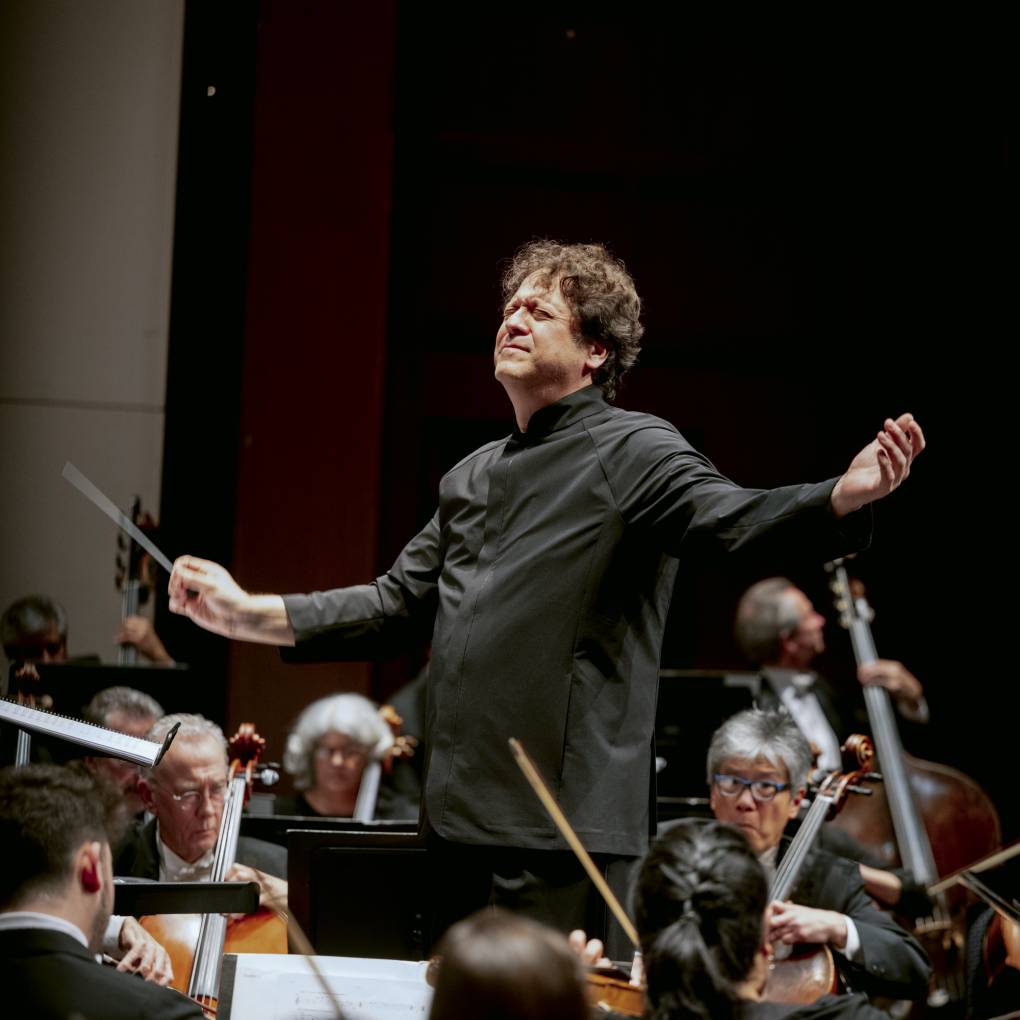
"caption": "Donato Cabrera, a Mexican-American conductor, serves as the artistic and music director of the California Symphony.",
"credit": "Kristen Loken/Courtesy of Donato Cabrera",
"altTag": null,
"description": null,
"imgSizes": {
"medium": {
"file": "https://cdn.kqed.org/wp-content/uploads/sites/10/2024/08/DONATO-CABRERA-2-BY-KRISTEN-LOKEN-KQED-800x800.jpg",
"width": 800,
"height": 800,
"mimeType": "image/jpeg"
},
"large": {
"file": "https://cdn.kqed.org/wp-content/uploads/sites/10/2024/08/DONATO-CABRERA-2-BY-KRISTEN-LOKEN-KQED-1020x1020.jpg",
"width": 1020,
"height": 1020,
"mimeType": "image/jpeg"
},
"thumbnail": {
"file": "https://cdn.kqed.org/wp-content/uploads/sites/10/2024/08/DONATO-CABRERA-2-BY-KRISTEN-LOKEN-KQED-160x160.jpg",
"width": 160,
"height": 160,
"mimeType": "image/jpeg"
},
"1536x1536": {
"file": "https://cdn.kqed.org/wp-content/uploads/sites/10/2024/08/DONATO-CABRERA-2-BY-KRISTEN-LOKEN-KQED-1536x1536.jpg",
"width": 1536,
"height": 1536,
"mimeType": "image/jpeg"
},
"post-thumbnail": {
"file": "https://cdn.kqed.org/wp-content/uploads/sites/10/2024/08/DONATO-CABRERA-2-BY-KRISTEN-LOKEN-KQED-672x372.jpg",
"width": 672,
"height": 372,
"mimeType": "image/jpeg"
},
"twentyfourteen-full-width": {
"file": "https://cdn.kqed.org/wp-content/uploads/sites/10/2024/08/DONATO-CABRERA-2-BY-KRISTEN-LOKEN-KQED-1038x576.jpg",
"width": 1038,
"height": 576,
"mimeType": "image/jpeg"
},
"full-width": {
"file": "https://cdn.kqed.org/wp-content/uploads/sites/10/2024/08/DONATO-CABRERA-2-BY-KRISTEN-LOKEN-KQED-1920x1920.jpg",
"width": 1920,
"height": 1920,
"mimeType": "image/jpeg"
},
"kqedFullSize": {
"file": "https://cdn.kqed.org/wp-content/uploads/sites/10/2024/08/DONATO-CABRERA-2-BY-KRISTEN-LOKEN-KQED.jpg",
"width": 2000,
"height": 2000
}
},
"isLoading": false,
"fetchFailed": false
},
"news_11945707": {
"type": "attachments",
"id": "news_11945707",
"meta": {
"index": "attachments_1716263798",
"site": "news",
"id": "11945707",
"found": true
},
"title": "016_KQED_InternetArchiveOffices_03242023",
"publishDate": 1680647942,
"status": "inherit",
"parent": 11945533,
"modified": 1725487402,
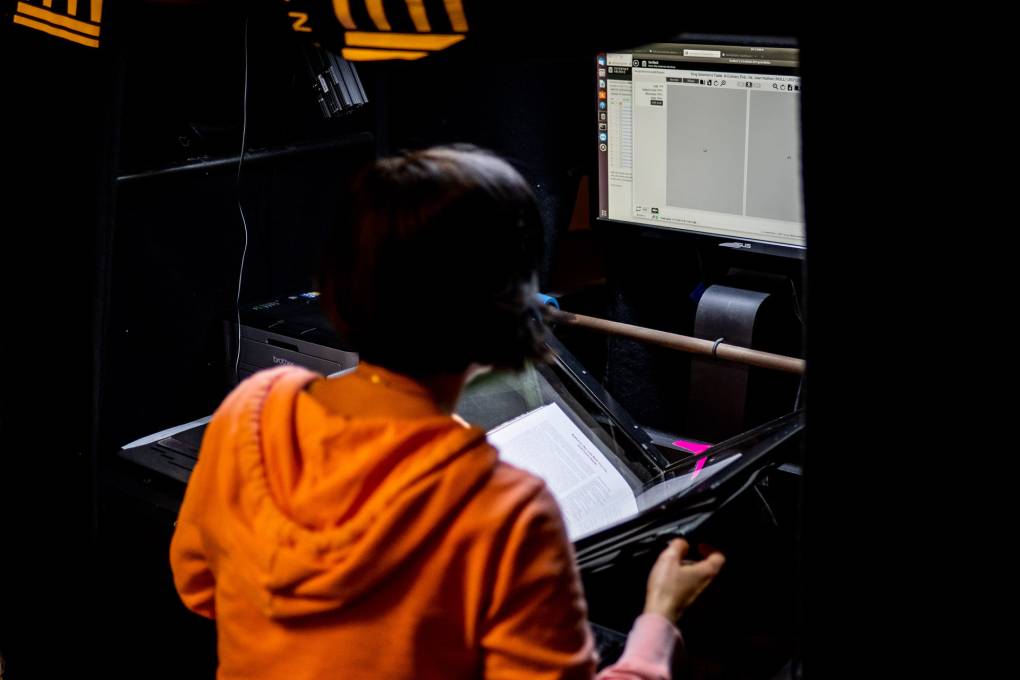
"caption": "Eliza Zhang scans books at the Internet Archive offices in San Francisco.",
"credit": "Beth LaBerge/KQED",
"altTag": "Someone wearing a bright orange hoodie sits at an archiving station, holding an open book and facing a computer screen.",
"description": null,
"imgSizes": {
"medium": {
"file": "https://cdn.kqed.org/wp-content/uploads/sites/10/2023/04/016_KQED_InternetArchiveOffices_03242023-800x533.jpg",
"width": 800,
"height": 533,
"mimeType": "image/jpeg"
},
"large": {
"file": "https://cdn.kqed.org/wp-content/uploads/sites/10/2023/04/016_KQED_InternetArchiveOffices_03242023-1020x680.jpg",
"width": 1020,
"height": 680,
"mimeType": "image/jpeg"
},
"thumbnail": {
"file": "https://cdn.kqed.org/wp-content/uploads/sites/10/2023/04/016_KQED_InternetArchiveOffices_03242023-160x107.jpg",
"width": 160,
"height": 107,
"mimeType": "image/jpeg"
},
"1536x1536": {
"file": "https://cdn.kqed.org/wp-content/uploads/sites/10/2023/04/016_KQED_InternetArchiveOffices_03242023-1536x1024.jpg",
"width": 1536,
"height": 1024,
"mimeType": "image/jpeg"
},
"post-thumbnail": {
"file": "https://cdn.kqed.org/wp-content/uploads/sites/10/2023/04/016_KQED_InternetArchiveOffices_03242023-672x372.jpg",
"width": 672,
"height": 372,
"mimeType": "image/jpeg"
},
"twentyfourteen-full-width": {
"file": "https://cdn.kqed.org/wp-content/uploads/sites/10/2023/04/016_KQED_InternetArchiveOffices_03242023-1038x576.jpg",
"width": 1038,
"height": 576,
"mimeType": "image/jpeg"
},
"kqedFullSize": {
"file": "https://cdn.kqed.org/wp-content/uploads/sites/10/2023/04/016_KQED_InternetArchiveOffices_03242023.jpg",
"width": 1920,
"height": 1280
}
},
"isLoading": false,
"fetchFailed": false
},
"news_12002701": {
"type": "attachments",
"id": "news_12002701",
"meta": {
"index": "attachments_1716263798",
"site": "news",
"id": "12002701",
"found": true
},
"title": "59",
"publishDate": 1725218918,
"status": "inherit",
"parent": 12002689,
"modified": 1725219103,
"caption": null,
"credit": "Photos by Beth LaBerge/Collage by Spencer Whitney of KQED",
"altTag": "A collage of five images of a Black woman dressed in a white clothing playing a harp.",
"description": null,
"imgSizes": {
"medium": {
"file": "https://cdn.kqed.org/wp-content/uploads/sites/10/2024/09/59-800x640.png",
"width": 800,
"height": 640,
"mimeType": "image/png"
},
"large": {
"file": "https://cdn.kqed.org/wp-content/uploads/sites/10/2024/09/59-1020x816.png",
"width": 1020,
"height": 816,
"mimeType": "image/png"
},
"thumbnail": {
"file": "https://cdn.kqed.org/wp-content/uploads/sites/10/2024/09/59-160x128.png",
"width": 160,
"height": 128,
"mimeType": "image/png"
},
"1536x1536": {
"file": "https://cdn.kqed.org/wp-content/uploads/sites/10/2024/09/59-1536x1229.png",
"width": 1536,
"height": 1229,
"mimeType": "image/png"
},
"post-thumbnail": {
"file": "https://cdn.kqed.org/wp-content/uploads/sites/10/2024/09/59-672x372.png",
"width": 672,
"height": 372,
"mimeType": "image/png"
},
"twentyfourteen-full-width": {
"file": "https://cdn.kqed.org/wp-content/uploads/sites/10/2024/09/59-1038x576.png",
"width": 1038,
"height": 576,
"mimeType": "image/png"
},
"kqedFullSize": {
"file": "https://cdn.kqed.org/wp-content/uploads/sites/10/2024/09/59.png",
"width": 1750,
"height": 1400
}
},
"isLoading": false,
"fetchFailed": false
},
"news_12001813": {
"type": "attachments",
"id": "news_12001813",
"meta": {
"index": "attachments_1716263798",
"site": "news",
"id": "12001813",
"found": true
},
"title": "58",
"publishDate": 1724617369,
"status": "inherit",
"parent": 12001811,
"modified": 1724617431,
"caption": null,
"credit": null,
"altTag": "A collage of five images of a person wearing a white outfit with a red moon and blue lion next to them.",
"description": null,
"imgSizes": {
"medium": {
"file": "https://cdn.kqed.org/wp-content/uploads/sites/10/2024/08/58-800x640.png",
"width": 800,
"height": 640,
"mimeType": "image/png"
},
"large": {
"file": "https://cdn.kqed.org/wp-content/uploads/sites/10/2024/08/58-1020x816.png",
"width": 1020,
"height": 816,
"mimeType": "image/png"
},
"thumbnail": {
"file": "https://cdn.kqed.org/wp-content/uploads/sites/10/2024/08/58-160x128.png",
"width": 160,
"height": 128,
"mimeType": "image/png"
},
"post-thumbnail": {
"file": "https://cdn.kqed.org/wp-content/uploads/sites/10/2024/08/58-672x372.png",
"width": 672,
"height": 372,
"mimeType": "image/png"
},
"twentyfourteen-full-width": {
"file": "https://cdn.kqed.org/wp-content/uploads/sites/10/2024/08/58-1038x576.png",
"width": 1038,
"height": 576,
"mimeType": "image/png"
},
"kqedFullSize": {
"file": "https://cdn.kqed.org/wp-content/uploads/sites/10/2024/08/58.png",
"width": 1500,
"height": 1200
}
},
"isLoading": false,
"fetchFailed": false
},
"news_11990527": {
"type": "attachments",
"id": "news_11990527",
"meta": {
"index": "attachments_1716263798",
"site": "news",
"id": "11990527",
"found": true
},
"title": "240611-DestinyMuhammad-10-BL_qut",
"publishDate": 1718406976,
"status": "inherit",
"parent": 0,
"modified": 1724108239,
"caption": "Destiny Muhammad, a Bay Area musician, vocalist and composer, plays the harp during a yoga class at Grace Cathedral in San Francisco on June 12.",
"credit": "Beth LaBerge/KQED",
"altTag": "A woman dressed in white plays the harp.",
"description": null,
"imgSizes": {
"medium": {
"file": "https://cdn.kqed.org/wp-content/uploads/sites/10/2024/06/240611-DestinyMuhammad-10-BL_qut-800x533.jpg",
"width": 800,
"height": 533,
"mimeType": "image/jpeg"
},
"large": {
"file": "https://cdn.kqed.org/wp-content/uploads/sites/10/2024/06/240611-DestinyMuhammad-10-BL_qut-1020x680.jpg",
"width": 1020,
"height": 680,
"mimeType": "image/jpeg"
},
"thumbnail": {
"file": "https://cdn.kqed.org/wp-content/uploads/sites/10/2024/06/240611-DestinyMuhammad-10-BL_qut-160x107.jpg",
"width": 160,
"height": 107,
"mimeType": "image/jpeg"
},
"1536x1536": {
"file": "https://cdn.kqed.org/wp-content/uploads/sites/10/2024/06/240611-DestinyMuhammad-10-BL_qut-1536x1024.jpg",
"width": 1536,
"height": 1024,
"mimeType": "image/jpeg"
},
"post-thumbnail": {
"file": "https://cdn.kqed.org/wp-content/uploads/sites/10/2024/06/240611-DestinyMuhammad-10-BL_qut-672x372.jpg",
"width": 672,
"height": 372,
"mimeType": "image/jpeg"
},
"twentyfourteen-full-width": {
"file": "https://cdn.kqed.org/wp-content/uploads/sites/10/2024/06/240611-DestinyMuhammad-10-BL_qut-1038x576.jpg",
"width": 1038,
"height": 576,
"mimeType": "image/jpeg"
},
"kqedFullSize": {
"file": "https://cdn.kqed.org/wp-content/uploads/sites/10/2024/06/240611-DestinyMuhammad-10-BL_qut.jpg",
"width": 1920,
"height": 1280
}
},
"isLoading": false,
"fetchFailed": false
},
"news_12001109": {
"type": "attachments",
"id": "news_12001109",
"meta": {
"index": "attachments_1716263798",
"site": "news",
"id": "12001109",
"found": true
},
"title": "20240817_LOWRIDERS_GC-28-KQED",
"publishDate": 1724257815,
"status": "inherit",
"parent": 0,
"modified": 1724275398,
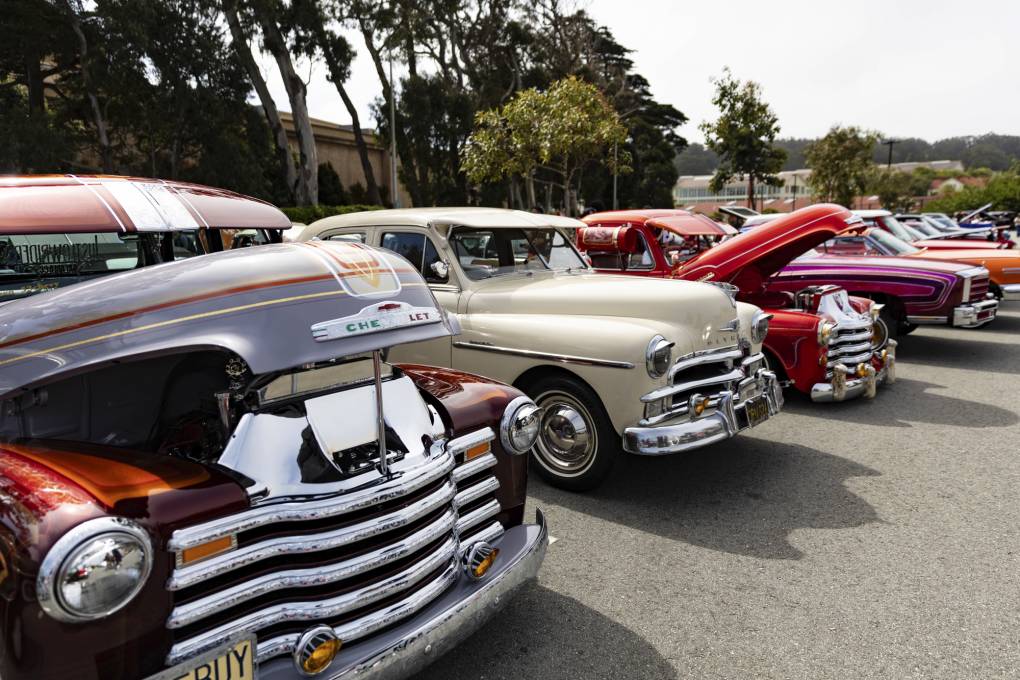
"caption": "Cars lined up, waiting to be judged, at the annual King of the Streets car show at the Palace of Fine Arts on Aug. 17, 2024.",
"credit": "Gina Castro/KQED",
"altTag": null,
"description": null,
"imgSizes": {
"medium": {
"file": "https://cdn.kqed.org/wp-content/uploads/sites/10/2024/08/20240817_LOWRIDERS_GC-28-KQED-800x533.jpg",
"width": 800,
"height": 533,
"mimeType": "image/jpeg"
},
"large": {
"file": "https://cdn.kqed.org/wp-content/uploads/sites/10/2024/08/20240817_LOWRIDERS_GC-28-KQED-1020x680.jpg",
"width": 1020,
"height": 680,
"mimeType": "image/jpeg"
},
"thumbnail": {
"file": "https://cdn.kqed.org/wp-content/uploads/sites/10/2024/08/20240817_LOWRIDERS_GC-28-KQED-160x107.jpg",
"width": 160,
"height": 107,
"mimeType": "image/jpeg"
},
"1536x1536": {
"file": "https://cdn.kqed.org/wp-content/uploads/sites/10/2024/08/20240817_LOWRIDERS_GC-28-KQED-1536x1024.jpg",
"width": 1536,
"height": 1024,
"mimeType": "image/jpeg"
},
"post-thumbnail": {
"file": "https://cdn.kqed.org/wp-content/uploads/sites/10/2024/08/20240817_LOWRIDERS_GC-28-KQED-672x372.jpg",
"width": 672,
"height": 372,
"mimeType": "image/jpeg"
},
"twentyfourteen-full-width": {
"file": "https://cdn.kqed.org/wp-content/uploads/sites/10/2024/08/20240817_LOWRIDERS_GC-28-KQED-1038x576.jpg",
"width": 1038,
"height": 576,
"mimeType": "image/jpeg"
},
"full-width": {
"file": "https://cdn.kqed.org/wp-content/uploads/sites/10/2024/08/20240817_LOWRIDERS_GC-28-KQED-1920x1280.jpg",
"width": 1920,
"height": 1280,
"mimeType": "image/jpeg"
},
"kqedFullSize": {
"file": "https://cdn.kqed.org/wp-content/uploads/sites/10/2024/08/20240817_LOWRIDERS_GC-28-KQED.jpg",
"width": 2000,
"height": 1333
}
},
"isLoading": false,
"fetchFailed": false
},
"news_11999755": {
"type": "attachments",
"id": "news_11999755",
"meta": {
"index": "attachments_1716263798",
"site": "news",
"id": "11999755",
"found": true
},
"title": "MusicDropCollage",
"publishDate": 1723322400,
"status": "inherit",
"parent": 11999753,
"modified": 1723322492,
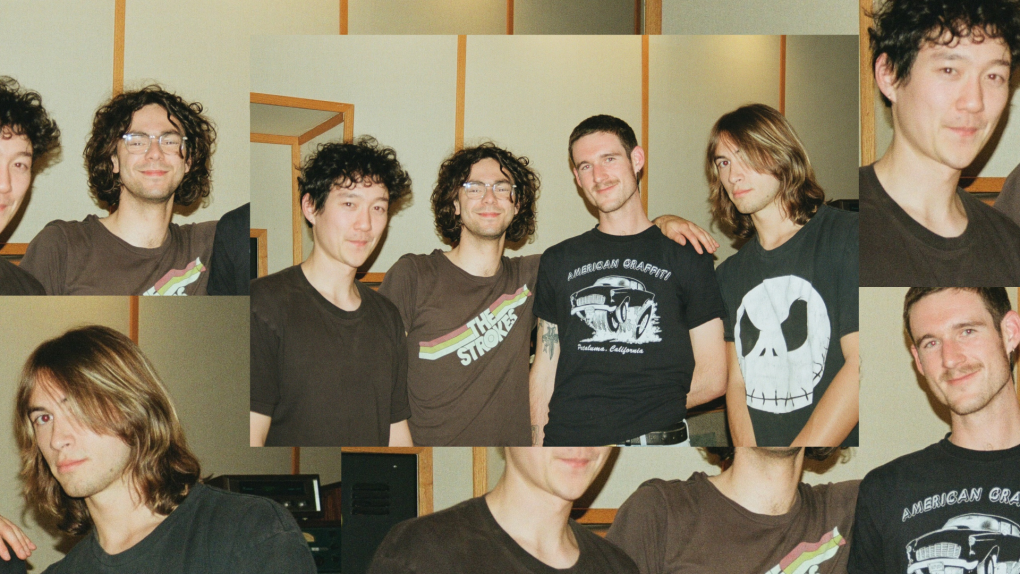
"caption": "Left to right: Nathan Kruse, Joey Goodman, Ben Stolz and Alex Wolfert of Starfish Prime.",
"credit": "Photo courtesy of Caroline Smith/Collage by Lakshmi Sarah of KQED",
"altTag": null,
"description": null,
"imgSizes": {
"medium": {
"file": "https://cdn.kqed.org/wp-content/uploads/sites/10/2024/08/MusicDropCollage-800x450.png",
"width": 800,
"height": 450,
"mimeType": "image/png"
},
"large": {
"file": "https://cdn.kqed.org/wp-content/uploads/sites/10/2024/08/MusicDropCollage-1020x574.png",
"width": 1020,
"height": 574,
"mimeType": "image/png"
},
"thumbnail": {
"file": "https://cdn.kqed.org/wp-content/uploads/sites/10/2024/08/MusicDropCollage-160x90.png",
"width": 160,
"height": 90,
"mimeType": "image/png"
},
"1536x1536": {
"file": "https://cdn.kqed.org/wp-content/uploads/sites/10/2024/08/MusicDropCollage-1536x864.png",
"width": 1536,
"height": 864,
"mimeType": "image/png"
},
"post-thumbnail": {
"file": "https://cdn.kqed.org/wp-content/uploads/sites/10/2024/08/MusicDropCollage-672x372.png",
"width": 672,
"height": 372,
"mimeType": "image/png"
},
"twentyfourteen-full-width": {
"file": "https://cdn.kqed.org/wp-content/uploads/sites/10/2024/08/MusicDropCollage-1038x576.png",
"width": 1038,
"height": 576,
"mimeType": "image/png"
},
"kqedFullSize": {
"file": "https://cdn.kqed.org/wp-content/uploads/sites/10/2024/08/MusicDropCollage.png",
"width": 1920,
"height": 1080
}
},
"isLoading": false,
"fetchFailed": false
}
},
"audioPlayerReducer": {
"postId": "stream_live",
"isPaused": true,
"isPlaying": false,
"pfsActive": false,
"pledgeModalIsOpen": true,
"playerDrawerIsOpen": false,
"liveAudioPlayStartedAt": 0,
"liveAudioPlayContext": ""
},
"authorsReducer": {
"byline_news_12003100": {
"type": "authors",
"id": "byline_news_12003100",
"meta": {
"override": true
},
"slug": "byline_news_12003100",
"name": "Hillel Italie, The Associated Press",
"isLoading": false
},
"rachael-myrow": {
"type": "authors",
"id": "251",
"meta": {
"index": "authors_1716337520",
"id": "251",
"found": true
},
"name": "Rachael Myrow",
"firstName": "Rachael",
"lastName": "Myrow",
"slug": "rachael-myrow",
"email": "rmyrow@kqed.org",
"display_author_email": true,
"staff_mastheads": [
"news"
],
"title": "Senior Editor of KQED's Silicon Valley News Desk",
"bio": "• I write and edit stories about how Silicon Valley power and policies shape everyday life in California. I’m also passionate about making Bay Area history and culture more accessible to a broad public. • I’ve been a journalist for most of my life, starting in high school with The Franklin Press in Los Angeles, where I grew up. While earning my first degree in English at UC Berkeley, I got my start in public radio at KALX-FM. After completing a second degree in journalism at Cal, I landed my first professional job at Marketplace, then moved on to KPCC (now LAist), and then KQED, where I hosted The California Report for more than seven years. • My reporting has appeared on NPR, The World, WBUR’s \u003ci>Here & Now\u003c/i>, and the BBC. I also guest host for KQED’s \u003ci>Forum\u003c/i>, as well as the Commonwealth Club in San Francisco. • I speak periodically on media, democracy and technology issues, and do voiceover work for documentaries and educational video projects. • Outside of the studio, you'll find me hiking Bay Area trails and whipping up Insta-ready meals in my kitchen. • I do not accept gifts, money, or favors from anyone connected to my reporting, I don't pay people for information, and I do not support or donate to political causes. • I strive to treat the people I report on with fairness, honesty, and respect. I also recognize there are often multiple sides to a story and work to verify information through multiple sources and documentation. If I get something wrong, I correct it.",
"avatar": "https://secure.gravatar.com/avatar/3ed8a3c5f26025e4a805ba634cda8cd764906b97438a6d9ce216b044e340da4e?s=600&d=blank&r=g",
"twitter": "rachaelmyrow",
"bluesky": null,
"facebook": null,
"instagram": null,
"linkedin": "https://www.linkedin.com/in/rachaelmyrow/",
"sites": [
{
"site": "arts",
"roles": [
"administrator"
]
},
{
"site": "news",
"roles": [
"edit_others_posts",
"editor"
]
},
{
"site": "futureofyou",
"roles": [
"editor"
]
},
{
"site": "bayareabites",
"roles": [
"editor"
]
},
{
"site": "stateofhealth",
"roles": [
"editor"
]
},
{
"site": "science",
"roles": [
"editor"
]
},
{
"site": "food",
"roles": [
"editor"
]
},
{
"site": "forum",
"roles": [
"editor"
]
},
{
"site": "liveblog",
"roles": [
"author"
]
}
],
"headData": {
"title": "Rachael Myrow | KQED",
"description": "Senior Editor of KQED's Silicon Valley News Desk",
"ogImgSrc": "https://secure.gravatar.com/avatar/3ed8a3c5f26025e4a805ba634cda8cd764906b97438a6d9ce216b044e340da4e?s=600&d=blank&r=g",
"twImgSrc": "https://secure.gravatar.com/avatar/3ed8a3c5f26025e4a805ba634cda8cd764906b97438a6d9ce216b044e340da4e?s=600&d=blank&r=g"
},
"isLoading": false,
"link": "/author/rachael-myrow"
},
"lmorehouse": {
"type": "authors",
"id": "3229",
"meta": {
"index": "authors_1716337520",
"id": "3229",
"found": true
},
"name": "Lisa Morehouse",
"firstName": "Lisa",
"lastName": "Morehouse",
"slug": "lmorehouse",
"email": "morehouse.lisa@gmail.com",
"display_author_email": false,
"staff_mastheads": [],
"title": "KQED Contributor",
"bio": "Lisa Morehouse is an award-winning public radio and print journalist, who has filed for National Public Radio, American Public Media, KQED Public Radio, Edutopia, and McSweeney’s. Her reporting has taken her from Samoan traveling circuses to Mississippi Delta classrooms to the homes of Lao refugees in rural Iowa. In addition to reporting, she teaches radio production to at-risk youth in the Bay Area. Her series \u003ca href=\"http://afterthegoldrushradio.com/\">After the Gold Rush\u003c/a> featured the changing industries, populations and identities of rural towns throughout California. She’s now producing \u003ca href=\"http://www.californiafoodways.com/\">California Foodways\u003c/a>, a series exploring the intersections of food, culture, economics, history and labor. Follow along on the \u003ca href=\"https://www.facebook.com/californiafoodways?ref=hl\">Facebook page\u003c/a> or on Twitter @cafoodways.",
"avatar": "https://secure.gravatar.com/avatar/dae74b002a6e256f39abb19d6f5acaea?s=600&d=blank&r=g",
"twitter": null,
"facebook": null,
"instagram": null,
"linkedin": null,
"sites": [
{
"site": "",
"roles": [
"editor"
]
},
{
"site": "news",
"roles": [
"author"
]
}
],
"headData": {
"title": "Lisa Morehouse | KQED",
"description": "KQED Contributor",
"ogImgSrc": "https://secure.gravatar.com/avatar/dae74b002a6e256f39abb19d6f5acaea?s=600&d=blank&r=g",
"twImgSrc": "https://secure.gravatar.com/avatar/dae74b002a6e256f39abb19d6f5acaea?s=600&d=blank&r=g"
},
"isLoading": false,
"link": "/author/lmorehouse"
},
"btaylor": {
"type": "authors",
"id": "11365",
"meta": {
"index": "authors_1716337520",
"id": "11365",
"found": true
},
"name": "Bianca Taylor",
"firstName": "Bianca",
"lastName": "Taylor",
"slug": "btaylor",
"email": "btaylor@KQED.org",
"display_author_email": false,
"staff_mastheads": [
"news"
],
"title": "Host and Producer ",
"bio": "Bianca Taylor is a news producer and host of KQED's The Latest podcast.\r\n\r\nHer work with KQED has been honored by the Society of Professional Journalists NorCal, the Webby's, the Regional Murrow Awards, and ONA. She has also worked with NPR, the BBC World Service, and the Washington Post Creative Group.\r\n\r\nBianca is represented by SAG-AFTRA.",
"avatar": "https://secure.gravatar.com/avatar/6b9d3f6552dd10470c5d1c2e58cfe717?s=600&d=blank&r=g",
"twitter": "SoundsLkeBianca",
"facebook": null,
"instagram": null,
"linkedin": null,
"sites": [
{
"site": "arts",
"roles": [
"editor"
]
},
{
"site": "news",
"roles": [
"edit_others_posts",
"editor"
]
},
{
"site": "pop",
"roles": [
"editor"
]
},
{
"site": "bayareabites",
"roles": [
"author"
]
},
{
"site": "science",
"roles": [
"editor"
]
},
{
"site": "forum",
"roles": [
"editor"
]
},
{
"site": "radio",
"roles": [
"editor"
]
},
{
"site": "podcasts",
"roles": [
"editor"
]
}
],
"headData": {
"title": "Bianca Taylor | KQED",
"description": "Host and Producer ",
"ogImgSrc": "https://secure.gravatar.com/avatar/6b9d3f6552dd10470c5d1c2e58cfe717?s=600&d=blank&r=g",
"twImgSrc": "https://secure.gravatar.com/avatar/6b9d3f6552dd10470c5d1c2e58cfe717?s=600&d=blank&r=g"
},
"isLoading": false,
"link": "/author/btaylor"
},
"cmorizono": {
"type": "authors",
"id": "11503",
"meta": {
"index": "authors_1716337520",
"id": "11503",
"found": true
},
"name": "Chloe Morizono",
"firstName": "Chloe",
"lastName": "Morizono",
"slug": "cmorizono",
"email": "cmorizono@kqed.org",
"display_author_email": false,
"staff_mastheads": [],
"title": "KQED Contributor",
"bio": null,
"avatar": "https://secure.gravatar.com/avatar/589de970d4696c868de7f4dc180e0289?s=600&d=blank&r=g",
"twitter": null,
"facebook": null,
"instagram": null,
"linkedin": null,
"sites": [
{
"site": "news",
"roles": []
},
{
"site": "perspectives",
"roles": [
"editor"
]
}
],
"headData": {
"title": "Chloe Morizono | KQED",
"description": "KQED Contributor",
"ogImgSrc": "https://secure.gravatar.com/avatar/589de970d4696c868de7f4dc180e0289?s=600&d=blank&r=g",
"twImgSrc": "https://secure.gravatar.com/avatar/589de970d4696c868de7f4dc180e0289?s=600&d=blank&r=g"
},
"isLoading": false,
"link": "/author/cmorizono"
},
"btorres": {
"type": "authors",
"id": "11666",
"meta": {
"index": "authors_1716337520",
"id": "11666",
"found": true
},
"name": "Blanca Torres",
"firstName": "Blanca",
"lastName": "Torres",
"slug": "btorres",
"email": "btorres@kqed.org",
"display_author_email": true,
"staff_mastheads": [
"news"
],
"title": "Producer, Forum",
"bio": "Blanca Torres brings sharp news judgement and keen sense of lively conversation to her work as producer for Forum. She loves producing shows that leave listeners feeling like they heard distinctive voices, learned something new and gained a fresh perspective.\r\n\r\nShe joined KQED in January of 2020 after 16 years of working as a newspaper reporter most recently at the \u003cem>San Francisco Business Times,\u003c/em> where she wrote about real estate and economic development. Before that, she covered a variety of beats including crime, education, retail, workplace, the economy, consumer issues, and small business for the \u003cem>Contra Costa Times, Baltimore Sun\u003c/em> and\u003cem> The Seattle Times\u003c/em>. In addition to reporting, she worked as an editorial writer and columnist for the \u003cem>Seattle Times\u003c/em>. From 2017 to 2020, Blanca won a total of ten awards from the National Association of Real Estate Editors and won first place for land use reporting from the California News Publishers Association two years in a row. She is also a member and former board member for the National Association of Hispanic Journalists.\r\n\r\nA native of the Pacific Northwest, Blanca earned her bachelor's degree from Vanderbilt University in Nashville and a master's in fine arts in creative writing at Mills College. She lives in the East Bay with her family.",
"avatar": "https://secure.gravatar.com/avatar/50b49d19b14a1eed34f26ebf4681152cdd81574ed21851100871ccd29e578cdc?s=600&d=blank&r=g",
"twitter": "@blancawrites",
"bluesky": null,
"facebook": null,
"instagram": null,
"linkedin": null,
"sites": [
{
"site": "arts",
"roles": [
"editor"
]
},
{
"site": "news",
"roles": [
"editor"
]
},
{
"site": "forum",
"roles": [
"editor"
]
}
],
"headData": {
"title": "Blanca Torres | KQED",
"description": "Producer, Forum",
"ogImgSrc": "https://secure.gravatar.com/avatar/50b49d19b14a1eed34f26ebf4681152cdd81574ed21851100871ccd29e578cdc?s=600&d=blank&r=g",
"twImgSrc": "https://secure.gravatar.com/avatar/50b49d19b14a1eed34f26ebf4681152cdd81574ed21851100871ccd29e578cdc?s=600&d=blank&r=g"
},
"isLoading": false,
"link": "/author/btorres"
},
"sminobucheli": {
"type": "authors",
"id": "11764",
"meta": {
"index": "authors_1716337520",
"id": "11764",
"found": true
},
"name": "Sebastian Miño-Bucheli",
"firstName": "Sebastian",
"lastName": "Miño-Bucheli",
"slug": "sminobucheli",
"email": "sminobucheli@kqed.org",
"display_author_email": false,
"staff_mastheads": [],
"title": "KQED Contributor",
"bio": "Sebastian Miño-Bucheli is a bilingual multimedia reporter and contributor to KQED Digital News. His reporting has been featured for Bay Curious, the California Report Magazine and KQED Arts. ",
"avatar": "https://secure.gravatar.com/avatar/4d433e33876cb631fbbe1ab7b9ddf7a1616f5e270c709b89ee147c0489875612?s=600&d=blank&r=g",
"twitter": "@BucheliMino",
"bluesky": null,
"facebook": null,
"instagram": null,
"linkedin": null,
"sites": [
{
"site": "arts",
"roles": [
"subscriber"
]
},
{
"site": "news",
"roles": [
"subscriber"
]
}
],
"headData": {
"title": "Sebastian Miño-Bucheli | KQED",
"description": "KQED Contributor",
"ogImgSrc": "https://secure.gravatar.com/avatar/4d433e33876cb631fbbe1ab7b9ddf7a1616f5e270c709b89ee147c0489875612?s=600&d=blank&r=g",
"twImgSrc": "https://secure.gravatar.com/avatar/4d433e33876cb631fbbe1ab7b9ddf7a1616f5e270c709b89ee147c0489875612?s=600&d=blank&r=g"
},
"isLoading": false,
"link": "/author/sminobucheli"
},
"afinney": {
"type": "authors",
"id": "11772",
"meta": {
"index": "authors_1716337520",
"id": "11772",
"found": true
},
"name": "Annelise Finney",
"firstName": "Annelise",
"lastName": "Finney",
"slug": "afinney",
"email": "afinney@kqed.org",
"display_author_email": true,
"staff_mastheads": [
"news"
],
"title": "Reporter",
"bio": "Annelise reports on reparations in California and East Bay politics. She co-produced the Sunday Music Drop, a limited-term radio series featuring Bay Area musicians that aired between Sept 2022 and Oct 2024. She joined KQED in 2021 as a general assignment reporter and is an alumna of KALW's Audio Academy. She was born and raised in the East Bay. She is currently away from KQED completing a year-long reporting project in Berlin, Germany as a Alexander Von Humboldt German Chancellor Fellow.",
"avatar": "https://secure.gravatar.com/avatar/5fded66cae47704cdfc5021cde0f3aa4?s=600&d=blank&r=g",
"twitter": null,
"facebook": null,
"instagram": null,
"linkedin": null,
"sites": [
{
"site": "news",
"roles": [
"editor"
]
},
{
"site": "liveblog",
"roles": [
"author"
]
}
],
"headData": {
"title": "Annelise Finney | KQED",
"description": "Reporter",
"ogImgSrc": "https://secure.gravatar.com/avatar/5fded66cae47704cdfc5021cde0f3aa4?s=600&d=blank&r=g",
"twImgSrc": "https://secure.gravatar.com/avatar/5fded66cae47704cdfc5021cde0f3aa4?s=600&d=blank&r=g"
},
"isLoading": false,
"link": "/author/afinney"
},
"swhitney": {
"type": "authors",
"id": "11784",
"meta": {
"index": "authors_1716337520",
"id": "11784",
"found": true
},
"name": "Spencer Whitney",
"firstName": "Spencer",
"lastName": "Whitney",
"slug": "swhitney",
"email": "swhitney@kqed.org",
"display_author_email": false,
"staff_mastheads": [],
"title": "KQED Digital Editor",
"bio": "Spencer Whitney is currently a Digital Editor for KQED News. Prior to joining KQED News, Spencer worked as the Multimedia Editor at the Oakland Post and an Assistant Editor in the Editorial department at the San Francisco Chronicle. He attended Howard University as an undergraduate and interned with SiriusXM. He also attended UC Berkeley's Graduate School of Journalism and had the opportunity to write for the hyperlocal news sites Richmond Confidential and Oakland North.",
"avatar": "https://secure.gravatar.com/avatar/e33ff4fd8b8f0d2796f36472fb32607ca8fc46ef5e537dcfdbdee688d8ea5b80?s=600&d=mm&r=g",
"twitter": null,
"bluesky": null,
"facebook": null,
"instagram": null,
"linkedin": null,
"sites": [
{
"site": "arts",
"roles": [
"editor"
]
},
{
"site": "news",
"roles": [
"editor"
]
},
{
"site": "science",
"roles": [
"editor"
]
},
{
"site": "perspectives",
"roles": [
"editor"
]
}
],
"headData": {
"title": "Spencer Whitney | KQED",
"description": "KQED Digital Editor",
"ogImgSrc": "https://secure.gravatar.com/avatar/e33ff4fd8b8f0d2796f36472fb32607ca8fc46ef5e537dcfdbdee688d8ea5b80?s=600&d=mm&r=g",
"twImgSrc": "https://secure.gravatar.com/avatar/e33ff4fd8b8f0d2796f36472fb32607ca8fc46ef5e537dcfdbdee688d8ea5b80?s=600&d=mm&r=g"
},
"isLoading": false,
"link": "/author/swhitney"
},
"apelit": {
"type": "authors",
"id": "11812",
"meta": {
"index": "authors_1716337520",
"id": "11812",
"found": true
},
"name": "Attila Pelit",
"firstName": "Attila",
"lastName": "Pelit",
"slug": "apelit",
"email": "apelit@kqed.org",
"display_author_email": false,
"staff_mastheads": [],
"title": "KQED Contributor",
"bio": null,
"avatar": "https://secure.gravatar.com/avatar/9b7b8a9e595d58a1f4d853f8608ae584?s=600&d=mm&r=g",
"twitter": null,
"facebook": null,
"instagram": null,
"linkedin": null,
"sites": [
{
"site": "news",
"roles": [
"editor"
]
},
{
"site": "science",
"roles": [
"editor"
]
},
{
"site": "elections",
"roles": [
"editor"
]
},
{
"site": "liveblog",
"roles": [
"editor"
]
}
],
"headData": {
"title": "Attila Pelit | KQED",
"description": "KQED Contributor",
"ogImgSrc": "https://secure.gravatar.com/avatar/9b7b8a9e595d58a1f4d853f8608ae584?s=600&d=mm&r=g",
"twImgSrc": "https://secure.gravatar.com/avatar/9b7b8a9e595d58a1f4d853f8608ae584?s=600&d=mm&r=g"
},
"isLoading": false,
"link": "/author/apelit"
},
"sjohnson": {
"type": "authors",
"id": "11840",
"meta": {
"index": "authors_1716337520",
"id": "11840",
"found": true
},
"name": "Sydney Johnson",
"firstName": "Sydney",
"lastName": "Johnson",
"slug": "sjohnson",
"email": "sjohnson@kqed.org",
"display_author_email": false,
"staff_mastheads": [
"news"
],
"title": "KQED Reporter",
"bio": "Sydney Johnson is a general assignment reporter at KQED. She previously reported on public health and city government at the San Francisco Examiner, and before that, she covered statewide education policy for EdSource. Her reporting has won multiple local, state and national awards. Sydney is a graduate of the University of California, Berkeley and lives in San Francisco.",
"avatar": "https://secure.gravatar.com/avatar/97855f2719b72ad6190b7c535fe642c8?s=600&d=blank&r=g",
"twitter": "sydneyfjohnson",
"facebook": null,
"instagram": null,
"linkedin": null,
"sites": [
{
"site": "news",
"roles": [
"editor"
]
}
],
"headData": {
"title": "Sydney Johnson | KQED",
"description": "KQED Reporter",
"ogImgSrc": "https://secure.gravatar.com/avatar/97855f2719b72ad6190b7c535fe642c8?s=600&d=blank&r=g",
"twImgSrc": "https://secure.gravatar.com/avatar/97855f2719b72ad6190b7c535fe642c8?s=600&d=blank&r=g"
},
"isLoading": false,
"link": "/author/sjohnson"
},
"kdebenedetti": {
"type": "authors",
"id": "11913",
"meta": {
"index": "authors_1716337520",
"id": "11913",
"found": true
},
"name": "Katie DeBenedetti",
"firstName": "Katie",
"lastName": "DeBenedetti",
"slug": "kdebenedetti",
"email": "kdebenedetti@kqed.org",
"display_author_email": false,
"staff_mastheads": [
"news",
"science"
],
"title": "KQED Contributor",
"bio": "Katie DeBenedetti is a digital reporter covering daily news for the Express Desk. Prior to joining KQED as a culture reporting intern in January 2024, she covered education and city government for the Napa Valley Register.",
"avatar": "https://secure.gravatar.com/avatar/6e31073cb8f7e4214ab03f42771d0f45?s=600&d=blank&r=g",
"twitter": null,
"facebook": null,
"instagram": null,
"linkedin": null,
"sites": [
{
"site": "news",
"roles": [
"author"
]
},
{
"site": "science",
"roles": [
"author"
]
},
{
"site": "liveblog",
"roles": [
"author"
]
}
],
"headData": {
"title": "Katie DeBenedetti | KQED",
"description": "KQED Contributor",
"ogImgSrc": "https://secure.gravatar.com/avatar/6e31073cb8f7e4214ab03f42771d0f45?s=600&d=blank&r=g",
"twImgSrc": "https://secure.gravatar.com/avatar/6e31073cb8f7e4214ab03f42771d0f45?s=600&d=blank&r=g"
},
"isLoading": false,
"link": "/author/kdebenedetti"
}
},
"pagesReducer": {
"news_category_arts-and-culture": {
"type": "terms",
"id": "news_223",
"meta": {
"index": "terms_1716263798",
"site": "news",
"id": "223",
"score": 11.242002
},
"featImg": null,
"name": "Arts and Culture",
"description": null,
"taxonomy": "category",
"headData": {
"twImgId": null,
"twTitle": null,
"ogTitle": null,
"ogImgId": null,
"twDescription": null,
"description": null,
"title": "Arts and Culture Archives | KQED News",
"ogDescription": null
},
"ttid": 231,
"slug": "arts-and-culture",
"isLoading": false,
"title": "Arts and Culture",
"pageMeta": {
"site": "news",
"WpPageTemplate": "page-topic-editorial",
"currentPage": 17
},
"blocks": [
{
"blockName": "kqed/post-list",
"attrs": {
"layout": "cardArticle2",
"query": "posts/news?category=arts-and-culture",
"seeMore": false,
"paginated": true,
"page": 17
}
},
{
"blockName": "kqed/ad"
}
]
}
},
"pfsSessionReducer": {},
"postsReducer": {
"stream_live": {
"type": "live",
"id": "stream_live",
"audioUrl": "https://streams.kqed.org/kqedradio",
"title": "Live Stream",
"excerpt": "Live Stream information currently unavailable.",
"link": "/radio",
"featImg": "",
"label": {
"name": "KQED Live",
"link": "/"
}
},
"stream_kqedNewscast": {
"type": "posts",
"id": "stream_kqedNewscast",
"audioUrl": "https://www.kqed.org/.stream/anon/radio/RDnews/newscast.mp3?_=1",
"title": "KQED Newscast",
"featImg": "",
"label": {
"name": "88.5 FM",
"link": "/"
}
},
"news_12005663": {
"type": "posts",
"id": "news_12005663",
"meta": {
"index": "posts_1716263798",
"site": "news",
"id": "12005663",
"score": null,
"sort": [
1726929014000
]
},
"guestAuthors": [],
"slug": "woke-cal-twitter-is-taking-over-college-football-meet-its-extremely-online-posters",
"title": "‘Woke’ Cal Twitter Is Taking Over College Football. Meet Its Extremely Online Posters",
"publishDate": 1726929014,
"format": "standard",
"headTitle": "‘Woke’ Cal Twitter Is Taking Over College Football. Meet Its Extremely Online Posters | KQED",
"labelTerm": {
"site": "news"
},
"content": "\u003cp>Auburn University football fans felt pretty good going into a home game against UC Berkeley this month. After all, Cal — an afterthought in the \u003ca href=\"https://www.kqed.org/forum/2010101893987/what-happens-to-cal-and-stanford-as-the-pac-12-collapses\">power conference realignment that blew up the Pac-12\u003c/a> and rocked college athletics — was traveling to the heart of the Southeastern Conference, where fans say “it just means more.”\u003c/p>\n\u003cp>Unfortunately for the Tigers faithful, they seemed to have poked the wrong bear: X’s “Calgorithm.”\u003c/p>\n\u003cp>College football smack talk is nothing new; many schools have a coalition of fan accounts that post memes, scores and predictions ahead of Saturday games. But the posts coming out of \u003ca href=\"https://writeforcalifornia.com/p/flowers-to-cal-twitter-a-community\">Cal Twitter\u003c/a>, as the community on the social media platform now called X is known, have quickly garnered national attention amid the Golden Bears’ hot start.\u003c/p>\n\u003cp>Before the teams’ Sept. 7 matchup, Auburn and Cal fans jabbed back and forth on social media, with some pro-Auburn posts remarking that Cal wasn’t likely to have a big group of supporters traveling to the game. They were “likely too busy thinking of a new woke topic that hurts their feels to travel to Alabama,” one X user \u003ca href=\"https://x.com/spanx_ftw/status/1831051179801051325\">said\u003c/a>.\u003c/p>\n\u003cp>[ad fullwidth]\u003c/p>\n\u003cp>But Cal pulled off an upset 21-14 win at Jordan-Hare Stadium — now “property of antifa,” as \u003ca href=\"https://x.com/terencelau/status/1832882511665308062\">one meme declared\u003c/a> — where the stands seemed to have a small but mighty \u003ca href=\"https://x.com/avinashkunnath/status/1832531739203285018\">blue and gold\u003c/a> contingency. Cal Twitter responded, leaning into the “woke” stereotypes about Berkeley.\u003c/p>\n\u003cp>“The reputation that Cal has as a fairly left leaning progressive institution since a long time ago — people try to use it against us, especially in the South,” said Mike Davie, known as “\u003ca href=\"https://x.com/linusalf\">Mike the Hot Dog Mayor\u003c/a>” on X.\u003c/p>\n\u003cp>“We kind of flipped the script on that, like, ‘That’s right, and we’re coming armed with pronouns and woke flags.’”\u003c/p>\n\u003cp>After the game, \u003ca href=\"https://x.com/golDonbear/status/1832555206569292233\">a meme\u003c/a> showing a Democratic-winning election map overlaid with images of Kamala Harris, a rainbow, players including quarterback Fernando Mendoza, and mascot Oski the bear circulated within Cal’s community of “burner” accounts on X. “You just lost to the woke agenda,” it declared.\u003c/p>\n\u003cp>https://twitter.com/golDonbear/status/1832555206569292233\u003c/p>\n\u003cp>More memes started flowing, riffing on jokes about Cal students’ reputations for holding far-left and even communist beliefs.\u003c/p>\n\u003cp>“Pretty quickly it went from just like small California or Alabama stereotypes to just full on ‘We’re going to make fun of you for being quote-unquote “out of touch,” and then at the same time, we’re going to make fun of ourselves a little bit for for going a little too far into the woke ideology,’” said the person behind the X account “\u003ca href=\"https://x.com/wokemobfootball\">Liberal Calgorithm\u003c/a>,” who uses the handle @wokemobfootball to keep posts separate from work and personal life and did not want to be identified. “I think by the time we had won, all hell had broken loose, and the ‘\u003ca href=\"https://x.com/terencelau/status/1832882511665308062\">Antifa Stadium\u003c/a>’ [meme] had been dropped.”\u003c/p>\n\u003cp>Now, Bears fans are focused on another road trip to unfamiliar territory ahead of Saturday afternoon’s game at Florida State. The memes have included AI-generated photos of FSU fans \u003ca href=\"https://x.com/CAL_SPORTS_/status/1835839235112481092\">cheering while holding rainbow Pride flags\u003c/a> at Tallahassee’s Doak Campbell Stadium — make that \u003ca href=\"https://x.com/AdmiralBear01/status/1836992053126836530\">“Woke” Campbell Stadium\u003c/a> — and promoting \u003ca href=\"https://x.com/CAL_SPORTS_/status/1836265389145362774\">spirit game themes\u003c/a> like “pronoun awareness” and “pride celebration.”\u003c/p>\n\u003cp>https://twitter.com/HaasOfOtt/status/1835902311018770551\u003c/p>\n\u003cp>Cal has had a surprisingly strong season so far, going 3-0 ahead of its \u003ca href=\"https://www.kqed.org/news/11959989/stanford-uc-berkeley-will-join-the-atlantic-coast-conference-next-year\">Atlantic Coast Conference debut\u003c/a>, while FSU, a preseason top-10 team, is 0-3.\u003c/p>\n\u003cp>On X, the Bears have been even more dominant. “Never seen a fanbase so organized and so locked in on trolling their opponents,” one college football fan from Iowa \u003ca href=\"https://x.com/ZSteins_/status/1836159356607344910\">posted\u003c/a>. “Hand Cal the natty, they’ve earned it.”\u003c/p>\n\u003cp>While Cal’s presence in the football Twittersphere has exploded recently, the “burner community,” as Davie refers to them, has been around for years, posting memes and interacting online with one another and with the separate “\u003ca href=\"https://writeforcalifornia.com/\">Write for California\u003c/a>” Substack, which says it posts content by, for, and about the Golden Bears.\u003c/p>\n\u003cp>One of the burners’ first coordinated meme campaigns came last year when the football team hired former interim head coach Jake Spavital to be the new offensive coordinator after the 2022 season.\u003c/p>\n\u003cp>“He was very public that he’s going to target offensive linemen, [also known as] hogs,” Davie said. The meme on many burner accounts became centered on the team needing more offensive linemen for Spavital, or #hogs4spav, \u003ca href=\"https://www.dailycal.org/sports/msports/football/hogs4spav-behind-cal-football-s-twitter-contingent/article_0b9b5994-7596-11ef-ac77-67c7e4b44f41.html\">the Daily Cal\u003c/a> reported.\u003c/p>\n\u003cp>Lots of burners have been around since then, but even more have joined the ranks in the past few weeks.\u003c/p>\n\u003cp>The person behind the @wokemobfootball account grew up as a Cal fan and has attended a few games a year since college, but she said she didn’t end up in the Calgorithm until this season after “Cal tweets started creeping up on my main Twitter page.”\u003c/p>\n\u003cp>https://twitter.com/wokemobfootball/status/1835698640113029631\u003c/p>\n\u003cp>To the outside world, many of the burners are anonymous, but @wokemobfootball said they have group chats where they workshop memes, quote tweet and comment on each other’s content actively, and even meet up IRL.\u003c/p>\n\u003cp>Davie said he started going to “Write for California” tailgates and met other burners there.\u003c/p>\n\u003cp>“That becoming the burner tailgate is something that just happened this year,” he said.\u003c/p>\n\u003cp>The team has even gotten in on the action, he said. Team staffers Marshall Cherrington and Benji Palu have dropped by one of their tailgates, and the quarterback, Mendoza, appeared for a post-game interview wearing a T-shirt from a line started by one of the burners.\u003c/p>\n\u003cp>One player’s dad even said he thought the memes about his son were hilarious.\u003c/p>\n\u003cp>Davie said being connected to the wider community helps make sure that burners are kept in check when they post edgier jokes.\u003c/p>\n\u003cp>[aside postID=news_11959989 hero='https://cdn.kqed.org/wp-content/uploads/sites/10/2023/09/GettyImages-1443354055-1020x701.jpg']\u003c/p>\n\u003cp>Many of the accounts meme-ing about diversity, equity and inclusion (DEI) initiatives and communist ideology are also interspersed with left-leaning political content — links to Kamala Harris’s campaign website, for example, and a repost of the Miami Heat denouncing disproved claims about Haitian immigrants after \u003ca href=\"https://www.kqed.org/news/12004928/are-journalists-too-timid-in-holding-trump-and-harris-accountable\">former President Donald Trump falsely said\u003c/a> during a Sept. 10 debate that they were eating pets in Ohio.\u003c/p>\n\u003cp>“I think one of the best ways that we have of ensuring that we toe the line is that we do have a very diverse group of people in our community who all have very wildly different experiences and can kind of jump in,” @wokemobfootball said. “What we aim not to do is punch down on people, whether they’re people of color or gay or trans — the point of the joke is mostly specifically to make fun of the other person’s ideology.”\u003c/p>\n\u003cp>While the torrent of posts threatening to bring communist football and California’s woke agenda doesn’t seem likely to let up anytime soon, Davie said at the end of the day, it’s all for the love of the game.\u003c/p>\n\u003cp>“If this whole thing was for a Cal [versus] Florida State game in Berkeley this Saturday, we would welcome Florida State fans,” he said. “’Hey, have a beer, have a shot of Malört, we have a massive food spread and enjoy yourselves.’ We’re good people here.”\u003c/p>\n\u003cp>[ad floatright]\u003c/p>\n",
"blocks": [],
"excerpt": "From ‘property of antifa’ to ‘the woke agenda,’ memes leaning into the UC Berkeley stereotype have gone viral thanks to the ‘Calgorithm.’",
"status": "publish",
"parent": 0,
"modified": 1726878630,
"stats": {
"hasAudio": false,
"hasVideo": false,
"hasChartOrMap": false,
"iframeSrcs": [],
"hasGoogleForm": false,
"hasGallery": false,
"hasHearkenModule": false,
"hasPolis": false,
"paragraphCount": 31,
"wordCount": 1319
},
"headData": {
"title": "‘Woke’ Cal Twitter Is Taking Over College Football. Meet Its Extremely Online Posters | KQED",
"description": "From ‘property of antifa’ to ‘the woke agenda,’ memes leaning into the UC Berkeley stereotype have gone viral thanks to the ‘Calgorithm.’",
"ogTitle": "",
"ogDescription": "",
"ogImgId": "",
"twTitle": "",
"twDescription": "",
"twImgId": "",
"schema": {
"@context": "https://schema.org",
"@type": "NewsArticle",
"headline": "‘Woke’ Cal Twitter Is Taking Over College Football. Meet Its Extremely Online Posters",
"datePublished": "2024-09-21T07:30:14-07:00",
"dateModified": "2024-09-20T17:30:30-07:00",
"image": "https://cdn.kqed.org/wp-content/uploads/2020/02/KQED-OG-Image@1x.png",
"isAccessibleForFree": "True",
"publisher": {
"@type": "NewsMediaOrganization",
"@id": "https://www.kqed.org/#organization",
"name": "KQED",
"logo": "https://cdn.kqed.org/wp-content/uploads/2020/02/KQED-OG-Image@1x.png",
"url": "https://www.kqed.org",
"sameAs": [
"https://www.facebook.com/KQED",
"https://twitter.com/KQED",
"https://www.instagram.com/kqed/",
"https://www.tiktok.com/@kqedofficial",
"https://www.linkedin.com/company/kqed",
"https://www.youtube.com/channel/UCeC0IOo7i1P_61zVUWbJ4nw"
]
}
}
},
"sticky": false,
"excludeFromSiteSearch": "Include",
"articleAge": "0",
"path": "/news/12005663/woke-cal-twitter-is-taking-over-college-football-meet-its-extremely-online-posters",
"audioTrackLength": null,
"parsedContent": [
{
"type": "contentString",
"content": "\u003cdiv class=\"post-body\">\u003cp>\u003cp>Auburn University football fans felt pretty good going into a home game against UC Berkeley this month. After all, Cal — an afterthought in the \u003ca href=\"https://www.kqed.org/forum/2010101893987/what-happens-to-cal-and-stanford-as-the-pac-12-collapses\">power conference realignment that blew up the Pac-12\u003c/a> and rocked college athletics — was traveling to the heart of the Southeastern Conference, where fans say “it just means more.”\u003c/p>\n\u003cp>Unfortunately for the Tigers faithful, they seemed to have poked the wrong bear: X’s “Calgorithm.”\u003c/p>\n\u003cp>College football smack talk is nothing new; many schools have a coalition of fan accounts that post memes, scores and predictions ahead of Saturday games. But the posts coming out of \u003ca href=\"https://writeforcalifornia.com/p/flowers-to-cal-twitter-a-community\">Cal Twitter\u003c/a>, as the community on the social media platform now called X is known, have quickly garnered national attention amid the Golden Bears’ hot start.\u003c/p>\n\u003cp>Before the teams’ Sept. 7 matchup, Auburn and Cal fans jabbed back and forth on social media, with some pro-Auburn posts remarking that Cal wasn’t likely to have a big group of supporters traveling to the game. They were “likely too busy thinking of a new woke topic that hurts their feels to travel to Alabama,” one X user \u003ca href=\"https://x.com/spanx_ftw/status/1831051179801051325\">said\u003c/a>.\u003c/p>\n\u003cp>\u003c/p>\u003c/div>",
"attributes": {
"named": {},
"numeric": []
}
},
{
"type": "component",
"content": "",
"name": "ad",
"attributes": {
"named": {
"label": "fullwidth"
},
"numeric": [
"fullwidth"
]
}
},
{
"type": "contentString",
"content": "\u003cdiv class=\"post-body\">\u003cp>\u003c/p>\n\u003cp>But Cal pulled off an upset 21-14 win at Jordan-Hare Stadium — now “property of antifa,” as \u003ca href=\"https://x.com/terencelau/status/1832882511665308062\">one meme declared\u003c/a> — where the stands seemed to have a small but mighty \u003ca href=\"https://x.com/avinashkunnath/status/1832531739203285018\">blue and gold\u003c/a> contingency. Cal Twitter responded, leaning into the “woke” stereotypes about Berkeley.\u003c/p>\n\u003cp>“The reputation that Cal has as a fairly left leaning progressive institution since a long time ago — people try to use it against us, especially in the South,” said Mike Davie, known as “\u003ca href=\"https://x.com/linusalf\">Mike the Hot Dog Mayor\u003c/a>” on X.\u003c/p>\n\u003cp>“We kind of flipped the script on that, like, ‘That’s right, and we’re coming armed with pronouns and woke flags.’”\u003c/p>\n\u003cp>After the game, \u003ca href=\"https://x.com/golDonbear/status/1832555206569292233\">a meme\u003c/a> showing a Democratic-winning election map overlaid with images of Kamala Harris, a rainbow, players including quarterback Fernando Mendoza, and mascot Oski the bear circulated within Cal’s community of “burner” accounts on X. “You just lost to the woke agenda,” it declared.\u003c/p>\u003c/p>\u003c/div>",
"attributes": {
"named": {},
"numeric": []
}
},
{
"type": "component",
"content": "",
"name": "singleTwitterStatus",
"attributes": {
"named": {
"id": "1832555206569292233"
},
"numeric": []
}
},
{
"type": "contentString",
"content": "\u003cdiv class=\"post-body\">\u003cp>\n\u003cp>More memes started flowing, riffing on jokes about Cal students’ reputations for holding far-left and even communist beliefs.\u003c/p>\n\u003cp>“Pretty quickly it went from just like small California or Alabama stereotypes to just full on ‘We’re going to make fun of you for being quote-unquote “out of touch,” and then at the same time, we’re going to make fun of ourselves a little bit for for going a little too far into the woke ideology,’” said the person behind the X account “\u003ca href=\"https://x.com/wokemobfootball\">Liberal Calgorithm\u003c/a>,” who uses the handle @wokemobfootball to keep posts separate from work and personal life and did not want to be identified. “I think by the time we had won, all hell had broken loose, and the ‘\u003ca href=\"https://x.com/terencelau/status/1832882511665308062\">Antifa Stadium\u003c/a>’ [meme] had been dropped.”\u003c/p>\n\u003cp>Now, Bears fans are focused on another road trip to unfamiliar territory ahead of Saturday afternoon’s game at Florida State. The memes have included AI-generated photos of FSU fans \u003ca href=\"https://x.com/CAL_SPORTS_/status/1835839235112481092\">cheering while holding rainbow Pride flags\u003c/a> at Tallahassee’s Doak Campbell Stadium — make that \u003ca href=\"https://x.com/AdmiralBear01/status/1836992053126836530\">“Woke” Campbell Stadium\u003c/a> — and promoting \u003ca href=\"https://x.com/CAL_SPORTS_/status/1836265389145362774\">spirit game themes\u003c/a> like “pronoun awareness” and “pride celebration.”\u003c/p>\u003c/p>\u003c/div>",
"attributes": {
"named": {},
"numeric": []
}
},
{
"type": "component",
"content": "",
"name": "singleTwitterStatus",
"attributes": {
"named": {
"id": "1835902311018770551"
},
"numeric": []
}
},
{
"type": "contentString",
"content": "\u003cdiv class=\"post-body\">\u003cp>\n\u003cp>Cal has had a surprisingly strong season so far, going 3-0 ahead of its \u003ca href=\"https://www.kqed.org/news/11959989/stanford-uc-berkeley-will-join-the-atlantic-coast-conference-next-year\">Atlantic Coast Conference debut\u003c/a>, while FSU, a preseason top-10 team, is 0-3.\u003c/p>\n\u003cp>On X, the Bears have been even more dominant. “Never seen a fanbase so organized and so locked in on trolling their opponents,” one college football fan from Iowa \u003ca href=\"https://x.com/ZSteins_/status/1836159356607344910\">posted\u003c/a>. “Hand Cal the natty, they’ve earned it.”\u003c/p>\n\u003cp>While Cal’s presence in the football Twittersphere has exploded recently, the “burner community,” as Davie refers to them, has been around for years, posting memes and interacting online with one another and with the separate “\u003ca href=\"https://writeforcalifornia.com/\">Write for California\u003c/a>” Substack, which says it posts content by, for, and about the Golden Bears.\u003c/p>\n\u003cp>One of the burners’ first coordinated meme campaigns came last year when the football team hired former interim head coach Jake Spavital to be the new offensive coordinator after the 2022 season.\u003c/p>\n\u003cp>“He was very public that he’s going to target offensive linemen, [also known as] hogs,” Davie said. The meme on many burner accounts became centered on the team needing more offensive linemen for Spavital, or #hogs4spav, \u003ca href=\"https://www.dailycal.org/sports/msports/football/hogs4spav-behind-cal-football-s-twitter-contingent/article_0b9b5994-7596-11ef-ac77-67c7e4b44f41.html\">the Daily Cal\u003c/a> reported.\u003c/p>\n\u003cp>Lots of burners have been around since then, but even more have joined the ranks in the past few weeks.\u003c/p>\n\u003cp>The person behind the @wokemobfootball account grew up as a Cal fan and has attended a few games a year since college, but she said she didn’t end up in the Calgorithm until this season after “Cal tweets started creeping up on my main Twitter page.”\u003c/p>\u003c/p>\u003c/div>",
"attributes": {
"named": {},
"numeric": []
}
},
{
"type": "component",
"content": "",
"name": "singleTwitterStatus",
"attributes": {
"named": {
"id": "1835698640113029631"
},
"numeric": []
}
},
{
"type": "contentString",
"content": "\u003cdiv class=\"post-body\">\u003cp>\n\u003cp>To the outside world, many of the burners are anonymous, but @wokemobfootball said they have group chats where they workshop memes, quote tweet and comment on each other’s content actively, and even meet up IRL.\u003c/p>\n\u003cp>Davie said he started going to “Write for California” tailgates and met other burners there.\u003c/p>\n\u003cp>“That becoming the burner tailgate is something that just happened this year,” he said.\u003c/p>\n\u003cp>The team has even gotten in on the action, he said. Team staffers Marshall Cherrington and Benji Palu have dropped by one of their tailgates, and the quarterback, Mendoza, appeared for a post-game interview wearing a T-shirt from a line started by one of the burners.\u003c/p>\n\u003cp>One player’s dad even said he thought the memes about his son were hilarious.\u003c/p>\n\u003cp>Davie said being connected to the wider community helps make sure that burners are kept in check when they post edgier jokes.\u003c/p>\n\u003cp>\u003c/p>\u003c/div>",
"attributes": {
"named": {},
"numeric": []
}
},
{
"type": "component",
"content": "",
"name": "aside",
"attributes": {
"named": {
"postid": "news_11959989",
"hero": "https://cdn.kqed.org/wp-content/uploads/sites/10/2023/09/GettyImages-1443354055-1020x701.jpg",
"label": ""
},
"numeric": []
}
},
{
"type": "contentString",
"content": "\u003cdiv class=\"post-body\">\u003cp>\u003c/p>\n\u003cp>Many of the accounts meme-ing about diversity, equity and inclusion (DEI) initiatives and communist ideology are also interspersed with left-leaning political content — links to Kamala Harris’s campaign website, for example, and a repost of the Miami Heat denouncing disproved claims about Haitian immigrants after \u003ca href=\"https://www.kqed.org/news/12004928/are-journalists-too-timid-in-holding-trump-and-harris-accountable\">former President Donald Trump falsely said\u003c/a> during a Sept. 10 debate that they were eating pets in Ohio.\u003c/p>\n\u003cp>“I think one of the best ways that we have of ensuring that we toe the line is that we do have a very diverse group of people in our community who all have very wildly different experiences and can kind of jump in,” @wokemobfootball said. “What we aim not to do is punch down on people, whether they’re people of color or gay or trans — the point of the joke is mostly specifically to make fun of the other person’s ideology.”\u003c/p>\n\u003cp>While the torrent of posts threatening to bring communist football and California’s woke agenda doesn’t seem likely to let up anytime soon, Davie said at the end of the day, it’s all for the love of the game.\u003c/p>\n\u003cp>“If this whole thing was for a Cal [versus] Florida State game in Berkeley this Saturday, we would welcome Florida State fans,” he said. “’Hey, have a beer, have a shot of Malört, we have a massive food spread and enjoy yourselves.’ We’re good people here.”\u003c/p>\n\u003cp>\u003c/p>\u003c/div>",
"attributes": {
"named": {},
"numeric": []
}
},
{
"type": "component",
"content": "",
"name": "ad",
"attributes": {
"named": {
"label": "floatright"
},
"numeric": [
"floatright"
]
}
},
{
"type": "contentString",
"content": "\u003cdiv class=\"post-body\">\u003cp>\u003c/p>\n\u003c/div>\u003c/p>",
"attributes": {
"named": {},
"numeric": []
}
}
],
"link": "/news/12005663/woke-cal-twitter-is-taking-over-college-football-meet-its-extremely-online-posters",
"authors": [
"11913"
],
"categories": [
"news_223",
"news_31795",
"news_18540",
"news_8",
"news_10"
],
"tags": [
"news_6163",
"news_751",
"news_34547",
"news_22973",
"news_27626",
"news_2231",
"news_3137",
"news_1089",
"news_34078",
"news_17597"
],
"featImg": "news_12005757",
"label": "news"
},
"news_12005160": {
"type": "posts",
"id": "news_12005160",
"meta": {
"index": "posts_1716263798",
"site": "news",
"id": "12005160",
"score": null,
"sort": [
1726830012000
]
},
"guestAuthors": [],
"slug": "how-this-petaluma-cheesemaker-finds-inspiration-in-music",
"title": "How Music Inspires the Cheeses at This Petaluma Dairy",
"publishDate": 1726830012,
"format": "standard",
"headTitle": "How Music Inspires the Cheeses at This Petaluma Dairy | KQED",
"labelTerm": {},
"content": "\u003cp>Soyoung Scanlan is one of California’s most celebrated cheesemakers, but growing up in South Korea, she never imagined this career. In fact, cheese wasn’t even part of her early life.\u003c/p>\n\u003cp>“I didn’t eat cheese until I was like 18 or 19 because cheese was not available,” she said. “From the U.S. Army, we could get processed cheese, like Kraft singles. Yellow plastic-looking things.”\u003c/p>\n\u003cp>She was born in Seoul in the late 1960s. Both her parents had experienced the Japanese occupation, the Korean War, and poverty. They connected over their shared love of classical music, Scanlan explained.\u003c/p>\n\u003cp>“The only place there were pianos was in the churches. So the way my father met my mom was he was playing Chopin, and my mom walked into the church, and they fell in love.”\u003c/p>\n\u003cp>Growing up, Scanlan said that their house had no refrigeration, but it did have a garden and lots of music. Her father was her first piano teacher.\u003c/p>\n\u003cp>“I read music first,” she said. “I learned how to read music before I learned the alphabet.”\u003c/p>\n\u003cfigure id=\"attachment_12004840\" class=\"wp-caption alignnone\" style=\"max-width: 2000px\">\u003cimg loading=\"lazy\" decoding=\"async\" class=\"size-full wp-image-12004840\" src=\"https://cdn.kqed.org/wp-content/uploads/sites/10/2024/09/20240903_MUSICALCHEESEMAKER-49-KQED.jpg\" alt=\"An Asian woman sits playing a grand piano.\" width=\"2000\" height=\"1362\" srcset=\"https://cdn.kqed.org/wp-content/uploads/sites/10/2024/09/20240903_MUSICALCHEESEMAKER-49-KQED.jpg 2000w, https://cdn.kqed.org/wp-content/uploads/sites/10/2024/09/20240903_MUSICALCHEESEMAKER-49-KQED-800x545.jpg 800w, https://cdn.kqed.org/wp-content/uploads/sites/10/2024/09/20240903_MUSICALCHEESEMAKER-49-KQED-1020x695.jpg 1020w, https://cdn.kqed.org/wp-content/uploads/sites/10/2024/09/20240903_MUSICALCHEESEMAKER-49-KQED-160x109.jpg 160w, https://cdn.kqed.org/wp-content/uploads/sites/10/2024/09/20240903_MUSICALCHEESEMAKER-49-KQED-1536x1046.jpg 1536w, https://cdn.kqed.org/wp-content/uploads/sites/10/2024/09/20240903_MUSICALCHEESEMAKER-49-KQED-1920x1308.jpg 1920w\" sizes=\"auto, (max-width: 2000px) 100vw, 2000px\">\u003cfigcaption class=\"wp-caption-text\">Soyoung Scanlan plays her piano at her home in San Francisco on Sept. 5, 2024. Music has always been a part of Scanlan’s life. She named her dairy, Andante Dairy, after a musical tempo. \u003ccite>(Gina Castro/KQED)\u003c/cite>\u003c/figcaption>\u003c/figure>\n\u003cp>Scanlan studied chemical engineering, got a graduate degree in biotechnology, and worked in a cancer research center. She came to the U.S. to get a Ph.D. in molecular biology. Her first week in Boston, she went to the symphony, and ended up sitting next to the man who would become her husband.\u003c/p>\n\u003cp>The couple went on a trip to France, rented a farmhouse and took a fateful visit to a farmers market, where Scanlan met a cheesemonger who gave her a perfectly ripe piece of goat cheese from the hill town of \u003ca href=\"https://www.paxtonandwhitfield.co.uk/shop/buy-cheese-online/by-type/soft-cheese/rocamadour\">Rocamadour\u003c/a>.\u003c/p>\n\u003cp>“It was almost melting on my hand, like ice cream,” Scanlan said with a kind of reverence. She remembers the near-liquid center almost oozing out of the delicate rind. She basically had to drink it out of her hand.\u003c/p>\n\u003cp>“That was the first goat milk cheese in my life,” she said, “and it had so much flavor. I said, ‘I need to go to the place where it was made because I think I can actually taste the rocks and the air and something very dry. I can taste it.’ ”\u003cbr>\n[ad fullwidth]\u003cbr>\nThey spent a day driving to Rocamadour, where she said the rocks and the hills and the air did smell like that cheese she’d tasted.\u003c/p>\n\u003cp>The experience was an epiphany about the power of milk.\u003c/p>\n\u003cp>Scanlan said she read hundreds of books and articles about milk’s biophysical properties and about its history. In the late 1990s, now living in Northern California, she met other cheese obsessives and started making a cheese that used milk from both goats and cows. She found it fulfilled her scientifically curious mind more than life in a lab.\u003c/p>\n\u003cp>“But I had no clue if it was good or not,” she said.\u003c/p>\n\u003cfigure id=\"attachment_12004835\" class=\"wp-caption alignnone\" style=\"max-width: 2000px\">\u003cimg loading=\"lazy\" decoding=\"async\" class=\"size-full wp-image-12004835\" src=\"https://cdn.kqed.org/wp-content/uploads/sites/10/2024/09/20240903_MUSICALCHEESEMAKER-13-KQED.jpg\" alt=\"Two women pour milk from a pale into a large metal vat.\" width=\"2000\" height=\"1333\" srcset=\"https://cdn.kqed.org/wp-content/uploads/sites/10/2024/09/20240903_MUSICALCHEESEMAKER-13-KQED.jpg 2000w, https://cdn.kqed.org/wp-content/uploads/sites/10/2024/09/20240903_MUSICALCHEESEMAKER-13-KQED-800x533.jpg 800w, https://cdn.kqed.org/wp-content/uploads/sites/10/2024/09/20240903_MUSICALCHEESEMAKER-13-KQED-1020x680.jpg 1020w, https://cdn.kqed.org/wp-content/uploads/sites/10/2024/09/20240903_MUSICALCHEESEMAKER-13-KQED-160x107.jpg 160w, https://cdn.kqed.org/wp-content/uploads/sites/10/2024/09/20240903_MUSICALCHEESEMAKER-13-KQED-1536x1024.jpg 1536w, https://cdn.kqed.org/wp-content/uploads/sites/10/2024/09/20240903_MUSICALCHEESEMAKER-13-KQED-1920x1280.jpg 1920w\" sizes=\"auto, (max-width: 2000px) 100vw, 2000px\">\u003cfigcaption class=\"wp-caption-text\">Marcela Mejia (left) and Soyoung Scanlan pour goat milk into a cheese vat at Andante Dairy in Petaluma on Sept. 3, 2024. \u003ccite>(Gina Castro/KQED)\u003c/cite>\u003c/figcaption>\u003c/figure>\n\u003cp>She took a few pieces to Napa’s Oakville Grocery, the North Bay’s go-to gourmet store of the time. People there shared it with folks who worked at the revered restaurant, The French Laundry. Scanlan was invited to prepare a tasting for chef Thomas Keller.\u003c/p>\n\u003cp>It’s a day she said she won’t forget. She remembers shaking when she entered the busy kitchen, asking for the famous chef.\u003c/p>\n\u003cp>“All the prep tables were full of salmon and lamb.”\u003c/p>\n\u003cp>But when the chef announced it was time for a cheese tasting, staff cleared the tables and put out a tablecloth and formal serving plates and utensils. Everyone in the kitchen removed their dirty work aprons, put chef’s jackets on, and held their breaths while Scanlan presented Thomas Keller with a tiny box holding only six pieces of cheese.\u003c/p>\n\u003cp>[aside label=\"more California Foodways stories\" tag=\"california-foodways\"]\u003c/p>\n\u003cp>He tasted, smiled, and walked away from the table. Everyone else in the kitchen knew that meant he liked it.\u003c/p>\n\u003cp>“And they serve my cheese every day, ever since,” Scanlan said.\u003c/p>\n\u003cp>It was only after that day that Scanlan named her company \u003ca href=\"https://www.andantedairy.com/\">Andante Dairy\u003c/a> and decided to give each cheese a musical name. She explains that sometimes, an aspect of the cheese makes her think of the musical inspiration for its name. Sometimes, she has music on her mind, and she decides to create a compatible cheese.\u003c/p>\n\u003cp>One of her first was Nocturne, a blue-gray, ash-covered, truncated pyramid inspired by Chopin’s composition, meant to be played at dusk.\u003c/p>\n\u003cp>There’s Minuet, a triple-cream goat’s milk cheese, finished with a cow’s milk crème fraîche. Scanlan created it to be eaten while sipping champagne.\u003c/p>\n\u003cp>“I wanted to do something pretty and elegant, like the dance, \u003ci>minuet\u003c/i>.”\u003c/p>\n\u003cp>Her cheese called Piccolo is, appropriately, tiny. Even though Largo is made from the same curd, it’s four times the size and ages so long that it develops a deeper flavor.\u003c/p>\n\u003cp>Cheesemaking is hard on the body, and Scanlan knows she can’t do this forever, but she still has cheeses she wants to make inspired by music. Like Rubato, the tempo mark for forgotten time.\u003c/p>\n\u003cp>“You are free from any directions. There is a melody, but you can do whatever you want, whatever speed,” she said. And that metaphor appeals.\u003c/p>\n\u003cfigure id=\"attachment_12004838\" class=\"wp-caption alignnone\" style=\"max-width: 2000px\">\u003cimg loading=\"lazy\" decoding=\"async\" class=\"size-full wp-image-12004838\" src=\"https://cdn.kqed.org/wp-content/uploads/sites/10/2024/09/20240903_MUSICALCHEESEMAKER-29-KQED.jpg\" alt=\"A hand shapes a block of cheese.\" width=\"2000\" height=\"1333\" srcset=\"https://cdn.kqed.org/wp-content/uploads/sites/10/2024/09/20240903_MUSICALCHEESEMAKER-29-KQED.jpg 2000w, https://cdn.kqed.org/wp-content/uploads/sites/10/2024/09/20240903_MUSICALCHEESEMAKER-29-KQED-800x533.jpg 800w, https://cdn.kqed.org/wp-content/uploads/sites/10/2024/09/20240903_MUSICALCHEESEMAKER-29-KQED-1020x680.jpg 1020w, https://cdn.kqed.org/wp-content/uploads/sites/10/2024/09/20240903_MUSICALCHEESEMAKER-29-KQED-160x107.jpg 160w, https://cdn.kqed.org/wp-content/uploads/sites/10/2024/09/20240903_MUSICALCHEESEMAKER-29-KQED-1536x1024.jpg 1536w, https://cdn.kqed.org/wp-content/uploads/sites/10/2024/09/20240903_MUSICALCHEESEMAKER-29-KQED-1920x1280.jpg 1920w\" sizes=\"auto, (max-width: 2000px) 100vw, 2000px\">\u003cfigcaption class=\"wp-caption-text\">Soyoung Scanlan wraps up Metronome cheese, named after a device that produces rhythms to help musicians play in time, at Andante Dairy in Petaluma on Sept. 3, 2024. \u003ccite>(Gina Castro/KQED)\u003c/cite>\u003c/figcaption>\u003c/figure>\n\u003cp>She said she dreams of being able to just put aside the commercial time pressures of orders and budgets, forgetting time while she is making, and just helping the cheese become what it’s meant to be in its own time.\u003c/p>\n\u003cp>Given the huge role music plays in Scanlan’s life, it’s kind of surprising that there is no music playing in the Andante Dairy workroom on the day of our visit.\u003c/p>\n\u003cp>“I have very, very sensitive hearing,” Scanlan said. “Sometimes, when it is a little too much, it interferes in my brain.”\u003c/p>\n\u003cp>So the small workspace is quiet – no pumps, only the buzzing of a paddle spinning in a vat of milk. It’s sourced from the goats that graze on the rolling hills just out the door.\u003c/p>\n\u003cp>Scanlan monitored the temperature carefully and added milk by hand.\u003c/p>\n\u003cp>“I’m still fascinated by this whole process,” she said. “It’s like magic.”\u003c/p>\n\u003cp>Letting the milk in the vat agitate for a bit, Scanlan moved to a cheese press, where rounds of her newest cheese, Ballade, were squeezed overnight. She removed the 5-inch discs from their cheesecloth wrappers, flipped each round, and put them back in the mold for more, even pressing. She’ll finish the rind with pomegranate molasses inspired by the tree just outside the window.\u003c/p>\n\u003cp>Next, she turned to tall buckets filled with cow’s milk that she pasteurized the day before, for a slow curdling.\u003c/p>\n\u003cp>Scanlan is just over 5 feet tall. In her workroom, every waist-high bucket of milk is on wheels, and every work table is on casters so that the tiny cheesemaker can move them herself.\u003c/p>\n\u003cfigure id=\"attachment_12004843\" class=\"wp-caption alignnone\" style=\"max-width: 2000px\">\u003cimg loading=\"lazy\" decoding=\"async\" class=\"size-full wp-image-12004843\" src=\"https://cdn.kqed.org/wp-content/uploads/sites/10/2024/09/20240903_MUSICALCHEESEMAKER-59-KQED.jpg\" alt=\"An Asian woman sits at a grand piano next to a window.\" width=\"2000\" height=\"1333\" srcset=\"https://cdn.kqed.org/wp-content/uploads/sites/10/2024/09/20240903_MUSICALCHEESEMAKER-59-KQED.jpg 2000w, https://cdn.kqed.org/wp-content/uploads/sites/10/2024/09/20240903_MUSICALCHEESEMAKER-59-KQED-800x533.jpg 800w, https://cdn.kqed.org/wp-content/uploads/sites/10/2024/09/20240903_MUSICALCHEESEMAKER-59-KQED-1020x680.jpg 1020w, https://cdn.kqed.org/wp-content/uploads/sites/10/2024/09/20240903_MUSICALCHEESEMAKER-59-KQED-160x107.jpg 160w, https://cdn.kqed.org/wp-content/uploads/sites/10/2024/09/20240903_MUSICALCHEESEMAKER-59-KQED-1536x1024.jpg 1536w, https://cdn.kqed.org/wp-content/uploads/sites/10/2024/09/20240903_MUSICALCHEESEMAKER-59-KQED-1920x1280.jpg 1920w\" sizes=\"auto, (max-width: 2000px) 100vw, 2000px\">\u003cfigcaption class=\"wp-caption-text\">Soyoung Scanlan flips the pages of her piano books at her home in San Francisco on Sept. 5, 2024. \u003ccite>(Gina Castro/KQED)\u003c/cite>\u003c/figcaption>\u003c/figure>\n\u003cp>She scooped the slow-curdled Jersey cow’s milk into cheesecloth bags, nestled in a draining tray that looked like a trough, and it became clearer why Scanlan prefers a workspace with few distractions. Her sensitivities help her tune into the cheese. She said she feels the weight, the density of the curds when she scoops. She can smell the difference between goat and cow milk – she said if cow milk is cotton, goat milk would be Irish linen, a bit finer.\u003c/p>\n\u003cp>Of course, for someone with a highly trained ear, Scanlan pays attention to the sounds in the cheesemaking process.\u003c/p>\n\u003cp>“The sound tells you so much. The sound of curd falling into the bag, it actually tells you how much is solid in the milk.”\u003c/p>\n\u003cp>Scanlan said that when she’s working, the only music she needs is the constant drip of the whey draining out of cheesecloth.\u003c/p>\n\u003cp>“This is my temple. Yep,” she said. “And I guess cheesemaking, it is my prayer.”\u003c/p>\n\u003cp>\u003ci>This story is part of the series \u003c/i>\u003ca href=\"https://californiafoodways.com/\">\u003ci>California Foodways,\u003c/i>\u003c/a>\u003ci> about food, agriculture, and the people that make both possible in each of California’s 58 counties.\u003c/i>\u003c/p>\n\u003cp>[ad floatright]\u003c/p>\n",
"blocks": [],
"excerpt": "Soyoung Scanlan of Andante Dairy is one of California's most celebrated cheesemakers. Born in South Korea, each of her cheeses is named for something musical, reflecting her background as a trained pianist.",
"status": "publish",
"parent": 0,
"modified": 1765232945,
"stats": {
"hasAudio": false,
"hasVideo": false,
"hasChartOrMap": false,
"iframeSrcs": [],
"hasGoogleForm": false,
"hasGallery": false,
"hasHearkenModule": false,
"hasPolis": false,
"paragraphCount": 43,
"wordCount": 1528
},
"headData": {
"title": "How Music Inspires the Cheeses at This Petaluma Dairy | KQED",
"description": "Soyoung Scanlan of Andante Dairy is one of California's most celebrated cheesemakers. Born in South Korea, each of her cheeses is named for something musical, reflecting her background as a trained pianist.",
"ogTitle": "",
"ogDescription": "",
"ogImgId": "",
"twTitle": "",
"twDescription": "",
"twImgId": "",
"schema": {
"@context": "https://schema.org",
"@type": "NewsArticle",
"headline": "How Music Inspires the Cheeses at This Petaluma Dairy",
"datePublished": "2024-09-20T04:00:12-07:00",
"dateModified": "2025-12-08T14:29:05-08:00",
"image": "https://cdn.kqed.org/wp-content/uploads/2020/02/KQED-OG-Image@1x.png",
"isAccessibleForFree": "True",
"publisher": {
"@type": "NewsMediaOrganization",
"@id": "https://www.kqed.org/#organization",
"name": "KQED",
"logo": "https://cdn.kqed.org/wp-content/uploads/2020/02/KQED-OG-Image@1x.png",
"url": "https://www.kqed.org",
"sameAs": [
"https://www.facebook.com/KQED",
"https://twitter.com/KQED",
"https://www.instagram.com/kqed/",
"https://www.tiktok.com/@kqedofficial",
"https://www.linkedin.com/company/kqed",
"https://www.youtube.com/channel/UCeC0IOo7i1P_61zVUWbJ4nw"
]
}
}
},
"primaryCategory": {
"termId": 8,
"slug": "news",
"name": "News"
},
"source": "The California Report Magazine",
"sourceUrl": "https://www.kqed.org/californiareportmagazine",
"audioUrl": "https://traffic.omny.fm/d/clips/0af137ef-751e-4b19-a055-aaef00d2d578/ffca7e9f-6831-41c5-bcaf-aaef00f5a073/0e4f61db-8a62-4d09-beee-b1ed01700fc5/audio.mp3",
"sticky": false,
"excludeFromSiteSearch": "Include",
"showOnAuthorArchivePages": "No",
"articleAge": "0",
"path": "/news/12005160/how-this-petaluma-cheesemaker-finds-inspiration-in-music",
"audioTrackLength": null,
"parsedContent": [
{
"type": "contentString",
"content": "\u003cdiv class=\"post-body\">\u003cp>\u003cp>Soyoung Scanlan is one of California’s most celebrated cheesemakers, but growing up in South Korea, she never imagined this career. In fact, cheese wasn’t even part of her early life.\u003c/p>\n\u003cp>“I didn’t eat cheese until I was like 18 or 19 because cheese was not available,” she said. “From the U.S. Army, we could get processed cheese, like Kraft singles. Yellow plastic-looking things.”\u003c/p>\n\u003cp>She was born in Seoul in the late 1960s. Both her parents had experienced the Japanese occupation, the Korean War, and poverty. They connected over their shared love of classical music, Scanlan explained.\u003c/p>\n\u003cp>“The only place there were pianos was in the churches. So the way my father met my mom was he was playing Chopin, and my mom walked into the church, and they fell in love.”\u003c/p>\n\u003cp>Growing up, Scanlan said that their house had no refrigeration, but it did have a garden and lots of music. Her father was her first piano teacher.\u003c/p>\n\u003cp>“I read music first,” she said. “I learned how to read music before I learned the alphabet.”\u003c/p>\n\u003cfigure id=\"attachment_12004840\" class=\"wp-caption alignnone\" style=\"max-width: 2000px\">\u003cimg loading=\"lazy\" decoding=\"async\" class=\"size-full wp-image-12004840\" src=\"https://cdn.kqed.org/wp-content/uploads/sites/10/2024/09/20240903_MUSICALCHEESEMAKER-49-KQED.jpg\" alt=\"An Asian woman sits playing a grand piano.\" width=\"2000\" height=\"1362\" srcset=\"https://cdn.kqed.org/wp-content/uploads/sites/10/2024/09/20240903_MUSICALCHEESEMAKER-49-KQED.jpg 2000w, https://cdn.kqed.org/wp-content/uploads/sites/10/2024/09/20240903_MUSICALCHEESEMAKER-49-KQED-800x545.jpg 800w, https://cdn.kqed.org/wp-content/uploads/sites/10/2024/09/20240903_MUSICALCHEESEMAKER-49-KQED-1020x695.jpg 1020w, https://cdn.kqed.org/wp-content/uploads/sites/10/2024/09/20240903_MUSICALCHEESEMAKER-49-KQED-160x109.jpg 160w, https://cdn.kqed.org/wp-content/uploads/sites/10/2024/09/20240903_MUSICALCHEESEMAKER-49-KQED-1536x1046.jpg 1536w, https://cdn.kqed.org/wp-content/uploads/sites/10/2024/09/20240903_MUSICALCHEESEMAKER-49-KQED-1920x1308.jpg 1920w\" sizes=\"auto, (max-width: 2000px) 100vw, 2000px\">\u003cfigcaption class=\"wp-caption-text\">Soyoung Scanlan plays her piano at her home in San Francisco on Sept. 5, 2024. Music has always been a part of Scanlan’s life. She named her dairy, Andante Dairy, after a musical tempo. \u003ccite>(Gina Castro/KQED)\u003c/cite>\u003c/figcaption>\u003c/figure>\n\u003cp>Scanlan studied chemical engineering, got a graduate degree in biotechnology, and worked in a cancer research center. She came to the U.S. to get a Ph.D. in molecular biology. Her first week in Boston, she went to the symphony, and ended up sitting next to the man who would become her husband.\u003c/p>\n\u003cp>The couple went on a trip to France, rented a farmhouse and took a fateful visit to a farmers market, where Scanlan met a cheesemonger who gave her a perfectly ripe piece of goat cheese from the hill town of \u003ca href=\"https://www.paxtonandwhitfield.co.uk/shop/buy-cheese-online/by-type/soft-cheese/rocamadour\">Rocamadour\u003c/a>.\u003c/p>\n\u003cp>“It was almost melting on my hand, like ice cream,” Scanlan said with a kind of reverence. She remembers the near-liquid center almost oozing out of the delicate rind. She basically had to drink it out of her hand.\u003c/p>\n\u003cp>“That was the first goat milk cheese in my life,” she said, “and it had so much flavor. I said, ‘I need to go to the place where it was made because I think I can actually taste the rocks and the air and something very dry. I can taste it.’ ”\u003cbr>\n\u003c/p>\u003c/div>",
"attributes": {
"named": {},
"numeric": []
}
},
{
"type": "component",
"content": "",
"name": "ad",
"attributes": {
"named": {
"label": "fullwidth"
},
"numeric": [
"fullwidth"
]
}
},
{
"type": "contentString",
"content": "\u003cdiv class=\"post-body\">\u003cp>\u003cbr>\nThey spent a day driving to Rocamadour, where she said the rocks and the hills and the air did smell like that cheese she’d tasted.\u003c/p>\n\u003cp>The experience was an epiphany about the power of milk.\u003c/p>\n\u003cp>Scanlan said she read hundreds of books and articles about milk’s biophysical properties and about its history. In the late 1990s, now living in Northern California, she met other cheese obsessives and started making a cheese that used milk from both goats and cows. She found it fulfilled her scientifically curious mind more than life in a lab.\u003c/p>\n\u003cp>“But I had no clue if it was good or not,” she said.\u003c/p>\n\u003cfigure id=\"attachment_12004835\" class=\"wp-caption alignnone\" style=\"max-width: 2000px\">\u003cimg loading=\"lazy\" decoding=\"async\" class=\"size-full wp-image-12004835\" src=\"https://cdn.kqed.org/wp-content/uploads/sites/10/2024/09/20240903_MUSICALCHEESEMAKER-13-KQED.jpg\" alt=\"Two women pour milk from a pale into a large metal vat.\" width=\"2000\" height=\"1333\" srcset=\"https://cdn.kqed.org/wp-content/uploads/sites/10/2024/09/20240903_MUSICALCHEESEMAKER-13-KQED.jpg 2000w, https://cdn.kqed.org/wp-content/uploads/sites/10/2024/09/20240903_MUSICALCHEESEMAKER-13-KQED-800x533.jpg 800w, https://cdn.kqed.org/wp-content/uploads/sites/10/2024/09/20240903_MUSICALCHEESEMAKER-13-KQED-1020x680.jpg 1020w, https://cdn.kqed.org/wp-content/uploads/sites/10/2024/09/20240903_MUSICALCHEESEMAKER-13-KQED-160x107.jpg 160w, https://cdn.kqed.org/wp-content/uploads/sites/10/2024/09/20240903_MUSICALCHEESEMAKER-13-KQED-1536x1024.jpg 1536w, https://cdn.kqed.org/wp-content/uploads/sites/10/2024/09/20240903_MUSICALCHEESEMAKER-13-KQED-1920x1280.jpg 1920w\" sizes=\"auto, (max-width: 2000px) 100vw, 2000px\">\u003cfigcaption class=\"wp-caption-text\">Marcela Mejia (left) and Soyoung Scanlan pour goat milk into a cheese vat at Andante Dairy in Petaluma on Sept. 3, 2024. \u003ccite>(Gina Castro/KQED)\u003c/cite>\u003c/figcaption>\u003c/figure>\n\u003cp>She took a few pieces to Napa’s Oakville Grocery, the North Bay’s go-to gourmet store of the time. People there shared it with folks who worked at the revered restaurant, The French Laundry. Scanlan was invited to prepare a tasting for chef Thomas Keller.\u003c/p>\n\u003cp>It’s a day she said she won’t forget. She remembers shaking when she entered the busy kitchen, asking for the famous chef.\u003c/p>\n\u003cp>“All the prep tables were full of salmon and lamb.”\u003c/p>\n\u003cp>But when the chef announced it was time for a cheese tasting, staff cleared the tables and put out a tablecloth and formal serving plates and utensils. Everyone in the kitchen removed their dirty work aprons, put chef’s jackets on, and held their breaths while Scanlan presented Thomas Keller with a tiny box holding only six pieces of cheese.\u003c/p>\n\u003cp>\u003c/p>\u003c/div>",
"attributes": {
"named": {},
"numeric": []
}
},
{
"type": "component",
"content": "",
"name": "aside",
"attributes": {
"named": {
"label": "more California Foodways stories ",
"tag": "california-foodways"
},
"numeric": []
}
},
{
"type": "contentString",
"content": "\u003cdiv class=\"post-body\">\u003cp>\u003c/p>\n\u003cp>He tasted, smiled, and walked away from the table. Everyone else in the kitchen knew that meant he liked it.\u003c/p>\n\u003cp>“And they serve my cheese every day, ever since,” Scanlan said.\u003c/p>\n\u003cp>It was only after that day that Scanlan named her company \u003ca href=\"https://www.andantedairy.com/\">Andante Dairy\u003c/a> and decided to give each cheese a musical name. She explains that sometimes, an aspect of the cheese makes her think of the musical inspiration for its name. Sometimes, she has music on her mind, and she decides to create a compatible cheese.\u003c/p>\n\u003cp>One of her first was Nocturne, a blue-gray, ash-covered, truncated pyramid inspired by Chopin’s composition, meant to be played at dusk.\u003c/p>\n\u003cp>There’s Minuet, a triple-cream goat’s milk cheese, finished with a cow’s milk crème fraîche. Scanlan created it to be eaten while sipping champagne.\u003c/p>\n\u003cp>“I wanted to do something pretty and elegant, like the dance, \u003ci>minuet\u003c/i>.”\u003c/p>\n\u003cp>Her cheese called Piccolo is, appropriately, tiny. Even though Largo is made from the same curd, it’s four times the size and ages so long that it develops a deeper flavor.\u003c/p>\n\u003cp>Cheesemaking is hard on the body, and Scanlan knows she can’t do this forever, but she still has cheeses she wants to make inspired by music. Like Rubato, the tempo mark for forgotten time.\u003c/p>\n\u003cp>“You are free from any directions. There is a melody, but you can do whatever you want, whatever speed,” she said. And that metaphor appeals.\u003c/p>\n\u003cfigure id=\"attachment_12004838\" class=\"wp-caption alignnone\" style=\"max-width: 2000px\">\u003cimg loading=\"lazy\" decoding=\"async\" class=\"size-full wp-image-12004838\" src=\"https://cdn.kqed.org/wp-content/uploads/sites/10/2024/09/20240903_MUSICALCHEESEMAKER-29-KQED.jpg\" alt=\"A hand shapes a block of cheese.\" width=\"2000\" height=\"1333\" srcset=\"https://cdn.kqed.org/wp-content/uploads/sites/10/2024/09/20240903_MUSICALCHEESEMAKER-29-KQED.jpg 2000w, https://cdn.kqed.org/wp-content/uploads/sites/10/2024/09/20240903_MUSICALCHEESEMAKER-29-KQED-800x533.jpg 800w, https://cdn.kqed.org/wp-content/uploads/sites/10/2024/09/20240903_MUSICALCHEESEMAKER-29-KQED-1020x680.jpg 1020w, https://cdn.kqed.org/wp-content/uploads/sites/10/2024/09/20240903_MUSICALCHEESEMAKER-29-KQED-160x107.jpg 160w, https://cdn.kqed.org/wp-content/uploads/sites/10/2024/09/20240903_MUSICALCHEESEMAKER-29-KQED-1536x1024.jpg 1536w, https://cdn.kqed.org/wp-content/uploads/sites/10/2024/09/20240903_MUSICALCHEESEMAKER-29-KQED-1920x1280.jpg 1920w\" sizes=\"auto, (max-width: 2000px) 100vw, 2000px\">\u003cfigcaption class=\"wp-caption-text\">Soyoung Scanlan wraps up Metronome cheese, named after a device that produces rhythms to help musicians play in time, at Andante Dairy in Petaluma on Sept. 3, 2024. \u003ccite>(Gina Castro/KQED)\u003c/cite>\u003c/figcaption>\u003c/figure>\n\u003cp>She said she dreams of being able to just put aside the commercial time pressures of orders and budgets, forgetting time while she is making, and just helping the cheese become what it’s meant to be in its own time.\u003c/p>\n\u003cp>Given the huge role music plays in Scanlan’s life, it’s kind of surprising that there is no music playing in the Andante Dairy workroom on the day of our visit.\u003c/p>\n\u003cp>“I have very, very sensitive hearing,” Scanlan said. “Sometimes, when it is a little too much, it interferes in my brain.”\u003c/p>\n\u003cp>So the small workspace is quiet – no pumps, only the buzzing of a paddle spinning in a vat of milk. It’s sourced from the goats that graze on the rolling hills just out the door.\u003c/p>\n\u003cp>Scanlan monitored the temperature carefully and added milk by hand.\u003c/p>\n\u003cp>“I’m still fascinated by this whole process,” she said. “It’s like magic.”\u003c/p>\n\u003cp>Letting the milk in the vat agitate for a bit, Scanlan moved to a cheese press, where rounds of her newest cheese, Ballade, were squeezed overnight. She removed the 5-inch discs from their cheesecloth wrappers, flipped each round, and put them back in the mold for more, even pressing. She’ll finish the rind with pomegranate molasses inspired by the tree just outside the window.\u003c/p>\n\u003cp>Next, she turned to tall buckets filled with cow’s milk that she pasteurized the day before, for a slow curdling.\u003c/p>\n\u003cp>Scanlan is just over 5 feet tall. In her workroom, every waist-high bucket of milk is on wheels, and every work table is on casters so that the tiny cheesemaker can move them herself.\u003c/p>\n\u003cfigure id=\"attachment_12004843\" class=\"wp-caption alignnone\" style=\"max-width: 2000px\">\u003cimg loading=\"lazy\" decoding=\"async\" class=\"size-full wp-image-12004843\" src=\"https://cdn.kqed.org/wp-content/uploads/sites/10/2024/09/20240903_MUSICALCHEESEMAKER-59-KQED.jpg\" alt=\"An Asian woman sits at a grand piano next to a window.\" width=\"2000\" height=\"1333\" srcset=\"https://cdn.kqed.org/wp-content/uploads/sites/10/2024/09/20240903_MUSICALCHEESEMAKER-59-KQED.jpg 2000w, https://cdn.kqed.org/wp-content/uploads/sites/10/2024/09/20240903_MUSICALCHEESEMAKER-59-KQED-800x533.jpg 800w, https://cdn.kqed.org/wp-content/uploads/sites/10/2024/09/20240903_MUSICALCHEESEMAKER-59-KQED-1020x680.jpg 1020w, https://cdn.kqed.org/wp-content/uploads/sites/10/2024/09/20240903_MUSICALCHEESEMAKER-59-KQED-160x107.jpg 160w, https://cdn.kqed.org/wp-content/uploads/sites/10/2024/09/20240903_MUSICALCHEESEMAKER-59-KQED-1536x1024.jpg 1536w, https://cdn.kqed.org/wp-content/uploads/sites/10/2024/09/20240903_MUSICALCHEESEMAKER-59-KQED-1920x1280.jpg 1920w\" sizes=\"auto, (max-width: 2000px) 100vw, 2000px\">\u003cfigcaption class=\"wp-caption-text\">Soyoung Scanlan flips the pages of her piano books at her home in San Francisco on Sept. 5, 2024. \u003ccite>(Gina Castro/KQED)\u003c/cite>\u003c/figcaption>\u003c/figure>\n\u003cp>She scooped the slow-curdled Jersey cow’s milk into cheesecloth bags, nestled in a draining tray that looked like a trough, and it became clearer why Scanlan prefers a workspace with few distractions. Her sensitivities help her tune into the cheese. She said she feels the weight, the density of the curds when she scoops. She can smell the difference between goat and cow milk – she said if cow milk is cotton, goat milk would be Irish linen, a bit finer.\u003c/p>\n\u003cp>Of course, for someone with a highly trained ear, Scanlan pays attention to the sounds in the cheesemaking process.\u003c/p>\n\u003cp>“The sound tells you so much. The sound of curd falling into the bag, it actually tells you how much is solid in the milk.”\u003c/p>\n\u003cp>Scanlan said that when she’s working, the only music she needs is the constant drip of the whey draining out of cheesecloth.\u003c/p>\n\u003cp>“This is my temple. Yep,” she said. “And I guess cheesemaking, it is my prayer.”\u003c/p>\n\u003cp>\u003ci>This story is part of the series \u003c/i>\u003ca href=\"https://californiafoodways.com/\">\u003ci>California Foodways,\u003c/i>\u003c/a>\u003ci> about food, agriculture, and the people that make both possible in each of California’s 58 counties.\u003c/i>\u003c/p>\n\u003cp>\u003c/p>\u003c/div>",
"attributes": {
"named": {},
"numeric": []
}
},
{
"type": "component",
"content": "",
"name": "ad",
"attributes": {
"named": {
"label": "floatright"
},
"numeric": [
"floatright"
]
}
},
{
"type": "contentString",
"content": "\u003cdiv class=\"post-body\">\u003cp>\u003c/p>\n\u003c/div>\u003c/p>",
"attributes": {
"named": {},
"numeric": []
}
}
],
"link": "/news/12005160/how-this-petaluma-cheesemaker-finds-inspiration-in-music",
"authors": [
"3229"
],
"programs": [
"news_72",
"news_26731"
],
"series": [
"news_17045"
],
"categories": [
"news_223",
"news_24114",
"news_8",
"news_33520"
],
"tags": [
"news_17886",
"news_27626",
"news_333",
"news_2509"
],
"featImg": "news_12004839",
"label": "source_news_12005160"
},
"news_12004801": {
"type": "posts",
"id": "news_12004801",
"meta": {
"index": "posts_1716263798",
"site": "news",
"id": "12004801",
"score": null,
"sort": [
1726443039000
]
},
"guestAuthors": [],
"slug": "deva-rani-darling",
"title": "Deva Rani: 'darling'",
"publishDate": 1726443039,
"format": "standard",
"headTitle": "Deva Rani: ‘darling’ | KQED",
"labelTerm": {},
"content": "\u003cp>\u003cem>\u003ca href=\"https://www.kqed.org/sundaymusicdrop\">The Sunday Music Drop is a weekly radio series hosted by the KQED weekend news team.\u003c/a> In each segment, we feature a song from a local musician or band with an upcoming show and hear about what inspires their music.\u003c/em>\u003c/p>\n\u003cp>Deva Rani, an Oakland-based R&B and neo-soul artist, said she was introduced to playing piano and drums at a young age. Her style is based on soul music with a mellow tempo as well as her calm personality. As a child, she remembers visiting Lake Merritt in Oakland and being welcomed to play in the drum circles.\u003c/p>\n\u003cp>“Oakland brings something out of you that makes you want to express every version or every aspect of who you are in one person,” she said. “I think that growing up in Oakland has definitely shaped who I am.”\u003c/p>\n\u003cp>The song “darling” is about being in the honeymoon phase of a new relationship and wanting to know more about a partner. She says the song is light-hearted and upbeat, which is a change for her since she is used to making more mellow songs.\u003c/p>\n\u003cp>“I created this intro that fades in and out so it kind of feels like you’re coming in and out of a dream,” she said. “It is just a very lovey dovey song, and I hope that [people] can take that away from it and share it with their partner.”\u003c/p>\n\u003cp>[ad fullwidth]\u003c/p>\n\u003cp>Rani, who is of South Asian descent, said she feels like a lot of people with her background are not encouraged to be in the arts. She said while many often face pressure from family to take other paths, she was lucky to be raised in an environment where the arts were accepted, which ultimately led her to pursue R&B music.\u003c/p>\n\u003cp>“I want to pay homage to the people that came before me because it’s not something that my ancestors invented,” said Rani. “I need to recognize the R&B artists that came before me and it’s really important to recognize that it is a Black genre and that I am stepping into a space that is not mine.”\u003c/p>\n\u003cp>She draws inspiration from artists like Aretha Franklin and Etta James and hopes her music can inspire others in the future.\u003c/p>\n\u003cp>“I enjoy listening to my music so much, I want to be able to share that joy with other people and get to add to the genre and give back to the genre that’s given so much to me, you know?” said Rani.\u003c/p>\n\u003cp>\u003c/p>\n\u003cp>Deva Rani will be performing at \u003ca href=\"https://lu.ma/qphivkhe\">Red Heron Studios\u003c/a> in Oakland on Thursday, Sept. 19th at 7:30 p.m., so you can go hear her live.\u003c/p>\n\n",
"blocks": [],
"excerpt": "In this episode of the Sunday Music Drop, Oakland-based R&B and neo-soul artist Deva Rani shares her song \"darling\" about being in the honeymoon phase of a new relationship and wanting to know more about a partner.",
"status": "publish",
"parent": 0,
"modified": 1726442359,
"stats": {
"hasAudio": false,
"hasVideo": false,
"hasChartOrMap": false,
"iframeSrcs": [],
"hasGoogleForm": false,
"hasGallery": false,
"hasHearkenModule": false,
"hasPolis": false,
"paragraphCount": 12,
"wordCount": 475
},
"headData": {
"title": "Deva Rani: 'darling' | KQED",
"description": "In this episode of the Sunday Music Drop, Oakland-based R&B and neo-soul artist Deva Rani shares her song "darling" about being in the honeymoon phase of a new relationship and wanting to know more about a partner.",
"ogTitle": "",
"ogDescription": "",
"ogImgId": "",
"twTitle": "",
"twDescription": "",
"twImgId": "",
"schema": {
"@context": "https://schema.org",
"@type": "NewsArticle",
"headline": "Deva Rani: 'darling'",
"datePublished": "2024-09-15T16:30:39-07:00",
"dateModified": "2024-09-15T16:19:19-07:00",
"image": "https://cdn.kqed.org/wp-content/uploads/2020/02/KQED-OG-Image@1x.png",
"isAccessibleForFree": "True",
"publisher": {
"@type": "NewsMediaOrganization",
"@id": "https://www.kqed.org/#organization",
"name": "KQED",
"logo": "https://cdn.kqed.org/wp-content/uploads/2020/02/KQED-OG-Image@1x.png",
"url": "https://www.kqed.org",
"sameAs": [
"https://www.facebook.com/KQED",
"https://twitter.com/KQED",
"https://www.instagram.com/kqed/",
"https://www.tiktok.com/@kqedofficial",
"https://www.linkedin.com/company/kqed",
"https://www.youtube.com/channel/UCeC0IOo7i1P_61zVUWbJ4nw"
]
}
}
},
"source": "Sunday Music Drop",
"sourceUrl": "https://www.kqed.org/sundaymusicdrop",
"audioUrl": "https://cdn.kqed.org/wp-content/uploads/sites/10/2024/09/SMD-Deva-Rani_mixdown.mp3",
"sticky": false,
"excludeFromSiteSearch": "Include",
"articleAge": "0",
"path": "/news/12004801/deva-rani-darling",
"audioTrackLength": null,
"parsedContent": [
{
"type": "contentString",
"content": "\u003cdiv class=\"post-body\">\u003cp>\u003cp>\u003cem>\u003ca href=\"https://www.kqed.org/sundaymusicdrop\">The Sunday Music Drop is a weekly radio series hosted by the KQED weekend news team.\u003c/a> In each segment, we feature a song from a local musician or band with an upcoming show and hear about what inspires their music.\u003c/em>\u003c/p>\n\u003cp>Deva Rani, an Oakland-based R&B and neo-soul artist, said she was introduced to playing piano and drums at a young age. Her style is based on soul music with a mellow tempo as well as her calm personality. As a child, she remembers visiting Lake Merritt in Oakland and being welcomed to play in the drum circles.\u003c/p>\n\u003cp>“Oakland brings something out of you that makes you want to express every version or every aspect of who you are in one person,” she said. “I think that growing up in Oakland has definitely shaped who I am.”\u003c/p>\n\u003cp>The song “darling” is about being in the honeymoon phase of a new relationship and wanting to know more about a partner. She says the song is light-hearted and upbeat, which is a change for her since she is used to making more mellow songs.\u003c/p>\n\u003cp>“I created this intro that fades in and out so it kind of feels like you’re coming in and out of a dream,” she said. “It is just a very lovey dovey song, and I hope that [people] can take that away from it and share it with their partner.”\u003c/p>\n\u003cp>\u003c/p>\u003c/div>",
"attributes": {
"named": {},
"numeric": []
}
},
{
"type": "component",
"content": "",
"name": "ad",
"attributes": {
"named": {
"label": "fullwidth"
},
"numeric": [
"fullwidth"
]
}
},
{
"type": "contentString",
"content": "\u003cdiv class=\"post-body\">\u003cp>\u003c/p>\n\u003cp>Rani, who is of South Asian descent, said she feels like a lot of people with her background are not encouraged to be in the arts. She said while many often face pressure from family to take other paths, she was lucky to be raised in an environment where the arts were accepted, which ultimately led her to pursue R&B music.\u003c/p>\n\u003cp>“I want to pay homage to the people that came before me because it’s not something that my ancestors invented,” said Rani. “I need to recognize the R&B artists that came before me and it’s really important to recognize that it is a Black genre and that I am stepping into a space that is not mine.”\u003c/p>\n\u003cp>She draws inspiration from artists like Aretha Franklin and Etta James and hopes her music can inspire others in the future.\u003c/p>\n\u003cp>“I enjoy listening to my music so much, I want to be able to share that joy with other people and get to add to the genre and give back to the genre that’s given so much to me, you know?” said Rani.\u003c/p>\n\u003cp>\u003c/p>\n\u003cp>Deva Rani will be performing at \u003ca href=\"https://lu.ma/qphivkhe\">Red Heron Studios\u003c/a> in Oakland on Thursday, Sept. 19th at 7:30 p.m., so you can go hear her live.\u003c/p>\n\n\u003c/div>\u003c/p>",
"attributes": {
"named": {},
"numeric": []
}
}
],
"link": "/news/12004801/deva-rani-darling",
"authors": [
"11503",
"11784"
],
"categories": [
"news_29992",
"news_223",
"news_8"
],
"tags": [
"news_34453",
"news_31663"
],
"featImg": "news_12004802",
"label": "source_news_12004801"
},
"news_12004542": {
"type": "posts",
"id": "news_12004542",
"meta": {
"index": "posts_1716263798",
"site": "news",
"id": "12004542",
"score": null,
"sort": [
1726225245000
]
},
"guestAuthors": [],
"slug": "how-ai-could-ruin-documentary-film-by-polluting-the-truth",
"title": "How AI Could Ruin Documentary Film by Polluting the Truth",
"publishDate": 1726225245,
"format": "standard",
"headTitle": "How AI Could Ruin Documentary Film by Polluting the Truth | KQED",
"labelTerm": {
"site": "news"
},
"content": "\u003cp>Most of us expect documentaries to deliver facts about the past or present, even if the truth is delivered with a point of view. Most of us expect documentary filmmakers to be transparent about their source material, like videos, photos and newspapers.\u003c/p>\n\u003cp>Before generative AI came on the scene, it was fairly obvious when a documentary delivered a re-creation of something that happened or might have happened. Post-generative AI, nothing is necessarily obvious, and as the technology improves, it’s near-certain that fake bits in documentaries will proliferate.\u003c/p>\n\u003cp>Archival producers, who play a crucial role in documentary filmmaking, warn there’s a clear and present danger that the fakery will muddy the historical record irrevocably. On Friday, the \u003ca href=\"https://www.archivalproducersalliance.com/\">Archival Producers Alliance\u003c/a> is releasing a set of “best practices” to keep generative AI from destroying the integrity and authenticity of documentaries.\u003c/p>\n\u003cp>The collective of more than 400 people from 25 countries specializes in archives. Many of them help filmmakers put together stories, and some are documentary filmmakers themselves.\u003c/p>\n\u003cp>Alliance co-director Rachel Antell of Berkeley said she hopes the new, voluntary guidelines will get Hollywood and Silicon Valley talking in a serious way about the integrity of history that belongs to all of us.\u003c/p>\n\u003cp>[ad fullwidth]\u003c/p>\n\u003cp>“The two things we always struggle with are not enough money and not enough time, and especially not enough money. AI comes in and seemingly offers solutions to both those existential issues, but really, it doesn’t. I think the question that we always need to be asking is ‘At what cost?’” said Antell, who has worked in documentary film for about 25 years, producing work that’s run on HBO, Netflix and Hulu.\u003c/p>\n\u003cp>Antell and others in the Alliance say they already see documentaries using AI-generated voices of dead people, often to read something they wrote but never recorded. Consider the 2021 documentary \u003ca href=\"https://www.google.com/search?client=safari&sca_esv=7301607fefdb0770&rls=en&q=Anthony+Bourdain+doc+Roadrunner&tbm=vid&source=lnms&fbs=AEQNm0Aa4sjWe7Rqy32pFwRj0UkWd8nbOJfsBGGB5IQQO6L3J_86uWOeqwdnV0yaSF-x2jrJh7Dt5wV71ckxEPe_0GQyc61_Jkg5ZI9z4zNW20fWd2tUn_HrTAULuFP7u75dytEkiWC15l7moHi_nYsx6bYU7gYxjHncfuRcjwgxByi-2dbm91Px5JKg1Jotj8vdUSEMemJ8XA6RB42LqHkYBEFrl5n20w&sa=X&ved=2ahUKEwjDsYLcxbuIAxX3D1kFHVl9BMsQ0pQJegQIExAB&biw=526&bih=680&dpr=2#fpstate=ive&vld=cid:cec62118,vid:ihEEjwRlghQ,st:0\">Roadrunner\u003c/a>, featuring an AI-generated Anthony Bourdain reading his email without disclosing it to viewers. “We can have a documentary-ethics panel about it later,” the filmmaker Morgan Neville told the\u003cem> \u003ca href=\"https://www.newyorker.com/culture/annals-of-gastronomy/the-haunting-afterlife-of-anthony-bourdain\" target=\"_blank\" rel=\"noopener\">New Yorker\u003c/a>\u003c/em>, prompting Bourdain’s second wife, Ottavia Busia-Bourdain, to \u003ca href=\"https://x.com/OttaviaBourdain/status/1415889455005716485?s=20\" target=\"_blank\" rel=\"noopener\">tweet\u003c/a> at the time, “I certainly was NOT the one who said Tony would have been cool with that.”\u003c/p>\n\u003cp>Documentaries have long used recreations or animations to cinematically evoke historical people, places or things. However, a number of people in the industry cringed when OpenAI introduced its video generation model Sora with clips, including “Historical Footage” of a \u003ca href=\"https://www.youtube.com/watch?v=luFoA1Qg5qw\">California Gold Rush Era town\u003c/a>.\u003c/p>\n\u003cp>It looks like a blurry, color drone shot of a Hollywood set for a Western town, inexplicably free of women and children, or any non-white people, sitting alongside a brook free of garbage and gold mining pollution common in the mid-19th century. Such a clip might add a vaguely evocative touch to a documentary, but this AI-generated vision veers quite far from what an actual California Gold Rush town would look like.\u003c/p>\n\u003cp>“Some things that are legal are not necessarily ethical,” said Alliance Co-Director Stephanie Jenkins, a documentary and archival producer in Hudson, New York, who’s primarily worked on historical documentaries for PBS, as well as the New York Times series Op-Docs and WNYC’s Radiolab. “Some things that are ethical aren’t necessarily legal. Part of our work is educating documentary filmmakers about where those lines are currently and how they may change.”\u003c/p>\n\u003cp>The guidelines are not concerned with minor alterations, like retouching, restoration, or playing with the resolution of individual items. Rather, the Alliance is concerned with alterations that could “mislead the audience” and introduce noise into the historical record.\u003c/p>\n\u003cp>The Alliance is also concerned with the potential for a massive data grab, similar to what’s happening to the field of journalism.\u003c/p>\n\u003cp>“Most of what archives have is not digitally accessible,” Antell said, noting that companies developing the large language models are “going to the archives and saying, ‘We’ll digitize your material for free in exchange for being able to scrape it.’ It’s an immediate gain for the archives, which are mainly small and struggling for their survival. But it’s very shortsighted. It’s a Faustian bargain. Their metadata, that’s much more valuable than the actual material, and so, their long-term ability to survive is really compromised.”\u003c/p>\n\u003cp>[aside label='Related Coverage' tag='ai']\u003c/p>\n\u003cp>Others are less concerned about generative AI’s incursion into archival materials. “I’ve found that sometimes, the gatekeepers of archival collections protect their domain of archival material so tightly that they forget that the goal is the public \u003ci>see \u003c/i>the footage or images, that it is re-surfaced as often as possible and discussed; that it is \u003ci>accessible,” \u003c/i>Oakland producer Charlotte Buchen Khadra said. “Perhaps AI can help make various archives easier to search, for example. I’m hopeful.”\u003c/p>\n\u003cp>The Alliance is not calling for documentary filmmakers to stop using generative AI altogether. They say there are plenty of examples of beneficial uses, like in the HBO doc \u003ca href=\"https://www.youtube.com/watch?v=_2KMm49B6pE\">Welcome to Chechnya\u003c/a>, which overlaid the faces of volunteers on top of people facing anti-LGBTQ persecution in Russia to protect them from identification.\u003c/p>\n\u003cp>Primarily, the Alliance guidelines beg for transparency. That message is being received with open arms by many old-timers in the field.\u003c/p>\n\u003cp>“My students have said it is a wonderfully economical way to deal with the expense of animation, and assuming that the prompts are accurate, which is a big if, it can be very helpful,” wrote June Cross, at Columbia University’s Graduate School of Journalism. “What troubles me about it is that people can take orphan photos or even copyrighted photos and make animation out of them, thereby stealing the work of the original creator and also making people think that this is an accurate representation…I know that a lot of people don’t give a darn about accuracy these days, but some of us still care about whether the picture shows a ‘58 or ‘64 Cadillac.”\u003c/p>\n\u003cp>“Documentary filmmakers don’t follow a single code of ethics,” wrote Stacey Woelfel, director of the Documentary Journalism Center at the Missouri School of Journalism. “So there’s no set of commandments to be handed down to tell filmmakers what they can and cannot do.”\u003c/p>\n\u003cp>[ad floatright]\u003c/p>\n\u003cp>Given that, the Alliance plans to host a series of talks, \u003ca href=\"https://pointsnorthinstitute.org/ciff/forum-pitch/\">panels\u003c/a> and workshops in the coming months to spread the word about its findings and concerns. The group also plans to develop a tool kit to provide filmmakers with things like AI crediting guidelines and a cue sheet, insider lingo for a detailed outline of everything in a program, including, in this instance, software versions, prompts used, and the like. Otherwise, Antell and Jenkins warn that public trust in documentaries will be lost forever.\u003c/p>\n\n",
"blocks": [],
"excerpt": "With generative AI evolving at an exponential pace, the Archival Producers Alliance is releasing a set of “best practices” on Friday … to keep AI from destroying the credibility of documentaries. ",
"status": "publish",
"parent": 0,
"modified": 1727136395,
"stats": {
"hasAudio": false,
"hasVideo": false,
"hasChartOrMap": false,
"iframeSrcs": [],
"hasGoogleForm": false,
"hasGallery": false,
"hasHearkenModule": false,
"hasPolis": false,
"paragraphCount": 22,
"wordCount": 1191
},
"headData": {
"title": "How AI Could Ruin Documentary Film by Polluting the Truth | KQED",
"description": "With generative AI evolving at an exponential pace, the Archival Producers Alliance is releasing a set of “best practices” on Friday … to keep AI from destroying the credibility of documentaries. ",
"ogTitle": "",
"ogDescription": "",
"ogImgId": "",
"twTitle": "",
"twDescription": "",
"twImgId": "",
"schema": {
"@context": "https://schema.org",
"@type": "NewsArticle",
"headline": "How AI Could Ruin Documentary Film by Polluting the Truth",
"datePublished": "2024-09-13T04:00:45-07:00",
"dateModified": "2024-09-23T17:06:35-07:00",
"image": "https://cdn.kqed.org/wp-content/uploads/2020/02/KQED-OG-Image@1x.png",
"isAccessibleForFree": "True",
"publisher": {
"@type": "NewsMediaOrganization",
"@id": "https://www.kqed.org/#organization",
"name": "KQED",
"logo": "https://cdn.kqed.org/wp-content/uploads/2020/02/KQED-OG-Image@1x.png",
"url": "https://www.kqed.org",
"sameAs": [
"https://www.facebook.com/KQED",
"https://twitter.com/KQED",
"https://www.instagram.com/kqed/",
"https://www.tiktok.com/@kqedofficial",
"https://www.linkedin.com/company/kqed",
"https://www.youtube.com/channel/UCeC0IOo7i1P_61zVUWbJ4nw"
]
}
}
},
"audioUrl": "https://traffic.omny.fm/d/clips/0af137ef-751e-4b19-a055-aaef00d2d578/ffca7e9f-6831-41c5-bcaf-aaef00f5a073/5837834e-12d8-4c66-ab73-b1ea010e6480/audio.mp3",
"sticky": false,
"nprStoryId": "kqed-12004542",
"excludeFromSiteSearch": "Include",
"articleAge": "0",
"path": "/news/12004542/how-ai-could-ruin-documentary-film-by-polluting-the-truth",
"audioTrackLength": null,
"parsedContent": [
{
"type": "contentString",
"content": "\u003cdiv class=\"post-body\">\u003cp>\u003cp>Most of us expect documentaries to deliver facts about the past or present, even if the truth is delivered with a point of view. Most of us expect documentary filmmakers to be transparent about their source material, like videos, photos and newspapers.\u003c/p>\n\u003cp>Before generative AI came on the scene, it was fairly obvious when a documentary delivered a re-creation of something that happened or might have happened. Post-generative AI, nothing is necessarily obvious, and as the technology improves, it’s near-certain that fake bits in documentaries will proliferate.\u003c/p>\n\u003cp>Archival producers, who play a crucial role in documentary filmmaking, warn there’s a clear and present danger that the fakery will muddy the historical record irrevocably. On Friday, the \u003ca href=\"https://www.archivalproducersalliance.com/\">Archival Producers Alliance\u003c/a> is releasing a set of “best practices” to keep generative AI from destroying the integrity and authenticity of documentaries.\u003c/p>\n\u003cp>The collective of more than 400 people from 25 countries specializes in archives. Many of them help filmmakers put together stories, and some are documentary filmmakers themselves.\u003c/p>\n\u003cp>Alliance co-director Rachel Antell of Berkeley said she hopes the new, voluntary guidelines will get Hollywood and Silicon Valley talking in a serious way about the integrity of history that belongs to all of us.\u003c/p>\n\u003cp>\u003c/p>\u003c/div>",
"attributes": {
"named": {},
"numeric": []
}
},
{
"type": "component",
"content": "",
"name": "ad",
"attributes": {
"named": {
"label": "fullwidth"
},
"numeric": [
"fullwidth"
]
}
},
{
"type": "contentString",
"content": "\u003cdiv class=\"post-body\">\u003cp>\u003c/p>\n\u003cp>“The two things we always struggle with are not enough money and not enough time, and especially not enough money. AI comes in and seemingly offers solutions to both those existential issues, but really, it doesn’t. I think the question that we always need to be asking is ‘At what cost?’” said Antell, who has worked in documentary film for about 25 years, producing work that’s run on HBO, Netflix and Hulu.\u003c/p>\n\u003cp>Antell and others in the Alliance say they already see documentaries using AI-generated voices of dead people, often to read something they wrote but never recorded. Consider the 2021 documentary \u003ca href=\"https://www.google.com/search?client=safari&sca_esv=7301607fefdb0770&rls=en&q=Anthony+Bourdain+doc+Roadrunner&tbm=vid&source=lnms&fbs=AEQNm0Aa4sjWe7Rqy32pFwRj0UkWd8nbOJfsBGGB5IQQO6L3J_86uWOeqwdnV0yaSF-x2jrJh7Dt5wV71ckxEPe_0GQyc61_Jkg5ZI9z4zNW20fWd2tUn_HrTAULuFP7u75dytEkiWC15l7moHi_nYsx6bYU7gYxjHncfuRcjwgxByi-2dbm91Px5JKg1Jotj8vdUSEMemJ8XA6RB42LqHkYBEFrl5n20w&sa=X&ved=2ahUKEwjDsYLcxbuIAxX3D1kFHVl9BMsQ0pQJegQIExAB&biw=526&bih=680&dpr=2#fpstate=ive&vld=cid:cec62118,vid:ihEEjwRlghQ,st:0\">Roadrunner\u003c/a>, featuring an AI-generated Anthony Bourdain reading his email without disclosing it to viewers. “We can have a documentary-ethics panel about it later,” the filmmaker Morgan Neville told the\u003cem> \u003ca href=\"https://www.newyorker.com/culture/annals-of-gastronomy/the-haunting-afterlife-of-anthony-bourdain\" target=\"_blank\" rel=\"noopener\">New Yorker\u003c/a>\u003c/em>, prompting Bourdain’s second wife, Ottavia Busia-Bourdain, to \u003ca href=\"https://x.com/OttaviaBourdain/status/1415889455005716485?s=20\" target=\"_blank\" rel=\"noopener\">tweet\u003c/a> at the time, “I certainly was NOT the one who said Tony would have been cool with that.”\u003c/p>\n\u003cp>Documentaries have long used recreations or animations to cinematically evoke historical people, places or things. However, a number of people in the industry cringed when OpenAI introduced its video generation model Sora with clips, including “Historical Footage” of a \u003ca href=\"https://www.youtube.com/watch?v=luFoA1Qg5qw\">California Gold Rush Era town\u003c/a>.\u003c/p>\n\u003cp>It looks like a blurry, color drone shot of a Hollywood set for a Western town, inexplicably free of women and children, or any non-white people, sitting alongside a brook free of garbage and gold mining pollution common in the mid-19th century. Such a clip might add a vaguely evocative touch to a documentary, but this AI-generated vision veers quite far from what an actual California Gold Rush town would look like.\u003c/p>\n\u003cp>“Some things that are legal are not necessarily ethical,” said Alliance Co-Director Stephanie Jenkins, a documentary and archival producer in Hudson, New York, who’s primarily worked on historical documentaries for PBS, as well as the New York Times series Op-Docs and WNYC’s Radiolab. “Some things that are ethical aren’t necessarily legal. Part of our work is educating documentary filmmakers about where those lines are currently and how they may change.”\u003c/p>\n\u003cp>The guidelines are not concerned with minor alterations, like retouching, restoration, or playing with the resolution of individual items. Rather, the Alliance is concerned with alterations that could “mislead the audience” and introduce noise into the historical record.\u003c/p>\n\u003cp>The Alliance is also concerned with the potential for a massive data grab, similar to what’s happening to the field of journalism.\u003c/p>\n\u003cp>“Most of what archives have is not digitally accessible,” Antell said, noting that companies developing the large language models are “going to the archives and saying, ‘We’ll digitize your material for free in exchange for being able to scrape it.’ It’s an immediate gain for the archives, which are mainly small and struggling for their survival. But it’s very shortsighted. It’s a Faustian bargain. Their metadata, that’s much more valuable than the actual material, and so, their long-term ability to survive is really compromised.”\u003c/p>\n\u003cp>\u003c/p>\u003c/div>",
"attributes": {
"named": {},
"numeric": []
}
},
{
"type": "component",
"content": "",
"name": "aside",
"attributes": {
"named": {
"label": "Related Coverage ",
"tag": "ai"
},
"numeric": []
}
},
{
"type": "contentString",
"content": "\u003cdiv class=\"post-body\">\u003cp>\u003c/p>\n\u003cp>Others are less concerned about generative AI’s incursion into archival materials. “I’ve found that sometimes, the gatekeepers of archival collections protect their domain of archival material so tightly that they forget that the goal is the public \u003ci>see \u003c/i>the footage or images, that it is re-surfaced as often as possible and discussed; that it is \u003ci>accessible,” \u003c/i>Oakland producer Charlotte Buchen Khadra said. “Perhaps AI can help make various archives easier to search, for example. I’m hopeful.”\u003c/p>\n\u003cp>The Alliance is not calling for documentary filmmakers to stop using generative AI altogether. They say there are plenty of examples of beneficial uses, like in the HBO doc \u003ca href=\"https://www.youtube.com/watch?v=_2KMm49B6pE\">Welcome to Chechnya\u003c/a>, which overlaid the faces of volunteers on top of people facing anti-LGBTQ persecution in Russia to protect them from identification.\u003c/p>\n\u003cp>Primarily, the Alliance guidelines beg for transparency. That message is being received with open arms by many old-timers in the field.\u003c/p>\n\u003cp>“My students have said it is a wonderfully economical way to deal with the expense of animation, and assuming that the prompts are accurate, which is a big if, it can be very helpful,” wrote June Cross, at Columbia University’s Graduate School of Journalism. “What troubles me about it is that people can take orphan photos or even copyrighted photos and make animation out of them, thereby stealing the work of the original creator and also making people think that this is an accurate representation…I know that a lot of people don’t give a darn about accuracy these days, but some of us still care about whether the picture shows a ‘58 or ‘64 Cadillac.”\u003c/p>\n\u003cp>“Documentary filmmakers don’t follow a single code of ethics,” wrote Stacey Woelfel, director of the Documentary Journalism Center at the Missouri School of Journalism. “So there’s no set of commandments to be handed down to tell filmmakers what they can and cannot do.”\u003c/p>\n\u003cp>\u003c/p>\u003c/div>",
"attributes": {
"named": {},
"numeric": []
}
},
{
"type": "component",
"content": "",
"name": "ad",
"attributes": {
"named": {
"label": "floatright"
},
"numeric": [
"floatright"
]
}
},
{
"type": "contentString",
"content": "\u003cdiv class=\"post-body\">\u003cp>\u003c/p>\n\u003cp>Given that, the Alliance plans to host a series of talks, \u003ca href=\"https://pointsnorthinstitute.org/ciff/forum-pitch/\">panels\u003c/a> and workshops in the coming months to spread the word about its findings and concerns. The group also plans to develop a tool kit to provide filmmakers with things like AI crediting guidelines and a cue sheet, insider lingo for a detailed outline of everything in a program, including, in this instance, software versions, prompts used, and the like. Otherwise, Antell and Jenkins warn that public trust in documentaries will be lost forever.\u003c/p>\n\n\u003c/div>\u003c/p>",
"attributes": {
"named": {},
"numeric": []
}
}
],
"link": "/news/12004542/how-ai-could-ruin-documentary-film-by-polluting-the-truth",
"authors": [
"251"
],
"categories": [
"news_223",
"news_8",
"news_248"
],
"tags": [
"news_25184",
"news_1631"
],
"featImg": "news_12004622",
"label": "news"
},
"news_12003819": {
"type": "posts",
"id": "news_12003819",
"meta": {
"index": "posts_1716263798",
"site": "news",
"id": "12003819",
"score": null,
"sort": [
1725996639000
]
},
"guestAuthors": [],
"slug": "internet-archives-open-library-faces-uncertain-future-after-court-sides-with-publishers",
"title": "Internet Archive’s Open Library Faces Uncertain Future After Court Sides With Publishers",
"publishDate": 1725996639,
"format": "standard",
"headTitle": "Internet Archive’s Open Library Faces Uncertain Future After Court Sides With Publishers | KQED",
"labelTerm": {
"site": "news"
},
"content": "\u003cp>Attorneys representing the \u003ca href=\"https://www.kqed.org/news/11945533/sf-based-internet-archive-is-fighting-a-ruling-that-could-change-the-future-of-digital-libraries\">Internet Archive\u003c/a> are determining their next steps to try to save the website’s free e-book lending program after an appeals court \u003ca href=\"https://www.kqed.org/news/12003100/internet-archive-loses-appeal-in-major-copyright-case\">recently upheld an earlier ruling\u003c/a> that it violated copyright laws.\u003c/p>\n\u003cp>Four major publishers sued the San Francisco-based Archive in 2020 when the website temporarily removed waitlists so more than one person at a time could borrow an e-book in its collection during the pandemic. The publishers — Hachette Book Group, HarperCollins Publishers, John Wiley & Sons and Penguin Random House — alleged that by doing so, the Archive illegally offered free e-books, including famous works by authors such as Sylvia Plath and Toni Morrison.\u003c/p>\n\u003cp>The Internet Archive later reinstated its waitlists and returned to its one-to-one book rental model, known as “controlled digital lending,” where a library owns a book, scans it digitally and loans the digital copy to one user at a time. The Archive owns physical copies of all of the books it lends digitally, stored in a warehouse in Richmond, California. Since the lawsuit started, however, it has had to remove more than 500,000 titles online.\u003c/p>\n\u003cp>Now that the court has sided with the publishers in the appeal case, the Internet Archive is determining what direction the fight might go next.\u003c/p>\n\u003cp>“We are reviewing the court’s opinion and will continue to defend the rights of libraries to own, lend, and preserve books,” Chris Freeland, director of library services at the Internet Archive, wrote online in response to the opinion.\u003c/p>\n\u003cp>[ad fullwidth]\u003c/p>\n\u003cp>The organization in June \u003ca href=\"https://www.change.org/p/let-readers-read-an-open-letter-to-the-publishers-in-hachette-v-internet-archive\">launched an online petition\u003c/a> to restore the hundreds of thousands of titles that were removed from its online collection. As of Monday, it had 110,000 signatures.\u003c/p>\n\u003cp>“It’s growing by the minute,” Freeland told KQED. “The public has spoken, and they are really upset that those books are no longer available for them to borrow.”\u003c/p>\n\u003cfigure id=\"attachment_12003843\" class=\"wp-caption aligncenter\" style=\"max-width: 2000px\">\u003cimg loading=\"lazy\" decoding=\"async\" class=\"size-full wp-image-12003843\" src=\"https://cdn.kqed.org/wp-content/uploads/sites/10/2024/09/024_KQED_InternetArchiveWarehouse_03302023_qed.jpg\" alt=\"\" width=\"2000\" height=\"1333\" srcset=\"https://cdn.kqed.org/wp-content/uploads/sites/10/2024/09/024_KQED_InternetArchiveWarehouse_03302023_qed.jpg 2000w, https://cdn.kqed.org/wp-content/uploads/sites/10/2024/09/024_KQED_InternetArchiveWarehouse_03302023_qed-800x533.jpg 800w, https://cdn.kqed.org/wp-content/uploads/sites/10/2024/09/024_KQED_InternetArchiveWarehouse_03302023_qed-1020x680.jpg 1020w, https://cdn.kqed.org/wp-content/uploads/sites/10/2024/09/024_KQED_InternetArchiveWarehouse_03302023_qed-160x107.jpg 160w, https://cdn.kqed.org/wp-content/uploads/sites/10/2024/09/024_KQED_InternetArchiveWarehouse_03302023_qed-1536x1024.jpg 1536w, https://cdn.kqed.org/wp-content/uploads/sites/10/2024/09/024_KQED_InternetArchiveWarehouse_03302023_qed-1920x1280.jpg 1920w\" sizes=\"(max-width: 2000px) 100vw, 2000px\">\u003cfigcaption class=\"wp-caption-text\">Brewster Kahle, the founder of the Internet Archive, closes a storage container with books from a county public library at an Internet Archive storage facility in Richmond on March 30, 2023. \u003ccite>(Beth LaBerge/KQED)\u003c/cite>\u003c/figcaption>\u003c/figure>\n\u003cp>As for legal next steps, the Archive has two pathways it may choose to take, according to Cara Gagliano, senior staff attorney for the Electronic Frontier Foundation, which is representing the Archive in court. They can either petition for a rehearing, or petition the U.S. Supreme Court to hear the case, an even more intense process, since the court only takes a handful of cases per year.\u003c/p>\n\u003cp>“We think the Internet Archive really was serving a transformative purpose and doing what libraries have always done: Loaning out books that they owned to one person at a time,” Gagliano said. “Our take is that it’s absurd that the Internet Archive is allowed to mail me a physical book it owns. The physical publishers can’t stop that. But [the Archive] can’t give me the same content in digital form.”\u003c/p>\n\u003cp>[aside postID=news_12003100,news_11945533 label='Related Coverage']\u003c/p>\n\u003cp>The recent ruling will not disrupt the Internet Archive’s other major service, \u003ca href=\"https://web.archive.org/\">the Wayback Machine\u003c/a>, which saves webpages from across the internet over decades. However, groups representing librarians, authors and open-source advocates say that losing the e-book lending program is a blow to free educational access.\u003c/p>\n\u003cp>“We think this decision will result in a meaningful reduction in access to knowledge. This is sad news for many authors who have relied on Internet Archive’s Open Library for research and discovery, and for readers who have used Open Library to find authors’ works,” \u003ca href=\"https://www.authorsalliance.org/2024/09/05/hachette-v-internet-archive-update-second-circuit-court-of-appeals-rules-against-internet-archive/\">wrote the Authors Alliance in a blog post responding to the ruling\u003c/a>.\u003c/p>\n\u003cp>Marshall Breeding, a consultant on library technology who has been following the Hachette v. Internet Archive case, has a different take. E-book lending is already a widespread practice at public libraries across the country “in a big way already, and that has nothing to do with the Internet Archive,” Breeding said. “This is not the end of libraries.”\u003c/p>\n\u003cp>Publishers and authors agreeing with them meanwhile celebrated the ruling.\u003c/p>\n\u003cp>\u003c/p>\n\u003cp>“Today’s appellate decision upholds the rights of authors and publishers to license and be compensated for their books and other creative works and reminds us in no uncertain terms that infringement is both costly and antithetical to the public interest,” said Maria A. Pallante, President and CEO, Association of American Publishers, in a statement following the decision.\u003c/p>\n\n",
"blocks": [],
"excerpt": "The San Francisco-based nonprofit is weighing next steps as an online petition to restore hundreds of thousands of titles that were removed from its online collection gathers steam.",
"status": "publish",
"parent": 0,
"modified": 1729027004,
"stats": {
"hasAudio": false,
"hasVideo": false,
"hasChartOrMap": false,
"iframeSrcs": [],
"hasGoogleForm": false,
"hasGallery": false,
"hasHearkenModule": false,
"hasPolis": false,
"paragraphCount": 17,
"wordCount": 763
},
"headData": {
"title": "Internet Archive’s Open Library Faces Uncertain Future After Court Sides With Publishers | KQED",
"description": "The San Francisco-based nonprofit is weighing next steps as an online petition to restore hundreds of thousands of titles that were removed from its online collection gathers steam.",
"ogTitle": "",
"ogDescription": "",
"ogImgId": "",
"twTitle": "",
"twDescription": "",
"twImgId": "",
"schema": {
"@context": "https://schema.org",
"@type": "NewsArticle",
"headline": "Internet Archive’s Open Library Faces Uncertain Future After Court Sides With Publishers",
"datePublished": "2024-09-10T12:30:39-07:00",
"dateModified": "2024-10-15T14:16:44-07:00",
"image": "https://cdn.kqed.org/wp-content/uploads/2020/02/KQED-OG-Image@1x.png",
"isAccessibleForFree": "True",
"publisher": {
"@type": "NewsMediaOrganization",
"@id": "https://www.kqed.org/#organization",
"name": "KQED",
"logo": "https://cdn.kqed.org/wp-content/uploads/2020/02/KQED-OG-Image@1x.png",
"url": "https://www.kqed.org",
"sameAs": [
"https://www.facebook.com/KQED",
"https://twitter.com/KQED",
"https://www.instagram.com/kqed/",
"https://www.tiktok.com/@kqedofficial",
"https://www.linkedin.com/company/kqed",
"https://www.youtube.com/channel/UCeC0IOo7i1P_61zVUWbJ4nw"
]
}
}
},
"sticky": false,
"nprStoryId": "kqed-12003819",
"excludeFromSiteSearch": "Include",
"articleAge": "0",
"path": "/news/12003819/internet-archives-open-library-faces-uncertain-future-after-court-sides-with-publishers",
"audioTrackLength": null,
"parsedContent": [
{
"type": "contentString",
"content": "\u003cdiv class=\"post-body\">\u003cp>\u003cp>Attorneys representing the \u003ca href=\"https://www.kqed.org/news/11945533/sf-based-internet-archive-is-fighting-a-ruling-that-could-change-the-future-of-digital-libraries\">Internet Archive\u003c/a> are determining their next steps to try to save the website’s free e-book lending program after an appeals court \u003ca href=\"https://www.kqed.org/news/12003100/internet-archive-loses-appeal-in-major-copyright-case\">recently upheld an earlier ruling\u003c/a> that it violated copyright laws.\u003c/p>\n\u003cp>Four major publishers sued the San Francisco-based Archive in 2020 when the website temporarily removed waitlists so more than one person at a time could borrow an e-book in its collection during the pandemic. The publishers — Hachette Book Group, HarperCollins Publishers, John Wiley & Sons and Penguin Random House — alleged that by doing so, the Archive illegally offered free e-books, including famous works by authors such as Sylvia Plath and Toni Morrison.\u003c/p>\n\u003cp>The Internet Archive later reinstated its waitlists and returned to its one-to-one book rental model, known as “controlled digital lending,” where a library owns a book, scans it digitally and loans the digital copy to one user at a time. The Archive owns physical copies of all of the books it lends digitally, stored in a warehouse in Richmond, California. Since the lawsuit started, however, it has had to remove more than 500,000 titles online.\u003c/p>\n\u003cp>Now that the court has sided with the publishers in the appeal case, the Internet Archive is determining what direction the fight might go next.\u003c/p>\n\u003cp>“We are reviewing the court’s opinion and will continue to defend the rights of libraries to own, lend, and preserve books,” Chris Freeland, director of library services at the Internet Archive, wrote online in response to the opinion.\u003c/p>\n\u003cp>\u003c/p>\u003c/div>",
"attributes": {
"named": {},
"numeric": []
}
},
{
"type": "component",
"content": "",
"name": "ad",
"attributes": {
"named": {
"label": "fullwidth"
},
"numeric": [
"fullwidth"
]
}
},
{
"type": "contentString",
"content": "\u003cdiv class=\"post-body\">\u003cp>\u003c/p>\n\u003cp>The organization in June \u003ca href=\"https://www.change.org/p/let-readers-read-an-open-letter-to-the-publishers-in-hachette-v-internet-archive\">launched an online petition\u003c/a> to restore the hundreds of thousands of titles that were removed from its online collection. As of Monday, it had 110,000 signatures.\u003c/p>\n\u003cp>“It’s growing by the minute,” Freeland told KQED. “The public has spoken, and they are really upset that those books are no longer available for them to borrow.”\u003c/p>\n\u003cfigure id=\"attachment_12003843\" class=\"wp-caption aligncenter\" style=\"max-width: 2000px\">\u003cimg loading=\"lazy\" decoding=\"async\" class=\"size-full wp-image-12003843\" src=\"https://cdn.kqed.org/wp-content/uploads/sites/10/2024/09/024_KQED_InternetArchiveWarehouse_03302023_qed.jpg\" alt=\"\" width=\"2000\" height=\"1333\" srcset=\"https://cdn.kqed.org/wp-content/uploads/sites/10/2024/09/024_KQED_InternetArchiveWarehouse_03302023_qed.jpg 2000w, https://cdn.kqed.org/wp-content/uploads/sites/10/2024/09/024_KQED_InternetArchiveWarehouse_03302023_qed-800x533.jpg 800w, https://cdn.kqed.org/wp-content/uploads/sites/10/2024/09/024_KQED_InternetArchiveWarehouse_03302023_qed-1020x680.jpg 1020w, https://cdn.kqed.org/wp-content/uploads/sites/10/2024/09/024_KQED_InternetArchiveWarehouse_03302023_qed-160x107.jpg 160w, https://cdn.kqed.org/wp-content/uploads/sites/10/2024/09/024_KQED_InternetArchiveWarehouse_03302023_qed-1536x1024.jpg 1536w, https://cdn.kqed.org/wp-content/uploads/sites/10/2024/09/024_KQED_InternetArchiveWarehouse_03302023_qed-1920x1280.jpg 1920w\" sizes=\"(max-width: 2000px) 100vw, 2000px\">\u003cfigcaption class=\"wp-caption-text\">Brewster Kahle, the founder of the Internet Archive, closes a storage container with books from a county public library at an Internet Archive storage facility in Richmond on March 30, 2023. \u003ccite>(Beth LaBerge/KQED)\u003c/cite>\u003c/figcaption>\u003c/figure>\n\u003cp>As for legal next steps, the Archive has two pathways it may choose to take, according to Cara Gagliano, senior staff attorney for the Electronic Frontier Foundation, which is representing the Archive in court. They can either petition for a rehearing, or petition the U.S. Supreme Court to hear the case, an even more intense process, since the court only takes a handful of cases per year.\u003c/p>\n\u003cp>“We think the Internet Archive really was serving a transformative purpose and doing what libraries have always done: Loaning out books that they owned to one person at a time,” Gagliano said. “Our take is that it’s absurd that the Internet Archive is allowed to mail me a physical book it owns. The physical publishers can’t stop that. But [the Archive] can’t give me the same content in digital form.”\u003c/p>\n\u003cp>\u003c/p>\u003c/div>",
"attributes": {
"named": {},
"numeric": []
}
},
{
"type": "component",
"content": "",
"name": "aside",
"attributes": {
"named": {
"postid": "news_12003100,news_11945533",
"label": "Related Coverage "
},
"numeric": []
}
},
{
"type": "contentString",
"content": "\u003cdiv class=\"post-body\">\u003cp>\u003c/p>\n\u003cp>The recent ruling will not disrupt the Internet Archive’s other major service, \u003ca href=\"https://web.archive.org/\">the Wayback Machine\u003c/a>, which saves webpages from across the internet over decades. However, groups representing librarians, authors and open-source advocates say that losing the e-book lending program is a blow to free educational access.\u003c/p>\n\u003cp>“We think this decision will result in a meaningful reduction in access to knowledge. This is sad news for many authors who have relied on Internet Archive’s Open Library for research and discovery, and for readers who have used Open Library to find authors’ works,” \u003ca href=\"https://www.authorsalliance.org/2024/09/05/hachette-v-internet-archive-update-second-circuit-court-of-appeals-rules-against-internet-archive/\">wrote the Authors Alliance in a blog post responding to the ruling\u003c/a>.\u003c/p>\n\u003cp>Marshall Breeding, a consultant on library technology who has been following the Hachette v. Internet Archive case, has a different take. E-book lending is already a widespread practice at public libraries across the country “in a big way already, and that has nothing to do with the Internet Archive,” Breeding said. “This is not the end of libraries.”\u003c/p>\n\u003cp>Publishers and authors agreeing with them meanwhile celebrated the ruling.\u003c/p>\n\u003cp>\u003c/p>\n\u003cp>“Today’s appellate decision upholds the rights of authors and publishers to license and be compensated for their books and other creative works and reminds us in no uncertain terms that infringement is both costly and antithetical to the public interest,” said Maria A. Pallante, President and CEO, Association of American Publishers, in a statement following the decision.\u003c/p>\n\n\u003c/div>\u003c/p>",
"attributes": {
"named": {},
"numeric": []
}
}
],
"link": "/news/12003819/internet-archives-open-library-faces-uncertain-future-after-court-sides-with-publishers",
"authors": [
"11840"
],
"categories": [
"news_223",
"news_18540",
"news_6188",
"news_8",
"news_248"
],
"tags": [
"news_17879",
"news_18179",
"news_38",
"news_1631"
],
"featImg": "news_12003841",
"label": "news"
},
"news_12002975": {
"type": "posts",
"id": "news_12002975",
"meta": {
"index": "posts_1716263798",
"site": "news",
"id": "12002975",
"score": null,
"sort": [
1725973227000
]
},
"guestAuthors": [],
"slug": "how-this-bay-area-conductors-mexican-roots-propelled-him-to-the-symphony",
"title": "How This Bay Area Conductor’s Mexican Roots Propelled Him to the Symphony",
"publishDate": 1725973227,
"format": "standard",
"headTitle": "How This Bay Area Conductor’s Mexican Roots Propelled Him to the Symphony | KQED",
"labelTerm": {
"site": "news"
},
"content": "\u003cp>Twenty-two years ago this month, Donato Cabrera felt like he hit a low point. Instead of conducting orchestras, he was selling CDs at the Metropolitan Opera gift shop in New York City.\u003c/p>\n\u003cp>He was in his early 30s with a bachelor’s degree and two advanced degrees, each focused on musical performance. Working in a music store was fine when he was a teenager living in Reno. It was not OK when he had expensive rent in Manhattan.\u003c/p>\n\u003cp>Cabrera, now 54, has served as music and artistic director of the California Symphony since 2013. Previously, he held conducting roles with the San Francisco Opera and San Francisco Symphony Orchestra, among many other places. But back in 2002, he wasn’t sure how he was going to exit the gift shop and get back to performing.\u003c/p>\n\u003cp>One day, a former graduate school classmate was visiting New York and happened to stop by the gift shop. She said she knew of a job that would be perfect for him with Music Academy of the West, a summer festival in Santa Barbara that was hiring an assistant conductor. He applied and landed the job.\u003c/p>\n\u003cp>While in Santa Barbara, he built a friendship with someone who worked for the San Francisco Opera, which had a job opening for an associate conductor. He landed that role and, in 2005, moved to San Francisco, where he has built an impressive resume. He’s led orchestras for symphonies, operas, ballets and music festivals throughout the United States and Latin America.\u003c/p>\n\u003cp>[ad fullwidth]\u003c/p>\n\u003cp>In a recent interview, Cabrera talked about his career, how he incorporates his heritage into what has been a traditionally white space and the California Symphony’s 2024–25 season that begins Sept. 21.\u003c/p>\n\u003cp>Making a living from art, especially in a specialized field like classical music, is challenging and one Cabrera, who was born in Pasadena and was raised in Las Vegas and Reno, didn’t know was a possibility for him.\u003c/p>\n\u003cp>It was during visits to his paternal grandmother’s house in East L.A. that sparked his love of music. After family meals, she would sit down at her piano and play Mexican waltzes and military marches from memory. She learned to play that music by ear from her father, a musician who traveled all over Mexico performing traditional music.\u003c/p>\n\u003cp>Cabrera was around 8 years old when, on the drive home from one of those visits, he told his parents he wanted to learn piano. His maternal grandmother bought him one.\u003c/p>\n\u003cp>“It was really those two folks, both of my grandmothers — one with the musical inspiration, the cultural information that she shared with us — and the other grandmother, through financial assistance, who pushed me forward into this very strange career of being a conductor,” he said.\u003c/p>\n\u003cp>Cabrera’s story illustrates how culture is transmitted from one generation to the next, but not just by way of exposure or osmosis, as we often think. How many of us have purposely drowned out our parents’ music for more modern, cooler options?\u003c/p>\n\u003cp>Instead, Cabrera sought to embody music the way his grandmother did. Culture isn’t just meant to be consumed. It should also be internalized.\u003c/p>\n\u003cp>After finishing high school, he enrolled at the University of Nevada, Reno, with plans to become a high school music director. He thought learning to conduct an orchestra would help him become a better teacher, so he volunteered to lead the university’s student orchestra. The director gave him a chance since it was a small school, but a more prestigious program would have left the task to graduate students.\u003c/p>\n\u003cp>Cabrera’s professors at UNR pushed him to go to grad school to become a professional conductor. He earned a master’s degree at the University of Illinois Urbana-Champaign. Mentors from that school told him he needed to go to New York City, which led him to the conducting program at the Manhattan School of Music.\u003c/p>\n\u003cp>“I can’t tell you how thankful I am for these mentors of mine who encouraged me to shoot for the stars when I thought I was happy enough with where I was heading,” he said.\u003c/p>\n\u003cp>While in grad school, he recalled questioning whether he belonged in the world of classical music, an environment that felt elitist and rooted solely in European traditions. The idea that Latines don’t have a connection to orchestral music is false, Cabrera said. Mexican composers were creating operas in the early 1700s. Most major Latin American cities have a symphony, something Cabrera knows firsthand because he’s conducted in Mexico and Chile.\u003c/p>\n\u003cp>“What always kept me going was my love and passion for the music,” he said. “It was up to me to get over my preconceptions of my surroundings and my preconceptions of the people around me.”\u003c/p>\n\u003cfigure id=\"attachment_12002635\" class=\"wp-caption aligncenter\" style=\"max-width: 1331px\">\u003cimg loading=\"lazy\" decoding=\"async\" class=\"size-full wp-image-12002635\" src=\"https://cdn.kqed.org/wp-content/uploads/sites/10/2024/08/CABRERA_CALIFORNIASYMPH1_BYLINDSAYHALE-KQED.jpg\" alt=\"\" width=\"1331\" height=\"2000\" srcset=\"https://cdn.kqed.org/wp-content/uploads/sites/10/2024/08/CABRERA_CALIFORNIASYMPH1_BYLINDSAYHALE-KQED.jpg 1331w, https://cdn.kqed.org/wp-content/uploads/sites/10/2024/08/CABRERA_CALIFORNIASYMPH1_BYLINDSAYHALE-KQED-800x1202.jpg 800w, https://cdn.kqed.org/wp-content/uploads/sites/10/2024/08/CABRERA_CALIFORNIASYMPH1_BYLINDSAYHALE-KQED-1020x1533.jpg 1020w, https://cdn.kqed.org/wp-content/uploads/sites/10/2024/08/CABRERA_CALIFORNIASYMPH1_BYLINDSAYHALE-KQED-160x240.jpg 160w, https://cdn.kqed.org/wp-content/uploads/sites/10/2024/08/CABRERA_CALIFORNIASYMPH1_BYLINDSAYHALE-KQED-1022x1536.jpg 1022w\" sizes=\"(max-width: 1331px) 100vw, 1331px\">\u003cfigcaption class=\"wp-caption-text\">Donato Cabrera, a Mexican-American conductor, serves as the artistic and music director of the California Symphony. \u003ccite>(Lindsay Hale / Courtesy of Donato Cabrera )\u003c/cite>\u003c/figcaption>\u003c/figure>\n\u003cp>People might think that the bulk of what a conductor does is stand in front of the orchestra and wave their arms. That’s actually about 1% of the job, Cabrera said. Most of his work involves preparation, organization and planning.\u003c/p>\n\u003cp>“I’m really engaged in all aspects of what a nonprofit performing arts organization does,” he said. “As a music director, I choose all of the repertoire, all of the soloists. Each season has a narrative. The flow of the music that’s being performed, programmed over the course of many years — that’s on my shoulders.”\u003c/p>\n\u003cp>The Walnut Creek-based California Symphony will start the season with a program highlighting Ludwig van Beethoven’s Symphony No. 9, a masterpiece that was the composer’s final completed symphony. The rest of the season, which includes a total of five concerts and runs through June, will showcase the last works of Johannes Brahms, Wolfgang Amadeus Mozart and Pyotr Ilyich Tchaikovsky.\u003c/p>\n\u003cp>Cabrera spearheaded an effort to translate the California Symphony’s website into Spanish, bringing a measurable increase in Latine attendance. The symphony found that Latinos made up about 7% of households that attended performances from 2017 to 2024, almost doubling attendance during the seven years.\u003c/p>\n\u003cp>His goal, he said, is for anyone who walks into a performance to immediately feel welcome and have more knowledge and understanding of the music when they leave.\u003c/p>\n\u003cp>“So many people when they go to a concert, they want to hear what they know. They want to sing along to all the songs,” he said. “(Orchestral) music is for everyone, not just for people that grow up with it in their home or people of a certain strata. It’s there for everyone to enjoy.”\u003c/p>\n\u003cp>[ad floatright]\u003c/p>\n\u003cp>\u003cem>This story was reported for K Onda KQED, a monthly newsletter focused on the Bay Area’s Latinx community. \u003ca href=\"https://www.kqed.org/newsletters/k-onda\">Click here to subscribe\u003c/a>.\u003c/em>\u003c/p>\n\n",
"blocks": [],
"excerpt": "Donato Cabrera sought to embody music the way his paternal grandmother did. His story illustrates how culture is transmitted between generations.",
"status": "publish",
"parent": 0,
"modified": 1725996644,
"stats": {
"hasAudio": false,
"hasVideo": false,
"hasChartOrMap": false,
"iframeSrcs": [],
"hasGoogleForm": false,
"hasGallery": false,
"hasHearkenModule": false,
"hasPolis": false,
"paragraphCount": 26,
"wordCount": 1185
},
"headData": {
"title": "How This Bay Area Conductor’s Mexican Roots Propelled Him to the Symphony | KQED",
"description": "Donato Cabrera sought to embody music the way his paternal grandmother did. His story illustrates how culture is transmitted between generations.",
"ogTitle": "",
"ogDescription": "",
"ogImgId": "",
"twTitle": "",
"twDescription": "",
"twImgId": "",
"schema": {
"@context": "https://schema.org",
"@type": "NewsArticle",
"headline": "How This Bay Area Conductor’s Mexican Roots Propelled Him to the Symphony",
"datePublished": "2024-09-10T06:00:27-07:00",
"dateModified": "2024-09-10T12:30:44-07:00",
"image": "https://cdn.kqed.org/wp-content/uploads/2020/02/KQED-OG-Image@1x.png",
"isAccessibleForFree": "True",
"publisher": {
"@type": "NewsMediaOrganization",
"@id": "https://www.kqed.org/#organization",
"name": "KQED",
"logo": "https://cdn.kqed.org/wp-content/uploads/2020/02/KQED-OG-Image@1x.png",
"url": "https://www.kqed.org",
"sameAs": [
"https://www.facebook.com/KQED",
"https://twitter.com/KQED",
"https://www.instagram.com/kqed/",
"https://www.tiktok.com/@kqedofficial",
"https://www.linkedin.com/company/kqed",
"https://www.youtube.com/channel/UCeC0IOo7i1P_61zVUWbJ4nw"
]
}
}
},
"sticky": false,
"nprStoryId": "kqed-12002975",
"templateType": "standard",
"featuredImageType": "standard",
"excludeFromSiteSearch": "Include",
"articleAge": "0",
"path": "/news/12002975/how-this-bay-area-conductors-mexican-roots-propelled-him-to-the-symphony",
"audioTrackLength": null,
"parsedContent": [
{
"type": "contentString",
"content": "\u003cdiv class=\"post-body\">\u003cp>\u003cp>Twenty-two years ago this month, Donato Cabrera felt like he hit a low point. Instead of conducting orchestras, he was selling CDs at the Metropolitan Opera gift shop in New York City.\u003c/p>\n\u003cp>He was in his early 30s with a bachelor’s degree and two advanced degrees, each focused on musical performance. Working in a music store was fine when he was a teenager living in Reno. It was not OK when he had expensive rent in Manhattan.\u003c/p>\n\u003cp>Cabrera, now 54, has served as music and artistic director of the California Symphony since 2013. Previously, he held conducting roles with the San Francisco Opera and San Francisco Symphony Orchestra, among many other places. But back in 2002, he wasn’t sure how he was going to exit the gift shop and get back to performing.\u003c/p>\n\u003cp>One day, a former graduate school classmate was visiting New York and happened to stop by the gift shop. She said she knew of a job that would be perfect for him with Music Academy of the West, a summer festival in Santa Barbara that was hiring an assistant conductor. He applied and landed the job.\u003c/p>\n\u003cp>While in Santa Barbara, he built a friendship with someone who worked for the San Francisco Opera, which had a job opening for an associate conductor. He landed that role and, in 2005, moved to San Francisco, where he has built an impressive resume. He’s led orchestras for symphonies, operas, ballets and music festivals throughout the United States and Latin America.\u003c/p>\n\u003cp>\u003c/p>\u003c/div>",
"attributes": {
"named": {},
"numeric": []
}
},
{
"type": "component",
"content": "",
"name": "ad",
"attributes": {
"named": {
"label": "fullwidth"
},
"numeric": [
"fullwidth"
]
}
},
{
"type": "contentString",
"content": "\u003cdiv class=\"post-body\">\u003cp>\u003c/p>\n\u003cp>In a recent interview, Cabrera talked about his career, how he incorporates his heritage into what has been a traditionally white space and the California Symphony’s 2024–25 season that begins Sept. 21.\u003c/p>\n\u003cp>Making a living from art, especially in a specialized field like classical music, is challenging and one Cabrera, who was born in Pasadena and was raised in Las Vegas and Reno, didn’t know was a possibility for him.\u003c/p>\n\u003cp>It was during visits to his paternal grandmother’s house in East L.A. that sparked his love of music. After family meals, she would sit down at her piano and play Mexican waltzes and military marches from memory. She learned to play that music by ear from her father, a musician who traveled all over Mexico performing traditional music.\u003c/p>\n\u003cp>Cabrera was around 8 years old when, on the drive home from one of those visits, he told his parents he wanted to learn piano. His maternal grandmother bought him one.\u003c/p>\n\u003cp>“It was really those two folks, both of my grandmothers — one with the musical inspiration, the cultural information that she shared with us — and the other grandmother, through financial assistance, who pushed me forward into this very strange career of being a conductor,” he said.\u003c/p>\n\u003cp>Cabrera’s story illustrates how culture is transmitted from one generation to the next, but not just by way of exposure or osmosis, as we often think. How many of us have purposely drowned out our parents’ music for more modern, cooler options?\u003c/p>\n\u003cp>Instead, Cabrera sought to embody music the way his grandmother did. Culture isn’t just meant to be consumed. It should also be internalized.\u003c/p>\n\u003cp>After finishing high school, he enrolled at the University of Nevada, Reno, with plans to become a high school music director. He thought learning to conduct an orchestra would help him become a better teacher, so he volunteered to lead the university’s student orchestra. The director gave him a chance since it was a small school, but a more prestigious program would have left the task to graduate students.\u003c/p>\n\u003cp>Cabrera’s professors at UNR pushed him to go to grad school to become a professional conductor. He earned a master’s degree at the University of Illinois Urbana-Champaign. Mentors from that school told him he needed to go to New York City, which led him to the conducting program at the Manhattan School of Music.\u003c/p>\n\u003cp>“I can’t tell you how thankful I am for these mentors of mine who encouraged me to shoot for the stars when I thought I was happy enough with where I was heading,” he said.\u003c/p>\n\u003cp>While in grad school, he recalled questioning whether he belonged in the world of classical music, an environment that felt elitist and rooted solely in European traditions. The idea that Latines don’t have a connection to orchestral music is false, Cabrera said. Mexican composers were creating operas in the early 1700s. Most major Latin American cities have a symphony, something Cabrera knows firsthand because he’s conducted in Mexico and Chile.\u003c/p>\n\u003cp>“What always kept me going was my love and passion for the music,” he said. “It was up to me to get over my preconceptions of my surroundings and my preconceptions of the people around me.”\u003c/p>\n\u003cfigure id=\"attachment_12002635\" class=\"wp-caption aligncenter\" style=\"max-width: 1331px\">\u003cimg loading=\"lazy\" decoding=\"async\" class=\"size-full wp-image-12002635\" src=\"https://cdn.kqed.org/wp-content/uploads/sites/10/2024/08/CABRERA_CALIFORNIASYMPH1_BYLINDSAYHALE-KQED.jpg\" alt=\"\" width=\"1331\" height=\"2000\" srcset=\"https://cdn.kqed.org/wp-content/uploads/sites/10/2024/08/CABRERA_CALIFORNIASYMPH1_BYLINDSAYHALE-KQED.jpg 1331w, https://cdn.kqed.org/wp-content/uploads/sites/10/2024/08/CABRERA_CALIFORNIASYMPH1_BYLINDSAYHALE-KQED-800x1202.jpg 800w, https://cdn.kqed.org/wp-content/uploads/sites/10/2024/08/CABRERA_CALIFORNIASYMPH1_BYLINDSAYHALE-KQED-1020x1533.jpg 1020w, https://cdn.kqed.org/wp-content/uploads/sites/10/2024/08/CABRERA_CALIFORNIASYMPH1_BYLINDSAYHALE-KQED-160x240.jpg 160w, https://cdn.kqed.org/wp-content/uploads/sites/10/2024/08/CABRERA_CALIFORNIASYMPH1_BYLINDSAYHALE-KQED-1022x1536.jpg 1022w\" sizes=\"(max-width: 1331px) 100vw, 1331px\">\u003cfigcaption class=\"wp-caption-text\">Donato Cabrera, a Mexican-American conductor, serves as the artistic and music director of the California Symphony. \u003ccite>(Lindsay Hale / Courtesy of Donato Cabrera )\u003c/cite>\u003c/figcaption>\u003c/figure>\n\u003cp>People might think that the bulk of what a conductor does is stand in front of the orchestra and wave their arms. That’s actually about 1% of the job, Cabrera said. Most of his work involves preparation, organization and planning.\u003c/p>\n\u003cp>“I’m really engaged in all aspects of what a nonprofit performing arts organization does,” he said. “As a music director, I choose all of the repertoire, all of the soloists. Each season has a narrative. The flow of the music that’s being performed, programmed over the course of many years — that’s on my shoulders.”\u003c/p>\n\u003cp>The Walnut Creek-based California Symphony will start the season with a program highlighting Ludwig van Beethoven’s Symphony No. 9, a masterpiece that was the composer’s final completed symphony. The rest of the season, which includes a total of five concerts and runs through June, will showcase the last works of Johannes Brahms, Wolfgang Amadeus Mozart and Pyotr Ilyich Tchaikovsky.\u003c/p>\n\u003cp>Cabrera spearheaded an effort to translate the California Symphony’s website into Spanish, bringing a measurable increase in Latine attendance. The symphony found that Latinos made up about 7% of households that attended performances from 2017 to 2024, almost doubling attendance during the seven years.\u003c/p>\n\u003cp>His goal, he said, is for anyone who walks into a performance to immediately feel welcome and have more knowledge and understanding of the music when they leave.\u003c/p>\n\u003cp>“So many people when they go to a concert, they want to hear what they know. They want to sing along to all the songs,” he said. “(Orchestral) music is for everyone, not just for people that grow up with it in their home or people of a certain strata. It’s there for everyone to enjoy.”\u003c/p>\n\u003cp>\u003c/p>\u003c/div>",
"attributes": {
"named": {},
"numeric": []
}
},
{
"type": "component",
"content": "",
"name": "ad",
"attributes": {
"named": {
"label": "floatright"
},
"numeric": [
"floatright"
]
}
},
{
"type": "contentString",
"content": "\u003cdiv class=\"post-body\">\u003cp>\u003c/p>\n\u003cp>\u003cem>This story was reported for K Onda KQED, a monthly newsletter focused on the Bay Area’s Latinx community. \u003ca href=\"https://www.kqed.org/newsletters/k-onda\">Click here to subscribe\u003c/a>.\u003c/em>\u003c/p>\n\n\u003c/div>\u003c/p>",
"attributes": {
"named": {},
"numeric": []
}
}
],
"link": "/news/12002975/how-this-bay-area-conductors-mexican-roots-propelled-him-to-the-symphony",
"authors": [
"11666"
],
"categories": [
"news_29992",
"news_223",
"news_31795",
"news_8"
],
"tags": [
"news_19133",
"news_32662",
"news_18538",
"news_31116",
"news_22973",
"news_18352",
"news_9",
"news_27775",
"news_18142",
"news_25409",
"news_23121",
"news_1425",
"news_29090"
],
"featImg": "news_12002634",
"label": "news"
},
"news_12003100": {
"type": "posts",
"id": "news_12003100",
"meta": {
"index": "posts_1716263798",
"site": "news",
"id": "12003100",
"score": null,
"sort": [
1725486323000
]
},
"guestAuthors": [],
"slug": "internet-archive-loses-appeal-in-major-copyright-case",
"title": "Internet Archive Loses Appeal in Major Copyright Case",
"publishDate": 1725486323,
"format": "standard",
"headTitle": "Internet Archive Loses Appeal in Major Copyright Case | KQED",
"labelTerm": {
"site": "news"
},
"content": "\u003cp>An appeals court has upheld an earlier finding that the \u003ca href=\"https://www.kqed.org/news/11945533/sf-based-internet-archive-is-fighting-a-ruling-that-could-change-the-future-of-digital-libraries\">San Francisco-based Internet Archive\u003c/a> violated copyright law by scanning and sharing digital books without the publishers’ permission.\u003c/p>\n\u003cp>Four major publishers — Hachette Book Group, HarperCollins Publishers, John Wiley & Sons and Penguin Random House — had sued the Archive in 2020, alleging that it had illegally offered free copies of more than 100 books, including fiction by Toni Morrison and J.D. Salinger. The Archive had countered that it was protected by fair use law.\u003c/p>\n\u003cp>[ad fullwidth]\u003c/p>\n\u003cp>In 2023, a judge for the U.S. District Court in Manhattan decided in the publishers’ favor and granted them a permanent injunction. On Wednesday, the U.S. Court of Appeals for the Second Circuit concurred, asking the question: Was the Internet Archive’s lending program, a “National Emergency Library” launched early in the pandemic, an example of fair use?\u003c/p>\n\u003cp>“Applying the relevant provisions of the Copyright Act as well as binding Supreme Court and Second Circuit precedent, we conclude the answer is no,” the appeals court ruled.\u003c/p>\n\u003cp>[aside postID=news_11945533]\u003c/p>\n\u003cp>In a statement on Wednesday, the president and CEO of the Association of American Publishers, Maria Pallante, called the decision a victory for the publishing community.\u003c/p>\n\u003cp>“Today’s appellate decision upholds the rights of authors and publishers to license and be compensated for their books and other creative works and reminds us in no uncertain terms that infringement is both costly and antithetical to the public interest,” Pallante said.\u003c/p>\n\u003cp>The Archive’s director of library services, Chris Freeland, called the ruling a disappointment.\u003c/p>\n\u003cp>“We are reviewing the court’s opinion and will continue to defend the rights of libraries to own, lend, and preserve books,” he said in a statement.\u003c/p>\n\u003cp>\u003c/p>\n",
"blocks": [],
"excerpt": "An appeals court upheld a ruling that the San Francisco-based Internet Archive violated copyright law by scanning and sharing digital books without publishers’ permission.",
"status": "publish",
"parent": 0,
"modified": 1725487833,
"stats": {
"hasAudio": false,
"hasVideo": false,
"hasChartOrMap": false,
"iframeSrcs": [],
"hasGoogleForm": false,
"hasGallery": false,
"hasHearkenModule": false,
"hasPolis": false,
"paragraphCount": 11,
"wordCount": 303
},
"headData": {
"title": "Internet Archive Loses Appeal in Major Copyright Case | KQED",
"description": "An appeals court upheld a ruling that the San Francisco-based Internet Archive violated copyright law by scanning and sharing digital books without publishers’ permission.",
"ogTitle": "",
"ogDescription": "",
"ogImgId": "",
"twTitle": "",
"twDescription": "",
"twImgId": "",
"schema": {
"@context": "https://schema.org",
"@type": "NewsArticle",
"headline": "Internet Archive Loses Appeal in Major Copyright Case",
"datePublished": "2024-09-04T14:45:23-07:00",
"dateModified": "2024-09-04T15:10:33-07:00",
"image": "https://cdn.kqed.org/wp-content/uploads/2020/02/KQED-OG-Image@1x.png",
"isAccessibleForFree": "True",
"publisher": {
"@type": "NewsMediaOrganization",
"@id": "https://www.kqed.org/#organization",
"name": "KQED",
"logo": "https://cdn.kqed.org/wp-content/uploads/2020/02/KQED-OG-Image@1x.png",
"url": "https://www.kqed.org",
"sameAs": [
"https://www.facebook.com/KQED",
"https://twitter.com/KQED",
"https://www.instagram.com/kqed/",
"https://www.tiktok.com/@kqedofficial",
"https://www.linkedin.com/company/kqed",
"https://www.youtube.com/channel/UCeC0IOo7i1P_61zVUWbJ4nw"
]
}
}
},
"sticky": false,
"nprByline": "Hillel Italie, The Associated Press",
"nprStoryId": "kqed-12003100",
"excludeFromSiteSearch": "Include",
"showOnAuthorArchivePages": "No",
"articleAge": "0",
"path": "/news/12003100/internet-archive-loses-appeal-in-major-copyright-case",
"audioTrackLength": null,
"parsedContent": [
{
"type": "contentString",
"content": "\u003cdiv class=\"post-body\">\u003cp>\u003cp>An appeals court has upheld an earlier finding that the \u003ca href=\"https://www.kqed.org/news/11945533/sf-based-internet-archive-is-fighting-a-ruling-that-could-change-the-future-of-digital-libraries\">San Francisco-based Internet Archive\u003c/a> violated copyright law by scanning and sharing digital books without the publishers’ permission.\u003c/p>\n\u003cp>Four major publishers — Hachette Book Group, HarperCollins Publishers, John Wiley & Sons and Penguin Random House — had sued the Archive in 2020, alleging that it had illegally offered free copies of more than 100 books, including fiction by Toni Morrison and J.D. Salinger. The Archive had countered that it was protected by fair use law.\u003c/p>\n\u003cp>\u003c/p>\u003c/div>",
"attributes": {
"named": {},
"numeric": []
}
},
{
"type": "component",
"content": "",
"name": "ad",
"attributes": {
"named": {
"label": "fullwidth"
},
"numeric": [
"fullwidth"
]
}
},
{
"type": "contentString",
"content": "\u003cdiv class=\"post-body\">\u003cp>\u003c/p>\n\u003cp>In 2023, a judge for the U.S. District Court in Manhattan decided in the publishers’ favor and granted them a permanent injunction. On Wednesday, the U.S. Court of Appeals for the Second Circuit concurred, asking the question: Was the Internet Archive’s lending program, a “National Emergency Library” launched early in the pandemic, an example of fair use?\u003c/p>\n\u003cp>“Applying the relevant provisions of the Copyright Act as well as binding Supreme Court and Second Circuit precedent, we conclude the answer is no,” the appeals court ruled.\u003c/p>\n\u003cp>\u003c/p>\u003c/div>",
"attributes": {
"named": {},
"numeric": []
}
},
{
"type": "component",
"content": "",
"name": "aside",
"attributes": {
"named": {
"postid": "news_11945533",
"label": ""
},
"numeric": []
}
},
{
"type": "contentString",
"content": "\u003cdiv class=\"post-body\">\u003cp>\u003c/p>\n\u003cp>In a statement on Wednesday, the president and CEO of the Association of American Publishers, Maria Pallante, called the decision a victory for the publishing community.\u003c/p>\n\u003cp>“Today’s appellate decision upholds the rights of authors and publishers to license and be compensated for their books and other creative works and reminds us in no uncertain terms that infringement is both costly and antithetical to the public interest,” Pallante said.\u003c/p>\n\u003cp>The Archive’s director of library services, Chris Freeland, called the ruling a disappointment.\u003c/p>\n\u003cp>“We are reviewing the court’s opinion and will continue to defend the rights of libraries to own, lend, and preserve books,” he said in a statement.\u003c/p>\n\u003cp>\u003c/p>\n\u003c/div>\u003c/p>",
"attributes": {
"named": {},
"numeric": []
}
}
],
"link": "/news/12003100/internet-archive-loses-appeal-in-major-copyright-case",
"authors": [
"byline_news_12003100"
],
"categories": [
"news_223",
"news_6188",
"news_8",
"news_248"
],
"tags": [
"news_17879",
"news_38",
"news_1631"
],
"featImg": "news_11945707",
"label": "news"
},
"news_12002689": {
"type": "posts",
"id": "news_12002689",
"meta": {
"index": "posts_1716263798",
"site": "news",
"id": "12002689",
"score": null,
"sort": [
1725233450000
]
},
"guestAuthors": [],
"slug": "destiny-muhammad-algoriddims",
"title": "Destiny Muhammad: 'AlgoRiddims'",
"publishDate": 1725233450,
"format": "standard",
"headTitle": "Destiny Muhammad: ‘AlgoRiddims’ | KQED",
"labelTerm": {},
"content": "\u003cp>\u003cem>\u003ca href=\"https://www.kqed.org/sundaymusicdrop\">The Sunday Music Drop is a weekly radio series hosted by the KQED weekend news team.\u003c/a> In each segment, we feature a song from a local musician or band with an upcoming show and hear about what inspires their music.\u003c/em>\u003c/p>\n\u003cp>\u003cem>This audio segment was produced by Bianca Taylor. Taylor also produced\u003c/em> \u003ca href=\"https://www.kqed.org/news/12000787/oakland-composer-and-harpist-destiny-muhammad-has-always-charted-her-own-path\">\u003ci>a story about Destiny\u003c/i>\u003c/a>\u003ci> for KQED’s California Report Magazine series, \u003c/i>\u003ca href=\"https://www.kqed.org/news/tag/california-composers\">\u003ci>California Composers.\u003c/i>\u003c/a>\u003c/p>\n\u003cp>Oakland-based composer and musician Destiny Muhammad dreamed about playing the harp as a child after watching the character Harpo Marx play the instrument on an episode of \u003cem>I Love Lucy\u003c/em>. She purchased her first harp in 1992 for $400.\u003c/p>\n\u003cp>“For the first 30 days, I’m just running my fingers across the strings, not even sure how to even hold it,” said Muhammad. “And I said, ‘I guess I better get a teacher.'”\u003c/p>\n\u003cp>Her instructor taught her the fundamentals of playing the harp through songs like “Twinkle, Twinkle, Little Star,” “Hot Cross Buns,” and “Go Tell Aunt Rhody.” Muhammad credits these lessons as helping her become a better musician.\u003c/p>\n\u003cp>[ad fullwidth]\u003c/p>\n\u003cp>She says that while her musical path wasn’t always clear, she had faith that opportunities would present themselves.\u003c/p>\n\u003cp>“I started [taking lessons] at 30,” said Muhammad. “I am 61, stepping into my 62nd year on the planet. I’m as excited now as I was when I got my first harp.”\u003c/p>\n\u003cp>She has received numerous accolades throughout her career, including becoming \u003ca href=\"https://www.recordingacademy.com/membership/governance\">governor of the board for the San Francisco Chapter of the Recording Academy\u003c/a> and a \u003ca href=\"https://arts.ca.gov/wp-content/uploads/2021/10/CAC_INA_2021_Fellows.pdf\">California Arts Council Legacy Fellow\u003c/a>.\u003c/p>\n\u003cp>She composes original scores for her group, the Destiny Muhammad trio. The trio includes Arthur Chico Lopez on upright bass and Leon Joyce Jr. on drums and percussion.\u003c/p>\n\u003cp>\u003c/p>\n\u003cp>If you’d like to hear them live, they will be performing a \u003ca href=\"https://www.sfjazz.org/tickets/productions/24-25/education/family-matinees/honoring-our-ancestors-destiny-muhammad-trio-special-guests/\">tribute to Native American Jazz Musician Jim Pepper\u003c/a> at SFJazz on Nov. 16. They will also be performing a holiday concert at San Francisco’s \u003ca href=\"https://gracecathedral.org/calendar-events/soulful-joy/\">Grace Cathedral\u003c/a> on Dec. 20.\u003c/p>\n\n",
"blocks": [],
"excerpt": "In this episode of the Sunday Music Drop, the Oakland-based composer and harpist Destiny Muhammad shares her song \"AlgoRiddims.\"",
"status": "publish",
"parent": 0,
"modified": 1725237473,
"stats": {
"hasAudio": false,
"hasVideo": false,
"hasChartOrMap": false,
"iframeSrcs": [],
"hasGoogleForm": false,
"hasGallery": false,
"hasHearkenModule": false,
"hasPolis": false,
"paragraphCount": 12,
"wordCount": 351
},
"headData": {
"title": "Destiny Muhammad: 'AlgoRiddims' | KQED",
"description": "In this episode of the Sunday Music Drop, the Oakland-based composer and harpist Destiny Muhammad shares her song "AlgoRiddims."",
"ogTitle": "",
"ogDescription": "",
"ogImgId": "",
"twTitle": "",
"twDescription": "",
"twImgId": "",
"schema": {
"@context": "https://schema.org",
"@type": "NewsArticle",
"headline": "Destiny Muhammad: 'AlgoRiddims'",
"datePublished": "2024-09-01T16:30:50-07:00",
"dateModified": "2024-09-01T17:37:53-07:00",
"image": "https://cdn.kqed.org/wp-content/uploads/2020/02/KQED-OG-Image@1x.png",
"isAccessibleForFree": "True",
"publisher": {
"@type": "NewsMediaOrganization",
"@id": "https://www.kqed.org/#organization",
"name": "KQED",
"logo": "https://cdn.kqed.org/wp-content/uploads/2020/02/KQED-OG-Image@1x.png",
"url": "https://www.kqed.org",
"sameAs": [
"https://www.facebook.com/KQED",
"https://twitter.com/KQED",
"https://www.instagram.com/kqed/",
"https://www.tiktok.com/@kqedofficial",
"https://www.linkedin.com/company/kqed",
"https://www.youtube.com/channel/UCeC0IOo7i1P_61zVUWbJ4nw"
]
}
}
},
"source": "Sunday Music Drop",
"sourceUrl": "https://www.kqed.org/sundaymusicdrop",
"audioUrl": "https://cdn.kqed.org/wp-content/uploads/sites/10/2024/09/Destiny-Muhammad-SMD.mp3",
"sticky": false,
"nprStoryId": "kqed-12002689",
"excludeFromSiteSearch": "Include",
"articleAge": "0",
"path": "/news/12002689/destiny-muhammad-algoriddims",
"audioTrackLength": null,
"parsedContent": [
{
"type": "contentString",
"content": "\u003cdiv class=\"post-body\">\u003cp>\u003cp>\u003cem>\u003ca href=\"https://www.kqed.org/sundaymusicdrop\">The Sunday Music Drop is a weekly radio series hosted by the KQED weekend news team.\u003c/a> In each segment, we feature a song from a local musician or band with an upcoming show and hear about what inspires their music.\u003c/em>\u003c/p>\n\u003cp>\u003cem>This audio segment was produced by Bianca Taylor. Taylor also produced\u003c/em> \u003ca href=\"https://www.kqed.org/news/12000787/oakland-composer-and-harpist-destiny-muhammad-has-always-charted-her-own-path\">\u003ci>a story about Destiny\u003c/i>\u003c/a>\u003ci> for KQED’s California Report Magazine series, \u003c/i>\u003ca href=\"https://www.kqed.org/news/tag/california-composers\">\u003ci>California Composers.\u003c/i>\u003c/a>\u003c/p>\n\u003cp>Oakland-based composer and musician Destiny Muhammad dreamed about playing the harp as a child after watching the character Harpo Marx play the instrument on an episode of \u003cem>I Love Lucy\u003c/em>. She purchased her first harp in 1992 for $400.\u003c/p>\n\u003cp>“For the first 30 days, I’m just running my fingers across the strings, not even sure how to even hold it,” said Muhammad. “And I said, ‘I guess I better get a teacher.'”\u003c/p>\n\u003cp>Her instructor taught her the fundamentals of playing the harp through songs like “Twinkle, Twinkle, Little Star,” “Hot Cross Buns,” and “Go Tell Aunt Rhody.” Muhammad credits these lessons as helping her become a better musician.\u003c/p>\n\u003cp>\u003c/p>\u003c/div>",
"attributes": {
"named": {},
"numeric": []
}
},
{
"type": "component",
"content": "",
"name": "ad",
"attributes": {
"named": {
"label": "fullwidth"
},
"numeric": [
"fullwidth"
]
}
},
{
"type": "contentString",
"content": "\u003cdiv class=\"post-body\">\u003cp>\u003c/p>\n\u003cp>She says that while her musical path wasn’t always clear, she had faith that opportunities would present themselves.\u003c/p>\n\u003cp>“I started [taking lessons] at 30,” said Muhammad. “I am 61, stepping into my 62nd year on the planet. I’m as excited now as I was when I got my first harp.”\u003c/p>\n\u003cp>She has received numerous accolades throughout her career, including becoming \u003ca href=\"https://www.recordingacademy.com/membership/governance\">governor of the board for the San Francisco Chapter of the Recording Academy\u003c/a> and a \u003ca href=\"https://arts.ca.gov/wp-content/uploads/2021/10/CAC_INA_2021_Fellows.pdf\">California Arts Council Legacy Fellow\u003c/a>.\u003c/p>\n\u003cp>She composes original scores for her group, the Destiny Muhammad trio. The trio includes Arthur Chico Lopez on upright bass and Leon Joyce Jr. on drums and percussion.\u003c/p>\n\u003cp>\u003c/p>\n\u003cp>If you’d like to hear them live, they will be performing a \u003ca href=\"https://www.sfjazz.org/tickets/productions/24-25/education/family-matinees/honoring-our-ancestors-destiny-muhammad-trio-special-guests/\">tribute to Native American Jazz Musician Jim Pepper\u003c/a> at SFJazz on Nov. 16. They will also be performing a holiday concert at San Francisco’s \u003ca href=\"https://gracecathedral.org/calendar-events/soulful-joy/\">Grace Cathedral\u003c/a> on Dec. 20.\u003c/p>\n\n\u003c/div>\u003c/p>",
"attributes": {
"named": {},
"numeric": []
}
}
],
"link": "/news/12002689/destiny-muhammad-algoriddims",
"authors": [
"11772",
"11365",
"11784"
],
"categories": [
"news_29992",
"news_223",
"news_8"
],
"tags": [
"news_34453",
"news_31663"
],
"featImg": "news_12002701",
"label": "source_news_12002689"
},
"news_12001811": {
"type": "posts",
"id": "news_12001811",
"meta": {
"index": "posts_1716263798",
"site": "news",
"id": "12001811",
"score": null,
"sort": [
1724630430000
]
},
"guestAuthors": [],
"slug": "the-artist-b-soleil-gangsta-rap",
"title": "The Artist B. Soleil: 'Gangsta Rap'",
"publishDate": 1724630430,
"format": "standard",
"headTitle": "The Artist B. Soleil: ‘Gangsta Rap’ | KQED",
"labelTerm": {},
"content": "\u003cp>\u003cem>\u003ca href=\"https://www.kqed.org/sundaymusicdrop\">The Sunday Music Drop is a weekly radio series hosted by the KQED weekend news team.\u003c/a> In each segment, we feature a song from a local musician or band with an upcoming show and hear about what inspires their music.\u003c/em>\u003c/p>\n\u003cp>The Artist B. Soleil is an Oakland-based “genre-nonconforming” musician originally from Houston, Texas. They produce, write songs and rap with a musical style influenced by artists like Tupac Shakur, Alice Coltrane and Prince.\u003c/p>\n\u003cp>“If you think of gender nonconformity as being this spectrum of how we exist, I feel like music is also a similar spectrum,” B. Soleil said. “I can still like hip hop, but with this really cool rock guitar solo sound on it, like everything doesn’t have to be so into boxes.”\u003c/p>\n\u003cp>Growing up, they were introduced to music at an early age. B. Soleil’s great-grandmother taught them how to play the piano at the age of three and they later joined the marching band and a jazz combo, playing the flute, clarinet and bass.\u003c/p>\n\u003cp>“I have a lot of family who are also musicians,” they said. “My mom sings, my aunt is a singer and an entertainer. My dad was a music producer. I didn’t have a choice.”\u003c/p>\n\u003cp>[ad fullwidth]\u003c/p>\n\u003cp>B. Soleil said their song “Gangsta Rap” was inspired when they visited South Africa and saw a t-shirt that said, “Gangsta Rap made me do it.”\u003c/p>\n\u003cp>“When you think about it, [gangster rap] is just very stigmatized, and the antithesis to gangster rap is kind of like reggae-conscious Bob Marley,” they said. “I feel like in making the song, it was kind of like a joke of gangsta rap made me write a song like a Rasta, which could be offensive too, in some regard.”\u003c/p>\n\u003cp>B. Soleil says the message in their music is to always believe in something and to take a stand for what you believe in.\u003c/p>\n\u003cp>“I feel like through those motions, we can create that change,” they said. “I feel like we should always be using our gifts and our tools to do that.”\u003c/p>\n\u003cp>\u003c/p>\n\u003cp>If you’d like to hear them live, The Artist B. Soleil will perform at 3545 International Blvd. in Oakland on Aug. 31st at 4 p.m.\u003c/p>\n\n",
"blocks": [],
"excerpt": "In this episode of the Sunday Music Drop, Oakland-based The Artist B. Soleil shares their song \"Gangsta Rap\" and what it means to make \"genre-nonconforming\" music.",
"status": "publish",
"parent": 0,
"modified": 1724692971,
"stats": {
"hasAudio": false,
"hasVideo": false,
"hasChartOrMap": false,
"iframeSrcs": [],
"hasGoogleForm": false,
"hasGallery": false,
"hasHearkenModule": false,
"hasPolis": false,
"paragraphCount": 12,
"wordCount": 403
},
"headData": {
"title": "The Artist B. Soleil: 'Gangsta Rap' | KQED",
"description": "In this episode of the Sunday Music Drop, Oakland-based The Artist B. Soleil shares their song "Gangsta Rap" and what it means to make "genre-nonconforming" music.",
"ogTitle": "",
"ogDescription": "",
"ogImgId": "",
"twTitle": "",
"twDescription": "",
"twImgId": "",
"schema": {
"@context": "https://schema.org",
"@type": "NewsArticle",
"headline": "The Artist B. Soleil: 'Gangsta Rap'",
"datePublished": "2024-08-25T17:00:30-07:00",
"dateModified": "2024-08-26T10:22:51-07:00",
"image": "https://cdn.kqed.org/wp-content/uploads/2020/02/KQED-OG-Image@1x.png",
"isAccessibleForFree": "True",
"publisher": {
"@type": "NewsMediaOrganization",
"@id": "https://www.kqed.org/#organization",
"name": "KQED",
"logo": "https://cdn.kqed.org/wp-content/uploads/2020/02/KQED-OG-Image@1x.png",
"url": "https://www.kqed.org",
"sameAs": [
"https://www.facebook.com/KQED",
"https://twitter.com/KQED",
"https://www.instagram.com/kqed/",
"https://www.tiktok.com/@kqedofficial",
"https://www.linkedin.com/company/kqed",
"https://www.youtube.com/channel/UCeC0IOo7i1P_61zVUWbJ4nw"
]
}
}
},
"source": "Sunday Music Drop",
"sourceUrl": "https://www.kqed.org/sundaymusicdrop",
"audioUrl": "https://cdn.kqed.org/wp-content/uploads/sites/10/2024/08/SMD-B.-Soleil-Cuts_mixdown.mp3",
"sticky": false,
"nprStoryId": "kqed-12001811",
"excludeFromSiteSearch": "Include",
"articleAge": "0",
"path": "/news/12001811/the-artist-b-soleil-gangsta-rap",
"audioTrackLength": null,
"parsedContent": [
{
"type": "contentString",
"content": "\u003cdiv class=\"post-body\">\u003cp>\u003cp>\u003cem>\u003ca href=\"https://www.kqed.org/sundaymusicdrop\">The Sunday Music Drop is a weekly radio series hosted by the KQED weekend news team.\u003c/a> In each segment, we feature a song from a local musician or band with an upcoming show and hear about what inspires their music.\u003c/em>\u003c/p>\n\u003cp>The Artist B. Soleil is an Oakland-based “genre-nonconforming” musician originally from Houston, Texas. They produce, write songs and rap with a musical style influenced by artists like Tupac Shakur, Alice Coltrane and Prince.\u003c/p>\n\u003cp>“If you think of gender nonconformity as being this spectrum of how we exist, I feel like music is also a similar spectrum,” B. Soleil said. “I can still like hip hop, but with this really cool rock guitar solo sound on it, like everything doesn’t have to be so into boxes.”\u003c/p>\n\u003cp>Growing up, they were introduced to music at an early age. B. Soleil’s great-grandmother taught them how to play the piano at the age of three and they later joined the marching band and a jazz combo, playing the flute, clarinet and bass.\u003c/p>\n\u003cp>“I have a lot of family who are also musicians,” they said. “My mom sings, my aunt is a singer and an entertainer. My dad was a music producer. I didn’t have a choice.”\u003c/p>\n\u003cp>\u003c/p>\u003c/div>",
"attributes": {
"named": {},
"numeric": []
}
},
{
"type": "component",
"content": "",
"name": "ad",
"attributes": {
"named": {
"label": "fullwidth"
},
"numeric": [
"fullwidth"
]
}
},
{
"type": "contentString",
"content": "\u003cdiv class=\"post-body\">\u003cp>\u003c/p>\n\u003cp>B. Soleil said their song “Gangsta Rap” was inspired when they visited South Africa and saw a t-shirt that said, “Gangsta Rap made me do it.”\u003c/p>\n\u003cp>“When you think about it, [gangster rap] is just very stigmatized, and the antithesis to gangster rap is kind of like reggae-conscious Bob Marley,” they said. “I feel like in making the song, it was kind of like a joke of gangsta rap made me write a song like a Rasta, which could be offensive too, in some regard.”\u003c/p>\n\u003cp>B. Soleil says the message in their music is to always believe in something and to take a stand for what you believe in.\u003c/p>\n\u003cp>“I feel like through those motions, we can create that change,” they said. “I feel like we should always be using our gifts and our tools to do that.”\u003c/p>\n\u003cp>\u003c/p>\n\u003cp>If you’d like to hear them live, The Artist B. Soleil will perform at 3545 International Blvd. in Oakland on Aug. 31st at 4 p.m.\u003c/p>\n\n\u003c/div>\u003c/p>",
"attributes": {
"named": {},
"numeric": []
}
}
],
"link": "/news/12001811/the-artist-b-soleil-gangsta-rap",
"authors": [
"11503",
"11784"
],
"categories": [
"news_29992",
"news_223",
"news_8"
],
"tags": [
"news_34453",
"news_31663"
],
"featImg": "news_12001813",
"label": "source_news_12001811"
},
"news_12000787": {
"type": "posts",
"id": "news_12000787",
"meta": {
"index": "posts_1716263798",
"site": "news",
"id": "12000787",
"score": null,
"sort": [
1724439625000
]
},
"guestAuthors": [],
"slug": "oakland-composer-and-harpist-destiny-muhammad-has-always-charted-her-own-path",
"title": "Oakland Composer and Harpist Destiny Muhammad Has Always Charted Her Own Path",
"publishDate": 1724439625,
"format": "standard",
"headTitle": "Oakland Composer and Harpist Destiny Muhammad Has Always Charted Her Own Path | KQED",
"labelTerm": {
"term": 26731,
"site": "news"
},
"content": "\u003cp>[dropcap]S[/dropcap]itting on stage with her harp resting in her lap, Destiny Muhammad repeats this mantra: “Excellence, Beauty, and Success.” It’s part mic-check and part pump-up.\u003c/p>\n\u003cp>When she first started learning to play the harp, the Oakland-based composer and musician used to suffer from stage fright. Now, more than 30 years later, she commands the stage with a presence fit for a woman who calls herself the “sound sculptress.”\u003c/p>\n\u003cp>Her acclaimed career has been peppered with awards and honors, including \u003ca href=\"https://www.recordingacademy.com/membership/governance\">Governor of the Board for the SF Chapter of the Recording Academy\u003c/a> and \u003ca href=\"https://arts.ca.gov/wp-content/uploads/2021/10/CAC_INA_2021_Fellows.pdf\">California Arts Council Legacy Fellow\u003c/a>. But before she was any of this, she was a self-described “shorty in Compton,” inspired by \u003ca href=\"https://www.youtube.com/watch?v=IZuh8r93yqM\">watching Harpo Marx play the harp on an episode of \u003cem>I Love Lucy\u003c/em>\u003c/a>.\u003c/p>\n\u003cp>Muhammad was 9 years old, and that was the first time she had ever seen a harp. She was mesmerized. “That’s what I want to do,” she remembers saying. But when she ran out to tell her mom her revelation, she was stopped in her tracks. Her mother had just gotten divorced from her father, and they were struggling, living in what she calls the “projects,” surviving on welfare and food stamps. Playing the harp was not a dream that Muhammad could afford to have. So she put it in the back of her mind, where it lived quietly for the next decade.\u003c/p>\n\u003cp>When she graduated high school, she hoped to go to college to finally be able to study music, but financial circumstances required her to follow her mother’s advice instead and get her barber’s license. She opened her first barber shop when she was 21 years old. It was the height of the crack epidemic, but she was making a good living for herself, and she liked the work.\u003c/p>\n\u003cfigure id=\"attachment_11995890\" class=\"wp-caption alignnone\" style=\"max-width: 2000px\">\u003cimg loading=\"lazy\" decoding=\"async\" class=\"size-full wp-image-11995890\" src=\"https://cdn.kqed.org/wp-content/uploads/sites/10/2024/07/DESTINY-MUHAMMAD-02-KQED.jpg\" alt=\"Two people in a barber shop, one about to cut the other's hair.\" width=\"2000\" height=\"1500\" srcset=\"https://cdn.kqed.org/wp-content/uploads/sites/10/2024/07/DESTINY-MUHAMMAD-02-KQED.jpg 2000w, https://cdn.kqed.org/wp-content/uploads/sites/10/2024/07/DESTINY-MUHAMMAD-02-KQED-800x600.jpg 800w, https://cdn.kqed.org/wp-content/uploads/sites/10/2024/07/DESTINY-MUHAMMAD-02-KQED-1020x765.jpg 1020w, https://cdn.kqed.org/wp-content/uploads/sites/10/2024/07/DESTINY-MUHAMMAD-02-KQED-160x120.jpg 160w, https://cdn.kqed.org/wp-content/uploads/sites/10/2024/07/DESTINY-MUHAMMAD-02-KQED-1536x1152.jpg 1536w, https://cdn.kqed.org/wp-content/uploads/sites/10/2024/07/DESTINY-MUHAMMAD-02-KQED-1920x1440.jpg 1920w\" sizes=\"(max-width: 2000px) 100vw, 2000px\">\u003cfigcaption class=\"wp-caption-text\">Destiny Muhammad at her barbershop circa 1990. \u003ccite>(Photo Courtesy of Destiny Muhammad)\u003c/cite>\u003c/figcaption>\u003c/figure>\n\u003cp>Then, serendipity struck. She was dating a man who was friends with a harp builder.\u003c/p>\n\u003cp>“That’s when the dream came rushing back,” Muhammad says.\u003c/p>\n\u003cp>“Didn’t I say I wanted to do this when I was a shorty back in Compton, watching an episode of \u003cem>I Love Lucy\u003c/em>? I said I wanted to do this!”\u003c/p>\n\u003ch3>‘Do we, as Black people, do this?’\u003c/h3>\n\u003cp>Muhammad bought her first harp on layaway for $400. But she had no idea how to play it, so she started taking lessons. It was a humbling experience. At 30 years old, she was the oldest student in the class. Her peers also had more resources and a lineage of European classical music training. And one other big thing stood out: the color of her skin. Her friends and family questioned what she, a Black woman, was doing playing a harp: “Do we, as Black people, do that?” she says, remembering those conversations. She recalls one particularly painful moment when a friend called her up to go out dancing.\u003c/p>\n\u003cp>“‘Hey girl, I can’t go, I’m practicing. I’m learning how to play the harp,’” she told her friend.\u003c/p>\n\u003cp>The friend says: “‘Harp? Girl, you are old and Black, and we don’t do that.’”\u003c/p>\n\u003cp>She remembers looking at the phone and then looking at her harp. Back then, she says, you could slam the phone down. But she didn’t. She just hung up and let her talk to the dial tone.\u003c/p>\n\u003cp>But Destiny Muhammad wasn’t deterred by her friend’s doubts or the obstacles that stood in her way. In her heart, she knew she didn’t have a choice: “Even though the path didn’t appear charted, I knew that I had to move forward on it in the only way I could,” she says. “For Destiny Muhammad, the path was always invisible until I would take the step.”\u003c/p>\n\u003cfigure id=\"attachment_11995889\" class=\"wp-caption alignnone\" style=\"max-width: 2000px\">\u003cimg loading=\"lazy\" decoding=\"async\" class=\"size-full wp-image-11995889\" src=\"https://cdn.kqed.org/wp-content/uploads/sites/10/2024/07/DESTINY-MUHAMMAD-01-KQED.jpg\" alt=\"A woman playing the harp with several sunflowers behind her.\" width=\"2000\" height=\"1500\" srcset=\"https://cdn.kqed.org/wp-content/uploads/sites/10/2024/07/DESTINY-MUHAMMAD-01-KQED.jpg 2000w, https://cdn.kqed.org/wp-content/uploads/sites/10/2024/07/DESTINY-MUHAMMAD-01-KQED-800x600.jpg 800w, https://cdn.kqed.org/wp-content/uploads/sites/10/2024/07/DESTINY-MUHAMMAD-01-KQED-1020x765.jpg 1020w, https://cdn.kqed.org/wp-content/uploads/sites/10/2024/07/DESTINY-MUHAMMAD-01-KQED-160x120.jpg 160w, https://cdn.kqed.org/wp-content/uploads/sites/10/2024/07/DESTINY-MUHAMMAD-01-KQED-1536x1152.jpg 1536w, https://cdn.kqed.org/wp-content/uploads/sites/10/2024/07/DESTINY-MUHAMMAD-01-KQED-1920x1440.jpg 1920w\" sizes=\"(max-width: 2000px) 100vw, 2000px\">\u003cfigcaption class=\"wp-caption-text\">Destiny Muhammad at a Bay Area Farmers Market circa 2005. \u003ccite>(Photo Courtesy of Destiny Muhammad)\u003c/cite>\u003c/figcaption>\u003c/figure>\n\u003cp>Her big break came when she started playing at farmers markets around the Bay Area. She would spend hours playing to no one in particular, slowly adding more songs into her sets and then her own improvised pieces as she got more comfortable. And then someone walked up to her and asked her to play at their wedding. That was her first paid gig.\u003c/p>\n\u003ch3>From Celtic to Coltrane\u003c/h3>\n\u003cp>Destiny Muhammad calls her musical style “Celtic to Coltrane.”\u003c/p>\n\u003cp>“I’m cross-pollinating between straight-ahead Celtic music and straight-ahead jazz… I hear the jazz in the Celtic music,” she explains.\u003c/p>\n\u003cp>Some of the first songs she learned to play were traditional Celtic compositions. She was captivated by the stories behind these classics, like \u003ca href=\"https://www.youtube.com/watch?v=ZeP5tDroavw\">the Irish song “The Butterfly Jig” from the early 1900s\u003c/a>.\u003c/p>\n\u003cp>Muhammad says that when researching the song, she found it was originally called “The Widow’s Jig” because so many women lost their husbands during the Irish Potato Famine. When these widows came with their children to the United States, the song’s name changed.\u003c/p>\n\u003cp>“Butterflies are symbolic, at least for me, of transformation and evolution,” Muhammad says. “And that just brought it to life for me. I have kept it in at least a part of my sets because I love that story of transformation.”\u003c/p>\n\u003cp>https://youtu.be/q-0flgjUBfE?si=myjmd6-4sLBYDDVP&t=117\u003c/p>\n\u003cp>The Coltrane in “Celtic to Coltrane” refers to none other than the multi-instrumentalist Alice Coltrane. Known as Alice McLeod before she married fellow jazz musician John Coltrane, Alice was one of the few harpists in the jazz world in the late 1960s. Her music is ethereal, free, and genre-bending.\u003c/p>\n\u003cfigure id=\"attachment_12000831\" class=\"wp-caption alignnone\" style=\"max-width: 2502px\">\u003cimg loading=\"lazy\" decoding=\"async\" class=\"size-full wp-image-12000831\" src=\"https://cdn.kqed.org/wp-content/uploads/sites/10/2024/08/Cropped_Coltrane.jpg\" alt=\"A black and white photo of a Black woman playing the harp\" width=\"2502\" height=\"2424\" srcset=\"https://cdn.kqed.org/wp-content/uploads/sites/10/2024/08/Cropped_Coltrane.jpg 2502w, https://cdn.kqed.org/wp-content/uploads/sites/10/2024/08/Cropped_Coltrane-800x775.jpg 800w, https://cdn.kqed.org/wp-content/uploads/sites/10/2024/08/Cropped_Coltrane-1020x988.jpg 1020w, https://cdn.kqed.org/wp-content/uploads/sites/10/2024/08/Cropped_Coltrane-160x155.jpg 160w, https://cdn.kqed.org/wp-content/uploads/sites/10/2024/08/Cropped_Coltrane-1536x1488.jpg 1536w, https://cdn.kqed.org/wp-content/uploads/sites/10/2024/08/Cropped_Coltrane-2048x1984.jpg 2048w, https://cdn.kqed.org/wp-content/uploads/sites/10/2024/08/Cropped_Coltrane-1920x1860.jpg 1920w\" sizes=\"(max-width: 2502px) 100vw, 2502px\">\u003cfigcaption class=\"wp-caption-text\">American jazz musician and composer Alice Coltrane (1937 – 2007), playing a harp, circa 1965. (Photo by Michael Ochs Archives/Getty Images)\u003c/figcaption>\u003c/figure>\n\u003cp>“I heard Alice Coltrane on the radio on the jazz station. And I’m hearing this pentatonic empress just flourishing. I was like, ‘Oh my God, what is that?’” Muhammad remembers. She plays songs written by both Coltranes in her sets, and you can hear the influence of these two jazz greats in her original compositions.\u003c/p>\n\u003ch3>Composing with the edginess of Oakland\u003c/h3>\n\u003cp>Today, Destiny Muhammad works as a composer, performer and teacher in the Bay Area, where she’s been for the last 30 years. She composes original scores for her group, The Destiny Muhammad Trio.\u003c/p>\n\u003cp>https://www.youtube.com/watch?v=WWuJKGB3nCM\u003c/p>\n\u003cp>Her style of composition is personal and inspired by another jazz great: “Duke Ellington would write scores out for his musicians. But as opposed to putting sax here, drum here, he would put the person’s name because he knew exactly how they were going to interpret what he shared with them,” Muhammad says. “And that’s the way I feel with many of the musicians. When I pick a person … I’ve already felt them breathe life into my composition.”\u003c/p>\n\u003cp>She also doesn’t feel constrained to rely on traditional sheet music notation: “If you ever look at sheet music, especially music that’s scored out for a particular type of ensemble, the composer will have markings or words in there about how to interpret. They might even usually have it in Italian. My Italian is at zero. So I wrote, “‘Give me a gangsta feel right here. Hella gangster right here.’ You know, I live in Oakland. We say stuff like that.”\u003c/p>\n\u003cp>She says her musicians in Oakland respond well to this unorthodox composition because they play with a unique “gutsiness” and “edginess” that she loves. “There’s a level of refinement without being edited,” she says. “I love Oakland and the Bay Area for that.”\u003c/p>\n\u003cp>[ad fullwidth]\u003c/p>\n\u003ch3>The long way around\u003c/h3>\n\u003cp>Destiny Muhammad describes her career trajectory as “the long way around.” She says she probably could have been famous earlier, but it would have compromised her integrity. Like the time, a photographer asked her if she wanted to do a photoshoot naked in the woods with her harp.\u003c/p>\n\u003cp>“I said, ‘How about we don’t!’” Muhammad says, laughing. “There are just some things I’m just not going to do. I have too many ancestors to answer to.”\u003c/p>\n\u003cp>This doesn’t mean she hasn’t had brushes with major celebrity though. In 2019, Kanye West, who now goes by Ye, invited her to play at his infamous Sunday Services in Los Angeles. These weekly concerts were hosted at secret locations and featured a gospel choir, music, and speakers. Guests included David Letterman, Katy Perry, Brad Pitt, and A$AP Rocky.\u003c/p>\n\u003cp>Muhammad played a few Sundays before she was cut. “I am grateful. I can honestly say he paid on time,” she says of the experience working with Ye.\u003c/p>\n\u003cp>“And the funds that I secured from my work with him helped us to purchase another vehicle. Amen.”\u003c/p>\n\u003cfigure id=\"attachment_11990530\" class=\"wp-caption aligncenter\" style=\"max-width: 1920px\">\u003cimg loading=\"lazy\" decoding=\"async\" class=\"size-full wp-image-11990530\" src=\"https://cdn.kqed.org/wp-content/uploads/sites/10/2024/06/240611-DestinyMuhammad-22-BL_qut.jpg\" alt=\"Woman playing the harp in white while people do yoga behind her. \" width=\"1920\" height=\"1280\" srcset=\"https://cdn.kqed.org/wp-content/uploads/sites/10/2024/06/240611-DestinyMuhammad-22-BL_qut.jpg 1920w, https://cdn.kqed.org/wp-content/uploads/sites/10/2024/06/240611-DestinyMuhammad-22-BL_qut-800x533.jpg 800w, https://cdn.kqed.org/wp-content/uploads/sites/10/2024/06/240611-DestinyMuhammad-22-BL_qut-1020x680.jpg 1020w, https://cdn.kqed.org/wp-content/uploads/sites/10/2024/06/240611-DestinyMuhammad-22-BL_qut-160x107.jpg 160w, https://cdn.kqed.org/wp-content/uploads/sites/10/2024/06/240611-DestinyMuhammad-22-BL_qut-1536x1024.jpg 1536w\" sizes=\"(max-width: 1920px) 100vw, 1920px\">\u003cfigcaption class=\"wp-caption-text\">Destiny Muhammad, a Bay Area musician, vocalist and composer, plays the harp during a yoga class at Grace Cathedral in San Francisco on June 12. \u003ccite>(Beth LaBerge/KQED)\u003c/cite>\u003c/figcaption>\u003c/figure>\n\u003cp>One of her weekly gigs now is playing the harp during a yoga class at San Francisco’s Grace Cathedral. Hearing her play in this space with soaring ceilings and light filtering in through stained glass windows adds a reverence to her music. She plays with her eyes closed, head bowed as if in prayer. Here, Muhammad isn’t just playing music; she’s channeling something bigger through it.\u003c/p>\n\u003cp>“The spirit of humanity, even in the midst of the madness as we see it now. I know the spirit is good. The real spirit is good. I get a chance to evoke it every opportunity I get.”\u003c/p>\n\u003cp>It’s what keeps her as excited about the harp today as she was when she got her first one on layaway 30 years ago.\u003c/p>\n\u003cp>[ad floatright]\u003c/p>\n",
"blocks": [],
"excerpt": "When she first started learning to play the harp, she suffered from stage fright. Now, more than 30 years later, she commands the stage with a presence fit for a woman who calls herself the 'sound sculptress.",
"status": "publish",
"parent": 0,
"modified": 1729132102,
"stats": {
"hasAudio": false,
"hasVideo": true,
"hasChartOrMap": false,
"iframeSrcs": [],
"hasGoogleForm": false,
"hasGallery": false,
"hasHearkenModule": false,
"hasPolis": false,
"paragraphCount": 35,
"wordCount": 1737
},
"headData": {
"title": "Oakland Composer and Harpist Destiny Muhammad Has Always Charted Her Own Path | KQED",
"description": "When she first started learning to play the harp, she suffered from stage fright. Now, more than 30 years later, she commands the stage with a presence fit for a woman who calls herself the 'sound sculptress.",
"ogTitle": "",
"ogDescription": "",
"ogImgId": "",
"twTitle": "",
"twDescription": "",
"twImgId": "",
"schema": {
"@context": "https://schema.org",
"@type": "NewsArticle",
"headline": "Oakland Composer and Harpist Destiny Muhammad Has Always Charted Her Own Path",
"datePublished": "2024-08-23T12:00:25-07:00",
"dateModified": "2024-10-16T19:28:22-07:00",
"image": "https://cdn.kqed.org/wp-content/uploads/2020/02/KQED-OG-Image@1x.png",
"isAccessibleForFree": "True",
"publisher": {
"@type": "NewsMediaOrganization",
"@id": "https://www.kqed.org/#organization",
"name": "KQED",
"logo": "https://cdn.kqed.org/wp-content/uploads/2020/02/KQED-OG-Image@1x.png",
"url": "https://www.kqed.org",
"sameAs": [
"https://www.facebook.com/KQED",
"https://twitter.com/KQED",
"https://www.instagram.com/kqed/",
"https://www.tiktok.com/@kqedofficial",
"https://www.linkedin.com/company/kqed",
"https://www.youtube.com/channel/UCeC0IOo7i1P_61zVUWbJ4nw"
]
}
}
},
"audioUrl": "https://traffic.omny.fm/d/clips/0af137ef-751e-4b19-a055-aaef00d2d578/ffca7e9f-6831-41c5-bcaf-aaef00f5a073/2cef5feb-2226-4469-8500-b1d1013ba299/audio.mp3",
"sticky": false,
"nprStoryId": "kqed-12000787",
"excludeFromSiteSearch": "Include",
"articleAge": "0",
"path": "/news/12000787/oakland-composer-and-harpist-destiny-muhammad-has-always-charted-her-own-path",
"audioTrackLength": null,
"parsedContent": [
{
"type": "contentString",
"content": "\u003cdiv class=\"post-body\">\u003cp>\u003cp>\u003c/p>\u003cp>\u003cspan class=\"utils-parseShortcode-shortcodes-__dropcapShortcode__dropcap\">S\u003c/span>\u003c/p>\u003cp>itting on stage with her harp resting in her lap, Destiny Muhammad repeats this mantra: “Excellence, Beauty, and Success.” It’s part mic-check and part pump-up.\u003c/p>\n\u003cp>When she first started learning to play the harp, the Oakland-based composer and musician used to suffer from stage fright. Now, more than 30 years later, she commands the stage with a presence fit for a woman who calls herself the “sound sculptress.”\u003c/p>\n\u003cp>Her acclaimed career has been peppered with awards and honors, including \u003ca href=\"https://www.recordingacademy.com/membership/governance\">Governor of the Board for the SF Chapter of the Recording Academy\u003c/a> and \u003ca href=\"https://arts.ca.gov/wp-content/uploads/2021/10/CAC_INA_2021_Fellows.pdf\">California Arts Council Legacy Fellow\u003c/a>. But before she was any of this, she was a self-described “shorty in Compton,” inspired by \u003ca href=\"https://www.youtube.com/watch?v=IZuh8r93yqM\">watching Harpo Marx play the harp on an episode of \u003cem>I Love Lucy\u003c/em>\u003c/a>.\u003c/p>\n\u003cp>Muhammad was 9 years old, and that was the first time she had ever seen a harp. She was mesmerized. “That’s what I want to do,” she remembers saying. But when she ran out to tell her mom her revelation, she was stopped in her tracks. Her mother had just gotten divorced from her father, and they were struggling, living in what she calls the “projects,” surviving on welfare and food stamps. Playing the harp was not a dream that Muhammad could afford to have. So she put it in the back of her mind, where it lived quietly for the next decade.\u003c/p>\n\u003cp>When she graduated high school, she hoped to go to college to finally be able to study music, but financial circumstances required her to follow her mother’s advice instead and get her barber’s license. She opened her first barber shop when she was 21 years old. It was the height of the crack epidemic, but she was making a good living for herself, and she liked the work.\u003c/p>\n\u003cfigure id=\"attachment_11995890\" class=\"wp-caption alignnone\" style=\"max-width: 2000px\">\u003cimg loading=\"lazy\" decoding=\"async\" class=\"size-full wp-image-11995890\" src=\"https://cdn.kqed.org/wp-content/uploads/sites/10/2024/07/DESTINY-MUHAMMAD-02-KQED.jpg\" alt=\"Two people in a barber shop, one about to cut the other's hair.\" width=\"2000\" height=\"1500\" srcset=\"https://cdn.kqed.org/wp-content/uploads/sites/10/2024/07/DESTINY-MUHAMMAD-02-KQED.jpg 2000w, https://cdn.kqed.org/wp-content/uploads/sites/10/2024/07/DESTINY-MUHAMMAD-02-KQED-800x600.jpg 800w, https://cdn.kqed.org/wp-content/uploads/sites/10/2024/07/DESTINY-MUHAMMAD-02-KQED-1020x765.jpg 1020w, https://cdn.kqed.org/wp-content/uploads/sites/10/2024/07/DESTINY-MUHAMMAD-02-KQED-160x120.jpg 160w, https://cdn.kqed.org/wp-content/uploads/sites/10/2024/07/DESTINY-MUHAMMAD-02-KQED-1536x1152.jpg 1536w, https://cdn.kqed.org/wp-content/uploads/sites/10/2024/07/DESTINY-MUHAMMAD-02-KQED-1920x1440.jpg 1920w\" sizes=\"(max-width: 2000px) 100vw, 2000px\">\u003cfigcaption class=\"wp-caption-text\">Destiny Muhammad at her barbershop circa 1990. \u003ccite>(Photo Courtesy of Destiny Muhammad)\u003c/cite>\u003c/figcaption>\u003c/figure>\n\u003cp>Then, serendipity struck. She was dating a man who was friends with a harp builder.\u003c/p>\n\u003cp>“That’s when the dream came rushing back,” Muhammad says.\u003c/p>\n\u003cp>“Didn’t I say I wanted to do this when I was a shorty back in Compton, watching an episode of \u003cem>I Love Lucy\u003c/em>? I said I wanted to do this!”\u003c/p>\n\u003ch3>‘Do we, as Black people, do this?’\u003c/h3>\n\u003cp>Muhammad bought her first harp on layaway for $400. But she had no idea how to play it, so she started taking lessons. It was a humbling experience. At 30 years old, she was the oldest student in the class. Her peers also had more resources and a lineage of European classical music training. And one other big thing stood out: the color of her skin. Her friends and family questioned what she, a Black woman, was doing playing a harp: “Do we, as Black people, do that?” she says, remembering those conversations. She recalls one particularly painful moment when a friend called her up to go out dancing.\u003c/p>\n\u003cp>“‘Hey girl, I can’t go, I’m practicing. I’m learning how to play the harp,’” she told her friend.\u003c/p>\n\u003cp>The friend says: “‘Harp? Girl, you are old and Black, and we don’t do that.’”\u003c/p>\n\u003cp>She remembers looking at the phone and then looking at her harp. Back then, she says, you could slam the phone down. But she didn’t. She just hung up and let her talk to the dial tone.\u003c/p>\n\u003cp>But Destiny Muhammad wasn’t deterred by her friend’s doubts or the obstacles that stood in her way. In her heart, she knew she didn’t have a choice: “Even though the path didn’t appear charted, I knew that I had to move forward on it in the only way I could,” she says. “For Destiny Muhammad, the path was always invisible until I would take the step.”\u003c/p>\n\u003cfigure id=\"attachment_11995889\" class=\"wp-caption alignnone\" style=\"max-width: 2000px\">\u003cimg loading=\"lazy\" decoding=\"async\" class=\"size-full wp-image-11995889\" src=\"https://cdn.kqed.org/wp-content/uploads/sites/10/2024/07/DESTINY-MUHAMMAD-01-KQED.jpg\" alt=\"A woman playing the harp with several sunflowers behind her.\" width=\"2000\" height=\"1500\" srcset=\"https://cdn.kqed.org/wp-content/uploads/sites/10/2024/07/DESTINY-MUHAMMAD-01-KQED.jpg 2000w, https://cdn.kqed.org/wp-content/uploads/sites/10/2024/07/DESTINY-MUHAMMAD-01-KQED-800x600.jpg 800w, https://cdn.kqed.org/wp-content/uploads/sites/10/2024/07/DESTINY-MUHAMMAD-01-KQED-1020x765.jpg 1020w, https://cdn.kqed.org/wp-content/uploads/sites/10/2024/07/DESTINY-MUHAMMAD-01-KQED-160x120.jpg 160w, https://cdn.kqed.org/wp-content/uploads/sites/10/2024/07/DESTINY-MUHAMMAD-01-KQED-1536x1152.jpg 1536w, https://cdn.kqed.org/wp-content/uploads/sites/10/2024/07/DESTINY-MUHAMMAD-01-KQED-1920x1440.jpg 1920w\" sizes=\"(max-width: 2000px) 100vw, 2000px\">\u003cfigcaption class=\"wp-caption-text\">Destiny Muhammad at a Bay Area Farmers Market circa 2005. \u003ccite>(Photo Courtesy of Destiny Muhammad)\u003c/cite>\u003c/figcaption>\u003c/figure>\n\u003cp>Her big break came when she started playing at farmers markets around the Bay Area. She would spend hours playing to no one in particular, slowly adding more songs into her sets and then her own improvised pieces as she got more comfortable. And then someone walked up to her and asked her to play at their wedding. That was her first paid gig.\u003c/p>\n\u003ch3>From Celtic to Coltrane\u003c/h3>\n\u003cp>Destiny Muhammad calls her musical style “Celtic to Coltrane.”\u003c/p>\n\u003cp>“I’m cross-pollinating between straight-ahead Celtic music and straight-ahead jazz… I hear the jazz in the Celtic music,” she explains.\u003c/p>\n\u003cp>Some of the first songs she learned to play were traditional Celtic compositions. She was captivated by the stories behind these classics, like \u003ca href=\"https://www.youtube.com/watch?v=ZeP5tDroavw\">the Irish song “The Butterfly Jig” from the early 1900s\u003c/a>.\u003c/p>\n\u003cp>Muhammad says that when researching the song, she found it was originally called “The Widow’s Jig” because so many women lost their husbands during the Irish Potato Famine. When these widows came with their children to the United States, the song’s name changed.\u003c/p>\n\u003cp>“Butterflies are symbolic, at least for me, of transformation and evolution,” Muhammad says. “And that just brought it to life for me. I have kept it in at least a part of my sets because I love that story of transformation.”\u003c/p>\u003c/p>\u003cp>\u003cspan class='utils-parseShortcode-shortcodes-__youtubeShortcode__embedYoutube'>\n \u003cspan class='utils-parseShortcode-shortcodes-__youtubeShortcode__embedYoutubeInside'>\n \u003ciframe\n loading='lazy'\n class='utils-parseShortcode-shortcodes-__youtubeShortcode__youtubePlayer'\n type='text/html'\n src='//www.youtube.com/embed/q-0flgjUBfE'\n title='//www.youtube.com/embed/q-0flgjUBfE'\n allowfullscreen='true'\n style='border:0;'>\u003c/iframe>\n \u003c/span>\n \u003c/span>\u003c/p>\u003cp>\u003cp>The Coltrane in “Celtic to Coltrane” refers to none other than the multi-instrumentalist Alice Coltrane. Known as Alice McLeod before she married fellow jazz musician John Coltrane, Alice was one of the few harpists in the jazz world in the late 1960s. Her music is ethereal, free, and genre-bending.\u003c/p>\n\u003cfigure id=\"attachment_12000831\" class=\"wp-caption alignnone\" style=\"max-width: 2502px\">\u003cimg loading=\"lazy\" decoding=\"async\" class=\"size-full wp-image-12000831\" src=\"https://cdn.kqed.org/wp-content/uploads/sites/10/2024/08/Cropped_Coltrane.jpg\" alt=\"A black and white photo of a Black woman playing the harp\" width=\"2502\" height=\"2424\" srcset=\"https://cdn.kqed.org/wp-content/uploads/sites/10/2024/08/Cropped_Coltrane.jpg 2502w, https://cdn.kqed.org/wp-content/uploads/sites/10/2024/08/Cropped_Coltrane-800x775.jpg 800w, https://cdn.kqed.org/wp-content/uploads/sites/10/2024/08/Cropped_Coltrane-1020x988.jpg 1020w, https://cdn.kqed.org/wp-content/uploads/sites/10/2024/08/Cropped_Coltrane-160x155.jpg 160w, https://cdn.kqed.org/wp-content/uploads/sites/10/2024/08/Cropped_Coltrane-1536x1488.jpg 1536w, https://cdn.kqed.org/wp-content/uploads/sites/10/2024/08/Cropped_Coltrane-2048x1984.jpg 2048w, https://cdn.kqed.org/wp-content/uploads/sites/10/2024/08/Cropped_Coltrane-1920x1860.jpg 1920w\" sizes=\"(max-width: 2502px) 100vw, 2502px\">\u003cfigcaption class=\"wp-caption-text\">American jazz musician and composer Alice Coltrane (1937 – 2007), playing a harp, circa 1965. (Photo by Michael Ochs Archives/Getty Images)\u003c/figcaption>\u003c/figure>\n\u003cp>“I heard Alice Coltrane on the radio on the jazz station. And I’m hearing this pentatonic empress just flourishing. I was like, ‘Oh my God, what is that?’” Muhammad remembers. She plays songs written by both Coltranes in her sets, and you can hear the influence of these two jazz greats in her original compositions.\u003c/p>\n\u003ch3>Composing with the edginess of Oakland\u003c/h3>\n\u003cp>Today, Destiny Muhammad works as a composer, performer and teacher in the Bay Area, where she’s been for the last 30 years. She composes original scores for her group, The Destiny Muhammad Trio.\u003c/p>\u003c/p>\u003cp>\u003cspan class='utils-parseShortcode-shortcodes-__youtubeShortcode__embedYoutube'>\n \u003cspan class='utils-parseShortcode-shortcodes-__youtubeShortcode__embedYoutubeInside'>\n \u003ciframe\n loading='lazy'\n class='utils-parseShortcode-shortcodes-__youtubeShortcode__youtubePlayer'\n type='text/html'\n src='//www.youtube.com/embed/WWuJKGB3nCM'\n title='//www.youtube.com/embed/WWuJKGB3nCM'\n allowfullscreen='true'\n style='border:0;'>\u003c/iframe>\n \u003c/span>\n \u003c/span>\u003c/p>\u003cp>\u003cp>Her style of composition is personal and inspired by another jazz great: “Duke Ellington would write scores out for his musicians. But as opposed to putting sax here, drum here, he would put the person’s name because he knew exactly how they were going to interpret what he shared with them,” Muhammad says. “And that’s the way I feel with many of the musicians. When I pick a person … I’ve already felt them breathe life into my composition.”\u003c/p>\n\u003cp>She also doesn’t feel constrained to rely on traditional sheet music notation: “If you ever look at sheet music, especially music that’s scored out for a particular type of ensemble, the composer will have markings or words in there about how to interpret. They might even usually have it in Italian. My Italian is at zero. So I wrote, “‘Give me a gangsta feel right here. Hella gangster right here.’ You know, I live in Oakland. We say stuff like that.”\u003c/p>\n\u003cp>She says her musicians in Oakland respond well to this unorthodox composition because they play with a unique “gutsiness” and “edginess” that she loves. “There’s a level of refinement without being edited,” she says. “I love Oakland and the Bay Area for that.”\u003c/p>\n\u003cp>\u003c/p>\u003c/div>",
"attributes": {
"named": {},
"numeric": []
}
},
{
"type": "component",
"content": "",
"name": "ad",
"attributes": {
"named": {
"label": "fullwidth"
},
"numeric": [
"fullwidth"
]
}
},
{
"type": "contentString",
"content": "\u003cdiv class=\"post-body\">\u003cp>\u003c/p>\n\u003ch3>The long way around\u003c/h3>\n\u003cp>Destiny Muhammad describes her career trajectory as “the long way around.” She says she probably could have been famous earlier, but it would have compromised her integrity. Like the time, a photographer asked her if she wanted to do a photoshoot naked in the woods with her harp.\u003c/p>\n\u003cp>“I said, ‘How about we don’t!’” Muhammad says, laughing. “There are just some things I’m just not going to do. I have too many ancestors to answer to.”\u003c/p>\n\u003cp>This doesn’t mean she hasn’t had brushes with major celebrity though. In 2019, Kanye West, who now goes by Ye, invited her to play at his infamous Sunday Services in Los Angeles. These weekly concerts were hosted at secret locations and featured a gospel choir, music, and speakers. Guests included David Letterman, Katy Perry, Brad Pitt, and A$AP Rocky.\u003c/p>\n\u003cp>Muhammad played a few Sundays before she was cut. “I am grateful. I can honestly say he paid on time,” she says of the experience working with Ye.\u003c/p>\n\u003cp>“And the funds that I secured from my work with him helped us to purchase another vehicle. Amen.”\u003c/p>\n\u003cfigure id=\"attachment_11990530\" class=\"wp-caption aligncenter\" style=\"max-width: 1920px\">\u003cimg loading=\"lazy\" decoding=\"async\" class=\"size-full wp-image-11990530\" src=\"https://cdn.kqed.org/wp-content/uploads/sites/10/2024/06/240611-DestinyMuhammad-22-BL_qut.jpg\" alt=\"Woman playing the harp in white while people do yoga behind her. \" width=\"1920\" height=\"1280\" srcset=\"https://cdn.kqed.org/wp-content/uploads/sites/10/2024/06/240611-DestinyMuhammad-22-BL_qut.jpg 1920w, https://cdn.kqed.org/wp-content/uploads/sites/10/2024/06/240611-DestinyMuhammad-22-BL_qut-800x533.jpg 800w, https://cdn.kqed.org/wp-content/uploads/sites/10/2024/06/240611-DestinyMuhammad-22-BL_qut-1020x680.jpg 1020w, https://cdn.kqed.org/wp-content/uploads/sites/10/2024/06/240611-DestinyMuhammad-22-BL_qut-160x107.jpg 160w, https://cdn.kqed.org/wp-content/uploads/sites/10/2024/06/240611-DestinyMuhammad-22-BL_qut-1536x1024.jpg 1536w\" sizes=\"(max-width: 1920px) 100vw, 1920px\">\u003cfigcaption class=\"wp-caption-text\">Destiny Muhammad, a Bay Area musician, vocalist and composer, plays the harp during a yoga class at Grace Cathedral in San Francisco on June 12. \u003ccite>(Beth LaBerge/KQED)\u003c/cite>\u003c/figcaption>\u003c/figure>\n\u003cp>One of her weekly gigs now is playing the harp during a yoga class at San Francisco’s Grace Cathedral. Hearing her play in this space with soaring ceilings and light filtering in through stained glass windows adds a reverence to her music. She plays with her eyes closed, head bowed as if in prayer. Here, Muhammad isn’t just playing music; she’s channeling something bigger through it.\u003c/p>\n\u003cp>“The spirit of humanity, even in the midst of the madness as we see it now. I know the spirit is good. The real spirit is good. I get a chance to evoke it every opportunity I get.”\u003c/p>\n\u003cp>It’s what keeps her as excited about the harp today as she was when she got her first one on layaway 30 years ago.\u003c/p>\n\u003cp>\u003c/p>\u003c/div>",
"attributes": {
"named": {},
"numeric": []
}
},
{
"type": "component",
"content": "",
"name": "ad",
"attributes": {
"named": {
"label": "floatright"
},
"numeric": [
"floatright"
]
}
},
{
"type": "contentString",
"content": "\u003cdiv class=\"post-body\">\u003cp>\u003c/p>\n\u003c/div>\u003c/p>",
"attributes": {
"named": {},
"numeric": []
}
}
],
"link": "/news/12000787/oakland-composer-and-harpist-destiny-muhammad-has-always-charted-her-own-path",
"authors": [
"11365"
],
"programs": [
"news_26731"
],
"categories": [
"news_223",
"news_28250",
"news_8",
"news_33520"
],
"tags": [
"news_34341",
"news_27626",
"news_1425",
"news_30233",
"news_30162"
],
"featImg": "news_11990527",
"label": "news_26731"
},
"news_12001199": {
"type": "posts",
"id": "news_12001199",
"meta": {
"index": "posts_1716263798",
"site": "news",
"id": "12001199",
"score": null,
"sort": [
1724320838000
]
},
"guestAuthors": [],
"slug": "the-provocative-and-flamboyant-origins-of-lowriding",
"title": "The Provocative, Rebellious and Flamboyant Origins of Lowriding",
"publishDate": 1724320838,
"format": "standard",
"headTitle": "The Provocative, Rebellious and Flamboyant Origins of Lowriding | KQED",
"labelTerm": {
"term": 33523,
"site": "news"
},
"content": "\u003cp>\u003ca href=\"#episode-transcript\">\u003ci>View the full episode transcript.\u003c/i>\u003c/a>\u003c/p>\n\u003cp>To some, a lowrider might just be a car with hydraulics, but amongst the most passionate followers, lowriding is a culture with its own aesthetic, attitude and history. Lowriding aficionados can now be found globally — in the streets of France, Japan, Dubai and more — each with their own style. But the origins of this artistic automotive subculture are still hotly debated.\u003c/p>\n\u003cp>[baycuriouspodcastinfo]\u003c/p>\n\u003cp>A Bay Curious listener heard that lowriding got its start in both Los Angeles and San José. They asked us to explore the lowriding origin story or stories.\u003c/p>\n\u003cp>Professor John Ulloa, the Dean of Arts and Social Science at West Valley College, has spent time researching the history of lowriding for his podcast.\u003c/p>\n\u003cp>He says to start at ground zero we have to focus on one group of lowriders, the subculture of \u003ca href=\"https://www.bbc.com/travel/article/20230913-pachucos-the-latinx-subculture-that-defied-the-us\">pachucos\u003c/a> in East Los Angeles in the 1940s. Pachuco is Spanish for punk, and the group was made up of primarily Mexican American youth.\u003c/p>\n\u003cp>[ad fullwidth]\u003c/p>\n\u003ch2>\u003cstrong>‘All my friends know the lowrider’\u003c/strong>\u003c/h2>\n\u003cp>“Pachuco culture is provocative in nature, it really comes out of jazz culture, big band and swing,” Ulloa said. “These kids, by a white dominant paradigm, \u003ca href=\"https://www.pbssocal.org/shows/artbound/pachucos-not-just-mexican-american-males-or-juvenile-delinquents\">were othered and seen as foreign\u003c/a>.”\u003c/p>\n\u003cp>Pachucos were children during the Great Depression, and they’d seen friends and family members deported en masse to Mexico — \u003ca href=\"https://www.kqed.org/news/12002189/over-1-million-were-deported-to-mexico-nearly-100-years-ago-most-of-them-were-u-s-citizens\">even if they were legal citizens\u003c/a>. So these kids were about fighting assimilation.\u003c/p>\n\u003cfigure id=\"attachment_12001113\" class=\"wp-caption alignnone\" style=\"max-width: 2000px\">\u003cimg loading=\"lazy\" decoding=\"async\" class=\"size-full wp-image-12001113\" src=\"https://cdn.kqed.org/wp-content/uploads/sites/10/2024/08/20240817_LOWRIDERS_GC-34-KQED.jpg\" alt=\"\" width=\"2000\" height=\"1235\" srcset=\"https://cdn.kqed.org/wp-content/uploads/sites/10/2024/08/20240817_LOWRIDERS_GC-34-KQED.jpg 2000w, https://cdn.kqed.org/wp-content/uploads/sites/10/2024/08/20240817_LOWRIDERS_GC-34-KQED-800x494.jpg 800w, https://cdn.kqed.org/wp-content/uploads/sites/10/2024/08/20240817_LOWRIDERS_GC-34-KQED-1020x630.jpg 1020w, https://cdn.kqed.org/wp-content/uploads/sites/10/2024/08/20240817_LOWRIDERS_GC-34-KQED-160x99.jpg 160w, https://cdn.kqed.org/wp-content/uploads/sites/10/2024/08/20240817_LOWRIDERS_GC-34-KQED-1536x948.jpg 1536w, https://cdn.kqed.org/wp-content/uploads/sites/10/2024/08/20240817_LOWRIDERS_GC-34-KQED-1920x1186.jpg 1920w\" sizes=\"(max-width: 2000px) 100vw, 2000px\">\u003cfigcaption class=\"wp-caption-text\">The engine of ‘El Diablo,’ a 1963 GMC truck at the annual King of the Streets car show at the Palace of Fine Arts on Aug. 17, 2024. \u003ccite>(Gina Castro/KQED)\u003c/cite>\u003c/figcaption>\u003c/figure>\n\u003cp>Pachuco culture developed in the shadow of World War II, at a time when many Americans were rationing gas, food, and not buying new clothes to save resources for the war effort. Rationing was seen as patriotic, but the pachuco style was extravagant. They wore zoot suits: a clothing style from jazz culture that was popular with Black, Latino and Filipino youth. It featured ballooned pants, exaggerated shoulder pads, and nice hats topped off with a single large feather.\u003c/p>\n\u003cp>“The whole presentation was really flamboyant and seen as not only criminalized but completely un-American,” Ulloa said. “It was the antithesis of the white Anglo picket fence.”\u003c/p>\n\u003cfigure id=\"attachment_12001111\" class=\"wp-caption alignnone\" style=\"max-width: 2000px\">\u003cimg loading=\"lazy\" decoding=\"async\" class=\"size-full wp-image-12001111\" src=\"https://cdn.kqed.org/wp-content/uploads/sites/10/2024/08/20240817_LOWRIDERS_GC-32-KQED.jpg\" alt=\"\" width=\"2000\" height=\"1333\" srcset=\"https://cdn.kqed.org/wp-content/uploads/sites/10/2024/08/20240817_LOWRIDERS_GC-32-KQED.jpg 2000w, https://cdn.kqed.org/wp-content/uploads/sites/10/2024/08/20240817_LOWRIDERS_GC-32-KQED-800x533.jpg 800w, https://cdn.kqed.org/wp-content/uploads/sites/10/2024/08/20240817_LOWRIDERS_GC-32-KQED-1020x680.jpg 1020w, https://cdn.kqed.org/wp-content/uploads/sites/10/2024/08/20240817_LOWRIDERS_GC-32-KQED-160x107.jpg 160w, https://cdn.kqed.org/wp-content/uploads/sites/10/2024/08/20240817_LOWRIDERS_GC-32-KQED-1536x1024.jpg 1536w, https://cdn.kqed.org/wp-content/uploads/sites/10/2024/08/20240817_LOWRIDERS_GC-32-KQED-1920x1280.jpg 1920w\" sizes=\"(max-width: 2000px) 100vw, 2000px\">\u003cfigcaption class=\"wp-caption-text\">At the annual King of the Streets car show at the Palace of Fine Arts on Aug. 17, 2024. \u003ccite>(Gina Castro/KQED)\u003c/cite>\u003c/figcaption>\u003c/figure>\n\u003cp>Pachucos also went against the grain when it came to American car culture. In the late ’40s and early ’50s, white Americans were hacking their hot rod cars to go fast. But the pachucos were doing the exact opposite. They bought less expensive, older cars and customized them to go low and slow. Before the advent of hydraulics, that meant making the car heavier to force it lower to the ground.\u003c/p>\n\u003cp>“You ‘slam it,’” said Ulloa, “Literally with sandbags, with rocks, with cinder blocks, with bricks, whatever you could find that was heavy to put in the trunk.”\u003c/p>\n\u003cp>So the argument for Los Angeles being the birthplace of lowriding is compelling. But, Ulloa said, the San José scene is extremely significant in terms of lowrider history.\u003c/p>\n\u003cfigure id=\"attachment_12001107\" class=\"wp-caption alignnone\" style=\"max-width: 2000px\">\u003cimg loading=\"lazy\" decoding=\"async\" class=\"size-full wp-image-12001107\" src=\"https://cdn.kqed.org/wp-content/uploads/sites/10/2024/08/20240817_LOWRIDERS_GC-21-KQED.jpg\" alt=\"\" width=\"2000\" height=\"1333\" srcset=\"https://cdn.kqed.org/wp-content/uploads/sites/10/2024/08/20240817_LOWRIDERS_GC-21-KQED.jpg 2000w, https://cdn.kqed.org/wp-content/uploads/sites/10/2024/08/20240817_LOWRIDERS_GC-21-KQED-800x533.jpg 800w, https://cdn.kqed.org/wp-content/uploads/sites/10/2024/08/20240817_LOWRIDERS_GC-21-KQED-1020x680.jpg 1020w, https://cdn.kqed.org/wp-content/uploads/sites/10/2024/08/20240817_LOWRIDERS_GC-21-KQED-160x107.jpg 160w, https://cdn.kqed.org/wp-content/uploads/sites/10/2024/08/20240817_LOWRIDERS_GC-21-KQED-1536x1024.jpg 1536w, https://cdn.kqed.org/wp-content/uploads/sites/10/2024/08/20240817_LOWRIDERS_GC-21-KQED-1920x1280.jpg 1920w\" sizes=\"(max-width: 2000px) 100vw, 2000px\">\u003cfigcaption class=\"wp-caption-text\">Tracy Gallardo sits in her dream car, a 1958 Chevy Impala, at the annual King of the Streets car show at the Palace of Fine Arts on Aug. 17, 2024. \u003ccite>(Gina Castro/KQED)\u003c/cite>\u003c/figcaption>\u003c/figure>\n\u003ch2>\u003cstrong>‘Do You Know the Way to San Jose?’ \u003c/strong>\u003c/h2>\n\u003cp>“The San José argument largely has to do with [it being] the birthplace of \u003ca href=\"https://www.kqed.org/forum/2010101875250/san-jose-founded-lowrider-magazine-icon-of-chicano-car-culture-goes-out-of-print\">\u003cem>Lowrider\u003c/em> magazine\u003c/a>,” Ulloa said. “It was a lifestyle magazine, it wasn’t just cars and vehicles — it was people.”\u003c/p>\n\u003cp>In 1977 while studying at San Jose State, Sonny Madrid launched \u003cem>Lowrider \u003c/em>magazine, a monthly publication that celebrated Chicano culture. A small staff, including some of Madrid’s friends, wrote articles about fashion, music, politics — it was a hit at the newsstands at just the right time.\u003c/p>\n\u003cfigure id=\"attachment_12001102\" class=\"wp-caption alignnone\" style=\"max-width: 2000px\">\u003cimg loading=\"lazy\" decoding=\"async\" class=\"size-full wp-image-12001102\" src=\"https://cdn.kqed.org/wp-content/uploads/sites/10/2024/08/20240817_LOWRIDERS_GC-7-KQED.jpg\" alt=\"\" width=\"2000\" height=\"1333\" srcset=\"https://cdn.kqed.org/wp-content/uploads/sites/10/2024/08/20240817_LOWRIDERS_GC-7-KQED.jpg 2000w, https://cdn.kqed.org/wp-content/uploads/sites/10/2024/08/20240817_LOWRIDERS_GC-7-KQED-800x533.jpg 800w, https://cdn.kqed.org/wp-content/uploads/sites/10/2024/08/20240817_LOWRIDERS_GC-7-KQED-1020x680.jpg 1020w, https://cdn.kqed.org/wp-content/uploads/sites/10/2024/08/20240817_LOWRIDERS_GC-7-KQED-160x107.jpg 160w, https://cdn.kqed.org/wp-content/uploads/sites/10/2024/08/20240817_LOWRIDERS_GC-7-KQED-1536x1024.jpg 1536w, https://cdn.kqed.org/wp-content/uploads/sites/10/2024/08/20240817_LOWRIDERS_GC-7-KQED-1920x1280.jpg 1920w\" sizes=\"(max-width: 2000px) 100vw, 2000px\">\u003cfigcaption class=\"wp-caption-text\">The steering wheel of a Buick Regal with ‘SF’ on it at the annual King of the Streets car show at the Palace of Fine Arts on Aug. 17, 2024. \u003ccite>(Gina Castro/KQED)\u003c/cite>\u003c/figcaption>\u003c/figure>\n\u003cp>Ulloa stamps the first five years of \u003cem>Lowrider \u003c/em>being published as the “Golden Era,” because people were already lowriding but its circulation was able to reach audiences beyond San José.\u003c/p>\n\u003cp>“\u003cem>Lowrider \u003c/em>magazine was able to give everyone access to see what people were doing all over the Southwest,” said Ulloa. “The youth had \u003cem>Lowrider\u003c/em> magazine, whether they were lowriding or not — they were able to see themselves at a car show as participants.”\u003c/p>\n\u003cfigure id=\"attachment_12001105\" class=\"wp-caption alignnone\" style=\"max-width: 2000px\">\u003cimg loading=\"lazy\" decoding=\"async\" class=\"size-full wp-image-12001105\" src=\"https://cdn.kqed.org/wp-content/uploads/sites/10/2024/08/20240817_LOWRIDERS_GC-13-KQED.jpg\" alt=\"\" width=\"2000\" height=\"1333\" srcset=\"https://cdn.kqed.org/wp-content/uploads/sites/10/2024/08/20240817_LOWRIDERS_GC-13-KQED.jpg 2000w, https://cdn.kqed.org/wp-content/uploads/sites/10/2024/08/20240817_LOWRIDERS_GC-13-KQED-800x533.jpg 800w, https://cdn.kqed.org/wp-content/uploads/sites/10/2024/08/20240817_LOWRIDERS_GC-13-KQED-1020x680.jpg 1020w, https://cdn.kqed.org/wp-content/uploads/sites/10/2024/08/20240817_LOWRIDERS_GC-13-KQED-160x107.jpg 160w, https://cdn.kqed.org/wp-content/uploads/sites/10/2024/08/20240817_LOWRIDERS_GC-13-KQED-1536x1024.jpg 1536w, https://cdn.kqed.org/wp-content/uploads/sites/10/2024/08/20240817_LOWRIDERS_GC-13-KQED-1920x1280.jpg 1920w\" sizes=\"(max-width: 2000px) 100vw, 2000px\">\u003cfigcaption class=\"wp-caption-text\">A Monte Carlo parked on three wheels outside of the Palace of Fine Arts during the annual King of the Streets car show on Aug. 17, 2024. \u003ccite>(Gina Castro/KQED)\u003c/cite>\u003c/figcaption>\u003c/figure>\n\u003cp>\u003cem>Lowrider\u003c/em> solidified lowriding as a culture in California, and then the circulation of the magazine went international. The Letters to the Editor section of the magazine was filled with submissions from readers in Great Britain, France, all over the world, giving praise for the magazine’s content.\u003c/p>\n\u003cp>When there’s a global phenomenon, there’s always a local take on it. Each city adds their own flare to lowriding. People in the know can often spot a Bay Area lowrider versus one from L.A., or San Antonio, or Japan. Maybe it’s a custom paint job, or a tire size popular in a certain area.\u003c/p>\n\u003cfigure id=\"attachment_12001110\" class=\"wp-caption alignnone\" style=\"max-width: 2000px\">\u003cimg loading=\"lazy\" decoding=\"async\" class=\"size-full wp-image-12001110\" src=\"https://cdn.kqed.org/wp-content/uploads/sites/10/2024/08/20240817_LOWRIDERS_GC-31-KQED.jpg\" alt=\"\" width=\"2000\" height=\"1333\" srcset=\"https://cdn.kqed.org/wp-content/uploads/sites/10/2024/08/20240817_LOWRIDERS_GC-31-KQED.jpg 2000w, https://cdn.kqed.org/wp-content/uploads/sites/10/2024/08/20240817_LOWRIDERS_GC-31-KQED-800x533.jpg 800w, https://cdn.kqed.org/wp-content/uploads/sites/10/2024/08/20240817_LOWRIDERS_GC-31-KQED-1020x680.jpg 1020w, https://cdn.kqed.org/wp-content/uploads/sites/10/2024/08/20240817_LOWRIDERS_GC-31-KQED-160x107.jpg 160w, https://cdn.kqed.org/wp-content/uploads/sites/10/2024/08/20240817_LOWRIDERS_GC-31-KQED-1536x1024.jpg 1536w, https://cdn.kqed.org/wp-content/uploads/sites/10/2024/08/20240817_LOWRIDERS_GC-31-KQED-1920x1280.jpg 1920w\" sizes=\"(max-width: 2000px) 100vw, 2000px\">\u003cfigcaption class=\"wp-caption-text\">A 1963 Chevy Impala enters the Palace of Fine Arts during the annual King of the Streets car show on Aug. 17, 2024. \u003ccite>(Gina Castro/KQED)\u003c/cite>\u003c/figcaption>\u003c/figure>\n\u003cp>Everywhere lowriding goes, the community leaves a mark. Ulloa won’t settle the debate about the origins starting in Los Angeles or San José. He said it originates in the Mexican American experience in the southwestern part of the United States.\u003c/p>\n\u003cp>To Ulloa, where lowriding started doesn’t matter. But why people care does. Everyone wants to own a piece of history, he said, especially when there are communities who have had their histories systemically erased.\u003c/p>\n\u003cp>To learn more about lowriding, check out these episodes of \u003ca href=\"https://www.kqed.org/arts/13923205/best-of-roll-with-us-a-sisterhood-of-lowriding\">Rightnowish \u003c/a>and \u003ca href=\"https://www.kqed.org/trulyca/99/everything-comes-from-the-streets\">Truly CA\u003c/a>\u003cem>. \u003c/em>And if you want to know how lowriding — once banned in California — finally became legal, check out this episode of \u003ca href=\"https://www.kqed.org/news/11966254/california-lifts-decades-old-ban-on-lowrider-cruising\">The Bay\u003c/a>.\u003c/p>\n\u003cfigure id=\"attachment_12001112\" class=\"wp-caption alignnone\" style=\"max-width: 2000px\">\u003cimg loading=\"lazy\" decoding=\"async\" class=\"size-full wp-image-12001112\" src=\"https://cdn.kqed.org/wp-content/uploads/sites/10/2024/08/20240817_LOWRIDERS_GC-33-KQED.jpg\" alt=\"\" width=\"2000\" height=\"1333\" srcset=\"https://cdn.kqed.org/wp-content/uploads/sites/10/2024/08/20240817_LOWRIDERS_GC-33-KQED.jpg 2000w, https://cdn.kqed.org/wp-content/uploads/sites/10/2024/08/20240817_LOWRIDERS_GC-33-KQED-800x533.jpg 800w, https://cdn.kqed.org/wp-content/uploads/sites/10/2024/08/20240817_LOWRIDERS_GC-33-KQED-1020x680.jpg 1020w, https://cdn.kqed.org/wp-content/uploads/sites/10/2024/08/20240817_LOWRIDERS_GC-33-KQED-160x107.jpg 160w, https://cdn.kqed.org/wp-content/uploads/sites/10/2024/08/20240817_LOWRIDERS_GC-33-KQED-1536x1024.jpg 1536w, https://cdn.kqed.org/wp-content/uploads/sites/10/2024/08/20240817_LOWRIDERS_GC-33-KQED-1920x1280.jpg 1920w\" sizes=\"(max-width: 2000px) 100vw, 2000px\">\u003cfigcaption class=\"wp-caption-text\">A car with a sign reading ‘I’m not old, I’m classic’ is displayed on a 1964 GMC truck at the annual King of the Streets car show at the Palace of Fine Arts on Aug. 17, 2024. \u003ccite>(Gina Castro/KQED)\u003c/cite>\u003c/figcaption>\u003c/figure>\n\u003cp>[baycuriousquestion]\u003c/p>\n\u003ch2 id=\"episode-transcript\">Episode Transcript\u003c/h2>\n\u003cp>\u003ci>This is a computer-generated transcript. While our team has reviewed it, there may be errors.\u003c/i>\u003c/p>\n\u003cp>\u003cstrong>Olivia Allen-Price: \u003c/strong>When Naomi Barrios and her sister Rosie were teenagers in the 1980s, they would look forward to cruising around Salinas every Friday and Saturday night. They’d roll low and slow, down Alisal Street.\u003c/p>\n\u003cp>(music begins)\u003c/p>\n\u003cp>\u003cstrong>Naomi Barrios: \u003c/strong>That was the best. Meeting people, seeing cars, having fun, enjoying the music, flirting with guys. It was fun!\u003c/p>\n\u003cp>\u003cstrong>Olivia Allen-Price:\u003c/strong> Naomi and Ros would cruise in a burgundy Pontiac Firebird … sporty looking car … with a regal yellow firebird painted on the hood.\u003c/p>\n\u003cp>\u003cstrong>Naomi Barrios:\u003c/strong> After we would cruise a little bit, a couple times, you know, three times. Then we would park, at a Winchell’s Donut place. That was our spot.\u003c/p>\n\u003cp>\u003cstrong>Olivia Allen-Price:\u003c/strong> In the parking lot people, mostly from Salina’s Chicano community, would line up their immaculate cars and show off their newest modifications. I’m talking leather seats, shiny rims and precise paint jobs. These cars weren’t simply modes of transportation. They were creative vessels, canvases for artistic expression, one’s pride and joy.\u003c/p>\n\u003cp>\u003cstrong>Naomi Barrios: \u003c/strong>It was a big crowd hanging out there outside. Inside everybody ordering, chatting. Everybody had their music on. Again, just looking at their cars, meeting new people, making new friends.\u003c/p>\n\u003cp>\u003cstrong>Olivia Allen-Price:\u003c/strong> The whole thing … it was a scene. One that was popping up in communities all across California. That’s because California is the birthplace of lowriding culture … but where exactly that birthplace is has been a point of contention. Some folks say Lowriding started down in L.A., others say things got going in San José.\u003c/p>\n\u003cp>\u003cstrong>Olivia Allen-Price:\u003c/strong> A Bay Curious listener asked us to unpack the dispute. You selected the question in a public voting round. So, today on the show, we’ll explore the lowriding origin story … or stories. Then, we’ll learn how lowriding became criminalized, and catch up on where things are at today. I’m Olivia Allen-Price. We roll … right after this.\u003c/p>\n\u003cp>\u003cem>Sponsor Message\u003c/em>\u003c/p>\n\u003cp>\u003cstrong>Olivia Allen-Price: \u003c/strong>So, did lowriding start in San José or L.A.? Or somewhere else all together? To start today’s episode, Bay Curious intern, Ana De Almeida Amaral, headed out to a car show to get the lay of the land.\u003c/p>\n\u003cp>\u003cstrong>Ana De Almeida Amaral (in tape):\u003c/strong> So I’m in a parking lot and there are dozens of cars just parked along both sides, and they’re painted all sorts of beautiful colors.\u003c/p>\n\u003cp>\u003cstrong>Ana De Almeida Amaral: \u003c/strong>Right behind the palace of fine arts in San Francisco, over a hundred people are gathered for the King of the Streets car show. In the middle of the parking lot, a sparkly, lime green Chevy is parked — with the hood popped revealing a shiny chrome engine. Nearby is a light blue two-seater, with a painting of a nude woman on the hood. The car is balanced on three wheels — one wheel 3 feet in the air — showing off its hydraulic suspension.\u003c/p>\n\u003cp>\u003cstrong>Ana De Almeida Amaral: \u003c/strong>People stand around cars that look like art pieces, drinking, eating, and talking all about the features. A car owner named Carlos brags about his ride.\u003c/p>\n\u003cp>\u003cstrong>Carlos:\u003c/strong> That’s my car right there, El Mas Gangster de Todos. It’s a 1948 Buick Super 50. It’s all original … original chromes, original paint.\u003c/p>\n\u003cp>\u003cstrong>Ana De Almeida Amaral:\u003c/strong> As I walked down rows and rows of lifted, candy painted, and tricked out cars, I bumped into Anthony, who was wiping his white car’s exterior with a towel even though, to me, it already looked pristine.\u003c/p>\n\u003cp>\u003cstrong>Anthony:\u003c/strong> This is a 1969 Chevy Caprice, it has a 350 small block, uh brand new block. It has hydraulics, it’s lifted front and back — were from the BLVD Kings Car Club.\u003c/p>\n\u003cp>\u003cstrong>Ana De Almeida Amaral:\u003c/strong> And how long have you been working on cars?\u003c/p>\n\u003cp>\u003cstrong>Anthony:\u003c/strong> Oof, since I was a kid.\u003c/p>\n\u003cp>\u003cstrong>Ana De Almeida Amaral:\u003c/strong> He points to an older man working on the car with him.\u003c/p>\n\u003cp>\u003cstrong>Anthony:\u003c/strong> He basically taught me everything I know, the first car I remember him having was a ’72 Impala, so that basically got me into it. And then I remember growing up in the mission, seeing all the mini-trucks going up and down the mission. So, it’s been all my life.\u003c/p>\n\u003cp>\u003cstrong>Ana De Almeida Amaral:\u003c/strong> Other people I spoke to shared the same passion for this art form and a deep pride in the lowriding culture. But when I asked about the origins of lowriding, I got a lot of answers …\u003c/p>\n\u003cp>\u003cstrong>Ana De Almeida Amaral (in tape):\u003c/strong> Where do you think that it got started?\u003c/p>\n\u003cp>\u003cstrong>Anthony: \u003c/strong>Oh, L.A. all day. Everybody knows, lowriding got started in L.A.\u003c/p>\n\u003cp>\u003cstrong>Man 1 at the car show:\u003c/strong> In my hometown, Turlock, California. Cause I was a kid from there! [laughs]\u003c/p>\n\u003cp>\u003cstrong>Man 2 at the car show:\u003c/strong> Hmmm, it’s been said San José.\u003c/p>\n\u003cp>\u003cstrong>Man 3 at the car show:\u003c/strong> From what I understand, it started somewhere in Baja California.\u003c/p>\n\u003cp>\u003cstrong>Robert:\u003c/strong> I think it started with every little kid who had a Hot Wheels and stole their mom’s nail polish and started candy painting their hot wheels.\u003c/p>\n\u003cp>\u003cstrong>Olivia Allen-Price:\u003c/strong> Out on the streets, Ana didn’t find a straight answer, so we passed it off to reporter Sebastian Miño-Bucheli to dive deeper into the world of lowriding.\u003c/p>\n\u003cp>\u003cstrong>Sebastian Miño-Bucheli:\u003c/strong> It’s clear that within the lowriding community, this matter isn’t settled. So I talked to someone who has been studying lowriding for a long time … Professor John Ulloa.\u003c/p>\n\u003cp>\u003cstrong>John Ulloa:\u003c/strong> It’s debatable. I mean, it’s hotly debated. Hotly debated. Everybody wants to claim ground zero for low riding.\u003c/p>\n\u003cp>\u003cstrong>Sebastian Miño-Bucheli:\u003c/strong> Ulloa is the dean of arts and social science at West Valley College. He says one tough thing about this question is that lowriding has evolved a lot over time …\u003c/p>\n\u003cp>\u003cstrong>John Ulloa:\u003c/strong> A lot of people say, well, it’s a it’s a car with hydraulics on it. But if you’re looking at culture and you’re looking at stance of car, you’re looking at attitude, you’re looking at aesthetics. Um, you know, the clothing and in tandem with the cars and, you know. Just the presence of, you know, how one presents themselves culturally… I think that we really have to be looking at the pachucos of the 1940s.\u003c/p>\n\u003cp>\u003cem>(Jazzy mellow music from the 1940s era)\u003c/em>\u003c/p>\n\u003cp>\u003cstrong>Sebastian Miño-Bucheli:\u003c/strong> Here comes the argument for Los Angeles being the birthplace of lowriding …\u003c/p>\n\u003cp>\u003cstrong>Sebastian Miño-Bucheli:\u003c/strong> The pachucos were a subculture of predominantly Mexican American young people that thrived in East Los Angeles around World War II. Pachuco means “Punk” in Spanish\u003c/p>\n\u003cp>They were kids during the Great Depression, and had seen their friends and family members of Mexican descent deported en masse, even those who were American citizens. It was part of the U.S. government’s “repatriation” program … which ultimately saw the mass deportation of about a million people.\u003c/p>\n\u003cp>\u003cstrong>John Ulloa: \u003c/strong>These kids, by a white dominant paradigm, were othered and seen as foreign.\u003c/p>\n\u003cp>\u003cstrong>Sebastian Miño-Bucheli:\u003c/strong> The U.S., and white society had not treated their families well, so the pachucos were all about resisting assimilation, and instead creating something of their own.\u003c/p>\n\u003cp>\u003cstrong>John Ulloa: \u003c/strong>Pachuco culture is provocative in nature.\u003c/p>\n\u003cp>\u003cem>(music ends)\u003c/em>\u003c/p>\n\u003cp>\u003cstrong>Sebastian Miño-Bucheli:\u003c/strong> During World War II, many Americans were showing their patriotism by rationing … using less gas, eating less food, not buying new clothes. The idea was to save resources for the war effort. But the pachucos … they were rocking the Zoot suit.\u003c/p>\n\u003cp>\u003cstrong>John Ulloa: \u003c/strong>You have an exaggerated aesthetic with ballooned out pants, exaggerated shoulders in the coats. Um, you know, topped off with a nice hat with a big single feather.\u003c/p>\n\u003cp>\u003cstrong>Sebastian Miño-Bucheli:\u003c/strong> This clothing style came from jazz culture and it was popular amongst Black, Latino and Filipino youth.\u003c/p>\n\u003cp>\u003cstrong>John Ulloa: \u003c/strong>So the whole presentation was really flamboyant and seen as not only criminalized but completely un-American.\u003c/p>\n\u003cp>\u003cstrong>Sebastian Miño-Bucheli:\u003c/strong> Around this time, in the ’40s, White Americans were hacking their hotrod cars to go fast. So pachucos did the exact opposite. They went low and slow … sending a clear message about their nonconformity.\u003c/p>\n\u003cp>\u003cstrong>John Ulloa: \u003c/strong>Necessity is the mother of all invention, right so. It was cheap to get a ’30s car and work on it, you know make it your own. You lower it in the back or you lower it all the way around.\u003c/p>\n\u003cp>\u003cstrong>Sebastian Miño-Bucheli:\u003c/strong> And this was decades before hydraulics came on the scene, so getting low meant filling the trunk.\u003c/p>\n\u003cp>\u003cstrong>John Ulloa: \u003c/strong>You slam it quote unquote as we say. Literally. With sandbags, with rocks, with cinder blocks, with bricks, whatever you could find that was heavy to put in the trunk. What that would do is that would take the car from sitting level, to being lowered in the back.\u003c/p>\n\u003cp>\u003cstrong>Sebastian Miño-Bucheli:\u003c/strong> The pachucos also pushed against the grain with candy-colored paint jobs and Chicano art. These cars were a loud and proud statement about their culture.\u003c/p>\n\u003cp>\u003cstrong>John Ulloa: \u003c/strong>Low and slow was the antithesis of hot rod fast.\u003c/p>\n\u003cp>\u003cstrong>Sebastian Miño-Bucheli:\u003c/strong> So if we’re looking at who are the OG lowriders, the first to start driving low and slow, Los Angeles and the pachucos have a compelling argument. But then where does this San Jose argument come from? What stake does that city have in lowriding culture?\u003c/p>\n\u003cp>\u003cstrong>John Ulloa:\u003c/strong> The San José argument largely has to do with it’s the birthplace of \u003cem>Lowrider\u003c/em> magazine.\u003c/p>\n\u003cp>\u003cem>(Mellow 1970s era music)\u003c/em>\u003c/p>\n\u003cp>\u003cstrong>Sebastian Miño-Bucheli: \u003c/strong>In 1977, a guy named Sonny Madrid was a student at San Jose State. With a few friends, he launched \u003cem>Lowrider\u003c/em> magazine, a monthly that celebrated Chicano culture.\u003c/p>\n\u003cp>\u003cstrong>John Ulloa:\u003c/strong> It was a lifestyle magazine. It wasn’t just cars and vehicles. It was people. Right …\u003c/p>\n\u003cp>\u003cstrong>Sebastian Miño-Bucheli: \u003c/strong>The magazine had articles about fashion, music, politics. And it was hitting newsstands at just the right time.\u003c/p>\n\u003cp>\u003cstrong>John Ulloa:\u003c/strong> The Golden Era, as I’ve timestamped it, was from 1977 to 1982 and those were the first five years of \u003cem>Lowrider\u003c/em> magazine. People were already lowriding prior to \u003cem>Lowrider\u003c/em> magazine, but now what \u003cem>Lowrider\u003c/em> magazine did is it was able to give everyone access to see what people were doing all over the Southwest, right?\u003c/p>\n\u003cp>\u003cstrong>Sebastian Miño-Bucheli: \u003c/strong>It helped solidify lowriding as a culture. And then it exported that culture making it into a global phenomenon. The Letters to the Editor section of the magazine put that on full display.\u003c/p>\n\u003cp>\u003cstrong>John Ulloa:\u003c/strong> There were letters in there from Great Britain, Scandinavia, France, Germany, all over the world. People are saying, “Hey, I just got your magazine in my hand, and this is so cool. We don’t have this here, but as soon as we can, we will.”\u003c/p>\n\u003cp>\u003cstrong>Sebastian Miño-Bucheli: \u003c/strong>And when there’s a global phenomenon going around, there’s always a local take on the phenomenon. Each city adds their own flare to lowriding. People in the know can often spot a Bay Area lowrider versus one from L.A. or one from San Antonio, or Japan. Maybe it’s a custom paint job. Or a tire size popular in a certain area. Everywhere lowriding goes, the community leaves a mark.\u003c/p>\n\u003cp>\u003cem>(Blues begins)\u003c/em>\u003c/p>\n\u003cp>\u003cstrong>Sebastian Miño-Bucheli: \u003c/strong>At the end of the day, Ulloa won’t settle the debate about if lowriding started in Los Angeles … or if what came out of San José and \u003cem>Lowrider\u003c/em> magazine was so unique it was something new altogether …\u003c/p>\n\u003cp>\u003cstrong>John Ulloa:\u003c/strong> Safely we can say that lowriding originates in the Mexican American experience in the southwestern part of the United States.\u003c/p>\n\u003cp>\u003cstrong>Sebastian Miño-Bucheli: \u003c/strong>To Ulloa, where lowriding started doesn’t matter. But why people care does.\u003c/p>\n\u003cp>\u003cstrong>John Ulloa:\u003c/strong> The real question is why are people planting that flag? That’s the deeper question and everybody wants to own history. Especially communities that have historically had their histories systematically erased, swept under the rug, ignored, altered, unheard.\u003c/p>\n\u003cp>\u003cem>(Music in the clear for a few seconds and then fades)\u003c/em>\u003c/p>\n\u003cp>\u003cstrong>Olivia Allen-Price: \u003c/strong>Sebastian, Lowriding has such a fascinating history in this state. And while we can celebrate that it was born here, it hasn’t always been accepted here. Can you explain how lowriding first became criminalized?\u003c/p>\n\u003cp>\u003cstrong>Sebastian Miño-Bucheli: \u003c/strong>If we go back to the pachucos in the 1940s, they were surrounded by military personnel in Los Angeles waiting to leave to fight in World War II. And the presence of pachucos did not sit well with them. They thought zoot suits were unpatriotic … a sign of gang affiliation. And that’s a narrative that the local press really fed into.\u003c/p>\n\u003cp>\u003cstrong>Sebastian Miño-Bucheli: \u003c/strong>There were a series of violent clashes where off-duty servicemen, police and white civilians attacked the pachucos, known as the Zoot Suit Riots. Anyone caught by the mob were stripped of their zoot suits and beaten. That’s where we start to see pachuco culture become targeted by police. Racial profiling is happening. And it extends to people driving lowriders. This criminalization of lowriding would play out for decades to come.\u003c/p>\n\u003cp>\u003cstrong>Olivia Allen-Price: \u003c/strong>In 1982, the state of California passed a law that allowed cities to implement cruising bans … over concerns about traffic, noise and crime. It also set limits on how much a car could be lowered. And then Soon after that cities like Sacramento, Fresno, L.A. and San José all had cruising bans on the books. What happened to the community in those places?\u003c/p>\n\u003cp>\u003cstrong>Sebastian Miño-Bucheli: \u003c/strong>The culture didn’t go anywhere, but people did get creative. People kept lowriding, eventually car shows started happening. These were sanctioned events where the lowriding community could still gather. But ultimately, activists started working to change things. And it worked! Just last year, California passed AB 436, a law that overturns the cruising bans, and lifts that prohibition on how low cars can go.\u003c/p>\n\u003cp>We’re still seeing how it all plays out on the local level, but this last May, East San José had their first lowrider event since the ban was lifted for Cinco de Mayo. And people I spoke with there were optimistic about the future. And they were really happy to be there that day to share in the community and culture. They said finally we’re able to do this again!\u003c/p>\n\u003cp>\u003cstrong>Olivia Allen-Price: \u003c/strong>Sebastian Miño-Bucheli. Thanks for your reporting on this one.\u003c/p>\n\u003cp>\u003cstrong>Sebastian Miño-Bucheli: \u003c/strong>You’re welcome.\u003c/p>\n\u003cp>\u003cem>(Music with trumpets begins)\u003c/em>\u003c/p>\n\u003cp>\u003cstrong>Olivia Allen-Price: \u003c/strong>KQED’s podcast The Bay has an excellent episode from when the cruising ban was lifted last year, that gets a lot more into how it was criminalized. It’s called “\u003ca href=\"https://www.kqed.org/news/11966254/california-lifts-decades-old-ban-on-lowrider-cruising\">California Lifts Decades-Old Ban on Lowrider Cruising.\u003c/a>” We’ll link to it in our show notes.\u003c/p>\n\u003cp>\u003cstrong>Olivia Allen-Price: \u003c/strong>Also in our show notes is a link to the web story for this Bay Curious podcast episode — check it out for some awesome photos of that lowrider car show our intern Ana went to, along with several videos KQED has produced about lowriders over the years.\u003c/p>\n\u003cp>\u003cstrong>Olivia Allen-Price: \u003c/strong>Bay Curious is made in San Francisco at member-supported KQED. If you like what we’re doing here at Bay Curious, please consider becoming a KQED member today. Learn more at \u003ca href=\"http://kqed.org/donate\">KQED.org/donate\u003c/a>.\u003c/p>\n\u003cp>\u003cstrong>Olivia Allen-Price: \u003c/strong>This episode was produced by Ana De Almeida Amaral, Amanda Font, Christopher Beale, and me Olivia Allen-Price. Special thanks to Katrina Schwartz, Katie Sprenger, Jen Chien, Maha Sanad, Holly Kernan and the whole KQED Family.\u003c/p>\n\u003cp>\u003cstrong>Olivia Allen-Price: \u003c/strong>I’m Olivia Allen-Price … hoping you have a wonderful week. Bye!\u003c/p>\n\u003cp>[ad floatright]\u003c/p>\n",
"blocks": [],
"excerpt": "Did lowriding start in Los Angeles or San José? We explore the history in both places, and touch on the recent decriminalization of lowriding statewide. ",
"status": "publish",
"parent": 0,
"modified": 1724950797,
"stats": {
"hasAudio": false,
"hasVideo": false,
"hasChartOrMap": false,
"iframeSrcs": [],
"hasGoogleForm": false,
"hasGallery": false,
"hasHearkenModule": true,
"hasPolis": false,
"paragraphCount": 107,
"wordCount": 3912
},
"headData": {
"title": "The Provocative, Rebellious and Flamboyant Origins of Lowriding | KQED",
"description": "Did lowriding start in Los Angeles or San José? We explore the history in both places, and touch on the recent decriminalization of lowriding statewide. ",
"ogTitle": "",
"ogDescription": "",
"ogImgId": "",
"twTitle": "",
"twDescription": "",
"twImgId": "",
"schema": {
"@context": "https://schema.org",
"@type": "NewsArticle",
"headline": "The Provocative, Rebellious and Flamboyant Origins of Lowriding",
"datePublished": "2024-08-22T03:00:38-07:00",
"dateModified": "2024-08-29T09:59:57-07:00",
"image": "https://cdn.kqed.org/wp-content/uploads/2020/02/KQED-OG-Image@1x.png",
"isAccessibleForFree": "True",
"publisher": {
"@type": "NewsMediaOrganization",
"@id": "https://www.kqed.org/#organization",
"name": "KQED",
"logo": "https://cdn.kqed.org/wp-content/uploads/2020/02/KQED-OG-Image@1x.png",
"url": "https://www.kqed.org",
"sameAs": [
"https://www.facebook.com/KQED",
"https://twitter.com/KQED",
"https://www.instagram.com/kqed/",
"https://www.tiktok.com/@kqedofficial",
"https://www.linkedin.com/company/kqed",
"https://www.youtube.com/channel/UCeC0IOo7i1P_61zVUWbJ4nw"
]
}
}
},
"audioUrl": "https://www.podtrac.com/pts/redirect.mp3/pdst.fm/e/chrt.fm/track/G6C7C3/traffic.megaphone.fm/KQINC6056589415.mp3",
"sticky": false,
"nprStoryId": "kqed-12001199",
"excludeFromSiteSearch": "Include",
"articleAge": "0",
"path": "/news/12001199/the-provocative-and-flamboyant-origins-of-lowriding",
"audioTrackLength": null,
"parsedContent": [
{
"type": "contentString",
"content": "\u003cdiv class=\"post-body\">\u003cp>\u003cp>\u003ca href=\"#episode-transcript\">\u003ci>View the full episode transcript.\u003c/i>\u003c/a>\u003c/p>\n\u003cp>To some, a lowrider might just be a car with hydraulics, but amongst the most passionate followers, lowriding is a culture with its own aesthetic, attitude and history. Lowriding aficionados can now be found globally — in the streets of France, Japan, Dubai and more — each with their own style. But the origins of this artistic automotive subculture are still hotly debated.\u003c/p>\n\u003cp>\u003c/p>\u003cp>\u003caside class=\"alignleft utils-parseShortcode-shortcodes-__bayCuriousPodcastShortcode__bayCurious\">\u003cimg src=https://cdn.kqed.org/wp-content/uploads/2023/02/bayCuriousLogo.png alt=\"Bay Curious Podcast\" loading=\"lazy\" />\n \u003ca href=\"/news/series/baycurious\">Bay Curious\u003c/a> is a podcast that answers your questions about the Bay Area.\n Subscribe on \u003ca href=\"https://itunes.apple.com/us/podcast/bay-curious/id1172473406\" target=\"_blank\" rel=\"noopener noreferrer\">Apple Podcasts\u003c/a>,\n \u003ca href=\"http://www.npr.org/podcasts/500557090/bay-curious\" target=\"_blank\" rel=\"noopener noreferrer\">NPR One\u003c/a> or your favorite podcast platform.\u003c/aside>\u003c/p>\u003cp>\u003c/p>\n\u003cp>A Bay Curious listener heard that lowriding got its start in both Los Angeles and San José. They asked us to explore the lowriding origin story or stories.\u003c/p>\n\u003cp>Professor John Ulloa, the Dean of Arts and Social Science at West Valley College, has spent time researching the history of lowriding for his podcast.\u003c/p>\n\u003cp>He says to start at ground zero we have to focus on one group of lowriders, the subculture of \u003ca href=\"https://www.bbc.com/travel/article/20230913-pachucos-the-latinx-subculture-that-defied-the-us\">pachucos\u003c/a> in East Los Angeles in the 1940s. Pachuco is Spanish for punk, and the group was made up of primarily Mexican American youth.\u003c/p>\n\u003cp>\u003c/p>\u003c/div>",
"attributes": {
"named": {},
"numeric": []
}
},
{
"type": "component",
"content": "",
"name": "ad",
"attributes": {
"named": {
"label": "fullwidth"
},
"numeric": [
"fullwidth"
]
}
},
{
"type": "contentString",
"content": "\u003cdiv class=\"post-body\">\u003cp>\u003c/p>\n\u003ch2>\u003cstrong>‘All my friends know the lowrider’\u003c/strong>\u003c/h2>\n\u003cp>“Pachuco culture is provocative in nature, it really comes out of jazz culture, big band and swing,” Ulloa said. “These kids, by a white dominant paradigm, \u003ca href=\"https://www.pbssocal.org/shows/artbound/pachucos-not-just-mexican-american-males-or-juvenile-delinquents\">were othered and seen as foreign\u003c/a>.”\u003c/p>\n\u003cp>Pachucos were children during the Great Depression, and they’d seen friends and family members deported en masse to Mexico — \u003ca href=\"https://www.kqed.org/news/12002189/over-1-million-were-deported-to-mexico-nearly-100-years-ago-most-of-them-were-u-s-citizens\">even if they were legal citizens\u003c/a>. So these kids were about fighting assimilation.\u003c/p>\n\u003cfigure id=\"attachment_12001113\" class=\"wp-caption alignnone\" style=\"max-width: 2000px\">\u003cimg loading=\"lazy\" decoding=\"async\" class=\"size-full wp-image-12001113\" src=\"https://cdn.kqed.org/wp-content/uploads/sites/10/2024/08/20240817_LOWRIDERS_GC-34-KQED.jpg\" alt=\"\" width=\"2000\" height=\"1235\" srcset=\"https://cdn.kqed.org/wp-content/uploads/sites/10/2024/08/20240817_LOWRIDERS_GC-34-KQED.jpg 2000w, https://cdn.kqed.org/wp-content/uploads/sites/10/2024/08/20240817_LOWRIDERS_GC-34-KQED-800x494.jpg 800w, https://cdn.kqed.org/wp-content/uploads/sites/10/2024/08/20240817_LOWRIDERS_GC-34-KQED-1020x630.jpg 1020w, https://cdn.kqed.org/wp-content/uploads/sites/10/2024/08/20240817_LOWRIDERS_GC-34-KQED-160x99.jpg 160w, https://cdn.kqed.org/wp-content/uploads/sites/10/2024/08/20240817_LOWRIDERS_GC-34-KQED-1536x948.jpg 1536w, https://cdn.kqed.org/wp-content/uploads/sites/10/2024/08/20240817_LOWRIDERS_GC-34-KQED-1920x1186.jpg 1920w\" sizes=\"(max-width: 2000px) 100vw, 2000px\">\u003cfigcaption class=\"wp-caption-text\">The engine of ‘El Diablo,’ a 1963 GMC truck at the annual King of the Streets car show at the Palace of Fine Arts on Aug. 17, 2024. \u003ccite>(Gina Castro/KQED)\u003c/cite>\u003c/figcaption>\u003c/figure>\n\u003cp>Pachuco culture developed in the shadow of World War II, at a time when many Americans were rationing gas, food, and not buying new clothes to save resources for the war effort. Rationing was seen as patriotic, but the pachuco style was extravagant. They wore zoot suits: a clothing style from jazz culture that was popular with Black, Latino and Filipino youth. It featured ballooned pants, exaggerated shoulder pads, and nice hats topped off with a single large feather.\u003c/p>\n\u003cp>“The whole presentation was really flamboyant and seen as not only criminalized but completely un-American,” Ulloa said. “It was the antithesis of the white Anglo picket fence.”\u003c/p>\n\u003cfigure id=\"attachment_12001111\" class=\"wp-caption alignnone\" style=\"max-width: 2000px\">\u003cimg loading=\"lazy\" decoding=\"async\" class=\"size-full wp-image-12001111\" src=\"https://cdn.kqed.org/wp-content/uploads/sites/10/2024/08/20240817_LOWRIDERS_GC-32-KQED.jpg\" alt=\"\" width=\"2000\" height=\"1333\" srcset=\"https://cdn.kqed.org/wp-content/uploads/sites/10/2024/08/20240817_LOWRIDERS_GC-32-KQED.jpg 2000w, https://cdn.kqed.org/wp-content/uploads/sites/10/2024/08/20240817_LOWRIDERS_GC-32-KQED-800x533.jpg 800w, https://cdn.kqed.org/wp-content/uploads/sites/10/2024/08/20240817_LOWRIDERS_GC-32-KQED-1020x680.jpg 1020w, https://cdn.kqed.org/wp-content/uploads/sites/10/2024/08/20240817_LOWRIDERS_GC-32-KQED-160x107.jpg 160w, https://cdn.kqed.org/wp-content/uploads/sites/10/2024/08/20240817_LOWRIDERS_GC-32-KQED-1536x1024.jpg 1536w, https://cdn.kqed.org/wp-content/uploads/sites/10/2024/08/20240817_LOWRIDERS_GC-32-KQED-1920x1280.jpg 1920w\" sizes=\"(max-width: 2000px) 100vw, 2000px\">\u003cfigcaption class=\"wp-caption-text\">At the annual King of the Streets car show at the Palace of Fine Arts on Aug. 17, 2024. \u003ccite>(Gina Castro/KQED)\u003c/cite>\u003c/figcaption>\u003c/figure>\n\u003cp>Pachucos also went against the grain when it came to American car culture. In the late ’40s and early ’50s, white Americans were hacking their hot rod cars to go fast. But the pachucos were doing the exact opposite. They bought less expensive, older cars and customized them to go low and slow. Before the advent of hydraulics, that meant making the car heavier to force it lower to the ground.\u003c/p>\n\u003cp>“You ‘slam it,’” said Ulloa, “Literally with sandbags, with rocks, with cinder blocks, with bricks, whatever you could find that was heavy to put in the trunk.”\u003c/p>\n\u003cp>So the argument for Los Angeles being the birthplace of lowriding is compelling. But, Ulloa said, the San José scene is extremely significant in terms of lowrider history.\u003c/p>\n\u003cfigure id=\"attachment_12001107\" class=\"wp-caption alignnone\" style=\"max-width: 2000px\">\u003cimg loading=\"lazy\" decoding=\"async\" class=\"size-full wp-image-12001107\" src=\"https://cdn.kqed.org/wp-content/uploads/sites/10/2024/08/20240817_LOWRIDERS_GC-21-KQED.jpg\" alt=\"\" width=\"2000\" height=\"1333\" srcset=\"https://cdn.kqed.org/wp-content/uploads/sites/10/2024/08/20240817_LOWRIDERS_GC-21-KQED.jpg 2000w, https://cdn.kqed.org/wp-content/uploads/sites/10/2024/08/20240817_LOWRIDERS_GC-21-KQED-800x533.jpg 800w, https://cdn.kqed.org/wp-content/uploads/sites/10/2024/08/20240817_LOWRIDERS_GC-21-KQED-1020x680.jpg 1020w, https://cdn.kqed.org/wp-content/uploads/sites/10/2024/08/20240817_LOWRIDERS_GC-21-KQED-160x107.jpg 160w, https://cdn.kqed.org/wp-content/uploads/sites/10/2024/08/20240817_LOWRIDERS_GC-21-KQED-1536x1024.jpg 1536w, https://cdn.kqed.org/wp-content/uploads/sites/10/2024/08/20240817_LOWRIDERS_GC-21-KQED-1920x1280.jpg 1920w\" sizes=\"(max-width: 2000px) 100vw, 2000px\">\u003cfigcaption class=\"wp-caption-text\">Tracy Gallardo sits in her dream car, a 1958 Chevy Impala, at the annual King of the Streets car show at the Palace of Fine Arts on Aug. 17, 2024. \u003ccite>(Gina Castro/KQED)\u003c/cite>\u003c/figcaption>\u003c/figure>\n\u003ch2>\u003cstrong>‘Do You Know the Way to San Jose?’ \u003c/strong>\u003c/h2>\n\u003cp>“The San José argument largely has to do with [it being] the birthplace of \u003ca href=\"https://www.kqed.org/forum/2010101875250/san-jose-founded-lowrider-magazine-icon-of-chicano-car-culture-goes-out-of-print\">\u003cem>Lowrider\u003c/em> magazine\u003c/a>,” Ulloa said. “It was a lifestyle magazine, it wasn’t just cars and vehicles — it was people.”\u003c/p>\n\u003cp>In 1977 while studying at San Jose State, Sonny Madrid launched \u003cem>Lowrider \u003c/em>magazine, a monthly publication that celebrated Chicano culture. A small staff, including some of Madrid’s friends, wrote articles about fashion, music, politics — it was a hit at the newsstands at just the right time.\u003c/p>\n\u003cfigure id=\"attachment_12001102\" class=\"wp-caption alignnone\" style=\"max-width: 2000px\">\u003cimg loading=\"lazy\" decoding=\"async\" class=\"size-full wp-image-12001102\" src=\"https://cdn.kqed.org/wp-content/uploads/sites/10/2024/08/20240817_LOWRIDERS_GC-7-KQED.jpg\" alt=\"\" width=\"2000\" height=\"1333\" srcset=\"https://cdn.kqed.org/wp-content/uploads/sites/10/2024/08/20240817_LOWRIDERS_GC-7-KQED.jpg 2000w, https://cdn.kqed.org/wp-content/uploads/sites/10/2024/08/20240817_LOWRIDERS_GC-7-KQED-800x533.jpg 800w, https://cdn.kqed.org/wp-content/uploads/sites/10/2024/08/20240817_LOWRIDERS_GC-7-KQED-1020x680.jpg 1020w, https://cdn.kqed.org/wp-content/uploads/sites/10/2024/08/20240817_LOWRIDERS_GC-7-KQED-160x107.jpg 160w, https://cdn.kqed.org/wp-content/uploads/sites/10/2024/08/20240817_LOWRIDERS_GC-7-KQED-1536x1024.jpg 1536w, https://cdn.kqed.org/wp-content/uploads/sites/10/2024/08/20240817_LOWRIDERS_GC-7-KQED-1920x1280.jpg 1920w\" sizes=\"(max-width: 2000px) 100vw, 2000px\">\u003cfigcaption class=\"wp-caption-text\">The steering wheel of a Buick Regal with ‘SF’ on it at the annual King of the Streets car show at the Palace of Fine Arts on Aug. 17, 2024. \u003ccite>(Gina Castro/KQED)\u003c/cite>\u003c/figcaption>\u003c/figure>\n\u003cp>Ulloa stamps the first five years of \u003cem>Lowrider \u003c/em>being published as the “Golden Era,” because people were already lowriding but its circulation was able to reach audiences beyond San José.\u003c/p>\n\u003cp>“\u003cem>Lowrider \u003c/em>magazine was able to give everyone access to see what people were doing all over the Southwest,” said Ulloa. “The youth had \u003cem>Lowrider\u003c/em> magazine, whether they were lowriding or not — they were able to see themselves at a car show as participants.”\u003c/p>\n\u003cfigure id=\"attachment_12001105\" class=\"wp-caption alignnone\" style=\"max-width: 2000px\">\u003cimg loading=\"lazy\" decoding=\"async\" class=\"size-full wp-image-12001105\" src=\"https://cdn.kqed.org/wp-content/uploads/sites/10/2024/08/20240817_LOWRIDERS_GC-13-KQED.jpg\" alt=\"\" width=\"2000\" height=\"1333\" srcset=\"https://cdn.kqed.org/wp-content/uploads/sites/10/2024/08/20240817_LOWRIDERS_GC-13-KQED.jpg 2000w, https://cdn.kqed.org/wp-content/uploads/sites/10/2024/08/20240817_LOWRIDERS_GC-13-KQED-800x533.jpg 800w, https://cdn.kqed.org/wp-content/uploads/sites/10/2024/08/20240817_LOWRIDERS_GC-13-KQED-1020x680.jpg 1020w, https://cdn.kqed.org/wp-content/uploads/sites/10/2024/08/20240817_LOWRIDERS_GC-13-KQED-160x107.jpg 160w, https://cdn.kqed.org/wp-content/uploads/sites/10/2024/08/20240817_LOWRIDERS_GC-13-KQED-1536x1024.jpg 1536w, https://cdn.kqed.org/wp-content/uploads/sites/10/2024/08/20240817_LOWRIDERS_GC-13-KQED-1920x1280.jpg 1920w\" sizes=\"(max-width: 2000px) 100vw, 2000px\">\u003cfigcaption class=\"wp-caption-text\">A Monte Carlo parked on three wheels outside of the Palace of Fine Arts during the annual King of the Streets car show on Aug. 17, 2024. \u003ccite>(Gina Castro/KQED)\u003c/cite>\u003c/figcaption>\u003c/figure>\n\u003cp>\u003cem>Lowrider\u003c/em> solidified lowriding as a culture in California, and then the circulation of the magazine went international. The Letters to the Editor section of the magazine was filled with submissions from readers in Great Britain, France, all over the world, giving praise for the magazine’s content.\u003c/p>\n\u003cp>When there’s a global phenomenon, there’s always a local take on it. Each city adds their own flare to lowriding. People in the know can often spot a Bay Area lowrider versus one from L.A., or San Antonio, or Japan. Maybe it’s a custom paint job, or a tire size popular in a certain area.\u003c/p>\n\u003cfigure id=\"attachment_12001110\" class=\"wp-caption alignnone\" style=\"max-width: 2000px\">\u003cimg loading=\"lazy\" decoding=\"async\" class=\"size-full wp-image-12001110\" src=\"https://cdn.kqed.org/wp-content/uploads/sites/10/2024/08/20240817_LOWRIDERS_GC-31-KQED.jpg\" alt=\"\" width=\"2000\" height=\"1333\" srcset=\"https://cdn.kqed.org/wp-content/uploads/sites/10/2024/08/20240817_LOWRIDERS_GC-31-KQED.jpg 2000w, https://cdn.kqed.org/wp-content/uploads/sites/10/2024/08/20240817_LOWRIDERS_GC-31-KQED-800x533.jpg 800w, https://cdn.kqed.org/wp-content/uploads/sites/10/2024/08/20240817_LOWRIDERS_GC-31-KQED-1020x680.jpg 1020w, https://cdn.kqed.org/wp-content/uploads/sites/10/2024/08/20240817_LOWRIDERS_GC-31-KQED-160x107.jpg 160w, https://cdn.kqed.org/wp-content/uploads/sites/10/2024/08/20240817_LOWRIDERS_GC-31-KQED-1536x1024.jpg 1536w, https://cdn.kqed.org/wp-content/uploads/sites/10/2024/08/20240817_LOWRIDERS_GC-31-KQED-1920x1280.jpg 1920w\" sizes=\"(max-width: 2000px) 100vw, 2000px\">\u003cfigcaption class=\"wp-caption-text\">A 1963 Chevy Impala enters the Palace of Fine Arts during the annual King of the Streets car show on Aug. 17, 2024. \u003ccite>(Gina Castro/KQED)\u003c/cite>\u003c/figcaption>\u003c/figure>\n\u003cp>Everywhere lowriding goes, the community leaves a mark. Ulloa won’t settle the debate about the origins starting in Los Angeles or San José. He said it originates in the Mexican American experience in the southwestern part of the United States.\u003c/p>\n\u003cp>To Ulloa, where lowriding started doesn’t matter. But why people care does. Everyone wants to own a piece of history, he said, especially when there are communities who have had their histories systemically erased.\u003c/p>\n\u003cp>To learn more about lowriding, check out these episodes of \u003ca href=\"https://www.kqed.org/arts/13923205/best-of-roll-with-us-a-sisterhood-of-lowriding\">Rightnowish \u003c/a>and \u003ca href=\"https://www.kqed.org/trulyca/99/everything-comes-from-the-streets\">Truly CA\u003c/a>\u003cem>. \u003c/em>And if you want to know how lowriding — once banned in California — finally became legal, check out this episode of \u003ca href=\"https://www.kqed.org/news/11966254/california-lifts-decades-old-ban-on-lowrider-cruising\">The Bay\u003c/a>.\u003c/p>\n\u003cfigure id=\"attachment_12001112\" class=\"wp-caption alignnone\" style=\"max-width: 2000px\">\u003cimg loading=\"lazy\" decoding=\"async\" class=\"size-full wp-image-12001112\" src=\"https://cdn.kqed.org/wp-content/uploads/sites/10/2024/08/20240817_LOWRIDERS_GC-33-KQED.jpg\" alt=\"\" width=\"2000\" height=\"1333\" srcset=\"https://cdn.kqed.org/wp-content/uploads/sites/10/2024/08/20240817_LOWRIDERS_GC-33-KQED.jpg 2000w, https://cdn.kqed.org/wp-content/uploads/sites/10/2024/08/20240817_LOWRIDERS_GC-33-KQED-800x533.jpg 800w, https://cdn.kqed.org/wp-content/uploads/sites/10/2024/08/20240817_LOWRIDERS_GC-33-KQED-1020x680.jpg 1020w, https://cdn.kqed.org/wp-content/uploads/sites/10/2024/08/20240817_LOWRIDERS_GC-33-KQED-160x107.jpg 160w, https://cdn.kqed.org/wp-content/uploads/sites/10/2024/08/20240817_LOWRIDERS_GC-33-KQED-1536x1024.jpg 1536w, https://cdn.kqed.org/wp-content/uploads/sites/10/2024/08/20240817_LOWRIDERS_GC-33-KQED-1920x1280.jpg 1920w\" sizes=\"(max-width: 2000px) 100vw, 2000px\">\u003cfigcaption class=\"wp-caption-text\">A car with a sign reading ‘I’m not old, I’m classic’ is displayed on a 1964 GMC truck at the annual King of the Streets car show at the Palace of Fine Arts on Aug. 17, 2024. \u003ccite>(Gina Castro/KQED)\u003c/cite>\u003c/figcaption>\u003c/figure>\n\u003cp>\u003c/p>\u003c/div>",
"attributes": {
"named": {},
"numeric": []
}
},
{
"type": "component",
"content": "",
"name": "baycuriousquestion",
"attributes": {
"named": {
"label": ""
},
"numeric": []
}
},
{
"type": "contentString",
"content": "\u003cdiv class=\"post-body\">\u003c/div>",
"attributes": {
"named": {},
"numeric": []
}
},
{
"type": "contentString",
"content": "\u003cdiv class=\"post-content post-body\">\u003ch2 id=\"episode-transcript\">Episode Transcript\u003c/h2>\n\u003cp>\u003ci>This is a computer-generated transcript. While our team has reviewed it, there may be errors.\u003c/i>\u003c/p>\n\u003cp>\u003cstrong>Olivia Allen-Price: \u003c/strong>When Naomi Barrios and her sister Rosie were teenagers in the 1980s, they would look forward to cruising around Salinas every Friday and Saturday night. They’d roll low and slow, down Alisal Street.\u003c/p>\n\u003cp>(music begins)\u003c/p>\n\u003cp>\u003cstrong>Naomi Barrios: \u003c/strong>That was the best. Meeting people, seeing cars, having fun, enjoying the music, flirting with guys. It was fun!\u003c/p>\n\u003cp>\u003cstrong>Olivia Allen-Price:\u003c/strong> Naomi and Ros would cruise in a burgundy Pontiac Firebird … sporty looking car … with a regal yellow firebird painted on the hood.\u003c/p>\n\u003cp>\u003cstrong>Naomi Barrios:\u003c/strong> After we would cruise a little bit, a couple times, you know, three times. Then we would park, at a Winchell’s Donut place. That was our spot.\u003c/p>\n\u003cp>\u003cstrong>Olivia Allen-Price:\u003c/strong> In the parking lot people, mostly from Salina’s Chicano community, would line up their immaculate cars and show off their newest modifications. I’m talking leather seats, shiny rims and precise paint jobs. These cars weren’t simply modes of transportation. They were creative vessels, canvases for artistic expression, one’s pride and joy.\u003c/p>\n\u003cp>\u003cstrong>Naomi Barrios: \u003c/strong>It was a big crowd hanging out there outside. Inside everybody ordering, chatting. Everybody had their music on. Again, just looking at their cars, meeting new people, making new friends.\u003c/p>\n\u003cp>\u003cstrong>Olivia Allen-Price:\u003c/strong> The whole thing … it was a scene. One that was popping up in communities all across California. That’s because California is the birthplace of lowriding culture … but where exactly that birthplace is has been a point of contention. Some folks say Lowriding started down in L.A., others say things got going in San José.\u003c/p>\n\u003cp>\u003cstrong>Olivia Allen-Price:\u003c/strong> A Bay Curious listener asked us to unpack the dispute. You selected the question in a public voting round. So, today on the show, we’ll explore the lowriding origin story … or stories. Then, we’ll learn how lowriding became criminalized, and catch up on where things are at today. I’m Olivia Allen-Price. We roll … right after this.\u003c/p>\n\u003cp>\u003cem>Sponsor Message\u003c/em>\u003c/p>\n\u003cp>\u003cstrong>Olivia Allen-Price: \u003c/strong>So, did lowriding start in San José or L.A.? Or somewhere else all together? To start today’s episode, Bay Curious intern, Ana De Almeida Amaral, headed out to a car show to get the lay of the land.\u003c/p>\n\u003cp>\u003cstrong>Ana De Almeida Amaral (in tape):\u003c/strong> So I’m in a parking lot and there are dozens of cars just parked along both sides, and they’re painted all sorts of beautiful colors.\u003c/p>\n\u003cp>\u003cstrong>Ana De Almeida Amaral: \u003c/strong>Right behind the palace of fine arts in San Francisco, over a hundred people are gathered for the King of the Streets car show. In the middle of the parking lot, a sparkly, lime green Chevy is parked — with the hood popped revealing a shiny chrome engine. Nearby is a light blue two-seater, with a painting of a nude woman on the hood. The car is balanced on three wheels — one wheel 3 feet in the air — showing off its hydraulic suspension.\u003c/p>\n\u003cp>\u003cstrong>Ana De Almeida Amaral: \u003c/strong>People stand around cars that look like art pieces, drinking, eating, and talking all about the features. A car owner named Carlos brags about his ride.\u003c/p>\n\u003cp>\u003cstrong>Carlos:\u003c/strong> That’s my car right there, El Mas Gangster de Todos. It’s a 1948 Buick Super 50. It’s all original … original chromes, original paint.\u003c/p>\n\u003cp>\u003cstrong>Ana De Almeida Amaral:\u003c/strong> As I walked down rows and rows of lifted, candy painted, and tricked out cars, I bumped into Anthony, who was wiping his white car’s exterior with a towel even though, to me, it already looked pristine.\u003c/p>\n\u003cp>\u003cstrong>Anthony:\u003c/strong> This is a 1969 Chevy Caprice, it has a 350 small block, uh brand new block. It has hydraulics, it’s lifted front and back — were from the BLVD Kings Car Club.\u003c/p>\n\u003cp>\u003cstrong>Ana De Almeida Amaral:\u003c/strong> And how long have you been working on cars?\u003c/p>\n\u003cp>\u003cstrong>Anthony:\u003c/strong> Oof, since I was a kid.\u003c/p>\n\u003cp>\u003cstrong>Ana De Almeida Amaral:\u003c/strong> He points to an older man working on the car with him.\u003c/p>\n\u003cp>\u003cstrong>Anthony:\u003c/strong> He basically taught me everything I know, the first car I remember him having was a ’72 Impala, so that basically got me into it. And then I remember growing up in the mission, seeing all the mini-trucks going up and down the mission. So, it’s been all my life.\u003c/p>\n\u003cp>\u003cstrong>Ana De Almeida Amaral:\u003c/strong> Other people I spoke to shared the same passion for this art form and a deep pride in the lowriding culture. But when I asked about the origins of lowriding, I got a lot of answers …\u003c/p>\n\u003cp>\u003cstrong>Ana De Almeida Amaral (in tape):\u003c/strong> Where do you think that it got started?\u003c/p>\n\u003cp>\u003cstrong>Anthony: \u003c/strong>Oh, L.A. all day. Everybody knows, lowriding got started in L.A.\u003c/p>\n\u003cp>\u003cstrong>Man 1 at the car show:\u003c/strong> In my hometown, Turlock, California. Cause I was a kid from there! [laughs]\u003c/p>\n\u003cp>\u003cstrong>Man 2 at the car show:\u003c/strong> Hmmm, it’s been said San José.\u003c/p>\n\u003cp>\u003cstrong>Man 3 at the car show:\u003c/strong> From what I understand, it started somewhere in Baja California.\u003c/p>\n\u003cp>\u003cstrong>Robert:\u003c/strong> I think it started with every little kid who had a Hot Wheels and stole their mom’s nail polish and started candy painting their hot wheels.\u003c/p>\n\u003cp>\u003cstrong>Olivia Allen-Price:\u003c/strong> Out on the streets, Ana didn’t find a straight answer, so we passed it off to reporter Sebastian Miño-Bucheli to dive deeper into the world of lowriding.\u003c/p>\n\u003cp>\u003cstrong>Sebastian Miño-Bucheli:\u003c/strong> It’s clear that within the lowriding community, this matter isn’t settled. So I talked to someone who has been studying lowriding for a long time … Professor John Ulloa.\u003c/p>\n\u003cp>\u003cstrong>John Ulloa:\u003c/strong> It’s debatable. I mean, it’s hotly debated. Hotly debated. Everybody wants to claim ground zero for low riding.\u003c/p>\n\u003cp>\u003cstrong>Sebastian Miño-Bucheli:\u003c/strong> Ulloa is the dean of arts and social science at West Valley College. He says one tough thing about this question is that lowriding has evolved a lot over time …\u003c/p>\n\u003cp>\u003cstrong>John Ulloa:\u003c/strong> A lot of people say, well, it’s a it’s a car with hydraulics on it. But if you’re looking at culture and you’re looking at stance of car, you’re looking at attitude, you’re looking at aesthetics. Um, you know, the clothing and in tandem with the cars and, you know. Just the presence of, you know, how one presents themselves culturally… I think that we really have to be looking at the pachucos of the 1940s.\u003c/p>\n\u003cp>\u003cem>(Jazzy mellow music from the 1940s era)\u003c/em>\u003c/p>\n\u003cp>\u003cstrong>Sebastian Miño-Bucheli:\u003c/strong> Here comes the argument for Los Angeles being the birthplace of lowriding …\u003c/p>\n\u003cp>\u003cstrong>Sebastian Miño-Bucheli:\u003c/strong> The pachucos were a subculture of predominantly Mexican American young people that thrived in East Los Angeles around World War II. Pachuco means “Punk” in Spanish\u003c/p>\n\u003cp>They were kids during the Great Depression, and had seen their friends and family members of Mexican descent deported en masse, even those who were American citizens. It was part of the U.S. government’s “repatriation” program … which ultimately saw the mass deportation of about a million people.\u003c/p>\n\u003cp>\u003cstrong>John Ulloa: \u003c/strong>These kids, by a white dominant paradigm, were othered and seen as foreign.\u003c/p>\n\u003cp>\u003cstrong>Sebastian Miño-Bucheli:\u003c/strong> The U.S., and white society had not treated their families well, so the pachucos were all about resisting assimilation, and instead creating something of their own.\u003c/p>\n\u003cp>\u003cstrong>John Ulloa: \u003c/strong>Pachuco culture is provocative in nature.\u003c/p>\n\u003cp>\u003cem>(music ends)\u003c/em>\u003c/p>\n\u003cp>\u003cstrong>Sebastian Miño-Bucheli:\u003c/strong> During World War II, many Americans were showing their patriotism by rationing … using less gas, eating less food, not buying new clothes. The idea was to save resources for the war effort. But the pachucos … they were rocking the Zoot suit.\u003c/p>\n\u003cp>\u003cstrong>John Ulloa: \u003c/strong>You have an exaggerated aesthetic with ballooned out pants, exaggerated shoulders in the coats. Um, you know, topped off with a nice hat with a big single feather.\u003c/p>\n\u003cp>\u003cstrong>Sebastian Miño-Bucheli:\u003c/strong> This clothing style came from jazz culture and it was popular amongst Black, Latino and Filipino youth.\u003c/p>\n\u003cp>\u003cstrong>John Ulloa: \u003c/strong>So the whole presentation was really flamboyant and seen as not only criminalized but completely un-American.\u003c/p>\n\u003cp>\u003cstrong>Sebastian Miño-Bucheli:\u003c/strong> Around this time, in the ’40s, White Americans were hacking their hotrod cars to go fast. So pachucos did the exact opposite. They went low and slow … sending a clear message about their nonconformity.\u003c/p>\n\u003cp>\u003cstrong>John Ulloa: \u003c/strong>Necessity is the mother of all invention, right so. It was cheap to get a ’30s car and work on it, you know make it your own. You lower it in the back or you lower it all the way around.\u003c/p>\n\u003cp>\u003cstrong>Sebastian Miño-Bucheli:\u003c/strong> And this was decades before hydraulics came on the scene, so getting low meant filling the trunk.\u003c/p>\n\u003cp>\u003cstrong>John Ulloa: \u003c/strong>You slam it quote unquote as we say. Literally. With sandbags, with rocks, with cinder blocks, with bricks, whatever you could find that was heavy to put in the trunk. What that would do is that would take the car from sitting level, to being lowered in the back.\u003c/p>\n\u003cp>\u003cstrong>Sebastian Miño-Bucheli:\u003c/strong> The pachucos also pushed against the grain with candy-colored paint jobs and Chicano art. These cars were a loud and proud statement about their culture.\u003c/p>\n\u003cp>\u003cstrong>John Ulloa: \u003c/strong>Low and slow was the antithesis of hot rod fast.\u003c/p>\n\u003cp>\u003cstrong>Sebastian Miño-Bucheli:\u003c/strong> So if we’re looking at who are the OG lowriders, the first to start driving low and slow, Los Angeles and the pachucos have a compelling argument. But then where does this San Jose argument come from? What stake does that city have in lowriding culture?\u003c/p>\n\u003cp>\u003cstrong>John Ulloa:\u003c/strong> The San José argument largely has to do with it’s the birthplace of \u003cem>Lowrider\u003c/em> magazine.\u003c/p>\n\u003cp>\u003cem>(Mellow 1970s era music)\u003c/em>\u003c/p>\n\u003cp>\u003cstrong>Sebastian Miño-Bucheli: \u003c/strong>In 1977, a guy named Sonny Madrid was a student at San Jose State. With a few friends, he launched \u003cem>Lowrider\u003c/em> magazine, a monthly that celebrated Chicano culture.\u003c/p>\n\u003cp>\u003cstrong>John Ulloa:\u003c/strong> It was a lifestyle magazine. It wasn’t just cars and vehicles. It was people. Right …\u003c/p>\n\u003cp>\u003cstrong>Sebastian Miño-Bucheli: \u003c/strong>The magazine had articles about fashion, music, politics. And it was hitting newsstands at just the right time.\u003c/p>\n\u003cp>\u003cstrong>John Ulloa:\u003c/strong> The Golden Era, as I’ve timestamped it, was from 1977 to 1982 and those were the first five years of \u003cem>Lowrider\u003c/em> magazine. People were already lowriding prior to \u003cem>Lowrider\u003c/em> magazine, but now what \u003cem>Lowrider\u003c/em> magazine did is it was able to give everyone access to see what people were doing all over the Southwest, right?\u003c/p>\n\u003cp>\u003cstrong>Sebastian Miño-Bucheli: \u003c/strong>It helped solidify lowriding as a culture. And then it exported that culture making it into a global phenomenon. The Letters to the Editor section of the magazine put that on full display.\u003c/p>\n\u003cp>\u003cstrong>John Ulloa:\u003c/strong> There were letters in there from Great Britain, Scandinavia, France, Germany, all over the world. People are saying, “Hey, I just got your magazine in my hand, and this is so cool. We don’t have this here, but as soon as we can, we will.”\u003c/p>\n\u003cp>\u003cstrong>Sebastian Miño-Bucheli: \u003c/strong>And when there’s a global phenomenon going around, there’s always a local take on the phenomenon. Each city adds their own flare to lowriding. People in the know can often spot a Bay Area lowrider versus one from L.A. or one from San Antonio, or Japan. Maybe it’s a custom paint job. Or a tire size popular in a certain area. Everywhere lowriding goes, the community leaves a mark.\u003c/p>\n\u003cp>\u003cem>(Blues begins)\u003c/em>\u003c/p>\n\u003cp>\u003cstrong>Sebastian Miño-Bucheli: \u003c/strong>At the end of the day, Ulloa won’t settle the debate about if lowriding started in Los Angeles … or if what came out of San José and \u003cem>Lowrider\u003c/em> magazine was so unique it was something new altogether …\u003c/p>\n\u003cp>\u003cstrong>John Ulloa:\u003c/strong> Safely we can say that lowriding originates in the Mexican American experience in the southwestern part of the United States.\u003c/p>\n\u003cp>\u003cstrong>Sebastian Miño-Bucheli: \u003c/strong>To Ulloa, where lowriding started doesn’t matter. But why people care does.\u003c/p>\n\u003cp>\u003cstrong>John Ulloa:\u003c/strong> The real question is why are people planting that flag? That’s the deeper question and everybody wants to own history. Especially communities that have historically had their histories systematically erased, swept under the rug, ignored, altered, unheard.\u003c/p>\n\u003cp>\u003cem>(Music in the clear for a few seconds and then fades)\u003c/em>\u003c/p>\n\u003cp>\u003cstrong>Olivia Allen-Price: \u003c/strong>Sebastian, Lowriding has such a fascinating history in this state. And while we can celebrate that it was born here, it hasn’t always been accepted here. Can you explain how lowriding first became criminalized?\u003c/p>\n\u003cp>\u003cstrong>Sebastian Miño-Bucheli: \u003c/strong>If we go back to the pachucos in the 1940s, they were surrounded by military personnel in Los Angeles waiting to leave to fight in World War II. And the presence of pachucos did not sit well with them. They thought zoot suits were unpatriotic … a sign of gang affiliation. And that’s a narrative that the local press really fed into.\u003c/p>\n\u003cp>\u003cstrong>Sebastian Miño-Bucheli: \u003c/strong>There were a series of violent clashes where off-duty servicemen, police and white civilians attacked the pachucos, known as the Zoot Suit Riots. Anyone caught by the mob were stripped of their zoot suits and beaten. That’s where we start to see pachuco culture become targeted by police. Racial profiling is happening. And it extends to people driving lowriders. This criminalization of lowriding would play out for decades to come.\u003c/p>\n\u003cp>\u003cstrong>Olivia Allen-Price: \u003c/strong>In 1982, the state of California passed a law that allowed cities to implement cruising bans … over concerns about traffic, noise and crime. It also set limits on how much a car could be lowered. And then Soon after that cities like Sacramento, Fresno, L.A. and San José all had cruising bans on the books. What happened to the community in those places?\u003c/p>\n\u003cp>\u003cstrong>Sebastian Miño-Bucheli: \u003c/strong>The culture didn’t go anywhere, but people did get creative. People kept lowriding, eventually car shows started happening. These were sanctioned events where the lowriding community could still gather. But ultimately, activists started working to change things. And it worked! Just last year, California passed AB 436, a law that overturns the cruising bans, and lifts that prohibition on how low cars can go.\u003c/p>\n\u003cp>We’re still seeing how it all plays out on the local level, but this last May, East San José had their first lowrider event since the ban was lifted for Cinco de Mayo. And people I spoke with there were optimistic about the future. And they were really happy to be there that day to share in the community and culture. They said finally we’re able to do this again!\u003c/p>\n\u003cp>\u003cstrong>Olivia Allen-Price: \u003c/strong>Sebastian Miño-Bucheli. Thanks for your reporting on this one.\u003c/p>\n\u003cp>\u003cstrong>Sebastian Miño-Bucheli: \u003c/strong>You’re welcome.\u003c/p>\n\u003cp>\u003cem>(Music with trumpets begins)\u003c/em>\u003c/p>\n\u003cp>\u003cstrong>Olivia Allen-Price: \u003c/strong>KQED’s podcast The Bay has an excellent episode from when the cruising ban was lifted last year, that gets a lot more into how it was criminalized. It’s called “\u003ca href=\"https://www.kqed.org/news/11966254/california-lifts-decades-old-ban-on-lowrider-cruising\">California Lifts Decades-Old Ban on Lowrider Cruising.\u003c/a>” We’ll link to it in our show notes.\u003c/p>\n\u003cp>\u003cstrong>Olivia Allen-Price: \u003c/strong>Also in our show notes is a link to the web story for this Bay Curious podcast episode — check it out for some awesome photos of that lowrider car show our intern Ana went to, along with several videos KQED has produced about lowriders over the years.\u003c/p>\n\u003cp>\u003cstrong>Olivia Allen-Price: \u003c/strong>Bay Curious is made in San Francisco at member-supported KQED. If you like what we’re doing here at Bay Curious, please consider becoming a KQED member today. Learn more at \u003ca href=\"http://kqed.org/donate\">KQED.org/donate\u003c/a>.\u003c/p>\n\u003cp>\u003cstrong>Olivia Allen-Price: \u003c/strong>This episode was produced by Ana De Almeida Amaral, Amanda Font, Christopher Beale, and me Olivia Allen-Price. Special thanks to Katrina Schwartz, Katie Sprenger, Jen Chien, Maha Sanad, Holly Kernan and the whole KQED Family.\u003c/p>\n\u003cp>\u003cstrong>Olivia Allen-Price: \u003c/strong>I’m Olivia Allen-Price … hoping you have a wonderful week. Bye!\u003c/p>\n\u003cp>\u003c/p>\n\u003c/div>"
}
],
"link": "/news/12001199/the-provocative-and-flamboyant-origins-of-lowriding",
"authors": [
"11764"
],
"programs": [
"news_33523"
],
"series": [
"news_17986"
],
"categories": [
"news_223",
"news_31795",
"news_8"
],
"tags": [
"news_32662",
"news_18426",
"news_27626",
"news_29792"
],
"featImg": "news_12001109",
"label": "news_33523"
},
"news_11999753": {
"type": "posts",
"id": "news_11999753",
"meta": {
"index": "posts_1716263798",
"site": "news",
"id": "11999753",
"score": null,
"sort": [
1723417236000
]
},
"guestAuthors": [],
"slug": "starfish-prime-62nd-street",
"title": "Starfish Prime: '62nd Street'",
"publishDate": 1723417236,
"format": "standard",
"headTitle": "Starfish Prime: ’62nd Street’ | KQED",
"labelTerm": {},
"content": "\u003cp>\u003cem>\u003ca href=\"https://www.kqed.org/sundaymusicdrop\">The Sunday Music Drop is a weekly radio series hosted by the KQED weekend news team.\u003c/a> In each segment, we feature a song from a local musician or band with an upcoming show and hear about what inspires their music.\u003c/em>\u003c/p>\n\u003cp>San Francisco-based band Starfish Prime has been influenced 100% by the city they’re from, says band member Joey Goodman, who has a background in jazz and an affinity for beatnik literature and “old hippie” writers. Half the band has Grateful Dead roots, while the other half, he says, has roots in jazz.\u003c/p>\n\u003cp>“I think if you move somewhere and you appreciate the beauty and the history of its music scene, then I think it’s almost inevitable that your sound will reflect its history somehow,” he says.\u003c/p>\n\u003cp>[ad fullwidth]\u003c/p>\n\u003cp>The opening lyrics of their song “62nd Street” have fog and buses, both of which are quintessentially San Francisco. They recorded the song live, Goodman says because they “like doing things by the seat of their pants.” And the meaning of “62nd Street”?\u003c/p>\n\u003cp>“I don’t know if this is fun to reveal or not, but the title of 62nd Street is a pun on 60 seconds, the amount of time … the fact that one place can, in a short amount of time, change meanings so severely. … You can pass someplace and, in different times of your life, think about it so fondly or so regretfully, even though it’s the same place.”\u003c/p>\n\u003cp>But Goodman doesn’t want the listener to focus too much on that. He believes listeners can bring whatever meaning they have to it.\u003c/p>\n\u003cp>Starfish Prime are guitarist and lead vocals Joey Goodman, Nathan Kruse on keyboards, Ben Stolz on drums and Alex Wolfert on bass. Goodman and Kruse met as students at UC Santa Barbara, both of them jazz musicians who started jamming together. They eventually met drummer Stolz and through friends Wolfert. Goodman says they all get along great and that there’s no “\u003cspan style=\"font-weight: 400\">battling at all of personalities,” which comes through in the recording of “62nd Street.”\u003c/span>\u003c/p>\n\u003cp>“I think you can tell that we play well together. … Once the band knows the vibe of the melody and the words, we really just stay out of each other’s way, and we appreciate the idiosyncrasies each player has.”\u003c/p>\n\u003cp>You can see Starfish Prime perform live at Green Apple Books (9th Avenue location) in San Francisco on Aug. 24 at 5:30 p.m.\u003c/p>\n\u003cp>\u003c/p>\n",
"blocks": [],
"excerpt": "Starfish Prime's 100% San Francisco roots come through in their song '62nd Street.'",
"status": "publish",
"parent": 0,
"modified": 1727136940,
"stats": {
"hasAudio": false,
"hasVideo": false,
"hasChartOrMap": false,
"iframeSrcs": [],
"hasGoogleForm": false,
"hasGallery": false,
"hasHearkenModule": false,
"hasPolis": false,
"paragraphCount": 11,
"wordCount": 439
},
"headData": {
"title": "Starfish Prime: '62nd Street' | KQED",
"description": "Starfish Prime's 100% San Francisco roots come through in their song '62nd Street.'",
"ogTitle": "",
"ogDescription": "",
"ogImgId": "",
"twTitle": "",
"twDescription": "",
"twImgId": "",
"schema": {
"@context": "https://schema.org",
"@type": "NewsArticle",
"headline": "Starfish Prime: '62nd Street'",
"datePublished": "2024-08-11T16:00:36-07:00",
"dateModified": "2024-09-23T17:15:40-07:00",
"image": "https://cdn.kqed.org/wp-content/uploads/2020/02/KQED-OG-Image@1x.png",
"isAccessibleForFree": "True",
"publisher": {
"@type": "NewsMediaOrganization",
"@id": "https://www.kqed.org/#organization",
"name": "KQED",
"logo": "https://cdn.kqed.org/wp-content/uploads/2020/02/KQED-OG-Image@1x.png",
"url": "https://www.kqed.org",
"sameAs": [
"https://www.facebook.com/KQED",
"https://twitter.com/KQED",
"https://www.instagram.com/kqed/",
"https://www.tiktok.com/@kqedofficial",
"https://www.linkedin.com/company/kqed",
"https://www.youtube.com/channel/UCeC0IOo7i1P_61zVUWbJ4nw"
]
}
}
},
"source": "sunday music drop",
"sourceUrl": "https://www.kqed.org/sundaymusicdrop",
"audioUrl": "https://cdn.kqed.org/wp-content/uploads/sites/10/2024/08/SMD-Starfish-Prime1_mixdown.mp3",
"sticky": false,
"nprStoryId": "kqed-11999753",
"excludeFromSiteSearch": "Include",
"articleAge": "0",
"path": "/news/11999753/starfish-prime-62nd-street",
"audioTrackLength": null,
"parsedContent": [
{
"type": "contentString",
"content": "\u003cdiv class=\"post-body\">\u003cp>\u003cp>\u003cem>\u003ca href=\"https://www.kqed.org/sundaymusicdrop\">The Sunday Music Drop is a weekly radio series hosted by the KQED weekend news team.\u003c/a> In each segment, we feature a song from a local musician or band with an upcoming show and hear about what inspires their music.\u003c/em>\u003c/p>\n\u003cp>San Francisco-based band Starfish Prime has been influenced 100% by the city they’re from, says band member Joey Goodman, who has a background in jazz and an affinity for beatnik literature and “old hippie” writers. Half the band has Grateful Dead roots, while the other half, he says, has roots in jazz.\u003c/p>\n\u003cp>“I think if you move somewhere and you appreciate the beauty and the history of its music scene, then I think it’s almost inevitable that your sound will reflect its history somehow,” he says.\u003c/p>\n\u003cp>\u003c/p>\u003c/div>",
"attributes": {
"named": {},
"numeric": []
}
},
{
"type": "component",
"content": "",
"name": "ad",
"attributes": {
"named": {
"label": "fullwidth"
},
"numeric": [
"fullwidth"
]
}
},
{
"type": "contentString",
"content": "\u003cdiv class=\"post-body\">\u003cp>\u003c/p>\n\u003cp>The opening lyrics of their song “62nd Street” have fog and buses, both of which are quintessentially San Francisco. They recorded the song live, Goodman says because they “like doing things by the seat of their pants.” And the meaning of “62nd Street”?\u003c/p>\n\u003cp>“I don’t know if this is fun to reveal or not, but the title of 62nd Street is a pun on 60 seconds, the amount of time … the fact that one place can, in a short amount of time, change meanings so severely. … You can pass someplace and, in different times of your life, think about it so fondly or so regretfully, even though it’s the same place.”\u003c/p>\n\u003cp>But Goodman doesn’t want the listener to focus too much on that. He believes listeners can bring whatever meaning they have to it.\u003c/p>\n\u003cp>Starfish Prime are guitarist and lead vocals Joey Goodman, Nathan Kruse on keyboards, Ben Stolz on drums and Alex Wolfert on bass. Goodman and Kruse met as students at UC Santa Barbara, both of them jazz musicians who started jamming together. They eventually met drummer Stolz and through friends Wolfert. Goodman says they all get along great and that there’s no “\u003cspan style=\"font-weight: 400\">battling at all of personalities,” which comes through in the recording of “62nd Street.”\u003c/span>\u003c/p>\n\u003cp>“I think you can tell that we play well together. … Once the band knows the vibe of the melody and the words, we really just stay out of each other’s way, and we appreciate the idiosyncrasies each player has.”\u003c/p>\n\u003cp>You can see Starfish Prime perform live at Green Apple Books (9th Avenue location) in San Francisco on Aug. 24 at 5:30 p.m.\u003c/p>\n\u003cp>\u003c/p>\n\u003c/div>\u003c/p>",
"attributes": {
"named": {},
"numeric": []
}
}
],
"link": "/news/11999753/starfish-prime-62nd-street",
"authors": [
"11503",
"11812"
],
"programs": [
"news_34370"
],
"categories": [
"news_29992",
"news_223",
"news_8",
"news_33520"
],
"tags": [
"news_32662",
"news_1425",
"news_31662"
],
"featImg": "news_11999755",
"label": "source_news_11999753"
}
},
"podcastsReducer": {
"isFetching": false,
"fetchFailed": false,
"hasFetched": false,
"podcasts": {}
},
"radioProgramsReducer": {
"isFetching": false,
"fetchFailed": false,
"hasFetched": false,
"radioPrograms": {}
},
"radioSearchSegmentsReducer": {},
"programsReducer": {
"all-things-considered": {
"id": "all-things-considered",
"title": "All Things Considered",
"info": "Every weekday, \u003cem>All Things Considered\u003c/em> hosts Robert Siegel, Audie Cornish, Ari Shapiro, and Kelly McEvers present the program's trademark mix of news, interviews, commentaries, reviews, and offbeat features. Michel Martin hosts on the weekends.",
"airtime": "MON-FRI 1pm-2pm, 4:30pm-6:30pm\u003cbr />SAT-SUN 5pm-6pm",
"imageSrc": "https://cdn.kqed.org/wp-content/uploads/2024/04/All-Things-Considered-Podcast-Tile-360x360-1.jpg",
"officialWebsiteLink": "https://www.npr.org/programs/all-things-considered/",
"meta": {
"site": "news",
"source": "npr"
},
"link": "/radio/program/all-things-considered"
},
"american-suburb-podcast": {
"id": "american-suburb-podcast",
"title": "American Suburb: The Podcast",
"tagline": "The flip side of gentrification, told through one town",
"info": "Gentrification is changing cities across America, forcing people from neighborhoods they have long called home. Call them the displaced. Now those priced out of the Bay Area are looking for a better life in an unlikely place. American Suburb follows this migration to one California town along the Delta, 45 miles from San Francisco. But is this once sleepy suburb ready for them?",
"imageSrc": "https://cdn.kqed.org/wp-content/uploads/2024/04/American-Suburb-Podcast-Tile-703x703-1.jpg",
"officialWebsiteLink": "/news/series/american-suburb-podcast",
"meta": {
"site": "news",
"source": "kqed",
"order": 19
},
"link": "/news/series/american-suburb-podcast/",
"subscribe": {
"npr": "https://rpb3r.app.goo.gl/RBrW",
"apple": "https://itunes.apple.com/WebObjects/MZStore.woa/wa/viewPodcast?mt=2&id=1287748328",
"tuneIn": "https://tunein.com/radio/American-Suburb-p1086805/",
"rss": "https://ww2.kqed.org/news/series/american-suburb-podcast/feed/podcast",
"google": "https://podcasts.google.com/feed/aHR0cHM6Ly9mZWVkcy5tZWdhcGhvbmUuZm0vS1FJTkMzMDExODgxNjA5"
}
},
"baycurious": {
"id": "baycurious",
"title": "Bay Curious",
"tagline": "Exploring the Bay Area, one question at a time",
"info": "KQED’s new podcast, Bay Curious, gets to the bottom of the mysteries — both profound and peculiar — that give the Bay Area its unique identity. And we’ll do it with your help! You ask the questions. You decide what Bay Curious investigates. And you join us on the journey to find the answers.",
"imageSrc": "https://cdn.kqed.org/wp-content/uploads/2024/04/Bay-Curious-Podcast-Tile-703x703-1.jpg",
"imageAlt": "KQED Bay Curious",
"officialWebsiteLink": "/news/series/baycurious",
"meta": {
"site": "news",
"source": "kqed",
"order": 3
},
"link": "/podcasts/baycurious",
"subscribe": {
"apple": "https://podcasts.apple.com/us/podcast/bay-curious/id1172473406",
"npr": "https://www.npr.org/podcasts/500557090/bay-curious",
"rss": "https://ww2.kqed.org/news/category/bay-curious-podcast/feed/podcast",
"amazon": "https://music.amazon.com/podcasts/9a90d476-aa04-455d-9a4c-0871ed6216d4/bay-curious",
"stitcher": "https://www.stitcher.com/podcast/kqed/bay-curious",
"spotify": "https://open.spotify.com/show/6O76IdmhixfijmhTZLIJ8k"
}
},
"bbc-world-service": {
"id": "bbc-world-service",
"title": "BBC World Service",
"info": "The day's top stories from BBC News compiled twice daily in the week, once at weekends.",
"airtime": "MON-FRI 9pm-10pm, TUE-FRI 1am-2am",
"imageSrc": "https://cdn.kqed.org/wp-content/uploads/2024/04/BBC-World-Service-Podcast-Tile-360x360-1.jpg",
"officialWebsiteLink": "https://www.bbc.co.uk/sounds/play/live:bbc_world_service",
"meta": {
"site": "news",
"source": "BBC World Service"
},
"link": "/radio/program/bbc-world-service",
"subscribe": {
"apple": "https://itunes.apple.com/us/podcast/global-news-podcast/id135067274?mt=2",
"tuneIn": "https://tunein.com/radio/BBC-World-Service-p455581/",
"rss": "https://podcasts.files.bbci.co.uk/p02nq0gn.rss"
}
},
"californiareport": {
"id": "californiareport",
"title": "The California Report",
"tagline": "California, day by day",
"info": "KQED’s statewide radio news program providing daily coverage of issues, trends and public policy decisions.",
"imageSrc": "https://cdn.kqed.org/wp-content/uploads/2024/04/The-California-Report-Podcast-Tile-703x703-1.jpg",
"imageAlt": "KQED The California Report",
"officialWebsiteLink": "/californiareport",
"meta": {
"site": "news",
"source": "kqed",
"order": 8
},
"link": "/californiareport",
"subscribe": {
"apple": "https://podcasts.apple.com/us/podcast/kqeds-the-california-report/id79681292",
"amazon": "https://music.amazon.com/podcasts/26099305-72af-4542-9dde-ac1807fe36d5/kqed-s-the-california-report",
"npr": "https://www.npr.org/podcasts/432285393/the-california-report",
"stitcher": "https://www.stitcher.com/podcast/kqedfm-kqeds-the-california-report-podcast-8838",
"rss": "https://ww2.kqed.org/news/tag/tcram/feed/podcast"
}
},
"californiareportmagazine": {
"id": "californiareportmagazine",
"title": "The California Report Magazine",
"tagline": "Your state, your stories",
"info": "Every week, The California Report Magazine takes you on a road trip for the ears: to visit the places and meet the people who make California unique. The in-depth storytelling podcast from the California Report.",
"airtime": "FRI 4:30pm-5pm, 6:30pm-7pm, 11pm-11:30pm",
"imageSrc": "https://cdn.kqed.org/wp-content/uploads/2024/04/The-California-Report-Magazine-Podcast-Tile-703x703-1.jpg",
"imageAlt": "KQED The California Report Magazine",
"officialWebsiteLink": "/californiareportmagazine",
"meta": {
"site": "news",
"source": "kqed",
"order": 10
},
"link": "/californiareportmagazine",
"subscribe": {
"apple": "https://podcasts.apple.com/us/podcast/the-california-report-magazine/id1314750545",
"google": "https://podcasts.google.com/feed/aHR0cHM6Ly9mZWVkcy5tZWdhcGhvbmUuZm0vS1FJTkM3NjkwNjk1OTAz",
"npr": "https://www.npr.org/podcasts/564733126/the-california-report-magazine",
"stitcher": "https://www.stitcher.com/podcast/kqed/the-california-report-magazine",
"rss": "https://ww2.kqed.org/news/tag/tcrmag/feed/podcast"
}
},
"city-arts": {
"id": "city-arts",
"title": "City Arts & Lectures",
"info": "A one-hour radio program to hear celebrated writers, artists and thinkers address contemporary ideas and values, often discussing the creative process. Please note: tapes or transcripts are not available",
"imageSrc": "https://ww2.kqed.org/radio/wp-content/uploads/sites/50/2018/05/cityartsandlecture-300x300.jpg",
"officialWebsiteLink": "https://www.cityarts.net/",
"airtime": "SUN 1pm-2pm, TUE 10pm, WED 1am",
"meta": {
"site": "news",
"source": "City Arts & Lectures"
},
"link": "https://www.cityarts.net",
"subscribe": {
"tuneIn": "https://tunein.com/radio/City-Arts-and-Lectures-p692/",
"rss": "https://www.cityarts.net/feed/"
}
},
"closealltabs": {
"id": "closealltabs",
"title": "Close All Tabs",
"tagline": "Your irreverent guide to the trends redefining our world",
"info": "Close All Tabs breaks down how digital culture shapes our world through thoughtful insights and irreverent humor.",
"imageSrc": "https://cdn.kqed.org/wp-content/uploads/2025/02/CAT_2_Tile-scaled.jpg",
"imageAlt": "KQED Close All Tabs",
"officialWebsiteLink": "/podcasts/closealltabs",
"meta": {
"site": "news",
"source": "kqed",
"order": 1
},
"link": "/podcasts/closealltabs",
"subscribe": {
"apple": "https://podcasts.apple.com/us/podcast/close-all-tabs/id214663465",
"rss": "https://feeds.megaphone.fm/KQINC6993880386",
"amazon": "https://music.amazon.com/podcasts/92d9d4ac-67a3-4eed-b10a-fb45d45b1ef2/close-all-tabs",
"spotify": "https://open.spotify.com/show/6LAJFHnGK1pYXYzv6SIol6?si=deb0cae19813417c"
}
},
"code-switch-life-kit": {
"id": "code-switch-life-kit",
"title": "Code Switch / Life Kit",
"info": "\u003cem>Code Switch\u003c/em>, which listeners will hear in the first part of the hour, has fearless and much-needed conversations about race. Hosted by journalists of color, the show tackles the subject of race head-on, exploring how it impacts every part of society — from politics and pop culture to history, sports and more.\u003cbr />\u003cbr />\u003cem>Life Kit\u003c/em>, which will be in the second part of the hour, guides you through spaces and feelings no one prepares you for — from finances to mental health, from workplace microaggressions to imposter syndrome, from relationships to parenting. The show features experts with real world experience and shares their knowledge. Because everyone needs a little help being human.\u003cbr />\u003cbr />\u003ca href=\"https://www.npr.org/podcasts/510312/codeswitch\">\u003cem>Code Switch\u003c/em> offical site and podcast\u003c/a>\u003cbr />\u003ca href=\"https://www.npr.org/lifekit\">\u003cem>Life Kit\u003c/em> offical site and podcast\u003c/a>\u003cbr />",
"airtime": "SUN 9pm-10pm",
"imageSrc": "https://cdn.kqed.org/wp-content/uploads/2024/04/Code-Switch-Life-Kit-Podcast-Tile-360x360-1.jpg",
"meta": {
"site": "radio",
"source": "npr"
},
"link": "/radio/program/code-switch-life-kit",
"subscribe": {
"apple": "https://podcasts.apple.com/podcast/1112190608?mt=2&at=11l79Y&ct=nprdirectory",
"google": "https://podcasts.google.com/feed/aHR0cHM6Ly93d3cubnByLm9yZy9yc3MvcG9kY2FzdC5waHA_aWQ9NTEwMzEy",
"spotify": "https://open.spotify.com/show/3bExJ9JQpkwNhoHvaIIuyV",
"rss": "https://feeds.npr.org/510312/podcast.xml"
}
},
"commonwealth-club": {
"id": "commonwealth-club",
"title": "Commonwealth Club of California Podcast",
"info": "The Commonwealth Club of California is the nation's oldest and largest public affairs forum. As a non-partisan forum, The Club brings to the public airwaves diverse viewpoints on important topics. The Club's weekly radio broadcast - the oldest in the U.S., dating back to 1924 - is carried across the nation on public radio stations and is now podcasting. Our website archive features audio of our recent programs, as well as selected speeches from our long and distinguished history. This podcast feed is usually updated twice a week and is always un-edited.",
"airtime": "THU 10pm, FRI 1am",
"imageSrc": "https://cdn.kqed.org/wp-content/uploads/2024/04/Commonwealth-Club-Podcast-Tile-360x360-1.jpg",
"officialWebsiteLink": "https://www.commonwealthclub.org/podcasts",
"meta": {
"site": "news",
"source": "Commonwealth Club of California"
},
"link": "/radio/program/commonwealth-club",
"subscribe": {
"apple": "https://itunes.apple.com/us/podcast/commonwealth-club-of-california-podcast/id976334034?mt=2",
"google": "https://podcasts.google.com/feed/aHR0cDovL3d3dy5jb21tb253ZWFsdGhjbHViLm9yZy9hdWRpby9wb2RjYXN0L3dlZWtseS54bWw",
"tuneIn": "https://tunein.com/radio/Commonwealth-Club-of-California-p1060/"
}
},
"forum": {
"id": "forum",
"title": "Forum",
"tagline": "The conversation starts here",
"info": "KQED’s live call-in program discussing local, state, national and international issues, as well as in-depth interviews.",
"airtime": "MON-FRI 9am-11am, 10pm-11pm",
"imageSrc": "https://cdn.kqed.org/wp-content/uploads/2024/04/Forum-Podcast-Tile-703x703-1.jpg",
"imageAlt": "KQED Forum with Mina Kim and Alexis Madrigal",
"officialWebsiteLink": "/forum",
"meta": {
"site": "news",
"source": "kqed",
"order": 9
},
"link": "/forum",
"subscribe": {
"apple": "https://podcasts.apple.com/us/podcast/kqeds-forum/id73329719",
"google": "https://podcasts.google.com/feed/aHR0cHM6Ly9mZWVkcy5tZWdhcGhvbmUuZm0vS1FJTkM5NTU3MzgxNjMz",
"npr": "https://www.npr.org/podcasts/432307980/forum",
"stitcher": "https://www.stitcher.com/podcast/kqedfm-kqeds-forum-podcast",
"rss": "https://feeds.megaphone.fm/KQINC9557381633"
}
},
"freakonomics-radio": {
"id": "freakonomics-radio",
"title": "Freakonomics Radio",
"info": "Freakonomics Radio is a one-hour award-winning podcast and public-radio project hosted by Stephen Dubner, with co-author Steve Levitt as a regular guest. It is produced in partnership with WNYC.",
"imageSrc": "https://ww2.kqed.org/news/wp-content/uploads/sites/10/2018/05/freakonomicsRadio.png",
"officialWebsiteLink": "http://freakonomics.com/",
"airtime": "SUN 1am-2am, SAT 3pm-4pm",
"meta": {
"site": "radio",
"source": "WNYC"
},
"link": "/radio/program/freakonomics-radio",
"subscribe": {
"npr": "https://rpb3r.app.goo.gl/4s8b",
"apple": "https://itunes.apple.com/us/podcast/freakonomics-radio/id354668519",
"tuneIn": "https://tunein.com/podcasts/WNYC-Podcasts/Freakonomics-Radio-p272293/",
"rss": "https://feeds.feedburner.com/freakonomicsradio"
}
},
"fresh-air": {
"id": "fresh-air",
"title": "Fresh Air",
"info": "Hosted by Terry Gross, \u003cem>Fresh Air from WHYY\u003c/em> is the Peabody Award-winning weekday magazine of contemporary arts and issues. One of public radio's most popular programs, Fresh Air features intimate conversations with today's biggest luminaries.",
"airtime": "MON-FRI 7pm-8pm",
"imageSrc": "https://cdn.kqed.org/wp-content/uploads/2024/04/Fresh-Air-Podcast-Tile-360x360-1.jpg",
"officialWebsiteLink": "https://www.npr.org/programs/fresh-air/",
"meta": {
"site": "radio",
"source": "npr"
},
"link": "/radio/program/fresh-air",
"subscribe": {
"npr": "https://rpb3r.app.goo.gl/4s8b",
"apple": "https://itunes.apple.com/WebObjects/MZStore.woa/wa/viewPodcast?s=143441&mt=2&id=214089682&at=11l79Y&ct=nprdirectory",
"tuneIn": "https://tunein.com/radio/Fresh-Air-p17/",
"rss": "https://feeds.npr.org/381444908/podcast.xml"
}
},
"here-and-now": {
"id": "here-and-now",
"title": "Here & Now",
"info": "A live production of NPR and WBUR Boston, in collaboration with stations across the country, Here & Now reflects the fluid world of news as it's happening in the middle of the day, with timely, in-depth news, interviews and conversation. Hosted by Robin Young, Jeremy Hobson and Tonya Mosley.",
"airtime": "MON-THU 11am-12pm",
"imageSrc": "https://cdn.kqed.org/wp-content/uploads/2024/04/Here-And-Now-Podcast-Tile-360x360-1.jpg",
"officialWebsiteLink": "http://www.wbur.org/hereandnow",
"meta": {
"site": "news",
"source": "npr"
},
"link": "/radio/program/here-and-now",
"subsdcribe": {
"apple": "https://itunes.apple.com/WebObjects/MZStore.woa/wa/viewPodcast?mt=2&id=426698661",
"tuneIn": "https://tunein.com/radio/Here--Now-p211/",
"rss": "https://feeds.npr.org/510051/podcast.xml"
}
},
"hidden-brain": {
"id": "hidden-brain",
"title": "Hidden Brain",
"info": "Shankar Vedantam uses science and storytelling to reveal the unconscious patterns that drive human behavior, shape our choices and direct our relationships.",
"imageSrc": "https://ww2.kqed.org/radio/wp-content/uploads/sites/50/2018/05/hiddenbrain.jpg",
"officialWebsiteLink": "https://www.npr.org/series/423302056/hidden-brain",
"airtime": "SUN 7pm-8pm",
"meta": {
"site": "news",
"source": "NPR"
},
"link": "/radio/program/hidden-brain",
"subscribe": {
"apple": "https://itunes.apple.com/us/podcast/hidden-brain/id1028908750?mt=2",
"tuneIn": "https://tunein.com/podcasts/Science-Podcasts/Hidden-Brain-p787503/",
"rss": "https://feeds.npr.org/510308/podcast.xml"
}
},
"how-i-built-this": {
"id": "how-i-built-this",
"title": "How I Built This with Guy Raz",
"info": "Guy Raz dives into the stories behind some of the world's best known companies. How I Built This weaves a narrative journey about innovators, entrepreneurs and idealists—and the movements they built.",
"imageSrc": "https://ww2.kqed.org/news/wp-content/uploads/sites/10/2018/05/howIBuiltThis.png",
"officialWebsiteLink": "https://www.npr.org/podcasts/510313/how-i-built-this",
"airtime": "SUN 7:30pm-8pm",
"meta": {
"site": "news",
"source": "npr"
},
"link": "/radio/program/how-i-built-this",
"subscribe": {
"npr": "https://rpb3r.app.goo.gl/3zxy",
"apple": "https://itunes.apple.com/us/podcast/how-i-built-this-with-guy-raz/id1150510297?mt=2",
"tuneIn": "https://tunein.com/podcasts/Arts--Culture-Podcasts/How-I-Built-This-p910896/",
"rss": "https://feeds.npr.org/510313/podcast.xml"
}
},
"hyphenacion": {
"id": "hyphenacion",
"title": "Hyphenación",
"tagline": "Where conversation and cultura meet",
"info": "What kind of no sabo word is Hyphenación? For us, it’s about living within a hyphenation. Like being a third-gen Mexican-American from the Texas border now living that Bay Area Chicano life. Like Xorje! Each week we bring together a couple of hyphenated Latinos to talk all about personal life choices: family, careers, relationships, belonging … everything is on the table. ",
"imageSrc": "https://cdn.kqed.org/wp-content/uploads/2025/03/Hyphenacion_FinalAssets_PodcastTile.png",
"imageAlt": "KQED Hyphenación",
"officialWebsiteLink": "/podcasts/hyphenacion",
"meta": {
"site": "news",
"source": "kqed",
"order": 15
},
"link": "/podcasts/hyphenacion",
"subscribe": {
"apple": "https://podcasts.apple.com/us/podcast/hyphenaci%C3%B3n/id1191591838",
"spotify": "https://open.spotify.com/show/2p3Fifq96nw9BPcmFdIq0o?si=39209f7b25774f38",
"youtube": "https://www.youtube.com/c/kqedarts",
"amazon": "https://music.amazon.com/podcasts/6c3dd23c-93fb-4aab-97ba-1725fa6315f1/hyphenaci%C3%B3n",
"rss": "https://feeds.megaphone.fm/KQINC2275451163"
}
},
"jerrybrown": {
"id": "jerrybrown",
"title": "The Political Mind of Jerry Brown",
"tagline": "Lessons from a lifetime in politics",
"info": "The Political Mind of Jerry Brown brings listeners the wisdom of the former Governor, Mayor, and presidential candidate. Scott Shafer interviewed Brown for more than 40 hours, covering the former governor's life and half-century in the political game – and Brown has some lessons he'd like to share. ",
"imageSrc": "https://cdn.kqed.org/wp-content/uploads/2024/04/The-Political-Mind-of-Jerry-Brown-Podcast-Tile-703x703-1.jpg",
"imageAlt": "KQED The Political Mind of Jerry Brown",
"officialWebsiteLink": "/podcasts/jerrybrown",
"meta": {
"site": "news",
"source": "kqed",
"order": 18
},
"link": "/podcasts/jerrybrown",
"subscribe": {
"npr": "https://www.npr.org/podcasts/790253322/the-political-mind-of-jerry-brown",
"apple": "https://itunes.apple.com/us/podcast/id1492194549",
"rss": "https://ww2.kqed.org/news/series/jerrybrown/feed/podcast/",
"tuneIn": "http://tun.in/pjGcK",
"stitcher": "https://www.stitcher.com/podcast/kqed/the-political-mind-of-jerry-brown",
"spotify": "https://open.spotify.com/show/54C1dmuyFyKMFttY6X2j6r?si=K8SgRCoISNK6ZbjpXrX5-w",
"amazon": "https://music.amazon.com/podcasts/44420f75-3b0e-4301-ab3b-16da6b09e543/the-political-mind-of-jerry-brown"
}
},
"latino-usa": {
"id": "latino-usa",
"title": "Latino USA",
"airtime": "MON 1am-2am, SUN 6pm-7pm",
"info": "Latino USA, the radio journal of news and culture, is the only national, English-language radio program produced from a Latino perspective.",
"imageSrc": "https://ww2.kqed.org/radio/wp-content/uploads/sites/50/2018/04/latinoUsa.jpg",
"officialWebsiteLink": "http://latinousa.org/",
"meta": {
"site": "news",
"source": "npr"
},
"link": "/radio/program/latino-usa",
"subscribe": {
"npr": "https://rpb3r.app.goo.gl/xtTd",
"apple": "https://itunes.apple.com/WebObjects/MZStore.woa/wa/viewPodcast?s=143441&mt=2&id=79681317&at=11l79Y&ct=nprdirectory",
"tuneIn": "https://tunein.com/radio/Latino-USA-p621/",
"rss": "https://feeds.npr.org/510016/podcast.xml"
}
},
"marketplace": {
"id": "marketplace",
"title": "Marketplace",
"info": "Our flagship program, helmed by Kai Ryssdal, examines what the day in money delivered, through stories, conversations, newsworthy numbers and more. Updated Monday through Friday at about 3:30 p.m. PT.",
"airtime": "MON-FRI 4pm-4:30pm, MON-WED 6:30pm-7pm",
"imageSrc": "https://cdn.kqed.org/wp-content/uploads/2024/04/Marketplace-Podcast-Tile-360x360-1.jpg",
"officialWebsiteLink": "https://www.marketplace.org/",
"meta": {
"site": "news",
"source": "American Public Media"
},
"link": "/radio/program/marketplace",
"subscribe": {
"apple": "https://itunes.apple.com/WebObjects/MZStore.woa/wa/viewPodcast?s=143441&mt=2&id=201853034&at=11l79Y&ct=nprdirectory",
"tuneIn": "https://tunein.com/radio/APM-Marketplace-p88/",
"rss": "https://feeds.publicradio.org/public_feeds/marketplace-pm/rss/rss"
}
},
"masters-of-scale": {
"id": "masters-of-scale",
"title": "Masters of Scale",
"info": "Masters of Scale is an original podcast in which LinkedIn co-founder and Greylock Partner Reid Hoffman sets out to describe and prove theories that explain how great entrepreneurs take their companies from zero to a gazillion in ingenious fashion.",
"airtime": "Every other Wednesday June 12 through October 16 at 8pm (repeats Thursdays at 2am)",
"imageSrc": "https://cdn.kqed.org/wp-content/uploads/2024/04/Masters-of-Scale-Podcast-Tile-360x360-1.jpg",
"officialWebsiteLink": "https://mastersofscale.com/",
"meta": {
"site": "radio",
"source": "WaitWhat"
},
"link": "/radio/program/masters-of-scale",
"subscribe": {
"apple": "http://mastersofscale.app.link/",
"rss": "https://rss.art19.com/masters-of-scale"
}
},
"mindshift": {
"id": "mindshift",
"title": "MindShift",
"tagline": "A podcast about the future of learning and how we raise our kids",
"info": "The MindShift podcast explores the innovations in education that are shaping how kids learn. Hosts Ki Sung and Katrina Schwartz introduce listeners to educators, researchers, parents and students who are developing effective ways to improve how kids learn. We cover topics like how fed-up administrators are developing surprising tactics to deal with classroom disruptions; how listening to podcasts are helping kids develop reading skills; the consequences of overparenting; and why interdisciplinary learning can engage students on all ends of the traditional achievement spectrum. This podcast is part of the MindShift education site, a division of KQED News. KQED is an NPR/PBS member station based in San Francisco. You can also visit the MindShift website for episodes and supplemental blog posts or tweet us \u003ca href=\"https://twitter.com/MindShiftKQED\">@MindShiftKQED\u003c/a> or visit us at \u003ca href=\"/mindshift\">MindShift.KQED.org\u003c/a>",
"imageSrc": "https://cdn.kqed.org/wp-content/uploads/2024/04/Mindshift-Podcast-Tile-703x703-1.jpg",
"imageAlt": "KQED MindShift: How We Will Learn",
"officialWebsiteLink": "/mindshift/",
"meta": {
"site": "news",
"source": "kqed",
"order": 12
},
"link": "/podcasts/mindshift",
"subscribe": {
"apple": "https://podcasts.apple.com/us/podcast/mindshift-podcast/id1078765985",
"google": "https://podcasts.google.com/feed/aHR0cHM6Ly9mZWVkcy5tZWdhcGhvbmUuZm0vS1FJTkM1NzY0NjAwNDI5",
"npr": "https://www.npr.org/podcasts/464615685/mind-shift-podcast",
"stitcher": "https://www.stitcher.com/podcast/kqed/stories-teachers-share",
"spotify": "https://open.spotify.com/show/0MxSpNYZKNprFLCl7eEtyx"
}
},
"morning-edition": {
"id": "morning-edition",
"title": "Morning Edition",
"info": "\u003cem>Morning Edition\u003c/em> takes listeners around the country and the world with multi-faceted stories and commentaries every weekday. Hosts Steve Inskeep, David Greene and Rachel Martin bring you the latest breaking news and features to prepare you for the day.",
"airtime": "MON-FRI 3am-9am",
"imageSrc": "https://cdn.kqed.org/wp-content/uploads/2024/04/Morning-Edition-Podcast-Tile-360x360-1.jpg",
"officialWebsiteLink": "https://www.npr.org/programs/morning-edition/",
"meta": {
"site": "news",
"source": "npr"
},
"link": "/radio/program/morning-edition"
},
"onourwatch": {
"id": "onourwatch",
"title": "On Our Watch",
"tagline": "Deeply-reported investigative journalism",
"info": "For decades, the process for how police police themselves has been inconsistent – if not opaque. In some states, like California, these proceedings were completely hidden. After a new police transparency law unsealed scores of internal affairs files, our reporters set out to examine these cases and the shadow world of police discipline. On Our Watch brings listeners into the rooms where officers are questioned and witnesses are interrogated to find out who this system is really protecting. Is it the officers, or the public they've sworn to serve?",
"imageSrc": "https://cdn.kqed.org/wp-content/uploads/2024/04/On-Our-Watch-Podcast-Tile-703x703-1.jpg",
"imageAlt": "On Our Watch from NPR and KQED",
"officialWebsiteLink": "/podcasts/onourwatch",
"meta": {
"site": "news",
"source": "kqed",
"order": 11
},
"link": "/podcasts/onourwatch",
"subscribe": {
"apple": "https://podcasts.apple.com/podcast/id1567098962",
"google": "https://podcasts.google.com/feed/aHR0cHM6Ly9mZWVkcy5ucHIub3JnLzUxMDM2MC9wb2RjYXN0LnhtbD9zYz1nb29nbGVwb2RjYXN0cw",
"npr": "https://rpb3r.app.goo.gl/onourwatch",
"spotify": "https://open.spotify.com/show/0OLWoyizopu6tY1XiuX70x",
"tuneIn": "https://tunein.com/radio/On-Our-Watch-p1436229/",
"stitcher": "https://www.stitcher.com/show/on-our-watch",
"rss": "https://feeds.npr.org/510360/podcast.xml"
}
},
"on-the-media": {
"id": "on-the-media",
"title": "On The Media",
"info": "Our weekly podcast explores how the media 'sausage' is made, casts an incisive eye on fluctuations in the marketplace of ideas, and examines threats to the freedom of information and expression in America and abroad. For one hour a week, the show tries to lift the veil from the process of \"making media,\" especially news media, because it's through that lens that we see the world and the world sees us",
"airtime": "SUN 2pm-3pm, MON 12am-1am",
"imageSrc": "https://ww2.kqed.org/radio/wp-content/uploads/sites/50/2018/04/onTheMedia.png",
"officialWebsiteLink": "https://www.wnycstudios.org/shows/otm",
"meta": {
"site": "news",
"source": "wnyc"
},
"link": "/radio/program/on-the-media",
"subscribe": {
"apple": "https://itunes.apple.com/us/podcast/on-the-media/id73330715?mt=2",
"tuneIn": "https://tunein.com/radio/On-the-Media-p69/",
"rss": "http://feeds.wnyc.org/onthemedia"
}
},
"pbs-newshour": {
"id": "pbs-newshour",
"title": "PBS NewsHour",
"info": "Analysis, background reports and updates from the PBS NewsHour putting today's news in context.",
"airtime": "MON-FRI 3pm-4pm",
"imageSrc": "https://cdn.kqed.org/wp-content/uploads/2024/04/PBS-News-Hour-Podcast-Tile-360x360-1.jpg",
"officialWebsiteLink": "https://www.pbs.org/newshour/",
"meta": {
"site": "news",
"source": "pbs"
},
"link": "/radio/program/pbs-newshour",
"subscribe": {
"apple": "https://itunes.apple.com/us/podcast/pbs-newshour-full-show/id394432287?mt=2",
"tuneIn": "https://tunein.com/radio/PBS-NewsHour---Full-Show-p425698/",
"rss": "https://www.pbs.org/newshour/feeds/rss/podcasts/show"
}
},
"perspectives": {
"id": "perspectives",
"title": "Perspectives",
"tagline": "KQED's series of daily listener commentaries since 1991",
"info": "KQED's series of daily listener commentaries since 1991.",
"imageSrc": "https://cdn.kqed.org/wp-content/uploads/2025/01/Perspectives_Tile_Final.jpg",
"imageAlt": "KQED Perspectives",
"officialWebsiteLink": "/perspectives/",
"meta": {
"site": "radio",
"source": "kqed",
"order": 14
},
"link": "/perspectives",
"subscribe": {
"apple": "https://podcasts.apple.com/us/podcast/id73801135",
"npr": "https://www.npr.org/podcasts/432309616/perspectives",
"rss": "https://ww2.kqed.org/perspectives/category/perspectives/feed/",
"google": "https://podcasts.google.com/feed/aHR0cHM6Ly93dzIua3FlZC5vcmcvcGVyc3BlY3RpdmVzL2NhdGVnb3J5L3BlcnNwZWN0aXZlcy9mZWVkLw"
}
},
"planet-money": {
"id": "planet-money",
"title": "Planet Money",
"info": "The economy explained. Imagine you could call up a friend and say, Meet me at the bar and tell me what's going on with the economy. Now imagine that's actually a fun evening.",
"airtime": "SUN 3pm-4pm",
"imageSrc": "https://ww2.kqed.org/radio/wp-content/uploads/sites/50/2018/04/planetmoney.jpg",
"officialWebsiteLink": "https://www.npr.org/sections/money/",
"meta": {
"site": "news",
"source": "npr"
},
"link": "/radio/program/planet-money",
"subscribe": {
"npr": "https://rpb3r.app.goo.gl/M4f5",
"apple": "https://itunes.apple.com/us/podcast/planet-money/id290783428?mt=2",
"tuneIn": "https://tunein.com/podcasts/Business--Economics-Podcasts/Planet-Money-p164680/",
"rss": "https://feeds.npr.org/510289/podcast.xml"
}
},
"politicalbreakdown": {
"id": "politicalbreakdown",
"title": "Political Breakdown",
"tagline": "Politics from a personal perspective",
"info": "Political Breakdown is a new series that explores the political intersection of California and the nation. Each week hosts Scott Shafer and Marisa Lagos are joined with a new special guest to unpack politics -- with personality — and offer an insider’s glimpse at how politics happens.",
"airtime": "THU 6:30pm-7pm",
"imageSrc": "https://cdn.kqed.org/wp-content/uploads/2024/04/Political-Breakdown-2024-Podcast-Tile-703x703-1.jpg",
"imageAlt": "KQED Political Breakdown",
"officialWebsiteLink": "/podcasts/politicalbreakdown",
"meta": {
"site": "radio",
"source": "kqed",
"order": 5
},
"link": "/podcasts/politicalbreakdown",
"subscribe": {
"apple": "https://podcasts.apple.com/us/podcast/political-breakdown/id1327641087",
"amazon": "https://music.amazon.com/podcasts/e0c2d153-ad36-4c8d-901d-f1da6a724824/political-breakdown",
"npr": "https://www.npr.org/podcasts/572155894/political-breakdown",
"stitcher": "https://www.stitcher.com/podcast/kqed/political-breakdown",
"spotify": "https://open.spotify.com/show/07RVyIjIdk2WDuVehvBMoN",
"rss": "https://ww2.kqed.org/news/tag/political-breakdown/feed/podcast"
}
},
"possible": {
"id": "possible",
"title": "Possible",
"info": "Possible is hosted by entrepreneur Reid Hoffman and writer Aria Finger. Together in Possible, Hoffman and Finger lead enlightening discussions about building a brighter collective future. The show features interviews with visionary guests like Trevor Noah, Sam Altman and Janette Sadik-Khan. Possible paints an optimistic portrait of the world we can create through science, policy, business, art and our shared humanity. It asks: What if everything goes right for once? How can we get there? Each episode also includes a short fiction story generated by advanced AI GPT-4, serving as a thought-provoking springboard to speculate how humanity could leverage technology for good.",
"airtime": "SUN 2pm",
"imageSrc": "https://cdn.kqed.org/wp-content/uploads/2024/04/Possible-Podcast-Tile-360x360-1.jpg",
"officialWebsiteLink": "https://www.possible.fm/",
"meta": {
"site": "news",
"source": "Possible"
},
"link": "/radio/program/possible",
"subscribe": {
"apple": "https://podcasts.apple.com/us/podcast/possible/id1677184070",
"spotify": "https://open.spotify.com/show/730YpdUSNlMyPQwNnyjp4k"
}
},
"pri-the-world": {
"id": "pri-the-world",
"title": "PRI's The World: Latest Edition",
"info": "Each weekday, host Marco Werman and his team of producers bring you the world's most interesting stories in an hour of radio that reminds us just how small our planet really is.",
"airtime": "MON-FRI 2pm-3pm",
"imageSrc": "https://cdn.kqed.org/wp-content/uploads/2024/04/The-World-Podcast-Tile-360x360-1.jpg",
"officialWebsiteLink": "https://www.pri.org/programs/the-world",
"meta": {
"site": "news",
"source": "PRI"
},
"link": "/radio/program/pri-the-world",
"subscribe": {
"apple": "https://itunes.apple.com/us/podcast/pris-the-world-latest-edition/id278196007?mt=2",
"tuneIn": "https://tunein.com/podcasts/News--Politics-Podcasts/PRIs-The-World-p24/",
"rss": "http://feeds.feedburner.com/pri/theworld"
}
},
"radiolab": {
"id": "radiolab",
"title": "Radiolab",
"info": "A two-time Peabody Award-winner, Radiolab is an investigation told through sounds and stories, and centered around one big idea. In the Radiolab world, information sounds like music and science and culture collide. Hosted by Jad Abumrad and Robert Krulwich, the show is designed for listeners who demand skepticism, but appreciate wonder. WNYC Studios is the producer of other leading podcasts including Freakonomics Radio, Death, Sex & Money, On the Media and many more.",
"airtime": "SUN 12am-1am, SAT 2pm-3pm",
"imageSrc": "https://ww2.kqed.org/radio/wp-content/uploads/sites/50/2018/04/radiolab1400.png",
"officialWebsiteLink": "https://www.wnycstudios.org/shows/radiolab/",
"meta": {
"site": "science",
"source": "WNYC"
},
"link": "/radio/program/radiolab",
"subscribe": {
"apple": "https://itunes.apple.com/us/podcast/radiolab/id152249110?mt=2",
"tuneIn": "https://tunein.com/radio/RadioLab-p68032/",
"rss": "https://feeds.wnyc.org/radiolab"
}
},
"reveal": {
"id": "reveal",
"title": "Reveal",
"info": "Created by The Center for Investigative Reporting and PRX, Reveal is public radios first one-hour weekly radio show and podcast dedicated to investigative reporting. Credible, fact based and without a partisan agenda, Reveal combines the power and artistry of driveway moment storytelling with data-rich reporting on critically important issues. The result is stories that inform and inspire, arming our listeners with information to right injustices, hold the powerful accountable and improve lives.Reveal is hosted by Al Letson and showcases the award-winning work of CIR and newsrooms large and small across the nation. In a radio and podcast market crowded with choices, Reveal focuses on important and often surprising stories that illuminate the world for our listeners.",
"airtime": "SAT 4pm-5pm",
"imageSrc": "https://ww2.kqed.org/radio/wp-content/uploads/sites/50/2018/04/reveal300px.png",
"officialWebsiteLink": "https://www.revealnews.org/episodes/",
"meta": {
"site": "news",
"source": "npr"
},
"link": "/radio/program/reveal",
"subscribe": {
"apple": "https://itunes.apple.com/us/podcast/reveal/id886009669",
"tuneIn": "https://tunein.com/radio/Reveal-p679597/",
"rss": "http://feeds.revealradio.org/revealpodcast"
}
},
"rightnowish": {
"id": "rightnowish",
"title": "Rightnowish",
"tagline": "Art is where you find it",
"info": "Rightnowish digs into life in the Bay Area right now… ish. Journalist Pendarvis Harshaw takes us to galleries painted on the sides of liquor stores in West Oakland. We'll dance in warehouses in the Bayview, make smoothies with kids in South Berkeley, and listen to classical music in a 1984 Cutlass Supreme in Richmond. Every week, Pen talks to movers and shakers about how the Bay Area shapes what they create, and how they shape the place we call home.",
"imageSrc": "https://cdn.kqed.org/wp-content/uploads/2024/04/Rightnowish-Podcast-Tile-500x500-1.jpg",
"imageAlt": "KQED Rightnowish with Pendarvis Harshaw",
"officialWebsiteLink": "/podcasts/rightnowish",
"meta": {
"site": "arts",
"source": "kqed",
"order": 16
},
"link": "/podcasts/rightnowish",
"subscribe": {
"npr": "https://www.npr.org/podcasts/721590300/rightnowish",
"rss": "https://ww2.kqed.org/arts/programs/rightnowish/feed/podcast",
"apple": "https://podcasts.apple.com/us/podcast/rightnowish/id1482187648",
"stitcher": "https://www.stitcher.com/podcast/kqed/rightnowish",
"google": "https://podcasts.google.com/feed/aHR0cHM6Ly9mZWVkcy5tZWdhcGhvbmUuZm0vS1FJTkMxMjU5MTY3NDc4",
"spotify": "https://open.spotify.com/show/7kEJuafTzTVan7B78ttz1I"
}
},
"science-friday": {
"id": "science-friday",
"title": "Science Friday",
"info": "Science Friday is a weekly science talk show, broadcast live over public radio stations nationwide. Each week, the show focuses on science topics that are in the news and tries to bring an educated, balanced discussion to bear on the scientific issues at hand. Panels of expert guests join host Ira Flatow, a veteran science journalist, to discuss science and to take questions from listeners during the call-in portion of the program.",
"airtime": "FRI 11am-1pm",
"imageSrc": "https://cdn.kqed.org/wp-content/uploads/2024/04/Science-Friday-Podcast-Tile-360x360-1.jpg",
"officialWebsiteLink": "https://www.wnycstudios.org/shows/science-friday",
"meta": {
"site": "news",
"source": "npr"
},
"link": "/radio/program/science-friday",
"subscribe": {
"apple": "https://itunes.apple.com/WebObjects/MZStore.woa/wa/viewPodcast?s=143441&mt=2&id=73329284&at=11l79Y&ct=nprdirectory",
"tuneIn": "https://tunein.com/radio/Science-Friday-p394/",
"rss": "http://feeds.wnyc.org/science-friday"
}
},
"snap-judgment": {
"id": "snap-judgment",
"title": "Snap Judgment",
"tagline": "Real stories with killer beats",
"info": "The Snap Judgment radio show and podcast mixes real stories with killer beats to produce cinematic, dramatic radio. Snap's musical brand of storytelling dares listeners to see the world through the eyes of another. This is storytelling... with a BEAT!! Snap first aired on public radio stations nationwide in July 2010. Today, Snap Judgment airs on over 450 public radio stations and is brought to the airwaves by KQED & PRX.",
"airtime": "SAT 1pm-2pm, 9pm-10pm",
"imageSrc": "https://cdn.kqed.org/wp-content/uploads/2024/05/Snap-Judgment-Podcast-Tile-703x703-1.jpg",
"imageAlt": "KQED Snap Judgment",
"officialWebsiteLink": "https://snapjudgment.org",
"meta": {
"site": "arts",
"source": "kqed",
"order": 4
},
"link": "https://snapjudgment.org",
"subscribe": {
"apple": "https://podcasts.apple.com/us/podcast/snap-judgment/id283657561",
"npr": "https://www.npr.org/podcasts/449018144/snap-judgment",
"stitcher": "https://www.pandora.com/podcast/snap-judgment/PC:241?source=stitcher-sunset",
"spotify": "https://open.spotify.com/show/3Cct7ZWmxHNAtLgBTqjC5v",
"rss": "https://snap.feed.snapjudgment.org/"
}
},
"soldout": {
"id": "soldout",
"title": "SOLD OUT: Rethinking Housing in America",
"tagline": "A new future for housing",
"info": "Sold Out: Rethinking Housing in America",
"imageSrc": "https://cdn.kqed.org/wp-content/uploads/2024/04/Sold-Out-Podcast-Tile-703x703-1.jpg",
"imageAlt": "KQED Sold Out: Rethinking Housing in America",
"officialWebsiteLink": "/podcasts/soldout",
"meta": {
"site": "news",
"source": "kqed",
"order": 13
},
"link": "/podcasts/soldout",
"subscribe": {
"npr": "https://www.npr.org/podcasts/911586047/s-o-l-d-o-u-t-a-new-future-for-housing",
"apple": "https://podcasts.apple.com/us/podcast/introducing-sold-out-rethinking-housing-in-america/id1531354937",
"rss": "https://feeds.megaphone.fm/soldout",
"spotify": "https://open.spotify.com/show/38dTBSk2ISFoPiyYNoKn1X",
"stitcher": "https://www.stitcher.com/podcast/kqed/sold-out-rethinking-housing-in-america",
"tunein": "https://tunein.com/radio/SOLD-OUT-Rethinking-Housing-in-America-p1365871/"
}
},
"spooked": {
"id": "spooked",
"title": "Spooked",
"tagline": "True-life supernatural stories",
"info": "",
"imageSrc": "https://cdn.kqed.org/wp-content/uploads/2024/10/Spooked-Podcast-Tile-703x703-1.jpg",
"imageAlt": "KQED Spooked",
"officialWebsiteLink": "https://spookedpodcast.org/",
"meta": {
"site": "news",
"source": "kqed",
"order": 7
},
"link": "https://spookedpodcast.org/",
"subscribe": {
"apple": "https://podcasts.apple.com/us/podcast/spooked/id1279361017",
"npr": "https://www.npr.org/podcasts/549547848/snap-judgment-presents-spooked",
"spotify": "https://open.spotify.com/show/76571Rfl3m7PLJQZKQIGCT",
"rss": "https://feeds.simplecast.com/TBotaapn"
}
},
"tech-nation": {
"id": "tech-nation",
"title": "Tech Nation Radio Podcast",
"info": "Tech Nation is a weekly public radio program, hosted by Dr. Moira Gunn. Founded in 1993, it has grown from a simple interview show to a multi-faceted production, featuring conversations with noted technology and science leaders, and a weekly science and technology-related commentary.",
"airtime": "FRI 10pm",
"imageSrc": "https://cdn.kqed.org/wp-content/uploads/2024/04/Tech-Nation-Radio-Podcast-Tile-360x360-1.jpg",
"officialWebsiteLink": "http://technation.podomatic.com/",
"meta": {
"site": "science",
"source": "Tech Nation Media"
},
"link": "/radio/program/tech-nation",
"subscribe": {
"rss": "https://technation.podomatic.com/rss2.xml"
}
},
"ted-radio-hour": {
"id": "ted-radio-hour",
"title": "TED Radio Hour",
"info": "The TED Radio Hour is a journey through fascinating ideas, astonishing inventions, fresh approaches to old problems, and new ways to think and create.",
"airtime": "SUN 3pm-4pm, SAT 10pm-11pm",
"imageSrc": "https://ww2.kqed.org/radio/wp-content/uploads/sites/50/2018/04/tedRadioHour.jpg",
"officialWebsiteLink": "https://www.npr.org/programs/ted-radio-hour/?showDate=2018-06-22",
"meta": {
"site": "news",
"source": "npr"
},
"link": "/radio/program/ted-radio-hour",
"subscribe": {
"npr": "https://rpb3r.app.goo.gl/8vsS",
"apple": "https://itunes.apple.com/WebObjects/MZStore.woa/wa/viewPodcast?s=143441&mt=2&id=523121474&at=11l79Y&ct=nprdirectory",
"tuneIn": "https://tunein.com/radio/TED-Radio-Hour-p418021/",
"rss": "https://feeds.npr.org/510298/podcast.xml"
}
},
"thebay": {
"id": "thebay",
"title": "The Bay",
"tagline": "Local news to keep you rooted",
"info": "Host Devin Katayama walks you through the biggest story of the day with reporters and newsmakers.",
"imageSrc": "https://cdn.kqed.org/wp-content/uploads/2024/04/The-Bay-Podcast-Tile-703x703-1.jpg",
"imageAlt": "KQED The Bay",
"officialWebsiteLink": "/podcasts/thebay",
"meta": {
"site": "radio",
"source": "kqed",
"order": 2
},
"link": "/podcasts/thebay",
"subscribe": {
"apple": "https://podcasts.apple.com/us/podcast/the-bay/id1350043452",
"amazon": "https://music.amazon.com/podcasts/d800ea4c-7a2c-42f2-b861-edaf78a5db0b/the-bay",
"npr": "https://www.npr.org/podcasts/586725995/the-bay",
"stitcher": "https://www.stitcher.com/podcast/kqed/the-bay",
"spotify": "https://open.spotify.com/show/4BIKBKIujizLHlIlBNaAqQ",
"rss": "https://feeds.megaphone.fm/KQINC8259786327"
}
},
"thelatest": {
"id": "thelatest",
"title": "The Latest",
"tagline": "Trusted local news in real time",
"info": "",
"imageSrc": "https://cdn.kqed.org/wp-content/uploads/2025/05/The-Latest-2025-Podcast-Tile-703x703-1.jpg",
"imageAlt": "KQED The Latest",
"officialWebsiteLink": "/thelatest",
"meta": {
"site": "news",
"source": "kqed",
"order": 6
},
"link": "/thelatest",
"subscribe": {
"apple": "https://podcasts.apple.com/us/podcast/the-latest-from-kqed/id1197721799",
"npr": "https://www.npr.org/podcasts/1257949365/the-latest-from-k-q-e-d",
"spotify": "https://open.spotify.com/show/5KIIXMgM9GTi5AepwOYvIZ?si=bd3053fec7244dba",
"rss": "https://feeds.megaphone.fm/KQINC9137121918"
}
},
"theleap": {
"id": "theleap",
"title": "The Leap",
"tagline": "What if you closed your eyes, and jumped?",
"info": "Stories about people making dramatic, risky changes, told by award-winning public radio reporter Judy Campbell.",
"imageSrc": "https://cdn.kqed.org/wp-content/uploads/2024/04/The-Leap-Podcast-Tile-703x703-1.jpg",
"imageAlt": "KQED The Leap",
"officialWebsiteLink": "/podcasts/theleap",
"meta": {
"site": "news",
"source": "kqed",
"order": 17
},
"link": "/podcasts/theleap",
"subscribe": {
"apple": "https://podcasts.apple.com/us/podcast/the-leap/id1046668171",
"npr": "https://www.npr.org/podcasts/447248267/the-leap",
"stitcher": "https://www.stitcher.com/podcast/kqed/the-leap",
"spotify": "https://open.spotify.com/show/3sSlVHHzU0ytLwuGs1SD1U",
"rss": "https://ww2.kqed.org/news/programs/the-leap/feed/podcast"
}
},
"the-moth-radio-hour": {
"id": "the-moth-radio-hour",
"title": "The Moth Radio Hour",
"info": "Since its launch in 1997, The Moth has presented thousands of true stories, told live and without notes, to standing-room-only crowds worldwide. Moth storytellers stand alone, under a spotlight, with only a microphone and a roomful of strangers. The storyteller and the audience embark on a high-wire act of shared experience which is both terrifying and exhilarating. Since 2008, The Moth podcast has featured many of our favorite stories told live on Moth stages around the country. For information on all of our programs and live events, visit themoth.org.",
"airtime": "SAT 8pm-9pm and SUN 11am-12pm",
"imageSrc": "https://ww2.kqed.org/radio/wp-content/uploads/sites/50/2018/04/theMoth.jpg",
"officialWebsiteLink": "https://themoth.org/",
"meta": {
"site": "arts",
"source": "prx"
},
"link": "/radio/program/the-moth-radio-hour",
"subscribe": {
"apple": "https://itunes.apple.com/us/podcast/the-moth-podcast/id275699983?mt=2",
"tuneIn": "https://tunein.com/radio/The-Moth-p273888/",
"rss": "http://feeds.themoth.org/themothpodcast"
}
},
"the-new-yorker-radio-hour": {
"id": "the-new-yorker-radio-hour",
"title": "The New Yorker Radio Hour",
"info": "The New Yorker Radio Hour is a weekly program presented by the magazine's editor, David Remnick, and produced by WNYC Studios and The New Yorker. Each episode features a diverse mix of interviews, profiles, storytelling, and an occasional burst of humor inspired by the magazine, and shaped by its writers, artists, and editors. This isn't a radio version of a magazine, but something all its own, reflecting the rich possibilities of audio storytelling and conversation. Theme music for the show was composed and performed by Merrill Garbus of tUnE-YArDs.",
"airtime": "SAT 10am-11am",
"imageSrc": "https://cdn.kqed.org/wp-content/uploads/2024/04/The-New-Yorker-Podcast-Tile-360x360-1.jpg",
"officialWebsiteLink": "https://www.wnycstudios.org/shows/tnyradiohour",
"meta": {
"site": "arts",
"source": "WNYC"
},
"link": "/radio/program/the-new-yorker-radio-hour",
"subscribe": {
"apple": "https://itunes.apple.com/us/podcast/id1050430296",
"tuneIn": "https://tunein.com/podcasts/WNYC-Podcasts/New-Yorker-Radio-Hour-p803804/",
"rss": "https://feeds.feedburner.com/newyorkerradiohour"
}
},
"the-sam-sanders-show": {
"id": "the-sam-sanders-show",
"title": "The Sam Sanders Show",
"info": "One of public radio's most dynamic voices, Sam Sanders helped launch The NPR Politics Podcast and hosted NPR's hit show It's Been A Minute. Now, the award-winning host returns with something brand new, The Sam Sanders Show. Every week, Sam Sanders and friends dig into the culture that shapes our lives: what's driving the biggest trends, how artists really think, and even the memes you can't stop scrolling past. Sam is beloved for his way of unpacking the world and bringing you up close to fresh currents and engaging conversations. The Sam Sanders Show is smart, funny and always a good time.",
"airtime": "FRI 12-1pm AND SAT 11am-12pm",
"imageSrc": "https://cdn.kqed.org/wp-content/uploads/2025/11/The-Sam-Sanders-Show-Podcast-Tile-400x400-1.jpg",
"officialWebsiteLink": "https://www.kcrw.com/shows/the-sam-sanders-show/latest",
"meta": {
"site": "arts",
"source": "KCRW"
},
"link": "https://www.kcrw.com/shows/the-sam-sanders-show/latest",
"subscribe": {
"rss": "https://feed.cdnstream1.com/zjb/feed/download/ac/28/59/ac28594c-e1d0-4231-8728-61865cdc80e8.xml"
}
},
"the-splendid-table": {
"id": "the-splendid-table",
"title": "The Splendid Table",
"info": "\u003cem>The Splendid Table\u003c/em> hosts our nation's conversations about cooking, sustainability and food culture.",
"imageSrc": "https://cdn.kqed.org/wp-content/uploads/2024/04/The-Splendid-Table-Podcast-Tile-360x360-1.jpg",
"officialWebsiteLink": "https://www.splendidtable.org/",
"airtime": "SUN 10-11 pm",
"meta": {
"site": "radio",
"source": "npr"
},
"link": "/radio/program/the-splendid-table"
},
"this-american-life": {
"id": "this-american-life",
"title": "This American Life",
"info": "This American Life is a weekly public radio show, heard by 2.2 million people on more than 500 stations. Another 2.5 million people download the weekly podcast. It is hosted by Ira Glass, produced in collaboration with Chicago Public Media, delivered to stations by PRX The Public Radio Exchange, and has won all of the major broadcasting awards.",
"airtime": "SAT 12pm-1pm, 7pm-8pm",
"imageSrc": "https://ww2.kqed.org/radio/wp-content/uploads/sites/50/2018/04/thisAmericanLife.png",
"officialWebsiteLink": "https://www.thisamericanlife.org/",
"meta": {
"site": "news",
"source": "wbez"
},
"link": "/radio/program/this-american-life",
"subscribe": {
"apple": "https://itunes.apple.com/WebObjects/MZStore.woa/wa/viewPodcast?s=143441&mt=2&id=201671138&at=11l79Y&ct=nprdirectory",
"rss": "https://www.thisamericanlife.org/podcast/rss.xml"
}
},
"tinydeskradio": {
"id": "tinydeskradio",
"title": "Tiny Desk Radio",
"info": "We're bringing the best of Tiny Desk to the airwaves, only on public radio.",
"airtime": "SUN 8pm and SAT 9pm",
"imageSrc": "https://cdn.kqed.org/wp-content/uploads/2025/04/300x300-For-Member-Station-Logo-Tiny-Desk-Radio-@2x.png",
"officialWebsiteLink": "https://www.npr.org/series/g-s1-52030/tiny-desk-radio",
"meta": {
"site": "news",
"source": "npr"
},
"link": "/radio/program/tinydeskradio",
"subscribe": {
"rss": "https://feeds.npr.org/g-s1-52030/rss.xml"
}
},
"wait-wait-dont-tell-me": {
"id": "wait-wait-dont-tell-me",
"title": "Wait Wait... Don't Tell Me!",
"info": "Peter Sagal and Bill Kurtis host the weekly NPR News quiz show alongside some of the best and brightest news and entertainment personalities.",
"airtime": "SUN 10am-11am, SAT 11am-12pm, SAT 6pm-7pm",
"imageSrc": "https://cdn.kqed.org/wp-content/uploads/2024/04/Wait-Wait-Podcast-Tile-300x300-1.jpg",
"officialWebsiteLink": "https://www.npr.org/programs/wait-wait-dont-tell-me/",
"meta": {
"site": "news",
"source": "npr"
},
"link": "/radio/program/wait-wait-dont-tell-me",
"subscribe": {
"npr": "https://rpb3r.app.goo.gl/Xogv",
"apple": "https://itunes.apple.com/WebObjects/MZStore.woa/wa/viewPodcast?s=143441&mt=2&id=121493804&at=11l79Y&ct=nprdirectory",
"tuneIn": "https://tunein.com/radio/Wait-Wait-Dont-Tell-Me-p46/",
"rss": "https://feeds.npr.org/344098539/podcast.xml"
}
},
"weekend-edition-saturday": {
"id": "weekend-edition-saturday",
"title": "Weekend Edition Saturday",
"info": "Weekend Edition Saturday wraps up the week's news and offers a mix of analysis and features on a wide range of topics, including arts, sports, entertainment, and human interest stories. The two-hour program is hosted by NPR's Peabody Award-winning Scott Simon.",
"airtime": "SAT 5am-10am",
"imageSrc": "https://cdn.kqed.org/wp-content/uploads/2024/04/Weekend-Edition-Podcast-Tile-360x360-1.jpg",
"officialWebsiteLink": "https://www.npr.org/programs/weekend-edition-saturday/",
"meta": {
"site": "news",
"source": "npr"
},
"link": "/radio/program/weekend-edition-saturday"
},
"weekend-edition-sunday": {
"id": "weekend-edition-sunday",
"title": "Weekend Edition Sunday",
"info": "Weekend Edition Sunday features interviews with newsmakers, artists, scientists, politicians, musicians, writers, theologians and historians. The program has covered news events from Nelson Mandela's 1990 release from a South African prison to the capture of Saddam Hussein.",
"airtime": "SUN 5am-10am",
"imageSrc": "https://cdn.kqed.org/wp-content/uploads/2024/04/Weekend-Edition-Podcast-Tile-360x360-1.jpg",
"officialWebsiteLink": "https://www.npr.org/programs/weekend-edition-sunday/",
"meta": {
"site": "news",
"source": "npr"
},
"link": "/radio/program/weekend-edition-sunday"
}
},
"racesReducer": {},
"racesGenElectionReducer": {},
"racesGenElection2026Reducer": {},
"radioSchedulesReducer": {},
"listsReducer": {
"posts/news?category=arts-and-culture": {
"isFetching": false,
"latestQuery": {
"from": 192,
"size": 12
},
"vitalsOnly": false,
"totalRequested": 12,
"isLoading": false,
"isLoadingMore": true,
"total": {
"value": 2196,
"relation": "eq"
},
"items": [
"news_12005663",
"news_12005160",
"news_12004801",
"news_12004542",
"news_12003819",
"news_12002975",
"news_12003100",
"news_12002689",
"news_12001811",
"news_12000787",
"news_12001199",
"news_11999753"
],
"complete": true
}
},
"recallGuideReducer": {
"intros": {},
"policy": {},
"candidates": {}
},
"savedArticleReducer": {
"articles": [],
"status": {}
},
"newslettersReducer": {
"isFetching": false,
"fetchFailed": false,
"hasFetched": false,
"newsletters": {},
"isSubscribing": false,
"isUnsubscribing": false,
"subscribedNewsletters": {}
},
"termsReducer": {
"about": {
"name": "About",
"type": "terms",
"id": "about",
"slug": "about",
"link": "/about",
"taxonomy": "site"
},
"arts": {
"name": "Arts & Culture",
"grouping": [
"arts",
"pop",
"trulyca"
],
"description": "KQED Arts provides daily in-depth coverage of the Bay Area's music, art, film, performing arts, literature and arts news, as well as cultural commentary and criticism.",
"type": "terms",
"id": "arts",
"slug": "arts",
"link": "/arts",
"taxonomy": "site"
},
"artschool": {
"name": "Art School",
"parent": "arts",
"type": "terms",
"id": "artschool",
"slug": "artschool",
"link": "/artschool",
"taxonomy": "site"
},
"bayareabites": {
"name": "KQED food",
"grouping": [
"food",
"bayareabites",
"checkplease"
],
"parent": "food",
"type": "terms",
"id": "bayareabites",
"slug": "bayareabites",
"link": "/food",
"taxonomy": "site"
},
"bayareahiphop": {
"name": "Bay Area Hiphop",
"type": "terms",
"id": "bayareahiphop",
"slug": "bayareahiphop",
"link": "/bayareahiphop",
"taxonomy": "site"
},
"campaign21": {
"name": "Campaign 21",
"type": "terms",
"id": "campaign21",
"slug": "campaign21",
"link": "/campaign21",
"taxonomy": "site"
},
"careers": {
"name": "Careers",
"type": "terms",
"id": "careers",
"slug": "careers",
"link": "/careers",
"taxonomy": "site"
},
"checkplease": {
"name": "KQED food",
"grouping": [
"food",
"bayareabites",
"checkplease"
],
"parent": "food",
"type": "terms",
"id": "checkplease",
"slug": "checkplease",
"link": "/food",
"taxonomy": "site"
},
"education": {
"name": "Education",
"grouping": [
"education"
],
"type": "terms",
"id": "education",
"slug": "education",
"link": "/education",
"taxonomy": "site"
},
"elections": {
"name": "Elections",
"type": "terms",
"id": "elections",
"slug": "elections",
"link": "/elections",
"taxonomy": "site"
},
"events": {
"name": "Events",
"type": "terms",
"id": "events",
"slug": "events",
"link": "/events",
"taxonomy": "site"
},
"event": {
"name": "Event",
"alias": "events",
"type": "terms",
"id": "event",
"slug": "event",
"link": "/event",
"taxonomy": "site"
},
"filmschoolshorts": {
"name": "Film School Shorts",
"type": "terms",
"id": "filmschoolshorts",
"slug": "filmschoolshorts",
"link": "/filmschoolshorts",
"taxonomy": "site"
},
"food": {
"name": "KQED food",
"grouping": [
"food",
"bayareabites",
"checkplease"
],
"type": "terms",
"id": "food",
"slug": "food",
"link": "/food",
"taxonomy": "site"
},
"forum": {
"name": "Forum",
"relatedContentQuery": "posts/forum?",
"parent": "news",
"type": "terms",
"id": "forum",
"slug": "forum",
"link": "/forum",
"taxonomy": "site"
},
"futureofyou": {
"name": "Future of You",
"grouping": [
"science",
"futureofyou"
],
"parent": "science",
"type": "terms",
"id": "futureofyou",
"slug": "futureofyou",
"link": "/futureofyou",
"taxonomy": "site"
},
"jpepinheart": {
"name": "KQED food",
"relatedContentQuery": "posts/food,bayareabites,checkplease",
"parent": "food",
"type": "terms",
"id": "jpepinheart",
"slug": "jpepinheart",
"link": "/food",
"taxonomy": "site"
},
"liveblog": {
"name": "Live Blog",
"type": "terms",
"id": "liveblog",
"slug": "liveblog",
"link": "/liveblog",
"taxonomy": "site"
},
"livetv": {
"name": "Live TV",
"parent": "tv",
"type": "terms",
"id": "livetv",
"slug": "livetv",
"link": "/livetv",
"taxonomy": "site"
},
"lowdown": {
"name": "The Lowdown",
"relatedContentQuery": "posts/lowdown?",
"parent": "news",
"type": "terms",
"id": "lowdown",
"slug": "lowdown",
"link": "/lowdown",
"taxonomy": "site"
},
"mindshift": {
"name": "Mindshift",
"parent": "news",
"description": "MindShift explores the future of education by highlighting the innovative – and sometimes counterintuitive – ways educators and parents are helping all children succeed.",
"type": "terms",
"id": "mindshift",
"slug": "mindshift",
"link": "/mindshift",
"taxonomy": "site"
},
"news": {
"name": "News",
"grouping": [
"news",
"forum"
],
"type": "terms",
"id": "news",
"slug": "news",
"link": "/news",
"taxonomy": "site"
},
"newsletters": {
"name": "newsletters",
"type": "terms",
"id": "newsletters",
"slug": "newsletters",
"link": "/newsletters",
"taxonomy": "site"
},
"perspectives": {
"name": "Perspectives",
"parent": "radio",
"type": "terms",
"id": "perspectives",
"slug": "perspectives",
"link": "/perspectives",
"taxonomy": "site"
},
"podcasts": {
"name": "Podcasts",
"type": "terms",
"id": "podcasts",
"slug": "podcasts",
"link": "/podcasts",
"taxonomy": "site"
},
"pop": {
"name": "Pop",
"parent": "arts",
"type": "terms",
"id": "pop",
"slug": "pop",
"link": "/pop",
"taxonomy": "site"
},
"pressroom": {
"name": "Pressroom",
"type": "terms",
"id": "pressroom",
"slug": "pressroom",
"link": "/pressroom",
"taxonomy": "site"
},
"quest": {
"name": "Quest",
"parent": "science",
"type": "terms",
"id": "quest",
"slug": "quest",
"link": "/quest",
"taxonomy": "site"
},
"radio": {
"name": "Radio",
"grouping": [
"forum",
"perspectives"
],
"description": "Listen to KQED Public Radio – home of Forum and The California Report – on 88.5 FM in San Francisco, 89.3 FM in Sacramento, 88.3 FM in Santa Rosa and 88.1 FM in Martinez.",
"type": "terms",
"id": "radio",
"slug": "radio",
"link": "/radio",
"taxonomy": "site"
},
"root": {
"name": "KQED",
"image": "https://ww2.kqed.org/app/uploads/2020/02/KQED-OG-Image@1x.png",
"imageWidth": 1200,
"imageHeight": 630,
"headData": {
"title": "KQED | News, Radio, Podcasts, TV | Public Media for Northern California",
"description": "KQED provides public radio, television, and independent reporting on issues that matter to the Bay Area. We’re the NPR and PBS member station for Northern California."
},
"type": "terms",
"id": "root",
"slug": "root",
"link": "/root",
"taxonomy": "site"
},
"science": {
"name": "Science",
"grouping": [
"science",
"futureofyou"
],
"description": "KQED Science brings you award-winning science and environment coverage from the Bay Area and beyond.",
"type": "terms",
"id": "science",
"slug": "science",
"link": "/science",
"taxonomy": "site"
},
"stateofhealth": {
"name": "State of Health",
"parent": "science",
"type": "terms",
"id": "stateofhealth",
"slug": "stateofhealth",
"link": "/stateofhealth",
"taxonomy": "site"
},
"support": {
"name": "Support",
"type": "terms",
"id": "support",
"slug": "support",
"link": "/support",
"taxonomy": "site"
},
"thedolist": {
"name": "The Do List",
"parent": "arts",
"type": "terms",
"id": "thedolist",
"slug": "thedolist",
"link": "/thedolist",
"taxonomy": "site"
},
"trulyca": {
"name": "Truly CA",
"grouping": [
"arts",
"pop",
"trulyca"
],
"parent": "arts",
"type": "terms",
"id": "trulyca",
"slug": "trulyca",
"link": "/trulyca",
"taxonomy": "site"
},
"tv": {
"name": "TV",
"type": "terms",
"id": "tv",
"slug": "tv",
"link": "/tv",
"taxonomy": "site"
},
"voterguide": {
"name": "Voter Guide",
"parent": "elections",
"alias": "elections",
"type": "terms",
"id": "voterguide",
"slug": "voterguide",
"link": "/voterguide",
"taxonomy": "site"
},
"guiaelectoral": {
"name": "Guia Electoral",
"parent": "elections",
"alias": "elections",
"type": "terms",
"id": "guiaelectoral",
"slug": "guiaelectoral",
"link": "/guiaelectoral",
"taxonomy": "site"
},
"news_category_arts-and-culture": {
"isLoading": true
},
"news_223": {
"type": "terms",
"id": "news_223",
"meta": {
"index": "terms_1716263798",
"site": "news",
"id": "223",
"found": true
},
"relationships": {},
"featImg": null,
"name": "Arts and Culture",
"description": null,
"taxonomy": "category",
"headData": {
"twImgId": null,
"twTitle": null,
"ogTitle": null,
"ogImgId": null,
"twDescription": null,
"description": null,
"title": "Arts and Culture Archives | KQED News",
"ogDescription": null
},
"ttid": 231,
"slug": "arts-and-culture",
"isLoading": false,
"link": "/news/category/arts-and-culture"
},
"source_news_12005160": {
"type": "terms",
"id": "source_news_12005160",
"meta": {
"override": true
},
"name": "The California Report Magazine",
"link": "https://www.kqed.org/californiareportmagazine",
"isLoading": false
},
"source_news_12004801": {
"type": "terms",
"id": "source_news_12004801",
"meta": {
"override": true
},
"name": "Sunday Music Drop",
"link": "https://www.kqed.org/sundaymusicdrop",
"isLoading": false
},
"source_news_12002689": {
"type": "terms",
"id": "source_news_12002689",
"meta": {
"override": true
},
"name": "Sunday Music Drop",
"link": "https://www.kqed.org/sundaymusicdrop",
"isLoading": false
},
"source_news_12001811": {
"type": "terms",
"id": "source_news_12001811",
"meta": {
"override": true
},
"name": "Sunday Music Drop",
"link": "https://www.kqed.org/sundaymusicdrop",
"isLoading": false
},
"source_news_11999753": {
"type": "terms",
"id": "source_news_11999753",
"meta": {
"override": true
},
"name": "sunday music drop",
"link": "https://www.kqed.org/sundaymusicdrop",
"isLoading": false
},
"news_31795": {
"type": "terms",
"id": "news_31795",
"meta": {
"index": "terms_1716263798",
"site": "news",
"id": "31795",
"found": true
},
"relationships": {},
"featImg": null,
"name": "California",
"description": null,
"taxonomy": "category",
"headData": {
"twImgId": null,
"twTitle": null,
"ogTitle": null,
"ogImgId": null,
"twDescription": null,
"description": null,
"title": "California Archives | KQED News",
"ogDescription": null
},
"ttid": 31812,
"slug": "california",
"isLoading": false,
"link": "/news/category/california"
},
"news_18540": {
"type": "terms",
"id": "news_18540",
"meta": {
"index": "terms_1716263798",
"site": "news",
"id": "18540",
"found": true
},
"relationships": {},
"featImg": null,
"name": "Education",
"description": null,
"taxonomy": "category",
"headData": {
"twImgId": null,
"twTitle": null,
"ogTitle": null,
"ogImgId": null,
"twDescription": null,
"description": null,
"title": "Education Archives | KQED News",
"ogDescription": null
},
"ttid": 2595,
"slug": "education",
"isLoading": false,
"link": "/news/category/education"
},
"news_8": {
"type": "terms",
"id": "news_8",
"meta": {
"index": "terms_1716263798",
"site": "news",
"id": "8",
"found": true
},
"relationships": {},
"featImg": null,
"name": "News",
"description": null,
"taxonomy": "category",
"headData": {
"twImgId": null,
"twTitle": null,
"ogTitle": null,
"ogImgId": null,
"twDescription": null,
"description": null,
"title": "News Archives | KQED News",
"ogDescription": null
},
"ttid": 8,
"slug": "news",
"isLoading": false,
"link": "/news/category/news"
},
"news_10": {
"type": "terms",
"id": "news_10",
"meta": {
"index": "terms_1716263798",
"site": "news",
"id": "10",
"found": true
},
"relationships": {},
"featImg": null,
"name": "Sports",
"description": null,
"taxonomy": "category",
"headData": {
"twImgId": null,
"twTitle": null,
"ogTitle": null,
"ogImgId": null,
"twDescription": null,
"description": null,
"title": "Sports Archives | KQED News",
"ogDescription": null
},
"ttid": 10,
"slug": "sports",
"isLoading": false,
"link": "/news/category/sports"
},
"news_6163": {
"type": "terms",
"id": "news_6163",
"meta": {
"index": "terms_1716263798",
"site": "news",
"id": "6163",
"found": true
},
"relationships": {},
"featImg": null,
"name": "cal football",
"description": null,
"taxonomy": "tag",
"headData": {
"twImgId": null,
"twTitle": null,
"ogTitle": null,
"ogImgId": null,
"twDescription": null,
"description": null,
"title": "cal football Archives | KQED News",
"ogDescription": null
},
"ttid": 6187,
"slug": "cal-football",
"isLoading": false,
"link": "/news/tag/cal-football"
},
"news_751": {
"type": "terms",
"id": "news_751",
"meta": {
"index": "terms_1716263798",
"site": "news",
"id": "751",
"found": true
},
"relationships": {},
"name": "Cal Sports",
"slug": "cal-sports",
"taxonomy": "tag",
"description": null,
"featImg": null,
"headData": {
"title": "Cal Sports | KQED News",
"description": null,
"ogTitle": null,
"ogDescription": null,
"ogImgId": null,
"twTitle": null,
"twDescription": null,
"twImgId": null,
"metaRobotsNoIndex": "noindex"
},
"ttid": 760,
"isLoading": false,
"link": "/news/tag/cal-sports"
},
"news_34547": {
"type": "terms",
"id": "news_34547",
"meta": {
"index": "terms_1716263798",
"site": "news",
"id": "34547",
"found": true
},
"relationships": {},
"name": "college athletics",
"slug": "college-athletics",
"taxonomy": "tag",
"description": null,
"featImg": null,
"headData": {
"title": "college athletics | KQED News",
"description": null,
"ogTitle": null,
"ogDescription": null,
"ogImgId": null,
"twTitle": null,
"twDescription": null,
"twImgId": null
},
"ttid": 34564,
"isLoading": false,
"link": "/news/tag/college-athletics"
},
"news_22973": {
"type": "terms",
"id": "news_22973",
"meta": {
"index": "terms_1716263798",
"site": "news",
"id": "22973",
"found": true
},
"relationships": {},
"featImg": null,
"name": "culture",
"description": null,
"taxonomy": "tag",
"headData": {
"twImgId": null,
"twTitle": null,
"ogTitle": null,
"ogImgId": null,
"twDescription": null,
"description": null,
"title": "culture Archives | KQED News",
"ogDescription": null
},
"ttid": 22990,
"slug": "culture",
"isLoading": false,
"link": "/news/tag/culture"
},
"news_27626": {
"type": "terms",
"id": "news_27626",
"meta": {
"index": "terms_1716263798",
"site": "news",
"id": "27626",
"found": true
},
"relationships": {},
"featImg": null,
"name": "featured-news",
"description": null,
"taxonomy": "tag",
"headData": {
"twImgId": null,
"twTitle": null,
"ogTitle": null,
"ogImgId": null,
"twDescription": null,
"description": null,
"title": "featured-news Archives | KQED News",
"ogDescription": null
},
"ttid": 27643,
"slug": "featured-news",
"isLoading": false,
"link": "/news/tag/featured-news"
},
"news_2231": {
"type": "terms",
"id": "news_2231",
"meta": {
"index": "terms_1716263798",
"site": "news",
"id": "2231",
"found": true
},
"relationships": {},
"featImg": null,
"name": "Football",
"description": null,
"taxonomy": "tag",
"headData": {
"twImgId": null,
"twTitle": null,
"ogTitle": null,
"ogImgId": null,
"twDescription": null,
"description": null,
"title": "Football Archives | KQED News",
"ogDescription": null
},
"ttid": 2246,
"slug": "football",
"isLoading": false,
"link": "/news/tag/football"
},
"news_3137": {
"type": "terms",
"id": "news_3137",
"meta": {
"index": "terms_1716263798",
"site": "news",
"id": "3137",
"found": true
},
"relationships": {},
"featImg": null,
"name": "internet",
"description": null,
"taxonomy": "tag",
"headData": {
"twImgId": null,
"twTitle": null,
"ogTitle": null,
"ogImgId": null,
"twDescription": null,
"description": null,
"title": "internet Archives | KQED News",
"ogDescription": null
},
"ttid": 3155,
"slug": "internet",
"isLoading": false,
"link": "/news/tag/internet"
},
"news_1089": {
"type": "terms",
"id": "news_1089",
"meta": {
"index": "terms_1716263798",
"site": "news",
"id": "1089",
"found": true
},
"relationships": {},
"featImg": null,
"name": "social media",
"description": null,
"taxonomy": "tag",
"headData": {
"twImgId": null,
"twTitle": null,
"ogTitle": null,
"ogImgId": null,
"twDescription": null,
"description": null,
"title": "social media Archives | KQED News",
"ogDescription": null
},
"ttid": 1100,
"slug": "social-media",
"isLoading": false,
"link": "/news/tag/social-media"
},
"news_34078": {
"type": "terms",
"id": "news_34078",
"meta": {
"index": "terms_1716263798",
"site": "news",
"id": "34078",
"found": true
},
"relationships": {},
"featImg": null,
"name": "sports",
"description": null,
"taxonomy": "tag",
"headData": {
"twImgId": null,
"twTitle": null,
"ogTitle": null,
"ogImgId": null,
"twDescription": null,
"description": null,
"title": "sports Archives | KQED News",
"ogDescription": null
},
"ttid": 34095,
"slug": "sports",
"isLoading": false,
"link": "/news/tag/sports"
},
"news_17597": {
"type": "terms",
"id": "news_17597",
"meta": {
"index": "terms_1716263798",
"site": "news",
"id": "17597",
"found": true
},
"relationships": {},
"featImg": null,
"name": "UC Berkeley",
"description": null,
"taxonomy": "tag",
"headData": {
"twImgId": null,
"twTitle": null,
"ogTitle": null,
"ogImgId": null,
"twDescription": null,
"description": null,
"title": "UC Berkeley Archives | KQED News",
"ogDescription": null
},
"ttid": 17631,
"slug": "uc-berkeley",
"isLoading": false,
"link": "/news/tag/uc-berkeley"
},
"news_33736": {
"type": "terms",
"id": "news_33736",
"meta": {
"index": "terms_1716263798",
"site": "news",
"id": "33736",
"found": true
},
"relationships": {},
"featImg": null,
"name": "Arts and Culture",
"description": null,
"taxonomy": "interest",
"headData": {
"twImgId": null,
"twTitle": null,
"ogTitle": null,
"ogImgId": null,
"twDescription": null,
"description": null,
"title": "Arts and Culture Archives | KQED News",
"ogDescription": null
},
"ttid": 33753,
"slug": "arts-and-culture",
"isLoading": false,
"link": "/news/interest/arts-and-culture"
},
"news_33742": {
"type": "terms",
"id": "news_33742",
"meta": {
"index": "terms_1716263798",
"site": "news",
"id": "33742",
"found": true
},
"relationships": {},
"featImg": null,
"name": "Berkeley",
"description": null,
"taxonomy": "interest",
"headData": {
"twImgId": null,
"twTitle": null,
"ogTitle": null,
"ogImgId": null,
"twDescription": null,
"description": null,
"title": "Berkeley Archives | KQED News",
"ogDescription": null
},
"ttid": 33759,
"slug": "berkeley",
"isLoading": false,
"link": "/news/interest/berkeley"
},
"news_33741": {
"type": "terms",
"id": "news_33741",
"meta": {
"index": "terms_1716263798",
"site": "news",
"id": "33741",
"found": true
},
"relationships": {},
"featImg": null,
"name": "East Bay",
"description": null,
"taxonomy": "interest",
"headData": {
"twImgId": null,
"twTitle": null,
"ogTitle": null,
"ogImgId": null,
"twDescription": null,
"description": null,
"title": "East Bay Archives | KQED News",
"ogDescription": null
},
"ttid": 33758,
"slug": "east-bay",
"isLoading": false,
"link": "/news/interest/east-bay"
},
"news_33746": {
"type": "terms",
"id": "news_33746",
"meta": {
"index": "terms_1716263798",
"site": "news",
"id": "33746",
"found": true
},
"relationships": {},
"featImg": null,
"name": "Education",
"description": null,
"taxonomy": "interest",
"headData": {
"twImgId": null,
"twTitle": null,
"ogTitle": null,
"ogImgId": null,
"twDescription": null,
"description": null,
"title": "Education Archives | KQED News",
"ogDescription": null
},
"ttid": 33763,
"slug": "education",
"isLoading": false,
"link": "/news/interest/education"
},
"news_33733": {
"type": "terms",
"id": "news_33733",
"meta": {
"index": "terms_1716263798",
"site": "news",
"id": "33733",
"found": true
},
"relationships": {},
"featImg": null,
"name": "News",
"description": null,
"taxonomy": "interest",
"headData": {
"twImgId": null,
"twTitle": null,
"ogTitle": null,
"ogImgId": null,
"twDescription": null,
"description": null,
"title": "News Archives | KQED News",
"ogDescription": null
},
"ttid": 33750,
"slug": "news",
"isLoading": false,
"link": "/news/interest/news"
},
"news_72": {
"type": "terms",
"id": "news_72",
"meta": {
"index": "terms_1716263798",
"site": "news",
"id": "72",
"found": true
},
"relationships": {},
"featImg": "https://ww2.kqed.org/app/uploads/sites/10/2014/10/TCR-2-Logo-Web-Banners-03.png",
"name": "The California Report",
"description": null,
"taxonomy": "program",
"headData": {
"twImgId": null,
"twTitle": null,
"ogTitle": null,
"ogImgId": null,
"twDescription": null,
"description": null,
"title": "The California Report Archives | KQED News",
"ogDescription": null
},
"ttid": 6969,
"slug": "the-california-report",
"isLoading": false,
"link": "/news/program/the-california-report"
},
"news_26731": {
"type": "terms",
"id": "news_26731",
"meta": {
"index": "terms_1716263798",
"site": "news",
"id": "26731",
"found": true
},
"relationships": {},
"featImg": null,
"name": "The California Report Magazine",
"description": null,
"taxonomy": "program",
"headData": {
"twImgId": null,
"twTitle": null,
"ogTitle": null,
"ogImgId": null,
"twDescription": null,
"description": null,
"title": "The California Report Magazine Archives | KQED News",
"ogDescription": null
},
"ttid": 26748,
"slug": "the-california-report-magazine",
"isLoading": false,
"link": "/news/program/the-california-report-magazine"
},
"news_17045": {
"type": "terms",
"id": "news_17045",
"meta": {
"index": "terms_1716263798",
"site": "news",
"id": "17045",
"found": true
},
"relationships": {},
"featImg": null,
"name": "California Foodways",
"description": "\u003ca href=\"http://www.californiafoodways.com/\" target=\"_blank\">California Foodways\u003c/a> is a series by independent producer Lisa Morehouse. She's traveling county by county reporting on people and places at the intersection of food, culture, history and economy.\r\n\r\nFollow the series on \u003ca href=\"https://www.facebook.com/californiafoodways\">Facebook\u003c/a> and Twitter \u003ca href=\"https://twitter.com/cafoodways\">@cafoodways.\r\n\u003c/a>\r\n\u003cem>Funded in part by \u003ca href=\"http://www.calhum.org/\">Cal Humanities\u003c/a>.\u003c/em>",
"taxonomy": "series",
"headData": {
"twImgId": null,
"twTitle": null,
"ogTitle": null,
"ogImgId": null,
"twDescription": null,
"description": "California Foodways is a series by independent producer Lisa Morehouse. She's traveling county by county reporting on people and places at the intersection of food, culture, history and economy. Follow the series on Facebook and Twitter @cafoodways. Funded in part by Cal Humanities.",
"title": "California Foodways Archives | KQED News",
"ogDescription": null
},
"ttid": 17073,
"slug": "california-foodways",
"isLoading": false,
"link": "/news/series/california-foodways"
},
"news_24114": {
"type": "terms",
"id": "news_24114",
"meta": {
"index": "terms_1716263798",
"site": "news",
"id": "24114",
"found": true
},
"relationships": {},
"featImg": null,
"name": "Food",
"description": null,
"taxonomy": "category",
"headData": {
"twImgId": null,
"twTitle": null,
"ogTitle": null,
"ogImgId": null,
"twDescription": null,
"description": null,
"title": "Food Archives | KQED News",
"ogDescription": null
},
"ttid": 24131,
"slug": "food",
"isLoading": false,
"link": "/news/category/food"
},
"news_33520": {
"type": "terms",
"id": "news_33520",
"meta": {
"index": "terms_1716263798",
"site": "news",
"id": "33520",
"found": true
},
"relationships": {},
"featImg": null,
"name": "Podcast",
"description": null,
"taxonomy": "category",
"headData": {
"twImgId": null,
"twTitle": null,
"ogTitle": null,
"ogImgId": null,
"twDescription": null,
"description": null,
"title": "Podcast Archives | KQED News",
"ogDescription": null
},
"ttid": 33537,
"slug": "podcast",
"isLoading": false,
"link": "/news/category/podcast"
},
"news_17886": {
"type": "terms",
"id": "news_17886",
"meta": {
"index": "terms_1716263798",
"site": "news",
"id": "17886",
"found": true
},
"relationships": {},
"featImg": null,
"name": "California Foodways",
"description": null,
"taxonomy": "tag",
"headData": {
"twImgId": null,
"twTitle": null,
"ogTitle": null,
"ogImgId": null,
"twDescription": null,
"description": null,
"title": "California Foodways Archives | KQED News",
"ogDescription": null
},
"ttid": 17920,
"slug": "california-foodways",
"isLoading": false,
"link": "/news/tag/california-foodways"
},
"news_333": {
"type": "terms",
"id": "news_333",
"meta": {
"index": "terms_1716263798",
"site": "news",
"id": "333",
"found": true
},
"relationships": {},
"featImg": null,
"name": "Food",
"description": null,
"taxonomy": "tag",
"headData": {
"twImgId": null,
"twTitle": null,
"ogTitle": null,
"ogImgId": null,
"twDescription": null,
"description": null,
"title": "Food Archives | KQED News",
"ogDescription": null
},
"ttid": 341,
"slug": "food",
"isLoading": false,
"link": "/news/tag/food"
},
"news_2509": {
"type": "terms",
"id": "news_2509",
"meta": {
"index": "terms_1716263798",
"site": "news",
"id": "2509",
"found": true
},
"relationships": {},
"featImg": null,
"name": "Petaluma",
"description": null,
"taxonomy": "tag",
"headData": {
"twImgId": null,
"twTitle": null,
"ogTitle": null,
"ogImgId": null,
"twDescription": null,
"description": null,
"title": "Petaluma Archives | KQED News",
"ogDescription": null
},
"ttid": 2524,
"slug": "petaluma",
"isLoading": false,
"link": "/news/tag/petaluma"
},
"news_33735": {
"type": "terms",
"id": "news_33735",
"meta": {
"index": "terms_1716263798",
"site": "news",
"id": "33735",
"found": true
},
"relationships": {},
"featImg": null,
"name": "Food and Drink",
"description": null,
"taxonomy": "interest",
"headData": {
"twImgId": null,
"twTitle": null,
"ogTitle": null,
"ogImgId": null,
"twDescription": null,
"description": null,
"title": "Food and Drink Archives | KQED News",
"ogDescription": null
},
"ttid": 33752,
"slug": "food-and-drink",
"isLoading": false,
"link": "/news/interest/food-and-drink"
},
"news_33743": {
"type": "terms",
"id": "news_33743",
"meta": {
"index": "terms_1716263798",
"site": "news",
"id": "33743",
"found": true
},
"relationships": {},
"featImg": null,
"name": "North Bay",
"description": null,
"taxonomy": "interest",
"headData": {
"twImgId": null,
"twTitle": null,
"ogTitle": null,
"ogImgId": null,
"twDescription": null,
"description": null,
"title": "North Bay Archives | KQED News",
"ogDescription": null
},
"ttid": 33760,
"slug": "north-bay",
"isLoading": false,
"link": "/news/interest/north-bay"
},
"news_29992": {
"type": "terms",
"id": "news_29992",
"meta": {
"index": "terms_1716263798",
"site": "news",
"id": "29992",
"found": true
},
"relationships": {},
"featImg": null,
"name": "Arts",
"description": null,
"taxonomy": "category",
"headData": {
"twImgId": null,
"twTitle": null,
"ogTitle": null,
"ogImgId": null,
"twDescription": null,
"description": null,
"title": "Arts Archives | KQED News",
"ogDescription": null
},
"ttid": 30009,
"slug": "arts",
"isLoading": false,
"link": "/news/category/arts"
},
"news_34453": {
"type": "terms",
"id": "news_34453",
"meta": {
"index": "terms_1716263798",
"site": "news",
"id": "34453",
"found": true
},
"relationships": {},
"name": "sunday",
"slug": "sunday",
"taxonomy": "tag",
"description": null,
"featImg": null,
"headData": {
"title": "sunday | KQED News",
"description": null,
"ogTitle": null,
"ogDescription": null,
"ogImgId": null,
"twTitle": null,
"twDescription": null,
"twImgId": null
},
"ttid": 34470,
"isLoading": false,
"link": "/news/tag/sunday"
},
"news_31663": {
"type": "terms",
"id": "news_31663",
"meta": {
"index": "terms_1716263798",
"site": "news",
"id": "31663",
"found": true
},
"relationships": {},
"featImg": null,
"name": "sundaymusicdrop",
"description": null,
"taxonomy": "tag",
"headData": {
"twImgId": null,
"twTitle": null,
"ogTitle": null,
"ogImgId": null,
"twDescription": null,
"description": null,
"title": "sundaymusicdrop Archives | KQED News",
"ogDescription": null
},
"ttid": 31680,
"slug": "sundaymusicdrop",
"isLoading": false,
"link": "/news/tag/sundaymusicdrop"
},
"news_33749": {
"type": "terms",
"id": "news_33749",
"meta": {
"index": "terms_1716263798",
"site": "news",
"id": "33749",
"found": true
},
"relationships": {},
"featImg": null,
"name": "Entertainment",
"description": null,
"taxonomy": "interest",
"headData": {
"twImgId": null,
"twTitle": null,
"ogTitle": null,
"ogImgId": null,
"twDescription": null,
"description": null,
"title": "Entertainment Archives | KQED News",
"ogDescription": null
},
"ttid": 33766,
"slug": "entertainment",
"isLoading": false,
"link": "/news/interest/entertainment"
},
"news_248": {
"type": "terms",
"id": "news_248",
"meta": {
"index": "terms_1716263798",
"site": "news",
"id": "248",
"found": true
},
"relationships": {},
"featImg": null,
"name": "Technology",
"description": null,
"taxonomy": "category",
"headData": {
"twImgId": null,
"twTitle": null,
"ogTitle": null,
"ogImgId": null,
"twDescription": null,
"description": null,
"title": "Technology Archives | KQED News",
"ogDescription": null
},
"ttid": 256,
"slug": "technology",
"isLoading": false,
"link": "/news/category/technology"
},
"news_25184": {
"type": "terms",
"id": "news_25184",
"meta": {
"index": "terms_1716263798",
"site": "news",
"id": "25184",
"found": true
},
"relationships": {},
"featImg": null,
"name": "AI",
"description": null,
"taxonomy": "tag",
"headData": {
"twImgId": null,
"twTitle": null,
"ogTitle": null,
"ogImgId": null,
"twDescription": null,
"description": null,
"title": "AI Archives | KQED News",
"ogDescription": null
},
"ttid": 25201,
"slug": "ai",
"isLoading": false,
"link": "/news/tag/ai"
},
"news_1631": {
"type": "terms",
"id": "news_1631",
"meta": {
"index": "terms_1716263798",
"site": "news",
"id": "1631",
"found": true
},
"relationships": {},
"name": "Technology",
"slug": "technology",
"taxonomy": "tag",
"description": null,
"featImg": null,
"headData": {
"title": "Technology | KQED News",
"description": null,
"ogTitle": null,
"ogDescription": null,
"ogImgId": null,
"twTitle": null,
"twDescription": null,
"twImgId": null
},
"ttid": 1643,
"isLoading": false,
"link": "/news/tag/technology"
},
"news_33732": {
"type": "terms",
"id": "news_33732",
"meta": {
"index": "terms_1716263798",
"site": "news",
"id": "33732",
"found": true
},
"relationships": {},
"featImg": null,
"name": "Technology",
"description": null,
"taxonomy": "interest",
"headData": {
"twImgId": null,
"twTitle": null,
"ogTitle": null,
"ogImgId": null,
"twDescription": null,
"description": null,
"title": "Technology Archives | KQED News",
"ogDescription": null
},
"ttid": 33749,
"slug": "technology",
"isLoading": false,
"link": "/news/interest/technology"
},
"news_6188": {
"type": "terms",
"id": "news_6188",
"meta": {
"index": "terms_1716263798",
"site": "news",
"id": "6188",
"found": true
},
"relationships": {},
"featImg": null,
"name": "Law and Justice",
"description": null,
"taxonomy": "category",
"headData": {
"twImgId": null,
"twTitle": null,
"ogTitle": null,
"ogImgId": null,
"twDescription": null,
"description": null,
"title": "Law and Justice Archives | KQED News",
"ogDescription": null
},
"ttid": 6212,
"slug": "law-and-justice",
"isLoading": false,
"link": "/news/category/law-and-justice"
},
"news_17879": {
"type": "terms",
"id": "news_17879",
"meta": {
"index": "terms_1716263798",
"site": "news",
"id": "17879",
"found": true
},
"relationships": {},
"featImg": null,
"name": "copyright",
"description": null,
"taxonomy": "tag",
"headData": {
"twImgId": null,
"twTitle": null,
"ogTitle": null,
"ogImgId": null,
"twDescription": null,
"description": null,
"title": "copyright Archives | KQED News",
"ogDescription": null
},
"ttid": 17913,
"slug": "copyright",
"isLoading": false,
"link": "/news/tag/copyright"
},
"news_18179": {
"type": "terms",
"id": "news_18179",
"meta": {
"index": "terms_1716263798",
"site": "news",
"id": "18179",
"found": true
},
"relationships": {},
"featImg": null,
"name": "libraries",
"description": null,
"taxonomy": "tag",
"headData": {
"twImgId": null,
"twTitle": null,
"ogTitle": null,
"ogImgId": null,
"twDescription": null,
"description": null,
"title": "libraries Archives | KQED News",
"ogDescription": null
},
"ttid": 18213,
"slug": "libraries",
"isLoading": false,
"link": "/news/tag/libraries"
},
"news_38": {
"type": "terms",
"id": "news_38",
"meta": {
"index": "terms_1716263798",
"site": "news",
"id": "38",
"found": true
},
"relationships": {},
"featImg": null,
"name": "San Francisco",
"description": null,
"taxonomy": "tag",
"headData": {
"twImgId": null,
"twTitle": null,
"ogTitle": null,
"ogImgId": null,
"twDescription": null,
"description": null,
"title": "San Francisco Archives | KQED News",
"ogDescription": null
},
"ttid": 58,
"slug": "san-francisco",
"isLoading": false,
"link": "/news/tag/san-francisco"
},
"news_33729": {
"type": "terms",
"id": "news_33729",
"meta": {
"index": "terms_1716263798",
"site": "news",
"id": "33729",
"found": true
},
"relationships": {},
"featImg": null,
"name": "San Francisco",
"description": null,
"taxonomy": "interest",
"headData": {
"twImgId": null,
"twTitle": null,
"ogTitle": null,
"ogImgId": null,
"twDescription": null,
"description": null,
"title": "San Francisco Archives | KQED News",
"ogDescription": null
},
"ttid": 33746,
"slug": "san-francisco",
"isLoading": false,
"link": "/news/interest/san-francisco"
},
"news_19133": {
"type": "terms",
"id": "news_19133",
"meta": {
"index": "terms_1716263798",
"site": "news",
"id": "19133",
"found": true
},
"relationships": {},
"featImg": null,
"name": "Arts",
"description": null,
"taxonomy": "tag",
"headData": {
"twImgId": null,
"twTitle": null,
"ogTitle": null,
"ogImgId": null,
"twDescription": null,
"description": null,
"title": "Arts Archives | KQED News",
"ogDescription": null
},
"ttid": 19150,
"slug": "arts",
"isLoading": false,
"link": "/news/tag/arts"
},
"news_32662": {
"type": "terms",
"id": "news_32662",
"meta": {
"index": "terms_1716263798",
"site": "news",
"id": "32662",
"found": true
},
"relationships": {},
"featImg": null,
"name": "arts and culture",
"description": null,
"taxonomy": "tag",
"headData": {
"twImgId": null,
"twTitle": null,
"ogTitle": null,
"ogImgId": null,
"twDescription": null,
"description": null,
"title": "arts and culture Archives | KQED News",
"ogDescription": null
},
"ttid": 32679,
"slug": "arts-and-culture",
"isLoading": false,
"link": "/news/tag/arts-and-culture"
},
"news_18538": {
"type": "terms",
"id": "news_18538",
"meta": {
"index": "terms_1716263798",
"site": "news",
"id": "18538",
"found": true
},
"relationships": {},
"featImg": null,
"name": "California",
"description": null,
"taxonomy": "tag",
"headData": {
"twImgId": null,
"twTitle": null,
"ogTitle": null,
"ogImgId": null,
"twDescription": null,
"description": null,
"title": "California Archives | KQED News",
"ogDescription": null
},
"ttid": 31,
"slug": "california",
"isLoading": false,
"link": "/news/tag/california"
},
"news_31116": {
"type": "terms",
"id": "news_31116",
"meta": {
"index": "terms_1716263798",
"site": "news",
"id": "31116",
"found": true
},
"relationships": {},
"featImg": null,
"name": "commentary",
"description": null,
"taxonomy": "tag",
"headData": {
"twImgId": null,
"twTitle": null,
"ogTitle": null,
"ogImgId": null,
"twDescription": null,
"description": null,
"title": "commentary Archives | KQED News",
"ogDescription": null
},
"ttid": 31133,
"slug": "commentary",
"isLoading": false,
"link": "/news/tag/commentary"
},
"news_18352": {
"type": "terms",
"id": "news_18352",
"meta": {
"index": "terms_1716263798",
"site": "news",
"id": "18352",
"found": true
},
"relationships": {},
"featImg": null,
"name": "East Bay",
"description": null,
"taxonomy": "tag",
"headData": {
"twImgId": null,
"twTitle": null,
"ogTitle": null,
"ogImgId": null,
"twDescription": null,
"description": null,
"title": "East Bay Archives | KQED News",
"ogDescription": null
},
"ttid": 18386,
"slug": "east-bay",
"isLoading": false,
"link": "/news/tag/east-bay"
},
"news_9": {
"type": "terms",
"id": "news_9",
"meta": {
"index": "terms_1716263798",
"site": "news",
"id": "9",
"found": true
},
"relationships": {},
"featImg": null,
"name": "KQED",
"description": null,
"taxonomy": "tag",
"headData": {
"twImgId": null,
"twTitle": null,
"ogTitle": null,
"ogImgId": null,
"twDescription": null,
"description": null,
"title": "KQED Archives | KQED News",
"ogDescription": null
},
"ttid": 150,
"slug": "kqed",
"isLoading": false,
"link": "/news/tag/kqed"
},
"news_27775": {
"type": "terms",
"id": "news_27775",
"meta": {
"index": "terms_1716263798",
"site": "news",
"id": "27775",
"found": true
},
"relationships": {},
"featImg": null,
"name": "kqed en español",
"description": null,
"taxonomy": "tag",
"headData": {
"twImgId": null,
"twTitle": null,
"ogTitle": null,
"ogImgId": null,
"twDescription": null,
"description": null,
"title": "kqed en español Archives | KQED News",
"ogDescription": null
},
"ttid": 27792,
"slug": "kqed-en-espanol",
"isLoading": false,
"link": "/news/tag/kqed-en-espanol"
},
"news_18142": {
"type": "terms",
"id": "news_18142",
"meta": {
"index": "terms_1716263798",
"site": "news",
"id": "18142",
"found": true
},
"relationships": {},
"featImg": null,
"name": "Latinos",
"description": null,
"taxonomy": "tag",
"headData": {
"twImgId": null,
"twTitle": null,
"ogTitle": null,
"ogImgId": null,
"twDescription": null,
"description": null,
"title": "Latinos Archives | KQED News",
"ogDescription": null
},
"ttid": 18176,
"slug": "latinos",
"isLoading": false,
"link": "/news/tag/latinos"
},
"news_25409": {
"type": "terms",
"id": "news_25409",
"meta": {
"index": "terms_1716263798",
"site": "news",
"id": "25409",
"found": true
},
"relationships": {},
"featImg": null,
"name": "Latinx",
"description": null,
"taxonomy": "tag",
"headData": {
"twImgId": null,
"twTitle": null,
"ogTitle": null,
"ogImgId": null,
"twDescription": null,
"description": null,
"title": "Latinx Archives | KQED News",
"ogDescription": null
},
"ttid": 25426,
"slug": "latinx",
"isLoading": false,
"link": "/news/tag/latinx"
},
"news_23121": {
"type": "terms",
"id": "news_23121",
"meta": {
"index": "terms_1716263798",
"site": "news",
"id": "23121",
"found": true
},
"relationships": {},
"featImg": null,
"name": "Mexican Americans",
"description": null,
"taxonomy": "tag",
"headData": {
"twImgId": null,
"twTitle": null,
"ogTitle": null,
"ogImgId": null,
"twDescription": null,
"description": null,
"title": "Mexican Americans Archives | KQED News",
"ogDescription": null
},
"ttid": 23138,
"slug": "mexican-americans",
"isLoading": false,
"link": "/news/tag/mexican-americans"
},
"news_1425": {
"type": "terms",
"id": "news_1425",
"meta": {
"index": "terms_1716263798",
"site": "news",
"id": "1425",
"found": true
},
"relationships": {},
"featImg": null,
"name": "music",
"description": null,
"taxonomy": "tag",
"headData": {
"twImgId": null,
"twTitle": null,
"ogTitle": null,
"ogImgId": null,
"twDescription": null,
"description": null,
"title": "music Archives | KQED News",
"ogDescription": null
},
"ttid": 1437,
"slug": "music",
"isLoading": false,
"link": "/news/tag/music"
},
"news_29090": {
"type": "terms",
"id": "news_29090",
"meta": {
"index": "terms_1716263798",
"site": "news",
"id": "29090",
"found": true
},
"relationships": {},
"name": "música",
"slug": "musica",
"taxonomy": "tag",
"description": null,
"featImg": null,
"headData": {
"title": "música | KQED News",
"description": null,
"ogTitle": null,
"ogDescription": null,
"ogImgId": null,
"twTitle": null,
"twDescription": null,
"twImgId": null,
"metaRobotsNoIndex": "noindex"
},
"ttid": 29107,
"isLoading": false,
"link": "/news/tag/musica"
},
"news_33738": {
"type": "terms",
"id": "news_33738",
"meta": {
"index": "terms_1716263798",
"site": "news",
"id": "33738",
"found": true
},
"relationships": {},
"featImg": null,
"name": "California",
"description": null,
"taxonomy": "interest",
"headData": {
"twImgId": null,
"twTitle": null,
"ogTitle": null,
"ogImgId": null,
"twDescription": null,
"description": null,
"title": "California Archives | KQED News",
"ogDescription": null
},
"ttid": 33755,
"slug": "california",
"isLoading": false,
"link": "/news/interest/california"
},
"news_28250": {
"type": "terms",
"id": "news_28250",
"meta": {
"index": "terms_1716263798",
"site": "news",
"id": "28250",
"found": true
},
"relationships": {},
"featImg": null,
"name": "Local",
"description": null,
"taxonomy": "category",
"headData": {
"twImgId": null,
"twTitle": null,
"ogTitle": null,
"ogImgId": null,
"twDescription": null,
"description": null,
"title": "Local Archives | KQED News",
"ogDescription": null
},
"ttid": 28267,
"slug": "local",
"isLoading": false,
"link": "/news/category/local"
},
"news_34341": {
"type": "terms",
"id": "news_34341",
"meta": {
"index": "terms_1716263798",
"site": "news",
"id": "34341",
"found": true
},
"relationships": {},
"name": "California composers",
"slug": "california-composers",
"taxonomy": "tag",
"description": null,
"featImg": null,
"headData": {
"title": "California composers Archives | KQED News",
"description": null,
"ogTitle": null,
"ogDescription": null,
"ogImgId": null,
"twTitle": null,
"twDescription": null,
"twImgId": null
},
"ttid": 34358,
"isLoading": false,
"link": "/news/tag/california-composers"
},
"news_30233": {
"type": "terms",
"id": "news_30233",
"meta": {
"index": "terms_1716263798",
"site": "news",
"id": "30233",
"found": true
},
"relationships": {},
"featImg": null,
"name": "TCR Mag",
"description": null,
"taxonomy": "tag",
"headData": {
"twImgId": null,
"twTitle": null,
"ogTitle": null,
"ogImgId": null,
"twDescription": null,
"description": null,
"title": "TCR Mag Archives | KQED News",
"ogDescription": null
},
"ttid": 30250,
"slug": "tcr-mag",
"isLoading": false,
"link": "/news/tag/tcr-mag"
},
"news_30162": {
"type": "terms",
"id": "news_30162",
"meta": {
"index": "terms_1716263798",
"site": "news",
"id": "30162",
"found": true
},
"relationships": {},
"featImg": null,
"name": "The California Report Magazine",
"description": null,
"taxonomy": "tag",
"headData": {
"twImgId": null,
"twTitle": null,
"ogTitle": null,
"ogImgId": null,
"twDescription": null,
"description": null,
"title": "The California Report Magazine Archives | KQED News",
"ogDescription": null
},
"ttid": 30179,
"slug": "the-california-report-magazine",
"isLoading": false,
"link": "/news/tag/the-california-report-magazine"
},
"news_33523": {
"type": "terms",
"id": "news_33523",
"meta": {
"index": "terms_1716263798",
"site": "news",
"id": "33523",
"found": true
},
"relationships": {},
"featImg": null,
"name": "Bay Curious",
"description": null,
"taxonomy": "program",
"headData": {
"twImgId": null,
"twTitle": null,
"ogTitle": null,
"ogImgId": null,
"twDescription": null,
"description": null,
"title": "Bay Curious Archives | KQED News",
"ogDescription": null
},
"ttid": 33540,
"slug": "bay-curious",
"isLoading": false,
"link": "/news/program/bay-curious"
},
"news_17986": {
"type": "terms",
"id": "news_17986",
"meta": {
"index": "terms_1716263798",
"site": "news",
"id": "17986",
"found": true
},
"relationships": {},
"featImg": "https://ww2.kqed.org/app/uploads/sites/10/2016/11/BayCuriousLogoFinal01-e1493662037229.png",
"name": "Bay Curious",
"description": "\u003ch2>A podcast exploring the Bay Area one question at a time\u003c/h2>\r\n\r\n\u003caside>\r\n\u003cdiv style=\"width: 100%; padding-right: 20px;\">\r\n\r\nKQED’s \u003cstrong>Bay Curious\u003c/strong> gets to the bottom of the mysteries — both profound and peculiar — that give the Bay Area its unique identity. And we’ll do it with your help! You ask the questions. You decide what Bay Curious investigates. And you join us on the journey to find the answers.\r\n\u003cbr />\r\n\u003cspan class=\"alignleft\">\u003ca href=\"https://itunes.apple.com/us/podcast/id1172473406\">\u003cimg width=\"75px\" src=\"https://ww2.kqed.org/news/wp-content/uploads/sites/10/2016/11/DownloadOniTunes_100x100.png\">\u003c/a> \u003ca href=\"https://goo.gl/app/playmusic?ibi=com.google.PlayMusic&isi=691797987&ius=googleplaymusic&link=https://play.google.com/music/m/Ipi2mc5aqfen4nr2daayiziiyuy?t%3DBay_Curious\">\u003cimg width=\"75px\" src=\"https://ww2.kqed.org/news/wp-content/uploads/sites/10/2016/11/Google_Play_100x100.png\">\u003c/a>\u003c/span>\u003c/div>\r\n\u003c/aside> \r\n\u003ch2>What's your question?\u003c/h2>\r\n\u003cdiv id=\"huxq6\" class=\"curiosity-module\" data-pym-src=\"//modules.wearehearken.com/kqed/curiosity_modules/133\">\u003c/div>\r\n\u003cscript src=\"//assets.wearehearken.com/production/thirdparty/p.m.js\">\u003c/script>\r\n\u003ch2>Bay Curious monthly newsletter\u003c/h2>\r\nWe're launching it soon! \u003ca href=\"https://docs.google.com/forms/d/e/1FAIpQLSdEtzbyNbSQkRHCCAkKhoGiAl3Bd0zWxhk0ZseJ1KH_o_ZDjQ/viewform\" target=\"_blank\">Sign up\u003c/a> so you don't miss it when it drops.\r\n",
"taxonomy": "series",
"headData": {
"twImgId": null,
"twTitle": null,
"ogTitle": null,
"ogImgId": null,
"twDescription": null,
"description": "A podcast exploring the Bay Area one question at a time KQED’s Bay Curious gets to the bottom of the mysteries — both profound and peculiar — that give the Bay Area its unique identity. And we’ll do it with your help! You ask the questions. You decide what Bay Curious investigates. And you join us on the journey to find the answers. What's your question? Bay Curious monthly newsletter We're launching it soon! Sign up so you don't miss it when it drops.",
"title": "Bay Curious Archives | KQED News",
"ogDescription": null
},
"ttid": 18020,
"slug": "baycurious",
"isLoading": false,
"link": "/news/series/baycurious"
},
"news_18426": {
"type": "terms",
"id": "news_18426",
"meta": {
"index": "terms_1716263798",
"site": "news",
"id": "18426",
"found": true
},
"relationships": {},
"featImg": null,
"name": "Bay Curious",
"description": null,
"taxonomy": "tag",
"headData": {
"twImgId": null,
"twTitle": null,
"ogTitle": null,
"ogImgId": null,
"twDescription": null,
"description": null,
"title": "Bay Curious Archives | KQED News",
"ogDescription": null
},
"ttid": 18460,
"slug": "bay-curious",
"isLoading": false,
"link": "/news/tag/bay-curious"
},
"news_29792": {
"type": "terms",
"id": "news_29792",
"meta": {
"index": "terms_1716263798",
"site": "news",
"id": "29792",
"found": true
},
"relationships": {},
"name": "lowrider",
"slug": "lowrider",
"taxonomy": "tag",
"description": null,
"featImg": null,
"headData": {
"title": "lowrider | KQED News",
"description": null,
"ogTitle": null,
"ogDescription": null,
"ogImgId": null,
"twTitle": null,
"twDescription": null,
"twImgId": null,
"metaRobotsNoIndex": "noindex"
},
"ttid": 29809,
"isLoading": false,
"link": "/news/tag/lowrider"
},
"news_33731": {
"type": "terms",
"id": "news_33731",
"meta": {
"index": "terms_1716263798",
"site": "news",
"id": "33731",
"found": true
},
"relationships": {},
"featImg": null,
"name": "South Bay",
"description": null,
"taxonomy": "interest",
"headData": {
"twImgId": null,
"twTitle": null,
"ogTitle": null,
"ogImgId": null,
"twDescription": null,
"description": null,
"title": "South Bay Archives | KQED News",
"ogDescription": null
},
"ttid": 33748,
"slug": "south-bay",
"isLoading": false,
"link": "/news/interest/south-bay"
},
"news_34370": {
"type": "terms",
"id": "news_34370",
"meta": {
"index": "terms_1716263798",
"site": "news",
"id": "34370",
"found": true
},
"relationships": {},
"name": "Sunday Music Drop",
"slug": "sunday-music-drop",
"taxonomy": "program",
"description": "\u003cdiv id=\"message-list_1746471329.235059\" class=\"c-virtual_list__item\" role=\"listitem\" data-qa=\"virtual-list-item\" data-item-key=\"1746471329.235059\">\r\n\u003cdiv class=\"c-message_kit__background c-message_kit__background--hovered p-message_pane_message__message c-message_kit__message\" role=\"presentation\" data-qa=\"message_container\" data-qa-unprocessed=\"false\" data-qa-placeholder=\"false\">\r\n\u003cdiv class=\"c-message_kit__hover c-message_kit__hover--hovered\" role=\"document\" data-qa-hover=\"true\">\r\n\u003cdiv class=\"c-message_kit__actions c-message_kit__actions--default\">\r\n\u003cdiv class=\"c-message_kit__gutter\">\r\n\u003cdiv class=\"c-message_kit__gutter__right\" role=\"presentation\" data-qa=\"message_content\">\r\n\u003cdiv class=\"c-message_kit__blocks c-message_kit__blocks--rich_text\">\r\n\u003cdiv class=\"c-message__message_blocks c-message__message_blocks--rich_text\" data-qa=\"message-text\">\r\n\u003cdiv class=\"p-block_kit_renderer\" data-qa=\"block-kit-renderer\">\r\n\u003cdiv class=\"p-block_kit_renderer__block_wrapper p-block_kit_renderer__block_wrapper--first\">\r\n\u003cdiv class=\"p-rich_text_block\" dir=\"auto\">\r\n\u003cdiv class=\"p-rich_text_section\">The Sunday Music Drop is a weekly radio series hosted by the KQED News team that airs on Sunday evenings. In each segment, we feature a song from a local musician with an upcoming show or new song and hear about what inspires their music. Do you or somebody you know want to be featured? Fill out \u003ca class=\"c-link\" href=\"https://docs.google.com/forms/d/e/1FAIpQLSeaF8UqQVzcPqHf1yTwFoWwdHjn59CJErrGf9KHQ_W3acjMfQ/viewform?usp=header\" target=\"_blank\" rel=\"noopener noreferrer\" data-stringify-link=\"https://docs.google.com/forms/d/e/1FAIpQLSeaF8UqQVzcPqHf1yTwFoWwdHjn59CJErrGf9KHQ_W3acjMfQ/viewform?usp=header\" data-sk=\"tooltip_parent\">this form\u003c/a> and our team will contact you if it’s a good fit!\u003c/div>\r\n\u003c/div>\r\n\u003c/div>\r\n\u003c/div>\r\n\u003c/div>\r\n\u003c/div>\r\n\u003c/div>\r\n\u003c/div>\r\n\u003c/div>\r\n\u003c/div>\r\n\u003c/div>\r\n\u003c/div>",
"featImg": null,
"headData": {
"title": "Sunday Music Drop | KQED News",
"description": "The Sunday Music Drop is a weekly radio series hosted by the KQED News team that airs on Sunday evenings. In each segment, we feature a song from a local musician with an upcoming show or new song and hear about what inspires their music. Do you or somebody you know want to be featured? Fill out this form and our team will contact you if it’s a good fit!",
"ogTitle": null,
"ogDescription": null,
"ogImgId": null,
"twTitle": null,
"twDescription": null,
"twImgId": null
},
"ttid": 34387,
"isLoading": false,
"link": "/news/program/sunday-music-drop"
},
"news_31662": {
"type": "terms",
"id": "news_31662",
"meta": {
"index": "terms_1716263798",
"site": "news",
"id": "31662",
"found": true
},
"relationships": {},
"featImg": null,
"name": "Sunday Music Drop",
"description": null,
"taxonomy": "tag",
"headData": {
"twImgId": null,
"twTitle": null,
"ogTitle": null,
"ogImgId": null,
"twDescription": null,
"description": null,
"title": "Sunday Music Drop Archives | KQED News",
"ogDescription": null
},
"ttid": 31679,
"slug": "sunday-music-drop",
"isLoading": false,
"link": "/news/tag/sunday-music-drop"
}
},
"userPermissionsReducer": {
"wpLoggedIn": false
},
"eventsReducer": {},
"fssReducer": {},
"tvDailyScheduleReducer": {},
"tvWeeklyScheduleReducer": {},
"tvPrimetimeScheduleReducer": {},
"tvMonthlyScheduleReducer": {},
"userAccountReducer": {
"user": {
"email": null,
"emailStatus": "EMAIL_UNVALIDATED",
"loggedStatus": "LOGGED_OUT",
"loggingChecked": false,
"articles": [],
"firstName": null,
"lastName": null,
"phoneNumber": null,
"fetchingMembership": false,
"membershipError": false,
"memberships": [
{
"id": null,
"startDate": null,
"firstName": null,
"lastName": null,
"familyNumber": null,
"memberNumber": null,
"memberSince": null,
"expirationDate": null,
"pfsEligible": false,
"isSustaining": false,
"membershipLevel": "Prospect",
"membershipStatus": "Non Member",
"lastGiftDate": null,
"renewalDate": null,
"lastDonationAmount": null
}
]
},
"authModal": {
"isOpen": false,
"view": "LANDING_VIEW"
},
"error": null
},
"youthMediaReducer": {},
"checkPleaseReducer": {
"filterData": {
"region": {
"key": "Restaurant Region",
"filters": [
"Any Region"
]
},
"cuisine": {
"key": "Restaurant Cuisine",
"filters": [
"Any Cuisine"
]
}
},
"restaurantDataById": {},
"restaurantIdsSorted": [],
"error": null
},
"userAgentReducer": {
"userAgent": "Mozilla/5.0 AppleWebKit/537.36 (KHTML, like Gecko; compatible; ClaudeBot/1.0; +claudebot@anthropic.com)",
"isBot": true
},
"requestOutcomesReducer": {
"notFound": []
}
}