window.__IS_SSR__=true
window.__INITIAL_STATE__={
"attachmentsReducer": {
"audio_0": {
"type": "attachments",
"id": "audio_0",
"imgSizes": {
"kqedFullSize": {
"file": "https://ww2.kqed.org/news/wp-content/themes/KQED-unified/img/audio_bgs/background0.jpg"
}
}
},
"audio_1": {
"type": "attachments",
"id": "audio_1",
"imgSizes": {
"kqedFullSize": {
"file": "https://ww2.kqed.org/news/wp-content/themes/KQED-unified/img/audio_bgs/background1.jpg"
}
}
},
"audio_2": {
"type": "attachments",
"id": "audio_2",
"imgSizes": {
"kqedFullSize": {
"file": "https://ww2.kqed.org/news/wp-content/themes/KQED-unified/img/audio_bgs/background2.jpg"
}
}
},
"audio_3": {
"type": "attachments",
"id": "audio_3",
"imgSizes": {
"kqedFullSize": {
"file": "https://ww2.kqed.org/news/wp-content/themes/KQED-unified/img/audio_bgs/background3.jpg"
}
}
},
"audio_4": {
"type": "attachments",
"id": "audio_4",
"imgSizes": {
"kqedFullSize": {
"file": "https://ww2.kqed.org/news/wp-content/themes/KQED-unified/img/audio_bgs/background4.jpg"
}
}
},
"placeholder": {
"type": "attachments",
"id": "placeholder",
"imgSizes": {
"thumbnail": {
"file": "https://cdn.kqed.org/wp-content/uploads/2024/12/KQED-Default-Image-816638274-2000x1333-1-160x107.jpg",
"width": 160,
"height": 107,
"mimeType": "image/jpeg"
},
"medium": {
"file": "https://cdn.kqed.org/wp-content/uploads/2024/12/KQED-Default-Image-816638274-2000x1333-1-800x533.jpg",
"width": 800,
"height": 533,
"mimeType": "image/jpeg"
},
"medium_large": {
"file": "https://cdn.kqed.org/wp-content/uploads/2024/12/KQED-Default-Image-816638274-2000x1333-1-768x512.jpg",
"width": 768,
"height": 512,
"mimeType": "image/jpeg"
},
"large": {
"file": "https://cdn.kqed.org/wp-content/uploads/2024/12/KQED-Default-Image-816638274-2000x1333-1-1020x680.jpg",
"width": 1020,
"height": 680,
"mimeType": "image/jpeg"
},
"1536x1536": {
"file": "https://cdn.kqed.org/wp-content/uploads/2024/12/KQED-Default-Image-816638274-2000x1333-1-1536x1024.jpg",
"width": 1536,
"height": 1024,
"mimeType": "image/jpeg"
},
"fd-lrg": {
"file": "https://cdn.kqed.org/wp-content/uploads/2024/12/KQED-Default-Image-816638274-2000x1333-1-1536x1024.jpg",
"width": 1536,
"height": 1024,
"mimeType": "image/jpeg"
},
"fd-med": {
"file": "https://cdn.kqed.org/wp-content/uploads/2024/12/KQED-Default-Image-816638274-2000x1333-1-1020x680.jpg",
"width": 1020,
"height": 680,
"mimeType": "image/jpeg"
},
"fd-sm": {
"file": "https://cdn.kqed.org/wp-content/uploads/2024/12/KQED-Default-Image-816638274-2000x1333-1-800x533.jpg",
"width": 800,
"height": 533,
"mimeType": "image/jpeg"
},
"post-thumbnail": {
"file": "https://cdn.kqed.org/wp-content/uploads/2024/12/KQED-Default-Image-816638274-2000x1333-1-672x372.jpg",
"width": 672,
"height": 372,
"mimeType": "image/jpeg"
},
"twentyfourteen-full-width": {
"file": "https://cdn.kqed.org/wp-content/uploads/2024/12/KQED-Default-Image-816638274-2000x1333-1-1038x576.jpg",
"width": 1038,
"height": 576,
"mimeType": "image/jpeg"
},
"xxsmall": {
"file": "https://cdn.kqed.org/wp-content/uploads/2024/12/KQED-Default-Image-816638274-2000x1333-1-160x107.jpg",
"width": 160,
"height": 107,
"mimeType": "image/jpeg"
},
"xsmall": {
"file": "https://cdn.kqed.org/wp-content/uploads/2024/12/KQED-Default-Image-816638274-2000x1333-1-672x372.jpg",
"width": 672,
"height": 372,
"mimeType": "image/jpeg"
},
"small": {
"file": "https://cdn.kqed.org/wp-content/uploads/2024/12/KQED-Default-Image-816638274-2000x1333-1-672x372.jpg",
"width": 672,
"height": 372,
"mimeType": "image/jpeg"
},
"xlarge": {
"file": "https://cdn.kqed.org/wp-content/uploads/2024/12/KQED-Default-Image-816638274-2000x1333-1-1020x680.jpg",
"width": 1020,
"height": 680,
"mimeType": "image/jpeg"
},
"full-width": {
"file": "https://cdn.kqed.org/wp-content/uploads/2024/12/KQED-Default-Image-816638274-2000x1333-1-1920x1280.jpg",
"width": 1920,
"height": 1280,
"mimeType": "image/jpeg"
},
"guest-author-32": {
"file": "https://cdn.kqed.org/wp-content/uploads/2025/01/KQED-Default-Image-816638274-1333x1333-1-160x160.jpg",
"width": 32,
"height": 32,
"mimeType": "image/jpeg"
},
"guest-author-50": {
"file": "https://cdn.kqed.org/wp-content/uploads/2025/01/KQED-Default-Image-816638274-1333x1333-1-160x160.jpg",
"width": 50,
"height": 50,
"mimeType": "image/jpeg"
},
"guest-author-64": {
"file": "https://cdn.kqed.org/wp-content/uploads/2025/01/KQED-Default-Image-816638274-1333x1333-1-160x160.jpg",
"width": 64,
"height": 64,
"mimeType": "image/jpeg"
},
"guest-author-96": {
"file": "https://cdn.kqed.org/wp-content/uploads/2025/01/KQED-Default-Image-816638274-1333x1333-1-160x160.jpg",
"width": 96,
"height": 96,
"mimeType": "image/jpeg"
},
"guest-author-128": {
"file": "https://cdn.kqed.org/wp-content/uploads/2025/01/KQED-Default-Image-816638274-1333x1333-1-160x160.jpg",
"width": 128,
"height": 128,
"mimeType": "image/jpeg"
},
"detail": {
"file": "https://cdn.kqed.org/wp-content/uploads/2025/01/KQED-Default-Image-816638274-1333x1333-1-160x160.jpg",
"width": 160,
"height": 160,
"mimeType": "image/jpeg"
},
"kqedFullSize": {
"file": "https://cdn.kqed.org/wp-content/uploads/2024/12/KQED-Default-Image-816638274-2000x1333-1.jpg",
"width": 2000,
"height": 1333
}
}
},
"news_12028781": {
"type": "attachments",
"id": "news_12028781",
"meta": {
"index": "attachments_1716263798",
"site": "news",
"id": "12028781",
"found": true
},
"title": "250226-FriscoBiscuits-16-BL",
"publishDate": 1740602416,
"status": "inherit",
"parent": 0,
"modified": 1740603642,
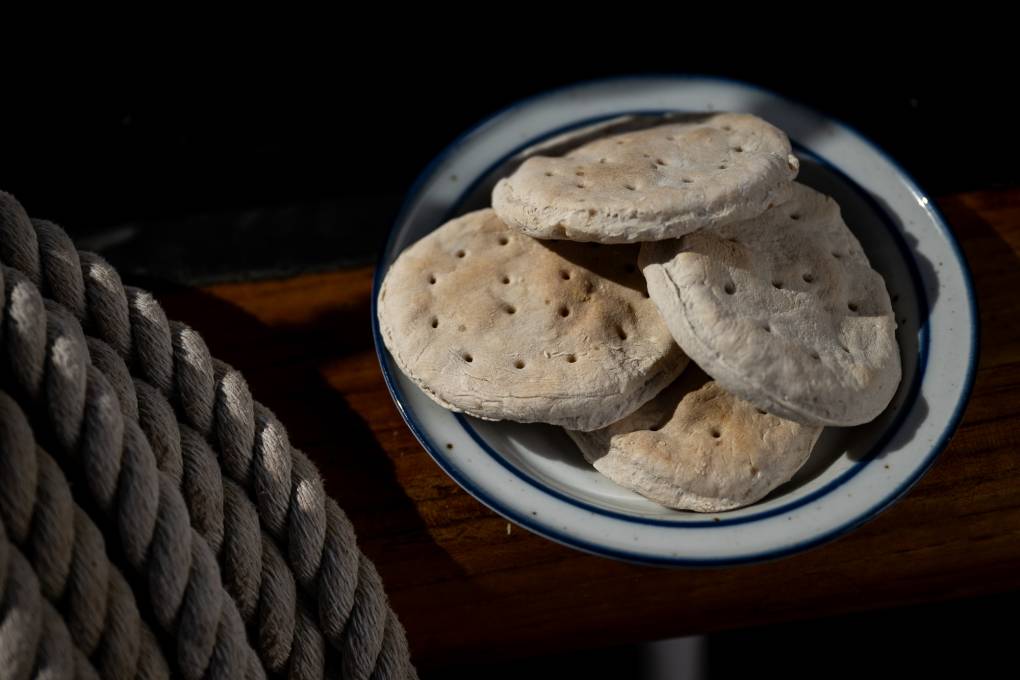
"caption": "A plate of 'Frisco Biscuits sits on the Balclutha in San Francisco Maritime National Historical Park on Feb. 26, 2025. The Balclutha is a historic three-masted, steel-hulled sailing ship built in 1886, now preserved as a museum at the park.",
"credit": "Beth LaBerge/KQED",
"altTag": null,
"description": null,
"imgSizes": {
"medium": {
"file": "https://cdn.kqed.org/wp-content/uploads/sites/10/2025/02/250226-FriscoBiscuits-16-BL-800x533.jpg",
"width": 800,
"height": 533,
"mimeType": "image/jpeg"
},
"large": {
"file": "https://cdn.kqed.org/wp-content/uploads/sites/10/2025/02/250226-FriscoBiscuits-16-BL-1020x680.jpg",
"width": 1020,
"height": 680,
"mimeType": "image/jpeg"
},
"thumbnail": {
"file": "https://cdn.kqed.org/wp-content/uploads/sites/10/2025/02/250226-FriscoBiscuits-16-BL-160x107.jpg",
"width": 160,
"height": 107,
"mimeType": "image/jpeg"
},
"1536x1536": {
"file": "https://cdn.kqed.org/wp-content/uploads/sites/10/2025/02/250226-FriscoBiscuits-16-BL-1536x1024.jpg",
"width": 1536,
"height": 1024,
"mimeType": "image/jpeg"
},
"post-thumbnail": {
"file": "https://cdn.kqed.org/wp-content/uploads/sites/10/2025/02/250226-FriscoBiscuits-16-BL-672x372.jpg",
"width": 672,
"height": 372,
"mimeType": "image/jpeg"
},
"twentyfourteen-full-width": {
"file": "https://cdn.kqed.org/wp-content/uploads/sites/10/2025/02/250226-FriscoBiscuits-16-BL-1038x576.jpg",
"width": 1038,
"height": 576,
"mimeType": "image/jpeg"
},
"full-width": {
"file": "https://cdn.kqed.org/wp-content/uploads/sites/10/2025/02/250226-FriscoBiscuits-16-BL-1920x1280.jpg",
"width": 1920,
"height": 1280,
"mimeType": "image/jpeg"
},
"kqedFullSize": {
"file": "https://cdn.kqed.org/wp-content/uploads/sites/10/2025/02/250226-FriscoBiscuits-16-BL.jpg",
"width": 2000,
"height": 1333
}
},
"isLoading": false,
"fetchFailed": false
},
"news_12027984": {
"type": "attachments",
"id": "news_12027984",
"meta": {
"index": "attachments_1716263798",
"site": "news",
"id": "12027984",
"found": true
},
"title": "image4",
"publishDate": 1740093827,
"status": "inherit",
"parent": 12027942,
"modified": 1740093909,
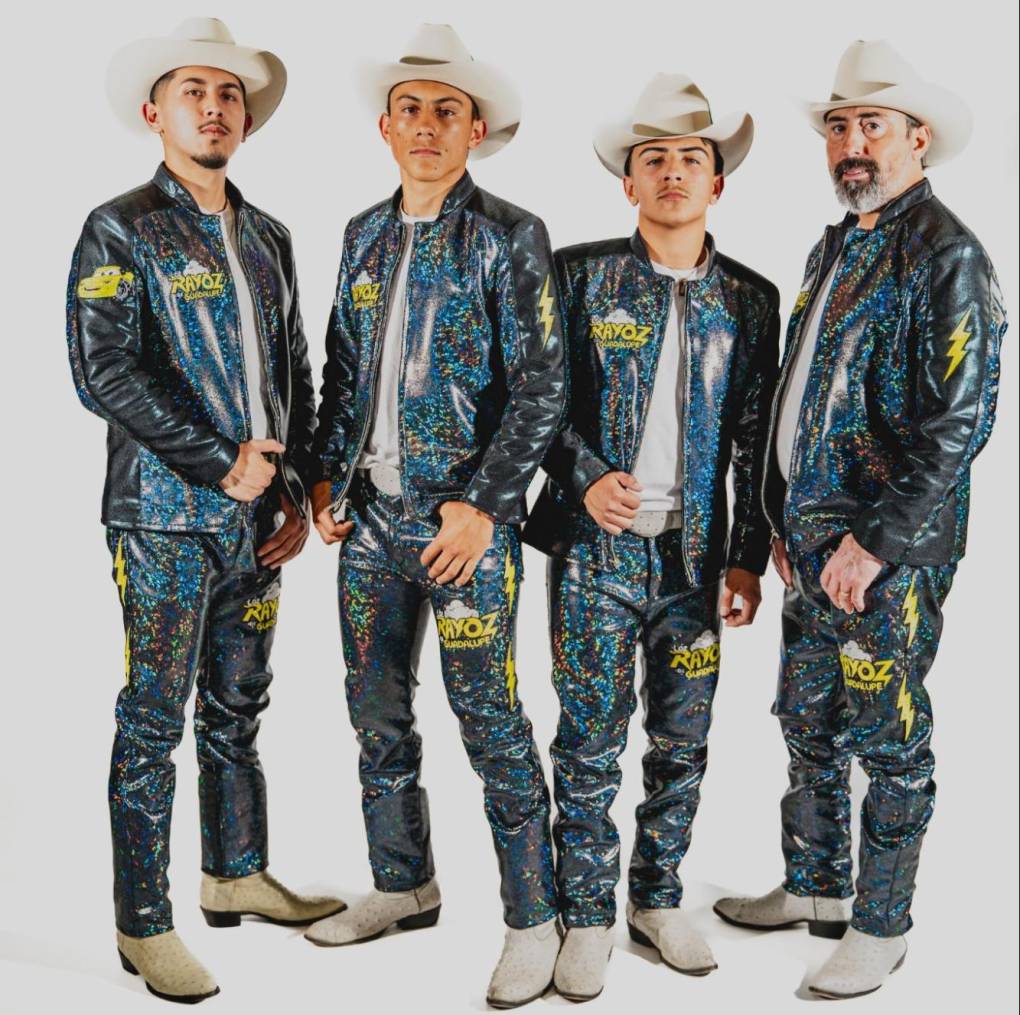
"caption": "Loz Rayoz de Guadalupe pose in their custom-made outfits — an important part of many Mexican regional music groups. Left to right: Irving Fabela, Joaquin Perez, Chencho Pérez, Aníbal Pérez.",
"credit": "Courtesy of Loz Rayoz de Guadalupe",
"altTag": null,
"description": null,
"imgSizes": {
"medium": {
"file": "https://cdn.kqed.org/wp-content/uploads/sites/10/2025/02/image4-e1740093867875-800x796.jpg",
"width": 800,
"height": 796,
"mimeType": "image/jpeg"
},
"large": {
"file": "https://cdn.kqed.org/wp-content/uploads/sites/10/2025/02/image4-e1740093867875-1020x1015.jpg",
"width": 1020,
"height": 1015,
"mimeType": "image/jpeg"
},
"thumbnail": {
"file": "https://cdn.kqed.org/wp-content/uploads/sites/10/2025/02/image4-e1740093867875-160x159.jpg",
"width": 160,
"height": 159,
"mimeType": "image/jpeg"
},
"1536x1536": {
"file": "https://cdn.kqed.org/wp-content/uploads/sites/10/2025/02/image4-1024x1536.jpg",
"width": 1024,
"height": 1536,
"mimeType": "image/jpeg"
},
"post-thumbnail": {
"file": "https://cdn.kqed.org/wp-content/uploads/sites/10/2025/02/image4-e1740093867875-672x372.jpg",
"width": 672,
"height": 372,
"mimeType": "image/jpeg"
},
"twentyfourteen-full-width": {
"file": "https://cdn.kqed.org/wp-content/uploads/sites/10/2025/02/image4-e1740093867875-1038x576.jpg",
"width": 1038,
"height": 576,
"mimeType": "image/jpeg"
},
"kqedFullSize": {
"file": "https://cdn.kqed.org/wp-content/uploads/sites/10/2025/02/image4-e1740093867875.jpg",
"width": 1333,
"height": 1326
}
},
"isLoading": false,
"fetchFailed": false
},
"news_12026552": {
"type": "attachments",
"id": "news_12026552",
"meta": {
"index": "attachments_1716263798",
"site": "news",
"id": "12026552",
"found": true
},
"title": "20250206_Ambient-Bird_DMB_00402",
"publishDate": 1739234222,
"status": "inherit",
"parent": 0,
"modified": 1740114006,
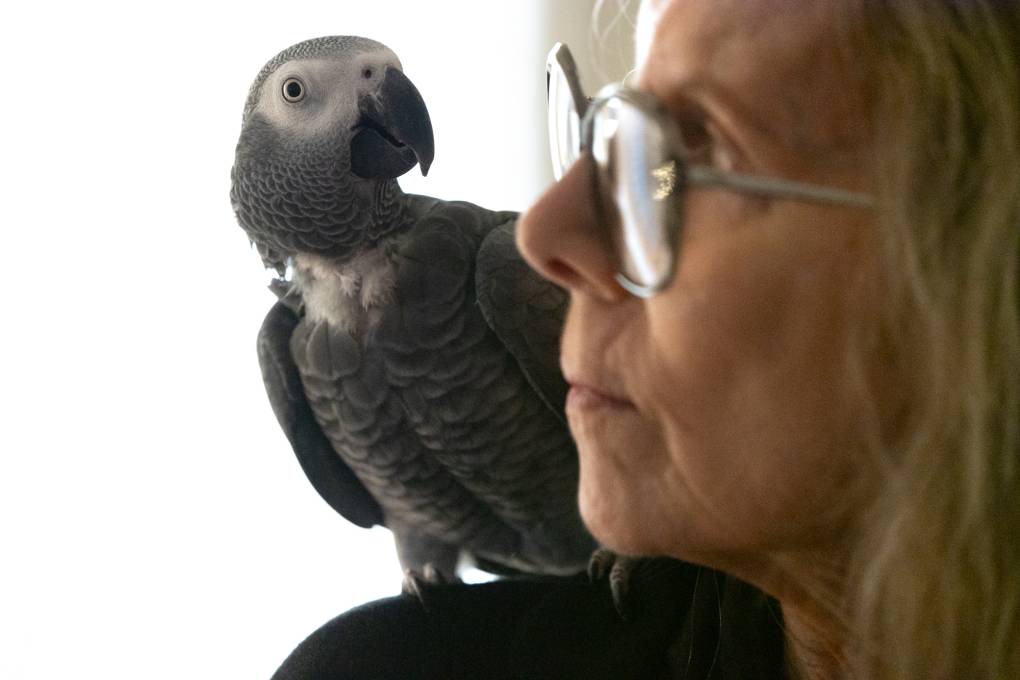
"caption": "Wendy Reid and her African grey parrot named Lulu pose in Reid’s apartment in Berkeley on Feb. 6, 2025. Reid, an experienced violinist, records and performs with Lulu.",
"credit": "David M. Barreda/KQED",
"altTag": "A middle-aged woman with glasses looks at a grey parrot perched on her shoulder.",
"description": null,
"imgSizes": {
"medium": {
"file": "https://cdn.kqed.org/wp-content/uploads/sites/10/2025/02/20250206_Ambient-Bird_DMB_00402-800x533.jpg",
"width": 800,
"height": 533,
"mimeType": "image/jpeg"
},
"large": {
"file": "https://cdn.kqed.org/wp-content/uploads/sites/10/2025/02/20250206_Ambient-Bird_DMB_00402-1020x680.jpg",
"width": 1020,
"height": 680,
"mimeType": "image/jpeg"
},
"thumbnail": {
"file": "https://cdn.kqed.org/wp-content/uploads/sites/10/2025/02/20250206_Ambient-Bird_DMB_00402-160x107.jpg",
"width": 160,
"height": 107,
"mimeType": "image/jpeg"
},
"1536x1536": {
"file": "https://cdn.kqed.org/wp-content/uploads/sites/10/2025/02/20250206_Ambient-Bird_DMB_00402-1536x1024.jpg",
"width": 1536,
"height": 1024,
"mimeType": "image/jpeg"
},
"post-thumbnail": {
"file": "https://cdn.kqed.org/wp-content/uploads/sites/10/2025/02/20250206_Ambient-Bird_DMB_00402-672x372.jpg",
"width": 672,
"height": 372,
"mimeType": "image/jpeg"
},
"twentyfourteen-full-width": {
"file": "https://cdn.kqed.org/wp-content/uploads/sites/10/2025/02/20250206_Ambient-Bird_DMB_00402-1038x576.jpg",
"width": 1038,
"height": 576,
"mimeType": "image/jpeg"
},
"full-width": {
"file": "https://cdn.kqed.org/wp-content/uploads/sites/10/2025/02/20250206_Ambient-Bird_DMB_00402-1920x1280.jpg",
"width": 1920,
"height": 1280,
"mimeType": "image/jpeg"
},
"kqedFullSize": {
"file": "https://cdn.kqed.org/wp-content/uploads/sites/10/2025/02/20250206_Ambient-Bird_DMB_00402.jpg",
"width": 2000,
"height": 1333
}
},
"isLoading": false,
"fetchFailed": false
},
"news_12028035": {
"type": "attachments",
"id": "news_12028035",
"meta": {
"index": "attachments_1716263798",
"site": "news",
"id": "12028035",
"found": true
},
"title": "Tyler-the-Creator-Oakland",
"publishDate": 1740096783,
"status": "inherit",
"parent": 12027554,
"modified": 1740096891,
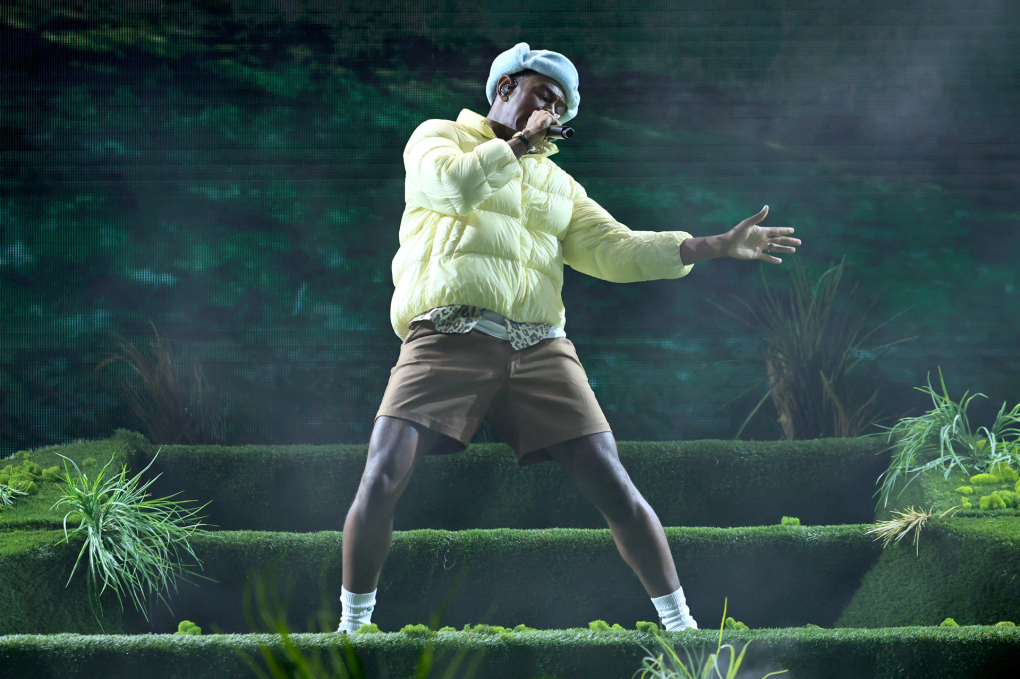
"caption": "Tyler, the Creator performs onstage during 2022 Made In America at Benjamin Franklin Parkway on September 03, 2022 in Philadelphia, Pennsylvania.",
"credit": "Photo by Theo Wargo/Getty Images for Roc Nation",
"altTag": "Tyler, the Creator performing onstage against a green backdrop wearing brown shorts and a lime green puffer jacket.",
"description": null,
"imgSizes": {
"medium": {
"file": "https://cdn.kqed.org/wp-content/uploads/sites/10/2027/02/Tyler-800x533.png",
"width": 800,
"height": 533,
"mimeType": "image/png"
},
"large": {
"file": "https://cdn.kqed.org/wp-content/uploads/sites/10/2027/02/Tyler-1020x679.png",
"width": 1020,
"height": 679,
"mimeType": "image/png"
},
"thumbnail": {
"file": "https://cdn.kqed.org/wp-content/uploads/sites/10/2027/02/Tyler-160x107.png",
"width": 160,
"height": 107,
"mimeType": "image/png"
},
"1536x1536": {
"file": "https://cdn.kqed.org/wp-content/uploads/sites/10/2027/02/Tyler-1536x1023.png",
"width": 1536,
"height": 1023,
"mimeType": "image/png"
},
"post-thumbnail": {
"file": "https://cdn.kqed.org/wp-content/uploads/sites/10/2027/02/Tyler-672x372.png",
"width": 672,
"height": 372,
"mimeType": "image/png"
},
"twentyfourteen-full-width": {
"file": "https://cdn.kqed.org/wp-content/uploads/sites/10/2027/02/Tyler-1038x576.png",
"width": 1038,
"height": 576,
"mimeType": "image/png"
},
"kqedFullSize": {
"file": "https://cdn.kqed.org/wp-content/uploads/sites/10/2027/02/Tyler.png",
"width": 1920,
"height": 1279
}
},
"isLoading": false,
"fetchFailed": false
},
"news_12027372": {
"type": "attachments",
"id": "news_12027372",
"meta": {
"index": "attachments_1716263798",
"site": "news",
"id": "12027372",
"found": true
},
"title": "250215-ChineseNewYear-24-BL",
"publishDate": 1739729104,
"status": "inherit",
"parent": 0,
"modified": 1739742386,
"caption": "Leung's White Crane Lion and Dragon Dance Association carry a dragon during the finale of the Chinese New Year Parade in San Francisco on Feb. 15, 2025.",
"credit": "Beth LaBerge/KQED",
"altTag": "Several people carry a decorative dragon.",
"description": null,
"imgSizes": {
"medium": {
"file": "https://cdn.kqed.org/wp-content/uploads/sites/10/2025/02/250215-ChineseNewYear-24-BL-800x533.jpg",
"width": 800,
"height": 533,
"mimeType": "image/jpeg"
},
"large": {
"file": "https://cdn.kqed.org/wp-content/uploads/sites/10/2025/02/250215-ChineseNewYear-24-BL-1020x680.jpg",
"width": 1020,
"height": 680,
"mimeType": "image/jpeg"
},
"thumbnail": {
"file": "https://cdn.kqed.org/wp-content/uploads/sites/10/2025/02/250215-ChineseNewYear-24-BL-160x107.jpg",
"width": 160,
"height": 107,
"mimeType": "image/jpeg"
},
"1536x1536": {
"file": "https://cdn.kqed.org/wp-content/uploads/sites/10/2025/02/250215-ChineseNewYear-24-BL-1536x1024.jpg",
"width": 1536,
"height": 1024,
"mimeType": "image/jpeg"
},
"post-thumbnail": {
"file": "https://cdn.kqed.org/wp-content/uploads/sites/10/2025/02/250215-ChineseNewYear-24-BL-672x372.jpg",
"width": 672,
"height": 372,
"mimeType": "image/jpeg"
},
"twentyfourteen-full-width": {
"file": "https://cdn.kqed.org/wp-content/uploads/sites/10/2025/02/250215-ChineseNewYear-24-BL-1038x576.jpg",
"width": 1038,
"height": 576,
"mimeType": "image/jpeg"
},
"full-width": {
"file": "https://cdn.kqed.org/wp-content/uploads/sites/10/2025/02/250215-ChineseNewYear-24-BL-1920x1280.jpg",
"width": 1920,
"height": 1280,
"mimeType": "image/jpeg"
},
"kqedFullSize": {
"file": "https://cdn.kqed.org/wp-content/uploads/sites/10/2025/02/250215-ChineseNewYear-24-BL.jpg",
"width": 2000,
"height": 1333
}
},
"isLoading": false,
"fetchFailed": false
},
"news_12027304": {
"type": "attachments",
"id": "news_12027304",
"meta": {
"index": "attachments_1716263798",
"site": "news",
"id": "12027304",
"found": true
},
"title": "20250214_Valentraine_DMB_00737",
"publishDate": 1739640185,
"status": "inherit",
"parent": 0,
"modified": 1739653660,
"caption": "Icarus Kranzke (left) of San Francisco, talks with Dani, no last name given in the train car reserved for those aged 18 to 21 at BART’s 'Valentraine' speed dating event, Friday, Feb. 14, 2025. Kranzke, a self-professed BART lover, said they were excited to meet other public transportation lovers at the event.",
"credit": "David M. Barreda/KQED",
"altTag": null,
"description": null,
"imgSizes": {
"medium": {
"file": "https://cdn.kqed.org/wp-content/uploads/sites/10/2025/02/20250214_Valentraine_DMB_00737-800x533.jpg",
"width": 800,
"height": 533,
"mimeType": "image/jpeg"
},
"large": {
"file": "https://cdn.kqed.org/wp-content/uploads/sites/10/2025/02/20250214_Valentraine_DMB_00737-1020x680.jpg",
"width": 1020,
"height": 680,
"mimeType": "image/jpeg"
},
"thumbnail": {
"file": "https://cdn.kqed.org/wp-content/uploads/sites/10/2025/02/20250214_Valentraine_DMB_00737-160x107.jpg",
"width": 160,
"height": 107,
"mimeType": "image/jpeg"
},
"1536x1536": {
"file": "https://cdn.kqed.org/wp-content/uploads/sites/10/2025/02/20250214_Valentraine_DMB_00737-1536x1024.jpg",
"width": 1536,
"height": 1024,
"mimeType": "image/jpeg"
},
"post-thumbnail": {
"file": "https://cdn.kqed.org/wp-content/uploads/sites/10/2025/02/20250214_Valentraine_DMB_00737-672x372.jpg",
"width": 672,
"height": 372,
"mimeType": "image/jpeg"
},
"twentyfourteen-full-width": {
"file": "https://cdn.kqed.org/wp-content/uploads/sites/10/2025/02/20250214_Valentraine_DMB_00737-1038x576.jpg",
"width": 1038,
"height": 576,
"mimeType": "image/jpeg"
},
"full-width": {
"file": "https://cdn.kqed.org/wp-content/uploads/sites/10/2025/02/20250214_Valentraine_DMB_00737-1920x1280.jpg",
"width": 1920,
"height": 1280,
"mimeType": "image/jpeg"
},
"kqedFullSize": {
"file": "https://cdn.kqed.org/wp-content/uploads/sites/10/2025/02/20250214_Valentraine_DMB_00737.jpg",
"width": 2000,
"height": 1333
}
},
"isLoading": false,
"fetchFailed": false
},
"news_12026038": {
"type": "attachments",
"id": "news_12026038",
"meta": {
"index": "attachments_1716263798",
"site": "news",
"id": "12026038",
"found": true
},
"title": "250206-TrumpTariffs-26-BL",
"publishDate": 1738880338,
"status": "inherit",
"parent": 0,
"modified": 1738880880,
"caption": "Valentine's Day cards and gift items on the wall at The Standard 5 & 10 Ace, a family-owned hardware store in San Francisco’s Laurel Heights neighborhood, on Feb. 6, 2025.",
"credit": "Beth LaBerge/KQED",
"altTag": null,
"description": null,
"imgSizes": {
"medium": {
"file": "https://cdn.kqed.org/wp-content/uploads/sites/10/2025/02/250206-TrumpTariffs-26-BL-800x533.jpg",
"width": 800,
"height": 533,
"mimeType": "image/jpeg"
},
"large": {
"file": "https://cdn.kqed.org/wp-content/uploads/sites/10/2025/02/250206-TrumpTariffs-26-BL-1020x680.jpg",
"width": 1020,
"height": 680,
"mimeType": "image/jpeg"
},
"thumbnail": {
"file": "https://cdn.kqed.org/wp-content/uploads/sites/10/2025/02/250206-TrumpTariffs-26-BL-160x107.jpg",
"width": 160,
"height": 107,
"mimeType": "image/jpeg"
},
"1536x1536": {
"file": "https://cdn.kqed.org/wp-content/uploads/sites/10/2025/02/250206-TrumpTariffs-26-BL-1536x1024.jpg",
"width": 1536,
"height": 1024,
"mimeType": "image/jpeg"
},
"post-thumbnail": {
"file": "https://cdn.kqed.org/wp-content/uploads/sites/10/2025/02/250206-TrumpTariffs-26-BL-672x372.jpg",
"width": 672,
"height": 372,
"mimeType": "image/jpeg"
},
"twentyfourteen-full-width": {
"file": "https://cdn.kqed.org/wp-content/uploads/sites/10/2025/02/250206-TrumpTariffs-26-BL-1038x576.jpg",
"width": 1038,
"height": 576,
"mimeType": "image/jpeg"
},
"full-width": {
"file": "https://cdn.kqed.org/wp-content/uploads/sites/10/2025/02/250206-TrumpTariffs-26-BL-1920x1280.jpg",
"width": 1920,
"height": 1280,
"mimeType": "image/jpeg"
},
"kqedFullSize": {
"file": "https://cdn.kqed.org/wp-content/uploads/sites/10/2025/02/250206-TrumpTariffs-26-BL.jpg",
"width": 2000,
"height": 1333
}
},
"isLoading": false,
"fetchFailed": false
},
"news_12026536": {
"type": "attachments",
"id": "news_12026536",
"meta": {
"index": "attachments_1716263798",
"site": "news",
"id": "12026536",
"found": true
},
"title": "20250127_K-ONDA_DB_00057-KQED",
"publishDate": 1739233064,
"status": "inherit",
"parent": 0,
"modified": 1739233085,
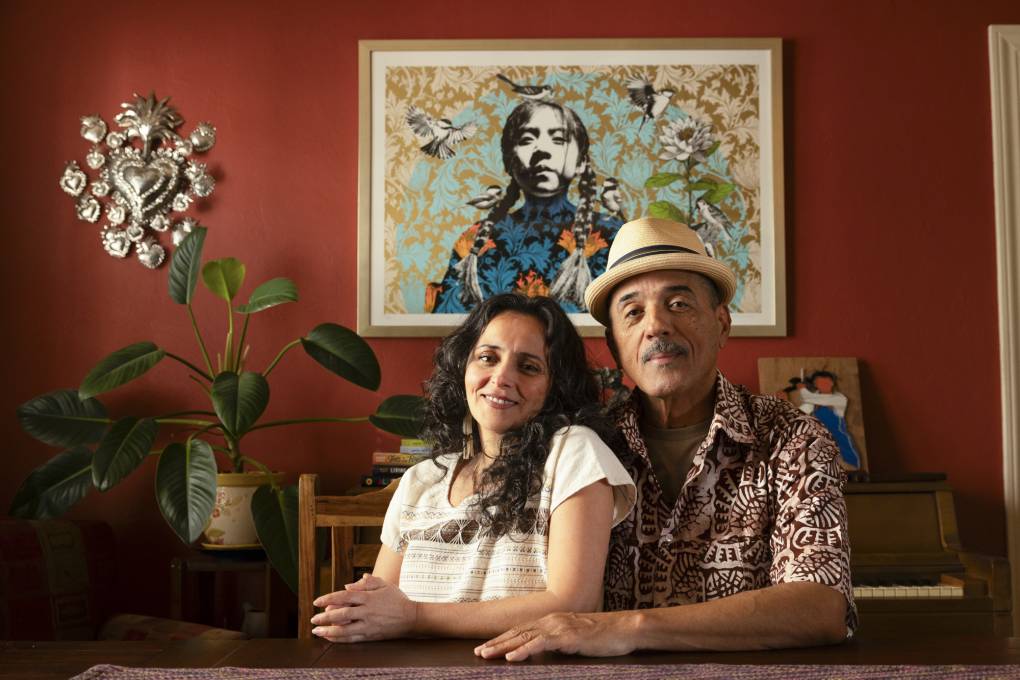
"caption": "Aida Salazar and John Santos, sit at their dining room table and pose for a portrait, in their home in Oakland, California, Monday, Jan. 27, 2025. Salazar is an award-winning Xicana author with several successful YA titles to her name. Santos, a San Francisco native, is a seven-time Grammy-nominated percussionist specializing in Afro-Latin music.",
"credit": "David M. Barreda/KQED",
"altTag": null,
"description": null,
"imgSizes": {
"medium": {
"file": "https://cdn.kqed.org/wp-content/uploads/sites/10/2025/02/20250127_K-ONDA_DB_00057-KQED-800x533.jpg",
"width": 800,
"height": 533,
"mimeType": "image/jpeg"
},
"large": {
"file": "https://cdn.kqed.org/wp-content/uploads/sites/10/2025/02/20250127_K-ONDA_DB_00057-KQED-1020x680.jpg",
"width": 1020,
"height": 680,
"mimeType": "image/jpeg"
},
"thumbnail": {
"file": "https://cdn.kqed.org/wp-content/uploads/sites/10/2025/02/20250127_K-ONDA_DB_00057-KQED-160x107.jpg",
"width": 160,
"height": 107,
"mimeType": "image/jpeg"
},
"1536x1536": {
"file": "https://cdn.kqed.org/wp-content/uploads/sites/10/2025/02/20250127_K-ONDA_DB_00057-KQED-1536x1024.jpg",
"width": 1536,
"height": 1024,
"mimeType": "image/jpeg"
},
"post-thumbnail": {
"file": "https://cdn.kqed.org/wp-content/uploads/sites/10/2025/02/20250127_K-ONDA_DB_00057-KQED-672x372.jpg",
"width": 672,
"height": 372,
"mimeType": "image/jpeg"
},
"twentyfourteen-full-width": {
"file": "https://cdn.kqed.org/wp-content/uploads/sites/10/2025/02/20250127_K-ONDA_DB_00057-KQED-1038x576.jpg",
"width": 1038,
"height": 576,
"mimeType": "image/jpeg"
},
"full-width": {
"file": "https://cdn.kqed.org/wp-content/uploads/sites/10/2025/02/20250127_K-ONDA_DB_00057-KQED-1920x1280.jpg",
"width": 1920,
"height": 1280,
"mimeType": "image/jpeg"
},
"kqedFullSize": {
"file": "https://cdn.kqed.org/wp-content/uploads/sites/10/2025/02/20250127_K-ONDA_DB_00057-KQED.jpg",
"width": 2000,
"height": 1333
}
},
"isLoading": false,
"fetchFailed": false
},
"news_12020445": {
"type": "attachments",
"id": "news_12020445",
"meta": {
"index": "attachments_1716263798",
"site": "news",
"id": "12020445",
"found": true
},
"title": "20250106_KishiBashi_DMB_00061",
"publishDate": 1736198054,
"status": "inherit",
"parent": 0,
"modified": 1738886601,
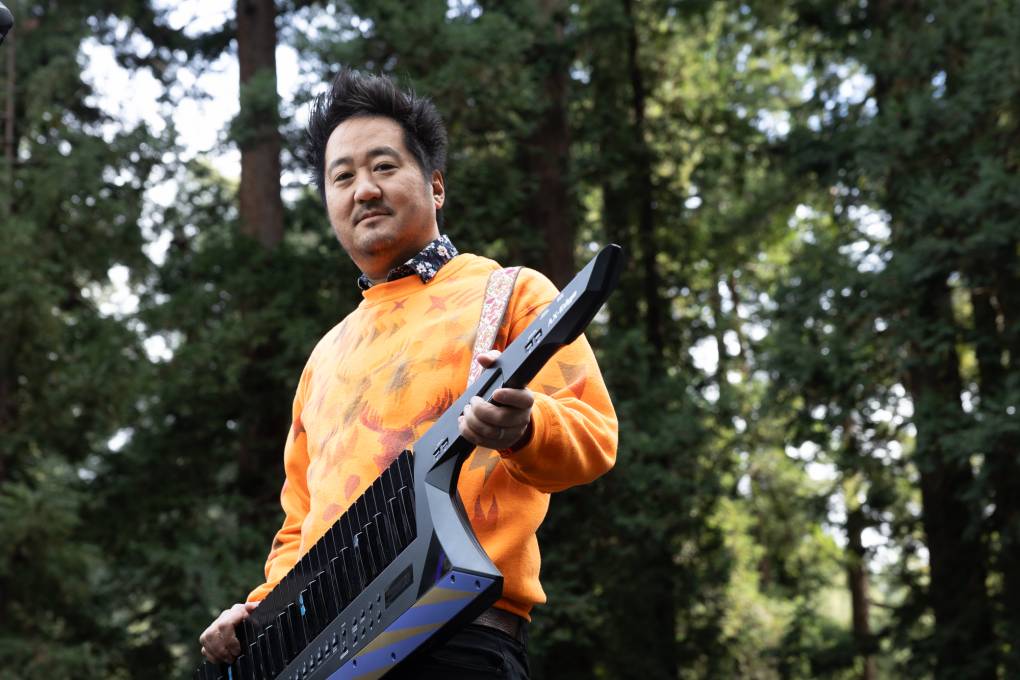
"caption": "Composer Kishi Bashi poses with a keytar he owns at his home in the Santa Cruz Mountains of Los Gatos, Santa Clara County, Jan. 6, 2025.",
"credit": "David M. Barreda/KQED",
"altTag": null,
"description": null,
"imgSizes": {
"medium": {
"file": "https://cdn.kqed.org/wp-content/uploads/sites/10/2025/01/20250106_KishiBashi_DMB_00061-800x533.jpg",
"width": 800,
"height": 533,
"mimeType": "image/jpeg"
},
"large": {
"file": "https://cdn.kqed.org/wp-content/uploads/sites/10/2025/01/20250106_KishiBashi_DMB_00061-1020x680.jpg",
"width": 1020,
"height": 680,
"mimeType": "image/jpeg"
},
"thumbnail": {
"file": "https://cdn.kqed.org/wp-content/uploads/sites/10/2025/01/20250106_KishiBashi_DMB_00061-160x107.jpg",
"width": 160,
"height": 107,
"mimeType": "image/jpeg"
},
"1536x1536": {
"file": "https://cdn.kqed.org/wp-content/uploads/sites/10/2025/01/20250106_KishiBashi_DMB_00061-1536x1024.jpg",
"width": 1536,
"height": 1024,
"mimeType": "image/jpeg"
},
"post-thumbnail": {
"file": "https://cdn.kqed.org/wp-content/uploads/sites/10/2025/01/20250106_KishiBashi_DMB_00061-672x372.jpg",
"width": 672,
"height": 372,
"mimeType": "image/jpeg"
},
"twentyfourteen-full-width": {
"file": "https://cdn.kqed.org/wp-content/uploads/sites/10/2025/01/20250106_KishiBashi_DMB_00061-1038x576.jpg",
"width": 1038,
"height": 576,
"mimeType": "image/jpeg"
},
"full-width": {
"file": "https://cdn.kqed.org/wp-content/uploads/sites/10/2025/01/20250106_KishiBashi_DMB_00061-1920x1280.jpg",
"width": 1920,
"height": 1280,
"mimeType": "image/jpeg"
},
"kqedFullSize": {
"file": "https://cdn.kqed.org/wp-content/uploads/sites/10/2025/01/20250106_KishiBashi_DMB_00061.jpg",
"width": 2000,
"height": 1333
}
},
"isLoading": false,
"fetchFailed": false
},
"news_12020636": {
"type": "attachments",
"id": "news_12020636",
"meta": {
"index": "attachments_1716263798",
"site": "news",
"id": "12020636",
"found": true
},
"title": "Sally Gearhart (courtesy of Deborah Craig)",
"publishDate": 1736286053,
"status": "inherit",
"parent": 12020619,
"modified": 1736303989,
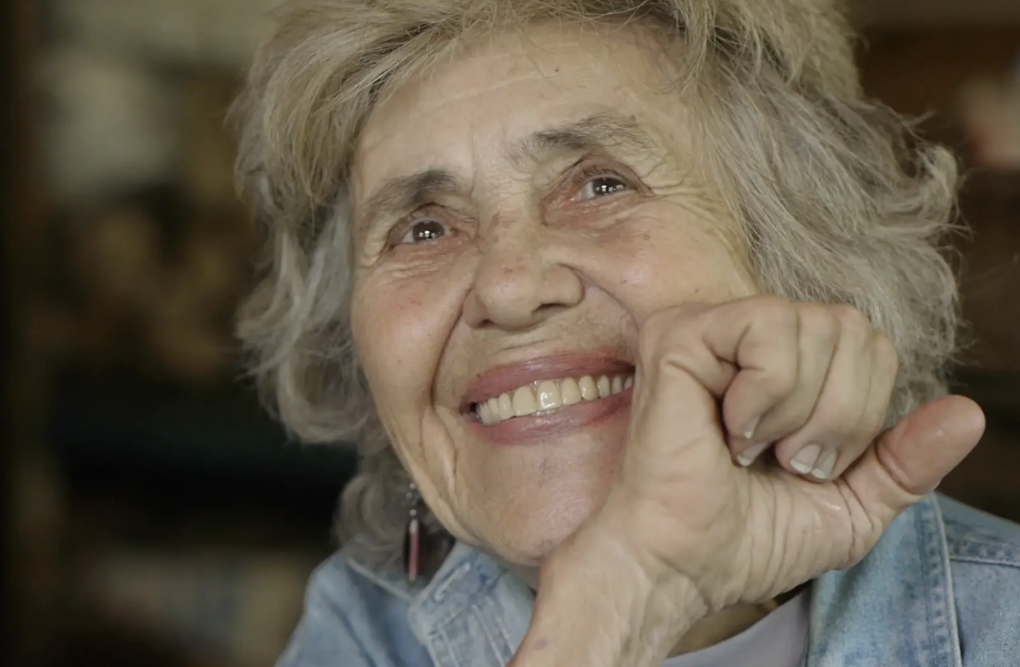
"caption": "Sally Gearhart, in 2024.",
"credit": "Courtesy of Deborah Craig",
"altTag": "An older woman smiles as she looks up in a color photo.",
"description": null,
"imgSizes": {
"medium": {
"file": "https://cdn.kqed.org/wp-content/uploads/sites/10/2025/01/Sally-Gearhart-courtesy-of-Deborah-Craig-800x523.png",
"width": 800,
"height": 523,
"mimeType": "image/png"
},
"large": {
"file": "https://cdn.kqed.org/wp-content/uploads/sites/10/2025/01/Sally-Gearhart-courtesy-of-Deborah-Craig-1020x667.png",
"width": 1020,
"height": 667,
"mimeType": "image/png"
},
"thumbnail": {
"file": "https://cdn.kqed.org/wp-content/uploads/sites/10/2025/01/Sally-Gearhart-courtesy-of-Deborah-Craig-160x105.png",
"width": 160,
"height": 105,
"mimeType": "image/png"
},
"1536x1536": {
"file": "https://cdn.kqed.org/wp-content/uploads/sites/10/2025/01/Sally-Gearhart-courtesy-of-Deborah-Craig-1536x1005.png",
"width": 1536,
"height": 1005,
"mimeType": "image/png"
},
"2048x2048": {
"file": "https://cdn.kqed.org/wp-content/uploads/sites/10/2025/01/Sally-Gearhart-courtesy-of-Deborah-Craig-2048x1340.png",
"width": 2048,
"height": 1340,
"mimeType": "image/png"
},
"post-thumbnail": {
"file": "https://cdn.kqed.org/wp-content/uploads/sites/10/2025/01/Sally-Gearhart-courtesy-of-Deborah-Craig-672x372.png",
"width": 672,
"height": 372,
"mimeType": "image/png"
},
"twentyfourteen-full-width": {
"file": "https://cdn.kqed.org/wp-content/uploads/sites/10/2025/01/Sally-Gearhart-courtesy-of-Deborah-Craig-1038x576.png",
"width": 1038,
"height": 576,
"mimeType": "image/png"
},
"full-width": {
"file": "https://cdn.kqed.org/wp-content/uploads/sites/10/2025/01/Sally-Gearhart-courtesy-of-Deborah-Craig-1920x1256.png",
"width": 1920,
"height": 1256,
"mimeType": "image/png"
},
"kqedFullSize": {
"file": "https://cdn.kqed.org/wp-content/uploads/sites/10/2025/01/Sally-Gearhart-courtesy-of-Deborah-Craig.png",
"width": 2858,
"height": 1870
}
},
"isLoading": false,
"fetchFailed": false
},
"news_12023512": {
"type": "attachments",
"id": "news_12023512",
"meta": {
"index": "attachments_1716263798",
"site": "news",
"id": "12023512",
"found": true
},
"title": "20250114_Mare-Island_DMB_00190",
"publishDate": 1737577232,
"status": "inherit",
"parent": 12069959,
"modified": 1768525535,
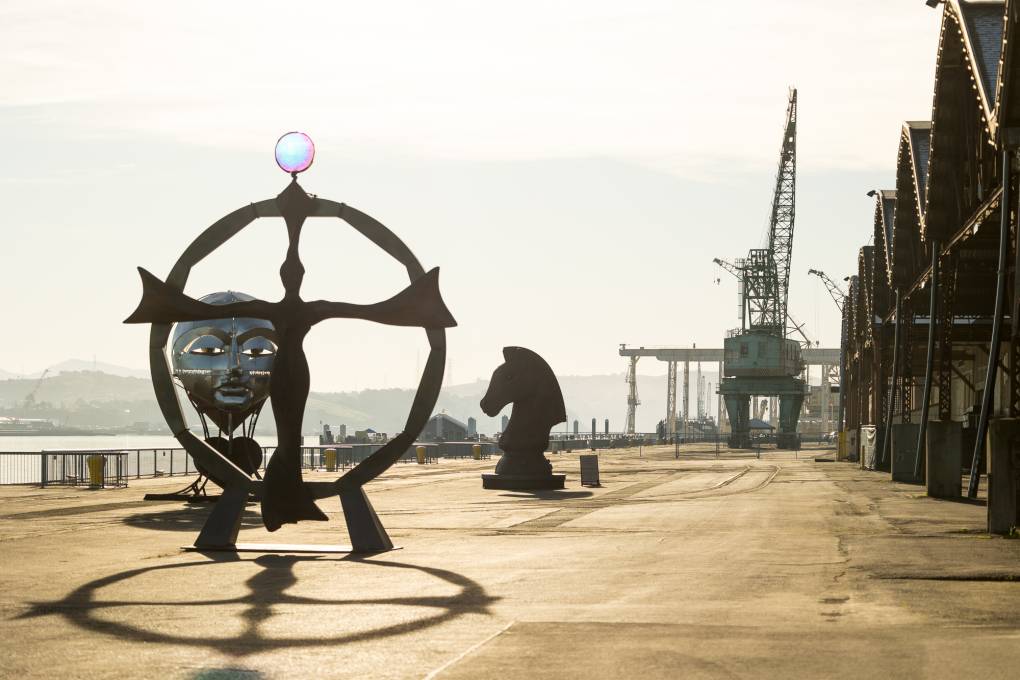
"caption": "Sculptures and defunct cranes occupy the waterfront facing the Napa River on Mare Island in the city of Vallejo, Tuesday, Jan. 14, 2025.",
"credit": "David M. Barreda/KQED",
"altTag": null,
"description": null,
"imgSizes": {
"medium": {
"file": "https://cdn.kqed.org/wp-content/uploads/sites/10/2025/01/20250114_Mare-Island_DMB_00190-800x533.jpg",
"width": 800,
"height": 533,
"mimeType": "image/jpeg"
},
"large": {
"file": "https://cdn.kqed.org/wp-content/uploads/sites/10/2025/01/20250114_Mare-Island_DMB_00190-1020x680.jpg",
"width": 1020,
"height": 680,
"mimeType": "image/jpeg"
},
"thumbnail": {
"file": "https://cdn.kqed.org/wp-content/uploads/sites/10/2025/01/20250114_Mare-Island_DMB_00190-160x107.jpg",
"width": 160,
"height": 107,
"mimeType": "image/jpeg"
},
"1536x1536": {
"file": "https://cdn.kqed.org/wp-content/uploads/sites/10/2025/01/20250114_Mare-Island_DMB_00190-1536x1024.jpg",
"width": 1536,
"height": 1024,
"mimeType": "image/jpeg"
},
"post-thumbnail": {
"file": "https://cdn.kqed.org/wp-content/uploads/sites/10/2025/01/20250114_Mare-Island_DMB_00190-672x372.jpg",
"width": 672,
"height": 372,
"mimeType": "image/jpeg"
},
"twentyfourteen-full-width": {
"file": "https://cdn.kqed.org/wp-content/uploads/sites/10/2025/01/20250114_Mare-Island_DMB_00190-1038x576.jpg",
"width": 1038,
"height": 576,
"mimeType": "image/jpeg"
},
"full-width": {
"file": "https://cdn.kqed.org/wp-content/uploads/sites/10/2025/01/20250114_Mare-Island_DMB_00190-1920x1280.jpg",
"width": 1920,
"height": 1280,
"mimeType": "image/jpeg"
},
"kqedFullSize": {
"file": "https://cdn.kqed.org/wp-content/uploads/sites/10/2025/01/20250114_Mare-Island_DMB_00190.jpg",
"width": 2000,
"height": 1333
}
},
"isLoading": false,
"fetchFailed": false
},
"news_12023011": {
"type": "attachments",
"id": "news_12023011",
"meta": {
"index": "attachments_1716263798",
"site": "news",
"id": "12023011",
"found": true
},
"title": "npr.brightspotcdn copy",
"publishDate": 1737240384,
"status": "inherit",
"parent": 12023010,
"modified": 1737240412,
"caption": "Less than a day from when the popular social media app is set to be banned in the US, President-elect Donald Trump spoke on the possibility of delaying the expulsion of TikTok.",
"credit": "Beata Zawrzel/NurPhoto via Getty Images",
"altTag": null,
"description": null,
"imgSizes": {
"medium": {
"file": "https://cdn.kqed.org/wp-content/uploads/sites/10/2025/01/npr.brightspotcdn-copy-48-800x533.jpg",
"width": 800,
"height": 533,
"mimeType": "image/jpeg"
},
"large": {
"file": "https://cdn.kqed.org/wp-content/uploads/sites/10/2025/01/npr.brightspotcdn-copy-48-1020x680.jpg",
"width": 1020,
"height": 680,
"mimeType": "image/jpeg"
},
"thumbnail": {
"file": "https://cdn.kqed.org/wp-content/uploads/sites/10/2025/01/npr.brightspotcdn-copy-48-160x107.jpg",
"width": 160,
"height": 107,
"mimeType": "image/jpeg"
},
"post-thumbnail": {
"file": "https://cdn.kqed.org/wp-content/uploads/sites/10/2025/01/npr.brightspotcdn-copy-48-672x372.jpg",
"width": 672,
"height": 372,
"mimeType": "image/jpeg"
},
"twentyfourteen-full-width": {
"file": "https://cdn.kqed.org/wp-content/uploads/sites/10/2025/01/npr.brightspotcdn-copy-48-1038x576.jpg",
"width": 1038,
"height": 576,
"mimeType": "image/jpeg"
},
"kqedFullSize": {
"file": "https://cdn.kqed.org/wp-content/uploads/sites/10/2025/01/npr.brightspotcdn-copy-48.jpg",
"width": 1100,
"height": 733
}
},
"isLoading": false,
"fetchFailed": false
}
},
"audioPlayerReducer": {
"postId": "stream_live",
"isPaused": true,
"isPlaying": false,
"pfsActive": false,
"pledgeModalIsOpen": true,
"playerDrawerIsOpen": false,
"liveAudioPlayStartedAt": 0,
"liveAudioPlayContext": ""
},
"authorsReducer": {
"byline_news_12027942": {
"type": "authors",
"id": "byline_news_12027942",
"meta": {
"override": true
},
"slug": "byline_news_12027942",
"name": "\u003ca href=\"https://x.com/benjaminpurper\">Benjamin Purper\u003c/a>",
"isLoading": false
},
"byline_news_12027701": {
"type": "authors",
"id": "byline_news_12027701",
"meta": {
"override": true
},
"slug": "byline_news_12027701",
"name": "Julia Haney ",
"isLoading": false
},
"byline_news_12026067": {
"type": "authors",
"id": "byline_news_12026067",
"meta": {
"override": true
},
"slug": "byline_news_12026067",
"name": "Lusen Mendel",
"isLoading": false
},
"byline_news_12023010": {
"type": "authors",
"id": "byline_news_12023010",
"meta": {
"override": true
},
"slug": "byline_news_12023010",
"name": "\u003ca href=\"https://www.npr.org/people/638550790/bobby-allyn\">Bobby Allyn\u003c/a> and \u003ca href=\"https://www.npr.org/people/1108419098/juliana-kim\">Juliana Kim\u003c/a>, NPR",
"isLoading": false
},
"dcronin": {
"type": "authors",
"id": "11362",
"meta": {
"index": "authors_1716337520",
"id": "11362",
"found": true
},
"name": "Dana Cronin",
"firstName": "Dana",
"lastName": "Cronin",
"slug": "dcronin",
"email": "dcronin@KQED.org",
"display_author_email": true,
"staff_mastheads": [],
"title": "KQED Contributor",
"bio": "Dana Cronin is a reporter for KQED News. She loves writing stories about climate change, environmental issues, food and agriculture. She's reported across the country, from Colorado to Washington D.C. to Illinois, and has won numerous awards for her coverage. Her work is regularly featured on national broadcasts, including NPR’s Morning Edition, All Things Considered, PBS Newshour and Science Friday. She lives in Oakland and has an avocado tree in her back yard.",
"avatar": "https://secure.gravatar.com/avatar/bcf89e3455ff7235f96ab6fa7258dd95?s=600&d=blank&r=g",
"twitter": "DanaHCronin",
"facebook": null,
"instagram": null,
"linkedin": null,
"sites": [
{
"site": "arts",
"roles": [
"author"
]
},
{
"site": "news",
"roles": [
"editor"
]
},
{
"site": "science",
"roles": [
"author"
]
},
{
"site": "liveblog",
"roles": [
"author"
]
}
],
"headData": {
"title": "Dana Cronin | KQED",
"description": "KQED Contributor",
"ogImgSrc": "https://secure.gravatar.com/avatar/bcf89e3455ff7235f96ab6fa7258dd95?s=600&d=blank&r=g",
"twImgSrc": "https://secure.gravatar.com/avatar/bcf89e3455ff7235f96ab6fa7258dd95?s=600&d=blank&r=g"
},
"isLoading": false,
"link": "/author/dcronin"
},
"btaylor": {
"type": "authors",
"id": "11365",
"meta": {
"index": "authors_1716337520",
"id": "11365",
"found": true
},
"name": "Bianca Taylor",
"firstName": "Bianca",
"lastName": "Taylor",
"slug": "btaylor",
"email": "btaylor@KQED.org",
"display_author_email": false,
"staff_mastheads": [
"news"
],
"title": "Host and Producer ",
"bio": "Bianca Taylor is a news producer and host of KQED's The Latest podcast.\r\n\r\nHer work with KQED has been honored by the Society of Professional Journalists NorCal, the Webby's, the Regional Murrow Awards, and ONA. She has also worked with NPR, the BBC World Service, and the Washington Post Creative Group.\r\n\r\nBianca is represented by SAG-AFTRA.",
"avatar": "https://secure.gravatar.com/avatar/6b9d3f6552dd10470c5d1c2e58cfe717?s=600&d=blank&r=g",
"twitter": "SoundsLkeBianca",
"facebook": null,
"instagram": null,
"linkedin": null,
"sites": [
{
"site": "arts",
"roles": [
"editor"
]
},
{
"site": "news",
"roles": [
"edit_others_posts",
"editor"
]
},
{
"site": "pop",
"roles": [
"editor"
]
},
{
"site": "bayareabites",
"roles": [
"author"
]
},
{
"site": "science",
"roles": [
"editor"
]
},
{
"site": "forum",
"roles": [
"editor"
]
},
{
"site": "radio",
"roles": [
"editor"
]
},
{
"site": "podcasts",
"roles": [
"editor"
]
}
],
"headData": {
"title": "Bianca Taylor | KQED",
"description": "Host and Producer ",
"ogImgSrc": "https://secure.gravatar.com/avatar/6b9d3f6552dd10470c5d1c2e58cfe717?s=600&d=blank&r=g",
"twImgSrc": "https://secure.gravatar.com/avatar/6b9d3f6552dd10470c5d1c2e58cfe717?s=600&d=blank&r=g"
},
"isLoading": false,
"link": "/author/btaylor"
},
"btorres": {
"type": "authors",
"id": "11666",
"meta": {
"index": "authors_1716337520",
"id": "11666",
"found": true
},
"name": "Blanca Torres",
"firstName": "Blanca",
"lastName": "Torres",
"slug": "btorres",
"email": "btorres@kqed.org",
"display_author_email": true,
"staff_mastheads": [
"news"
],
"title": "Producer, Forum",
"bio": "Blanca Torres brings sharp news judgement and keen sense of lively conversation to her work as producer for Forum. She loves producing shows that leave listeners feeling like they heard distinctive voices, learned something new and gained a fresh perspective.\r\n\r\nShe joined KQED in January of 2020 after 16 years of working as a newspaper reporter most recently at the \u003cem>San Francisco Business Times,\u003c/em> where she wrote about real estate and economic development. Before that, she covered a variety of beats including crime, education, retail, workplace, the economy, consumer issues, and small business for the \u003cem>Contra Costa Times, Baltimore Sun\u003c/em> and\u003cem> The Seattle Times\u003c/em>. In addition to reporting, she worked as an editorial writer and columnist for the \u003cem>Seattle Times\u003c/em>. From 2017 to 2020, Blanca won a total of ten awards from the National Association of Real Estate Editors and won first place for land use reporting from the California News Publishers Association two years in a row. She is also a member and former board member for the National Association of Hispanic Journalists.\r\n\r\nA native of the Pacific Northwest, Blanca earned her bachelor's degree from Vanderbilt University in Nashville and a master's in fine arts in creative writing at Mills College. She lives in the East Bay with her family.",
"avatar": "https://secure.gravatar.com/avatar/50b49d19b14a1eed34f26ebf4681152cdd81574ed21851100871ccd29e578cdc?s=600&d=blank&r=g",
"twitter": "@blancawrites",
"bluesky": null,
"facebook": null,
"instagram": null,
"linkedin": null,
"sites": [
{
"site": "arts",
"roles": [
"editor"
]
},
{
"site": "news",
"roles": [
"editor"
]
},
{
"site": "forum",
"roles": [
"editor"
]
}
],
"headData": {
"title": "Blanca Torres | KQED",
"description": "Producer, Forum",
"ogImgSrc": "https://secure.gravatar.com/avatar/50b49d19b14a1eed34f26ebf4681152cdd81574ed21851100871ccd29e578cdc?s=600&d=blank&r=g",
"twImgSrc": "https://secure.gravatar.com/avatar/50b49d19b14a1eed34f26ebf4681152cdd81574ed21851100871ccd29e578cdc?s=600&d=blank&r=g"
},
"isLoading": false,
"link": "/author/btorres"
},
"blaberge": {
"type": "authors",
"id": "11667",
"meta": {
"index": "authors_1716337520",
"id": "11667",
"found": true
},
"name": "Beth LaBerge",
"firstName": "Beth",
"lastName": "LaBerge",
"slug": "blaberge",
"email": "blaberge@KQED.org",
"display_author_email": true,
"staff_mastheads": [
"news"
],
"title": "Photographer, News",
"bio": "Beth LaBerge is a visual journalist for \u003ca href=\"https://www.kqed.org/news\">KQED News\u003c/a>.",
"avatar": "https://secure.gravatar.com/avatar/ce49ecd7a1306685637b45a1f6f5dedfc4ae9481966eb596fea5160466dd6319?s=600&d=blank&r=g",
"twitter": null,
"bluesky": null,
"facebook": null,
"instagram": "https://www.instagram.com/bethlaberge/",
"linkedin": null,
"sites": [
{
"site": "arts",
"roles": [
"editor",
"manage_categories"
]
},
{
"site": "news",
"roles": [
"editor",
"edit_plugins",
"manage_categories"
]
},
{
"site": "science",
"roles": [
"editor",
"contributor",
"author",
"manage_categories"
]
},
{
"site": "perspectives",
"roles": [
"editor"
]
},
{
"site": "liveblog",
"roles": [
"editor"
]
}
],
"headData": {
"title": "Beth LaBerge | KQED",
"description": "Photographer, News",
"ogImgSrc": "https://secure.gravatar.com/avatar/ce49ecd7a1306685637b45a1f6f5dedfc4ae9481966eb596fea5160466dd6319?s=600&d=blank&r=g",
"twImgSrc": "https://secure.gravatar.com/avatar/ce49ecd7a1306685637b45a1f6f5dedfc4ae9481966eb596fea5160466dd6319?s=600&d=blank&r=g"
},
"isLoading": false,
"link": "/author/blaberge"
},
"ccabreralomeli": {
"type": "authors",
"id": "11708",
"meta": {
"index": "authors_1716337520",
"id": "11708",
"found": true
},
"name": "Carlos Cabrera-Lomelí",
"firstName": "Carlos",
"lastName": "Cabrera-Lomelí",
"slug": "ccabreralomeli",
"email": "ccabreralomeli@KQED.org",
"display_author_email": true,
"staff_mastheads": [
"news"
],
"title": "Community Reporter",
"bio": "Carlos Cabrera-Lomelí is a community reporter with KQED's digital engagement team. He also reports and co-produces for KQED's bilingual news hub KQED en Español. He grew up in San Francisco's Mission District and has previously worked with Univision, 48 Hills and REFORMA in Mexico City.",
"avatar": "https://secure.gravatar.com/avatar/c309be9665e484f887b818c89e273ecc673004f426f36b24d00a4d813a2e0518?s=600&d=blank&r=g",
"twitter": "@LomeliCabrera",
"bluesky": null,
"facebook": null,
"instagram": null,
"linkedin": null,
"sites": [
{
"site": "arts",
"roles": [
"editor"
]
},
{
"site": "news",
"roles": [
"editor"
]
},
{
"site": "about",
"roles": [
"editor"
]
},
{
"site": "science",
"roles": [
"editor"
]
},
{
"site": "perspectives",
"roles": [
"editor"
]
},
{
"site": "elections",
"roles": [
"editor"
]
},
{
"site": "liveblog",
"roles": [
"contributor"
]
}
],
"headData": {
"title": "Carlos Cabrera-Lomelí | KQED",
"description": "Community Reporter",
"ogImgSrc": "https://secure.gravatar.com/avatar/c309be9665e484f887b818c89e273ecc673004f426f36b24d00a4d813a2e0518?s=600&d=blank&r=g",
"twImgSrc": "https://secure.gravatar.com/avatar/c309be9665e484f887b818c89e273ecc673004f426f36b24d00a4d813a2e0518?s=600&d=blank&r=g"
},
"isLoading": false,
"link": "/author/ccabreralomeli"
},
"jlara": {
"type": "authors",
"id": "11761",
"meta": {
"index": "authors_1716337520",
"id": "11761",
"found": true
},
"name": "Juan Carlos Lara",
"firstName": "Juan Carlos",
"lastName": "Lara",
"slug": "jlara",
"email": "jlara@kqed.org",
"display_author_email": false,
"staff_mastheads": [],
"title": "KQED Contributor",
"bio": null,
"avatar": "https://secure.gravatar.com/avatar/19e2052b9b05657c5ff2af2121846e9c?s=600&d=blank&r=g",
"twitter": null,
"facebook": null,
"instagram": null,
"linkedin": null,
"sites": [
{
"site": "arts",
"roles": [
"editor"
]
},
{
"site": "news",
"roles": [
"editor"
]
},
{
"site": "forum",
"roles": [
"editor"
]
},
{
"site": "liveblog",
"roles": [
"contributor"
]
}
],
"headData": {
"title": "Juan Carlos Lara | KQED",
"description": "KQED Contributor",
"ogImgSrc": "https://secure.gravatar.com/avatar/19e2052b9b05657c5ff2af2121846e9c?s=600&d=blank&r=g",
"twImgSrc": "https://secure.gravatar.com/avatar/19e2052b9b05657c5ff2af2121846e9c?s=600&d=blank&r=g"
},
"isLoading": false,
"link": "/author/jlara"
},
"jessicakariisa": {
"type": "authors",
"id": "11831",
"meta": {
"index": "authors_1716337520",
"id": "11831",
"found": true
},
"name": "Jessica Kariisa",
"firstName": "Jessica",
"lastName": "Kariisa",
"slug": "jessicakariisa",
"email": "jkariisa@kqed.org",
"display_author_email": false,
"staff_mastheads": [],
"title": "Producer, The Bay",
"bio": "Jessica Kariisa is the producer of The Bay. She first joined KQED as an intern for The California Report Magazine, after which she became an on-call producer. She reported a Bay Curious episode on the use of rap lyrics in criminal trials which won a Society of Professional Journalists award in 2023 for Excellence in Features Journalism and the 2023 Signal Award for Best Conversation Starter. She’s worked on podcasts for Snap Judgment and American Public Media. Before embarking on her audio career, she was a music journalist.\r\n\r\nJessica Kariisa is represented by SAG-AFTRA.",
"avatar": "https://secure.gravatar.com/avatar/522e97b28ac0b3d411621c0fde8f3419c7b71ea2c5c262c57c4bb600963f328c?s=600&d=blank&r=g",
"twitter": null,
"bluesky": null,
"facebook": null,
"instagram": null,
"linkedin": null,
"sites": [
{
"site": "arts",
"roles": [
"author"
]
},
{
"site": "news",
"roles": [
"editor",
"manage_categories"
]
}
],
"headData": {
"title": "Jessica Kariisa | KQED",
"description": "Producer, The Bay",
"ogImgSrc": "https://secure.gravatar.com/avatar/522e97b28ac0b3d411621c0fde8f3419c7b71ea2c5c262c57c4bb600963f328c?s=600&d=blank&r=g",
"twImgSrc": "https://secure.gravatar.com/avatar/522e97b28ac0b3d411621c0fde8f3419c7b71ea2c5c262c57c4bb600963f328c?s=600&d=blank&r=g"
},
"isLoading": false,
"link": "/author/jessicakariisa"
},
"nkhan": {
"type": "authors",
"id": "11867",
"meta": {
"index": "authors_1716337520",
"id": "11867",
"found": true
},
"name": "Nisa Khan",
"firstName": "Nisa",
"lastName": "Khan",
"slug": "nkhan",
"email": "nkhan@kqed.org",
"display_author_email": false,
"staff_mastheads": [],
"title": "KQED Contributor",
"bio": "Nisa Khan is a reporter for KQED's Audience News Desk. She was formerly a data reporter at Michigan Radio. She earned a Bachelor of Science in Information from the University of Michigan and a Master of Arts in Communication from Stanford University.",
"avatar": "https://secure.gravatar.com/avatar/8720459eef081ff64582b3506b124d58523e80e120704a0cbd9892533c914991?s=600&d=blank&r=g",
"twitter": "mnisakhan",
"bluesky": null,
"facebook": null,
"instagram": null,
"linkedin": null,
"sites": [
{
"site": "arts",
"roles": [
"editor"
]
},
{
"site": "news",
"roles": [
"editor"
]
},
{
"site": "science",
"roles": [
"editor",
"author"
]
},
{
"site": "forum",
"roles": [
"editor"
]
},
{
"site": "liveblog",
"roles": [
"contributor"
]
}
],
"headData": {
"title": "Nisa Khan | KQED",
"description": "KQED Contributor",
"ogImgSrc": "https://secure.gravatar.com/avatar/8720459eef081ff64582b3506b124d58523e80e120704a0cbd9892533c914991?s=600&d=blank&r=g",
"twImgSrc": "https://secure.gravatar.com/avatar/8720459eef081ff64582b3506b124d58523e80e120704a0cbd9892533c914991?s=600&d=blank&r=g"
},
"isLoading": false,
"link": "/author/nkhan"
},
"pbartolone": {
"type": "authors",
"id": "11879",
"meta": {
"index": "authors_1716337520",
"id": "11879",
"found": true
},
"name": "Pauline Bartolone",
"firstName": "Pauline",
"lastName": "Bartolone",
"slug": "pbartolone",
"email": "pbartolone@kqed.org",
"display_author_email": false,
"staff_mastheads": [],
"title": "KQED Contributor",
"bio": "Pauline Bartolone has been a journalist for two decades, specializing in longform audio storytelling. Before editing and producing for podcasts like Bay Curious, she was a health care journalist for public radio and print outlets such as CalMatters and Kaiser Health News. Her reporting has won several regional Edward R. Murrow awards, national recognition from the Society of Professional Journalists and a first-place prize from the Association of Health Care Journalists.\r\n\r\nPauline’s work has aired frequently on National Public Radio, and bylines have appeared in The Los Angeles Times, CNN.com, Washingtonpost.com, USA Today and Scientific American.\r\n\r\nPauline has lived in Northern California for 20 years. Her other passions are crafts (now done in collaboration with her daughter) and the Brazilian martial art of capoeira.",
"avatar": "https://secure.gravatar.com/avatar/95001c30374b0d3878007af9cf1e120a?s=600&d=blank&r=g",
"twitter": "pbartolone",
"facebook": null,
"instagram": null,
"linkedin": null,
"sites": [
{
"site": "news",
"roles": [
"editor"
]
},
{
"site": "podcasts",
"roles": [
"subscriber"
]
}
],
"headData": {
"title": "Pauline Bartolone | KQED",
"description": "KQED Contributor",
"ogImgSrc": "https://secure.gravatar.com/avatar/95001c30374b0d3878007af9cf1e120a?s=600&d=blank&r=g",
"twImgSrc": "https://secure.gravatar.com/avatar/95001c30374b0d3878007af9cf1e120a?s=600&d=blank&r=g"
},
"isLoading": false,
"link": "/author/pbartolone"
},
"gcastro": {
"type": "authors",
"id": "11908",
"meta": {
"index": "authors_1716337520",
"id": "11908",
"found": true
},
"name": "Gina Castro",
"firstName": "Gina",
"lastName": "Castro",
"slug": "gcastro",
"email": "gcastro@kqed.org",
"display_author_email": false,
"staff_mastheads": [
"news"
],
"title": "KQED Contributor",
"bio": null,
"avatar": "https://secure.gravatar.com/avatar/27b36c9ac0b86aced91deb0fc63fc510307488fa6761ac6062ac2eb798ed123f?s=600&d=blank&r=g",
"twitter": null,
"bluesky": null,
"facebook": null,
"instagram": null,
"linkedin": null,
"sites": [
{
"site": "arts",
"roles": [
"editor"
]
},
{
"site": "news",
"roles": [
"editor",
"manage_categories"
]
},
{
"site": "science",
"roles": [
"editor"
]
},
{
"site": "perspectives",
"roles": [
"editor"
]
}
],
"headData": {
"title": "Gina Castro | KQED",
"description": "KQED Contributor",
"ogImgSrc": "https://secure.gravatar.com/avatar/27b36c9ac0b86aced91deb0fc63fc510307488fa6761ac6062ac2eb798ed123f?s=600&d=blank&r=g",
"twImgSrc": "https://secure.gravatar.com/avatar/27b36c9ac0b86aced91deb0fc63fc510307488fa6761ac6062ac2eb798ed123f?s=600&d=blank&r=g"
},
"isLoading": false,
"link": "/author/gcastro"
},
"dbarreda": {
"type": "authors",
"id": "11933",
"meta": {
"index": "authors_1716337520",
"id": "11933",
"found": true
},
"name": "David M. Barreda",
"firstName": "David M.",
"lastName": "Barreda",
"slug": "dbarreda",
"email": "dbarreda@kqed.org",
"display_author_email": false,
"staff_mastheads": [],
"title": "KQED Photojournalist and Photo Editor",
"bio": null,
"avatar": "https://secure.gravatar.com/avatar/a04eda7b1670aec0811c6666c072677f?s=600&d=blank&r=g",
"twitter": "inkaman",
"facebook": null,
"instagram": "http://instagram.com/inkaman",
"linkedin": "https://www.linkedin.com/in/davidbarreda",
"sites": [
{
"site": "arts",
"roles": [
"editor",
"manage_categories"
]
},
{
"site": "news",
"roles": [
"editor",
"manage_categories"
]
},
{
"site": "science",
"roles": [
"editor",
"manage_categories"
]
}
],
"headData": {
"title": "David M. Barreda | KQED",
"description": "KQED Photojournalist and Photo Editor",
"ogImgSrc": "https://secure.gravatar.com/avatar/a04eda7b1670aec0811c6666c072677f?s=600&d=blank&r=g",
"twImgSrc": "https://secure.gravatar.com/avatar/a04eda7b1670aec0811c6666c072677f?s=600&d=blank&r=g"
},
"isLoading": false,
"link": "/author/dbarreda"
},
"mvelasquez": {
"type": "authors",
"id": "11939",
"meta": {
"index": "authors_1716337520",
"id": "11939",
"found": true
},
"name": "Mel Velasquez",
"firstName": "Mel",
"lastName": "Velasquez",
"slug": "mvelasquez",
"email": "mvelasquez@kqed.org",
"display_author_email": false,
"staff_mastheads": [],
"title": "KQED Contributor",
"bio": null,
"avatar": "https://secure.gravatar.com/avatar/409094312d56fab09fef4251e949ffa6?s=600&d=blank&r=g",
"twitter": null,
"facebook": null,
"instagram": null,
"linkedin": "www.linkedin.com/in/melanievelasquezz",
"sites": [
{
"site": "news",
"roles": [
"editor"
]
}
],
"headData": {
"title": "Mel Velasquez | KQED",
"description": "KQED Contributor",
"ogImgSrc": "https://secure.gravatar.com/avatar/409094312d56fab09fef4251e949ffa6?s=600&d=blank&r=g",
"twImgSrc": "https://secure.gravatar.com/avatar/409094312d56fab09fef4251e949ffa6?s=600&d=blank&r=g"
},
"isLoading": false,
"link": "/author/mvelasquez"
},
"gglueck": {
"type": "authors",
"id": "11946",
"meta": {
"index": "authors_1716337520",
"id": "11946",
"found": true
},
"name": "Gabriela Glueck",
"firstName": "Gabriela",
"lastName": "Glueck",
"slug": "gglueck",
"email": "gglueck@kqed.org",
"display_author_email": false,
"staff_mastheads": [
"news"
],
"title": "KQED Contributor",
"bio": null,
"avatar": "https://secure.gravatar.com/avatar/ec62b7e3f7727ce1070cc7046dde80271d1e63cf2178d6194f68bb8d1440f841?s=600&d=blank&r=g",
"twitter": null,
"bluesky": null,
"facebook": null,
"instagram": null,
"linkedin": null,
"sites": [
{
"site": "news",
"roles": [
"editor"
]
}
],
"headData": {
"title": "Gabriela Glueck | KQED",
"description": "KQED Contributor",
"ogImgSrc": "https://secure.gravatar.com/avatar/ec62b7e3f7727ce1070cc7046dde80271d1e63cf2178d6194f68bb8d1440f841?s=600&d=blank&r=g",
"twImgSrc": "https://secure.gravatar.com/avatar/ec62b7e3f7727ce1070cc7046dde80271d1e63cf2178d6194f68bb8d1440f841?s=600&d=blank&r=g"
},
"isLoading": false,
"link": "/author/gglueck"
}
},
"pagesReducer": {
"news_category_arts-and-culture": {
"type": "terms",
"id": "news_223",
"meta": {
"index": "terms_1716263798",
"site": "news",
"id": "223",
"score": 11.242002
},
"featImg": null,
"name": "Arts and Culture",
"description": null,
"taxonomy": "category",
"headData": {
"twImgId": null,
"twTitle": null,
"ogTitle": null,
"ogImgId": null,
"twDescription": null,
"description": null,
"title": "Arts and Culture Archives | KQED News",
"ogDescription": null
},
"ttid": 231,
"slug": "arts-and-culture",
"isLoading": false,
"title": "Arts and Culture",
"pageMeta": {
"site": "news",
"WpPageTemplate": "page-topic-editorial",
"currentPage": 14
},
"blocks": [
{
"blockName": "kqed/post-list",
"attrs": {
"layout": "cardArticle2",
"query": "posts/news?category=arts-and-culture",
"seeMore": false,
"paginated": true,
"page": 14
}
},
{
"blockName": "kqed/ad"
}
]
}
},
"pfsSessionReducer": {},
"postsReducer": {
"stream_live": {
"type": "live",
"id": "stream_live",
"audioUrl": "https://streams.kqed.org/kqedradio",
"title": "Live Stream",
"excerpt": "Live Stream information currently unavailable.",
"link": "/radio",
"featImg": "",
"label": {
"name": "KQED Live",
"link": "/"
}
},
"stream_kqedNewscast": {
"type": "posts",
"id": "stream_kqedNewscast",
"audioUrl": "https://www.kqed.org/.stream/anon/radio/RDnews/newscast.mp3?_=1",
"title": "KQED Newscast",
"featImg": "",
"label": {
"name": "88.5 FM",
"link": "/"
}
},
"news_12028752": {
"type": "posts",
"id": "news_12028752",
"meta": {
"index": "posts_1716263798",
"site": "news",
"id": "12028752",
"score": null,
"sort": [
1740654039000
]
},
"guestAuthors": [],
"slug": "ever-heard-of-a-frisco-biscuit-neither-had-many-maritime-historians",
"title": "Ever Heard of a 'Frisco Biscuit'? Neither Had Many Maritime Historians",
"publishDate": 1740654039,
"format": "image",
"headTitle": "Ever Heard of a ‘Frisco Biscuit’? Neither Had Many Maritime Historians | KQED",
"labelTerm": {},
"content": "\u003cp>\u003cem>\u003ca href=\"#episode-transcript\">View the full episode transcript.\u003c/a>\u003c/em>\u003c/p>\n\u003cp>Carl Merritt is a history buff. He doesn’t just watch YouTube videos about World War II, he reads the comments. This time around, he was watching a video about the evacuation of Dunkirk when he came across a fascinating character: Charles Lightoller.\u003c/p>\n\u003cp>[baycuriouspodcastinfo]Lightoller was a retired Royal Navy Commander who rescued troops from the beaches of Dunkirk on his private yacht. And, Merritt discovered, he was also the most senior officer to survive the sinking of the Titanic.\u003c/p>\n\u003cp>Merritt was intrigued, so he went out and found Lightoller’s autobiography, \u003cem>Titanic and Other Ships\u003c/em>. In it, Merritt learned that Lightoller had visited San Francisco in the 1880s when he was a teenager. That experience left a lasting impression:\u003c/p>\n\u003cblockquote>\u003cp>What a strange mixture we found in that city of mushroom growth. Beautiful broad streets and magnificent buildings, but almost entirely without law or order, – unless you could pay for it.\u003c/p>\u003c/blockquote>\n\u003cp>San Francisco’s port at the time was a chaotic, dangerous place. And in his autobiography, Lightoller doesn’t skimp on the details:\u003c/p>\n\u003cblockquote>\u003cp>‘Frisco at this time, had the honour of bearing the worst reputation of any sea port in the world for lawlessness, not excepting New York. It was bad enough for the landsman to be on the streets at night, if it was even suspected that he was carrying more than a very few dollars. Even in broad daylight it was no uncommon thing for a man to be sandbagged and robbed.\u003c/p>\u003c/blockquote>\n\u003cfigure id=\"attachment_12028796\" class=\"wp-caption aligncenter\" style=\"max-width: 1519px\">\u003cimg loading=\"lazy\" decoding=\"async\" class=\"size-full wp-image-12028796\" src=\"https://cdn.kqed.org/wp-content/uploads/sites/10/2025/02/GettyImages-1450430052.jpg\" alt=\"\" width=\"1519\" height=\"2064\" srcset=\"https://cdn.kqed.org/wp-content/uploads/sites/10/2025/02/GettyImages-1450430052.jpg 1519w, https://cdn.kqed.org/wp-content/uploads/sites/10/2025/02/GettyImages-1450430052-800x1087.jpg 800w, https://cdn.kqed.org/wp-content/uploads/sites/10/2025/02/GettyImages-1450430052-1020x1386.jpg 1020w, https://cdn.kqed.org/wp-content/uploads/sites/10/2025/02/GettyImages-1450430052-160x217.jpg 160w, https://cdn.kqed.org/wp-content/uploads/sites/10/2025/02/GettyImages-1450430052-1130x1536.jpg 1130w, https://cdn.kqed.org/wp-content/uploads/sites/10/2025/02/GettyImages-1450430052-1507x2048.jpg 1507w\" sizes=\"auto, (max-width: 1519px) 100vw, 1519px\">\u003cfigcaption class=\"wp-caption-text\">Commander Charles Herbert Lightoller, right, and his son Lieutenant F. R. Lightoller, who both helped in the evacuation from Dunkirk in 1940. \u003ccite>(Daily Mirror/Mirrorpix via Getty Images)\u003c/cite>\u003c/figcaption>\u003c/figure>\n\u003cp>The Maritime Research Center at San Francisco Maritime National Historical Park houses a vast collection documenting the port’s tumultuous history. Reference librarian Gina Bardi knows this time period well. According to Bardi, there are “lots of stories of people… walking down the street and somebody offering them a drink or conking them on the crown.” Next thing they know, Gina said, “They wake up, and they’re on a ship halfway out to sea.”\u003c/p>\n\u003cp>[ad fullwidth]\u003c/p>\n\u003cp>This practice, known as shanghaiing, was common at San Francisco’s port. Crimping — aka kidnapping sailors, forcing them onto ships, and stealing their wages — was also widespread. Lightoller describes it all firsthand:\u003c/p>\n\u003cblockquote>\u003cp>The water front of ‘Frisco was held and run by a lot of soulless crimps. These human vultures didn’t wait for a man to get as far as the Shipping Office; in fact they were indifferent as to whether a man was even paying off or not. All they wanted was his body, and they would fight amongst themselves for possession.\u003c/p>\u003c/blockquote>\n\u003cp>“There’s even stories of people supplying dead sailors,” Bardi said, “and just saying he’s drunk, but he was actually dead and getting the money for that.”\u003c/p>\n\u003cfigure id=\"attachment_12028793\" class=\"wp-caption aligncenter\" style=\"max-width: 2246px\">\u003cimg loading=\"lazy\" decoding=\"async\" class=\"size-full wp-image-12028793\" src=\"https://cdn.kqed.org/wp-content/uploads/sites/10/2025/02/San-Francisco-docks_duo.jpg\" alt=\"\" width=\"2246\" height=\"820\" srcset=\"https://cdn.kqed.org/wp-content/uploads/sites/10/2025/02/San-Francisco-docks_duo.jpg 2246w, https://cdn.kqed.org/wp-content/uploads/sites/10/2025/02/San-Francisco-docks_duo-800x292.jpg 800w, https://cdn.kqed.org/wp-content/uploads/sites/10/2025/02/San-Francisco-docks_duo-1020x372.jpg 1020w, https://cdn.kqed.org/wp-content/uploads/sites/10/2025/02/San-Francisco-docks_duo-160x58.jpg 160w, https://cdn.kqed.org/wp-content/uploads/sites/10/2025/02/San-Francisco-docks_duo-1536x561.jpg 1536w, https://cdn.kqed.org/wp-content/uploads/sites/10/2025/02/San-Francisco-docks_duo-2048x748.jpg 2048w, https://cdn.kqed.org/wp-content/uploads/sites/10/2025/02/San-Francisco-docks_duo-1920x701.jpg 1920w\" sizes=\"auto, (max-width: 2246px) 100vw, 2246px\">\u003cfigcaption class=\"wp-caption-text\">(left) A photograph of Green Street Wharf in San Francisco, Calif., circa 1894. (right) The docks of San Francisco’s port circa 1885. \u003ccite>(U.S. National Park Service)\u003c/cite>\u003c/figcaption>\u003c/figure>\n\u003cp>For Lightoller, the best part of San Francisco was leaving it. The only other notable positive? The “‘Frisco biscuits.”\u003c/p>\n\u003cblockquote>\u003cp>The only good thing about ‘Frisco as far as I, a first voyager with an eternal hunger, could see, was the biscuits. ‘”‘Frisco biscuits’” are known the world over. Big, crisp and eatable. A good six inches across, and even the ship’s margarine could not altogether spoil their flavour… In fact, the outstanding feature of my first voyage seems to have been the state of semi-starvation we boys lived in, until we got the ‘Frisco biscuits.\u003c/p>\u003c/blockquote>\n\u003cp>For something “known the world over,” tracking down a definition proved surprisingly difficult.\u003c/p>\n\u003cp>“I went through all my maritime dictionaries,” Bardi said. “I went through a bunch of cookbooks that we have… and I have just not come across it anywhere.”\u003c/p>\n\u003cfigure id=\"attachment_12028778\" class=\"wp-caption aligncenter\" style=\"max-width: 2000px\">\u003cimg loading=\"lazy\" decoding=\"async\" class=\"size-full wp-image-12028778\" src=\"https://cdn.kqed.org/wp-content/uploads/sites/10/2025/02/250226-FriscoBiscuits-06-BL.jpg\" alt=\"\" width=\"2000\" height=\"1333\" srcset=\"https://cdn.kqed.org/wp-content/uploads/sites/10/2025/02/250226-FriscoBiscuits-06-BL.jpg 2000w, https://cdn.kqed.org/wp-content/uploads/sites/10/2025/02/250226-FriscoBiscuits-06-BL-800x533.jpg 800w, https://cdn.kqed.org/wp-content/uploads/sites/10/2025/02/250226-FriscoBiscuits-06-BL-1020x680.jpg 1020w, https://cdn.kqed.org/wp-content/uploads/sites/10/2025/02/250226-FriscoBiscuits-06-BL-160x107.jpg 160w, https://cdn.kqed.org/wp-content/uploads/sites/10/2025/02/250226-FriscoBiscuits-06-BL-1536x1024.jpg 1536w, https://cdn.kqed.org/wp-content/uploads/sites/10/2025/02/250226-FriscoBiscuits-06-BL-1920x1280.jpg 1920w\" sizes=\"auto, (max-width: 2000px) 100vw, 2000px\">\u003cfigcaption class=\"wp-caption-text\">Katherine Hijar (left), park historian, and Gina Bardi, reference librarian, pose for a portrait on the Balclutha at the San Francisco Maritime National Historical Park on Feb. 26, 2025. The Balclutha is a historic three-masted, steel-hulled sailing ship built in 1886, now preserved as a museum at the park. \u003ccite>(Beth LaBerge/KQED)\u003c/cite>\u003c/figcaption>\u003c/figure>\n\u003cp>But Bardi did have a few educated guesses. Theory number one: maybe the biscuits had something to do with sourdough? Theory number two: maybe, in Lightoller’s British English, he was actually referring to a cookie? Theory number three: ‘Frisco biscuits were a form of hardtack.\u003c/p>\n\u003cp>Since sourdough wouldn’t have been a good long-term provision and there was no evidence for the cookie theory, hardtack seemed like the most likely answer.\u003c/p>\n\u003ch2>What is hardtack?\u003c/h2>\n\u003cp>Also known as ship’s biscuits, hardtack was a staple in a sailor’s diet. It is essentially a flour and water cracker baked to a crisp. When ships were provisioned in port, this nonperishable staple was an essential item.\u003c/p>\n\u003cp>The flavor of hardtack is somewhere in between sand and cardboard. You can’t even bite it with your front teeth; you have to gnaw. The biscuits were so durable in fact, that sailors sometimes wrote messages on them.\u003c/p>\n\u003cfigure id=\"attachment_12028771\" class=\"wp-caption aligncenter\" style=\"max-width: 1280px\">\u003cimg loading=\"lazy\" decoding=\"async\" class=\"size-full wp-image-12028771\" src=\"https://cdn.kqed.org/wp-content/uploads/sites/10/2025/02/Hardtack-MaritimeMuseum.jpg\" alt=\"\" width=\"1280\" height=\"1211\" srcset=\"https://cdn.kqed.org/wp-content/uploads/sites/10/2025/02/Hardtack-MaritimeMuseum.jpg 1280w, https://cdn.kqed.org/wp-content/uploads/sites/10/2025/02/Hardtack-MaritimeMuseum-800x757.jpg 800w, https://cdn.kqed.org/wp-content/uploads/sites/10/2025/02/Hardtack-MaritimeMuseum-1020x965.jpg 1020w, https://cdn.kqed.org/wp-content/uploads/sites/10/2025/02/Hardtack-MaritimeMuseum-160x151.jpg 160w\" sizes=\"auto, (max-width: 1280px) 100vw, 1280px\">\u003cfigcaption class=\"wp-caption-text\">Ship’s biscuit with message: “Betsy Dunnet, given to her by her true love, Thomas Hart, January 4th, in the year of 1842.” \u003ccite>(National Maritime Museum, Greenwich, London)\u003c/cite>\u003c/figcaption>\u003c/figure>\n\u003cp>The London-based National Maritime Museum has a handful of biscuits dating back as far as the 1700s. In 2018, \u003ca href=\"https://www.atlasobscura.com/articles/buy-an-old-biscuit\">a 212-year old British biscuit — still uncracked — went on auction for $3,580\u003c/a>. While not exactly appetizing, a starving sailor might beg to differ. And a few actually did.\u003c/p>\n\u003ch2>Evidence for the hardtack theory\u003c/h2>\n\u003cp>To check Bardi’s hardtack theory, I headed over to the San Francisco Maritime Museum, right on the water at Aquatic Park. It looks like a cruise ship that ran aground, threw in the towel, and decided it’d be easier to call itself a building. Katherine Hijar, the resident historian, found two additional references to the biscuits in the biographies of British sailors. Lightoller finally had company.\u003c/p>\n\u003cp>In \u003cem>Knocking Around\u003c/em>, by Frank H. Shaw, he recalls “nibbling rare, palatable ‘Frisco biscuits lavishly smeared with real salt butter out of \u003cem>bona fide\u003c/em> tins.” His boat was anchored off the coast of Chile at the time. For something provisioned in California to stay edible all the way to Chile, it has to be nonperishable. For Hijar, that was a point for the hardtack theory.\u003c/p>\n\u003cfigure id=\"attachment_12028780\" class=\"wp-caption aligncenter\" style=\"max-width: 2000px\">\u003cimg loading=\"lazy\" decoding=\"async\" class=\"size-full wp-image-12028780\" src=\"https://cdn.kqed.org/wp-content/uploads/sites/10/2025/02/250226-FriscoBiscuits-22-BL.jpg\" alt=\"\" width=\"2000\" height=\"1333\" srcset=\"https://cdn.kqed.org/wp-content/uploads/sites/10/2025/02/250226-FriscoBiscuits-22-BL.jpg 2000w, https://cdn.kqed.org/wp-content/uploads/sites/10/2025/02/250226-FriscoBiscuits-22-BL-800x533.jpg 800w, https://cdn.kqed.org/wp-content/uploads/sites/10/2025/02/250226-FriscoBiscuits-22-BL-1020x680.jpg 1020w, https://cdn.kqed.org/wp-content/uploads/sites/10/2025/02/250226-FriscoBiscuits-22-BL-160x107.jpg 160w, https://cdn.kqed.org/wp-content/uploads/sites/10/2025/02/250226-FriscoBiscuits-22-BL-1536x1024.jpg 1536w, https://cdn.kqed.org/wp-content/uploads/sites/10/2025/02/250226-FriscoBiscuits-22-BL-1920x1280.jpg 1920w\" sizes=\"auto, (max-width: 2000px) 100vw, 2000px\">\u003cfigcaption class=\"wp-caption-text\">Katherine Hijar (left) and Gina Bardi sample a plate of ‘Frisco Biscuits on the Balclutha in San Francisco Maritime National Historical Park. \u003ccite>(Beth LaBerge/KQED)\u003c/cite>\u003c/figcaption>\u003c/figure>\n\u003cp>In \u003cem>Round The Horn and Before The Mast\u003c/em>, Hijar found yet another biscuit reference. The author, A. Basil Lubbock, begins by describing running out of “Kobe biscuits, which are nearly all rice.” He then remembers how relieved he was to receive “splendid American hardtack… I don’t think I have ever eaten better biscuit than this Frisco bread.”\u003c/p>\n\u003cp>With the evidence mounting, Hijar offered her final conclusion: \u003cem>A ‘Frisco biscuit was hardtack provisioned at San Francisco’s port\u003c/em>.\u003c/p>\n\u003ch2>‘Known the world over?’\u003c/h2>\n\u003cp>For something “known the world over,” ‘Frisco biscuits proved fairly elusive. Several maritime historians had never heard of a ‘Frisco biscuit, and Hijar had to really dig to find a few sources.\u003c/p>\n\u003cp>The most likely explanation for the biscuit’s obscurity? Sailor slang.\u003c/p>\n\u003cp>“[Sailors] had their own language… words that you and I would never understand because they were particular to this world of sailors at sea,” Hijar said.\u003c/p>\n\u003cp>Like so many forgotten pieces of history, it comes down to who gets to tell the story. Most sailors in the 1880s didn’t have typewriters or book deals. Their version of events was rarely recorded, and for those of us who love some good slang, that’s a big loss.\u003c/p>\n\u003cp>Lightoller’s biography is full of sailor lingo. Reading it taught our question asker, Carl Merritt, some new vocabulary — like crocodile pearls. (It’s a much more exciting way to say… avocados.)\u003c/p>\n\u003cp>If Merritt’s question has got you hankering to try some hardtack, \u003ca href=\"https://www.rmg.co.uk/stories/blog/how-make-ships-biscuit\">here’s a recipe so you can whip up your very own batch of ‘Frisco biscuits\u003c/a>. Or, you could imagine yourself a sailor at sea on ship’s rations, indulging in biscuit-based delicacies like “Dandy Funk” and “Cracker Hash.” You’re welcome.\u003c/p>\n\u003cp>[baycuriousquestion]\u003c/p>\n\u003ch2 id=\"episode-transcript\">Episode Transcript\u003c/h2>\n\u003cp>\u003cstrong>Olivia Allen-Price\u003c/strong>: Hey everyone, Olivia Allen-Price here, and you’re listening to Bay Curious.\u003c/p>\n\u003cp>Here’s a thing about me: I love a good biscuit. I grew up in North Carolina, where biscuits are a point of pride. It seems like everyone has a grandma who makes a good one, but don’t bother asking for the recipe because there isn’t one. It’s all done by feel — eyeballing the flour in the bowl, the texture of the dough between your fingers.\u003c/p>\n\u003cp>So when a biscuit question arrived in our Bay Curious mailbox, it grabbed my attention right away.\u003c/p>\n\u003cp>\u003cstrong>Carl Merritt\u003c/strong>: Frisco biscuits? I need your help on that one.\u003c/p>\n\u003cp>\u003cstrong>Olivia Allen-Price\u003c/strong>: This is Carl Merritt — our question-asker this week. A while back, he was reading the biography of a storied sailor when he came across the term Frisco Biscuit. It left him feeling stumped.\u003c/p>\n\u003cp>\u003cstrong>Carl Merritt\u003c/strong>: He describes it as crispy and six inches in diameter. He says it’s known the world over. So, so I was hoping maybe you can find something.\u003c/p>\n\u003cp>\u003cstrong>Olivia Allen-Price\u003c/strong>: But for something known the world over, a quick internet search didn’t turn much up.\u003c/p>\n\u003cp>\u003cstrong>Carl Merritt\u003c/strong>: Well, I’m glad I threw you a curveball. That’s great news.\u003c/p>\n\u003cp>\u003cstrong>Olivia Allen-Price\u003c/strong>: When I passed off the question to one of our Bay Curious reporters, I was secretly hoping they’d crack the code quickly, get some local chefs to give the recipe a whirl — And give me a taste test.\u003c/p>\n\u003cp>But turns out my dream of a flaky, buttery, crispy San Francisco-made biscuit was destined to remain a dream.\u003c/p>\n\u003cp>\u003cem>Bay Curious theme music starts\u003c/em>\u003c/p>\n\u003cp>This week — a culinary, history, maritime mystery. What is a Frisco Biscuit?\u003c/p>\n\u003cp>That’s all coming up! Stay with us.\u003c/p>\n\u003cp>\u003cem>Theme music ends\u003c/em>\u003c/p>\n\u003cp>\u003cstrong>Olivia Allen-Price\u003c/strong>: To help us answer Carl’s question — what is a Frisco Biscuit? — we’ve put Bay Curious reporter Gabriela Glueck on the job. Her first step? Find the source in question — the book where ‘Frisco Biscuit’ makes its appearance — and get to know a bit more about the guy who wrote it.\u003c/p>\n\u003cp>A man by the name of Charles Lightoller.\u003c/p>\n\u003cp>\u003cstrong>Gabriela Glueck\u003c/strong>: Charles Lightoller was a sailor, as true a seaman at heart as it is possible to be. And in his biography, he tells his story of life on the water. Born in England in the late 1800s and effectively orphaned at age 13, ships were all he’d really ever know.\u003c/p>\n\u003cp>While you might not recognize his name, you’re probably more familiar with him than you think.\u003c/p>\n\u003cp>\u003cstrong>Charles Lightoller\u003c/strong>: Several of us scrambled up onto the slippery bottom of the raft. And it was from there I saw the Titanic sink. It was from there I saw the Titanic sink.\u003c/p>\n\u003cp>\u003cstrong>Gabriela Glueck\u003c/strong>: That’s Lightoller, recounting the sinking of the Titanic in a BBC radio interview following the disaster. He was the most senior officer to survive.\u003c/p>\n\u003cp>\u003cstrong>Charles Lightoller\u003c/strong>: As she vanished, everyone around me on the upturned boat, as though they could hardly believe it, just said, she’s gone.\u003c/p>\n\u003cp>\u003cstrong>Gabriela Glueck\u003c/strong>: Lightoller waited on the Titanic until it was nearly under, shepherding others onto the remaining lifeboats before he himself took a seat.\u003c/p>\n\u003cp>But even a shipwreck — perhaps the world’s most infamous one — couldn’t keep him away from the sea for too long. He tells all this in his life story, his book, “Titanic and Other Ships.”\u003c/p>\n\u003cp>When a seaman like that mentions a “Frisco Biscuit” and calls it, quote, “known the world over,” you kinda take his word for it. But tracking down the term was actually a bit of a challenge.\u003c/p>\n\u003cp>We will get to the biscuit, I promise, but first, just a little more context. We know the man we’re working with. Step two is understanding the place he’s talking about: The port of San Francisco in the 1880s.\u003c/p>\n\u003cp>In his book, Lightoller sets the scene.\u003c/p>\n\u003cp>\u003cstrong>Voice Over for Lightoller\u003c/strong>: What a strange mixture we found in that city of mushroom growth. Beautiful broad streets and magnificent buildings, but almost entirely without law or order, unless you could pay for it.\u003c/p>\n\u003cp>Sounds of waves, seagulls, shipbuilding sounds, wind\u003c/p>\n\u003cp>\u003cstrong>Gina Bardi\u003c/strong>: Here are some men just hanging out on the wharf. You would have seen a lot of people hanging out on the wharf looking for work.\u003c/p>\n\u003cp>\u003cstrong>Gabriela Glueck\u003c/strong>: That’s Gina Bardi. She’s a reference librarian at San Francisco Maritime National Historical Park Research Center. I met up with her to get a better sense of what the port was like back in the day.\u003c/p>\n\u003cp>\u003cstrong>Gina Bardi\u003c/strong>: You would have seen a lot of smoke… It was very dirty and dusty. You would have seen insurance agents, merchants, everybody buying and selling wares, so it would have been really vibrant, loud… there was um, ships being built, ships being torn apart, so all, all sounds and noises associated with that.\u003c/p>\n\u003cp>\u003cstrong>Gabriela\u003c/strong> \u003cstrong>Glueck\u003c/strong>: Lightoller was just a teenager when he arrived in the city, but San Francisco made a lasting impression on him. Safe to say, not a very positive one.\u003c/p>\n\u003cp>\u003cstrong>Voice Over for Lightoller\u003c/strong>: ‘Frisco, at this time, had the honor of bearing the worst reputation of any seaport in the world for lawlessness.\u003c/p>\n\u003cp>\u003cstrong>Gabriela Glueck\u003c/strong>: Gina told me that a sailor coming into port around that time was likely to have a tough go.\u003c/p>\n\u003cp>\u003cstrong>Gina Bardi\u003c/strong>: People being kidnapped is absolutely true. There’s news reports of it. We have lots of stories of people being, you know, walking down the street and somebody offering them a drink or conking them on the crown, and the next thing they know, they wake up, and they’re on a ship halfway up to sea.\u003c/p>\n\u003cp>\u003cstrong>Gabriela Glueck\u003c/strong>: It was a place that Lightoller was, quite frankly, delighted to leave when the time came.\u003c/p>\n\u003cp>\u003cstrong>Voice Over for Lightoller\u003c/strong>: Hard, bitter hard, though ship life often was, yet we were glad to see the Golden Gates, with all they stood for, fading away and finally disappearing below the horizon. At least the sea was clean.\u003c/p>\n\u003cp>\u003cstrong>Gabriela Glueck\u003c/strong>: Harsh.\u003c/p>\n\u003cp>\u003cstrong>Voice Over for Lightoller\u003c/strong>: The only good thing about ‘Frisco, as far as I, a first voyager with an eternal hunger, could see, was the biscuits. “‘Frisco biscuits” are known the world over. Big, crisp and eatable. A good six inches across, and even the ship’s margarine could not altogether spoil their flavor… In fact, the outstanding feature of my first voyage seems to have been the state of semi-starvation we boys lived in, until we got the ‘Frisco biscuits.\u003c/p>\n\u003cp>\u003cstrong>Gabriela Glueck\u003c/strong>: So, what is a Frisco biscuit?\u003c/p>\n\u003cp>\u003cstrong>Gina Bardi\u003c/strong>: I have no idea.\u003c/p>\n\u003cp>\u003cstrong>Gabriela Glueck\u003c/strong>: That’s reference librarian Gina Bardi again.\u003c/p>\n\u003cp>\u003cstrong>Gina Bardi\u003c/strong>: I went through all my maritime dictionaries that I have. I went through a bunch of cookbooks that we have, food ways studies that we have, and I have just not come across it anywhere.\u003c/p>\n\u003cp>\u003cstrong>Gabriela Glueck\u003c/strong>: Gina and I were stumped. Searching for Frisco Biscuits wasn’t getting us anywhere.\u003c/p>\n\u003cp>But, ship’s biscuits, also known as hardtack, were one of the main staples of a sailor’s diet. It’s basically a flour and water cracker, dried out in the oven for so long that it’s nonperishable.\u003c/p>\n\u003cp>With this clue in mind, we started tossing around theories.\u003c/p>\n\u003cp>Our first hypothesis: Frisco Biscuits were hardtack provisioned at San Francisco’s port.\u003c/p>\n\u003cp>Theory number two: these biscuits had something to do with sourdough.\u003c/p>\n\u003cp>Theory number three: Maybe, in Lightoller’s British English, he was actually referring to a cookie.\u003c/p>\n\u003cp>Thing is, sourdough wouldn’t have made a good long-term provision. And there just wasn’t any evidence for the cookie angle.\u003c/p>\n\u003cp>The hardtack hypothesis seemed like our best bet.\u003c/p>\n\u003cp>\u003cem>Music starts\u003c/em>\u003c/p>\n\u003cp>So, we went down the rabbit hole.\u003c/p>\n\u003cp>To help us test our theory — to see if hardtack could be considered big, crisp, and eatable — Gina pulled out an archival recipe and whipped up a batch.\u003c/p>\n\u003cp>\u003cstrong>Gina Bardi\u003c/strong>: You have to have upper arm strength. My poor rolling pin, I was like standing on my tiptoes. I was like mushing with all my strength, trying to get it down.\u003c/p>\n\u003cp>\u003cstrong>Gabriela Glueck\u003c/strong>: Then, she invited all her colleagues to join us for a taste test.\u003c/p>\n\u003cp>\u003cstrong>Gina Bardi\u003c/strong>: This is the fruits of my labor. Then the recipe also said I should encase it in a wooden cask. But I had no wooden casks at home, so I just put it in a zip lock and bought it here.\u003c/p>\n\u003cp>\u003cem>Sounds of people eating something very crunchy\u003c/em>\u003c/p>\n\u003cp>\u003cstrong>Gina Bardi\u003c/strong>: Don’t bite in with your front teeth because I don’t think that’ll work. Maybe gnaw on the side a little bit and then dip.\u003c/p>\n\u003cp>\u003cstrong>Taste tester #1\u003c/strong>: Oh, my God, I think I just lost a tooth. (sounds of chewing)\u003cbr>\n\u003cstrong>Test tester #2\u003c/strong>: Cardboard, a little taste, a little hint of cardboard. It just tastes like flour. It tastes like dry. That’s what it tastes like, like a mouthful of sand.\u003cbr>\n\u003cstrong>Taste tester #3\u003c/strong>: I’m not gonna lie, I would eat this. It does not have much of a flavor, but I kind of just like gnawing on it.\u003c/p>\n\u003cp>\u003cstrong>Gabriela Glueck\u003c/strong>: Fair enough. Maybe San Francisco was such a miserable time that something so bad ended up being the best part. Or maybe to a starving sailor, Frisco biscuits were just a little bit tastier than average.\u003c/p>\n\u003cp>Those seemed like solid guesses, but still just guesses.\u003c/p>\n\u003cp>Gina and I felt like we needed to do a bit more digging. Her suggestion? Turn it over to the big guns. AKA, the center’s maritime historian, Katherine Hijar.\u003c/p>\n\u003cp>\u003cstrong>Gabriela Glueck in tape\u003c/strong>: First thing I want to ask you is, did you figure it out?\u003c/p>\n\u003cp>\u003cstrong>Katherine Hijar\u003c/strong>: I think I did. Yes, I think I did. As you probably know already, sea biscuits, ships biscuits, Frisco biscuits, hardtack those are all the same thing.\u003c/p>\n\u003cp>\u003cstrong>Gabriela Glueck\u003c/strong>: After scouring the archives, Katherine told me she’d finally found something. Two additional references to Frisco biscuits.\u003c/p>\n\u003cp>Again, in the biographies and diaries of British sailors.\u003c/p>\n\u003cp>\u003cstrong>Katherine Hijar\u003c/strong>: Describing a journey from San Francisco to Europe, it was before the Panama Canal, so that it was around Cape Horn off the coast of Chile, uh, they spent some time on a ship called the Star of Italy. On that ship, Frank Shaw and some of his fellow sailors ate, quote, rare palatable Frisco biscuits lavishly smeared with real salt butter out of bona fide tins.\u003c/p>\n\u003cp>\u003cstrong>Gabriela Glueck\u003c/strong>: For something provisioned in California to stay edible all the way to Chile, it’s gotta be nonperishable. That’s a point for the hardtack theory. Plus, hardtack was very often stored away in tins.\u003c/p>\n\u003cp>The next clue came from another sailor’s diary dated September 1899.\u003c/p>\n\u003cp>\u003cstrong>Katherine Hijar\u003c/strong>: He wrote, today, we came to an end of the Kobe biscuits, which are nearly all rice. So, Kobe biscuits, one thing we get from that right away, is that they have provisioned in Japan, possibly the biscuits came from Kobe. They’ve probably loaded in boxes and boxes of these. And these rice flour-based biscuits are now done. And he’s not a fan. He says, At last, we have got the splendid American hardtack served out to us. I don’t think I have ever eaten better biscuit than this Frisco bread.\u003c/p>\n\u003cp>\u003cstrong>Gabriela Glueck\u003c/strong>: Sailors often referred to hardtack as their daily bread, so don’t let that throw you off. This clue is pivotal.\u003c/p>\n\u003cp>It puts it all in simple terms, when ships provision at ports, they buy the local version of hardtack. Kobe biscuits from Kobe, Frisco biscuits from Frisco. A 1 to 1.\u003c/p>\n\u003cp>American hardtack, Frisco bread. Another 1 to 1.\u003c/p>\n\u003cp>Of that, Katherine had convinced me.\u003c/p>\n\u003cp>But why does Lightoller claim that Frisco biscuits are, quote, “known the world over?” From what I can tell, they’re hardly known at all. Several maritime experts I spoke with hadn’t heard of them. And Katherine had to do some serious digging to find even a few mentions.\u003c/p>\n\u003cp>\u003cstrong>Katherine Hijar\u003c/strong>: Definitely slang, absolutely yes.\u003c/p>\n\u003cp>\u003cstrong>Gabriela Glueck\u003c/strong>: Katherine’s best guess — “Frisco biscuit” is sailor speak.\u003c/p>\n\u003cp>\u003cstrong>Katherine Hijar\u003c/strong>: They had their own language, different words that you and I, even if we could get in a time machine, and go back to the 19th-century words that you and I would never understand because they were particular to this world of sailors at sea.\u003c/p>\n\u003cp>\u003cstrong>Gabriela Glueck\u003c/strong>: And within the sailor community, Frisco Biscuits might have been known the world over. But sailors at sea in the 1800s weren’t the ones with typewriters and publishing deals.\u003c/p>\n\u003cp>\u003cstrong>Katherine Hijar\u003c/strong>: So many of the absences and the silences in history have to do with who had the ability to actually leave a permanent record. So when we’re talking about life at sea and the life of sailors, we’re talking about a population that is mostly very poor at best, their working class, and those are just not the people who whose experiences were considered important at the time.\u003c/p>\n\u003cp>\u003cstrong>Olivia Allen-Price\u003c/strong>: Reporter Gabriela Glueck, thanks!\u003c/p>\n\u003cp>\u003cstrong>Gabriela Glueck\u003c/strong>: Thank you. It was quite a fun mystery.\u003c/p>\n\u003cp>\u003cstrong>Olivia Allen-Price\u003c/strong>: Big thanks to our question-asker, Carl Merritt, for sending us on this winding adventure. His question was chosen by listeners in a public voting round at BayCurious.org. There’s a new one up now, so head on over and cast your vote for what you’d like us to cover next.\u003c/p>\n\u003cp>\u003cstrong>Carl Merritt\u003c/strong>: Bay Curious is made in San Francisco at member-supported KQED.\u003c/p>\n\u003cp>\u003cstrong>Olivia Allen-Price\u003c/strong>: Did you know: KQED relies on your financial support to keep shows like Bay Curious going? More than half of KQED’s budget comes from donations from our audience. It is truly journalism made for the public, powered by the public, which is just the way we like it.\u003c/p>\n\u003cp>If you’re in a position to give, please visit \u003ca href=\"http://kqed.org/donate\">KQED.org/donate\u003c/a>. There are options for one-time gifts, or you can level up and become a sustaining member by giving each month. Your support keeps local news in the Bay Area alive at a time when it is under threat. Again, head to \u003ca href=\"http://kqed.org/donate\">KQED.org/donate\u003c/a> to give. And from all us at Bay Curious, a deep, heartfelt thank you.\u003cbr>\nOur show is produced by…\u003cbr>\nKatrina Schwartz\u003cbr>\nChristopher Beale\u003cbr>\nAnd me, Olivia Allen-Price\u003c/p>\n\u003cp>Additional Support From:\u003cbr>\nMaha Sanad\u003cbr>\nKatie Springer\u003cbr>\nJen Chien\u003cbr>\nAlana Walker\u003cbr>\nHolly Kernan\u003cbr>\nAnd everyone on Team KQED.\u003c/p>\n\u003cp>[ad floatright]\u003c/p>\n\u003cp>I’m Olivia Allen-Price. Have a great week. And if you try making a Frisco biscuit of your own, don’t break a tooth!\u003c/p>\n\n",
"blocks": [],
"excerpt": "Several British sailors who visited San Francisco in the 1800s and 1900s refer to ‘Frisco biscuits' in their memoirs. But what exactly are they?",
"status": "publish",
"parent": 0,
"modified": 1740613234,
"stats": {
"hasAudio": false,
"hasVideo": false,
"hasChartOrMap": false,
"iframeSrcs": [],
"hasGoogleForm": false,
"hasGallery": false,
"hasHearkenModule": true,
"hasPolis": false,
"paragraphCount": 122,
"wordCount": 4044
},
"headData": {
"title": "Ever Heard of a 'Frisco Biscuit'? Neither Had Many Maritime Historians | KQED",
"description": "Several British sailors who visited San Francisco in the 1800s and 1900s refer to ‘Frisco biscuits' in their memoirs. But what exactly are they?",
"ogTitle": "",
"ogDescription": "",
"ogImgId": "",
"twTitle": "",
"twDescription": "",
"twImgId": "",
"schema": {
"@context": "https://schema.org",
"@type": "NewsArticle",
"headline": "Ever Heard of a 'Frisco Biscuit'? Neither Had Many Maritime Historians",
"datePublished": "2025-02-27T03:00:39-08:00",
"dateModified": "2025-02-26T15:40:34-08:00",
"image": "https://cdn.kqed.org/wp-content/uploads/2020/02/KQED-OG-Image@1x.png",
"isAccessibleForFree": "True",
"publisher": {
"@type": "NewsMediaOrganization",
"@id": "https://www.kqed.org/#organization",
"name": "KQED",
"logo": "https://cdn.kqed.org/wp-content/uploads/2020/02/KQED-OG-Image@1x.png",
"url": "https://www.kqed.org",
"sameAs": [
"https://www.facebook.com/KQED",
"https://twitter.com/KQED",
"https://www.instagram.com/kqed/",
"https://www.tiktok.com/@kqedofficial",
"https://www.linkedin.com/company/kqed",
"https://www.youtube.com/channel/UCeC0IOo7i1P_61zVUWbJ4nw"
]
}
}
},
"source": "Bay Curious",
"sourceUrl": "https://www.kqed.org/podcasts/baycurious/",
"audioUrl": "https://dcs-spotify.megaphone.fm/KQINC2013627486.mp3?key=1e042310dfa993e205db3ebd609c89ac&request_event_id=c6497616-8b1b-44bd-a629-20f34c7bf2d5&timetoken=1740601756_CC8BE71007255C4D23D18A3C794C16F3",
"sticky": false,
"excludeFromSiteSearch": "Include",
"articleAge": "0",
"path": "/news/12028752/ever-heard-of-a-frisco-biscuit-neither-had-many-maritime-historians",
"audioTrackLength": null,
"parsedContent": [
{
"type": "contentString",
"content": "\u003cdiv class=\"post-body\">\u003cp>\u003cp>\u003cem>\u003ca href=\"#episode-transcript\">View the full episode transcript.\u003c/a>\u003c/em>\u003c/p>\n\u003cp>Carl Merritt is a history buff. He doesn’t just watch YouTube videos about World War II, he reads the comments. This time around, he was watching a video about the evacuation of Dunkirk when he came across a fascinating character: Charles Lightoller.\u003c/p>\n\u003cp>\u003c/p>\u003cp>\u003caside class=\"alignleft utils-parseShortcode-shortcodes-__bayCuriousPodcastShortcode__bayCurious\">\u003cimg src=https://cdn.kqed.org/wp-content/uploads/2023/02/bayCuriousLogo.png alt=\"Bay Curious Podcast\" loading=\"lazy\" />\n \u003ca href=\"/news/series/baycurious\">Bay Curious\u003c/a> is a podcast that answers your questions about the Bay Area.\n Subscribe on \u003ca href=\"https://itunes.apple.com/us/podcast/bay-curious/id1172473406\" target=\"_blank\" rel=\"noopener noreferrer\">Apple Podcasts\u003c/a>,\n \u003ca href=\"http://www.npr.org/podcasts/500557090/bay-curious\" target=\"_blank\" rel=\"noopener noreferrer\">NPR One\u003c/a> or your favorite podcast platform.\u003c/aside>\u003c/p>\u003cp>Lightoller was a retired Royal Navy Commander who rescued troops from the beaches of Dunkirk on his private yacht. And, Merritt discovered, he was also the most senior officer to survive the sinking of the Titanic.\u003c/p>\n\u003cp>Merritt was intrigued, so he went out and found Lightoller’s autobiography, \u003cem>Titanic and Other Ships\u003c/em>. In it, Merritt learned that Lightoller had visited San Francisco in the 1880s when he was a teenager. That experience left a lasting impression:\u003c/p>\n\u003cblockquote>\u003cp>What a strange mixture we found in that city of mushroom growth. Beautiful broad streets and magnificent buildings, but almost entirely without law or order, – unless you could pay for it.\u003c/p>\u003c/blockquote>\n\u003cp>San Francisco’s port at the time was a chaotic, dangerous place. And in his autobiography, Lightoller doesn’t skimp on the details:\u003c/p>\n\u003cblockquote>\u003cp>‘Frisco at this time, had the honour of bearing the worst reputation of any sea port in the world for lawlessness, not excepting New York. It was bad enough for the landsman to be on the streets at night, if it was even suspected that he was carrying more than a very few dollars. Even in broad daylight it was no uncommon thing for a man to be sandbagged and robbed.\u003c/p>\u003c/blockquote>\n\u003cfigure id=\"attachment_12028796\" class=\"wp-caption aligncenter\" style=\"max-width: 1519px\">\u003cimg loading=\"lazy\" decoding=\"async\" class=\"size-full wp-image-12028796\" src=\"https://cdn.kqed.org/wp-content/uploads/sites/10/2025/02/GettyImages-1450430052.jpg\" alt=\"\" width=\"1519\" height=\"2064\" srcset=\"https://cdn.kqed.org/wp-content/uploads/sites/10/2025/02/GettyImages-1450430052.jpg 1519w, https://cdn.kqed.org/wp-content/uploads/sites/10/2025/02/GettyImages-1450430052-800x1087.jpg 800w, https://cdn.kqed.org/wp-content/uploads/sites/10/2025/02/GettyImages-1450430052-1020x1386.jpg 1020w, https://cdn.kqed.org/wp-content/uploads/sites/10/2025/02/GettyImages-1450430052-160x217.jpg 160w, https://cdn.kqed.org/wp-content/uploads/sites/10/2025/02/GettyImages-1450430052-1130x1536.jpg 1130w, https://cdn.kqed.org/wp-content/uploads/sites/10/2025/02/GettyImages-1450430052-1507x2048.jpg 1507w\" sizes=\"auto, (max-width: 1519px) 100vw, 1519px\">\u003cfigcaption class=\"wp-caption-text\">Commander Charles Herbert Lightoller, right, and his son Lieutenant F. R. Lightoller, who both helped in the evacuation from Dunkirk in 1940. \u003ccite>(Daily Mirror/Mirrorpix via Getty Images)\u003c/cite>\u003c/figcaption>\u003c/figure>\n\u003cp>The Maritime Research Center at San Francisco Maritime National Historical Park houses a vast collection documenting the port’s tumultuous history. Reference librarian Gina Bardi knows this time period well. According to Bardi, there are “lots of stories of people… walking down the street and somebody offering them a drink or conking them on the crown.” Next thing they know, Gina said, “They wake up, and they’re on a ship halfway out to sea.”\u003c/p>\n\u003cp>\u003c/p>\u003c/div>",
"attributes": {
"named": {},
"numeric": []
}
},
{
"type": "component",
"content": "",
"name": "ad",
"attributes": {
"named": {
"label": "fullwidth"
},
"numeric": [
"fullwidth"
]
}
},
{
"type": "contentString",
"content": "\u003cdiv class=\"post-body\">\u003cp>\u003c/p>\n\u003cp>This practice, known as shanghaiing, was common at San Francisco’s port. Crimping — aka kidnapping sailors, forcing them onto ships, and stealing their wages — was also widespread. Lightoller describes it all firsthand:\u003c/p>\n\u003cblockquote>\u003cp>The water front of ‘Frisco was held and run by a lot of soulless crimps. These human vultures didn’t wait for a man to get as far as the Shipping Office; in fact they were indifferent as to whether a man was even paying off or not. All they wanted was his body, and they would fight amongst themselves for possession.\u003c/p>\u003c/blockquote>\n\u003cp>“There’s even stories of people supplying dead sailors,” Bardi said, “and just saying he’s drunk, but he was actually dead and getting the money for that.”\u003c/p>\n\u003cfigure id=\"attachment_12028793\" class=\"wp-caption aligncenter\" style=\"max-width: 2246px\">\u003cimg loading=\"lazy\" decoding=\"async\" class=\"size-full wp-image-12028793\" src=\"https://cdn.kqed.org/wp-content/uploads/sites/10/2025/02/San-Francisco-docks_duo.jpg\" alt=\"\" width=\"2246\" height=\"820\" srcset=\"https://cdn.kqed.org/wp-content/uploads/sites/10/2025/02/San-Francisco-docks_duo.jpg 2246w, https://cdn.kqed.org/wp-content/uploads/sites/10/2025/02/San-Francisco-docks_duo-800x292.jpg 800w, https://cdn.kqed.org/wp-content/uploads/sites/10/2025/02/San-Francisco-docks_duo-1020x372.jpg 1020w, https://cdn.kqed.org/wp-content/uploads/sites/10/2025/02/San-Francisco-docks_duo-160x58.jpg 160w, https://cdn.kqed.org/wp-content/uploads/sites/10/2025/02/San-Francisco-docks_duo-1536x561.jpg 1536w, https://cdn.kqed.org/wp-content/uploads/sites/10/2025/02/San-Francisco-docks_duo-2048x748.jpg 2048w, https://cdn.kqed.org/wp-content/uploads/sites/10/2025/02/San-Francisco-docks_duo-1920x701.jpg 1920w\" sizes=\"auto, (max-width: 2246px) 100vw, 2246px\">\u003cfigcaption class=\"wp-caption-text\">(left) A photograph of Green Street Wharf in San Francisco, Calif., circa 1894. (right) The docks of San Francisco’s port circa 1885. \u003ccite>(U.S. National Park Service)\u003c/cite>\u003c/figcaption>\u003c/figure>\n\u003cp>For Lightoller, the best part of San Francisco was leaving it. The only other notable positive? The “‘Frisco biscuits.”\u003c/p>\n\u003cblockquote>\u003cp>The only good thing about ‘Frisco as far as I, a first voyager with an eternal hunger, could see, was the biscuits. ‘”‘Frisco biscuits’” are known the world over. Big, crisp and eatable. A good six inches across, and even the ship’s margarine could not altogether spoil their flavour… In fact, the outstanding feature of my first voyage seems to have been the state of semi-starvation we boys lived in, until we got the ‘Frisco biscuits.\u003c/p>\u003c/blockquote>\n\u003cp>For something “known the world over,” tracking down a definition proved surprisingly difficult.\u003c/p>\n\u003cp>“I went through all my maritime dictionaries,” Bardi said. “I went through a bunch of cookbooks that we have… and I have just not come across it anywhere.”\u003c/p>\n\u003cfigure id=\"attachment_12028778\" class=\"wp-caption aligncenter\" style=\"max-width: 2000px\">\u003cimg loading=\"lazy\" decoding=\"async\" class=\"size-full wp-image-12028778\" src=\"https://cdn.kqed.org/wp-content/uploads/sites/10/2025/02/250226-FriscoBiscuits-06-BL.jpg\" alt=\"\" width=\"2000\" height=\"1333\" srcset=\"https://cdn.kqed.org/wp-content/uploads/sites/10/2025/02/250226-FriscoBiscuits-06-BL.jpg 2000w, https://cdn.kqed.org/wp-content/uploads/sites/10/2025/02/250226-FriscoBiscuits-06-BL-800x533.jpg 800w, https://cdn.kqed.org/wp-content/uploads/sites/10/2025/02/250226-FriscoBiscuits-06-BL-1020x680.jpg 1020w, https://cdn.kqed.org/wp-content/uploads/sites/10/2025/02/250226-FriscoBiscuits-06-BL-160x107.jpg 160w, https://cdn.kqed.org/wp-content/uploads/sites/10/2025/02/250226-FriscoBiscuits-06-BL-1536x1024.jpg 1536w, https://cdn.kqed.org/wp-content/uploads/sites/10/2025/02/250226-FriscoBiscuits-06-BL-1920x1280.jpg 1920w\" sizes=\"auto, (max-width: 2000px) 100vw, 2000px\">\u003cfigcaption class=\"wp-caption-text\">Katherine Hijar (left), park historian, and Gina Bardi, reference librarian, pose for a portrait on the Balclutha at the San Francisco Maritime National Historical Park on Feb. 26, 2025. The Balclutha is a historic three-masted, steel-hulled sailing ship built in 1886, now preserved as a museum at the park. \u003ccite>(Beth LaBerge/KQED)\u003c/cite>\u003c/figcaption>\u003c/figure>\n\u003cp>But Bardi did have a few educated guesses. Theory number one: maybe the biscuits had something to do with sourdough? Theory number two: maybe, in Lightoller’s British English, he was actually referring to a cookie? Theory number three: ‘Frisco biscuits were a form of hardtack.\u003c/p>\n\u003cp>Since sourdough wouldn’t have been a good long-term provision and there was no evidence for the cookie theory, hardtack seemed like the most likely answer.\u003c/p>\n\u003ch2>What is hardtack?\u003c/h2>\n\u003cp>Also known as ship’s biscuits, hardtack was a staple in a sailor’s diet. It is essentially a flour and water cracker baked to a crisp. When ships were provisioned in port, this nonperishable staple was an essential item.\u003c/p>\n\u003cp>The flavor of hardtack is somewhere in between sand and cardboard. You can’t even bite it with your front teeth; you have to gnaw. The biscuits were so durable in fact, that sailors sometimes wrote messages on them.\u003c/p>\n\u003cfigure id=\"attachment_12028771\" class=\"wp-caption aligncenter\" style=\"max-width: 1280px\">\u003cimg loading=\"lazy\" decoding=\"async\" class=\"size-full wp-image-12028771\" src=\"https://cdn.kqed.org/wp-content/uploads/sites/10/2025/02/Hardtack-MaritimeMuseum.jpg\" alt=\"\" width=\"1280\" height=\"1211\" srcset=\"https://cdn.kqed.org/wp-content/uploads/sites/10/2025/02/Hardtack-MaritimeMuseum.jpg 1280w, https://cdn.kqed.org/wp-content/uploads/sites/10/2025/02/Hardtack-MaritimeMuseum-800x757.jpg 800w, https://cdn.kqed.org/wp-content/uploads/sites/10/2025/02/Hardtack-MaritimeMuseum-1020x965.jpg 1020w, https://cdn.kqed.org/wp-content/uploads/sites/10/2025/02/Hardtack-MaritimeMuseum-160x151.jpg 160w\" sizes=\"auto, (max-width: 1280px) 100vw, 1280px\">\u003cfigcaption class=\"wp-caption-text\">Ship’s biscuit with message: “Betsy Dunnet, given to her by her true love, Thomas Hart, January 4th, in the year of 1842.” \u003ccite>(National Maritime Museum, Greenwich, London)\u003c/cite>\u003c/figcaption>\u003c/figure>\n\u003cp>The London-based National Maritime Museum has a handful of biscuits dating back as far as the 1700s. In 2018, \u003ca href=\"https://www.atlasobscura.com/articles/buy-an-old-biscuit\">a 212-year old British biscuit — still uncracked — went on auction for $3,580\u003c/a>. While not exactly appetizing, a starving sailor might beg to differ. And a few actually did.\u003c/p>\n\u003ch2>Evidence for the hardtack theory\u003c/h2>\n\u003cp>To check Bardi’s hardtack theory, I headed over to the San Francisco Maritime Museum, right on the water at Aquatic Park. It looks like a cruise ship that ran aground, threw in the towel, and decided it’d be easier to call itself a building. Katherine Hijar, the resident historian, found two additional references to the biscuits in the biographies of British sailors. Lightoller finally had company.\u003c/p>\n\u003cp>In \u003cem>Knocking Around\u003c/em>, by Frank H. Shaw, he recalls “nibbling rare, palatable ‘Frisco biscuits lavishly smeared with real salt butter out of \u003cem>bona fide\u003c/em> tins.” His boat was anchored off the coast of Chile at the time. For something provisioned in California to stay edible all the way to Chile, it has to be nonperishable. For Hijar, that was a point for the hardtack theory.\u003c/p>\n\u003cfigure id=\"attachment_12028780\" class=\"wp-caption aligncenter\" style=\"max-width: 2000px\">\u003cimg loading=\"lazy\" decoding=\"async\" class=\"size-full wp-image-12028780\" src=\"https://cdn.kqed.org/wp-content/uploads/sites/10/2025/02/250226-FriscoBiscuits-22-BL.jpg\" alt=\"\" width=\"2000\" height=\"1333\" srcset=\"https://cdn.kqed.org/wp-content/uploads/sites/10/2025/02/250226-FriscoBiscuits-22-BL.jpg 2000w, https://cdn.kqed.org/wp-content/uploads/sites/10/2025/02/250226-FriscoBiscuits-22-BL-800x533.jpg 800w, https://cdn.kqed.org/wp-content/uploads/sites/10/2025/02/250226-FriscoBiscuits-22-BL-1020x680.jpg 1020w, https://cdn.kqed.org/wp-content/uploads/sites/10/2025/02/250226-FriscoBiscuits-22-BL-160x107.jpg 160w, https://cdn.kqed.org/wp-content/uploads/sites/10/2025/02/250226-FriscoBiscuits-22-BL-1536x1024.jpg 1536w, https://cdn.kqed.org/wp-content/uploads/sites/10/2025/02/250226-FriscoBiscuits-22-BL-1920x1280.jpg 1920w\" sizes=\"auto, (max-width: 2000px) 100vw, 2000px\">\u003cfigcaption class=\"wp-caption-text\">Katherine Hijar (left) and Gina Bardi sample a plate of ‘Frisco Biscuits on the Balclutha in San Francisco Maritime National Historical Park. \u003ccite>(Beth LaBerge/KQED)\u003c/cite>\u003c/figcaption>\u003c/figure>\n\u003cp>In \u003cem>Round The Horn and Before The Mast\u003c/em>, Hijar found yet another biscuit reference. The author, A. Basil Lubbock, begins by describing running out of “Kobe biscuits, which are nearly all rice.” He then remembers how relieved he was to receive “splendid American hardtack… I don’t think I have ever eaten better biscuit than this Frisco bread.”\u003c/p>\n\u003cp>With the evidence mounting, Hijar offered her final conclusion: \u003cem>A ‘Frisco biscuit was hardtack provisioned at San Francisco’s port\u003c/em>.\u003c/p>\n\u003ch2>‘Known the world over?’\u003c/h2>\n\u003cp>For something “known the world over,” ‘Frisco biscuits proved fairly elusive. Several maritime historians had never heard of a ‘Frisco biscuit, and Hijar had to really dig to find a few sources.\u003c/p>\n\u003cp>The most likely explanation for the biscuit’s obscurity? Sailor slang.\u003c/p>\n\u003cp>“[Sailors] had their own language… words that you and I would never understand because they were particular to this world of sailors at sea,” Hijar said.\u003c/p>\n\u003cp>Like so many forgotten pieces of history, it comes down to who gets to tell the story. Most sailors in the 1880s didn’t have typewriters or book deals. Their version of events was rarely recorded, and for those of us who love some good slang, that’s a big loss.\u003c/p>\n\u003cp>Lightoller’s biography is full of sailor lingo. Reading it taught our question asker, Carl Merritt, some new vocabulary — like crocodile pearls. (It’s a much more exciting way to say… avocados.)\u003c/p>\n\u003cp>If Merritt’s question has got you hankering to try some hardtack, \u003ca href=\"https://www.rmg.co.uk/stories/blog/how-make-ships-biscuit\">here’s a recipe so you can whip up your very own batch of ‘Frisco biscuits\u003c/a>. Or, you could imagine yourself a sailor at sea on ship’s rations, indulging in biscuit-based delicacies like “Dandy Funk” and “Cracker Hash.” You’re welcome.\u003c/p>\n\u003cp>\u003c/p>\u003c/div>",
"attributes": {
"named": {},
"numeric": []
}
},
{
"type": "component",
"content": "",
"name": "baycuriousquestion",
"attributes": {
"named": {
"label": ""
},
"numeric": []
}
},
{
"type": "contentString",
"content": "\u003cdiv class=\"post-body\">\u003c/div>",
"attributes": {
"named": {},
"numeric": []
}
},
{
"type": "contentString",
"content": "\u003cdiv class=\"post-content post-body\">\u003ch2 id=\"episode-transcript\">Episode Transcript\u003c/h2>\n\u003cp>\u003cstrong>Olivia Allen-Price\u003c/strong>: Hey everyone, Olivia Allen-Price here, and you’re listening to Bay Curious.\u003c/p>\n\u003cp>Here’s a thing about me: I love a good biscuit. I grew up in North Carolina, where biscuits are a point of pride. It seems like everyone has a grandma who makes a good one, but don’t bother asking for the recipe because there isn’t one. It’s all done by feel — eyeballing the flour in the bowl, the texture of the dough between your fingers.\u003c/p>\n\u003cp>So when a biscuit question arrived in our Bay Curious mailbox, it grabbed my attention right away.\u003c/p>\n\u003cp>\u003cstrong>Carl Merritt\u003c/strong>: Frisco biscuits? I need your help on that one.\u003c/p>\n\u003cp>\u003cstrong>Olivia Allen-Price\u003c/strong>: This is Carl Merritt — our question-asker this week. A while back, he was reading the biography of a storied sailor when he came across the term Frisco Biscuit. It left him feeling stumped.\u003c/p>\n\u003cp>\u003cstrong>Carl Merritt\u003c/strong>: He describes it as crispy and six inches in diameter. He says it’s known the world over. So, so I was hoping maybe you can find something.\u003c/p>\n\u003cp>\u003cstrong>Olivia Allen-Price\u003c/strong>: But for something known the world over, a quick internet search didn’t turn much up.\u003c/p>\n\u003cp>\u003cstrong>Carl Merritt\u003c/strong>: Well, I’m glad I threw you a curveball. That’s great news.\u003c/p>\n\u003cp>\u003cstrong>Olivia Allen-Price\u003c/strong>: When I passed off the question to one of our Bay Curious reporters, I was secretly hoping they’d crack the code quickly, get some local chefs to give the recipe a whirl — And give me a taste test.\u003c/p>\n\u003cp>But turns out my dream of a flaky, buttery, crispy San Francisco-made biscuit was destined to remain a dream.\u003c/p>\n\u003cp>\u003cem>Bay Curious theme music starts\u003c/em>\u003c/p>\n\u003cp>This week — a culinary, history, maritime mystery. What is a Frisco Biscuit?\u003c/p>\n\u003cp>That’s all coming up! Stay with us.\u003c/p>\n\u003cp>\u003cem>Theme music ends\u003c/em>\u003c/p>\n\u003cp>\u003cstrong>Olivia Allen-Price\u003c/strong>: To help us answer Carl’s question — what is a Frisco Biscuit? — we’ve put Bay Curious reporter Gabriela Glueck on the job. Her first step? Find the source in question — the book where ‘Frisco Biscuit’ makes its appearance — and get to know a bit more about the guy who wrote it.\u003c/p>\n\u003cp>A man by the name of Charles Lightoller.\u003c/p>\n\u003cp>\u003cstrong>Gabriela Glueck\u003c/strong>: Charles Lightoller was a sailor, as true a seaman at heart as it is possible to be. And in his biography, he tells his story of life on the water. Born in England in the late 1800s and effectively orphaned at age 13, ships were all he’d really ever know.\u003c/p>\n\u003cp>While you might not recognize his name, you’re probably more familiar with him than you think.\u003c/p>\n\u003cp>\u003cstrong>Charles Lightoller\u003c/strong>: Several of us scrambled up onto the slippery bottom of the raft. And it was from there I saw the Titanic sink. It was from there I saw the Titanic sink.\u003c/p>\n\u003cp>\u003cstrong>Gabriela Glueck\u003c/strong>: That’s Lightoller, recounting the sinking of the Titanic in a BBC radio interview following the disaster. He was the most senior officer to survive.\u003c/p>\n\u003cp>\u003cstrong>Charles Lightoller\u003c/strong>: As she vanished, everyone around me on the upturned boat, as though they could hardly believe it, just said, she’s gone.\u003c/p>\n\u003cp>\u003cstrong>Gabriela Glueck\u003c/strong>: Lightoller waited on the Titanic until it was nearly under, shepherding others onto the remaining lifeboats before he himself took a seat.\u003c/p>\n\u003cp>But even a shipwreck — perhaps the world’s most infamous one — couldn’t keep him away from the sea for too long. He tells all this in his life story, his book, “Titanic and Other Ships.”\u003c/p>\n\u003cp>When a seaman like that mentions a “Frisco Biscuit” and calls it, quote, “known the world over,” you kinda take his word for it. But tracking down the term was actually a bit of a challenge.\u003c/p>\n\u003cp>We will get to the biscuit, I promise, but first, just a little more context. We know the man we’re working with. Step two is understanding the place he’s talking about: The port of San Francisco in the 1880s.\u003c/p>\n\u003cp>In his book, Lightoller sets the scene.\u003c/p>\n\u003cp>\u003cstrong>Voice Over for Lightoller\u003c/strong>: What a strange mixture we found in that city of mushroom growth. Beautiful broad streets and magnificent buildings, but almost entirely without law or order, unless you could pay for it.\u003c/p>\n\u003cp>Sounds of waves, seagulls, shipbuilding sounds, wind\u003c/p>\n\u003cp>\u003cstrong>Gina Bardi\u003c/strong>: Here are some men just hanging out on the wharf. You would have seen a lot of people hanging out on the wharf looking for work.\u003c/p>\n\u003cp>\u003cstrong>Gabriela Glueck\u003c/strong>: That’s Gina Bardi. She’s a reference librarian at San Francisco Maritime National Historical Park Research Center. I met up with her to get a better sense of what the port was like back in the day.\u003c/p>\n\u003cp>\u003cstrong>Gina Bardi\u003c/strong>: You would have seen a lot of smoke… It was very dirty and dusty. You would have seen insurance agents, merchants, everybody buying and selling wares, so it would have been really vibrant, loud… there was um, ships being built, ships being torn apart, so all, all sounds and noises associated with that.\u003c/p>\n\u003cp>\u003cstrong>Gabriela\u003c/strong> \u003cstrong>Glueck\u003c/strong>: Lightoller was just a teenager when he arrived in the city, but San Francisco made a lasting impression on him. Safe to say, not a very positive one.\u003c/p>\n\u003cp>\u003cstrong>Voice Over for Lightoller\u003c/strong>: ‘Frisco, at this time, had the honor of bearing the worst reputation of any seaport in the world for lawlessness.\u003c/p>\n\u003cp>\u003cstrong>Gabriela Glueck\u003c/strong>: Gina told me that a sailor coming into port around that time was likely to have a tough go.\u003c/p>\n\u003cp>\u003cstrong>Gina Bardi\u003c/strong>: People being kidnapped is absolutely true. There’s news reports of it. We have lots of stories of people being, you know, walking down the street and somebody offering them a drink or conking them on the crown, and the next thing they know, they wake up, and they’re on a ship halfway up to sea.\u003c/p>\n\u003cp>\u003cstrong>Gabriela Glueck\u003c/strong>: It was a place that Lightoller was, quite frankly, delighted to leave when the time came.\u003c/p>\n\u003cp>\u003cstrong>Voice Over for Lightoller\u003c/strong>: Hard, bitter hard, though ship life often was, yet we were glad to see the Golden Gates, with all they stood for, fading away and finally disappearing below the horizon. At least the sea was clean.\u003c/p>\n\u003cp>\u003cstrong>Gabriela Glueck\u003c/strong>: Harsh.\u003c/p>\n\u003cp>\u003cstrong>Voice Over for Lightoller\u003c/strong>: The only good thing about ‘Frisco, as far as I, a first voyager with an eternal hunger, could see, was the biscuits. “‘Frisco biscuits” are known the world over. Big, crisp and eatable. A good six inches across, and even the ship’s margarine could not altogether spoil their flavor… In fact, the outstanding feature of my first voyage seems to have been the state of semi-starvation we boys lived in, until we got the ‘Frisco biscuits.\u003c/p>\n\u003cp>\u003cstrong>Gabriela Glueck\u003c/strong>: So, what is a Frisco biscuit?\u003c/p>\n\u003cp>\u003cstrong>Gina Bardi\u003c/strong>: I have no idea.\u003c/p>\n\u003cp>\u003cstrong>Gabriela Glueck\u003c/strong>: That’s reference librarian Gina Bardi again.\u003c/p>\n\u003cp>\u003cstrong>Gina Bardi\u003c/strong>: I went through all my maritime dictionaries that I have. I went through a bunch of cookbooks that we have, food ways studies that we have, and I have just not come across it anywhere.\u003c/p>\n\u003cp>\u003cstrong>Gabriela Glueck\u003c/strong>: Gina and I were stumped. Searching for Frisco Biscuits wasn’t getting us anywhere.\u003c/p>\n\u003cp>But, ship’s biscuits, also known as hardtack, were one of the main staples of a sailor’s diet. It’s basically a flour and water cracker, dried out in the oven for so long that it’s nonperishable.\u003c/p>\n\u003cp>With this clue in mind, we started tossing around theories.\u003c/p>\n\u003cp>Our first hypothesis: Frisco Biscuits were hardtack provisioned at San Francisco’s port.\u003c/p>\n\u003cp>Theory number two: these biscuits had something to do with sourdough.\u003c/p>\n\u003cp>Theory number three: Maybe, in Lightoller’s British English, he was actually referring to a cookie.\u003c/p>\n\u003cp>Thing is, sourdough wouldn’t have made a good long-term provision. And there just wasn’t any evidence for the cookie angle.\u003c/p>\n\u003cp>The hardtack hypothesis seemed like our best bet.\u003c/p>\n\u003cp>\u003cem>Music starts\u003c/em>\u003c/p>\n\u003cp>So, we went down the rabbit hole.\u003c/p>\n\u003cp>To help us test our theory — to see if hardtack could be considered big, crisp, and eatable — Gina pulled out an archival recipe and whipped up a batch.\u003c/p>\n\u003cp>\u003cstrong>Gina Bardi\u003c/strong>: You have to have upper arm strength. My poor rolling pin, I was like standing on my tiptoes. I was like mushing with all my strength, trying to get it down.\u003c/p>\n\u003cp>\u003cstrong>Gabriela Glueck\u003c/strong>: Then, she invited all her colleagues to join us for a taste test.\u003c/p>\n\u003cp>\u003cstrong>Gina Bardi\u003c/strong>: This is the fruits of my labor. Then the recipe also said I should encase it in a wooden cask. But I had no wooden casks at home, so I just put it in a zip lock and bought it here.\u003c/p>\n\u003cp>\u003cem>Sounds of people eating something very crunchy\u003c/em>\u003c/p>\n\u003cp>\u003cstrong>Gina Bardi\u003c/strong>: Don’t bite in with your front teeth because I don’t think that’ll work. Maybe gnaw on the side a little bit and then dip.\u003c/p>\n\u003cp>\u003cstrong>Taste tester #1\u003c/strong>: Oh, my God, I think I just lost a tooth. (sounds of chewing)\u003cbr>\n\u003cstrong>Test tester #2\u003c/strong>: Cardboard, a little taste, a little hint of cardboard. It just tastes like flour. It tastes like dry. That’s what it tastes like, like a mouthful of sand.\u003cbr>\n\u003cstrong>Taste tester #3\u003c/strong>: I’m not gonna lie, I would eat this. It does not have much of a flavor, but I kind of just like gnawing on it.\u003c/p>\n\u003cp>\u003cstrong>Gabriela Glueck\u003c/strong>: Fair enough. Maybe San Francisco was such a miserable time that something so bad ended up being the best part. Or maybe to a starving sailor, Frisco biscuits were just a little bit tastier than average.\u003c/p>\n\u003cp>Those seemed like solid guesses, but still just guesses.\u003c/p>\n\u003cp>Gina and I felt like we needed to do a bit more digging. Her suggestion? Turn it over to the big guns. AKA, the center’s maritime historian, Katherine Hijar.\u003c/p>\n\u003cp>\u003cstrong>Gabriela Glueck in tape\u003c/strong>: First thing I want to ask you is, did you figure it out?\u003c/p>\n\u003cp>\u003cstrong>Katherine Hijar\u003c/strong>: I think I did. Yes, I think I did. As you probably know already, sea biscuits, ships biscuits, Frisco biscuits, hardtack those are all the same thing.\u003c/p>\n\u003cp>\u003cstrong>Gabriela Glueck\u003c/strong>: After scouring the archives, Katherine told me she’d finally found something. Two additional references to Frisco biscuits.\u003c/p>\n\u003cp>Again, in the biographies and diaries of British sailors.\u003c/p>\n\u003cp>\u003cstrong>Katherine Hijar\u003c/strong>: Describing a journey from San Francisco to Europe, it was before the Panama Canal, so that it was around Cape Horn off the coast of Chile, uh, they spent some time on a ship called the Star of Italy. On that ship, Frank Shaw and some of his fellow sailors ate, quote, rare palatable Frisco biscuits lavishly smeared with real salt butter out of bona fide tins.\u003c/p>\n\u003cp>\u003cstrong>Gabriela Glueck\u003c/strong>: For something provisioned in California to stay edible all the way to Chile, it’s gotta be nonperishable. That’s a point for the hardtack theory. Plus, hardtack was very often stored away in tins.\u003c/p>\n\u003cp>The next clue came from another sailor’s diary dated September 1899.\u003c/p>\n\u003cp>\u003cstrong>Katherine Hijar\u003c/strong>: He wrote, today, we came to an end of the Kobe biscuits, which are nearly all rice. So, Kobe biscuits, one thing we get from that right away, is that they have provisioned in Japan, possibly the biscuits came from Kobe. They’ve probably loaded in boxes and boxes of these. And these rice flour-based biscuits are now done. And he’s not a fan. He says, At last, we have got the splendid American hardtack served out to us. I don’t think I have ever eaten better biscuit than this Frisco bread.\u003c/p>\n\u003cp>\u003cstrong>Gabriela Glueck\u003c/strong>: Sailors often referred to hardtack as their daily bread, so don’t let that throw you off. This clue is pivotal.\u003c/p>\n\u003cp>It puts it all in simple terms, when ships provision at ports, they buy the local version of hardtack. Kobe biscuits from Kobe, Frisco biscuits from Frisco. A 1 to 1.\u003c/p>\n\u003cp>American hardtack, Frisco bread. Another 1 to 1.\u003c/p>\n\u003cp>Of that, Katherine had convinced me.\u003c/p>\n\u003cp>But why does Lightoller claim that Frisco biscuits are, quote, “known the world over?” From what I can tell, they’re hardly known at all. Several maritime experts I spoke with hadn’t heard of them. And Katherine had to do some serious digging to find even a few mentions.\u003c/p>\n\u003cp>\u003cstrong>Katherine Hijar\u003c/strong>: Definitely slang, absolutely yes.\u003c/p>\n\u003cp>\u003cstrong>Gabriela Glueck\u003c/strong>: Katherine’s best guess — “Frisco biscuit” is sailor speak.\u003c/p>\n\u003cp>\u003cstrong>Katherine Hijar\u003c/strong>: They had their own language, different words that you and I, even if we could get in a time machine, and go back to the 19th-century words that you and I would never understand because they were particular to this world of sailors at sea.\u003c/p>\n\u003cp>\u003cstrong>Gabriela Glueck\u003c/strong>: And within the sailor community, Frisco Biscuits might have been known the world over. But sailors at sea in the 1800s weren’t the ones with typewriters and publishing deals.\u003c/p>\n\u003cp>\u003cstrong>Katherine Hijar\u003c/strong>: So many of the absences and the silences in history have to do with who had the ability to actually leave a permanent record. So when we’re talking about life at sea and the life of sailors, we’re talking about a population that is mostly very poor at best, their working class, and those are just not the people who whose experiences were considered important at the time.\u003c/p>\n\u003cp>\u003cstrong>Olivia Allen-Price\u003c/strong>: Reporter Gabriela Glueck, thanks!\u003c/p>\n\u003cp>\u003cstrong>Gabriela Glueck\u003c/strong>: Thank you. It was quite a fun mystery.\u003c/p>\n\u003cp>\u003cstrong>Olivia Allen-Price\u003c/strong>: Big thanks to our question-asker, Carl Merritt, for sending us on this winding adventure. His question was chosen by listeners in a public voting round at BayCurious.org. There’s a new one up now, so head on over and cast your vote for what you’d like us to cover next.\u003c/p>\n\u003cp>\u003cstrong>Carl Merritt\u003c/strong>: Bay Curious is made in San Francisco at member-supported KQED.\u003c/p>\n\u003cp>\u003cstrong>Olivia Allen-Price\u003c/strong>: Did you know: KQED relies on your financial support to keep shows like Bay Curious going? More than half of KQED’s budget comes from donations from our audience. It is truly journalism made for the public, powered by the public, which is just the way we like it.\u003c/p>\n\u003cp>If you’re in a position to give, please visit \u003ca href=\"http://kqed.org/donate\">KQED.org/donate\u003c/a>. There are options for one-time gifts, or you can level up and become a sustaining member by giving each month. Your support keeps local news in the Bay Area alive at a time when it is under threat. Again, head to \u003ca href=\"http://kqed.org/donate\">KQED.org/donate\u003c/a> to give. And from all us at Bay Curious, a deep, heartfelt thank you.\u003cbr>\nOur show is produced by…\u003cbr>\nKatrina Schwartz\u003cbr>\nChristopher Beale\u003cbr>\nAnd me, Olivia Allen-Price\u003c/p>\n\u003cp>Additional Support From:\u003cbr>\nMaha Sanad\u003cbr>\nKatie Springer\u003cbr>\nJen Chien\u003cbr>\nAlana Walker\u003cbr>\nHolly Kernan\u003cbr>\nAnd everyone on Team KQED.\u003c/p>\n\u003cp>\u003c/p>\n\u003cp>I’m Olivia Allen-Price. Have a great week. And if you try making a Frisco biscuit of your own, don’t break a tooth!\u003c/p>\n\n\u003c/div>"
}
],
"link": "/news/12028752/ever-heard-of-a-frisco-biscuit-neither-had-many-maritime-historians",
"authors": [
"11946"
],
"programs": [
"news_33523",
"news_34552"
],
"series": [
"news_17986"
],
"categories": [
"news_223",
"news_24114",
"news_28250",
"news_8",
"news_33520"
],
"tags": [
"news_333",
"news_160",
"news_38"
],
"featImg": "news_12028781",
"label": "source_news_12028752"
},
"news_12027942": {
"type": "posts",
"id": "news_12027942",
"meta": {
"index": "posts_1716263798",
"site": "news",
"id": "12027942",
"score": null,
"sort": [
1740238215000
]
},
"guestAuthors": [],
"slug": "loz-rayoz-de-guadalupe-central-coast-norteno-band-embrace-and-evolve-traditional-mexican-sound",
"title": "Loz Rayoz de Guadalupe: Central Coast Norteño Band Embrace and Evolve Traditional Mexican Sound",
"publishDate": 1740238215,
"format": "standard",
"headTitle": "Loz Rayoz de Guadalupe: Central Coast Norteño Band Embrace and Evolve Traditional Mexican Sound | KQED",
"labelTerm": {
"term": 26731,
"site": "news"
},
"content": "\u003cp>Mexican music has a long, rich history of popularity and appreciation beyond the country’s borders, extending into the United States, the rest of Latin America and around the world. But in the last few years, Mexican regional music — a diverse group of folkloric styles from throughout the country — has exploded in popularity.\u003c/p>\n\u003cp>Under the umbrella of Mexican regional music is \u003cem>norteño\u003c/em>, a distinct style from the country’s northern states that’s \u003ca href=\"https://www.npr.org/2015/03/11/392141073/how-mexico-learned-to-polka\">heavily influenced by European polka\u003c/a>.\u003c/p>\n\u003cp>California’s Central Coast is a hotspot for the state’s norteño music scene. The Santa Maria Valley, north of Santa Barbara, is home to a new generation of norteño musicians preserving this musical heritage while making it their own.\u003c/p>\n\u003cp>[ad fullwidth]\u003c/p>\n\u003cp>Norteño music was the soundtrack of Chencho Pérez’s childhood. He’s a 19-year-old musician from the Central Coast city of Guadalupe, where he plays and sings in a band that includes his brother and father.\u003c/p>\n\u003cp>“Growing up, my mom would always put [on] norteño artists, like Ramón Ayala, Los Tigres del Norte, Los Tucanes — we would listen to everything in norteño,” Pérez said. “So I’ve always had a passion for that type of music.”\u003c/p>\n\u003cp>Pérez said norteño has a unique instrumentation that sets it apart from other types of Mexican regional music. A major part of that is the \u003cem>bajo quinto\u003c/em>, a 10-stringed instrument that looks like a cross between an acoustic guitar and a bass. The use of a \u003cem>bajo quinto\u003c/em> sets norteño apart from other Mexican musical styles like \u003ca href=\"https://www.npr.org/2023/11/29/1215765458/the-popularity-of-regional-mexican-music-is-crossing-borders-and-going-global\">sierreño\u003c/a>.\u003c/p>\n\u003cfigure id=\"attachment_12027979\" class=\"wp-caption aligncenter\" style=\"max-width: 1102px\">\u003cimg loading=\"lazy\" decoding=\"async\" class=\"size-full wp-image-12027979\" src=\"https://cdn.kqed.org/wp-content/uploads/sites/10/2025/02/image3.jpg\" alt=\"\" width=\"1102\" height=\"1296\" srcset=\"https://cdn.kqed.org/wp-content/uploads/sites/10/2025/02/image3.jpg 1102w, https://cdn.kqed.org/wp-content/uploads/sites/10/2025/02/image3-800x941.jpg 800w, https://cdn.kqed.org/wp-content/uploads/sites/10/2025/02/image3-1020x1200.jpg 1020w, https://cdn.kqed.org/wp-content/uploads/sites/10/2025/02/image3-160x188.jpg 160w\" sizes=\"auto, (max-width: 1102px) 100vw, 1102px\">\u003cfigcaption class=\"wp-caption-text\">Loz Rayoz de Guadalupe is a Central Coast-based band formed by Irving Fabela, Joaquin Pérez, Chencho Pérez, and Aníbal Pérez. \u003ccite>(Courtesy of Loz Rayoz de Guadalupe)\u003c/cite>\u003c/figcaption>\u003c/figure>\n\u003cp>“Sierreño is basically people picking up 12-string guitars, and a bass, and six-string guitar, so that’s different from norteño,” Pérez said. “Norteño is like accordion, bajo quinto, and then you got the bass and the drums. So it’s Mexican music, but it’s still different — it’s like punk rock and metal rock.”\u003c/p>\n\u003cp>Norteño, sierreño, and other Mexican genres like banda and mariachi are extremely popular in the Santa Maria Valley, drawing in performers and fans of all ages. Chencho didn’t just grow up hearing this music on records or the radio — he comes from a family of musicians.\u003c/p>\n\u003cp>Pérez’s father plays several instruments, so as kids, he and his brother were surrounded by drums, guitars, bajo quintos, and more.\u003c/p>\n\u003cp>When his younger brother started learning bass, Chencho learned drums with help from his dad. The three of them joined up with some other musicians and started performing norteño music when Chencho and his brother were just teenagers.\u003c/p>\n\u003cp>The COVID-19 pandemic forced them to stop playing music for a while, during which time Pérez expanded his skills into new instruments, including the bajo quinto. Shortly after they were able to start performing again, they were \u003ca href=\"https://www.youtube.com/watch?v=s7vO5OV_Oy0\">invited to appear on Tengo Mucho Talento\u003c/a>, a kind of Spanish-language \u003cem>America’s Got Talent.\u003c/em>\u003c/p>\n\u003cp>Chencho’s band didn’t win the competition, but appearing on TV put them on the map.\u003c/p>\n\u003cp>“So we didn’t win, but we got a lot of work that following year,” Pérez said. “We were fully booked the whole year.”\u003c/p>\n\u003cp>After some reshuffling of band members, Chencho, his dad and his brother decided to split off into a new group. Suddenly, they had to settle on a new name.\u003c/p>\n\u003cp>“When we were on the show, they told us that we had a lot of energy — like you can feel the energy when we play,” he said. “So when you think of energy, you think of a lightning bolt.”\u003c/p>\n\u003cp>That image gave them the idea to use the Spanish word “rayo” — as in, a ray of lightning. And the word resonated with Chencho and his family bandmates for another reason.\u003c/p>\n\u003cp>“We had a dog that was blind, he lived a long time, and he was a very loyal dog, and his name was Rayo,” Pérez said.\u003c/p>\n\u003cfigure id=\"attachment_12027982\" class=\"wp-caption aligncenter\" style=\"max-width: 1333px\">\u003cimg loading=\"lazy\" decoding=\"async\" class=\"size-full wp-image-12027982\" src=\"https://cdn.kqed.org/wp-content/uploads/sites/10/2025/02/image2-e1740093624415.jpg\" alt=\"\" width=\"1333\" height=\"1633\" srcset=\"https://cdn.kqed.org/wp-content/uploads/sites/10/2025/02/image2-e1740093624415.jpg 1333w, https://cdn.kqed.org/wp-content/uploads/sites/10/2025/02/image2-e1740093624415-800x980.jpg 800w, https://cdn.kqed.org/wp-content/uploads/sites/10/2025/02/image2-e1740093624415-1020x1250.jpg 1020w, https://cdn.kqed.org/wp-content/uploads/sites/10/2025/02/image2-e1740093624415-160x196.jpg 160w, https://cdn.kqed.org/wp-content/uploads/sites/10/2025/02/image2-e1740093624415-1254x1536.jpg 1254w\" sizes=\"auto, (max-width: 1333px) 100vw, 1333px\">\u003cfigcaption class=\"wp-caption-text\">Chencho Pérez poses with his bajo quinto. \u003ccite>(Courtesy of Loz Rayoz de Guadalupe)\u003c/cite>\u003c/figcaption>\u003c/figure>\n\u003cp>Pérez and his bandmates combined the word “rayo” with a reference to their hometown, and the new name was born: \u003cem>Loz Rayoz de Guadalupe. \u003c/em>\u003c/p>\n\u003cp>“When we announced the \u003ca href=\"https://www.instagram.com/lozrayozdeguadalupe/\">Instagram\u003c/a> post that we were like back with the new name and a new member, we got so much support. It felt really nice, like we really mattered in the community,” Pérez said.\u003c/p>\n\u003cp>Pérez is just one of many young norteño musicians embracing change while staying true to the genre’s roots. He’s now teaching himself accordion, so now, along with bajo quinto, bass, drums, guitar and vocals, he can play every instrument in a norteño band.\u003c/p>\n\u003cp>Loz Rayoz de Guadalupe is borrowing from other styles of Mexican regional music to create new sounds. “The music we recently recorded, it’s like accordion, bajo quinto, two alto horns [called] \u003cem>charchetas,\u003c/em> and then it’s a stand-up bass, and then a tuba,” Pérez said. “That’s something different that I also fell in love with. That type of sound is also kind of like what’s hitting right now on the charts.”\u003c/p>\n\u003cp>For Pérez, music isn’t just a passion — it’s a career. Besides performing, he’s also learning the technical side of music, including live sound and audio engineering.\u003c/p>\n\u003cp>“Music’s a business. Once you understand that, that’s when you’re on the right track. Music’s whatever you want it to be, but I want to make this as a lifestyle and my job.”\u003c/p>\n\u003cp>At age 19, Chencho Pérez has already performed on TV and played with major artists he grew up listening to, like norteño legend \u003ca href=\"https://www.npr.org/sections/altlatino/2014/04/12/301443014/borderland-music-songs-from-the-u-s-mexico-frontera\">Ramon Ayala\u003c/a>. He’s recording original music and making \u003ca href=\"https://www.youtube.com/watch?v=2fTAmwHJQsE\">music videos\u003c/a> with Loz Rayoz de Guadalupe. He’s also getting a degree in music.\u003c/p>\n\u003cp>But even as he grows and expands his musical horizons, Pérez said norteño will always be his roots.\u003c/p>\n\u003cp>“I fall in love with music every day I perform,” he said. “Hearing the accordion, the drums, the bass, and just everything coming together — nothing else in this world can really bring people together like that. That’s why music is so special.”\u003c/p>\n\u003cp>[ad floatright]\u003c/p>\n",
"blocks": [],
"excerpt": "Chencho Pérez and his bandmates are part of a new generation of Mexican musicians in California's Central Coast who are not just preserving the norteño musical heritage but making it their own. ",
"status": "publish",
"parent": 0,
"modified": 1740103570,
"stats": {
"hasAudio": false,
"hasVideo": false,
"hasChartOrMap": false,
"iframeSrcs": [],
"hasGoogleForm": false,
"hasGallery": false,
"hasHearkenModule": false,
"hasPolis": false,
"paragraphCount": 28,
"wordCount": 1196
},
"headData": {
"title": "Loz Rayoz de Guadalupe: Central Coast Norteño Band Embrace and Evolve Traditional Mexican Sound | KQED",
"description": "Chencho Pérez and his bandmates are part of a new generation of Mexican musicians in California's Central Coast who are not just preserving the norteño musical heritage but making it their own. ",
"ogTitle": "",
"ogDescription": "",
"ogImgId": "",
"twTitle": "",
"twDescription": "",
"twImgId": "",
"schema": {
"@context": "https://schema.org",
"@type": "NewsArticle",
"headline": "Loz Rayoz de Guadalupe: Central Coast Norteño Band Embrace and Evolve Traditional Mexican Sound",
"datePublished": "2025-02-22T07:30:15-08:00",
"dateModified": "2025-02-20T18:06:10-08:00",
"image": "https://cdn.kqed.org/wp-content/uploads/2020/02/KQED-OG-Image@1x.png",
"isAccessibleForFree": "True",
"publisher": {
"@type": "NewsMediaOrganization",
"@id": "https://www.kqed.org/#organization",
"name": "KQED",
"logo": "https://cdn.kqed.org/wp-content/uploads/2020/02/KQED-OG-Image@1x.png",
"url": "https://www.kqed.org",
"sameAs": [
"https://www.facebook.com/KQED",
"https://twitter.com/KQED",
"https://www.instagram.com/kqed/",
"https://www.tiktok.com/@kqedofficial",
"https://www.linkedin.com/company/kqed",
"https://www.youtube.com/channel/UCeC0IOo7i1P_61zVUWbJ4nw"
]
}
}
},
"audioUrl": "https://cdn.kqed.org/wp-content/uploads/sites/10/2025/02/The-19-Year-Old-Bandleader-Creating-a-Future-for-Norteño-Music.mp3",
"sticky": false,
"nprByline": "\u003ca href=\"https://x.com/benjaminpurper\">Benjamin Purper\u003c/a>",
"excludeFromSiteSearch": "Include",
"showOnAuthorArchivePages": "No",
"articleAge": "0",
"path": "/news/12027942/loz-rayoz-de-guadalupe-central-coast-norteno-band-embrace-and-evolve-traditional-mexican-sound",
"audioTrackLength": null,
"parsedContent": [
{
"type": "contentString",
"content": "\u003cdiv class=\"post-body\">\u003cp>\u003cp>Mexican music has a long, rich history of popularity and appreciation beyond the country’s borders, extending into the United States, the rest of Latin America and around the world. But in the last few years, Mexican regional music — a diverse group of folkloric styles from throughout the country — has exploded in popularity.\u003c/p>\n\u003cp>Under the umbrella of Mexican regional music is \u003cem>norteño\u003c/em>, a distinct style from the country’s northern states that’s \u003ca href=\"https://www.npr.org/2015/03/11/392141073/how-mexico-learned-to-polka\">heavily influenced by European polka\u003c/a>.\u003c/p>\n\u003cp>California’s Central Coast is a hotspot for the state’s norteño music scene. The Santa Maria Valley, north of Santa Barbara, is home to a new generation of norteño musicians preserving this musical heritage while making it their own.\u003c/p>\n\u003cp>\u003c/p>\u003c/div>",
"attributes": {
"named": {},
"numeric": []
}
},
{
"type": "component",
"content": "",
"name": "ad",
"attributes": {
"named": {
"label": "fullwidth"
},
"numeric": [
"fullwidth"
]
}
},
{
"type": "contentString",
"content": "\u003cdiv class=\"post-body\">\u003cp>\u003c/p>\n\u003cp>Norteño music was the soundtrack of Chencho Pérez’s childhood. He’s a 19-year-old musician from the Central Coast city of Guadalupe, where he plays and sings in a band that includes his brother and father.\u003c/p>\n\u003cp>“Growing up, my mom would always put [on] norteño artists, like Ramón Ayala, Los Tigres del Norte, Los Tucanes — we would listen to everything in norteño,” Pérez said. “So I’ve always had a passion for that type of music.”\u003c/p>\n\u003cp>Pérez said norteño has a unique instrumentation that sets it apart from other types of Mexican regional music. A major part of that is the \u003cem>bajo quinto\u003c/em>, a 10-stringed instrument that looks like a cross between an acoustic guitar and a bass. The use of a \u003cem>bajo quinto\u003c/em> sets norteño apart from other Mexican musical styles like \u003ca href=\"https://www.npr.org/2023/11/29/1215765458/the-popularity-of-regional-mexican-music-is-crossing-borders-and-going-global\">sierreño\u003c/a>.\u003c/p>\n\u003cfigure id=\"attachment_12027979\" class=\"wp-caption aligncenter\" style=\"max-width: 1102px\">\u003cimg loading=\"lazy\" decoding=\"async\" class=\"size-full wp-image-12027979\" src=\"https://cdn.kqed.org/wp-content/uploads/sites/10/2025/02/image3.jpg\" alt=\"\" width=\"1102\" height=\"1296\" srcset=\"https://cdn.kqed.org/wp-content/uploads/sites/10/2025/02/image3.jpg 1102w, https://cdn.kqed.org/wp-content/uploads/sites/10/2025/02/image3-800x941.jpg 800w, https://cdn.kqed.org/wp-content/uploads/sites/10/2025/02/image3-1020x1200.jpg 1020w, https://cdn.kqed.org/wp-content/uploads/sites/10/2025/02/image3-160x188.jpg 160w\" sizes=\"auto, (max-width: 1102px) 100vw, 1102px\">\u003cfigcaption class=\"wp-caption-text\">Loz Rayoz de Guadalupe is a Central Coast-based band formed by Irving Fabela, Joaquin Pérez, Chencho Pérez, and Aníbal Pérez. \u003ccite>(Courtesy of Loz Rayoz de Guadalupe)\u003c/cite>\u003c/figcaption>\u003c/figure>\n\u003cp>“Sierreño is basically people picking up 12-string guitars, and a bass, and six-string guitar, so that’s different from norteño,” Pérez said. “Norteño is like accordion, bajo quinto, and then you got the bass and the drums. So it’s Mexican music, but it’s still different — it’s like punk rock and metal rock.”\u003c/p>\n\u003cp>Norteño, sierreño, and other Mexican genres like banda and mariachi are extremely popular in the Santa Maria Valley, drawing in performers and fans of all ages. Chencho didn’t just grow up hearing this music on records or the radio — he comes from a family of musicians.\u003c/p>\n\u003cp>Pérez’s father plays several instruments, so as kids, he and his brother were surrounded by drums, guitars, bajo quintos, and more.\u003c/p>\n\u003cp>When his younger brother started learning bass, Chencho learned drums with help from his dad. The three of them joined up with some other musicians and started performing norteño music when Chencho and his brother were just teenagers.\u003c/p>\n\u003cp>The COVID-19 pandemic forced them to stop playing music for a while, during which time Pérez expanded his skills into new instruments, including the bajo quinto. Shortly after they were able to start performing again, they were \u003ca href=\"https://www.youtube.com/watch?v=s7vO5OV_Oy0\">invited to appear on Tengo Mucho Talento\u003c/a>, a kind of Spanish-language \u003cem>America’s Got Talent.\u003c/em>\u003c/p>\n\u003cp>Chencho’s band didn’t win the competition, but appearing on TV put them on the map.\u003c/p>\n\u003cp>“So we didn’t win, but we got a lot of work that following year,” Pérez said. “We were fully booked the whole year.”\u003c/p>\n\u003cp>After some reshuffling of band members, Chencho, his dad and his brother decided to split off into a new group. Suddenly, they had to settle on a new name.\u003c/p>\n\u003cp>“When we were on the show, they told us that we had a lot of energy — like you can feel the energy when we play,” he said. “So when you think of energy, you think of a lightning bolt.”\u003c/p>\n\u003cp>That image gave them the idea to use the Spanish word “rayo” — as in, a ray of lightning. And the word resonated with Chencho and his family bandmates for another reason.\u003c/p>\n\u003cp>“We had a dog that was blind, he lived a long time, and he was a very loyal dog, and his name was Rayo,” Pérez said.\u003c/p>\n\u003cfigure id=\"attachment_12027982\" class=\"wp-caption aligncenter\" style=\"max-width: 1333px\">\u003cimg loading=\"lazy\" decoding=\"async\" class=\"size-full wp-image-12027982\" src=\"https://cdn.kqed.org/wp-content/uploads/sites/10/2025/02/image2-e1740093624415.jpg\" alt=\"\" width=\"1333\" height=\"1633\" srcset=\"https://cdn.kqed.org/wp-content/uploads/sites/10/2025/02/image2-e1740093624415.jpg 1333w, https://cdn.kqed.org/wp-content/uploads/sites/10/2025/02/image2-e1740093624415-800x980.jpg 800w, https://cdn.kqed.org/wp-content/uploads/sites/10/2025/02/image2-e1740093624415-1020x1250.jpg 1020w, https://cdn.kqed.org/wp-content/uploads/sites/10/2025/02/image2-e1740093624415-160x196.jpg 160w, https://cdn.kqed.org/wp-content/uploads/sites/10/2025/02/image2-e1740093624415-1254x1536.jpg 1254w\" sizes=\"auto, (max-width: 1333px) 100vw, 1333px\">\u003cfigcaption class=\"wp-caption-text\">Chencho Pérez poses with his bajo quinto. \u003ccite>(Courtesy of Loz Rayoz de Guadalupe)\u003c/cite>\u003c/figcaption>\u003c/figure>\n\u003cp>Pérez and his bandmates combined the word “rayo” with a reference to their hometown, and the new name was born: \u003cem>Loz Rayoz de Guadalupe. \u003c/em>\u003c/p>\n\u003cp>“When we announced the \u003ca href=\"https://www.instagram.com/lozrayozdeguadalupe/\">Instagram\u003c/a> post that we were like back with the new name and a new member, we got so much support. It felt really nice, like we really mattered in the community,” Pérez said.\u003c/p>\n\u003cp>Pérez is just one of many young norteño musicians embracing change while staying true to the genre’s roots. He’s now teaching himself accordion, so now, along with bajo quinto, bass, drums, guitar and vocals, he can play every instrument in a norteño band.\u003c/p>\n\u003cp>Loz Rayoz de Guadalupe is borrowing from other styles of Mexican regional music to create new sounds. “The music we recently recorded, it’s like accordion, bajo quinto, two alto horns [called] \u003cem>charchetas,\u003c/em> and then it’s a stand-up bass, and then a tuba,” Pérez said. “That’s something different that I also fell in love with. That type of sound is also kind of like what’s hitting right now on the charts.”\u003c/p>\n\u003cp>For Pérez, music isn’t just a passion — it’s a career. Besides performing, he’s also learning the technical side of music, including live sound and audio engineering.\u003c/p>\n\u003cp>“Music’s a business. Once you understand that, that’s when you’re on the right track. Music’s whatever you want it to be, but I want to make this as a lifestyle and my job.”\u003c/p>\n\u003cp>At age 19, Chencho Pérez has already performed on TV and played with major artists he grew up listening to, like norteño legend \u003ca href=\"https://www.npr.org/sections/altlatino/2014/04/12/301443014/borderland-music-songs-from-the-u-s-mexico-frontera\">Ramon Ayala\u003c/a>. He’s recording original music and making \u003ca href=\"https://www.youtube.com/watch?v=2fTAmwHJQsE\">music videos\u003c/a> with Loz Rayoz de Guadalupe. He’s also getting a degree in music.\u003c/p>\n\u003cp>But even as he grows and expands his musical horizons, Pérez said norteño will always be his roots.\u003c/p>\n\u003cp>“I fall in love with music every day I perform,” he said. “Hearing the accordion, the drums, the bass, and just everything coming together — nothing else in this world can really bring people together like that. That’s why music is so special.”\u003c/p>\n\u003cp>\u003c/p>\u003c/div>",
"attributes": {
"named": {},
"numeric": []
}
},
{
"type": "component",
"content": "",
"name": "ad",
"attributes": {
"named": {
"label": "floatright"
},
"numeric": [
"floatright"
]
}
},
{
"type": "contentString",
"content": "\u003cdiv class=\"post-body\">\u003cp>\u003c/p>\n\u003c/div>\u003c/p>",
"attributes": {
"named": {},
"numeric": []
}
}
],
"link": "/news/12027942/loz-rayoz-de-guadalupe-central-coast-norteno-band-embrace-and-evolve-traditional-mexican-sound",
"authors": [
"byline_news_12027942"
],
"programs": [
"news_72",
"news_26731"
],
"categories": [
"news_29992",
"news_223",
"news_31795",
"news_8"
],
"tags": [
"news_23121",
"news_29283",
"news_1425",
"news_22018"
],
"featImg": "news_12027984",
"label": "news_26731"
},
"news_12027701": {
"type": "posts",
"id": "news_12027701",
"meta": {
"index": "posts_1716263798",
"site": "news",
"id": "12027701",
"score": null,
"sort": [
1740168018000
]
},
"guestAuthors": [],
"slug": "dynamic-duo-how-a-composer-and-her-bird-came-to-make-beautiful-music-together",
"title": "Dynamic Duo: How a Composer and Her Bird Came to Make Beautiful Music Together",
"publishDate": 1740168018,
"format": "standard",
"headTitle": "Dynamic Duo: How a Composer and Her Bird Came to Make Beautiful Music Together | KQED",
"labelTerm": {
"term": 26731,
"site": "news"
},
"content": "\u003cp>\u003cem>This story is part of The California Report Magazine’s series about \u003c/em>\u003ca href=\"https://www.kqed.org/news/tag/california-composers\">\u003cem>California composers\u003c/em>\u003c/a>\u003cem>. Listen to this and more in-depth storytelling by \u003c/em>\u003ca href=\"http://itunes.apple.com/us/podcast/the-california-report-magazine/id1314750545?mt=2\">\u003cem>subscribing\u003c/em>\u003c/a>\u003cem> to The California Report Magazine podcast.\u003c/em>\u003c/p>\n\u003cp>It’s early evening and a group of musicians — led by co-composers Wendy Reid and Lulu — is beginning to assemble in Berkeley’s Live Oak Park under a small redwood grove wrapped by a creek.\u003c/p>\n\u003cp>Unlike at a concert hall, the audience here is tasked with finding their own seats. Some settle into the ivy or perch on the stairs that lead down to the performance area. Others sit on the grassy bank high above the musicians. I find a spot under a redwood tree. There is a sense of anticipation in the air.\u003c/p>\n\u003cp>Some of the people here tonight have been following Reid’s work for years. ”Her pieces are virtuosic,” said Kattt Atchley, a Bay Area improvisational artist. “ Wendy’s unusual — I mean, this is unusual — but she can pull it off. I don’t think many people can. But she can.”\u003c/p>\n\u003cp>But in many ways, Lulu feels like the star of this unusual performance. People whisper her name and strain to see her warming up.\u003c/p>\n\u003cp>[ad fullwidth]\u003c/p>\n\u003cp>Lulu and Reid have been making music together for almost two decades. And though they don’t speak the same language, they communicate through musical composition.\u003c/p>\n\u003cp>“When I interact with Lulu, I’m learning her language and then she’s learning my language,” said Reid, who earned a Master of Arts degree from Mills College and studied with renowned composer, Nadia Boulanger.\u003c/p>\n\u003cfigure id=\"attachment_12026551\" class=\"wp-caption alignnone\" style=\"max-width: 2000px\">\u003ca href=\"https://cdn.kqed.org/wp-content/uploads/sites/10/2025/02/20250206_Ambient-Bird_DMB_00232.jpg\">\u003cimg loading=\"lazy\" decoding=\"async\" class=\"wp-image-12026551 size-full\" src=\"https://cdn.kqed.org/wp-content/uploads/sites/10/2025/02/20250206_Ambient-Bird_DMB_00232.jpg\" alt=\"A middle-aged woman with glasses plays violin next to a grey parrot in a purple-lit cage.\" width=\"2000\" height=\"1333\" srcset=\"https://cdn.kqed.org/wp-content/uploads/sites/10/2025/02/20250206_Ambient-Bird_DMB_00232.jpg 2000w, https://cdn.kqed.org/wp-content/uploads/sites/10/2025/02/20250206_Ambient-Bird_DMB_00232-800x533.jpg 800w, https://cdn.kqed.org/wp-content/uploads/sites/10/2025/02/20250206_Ambient-Bird_DMB_00232-1020x680.jpg 1020w, https://cdn.kqed.org/wp-content/uploads/sites/10/2025/02/20250206_Ambient-Bird_DMB_00232-160x107.jpg 160w, https://cdn.kqed.org/wp-content/uploads/sites/10/2025/02/20250206_Ambient-Bird_DMB_00232-1536x1024.jpg 1536w, https://cdn.kqed.org/wp-content/uploads/sites/10/2025/02/20250206_Ambient-Bird_DMB_00232-1920x1280.jpg 1920w\" sizes=\"auto, (max-width: 2000px) 100vw, 2000px\">\u003c/a>\u003cfigcaption class=\"wp-caption-text\">Wendy Reid, and Lulu, her African grey parrot, practice in Reid’s apartment in Berkeley on Feb. 6, 2025. \u003ccite>(David M. Barreda/KQED)\u003c/cite>\u003c/figcaption>\u003c/figure>\n\u003cp>As the musicians start warming up, they form a semicircle around the star of the show, Lulu, the one so many people came here to see. But Lulu is still quietly observing, unassuming.\u003c/p>\n\u003cp>Lulu is perched on a bar in a brightly lit cage — because Lulu is a bird: an African grey parrot.\u003c/p>\n\u003ch2>‘Ambient Bird’\u003c/h2>\n\u003cp>This performance is called Ambient Bird. It’s based on Reid and Lulu’s interactions, which Reid transcribes into musical compositions and invites ensemble members to perform. Tonight, there are a dozen musicians playing alongside the two co-composers.\u003c/p>\n\u003cp>The quietest of all the performers is Lulu herself. With all eyes on her and so many interesting sounds, she tends to get a little stage fright. However, Reid is prepared for that and plays recordings of Lulu alongside the live music.\u003c/p>\n\u003cp>[aside label=\"more stories on california composers\" tag=\"california-composers\"]As the performance begins, some people wander over from the park to join the audience. The music intermingles with birdsong, dog barks, and kids playing in the creek below.\u003c/p>\n\u003cp>For Reid, these sounds are not interruptions but part of the reason she loves performing in these kinds of public spaces and surprising people who happen upon her music — like Joe Silber.\u003c/p>\n\u003cp>“We just stumbled into this with our kids,” he said in a whisper. “I think it’s a human/bird collaboration.”\u003c/p>\n\u003cp>And though they aren’t paying attention to the performance, for a moment, Silber’s kids become part of it, yelling to each other across the creek as they scramble over the bank’s exposed roots. The musicians continue to play.\u003c/p>\n\u003cp>“That’s exactly what I want in this piece,” Reid said. “I want that ambient sound of people just living their lives as this odd little piece goes on.”\u003c/p>\n\u003cp>The kids, the dogs, the water, cars whizzing by, wind in the trees — it’s all part of Reid’s composition. It also feels like a celebration of her relationship with Lulu and of the liminal human/bird world that they’ve created together.\u003c/p>\n\u003ch2>Housemates\u003c/h2>\n\u003cp>At Reid’s home in Berkeley, Lulu’s crate is next to the door, surrounded by stacks of books and records. She’s gray, with light eyes and a bright red undercoat. And she likes being sprayed with water.\u003c/p>\n\u003cp>Wendy sprays her as she talks to her. They go back and forth, saying “OK” to each other and laughing, Lulu imitating the sounds of Wendy’s laughter with an almost eerie perfection. Lulu is an entertainer and has learned how people interact with each other and with her. She repeats phrases people say to her: “cute” or “pretty girl” or “beautiful bird.”\u003c/p>\n\u003cp>But don’t get too close.\u003c/p>\n\u003cp>“If you get too close to her, she’ll bite you,” Reid said. “And she’ll know you’ll say ‘ouch.’ So she says ‘ouch’ before you. And then she’ll start laughing because that’s what people do.”\u003c/p>\n\u003cp>Laughing, Reid said, “It’s kind of embarrassing because it’s not her intellectual side. It’s her conniving side, really.”\u003c/p>\n\u003ch2>The composition process\u003c/h2>\n\u003cp>Reid and Lulu compose music in their living room. “We improvise a little bit probably every day,” Reid said.\u003c/p>\n\u003cp>She records and transcribes their interactions. Their composing process is spontaneous and unique every time. Sometimes, Reid will try to inspire Lulu with a birdcall. “You know how you kind of yell to somebody when you want to just hear their voice?” she said.\u003c/p>\n\u003cp>Reid also teaches violin lessons at her home and said that when a student is practicing, Lulu loves to chime in with squawks, songs, and, occasionally, a note correction.\u003c/p>\n\u003cp>“Sometimes somebody’s playing a little out of tune, and then she’ll throw them the right note, and I’ll say, ‘Just like Lulu — a little bit higher.”’\u003c/p>\n\u003cp>This has a way of lightening the mood. “When a teacher corrects you, it’s much more intimidating, but when a bird is correcting you, it’s funny,” Reid said.\u003c/p>\n\u003cfigure id=\"attachment_12026553\" class=\"wp-caption alignnone\" style=\"max-width: 2000px\">\u003ca href=\"https://cdn.kqed.org/wp-content/uploads/sites/10/2025/02/20250206_Ambient-Bird_DMB_00482.jpg\">\u003cimg loading=\"lazy\" decoding=\"async\" class=\"wp-image-12026553 size-full\" src=\"https://cdn.kqed.org/wp-content/uploads/sites/10/2025/02/20250206_Ambient-Bird_DMB_00482.jpg\" alt=\"A middle-aged woman with glasses looks at a grey parrot perched on her shoulder.\" width=\"2000\" height=\"1333\" srcset=\"https://cdn.kqed.org/wp-content/uploads/sites/10/2025/02/20250206_Ambient-Bird_DMB_00482.jpg 2000w, https://cdn.kqed.org/wp-content/uploads/sites/10/2025/02/20250206_Ambient-Bird_DMB_00482-800x533.jpg 800w, https://cdn.kqed.org/wp-content/uploads/sites/10/2025/02/20250206_Ambient-Bird_DMB_00482-1020x680.jpg 1020w, https://cdn.kqed.org/wp-content/uploads/sites/10/2025/02/20250206_Ambient-Bird_DMB_00482-160x107.jpg 160w, https://cdn.kqed.org/wp-content/uploads/sites/10/2025/02/20250206_Ambient-Bird_DMB_00482-1536x1024.jpg 1536w, https://cdn.kqed.org/wp-content/uploads/sites/10/2025/02/20250206_Ambient-Bird_DMB_00482-1920x1280.jpg 1920w\" sizes=\"auto, (max-width: 2000px) 100vw, 2000px\">\u003c/a>\u003cfigcaption class=\"wp-caption-text\">Wendy Reid and Lulu pose in Reid’s apartment in Berkeley on Feb. 6, 2025. \u003ccite>(David M. Barreda/KQED)\u003c/cite>\u003c/figcaption>\u003c/figure>\n\u003cp>Reid’s been making music with animals for decades. She even collaborated with her border collie, Twinkie.\u003c/p>\n\u003cp>“That dog didn’t have the vocabulary of a bird, so she wasn’t going to be featured in all my pieces,” Reid said. “But all the birds that I’ve had have been featured in my music since 1980.”\u003c/p>\n\u003cp>Birdsong is also embedded in Reid’s earliest memories of music when she’d go to her grandmother’s ranch in Wyoming and escape to a nearby forest to play her violin.\u003c/p>\n\u003cp>The ranch was similar in some ways to the Live Oak performance space.\u003c/p>\n\u003cp>“It was surrounded by all these trees and a creek,” said Reid, recalling how she would take her violin and explore the music she knew.\u003c/p>\n\u003cp>As a child, Reid didn’t want people to follow her to the creek and listen to her play. “I just wanted to be out there by myself and do my own thing and not be thinking that I have to perform for somebody,” she said.\u003c/p>\n\u003ch2>‘I think of her as an equal’\u003c/h2>\n\u003cp>In the materials for the Live Oak performance, Lulu’s name is listed before Reid’s — a signal that Lulu is not a mere sound effect in their music.\u003c/p>\n\u003cp>“I think of her as an equal when I write a piece of music. She can’t write the notes down, but she’s definitely creating the ideas with me,” Reid said. “I always call her half-human, and I’m half-bird.”\u003c/p>\n\u003cp>On the night of the performance at Live Oak Park, Reid doesn’t pay much attention to the audience and their response, or let it inhibit her work. “If somebody thought it was stupid, that wouldn’t have any effect on me,” she said.\u003c/p>\n\u003cp>As the performance ends and the sounds of chirping crickets fill the void, I walk up to Reid and Lulu to ask them how they think it went.\u003c/p>\n\u003cp>“She likes to listen to herself I think, that’s the problem,” Reid said. “She might have done a few peeps.”\u003c/p>\n\u003cp>Just a few peeps. Lulu cocks her head to the side. I wonder what she makes of all this — I wish I could understand her the way Reid does.\u003c/p>\n\u003cp>[ad floatright]\u003c/p>\n\u003cp>“I think she gets mesmerized by the whole situation,” Reid said. “She hears the instruments playing, and she hears herself playing, and she’s thinking, ‘Maybe I should just be listening.’”\u003c/p>\n\n",
"blocks": [],
"excerpt": "Lulu and Reid have been making music together for almost two decades, even though they don’t speak the same language. That's because Lulu is an African grey parrot.\r\n",
"status": "publish",
"parent": 0,
"modified": 1740181355,
"stats": {
"hasAudio": false,
"hasVideo": false,
"hasChartOrMap": false,
"iframeSrcs": [],
"hasGoogleForm": false,
"hasGallery": false,
"hasHearkenModule": false,
"hasPolis": false,
"paragraphCount": 42,
"wordCount": 1514
},
"headData": {
"title": "Dynamic Duo: How a Composer and Her Bird Came to Make Beautiful Music Together | KQED",
"description": "Lulu and Reid have been making music together for almost two decades, even though they don’t speak the same language. That's because Lulu is an African grey parrot.\r\n",
"ogTitle": "",
"ogDescription": "",
"ogImgId": "",
"twTitle": "",
"twDescription": "",
"twImgId": "",
"schema": {
"@context": "https://schema.org",
"@type": "NewsArticle",
"headline": "Dynamic Duo: How a Composer and Her Bird Came to Make Beautiful Music Together",
"datePublished": "2025-02-21T12:00:18-08:00",
"dateModified": "2025-02-21T15:42:35-08:00",
"image": "https://cdn.kqed.org/wp-content/uploads/2020/02/KQED-OG-Image@1x.png",
"isAccessibleForFree": "True",
"publisher": {
"@type": "NewsMediaOrganization",
"@id": "https://www.kqed.org/#organization",
"name": "KQED",
"logo": "https://cdn.kqed.org/wp-content/uploads/2020/02/KQED-OG-Image@1x.png",
"url": "https://www.kqed.org",
"sameAs": [
"https://www.facebook.com/KQED",
"https://twitter.com/KQED",
"https://www.instagram.com/kqed/",
"https://www.tiktok.com/@kqedofficial",
"https://www.linkedin.com/company/kqed",
"https://www.youtube.com/channel/UCeC0IOo7i1P_61zVUWbJ4nw"
]
}
}
},
"audioUrl": "https://traffic.omny.fm/d/clips/0af137ef-751e-4b19-a055-aaef00d2d578/ffca7e9f-6831-41c5-bcaf-aaef00f5a073/543d7e90-5ac4-4ebb-9f5b-b289012ed674/audio.mp3",
"sticky": false,
"nprByline": "Julia Haney ",
"nprStoryId": "kqed-12027701",
"excludeFromSiteSearch": "Include",
"showOnAuthorArchivePages": "No",
"articleAge": "0",
"path": "/news/12027701/dynamic-duo-how-a-composer-and-her-bird-came-to-make-beautiful-music-together",
"audioTrackLength": null,
"parsedContent": [
{
"type": "contentString",
"content": "\u003cdiv class=\"post-body\">\u003cp>\u003cp>\u003cem>This story is part of The California Report Magazine’s series about \u003c/em>\u003ca href=\"https://www.kqed.org/news/tag/california-composers\">\u003cem>California composers\u003c/em>\u003c/a>\u003cem>. Listen to this and more in-depth storytelling by \u003c/em>\u003ca href=\"http://itunes.apple.com/us/podcast/the-california-report-magazine/id1314750545?mt=2\">\u003cem>subscribing\u003c/em>\u003c/a>\u003cem> to The California Report Magazine podcast.\u003c/em>\u003c/p>\n\u003cp>It’s early evening and a group of musicians — led by co-composers Wendy Reid and Lulu — is beginning to assemble in Berkeley’s Live Oak Park under a small redwood grove wrapped by a creek.\u003c/p>\n\u003cp>Unlike at a concert hall, the audience here is tasked with finding their own seats. Some settle into the ivy or perch on the stairs that lead down to the performance area. Others sit on the grassy bank high above the musicians. I find a spot under a redwood tree. There is a sense of anticipation in the air.\u003c/p>\n\u003cp>Some of the people here tonight have been following Reid’s work for years. ”Her pieces are virtuosic,” said Kattt Atchley, a Bay Area improvisational artist. “ Wendy’s unusual — I mean, this is unusual — but she can pull it off. I don’t think many people can. But she can.”\u003c/p>\n\u003cp>But in many ways, Lulu feels like the star of this unusual performance. People whisper her name and strain to see her warming up.\u003c/p>\n\u003cp>\u003c/p>\u003c/div>",
"attributes": {
"named": {},
"numeric": []
}
},
{
"type": "component",
"content": "",
"name": "ad",
"attributes": {
"named": {
"label": "fullwidth"
},
"numeric": [
"fullwidth"
]
}
},
{
"type": "contentString",
"content": "\u003cdiv class=\"post-body\">\u003cp>\u003c/p>\n\u003cp>Lulu and Reid have been making music together for almost two decades. And though they don’t speak the same language, they communicate through musical composition.\u003c/p>\n\u003cp>“When I interact with Lulu, I’m learning her language and then she’s learning my language,” said Reid, who earned a Master of Arts degree from Mills College and studied with renowned composer, Nadia Boulanger.\u003c/p>\n\u003cfigure id=\"attachment_12026551\" class=\"wp-caption alignnone\" style=\"max-width: 2000px\">\u003ca href=\"https://cdn.kqed.org/wp-content/uploads/sites/10/2025/02/20250206_Ambient-Bird_DMB_00232.jpg\">\u003cimg loading=\"lazy\" decoding=\"async\" class=\"wp-image-12026551 size-full\" src=\"https://cdn.kqed.org/wp-content/uploads/sites/10/2025/02/20250206_Ambient-Bird_DMB_00232.jpg\" alt=\"A middle-aged woman with glasses plays violin next to a grey parrot in a purple-lit cage.\" width=\"2000\" height=\"1333\" srcset=\"https://cdn.kqed.org/wp-content/uploads/sites/10/2025/02/20250206_Ambient-Bird_DMB_00232.jpg 2000w, https://cdn.kqed.org/wp-content/uploads/sites/10/2025/02/20250206_Ambient-Bird_DMB_00232-800x533.jpg 800w, https://cdn.kqed.org/wp-content/uploads/sites/10/2025/02/20250206_Ambient-Bird_DMB_00232-1020x680.jpg 1020w, https://cdn.kqed.org/wp-content/uploads/sites/10/2025/02/20250206_Ambient-Bird_DMB_00232-160x107.jpg 160w, https://cdn.kqed.org/wp-content/uploads/sites/10/2025/02/20250206_Ambient-Bird_DMB_00232-1536x1024.jpg 1536w, https://cdn.kqed.org/wp-content/uploads/sites/10/2025/02/20250206_Ambient-Bird_DMB_00232-1920x1280.jpg 1920w\" sizes=\"auto, (max-width: 2000px) 100vw, 2000px\">\u003c/a>\u003cfigcaption class=\"wp-caption-text\">Wendy Reid, and Lulu, her African grey parrot, practice in Reid’s apartment in Berkeley on Feb. 6, 2025. \u003ccite>(David M. Barreda/KQED)\u003c/cite>\u003c/figcaption>\u003c/figure>\n\u003cp>As the musicians start warming up, they form a semicircle around the star of the show, Lulu, the one so many people came here to see. But Lulu is still quietly observing, unassuming.\u003c/p>\n\u003cp>Lulu is perched on a bar in a brightly lit cage — because Lulu is a bird: an African grey parrot.\u003c/p>\n\u003ch2>‘Ambient Bird’\u003c/h2>\n\u003cp>This performance is called Ambient Bird. It’s based on Reid and Lulu’s interactions, which Reid transcribes into musical compositions and invites ensemble members to perform. Tonight, there are a dozen musicians playing alongside the two co-composers.\u003c/p>\n\u003cp>The quietest of all the performers is Lulu herself. With all eyes on her and so many interesting sounds, she tends to get a little stage fright. However, Reid is prepared for that and plays recordings of Lulu alongside the live music.\u003c/p>\n\u003cp>\u003c/p>\u003c/div>",
"attributes": {
"named": {},
"numeric": []
}
},
{
"type": "component",
"content": "",
"name": "aside",
"attributes": {
"named": {
"label": "more stories on california composers ",
"tag": "california-composers"
},
"numeric": []
}
},
{
"type": "contentString",
"content": "\u003cdiv class=\"post-body\">\u003cp>As the performance begins, some people wander over from the park to join the audience. The music intermingles with birdsong, dog barks, and kids playing in the creek below.\u003c/p>\n\u003cp>For Reid, these sounds are not interruptions but part of the reason she loves performing in these kinds of public spaces and surprising people who happen upon her music — like Joe Silber.\u003c/p>\n\u003cp>“We just stumbled into this with our kids,” he said in a whisper. “I think it’s a human/bird collaboration.”\u003c/p>\n\u003cp>And though they aren’t paying attention to the performance, for a moment, Silber’s kids become part of it, yelling to each other across the creek as they scramble over the bank’s exposed roots. The musicians continue to play.\u003c/p>\n\u003cp>“That’s exactly what I want in this piece,” Reid said. “I want that ambient sound of people just living their lives as this odd little piece goes on.”\u003c/p>\n\u003cp>The kids, the dogs, the water, cars whizzing by, wind in the trees — it’s all part of Reid’s composition. It also feels like a celebration of her relationship with Lulu and of the liminal human/bird world that they’ve created together.\u003c/p>\n\u003ch2>Housemates\u003c/h2>\n\u003cp>At Reid’s home in Berkeley, Lulu’s crate is next to the door, surrounded by stacks of books and records. She’s gray, with light eyes and a bright red undercoat. And she likes being sprayed with water.\u003c/p>\n\u003cp>Wendy sprays her as she talks to her. They go back and forth, saying “OK” to each other and laughing, Lulu imitating the sounds of Wendy’s laughter with an almost eerie perfection. Lulu is an entertainer and has learned how people interact with each other and with her. She repeats phrases people say to her: “cute” or “pretty girl” or “beautiful bird.”\u003c/p>\n\u003cp>But don’t get too close.\u003c/p>\n\u003cp>“If you get too close to her, she’ll bite you,” Reid said. “And she’ll know you’ll say ‘ouch.’ So she says ‘ouch’ before you. And then she’ll start laughing because that’s what people do.”\u003c/p>\n\u003cp>Laughing, Reid said, “It’s kind of embarrassing because it’s not her intellectual side. It’s her conniving side, really.”\u003c/p>\n\u003ch2>The composition process\u003c/h2>\n\u003cp>Reid and Lulu compose music in their living room. “We improvise a little bit probably every day,” Reid said.\u003c/p>\n\u003cp>She records and transcribes their interactions. Their composing process is spontaneous and unique every time. Sometimes, Reid will try to inspire Lulu with a birdcall. “You know how you kind of yell to somebody when you want to just hear their voice?” she said.\u003c/p>\n\u003cp>Reid also teaches violin lessons at her home and said that when a student is practicing, Lulu loves to chime in with squawks, songs, and, occasionally, a note correction.\u003c/p>\n\u003cp>“Sometimes somebody’s playing a little out of tune, and then she’ll throw them the right note, and I’ll say, ‘Just like Lulu — a little bit higher.”’\u003c/p>\n\u003cp>This has a way of lightening the mood. “When a teacher corrects you, it’s much more intimidating, but when a bird is correcting you, it’s funny,” Reid said.\u003c/p>\n\u003cfigure id=\"attachment_12026553\" class=\"wp-caption alignnone\" style=\"max-width: 2000px\">\u003ca href=\"https://cdn.kqed.org/wp-content/uploads/sites/10/2025/02/20250206_Ambient-Bird_DMB_00482.jpg\">\u003cimg loading=\"lazy\" decoding=\"async\" class=\"wp-image-12026553 size-full\" src=\"https://cdn.kqed.org/wp-content/uploads/sites/10/2025/02/20250206_Ambient-Bird_DMB_00482.jpg\" alt=\"A middle-aged woman with glasses looks at a grey parrot perched on her shoulder.\" width=\"2000\" height=\"1333\" srcset=\"https://cdn.kqed.org/wp-content/uploads/sites/10/2025/02/20250206_Ambient-Bird_DMB_00482.jpg 2000w, https://cdn.kqed.org/wp-content/uploads/sites/10/2025/02/20250206_Ambient-Bird_DMB_00482-800x533.jpg 800w, https://cdn.kqed.org/wp-content/uploads/sites/10/2025/02/20250206_Ambient-Bird_DMB_00482-1020x680.jpg 1020w, https://cdn.kqed.org/wp-content/uploads/sites/10/2025/02/20250206_Ambient-Bird_DMB_00482-160x107.jpg 160w, https://cdn.kqed.org/wp-content/uploads/sites/10/2025/02/20250206_Ambient-Bird_DMB_00482-1536x1024.jpg 1536w, https://cdn.kqed.org/wp-content/uploads/sites/10/2025/02/20250206_Ambient-Bird_DMB_00482-1920x1280.jpg 1920w\" sizes=\"auto, (max-width: 2000px) 100vw, 2000px\">\u003c/a>\u003cfigcaption class=\"wp-caption-text\">Wendy Reid and Lulu pose in Reid’s apartment in Berkeley on Feb. 6, 2025. \u003ccite>(David M. Barreda/KQED)\u003c/cite>\u003c/figcaption>\u003c/figure>\n\u003cp>Reid’s been making music with animals for decades. She even collaborated with her border collie, Twinkie.\u003c/p>\n\u003cp>“That dog didn’t have the vocabulary of a bird, so she wasn’t going to be featured in all my pieces,” Reid said. “But all the birds that I’ve had have been featured in my music since 1980.”\u003c/p>\n\u003cp>Birdsong is also embedded in Reid’s earliest memories of music when she’d go to her grandmother’s ranch in Wyoming and escape to a nearby forest to play her violin.\u003c/p>\n\u003cp>The ranch was similar in some ways to the Live Oak performance space.\u003c/p>\n\u003cp>“It was surrounded by all these trees and a creek,” said Reid, recalling how she would take her violin and explore the music she knew.\u003c/p>\n\u003cp>As a child, Reid didn’t want people to follow her to the creek and listen to her play. “I just wanted to be out there by myself and do my own thing and not be thinking that I have to perform for somebody,” she said.\u003c/p>\n\u003ch2>‘I think of her as an equal’\u003c/h2>\n\u003cp>In the materials for the Live Oak performance, Lulu’s name is listed before Reid’s — a signal that Lulu is not a mere sound effect in their music.\u003c/p>\n\u003cp>“I think of her as an equal when I write a piece of music. She can’t write the notes down, but she’s definitely creating the ideas with me,” Reid said. “I always call her half-human, and I’m half-bird.”\u003c/p>\n\u003cp>On the night of the performance at Live Oak Park, Reid doesn’t pay much attention to the audience and their response, or let it inhibit her work. “If somebody thought it was stupid, that wouldn’t have any effect on me,” she said.\u003c/p>\n\u003cp>As the performance ends and the sounds of chirping crickets fill the void, I walk up to Reid and Lulu to ask them how they think it went.\u003c/p>\n\u003cp>“She likes to listen to herself I think, that’s the problem,” Reid said. “She might have done a few peeps.”\u003c/p>\n\u003cp>Just a few peeps. Lulu cocks her head to the side. I wonder what she makes of all this — I wish I could understand her the way Reid does.\u003c/p>\n\u003cp>\u003c/p>\u003c/div>",
"attributes": {
"named": {},
"numeric": []
}
},
{
"type": "component",
"content": "",
"name": "ad",
"attributes": {
"named": {
"label": "floatright"
},
"numeric": [
"floatright"
]
}
},
{
"type": "contentString",
"content": "\u003cdiv class=\"post-body\">\u003cp>\u003c/p>\n\u003cp>“I think she gets mesmerized by the whole situation,” Reid said. “She hears the instruments playing, and she hears herself playing, and she’s thinking, ‘Maybe I should just be listening.’”\u003c/p>\n\n\u003c/div>\u003c/p>",
"attributes": {
"named": {},
"numeric": []
}
}
],
"link": "/news/12027701/dynamic-duo-how-a-composer-and-her-bird-came-to-make-beautiful-music-together",
"authors": [
"byline_news_12027701"
],
"programs": [
"news_26731"
],
"categories": [
"news_29992",
"news_223",
"news_8"
],
"tags": [
"news_19133",
"news_32662",
"news_34341",
"news_1425"
],
"featImg": "news_12026552",
"label": "news_26731"
},
"news_12027554": {
"type": "posts",
"id": "news_12027554",
"meta": {
"index": "posts_1716263798",
"site": "news",
"id": "12027554",
"score": null,
"sort": [
1740139238000
]
},
"guestAuthors": [],
"slug": "tyler-the-creator-oakland-arena-everything-to-know-from-parking-to-bag-policies-2",
"title": "Everything You Need to Know for Tyler, the Creator’s Oakland Arena Show",
"publishDate": 1740139238,
"format": "standard",
"headTitle": "Everything You Need to Know for Tyler, the Creator’s Oakland Arena Show | KQED",
"labelTerm": {
"site": "news"
},
"content": "\u003cp>Tyler, the Creator’s CHROMAKOPIA: The World Tour will be heading to Oakland Arena on Monday, alongside Lil Yachty and L.A.-duo Paris Texas.\u003c/p>\n\u003cp>If you’re planning on attending, you may be looking for a game plan for parking at the venue — or just getting in and out of the crowded, hectic stadium as painlessly as possible.\u003c/p>\n\u003cp>Keep reading for our at-a-glance information on parking options, bag policy, public transit and more for the Tyler, the Creator show.\u003c/p>\n\u003cp>(And if you’re \u003cem>not \u003c/em>attending the show but you live, work or commute in the region? This guide might not be for you, but you should be prepared for I-880 and surrounding routes to potentially be busy on Monday night, both before and after the show.)\u003c/p>\n\u003cp>\u003cstrong>Jump straight to:\u003c/strong>\u003c/p>\n\u003cul>\n\u003cli>\u003cstrong>\u003ca href=\"#oaklandarenabagpolicy\">What’s the Oakland Arena bag policy?\u003c/a>\u003c/strong>\u003c/li>\n\u003cli>\u003cstrong>\u003ca href=\"#oaklandarenaparking\">What should I know about parking at and near Oakland Arena?\u003c/a>\u003c/strong>\u003c/li>\n\u003cli>\u003cstrong>\u003ca href=\"#coliseumpublictransit\">How can I take public transit to the Tyler, the Creator concert?\u003c/a>\u003c/strong>\u003c/li>\n\u003c/ul>\n\u003ch2>What time is the Tyler, the Creator show at Oakland Arena?\u003c/h2>\n\u003cp>The show will start at 7:30 p.m. on Monday, Feb. 24. \u003ca href=\"https://www.theoaklandarena.com/events/detail/nicki-minaj\">The doors at Oakland Area will open that night at 6 p.m. \u003c/a>\u003c/p>\n\u003cp>You can check out \u003ca href=\"https://uproxx.com/music/tyler-the-creator-chromakopia-tour-setlist-2025/\">the setlist at UPROXX.com\u003c/a>.\u003c/p>\n\u003ch2>What will the weather be like on Monday night in Oakland?\u003c/h2>\n\u003cp>Even though the Oakland Arena is an indoor venue, it is best for you to plan ahead for being outdoors (for example, getting in and out of the stadium) and dress warm. The \u003ca href=\"https://forecast.weather.gov/MapClick.php?lat=37.8051&lon=-122.2731\">National Weather Service predicts that Oakland will be foggy that night.\u003c/a>\u003c/p>\n\u003ch2>\u003ca id=\"oaklandarenabagpolicy\">\u003c/a>What’s the Oakland Arena bag policy?\u003c/h2>\n\u003cp>Bag check is not available at Oakland Arena, so you should plan ahead accordingly. \u003ca href=\"https://www.theoaklandarena.com/prohibited-items\">Some things you cannot bring to the Tyler, the Creator show\u003c/a> on Monday include:\u003c/p>\n\u003cul>\n\u003cli>Coolers\u003c/li>\n\u003cli>Any type of backpacks\u003c/li>\n\u003cli>Bags larger than 14″ x 14″ x 6″\u003c/li>\n\u003cli>Cigarettes\u003c/li>\n\u003cli>Weapons or sharp objects\u003c/li>\n\u003cli>Bats and clubs\u003c/li>\n\u003cli>Outside food or beverage (as well as hard side containers like a thermos)\u003c/li>\n\u003cli>Selfie sticks and tripods\u003c/li>\n\u003cli>Strollers and portable chairs\u003c/li>\n\u003cli>Seat cushions\u003c/li>\n\u003cli>Large banners or flags\u003c/li>\n\u003c/ul>\n\u003cp>\u003cimg loading=\"lazy\" decoding=\"async\" class=\"size-full wp-image-11977242 aligncenter\" src=\"https://cdn.kqed.org/wp-content/uploads/sites/10/2024/02/Oakland-Arena-Prohibited-Items-deea1b7735.png\" alt=\"\" width=\"436\" height=\"779\">\u003c/p>\n\u003cp>\u003cem>Empty\u003c/em> soft plastic bottles are allowed, as well as binoculars and still cameras with lenses shorter than 3 inches.\u003c/p>\n\u003cp>\u003ca href=\"https://www.kqed.org/news/11959799/how-to-avoid-a-car-break-in-bay-area\">Be careful if you’re choosing to stash anything in your vehicle\u003c/a> during the show, as break-ins are unfortunately common around the Bay Area. Don’t leave anything on display in your car, especially electronics like laptops — even if you think they’re hidden from view.\u003c/p>\n\u003ch2>What should I know about accessibility at Oakland Arena?\u003c/h2>\n\u003cp>\u003ca href=\"https://www.theoaklandarena.com/accessibility\">Oakland Arena has an online guide to its accessibility services\u003c/a>. Accessibility highlights include:\u003c/p>\n\u003cul>\n\u003cli>Assisted Listening Devices are available in the First Aid Section 106.\u003c/li>\n\u003cli>The First Aid section also includes \u003ca href=\"https://www.theoaklandarena.com/oakland-a-z\">“(s)ensory bags, equipped with noise canceling headphones, fidget tools, verbal cue cards and weighted lap pads.”\u003c/a>\u003c/li>\n\u003cli>Elevators are available at the west side, near Section 114 and the east side, near Section 101.\u003c/li>\n\u003cli>You can call 510-569-2121 or email customerservice@coliseum.com for information or requests.\u003c/li>\n\u003c/ul>\n\u003ch2>\u003ca id=\"oaklandarenaparking\">\u003c/a>What should I know about parking at and near Oakland Arena?\u003c/h2>\n\u003cp>Oakland Arena’s website is currently redirecting fans to \u003ca href=\"https://spothero.com/search?kind=event&id=1012292&view=dl\">parking website Spot Hero for any available spaces\u003c/a>. Be sure to secure a parking space quick, as the prices closer to the stadium are reaching $100.\u003c/p>\n\u003cp>Make sure you map the route using a tool like Google Maps, to make sure you know how long you have to walk and the shortest route to do so — and wear comfy footwear.\u003c/p>\n\u003ch2>\u003ca id=\"coliseumpublictransit\">\u003c/a>How to take public transportation to the Tyler, the Creator concert\u003c/h2>\n\u003cp>Public transit schedules can always be subject to change. Check the timings for your route on the day of the show itself, and be sure of your very last service home.\u003c/p>\n\u003cp>\u003cimg decoding=\"async\" class=\"aligncenter\" src=\"https://www.theoaklandarena.com/assets/img/Email-Maps-4-bd72220145.png\">\u003c/p>\n\u003cp>The Oakland Arena is located near \u003ca href=\"https://www.bart.gov/\">BART\u003c/a>, the \u003ca href=\"https://www.amtrak.com/stations/okj\">Capitol Corridor Amtrak train\u003c/a>, and \u003ca href=\"http://www.actransit.org/\">AC Transit\u003c/a>. If you are taking the BART or Amtrak, you \u003ca href=\"https://www.theoaklandarena.com/public-transportation\">would need to get off the Coliseum Station and cross the ramp to the Arena\u003c/a>.\u003c/p>\n\u003cp>If you are going to take an Uber or Lyft to or from the event, you will need to be picked up at Baldwin Gate. Baldwin Gate \u003ca href=\"https://www.theoaklandarena.com/oakland-a-z\">opens two hours before the event starts\u003c/a>. Be aware that there will likely be a surge charge around this time due to the crowds.\u003c/p>\n\u003ch2>\u003cstrong>How do I know if I’ve got a good seat at the Tyler, the Creator show?\u003c/strong>\u003c/h2>\n\u003cp>If you are anxious about anything obscuring your sight of the stage or how you want to get to your seat fast, you can check it out on Oakland \u003ca href=\"https://www.theoaklandarena.com/seating-charts\">Arena’s website\u003c/a> or \u003ca href=\"https://aviewfrommyseat.com/venue/Oakland+Arena/\">A View From My Seat\u003c/a>.\u003c/p>\n\u003cp>[ad fullwidth]\u003c/p>\n\u003ch2>\u003cstrong>Can I still get a ticket for the CHROMAKOPIA tour at Oakland Arena?\u003c/strong>\u003c/h2>\n\u003cp>\u003ca href=\"https://tix.axs.com/YD%2f5CgAAAAAMiQWGAAAAAAAq%2fv%2f%2f%2fwD%2f%2f%2f%2f%2fBXRoZW1lAP%2f%2f%2f%2f%2f%2f%2f%2f%2f%2f/shop/search?skin=theoaklandarena&tags=&cpch=&cpdate=&cprid=&cpid=&cpcn=&cpdid=&cpdn=&cpsrc=&intoff=&cid=&utm_source=&utm_medium=&utm_campaign=&utm_term=&utm_content=&aff=&clickref=&promocode=&originalReferringURL=https%253A%252F%252Fwww.theoaklandarena.com%252F&upgrade=&mkt_campaign=&irclickid=&q=00000000-0000-0000-0000-000000000000&p=2b597fe9-9094-4d2b-99ac-7f98a698e258&ts=1739923918&c=axs&e=1841068488783241&rt=AfterEvent&h=85020744cdc7798b6630bae70f0ab14e\">Tickets are still being offered on AXS\u003c/a>, which is the most official way to secure your seat at the Tyler, the Creator show for $96 and up. (Most tickets are, however, around the $200 to $300 mark.) If you need accessible tickets, be sure to filter for them on the site.\u003c/p>\n\u003cp>You can also find \u003ca href=\"https://www.stubhub.com/tyler-the-creator-oakland-tickets-2-24-2025/event/155908767/\">resales on sites like StubHub\u003c/a> or look for better deals and seats on Facebook marketplace resales and Eventbrite.\u003c/p>\n\u003cp>If you’re buying a resale ticket, a note: \u003ca href=\"https://abc7news.com/taylor-swift-scams-concert-tickets-better-business-bureau/13474055/\">The Better Businesses Bureau issued a warning about resale scams\u003c/a> during Taylor Swift’s 2023 Eras Tour, with many people discovering after sending the money through apps like Venmo or Zelle that these “tickets” never existed. Check out the person’s profile and their past posting history to see if it seems real. And \u003ca href=\"https://www.bbb.org/article/scams/28902-bbb-scam-alert-spot-the-scam-before-paying-big-bucks-for-taylor-swift-tickets\">if you do choose to buy a resale, use your credit card,\u003c/a> says the BBB. This at least provides some protection for you if the deal was fake.\u003c/p>\n\u003cp>If you are getting a resale from a friend, \u003ca href=\"https://www.bbb.org/article/scams/28902-bbb-scam-alert-spot-the-scam-before-paying-big-bucks-for-taylor-swift-tickets\">make sure you call your friend directly\u003c/a> — to make sure someone isn’t impersonating them online.\u003c/p>\n\u003cp>Also, if you can’t make it to the Oakland show, don’t get too worried. Tyler, the Creator is coming to \u003ca href=\"https://www.ticketmaster.com/tyler-the-creator-chromakopia-the-world-san-francisco-california-03-05-2025/event/1C006155BAC01E10?landing=c\">San Francisco’s Chase Center in early March\u003c/a>.\u003c/p>\n\u003cp>\u003c/p>\n",
"blocks": [],
"excerpt": "If you're going to Monday's Tyler, the Creator show at Oakland Arena, here's what to know about venue bag policies, getting in and out of the arena, and more.",
"status": "publish",
"parent": 0,
"modified": 1749135918,
"stats": {
"hasAudio": false,
"hasVideo": false,
"hasChartOrMap": false,
"iframeSrcs": [],
"hasGoogleForm": false,
"hasGallery": false,
"hasHearkenModule": false,
"hasPolis": false,
"paragraphCount": 27,
"wordCount": 1033
},
"headData": {
"title": "Your Guide to Tyler, the Creator’s Oakland Arena Show | KQED",
"description": "Attending Tyler, the Creator's CHROMAKOPIA tour at Oakland Arena? Here's what you need to know about parking, bag policies, and more.",
"ogTitle": "",
"ogDescription": "",
"ogImgId": "",
"twTitle": "",
"twDescription": "",
"twImgId": "",
"socialTitle": "Your Guide to Tyler, the Creator’s Oakland Arena Show | KQED",
"socialDescription": "Attending Tyler, the Creator's CHROMAKOPIA tour at Oakland Arena? Here's what you need to know about parking, bag policies, and more.",
"schema": {
"@context": "https://schema.org",
"@type": "NewsArticle",
"headline": "Everything You Need to Know for Tyler, the Creator’s Oakland Arena Show",
"datePublished": "2025-02-21T04:00:38-08:00",
"dateModified": "2025-06-05T08:05:18-07:00",
"image": "https://cdn.kqed.org/wp-content/uploads/2020/02/KQED-OG-Image@1x.png",
"isAccessibleForFree": "True",
"publisher": {
"@type": "NewsMediaOrganization",
"@id": "https://www.kqed.org/#organization",
"name": "KQED",
"logo": "https://cdn.kqed.org/wp-content/uploads/2020/02/KQED-OG-Image@1x.png",
"url": "https://www.kqed.org",
"sameAs": [
"https://www.facebook.com/KQED",
"https://twitter.com/KQED",
"https://www.instagram.com/kqed/",
"https://www.tiktok.com/@kqedofficial",
"https://www.linkedin.com/company/kqed",
"https://www.youtube.com/channel/UCeC0IOo7i1P_61zVUWbJ4nw"
]
}
}
},
"sticky": false,
"templateType": "standard",
"featuredImageType": "standard",
"excludeFromSiteSearch": "Include",
"articleAge": "0",
"path": "/news/12027554/tyler-the-creator-oakland-arena-everything-to-know-from-parking-to-bag-policies-2",
"audioTrackLength": null,
"parsedContent": [
{
"type": "contentString",
"content": "\u003cdiv class=\"post-body\">\u003cp>\u003cp>Tyler, the Creator’s CHROMAKOPIA: The World Tour will be heading to Oakland Arena on Monday, alongside Lil Yachty and L.A.-duo Paris Texas.\u003c/p>\n\u003cp>If you’re planning on attending, you may be looking for a game plan for parking at the venue — or just getting in and out of the crowded, hectic stadium as painlessly as possible.\u003c/p>\n\u003cp>Keep reading for our at-a-glance information on parking options, bag policy, public transit and more for the Tyler, the Creator show.\u003c/p>\n\u003cp>(And if you’re \u003cem>not \u003c/em>attending the show but you live, work or commute in the region? This guide might not be for you, but you should be prepared for I-880 and surrounding routes to potentially be busy on Monday night, both before and after the show.)\u003c/p>\n\u003cp>\u003cstrong>Jump straight to:\u003c/strong>\u003c/p>\n\u003cul>\n\u003cli>\u003cstrong>\u003ca href=\"#oaklandarenabagpolicy\">What’s the Oakland Arena bag policy?\u003c/a>\u003c/strong>\u003c/li>\n\u003cli>\u003cstrong>\u003ca href=\"#oaklandarenaparking\">What should I know about parking at and near Oakland Arena?\u003c/a>\u003c/strong>\u003c/li>\n\u003cli>\u003cstrong>\u003ca href=\"#coliseumpublictransit\">How can I take public transit to the Tyler, the Creator concert?\u003c/a>\u003c/strong>\u003c/li>\n\u003c/ul>\n\u003ch2>What time is the Tyler, the Creator show at Oakland Arena?\u003c/h2>\n\u003cp>The show will start at 7:30 p.m. on Monday, Feb. 24. \u003ca href=\"https://www.theoaklandarena.com/events/detail/nicki-minaj\">The doors at Oakland Area will open that night at 6 p.m. \u003c/a>\u003c/p>\n\u003cp>You can check out \u003ca href=\"https://uproxx.com/music/tyler-the-creator-chromakopia-tour-setlist-2025/\">the setlist at UPROXX.com\u003c/a>.\u003c/p>\n\u003ch2>What will the weather be like on Monday night in Oakland?\u003c/h2>\n\u003cp>Even though the Oakland Arena is an indoor venue, it is best for you to plan ahead for being outdoors (for example, getting in and out of the stadium) and dress warm. The \u003ca href=\"https://forecast.weather.gov/MapClick.php?lat=37.8051&lon=-122.2731\">National Weather Service predicts that Oakland will be foggy that night.\u003c/a>\u003c/p>\n\u003ch2>\u003ca id=\"oaklandarenabagpolicy\">\u003c/a>What’s the Oakland Arena bag policy?\u003c/h2>\n\u003cp>Bag check is not available at Oakland Arena, so you should plan ahead accordingly. \u003ca href=\"https://www.theoaklandarena.com/prohibited-items\">Some things you cannot bring to the Tyler, the Creator show\u003c/a> on Monday include:\u003c/p>\n\u003cul>\n\u003cli>Coolers\u003c/li>\n\u003cli>Any type of backpacks\u003c/li>\n\u003cli>Bags larger than 14″ x 14″ x 6″\u003c/li>\n\u003cli>Cigarettes\u003c/li>\n\u003cli>Weapons or sharp objects\u003c/li>\n\u003cli>Bats and clubs\u003c/li>\n\u003cli>Outside food or beverage (as well as hard side containers like a thermos)\u003c/li>\n\u003cli>Selfie sticks and tripods\u003c/li>\n\u003cli>Strollers and portable chairs\u003c/li>\n\u003cli>Seat cushions\u003c/li>\n\u003cli>Large banners or flags\u003c/li>\n\u003c/ul>\n\u003cp>\u003cimg loading=\"lazy\" decoding=\"async\" class=\"size-full wp-image-11977242 aligncenter\" src=\"https://cdn.kqed.org/wp-content/uploads/sites/10/2024/02/Oakland-Arena-Prohibited-Items-deea1b7735.png\" alt=\"\" width=\"436\" height=\"779\">\u003c/p>\n\u003cp>\u003cem>Empty\u003c/em> soft plastic bottles are allowed, as well as binoculars and still cameras with lenses shorter than 3 inches.\u003c/p>\n\u003cp>\u003ca href=\"https://www.kqed.org/news/11959799/how-to-avoid-a-car-break-in-bay-area\">Be careful if you’re choosing to stash anything in your vehicle\u003c/a> during the show, as break-ins are unfortunately common around the Bay Area. Don’t leave anything on display in your car, especially electronics like laptops — even if you think they’re hidden from view.\u003c/p>\n\u003ch2>What should I know about accessibility at Oakland Arena?\u003c/h2>\n\u003cp>\u003ca href=\"https://www.theoaklandarena.com/accessibility\">Oakland Arena has an online guide to its accessibility services\u003c/a>. Accessibility highlights include:\u003c/p>\n\u003cul>\n\u003cli>Assisted Listening Devices are available in the First Aid Section 106.\u003c/li>\n\u003cli>The First Aid section also includes \u003ca href=\"https://www.theoaklandarena.com/oakland-a-z\">“(s)ensory bags, equipped with noise canceling headphones, fidget tools, verbal cue cards and weighted lap pads.”\u003c/a>\u003c/li>\n\u003cli>Elevators are available at the west side, near Section 114 and the east side, near Section 101.\u003c/li>\n\u003cli>You can call 510-569-2121 or email customerservice@coliseum.com for information or requests.\u003c/li>\n\u003c/ul>\n\u003ch2>\u003ca id=\"oaklandarenaparking\">\u003c/a>What should I know about parking at and near Oakland Arena?\u003c/h2>\n\u003cp>Oakland Arena’s website is currently redirecting fans to \u003ca href=\"https://spothero.com/search?kind=event&id=1012292&view=dl\">parking website Spot Hero for any available spaces\u003c/a>. Be sure to secure a parking space quick, as the prices closer to the stadium are reaching $100.\u003c/p>\n\u003cp>Make sure you map the route using a tool like Google Maps, to make sure you know how long you have to walk and the shortest route to do so — and wear comfy footwear.\u003c/p>\n\u003ch2>\u003ca id=\"coliseumpublictransit\">\u003c/a>How to take public transportation to the Tyler, the Creator concert\u003c/h2>\n\u003cp>Public transit schedules can always be subject to change. Check the timings for your route on the day of the show itself, and be sure of your very last service home.\u003c/p>\n\u003cp>\u003cimg decoding=\"async\" class=\"aligncenter\" src=\"https://www.theoaklandarena.com/assets/img/Email-Maps-4-bd72220145.png\">\u003c/p>\n\u003cp>The Oakland Arena is located near \u003ca href=\"https://www.bart.gov/\">BART\u003c/a>, the \u003ca href=\"https://www.amtrak.com/stations/okj\">Capitol Corridor Amtrak train\u003c/a>, and \u003ca href=\"http://www.actransit.org/\">AC Transit\u003c/a>. If you are taking the BART or Amtrak, you \u003ca href=\"https://www.theoaklandarena.com/public-transportation\">would need to get off the Coliseum Station and cross the ramp to the Arena\u003c/a>.\u003c/p>\n\u003cp>If you are going to take an Uber or Lyft to or from the event, you will need to be picked up at Baldwin Gate. Baldwin Gate \u003ca href=\"https://www.theoaklandarena.com/oakland-a-z\">opens two hours before the event starts\u003c/a>. Be aware that there will likely be a surge charge around this time due to the crowds.\u003c/p>\n\u003ch2>\u003cstrong>How do I know if I’ve got a good seat at the Tyler, the Creator show?\u003c/strong>\u003c/h2>\n\u003cp>If you are anxious about anything obscuring your sight of the stage or how you want to get to your seat fast, you can check it out on Oakland \u003ca href=\"https://www.theoaklandarena.com/seating-charts\">Arena’s website\u003c/a> or \u003ca href=\"https://aviewfrommyseat.com/venue/Oakland+Arena/\">A View From My Seat\u003c/a>.\u003c/p>\n\u003cp>\u003c/p>\u003c/div>",
"attributes": {
"named": {},
"numeric": []
}
},
{
"type": "component",
"content": "",
"name": "ad",
"attributes": {
"named": {
"label": "fullwidth"
},
"numeric": [
"fullwidth"
]
}
},
{
"type": "contentString",
"content": "\u003cdiv class=\"post-body\">\u003cp>\u003c/p>\n\u003ch2>\u003cstrong>Can I still get a ticket for the CHROMAKOPIA tour at Oakland Arena?\u003c/strong>\u003c/h2>\n\u003cp>\u003ca href=\"https://tix.axs.com/YD%2f5CgAAAAAMiQWGAAAAAAAq%2fv%2f%2f%2fwD%2f%2f%2f%2f%2fBXRoZW1lAP%2f%2f%2f%2f%2f%2f%2f%2f%2f%2f/shop/search?skin=theoaklandarena&tags=&cpch=&cpdate=&cprid=&cpid=&cpcn=&cpdid=&cpdn=&cpsrc=&intoff=&cid=&utm_source=&utm_medium=&utm_campaign=&utm_term=&utm_content=&aff=&clickref=&promocode=&originalReferringURL=https%253A%252F%252Fwww.theoaklandarena.com%252F&upgrade=&mkt_campaign=&irclickid=&q=00000000-0000-0000-0000-000000000000&p=2b597fe9-9094-4d2b-99ac-7f98a698e258&ts=1739923918&c=axs&e=1841068488783241&rt=AfterEvent&h=85020744cdc7798b6630bae70f0ab14e\">Tickets are still being offered on AXS\u003c/a>, which is the most official way to secure your seat at the Tyler, the Creator show for $96 and up. (Most tickets are, however, around the $200 to $300 mark.) If you need accessible tickets, be sure to filter for them on the site.\u003c/p>\n\u003cp>You can also find \u003ca href=\"https://www.stubhub.com/tyler-the-creator-oakland-tickets-2-24-2025/event/155908767/\">resales on sites like StubHub\u003c/a> or look for better deals and seats on Facebook marketplace resales and Eventbrite.\u003c/p>\n\u003cp>If you’re buying a resale ticket, a note: \u003ca href=\"https://abc7news.com/taylor-swift-scams-concert-tickets-better-business-bureau/13474055/\">The Better Businesses Bureau issued a warning about resale scams\u003c/a> during Taylor Swift’s 2023 Eras Tour, with many people discovering after sending the money through apps like Venmo or Zelle that these “tickets” never existed. Check out the person’s profile and their past posting history to see if it seems real. And \u003ca href=\"https://www.bbb.org/article/scams/28902-bbb-scam-alert-spot-the-scam-before-paying-big-bucks-for-taylor-swift-tickets\">if you do choose to buy a resale, use your credit card,\u003c/a> says the BBB. This at least provides some protection for you if the deal was fake.\u003c/p>\n\u003cp>If you are getting a resale from a friend, \u003ca href=\"https://www.bbb.org/article/scams/28902-bbb-scam-alert-spot-the-scam-before-paying-big-bucks-for-taylor-swift-tickets\">make sure you call your friend directly\u003c/a> — to make sure someone isn’t impersonating them online.\u003c/p>\n\u003cp>Also, if you can’t make it to the Oakland show, don’t get too worried. Tyler, the Creator is coming to \u003ca href=\"https://www.ticketmaster.com/tyler-the-creator-chromakopia-the-world-san-francisco-california-03-05-2025/event/1C006155BAC01E10?landing=c\">San Francisco’s Chase Center in early March\u003c/a>.\u003c/p>\n\u003cp>\u003c/p>\n\u003c/div>\u003c/p>",
"attributes": {
"named": {},
"numeric": []
}
}
],
"link": "/news/12027554/tyler-the-creator-oakland-arena-everything-to-know-from-parking-to-bag-policies-2",
"authors": [
"11867"
],
"categories": [
"news_223",
"news_8"
],
"tags": [
"news_19133",
"news_32662",
"news_32707",
"news_3772",
"news_1425"
],
"featImg": "news_12028035",
"label": "news"
},
"news_12027348": {
"type": "posts",
"id": "news_12027348",
"meta": {
"index": "posts_1716263798",
"site": "news",
"id": "12027348",
"score": null,
"sort": [
1739742884000
]
},
"guestAuthors": [],
"slug": "san-francisco-celebrates-the-lunar-new-year-with-iconic-chinatown-parade",
"title": "San Francisco Celebrates the Lunar New Year With Iconic Chinatown Parade",
"publishDate": 1739742884,
"format": "image",
"headTitle": "San Francisco Celebrates the Lunar New Year With Iconic Chinatown Parade | KQED",
"labelTerm": {
"site": "news"
},
"content": "\u003cp>Thousands of revelers from throughout the Bay Area and beyond converged on San Francisco’s Chinatown Saturday for Lunar New Year celebrations.\u003c/p>\n\u003cp>The official first day of the Year of the Snake was in late January, but this weekend brought the peak of festivities, culminating in Saturday night’s annual parade along Market Street. The NBA All-Star Weekend also takes place in San Francisco this year, making for a lively weekend in the city at a time when concerns over its revitalization following the COVID-19 pandemic are front of mind.\u003c/p>\n\u003cfigure id=\"attachment_12027371\" class=\"wp-caption aligncenter\" style=\"max-width: 2000px\">\u003ca href=\"https://cdn.kqed.org/wp-content/uploads/sites/10/2025/02/250215-ChineseNewYear-04-BL.jpg\">\u003cimg loading=\"lazy\" decoding=\"async\" class=\"size-full wp-image-12027371\" src=\"https://cdn.kqed.org/wp-content/uploads/sites/10/2025/02/250215-ChineseNewYear-04-BL.jpg\" alt=\"Two people dressed in decorative outfits walk on stilts in the street.\" width=\"2000\" height=\"1333\" srcset=\"https://cdn.kqed.org/wp-content/uploads/sites/10/2025/02/250215-ChineseNewYear-04-BL.jpg 2000w, https://cdn.kqed.org/wp-content/uploads/sites/10/2025/02/250215-ChineseNewYear-04-BL-800x533.jpg 800w, https://cdn.kqed.org/wp-content/uploads/sites/10/2025/02/250215-ChineseNewYear-04-BL-1020x680.jpg 1020w, https://cdn.kqed.org/wp-content/uploads/sites/10/2025/02/250215-ChineseNewYear-04-BL-160x107.jpg 160w, https://cdn.kqed.org/wp-content/uploads/sites/10/2025/02/250215-ChineseNewYear-04-BL-1536x1024.jpg 1536w, https://cdn.kqed.org/wp-content/uploads/sites/10/2025/02/250215-ChineseNewYear-04-BL-1920x1280.jpg 1920w\" sizes=\"auto, (max-width: 2000px) 100vw, 2000px\">\u003c/a>\u003cfigcaption class=\"wp-caption-text\">Members of the Asian Performing Arts Program of San Francisco perform in the Chinese New Year Parade in San Francisco on Feb. 15, 2025. \u003ccite>(Beth LaBerge/KQED)\u003c/cite>\u003c/figcaption>\u003c/figure>\n\u003cp>“The Year of the Snake symbolizes rebirth and renewal,” said Malcolm Yeung, executive director of the Chinatown Community Development Center. “Every year the snake sheds its scales, it puts on new skin and it’s reborn…this was particularly important because this is a moment in which San Francisco and California could always use some rebirth and renewal and we’re really hoping the energy from the Year of the Snake is captured by the city as a whole.”\u003c/p>\n\u003cfigure id=\"attachment_12027370\" class=\"wp-caption aligncenter\" style=\"max-width: 2000px\">\u003ca href=\"https://cdn.kqed.org/wp-content/uploads/sites/10/2025/02/20250215_ChineseNewYearParade_GC-8_duo.jpg\">\u003cimg loading=\"lazy\" decoding=\"async\" class=\"size-full wp-image-12027370\" src=\"https://cdn.kqed.org/wp-content/uploads/sites/10/2025/02/20250215_ChineseNewYearParade_GC-8_duo.jpg\" alt=\"Left: A headshot of a Black woman wearing glasses and a red jacket.Right: Colorful masks and decor piled together on the street.\" width=\"2000\" height=\"790\" srcset=\"https://cdn.kqed.org/wp-content/uploads/sites/10/2025/02/20250215_ChineseNewYearParade_GC-8_duo.jpg 2000w, https://cdn.kqed.org/wp-content/uploads/sites/10/2025/02/20250215_ChineseNewYearParade_GC-8_duo-800x316.jpg 800w, https://cdn.kqed.org/wp-content/uploads/sites/10/2025/02/20250215_ChineseNewYearParade_GC-8_duo-1020x403.jpg 1020w, https://cdn.kqed.org/wp-content/uploads/sites/10/2025/02/20250215_ChineseNewYearParade_GC-8_duo-160x63.jpg 160w, https://cdn.kqed.org/wp-content/uploads/sites/10/2025/02/20250215_ChineseNewYearParade_GC-8_duo-1536x607.jpg 1536w, https://cdn.kqed.org/wp-content/uploads/sites/10/2025/02/20250215_ChineseNewYearParade_GC-8_duo-1920x758.jpg 1920w\" sizes=\"auto, (max-width: 2000px) 100vw, 2000px\">\u003c/a>\u003cfigcaption class=\"wp-caption-text\">(left) Lanai Windsong, of Castro Valley, wears earrings for the Year of the Snake on her way to see the Chinese New Year Parade for her first time in San Francisco. (right) Masks and decor with the Ma Tsu Temple rests on the sidewalk ahead of the Chinese New Year parade. \u003ccite>(Gina Castro/KQED)\u003c/cite>\u003c/figcaption>\u003c/figure>\n\u003cfigure id=\"attachment_12027369\" class=\"wp-caption aligncenter\" style=\"max-width: 2000px\">\u003ca href=\"https://cdn.kqed.org/wp-content/uploads/sites/10/2025/02/20250215_ChineseNewYearParade_GC-9_duo.jpg\">\u003cimg loading=\"lazy\" decoding=\"async\" class=\"size-full wp-image-12027369\" src=\"https://cdn.kqed.org/wp-content/uploads/sites/10/2025/02/20250215_ChineseNewYearParade_GC-9_duo.jpg\" alt=\"Left: A man wearing a red suit poses for a photo while another person holds the camera. Right: A young girl wearing a red and white outfit sits atop a man's shoulders.\" width=\"2000\" height=\"660\" srcset=\"https://cdn.kqed.org/wp-content/uploads/sites/10/2025/02/20250215_ChineseNewYearParade_GC-9_duo.jpg 2000w, https://cdn.kqed.org/wp-content/uploads/sites/10/2025/02/20250215_ChineseNewYearParade_GC-9_duo-800x264.jpg 800w, https://cdn.kqed.org/wp-content/uploads/sites/10/2025/02/20250215_ChineseNewYearParade_GC-9_duo-1020x337.jpg 1020w, https://cdn.kqed.org/wp-content/uploads/sites/10/2025/02/20250215_ChineseNewYearParade_GC-9_duo-160x53.jpg 160w, https://cdn.kqed.org/wp-content/uploads/sites/10/2025/02/20250215_ChineseNewYearParade_GC-9_duo-1536x507.jpg 1536w, https://cdn.kqed.org/wp-content/uploads/sites/10/2025/02/20250215_ChineseNewYearParade_GC-9_duo-1920x634.jpg 1920w\" sizes=\"auto, (max-width: 2000px) 100vw, 2000px\">\u003c/a>\u003cfigcaption class=\"wp-caption-text\">(left) Daniel Callejas, of Pacifica, poses for a photo taken by his friend Jaden De La Cruz, of Visitation Valley, in a Northeast China Big Flower suit on Grant Street in San Francisco. (right) Ziyan You and her father Xuehe You watch the parade on Market Street. \u003ccite>((left) David M. Barreda/KQED; (right) Gina Castro/KQED)\u003c/cite>\u003c/figcaption>\u003c/figure>\n\u003cp>[aside postID=news_12024779 hero='https://cdn.kqed.org/wp-content/uploads/sites/10/2026/01/240224-ChineseNYParade-38-BL_qed-1020x680.jpg'] The parade route began on Second and Market streets and continued for over a mile through Chinatown on Kearny Street. The celebrations continue on Sunday with a street fair on Grant Avenue until 5 p.m. Nearly 100 organizations participated in the parade, with colorful floats, signs and other decorations displayed as onlookers cheered and waved at the performers and dancers. Banners flying over Grant Avenue also acknowledged that this is the first year under new Mayor Daniel Lurie, who ran a campaign as an outsider to local government.\u003c/p>\n\u003cfigure id=\"attachment_12027368\" class=\"wp-caption aligncenter\" style=\"max-width: 2000px\">\u003ca href=\"https://cdn.kqed.org/wp-content/uploads/sites/10/2025/02/20250215_Lunar-Parade_DMB_02000.jpg\">\u003cimg loading=\"lazy\" decoding=\"async\" class=\"size-full wp-image-12027368\" src=\"https://cdn.kqed.org/wp-content/uploads/sites/10/2025/02/20250215_Lunar-Parade_DMB_02000.jpg\" alt=\"A fire truck flashes headlights with a man waving from the top of the vehicle on the street.\" width=\"2000\" height=\"1333\" srcset=\"https://cdn.kqed.org/wp-content/uploads/sites/10/2025/02/20250215_Lunar-Parade_DMB_02000.jpg 2000w, https://cdn.kqed.org/wp-content/uploads/sites/10/2025/02/20250215_Lunar-Parade_DMB_02000-800x533.jpg 800w, https://cdn.kqed.org/wp-content/uploads/sites/10/2025/02/20250215_Lunar-Parade_DMB_02000-1020x680.jpg 1020w, https://cdn.kqed.org/wp-content/uploads/sites/10/2025/02/20250215_Lunar-Parade_DMB_02000-160x107.jpg 160w, https://cdn.kqed.org/wp-content/uploads/sites/10/2025/02/20250215_Lunar-Parade_DMB_02000-1536x1024.jpg 1536w, https://cdn.kqed.org/wp-content/uploads/sites/10/2025/02/20250215_Lunar-Parade_DMB_02000-1920x1280.jpg 1920w\" sizes=\"auto, (max-width: 2000px) 100vw, 2000px\">\u003c/a>\u003cfigcaption class=\"wp-caption-text\">Members of the San Francisco Fire Department turn the corner from Kearney Street to Columbus Ave at the end of the Chinese New Year Parade in San Francisco on Saturday, Feb. 15, 2025. \u003ccite>(David M. Barreda/KQED)\u003c/cite>\u003c/figcaption>\u003c/figure>\n\u003cfigure id=\"attachment_12027366\" class=\"wp-caption aligncenter\" style=\"max-width: 2000px\">\u003ca href=\"https://cdn.kqed.org/wp-content/uploads/sites/10/2025/02/250215-ChineseNewYear-09-BL.jpg\">\u003cimg loading=\"lazy\" decoding=\"async\" class=\"size-full wp-image-12027366\" src=\"https://cdn.kqed.org/wp-content/uploads/sites/10/2025/02/250215-ChineseNewYear-09-BL.jpg\" alt=\"Several women dressed in dance costumes perform on the street.\" width=\"2000\" height=\"1333\" srcset=\"https://cdn.kqed.org/wp-content/uploads/sites/10/2025/02/250215-ChineseNewYear-09-BL.jpg 2000w, https://cdn.kqed.org/wp-content/uploads/sites/10/2025/02/250215-ChineseNewYear-09-BL-800x533.jpg 800w, https://cdn.kqed.org/wp-content/uploads/sites/10/2025/02/250215-ChineseNewYear-09-BL-1020x680.jpg 1020w, https://cdn.kqed.org/wp-content/uploads/sites/10/2025/02/250215-ChineseNewYear-09-BL-160x107.jpg 160w, https://cdn.kqed.org/wp-content/uploads/sites/10/2025/02/250215-ChineseNewYear-09-BL-1536x1024.jpg 1536w, https://cdn.kqed.org/wp-content/uploads/sites/10/2025/02/250215-ChineseNewYear-09-BL-1920x1280.jpg 1920w\" sizes=\"auto, (max-width: 2000px) 100vw, 2000px\">\u003c/a>\u003cfigcaption class=\"wp-caption-text\">Members of Xiaopei Chinese Dance perform in the Chinese New Year Parade in San Francisco. \u003ccite>(Beth LaBerge/KQED)\u003c/cite>\u003c/figcaption>\u003c/figure>\n\u003cfigure id=\"attachment_12027367\" class=\"wp-caption aligncenter\" style=\"max-width: 2000px\">\u003ca href=\"https://cdn.kqed.org/wp-content/uploads/sites/10/2025/02/20250215_ChineseNewYearParade_GC-29.jpg\">\u003cimg loading=\"lazy\" decoding=\"async\" class=\"size-full wp-image-12027367\" src=\"https://cdn.kqed.org/wp-content/uploads/sites/10/2025/02/20250215_ChineseNewYearParade_GC-29.jpg\" alt=\"Two people wearing yellow and holding stands to raise a decorative snake walk in front of a crowd.\" width=\"2000\" height=\"1333\" srcset=\"https://cdn.kqed.org/wp-content/uploads/sites/10/2025/02/20250215_ChineseNewYearParade_GC-29.jpg 2000w, https://cdn.kqed.org/wp-content/uploads/sites/10/2025/02/20250215_ChineseNewYearParade_GC-29-800x533.jpg 800w, https://cdn.kqed.org/wp-content/uploads/sites/10/2025/02/20250215_ChineseNewYearParade_GC-29-1020x680.jpg 1020w, https://cdn.kqed.org/wp-content/uploads/sites/10/2025/02/20250215_ChineseNewYearParade_GC-29-160x107.jpg 160w, https://cdn.kqed.org/wp-content/uploads/sites/10/2025/02/20250215_ChineseNewYearParade_GC-29-1536x1024.jpg 1536w, https://cdn.kqed.org/wp-content/uploads/sites/10/2025/02/20250215_ChineseNewYearParade_GC-29-1920x1280.jpg 1920w\" sizes=\"auto, (max-width: 2000px) 100vw, 2000px\">\u003c/a>\u003cfigcaption class=\"wp-caption-text\">Yau Kung Moon Kung Fu performers walk around holding a snake, for year of the snake, during the Chinese New Year parade. \u003ccite>(Gina Castro/KQED)\u003c/cite>\u003c/figcaption>\u003c/figure>\n\u003cp>A portion of Grant Avenue — where the parade was held until the 1970s — was closed to cars Saturday for the annual Community Street Fair. Attendees completely filled the street for several blocks, filtering in and out of neighborhood shops and stopping at the scores of booths selling snacks and holiday goods.\u003c/p>\n\u003cfigure id=\"attachment_12027365\" class=\"wp-caption aligncenter\" style=\"max-width: 2000px\">\u003ca href=\"https://cdn.kqed.org/wp-content/uploads/sites/10/2025/02/250215-ChineseNewYear-11-BL.jpg\">\u003cimg loading=\"lazy\" decoding=\"async\" class=\"size-full wp-image-12027365\" src=\"https://cdn.kqed.org/wp-content/uploads/sites/10/2025/02/250215-ChineseNewYear-11-BL.jpg\" alt=\"An Asian man and woman sit in a car with flags behind them.\" width=\"2000\" height=\"1333\" srcset=\"https://cdn.kqed.org/wp-content/uploads/sites/10/2025/02/250215-ChineseNewYear-11-BL.jpg 2000w, https://cdn.kqed.org/wp-content/uploads/sites/10/2025/02/250215-ChineseNewYear-11-BL-800x533.jpg 800w, https://cdn.kqed.org/wp-content/uploads/sites/10/2025/02/250215-ChineseNewYear-11-BL-1020x680.jpg 1020w, https://cdn.kqed.org/wp-content/uploads/sites/10/2025/02/250215-ChineseNewYear-11-BL-160x107.jpg 160w, https://cdn.kqed.org/wp-content/uploads/sites/10/2025/02/250215-ChineseNewYear-11-BL-1536x1024.jpg 1536w, https://cdn.kqed.org/wp-content/uploads/sites/10/2025/02/250215-ChineseNewYear-11-BL-1920x1280.jpg 1920w\" sizes=\"auto, (max-width: 2000px) 100vw, 2000px\">\u003c/a>\u003cfigcaption class=\"wp-caption-text\">Grand Marshal Joan Chen rides in a car during the Chinese New Year Parade in San Francisco. \u003ccite>(Beth LaBerge/KQED)\u003c/cite>\u003c/figcaption>\u003c/figure>\n\u003cfigure id=\"attachment_12027364\" class=\"wp-caption aligncenter\" style=\"max-width: 2000px\">\u003ca href=\"https://cdn.kqed.org/wp-content/uploads/sites/10/2025/02/250215-ChineseNewYear-14-BL.jpg\">\u003cimg loading=\"lazy\" decoding=\"async\" class=\"size-full wp-image-12027364\" src=\"https://cdn.kqed.org/wp-content/uploads/sites/10/2025/02/250215-ChineseNewYear-14-BL.jpg\" alt=\"Fireworks explode in the night sky while people on the street look.\" width=\"2000\" height=\"1333\" srcset=\"https://cdn.kqed.org/wp-content/uploads/sites/10/2025/02/250215-ChineseNewYear-14-BL.jpg 2000w, https://cdn.kqed.org/wp-content/uploads/sites/10/2025/02/250215-ChineseNewYear-14-BL-800x533.jpg 800w, https://cdn.kqed.org/wp-content/uploads/sites/10/2025/02/250215-ChineseNewYear-14-BL-1020x680.jpg 1020w, https://cdn.kqed.org/wp-content/uploads/sites/10/2025/02/250215-ChineseNewYear-14-BL-160x107.jpg 160w, https://cdn.kqed.org/wp-content/uploads/sites/10/2025/02/250215-ChineseNewYear-14-BL-1536x1024.jpg 1536w, https://cdn.kqed.org/wp-content/uploads/sites/10/2025/02/250215-ChineseNewYear-14-BL-1920x1280.jpg 1920w\" sizes=\"auto, (max-width: 2000px) 100vw, 2000px\">\u003c/a>\u003cfigcaption class=\"wp-caption-text\">Fireworks go off in Chinatown during the Chinese New Year Parade in San Francisco. \u003ccite>(Beth LaBerge/KQED)\u003c/cite>\u003c/figcaption>\u003c/figure>\n\u003cp>“I think it’s great, especially with the NBA All-Star weekend, there’s a lot more people coming in,” said Evan Wong, a local content creator and videographer selling merchandise from a booth.\u003c/p>\n\u003cp>“For us, it’s kind of like a full circle moment because when we were younger, we used to watch the parade,” Wong said of himself and his business partner. “Then years later, we would be in the parade as lion dancers, and now we’re here at the booth meeting the community.”\u003c/p>\n\u003cfigure id=\"attachment_12027363\" class=\"wp-caption aligncenter\" style=\"max-width: 2000px\">\u003ca href=\"https://cdn.kqed.org/wp-content/uploads/sites/10/2025/02/20250215_Lunar-Parade_DMB_04105.jpg\">\u003cimg loading=\"lazy\" decoding=\"async\" class=\"size-full wp-image-12027363\" src=\"https://cdn.kqed.org/wp-content/uploads/sites/10/2025/02/20250215_Lunar-Parade_DMB_04105.jpg\" alt=\"A large crowd behind metal gates on the street.\" width=\"2000\" height=\"1333\" srcset=\"https://cdn.kqed.org/wp-content/uploads/sites/10/2025/02/20250215_Lunar-Parade_DMB_04105.jpg 2000w, https://cdn.kqed.org/wp-content/uploads/sites/10/2025/02/20250215_Lunar-Parade_DMB_04105-800x533.jpg 800w, https://cdn.kqed.org/wp-content/uploads/sites/10/2025/02/20250215_Lunar-Parade_DMB_04105-1020x680.jpg 1020w, https://cdn.kqed.org/wp-content/uploads/sites/10/2025/02/20250215_Lunar-Parade_DMB_04105-160x107.jpg 160w, https://cdn.kqed.org/wp-content/uploads/sites/10/2025/02/20250215_Lunar-Parade_DMB_04105-1536x1024.jpg 1536w, https://cdn.kqed.org/wp-content/uploads/sites/10/2025/02/20250215_Lunar-Parade_DMB_04105-1920x1280.jpg 1920w\" sizes=\"auto, (max-width: 2000px) 100vw, 2000px\">\u003c/a>\u003cfigcaption class=\"wp-caption-text\">Crowds pack Kearney Street in the Chinese New Year Parade in San Francisco. \u003ccite>(David M. Barreda/KQED)\u003c/cite>\u003c/figcaption>\u003c/figure>\n\u003cfigure id=\"attachment_12027360\" class=\"wp-caption aligncenter\" style=\"max-width: 2020px\">\u003ca href=\"https://cdn.kqed.org/wp-content/uploads/sites/10/2025/02/20250215_Lunar-Parade_DMB_03050_duo.jpg\">\u003cimg loading=\"lazy\" decoding=\"async\" class=\"size-full wp-image-12027360\" src=\"https://cdn.kqed.org/wp-content/uploads/sites/10/2025/02/20250215_Lunar-Parade_DMB_03050_duo.jpg\" alt=\"Left: The remains of empty fireworks on the ground. Right: A snake-printed cape.\" width=\"2020\" height=\"667\" srcset=\"https://cdn.kqed.org/wp-content/uploads/sites/10/2025/02/20250215_Lunar-Parade_DMB_03050_duo.jpg 2020w, https://cdn.kqed.org/wp-content/uploads/sites/10/2025/02/20250215_Lunar-Parade_DMB_03050_duo-800x264.jpg 800w, https://cdn.kqed.org/wp-content/uploads/sites/10/2025/02/20250215_Lunar-Parade_DMB_03050_duo-1020x337.jpg 1020w, https://cdn.kqed.org/wp-content/uploads/sites/10/2025/02/20250215_Lunar-Parade_DMB_03050_duo-160x53.jpg 160w, https://cdn.kqed.org/wp-content/uploads/sites/10/2025/02/20250215_Lunar-Parade_DMB_03050_duo-1536x507.jpg 1536w, https://cdn.kqed.org/wp-content/uploads/sites/10/2025/02/20250215_Lunar-Parade_DMB_03050_duo-1920x634.jpg 1920w\" sizes=\"auto, (max-width: 2020px) 100vw, 2020px\">\u003c/a>\u003cfigcaption class=\"wp-caption-text\">(left) Fireworks on the street near the end of the parade. (right) A snake skin-printed cape nods to the Year of the Snake. \u003ccite>((left) Beth LaBerge/KQED; (right) David M. Barreda/KQED)\u003c/cite>\u003c/figcaption>\u003c/figure>\n\u003cp>Simon Huong grew up in the city and regularly attended the fair and parade.\u003c/p>\n\u003cp>“I moved to the East Bay about seven years ago,” Huong said. “I’m taking my son out to our second fair together just to see and expose him to the culture.”\u003c/p>\n\u003cp>Huong said they planned to watch the parade on television as he’s worried it will be too loud for his 3-year-old.\u003c/p>\n\u003cfigure id=\"attachment_12027361\" class=\"wp-caption aligncenter\" style=\"max-width: 2000px\">\u003ca href=\"https://cdn.kqed.org/wp-content/uploads/sites/10/2025/02/20250215_ChineseNewYearParade_GC-35.jpg\">\u003cimg loading=\"lazy\" decoding=\"async\" class=\"size-full wp-image-12027361\" src=\"https://cdn.kqed.org/wp-content/uploads/sites/10/2025/02/20250215_ChineseNewYearParade_GC-35.jpg\" alt=\"An Asian woman wearing a crown and sash sits next to a man in a red car with several people in the background.\" width=\"2000\" height=\"1333\" srcset=\"https://cdn.kqed.org/wp-content/uploads/sites/10/2025/02/20250215_ChineseNewYearParade_GC-35.jpg 2000w, https://cdn.kqed.org/wp-content/uploads/sites/10/2025/02/20250215_ChineseNewYearParade_GC-35-800x533.jpg 800w, https://cdn.kqed.org/wp-content/uploads/sites/10/2025/02/20250215_ChineseNewYearParade_GC-35-1020x680.jpg 1020w, https://cdn.kqed.org/wp-content/uploads/sites/10/2025/02/20250215_ChineseNewYearParade_GC-35-160x107.jpg 160w, https://cdn.kqed.org/wp-content/uploads/sites/10/2025/02/20250215_ChineseNewYearParade_GC-35-1536x1024.jpg 1536w, https://cdn.kqed.org/wp-content/uploads/sites/10/2025/02/20250215_ChineseNewYearParade_GC-35-1920x1280.jpg 1920w\" sizes=\"auto, (max-width: 2000px) 100vw, 2000px\">\u003c/a>\u003cfigcaption class=\"wp-caption-text\">Miss Chinatown USA 2024 Tara Wong Nash passes in a convertible during the Chinese New Year parade. \u003ccite>(Gina Castro/KQED)\u003c/cite>\u003c/figcaption>\u003c/figure>\n\u003cfigure id=\"attachment_12027362\" class=\"wp-caption aligncenter\" style=\"max-width: 2000px\">\u003ca href=\"https://cdn.kqed.org/wp-content/uploads/sites/10/2025/02/20250215_ChineseNewYearParade_GC-39.jpg\">\u003cimg loading=\"lazy\" decoding=\"async\" class=\"size-full wp-image-12027362\" src=\"https://cdn.kqed.org/wp-content/uploads/sites/10/2025/02/20250215_ChineseNewYearParade_GC-39.jpg\" alt=\"A crowd behind a metal gate reach out to touch a yellow decorative costume on the street.\" width=\"2000\" height=\"1333\" srcset=\"https://cdn.kqed.org/wp-content/uploads/sites/10/2025/02/20250215_ChineseNewYearParade_GC-39.jpg 2000w, https://cdn.kqed.org/wp-content/uploads/sites/10/2025/02/20250215_ChineseNewYearParade_GC-39-800x533.jpg 800w, https://cdn.kqed.org/wp-content/uploads/sites/10/2025/02/20250215_ChineseNewYearParade_GC-39-1020x680.jpg 1020w, https://cdn.kqed.org/wp-content/uploads/sites/10/2025/02/20250215_ChineseNewYearParade_GC-39-160x107.jpg 160w, https://cdn.kqed.org/wp-content/uploads/sites/10/2025/02/20250215_ChineseNewYearParade_GC-39-1536x1024.jpg 1536w, https://cdn.kqed.org/wp-content/uploads/sites/10/2025/02/20250215_ChineseNewYearParade_GC-39-1920x1280.jpg 1920w\" sizes=\"auto, (max-width: 2000px) 100vw, 2000px\">\u003c/a>\u003cfigcaption class=\"wp-caption-text\">West Coast Lion Dance Troupe dancers approach the crowd during the Chinese New Year parade. \u003ccite>(Gina Castro/KQED)\u003c/cite>\u003c/figcaption>\u003c/figure>\n\u003cp>Some visitors expressed hope that the new year will bring new opportunities.\u003c/p>\n\u003cp>“I’m going to be graduating from university this semester, and that’s going to be a bit nerve-wracking,” said Tricia Nguyen, who went to the fair with her mother and her film camera to capture the festivities. “I’m really hoping that a lot of things turn out well, especially with the job market and all.”\u003c/p>\n\u003cfigure id=\"attachment_12027359\" class=\"wp-caption aligncenter\" style=\"max-width: 2000px\">\u003ca href=\"https://cdn.kqed.org/wp-content/uploads/sites/10/2025/02/250215-ChineseNewYear-25-BL.jpg\">\u003cimg loading=\"lazy\" decoding=\"async\" class=\"size-full wp-image-12027359\" src=\"https://cdn.kqed.org/wp-content/uploads/sites/10/2025/02/250215-ChineseNewYear-25-BL.jpg\" alt=\"Fireworks are seen above a string of red lanterns.\" width=\"2000\" height=\"1333\" srcset=\"https://cdn.kqed.org/wp-content/uploads/sites/10/2025/02/250215-ChineseNewYear-25-BL.jpg 2000w, https://cdn.kqed.org/wp-content/uploads/sites/10/2025/02/250215-ChineseNewYear-25-BL-800x533.jpg 800w, https://cdn.kqed.org/wp-content/uploads/sites/10/2025/02/250215-ChineseNewYear-25-BL-1020x680.jpg 1020w, https://cdn.kqed.org/wp-content/uploads/sites/10/2025/02/250215-ChineseNewYear-25-BL-160x107.jpg 160w, https://cdn.kqed.org/wp-content/uploads/sites/10/2025/02/250215-ChineseNewYear-25-BL-1536x1024.jpg 1536w, https://cdn.kqed.org/wp-content/uploads/sites/10/2025/02/250215-ChineseNewYear-25-BL-1920x1280.jpg 1920w\" sizes=\"auto, (max-width: 2000px) 100vw, 2000px\">\u003c/a>\u003cfigcaption class=\"wp-caption-text\">Fireworks go off in Chinatown during the Chinese New Year Parade in San Francisco. \u003ccite>(Beth LaBerge/KQED)\u003c/cite>\u003c/figcaption>\u003c/figure>\n\u003cp>The festivities will continue in San Francisco with events and street fairs in accordance with the moon’s 12 phases through March 2.\u003c/p>\n\u003cp>[ad fullwidth]\u003c/p>\n\u003cp>\u003c/p>\n",
"blocks": [],
"excerpt": "Bay Area residents ushered in the Year of the Snake at San Francisco’s Chinese New Year Parade on Saturday, with actress Joan Chen as grand marshal.",
"status": "publish",
"parent": 0,
"modified": 1741278458,
"stats": {
"hasAudio": false,
"hasVideo": false,
"hasChartOrMap": false,
"iframeSrcs": [],
"hasGoogleForm": false,
"hasGallery": false,
"hasHearkenModule": false,
"hasPolis": false,
"paragraphCount": 15,
"wordCount": 978
},
"headData": {
"title": "San Francisco Celebrates the Lunar New Year With Iconic Chinatown Parade | KQED",
"description": "Bay Area residents ushered in the Year of the Snake at San Francisco’s Chinese New Year Parade on Saturday, with actress Joan Chen as grand marshal.",
"ogTitle": "",
"ogDescription": "",
"ogImgId": "",
"twTitle": "",
"twDescription": "",
"twImgId": "",
"schema": {
"@context": "https://schema.org",
"@type": "NewsArticle",
"headline": "San Francisco Celebrates the Lunar New Year With Iconic Chinatown Parade",
"datePublished": "2025-02-16T13:54:44-08:00",
"dateModified": "2025-03-06T08:27:38-08:00",
"image": "https://cdn.kqed.org/wp-content/uploads/2020/02/KQED-OG-Image@1x.png",
"isAccessibleForFree": "True",
"publisher": {
"@type": "NewsMediaOrganization",
"@id": "https://www.kqed.org/#organization",
"name": "KQED",
"logo": "https://cdn.kqed.org/wp-content/uploads/2020/02/KQED-OG-Image@1x.png",
"url": "https://www.kqed.org",
"sameAs": [
"https://www.facebook.com/KQED",
"https://twitter.com/KQED",
"https://www.instagram.com/kqed/",
"https://www.tiktok.com/@kqedofficial",
"https://www.linkedin.com/company/kqed",
"https://www.youtube.com/channel/UCeC0IOo7i1P_61zVUWbJ4nw"
]
}
}
},
"sticky": false,
"nprStoryId": "kqed-12027348",
"templateType": "standard",
"featuredImageType": "standard",
"excludeFromSiteSearch": "Include",
"articleAge": "0",
"path": "/news/12027348/san-francisco-celebrates-the-lunar-new-year-with-iconic-chinatown-parade",
"audioTrackLength": null,
"parsedContent": [
{
"type": "contentString",
"content": "\u003cdiv class=\"post-body\">\u003cp>\u003cp>Thousands of revelers from throughout the Bay Area and beyond converged on San Francisco’s Chinatown Saturday for Lunar New Year celebrations.\u003c/p>\n\u003cp>The official first day of the Year of the Snake was in late January, but this weekend brought the peak of festivities, culminating in Saturday night’s annual parade along Market Street. The NBA All-Star Weekend also takes place in San Francisco this year, making for a lively weekend in the city at a time when concerns over its revitalization following the COVID-19 pandemic are front of mind.\u003c/p>\n\u003cfigure id=\"attachment_12027371\" class=\"wp-caption aligncenter\" style=\"max-width: 2000px\">\u003ca href=\"https://cdn.kqed.org/wp-content/uploads/sites/10/2025/02/250215-ChineseNewYear-04-BL.jpg\">\u003cimg loading=\"lazy\" decoding=\"async\" class=\"size-full wp-image-12027371\" src=\"https://cdn.kqed.org/wp-content/uploads/sites/10/2025/02/250215-ChineseNewYear-04-BL.jpg\" alt=\"Two people dressed in decorative outfits walk on stilts in the street.\" width=\"2000\" height=\"1333\" srcset=\"https://cdn.kqed.org/wp-content/uploads/sites/10/2025/02/250215-ChineseNewYear-04-BL.jpg 2000w, https://cdn.kqed.org/wp-content/uploads/sites/10/2025/02/250215-ChineseNewYear-04-BL-800x533.jpg 800w, https://cdn.kqed.org/wp-content/uploads/sites/10/2025/02/250215-ChineseNewYear-04-BL-1020x680.jpg 1020w, https://cdn.kqed.org/wp-content/uploads/sites/10/2025/02/250215-ChineseNewYear-04-BL-160x107.jpg 160w, https://cdn.kqed.org/wp-content/uploads/sites/10/2025/02/250215-ChineseNewYear-04-BL-1536x1024.jpg 1536w, https://cdn.kqed.org/wp-content/uploads/sites/10/2025/02/250215-ChineseNewYear-04-BL-1920x1280.jpg 1920w\" sizes=\"auto, (max-width: 2000px) 100vw, 2000px\">\u003c/a>\u003cfigcaption class=\"wp-caption-text\">Members of the Asian Performing Arts Program of San Francisco perform in the Chinese New Year Parade in San Francisco on Feb. 15, 2025. \u003ccite>(Beth LaBerge/KQED)\u003c/cite>\u003c/figcaption>\u003c/figure>\n\u003cp>“The Year of the Snake symbolizes rebirth and renewal,” said Malcolm Yeung, executive director of the Chinatown Community Development Center. “Every year the snake sheds its scales, it puts on new skin and it’s reborn…this was particularly important because this is a moment in which San Francisco and California could always use some rebirth and renewal and we’re really hoping the energy from the Year of the Snake is captured by the city as a whole.”\u003c/p>\n\u003cfigure id=\"attachment_12027370\" class=\"wp-caption aligncenter\" style=\"max-width: 2000px\">\u003ca href=\"https://cdn.kqed.org/wp-content/uploads/sites/10/2025/02/20250215_ChineseNewYearParade_GC-8_duo.jpg\">\u003cimg loading=\"lazy\" decoding=\"async\" class=\"size-full wp-image-12027370\" src=\"https://cdn.kqed.org/wp-content/uploads/sites/10/2025/02/20250215_ChineseNewYearParade_GC-8_duo.jpg\" alt=\"Left: A headshot of a Black woman wearing glasses and a red jacket.Right: Colorful masks and decor piled together on the street.\" width=\"2000\" height=\"790\" srcset=\"https://cdn.kqed.org/wp-content/uploads/sites/10/2025/02/20250215_ChineseNewYearParade_GC-8_duo.jpg 2000w, https://cdn.kqed.org/wp-content/uploads/sites/10/2025/02/20250215_ChineseNewYearParade_GC-8_duo-800x316.jpg 800w, https://cdn.kqed.org/wp-content/uploads/sites/10/2025/02/20250215_ChineseNewYearParade_GC-8_duo-1020x403.jpg 1020w, https://cdn.kqed.org/wp-content/uploads/sites/10/2025/02/20250215_ChineseNewYearParade_GC-8_duo-160x63.jpg 160w, https://cdn.kqed.org/wp-content/uploads/sites/10/2025/02/20250215_ChineseNewYearParade_GC-8_duo-1536x607.jpg 1536w, https://cdn.kqed.org/wp-content/uploads/sites/10/2025/02/20250215_ChineseNewYearParade_GC-8_duo-1920x758.jpg 1920w\" sizes=\"auto, (max-width: 2000px) 100vw, 2000px\">\u003c/a>\u003cfigcaption class=\"wp-caption-text\">(left) Lanai Windsong, of Castro Valley, wears earrings for the Year of the Snake on her way to see the Chinese New Year Parade for her first time in San Francisco. (right) Masks and decor with the Ma Tsu Temple rests on the sidewalk ahead of the Chinese New Year parade. \u003ccite>(Gina Castro/KQED)\u003c/cite>\u003c/figcaption>\u003c/figure>\n\u003cfigure id=\"attachment_12027369\" class=\"wp-caption aligncenter\" style=\"max-width: 2000px\">\u003ca href=\"https://cdn.kqed.org/wp-content/uploads/sites/10/2025/02/20250215_ChineseNewYearParade_GC-9_duo.jpg\">\u003cimg loading=\"lazy\" decoding=\"async\" class=\"size-full wp-image-12027369\" src=\"https://cdn.kqed.org/wp-content/uploads/sites/10/2025/02/20250215_ChineseNewYearParade_GC-9_duo.jpg\" alt=\"Left: A man wearing a red suit poses for a photo while another person holds the camera. Right: A young girl wearing a red and white outfit sits atop a man's shoulders.\" width=\"2000\" height=\"660\" srcset=\"https://cdn.kqed.org/wp-content/uploads/sites/10/2025/02/20250215_ChineseNewYearParade_GC-9_duo.jpg 2000w, https://cdn.kqed.org/wp-content/uploads/sites/10/2025/02/20250215_ChineseNewYearParade_GC-9_duo-800x264.jpg 800w, https://cdn.kqed.org/wp-content/uploads/sites/10/2025/02/20250215_ChineseNewYearParade_GC-9_duo-1020x337.jpg 1020w, https://cdn.kqed.org/wp-content/uploads/sites/10/2025/02/20250215_ChineseNewYearParade_GC-9_duo-160x53.jpg 160w, https://cdn.kqed.org/wp-content/uploads/sites/10/2025/02/20250215_ChineseNewYearParade_GC-9_duo-1536x507.jpg 1536w, https://cdn.kqed.org/wp-content/uploads/sites/10/2025/02/20250215_ChineseNewYearParade_GC-9_duo-1920x634.jpg 1920w\" sizes=\"auto, (max-width: 2000px) 100vw, 2000px\">\u003c/a>\u003cfigcaption class=\"wp-caption-text\">(left) Daniel Callejas, of Pacifica, poses for a photo taken by his friend Jaden De La Cruz, of Visitation Valley, in a Northeast China Big Flower suit on Grant Street in San Francisco. (right) Ziyan You and her father Xuehe You watch the parade on Market Street. \u003ccite>((left) David M. Barreda/KQED; (right) Gina Castro/KQED)\u003c/cite>\u003c/figcaption>\u003c/figure>\n\u003cp>\u003c/p>\u003c/div>",
"attributes": {
"named": {},
"numeric": []
}
},
{
"type": "component",
"content": "",
"name": "aside",
"attributes": {
"named": {
"postid": "news_12024779",
"hero": "https://cdn.kqed.org/wp-content/uploads/sites/10/2026/01/240224-ChineseNYParade-38-BL_qed-1020x680.jpg",
"label": ""
},
"numeric": []
}
},
{
"type": "contentString",
"content": "\u003cdiv class=\"post-body\">\u003cp> The parade route began on Second and Market streets and continued for over a mile through Chinatown on Kearny Street. The celebrations continue on Sunday with a street fair on Grant Avenue until 5 p.m. Nearly 100 organizations participated in the parade, with colorful floats, signs and other decorations displayed as onlookers cheered and waved at the performers and dancers. Banners flying over Grant Avenue also acknowledged that this is the first year under new Mayor Daniel Lurie, who ran a campaign as an outsider to local government.\u003c/p>\n\u003cfigure id=\"attachment_12027368\" class=\"wp-caption aligncenter\" style=\"max-width: 2000px\">\u003ca href=\"https://cdn.kqed.org/wp-content/uploads/sites/10/2025/02/20250215_Lunar-Parade_DMB_02000.jpg\">\u003cimg loading=\"lazy\" decoding=\"async\" class=\"size-full wp-image-12027368\" src=\"https://cdn.kqed.org/wp-content/uploads/sites/10/2025/02/20250215_Lunar-Parade_DMB_02000.jpg\" alt=\"A fire truck flashes headlights with a man waving from the top of the vehicle on the street.\" width=\"2000\" height=\"1333\" srcset=\"https://cdn.kqed.org/wp-content/uploads/sites/10/2025/02/20250215_Lunar-Parade_DMB_02000.jpg 2000w, https://cdn.kqed.org/wp-content/uploads/sites/10/2025/02/20250215_Lunar-Parade_DMB_02000-800x533.jpg 800w, https://cdn.kqed.org/wp-content/uploads/sites/10/2025/02/20250215_Lunar-Parade_DMB_02000-1020x680.jpg 1020w, https://cdn.kqed.org/wp-content/uploads/sites/10/2025/02/20250215_Lunar-Parade_DMB_02000-160x107.jpg 160w, https://cdn.kqed.org/wp-content/uploads/sites/10/2025/02/20250215_Lunar-Parade_DMB_02000-1536x1024.jpg 1536w, https://cdn.kqed.org/wp-content/uploads/sites/10/2025/02/20250215_Lunar-Parade_DMB_02000-1920x1280.jpg 1920w\" sizes=\"auto, (max-width: 2000px) 100vw, 2000px\">\u003c/a>\u003cfigcaption class=\"wp-caption-text\">Members of the San Francisco Fire Department turn the corner from Kearney Street to Columbus Ave at the end of the Chinese New Year Parade in San Francisco on Saturday, Feb. 15, 2025. \u003ccite>(David M. Barreda/KQED)\u003c/cite>\u003c/figcaption>\u003c/figure>\n\u003cfigure id=\"attachment_12027366\" class=\"wp-caption aligncenter\" style=\"max-width: 2000px\">\u003ca href=\"https://cdn.kqed.org/wp-content/uploads/sites/10/2025/02/250215-ChineseNewYear-09-BL.jpg\">\u003cimg loading=\"lazy\" decoding=\"async\" class=\"size-full wp-image-12027366\" src=\"https://cdn.kqed.org/wp-content/uploads/sites/10/2025/02/250215-ChineseNewYear-09-BL.jpg\" alt=\"Several women dressed in dance costumes perform on the street.\" width=\"2000\" height=\"1333\" srcset=\"https://cdn.kqed.org/wp-content/uploads/sites/10/2025/02/250215-ChineseNewYear-09-BL.jpg 2000w, https://cdn.kqed.org/wp-content/uploads/sites/10/2025/02/250215-ChineseNewYear-09-BL-800x533.jpg 800w, https://cdn.kqed.org/wp-content/uploads/sites/10/2025/02/250215-ChineseNewYear-09-BL-1020x680.jpg 1020w, https://cdn.kqed.org/wp-content/uploads/sites/10/2025/02/250215-ChineseNewYear-09-BL-160x107.jpg 160w, https://cdn.kqed.org/wp-content/uploads/sites/10/2025/02/250215-ChineseNewYear-09-BL-1536x1024.jpg 1536w, https://cdn.kqed.org/wp-content/uploads/sites/10/2025/02/250215-ChineseNewYear-09-BL-1920x1280.jpg 1920w\" sizes=\"auto, (max-width: 2000px) 100vw, 2000px\">\u003c/a>\u003cfigcaption class=\"wp-caption-text\">Members of Xiaopei Chinese Dance perform in the Chinese New Year Parade in San Francisco. \u003ccite>(Beth LaBerge/KQED)\u003c/cite>\u003c/figcaption>\u003c/figure>\n\u003cfigure id=\"attachment_12027367\" class=\"wp-caption aligncenter\" style=\"max-width: 2000px\">\u003ca href=\"https://cdn.kqed.org/wp-content/uploads/sites/10/2025/02/20250215_ChineseNewYearParade_GC-29.jpg\">\u003cimg loading=\"lazy\" decoding=\"async\" class=\"size-full wp-image-12027367\" src=\"https://cdn.kqed.org/wp-content/uploads/sites/10/2025/02/20250215_ChineseNewYearParade_GC-29.jpg\" alt=\"Two people wearing yellow and holding stands to raise a decorative snake walk in front of a crowd.\" width=\"2000\" height=\"1333\" srcset=\"https://cdn.kqed.org/wp-content/uploads/sites/10/2025/02/20250215_ChineseNewYearParade_GC-29.jpg 2000w, https://cdn.kqed.org/wp-content/uploads/sites/10/2025/02/20250215_ChineseNewYearParade_GC-29-800x533.jpg 800w, https://cdn.kqed.org/wp-content/uploads/sites/10/2025/02/20250215_ChineseNewYearParade_GC-29-1020x680.jpg 1020w, https://cdn.kqed.org/wp-content/uploads/sites/10/2025/02/20250215_ChineseNewYearParade_GC-29-160x107.jpg 160w, https://cdn.kqed.org/wp-content/uploads/sites/10/2025/02/20250215_ChineseNewYearParade_GC-29-1536x1024.jpg 1536w, https://cdn.kqed.org/wp-content/uploads/sites/10/2025/02/20250215_ChineseNewYearParade_GC-29-1920x1280.jpg 1920w\" sizes=\"auto, (max-width: 2000px) 100vw, 2000px\">\u003c/a>\u003cfigcaption class=\"wp-caption-text\">Yau Kung Moon Kung Fu performers walk around holding a snake, for year of the snake, during the Chinese New Year parade. \u003ccite>(Gina Castro/KQED)\u003c/cite>\u003c/figcaption>\u003c/figure>\n\u003cp>A portion of Grant Avenue — where the parade was held until the 1970s — was closed to cars Saturday for the annual Community Street Fair. Attendees completely filled the street for several blocks, filtering in and out of neighborhood shops and stopping at the scores of booths selling snacks and holiday goods.\u003c/p>\n\u003cfigure id=\"attachment_12027365\" class=\"wp-caption aligncenter\" style=\"max-width: 2000px\">\u003ca href=\"https://cdn.kqed.org/wp-content/uploads/sites/10/2025/02/250215-ChineseNewYear-11-BL.jpg\">\u003cimg loading=\"lazy\" decoding=\"async\" class=\"size-full wp-image-12027365\" src=\"https://cdn.kqed.org/wp-content/uploads/sites/10/2025/02/250215-ChineseNewYear-11-BL.jpg\" alt=\"An Asian man and woman sit in a car with flags behind them.\" width=\"2000\" height=\"1333\" srcset=\"https://cdn.kqed.org/wp-content/uploads/sites/10/2025/02/250215-ChineseNewYear-11-BL.jpg 2000w, https://cdn.kqed.org/wp-content/uploads/sites/10/2025/02/250215-ChineseNewYear-11-BL-800x533.jpg 800w, https://cdn.kqed.org/wp-content/uploads/sites/10/2025/02/250215-ChineseNewYear-11-BL-1020x680.jpg 1020w, https://cdn.kqed.org/wp-content/uploads/sites/10/2025/02/250215-ChineseNewYear-11-BL-160x107.jpg 160w, https://cdn.kqed.org/wp-content/uploads/sites/10/2025/02/250215-ChineseNewYear-11-BL-1536x1024.jpg 1536w, https://cdn.kqed.org/wp-content/uploads/sites/10/2025/02/250215-ChineseNewYear-11-BL-1920x1280.jpg 1920w\" sizes=\"auto, (max-width: 2000px) 100vw, 2000px\">\u003c/a>\u003cfigcaption class=\"wp-caption-text\">Grand Marshal Joan Chen rides in a car during the Chinese New Year Parade in San Francisco. \u003ccite>(Beth LaBerge/KQED)\u003c/cite>\u003c/figcaption>\u003c/figure>\n\u003cfigure id=\"attachment_12027364\" class=\"wp-caption aligncenter\" style=\"max-width: 2000px\">\u003ca href=\"https://cdn.kqed.org/wp-content/uploads/sites/10/2025/02/250215-ChineseNewYear-14-BL.jpg\">\u003cimg loading=\"lazy\" decoding=\"async\" class=\"size-full wp-image-12027364\" src=\"https://cdn.kqed.org/wp-content/uploads/sites/10/2025/02/250215-ChineseNewYear-14-BL.jpg\" alt=\"Fireworks explode in the night sky while people on the street look.\" width=\"2000\" height=\"1333\" srcset=\"https://cdn.kqed.org/wp-content/uploads/sites/10/2025/02/250215-ChineseNewYear-14-BL.jpg 2000w, https://cdn.kqed.org/wp-content/uploads/sites/10/2025/02/250215-ChineseNewYear-14-BL-800x533.jpg 800w, https://cdn.kqed.org/wp-content/uploads/sites/10/2025/02/250215-ChineseNewYear-14-BL-1020x680.jpg 1020w, https://cdn.kqed.org/wp-content/uploads/sites/10/2025/02/250215-ChineseNewYear-14-BL-160x107.jpg 160w, https://cdn.kqed.org/wp-content/uploads/sites/10/2025/02/250215-ChineseNewYear-14-BL-1536x1024.jpg 1536w, https://cdn.kqed.org/wp-content/uploads/sites/10/2025/02/250215-ChineseNewYear-14-BL-1920x1280.jpg 1920w\" sizes=\"auto, (max-width: 2000px) 100vw, 2000px\">\u003c/a>\u003cfigcaption class=\"wp-caption-text\">Fireworks go off in Chinatown during the Chinese New Year Parade in San Francisco. \u003ccite>(Beth LaBerge/KQED)\u003c/cite>\u003c/figcaption>\u003c/figure>\n\u003cp>“I think it’s great, especially with the NBA All-Star weekend, there’s a lot more people coming in,” said Evan Wong, a local content creator and videographer selling merchandise from a booth.\u003c/p>\n\u003cp>“For us, it’s kind of like a full circle moment because when we were younger, we used to watch the parade,” Wong said of himself and his business partner. “Then years later, we would be in the parade as lion dancers, and now we’re here at the booth meeting the community.”\u003c/p>\n\u003cfigure id=\"attachment_12027363\" class=\"wp-caption aligncenter\" style=\"max-width: 2000px\">\u003ca href=\"https://cdn.kqed.org/wp-content/uploads/sites/10/2025/02/20250215_Lunar-Parade_DMB_04105.jpg\">\u003cimg loading=\"lazy\" decoding=\"async\" class=\"size-full wp-image-12027363\" src=\"https://cdn.kqed.org/wp-content/uploads/sites/10/2025/02/20250215_Lunar-Parade_DMB_04105.jpg\" alt=\"A large crowd behind metal gates on the street.\" width=\"2000\" height=\"1333\" srcset=\"https://cdn.kqed.org/wp-content/uploads/sites/10/2025/02/20250215_Lunar-Parade_DMB_04105.jpg 2000w, https://cdn.kqed.org/wp-content/uploads/sites/10/2025/02/20250215_Lunar-Parade_DMB_04105-800x533.jpg 800w, https://cdn.kqed.org/wp-content/uploads/sites/10/2025/02/20250215_Lunar-Parade_DMB_04105-1020x680.jpg 1020w, https://cdn.kqed.org/wp-content/uploads/sites/10/2025/02/20250215_Lunar-Parade_DMB_04105-160x107.jpg 160w, https://cdn.kqed.org/wp-content/uploads/sites/10/2025/02/20250215_Lunar-Parade_DMB_04105-1536x1024.jpg 1536w, https://cdn.kqed.org/wp-content/uploads/sites/10/2025/02/20250215_Lunar-Parade_DMB_04105-1920x1280.jpg 1920w\" sizes=\"auto, (max-width: 2000px) 100vw, 2000px\">\u003c/a>\u003cfigcaption class=\"wp-caption-text\">Crowds pack Kearney Street in the Chinese New Year Parade in San Francisco. \u003ccite>(David M. Barreda/KQED)\u003c/cite>\u003c/figcaption>\u003c/figure>\n\u003cfigure id=\"attachment_12027360\" class=\"wp-caption aligncenter\" style=\"max-width: 2020px\">\u003ca href=\"https://cdn.kqed.org/wp-content/uploads/sites/10/2025/02/20250215_Lunar-Parade_DMB_03050_duo.jpg\">\u003cimg loading=\"lazy\" decoding=\"async\" class=\"size-full wp-image-12027360\" src=\"https://cdn.kqed.org/wp-content/uploads/sites/10/2025/02/20250215_Lunar-Parade_DMB_03050_duo.jpg\" alt=\"Left: The remains of empty fireworks on the ground. Right: A snake-printed cape.\" width=\"2020\" height=\"667\" srcset=\"https://cdn.kqed.org/wp-content/uploads/sites/10/2025/02/20250215_Lunar-Parade_DMB_03050_duo.jpg 2020w, https://cdn.kqed.org/wp-content/uploads/sites/10/2025/02/20250215_Lunar-Parade_DMB_03050_duo-800x264.jpg 800w, https://cdn.kqed.org/wp-content/uploads/sites/10/2025/02/20250215_Lunar-Parade_DMB_03050_duo-1020x337.jpg 1020w, https://cdn.kqed.org/wp-content/uploads/sites/10/2025/02/20250215_Lunar-Parade_DMB_03050_duo-160x53.jpg 160w, https://cdn.kqed.org/wp-content/uploads/sites/10/2025/02/20250215_Lunar-Parade_DMB_03050_duo-1536x507.jpg 1536w, https://cdn.kqed.org/wp-content/uploads/sites/10/2025/02/20250215_Lunar-Parade_DMB_03050_duo-1920x634.jpg 1920w\" sizes=\"auto, (max-width: 2020px) 100vw, 2020px\">\u003c/a>\u003cfigcaption class=\"wp-caption-text\">(left) Fireworks on the street near the end of the parade. (right) A snake skin-printed cape nods to the Year of the Snake. \u003ccite>((left) Beth LaBerge/KQED; (right) David M. Barreda/KQED)\u003c/cite>\u003c/figcaption>\u003c/figure>\n\u003cp>Simon Huong grew up in the city and regularly attended the fair and parade.\u003c/p>\n\u003cp>“I moved to the East Bay about seven years ago,” Huong said. “I’m taking my son out to our second fair together just to see and expose him to the culture.”\u003c/p>\n\u003cp>Huong said they planned to watch the parade on television as he’s worried it will be too loud for his 3-year-old.\u003c/p>\n\u003cfigure id=\"attachment_12027361\" class=\"wp-caption aligncenter\" style=\"max-width: 2000px\">\u003ca href=\"https://cdn.kqed.org/wp-content/uploads/sites/10/2025/02/20250215_ChineseNewYearParade_GC-35.jpg\">\u003cimg loading=\"lazy\" decoding=\"async\" class=\"size-full wp-image-12027361\" src=\"https://cdn.kqed.org/wp-content/uploads/sites/10/2025/02/20250215_ChineseNewYearParade_GC-35.jpg\" alt=\"An Asian woman wearing a crown and sash sits next to a man in a red car with several people in the background.\" width=\"2000\" height=\"1333\" srcset=\"https://cdn.kqed.org/wp-content/uploads/sites/10/2025/02/20250215_ChineseNewYearParade_GC-35.jpg 2000w, https://cdn.kqed.org/wp-content/uploads/sites/10/2025/02/20250215_ChineseNewYearParade_GC-35-800x533.jpg 800w, https://cdn.kqed.org/wp-content/uploads/sites/10/2025/02/20250215_ChineseNewYearParade_GC-35-1020x680.jpg 1020w, https://cdn.kqed.org/wp-content/uploads/sites/10/2025/02/20250215_ChineseNewYearParade_GC-35-160x107.jpg 160w, https://cdn.kqed.org/wp-content/uploads/sites/10/2025/02/20250215_ChineseNewYearParade_GC-35-1536x1024.jpg 1536w, https://cdn.kqed.org/wp-content/uploads/sites/10/2025/02/20250215_ChineseNewYearParade_GC-35-1920x1280.jpg 1920w\" sizes=\"auto, (max-width: 2000px) 100vw, 2000px\">\u003c/a>\u003cfigcaption class=\"wp-caption-text\">Miss Chinatown USA 2024 Tara Wong Nash passes in a convertible during the Chinese New Year parade. \u003ccite>(Gina Castro/KQED)\u003c/cite>\u003c/figcaption>\u003c/figure>\n\u003cfigure id=\"attachment_12027362\" class=\"wp-caption aligncenter\" style=\"max-width: 2000px\">\u003ca href=\"https://cdn.kqed.org/wp-content/uploads/sites/10/2025/02/20250215_ChineseNewYearParade_GC-39.jpg\">\u003cimg loading=\"lazy\" decoding=\"async\" class=\"size-full wp-image-12027362\" src=\"https://cdn.kqed.org/wp-content/uploads/sites/10/2025/02/20250215_ChineseNewYearParade_GC-39.jpg\" alt=\"A crowd behind a metal gate reach out to touch a yellow decorative costume on the street.\" width=\"2000\" height=\"1333\" srcset=\"https://cdn.kqed.org/wp-content/uploads/sites/10/2025/02/20250215_ChineseNewYearParade_GC-39.jpg 2000w, https://cdn.kqed.org/wp-content/uploads/sites/10/2025/02/20250215_ChineseNewYearParade_GC-39-800x533.jpg 800w, https://cdn.kqed.org/wp-content/uploads/sites/10/2025/02/20250215_ChineseNewYearParade_GC-39-1020x680.jpg 1020w, https://cdn.kqed.org/wp-content/uploads/sites/10/2025/02/20250215_ChineseNewYearParade_GC-39-160x107.jpg 160w, https://cdn.kqed.org/wp-content/uploads/sites/10/2025/02/20250215_ChineseNewYearParade_GC-39-1536x1024.jpg 1536w, https://cdn.kqed.org/wp-content/uploads/sites/10/2025/02/20250215_ChineseNewYearParade_GC-39-1920x1280.jpg 1920w\" sizes=\"auto, (max-width: 2000px) 100vw, 2000px\">\u003c/a>\u003cfigcaption class=\"wp-caption-text\">West Coast Lion Dance Troupe dancers approach the crowd during the Chinese New Year parade. \u003ccite>(Gina Castro/KQED)\u003c/cite>\u003c/figcaption>\u003c/figure>\n\u003cp>Some visitors expressed hope that the new year will bring new opportunities.\u003c/p>\n\u003cp>“I’m going to be graduating from university this semester, and that’s going to be a bit nerve-wracking,” said Tricia Nguyen, who went to the fair with her mother and her film camera to capture the festivities. “I’m really hoping that a lot of things turn out well, especially with the job market and all.”\u003c/p>\n\u003cfigure id=\"attachment_12027359\" class=\"wp-caption aligncenter\" style=\"max-width: 2000px\">\u003ca href=\"https://cdn.kqed.org/wp-content/uploads/sites/10/2025/02/250215-ChineseNewYear-25-BL.jpg\">\u003cimg loading=\"lazy\" decoding=\"async\" class=\"size-full wp-image-12027359\" src=\"https://cdn.kqed.org/wp-content/uploads/sites/10/2025/02/250215-ChineseNewYear-25-BL.jpg\" alt=\"Fireworks are seen above a string of red lanterns.\" width=\"2000\" height=\"1333\" srcset=\"https://cdn.kqed.org/wp-content/uploads/sites/10/2025/02/250215-ChineseNewYear-25-BL.jpg 2000w, https://cdn.kqed.org/wp-content/uploads/sites/10/2025/02/250215-ChineseNewYear-25-BL-800x533.jpg 800w, https://cdn.kqed.org/wp-content/uploads/sites/10/2025/02/250215-ChineseNewYear-25-BL-1020x680.jpg 1020w, https://cdn.kqed.org/wp-content/uploads/sites/10/2025/02/250215-ChineseNewYear-25-BL-160x107.jpg 160w, https://cdn.kqed.org/wp-content/uploads/sites/10/2025/02/250215-ChineseNewYear-25-BL-1536x1024.jpg 1536w, https://cdn.kqed.org/wp-content/uploads/sites/10/2025/02/250215-ChineseNewYear-25-BL-1920x1280.jpg 1920w\" sizes=\"auto, (max-width: 2000px) 100vw, 2000px\">\u003c/a>\u003cfigcaption class=\"wp-caption-text\">Fireworks go off in Chinatown during the Chinese New Year Parade in San Francisco. \u003ccite>(Beth LaBerge/KQED)\u003c/cite>\u003c/figcaption>\u003c/figure>\n\u003cp>The festivities will continue in San Francisco with events and street fairs in accordance with the moon’s 12 phases through March 2.\u003c/p>\n\u003cp>\u003c/p>\u003c/div>",
"attributes": {
"named": {},
"numeric": []
}
},
{
"type": "component",
"content": "",
"name": "ad",
"attributes": {
"named": {
"label": "fullwidth"
},
"numeric": [
"fullwidth"
]
}
},
{
"type": "contentString",
"content": "\u003cdiv class=\"post-body\">\u003cp>\u003c/p>\n\u003cp>\u003c/p>\n\u003c/div>\u003c/p>",
"attributes": {
"named": {},
"numeric": []
}
}
],
"link": "/news/12027348/san-francisco-celebrates-the-lunar-new-year-with-iconic-chinatown-parade",
"authors": [
"11761",
"11667",
"11908",
"11933"
],
"categories": [
"news_223",
"news_8"
],
"tags": [
"news_24788",
"news_393",
"news_17653",
"news_31655",
"news_32319",
"news_27626",
"news_24932",
"news_2672",
"news_38",
"news_30076"
],
"featImg": "news_12027372",
"label": "news"
},
"news_12027301": {
"type": "posts",
"id": "news_12027301",
"meta": {
"index": "posts_1716263798",
"site": "news",
"id": "12027301",
"score": null,
"sort": [
1739660448000
]
},
"guestAuthors": [],
"slug": "barts-first-ever-speed-dating-valentraine-event-gives-riders-a-shot-at-love",
"title": "BART's 1st-Ever Speed Dating 'Valentraine' Event Gives Riders a Shot at Love",
"publishDate": 1739660448,
"format": "image",
"headTitle": "BART’s 1st-Ever Speed Dating ‘Valentraine’ Event Gives Riders a Shot at Love | KQED",
"labelTerm": {
"site": "news"
},
"content": "\u003cp>Love was on the minds of many as a solitary train pulled into the Downtown Berkeley BART station just after 7 p.m. Friday. There a few hundred Bay Area singles, ages 18 to 35, were anxiously waiting on the platform for the first-ever BART speed dating event.\u003c/p>\n\u003cp>After it was announced just ten days prior, tickets sold out in about two hours, said Alicia Trost, chief communications officer for BART.\u003c/p>\n\u003cp>Once they boarded the train cars, the crowd was separated by age — 18- to 21-year-olds in the front cars, 21 to 25 in the middle cars, and 25 to 35 toward the back. The train ran nonstop for a two-hour roundtrip ride from downtown Berkeley to the Mission District and back.\u003c/p>\n\u003cfigure id=\"attachment_12027298\" class=\"wp-caption aligncenter\" style=\"max-width: 2000px\">\u003ca href=\"https://cdn.kqed.org/wp-content/uploads/sites/10/2025/02/20250214_Valentraine_DMB_00173.jpg\">\u003cimg loading=\"lazy\" decoding=\"async\" class=\"size-full wp-image-12027298\" src=\"https://cdn.kqed.org/wp-content/uploads/sites/10/2025/02/20250214_Valentraine_DMB_00173.jpg\" alt=\"\" width=\"2000\" height=\"1333\" srcset=\"https://cdn.kqed.org/wp-content/uploads/sites/10/2025/02/20250214_Valentraine_DMB_00173.jpg 2000w, https://cdn.kqed.org/wp-content/uploads/sites/10/2025/02/20250214_Valentraine_DMB_00173-800x533.jpg 800w, https://cdn.kqed.org/wp-content/uploads/sites/10/2025/02/20250214_Valentraine_DMB_00173-1020x680.jpg 1020w, https://cdn.kqed.org/wp-content/uploads/sites/10/2025/02/20250214_Valentraine_DMB_00173-160x107.jpg 160w, https://cdn.kqed.org/wp-content/uploads/sites/10/2025/02/20250214_Valentraine_DMB_00173-1536x1024.jpg 1536w, https://cdn.kqed.org/wp-content/uploads/sites/10/2025/02/20250214_Valentraine_DMB_00173-1920x1280.jpg 1920w\" sizes=\"auto, (max-width: 2000px) 100vw, 2000px\">\u003c/a>\u003cfigcaption class=\"wp-caption-text\">Friends and coworkers Lexi Skelton (center) of Oakland, and Torian Wright (right) of Emeryville, check in for a speed dating event aboard a BART train with BART principal marketing representative Michelle Robertson. Wright heard about the event on Instagram and told Skelton about it. \u003ccite>(David M. Barreda/KQED)\u003c/cite>\u003c/figcaption>\u003c/figure>\n\u003cfigure id=\"attachment_12027317\" class=\"wp-caption aligncenter\" style=\"max-width: 2000px\">\u003ca href=\"https://cdn.kqed.org/wp-content/uploads/sites/10/2025/02/20250214_Valentraine_DMB_00004_duo.jpg\">\u003cimg loading=\"lazy\" decoding=\"async\" class=\"size-full wp-image-12027317\" src=\"https://cdn.kqed.org/wp-content/uploads/sites/10/2025/02/20250214_Valentraine_DMB_00004_duo.jpg\" alt=\"\" width=\"2000\" height=\"660\" srcset=\"https://cdn.kqed.org/wp-content/uploads/sites/10/2025/02/20250214_Valentraine_DMB_00004_duo.jpg 2000w, https://cdn.kqed.org/wp-content/uploads/sites/10/2025/02/20250214_Valentraine_DMB_00004_duo-800x264.jpg 800w, https://cdn.kqed.org/wp-content/uploads/sites/10/2025/02/20250214_Valentraine_DMB_00004_duo-1020x337.jpg 1020w, https://cdn.kqed.org/wp-content/uploads/sites/10/2025/02/20250214_Valentraine_DMB_00004_duo-160x53.jpg 160w, https://cdn.kqed.org/wp-content/uploads/sites/10/2025/02/20250214_Valentraine_DMB_00004_duo-1536x507.jpg 1536w, https://cdn.kqed.org/wp-content/uploads/sites/10/2025/02/20250214_Valentraine_DMB_00004_duo-1920x634.jpg 1920w\" sizes=\"auto, (max-width: 2000px) 100vw, 2000px\">\u003c/a>\u003cfigcaption class=\"wp-caption-text\">BART employee Nequavis Brown (left) directs people to the check-in area for a speed dating event organized by BART, called ‘Valentraine.’ BART distributed a list of ice-breaker questions (right), including, ‘What is your favorite BART memory?’, ‘If you were an alien observing human behavior, what would be the most confusing thing to you?’ and ‘What’s the weirdest thing about you?’ \u003ccite>(David M. Barreda/KQED)\u003c/cite>\u003c/figcaption>\u003c/figure>\n\u003cfigure id=\"attachment_12027318\" class=\"wp-caption aligncenter\" style=\"max-width: 2020px\">\u003ca href=\"https://cdn.kqed.org/wp-content/uploads/sites/10/2025/02/20250214_Valentraine_DMB_00390_duo.jpg\">\u003cimg loading=\"lazy\" decoding=\"async\" class=\"size-full wp-image-12027318\" src=\"https://cdn.kqed.org/wp-content/uploads/sites/10/2025/02/20250214_Valentraine_DMB_00390_duo.jpg\" alt=\"\" width=\"2020\" height=\"667\" srcset=\"https://cdn.kqed.org/wp-content/uploads/sites/10/2025/02/20250214_Valentraine_DMB_00390_duo.jpg 2020w, https://cdn.kqed.org/wp-content/uploads/sites/10/2025/02/20250214_Valentraine_DMB_00390_duo-800x264.jpg 800w, https://cdn.kqed.org/wp-content/uploads/sites/10/2025/02/20250214_Valentraine_DMB_00390_duo-1020x337.jpg 1020w, https://cdn.kqed.org/wp-content/uploads/sites/10/2025/02/20250214_Valentraine_DMB_00390_duo-160x53.jpg 160w, https://cdn.kqed.org/wp-content/uploads/sites/10/2025/02/20250214_Valentraine_DMB_00390_duo-1536x507.jpg 1536w, https://cdn.kqed.org/wp-content/uploads/sites/10/2025/02/20250214_Valentraine_DMB_00390_duo-1920x634.jpg 1920w\" sizes=\"auto, (max-width: 2020px) 100vw, 2020px\">\u003c/a>\u003cfigcaption class=\"wp-caption-text\">Bay Area singles (left) line up to board a BART train for ‘Valentraine.’ Friends Lena (left) and Zara, both of whom declined to share last names, record an interview for BART while waiting to board the train. Lena said that when she first saw the announcement about the Valentine’s night event on BART’s website, she thought it was fake, but later saw it on Instagram and realized it was real. \u003ccite>(David M. Barreda/KQED)\u003c/cite>\u003c/figcaption>\u003c/figure>\n\u003cfigure id=\"attachment_12027321\" class=\"wp-caption aligncenter\" style=\"max-width: 2000px\">\u003ca href=\"https://cdn.kqed.org/wp-content/uploads/sites/10/2025/02/20250214_Valentraine_DMB_00511.jpg\">\u003cimg loading=\"lazy\" decoding=\"async\" class=\"size-full wp-image-12027321\" src=\"https://cdn.kqed.org/wp-content/uploads/sites/10/2025/02/20250214_Valentraine_DMB_00511.jpg\" alt=\"\" width=\"2000\" height=\"1333\" srcset=\"https://cdn.kqed.org/wp-content/uploads/sites/10/2025/02/20250214_Valentraine_DMB_00511.jpg 2000w, https://cdn.kqed.org/wp-content/uploads/sites/10/2025/02/20250214_Valentraine_DMB_00511-800x533.jpg 800w, https://cdn.kqed.org/wp-content/uploads/sites/10/2025/02/20250214_Valentraine_DMB_00511-1020x680.jpg 1020w, https://cdn.kqed.org/wp-content/uploads/sites/10/2025/02/20250214_Valentraine_DMB_00511-160x107.jpg 160w, https://cdn.kqed.org/wp-content/uploads/sites/10/2025/02/20250214_Valentraine_DMB_00511-1536x1024.jpg 1536w, https://cdn.kqed.org/wp-content/uploads/sites/10/2025/02/20250214_Valentraine_DMB_00511-1920x1280.jpg 1920w\" sizes=\"auto, (max-width: 2000px) 100vw, 2000px\">\u003c/a>\u003cfigcaption class=\"wp-caption-text\">The event was the idea of Erica Mitchell (right). \u003ccite>(David M. Barreda/KQED)\u003c/cite>\u003c/figcaption>\u003c/figure>\n\u003cp>The event is the brainchild of Erica Mitchell, who works at a civil engineering firm in Oakland — and is a self-professed public transportation lover — whose father previously worked for BART. She said she got the idea during an interview for a BART commercial back in 2023.\u003c/p>\n\u003cp>As the train pulled away from the platform, cars full of college students, behavioral scientists, animators, fin-tech employees, data engineers, and other public transportation lovers looked to see if any sparks would fly as they headed more than 130 feet under the Bay.\u003c/p>\n\u003cfigure id=\"attachment_12027312\" class=\"wp-caption aligncenter\" style=\"max-width: 2000px\">\u003ca href=\"https://cdn.kqed.org/wp-content/uploads/sites/10/2025/02/20250214_Valentraine_DMB_01637.jpg\">\u003cimg loading=\"lazy\" decoding=\"async\" class=\"size-full wp-image-12027312\" src=\"https://cdn.kqed.org/wp-content/uploads/sites/10/2025/02/20250214_Valentraine_DMB_01637.jpg\" alt=\"\" width=\"2000\" height=\"1333\" srcset=\"https://cdn.kqed.org/wp-content/uploads/sites/10/2025/02/20250214_Valentraine_DMB_01637.jpg 2000w, https://cdn.kqed.org/wp-content/uploads/sites/10/2025/02/20250214_Valentraine_DMB_01637-800x533.jpg 800w, https://cdn.kqed.org/wp-content/uploads/sites/10/2025/02/20250214_Valentraine_DMB_01637-1020x680.jpg 1020w, https://cdn.kqed.org/wp-content/uploads/sites/10/2025/02/20250214_Valentraine_DMB_01637-160x107.jpg 160w, https://cdn.kqed.org/wp-content/uploads/sites/10/2025/02/20250214_Valentraine_DMB_01637-1536x1024.jpg 1536w, https://cdn.kqed.org/wp-content/uploads/sites/10/2025/02/20250214_Valentraine_DMB_01637-1920x1280.jpg 1920w\" sizes=\"auto, (max-width: 2000px) 100vw, 2000px\">\u003c/a>\u003cfigcaption class=\"wp-caption-text\">The crowd was separated by age — 18 to 21 and the front cars, 21 to 25 in the middle cars, and 25 to 35 toward the back. \u003ccite>(David M. Barreda/KQED)\u003c/cite>\u003c/figcaption>\u003c/figure>\n\u003cfigure id=\"attachment_12027303\" class=\"wp-caption aligncenter\" style=\"max-width: 2000px\">\u003ca href=\"https://cdn.kqed.org/wp-content/uploads/sites/10/2025/02/20250214_Valentraine_DMB_00581.jpg\">\u003cimg loading=\"lazy\" decoding=\"async\" class=\"size-full wp-image-12027303\" src=\"https://cdn.kqed.org/wp-content/uploads/sites/10/2025/02/20250214_Valentraine_DMB_00581.jpg\" alt=\"\" width=\"2000\" height=\"1333\" srcset=\"https://cdn.kqed.org/wp-content/uploads/sites/10/2025/02/20250214_Valentraine_DMB_00581.jpg 2000w, https://cdn.kqed.org/wp-content/uploads/sites/10/2025/02/20250214_Valentraine_DMB_00581-800x533.jpg 800w, https://cdn.kqed.org/wp-content/uploads/sites/10/2025/02/20250214_Valentraine_DMB_00581-1020x680.jpg 1020w, https://cdn.kqed.org/wp-content/uploads/sites/10/2025/02/20250214_Valentraine_DMB_00581-160x107.jpg 160w, https://cdn.kqed.org/wp-content/uploads/sites/10/2025/02/20250214_Valentraine_DMB_00581-1536x1024.jpg 1536w, https://cdn.kqed.org/wp-content/uploads/sites/10/2025/02/20250214_Valentraine_DMB_00581-1920x1280.jpg 1920w\" sizes=\"auto, (max-width: 2000px) 100vw, 2000px\">\u003c/a>\u003cfigcaption class=\"wp-caption-text\">The train cars for the first-ever speed dating event aboard BART is decorated with Valentine’s messages on Friday, Feb. 14, 2025. More than 200 people, ages 18–35, RSVP’d to this exclusive event that sold out in 2 hours when tickets went online. \u003ccite>(David M. Barreda/KQED)\u003c/cite>\u003c/figcaption>\u003c/figure>\n\u003cfigure id=\"attachment_12027305\" class=\"wp-caption aligncenter\" style=\"max-width: 2000px\">\u003ca href=\"https://cdn.kqed.org/wp-content/uploads/sites/10/2025/02/20250214_Valentraine_DMB_00826.jpg\">\u003cimg loading=\"lazy\" decoding=\"async\" class=\"size-full wp-image-12027305\" src=\"https://cdn.kqed.org/wp-content/uploads/sites/10/2025/02/20250214_Valentraine_DMB_00826.jpg\" alt=\"\" width=\"2000\" height=\"1333\" srcset=\"https://cdn.kqed.org/wp-content/uploads/sites/10/2025/02/20250214_Valentraine_DMB_00826.jpg 2000w, https://cdn.kqed.org/wp-content/uploads/sites/10/2025/02/20250214_Valentraine_DMB_00826-800x533.jpg 800w, https://cdn.kqed.org/wp-content/uploads/sites/10/2025/02/20250214_Valentraine_DMB_00826-1020x680.jpg 1020w, https://cdn.kqed.org/wp-content/uploads/sites/10/2025/02/20250214_Valentraine_DMB_00826-160x107.jpg 160w, https://cdn.kqed.org/wp-content/uploads/sites/10/2025/02/20250214_Valentraine_DMB_00826-1536x1024.jpg 1536w, https://cdn.kqed.org/wp-content/uploads/sites/10/2025/02/20250214_Valentraine_DMB_00826-1920x1280.jpg 1920w\" sizes=\"auto, (max-width: 2000px) 100vw, 2000px\">\u003c/a>\u003cfigcaption class=\"wp-caption-text\">Raim Arelleno (right) shows his name tag to Isabella Madruga at BART’s ‘Valentraine’ speed dating event on Friday, Feb. 14, 2025. Couples had approximately 10 minutes to get to know each other before rotating around the train car. \u003ccite>(David M. Barreda/KQED)\u003c/cite>\u003c/figcaption>\u003c/figure>\n\u003cfigure id=\"attachment_12027306\" class=\"wp-caption aligncenter\" style=\"max-width: 2000px\">\u003ca href=\"https://cdn.kqed.org/wp-content/uploads/sites/10/2025/02/20250214_Valentraine_DMB_01031.jpg\">\u003cimg loading=\"lazy\" decoding=\"async\" class=\"size-full wp-image-12027306\" src=\"https://cdn.kqed.org/wp-content/uploads/sites/10/2025/02/20250214_Valentraine_DMB_01031.jpg\" alt=\"\" width=\"2000\" height=\"1333\" srcset=\"https://cdn.kqed.org/wp-content/uploads/sites/10/2025/02/20250214_Valentraine_DMB_01031.jpg 2000w, https://cdn.kqed.org/wp-content/uploads/sites/10/2025/02/20250214_Valentraine_DMB_01031-800x533.jpg 800w, https://cdn.kqed.org/wp-content/uploads/sites/10/2025/02/20250214_Valentraine_DMB_01031-1020x680.jpg 1020w, https://cdn.kqed.org/wp-content/uploads/sites/10/2025/02/20250214_Valentraine_DMB_01031-160x107.jpg 160w, https://cdn.kqed.org/wp-content/uploads/sites/10/2025/02/20250214_Valentraine_DMB_01031-1536x1024.jpg 1536w, https://cdn.kqed.org/wp-content/uploads/sites/10/2025/02/20250214_Valentraine_DMB_01031-1920x1280.jpg 1920w\" sizes=\"auto, (max-width: 2000px) 100vw, 2000px\">\u003c/a>\u003cfigcaption class=\"wp-caption-text\">The BART ‘Valentraine’ speed dating event was free apart from the roundtrip fee of $7.10 charged to everyone’s Clipper cards on Friday, Feb. 14, 2025. \u003ccite>(David M. Barreda/KQED)\u003c/cite>\u003c/figcaption>\u003c/figure>\n\u003cfigure id=\"attachment_12027310\" class=\"wp-caption aligncenter\" style=\"max-width: 2000px\">\u003ca href=\"https://cdn.kqed.org/wp-content/uploads/sites/10/2025/02/20250214_Valentraine_DMB_01344.jpg\">\u003cimg loading=\"lazy\" decoding=\"async\" class=\"size-full wp-image-12027310\" src=\"https://cdn.kqed.org/wp-content/uploads/sites/10/2025/02/20250214_Valentraine_DMB_01344.jpg\" alt=\"\" width=\"2000\" height=\"1333\" srcset=\"https://cdn.kqed.org/wp-content/uploads/sites/10/2025/02/20250214_Valentraine_DMB_01344.jpg 2000w, https://cdn.kqed.org/wp-content/uploads/sites/10/2025/02/20250214_Valentraine_DMB_01344-800x533.jpg 800w, https://cdn.kqed.org/wp-content/uploads/sites/10/2025/02/20250214_Valentraine_DMB_01344-1020x680.jpg 1020w, https://cdn.kqed.org/wp-content/uploads/sites/10/2025/02/20250214_Valentraine_DMB_01344-160x107.jpg 160w, https://cdn.kqed.org/wp-content/uploads/sites/10/2025/02/20250214_Valentraine_DMB_01344-1536x1024.jpg 1536w, https://cdn.kqed.org/wp-content/uploads/sites/10/2025/02/20250214_Valentraine_DMB_01344-1920x1280.jpg 1920w\" sizes=\"auto, (max-width: 2000px) 100vw, 2000px\">\u003c/a>\u003cfigcaption class=\"wp-caption-text\">Miranda, no last name given, of San Francisco, writes a message on a BART valentine card to hand to someone she met at the first-ever BART ‘Valentraine’ event on Friday, Feb. 14, 2025. \u003ccite>(David M. Barreda/KQED)\u003c/cite>\u003c/figcaption>\u003c/figure>\n\u003cp>\u003ca href=\"https://cdn.kqed.org/wp-content/uploads/sites/10/2025/02/20250214_Valentraine_DMB_01714.jpg\">\u003cimg loading=\"lazy\" decoding=\"async\" class=\"size-full wp-image-12027314\" src=\"https://cdn.kqed.org/wp-content/uploads/sites/10/2025/02/20250214_Valentraine_DMB_01714.jpg\" alt=\"\" width=\"2000\" height=\"1333\" srcset=\"https://cdn.kqed.org/wp-content/uploads/sites/10/2025/02/20250214_Valentraine_DMB_01714.jpg 2000w, https://cdn.kqed.org/wp-content/uploads/sites/10/2025/02/20250214_Valentraine_DMB_01714-800x533.jpg 800w, https://cdn.kqed.org/wp-content/uploads/sites/10/2025/02/20250214_Valentraine_DMB_01714-1020x680.jpg 1020w, https://cdn.kqed.org/wp-content/uploads/sites/10/2025/02/20250214_Valentraine_DMB_01714-160x107.jpg 160w, https://cdn.kqed.org/wp-content/uploads/sites/10/2025/02/20250214_Valentraine_DMB_01714-1536x1024.jpg 1536w, https://cdn.kqed.org/wp-content/uploads/sites/10/2025/02/20250214_Valentraine_DMB_01714-1920x1280.jpg 1920w\" sizes=\"auto, (max-width: 2000px) 100vw, 2000px\">\u003c/a>\u003c/p>\n\u003cfigure id=\"attachment_12027313\" class=\"wp-caption aligncenter\" style=\"max-width: 2000px\">\u003ca href=\"https://cdn.kqed.org/wp-content/uploads/sites/10/2025/02/20250214_Valentraine_DMB_01692.jpg\">\u003cimg loading=\"lazy\" decoding=\"async\" class=\"size-full wp-image-12027313\" src=\"https://cdn.kqed.org/wp-content/uploads/sites/10/2025/02/20250214_Valentraine_DMB_01692.jpg\" alt=\"\" width=\"2000\" height=\"1333\" srcset=\"https://cdn.kqed.org/wp-content/uploads/sites/10/2025/02/20250214_Valentraine_DMB_01692.jpg 2000w, https://cdn.kqed.org/wp-content/uploads/sites/10/2025/02/20250214_Valentraine_DMB_01692-800x533.jpg 800w, https://cdn.kqed.org/wp-content/uploads/sites/10/2025/02/20250214_Valentraine_DMB_01692-1020x680.jpg 1020w, https://cdn.kqed.org/wp-content/uploads/sites/10/2025/02/20250214_Valentraine_DMB_01692-160x107.jpg 160w, https://cdn.kqed.org/wp-content/uploads/sites/10/2025/02/20250214_Valentraine_DMB_01692-1536x1024.jpg 1536w, https://cdn.kqed.org/wp-content/uploads/sites/10/2025/02/20250214_Valentraine_DMB_01692-1920x1280.jpg 1920w\" sizes=\"auto, (max-width: 2000px) 100vw, 2000px\">\u003c/a>\u003cfigcaption class=\"wp-caption-text\">People mingle on the platform after the first-ever BART ‘Valentraine’ event. \u003ccite>(David M. Barreda/KQED)\u003c/cite>\u003c/figcaption>\u003c/figure>\n\u003cfigure id=\"attachment_12027315\" class=\"wp-caption aligncenter\" style=\"max-width: 2000px\">\u003ca href=\"https://cdn.kqed.org/wp-content/uploads/sites/10/2025/02/20250214_Valentraine_DMB_01768.jpg\">\u003cimg loading=\"lazy\" decoding=\"async\" class=\"size-full wp-image-12027315\" src=\"https://cdn.kqed.org/wp-content/uploads/sites/10/2025/02/20250214_Valentraine_DMB_01768.jpg\" alt=\"\" width=\"2000\" height=\"1333\" srcset=\"https://cdn.kqed.org/wp-content/uploads/sites/10/2025/02/20250214_Valentraine_DMB_01768.jpg 2000w, https://cdn.kqed.org/wp-content/uploads/sites/10/2025/02/20250214_Valentraine_DMB_01768-800x533.jpg 800w, https://cdn.kqed.org/wp-content/uploads/sites/10/2025/02/20250214_Valentraine_DMB_01768-1020x680.jpg 1020w, https://cdn.kqed.org/wp-content/uploads/sites/10/2025/02/20250214_Valentraine_DMB_01768-160x107.jpg 160w, https://cdn.kqed.org/wp-content/uploads/sites/10/2025/02/20250214_Valentraine_DMB_01768-1536x1024.jpg 1536w, https://cdn.kqed.org/wp-content/uploads/sites/10/2025/02/20250214_Valentraine_DMB_01768-1920x1280.jpg 1920w\" sizes=\"auto, (max-width: 2000px) 100vw, 2000px\">\u003c/a>\u003cfigcaption class=\"wp-caption-text\">Valentines Bryan and Ara, no last names given, wait for a northbound train at the Downtown Berkeley Bart station on Friday, Feb. 14, 2025. The couple has been dating for 2 or 3 months and said they were unaware of the BART ‘Valentraine’ speed dating event that was scheduled for the same night. \u003ccite>(David M. Barreda/KQED)\u003c/cite>\u003c/figcaption>\u003c/figure>\n\u003cp>\u003ca href=\"https://cdn.kqed.org/wp-content/uploads/sites/10/2025/02/20250214_Valentraine_DMB_01516.jpg\">\u003cimg loading=\"lazy\" decoding=\"async\" class=\"size-full wp-image-12027311\" src=\"https://cdn.kqed.org/wp-content/uploads/sites/10/2025/02/20250214_Valentraine_DMB_01516.jpg\" alt=\"\" width=\"2000\" height=\"1333\" srcset=\"https://cdn.kqed.org/wp-content/uploads/sites/10/2025/02/20250214_Valentraine_DMB_01516.jpg 2000w, https://cdn.kqed.org/wp-content/uploads/sites/10/2025/02/20250214_Valentraine_DMB_01516-800x533.jpg 800w, https://cdn.kqed.org/wp-content/uploads/sites/10/2025/02/20250214_Valentraine_DMB_01516-1020x680.jpg 1020w, https://cdn.kqed.org/wp-content/uploads/sites/10/2025/02/20250214_Valentraine_DMB_01516-160x107.jpg 160w, https://cdn.kqed.org/wp-content/uploads/sites/10/2025/02/20250214_Valentraine_DMB_01516-1536x1024.jpg 1536w, https://cdn.kqed.org/wp-content/uploads/sites/10/2025/02/20250214_Valentraine_DMB_01516-1920x1280.jpg 1920w\" sizes=\"auto, (max-width: 2000px) 100vw, 2000px\">\u003c/a>\u003c/p>\n\u003cp>[ad fullwidth]\u003c/p>\n\u003cp>\u003cem>Feb. 19: This story has been updated to correct Erica Mitchell’s job title and her father’s employment history with BART.\u003c/em>\u003c/p>\n\u003cp>\u003c/p>\n",
"blocks": [],
"excerpt": "Hundreds of Bay Area singles aged 18–35 took a 2-hour roundtrip speed dating ride from downtown Berkeley to the Mission District and back. \r\n",
"status": "publish",
"parent": 0,
"modified": 1741278512,
"stats": {
"hasAudio": false,
"hasVideo": false,
"hasChartOrMap": false,
"iframeSrcs": [],
"hasGoogleForm": false,
"hasGallery": false,
"hasHearkenModule": false,
"hasPolis": false,
"paragraphCount": 10,
"wordCount": 745
},
"headData": {
"title": "BART's 1st-Ever Speed Dating 'Valentraine' Event Gives Riders a Shot at Love | KQED",
"description": "Hundreds of Bay Area singles aged 18–35 took a 2-hour roundtrip speed dating ride from downtown Berkeley to the Mission District and back. \r\n",
"ogTitle": "",
"ogDescription": "",
"ogImgId": "",
"twTitle": "",
"twDescription": "",
"twImgId": "",
"schema": {
"@context": "https://schema.org",
"@type": "NewsArticle",
"headline": "BART's 1st-Ever Speed Dating 'Valentraine' Event Gives Riders a Shot at Love",
"datePublished": "2025-02-15T15:00:48-08:00",
"dateModified": "2025-03-06T08:28:32-08:00",
"image": "https://cdn.kqed.org/wp-content/uploads/2020/02/KQED-OG-Image@1x.png",
"isAccessibleForFree": "True",
"publisher": {
"@type": "NewsMediaOrganization",
"@id": "https://www.kqed.org/#organization",
"name": "KQED",
"logo": "https://cdn.kqed.org/wp-content/uploads/2020/02/KQED-OG-Image@1x.png",
"url": "https://www.kqed.org",
"sameAs": [
"https://www.facebook.com/KQED",
"https://twitter.com/KQED",
"https://www.instagram.com/kqed/",
"https://www.tiktok.com/@kqedofficial",
"https://www.linkedin.com/company/kqed",
"https://www.youtube.com/channel/UCeC0IOo7i1P_61zVUWbJ4nw"
]
}
}
},
"sticky": false,
"nprStoryId": "kqed-12027301",
"templateType": "standard",
"featuredImageType": "standard",
"excludeFromSiteSearch": "Include",
"articleAge": "0",
"path": "/news/12027301/barts-first-ever-speed-dating-valentraine-event-gives-riders-a-shot-at-love",
"audioTrackLength": null,
"parsedContent": [
{
"type": "contentString",
"content": "\u003cdiv class=\"post-body\">\u003cp>\u003cp>Love was on the minds of many as a solitary train pulled into the Downtown Berkeley BART station just after 7 p.m. Friday. There a few hundred Bay Area singles, ages 18 to 35, were anxiously waiting on the platform for the first-ever BART speed dating event.\u003c/p>\n\u003cp>After it was announced just ten days prior, tickets sold out in about two hours, said Alicia Trost, chief communications officer for BART.\u003c/p>\n\u003cp>Once they boarded the train cars, the crowd was separated by age — 18- to 21-year-olds in the front cars, 21 to 25 in the middle cars, and 25 to 35 toward the back. The train ran nonstop for a two-hour roundtrip ride from downtown Berkeley to the Mission District and back.\u003c/p>\n\u003cfigure id=\"attachment_12027298\" class=\"wp-caption aligncenter\" style=\"max-width: 2000px\">\u003ca href=\"https://cdn.kqed.org/wp-content/uploads/sites/10/2025/02/20250214_Valentraine_DMB_00173.jpg\">\u003cimg loading=\"lazy\" decoding=\"async\" class=\"size-full wp-image-12027298\" src=\"https://cdn.kqed.org/wp-content/uploads/sites/10/2025/02/20250214_Valentraine_DMB_00173.jpg\" alt=\"\" width=\"2000\" height=\"1333\" srcset=\"https://cdn.kqed.org/wp-content/uploads/sites/10/2025/02/20250214_Valentraine_DMB_00173.jpg 2000w, https://cdn.kqed.org/wp-content/uploads/sites/10/2025/02/20250214_Valentraine_DMB_00173-800x533.jpg 800w, https://cdn.kqed.org/wp-content/uploads/sites/10/2025/02/20250214_Valentraine_DMB_00173-1020x680.jpg 1020w, https://cdn.kqed.org/wp-content/uploads/sites/10/2025/02/20250214_Valentraine_DMB_00173-160x107.jpg 160w, https://cdn.kqed.org/wp-content/uploads/sites/10/2025/02/20250214_Valentraine_DMB_00173-1536x1024.jpg 1536w, https://cdn.kqed.org/wp-content/uploads/sites/10/2025/02/20250214_Valentraine_DMB_00173-1920x1280.jpg 1920w\" sizes=\"auto, (max-width: 2000px) 100vw, 2000px\">\u003c/a>\u003cfigcaption class=\"wp-caption-text\">Friends and coworkers Lexi Skelton (center) of Oakland, and Torian Wright (right) of Emeryville, check in for a speed dating event aboard a BART train with BART principal marketing representative Michelle Robertson. Wright heard about the event on Instagram and told Skelton about it. \u003ccite>(David M. Barreda/KQED)\u003c/cite>\u003c/figcaption>\u003c/figure>\n\u003cfigure id=\"attachment_12027317\" class=\"wp-caption aligncenter\" style=\"max-width: 2000px\">\u003ca href=\"https://cdn.kqed.org/wp-content/uploads/sites/10/2025/02/20250214_Valentraine_DMB_00004_duo.jpg\">\u003cimg loading=\"lazy\" decoding=\"async\" class=\"size-full wp-image-12027317\" src=\"https://cdn.kqed.org/wp-content/uploads/sites/10/2025/02/20250214_Valentraine_DMB_00004_duo.jpg\" alt=\"\" width=\"2000\" height=\"660\" srcset=\"https://cdn.kqed.org/wp-content/uploads/sites/10/2025/02/20250214_Valentraine_DMB_00004_duo.jpg 2000w, https://cdn.kqed.org/wp-content/uploads/sites/10/2025/02/20250214_Valentraine_DMB_00004_duo-800x264.jpg 800w, https://cdn.kqed.org/wp-content/uploads/sites/10/2025/02/20250214_Valentraine_DMB_00004_duo-1020x337.jpg 1020w, https://cdn.kqed.org/wp-content/uploads/sites/10/2025/02/20250214_Valentraine_DMB_00004_duo-160x53.jpg 160w, https://cdn.kqed.org/wp-content/uploads/sites/10/2025/02/20250214_Valentraine_DMB_00004_duo-1536x507.jpg 1536w, https://cdn.kqed.org/wp-content/uploads/sites/10/2025/02/20250214_Valentraine_DMB_00004_duo-1920x634.jpg 1920w\" sizes=\"auto, (max-width: 2000px) 100vw, 2000px\">\u003c/a>\u003cfigcaption class=\"wp-caption-text\">BART employee Nequavis Brown (left) directs people to the check-in area for a speed dating event organized by BART, called ‘Valentraine.’ BART distributed a list of ice-breaker questions (right), including, ‘What is your favorite BART memory?’, ‘If you were an alien observing human behavior, what would be the most confusing thing to you?’ and ‘What’s the weirdest thing about you?’ \u003ccite>(David M. Barreda/KQED)\u003c/cite>\u003c/figcaption>\u003c/figure>\n\u003cfigure id=\"attachment_12027318\" class=\"wp-caption aligncenter\" style=\"max-width: 2020px\">\u003ca href=\"https://cdn.kqed.org/wp-content/uploads/sites/10/2025/02/20250214_Valentraine_DMB_00390_duo.jpg\">\u003cimg loading=\"lazy\" decoding=\"async\" class=\"size-full wp-image-12027318\" src=\"https://cdn.kqed.org/wp-content/uploads/sites/10/2025/02/20250214_Valentraine_DMB_00390_duo.jpg\" alt=\"\" width=\"2020\" height=\"667\" srcset=\"https://cdn.kqed.org/wp-content/uploads/sites/10/2025/02/20250214_Valentraine_DMB_00390_duo.jpg 2020w, https://cdn.kqed.org/wp-content/uploads/sites/10/2025/02/20250214_Valentraine_DMB_00390_duo-800x264.jpg 800w, https://cdn.kqed.org/wp-content/uploads/sites/10/2025/02/20250214_Valentraine_DMB_00390_duo-1020x337.jpg 1020w, https://cdn.kqed.org/wp-content/uploads/sites/10/2025/02/20250214_Valentraine_DMB_00390_duo-160x53.jpg 160w, https://cdn.kqed.org/wp-content/uploads/sites/10/2025/02/20250214_Valentraine_DMB_00390_duo-1536x507.jpg 1536w, https://cdn.kqed.org/wp-content/uploads/sites/10/2025/02/20250214_Valentraine_DMB_00390_duo-1920x634.jpg 1920w\" sizes=\"auto, (max-width: 2020px) 100vw, 2020px\">\u003c/a>\u003cfigcaption class=\"wp-caption-text\">Bay Area singles (left) line up to board a BART train for ‘Valentraine.’ Friends Lena (left) and Zara, both of whom declined to share last names, record an interview for BART while waiting to board the train. Lena said that when she first saw the announcement about the Valentine’s night event on BART’s website, she thought it was fake, but later saw it on Instagram and realized it was real. \u003ccite>(David M. Barreda/KQED)\u003c/cite>\u003c/figcaption>\u003c/figure>\n\u003cfigure id=\"attachment_12027321\" class=\"wp-caption aligncenter\" style=\"max-width: 2000px\">\u003ca href=\"https://cdn.kqed.org/wp-content/uploads/sites/10/2025/02/20250214_Valentraine_DMB_00511.jpg\">\u003cimg loading=\"lazy\" decoding=\"async\" class=\"size-full wp-image-12027321\" src=\"https://cdn.kqed.org/wp-content/uploads/sites/10/2025/02/20250214_Valentraine_DMB_00511.jpg\" alt=\"\" width=\"2000\" height=\"1333\" srcset=\"https://cdn.kqed.org/wp-content/uploads/sites/10/2025/02/20250214_Valentraine_DMB_00511.jpg 2000w, https://cdn.kqed.org/wp-content/uploads/sites/10/2025/02/20250214_Valentraine_DMB_00511-800x533.jpg 800w, https://cdn.kqed.org/wp-content/uploads/sites/10/2025/02/20250214_Valentraine_DMB_00511-1020x680.jpg 1020w, https://cdn.kqed.org/wp-content/uploads/sites/10/2025/02/20250214_Valentraine_DMB_00511-160x107.jpg 160w, https://cdn.kqed.org/wp-content/uploads/sites/10/2025/02/20250214_Valentraine_DMB_00511-1536x1024.jpg 1536w, https://cdn.kqed.org/wp-content/uploads/sites/10/2025/02/20250214_Valentraine_DMB_00511-1920x1280.jpg 1920w\" sizes=\"auto, (max-width: 2000px) 100vw, 2000px\">\u003c/a>\u003cfigcaption class=\"wp-caption-text\">The event was the idea of Erica Mitchell (right). \u003ccite>(David M. Barreda/KQED)\u003c/cite>\u003c/figcaption>\u003c/figure>\n\u003cp>The event is the brainchild of Erica Mitchell, who works at a civil engineering firm in Oakland — and is a self-professed public transportation lover — whose father previously worked for BART. She said she got the idea during an interview for a BART commercial back in 2023.\u003c/p>\n\u003cp>As the train pulled away from the platform, cars full of college students, behavioral scientists, animators, fin-tech employees, data engineers, and other public transportation lovers looked to see if any sparks would fly as they headed more than 130 feet under the Bay.\u003c/p>\n\u003cfigure id=\"attachment_12027312\" class=\"wp-caption aligncenter\" style=\"max-width: 2000px\">\u003ca href=\"https://cdn.kqed.org/wp-content/uploads/sites/10/2025/02/20250214_Valentraine_DMB_01637.jpg\">\u003cimg loading=\"lazy\" decoding=\"async\" class=\"size-full wp-image-12027312\" src=\"https://cdn.kqed.org/wp-content/uploads/sites/10/2025/02/20250214_Valentraine_DMB_01637.jpg\" alt=\"\" width=\"2000\" height=\"1333\" srcset=\"https://cdn.kqed.org/wp-content/uploads/sites/10/2025/02/20250214_Valentraine_DMB_01637.jpg 2000w, https://cdn.kqed.org/wp-content/uploads/sites/10/2025/02/20250214_Valentraine_DMB_01637-800x533.jpg 800w, https://cdn.kqed.org/wp-content/uploads/sites/10/2025/02/20250214_Valentraine_DMB_01637-1020x680.jpg 1020w, https://cdn.kqed.org/wp-content/uploads/sites/10/2025/02/20250214_Valentraine_DMB_01637-160x107.jpg 160w, https://cdn.kqed.org/wp-content/uploads/sites/10/2025/02/20250214_Valentraine_DMB_01637-1536x1024.jpg 1536w, https://cdn.kqed.org/wp-content/uploads/sites/10/2025/02/20250214_Valentraine_DMB_01637-1920x1280.jpg 1920w\" sizes=\"auto, (max-width: 2000px) 100vw, 2000px\">\u003c/a>\u003cfigcaption class=\"wp-caption-text\">The crowd was separated by age — 18 to 21 and the front cars, 21 to 25 in the middle cars, and 25 to 35 toward the back. \u003ccite>(David M. Barreda/KQED)\u003c/cite>\u003c/figcaption>\u003c/figure>\n\u003cfigure id=\"attachment_12027303\" class=\"wp-caption aligncenter\" style=\"max-width: 2000px\">\u003ca href=\"https://cdn.kqed.org/wp-content/uploads/sites/10/2025/02/20250214_Valentraine_DMB_00581.jpg\">\u003cimg loading=\"lazy\" decoding=\"async\" class=\"size-full wp-image-12027303\" src=\"https://cdn.kqed.org/wp-content/uploads/sites/10/2025/02/20250214_Valentraine_DMB_00581.jpg\" alt=\"\" width=\"2000\" height=\"1333\" srcset=\"https://cdn.kqed.org/wp-content/uploads/sites/10/2025/02/20250214_Valentraine_DMB_00581.jpg 2000w, https://cdn.kqed.org/wp-content/uploads/sites/10/2025/02/20250214_Valentraine_DMB_00581-800x533.jpg 800w, https://cdn.kqed.org/wp-content/uploads/sites/10/2025/02/20250214_Valentraine_DMB_00581-1020x680.jpg 1020w, https://cdn.kqed.org/wp-content/uploads/sites/10/2025/02/20250214_Valentraine_DMB_00581-160x107.jpg 160w, https://cdn.kqed.org/wp-content/uploads/sites/10/2025/02/20250214_Valentraine_DMB_00581-1536x1024.jpg 1536w, https://cdn.kqed.org/wp-content/uploads/sites/10/2025/02/20250214_Valentraine_DMB_00581-1920x1280.jpg 1920w\" sizes=\"auto, (max-width: 2000px) 100vw, 2000px\">\u003c/a>\u003cfigcaption class=\"wp-caption-text\">The train cars for the first-ever speed dating event aboard BART is decorated with Valentine’s messages on Friday, Feb. 14, 2025. More than 200 people, ages 18–35, RSVP’d to this exclusive event that sold out in 2 hours when tickets went online. \u003ccite>(David M. Barreda/KQED)\u003c/cite>\u003c/figcaption>\u003c/figure>\n\u003cfigure id=\"attachment_12027305\" class=\"wp-caption aligncenter\" style=\"max-width: 2000px\">\u003ca href=\"https://cdn.kqed.org/wp-content/uploads/sites/10/2025/02/20250214_Valentraine_DMB_00826.jpg\">\u003cimg loading=\"lazy\" decoding=\"async\" class=\"size-full wp-image-12027305\" src=\"https://cdn.kqed.org/wp-content/uploads/sites/10/2025/02/20250214_Valentraine_DMB_00826.jpg\" alt=\"\" width=\"2000\" height=\"1333\" srcset=\"https://cdn.kqed.org/wp-content/uploads/sites/10/2025/02/20250214_Valentraine_DMB_00826.jpg 2000w, https://cdn.kqed.org/wp-content/uploads/sites/10/2025/02/20250214_Valentraine_DMB_00826-800x533.jpg 800w, https://cdn.kqed.org/wp-content/uploads/sites/10/2025/02/20250214_Valentraine_DMB_00826-1020x680.jpg 1020w, https://cdn.kqed.org/wp-content/uploads/sites/10/2025/02/20250214_Valentraine_DMB_00826-160x107.jpg 160w, https://cdn.kqed.org/wp-content/uploads/sites/10/2025/02/20250214_Valentraine_DMB_00826-1536x1024.jpg 1536w, https://cdn.kqed.org/wp-content/uploads/sites/10/2025/02/20250214_Valentraine_DMB_00826-1920x1280.jpg 1920w\" sizes=\"auto, (max-width: 2000px) 100vw, 2000px\">\u003c/a>\u003cfigcaption class=\"wp-caption-text\">Raim Arelleno (right) shows his name tag to Isabella Madruga at BART’s ‘Valentraine’ speed dating event on Friday, Feb. 14, 2025. Couples had approximately 10 minutes to get to know each other before rotating around the train car. \u003ccite>(David M. Barreda/KQED)\u003c/cite>\u003c/figcaption>\u003c/figure>\n\u003cfigure id=\"attachment_12027306\" class=\"wp-caption aligncenter\" style=\"max-width: 2000px\">\u003ca href=\"https://cdn.kqed.org/wp-content/uploads/sites/10/2025/02/20250214_Valentraine_DMB_01031.jpg\">\u003cimg loading=\"lazy\" decoding=\"async\" class=\"size-full wp-image-12027306\" src=\"https://cdn.kqed.org/wp-content/uploads/sites/10/2025/02/20250214_Valentraine_DMB_01031.jpg\" alt=\"\" width=\"2000\" height=\"1333\" srcset=\"https://cdn.kqed.org/wp-content/uploads/sites/10/2025/02/20250214_Valentraine_DMB_01031.jpg 2000w, https://cdn.kqed.org/wp-content/uploads/sites/10/2025/02/20250214_Valentraine_DMB_01031-800x533.jpg 800w, https://cdn.kqed.org/wp-content/uploads/sites/10/2025/02/20250214_Valentraine_DMB_01031-1020x680.jpg 1020w, https://cdn.kqed.org/wp-content/uploads/sites/10/2025/02/20250214_Valentraine_DMB_01031-160x107.jpg 160w, https://cdn.kqed.org/wp-content/uploads/sites/10/2025/02/20250214_Valentraine_DMB_01031-1536x1024.jpg 1536w, https://cdn.kqed.org/wp-content/uploads/sites/10/2025/02/20250214_Valentraine_DMB_01031-1920x1280.jpg 1920w\" sizes=\"auto, (max-width: 2000px) 100vw, 2000px\">\u003c/a>\u003cfigcaption class=\"wp-caption-text\">The BART ‘Valentraine’ speed dating event was free apart from the roundtrip fee of $7.10 charged to everyone’s Clipper cards on Friday, Feb. 14, 2025. \u003ccite>(David M. Barreda/KQED)\u003c/cite>\u003c/figcaption>\u003c/figure>\n\u003cfigure id=\"attachment_12027310\" class=\"wp-caption aligncenter\" style=\"max-width: 2000px\">\u003ca href=\"https://cdn.kqed.org/wp-content/uploads/sites/10/2025/02/20250214_Valentraine_DMB_01344.jpg\">\u003cimg loading=\"lazy\" decoding=\"async\" class=\"size-full wp-image-12027310\" src=\"https://cdn.kqed.org/wp-content/uploads/sites/10/2025/02/20250214_Valentraine_DMB_01344.jpg\" alt=\"\" width=\"2000\" height=\"1333\" srcset=\"https://cdn.kqed.org/wp-content/uploads/sites/10/2025/02/20250214_Valentraine_DMB_01344.jpg 2000w, https://cdn.kqed.org/wp-content/uploads/sites/10/2025/02/20250214_Valentraine_DMB_01344-800x533.jpg 800w, https://cdn.kqed.org/wp-content/uploads/sites/10/2025/02/20250214_Valentraine_DMB_01344-1020x680.jpg 1020w, https://cdn.kqed.org/wp-content/uploads/sites/10/2025/02/20250214_Valentraine_DMB_01344-160x107.jpg 160w, https://cdn.kqed.org/wp-content/uploads/sites/10/2025/02/20250214_Valentraine_DMB_01344-1536x1024.jpg 1536w, https://cdn.kqed.org/wp-content/uploads/sites/10/2025/02/20250214_Valentraine_DMB_01344-1920x1280.jpg 1920w\" sizes=\"auto, (max-width: 2000px) 100vw, 2000px\">\u003c/a>\u003cfigcaption class=\"wp-caption-text\">Miranda, no last name given, of San Francisco, writes a message on a BART valentine card to hand to someone she met at the first-ever BART ‘Valentraine’ event on Friday, Feb. 14, 2025. \u003ccite>(David M. Barreda/KQED)\u003c/cite>\u003c/figcaption>\u003c/figure>\n\u003cp>\u003ca href=\"https://cdn.kqed.org/wp-content/uploads/sites/10/2025/02/20250214_Valentraine_DMB_01714.jpg\">\u003cimg loading=\"lazy\" decoding=\"async\" class=\"size-full wp-image-12027314\" src=\"https://cdn.kqed.org/wp-content/uploads/sites/10/2025/02/20250214_Valentraine_DMB_01714.jpg\" alt=\"\" width=\"2000\" height=\"1333\" srcset=\"https://cdn.kqed.org/wp-content/uploads/sites/10/2025/02/20250214_Valentraine_DMB_01714.jpg 2000w, https://cdn.kqed.org/wp-content/uploads/sites/10/2025/02/20250214_Valentraine_DMB_01714-800x533.jpg 800w, https://cdn.kqed.org/wp-content/uploads/sites/10/2025/02/20250214_Valentraine_DMB_01714-1020x680.jpg 1020w, https://cdn.kqed.org/wp-content/uploads/sites/10/2025/02/20250214_Valentraine_DMB_01714-160x107.jpg 160w, https://cdn.kqed.org/wp-content/uploads/sites/10/2025/02/20250214_Valentraine_DMB_01714-1536x1024.jpg 1536w, https://cdn.kqed.org/wp-content/uploads/sites/10/2025/02/20250214_Valentraine_DMB_01714-1920x1280.jpg 1920w\" sizes=\"auto, (max-width: 2000px) 100vw, 2000px\">\u003c/a>\u003c/p>\n\u003cfigure id=\"attachment_12027313\" class=\"wp-caption aligncenter\" style=\"max-width: 2000px\">\u003ca href=\"https://cdn.kqed.org/wp-content/uploads/sites/10/2025/02/20250214_Valentraine_DMB_01692.jpg\">\u003cimg loading=\"lazy\" decoding=\"async\" class=\"size-full wp-image-12027313\" src=\"https://cdn.kqed.org/wp-content/uploads/sites/10/2025/02/20250214_Valentraine_DMB_01692.jpg\" alt=\"\" width=\"2000\" height=\"1333\" srcset=\"https://cdn.kqed.org/wp-content/uploads/sites/10/2025/02/20250214_Valentraine_DMB_01692.jpg 2000w, https://cdn.kqed.org/wp-content/uploads/sites/10/2025/02/20250214_Valentraine_DMB_01692-800x533.jpg 800w, https://cdn.kqed.org/wp-content/uploads/sites/10/2025/02/20250214_Valentraine_DMB_01692-1020x680.jpg 1020w, https://cdn.kqed.org/wp-content/uploads/sites/10/2025/02/20250214_Valentraine_DMB_01692-160x107.jpg 160w, https://cdn.kqed.org/wp-content/uploads/sites/10/2025/02/20250214_Valentraine_DMB_01692-1536x1024.jpg 1536w, https://cdn.kqed.org/wp-content/uploads/sites/10/2025/02/20250214_Valentraine_DMB_01692-1920x1280.jpg 1920w\" sizes=\"auto, (max-width: 2000px) 100vw, 2000px\">\u003c/a>\u003cfigcaption class=\"wp-caption-text\">People mingle on the platform after the first-ever BART ‘Valentraine’ event. \u003ccite>(David M. Barreda/KQED)\u003c/cite>\u003c/figcaption>\u003c/figure>\n\u003cfigure id=\"attachment_12027315\" class=\"wp-caption aligncenter\" style=\"max-width: 2000px\">\u003ca href=\"https://cdn.kqed.org/wp-content/uploads/sites/10/2025/02/20250214_Valentraine_DMB_01768.jpg\">\u003cimg loading=\"lazy\" decoding=\"async\" class=\"size-full wp-image-12027315\" src=\"https://cdn.kqed.org/wp-content/uploads/sites/10/2025/02/20250214_Valentraine_DMB_01768.jpg\" alt=\"\" width=\"2000\" height=\"1333\" srcset=\"https://cdn.kqed.org/wp-content/uploads/sites/10/2025/02/20250214_Valentraine_DMB_01768.jpg 2000w, https://cdn.kqed.org/wp-content/uploads/sites/10/2025/02/20250214_Valentraine_DMB_01768-800x533.jpg 800w, https://cdn.kqed.org/wp-content/uploads/sites/10/2025/02/20250214_Valentraine_DMB_01768-1020x680.jpg 1020w, https://cdn.kqed.org/wp-content/uploads/sites/10/2025/02/20250214_Valentraine_DMB_01768-160x107.jpg 160w, https://cdn.kqed.org/wp-content/uploads/sites/10/2025/02/20250214_Valentraine_DMB_01768-1536x1024.jpg 1536w, https://cdn.kqed.org/wp-content/uploads/sites/10/2025/02/20250214_Valentraine_DMB_01768-1920x1280.jpg 1920w\" sizes=\"auto, (max-width: 2000px) 100vw, 2000px\">\u003c/a>\u003cfigcaption class=\"wp-caption-text\">Valentines Bryan and Ara, no last names given, wait for a northbound train at the Downtown Berkeley Bart station on Friday, Feb. 14, 2025. The couple has been dating for 2 or 3 months and said they were unaware of the BART ‘Valentraine’ speed dating event that was scheduled for the same night. \u003ccite>(David M. Barreda/KQED)\u003c/cite>\u003c/figcaption>\u003c/figure>\n\u003cp>\u003ca href=\"https://cdn.kqed.org/wp-content/uploads/sites/10/2025/02/20250214_Valentraine_DMB_01516.jpg\">\u003cimg loading=\"lazy\" decoding=\"async\" class=\"size-full wp-image-12027311\" src=\"https://cdn.kqed.org/wp-content/uploads/sites/10/2025/02/20250214_Valentraine_DMB_01516.jpg\" alt=\"\" width=\"2000\" height=\"1333\" srcset=\"https://cdn.kqed.org/wp-content/uploads/sites/10/2025/02/20250214_Valentraine_DMB_01516.jpg 2000w, https://cdn.kqed.org/wp-content/uploads/sites/10/2025/02/20250214_Valentraine_DMB_01516-800x533.jpg 800w, https://cdn.kqed.org/wp-content/uploads/sites/10/2025/02/20250214_Valentraine_DMB_01516-1020x680.jpg 1020w, https://cdn.kqed.org/wp-content/uploads/sites/10/2025/02/20250214_Valentraine_DMB_01516-160x107.jpg 160w, https://cdn.kqed.org/wp-content/uploads/sites/10/2025/02/20250214_Valentraine_DMB_01516-1536x1024.jpg 1536w, https://cdn.kqed.org/wp-content/uploads/sites/10/2025/02/20250214_Valentraine_DMB_01516-1920x1280.jpg 1920w\" sizes=\"auto, (max-width: 2000px) 100vw, 2000px\">\u003c/a>\u003c/p>\n\u003cp>\u003c/p>\u003c/div>",
"attributes": {
"named": {},
"numeric": []
}
},
{
"type": "component",
"content": "",
"name": "ad",
"attributes": {
"named": {
"label": "fullwidth"
},
"numeric": [
"fullwidth"
]
}
},
{
"type": "contentString",
"content": "\u003cdiv class=\"post-body\">\u003cp>\u003c/p>\n\u003cp>\u003cem>Feb. 19: This story has been updated to correct Erica Mitchell’s job title and her father’s employment history with BART.\u003c/em>\u003c/p>\n\u003cp>\u003c/p>\n\u003c/div>\u003c/p>",
"attributes": {
"named": {},
"numeric": []
}
}
],
"link": "/news/12027301/barts-first-ever-speed-dating-valentraine-event-gives-riders-a-shot-at-love",
"authors": [
"11933"
],
"categories": [
"news_223",
"news_8",
"news_1397"
],
"tags": [
"news_269",
"news_28161",
"news_27626",
"news_2672",
"news_2301"
],
"featImg": "news_12027304",
"label": "news"
},
"news_12026942": {
"type": "posts",
"id": "news_12026942",
"meta": {
"index": "posts_1716263798",
"site": "news",
"id": "12026942",
"score": null,
"sort": [
1739530851000
]
},
"guestAuthors": [],
"slug": "what-its-like-to-date-in-the-bay-area",
"title": "What It’s Like to Date in the Bay Area",
"publishDate": 1739530851,
"format": "audio",
"headTitle": "What It’s Like to Date in the Bay Area | KQED",
"labelTerm": {
"term": 28779,
"site": "news"
},
"content": "\u003cp>\u003cspan style=\"font-weight: 400\">In celebration of Valentine’s Day, we asked listeners to share their stories about dating in the Bay Area. Today, we meet some daters from all around the region and hear how they’re navigating the highs and lows of the Bay Area dating scene. \u003c/span>\u003c/p>\n\u003cp>\u003cem>Some members of the KQED podcast team are represented by The Screen Actors Guild, American Federation of Television and Radio Artists. San Francisco Northern California Local.\u003c/em>\u003c/p>\n\u003cp>\u003c!-- iframe plugin v.4.3 wordpress.org/plugins/iframe/ -->\u003cbr>\n\u003ciframe loading=\"lazy\" frameborder=\"0\" height=\"200\" scrolling=\"no\" src=\"https://playlist.megaphone.fm?e=KQINC2077177491&light=true\" width=\"100%\" class=\"iframe-class\">\u003c/iframe>\u003c/p>\n\u003cp>\u003cem>This is a computer-generated transcript. While our team has reviewed it, there may be errors.\u003c/em>\u003c/p>\n\u003cp>\u003cstrong>Jessica Kariisa \u003c/strong>[00:03:42] Hey, Carlos.\u003c/p>\n\u003cp>[ad fullwidth]\u003c/p>\n\u003cp>\u003cstrong>Carlos \u003c/strong>[00:03:44] Hi, Jessica.\u003c/p>\n\u003cp>\u003cstrong>Jessica Kariisa \u003c/strong>[00:03:45] I’m so excited to talk to you today. Can you maybe start by telling us a bit about the people that you spoke to?\u003c/p>\n\u003cp>\u003cstrong>Carlos Cabrera-Lomelí \u003c/strong>[00:03:52] For this story, I spoke to folks all over the Bay Area. We wanted to make sure that we understood the experiences of what it’s like to be single, of what it’s like to date. Most of the folks we spoke to were born and raised in the Bay Area. I also spoke to a couple of folks who had moved from other places and loved the Bay, but they told me that, hey, this little region that we call home has a very particular energy that sometimes takes a while to get used to.\u003c/p>\n\u003cp>\u003cstrong>Jessica Kariisa \u003c/strong>[00:04:21] Sounds like we got a lot of really great perspectives and also there’s you, Carlos. You’re a dater in the Bay Area. Can you tell us a little bit about yourself?\u003c/p>\n\u003cp>\u003cstrong>Carlos Cabrera-Lomelí \u003c/strong>[00:04:35] 5’8, deep dark brown eyes, melanated and marinated.\u003c/p>\n\u003cp>\u003cstrong>Jessica Kariisa \u003c/strong>[00:04:41] There you go.\u003c/p>\n\u003cp>\u003cstrong>Carlos Cabrera-Lomelí \u003c/strong>[00:04:43] I started using the apps, specifically Tinder, since I was able to. You know at that age, I was trying to figure out, like, hey, do I like girls, and I was like, oh, wait, I like both. And San Francisco is a place where I felt very comfortable and just being able to tell people that. I’ve met a lot of characters, a lot, a lot of characters, and I’m sure many of them can say the same about me.\u003c/p>\n\u003cp>\u003cstrong>Jessica Kariisa \u003c/strong>[00:05:13] Speaking of the apps, you mentioned the apps, and honestly, that’s the first thing I think of when I think of dating, especially in the past five, 10 years. And I’m curious, what’s your experience been like on the apps?\u003c/p>\n\u003cp>\u003cstrong>Carlos Cabrera-Lomelí \u003c/strong>[00:05:29] I’m a very spontaneous, instinctual person, and over time, I’ve learned that they’re tools, they’re helpful tools, but they’re also imperfect tools. But also, they make it really hard to just accurately express what you’re feeling, the energy, and also understand the other person. And also, it’s, you know, six, seven photos with maybe like two or three sentences. Right, right. How much are you going to get out of that?\u003c/p>\n\u003cp>\u003cstrong>Jessica Kariisa \u003c/strong>[00:05:54] Like you said, the apps are a tool. There’s good experiences to be had. There’s also not so great experiences to be had. But it seems like it’s just kind of an inevitable part of dating. And I want to get into the story of someone you talk to named Brenda. Can you tell me who she is and what her story is?\u003c/p>\n\u003cp>\u003cstrong>Carlos Cabrera-Lomelí \u003c/strong>[00:06:15] Brenda B is a teacher. For privacy reasons, we’re only going to be using the first letter of her last name. She is from Walnut Creek. She’s in her late 30s. She’s been in the apps and online dating for about 20 years, since she was 15.\u003c/p>\n\u003cp>\u003cstrong>Brenda B \u003c/strong>[00:06:30] So that’s mostly how I’ve been able to meet people. And I also like make sure, like on my profile, that I say exactly like what I’m looking for.\u003c/p>\n\u003cp>\u003cstrong>Jessica Kariisa \u003c/strong>[00:06:44] What did she tell you about what her overall experience has been like on the apps?\u003c/p>\n\u003cp>\u003cstrong>Carlos Cabrera-Lomelí \u003c/strong>[00:06:49] You know, one of the issues that comes up for her is that a lot of the guys she talks to, it’s just that they either don’t know what they want or they don’t want what she wants.\u003c/p>\n\u003cp>\u003cstrong>Brenda B \u003c/strong>[00:06:59] A lot of people are interested in polyamory and/or non-monogamy. And so at my age and then wanting monogamy is really hard to find. I think in particular, that’s a unique trait of this area.\u003c/p>\n\u003cp>\u003cstrong>Jessica Kariisa \u003c/strong>[00:07:19] Wow, I mean, I didn’t realize monogamy was out of style. Maybe I’m out of touch. But I’m curious, you know, when Brenda does meet people who are also interested in monogamy, has she had good experiences?\u003c/p>\n\u003cp>\u003cstrong>Carlos Cabrera-Lomelí \u003c/strong>[00:07:37] She puts the best of herself out there. She’s very intentional. And she reminds me a lot of my female besties who go out to meet someone and they are putting so much thought into where the date’s gonna be, what they’re gonna wear, what they’re gonna talk about. And then they leave the house so excited and then a few hours later they come back and they’re like, the guy just didn’t measure up.\u003c/p>\n\u003cp>\u003cstrong>Brenda B \u003c/strong>[00:08:03] Single guys in the bay, I feel like if you put in a little bit of effort, it will be appreciated. Don’t waste people’s time. If you’re not interested in dating anyone, just delete your app, please.\u003c/p>\n\u003cp>\u003cstrong>Carlos Cabrera-Lomelí \u003c/strong>[00:08:17] Something else that bothers her is that she might go out with someone three, four, five times, start building a bit of a connection with them and then the guy’s like, “Wait a minute. This is not something I was ready for. I don’t know what I want. Let’s just stop seeing each other.” Brenda said it very clear. “Hey, it’s okay if you don’t wanna date or if you don’t want something serious, but communicate that from the beginning. The other person might be cool with that. But just don’t lead them along.”\u003c/p>\n\u003cp>\u003cstrong>Jessica Kariisa \u003c/strong>[00:08:55] People obviously resort to the apps because meeting people in real life is hard. I mean, even just making friends in real life is hard. But people are still managing to meet people IRL and I’m curious, based on the people you spoke to, what did you hear about that?\u003c/p>\n\u003cp>\u003cstrong>Carlos Cabrera-Lomelí \u003c/strong>[00:09:12] I spoke to Bri Fritz. She’s from Napa, works at a community college and dates queer people.\u003c/p>\n\u003cp>\u003cstrong>Bri Fritz \u003c/strong>[00:09:19] There are a couple queer people out here but it is very slim picking. For me, what I have found really successful is I joined sports leagues. Now, I’m not a sporty person. I had never played soccer, never played sports, but I went and they were so welcoming and through that, I met other people.\u003c/p>\n\u003cp>\u003cstrong>Carlos Cabrera-Lomelí \u003c/strong>[00:09:37] She’s been able to form really cool networks of queer women and she’s been really intentional about this.\u003c/p>\n\u003cp>\u003cstrong>Jessica Kariisa \u003c/strong>[00:09:43] I really wish I was a sporty girl, but I would get so intimidated. I would definitely be the worst on the team. How did Bri choose sports?\u003c/p>\n\u003cp>\u003cstrong>Carlos Cabrera-Lomelí \u003c/strong>[00:10:01] These kind of spaces work really well for Bri because she’s not a drinker. She tries not to drink and wants to seek out spaces where drinking isn’t the center of what people are doing.\u003c/p>\n\u003cp>\u003cstrong>Bri Fritz \u003c/strong>[00:10:12] The thing with the queer community is there’s a lot of focus on drinking and going to the bars and that’s not really my scene. I don’t like to just randomly approach people. I get pretty nervous.\u003c/p>\n\u003cp>\u003cstrong>Carlos Cabrera-Lomelí \u003c/strong>[00:10:22] There’s a lot of really fun sports leagues for queer women, queer men, trans and non-binary folks all over the Bay Area and it can make meeting people a lot less daunting and even if you don’t meet someone that you’re romantically interested in, you’re now just gonna have a bigger network of people, of friends.\u003c/p>\n\u003cp>\u003cstrong>Jessica Kariisa \u003c/strong>[00:10:46] I mean, it honestly sounds like a win -win. You know, she’s doing, she’s being active. She’s, you know, doing these fun activities. She’s meeting super cool people. I wonder, is Brie running into any challenges? Yes.\u003c/p>\n\u003cp>\u003cstrong>Carlos Cabrera-Lomelí \u003c/strong>[00:11:02] The Bay Area is a huge place. It’s nine counties. But what that means is like, you know, you can meet someone at a bar or an app or something that might tell you, oh yeah, I live in the Bay too. And you might live in Marin and they’re like, and I live in San Jose. So you’re like, okay, how am I gonna make this work? Especially if you’re interested in them.\u003c/p>\n\u003cp>\u003cstrong>Bri Fritz \u003c/strong>[00:11:21] I met actually somebody who’s originally from Napa, lived in Walnut Creek and then moved to Fremont and they were asking if I was okay with the commute. Luckily, I love to drive. I have a little Honda Fit. And so for me, that commute was okay. We would sometimes meet halfway but it was kind of difficult.\u003c/p>\n\u003cp>\u003cstrong>Jessica Kariisa \u003c/strong>[00:11:37] I feel the commuting pain point. I live in San Jose. I obviously work here in San Francisco. I feel like I’m in a long distance relationship with the rest of the Bay team. But I’m curious, you know, besides joining a sports league which is super cool. What are some other good ways you heard from the people that you spoke to about meeting people in real life?\u003c/p>\n\u003cp>\u003cstrong>Carlos Cabrera-Lomelí \u003c/strong>[00:12:04] Yeah, I spoke about that with Tim Huey. He’s in his 30s, living in Oakland and working as an organizer.\u003c/p>\n\u003cp>\u003cstrong>Tim Huey \u003c/strong>[00:12:12] When it comes to meeting people in real life that’s certainly something that is maybe a little bit of a lost art. And so for myself, one of those spaces is kind of within community organizing, activism and advocacy.\u003c/p>\n\u003cp>\u003cstrong>Carlos Cabrera-Lomelí \u003c/strong>[00:12:30] Something that’s really important to Tim are the values, what the other person believes. Tim mentioned is that it helps you build trust with that person. That’s, I mean, in any relationship if you already have that, that makes things a lot stronger.\u003c/p>\n\u003cp>\u003cstrong>Tim Huey \u003c/strong>[00:12:43] You’re sitting in city hall for five hours for a meeting and you’re trying to wait for your turn to speak to you and making friends with people around you.\u003c/p>\n\u003cp>\u003cstrong>Jessica Kariisa \u003c/strong>[00:12:51] Has this worked out romantically for Tim as well?\u003c/p>\n\u003cp>\u003cstrong>Carlos Cabrera-Lomelí \u003c/strong>[00:12:55] In his case, it hasn’t worked out just because with the folks he’s met they mentioned that it’s best to not date within the movements.\u003c/p>\n\u003cp>\u003cstrong>Tim Huey \u003c/strong>[00:13:05] A lot of these spaces are very close -knit doing a lot of important and stressful work. So adding romantic relationships into that element can and has in some cases been a little bit more drama than maybe it’s worth to some people.\u003c/p>\n\u003cp>\u003cstrong>Jessica Kariisa \u003c/strong>[00:13:24] Yeah, like dating within a particular community if it’s small or if it overlaps with your work like it definitely sounds like there are some real pitfalls there.\u003c/p>\n\u003cp>\u003cstrong>Carlos Cabrera-Lomelí \u003c/strong>[00:13:36] Yeah, no, it makes things messy.\u003c/p>\n\u003cp>\u003cstrong>Jessica Kariisa \u003c/strong>[00:13:43] Just to wrap up, Carlos, I know you asked each of these daters for their best advice and I’m curious, what did they tell you?\u003c/p>\n\u003cp>\u003cstrong>Carlos Cabrera-Lomelí \u003c/strong>[00:13:51] I loved asking folks this question because what they told me it just made me smile. Like Bri, she actually printed out little business cards with her Instagram, funny facts, cool things about her that when she meets someone at a bar she’ll actually pass this card to them.\u003c/p>\n\u003cp>\u003cstrong>Bri Fritz \u003c/strong>[00:14:15] It’s such a power move to be like, oh yeah, here, contact me. Everybody I’ve ever given one to they say that their friends think it’s so funny. It’s such a power move.\u003c/p>\n\u003cp>\u003cstrong>Jessica Kariisa \u003c/strong>[00:14:24] I love that. I might take that idea, honestly. Business cards, we need to bring those back.\u003c/p>\n\u003cp>\u003cstrong>Carlos Cabrera-Lomelí \u003c/strong>[00:14:28] Me too! Me too. Me too. And other folks had kind of like bigger suggestions. Brenda, she really recommends to other women to be clear about what you want from the beginning.\u003c/p>\n\u003cp>\u003cstrong>Brenda B \u003c/strong>[00:14:41] I think women in particular have been taught to like kind of just smile and be happy and that we’re like too much and I think I bought into that and I’ve learned as I’ve dated more and as I’ve matured and gone to therapy that no, it’s really important to say like, hey, this is bothering me or this is something I’ve noticed.\u003c/p>\n\u003cp>\u003cstrong>Carlos Cabrera-Lomelí \u003c/strong>[00:15:06] She mentioned that sometimes if you say, “Hey, I want something serious” or “I want kids” or “I don’t want kids” at the beginning it might be daunting because you’re like, hey, is the other person going to be turned off by that or are they just going to leave? But she pointed out that if they leave or they step away once you mention what you want, that’s just how it’s meant to be, right? You don’t want to be with someone who’s not interested in the same things or doesn’t have the same goal in mind as you are.\u003c/p>\n\u003cp>\u003cstrong>Jessica Kariisa \u003c/strong>[00:15:36] That’s all such great advice. What about advice for the general dating pool? Were there any no-nos, anything that we should be leaving behind in 2025?\u003c/p>\n\u003cp>\u003cstrong>Carlos Cabrera-Lomelí \u003c/strong>[00:15:48] Yeah, I really, really like what Tim said, that we need to get better at closure.\u003c/p>\n\u003cp>\u003cstrong>Tim Huey \u003c/strong>[00:15:55] Especially in this day and age with social media and digital communication or it can be seen as disposable or really ready to kind of move on to the next thing. There’s something to be said for messaging. Some may say I’m just not feeling it but I wish you the best on finding your person. Something simple like that rather than just ghosting. I think that’s the big thing that a lot of people have either experienced or have done themselves.\u003c/p>\n\u003cp>\u003cstrong>Carlos Cabrera-Lomelí \u003c/strong>[00:16:23] You don’t have to be besties with everyone who you date, right? But at least in my case, I do appreciate when someone lets me know what they’re thinking and they’re honest that it’s not going to work out.\u003c/p>\n\u003cp>\u003cstrong>Jessica Kariisa \u003c/strong>[00:16:43] Carlos, what is your takeaway from all these conversations, would you say?\u003c/p>\n\u003cp>\u003cstrong>Carlos Cabrera-Lomelí \u003c/strong>[00:16:49] Every person I spoke to has a completely different background experience than I do. But hearing someone who lives in Walnut Creek is a teacher or lives in Napa or is an organizer but has gone through similar things as I have that has been ghosted or has dated someone who turned out to be in a committed relationship and didn’t communicate that to you or where you’ve been maybe not the good person. I think that’s really good to know that someone out there here in the Bay is going exactly through something that you’re going through right now. I mean, it’s not just affirming, but it’s like, okay, whoa, it’s not just about me.\u003c/p>\n\u003cp>\u003cstrong>Jessica Kariisa \u003c/strong>[00:17:34] I love that so much and I’ve really, really loved this conversation. Thank you so much, Carlos.\u003c/p>\n\u003cp>\u003cstrong>Carlos Cabrera-Lomelí \u003c/strong>[00:17:39] Thank you, Jessica.\u003c/p>\n\u003cp>\u003cstrong>Jessica Kariisa \u003c/strong>[00:17:43] That was Carlos Cabrera-Lomelí, a community reporter for KQED. This conversation was cut down and edited by our intern Mel Velasquez. Dana Cronin added all the music and the tape. Alan Montecillo is our editor. Some members of the KQED podcast team are represented by the Screen Actors Guild American Federation of Television and Radio Artists San Francisco, Northern California Local. Music courtesy of Audio Network and Blue Dot Sessions. Funding for The Bay is provided in part by the Osher Production Fund. I’m Jessica Kariisa, in for Erica Cruz Guevarra. Thanks for listening and happy Valentine’s Day!\u003c/p>\n\u003cp>[ad floatright]\u003c/p>\n\u003cp> \u003c/p>\n\n",
"blocks": [],
"excerpt": "In celebration of Valentine’s Day, we asked listeners to share their stories about dating in the Bay Area.",
"status": "publish",
"parent": 0,
"modified": 1740100705,
"stats": {
"hasAudio": true,
"hasVideo": false,
"hasChartOrMap": false,
"iframeSrcs": [],
"hasGoogleForm": false,
"hasGallery": false,
"hasHearkenModule": false,
"hasPolis": false,
"paragraphCount": 63,
"wordCount": 3026
},
"headData": {
"title": "What It’s Like to Date in the Bay Area | KQED",
"description": "In celebration of Valentine’s Day, we asked listeners to share their stories about dating in the Bay Area.",
"ogTitle": "",
"ogDescription": "",
"ogImgId": "",
"twTitle": "",
"twDescription": "",
"twImgId": "",
"schema": {
"@context": "https://schema.org",
"@type": "NewsArticle",
"headline": "What It’s Like to Date in the Bay Area",
"datePublished": "2025-02-14T03:00:51-08:00",
"dateModified": "2025-02-20T17:18:25-08:00",
"image": "https://cdn.kqed.org/wp-content/uploads/2020/02/KQED-OG-Image@1x.png",
"isAccessibleForFree": "True",
"publisher": {
"@type": "NewsMediaOrganization",
"@id": "https://www.kqed.org/#organization",
"name": "KQED",
"logo": "https://cdn.kqed.org/wp-content/uploads/2020/02/KQED-OG-Image@1x.png",
"url": "https://www.kqed.org",
"sameAs": [
"https://www.facebook.com/KQED",
"https://twitter.com/KQED",
"https://www.instagram.com/kqed/",
"https://www.tiktok.com/@kqedofficial",
"https://www.linkedin.com/company/kqed",
"https://www.youtube.com/channel/UCeC0IOo7i1P_61zVUWbJ4nw"
]
}
}
},
"audioUrl": "https://www.podtrac.com/pts/redirect.mp3/chrt.fm/track/G6C7C3/traffic.megaphone.fm/KQINC2077177491.mp3?updated=1739500639",
"sticky": false,
"nprStoryId": "kqed-12026942",
"excludeFromSiteSearch": "Include",
"articleAge": "0",
"path": "/news/12026942/what-its-like-to-date-in-the-bay-area",
"audioTrackLength": null,
"parsedContent": [
{
"type": "contentString",
"content": "\u003cdiv class=\"post-body\">\u003cp>\u003cp>\u003cspan style=\"font-weight: 400\">In celebration of Valentine’s Day, we asked listeners to share their stories about dating in the Bay Area. Today, we meet some daters from all around the region and hear how they’re navigating the highs and lows of the Bay Area dating scene. \u003c/span>\u003c/p>\n\u003cp>\u003cem>Some members of the KQED podcast team are represented by The Screen Actors Guild, American Federation of Television and Radio Artists. San Francisco Northern California Local.\u003c/em>\u003c/p>\n\u003cp>\u003c!-- iframe plugin v.4.3 wordpress.org/plugins/iframe/ -->\u003cbr>\n\u003ciframe loading=\"lazy\" frameborder=\"0\" height=\"200\" scrolling=\"no\" src=\"https://playlist.megaphone.fm?e=KQINC2077177491&light=true\" width=\"100%\" class=\"iframe-class\">\u003c/iframe>\u003c/p>\n\u003cp>\u003cem>This is a computer-generated transcript. While our team has reviewed it, there may be errors.\u003c/em>\u003c/p>\n\u003cp>\u003cstrong>Jessica Kariisa \u003c/strong>[00:03:42] Hey, Carlos.\u003c/p>\n\u003cp>\u003c/p>\u003c/div>",
"attributes": {
"named": {},
"numeric": []
}
},
{
"type": "component",
"content": "",
"name": "ad",
"attributes": {
"named": {
"label": "fullwidth"
},
"numeric": [
"fullwidth"
]
}
},
{
"type": "contentString",
"content": "\u003cdiv class=\"post-body\">\u003cp>\u003c/p>\n\u003cp>\u003cstrong>Carlos \u003c/strong>[00:03:44] Hi, Jessica.\u003c/p>\n\u003cp>\u003cstrong>Jessica Kariisa \u003c/strong>[00:03:45] I’m so excited to talk to you today. Can you maybe start by telling us a bit about the people that you spoke to?\u003c/p>\n\u003cp>\u003cstrong>Carlos Cabrera-Lomelí \u003c/strong>[00:03:52] For this story, I spoke to folks all over the Bay Area. We wanted to make sure that we understood the experiences of what it’s like to be single, of what it’s like to date. Most of the folks we spoke to were born and raised in the Bay Area. I also spoke to a couple of folks who had moved from other places and loved the Bay, but they told me that, hey, this little region that we call home has a very particular energy that sometimes takes a while to get used to.\u003c/p>\n\u003cp>\u003cstrong>Jessica Kariisa \u003c/strong>[00:04:21] Sounds like we got a lot of really great perspectives and also there’s you, Carlos. You’re a dater in the Bay Area. Can you tell us a little bit about yourself?\u003c/p>\n\u003cp>\u003cstrong>Carlos Cabrera-Lomelí \u003c/strong>[00:04:35] 5’8, deep dark brown eyes, melanated and marinated.\u003c/p>\n\u003cp>\u003cstrong>Jessica Kariisa \u003c/strong>[00:04:41] There you go.\u003c/p>\n\u003cp>\u003cstrong>Carlos Cabrera-Lomelí \u003c/strong>[00:04:43] I started using the apps, specifically Tinder, since I was able to. You know at that age, I was trying to figure out, like, hey, do I like girls, and I was like, oh, wait, I like both. And San Francisco is a place where I felt very comfortable and just being able to tell people that. I’ve met a lot of characters, a lot, a lot of characters, and I’m sure many of them can say the same about me.\u003c/p>\n\u003cp>\u003cstrong>Jessica Kariisa \u003c/strong>[00:05:13] Speaking of the apps, you mentioned the apps, and honestly, that’s the first thing I think of when I think of dating, especially in the past five, 10 years. And I’m curious, what’s your experience been like on the apps?\u003c/p>\n\u003cp>\u003cstrong>Carlos Cabrera-Lomelí \u003c/strong>[00:05:29] I’m a very spontaneous, instinctual person, and over time, I’ve learned that they’re tools, they’re helpful tools, but they’re also imperfect tools. But also, they make it really hard to just accurately express what you’re feeling, the energy, and also understand the other person. And also, it’s, you know, six, seven photos with maybe like two or three sentences. Right, right. How much are you going to get out of that?\u003c/p>\n\u003cp>\u003cstrong>Jessica Kariisa \u003c/strong>[00:05:54] Like you said, the apps are a tool. There’s good experiences to be had. There’s also not so great experiences to be had. But it seems like it’s just kind of an inevitable part of dating. And I want to get into the story of someone you talk to named Brenda. Can you tell me who she is and what her story is?\u003c/p>\n\u003cp>\u003cstrong>Carlos Cabrera-Lomelí \u003c/strong>[00:06:15] Brenda B is a teacher. For privacy reasons, we’re only going to be using the first letter of her last name. She is from Walnut Creek. She’s in her late 30s. She’s been in the apps and online dating for about 20 years, since she was 15.\u003c/p>\n\u003cp>\u003cstrong>Brenda B \u003c/strong>[00:06:30] So that’s mostly how I’ve been able to meet people. And I also like make sure, like on my profile, that I say exactly like what I’m looking for.\u003c/p>\n\u003cp>\u003cstrong>Jessica Kariisa \u003c/strong>[00:06:44] What did she tell you about what her overall experience has been like on the apps?\u003c/p>\n\u003cp>\u003cstrong>Carlos Cabrera-Lomelí \u003c/strong>[00:06:49] You know, one of the issues that comes up for her is that a lot of the guys she talks to, it’s just that they either don’t know what they want or they don’t want what she wants.\u003c/p>\n\u003cp>\u003cstrong>Brenda B \u003c/strong>[00:06:59] A lot of people are interested in polyamory and/or non-monogamy. And so at my age and then wanting monogamy is really hard to find. I think in particular, that’s a unique trait of this area.\u003c/p>\n\u003cp>\u003cstrong>Jessica Kariisa \u003c/strong>[00:07:19] Wow, I mean, I didn’t realize monogamy was out of style. Maybe I’m out of touch. But I’m curious, you know, when Brenda does meet people who are also interested in monogamy, has she had good experiences?\u003c/p>\n\u003cp>\u003cstrong>Carlos Cabrera-Lomelí \u003c/strong>[00:07:37] She puts the best of herself out there. She’s very intentional. And she reminds me a lot of my female besties who go out to meet someone and they are putting so much thought into where the date’s gonna be, what they’re gonna wear, what they’re gonna talk about. And then they leave the house so excited and then a few hours later they come back and they’re like, the guy just didn’t measure up.\u003c/p>\n\u003cp>\u003cstrong>Brenda B \u003c/strong>[00:08:03] Single guys in the bay, I feel like if you put in a little bit of effort, it will be appreciated. Don’t waste people’s time. If you’re not interested in dating anyone, just delete your app, please.\u003c/p>\n\u003cp>\u003cstrong>Carlos Cabrera-Lomelí \u003c/strong>[00:08:17] Something else that bothers her is that she might go out with someone three, four, five times, start building a bit of a connection with them and then the guy’s like, “Wait a minute. This is not something I was ready for. I don’t know what I want. Let’s just stop seeing each other.” Brenda said it very clear. “Hey, it’s okay if you don’t wanna date or if you don’t want something serious, but communicate that from the beginning. The other person might be cool with that. But just don’t lead them along.”\u003c/p>\n\u003cp>\u003cstrong>Jessica Kariisa \u003c/strong>[00:08:55] People obviously resort to the apps because meeting people in real life is hard. I mean, even just making friends in real life is hard. But people are still managing to meet people IRL and I’m curious, based on the people you spoke to, what did you hear about that?\u003c/p>\n\u003cp>\u003cstrong>Carlos Cabrera-Lomelí \u003c/strong>[00:09:12] I spoke to Bri Fritz. She’s from Napa, works at a community college and dates queer people.\u003c/p>\n\u003cp>\u003cstrong>Bri Fritz \u003c/strong>[00:09:19] There are a couple queer people out here but it is very slim picking. For me, what I have found really successful is I joined sports leagues. Now, I’m not a sporty person. I had never played soccer, never played sports, but I went and they were so welcoming and through that, I met other people.\u003c/p>\n\u003cp>\u003cstrong>Carlos Cabrera-Lomelí \u003c/strong>[00:09:37] She’s been able to form really cool networks of queer women and she’s been really intentional about this.\u003c/p>\n\u003cp>\u003cstrong>Jessica Kariisa \u003c/strong>[00:09:43] I really wish I was a sporty girl, but I would get so intimidated. I would definitely be the worst on the team. How did Bri choose sports?\u003c/p>\n\u003cp>\u003cstrong>Carlos Cabrera-Lomelí \u003c/strong>[00:10:01] These kind of spaces work really well for Bri because she’s not a drinker. She tries not to drink and wants to seek out spaces where drinking isn’t the center of what people are doing.\u003c/p>\n\u003cp>\u003cstrong>Bri Fritz \u003c/strong>[00:10:12] The thing with the queer community is there’s a lot of focus on drinking and going to the bars and that’s not really my scene. I don’t like to just randomly approach people. I get pretty nervous.\u003c/p>\n\u003cp>\u003cstrong>Carlos Cabrera-Lomelí \u003c/strong>[00:10:22] There’s a lot of really fun sports leagues for queer women, queer men, trans and non-binary folks all over the Bay Area and it can make meeting people a lot less daunting and even if you don’t meet someone that you’re romantically interested in, you’re now just gonna have a bigger network of people, of friends.\u003c/p>\n\u003cp>\u003cstrong>Jessica Kariisa \u003c/strong>[00:10:46] I mean, it honestly sounds like a win -win. You know, she’s doing, she’s being active. She’s, you know, doing these fun activities. She’s meeting super cool people. I wonder, is Brie running into any challenges? Yes.\u003c/p>\n\u003cp>\u003cstrong>Carlos Cabrera-Lomelí \u003c/strong>[00:11:02] The Bay Area is a huge place. It’s nine counties. But what that means is like, you know, you can meet someone at a bar or an app or something that might tell you, oh yeah, I live in the Bay too. And you might live in Marin and they’re like, and I live in San Jose. So you’re like, okay, how am I gonna make this work? Especially if you’re interested in them.\u003c/p>\n\u003cp>\u003cstrong>Bri Fritz \u003c/strong>[00:11:21] I met actually somebody who’s originally from Napa, lived in Walnut Creek and then moved to Fremont and they were asking if I was okay with the commute. Luckily, I love to drive. I have a little Honda Fit. And so for me, that commute was okay. We would sometimes meet halfway but it was kind of difficult.\u003c/p>\n\u003cp>\u003cstrong>Jessica Kariisa \u003c/strong>[00:11:37] I feel the commuting pain point. I live in San Jose. I obviously work here in San Francisco. I feel like I’m in a long distance relationship with the rest of the Bay team. But I’m curious, you know, besides joining a sports league which is super cool. What are some other good ways you heard from the people that you spoke to about meeting people in real life?\u003c/p>\n\u003cp>\u003cstrong>Carlos Cabrera-Lomelí \u003c/strong>[00:12:04] Yeah, I spoke about that with Tim Huey. He’s in his 30s, living in Oakland and working as an organizer.\u003c/p>\n\u003cp>\u003cstrong>Tim Huey \u003c/strong>[00:12:12] When it comes to meeting people in real life that’s certainly something that is maybe a little bit of a lost art. And so for myself, one of those spaces is kind of within community organizing, activism and advocacy.\u003c/p>\n\u003cp>\u003cstrong>Carlos Cabrera-Lomelí \u003c/strong>[00:12:30] Something that’s really important to Tim are the values, what the other person believes. Tim mentioned is that it helps you build trust with that person. That’s, I mean, in any relationship if you already have that, that makes things a lot stronger.\u003c/p>\n\u003cp>\u003cstrong>Tim Huey \u003c/strong>[00:12:43] You’re sitting in city hall for five hours for a meeting and you’re trying to wait for your turn to speak to you and making friends with people around you.\u003c/p>\n\u003cp>\u003cstrong>Jessica Kariisa \u003c/strong>[00:12:51] Has this worked out romantically for Tim as well?\u003c/p>\n\u003cp>\u003cstrong>Carlos Cabrera-Lomelí \u003c/strong>[00:12:55] In his case, it hasn’t worked out just because with the folks he’s met they mentioned that it’s best to not date within the movements.\u003c/p>\n\u003cp>\u003cstrong>Tim Huey \u003c/strong>[00:13:05] A lot of these spaces are very close -knit doing a lot of important and stressful work. So adding romantic relationships into that element can and has in some cases been a little bit more drama than maybe it’s worth to some people.\u003c/p>\n\u003cp>\u003cstrong>Jessica Kariisa \u003c/strong>[00:13:24] Yeah, like dating within a particular community if it’s small or if it overlaps with your work like it definitely sounds like there are some real pitfalls there.\u003c/p>\n\u003cp>\u003cstrong>Carlos Cabrera-Lomelí \u003c/strong>[00:13:36] Yeah, no, it makes things messy.\u003c/p>\n\u003cp>\u003cstrong>Jessica Kariisa \u003c/strong>[00:13:43] Just to wrap up, Carlos, I know you asked each of these daters for their best advice and I’m curious, what did they tell you?\u003c/p>\n\u003cp>\u003cstrong>Carlos Cabrera-Lomelí \u003c/strong>[00:13:51] I loved asking folks this question because what they told me it just made me smile. Like Bri, she actually printed out little business cards with her Instagram, funny facts, cool things about her that when she meets someone at a bar she’ll actually pass this card to them.\u003c/p>\n\u003cp>\u003cstrong>Bri Fritz \u003c/strong>[00:14:15] It’s such a power move to be like, oh yeah, here, contact me. Everybody I’ve ever given one to they say that their friends think it’s so funny. It’s such a power move.\u003c/p>\n\u003cp>\u003cstrong>Jessica Kariisa \u003c/strong>[00:14:24] I love that. I might take that idea, honestly. Business cards, we need to bring those back.\u003c/p>\n\u003cp>\u003cstrong>Carlos Cabrera-Lomelí \u003c/strong>[00:14:28] Me too! Me too. Me too. And other folks had kind of like bigger suggestions. Brenda, she really recommends to other women to be clear about what you want from the beginning.\u003c/p>\n\u003cp>\u003cstrong>Brenda B \u003c/strong>[00:14:41] I think women in particular have been taught to like kind of just smile and be happy and that we’re like too much and I think I bought into that and I’ve learned as I’ve dated more and as I’ve matured and gone to therapy that no, it’s really important to say like, hey, this is bothering me or this is something I’ve noticed.\u003c/p>\n\u003cp>\u003cstrong>Carlos Cabrera-Lomelí \u003c/strong>[00:15:06] She mentioned that sometimes if you say, “Hey, I want something serious” or “I want kids” or “I don’t want kids” at the beginning it might be daunting because you’re like, hey, is the other person going to be turned off by that or are they just going to leave? But she pointed out that if they leave or they step away once you mention what you want, that’s just how it’s meant to be, right? You don’t want to be with someone who’s not interested in the same things or doesn’t have the same goal in mind as you are.\u003c/p>\n\u003cp>\u003cstrong>Jessica Kariisa \u003c/strong>[00:15:36] That’s all such great advice. What about advice for the general dating pool? Were there any no-nos, anything that we should be leaving behind in 2025?\u003c/p>\n\u003cp>\u003cstrong>Carlos Cabrera-Lomelí \u003c/strong>[00:15:48] Yeah, I really, really like what Tim said, that we need to get better at closure.\u003c/p>\n\u003cp>\u003cstrong>Tim Huey \u003c/strong>[00:15:55] Especially in this day and age with social media and digital communication or it can be seen as disposable or really ready to kind of move on to the next thing. There’s something to be said for messaging. Some may say I’m just not feeling it but I wish you the best on finding your person. Something simple like that rather than just ghosting. I think that’s the big thing that a lot of people have either experienced or have done themselves.\u003c/p>\n\u003cp>\u003cstrong>Carlos Cabrera-Lomelí \u003c/strong>[00:16:23] You don’t have to be besties with everyone who you date, right? But at least in my case, I do appreciate when someone lets me know what they’re thinking and they’re honest that it’s not going to work out.\u003c/p>\n\u003cp>\u003cstrong>Jessica Kariisa \u003c/strong>[00:16:43] Carlos, what is your takeaway from all these conversations, would you say?\u003c/p>\n\u003cp>\u003cstrong>Carlos Cabrera-Lomelí \u003c/strong>[00:16:49] Every person I spoke to has a completely different background experience than I do. But hearing someone who lives in Walnut Creek is a teacher or lives in Napa or is an organizer but has gone through similar things as I have that has been ghosted or has dated someone who turned out to be in a committed relationship and didn’t communicate that to you or where you’ve been maybe not the good person. I think that’s really good to know that someone out there here in the Bay is going exactly through something that you’re going through right now. I mean, it’s not just affirming, but it’s like, okay, whoa, it’s not just about me.\u003c/p>\n\u003cp>\u003cstrong>Jessica Kariisa \u003c/strong>[00:17:34] I love that so much and I’ve really, really loved this conversation. Thank you so much, Carlos.\u003c/p>\n\u003cp>\u003cstrong>Carlos Cabrera-Lomelí \u003c/strong>[00:17:39] Thank you, Jessica.\u003c/p>\n\u003cp>\u003cstrong>Jessica Kariisa \u003c/strong>[00:17:43] That was Carlos Cabrera-Lomelí, a community reporter for KQED. This conversation was cut down and edited by our intern Mel Velasquez. Dana Cronin added all the music and the tape. Alan Montecillo is our editor. Some members of the KQED podcast team are represented by the Screen Actors Guild American Federation of Television and Radio Artists San Francisco, Northern California Local. Music courtesy of Audio Network and Blue Dot Sessions. Funding for The Bay is provided in part by the Osher Production Fund. I’m Jessica Kariisa, in for Erica Cruz Guevarra. Thanks for listening and happy Valentine’s Day!\u003c/p>\n\u003cp>\u003c/p>\u003c/div>",
"attributes": {
"named": {},
"numeric": []
}
},
{
"type": "component",
"content": "",
"name": "ad",
"attributes": {
"named": {
"label": "floatright"
},
"numeric": [
"floatright"
]
}
},
{
"type": "contentString",
"content": "\u003cdiv class=\"post-body\">\u003cp>\u003c/p>\n\u003cp> \u003c/p>\n\n\u003c/div>\u003c/p>",
"attributes": {
"named": {},
"numeric": []
}
}
],
"link": "/news/12026942/what-its-like-to-date-in-the-bay-area",
"authors": [
"11831",
"11708",
"11362",
"11939"
],
"programs": [
"news_28779"
],
"categories": [
"news_223"
],
"tags": [
"news_1386",
"news_28161",
"news_33812",
"news_22598",
"news_2301"
],
"featImg": "news_12026038",
"label": "news_28779"
},
"news_12026423": {
"type": "posts",
"id": "news_12026423",
"meta": {
"index": "posts_1716263798",
"site": "news",
"id": "12026423",
"score": null,
"sort": [
1739282427000
]
},
"guestAuthors": [],
"slug": "how-2-bay-area-artists-built-a-life-music-literature-love",
"title": "Against the Odds: How 2 Bay Area Artists Built a Life of Music, Literature and Love",
"publishDate": 1739282427,
"format": "standard",
"headTitle": "Against the Odds: How 2 Bay Area Artists Built a Life of Music, Literature and Love | KQED",
"labelTerm": {
"site": "news"
},
"content": "\u003cp>\u003cem>This story was reported for K Onda KQED, a monthly newsletter focused on the Bay Area’s Latinx community. \u003c/em>\u003ca href=\"https://www.kqed.org/newsletters/k-onda\">\u003cem>Click here to subscribe.\u003c/em>\u003c/a>\u003c/p>\n\u003cp>I met children’s author Aida Salazar back in 2017 at an intensive, weeklong writing class. It was the type of class aspiring writers sign up for to receive feedback and encouragement to keep going, but few end up going pro.\u003c/p>\n\u003cp>Salazar landed a book deal. Since 2020, she has published four young adult novels, several anthologies, a handful of children’s books and translations.\u003c/p>\n\u003cp>I recently caught up with Salazar in the lobby of Freight & Salvage, a live music venue in Berkeley, before her partner, acclaimed Latin jazz percussionist John Santos, took the stage with his sextet. The sold-out show marked the 40th anniversary of Machete Records, the label he founded, and the release of his latest album, “Horizontes.”\u003c/p>\n\u003cp>[ad fullwidth]\u003c/p>\n\u003cp>Salazar was in charge of the merchandise table, a role she begrudgingly took when they started dating more than 25 years ago.\u003c/p>\n\u003cp>“When I moved in with him, I said, ‘I’m not going to be the one selling your CDs,’ and now I’m always the one selling his CDs because I know his collection so well,” she said, laughing.\u003c/p>\n\u003cp>That night, she set out copies of her books alongside the rows of CDs, turning the merch table into another symbol of their partnership. Making a living as an artist in the Bay Area is hard enough for one person, let alone two.\u003c/p>\n\u003cfigure id=\"attachment_12026499\" class=\"wp-caption aligncenter\" style=\"max-width: 2000px\">\u003cimg loading=\"lazy\" decoding=\"async\" class=\"size-full wp-image-12026499\" src=\"https://cdn.kqed.org/wp-content/uploads/sites/10/2025/02/20250201_K-Onda_DMB_04886.jpg\" alt=\"\" width=\"2000\" height=\"1333\" srcset=\"https://cdn.kqed.org/wp-content/uploads/sites/10/2025/02/20250201_K-Onda_DMB_04886.jpg 2000w, https://cdn.kqed.org/wp-content/uploads/sites/10/2025/02/20250201_K-Onda_DMB_04886-800x533.jpg 800w, https://cdn.kqed.org/wp-content/uploads/sites/10/2025/02/20250201_K-Onda_DMB_04886-1020x680.jpg 1020w, https://cdn.kqed.org/wp-content/uploads/sites/10/2025/02/20250201_K-Onda_DMB_04886-160x107.jpg 160w, https://cdn.kqed.org/wp-content/uploads/sites/10/2025/02/20250201_K-Onda_DMB_04886-1536x1024.jpg 1536w, https://cdn.kqed.org/wp-content/uploads/sites/10/2025/02/20250201_K-Onda_DMB_04886-1920x1280.jpg 1920w\" sizes=\"auto, (max-width: 2000px) 100vw, 2000px\">\u003cfigcaption class=\"wp-caption-text\">The John Santos Sextet performs to a sold out crowd at Freight & Salvage in Berkeley, California, Feb. 1, 2025. The concert marked the release of a new album, Horizontes, along with the 40th anniversary of the launch of Santos’ label, Machete Records. The sextet features bassist Saul Sierra, drummer David Flores, flutist John Calloway, saxophonist Charlie Gurke, and pianist and trumpeter Marco Diaz. The band was joined by percussionist Javier Navarrette; pianist Marcel Joao, Santos’ 17-year-old son; vocalists Maria Cora, Christelle Durandy and Juan Luis Pérez; cuatro player Pedro Pastrana; violinist Anthony Blea; and timbales legend Orestes Vilató. \u003ccite>(David M. Barreda/KQED)\u003c/cite>\u003c/figcaption>\u003c/figure>\n\u003cp>Artists are often credited with fueling the soul and character of a place, but in the Bay Area, artists are regularly forced to flee the high cost of living.\u003c/p>\n\u003cp>I sat down with Salazar and Santos in their home earlier this year to find out more about how they thrive as a couple — and as working artists in the Bay Area. Art, they said, brought them together as a spiritual practice, a creative practice and a vehicle for social justice.\u003c/p>\n\u003cp>Salazar’s books, including \u003cem>The Moon Within\u003c/em>, \u003cem>A Seed in the Sun\u003c/em> and \u003cem>Ultraviolet\u003c/em>, focus on the experiences of young Latinos navigating everything from their menstrual cycles to immigration to toxic masculinity. Her children’s book, \u003cem>Jovita Wore Pants\u003c/em>, tells the story of her distant aunt who dressed as a man to fight in a civil war over religious rights in 1920s Mexico.\u003c/p>\n\u003cp>[aside postID=news_12021877 hero='https://cdn.kqed.org/wp-content/uploads/sites/10/2024/12/20241216-KOndaJanuary-JY-009-1020x680.jpg']\u003c/p>\n\u003cp>Santos, 69, was born and raised in the Bernal Heights neighborhood of San Francisco. His mother’s family was originally from Puerto Rico, and his father’s from Cape Verde, a small island nation off the coast of West Africa. He learned traditional Caribbean and African rhythms from the various professional musicians in his family.\u003c/p>\n\u003cp>They met in 2000 in Los Angeles, where Salazar grew up. At 27, she was an artist who made a living producing cultural events for nonprofits and arts organizations. At the time, she had a rule of not dating musicians or actors because they “didn’t know when to stop performing.”\u003c/p>\n\u003cp>“John came in to do a performance at the museum where I was helping produce a concert series,” Salazar, now 52, continued. “He had an energy about him that was really awesome. I had to take him around to different gigs throughout the weekend, and he just made me laugh. He was so down-to-earth and so charismatic. He just didn’t feel like he was performing.”\u003c/p>\n\u003cp>It also didn’t hurt that he was tall and good-looking, she added.\u003c/p>\n\u003cp>“When I met Aida, she was a very beautiful young lady,” Santos said. “She’s very natural, very comfortable in her skin. And smart as a whip and communicative. She was very spunky. That was very attractive. And finding out about her work in the community and her background as an activist, I related to that.”\u003c/p>\n\u003cfigure id=\"attachment_12024525\" class=\"wp-caption aligncenter\" style=\"max-width: 2000px\">\u003cimg loading=\"lazy\" decoding=\"async\" class=\"size-full wp-image-12024525\" src=\"https://cdn.kqed.org/wp-content/uploads/sites/10/2025/01/20250127_K-Onda_DB_00109.jpg\" alt=\"\" width=\"2000\" height=\"1333\" srcset=\"https://cdn.kqed.org/wp-content/uploads/sites/10/2025/01/20250127_K-Onda_DB_00109.jpg 2000w, https://cdn.kqed.org/wp-content/uploads/sites/10/2025/01/20250127_K-Onda_DB_00109-800x533.jpg 800w, https://cdn.kqed.org/wp-content/uploads/sites/10/2025/01/20250127_K-Onda_DB_00109-1020x680.jpg 1020w, https://cdn.kqed.org/wp-content/uploads/sites/10/2025/01/20250127_K-Onda_DB_00109-160x107.jpg 160w, https://cdn.kqed.org/wp-content/uploads/sites/10/2025/01/20250127_K-Onda_DB_00109-1536x1024.jpg 1536w, https://cdn.kqed.org/wp-content/uploads/sites/10/2025/01/20250127_K-Onda_DB_00109-1920x1280.jpg 1920w\" sizes=\"auto, (max-width: 2000px) 100vw, 2000px\">\u003cfigcaption class=\"wp-caption-text\">John Santos and Aida Salazar pose for a portrait in front of their home in Oakland, California, on Monday, Jan. 27, 2025. \u003ccite>(David M. Barreda/KQED)\u003c/cite>\u003c/figcaption>\u003c/figure>\n\u003cp>They dated long-distance for about a year, exchanging many poetry-filled letters before Aida decided to move to the Bay Area.\u003c/p>\n\u003cp>The foundation of their life in Oakland is their house in the Fruitvale District.\u003c/p>\n\u003cp>The exterior is painted a deep blue with magenta accents. The inside is filled with photos, artwork and decor from Mexico and the Caribbean. A separate building in the back houses a recording studio.\u003c/p>\n\u003cp>Santos bought the house in 1997 because, like many San Francisco natives, he was priced out of his hometown. In retrospect, the purchase was fortuitous, given how much home values have risen in Oakland.[aside postID=news_12014006 hero='https://cdn.kqed.org/wp-content/uploads/sites/10/2024/11/Rogelio_Garcia_-_Convivir1-e1731360269373-1020x616.png']Santos’ focus on Latin jazz and Afro-Caribbean music could have pulled him to New York City, but he never had the desire to leave the Bay Area.\u003c/p>\n\u003cp>“I’m not interested in the commercial aspect of music. I’m not interested in winning a Grammy. I’m not interested in breaking records sales because I know that’s not realistic,” he said. “I’ve never felt limited being in the Bay Area. It’s kind of in my DNA. It’s more mellow here.”\u003c/p>\n\u003cp>Salazar referred to the house as a blessing.\u003c/p>\n\u003cp>“We call it La Casa Florida because there’s flowers everywhere outside like the big bougainvillea that I just adore,” she said. “It’s been like a canvas to be able to grow all of these plants everywhere and really make this place our home.”\u003c/p>\n\u003cp>They’ve focused on what Salazar calls “the ultimate creation,” their children. Their first child, Amaly Celeste, died a month after she was born — a loss they are still grappling with two decades later.\u003c/p>\n\u003cp>“The arts gave us something to express the grief we have and to dive into it and give us some solace,” Santos said.\u003c/p>\n\u003cp>They have two children. A daughter, Avelina Claridad, 19, is an accomplished dancer. Their son, Marcel Joao, 17, studies music at the Oakland School for the Arts.\u003c/p>\n\u003cp>“We facilitated them to find their own artistic path, and they became artists not because we wanted them to, but just because we were able to expose them to a world of the arts,” Salazar said.\u003c/p>\n\u003cp>Salazar plans to release \u003cem>Stream,\u003c/em> her fifth novel, next year. Santos hopes to perform at SF Jazz for his 70th birthday in November.\u003c/p>\n\u003cp>“We’re lucky to be still doing what we’re doing,” Santos said. “I feel fortunate to have met Aida, who I respect greatly for being an artist. It’s [an] ideal situation because we are coming from the same place in terms of how we see art and the role of art in the community and how it’s such an important voice for sanity and for peace in the world.”\u003c/p>\n\u003cp>[ad floatright]\u003c/p>\n",
"blocks": [],
"excerpt": "Two artists rooted in Oakland on the importance of art as a voice for sanity and for peace in the world.",
"status": "publish",
"parent": 0,
"modified": 1740776262,
"stats": {
"hasAudio": false,
"hasVideo": false,
"hasChartOrMap": false,
"iframeSrcs": [],
"hasGoogleForm": false,
"hasGallery": false,
"hasHearkenModule": false,
"hasPolis": false,
"paragraphCount": 31,
"wordCount": 1338
},
"headData": {
"title": "Against the Odds: How 2 Bay Area Artists Built a Life of Music, Literature and Love | KQED",
"description": "Two artists rooted in Oakland on the importance of art as a voice for sanity and for peace in the world.",
"ogTitle": "",
"ogDescription": "",
"ogImgId": "",
"twTitle": "",
"twDescription": "",
"twImgId": "",
"schema": {
"@context": "https://schema.org",
"@type": "NewsArticle",
"headline": "Against the Odds: How 2 Bay Area Artists Built a Life of Music, Literature and Love",
"datePublished": "2025-02-11T06:00:27-08:00",
"dateModified": "2025-02-28T12:57:42-08:00",
"image": "https://cdn.kqed.org/wp-content/uploads/2020/02/KQED-OG-Image@1x.png",
"isAccessibleForFree": "True",
"publisher": {
"@type": "NewsMediaOrganization",
"@id": "https://www.kqed.org/#organization",
"name": "KQED",
"logo": "https://cdn.kqed.org/wp-content/uploads/2020/02/KQED-OG-Image@1x.png",
"url": "https://www.kqed.org",
"sameAs": [
"https://www.facebook.com/KQED",
"https://twitter.com/KQED",
"https://www.instagram.com/kqed/",
"https://www.tiktok.com/@kqedofficial",
"https://www.linkedin.com/company/kqed",
"https://www.youtube.com/channel/UCeC0IOo7i1P_61zVUWbJ4nw"
]
}
}
},
"audioUrl": "https://traffic.omny.fm/d/clips/0af137ef-751e-4b19-a055-aaef00d2d578/ffca7e9f-6831-41c5-bcaf-aaef00f5a073/98fdb594-bc39-4a92-9b3e-b292011bae17/audio.mp3",
"sticky": false,
"nprStoryId": "kqed-12026423",
"templateType": "standard",
"featuredImageType": "standard",
"excludeFromSiteSearch": "Include",
"articleAge": "0",
"path": "/news/12026423/how-2-bay-area-artists-built-a-life-music-literature-love",
"audioTrackLength": null,
"parsedContent": [
{
"type": "contentString",
"content": "\u003cdiv class=\"post-body\">\u003cp>\u003cp>\u003cem>This story was reported for K Onda KQED, a monthly newsletter focused on the Bay Area’s Latinx community. \u003c/em>\u003ca href=\"https://www.kqed.org/newsletters/k-onda\">\u003cem>Click here to subscribe.\u003c/em>\u003c/a>\u003c/p>\n\u003cp>I met children’s author Aida Salazar back in 2017 at an intensive, weeklong writing class. It was the type of class aspiring writers sign up for to receive feedback and encouragement to keep going, but few end up going pro.\u003c/p>\n\u003cp>Salazar landed a book deal. Since 2020, she has published four young adult novels, several anthologies, a handful of children’s books and translations.\u003c/p>\n\u003cp>I recently caught up with Salazar in the lobby of Freight & Salvage, a live music venue in Berkeley, before her partner, acclaimed Latin jazz percussionist John Santos, took the stage with his sextet. The sold-out show marked the 40th anniversary of Machete Records, the label he founded, and the release of his latest album, “Horizontes.”\u003c/p>\n\u003cp>\u003c/p>\u003c/div>",
"attributes": {
"named": {},
"numeric": []
}
},
{
"type": "component",
"content": "",
"name": "ad",
"attributes": {
"named": {
"label": "fullwidth"
},
"numeric": [
"fullwidth"
]
}
},
{
"type": "contentString",
"content": "\u003cdiv class=\"post-body\">\u003cp>\u003c/p>\n\u003cp>Salazar was in charge of the merchandise table, a role she begrudgingly took when they started dating more than 25 years ago.\u003c/p>\n\u003cp>“When I moved in with him, I said, ‘I’m not going to be the one selling your CDs,’ and now I’m always the one selling his CDs because I know his collection so well,” she said, laughing.\u003c/p>\n\u003cp>That night, she set out copies of her books alongside the rows of CDs, turning the merch table into another symbol of their partnership. Making a living as an artist in the Bay Area is hard enough for one person, let alone two.\u003c/p>\n\u003cfigure id=\"attachment_12026499\" class=\"wp-caption aligncenter\" style=\"max-width: 2000px\">\u003cimg loading=\"lazy\" decoding=\"async\" class=\"size-full wp-image-12026499\" src=\"https://cdn.kqed.org/wp-content/uploads/sites/10/2025/02/20250201_K-Onda_DMB_04886.jpg\" alt=\"\" width=\"2000\" height=\"1333\" srcset=\"https://cdn.kqed.org/wp-content/uploads/sites/10/2025/02/20250201_K-Onda_DMB_04886.jpg 2000w, https://cdn.kqed.org/wp-content/uploads/sites/10/2025/02/20250201_K-Onda_DMB_04886-800x533.jpg 800w, https://cdn.kqed.org/wp-content/uploads/sites/10/2025/02/20250201_K-Onda_DMB_04886-1020x680.jpg 1020w, https://cdn.kqed.org/wp-content/uploads/sites/10/2025/02/20250201_K-Onda_DMB_04886-160x107.jpg 160w, https://cdn.kqed.org/wp-content/uploads/sites/10/2025/02/20250201_K-Onda_DMB_04886-1536x1024.jpg 1536w, https://cdn.kqed.org/wp-content/uploads/sites/10/2025/02/20250201_K-Onda_DMB_04886-1920x1280.jpg 1920w\" sizes=\"auto, (max-width: 2000px) 100vw, 2000px\">\u003cfigcaption class=\"wp-caption-text\">The John Santos Sextet performs to a sold out crowd at Freight & Salvage in Berkeley, California, Feb. 1, 2025. The concert marked the release of a new album, Horizontes, along with the 40th anniversary of the launch of Santos’ label, Machete Records. The sextet features bassist Saul Sierra, drummer David Flores, flutist John Calloway, saxophonist Charlie Gurke, and pianist and trumpeter Marco Diaz. The band was joined by percussionist Javier Navarrette; pianist Marcel Joao, Santos’ 17-year-old son; vocalists Maria Cora, Christelle Durandy and Juan Luis Pérez; cuatro player Pedro Pastrana; violinist Anthony Blea; and timbales legend Orestes Vilató. \u003ccite>(David M. Barreda/KQED)\u003c/cite>\u003c/figcaption>\u003c/figure>\n\u003cp>Artists are often credited with fueling the soul and character of a place, but in the Bay Area, artists are regularly forced to flee the high cost of living.\u003c/p>\n\u003cp>I sat down with Salazar and Santos in their home earlier this year to find out more about how they thrive as a couple — and as working artists in the Bay Area. Art, they said, brought them together as a spiritual practice, a creative practice and a vehicle for social justice.\u003c/p>\n\u003cp>Salazar’s books, including \u003cem>The Moon Within\u003c/em>, \u003cem>A Seed in the Sun\u003c/em> and \u003cem>Ultraviolet\u003c/em>, focus on the experiences of young Latinos navigating everything from their menstrual cycles to immigration to toxic masculinity. Her children’s book, \u003cem>Jovita Wore Pants\u003c/em>, tells the story of her distant aunt who dressed as a man to fight in a civil war over religious rights in 1920s Mexico.\u003c/p>\n\u003cp>\u003c/p>\u003c/div>",
"attributes": {
"named": {},
"numeric": []
}
},
{
"type": "component",
"content": "",
"name": "aside",
"attributes": {
"named": {
"postid": "news_12021877",
"hero": "https://cdn.kqed.org/wp-content/uploads/sites/10/2024/12/20241216-KOndaJanuary-JY-009-1020x680.jpg",
"label": ""
},
"numeric": []
}
},
{
"type": "contentString",
"content": "\u003cdiv class=\"post-body\">\u003cp>\u003c/p>\n\u003cp>Santos, 69, was born and raised in the Bernal Heights neighborhood of San Francisco. His mother’s family was originally from Puerto Rico, and his father’s from Cape Verde, a small island nation off the coast of West Africa. He learned traditional Caribbean and African rhythms from the various professional musicians in his family.\u003c/p>\n\u003cp>They met in 2000 in Los Angeles, where Salazar grew up. At 27, she was an artist who made a living producing cultural events for nonprofits and arts organizations. At the time, she had a rule of not dating musicians or actors because they “didn’t know when to stop performing.”\u003c/p>\n\u003cp>“John came in to do a performance at the museum where I was helping produce a concert series,” Salazar, now 52, continued. “He had an energy about him that was really awesome. I had to take him around to different gigs throughout the weekend, and he just made me laugh. He was so down-to-earth and so charismatic. He just didn’t feel like he was performing.”\u003c/p>\n\u003cp>It also didn’t hurt that he was tall and good-looking, she added.\u003c/p>\n\u003cp>“When I met Aida, she was a very beautiful young lady,” Santos said. “She’s very natural, very comfortable in her skin. And smart as a whip and communicative. She was very spunky. That was very attractive. And finding out about her work in the community and her background as an activist, I related to that.”\u003c/p>\n\u003cfigure id=\"attachment_12024525\" class=\"wp-caption aligncenter\" style=\"max-width: 2000px\">\u003cimg loading=\"lazy\" decoding=\"async\" class=\"size-full wp-image-12024525\" src=\"https://cdn.kqed.org/wp-content/uploads/sites/10/2025/01/20250127_K-Onda_DB_00109.jpg\" alt=\"\" width=\"2000\" height=\"1333\" srcset=\"https://cdn.kqed.org/wp-content/uploads/sites/10/2025/01/20250127_K-Onda_DB_00109.jpg 2000w, https://cdn.kqed.org/wp-content/uploads/sites/10/2025/01/20250127_K-Onda_DB_00109-800x533.jpg 800w, https://cdn.kqed.org/wp-content/uploads/sites/10/2025/01/20250127_K-Onda_DB_00109-1020x680.jpg 1020w, https://cdn.kqed.org/wp-content/uploads/sites/10/2025/01/20250127_K-Onda_DB_00109-160x107.jpg 160w, https://cdn.kqed.org/wp-content/uploads/sites/10/2025/01/20250127_K-Onda_DB_00109-1536x1024.jpg 1536w, https://cdn.kqed.org/wp-content/uploads/sites/10/2025/01/20250127_K-Onda_DB_00109-1920x1280.jpg 1920w\" sizes=\"auto, (max-width: 2000px) 100vw, 2000px\">\u003cfigcaption class=\"wp-caption-text\">John Santos and Aida Salazar pose for a portrait in front of their home in Oakland, California, on Monday, Jan. 27, 2025. \u003ccite>(David M. Barreda/KQED)\u003c/cite>\u003c/figcaption>\u003c/figure>\n\u003cp>They dated long-distance for about a year, exchanging many poetry-filled letters before Aida decided to move to the Bay Area.\u003c/p>\n\u003cp>The foundation of their life in Oakland is their house in the Fruitvale District.\u003c/p>\n\u003cp>The exterior is painted a deep blue with magenta accents. The inside is filled with photos, artwork and decor from Mexico and the Caribbean. A separate building in the back houses a recording studio.\u003c/p>\n\u003cp>Santos bought the house in 1997 because, like many San Francisco natives, he was priced out of his hometown. In retrospect, the purchase was fortuitous, given how much home values have risen in Oakland.\u003c/p>\u003c/div>",
"attributes": {
"named": {},
"numeric": []
}
},
{
"type": "component",
"content": "",
"name": "aside",
"attributes": {
"named": {
"postid": "news_12014006",
"hero": "https://cdn.kqed.org/wp-content/uploads/sites/10/2024/11/Rogelio_Garcia_-_Convivir1-e1731360269373-1020x616.png",
"label": ""
},
"numeric": []
}
},
{
"type": "contentString",
"content": "\u003cdiv class=\"post-body\">\u003cp>Santos’ focus on Latin jazz and Afro-Caribbean music could have pulled him to New York City, but he never had the desire to leave the Bay Area.\u003c/p>\n\u003cp>“I’m not interested in the commercial aspect of music. I’m not interested in winning a Grammy. I’m not interested in breaking records sales because I know that’s not realistic,” he said. “I’ve never felt limited being in the Bay Area. It’s kind of in my DNA. It’s more mellow here.”\u003c/p>\n\u003cp>Salazar referred to the house as a blessing.\u003c/p>\n\u003cp>“We call it La Casa Florida because there’s flowers everywhere outside like the big bougainvillea that I just adore,” she said. “It’s been like a canvas to be able to grow all of these plants everywhere and really make this place our home.”\u003c/p>\n\u003cp>They’ve focused on what Salazar calls “the ultimate creation,” their children. Their first child, Amaly Celeste, died a month after she was born — a loss they are still grappling with two decades later.\u003c/p>\n\u003cp>“The arts gave us something to express the grief we have and to dive into it and give us some solace,” Santos said.\u003c/p>\n\u003cp>They have two children. A daughter, Avelina Claridad, 19, is an accomplished dancer. Their son, Marcel Joao, 17, studies music at the Oakland School for the Arts.\u003c/p>\n\u003cp>“We facilitated them to find their own artistic path, and they became artists not because we wanted them to, but just because we were able to expose them to a world of the arts,” Salazar said.\u003c/p>\n\u003cp>Salazar plans to release \u003cem>Stream,\u003c/em> her fifth novel, next year. Santos hopes to perform at SF Jazz for his 70th birthday in November.\u003c/p>\n\u003cp>“We’re lucky to be still doing what we’re doing,” Santos said. “I feel fortunate to have met Aida, who I respect greatly for being an artist. It’s [an] ideal situation because we are coming from the same place in terms of how we see art and the role of art in the community and how it’s such an important voice for sanity and for peace in the world.”\u003c/p>\n\u003cp>\u003c/p>\u003c/div>",
"attributes": {
"named": {},
"numeric": []
}
},
{
"type": "component",
"content": "",
"name": "ad",
"attributes": {
"named": {
"label": "floatright"
},
"numeric": [
"floatright"
]
}
},
{
"type": "contentString",
"content": "\u003cdiv class=\"post-body\">\u003cp>\u003c/p>\n\u003c/div>\u003c/p>",
"attributes": {
"named": {},
"numeric": []
}
}
],
"link": "/news/12026423/how-2-bay-area-artists-built-a-life-music-literature-love",
"authors": [
"11666"
],
"categories": [
"news_223",
"news_31795",
"news_8"
],
"tags": [
"news_19133",
"news_32662",
"news_1386",
"news_18538",
"news_25409",
"news_1425",
"news_34054"
],
"featImg": "news_12026536",
"label": "news"
},
"news_12026067": {
"type": "posts",
"id": "news_12026067",
"meta": {
"index": "posts_1716263798",
"site": "news",
"id": "12026067",
"score": null,
"sort": [
1738949407000
]
},
"guestAuthors": [],
"slug": "how-experimental-composer-and-performer-kishi-bashi-brings-new-ideas-to-life",
"title": "How Experimental Composer and Performer Kishi Bashi Brings New Ideas to Life",
"publishDate": 1738949407,
"format": "standard",
"headTitle": "How Experimental Composer and Performer Kishi Bashi Brings New Ideas to Life | KQED",
"labelTerm": {
"term": 26731,
"site": "news"
},
"content": "\u003cp>Whether Kishi Bashi is composing new music or performing it on stage, he is open to improvisation and imperfection. This might explain why he’s not afraid to release albums that experiment with genre and keep fans guessing. Kishi Bashi’s music moves between classical, rock, electronic, and indie pop — his lyrics are a combination of English and Japanese.\u003c/p>\n\u003cp>At his home near San José, Kishi Bashi demonstrated his spontaneous approach to composition. “If I want something super epic, I imagine what that could be in my head, and then I try to verbalize it,” he said, beatboxing an epic fanfare off the top of his head as an example.\u003c/p>\n\u003cp>Kishi Bashi is also an accomplished multi-instrumentalist. He picked up a guitar and made up a riff on the spot. As he strummed, he began humming and then singing, not worrying if his stray phrases about love and longing made any sense. Kishi Bashi called this “mouthing words.” Even as improvised sketches, his easy playing and sweet falsetto were captivating.\u003c/p>\n\u003cp>Kishi Bashi took the same playful approach to demonstrating how he composes, using each of his violins. The first violin he picked up was tuned differently than a Western classical violin. The second was built with an extra string so that Kishi Bashi could play the violin down into the lower range of a viola. He was playing around on that five-string violin-viola when he composed “For Every Voice That Never Sang.” The finished song is rich with musical layers, but you can hear those initial arpeggios in the background.\u003c/p>\n\u003cp>https://www.youtube.com/watch?v=kSWMx8-0-i0\u003c/p>\n\u003cp>Whenever Kishi Bashi explores an idea for a new song, he records it onto his phone so he can review it later. For example, “Violin Akai” is the first song on \u003cem>Kantos\u003c/em>, his latest album. In the recording he made of his initial “Violin Akai” idea, he sang a melody with a swinging beat, his voice serving as the violin. It’s a very rough sketch — a few pencil lines, really — that Bashi later built into an exuberant, multi-instrument song for his band.\u003c/p>\n\u003cp>https://www.youtube.com/watch?v=Yt5jUFjf8qg\u003c/p>\n\u003cp>Before Bashi became the solo artist Kishi Bashi, he was born Kaoru Ishibishi (now Kaoru Dill-Ishibashi). Kishi Bashi’s parents grew up in Japan and met at the University of Washington in Seattle. Kishi Bashi was born there, though the family soon moved to Ithaca, New York.\u003c/p>\n\u003cp>“My parents moved every 5 to 10 years,” Kishi Bashi said. “So I never felt grounded anywhere.” Bashi also regularly visited family in Japan while trying to fit in with predominantly white classmates at school.\u003c/p>\n\u003cp>[ad fullwidth]\u003c/p>\n\u003cp>In Ithaca, Kishi Bashi started learning the Suzuki violin, a method created by Japanese violinist Shinichi Suzuki that teaches children to learn violin as though learning a second language. Kishi Bashi started playing violin at age 7 — relatively late for a Suzuki student — yet he was soon called a child prodigy. By high school, Bashi and his family had moved to Virginia, where Kishi Bashi was exposed to jazz violin and improvisation.\u003c/p>\n\u003cp>After high school, Kishi Bashi attended Cornell University, where he continued playing jazz violin. Officially, though, he was majoring in engineering. It took him a couple of years to realize that music could be more than a hobby. Once that realization hit, he dropped out of Cornell and went to the Berklee School of Music to study film scoring. After graduating, he moved to New York to score films and write jingles for commercials.\u003c/p>\n\u003cfigure id=\"attachment_12020444\" class=\"wp-caption aligncenter\" style=\"max-width: 2000px\">\u003cimg loading=\"lazy\" decoding=\"async\" class=\"wp-image-12020444 size-full\" src=\"https://cdn.kqed.org/wp-content/uploads/sites/10/2025/01/20250106_KishiBashi_DMB_00056.jpg\" alt=\"\" width=\"2000\" height=\"1333\" srcset=\"https://cdn.kqed.org/wp-content/uploads/sites/10/2025/01/20250106_KishiBashi_DMB_00056.jpg 2000w, https://cdn.kqed.org/wp-content/uploads/sites/10/2025/01/20250106_KishiBashi_DMB_00056-800x533.jpg 800w, https://cdn.kqed.org/wp-content/uploads/sites/10/2025/01/20250106_KishiBashi_DMB_00056-1020x680.jpg 1020w, https://cdn.kqed.org/wp-content/uploads/sites/10/2025/01/20250106_KishiBashi_DMB_00056-160x107.jpg 160w, https://cdn.kqed.org/wp-content/uploads/sites/10/2025/01/20250106_KishiBashi_DMB_00056-1536x1024.jpg 1536w, https://cdn.kqed.org/wp-content/uploads/sites/10/2025/01/20250106_KishiBashi_DMB_00056-1920x1280.jpg 1920w\" sizes=\"auto, (max-width: 2000px) 100vw, 2000px\">\u003cfigcaption class=\"wp-caption-text\">Bashi holds a custom guitar decorated with Manga cartoons at his home. \u003ccite>(David M. Barreda/KQED)\u003c/cite>\u003c/figcaption>\u003c/figure>\n\u003cp>Kishi Bashi’s true passion, however, was composing indie rock songs and playing in a band. In 2003, he founded a band called Jupiter One and explored another instrument: his voice. He recalled the moment things started taking off.\u003c/p>\n\u003cp>“[Before], we had tens of people — maybe all our friends — showing up at our shows,” Kishi Bashi said. “But then, once I started singing, more and more people started showing up. Girls and their boyfriends show up when you start singing.”\u003c/p>\n\u003cp>https://www.youtube.com/watch?v=7wlpmnAvGwk\u003c/p>\n\u003cp>In 2010, after touring with Jupiter One and opening for \u003ca href=\"https://en.wikipedia.org/wiki/Sondre_Lerche\">Sondre Lerche\u003c/a>, he decided to go solo. This was when he became the artist “Kishi Bashi.” He was 35, married, and had a young daughter. He and his family moved back in with his parents while he made the Kishi Bashi leap.\u003c/p>\n\u003cp>Kishi Bashi was no stranger to the challenge musicians face in making a living and being creative. Going solo was both exciting and risky.\u003c/p>\n\u003cp>“When I was starting my debut album, I was kind of struggling with the idea of imperfection,” he said. “I’m very self-conscious and afraid of judgment because one negative thing can crush my excitement. To me, that’s dangerous.”\u003c/p>\n\u003cfigure id=\"attachment_12020446\" class=\"wp-caption aligncenter\" style=\"max-width: 2000px\">\u003cimg loading=\"lazy\" decoding=\"async\" class=\"wp-image-12020446 size-full\" src=\"https://cdn.kqed.org/wp-content/uploads/sites/10/2025/01/20250106_KishiBashi_DMB_00140.jpg\" alt=\"\" width=\"2000\" height=\"1333\" srcset=\"https://cdn.kqed.org/wp-content/uploads/sites/10/2025/01/20250106_KishiBashi_DMB_00140.jpg 2000w, https://cdn.kqed.org/wp-content/uploads/sites/10/2025/01/20250106_KishiBashi_DMB_00140-800x533.jpg 800w, https://cdn.kqed.org/wp-content/uploads/sites/10/2025/01/20250106_KishiBashi_DMB_00140-1020x680.jpg 1020w, https://cdn.kqed.org/wp-content/uploads/sites/10/2025/01/20250106_KishiBashi_DMB_00140-160x107.jpg 160w, https://cdn.kqed.org/wp-content/uploads/sites/10/2025/01/20250106_KishiBashi_DMB_00140-1536x1024.jpg 1536w, https://cdn.kqed.org/wp-content/uploads/sites/10/2025/01/20250106_KishiBashi_DMB_00140-1920x1280.jpg 1920w\" sizes=\"auto, (max-width: 2000px) 100vw, 2000px\">\u003cfigcaption class=\"wp-caption-text\">Bashi plays a 1970s Wurlitzer electric piano at his home. \u003ccite>(David M. Barreda/KQED)\u003c/cite>\u003c/figcaption>\u003c/figure>\n\u003cp>Bashi needn’t have been afraid. Once he finally released his first album, \u003cem>151a\u003c/em>, in 2012, it was well-received. When read in Japanese, \u003cem>151a\u003c/em> resembles the Japanese phrase \u003cem>ichi-go ichi-e\u003c/em>, which Bashi explained means “that one time, that one meeting; it is unique to itself, even with its imperfections.”\u003c/p>\n\u003cp>That debut album launched a successful solo career. Kishi Bashi recently released his fifth solo album and went on an international tour. At his San Francisco show last September, long-time fan Kevin Adamski described a typical Kishi Bashi concert as “a very joyful experience, very optimistic, very hopeful. The whole crowd is dancing. There’s confetti.”\u003c/p>\n\u003cp>https://www.youtube.com/watch?v=EewB7xHHIvE\u003c/p>\n\u003cp>Much of that San Francisco show was upbeat and celebratory, but in the middle, there was a moment of calm. The band exited the stage for a costume change, leaving Kishi Bashi standing alone in a spotlight with his violin. He plucked a rhythm, which continued looping as he added layers of mournful strings. Then he sang. As though under a spell, the audience’s boisterous energy settled into momentary stillness.\u003c/p>\n\u003cp>Kishi Bashi looked utterly at ease on stage with the surprises and improvisations of live performance. At one point, he started a violin loop for a new song and then stopped and restarted, saying he could do better. Everyone cheered.\u003c/p>\n\u003cfigure id=\"attachment_12020447\" class=\"wp-caption aligncenter\" style=\"max-width: 2000px\">\u003cimg loading=\"lazy\" decoding=\"async\" class=\"wp-image-12020447 size-full\" src=\"https://cdn.kqed.org/wp-content/uploads/sites/10/2025/01/20250106_KishiBashi_DMB_00151.jpg\" alt=\"\" width=\"2000\" height=\"1333\" srcset=\"https://cdn.kqed.org/wp-content/uploads/sites/10/2025/01/20250106_KishiBashi_DMB_00151.jpg 2000w, https://cdn.kqed.org/wp-content/uploads/sites/10/2025/01/20250106_KishiBashi_DMB_00151-800x533.jpg 800w, https://cdn.kqed.org/wp-content/uploads/sites/10/2025/01/20250106_KishiBashi_DMB_00151-1020x680.jpg 1020w, https://cdn.kqed.org/wp-content/uploads/sites/10/2025/01/20250106_KishiBashi_DMB_00151-160x107.jpg 160w, https://cdn.kqed.org/wp-content/uploads/sites/10/2025/01/20250106_KishiBashi_DMB_00151-1536x1024.jpg 1536w, https://cdn.kqed.org/wp-content/uploads/sites/10/2025/01/20250106_KishiBashi_DMB_00151-1920x1280.jpg 1920w\" sizes=\"auto, (max-width: 2000px) 100vw, 2000px\">\u003cfigcaption class=\"wp-caption-text\">Kishi Bashi received this award from the Roger Ebert’s Film Festival in 2024, photographed in his home last month. \u003ccite>(David M. Barreda/KQED)\u003c/cite>\u003c/figcaption>\u003c/figure>\n\u003cp>Early in Kishi Bashi’s career, messing up on stage felt like a big deal. One time, back when he was opening for Sondre Lerche, he had to restart a loop over and over again because the timing was off.\u003c/p>\n\u003cp>“I started to realize that I was just really not nailing it that night,” he said. That might seem like a panic-inducing moment for a live performer, but Kishi Bashi kept going, and the crowd started cheering. They kept cheering until he finally got the loop right.\u003c/p>\n\u003cp>“They wanted to see me succeed,” he said. It taught him a valuable lesson about live performance. “[The audience] are not just there to hear a perfect iteration of something … they [like] the idea that they’re supporting someone.\u003c/p>\n\u003cp>https://www.youtube.com/watch?v=LJUQzs4n_3c\u003c/p>\n\u003cp>At the end of every Kishi Bashi show, the band does an acoustic encore. Kishi Bashi said it started when a venue told them to stop playing. “I got really annoyed and took the music to the crowd.” Taking the music into the crowd was an unexpected, almost spiritual end to the recent San Francisco show.\u003c/p>\n\u003cp>After playing with mics and amps on an elevated stage during the entire show, the band left the stage, grabbed acoustic instruments, and walked down into the middle of the audience. A couple of hundred fans clustered around the band, and then Kishi Bashi led everyone in a giant and intimate sing-along. Whatever improvisations and imperfections led to this unique moment, it was the perfect experience to share with other people.\u003c/p>\n\u003cfigure id=\"attachment_12020448\" class=\"wp-caption aligncenter\" style=\"max-width: 2000px\">\u003cimg loading=\"lazy\" decoding=\"async\" class=\"size-full wp-image-12020448\" src=\"https://cdn.kqed.org/wp-content/uploads/sites/10/2025/01/20250106_KishiBashi_DMB_00206.jpg\" alt=\"\" width=\"2000\" height=\"1333\" srcset=\"https://cdn.kqed.org/wp-content/uploads/sites/10/2025/01/20250106_KishiBashi_DMB_00206.jpg 2000w, https://cdn.kqed.org/wp-content/uploads/sites/10/2025/01/20250106_KishiBashi_DMB_00206-800x533.jpg 800w, https://cdn.kqed.org/wp-content/uploads/sites/10/2025/01/20250106_KishiBashi_DMB_00206-1020x680.jpg 1020w, https://cdn.kqed.org/wp-content/uploads/sites/10/2025/01/20250106_KishiBashi_DMB_00206-160x107.jpg 160w, https://cdn.kqed.org/wp-content/uploads/sites/10/2025/01/20250106_KishiBashi_DMB_00206-1536x1024.jpg 1536w, https://cdn.kqed.org/wp-content/uploads/sites/10/2025/01/20250106_KishiBashi_DMB_00206-1920x1280.jpg 1920w\" sizes=\"auto, (max-width: 2000px) 100vw, 2000px\">\u003cfigcaption class=\"wp-caption-text\">Composer Kishi Bashi poses for a portrait at his home. \u003ccite>(David M. Barreda/KQED)\u003c/cite>\u003c/figcaption>\u003c/figure>\n\u003cp>[ad floatright]\u003c/p>\n",
"blocks": [],
"excerpt": "We went to San Francisco and lined up to experience the genre-defying music of California artist Kishi Bashi and take part in what fans call a 'Kishakening.' ",
"status": "publish",
"parent": 0,
"modified": 1764709597,
"stats": {
"hasAudio": false,
"hasVideo": true,
"hasChartOrMap": false,
"iframeSrcs": [],
"hasGoogleForm": false,
"hasGallery": false,
"hasHearkenModule": false,
"hasPolis": false,
"paragraphCount": 25,
"wordCount": 1413
},
"headData": {
"title": "How Experimental Composer and Performer Kishi Bashi Brings New Ideas to Life | KQED",
"description": "We went to San Francisco and lined up to experience the genre-defying music of California artist Kishi Bashi and take part in what fans call a 'Kishakening.' ",
"ogTitle": "",
"ogDescription": "",
"ogImgId": "",
"twTitle": "",
"twDescription": "",
"twImgId": "",
"schema": {
"@context": "https://schema.org",
"@type": "NewsArticle",
"headline": "How Experimental Composer and Performer Kishi Bashi Brings New Ideas to Life",
"datePublished": "2025-02-07T09:30:07-08:00",
"dateModified": "2025-12-02T13:06:37-08:00",
"image": "https://cdn.kqed.org/wp-content/uploads/2020/02/KQED-OG-Image@1x.png",
"isAccessibleForFree": "True",
"publisher": {
"@type": "NewsMediaOrganization",
"@id": "https://www.kqed.org/#organization",
"name": "KQED",
"logo": "https://cdn.kqed.org/wp-content/uploads/2020/02/KQED-OG-Image@1x.png",
"url": "https://www.kqed.org",
"sameAs": [
"https://www.facebook.com/KQED",
"https://twitter.com/KQED",
"https://www.instagram.com/kqed/",
"https://www.tiktok.com/@kqedofficial",
"https://www.linkedin.com/company/kqed",
"https://www.youtube.com/channel/UCeC0IOo7i1P_61zVUWbJ4nw"
]
}
}
},
"primaryCategory": {
"termId": 223,
"slug": "arts-and-culture",
"name": "Arts and Culture"
},
"audioUrl": "https://cdn.kqed.org/wp-content/uploads/sites/10/2025/02/Kishi-Bashi-On-Embracing-Imperfection-to-Free-His-Music.mp3",
"sticky": false,
"nprByline": "Lusen Mendel",
"nprStoryId": "kqed-12026067",
"templateType": "standard",
"featuredImageType": "standard",
"excludeFromSiteSearch": "Include",
"showOnAuthorArchivePages": "No",
"articleAge": "0",
"path": "/news/12026067/how-experimental-composer-and-performer-kishi-bashi-brings-new-ideas-to-life",
"audioTrackLength": null,
"parsedContent": [
{
"type": "contentString",
"content": "\u003cdiv class=\"post-body\">\u003cp>\u003cp>Whether Kishi Bashi is composing new music or performing it on stage, he is open to improvisation and imperfection. This might explain why he’s not afraid to release albums that experiment with genre and keep fans guessing. Kishi Bashi’s music moves between classical, rock, electronic, and indie pop — his lyrics are a combination of English and Japanese.\u003c/p>\n\u003cp>At his home near San José, Kishi Bashi demonstrated his spontaneous approach to composition. “If I want something super epic, I imagine what that could be in my head, and then I try to verbalize it,” he said, beatboxing an epic fanfare off the top of his head as an example.\u003c/p>\n\u003cp>Kishi Bashi is also an accomplished multi-instrumentalist. He picked up a guitar and made up a riff on the spot. As he strummed, he began humming and then singing, not worrying if his stray phrases about love and longing made any sense. Kishi Bashi called this “mouthing words.” Even as improvised sketches, his easy playing and sweet falsetto were captivating.\u003c/p>\n\u003cp>Kishi Bashi took the same playful approach to demonstrating how he composes, using each of his violins. The first violin he picked up was tuned differently than a Western classical violin. The second was built with an extra string so that Kishi Bashi could play the violin down into the lower range of a viola. He was playing around on that five-string violin-viola when he composed “For Every Voice That Never Sang.” The finished song is rich with musical layers, but you can hear those initial arpeggios in the background.\u003c/p>\u003c/p>\u003cp>\u003cspan class='utils-parseShortcode-shortcodes-__youtubeShortcode__embedYoutube'>\n \u003cspan class='utils-parseShortcode-shortcodes-__youtubeShortcode__embedYoutubeInside'>\n \u003ciframe\n loading='lazy'\n class='utils-parseShortcode-shortcodes-__youtubeShortcode__youtubePlayer'\n type='text/html'\n src='//www.youtube.com/embed/kSWMx8-0-i0'\n title='//www.youtube.com/embed/kSWMx8-0-i0'\n allowfullscreen='true'\n style='border:0;'>\u003c/iframe>\n \u003c/span>\n \u003c/span>\u003c/p>\u003cp>\u003cp>Whenever Kishi Bashi explores an idea for a new song, he records it onto his phone so he can review it later. For example, “Violin Akai” is the first song on \u003cem>Kantos\u003c/em>, his latest album. In the recording he made of his initial “Violin Akai” idea, he sang a melody with a swinging beat, his voice serving as the violin. It’s a very rough sketch — a few pencil lines, really — that Bashi later built into an exuberant, multi-instrument song for his band.\u003c/p>\u003c/p>\u003cp>\u003cspan class='utils-parseShortcode-shortcodes-__youtubeShortcode__embedYoutube'>\n \u003cspan class='utils-parseShortcode-shortcodes-__youtubeShortcode__embedYoutubeInside'>\n \u003ciframe\n loading='lazy'\n class='utils-parseShortcode-shortcodes-__youtubeShortcode__youtubePlayer'\n type='text/html'\n src='//www.youtube.com/embed/Yt5jUFjf8qg'\n title='//www.youtube.com/embed/Yt5jUFjf8qg'\n allowfullscreen='true'\n style='border:0;'>\u003c/iframe>\n \u003c/span>\n \u003c/span>\u003c/p>\u003cp>\u003cp>Before Bashi became the solo artist Kishi Bashi, he was born Kaoru Ishibishi (now Kaoru Dill-Ishibashi). Kishi Bashi’s parents grew up in Japan and met at the University of Washington in Seattle. Kishi Bashi was born there, though the family soon moved to Ithaca, New York.\u003c/p>\n\u003cp>“My parents moved every 5 to 10 years,” Kishi Bashi said. “So I never felt grounded anywhere.” Bashi also regularly visited family in Japan while trying to fit in with predominantly white classmates at school.\u003c/p>\n\u003cp>\u003c/p>\u003c/div>",
"attributes": {
"named": {},
"numeric": []
}
},
{
"type": "component",
"content": "",
"name": "ad",
"attributes": {
"named": {
"label": "fullwidth"
},
"numeric": [
"fullwidth"
]
}
},
{
"type": "contentString",
"content": "\u003cdiv class=\"post-body\">\u003cp>\u003c/p>\n\u003cp>In Ithaca, Kishi Bashi started learning the Suzuki violin, a method created by Japanese violinist Shinichi Suzuki that teaches children to learn violin as though learning a second language. Kishi Bashi started playing violin at age 7 — relatively late for a Suzuki student — yet he was soon called a child prodigy. By high school, Bashi and his family had moved to Virginia, where Kishi Bashi was exposed to jazz violin and improvisation.\u003c/p>\n\u003cp>After high school, Kishi Bashi attended Cornell University, where he continued playing jazz violin. Officially, though, he was majoring in engineering. It took him a couple of years to realize that music could be more than a hobby. Once that realization hit, he dropped out of Cornell and went to the Berklee School of Music to study film scoring. After graduating, he moved to New York to score films and write jingles for commercials.\u003c/p>\n\u003cfigure id=\"attachment_12020444\" class=\"wp-caption aligncenter\" style=\"max-width: 2000px\">\u003cimg loading=\"lazy\" decoding=\"async\" class=\"wp-image-12020444 size-full\" src=\"https://cdn.kqed.org/wp-content/uploads/sites/10/2025/01/20250106_KishiBashi_DMB_00056.jpg\" alt=\"\" width=\"2000\" height=\"1333\" srcset=\"https://cdn.kqed.org/wp-content/uploads/sites/10/2025/01/20250106_KishiBashi_DMB_00056.jpg 2000w, https://cdn.kqed.org/wp-content/uploads/sites/10/2025/01/20250106_KishiBashi_DMB_00056-800x533.jpg 800w, https://cdn.kqed.org/wp-content/uploads/sites/10/2025/01/20250106_KishiBashi_DMB_00056-1020x680.jpg 1020w, https://cdn.kqed.org/wp-content/uploads/sites/10/2025/01/20250106_KishiBashi_DMB_00056-160x107.jpg 160w, https://cdn.kqed.org/wp-content/uploads/sites/10/2025/01/20250106_KishiBashi_DMB_00056-1536x1024.jpg 1536w, https://cdn.kqed.org/wp-content/uploads/sites/10/2025/01/20250106_KishiBashi_DMB_00056-1920x1280.jpg 1920w\" sizes=\"auto, (max-width: 2000px) 100vw, 2000px\">\u003cfigcaption class=\"wp-caption-text\">Bashi holds a custom guitar decorated with Manga cartoons at his home. \u003ccite>(David M. Barreda/KQED)\u003c/cite>\u003c/figcaption>\u003c/figure>\n\u003cp>Kishi Bashi’s true passion, however, was composing indie rock songs and playing in a band. In 2003, he founded a band called Jupiter One and explored another instrument: his voice. He recalled the moment things started taking off.\u003c/p>\n\u003cp>“[Before], we had tens of people — maybe all our friends — showing up at our shows,” Kishi Bashi said. “But then, once I started singing, more and more people started showing up. Girls and their boyfriends show up when you start singing.”\u003c/p>\u003c/p>\u003cp>\u003cspan class='utils-parseShortcode-shortcodes-__youtubeShortcode__embedYoutube'>\n \u003cspan class='utils-parseShortcode-shortcodes-__youtubeShortcode__embedYoutubeInside'>\n \u003ciframe\n loading='lazy'\n class='utils-parseShortcode-shortcodes-__youtubeShortcode__youtubePlayer'\n type='text/html'\n src='//www.youtube.com/embed/7wlpmnAvGwk'\n title='//www.youtube.com/embed/7wlpmnAvGwk'\n allowfullscreen='true'\n style='border:0;'>\u003c/iframe>\n \u003c/span>\n \u003c/span>\u003c/p>\u003cp>\u003cp>In 2010, after touring with Jupiter One and opening for \u003ca href=\"https://en.wikipedia.org/wiki/Sondre_Lerche\">Sondre Lerche\u003c/a>, he decided to go solo. This was when he became the artist “Kishi Bashi.” He was 35, married, and had a young daughter. He and his family moved back in with his parents while he made the Kishi Bashi leap.\u003c/p>\n\u003cp>Kishi Bashi was no stranger to the challenge musicians face in making a living and being creative. Going solo was both exciting and risky.\u003c/p>\n\u003cp>“When I was starting my debut album, I was kind of struggling with the idea of imperfection,” he said. “I’m very self-conscious and afraid of judgment because one negative thing can crush my excitement. To me, that’s dangerous.”\u003c/p>\n\u003cfigure id=\"attachment_12020446\" class=\"wp-caption aligncenter\" style=\"max-width: 2000px\">\u003cimg loading=\"lazy\" decoding=\"async\" class=\"wp-image-12020446 size-full\" src=\"https://cdn.kqed.org/wp-content/uploads/sites/10/2025/01/20250106_KishiBashi_DMB_00140.jpg\" alt=\"\" width=\"2000\" height=\"1333\" srcset=\"https://cdn.kqed.org/wp-content/uploads/sites/10/2025/01/20250106_KishiBashi_DMB_00140.jpg 2000w, https://cdn.kqed.org/wp-content/uploads/sites/10/2025/01/20250106_KishiBashi_DMB_00140-800x533.jpg 800w, https://cdn.kqed.org/wp-content/uploads/sites/10/2025/01/20250106_KishiBashi_DMB_00140-1020x680.jpg 1020w, https://cdn.kqed.org/wp-content/uploads/sites/10/2025/01/20250106_KishiBashi_DMB_00140-160x107.jpg 160w, https://cdn.kqed.org/wp-content/uploads/sites/10/2025/01/20250106_KishiBashi_DMB_00140-1536x1024.jpg 1536w, https://cdn.kqed.org/wp-content/uploads/sites/10/2025/01/20250106_KishiBashi_DMB_00140-1920x1280.jpg 1920w\" sizes=\"auto, (max-width: 2000px) 100vw, 2000px\">\u003cfigcaption class=\"wp-caption-text\">Bashi plays a 1970s Wurlitzer electric piano at his home. \u003ccite>(David M. Barreda/KQED)\u003c/cite>\u003c/figcaption>\u003c/figure>\n\u003cp>Bashi needn’t have been afraid. Once he finally released his first album, \u003cem>151a\u003c/em>, in 2012, it was well-received. When read in Japanese, \u003cem>151a\u003c/em> resembles the Japanese phrase \u003cem>ichi-go ichi-e\u003c/em>, which Bashi explained means “that one time, that one meeting; it is unique to itself, even with its imperfections.”\u003c/p>\n\u003cp>That debut album launched a successful solo career. Kishi Bashi recently released his fifth solo album and went on an international tour. At his San Francisco show last September, long-time fan Kevin Adamski described a typical Kishi Bashi concert as “a very joyful experience, very optimistic, very hopeful. The whole crowd is dancing. There’s confetti.”\u003c/p>\u003c/p>\u003cp>\u003cspan class='utils-parseShortcode-shortcodes-__youtubeShortcode__embedYoutube'>\n \u003cspan class='utils-parseShortcode-shortcodes-__youtubeShortcode__embedYoutubeInside'>\n \u003ciframe\n loading='lazy'\n class='utils-parseShortcode-shortcodes-__youtubeShortcode__youtubePlayer'\n type='text/html'\n src='//www.youtube.com/embed/EewB7xHHIvE'\n title='//www.youtube.com/embed/EewB7xHHIvE'\n allowfullscreen='true'\n style='border:0;'>\u003c/iframe>\n \u003c/span>\n \u003c/span>\u003c/p>\u003cp>\u003cp>Much of that San Francisco show was upbeat and celebratory, but in the middle, there was a moment of calm. The band exited the stage for a costume change, leaving Kishi Bashi standing alone in a spotlight with his violin. He plucked a rhythm, which continued looping as he added layers of mournful strings. Then he sang. As though under a spell, the audience’s boisterous energy settled into momentary stillness.\u003c/p>\n\u003cp>Kishi Bashi looked utterly at ease on stage with the surprises and improvisations of live performance. At one point, he started a violin loop for a new song and then stopped and restarted, saying he could do better. Everyone cheered.\u003c/p>\n\u003cfigure id=\"attachment_12020447\" class=\"wp-caption aligncenter\" style=\"max-width: 2000px\">\u003cimg loading=\"lazy\" decoding=\"async\" class=\"wp-image-12020447 size-full\" src=\"https://cdn.kqed.org/wp-content/uploads/sites/10/2025/01/20250106_KishiBashi_DMB_00151.jpg\" alt=\"\" width=\"2000\" height=\"1333\" srcset=\"https://cdn.kqed.org/wp-content/uploads/sites/10/2025/01/20250106_KishiBashi_DMB_00151.jpg 2000w, https://cdn.kqed.org/wp-content/uploads/sites/10/2025/01/20250106_KishiBashi_DMB_00151-800x533.jpg 800w, https://cdn.kqed.org/wp-content/uploads/sites/10/2025/01/20250106_KishiBashi_DMB_00151-1020x680.jpg 1020w, https://cdn.kqed.org/wp-content/uploads/sites/10/2025/01/20250106_KishiBashi_DMB_00151-160x107.jpg 160w, https://cdn.kqed.org/wp-content/uploads/sites/10/2025/01/20250106_KishiBashi_DMB_00151-1536x1024.jpg 1536w, https://cdn.kqed.org/wp-content/uploads/sites/10/2025/01/20250106_KishiBashi_DMB_00151-1920x1280.jpg 1920w\" sizes=\"auto, (max-width: 2000px) 100vw, 2000px\">\u003cfigcaption class=\"wp-caption-text\">Kishi Bashi received this award from the Roger Ebert’s Film Festival in 2024, photographed in his home last month. \u003ccite>(David M. Barreda/KQED)\u003c/cite>\u003c/figcaption>\u003c/figure>\n\u003cp>Early in Kishi Bashi’s career, messing up on stage felt like a big deal. One time, back when he was opening for Sondre Lerche, he had to restart a loop over and over again because the timing was off.\u003c/p>\n\u003cp>“I started to realize that I was just really not nailing it that night,” he said. That might seem like a panic-inducing moment for a live performer, but Kishi Bashi kept going, and the crowd started cheering. They kept cheering until he finally got the loop right.\u003c/p>\n\u003cp>“They wanted to see me succeed,” he said. It taught him a valuable lesson about live performance. “[The audience] are not just there to hear a perfect iteration of something … they [like] the idea that they’re supporting someone.\u003c/p>\u003c/p>\u003cp>\u003cspan class='utils-parseShortcode-shortcodes-__youtubeShortcode__embedYoutube'>\n \u003cspan class='utils-parseShortcode-shortcodes-__youtubeShortcode__embedYoutubeInside'>\n \u003ciframe\n loading='lazy'\n class='utils-parseShortcode-shortcodes-__youtubeShortcode__youtubePlayer'\n type='text/html'\n src='//www.youtube.com/embed/LJUQzs4n_3c'\n title='//www.youtube.com/embed/LJUQzs4n_3c'\n allowfullscreen='true'\n style='border:0;'>\u003c/iframe>\n \u003c/span>\n \u003c/span>\u003c/p>\u003cp>\u003cp>At the end of every Kishi Bashi show, the band does an acoustic encore. Kishi Bashi said it started when a venue told them to stop playing. “I got really annoyed and took the music to the crowd.” Taking the music into the crowd was an unexpected, almost spiritual end to the recent San Francisco show.\u003c/p>\n\u003cp>After playing with mics and amps on an elevated stage during the entire show, the band left the stage, grabbed acoustic instruments, and walked down into the middle of the audience. A couple of hundred fans clustered around the band, and then Kishi Bashi led everyone in a giant and intimate sing-along. Whatever improvisations and imperfections led to this unique moment, it was the perfect experience to share with other people.\u003c/p>\n\u003cfigure id=\"attachment_12020448\" class=\"wp-caption aligncenter\" style=\"max-width: 2000px\">\u003cimg loading=\"lazy\" decoding=\"async\" class=\"size-full wp-image-12020448\" src=\"https://cdn.kqed.org/wp-content/uploads/sites/10/2025/01/20250106_KishiBashi_DMB_00206.jpg\" alt=\"\" width=\"2000\" height=\"1333\" srcset=\"https://cdn.kqed.org/wp-content/uploads/sites/10/2025/01/20250106_KishiBashi_DMB_00206.jpg 2000w, https://cdn.kqed.org/wp-content/uploads/sites/10/2025/01/20250106_KishiBashi_DMB_00206-800x533.jpg 800w, https://cdn.kqed.org/wp-content/uploads/sites/10/2025/01/20250106_KishiBashi_DMB_00206-1020x680.jpg 1020w, https://cdn.kqed.org/wp-content/uploads/sites/10/2025/01/20250106_KishiBashi_DMB_00206-160x107.jpg 160w, https://cdn.kqed.org/wp-content/uploads/sites/10/2025/01/20250106_KishiBashi_DMB_00206-1536x1024.jpg 1536w, https://cdn.kqed.org/wp-content/uploads/sites/10/2025/01/20250106_KishiBashi_DMB_00206-1920x1280.jpg 1920w\" sizes=\"auto, (max-width: 2000px) 100vw, 2000px\">\u003cfigcaption class=\"wp-caption-text\">Composer Kishi Bashi poses for a portrait at his home. \u003ccite>(David M. Barreda/KQED)\u003c/cite>\u003c/figcaption>\u003c/figure>\n\u003cp>\u003c/p>\u003c/div>",
"attributes": {
"named": {},
"numeric": []
}
},
{
"type": "component",
"content": "",
"name": "ad",
"attributes": {
"named": {
"label": "floatright"
},
"numeric": [
"floatright"
]
}
},
{
"type": "contentString",
"content": "\u003cdiv class=\"post-body\">\u003cp>\u003c/p>\n\u003c/div>\u003c/p>",
"attributes": {
"named": {},
"numeric": []
}
}
],
"link": "/news/12026067/how-experimental-composer-and-performer-kishi-bashi-brings-new-ideas-to-life",
"authors": [
"byline_news_12026067"
],
"programs": [
"news_72",
"news_26731"
],
"categories": [
"news_29992",
"news_223",
"news_8"
],
"tags": [
"news_32662",
"news_34341",
"news_1425"
],
"featImg": "news_12020445",
"label": "news_26731"
},
"news_12020619": {
"type": "posts",
"id": "news_12020619",
"meta": {
"index": "posts_1716263798",
"site": "news",
"id": "12020619",
"score": null,
"sort": [
1738350041000
]
},
"guestAuthors": [],
"slug": "meet-sally-gearhart-the-most-famous-lgbtq-activist-youve-never-heard-of",
"title": "Meet Sally Gearhart, the Most Famous Bay Area LGBTQ Activist You've Never Heard Of",
"publishDate": 1738350041,
"format": "standard",
"headTitle": "Meet Sally Gearhart, the Most Famous Bay Area LGBTQ Activist You’ve Never Heard Of | KQED",
"labelTerm": {
"term": 26731,
"site": "news"
},
"content": "\u003cp>Sally Gearhart is one of the most important figures in LGBTQ history that you’ve probably never heard of. She was a radical lesbian feminist whose fight for equality and change sparked movements that still continue today.\u003c/p>\n\u003cp>But unlike her friend and contemporary, Harvey Milk, there are no airport terminals or schools named after Sally. Instead, she has largely been erased from history.\u003c/p>\n\u003cfigure id=\"attachment_12020640\" class=\"wp-caption alignnone\" style=\"max-width: 2560px\">\u003cimg loading=\"lazy\" decoding=\"async\" class=\"wp-image-12020640 size-full\" src=\"https://cdn.kqed.org/wp-content/uploads/sites/10/2025/01/Sally-Gearhart-and-Sally-Director-Deborah-Craig-courtesy-of-Deborah-Craig-scaled.jpg\" alt=\"\" width=\"2560\" height=\"1920\" srcset=\"https://cdn.kqed.org/wp-content/uploads/sites/10/2025/01/Sally-Gearhart-and-Sally-Director-Deborah-Craig-courtesy-of-Deborah-Craig-scaled.jpg 2560w, https://cdn.kqed.org/wp-content/uploads/sites/10/2025/01/Sally-Gearhart-and-Sally-Director-Deborah-Craig-courtesy-of-Deborah-Craig-800x600.jpg 800w, https://cdn.kqed.org/wp-content/uploads/sites/10/2025/01/Sally-Gearhart-and-Sally-Director-Deborah-Craig-courtesy-of-Deborah-Craig-1020x765.jpg 1020w, https://cdn.kqed.org/wp-content/uploads/sites/10/2025/01/Sally-Gearhart-and-Sally-Director-Deborah-Craig-courtesy-of-Deborah-Craig-160x120.jpg 160w, https://cdn.kqed.org/wp-content/uploads/sites/10/2025/01/Sally-Gearhart-and-Sally-Director-Deborah-Craig-courtesy-of-Deborah-Craig-1536x1152.jpg 1536w, https://cdn.kqed.org/wp-content/uploads/sites/10/2025/01/Sally-Gearhart-and-Sally-Director-Deborah-Craig-courtesy-of-Deborah-Craig-2048x1536.jpg 2048w, https://cdn.kqed.org/wp-content/uploads/sites/10/2025/01/Sally-Gearhart-and-Sally-Director-Deborah-Craig-courtesy-of-Deborah-Craig-1920x1440.jpg 1920w\" sizes=\"auto, (max-width: 2560px) 100vw, 2560px\">\u003cfigcaption class=\"wp-caption-text\">Sally Gearhart and ‘Sally!’ director Deborah Craig. \u003ccite>(Courtesy of Deborah Craig)\u003c/cite>\u003c/figcaption>\u003c/figure>\n\u003cp>Deborah Craig wanted to change that. Craig is a filmmaker and professor at San Francisco State University. Her latest film, \u003cem>Sally!\u003c/em>, is all about the life and work of Sally Gearhart. The documentary debuted in San Francisco this summer and since then has won four audience awards, one jury award, and one best director award. Craig spoke about the film in an interview with The California Report Magazine’s Bianca Taylor.\u003c/p>\n\u003cfigure id=\"attachment_12020641\" class=\"wp-caption alignright\" style=\"max-width: 600px\">\u003cimg loading=\"lazy\" decoding=\"async\" class=\"wp-image-12020641 size-full\" src=\"https://cdn.kqed.org/wp-content/uploads/sites/10/2025/01/Sally-Miller-Gearhart-Peter-Adair-Papers-James-C.-Hormel-LGBTQIA-Center-San-Francisco-Public-Library-e1736286917204.jpg\" alt=\"\" width=\"600\" height=\"431\" srcset=\"https://cdn.kqed.org/wp-content/uploads/sites/10/2025/01/Sally-Miller-Gearhart-Peter-Adair-Papers-James-C.-Hormel-LGBTQIA-Center-San-Francisco-Public-Library-e1736286917204.jpg 600w, https://cdn.kqed.org/wp-content/uploads/sites/10/2025/01/Sally-Miller-Gearhart-Peter-Adair-Papers-James-C.-Hormel-LGBTQIA-Center-San-Francisco-Public-Library-e1736286917204-160x115.jpg 160w\" sizes=\"auto, (max-width: 600px) 100vw, 600px\">\u003cfigcaption class=\"wp-caption-text\">Sally Miller Gearhart. \u003ccite>(Peter Adair Papers, James C. Hormel LGBTQIA Center, San Francisco Public Library)\u003c/cite>\u003c/figcaption>\u003c/figure>\n\u003cp>\u003cem>Below are excerpts from their conversation. For the full interview on The California Report Magazine, listen to the audio at the top of this story.\u003c/em>\u003c/p>\n\u003cp>\u003cstrong>Bianca Taylor: Who was Sally Gearhart? \u003c/strong>\u003c/p>\n\u003cp>\u003cstrong>Deborah Craig: \u003c/strong>To sum it up, Sally is complicated. Sally was this lesbian separatist [who] always had men in her life. She studied theater. She studied communication. She was a brilliant debater. She taught women’s studies and co-founded one of the first-ever women’s studies departments. She wrote fantasy novels. She moved full-time up to this women’s land community that she had co-created. She is extremely hard to pin down. The best way to say it is she’s really an amazing Renaissance woman who was always interested in everything and curious about everything and had very strong and radical opinions but also kept an open mind and was willing to change her mind.\u003c/p>\n\u003cfigure id=\"attachment_12020642\" class=\"wp-caption alignnone\" style=\"max-width: 2392px\">\u003cimg loading=\"lazy\" decoding=\"async\" class=\"wp-image-12020642 size-full\" src=\"https://cdn.kqed.org/wp-content/uploads/sites/10/2025/01/Harvey-Milk-and-Sally-Gearhart-Courtesy-of-Deborah-Craig.png\" alt=\"\" width=\"2392\" height=\"1890\" srcset=\"https://cdn.kqed.org/wp-content/uploads/sites/10/2025/01/Harvey-Milk-and-Sally-Gearhart-Courtesy-of-Deborah-Craig.png 2392w, https://cdn.kqed.org/wp-content/uploads/sites/10/2025/01/Harvey-Milk-and-Sally-Gearhart-Courtesy-of-Deborah-Craig-800x632.png 800w, https://cdn.kqed.org/wp-content/uploads/sites/10/2025/01/Harvey-Milk-and-Sally-Gearhart-Courtesy-of-Deborah-Craig-1020x806.png 1020w, https://cdn.kqed.org/wp-content/uploads/sites/10/2025/01/Harvey-Milk-and-Sally-Gearhart-Courtesy-of-Deborah-Craig-160x126.png 160w, https://cdn.kqed.org/wp-content/uploads/sites/10/2025/01/Harvey-Milk-and-Sally-Gearhart-Courtesy-of-Deborah-Craig-1536x1214.png 1536w, https://cdn.kqed.org/wp-content/uploads/sites/10/2025/01/Harvey-Milk-and-Sally-Gearhart-Courtesy-of-Deborah-Craig-2048x1618.png 2048w, https://cdn.kqed.org/wp-content/uploads/sites/10/2025/01/Harvey-Milk-and-Sally-Gearhart-Courtesy-of-Deborah-Craig-1920x1517.png 1920w\" sizes=\"auto, (max-width: 2392px) 100vw, 2392px\">\u003cfigcaption class=\"wp-caption-text\">Harvey Milk and Sally Gearhart. \u003ccite>(Courtesy of Deborah Craig)\u003c/cite>\u003c/figcaption>\u003c/figure>\n\u003cp>\u003cstrong>Why make this film now? \u003c/strong>\u003c/p>\n\u003cp>I felt a sense of urgency because, by the time I met Sally, she was either 83 or 84. She was living alone. She had health issues, she had memory decline. And it felt like if we want to do this story, we need to do it now. But the other thing we felt [was] that [her] story is relevant now because we’re fighting those same battles. And it’s even more relevant after the election. There’s so much pushback in this country against women’s rights, against gay rights, against trans rights, etc. So this is not just a story about what happened in the past, and acknowledging the part that Sally played back then. It’s a story about how to fight for social justice. And Sally, as imperfect as she is, is such a beautiful role model of how to do that. And in fact, her imperfection makes her a role model in my mind, because there are no perfect heroes.\u003c/p>\n\u003cfigure id=\"attachment_12020647\" class=\"wp-caption alignnone\" style=\"max-width: 1088px\">\u003cimg loading=\"lazy\" decoding=\"async\" class=\"wp-image-12020647 size-full\" src=\"https://cdn.kqed.org/wp-content/uploads/sites/10/2025/01/Harvey-Milk-and-Sally-Gearhart-Photo-Credit_-Steve-Savage.jpg\" alt=\"\" width=\"1088\" height=\"865\" srcset=\"https://cdn.kqed.org/wp-content/uploads/sites/10/2025/01/Harvey-Milk-and-Sally-Gearhart-Photo-Credit_-Steve-Savage.jpg 1088w, https://cdn.kqed.org/wp-content/uploads/sites/10/2025/01/Harvey-Milk-and-Sally-Gearhart-Photo-Credit_-Steve-Savage-800x636.jpg 800w, https://cdn.kqed.org/wp-content/uploads/sites/10/2025/01/Harvey-Milk-and-Sally-Gearhart-Photo-Credit_-Steve-Savage-1020x811.jpg 1020w, https://cdn.kqed.org/wp-content/uploads/sites/10/2025/01/Harvey-Milk-and-Sally-Gearhart-Photo-Credit_-Steve-Savage-160x127.jpg 160w\" sizes=\"auto, (max-width: 1088px) 100vw, 1088px\">\u003cfigcaption class=\"wp-caption-text\">Harvey Milk and Sally Gearhart. \u003ccite>(Courtesy of Steve Savage)\u003c/cite>\u003c/figcaption>\u003c/figure>\n\u003cp>\u003cstrong>Sally Gearhart was instrumental in working with Harvey Milk to defeat Proposition 6, which would have banned gay people from working in public schools. But in the feature film, \u003cem>MILK\u003c/em>, Sally is completely left out. What happened? \u003c/strong>\u003c/p>\n\u003cp>There are a lot of people who are incredibly angry that Sally was left out of the film. And I talked to a lot of them. And Sally, I think, was very hurt that she was left out of the film. What helps me understand it is this: The Milk film was made in 2008. Sally left San Francisco in 1991, and she was up in her little cabin in Willits. So, she was erased, \u003cem>and \u003c/em>she removed herself from the spotlight. … I think both of those things are true.\u003c/p>\n\u003cfigure id=\"attachment_12020733\" class=\"wp-caption aligncenter\" style=\"max-width: 2500px\">\u003cimg loading=\"lazy\" decoding=\"async\" class=\"size-full wp-image-12020733\" src=\"https://cdn.kqed.org/wp-content/uploads/sites/10/2025/01/Copy-of-KQED-side-by-side-downpage-image.jpg\" alt=\"A double image, on the left is a woman speaking into a microphone with the words 'No on 6' written behind her on a stage. On the right, the same woman but older is sitting and smoking a pipe by a window with trees outside, both photos are black and white.\" width=\"2500\" height=\"833\" srcset=\"https://cdn.kqed.org/wp-content/uploads/sites/10/2025/01/Copy-of-KQED-side-by-side-downpage-image.jpg 2500w, https://cdn.kqed.org/wp-content/uploads/sites/10/2025/01/Copy-of-KQED-side-by-side-downpage-image-800x267.jpg 800w, https://cdn.kqed.org/wp-content/uploads/sites/10/2025/01/Copy-of-KQED-side-by-side-downpage-image-1020x340.jpg 1020w, https://cdn.kqed.org/wp-content/uploads/sites/10/2025/01/Copy-of-KQED-side-by-side-downpage-image-160x53.jpg 160w, https://cdn.kqed.org/wp-content/uploads/sites/10/2025/01/Copy-of-KQED-side-by-side-downpage-image-1536x512.jpg 1536w, https://cdn.kqed.org/wp-content/uploads/sites/10/2025/01/Copy-of-KQED-side-by-side-downpage-image-2048x682.jpg 2048w, https://cdn.kqed.org/wp-content/uploads/sites/10/2025/01/Copy-of-KQED-side-by-side-downpage-image-1920x640.jpg 1920w\" sizes=\"auto, (max-width: 2500px) 100vw, 2500px\">\u003cfigcaption class=\"wp-caption-text\">Left: Sally Gearhart at a ‘No on 6’ rally. Right: A photograph of Sally Gearhart in Willits, Mendocino County. \u003ccite>(Left photo: Steve Savage. Right photo: Robert Giard Photographs Collection, James C. Hormel LGBTQIA Center, San Francisco Public Library)\u003c/cite>\u003c/figcaption>\u003c/figure>\n\u003cp>\u003cstrong>Sally did — and said — controversial things that were included in the film. Was there a worry this would put people off of Sally, especially men?\u003c/strong>\u003c/p>\n\u003cp>I don’t think you make a film about Sally Gearhart and worry about offending somebody. So I just really made a practice of listening to people when they got offended and tried to learn from it. But you know what? I never heard anybody get their feathers ruffled about that one, interestingly enough. And more often, I found myself in scenes like doing the sound mix in the booth with two straight men who were laughing their asses off at Sally because she’s so funny and she’s so charming. And that made me so happy because it made me feel like she’s reaching … a lot of people because she’s so smart and charming and funny. And I think that was her superpower: her humor and her charm and being self-deprecating and funny. She could say something really outrageous and then say it with a smile and a twinkle in her eye.\u003c/p>\n\u003cfigure id=\"attachment_12020655\" class=\"wp-caption alignnone\" style=\"max-width: 2560px\">\u003cimg loading=\"lazy\" decoding=\"async\" class=\"wp-image-12020655 size-full\" src=\"https://cdn.kqed.org/wp-content/uploads/sites/10/2025/01/Sally-Gearhart-with-activist-Cleve-Jones-Photo-Credit_-Daniel-Nicoletta-scaled.jpg\" alt=\"\" width=\"2560\" height=\"2012\" srcset=\"https://cdn.kqed.org/wp-content/uploads/sites/10/2025/01/Sally-Gearhart-with-activist-Cleve-Jones-Photo-Credit_-Daniel-Nicoletta-scaled.jpg 2560w, https://cdn.kqed.org/wp-content/uploads/sites/10/2025/01/Sally-Gearhart-with-activist-Cleve-Jones-Photo-Credit_-Daniel-Nicoletta-800x629.jpg 800w, https://cdn.kqed.org/wp-content/uploads/sites/10/2025/01/Sally-Gearhart-with-activist-Cleve-Jones-Photo-Credit_-Daniel-Nicoletta-1020x802.jpg 1020w, https://cdn.kqed.org/wp-content/uploads/sites/10/2025/01/Sally-Gearhart-with-activist-Cleve-Jones-Photo-Credit_-Daniel-Nicoletta-160x126.jpg 160w, https://cdn.kqed.org/wp-content/uploads/sites/10/2025/01/Sally-Gearhart-with-activist-Cleve-Jones-Photo-Credit_-Daniel-Nicoletta-1536x1207.jpg 1536w, https://cdn.kqed.org/wp-content/uploads/sites/10/2025/01/Sally-Gearhart-with-activist-Cleve-Jones-Photo-Credit_-Daniel-Nicoletta-2048x1609.jpg 2048w, https://cdn.kqed.org/wp-content/uploads/sites/10/2025/01/Sally-Gearhart-with-activist-Cleve-Jones-Photo-Credit_-Daniel-Nicoletta-1920x1509.jpg 1920w\" sizes=\"auto, (max-width: 2560px) 100vw, 2560px\">\u003cfigcaption class=\"wp-caption-text\">Sally Gearhart and Cleve Jones at Harvey Milk’s Birthday Street party — just one night after the White Night Riots — on May 22, 1979. \u003ccite>(Daniel Nicoletta)\u003c/cite>\u003c/figcaption>\u003c/figure>\n\u003cp>\u003cstrong>What would Sally think of the current moment we’re living in?\u003c/strong>\u003c/p>\n\u003cp>It’s sort of like deja vu all over again. There are so many battles that were fought that we need to re-fight. And Sally, I guess depending on whether we channeled Sally in her 40s or 50s or 60s or 80s, would be either ready to step up on the podium and speak up or would want other people to step up and take the baton. I really hope that this film makes young people motivated to step up and get involved, and fight the kind of fights that we’re going to need to fight. And realize that fighting for social justice can be not just a slog but an adventure. It can be fun and exciting, and [we] can approach it with a spirit of kind of can-do-ness and curiosity. And so I hope that people can channel that sort of Sally vibe and spirit to help us move forward.\u003c/p>\n\u003cp>[ad fullwidth]\u003c/p>\n\u003cp>[ad floatright]\u003c/p>\n",
"blocks": [],
"excerpt": "Sally Gearhart was an influential activist who shaped LGBTQ history and the women’s movement in the Bay Area. So why don’t more people know about her? ",
"status": "publish",
"parent": 0,
"modified": 1738369040,
"stats": {
"hasAudio": false,
"hasVideo": false,
"hasChartOrMap": false,
"iframeSrcs": [],
"hasGoogleForm": false,
"hasGallery": false,
"hasHearkenModule": false,
"hasPolis": false,
"paragraphCount": 16,
"wordCount": 1078
},
"headData": {
"title": "Meet Sally Gearhart, the Most Famous Bay Area LGBTQ Activist You've Never Heard Of | KQED",
"description": "Sally Gearhart was an influential activist who shaped LGBTQ history and the women’s movement in the Bay Area. So why don’t more people know about her? ",
"ogTitle": "",
"ogDescription": "",
"ogImgId": "",
"twTitle": "",
"twDescription": "",
"twImgId": "",
"schema": {
"@context": "https://schema.org",
"@type": "NewsArticle",
"headline": "Meet Sally Gearhart, the Most Famous Bay Area LGBTQ Activist You've Never Heard Of",
"datePublished": "2025-01-31T11:00:41-08:00",
"dateModified": "2025-01-31T16:17:20-08:00",
"image": "https://cdn.kqed.org/wp-content/uploads/2020/02/KQED-OG-Image@1x.png",
"isAccessibleForFree": "True",
"publisher": {
"@type": "NewsMediaOrganization",
"@id": "https://www.kqed.org/#organization",
"name": "KQED",
"logo": "https://cdn.kqed.org/wp-content/uploads/2020/02/KQED-OG-Image@1x.png",
"url": "https://www.kqed.org",
"sameAs": [
"https://www.facebook.com/KQED",
"https://twitter.com/KQED",
"https://www.instagram.com/kqed/",
"https://www.tiktok.com/@kqedofficial",
"https://www.linkedin.com/company/kqed",
"https://www.youtube.com/channel/UCeC0IOo7i1P_61zVUWbJ4nw"
]
}
}
},
"audioUrl": "https://traffic.omny.fm/d/clips/0af137ef-751e-4b19-a055-aaef00d2d578/ffca7e9f-6831-41c5-bcaf-aaef00f5a073/60dedfd4-c3ec-4f33-90bd-b273016e77b3/audio.mp3",
"sticky": false,
"nprStoryId": "kqed-12020619",
"excludeFromSiteSearch": "Include",
"articleAge": "0",
"path": "/news/12020619/meet-sally-gearhart-the-most-famous-lgbtq-activist-youve-never-heard-of",
"audioTrackLength": null,
"parsedContent": [
{
"type": "contentString",
"content": "\u003cdiv class=\"post-body\">\u003cp>\u003cp>Sally Gearhart is one of the most important figures in LGBTQ history that you’ve probably never heard of. She was a radical lesbian feminist whose fight for equality and change sparked movements that still continue today.\u003c/p>\n\u003cp>But unlike her friend and contemporary, Harvey Milk, there are no airport terminals or schools named after Sally. Instead, she has largely been erased from history.\u003c/p>\n\u003cfigure id=\"attachment_12020640\" class=\"wp-caption alignnone\" style=\"max-width: 2560px\">\u003cimg loading=\"lazy\" decoding=\"async\" class=\"wp-image-12020640 size-full\" src=\"https://cdn.kqed.org/wp-content/uploads/sites/10/2025/01/Sally-Gearhart-and-Sally-Director-Deborah-Craig-courtesy-of-Deborah-Craig-scaled.jpg\" alt=\"\" width=\"2560\" height=\"1920\" srcset=\"https://cdn.kqed.org/wp-content/uploads/sites/10/2025/01/Sally-Gearhart-and-Sally-Director-Deborah-Craig-courtesy-of-Deborah-Craig-scaled.jpg 2560w, https://cdn.kqed.org/wp-content/uploads/sites/10/2025/01/Sally-Gearhart-and-Sally-Director-Deborah-Craig-courtesy-of-Deborah-Craig-800x600.jpg 800w, https://cdn.kqed.org/wp-content/uploads/sites/10/2025/01/Sally-Gearhart-and-Sally-Director-Deborah-Craig-courtesy-of-Deborah-Craig-1020x765.jpg 1020w, https://cdn.kqed.org/wp-content/uploads/sites/10/2025/01/Sally-Gearhart-and-Sally-Director-Deborah-Craig-courtesy-of-Deborah-Craig-160x120.jpg 160w, https://cdn.kqed.org/wp-content/uploads/sites/10/2025/01/Sally-Gearhart-and-Sally-Director-Deborah-Craig-courtesy-of-Deborah-Craig-1536x1152.jpg 1536w, https://cdn.kqed.org/wp-content/uploads/sites/10/2025/01/Sally-Gearhart-and-Sally-Director-Deborah-Craig-courtesy-of-Deborah-Craig-2048x1536.jpg 2048w, https://cdn.kqed.org/wp-content/uploads/sites/10/2025/01/Sally-Gearhart-and-Sally-Director-Deborah-Craig-courtesy-of-Deborah-Craig-1920x1440.jpg 1920w\" sizes=\"auto, (max-width: 2560px) 100vw, 2560px\">\u003cfigcaption class=\"wp-caption-text\">Sally Gearhart and ‘Sally!’ director Deborah Craig. \u003ccite>(Courtesy of Deborah Craig)\u003c/cite>\u003c/figcaption>\u003c/figure>\n\u003cp>Deborah Craig wanted to change that. Craig is a filmmaker and professor at San Francisco State University. Her latest film, \u003cem>Sally!\u003c/em>, is all about the life and work of Sally Gearhart. The documentary debuted in San Francisco this summer and since then has won four audience awards, one jury award, and one best director award. Craig spoke about the film in an interview with The California Report Magazine’s Bianca Taylor.\u003c/p>\n\u003cfigure id=\"attachment_12020641\" class=\"wp-caption alignright\" style=\"max-width: 600px\">\u003cimg loading=\"lazy\" decoding=\"async\" class=\"wp-image-12020641 size-full\" src=\"https://cdn.kqed.org/wp-content/uploads/sites/10/2025/01/Sally-Miller-Gearhart-Peter-Adair-Papers-James-C.-Hormel-LGBTQIA-Center-San-Francisco-Public-Library-e1736286917204.jpg\" alt=\"\" width=\"600\" height=\"431\" srcset=\"https://cdn.kqed.org/wp-content/uploads/sites/10/2025/01/Sally-Miller-Gearhart-Peter-Adair-Papers-James-C.-Hormel-LGBTQIA-Center-San-Francisco-Public-Library-e1736286917204.jpg 600w, https://cdn.kqed.org/wp-content/uploads/sites/10/2025/01/Sally-Miller-Gearhart-Peter-Adair-Papers-James-C.-Hormel-LGBTQIA-Center-San-Francisco-Public-Library-e1736286917204-160x115.jpg 160w\" sizes=\"auto, (max-width: 600px) 100vw, 600px\">\u003cfigcaption class=\"wp-caption-text\">Sally Miller Gearhart. \u003ccite>(Peter Adair Papers, James C. Hormel LGBTQIA Center, San Francisco Public Library)\u003c/cite>\u003c/figcaption>\u003c/figure>\n\u003cp>\u003cem>Below are excerpts from their conversation. For the full interview on The California Report Magazine, listen to the audio at the top of this story.\u003c/em>\u003c/p>\n\u003cp>\u003cstrong>Bianca Taylor: Who was Sally Gearhart? \u003c/strong>\u003c/p>\n\u003cp>\u003cstrong>Deborah Craig: \u003c/strong>To sum it up, Sally is complicated. Sally was this lesbian separatist [who] always had men in her life. She studied theater. She studied communication. She was a brilliant debater. She taught women’s studies and co-founded one of the first-ever women’s studies departments. She wrote fantasy novels. She moved full-time up to this women’s land community that she had co-created. She is extremely hard to pin down. The best way to say it is she’s really an amazing Renaissance woman who was always interested in everything and curious about everything and had very strong and radical opinions but also kept an open mind and was willing to change her mind.\u003c/p>\n\u003cfigure id=\"attachment_12020642\" class=\"wp-caption alignnone\" style=\"max-width: 2392px\">\u003cimg loading=\"lazy\" decoding=\"async\" class=\"wp-image-12020642 size-full\" src=\"https://cdn.kqed.org/wp-content/uploads/sites/10/2025/01/Harvey-Milk-and-Sally-Gearhart-Courtesy-of-Deborah-Craig.png\" alt=\"\" width=\"2392\" height=\"1890\" srcset=\"https://cdn.kqed.org/wp-content/uploads/sites/10/2025/01/Harvey-Milk-and-Sally-Gearhart-Courtesy-of-Deborah-Craig.png 2392w, https://cdn.kqed.org/wp-content/uploads/sites/10/2025/01/Harvey-Milk-and-Sally-Gearhart-Courtesy-of-Deborah-Craig-800x632.png 800w, https://cdn.kqed.org/wp-content/uploads/sites/10/2025/01/Harvey-Milk-and-Sally-Gearhart-Courtesy-of-Deborah-Craig-1020x806.png 1020w, https://cdn.kqed.org/wp-content/uploads/sites/10/2025/01/Harvey-Milk-and-Sally-Gearhart-Courtesy-of-Deborah-Craig-160x126.png 160w, https://cdn.kqed.org/wp-content/uploads/sites/10/2025/01/Harvey-Milk-and-Sally-Gearhart-Courtesy-of-Deborah-Craig-1536x1214.png 1536w, https://cdn.kqed.org/wp-content/uploads/sites/10/2025/01/Harvey-Milk-and-Sally-Gearhart-Courtesy-of-Deborah-Craig-2048x1618.png 2048w, https://cdn.kqed.org/wp-content/uploads/sites/10/2025/01/Harvey-Milk-and-Sally-Gearhart-Courtesy-of-Deborah-Craig-1920x1517.png 1920w\" sizes=\"auto, (max-width: 2392px) 100vw, 2392px\">\u003cfigcaption class=\"wp-caption-text\">Harvey Milk and Sally Gearhart. \u003ccite>(Courtesy of Deborah Craig)\u003c/cite>\u003c/figcaption>\u003c/figure>\n\u003cp>\u003cstrong>Why make this film now? \u003c/strong>\u003c/p>\n\u003cp>I felt a sense of urgency because, by the time I met Sally, she was either 83 or 84. She was living alone. She had health issues, she had memory decline. And it felt like if we want to do this story, we need to do it now. But the other thing we felt [was] that [her] story is relevant now because we’re fighting those same battles. And it’s even more relevant after the election. There’s so much pushback in this country against women’s rights, against gay rights, against trans rights, etc. So this is not just a story about what happened in the past, and acknowledging the part that Sally played back then. It’s a story about how to fight for social justice. And Sally, as imperfect as she is, is such a beautiful role model of how to do that. And in fact, her imperfection makes her a role model in my mind, because there are no perfect heroes.\u003c/p>\n\u003cfigure id=\"attachment_12020647\" class=\"wp-caption alignnone\" style=\"max-width: 1088px\">\u003cimg loading=\"lazy\" decoding=\"async\" class=\"wp-image-12020647 size-full\" src=\"https://cdn.kqed.org/wp-content/uploads/sites/10/2025/01/Harvey-Milk-and-Sally-Gearhart-Photo-Credit_-Steve-Savage.jpg\" alt=\"\" width=\"1088\" height=\"865\" srcset=\"https://cdn.kqed.org/wp-content/uploads/sites/10/2025/01/Harvey-Milk-and-Sally-Gearhart-Photo-Credit_-Steve-Savage.jpg 1088w, https://cdn.kqed.org/wp-content/uploads/sites/10/2025/01/Harvey-Milk-and-Sally-Gearhart-Photo-Credit_-Steve-Savage-800x636.jpg 800w, https://cdn.kqed.org/wp-content/uploads/sites/10/2025/01/Harvey-Milk-and-Sally-Gearhart-Photo-Credit_-Steve-Savage-1020x811.jpg 1020w, https://cdn.kqed.org/wp-content/uploads/sites/10/2025/01/Harvey-Milk-and-Sally-Gearhart-Photo-Credit_-Steve-Savage-160x127.jpg 160w\" sizes=\"auto, (max-width: 1088px) 100vw, 1088px\">\u003cfigcaption class=\"wp-caption-text\">Harvey Milk and Sally Gearhart. \u003ccite>(Courtesy of Steve Savage)\u003c/cite>\u003c/figcaption>\u003c/figure>\n\u003cp>\u003cstrong>Sally Gearhart was instrumental in working with Harvey Milk to defeat Proposition 6, which would have banned gay people from working in public schools. But in the feature film, \u003cem>MILK\u003c/em>, Sally is completely left out. What happened? \u003c/strong>\u003c/p>\n\u003cp>There are a lot of people who are incredibly angry that Sally was left out of the film. And I talked to a lot of them. And Sally, I think, was very hurt that she was left out of the film. What helps me understand it is this: The Milk film was made in 2008. Sally left San Francisco in 1991, and she was up in her little cabin in Willits. So, she was erased, \u003cem>and \u003c/em>she removed herself from the spotlight. … I think both of those things are true.\u003c/p>\n\u003cfigure id=\"attachment_12020733\" class=\"wp-caption aligncenter\" style=\"max-width: 2500px\">\u003cimg loading=\"lazy\" decoding=\"async\" class=\"size-full wp-image-12020733\" src=\"https://cdn.kqed.org/wp-content/uploads/sites/10/2025/01/Copy-of-KQED-side-by-side-downpage-image.jpg\" alt=\"A double image, on the left is a woman speaking into a microphone with the words 'No on 6' written behind her on a stage. On the right, the same woman but older is sitting and smoking a pipe by a window with trees outside, both photos are black and white.\" width=\"2500\" height=\"833\" srcset=\"https://cdn.kqed.org/wp-content/uploads/sites/10/2025/01/Copy-of-KQED-side-by-side-downpage-image.jpg 2500w, https://cdn.kqed.org/wp-content/uploads/sites/10/2025/01/Copy-of-KQED-side-by-side-downpage-image-800x267.jpg 800w, https://cdn.kqed.org/wp-content/uploads/sites/10/2025/01/Copy-of-KQED-side-by-side-downpage-image-1020x340.jpg 1020w, https://cdn.kqed.org/wp-content/uploads/sites/10/2025/01/Copy-of-KQED-side-by-side-downpage-image-160x53.jpg 160w, https://cdn.kqed.org/wp-content/uploads/sites/10/2025/01/Copy-of-KQED-side-by-side-downpage-image-1536x512.jpg 1536w, https://cdn.kqed.org/wp-content/uploads/sites/10/2025/01/Copy-of-KQED-side-by-side-downpage-image-2048x682.jpg 2048w, https://cdn.kqed.org/wp-content/uploads/sites/10/2025/01/Copy-of-KQED-side-by-side-downpage-image-1920x640.jpg 1920w\" sizes=\"auto, (max-width: 2500px) 100vw, 2500px\">\u003cfigcaption class=\"wp-caption-text\">Left: Sally Gearhart at a ‘No on 6’ rally. Right: A photograph of Sally Gearhart in Willits, Mendocino County. \u003ccite>(Left photo: Steve Savage. Right photo: Robert Giard Photographs Collection, James C. Hormel LGBTQIA Center, San Francisco Public Library)\u003c/cite>\u003c/figcaption>\u003c/figure>\n\u003cp>\u003cstrong>Sally did — and said — controversial things that were included in the film. Was there a worry this would put people off of Sally, especially men?\u003c/strong>\u003c/p>\n\u003cp>I don’t think you make a film about Sally Gearhart and worry about offending somebody. So I just really made a practice of listening to people when they got offended and tried to learn from it. But you know what? I never heard anybody get their feathers ruffled about that one, interestingly enough. And more often, I found myself in scenes like doing the sound mix in the booth with two straight men who were laughing their asses off at Sally because she’s so funny and she’s so charming. And that made me so happy because it made me feel like she’s reaching … a lot of people because she’s so smart and charming and funny. And I think that was her superpower: her humor and her charm and being self-deprecating and funny. She could say something really outrageous and then say it with a smile and a twinkle in her eye.\u003c/p>\n\u003cfigure id=\"attachment_12020655\" class=\"wp-caption alignnone\" style=\"max-width: 2560px\">\u003cimg loading=\"lazy\" decoding=\"async\" class=\"wp-image-12020655 size-full\" src=\"https://cdn.kqed.org/wp-content/uploads/sites/10/2025/01/Sally-Gearhart-with-activist-Cleve-Jones-Photo-Credit_-Daniel-Nicoletta-scaled.jpg\" alt=\"\" width=\"2560\" height=\"2012\" srcset=\"https://cdn.kqed.org/wp-content/uploads/sites/10/2025/01/Sally-Gearhart-with-activist-Cleve-Jones-Photo-Credit_-Daniel-Nicoletta-scaled.jpg 2560w, https://cdn.kqed.org/wp-content/uploads/sites/10/2025/01/Sally-Gearhart-with-activist-Cleve-Jones-Photo-Credit_-Daniel-Nicoletta-800x629.jpg 800w, https://cdn.kqed.org/wp-content/uploads/sites/10/2025/01/Sally-Gearhart-with-activist-Cleve-Jones-Photo-Credit_-Daniel-Nicoletta-1020x802.jpg 1020w, https://cdn.kqed.org/wp-content/uploads/sites/10/2025/01/Sally-Gearhart-with-activist-Cleve-Jones-Photo-Credit_-Daniel-Nicoletta-160x126.jpg 160w, https://cdn.kqed.org/wp-content/uploads/sites/10/2025/01/Sally-Gearhart-with-activist-Cleve-Jones-Photo-Credit_-Daniel-Nicoletta-1536x1207.jpg 1536w, https://cdn.kqed.org/wp-content/uploads/sites/10/2025/01/Sally-Gearhart-with-activist-Cleve-Jones-Photo-Credit_-Daniel-Nicoletta-2048x1609.jpg 2048w, https://cdn.kqed.org/wp-content/uploads/sites/10/2025/01/Sally-Gearhart-with-activist-Cleve-Jones-Photo-Credit_-Daniel-Nicoletta-1920x1509.jpg 1920w\" sizes=\"auto, (max-width: 2560px) 100vw, 2560px\">\u003cfigcaption class=\"wp-caption-text\">Sally Gearhart and Cleve Jones at Harvey Milk’s Birthday Street party — just one night after the White Night Riots — on May 22, 1979. \u003ccite>(Daniel Nicoletta)\u003c/cite>\u003c/figcaption>\u003c/figure>\n\u003cp>\u003cstrong>What would Sally think of the current moment we’re living in?\u003c/strong>\u003c/p>\n\u003cp>It’s sort of like deja vu all over again. There are so many battles that were fought that we need to re-fight. And Sally, I guess depending on whether we channeled Sally in her 40s or 50s or 60s or 80s, would be either ready to step up on the podium and speak up or would want other people to step up and take the baton. I really hope that this film makes young people motivated to step up and get involved, and fight the kind of fights that we’re going to need to fight. And realize that fighting for social justice can be not just a slog but an adventure. It can be fun and exciting, and [we] can approach it with a spirit of kind of can-do-ness and curiosity. And so I hope that people can channel that sort of Sally vibe and spirit to help us move forward.\u003c/p>\n\u003cp>\u003c/p>\u003c/div>",
"attributes": {
"named": {},
"numeric": []
}
},
{
"type": "component",
"content": "",
"name": "ad",
"attributes": {
"named": {
"label": "fullwidth"
},
"numeric": [
"fullwidth"
]
}
},
{
"type": "contentString",
"content": "\u003cdiv class=\"post-body\">\u003cp>\u003c/p>\n\u003cp>\u003c/p>\u003c/div>",
"attributes": {
"named": {},
"numeric": []
}
},
{
"type": "component",
"content": "",
"name": "ad",
"attributes": {
"named": {
"label": "floatright"
},
"numeric": [
"floatright"
]
}
},
{
"type": "contentString",
"content": "\u003cdiv class=\"post-body\">\u003cp>\u003c/p>\n\u003c/div>\u003c/p>",
"attributes": {
"named": {},
"numeric": []
}
}
],
"link": "/news/12020619/meet-sally-gearhart-the-most-famous-lgbtq-activist-youve-never-heard-of",
"authors": [
"11365"
],
"programs": [
"news_26731"
],
"categories": [
"news_223",
"news_28250",
"news_8",
"news_13"
],
"tags": [
"news_27626",
"news_20004",
"news_22018"
],
"featImg": "news_12020636",
"label": "news_26731"
},
"news_12023708": {
"type": "posts",
"id": "news_12023708",
"meta": {
"index": "posts_1716263798",
"site": "news",
"id": "12023708",
"score": null,
"sort": [
1737658855000
]
},
"guestAuthors": [],
"slug": "surprising-ways-former-bay-area-military-bases-are-transforming-and-why-it-takes-so-long",
"title": "Surprising Ways Former Bay Area Military Bases Are Transforming (and Why It Takes So Long)",
"publishDate": 1737658855,
"format": "standard",
"headTitle": "Surprising Ways Former Bay Area Military Bases Are Transforming (and Why It Takes So Long) | KQED",
"labelTerm": {
"term": 33523,
"site": "news"
},
"content": "\u003cp>\u003ci>\u003ca href=\"#A\">View the full episode transcript.\u003c/a>\u003c/i>\u003c/p>\n\u003cp>If you live in the Bay Area — or even just visited — chances are you’ve set foot on a former military base.\u003c/p>\n\u003cp>Most people know the Presidio, which dates back to the Spanish, and Fort Mason, which launched over a million troops into the Pacific during World War II. The sites are now a mix of commerce, open space, and homes.\u003c/p>\n\u003cp>Then there are other popular places — that you may not have known used to be old military stomping grounds — like the Bay Area Discovery Museum in Sausalito.\u003c/p>\n\u003cp>[baycuriouspodcastinfo]\u003c/p>\n\u003cp>Other military sites have been collecting dust for decades, like Point Molate in Richmond, which is vacant and closed off to the public.\u003c/p>\n\u003cp>Bay Curious listener Cameron Tobey wanted to know why there are so many abandoned military bases in the Bay Area, and what is being done with them now (check out our other story about \u003ca href=\"https://www.kqed.org/news/12022479/why-are-there-so-many-abandoned-military-bases-in-the-bay-area\">the rise and fall of the military in the Bay Area\u003c/a>).\u003c/p>\n\u003cp>Decades after the military shuttered operations, many of these sites are mired in the drawn out process of being repurposed, redeveloped, razed and re-envisioned.\u003c/p>\n\u003cp>\u003c!-- iframe plugin v.4.3 wordpress.org/plugins/iframe/ -->\u003cbr>\n\u003ciframe loading=\"lazy\" frameborder=\"0\" height=\"200\" scrolling=\"no\" src=\"https://playlist.megaphone.fm?e=KQINC8389321979\" width=\"100%\" class=\"iframe-class\">\u003c/iframe>\u003c/p>\n\u003ch2>The case of Mare Island\u003c/h2>\n\u003cp>There are dozens of former military sites around the Bay Area — according to author and historian \u003ca href=\"http://drelouise.com\">Elouise Epstein\u003c/a> — and they all have their own redevelopment story.\u003c/p>\n\u003cp>The former Mare Island Naval Shipyard in Vallejo is one of several former military sites that’s still in some stage of transition. \u003ca href=\"https://www.history.navy.mil/browse-by-topic/organization-and-administration/historic-bases/mare-island.html\">Opened back in 1854\u003c/a>, it was one of the most active navy yards in the world during World War II. But in 1996, the base was closed, along with many other Bay Area sites, \u003ca href=\"https://www.kqed.org/news/12022479/why-are-there-so-many-abandoned-military-bases-in-the-bay-area\">during the Base Realignment and Closure (BRAC) process\u003c/a>.\u003c/p>\n\u003cfigure id=\"attachment_12023596\" class=\"wp-caption aligncenter\" style=\"max-width: 1148px\">\u003ca href=\"https://cdn.kqed.org/wp-content/uploads/sites/10/2025/01/Pie-Wagon.jpg\">\u003cimg loading=\"lazy\" decoding=\"async\" class=\"size-full wp-image-12023596\" src=\"https://cdn.kqed.org/wp-content/uploads/sites/10/2025/01/Pie-Wagon.jpg\" alt=\"\" width=\"1148\" height=\"717\" srcset=\"https://cdn.kqed.org/wp-content/uploads/sites/10/2025/01/Pie-Wagon.jpg 1148w, https://cdn.kqed.org/wp-content/uploads/sites/10/2025/01/Pie-Wagon-800x500.jpg 800w, https://cdn.kqed.org/wp-content/uploads/sites/10/2025/01/Pie-Wagon-1020x637.jpg 1020w, https://cdn.kqed.org/wp-content/uploads/sites/10/2025/01/Pie-Wagon-160x100.jpg 160w\" sizes=\"auto, (max-width: 1148px) 100vw, 1148px\">\u003c/a>\u003cfigcaption class=\"wp-caption-text\">A US Navy vehicle tows ‘pie wagons’ that carried food from the cafeterias to the individual shops to feed the workers during WW2 on Mare Island. This photograph is dated April 3, 1944. \u003ccite>(Courtesy of Mare Island Historic Park Foundation)\u003c/cite>\u003c/figcaption>\u003c/figure>\n\u003cp>Now, Mare Island (which is actually a peninsula) is open to the public, and spans 5,000 acres. It’s a combination of vast open space, a few hundred homes tucked away in clusters, and a handful of retail businesses. The most active area is in the warehouse district, which hosts manufacturers like high-end furniture makers and modular home builders.\u003c/p>\n\u003cp>Visitors to the island will see a post-industrial landscape with some intriguing charm. There are beautifully restored historic buildings right next to abandoned lots and randomly placed palm trees.\u003c/p>\n\u003cfigure id=\"attachment_12023741\" class=\"wp-caption aligncenter\" style=\"max-width: 2500px\">\u003ca href=\"https://cdn.kqed.org/wp-content/uploads/sites/10/2025/01/Copy-of-KQED-side-by-side-downpage-image-2.jpg\">\u003cimg loading=\"lazy\" decoding=\"async\" class=\"size-full wp-image-12023741\" src=\"https://cdn.kqed.org/wp-content/uploads/sites/10/2025/01/Copy-of-KQED-side-by-side-downpage-image-2.jpg\" alt=\"\" width=\"2500\" height=\"833\" srcset=\"https://cdn.kqed.org/wp-content/uploads/sites/10/2025/01/Copy-of-KQED-side-by-side-downpage-image-2.jpg 2500w, https://cdn.kqed.org/wp-content/uploads/sites/10/2025/01/Copy-of-KQED-side-by-side-downpage-image-2-800x267.jpg 800w, https://cdn.kqed.org/wp-content/uploads/sites/10/2025/01/Copy-of-KQED-side-by-side-downpage-image-2-1020x340.jpg 1020w, https://cdn.kqed.org/wp-content/uploads/sites/10/2025/01/Copy-of-KQED-side-by-side-downpage-image-2-160x53.jpg 160w, https://cdn.kqed.org/wp-content/uploads/sites/10/2025/01/Copy-of-KQED-side-by-side-downpage-image-2-1536x512.jpg 1536w, https://cdn.kqed.org/wp-content/uploads/sites/10/2025/01/Copy-of-KQED-side-by-side-downpage-image-2-2048x682.jpg 2048w, https://cdn.kqed.org/wp-content/uploads/sites/10/2025/01/Copy-of-KQED-side-by-side-downpage-image-2-1920x640.jpg 1920w\" sizes=\"auto, (max-width: 2500px) 100vw, 2500px\">\u003c/a>\u003cfigcaption class=\"wp-caption-text\">Left: The main door on Building 85 on Mare Island was expanded to remove a piece of machinery built inside in this undated archival image. Right: Inside Building 85, an old warehouse where submarines and other machines were made, sits empty on Mare Island, Vallejo, Tuesday, Jan. 14, 2025. \u003ccite>(Left: Courtesy of Mare Island Historic Park Foundation Right: David M. Barreda/KQED)\u003c/cite>\u003c/figcaption>\u003c/figure>\n\u003cp>“It’s been this sort of hidden thing for a long, long time,” \u003cem>s\u003c/em>ays Kent Fortner, a resident, founder of the Mare Island Brewing Company, and board president of the \u003ca href=\"https://www.mihpf.org/\">Mare Island Historic Park Foundation\u003c/a>.\u003c/p>\n\u003cp>“If you have any desire to know Naval history from particularly World War I and World War II, this place makes your hair stand on end,” he said.\u003c/p>\n\u003cp>On a tour of the island, Fortner pointed out the signs of Navy life all over the place — cannons\u003cem>, \u003c/em>a giant metal anchor hidden in the bushes, an ammunition bunker and a firing range. The most impressive remnants are the huge rusty metal cranes on the main historic wharf that were used to repair and build large warships.\u003c/p>\n\u003cp>“It’s mind-boggling how large these ships were,” Fortner said.\u003c/p>\n\u003cfigure id=\"attachment_12023733\" class=\"wp-caption aligncenter\" style=\"max-width: 558px\">\u003ca href=\"https://cdn.kqed.org/wp-content/uploads/sites/10/2025/01/Launch-of-Ship-e1737657619989.jpg\">\u003cimg loading=\"lazy\" decoding=\"async\" class=\"size-full wp-image-12023733\" src=\"https://cdn.kqed.org/wp-content/uploads/sites/10/2025/01/Launch-of-Ship-e1737657619989.jpg\" alt=\"\" width=\"558\" height=\"630\" srcset=\"https://cdn.kqed.org/wp-content/uploads/sites/10/2025/01/Launch-of-Ship-e1737657619989.jpg 558w, https://cdn.kqed.org/wp-content/uploads/sites/10/2025/01/Launch-of-Ship-e1737657619989-160x181.jpg 160w\" sizes=\"auto, (max-width: 558px) 100vw, 558px\">\u003c/a>\u003cfigcaption class=\"wp-caption-text\">The USS Chicago being prepared for launching at Mare Island, Vallejo, April 8, 1930. \u003ccite>(Courtesy of Mare Island Historic Park Foundation)\u003c/cite>\u003c/figcaption>\u003c/figure>\n\u003cp>Even though Navy contamination has mostly been cleaned up, and Hollywood regularly drops in (see TV shows \u003ca href=\"https://www.imdb.com/title/tt0383126/\">\u003cem>Mythbusters\u003c/em>\u003c/a>, \u003ca href=\"https://www.imdb.com/title/tt1837492/\">\u003cem>13 Reasons Why\u003c/em>\u003c/a>, and the movie \u003ca href=\"https://www.imdb.com/title/tt4701182/\">\u003cem>Bumblebee\u003c/em>\u003c/a>), the former Navy base still doesn’t have enough amenities to make it a big residential draw.\u003c/p>\n\u003cp>“I can’t say that it’s thriving right now,” said Fortner about the lack of retail businesses, modern parks and walkable neighborhoods. “I mean, converting these naval bases is so complex.”\u003c/p>\n\u003ch2>Why does it take so long to redevelop military sites?\u003c/h2>\n\u003cp>Navy shipyards like the ones on Mare Island, Hunters Point and in Concord closed decades ago. So why is it taking so long to reinvent them?\u003c/p>\n\u003cp>Regional planners and developers agree the environmental clean up from the military can take decades.\u003c/p>\n\u003cp>“The military have never been famous for their environmental stewardship,” said Matt Regan, senior vice president for public policy at the Bay Area Council. “So there’s definitely cleanup challenges, which is expensive.\u003cem>”\u003cbr>\n\u003c/em>\u003c/p>\n\u003cp>[ad fullwidth]\u003c/p>\n\u003cp>After the Navy left, Mare Island grappled with mercury and PCB contamination, petroleum in the soil, and underground fuel tanks.\u003c/p>\n\u003cp>The Hunters Point Naval Shipyard in San Francisco’s Bayview was declared one of the nation’s most contaminated sites in 1989. The city wants to put 10,000 homes there, but it’s been mired in a host of cleanup controversies. The Navy has spent decades cleaning there, but the work isn’t done (\u003ca href=\"https://www.kqed.org/news/12005257/the-hunters-point-cranes-legacy-is-both-majestic-and-troubling\">check out the Bay Curious episode on this\u003c/a>).\u003c/p>\n\u003cp>Soliciting public input on plans for redevelopment is another process that takes a long time. In the former Concord Naval Weapons Station’s case, that took seven years.[aside postID=news_12022479 hero='https://cdn.kqed.org/wp-content/uploads/sites/10/2025/01/20250114_Mare-Island_DMB_00333-1020x680.jpg']“We had a whole series of options and there were eight alternatives,” said Guy Bjerke, who is directing the base reuse project for the city of Concord. “So the process of developing community consensus is a challenge.”\u003c/p>\n\u003cp>A third major factor complicating the reinvention of these spaces is keeping private developers onboard.\u003c/p>\n\u003cp>Private developers assume a lot of financial risk when they take on massive naval base reuse projects, according to Mark Shorett, a principal regional planner with the Association of Bay Area Governments and Metropolitan Transportation Commission (ABAG/MTC).\u003c/p>\n\u003cp>Developers often pay for and install basic infrastructure like sewer, water and electricity for these sites, before they even start building “vertical” infrastructure like buildings. Because the environmental cleanup, community input process and regulatory processes take many years, developers may decide it doesn’t “pencil out” — and then walk away.\u003c/p>\n\u003cp>“They’re trying to create a profitable project and in some cases it’s very challenging for them to do that in the context of a long-range plan,” Shorett said.\u003c/p>\n\u003cp>And he points out that in other countries private developers don’t typically get involved in the creation of infrastructure.\u003c/p>\n\u003cfigure id=\"attachment_12023761\" class=\"wp-caption aligncenter\" style=\"max-width: 2000px\">\u003ca href=\"https://cdn.kqed.org/wp-content/uploads/sites/10/2025/01/038_KQED_BaykeeperBayviewHuntersPoint_03082022_qed.jpg\">\u003cimg loading=\"lazy\" decoding=\"async\" class=\"size-full wp-image-12023761\" src=\"https://cdn.kqed.org/wp-content/uploads/sites/10/2025/01/038_KQED_BaykeeperBayviewHuntersPoint_03082022_qed.jpg\" alt=\"\" width=\"2000\" height=\"1331\" srcset=\"https://cdn.kqed.org/wp-content/uploads/sites/10/2025/01/038_KQED_BaykeeperBayviewHuntersPoint_03082022_qed.jpg 2000w, https://cdn.kqed.org/wp-content/uploads/sites/10/2025/01/038_KQED_BaykeeperBayviewHuntersPoint_03082022_qed-800x532.jpg 800w, https://cdn.kqed.org/wp-content/uploads/sites/10/2025/01/038_KQED_BaykeeperBayviewHuntersPoint_03082022_qed-1020x679.jpg 1020w, https://cdn.kqed.org/wp-content/uploads/sites/10/2025/01/038_KQED_BaykeeperBayviewHuntersPoint_03082022_qed-160x106.jpg 160w, https://cdn.kqed.org/wp-content/uploads/sites/10/2025/01/038_KQED_BaykeeperBayviewHuntersPoint_03082022_qed-1536x1022.jpg 1536w, https://cdn.kqed.org/wp-content/uploads/sites/10/2025/01/038_KQED_BaykeeperBayviewHuntersPoint_03082022_qed-1920x1278.jpg 1920w\" sizes=\"auto, (max-width: 2000px) 100vw, 2000px\">\u003c/a>\u003cfigcaption class=\"wp-caption-text\">Abandoned buildings at the Hunters Point Naval Shipyard in San Francisco on March 8, 2022. \u003ccite>(Beth LaBerge/KQED)\u003c/cite>\u003c/figcaption>\u003c/figure>\n\u003cfigure id=\"attachment_12023764\" class=\"wp-caption aligncenter\" style=\"max-width: 2500px\">\u003ca href=\"https://cdn.kqed.org/wp-content/uploads/sites/10/2025/01/Copy-of-KQED-side-by-side-downpage-image-3.jpg\">\u003cimg loading=\"lazy\" decoding=\"async\" class=\"size-full wp-image-12023764\" src=\"https://cdn.kqed.org/wp-content/uploads/sites/10/2025/01/Copy-of-KQED-side-by-side-downpage-image-3.jpg\" alt=\"\" width=\"2500\" height=\"833\" srcset=\"https://cdn.kqed.org/wp-content/uploads/sites/10/2025/01/Copy-of-KQED-side-by-side-downpage-image-3.jpg 2500w, https://cdn.kqed.org/wp-content/uploads/sites/10/2025/01/Copy-of-KQED-side-by-side-downpage-image-3-800x267.jpg 800w, https://cdn.kqed.org/wp-content/uploads/sites/10/2025/01/Copy-of-KQED-side-by-side-downpage-image-3-1020x340.jpg 1020w, https://cdn.kqed.org/wp-content/uploads/sites/10/2025/01/Copy-of-KQED-side-by-side-downpage-image-3-160x53.jpg 160w, https://cdn.kqed.org/wp-content/uploads/sites/10/2025/01/Copy-of-KQED-side-by-side-downpage-image-3-1536x512.jpg 1536w, https://cdn.kqed.org/wp-content/uploads/sites/10/2025/01/Copy-of-KQED-side-by-side-downpage-image-3-2048x682.jpg 2048w, https://cdn.kqed.org/wp-content/uploads/sites/10/2025/01/Copy-of-KQED-side-by-side-downpage-image-3-1920x640.jpg 1920w\" sizes=\"auto, (max-width: 2500px) 100vw, 2500px\">\u003c/a>\u003cfigcaption class=\"wp-caption-text\">Left: An abandoned building at the Hunters Point Naval Shipyard in San Francisco on March 8, 2022. Right: Apartment buildings in the Bayview sit behind the Hunters Point Naval Shipyard in San Francisco on March 8, 2022. \u003ccite>(Beth LaBerge/KQED)\u003c/cite>\u003c/figcaption>\u003c/figure>\n\u003cp>The Concord base reuse project is, again, an example of incurring delays because of trouble with developers.\u003c/p>\n\u003cp>Their base closed in 2005, and the site is now working with its third developer. The first company left after labor disputes. The second one was essentially dismissed by the city council. The current reuse plan includes 12,000 housing units, a sports complex and a college campus.\u003c/p>\n\u003cp>“Finding a master developer who is willing to meet community expectations around how the project should develop [has] been a complicated process,” said Bjerke, adding that it will probably be another four to six years before anything is built above ground in Concord.\u003c/p>\n\u003ch2>Is there a larger vision connecting different military sites?\u003c/h2>\n\u003cp>There’s a strong desire to create new housing on the Bay Area’s former military sites, especially the Navy bases, according to Shorett with ABAG/MTC, the planning agency for the Bay Area’s 101 cities. Not only are these sites valuable because of their sheer size, but because they’re transit friendly. They can help meet the area’s affordable housing and climate goals by keeping people where they work.\u003c/p>\n\u003cp>Housing has already successfully been built on former bases. Treasure Island was once Navy stomping grounds and now has a lot of apartments, with more on the way.\u003c/p>\n\u003cp>The \u003ca href=\"https://www.novato.org/our-town/hamilton-field#:~:text=Constructed%20in%20the%20early%201930's,open%20space%2C%20and%20civic%20uses.\">new residential community on the former Hamilton Air Force Base in Novato\u003c/a> is another example.\u003c/p>\n\u003cp>Shorett said the redevelopment success at the Presidio and Fort Mason have no doubt been related to the fact that they’re on national park land.\u003c/p>\n\u003cp>“The federal government is able to continue to be involved over the long term with less constraints around needing to make a profit,” said Shorett.\u003c/p>\n\u003cp>He said one way to speed up development on some of these naval sites is to divide up big parcels of land so all the financial risk doesn’t fall on one developer. That way, multiple agencies can move forward with different projects at the same time.\u003c/p>\n\u003cp>\u003c!-- iframe plugin v.4.3 wordpress.org/plugins/iframe/ -->\u003cbr>\n\u003ciframe loading=\"lazy\" frameborder=\"0\" height=\"200\" scrolling=\"no\" src=\"https://playlist.megaphone.fm?e=KQINC1512985227\" width=\"100%\" class=\"iframe-class\">\u003c/iframe>\u003c/p>\n\u003ch2>Artists are using the abandoned spaces\u003c/h2>\n\u003cp>While regional planners are eyeing the former military sites for housing, other people like them just how they are. History buffs, artists and makers like them raw, industrial, with lots of open space to create.\u003c/p>\n\u003cp>“We find ourselves pretty at home here,” said Kevin Corcoran, one of the founders of \u003ca href=\"https://www.re-sound.net/new-events-1\">Re: Sound\u003cem>, \u003c/em>a group of experimental sound artists\u003c/a> that have been holding performances at Mare Island for 10 years.\u003c/p>\n\u003cp>Recently, a cellist from Seattle, Lori Goldston, played in an empty metal storage shed right on the historic dock, surrounded by giant rusty cranes.\u003c/p>\n\u003cp>She is just one of many people here who have found a new purpose for the historic navy architecture.\u003c/p>\n\u003cp>“It’s nice to see all this infrastructure being put to good use,” she said. “I’ve seen a lot of empty space and wonder why there aren’t more things happening here\u003cem>.\u003c/em>”\u003c/p>\n\u003cp>While it might seem like the sprawling military bases found throughout the Bay Area are just sitting, in reality many of them are making their way through some kind of redevelopment process. But cleaning up after the military takes time. We’ll likely see more built on these sites — probably housing — but it’s going to take a while.\u003c/p>\n\u003cp>[baycuriousquestion]\u003c/p>\n\u003ch2>\u003ca id=\"A\">\u003c/a>Episode Transcript:\u003c/h2>\n\u003cp>\u003ci>\u003cspan style=\"font-weight: 400;\">This is a computer-generated transcript. While our team has reviewed it, there may be errors.\u003c/span>\u003c/i>\u003c/p>\n\u003cp>\u003cstrong>Olivia Allen-Price:\u003c/strong> Hey everyone. This is Olivia Allen-Price. And last week on Bay Curious, we heard all about how the Bay Area went from military powerhouse to being left with dozens of vacant facilities. All to answer this question from listener Cameron Tobey…\u003c/p>\n\u003cp>\u003cstrong>Cameron Tobey: \u003c/strong>Why are there so many abandoned military bases around the Bay Area? And what’s the future plans for these bases?\u003c/p>\n\u003cp>\u003cstrong>Olivia Allen-Price:\u003c/strong> If you didn’t hear the episode, go give it a listen. It gets into the rise and fall of the military presence here. Today, we’re focusing on the future — what’s next for these spaces? Cameron is especially interested in if they can be used for housing.\u003c/p>\n\u003cp>\u003cstrong>Cameron Toby: \u003c/strong>You have a lot of abandoned homes in these. Do they plan on redeveloping those homes? Cuz we’re in desperate need of housing here in the Bay Area.\u003c/p>\n\u003cp>\u003cstrong>Olivia Allen-Price:\u003c/strong> Today we’ll see how some old military sites are being repurposed, redeveloped, razed and re-envisioned. Sometimes in really creative ways.\u003c/p>\n\u003cp>\u003cstrong>Pauline Bartolone speaking on site during a musical performance at Mare Island: \u003c/strong>Here we go, we’re going to walk inside this warehouse where the performance is going to be…\u003c/p>\n\u003cp>\u003cem>Sound of cello music reverberating in an old military building made of metal\u003c/em>\u003c/p>\n\u003cp>\u003cstrong>Olivia Allen-Price: \u003c/strong>We’re also going to delve into why decades after the armed forces left, many of these spaces are still stuck in the long process of reinventing themselves.\u003c/p>\n\u003cp>\u003cstrong>Kent Fortner: \u003c/strong>I don’t think anybody has a playbook for this. I mean, converting these naval bases is so complex…\u003c/p>\n\u003cp>\u003cstrong>Olivia Allen-Price: \u003c/strong>That’s all ahead on Bay Curious. Just after the break.\u003c/p>\n\u003cp>\u003cem>Sponsor Message Break\u003c/em>\u003c/p>\n\u003cp>\u003cstrong>Olivia Allen-Price: \u003c/strong>Here to help us look at what is happening at the decommissioned military sites around the Bay Area is Pauline Bartolone. Welcome, Pauline!\u003c/p>\n\u003cp>\u003cstrong>Pauline Bartolone:\u003c/strong> Hey Olivia. Great to be here!\u003c/p>\n\u003cp>\u003cstrong>Olivia Allen-Price: \u003c/strong>So, before we dive in, let’s acknowledge that there are dozens of former military sites around the Bay Area, and they all have their own story in terms of being redeveloped. So we’re going to talk about a few of them specifically, and then also broader trends.\u003c/p>\n\u003cp>\u003cstrong>Pauline Bartolone: \u003c/strong>Right! Some of these military sites are relatively small, like a swath of World War II barracks, and others are huge Navy bases covering several square miles. Chances are you’ve probably set foot on one without even realizing it.\u003c/p>\n\u003cp>Many people know the Presidio, and Fort Mason in San Francisco, which is now a mix of commercial, open space, and homes. There are other popular places like the Bay Area Discovery Museum in Sausalito, which is on a former army site. But then places mostly closed off to the public, like Point Molate in Richmond, which looks like it’s been collecting dust for decades.\u003c/p>\n\u003cp>\u003cstrong>Olivia Allen-Price: \u003c/strong>So some of these sites have been successfully redeveloped?\u003c/p>\n\u003cp>\u003cstrong>Pauline Bartolone: \u003c/strong>Yeah. Another would be Treasure Island. It was once Navy stomping grounds and now has a lot of apartments, with more on the way. Way more. But a lot of the spots I learned about were very much in some stage of transition. Especially the former big Navy bases, like Mare Island in Vallejo.\u003c/p>\n\u003cp>You heard a lot about the Mare Island Naval Shipyard on the last episode. It opened more than 150 years ago, just after the Gold Rush, and was one of the most active Navy yards in the world during World War II. But 30 years ago, the Navy stopped maintaining ships and submarines there.\u003c/p>\n\u003cp>The contamination from the Navy has mostly been cleaned up, but it hasn’t really taken shape as a new viable, residential community. The whole swath of land, which by the way is actually a peninsula … long story … is about 5000 acres.\u003c/p>\n\u003cp>\u003cem>Ambiance from the base fades up\u003c/em>\u003c/p>\n\u003cp>Right now, there are just a few hundred homes there, a handful of retail businesses and a pretty active industrial sector. Anyone who takes a tour of it — which I did, it’s open to the public — will see it’s an eclectic mix of revitalization, and decay. But it has an intriguing charm. It’s a vast post-industrial landscape with beautifully restored historic buildings, right next to abandoned lots and warehouses.\u003c/p>\n\u003cp>\u003cstrong>Kent Fortner: \u003c/strong>It’s been this sort of hidden thing for a long, long time.\u003c/p>\n\u003cp>\u003cstrong>Pauline Bartolone: \u003c/strong>Kent Fortner is a perfect person to show me around. He’s a resident, and a business owner here. He converted an old Navy coal shed and turned it into the Mare Island Brewing Company. When he’s not brewing beer, he’s researching the area’s history through the local historic association.\u003c/p>\n\u003cp>\u003cstrong>Kent Fortner: \u003c/strong>if you have any desire to know naval history from particularly World War I and World War II, this place makes your hair stand on end…\u003c/p>\n\u003cp>\u003cem>Sound of car door slamming\u003c/em>\u003c/p>\n\u003cp>\u003cstrong>Kent Fortner: \u003c/strong>So we’ll drive through the old officers road down here…\u003c/p>\n\u003cp>\u003cstrong>Pauline Bartolone: \u003c/strong>The residential neighborhoods are mostly tucked away in a couple of clusters. So you can drive for a block or two and see nothing but pavement on each side, then, a randomly placed palm tree. Actually, the trees here are a sight to see. Apparently the Navy collected saplings from all over the world.\u003c/p>\n\u003cp>\u003cstrong>Kent Fortner: \u003c/strong>Arborists from all over come to look at all of this.\u003c/p>\n\u003cp>\u003cstrong>Pauline Bartolone: \u003c/strong>There are more signs of Navy life all over the place. Kent pointed a lot of them out during our drive. Like cannons…\u003c/p>\n\u003cp>\u003cstrong>Kent Fortner: \u003c/strong>The cannons you see over here…\u003c/p>\n\u003cp>\u003cstrong>Pauline Bartolone: \u003c/strong>And giant metal anchors taller than most of us.\u003c/p>\n\u003cp>\u003cstrong>Kent Fortner: \u003c/strong>…Hidden in the bushes over here.\u003c/p>\n\u003cp>\u003cstrong>Pauline Bartolone: \u003c/strong>An ammunition bunker and a firing range…\u003c/p>\n\u003cp>\u003cstrong>Kent Fortner: \u003c/strong>There’s still bullet casings and potentially unexploded bullets in the soil. So that needs to be cleaned up.\u003c/p>\n\u003cp>\u003cstrong>Pauline Bartolone: \u003c/strong>Then, an old Navy hospital that specialized in lost limbs.\u003c/p>\n\u003cp>\u003cstrong>Kent Fortner: \u003c/strong>This is where you came to get your prosthetic fixed.\u003c/p>\n\u003cp>\u003cstrong>Pauline Bartolone: \u003c/strong>But the most glaring remnants of the Navy are the huge rusty metal cranes on the main historic wharf. There’s a row of them — towering several stories high, with massive empty concrete dry dock for the ships below.\u003c/p>\n\u003cp>\u003cstrong>Kent Fortner: \u003c/strong>Those are cranes that can lift incredible amounts of weight and that’s how they would assemble the ships back in the day … it’s mind boggling how large these ships were.\u003c/p>\n\u003cp>\u003cstrong>Pauline Bartolone: \u003c/strong>A number of Hollywood producers have been drawn in by the patchwork of landscapes here, using Mare Island as a backdrop for movies and TV shows.\u003c/p>\n\u003cp>\u003cem>Movie sound effect of robot transforming\u003c/em>\u003c/p>\n\u003cp>\u003cstrong>Pauline Bartolone: \u003c/strong>Like \u003cem>Bumblebee\u003c/em>, the transformer movie.\u003c/p>\n\u003cp>\u003cem>Clip from \u003c/em>13 Reasons Why\u003cem>: “Omg … What are you?”\u003c/em>\u003c/p>\n\u003cp>And the more quiet teenage thriller, \u003cem>13 Reasons Why\u003c/em> on Netflix.\u003c/p>\n\u003cp>\u003cem>Clip from \u003c/em>13 Reasons Why\u003cem>: Voice 1 “I’m not going, not now, not ever.” Voice 2: “Why didn’t you say this to me when I was alive?”\u003c/em>\u003c/p>\n\u003cp>\u003cstrong>Pauline Bartolone: \u003c/strong>But it’s not all military ruins. There are signs of rebirth too. Touro University bought the Navy hospital and holds classes there. Dozens of manufacturing-type businesses have set up here — high end furniture makers, modular home builders, and alcohol entrepreneurs, like Kent. But in terms of amenities for everyday living, like stores, modern parks and walkable neighborhoods … the former military base is not there.\u003c/p>\n\u003cp>\u003cstrong>Kent Fortner: \u003c/strong>I can’t say that it’s thriving right now. But we’re in this weird seam between when all the cleanup had to get done and when the new stuff is all going to start getting developed.\u003c/p>\n\u003cp>\u003cem>Music\u003c/em>\u003c/p>\n\u003cp>\u003cstrong>Olivia Allen-Price: \u003c/strong>So Pauline … the Mare Island Navy Shipyard closed back in the mid 1990s. Other bases also closed decades ago. Why does it take so long to reinvent them?\u003c/p>\n\u003cp>\u003cstrong>Pauline Bartolone: \u003c/strong>Well I talked to regional planners, developers and city officials and heard some common things.\u003c/p>\n\u003cp>Number one is there is just a lot of environmental clean up to do on military sites. In Mare Island’s case, things like mercury, petroleum, underground fuel tanks, PCBs (those are chemicals in electrical equipment that were banned in the ’70s.) And this clean up takes a really long time. Like decades. Mare island’s not fully done with it.\u003c/p>\n\u003cp>Another process that takes a long time is public input to come up with a new plan for the site. In one case I heard, that took 7 years.\u003c/p>\n\u003cp>And a third factor is, it’s hard to keep private developers in the game. The developers are for-profit, and they assume a lot of risk and front-end costs in these massive projects. They take on basic infrastructure like sewer, water and electricity for these sites. They have to prove to their shareholders that the project will “pencil out” over a long period. One regional planner I talked to says the amount of investment private developers take on in these projects is pretty unique to the U.S. — he says in other countries the private sector wouldn’t be as involved at the infrastructure stage.\u003c/p>\n\u003cp>\u003cstrong>Olivia Allen-Price: \u003c/strong>That’s interesting. Can you tell me more about this problem keeping private developers engaged?\u003c/p>\n\u003cp>\u003cstrong>Pauline Bartolone: \u003c/strong>Yeah, the former Concord Naval Weapons Station is a perfect example of this. Their base closed in 2005, and they’re on their third private developer. The first developer left after labor disputes. The second developer was essentially booted by the city council. Now they have an ambitious plan for 12,000 housing units, a sports complex, even a college campus on the former site.\u003c/p>\n\u003cp>I talked to Guy Bjerke with the City of Concord about their drawn out process, and he says there are many regulatory steps they have to wait out.\u003c/p>\n\u003cp>\u003cstrong>Guy Bjerke: \u003c/strong>The need to get all of the resource permitting for wetlands and endangered species, and cultural sites right and the burial grounds. and those sorts of things. The need to work with the Navy to both monitor and facilitate how they’re cleaning up the sites so it can be turned into housing. So these are all complicated issues.\u003c/p>\n\u003cp>\u003cstrong>Pauline Bartolone: \u003c/strong>Bjerke says it’s probably going to be another 4–6 years before people see anything built above ground on the former Concord base. And again it closed 20 years ago.\u003c/p>\n\u003cp>\u003cstrong>Olivia Allen-Price: \u003c/strong>As for some of the other military sites … what are some of the plans for development there?\u003c/p>\n\u003cp>\u003cstrong>Pauline Bartolone: \u003c/strong>Well in general there’s a strong desire to create new housing on these sites, especially on the five major Navy bases like Mare Island, Alameda and Concord. Not only do these sites have a lot of acreage, but they’re also transit friendly, so they can help meet the area’s affordable housing and climate goals by keeping people where they work as opposed to commuting from Tracy.\u003c/p>\n\u003cp>There are examples of housing built on military sites. The former Hamilton Air Force Base in Novato, in Marin County, is just one example, and of course, Treasure Island.\u003c/p>\n\u003cp>\u003cstrong>Olivia Allen-Price: \u003c/strong>One note here — We’ve done some reporting on the redevelopment of the Hunters Point Naval Shipyard in San Francisco’s Bayview, another massive project in the works. The base was declared one of the nation’s most contaminated sites in 1989. The city wants to put 10,000 homes on the land … but it’s been mired in a host of cleanup controversies. The Navy has spent decades cleaning there, but the work isn’t done. There are major concerns about contaminants they may have missed, and how sea-level rise could cause deeply buried toxins to resurface. Additional clean up is planned. There’s a lot to that story, more than we can get into right now, but we’ll link to some resources in our show notes.\u003c/p>\n\u003cp>Pauline, What can we learn from the sites that have been successfully redeveloped?\u003c/p>\n\u003cp>\u003cstrong>Pauline Bartolone: \u003c/strong>Well I’m told places like the Presidio and Fort Mason have really benefited from being on national park land. They’ve had one consistent owner with steady revenue — the federal government — which can see through a long term vision for the place. For the other spaces, one proposal I heard for speeding up the development is to essentially divide the projects up so a collection of groups can move things along at the same time.\u003c/p>\n\u003cp>\u003cstrong>Olivia Allen-Price: \u003c/strong>Sounds like reinventing these sites is very complicated and involves a lot of different players, but perhaps that’s not surprising.\u003c/p>\n\u003cp>\u003cstrong>Pauline Bartolone: \u003c/strong>Right … I do want to say that some people like the bases just how they are: raw, industrial, with lots of open space. History buffs for sure, and artists and makers. There’s plenty of space to create. In fact, a group of sound artists have been holding performances regularly at Mare Island for 10 years.\u003c/p>\n\u003cp>\u003cem>Sound of a crowd gathering in a big room. A voice says “Hello everybody”\u003c/em>\u003c/p>\n\u003cp>\u003cstrong>Pauline Bartolone: \u003c/strong>They call the series Re:Sound … And it’s pretty experimental.\u003c/p>\n\u003cp>\u003cem>Music played with a cello\u003c/em>\u003c/p>\n\u003cp>\u003cstrong>Pauline Bartolone: \u003c/strong>The day I went, a cellist named Lori Goldston from Seattle was playing … improvising of course.\u003c/p>\n\u003cp>\u003cem>Music played with a cello\u003c/em>\u003c/p>\n\u003cp>\u003cstrong>Pauline Bartolone: \u003c/strong>She performed in an empty metal storage shed right on the historic dock. The giant rusty cranes were all around us. The Navy architecture was part of the show … the metal walls creaked with the breeze. The audience sat on the concrete floor, which was once covered with military supplies.\u003c/p>\n\u003cp>\u003cem>Distant birds with cello music\u003c/em>\u003c/p>\n\u003cp>\u003cstrong>Pauline Bartolone: \u003c/strong>Many listened with their eyes closed, almost in a trance, taking in the string music and the birds in the distance.\u003c/p>\n\u003cp>Artists like Lori Goldston are among many people here who are working with the island’s rich history just as it is, while finding a new purpose for it at the same time.\u003c/p>\n\u003cp>\u003cstrong>Lori Goldston: \u003c/strong>It’s nice to see all this infrastructure being put to good use. I’ve seen a lot of empty space and wonder why there aren’t more things happening here.\u003c/p>\n\u003cp>\u003cstrong>Pauline Bartolone: \u003c/strong>We’ll see more built on these military bases. Probably housing. But it’s going to take a while.\u003c/p>\n\u003cp>\u003cstrong>Olivia Allen-Price: \u003c/strong>Pauline Bartolone, thank you!\u003c/p>\n\u003cp>\u003cstrong>Pauline Bartolone: \u003c/strong>My pleasure.\u003c/p>\n\u003cp>\u003cstrong>Olivia Allen-Price: \u003c/strong>Thanks to listener Cameron Tobey for asking the question that sparked this two-part story. And a special thanks to Matt Regan of the Bay Area Council and Mark Shorett of the Association of Bay Area Governments for their expertise.\u003c/p>\n\u003cp>Bay Curious is made in SF at member-supported KQED. Find out more about becoming a member, and supported the work of Bay Curious, at \u003ca href=\"http://kqed.org/donate\">KQED.org/donate\u003c/a>.\u003c/p>\n\u003cp>Bay Curious is made by Amanda Font, Katrina Schwartz, Christopher Beale, and me, Olivia Allen-Price.\u003c/p>\n\u003cp>Additional Support from Jen Chien, Katie Sprenger, Maha Sanad, Holly Kernan and everyone on Team KQED. Thanks for listening!\u003c/p>\n\u003cp>[ad floatright]\u003c/p>\n",
"blocks": [],
"excerpt": "Why are there so many abandoned military bases in the Bay Area, and what is being done with them now?",
"status": "publish",
"parent": 0,
"modified": 1738005891,
"stats": {
"hasAudio": true,
"hasVideo": false,
"hasChartOrMap": false,
"iframeSrcs": [],
"hasGoogleForm": false,
"hasGallery": false,
"hasHearkenModule": true,
"hasPolis": false,
"paragraphCount": 133,
"wordCount": 4421
},
"headData": {
"title": "Surprising Ways Former Bay Area Military Bases Are Transforming (and Why It Takes So Long) | KQED",
"description": "Why are there so many abandoned military bases in the Bay Area, and what is being done with them now?",
"ogTitle": "",
"ogDescription": "",
"ogImgId": "",
"twTitle": "",
"twDescription": "",
"twImgId": "",
"schema": {
"@context": "https://schema.org",
"@type": "NewsArticle",
"headline": "Surprising Ways Former Bay Area Military Bases Are Transforming (and Why It Takes So Long)",
"datePublished": "2025-01-23T11:00:55-08:00",
"dateModified": "2025-01-27T11:24:51-08:00",
"image": "https://cdn.kqed.org/wp-content/uploads/2020/02/KQED-OG-Image@1x.png",
"isAccessibleForFree": "True",
"publisher": {
"@type": "NewsMediaOrganization",
"@id": "https://www.kqed.org/#organization",
"name": "KQED",
"logo": "https://cdn.kqed.org/wp-content/uploads/2020/02/KQED-OG-Image@1x.png",
"url": "https://www.kqed.org",
"sameAs": [
"https://www.facebook.com/KQED",
"https://twitter.com/KQED",
"https://www.instagram.com/kqed/",
"https://www.tiktok.com/@kqedofficial",
"https://www.linkedin.com/company/kqed",
"https://www.youtube.com/channel/UCeC0IOo7i1P_61zVUWbJ4nw"
]
}
}
},
"audioUrl": "https://www.podtrac.com/pts/redirect.mp3/pdst.fm/e/chrt.fm/track/G6C7C3/traffic.megaphone.fm/KQINC8389321979.mp3?updated=1737662452",
"sticky": false,
"nprStoryId": "kqed-12023708",
"excludeFromSiteSearch": "Include",
"articleAge": "0",
"path": "/news/12023708/surprising-ways-former-bay-area-military-bases-are-transforming-and-why-it-takes-so-long",
"audioTrackLength": null,
"parsedContent": [
{
"type": "contentString",
"content": "\u003cdiv class=\"post-body\">\u003cp>\u003cp>\u003ci>\u003ca href=\"#A\">View the full episode transcript.\u003c/a>\u003c/i>\u003c/p>\n\u003cp>If you live in the Bay Area — or even just visited — chances are you’ve set foot on a former military base.\u003c/p>\n\u003cp>Most people know the Presidio, which dates back to the Spanish, and Fort Mason, which launched over a million troops into the Pacific during World War II. The sites are now a mix of commerce, open space, and homes.\u003c/p>\n\u003cp>Then there are other popular places — that you may not have known used to be old military stomping grounds — like the Bay Area Discovery Museum in Sausalito.\u003c/p>\n\u003cp>\u003c/p>\u003cp>\u003caside class=\"alignleft utils-parseShortcode-shortcodes-__bayCuriousPodcastShortcode__bayCurious\">\u003cimg src=https://cdn.kqed.org/wp-content/uploads/2023/02/bayCuriousLogo.png alt=\"Bay Curious Podcast\" loading=\"lazy\" />\n \u003ca href=\"/news/series/baycurious\">Bay Curious\u003c/a> is a podcast that answers your questions about the Bay Area.\n Subscribe on \u003ca href=\"https://itunes.apple.com/us/podcast/bay-curious/id1172473406\" target=\"_blank\" rel=\"noopener noreferrer\">Apple Podcasts\u003c/a>,\n \u003ca href=\"http://www.npr.org/podcasts/500557090/bay-curious\" target=\"_blank\" rel=\"noopener noreferrer\">NPR One\u003c/a> or your favorite podcast platform.\u003c/aside>\u003c/p>\u003cp>\u003c/p>\n\u003cp>Other military sites have been collecting dust for decades, like Point Molate in Richmond, which is vacant and closed off to the public.\u003c/p>\n\u003cp>Bay Curious listener Cameron Tobey wanted to know why there are so many abandoned military bases in the Bay Area, and what is being done with them now (check out our other story about \u003ca href=\"https://www.kqed.org/news/12022479/why-are-there-so-many-abandoned-military-bases-in-the-bay-area\">the rise and fall of the military in the Bay Area\u003c/a>).\u003c/p>\n\u003cp>Decades after the military shuttered operations, many of these sites are mired in the drawn out process of being repurposed, redeveloped, razed and re-envisioned.\u003c/p>\n\u003cp>\u003c!-- iframe plugin v.4.3 wordpress.org/plugins/iframe/ -->\u003cbr>\n\u003ciframe loading=\"lazy\" frameborder=\"0\" height=\"200\" scrolling=\"no\" src=\"https://playlist.megaphone.fm?e=KQINC8389321979\" width=\"100%\" class=\"iframe-class\">\u003c/iframe>\u003c/p>\n\u003ch2>The case of Mare Island\u003c/h2>\n\u003cp>There are dozens of former military sites around the Bay Area — according to author and historian \u003ca href=\"http://drelouise.com\">Elouise Epstein\u003c/a> — and they all have their own redevelopment story.\u003c/p>\n\u003cp>The former Mare Island Naval Shipyard in Vallejo is one of several former military sites that’s still in some stage of transition. \u003ca href=\"https://www.history.navy.mil/browse-by-topic/organization-and-administration/historic-bases/mare-island.html\">Opened back in 1854\u003c/a>, it was one of the most active navy yards in the world during World War II. But in 1996, the base was closed, along with many other Bay Area sites, \u003ca href=\"https://www.kqed.org/news/12022479/why-are-there-so-many-abandoned-military-bases-in-the-bay-area\">during the Base Realignment and Closure (BRAC) process\u003c/a>.\u003c/p>\n\u003cfigure id=\"attachment_12023596\" class=\"wp-caption aligncenter\" style=\"max-width: 1148px\">\u003ca href=\"https://cdn.kqed.org/wp-content/uploads/sites/10/2025/01/Pie-Wagon.jpg\">\u003cimg loading=\"lazy\" decoding=\"async\" class=\"size-full wp-image-12023596\" src=\"https://cdn.kqed.org/wp-content/uploads/sites/10/2025/01/Pie-Wagon.jpg\" alt=\"\" width=\"1148\" height=\"717\" srcset=\"https://cdn.kqed.org/wp-content/uploads/sites/10/2025/01/Pie-Wagon.jpg 1148w, https://cdn.kqed.org/wp-content/uploads/sites/10/2025/01/Pie-Wagon-800x500.jpg 800w, https://cdn.kqed.org/wp-content/uploads/sites/10/2025/01/Pie-Wagon-1020x637.jpg 1020w, https://cdn.kqed.org/wp-content/uploads/sites/10/2025/01/Pie-Wagon-160x100.jpg 160w\" sizes=\"auto, (max-width: 1148px) 100vw, 1148px\">\u003c/a>\u003cfigcaption class=\"wp-caption-text\">A US Navy vehicle tows ‘pie wagons’ that carried food from the cafeterias to the individual shops to feed the workers during WW2 on Mare Island. This photograph is dated April 3, 1944. \u003ccite>(Courtesy of Mare Island Historic Park Foundation)\u003c/cite>\u003c/figcaption>\u003c/figure>\n\u003cp>Now, Mare Island (which is actually a peninsula) is open to the public, and spans 5,000 acres. It’s a combination of vast open space, a few hundred homes tucked away in clusters, and a handful of retail businesses. The most active area is in the warehouse district, which hosts manufacturers like high-end furniture makers and modular home builders.\u003c/p>\n\u003cp>Visitors to the island will see a post-industrial landscape with some intriguing charm. There are beautifully restored historic buildings right next to abandoned lots and randomly placed palm trees.\u003c/p>\n\u003cfigure id=\"attachment_12023741\" class=\"wp-caption aligncenter\" style=\"max-width: 2500px\">\u003ca href=\"https://cdn.kqed.org/wp-content/uploads/sites/10/2025/01/Copy-of-KQED-side-by-side-downpage-image-2.jpg\">\u003cimg loading=\"lazy\" decoding=\"async\" class=\"size-full wp-image-12023741\" src=\"https://cdn.kqed.org/wp-content/uploads/sites/10/2025/01/Copy-of-KQED-side-by-side-downpage-image-2.jpg\" alt=\"\" width=\"2500\" height=\"833\" srcset=\"https://cdn.kqed.org/wp-content/uploads/sites/10/2025/01/Copy-of-KQED-side-by-side-downpage-image-2.jpg 2500w, https://cdn.kqed.org/wp-content/uploads/sites/10/2025/01/Copy-of-KQED-side-by-side-downpage-image-2-800x267.jpg 800w, https://cdn.kqed.org/wp-content/uploads/sites/10/2025/01/Copy-of-KQED-side-by-side-downpage-image-2-1020x340.jpg 1020w, https://cdn.kqed.org/wp-content/uploads/sites/10/2025/01/Copy-of-KQED-side-by-side-downpage-image-2-160x53.jpg 160w, https://cdn.kqed.org/wp-content/uploads/sites/10/2025/01/Copy-of-KQED-side-by-side-downpage-image-2-1536x512.jpg 1536w, https://cdn.kqed.org/wp-content/uploads/sites/10/2025/01/Copy-of-KQED-side-by-side-downpage-image-2-2048x682.jpg 2048w, https://cdn.kqed.org/wp-content/uploads/sites/10/2025/01/Copy-of-KQED-side-by-side-downpage-image-2-1920x640.jpg 1920w\" sizes=\"auto, (max-width: 2500px) 100vw, 2500px\">\u003c/a>\u003cfigcaption class=\"wp-caption-text\">Left: The main door on Building 85 on Mare Island was expanded to remove a piece of machinery built inside in this undated archival image. Right: Inside Building 85, an old warehouse where submarines and other machines were made, sits empty on Mare Island, Vallejo, Tuesday, Jan. 14, 2025. \u003ccite>(Left: Courtesy of Mare Island Historic Park Foundation Right: David M. Barreda/KQED)\u003c/cite>\u003c/figcaption>\u003c/figure>\n\u003cp>“It’s been this sort of hidden thing for a long, long time,” \u003cem>s\u003c/em>ays Kent Fortner, a resident, founder of the Mare Island Brewing Company, and board president of the \u003ca href=\"https://www.mihpf.org/\">Mare Island Historic Park Foundation\u003c/a>.\u003c/p>\n\u003cp>“If you have any desire to know Naval history from particularly World War I and World War II, this place makes your hair stand on end,” he said.\u003c/p>\n\u003cp>On a tour of the island, Fortner pointed out the signs of Navy life all over the place — cannons\u003cem>, \u003c/em>a giant metal anchor hidden in the bushes, an ammunition bunker and a firing range. The most impressive remnants are the huge rusty metal cranes on the main historic wharf that were used to repair and build large warships.\u003c/p>\n\u003cp>“It’s mind-boggling how large these ships were,” Fortner said.\u003c/p>\n\u003cfigure id=\"attachment_12023733\" class=\"wp-caption aligncenter\" style=\"max-width: 558px\">\u003ca href=\"https://cdn.kqed.org/wp-content/uploads/sites/10/2025/01/Launch-of-Ship-e1737657619989.jpg\">\u003cimg loading=\"lazy\" decoding=\"async\" class=\"size-full wp-image-12023733\" src=\"https://cdn.kqed.org/wp-content/uploads/sites/10/2025/01/Launch-of-Ship-e1737657619989.jpg\" alt=\"\" width=\"558\" height=\"630\" srcset=\"https://cdn.kqed.org/wp-content/uploads/sites/10/2025/01/Launch-of-Ship-e1737657619989.jpg 558w, https://cdn.kqed.org/wp-content/uploads/sites/10/2025/01/Launch-of-Ship-e1737657619989-160x181.jpg 160w\" sizes=\"auto, (max-width: 558px) 100vw, 558px\">\u003c/a>\u003cfigcaption class=\"wp-caption-text\">The USS Chicago being prepared for launching at Mare Island, Vallejo, April 8, 1930. \u003ccite>(Courtesy of Mare Island Historic Park Foundation)\u003c/cite>\u003c/figcaption>\u003c/figure>\n\u003cp>Even though Navy contamination has mostly been cleaned up, and Hollywood regularly drops in (see TV shows \u003ca href=\"https://www.imdb.com/title/tt0383126/\">\u003cem>Mythbusters\u003c/em>\u003c/a>, \u003ca href=\"https://www.imdb.com/title/tt1837492/\">\u003cem>13 Reasons Why\u003c/em>\u003c/a>, and the movie \u003ca href=\"https://www.imdb.com/title/tt4701182/\">\u003cem>Bumblebee\u003c/em>\u003c/a>), the former Navy base still doesn’t have enough amenities to make it a big residential draw.\u003c/p>\n\u003cp>“I can’t say that it’s thriving right now,” said Fortner about the lack of retail businesses, modern parks and walkable neighborhoods. “I mean, converting these naval bases is so complex.”\u003c/p>\n\u003ch2>Why does it take so long to redevelop military sites?\u003c/h2>\n\u003cp>Navy shipyards like the ones on Mare Island, Hunters Point and in Concord closed decades ago. So why is it taking so long to reinvent them?\u003c/p>\n\u003cp>Regional planners and developers agree the environmental clean up from the military can take decades.\u003c/p>\n\u003cp>“The military have never been famous for their environmental stewardship,” said Matt Regan, senior vice president for public policy at the Bay Area Council. “So there’s definitely cleanup challenges, which is expensive.\u003cem>”\u003cbr>\n\u003c/em>\u003c/p>\n\u003cp>\u003c/p>\u003c/div>",
"attributes": {
"named": {},
"numeric": []
}
},
{
"type": "component",
"content": "",
"name": "ad",
"attributes": {
"named": {
"label": "fullwidth"
},
"numeric": [
"fullwidth"
]
}
},
{
"type": "contentString",
"content": "\u003cdiv class=\"post-body\">\u003cp>\u003c/p>\n\u003cp>After the Navy left, Mare Island grappled with mercury and PCB contamination, petroleum in the soil, and underground fuel tanks.\u003c/p>\n\u003cp>The Hunters Point Naval Shipyard in San Francisco’s Bayview was declared one of the nation’s most contaminated sites in 1989. The city wants to put 10,000 homes there, but it’s been mired in a host of cleanup controversies. The Navy has spent decades cleaning there, but the work isn’t done (\u003ca href=\"https://www.kqed.org/news/12005257/the-hunters-point-cranes-legacy-is-both-majestic-and-troubling\">check out the Bay Curious episode on this\u003c/a>).\u003c/p>\n\u003cp>Soliciting public input on plans for redevelopment is another process that takes a long time. In the former Concord Naval Weapons Station’s case, that took seven years.\u003c/p>\u003c/div>",
"attributes": {
"named": {},
"numeric": []
}
},
{
"type": "component",
"content": "",
"name": "aside",
"attributes": {
"named": {
"postid": "news_12022479",
"hero": "https://cdn.kqed.org/wp-content/uploads/sites/10/2025/01/20250114_Mare-Island_DMB_00333-1020x680.jpg",
"label": ""
},
"numeric": []
}
},
{
"type": "contentString",
"content": "\u003cdiv class=\"post-body\">\u003cp>“We had a whole series of options and there were eight alternatives,” said Guy Bjerke, who is directing the base reuse project for the city of Concord. “So the process of developing community consensus is a challenge.”\u003c/p>\n\u003cp>A third major factor complicating the reinvention of these spaces is keeping private developers onboard.\u003c/p>\n\u003cp>Private developers assume a lot of financial risk when they take on massive naval base reuse projects, according to Mark Shorett, a principal regional planner with the Association of Bay Area Governments and Metropolitan Transportation Commission (ABAG/MTC).\u003c/p>\n\u003cp>Developers often pay for and install basic infrastructure like sewer, water and electricity for these sites, before they even start building “vertical” infrastructure like buildings. Because the environmental cleanup, community input process and regulatory processes take many years, developers may decide it doesn’t “pencil out” — and then walk away.\u003c/p>\n\u003cp>“They’re trying to create a profitable project and in some cases it’s very challenging for them to do that in the context of a long-range plan,” Shorett said.\u003c/p>\n\u003cp>And he points out that in other countries private developers don’t typically get involved in the creation of infrastructure.\u003c/p>\n\u003cfigure id=\"attachment_12023761\" class=\"wp-caption aligncenter\" style=\"max-width: 2000px\">\u003ca href=\"https://cdn.kqed.org/wp-content/uploads/sites/10/2025/01/038_KQED_BaykeeperBayviewHuntersPoint_03082022_qed.jpg\">\u003cimg loading=\"lazy\" decoding=\"async\" class=\"size-full wp-image-12023761\" src=\"https://cdn.kqed.org/wp-content/uploads/sites/10/2025/01/038_KQED_BaykeeperBayviewHuntersPoint_03082022_qed.jpg\" alt=\"\" width=\"2000\" height=\"1331\" srcset=\"https://cdn.kqed.org/wp-content/uploads/sites/10/2025/01/038_KQED_BaykeeperBayviewHuntersPoint_03082022_qed.jpg 2000w, https://cdn.kqed.org/wp-content/uploads/sites/10/2025/01/038_KQED_BaykeeperBayviewHuntersPoint_03082022_qed-800x532.jpg 800w, https://cdn.kqed.org/wp-content/uploads/sites/10/2025/01/038_KQED_BaykeeperBayviewHuntersPoint_03082022_qed-1020x679.jpg 1020w, https://cdn.kqed.org/wp-content/uploads/sites/10/2025/01/038_KQED_BaykeeperBayviewHuntersPoint_03082022_qed-160x106.jpg 160w, https://cdn.kqed.org/wp-content/uploads/sites/10/2025/01/038_KQED_BaykeeperBayviewHuntersPoint_03082022_qed-1536x1022.jpg 1536w, https://cdn.kqed.org/wp-content/uploads/sites/10/2025/01/038_KQED_BaykeeperBayviewHuntersPoint_03082022_qed-1920x1278.jpg 1920w\" sizes=\"auto, (max-width: 2000px) 100vw, 2000px\">\u003c/a>\u003cfigcaption class=\"wp-caption-text\">Abandoned buildings at the Hunters Point Naval Shipyard in San Francisco on March 8, 2022. \u003ccite>(Beth LaBerge/KQED)\u003c/cite>\u003c/figcaption>\u003c/figure>\n\u003cfigure id=\"attachment_12023764\" class=\"wp-caption aligncenter\" style=\"max-width: 2500px\">\u003ca href=\"https://cdn.kqed.org/wp-content/uploads/sites/10/2025/01/Copy-of-KQED-side-by-side-downpage-image-3.jpg\">\u003cimg loading=\"lazy\" decoding=\"async\" class=\"size-full wp-image-12023764\" src=\"https://cdn.kqed.org/wp-content/uploads/sites/10/2025/01/Copy-of-KQED-side-by-side-downpage-image-3.jpg\" alt=\"\" width=\"2500\" height=\"833\" srcset=\"https://cdn.kqed.org/wp-content/uploads/sites/10/2025/01/Copy-of-KQED-side-by-side-downpage-image-3.jpg 2500w, https://cdn.kqed.org/wp-content/uploads/sites/10/2025/01/Copy-of-KQED-side-by-side-downpage-image-3-800x267.jpg 800w, https://cdn.kqed.org/wp-content/uploads/sites/10/2025/01/Copy-of-KQED-side-by-side-downpage-image-3-1020x340.jpg 1020w, https://cdn.kqed.org/wp-content/uploads/sites/10/2025/01/Copy-of-KQED-side-by-side-downpage-image-3-160x53.jpg 160w, https://cdn.kqed.org/wp-content/uploads/sites/10/2025/01/Copy-of-KQED-side-by-side-downpage-image-3-1536x512.jpg 1536w, https://cdn.kqed.org/wp-content/uploads/sites/10/2025/01/Copy-of-KQED-side-by-side-downpage-image-3-2048x682.jpg 2048w, https://cdn.kqed.org/wp-content/uploads/sites/10/2025/01/Copy-of-KQED-side-by-side-downpage-image-3-1920x640.jpg 1920w\" sizes=\"auto, (max-width: 2500px) 100vw, 2500px\">\u003c/a>\u003cfigcaption class=\"wp-caption-text\">Left: An abandoned building at the Hunters Point Naval Shipyard in San Francisco on March 8, 2022. Right: Apartment buildings in the Bayview sit behind the Hunters Point Naval Shipyard in San Francisco on March 8, 2022. \u003ccite>(Beth LaBerge/KQED)\u003c/cite>\u003c/figcaption>\u003c/figure>\n\u003cp>The Concord base reuse project is, again, an example of incurring delays because of trouble with developers.\u003c/p>\n\u003cp>Their base closed in 2005, and the site is now working with its third developer. The first company left after labor disputes. The second one was essentially dismissed by the city council. The current reuse plan includes 12,000 housing units, a sports complex and a college campus.\u003c/p>\n\u003cp>“Finding a master developer who is willing to meet community expectations around how the project should develop [has] been a complicated process,” said Bjerke, adding that it will probably be another four to six years before anything is built above ground in Concord.\u003c/p>\n\u003ch2>Is there a larger vision connecting different military sites?\u003c/h2>\n\u003cp>There’s a strong desire to create new housing on the Bay Area’s former military sites, especially the Navy bases, according to Shorett with ABAG/MTC, the planning agency for the Bay Area’s 101 cities. Not only are these sites valuable because of their sheer size, but because they’re transit friendly. They can help meet the area’s affordable housing and climate goals by keeping people where they work.\u003c/p>\n\u003cp>Housing has already successfully been built on former bases. Treasure Island was once Navy stomping grounds and now has a lot of apartments, with more on the way.\u003c/p>\n\u003cp>The \u003ca href=\"https://www.novato.org/our-town/hamilton-field#:~:text=Constructed%20in%20the%20early%201930's,open%20space%2C%20and%20civic%20uses.\">new residential community on the former Hamilton Air Force Base in Novato\u003c/a> is another example.\u003c/p>\n\u003cp>Shorett said the redevelopment success at the Presidio and Fort Mason have no doubt been related to the fact that they’re on national park land.\u003c/p>\n\u003cp>“The federal government is able to continue to be involved over the long term with less constraints around needing to make a profit,” said Shorett.\u003c/p>\n\u003cp>He said one way to speed up development on some of these naval sites is to divide up big parcels of land so all the financial risk doesn’t fall on one developer. That way, multiple agencies can move forward with different projects at the same time.\u003c/p>\n\u003cp>\u003c!-- iframe plugin v.4.3 wordpress.org/plugins/iframe/ -->\u003cbr>\n\u003ciframe loading=\"lazy\" frameborder=\"0\" height=\"200\" scrolling=\"no\" src=\"https://playlist.megaphone.fm?e=KQINC1512985227\" width=\"100%\" class=\"iframe-class\">\u003c/iframe>\u003c/p>\n\u003ch2>Artists are using the abandoned spaces\u003c/h2>\n\u003cp>While regional planners are eyeing the former military sites for housing, other people like them just how they are. History buffs, artists and makers like them raw, industrial, with lots of open space to create.\u003c/p>\n\u003cp>“We find ourselves pretty at home here,” said Kevin Corcoran, one of the founders of \u003ca href=\"https://www.re-sound.net/new-events-1\">Re: Sound\u003cem>, \u003c/em>a group of experimental sound artists\u003c/a> that have been holding performances at Mare Island for 10 years.\u003c/p>\n\u003cp>Recently, a cellist from Seattle, Lori Goldston, played in an empty metal storage shed right on the historic dock, surrounded by giant rusty cranes.\u003c/p>\n\u003cp>She is just one of many people here who have found a new purpose for the historic navy architecture.\u003c/p>\n\u003cp>“It’s nice to see all this infrastructure being put to good use,” she said. “I’ve seen a lot of empty space and wonder why there aren’t more things happening here\u003cem>.\u003c/em>”\u003c/p>\n\u003cp>While it might seem like the sprawling military bases found throughout the Bay Area are just sitting, in reality many of them are making their way through some kind of redevelopment process. But cleaning up after the military takes time. We’ll likely see more built on these sites — probably housing — but it’s going to take a while.\u003c/p>\n\u003cp>\u003c/p>\u003c/div>",
"attributes": {
"named": {},
"numeric": []
}
},
{
"type": "component",
"content": "",
"name": "baycuriousquestion",
"attributes": {
"named": {
"label": ""
},
"numeric": []
}
},
{
"type": "contentString",
"content": "\u003cdiv class=\"post-body\">\u003cp>\u003c/p>\n\u003ch2>\u003ca id=\"A\">\u003c/a>Episode Transcript:\u003c/h2>\n\u003cp>\u003ci>\u003cspan style=\"font-weight: 400;\">This is a computer-generated transcript. While our team has reviewed it, there may be errors.\u003c/span>\u003c/i>\u003c/p>\n\u003cp>\u003cstrong>Olivia Allen-Price:\u003c/strong> Hey everyone. This is Olivia Allen-Price. And last week on Bay Curious, we heard all about how the Bay Area went from military powerhouse to being left with dozens of vacant facilities. All to answer this question from listener Cameron Tobey…\u003c/p>\n\u003cp>\u003cstrong>Cameron Tobey: \u003c/strong>Why are there so many abandoned military bases around the Bay Area? And what’s the future plans for these bases?\u003c/p>\n\u003cp>\u003cstrong>Olivia Allen-Price:\u003c/strong> If you didn’t hear the episode, go give it a listen. It gets into the rise and fall of the military presence here. Today, we’re focusing on the future — what’s next for these spaces? Cameron is especially interested in if they can be used for housing.\u003c/p>\n\u003cp>\u003cstrong>Cameron Toby: \u003c/strong>You have a lot of abandoned homes in these. Do they plan on redeveloping those homes? Cuz we’re in desperate need of housing here in the Bay Area.\u003c/p>\n\u003cp>\u003cstrong>Olivia Allen-Price:\u003c/strong> Today we’ll see how some old military sites are being repurposed, redeveloped, razed and re-envisioned. Sometimes in really creative ways.\u003c/p>\n\u003cp>\u003cstrong>Pauline Bartolone speaking on site during a musical performance at Mare Island: \u003c/strong>Here we go, we’re going to walk inside this warehouse where the performance is going to be…\u003c/p>\n\u003cp>\u003cem>Sound of cello music reverberating in an old military building made of metal\u003c/em>\u003c/p>\n\u003cp>\u003cstrong>Olivia Allen-Price: \u003c/strong>We’re also going to delve into why decades after the armed forces left, many of these spaces are still stuck in the long process of reinventing themselves.\u003c/p>\n\u003cp>\u003cstrong>Kent Fortner: \u003c/strong>I don’t think anybody has a playbook for this. I mean, converting these naval bases is so complex…\u003c/p>\n\u003cp>\u003cstrong>Olivia Allen-Price: \u003c/strong>That’s all ahead on Bay Curious. Just after the break.\u003c/p>\n\u003cp>\u003cem>Sponsor Message Break\u003c/em>\u003c/p>\n\u003cp>\u003cstrong>Olivia Allen-Price: \u003c/strong>Here to help us look at what is happening at the decommissioned military sites around the Bay Area is Pauline Bartolone. Welcome, Pauline!\u003c/p>\n\u003cp>\u003cstrong>Pauline Bartolone:\u003c/strong> Hey Olivia. Great to be here!\u003c/p>\n\u003cp>\u003cstrong>Olivia Allen-Price: \u003c/strong>So, before we dive in, let’s acknowledge that there are dozens of former military sites around the Bay Area, and they all have their own story in terms of being redeveloped. So we’re going to talk about a few of them specifically, and then also broader trends.\u003c/p>\n\u003cp>\u003cstrong>Pauline Bartolone: \u003c/strong>Right! Some of these military sites are relatively small, like a swath of World War II barracks, and others are huge Navy bases covering several square miles. Chances are you’ve probably set foot on one without even realizing it.\u003c/p>\n\u003cp>Many people know the Presidio, and Fort Mason in San Francisco, which is now a mix of commercial, open space, and homes. There are other popular places like the Bay Area Discovery Museum in Sausalito, which is on a former army site. But then places mostly closed off to the public, like Point Molate in Richmond, which looks like it’s been collecting dust for decades.\u003c/p>\n\u003cp>\u003cstrong>Olivia Allen-Price: \u003c/strong>So some of these sites have been successfully redeveloped?\u003c/p>\n\u003cp>\u003cstrong>Pauline Bartolone: \u003c/strong>Yeah. Another would be Treasure Island. It was once Navy stomping grounds and now has a lot of apartments, with more on the way. Way more. But a lot of the spots I learned about were very much in some stage of transition. Especially the former big Navy bases, like Mare Island in Vallejo.\u003c/p>\n\u003cp>You heard a lot about the Mare Island Naval Shipyard on the last episode. It opened more than 150 years ago, just after the Gold Rush, and was one of the most active Navy yards in the world during World War II. But 30 years ago, the Navy stopped maintaining ships and submarines there.\u003c/p>\n\u003cp>The contamination from the Navy has mostly been cleaned up, but it hasn’t really taken shape as a new viable, residential community. The whole swath of land, which by the way is actually a peninsula … long story … is about 5000 acres.\u003c/p>\n\u003cp>\u003cem>Ambiance from the base fades up\u003c/em>\u003c/p>\n\u003cp>Right now, there are just a few hundred homes there, a handful of retail businesses and a pretty active industrial sector. Anyone who takes a tour of it — which I did, it’s open to the public — will see it’s an eclectic mix of revitalization, and decay. But it has an intriguing charm. It’s a vast post-industrial landscape with beautifully restored historic buildings, right next to abandoned lots and warehouses.\u003c/p>\n\u003cp>\u003cstrong>Kent Fortner: \u003c/strong>It’s been this sort of hidden thing for a long, long time.\u003c/p>\n\u003cp>\u003cstrong>Pauline Bartolone: \u003c/strong>Kent Fortner is a perfect person to show me around. He’s a resident, and a business owner here. He converted an old Navy coal shed and turned it into the Mare Island Brewing Company. When he’s not brewing beer, he’s researching the area’s history through the local historic association.\u003c/p>\n\u003cp>\u003cstrong>Kent Fortner: \u003c/strong>if you have any desire to know naval history from particularly World War I and World War II, this place makes your hair stand on end…\u003c/p>\n\u003cp>\u003cem>Sound of car door slamming\u003c/em>\u003c/p>\n\u003cp>\u003cstrong>Kent Fortner: \u003c/strong>So we’ll drive through the old officers road down here…\u003c/p>\n\u003cp>\u003cstrong>Pauline Bartolone: \u003c/strong>The residential neighborhoods are mostly tucked away in a couple of clusters. So you can drive for a block or two and see nothing but pavement on each side, then, a randomly placed palm tree. Actually, the trees here are a sight to see. Apparently the Navy collected saplings from all over the world.\u003c/p>\n\u003cp>\u003cstrong>Kent Fortner: \u003c/strong>Arborists from all over come to look at all of this.\u003c/p>\n\u003cp>\u003cstrong>Pauline Bartolone: \u003c/strong>There are more signs of Navy life all over the place. Kent pointed a lot of them out during our drive. Like cannons…\u003c/p>\n\u003cp>\u003cstrong>Kent Fortner: \u003c/strong>The cannons you see over here…\u003c/p>\n\u003cp>\u003cstrong>Pauline Bartolone: \u003c/strong>And giant metal anchors taller than most of us.\u003c/p>\n\u003cp>\u003cstrong>Kent Fortner: \u003c/strong>…Hidden in the bushes over here.\u003c/p>\n\u003cp>\u003cstrong>Pauline Bartolone: \u003c/strong>An ammunition bunker and a firing range…\u003c/p>\n\u003cp>\u003cstrong>Kent Fortner: \u003c/strong>There’s still bullet casings and potentially unexploded bullets in the soil. So that needs to be cleaned up.\u003c/p>\n\u003cp>\u003cstrong>Pauline Bartolone: \u003c/strong>Then, an old Navy hospital that specialized in lost limbs.\u003c/p>\n\u003cp>\u003cstrong>Kent Fortner: \u003c/strong>This is where you came to get your prosthetic fixed.\u003c/p>\n\u003cp>\u003cstrong>Pauline Bartolone: \u003c/strong>But the most glaring remnants of the Navy are the huge rusty metal cranes on the main historic wharf. There’s a row of them — towering several stories high, with massive empty concrete dry dock for the ships below.\u003c/p>\n\u003cp>\u003cstrong>Kent Fortner: \u003c/strong>Those are cranes that can lift incredible amounts of weight and that’s how they would assemble the ships back in the day … it’s mind boggling how large these ships were.\u003c/p>\n\u003cp>\u003cstrong>Pauline Bartolone: \u003c/strong>A number of Hollywood producers have been drawn in by the patchwork of landscapes here, using Mare Island as a backdrop for movies and TV shows.\u003c/p>\n\u003cp>\u003cem>Movie sound effect of robot transforming\u003c/em>\u003c/p>\n\u003cp>\u003cstrong>Pauline Bartolone: \u003c/strong>Like \u003cem>Bumblebee\u003c/em>, the transformer movie.\u003c/p>\n\u003cp>\u003cem>Clip from \u003c/em>13 Reasons Why\u003cem>: “Omg … What are you?”\u003c/em>\u003c/p>\n\u003cp>And the more quiet teenage thriller, \u003cem>13 Reasons Why\u003c/em> on Netflix.\u003c/p>\n\u003cp>\u003cem>Clip from \u003c/em>13 Reasons Why\u003cem>: Voice 1 “I’m not going, not now, not ever.” Voice 2: “Why didn’t you say this to me when I was alive?”\u003c/em>\u003c/p>\n\u003cp>\u003cstrong>Pauline Bartolone: \u003c/strong>But it’s not all military ruins. There are signs of rebirth too. Touro University bought the Navy hospital and holds classes there. Dozens of manufacturing-type businesses have set up here — high end furniture makers, modular home builders, and alcohol entrepreneurs, like Kent. But in terms of amenities for everyday living, like stores, modern parks and walkable neighborhoods … the former military base is not there.\u003c/p>\n\u003cp>\u003cstrong>Kent Fortner: \u003c/strong>I can’t say that it’s thriving right now. But we’re in this weird seam between when all the cleanup had to get done and when the new stuff is all going to start getting developed.\u003c/p>\n\u003cp>\u003cem>Music\u003c/em>\u003c/p>\n\u003cp>\u003cstrong>Olivia Allen-Price: \u003c/strong>So Pauline … the Mare Island Navy Shipyard closed back in the mid 1990s. Other bases also closed decades ago. Why does it take so long to reinvent them?\u003c/p>\n\u003cp>\u003cstrong>Pauline Bartolone: \u003c/strong>Well I talked to regional planners, developers and city officials and heard some common things.\u003c/p>\n\u003cp>Number one is there is just a lot of environmental clean up to do on military sites. In Mare Island’s case, things like mercury, petroleum, underground fuel tanks, PCBs (those are chemicals in electrical equipment that were banned in the ’70s.) And this clean up takes a really long time. Like decades. Mare island’s not fully done with it.\u003c/p>\n\u003cp>Another process that takes a long time is public input to come up with a new plan for the site. In one case I heard, that took 7 years.\u003c/p>\n\u003cp>And a third factor is, it’s hard to keep private developers in the game. The developers are for-profit, and they assume a lot of risk and front-end costs in these massive projects. They take on basic infrastructure like sewer, water and electricity for these sites. They have to prove to their shareholders that the project will “pencil out” over a long period. One regional planner I talked to says the amount of investment private developers take on in these projects is pretty unique to the U.S. — he says in other countries the private sector wouldn’t be as involved at the infrastructure stage.\u003c/p>\n\u003cp>\u003cstrong>Olivia Allen-Price: \u003c/strong>That’s interesting. Can you tell me more about this problem keeping private developers engaged?\u003c/p>\n\u003cp>\u003cstrong>Pauline Bartolone: \u003c/strong>Yeah, the former Concord Naval Weapons Station is a perfect example of this. Their base closed in 2005, and they’re on their third private developer. The first developer left after labor disputes. The second developer was essentially booted by the city council. Now they have an ambitious plan for 12,000 housing units, a sports complex, even a college campus on the former site.\u003c/p>\n\u003cp>I talked to Guy Bjerke with the City of Concord about their drawn out process, and he says there are many regulatory steps they have to wait out.\u003c/p>\n\u003cp>\u003cstrong>Guy Bjerke: \u003c/strong>The need to get all of the resource permitting for wetlands and endangered species, and cultural sites right and the burial grounds. and those sorts of things. The need to work with the Navy to both monitor and facilitate how they’re cleaning up the sites so it can be turned into housing. So these are all complicated issues.\u003c/p>\n\u003cp>\u003cstrong>Pauline Bartolone: \u003c/strong>Bjerke says it’s probably going to be another 4–6 years before people see anything built above ground on the former Concord base. And again it closed 20 years ago.\u003c/p>\n\u003cp>\u003cstrong>Olivia Allen-Price: \u003c/strong>As for some of the other military sites … what are some of the plans for development there?\u003c/p>\n\u003cp>\u003cstrong>Pauline Bartolone: \u003c/strong>Well in general there’s a strong desire to create new housing on these sites, especially on the five major Navy bases like Mare Island, Alameda and Concord. Not only do these sites have a lot of acreage, but they’re also transit friendly, so they can help meet the area’s affordable housing and climate goals by keeping people where they work as opposed to commuting from Tracy.\u003c/p>\n\u003cp>There are examples of housing built on military sites. The former Hamilton Air Force Base in Novato, in Marin County, is just one example, and of course, Treasure Island.\u003c/p>\n\u003cp>\u003cstrong>Olivia Allen-Price: \u003c/strong>One note here — We’ve done some reporting on the redevelopment of the Hunters Point Naval Shipyard in San Francisco’s Bayview, another massive project in the works. The base was declared one of the nation’s most contaminated sites in 1989. The city wants to put 10,000 homes on the land … but it’s been mired in a host of cleanup controversies. The Navy has spent decades cleaning there, but the work isn’t done. There are major concerns about contaminants they may have missed, and how sea-level rise could cause deeply buried toxins to resurface. Additional clean up is planned. There’s a lot to that story, more than we can get into right now, but we’ll link to some resources in our show notes.\u003c/p>\n\u003cp>Pauline, What can we learn from the sites that have been successfully redeveloped?\u003c/p>\n\u003cp>\u003cstrong>Pauline Bartolone: \u003c/strong>Well I’m told places like the Presidio and Fort Mason have really benefited from being on national park land. They’ve had one consistent owner with steady revenue — the federal government — which can see through a long term vision for the place. For the other spaces, one proposal I heard for speeding up the development is to essentially divide the projects up so a collection of groups can move things along at the same time.\u003c/p>\n\u003cp>\u003cstrong>Olivia Allen-Price: \u003c/strong>Sounds like reinventing these sites is very complicated and involves a lot of different players, but perhaps that’s not surprising.\u003c/p>\n\u003cp>\u003cstrong>Pauline Bartolone: \u003c/strong>Right … I do want to say that some people like the bases just how they are: raw, industrial, with lots of open space. History buffs for sure, and artists and makers. There’s plenty of space to create. In fact, a group of sound artists have been holding performances regularly at Mare Island for 10 years.\u003c/p>\n\u003cp>\u003cem>Sound of a crowd gathering in a big room. A voice says “Hello everybody”\u003c/em>\u003c/p>\n\u003cp>\u003cstrong>Pauline Bartolone: \u003c/strong>They call the series Re:Sound … And it’s pretty experimental.\u003c/p>\n\u003cp>\u003cem>Music played with a cello\u003c/em>\u003c/p>\n\u003cp>\u003cstrong>Pauline Bartolone: \u003c/strong>The day I went, a cellist named Lori Goldston from Seattle was playing … improvising of course.\u003c/p>\n\u003cp>\u003cem>Music played with a cello\u003c/em>\u003c/p>\n\u003cp>\u003cstrong>Pauline Bartolone: \u003c/strong>She performed in an empty metal storage shed right on the historic dock. The giant rusty cranes were all around us. The Navy architecture was part of the show … the metal walls creaked with the breeze. The audience sat on the concrete floor, which was once covered with military supplies.\u003c/p>\n\u003cp>\u003cem>Distant birds with cello music\u003c/em>\u003c/p>\n\u003cp>\u003cstrong>Pauline Bartolone: \u003c/strong>Many listened with their eyes closed, almost in a trance, taking in the string music and the birds in the distance.\u003c/p>\n\u003cp>Artists like Lori Goldston are among many people here who are working with the island’s rich history just as it is, while finding a new purpose for it at the same time.\u003c/p>\n\u003cp>\u003cstrong>Lori Goldston: \u003c/strong>It’s nice to see all this infrastructure being put to good use. I’ve seen a lot of empty space and wonder why there aren’t more things happening here.\u003c/p>\n\u003cp>\u003cstrong>Pauline Bartolone: \u003c/strong>We’ll see more built on these military bases. Probably housing. But it’s going to take a while.\u003c/p>\n\u003cp>\u003cstrong>Olivia Allen-Price: \u003c/strong>Pauline Bartolone, thank you!\u003c/p>\n\u003cp>\u003cstrong>Pauline Bartolone: \u003c/strong>My pleasure.\u003c/p>\n\u003cp>\u003cstrong>Olivia Allen-Price: \u003c/strong>Thanks to listener Cameron Tobey for asking the question that sparked this two-part story. And a special thanks to Matt Regan of the Bay Area Council and Mark Shorett of the Association of Bay Area Governments for their expertise.\u003c/p>\n\u003cp>Bay Curious is made in SF at member-supported KQED. Find out more about becoming a member, and supported the work of Bay Curious, at \u003ca href=\"http://kqed.org/donate\">KQED.org/donate\u003c/a>.\u003c/p>\n\u003cp>Bay Curious is made by Amanda Font, Katrina Schwartz, Christopher Beale, and me, Olivia Allen-Price.\u003c/p>\n\u003cp>Additional Support from Jen Chien, Katie Sprenger, Maha Sanad, Holly Kernan and everyone on Team KQED. Thanks for listening!\u003c/p>\n\u003cp>\u003c/p>\u003c/div>",
"attributes": {
"named": {},
"numeric": []
}
},
{
"type": "component",
"content": "",
"name": "ad",
"attributes": {
"named": {
"label": "floatright"
},
"numeric": [
"floatright"
]
}
},
{
"type": "contentString",
"content": "\u003cdiv class=\"post-body\">\u003cp>\u003c/p>\n\u003c/div>\u003c/p>",
"attributes": {
"named": {},
"numeric": []
}
}
],
"link": "/news/12023708/surprising-ways-former-bay-area-military-bases-are-transforming-and-why-it-takes-so-long",
"authors": [
"11879"
],
"programs": [
"news_33523"
],
"series": [
"news_17986"
],
"categories": [
"news_223",
"news_8"
],
"tags": [
"news_18426",
"news_27626",
"news_160"
],
"featImg": "news_12023512",
"label": "news_33523"
},
"news_12023010": {
"type": "posts",
"id": "news_12023010",
"meta": {
"index": "posts_1716263798",
"site": "news",
"id": "12023010",
"score": null,
"sort": [
1737241218000
]
},
"guestAuthors": [],
"slug": "trump-says-hell-likely-give-tiktok-a-90-day-extension",
"title": "Trump Says He'll Likely Give TikTok a 90-Day Extension",
"publishDate": 1737241218,
"format": "standard",
"headTitle": "Trump Says He’ll Likely Give TikTok a 90-Day Extension | KQED",
"labelTerm": {
"term": 253,
"site": "news"
},
"content": "\u003cp>President-elect Donald Trump said Saturday that he will “most likely” give TikTok a 90-day reprieve from \u003ca href=\"https://www.npr.org/2025/01/17/nx-s1-5258396/supreme-court-upholds-tiktok-ban\">a looming ban\u003c/a> once he assumes office on Monday.\u003c/p>\n\u003cp>“I think that would be, certainly, an option that we look at,” Trump said in \u003ca href=\"https://www.nbcnews.com/politics/donald-trump/trump-likely-give-tiktok-90-day-extension-avoid-ban-rcna188258\">an interview\u003c/a> on NBC News’ \u003cem>Meet The Press \u003c/em>with Kristen Welker.\u003c/p>\n\u003cp>But inside TikTok, the short-term focus is on 12:01 a.m. Sunday — when the ban under law officially takes effect. It is set to force Apple and Google to remove TikTok from app stores, as well as require TikTok’s web-hosting companies, including Oracle and Amazon Web Services, to sever ties with the app.\u003c/p>\n\u003cp>Failing to comply with the law carries stiff financial penalties: Up to $5,000 per user for companies supporting TikTok, fines that can easily reach into the billions of dollars given the size of the app’s U.S. userbase.\u003c/p>\n\u003cp>Late on Friday, TikTok announced it “will be forced to go dark” on Sunday unless the Biden administration guarantees it will not start issuing fines to firms supporting the app.\u003c/p>\n\u003cp>[ad fullwidth]\u003c/p>\n\u003cp>In response, White House press secretary Karine Jean-Pierre derided the statement as “a stunt,” saying the Biden administration believes neither TikTok nor other companies backing TikTok need to take any action.\u003c/p>\n\u003cp>“We have laid out our position clearly and straightforwardly: actions to implement this law will fall to the next administration. So TikTok and other companies should take up any concerns with them,” Jean-Pierre said.\u003c/p>\n\u003cp>A spokesman for TikTok did not return a request for comment on Saturday. It is unclear if Jean-Pierre’s assurance is enough for TikTok to back off its promise of taking the service dark early Sunday.\u003c/p>\n\u003cp>No matter how it plays out, Sunday will mark the first time ever the U.S. has had a law banning a social media app domestically. Rights advocates have argued it undermines America’s ability to push against censorship and to advocate for free expression on the global stage.\u003c/p>\n\u003ch2>Uncertainty for TikTok follows Supreme Court decision upholding ban law\u003c/h2>\n\u003cp>President Biden punting enforcement of the law, which bans TikTok nationwide unless the service divests from its China-based parent company, ByteDance, follows the president \u003ca href=\"https://www.npr.org/2024/04/24/1246663779/biden-ban-tiktok-us\">signing the law\u003c/a> in April.\u003c/p>\n\u003cp>Congress advanced the law to Biden’s desk with overwhelming bipartisan support, a reflection of how TikTok’s Chinese ownership has made the app a pariah in Washington. Lawmakers fear the Chinese Community Party could use the app to spy on Americans, or push dangerous disinformation — even if concrete evidence of that happening now has never been cited by TikTok’s critics.[aside label=\"Related Stories\" postID=\"news_12022673,arts_13970457,news_12021209\"]TikTok challenged the law as an infringement of millions of Americans’ free speech rights, but it lost in court. On Friday, a final legal judgement was entered when the U.S. \u003ca href=\"https://www.npr.org/2025/01/17/nx-s1-5258396/supreme-court-upholds-tiktok-ban\">Supreme Court upheld the law\u003c/a>.\u003c/p>\n\u003cp>The law provides the option of the president issuing a one-time 90-day pause, but only if the president can demonstrate that “significant progress” has been made toward a potential sale, or severing of TikTok’s connection to ByteDance.\u003c/p>\n\u003cp>While many bidders have stepped forward claiming to be interested in acquiring TikTok, ByteDance’s official position has long been that TikTok is not for sale. But China experts say that could change given the pressure the ban places on ByteDance.\u003c/p>\n\u003cp>During the Supreme Court arguments, justices asked whether it is even possible to extend a law for 90 days even after the law starts.\u003c/p>\n\u003cp>“I think it tees up a statutory interpretation question,” responded U.S. Solicitor General Elizabeth Prelogar. “I’m not prepared to take a position on that.”\u003c/p>\n\u003cp>\u003c/p>\n\u003cp>\u003cem>NPR’s Emma Bowman contributed to this report.\u003c/em>\u003c/p>\n\n",
"blocks": [],
"excerpt": "Despite President-elect Donald Trump's mention of a reprieve on a live television interview, the short-term focus inside TikTok is on 12:01 a.m. Sunday, when the ban under law officially takes effect.",
"status": "publish",
"parent": 0,
"modified": 1737241073,
"stats": {
"hasAudio": false,
"hasVideo": false,
"hasChartOrMap": false,
"iframeSrcs": [],
"hasGoogleForm": false,
"hasGallery": false,
"hasHearkenModule": false,
"hasPolis": false,
"paragraphCount": 18,
"wordCount": 660
},
"headData": {
"title": "Trump Says He'll Likely Give TikTok a 90-Day Extension | KQED",
"description": "Despite President-elect Donald Trump's mention of a reprieve on a live television interview, the short-term focus inside TikTok is on 12:01 a.m. Sunday, when the ban under law officially takes effect.",
"ogTitle": "",
"ogDescription": "",
"ogImgId": "",
"twTitle": "",
"twDescription": "",
"twImgId": "",
"schema": {
"@context": "https://schema.org",
"@type": "NewsArticle",
"headline": "Trump Says He'll Likely Give TikTok a 90-Day Extension",
"datePublished": "2025-01-18T15:00:18-08:00",
"dateModified": "2025-01-18T14:57:53-08:00",
"image": "https://cdn.kqed.org/wp-content/uploads/2020/02/KQED-OG-Image@1x.png",
"isAccessibleForFree": "True",
"publisher": {
"@type": "NewsMediaOrganization",
"@id": "https://www.kqed.org/#organization",
"name": "KQED",
"logo": "https://cdn.kqed.org/wp-content/uploads/2020/02/KQED-OG-Image@1x.png",
"url": "https://www.kqed.org",
"sameAs": [
"https://www.facebook.com/KQED",
"https://twitter.com/KQED",
"https://www.instagram.com/kqed/",
"https://www.tiktok.com/@kqedofficial",
"https://www.linkedin.com/company/kqed",
"https://www.youtube.com/channel/UCeC0IOo7i1P_61zVUWbJ4nw"
]
}
}
},
"sticky": false,
"nprByline": "\u003ca href=\"https://www.npr.org/people/638550790/bobby-allyn\">Bobby Allyn\u003c/a> and \u003ca href=\"https://www.npr.org/people/1108419098/juliana-kim\">Juliana Kim\u003c/a>, NPR",
"excludeFromSiteSearch": "Include",
"showOnAuthorArchivePages": "No",
"articleAge": "0",
"path": "/news/12023010/trump-says-hell-likely-give-tiktok-a-90-day-extension",
"audioTrackLength": null,
"parsedContent": [
{
"type": "contentString",
"content": "\u003cdiv class=\"post-body\">\u003cp>\u003cp>President-elect Donald Trump said Saturday that he will “most likely” give TikTok a 90-day reprieve from \u003ca href=\"https://www.npr.org/2025/01/17/nx-s1-5258396/supreme-court-upholds-tiktok-ban\">a looming ban\u003c/a> once he assumes office on Monday.\u003c/p>\n\u003cp>“I think that would be, certainly, an option that we look at,” Trump said in \u003ca href=\"https://www.nbcnews.com/politics/donald-trump/trump-likely-give-tiktok-90-day-extension-avoid-ban-rcna188258\">an interview\u003c/a> on NBC News’ \u003cem>Meet The Press \u003c/em>with Kristen Welker.\u003c/p>\n\u003cp>But inside TikTok, the short-term focus is on 12:01 a.m. Sunday — when the ban under law officially takes effect. It is set to force Apple and Google to remove TikTok from app stores, as well as require TikTok’s web-hosting companies, including Oracle and Amazon Web Services, to sever ties with the app.\u003c/p>\n\u003cp>Failing to comply with the law carries stiff financial penalties: Up to $5,000 per user for companies supporting TikTok, fines that can easily reach into the billions of dollars given the size of the app’s U.S. userbase.\u003c/p>\n\u003cp>Late on Friday, TikTok announced it “will be forced to go dark” on Sunday unless the Biden administration guarantees it will not start issuing fines to firms supporting the app.\u003c/p>\n\u003cp>\u003c/p>\u003c/div>",
"attributes": {
"named": {},
"numeric": []
}
},
{
"type": "component",
"content": "",
"name": "ad",
"attributes": {
"named": {
"label": "fullwidth"
},
"numeric": [
"fullwidth"
]
}
},
{
"type": "contentString",
"content": "\u003cdiv class=\"post-body\">\u003cp>\u003c/p>\n\u003cp>In response, White House press secretary Karine Jean-Pierre derided the statement as “a stunt,” saying the Biden administration believes neither TikTok nor other companies backing TikTok need to take any action.\u003c/p>\n\u003cp>“We have laid out our position clearly and straightforwardly: actions to implement this law will fall to the next administration. So TikTok and other companies should take up any concerns with them,” Jean-Pierre said.\u003c/p>\n\u003cp>A spokesman for TikTok did not return a request for comment on Saturday. It is unclear if Jean-Pierre’s assurance is enough for TikTok to back off its promise of taking the service dark early Sunday.\u003c/p>\n\u003cp>No matter how it plays out, Sunday will mark the first time ever the U.S. has had a law banning a social media app domestically. Rights advocates have argued it undermines America’s ability to push against censorship and to advocate for free expression on the global stage.\u003c/p>\n\u003ch2>Uncertainty for TikTok follows Supreme Court decision upholding ban law\u003c/h2>\n\u003cp>President Biden punting enforcement of the law, which bans TikTok nationwide unless the service divests from its China-based parent company, ByteDance, follows the president \u003ca href=\"https://www.npr.org/2024/04/24/1246663779/biden-ban-tiktok-us\">signing the law\u003c/a> in April.\u003c/p>\n\u003cp>Congress advanced the law to Biden’s desk with overwhelming bipartisan support, a reflection of how TikTok’s Chinese ownership has made the app a pariah in Washington. Lawmakers fear the Chinese Community Party could use the app to spy on Americans, or push dangerous disinformation — even if concrete evidence of that happening now has never been cited by TikTok’s critics.\u003c/p>\u003c/div>",
"attributes": {
"named": {},
"numeric": []
}
},
{
"type": "component",
"content": "",
"name": "aside",
"attributes": {
"named": {
"label": "Related Stories ",
"postid": "news_12022673,arts_13970457,news_12021209"
},
"numeric": []
}
},
{
"type": "contentString",
"content": "\u003cdiv class=\"post-body\">\u003cp>TikTok challenged the law as an infringement of millions of Americans’ free speech rights, but it lost in court. On Friday, a final legal judgement was entered when the U.S. \u003ca href=\"https://www.npr.org/2025/01/17/nx-s1-5258396/supreme-court-upholds-tiktok-ban\">Supreme Court upheld the law\u003c/a>.\u003c/p>\n\u003cp>The law provides the option of the president issuing a one-time 90-day pause, but only if the president can demonstrate that “significant progress” has been made toward a potential sale, or severing of TikTok’s connection to ByteDance.\u003c/p>\n\u003cp>While many bidders have stepped forward claiming to be interested in acquiring TikTok, ByteDance’s official position has long been that TikTok is not for sale. But China experts say that could change given the pressure the ban places on ByteDance.\u003c/p>\n\u003cp>During the Supreme Court arguments, justices asked whether it is even possible to extend a law for 90 days even after the law starts.\u003c/p>\n\u003cp>“I think it tees up a statutory interpretation question,” responded U.S. Solicitor General Elizabeth Prelogar. “I’m not prepared to take a position on that.”\u003c/p>\n\u003cp>\u003c/p>\n\u003cp>\u003cem>NPR’s Emma Bowman contributed to this report.\u003c/em>\u003c/p>\n\n\u003c/div>\u003c/p>",
"attributes": {
"named": {},
"numeric": []
}
}
],
"link": "/news/12023010/trump-says-hell-likely-give-tiktok-a-90-day-extension",
"authors": [
"byline_news_12023010"
],
"categories": [
"news_223",
"news_6188",
"news_8",
"news_13",
"news_248"
],
"tags": [
"news_1323",
"news_717",
"news_29435"
],
"affiliates": [
"news_253"
],
"featImg": "news_12023011",
"label": "news_253"
}
},
"podcastsReducer": {
"isFetching": false,
"fetchFailed": false,
"hasFetched": false,
"podcasts": {}
},
"radioProgramsReducer": {
"isFetching": false,
"fetchFailed": false,
"hasFetched": false,
"radioPrograms": {}
},
"radioSearchSegmentsReducer": {},
"programsReducer": {
"all-things-considered": {
"id": "all-things-considered",
"title": "All Things Considered",
"info": "Every weekday, \u003cem>All Things Considered\u003c/em> hosts Robert Siegel, Audie Cornish, Ari Shapiro, and Kelly McEvers present the program's trademark mix of news, interviews, commentaries, reviews, and offbeat features. Michel Martin hosts on the weekends.",
"airtime": "MON-FRI 1pm-2pm, 4:30pm-6:30pm\u003cbr />SAT-SUN 5pm-6pm",
"imageSrc": "https://cdn.kqed.org/wp-content/uploads/2024/04/All-Things-Considered-Podcast-Tile-360x360-1.jpg",
"officialWebsiteLink": "https://www.npr.org/programs/all-things-considered/",
"meta": {
"site": "news",
"source": "npr"
},
"link": "/radio/program/all-things-considered"
},
"american-suburb-podcast": {
"id": "american-suburb-podcast",
"title": "American Suburb: The Podcast",
"tagline": "The flip side of gentrification, told through one town",
"info": "Gentrification is changing cities across America, forcing people from neighborhoods they have long called home. Call them the displaced. Now those priced out of the Bay Area are looking for a better life in an unlikely place. American Suburb follows this migration to one California town along the Delta, 45 miles from San Francisco. But is this once sleepy suburb ready for them?",
"imageSrc": "https://cdn.kqed.org/wp-content/uploads/2024/04/American-Suburb-Podcast-Tile-703x703-1.jpg",
"officialWebsiteLink": "/news/series/american-suburb-podcast",
"meta": {
"site": "news",
"source": "kqed",
"order": 19
},
"link": "/news/series/american-suburb-podcast/",
"subscribe": {
"npr": "https://rpb3r.app.goo.gl/RBrW",
"apple": "https://itunes.apple.com/WebObjects/MZStore.woa/wa/viewPodcast?mt=2&id=1287748328",
"tuneIn": "https://tunein.com/radio/American-Suburb-p1086805/",
"rss": "https://ww2.kqed.org/news/series/american-suburb-podcast/feed/podcast",
"google": "https://podcasts.google.com/feed/aHR0cHM6Ly9mZWVkcy5tZWdhcGhvbmUuZm0vS1FJTkMzMDExODgxNjA5"
}
},
"baycurious": {
"id": "baycurious",
"title": "Bay Curious",
"tagline": "Exploring the Bay Area, one question at a time",
"info": "KQED’s new podcast, Bay Curious, gets to the bottom of the mysteries — both profound and peculiar — that give the Bay Area its unique identity. And we’ll do it with your help! You ask the questions. You decide what Bay Curious investigates. And you join us on the journey to find the answers.",
"imageSrc": "https://cdn.kqed.org/wp-content/uploads/2024/04/Bay-Curious-Podcast-Tile-703x703-1.jpg",
"imageAlt": "KQED Bay Curious",
"officialWebsiteLink": "/news/series/baycurious",
"meta": {
"site": "news",
"source": "kqed",
"order": 3
},
"link": "/podcasts/baycurious",
"subscribe": {
"apple": "https://podcasts.apple.com/us/podcast/bay-curious/id1172473406",
"npr": "https://www.npr.org/podcasts/500557090/bay-curious",
"rss": "https://ww2.kqed.org/news/category/bay-curious-podcast/feed/podcast",
"amazon": "https://music.amazon.com/podcasts/9a90d476-aa04-455d-9a4c-0871ed6216d4/bay-curious",
"stitcher": "https://www.stitcher.com/podcast/kqed/bay-curious",
"spotify": "https://open.spotify.com/show/6O76IdmhixfijmhTZLIJ8k"
}
},
"bbc-world-service": {
"id": "bbc-world-service",
"title": "BBC World Service",
"info": "The day's top stories from BBC News compiled twice daily in the week, once at weekends.",
"airtime": "MON-FRI 9pm-10pm, TUE-FRI 1am-2am",
"imageSrc": "https://cdn.kqed.org/wp-content/uploads/2024/04/BBC-World-Service-Podcast-Tile-360x360-1.jpg",
"officialWebsiteLink": "https://www.bbc.co.uk/sounds/play/live:bbc_world_service",
"meta": {
"site": "news",
"source": "BBC World Service"
},
"link": "/radio/program/bbc-world-service",
"subscribe": {
"apple": "https://itunes.apple.com/us/podcast/global-news-podcast/id135067274?mt=2",
"tuneIn": "https://tunein.com/radio/BBC-World-Service-p455581/",
"rss": "https://podcasts.files.bbci.co.uk/p02nq0gn.rss"
}
},
"californiareport": {
"id": "californiareport",
"title": "The California Report",
"tagline": "California, day by day",
"info": "KQED’s statewide radio news program providing daily coverage of issues, trends and public policy decisions.",
"imageSrc": "https://cdn.kqed.org/wp-content/uploads/2024/04/The-California-Report-Podcast-Tile-703x703-1.jpg",
"imageAlt": "KQED The California Report",
"officialWebsiteLink": "/californiareport",
"meta": {
"site": "news",
"source": "kqed",
"order": 8
},
"link": "/californiareport",
"subscribe": {
"apple": "https://podcasts.apple.com/us/podcast/kqeds-the-california-report/id79681292",
"amazon": "https://music.amazon.com/podcasts/26099305-72af-4542-9dde-ac1807fe36d5/kqed-s-the-california-report",
"npr": "https://www.npr.org/podcasts/432285393/the-california-report",
"stitcher": "https://www.stitcher.com/podcast/kqedfm-kqeds-the-california-report-podcast-8838",
"rss": "https://ww2.kqed.org/news/tag/tcram/feed/podcast"
}
},
"californiareportmagazine": {
"id": "californiareportmagazine",
"title": "The California Report Magazine",
"tagline": "Your state, your stories",
"info": "Every week, The California Report Magazine takes you on a road trip for the ears: to visit the places and meet the people who make California unique. The in-depth storytelling podcast from the California Report.",
"airtime": "FRI 4:30pm-5pm, 6:30pm-7pm, 11pm-11:30pm",
"imageSrc": "https://cdn.kqed.org/wp-content/uploads/2024/04/The-California-Report-Magazine-Podcast-Tile-703x703-1.jpg",
"imageAlt": "KQED The California Report Magazine",
"officialWebsiteLink": "/californiareportmagazine",
"meta": {
"site": "news",
"source": "kqed",
"order": 10
},
"link": "/californiareportmagazine",
"subscribe": {
"apple": "https://podcasts.apple.com/us/podcast/the-california-report-magazine/id1314750545",
"google": "https://podcasts.google.com/feed/aHR0cHM6Ly9mZWVkcy5tZWdhcGhvbmUuZm0vS1FJTkM3NjkwNjk1OTAz",
"npr": "https://www.npr.org/podcasts/564733126/the-california-report-magazine",
"stitcher": "https://www.stitcher.com/podcast/kqed/the-california-report-magazine",
"rss": "https://ww2.kqed.org/news/tag/tcrmag/feed/podcast"
}
},
"city-arts": {
"id": "city-arts",
"title": "City Arts & Lectures",
"info": "A one-hour radio program to hear celebrated writers, artists and thinkers address contemporary ideas and values, often discussing the creative process. Please note: tapes or transcripts are not available",
"imageSrc": "https://ww2.kqed.org/radio/wp-content/uploads/sites/50/2018/05/cityartsandlecture-300x300.jpg",
"officialWebsiteLink": "https://www.cityarts.net/",
"airtime": "SUN 1pm-2pm, TUE 10pm, WED 1am",
"meta": {
"site": "news",
"source": "City Arts & Lectures"
},
"link": "https://www.cityarts.net",
"subscribe": {
"tuneIn": "https://tunein.com/radio/City-Arts-and-Lectures-p692/",
"rss": "https://www.cityarts.net/feed/"
}
},
"closealltabs": {
"id": "closealltabs",
"title": "Close All Tabs",
"tagline": "Your irreverent guide to the trends redefining our world",
"info": "Close All Tabs breaks down how digital culture shapes our world through thoughtful insights and irreverent humor.",
"imageSrc": "https://cdn.kqed.org/wp-content/uploads/2025/02/CAT_2_Tile-scaled.jpg",
"imageAlt": "KQED Close All Tabs",
"officialWebsiteLink": "/podcasts/closealltabs",
"meta": {
"site": "news",
"source": "kqed",
"order": 1
},
"link": "/podcasts/closealltabs",
"subscribe": {
"apple": "https://podcasts.apple.com/us/podcast/close-all-tabs/id214663465",
"rss": "https://feeds.megaphone.fm/KQINC6993880386",
"amazon": "https://music.amazon.com/podcasts/92d9d4ac-67a3-4eed-b10a-fb45d45b1ef2/close-all-tabs",
"spotify": "https://open.spotify.com/show/6LAJFHnGK1pYXYzv6SIol6?si=deb0cae19813417c"
}
},
"code-switch-life-kit": {
"id": "code-switch-life-kit",
"title": "Code Switch / Life Kit",
"info": "\u003cem>Code Switch\u003c/em>, which listeners will hear in the first part of the hour, has fearless and much-needed conversations about race. Hosted by journalists of color, the show tackles the subject of race head-on, exploring how it impacts every part of society — from politics and pop culture to history, sports and more.\u003cbr />\u003cbr />\u003cem>Life Kit\u003c/em>, which will be in the second part of the hour, guides you through spaces and feelings no one prepares you for — from finances to mental health, from workplace microaggressions to imposter syndrome, from relationships to parenting. The show features experts with real world experience and shares their knowledge. Because everyone needs a little help being human.\u003cbr />\u003cbr />\u003ca href=\"https://www.npr.org/podcasts/510312/codeswitch\">\u003cem>Code Switch\u003c/em> offical site and podcast\u003c/a>\u003cbr />\u003ca href=\"https://www.npr.org/lifekit\">\u003cem>Life Kit\u003c/em> offical site and podcast\u003c/a>\u003cbr />",
"airtime": "SUN 9pm-10pm",
"imageSrc": "https://cdn.kqed.org/wp-content/uploads/2024/04/Code-Switch-Life-Kit-Podcast-Tile-360x360-1.jpg",
"meta": {
"site": "radio",
"source": "npr"
},
"link": "/radio/program/code-switch-life-kit",
"subscribe": {
"apple": "https://podcasts.apple.com/podcast/1112190608?mt=2&at=11l79Y&ct=nprdirectory",
"google": "https://podcasts.google.com/feed/aHR0cHM6Ly93d3cubnByLm9yZy9yc3MvcG9kY2FzdC5waHA_aWQ9NTEwMzEy",
"spotify": "https://open.spotify.com/show/3bExJ9JQpkwNhoHvaIIuyV",
"rss": "https://feeds.npr.org/510312/podcast.xml"
}
},
"commonwealth-club": {
"id": "commonwealth-club",
"title": "Commonwealth Club of California Podcast",
"info": "The Commonwealth Club of California is the nation's oldest and largest public affairs forum. As a non-partisan forum, The Club brings to the public airwaves diverse viewpoints on important topics. The Club's weekly radio broadcast - the oldest in the U.S., dating back to 1924 - is carried across the nation on public radio stations and is now podcasting. Our website archive features audio of our recent programs, as well as selected speeches from our long and distinguished history. This podcast feed is usually updated twice a week and is always un-edited.",
"airtime": "THU 10pm, FRI 1am",
"imageSrc": "https://cdn.kqed.org/wp-content/uploads/2024/04/Commonwealth-Club-Podcast-Tile-360x360-1.jpg",
"officialWebsiteLink": "https://www.commonwealthclub.org/podcasts",
"meta": {
"site": "news",
"source": "Commonwealth Club of California"
},
"link": "/radio/program/commonwealth-club",
"subscribe": {
"apple": "https://itunes.apple.com/us/podcast/commonwealth-club-of-california-podcast/id976334034?mt=2",
"google": "https://podcasts.google.com/feed/aHR0cDovL3d3dy5jb21tb253ZWFsdGhjbHViLm9yZy9hdWRpby9wb2RjYXN0L3dlZWtseS54bWw",
"tuneIn": "https://tunein.com/radio/Commonwealth-Club-of-California-p1060/"
}
},
"forum": {
"id": "forum",
"title": "Forum",
"tagline": "The conversation starts here",
"info": "KQED’s live call-in program discussing local, state, national and international issues, as well as in-depth interviews.",
"airtime": "MON-FRI 9am-11am, 10pm-11pm",
"imageSrc": "https://cdn.kqed.org/wp-content/uploads/2024/04/Forum-Podcast-Tile-703x703-1.jpg",
"imageAlt": "KQED Forum with Mina Kim and Alexis Madrigal",
"officialWebsiteLink": "/forum",
"meta": {
"site": "news",
"source": "kqed",
"order": 9
},
"link": "/forum",
"subscribe": {
"apple": "https://podcasts.apple.com/us/podcast/kqeds-forum/id73329719",
"google": "https://podcasts.google.com/feed/aHR0cHM6Ly9mZWVkcy5tZWdhcGhvbmUuZm0vS1FJTkM5NTU3MzgxNjMz",
"npr": "https://www.npr.org/podcasts/432307980/forum",
"stitcher": "https://www.stitcher.com/podcast/kqedfm-kqeds-forum-podcast",
"rss": "https://feeds.megaphone.fm/KQINC9557381633"
}
},
"freakonomics-radio": {
"id": "freakonomics-radio",
"title": "Freakonomics Radio",
"info": "Freakonomics Radio is a one-hour award-winning podcast and public-radio project hosted by Stephen Dubner, with co-author Steve Levitt as a regular guest. It is produced in partnership with WNYC.",
"imageSrc": "https://ww2.kqed.org/news/wp-content/uploads/sites/10/2018/05/freakonomicsRadio.png",
"officialWebsiteLink": "http://freakonomics.com/",
"airtime": "SUN 1am-2am, SAT 3pm-4pm",
"meta": {
"site": "radio",
"source": "WNYC"
},
"link": "/radio/program/freakonomics-radio",
"subscribe": {
"npr": "https://rpb3r.app.goo.gl/4s8b",
"apple": "https://itunes.apple.com/us/podcast/freakonomics-radio/id354668519",
"tuneIn": "https://tunein.com/podcasts/WNYC-Podcasts/Freakonomics-Radio-p272293/",
"rss": "https://feeds.feedburner.com/freakonomicsradio"
}
},
"fresh-air": {
"id": "fresh-air",
"title": "Fresh Air",
"info": "Hosted by Terry Gross, \u003cem>Fresh Air from WHYY\u003c/em> is the Peabody Award-winning weekday magazine of contemporary arts and issues. One of public radio's most popular programs, Fresh Air features intimate conversations with today's biggest luminaries.",
"airtime": "MON-FRI 7pm-8pm",
"imageSrc": "https://cdn.kqed.org/wp-content/uploads/2024/04/Fresh-Air-Podcast-Tile-360x360-1.jpg",
"officialWebsiteLink": "https://www.npr.org/programs/fresh-air/",
"meta": {
"site": "radio",
"source": "npr"
},
"link": "/radio/program/fresh-air",
"subscribe": {
"npr": "https://rpb3r.app.goo.gl/4s8b",
"apple": "https://itunes.apple.com/WebObjects/MZStore.woa/wa/viewPodcast?s=143441&mt=2&id=214089682&at=11l79Y&ct=nprdirectory",
"tuneIn": "https://tunein.com/radio/Fresh-Air-p17/",
"rss": "https://feeds.npr.org/381444908/podcast.xml"
}
},
"here-and-now": {
"id": "here-and-now",
"title": "Here & Now",
"info": "A live production of NPR and WBUR Boston, in collaboration with stations across the country, Here & Now reflects the fluid world of news as it's happening in the middle of the day, with timely, in-depth news, interviews and conversation. Hosted by Robin Young, Jeremy Hobson and Tonya Mosley.",
"airtime": "MON-THU 11am-12pm",
"imageSrc": "https://cdn.kqed.org/wp-content/uploads/2024/04/Here-And-Now-Podcast-Tile-360x360-1.jpg",
"officialWebsiteLink": "http://www.wbur.org/hereandnow",
"meta": {
"site": "news",
"source": "npr"
},
"link": "/radio/program/here-and-now",
"subsdcribe": {
"apple": "https://itunes.apple.com/WebObjects/MZStore.woa/wa/viewPodcast?mt=2&id=426698661",
"tuneIn": "https://tunein.com/radio/Here--Now-p211/",
"rss": "https://feeds.npr.org/510051/podcast.xml"
}
},
"hidden-brain": {
"id": "hidden-brain",
"title": "Hidden Brain",
"info": "Shankar Vedantam uses science and storytelling to reveal the unconscious patterns that drive human behavior, shape our choices and direct our relationships.",
"imageSrc": "https://ww2.kqed.org/radio/wp-content/uploads/sites/50/2018/05/hiddenbrain.jpg",
"officialWebsiteLink": "https://www.npr.org/series/423302056/hidden-brain",
"airtime": "SUN 7pm-8pm",
"meta": {
"site": "news",
"source": "NPR"
},
"link": "/radio/program/hidden-brain",
"subscribe": {
"apple": "https://itunes.apple.com/us/podcast/hidden-brain/id1028908750?mt=2",
"tuneIn": "https://tunein.com/podcasts/Science-Podcasts/Hidden-Brain-p787503/",
"rss": "https://feeds.npr.org/510308/podcast.xml"
}
},
"how-i-built-this": {
"id": "how-i-built-this",
"title": "How I Built This with Guy Raz",
"info": "Guy Raz dives into the stories behind some of the world's best known companies. How I Built This weaves a narrative journey about innovators, entrepreneurs and idealists—and the movements they built.",
"imageSrc": "https://ww2.kqed.org/news/wp-content/uploads/sites/10/2018/05/howIBuiltThis.png",
"officialWebsiteLink": "https://www.npr.org/podcasts/510313/how-i-built-this",
"airtime": "SUN 7:30pm-8pm",
"meta": {
"site": "news",
"source": "npr"
},
"link": "/radio/program/how-i-built-this",
"subscribe": {
"npr": "https://rpb3r.app.goo.gl/3zxy",
"apple": "https://itunes.apple.com/us/podcast/how-i-built-this-with-guy-raz/id1150510297?mt=2",
"tuneIn": "https://tunein.com/podcasts/Arts--Culture-Podcasts/How-I-Built-This-p910896/",
"rss": "https://feeds.npr.org/510313/podcast.xml"
}
},
"hyphenacion": {
"id": "hyphenacion",
"title": "Hyphenación",
"tagline": "Where conversation and cultura meet",
"info": "What kind of no sabo word is Hyphenación? For us, it’s about living within a hyphenation. Like being a third-gen Mexican-American from the Texas border now living that Bay Area Chicano life. Like Xorje! Each week we bring together a couple of hyphenated Latinos to talk all about personal life choices: family, careers, relationships, belonging … everything is on the table. ",
"imageSrc": "https://cdn.kqed.org/wp-content/uploads/2025/03/Hyphenacion_FinalAssets_PodcastTile.png",
"imageAlt": "KQED Hyphenación",
"officialWebsiteLink": "/podcasts/hyphenacion",
"meta": {
"site": "news",
"source": "kqed",
"order": 15
},
"link": "/podcasts/hyphenacion",
"subscribe": {
"apple": "https://podcasts.apple.com/us/podcast/hyphenaci%C3%B3n/id1191591838",
"spotify": "https://open.spotify.com/show/2p3Fifq96nw9BPcmFdIq0o?si=39209f7b25774f38",
"youtube": "https://www.youtube.com/c/kqedarts",
"amazon": "https://music.amazon.com/podcasts/6c3dd23c-93fb-4aab-97ba-1725fa6315f1/hyphenaci%C3%B3n",
"rss": "https://feeds.megaphone.fm/KQINC2275451163"
}
},
"jerrybrown": {
"id": "jerrybrown",
"title": "The Political Mind of Jerry Brown",
"tagline": "Lessons from a lifetime in politics",
"info": "The Political Mind of Jerry Brown brings listeners the wisdom of the former Governor, Mayor, and presidential candidate. Scott Shafer interviewed Brown for more than 40 hours, covering the former governor's life and half-century in the political game – and Brown has some lessons he'd like to share. ",
"imageSrc": "https://cdn.kqed.org/wp-content/uploads/2024/04/The-Political-Mind-of-Jerry-Brown-Podcast-Tile-703x703-1.jpg",
"imageAlt": "KQED The Political Mind of Jerry Brown",
"officialWebsiteLink": "/podcasts/jerrybrown",
"meta": {
"site": "news",
"source": "kqed",
"order": 18
},
"link": "/podcasts/jerrybrown",
"subscribe": {
"npr": "https://www.npr.org/podcasts/790253322/the-political-mind-of-jerry-brown",
"apple": "https://itunes.apple.com/us/podcast/id1492194549",
"rss": "https://ww2.kqed.org/news/series/jerrybrown/feed/podcast/",
"tuneIn": "http://tun.in/pjGcK",
"stitcher": "https://www.stitcher.com/podcast/kqed/the-political-mind-of-jerry-brown",
"spotify": "https://open.spotify.com/show/54C1dmuyFyKMFttY6X2j6r?si=K8SgRCoISNK6ZbjpXrX5-w",
"amazon": "https://music.amazon.com/podcasts/44420f75-3b0e-4301-ab3b-16da6b09e543/the-political-mind-of-jerry-brown"
}
},
"latino-usa": {
"id": "latino-usa",
"title": "Latino USA",
"airtime": "MON 1am-2am, SUN 6pm-7pm",
"info": "Latino USA, the radio journal of news and culture, is the only national, English-language radio program produced from a Latino perspective.",
"imageSrc": "https://ww2.kqed.org/radio/wp-content/uploads/sites/50/2018/04/latinoUsa.jpg",
"officialWebsiteLink": "http://latinousa.org/",
"meta": {
"site": "news",
"source": "npr"
},
"link": "/radio/program/latino-usa",
"subscribe": {
"npr": "https://rpb3r.app.goo.gl/xtTd",
"apple": "https://itunes.apple.com/WebObjects/MZStore.woa/wa/viewPodcast?s=143441&mt=2&id=79681317&at=11l79Y&ct=nprdirectory",
"tuneIn": "https://tunein.com/radio/Latino-USA-p621/",
"rss": "https://feeds.npr.org/510016/podcast.xml"
}
},
"marketplace": {
"id": "marketplace",
"title": "Marketplace",
"info": "Our flagship program, helmed by Kai Ryssdal, examines what the day in money delivered, through stories, conversations, newsworthy numbers and more. Updated Monday through Friday at about 3:30 p.m. PT.",
"airtime": "MON-FRI 4pm-4:30pm, MON-WED 6:30pm-7pm",
"imageSrc": "https://cdn.kqed.org/wp-content/uploads/2024/04/Marketplace-Podcast-Tile-360x360-1.jpg",
"officialWebsiteLink": "https://www.marketplace.org/",
"meta": {
"site": "news",
"source": "American Public Media"
},
"link": "/radio/program/marketplace",
"subscribe": {
"apple": "https://itunes.apple.com/WebObjects/MZStore.woa/wa/viewPodcast?s=143441&mt=2&id=201853034&at=11l79Y&ct=nprdirectory",
"tuneIn": "https://tunein.com/radio/APM-Marketplace-p88/",
"rss": "https://feeds.publicradio.org/public_feeds/marketplace-pm/rss/rss"
}
},
"masters-of-scale": {
"id": "masters-of-scale",
"title": "Masters of Scale",
"info": "Masters of Scale is an original podcast in which LinkedIn co-founder and Greylock Partner Reid Hoffman sets out to describe and prove theories that explain how great entrepreneurs take their companies from zero to a gazillion in ingenious fashion.",
"airtime": "Every other Wednesday June 12 through October 16 at 8pm (repeats Thursdays at 2am)",
"imageSrc": "https://cdn.kqed.org/wp-content/uploads/2024/04/Masters-of-Scale-Podcast-Tile-360x360-1.jpg",
"officialWebsiteLink": "https://mastersofscale.com/",
"meta": {
"site": "radio",
"source": "WaitWhat"
},
"link": "/radio/program/masters-of-scale",
"subscribe": {
"apple": "http://mastersofscale.app.link/",
"rss": "https://rss.art19.com/masters-of-scale"
}
},
"mindshift": {
"id": "mindshift",
"title": "MindShift",
"tagline": "A podcast about the future of learning and how we raise our kids",
"info": "The MindShift podcast explores the innovations in education that are shaping how kids learn. Hosts Ki Sung and Katrina Schwartz introduce listeners to educators, researchers, parents and students who are developing effective ways to improve how kids learn. We cover topics like how fed-up administrators are developing surprising tactics to deal with classroom disruptions; how listening to podcasts are helping kids develop reading skills; the consequences of overparenting; and why interdisciplinary learning can engage students on all ends of the traditional achievement spectrum. This podcast is part of the MindShift education site, a division of KQED News. KQED is an NPR/PBS member station based in San Francisco. You can also visit the MindShift website for episodes and supplemental blog posts or tweet us \u003ca href=\"https://twitter.com/MindShiftKQED\">@MindShiftKQED\u003c/a> or visit us at \u003ca href=\"/mindshift\">MindShift.KQED.org\u003c/a>",
"imageSrc": "https://cdn.kqed.org/wp-content/uploads/2024/04/Mindshift-Podcast-Tile-703x703-1.jpg",
"imageAlt": "KQED MindShift: How We Will Learn",
"officialWebsiteLink": "/mindshift/",
"meta": {
"site": "news",
"source": "kqed",
"order": 12
},
"link": "/podcasts/mindshift",
"subscribe": {
"apple": "https://podcasts.apple.com/us/podcast/mindshift-podcast/id1078765985",
"google": "https://podcasts.google.com/feed/aHR0cHM6Ly9mZWVkcy5tZWdhcGhvbmUuZm0vS1FJTkM1NzY0NjAwNDI5",
"npr": "https://www.npr.org/podcasts/464615685/mind-shift-podcast",
"stitcher": "https://www.stitcher.com/podcast/kqed/stories-teachers-share",
"spotify": "https://open.spotify.com/show/0MxSpNYZKNprFLCl7eEtyx"
}
},
"morning-edition": {
"id": "morning-edition",
"title": "Morning Edition",
"info": "\u003cem>Morning Edition\u003c/em> takes listeners around the country and the world with multi-faceted stories and commentaries every weekday. Hosts Steve Inskeep, David Greene and Rachel Martin bring you the latest breaking news and features to prepare you for the day.",
"airtime": "MON-FRI 3am-9am",
"imageSrc": "https://cdn.kqed.org/wp-content/uploads/2024/04/Morning-Edition-Podcast-Tile-360x360-1.jpg",
"officialWebsiteLink": "https://www.npr.org/programs/morning-edition/",
"meta": {
"site": "news",
"source": "npr"
},
"link": "/radio/program/morning-edition"
},
"onourwatch": {
"id": "onourwatch",
"title": "On Our Watch",
"tagline": "Deeply-reported investigative journalism",
"info": "For decades, the process for how police police themselves has been inconsistent – if not opaque. In some states, like California, these proceedings were completely hidden. After a new police transparency law unsealed scores of internal affairs files, our reporters set out to examine these cases and the shadow world of police discipline. On Our Watch brings listeners into the rooms where officers are questioned and witnesses are interrogated to find out who this system is really protecting. Is it the officers, or the public they've sworn to serve?",
"imageSrc": "https://cdn.kqed.org/wp-content/uploads/2024/04/On-Our-Watch-Podcast-Tile-703x703-1.jpg",
"imageAlt": "On Our Watch from NPR and KQED",
"officialWebsiteLink": "/podcasts/onourwatch",
"meta": {
"site": "news",
"source": "kqed",
"order": 11
},
"link": "/podcasts/onourwatch",
"subscribe": {
"apple": "https://podcasts.apple.com/podcast/id1567098962",
"google": "https://podcasts.google.com/feed/aHR0cHM6Ly9mZWVkcy5ucHIub3JnLzUxMDM2MC9wb2RjYXN0LnhtbD9zYz1nb29nbGVwb2RjYXN0cw",
"npr": "https://rpb3r.app.goo.gl/onourwatch",
"spotify": "https://open.spotify.com/show/0OLWoyizopu6tY1XiuX70x",
"tuneIn": "https://tunein.com/radio/On-Our-Watch-p1436229/",
"stitcher": "https://www.stitcher.com/show/on-our-watch",
"rss": "https://feeds.npr.org/510360/podcast.xml"
}
},
"on-the-media": {
"id": "on-the-media",
"title": "On The Media",
"info": "Our weekly podcast explores how the media 'sausage' is made, casts an incisive eye on fluctuations in the marketplace of ideas, and examines threats to the freedom of information and expression in America and abroad. For one hour a week, the show tries to lift the veil from the process of \"making media,\" especially news media, because it's through that lens that we see the world and the world sees us",
"airtime": "SUN 2pm-3pm, MON 12am-1am",
"imageSrc": "https://ww2.kqed.org/radio/wp-content/uploads/sites/50/2018/04/onTheMedia.png",
"officialWebsiteLink": "https://www.wnycstudios.org/shows/otm",
"meta": {
"site": "news",
"source": "wnyc"
},
"link": "/radio/program/on-the-media",
"subscribe": {
"apple": "https://itunes.apple.com/us/podcast/on-the-media/id73330715?mt=2",
"tuneIn": "https://tunein.com/radio/On-the-Media-p69/",
"rss": "http://feeds.wnyc.org/onthemedia"
}
},
"pbs-newshour": {
"id": "pbs-newshour",
"title": "PBS NewsHour",
"info": "Analysis, background reports and updates from the PBS NewsHour putting today's news in context.",
"airtime": "MON-FRI 3pm-4pm",
"imageSrc": "https://cdn.kqed.org/wp-content/uploads/2024/04/PBS-News-Hour-Podcast-Tile-360x360-1.jpg",
"officialWebsiteLink": "https://www.pbs.org/newshour/",
"meta": {
"site": "news",
"source": "pbs"
},
"link": "/radio/program/pbs-newshour",
"subscribe": {
"apple": "https://itunes.apple.com/us/podcast/pbs-newshour-full-show/id394432287?mt=2",
"tuneIn": "https://tunein.com/radio/PBS-NewsHour---Full-Show-p425698/",
"rss": "https://www.pbs.org/newshour/feeds/rss/podcasts/show"
}
},
"perspectives": {
"id": "perspectives",
"title": "Perspectives",
"tagline": "KQED's series of daily listener commentaries since 1991",
"info": "KQED's series of daily listener commentaries since 1991.",
"imageSrc": "https://cdn.kqed.org/wp-content/uploads/2025/01/Perspectives_Tile_Final.jpg",
"imageAlt": "KQED Perspectives",
"officialWebsiteLink": "/perspectives/",
"meta": {
"site": "radio",
"source": "kqed",
"order": 14
},
"link": "/perspectives",
"subscribe": {
"apple": "https://podcasts.apple.com/us/podcast/id73801135",
"npr": "https://www.npr.org/podcasts/432309616/perspectives",
"rss": "https://ww2.kqed.org/perspectives/category/perspectives/feed/",
"google": "https://podcasts.google.com/feed/aHR0cHM6Ly93dzIua3FlZC5vcmcvcGVyc3BlY3RpdmVzL2NhdGVnb3J5L3BlcnNwZWN0aXZlcy9mZWVkLw"
}
},
"planet-money": {
"id": "planet-money",
"title": "Planet Money",
"info": "The economy explained. Imagine you could call up a friend and say, Meet me at the bar and tell me what's going on with the economy. Now imagine that's actually a fun evening.",
"airtime": "SUN 3pm-4pm",
"imageSrc": "https://ww2.kqed.org/radio/wp-content/uploads/sites/50/2018/04/planetmoney.jpg",
"officialWebsiteLink": "https://www.npr.org/sections/money/",
"meta": {
"site": "news",
"source": "npr"
},
"link": "/radio/program/planet-money",
"subscribe": {
"npr": "https://rpb3r.app.goo.gl/M4f5",
"apple": "https://itunes.apple.com/us/podcast/planet-money/id290783428?mt=2",
"tuneIn": "https://tunein.com/podcasts/Business--Economics-Podcasts/Planet-Money-p164680/",
"rss": "https://feeds.npr.org/510289/podcast.xml"
}
},
"politicalbreakdown": {
"id": "politicalbreakdown",
"title": "Political Breakdown",
"tagline": "Politics from a personal perspective",
"info": "Political Breakdown is a new series that explores the political intersection of California and the nation. Each week hosts Scott Shafer and Marisa Lagos are joined with a new special guest to unpack politics -- with personality — and offer an insider’s glimpse at how politics happens.",
"airtime": "THU 6:30pm-7pm",
"imageSrc": "https://cdn.kqed.org/wp-content/uploads/2024/04/Political-Breakdown-2024-Podcast-Tile-703x703-1.jpg",
"imageAlt": "KQED Political Breakdown",
"officialWebsiteLink": "/podcasts/politicalbreakdown",
"meta": {
"site": "radio",
"source": "kqed",
"order": 5
},
"link": "/podcasts/politicalbreakdown",
"subscribe": {
"apple": "https://podcasts.apple.com/us/podcast/political-breakdown/id1327641087",
"amazon": "https://music.amazon.com/podcasts/e0c2d153-ad36-4c8d-901d-f1da6a724824/political-breakdown",
"npr": "https://www.npr.org/podcasts/572155894/political-breakdown",
"stitcher": "https://www.stitcher.com/podcast/kqed/political-breakdown",
"spotify": "https://open.spotify.com/show/07RVyIjIdk2WDuVehvBMoN",
"rss": "https://ww2.kqed.org/news/tag/political-breakdown/feed/podcast"
}
},
"possible": {
"id": "possible",
"title": "Possible",
"info": "Possible is hosted by entrepreneur Reid Hoffman and writer Aria Finger. Together in Possible, Hoffman and Finger lead enlightening discussions about building a brighter collective future. The show features interviews with visionary guests like Trevor Noah, Sam Altman and Janette Sadik-Khan. Possible paints an optimistic portrait of the world we can create through science, policy, business, art and our shared humanity. It asks: What if everything goes right for once? How can we get there? Each episode also includes a short fiction story generated by advanced AI GPT-4, serving as a thought-provoking springboard to speculate how humanity could leverage technology for good.",
"airtime": "SUN 2pm",
"imageSrc": "https://cdn.kqed.org/wp-content/uploads/2024/04/Possible-Podcast-Tile-360x360-1.jpg",
"officialWebsiteLink": "https://www.possible.fm/",
"meta": {
"site": "news",
"source": "Possible"
},
"link": "/radio/program/possible",
"subscribe": {
"apple": "https://podcasts.apple.com/us/podcast/possible/id1677184070",
"spotify": "https://open.spotify.com/show/730YpdUSNlMyPQwNnyjp4k"
}
},
"pri-the-world": {
"id": "pri-the-world",
"title": "PRI's The World: Latest Edition",
"info": "Each weekday, host Marco Werman and his team of producers bring you the world's most interesting stories in an hour of radio that reminds us just how small our planet really is.",
"airtime": "MON-FRI 2pm-3pm",
"imageSrc": "https://cdn.kqed.org/wp-content/uploads/2024/04/The-World-Podcast-Tile-360x360-1.jpg",
"officialWebsiteLink": "https://www.pri.org/programs/the-world",
"meta": {
"site": "news",
"source": "PRI"
},
"link": "/radio/program/pri-the-world",
"subscribe": {
"apple": "https://itunes.apple.com/us/podcast/pris-the-world-latest-edition/id278196007?mt=2",
"tuneIn": "https://tunein.com/podcasts/News--Politics-Podcasts/PRIs-The-World-p24/",
"rss": "http://feeds.feedburner.com/pri/theworld"
}
},
"radiolab": {
"id": "radiolab",
"title": "Radiolab",
"info": "A two-time Peabody Award-winner, Radiolab is an investigation told through sounds and stories, and centered around one big idea. In the Radiolab world, information sounds like music and science and culture collide. Hosted by Jad Abumrad and Robert Krulwich, the show is designed for listeners who demand skepticism, but appreciate wonder. WNYC Studios is the producer of other leading podcasts including Freakonomics Radio, Death, Sex & Money, On the Media and many more.",
"airtime": "SUN 12am-1am, SAT 2pm-3pm",
"imageSrc": "https://ww2.kqed.org/radio/wp-content/uploads/sites/50/2018/04/radiolab1400.png",
"officialWebsiteLink": "https://www.wnycstudios.org/shows/radiolab/",
"meta": {
"site": "science",
"source": "WNYC"
},
"link": "/radio/program/radiolab",
"subscribe": {
"apple": "https://itunes.apple.com/us/podcast/radiolab/id152249110?mt=2",
"tuneIn": "https://tunein.com/radio/RadioLab-p68032/",
"rss": "https://feeds.wnyc.org/radiolab"
}
},
"reveal": {
"id": "reveal",
"title": "Reveal",
"info": "Created by The Center for Investigative Reporting and PRX, Reveal is public radios first one-hour weekly radio show and podcast dedicated to investigative reporting. Credible, fact based and without a partisan agenda, Reveal combines the power and artistry of driveway moment storytelling with data-rich reporting on critically important issues. The result is stories that inform and inspire, arming our listeners with information to right injustices, hold the powerful accountable and improve lives.Reveal is hosted by Al Letson and showcases the award-winning work of CIR and newsrooms large and small across the nation. In a radio and podcast market crowded with choices, Reveal focuses on important and often surprising stories that illuminate the world for our listeners.",
"airtime": "SAT 4pm-5pm",
"imageSrc": "https://ww2.kqed.org/radio/wp-content/uploads/sites/50/2018/04/reveal300px.png",
"officialWebsiteLink": "https://www.revealnews.org/episodes/",
"meta": {
"site": "news",
"source": "npr"
},
"link": "/radio/program/reveal",
"subscribe": {
"apple": "https://itunes.apple.com/us/podcast/reveal/id886009669",
"tuneIn": "https://tunein.com/radio/Reveal-p679597/",
"rss": "http://feeds.revealradio.org/revealpodcast"
}
},
"rightnowish": {
"id": "rightnowish",
"title": "Rightnowish",
"tagline": "Art is where you find it",
"info": "Rightnowish digs into life in the Bay Area right now… ish. Journalist Pendarvis Harshaw takes us to galleries painted on the sides of liquor stores in West Oakland. We'll dance in warehouses in the Bayview, make smoothies with kids in South Berkeley, and listen to classical music in a 1984 Cutlass Supreme in Richmond. Every week, Pen talks to movers and shakers about how the Bay Area shapes what they create, and how they shape the place we call home.",
"imageSrc": "https://cdn.kqed.org/wp-content/uploads/2024/04/Rightnowish-Podcast-Tile-500x500-1.jpg",
"imageAlt": "KQED Rightnowish with Pendarvis Harshaw",
"officialWebsiteLink": "/podcasts/rightnowish",
"meta": {
"site": "arts",
"source": "kqed",
"order": 16
},
"link": "/podcasts/rightnowish",
"subscribe": {
"npr": "https://www.npr.org/podcasts/721590300/rightnowish",
"rss": "https://ww2.kqed.org/arts/programs/rightnowish/feed/podcast",
"apple": "https://podcasts.apple.com/us/podcast/rightnowish/id1482187648",
"stitcher": "https://www.stitcher.com/podcast/kqed/rightnowish",
"google": "https://podcasts.google.com/feed/aHR0cHM6Ly9mZWVkcy5tZWdhcGhvbmUuZm0vS1FJTkMxMjU5MTY3NDc4",
"spotify": "https://open.spotify.com/show/7kEJuafTzTVan7B78ttz1I"
}
},
"science-friday": {
"id": "science-friday",
"title": "Science Friday",
"info": "Science Friday is a weekly science talk show, broadcast live over public radio stations nationwide. Each week, the show focuses on science topics that are in the news and tries to bring an educated, balanced discussion to bear on the scientific issues at hand. Panels of expert guests join host Ira Flatow, a veteran science journalist, to discuss science and to take questions from listeners during the call-in portion of the program.",
"airtime": "FRI 11am-1pm",
"imageSrc": "https://cdn.kqed.org/wp-content/uploads/2024/04/Science-Friday-Podcast-Tile-360x360-1.jpg",
"officialWebsiteLink": "https://www.wnycstudios.org/shows/science-friday",
"meta": {
"site": "news",
"source": "npr"
},
"link": "/radio/program/science-friday",
"subscribe": {
"apple": "https://itunes.apple.com/WebObjects/MZStore.woa/wa/viewPodcast?s=143441&mt=2&id=73329284&at=11l79Y&ct=nprdirectory",
"tuneIn": "https://tunein.com/radio/Science-Friday-p394/",
"rss": "http://feeds.wnyc.org/science-friday"
}
},
"snap-judgment": {
"id": "snap-judgment",
"title": "Snap Judgment",
"tagline": "Real stories with killer beats",
"info": "The Snap Judgment radio show and podcast mixes real stories with killer beats to produce cinematic, dramatic radio. Snap's musical brand of storytelling dares listeners to see the world through the eyes of another. This is storytelling... with a BEAT!! Snap first aired on public radio stations nationwide in July 2010. Today, Snap Judgment airs on over 450 public radio stations and is brought to the airwaves by KQED & PRX.",
"airtime": "SAT 1pm-2pm, 9pm-10pm",
"imageSrc": "https://cdn.kqed.org/wp-content/uploads/2024/05/Snap-Judgment-Podcast-Tile-703x703-1.jpg",
"imageAlt": "KQED Snap Judgment",
"officialWebsiteLink": "https://snapjudgment.org",
"meta": {
"site": "arts",
"source": "kqed",
"order": 4
},
"link": "https://snapjudgment.org",
"subscribe": {
"apple": "https://podcasts.apple.com/us/podcast/snap-judgment/id283657561",
"npr": "https://www.npr.org/podcasts/449018144/snap-judgment",
"stitcher": "https://www.pandora.com/podcast/snap-judgment/PC:241?source=stitcher-sunset",
"spotify": "https://open.spotify.com/show/3Cct7ZWmxHNAtLgBTqjC5v",
"rss": "https://snap.feed.snapjudgment.org/"
}
},
"soldout": {
"id": "soldout",
"title": "SOLD OUT: Rethinking Housing in America",
"tagline": "A new future for housing",
"info": "Sold Out: Rethinking Housing in America",
"imageSrc": "https://cdn.kqed.org/wp-content/uploads/2024/04/Sold-Out-Podcast-Tile-703x703-1.jpg",
"imageAlt": "KQED Sold Out: Rethinking Housing in America",
"officialWebsiteLink": "/podcasts/soldout",
"meta": {
"site": "news",
"source": "kqed",
"order": 13
},
"link": "/podcasts/soldout",
"subscribe": {
"npr": "https://www.npr.org/podcasts/911586047/s-o-l-d-o-u-t-a-new-future-for-housing",
"apple": "https://podcasts.apple.com/us/podcast/introducing-sold-out-rethinking-housing-in-america/id1531354937",
"rss": "https://feeds.megaphone.fm/soldout",
"spotify": "https://open.spotify.com/show/38dTBSk2ISFoPiyYNoKn1X",
"stitcher": "https://www.stitcher.com/podcast/kqed/sold-out-rethinking-housing-in-america",
"tunein": "https://tunein.com/radio/SOLD-OUT-Rethinking-Housing-in-America-p1365871/"
}
},
"spooked": {
"id": "spooked",
"title": "Spooked",
"tagline": "True-life supernatural stories",
"info": "",
"imageSrc": "https://cdn.kqed.org/wp-content/uploads/2024/10/Spooked-Podcast-Tile-703x703-1.jpg",
"imageAlt": "KQED Spooked",
"officialWebsiteLink": "https://spookedpodcast.org/",
"meta": {
"site": "news",
"source": "kqed",
"order": 7
},
"link": "https://spookedpodcast.org/",
"subscribe": {
"apple": "https://podcasts.apple.com/us/podcast/spooked/id1279361017",
"npr": "https://www.npr.org/podcasts/549547848/snap-judgment-presents-spooked",
"spotify": "https://open.spotify.com/show/76571Rfl3m7PLJQZKQIGCT",
"rss": "https://feeds.simplecast.com/TBotaapn"
}
},
"tech-nation": {
"id": "tech-nation",
"title": "Tech Nation Radio Podcast",
"info": "Tech Nation is a weekly public radio program, hosted by Dr. Moira Gunn. Founded in 1993, it has grown from a simple interview show to a multi-faceted production, featuring conversations with noted technology and science leaders, and a weekly science and technology-related commentary.",
"airtime": "FRI 10pm",
"imageSrc": "https://cdn.kqed.org/wp-content/uploads/2024/04/Tech-Nation-Radio-Podcast-Tile-360x360-1.jpg",
"officialWebsiteLink": "http://technation.podomatic.com/",
"meta": {
"site": "science",
"source": "Tech Nation Media"
},
"link": "/radio/program/tech-nation",
"subscribe": {
"rss": "https://technation.podomatic.com/rss2.xml"
}
},
"ted-radio-hour": {
"id": "ted-radio-hour",
"title": "TED Radio Hour",
"info": "The TED Radio Hour is a journey through fascinating ideas, astonishing inventions, fresh approaches to old problems, and new ways to think and create.",
"airtime": "SUN 3pm-4pm, SAT 10pm-11pm",
"imageSrc": "https://ww2.kqed.org/radio/wp-content/uploads/sites/50/2018/04/tedRadioHour.jpg",
"officialWebsiteLink": "https://www.npr.org/programs/ted-radio-hour/?showDate=2018-06-22",
"meta": {
"site": "news",
"source": "npr"
},
"link": "/radio/program/ted-radio-hour",
"subscribe": {
"npr": "https://rpb3r.app.goo.gl/8vsS",
"apple": "https://itunes.apple.com/WebObjects/MZStore.woa/wa/viewPodcast?s=143441&mt=2&id=523121474&at=11l79Y&ct=nprdirectory",
"tuneIn": "https://tunein.com/radio/TED-Radio-Hour-p418021/",
"rss": "https://feeds.npr.org/510298/podcast.xml"
}
},
"thebay": {
"id": "thebay",
"title": "The Bay",
"tagline": "Local news to keep you rooted",
"info": "Host Devin Katayama walks you through the biggest story of the day with reporters and newsmakers.",
"imageSrc": "https://cdn.kqed.org/wp-content/uploads/2024/04/The-Bay-Podcast-Tile-703x703-1.jpg",
"imageAlt": "KQED The Bay",
"officialWebsiteLink": "/podcasts/thebay",
"meta": {
"site": "radio",
"source": "kqed",
"order": 2
},
"link": "/podcasts/thebay",
"subscribe": {
"apple": "https://podcasts.apple.com/us/podcast/the-bay/id1350043452",
"amazon": "https://music.amazon.com/podcasts/d800ea4c-7a2c-42f2-b861-edaf78a5db0b/the-bay",
"npr": "https://www.npr.org/podcasts/586725995/the-bay",
"stitcher": "https://www.stitcher.com/podcast/kqed/the-bay",
"spotify": "https://open.spotify.com/show/4BIKBKIujizLHlIlBNaAqQ",
"rss": "https://feeds.megaphone.fm/KQINC8259786327"
}
},
"thelatest": {
"id": "thelatest",
"title": "The Latest",
"tagline": "Trusted local news in real time",
"info": "",
"imageSrc": "https://cdn.kqed.org/wp-content/uploads/2025/05/The-Latest-2025-Podcast-Tile-703x703-1.jpg",
"imageAlt": "KQED The Latest",
"officialWebsiteLink": "/thelatest",
"meta": {
"site": "news",
"source": "kqed",
"order": 6
},
"link": "/thelatest",
"subscribe": {
"apple": "https://podcasts.apple.com/us/podcast/the-latest-from-kqed/id1197721799",
"npr": "https://www.npr.org/podcasts/1257949365/the-latest-from-k-q-e-d",
"spotify": "https://open.spotify.com/show/5KIIXMgM9GTi5AepwOYvIZ?si=bd3053fec7244dba",
"rss": "https://feeds.megaphone.fm/KQINC9137121918"
}
},
"theleap": {
"id": "theleap",
"title": "The Leap",
"tagline": "What if you closed your eyes, and jumped?",
"info": "Stories about people making dramatic, risky changes, told by award-winning public radio reporter Judy Campbell.",
"imageSrc": "https://cdn.kqed.org/wp-content/uploads/2024/04/The-Leap-Podcast-Tile-703x703-1.jpg",
"imageAlt": "KQED The Leap",
"officialWebsiteLink": "/podcasts/theleap",
"meta": {
"site": "news",
"source": "kqed",
"order": 17
},
"link": "/podcasts/theleap",
"subscribe": {
"apple": "https://podcasts.apple.com/us/podcast/the-leap/id1046668171",
"npr": "https://www.npr.org/podcasts/447248267/the-leap",
"stitcher": "https://www.stitcher.com/podcast/kqed/the-leap",
"spotify": "https://open.spotify.com/show/3sSlVHHzU0ytLwuGs1SD1U",
"rss": "https://ww2.kqed.org/news/programs/the-leap/feed/podcast"
}
},
"the-moth-radio-hour": {
"id": "the-moth-radio-hour",
"title": "The Moth Radio Hour",
"info": "Since its launch in 1997, The Moth has presented thousands of true stories, told live and without notes, to standing-room-only crowds worldwide. Moth storytellers stand alone, under a spotlight, with only a microphone and a roomful of strangers. The storyteller and the audience embark on a high-wire act of shared experience which is both terrifying and exhilarating. Since 2008, The Moth podcast has featured many of our favorite stories told live on Moth stages around the country. For information on all of our programs and live events, visit themoth.org.",
"airtime": "SAT 8pm-9pm and SUN 11am-12pm",
"imageSrc": "https://ww2.kqed.org/radio/wp-content/uploads/sites/50/2018/04/theMoth.jpg",
"officialWebsiteLink": "https://themoth.org/",
"meta": {
"site": "arts",
"source": "prx"
},
"link": "/radio/program/the-moth-radio-hour",
"subscribe": {
"apple": "https://itunes.apple.com/us/podcast/the-moth-podcast/id275699983?mt=2",
"tuneIn": "https://tunein.com/radio/The-Moth-p273888/",
"rss": "http://feeds.themoth.org/themothpodcast"
}
},
"the-new-yorker-radio-hour": {
"id": "the-new-yorker-radio-hour",
"title": "The New Yorker Radio Hour",
"info": "The New Yorker Radio Hour is a weekly program presented by the magazine's editor, David Remnick, and produced by WNYC Studios and The New Yorker. Each episode features a diverse mix of interviews, profiles, storytelling, and an occasional burst of humor inspired by the magazine, and shaped by its writers, artists, and editors. This isn't a radio version of a magazine, but something all its own, reflecting the rich possibilities of audio storytelling and conversation. Theme music for the show was composed and performed by Merrill Garbus of tUnE-YArDs.",
"airtime": "SAT 10am-11am",
"imageSrc": "https://cdn.kqed.org/wp-content/uploads/2024/04/The-New-Yorker-Podcast-Tile-360x360-1.jpg",
"officialWebsiteLink": "https://www.wnycstudios.org/shows/tnyradiohour",
"meta": {
"site": "arts",
"source": "WNYC"
},
"link": "/radio/program/the-new-yorker-radio-hour",
"subscribe": {
"apple": "https://itunes.apple.com/us/podcast/id1050430296",
"tuneIn": "https://tunein.com/podcasts/WNYC-Podcasts/New-Yorker-Radio-Hour-p803804/",
"rss": "https://feeds.feedburner.com/newyorkerradiohour"
}
},
"the-sam-sanders-show": {
"id": "the-sam-sanders-show",
"title": "The Sam Sanders Show",
"info": "One of public radio's most dynamic voices, Sam Sanders helped launch The NPR Politics Podcast and hosted NPR's hit show It's Been A Minute. Now, the award-winning host returns with something brand new, The Sam Sanders Show. Every week, Sam Sanders and friends dig into the culture that shapes our lives: what's driving the biggest trends, how artists really think, and even the memes you can't stop scrolling past. Sam is beloved for his way of unpacking the world and bringing you up close to fresh currents and engaging conversations. The Sam Sanders Show is smart, funny and always a good time.",
"airtime": "FRI 12-1pm AND SAT 11am-12pm",
"imageSrc": "https://cdn.kqed.org/wp-content/uploads/2025/11/The-Sam-Sanders-Show-Podcast-Tile-400x400-1.jpg",
"officialWebsiteLink": "https://www.kcrw.com/shows/the-sam-sanders-show/latest",
"meta": {
"site": "arts",
"source": "KCRW"
},
"link": "https://www.kcrw.com/shows/the-sam-sanders-show/latest",
"subscribe": {
"rss": "https://feed.cdnstream1.com/zjb/feed/download/ac/28/59/ac28594c-e1d0-4231-8728-61865cdc80e8.xml"
}
},
"the-splendid-table": {
"id": "the-splendid-table",
"title": "The Splendid Table",
"info": "\u003cem>The Splendid Table\u003c/em> hosts our nation's conversations about cooking, sustainability and food culture.",
"imageSrc": "https://cdn.kqed.org/wp-content/uploads/2024/04/The-Splendid-Table-Podcast-Tile-360x360-1.jpg",
"officialWebsiteLink": "https://www.splendidtable.org/",
"airtime": "SUN 10-11 pm",
"meta": {
"site": "radio",
"source": "npr"
},
"link": "/radio/program/the-splendid-table"
},
"this-american-life": {
"id": "this-american-life",
"title": "This American Life",
"info": "This American Life is a weekly public radio show, heard by 2.2 million people on more than 500 stations. Another 2.5 million people download the weekly podcast. It is hosted by Ira Glass, produced in collaboration with Chicago Public Media, delivered to stations by PRX The Public Radio Exchange, and has won all of the major broadcasting awards.",
"airtime": "SAT 12pm-1pm, 7pm-8pm",
"imageSrc": "https://ww2.kqed.org/radio/wp-content/uploads/sites/50/2018/04/thisAmericanLife.png",
"officialWebsiteLink": "https://www.thisamericanlife.org/",
"meta": {
"site": "news",
"source": "wbez"
},
"link": "/radio/program/this-american-life",
"subscribe": {
"apple": "https://itunes.apple.com/WebObjects/MZStore.woa/wa/viewPodcast?s=143441&mt=2&id=201671138&at=11l79Y&ct=nprdirectory",
"rss": "https://www.thisamericanlife.org/podcast/rss.xml"
}
},
"tinydeskradio": {
"id": "tinydeskradio",
"title": "Tiny Desk Radio",
"info": "We're bringing the best of Tiny Desk to the airwaves, only on public radio.",
"airtime": "SUN 8pm and SAT 9pm",
"imageSrc": "https://cdn.kqed.org/wp-content/uploads/2025/04/300x300-For-Member-Station-Logo-Tiny-Desk-Radio-@2x.png",
"officialWebsiteLink": "https://www.npr.org/series/g-s1-52030/tiny-desk-radio",
"meta": {
"site": "news",
"source": "npr"
},
"link": "/radio/program/tinydeskradio",
"subscribe": {
"rss": "https://feeds.npr.org/g-s1-52030/rss.xml"
}
},
"wait-wait-dont-tell-me": {
"id": "wait-wait-dont-tell-me",
"title": "Wait Wait... Don't Tell Me!",
"info": "Peter Sagal and Bill Kurtis host the weekly NPR News quiz show alongside some of the best and brightest news and entertainment personalities.",
"airtime": "SUN 10am-11am, SAT 11am-12pm, SAT 6pm-7pm",
"imageSrc": "https://cdn.kqed.org/wp-content/uploads/2024/04/Wait-Wait-Podcast-Tile-300x300-1.jpg",
"officialWebsiteLink": "https://www.npr.org/programs/wait-wait-dont-tell-me/",
"meta": {
"site": "news",
"source": "npr"
},
"link": "/radio/program/wait-wait-dont-tell-me",
"subscribe": {
"npr": "https://rpb3r.app.goo.gl/Xogv",
"apple": "https://itunes.apple.com/WebObjects/MZStore.woa/wa/viewPodcast?s=143441&mt=2&id=121493804&at=11l79Y&ct=nprdirectory",
"tuneIn": "https://tunein.com/radio/Wait-Wait-Dont-Tell-Me-p46/",
"rss": "https://feeds.npr.org/344098539/podcast.xml"
}
},
"weekend-edition-saturday": {
"id": "weekend-edition-saturday",
"title": "Weekend Edition Saturday",
"info": "Weekend Edition Saturday wraps up the week's news and offers a mix of analysis and features on a wide range of topics, including arts, sports, entertainment, and human interest stories. The two-hour program is hosted by NPR's Peabody Award-winning Scott Simon.",
"airtime": "SAT 5am-10am",
"imageSrc": "https://cdn.kqed.org/wp-content/uploads/2024/04/Weekend-Edition-Podcast-Tile-360x360-1.jpg",
"officialWebsiteLink": "https://www.npr.org/programs/weekend-edition-saturday/",
"meta": {
"site": "news",
"source": "npr"
},
"link": "/radio/program/weekend-edition-saturday"
},
"weekend-edition-sunday": {
"id": "weekend-edition-sunday",
"title": "Weekend Edition Sunday",
"info": "Weekend Edition Sunday features interviews with newsmakers, artists, scientists, politicians, musicians, writers, theologians and historians. The program has covered news events from Nelson Mandela's 1990 release from a South African prison to the capture of Saddam Hussein.",
"airtime": "SUN 5am-10am",
"imageSrc": "https://cdn.kqed.org/wp-content/uploads/2024/04/Weekend-Edition-Podcast-Tile-360x360-1.jpg",
"officialWebsiteLink": "https://www.npr.org/programs/weekend-edition-sunday/",
"meta": {
"site": "news",
"source": "npr"
},
"link": "/radio/program/weekend-edition-sunday"
}
},
"racesReducer": {},
"racesGenElectionReducer": {},
"racesGenElection2026Reducer": {},
"radioSchedulesReducer": {},
"listsReducer": {
"posts/news?category=arts-and-culture": {
"isFetching": false,
"latestQuery": {
"from": 156,
"size": 12
},
"vitalsOnly": false,
"totalRequested": 12,
"isLoading": false,
"isLoadingMore": true,
"total": {
"value": 2196,
"relation": "eq"
},
"items": [
"news_12028752",
"news_12027942",
"news_12027701",
"news_12027554",
"news_12027348",
"news_12027301",
"news_12026942",
"news_12026423",
"news_12026067",
"news_12020619",
"news_12023708",
"news_12023010"
],
"complete": true
}
},
"recallGuideReducer": {
"intros": {},
"policy": {},
"candidates": {}
},
"savedArticleReducer": {
"articles": [],
"status": {}
},
"newslettersReducer": {
"isFetching": false,
"fetchFailed": false,
"hasFetched": false,
"newsletters": {},
"isSubscribing": false,
"isUnsubscribing": false,
"subscribedNewsletters": {}
},
"termsReducer": {
"about": {
"name": "About",
"type": "terms",
"id": "about",
"slug": "about",
"link": "/about",
"taxonomy": "site"
},
"arts": {
"name": "Arts & Culture",
"grouping": [
"arts",
"pop",
"trulyca"
],
"description": "KQED Arts provides daily in-depth coverage of the Bay Area's music, art, film, performing arts, literature and arts news, as well as cultural commentary and criticism.",
"type": "terms",
"id": "arts",
"slug": "arts",
"link": "/arts",
"taxonomy": "site"
},
"artschool": {
"name": "Art School",
"parent": "arts",
"type": "terms",
"id": "artschool",
"slug": "artschool",
"link": "/artschool",
"taxonomy": "site"
},
"bayareabites": {
"name": "KQED food",
"grouping": [
"food",
"bayareabites",
"checkplease"
],
"parent": "food",
"type": "terms",
"id": "bayareabites",
"slug": "bayareabites",
"link": "/food",
"taxonomy": "site"
},
"bayareahiphop": {
"name": "Bay Area Hiphop",
"type": "terms",
"id": "bayareahiphop",
"slug": "bayareahiphop",
"link": "/bayareahiphop",
"taxonomy": "site"
},
"campaign21": {
"name": "Campaign 21",
"type": "terms",
"id": "campaign21",
"slug": "campaign21",
"link": "/campaign21",
"taxonomy": "site"
},
"careers": {
"name": "Careers",
"type": "terms",
"id": "careers",
"slug": "careers",
"link": "/careers",
"taxonomy": "site"
},
"checkplease": {
"name": "KQED food",
"grouping": [
"food",
"bayareabites",
"checkplease"
],
"parent": "food",
"type": "terms",
"id": "checkplease",
"slug": "checkplease",
"link": "/food",
"taxonomy": "site"
},
"education": {
"name": "Education",
"grouping": [
"education"
],
"type": "terms",
"id": "education",
"slug": "education",
"link": "/education",
"taxonomy": "site"
},
"elections": {
"name": "Elections",
"type": "terms",
"id": "elections",
"slug": "elections",
"link": "/elections",
"taxonomy": "site"
},
"events": {
"name": "Events",
"type": "terms",
"id": "events",
"slug": "events",
"link": "/events",
"taxonomy": "site"
},
"event": {
"name": "Event",
"alias": "events",
"type": "terms",
"id": "event",
"slug": "event",
"link": "/event",
"taxonomy": "site"
},
"filmschoolshorts": {
"name": "Film School Shorts",
"type": "terms",
"id": "filmschoolshorts",
"slug": "filmschoolshorts",
"link": "/filmschoolshorts",
"taxonomy": "site"
},
"food": {
"name": "KQED food",
"grouping": [
"food",
"bayareabites",
"checkplease"
],
"type": "terms",
"id": "food",
"slug": "food",
"link": "/food",
"taxonomy": "site"
},
"forum": {
"name": "Forum",
"relatedContentQuery": "posts/forum?",
"parent": "news",
"type": "terms",
"id": "forum",
"slug": "forum",
"link": "/forum",
"taxonomy": "site"
},
"futureofyou": {
"name": "Future of You",
"grouping": [
"science",
"futureofyou"
],
"parent": "science",
"type": "terms",
"id": "futureofyou",
"slug": "futureofyou",
"link": "/futureofyou",
"taxonomy": "site"
},
"jpepinheart": {
"name": "KQED food",
"relatedContentQuery": "posts/food,bayareabites,checkplease",
"parent": "food",
"type": "terms",
"id": "jpepinheart",
"slug": "jpepinheart",
"link": "/food",
"taxonomy": "site"
},
"liveblog": {
"name": "Live Blog",
"type": "terms",
"id": "liveblog",
"slug": "liveblog",
"link": "/liveblog",
"taxonomy": "site"
},
"livetv": {
"name": "Live TV",
"parent": "tv",
"type": "terms",
"id": "livetv",
"slug": "livetv",
"link": "/livetv",
"taxonomy": "site"
},
"lowdown": {
"name": "The Lowdown",
"relatedContentQuery": "posts/lowdown?",
"parent": "news",
"type": "terms",
"id": "lowdown",
"slug": "lowdown",
"link": "/lowdown",
"taxonomy": "site"
},
"mindshift": {
"name": "Mindshift",
"parent": "news",
"description": "MindShift explores the future of education by highlighting the innovative – and sometimes counterintuitive – ways educators and parents are helping all children succeed.",
"type": "terms",
"id": "mindshift",
"slug": "mindshift",
"link": "/mindshift",
"taxonomy": "site"
},
"news": {
"name": "News",
"grouping": [
"news",
"forum"
],
"type": "terms",
"id": "news",
"slug": "news",
"link": "/news",
"taxonomy": "site"
},
"newsletters": {
"name": "newsletters",
"type": "terms",
"id": "newsletters",
"slug": "newsletters",
"link": "/newsletters",
"taxonomy": "site"
},
"perspectives": {
"name": "Perspectives",
"parent": "radio",
"type": "terms",
"id": "perspectives",
"slug": "perspectives",
"link": "/perspectives",
"taxonomy": "site"
},
"podcasts": {
"name": "Podcasts",
"type": "terms",
"id": "podcasts",
"slug": "podcasts",
"link": "/podcasts",
"taxonomy": "site"
},
"pop": {
"name": "Pop",
"parent": "arts",
"type": "terms",
"id": "pop",
"slug": "pop",
"link": "/pop",
"taxonomy": "site"
},
"pressroom": {
"name": "Pressroom",
"type": "terms",
"id": "pressroom",
"slug": "pressroom",
"link": "/pressroom",
"taxonomy": "site"
},
"quest": {
"name": "Quest",
"parent": "science",
"type": "terms",
"id": "quest",
"slug": "quest",
"link": "/quest",
"taxonomy": "site"
},
"radio": {
"name": "Radio",
"grouping": [
"forum",
"perspectives"
],
"description": "Listen to KQED Public Radio – home of Forum and The California Report – on 88.5 FM in San Francisco, 89.3 FM in Sacramento, 88.3 FM in Santa Rosa and 88.1 FM in Martinez.",
"type": "terms",
"id": "radio",
"slug": "radio",
"link": "/radio",
"taxonomy": "site"
},
"root": {
"name": "KQED",
"image": "https://ww2.kqed.org/app/uploads/2020/02/KQED-OG-Image@1x.png",
"imageWidth": 1200,
"imageHeight": 630,
"headData": {
"title": "KQED | News, Radio, Podcasts, TV | Public Media for Northern California",
"description": "KQED provides public radio, television, and independent reporting on issues that matter to the Bay Area. We’re the NPR and PBS member station for Northern California."
},
"type": "terms",
"id": "root",
"slug": "root",
"link": "/root",
"taxonomy": "site"
},
"science": {
"name": "Science",
"grouping": [
"science",
"futureofyou"
],
"description": "KQED Science brings you award-winning science and environment coverage from the Bay Area and beyond.",
"type": "terms",
"id": "science",
"slug": "science",
"link": "/science",
"taxonomy": "site"
},
"stateofhealth": {
"name": "State of Health",
"parent": "science",
"type": "terms",
"id": "stateofhealth",
"slug": "stateofhealth",
"link": "/stateofhealth",
"taxonomy": "site"
},
"support": {
"name": "Support",
"type": "terms",
"id": "support",
"slug": "support",
"link": "/support",
"taxonomy": "site"
},
"thedolist": {
"name": "The Do List",
"parent": "arts",
"type": "terms",
"id": "thedolist",
"slug": "thedolist",
"link": "/thedolist",
"taxonomy": "site"
},
"trulyca": {
"name": "Truly CA",
"grouping": [
"arts",
"pop",
"trulyca"
],
"parent": "arts",
"type": "terms",
"id": "trulyca",
"slug": "trulyca",
"link": "/trulyca",
"taxonomy": "site"
},
"tv": {
"name": "TV",
"type": "terms",
"id": "tv",
"slug": "tv",
"link": "/tv",
"taxonomy": "site"
},
"voterguide": {
"name": "Voter Guide",
"parent": "elections",
"alias": "elections",
"type": "terms",
"id": "voterguide",
"slug": "voterguide",
"link": "/voterguide",
"taxonomy": "site"
},
"guiaelectoral": {
"name": "Guia Electoral",
"parent": "elections",
"alias": "elections",
"type": "terms",
"id": "guiaelectoral",
"slug": "guiaelectoral",
"link": "/guiaelectoral",
"taxonomy": "site"
},
"news_category_arts-and-culture": {
"isLoading": true
},
"news_223": {
"type": "terms",
"id": "news_223",
"meta": {
"index": "terms_1716263798",
"site": "news",
"id": "223",
"found": true
},
"relationships": {},
"featImg": null,
"name": "Arts and Culture",
"description": null,
"taxonomy": "category",
"headData": {
"twImgId": null,
"twTitle": null,
"ogTitle": null,
"ogImgId": null,
"twDescription": null,
"description": null,
"title": "Arts and Culture Archives | KQED News",
"ogDescription": null
},
"ttid": 231,
"slug": "arts-and-culture",
"isLoading": false,
"link": "/news/category/arts-and-culture"
},
"source_news_12028752": {
"type": "terms",
"id": "source_news_12028752",
"meta": {
"override": true
},
"name": "Bay Curious",
"link": "https://www.kqed.org/podcasts/baycurious/",
"isLoading": false
},
"news_33523": {
"type": "terms",
"id": "news_33523",
"meta": {
"index": "terms_1716263798",
"site": "news",
"id": "33523",
"found": true
},
"relationships": {},
"featImg": null,
"name": "Bay Curious",
"description": null,
"taxonomy": "program",
"headData": {
"twImgId": null,
"twTitle": null,
"ogTitle": null,
"ogImgId": null,
"twDescription": null,
"description": null,
"title": "Bay Curious Archives | KQED News",
"ogDescription": null
},
"ttid": 33540,
"slug": "bay-curious",
"isLoading": false,
"link": "/news/program/bay-curious"
},
"news_34552": {
"type": "terms",
"id": "news_34552",
"meta": {
"index": "terms_1716263798",
"site": "news",
"id": "34552",
"found": true
},
"relationships": {},
"name": "baycurious",
"slug": "baycurious",
"taxonomy": "program",
"description": null,
"featImg": null,
"headData": {
"title": "baycurious | KQED News",
"description": null,
"ogTitle": null,
"ogDescription": null,
"ogImgId": null,
"twTitle": null,
"twDescription": null,
"twImgId": null
},
"ttid": 34569,
"isLoading": false,
"link": "/news/program/baycurious"
},
"news_17986": {
"type": "terms",
"id": "news_17986",
"meta": {
"index": "terms_1716263798",
"site": "news",
"id": "17986",
"found": true
},
"relationships": {},
"featImg": "https://ww2.kqed.org/app/uploads/sites/10/2016/11/BayCuriousLogoFinal01-e1493662037229.png",
"name": "Bay Curious",
"description": "\u003ch2>A podcast exploring the Bay Area one question at a time\u003c/h2>\r\n\r\n\u003caside>\r\n\u003cdiv style=\"width: 100%; padding-right: 20px;\">\r\n\r\nKQED’s \u003cstrong>Bay Curious\u003c/strong> gets to the bottom of the mysteries — both profound and peculiar — that give the Bay Area its unique identity. And we’ll do it with your help! You ask the questions. You decide what Bay Curious investigates. And you join us on the journey to find the answers.\r\n\u003cbr />\r\n\u003cspan class=\"alignleft\">\u003ca href=\"https://itunes.apple.com/us/podcast/id1172473406\">\u003cimg width=\"75px\" src=\"https://ww2.kqed.org/news/wp-content/uploads/sites/10/2016/11/DownloadOniTunes_100x100.png\">\u003c/a> \u003ca href=\"https://goo.gl/app/playmusic?ibi=com.google.PlayMusic&isi=691797987&ius=googleplaymusic&link=https://play.google.com/music/m/Ipi2mc5aqfen4nr2daayiziiyuy?t%3DBay_Curious\">\u003cimg width=\"75px\" src=\"https://ww2.kqed.org/news/wp-content/uploads/sites/10/2016/11/Google_Play_100x100.png\">\u003c/a>\u003c/span>\u003c/div>\r\n\u003c/aside> \r\n\u003ch2>What's your question?\u003c/h2>\r\n\u003cdiv id=\"huxq6\" class=\"curiosity-module\" data-pym-src=\"//modules.wearehearken.com/kqed/curiosity_modules/133\">\u003c/div>\r\n\u003cscript src=\"//assets.wearehearken.com/production/thirdparty/p.m.js\">\u003c/script>\r\n\u003ch2>Bay Curious monthly newsletter\u003c/h2>\r\nWe're launching it soon! \u003ca href=\"https://docs.google.com/forms/d/e/1FAIpQLSdEtzbyNbSQkRHCCAkKhoGiAl3Bd0zWxhk0ZseJ1KH_o_ZDjQ/viewform\" target=\"_blank\">Sign up\u003c/a> so you don't miss it when it drops.\r\n",
"taxonomy": "series",
"headData": {
"twImgId": null,
"twTitle": null,
"ogTitle": null,
"ogImgId": null,
"twDescription": null,
"description": "A podcast exploring the Bay Area one question at a time KQED’s Bay Curious gets to the bottom of the mysteries — both profound and peculiar — that give the Bay Area its unique identity. And we’ll do it with your help! You ask the questions. You decide what Bay Curious investigates. And you join us on the journey to find the answers. What's your question? Bay Curious monthly newsletter We're launching it soon! Sign up so you don't miss it when it drops.",
"title": "Bay Curious Archives | KQED News",
"ogDescription": null
},
"ttid": 18020,
"slug": "baycurious",
"isLoading": false,
"link": "/news/series/baycurious"
},
"news_24114": {
"type": "terms",
"id": "news_24114",
"meta": {
"index": "terms_1716263798",
"site": "news",
"id": "24114",
"found": true
},
"relationships": {},
"featImg": null,
"name": "Food",
"description": null,
"taxonomy": "category",
"headData": {
"twImgId": null,
"twTitle": null,
"ogTitle": null,
"ogImgId": null,
"twDescription": null,
"description": null,
"title": "Food Archives | KQED News",
"ogDescription": null
},
"ttid": 24131,
"slug": "food",
"isLoading": false,
"link": "/news/category/food"
},
"news_28250": {
"type": "terms",
"id": "news_28250",
"meta": {
"index": "terms_1716263798",
"site": "news",
"id": "28250",
"found": true
},
"relationships": {},
"featImg": null,
"name": "Local",
"description": null,
"taxonomy": "category",
"headData": {
"twImgId": null,
"twTitle": null,
"ogTitle": null,
"ogImgId": null,
"twDescription": null,
"description": null,
"title": "Local Archives | KQED News",
"ogDescription": null
},
"ttid": 28267,
"slug": "local",
"isLoading": false,
"link": "/news/category/local"
},
"news_8": {
"type": "terms",
"id": "news_8",
"meta": {
"index": "terms_1716263798",
"site": "news",
"id": "8",
"found": true
},
"relationships": {},
"featImg": null,
"name": "News",
"description": null,
"taxonomy": "category",
"headData": {
"twImgId": null,
"twTitle": null,
"ogTitle": null,
"ogImgId": null,
"twDescription": null,
"description": null,
"title": "News Archives | KQED News",
"ogDescription": null
},
"ttid": 8,
"slug": "news",
"isLoading": false,
"link": "/news/category/news"
},
"news_33520": {
"type": "terms",
"id": "news_33520",
"meta": {
"index": "terms_1716263798",
"site": "news",
"id": "33520",
"found": true
},
"relationships": {},
"featImg": null,
"name": "Podcast",
"description": null,
"taxonomy": "category",
"headData": {
"twImgId": null,
"twTitle": null,
"ogTitle": null,
"ogImgId": null,
"twDescription": null,
"description": null,
"title": "Podcast Archives | KQED News",
"ogDescription": null
},
"ttid": 33537,
"slug": "podcast",
"isLoading": false,
"link": "/news/category/podcast"
},
"news_333": {
"type": "terms",
"id": "news_333",
"meta": {
"index": "terms_1716263798",
"site": "news",
"id": "333",
"found": true
},
"relationships": {},
"featImg": null,
"name": "Food",
"description": null,
"taxonomy": "tag",
"headData": {
"twImgId": null,
"twTitle": null,
"ogTitle": null,
"ogImgId": null,
"twDescription": null,
"description": null,
"title": "Food Archives | KQED News",
"ogDescription": null
},
"ttid": 341,
"slug": "food",
"isLoading": false,
"link": "/news/tag/food"
},
"news_160": {
"type": "terms",
"id": "news_160",
"meta": {
"index": "terms_1716263798",
"site": "news",
"id": "160",
"found": true
},
"relationships": {},
"featImg": null,
"name": "history",
"description": null,
"taxonomy": "tag",
"headData": {
"twImgId": null,
"twTitle": null,
"ogTitle": null,
"ogImgId": null,
"twDescription": null,
"description": null,
"title": "history Archives | KQED News",
"ogDescription": null
},
"ttid": 167,
"slug": "history",
"isLoading": false,
"link": "/news/tag/history"
},
"news_38": {
"type": "terms",
"id": "news_38",
"meta": {
"index": "terms_1716263798",
"site": "news",
"id": "38",
"found": true
},
"relationships": {},
"featImg": null,
"name": "San Francisco",
"description": null,
"taxonomy": "tag",
"headData": {
"twImgId": null,
"twTitle": null,
"ogTitle": null,
"ogImgId": null,
"twDescription": null,
"description": null,
"title": "San Francisco Archives | KQED News",
"ogDescription": null
},
"ttid": 58,
"slug": "san-francisco",
"isLoading": false,
"link": "/news/tag/san-francisco"
},
"news_33736": {
"type": "terms",
"id": "news_33736",
"meta": {
"index": "terms_1716263798",
"site": "news",
"id": "33736",
"found": true
},
"relationships": {},
"featImg": null,
"name": "Arts and Culture",
"description": null,
"taxonomy": "interest",
"headData": {
"twImgId": null,
"twTitle": null,
"ogTitle": null,
"ogImgId": null,
"twDescription": null,
"description": null,
"title": "Arts and Culture Archives | KQED News",
"ogDescription": null
},
"ttid": 33753,
"slug": "arts-and-culture",
"isLoading": false,
"link": "/news/interest/arts-and-culture"
},
"news_33738": {
"type": "terms",
"id": "news_33738",
"meta": {
"index": "terms_1716263798",
"site": "news",
"id": "33738",
"found": true
},
"relationships": {},
"featImg": null,
"name": "California",
"description": null,
"taxonomy": "interest",
"headData": {
"twImgId": null,
"twTitle": null,
"ogTitle": null,
"ogImgId": null,
"twDescription": null,
"description": null,
"title": "California Archives | KQED News",
"ogDescription": null
},
"ttid": 33755,
"slug": "california",
"isLoading": false,
"link": "/news/interest/california"
},
"news_33735": {
"type": "terms",
"id": "news_33735",
"meta": {
"index": "terms_1716263798",
"site": "news",
"id": "33735",
"found": true
},
"relationships": {},
"featImg": null,
"name": "Food and Drink",
"description": null,
"taxonomy": "interest",
"headData": {
"twImgId": null,
"twTitle": null,
"ogTitle": null,
"ogImgId": null,
"twDescription": null,
"description": null,
"title": "Food and Drink Archives | KQED News",
"ogDescription": null
},
"ttid": 33752,
"slug": "food-and-drink",
"isLoading": false,
"link": "/news/interest/food-and-drink"
},
"news_33729": {
"type": "terms",
"id": "news_33729",
"meta": {
"index": "terms_1716263798",
"site": "news",
"id": "33729",
"found": true
},
"relationships": {},
"featImg": null,
"name": "San Francisco",
"description": null,
"taxonomy": "interest",
"headData": {
"twImgId": null,
"twTitle": null,
"ogTitle": null,
"ogImgId": null,
"twDescription": null,
"description": null,
"title": "San Francisco Archives | KQED News",
"ogDescription": null
},
"ttid": 33746,
"slug": "san-francisco",
"isLoading": false,
"link": "/news/interest/san-francisco"
},
"news_72": {
"type": "terms",
"id": "news_72",
"meta": {
"index": "terms_1716263798",
"site": "news",
"id": "72",
"found": true
},
"relationships": {},
"featImg": "https://ww2.kqed.org/app/uploads/sites/10/2014/10/TCR-2-Logo-Web-Banners-03.png",
"name": "The California Report",
"description": null,
"taxonomy": "program",
"headData": {
"twImgId": null,
"twTitle": null,
"ogTitle": null,
"ogImgId": null,
"twDescription": null,
"description": null,
"title": "The California Report Archives | KQED News",
"ogDescription": null
},
"ttid": 6969,
"slug": "the-california-report",
"isLoading": false,
"link": "/news/program/the-california-report"
},
"news_26731": {
"type": "terms",
"id": "news_26731",
"meta": {
"index": "terms_1716263798",
"site": "news",
"id": "26731",
"found": true
},
"relationships": {},
"featImg": null,
"name": "The California Report Magazine",
"description": null,
"taxonomy": "program",
"headData": {
"twImgId": null,
"twTitle": null,
"ogTitle": null,
"ogImgId": null,
"twDescription": null,
"description": null,
"title": "The California Report Magazine Archives | KQED News",
"ogDescription": null
},
"ttid": 26748,
"slug": "the-california-report-magazine",
"isLoading": false,
"link": "/news/program/the-california-report-magazine"
},
"news_29992": {
"type": "terms",
"id": "news_29992",
"meta": {
"index": "terms_1716263798",
"site": "news",
"id": "29992",
"found": true
},
"relationships": {},
"featImg": null,
"name": "Arts",
"description": null,
"taxonomy": "category",
"headData": {
"twImgId": null,
"twTitle": null,
"ogTitle": null,
"ogImgId": null,
"twDescription": null,
"description": null,
"title": "Arts Archives | KQED News",
"ogDescription": null
},
"ttid": 30009,
"slug": "arts",
"isLoading": false,
"link": "/news/category/arts"
},
"news_31795": {
"type": "terms",
"id": "news_31795",
"meta": {
"index": "terms_1716263798",
"site": "news",
"id": "31795",
"found": true
},
"relationships": {},
"featImg": null,
"name": "California",
"description": null,
"taxonomy": "category",
"headData": {
"twImgId": null,
"twTitle": null,
"ogTitle": null,
"ogImgId": null,
"twDescription": null,
"description": null,
"title": "California Archives | KQED News",
"ogDescription": null
},
"ttid": 31812,
"slug": "california",
"isLoading": false,
"link": "/news/category/california"
},
"news_23121": {
"type": "terms",
"id": "news_23121",
"meta": {
"index": "terms_1716263798",
"site": "news",
"id": "23121",
"found": true
},
"relationships": {},
"featImg": null,
"name": "Mexican Americans",
"description": null,
"taxonomy": "tag",
"headData": {
"twImgId": null,
"twTitle": null,
"ogTitle": null,
"ogImgId": null,
"twDescription": null,
"description": null,
"title": "Mexican Americans Archives | KQED News",
"ogDescription": null
},
"ttid": 23138,
"slug": "mexican-americans",
"isLoading": false,
"link": "/news/tag/mexican-americans"
},
"news_29283": {
"type": "terms",
"id": "news_29283",
"meta": {
"index": "terms_1716263798",
"site": "news",
"id": "29283",
"found": true
},
"relationships": {},
"featImg": null,
"name": "Mexican music",
"description": null,
"taxonomy": "tag",
"headData": {
"twImgId": null,
"twTitle": null,
"ogTitle": null,
"ogImgId": null,
"twDescription": null,
"description": null,
"title": "Mexican music Archives | KQED News",
"ogDescription": null
},
"ttid": 29300,
"slug": "mexican-music",
"isLoading": false,
"link": "/news/tag/mexican-music"
},
"news_1425": {
"type": "terms",
"id": "news_1425",
"meta": {
"index": "terms_1716263798",
"site": "news",
"id": "1425",
"found": true
},
"relationships": {},
"featImg": null,
"name": "music",
"description": null,
"taxonomy": "tag",
"headData": {
"twImgId": null,
"twTitle": null,
"ogTitle": null,
"ogImgId": null,
"twDescription": null,
"description": null,
"title": "music Archives | KQED News",
"ogDescription": null
},
"ttid": 1437,
"slug": "music",
"isLoading": false,
"link": "/news/tag/music"
},
"news_22018": {
"type": "terms",
"id": "news_22018",
"meta": {
"index": "terms_1716263798",
"site": "news",
"id": "22018",
"found": true
},
"relationships": {},
"featImg": null,
"name": "TCRMag",
"description": null,
"taxonomy": "tag",
"headData": {
"twImgId": null,
"twTitle": null,
"ogTitle": null,
"ogImgId": null,
"twDescription": null,
"description": null,
"title": "TCRMag Archives | KQED News",
"ogDescription": null
},
"ttid": 22035,
"slug": "tcrmag",
"isLoading": false,
"link": "/news/tag/tcrmag"
},
"news_33733": {
"type": "terms",
"id": "news_33733",
"meta": {
"index": "terms_1716263798",
"site": "news",
"id": "33733",
"found": true
},
"relationships": {},
"featImg": null,
"name": "News",
"description": null,
"taxonomy": "interest",
"headData": {
"twImgId": null,
"twTitle": null,
"ogTitle": null,
"ogImgId": null,
"twDescription": null,
"description": null,
"title": "News Archives | KQED News",
"ogDescription": null
},
"ttid": 33750,
"slug": "news",
"isLoading": false,
"link": "/news/interest/news"
},
"news_19133": {
"type": "terms",
"id": "news_19133",
"meta": {
"index": "terms_1716263798",
"site": "news",
"id": "19133",
"found": true
},
"relationships": {},
"featImg": null,
"name": "Arts",
"description": null,
"taxonomy": "tag",
"headData": {
"twImgId": null,
"twTitle": null,
"ogTitle": null,
"ogImgId": null,
"twDescription": null,
"description": null,
"title": "Arts Archives | KQED News",
"ogDescription": null
},
"ttid": 19150,
"slug": "arts",
"isLoading": false,
"link": "/news/tag/arts"
},
"news_32662": {
"type": "terms",
"id": "news_32662",
"meta": {
"index": "terms_1716263798",
"site": "news",
"id": "32662",
"found": true
},
"relationships": {},
"featImg": null,
"name": "arts and culture",
"description": null,
"taxonomy": "tag",
"headData": {
"twImgId": null,
"twTitle": null,
"ogTitle": null,
"ogImgId": null,
"twDescription": null,
"description": null,
"title": "arts and culture Archives | KQED News",
"ogDescription": null
},
"ttid": 32679,
"slug": "arts-and-culture",
"isLoading": false,
"link": "/news/tag/arts-and-culture"
},
"news_34341": {
"type": "terms",
"id": "news_34341",
"meta": {
"index": "terms_1716263798",
"site": "news",
"id": "34341",
"found": true
},
"relationships": {},
"name": "California composers",
"slug": "california-composers",
"taxonomy": "tag",
"description": null,
"featImg": null,
"headData": {
"title": "California composers Archives | KQED News",
"description": null,
"ogTitle": null,
"ogDescription": null,
"ogImgId": null,
"twTitle": null,
"twDescription": null,
"twImgId": null
},
"ttid": 34358,
"isLoading": false,
"link": "/news/tag/california-composers"
},
"news_32707": {
"type": "terms",
"id": "news_32707",
"meta": {
"index": "terms_1716263798",
"site": "news",
"id": "32707",
"found": true
},
"relationships": {},
"featImg": null,
"name": "audience-news",
"description": null,
"taxonomy": "tag",
"headData": {
"twImgId": null,
"twTitle": null,
"ogTitle": null,
"ogImgId": null,
"twDescription": null,
"description": null,
"title": "audience-news Archives | KQED News",
"ogDescription": null
},
"ttid": 32724,
"slug": "audience-news",
"isLoading": false,
"link": "/news/tag/audience-news"
},
"news_3772": {
"type": "terms",
"id": "news_3772",
"meta": {
"index": "terms_1716263798",
"site": "news",
"id": "3772",
"found": true
},
"relationships": {},
"featImg": null,
"name": "concert",
"description": null,
"taxonomy": "tag",
"headData": {
"twImgId": null,
"twTitle": null,
"ogTitle": null,
"ogImgId": null,
"twDescription": null,
"description": null,
"title": "concert Archives | KQED News",
"ogDescription": null
},
"ttid": 3790,
"slug": "concert",
"isLoading": false,
"link": "/news/tag/concert"
},
"news_33749": {
"type": "terms",
"id": "news_33749",
"meta": {
"index": "terms_1716263798",
"site": "news",
"id": "33749",
"found": true
},
"relationships": {},
"featImg": null,
"name": "Entertainment",
"description": null,
"taxonomy": "interest",
"headData": {
"twImgId": null,
"twTitle": null,
"ogTitle": null,
"ogImgId": null,
"twDescription": null,
"description": null,
"title": "Entertainment Archives | KQED News",
"ogDescription": null
},
"ttid": 33766,
"slug": "entertainment",
"isLoading": false,
"link": "/news/interest/entertainment"
},
"news_33730": {
"type": "terms",
"id": "news_33730",
"meta": {
"index": "terms_1716263798",
"site": "news",
"id": "33730",
"found": true
},
"relationships": {},
"featImg": null,
"name": "Oakland",
"description": null,
"taxonomy": "interest",
"headData": {
"twImgId": null,
"twTitle": null,
"ogTitle": null,
"ogImgId": null,
"twDescription": null,
"description": null,
"title": "Oakland Archives | KQED News",
"ogDescription": null
},
"ttid": 33747,
"slug": "oakland",
"isLoading": false,
"link": "/news/interest/oakland"
},
"news_24788": {
"type": "terms",
"id": "news_24788",
"meta": {
"index": "terms_1716263798",
"site": "news",
"id": "24788",
"found": true
},
"relationships": {},
"featImg": null,
"name": "Asian American",
"description": null,
"taxonomy": "tag",
"headData": {
"twImgId": null,
"twTitle": null,
"ogTitle": null,
"ogImgId": null,
"twDescription": null,
"description": null,
"title": "Asian American Archives | KQED News",
"ogDescription": null
},
"ttid": 24805,
"slug": "asian-american",
"isLoading": false,
"link": "/news/tag/asian-american"
},
"news_393": {
"type": "terms",
"id": "news_393",
"meta": {
"index": "terms_1716263798",
"site": "news",
"id": "393",
"found": true
},
"relationships": {},
"featImg": null,
"name": "Chinatown",
"description": null,
"taxonomy": "tag",
"headData": {
"twImgId": null,
"twTitle": null,
"ogTitle": null,
"ogImgId": null,
"twDescription": null,
"description": null,
"title": "Chinatown Archives | KQED News",
"ogDescription": null
},
"ttid": 401,
"slug": "chinatown",
"isLoading": false,
"link": "/news/tag/chinatown"
},
"news_17653": {
"type": "terms",
"id": "news_17653",
"meta": {
"index": "terms_1716263798",
"site": "news",
"id": "17653",
"found": true
},
"relationships": {},
"featImg": null,
"name": "Chinese",
"description": null,
"taxonomy": "tag",
"headData": {
"twImgId": null,
"twTitle": null,
"ogTitle": null,
"ogImgId": null,
"twDescription": null,
"description": null,
"title": "Chinese Archives | KQED News",
"ogDescription": null
},
"ttid": 17687,
"slug": "chinese",
"isLoading": false,
"link": "/news/tag/chinese"
},
"news_31655": {
"type": "terms",
"id": "news_31655",
"meta": {
"index": "terms_1716263798",
"site": "news",
"id": "31655",
"found": true
},
"relationships": {},
"featImg": null,
"name": "Chinese American",
"description": null,
"taxonomy": "tag",
"headData": {
"twImgId": null,
"twTitle": null,
"ogTitle": null,
"ogImgId": null,
"twDescription": null,
"description": null,
"title": "Chinese American Archives | KQED News",
"ogDescription": null
},
"ttid": 31672,
"slug": "chinese-american",
"isLoading": false,
"link": "/news/tag/chinese-american"
},
"news_32319": {
"type": "terms",
"id": "news_32319",
"meta": {
"index": "terms_1716263798",
"site": "news",
"id": "32319",
"found": true
},
"relationships": {},
"featImg": null,
"name": "Chinese Lunar New Year",
"description": null,
"taxonomy": "tag",
"headData": {
"twImgId": null,
"twTitle": null,
"ogTitle": null,
"ogImgId": null,
"twDescription": null,
"description": null,
"title": "Chinese Lunar New Year Archives | KQED News",
"ogDescription": null
},
"ttid": 32336,
"slug": "chinese-lunar-new-year",
"isLoading": false,
"link": "/news/tag/chinese-lunar-new-year"
},
"news_27626": {
"type": "terms",
"id": "news_27626",
"meta": {
"index": "terms_1716263798",
"site": "news",
"id": "27626",
"found": true
},
"relationships": {},
"featImg": null,
"name": "featured-news",
"description": null,
"taxonomy": "tag",
"headData": {
"twImgId": null,
"twTitle": null,
"ogTitle": null,
"ogImgId": null,
"twDescription": null,
"description": null,
"title": "featured-news Archives | KQED News",
"ogDescription": null
},
"ttid": 27643,
"slug": "featured-news",
"isLoading": false,
"link": "/news/tag/featured-news"
},
"news_24932": {
"type": "terms",
"id": "news_24932",
"meta": {
"index": "terms_1716263798",
"site": "news",
"id": "24932",
"found": true
},
"relationships": {},
"featImg": null,
"name": "Lunar new year",
"description": null,
"taxonomy": "tag",
"headData": {
"twImgId": null,
"twTitle": null,
"ogTitle": null,
"ogImgId": null,
"twDescription": null,
"description": null,
"title": "Lunar new year Archives | KQED News",
"ogDescription": null
},
"ttid": 24949,
"slug": "lunar-new-year",
"isLoading": false,
"link": "/news/tag/lunar-new-year"
},
"news_2672": {
"type": "terms",
"id": "news_2672",
"meta": {
"index": "terms_1716263798",
"site": "news",
"id": "2672",
"found": true
},
"relationships": {},
"featImg": null,
"name": "Photography",
"description": "Witness the Bay Area through captivating images and compelling narratives. Explore the latest visually-driven storytelling by KQED and immerse yourself in the heart of our community.",
"taxonomy": "tag",
"headData": {
"twImgId": null,
"twTitle": null,
"ogTitle": null,
"ogImgId": null,
"twDescription": null,
"description": "Witness the Bay Area through captivating images and compelling narratives. Explore the latest visually-driven storytelling by KQED and immerse yourself in the heart of our community.",
"title": "Photography Archives | KQED News",
"ogDescription": null
},
"ttid": 2689,
"slug": "photography",
"isLoading": false,
"link": "/news/tag/photography"
},
"news_30076": {
"type": "terms",
"id": "news_30076",
"meta": {
"index": "terms_1716263798",
"site": "news",
"id": "30076",
"found": true
},
"relationships": {},
"featImg": null,
"name": "San Francisco Chinatown",
"description": null,
"taxonomy": "tag",
"headData": {
"twImgId": null,
"twTitle": null,
"ogTitle": null,
"ogImgId": null,
"twDescription": null,
"description": null,
"title": "San Francisco Chinatown Archives | KQED News",
"ogDescription": null
},
"ttid": 30093,
"slug": "san-francisco-chinatown",
"isLoading": false,
"link": "/news/tag/san-francisco-chinatown"
},
"news_33740": {
"type": "terms",
"id": "news_33740",
"meta": {
"index": "terms_1716263798",
"site": "news",
"id": "33740",
"found": true
},
"relationships": {},
"featImg": null,
"name": "Events",
"description": null,
"taxonomy": "interest",
"headData": {
"twImgId": null,
"twTitle": null,
"ogTitle": null,
"ogImgId": null,
"twDescription": null,
"description": null,
"title": "Events Archives | KQED News",
"ogDescription": null
},
"ttid": 33757,
"slug": "events",
"isLoading": false,
"link": "/news/interest/events"
},
"news_1397": {
"type": "terms",
"id": "news_1397",
"meta": {
"index": "terms_1716263798",
"site": "news",
"id": "1397",
"found": true
},
"relationships": {},
"featImg": null,
"name": "Transportation",
"description": null,
"taxonomy": "category",
"headData": {
"twImgId": null,
"twTitle": null,
"ogTitle": null,
"ogImgId": null,
"twDescription": null,
"description": null,
"title": "Transportation Archives | KQED News",
"ogDescription": null
},
"ttid": 1409,
"slug": "transportation",
"isLoading": false,
"link": "/news/category/transportation"
},
"news_269": {
"type": "terms",
"id": "news_269",
"meta": {
"index": "terms_1716263798",
"site": "news",
"id": "269",
"found": true
},
"relationships": {},
"featImg": null,
"name": "BART",
"description": null,
"taxonomy": "tag",
"headData": {
"twImgId": null,
"twTitle": null,
"ogTitle": null,
"ogImgId": null,
"twDescription": null,
"description": null,
"title": "BART Archives | KQED News",
"ogDescription": null
},
"ttid": 277,
"slug": "bart",
"isLoading": false,
"link": "/news/tag/bart"
},
"news_28161": {
"type": "terms",
"id": "news_28161",
"meta": {
"index": "terms_1716263798",
"site": "news",
"id": "28161",
"found": true
},
"relationships": {},
"featImg": null,
"name": "dating",
"description": null,
"taxonomy": "tag",
"headData": {
"twImgId": null,
"twTitle": null,
"ogTitle": null,
"ogImgId": null,
"twDescription": null,
"description": null,
"title": "dating Archives | KQED News",
"ogDescription": null
},
"ttid": 28178,
"slug": "dating",
"isLoading": false,
"link": "/news/tag/dating"
},
"news_2301": {
"type": "terms",
"id": "news_2301",
"meta": {
"index": "terms_1716263798",
"site": "news",
"id": "2301",
"found": true
},
"relationships": {},
"featImg": null,
"name": "Valentine's Day",
"description": null,
"taxonomy": "tag",
"headData": {
"twImgId": null,
"twTitle": null,
"ogTitle": null,
"ogImgId": null,
"twDescription": null,
"description": null,
"title": "Valentine's Day Archives | KQED News",
"ogDescription": null
},
"ttid": 2316,
"slug": "valentines-day",
"isLoading": false,
"link": "/news/tag/valentines-day"
},
"news_33742": {
"type": "terms",
"id": "news_33742",
"meta": {
"index": "terms_1716263798",
"site": "news",
"id": "33742",
"found": true
},
"relationships": {},
"featImg": null,
"name": "Berkeley",
"description": null,
"taxonomy": "interest",
"headData": {
"twImgId": null,
"twTitle": null,
"ogTitle": null,
"ogImgId": null,
"twDescription": null,
"description": null,
"title": "Berkeley Archives | KQED News",
"ogDescription": null
},
"ttid": 33759,
"slug": "berkeley",
"isLoading": false,
"link": "/news/interest/berkeley"
},
"news_28779": {
"type": "terms",
"id": "news_28779",
"meta": {
"index": "terms_1716263798",
"site": "news",
"id": "28779",
"found": true
},
"relationships": {},
"featImg": null,
"name": "The Bay",
"description": null,
"taxonomy": "program",
"headData": {
"twImgId": null,
"twTitle": null,
"ogTitle": null,
"ogImgId": null,
"twDescription": null,
"description": "The Bay is a daily news and culture program from KQED that covers the latest headlines, trends, and stories that matter to the Bay Area.",
"title": "The Bay Area Archives | KQED",
"ogDescription": null
},
"ttid": 28796,
"slug": "the-bay",
"isLoading": false,
"link": "/news/program/the-bay"
},
"news_1386": {
"type": "terms",
"id": "news_1386",
"meta": {
"index": "terms_1716263798",
"site": "news",
"id": "1386",
"found": true
},
"relationships": {},
"featImg": null,
"name": "Bay Area",
"description": null,
"taxonomy": "tag",
"headData": {
"twImgId": null,
"twTitle": null,
"ogTitle": null,
"ogImgId": null,
"twDescription": null,
"description": null,
"title": "Bay Area Archives | KQED News",
"ogDescription": null
},
"ttid": 1398,
"slug": "bay-area",
"isLoading": false,
"link": "/news/tag/bay-area"
},
"news_33812": {
"type": "terms",
"id": "news_33812",
"meta": {
"index": "terms_1716263798",
"site": "news",
"id": "33812",
"found": true
},
"relationships": {},
"featImg": null,
"name": "Interests",
"description": null,
"taxonomy": "tag",
"headData": {
"twImgId": null,
"twTitle": null,
"ogTitle": null,
"ogImgId": null,
"twDescription": null,
"description": null,
"title": "Interests Archives | KQED News",
"ogDescription": null
},
"ttid": 33829,
"slug": "interests",
"isLoading": false,
"link": "/news/tag/interests"
},
"news_22598": {
"type": "terms",
"id": "news_22598",
"meta": {
"index": "terms_1716263798",
"site": "news",
"id": "22598",
"found": true
},
"relationships": {},
"featImg": null,
"name": "The Bay",
"description": "\u003cimg class=\"alignnone size-medium wp-image-11638190\" src=\"https://ww2.kqed.org/news/wp-content/uploads/sites/10/2018/02/TheBay_1200x6301.png\" alt=\"\" />\r\n\u003cbr/>\r\n\r\nEvery good story starts local. So that’s where we start. \u003ci>The Bay\u003c/i> is storytelling for daily news. KQED host Devin Katayama talks with reporters to help us make sense of what’s happening in the Bay Area. One story. One conversation. One idea.\r\n\r\n\u003cstrong>Subscribe to The Bay:\u003c/strong>\r\n\r\n\u003ca href=\"https://itunes.apple.com/us/podcast/the-bay/id1350043452?mt=2\">\u003cimg src=\"https://ww2.kqed.org/news/wp-content/uploads/sites/10/2018/01/Listen_on_Apple_Podcasts_sRGB_US-e1515635079510.png\" />\u003c/a>",
"taxonomy": "tag",
"headData": {
"twImgId": null,
"twTitle": null,
"ogTitle": null,
"ogImgId": null,
"twDescription": null,
"description": "Every good story starts local. So that’s where we start. The Bay is storytelling for daily news. KQED host Devin Katayama talks with reporters to help us make sense of what’s happening in the Bay Area. One story. One conversation. One idea. Subscribe to The Bay:",
"title": "The Bay Archives | KQED News",
"ogDescription": null
},
"ttid": 22615,
"slug": "the-bay",
"isLoading": false,
"link": "/news/tag/the-bay"
},
"news_18538": {
"type": "terms",
"id": "news_18538",
"meta": {
"index": "terms_1716263798",
"site": "news",
"id": "18538",
"found": true
},
"relationships": {},
"featImg": null,
"name": "California",
"description": null,
"taxonomy": "tag",
"headData": {
"twImgId": null,
"twTitle": null,
"ogTitle": null,
"ogImgId": null,
"twDescription": null,
"description": null,
"title": "California Archives | KQED News",
"ogDescription": null
},
"ttid": 31,
"slug": "california",
"isLoading": false,
"link": "/news/tag/california"
},
"news_25409": {
"type": "terms",
"id": "news_25409",
"meta": {
"index": "terms_1716263798",
"site": "news",
"id": "25409",
"found": true
},
"relationships": {},
"featImg": null,
"name": "Latinx",
"description": null,
"taxonomy": "tag",
"headData": {
"twImgId": null,
"twTitle": null,
"ogTitle": null,
"ogImgId": null,
"twDescription": null,
"description": null,
"title": "Latinx Archives | KQED News",
"ogDescription": null
},
"ttid": 25426,
"slug": "latinx",
"isLoading": false,
"link": "/news/tag/latinx"
},
"news_34054": {
"type": "terms",
"id": "news_34054",
"meta": {
"index": "terms_1716263798",
"site": "news",
"id": "34054",
"found": true
},
"relationships": {},
"featImg": null,
"name": "oakland",
"description": null,
"taxonomy": "tag",
"headData": {
"twImgId": null,
"twTitle": null,
"ogTitle": null,
"ogImgId": null,
"twDescription": null,
"description": null,
"title": "oakland Archives | KQED News",
"ogDescription": null
},
"ttid": 34071,
"slug": "oakland",
"isLoading": false,
"link": "/news/tag/oakland"
},
"news_33731": {
"type": "terms",
"id": "news_33731",
"meta": {
"index": "terms_1716263798",
"site": "news",
"id": "33731",
"found": true
},
"relationships": {},
"featImg": null,
"name": "South Bay",
"description": null,
"taxonomy": "interest",
"headData": {
"twImgId": null,
"twTitle": null,
"ogTitle": null,
"ogImgId": null,
"twDescription": null,
"description": null,
"title": "South Bay Archives | KQED News",
"ogDescription": null
},
"ttid": 33748,
"slug": "south-bay",
"isLoading": false,
"link": "/news/interest/south-bay"
},
"news_13": {
"type": "terms",
"id": "news_13",
"meta": {
"index": "terms_1716263798",
"site": "news",
"id": "13",
"found": true
},
"relationships": {},
"name": "Politics",
"slug": "politics",
"taxonomy": "category",
"description": null,
"featImg": null,
"headData": {
"title": "Politics | KQED News",
"description": null,
"ogTitle": null,
"ogDescription": null,
"ogImgId": null,
"twTitle": null,
"twDescription": null,
"twImgId": null
},
"ttid": 13,
"isLoading": false,
"link": "/news/category/politics"
},
"news_20004": {
"type": "terms",
"id": "news_20004",
"meta": {
"index": "terms_1716263798",
"site": "news",
"id": "20004",
"found": true
},
"relationships": {},
"featImg": null,
"name": "LGBTQ",
"description": null,
"taxonomy": "tag",
"headData": {
"twImgId": null,
"twTitle": null,
"ogTitle": null,
"ogImgId": null,
"twDescription": null,
"description": null,
"title": "LGBTQ Archives | KQED News",
"ogDescription": null
},
"ttid": 20021,
"slug": "lgbtq",
"isLoading": false,
"link": "/news/tag/lgbtq"
},
"news_33734": {
"type": "terms",
"id": "news_33734",
"meta": {
"index": "terms_1716263798",
"site": "news",
"id": "33734",
"found": true
},
"relationships": {},
"featImg": null,
"name": "Local Politics",
"description": null,
"taxonomy": "interest",
"headData": {
"twImgId": null,
"twTitle": null,
"ogTitle": null,
"ogImgId": null,
"twDescription": null,
"description": null,
"title": "Local Politics Archives | KQED News",
"ogDescription": null
},
"ttid": 33751,
"slug": "local-politics",
"isLoading": false,
"link": "/news/interest/local-politics"
},
"news_18426": {
"type": "terms",
"id": "news_18426",
"meta": {
"index": "terms_1716263798",
"site": "news",
"id": "18426",
"found": true
},
"relationships": {},
"featImg": null,
"name": "Bay Curious",
"description": null,
"taxonomy": "tag",
"headData": {
"twImgId": null,
"twTitle": null,
"ogTitle": null,
"ogImgId": null,
"twDescription": null,
"description": null,
"title": "Bay Curious Archives | KQED News",
"ogDescription": null
},
"ttid": 18460,
"slug": "bay-curious",
"isLoading": false,
"link": "/news/tag/bay-curious"
},
"news_33741": {
"type": "terms",
"id": "news_33741",
"meta": {
"index": "terms_1716263798",
"site": "news",
"id": "33741",
"found": true
},
"relationships": {},
"featImg": null,
"name": "East Bay",
"description": null,
"taxonomy": "interest",
"headData": {
"twImgId": null,
"twTitle": null,
"ogTitle": null,
"ogImgId": null,
"twDescription": null,
"description": null,
"title": "East Bay Archives | KQED News",
"ogDescription": null
},
"ttid": 33758,
"slug": "east-bay",
"isLoading": false,
"link": "/news/interest/east-bay"
},
"news_33743": {
"type": "terms",
"id": "news_33743",
"meta": {
"index": "terms_1716263798",
"site": "news",
"id": "33743",
"found": true
},
"relationships": {},
"featImg": null,
"name": "North Bay",
"description": null,
"taxonomy": "interest",
"headData": {
"twImgId": null,
"twTitle": null,
"ogTitle": null,
"ogImgId": null,
"twDescription": null,
"description": null,
"title": "North Bay Archives | KQED News",
"ogDescription": null
},
"ttid": 33760,
"slug": "north-bay",
"isLoading": false,
"link": "/news/interest/north-bay"
},
"news_6188": {
"type": "terms",
"id": "news_6188",
"meta": {
"index": "terms_1716263798",
"site": "news",
"id": "6188",
"found": true
},
"relationships": {},
"featImg": null,
"name": "Law and Justice",
"description": null,
"taxonomy": "category",
"headData": {
"twImgId": null,
"twTitle": null,
"ogTitle": null,
"ogImgId": null,
"twDescription": null,
"description": null,
"title": "Law and Justice Archives | KQED News",
"ogDescription": null
},
"ttid": 6212,
"slug": "law-and-justice",
"isLoading": false,
"link": "/news/category/law-and-justice"
},
"news_248": {
"type": "terms",
"id": "news_248",
"meta": {
"index": "terms_1716263798",
"site": "news",
"id": "248",
"found": true
},
"relationships": {},
"featImg": null,
"name": "Technology",
"description": null,
"taxonomy": "category",
"headData": {
"twImgId": null,
"twTitle": null,
"ogTitle": null,
"ogImgId": null,
"twDescription": null,
"description": null,
"title": "Technology Archives | KQED News",
"ogDescription": null
},
"ttid": 256,
"slug": "technology",
"isLoading": false,
"link": "/news/category/technology"
},
"news_1323": {
"type": "terms",
"id": "news_1323",
"meta": {
"index": "terms_1716263798",
"site": "news",
"id": "1323",
"found": true
},
"relationships": {},
"featImg": null,
"name": "Donald Trump",
"description": null,
"taxonomy": "tag",
"headData": {
"twImgId": null,
"twTitle": null,
"ogTitle": null,
"ogImgId": null,
"twDescription": null,
"description": null,
"title": "Donald Trump Archives | KQED News",
"ogDescription": null
},
"ttid": 1335,
"slug": "donald-trump",
"isLoading": false,
"link": "/news/tag/donald-trump"
},
"news_717": {
"type": "terms",
"id": "news_717",
"meta": {
"index": "terms_1716263798",
"site": "news",
"id": "717",
"found": true
},
"relationships": {},
"featImg": null,
"name": "Joe Biden",
"description": null,
"taxonomy": "tag",
"headData": {
"twImgId": null,
"twTitle": null,
"ogTitle": null,
"ogImgId": null,
"twDescription": null,
"description": null,
"title": "Joe Biden Archives | KQED News",
"ogDescription": null
},
"ttid": 726,
"slug": "joe-biden",
"isLoading": false,
"link": "/news/tag/joe-biden"
},
"news_29435": {
"type": "terms",
"id": "news_29435",
"meta": {
"index": "terms_1716263798",
"site": "news",
"id": "29435",
"found": true
},
"relationships": {},
"featImg": null,
"name": "tiktok",
"description": null,
"taxonomy": "tag",
"headData": {
"twImgId": null,
"twTitle": null,
"ogTitle": null,
"ogImgId": null,
"twDescription": null,
"description": null,
"title": "tiktok Archives | KQED News",
"ogDescription": null
},
"ttid": 29452,
"slug": "tiktok",
"isLoading": false,
"link": "/news/tag/tiktok"
},
"news_253": {
"type": "terms",
"id": "news_253",
"meta": {
"index": "terms_1716263798",
"site": "news",
"id": "253",
"found": true
},
"relationships": {},
"featImg": null,
"name": "NPR",
"description": null,
"taxonomy": "affiliate",
"headData": {
"twImgId": null,
"twTitle": null,
"ogTitle": null,
"ogImgId": null,
"twDescription": null,
"description": "KQED is the NPR station for the Bay Area, providing award-winning news, programming, and community engagement.",
"title": "NPR Archives - Get the Latest News and Reports from California | KQED",
"ogDescription": null
},
"ttid": 7083,
"slug": "npr",
"isLoading": false,
"link": "/news/affiliate/npr"
},
"news_33750": {
"type": "terms",
"id": "news_33750",
"meta": {
"index": "terms_1716263798",
"site": "news",
"id": "33750",
"found": true
},
"relationships": {},
"featImg": null,
"name": "Climate",
"description": null,
"taxonomy": "interest",
"headData": {
"twImgId": null,
"twTitle": null,
"ogTitle": null,
"ogImgId": null,
"twDescription": null,
"description": null,
"title": "Climate Archives | KQED News",
"ogDescription": null
},
"ttid": 33767,
"slug": "climate",
"isLoading": false,
"link": "/news/interest/climate"
},
"news_33732": {
"type": "terms",
"id": "news_33732",
"meta": {
"index": "terms_1716263798",
"site": "news",
"id": "33732",
"found": true
},
"relationships": {},
"featImg": null,
"name": "Technology",
"description": null,
"taxonomy": "interest",
"headData": {
"twImgId": null,
"twTitle": null,
"ogTitle": null,
"ogImgId": null,
"twDescription": null,
"description": null,
"title": "Technology Archives | KQED News",
"ogDescription": null
},
"ttid": 33749,
"slug": "technology",
"isLoading": false,
"link": "/news/interest/technology"
}
},
"userPermissionsReducer": {
"wpLoggedIn": false
},
"eventsReducer": {},
"fssReducer": {},
"tvDailyScheduleReducer": {},
"tvWeeklyScheduleReducer": {},
"tvPrimetimeScheduleReducer": {},
"tvMonthlyScheduleReducer": {},
"userAccountReducer": {
"user": {
"email": null,
"emailStatus": "EMAIL_UNVALIDATED",
"loggedStatus": "LOGGED_OUT",
"loggingChecked": false,
"articles": [],
"firstName": null,
"lastName": null,
"phoneNumber": null,
"fetchingMembership": false,
"membershipError": false,
"memberships": [
{
"id": null,
"startDate": null,
"firstName": null,
"lastName": null,
"familyNumber": null,
"memberNumber": null,
"memberSince": null,
"expirationDate": null,
"pfsEligible": false,
"isSustaining": false,
"membershipLevel": "Prospect",
"membershipStatus": "Non Member",
"lastGiftDate": null,
"renewalDate": null,
"lastDonationAmount": null
}
]
},
"authModal": {
"isOpen": false,
"view": "LANDING_VIEW"
},
"error": null
},
"youthMediaReducer": {},
"checkPleaseReducer": {
"filterData": {
"region": {
"key": "Restaurant Region",
"filters": [
"Any Region"
]
},
"cuisine": {
"key": "Restaurant Cuisine",
"filters": [
"Any Cuisine"
]
}
},
"restaurantDataById": {},
"restaurantIdsSorted": [],
"error": null
},
"userAgentReducer": {
"userAgent": "Mozilla/5.0 AppleWebKit/537.36 (KHTML, like Gecko; compatible; ClaudeBot/1.0; +claudebot@anthropic.com)",
"isBot": true
},
"requestOutcomesReducer": {
"notFound": []
}
}