window.__IS_SSR__=true
window.__INITIAL_STATE__={
"attachmentsReducer": {
"audio_0": {
"type": "attachments",
"id": "audio_0",
"imgSizes": {
"kqedFullSize": {
"file": "https://ww2.kqed.org/news/wp-content/themes/KQED-unified/img/audio_bgs/background0.jpg"
}
}
},
"audio_1": {
"type": "attachments",
"id": "audio_1",
"imgSizes": {
"kqedFullSize": {
"file": "https://ww2.kqed.org/news/wp-content/themes/KQED-unified/img/audio_bgs/background1.jpg"
}
}
},
"audio_2": {
"type": "attachments",
"id": "audio_2",
"imgSizes": {
"kqedFullSize": {
"file": "https://ww2.kqed.org/news/wp-content/themes/KQED-unified/img/audio_bgs/background2.jpg"
}
}
},
"audio_3": {
"type": "attachments",
"id": "audio_3",
"imgSizes": {
"kqedFullSize": {
"file": "https://ww2.kqed.org/news/wp-content/themes/KQED-unified/img/audio_bgs/background3.jpg"
}
}
},
"audio_4": {
"type": "attachments",
"id": "audio_4",
"imgSizes": {
"kqedFullSize": {
"file": "https://ww2.kqed.org/news/wp-content/themes/KQED-unified/img/audio_bgs/background4.jpg"
}
}
},
"placeholder": {
"type": "attachments",
"id": "placeholder",
"imgSizes": {
"thumbnail": {
"file": "https://cdn.kqed.org/wp-content/uploads/2024/12/KQED-Default-Image-816638274-2000x1333-1-160x107.jpg",
"width": 160,
"height": 107,
"mimeType": "image/jpeg"
},
"medium": {
"file": "https://cdn.kqed.org/wp-content/uploads/2024/12/KQED-Default-Image-816638274-2000x1333-1-800x533.jpg",
"width": 800,
"height": 533,
"mimeType": "image/jpeg"
},
"medium_large": {
"file": "https://cdn.kqed.org/wp-content/uploads/2024/12/KQED-Default-Image-816638274-2000x1333-1-768x512.jpg",
"width": 768,
"height": 512,
"mimeType": "image/jpeg"
},
"large": {
"file": "https://cdn.kqed.org/wp-content/uploads/2024/12/KQED-Default-Image-816638274-2000x1333-1-1020x680.jpg",
"width": 1020,
"height": 680,
"mimeType": "image/jpeg"
},
"1536x1536": {
"file": "https://cdn.kqed.org/wp-content/uploads/2024/12/KQED-Default-Image-816638274-2000x1333-1-1536x1024.jpg",
"width": 1536,
"height": 1024,
"mimeType": "image/jpeg"
},
"fd-lrg": {
"file": "https://cdn.kqed.org/wp-content/uploads/2024/12/KQED-Default-Image-816638274-2000x1333-1-1536x1024.jpg",
"width": 1536,
"height": 1024,
"mimeType": "image/jpeg"
},
"fd-med": {
"file": "https://cdn.kqed.org/wp-content/uploads/2024/12/KQED-Default-Image-816638274-2000x1333-1-1020x680.jpg",
"width": 1020,
"height": 680,
"mimeType": "image/jpeg"
},
"fd-sm": {
"file": "https://cdn.kqed.org/wp-content/uploads/2024/12/KQED-Default-Image-816638274-2000x1333-1-800x533.jpg",
"width": 800,
"height": 533,
"mimeType": "image/jpeg"
},
"post-thumbnail": {
"file": "https://cdn.kqed.org/wp-content/uploads/2024/12/KQED-Default-Image-816638274-2000x1333-1-672x372.jpg",
"width": 672,
"height": 372,
"mimeType": "image/jpeg"
},
"twentyfourteen-full-width": {
"file": "https://cdn.kqed.org/wp-content/uploads/2024/12/KQED-Default-Image-816638274-2000x1333-1-1038x576.jpg",
"width": 1038,
"height": 576,
"mimeType": "image/jpeg"
},
"xxsmall": {
"file": "https://cdn.kqed.org/wp-content/uploads/2024/12/KQED-Default-Image-816638274-2000x1333-1-160x107.jpg",
"width": 160,
"height": 107,
"mimeType": "image/jpeg"
},
"xsmall": {
"file": "https://cdn.kqed.org/wp-content/uploads/2024/12/KQED-Default-Image-816638274-2000x1333-1-672x372.jpg",
"width": 672,
"height": 372,
"mimeType": "image/jpeg"
},
"small": {
"file": "https://cdn.kqed.org/wp-content/uploads/2024/12/KQED-Default-Image-816638274-2000x1333-1-672x372.jpg",
"width": 672,
"height": 372,
"mimeType": "image/jpeg"
},
"xlarge": {
"file": "https://cdn.kqed.org/wp-content/uploads/2024/12/KQED-Default-Image-816638274-2000x1333-1-1020x680.jpg",
"width": 1020,
"height": 680,
"mimeType": "image/jpeg"
},
"full-width": {
"file": "https://cdn.kqed.org/wp-content/uploads/2024/12/KQED-Default-Image-816638274-2000x1333-1-1920x1280.jpg",
"width": 1920,
"height": 1280,
"mimeType": "image/jpeg"
},
"guest-author-32": {
"file": "https://cdn.kqed.org/wp-content/uploads/2025/01/KQED-Default-Image-816638274-1333x1333-1-160x160.jpg",
"width": 32,
"height": 32,
"mimeType": "image/jpeg"
},
"guest-author-50": {
"file": "https://cdn.kqed.org/wp-content/uploads/2025/01/KQED-Default-Image-816638274-1333x1333-1-160x160.jpg",
"width": 50,
"height": 50,
"mimeType": "image/jpeg"
},
"guest-author-64": {
"file": "https://cdn.kqed.org/wp-content/uploads/2025/01/KQED-Default-Image-816638274-1333x1333-1-160x160.jpg",
"width": 64,
"height": 64,
"mimeType": "image/jpeg"
},
"guest-author-96": {
"file": "https://cdn.kqed.org/wp-content/uploads/2025/01/KQED-Default-Image-816638274-1333x1333-1-160x160.jpg",
"width": 96,
"height": 96,
"mimeType": "image/jpeg"
},
"guest-author-128": {
"file": "https://cdn.kqed.org/wp-content/uploads/2025/01/KQED-Default-Image-816638274-1333x1333-1-160x160.jpg",
"width": 128,
"height": 128,
"mimeType": "image/jpeg"
},
"detail": {
"file": "https://cdn.kqed.org/wp-content/uploads/2025/01/KQED-Default-Image-816638274-1333x1333-1-160x160.jpg",
"width": 160,
"height": 160,
"mimeType": "image/jpeg"
},
"kqedFullSize": {
"file": "https://cdn.kqed.org/wp-content/uploads/2024/12/KQED-Default-Image-816638274-2000x1333-1.jpg",
"width": 2000,
"height": 1333
}
}
},
"news_12022556": {
"type": "attachments",
"id": "news_12022556",
"meta": {
"index": "attachments_1716263798",
"site": "news",
"id": "12022556",
"found": true
},
"title": "20240619_JuneteenthCookout_GC-5_qed",
"publishDate": 1737051858,
"status": "inherit",
"parent": 12022427,
"modified": 1737051953,
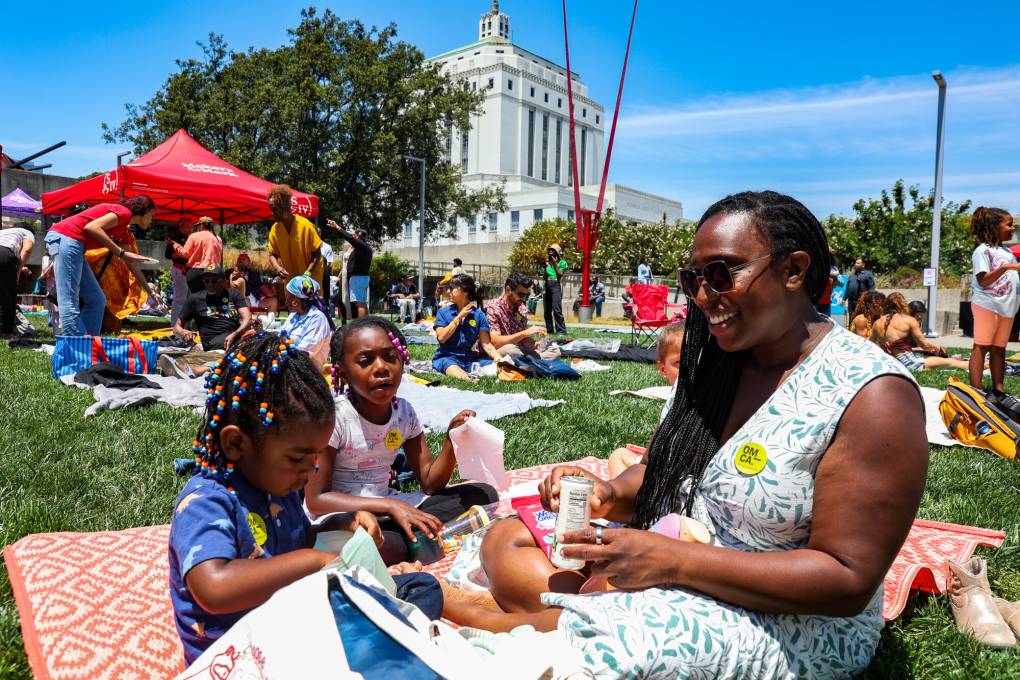
"caption": "Alexandria Osei-Amoako enjoys the day with her children at the Hella Juneteenth 'The Cookout' at the Oakland Museum of California’s Garden on June 19, 2024. ",
"credit": "Gina Castro/KQED",
"altTag": null,
"description": null,
"imgSizes": {
"medium": {
"file": "https://cdn.kqed.org/wp-content/uploads/sites/10/2025/01/20240619_JuneteenthCookout_GC-5_qed-800x533.jpg",
"width": 800,
"height": 533,
"mimeType": "image/jpeg"
},
"large": {
"file": "https://cdn.kqed.org/wp-content/uploads/sites/10/2025/01/20240619_JuneteenthCookout_GC-5_qed-1020x680.jpg",
"width": 1020,
"height": 680,
"mimeType": "image/jpeg"
},
"thumbnail": {
"file": "https://cdn.kqed.org/wp-content/uploads/sites/10/2025/01/20240619_JuneteenthCookout_GC-5_qed-160x107.jpg",
"width": 160,
"height": 107,
"mimeType": "image/jpeg"
},
"1536x1536": {
"file": "https://cdn.kqed.org/wp-content/uploads/sites/10/2025/01/20240619_JuneteenthCookout_GC-5_qed-1536x1024.jpg",
"width": 1536,
"height": 1024,
"mimeType": "image/jpeg"
},
"post-thumbnail": {
"file": "https://cdn.kqed.org/wp-content/uploads/sites/10/2025/01/20240619_JuneteenthCookout_GC-5_qed-672x372.jpg",
"width": 672,
"height": 372,
"mimeType": "image/jpeg"
},
"twentyfourteen-full-width": {
"file": "https://cdn.kqed.org/wp-content/uploads/sites/10/2025/01/20240619_JuneteenthCookout_GC-5_qed-1038x576.jpg",
"width": 1038,
"height": 576,
"mimeType": "image/jpeg"
},
"full-width": {
"file": "https://cdn.kqed.org/wp-content/uploads/sites/10/2025/01/20240619_JuneteenthCookout_GC-5_qed-1920x1280.jpg",
"width": 1920,
"height": 1280,
"mimeType": "image/jpeg"
},
"kqedFullSize": {
"file": "https://cdn.kqed.org/wp-content/uploads/sites/10/2025/01/20240619_JuneteenthCookout_GC-5_qed.jpg",
"width": 2000,
"height": 1333
}
},
"isLoading": false,
"fetchFailed": false
},
"news_12021479": {
"type": "attachments",
"id": "news_12021479",
"meta": {
"index": "attachments_1716263798",
"site": "news",
"id": "12021479",
"found": true
},
"title": "Supreme Court Hears Arguments In ByteDance And TikTok Case",
"publishDate": 1736537233,
"status": "inherit",
"parent": 12021468,
"modified": 1736542488,
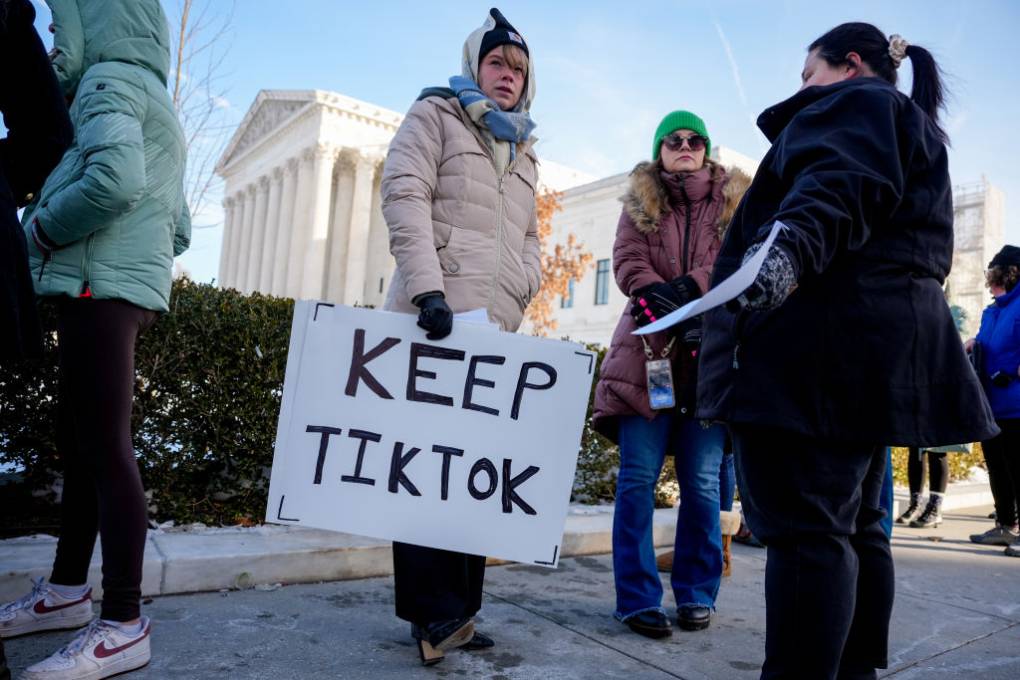
"caption": "(L-R) Sarah Baus of Charleston, South Carolina, holds a sign that reads 'Keep TikTok' as she and other content creators Sallye Miley of Jackson, Mississippi, and Callie Goodwin of Columbia, South Carolina, stand outside the U.S. Supreme Court Building as the court hears oral arguments on whether to overturn or delay a law that could lead to a ban of TikTok in the U.S., on Jan. 10, 20,25 in Washington, D.C. ",
"credit": "Andrew Harnik/Getty Images",
"altTag": "Three women stand outside a neo-classical white building with coats, scarves and beanies, one of them holding a sign that reads 'Keep TikTok.'",
"description": null,
"imgSizes": {
"medium": {
"file": "https://cdn.kqed.org/wp-content/uploads/sites/10/2025/01/GettyImages-2192575772-800x534.jpg",
"width": 800,
"height": 534,
"mimeType": "image/jpeg"
},
"large": {
"file": "https://cdn.kqed.org/wp-content/uploads/sites/10/2025/01/GettyImages-2192575772-1020x680.jpg",
"width": 1020,
"height": 680,
"mimeType": "image/jpeg"
},
"thumbnail": {
"file": "https://cdn.kqed.org/wp-content/uploads/sites/10/2025/01/GettyImages-2192575772-160x107.jpg",
"width": 160,
"height": 107,
"mimeType": "image/jpeg"
},
"post-thumbnail": {
"file": "https://cdn.kqed.org/wp-content/uploads/sites/10/2025/01/GettyImages-2192575772-672x372.jpg",
"width": 672,
"height": 372,
"mimeType": "image/jpeg"
},
"twentyfourteen-full-width": {
"file": "https://cdn.kqed.org/wp-content/uploads/sites/10/2025/01/GettyImages-2192575772-1024x576.jpg",
"width": 1024,
"height": 576,
"mimeType": "image/jpeg"
},
"kqedFullSize": {
"file": "https://cdn.kqed.org/wp-content/uploads/sites/10/2025/01/GettyImages-2192575772.jpg",
"width": 1024,
"height": 683
}
},
"isLoading": false,
"fetchFailed": false
},
"news_12021231": {
"type": "attachments",
"id": "news_12021231",
"meta": {
"index": "attachments_1716263798",
"site": "news",
"id": "12021231",
"found": true
},
"title": "Hollywood Exteriors And Landmarks - 2025",
"publishDate": 1736459349,
"status": "inherit",
"parent": 12021213,
"modified": 1736461317,
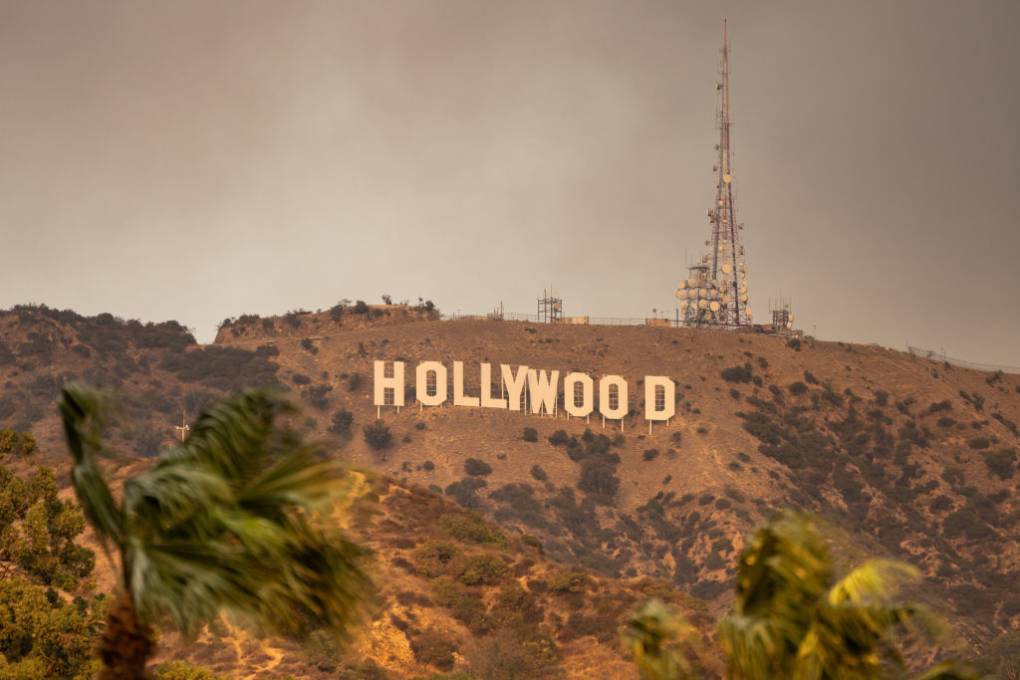
"caption": "The Hollywood Sign is seen with smoke from multiple wildfires on Jan. 8, 2025, in Hollywood, Los Angeles. ",
"credit": "AaronP/Bauer-Griffin/GC Images",
"altTag": null,
"description": null,
"imgSizes": {
"medium": {
"file": "https://cdn.kqed.org/wp-content/uploads/sites/10/2025/01/GettyImages-2192420108-800x534.jpg",
"width": 800,
"height": 534,
"mimeType": "image/jpeg"
},
"large": {
"file": "https://cdn.kqed.org/wp-content/uploads/sites/10/2025/01/GettyImages-2192420108-1020x680.jpg",
"width": 1020,
"height": 680,
"mimeType": "image/jpeg"
},
"thumbnail": {
"file": "https://cdn.kqed.org/wp-content/uploads/sites/10/2025/01/GettyImages-2192420108-160x107.jpg",
"width": 160,
"height": 107,
"mimeType": "image/jpeg"
},
"post-thumbnail": {
"file": "https://cdn.kqed.org/wp-content/uploads/sites/10/2025/01/GettyImages-2192420108-672x372.jpg",
"width": 672,
"height": 372,
"mimeType": "image/jpeg"
},
"twentyfourteen-full-width": {
"file": "https://cdn.kqed.org/wp-content/uploads/sites/10/2025/01/GettyImages-2192420108-1024x576.jpg",
"width": 1024,
"height": 576,
"mimeType": "image/jpeg"
},
"kqedFullSize": {
"file": "https://cdn.kqed.org/wp-content/uploads/sites/10/2025/01/GettyImages-2192420108.jpg",
"width": 1024,
"height": 683
}
},
"isLoading": false,
"fetchFailed": false
},
"news_12020217": {
"type": "attachments",
"id": "news_12020217",
"meta": {
"index": "attachments_1716263798",
"site": "news",
"id": "12020217",
"found": true
},
"title": "PorcelainWar_3",
"publishDate": 1735881326,
"status": "inherit",
"parent": 0,
"modified": 1735934708,
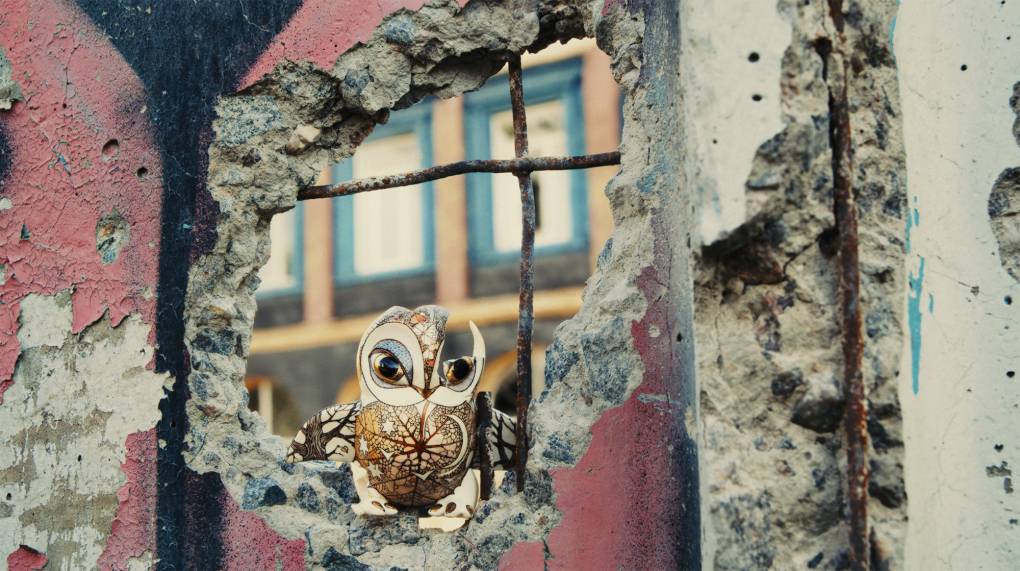
"caption": "Owl in Wall, 'Porcelain Wars.'",
"credit": "Courtesy of Picturehouse",
"altTag": null,
"description": null,
"imgSizes": {
"medium": {
"file": "https://cdn.kqed.org/wp-content/uploads/sites/10/2025/01/PorcelainWar_3-800x448.jpg",
"width": 800,
"height": 448,
"mimeType": "image/jpeg"
},
"large": {
"file": "https://cdn.kqed.org/wp-content/uploads/sites/10/2025/01/PorcelainWar_3-1020x571.jpg",
"width": 1020,
"height": 571,
"mimeType": "image/jpeg"
},
"thumbnail": {
"file": "https://cdn.kqed.org/wp-content/uploads/sites/10/2025/01/PorcelainWar_3-160x90.jpg",
"width": 160,
"height": 90,
"mimeType": "image/jpeg"
},
"1536x1536": {
"file": "https://cdn.kqed.org/wp-content/uploads/sites/10/2025/01/PorcelainWar_3-1536x859.jpg",
"width": 1536,
"height": 859,
"mimeType": "image/jpeg"
},
"post-thumbnail": {
"file": "https://cdn.kqed.org/wp-content/uploads/sites/10/2025/01/PorcelainWar_3-672x372.jpg",
"width": 672,
"height": 372,
"mimeType": "image/jpeg"
},
"twentyfourteen-full-width": {
"file": "https://cdn.kqed.org/wp-content/uploads/sites/10/2025/01/PorcelainWar_3-1038x576.jpg",
"width": 1038,
"height": 576,
"mimeType": "image/jpeg"
},
"full-width": {
"file": "https://cdn.kqed.org/wp-content/uploads/sites/10/2025/01/PorcelainWar_3-1920x1074.jpg",
"width": 1920,
"height": 1074,
"mimeType": "image/jpeg"
},
"kqedFullSize": {
"file": "https://cdn.kqed.org/wp-content/uploads/sites/10/2025/01/PorcelainWar_3.jpg",
"width": 2000,
"height": 1119
}
},
"isLoading": false,
"fetchFailed": false
},
"news_12019560": {
"type": "attachments",
"id": "news_12019560",
"meta": {
"index": "attachments_1716263798",
"site": "news",
"id": "12019560",
"found": true
},
"title": "241221-SneakerCon-06-BL",
"publishDate": 1734832012,
"status": "inherit",
"parent": 0,
"modified": 1734978338,
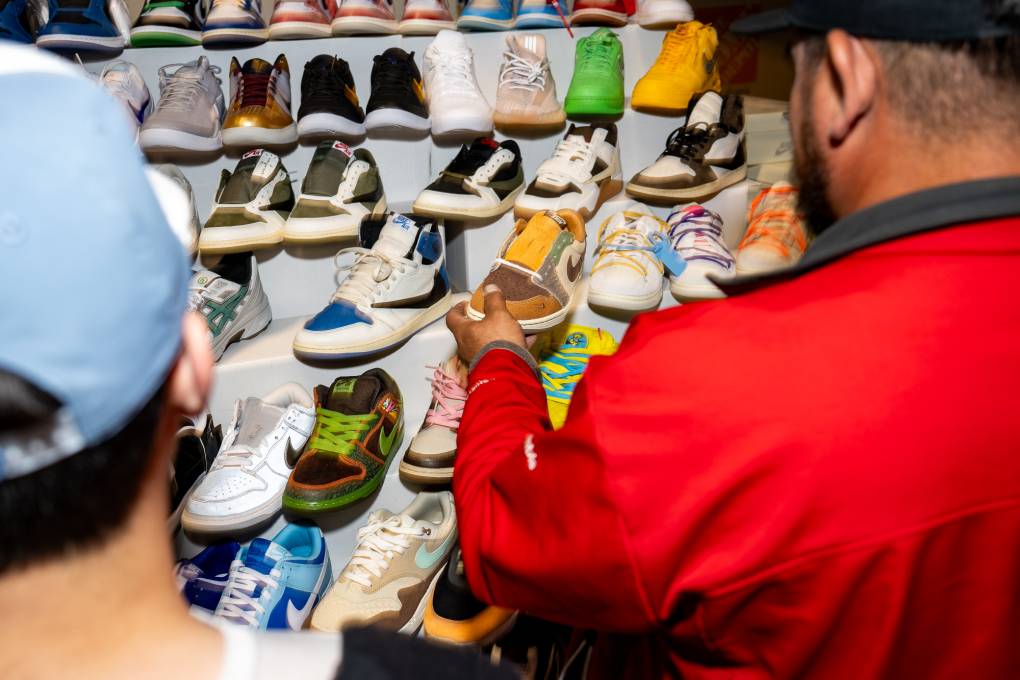
"caption": "Juan Ruedas and his son Andrew, 16, look for sneakers at Sneaker Con Bay Area at the Santa Clara Convention Center on Dec. 21, 2024. The two traveled from Southern California to attend the event.",
"credit": "Beth LaBerge/KQED",
"altTag": null,
"description": null,
"imgSizes": {
"medium": {
"file": "https://cdn.kqed.org/wp-content/uploads/sites/10/2024/12/241221-SneakerCon-06-BL-800x533.jpg",
"width": 800,
"height": 533,
"mimeType": "image/jpeg"
},
"large": {
"file": "https://cdn.kqed.org/wp-content/uploads/sites/10/2024/12/241221-SneakerCon-06-BL-1020x680.jpg",
"width": 1020,
"height": 680,
"mimeType": "image/jpeg"
},
"thumbnail": {
"file": "https://cdn.kqed.org/wp-content/uploads/sites/10/2024/12/241221-SneakerCon-06-BL-160x107.jpg",
"width": 160,
"height": 107,
"mimeType": "image/jpeg"
},
"1536x1536": {
"file": "https://cdn.kqed.org/wp-content/uploads/sites/10/2024/12/241221-SneakerCon-06-BL-1536x1024.jpg",
"width": 1536,
"height": 1024,
"mimeType": "image/jpeg"
},
"post-thumbnail": {
"file": "https://cdn.kqed.org/wp-content/uploads/sites/10/2024/12/241221-SneakerCon-06-BL-672x372.jpg",
"width": 672,
"height": 372,
"mimeType": "image/jpeg"
},
"twentyfourteen-full-width": {
"file": "https://cdn.kqed.org/wp-content/uploads/sites/10/2024/12/241221-SneakerCon-06-BL-1038x576.jpg",
"width": 1038,
"height": 576,
"mimeType": "image/jpeg"
},
"full-width": {
"file": "https://cdn.kqed.org/wp-content/uploads/sites/10/2024/12/241221-SneakerCon-06-BL-1920x1280.jpg",
"width": 1920,
"height": 1280,
"mimeType": "image/jpeg"
},
"kqedFullSize": {
"file": "https://cdn.kqed.org/wp-content/uploads/sites/10/2024/12/241221-SneakerCon-06-BL.jpg",
"width": 2000,
"height": 1333
}
},
"isLoading": false,
"fetchFailed": false
},
"news_12019011": {
"type": "attachments",
"id": "news_12019011",
"meta": {
"index": "attachments_1716263798",
"site": "news",
"id": "12019011",
"found": true
},
"title": "Palestinian-Christmas-Trees",
"publishDate": 1734620903,
"status": "inherit",
"parent": 0,
"modified": 1734975540,
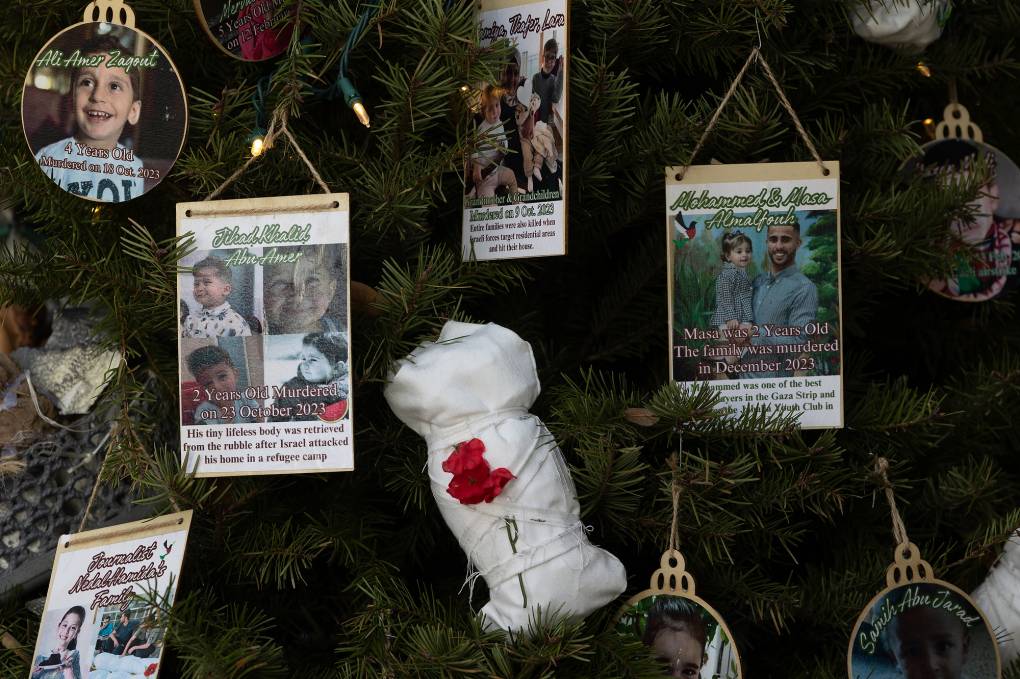
"caption": "A tree decorated with photos and other ornaments to raise awareness of the plight of children in Gaza is one of many trees decorated by community members at this year’s Christmas in the Park celebration at Plaza de Cesar Chavez in downtown San José on Wednesday, Dec. 18, 2024. ",
"credit": "David M. Barreda/KQED",
"altTag": null,
"description": null,
"imgSizes": {
"medium": {
"file": "https://cdn.kqed.org/wp-content/uploads/sites/10/2024/12/20241218_Palestinian-Christmas-Trees_0078-800x533.jpg",
"width": 800,
"height": 533,
"mimeType": "image/jpeg"
},
"large": {
"file": "https://cdn.kqed.org/wp-content/uploads/sites/10/2024/12/20241218_Palestinian-Christmas-Trees_0078-1020x679.jpg",
"width": 1020,
"height": 679,
"mimeType": "image/jpeg"
},
"thumbnail": {
"file": "https://cdn.kqed.org/wp-content/uploads/sites/10/2024/12/20241218_Palestinian-Christmas-Trees_0078-160x107.jpg",
"width": 160,
"height": 107,
"mimeType": "image/jpeg"
},
"1536x1536": {
"file": "https://cdn.kqed.org/wp-content/uploads/sites/10/2024/12/20241218_Palestinian-Christmas-Trees_0078-1536x1023.jpg",
"width": 1536,
"height": 1023,
"mimeType": "image/jpeg"
},
"post-thumbnail": {
"file": "https://cdn.kqed.org/wp-content/uploads/sites/10/2024/12/20241218_Palestinian-Christmas-Trees_0078-672x372.jpg",
"width": 672,
"height": 372,
"mimeType": "image/jpeg"
},
"twentyfourteen-full-width": {
"file": "https://cdn.kqed.org/wp-content/uploads/sites/10/2024/12/20241218_Palestinian-Christmas-Trees_0078-1038x576.jpg",
"width": 1038,
"height": 576,
"mimeType": "image/jpeg"
},
"full-width": {
"file": "https://cdn.kqed.org/wp-content/uploads/sites/10/2024/12/20241218_Palestinian-Christmas-Trees_0078-1920x1279.jpg",
"width": 1920,
"height": 1279,
"mimeType": "image/jpeg"
},
"kqedFullSize": {
"file": "https://cdn.kqed.org/wp-content/uploads/sites/10/2024/12/20241218_Palestinian-Christmas-Trees_0078.jpg",
"width": 2000,
"height": 1332
}
},
"isLoading": false,
"fetchFailed": false
},
"news_12018920": {
"type": "attachments",
"id": "news_12018920",
"meta": {
"index": "attachments_1716263798",
"site": "news",
"id": "12018920",
"found": true
},
"title": "241217-ProfsandPints-09-BL",
"publishDate": 1734561924,
"status": "inherit",
"parent": 0,
"modified": 1734562260,
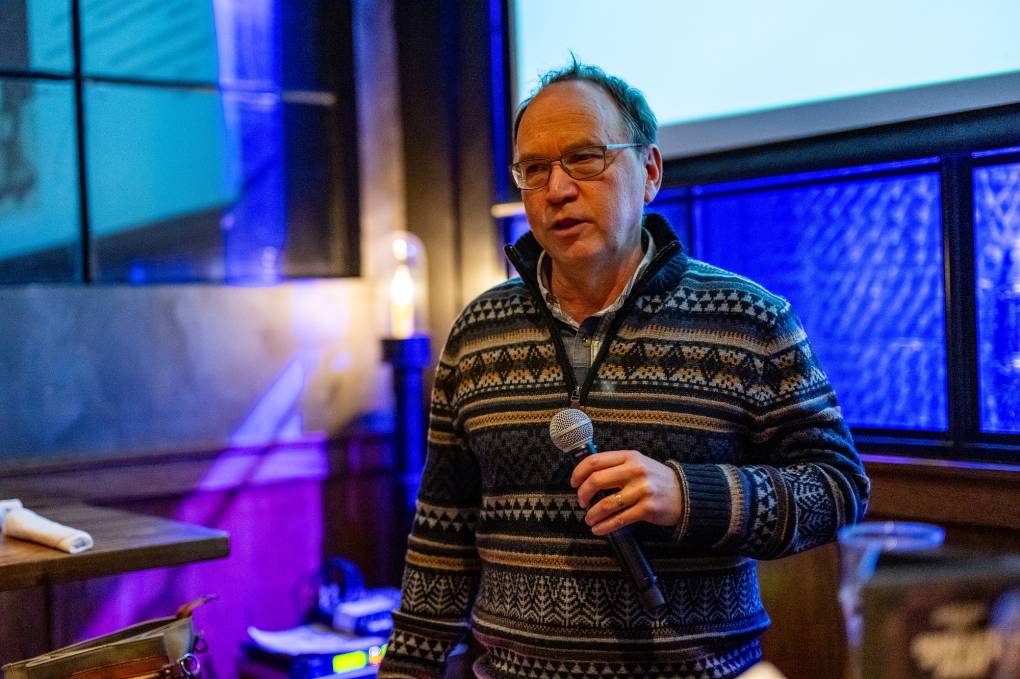
"caption": "Tim Tangherlini, professor of Nordic folklore at the University of California at Berkeley, gives a talk about the historical origins of American holiday practices during Profs and Pints at Barlett Hall in San Francisco on Dec. 18, 2024.",
"credit": "Beth LaBerge/KQED",
"altTag": null,
"description": null,
"imgSizes": {
"medium": {
"file": "https://cdn.kqed.org/wp-content/uploads/sites/10/2024/12/241217-ProfsandPints-09-BL-800x533.jpg",
"width": 800,
"height": 533,
"mimeType": "image/jpeg"
},
"large": {
"file": "https://cdn.kqed.org/wp-content/uploads/sites/10/2024/12/241217-ProfsandPints-09-BL-1020x679.jpg",
"width": 1020,
"height": 679,
"mimeType": "image/jpeg"
},
"thumbnail": {
"file": "https://cdn.kqed.org/wp-content/uploads/sites/10/2024/12/241217-ProfsandPints-09-BL-160x107.jpg",
"width": 160,
"height": 107,
"mimeType": "image/jpeg"
},
"1536x1536": {
"file": "https://cdn.kqed.org/wp-content/uploads/sites/10/2024/12/241217-ProfsandPints-09-BL-1536x1023.jpg",
"width": 1536,
"height": 1023,
"mimeType": "image/jpeg"
},
"post-thumbnail": {
"file": "https://cdn.kqed.org/wp-content/uploads/sites/10/2024/12/241217-ProfsandPints-09-BL-672x372.jpg",
"width": 672,
"height": 372,
"mimeType": "image/jpeg"
},
"twentyfourteen-full-width": {
"file": "https://cdn.kqed.org/wp-content/uploads/sites/10/2024/12/241217-ProfsandPints-09-BL-1038x576.jpg",
"width": 1038,
"height": 576,
"mimeType": "image/jpeg"
},
"full-width": {
"file": "https://cdn.kqed.org/wp-content/uploads/sites/10/2024/12/241217-ProfsandPints-09-BL-1920x1279.jpg",
"width": 1920,
"height": 1279,
"mimeType": "image/jpeg"
},
"kqedFullSize": {
"file": "https://cdn.kqed.org/wp-content/uploads/sites/10/2024/12/241217-ProfsandPints-09-BL.jpg",
"width": 2000,
"height": 1332
}
},
"isLoading": false,
"fetchFailed": false
},
"news_12017305": {
"type": "attachments",
"id": "news_12017305",
"meta": {
"index": "attachments_1716263798",
"site": "news",
"id": "12017305",
"found": true
},
"title": "The Snack Sensei, Oscar Cuadra in a povided photo.",
"publishDate": 1733774564,
"status": "inherit",
"parent": 0,
"modified": 1733787270,
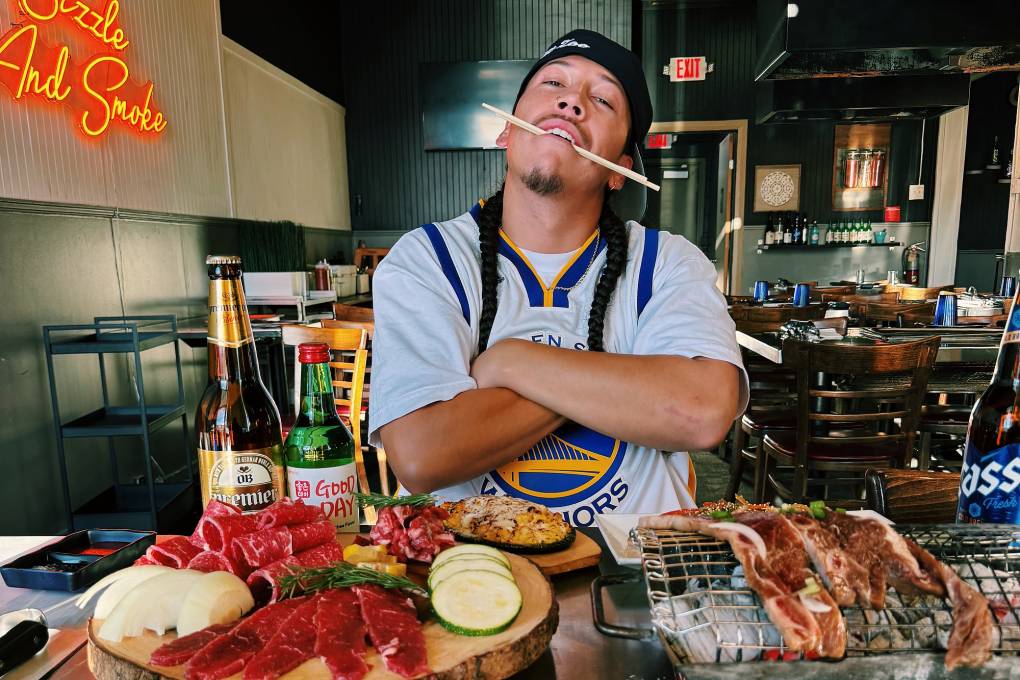
"caption": "The Snack Sensei, Oscar Cuadra.",
"credit": "Courtesy of Eva Indigo",
"altTag": null,
"description": null,
"imgSizes": {
"medium": {
"file": "https://cdn.kqed.org/wp-content/uploads/sites/10/2024/12/82914079-D49D-465A-8F32-B10D0AC67EB7-800x533.jpeg",
"width": 800,
"height": 533,
"mimeType": "image/jpeg"
},
"large": {
"file": "https://cdn.kqed.org/wp-content/uploads/sites/10/2024/12/82914079-D49D-465A-8F32-B10D0AC67EB7-1020x680.jpeg",
"width": 1020,
"height": 680,
"mimeType": "image/jpeg"
},
"thumbnail": {
"file": "https://cdn.kqed.org/wp-content/uploads/sites/10/2024/12/82914079-D49D-465A-8F32-B10D0AC67EB7-160x107.jpeg",
"width": 160,
"height": 107,
"mimeType": "image/jpeg"
},
"1536x1536": {
"file": "https://cdn.kqed.org/wp-content/uploads/sites/10/2024/12/82914079-D49D-465A-8F32-B10D0AC67EB7-1536x1024.jpeg",
"width": 1536,
"height": 1024,
"mimeType": "image/jpeg"
},
"post-thumbnail": {
"file": "https://cdn.kqed.org/wp-content/uploads/sites/10/2024/12/82914079-D49D-465A-8F32-B10D0AC67EB7-672x372.jpeg",
"width": 672,
"height": 372,
"mimeType": "image/jpeg"
},
"twentyfourteen-full-width": {
"file": "https://cdn.kqed.org/wp-content/uploads/sites/10/2024/12/82914079-D49D-465A-8F32-B10D0AC67EB7-1038x576.jpeg",
"width": 1038,
"height": 576,
"mimeType": "image/jpeg"
},
"full-width": {
"file": "https://cdn.kqed.org/wp-content/uploads/sites/10/2024/12/82914079-D49D-465A-8F32-B10D0AC67EB7-1920x1280.jpeg",
"width": 1920,
"height": 1280,
"mimeType": "image/jpeg"
},
"kqedFullSize": {
"file": "https://cdn.kqed.org/wp-content/uploads/sites/10/2024/12/82914079-D49D-465A-8F32-B10D0AC67EB7.jpeg",
"width": 2000,
"height": 1333
}
},
"isLoading": false,
"fetchFailed": false
},
"news_12014151": {
"type": "attachments",
"id": "news_12014151",
"meta": {
"index": "attachments_1716263798",
"site": "news",
"id": "12014151",
"found": true
},
"title": "20241112_WAVEORGAN_GC-3-KQED",
"publishDate": 1731457514,
"status": "inherit",
"parent": 0,
"modified": 1731457596,
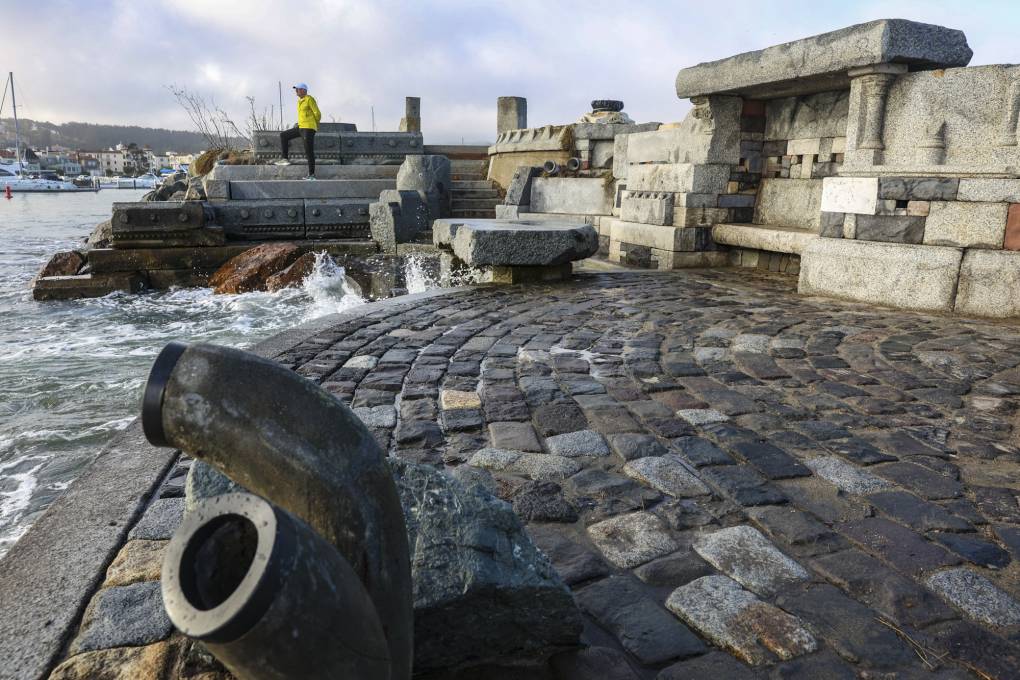
"caption": "The Wave Organ jetty, made of recycled materials including from a demolished cemetery and old street curbs, in San Francisco on Nov. 12, 2024.",
"credit": "Gina Castro/KQED",
"altTag": null,
"description": null,
"imgSizes": {
"medium": {
"file": "https://cdn.kqed.org/wp-content/uploads/sites/10/2024/11/20241112_WAVEORGAN_GC-3-KQED-800x533.jpg",
"width": 800,
"height": 533,
"mimeType": "image/jpeg"
},
"large": {
"file": "https://cdn.kqed.org/wp-content/uploads/sites/10/2024/11/20241112_WAVEORGAN_GC-3-KQED-1020x680.jpg",
"width": 1020,
"height": 680,
"mimeType": "image/jpeg"
},
"thumbnail": {
"file": "https://cdn.kqed.org/wp-content/uploads/sites/10/2024/11/20241112_WAVEORGAN_GC-3-KQED-160x107.jpg",
"width": 160,
"height": 107,
"mimeType": "image/jpeg"
},
"1536x1536": {
"file": "https://cdn.kqed.org/wp-content/uploads/sites/10/2024/11/20241112_WAVEORGAN_GC-3-KQED-1536x1024.jpg",
"width": 1536,
"height": 1024,
"mimeType": "image/jpeg"
},
"post-thumbnail": {
"file": "https://cdn.kqed.org/wp-content/uploads/sites/10/2024/11/20241112_WAVEORGAN_GC-3-KQED-672x372.jpg",
"width": 672,
"height": 372,
"mimeType": "image/jpeg"
},
"twentyfourteen-full-width": {
"file": "https://cdn.kqed.org/wp-content/uploads/sites/10/2024/11/20241112_WAVEORGAN_GC-3-KQED-1038x576.jpg",
"width": 1038,
"height": 576,
"mimeType": "image/jpeg"
},
"full-width": {
"file": "https://cdn.kqed.org/wp-content/uploads/sites/10/2024/11/20241112_WAVEORGAN_GC-3-KQED-1920x1280.jpg",
"width": 1920,
"height": 1280,
"mimeType": "image/jpeg"
},
"kqedFullSize": {
"file": "https://cdn.kqed.org/wp-content/uploads/sites/10/2024/11/20241112_WAVEORGAN_GC-3-KQED.jpg",
"width": 2000,
"height": 1333
}
},
"isLoading": false,
"fetchFailed": false
},
"news_12014354": {
"type": "attachments",
"id": "news_12014354",
"meta": {
"index": "attachments_1716263798",
"site": "news",
"id": "12014354",
"found": true
},
"title": "US-LGBTQ-PRIDE-PARADE",
"publishDate": 1731546195,
"status": "inherit",
"parent": 12014337,
"modified": 1738432051,
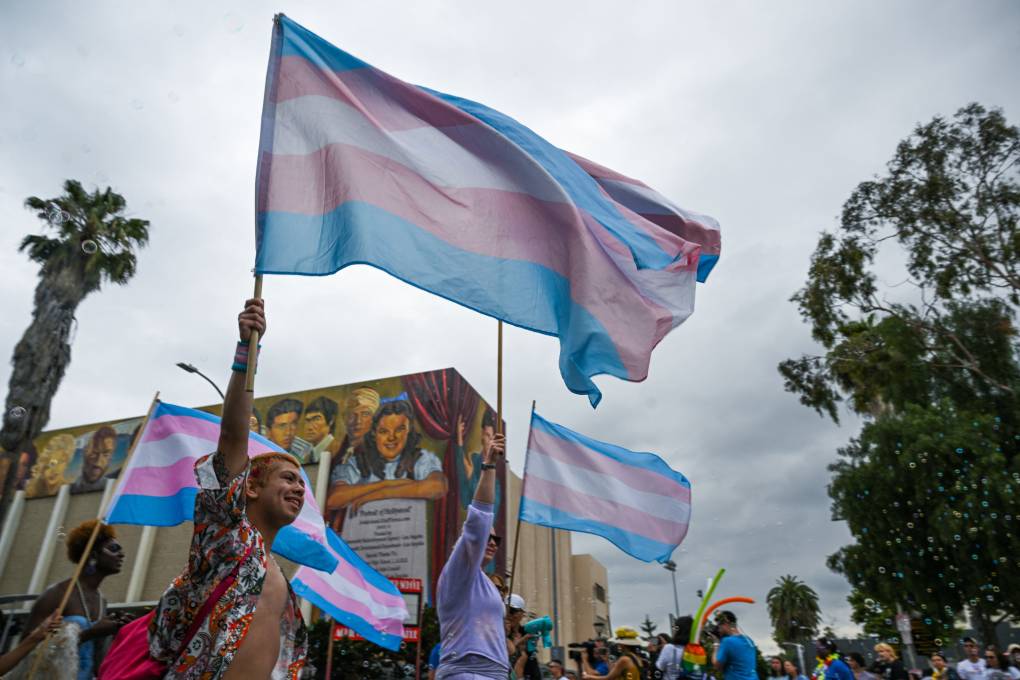
"caption": "A demonstrator waves a Transgender Pride flag in 2023 in Los Angeles. As Donald Trump prepares to reenter the White House, advocates for trans communities have expressed deep concerns about trans rights over the coming years.",
"credit": "Robyn Beck/AFP via Getty Images",
"altTag": null,
"description": null,
"imgSizes": {
"medium": {
"file": "https://cdn.kqed.org/wp-content/uploads/sites/10/2024/11/GettyImages-1258626528-800x533.jpg",
"width": 800,
"height": 533,
"mimeType": "image/jpeg"
},
"large": {
"file": "https://cdn.kqed.org/wp-content/uploads/sites/10/2024/11/GettyImages-1258626528-1020x680.jpg",
"width": 1020,
"height": 680,
"mimeType": "image/jpeg"
},
"thumbnail": {
"file": "https://cdn.kqed.org/wp-content/uploads/sites/10/2024/11/GettyImages-1258626528-160x107.jpg",
"width": 160,
"height": 107,
"mimeType": "image/jpeg"
},
"1536x1536": {
"file": "https://cdn.kqed.org/wp-content/uploads/sites/10/2024/11/GettyImages-1258626528-1536x1024.jpg",
"width": 1536,
"height": 1024,
"mimeType": "image/jpeg"
},
"2048x2048": {
"file": "https://cdn.kqed.org/wp-content/uploads/sites/10/2024/11/GettyImages-1258626528-2048x1365.jpg",
"width": 2048,
"height": 1365,
"mimeType": "image/jpeg"
},
"post-thumbnail": {
"file": "https://cdn.kqed.org/wp-content/uploads/sites/10/2024/11/GettyImages-1258626528-672x372.jpg",
"width": 672,
"height": 372,
"mimeType": "image/jpeg"
},
"twentyfourteen-full-width": {
"file": "https://cdn.kqed.org/wp-content/uploads/sites/10/2024/11/GettyImages-1258626528-1038x576.jpg",
"width": 1038,
"height": 576,
"mimeType": "image/jpeg"
},
"full-width": {
"file": "https://cdn.kqed.org/wp-content/uploads/sites/10/2024/11/GettyImages-1258626528-1920x1280.jpg",
"width": 1920,
"height": 1280,
"mimeType": "image/jpeg"
},
"kqedFullSize": {
"file": "https://cdn.kqed.org/wp-content/uploads/sites/10/2024/11/GettyImages-1258626528-scaled-e1761343966938.jpg",
"width": 2000,
"height": 1334
}
},
"isLoading": false,
"fetchFailed": false
},
"news_12011650": {
"type": "attachments",
"id": "news_12011650",
"meta": {
"index": "attachments_1716263798",
"site": "news",
"id": "12011650",
"found": true
},
"title": "241030-JULIA-PRACTICING-KQED",
"publishDate": 1730309144,
"status": "inherit",
"parent": 0,
"modified": 1730309164,
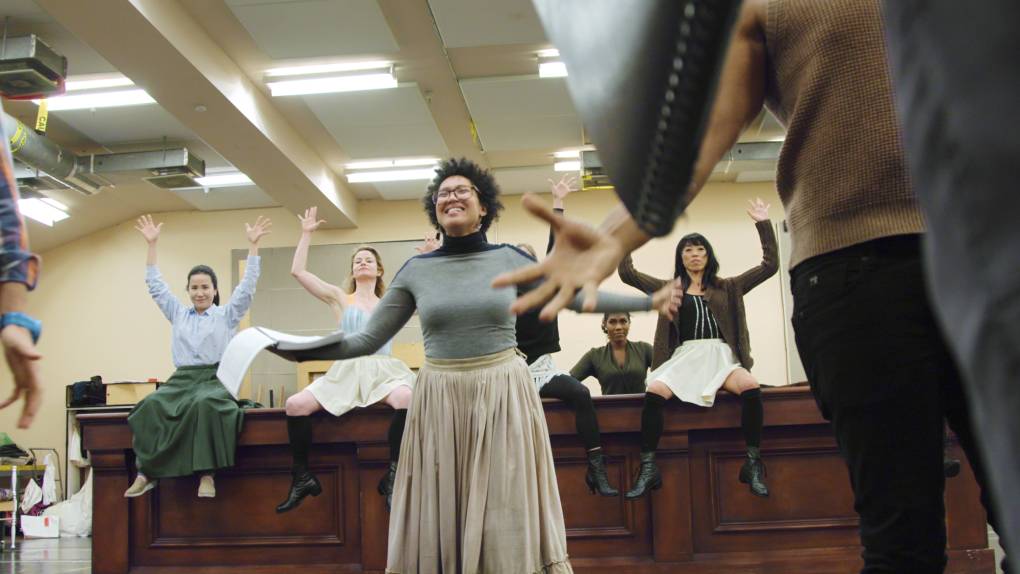
"caption": "Julia Bullock (center), soprano who plays Louise Clappe in the opera Girls of the Golden West, practices a scene from the opera with dancers.",
"credit": "Courtesy of Jon Else",
"altTag": null,
"description": null,
"imgSizes": {
"medium": {
"file": "https://cdn.kqed.org/wp-content/uploads/sites/10/2024/10/241030-JULIA-PRACTICING-KQED-800x450.jpg",
"width": 800,
"height": 450,
"mimeType": "image/jpeg"
},
"large": {
"file": "https://cdn.kqed.org/wp-content/uploads/sites/10/2024/10/241030-JULIA-PRACTICING-KQED-1020x574.jpg",
"width": 1020,
"height": 574,
"mimeType": "image/jpeg"
},
"thumbnail": {
"file": "https://cdn.kqed.org/wp-content/uploads/sites/10/2024/10/241030-JULIA-PRACTICING-KQED-160x90.jpg",
"width": 160,
"height": 90,
"mimeType": "image/jpeg"
},
"1536x1536": {
"file": "https://cdn.kqed.org/wp-content/uploads/sites/10/2024/10/241030-JULIA-PRACTICING-KQED-1536x864.jpg",
"width": 1536,
"height": 864,
"mimeType": "image/jpeg"
},
"post-thumbnail": {
"file": "https://cdn.kqed.org/wp-content/uploads/sites/10/2024/10/241030-JULIA-PRACTICING-KQED-672x372.jpg",
"width": 672,
"height": 372,
"mimeType": "image/jpeg"
},
"twentyfourteen-full-width": {
"file": "https://cdn.kqed.org/wp-content/uploads/sites/10/2024/10/241030-JULIA-PRACTICING-KQED-1038x576.jpg",
"width": 1038,
"height": 576,
"mimeType": "image/jpeg"
},
"full-width": {
"file": "https://cdn.kqed.org/wp-content/uploads/sites/10/2024/10/241030-JULIA-PRACTICING-KQED-1920x1080.jpg",
"width": 1920,
"height": 1080,
"mimeType": "image/jpeg"
},
"kqedFullSize": {
"file": "https://cdn.kqed.org/wp-content/uploads/sites/10/2024/10/241030-JULIA-PRACTICING-KQED.jpg",
"width": 2000,
"height": 1125
}
},
"isLoading": false,
"fetchFailed": false
},
"news_12011572": {
"type": "attachments",
"id": "news_12011572",
"meta": {
"index": "attachments_1716263798",
"site": "news",
"id": "12011572",
"found": true
},
"title": "241029-LATINO VOTERS 2 WAY-KQED-3",
"publishDate": 1730240179,
"status": "inherit",
"parent": 0,
"modified": 1730330086,
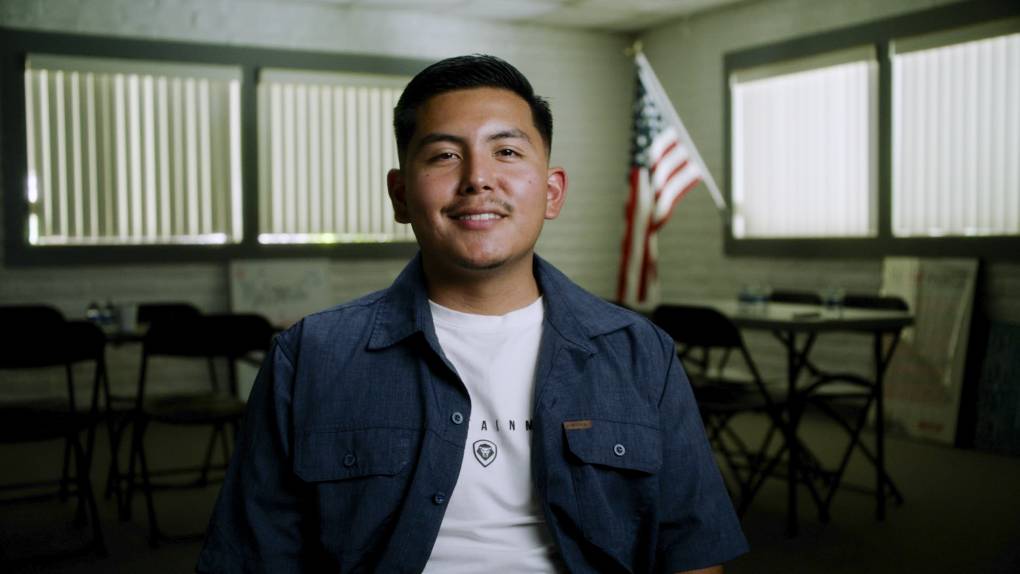
"caption": "While Jerry Reyes was raised the son of undocumented immigrants, the 24-year-old Fresno resident thinks it’s time to close the border and plans to vote for Trump. ",
"credit": "Courtesy of the producers of VOCES: Latino Vote 2024",
"altTag": null,
"description": null,
"imgSizes": {
"medium": {
"file": "https://cdn.kqed.org/wp-content/uploads/sites/10/2024/10/241029-LATINO-VOTERS-2-WAY-KQED-3-800x450.jpg",
"width": 800,
"height": 450,
"mimeType": "image/jpeg"
},
"large": {
"file": "https://cdn.kqed.org/wp-content/uploads/sites/10/2024/10/241029-LATINO-VOTERS-2-WAY-KQED-3-1020x574.jpg",
"width": 1020,
"height": 574,
"mimeType": "image/jpeg"
},
"thumbnail": {
"file": "https://cdn.kqed.org/wp-content/uploads/sites/10/2024/10/241029-LATINO-VOTERS-2-WAY-KQED-3-160x90.jpg",
"width": 160,
"height": 90,
"mimeType": "image/jpeg"
},
"1536x1536": {
"file": "https://cdn.kqed.org/wp-content/uploads/sites/10/2024/10/241029-LATINO-VOTERS-2-WAY-KQED-3-1536x864.jpg",
"width": 1536,
"height": 864,
"mimeType": "image/jpeg"
},
"post-thumbnail": {
"file": "https://cdn.kqed.org/wp-content/uploads/sites/10/2024/10/241029-LATINO-VOTERS-2-WAY-KQED-3-672x372.jpg",
"width": 672,
"height": 372,
"mimeType": "image/jpeg"
},
"twentyfourteen-full-width": {
"file": "https://cdn.kqed.org/wp-content/uploads/sites/10/2024/10/241029-LATINO-VOTERS-2-WAY-KQED-3-1038x576.jpg",
"width": 1038,
"height": 576,
"mimeType": "image/jpeg"
},
"full-width": {
"file": "https://cdn.kqed.org/wp-content/uploads/sites/10/2024/10/241029-LATINO-VOTERS-2-WAY-KQED-3-1920x1080.jpg",
"width": 1920,
"height": 1080,
"mimeType": "image/jpeg"
},
"kqedFullSize": {
"file": "https://cdn.kqed.org/wp-content/uploads/sites/10/2024/10/241029-LATINO-VOTERS-2-WAY-KQED-3.jpg",
"width": 2000,
"height": 1125
}
},
"isLoading": false,
"fetchFailed": false
}
},
"audioPlayerReducer": {
"postId": "stream_live",
"isPaused": true,
"isPlaying": false,
"pfsActive": false,
"pledgeModalIsOpen": true,
"playerDrawerIsOpen": false,
"liveAudioPlayStartedAt": 0,
"liveAudioPlayContext": ""
},
"authorsReducer": {
"byline_news_12021468": {
"type": "authors",
"id": "byline_news_12021468",
"meta": {
"override": true
},
"slug": "byline_news_12021468",
"name": "Mark Sherman, Associated Press",
"isLoading": false
},
"byline_news_12021213": {
"type": "authors",
"id": "byline_news_12021213",
"meta": {
"override": true
},
"slug": "byline_news_12021213",
"name": "\u003ca href=\"https://www.npr.org/people/g-s1-30654/dhanika-pineda\">Dhanika Pineda\u003c/a>, NPR",
"isLoading": false
},
"byline_news_12015182": {
"type": "authors",
"id": "byline_news_12015182",
"meta": {
"override": true
},
"slug": "byline_news_12015182",
"name": "Ana De Almeida Amaral",
"isLoading": false
},
"byline_news_12011929": {
"type": "authors",
"id": "byline_news_12011929",
"meta": {
"override": true
},
"slug": "byline_news_12011929",
"name": "Lusen Mendel",
"isLoading": false
},
"carlysevern": {
"type": "authors",
"id": "3243",
"meta": {
"index": "authors_1716337520",
"id": "3243",
"found": true
},
"name": "Carly Severn",
"firstName": "Carly",
"lastName": "Severn",
"slug": "carlysevern",
"email": "csevern@kqed.org",
"display_author_email": false,
"staff_mastheads": [
"news"
],
"title": "Senior Editor, Audience News ",
"bio": "Carly is KQED's Senior Editor of Audience News on the Digital News team, and has reported for the California Report Magazine, Bay Curious and KQED Arts. She's formerly the host of \u003ca href=\"http://ww2.kqed.org/pop/category/the-cooler/\" rel=\"noopener noreferrer\">The Cooler\u003c/a> podcast.",
"avatar": "https://secure.gravatar.com/avatar/54037bf5c128fe678f0ef26cec97a93f2e7f220a22d7285703328f12c42c1b1d?s=600&d=blank&r=g",
"twitter": "teacupinthebay",
"bluesky": null,
"facebook": null,
"instagram": null,
"linkedin": null,
"sites": [
{
"site": "",
"roles": [
"editor"
]
},
{
"site": "arts",
"roles": [
"editor"
]
},
{
"site": "news",
"roles": [
"administrator"
]
},
{
"site": "pop",
"roles": [
"editor"
]
},
{
"site": "futureofyou",
"roles": [
"editor"
]
},
{
"site": "about",
"roles": [
"administrator"
]
},
{
"site": "mindshift",
"roles": [
"editor"
]
},
{
"site": "bayareabites",
"roles": [
"editor"
]
},
{
"site": "stateofhealth",
"roles": [
"editor"
]
},
{
"site": "science",
"roles": [
"editor"
]
},
{
"site": "food",
"roles": [
"contributor"
]
},
{
"site": "forum",
"roles": [
"editor"
]
},
{
"site": "perspectives",
"roles": [
"administrator"
]
},
{
"site": "liveblog",
"roles": [
"editor"
]
}
],
"headData": {
"title": "Carly Severn | KQED",
"description": "Senior Editor, Audience News ",
"ogImgSrc": "https://secure.gravatar.com/avatar/54037bf5c128fe678f0ef26cec97a93f2e7f220a22d7285703328f12c42c1b1d?s=600&d=blank&r=g",
"twImgSrc": "https://secure.gravatar.com/avatar/54037bf5c128fe678f0ef26cec97a93f2e7f220a22d7285703328f12c42c1b1d?s=600&d=blank&r=g"
},
"isLoading": false,
"link": "/author/carlysevern"
},
"lsarah": {
"type": "authors",
"id": "11626",
"meta": {
"index": "authors_1716337520",
"id": "11626",
"found": true
},
"name": "Lakshmi Sarah",
"firstName": "Lakshmi",
"lastName": "Sarah",
"slug": "lsarah",
"email": "lsarah@kqed.org",
"display_author_email": false,
"staff_mastheads": [],
"title": "Digital Producer",
"bio": "Lakshmi Sarah is an educator, author and journalist with a focus on innovative storytelling. She has worked with newspapers, radio and magazines from Ahmedabad, India to Los Angeles, California. She has written and produced for Die Zeit, Global Voices, AJ+, KQED, Fusion Media Group and the New York Times.",
"avatar": "https://secure.gravatar.com/avatar/652dcaecd8b28826fc17a8b2d6bb4e93?s=600&d=blank&r=g",
"twitter": "lakitalki",
"facebook": null,
"instagram": "https://www.instagram.com/laki.talki/",
"linkedin": "https://www.linkedin.com/in/lakisarah/",
"sites": [
{
"site": "arts",
"roles": []
},
{
"site": "news",
"roles": []
},
{
"site": "bayareabites",
"roles": []
},
{
"site": "science",
"roles": []
}
],
"headData": {
"title": "Lakshmi Sarah | KQED",
"description": "Digital Producer",
"ogImgSrc": "https://secure.gravatar.com/avatar/652dcaecd8b28826fc17a8b2d6bb4e93?s=600&d=blank&r=g",
"twImgSrc": "https://secure.gravatar.com/avatar/652dcaecd8b28826fc17a8b2d6bb4e93?s=600&d=blank&r=g"
},
"isLoading": false,
"link": "/author/lsarah"
},
"btorres": {
"type": "authors",
"id": "11666",
"meta": {
"index": "authors_1716337520",
"id": "11666",
"found": true
},
"name": "Blanca Torres",
"firstName": "Blanca",
"lastName": "Torres",
"slug": "btorres",
"email": "btorres@kqed.org",
"display_author_email": true,
"staff_mastheads": [
"news"
],
"title": "Producer, Forum",
"bio": "Blanca Torres brings sharp news judgement and keen sense of lively conversation to her work as producer for Forum. She loves producing shows that leave listeners feeling like they heard distinctive voices, learned something new and gained a fresh perspective.\r\n\r\nShe joined KQED in January of 2020 after 16 years of working as a newspaper reporter most recently at the \u003cem>San Francisco Business Times,\u003c/em> where she wrote about real estate and economic development. Before that, she covered a variety of beats including crime, education, retail, workplace, the economy, consumer issues, and small business for the \u003cem>Contra Costa Times, Baltimore Sun\u003c/em> and\u003cem> The Seattle Times\u003c/em>. In addition to reporting, she worked as an editorial writer and columnist for the \u003cem>Seattle Times\u003c/em>. From 2017 to 2020, Blanca won a total of ten awards from the National Association of Real Estate Editors and won first place for land use reporting from the California News Publishers Association two years in a row. She is also a member and former board member for the National Association of Hispanic Journalists.\r\n\r\nA native of the Pacific Northwest, Blanca earned her bachelor's degree from Vanderbilt University in Nashville and a master's in fine arts in creative writing at Mills College. She lives in the East Bay with her family.",
"avatar": "https://secure.gravatar.com/avatar/50b49d19b14a1eed34f26ebf4681152cdd81574ed21851100871ccd29e578cdc?s=600&d=blank&r=g",
"twitter": "@blancawrites",
"bluesky": null,
"facebook": null,
"instagram": null,
"linkedin": null,
"sites": [
{
"site": "arts",
"roles": [
"editor"
]
},
{
"site": "news",
"roles": [
"editor"
]
},
{
"site": "forum",
"roles": [
"editor"
]
}
],
"headData": {
"title": "Blanca Torres | KQED",
"description": "Producer, Forum",
"ogImgSrc": "https://secure.gravatar.com/avatar/50b49d19b14a1eed34f26ebf4681152cdd81574ed21851100871ccd29e578cdc?s=600&d=blank&r=g",
"twImgSrc": "https://secure.gravatar.com/avatar/50b49d19b14a1eed34f26ebf4681152cdd81574ed21851100871ccd29e578cdc?s=600&d=blank&r=g"
},
"isLoading": false,
"link": "/author/btorres"
},
"blaberge": {
"type": "authors",
"id": "11667",
"meta": {
"index": "authors_1716337520",
"id": "11667",
"found": true
},
"name": "Beth LaBerge",
"firstName": "Beth",
"lastName": "LaBerge",
"slug": "blaberge",
"email": "blaberge@KQED.org",
"display_author_email": true,
"staff_mastheads": [
"news"
],
"title": "Photographer, News",
"bio": "Beth LaBerge is a visual journalist for \u003ca href=\"https://www.kqed.org/news\">KQED News\u003c/a>.",
"avatar": "https://secure.gravatar.com/avatar/ce49ecd7a1306685637b45a1f6f5dedfc4ae9481966eb596fea5160466dd6319?s=600&d=blank&r=g",
"twitter": null,
"bluesky": null,
"facebook": null,
"instagram": "https://www.instagram.com/bethlaberge/",
"linkedin": null,
"sites": [
{
"site": "arts",
"roles": [
"editor",
"manage_categories"
]
},
{
"site": "news",
"roles": [
"editor",
"edit_plugins",
"manage_categories"
]
},
{
"site": "science",
"roles": [
"editor",
"contributor",
"author",
"manage_categories"
]
},
{
"site": "perspectives",
"roles": [
"editor"
]
},
{
"site": "liveblog",
"roles": [
"editor"
]
}
],
"headData": {
"title": "Beth LaBerge | KQED",
"description": "Photographer, News",
"ogImgSrc": "https://secure.gravatar.com/avatar/ce49ecd7a1306685637b45a1f6f5dedfc4ae9481966eb596fea5160466dd6319?s=600&d=blank&r=g",
"twImgSrc": "https://secure.gravatar.com/avatar/ce49ecd7a1306685637b45a1f6f5dedfc4ae9481966eb596fea5160466dd6319?s=600&d=blank&r=g"
},
"isLoading": false,
"link": "/author/blaberge"
},
"ccabreralomeli": {
"type": "authors",
"id": "11708",
"meta": {
"index": "authors_1716337520",
"id": "11708",
"found": true
},
"name": "Carlos Cabrera-Lomelí",
"firstName": "Carlos",
"lastName": "Cabrera-Lomelí",
"slug": "ccabreralomeli",
"email": "ccabreralomeli@KQED.org",
"display_author_email": true,
"staff_mastheads": [
"news"
],
"title": "Community Reporter",
"bio": "Carlos Cabrera-Lomelí is a community reporter with KQED's digital engagement team. He also reports and co-produces for KQED's bilingual news hub KQED en Español. He grew up in San Francisco's Mission District and has previously worked with Univision, 48 Hills and REFORMA in Mexico City.",
"avatar": "https://secure.gravatar.com/avatar/c309be9665e484f887b818c89e273ecc673004f426f36b24d00a4d813a2e0518?s=600&d=blank&r=g",
"twitter": "@LomeliCabrera",
"bluesky": null,
"facebook": null,
"instagram": null,
"linkedin": null,
"sites": [
{
"site": "arts",
"roles": [
"editor"
]
},
{
"site": "news",
"roles": [
"editor"
]
},
{
"site": "about",
"roles": [
"editor"
]
},
{
"site": "science",
"roles": [
"editor"
]
},
{
"site": "perspectives",
"roles": [
"editor"
]
},
{
"site": "elections",
"roles": [
"editor"
]
},
{
"site": "liveblog",
"roles": [
"contributor"
]
}
],
"headData": {
"title": "Carlos Cabrera-Lomelí | KQED",
"description": "Community Reporter",
"ogImgSrc": "https://secure.gravatar.com/avatar/c309be9665e484f887b818c89e273ecc673004f426f36b24d00a4d813a2e0518?s=600&d=blank&r=g",
"twImgSrc": "https://secure.gravatar.com/avatar/c309be9665e484f887b818c89e273ecc673004f426f36b24d00a4d813a2e0518?s=600&d=blank&r=g"
},
"isLoading": false,
"link": "/author/ccabreralomeli"
},
"adahlstromeckman": {
"type": "authors",
"id": "11785",
"meta": {
"index": "authors_1716337520",
"id": "11785",
"found": true
},
"name": "Azul Dahlstrom-Eckman",
"firstName": "Azul",
"lastName": "Dahlstrom-Eckman",
"slug": "adahlstromeckman",
"email": "adahlstrom-eckman@kqed.org",
"display_author_email": true,
"staff_mastheads": [],
"title": "Reporter",
"bio": "Azul is a reporter for KQED focusing on transportation and features. He joined KQED in 2021 as an alumna of KALW's Audio Academy radio journalism training program.",
"avatar": "https://secure.gravatar.com/avatar/9cb750298435add7815a777f55bf1f46845c1386bb8452555c60a7b820b5aba3?s=600&d=blank&r=g",
"twitter": "@zuliemann",
"bluesky": "@azul415.bsky.social",
"facebook": null,
"instagram": null,
"linkedin": null,
"sites": [
{
"site": "arts",
"roles": [
"editor"
]
},
{
"site": "news",
"roles": [
"editor"
]
},
{
"site": "science",
"roles": [
"editor"
]
},
{
"site": "liveblog",
"roles": [
"author"
]
}
],
"headData": {
"title": "Azul Dahlstrom-Eckman | KQED",
"description": "Reporter",
"ogImgSrc": "https://secure.gravatar.com/avatar/9cb750298435add7815a777f55bf1f46845c1386bb8452555c60a7b820b5aba3?s=600&d=blank&r=g",
"twImgSrc": "https://secure.gravatar.com/avatar/9cb750298435add7815a777f55bf1f46845c1386bb8452555c60a7b820b5aba3?s=600&d=blank&r=g"
},
"isLoading": false,
"link": "/author/adahlstromeckman"
},
"emanoukian": {
"type": "authors",
"id": "11925",
"meta": {
"index": "authors_1716337520",
"id": "11925",
"found": true
},
"name": "Elize Manoukian",
"firstName": "Elize",
"lastName": "Manoukian",
"slug": "emanoukian",
"email": "emanoukian@KQED.org",
"display_author_email": false,
"staff_mastheads": [
"news"
],
"title": "Digital News Editor",
"bio": "Elize Manoukian is an award-winning audio producer and Senior Editor on the Express Desk, KQED's digital news platform. Her work has appeared on KPFA, Interlochen Public Radio, Oregon Public Broadcast, the New York Daily News, LA Times and the San Diego Union-Tribune.",
"avatar": "https://secure.gravatar.com/avatar/4525f1a8e46ccb30933b32653d9772064cfefe3fa655eb45b3b3a80341f6bdad?s=600&d=blank&r=g",
"twitter": null,
"bluesky": null,
"facebook": null,
"instagram": null,
"linkedin": null,
"sites": [
{
"site": "arts",
"roles": [
"editor"
]
},
{
"site": "news",
"roles": [
"editor"
]
},
{
"site": "science",
"roles": [
"editor"
]
}
],
"headData": {
"title": "Elize Manoukian | KQED",
"description": "Digital News Editor",
"ogImgSrc": "https://secure.gravatar.com/avatar/4525f1a8e46ccb30933b32653d9772064cfefe3fa655eb45b3b3a80341f6bdad?s=600&d=blank&r=g",
"twImgSrc": "https://secure.gravatar.com/avatar/4525f1a8e46ccb30933b32653d9772064cfefe3fa655eb45b3b3a80341f6bdad?s=600&d=blank&r=g"
},
"isLoading": false,
"link": "/author/emanoukian"
}
},
"pagesReducer": {
"news_category_arts-and-culture": {
"type": "terms",
"id": "news_223",
"meta": {
"index": "terms_1716263798",
"site": "news",
"id": "223",
"score": 11.242002
},
"featImg": null,
"name": "Arts and Culture",
"description": null,
"taxonomy": "category",
"headData": {
"twImgId": null,
"twTitle": null,
"ogTitle": null,
"ogImgId": null,
"twDescription": null,
"description": null,
"title": "Arts and Culture Archives | KQED News",
"ogDescription": null
},
"ttid": 231,
"slug": "arts-and-culture",
"isLoading": false,
"title": "Arts and Culture",
"pageMeta": {
"site": "news",
"WpPageTemplate": "page-topic-editorial",
"currentPage": 15
},
"blocks": [
{
"blockName": "kqed/post-list",
"attrs": {
"layout": "cardArticle2",
"query": "posts/news?category=arts-and-culture",
"seeMore": false,
"paginated": true,
"page": 15
}
},
{
"blockName": "kqed/ad"
}
]
}
},
"pfsSessionReducer": {},
"postsReducer": {
"stream_live": {
"type": "live",
"id": "stream_live",
"audioUrl": "https://streams.kqed.org/kqedradio",
"title": "Live Stream",
"excerpt": "Live Stream information currently unavailable.",
"link": "/radio",
"featImg": "",
"label": {
"name": "KQED Live",
"link": "/"
}
},
"stream_kqedNewscast": {
"type": "posts",
"id": "stream_kqedNewscast",
"audioUrl": "https://www.kqed.org/.stream/anon/radio/RDnews/newscast.mp3?_=1",
"title": "KQED Newscast",
"featImg": "",
"label": {
"name": "88.5 FM",
"link": "/"
}
},
"news_12022427": {
"type": "posts",
"id": "news_12022427",
"meta": {
"index": "posts_1716263798",
"site": "news",
"id": "12022427",
"score": null,
"sort": [
1737115214000
]
},
"guestAuthors": [],
"slug": "things-to-do-in-the-bay-area-families-events-live-music-listings-newsletters",
"title": "Free Things to Do in the Bay Area: Bookmark These Sites and Newsletters",
"publishDate": 1737115214,
"format": "standard",
"headTitle": "Free Things to Do in the Bay Area: Bookmark These Sites and Newsletters | KQED",
"labelTerm": {},
"content": "\u003cp>Was “getting out more” one of your resolutions for 2025? Thinking about how to keep this resolution? Good news: in the Bay Area, you’ll never run out of things to do when San Francisco, Oakland, San José and everywhere in between offer \u003ca href=\"https://www.kqed.org/thedolist\">concerts, art shows, family activities and more\u003c/a> virtually every day.\u003c/p>\n\u003cp>But how do you know exactly \u003cem>when \u003c/em>all these things are happening? And how do you find what’s low-cost or free? (Especially when scrolling through social media may now only be showing you \u003ca href=\"https://dl.acm.org/doi/10.1145/3687046\">content that you’re already familiar with\u003c/a> rather than giving you new ideas for local goings-on?)\u003c/p>\n\u003cp>Luckily, Bay Area residents have been using the Internet to circulate information about free local events way before social media was even invented — after all, \u003ca href=\"https://www.indybay.org/newsitems/2005/03/11/17262451.php\">independent media collective IndyBay got its start in the year 2000\u003c/a>. And 25 years later, this tradition of online event listings is going strong.\u003c/p>\n\u003cp>[ad fullwidth]\u003c/p>\n\u003cp>\u003cstrong>Jump straight to:\u003c/strong>\u003c/p>\n\u003cul>\n\u003cli>\u003cstrong>\u003ca href=\"#things-to-do-in-the-bay-area\">The Bay Area’s classic listings sites\u003c/a>\u003c/strong>\u003c/li>\n\u003cli>\u003cstrong>\u003ca href=\"#live-music-bay-area\">Live music in the Bay Area\u003c/a>\u003c/strong>\u003c/li>\n\u003cli>\u003cstrong>\u003ca href=\"#things-to-do-for-families-bay-area\">Events for families in the Bay Area\u003c/a>\u003c/strong>\u003c/li>\n\u003cli>\u003cstrong>\u003ca href=\"#art-shows-bay-area\">Arts and culture events in the Bay Area\u003c/a>\u003c/strong>\u003c/li>\n\u003c/ul>\n\u003cp>Keep reading for our collection of Bay Area social calendars for you to browse and consult for your next day (or night) out — with a focus on those with newsletters so you can keep up with all the happenings in your inbox.\u003c/p>\n\u003cfigure id=\"attachment_12022557\" class=\"wp-caption aligncenter\" style=\"max-width: 2000px\">\u003cimg loading=\"lazy\" decoding=\"async\" class=\"size-full wp-image-12022557\" src=\"https://cdn.kqed.org/wp-content/uploads/sites/10/2025/01/015_SanFrancisco_AquariumoftheBay_03042021_qed.jpg\" alt=\"\" width=\"2000\" height=\"1333\" srcset=\"https://cdn.kqed.org/wp-content/uploads/sites/10/2025/01/015_SanFrancisco_AquariumoftheBay_03042021_qed.jpg 2000w, https://cdn.kqed.org/wp-content/uploads/sites/10/2025/01/015_SanFrancisco_AquariumoftheBay_03042021_qed-800x533.jpg 800w, https://cdn.kqed.org/wp-content/uploads/sites/10/2025/01/015_SanFrancisco_AquariumoftheBay_03042021_qed-1020x680.jpg 1020w, https://cdn.kqed.org/wp-content/uploads/sites/10/2025/01/015_SanFrancisco_AquariumoftheBay_03042021_qed-160x107.jpg 160w, https://cdn.kqed.org/wp-content/uploads/sites/10/2025/01/015_SanFrancisco_AquariumoftheBay_03042021_qed-1536x1024.jpg 1536w, https://cdn.kqed.org/wp-content/uploads/sites/10/2025/01/015_SanFrancisco_AquariumoftheBay_03042021_qed-1920x1280.jpg 1920w\" sizes=\"auto, (max-width: 2000px) 100vw, 2000px\">\u003cfigcaption class=\"wp-caption-text\">Helen Yool and Jacky Romano at the Under the Bay gallery at the Aquarium of the Bay in San Francisco on March 4, 2021. \u003ccite>(Beth LaBerge/KQED)\u003c/cite>\u003c/figcaption>\u003c/figure>\n\u003ch2>\u003cstrong>\u003ca id=\"things-to-do-in-the-bay-area\">\u003c/a>The Bay Area’s classic event listing sites\u003c/strong>\u003c/h2>\n\u003cp>You know the scene: It’s your day off, you head over to the park to chill, and as soon as you get there, a huge event is taking place … that you had no idea about. If you’ve been left thinking, ‘How did all these people know this was happening and not me?’ you’re not alone. Folks organize very quickly in the Bay Area, but there are several places online that always have details about the biggest free events in the region:\u003c/p>\n\u003cp>\u003ca href=\"https://sf.funcheap.com/free-events/\">\u003cstrong>FunCheapSF\u003c/strong>\u003c/a>\u003c/p>\n\u003cp>Now in its 22nd year, FunCheapSF is one of the most reliable places to find free museum days, cheap concert tickets and event-free ticket giveaways. Despite the name, FunCheapSF has info about events all over the Bay.\u003c/p>\n\u003cp>\u003cem>Newsletter: Find the FunCheapSF newsletter sign-up link on the right side of the page.\u003c/em>\u003c/p>\n\u003cfigure id=\"attachment_12063214\" class=\"wp-caption aligncenter\" style=\"max-width: 2000px\">\u003cimg loading=\"lazy\" decoding=\"async\" class=\"wp-image-12063214 size-full\" src=\"https://cdn.kqed.org/wp-content/uploads/sites/10/2024/08/20240802_OliviaRodrigo_GC-22_qed.jpg\" alt=\"\" width=\"2000\" height=\"1333\" srcset=\"https://cdn.kqed.org/wp-content/uploads/sites/10/2024/08/20240802_OliviaRodrigo_GC-22_qed.jpg 2000w, https://cdn.kqed.org/wp-content/uploads/sites/10/2024/08/20240802_OliviaRodrigo_GC-22_qed-160x107.jpg 160w, https://cdn.kqed.org/wp-content/uploads/sites/10/2024/08/20240802_OliviaRodrigo_GC-22_qed-1536x1024.jpg 1536w\" sizes=\"auto, (max-width: 2000px) 100vw, 2000px\">\u003cfigcaption class=\"wp-caption-text\">Olivia Rodrigo performs during her “Guts” World Tour at the Chase Center in San Francisco on August 2, 2024. \u003ccite>(Gina Castro/KQED)\u003c/cite>\u003c/figcaption>\u003c/figure>\n\u003cp>\u003ca href=\"https://www.indybay.org/calendar/?page_id=12\">\u003cstrong>IndyBay\u003c/strong>\u003c/a>\u003c/p>\n\u003cp>A place with deep connections to the region’s organizing spaces, IndyBay also has a very detailed calendar of free workshops, teach-ins and family-friendly activities with a social focus.\u003c/p>\n\u003cp>\u003cem>Newsletter: Yes, although \u003c/em>\u003ca href=\"https://lists.riseup.net/www/subscribe/indybay-news\">\u003cem>an additional sign-up to riseup.net is required\u003c/em>\u003c/a>\u003cem>.\u003c/em>\u003c/p>\n\u003cp>\u003ca href=\"http://sf-events.brokeassstuart.com/\">\u003cstrong>Broke-Ass Stuart\u003c/strong>\u003c/a>\u003c/p>\n\u003cp>[aside postID=news_11979339 hero='https://cdn.kqed.org/wp-content/uploads/sites/10/2024/03/GettyImages-1244474782_qut-1038x576.jpg']\u003c/p>\n\u003cp>What began in the 2000s as a zine from Stuart Schuffman, alias Broke-Ass Stuart, is now one of the best places online to find concerts and nightlife events in the Bay Area.\u003c/p>\n\u003cp>\u003cem>Newsletter: \u003c/em>\u003ca href=\"https://brokeassstuart.com/stuart-2/\">\u003cem>Sign up for the Broke-Ass Stuart newsletter\u003c/em>\u003c/a>\u003cem> on his site.\u003c/em>\u003c/p>\n\u003cfigure id=\"attachment_12034579\" class=\"wp-caption alignnone\" style=\"max-width: 1920px\">\u003cimg loading=\"lazy\" decoding=\"async\" class=\"size-full wp-image-12034579\" src=\"https://cdn.kqed.org/wp-content/uploads/sites/10/2025/01/Free-Things-to-Do-1920x1280-Resize.jpg\" alt=\"\" width=\"1920\" height=\"1280\" srcset=\"https://cdn.kqed.org/wp-content/uploads/sites/10/2025/01/Free-Things-to-Do-1920x1280-Resize.jpg 1920w, https://cdn.kqed.org/wp-content/uploads/sites/10/2025/01/Free-Things-to-Do-1920x1280-Resize-800x533.jpg 800w, https://cdn.kqed.org/wp-content/uploads/sites/10/2025/01/Free-Things-to-Do-1920x1280-Resize-1020x680.jpg 1020w, https://cdn.kqed.org/wp-content/uploads/sites/10/2025/01/Free-Things-to-Do-1920x1280-Resize-160x107.jpg 160w, https://cdn.kqed.org/wp-content/uploads/sites/10/2025/01/Free-Things-to-Do-1920x1280-Resize-1536x1024.jpg 1536w\" sizes=\"auto, (max-width: 1920px) 100vw, 1920px\">\u003cfigcaption class=\"wp-caption-text\">The Conservatory of Flowers in San Francisco’s Golden Gate Park. \u003ccite>(Lisa Aliferis/KQED)\u003c/cite>\u003c/figcaption>\u003c/figure>\n\u003cp>\u003ca href=\"https://bartable.bart.gov/\">\u003cstrong>BARTable\u003c/strong>\u003c/a>\u003c/p>\n\u003cp>A collection of both events and year-round activities that — you guessed it — are all reachable by BART. Everything included is either free or low-cost.\u003c/p>\n\u003cp>\u003cem>Newsletter: \u003c/em>\u003ca href=\"https://bartable.bart.gov/\">\u003cem>Sign up for the BARTable This Week newsletter\u003c/em>\u003c/a>\u003cem>.\u003c/em>\u003c/p>\n\u003cp>\u003ca href=\"https://oaklandside.org/events/\">\u003cstrong>Oaklandside\u003c/strong>\u003c/a>\u003cstrong> and \u003c/strong>\u003ca href=\"https://richmondside.org/events/\">\u003cstrong>Richmondside\u003c/strong>\u003c/a>\u003c/p>\n\u003cp>These two local news publications are always updating their events calendar, which includes both journalism-focused events but also fun activities for both families, seniors and young people.\u003c/p>\n\u003cp>\u003cem>Newsletter: You can sign up for \u003c/em>\u003ca href=\"https://oaklandside.org/newsletters/\">\u003cem>Oaklandside’s newsletter\u003c/em>\u003c/a>\u003cem> or \u003c/em>\u003ca href=\"https://richmondside.org/newsletters/\">\u003cem>Richmond’s newsletter\u003c/em>\u003c/a>\u003cem> (or both.)\u003c/em>\u003c/p>\n\u003cfigure id=\"attachment_12022560\" class=\"wp-caption aligncenter\" style=\"max-width: 2000px\">\u003cimg loading=\"lazy\" decoding=\"async\" class=\"size-full wp-image-12022560\" src=\"https://cdn.kqed.org/wp-content/uploads/sites/10/2025/01/022_KQED_SanFrancisco_Playgrounds_12102020_qed.jpg\" alt=\"\" width=\"2000\" height=\"1333\" srcset=\"https://cdn.kqed.org/wp-content/uploads/sites/10/2025/01/022_KQED_SanFrancisco_Playgrounds_12102020_qed.jpg 2000w, https://cdn.kqed.org/wp-content/uploads/sites/10/2025/01/022_KQED_SanFrancisco_Playgrounds_12102020_qed-800x533.jpg 800w, https://cdn.kqed.org/wp-content/uploads/sites/10/2025/01/022_KQED_SanFrancisco_Playgrounds_12102020_qed-1020x680.jpg 1020w, https://cdn.kqed.org/wp-content/uploads/sites/10/2025/01/022_KQED_SanFrancisco_Playgrounds_12102020_qed-160x107.jpg 160w, https://cdn.kqed.org/wp-content/uploads/sites/10/2025/01/022_KQED_SanFrancisco_Playgrounds_12102020_qed-1536x1024.jpg 1536w, https://cdn.kqed.org/wp-content/uploads/sites/10/2025/01/022_KQED_SanFrancisco_Playgrounds_12102020_qed-1920x1280.jpg 1920w\" sizes=\"auto, (max-width: 2000px) 100vw, 2000px\">\u003cfigcaption class=\"wp-caption-text\">Children go down a concrete slide at Youngblood Colman Community Learning Hub in San Francisco on Dec. 10, 2020. \u003ccite>(Beth LaBerge/KQED)\u003c/cite>\u003c/figcaption>\u003c/figure>\n\u003cp>\u003ca href=\"https://www.kqed.org/events\">\u003cstrong>KQED Live\u003c/strong>\u003c/a>\u003c/p>\n\u003cp>Of course, we have to highlight the work done by the KQED Live Events team. Free and low-cost events, many of them featuring KQED journalists, are held throughout the year at both KQED headquarters in San Francisco and throughout the Bay Area.\u003c/p>\n\u003cp>\u003cem>Newsletter: \u003c/em>\u003ca href=\"https://www.kqed.org/newsletters\">\u003cem>Sign up for the KQED Live newsletter\u003c/em>\u003c/a>\u003cem> to receive advance notice of events.\u003c/em>\u003c/p>\n\u003ch2>\u003cstrong>\u003ca id=\"live-music-bay-area\">\u003c/a>More live music, please\u003c/strong>\u003c/h2>\n\u003cp>The Bay Area does \u003cem>not \u003c/em>lack a live music scene, and you may even find your new favorite band performing at a small bar somewhere in Solano County or a plaza in the middle of San José. Since everything is happening everywhere — all at once — keep yourself organized with these sites and listings.\u003c/p>\n\u003cfigure id=\"attachment_12022561\" class=\"wp-caption aligncenter\" style=\"max-width: 2000px\">\u003cimg loading=\"lazy\" decoding=\"async\" class=\"size-full wp-image-12022561\" src=\"https://cdn.kqed.org/wp-content/uploads/sites/10/2025/01/240501-DannyLux-JY-019_qed.jpg\" alt=\"\" width=\"2000\" height=\"1333\" srcset=\"https://cdn.kqed.org/wp-content/uploads/sites/10/2025/01/240501-DannyLux-JY-019_qed.jpg 2000w, https://cdn.kqed.org/wp-content/uploads/sites/10/2025/01/240501-DannyLux-JY-019_qed-800x533.jpg 800w, https://cdn.kqed.org/wp-content/uploads/sites/10/2025/01/240501-DannyLux-JY-019_qed-1020x680.jpg 1020w, https://cdn.kqed.org/wp-content/uploads/sites/10/2025/01/240501-DannyLux-JY-019_qed-160x107.jpg 160w, https://cdn.kqed.org/wp-content/uploads/sites/10/2025/01/240501-DannyLux-JY-019_qed-1536x1024.jpg 1536w, https://cdn.kqed.org/wp-content/uploads/sites/10/2025/01/240501-DannyLux-JY-019_qed-1920x1280.jpg 1920w\" sizes=\"auto, (max-width: 2000px) 100vw, 2000px\">\u003cfigcaption class=\"wp-caption-text\">Melanie Arias, 12, sings along with Mexican American singer-songwriter DannyLux as he performs during his ‘Tour of Lux’ at the Regency Ballroom in San Francisco on Wednesday, May 1, 2024. \u003ccite>(Juliana Yamada for KQED)\u003c/cite>\u003c/figcaption>\u003c/figure>\n\u003cp>\u003ca href=\"https://www.sfstation.com/calendar/bay-area/free-events\">\u003cstrong>SF Station\u003c/strong>\u003c/a>\u003c/p>\n\u003cp>What began as a site to promote local artists in 1996 keeps going strong. These listings contain free concerts, details on how to enter contests for free tickets and other cool stuff too, like community service events, wine dinners and workshops.\u003c/p>\n\u003cp>\u003ca href=\"http://www.foopee.com/punk/the-list/\">\u003cstrong>The List\u003c/strong>\u003c/a>\u003c/p>\n\u003cp>In almost 30 years, this website’s format has been updated only a handful of times. But don’t be fooled by its lo-fi look: The List is incredibly thorough, curated by Steve Koepke with details for punk and rock concerts for almost every venue and bar in the Bay Area and Santa Cruz area. It’s also helpful for keeping up with emerging local musicians. You can also \u003ca href=\"https://stevelist.com/\">subscribe to Koepke’s List via email. \u003c/a>\u003c/p>\n\u003cfigure id=\"attachment_12022562\" class=\"wp-caption aligncenter\" style=\"max-width: 2000px\">\u003cimg loading=\"lazy\" decoding=\"async\" class=\"size-full wp-image-12022562\" src=\"https://cdn.kqed.org/wp-content/uploads/sites/10/2025/01/20241127_CyndiLauper_GC-21_qed.jpg\" alt=\"\" width=\"2000\" height=\"1333\" srcset=\"https://cdn.kqed.org/wp-content/uploads/sites/10/2025/01/20241127_CyndiLauper_GC-21_qed.jpg 2000w, https://cdn.kqed.org/wp-content/uploads/sites/10/2025/01/20241127_CyndiLauper_GC-21_qed-800x533.jpg 800w, https://cdn.kqed.org/wp-content/uploads/sites/10/2025/01/20241127_CyndiLauper_GC-21_qed-1020x680.jpg 1020w, https://cdn.kqed.org/wp-content/uploads/sites/10/2025/01/20241127_CyndiLauper_GC-21_qed-160x107.jpg 160w, https://cdn.kqed.org/wp-content/uploads/sites/10/2025/01/20241127_CyndiLauper_GC-21_qed-1536x1024.jpg 1536w, https://cdn.kqed.org/wp-content/uploads/sites/10/2025/01/20241127_CyndiLauper_GC-21_qed-1920x1280.jpg 1920w\" sizes=\"auto, (max-width: 2000px) 100vw, 2000px\">\u003cfigcaption class=\"wp-caption-text\">An attendee of the Cyndi Lauper concert looks up at the crowd during the Girls Just Wanna Have Fun Farewell Tour at the Chase Center in San Francisco on Nov. 27, 2024. \u003ccite>(Gina Castro for KQED)\u003c/cite>\u003c/figcaption>\u003c/figure>\n\u003cp>\u003ca href=\"https://latinbayarea.com/\">\u003cstrong>LatinBayArea\u003c/strong>\u003c/a>\u003c/p>\n\u003cp>A site that mostly highlights concerts featuring both established and rising stars in Latin music and also includes \u003ca href=\"https://latinbayarea.com/events/category/free/\">a free events section\u003c/a>.\u003c/p>\n\u003cp>\u003ca href=\"https://dothebay.com/\">\u003cstrong>DoTheBay\u003c/strong>\u003c/a>\u003c/p>\n\u003cp>Mostly focused on nightlife and parties, DoTheBay also has \u003ca href=\"https://dothebay.com/free\">a free events section\u003c/a>, along with plenty of promotions for free or discounted tickets to big concerts.\u003c/p>\n\u003cp>\u003ca href=\"https://www.kqed.org/thedolist\">\u003cstrong>KQED Arts: The To-Do List\u003c/strong>\u003c/a>\u003c/p>\n\u003cp>The Arts team interviews Bay Area artists as they tour the region or release new music. Around-the-year concert and festival coverage complemented by great journalism.\u003c/p>\n\u003cp>\u003cem>Newsletter: \u003c/em>\u003ca href=\"https://www.kqed.org/newsletters\">\u003cem>Sign up for the KQED Arts & Culture newsletter.\u003c/em>\u003c/a>\u003c/p>\n\u003cfigure id=\"attachment_12022565\" class=\"wp-caption aligncenter\" style=\"max-width: 2000px\">\u003cimg loading=\"lazy\" decoding=\"async\" class=\"size-full wp-image-12022565\" src=\"https://cdn.kqed.org/wp-content/uploads/sites/10/2025/01/240524_BottleRock_EG_77_qed.jpg\" alt=\"\" width=\"2000\" height=\"1333\" srcset=\"https://cdn.kqed.org/wp-content/uploads/sites/10/2025/01/240524_BottleRock_EG_77_qed.jpg 2000w, https://cdn.kqed.org/wp-content/uploads/sites/10/2025/01/240524_BottleRock_EG_77_qed-800x533.jpg 800w, https://cdn.kqed.org/wp-content/uploads/sites/10/2025/01/240524_BottleRock_EG_77_qed-1020x680.jpg 1020w, https://cdn.kqed.org/wp-content/uploads/sites/10/2025/01/240524_BottleRock_EG_77_qed-160x107.jpg 160w, https://cdn.kqed.org/wp-content/uploads/sites/10/2025/01/240524_BottleRock_EG_77_qed-1536x1024.jpg 1536w, https://cdn.kqed.org/wp-content/uploads/sites/10/2025/01/240524_BottleRock_EG_77_qed-1920x1280.jpg 1920w\" sizes=\"auto, (max-width: 2000px) 100vw, 2000px\">\u003cfigcaption class=\"wp-caption-text\">Ariel Thomas (left) and her 5-year-old daughter Aurora Duarte soak in The Offspring’s performance from the front row of the Verizon Stage at BottleRock Napa Valley festival on Sunday, May 26, 2024. \u003ccite>(Estefany Gonzalez for KQED)\u003c/cite>\u003c/figcaption>\u003c/figure>\n\u003ch2>\u003cstrong>\u003ca id=\"things-to-do-for-families-bay-area\">\u003c/a>Events for Bay Area families\u003c/strong>\u003c/h2>\n\u003cp>Sometimes, the newsletter with details about the latest club or rave just isn’t going to work with the 7-year-old. But no worries: there are sites keeping track of events for infants, older kids and teens. And even KQED \u003ca href=\"https://www.kqed.org/newsletters/kid-friendly-kqed\">has its own monthly newsletter full of programming for families: Kid Friendly\u003c/a>.\u003c/p>\n\u003cp>\u003ca href=\"https://bayareaparent.com/event-calendar/#/\">\u003cstrong>Bay Area Parent\u003c/strong>\u003c/a>\u003c/p>\n\u003cp>Created, read and shared by parents across the nine-county Bay Area, BAP is a great resource for planning your family’s week — and comes with great family-focused reporting as well.\u003c/p>\n\u003cp>Newsletter: You can sign up \u003ca href=\"https://www.bayareaparent.com/subscribe/\">for several subscriptions Bay Area Parent has\u003c/a>, including newsletters for Editors’ top picks, promotions and special offers.\u003c/p>\n\u003cfigure id=\"attachment_12022566\" class=\"wp-caption aligncenter\" style=\"max-width: 1988px\">\u003cimg loading=\"lazy\" decoding=\"async\" class=\"size-full wp-image-12022566\" src=\"https://cdn.kqed.org/wp-content/uploads/sites/10/2025/01/20240524_MobileHeadStart-14_qed.jpg\" alt=\"\" width=\"1988\" height=\"1333\" srcset=\"https://cdn.kqed.org/wp-content/uploads/sites/10/2025/01/20240524_MobileHeadStart-14_qed.jpg 1988w, https://cdn.kqed.org/wp-content/uploads/sites/10/2025/01/20240524_MobileHeadStart-14_qed-800x536.jpg 800w, https://cdn.kqed.org/wp-content/uploads/sites/10/2025/01/20240524_MobileHeadStart-14_qed-1020x684.jpg 1020w, https://cdn.kqed.org/wp-content/uploads/sites/10/2025/01/20240524_MobileHeadStart-14_qed-160x107.jpg 160w, https://cdn.kqed.org/wp-content/uploads/sites/10/2025/01/20240524_MobileHeadStart-14_qed-1536x1030.jpg 1536w, https://cdn.kqed.org/wp-content/uploads/sites/10/2025/01/20240524_MobileHeadStart-14_qed-1920x1287.jpg 1920w\" sizes=\"auto, (max-width: 1988px) 100vw, 1988px\">\u003cfigcaption class=\"wp-caption-text\">Children play under a giant parachute at Lincoln Square Park in Oakland on Friday, May 24, 2024. Last year, the city of Oakland introduced their ‘Ready, Set, Go’ vehicle, an RV converted into a Head Start classroom, which travels to homeless shelters, providing educational and social services to families experiencing housing instability. \u003ccite>(Gina Castro/KQED)\u003c/cite>\u003c/figcaption>\u003c/figure>\n\u003cp>\u003ca href=\"https://www.bayareakidfun.com/family-friendly-events-in-the-bay-area/\">\u003cstrong>Bay Area Kid Fun\u003c/strong>\u003c/a>\u003c/p>\n\u003cp>Storytime, soccer, family-friendly marches and more can be found on this listings site, which particularly boasts a lot of events for folks in the South Bay and on the Peninsula.\u003c/p>\n\u003cp>\u003ca href=\"https://www.510families.com/calendar/\">\u003cstrong>510families\u003c/strong>\u003c/a>\u003c/p>\n\u003cp>Are you an Alameda or Contra Costa County family? Keep this website close. 510families’ listings are especially helpful for families with younger kids.\u003c/p>\n\u003ch2>\u003cstrong>\u003ca id=\"art-shows-bay-area\">\u003c/a>Arts and culture event listings in the Bay Area\u003c/strong>\u003c/h2>\n\u003cp>Missed \u003ca href=\"https://www.kqed.org/news/11943906/how-to-find-free-museum-tickets-in-the-bay-area\">a free museum day\u003c/a>? Want to learn more about photography but don’t know where to start?\u003c/p>\n\u003cp>Not only is the Bay full of creative talent, it’s also full of people working hard to make sure you check out their work — and below are just of few of these arts and culture listings in the Bay:\u003c/p>\n\u003cfigure id=\"attachment_12022567\" class=\"wp-caption aligncenter\" style=\"max-width: 2000px\">\u003cimg loading=\"lazy\" decoding=\"async\" class=\"size-full wp-image-12022567\" src=\"https://cdn.kqed.org/wp-content/uploads/sites/10/2025/01/046_KQED_SanFrancisco_ElectionDayVoting_11032020_qed.jpg\" alt=\"\" width=\"2000\" height=\"1333\" srcset=\"https://cdn.kqed.org/wp-content/uploads/sites/10/2025/01/046_KQED_SanFrancisco_ElectionDayVoting_11032020_qed.jpg 2000w, https://cdn.kqed.org/wp-content/uploads/sites/10/2025/01/046_KQED_SanFrancisco_ElectionDayVoting_11032020_qed-800x533.jpg 800w, https://cdn.kqed.org/wp-content/uploads/sites/10/2025/01/046_KQED_SanFrancisco_ElectionDayVoting_11032020_qed-1020x680.jpg 1020w, https://cdn.kqed.org/wp-content/uploads/sites/10/2025/01/046_KQED_SanFrancisco_ElectionDayVoting_11032020_qed-160x107.jpg 160w, https://cdn.kqed.org/wp-content/uploads/sites/10/2025/01/046_KQED_SanFrancisco_ElectionDayVoting_11032020_qed-1536x1024.jpg 1536w, https://cdn.kqed.org/wp-content/uploads/sites/10/2025/01/046_KQED_SanFrancisco_ElectionDayVoting_11032020_qed-1920x1280.jpg 1920w\" sizes=\"auto, (max-width: 2000px) 100vw, 2000px\">\u003cfigcaption class=\"wp-caption-text\">Southern Exposure art gallery polling place in San Francisco on Nov. 3, 2020. \u003ccite>(Beth LaBerge/KQED)\u003c/cite>\u003c/figcaption>\u003c/figure>\n\u003cp>\u003ca href=\"https://www.bayartagenda.com/\">\u003cstrong>Bay Art Agenda\u003c/strong>\u003c/a>\u003c/p>\n\u003cp>Bookmark this one just in time for San Francisco Art Week (which \u003ca href=\"https://www.eventbrite.com/e/sf-art-week-kickoff-party-at-ica-sf-tickets-1127100210069?aff=ehometext\">kicks off on Jan. 18\u003c/a>). The Bay Area Art Agenda includes gallery openings, free showings and plenty of community activities.\u003c/p>\n\u003cp>\u003ca href=\"https://docs.google.com/document/d/1EPuQY0pmQEolKP1764UwgB1sXGJw6oG72_rZL4D9nhk/edit?tab=t.0\">\u003cstrong>Bay Area Art Happenings\u003c/strong>\u003c/a>\u003c/p>\n\u003cp>\u003ca href=\"https://www.kqed.org/author/shotchkiss\">KQED Arts’ very own Sarah Hotchkiss\u003c/a> maintains an annual list of gallery openings and closings, with opportunities to meet artists and see in person what the Arts team reports on — which you can keep up with by bookmarking KQED Arts’ \u003ca href=\"https://www.kqed.org/thedolist\">\u003cstrong>The Do List\u003c/strong>\u003c/a>\u003c/p>\n\u003cp>\u003ca href=\"https://www.sfarts.org/calendar/?experiences=Free\">\u003cstrong>SF/Arts Free Calendar\u003c/strong>\u003c/a>\u003c/p>\n\u003cp>A must-have listing resource from SF/Arts magazine, full of film screenings, author talks and performances.\u003c/p>\n\u003cp>\u003cem>Newsletter: You can sign up at the bottom of the \u003c/em>\u003ca href=\"https://www.sfarts.org/calendar\">\u003cem>calendar page\u003c/em>\u003c/a>\u003cem>.\u003c/em>\u003c/p>\n\u003cfigure id=\"attachment_12022568\" class=\"wp-caption aligncenter\" style=\"max-width: 1999px\">\u003cimg loading=\"lazy\" decoding=\"async\" class=\"size-full wp-image-12022568\" src=\"https://cdn.kqed.org/wp-content/uploads/sites/10/2025/01/009_SanFrancisco_SkyStarWheel_03042021_qed.jpg\" alt=\"\" width=\"1999\" height=\"1333\" srcset=\"https://cdn.kqed.org/wp-content/uploads/sites/10/2025/01/009_SanFrancisco_SkyStarWheel_03042021_qed.jpg 1999w, https://cdn.kqed.org/wp-content/uploads/sites/10/2025/01/009_SanFrancisco_SkyStarWheel_03042021_qed-800x533.jpg 800w, https://cdn.kqed.org/wp-content/uploads/sites/10/2025/01/009_SanFrancisco_SkyStarWheel_03042021_qed-1020x680.jpg 1020w, https://cdn.kqed.org/wp-content/uploads/sites/10/2025/01/009_SanFrancisco_SkyStarWheel_03042021_qed-160x107.jpg 160w, https://cdn.kqed.org/wp-content/uploads/sites/10/2025/01/009_SanFrancisco_SkyStarWheel_03042021_qed-1536x1024.jpg 1536w, https://cdn.kqed.org/wp-content/uploads/sites/10/2025/01/009_SanFrancisco_SkyStarWheel_03042021_qed-1920x1280.jpg 1920w\" sizes=\"auto, (max-width: 1999px) 100vw, 1999px\">\u003cfigcaption class=\"wp-caption-text\">View from the SkyStar Observation Wheel of the de Young Museum in Golden Gate Park on March 4, 2021. \u003ccite>(Beth LaBerge/KQED)\u003c/cite>\u003c/figcaption>\u003c/figure>\n\u003cp>\u003ca href=\"https://eltecolote.org/content/en/newsletter/\">\u003cstrong>Acción Latina and El Tecolote\u003c/strong>\u003c/a>\u003c/p>\n\u003cp>El Tecolote is one of the oldest bilingual newspapers in the country and its Calendario section has been keeping up with some of the biggest events targeted to the Latino community for decades, including rallies, teach-ins and family cultural events.\u003c/p>\n\u003cp>\u003cem>Newsletter: You can sign up \u003c/em>\u003ca href=\"https://eltecolote.org/content/en/newsletter/\">\u003cem>for the newsletter from El Tecolote’s parent organization, Acción Latina\u003c/em>\u003c/a>\u003cem>.\u003c/em>\u003c/p>\n\u003cp>\u003cstrong>SFGate’s \u003c/strong>\u003ca href=\"https://www.sfgate.com/sf-culture/article/sf-underrated-venue-closes-10-20025871.php\">\u003cstrong>Fogcutter\u003c/strong>\u003c/a>\u003cstrong> column\u003c/strong>\u003c/p>\n\u003cp>SFGate began \u003ca href=\"https://www.sfgate.com/sf-culture/article/sf-underrated-venue-closes-10-20025871.php\">Fogcutter\u003c/a> as a weekly column “tracking the coolest events in the Bay Area,” from concerts and restaurants to hikes, bars and comedy.\u003c/p>\n\u003cfigure id=\"attachment_12022569\" class=\"wp-caption aligncenter\" style=\"max-width: 1999px\">\u003cimg loading=\"lazy\" decoding=\"async\" class=\"size-full wp-image-12022569\" src=\"https://cdn.kqed.org/wp-content/uploads/sites/10/2025/01/240723-DIYMuseum-17-BL_qed.jpg\" alt=\"\" width=\"1999\" height=\"1333\" srcset=\"https://cdn.kqed.org/wp-content/uploads/sites/10/2025/01/240723-DIYMuseum-17-BL_qed.jpg 1999w, https://cdn.kqed.org/wp-content/uploads/sites/10/2025/01/240723-DIYMuseum-17-BL_qed-800x533.jpg 800w, https://cdn.kqed.org/wp-content/uploads/sites/10/2025/01/240723-DIYMuseum-17-BL_qed-1020x680.jpg 1020w, https://cdn.kqed.org/wp-content/uploads/sites/10/2025/01/240723-DIYMuseum-17-BL_qed-160x107.jpg 160w, https://cdn.kqed.org/wp-content/uploads/sites/10/2025/01/240723-DIYMuseum-17-BL_qed-1536x1024.jpg 1536w, https://cdn.kqed.org/wp-content/uploads/sites/10/2025/01/240723-DIYMuseum-17-BL_qed-1920x1280.jpg 1920w\" sizes=\"auto, (max-width: 1999px) 100vw, 1999px\">\u003cfigcaption class=\"wp-caption-text\">Members of the DIY Museum meet at the Crisis Club Gallery in Oakland on July 23, 2024. \u003ccite>(Beth LaBerge/KQED)\u003c/cite>\u003c/figcaption>\u003c/figure>\n\u003cp>\u003cstrong>And don’t forget … your local library\u003c/strong>\u003c/p>\n\u003cp>While it may feel like many events are focused around big cities, remember that your local library is also home to often fantastic programming that highlights local writers and artists.\u003c/p>\n\u003cp>For example, check out all the free events planned for this month at \u003ca href=\"https://events.sonomalibrary.org/events/month\">Sonoma County Library\u003c/a>, which has branches all over the county. You’ll also likely find events listed on posters on your library’s lobby pinboard.\u003c/p>\n\u003cfigure id=\"attachment_12022571\" class=\"wp-caption aligncenter\" style=\"max-width: 2500px\">\u003cimg loading=\"lazy\" decoding=\"async\" class=\"size-full wp-image-12022571\" src=\"https://cdn.kqed.org/wp-content/uploads/sites/10/2025/01/Copy-of-KQED-side-by-side-downpage-image-1.jpg\" alt=\"\" width=\"2500\" height=\"833\" srcset=\"https://cdn.kqed.org/wp-content/uploads/sites/10/2025/01/Copy-of-KQED-side-by-side-downpage-image-1.jpg 2500w, https://cdn.kqed.org/wp-content/uploads/sites/10/2025/01/Copy-of-KQED-side-by-side-downpage-image-1-800x267.jpg 800w, https://cdn.kqed.org/wp-content/uploads/sites/10/2025/01/Copy-of-KQED-side-by-side-downpage-image-1-1020x340.jpg 1020w, https://cdn.kqed.org/wp-content/uploads/sites/10/2025/01/Copy-of-KQED-side-by-side-downpage-image-1-160x53.jpg 160w, https://cdn.kqed.org/wp-content/uploads/sites/10/2025/01/Copy-of-KQED-side-by-side-downpage-image-1-1536x512.jpg 1536w, https://cdn.kqed.org/wp-content/uploads/sites/10/2025/01/Copy-of-KQED-side-by-side-downpage-image-1-2048x682.jpg 2048w, https://cdn.kqed.org/wp-content/uploads/sites/10/2025/01/Copy-of-KQED-side-by-side-downpage-image-1-1920x640.jpg 1920w\" sizes=\"auto, (max-width: 2500px) 100vw, 2500px\">\u003cfigcaption class=\"wp-caption-text\">Left: Mychal Threets works organizing and displaying books in the children’s section of the Fairfield Civic Center Library in Fairfield on Oct. 19, 2023. Right: King Art Babe reads the book ‘This Day in June’ to children and parents during a Drag Queen Story Hour event at the Castro Valley Library in Castro Valley on Tuesday, June 21, 2022. \u003ccite>(Left: Martin do Nascimento/KQED, right: Beth LaBerge/KQED)\u003c/cite>\u003c/figcaption>\u003c/figure>\n\u003cp>[ad floatright]\u003c/p>\n",
"blocks": [],
"excerpt": null,
"status": "publish",
"parent": 0,
"modified": 1762453068,
"stats": {
"hasAudio": false,
"hasVideo": false,
"hasChartOrMap": false,
"iframeSrcs": [],
"hasGoogleForm": false,
"hasGallery": false,
"hasHearkenModule": false,
"hasPolis": false,
"paragraphCount": 64,
"wordCount": 1863
},
"headData": {
"title": "Free Things to Do in the Bay Area: Bookmark These Sites and Newsletters | KQED",
"description": "Was “getting out more” one of your resolutions for 2025? Thinking about how to keep this resolution? Good news: in the Bay Area, you’ll never run out of things to do when San Francisco, Oakland, San José and everywhere in between offer concerts, art shows, family activities and more virtually every day. But how do you know exactly when all these things are happening? And how do you find what’s low-cost or free? (Especially when scrolling through social media may now only be showing you content that you’re already familiar with rather than giving you new ideas for local goings-on?) Luckily,",
"ogTitle": "",
"ogDescription": "",
"ogImgId": "",
"twTitle": "",
"twDescription": "",
"twImgId": "",
"schema": {
"@context": "https://schema.org",
"@type": "NewsArticle",
"headline": "Free Things to Do in the Bay Area: Bookmark These Sites and Newsletters",
"datePublished": "2025-01-17T04:00:14-08:00",
"dateModified": "2025-11-06T10:17:48-08:00",
"image": "https://cdn.kqed.org/wp-content/uploads/2020/02/KQED-OG-Image@1x.png",
"isAccessibleForFree": "True",
"publisher": {
"@type": "NewsMediaOrganization",
"@id": "https://www.kqed.org/#organization",
"name": "KQED",
"logo": "https://cdn.kqed.org/wp-content/uploads/2020/02/KQED-OG-Image@1x.png",
"url": "https://www.kqed.org",
"sameAs": [
"https://www.facebook.com/KQED",
"https://twitter.com/KQED",
"https://www.instagram.com/kqed/",
"https://www.tiktok.com/@kqedofficial",
"https://www.linkedin.com/company/kqed",
"https://www.youtube.com/channel/UCeC0IOo7i1P_61zVUWbJ4nw"
]
}
}
},
"primaryCategory": {
"termId": 8,
"slug": "news",
"name": "News"
},
"source": "Food",
"sourceUrl": "https://www.kqed.org/food",
"sticky": false,
"nprStoryId": "kqed-12022427",
"templateType": "standard",
"featuredImageType": "standard",
"excludeFromSiteSearch": "Include",
"articleAge": "0",
"path": "/news/12022427/things-to-do-in-the-bay-area-families-events-live-music-listings-newsletters",
"audioTrackLength": null,
"parsedContent": [
{
"type": "contentString",
"content": "\u003cdiv class=\"post-body\">\u003cp>\u003cp>Was “getting out more” one of your resolutions for 2025? Thinking about how to keep this resolution? Good news: in the Bay Area, you’ll never run out of things to do when San Francisco, Oakland, San José and everywhere in between offer \u003ca href=\"https://www.kqed.org/thedolist\">concerts, art shows, family activities and more\u003c/a> virtually every day.\u003c/p>\n\u003cp>But how do you know exactly \u003cem>when \u003c/em>all these things are happening? And how do you find what’s low-cost or free? (Especially when scrolling through social media may now only be showing you \u003ca href=\"https://dl.acm.org/doi/10.1145/3687046\">content that you’re already familiar with\u003c/a> rather than giving you new ideas for local goings-on?)\u003c/p>\n\u003cp>Luckily, Bay Area residents have been using the Internet to circulate information about free local events way before social media was even invented — after all, \u003ca href=\"https://www.indybay.org/newsitems/2005/03/11/17262451.php\">independent media collective IndyBay got its start in the year 2000\u003c/a>. And 25 years later, this tradition of online event listings is going strong.\u003c/p>\n\u003cp>\u003c/p>\u003c/div>",
"attributes": {
"named": {},
"numeric": []
}
},
{
"type": "component",
"content": "",
"name": "ad",
"attributes": {
"named": {
"label": "fullwidth"
},
"numeric": [
"fullwidth"
]
}
},
{
"type": "contentString",
"content": "\u003cdiv class=\"post-body\">\u003cp>\u003c/p>\n\u003cp>\u003cstrong>Jump straight to:\u003c/strong>\u003c/p>\n\u003cul>\n\u003cli>\u003cstrong>\u003ca href=\"#things-to-do-in-the-bay-area\">The Bay Area’s classic listings sites\u003c/a>\u003c/strong>\u003c/li>\n\u003cli>\u003cstrong>\u003ca href=\"#live-music-bay-area\">Live music in the Bay Area\u003c/a>\u003c/strong>\u003c/li>\n\u003cli>\u003cstrong>\u003ca href=\"#things-to-do-for-families-bay-area\">Events for families in the Bay Area\u003c/a>\u003c/strong>\u003c/li>\n\u003cli>\u003cstrong>\u003ca href=\"#art-shows-bay-area\">Arts and culture events in the Bay Area\u003c/a>\u003c/strong>\u003c/li>\n\u003c/ul>\n\u003cp>Keep reading for our collection of Bay Area social calendars for you to browse and consult for your next day (or night) out — with a focus on those with newsletters so you can keep up with all the happenings in your inbox.\u003c/p>\n\u003cfigure id=\"attachment_12022557\" class=\"wp-caption aligncenter\" style=\"max-width: 2000px\">\u003cimg loading=\"lazy\" decoding=\"async\" class=\"size-full wp-image-12022557\" src=\"https://cdn.kqed.org/wp-content/uploads/sites/10/2025/01/015_SanFrancisco_AquariumoftheBay_03042021_qed.jpg\" alt=\"\" width=\"2000\" height=\"1333\" srcset=\"https://cdn.kqed.org/wp-content/uploads/sites/10/2025/01/015_SanFrancisco_AquariumoftheBay_03042021_qed.jpg 2000w, https://cdn.kqed.org/wp-content/uploads/sites/10/2025/01/015_SanFrancisco_AquariumoftheBay_03042021_qed-800x533.jpg 800w, https://cdn.kqed.org/wp-content/uploads/sites/10/2025/01/015_SanFrancisco_AquariumoftheBay_03042021_qed-1020x680.jpg 1020w, https://cdn.kqed.org/wp-content/uploads/sites/10/2025/01/015_SanFrancisco_AquariumoftheBay_03042021_qed-160x107.jpg 160w, https://cdn.kqed.org/wp-content/uploads/sites/10/2025/01/015_SanFrancisco_AquariumoftheBay_03042021_qed-1536x1024.jpg 1536w, https://cdn.kqed.org/wp-content/uploads/sites/10/2025/01/015_SanFrancisco_AquariumoftheBay_03042021_qed-1920x1280.jpg 1920w\" sizes=\"auto, (max-width: 2000px) 100vw, 2000px\">\u003cfigcaption class=\"wp-caption-text\">Helen Yool and Jacky Romano at the Under the Bay gallery at the Aquarium of the Bay in San Francisco on March 4, 2021. \u003ccite>(Beth LaBerge/KQED)\u003c/cite>\u003c/figcaption>\u003c/figure>\n\u003ch2>\u003cstrong>\u003ca id=\"things-to-do-in-the-bay-area\">\u003c/a>The Bay Area’s classic event listing sites\u003c/strong>\u003c/h2>\n\u003cp>You know the scene: It’s your day off, you head over to the park to chill, and as soon as you get there, a huge event is taking place … that you had no idea about. If you’ve been left thinking, ‘How did all these people know this was happening and not me?’ you’re not alone. Folks organize very quickly in the Bay Area, but there are several places online that always have details about the biggest free events in the region:\u003c/p>\n\u003cp>\u003ca href=\"https://sf.funcheap.com/free-events/\">\u003cstrong>FunCheapSF\u003c/strong>\u003c/a>\u003c/p>\n\u003cp>Now in its 22nd year, FunCheapSF is one of the most reliable places to find free museum days, cheap concert tickets and event-free ticket giveaways. Despite the name, FunCheapSF has info about events all over the Bay.\u003c/p>\n\u003cp>\u003cem>Newsletter: Find the FunCheapSF newsletter sign-up link on the right side of the page.\u003c/em>\u003c/p>\n\u003cfigure id=\"attachment_12063214\" class=\"wp-caption aligncenter\" style=\"max-width: 2000px\">\u003cimg loading=\"lazy\" decoding=\"async\" class=\"wp-image-12063214 size-full\" src=\"https://cdn.kqed.org/wp-content/uploads/sites/10/2024/08/20240802_OliviaRodrigo_GC-22_qed.jpg\" alt=\"\" width=\"2000\" height=\"1333\" srcset=\"https://cdn.kqed.org/wp-content/uploads/sites/10/2024/08/20240802_OliviaRodrigo_GC-22_qed.jpg 2000w, https://cdn.kqed.org/wp-content/uploads/sites/10/2024/08/20240802_OliviaRodrigo_GC-22_qed-160x107.jpg 160w, https://cdn.kqed.org/wp-content/uploads/sites/10/2024/08/20240802_OliviaRodrigo_GC-22_qed-1536x1024.jpg 1536w\" sizes=\"auto, (max-width: 2000px) 100vw, 2000px\">\u003cfigcaption class=\"wp-caption-text\">Olivia Rodrigo performs during her “Guts” World Tour at the Chase Center in San Francisco on August 2, 2024. \u003ccite>(Gina Castro/KQED)\u003c/cite>\u003c/figcaption>\u003c/figure>\n\u003cp>\u003ca href=\"https://www.indybay.org/calendar/?page_id=12\">\u003cstrong>IndyBay\u003c/strong>\u003c/a>\u003c/p>\n\u003cp>A place with deep connections to the region’s organizing spaces, IndyBay also has a very detailed calendar of free workshops, teach-ins and family-friendly activities with a social focus.\u003c/p>\n\u003cp>\u003cem>Newsletter: Yes, although \u003c/em>\u003ca href=\"https://lists.riseup.net/www/subscribe/indybay-news\">\u003cem>an additional sign-up to riseup.net is required\u003c/em>\u003c/a>\u003cem>.\u003c/em>\u003c/p>\n\u003cp>\u003ca href=\"http://sf-events.brokeassstuart.com/\">\u003cstrong>Broke-Ass Stuart\u003c/strong>\u003c/a>\u003c/p>\n\u003cp>\u003c/p>\u003c/div>",
"attributes": {
"named": {},
"numeric": []
}
},
{
"type": "component",
"content": "",
"name": "aside",
"attributes": {
"named": {
"postid": "news_11979339",
"hero": "https://cdn.kqed.org/wp-content/uploads/sites/10/2024/03/GettyImages-1244474782_qut-1038x576.jpg",
"label": ""
},
"numeric": []
}
},
{
"type": "contentString",
"content": "\u003cdiv class=\"post-body\">\u003cp>\u003c/p>\n\u003cp>What began in the 2000s as a zine from Stuart Schuffman, alias Broke-Ass Stuart, is now one of the best places online to find concerts and nightlife events in the Bay Area.\u003c/p>\n\u003cp>\u003cem>Newsletter: \u003c/em>\u003ca href=\"https://brokeassstuart.com/stuart-2/\">\u003cem>Sign up for the Broke-Ass Stuart newsletter\u003c/em>\u003c/a>\u003cem> on his site.\u003c/em>\u003c/p>\n\u003cfigure id=\"attachment_12034579\" class=\"wp-caption alignnone\" style=\"max-width: 1920px\">\u003cimg loading=\"lazy\" decoding=\"async\" class=\"size-full wp-image-12034579\" src=\"https://cdn.kqed.org/wp-content/uploads/sites/10/2025/01/Free-Things-to-Do-1920x1280-Resize.jpg\" alt=\"\" width=\"1920\" height=\"1280\" srcset=\"https://cdn.kqed.org/wp-content/uploads/sites/10/2025/01/Free-Things-to-Do-1920x1280-Resize.jpg 1920w, https://cdn.kqed.org/wp-content/uploads/sites/10/2025/01/Free-Things-to-Do-1920x1280-Resize-800x533.jpg 800w, https://cdn.kqed.org/wp-content/uploads/sites/10/2025/01/Free-Things-to-Do-1920x1280-Resize-1020x680.jpg 1020w, https://cdn.kqed.org/wp-content/uploads/sites/10/2025/01/Free-Things-to-Do-1920x1280-Resize-160x107.jpg 160w, https://cdn.kqed.org/wp-content/uploads/sites/10/2025/01/Free-Things-to-Do-1920x1280-Resize-1536x1024.jpg 1536w\" sizes=\"auto, (max-width: 1920px) 100vw, 1920px\">\u003cfigcaption class=\"wp-caption-text\">The Conservatory of Flowers in San Francisco’s Golden Gate Park. \u003ccite>(Lisa Aliferis/KQED)\u003c/cite>\u003c/figcaption>\u003c/figure>\n\u003cp>\u003ca href=\"https://bartable.bart.gov/\">\u003cstrong>BARTable\u003c/strong>\u003c/a>\u003c/p>\n\u003cp>A collection of both events and year-round activities that — you guessed it — are all reachable by BART. Everything included is either free or low-cost.\u003c/p>\n\u003cp>\u003cem>Newsletter: \u003c/em>\u003ca href=\"https://bartable.bart.gov/\">\u003cem>Sign up for the BARTable This Week newsletter\u003c/em>\u003c/a>\u003cem>.\u003c/em>\u003c/p>\n\u003cp>\u003ca href=\"https://oaklandside.org/events/\">\u003cstrong>Oaklandside\u003c/strong>\u003c/a>\u003cstrong> and \u003c/strong>\u003ca href=\"https://richmondside.org/events/\">\u003cstrong>Richmondside\u003c/strong>\u003c/a>\u003c/p>\n\u003cp>These two local news publications are always updating their events calendar, which includes both journalism-focused events but also fun activities for both families, seniors and young people.\u003c/p>\n\u003cp>\u003cem>Newsletter: You can sign up for \u003c/em>\u003ca href=\"https://oaklandside.org/newsletters/\">\u003cem>Oaklandside’s newsletter\u003c/em>\u003c/a>\u003cem> or \u003c/em>\u003ca href=\"https://richmondside.org/newsletters/\">\u003cem>Richmond’s newsletter\u003c/em>\u003c/a>\u003cem> (or both.)\u003c/em>\u003c/p>\n\u003cfigure id=\"attachment_12022560\" class=\"wp-caption aligncenter\" style=\"max-width: 2000px\">\u003cimg loading=\"lazy\" decoding=\"async\" class=\"size-full wp-image-12022560\" src=\"https://cdn.kqed.org/wp-content/uploads/sites/10/2025/01/022_KQED_SanFrancisco_Playgrounds_12102020_qed.jpg\" alt=\"\" width=\"2000\" height=\"1333\" srcset=\"https://cdn.kqed.org/wp-content/uploads/sites/10/2025/01/022_KQED_SanFrancisco_Playgrounds_12102020_qed.jpg 2000w, https://cdn.kqed.org/wp-content/uploads/sites/10/2025/01/022_KQED_SanFrancisco_Playgrounds_12102020_qed-800x533.jpg 800w, https://cdn.kqed.org/wp-content/uploads/sites/10/2025/01/022_KQED_SanFrancisco_Playgrounds_12102020_qed-1020x680.jpg 1020w, https://cdn.kqed.org/wp-content/uploads/sites/10/2025/01/022_KQED_SanFrancisco_Playgrounds_12102020_qed-160x107.jpg 160w, https://cdn.kqed.org/wp-content/uploads/sites/10/2025/01/022_KQED_SanFrancisco_Playgrounds_12102020_qed-1536x1024.jpg 1536w, https://cdn.kqed.org/wp-content/uploads/sites/10/2025/01/022_KQED_SanFrancisco_Playgrounds_12102020_qed-1920x1280.jpg 1920w\" sizes=\"auto, (max-width: 2000px) 100vw, 2000px\">\u003cfigcaption class=\"wp-caption-text\">Children go down a concrete slide at Youngblood Colman Community Learning Hub in San Francisco on Dec. 10, 2020. \u003ccite>(Beth LaBerge/KQED)\u003c/cite>\u003c/figcaption>\u003c/figure>\n\u003cp>\u003ca href=\"https://www.kqed.org/events\">\u003cstrong>KQED Live\u003c/strong>\u003c/a>\u003c/p>\n\u003cp>Of course, we have to highlight the work done by the KQED Live Events team. Free and low-cost events, many of them featuring KQED journalists, are held throughout the year at both KQED headquarters in San Francisco and throughout the Bay Area.\u003c/p>\n\u003cp>\u003cem>Newsletter: \u003c/em>\u003ca href=\"https://www.kqed.org/newsletters\">\u003cem>Sign up for the KQED Live newsletter\u003c/em>\u003c/a>\u003cem> to receive advance notice of events.\u003c/em>\u003c/p>\n\u003ch2>\u003cstrong>\u003ca id=\"live-music-bay-area\">\u003c/a>More live music, please\u003c/strong>\u003c/h2>\n\u003cp>The Bay Area does \u003cem>not \u003c/em>lack a live music scene, and you may even find your new favorite band performing at a small bar somewhere in Solano County or a plaza in the middle of San José. Since everything is happening everywhere — all at once — keep yourself organized with these sites and listings.\u003c/p>\n\u003cfigure id=\"attachment_12022561\" class=\"wp-caption aligncenter\" style=\"max-width: 2000px\">\u003cimg loading=\"lazy\" decoding=\"async\" class=\"size-full wp-image-12022561\" src=\"https://cdn.kqed.org/wp-content/uploads/sites/10/2025/01/240501-DannyLux-JY-019_qed.jpg\" alt=\"\" width=\"2000\" height=\"1333\" srcset=\"https://cdn.kqed.org/wp-content/uploads/sites/10/2025/01/240501-DannyLux-JY-019_qed.jpg 2000w, https://cdn.kqed.org/wp-content/uploads/sites/10/2025/01/240501-DannyLux-JY-019_qed-800x533.jpg 800w, https://cdn.kqed.org/wp-content/uploads/sites/10/2025/01/240501-DannyLux-JY-019_qed-1020x680.jpg 1020w, https://cdn.kqed.org/wp-content/uploads/sites/10/2025/01/240501-DannyLux-JY-019_qed-160x107.jpg 160w, https://cdn.kqed.org/wp-content/uploads/sites/10/2025/01/240501-DannyLux-JY-019_qed-1536x1024.jpg 1536w, https://cdn.kqed.org/wp-content/uploads/sites/10/2025/01/240501-DannyLux-JY-019_qed-1920x1280.jpg 1920w\" sizes=\"auto, (max-width: 2000px) 100vw, 2000px\">\u003cfigcaption class=\"wp-caption-text\">Melanie Arias, 12, sings along with Mexican American singer-songwriter DannyLux as he performs during his ‘Tour of Lux’ at the Regency Ballroom in San Francisco on Wednesday, May 1, 2024. \u003ccite>(Juliana Yamada for KQED)\u003c/cite>\u003c/figcaption>\u003c/figure>\n\u003cp>\u003ca href=\"https://www.sfstation.com/calendar/bay-area/free-events\">\u003cstrong>SF Station\u003c/strong>\u003c/a>\u003c/p>\n\u003cp>What began as a site to promote local artists in 1996 keeps going strong. These listings contain free concerts, details on how to enter contests for free tickets and other cool stuff too, like community service events, wine dinners and workshops.\u003c/p>\n\u003cp>\u003ca href=\"http://www.foopee.com/punk/the-list/\">\u003cstrong>The List\u003c/strong>\u003c/a>\u003c/p>\n\u003cp>In almost 30 years, this website’s format has been updated only a handful of times. But don’t be fooled by its lo-fi look: The List is incredibly thorough, curated by Steve Koepke with details for punk and rock concerts for almost every venue and bar in the Bay Area and Santa Cruz area. It’s also helpful for keeping up with emerging local musicians. You can also \u003ca href=\"https://stevelist.com/\">subscribe to Koepke’s List via email. \u003c/a>\u003c/p>\n\u003cfigure id=\"attachment_12022562\" class=\"wp-caption aligncenter\" style=\"max-width: 2000px\">\u003cimg loading=\"lazy\" decoding=\"async\" class=\"size-full wp-image-12022562\" src=\"https://cdn.kqed.org/wp-content/uploads/sites/10/2025/01/20241127_CyndiLauper_GC-21_qed.jpg\" alt=\"\" width=\"2000\" height=\"1333\" srcset=\"https://cdn.kqed.org/wp-content/uploads/sites/10/2025/01/20241127_CyndiLauper_GC-21_qed.jpg 2000w, https://cdn.kqed.org/wp-content/uploads/sites/10/2025/01/20241127_CyndiLauper_GC-21_qed-800x533.jpg 800w, https://cdn.kqed.org/wp-content/uploads/sites/10/2025/01/20241127_CyndiLauper_GC-21_qed-1020x680.jpg 1020w, https://cdn.kqed.org/wp-content/uploads/sites/10/2025/01/20241127_CyndiLauper_GC-21_qed-160x107.jpg 160w, https://cdn.kqed.org/wp-content/uploads/sites/10/2025/01/20241127_CyndiLauper_GC-21_qed-1536x1024.jpg 1536w, https://cdn.kqed.org/wp-content/uploads/sites/10/2025/01/20241127_CyndiLauper_GC-21_qed-1920x1280.jpg 1920w\" sizes=\"auto, (max-width: 2000px) 100vw, 2000px\">\u003cfigcaption class=\"wp-caption-text\">An attendee of the Cyndi Lauper concert looks up at the crowd during the Girls Just Wanna Have Fun Farewell Tour at the Chase Center in San Francisco on Nov. 27, 2024. \u003ccite>(Gina Castro for KQED)\u003c/cite>\u003c/figcaption>\u003c/figure>\n\u003cp>\u003ca href=\"https://latinbayarea.com/\">\u003cstrong>LatinBayArea\u003c/strong>\u003c/a>\u003c/p>\n\u003cp>A site that mostly highlights concerts featuring both established and rising stars in Latin music and also includes \u003ca href=\"https://latinbayarea.com/events/category/free/\">a free events section\u003c/a>.\u003c/p>\n\u003cp>\u003ca href=\"https://dothebay.com/\">\u003cstrong>DoTheBay\u003c/strong>\u003c/a>\u003c/p>\n\u003cp>Mostly focused on nightlife and parties, DoTheBay also has \u003ca href=\"https://dothebay.com/free\">a free events section\u003c/a>, along with plenty of promotions for free or discounted tickets to big concerts.\u003c/p>\n\u003cp>\u003ca href=\"https://www.kqed.org/thedolist\">\u003cstrong>KQED Arts: The To-Do List\u003c/strong>\u003c/a>\u003c/p>\n\u003cp>The Arts team interviews Bay Area artists as they tour the region or release new music. Around-the-year concert and festival coverage complemented by great journalism.\u003c/p>\n\u003cp>\u003cem>Newsletter: \u003c/em>\u003ca href=\"https://www.kqed.org/newsletters\">\u003cem>Sign up for the KQED Arts & Culture newsletter.\u003c/em>\u003c/a>\u003c/p>\n\u003cfigure id=\"attachment_12022565\" class=\"wp-caption aligncenter\" style=\"max-width: 2000px\">\u003cimg loading=\"lazy\" decoding=\"async\" class=\"size-full wp-image-12022565\" src=\"https://cdn.kqed.org/wp-content/uploads/sites/10/2025/01/240524_BottleRock_EG_77_qed.jpg\" alt=\"\" width=\"2000\" height=\"1333\" srcset=\"https://cdn.kqed.org/wp-content/uploads/sites/10/2025/01/240524_BottleRock_EG_77_qed.jpg 2000w, https://cdn.kqed.org/wp-content/uploads/sites/10/2025/01/240524_BottleRock_EG_77_qed-800x533.jpg 800w, https://cdn.kqed.org/wp-content/uploads/sites/10/2025/01/240524_BottleRock_EG_77_qed-1020x680.jpg 1020w, https://cdn.kqed.org/wp-content/uploads/sites/10/2025/01/240524_BottleRock_EG_77_qed-160x107.jpg 160w, https://cdn.kqed.org/wp-content/uploads/sites/10/2025/01/240524_BottleRock_EG_77_qed-1536x1024.jpg 1536w, https://cdn.kqed.org/wp-content/uploads/sites/10/2025/01/240524_BottleRock_EG_77_qed-1920x1280.jpg 1920w\" sizes=\"auto, (max-width: 2000px) 100vw, 2000px\">\u003cfigcaption class=\"wp-caption-text\">Ariel Thomas (left) and her 5-year-old daughter Aurora Duarte soak in The Offspring’s performance from the front row of the Verizon Stage at BottleRock Napa Valley festival on Sunday, May 26, 2024. \u003ccite>(Estefany Gonzalez for KQED)\u003c/cite>\u003c/figcaption>\u003c/figure>\n\u003ch2>\u003cstrong>\u003ca id=\"things-to-do-for-families-bay-area\">\u003c/a>Events for Bay Area families\u003c/strong>\u003c/h2>\n\u003cp>Sometimes, the newsletter with details about the latest club or rave just isn’t going to work with the 7-year-old. But no worries: there are sites keeping track of events for infants, older kids and teens. And even KQED \u003ca href=\"https://www.kqed.org/newsletters/kid-friendly-kqed\">has its own monthly newsletter full of programming for families: Kid Friendly\u003c/a>.\u003c/p>\n\u003cp>\u003ca href=\"https://bayareaparent.com/event-calendar/#/\">\u003cstrong>Bay Area Parent\u003c/strong>\u003c/a>\u003c/p>\n\u003cp>Created, read and shared by parents across the nine-county Bay Area, BAP is a great resource for planning your family’s week — and comes with great family-focused reporting as well.\u003c/p>\n\u003cp>Newsletter: You can sign up \u003ca href=\"https://www.bayareaparent.com/subscribe/\">for several subscriptions Bay Area Parent has\u003c/a>, including newsletters for Editors’ top picks, promotions and special offers.\u003c/p>\n\u003cfigure id=\"attachment_12022566\" class=\"wp-caption aligncenter\" style=\"max-width: 1988px\">\u003cimg loading=\"lazy\" decoding=\"async\" class=\"size-full wp-image-12022566\" src=\"https://cdn.kqed.org/wp-content/uploads/sites/10/2025/01/20240524_MobileHeadStart-14_qed.jpg\" alt=\"\" width=\"1988\" height=\"1333\" srcset=\"https://cdn.kqed.org/wp-content/uploads/sites/10/2025/01/20240524_MobileHeadStart-14_qed.jpg 1988w, https://cdn.kqed.org/wp-content/uploads/sites/10/2025/01/20240524_MobileHeadStart-14_qed-800x536.jpg 800w, https://cdn.kqed.org/wp-content/uploads/sites/10/2025/01/20240524_MobileHeadStart-14_qed-1020x684.jpg 1020w, https://cdn.kqed.org/wp-content/uploads/sites/10/2025/01/20240524_MobileHeadStart-14_qed-160x107.jpg 160w, https://cdn.kqed.org/wp-content/uploads/sites/10/2025/01/20240524_MobileHeadStart-14_qed-1536x1030.jpg 1536w, https://cdn.kqed.org/wp-content/uploads/sites/10/2025/01/20240524_MobileHeadStart-14_qed-1920x1287.jpg 1920w\" sizes=\"auto, (max-width: 1988px) 100vw, 1988px\">\u003cfigcaption class=\"wp-caption-text\">Children play under a giant parachute at Lincoln Square Park in Oakland on Friday, May 24, 2024. Last year, the city of Oakland introduced their ‘Ready, Set, Go’ vehicle, an RV converted into a Head Start classroom, which travels to homeless shelters, providing educational and social services to families experiencing housing instability. \u003ccite>(Gina Castro/KQED)\u003c/cite>\u003c/figcaption>\u003c/figure>\n\u003cp>\u003ca href=\"https://www.bayareakidfun.com/family-friendly-events-in-the-bay-area/\">\u003cstrong>Bay Area Kid Fun\u003c/strong>\u003c/a>\u003c/p>\n\u003cp>Storytime, soccer, family-friendly marches and more can be found on this listings site, which particularly boasts a lot of events for folks in the South Bay and on the Peninsula.\u003c/p>\n\u003cp>\u003ca href=\"https://www.510families.com/calendar/\">\u003cstrong>510families\u003c/strong>\u003c/a>\u003c/p>\n\u003cp>Are you an Alameda or Contra Costa County family? Keep this website close. 510families’ listings are especially helpful for families with younger kids.\u003c/p>\n\u003ch2>\u003cstrong>\u003ca id=\"art-shows-bay-area\">\u003c/a>Arts and culture event listings in the Bay Area\u003c/strong>\u003c/h2>\n\u003cp>Missed \u003ca href=\"https://www.kqed.org/news/11943906/how-to-find-free-museum-tickets-in-the-bay-area\">a free museum day\u003c/a>? Want to learn more about photography but don’t know where to start?\u003c/p>\n\u003cp>Not only is the Bay full of creative talent, it’s also full of people working hard to make sure you check out their work — and below are just of few of these arts and culture listings in the Bay:\u003c/p>\n\u003cfigure id=\"attachment_12022567\" class=\"wp-caption aligncenter\" style=\"max-width: 2000px\">\u003cimg loading=\"lazy\" decoding=\"async\" class=\"size-full wp-image-12022567\" src=\"https://cdn.kqed.org/wp-content/uploads/sites/10/2025/01/046_KQED_SanFrancisco_ElectionDayVoting_11032020_qed.jpg\" alt=\"\" width=\"2000\" height=\"1333\" srcset=\"https://cdn.kqed.org/wp-content/uploads/sites/10/2025/01/046_KQED_SanFrancisco_ElectionDayVoting_11032020_qed.jpg 2000w, https://cdn.kqed.org/wp-content/uploads/sites/10/2025/01/046_KQED_SanFrancisco_ElectionDayVoting_11032020_qed-800x533.jpg 800w, https://cdn.kqed.org/wp-content/uploads/sites/10/2025/01/046_KQED_SanFrancisco_ElectionDayVoting_11032020_qed-1020x680.jpg 1020w, https://cdn.kqed.org/wp-content/uploads/sites/10/2025/01/046_KQED_SanFrancisco_ElectionDayVoting_11032020_qed-160x107.jpg 160w, https://cdn.kqed.org/wp-content/uploads/sites/10/2025/01/046_KQED_SanFrancisco_ElectionDayVoting_11032020_qed-1536x1024.jpg 1536w, https://cdn.kqed.org/wp-content/uploads/sites/10/2025/01/046_KQED_SanFrancisco_ElectionDayVoting_11032020_qed-1920x1280.jpg 1920w\" sizes=\"auto, (max-width: 2000px) 100vw, 2000px\">\u003cfigcaption class=\"wp-caption-text\">Southern Exposure art gallery polling place in San Francisco on Nov. 3, 2020. \u003ccite>(Beth LaBerge/KQED)\u003c/cite>\u003c/figcaption>\u003c/figure>\n\u003cp>\u003ca href=\"https://www.bayartagenda.com/\">\u003cstrong>Bay Art Agenda\u003c/strong>\u003c/a>\u003c/p>\n\u003cp>Bookmark this one just in time for San Francisco Art Week (which \u003ca href=\"https://www.eventbrite.com/e/sf-art-week-kickoff-party-at-ica-sf-tickets-1127100210069?aff=ehometext\">kicks off on Jan. 18\u003c/a>). The Bay Area Art Agenda includes gallery openings, free showings and plenty of community activities.\u003c/p>\n\u003cp>\u003ca href=\"https://docs.google.com/document/d/1EPuQY0pmQEolKP1764UwgB1sXGJw6oG72_rZL4D9nhk/edit?tab=t.0\">\u003cstrong>Bay Area Art Happenings\u003c/strong>\u003c/a>\u003c/p>\n\u003cp>\u003ca href=\"https://www.kqed.org/author/shotchkiss\">KQED Arts’ very own Sarah Hotchkiss\u003c/a> maintains an annual list of gallery openings and closings, with opportunities to meet artists and see in person what the Arts team reports on — which you can keep up with by bookmarking KQED Arts’ \u003ca href=\"https://www.kqed.org/thedolist\">\u003cstrong>The Do List\u003c/strong>\u003c/a>\u003c/p>\n\u003cp>\u003ca href=\"https://www.sfarts.org/calendar/?experiences=Free\">\u003cstrong>SF/Arts Free Calendar\u003c/strong>\u003c/a>\u003c/p>\n\u003cp>A must-have listing resource from SF/Arts magazine, full of film screenings, author talks and performances.\u003c/p>\n\u003cp>\u003cem>Newsletter: You can sign up at the bottom of the \u003c/em>\u003ca href=\"https://www.sfarts.org/calendar\">\u003cem>calendar page\u003c/em>\u003c/a>\u003cem>.\u003c/em>\u003c/p>\n\u003cfigure id=\"attachment_12022568\" class=\"wp-caption aligncenter\" style=\"max-width: 1999px\">\u003cimg loading=\"lazy\" decoding=\"async\" class=\"size-full wp-image-12022568\" src=\"https://cdn.kqed.org/wp-content/uploads/sites/10/2025/01/009_SanFrancisco_SkyStarWheel_03042021_qed.jpg\" alt=\"\" width=\"1999\" height=\"1333\" srcset=\"https://cdn.kqed.org/wp-content/uploads/sites/10/2025/01/009_SanFrancisco_SkyStarWheel_03042021_qed.jpg 1999w, https://cdn.kqed.org/wp-content/uploads/sites/10/2025/01/009_SanFrancisco_SkyStarWheel_03042021_qed-800x533.jpg 800w, https://cdn.kqed.org/wp-content/uploads/sites/10/2025/01/009_SanFrancisco_SkyStarWheel_03042021_qed-1020x680.jpg 1020w, https://cdn.kqed.org/wp-content/uploads/sites/10/2025/01/009_SanFrancisco_SkyStarWheel_03042021_qed-160x107.jpg 160w, https://cdn.kqed.org/wp-content/uploads/sites/10/2025/01/009_SanFrancisco_SkyStarWheel_03042021_qed-1536x1024.jpg 1536w, https://cdn.kqed.org/wp-content/uploads/sites/10/2025/01/009_SanFrancisco_SkyStarWheel_03042021_qed-1920x1280.jpg 1920w\" sizes=\"auto, (max-width: 1999px) 100vw, 1999px\">\u003cfigcaption class=\"wp-caption-text\">View from the SkyStar Observation Wheel of the de Young Museum in Golden Gate Park on March 4, 2021. \u003ccite>(Beth LaBerge/KQED)\u003c/cite>\u003c/figcaption>\u003c/figure>\n\u003cp>\u003ca href=\"https://eltecolote.org/content/en/newsletter/\">\u003cstrong>Acción Latina and El Tecolote\u003c/strong>\u003c/a>\u003c/p>\n\u003cp>El Tecolote is one of the oldest bilingual newspapers in the country and its Calendario section has been keeping up with some of the biggest events targeted to the Latino community for decades, including rallies, teach-ins and family cultural events.\u003c/p>\n\u003cp>\u003cem>Newsletter: You can sign up \u003c/em>\u003ca href=\"https://eltecolote.org/content/en/newsletter/\">\u003cem>for the newsletter from El Tecolote’s parent organization, Acción Latina\u003c/em>\u003c/a>\u003cem>.\u003c/em>\u003c/p>\n\u003cp>\u003cstrong>SFGate’s \u003c/strong>\u003ca href=\"https://www.sfgate.com/sf-culture/article/sf-underrated-venue-closes-10-20025871.php\">\u003cstrong>Fogcutter\u003c/strong>\u003c/a>\u003cstrong> column\u003c/strong>\u003c/p>\n\u003cp>SFGate began \u003ca href=\"https://www.sfgate.com/sf-culture/article/sf-underrated-venue-closes-10-20025871.php\">Fogcutter\u003c/a> as a weekly column “tracking the coolest events in the Bay Area,” from concerts and restaurants to hikes, bars and comedy.\u003c/p>\n\u003cfigure id=\"attachment_12022569\" class=\"wp-caption aligncenter\" style=\"max-width: 1999px\">\u003cimg loading=\"lazy\" decoding=\"async\" class=\"size-full wp-image-12022569\" src=\"https://cdn.kqed.org/wp-content/uploads/sites/10/2025/01/240723-DIYMuseum-17-BL_qed.jpg\" alt=\"\" width=\"1999\" height=\"1333\" srcset=\"https://cdn.kqed.org/wp-content/uploads/sites/10/2025/01/240723-DIYMuseum-17-BL_qed.jpg 1999w, https://cdn.kqed.org/wp-content/uploads/sites/10/2025/01/240723-DIYMuseum-17-BL_qed-800x533.jpg 800w, https://cdn.kqed.org/wp-content/uploads/sites/10/2025/01/240723-DIYMuseum-17-BL_qed-1020x680.jpg 1020w, https://cdn.kqed.org/wp-content/uploads/sites/10/2025/01/240723-DIYMuseum-17-BL_qed-160x107.jpg 160w, https://cdn.kqed.org/wp-content/uploads/sites/10/2025/01/240723-DIYMuseum-17-BL_qed-1536x1024.jpg 1536w, https://cdn.kqed.org/wp-content/uploads/sites/10/2025/01/240723-DIYMuseum-17-BL_qed-1920x1280.jpg 1920w\" sizes=\"auto, (max-width: 1999px) 100vw, 1999px\">\u003cfigcaption class=\"wp-caption-text\">Members of the DIY Museum meet at the Crisis Club Gallery in Oakland on July 23, 2024. \u003ccite>(Beth LaBerge/KQED)\u003c/cite>\u003c/figcaption>\u003c/figure>\n\u003cp>\u003cstrong>And don’t forget … your local library\u003c/strong>\u003c/p>\n\u003cp>While it may feel like many events are focused around big cities, remember that your local library is also home to often fantastic programming that highlights local writers and artists.\u003c/p>\n\u003cp>For example, check out all the free events planned for this month at \u003ca href=\"https://events.sonomalibrary.org/events/month\">Sonoma County Library\u003c/a>, which has branches all over the county. You’ll also likely find events listed on posters on your library’s lobby pinboard.\u003c/p>\n\u003cfigure id=\"attachment_12022571\" class=\"wp-caption aligncenter\" style=\"max-width: 2500px\">\u003cimg loading=\"lazy\" decoding=\"async\" class=\"size-full wp-image-12022571\" src=\"https://cdn.kqed.org/wp-content/uploads/sites/10/2025/01/Copy-of-KQED-side-by-side-downpage-image-1.jpg\" alt=\"\" width=\"2500\" height=\"833\" srcset=\"https://cdn.kqed.org/wp-content/uploads/sites/10/2025/01/Copy-of-KQED-side-by-side-downpage-image-1.jpg 2500w, https://cdn.kqed.org/wp-content/uploads/sites/10/2025/01/Copy-of-KQED-side-by-side-downpage-image-1-800x267.jpg 800w, https://cdn.kqed.org/wp-content/uploads/sites/10/2025/01/Copy-of-KQED-side-by-side-downpage-image-1-1020x340.jpg 1020w, https://cdn.kqed.org/wp-content/uploads/sites/10/2025/01/Copy-of-KQED-side-by-side-downpage-image-1-160x53.jpg 160w, https://cdn.kqed.org/wp-content/uploads/sites/10/2025/01/Copy-of-KQED-side-by-side-downpage-image-1-1536x512.jpg 1536w, https://cdn.kqed.org/wp-content/uploads/sites/10/2025/01/Copy-of-KQED-side-by-side-downpage-image-1-2048x682.jpg 2048w, https://cdn.kqed.org/wp-content/uploads/sites/10/2025/01/Copy-of-KQED-side-by-side-downpage-image-1-1920x640.jpg 1920w\" sizes=\"auto, (max-width: 2500px) 100vw, 2500px\">\u003cfigcaption class=\"wp-caption-text\">Left: Mychal Threets works organizing and displaying books in the children’s section of the Fairfield Civic Center Library in Fairfield on Oct. 19, 2023. Right: King Art Babe reads the book ‘This Day in June’ to children and parents during a Drag Queen Story Hour event at the Castro Valley Library in Castro Valley on Tuesday, June 21, 2022. \u003ccite>(Left: Martin do Nascimento/KQED, right: Beth LaBerge/KQED)\u003c/cite>\u003c/figcaption>\u003c/figure>\n\u003cp>\u003c/p>\u003c/div>",
"attributes": {
"named": {},
"numeric": []
}
},
{
"type": "component",
"content": "",
"name": "ad",
"attributes": {
"named": {
"label": "floatright"
},
"numeric": [
"floatright"
]
}
},
{
"type": "contentString",
"content": "\u003cdiv class=\"post-body\">\u003cp>\u003c/p>\n\u003c/div>\u003c/p>",
"attributes": {
"named": {},
"numeric": []
}
}
],
"link": "/news/12022427/things-to-do-in-the-bay-area-families-events-live-music-listings-newsletters",
"authors": [
"11708"
],
"categories": [
"news_223",
"news_24114",
"news_34168",
"news_28250",
"news_8",
"news_10"
],
"tags": [
"news_32707",
"news_34081"
],
"featImg": "news_12022556",
"label": "source_news_12022427"
},
"news_12021468": {
"type": "posts",
"id": "news_12021468",
"meta": {
"index": "posts_1716263798",
"site": "news",
"id": "12021468",
"score": null,
"sort": [
1736539209000
]
},
"guestAuthors": [],
"slug": "supreme-court-seems-likely-to-uphold-a-federal-law-that-could-ban-tiktok-in-us",
"title": "Supreme Court Seems Likely to Uphold a Federal Law That Could Ban TikTok in US",
"publishDate": 1736539209,
"format": "standard",
"headTitle": "Supreme Court Seems Likely to Uphold a Federal Law That Could Ban TikTok in US | KQED",
"labelTerm": {
"site": "news"
},
"content": "\u003cp>The \u003ca href=\"https://apnews.com/hub/us-supreme-court\">Supreme Court\u003c/a> on Friday seemed likely to uphold a law that would ban \u003ca href=\"https://apnews.com/article/supreme-court-tiktok-china-speech-national-security-22d672d946b6b4065ae5fb7f3e0d8bed\">TikTok\u003c/a> in the United States beginning Jan. 19, unless the popular social media program is sold by its China-based parent company.\u003c/p>\n\u003cp>Hearing arguments in a momentous clash of free speech and national security concerns, the justices seemed persuaded by arguments that the national security threat posed by the company’s connections to China overrides concerns about restricting the speech either of TikTok or its 170 million users in the United States.\u003c/p>\n\u003cp>Early in arguments that lasted more than two and a half hours, Chief Justice John Roberts identified as the “main concern” in the case TikTok’s ownership by China-based ByteDance and the parent company’s requirement to cooperate with the Chinese government’s intelligence operations.\u003c/p>\n\u003cp>If left in place, the law passed by bipartisan majorities in Congress and signed by President Joe Biden in April will require TikTok to “go dark” on Jan. 19, lawyer Noel Francisco told the justices on behalf of TikTok.\u003c/p>\n\u003cp>[ad fullwidth]\u003c/p>\n\u003cp>At the very least, Francisco urged the justices to enter a temporary pause that would allow TikTok to keep operating. “We might be in a different world again” after President-elect Donald Trump takes office on Jan. 20. Trump, who has 14.7 million followers on TikTok, also has called for the deadline to be pushed back to give him time to negotiate a “political resolution.”\u003c/p>\n\u003cp>But it was not clear whether any justices would choose such a course. And only Justice Neil Gorsuch sounded like he would side with TikTok to find the ban violates the Constitution.\u003c/p>\n\u003cp>Gorsuch labeled arguments advanced by the Biden administration in defense of the law a “paternalistic point of view.” TikTok, he said, has offered to post a warning that the Chinese government could manipulate the content.\u003c/p>\n\u003cp>“Don’t we normally assume that the best remedy for problematic speech is counterspeech?” he asked Solicitor General Elizabeth Prelogar, who defended the law for the Biden administration.\u003c/p>\n\u003cp>A warning wouldn’t be enough to counterbalance the spread of misinformation, Prelogar said.\u003c/p>\n\u003cp>But Francisco and lawyer Jeffrey Fisher, representing content creators and TikTok users, faced much more skeptical questioning from every other justice.\u003c/p>\n\u003cp>Justice Brett Kavanaugh focused on U.S. concerns about China accessing information on tens of millions of Americans, including especially teenagers and people in their 20s, with whom TikTok is extremely popular.\u003c/p>\n\u003cp>“That seems like a huge concern for the future of the country,” said Kavanaugh, whose daughters are in that age range.\u003c/p>\n\u003cp>Roberts downplayed Fisher’s argument that banning TikTok violates American users’ free speech rights. “Congress is fine with the expression,” Roberts said. “They’re not fine with a foreign adversary, as they’ve determined it is, gathering all this information about the 170 million people who use TikTok.”\u003c/p>\n\u003cp>The justices are expected to act within days, almost certainly ahead of the Jan. 19 deadline.\u003c/p>\n\u003cp>Content creators and small business owners who rely on the app are awaiting a decision with anxiety.\u003c/p>\n\u003cp>“There’s really no replacement for this app,” said Skip Chapman, co-owner of KAFX Body in Manasquan, New Jersey, a maker and seller of natural deodorants. Chapman said more than 80% of his sales come on TikTok and he has not found the same traction on Amazon or other platforms.\u003c/p>\n\u003cp>Lee Zavorskas, a TikTok creator and a licensed esthetician based in New Hampshire, said she makes nearly half of her income on the platform by promoting products for other businesses. Zavorskas said she found it too stressful to listen to Friday’s arguments. Instead, she spent her time building a YouTube channel.\u003c/p>\n\u003cp>ByteDance has said it won’t sell the short-form video platform. However, some investors have been eyeing it, including Trump’s \u003ca href=\"https://apnews.com/article/tiktok-mnuchin-house-senate-ffdf37776e63a09bb6966d741df7093b\">Former Treasury Secretary Steven Mnuchin\u003c/a> and billionaire businessman \u003ca href=\"https://apnews.com/article/tiktok-ban-mccourt-sale-bytedance-843d24334321f90bebeeac4b32896a9a\">Frank McCourt\u003c/a>. On Thursday, McCourt’s Project Liberty initiative said it, along with its unnamed partners, presented a proposal to ByteDance to acquire TikTok’s U.S. assets. The consortium, which includes\u003cem> Shark Tank\u003c/em> host Kevin O’Leary, did not disclose the financial terms of the offer.\u003c/p>\n\u003cp>If TikTok isn’t sold to an approved buyer, the federal law would prohibit app stores, such as those operated by Apple and Google, from offering the popular app. It would also bar internet hosting services from hosting TikTok.\u003c/p>\n\u003cp>TikTok users who already have the app on their phones will continue to have access to it. But new users won’t be able to download the app, and existing ones will no longer be able to receive updates. That will eventually render the app unworkable, the Justice Department has said in court filings.\u003c/p>\n\u003cp>Prelogar said an eventual sale of the platform, even after the ban kicks in, would allow TikTok to resume operations. The sale of Twitter to Elon Musk, who renamed it X, shows that the sale of a social media platform can happen quickly, she said.\u003c/p>\n\u003cp>That high-profile transaction went through in about six months from offer to completion, she said.[aside label=\"Related Stories\" postID=\"forum_2010101908398,news_12021209,news_12008456\"]TikTok, meanwhile, has been “on notice” since 2020, during Trump’s first term that its sale could be required if it couldn’t satisfy the U.S. government’s national security concerns\u003c/p>\n\u003cp>The federal law was the culmination of a \u003ca href=\"https://apnews.com/article/tiktok-timeline-ban-biden-india-d3219a32de913f8083612e71ecf1f428\">yearslong saga in Washington\u003c/a> over TikTok, which the government \u003ca href=\"https://apnews.com/article/tiktok-bytedance-shou-zi-chew-8d8a6a9694357040d484670b7f4833be\">sees as a national security threat\u003c/a> due to its connections to China.\u003c/p>\n\u003cp>U.S. officials argue that the vast amounts of user data that TikTok collects, including sensitive information on viewing habits, could fall into the hands of the Chinese government through coercion. They are also concerned that the proprietary algorithm that fuels what users see on the app is vulnerable to manipulation by Chinese authorities, who could pressure ByteDance to shape content on the platform in a way that’s difficult to detect.\u003c/p>\n\u003cp>TikTok, which sued the government last year over the law, has long denied it could be used as a tool of Beijing.\u003c/p>\n\u003cp>The company negotiated with the Biden administration between 2021 and 2022 to resolve the concerns around U.S. data privacy and potential algorithmic manipulation. In court documents, it has accused the administration of essentially walking away from those negotiations after it presented a draft agreement in August 2022. However, the Justice Department has said that the Biden administration concluded the proposal was “insufficient” because it would maintain TikTok’s ties to China. The agency said the Executive Branch also could “neither trust ByteDance to comply nor detect noncompliance before it was too late.”\u003c/p>\n\u003cp>A three-judge panel made up of two Republican appointees and a Democratic appointee unanimously upheld the law in December, prompting TikTok’s quick appeal to the Supreme Court.\u003c/p>\n\u003cp>\u003cem>Associated Press writers Mae Anderson, Haleluya Hadero, Fatima Hussein, Didi Tang and Lindsay Whitehurst contributed to this report. Anderson reported from New York.\u003c/em>\u003c/p>\n\u003cp>[ad floatright]\u003c/p>\n",
"blocks": [],
"excerpt": "The Supreme Court seems likely to uphold a law banning TikTok in the U.S. beginning Jan. 19 unless the popular social media program is sold by its China-based parent company. ",
"status": "publish",
"parent": 0,
"modified": 1736543132,
"stats": {
"hasAudio": false,
"hasVideo": false,
"hasChartOrMap": false,
"iframeSrcs": [],
"hasGoogleForm": false,
"hasGallery": false,
"hasHearkenModule": false,
"hasPolis": false,
"paragraphCount": 30,
"wordCount": 1206
},
"headData": {
"title": "Supreme Court Seems Likely to Uphold a Federal Law That Could Ban TikTok in US | KQED",
"description": "The Supreme Court seems likely to uphold a law banning TikTok in the U.S. beginning Jan. 19 unless the popular social media program is sold by its China-based parent company. ",
"ogTitle": "",
"ogDescription": "",
"ogImgId": "",
"twTitle": "",
"twDescription": "",
"twImgId": "",
"schema": {
"@context": "https://schema.org",
"@type": "NewsArticle",
"headline": "Supreme Court Seems Likely to Uphold a Federal Law That Could Ban TikTok in US",
"datePublished": "2025-01-10T12:00:09-08:00",
"dateModified": "2025-01-10T13:05:32-08:00",
"image": "https://cdn.kqed.org/wp-content/uploads/2020/02/KQED-OG-Image@1x.png",
"isAccessibleForFree": "True",
"publisher": {
"@type": "NewsMediaOrganization",
"@id": "https://www.kqed.org/#organization",
"name": "KQED",
"logo": "https://cdn.kqed.org/wp-content/uploads/2020/02/KQED-OG-Image@1x.png",
"url": "https://www.kqed.org",
"sameAs": [
"https://www.facebook.com/KQED",
"https://twitter.com/KQED",
"https://www.instagram.com/kqed/",
"https://www.tiktok.com/@kqedofficial",
"https://www.linkedin.com/company/kqed",
"https://www.youtube.com/channel/UCeC0IOo7i1P_61zVUWbJ4nw"
]
}
}
},
"sticky": false,
"nprByline": "Mark Sherman, Associated Press",
"nprStoryId": "kqed-12021468",
"excludeFromSiteSearch": "Include",
"showOnAuthorArchivePages": "No",
"articleAge": "0",
"path": "/news/12021468/supreme-court-seems-likely-to-uphold-a-federal-law-that-could-ban-tiktok-in-us",
"audioTrackLength": null,
"parsedContent": [
{
"type": "contentString",
"content": "\u003cdiv class=\"post-body\">\u003cp>\u003cp>The \u003ca href=\"https://apnews.com/hub/us-supreme-court\">Supreme Court\u003c/a> on Friday seemed likely to uphold a law that would ban \u003ca href=\"https://apnews.com/article/supreme-court-tiktok-china-speech-national-security-22d672d946b6b4065ae5fb7f3e0d8bed\">TikTok\u003c/a> in the United States beginning Jan. 19, unless the popular social media program is sold by its China-based parent company.\u003c/p>\n\u003cp>Hearing arguments in a momentous clash of free speech and national security concerns, the justices seemed persuaded by arguments that the national security threat posed by the company’s connections to China overrides concerns about restricting the speech either of TikTok or its 170 million users in the United States.\u003c/p>\n\u003cp>Early in arguments that lasted more than two and a half hours, Chief Justice John Roberts identified as the “main concern” in the case TikTok’s ownership by China-based ByteDance and the parent company’s requirement to cooperate with the Chinese government’s intelligence operations.\u003c/p>\n\u003cp>If left in place, the law passed by bipartisan majorities in Congress and signed by President Joe Biden in April will require TikTok to “go dark” on Jan. 19, lawyer Noel Francisco told the justices on behalf of TikTok.\u003c/p>\n\u003cp>\u003c/p>\u003c/div>",
"attributes": {
"named": {},
"numeric": []
}
},
{
"type": "component",
"content": "",
"name": "ad",
"attributes": {
"named": {
"label": "fullwidth"
},
"numeric": [
"fullwidth"
]
}
},
{
"type": "contentString",
"content": "\u003cdiv class=\"post-body\">\u003cp>\u003c/p>\n\u003cp>At the very least, Francisco urged the justices to enter a temporary pause that would allow TikTok to keep operating. “We might be in a different world again” after President-elect Donald Trump takes office on Jan. 20. Trump, who has 14.7 million followers on TikTok, also has called for the deadline to be pushed back to give him time to negotiate a “political resolution.”\u003c/p>\n\u003cp>But it was not clear whether any justices would choose such a course. And only Justice Neil Gorsuch sounded like he would side with TikTok to find the ban violates the Constitution.\u003c/p>\n\u003cp>Gorsuch labeled arguments advanced by the Biden administration in defense of the law a “paternalistic point of view.” TikTok, he said, has offered to post a warning that the Chinese government could manipulate the content.\u003c/p>\n\u003cp>“Don’t we normally assume that the best remedy for problematic speech is counterspeech?” he asked Solicitor General Elizabeth Prelogar, who defended the law for the Biden administration.\u003c/p>\n\u003cp>A warning wouldn’t be enough to counterbalance the spread of misinformation, Prelogar said.\u003c/p>\n\u003cp>But Francisco and lawyer Jeffrey Fisher, representing content creators and TikTok users, faced much more skeptical questioning from every other justice.\u003c/p>\n\u003cp>Justice Brett Kavanaugh focused on U.S. concerns about China accessing information on tens of millions of Americans, including especially teenagers and people in their 20s, with whom TikTok is extremely popular.\u003c/p>\n\u003cp>“That seems like a huge concern for the future of the country,” said Kavanaugh, whose daughters are in that age range.\u003c/p>\n\u003cp>Roberts downplayed Fisher’s argument that banning TikTok violates American users’ free speech rights. “Congress is fine with the expression,” Roberts said. “They’re not fine with a foreign adversary, as they’ve determined it is, gathering all this information about the 170 million people who use TikTok.”\u003c/p>\n\u003cp>The justices are expected to act within days, almost certainly ahead of the Jan. 19 deadline.\u003c/p>\n\u003cp>Content creators and small business owners who rely on the app are awaiting a decision with anxiety.\u003c/p>\n\u003cp>“There’s really no replacement for this app,” said Skip Chapman, co-owner of KAFX Body in Manasquan, New Jersey, a maker and seller of natural deodorants. Chapman said more than 80% of his sales come on TikTok and he has not found the same traction on Amazon or other platforms.\u003c/p>\n\u003cp>Lee Zavorskas, a TikTok creator and a licensed esthetician based in New Hampshire, said she makes nearly half of her income on the platform by promoting products for other businesses. Zavorskas said she found it too stressful to listen to Friday’s arguments. Instead, she spent her time building a YouTube channel.\u003c/p>\n\u003cp>ByteDance has said it won’t sell the short-form video platform. However, some investors have been eyeing it, including Trump’s \u003ca href=\"https://apnews.com/article/tiktok-mnuchin-house-senate-ffdf37776e63a09bb6966d741df7093b\">Former Treasury Secretary Steven Mnuchin\u003c/a> and billionaire businessman \u003ca href=\"https://apnews.com/article/tiktok-ban-mccourt-sale-bytedance-843d24334321f90bebeeac4b32896a9a\">Frank McCourt\u003c/a>. On Thursday, McCourt’s Project Liberty initiative said it, along with its unnamed partners, presented a proposal to ByteDance to acquire TikTok’s U.S. assets. The consortium, which includes\u003cem> Shark Tank\u003c/em> host Kevin O’Leary, did not disclose the financial terms of the offer.\u003c/p>\n\u003cp>If TikTok isn’t sold to an approved buyer, the federal law would prohibit app stores, such as those operated by Apple and Google, from offering the popular app. It would also bar internet hosting services from hosting TikTok.\u003c/p>\n\u003cp>TikTok users who already have the app on their phones will continue to have access to it. But new users won’t be able to download the app, and existing ones will no longer be able to receive updates. That will eventually render the app unworkable, the Justice Department has said in court filings.\u003c/p>\n\u003cp>Prelogar said an eventual sale of the platform, even after the ban kicks in, would allow TikTok to resume operations. The sale of Twitter to Elon Musk, who renamed it X, shows that the sale of a social media platform can happen quickly, she said.\u003c/p>\n\u003cp>That high-profile transaction went through in about six months from offer to completion, she said.\u003c/p>\u003c/div>",
"attributes": {
"named": {},
"numeric": []
}
},
{
"type": "component",
"content": "",
"name": "aside",
"attributes": {
"named": {
"label": "Related Stories ",
"postid": "forum_2010101908398,news_12021209,news_12008456"
},
"numeric": []
}
},
{
"type": "contentString",
"content": "\u003cdiv class=\"post-body\">\u003cp>TikTok, meanwhile, has been “on notice” since 2020, during Trump’s first term that its sale could be required if it couldn’t satisfy the U.S. government’s national security concerns\u003c/p>\n\u003cp>The federal law was the culmination of a \u003ca href=\"https://apnews.com/article/tiktok-timeline-ban-biden-india-d3219a32de913f8083612e71ecf1f428\">yearslong saga in Washington\u003c/a> over TikTok, which the government \u003ca href=\"https://apnews.com/article/tiktok-bytedance-shou-zi-chew-8d8a6a9694357040d484670b7f4833be\">sees as a national security threat\u003c/a> due to its connections to China.\u003c/p>\n\u003cp>U.S. officials argue that the vast amounts of user data that TikTok collects, including sensitive information on viewing habits, could fall into the hands of the Chinese government through coercion. They are also concerned that the proprietary algorithm that fuels what users see on the app is vulnerable to manipulation by Chinese authorities, who could pressure ByteDance to shape content on the platform in a way that’s difficult to detect.\u003c/p>\n\u003cp>TikTok, which sued the government last year over the law, has long denied it could be used as a tool of Beijing.\u003c/p>\n\u003cp>The company negotiated with the Biden administration between 2021 and 2022 to resolve the concerns around U.S. data privacy and potential algorithmic manipulation. In court documents, it has accused the administration of essentially walking away from those negotiations after it presented a draft agreement in August 2022. However, the Justice Department has said that the Biden administration concluded the proposal was “insufficient” because it would maintain TikTok’s ties to China. The agency said the Executive Branch also could “neither trust ByteDance to comply nor detect noncompliance before it was too late.”\u003c/p>\n\u003cp>A three-judge panel made up of two Republican appointees and a Democratic appointee unanimously upheld the law in December, prompting TikTok’s quick appeal to the Supreme Court.\u003c/p>\n\u003cp>\u003cem>Associated Press writers Mae Anderson, Haleluya Hadero, Fatima Hussein, Didi Tang and Lindsay Whitehurst contributed to this report. Anderson reported from New York.\u003c/em>\u003c/p>\n\u003cp>\u003c/p>\u003c/div>",
"attributes": {
"named": {},
"numeric": []
}
},
{
"type": "component",
"content": "",
"name": "ad",
"attributes": {
"named": {
"label": "floatright"
},
"numeric": [
"floatright"
]
}
},
{
"type": "contentString",
"content": "\u003cdiv class=\"post-body\">\u003cp>\u003c/p>\n\u003c/div>\u003c/p>",
"attributes": {
"named": {},
"numeric": []
}
}
],
"link": "/news/12021468/supreme-court-seems-likely-to-uphold-a-federal-law-that-could-ban-tiktok-in-us",
"authors": [
"byline_news_12021468"
],
"categories": [
"news_223",
"news_8",
"news_248"
],
"tags": [
"news_18378",
"news_1089",
"news_1631",
"news_32148",
"news_29435",
"news_1172"
],
"featImg": "news_12021479",
"label": "news"
},
"news_12021213": {
"type": "posts",
"id": "news_12021213",
"meta": {
"index": "posts_1716263798",
"site": "news",
"id": "12021213",
"score": null,
"sort": [
1736460983000
]
},
"guestAuthors": [],
"slug": "heres-how-some-major-landmarks-are-faring-in-the-los-angeles-fires",
"title": "Here's How Some Major Landmarks Are Faring in the Los Angeles Fires",
"publishDate": 1736460983,
"format": "standard",
"headTitle": "Here’s How Some Major Landmarks Are Faring in the Los Angeles Fires | KQED",
"labelTerm": {
"term": 253,
"site": "news"
},
"content": "\u003cp>Southern California is fighting multiple major wildfires, exacerbated by hurricane-strength winds that have resulted in red flag warnings and evacuation orders in multiple zones. The current fires are the Palisades Fire in the Pacific Palisades, the Eaton Fire, the Hurst Fire in the Sylmar area and the Tyler Fire in Riverside County.\u003c/p>\n\u003cp>These offshoots of Los Angeles are home to many cultural institutions renowned for everything from iconic Hollywood nightlife to groundbreaking scientific research.\u003c/p>\n\u003cp>\u003c!-- iframe plugin v.4.3 wordpress.org/plugins/iframe/ -->\u003cbr>\n\u003ciframe loading=\"lazy\" src=\"https://apps.npr.org/datawrapper/xse37/13/?initialWidth=953&childId=responsive-embed-xse37&parentTitle=How%20the%20Los%20Angeles%20fires%20are%20affecting%20several%20major%20landmarks%20%3A%20NPR&parentUrl=https%3A%2F%2Fwww.npr.org%2F2025%2F01%2F08%2Fnx-s1-5252587%2Flos-angeles-fires-landmarks-culture-arts\" width=\"800\" height=\"750\" scrolling=\"yes\" class=\"iframe-class\" frameborder=\"0\">\u003c/iframe>\u003c/p>\n\u003cp>Here’s where several of them stand as of Wednesday afternoon:\u003c/p>\n\u003cp>\u003cstrong>Will Rogers State Historic Park\u003c/strong>\u003c/p>\n\u003cp>The \u003ca href=\"https://www.parks.ca.gov/?page_id=626\" target=\"_blank\" rel=\"noopener\">former home\u003c/a> of actor, radio personality and humorist Will Rogers, a 186-acre ranch that was on the U.S. National Register of Historic Places, was gutted by the Palisades fire.\u003c/p>\n\u003cp>People on social media posted photos and videos of the site, which showed only chimneys poking up through rubble.\u003c/p>\n\u003cp>The estate and historic park were home to many Western artifacts, as well as objects from Will Rogers’ daily life. In the 1930s, he was Hollywood’s highest-paid film star. His widow, Betty Rogers, had donated the house and stables to Californian in 1944.\u003c/p>\n\u003cp>According to the California State Parks \u003ca href=\"https://www.parks.ca.gov/NewsRelease/1346\" target=\"_blank\" rel=\"noopener\">website\u003c/a>, horses and some of the cultural artifacts at the Will Rogers State Historic Park were safely evacuated ahead of the fire.\u003c/p>\n\u003cp>\u003cstrong>Topanga State Park\u003c/strong>\u003c/p>\n\u003cp>Parts of the Topanga State Park — a national park located within the city of Los Angeles that is known for its scenic hiking and mountain bike trails — were also devastated by the Palisades fire. The historic \u003ca href=\"https://www.parks.ca.gov/NewsRelease/1346\" target=\"_blank\" rel=\"noopener\">Topanga Ranch Motel\u003c/a>, which was once owned by newspaper publisher and politician William Randolph Hearst, was destroyed.\u003c/p>\n\u003cp>\u003cstrong>Sunset Boulevard\u003c/strong>\u003c/p>\n\u003cp>The West Hollywood strip, known for its nightlife and restaurant scene, was gridlocked Tuesday by Los Angeles residents fleeing the Palisades area. Officials told those on Sunset Boulevard to abandon their cars and walk to safety. The Los Angeles Fire Department later moved the abandoned vehicles to make way for firefighters. The stretch of Sunset Boulevard between San Vicente and Crescent Heights remains closed.\u003c/p>\n\u003cfigure id=\"attachment_12021217\" class=\"wp-caption aligncenter\" style=\"max-width: 1600px\">\u003cimg loading=\"lazy\" decoding=\"async\" class=\"size-full wp-image-12021217\" src=\"https://cdn.kqed.org/wp-content/uploads/sites/10/2025/01/npr.brightspotcdn-copy-25.jpg\" alt=\"Cars jammed on a road with smoke all around.\" width=\"1600\" height=\"1067\" srcset=\"https://cdn.kqed.org/wp-content/uploads/sites/10/2025/01/npr.brightspotcdn-copy-25.jpg 1600w, https://cdn.kqed.org/wp-content/uploads/sites/10/2025/01/npr.brightspotcdn-copy-25-800x534.jpg 800w, https://cdn.kqed.org/wp-content/uploads/sites/10/2025/01/npr.brightspotcdn-copy-25-1020x680.jpg 1020w, https://cdn.kqed.org/wp-content/uploads/sites/10/2025/01/npr.brightspotcdn-copy-25-160x107.jpg 160w, https://cdn.kqed.org/wp-content/uploads/sites/10/2025/01/npr.brightspotcdn-copy-25-1536x1024.jpg 1536w\" sizes=\"auto, (max-width: 1600px) 100vw, 1600px\">\u003cfigcaption class=\"wp-caption-text\">People evacuate on Sunset Boulevard from the Palisades Fire on Jan. 7, 2025, in the Pacific Palisades neighborhood of Los Angeles. \u003ccite>(Apu Gomes/Getty Images)\u003c/cite>\u003c/figcaption>\u003c/figure>\n\u003cp>\u003cstrong>The Getty Villa and Getty Center\u003c/strong>\u003c/p>\n\u003cp>Some trees and vegetation were burned on the site of the Getty Villa, a Greco-Roman art museum on the Pacific Coast Highway in the Pacific Palisades. The museum \u003ca href=\"https://www.instagram.com/p/DEi-ISkvlta/?utm_source=ig_web_copy_link\" target=\"_blank\" rel=\"noopener\">reported\u003c/a> that collections and staff were so far unharmed and that fire and smoke mitigation plans were in place. Both the Getty Villa and the Getty Center, which is not in the current fire zone, will remain closed until at least Monday, Jan. 13.\u003c/p>\n\u003cfigure id=\"attachment_12021219\" class=\"wp-caption aligncenter\" style=\"max-width: 1600px\">\u003cimg loading=\"lazy\" decoding=\"async\" class=\"size-full wp-image-12021219\" src=\"https://cdn.kqed.org/wp-content/uploads/sites/10/2025/01/npr.brightspotcdn-1-copy.jpg\" alt=\"Orange smoky glowing sky above and behind an estate, with a stone sign outside that says 'The Getty Villa'\" width=\"1600\" height=\"1067\" srcset=\"https://cdn.kqed.org/wp-content/uploads/sites/10/2025/01/npr.brightspotcdn-1-copy.jpg 1600w, https://cdn.kqed.org/wp-content/uploads/sites/10/2025/01/npr.brightspotcdn-1-copy-800x534.jpg 800w, https://cdn.kqed.org/wp-content/uploads/sites/10/2025/01/npr.brightspotcdn-1-copy-1020x680.jpg 1020w, https://cdn.kqed.org/wp-content/uploads/sites/10/2025/01/npr.brightspotcdn-1-copy-160x107.jpg 160w, https://cdn.kqed.org/wp-content/uploads/sites/10/2025/01/npr.brightspotcdn-1-copy-1536x1024.jpg 1536w\" sizes=\"auto, (max-width: 1600px) 100vw, 1600px\">\u003cfigcaption class=\"wp-caption-text\">Flames from the Palisades Fire reach the grounds of the Getty Villa Museum on the Pacific Coast Highway amid a powerful windstorm on Jan. 8, 2025, in Los Angeles. \u003ccite>(Apu Gomes/Getty Images)\u003c/cite>\u003c/figcaption>\u003c/figure>\n\u003cp>\u003cstrong>Palisades Charter High School\u003c/strong>\u003c/p>\n\u003cp>A filming location for popular shows and films such as \u003cem>Teen Wolf, Carrie, \u003c/em>and \u003cem>Freaky Friday\u003c/em>, Palisades Charter High School has been severely damaged by the Palisades fire. Students and faculty are still on winter break, scheduled through Jan. 10. According to the high school’s website, they will provide updates for students and families prior to the start of the spring semester.\u003c/p>\n\u003cp>\u003cstrong>The Jet Propulsion Laboratory\u003c/strong>\u003c/p>\n\u003cp>NASA’s Jet Propulsion Laboratory, a research hub for robotic space exploration, is included in the areas with \u003ca href=\"https://www.latimes.com/california/story/2025-01-07/eaton-fire-evacuations-pasadena-altadena\" target=\"_blank\" rel=\"noopener\">evacuation orders\u003c/a> due to the Eaton fire.\u003c/p>\n\u003cp>[ad fullwidth]\u003c/p>\n\u003cp>\u003cstrong>Universal Studios and CityWalk\u003c/strong>\u003c/p>\n\u003cp>Though not under mandatory evacuation, the Universal Studios theme park and the attached dining, shopping and entertainment plaza, Universal CityWalk, are closed Wednesday “as a result of the extreme winds and fire conditions,” the studios \u003ca href=\"https://x.com/UniStudios/status/1876995419240030363\">announced\u003c/a> Wednesday morning.\u003c/p>\n\u003cp>\u003cstrong>The Hammer Museum at UCLA\u003c/strong>\u003c/p>\n\u003cp>The Hammer Museum at UCLA, a contemporary art museum, is \u003ca href=\"https://hammer.ucla.edu/visit\" target=\"_blank\" rel=\"noopener\">also closed\u003c/a> due to the nearby fires and severe weather warnings. The \u003ca href=\"https://bso.ucla.edu/\" target=\"_blank\" rel=\"noopener\">University of California, Los Angeles\u003c/a> campus, where the museum is located, has canceled classes for undergraduates and moved graduate classes online as of Thursday morning.\u003c/p>\n\u003cp>\u003cstrong>The Rose Bowl\u003c/strong>\u003c/p>\n\u003cp>As of Wednesday morning, the Rose Bowl stadium in Pasadena is not considered at high risk of being impacted by the fires. The stadium is being used as a large animal evacuation center, according to the \u003ca href=\"https://x.com/LHSLASD/status/1876923497609363573\" target=\"_blank\" rel=\"noopener\">Los Angeles Sheriff’s Department\u003c/a>.\u003c/p>\n\u003cfigure id=\"attachment_12021223\" class=\"wp-caption aligncenter\" style=\"max-width: 1600px\">\u003cimg loading=\"lazy\" decoding=\"async\" class=\"size-full wp-image-12021223\" src=\"https://cdn.kqed.org/wp-content/uploads/sites/10/2025/01/npr.brightspotcdn-copy-26.jpg\" alt=\"\" width=\"1600\" height=\"1067\" srcset=\"https://cdn.kqed.org/wp-content/uploads/sites/10/2025/01/npr.brightspotcdn-copy-26.jpg 1600w, https://cdn.kqed.org/wp-content/uploads/sites/10/2025/01/npr.brightspotcdn-copy-26-800x534.jpg 800w, https://cdn.kqed.org/wp-content/uploads/sites/10/2025/01/npr.brightspotcdn-copy-26-1020x680.jpg 1020w, https://cdn.kqed.org/wp-content/uploads/sites/10/2025/01/npr.brightspotcdn-copy-26-160x107.jpg 160w, https://cdn.kqed.org/wp-content/uploads/sites/10/2025/01/npr.brightspotcdn-copy-26-1536x1024.jpg 1536w\" sizes=\"auto, (max-width: 1600px) 100vw, 1600px\">\u003cfigcaption class=\"wp-caption-text\">An aerial image shows smoke covering the hillsides behind the Rose Bowl stadium from wildfires, including the Eaton Fire, at sunset over Pasadena, Los Angeles County, on Jan. 8, 2025. \u003ccite>(Patrick T. Fallon/AFP via Getty Images)\u003c/cite>\u003c/figcaption>\u003c/figure>\n\u003cp>\u003cstrong>The Huntington Library, Art Museum and Botanical Gardens\u003c/strong>\u003c/p>\n\u003cp>The extensive collections in the library, museum, and gardens in San Marino, known as “\u003ca href=\"https://huntington.org/\" target=\"_blank\" rel=\"noopener\">The H\u003c/a>,” remain safe as of early Thursday morning. The campus remains closed at least through Friday, Jan. 10. A few trees were lost and uprooted in the area due to high winds and the property sustained minor damage from falling debris, the Huntington \u003ca href=\"https://www.instagram.com/p/DEllwbDsY-a/?hl=en\" target=\"_blank\" rel=\"noopener\">shared on Instagram\u003c/a> on Wednesday night.\u003c/p>\n\u003cp>\u003cstrong>Eames House\u003c/strong>\u003c/p>\n\u003cp>Located in the Pacific Palisades neighborhood, the architectural landmark, famously made with experimental industrial materials, is at risk in the Palisades fire. The property, also known as Case Study House No. 8, posted an update to its \u003ca href=\"https://www.instagram.com/stories/eameshouse/\" target=\"_blank\" rel=\"noopener\">Instagram stories\u003c/a> on Wednesday morning that the house remained unharmed.\u003c/p>\n\u003cp>\u003cstrong>Warner Bros.\u003c/strong>\u003c/p>\n\u003cp>The Warner Bros. Studio in Hollywood, which offers tours — including backlots and sets from beloved television shows — is \u003ca href=\"https://www.wbstudiotour.com/\" target=\"_blank\" rel=\"noopener\">closed Wednesday\u003c/a> due to the fire conditions and strong winds.\u003c/p>\n\u003cp>\u003cstrong>Los Angeles Zoo and Botanical Gardens\u003c/strong>\u003c/p>\n\u003cp>The Los Angeles Zoo and Botanical Gardens, located in Griffith Park, closed to the public \u003ca href=\"https://x.com/LAZoo/status/1876685554424688818\" target=\"_blank\" rel=\"noopener\">on Tuesday\u003c/a> and remains \u003ca href=\"https://lazoo.org/\" target=\"_blank\" rel=\"noopener\">closed\u003c/a> Wednesday.\u003c/p>\n\u003cp>\u003cstrong>Griffith Observatory\u003c/strong>\u003c/p>\n\u003cp>The popular scientific observatory and planetarium located at the top of the Hollywood Hills is \u003ca href=\"https://griffithobservatory.org/\" target=\"_blank\" rel=\"noopener\">closed Wednesday\u003c/a> due to the wind.\u003c/p>\n\u003cfigure id=\"attachment_12021224\" class=\"wp-caption aligncenter\" style=\"max-width: 1600px\">\u003cimg loading=\"lazy\" decoding=\"async\" class=\"size-full wp-image-12021224\" src=\"https://cdn.kqed.org/wp-content/uploads/sites/10/2025/01/npr.brightspotcdn-1-copy-1.jpg\" alt=\"\" width=\"1600\" height=\"1061\" srcset=\"https://cdn.kqed.org/wp-content/uploads/sites/10/2025/01/npr.brightspotcdn-1-copy-1.jpg 1600w, https://cdn.kqed.org/wp-content/uploads/sites/10/2025/01/npr.brightspotcdn-1-copy-1-800x531.jpg 800w, https://cdn.kqed.org/wp-content/uploads/sites/10/2025/01/npr.brightspotcdn-1-copy-1-1020x676.jpg 1020w, https://cdn.kqed.org/wp-content/uploads/sites/10/2025/01/npr.brightspotcdn-1-copy-1-160x106.jpg 160w, https://cdn.kqed.org/wp-content/uploads/sites/10/2025/01/npr.brightspotcdn-1-copy-1-1536x1019.jpg 1536w\" sizes=\"auto, (max-width: 1600px) 100vw, 1600px\">\u003cfigcaption class=\"wp-caption-text\">Smoke from wildfires hangs in the sky over Griffith Observatory on Jan. 8, 2025, in Los Angeles. \u003ccite>(Andy Bao/AP)\u003c/cite>\u003c/figcaption>\u003c/figure>\n\u003cp>\u003cstrong>The Empire Polo Club\u003c/strong>\u003c/p>\n\u003cp>Home to the annual Coachella Music Festival, the Empire Polo Club in Indio has not reported any closures. The club is about seven miles away from the Tyler fire’s starting point.\u003c/p>\n\u003ch2>\u003cstrong>Hollywood Landmarks\u003c/strong>\u003c/h2>\n\u003cp>\u003cstrong>Hollywood Sign\u003c/strong>\u003c/p>\n\u003cp>Located in the Hollywood Hills, the iconic Hollywood sign \u003ca href=\"https://www.instagram.com/p/DEkmN7NP4n0/?hl=en\" target=\"_blank\" rel=\"noopener\">remains closed\u003c/a> as of Thursday morning, along with all of Griffith Park. The Hollywood Sign Trust’s official Instagram account posted an update to their stories on Wednesday night, saying that the sign was not on fire.\u003c/p>\n\u003cp>\u003cstrong>Hollywood Bowl\u003c/strong>\u003c/p>\n\u003cp>Host to many live music performances since it opened in 1922, the amphitheater received evacuation orders on Wednesday night. According to a post on their \u003ca href=\"https://www.instagram.com/p/DElzAs1pc3r/\" target=\"_blank\" rel=\"noopener\">Instagram\u003c/a>, all staff has evacuated the premises safely.\u003c/p>\n\u003cp>\u003cstrong>TCL Chinese Theatre and Dolby Theatre \u003c/strong>\u003c/p>\n\u003cp>The TCL Chinese Theatre, a movie palace more popularly called Grauman’s Chinese Theatre, has hosted premiers and film festivals since it opened in 1927. The landmark was included in an evacuation zone on Wednesday. The Dolby Theatre, where the Academy Awards are held, was also in that zone. Both theaters closed Wednesday night. There have been no reports of damage and the evacuation orders have been lifted.\u003c/p>\n\u003cp>\u003cem>The California Newsroom is following the extreme weather from across the region. Click through to \u003c/em>\u003ca href=\"https://laist.com/\" target=\"_blank\" rel=\"noopener\">\u003cem>LAist’s coverage\u003c/em>\u003c/a>\u003cem> for the latest. \u003c/em>\u003cem>Jennifer Vanasco edited this story.\u003c/em>\u003c/p>\n\u003cp>[ad floatright]\u003c/p>\n",
"blocks": [],
"excerpt": "Los Angeles and its offshoots are home to many cultural institutions renowned for everything from iconic Hollywood nightlife to groundbreaking scientific research. Here's where several of them stand as of Wednesday afternoon.",
"status": "publish",
"parent": 0,
"modified": 1736468433,
"stats": {
"hasAudio": false,
"hasVideo": false,
"hasChartOrMap": true,
"iframeSrcs": [
"https://apps.npr.org/datawrapper/xse37/13/"
],
"hasGoogleForm": false,
"hasGallery": false,
"hasHearkenModule": false,
"hasPolis": false,
"paragraphCount": 46,
"wordCount": 1232
},
"headData": {
"title": "Here's How Some Major Landmarks Are Faring in the Los Angeles Fires | KQED",
"description": "Los Angeles and its offshoots are home to many cultural institutions renowned for everything from iconic Hollywood nightlife to groundbreaking scientific research. Here's where several of them stand as of Wednesday afternoon.",
"ogTitle": "",
"ogDescription": "",
"ogImgId": "",
"twTitle": "",
"twDescription": "",
"twImgId": "",
"schema": {
"@context": "https://schema.org",
"@type": "NewsArticle",
"headline": "Here's How Some Major Landmarks Are Faring in the Los Angeles Fires",
"datePublished": "2025-01-09T14:16:23-08:00",
"dateModified": "2025-01-09T16:20:33-08:00",
"image": "https://cdn.kqed.org/wp-content/uploads/2020/02/KQED-OG-Image@1x.png",
"isAccessibleForFree": "True",
"publisher": {
"@type": "NewsMediaOrganization",
"@id": "https://www.kqed.org/#organization",
"name": "KQED",
"logo": "https://cdn.kqed.org/wp-content/uploads/2020/02/KQED-OG-Image@1x.png",
"url": "https://www.kqed.org",
"sameAs": [
"https://www.facebook.com/KQED",
"https://twitter.com/KQED",
"https://www.instagram.com/kqed/",
"https://www.tiktok.com/@kqedofficial",
"https://www.linkedin.com/company/kqed",
"https://www.youtube.com/channel/UCeC0IOo7i1P_61zVUWbJ4nw"
]
}
}
},
"sticky": false,
"nprByline": "\u003ca href=\"https://www.npr.org/people/g-s1-30654/dhanika-pineda\">Dhanika Pineda\u003c/a>, NPR",
"nprStoryId": "kqed-12021213",
"templateType": "standard",
"featuredImageType": "standard",
"excludeFromSiteSearch": "Include",
"showOnAuthorArchivePages": "No",
"articleAge": "0",
"path": "/news/12021213/heres-how-some-major-landmarks-are-faring-in-the-los-angeles-fires",
"audioTrackLength": null,
"parsedContent": [
{
"type": "contentString",
"content": "\u003cdiv class=\"post-body\">\u003cp>\u003cp>Southern California is fighting multiple major wildfires, exacerbated by hurricane-strength winds that have resulted in red flag warnings and evacuation orders in multiple zones. The current fires are the Palisades Fire in the Pacific Palisades, the Eaton Fire, the Hurst Fire in the Sylmar area and the Tyler Fire in Riverside County.\u003c/p>\n\u003cp>These offshoots of Los Angeles are home to many cultural institutions renowned for everything from iconic Hollywood nightlife to groundbreaking scientific research.\u003c/p>\n\u003cp>\u003c!-- iframe plugin v.4.3 wordpress.org/plugins/iframe/ -->\u003cbr>\n\u003ciframe loading=\"lazy\" src=\"https://apps.npr.org/datawrapper/xse37/13/?initialWidth=953&childId=responsive-embed-xse37&parentTitle=How%20the%20Los%20Angeles%20fires%20are%20affecting%20several%20major%20landmarks%20%3A%20NPR&parentUrl=https%3A%2F%2Fwww.npr.org%2F2025%2F01%2F08%2Fnx-s1-5252587%2Flos-angeles-fires-landmarks-culture-arts\" width=\"800\" height=\"750\" scrolling=\"yes\" class=\"iframe-class\" frameborder=\"0\">\u003c/iframe>\u003c/p>\n\u003cp>Here’s where several of them stand as of Wednesday afternoon:\u003c/p>\n\u003cp>\u003cstrong>Will Rogers State Historic Park\u003c/strong>\u003c/p>\n\u003cp>The \u003ca href=\"https://www.parks.ca.gov/?page_id=626\" target=\"_blank\" rel=\"noopener\">former home\u003c/a> of actor, radio personality and humorist Will Rogers, a 186-acre ranch that was on the U.S. National Register of Historic Places, was gutted by the Palisades fire.\u003c/p>\n\u003cp>People on social media posted photos and videos of the site, which showed only chimneys poking up through rubble.\u003c/p>\n\u003cp>The estate and historic park were home to many Western artifacts, as well as objects from Will Rogers’ daily life. In the 1930s, he was Hollywood’s highest-paid film star. His widow, Betty Rogers, had donated the house and stables to Californian in 1944.\u003c/p>\n\u003cp>According to the California State Parks \u003ca href=\"https://www.parks.ca.gov/NewsRelease/1346\" target=\"_blank\" rel=\"noopener\">website\u003c/a>, horses and some of the cultural artifacts at the Will Rogers State Historic Park were safely evacuated ahead of the fire.\u003c/p>\n\u003cp>\u003cstrong>Topanga State Park\u003c/strong>\u003c/p>\n\u003cp>Parts of the Topanga State Park — a national park located within the city of Los Angeles that is known for its scenic hiking and mountain bike trails — were also devastated by the Palisades fire. The historic \u003ca href=\"https://www.parks.ca.gov/NewsRelease/1346\" target=\"_blank\" rel=\"noopener\">Topanga Ranch Motel\u003c/a>, which was once owned by newspaper publisher and politician William Randolph Hearst, was destroyed.\u003c/p>\n\u003cp>\u003cstrong>Sunset Boulevard\u003c/strong>\u003c/p>\n\u003cp>The West Hollywood strip, known for its nightlife and restaurant scene, was gridlocked Tuesday by Los Angeles residents fleeing the Palisades area. Officials told those on Sunset Boulevard to abandon their cars and walk to safety. The Los Angeles Fire Department later moved the abandoned vehicles to make way for firefighters. The stretch of Sunset Boulevard between San Vicente and Crescent Heights remains closed.\u003c/p>\n\u003cfigure id=\"attachment_12021217\" class=\"wp-caption aligncenter\" style=\"max-width: 1600px\">\u003cimg loading=\"lazy\" decoding=\"async\" class=\"size-full wp-image-12021217\" src=\"https://cdn.kqed.org/wp-content/uploads/sites/10/2025/01/npr.brightspotcdn-copy-25.jpg\" alt=\"Cars jammed on a road with smoke all around.\" width=\"1600\" height=\"1067\" srcset=\"https://cdn.kqed.org/wp-content/uploads/sites/10/2025/01/npr.brightspotcdn-copy-25.jpg 1600w, https://cdn.kqed.org/wp-content/uploads/sites/10/2025/01/npr.brightspotcdn-copy-25-800x534.jpg 800w, https://cdn.kqed.org/wp-content/uploads/sites/10/2025/01/npr.brightspotcdn-copy-25-1020x680.jpg 1020w, https://cdn.kqed.org/wp-content/uploads/sites/10/2025/01/npr.brightspotcdn-copy-25-160x107.jpg 160w, https://cdn.kqed.org/wp-content/uploads/sites/10/2025/01/npr.brightspotcdn-copy-25-1536x1024.jpg 1536w\" sizes=\"auto, (max-width: 1600px) 100vw, 1600px\">\u003cfigcaption class=\"wp-caption-text\">People evacuate on Sunset Boulevard from the Palisades Fire on Jan. 7, 2025, in the Pacific Palisades neighborhood of Los Angeles. \u003ccite>(Apu Gomes/Getty Images)\u003c/cite>\u003c/figcaption>\u003c/figure>\n\u003cp>\u003cstrong>The Getty Villa and Getty Center\u003c/strong>\u003c/p>\n\u003cp>Some trees and vegetation were burned on the site of the Getty Villa, a Greco-Roman art museum on the Pacific Coast Highway in the Pacific Palisades. The museum \u003ca href=\"https://www.instagram.com/p/DEi-ISkvlta/?utm_source=ig_web_copy_link\" target=\"_blank\" rel=\"noopener\">reported\u003c/a> that collections and staff were so far unharmed and that fire and smoke mitigation plans were in place. Both the Getty Villa and the Getty Center, which is not in the current fire zone, will remain closed until at least Monday, Jan. 13.\u003c/p>\n\u003cfigure id=\"attachment_12021219\" class=\"wp-caption aligncenter\" style=\"max-width: 1600px\">\u003cimg loading=\"lazy\" decoding=\"async\" class=\"size-full wp-image-12021219\" src=\"https://cdn.kqed.org/wp-content/uploads/sites/10/2025/01/npr.brightspotcdn-1-copy.jpg\" alt=\"Orange smoky glowing sky above and behind an estate, with a stone sign outside that says 'The Getty Villa'\" width=\"1600\" height=\"1067\" srcset=\"https://cdn.kqed.org/wp-content/uploads/sites/10/2025/01/npr.brightspotcdn-1-copy.jpg 1600w, https://cdn.kqed.org/wp-content/uploads/sites/10/2025/01/npr.brightspotcdn-1-copy-800x534.jpg 800w, https://cdn.kqed.org/wp-content/uploads/sites/10/2025/01/npr.brightspotcdn-1-copy-1020x680.jpg 1020w, https://cdn.kqed.org/wp-content/uploads/sites/10/2025/01/npr.brightspotcdn-1-copy-160x107.jpg 160w, https://cdn.kqed.org/wp-content/uploads/sites/10/2025/01/npr.brightspotcdn-1-copy-1536x1024.jpg 1536w\" sizes=\"auto, (max-width: 1600px) 100vw, 1600px\">\u003cfigcaption class=\"wp-caption-text\">Flames from the Palisades Fire reach the grounds of the Getty Villa Museum on the Pacific Coast Highway amid a powerful windstorm on Jan. 8, 2025, in Los Angeles. \u003ccite>(Apu Gomes/Getty Images)\u003c/cite>\u003c/figcaption>\u003c/figure>\n\u003cp>\u003cstrong>Palisades Charter High School\u003c/strong>\u003c/p>\n\u003cp>A filming location for popular shows and films such as \u003cem>Teen Wolf, Carrie, \u003c/em>and \u003cem>Freaky Friday\u003c/em>, Palisades Charter High School has been severely damaged by the Palisades fire. Students and faculty are still on winter break, scheduled through Jan. 10. According to the high school’s website, they will provide updates for students and families prior to the start of the spring semester.\u003c/p>\n\u003cp>\u003cstrong>The Jet Propulsion Laboratory\u003c/strong>\u003c/p>\n\u003cp>NASA’s Jet Propulsion Laboratory, a research hub for robotic space exploration, is included in the areas with \u003ca href=\"https://www.latimes.com/california/story/2025-01-07/eaton-fire-evacuations-pasadena-altadena\" target=\"_blank\" rel=\"noopener\">evacuation orders\u003c/a> due to the Eaton fire.\u003c/p>\n\u003cp>\u003c/p>\u003c/div>",
"attributes": {
"named": {},
"numeric": []
}
},
{
"type": "component",
"content": "",
"name": "ad",
"attributes": {
"named": {
"label": "fullwidth"
},
"numeric": [
"fullwidth"
]
}
},
{
"type": "contentString",
"content": "\u003cdiv class=\"post-body\">\u003cp>\u003c/p>\n\u003cp>\u003cstrong>Universal Studios and CityWalk\u003c/strong>\u003c/p>\n\u003cp>Though not under mandatory evacuation, the Universal Studios theme park and the attached dining, shopping and entertainment plaza, Universal CityWalk, are closed Wednesday “as a result of the extreme winds and fire conditions,” the studios \u003ca href=\"https://x.com/UniStudios/status/1876995419240030363\">announced\u003c/a> Wednesday morning.\u003c/p>\n\u003cp>\u003cstrong>The Hammer Museum at UCLA\u003c/strong>\u003c/p>\n\u003cp>The Hammer Museum at UCLA, a contemporary art museum, is \u003ca href=\"https://hammer.ucla.edu/visit\" target=\"_blank\" rel=\"noopener\">also closed\u003c/a> due to the nearby fires and severe weather warnings. The \u003ca href=\"https://bso.ucla.edu/\" target=\"_blank\" rel=\"noopener\">University of California, Los Angeles\u003c/a> campus, where the museum is located, has canceled classes for undergraduates and moved graduate classes online as of Thursday morning.\u003c/p>\n\u003cp>\u003cstrong>The Rose Bowl\u003c/strong>\u003c/p>\n\u003cp>As of Wednesday morning, the Rose Bowl stadium in Pasadena is not considered at high risk of being impacted by the fires. The stadium is being used as a large animal evacuation center, according to the \u003ca href=\"https://x.com/LHSLASD/status/1876923497609363573\" target=\"_blank\" rel=\"noopener\">Los Angeles Sheriff’s Department\u003c/a>.\u003c/p>\n\u003cfigure id=\"attachment_12021223\" class=\"wp-caption aligncenter\" style=\"max-width: 1600px\">\u003cimg loading=\"lazy\" decoding=\"async\" class=\"size-full wp-image-12021223\" src=\"https://cdn.kqed.org/wp-content/uploads/sites/10/2025/01/npr.brightspotcdn-copy-26.jpg\" alt=\"\" width=\"1600\" height=\"1067\" srcset=\"https://cdn.kqed.org/wp-content/uploads/sites/10/2025/01/npr.brightspotcdn-copy-26.jpg 1600w, https://cdn.kqed.org/wp-content/uploads/sites/10/2025/01/npr.brightspotcdn-copy-26-800x534.jpg 800w, https://cdn.kqed.org/wp-content/uploads/sites/10/2025/01/npr.brightspotcdn-copy-26-1020x680.jpg 1020w, https://cdn.kqed.org/wp-content/uploads/sites/10/2025/01/npr.brightspotcdn-copy-26-160x107.jpg 160w, https://cdn.kqed.org/wp-content/uploads/sites/10/2025/01/npr.brightspotcdn-copy-26-1536x1024.jpg 1536w\" sizes=\"auto, (max-width: 1600px) 100vw, 1600px\">\u003cfigcaption class=\"wp-caption-text\">An aerial image shows smoke covering the hillsides behind the Rose Bowl stadium from wildfires, including the Eaton Fire, at sunset over Pasadena, Los Angeles County, on Jan. 8, 2025. \u003ccite>(Patrick T. Fallon/AFP via Getty Images)\u003c/cite>\u003c/figcaption>\u003c/figure>\n\u003cp>\u003cstrong>The Huntington Library, Art Museum and Botanical Gardens\u003c/strong>\u003c/p>\n\u003cp>The extensive collections in the library, museum, and gardens in San Marino, known as “\u003ca href=\"https://huntington.org/\" target=\"_blank\" rel=\"noopener\">The H\u003c/a>,” remain safe as of early Thursday morning. The campus remains closed at least through Friday, Jan. 10. A few trees were lost and uprooted in the area due to high winds and the property sustained minor damage from falling debris, the Huntington \u003ca href=\"https://www.instagram.com/p/DEllwbDsY-a/?hl=en\" target=\"_blank\" rel=\"noopener\">shared on Instagram\u003c/a> on Wednesday night.\u003c/p>\n\u003cp>\u003cstrong>Eames House\u003c/strong>\u003c/p>\n\u003cp>Located in the Pacific Palisades neighborhood, the architectural landmark, famously made with experimental industrial materials, is at risk in the Palisades fire. The property, also known as Case Study House No. 8, posted an update to its \u003ca href=\"https://www.instagram.com/stories/eameshouse/\" target=\"_blank\" rel=\"noopener\">Instagram stories\u003c/a> on Wednesday morning that the house remained unharmed.\u003c/p>\n\u003cp>\u003cstrong>Warner Bros.\u003c/strong>\u003c/p>\n\u003cp>The Warner Bros. Studio in Hollywood, which offers tours — including backlots and sets from beloved television shows — is \u003ca href=\"https://www.wbstudiotour.com/\" target=\"_blank\" rel=\"noopener\">closed Wednesday\u003c/a> due to the fire conditions and strong winds.\u003c/p>\n\u003cp>\u003cstrong>Los Angeles Zoo and Botanical Gardens\u003c/strong>\u003c/p>\n\u003cp>The Los Angeles Zoo and Botanical Gardens, located in Griffith Park, closed to the public \u003ca href=\"https://x.com/LAZoo/status/1876685554424688818\" target=\"_blank\" rel=\"noopener\">on Tuesday\u003c/a> and remains \u003ca href=\"https://lazoo.org/\" target=\"_blank\" rel=\"noopener\">closed\u003c/a> Wednesday.\u003c/p>\n\u003cp>\u003cstrong>Griffith Observatory\u003c/strong>\u003c/p>\n\u003cp>The popular scientific observatory and planetarium located at the top of the Hollywood Hills is \u003ca href=\"https://griffithobservatory.org/\" target=\"_blank\" rel=\"noopener\">closed Wednesday\u003c/a> due to the wind.\u003c/p>\n\u003cfigure id=\"attachment_12021224\" class=\"wp-caption aligncenter\" style=\"max-width: 1600px\">\u003cimg loading=\"lazy\" decoding=\"async\" class=\"size-full wp-image-12021224\" src=\"https://cdn.kqed.org/wp-content/uploads/sites/10/2025/01/npr.brightspotcdn-1-copy-1.jpg\" alt=\"\" width=\"1600\" height=\"1061\" srcset=\"https://cdn.kqed.org/wp-content/uploads/sites/10/2025/01/npr.brightspotcdn-1-copy-1.jpg 1600w, https://cdn.kqed.org/wp-content/uploads/sites/10/2025/01/npr.brightspotcdn-1-copy-1-800x531.jpg 800w, https://cdn.kqed.org/wp-content/uploads/sites/10/2025/01/npr.brightspotcdn-1-copy-1-1020x676.jpg 1020w, https://cdn.kqed.org/wp-content/uploads/sites/10/2025/01/npr.brightspotcdn-1-copy-1-160x106.jpg 160w, https://cdn.kqed.org/wp-content/uploads/sites/10/2025/01/npr.brightspotcdn-1-copy-1-1536x1019.jpg 1536w\" sizes=\"auto, (max-width: 1600px) 100vw, 1600px\">\u003cfigcaption class=\"wp-caption-text\">Smoke from wildfires hangs in the sky over Griffith Observatory on Jan. 8, 2025, in Los Angeles. \u003ccite>(Andy Bao/AP)\u003c/cite>\u003c/figcaption>\u003c/figure>\n\u003cp>\u003cstrong>The Empire Polo Club\u003c/strong>\u003c/p>\n\u003cp>Home to the annual Coachella Music Festival, the Empire Polo Club in Indio has not reported any closures. The club is about seven miles away from the Tyler fire’s starting point.\u003c/p>\n\u003ch2>\u003cstrong>Hollywood Landmarks\u003c/strong>\u003c/h2>\n\u003cp>\u003cstrong>Hollywood Sign\u003c/strong>\u003c/p>\n\u003cp>Located in the Hollywood Hills, the iconic Hollywood sign \u003ca href=\"https://www.instagram.com/p/DEkmN7NP4n0/?hl=en\" target=\"_blank\" rel=\"noopener\">remains closed\u003c/a> as of Thursday morning, along with all of Griffith Park. The Hollywood Sign Trust’s official Instagram account posted an update to their stories on Wednesday night, saying that the sign was not on fire.\u003c/p>\n\u003cp>\u003cstrong>Hollywood Bowl\u003c/strong>\u003c/p>\n\u003cp>Host to many live music performances since it opened in 1922, the amphitheater received evacuation orders on Wednesday night. According to a post on their \u003ca href=\"https://www.instagram.com/p/DElzAs1pc3r/\" target=\"_blank\" rel=\"noopener\">Instagram\u003c/a>, all staff has evacuated the premises safely.\u003c/p>\n\u003cp>\u003cstrong>TCL Chinese Theatre and Dolby Theatre \u003c/strong>\u003c/p>\n\u003cp>The TCL Chinese Theatre, a movie palace more popularly called Grauman’s Chinese Theatre, has hosted premiers and film festivals since it opened in 1927. The landmark was included in an evacuation zone on Wednesday. The Dolby Theatre, where the Academy Awards are held, was also in that zone. Both theaters closed Wednesday night. There have been no reports of damage and the evacuation orders have been lifted.\u003c/p>\n\u003cp>\u003cem>The California Newsroom is following the extreme weather from across the region. Click through to \u003c/em>\u003ca href=\"https://laist.com/\" target=\"_blank\" rel=\"noopener\">\u003cem>LAist’s coverage\u003c/em>\u003c/a>\u003cem> for the latest. \u003c/em>\u003cem>Jennifer Vanasco edited this story.\u003c/em>\u003c/p>\n\u003cp>\u003c/p>\u003c/div>",
"attributes": {
"named": {},
"numeric": []
}
},
{
"type": "component",
"content": "",
"name": "ad",
"attributes": {
"named": {
"label": "floatright"
},
"numeric": [
"floatright"
]
}
},
{
"type": "contentString",
"content": "\u003cdiv class=\"post-body\">\u003cp>\u003c/p>\n\u003c/div>\u003c/p>",
"attributes": {
"named": {},
"numeric": []
}
}
],
"link": "/news/12021213/heres-how-some-major-landmarks-are-faring-in-the-los-angeles-fires",
"authors": [
"byline_news_12021213"
],
"categories": [
"news_29992",
"news_223",
"news_34165",
"news_19906",
"news_8"
],
"tags": [
"news_5540",
"news_4",
"news_21238"
],
"affiliates": [
"news_253"
],
"featImg": "news_12021231",
"label": "news_253"
},
"news_12020277": {
"type": "posts",
"id": "news_12020277",
"meta": {
"index": "posts_1716263798",
"site": "news",
"id": "12020277",
"score": null,
"sort": [
1735941612000
]
},
"guestAuthors": [],
"slug": "bay-area-director-spotlights-ukraines-art-amid-rubble-in-porcelain-war",
"title": "Bay Area Director Spotlights Ukraine's Art Amid Rubble in 'Porcelain War'",
"publishDate": 1735941612,
"format": "standard",
"headTitle": "Bay Area Director Spotlights Ukraine’s Art Amid Rubble in ‘Porcelain War’ | KQED",
"labelTerm": {
"site": "news"
},
"content": "\u003cp>Russia invaded Ukraine nearly three years ago. As the war continues, a new documentary from a Bay Area-raised filmmaker aims to show the beauty in the midst of the destruction. \u003cem>Porcelain War,\u003c/em> one of \u003ca href=\"https://deadline.com/2024/12/best-documentaries-2024-1236243224/\">Deadline’s top ten documentaries of 2024\u003c/a>, \u003ca href=\"https://www.porcelainwar.com/tickets\">opens in Bay Area theaters\u003c/a> on Jan. 3. The film’s codirector and Palo Alto native, Brendan Bellomo, spoke with KQED’s Lakshmi Sarah.\u003c/p>\n\u003cp>\u003cem>This interview has been edited for length and clarity.\u003c/em>\u003c/p>\n\u003cp>[ad fullwidth]\u003c/p>\n\u003cp>\u003cstrong>Lakshmi Sarah: The film, \u003cem>Porcelain War\u003c/em>, is the story of three Ukrainian artists who chose not to flee as Russian tanks barreled through their homeland. Can you share a little bit about what prompted the idea for the film? \u003c/strong>\u003c/p>\n\u003cp>\u003cstrong>Brendan Bellomo: \u003c/strong>One of our producers grew up under Russian oppression and she was in communist Poland as a child, and then became a political refugee when her parents and her and her sister escaped to the United States. About eight years ago, she discovered [Ukrainian artists] \u003ca href=\"https://www.facebook.com/AnyaSlava/\">Anya and Slava’s figurines\u003c/a>. And she was so moved by them because they reminded her of home.\u003c/p>\n\u003cp>She shared them with me, and I was absolutely blown away. I’d never seen anything like them. And I couldn’t believe that something so small could have such huge stories. We all started to work together on an animation project. And then Russia invaded Ukraine. I called up Slava to ask, “When are you leaving? Are you guys okay?” And he told me, “We’re not going to leave.”\u003c/p>\n\u003cp>“We’re going to keep making our art at night,” he told me. He was in the Ukrainian special forces and training civilians. There was a story that wasn’t being told.\u003c/p>\n\u003cp>We really wanted to empower them to share their story with the world. We realized, if we can work together with a translator over Zoom and essentially create an impromptu film school, we could teach them to translate their instincts as artists into cinema. And what they captured is \u003cem>Porcelain War. \u003c/em>\u003c/p>\n\u003cfigure id=\"attachment_12020291\" class=\"wp-caption aligncenter\" style=\"max-width: 2560px\">\u003cimg loading=\"lazy\" decoding=\"async\" class=\"size-full wp-image-12020291\" src=\"https://cdn.kqed.org/wp-content/uploads/sites/10/2025/01/martiniouk_150101_9768-scaled.jpg\" alt=\"\" width=\"2560\" height=\"1710\" srcset=\"https://cdn.kqed.org/wp-content/uploads/sites/10/2025/01/martiniouk_150101_9768-scaled.jpg 2560w, https://cdn.kqed.org/wp-content/uploads/sites/10/2025/01/martiniouk_150101_9768-800x534.jpg 800w, https://cdn.kqed.org/wp-content/uploads/sites/10/2025/01/martiniouk_150101_9768-1020x681.jpg 1020w, https://cdn.kqed.org/wp-content/uploads/sites/10/2025/01/martiniouk_150101_9768-160x107.jpg 160w, https://cdn.kqed.org/wp-content/uploads/sites/10/2025/01/martiniouk_150101_9768-1536x1026.jpg 1536w, https://cdn.kqed.org/wp-content/uploads/sites/10/2025/01/martiniouk_150101_9768-2048x1368.jpg 2048w, https://cdn.kqed.org/wp-content/uploads/sites/10/2025/01/martiniouk_150101_9768-1920x1282.jpg 1920w\" sizes=\"auto, (max-width: 2560px) 100vw, 2560px\">\u003cfigcaption class=\"wp-caption-text\">(Left to Right) Artist and Codirector Slava Leontyev with fellow artist Anya Stasenko and Codirector Brendan Bellomo. \u003ccite>(Courtesy of Picturehouse)\u003c/cite>\u003c/figcaption>\u003c/figure>\n\u003cp>\u003cstrong>The film is the winner of the 2024 Sundance Grand Jury Prize for a U.S. documentary and it shows ordinary people, living through extreme circumstances. Are there specific scenes that stick out to you?\u003c/strong>\u003c/p>\n\u003cp>Slava and Anya draw deep inspiration from nature, and they told me they were going to go mushroom picking and that they would film. I received a text from Slava that they’d encountered a minefield. My blood froze. Then he sent another text and he said, “Everything’s fine, I’m removing all the mines so that we can still pick mushrooms.”\u003c/p>\n\u003cp>We got this footage back and it was absolutely harrowing to realize that \u003ca href=\"https://www.washingtonpost.com/world/2023/07/22/ukraine-is-now-most-mined-country-it-will-take-decades-make-safe/\">Ukraine is now the most mined country in the world\u003c/a>. And yet, they were still choosing to live and to find creative inspiration. The contrast that occurred would be inherent in the fact that they just wanted to live their lives and participate and be inspired by the world.\u003c/p>\n\u003cp>\u003cstrong>Codirector and one of the people featured in the film, Slava Leontyev is quoted saying: “Ukraine is like porcelain, easy to break, yet impossible to destroy.” What are some ways you aimed to show this idea in the film? \u003c/strong>\u003c/p>\n\u003cp>First and foremost, it’s in the resilience of people. Everybody in the film chose to maintain their humanity, even with everything crumbling around them, and to continue being creative. When you look at the fact that when Russia first invaded, they destroyed museums and universities and they killed artists. This is, in essence, a genocidal war, and Ukrainian culture is a primary target of that aggression, so the fact that they’re choosing to continue to be creative and to continue living is an act of resistance. And to record those processes, is another form of resistance. It just shows that people are unbreakable.\u003c/p>\n\u003cp>https://www.youtube.com/watch?v=dQDUGX_ueVg\u003c/p>\n\u003cp>\u003cstrong>Can you talk a little bit about using animation to bring the paintings and the story to life?\u003c/strong>\u003c/p>\n\u003cp>As Anya says in the film, “Her drawings are her language,” and there were certain places that we couldn’t bring the camera to. We don’t have a time machine to go back and see their beautiful life in Crimea before it was annexed to Russia. At the end of the film, Anya and Slava shared their dreams for a peaceful Ukraine in the future. We worked with \u003ca href=\"https://www.behance.net/BluBluStudios?locale=en_US\">BluBlu Studios in Poland\u003c/a>, a collection of artists, and they hand drew 7000 frames of animation, and that’s what brought Anya’s love of porcelain figurines to life.\u003c/p>\n\u003cp>\u003cstrong>As someone who grew up in the Bay Area, how does it feel to have the film available here in the Bay, what does that mean to you?\u003c/strong>\u003c/p>\n\u003cp>When I grew up in the Bay Area, there was a deep sense of community and of art serving both the purpose of aesthetic value, but also something that could participate and make an impact in that community. Being able to return now with my first film and with this amazing collaboration from artistic communities around the world, feels really incredible. I think the Bay Area is kind of emblematic of that type of attitude — that collaboration and artistic expression can have real meaning for people.\u003c/p>\n\u003cfigure id=\"attachment_12020216\" class=\"wp-caption aligncenter\" style=\"max-width: 2000px\">\u003cimg loading=\"lazy\" decoding=\"async\" class=\"size-full wp-image-12020216\" src=\"https://cdn.kqed.org/wp-content/uploads/sites/10/2025/01/PorcelainWar_7.jpg\" alt=\"\" width=\"2000\" height=\"1044\" srcset=\"https://cdn.kqed.org/wp-content/uploads/sites/10/2025/01/PorcelainWar_7.jpg 2000w, https://cdn.kqed.org/wp-content/uploads/sites/10/2025/01/PorcelainWar_7-800x418.jpg 800w, https://cdn.kqed.org/wp-content/uploads/sites/10/2025/01/PorcelainWar_7-1020x532.jpg 1020w, https://cdn.kqed.org/wp-content/uploads/sites/10/2025/01/PorcelainWar_7-160x84.jpg 160w, https://cdn.kqed.org/wp-content/uploads/sites/10/2025/01/PorcelainWar_7-1536x802.jpg 1536w, https://cdn.kqed.org/wp-content/uploads/sites/10/2025/01/PorcelainWar_7-1920x1002.jpg 1920w\" sizes=\"auto, (max-width: 2000px) 100vw, 2000px\">\u003cfigcaption class=\"wp-caption-text\">Special Forces soldier, Kharkiv, Ukraine, ‘Porcelain Wars.’ \u003ccite>(Courtesy of Picturehouse)\u003c/cite>\u003c/figcaption>\u003c/figure>\n\u003cp>\u003cstrong>Your film comes to the Bay Area just before President-elect Trump begins his second term. How are you feeling about what that means for U.S. policy and its role in Ukraine?\u003c/strong>\u003c/p>\n\u003cp>I think there’s a great deal of uncertainty. He’s expressed this eagerness to end the war quickly. But I think, given the history of his interactions with authoritarian leaders and with Russia, we don’t really know what he’s going to do. When Slava speaks about this, he’s really hopeful that the American people will continue their support and will recognize that not only does Ukraine need help as a free democratic nation that was invaded, but that the outcome of this war affects all of us.\u003c/p>\n\u003cp>You have China that is watching the outcome of this war. If Russia wins, it might embolden them to attack Taiwan. This is the largest conflict in Europe since World War II and it truly does affect all of us around the world. Freedom and democracy are at risk now more than ever. I hope there is an awareness, and I hope that this film can give an additional perspective on what everyday people are going through, and how it can affect all of us.\u003c/p>\n\u003cp>[ad floatright]\u003c/p>\n",
"blocks": [],
"excerpt": "As the war in Ukraine continues, one award-winning film shines a light on the daily lives of artists who remain in the country. ",
"status": "publish",
"parent": 0,
"modified": 1735941739,
"stats": {
"hasAudio": false,
"hasVideo": true,
"hasChartOrMap": false,
"iframeSrcs": [],
"hasGoogleForm": false,
"hasGallery": false,
"hasHearkenModule": false,
"hasPolis": false,
"paragraphCount": 21,
"wordCount": 1158
},
"headData": {
"title": "Bay Area Director Spotlights Ukraine's Art Amid Rubble in 'Porcelain War' | KQED",
"description": "As the war in Ukraine continues, one award-winning film shines a light on the daily lives of artists who remain in the country. ",
"ogTitle": "",
"ogDescription": "",
"ogImgId": "",
"twTitle": "",
"twDescription": "",
"twImgId": "",
"schema": {
"@context": "https://schema.org",
"@type": "NewsArticle",
"headline": "Bay Area Director Spotlights Ukraine's Art Amid Rubble in 'Porcelain War'",
"datePublished": "2025-01-03T14:00:12-08:00",
"dateModified": "2025-01-03T14:02:19-08:00",
"image": "https://cdn.kqed.org/wp-content/uploads/2020/02/KQED-OG-Image@1x.png",
"isAccessibleForFree": "True",
"publisher": {
"@type": "NewsMediaOrganization",
"@id": "https://www.kqed.org/#organization",
"name": "KQED",
"logo": "https://cdn.kqed.org/wp-content/uploads/2020/02/KQED-OG-Image@1x.png",
"url": "https://www.kqed.org",
"sameAs": [
"https://www.facebook.com/KQED",
"https://twitter.com/KQED",
"https://www.instagram.com/kqed/",
"https://www.tiktok.com/@kqedofficial",
"https://www.linkedin.com/company/kqed",
"https://www.youtube.com/channel/UCeC0IOo7i1P_61zVUWbJ4nw"
]
}
}
},
"sticky": false,
"nprStoryId": "kqed-12020277",
"excludeFromSiteSearch": "Include",
"articleAge": "0",
"path": "/news/12020277/bay-area-director-spotlights-ukraines-art-amid-rubble-in-porcelain-war",
"audioTrackLength": null,
"parsedContent": [
{
"type": "contentString",
"content": "\u003cdiv class=\"post-body\">\u003cp>\u003cp>Russia invaded Ukraine nearly three years ago. As the war continues, a new documentary from a Bay Area-raised filmmaker aims to show the beauty in the midst of the destruction. \u003cem>Porcelain War,\u003c/em> one of \u003ca href=\"https://deadline.com/2024/12/best-documentaries-2024-1236243224/\">Deadline’s top ten documentaries of 2024\u003c/a>, \u003ca href=\"https://www.porcelainwar.com/tickets\">opens in Bay Area theaters\u003c/a> on Jan. 3. The film’s codirector and Palo Alto native, Brendan Bellomo, spoke with KQED’s Lakshmi Sarah.\u003c/p>\n\u003cp>\u003cem>This interview has been edited for length and clarity.\u003c/em>\u003c/p>\n\u003cp>\u003c/p>\u003c/div>",
"attributes": {
"named": {},
"numeric": []
}
},
{
"type": "component",
"content": "",
"name": "ad",
"attributes": {
"named": {
"label": "fullwidth"
},
"numeric": [
"fullwidth"
]
}
},
{
"type": "contentString",
"content": "\u003cdiv class=\"post-body\">\u003cp>\u003c/p>\n\u003cp>\u003cstrong>Lakshmi Sarah: The film, \u003cem>Porcelain War\u003c/em>, is the story of three Ukrainian artists who chose not to flee as Russian tanks barreled through their homeland. Can you share a little bit about what prompted the idea for the film? \u003c/strong>\u003c/p>\n\u003cp>\u003cstrong>Brendan Bellomo: \u003c/strong>One of our producers grew up under Russian oppression and she was in communist Poland as a child, and then became a political refugee when her parents and her and her sister escaped to the United States. About eight years ago, she discovered [Ukrainian artists] \u003ca href=\"https://www.facebook.com/AnyaSlava/\">Anya and Slava’s figurines\u003c/a>. And she was so moved by them because they reminded her of home.\u003c/p>\n\u003cp>She shared them with me, and I was absolutely blown away. I’d never seen anything like them. And I couldn’t believe that something so small could have such huge stories. We all started to work together on an animation project. And then Russia invaded Ukraine. I called up Slava to ask, “When are you leaving? Are you guys okay?” And he told me, “We’re not going to leave.”\u003c/p>\n\u003cp>“We’re going to keep making our art at night,” he told me. He was in the Ukrainian special forces and training civilians. There was a story that wasn’t being told.\u003c/p>\n\u003cp>We really wanted to empower them to share their story with the world. We realized, if we can work together with a translator over Zoom and essentially create an impromptu film school, we could teach them to translate their instincts as artists into cinema. And what they captured is \u003cem>Porcelain War. \u003c/em>\u003c/p>\n\u003cfigure id=\"attachment_12020291\" class=\"wp-caption aligncenter\" style=\"max-width: 2560px\">\u003cimg loading=\"lazy\" decoding=\"async\" class=\"size-full wp-image-12020291\" src=\"https://cdn.kqed.org/wp-content/uploads/sites/10/2025/01/martiniouk_150101_9768-scaled.jpg\" alt=\"\" width=\"2560\" height=\"1710\" srcset=\"https://cdn.kqed.org/wp-content/uploads/sites/10/2025/01/martiniouk_150101_9768-scaled.jpg 2560w, https://cdn.kqed.org/wp-content/uploads/sites/10/2025/01/martiniouk_150101_9768-800x534.jpg 800w, https://cdn.kqed.org/wp-content/uploads/sites/10/2025/01/martiniouk_150101_9768-1020x681.jpg 1020w, https://cdn.kqed.org/wp-content/uploads/sites/10/2025/01/martiniouk_150101_9768-160x107.jpg 160w, https://cdn.kqed.org/wp-content/uploads/sites/10/2025/01/martiniouk_150101_9768-1536x1026.jpg 1536w, https://cdn.kqed.org/wp-content/uploads/sites/10/2025/01/martiniouk_150101_9768-2048x1368.jpg 2048w, https://cdn.kqed.org/wp-content/uploads/sites/10/2025/01/martiniouk_150101_9768-1920x1282.jpg 1920w\" sizes=\"auto, (max-width: 2560px) 100vw, 2560px\">\u003cfigcaption class=\"wp-caption-text\">(Left to Right) Artist and Codirector Slava Leontyev with fellow artist Anya Stasenko and Codirector Brendan Bellomo. \u003ccite>(Courtesy of Picturehouse)\u003c/cite>\u003c/figcaption>\u003c/figure>\n\u003cp>\u003cstrong>The film is the winner of the 2024 Sundance Grand Jury Prize for a U.S. documentary and it shows ordinary people, living through extreme circumstances. Are there specific scenes that stick out to you?\u003c/strong>\u003c/p>\n\u003cp>Slava and Anya draw deep inspiration from nature, and they told me they were going to go mushroom picking and that they would film. I received a text from Slava that they’d encountered a minefield. My blood froze. Then he sent another text and he said, “Everything’s fine, I’m removing all the mines so that we can still pick mushrooms.”\u003c/p>\n\u003cp>We got this footage back and it was absolutely harrowing to realize that \u003ca href=\"https://www.washingtonpost.com/world/2023/07/22/ukraine-is-now-most-mined-country-it-will-take-decades-make-safe/\">Ukraine is now the most mined country in the world\u003c/a>. And yet, they were still choosing to live and to find creative inspiration. The contrast that occurred would be inherent in the fact that they just wanted to live their lives and participate and be inspired by the world.\u003c/p>\n\u003cp>\u003cstrong>Codirector and one of the people featured in the film, Slava Leontyev is quoted saying: “Ukraine is like porcelain, easy to break, yet impossible to destroy.” What are some ways you aimed to show this idea in the film? \u003c/strong>\u003c/p>\n\u003cp>First and foremost, it’s in the resilience of people. Everybody in the film chose to maintain their humanity, even with everything crumbling around them, and to continue being creative. When you look at the fact that when Russia first invaded, they destroyed museums and universities and they killed artists. This is, in essence, a genocidal war, and Ukrainian culture is a primary target of that aggression, so the fact that they’re choosing to continue to be creative and to continue living is an act of resistance. And to record those processes, is another form of resistance. It just shows that people are unbreakable.\u003c/p>\u003c/p>\u003cp>\u003cspan class='utils-parseShortcode-shortcodes-__youtubeShortcode__embedYoutube'>\n \u003cspan class='utils-parseShortcode-shortcodes-__youtubeShortcode__embedYoutubeInside'>\n \u003ciframe\n loading='lazy'\n class='utils-parseShortcode-shortcodes-__youtubeShortcode__youtubePlayer'\n type='text/html'\n src='//www.youtube.com/embed/dQDUGX_ueVg'\n title='//www.youtube.com/embed/dQDUGX_ueVg'\n allowfullscreen='true'\n style='border:0;'>\u003c/iframe>\n \u003c/span>\n \u003c/span>\u003c/p>\u003cp>\u003cp>\u003cstrong>Can you talk a little bit about using animation to bring the paintings and the story to life?\u003c/strong>\u003c/p>\n\u003cp>As Anya says in the film, “Her drawings are her language,” and there were certain places that we couldn’t bring the camera to. We don’t have a time machine to go back and see their beautiful life in Crimea before it was annexed to Russia. At the end of the film, Anya and Slava shared their dreams for a peaceful Ukraine in the future. We worked with \u003ca href=\"https://www.behance.net/BluBluStudios?locale=en_US\">BluBlu Studios in Poland\u003c/a>, a collection of artists, and they hand drew 7000 frames of animation, and that’s what brought Anya’s love of porcelain figurines to life.\u003c/p>\n\u003cp>\u003cstrong>As someone who grew up in the Bay Area, how does it feel to have the film available here in the Bay, what does that mean to you?\u003c/strong>\u003c/p>\n\u003cp>When I grew up in the Bay Area, there was a deep sense of community and of art serving both the purpose of aesthetic value, but also something that could participate and make an impact in that community. Being able to return now with my first film and with this amazing collaboration from artistic communities around the world, feels really incredible. I think the Bay Area is kind of emblematic of that type of attitude — that collaboration and artistic expression can have real meaning for people.\u003c/p>\n\u003cfigure id=\"attachment_12020216\" class=\"wp-caption aligncenter\" style=\"max-width: 2000px\">\u003cimg loading=\"lazy\" decoding=\"async\" class=\"size-full wp-image-12020216\" src=\"https://cdn.kqed.org/wp-content/uploads/sites/10/2025/01/PorcelainWar_7.jpg\" alt=\"\" width=\"2000\" height=\"1044\" srcset=\"https://cdn.kqed.org/wp-content/uploads/sites/10/2025/01/PorcelainWar_7.jpg 2000w, https://cdn.kqed.org/wp-content/uploads/sites/10/2025/01/PorcelainWar_7-800x418.jpg 800w, https://cdn.kqed.org/wp-content/uploads/sites/10/2025/01/PorcelainWar_7-1020x532.jpg 1020w, https://cdn.kqed.org/wp-content/uploads/sites/10/2025/01/PorcelainWar_7-160x84.jpg 160w, https://cdn.kqed.org/wp-content/uploads/sites/10/2025/01/PorcelainWar_7-1536x802.jpg 1536w, https://cdn.kqed.org/wp-content/uploads/sites/10/2025/01/PorcelainWar_7-1920x1002.jpg 1920w\" sizes=\"auto, (max-width: 2000px) 100vw, 2000px\">\u003cfigcaption class=\"wp-caption-text\">Special Forces soldier, Kharkiv, Ukraine, ‘Porcelain Wars.’ \u003ccite>(Courtesy of Picturehouse)\u003c/cite>\u003c/figcaption>\u003c/figure>\n\u003cp>\u003cstrong>Your film comes to the Bay Area just before President-elect Trump begins his second term. How are you feeling about what that means for U.S. policy and its role in Ukraine?\u003c/strong>\u003c/p>\n\u003cp>I think there’s a great deal of uncertainty. He’s expressed this eagerness to end the war quickly. But I think, given the history of his interactions with authoritarian leaders and with Russia, we don’t really know what he’s going to do. When Slava speaks about this, he’s really hopeful that the American people will continue their support and will recognize that not only does Ukraine need help as a free democratic nation that was invaded, but that the outcome of this war affects all of us.\u003c/p>\n\u003cp>You have China that is watching the outcome of this war. If Russia wins, it might embolden them to attack Taiwan. This is the largest conflict in Europe since World War II and it truly does affect all of us around the world. Freedom and democracy are at risk now more than ever. I hope there is an awareness, and I hope that this film can give an additional perspective on what everyday people are going through, and how it can affect all of us.\u003c/p>\n\u003cp>\u003c/p>\u003c/div>",
"attributes": {
"named": {},
"numeric": []
}
},
{
"type": "component",
"content": "",
"name": "ad",
"attributes": {
"named": {
"label": "floatright"
},
"numeric": [
"floatright"
]
}
},
{
"type": "contentString",
"content": "\u003cdiv class=\"post-body\">\u003cp>\u003c/p>\n\u003c/div>\u003c/p>",
"attributes": {
"named": {},
"numeric": []
}
}
],
"link": "/news/12020277/bay-area-director-spotlights-ukraines-art-amid-rubble-in-porcelain-war",
"authors": [
"11626"
],
"categories": [
"news_29992",
"news_223",
"news_8"
],
"tags": [
"news_20257",
"news_19374",
"news_17719",
"news_26723",
"news_30818"
],
"featImg": "news_12020217",
"label": "news"
},
"news_12019521": {
"type": "posts",
"id": "news_12019521",
"meta": {
"index": "posts_1716263798",
"site": "news",
"id": "12019521",
"score": null,
"sort": [
1734917579000
]
},
"guestAuthors": [],
"slug": "its-a-big-family-bay-area-sneakerheads-gather-for-15th-anniversary-sneaker-con",
"title": "'It's a Big Family': Bay Area Sneakerheads Gather for 15th Anniversary Sneaker Con",
"publishDate": 1734917579,
"format": "standard",
"headTitle": "‘It’s a Big Family’: Bay Area Sneakerheads Gather for 15th Anniversary Sneaker Con | KQED",
"labelTerm": {
"site": "news"
},
"content": "\u003cp>Colorful sneakers are lined up at booths, tables and tarps as sneaker heads milled through the Santa Clara Convention Center for the 15th anniversary of Sneaker Con.\u003c/p>\n\u003cp>Shoe lovers from all over the Bay Area, and beyond, came out to buy, sell and get their sneakers autographed at “The Greatest Sneaker Show on Earth.”\u003c/p>\n\u003cp>“It’s a big family,” said Juan Ruedas, 36, who traveled seven hours by bus with his son for the convention. “Everybody supports everybody.”\u003c/p>\n\u003cp>Ruedas said he likes looking for sneakers as a hobby, because it’s something he can do with his son. They left the rest of the family at home in the San Gabriel Valley this weekend to explore the convention.\u003c/p>\n\u003cfigure id=\"attachment_12019563\" class=\"wp-caption alignnone\" style=\"max-width: 2000px\">\u003cimg loading=\"lazy\" decoding=\"async\" class=\"size-full wp-image-12019563\" src=\"https://cdn.kqed.org/wp-content/uploads/sites/10/2024/12/241221-SneakerCon-27-BL.jpg\" alt=\"\" width=\"2000\" height=\"1333\" srcset=\"https://cdn.kqed.org/wp-content/uploads/sites/10/2024/12/241221-SneakerCon-27-BL.jpg 2000w, https://cdn.kqed.org/wp-content/uploads/sites/10/2024/12/241221-SneakerCon-27-BL-800x533.jpg 800w, https://cdn.kqed.org/wp-content/uploads/sites/10/2024/12/241221-SneakerCon-27-BL-1020x680.jpg 1020w, https://cdn.kqed.org/wp-content/uploads/sites/10/2024/12/241221-SneakerCon-27-BL-160x107.jpg 160w, https://cdn.kqed.org/wp-content/uploads/sites/10/2024/12/241221-SneakerCon-27-BL-1536x1024.jpg 1536w, https://cdn.kqed.org/wp-content/uploads/sites/10/2024/12/241221-SneakerCon-27-BL-1920x1280.jpg 1920w\" sizes=\"auto, (max-width: 2000px) 100vw, 2000px\">\u003cfigcaption class=\"wp-caption-text\">Aaron Chen (left) and Calvin Wu carry boxes of shoes during Sneaker Con Bay Area at the Santa Clara Convention Center on Dec. 21, 2024. \u003ccite>(Beth LaBerge/KQED)\u003c/cite>\u003c/figcaption>\u003c/figure>\n\u003cfigure id=\"attachment_12019559\" class=\"wp-caption aligncenter\" style=\"max-width: 2000px\">\u003cimg loading=\"lazy\" decoding=\"async\" class=\"size-full wp-image-12019559\" src=\"https://cdn.kqed.org/wp-content/uploads/sites/10/2024/12/241221-SneakerCon-22-BL.jpg\" alt=\"\" width=\"2000\" height=\"1333\" srcset=\"https://cdn.kqed.org/wp-content/uploads/sites/10/2024/12/241221-SneakerCon-22-BL.jpg 2000w, https://cdn.kqed.org/wp-content/uploads/sites/10/2024/12/241221-SneakerCon-22-BL-800x533.jpg 800w, https://cdn.kqed.org/wp-content/uploads/sites/10/2024/12/241221-SneakerCon-22-BL-1020x680.jpg 1020w, https://cdn.kqed.org/wp-content/uploads/sites/10/2024/12/241221-SneakerCon-22-BL-160x107.jpg 160w, https://cdn.kqed.org/wp-content/uploads/sites/10/2024/12/241221-SneakerCon-22-BL-1536x1024.jpg 1536w, https://cdn.kqed.org/wp-content/uploads/sites/10/2024/12/241221-SneakerCon-22-BL-1920x1280.jpg 1920w\" sizes=\"auto, (max-width: 2000px) 100vw, 2000px\">\u003cfigcaption class=\"wp-caption-text\">Attendees buy, sell, and trade sneakers with collectors from around the country at Sneaker Con Bay Area at the Santa Clara Convention Center on Dec. 21, 2024. \u003ccite>(Beth LaBerge/KQED)\u003c/cite>\u003c/figcaption>\u003c/figure>\n\u003cfigure id=\"attachment_12019554\" class=\"wp-caption aligncenter\" style=\"max-width: 2000px\">\u003cimg loading=\"lazy\" decoding=\"async\" class=\"size-full wp-image-12019554\" src=\"https://cdn.kqed.org/wp-content/uploads/sites/10/2024/12/241221-SneakerCon-11-BL.jpg\" alt=\"\" width=\"2000\" height=\"1333\" srcset=\"https://cdn.kqed.org/wp-content/uploads/sites/10/2024/12/241221-SneakerCon-11-BL.jpg 2000w, https://cdn.kqed.org/wp-content/uploads/sites/10/2024/12/241221-SneakerCon-11-BL-800x533.jpg 800w, https://cdn.kqed.org/wp-content/uploads/sites/10/2024/12/241221-SneakerCon-11-BL-1020x680.jpg 1020w, https://cdn.kqed.org/wp-content/uploads/sites/10/2024/12/241221-SneakerCon-11-BL-160x107.jpg 160w, https://cdn.kqed.org/wp-content/uploads/sites/10/2024/12/241221-SneakerCon-11-BL-1536x1024.jpg 1536w, https://cdn.kqed.org/wp-content/uploads/sites/10/2024/12/241221-SneakerCon-11-BL-1920x1280.jpg 1920w\" sizes=\"auto, (max-width: 2000px) 100vw, 2000px\">\u003cfigcaption class=\"wp-caption-text\">Atiyah Brinson talks with a shopper at the booth All Star Finds during Sneaker Con Bay Area at the Santa Clara Convention Center on Dec. 21, 2024. Attendees can buy, sell, and trade with collectors from around the country. \u003ccite>(Beth LaBerge/KQED)\u003c/cite>\u003c/figcaption>\u003c/figure>\n\u003cp>Anthony Perez, from Fremont, says he got started in the sneaker community at a young age through thrifting and selling. “We didn’t have a lot growing up,” he said. “Having nice, expensive shoes wasn’t really feasible.”\u003c/p>\n\u003cp>He joined a Facebook group with other sneakerheads and said he would thrift and trade to get better ones — riding up and down BART in the East Bay.\u003c/p>\n\u003cp>Perez echoes Ruedas saying Bay Area sneaker fans are a real community. He likes being among others in the sneaker community who are able to talk about different aspects of sneaker history.\u003c/p>\n\u003cp>Picking up a red shoe, Perez explained that it’s a $300 shoe from 2018, adding “sneakerheads know that.” Perez brought 250 pairs of shoes, but his company has closer to 2000, he said.\u003c/p>\n\u003cfigure id=\"attachment_12019552\" class=\"wp-caption aligncenter\" style=\"max-width: 2000px\">\u003cimg loading=\"lazy\" decoding=\"async\" class=\"size-full wp-image-12019552\" src=\"https://cdn.kqed.org/wp-content/uploads/sites/10/2024/12/241221-SneakerCon-05-BL.jpg\" alt=\"\" width=\"2000\" height=\"1333\" srcset=\"https://cdn.kqed.org/wp-content/uploads/sites/10/2024/12/241221-SneakerCon-05-BL.jpg 2000w, https://cdn.kqed.org/wp-content/uploads/sites/10/2024/12/241221-SneakerCon-05-BL-800x533.jpg 800w, https://cdn.kqed.org/wp-content/uploads/sites/10/2024/12/241221-SneakerCon-05-BL-1020x680.jpg 1020w, https://cdn.kqed.org/wp-content/uploads/sites/10/2024/12/241221-SneakerCon-05-BL-160x107.jpg 160w, https://cdn.kqed.org/wp-content/uploads/sites/10/2024/12/241221-SneakerCon-05-BL-1536x1024.jpg 1536w, https://cdn.kqed.org/wp-content/uploads/sites/10/2024/12/241221-SneakerCon-05-BL-1920x1280.jpg 1920w\" sizes=\"auto, (max-width: 2000px) 100vw, 2000px\">\u003cfigcaption class=\"wp-caption-text\">Jose Angeles poses for a portrait at Sneaker Con Bay Area at the Santa Clara Convention Center on Dec. 21, 2024. Attendees can buy, sell, and trade with collectors from around the country. \u003ccite>(Beth LaBerge/KQED)\u003c/cite>\u003c/figcaption>\u003c/figure>\n\u003cfigure id=\"attachment_12019557\" class=\"wp-caption aligncenter\" style=\"max-width: 2000px\">\u003cimg loading=\"lazy\" decoding=\"async\" class=\"size-full wp-image-12019557\" src=\"https://cdn.kqed.org/wp-content/uploads/sites/10/2024/12/241221-SneakerCon-20-BL.jpg\" alt=\"\" width=\"2000\" height=\"1333\" srcset=\"https://cdn.kqed.org/wp-content/uploads/sites/10/2024/12/241221-SneakerCon-20-BL.jpg 2000w, https://cdn.kqed.org/wp-content/uploads/sites/10/2024/12/241221-SneakerCon-20-BL-800x533.jpg 800w, https://cdn.kqed.org/wp-content/uploads/sites/10/2024/12/241221-SneakerCon-20-BL-1020x680.jpg 1020w, https://cdn.kqed.org/wp-content/uploads/sites/10/2024/12/241221-SneakerCon-20-BL-160x107.jpg 160w, https://cdn.kqed.org/wp-content/uploads/sites/10/2024/12/241221-SneakerCon-20-BL-1536x1024.jpg 1536w, https://cdn.kqed.org/wp-content/uploads/sites/10/2024/12/241221-SneakerCon-20-BL-1920x1280.jpg 1920w\" sizes=\"auto, (max-width: 2000px) 100vw, 2000px\">\u003cfigcaption class=\"wp-caption-text\">Bobby Jackson holds a shoe called Lovers and Friends from the Black Love collection during Sneaker Con Bay Area at the Santa Clara Convention Center on Dec. 21, 2024. Jackson said the shoe celebrates the extra love during Black History Month and people coming together. \u003ccite>(Beth LaBerge/KQED)\u003c/cite>\u003c/figcaption>\u003c/figure>\n\u003cp>At a nearby booth, \u003ca href=\"https://www.instagram.com/twojskicks/?hl=en\">Jaysse Lopez\u003c/a>, from Las Vegas, is being asked to pose for photos. Lopez said his foray into sneakers changed his life. He went from “showering in fountains at Caesars Palace” and working there, to owning a store, he said.\u003c/p>\n\u003cfigure id=\"attachment_12019558\" class=\"wp-caption aligncenter\" style=\"max-width: 1920px\">\u003cimg loading=\"lazy\" decoding=\"async\" class=\"size-full wp-image-12019558\" src=\"https://cdn.kqed.org/wp-content/uploads/sites/10/2024/12/241221-SneakerCon-Diptych.jpg\" alt=\"\" width=\"1920\" height=\"1280\" srcset=\"https://cdn.kqed.org/wp-content/uploads/sites/10/2024/12/241221-SneakerCon-Diptych.jpg 1920w, https://cdn.kqed.org/wp-content/uploads/sites/10/2024/12/241221-SneakerCon-Diptych-800x533.jpg 800w, https://cdn.kqed.org/wp-content/uploads/sites/10/2024/12/241221-SneakerCon-Diptych-1020x680.jpg 1020w, https://cdn.kqed.org/wp-content/uploads/sites/10/2024/12/241221-SneakerCon-Diptych-160x107.jpg 160w, https://cdn.kqed.org/wp-content/uploads/sites/10/2024/12/241221-SneakerCon-Diptych-1536x1024.jpg 1536w\" sizes=\"auto, (max-width: 1920px) 100vw, 1920px\">\u003cfigcaption class=\"wp-caption-text\">Left: Anthony Vargas, from San Francisco, poses for a photo with former professional baseball player Jose Conseco during Sneaker Con Bay Area at the Santa Clara Convention Center on Dec. 21, 2024. Right: Vargas holds a baseball card signed by Conseco. \u003ccite>(Beth LaBerge/KQED)\u003c/cite>\u003c/figcaption>\u003c/figure>\n\u003cfigure id=\"attachment_12019562\" class=\"wp-caption aligncenter\" style=\"max-width: 2000px\">\u003cimg loading=\"lazy\" decoding=\"async\" class=\"size-full wp-image-12019562\" src=\"https://cdn.kqed.org/wp-content/uploads/sites/10/2024/12/241221-SneakerCon-26-BL.jpg\" alt=\"\" width=\"2000\" height=\"1333\" srcset=\"https://cdn.kqed.org/wp-content/uploads/sites/10/2024/12/241221-SneakerCon-26-BL.jpg 2000w, https://cdn.kqed.org/wp-content/uploads/sites/10/2024/12/241221-SneakerCon-26-BL-800x533.jpg 800w, https://cdn.kqed.org/wp-content/uploads/sites/10/2024/12/241221-SneakerCon-26-BL-1020x680.jpg 1020w, https://cdn.kqed.org/wp-content/uploads/sites/10/2024/12/241221-SneakerCon-26-BL-160x107.jpg 160w, https://cdn.kqed.org/wp-content/uploads/sites/10/2024/12/241221-SneakerCon-26-BL-1536x1024.jpg 1536w, https://cdn.kqed.org/wp-content/uploads/sites/10/2024/12/241221-SneakerCon-26-BL-1920x1280.jpg 1920w\" sizes=\"auto, (max-width: 2000px) 100vw, 2000px\">\u003cfigcaption class=\"wp-caption-text\">Sang Yu holds a Nike Grateful Dead Dunk at his booth, One Punch Panda, during Sneaker Con Bay Area at the Santa Clara Convention Center on Dec. 21, 2024. Yu also works with the non-profit Aaron & Marvin’s House of Sneakers to give away shoes to youth in the Bay Area. \u003ccite>(Beth LaBerge/KQED)\u003c/cite>\u003c/figcaption>\u003c/figure>\n\u003cp>He’s the founder of \u003ca href=\"https://urbannecessities.com/\">Urban Necessities\u003c/a> and though he no longer owns a store, he now travels around with Sneaker Con. “I’ve done almost 200 shows,” he said. He’s also the subject of a documentary called \u003ca href=\"https://www.youtube.com/watch?v=qfWHhIAdnw4\">\u003cem>Sole Survivor\u003c/em>\u003c/a>.\u003c/p>\n\u003cp>At his booth he has several pairs of sneakers in clear boxes, including the Paris Dunk. Lopez says it came out nearly 20 years ago. “This is a promo sample,” he said. “This is a six figure shoe.”\u003c/p>\n\u003cp>[ad fullwidth]\u003c/p>\n\u003cfigure id=\"attachment_12019553\" class=\"wp-caption aligncenter\" style=\"max-width: 2000px\">\u003cimg loading=\"lazy\" decoding=\"async\" class=\"size-full wp-image-12019553\" src=\"https://cdn.kqed.org/wp-content/uploads/sites/10/2024/12/241221-SneakerCon-09-BL.jpg\" alt=\"\" width=\"2000\" height=\"1333\" srcset=\"https://cdn.kqed.org/wp-content/uploads/sites/10/2024/12/241221-SneakerCon-09-BL.jpg 2000w, https://cdn.kqed.org/wp-content/uploads/sites/10/2024/12/241221-SneakerCon-09-BL-800x533.jpg 800w, https://cdn.kqed.org/wp-content/uploads/sites/10/2024/12/241221-SneakerCon-09-BL-1020x680.jpg 1020w, https://cdn.kqed.org/wp-content/uploads/sites/10/2024/12/241221-SneakerCon-09-BL-160x107.jpg 160w, https://cdn.kqed.org/wp-content/uploads/sites/10/2024/12/241221-SneakerCon-09-BL-1536x1024.jpg 1536w, https://cdn.kqed.org/wp-content/uploads/sites/10/2024/12/241221-SneakerCon-09-BL-1920x1280.jpg 1920w\" sizes=\"auto, (max-width: 2000px) 100vw, 2000px\">\u003cfigcaption class=\"wp-caption-text\">Haley Carson washes an Air Jordan 10 Retro ‘Tinker’ sneaker with Kika Cleaner, a shoe cleaner, at Sneaker Con Bay Area at the Santa Clara Convention Center on Dec. 21, 2024. \u003ccite>(Beth LaBerge/KQED)\u003c/cite>\u003c/figcaption>\u003c/figure>\n\u003cfigure id=\"attachment_12019551\" class=\"wp-caption aligncenter\" style=\"max-width: 2000px\">\u003cimg loading=\"lazy\" decoding=\"async\" class=\"size-full wp-image-12019551\" src=\"https://cdn.kqed.org/wp-content/uploads/sites/10/2024/12/241221-SneakerCon-02-BL.jpg\" alt=\"\" width=\"2000\" height=\"1333\" srcset=\"https://cdn.kqed.org/wp-content/uploads/sites/10/2024/12/241221-SneakerCon-02-BL.jpg 2000w, https://cdn.kqed.org/wp-content/uploads/sites/10/2024/12/241221-SneakerCon-02-BL-800x533.jpg 800w, https://cdn.kqed.org/wp-content/uploads/sites/10/2024/12/241221-SneakerCon-02-BL-1020x680.jpg 1020w, https://cdn.kqed.org/wp-content/uploads/sites/10/2024/12/241221-SneakerCon-02-BL-160x107.jpg 160w, https://cdn.kqed.org/wp-content/uploads/sites/10/2024/12/241221-SneakerCon-02-BL-1536x1024.jpg 1536w, https://cdn.kqed.org/wp-content/uploads/sites/10/2024/12/241221-SneakerCon-02-BL-1920x1280.jpg 1920w\" sizes=\"auto, (max-width: 2000px) 100vw, 2000px\">\u003cfigcaption class=\"wp-caption-text\">Brady Barraclough works at a booth for Fire Kicks Bay Area during Sneaker Con Bay Area at the Santa Clara Convention Center on Dec. 21, 2024. Attendees can buy, sell, and trade with collectors from around the country. \u003ccite>(Beth LaBerge/KQED)\u003c/cite>\u003c/figcaption>\u003c/figure>\n\u003cp>\u003cem>KQED’s Maria Fernanda Bernal contributed to this report.\u003c/em>\u003c/p>\n\u003cp>\u003c/p>\n",
"blocks": [],
"excerpt": "This weekend Santa Clara Convention Center hosts the 15th anniversary of Sneaker Con, where Bay Area sneaker fans are buying and selling shoes.",
"status": "publish",
"parent": 0,
"modified": 1734917500,
"stats": {
"hasAudio": false,
"hasVideo": false,
"hasChartOrMap": false,
"iframeSrcs": [],
"hasGoogleForm": false,
"hasGallery": false,
"hasHearkenModule": false,
"hasPolis": false,
"paragraphCount": 14,
"wordCount": 775
},
"headData": {
"title": "'It's a Big Family': Bay Area Sneakerheads Gather for 15th Anniversary Sneaker Con | KQED",
"description": "This weekend Santa Clara Convention Center hosts the 15th anniversary of Sneaker Con, where Bay Area sneaker fans are buying and selling shoes.",
"ogTitle": "",
"ogDescription": "",
"ogImgId": "",
"twTitle": "",
"twDescription": "",
"twImgId": "",
"schema": {
"@context": "https://schema.org",
"@type": "NewsArticle",
"headline": "'It's a Big Family': Bay Area Sneakerheads Gather for 15th Anniversary Sneaker Con",
"datePublished": "2024-12-22T17:32:59-08:00",
"dateModified": "2024-12-22T17:31:40-08:00",
"image": "https://cdn.kqed.org/wp-content/uploads/2020/02/KQED-OG-Image@1x.png",
"isAccessibleForFree": "True",
"publisher": {
"@type": "NewsMediaOrganization",
"@id": "https://www.kqed.org/#organization",
"name": "KQED",
"logo": "https://cdn.kqed.org/wp-content/uploads/2020/02/KQED-OG-Image@1x.png",
"url": "https://www.kqed.org",
"sameAs": [
"https://www.facebook.com/KQED",
"https://twitter.com/KQED",
"https://www.instagram.com/kqed/",
"https://www.tiktok.com/@kqedofficial",
"https://www.linkedin.com/company/kqed",
"https://www.youtube.com/channel/UCeC0IOo7i1P_61zVUWbJ4nw"
]
}
}
},
"sticky": false,
"excludeFromSiteSearch": "Include",
"showOnAuthorArchivePages": "No",
"articleAge": "0",
"path": "/news/12019521/its-a-big-family-bay-area-sneakerheads-gather-for-15th-anniversary-sneaker-con",
"audioTrackLength": null,
"parsedContent": [
{
"type": "contentString",
"content": "\u003cdiv class=\"post-body\">\u003cp>\u003cp>Colorful sneakers are lined up at booths, tables and tarps as sneaker heads milled through the Santa Clara Convention Center for the 15th anniversary of Sneaker Con.\u003c/p>\n\u003cp>Shoe lovers from all over the Bay Area, and beyond, came out to buy, sell and get their sneakers autographed at “The Greatest Sneaker Show on Earth.”\u003c/p>\n\u003cp>“It’s a big family,” said Juan Ruedas, 36, who traveled seven hours by bus with his son for the convention. “Everybody supports everybody.”\u003c/p>\n\u003cp>Ruedas said he likes looking for sneakers as a hobby, because it’s something he can do with his son. They left the rest of the family at home in the San Gabriel Valley this weekend to explore the convention.\u003c/p>\n\u003cfigure id=\"attachment_12019563\" class=\"wp-caption alignnone\" style=\"max-width: 2000px\">\u003cimg loading=\"lazy\" decoding=\"async\" class=\"size-full wp-image-12019563\" src=\"https://cdn.kqed.org/wp-content/uploads/sites/10/2024/12/241221-SneakerCon-27-BL.jpg\" alt=\"\" width=\"2000\" height=\"1333\" srcset=\"https://cdn.kqed.org/wp-content/uploads/sites/10/2024/12/241221-SneakerCon-27-BL.jpg 2000w, https://cdn.kqed.org/wp-content/uploads/sites/10/2024/12/241221-SneakerCon-27-BL-800x533.jpg 800w, https://cdn.kqed.org/wp-content/uploads/sites/10/2024/12/241221-SneakerCon-27-BL-1020x680.jpg 1020w, https://cdn.kqed.org/wp-content/uploads/sites/10/2024/12/241221-SneakerCon-27-BL-160x107.jpg 160w, https://cdn.kqed.org/wp-content/uploads/sites/10/2024/12/241221-SneakerCon-27-BL-1536x1024.jpg 1536w, https://cdn.kqed.org/wp-content/uploads/sites/10/2024/12/241221-SneakerCon-27-BL-1920x1280.jpg 1920w\" sizes=\"auto, (max-width: 2000px) 100vw, 2000px\">\u003cfigcaption class=\"wp-caption-text\">Aaron Chen (left) and Calvin Wu carry boxes of shoes during Sneaker Con Bay Area at the Santa Clara Convention Center on Dec. 21, 2024. \u003ccite>(Beth LaBerge/KQED)\u003c/cite>\u003c/figcaption>\u003c/figure>\n\u003cfigure id=\"attachment_12019559\" class=\"wp-caption aligncenter\" style=\"max-width: 2000px\">\u003cimg loading=\"lazy\" decoding=\"async\" class=\"size-full wp-image-12019559\" src=\"https://cdn.kqed.org/wp-content/uploads/sites/10/2024/12/241221-SneakerCon-22-BL.jpg\" alt=\"\" width=\"2000\" height=\"1333\" srcset=\"https://cdn.kqed.org/wp-content/uploads/sites/10/2024/12/241221-SneakerCon-22-BL.jpg 2000w, https://cdn.kqed.org/wp-content/uploads/sites/10/2024/12/241221-SneakerCon-22-BL-800x533.jpg 800w, https://cdn.kqed.org/wp-content/uploads/sites/10/2024/12/241221-SneakerCon-22-BL-1020x680.jpg 1020w, https://cdn.kqed.org/wp-content/uploads/sites/10/2024/12/241221-SneakerCon-22-BL-160x107.jpg 160w, https://cdn.kqed.org/wp-content/uploads/sites/10/2024/12/241221-SneakerCon-22-BL-1536x1024.jpg 1536w, https://cdn.kqed.org/wp-content/uploads/sites/10/2024/12/241221-SneakerCon-22-BL-1920x1280.jpg 1920w\" sizes=\"auto, (max-width: 2000px) 100vw, 2000px\">\u003cfigcaption class=\"wp-caption-text\">Attendees buy, sell, and trade sneakers with collectors from around the country at Sneaker Con Bay Area at the Santa Clara Convention Center on Dec. 21, 2024. \u003ccite>(Beth LaBerge/KQED)\u003c/cite>\u003c/figcaption>\u003c/figure>\n\u003cfigure id=\"attachment_12019554\" class=\"wp-caption aligncenter\" style=\"max-width: 2000px\">\u003cimg loading=\"lazy\" decoding=\"async\" class=\"size-full wp-image-12019554\" src=\"https://cdn.kqed.org/wp-content/uploads/sites/10/2024/12/241221-SneakerCon-11-BL.jpg\" alt=\"\" width=\"2000\" height=\"1333\" srcset=\"https://cdn.kqed.org/wp-content/uploads/sites/10/2024/12/241221-SneakerCon-11-BL.jpg 2000w, https://cdn.kqed.org/wp-content/uploads/sites/10/2024/12/241221-SneakerCon-11-BL-800x533.jpg 800w, https://cdn.kqed.org/wp-content/uploads/sites/10/2024/12/241221-SneakerCon-11-BL-1020x680.jpg 1020w, https://cdn.kqed.org/wp-content/uploads/sites/10/2024/12/241221-SneakerCon-11-BL-160x107.jpg 160w, https://cdn.kqed.org/wp-content/uploads/sites/10/2024/12/241221-SneakerCon-11-BL-1536x1024.jpg 1536w, https://cdn.kqed.org/wp-content/uploads/sites/10/2024/12/241221-SneakerCon-11-BL-1920x1280.jpg 1920w\" sizes=\"auto, (max-width: 2000px) 100vw, 2000px\">\u003cfigcaption class=\"wp-caption-text\">Atiyah Brinson talks with a shopper at the booth All Star Finds during Sneaker Con Bay Area at the Santa Clara Convention Center on Dec. 21, 2024. Attendees can buy, sell, and trade with collectors from around the country. \u003ccite>(Beth LaBerge/KQED)\u003c/cite>\u003c/figcaption>\u003c/figure>\n\u003cp>Anthony Perez, from Fremont, says he got started in the sneaker community at a young age through thrifting and selling. “We didn’t have a lot growing up,” he said. “Having nice, expensive shoes wasn’t really feasible.”\u003c/p>\n\u003cp>He joined a Facebook group with other sneakerheads and said he would thrift and trade to get better ones — riding up and down BART in the East Bay.\u003c/p>\n\u003cp>Perez echoes Ruedas saying Bay Area sneaker fans are a real community. He likes being among others in the sneaker community who are able to talk about different aspects of sneaker history.\u003c/p>\n\u003cp>Picking up a red shoe, Perez explained that it’s a $300 shoe from 2018, adding “sneakerheads know that.” Perez brought 250 pairs of shoes, but his company has closer to 2000, he said.\u003c/p>\n\u003cfigure id=\"attachment_12019552\" class=\"wp-caption aligncenter\" style=\"max-width: 2000px\">\u003cimg loading=\"lazy\" decoding=\"async\" class=\"size-full wp-image-12019552\" src=\"https://cdn.kqed.org/wp-content/uploads/sites/10/2024/12/241221-SneakerCon-05-BL.jpg\" alt=\"\" width=\"2000\" height=\"1333\" srcset=\"https://cdn.kqed.org/wp-content/uploads/sites/10/2024/12/241221-SneakerCon-05-BL.jpg 2000w, https://cdn.kqed.org/wp-content/uploads/sites/10/2024/12/241221-SneakerCon-05-BL-800x533.jpg 800w, https://cdn.kqed.org/wp-content/uploads/sites/10/2024/12/241221-SneakerCon-05-BL-1020x680.jpg 1020w, https://cdn.kqed.org/wp-content/uploads/sites/10/2024/12/241221-SneakerCon-05-BL-160x107.jpg 160w, https://cdn.kqed.org/wp-content/uploads/sites/10/2024/12/241221-SneakerCon-05-BL-1536x1024.jpg 1536w, https://cdn.kqed.org/wp-content/uploads/sites/10/2024/12/241221-SneakerCon-05-BL-1920x1280.jpg 1920w\" sizes=\"auto, (max-width: 2000px) 100vw, 2000px\">\u003cfigcaption class=\"wp-caption-text\">Jose Angeles poses for a portrait at Sneaker Con Bay Area at the Santa Clara Convention Center on Dec. 21, 2024. Attendees can buy, sell, and trade with collectors from around the country. \u003ccite>(Beth LaBerge/KQED)\u003c/cite>\u003c/figcaption>\u003c/figure>\n\u003cfigure id=\"attachment_12019557\" class=\"wp-caption aligncenter\" style=\"max-width: 2000px\">\u003cimg loading=\"lazy\" decoding=\"async\" class=\"size-full wp-image-12019557\" src=\"https://cdn.kqed.org/wp-content/uploads/sites/10/2024/12/241221-SneakerCon-20-BL.jpg\" alt=\"\" width=\"2000\" height=\"1333\" srcset=\"https://cdn.kqed.org/wp-content/uploads/sites/10/2024/12/241221-SneakerCon-20-BL.jpg 2000w, https://cdn.kqed.org/wp-content/uploads/sites/10/2024/12/241221-SneakerCon-20-BL-800x533.jpg 800w, https://cdn.kqed.org/wp-content/uploads/sites/10/2024/12/241221-SneakerCon-20-BL-1020x680.jpg 1020w, https://cdn.kqed.org/wp-content/uploads/sites/10/2024/12/241221-SneakerCon-20-BL-160x107.jpg 160w, https://cdn.kqed.org/wp-content/uploads/sites/10/2024/12/241221-SneakerCon-20-BL-1536x1024.jpg 1536w, https://cdn.kqed.org/wp-content/uploads/sites/10/2024/12/241221-SneakerCon-20-BL-1920x1280.jpg 1920w\" sizes=\"auto, (max-width: 2000px) 100vw, 2000px\">\u003cfigcaption class=\"wp-caption-text\">Bobby Jackson holds a shoe called Lovers and Friends from the Black Love collection during Sneaker Con Bay Area at the Santa Clara Convention Center on Dec. 21, 2024. Jackson said the shoe celebrates the extra love during Black History Month and people coming together. \u003ccite>(Beth LaBerge/KQED)\u003c/cite>\u003c/figcaption>\u003c/figure>\n\u003cp>At a nearby booth, \u003ca href=\"https://www.instagram.com/twojskicks/?hl=en\">Jaysse Lopez\u003c/a>, from Las Vegas, is being asked to pose for photos. Lopez said his foray into sneakers changed his life. He went from “showering in fountains at Caesars Palace” and working there, to owning a store, he said.\u003c/p>\n\u003cfigure id=\"attachment_12019558\" class=\"wp-caption aligncenter\" style=\"max-width: 1920px\">\u003cimg loading=\"lazy\" decoding=\"async\" class=\"size-full wp-image-12019558\" src=\"https://cdn.kqed.org/wp-content/uploads/sites/10/2024/12/241221-SneakerCon-Diptych.jpg\" alt=\"\" width=\"1920\" height=\"1280\" srcset=\"https://cdn.kqed.org/wp-content/uploads/sites/10/2024/12/241221-SneakerCon-Diptych.jpg 1920w, https://cdn.kqed.org/wp-content/uploads/sites/10/2024/12/241221-SneakerCon-Diptych-800x533.jpg 800w, https://cdn.kqed.org/wp-content/uploads/sites/10/2024/12/241221-SneakerCon-Diptych-1020x680.jpg 1020w, https://cdn.kqed.org/wp-content/uploads/sites/10/2024/12/241221-SneakerCon-Diptych-160x107.jpg 160w, https://cdn.kqed.org/wp-content/uploads/sites/10/2024/12/241221-SneakerCon-Diptych-1536x1024.jpg 1536w\" sizes=\"auto, (max-width: 1920px) 100vw, 1920px\">\u003cfigcaption class=\"wp-caption-text\">Left: Anthony Vargas, from San Francisco, poses for a photo with former professional baseball player Jose Conseco during Sneaker Con Bay Area at the Santa Clara Convention Center on Dec. 21, 2024. Right: Vargas holds a baseball card signed by Conseco. \u003ccite>(Beth LaBerge/KQED)\u003c/cite>\u003c/figcaption>\u003c/figure>\n\u003cfigure id=\"attachment_12019562\" class=\"wp-caption aligncenter\" style=\"max-width: 2000px\">\u003cimg loading=\"lazy\" decoding=\"async\" class=\"size-full wp-image-12019562\" src=\"https://cdn.kqed.org/wp-content/uploads/sites/10/2024/12/241221-SneakerCon-26-BL.jpg\" alt=\"\" width=\"2000\" height=\"1333\" srcset=\"https://cdn.kqed.org/wp-content/uploads/sites/10/2024/12/241221-SneakerCon-26-BL.jpg 2000w, https://cdn.kqed.org/wp-content/uploads/sites/10/2024/12/241221-SneakerCon-26-BL-800x533.jpg 800w, https://cdn.kqed.org/wp-content/uploads/sites/10/2024/12/241221-SneakerCon-26-BL-1020x680.jpg 1020w, https://cdn.kqed.org/wp-content/uploads/sites/10/2024/12/241221-SneakerCon-26-BL-160x107.jpg 160w, https://cdn.kqed.org/wp-content/uploads/sites/10/2024/12/241221-SneakerCon-26-BL-1536x1024.jpg 1536w, https://cdn.kqed.org/wp-content/uploads/sites/10/2024/12/241221-SneakerCon-26-BL-1920x1280.jpg 1920w\" sizes=\"auto, (max-width: 2000px) 100vw, 2000px\">\u003cfigcaption class=\"wp-caption-text\">Sang Yu holds a Nike Grateful Dead Dunk at his booth, One Punch Panda, during Sneaker Con Bay Area at the Santa Clara Convention Center on Dec. 21, 2024. Yu also works with the non-profit Aaron & Marvin’s House of Sneakers to give away shoes to youth in the Bay Area. \u003ccite>(Beth LaBerge/KQED)\u003c/cite>\u003c/figcaption>\u003c/figure>\n\u003cp>He’s the founder of \u003ca href=\"https://urbannecessities.com/\">Urban Necessities\u003c/a> and though he no longer owns a store, he now travels around with Sneaker Con. “I’ve done almost 200 shows,” he said. He’s also the subject of a documentary called \u003ca href=\"https://www.youtube.com/watch?v=qfWHhIAdnw4\">\u003cem>Sole Survivor\u003c/em>\u003c/a>.\u003c/p>\n\u003cp>At his booth he has several pairs of sneakers in clear boxes, including the Paris Dunk. Lopez says it came out nearly 20 years ago. “This is a promo sample,” he said. “This is a six figure shoe.”\u003c/p>\n\u003cp>\u003c/p>\u003c/div>",
"attributes": {
"named": {},
"numeric": []
}
},
{
"type": "component",
"content": "",
"name": "ad",
"attributes": {
"named": {
"label": "fullwidth"
},
"numeric": [
"fullwidth"
]
}
},
{
"type": "contentString",
"content": "\u003cdiv class=\"post-body\">\u003cp>\u003c/p>\n\u003cfigure id=\"attachment_12019553\" class=\"wp-caption aligncenter\" style=\"max-width: 2000px\">\u003cimg loading=\"lazy\" decoding=\"async\" class=\"size-full wp-image-12019553\" src=\"https://cdn.kqed.org/wp-content/uploads/sites/10/2024/12/241221-SneakerCon-09-BL.jpg\" alt=\"\" width=\"2000\" height=\"1333\" srcset=\"https://cdn.kqed.org/wp-content/uploads/sites/10/2024/12/241221-SneakerCon-09-BL.jpg 2000w, https://cdn.kqed.org/wp-content/uploads/sites/10/2024/12/241221-SneakerCon-09-BL-800x533.jpg 800w, https://cdn.kqed.org/wp-content/uploads/sites/10/2024/12/241221-SneakerCon-09-BL-1020x680.jpg 1020w, https://cdn.kqed.org/wp-content/uploads/sites/10/2024/12/241221-SneakerCon-09-BL-160x107.jpg 160w, https://cdn.kqed.org/wp-content/uploads/sites/10/2024/12/241221-SneakerCon-09-BL-1536x1024.jpg 1536w, https://cdn.kqed.org/wp-content/uploads/sites/10/2024/12/241221-SneakerCon-09-BL-1920x1280.jpg 1920w\" sizes=\"auto, (max-width: 2000px) 100vw, 2000px\">\u003cfigcaption class=\"wp-caption-text\">Haley Carson washes an Air Jordan 10 Retro ‘Tinker’ sneaker with Kika Cleaner, a shoe cleaner, at Sneaker Con Bay Area at the Santa Clara Convention Center on Dec. 21, 2024. \u003ccite>(Beth LaBerge/KQED)\u003c/cite>\u003c/figcaption>\u003c/figure>\n\u003cfigure id=\"attachment_12019551\" class=\"wp-caption aligncenter\" style=\"max-width: 2000px\">\u003cimg loading=\"lazy\" decoding=\"async\" class=\"size-full wp-image-12019551\" src=\"https://cdn.kqed.org/wp-content/uploads/sites/10/2024/12/241221-SneakerCon-02-BL.jpg\" alt=\"\" width=\"2000\" height=\"1333\" srcset=\"https://cdn.kqed.org/wp-content/uploads/sites/10/2024/12/241221-SneakerCon-02-BL.jpg 2000w, https://cdn.kqed.org/wp-content/uploads/sites/10/2024/12/241221-SneakerCon-02-BL-800x533.jpg 800w, https://cdn.kqed.org/wp-content/uploads/sites/10/2024/12/241221-SneakerCon-02-BL-1020x680.jpg 1020w, https://cdn.kqed.org/wp-content/uploads/sites/10/2024/12/241221-SneakerCon-02-BL-160x107.jpg 160w, https://cdn.kqed.org/wp-content/uploads/sites/10/2024/12/241221-SneakerCon-02-BL-1536x1024.jpg 1536w, https://cdn.kqed.org/wp-content/uploads/sites/10/2024/12/241221-SneakerCon-02-BL-1920x1280.jpg 1920w\" sizes=\"auto, (max-width: 2000px) 100vw, 2000px\">\u003cfigcaption class=\"wp-caption-text\">Brady Barraclough works at a booth for Fire Kicks Bay Area during Sneaker Con Bay Area at the Santa Clara Convention Center on Dec. 21, 2024. Attendees can buy, sell, and trade with collectors from around the country. \u003ccite>(Beth LaBerge/KQED)\u003c/cite>\u003c/figcaption>\u003c/figure>\n\u003cp>\u003cem>KQED’s Maria Fernanda Bernal contributed to this report.\u003c/em>\u003c/p>\n\u003cp>\u003c/p>\n\u003c/div>\u003c/p>",
"attributes": {
"named": {},
"numeric": []
}
}
],
"link": "/news/12019521/its-a-big-family-bay-area-sneakerheads-gather-for-15th-anniversary-sneaker-con",
"authors": [
"11626",
"11667"
],
"categories": [
"news_223",
"news_8",
"news_10"
],
"tags": [
"news_34078"
],
"featImg": "news_12019560",
"label": "news"
},
"news_12019573": {
"type": "posts",
"id": "news_12019573",
"meta": {
"index": "posts_1716263798",
"site": "news",
"id": "12019573",
"score": null,
"sort": [
1734905554000
]
},
"guestAuthors": [],
"slug": "in-downtown-san-jose-two-christmas-trees-make-space-for-community-grief",
"title": "In Downtown San José, 2 Christmas Trees Make Space for Community Grief",
"publishDate": 1734905554,
"format": "standard",
"headTitle": "In Downtown San José, 2 Christmas Trees Make Space for Community Grief | KQED",
"labelTerm": {
"site": "news"
},
"content": "\u003cp>Walking through San José’s Plaza de Cesar Chavez, there’s all the sparkle and gleam of the holidays: brightly colored bulbs, shimmering ornaments and the familiar melody of Christmas music.\u003c/p>\n\u003cp>But as you snake through the paths of community-decorated Christmas trees and light displays for the city’s annual \u003ca href=\"https://christmasinthepark.com/\">Christmas in the Park\u003c/a>, there are two trees with a deeper message.\u003c/p>\n\u003cp>“It’s a non-threatening way to learn about Palestine,” said Dina Saba, a Palestinian Christian resident of San José. She’s standing in front of two Christmas trees she and a group of 15 volunteers decorated to highlight the ongoing violence in Gaza and the West Bank.\u003c/p>\n\u003cfigure id=\"attachment_12019575\" class=\"wp-caption alignnone\" style=\"max-width: 2560px\">\u003cimg loading=\"lazy\" decoding=\"async\" class=\"size-full wp-image-12019575\" src=\"https://cdn.kqed.org/wp-content/uploads/sites/10/2024/12/05_IMG_2263-scaled.jpg\" alt=\"\" width=\"2560\" height=\"1920\" srcset=\"https://cdn.kqed.org/wp-content/uploads/sites/10/2024/12/05_IMG_2263-scaled.jpg 2560w, https://cdn.kqed.org/wp-content/uploads/sites/10/2024/12/05_IMG_2263-800x600.jpg 800w, https://cdn.kqed.org/wp-content/uploads/sites/10/2024/12/05_IMG_2263-1020x765.jpg 1020w, https://cdn.kqed.org/wp-content/uploads/sites/10/2024/12/05_IMG_2263-160x120.jpg 160w, https://cdn.kqed.org/wp-content/uploads/sites/10/2024/12/05_IMG_2263-1536x1152.jpg 1536w, https://cdn.kqed.org/wp-content/uploads/sites/10/2024/12/05_IMG_2263-2048x1536.jpg 2048w, https://cdn.kqed.org/wp-content/uploads/sites/10/2024/12/05_IMG_2263-1920x1440.jpg 1920w\" sizes=\"auto, (max-width: 2560px) 100vw, 2560px\">\u003cfigcaption class=\"wp-caption-text\">Dina Saba adjusts the top of one of the tree she and volunteers decorated to bring attention to ongoing violence in the West Bank and Gaza at San José’s Christmas in the Park on Dec. 15, 2024. \u003ccite>(Lakshmi Sarah/KQED)\u003c/cite>\u003c/figcaption>\u003c/figure>\n\u003cp>The first, dedicated to Gaza, is covered with ornaments showing pictures of smiling, happy children, all of whom have been killed.\u003c/p>\n\u003cp>“It’s devastating to see the children’s faces before they were killed,” she said. “They’re just beautiful faces. We wanted to honor them.”\u003c/p>\n\u003cp>Not far away is their second tree, dedicated to the West Bank, with images of the wall between Israel and Palestinian territories, ornaments with Palestinian traditional dress and an olive branch at the top.\u003c/p>\n\u003cp>She and the volunteers spent a month preparing ornaments and printing out images to adorn the trees to honor those who have died and shine a light on continuing violence.\u003c/p>\n\u003cp>“I felt that it was actually imperative to recognize, honor and raise awareness on what is actually happening in Gaza — which is a genocide,” Saba said. The United Nations found \u003ca href=\"https://www.ohchr.org/en/press-releases/2024/11/un-special-committee-finds-israels-warfare-methods-gaza-consistent-genocide\">Israel’s warfare in Gaza\u003c/a> “consistent with the characteristics of genocide, with mass civilian casualties and life-threatening conditions intentionally imposed on Palestinians.”\u003c/p>\n\u003cfigure id=\"attachment_12019013\" class=\"wp-caption alignnone\" style=\"max-width: 1600px\">\u003cimg loading=\"lazy\" decoding=\"async\" class=\"size-full wp-image-12019013\" src=\"https://cdn.kqed.org/wp-content/uploads/sites/10/2024/12/20241218_Palestinian-Christmas-Trees_0064.jpg\" alt=\"\" width=\"1600\" height=\"2000\" srcset=\"https://cdn.kqed.org/wp-content/uploads/sites/10/2024/12/20241218_Palestinian-Christmas-Trees_0064.jpg 1600w, https://cdn.kqed.org/wp-content/uploads/sites/10/2024/12/20241218_Palestinian-Christmas-Trees_0064-800x1000.jpg 800w, https://cdn.kqed.org/wp-content/uploads/sites/10/2024/12/20241218_Palestinian-Christmas-Trees_0064-1020x1275.jpg 1020w, https://cdn.kqed.org/wp-content/uploads/sites/10/2024/12/20241218_Palestinian-Christmas-Trees_0064-160x200.jpg 160w, https://cdn.kqed.org/wp-content/uploads/sites/10/2024/12/20241218_Palestinian-Christmas-Trees_0064-1229x1536.jpg 1229w\" sizes=\"auto, (max-width: 1600px) 100vw, 1600px\">\u003cfigcaption class=\"wp-caption-text\">A tree decorated with photos and other ornaments to raise awareness of the plight of children in Gaza is one of the many trees decorated by members of the community at this year’s Christmas in the Park celebration at Plaza de Cesar Chavez in downtown San José on Wednesday, Dec. 18, 2024. \u003ccite>(David M. Barreda/KQED)\u003c/cite>\u003c/figcaption>\u003c/figure>\n\u003cp>Violence in the region worsened after the Oct. 7, 2023 Hamas-led cross-border attack into Southern Israel — killing more than 1,200 people and taking approximately 240 hostages, according to the Israeli government.\u003c/p>\n\u003cp>“It’s emotional for us because these are our people and our families,” Saba tears up looking at the tree honoring Gaza. “I have relatives in Gaza that have been killed.”[aside tag=\"israel-hamas,palestine\" label=\"More Related Stories\"]Last October, Palestinian Christians in Gaza dedicated services to the victims of a nearby airstrike that damaged an Orthodox church compound \u003ca href=\"https://www.npr.org/2023/10/22/1207912701/churchgoers-dedicate-prayers-to-palestinian-christians-who-died-in-airstrike\">and killed at least 18 people\u003c/a>. The Church of the Holy Sepulchre in the Old City of Jerusalem plays an important role in Christian faith. It is said to be where Jesus was crucified and laid to rest, then rose again.\u003c/p>\n\u003cp>Though normally she celebrates Christmas every year, Saba said this marks the second year in a row she won’t be.\u003c/p>\n\u003cp>Saba says it’s mentally and emotionally exhausting to grapple with the idea that U.S. tax dollars, that she contributes to, are “killing her own people,” as she says.\u003c/p>\n\u003cp>“We’re devastated. Our people are being annihilated,” she said. “It’s hard for us to celebrate while knowing that our family, our community, our people are being completely slaughtered.”\u003c/p>\n\u003cp>The trees are on display until January 1.\u003c/p>\n\u003cp>[ad fullwidth]\u003c/p>\n\u003cp>\u003c/p>\n",
"blocks": [],
"excerpt": "Dina Saba decorated two Christmas trees to highlight the ongoing violence in Gaza and the West Bank. 'We're devastated. Our people are being annihilated,' she said. ",
"status": "publish",
"parent": 0,
"modified": 1734975543,
"stats": {
"hasAudio": false,
"hasVideo": false,
"hasChartOrMap": false,
"iframeSrcs": [],
"hasGoogleForm": false,
"hasGallery": false,
"hasHearkenModule": false,
"hasPolis": false,
"paragraphCount": 16,
"wordCount": 641
},
"headData": {
"title": "In Downtown San José, 2 Christmas Trees Make Space for Community Grief | KQED",
"description": "Dina Saba decorated two Christmas trees to highlight the ongoing violence in Gaza and the West Bank. 'We're devastated. Our people are being annihilated,' she said. ",
"ogTitle": "",
"ogDescription": "",
"ogImgId": "",
"twTitle": "",
"twDescription": "",
"twImgId": "",
"schema": {
"@context": "https://schema.org",
"@type": "NewsArticle",
"headline": "In Downtown San José, 2 Christmas Trees Make Space for Community Grief",
"datePublished": "2024-12-22T14:12:34-08:00",
"dateModified": "2024-12-23T09:39:03-08:00",
"image": "https://cdn.kqed.org/wp-content/uploads/2020/02/KQED-OG-Image@1x.png",
"isAccessibleForFree": "True",
"publisher": {
"@type": "NewsMediaOrganization",
"@id": "https://www.kqed.org/#organization",
"name": "KQED",
"logo": "https://cdn.kqed.org/wp-content/uploads/2020/02/KQED-OG-Image@1x.png",
"url": "https://www.kqed.org",
"sameAs": [
"https://www.facebook.com/KQED",
"https://twitter.com/KQED",
"https://www.instagram.com/kqed/",
"https://www.tiktok.com/@kqedofficial",
"https://www.linkedin.com/company/kqed",
"https://www.youtube.com/channel/UCeC0IOo7i1P_61zVUWbJ4nw"
]
}
}
},
"sticky": false,
"nprStoryId": "kqed-12019573",
"excludeFromSiteSearch": "Include",
"articleAge": "0",
"path": "/news/12019573/in-downtown-san-jose-two-christmas-trees-make-space-for-community-grief",
"audioTrackLength": null,
"parsedContent": [
{
"type": "contentString",
"content": "\u003cdiv class=\"post-body\">\u003cp>\u003cp>Walking through San José’s Plaza de Cesar Chavez, there’s all the sparkle and gleam of the holidays: brightly colored bulbs, shimmering ornaments and the familiar melody of Christmas music.\u003c/p>\n\u003cp>But as you snake through the paths of community-decorated Christmas trees and light displays for the city’s annual \u003ca href=\"https://christmasinthepark.com/\">Christmas in the Park\u003c/a>, there are two trees with a deeper message.\u003c/p>\n\u003cp>“It’s a non-threatening way to learn about Palestine,” said Dina Saba, a Palestinian Christian resident of San José. She’s standing in front of two Christmas trees she and a group of 15 volunteers decorated to highlight the ongoing violence in Gaza and the West Bank.\u003c/p>\n\u003cfigure id=\"attachment_12019575\" class=\"wp-caption alignnone\" style=\"max-width: 2560px\">\u003cimg loading=\"lazy\" decoding=\"async\" class=\"size-full wp-image-12019575\" src=\"https://cdn.kqed.org/wp-content/uploads/sites/10/2024/12/05_IMG_2263-scaled.jpg\" alt=\"\" width=\"2560\" height=\"1920\" srcset=\"https://cdn.kqed.org/wp-content/uploads/sites/10/2024/12/05_IMG_2263-scaled.jpg 2560w, https://cdn.kqed.org/wp-content/uploads/sites/10/2024/12/05_IMG_2263-800x600.jpg 800w, https://cdn.kqed.org/wp-content/uploads/sites/10/2024/12/05_IMG_2263-1020x765.jpg 1020w, https://cdn.kqed.org/wp-content/uploads/sites/10/2024/12/05_IMG_2263-160x120.jpg 160w, https://cdn.kqed.org/wp-content/uploads/sites/10/2024/12/05_IMG_2263-1536x1152.jpg 1536w, https://cdn.kqed.org/wp-content/uploads/sites/10/2024/12/05_IMG_2263-2048x1536.jpg 2048w, https://cdn.kqed.org/wp-content/uploads/sites/10/2024/12/05_IMG_2263-1920x1440.jpg 1920w\" sizes=\"auto, (max-width: 2560px) 100vw, 2560px\">\u003cfigcaption class=\"wp-caption-text\">Dina Saba adjusts the top of one of the tree she and volunteers decorated to bring attention to ongoing violence in the West Bank and Gaza at San José’s Christmas in the Park on Dec. 15, 2024. \u003ccite>(Lakshmi Sarah/KQED)\u003c/cite>\u003c/figcaption>\u003c/figure>\n\u003cp>The first, dedicated to Gaza, is covered with ornaments showing pictures of smiling, happy children, all of whom have been killed.\u003c/p>\n\u003cp>“It’s devastating to see the children’s faces before they were killed,” she said. “They’re just beautiful faces. We wanted to honor them.”\u003c/p>\n\u003cp>Not far away is their second tree, dedicated to the West Bank, with images of the wall between Israel and Palestinian territories, ornaments with Palestinian traditional dress and an olive branch at the top.\u003c/p>\n\u003cp>She and the volunteers spent a month preparing ornaments and printing out images to adorn the trees to honor those who have died and shine a light on continuing violence.\u003c/p>\n\u003cp>“I felt that it was actually imperative to recognize, honor and raise awareness on what is actually happening in Gaza — which is a genocide,” Saba said. The United Nations found \u003ca href=\"https://www.ohchr.org/en/press-releases/2024/11/un-special-committee-finds-israels-warfare-methods-gaza-consistent-genocide\">Israel’s warfare in Gaza\u003c/a> “consistent with the characteristics of genocide, with mass civilian casualties and life-threatening conditions intentionally imposed on Palestinians.”\u003c/p>\n\u003cfigure id=\"attachment_12019013\" class=\"wp-caption alignnone\" style=\"max-width: 1600px\">\u003cimg loading=\"lazy\" decoding=\"async\" class=\"size-full wp-image-12019013\" src=\"https://cdn.kqed.org/wp-content/uploads/sites/10/2024/12/20241218_Palestinian-Christmas-Trees_0064.jpg\" alt=\"\" width=\"1600\" height=\"2000\" srcset=\"https://cdn.kqed.org/wp-content/uploads/sites/10/2024/12/20241218_Palestinian-Christmas-Trees_0064.jpg 1600w, https://cdn.kqed.org/wp-content/uploads/sites/10/2024/12/20241218_Palestinian-Christmas-Trees_0064-800x1000.jpg 800w, https://cdn.kqed.org/wp-content/uploads/sites/10/2024/12/20241218_Palestinian-Christmas-Trees_0064-1020x1275.jpg 1020w, https://cdn.kqed.org/wp-content/uploads/sites/10/2024/12/20241218_Palestinian-Christmas-Trees_0064-160x200.jpg 160w, https://cdn.kqed.org/wp-content/uploads/sites/10/2024/12/20241218_Palestinian-Christmas-Trees_0064-1229x1536.jpg 1229w\" sizes=\"auto, (max-width: 1600px) 100vw, 1600px\">\u003cfigcaption class=\"wp-caption-text\">A tree decorated with photos and other ornaments to raise awareness of the plight of children in Gaza is one of the many trees decorated by members of the community at this year’s Christmas in the Park celebration at Plaza de Cesar Chavez in downtown San José on Wednesday, Dec. 18, 2024. \u003ccite>(David M. Barreda/KQED)\u003c/cite>\u003c/figcaption>\u003c/figure>\n\u003cp>Violence in the region worsened after the Oct. 7, 2023 Hamas-led cross-border attack into Southern Israel — killing more than 1,200 people and taking approximately 240 hostages, according to the Israeli government.\u003c/p>\n\u003cp>“It’s emotional for us because these are our people and our families,” Saba tears up looking at the tree honoring Gaza. “I have relatives in Gaza that have been killed.”\u003c/p>\u003c/div>",
"attributes": {
"named": {},
"numeric": []
}
},
{
"type": "component",
"content": "",
"name": "aside",
"attributes": {
"named": {
"tag": "israel-hamas,palestine",
"label": "More Related Stories "
},
"numeric": []
}
},
{
"type": "contentString",
"content": "\u003cdiv class=\"post-body\">\u003cp>Last October, Palestinian Christians in Gaza dedicated services to the victims of a nearby airstrike that damaged an Orthodox church compound \u003ca href=\"https://www.npr.org/2023/10/22/1207912701/churchgoers-dedicate-prayers-to-palestinian-christians-who-died-in-airstrike\">and killed at least 18 people\u003c/a>. The Church of the Holy Sepulchre in the Old City of Jerusalem plays an important role in Christian faith. It is said to be where Jesus was crucified and laid to rest, then rose again.\u003c/p>\n\u003cp>Though normally she celebrates Christmas every year, Saba said this marks the second year in a row she won’t be.\u003c/p>\n\u003cp>Saba says it’s mentally and emotionally exhausting to grapple with the idea that U.S. tax dollars, that she contributes to, are “killing her own people,” as she says.\u003c/p>\n\u003cp>“We’re devastated. Our people are being annihilated,” she said. “It’s hard for us to celebrate while knowing that our family, our community, our people are being completely slaughtered.”\u003c/p>\n\u003cp>The trees are on display until January 1.\u003c/p>\n\u003cp>\u003c/p>\u003c/div>",
"attributes": {
"named": {},
"numeric": []
}
},
{
"type": "component",
"content": "",
"name": "ad",
"attributes": {
"named": {
"label": "fullwidth"
},
"numeric": [
"fullwidth"
]
}
},
{
"type": "contentString",
"content": "\u003cdiv class=\"post-body\">\u003cp>\u003c/p>\n\u003cp>\u003c/p>\n\u003c/div>\u003c/p>",
"attributes": {
"named": {},
"numeric": []
}
}
],
"link": "/news/12019573/in-downtown-san-jose-two-christmas-trees-make-space-for-community-grief",
"authors": [
"11626"
],
"categories": [
"news_29992",
"news_223",
"news_31795",
"news_28250",
"news_8"
],
"tags": [
"news_6631",
"news_33641",
"news_33673"
],
"featImg": "news_12019011",
"label": "news"
},
"news_12019160": {
"type": "posts",
"id": "news_12019160",
"meta": {
"index": "posts_1716263798",
"site": "news",
"id": "12019160",
"score": null,
"sort": [
1734696048000
]
},
"guestAuthors": [],
"slug": "before-elf-on-a-shelf-there-were-homicidal-house-elves-professor-at-bar-explains",
"title": "Before Elf on a Shelf, There Were Homicidal House Elves, Professor at Brewery Explains",
"publishDate": 1734696048,
"format": "standard",
"headTitle": "Before Elf on a Shelf, There Were Homicidal House Elves, Professor at Brewery Explains | KQED",
"labelTerm": {
"site": "news"
},
"content": "\u003cp>Every morning during the holidays, KQED’s Senior Operations Manager Tiff Mitchell wakes up her seven-year-old daughter Kahlea with a mission: find Cookie, their elf, on a shelf.\u003c/p>\n\u003cp>Cookie is a miniature doll with a perpetual smile dressed in a red costume with white trim. Every night, Mitchell hides Cookie in a new place. The story goes that Cookie watches Kahlea during the day and reports back to Santa at night whether she has been naughty or nice.\u003c/p>\n\u003cfigure id=\"attachment_12019214\" class=\"wp-caption alignright\" style=\"max-width: 2000px\">\u003cimg loading=\"lazy\" decoding=\"async\" class=\"size-full wp-image-12019214\" src=\"https://cdn.kqed.org/wp-content/uploads/sites/10/2024/12/IMG_2018_sized.jpg\" alt=\"\" width=\"2000\" height=\"1333\" srcset=\"https://cdn.kqed.org/wp-content/uploads/sites/10/2024/12/IMG_2018_sized.jpg 2000w, https://cdn.kqed.org/wp-content/uploads/sites/10/2024/12/IMG_2018_sized-800x533.jpg 800w, https://cdn.kqed.org/wp-content/uploads/sites/10/2024/12/IMG_2018_sized-1020x680.jpg 1020w, https://cdn.kqed.org/wp-content/uploads/sites/10/2024/12/IMG_2018_sized-160x107.jpg 160w, https://cdn.kqed.org/wp-content/uploads/sites/10/2024/12/IMG_2018_sized-1536x1024.jpg 1536w, https://cdn.kqed.org/wp-content/uploads/sites/10/2024/12/IMG_2018_sized-1920x1280.jpg 1920w\" sizes=\"auto, (max-width: 2000px) 100vw, 2000px\">\u003cfigcaption class=\"wp-caption-text\">Tiff Mitchell’s Elf on a Shelf ‘Cookie’ takes a relaxing bubble bath. \u003ccite>(Tiff Mitchell/KQED)\u003c/cite>\u003c/figcaption>\u003c/figure>\n\u003cp>This is only the second year Mitchell has done Elf on a Shelf, and while both mother and daughter enjoy the tradition, Mitchell admits she has no idea where it comes from. She has questions.\u003c/p>\n\u003cp>“ Who thought of this, and how did it get here? Were there older elves?” Mitchell wondered.\u003c/p>\n\u003cp>While Elf on a Shelf is a relatively new tradition here in the United States (it gained popularity after the publication of a \u003ca href=\"https://en.wikipedia.org/wiki/The_Elf_on_the_Shelf#cite_note-utk-1\">book\u003c/a> in 2005), the cute elf is a descendant of a much more mischievous and, at times, homicidal brand of elves stretching all the way back to folk tales from 15th century Scandinavia.\u003c/p>\n\u003cp>That, and the Scandinavian origins of other Christmas traditions, was the subject of a recent talk by Timothy Tangherlini, a professor of Scandinavian folklore at UC Berkeley.\u003c/p>\n\u003cp>\u003cspan style=\"font-weight: 400;\">[ad fullwidth]\u003c/span>\u003c/p>\n\u003cp>Instead of a college lecture hall, the talk was held at a downtown San Francisco brewery, called Bartlett Hall, as part of the Profs and Pints lecture series, which hosts college professors to talk about their field of study in bars, cafés, company offices, and other off-campus venues across the country.\u003c/p>\n\u003cfigure id=\"attachment_12018925\" class=\"wp-caption aligncenter\" style=\"max-width: 2000px\">\u003cimg loading=\"lazy\" decoding=\"async\" class=\"size-full wp-image-12018925\" src=\"https://cdn.kqed.org/wp-content/uploads/sites/10/2024/12/241217-ProfsandPints-15-BL.jpg\" alt=\"\" width=\"2000\" height=\"1332\" srcset=\"https://cdn.kqed.org/wp-content/uploads/sites/10/2024/12/241217-ProfsandPints-15-BL.jpg 2000w, https://cdn.kqed.org/wp-content/uploads/sites/10/2024/12/241217-ProfsandPints-15-BL-800x533.jpg 800w, https://cdn.kqed.org/wp-content/uploads/sites/10/2024/12/241217-ProfsandPints-15-BL-1020x679.jpg 1020w, https://cdn.kqed.org/wp-content/uploads/sites/10/2024/12/241217-ProfsandPints-15-BL-160x107.jpg 160w, https://cdn.kqed.org/wp-content/uploads/sites/10/2024/12/241217-ProfsandPints-15-BL-1536x1023.jpg 1536w, https://cdn.kqed.org/wp-content/uploads/sites/10/2024/12/241217-ProfsandPints-15-BL-1920x1279.jpg 1920w\" sizes=\"auto, (max-width: 2000px) 100vw, 2000px\">\u003cfigcaption class=\"wp-caption-text\">Tim Tangherlini, professor of Nordic folklore at the University of California at Berkeley, gives a talk about the historical origins of American holiday practices during a Profs and Pints event at Barlett Hall in San Francisco on Dec. 18, 2024. \u003ccite>(Beth LaBerge/KQED)\u003c/cite>\u003c/figcaption>\u003c/figure>\n\u003cp>“This is not something I usually do,” Tangherlini admitted at the start of the talk.\u003c/p>\n\u003cp>“While my students might be drinking heavily while I lecture, they’re probably doing it clandestinely,” Tangherlini joked. “But I understand the beer here is very good, and I think the more beer we have, the better this lecture will be.”\u003c/p>\n\u003cp>Tangherlini said the Christmas elves we know today are folklore descendants of household spirits known throughout Scandinavia since the 15th century. They’re called \u003cem>Nisse\u003c/em> in Denmark.\u003c/p>\n\u003cp>“The Nisse doesn’t really care about the humans,” Tangherlini said. “They really care about the farm.”\u003c/p>\n\u003cp>They were about the size of children, had beards, were exclusively male, and were very strong — Tangherlini said they could do the work of 10 or 15 farm hands.\u003c/p>\n\u003cp>“Nisse weren’t really tied to Christmas except that they would expect to get their annual bowl of porridge either on Christmas Eve or New Years,” Tangherlini said.\u003c/p>\n\u003cp>The price for not keeping the Nisse happy could be fatal.\u003c/p>\n\u003cp>“If you don’t feed him the porridge with butter, he gets pissed off in ways that you can’t even imagine,” Tangherlini explained. “They were more than mischievous. They would kill you.”\u003c/p>\n\u003cfigure id=\"attachment_12018921\" class=\"wp-caption aligncenter\" style=\"max-width: 2000px\">\u003cimg loading=\"lazy\" decoding=\"async\" class=\"size-full wp-image-12018921\" src=\"https://cdn.kqed.org/wp-content/uploads/sites/10/2024/12/241217-ProfsandPints-11-BL.jpg\" alt=\"\" width=\"2000\" height=\"1332\" srcset=\"https://cdn.kqed.org/wp-content/uploads/sites/10/2024/12/241217-ProfsandPints-11-BL.jpg 2000w, https://cdn.kqed.org/wp-content/uploads/sites/10/2024/12/241217-ProfsandPints-11-BL-800x533.jpg 800w, https://cdn.kqed.org/wp-content/uploads/sites/10/2024/12/241217-ProfsandPints-11-BL-1020x679.jpg 1020w, https://cdn.kqed.org/wp-content/uploads/sites/10/2024/12/241217-ProfsandPints-11-BL-160x107.jpg 160w, https://cdn.kqed.org/wp-content/uploads/sites/10/2024/12/241217-ProfsandPints-11-BL-1536x1023.jpg 1536w, https://cdn.kqed.org/wp-content/uploads/sites/10/2024/12/241217-ProfsandPints-11-BL-1920x1279.jpg 1920w\" sizes=\"auto, (max-width: 2000px) 100vw, 2000px\">\u003cfigcaption class=\"wp-caption-text\">Shalaka Phadnis listens to Tim Tangherlini, professor of Nordic folklore at the University of California at Berkeley, give a talk about the historical origins of American holiday practices during a Profs and Pints event at Barlett Hall in San Francisco on Dec. 18, 2024. \u003ccite>(Beth LaBerge/KQED)\u003c/cite>\u003c/figcaption>\u003c/figure>\n\u003cp>Tangherlini said the Nisse folklore also served an important function for rural farmers in helping explain their lives.\u003c/p>\n\u003cp>“People try to understand why the farm over there seems to be doing so well, and you’ve got a ready-made story in the idea that ‘Oh, they must have a Nisse,’” Tangherlini said.\u003c/p>\n\u003cp>The stories and depictions of Nisse began to change in the 1800s. Tangherlini describes it as the Nisse becoming domesticated. They lost their beards, they got smaller, cuter, and they started being associated with Christmas.\u003c/p>\n\u003cp>“It’s the rise of both a reading public and a middle class that has disposable income to spend on things like Christmas presents and Christmas decorations, that creates a demand for various types of decorations, and the Nisse kind of gets caught up in that,” Tangherlini said.\u003c/p>\n\u003cp>One of those decorations involved paper cutouts of Danish Nisse that had tabs on them so you could hang them on your bookshelf. Once American advertising got a hold of the Nisse, the change was irreversible.\u003c/p>\n\u003cp>“ The Coca-Cola ads of the mid-20th century are the best known, where Santa has all of these elves helping him out at the North Pole,” Tangherlini said. “Those images of elves are mapped directly from this emerging sort of commercialization and domestication of the Danish Nisse.”\u003c/p>\n\u003cfigure id=\"attachment_12018919\" class=\"wp-caption aligncenter\" style=\"max-width: 2000px\">\u003cimg loading=\"lazy\" decoding=\"async\" class=\"size-full wp-image-12018919\" src=\"https://cdn.kqed.org/wp-content/uploads/sites/10/2024/12/241217-ProfsandPints-14-BL.jpg\" alt=\"\" width=\"2000\" height=\"1332\" srcset=\"https://cdn.kqed.org/wp-content/uploads/sites/10/2024/12/241217-ProfsandPints-14-BL.jpg 2000w, https://cdn.kqed.org/wp-content/uploads/sites/10/2024/12/241217-ProfsandPints-14-BL-800x533.jpg 800w, https://cdn.kqed.org/wp-content/uploads/sites/10/2024/12/241217-ProfsandPints-14-BL-1020x679.jpg 1020w, https://cdn.kqed.org/wp-content/uploads/sites/10/2024/12/241217-ProfsandPints-14-BL-160x107.jpg 160w, https://cdn.kqed.org/wp-content/uploads/sites/10/2024/12/241217-ProfsandPints-14-BL-1536x1023.jpg 1536w, https://cdn.kqed.org/wp-content/uploads/sites/10/2024/12/241217-ProfsandPints-14-BL-1920x1279.jpg 1920w\" sizes=\"auto, (max-width: 2000px) 100vw, 2000px\">\u003cfigcaption class=\"wp-caption-text\">A crowd listens to Tim Tangherlini, professor of Nordic folklore at the University of California at Berkeley, give a talk about the historical origins of American holiday practices during a Profs and Pints event at Barlett Hall in San Francisco on Dec. 18, 2024. \u003ccite>(Beth LaBerge/KQED)\u003c/cite>\u003c/figcaption>\u003c/figure>\n\u003cp>Among those attending the talk was Orion West. She said she wanted to learn more about the non-Christian roots of holiday traditions, as she originally thought Elf on a Shelf came from the movie “\u003ca href=\"https://www.imdb.com/title/tt0319343/\">Elf.\u003c/a>”\u003c/p>\n\u003cp>“It’s much more sinister than I realized,” West said. “I thought it was a tradition from a modern kids movie, and to know it comes from a Scandinavian tradition of elves who will murder you if you offend them and who have different morals from ours — so they’re easy to offend — that’s really interesting. Much scarier than I thought.”\u003c/p>\n\u003cp>Tangherlini said he enjoyed giving a lesson outside the classroom and that the boisterous holiday crowd that showed up on a dark, cold night — beers and food in hand — shows why people are so drawn to folk stories, especially during the holidays.\u003c/p>\n\u003cp>“These are the things that help us create identity and create community,” Tangherlini said, “and they’re these practices that might seem inconsequential but actually have a huge importance in our everyday life.”\u003c/p>\n\u003cp>[ad floatright]\u003c/p>\n",
"blocks": [],
"excerpt": "At a recent talk held by the group Profs and Pints, a professor of Scandinavian folklore explained how the cute holiday tradition has a much darker past. ",
"status": "publish",
"parent": 0,
"modified": 1734717134,
"stats": {
"hasAudio": false,
"hasVideo": false,
"hasChartOrMap": false,
"iframeSrcs": [],
"hasGoogleForm": false,
"hasGallery": false,
"hasHearkenModule": false,
"hasPolis": false,
"paragraphCount": 27,
"wordCount": 1080
},
"headData": {
"title": "Before Elf on a Shelf, There Were Homicidal House Elves, Professor at Brewery Explains | KQED",
"description": "At a recent talk held by the group Profs and Pints, a professor of Scandinavian folklore explained how the cute holiday tradition has a much darker past. ",
"ogTitle": "",
"ogDescription": "",
"ogImgId": "",
"twTitle": "",
"twDescription": "",
"twImgId": "",
"schema": {
"@context": "https://schema.org",
"@type": "NewsArticle",
"headline": "Before Elf on a Shelf, There Were Homicidal House Elves, Professor at Brewery Explains",
"datePublished": "2024-12-20T04:00:48-08:00",
"dateModified": "2024-12-20T09:52:14-08:00",
"image": "https://cdn.kqed.org/wp-content/uploads/2020/02/KQED-OG-Image@1x.png",
"isAccessibleForFree": "True",
"publisher": {
"@type": "NewsMediaOrganization",
"@id": "https://www.kqed.org/#organization",
"name": "KQED",
"logo": "https://cdn.kqed.org/wp-content/uploads/2020/02/KQED-OG-Image@1x.png",
"url": "https://www.kqed.org",
"sameAs": [
"https://www.facebook.com/KQED",
"https://twitter.com/KQED",
"https://www.instagram.com/kqed/",
"https://www.tiktok.com/@kqedofficial",
"https://www.linkedin.com/company/kqed",
"https://www.youtube.com/channel/UCeC0IOo7i1P_61zVUWbJ4nw"
]
}
}
},
"audioUrl": "https://traffic.omny.fm/d/clips/0af137ef-751e-4b19-a055-aaef00d2d578/ffca7e9f-6831-41c5-bcaf-aaef00f5a073/862faa38-9d50-49a8-818a-b24c011d977c/audio.mp3?download=true",
"sticky": false,
"nprStoryId": "kqed-12019160",
"excludeFromSiteSearch": "Include",
"articleAge": "0",
"path": "/news/12019160/before-elf-on-a-shelf-there-were-homicidal-house-elves-professor-at-bar-explains",
"audioTrackLength": null,
"parsedContent": [
{
"type": "contentString",
"content": "\u003cdiv class=\"post-body\">\u003cp>\u003cp>Every morning during the holidays, KQED’s Senior Operations Manager Tiff Mitchell wakes up her seven-year-old daughter Kahlea with a mission: find Cookie, their elf, on a shelf.\u003c/p>\n\u003cp>Cookie is a miniature doll with a perpetual smile dressed in a red costume with white trim. Every night, Mitchell hides Cookie in a new place. The story goes that Cookie watches Kahlea during the day and reports back to Santa at night whether she has been naughty or nice.\u003c/p>\n\u003cfigure id=\"attachment_12019214\" class=\"wp-caption alignright\" style=\"max-width: 2000px\">\u003cimg loading=\"lazy\" decoding=\"async\" class=\"size-full wp-image-12019214\" src=\"https://cdn.kqed.org/wp-content/uploads/sites/10/2024/12/IMG_2018_sized.jpg\" alt=\"\" width=\"2000\" height=\"1333\" srcset=\"https://cdn.kqed.org/wp-content/uploads/sites/10/2024/12/IMG_2018_sized.jpg 2000w, https://cdn.kqed.org/wp-content/uploads/sites/10/2024/12/IMG_2018_sized-800x533.jpg 800w, https://cdn.kqed.org/wp-content/uploads/sites/10/2024/12/IMG_2018_sized-1020x680.jpg 1020w, https://cdn.kqed.org/wp-content/uploads/sites/10/2024/12/IMG_2018_sized-160x107.jpg 160w, https://cdn.kqed.org/wp-content/uploads/sites/10/2024/12/IMG_2018_sized-1536x1024.jpg 1536w, https://cdn.kqed.org/wp-content/uploads/sites/10/2024/12/IMG_2018_sized-1920x1280.jpg 1920w\" sizes=\"auto, (max-width: 2000px) 100vw, 2000px\">\u003cfigcaption class=\"wp-caption-text\">Tiff Mitchell’s Elf on a Shelf ‘Cookie’ takes a relaxing bubble bath. \u003ccite>(Tiff Mitchell/KQED)\u003c/cite>\u003c/figcaption>\u003c/figure>\n\u003cp>This is only the second year Mitchell has done Elf on a Shelf, and while both mother and daughter enjoy the tradition, Mitchell admits she has no idea where it comes from. She has questions.\u003c/p>\n\u003cp>“ Who thought of this, and how did it get here? Were there older elves?” Mitchell wondered.\u003c/p>\n\u003cp>While Elf on a Shelf is a relatively new tradition here in the United States (it gained popularity after the publication of a \u003ca href=\"https://en.wikipedia.org/wiki/The_Elf_on_the_Shelf#cite_note-utk-1\">book\u003c/a> in 2005), the cute elf is a descendant of a much more mischievous and, at times, homicidal brand of elves stretching all the way back to folk tales from 15th century Scandinavia.\u003c/p>\n\u003cp>That, and the Scandinavian origins of other Christmas traditions, was the subject of a recent talk by Timothy Tangherlini, a professor of Scandinavian folklore at UC Berkeley.\u003c/p>\n\u003cp>\u003cspan style=\"font-weight: 400;\">\u003c/p>\u003c/div>",
"attributes": {
"named": {},
"numeric": []
}
},
{
"type": "component",
"content": "",
"name": "ad",
"attributes": {
"named": {
"label": "fullwidth"
},
"numeric": [
"fullwidth"
]
}
},
{
"type": "contentString",
"content": "\u003cdiv class=\"post-body\">\u003cp>\u003c/span>\u003c/p>\n\u003cp>Instead of a college lecture hall, the talk was held at a downtown San Francisco brewery, called Bartlett Hall, as part of the Profs and Pints lecture series, which hosts college professors to talk about their field of study in bars, cafés, company offices, and other off-campus venues across the country.\u003c/p>\n\u003cfigure id=\"attachment_12018925\" class=\"wp-caption aligncenter\" style=\"max-width: 2000px\">\u003cimg loading=\"lazy\" decoding=\"async\" class=\"size-full wp-image-12018925\" src=\"https://cdn.kqed.org/wp-content/uploads/sites/10/2024/12/241217-ProfsandPints-15-BL.jpg\" alt=\"\" width=\"2000\" height=\"1332\" srcset=\"https://cdn.kqed.org/wp-content/uploads/sites/10/2024/12/241217-ProfsandPints-15-BL.jpg 2000w, https://cdn.kqed.org/wp-content/uploads/sites/10/2024/12/241217-ProfsandPints-15-BL-800x533.jpg 800w, https://cdn.kqed.org/wp-content/uploads/sites/10/2024/12/241217-ProfsandPints-15-BL-1020x679.jpg 1020w, https://cdn.kqed.org/wp-content/uploads/sites/10/2024/12/241217-ProfsandPints-15-BL-160x107.jpg 160w, https://cdn.kqed.org/wp-content/uploads/sites/10/2024/12/241217-ProfsandPints-15-BL-1536x1023.jpg 1536w, https://cdn.kqed.org/wp-content/uploads/sites/10/2024/12/241217-ProfsandPints-15-BL-1920x1279.jpg 1920w\" sizes=\"auto, (max-width: 2000px) 100vw, 2000px\">\u003cfigcaption class=\"wp-caption-text\">Tim Tangherlini, professor of Nordic folklore at the University of California at Berkeley, gives a talk about the historical origins of American holiday practices during a Profs and Pints event at Barlett Hall in San Francisco on Dec. 18, 2024. \u003ccite>(Beth LaBerge/KQED)\u003c/cite>\u003c/figcaption>\u003c/figure>\n\u003cp>“This is not something I usually do,” Tangherlini admitted at the start of the talk.\u003c/p>\n\u003cp>“While my students might be drinking heavily while I lecture, they’re probably doing it clandestinely,” Tangherlini joked. “But I understand the beer here is very good, and I think the more beer we have, the better this lecture will be.”\u003c/p>\n\u003cp>Tangherlini said the Christmas elves we know today are folklore descendants of household spirits known throughout Scandinavia since the 15th century. They’re called \u003cem>Nisse\u003c/em> in Denmark.\u003c/p>\n\u003cp>“The Nisse doesn’t really care about the humans,” Tangherlini said. “They really care about the farm.”\u003c/p>\n\u003cp>They were about the size of children, had beards, were exclusively male, and were very strong — Tangherlini said they could do the work of 10 or 15 farm hands.\u003c/p>\n\u003cp>“Nisse weren’t really tied to Christmas except that they would expect to get their annual bowl of porridge either on Christmas Eve or New Years,” Tangherlini said.\u003c/p>\n\u003cp>The price for not keeping the Nisse happy could be fatal.\u003c/p>\n\u003cp>“If you don’t feed him the porridge with butter, he gets pissed off in ways that you can’t even imagine,” Tangherlini explained. “They were more than mischievous. They would kill you.”\u003c/p>\n\u003cfigure id=\"attachment_12018921\" class=\"wp-caption aligncenter\" style=\"max-width: 2000px\">\u003cimg loading=\"lazy\" decoding=\"async\" class=\"size-full wp-image-12018921\" src=\"https://cdn.kqed.org/wp-content/uploads/sites/10/2024/12/241217-ProfsandPints-11-BL.jpg\" alt=\"\" width=\"2000\" height=\"1332\" srcset=\"https://cdn.kqed.org/wp-content/uploads/sites/10/2024/12/241217-ProfsandPints-11-BL.jpg 2000w, https://cdn.kqed.org/wp-content/uploads/sites/10/2024/12/241217-ProfsandPints-11-BL-800x533.jpg 800w, https://cdn.kqed.org/wp-content/uploads/sites/10/2024/12/241217-ProfsandPints-11-BL-1020x679.jpg 1020w, https://cdn.kqed.org/wp-content/uploads/sites/10/2024/12/241217-ProfsandPints-11-BL-160x107.jpg 160w, https://cdn.kqed.org/wp-content/uploads/sites/10/2024/12/241217-ProfsandPints-11-BL-1536x1023.jpg 1536w, https://cdn.kqed.org/wp-content/uploads/sites/10/2024/12/241217-ProfsandPints-11-BL-1920x1279.jpg 1920w\" sizes=\"auto, (max-width: 2000px) 100vw, 2000px\">\u003cfigcaption class=\"wp-caption-text\">Shalaka Phadnis listens to Tim Tangherlini, professor of Nordic folklore at the University of California at Berkeley, give a talk about the historical origins of American holiday practices during a Profs and Pints event at Barlett Hall in San Francisco on Dec. 18, 2024. \u003ccite>(Beth LaBerge/KQED)\u003c/cite>\u003c/figcaption>\u003c/figure>\n\u003cp>Tangherlini said the Nisse folklore also served an important function for rural farmers in helping explain their lives.\u003c/p>\n\u003cp>“People try to understand why the farm over there seems to be doing so well, and you’ve got a ready-made story in the idea that ‘Oh, they must have a Nisse,’” Tangherlini said.\u003c/p>\n\u003cp>The stories and depictions of Nisse began to change in the 1800s. Tangherlini describes it as the Nisse becoming domesticated. They lost their beards, they got smaller, cuter, and they started being associated with Christmas.\u003c/p>\n\u003cp>“It’s the rise of both a reading public and a middle class that has disposable income to spend on things like Christmas presents and Christmas decorations, that creates a demand for various types of decorations, and the Nisse kind of gets caught up in that,” Tangherlini said.\u003c/p>\n\u003cp>One of those decorations involved paper cutouts of Danish Nisse that had tabs on them so you could hang them on your bookshelf. Once American advertising got a hold of the Nisse, the change was irreversible.\u003c/p>\n\u003cp>“ The Coca-Cola ads of the mid-20th century are the best known, where Santa has all of these elves helping him out at the North Pole,” Tangherlini said. “Those images of elves are mapped directly from this emerging sort of commercialization and domestication of the Danish Nisse.”\u003c/p>\n\u003cfigure id=\"attachment_12018919\" class=\"wp-caption aligncenter\" style=\"max-width: 2000px\">\u003cimg loading=\"lazy\" decoding=\"async\" class=\"size-full wp-image-12018919\" src=\"https://cdn.kqed.org/wp-content/uploads/sites/10/2024/12/241217-ProfsandPints-14-BL.jpg\" alt=\"\" width=\"2000\" height=\"1332\" srcset=\"https://cdn.kqed.org/wp-content/uploads/sites/10/2024/12/241217-ProfsandPints-14-BL.jpg 2000w, https://cdn.kqed.org/wp-content/uploads/sites/10/2024/12/241217-ProfsandPints-14-BL-800x533.jpg 800w, https://cdn.kqed.org/wp-content/uploads/sites/10/2024/12/241217-ProfsandPints-14-BL-1020x679.jpg 1020w, https://cdn.kqed.org/wp-content/uploads/sites/10/2024/12/241217-ProfsandPints-14-BL-160x107.jpg 160w, https://cdn.kqed.org/wp-content/uploads/sites/10/2024/12/241217-ProfsandPints-14-BL-1536x1023.jpg 1536w, https://cdn.kqed.org/wp-content/uploads/sites/10/2024/12/241217-ProfsandPints-14-BL-1920x1279.jpg 1920w\" sizes=\"auto, (max-width: 2000px) 100vw, 2000px\">\u003cfigcaption class=\"wp-caption-text\">A crowd listens to Tim Tangherlini, professor of Nordic folklore at the University of California at Berkeley, give a talk about the historical origins of American holiday practices during a Profs and Pints event at Barlett Hall in San Francisco on Dec. 18, 2024. \u003ccite>(Beth LaBerge/KQED)\u003c/cite>\u003c/figcaption>\u003c/figure>\n\u003cp>Among those attending the talk was Orion West. She said she wanted to learn more about the non-Christian roots of holiday traditions, as she originally thought Elf on a Shelf came from the movie “\u003ca href=\"https://www.imdb.com/title/tt0319343/\">Elf.\u003c/a>”\u003c/p>\n\u003cp>“It’s much more sinister than I realized,” West said. “I thought it was a tradition from a modern kids movie, and to know it comes from a Scandinavian tradition of elves who will murder you if you offend them and who have different morals from ours — so they’re easy to offend — that’s really interesting. Much scarier than I thought.”\u003c/p>\n\u003cp>Tangherlini said he enjoyed giving a lesson outside the classroom and that the boisterous holiday crowd that showed up on a dark, cold night — beers and food in hand — shows why people are so drawn to folk stories, especially during the holidays.\u003c/p>\n\u003cp>“These are the things that help us create identity and create community,” Tangherlini said, “and they’re these practices that might seem inconsequential but actually have a huge importance in our everyday life.”\u003c/p>\n\u003cp>\u003c/p>\u003c/div>",
"attributes": {
"named": {},
"numeric": []
}
},
{
"type": "component",
"content": "",
"name": "ad",
"attributes": {
"named": {
"label": "floatright"
},
"numeric": [
"floatright"
]
}
},
{
"type": "contentString",
"content": "\u003cdiv class=\"post-body\">\u003cp>\u003c/p>\n\u003c/div>\u003c/p>",
"attributes": {
"named": {},
"numeric": []
}
}
],
"link": "/news/12019160/before-elf-on-a-shelf-there-were-homicidal-house-elves-professor-at-bar-explains",
"authors": [
"11785"
],
"categories": [
"news_223",
"news_34169",
"news_28250",
"news_8"
],
"tags": [
"news_18909",
"news_20138"
],
"featImg": "news_12018920",
"label": "news"
},
"news_12017277": {
"type": "posts",
"id": "news_12017277",
"meta": {
"index": "posts_1716263798",
"site": "news",
"id": "12017277",
"score": null,
"sort": [
1733832044000
]
},
"guestAuthors": [],
"slug": "san-franciscos-snack-sensei-dishes-on-journey-from-rapper-food-influencer",
"title": "San Francisco’s Snack Sensei Dishes on Journey From Rapper to Food Influencer",
"publishDate": 1733832044,
"format": "standard",
"headTitle": "San Francisco’s Snack Sensei Dishes on Journey From Rapper to Food Influencer | KQED",
"labelTerm": {},
"content": "\u003cp>\u003cem>This story was reported for K Onda KQED, a monthly newsletter focused on the Bay Area’s Latinx community. \u003c/em>\u003ca href=\"https://www.kqed.org/newsletters/k-onda\">\u003cem>Click here to subscribe.\u003c/em>\u003c/a>\u003c/p>\n\u003cp>In a recent video on social media, Oscar Cuadra demonstrated how to make a holiday cocktail called the “Pinche Abuelito,” which roughly translates to “dang grandpa.” He mixed E.Cuarenta, a Tequila from \u003ca href=\"https://www.kqed.org/news/tag/bay-area\">Bay Area\u003c/a> rapper E-40, with chocolate Baileys, coffee, whipped cream and chocolate candy.\u003c/p>\n\u003cp>“Since it’s called E.Cuarenta, you need 40 shots,” Cuadra said as he poured the Tequila into a cup of ice. “I’m kidding. Forty is crazy, OK? Just four.”\u003c/p>\n\u003cp>He finished with some tongue-in-cheek banter: “Can I stuff your stocking? Can I rein your deer? Can I jingle your bells?”\u003c/p>\n\u003cp>[ad fullwidth]\u003c/p>\n\u003cp>The video is silly, funny and snackable — typical of Cuadra’s style. As the \u003ca href=\"https://www.instagram.com/thesnacksensei/\">Snack Sensei\u003c/a> on social media, he has amassed more than 170,000 followers on Instagram, where he posts cooking demos, snack recommendations and his signature restaurant reviews.\u003c/p>\n\u003cp>His videos regularly go viral. Even in person, his presence draws viewers. When I sat down to talk to him at a cafe in the Presidio, two men sitting at the table next to us wanted to meet him and listened throughout our 45-minute conversation. They patiently waited until we were done to ask for a photo. The men, who said they were visiting from Stockton, had never heard of the Snack Sensei until then.\u003c/p>\n\u003cp>It’s this type of magnetic pull that has propelled Cuadra, a San Francisco native, from driving buses for SamTrans to making social media content full-time.\u003c/p>\n\u003cfigure id=\"attachment_12017306\" class=\"wp-caption aligncenter\" style=\"max-width: 2000px\">\u003cimg loading=\"lazy\" decoding=\"async\" class=\"size-full wp-image-12017306\" src=\"https://cdn.kqed.org/wp-content/uploads/sites/10/2024/12/IMG_5405.jpeg\" alt=\"\" width=\"2000\" height=\"2000\" srcset=\"https://cdn.kqed.org/wp-content/uploads/sites/10/2024/12/IMG_5405.jpeg 2000w, https://cdn.kqed.org/wp-content/uploads/sites/10/2024/12/IMG_5405-800x800.jpeg 800w, https://cdn.kqed.org/wp-content/uploads/sites/10/2024/12/IMG_5405-1020x1020.jpeg 1020w, https://cdn.kqed.org/wp-content/uploads/sites/10/2024/12/IMG_5405-160x160.jpeg 160w, https://cdn.kqed.org/wp-content/uploads/sites/10/2024/12/IMG_5405-1536x1536.jpeg 1536w, https://cdn.kqed.org/wp-content/uploads/sites/10/2024/12/IMG_5405-1920x1920.jpeg 1920w\" sizes=\"auto, (max-width: 2000px) 100vw, 2000px\">\u003cfigcaption class=\"wp-caption-text\">The Snack Sensei, Oscar Cuadra. \u003ccite>(Courtesy of Benny Blanco )\u003c/cite>\u003c/figcaption>\u003c/figure>\n\u003cp>As fun as it might look, Cuadra considers himself an artist above all. He also raps under the name Grand-O. He didn’t have a playbook to follow on how to make it as a social media maven, he said, especially for a Latino in the world of food marketing. As he grows his following, can he raise his profile beyond the Bay Area?\u003c/p>\n\u003cp>“I’m so proud to be a Latino, especially in this space, because we just don’t have too many people doing it at this level,” he said. “And that to me is so important because I know what it’s like to not have anybody, like any real superheroes, that look like you and talk like you.”\u003c/p>\n\u003cp>\u003c!-- iframe plugin v.4.3 wordpress.org/plugins/iframe/ -->\u003cbr>\n\u003ciframe loading=\"lazy\" width=\"800\" height=\"500\" src=\"https://www.youtube.com/embed/SCT1aWtaH8g\" title=\"YouTube video player\" frameborder=\"0\" allow=\"accelerometer; autoplay; clipboard-write; encrypted-media; gyroscope; picture-in-picture; web-share\" scrolling=\"yes\" class=\"iframe-class\">\u003c/iframe>\u003c/p>\n\u003cp>Cuadra was raised by a mother from Mexico and a father from Nicaragua. His childhood was filled with his mom’s cooking and frequent visits to her hometown, Lagos de Moreno, in Jalisco, Mexico. His father, a songwriter, instilled in him a love of music. He picked up rapping when he was a teenager.\u003c/p>\n\u003cp>After graduating from high school, Cuadra tried out college for a year in Santa Barbara before moving home to San Francisco, where he kept working on his music and supported himself with a series of odd jobs, including bus driver. He declined to say how old he is to, as he put it, maintain some mystery about himself.\u003c/p>\n\u003cp>It was during his time driving for SamTrans that he started posting videos of himself eating his favorite snacks. Then he turned to reviewing food trucks and restaurants. He’s lost count of how many establishments he’s reviewed but estimates over 300 in the Bay Area.\u003c/p>\n\u003cp>“We went from doing snacks to food trucks to trying to build out our YouTube to building out Instagram,” he said.\u003c/p>\n\u003cp>The “we” refers to Eva Indigo, his manager and creative director.\u003c/p>\n\u003cp>[aside postID=news_12014006 hero='https://cdn.kqed.org/wp-content/uploads/sites/10/2024/11/Rogelio_Garcia_-_Convivir1-e1731360269373-1020x616.png']\u003c/p>\n\u003cp>“The game always changed, and we just pivoted as it changed,” he said. “But the music came before the snacks. Without the music, there would be no snacks. I’m at a point right now where I’m trying to just merge them together even further. A lot of people know me for the snack stuff, but my real passion is music.”\u003c/p>\n\u003cp>Cuadra makes money by creating content along with sponsorship and brand deals. He also releases music on his \u003ca href=\"https://www.youtube.com/@cityzoo1k\">YouTube channel\u003c/a>.\u003c/p>\n\u003cp>He calls his Snack Sensei reviews “The People’s Palate,” and he’s coined the tagline, “Home of the Smack or Wack.”\u003c/p>\n\u003cp>His videos feature him lifting food to eye level and shimmying as he takes a bite. Then the catchphrases come, including the ubiquitous “bruh.” My personal favorite is “sopale, fool,” which means “blow on it” in Spanish, as in to cool down your food.\u003c/p>\n\u003cp>Cuadra’s fashion style incorporates a lot of sports jerseys, jackets and baseball hats with flashy sneakers. He often wears his long hair in two sleek braids that flow down to his torso.\u003c/p>\n\u003cp>He’s visited more taquerias and Mexican restaurants than he can count but hits up all types of restaurants and cuisines, from taco trucks and sandwich shops to poke bars and sit-down eateries.\u003c/p>\n\u003cp>“Our recommendation list is crazy. You should see our [direct messages],” he said. “We’ve asked ourselves, ‘Like, ‘Bruh, do you think we’re ever going to run out of places?’ No, especially in the Bay Area, everyday things pop up all the time, like new restaurants all the time. So I don’t think we’ll run out.”\u003c/p>\n\u003cp>He’s reached a point where fans recognize him when he’s filming or about to catch a flight. During a recent visit to a school, a 10-year-old boy asked him to sign his shoes.\u003c/p>\n\u003cp>When I asked Cuadra for his advice to other aspiring influencers, his response was similar to what I’ve heard from countless artists, executives and leaders I’ve interviewed: you can do it, too.\u003c/p>\n\u003cp>When people see someone excelling, they want to know how they do it. What is the secret sauce? In other words, can you give me directions to be like you?\u003c/p>\n\u003cp>In essence, we want to be influenced by someone we deem successful. But Cuadra is still trying to map out his blueprint. He’s made it this far not by knowing what to do but instead by following his instincts and infusing his unique style and personality into his brand.\u003c/p>\n\u003cp>As for the future, he said he wants to expand his content beyond the Bay Area and rake in more lucrative partnerships, such as shoe collaboration with a brand like Nike.\u003c/p>\n\u003cp>“I feel like I inspire myself at this point,” he said. “I’m very proud that we kind of can stand on our own. I’m not saying we don’t need anybody else, but we’ve made a name for ourselves off of the work that we put in.”\u003c/p>\n\u003cp>[ad floatright]\u003c/p>\n",
"blocks": [],
"excerpt": "Bay Area foodie influencer Oscar Cuadra, known as the Snack Sensei, turns his love of music and food into viral art. Can his signature style keep captivating fans?",
"status": "publish",
"parent": 0,
"modified": 1733849972,
"stats": {
"hasAudio": false,
"hasVideo": true,
"hasChartOrMap": false,
"iframeSrcs": [],
"hasGoogleForm": false,
"hasGallery": false,
"hasHearkenModule": false,
"hasPolis": false,
"paragraphCount": 31,
"wordCount": 1196
},
"headData": {
"title": "San Francisco’s Snack Sensei Dishes on Journey From Rapper to Food Influencer | KQED",
"description": "Bay Area foodie influencer Oscar Cuadra, known as the Snack Sensei, turns his love of music and food into viral art. Can his signature style keep captivating fans?",
"ogTitle": "",
"ogDescription": "",
"ogImgId": "",
"twTitle": "",
"twDescription": "",
"twImgId": "",
"schema": {
"@context": "https://schema.org",
"@type": "NewsArticle",
"headline": "San Francisco’s Snack Sensei Dishes on Journey From Rapper to Food Influencer",
"datePublished": "2024-12-10T04:00:44-08:00",
"dateModified": "2024-12-10T08:59:32-08:00",
"image": "https://cdn.kqed.org/wp-content/uploads/2020/02/KQED-OG-Image@1x.png",
"isAccessibleForFree": "True",
"publisher": {
"@type": "NewsMediaOrganization",
"@id": "https://www.kqed.org/#organization",
"name": "KQED",
"logo": "https://cdn.kqed.org/wp-content/uploads/2020/02/KQED-OG-Image@1x.png",
"url": "https://www.kqed.org",
"sameAs": [
"https://www.facebook.com/KQED",
"https://twitter.com/KQED",
"https://www.instagram.com/kqed/",
"https://www.tiktok.com/@kqedofficial",
"https://www.linkedin.com/company/kqed",
"https://www.youtube.com/channel/UCeC0IOo7i1P_61zVUWbJ4nw"
]
}
}
},
"source": "Food",
"sourceUrl": "https://www.kqed.org/food",
"sticky": false,
"nprStoryId": "kqed-12017277",
"excludeFromSiteSearch": "Include",
"articleAge": "0",
"path": "/news/12017277/san-franciscos-snack-sensei-dishes-on-journey-from-rapper-food-influencer",
"audioTrackLength": null,
"parsedContent": [
{
"type": "contentString",
"content": "\u003cdiv class=\"post-body\">\u003cp>\u003cp>\u003cem>This story was reported for K Onda KQED, a monthly newsletter focused on the Bay Area’s Latinx community. \u003c/em>\u003ca href=\"https://www.kqed.org/newsletters/k-onda\">\u003cem>Click here to subscribe.\u003c/em>\u003c/a>\u003c/p>\n\u003cp>In a recent video on social media, Oscar Cuadra demonstrated how to make a holiday cocktail called the “Pinche Abuelito,” which roughly translates to “dang grandpa.” He mixed E.Cuarenta, a Tequila from \u003ca href=\"https://www.kqed.org/news/tag/bay-area\">Bay Area\u003c/a> rapper E-40, with chocolate Baileys, coffee, whipped cream and chocolate candy.\u003c/p>\n\u003cp>“Since it’s called E.Cuarenta, you need 40 shots,” Cuadra said as he poured the Tequila into a cup of ice. “I’m kidding. Forty is crazy, OK? Just four.”\u003c/p>\n\u003cp>He finished with some tongue-in-cheek banter: “Can I stuff your stocking? Can I rein your deer? Can I jingle your bells?”\u003c/p>\n\u003cp>\u003c/p>\u003c/div>",
"attributes": {
"named": {},
"numeric": []
}
},
{
"type": "component",
"content": "",
"name": "ad",
"attributes": {
"named": {
"label": "fullwidth"
},
"numeric": [
"fullwidth"
]
}
},
{
"type": "contentString",
"content": "\u003cdiv class=\"post-body\">\u003cp>\u003c/p>\n\u003cp>The video is silly, funny and snackable — typical of Cuadra’s style. As the \u003ca href=\"https://www.instagram.com/thesnacksensei/\">Snack Sensei\u003c/a> on social media, he has amassed more than 170,000 followers on Instagram, where he posts cooking demos, snack recommendations and his signature restaurant reviews.\u003c/p>\n\u003cp>His videos regularly go viral. Even in person, his presence draws viewers. When I sat down to talk to him at a cafe in the Presidio, two men sitting at the table next to us wanted to meet him and listened throughout our 45-minute conversation. They patiently waited until we were done to ask for a photo. The men, who said they were visiting from Stockton, had never heard of the Snack Sensei until then.\u003c/p>\n\u003cp>It’s this type of magnetic pull that has propelled Cuadra, a San Francisco native, from driving buses for SamTrans to making social media content full-time.\u003c/p>\n\u003cfigure id=\"attachment_12017306\" class=\"wp-caption aligncenter\" style=\"max-width: 2000px\">\u003cimg loading=\"lazy\" decoding=\"async\" class=\"size-full wp-image-12017306\" src=\"https://cdn.kqed.org/wp-content/uploads/sites/10/2024/12/IMG_5405.jpeg\" alt=\"\" width=\"2000\" height=\"2000\" srcset=\"https://cdn.kqed.org/wp-content/uploads/sites/10/2024/12/IMG_5405.jpeg 2000w, https://cdn.kqed.org/wp-content/uploads/sites/10/2024/12/IMG_5405-800x800.jpeg 800w, https://cdn.kqed.org/wp-content/uploads/sites/10/2024/12/IMG_5405-1020x1020.jpeg 1020w, https://cdn.kqed.org/wp-content/uploads/sites/10/2024/12/IMG_5405-160x160.jpeg 160w, https://cdn.kqed.org/wp-content/uploads/sites/10/2024/12/IMG_5405-1536x1536.jpeg 1536w, https://cdn.kqed.org/wp-content/uploads/sites/10/2024/12/IMG_5405-1920x1920.jpeg 1920w\" sizes=\"auto, (max-width: 2000px) 100vw, 2000px\">\u003cfigcaption class=\"wp-caption-text\">The Snack Sensei, Oscar Cuadra. \u003ccite>(Courtesy of Benny Blanco )\u003c/cite>\u003c/figcaption>\u003c/figure>\n\u003cp>As fun as it might look, Cuadra considers himself an artist above all. He also raps under the name Grand-O. He didn’t have a playbook to follow on how to make it as a social media maven, he said, especially for a Latino in the world of food marketing. As he grows his following, can he raise his profile beyond the Bay Area?\u003c/p>\n\u003cp>“I’m so proud to be a Latino, especially in this space, because we just don’t have too many people doing it at this level,” he said. “And that to me is so important because I know what it’s like to not have anybody, like any real superheroes, that look like you and talk like you.”\u003c/p>\n\u003cp>\u003c!-- iframe plugin v.4.3 wordpress.org/plugins/iframe/ -->\u003cbr>\n\u003ciframe loading=\"lazy\" width=\"800\" height=\"500\" src=\"https://www.youtube.com/embed/SCT1aWtaH8g\" title=\"YouTube video player\" frameborder=\"0\" allow=\"accelerometer; autoplay; clipboard-write; encrypted-media; gyroscope; picture-in-picture; web-share\" scrolling=\"yes\" class=\"iframe-class\">\u003c/iframe>\u003c/p>\n\u003cp>Cuadra was raised by a mother from Mexico and a father from Nicaragua. His childhood was filled with his mom’s cooking and frequent visits to her hometown, Lagos de Moreno, in Jalisco, Mexico. His father, a songwriter, instilled in him a love of music. He picked up rapping when he was a teenager.\u003c/p>\n\u003cp>After graduating from high school, Cuadra tried out college for a year in Santa Barbara before moving home to San Francisco, where he kept working on his music and supported himself with a series of odd jobs, including bus driver. He declined to say how old he is to, as he put it, maintain some mystery about himself.\u003c/p>\n\u003cp>It was during his time driving for SamTrans that he started posting videos of himself eating his favorite snacks. Then he turned to reviewing food trucks and restaurants. He’s lost count of how many establishments he’s reviewed but estimates over 300 in the Bay Area.\u003c/p>\n\u003cp>“We went from doing snacks to food trucks to trying to build out our YouTube to building out Instagram,” he said.\u003c/p>\n\u003cp>The “we” refers to Eva Indigo, his manager and creative director.\u003c/p>\n\u003cp>\u003c/p>\u003c/div>",
"attributes": {
"named": {},
"numeric": []
}
},
{
"type": "component",
"content": "",
"name": "aside",
"attributes": {
"named": {
"postid": "news_12014006",
"hero": "https://cdn.kqed.org/wp-content/uploads/sites/10/2024/11/Rogelio_Garcia_-_Convivir1-e1731360269373-1020x616.png",
"label": ""
},
"numeric": []
}
},
{
"type": "contentString",
"content": "\u003cdiv class=\"post-body\">\u003cp>\u003c/p>\n\u003cp>“The game always changed, and we just pivoted as it changed,” he said. “But the music came before the snacks. Without the music, there would be no snacks. I’m at a point right now where I’m trying to just merge them together even further. A lot of people know me for the snack stuff, but my real passion is music.”\u003c/p>\n\u003cp>Cuadra makes money by creating content along with sponsorship and brand deals. He also releases music on his \u003ca href=\"https://www.youtube.com/@cityzoo1k\">YouTube channel\u003c/a>.\u003c/p>\n\u003cp>He calls his Snack Sensei reviews “The People’s Palate,” and he’s coined the tagline, “Home of the Smack or Wack.”\u003c/p>\n\u003cp>His videos feature him lifting food to eye level and shimmying as he takes a bite. Then the catchphrases come, including the ubiquitous “bruh.” My personal favorite is “sopale, fool,” which means “blow on it” in Spanish, as in to cool down your food.\u003c/p>\n\u003cp>Cuadra’s fashion style incorporates a lot of sports jerseys, jackets and baseball hats with flashy sneakers. He often wears his long hair in two sleek braids that flow down to his torso.\u003c/p>\n\u003cp>He’s visited more taquerias and Mexican restaurants than he can count but hits up all types of restaurants and cuisines, from taco trucks and sandwich shops to poke bars and sit-down eateries.\u003c/p>\n\u003cp>“Our recommendation list is crazy. You should see our [direct messages],” he said. “We’ve asked ourselves, ‘Like, ‘Bruh, do you think we’re ever going to run out of places?’ No, especially in the Bay Area, everyday things pop up all the time, like new restaurants all the time. So I don’t think we’ll run out.”\u003c/p>\n\u003cp>He’s reached a point where fans recognize him when he’s filming or about to catch a flight. During a recent visit to a school, a 10-year-old boy asked him to sign his shoes.\u003c/p>\n\u003cp>When I asked Cuadra for his advice to other aspiring influencers, his response was similar to what I’ve heard from countless artists, executives and leaders I’ve interviewed: you can do it, too.\u003c/p>\n\u003cp>When people see someone excelling, they want to know how they do it. What is the secret sauce? In other words, can you give me directions to be like you?\u003c/p>\n\u003cp>In essence, we want to be influenced by someone we deem successful. But Cuadra is still trying to map out his blueprint. He’s made it this far not by knowing what to do but instead by following his instincts and infusing his unique style and personality into his brand.\u003c/p>\n\u003cp>As for the future, he said he wants to expand his content beyond the Bay Area and rake in more lucrative partnerships, such as shoe collaboration with a brand like Nike.\u003c/p>\n\u003cp>“I feel like I inspire myself at this point,” he said. “I’m very proud that we kind of can stand on our own. I’m not saying we don’t need anybody else, but we’ve made a name for ourselves off of the work that we put in.”\u003c/p>\n\u003cp>\u003c/p>\u003c/div>",
"attributes": {
"named": {},
"numeric": []
}
},
{
"type": "component",
"content": "",
"name": "ad",
"attributes": {
"named": {
"label": "floatright"
},
"numeric": [
"floatright"
]
}
},
{
"type": "contentString",
"content": "\u003cdiv class=\"post-body\">\u003cp>\u003c/p>\n\u003c/div>\u003c/p>",
"attributes": {
"named": {},
"numeric": []
}
}
],
"link": "/news/12017277/san-franciscos-snack-sensei-dishes-on-journey-from-rapper-food-influencer",
"authors": [
"11666"
],
"categories": [
"news_29992",
"news_223",
"news_24114",
"news_8"
],
"tags": [
"news_19133",
"news_27626",
"news_333",
"news_18142",
"news_25409"
],
"featImg": "news_12017305",
"label": "source_news_12017277"
},
"news_12015182": {
"type": "posts",
"id": "news_12015182",
"meta": {
"index": "posts_1716263798",
"site": "news",
"id": "12015182",
"score": null,
"sort": [
1732186813000
]
},
"guestAuthors": [],
"slug": "san-franciscos-wave-organ-brings-sounds-of-the-bay-to-life",
"title": "San Francisco’s Wave Organ Brings Sounds of the Bay to Life",
"publishDate": 1732186813,
"format": "standard",
"headTitle": "San Francisco’s Wave Organ Brings Sounds of the Bay to Life | KQED",
"labelTerm": {
"term": 33523,
"site": "news"
},
"content": "\u003cp>\u003ca href=\"#episode-transcript\">View the full episode transcript\u003c/a>\u003c/p>\n\u003cp>Ever wondered what the San Francisco Bay sounds like beneath the water’s surface? The Wave Organ, a sound sculpture maintained by San Francisco’s Exploratorium, has 25 pipes that shoot down into the bay, creating a unique sonic experience for visitors above. You can find the sculpture, made of recycled granite, at the end of the man-made jetty across the street from the Palace of Fine Arts. There, you can put your ear to a pipe made of PVC and concrete to hear the “music” of the bay.\u003c/p>\n\u003cp>[baycuriouspodcastinfo]\u003c/p>\n\u003cp>The Wave Organ is nothing like the trumpeting organs in a church. The art installation stretches about 60 feet across and is made of rock slabs with different seating levels that visitors can climb on. The artists behind the sculpture chose to use recycled debris from the 1906 earthquake, and remnants of headstones leftover from century-old cemetery relocations.\u003c/p>\n\u003cp>As far as the sound the organ makes — you probably wouldn’t call it musical. This art piece features an orchestra of gurgles, splashes, and booms.\u003c/p>\n\u003cfigure id=\"attachment_12014153\" class=\"wp-caption alignnone\" style=\"max-width: 800px\">\u003cimg loading=\"lazy\" decoding=\"async\" class=\"size-medium wp-image-12014153\" src=\"https://cdn.kqed.org/wp-content/uploads/sites/10/2024/11/20241112_WAVEORGAN_GC-9-KQED-800x533.jpg\" alt=\"\" width=\"800\" height=\"533\" srcset=\"https://cdn.kqed.org/wp-content/uploads/sites/10/2024/11/20241112_WAVEORGAN_GC-9-KQED-800x533.jpg 800w, https://cdn.kqed.org/wp-content/uploads/sites/10/2024/11/20241112_WAVEORGAN_GC-9-KQED-1020x680.jpg 1020w, https://cdn.kqed.org/wp-content/uploads/sites/10/2024/11/20241112_WAVEORGAN_GC-9-KQED-160x107.jpg 160w, https://cdn.kqed.org/wp-content/uploads/sites/10/2024/11/20241112_WAVEORGAN_GC-9-KQED-1536x1024.jpg 1536w, https://cdn.kqed.org/wp-content/uploads/sites/10/2024/11/20241112_WAVEORGAN_GC-9-KQED-1920x1280.jpg 1920w, https://cdn.kqed.org/wp-content/uploads/sites/10/2024/11/20241112_WAVEORGAN_GC-9-KQED.jpg 2000w\" sizes=\"auto, (max-width: 800px) 100vw, 800px\">\u003cfigcaption class=\"wp-caption-text\">A plaque for the Wave Organ in San Francisco on Nov. 12, 2024. \u003ccite>(Gina Castro/KQED)\u003c/cite>\u003c/figcaption>\u003c/figure>\n\u003ch3>The Wave Organ’s origins\u003c/h3>\n\u003cp>Understanding the Wave Organ’s origins requires a little lesson in San Francisco art history.\u003c/p>\n\u003cp>[ad fullwidth]\u003c/p>\n\u003cp>This environmental sculpture was created in 1986 by artist Peter Richards in collaboration with master stonemason George Gonzalez.\u003c/p>\n\u003cp>Richards was inspired to create the Wave Organ after moving to San Francisco in 1970. He was fascinated by how the tides in the bay showed an intimate connection between the sea and the moon.\u003c/p>\n\u003cfigure id=\"attachment_12014150\" class=\"wp-caption alignnone\" style=\"max-width: 800px\">\u003cimg loading=\"lazy\" decoding=\"async\" class=\"size-medium wp-image-12014150\" src=\"https://cdn.kqed.org/wp-content/uploads/sites/10/2024/11/20241112_WAVEORGAN_GC-2-KQED-800x522.jpg\" alt=\"\" width=\"800\" height=\"522\" srcset=\"https://cdn.kqed.org/wp-content/uploads/sites/10/2024/11/20241112_WAVEORGAN_GC-2-KQED-800x522.jpg 800w, https://cdn.kqed.org/wp-content/uploads/sites/10/2024/11/20241112_WAVEORGAN_GC-2-KQED-1020x666.jpg 1020w, https://cdn.kqed.org/wp-content/uploads/sites/10/2024/11/20241112_WAVEORGAN_GC-2-KQED-160x104.jpg 160w, https://cdn.kqed.org/wp-content/uploads/sites/10/2024/11/20241112_WAVEORGAN_GC-2-KQED-1536x1002.jpg 1536w, https://cdn.kqed.org/wp-content/uploads/sites/10/2024/11/20241112_WAVEORGAN_GC-2-KQED-1920x1253.jpg 1920w, https://cdn.kqed.org/wp-content/uploads/sites/10/2024/11/20241112_WAVEORGAN_GC-2-KQED.jpg 2000w\" sizes=\"auto, (max-width: 800px) 100vw, 800px\">\u003cfigcaption class=\"wp-caption-text\">Water flows out of a pipe at the Wave Organ in San Francisco on Nov. 12, 2024. \u003ccite>(Gina Castro/KQED)\u003c/cite>\u003c/figcaption>\u003c/figure>\n\u003cp>“It was the first time I was near a place that had tides,” said Richards, a senior artist emeritus at the Exploratorium in San Francisco, about moving to the West Coast. “I was inherently curious about [tides] and how they worked.”\u003c/p>\n\u003cp>Richards was also inspired by artist Bill Fontana, who had recorded the sounds of pipes in a concrete dock in Sydney, Australia, in 1976. Fontana’s sonic art piece amplified and distorted bubbling and splashing sounds from the water. Richards was intrigued by the connection between physics and art to create the acoustic rhythm.\u003c/p>\n\u003cp>Richards wanted to see if he could do the same using San Francisco’s waters. So he took PVC pipes to the jetty in the city’s Marina district and began testing the sounds of different pipe configurations.\u003c/p>\n\u003cfigure id=\"attachment_12015192\" class=\"wp-caption alignnone\" style=\"max-width: 800px\">\u003cimg loading=\"lazy\" decoding=\"async\" class=\"wp-image-12015192 size-medium\" src=\"https://cdn.kqed.org/wp-content/uploads/sites/10/2024/11/conceptual-1-1-resize-800x547.jpg\" alt=\"\" width=\"800\" height=\"547\" srcset=\"https://cdn.kqed.org/wp-content/uploads/sites/10/2024/11/conceptual-1-1-resize-800x547.jpg 800w, https://cdn.kqed.org/wp-content/uploads/sites/10/2024/11/conceptual-1-1-resize-1020x697.jpg 1020w, https://cdn.kqed.org/wp-content/uploads/sites/10/2024/11/conceptual-1-1-resize-160x109.jpg 160w, https://cdn.kqed.org/wp-content/uploads/sites/10/2024/11/conceptual-1-1-resize-1536x1050.jpg 1536w, https://cdn.kqed.org/wp-content/uploads/sites/10/2024/11/conceptual-1-1-resize.jpg 2000w\" sizes=\"auto, (max-width: 800px) 100vw, 800px\">\u003cfigcaption class=\"wp-caption-text\">A conceptual design of the Wave Organ originally shared at the New Music ’81 Festival. (Courtesy of the Exploratorium)\u003c/figcaption>\u003c/figure>\n\u003cp>What he found was that the sound from the organ pipes changed depending on the water level within the pipe.\u003c/p>\n\u003ch3>How does it work?\u003c/h3>\n\u003cp>In the Wave Organ, each pipe creates a vibrating column of air that amplifies sounds produced by moving water. Certain sound frequencies created by the waves are amplified, depending on the length of the pipe and water level within it.\u003c/p>\n\u003cp>“At high tides, the air columns are shorter, so the sounds are higher,” Richards explains. “The low tides produce lower frequencies.”\u003c/p>\n\u003cfigure id=\"attachment_12014154\" class=\"wp-caption alignnone\" style=\"max-width: 800px\">\u003cimg loading=\"lazy\" decoding=\"async\" class=\"size-medium wp-image-12014154\" src=\"https://cdn.kqed.org/wp-content/uploads/sites/10/2024/11/20241112_WAVEORGAN_GC-12-KQED-800x533.jpg\" alt=\"\" width=\"800\" height=\"533\" srcset=\"https://cdn.kqed.org/wp-content/uploads/sites/10/2024/11/20241112_WAVEORGAN_GC-12-KQED-800x533.jpg 800w, https://cdn.kqed.org/wp-content/uploads/sites/10/2024/11/20241112_WAVEORGAN_GC-12-KQED-1020x680.jpg 1020w, https://cdn.kqed.org/wp-content/uploads/sites/10/2024/11/20241112_WAVEORGAN_GC-12-KQED-160x107.jpg 160w, https://cdn.kqed.org/wp-content/uploads/sites/10/2024/11/20241112_WAVEORGAN_GC-12-KQED-1536x1024.jpg 1536w, https://cdn.kqed.org/wp-content/uploads/sites/10/2024/11/20241112_WAVEORGAN_GC-12-KQED-1920x1280.jpg 1920w, https://cdn.kqed.org/wp-content/uploads/sites/10/2024/11/20241112_WAVEORGAN_GC-12-KQED.jpg 2000w\" sizes=\"auto, (max-width: 800px) 100vw, 800px\">\u003cfigcaption class=\"wp-caption-text\">Pipes made of PVC and concrete at the Wave Organ in San Francisco on Nov. 12, 2024. The installation has 25 organ pipes, which sound best during high tide. \u003ccite>(Gina Castro/KQED)\u003c/cite>\u003c/figcaption>\u003c/figure>\n\u003cp>Richards prototyped his design for the Wave Organ and presented a rudimentary version of the sculpture for the New Music ’81 Festival in San Francisco, a festival for experimental music and instruments.\u003c/p>\n\u003cp>After securing funding to create a permanent installation, Richards met fellow Bay Area-based stonemason George Gonzalez and invited him to be a collaborator on the project. Richard says that before he met Gonzalez, he had made models and drawings of what he imagined the final installation to look like, but Gonzalez brought an innovative vision and elevated the overall project.\u003c/p>\n\u003cp>“When we started working on it, the first thing we did was throw the drawings away and… just allow the stonework to determine what was needed. George [had an] amazing ability to look at this beautiful stonework and be able to put it together in a very clever and functional way,” said Richards.\u003c/p>\n\u003cp>In 1986, the Wave Organ opened to the public. Decades later, it is still a favorite spot for San Franciscans who stop by on their morning walks. It’s also a destination for tourists who want to get off the beaten path and a place for fishermen to cast their lines.\u003c/p>\n\u003cp>Craig Easley, a San Franciscan who visits the Wave Organ twice a week to fish, says, “Fish or no fish, this is heaven. It’s a little bit of paradise with a 360-degree view of the bay and the city that I love.”\u003c/p>\n\u003cp>The Wave Organ is free to visit. It’s one of the few Exploratorium exhibits that is located outside the walls of the museum.\u003c/p>\n\u003cp>[baycuriousquestion]\u003c/p>\n\u003ch2 id=\"episode-transcript\">Episode Transcript\u003c/h2>\n\u003cp>\u003cstrong>Olivia Allen-Price:\u003c/strong> During the early days of the COVID-19 pandemic, we all had our little escapes. Places away from the confines of our quarantined homes to get some fresh air … and remind us that despite the distance, the rest of the world still exists. After moving to San Francisco in 2020, Robbie Rock discovered his special spot: a public art installation called the Wave Organ. It’s at the very end of a jetty sitting out in the bay, across the way from The Palace of Fine Arts.\u003c/p>\n\u003cp>\u003cstrong>Robbie Rock:\u003c/strong> It’s just a really cool place to sit, watch the waves, and also to, like, hear the organ.\u003c/p>\n\u003cp>\u003cstrong>Olivia Allen-Price:\u003c/strong> The Wave organ is not like the massive trumpeting organs that you’ll find in a church. Its appearance and sounds are a bit less opulent, but the organ still produces a pretty grand orchestra of gurgles, hisses, and booms.\u003c/p>\n\u003cp>\u003cem>[distorted gurgling from the Wave Organ]\u003c/em>\u003c/p>\n\u003cp>\u003cstrong>Olivia Allen-Price:\u003c/strong> But after all of his visits, Robbie still never really knew what, exactly, he was listening to.\u003c/p>\n\u003cp>\u003cstrong>Robbie Rock:\u003c/strong> I just had so many questions about it. Why is it there, and how does it even work?\u003c/p>\n\u003cp>\u003cstrong>Olivia Allen-Price:\u003c/strong> And of course…\u003c/p>\n\u003cp>\u003cstrong>Robbie Rock:\u003c/strong> When is the best time to hear it?\u003c/p>\n\u003cp>\u003cstrong>Olivia Allen-Price:\u003c/strong> I’m Olivia Allen-Price. This is Bay Curious — the podcast that answers your questions about the San Francisco Bay Area. This week, we’re turning an ear to the waters of the bay.\u003c/p>\n\u003cp>Now, this episode is probably going to sound best with headphones, but if you’re listening on speakers, you might just want to crank it up. Stay with us.\u003c/p>\n\u003cp>\u003cem>[SPONSOR MESSAGE]\u003c/em>\u003c/p>\n\u003cp>\u003cstrong>Olivia Allen-Price:\u003c/strong> To learn more about this instrument that’s being played by the bay itself, we sent out Bay Curious intern, Ana De Almeida Amaral.\u003c/p>\n\u003cp>\u003cstrong>Ana De Almeida Amaral:\u003c/strong> Out in the Marina district of San Francisco, just off Marina Boulevard, a jetty stretches out into the bay — It’s a man-made stretch of land protecting the docks of St Francis Yacht Club. I went there on a windy morning to visit the Wave Organ. The Wave Organ is an art installation that is partially underwater at the edge of the jetty. It’s an environmental sculpture that interacts with the natural sounds of the waves to create a unique auditory experience.\u003c/p>\n\u003cp>\u003cem>[Ambient sound of the Wave Organ]\u003c/em>\u003c/p>\n\u003cp>\u003cstrong>Ana De Almeida Amaral:\u003c/strong> I called up Ken Finn, an educator at the Exploratorium, which is the interactive science and arts museum in San Francisco. The organ is one of the few exploratorium exhibits that is outside the walls of the museum, and it’s free! I asked Ken to show me around the Wave Organ for the first time.\u003c/p>\n\u003cp>\u003cstrong>Ken Finn:\u003c/strong> A personal favorite time to come out here…[laughs] when a storm is brewing.\u003c/p>\n\u003cp>\u003cstrong>Ana De Almeida Amaral:\u003c/strong> The Wave Organ is a really unique installation. It looks kind of like a Roman ruin — with various slabs of granite creating different viewing levels and stone stairs leading down to the water’s edge. The organ itself is all around the installation. There are 25 organ pipes that peek out like periscopes. And visitors can place their ear next to each pipe in order to hear what is going on underwater. As I climbed around the installation with Ken, we approached an organ pipe.\u003c/p>\n\u003cp>\u003cstrong>Ken Finn:\u003c/strong> Here’s one of the first pipes. And you can see now that the tide is low. You can almost trace it in its winding path down into the bay. I’m going to give it a listen here… Oh, nice.\u003c/p>\n\u003cp>\u003cstrong>Ana De Almeida Amaral:\u003c/strong> Then, it was my turn to listen….\u003c/p>\n\u003cp>\u003cem>[Distorted swishing sounds from the Wave Organ]\u003c/em>\u003c/p>\n\u003cp>\u003cstrong>Ana De Almeida Amaral:\u003c/strong> That’s beautiful!\u003c/p>\n\u003cp>\u003cstrong>Ana De Almeida Amaral:\u003c/strong> With the tide out, the lower water level exposes the length of the pipes. Some only reach out 3 or 4 feet into the bay, while others extend out deep into the water. Then, Ken points at a stone slab on the staircase.\u003c/p>\n\u003cp>\u003cstrong>Ken Finn:\u003c/strong> I like to call out that on some of these, you can see the leftover red paint, so you can tell there’s a red zone. So, some of these were old curb stones from parts of San Francisco.\u003c/p>\n\u003cp>\u003cstrong>Ana De Almeida Amaral:\u003c/strong> That’s because most of the stone slabs used to make the sculpture are recycled pieces of granite. The jetty was originally built using stone slabs from fallen buildings after the 1906 earthquake and headstone remnants from the cemetery relocations of the early 1900s. Many still had beautiful carvings and designs, and they were given a new life with the creation of the Wave Organ.\u003c/p>\n\u003cp>The Wave Organ was created by artist Peter Richards in collaboration with master stonemason, George Gonzalez. Peter Richards is now a senior artist emeritus at the Exploratorium, but back in 1970 he was a recent MFA graduate and new to San Francisco.\u003c/p>\n\u003cp>\u003cstrong>Peter Richards:\u003c/strong> It was the first time I was near a place that had tides. So, I was inherently curious about them and how they worked.\u003c/p>\n\u003cp>\u003cstrong>Ana De Almeida Amaral:\u003c/strong> He was enamored by the changing tides and the way they revealed an intimate connection between us — and the sun and the moon. He was also inspired by a recording he had heard from artist Bill Fontana — who had recorded the sounds of cylindrical pipes he found in a concrete dock in Sydney, Australia. Peter was drawn in by the rhythmic, distorted, and almost mesmerizing qualities of this audio portrait.\u003c/p>\n\u003cp>Here’s a little excerpt of that.\u003c/p>\n\u003cp>\u003cem>[Splashing sounds]\u003c/em>\u003c/p>\n\u003cp>\u003cstrong>Ana De Almeida Amaral:\u003c/strong> Peter wanted to see if he could intentionally create this phenomenon. So he took PVC pipes out onto the jetty just across from the Exploratorium, which at the time was housed at the Palace of Fine Arts. And he began testing the sounds of different pipe lengths and configurations. What he found was that the sound from the pipes changed depending on the water level within the pipe…\u003c/p>\n\u003cp>\u003cstrong>Peter Richards:\u003c/strong> So at High tides, the air columns are shorter, so the sounds are higher. And if you go to the low tide, it produces lower frequencies.\u003c/p>\n\u003cp>\u003cstrong>Ana De Almeida Amaral:\u003c/strong> The pipes function like a pan flute. In the Wave Organ, each pipe is a vibrating column of air that amplifies the sounds produced by the moving water. Certain sound frequencies created by the waves are amplified depending on the length of the pipe. And this is what creates a distorted orchestra of underwater sounds.\u003c/p>\n\u003cp>Once he made this discovery, Peter built a prototype of the Wave Organ for an experimental music festival in 1981. He constructed a rudimentary version at the same spot on the jetty.\u003c/p>\n\u003cp>\u003cstrong>Peter Richards:\u003c/strong> At that point, it was done very crudely. But we did mic it and run a telephone wire back to the Exploratorium.\u003c/p>\n\u003cp>\u003cstrong>Ana De Almeida Amaral:\u003c/strong> The telephone wire ran across Marina Boulevard and all the way to the Palace of Fine Arts.\u003c/p>\n\u003cp>\u003cstrong>Peter Richards:\u003c/strong> So we had the sounds from the Wave Organ sort of echoing through the museum.\u003c/p>\n\u003cp>\u003cem>[Sounds from the Wave Organ]\u003c/em>\u003c/p>\n\u003cp>\u003cstrong>Ana De Almeida Amaral:\u003c/strong> And visitors loved it!\u003c/p>\n\u003cp>\u003cstrong>Peter Richards:\u003c/strong> At that point the Director Frank Oppenheimer said, “Well, we’ve got to do something with this.” So that’s when I started working seriously on it.\u003c/p>\n\u003cp>\u003cstrong>Ana De Almeida Amaral:\u003c/strong> After working to secure funding, the Exploratorium was ready to break ground on a permanent installation. That is when Peter met George Gonzalez and invited him to be the stonemason on the project.\u003c/p>\n\u003cp>\u003cstrong>Peter Richards:\u003c/strong> During the conceptual development of the project, I had built some models, and I made a drawing of what I envisioned happening. And when we started working on it, the first thing we did is to throw the drawings away and put the model away and just allow the stonework to determine what was needed there. And there was George’s amazing ability to look at this beautiful stonework and be able to put it together in a very clever and functional way.\u003c/p>\n\u003cp>\u003cstrong>Ana De Almeida Amaral:\u003c/strong> With an attention to the beautifully carved granite slabs and to the tides… the Wave Organ rose from the rocks on the jetty in 1986. The Wave Organ is a magical integration of the natural and constructed world. It’s an art piece that sits at the center of many intersections — between the sea and moon and between science and art. And here, you get to be an audience to all of it. But before I left the Wave Organ, I had to ask Ken, the educator from the Exploratorium, the question we are all waiting for: When is the best time to hear the Wave Organ?\u003c/p>\n\u003cp>\u003cstrong>Ken Finn:\u003c/strong> Definitely check the tides. And I think that visiting the Wave Organ at high tide is the best time. And it’s definitely a lot more enjoyable to be there when the tide is high, and it’s making some tones that are much more easy for us to hear.\u003c/p>\n\u003cp>\u003cstrong>Ana De Almeida Amaral:\u003c/strong> But, in case you are not able to make it out to the Wave Organ at high tide — we’ll bring it to you. Here’s 30 seconds of oceanic art.\u003c/p>\n\u003cp>\u003cem>[Sounds from the Wave Organ]\u003c/em>\u003c/p>\n\u003cp>\u003cstrong>Olivia Allen-Price:\u003c/strong> That was KQED’s Ana De Almeida Amaral.\u003c/p>\n\u003cp>Thanks to Robbie Rock for asking the question and to Bill Fontana for letting us share a piece of his sonic art.\u003c/p>\n\u003cp>The Bay Curious team is taking a little breather next week, so we won’t have a new episode.\u003cbr>\nBut, we did create a kid-friendly Spotify playlist with some of our greatest hits from over the years. If you’ve got travel plans and need to fill some time — check it out! We’ll drop a link in our show notes. We’ll be back in your feeds on Dec. 5.\u003c/p>\n\u003cp>Gift-buying season is on the way, and I know, at least for some of you, it’s been here since Halloween, so I’d love to humbly suggest you consider giving the Bay Curious book this year. It’s chock full of history, culture, fun facts and more all about the San Francisco Bay Area. You can find it at most local bookstores and all the big online retailers. If audiobooks are more your jam, we’ve got one of those too. Learn more at \u003ca href=\"https://www.kqed.org/podcasts/baycurious\">KQED.org/BayCuriousBook\u003c/a>.\u003c/p>\n\u003cp>Bay Curious is made in San Francisco by Ana De Almeida Amaral, Amanda Font, Christopher Beale and me, Olivia Allen-Price.\u003c/p>\n\u003cp>With additional support from Jen Chien, Katie Sprenger, Maha Sanad, Chris Hambrick, Holly Kernan, Chris Egusa and the whole KQED family.\u003c/p>\n\u003cp>[ad floatright]\u003c/p>\n\u003cp>I’m Olivia Allen-Price. Have a wonderful week!\u003c/p>\n\n",
"blocks": [],
"excerpt": null,
"status": "publish",
"parent": 0,
"modified": 1758150988,
"stats": {
"hasAudio": false,
"hasVideo": false,
"hasChartOrMap": false,
"iframeSrcs": [],
"hasGoogleForm": false,
"hasGallery": false,
"hasHearkenModule": true,
"hasPolis": false,
"paragraphCount": 75,
"wordCount": 2724
},
"headData": {
"title": "San Francisco’s Wave Organ Brings Sounds of the Bay to Life | KQED",
"description": "View the full episode transcript Ever wondered what the San Francisco Bay sounds like beneath the water’s surface? The Wave Organ, a sound sculpture maintained by San Francisco’s Exploratorium, has 25 pipes that shoot down into the bay, creating a unique sonic experience for visitors above. You can find the sculpture, made of recycled granite, at the end of the man-made jetty across the street from the Palace of Fine Arts. There, you can put your ear to a pipe made of PVC and concrete to hear the “music” of the bay. The Wave Organ is nothing like the trumpeting",
"ogTitle": "",
"ogDescription": "",
"ogImgId": "",
"twTitle": "",
"twDescription": "",
"twImgId": "",
"schema": {
"@context": "https://schema.org",
"@type": "NewsArticle",
"headline": "San Francisco’s Wave Organ Brings Sounds of the Bay to Life",
"datePublished": "2024-11-21T03:00:13-08:00",
"dateModified": "2025-09-17T16:16:28-07:00",
"image": "https://cdn.kqed.org/wp-content/uploads/2020/02/KQED-OG-Image@1x.png",
"isAccessibleForFree": "True",
"publisher": {
"@type": "NewsMediaOrganization",
"@id": "https://www.kqed.org/#organization",
"name": "KQED",
"logo": "https://cdn.kqed.org/wp-content/uploads/2020/02/KQED-OG-Image@1x.png",
"url": "https://www.kqed.org",
"sameAs": [
"https://www.facebook.com/KQED",
"https://twitter.com/KQED",
"https://www.instagram.com/kqed/",
"https://www.tiktok.com/@kqedofficial",
"https://www.linkedin.com/company/kqed",
"https://www.youtube.com/channel/UCeC0IOo7i1P_61zVUWbJ4nw"
]
}
}
},
"primaryCategory": {
"termId": 29992,
"slug": "arts",
"name": "Arts"
},
"audioUrl": "https://www.podtrac.com/pts/redirect.mp3/pdst.fm/e/chrt.fm/track/G6C7C3/traffic.megaphone.fm/KQINC6570185477.mp3?updated=1732146698",
"sticky": false,
"nprByline": "Ana De Almeida Amaral",
"nprStoryId": "kqed-12015182",
"templateType": "standard",
"featuredImageType": "standard",
"excludeFromSiteSearch": "Include",
"showOnAuthorArchivePages": "No",
"articleAge": "0",
"path": "/news/12015182/san-franciscos-wave-organ-brings-sounds-of-the-bay-to-life",
"audioTrackLength": null,
"parsedContent": [
{
"type": "contentString",
"content": "\u003cdiv class=\"post-body\">\u003cp>\u003cp>\u003ca href=\"#episode-transcript\">View the full episode transcript\u003c/a>\u003c/p>\n\u003cp>Ever wondered what the San Francisco Bay sounds like beneath the water’s surface? The Wave Organ, a sound sculpture maintained by San Francisco’s Exploratorium, has 25 pipes that shoot down into the bay, creating a unique sonic experience for visitors above. You can find the sculpture, made of recycled granite, at the end of the man-made jetty across the street from the Palace of Fine Arts. There, you can put your ear to a pipe made of PVC and concrete to hear the “music” of the bay.\u003c/p>\n\u003cp>\u003c/p>\u003cp>\u003caside class=\"alignleft utils-parseShortcode-shortcodes-__bayCuriousPodcastShortcode__bayCurious\">\u003cimg src=https://cdn.kqed.org/wp-content/uploads/2023/02/bayCuriousLogo.png alt=\"Bay Curious Podcast\" loading=\"lazy\" />\n \u003ca href=\"/news/series/baycurious\">Bay Curious\u003c/a> is a podcast that answers your questions about the Bay Area.\n Subscribe on \u003ca href=\"https://itunes.apple.com/us/podcast/bay-curious/id1172473406\" target=\"_blank\" rel=\"noopener noreferrer\">Apple Podcasts\u003c/a>,\n \u003ca href=\"http://www.npr.org/podcasts/500557090/bay-curious\" target=\"_blank\" rel=\"noopener noreferrer\">NPR One\u003c/a> or your favorite podcast platform.\u003c/aside>\u003c/p>\u003cp>\u003c/p>\n\u003cp>The Wave Organ is nothing like the trumpeting organs in a church. The art installation stretches about 60 feet across and is made of rock slabs with different seating levels that visitors can climb on. The artists behind the sculpture chose to use recycled debris from the 1906 earthquake, and remnants of headstones leftover from century-old cemetery relocations.\u003c/p>\n\u003cp>As far as the sound the organ makes — you probably wouldn’t call it musical. This art piece features an orchestra of gurgles, splashes, and booms.\u003c/p>\n\u003cfigure id=\"attachment_12014153\" class=\"wp-caption alignnone\" style=\"max-width: 800px\">\u003cimg loading=\"lazy\" decoding=\"async\" class=\"size-medium wp-image-12014153\" src=\"https://cdn.kqed.org/wp-content/uploads/sites/10/2024/11/20241112_WAVEORGAN_GC-9-KQED-800x533.jpg\" alt=\"\" width=\"800\" height=\"533\" srcset=\"https://cdn.kqed.org/wp-content/uploads/sites/10/2024/11/20241112_WAVEORGAN_GC-9-KQED-800x533.jpg 800w, https://cdn.kqed.org/wp-content/uploads/sites/10/2024/11/20241112_WAVEORGAN_GC-9-KQED-1020x680.jpg 1020w, https://cdn.kqed.org/wp-content/uploads/sites/10/2024/11/20241112_WAVEORGAN_GC-9-KQED-160x107.jpg 160w, https://cdn.kqed.org/wp-content/uploads/sites/10/2024/11/20241112_WAVEORGAN_GC-9-KQED-1536x1024.jpg 1536w, https://cdn.kqed.org/wp-content/uploads/sites/10/2024/11/20241112_WAVEORGAN_GC-9-KQED-1920x1280.jpg 1920w, https://cdn.kqed.org/wp-content/uploads/sites/10/2024/11/20241112_WAVEORGAN_GC-9-KQED.jpg 2000w\" sizes=\"auto, (max-width: 800px) 100vw, 800px\">\u003cfigcaption class=\"wp-caption-text\">A plaque for the Wave Organ in San Francisco on Nov. 12, 2024. \u003ccite>(Gina Castro/KQED)\u003c/cite>\u003c/figcaption>\u003c/figure>\n\u003ch3>The Wave Organ’s origins\u003c/h3>\n\u003cp>Understanding the Wave Organ’s origins requires a little lesson in San Francisco art history.\u003c/p>\n\u003cp>\u003c/p>\u003c/div>",
"attributes": {
"named": {},
"numeric": []
}
},
{
"type": "component",
"content": "",
"name": "ad",
"attributes": {
"named": {
"label": "fullwidth"
},
"numeric": [
"fullwidth"
]
}
},
{
"type": "contentString",
"content": "\u003cdiv class=\"post-body\">\u003cp>\u003c/p>\n\u003cp>This environmental sculpture was created in 1986 by artist Peter Richards in collaboration with master stonemason George Gonzalez.\u003c/p>\n\u003cp>Richards was inspired to create the Wave Organ after moving to San Francisco in 1970. He was fascinated by how the tides in the bay showed an intimate connection between the sea and the moon.\u003c/p>\n\u003cfigure id=\"attachment_12014150\" class=\"wp-caption alignnone\" style=\"max-width: 800px\">\u003cimg loading=\"lazy\" decoding=\"async\" class=\"size-medium wp-image-12014150\" src=\"https://cdn.kqed.org/wp-content/uploads/sites/10/2024/11/20241112_WAVEORGAN_GC-2-KQED-800x522.jpg\" alt=\"\" width=\"800\" height=\"522\" srcset=\"https://cdn.kqed.org/wp-content/uploads/sites/10/2024/11/20241112_WAVEORGAN_GC-2-KQED-800x522.jpg 800w, https://cdn.kqed.org/wp-content/uploads/sites/10/2024/11/20241112_WAVEORGAN_GC-2-KQED-1020x666.jpg 1020w, https://cdn.kqed.org/wp-content/uploads/sites/10/2024/11/20241112_WAVEORGAN_GC-2-KQED-160x104.jpg 160w, https://cdn.kqed.org/wp-content/uploads/sites/10/2024/11/20241112_WAVEORGAN_GC-2-KQED-1536x1002.jpg 1536w, https://cdn.kqed.org/wp-content/uploads/sites/10/2024/11/20241112_WAVEORGAN_GC-2-KQED-1920x1253.jpg 1920w, https://cdn.kqed.org/wp-content/uploads/sites/10/2024/11/20241112_WAVEORGAN_GC-2-KQED.jpg 2000w\" sizes=\"auto, (max-width: 800px) 100vw, 800px\">\u003cfigcaption class=\"wp-caption-text\">Water flows out of a pipe at the Wave Organ in San Francisco on Nov. 12, 2024. \u003ccite>(Gina Castro/KQED)\u003c/cite>\u003c/figcaption>\u003c/figure>\n\u003cp>“It was the first time I was near a place that had tides,” said Richards, a senior artist emeritus at the Exploratorium in San Francisco, about moving to the West Coast. “I was inherently curious about [tides] and how they worked.”\u003c/p>\n\u003cp>Richards was also inspired by artist Bill Fontana, who had recorded the sounds of pipes in a concrete dock in Sydney, Australia, in 1976. Fontana’s sonic art piece amplified and distorted bubbling and splashing sounds from the water. Richards was intrigued by the connection between physics and art to create the acoustic rhythm.\u003c/p>\n\u003cp>Richards wanted to see if he could do the same using San Francisco’s waters. So he took PVC pipes to the jetty in the city’s Marina district and began testing the sounds of different pipe configurations.\u003c/p>\n\u003cfigure id=\"attachment_12015192\" class=\"wp-caption alignnone\" style=\"max-width: 800px\">\u003cimg loading=\"lazy\" decoding=\"async\" class=\"wp-image-12015192 size-medium\" src=\"https://cdn.kqed.org/wp-content/uploads/sites/10/2024/11/conceptual-1-1-resize-800x547.jpg\" alt=\"\" width=\"800\" height=\"547\" srcset=\"https://cdn.kqed.org/wp-content/uploads/sites/10/2024/11/conceptual-1-1-resize-800x547.jpg 800w, https://cdn.kqed.org/wp-content/uploads/sites/10/2024/11/conceptual-1-1-resize-1020x697.jpg 1020w, https://cdn.kqed.org/wp-content/uploads/sites/10/2024/11/conceptual-1-1-resize-160x109.jpg 160w, https://cdn.kqed.org/wp-content/uploads/sites/10/2024/11/conceptual-1-1-resize-1536x1050.jpg 1536w, https://cdn.kqed.org/wp-content/uploads/sites/10/2024/11/conceptual-1-1-resize.jpg 2000w\" sizes=\"auto, (max-width: 800px) 100vw, 800px\">\u003cfigcaption class=\"wp-caption-text\">A conceptual design of the Wave Organ originally shared at the New Music ’81 Festival. (Courtesy of the Exploratorium)\u003c/figcaption>\u003c/figure>\n\u003cp>What he found was that the sound from the organ pipes changed depending on the water level within the pipe.\u003c/p>\n\u003ch3>How does it work?\u003c/h3>\n\u003cp>In the Wave Organ, each pipe creates a vibrating column of air that amplifies sounds produced by moving water. Certain sound frequencies created by the waves are amplified, depending on the length of the pipe and water level within it.\u003c/p>\n\u003cp>“At high tides, the air columns are shorter, so the sounds are higher,” Richards explains. “The low tides produce lower frequencies.”\u003c/p>\n\u003cfigure id=\"attachment_12014154\" class=\"wp-caption alignnone\" style=\"max-width: 800px\">\u003cimg loading=\"lazy\" decoding=\"async\" class=\"size-medium wp-image-12014154\" src=\"https://cdn.kqed.org/wp-content/uploads/sites/10/2024/11/20241112_WAVEORGAN_GC-12-KQED-800x533.jpg\" alt=\"\" width=\"800\" height=\"533\" srcset=\"https://cdn.kqed.org/wp-content/uploads/sites/10/2024/11/20241112_WAVEORGAN_GC-12-KQED-800x533.jpg 800w, https://cdn.kqed.org/wp-content/uploads/sites/10/2024/11/20241112_WAVEORGAN_GC-12-KQED-1020x680.jpg 1020w, https://cdn.kqed.org/wp-content/uploads/sites/10/2024/11/20241112_WAVEORGAN_GC-12-KQED-160x107.jpg 160w, https://cdn.kqed.org/wp-content/uploads/sites/10/2024/11/20241112_WAVEORGAN_GC-12-KQED-1536x1024.jpg 1536w, https://cdn.kqed.org/wp-content/uploads/sites/10/2024/11/20241112_WAVEORGAN_GC-12-KQED-1920x1280.jpg 1920w, https://cdn.kqed.org/wp-content/uploads/sites/10/2024/11/20241112_WAVEORGAN_GC-12-KQED.jpg 2000w\" sizes=\"auto, (max-width: 800px) 100vw, 800px\">\u003cfigcaption class=\"wp-caption-text\">Pipes made of PVC and concrete at the Wave Organ in San Francisco on Nov. 12, 2024. The installation has 25 organ pipes, which sound best during high tide. \u003ccite>(Gina Castro/KQED)\u003c/cite>\u003c/figcaption>\u003c/figure>\n\u003cp>Richards prototyped his design for the Wave Organ and presented a rudimentary version of the sculpture for the New Music ’81 Festival in San Francisco, a festival for experimental music and instruments.\u003c/p>\n\u003cp>After securing funding to create a permanent installation, Richards met fellow Bay Area-based stonemason George Gonzalez and invited him to be a collaborator on the project. Richard says that before he met Gonzalez, he had made models and drawings of what he imagined the final installation to look like, but Gonzalez brought an innovative vision and elevated the overall project.\u003c/p>\n\u003cp>“When we started working on it, the first thing we did was throw the drawings away and… just allow the stonework to determine what was needed. George [had an] amazing ability to look at this beautiful stonework and be able to put it together in a very clever and functional way,” said Richards.\u003c/p>\n\u003cp>In 1986, the Wave Organ opened to the public. Decades later, it is still a favorite spot for San Franciscans who stop by on their morning walks. It’s also a destination for tourists who want to get off the beaten path and a place for fishermen to cast their lines.\u003c/p>\n\u003cp>Craig Easley, a San Franciscan who visits the Wave Organ twice a week to fish, says, “Fish or no fish, this is heaven. It’s a little bit of paradise with a 360-degree view of the bay and the city that I love.”\u003c/p>\n\u003cp>The Wave Organ is free to visit. It’s one of the few Exploratorium exhibits that is located outside the walls of the museum.\u003c/p>\n\u003cp>\u003c/p>\u003c/div>",
"attributes": {
"named": {},
"numeric": []
}
},
{
"type": "component",
"content": "",
"name": "baycuriousquestion",
"attributes": {
"named": {
"label": ""
},
"numeric": []
}
},
{
"type": "contentString",
"content": "\u003cdiv class=\"post-body\">\u003c/div>",
"attributes": {
"named": {},
"numeric": []
}
},
{
"type": "contentString",
"content": "\u003cdiv class=\"post-content post-body\">\u003ch2 id=\"episode-transcript\">Episode Transcript\u003c/h2>\n\u003cp>\u003cstrong>Olivia Allen-Price:\u003c/strong> During the early days of the COVID-19 pandemic, we all had our little escapes. Places away from the confines of our quarantined homes to get some fresh air … and remind us that despite the distance, the rest of the world still exists. After moving to San Francisco in 2020, Robbie Rock discovered his special spot: a public art installation called the Wave Organ. It’s at the very end of a jetty sitting out in the bay, across the way from The Palace of Fine Arts.\u003c/p>\n\u003cp>\u003cstrong>Robbie Rock:\u003c/strong> It’s just a really cool place to sit, watch the waves, and also to, like, hear the organ.\u003c/p>\n\u003cp>\u003cstrong>Olivia Allen-Price:\u003c/strong> The Wave organ is not like the massive trumpeting organs that you’ll find in a church. Its appearance and sounds are a bit less opulent, but the organ still produces a pretty grand orchestra of gurgles, hisses, and booms.\u003c/p>\n\u003cp>\u003cem>[distorted gurgling from the Wave Organ]\u003c/em>\u003c/p>\n\u003cp>\u003cstrong>Olivia Allen-Price:\u003c/strong> But after all of his visits, Robbie still never really knew what, exactly, he was listening to.\u003c/p>\n\u003cp>\u003cstrong>Robbie Rock:\u003c/strong> I just had so many questions about it. Why is it there, and how does it even work?\u003c/p>\n\u003cp>\u003cstrong>Olivia Allen-Price:\u003c/strong> And of course…\u003c/p>\n\u003cp>\u003cstrong>Robbie Rock:\u003c/strong> When is the best time to hear it?\u003c/p>\n\u003cp>\u003cstrong>Olivia Allen-Price:\u003c/strong> I’m Olivia Allen-Price. This is Bay Curious — the podcast that answers your questions about the San Francisco Bay Area. This week, we’re turning an ear to the waters of the bay.\u003c/p>\n\u003cp>Now, this episode is probably going to sound best with headphones, but if you’re listening on speakers, you might just want to crank it up. Stay with us.\u003c/p>\n\u003cp>\u003cem>[SPONSOR MESSAGE]\u003c/em>\u003c/p>\n\u003cp>\u003cstrong>Olivia Allen-Price:\u003c/strong> To learn more about this instrument that’s being played by the bay itself, we sent out Bay Curious intern, Ana De Almeida Amaral.\u003c/p>\n\u003cp>\u003cstrong>Ana De Almeida Amaral:\u003c/strong> Out in the Marina district of San Francisco, just off Marina Boulevard, a jetty stretches out into the bay — It’s a man-made stretch of land protecting the docks of St Francis Yacht Club. I went there on a windy morning to visit the Wave Organ. The Wave Organ is an art installation that is partially underwater at the edge of the jetty. It’s an environmental sculpture that interacts with the natural sounds of the waves to create a unique auditory experience.\u003c/p>\n\u003cp>\u003cem>[Ambient sound of the Wave Organ]\u003c/em>\u003c/p>\n\u003cp>\u003cstrong>Ana De Almeida Amaral:\u003c/strong> I called up Ken Finn, an educator at the Exploratorium, which is the interactive science and arts museum in San Francisco. The organ is one of the few exploratorium exhibits that is outside the walls of the museum, and it’s free! I asked Ken to show me around the Wave Organ for the first time.\u003c/p>\n\u003cp>\u003cstrong>Ken Finn:\u003c/strong> A personal favorite time to come out here…[laughs] when a storm is brewing.\u003c/p>\n\u003cp>\u003cstrong>Ana De Almeida Amaral:\u003c/strong> The Wave Organ is a really unique installation. It looks kind of like a Roman ruin — with various slabs of granite creating different viewing levels and stone stairs leading down to the water’s edge. The organ itself is all around the installation. There are 25 organ pipes that peek out like periscopes. And visitors can place their ear next to each pipe in order to hear what is going on underwater. As I climbed around the installation with Ken, we approached an organ pipe.\u003c/p>\n\u003cp>\u003cstrong>Ken Finn:\u003c/strong> Here’s one of the first pipes. And you can see now that the tide is low. You can almost trace it in its winding path down into the bay. I’m going to give it a listen here… Oh, nice.\u003c/p>\n\u003cp>\u003cstrong>Ana De Almeida Amaral:\u003c/strong> Then, it was my turn to listen….\u003c/p>\n\u003cp>\u003cem>[Distorted swishing sounds from the Wave Organ]\u003c/em>\u003c/p>\n\u003cp>\u003cstrong>Ana De Almeida Amaral:\u003c/strong> That’s beautiful!\u003c/p>\n\u003cp>\u003cstrong>Ana De Almeida Amaral:\u003c/strong> With the tide out, the lower water level exposes the length of the pipes. Some only reach out 3 or 4 feet into the bay, while others extend out deep into the water. Then, Ken points at a stone slab on the staircase.\u003c/p>\n\u003cp>\u003cstrong>Ken Finn:\u003c/strong> I like to call out that on some of these, you can see the leftover red paint, so you can tell there’s a red zone. So, some of these were old curb stones from parts of San Francisco.\u003c/p>\n\u003cp>\u003cstrong>Ana De Almeida Amaral:\u003c/strong> That’s because most of the stone slabs used to make the sculpture are recycled pieces of granite. The jetty was originally built using stone slabs from fallen buildings after the 1906 earthquake and headstone remnants from the cemetery relocations of the early 1900s. Many still had beautiful carvings and designs, and they were given a new life with the creation of the Wave Organ.\u003c/p>\n\u003cp>The Wave Organ was created by artist Peter Richards in collaboration with master stonemason, George Gonzalez. Peter Richards is now a senior artist emeritus at the Exploratorium, but back in 1970 he was a recent MFA graduate and new to San Francisco.\u003c/p>\n\u003cp>\u003cstrong>Peter Richards:\u003c/strong> It was the first time I was near a place that had tides. So, I was inherently curious about them and how they worked.\u003c/p>\n\u003cp>\u003cstrong>Ana De Almeida Amaral:\u003c/strong> He was enamored by the changing tides and the way they revealed an intimate connection between us — and the sun and the moon. He was also inspired by a recording he had heard from artist Bill Fontana — who had recorded the sounds of cylindrical pipes he found in a concrete dock in Sydney, Australia. Peter was drawn in by the rhythmic, distorted, and almost mesmerizing qualities of this audio portrait.\u003c/p>\n\u003cp>Here’s a little excerpt of that.\u003c/p>\n\u003cp>\u003cem>[Splashing sounds]\u003c/em>\u003c/p>\n\u003cp>\u003cstrong>Ana De Almeida Amaral:\u003c/strong> Peter wanted to see if he could intentionally create this phenomenon. So he took PVC pipes out onto the jetty just across from the Exploratorium, which at the time was housed at the Palace of Fine Arts. And he began testing the sounds of different pipe lengths and configurations. What he found was that the sound from the pipes changed depending on the water level within the pipe…\u003c/p>\n\u003cp>\u003cstrong>Peter Richards:\u003c/strong> So at High tides, the air columns are shorter, so the sounds are higher. And if you go to the low tide, it produces lower frequencies.\u003c/p>\n\u003cp>\u003cstrong>Ana De Almeida Amaral:\u003c/strong> The pipes function like a pan flute. In the Wave Organ, each pipe is a vibrating column of air that amplifies the sounds produced by the moving water. Certain sound frequencies created by the waves are amplified depending on the length of the pipe. And this is what creates a distorted orchestra of underwater sounds.\u003c/p>\n\u003cp>Once he made this discovery, Peter built a prototype of the Wave Organ for an experimental music festival in 1981. He constructed a rudimentary version at the same spot on the jetty.\u003c/p>\n\u003cp>\u003cstrong>Peter Richards:\u003c/strong> At that point, it was done very crudely. But we did mic it and run a telephone wire back to the Exploratorium.\u003c/p>\n\u003cp>\u003cstrong>Ana De Almeida Amaral:\u003c/strong> The telephone wire ran across Marina Boulevard and all the way to the Palace of Fine Arts.\u003c/p>\n\u003cp>\u003cstrong>Peter Richards:\u003c/strong> So we had the sounds from the Wave Organ sort of echoing through the museum.\u003c/p>\n\u003cp>\u003cem>[Sounds from the Wave Organ]\u003c/em>\u003c/p>\n\u003cp>\u003cstrong>Ana De Almeida Amaral:\u003c/strong> And visitors loved it!\u003c/p>\n\u003cp>\u003cstrong>Peter Richards:\u003c/strong> At that point the Director Frank Oppenheimer said, “Well, we’ve got to do something with this.” So that’s when I started working seriously on it.\u003c/p>\n\u003cp>\u003cstrong>Ana De Almeida Amaral:\u003c/strong> After working to secure funding, the Exploratorium was ready to break ground on a permanent installation. That is when Peter met George Gonzalez and invited him to be the stonemason on the project.\u003c/p>\n\u003cp>\u003cstrong>Peter Richards:\u003c/strong> During the conceptual development of the project, I had built some models, and I made a drawing of what I envisioned happening. And when we started working on it, the first thing we did is to throw the drawings away and put the model away and just allow the stonework to determine what was needed there. And there was George’s amazing ability to look at this beautiful stonework and be able to put it together in a very clever and functional way.\u003c/p>\n\u003cp>\u003cstrong>Ana De Almeida Amaral:\u003c/strong> With an attention to the beautifully carved granite slabs and to the tides… the Wave Organ rose from the rocks on the jetty in 1986. The Wave Organ is a magical integration of the natural and constructed world. It’s an art piece that sits at the center of many intersections — between the sea and moon and between science and art. And here, you get to be an audience to all of it. But before I left the Wave Organ, I had to ask Ken, the educator from the Exploratorium, the question we are all waiting for: When is the best time to hear the Wave Organ?\u003c/p>\n\u003cp>\u003cstrong>Ken Finn:\u003c/strong> Definitely check the tides. And I think that visiting the Wave Organ at high tide is the best time. And it’s definitely a lot more enjoyable to be there when the tide is high, and it’s making some tones that are much more easy for us to hear.\u003c/p>\n\u003cp>\u003cstrong>Ana De Almeida Amaral:\u003c/strong> But, in case you are not able to make it out to the Wave Organ at high tide — we’ll bring it to you. Here’s 30 seconds of oceanic art.\u003c/p>\n\u003cp>\u003cem>[Sounds from the Wave Organ]\u003c/em>\u003c/p>\n\u003cp>\u003cstrong>Olivia Allen-Price:\u003c/strong> That was KQED’s Ana De Almeida Amaral.\u003c/p>\n\u003cp>Thanks to Robbie Rock for asking the question and to Bill Fontana for letting us share a piece of his sonic art.\u003c/p>\n\u003cp>The Bay Curious team is taking a little breather next week, so we won’t have a new episode.\u003cbr>\nBut, we did create a kid-friendly Spotify playlist with some of our greatest hits from over the years. If you’ve got travel plans and need to fill some time — check it out! We’ll drop a link in our show notes. We’ll be back in your feeds on Dec. 5.\u003c/p>\n\u003cp>Gift-buying season is on the way, and I know, at least for some of you, it’s been here since Halloween, so I’d love to humbly suggest you consider giving the Bay Curious book this year. It’s chock full of history, culture, fun facts and more all about the San Francisco Bay Area. You can find it at most local bookstores and all the big online retailers. If audiobooks are more your jam, we’ve got one of those too. Learn more at \u003ca href=\"https://www.kqed.org/podcasts/baycurious\">KQED.org/BayCuriousBook\u003c/a>.\u003c/p>\n\u003cp>Bay Curious is made in San Francisco by Ana De Almeida Amaral, Amanda Font, Christopher Beale and me, Olivia Allen-Price.\u003c/p>\n\u003cp>With additional support from Jen Chien, Katie Sprenger, Maha Sanad, Chris Hambrick, Holly Kernan, Chris Egusa and the whole KQED family.\u003c/p>\n\u003cp>\u003c/p>\n\u003cp>I’m Olivia Allen-Price. Have a wonderful week!\u003c/p>\n\n\u003c/div>"
}
],
"link": "/news/12015182/san-franciscos-wave-organ-brings-sounds-of-the-bay-to-life",
"authors": [
"byline_news_12015182"
],
"programs": [
"news_33523"
],
"series": [
"news_17986"
],
"categories": [
"news_29992",
"news_223",
"news_31795",
"news_19906",
"news_28250",
"news_8",
"news_33520"
],
"tags": [
"news_18426",
"news_27626",
"news_1425",
"news_38",
"news_1861"
],
"featImg": "news_12014151",
"label": "news_33523"
},
"news_12014337": {
"type": "posts",
"id": "news_12014337",
"meta": {
"index": "posts_1716263798",
"site": "news",
"id": "12014337",
"score": null,
"sort": [
1731585653000
]
},
"guestAuthors": [],
"slug": "what-can-trans-folks-do-to-prepare-for-another-trump-administration",
"title": "What Can Trans Folks Do to Prepare for Another Trump Administration?",
"publishDate": 1731585653,
"format": "image",
"headTitle": "What Can Trans Folks Do to Prepare for Another Trump Administration? | KQED",
"labelTerm": {
"site": "news"
},
"content": "\u003cp>\u003ca href=\"https://www.kqed.org/news/12015520/que-pueden-hacer-personas-trans-para-otro-gobierno-trump\">Leer en español\u003c/a>\u003c/p>\n\u003cp>\u003cem>Updated 9:45 a.m. Friday\u003c/em>\u003c/p>\n\u003cp>[dropcap]A[/dropcap]s former President Donald Trump prepares to reenter the White House in January, \u003ca href=\"https://www.kqed.org/forum/2010101907810/the-future-of-trans-rights-in-a-trump-presidency\">advocates for trans communities have expressed their deep concerns\u003c/a> about trans rights over the coming years.\u003c/p>\n\u003cp>The final weeks of Trump’s presidential campaign were especially marked by repeated attacks on transgender people, not least at his Madison Square Garden rally, where Trump railed at “transgender insanity” and trans athletes. \u003ca href=\"https://abcnews.go.com/US/wake-call-lgbtq-crisis-hotlines-surge-calls-amid/story?id=115811488\">Calls to LBGTQ+ support hotlines have now reportedly surged\u003c/a> in the wake of the election.\u003c/p>\n\u003cp>After the election, “the fear was really, really real,” said Chase Overholt, director of development at Positive Images, a LGBTQIA+ community center in Santa Rosa serving the North Bay. “For my community, for the protection of my rights, my friends’ rights, my friends, access to gender-affirming care across state lines, we knew that Trump was the wrong choice.”\u003c/p>\n\u003cp>Trump has promised to remove Medicare and Medicaid funding from hospitals that provide gender transition treatment to minors. Project 2025 — \u003ca href=\"https://www.kqed.org/news/11998288/what-is-project-2025-donald-trump-heritage-foundation-director-steps-down\">a detailed, 900-page policy agenda for the next Republican presidency authored and supported by Trump allies\u003c/a>, former and current Trump staffers and Vice President-elect JD Vance — also calls for \u003ca href=\"https://www.axios.com/2024/11/07/project-2025-lgbtq-rights\">rolling back regulations that ban discrimination based on gender identity, sexual orientation and trans status\u003c/a>.\u003c/p>\n\u003cp>[aside postID=forum_2010101907810]On Nov. 12, \u003ca href=\"https://www.kqed.org/forum/2010101907810/the-future-of-trans-rights-in-a-trump-presidency\">KQED Forum hosted a conversation focused on the future of trans rights\u003c/a> in California under Trump. The guest panelists — including Honey Mahogany, director of San Francisco’s Office of Transgender Initiatives — acknowledged that \u003ca href=\"https://www.kqed.org/forum/2010101907810/the-future-of-trans-rights-in-a-trump-presidency\">it’s difficult to offer concrete recommendations right now to trans folks\u003c/a> and their families, given the uncertainty of what’s to come. But amid these attacks, Overholt said, the election “also brought a sense of ‘OK, it’s time to roll up our sleeves even further and get to work, to make sure that folks in this area have the access to the things that they need.”\u003c/p>\n\u003cp>And you can still do a few things, even at this early stage. Keep reading for what advocates say trans Californians can do at this moment to find support — and to make themselves feel safer.\u003c/p>\n\u003cp>[ad fullwidth]\u003c/p>\n\u003ch2>Find — and nurture — community\u003c/h2>\n\u003cp>“Our advice is to first check in with your loved ones,” said Jorge Reyes Salinas, communications director at Equality California, the largest statewide LGBTQ+ civil rights organization in the United States. “Check in with yourself.”\u003c/p>\n\u003cp>“This is a very difficult time where a lot of emotional distress is present, and needs to be acknowledged in the LGBTQ community,” Reyes Salinas said. Turning to others can also help a person feel the weight — and power — of their community in the wake of the election, he said, and help you “understand that we’re not alone and that there are people fighting and fighting for all of our rights.”\u003c/p>\n\u003cp>Overholt also stresses the intersectionality of community and how organizations like Positive Images will also be seeking to collaborate and build strength through partnerships during this time — in a way that acknowledges that “the queer community is not a monolith,” they said. “We have trans folks with differing documentation statuses. We have Black trans folks. We have a lot of friends that need support, that our organization as a queer organization can only do so much [for].”\u003c/p>\n\u003cfigure id=\"attachment_12014350\" class=\"wp-caption aligncenter\" style=\"max-width: 2000px\">\u003cimg loading=\"lazy\" decoding=\"async\" class=\"size-full wp-image-12014350\" src=\"https://cdn.kqed.org/wp-content/uploads/sites/10/2024/11/031_SanFrancisco_BreonnaTaylorRally_03132021_qed.jpg\" alt=\"\" width=\"2000\" height=\"1333\" srcset=\"https://cdn.kqed.org/wp-content/uploads/sites/10/2024/11/031_SanFrancisco_BreonnaTaylorRally_03132021_qed.jpg 2000w, https://cdn.kqed.org/wp-content/uploads/sites/10/2024/11/031_SanFrancisco_BreonnaTaylorRally_03132021_qed-800x533.jpg 800w, https://cdn.kqed.org/wp-content/uploads/sites/10/2024/11/031_SanFrancisco_BreonnaTaylorRally_03132021_qed-1020x680.jpg 1020w, https://cdn.kqed.org/wp-content/uploads/sites/10/2024/11/031_SanFrancisco_BreonnaTaylorRally_03132021_qed-160x107.jpg 160w, https://cdn.kqed.org/wp-content/uploads/sites/10/2024/11/031_SanFrancisco_BreonnaTaylorRally_03132021_qed-1536x1024.jpg 1536w, https://cdn.kqed.org/wp-content/uploads/sites/10/2024/11/031_SanFrancisco_BreonnaTaylorRally_03132021_qed-1920x1280.jpg 1920w\" sizes=\"auto, (max-width: 2000px) 100vw, 2000px\">\u003cfigcaption class=\"wp-caption-text\">A demonstrator holds a sign reading, “Black Trans Lives Matter” during a march in San Francisco in March, 2021. \u003ccite>(Beth LaBerge/KQED)\u003c/cite>\u003c/figcaption>\u003c/figure>\n\u003cp>At this time, “our strength is really going to be in coalition-building and leaning on other organizations like NAACP, like Latino service providers, like our local legal aid to make sure that when things arise, we have the resources at our fingertips,” Overholt said. “So that our friends can take swift action to do what they need to do, to either repair some of that trauma or harm that’s been done or protect against it.”\u003c/p>\n\u003cp>In short, know you’re not alone right now, even if it feels like it.\u003c/p>\n\u003ch2>Get your documentation in order\u003c/h2>\n\u003cp>“One of the most important things that you can do right now is make sure that your legal documents are in order,” Overholt said.\u003c/p>\n\u003cp>If you’re trans and you’re interested in a \u003ca href=\"https://transcare.ucsf.edu/legal-info-and-namegender-changes\">legal name change or gender indicator change\u003c/a>, “you should file that paperwork tomorrow,” he said. \u003ca href=\"https://transgenderlawcenter.org/resources/id/\">Read more about making name or gender indicator changes from the Transgender Law Center. \u003c/a>\u003c/p>\n\u003cp>The reason this is pressing, Overholt said, is “because that’s probably going to be one of the tools [that Californians will have] to protect ourselves and our access to different resources, in terms of gender-affirming care.”\u003c/p>\n\u003cp>Advocates for Trans Equality (A4TE) has \u003ca href=\"https://transequality.org/documents\">a state-by-state guide to changing your state and federal documents\u003c/a>, including:\u003c/p>\n\u003cul>\n\u003cli>Your legal name\u003c/li>\n\u003cli>Your driver’s license or state ID\u003c/li>\n\u003cli>Your birth certificate\u003c/li>\n\u003cli>Your U.S. Passport\u003c/li>\n\u003cli>Your Social Security record\u003c/li>\n\u003cli>Your immigration documents\u003c/li>\n\u003c/ul>\n\u003cp>[aside postID=news_12013522]If the bureaucracy of name or gender indicator changes feels daunting to embark on right now, Honey Mahogany said that you seek out support and advice from local LGBTQ+ organizations — who may well have special teams on hand to help you with these processes.\u003c/p>\n\u003cp>She specifically recommended the \u003ca href=\"https://www.sfcenter.org/\">SF LGBT Center\u003c/a>, the \u003ca href=\"https://www.transgenderdistrictsf.com/\">SF Transgender District\u003c/a> and \u003ca href=\"https://lyon-martin.org/\">Lyon-Martin Community Health Services\u003c/a> for the support they can provide for folks looking to change their name or gender indicator and “getting your ducks, legally, in order.”\u003c/p>\n\u003cp>“I just want people to feel safe,” Mahogany said. “And so, at this point, I’m just encouraging all trans people to do what they think will make them feel safest.”\u003c/p>\n\u003cp>What about equal marriage? While Project 2025 does not explicitly call for overturning same-sex marriages, the ACLU has said \u003ca href=\"https://www.thenation.com/article/politics/project-2025-is-coming-after-lgbtq-americans/\">the document makes many indirect arguments for treating them as second-class partnerships\u003c/a>. Tom Temprano, managing director of external affairs at Equality California, said that it’s “not a coincidence” that \u003ca href=\"https://www.kqed.org/news/12012822/california-prop-roundup-heres-what-passed-and-what-got-rejected\">California voters overwhelmingly voted to pass Proposition 3 last week\u003c/a>, safeguarding the right to same-sex marriage within the state Constitution — a measure put on the ballot by California Democratic lawmakers to protect against possible federal changes to marriage protections. “The Supreme Court and these extremist judges that Donald Trump appointed have made clear that after \u003ca href=\"https://www.kqed.org/news/11917111/even-without-roe-v-wade-abortion-is-still-legal-in-california-heres-what-you-need-to-know\">overturning 40 years of precedent on abortion care\u003c/a>, same-sex marriage \u003ca href=\"https://www.kqed.org/news/11913295/lgbtq-advocates-fear-implications-of-overturning-roe-v-wade\">is next\u003c/a>.”\u003c/p>\n\u003cp>[aside postID=news_11913295]In her own life, Mahogany said that she and her partner are now discussing whether they should get married: “Who knows what’s going to happen if they overturn the right to marry federally?”\u003c/p>\n\u003cp>It must be stressed, however: A huge amount just isn’t known right now.\u003c/p>\n\u003ch2>Seek support — and action — from local resources\u003c/h2>\n\u003cp>Unlike many parts of the country, the Bay Area has a strong network of community centers, resources and advocacy groups serving the LGBTQ+ community. These organizations often offer everything from community building and assistance with access to health care service to referrals for housing and legal resources.\u003c/p>\n\u003cp>If you haven’t been in touch with your nearest organization yet, now is the time, Reyes Salinas said. “See what resources are available, in addition to checking in with any transgender organizations that you’ve been following and seeing what their advice is” in terms of how to be ready for a second Trump presidency.\u003c/p>\n\u003cp>Here are just a few of the local and state resources available to trans folks and their families, in person and online:\u003c/p>\n\u003cul>\n\u003cli>\u003ca href=\"https://www.sfcenter.org/program/resources/\">SF LGBT Center\u003c/a>\u003c/li>\n\u003cli>\u003ca href=\"https://www.posimages.org/support\">Positive Images Santa Rosa\u003c/a>\u003c/li>\n\u003cli>\u003ca href=\"https://www.sf.gov/get-transgender-community-services?_gl=1*1cgn943*_ga*MjI1MTYwNTY4LjE3MzA0MDEzMzI.*_ga_BT9NDE0NFC*MTczMTU0OTQ4OS4zLjAuMTczMTU0OTQ4OS4wLjAuMA..*_ga_63SCS846YP*MTczMTU0OTQ4OS4zLjAuMTczMTU0OTQ4OS4wLjAuMA..\">San Francisco’s Office of Transgender Initiatives\u003c/a>\u003c/li>\n\u003cli>\u003ca href=\"https://www.transgenderdistrictsf.com/\">San Francisco Transgender District\u003c/a>\u003c/li>\n\u003cli>\u003ca href=\"https://lyon-martin.org/\">Lyon-Martin Community Health Services\u003c/a>\u003c/li>\n\u003cli>\u003ca href=\"https://www.oaklandlgbtqcenter.org/transgender-support\">Oakland LGBTQ Center\u003c/a>\u003c/li>\n\u003cli>\u003ca href=\"https://transgenderlawcenter.org/resources/\">Transgender Law Center\u003c/a>\u003c/li>\n\u003cli>\u003ca href=\"https://lyric.org/\">Lyric Center for LGBTQQ+ Youth\u003c/a>\u003c/li>\n\u003cli>\u003ca href=\"https://prevention.ucsf.edu/transguide\">UCSF’s Center of Excellence for Transgender Health\u003c/a>\u003c/li>\n\u003c/ul>\n\u003cp>If you don’t live near a center or cannot travel to one, Reyes Salinas recommends visiting \u003ca href=\"https://transfamilysos.org/\">the TransFamily Support Services website\u003c/a>, which has a list of resources around mental health support and legal and medical support agencies.\u003c/p>\n\u003ch2>Speak to your health care provider\u003c/h2>\n\u003cp>If you have a regular health care provider, reach out to them as soon as you can to get their take. For example, you could ask specific questions about what longer-term access to any medications or services you use looks like.\u003c/p>\n\u003cp>“Gender-affirming care looks so different to every trans individual,” stressed Overholt — from hormone replacement therapy (HRT) to “things that you can access in a salon or a medical esthetics office.”\u003c/p>\n\u003cp>For this reason, Overholt recommends that you reach out ASAP to “gender [and] queer-affirming individuals that work in those fields where you receive your gender-affirming care and ask them: ‘What’s the most that I can do to prepare myself, to have access to these resources for the most amount of time I possibly can?”\u003c/p>\n\u003ch2>Follow California’s plans for a second Trump presidency\u003c/h2>\n\u003cp>Something the experts that KQED spoke to stressed: \u003ca href=\"https://www.kqed.org/news/12013535/california-and-the-bay-area-took-on-trump-before-theyre-ready-to-do-it-again\">California’s leaders have been clear about their intention to challenge the actions and policies of a second Trump presidency\u003c/a>.\u003c/p>\n\u003cp>What’s more, these plans have been in the works for a long time, Mahogany said — noting that “there are many of us” in local government “who have been thinking about things and preparing for … the possibility that we would face another anti-LGBTQ administration.”\u003c/p>\n\u003cp>[aside postID=news_12013535]During Trump’s first presidency, \u003ca href=\"https://calmatters.org/justice/2024/11/california-vs-trump-lawsuits/\">California sued his administration on average about every 12 days\u003c/a> on issues ranging from immigration to the environment. Now, ahead of a second term, the state’s Attorney General Rob Bonta \u003ca href=\"https://www.kqed.org/news/12013535/california-and-the-bay-area-took-on-trump-before-theyre-ready-to-do-it-again\">said California has “thought through all of the possibilities of the attacks on our values\u003c/a>, our people, our state, and we expect certain litigation to come or certain actions to come from the federal government and certain litigation that we will take in response.”\u003c/p>\n\u003cp>“There’s a lot of different scenarios on a lot of different topics, from immigration to the environment to civil rights to gun safety,” Bonta said. “The list goes on, but we are ready.”\u003c/p>\n\u003cp>Temprano of Equality California said that “fortunately, over the past several years, California has already enacted some of the strongest protections, legal protections and supports for LGBTQ people — and specifically trans people — in the entire nation.”\u003c/p>\n\u003cp>“So if you’re going to be anywhere in this country in a Trump administration as a queer and specifically trans person, California is the safest and most affirming place in the nation to be.”\u003c/p>\n\u003cp>Mahogany emphasized that this planning is taking place on the local level as well as statewide.\u003c/p>\n\u003cp>“Know here in San Francisco, the Office of Transgender Initiatives is hosting conversations with other trans-serving orgs throughout the city, figuring out what the needs are, what people are saying, what people are feeling, and how we get through the next four years,” she said.\u003c/p>\n\u003cp>“Let’s be clear that \u003ca href=\"https://www.gov.ca.gov/2024/04/16/california-remains-the-worlds-5th-largest-economy/\">California is the fifth-largest economy in the world\u003c/a>,” Mahogany said. “We have a lot of power here, and we shouldn’t be afraid to use it.”\u003c/p>\n\u003ch2>Finally, don’t despair — even if that feels like a tall order right now\u003c/h2>\n\u003cp>The advocates KQED spoke to all acknowledged the deep sorrow and grief that many people in the community are feeling right now — and it’s important not to artificially force yourself into coming to terms with anything if you’re just not there yet. But Overholt said that as an organization, Positive Images want to convey that “all hope is not lost.”\u003c/p>\n\u003cp>[aside label='Related Coverage' tag='audience-news']“We are staring into some dark times,” he said. “But there will be light, and we’re going to keep working, and we’re going to stay here. We’ve been here for 34 years. We’re going to be here for at least another 34 more.”\u003c/p>\n\u003cp>“It’s not to say that it’s not going to be difficult, but persistence is going to be key here,” Overholt said. “We know that the emotional effects of trauma, a shared collective trauma like this, are difficult. But there are resources — and we hope that folks are able to lean on those resources to make sure that they can find some peace.”\u003c/p>\n\u003cp>“Our community has been resilient and has shown that in many times when we’ve been standing alone, we succeeded because of the community power that is behind this movement,” Reyes Salinas said. He noted that the history of LGBTQ+ resistance to oppression may especially bring comfort to younger trans folks who weren’t adults during the first Trump presidency.\u003c/p>\n\u003cp>“This is a fight that we’re all in together, and we’ve got this because we’ve got us,” he said.\u003c/p>\n\u003cp>\u003cem>This story includes reporting by KQED’s Brian Krans.\u003c/em>\u003c/p>\n\u003cp>[ad floatright]\u003c/p>\n",
"blocks": [],
"excerpt": "As Donald Trump prepares to reenter the White House, advocates for trans communities have expressed deep concerns about trans rights over the coming years.",
"status": "publish",
"parent": 0,
"modified": 1738777427,
"stats": {
"hasAudio": false,
"hasVideo": false,
"hasChartOrMap": false,
"iframeSrcs": [],
"hasGoogleForm": false,
"hasGallery": false,
"hasHearkenModule": false,
"hasPolis": false,
"paragraphCount": 47,
"wordCount": 2257
},
"headData": {
"title": "What Can Trans Folks Do to Prepare for Another Trump Administration? | KQED",
"description": "As Donald Trump prepares to reenter the White House, advocates for trans communities have expressed deep concerns about trans rights over the coming years.",
"ogTitle": "",
"ogDescription": "",
"ogImgId": "",
"twTitle": "",
"twDescription": "",
"twImgId": "",
"schema": {
"@context": "https://schema.org",
"@type": "NewsArticle",
"headline": "What Can Trans Folks Do to Prepare for Another Trump Administration?",
"datePublished": "2024-11-14T04:00:53-08:00",
"dateModified": "2025-02-05T09:43:47-08:00",
"image": "https://cdn.kqed.org/wp-content/uploads/2020/02/KQED-OG-Image@1x.png",
"isAccessibleForFree": "True",
"publisher": {
"@type": "NewsMediaOrganization",
"@id": "https://www.kqed.org/#organization",
"name": "KQED",
"logo": "https://cdn.kqed.org/wp-content/uploads/2020/02/KQED-OG-Image@1x.png",
"url": "https://www.kqed.org",
"sameAs": [
"https://www.facebook.com/KQED",
"https://twitter.com/KQED",
"https://www.instagram.com/kqed/",
"https://www.tiktok.com/@kqedofficial",
"https://www.linkedin.com/company/kqed",
"https://www.youtube.com/channel/UCeC0IOo7i1P_61zVUWbJ4nw"
]
}
}
},
"sticky": false,
"nprStoryId": "kqed-12014337",
"excludeFromSiteSearch": "Include",
"articleAge": "0",
"path": "/news/12014337/what-can-trans-folks-do-to-prepare-for-another-trump-administration",
"audioTrackLength": null,
"parsedContent": [
{
"type": "contentString",
"content": "\u003cdiv class=\"post-body\">\u003cp>\u003cp>\u003ca href=\"https://www.kqed.org/news/12015520/que-pueden-hacer-personas-trans-para-otro-gobierno-trump\">Leer en español\u003c/a>\u003c/p>\n\u003cp>\u003cem>Updated 9:45 a.m. Friday\u003c/em>\u003c/p>\n\u003cp>\u003c/p>\u003cp>\u003cspan class=\"utils-parseShortcode-shortcodes-__dropcapShortcode__dropcap\">A\u003c/span>\u003c/p>\u003cp>s former President Donald Trump prepares to reenter the White House in January, \u003ca href=\"https://www.kqed.org/forum/2010101907810/the-future-of-trans-rights-in-a-trump-presidency\">advocates for trans communities have expressed their deep concerns\u003c/a> about trans rights over the coming years.\u003c/p>\n\u003cp>The final weeks of Trump’s presidential campaign were especially marked by repeated attacks on transgender people, not least at his Madison Square Garden rally, where Trump railed at “transgender insanity” and trans athletes. \u003ca href=\"https://abcnews.go.com/US/wake-call-lgbtq-crisis-hotlines-surge-calls-amid/story?id=115811488\">Calls to LBGTQ+ support hotlines have now reportedly surged\u003c/a> in the wake of the election.\u003c/p>\n\u003cp>After the election, “the fear was really, really real,” said Chase Overholt, director of development at Positive Images, a LGBTQIA+ community center in Santa Rosa serving the North Bay. “For my community, for the protection of my rights, my friends’ rights, my friends, access to gender-affirming care across state lines, we knew that Trump was the wrong choice.”\u003c/p>\n\u003cp>Trump has promised to remove Medicare and Medicaid funding from hospitals that provide gender transition treatment to minors. Project 2025 — \u003ca href=\"https://www.kqed.org/news/11998288/what-is-project-2025-donald-trump-heritage-foundation-director-steps-down\">a detailed, 900-page policy agenda for the next Republican presidency authored and supported by Trump allies\u003c/a>, former and current Trump staffers and Vice President-elect JD Vance — also calls for \u003ca href=\"https://www.axios.com/2024/11/07/project-2025-lgbtq-rights\">rolling back regulations that ban discrimination based on gender identity, sexual orientation and trans status\u003c/a>.\u003c/p>\n\u003cp>\u003c/p>\u003c/div>",
"attributes": {
"named": {},
"numeric": []
}
},
{
"type": "component",
"content": "",
"name": "aside",
"attributes": {
"named": {
"postid": "forum_2010101907810",
"label": ""
},
"numeric": []
}
},
{
"type": "contentString",
"content": "\u003cdiv class=\"post-body\">\u003cp>On Nov. 12, \u003ca href=\"https://www.kqed.org/forum/2010101907810/the-future-of-trans-rights-in-a-trump-presidency\">KQED Forum hosted a conversation focused on the future of trans rights\u003c/a> in California under Trump. The guest panelists — including Honey Mahogany, director of San Francisco’s Office of Transgender Initiatives — acknowledged that \u003ca href=\"https://www.kqed.org/forum/2010101907810/the-future-of-trans-rights-in-a-trump-presidency\">it’s difficult to offer concrete recommendations right now to trans folks\u003c/a> and their families, given the uncertainty of what’s to come. But amid these attacks, Overholt said, the election “also brought a sense of ‘OK, it’s time to roll up our sleeves even further and get to work, to make sure that folks in this area have the access to the things that they need.”\u003c/p>\n\u003cp>And you can still do a few things, even at this early stage. Keep reading for what advocates say trans Californians can do at this moment to find support — and to make themselves feel safer.\u003c/p>\n\u003cp>\u003c/p>\u003c/div>",
"attributes": {
"named": {},
"numeric": []
}
},
{
"type": "component",
"content": "",
"name": "ad",
"attributes": {
"named": {
"label": "fullwidth"
},
"numeric": [
"fullwidth"
]
}
},
{
"type": "contentString",
"content": "\u003cdiv class=\"post-body\">\u003cp>\u003c/p>\n\u003ch2>Find — and nurture — community\u003c/h2>\n\u003cp>“Our advice is to first check in with your loved ones,” said Jorge Reyes Salinas, communications director at Equality California, the largest statewide LGBTQ+ civil rights organization in the United States. “Check in with yourself.”\u003c/p>\n\u003cp>“This is a very difficult time where a lot of emotional distress is present, and needs to be acknowledged in the LGBTQ community,” Reyes Salinas said. Turning to others can also help a person feel the weight — and power — of their community in the wake of the election, he said, and help you “understand that we’re not alone and that there are people fighting and fighting for all of our rights.”\u003c/p>\n\u003cp>Overholt also stresses the intersectionality of community and how organizations like Positive Images will also be seeking to collaborate and build strength through partnerships during this time — in a way that acknowledges that “the queer community is not a monolith,” they said. “We have trans folks with differing documentation statuses. We have Black trans folks. We have a lot of friends that need support, that our organization as a queer organization can only do so much [for].”\u003c/p>\n\u003cfigure id=\"attachment_12014350\" class=\"wp-caption aligncenter\" style=\"max-width: 2000px\">\u003cimg loading=\"lazy\" decoding=\"async\" class=\"size-full wp-image-12014350\" src=\"https://cdn.kqed.org/wp-content/uploads/sites/10/2024/11/031_SanFrancisco_BreonnaTaylorRally_03132021_qed.jpg\" alt=\"\" width=\"2000\" height=\"1333\" srcset=\"https://cdn.kqed.org/wp-content/uploads/sites/10/2024/11/031_SanFrancisco_BreonnaTaylorRally_03132021_qed.jpg 2000w, https://cdn.kqed.org/wp-content/uploads/sites/10/2024/11/031_SanFrancisco_BreonnaTaylorRally_03132021_qed-800x533.jpg 800w, https://cdn.kqed.org/wp-content/uploads/sites/10/2024/11/031_SanFrancisco_BreonnaTaylorRally_03132021_qed-1020x680.jpg 1020w, https://cdn.kqed.org/wp-content/uploads/sites/10/2024/11/031_SanFrancisco_BreonnaTaylorRally_03132021_qed-160x107.jpg 160w, https://cdn.kqed.org/wp-content/uploads/sites/10/2024/11/031_SanFrancisco_BreonnaTaylorRally_03132021_qed-1536x1024.jpg 1536w, https://cdn.kqed.org/wp-content/uploads/sites/10/2024/11/031_SanFrancisco_BreonnaTaylorRally_03132021_qed-1920x1280.jpg 1920w\" sizes=\"auto, (max-width: 2000px) 100vw, 2000px\">\u003cfigcaption class=\"wp-caption-text\">A demonstrator holds a sign reading, “Black Trans Lives Matter” during a march in San Francisco in March, 2021. \u003ccite>(Beth LaBerge/KQED)\u003c/cite>\u003c/figcaption>\u003c/figure>\n\u003cp>At this time, “our strength is really going to be in coalition-building and leaning on other organizations like NAACP, like Latino service providers, like our local legal aid to make sure that when things arise, we have the resources at our fingertips,” Overholt said. “So that our friends can take swift action to do what they need to do, to either repair some of that trauma or harm that’s been done or protect against it.”\u003c/p>\n\u003cp>In short, know you’re not alone right now, even if it feels like it.\u003c/p>\n\u003ch2>Get your documentation in order\u003c/h2>\n\u003cp>“One of the most important things that you can do right now is make sure that your legal documents are in order,” Overholt said.\u003c/p>\n\u003cp>If you’re trans and you’re interested in a \u003ca href=\"https://transcare.ucsf.edu/legal-info-and-namegender-changes\">legal name change or gender indicator change\u003c/a>, “you should file that paperwork tomorrow,” he said. \u003ca href=\"https://transgenderlawcenter.org/resources/id/\">Read more about making name or gender indicator changes from the Transgender Law Center. \u003c/a>\u003c/p>\n\u003cp>The reason this is pressing, Overholt said, is “because that’s probably going to be one of the tools [that Californians will have] to protect ourselves and our access to different resources, in terms of gender-affirming care.”\u003c/p>\n\u003cp>Advocates for Trans Equality (A4TE) has \u003ca href=\"https://transequality.org/documents\">a state-by-state guide to changing your state and federal documents\u003c/a>, including:\u003c/p>\n\u003cul>\n\u003cli>Your legal name\u003c/li>\n\u003cli>Your driver’s license or state ID\u003c/li>\n\u003cli>Your birth certificate\u003c/li>\n\u003cli>Your U.S. Passport\u003c/li>\n\u003cli>Your Social Security record\u003c/li>\n\u003cli>Your immigration documents\u003c/li>\n\u003c/ul>\n\u003cp>\u003c/p>\u003c/div>",
"attributes": {
"named": {},
"numeric": []
}
},
{
"type": "component",
"content": "",
"name": "aside",
"attributes": {
"named": {
"postid": "news_12013522",
"label": ""
},
"numeric": []
}
},
{
"type": "contentString",
"content": "\u003cdiv class=\"post-body\">\u003cp>If the bureaucracy of name or gender indicator changes feels daunting to embark on right now, Honey Mahogany said that you seek out support and advice from local LGBTQ+ organizations — who may well have special teams on hand to help you with these processes.\u003c/p>\n\u003cp>She specifically recommended the \u003ca href=\"https://www.sfcenter.org/\">SF LGBT Center\u003c/a>, the \u003ca href=\"https://www.transgenderdistrictsf.com/\">SF Transgender District\u003c/a> and \u003ca href=\"https://lyon-martin.org/\">Lyon-Martin Community Health Services\u003c/a> for the support they can provide for folks looking to change their name or gender indicator and “getting your ducks, legally, in order.”\u003c/p>\n\u003cp>“I just want people to feel safe,” Mahogany said. “And so, at this point, I’m just encouraging all trans people to do what they think will make them feel safest.”\u003c/p>\n\u003cp>What about equal marriage? While Project 2025 does not explicitly call for overturning same-sex marriages, the ACLU has said \u003ca href=\"https://www.thenation.com/article/politics/project-2025-is-coming-after-lgbtq-americans/\">the document makes many indirect arguments for treating them as second-class partnerships\u003c/a>. Tom Temprano, managing director of external affairs at Equality California, said that it’s “not a coincidence” that \u003ca href=\"https://www.kqed.org/news/12012822/california-prop-roundup-heres-what-passed-and-what-got-rejected\">California voters overwhelmingly voted to pass Proposition 3 last week\u003c/a>, safeguarding the right to same-sex marriage within the state Constitution — a measure put on the ballot by California Democratic lawmakers to protect against possible federal changes to marriage protections. “The Supreme Court and these extremist judges that Donald Trump appointed have made clear that after \u003ca href=\"https://www.kqed.org/news/11917111/even-without-roe-v-wade-abortion-is-still-legal-in-california-heres-what-you-need-to-know\">overturning 40 years of precedent on abortion care\u003c/a>, same-sex marriage \u003ca href=\"https://www.kqed.org/news/11913295/lgbtq-advocates-fear-implications-of-overturning-roe-v-wade\">is next\u003c/a>.”\u003c/p>\n\u003cp>\u003c/p>\u003c/div>",
"attributes": {
"named": {},
"numeric": []
}
},
{
"type": "component",
"content": "",
"name": "aside",
"attributes": {
"named": {
"postid": "news_11913295",
"label": ""
},
"numeric": []
}
},
{
"type": "contentString",
"content": "\u003cdiv class=\"post-body\">\u003cp>In her own life, Mahogany said that she and her partner are now discussing whether they should get married: “Who knows what’s going to happen if they overturn the right to marry federally?”\u003c/p>\n\u003cp>It must be stressed, however: A huge amount just isn’t known right now.\u003c/p>\n\u003ch2>Seek support — and action — from local resources\u003c/h2>\n\u003cp>Unlike many parts of the country, the Bay Area has a strong network of community centers, resources and advocacy groups serving the LGBTQ+ community. These organizations often offer everything from community building and assistance with access to health care service to referrals for housing and legal resources.\u003c/p>\n\u003cp>If you haven’t been in touch with your nearest organization yet, now is the time, Reyes Salinas said. “See what resources are available, in addition to checking in with any transgender organizations that you’ve been following and seeing what their advice is” in terms of how to be ready for a second Trump presidency.\u003c/p>\n\u003cp>Here are just a few of the local and state resources available to trans folks and their families, in person and online:\u003c/p>\n\u003cul>\n\u003cli>\u003ca href=\"https://www.sfcenter.org/program/resources/\">SF LGBT Center\u003c/a>\u003c/li>\n\u003cli>\u003ca href=\"https://www.posimages.org/support\">Positive Images Santa Rosa\u003c/a>\u003c/li>\n\u003cli>\u003ca href=\"https://www.sf.gov/get-transgender-community-services?_gl=1*1cgn943*_ga*MjI1MTYwNTY4LjE3MzA0MDEzMzI.*_ga_BT9NDE0NFC*MTczMTU0OTQ4OS4zLjAuMTczMTU0OTQ4OS4wLjAuMA..*_ga_63SCS846YP*MTczMTU0OTQ4OS4zLjAuMTczMTU0OTQ4OS4wLjAuMA..\">San Francisco’s Office of Transgender Initiatives\u003c/a>\u003c/li>\n\u003cli>\u003ca href=\"https://www.transgenderdistrictsf.com/\">San Francisco Transgender District\u003c/a>\u003c/li>\n\u003cli>\u003ca href=\"https://lyon-martin.org/\">Lyon-Martin Community Health Services\u003c/a>\u003c/li>\n\u003cli>\u003ca href=\"https://www.oaklandlgbtqcenter.org/transgender-support\">Oakland LGBTQ Center\u003c/a>\u003c/li>\n\u003cli>\u003ca href=\"https://transgenderlawcenter.org/resources/\">Transgender Law Center\u003c/a>\u003c/li>\n\u003cli>\u003ca href=\"https://lyric.org/\">Lyric Center for LGBTQQ+ Youth\u003c/a>\u003c/li>\n\u003cli>\u003ca href=\"https://prevention.ucsf.edu/transguide\">UCSF’s Center of Excellence for Transgender Health\u003c/a>\u003c/li>\n\u003c/ul>\n\u003cp>If you don’t live near a center or cannot travel to one, Reyes Salinas recommends visiting \u003ca href=\"https://transfamilysos.org/\">the TransFamily Support Services website\u003c/a>, which has a list of resources around mental health support and legal and medical support agencies.\u003c/p>\n\u003ch2>Speak to your health care provider\u003c/h2>\n\u003cp>If you have a regular health care provider, reach out to them as soon as you can to get their take. For example, you could ask specific questions about what longer-term access to any medications or services you use looks like.\u003c/p>\n\u003cp>“Gender-affirming care looks so different to every trans individual,” stressed Overholt — from hormone replacement therapy (HRT) to “things that you can access in a salon or a medical esthetics office.”\u003c/p>\n\u003cp>For this reason, Overholt recommends that you reach out ASAP to “gender [and] queer-affirming individuals that work in those fields where you receive your gender-affirming care and ask them: ‘What’s the most that I can do to prepare myself, to have access to these resources for the most amount of time I possibly can?”\u003c/p>\n\u003ch2>Follow California’s plans for a second Trump presidency\u003c/h2>\n\u003cp>Something the experts that KQED spoke to stressed: \u003ca href=\"https://www.kqed.org/news/12013535/california-and-the-bay-area-took-on-trump-before-theyre-ready-to-do-it-again\">California’s leaders have been clear about their intention to challenge the actions and policies of a second Trump presidency\u003c/a>.\u003c/p>\n\u003cp>What’s more, these plans have been in the works for a long time, Mahogany said — noting that “there are many of us” in local government “who have been thinking about things and preparing for … the possibility that we would face another anti-LGBTQ administration.”\u003c/p>\n\u003cp>\u003c/p>\u003c/div>",
"attributes": {
"named": {},
"numeric": []
}
},
{
"type": "component",
"content": "",
"name": "aside",
"attributes": {
"named": {
"postid": "news_12013535",
"label": ""
},
"numeric": []
}
},
{
"type": "contentString",
"content": "\u003cdiv class=\"post-body\">\u003cp>During Trump’s first presidency, \u003ca href=\"https://calmatters.org/justice/2024/11/california-vs-trump-lawsuits/\">California sued his administration on average about every 12 days\u003c/a> on issues ranging from immigration to the environment. Now, ahead of a second term, the state’s Attorney General Rob Bonta \u003ca href=\"https://www.kqed.org/news/12013535/california-and-the-bay-area-took-on-trump-before-theyre-ready-to-do-it-again\">said California has “thought through all of the possibilities of the attacks on our values\u003c/a>, our people, our state, and we expect certain litigation to come or certain actions to come from the federal government and certain litigation that we will take in response.”\u003c/p>\n\u003cp>“There’s a lot of different scenarios on a lot of different topics, from immigration to the environment to civil rights to gun safety,” Bonta said. “The list goes on, but we are ready.”\u003c/p>\n\u003cp>Temprano of Equality California said that “fortunately, over the past several years, California has already enacted some of the strongest protections, legal protections and supports for LGBTQ people — and specifically trans people — in the entire nation.”\u003c/p>\n\u003cp>“So if you’re going to be anywhere in this country in a Trump administration as a queer and specifically trans person, California is the safest and most affirming place in the nation to be.”\u003c/p>\n\u003cp>Mahogany emphasized that this planning is taking place on the local level as well as statewide.\u003c/p>\n\u003cp>“Know here in San Francisco, the Office of Transgender Initiatives is hosting conversations with other trans-serving orgs throughout the city, figuring out what the needs are, what people are saying, what people are feeling, and how we get through the next four years,” she said.\u003c/p>\n\u003cp>“Let’s be clear that \u003ca href=\"https://www.gov.ca.gov/2024/04/16/california-remains-the-worlds-5th-largest-economy/\">California is the fifth-largest economy in the world\u003c/a>,” Mahogany said. “We have a lot of power here, and we shouldn’t be afraid to use it.”\u003c/p>\n\u003ch2>Finally, don’t despair — even if that feels like a tall order right now\u003c/h2>\n\u003cp>The advocates KQED spoke to all acknowledged the deep sorrow and grief that many people in the community are feeling right now — and it’s important not to artificially force yourself into coming to terms with anything if you’re just not there yet. But Overholt said that as an organization, Positive Images want to convey that “all hope is not lost.”\u003c/p>\n\u003cp>\u003c/p>\u003c/div>",
"attributes": {
"named": {},
"numeric": []
}
},
{
"type": "component",
"content": "",
"name": "aside",
"attributes": {
"named": {
"label": "Related Coverage ",
"tag": "audience-news"
},
"numeric": []
}
},
{
"type": "contentString",
"content": "\u003cdiv class=\"post-body\">\u003cp>“We are staring into some dark times,” he said. “But there will be light, and we’re going to keep working, and we’re going to stay here. We’ve been here for 34 years. We’re going to be here for at least another 34 more.”\u003c/p>\n\u003cp>“It’s not to say that it’s not going to be difficult, but persistence is going to be key here,” Overholt said. “We know that the emotional effects of trauma, a shared collective trauma like this, are difficult. But there are resources — and we hope that folks are able to lean on those resources to make sure that they can find some peace.”\u003c/p>\n\u003cp>“Our community has been resilient and has shown that in many times when we’ve been standing alone, we succeeded because of the community power that is behind this movement,” Reyes Salinas said. He noted that the history of LGBTQ+ resistance to oppression may especially bring comfort to younger trans folks who weren’t adults during the first Trump presidency.\u003c/p>\n\u003cp>“This is a fight that we’re all in together, and we’ve got this because we’ve got us,” he said.\u003c/p>\n\u003cp>\u003cem>This story includes reporting by KQED’s Brian Krans.\u003c/em>\u003c/p>\n\u003cp>\u003c/p>\u003c/div>",
"attributes": {
"named": {},
"numeric": []
}
},
{
"type": "component",
"content": "",
"name": "ad",
"attributes": {
"named": {
"label": "floatright"
},
"numeric": [
"floatright"
]
}
},
{
"type": "contentString",
"content": "\u003cdiv class=\"post-body\">\u003cp>\u003c/p>\n\u003c/div>\u003c/p>",
"attributes": {
"named": {},
"numeric": []
}
}
],
"link": "/news/12014337/what-can-trans-folks-do-to-prepare-for-another-trump-administration",
"authors": [
"3243"
],
"categories": [
"news_223",
"news_31795",
"news_34168",
"news_8",
"news_13"
],
"tags": [
"news_32707",
"news_1323",
"news_32839",
"news_17968",
"news_29111",
"news_2486"
],
"featImg": "news_12014354",
"label": "news"
},
"news_12011929": {
"type": "posts",
"id": "news_12011929",
"meta": {
"index": "posts_1716263798",
"site": "news",
"id": "12011929",
"score": null,
"sort": [
1730494810000
]
},
"guestAuthors": [],
"slug": "new-land-of-gold-film-digs-deep-into-californias-troubled-gold-rush-origins",
"title": "New ‘Land of Gold’ Film Digs Deep Into California’s Troubled Gold Rush Origins",
"publishDate": 1730494810,
"format": "standard",
"headTitle": "New ‘Land of Gold’ Film Digs Deep Into California’s Troubled Gold Rush Origins | KQED",
"labelTerm": {
"term": 26731,
"site": "news"
},
"content": "\u003cp>\u003cspan style=\"font-weight: 400\">Emmy Award-winning filmmaker and MacArthur fellow \u003c/span>\u003ca href=\"https://en.wikipedia.org/wiki/Jon_H._Else\">\u003cspan style=\"font-weight: 400\">Jon Else\u003c/span>\u003c/a>\u003cspan style=\"font-weight: 400\"> is known for films like \u003c/span>\u003ca href=\"https://en.wikipedia.org/wiki/The_Day_After_Trinity\">\u003ci>\u003cspan style=\"font-weight: 400\">T\u003c/span>\u003c/i>\u003ci>\u003cspan style=\"font-weight: 400\">he Day After Trinity: J. Robert Oppenheimer and the Atomic Bomb\u003c/span>\u003c/i>\u003c/a>\u003cspan style=\"font-weight: 400\">, \u003c/span>\u003ca href=\"https://www.imdb.com/title/tt0098693/\">\u003ci>\u003cspan style=\"font-weight: 400\">Yosemite\u003c/span>\u003c/i>\u003cspan style=\"font-weight: 400\">: \u003c/span>\u003ci>\u003cspan style=\"font-weight: 400\">The Fate of Heaven\u003c/span>\u003c/i>\u003c/a>\u003cspan style=\"font-weight: 400\"> and \u003c/span>\u003ca href=\"https://en.wikipedia.org/wiki/Cadillac_Desert_(film)\">\u003ci>\u003cspan style=\"font-weight: 400\">Cadillac Desert\u003c/span>\u003c/i>\u003c/a>\u003cspan style=\"font-weight: 400\">. Else’s new film, \u003c/span>\u003ci>\u003cspan style=\"font-weight: 400\">Land of Gold\u003c/span>\u003c/i>\u003cspan style=\"font-weight: 400\">, is a behind-the-scenes documentary about what it takes to bring an opera to the stage. It’s also the complicated story of \u003c/span>\u003ci>\u003cspan style=\"font-weight: 400\">Girls of the Golden West\u003c/span>\u003c/i>\u003cspan style=\"font-weight: 400\">, an opera whose plot hinges on the true story of Josefa Segovia, a Mexican American woman who killed a gold miner in self-defense in 1851. On July 4th of that year, an angry mob lynched Segovia over the Yuba River in Downieville. \u003c/span>\u003c/p>\n\u003cp>\u003cspan style=\"font-weight: 400\">The California Report Magazine’s host, Sasha Khokha, sat down with filmmaker Jon Else to talk about \u003c/span>\u003ca href=\"https://www.pbs.org/wnet/gperf/land-of-gold-about/15923/\">\u003cspan style=\"font-weight: 400\">Land of Gold\u003c/span>\u003c/a>\u003cspan style=\"font-weight: 400\">, which premieres on the PBS series \u003c/span>\u003ci>\u003cspan style=\"font-weight: 400\">Great Performances\u003c/span>\u003c/i>\u003cspan style=\"font-weight: 400\"> this week.\u003c/span>\u003c/p>\n\u003cp>\u003ci>\u003cspan style=\"font-weight: 400\">Below are excerpts from their conversation. For the full interview on The California Report Magazine, listen to the audio at the top of this story.\u003c/span>\u003c/i>\u003c/p>\n\u003cfigure id=\"attachment_12011552\" class=\"wp-caption alignnone\" style=\"max-width: 800px\">\u003cimg loading=\"lazy\" decoding=\"async\" class=\"size-medium wp-image-12011552\" src=\"https://cdn.kqed.org/wp-content/uploads/sites/10/2024/10/241029-BEHIND-THE-SCENES-KQED-800x450.jpg\" alt=\"\" width=\"800\" height=\"450\" srcset=\"https://cdn.kqed.org/wp-content/uploads/sites/10/2024/10/241029-BEHIND-THE-SCENES-KQED-800x450.jpg 800w, https://cdn.kqed.org/wp-content/uploads/sites/10/2024/10/241029-BEHIND-THE-SCENES-KQED-1020x574.jpg 1020w, https://cdn.kqed.org/wp-content/uploads/sites/10/2024/10/241029-BEHIND-THE-SCENES-KQED-160x90.jpg 160w, https://cdn.kqed.org/wp-content/uploads/sites/10/2024/10/241029-BEHIND-THE-SCENES-KQED-1536x864.jpg 1536w, https://cdn.kqed.org/wp-content/uploads/sites/10/2024/10/241029-BEHIND-THE-SCENES-KQED-1920x1080.jpg 1920w, https://cdn.kqed.org/wp-content/uploads/sites/10/2024/10/241029-BEHIND-THE-SCENES-KQED.jpg 2000w\" sizes=\"(max-width: 800px) 100vw, 800px\">\u003cfigcaption class=\"wp-caption-text\">Behind the scenes in the making of \u003cem>Girls of the Golden West\u003c/em>. \u003ccite>(Courtesy of Jon Else)\u003c/cite>\u003c/figcaption>\u003c/figure>\n\u003ch2>\u003cb>On deciding to make \u003c/b>\u003cb>\u003ci>Land of Gold\u003c/i>\u003c/b>\u003c/h2>\n\u003cp>\u003cspan style=\"font-weight: 400\">\u003cstrong>Jon Else\u003c/strong>: I had done films before with the composer John Adams, and John contacted me and said, “I’m going to do an opera about the Gold Rush. Do you want to make a movie about it?” I was not interested! I grew up in Sacramento in Gold Rush country. I was heavily schooled in the cleansed version of the Gold Rush. I thought I knew it all — kind of been there, done that — and I was just not interested. \u003c/span>\u003c/p>\n\u003cfigure id=\"attachment_12011556\" class=\"wp-caption alignnone\" style=\"max-width: 800px\">\u003cimg loading=\"lazy\" decoding=\"async\" class=\"size-medium wp-image-12011556\" src=\"https://cdn.kqed.org/wp-content/uploads/sites/10/2024/10/241029-JOHN-ADAMS-KQED-800x450.jpg\" alt=\"\" width=\"800\" height=\"450\" srcset=\"https://cdn.kqed.org/wp-content/uploads/sites/10/2024/10/241029-JOHN-ADAMS-KQED-800x450.jpg 800w, https://cdn.kqed.org/wp-content/uploads/sites/10/2024/10/241029-JOHN-ADAMS-KQED-1020x574.jpg 1020w, https://cdn.kqed.org/wp-content/uploads/sites/10/2024/10/241029-JOHN-ADAMS-KQED-160x90.jpg 160w, https://cdn.kqed.org/wp-content/uploads/sites/10/2024/10/241029-JOHN-ADAMS-KQED-1536x864.jpg 1536w, https://cdn.kqed.org/wp-content/uploads/sites/10/2024/10/241029-JOHN-ADAMS-KQED-1920x1080.jpg 1920w, https://cdn.kqed.org/wp-content/uploads/sites/10/2024/10/241029-JOHN-ADAMS-KQED.jpg 2000w\" sizes=\"(max-width: 800px) 100vw, 800px\">\u003cfigcaption class=\"wp-caption-text\">John Adams, composer for \u003cem>Girls of the Golden West\u003c/em>. \u003ccite>(Courtesy of Jon Else)\u003c/cite>\u003c/figcaption>\u003c/figure>\n\u003cp>\u003cspan style=\"font-weight: 400\">Then John said, “Well, we’re basing it on a diary by a woman named Louise Clappe, who was one of the very few women in the gold fields during the Gold Rush in a hardscrabble, rough-and-tumble little mining settlement called Rich Bar.” John said, “Why don’t you read the diary?”\u003c/span>\u003c/p>\n\u003cfigure id=\"attachment_12011688\" class=\"wp-caption alignnone\" style=\"max-width: 800px\">\u003cimg loading=\"lazy\" decoding=\"async\" class=\"size-medium wp-image-12011688\" src=\"https://cdn.kqed.org/wp-content/uploads/sites/10/2024/10/241030-SHIRLEY-LETTER-19-PAGE-261-KQED-800x800.jpg\" alt=\"\" width=\"800\" height=\"800\" srcset=\"https://cdn.kqed.org/wp-content/uploads/sites/10/2024/10/241030-SHIRLEY-LETTER-19-PAGE-261-KQED-800x800.jpg 800w, https://cdn.kqed.org/wp-content/uploads/sites/10/2024/10/241030-SHIRLEY-LETTER-19-PAGE-261-KQED-160x160.jpg 160w, https://cdn.kqed.org/wp-content/uploads/sites/10/2024/10/241030-SHIRLEY-LETTER-19-PAGE-261-KQED.jpg 821w\" sizes=\"(max-width: 800px) 100vw, 800px\">\u003cfigcaption class=\"wp-caption-text\">Excerpt from Louise Clappe’s letter explaining the drama that occurred in Rich Bar: ‘In the short space of 24 days we have had murders, fearful accidents, bloody deaths, a mob, whippings, a hanging, an attempt at suicide and a fatal duel.’ \u003ccite>(Courtesy of Harvard Library)\u003c/cite>\u003c/figcaption>\u003c/figure>\n\u003cp>\u003cspan style=\"font-weight: 400\">I read the diary, and I was flabbergasted. It was all the history I had not been taught in my public school in Sacramento. It turns out it was hell for most of the people involved who were not white Anglos. It was terrible for women. It was terrible, of course, for Native Americans. \u003c/span>\u003c/p>\n\u003cfigure id=\"attachment_12011560\" class=\"wp-caption alignnone\" style=\"max-width: 800px\">\u003cimg loading=\"lazy\" decoding=\"async\" class=\"size-medium wp-image-12011560\" src=\"https://cdn.kqed.org/wp-content/uploads/sites/10/2024/10/241029-SHIRLEY-LETTER-GOLD-WASHING-KQED-800x506.jpg\" alt=\"\" width=\"800\" height=\"506\" srcset=\"https://cdn.kqed.org/wp-content/uploads/sites/10/2024/10/241029-SHIRLEY-LETTER-GOLD-WASHING-KQED-800x506.jpg 800w, https://cdn.kqed.org/wp-content/uploads/sites/10/2024/10/241029-SHIRLEY-LETTER-GOLD-WASHING-KQED-1020x645.jpg 1020w, https://cdn.kqed.org/wp-content/uploads/sites/10/2024/10/241029-SHIRLEY-LETTER-GOLD-WASHING-KQED-160x101.jpg 160w, https://cdn.kqed.org/wp-content/uploads/sites/10/2024/10/241029-SHIRLEY-LETTER-GOLD-WASHING-KQED-1536x972.jpg 1536w, https://cdn.kqed.org/wp-content/uploads/sites/10/2024/10/241029-SHIRLEY-LETTER-GOLD-WASHING-KQED-1920x1214.jpg 1920w, https://cdn.kqed.org/wp-content/uploads/sites/10/2024/10/241029-SHIRLEY-LETTER-GOLD-WASHING-KQED.jpg 2000w\" sizes=\"(max-width: 800px) 100vw, 800px\">\u003cfigcaption class=\"wp-caption-text\">Illustration of gold washing from Thomas C. Russell’s 1922 reprinting of Louise Clappe’s letter. \u003ccite>(Courtesy of Harvard Library)\u003c/cite>\u003c/figcaption>\u003c/figure>\n\u003cp>\u003cspan style=\"font-weight: 400\">Also, what was new to me was the notion that the Gold Rush was this tremendously diverse migration. Miners came from Polynesia, they came from France, from Germany, from Mexico, from China. There were a lot of Canadians. There were freed slaves. The California gold fields were this huge rainbow of folks. Now, it was not a rainbow of equity. The white guys were in charge, and it was very, very tough on everyone else. \u003c/span>\u003c/p>\n\u003cp>[ad fullwidth]\u003c/p>\n\u003cp>\u003cspan style=\"font-weight: 400\">So, I read the diary, and I called John Adams back, and I said, “Wow, when do we start?”\u003c/span>\u003c/p>\n\u003ch2>\u003cb>On the drama of Girls of the Golden West\u003c/b>\u003c/h2>\n\u003cfigure id=\"attachment_12011555\" class=\"wp-caption alignnone\" style=\"max-width: 800px\">\u003cimg loading=\"lazy\" decoding=\"async\" class=\"size-medium wp-image-12011555\" src=\"https://cdn.kqed.org/wp-content/uploads/sites/10/2024/10/241029-JNAI-PRACTICES-KQED-800x450.jpg\" alt=\"\" width=\"800\" height=\"450\" srcset=\"https://cdn.kqed.org/wp-content/uploads/sites/10/2024/10/241029-JNAI-PRACTICES-KQED-800x450.jpg 800w, https://cdn.kqed.org/wp-content/uploads/sites/10/2024/10/241029-JNAI-PRACTICES-KQED-1020x574.jpg 1020w, https://cdn.kqed.org/wp-content/uploads/sites/10/2024/10/241029-JNAI-PRACTICES-KQED-160x90.jpg 160w, https://cdn.kqed.org/wp-content/uploads/sites/10/2024/10/241029-JNAI-PRACTICES-KQED-1536x864.jpg 1536w, https://cdn.kqed.org/wp-content/uploads/sites/10/2024/10/241029-JNAI-PRACTICES-KQED-1920x1080.jpg 1920w, https://cdn.kqed.org/wp-content/uploads/sites/10/2024/10/241029-JNAI-PRACTICES-KQED.jpg 2000w\" sizes=\"(max-width: 800px) 100vw, 800px\">\u003cfigcaption class=\"wp-caption-text\">J’Nai Bridges practicing for her role as Josefa Segovia in the opera \u003cem>Girls of the Golden West\u003c/em>. \u003ccite>(Courtesy of Jon Else)\u003c/cite>\u003c/figcaption>\u003c/figure>\n\u003cp>\u003cspan style=\"font-weight: 400\">The film and the opera both track a collision course between Josefa Segovia and this fellow Joe Cannon, who’s a mean drunk, a demonic loser, 49-er miner. You can just feel Joe getting more and more unhinged as the opera goes on. You know this is going to end badly. You know that Joe and Josefa are going to collide at the end. \u003c/span>\u003c/p>\n\u003cfigure id=\"attachment_12011690\" class=\"wp-caption alignnone\" style=\"max-width: 800px\">\u003cimg loading=\"lazy\" decoding=\"async\" class=\"size-medium wp-image-12011690\" src=\"https://cdn.kqed.org/wp-content/uploads/sites/10/2024/10/241030-SHIRLEY-LETTER-SALOON-PIC-PAGE323-KQED-800x522.jpg\" alt=\"\" width=\"800\" height=\"522\" srcset=\"https://cdn.kqed.org/wp-content/uploads/sites/10/2024/10/241030-SHIRLEY-LETTER-SALOON-PIC-PAGE323-KQED-800x522.jpg 800w, https://cdn.kqed.org/wp-content/uploads/sites/10/2024/10/241030-SHIRLEY-LETTER-SALOON-PIC-PAGE323-KQED-1020x666.jpg 1020w, https://cdn.kqed.org/wp-content/uploads/sites/10/2024/10/241030-SHIRLEY-LETTER-SALOON-PIC-PAGE323-KQED-160x104.jpg 160w, https://cdn.kqed.org/wp-content/uploads/sites/10/2024/10/241030-SHIRLEY-LETTER-SALOON-PIC-PAGE323-KQED-1536x1003.jpg 1536w, https://cdn.kqed.org/wp-content/uploads/sites/10/2024/10/241030-SHIRLEY-LETTER-SALOON-PIC-PAGE323-KQED-1920x1254.jpg 1920w, https://cdn.kqed.org/wp-content/uploads/sites/10/2024/10/241030-SHIRLEY-LETTER-SALOON-PIC-PAGE323-KQED.jpg 2000w\" sizes=\"(max-width: 800px) 100vw, 800px\">\u003cfigcaption class=\"wp-caption-text\">Illustration of a mining saloon from Thomas C. Russell’s 1922 reprinting of Louise Clappe’s letter. The woman at the bar in the background is armed and wearing pants; Clappe mentions seeing Mexican women dressed like this in her letters. \u003ccite>(Courtesy of Harvard Library)\u003c/cite>\u003c/figcaption>\u003c/figure>\n\u003cp>\u003cspan style=\"font-weight: 400\">There actually was a woman named \u003c/span>\u003ca href=\"https://en.wikipedia.org/wiki/Josefa_Segovia\">\u003cspan style=\"font-weight: 400\">Josefa Segovia\u003c/span>\u003c/a>\u003cspan style=\"font-weight: 400\"> who [stabbed a miner in self-defense and was then] lynched from a bridge by a mob [of angry men] in Downieville, California, on July 4, 1851. She’s the \u003c/span>\u003ca href=\"https://www.latimes.com/california/story/2019-12-05/downieville-california-mexican-woman-hanging\">\u003cspan style=\"font-weight: 400\">only woman ever lynched in California\u003c/span>\u003c/a>\u003cspan style=\"font-weight: 400\">.\u003c/span>\u003c/p>\n\u003ch2>\u003cb>On releasing this film just before the 2024 election\u003c/b>\u003c/h2>\n\u003cp>\u003cspan style=\"font-weight: 400\">I don’t know whether it’s ironic or tragic, but we were editing [the scene of Josefa’s lynching by the Downieville mob] on the day that the mob assaulted the Capitol. What was happening in America changed drastically during the making of this film. We never imagined that a mob of miners would resonate with a mob of real American men assaulting the Capitol. I mean, who knew? History caught up with history.\u003c/span>\u003c/p>\n\u003cp>\u003cspan style=\"font-weight: 400\">I never imagined when we started this film almost ten years ago that it would be airing on the eve of what is the most contested election in my lifetime by the most divided population in my time. If people can look back at the struggles that America went through more than 100 years ago and say, “Listen, let’s not do this again. Didn’t we learn something from the havoc of the Gold Rush?”\u003c/span>\u003c/p>\n\u003cp>\u003cspan style=\"font-weight: 400\">For me, the main political message of this film is to look at these incredible, diverse young people in the present who are trying to make sense out of this horrible history in the past — and succeeding! That’s the lesson for me. That’s what gave me joy and hope every time I went to work with these guys. \u003c/span>\u003c/p>\n\u003cfigure id=\"attachment_12011554\" class=\"wp-caption alignnone\" style=\"max-width: 800px\">\u003cimg loading=\"lazy\" decoding=\"async\" class=\"size-medium wp-image-12011554\" src=\"https://cdn.kqed.org/wp-content/uploads/sites/10/2024/10/241029-JNAI-JULIA-PRACTICING-TOGETHER-KQED-800x450.jpg\" alt=\"\" width=\"800\" height=\"450\" srcset=\"https://cdn.kqed.org/wp-content/uploads/sites/10/2024/10/241029-JNAI-JULIA-PRACTICING-TOGETHER-KQED-800x450.jpg 800w, https://cdn.kqed.org/wp-content/uploads/sites/10/2024/10/241029-JNAI-JULIA-PRACTICING-TOGETHER-KQED-1020x574.jpg 1020w, https://cdn.kqed.org/wp-content/uploads/sites/10/2024/10/241029-JNAI-JULIA-PRACTICING-TOGETHER-KQED-160x90.jpg 160w, https://cdn.kqed.org/wp-content/uploads/sites/10/2024/10/241029-JNAI-JULIA-PRACTICING-TOGETHER-KQED-1536x864.jpg 1536w, https://cdn.kqed.org/wp-content/uploads/sites/10/2024/10/241029-JNAI-JULIA-PRACTICING-TOGETHER-KQED-1920x1080.jpg 1920w, https://cdn.kqed.org/wp-content/uploads/sites/10/2024/10/241029-JNAI-JULIA-PRACTICING-TOGETHER-KQED.jpg 2000w\" sizes=\"(max-width: 800px) 100vw, 800px\">\u003cfigcaption class=\"wp-caption-text\">\u003cspan style=\"margin: 0px;padding: 0px\">Julia Bullock (left), a soprano who plays Louise Clappe, practices with J’Nai Bridges (right), a mezzo-soprano who plays Josefa Segovia in the opera \u003cem>Girls of the Golden West\u003c/em>.\u003c/span> \u003ccite>(Courtesy of Jon Else)\u003c/cite>\u003c/figcaption>\u003c/figure>\n\u003cp>\u003cspan style=\"font-weight: 400\">On the surface, the film is about the making of an opera. It is also about the actual history behind the opera and the excavation of this darker, grotesquely flamboyant side of the Gold Rush that I never knew. But it’s also a story of a hundred and some years later, these incredible young people coming together and having a great creative time telling this history. The more time we spent with the artists, the more I realized that what’s important here is the contradiction between the darkness of the history that they’re playing and the exuberance and hope and joy of the people who are doing it. \u003c/span>\u003c/p>\n\u003ch2>\u003cb>On what the opera’s story tells us about California\u003c/b>\u003c/h2>\n\u003cfigure id=\"attachment_12011681\" class=\"wp-caption alignnone\" style=\"max-width: 800px\">\u003cimg loading=\"lazy\" decoding=\"async\" class=\"size-medium wp-image-12011681\" src=\"https://cdn.kqed.org/wp-content/uploads/sites/10/2024/10/241030-bookofwordsofhut00hutc_banks_of_sacremento-KQED-800x413.jpg\" alt=\"\" width=\"800\" height=\"413\" srcset=\"https://cdn.kqed.org/wp-content/uploads/sites/10/2024/10/241030-bookofwordsofhut00hutc_banks_of_sacremento-KQED-800x413.jpg 800w, https://cdn.kqed.org/wp-content/uploads/sites/10/2024/10/241030-bookofwordsofhut00hutc_banks_of_sacremento-KQED-1020x526.jpg 1020w, https://cdn.kqed.org/wp-content/uploads/sites/10/2024/10/241030-bookofwordsofhut00hutc_banks_of_sacremento-KQED-160x83.jpg 160w, https://cdn.kqed.org/wp-content/uploads/sites/10/2024/10/241030-bookofwordsofhut00hutc_banks_of_sacremento-KQED-1536x793.jpg 1536w, https://cdn.kqed.org/wp-content/uploads/sites/10/2024/10/241030-bookofwordsofhut00hutc_banks_of_sacremento-KQED-1920x991.jpg 1920w, https://cdn.kqed.org/wp-content/uploads/sites/10/2024/10/241030-bookofwordsofhut00hutc_banks_of_sacremento-KQED.jpg 2025w\" sizes=\"(max-width: 800px) 100vw, 800px\">\u003cfigcaption class=\"wp-caption-text\">Excerpt of the song Ho! for California!, composed in 1849 for gold miners heading to California overland. The verse about plenty of gold on the banks of the Sacramento may have been adopted by sailors transporting gold miners by boat, which is why the song Banks of Sacramento is a sea shanty about gold mining. \u003ccite>(The Hutchinson’s Family Book of Words)\u003c/cite>\u003c/figcaption>\u003c/figure>\n\u003cp>\u003cspan style=\"font-weight: 400\">I think this story tells us a lot about present-day California. The DNA of California was spawned in the Gold Rush. I came to California as a 5-year-old and drove out across the Great Plains from New York with my parents. We sang 49-er songs in the car when I was a little kid. We sang some of the songs that are in this documentary, actually, such as “\u003c/span>\u003ci>\u003cspan style=\"font-weight: 400\">Plenty of gold. So I’ve been told on the banks of the Sacramento.\u003c/span>\u003c/i>\u003cspan style=\"font-weight: 400\">”\u003c/span>\u003c/p>\n\u003cp>\u003cspan style=\"font-weight: 400\">The ethos of the Gold Rush was very much part of the national sensibility about California. It’s very often cited in reference to Silicon Valley. And I think the parallels were very much in our mind when we were doing this film about Silicon Valley. I mean, Silicon Valley, in many ways, is the Gold Rush without the violence. It’s a lot of mostly young, mostly white men making a lot of money really fast. \u003c/span>\u003c/p>\n\u003cp>[ad floatright]\u003c/p>\n\u003cp>\u003cspan style=\"font-weight: 400\">The curse and the blessing of California is that it’s the land of unlimited opportunity. You can do what you want. There was no law in California in the Gold Rush. And I think a lot of that spirit has lived on in California.\u003c/span>\u003c/p>\n\n",
"blocks": [],
"excerpt": "A new documentary from filmmaker Jon Else examines the harsh realities for women and people of color during California’s famed Gold Rush through the lens of an opera centering on the only woman to be lynched in state history. ",
"status": "publish",
"parent": 0,
"modified": 1730998920,
"stats": {
"hasAudio": false,
"hasVideo": false,
"hasChartOrMap": false,
"iframeSrcs": [],
"hasGoogleForm": false,
"hasGallery": false,
"hasHearkenModule": false,
"hasPolis": false,
"paragraphCount": 19,
"wordCount": 1443
},
"headData": {
"title": "New ‘Land of Gold’ Film Digs Deep Into California’s Troubled Gold Rush Origins | KQED",
"description": "A new documentary from filmmaker Jon Else examines the harsh realities for women and people of color during California’s famed Gold Rush through the lens of an opera centering on the only woman to be lynched in state history. ",
"ogTitle": "",
"ogDescription": "",
"ogImgId": "",
"twTitle": "",
"twDescription": "",
"twImgId": "",
"schema": {
"@context": "https://schema.org",
"@type": "NewsArticle",
"headline": "New ‘Land of Gold’ Film Digs Deep Into California’s Troubled Gold Rush Origins",
"datePublished": "2024-11-01T14:00:10-07:00",
"dateModified": "2024-11-07T09:02:00-08:00",
"image": "https://cdn.kqed.org/wp-content/uploads/2020/02/KQED-OG-Image@1x.png",
"isAccessibleForFree": "True",
"publisher": {
"@type": "NewsMediaOrganization",
"@id": "https://www.kqed.org/#organization",
"name": "KQED",
"logo": "https://cdn.kqed.org/wp-content/uploads/2020/02/KQED-OG-Image@1x.png",
"url": "https://www.kqed.org",
"sameAs": [
"https://www.facebook.com/KQED",
"https://twitter.com/KQED",
"https://www.instagram.com/kqed/",
"https://www.tiktok.com/@kqedofficial",
"https://www.linkedin.com/company/kqed",
"https://www.youtube.com/channel/UCeC0IOo7i1P_61zVUWbJ4nw"
]
}
}
},
"audioUrl": "https://traffic.omny.fm/d/clips/0af137ef-751e-4b19-a055-aaef00d2d578/ffca7e9f-6831-41c5-bcaf-aaef00f5a073/565a8b20-5d21-4007-8560-b218013d5175/audio.mp3",
"sticky": false,
"nprByline": "Lusen Mendel",
"nprStoryId": "kqed-12011929",
"excludeFromSiteSearch": "Include",
"showOnAuthorArchivePages": "No",
"articleAge": "0",
"path": "/news/12011929/new-land-of-gold-film-digs-deep-into-californias-troubled-gold-rush-origins",
"audioTrackLength": null,
"parsedContent": [
{
"type": "contentString",
"content": "\u003cdiv class=\"post-body\">\u003cp>\u003cp>\u003cspan style=\"font-weight: 400\">Emmy Award-winning filmmaker and MacArthur fellow \u003c/span>\u003ca href=\"https://en.wikipedia.org/wiki/Jon_H._Else\">\u003cspan style=\"font-weight: 400\">Jon Else\u003c/span>\u003c/a>\u003cspan style=\"font-weight: 400\"> is known for films like \u003c/span>\u003ca href=\"https://en.wikipedia.org/wiki/The_Day_After_Trinity\">\u003ci>\u003cspan style=\"font-weight: 400\">T\u003c/span>\u003c/i>\u003ci>\u003cspan style=\"font-weight: 400\">he Day After Trinity: J. Robert Oppenheimer and the Atomic Bomb\u003c/span>\u003c/i>\u003c/a>\u003cspan style=\"font-weight: 400\">, \u003c/span>\u003ca href=\"https://www.imdb.com/title/tt0098693/\">\u003ci>\u003cspan style=\"font-weight: 400\">Yosemite\u003c/span>\u003c/i>\u003cspan style=\"font-weight: 400\">: \u003c/span>\u003ci>\u003cspan style=\"font-weight: 400\">The Fate of Heaven\u003c/span>\u003c/i>\u003c/a>\u003cspan style=\"font-weight: 400\"> and \u003c/span>\u003ca href=\"https://en.wikipedia.org/wiki/Cadillac_Desert_(film)\">\u003ci>\u003cspan style=\"font-weight: 400\">Cadillac Desert\u003c/span>\u003c/i>\u003c/a>\u003cspan style=\"font-weight: 400\">. Else’s new film, \u003c/span>\u003ci>\u003cspan style=\"font-weight: 400\">Land of Gold\u003c/span>\u003c/i>\u003cspan style=\"font-weight: 400\">, is a behind-the-scenes documentary about what it takes to bring an opera to the stage. It’s also the complicated story of \u003c/span>\u003ci>\u003cspan style=\"font-weight: 400\">Girls of the Golden West\u003c/span>\u003c/i>\u003cspan style=\"font-weight: 400\">, an opera whose plot hinges on the true story of Josefa Segovia, a Mexican American woman who killed a gold miner in self-defense in 1851. On July 4th of that year, an angry mob lynched Segovia over the Yuba River in Downieville. \u003c/span>\u003c/p>\n\u003cp>\u003cspan style=\"font-weight: 400\">The California Report Magazine’s host, Sasha Khokha, sat down with filmmaker Jon Else to talk about \u003c/span>\u003ca href=\"https://www.pbs.org/wnet/gperf/land-of-gold-about/15923/\">\u003cspan style=\"font-weight: 400\">Land of Gold\u003c/span>\u003c/a>\u003cspan style=\"font-weight: 400\">, which premieres on the PBS series \u003c/span>\u003ci>\u003cspan style=\"font-weight: 400\">Great Performances\u003c/span>\u003c/i>\u003cspan style=\"font-weight: 400\"> this week.\u003c/span>\u003c/p>\n\u003cp>\u003ci>\u003cspan style=\"font-weight: 400\">Below are excerpts from their conversation. For the full interview on The California Report Magazine, listen to the audio at the top of this story.\u003c/span>\u003c/i>\u003c/p>\n\u003cfigure id=\"attachment_12011552\" class=\"wp-caption alignnone\" style=\"max-width: 800px\">\u003cimg loading=\"lazy\" decoding=\"async\" class=\"size-medium wp-image-12011552\" src=\"https://cdn.kqed.org/wp-content/uploads/sites/10/2024/10/241029-BEHIND-THE-SCENES-KQED-800x450.jpg\" alt=\"\" width=\"800\" height=\"450\" srcset=\"https://cdn.kqed.org/wp-content/uploads/sites/10/2024/10/241029-BEHIND-THE-SCENES-KQED-800x450.jpg 800w, https://cdn.kqed.org/wp-content/uploads/sites/10/2024/10/241029-BEHIND-THE-SCENES-KQED-1020x574.jpg 1020w, https://cdn.kqed.org/wp-content/uploads/sites/10/2024/10/241029-BEHIND-THE-SCENES-KQED-160x90.jpg 160w, https://cdn.kqed.org/wp-content/uploads/sites/10/2024/10/241029-BEHIND-THE-SCENES-KQED-1536x864.jpg 1536w, https://cdn.kqed.org/wp-content/uploads/sites/10/2024/10/241029-BEHIND-THE-SCENES-KQED-1920x1080.jpg 1920w, https://cdn.kqed.org/wp-content/uploads/sites/10/2024/10/241029-BEHIND-THE-SCENES-KQED.jpg 2000w\" sizes=\"(max-width: 800px) 100vw, 800px\">\u003cfigcaption class=\"wp-caption-text\">Behind the scenes in the making of \u003cem>Girls of the Golden West\u003c/em>. \u003ccite>(Courtesy of Jon Else)\u003c/cite>\u003c/figcaption>\u003c/figure>\n\u003ch2>\u003cb>On deciding to make \u003c/b>\u003cb>\u003ci>Land of Gold\u003c/i>\u003c/b>\u003c/h2>\n\u003cp>\u003cspan style=\"font-weight: 400\">\u003cstrong>Jon Else\u003c/strong>: I had done films before with the composer John Adams, and John contacted me and said, “I’m going to do an opera about the Gold Rush. Do you want to make a movie about it?” I was not interested! I grew up in Sacramento in Gold Rush country. I was heavily schooled in the cleansed version of the Gold Rush. I thought I knew it all — kind of been there, done that — and I was just not interested. \u003c/span>\u003c/p>\n\u003cfigure id=\"attachment_12011556\" class=\"wp-caption alignnone\" style=\"max-width: 800px\">\u003cimg loading=\"lazy\" decoding=\"async\" class=\"size-medium wp-image-12011556\" src=\"https://cdn.kqed.org/wp-content/uploads/sites/10/2024/10/241029-JOHN-ADAMS-KQED-800x450.jpg\" alt=\"\" width=\"800\" height=\"450\" srcset=\"https://cdn.kqed.org/wp-content/uploads/sites/10/2024/10/241029-JOHN-ADAMS-KQED-800x450.jpg 800w, https://cdn.kqed.org/wp-content/uploads/sites/10/2024/10/241029-JOHN-ADAMS-KQED-1020x574.jpg 1020w, https://cdn.kqed.org/wp-content/uploads/sites/10/2024/10/241029-JOHN-ADAMS-KQED-160x90.jpg 160w, https://cdn.kqed.org/wp-content/uploads/sites/10/2024/10/241029-JOHN-ADAMS-KQED-1536x864.jpg 1536w, https://cdn.kqed.org/wp-content/uploads/sites/10/2024/10/241029-JOHN-ADAMS-KQED-1920x1080.jpg 1920w, https://cdn.kqed.org/wp-content/uploads/sites/10/2024/10/241029-JOHN-ADAMS-KQED.jpg 2000w\" sizes=\"(max-width: 800px) 100vw, 800px\">\u003cfigcaption class=\"wp-caption-text\">John Adams, composer for \u003cem>Girls of the Golden West\u003c/em>. \u003ccite>(Courtesy of Jon Else)\u003c/cite>\u003c/figcaption>\u003c/figure>\n\u003cp>\u003cspan style=\"font-weight: 400\">Then John said, “Well, we’re basing it on a diary by a woman named Louise Clappe, who was one of the very few women in the gold fields during the Gold Rush in a hardscrabble, rough-and-tumble little mining settlement called Rich Bar.” John said, “Why don’t you read the diary?”\u003c/span>\u003c/p>\n\u003cfigure id=\"attachment_12011688\" class=\"wp-caption alignnone\" style=\"max-width: 800px\">\u003cimg loading=\"lazy\" decoding=\"async\" class=\"size-medium wp-image-12011688\" src=\"https://cdn.kqed.org/wp-content/uploads/sites/10/2024/10/241030-SHIRLEY-LETTER-19-PAGE-261-KQED-800x800.jpg\" alt=\"\" width=\"800\" height=\"800\" srcset=\"https://cdn.kqed.org/wp-content/uploads/sites/10/2024/10/241030-SHIRLEY-LETTER-19-PAGE-261-KQED-800x800.jpg 800w, https://cdn.kqed.org/wp-content/uploads/sites/10/2024/10/241030-SHIRLEY-LETTER-19-PAGE-261-KQED-160x160.jpg 160w, https://cdn.kqed.org/wp-content/uploads/sites/10/2024/10/241030-SHIRLEY-LETTER-19-PAGE-261-KQED.jpg 821w\" sizes=\"(max-width: 800px) 100vw, 800px\">\u003cfigcaption class=\"wp-caption-text\">Excerpt from Louise Clappe’s letter explaining the drama that occurred in Rich Bar: ‘In the short space of 24 days we have had murders, fearful accidents, bloody deaths, a mob, whippings, a hanging, an attempt at suicide and a fatal duel.’ \u003ccite>(Courtesy of Harvard Library)\u003c/cite>\u003c/figcaption>\u003c/figure>\n\u003cp>\u003cspan style=\"font-weight: 400\">I read the diary, and I was flabbergasted. It was all the history I had not been taught in my public school in Sacramento. It turns out it was hell for most of the people involved who were not white Anglos. It was terrible for women. It was terrible, of course, for Native Americans. \u003c/span>\u003c/p>\n\u003cfigure id=\"attachment_12011560\" class=\"wp-caption alignnone\" style=\"max-width: 800px\">\u003cimg loading=\"lazy\" decoding=\"async\" class=\"size-medium wp-image-12011560\" src=\"https://cdn.kqed.org/wp-content/uploads/sites/10/2024/10/241029-SHIRLEY-LETTER-GOLD-WASHING-KQED-800x506.jpg\" alt=\"\" width=\"800\" height=\"506\" srcset=\"https://cdn.kqed.org/wp-content/uploads/sites/10/2024/10/241029-SHIRLEY-LETTER-GOLD-WASHING-KQED-800x506.jpg 800w, https://cdn.kqed.org/wp-content/uploads/sites/10/2024/10/241029-SHIRLEY-LETTER-GOLD-WASHING-KQED-1020x645.jpg 1020w, https://cdn.kqed.org/wp-content/uploads/sites/10/2024/10/241029-SHIRLEY-LETTER-GOLD-WASHING-KQED-160x101.jpg 160w, https://cdn.kqed.org/wp-content/uploads/sites/10/2024/10/241029-SHIRLEY-LETTER-GOLD-WASHING-KQED-1536x972.jpg 1536w, https://cdn.kqed.org/wp-content/uploads/sites/10/2024/10/241029-SHIRLEY-LETTER-GOLD-WASHING-KQED-1920x1214.jpg 1920w, https://cdn.kqed.org/wp-content/uploads/sites/10/2024/10/241029-SHIRLEY-LETTER-GOLD-WASHING-KQED.jpg 2000w\" sizes=\"(max-width: 800px) 100vw, 800px\">\u003cfigcaption class=\"wp-caption-text\">Illustration of gold washing from Thomas C. Russell’s 1922 reprinting of Louise Clappe’s letter. \u003ccite>(Courtesy of Harvard Library)\u003c/cite>\u003c/figcaption>\u003c/figure>\n\u003cp>\u003cspan style=\"font-weight: 400\">Also, what was new to me was the notion that the Gold Rush was this tremendously diverse migration. Miners came from Polynesia, they came from France, from Germany, from Mexico, from China. There were a lot of Canadians. There were freed slaves. The California gold fields were this huge rainbow of folks. Now, it was not a rainbow of equity. The white guys were in charge, and it was very, very tough on everyone else. \u003c/span>\u003c/p>\n\u003cp>\u003c/p>\u003c/div>",
"attributes": {
"named": {},
"numeric": []
}
},
{
"type": "component",
"content": "",
"name": "ad",
"attributes": {
"named": {
"label": "fullwidth"
},
"numeric": [
"fullwidth"
]
}
},
{
"type": "contentString",
"content": "\u003cdiv class=\"post-body\">\u003cp>\u003c/p>\n\u003cp>\u003cspan style=\"font-weight: 400\">So, I read the diary, and I called John Adams back, and I said, “Wow, when do we start?”\u003c/span>\u003c/p>\n\u003ch2>\u003cb>On the drama of Girls of the Golden West\u003c/b>\u003c/h2>\n\u003cfigure id=\"attachment_12011555\" class=\"wp-caption alignnone\" style=\"max-width: 800px\">\u003cimg loading=\"lazy\" decoding=\"async\" class=\"size-medium wp-image-12011555\" src=\"https://cdn.kqed.org/wp-content/uploads/sites/10/2024/10/241029-JNAI-PRACTICES-KQED-800x450.jpg\" alt=\"\" width=\"800\" height=\"450\" srcset=\"https://cdn.kqed.org/wp-content/uploads/sites/10/2024/10/241029-JNAI-PRACTICES-KQED-800x450.jpg 800w, https://cdn.kqed.org/wp-content/uploads/sites/10/2024/10/241029-JNAI-PRACTICES-KQED-1020x574.jpg 1020w, https://cdn.kqed.org/wp-content/uploads/sites/10/2024/10/241029-JNAI-PRACTICES-KQED-160x90.jpg 160w, https://cdn.kqed.org/wp-content/uploads/sites/10/2024/10/241029-JNAI-PRACTICES-KQED-1536x864.jpg 1536w, https://cdn.kqed.org/wp-content/uploads/sites/10/2024/10/241029-JNAI-PRACTICES-KQED-1920x1080.jpg 1920w, https://cdn.kqed.org/wp-content/uploads/sites/10/2024/10/241029-JNAI-PRACTICES-KQED.jpg 2000w\" sizes=\"(max-width: 800px) 100vw, 800px\">\u003cfigcaption class=\"wp-caption-text\">J’Nai Bridges practicing for her role as Josefa Segovia in the opera \u003cem>Girls of the Golden West\u003c/em>. \u003ccite>(Courtesy of Jon Else)\u003c/cite>\u003c/figcaption>\u003c/figure>\n\u003cp>\u003cspan style=\"font-weight: 400\">The film and the opera both track a collision course between Josefa Segovia and this fellow Joe Cannon, who’s a mean drunk, a demonic loser, 49-er miner. You can just feel Joe getting more and more unhinged as the opera goes on. You know this is going to end badly. You know that Joe and Josefa are going to collide at the end. \u003c/span>\u003c/p>\n\u003cfigure id=\"attachment_12011690\" class=\"wp-caption alignnone\" style=\"max-width: 800px\">\u003cimg loading=\"lazy\" decoding=\"async\" class=\"size-medium wp-image-12011690\" src=\"https://cdn.kqed.org/wp-content/uploads/sites/10/2024/10/241030-SHIRLEY-LETTER-SALOON-PIC-PAGE323-KQED-800x522.jpg\" alt=\"\" width=\"800\" height=\"522\" srcset=\"https://cdn.kqed.org/wp-content/uploads/sites/10/2024/10/241030-SHIRLEY-LETTER-SALOON-PIC-PAGE323-KQED-800x522.jpg 800w, https://cdn.kqed.org/wp-content/uploads/sites/10/2024/10/241030-SHIRLEY-LETTER-SALOON-PIC-PAGE323-KQED-1020x666.jpg 1020w, https://cdn.kqed.org/wp-content/uploads/sites/10/2024/10/241030-SHIRLEY-LETTER-SALOON-PIC-PAGE323-KQED-160x104.jpg 160w, https://cdn.kqed.org/wp-content/uploads/sites/10/2024/10/241030-SHIRLEY-LETTER-SALOON-PIC-PAGE323-KQED-1536x1003.jpg 1536w, https://cdn.kqed.org/wp-content/uploads/sites/10/2024/10/241030-SHIRLEY-LETTER-SALOON-PIC-PAGE323-KQED-1920x1254.jpg 1920w, https://cdn.kqed.org/wp-content/uploads/sites/10/2024/10/241030-SHIRLEY-LETTER-SALOON-PIC-PAGE323-KQED.jpg 2000w\" sizes=\"(max-width: 800px) 100vw, 800px\">\u003cfigcaption class=\"wp-caption-text\">Illustration of a mining saloon from Thomas C. Russell’s 1922 reprinting of Louise Clappe’s letter. The woman at the bar in the background is armed and wearing pants; Clappe mentions seeing Mexican women dressed like this in her letters. \u003ccite>(Courtesy of Harvard Library)\u003c/cite>\u003c/figcaption>\u003c/figure>\n\u003cp>\u003cspan style=\"font-weight: 400\">There actually was a woman named \u003c/span>\u003ca href=\"https://en.wikipedia.org/wiki/Josefa_Segovia\">\u003cspan style=\"font-weight: 400\">Josefa Segovia\u003c/span>\u003c/a>\u003cspan style=\"font-weight: 400\"> who [stabbed a miner in self-defense and was then] lynched from a bridge by a mob [of angry men] in Downieville, California, on July 4, 1851. She’s the \u003c/span>\u003ca href=\"https://www.latimes.com/california/story/2019-12-05/downieville-california-mexican-woman-hanging\">\u003cspan style=\"font-weight: 400\">only woman ever lynched in California\u003c/span>\u003c/a>\u003cspan style=\"font-weight: 400\">.\u003c/span>\u003c/p>\n\u003ch2>\u003cb>On releasing this film just before the 2024 election\u003c/b>\u003c/h2>\n\u003cp>\u003cspan style=\"font-weight: 400\">I don’t know whether it’s ironic or tragic, but we were editing [the scene of Josefa’s lynching by the Downieville mob] on the day that the mob assaulted the Capitol. What was happening in America changed drastically during the making of this film. We never imagined that a mob of miners would resonate with a mob of real American men assaulting the Capitol. I mean, who knew? History caught up with history.\u003c/span>\u003c/p>\n\u003cp>\u003cspan style=\"font-weight: 400\">I never imagined when we started this film almost ten years ago that it would be airing on the eve of what is the most contested election in my lifetime by the most divided population in my time. If people can look back at the struggles that America went through more than 100 years ago and say, “Listen, let’s not do this again. Didn’t we learn something from the havoc of the Gold Rush?”\u003c/span>\u003c/p>\n\u003cp>\u003cspan style=\"font-weight: 400\">For me, the main political message of this film is to look at these incredible, diverse young people in the present who are trying to make sense out of this horrible history in the past — and succeeding! That’s the lesson for me. That’s what gave me joy and hope every time I went to work with these guys. \u003c/span>\u003c/p>\n\u003cfigure id=\"attachment_12011554\" class=\"wp-caption alignnone\" style=\"max-width: 800px\">\u003cimg loading=\"lazy\" decoding=\"async\" class=\"size-medium wp-image-12011554\" src=\"https://cdn.kqed.org/wp-content/uploads/sites/10/2024/10/241029-JNAI-JULIA-PRACTICING-TOGETHER-KQED-800x450.jpg\" alt=\"\" width=\"800\" height=\"450\" srcset=\"https://cdn.kqed.org/wp-content/uploads/sites/10/2024/10/241029-JNAI-JULIA-PRACTICING-TOGETHER-KQED-800x450.jpg 800w, https://cdn.kqed.org/wp-content/uploads/sites/10/2024/10/241029-JNAI-JULIA-PRACTICING-TOGETHER-KQED-1020x574.jpg 1020w, https://cdn.kqed.org/wp-content/uploads/sites/10/2024/10/241029-JNAI-JULIA-PRACTICING-TOGETHER-KQED-160x90.jpg 160w, https://cdn.kqed.org/wp-content/uploads/sites/10/2024/10/241029-JNAI-JULIA-PRACTICING-TOGETHER-KQED-1536x864.jpg 1536w, https://cdn.kqed.org/wp-content/uploads/sites/10/2024/10/241029-JNAI-JULIA-PRACTICING-TOGETHER-KQED-1920x1080.jpg 1920w, https://cdn.kqed.org/wp-content/uploads/sites/10/2024/10/241029-JNAI-JULIA-PRACTICING-TOGETHER-KQED.jpg 2000w\" sizes=\"(max-width: 800px) 100vw, 800px\">\u003cfigcaption class=\"wp-caption-text\">\u003cspan style=\"margin: 0px;padding: 0px\">Julia Bullock (left), a soprano who plays Louise Clappe, practices with J’Nai Bridges (right), a mezzo-soprano who plays Josefa Segovia in the opera \u003cem>Girls of the Golden West\u003c/em>.\u003c/span> \u003ccite>(Courtesy of Jon Else)\u003c/cite>\u003c/figcaption>\u003c/figure>\n\u003cp>\u003cspan style=\"font-weight: 400\">On the surface, the film is about the making of an opera. It is also about the actual history behind the opera and the excavation of this darker, grotesquely flamboyant side of the Gold Rush that I never knew. But it’s also a story of a hundred and some years later, these incredible young people coming together and having a great creative time telling this history. The more time we spent with the artists, the more I realized that what’s important here is the contradiction between the darkness of the history that they’re playing and the exuberance and hope and joy of the people who are doing it. \u003c/span>\u003c/p>\n\u003ch2>\u003cb>On what the opera’s story tells us about California\u003c/b>\u003c/h2>\n\u003cfigure id=\"attachment_12011681\" class=\"wp-caption alignnone\" style=\"max-width: 800px\">\u003cimg loading=\"lazy\" decoding=\"async\" class=\"size-medium wp-image-12011681\" src=\"https://cdn.kqed.org/wp-content/uploads/sites/10/2024/10/241030-bookofwordsofhut00hutc_banks_of_sacremento-KQED-800x413.jpg\" alt=\"\" width=\"800\" height=\"413\" srcset=\"https://cdn.kqed.org/wp-content/uploads/sites/10/2024/10/241030-bookofwordsofhut00hutc_banks_of_sacremento-KQED-800x413.jpg 800w, https://cdn.kqed.org/wp-content/uploads/sites/10/2024/10/241030-bookofwordsofhut00hutc_banks_of_sacremento-KQED-1020x526.jpg 1020w, https://cdn.kqed.org/wp-content/uploads/sites/10/2024/10/241030-bookofwordsofhut00hutc_banks_of_sacremento-KQED-160x83.jpg 160w, https://cdn.kqed.org/wp-content/uploads/sites/10/2024/10/241030-bookofwordsofhut00hutc_banks_of_sacremento-KQED-1536x793.jpg 1536w, https://cdn.kqed.org/wp-content/uploads/sites/10/2024/10/241030-bookofwordsofhut00hutc_banks_of_sacremento-KQED-1920x991.jpg 1920w, https://cdn.kqed.org/wp-content/uploads/sites/10/2024/10/241030-bookofwordsofhut00hutc_banks_of_sacremento-KQED.jpg 2025w\" sizes=\"(max-width: 800px) 100vw, 800px\">\u003cfigcaption class=\"wp-caption-text\">Excerpt of the song Ho! for California!, composed in 1849 for gold miners heading to California overland. The verse about plenty of gold on the banks of the Sacramento may have been adopted by sailors transporting gold miners by boat, which is why the song Banks of Sacramento is a sea shanty about gold mining. \u003ccite>(The Hutchinson’s Family Book of Words)\u003c/cite>\u003c/figcaption>\u003c/figure>\n\u003cp>\u003cspan style=\"font-weight: 400\">I think this story tells us a lot about present-day California. The DNA of California was spawned in the Gold Rush. I came to California as a 5-year-old and drove out across the Great Plains from New York with my parents. We sang 49-er songs in the car when I was a little kid. We sang some of the songs that are in this documentary, actually, such as “\u003c/span>\u003ci>\u003cspan style=\"font-weight: 400\">Plenty of gold. So I’ve been told on the banks of the Sacramento.\u003c/span>\u003c/i>\u003cspan style=\"font-weight: 400\">”\u003c/span>\u003c/p>\n\u003cp>\u003cspan style=\"font-weight: 400\">The ethos of the Gold Rush was very much part of the national sensibility about California. It’s very often cited in reference to Silicon Valley. And I think the parallels were very much in our mind when we were doing this film about Silicon Valley. I mean, Silicon Valley, in many ways, is the Gold Rush without the violence. It’s a lot of mostly young, mostly white men making a lot of money really fast. \u003c/span>\u003c/p>\n\u003cp>\u003c/p>\u003c/div>",
"attributes": {
"named": {},
"numeric": []
}
},
{
"type": "component",
"content": "",
"name": "ad",
"attributes": {
"named": {
"label": "floatright"
},
"numeric": [
"floatright"
]
}
},
{
"type": "contentString",
"content": "\u003cdiv class=\"post-body\">\u003cp>\u003c/p>\n\u003cp>\u003cspan style=\"font-weight: 400\">The curse and the blessing of California is that it’s the land of unlimited opportunity. You can do what you want. There was no law in California in the Gold Rush. And I think a lot of that spirit has lived on in California.\u003c/span>\u003c/p>\n\n\u003c/div>\u003c/p>",
"attributes": {
"named": {},
"numeric": []
}
}
],
"link": "/news/12011929/new-land-of-gold-film-digs-deep-into-californias-troubled-gold-rush-origins",
"authors": [
"byline_news_12011929"
],
"programs": [
"news_72",
"news_26731"
],
"categories": [
"news_29992",
"news_223",
"news_31795",
"news_8"
],
"tags": [
"news_18538",
"news_17286",
"news_21998",
"news_22761"
],
"featImg": "news_12011650",
"label": "news_26731"
},
"news_12011739": {
"type": "posts",
"id": "news_12011739",
"meta": {
"index": "posts_1716263798",
"site": "news",
"id": "12011739",
"score": null,
"sort": [
1730471443000
]
},
"guestAuthors": [],
"slug": "new-film-explores-the-power-of-latino-voters-in-california-and-battleground-states",
"title": "New Film Explores the Power of Latino Voters in California — and Battleground States",
"publishDate": 1730471443,
"format": "standard",
"headTitle": "New Film Explores the Power of Latino Voters in California — and Battleground States | KQED",
"labelTerm": {
"term": 72,
"site": "news"
},
"content": "\u003cp>Jerry Reyes is about to vote in his first presidential election. Even though his parents were undocumented farmworkers from Mexico, the 24-year-old Fresno resident plans to cast his ballot for former President Donald Trump.\u003c/p>\n\u003cp>“Making America great again is something that has so much power,” Reyes told Andrés Cediel, a professor at the UC Berkeley Graduate School of Journalism and producer of a new documentary on PBS called \u003ca href=\"https://www.pbs.org/show/voces-latino-vote-2024/\">VOCES: Latino Vote 2024.\u003c/a> The Trump campaign slogan, Reyes said, is about “making sure that the person living in America is put first. It’s for the betterment of you.”\u003c/p>\n\u003cp>https://www.youtube.com/watch?v=02Drg98q0tI\u003c/p>\n\u003cp>He said his family disagrees with his decision —and his mother has stopped speaking to him — because of Donald Trump’s inflammatory comments about immigrants and the border.\u003c/p>\n\u003cp>Now, Reyes and other first-time Latino voters from across California are profiled in a video series that accompanies the larger film. VOCES takes an in-depth look at Latino voters around the country to understand what issues will drive their turnout — especially in hotly contested battleground districts.\u003c/p>\n\u003cp>[ad fullwidth]\u003c/p>\n\u003cp>Cediel shared some of the project’s main takeaways — about the diversity and influence of Latino voters — during an interview with The California Report Magazine’s host, Sasha Khokha.\u003c/p>\n\u003cp>\u003cem>Below are excerpts from their conversation. For the full interview on The California Report Magazine, listen to the audio at the top of this story.\u003c/em>\u003c/p>\n\u003cp>https://www.youtube.com/watch?v=Fne1p4yRB5U&list=PLzkQfVIJun2LVVPCmLf5uXWSVRf9ryINk\u003c/p>\n\u003ch2>On how Latino voters may shape the election:\u003c/h2>\n\u003cp>\u003cstrong>Andrés Cediel\u003c/strong>: Latinos are now the second largest electorate in the country [after white ‘non-Hispanic’ voters] and also have large populations in battleground states. That includes Arizona, Nevada, Pennsylvania, even Georgia. And it’s not just the presidential election. Latinos have the power to flip the balance of power in Congress. In California’s Central Valley, there are predominantly Latino districts that \u003ca href=\"https://www.npr.org/2024/10/24/nx-s1-5159709/the-stakes-for-the-house-are-enormous-as-a-purple-district-in-california-votes\">could flip\u003c/a> because of the Latino vote. This could change the balance of power in the House.\u003c/p>\n\u003ch2>On why the Latino community is not a monolith:\u003c/h2>\n\u003cp>We come in all shades, all races. While the majority of Latinos in California and across the country are of Mexican descent, Latinos on the East Coast predominantly come from Caribbean countries like the Dominican Republic, Puerto Rico, and Cuba. This also includes Afro-Latinos — a community, which tends to be more educated than the rest of the Latino population but also suffers from greater poverty levels and receives less coverage.\u003c/p>\n\u003ch2>On the Latino evangelical vote:\u003c/h2>\n\u003cp>Latino evangelical Christians are in an interesting position because, in a lot of ways, their political leanings are very similar to white evangelicals, who overwhelmingly are voting for Trump. But the key difference is this issue of immigration. Many Latinos are not comfortable with Trump’s rhetoric and what he’s said about their community, creating a split among Latino evangelical leaders about who they are going to support. At the same time, one of the Latino evangelical Christian leaders that we spoke to was Pastor Samuel Rodriguez, who leads a megachurch in Sacramento. He became friends with Trump and actually gave an invocation at Trump’s inauguration in 2017.\u003c/p>\n\u003cfigure id=\"attachment_12011563\" class=\"wp-caption alignnone\" style=\"max-width: 800px\">\u003cimg loading=\"lazy\" decoding=\"async\" class=\"size-medium wp-image-12011563\" src=\"https://cdn.kqed.org/wp-content/uploads/sites/10/2024/10/241029-LATINO-VOTERS-2-WAY-KQED_1-800x450.jpg\" alt=\"\" width=\"800\" height=\"450\" srcset=\"https://cdn.kqed.org/wp-content/uploads/sites/10/2024/10/241029-LATINO-VOTERS-2-WAY-KQED_1-800x450.jpg 800w, https://cdn.kqed.org/wp-content/uploads/sites/10/2024/10/241029-LATINO-VOTERS-2-WAY-KQED_1-1020x574.jpg 1020w, https://cdn.kqed.org/wp-content/uploads/sites/10/2024/10/241029-LATINO-VOTERS-2-WAY-KQED_1-160x90.jpg 160w, https://cdn.kqed.org/wp-content/uploads/sites/10/2024/10/241029-LATINO-VOTERS-2-WAY-KQED_1-1536x864.jpg 1536w, https://cdn.kqed.org/wp-content/uploads/sites/10/2024/10/241029-LATINO-VOTERS-2-WAY-KQED_1-1920x1080.jpg 1920w, https://cdn.kqed.org/wp-content/uploads/sites/10/2024/10/241029-LATINO-VOTERS-2-WAY-KQED_1.jpg 2000w\" sizes=\"(max-width: 800px) 100vw, 800px\">\u003cfigcaption class=\"wp-caption-text\">A scene from Rev. Gabriel Salguero’s church, The Gathering, in Orlando. \u003ccite>(Courtesy of Bernardo Ruiz)\u003c/cite>\u003c/figcaption>\u003c/figure>\n\u003ch2>On gender divides:\u003c/h2>\n\u003cp>As an electorate, Latinos and Latinas tend to be much younger than the rest of the population. And for a lot of young Latina women, reproductive freedom issues are very important. Latinas are also often more educated than their male counterparts and more politically active. We found that issues like abortion and reproductive freedom are top of mind across the board, regardless of where they are in the country or what their religious affiliation is.\u003c/p>\n\u003cfigure id=\"attachment_12011565\" class=\"wp-caption alignnone\" style=\"max-width: 800px\">\u003cimg loading=\"lazy\" decoding=\"async\" class=\"size-medium wp-image-12011565\" src=\"https://cdn.kqed.org/wp-content/uploads/sites/10/2024/10/241029-LATINO-VOTERS-2-WAY-KQED-800x533.jpg\" alt=\"\" width=\"800\" height=\"533\" srcset=\"https://cdn.kqed.org/wp-content/uploads/sites/10/2024/10/241029-LATINO-VOTERS-2-WAY-KQED-800x533.jpg 800w, https://cdn.kqed.org/wp-content/uploads/sites/10/2024/10/241029-LATINO-VOTERS-2-WAY-KQED-1020x680.jpg 1020w, https://cdn.kqed.org/wp-content/uploads/sites/10/2024/10/241029-LATINO-VOTERS-2-WAY-KQED-160x107.jpg 160w, https://cdn.kqed.org/wp-content/uploads/sites/10/2024/10/241029-LATINO-VOTERS-2-WAY-KQED-1536x1024.jpg 1536w, https://cdn.kqed.org/wp-content/uploads/sites/10/2024/10/241029-LATINO-VOTERS-2-WAY-KQED-1920x1280.jpg 1920w, https://cdn.kqed.org/wp-content/uploads/sites/10/2024/10/241029-LATINO-VOTERS-2-WAY-KQED.jpg 2000w\" sizes=\"(max-width: 800px) 100vw, 800px\">\u003cfigcaption class=\"wp-caption-text\">Organizer Audrey Peral and son, Francisco, while canvassing in East Las Vegas, Nevada in 2020. \u003ccite>(Courtesy of Roberto (Bear) Guerra)\u003c/cite>\u003c/figcaption>\u003c/figure>\n\u003ch2>On first-time Latinx voters in California:\u003c/h2>\n\u003cp>We partnered with the \u003ca href=\"https://fellowships.journalism.berkeley.edu/cafellows/\">California Local News Fellowship\u003c/a> to work with newsrooms across the state to find those stories that didn’t make it into the larger film. We profile a first-time voter in Oakland who’s a Mam speaker from Guatemala or a young voter in Santa Ana who’s registering his classmates to vote. And it was important for us to include an Afro-Latino voice in this project, so we spoke with Keyanna Ortiz-Cedeño about why she’s planning to vote for Kamala Harris.\u003c/p>\n\u003cp>https://www.youtube.com/watch?v=dPnWbdprEAY\u003c/p>\n\u003ch2>On Latino voters who want tougher border control:\u003c/h2>\n\u003cp>Many second and third-generation Latinos increasingly don’t identify with the immigrant experience. One thing that’s important to note with immigration trends now is we’re seeing many more Venezuelans, Colombians, Haitians, and even Chinese and Russians coming in through the southern border. Folks whose families may have come here a couple of generations ago don’t necessarily identify with these new immigrants, and they don’t have that same feeling of wanting to welcome everybody. And sometimes, they want to shut the border, too.\u003c/p>\n\u003ch2>On working on a film celebrating agency and political power:\u003c/h2>\n\u003cp>\u003c/p>\n\u003cp>A lot of my \u003ca href=\"https://www.pbs.org/wgbh/frontline/documentary/rape-on-the-night-shift/\">reporting in the Latino community\u003c/a> has been about heartache, \u003ca href=\"https://www.pbs.org/wgbh/frontline/documentary/trafficked-in-america/\">abuse\u003c/a>, suffering. So, it was really gratifying for this project to be able to go out and talk to people about their hopes and dreams, to hear the political agency that they have and what they want us to do with that power. There is a lot of power in the Latino vote, and people can feel it. And they’re starting to wake up to it.\u003c/p>\n\u003cfigure id=\"attachment_12011564\" class=\"wp-caption alignnone\" style=\"max-width: 800px\">\u003cimg loading=\"lazy\" decoding=\"async\" class=\"size-medium wp-image-12011564\" src=\"https://cdn.kqed.org/wp-content/uploads/sites/10/2024/10/241029-LATINO-VOTERS-2-WAY-KQED_2-800x533.jpg\" alt=\"\" width=\"800\" height=\"533\" srcset=\"https://cdn.kqed.org/wp-content/uploads/sites/10/2024/10/241029-LATINO-VOTERS-2-WAY-KQED_2-800x533.jpg 800w, https://cdn.kqed.org/wp-content/uploads/sites/10/2024/10/241029-LATINO-VOTERS-2-WAY-KQED_2-1020x680.jpg 1020w, https://cdn.kqed.org/wp-content/uploads/sites/10/2024/10/241029-LATINO-VOTERS-2-WAY-KQED_2-160x107.jpg 160w, https://cdn.kqed.org/wp-content/uploads/sites/10/2024/10/241029-LATINO-VOTERS-2-WAY-KQED_2-1536x1024.jpg 1536w, https://cdn.kqed.org/wp-content/uploads/sites/10/2024/10/241029-LATINO-VOTERS-2-WAY-KQED_2-1920x1280.jpg 1920w, https://cdn.kqed.org/wp-content/uploads/sites/10/2024/10/241029-LATINO-VOTERS-2-WAY-KQED_2.jpg 2000w\" sizes=\"(max-width: 800px) 100vw, 800px\">\u003cfigcaption class=\"wp-caption-text\">Team members of Make the Road Action Nevada, who work to organize in immigrant communities. \u003ccite>(Courtesy of Roberto (Bear) Guerra)\u003c/cite>\u003c/figcaption>\u003c/figure>\n\n",
"blocks": [],
"excerpt": "A new PBS documentary unpacks key issues driving Latino voters in battleground states — and California — in the upcoming election. ",
"status": "publish",
"parent": 0,
"modified": 1730487601,
"stats": {
"hasAudio": false,
"hasVideo": true,
"hasChartOrMap": false,
"iframeSrcs": [],
"hasGoogleForm": false,
"hasGallery": false,
"hasHearkenModule": false,
"hasPolis": false,
"paragraphCount": 15,
"wordCount": 993
},
"headData": {
"title": "New Film Explores the Power of Latino Voters in California — and Battleground States | KQED",
"description": "A new PBS documentary unpacks key issues driving Latino voters in battleground states — and California — in the upcoming election. ",
"ogTitle": "",
"ogDescription": "",
"ogImgId": "",
"twTitle": "",
"twDescription": "",
"twImgId": "",
"schema": {
"@context": "https://schema.org",
"@type": "NewsArticle",
"headline": "New Film Explores the Power of Latino Voters in California — and Battleground States",
"datePublished": "2024-11-01T07:30:43-07:00",
"dateModified": "2024-11-01T12:00:01-07:00",
"image": "https://cdn.kqed.org/wp-content/uploads/2020/02/KQED-OG-Image@1x.png",
"isAccessibleForFree": "True",
"publisher": {
"@type": "NewsMediaOrganization",
"@id": "https://www.kqed.org/#organization",
"name": "KQED",
"logo": "https://cdn.kqed.org/wp-content/uploads/2020/02/KQED-OG-Image@1x.png",
"url": "https://www.kqed.org",
"sameAs": [
"https://www.facebook.com/KQED",
"https://twitter.com/KQED",
"https://www.instagram.com/kqed/",
"https://www.tiktok.com/@kqedofficial",
"https://www.linkedin.com/company/kqed",
"https://www.youtube.com/channel/UCeC0IOo7i1P_61zVUWbJ4nw"
]
}
}
},
"audioUrl": "https://traffic.omny.fm/d/clips/0af137ef-751e-4b19-a055-aaef00d2d578/ffca7e9f-6831-4[…]f-aaef00f5a073/258938c5-2c9a-4f15-adce-b218013d5179/audio.mp3",
"sticky": false,
"nprStoryId": "kqed-12011739",
"excludeFromSiteSearch": "Include",
"articleAge": "0",
"path": "/news/12011739/new-film-explores-the-power-of-latino-voters-in-california-and-battleground-states",
"audioTrackLength": null,
"parsedContent": [
{
"type": "contentString",
"content": "\u003cdiv class=\"post-body\">\u003cp>\u003cp>Jerry Reyes is about to vote in his first presidential election. Even though his parents were undocumented farmworkers from Mexico, the 24-year-old Fresno resident plans to cast his ballot for former President Donald Trump.\u003c/p>\n\u003cp>“Making America great again is something that has so much power,” Reyes told Andrés Cediel, a professor at the UC Berkeley Graduate School of Journalism and producer of a new documentary on PBS called \u003ca href=\"https://www.pbs.org/show/voces-latino-vote-2024/\">VOCES: Latino Vote 2024.\u003c/a> The Trump campaign slogan, Reyes said, is about “making sure that the person living in America is put first. It’s for the betterment of you.”\u003c/p>\u003c/p>\u003cp>\u003cspan class='utils-parseShortcode-shortcodes-__youtubeShortcode__embedYoutube'>\n \u003cspan class='utils-parseShortcode-shortcodes-__youtubeShortcode__embedYoutubeInside'>\n \u003ciframe\n loading='lazy'\n class='utils-parseShortcode-shortcodes-__youtubeShortcode__youtubePlayer'\n type='text/html'\n src='//www.youtube.com/embed/02Drg98q0tI'\n title='//www.youtube.com/embed/02Drg98q0tI'\n allowfullscreen='true'\n style='border:0;'>\u003c/iframe>\n \u003c/span>\n \u003c/span>\u003c/p>\u003cp>\u003cp>He said his family disagrees with his decision —and his mother has stopped speaking to him — because of Donald Trump’s inflammatory comments about immigrants and the border.\u003c/p>\n\u003cp>Now, Reyes and other first-time Latino voters from across California are profiled in a video series that accompanies the larger film. VOCES takes an in-depth look at Latino voters around the country to understand what issues will drive their turnout — especially in hotly contested battleground districts.\u003c/p>\n\u003cp>\u003c/p>\u003c/div>",
"attributes": {
"named": {},
"numeric": []
}
},
{
"type": "component",
"content": "",
"name": "ad",
"attributes": {
"named": {
"label": "fullwidth"
},
"numeric": [
"fullwidth"
]
}
},
{
"type": "contentString",
"content": "\u003cdiv class=\"post-body\">\u003cp>\u003c/p>\n\u003cp>Cediel shared some of the project’s main takeaways — about the diversity and influence of Latino voters — during an interview with The California Report Magazine’s host, Sasha Khokha.\u003c/p>\n\u003cp>\u003cem>Below are excerpts from their conversation. For the full interview on The California Report Magazine, listen to the audio at the top of this story.\u003c/em>\u003c/p>\u003c/p>\u003cp>\u003cspan class='utils-parseShortcode-shortcodes-__youtubeShortcode__embedYoutube'>\n \u003cspan class='utils-parseShortcode-shortcodes-__youtubeShortcode__embedYoutubeInside'>\n \u003ciframe\n loading='lazy'\n class='utils-parseShortcode-shortcodes-__youtubeShortcode__youtubePlayer'\n type='text/html'\n src='//www.youtube.com/embed/Fne1p4yRB5U'\n title='//www.youtube.com/embed/Fne1p4yRB5U'\n allowfullscreen='true'\n style='border:0;'>\u003c/iframe>\n \u003c/span>\n \u003c/span>\u003c/p>\u003cp>\u003ch2>On how Latino voters may shape the election:\u003c/h2>\n\u003cp>\u003cstrong>Andrés Cediel\u003c/strong>: Latinos are now the second largest electorate in the country [after white ‘non-Hispanic’ voters] and also have large populations in battleground states. That includes Arizona, Nevada, Pennsylvania, even Georgia. And it’s not just the presidential election. Latinos have the power to flip the balance of power in Congress. In California’s Central Valley, there are predominantly Latino districts that \u003ca href=\"https://www.npr.org/2024/10/24/nx-s1-5159709/the-stakes-for-the-house-are-enormous-as-a-purple-district-in-california-votes\">could flip\u003c/a> because of the Latino vote. This could change the balance of power in the House.\u003c/p>\n\u003ch2>On why the Latino community is not a monolith:\u003c/h2>\n\u003cp>We come in all shades, all races. While the majority of Latinos in California and across the country are of Mexican descent, Latinos on the East Coast predominantly come from Caribbean countries like the Dominican Republic, Puerto Rico, and Cuba. This also includes Afro-Latinos — a community, which tends to be more educated than the rest of the Latino population but also suffers from greater poverty levels and receives less coverage.\u003c/p>\n\u003ch2>On the Latino evangelical vote:\u003c/h2>\n\u003cp>Latino evangelical Christians are in an interesting position because, in a lot of ways, their political leanings are very similar to white evangelicals, who overwhelmingly are voting for Trump. But the key difference is this issue of immigration. Many Latinos are not comfortable with Trump’s rhetoric and what he’s said about their community, creating a split among Latino evangelical leaders about who they are going to support. At the same time, one of the Latino evangelical Christian leaders that we spoke to was Pastor Samuel Rodriguez, who leads a megachurch in Sacramento. He became friends with Trump and actually gave an invocation at Trump’s inauguration in 2017.\u003c/p>\n\u003cfigure id=\"attachment_12011563\" class=\"wp-caption alignnone\" style=\"max-width: 800px\">\u003cimg loading=\"lazy\" decoding=\"async\" class=\"size-medium wp-image-12011563\" src=\"https://cdn.kqed.org/wp-content/uploads/sites/10/2024/10/241029-LATINO-VOTERS-2-WAY-KQED_1-800x450.jpg\" alt=\"\" width=\"800\" height=\"450\" srcset=\"https://cdn.kqed.org/wp-content/uploads/sites/10/2024/10/241029-LATINO-VOTERS-2-WAY-KQED_1-800x450.jpg 800w, https://cdn.kqed.org/wp-content/uploads/sites/10/2024/10/241029-LATINO-VOTERS-2-WAY-KQED_1-1020x574.jpg 1020w, https://cdn.kqed.org/wp-content/uploads/sites/10/2024/10/241029-LATINO-VOTERS-2-WAY-KQED_1-160x90.jpg 160w, https://cdn.kqed.org/wp-content/uploads/sites/10/2024/10/241029-LATINO-VOTERS-2-WAY-KQED_1-1536x864.jpg 1536w, https://cdn.kqed.org/wp-content/uploads/sites/10/2024/10/241029-LATINO-VOTERS-2-WAY-KQED_1-1920x1080.jpg 1920w, https://cdn.kqed.org/wp-content/uploads/sites/10/2024/10/241029-LATINO-VOTERS-2-WAY-KQED_1.jpg 2000w\" sizes=\"(max-width: 800px) 100vw, 800px\">\u003cfigcaption class=\"wp-caption-text\">A scene from Rev. Gabriel Salguero’s church, The Gathering, in Orlando. \u003ccite>(Courtesy of Bernardo Ruiz)\u003c/cite>\u003c/figcaption>\u003c/figure>\n\u003ch2>On gender divides:\u003c/h2>\n\u003cp>As an electorate, Latinos and Latinas tend to be much younger than the rest of the population. And for a lot of young Latina women, reproductive freedom issues are very important. Latinas are also often more educated than their male counterparts and more politically active. We found that issues like abortion and reproductive freedom are top of mind across the board, regardless of where they are in the country or what their religious affiliation is.\u003c/p>\n\u003cfigure id=\"attachment_12011565\" class=\"wp-caption alignnone\" style=\"max-width: 800px\">\u003cimg loading=\"lazy\" decoding=\"async\" class=\"size-medium wp-image-12011565\" src=\"https://cdn.kqed.org/wp-content/uploads/sites/10/2024/10/241029-LATINO-VOTERS-2-WAY-KQED-800x533.jpg\" alt=\"\" width=\"800\" height=\"533\" srcset=\"https://cdn.kqed.org/wp-content/uploads/sites/10/2024/10/241029-LATINO-VOTERS-2-WAY-KQED-800x533.jpg 800w, https://cdn.kqed.org/wp-content/uploads/sites/10/2024/10/241029-LATINO-VOTERS-2-WAY-KQED-1020x680.jpg 1020w, https://cdn.kqed.org/wp-content/uploads/sites/10/2024/10/241029-LATINO-VOTERS-2-WAY-KQED-160x107.jpg 160w, https://cdn.kqed.org/wp-content/uploads/sites/10/2024/10/241029-LATINO-VOTERS-2-WAY-KQED-1536x1024.jpg 1536w, https://cdn.kqed.org/wp-content/uploads/sites/10/2024/10/241029-LATINO-VOTERS-2-WAY-KQED-1920x1280.jpg 1920w, https://cdn.kqed.org/wp-content/uploads/sites/10/2024/10/241029-LATINO-VOTERS-2-WAY-KQED.jpg 2000w\" sizes=\"(max-width: 800px) 100vw, 800px\">\u003cfigcaption class=\"wp-caption-text\">Organizer Audrey Peral and son, Francisco, while canvassing in East Las Vegas, Nevada in 2020. \u003ccite>(Courtesy of Roberto (Bear) Guerra)\u003c/cite>\u003c/figcaption>\u003c/figure>\n\u003ch2>On first-time Latinx voters in California:\u003c/h2>\n\u003cp>We partnered with the \u003ca href=\"https://fellowships.journalism.berkeley.edu/cafellows/\">California Local News Fellowship\u003c/a> to work with newsrooms across the state to find those stories that didn’t make it into the larger film. We profile a first-time voter in Oakland who’s a Mam speaker from Guatemala or a young voter in Santa Ana who’s registering his classmates to vote. And it was important for us to include an Afro-Latino voice in this project, so we spoke with Keyanna Ortiz-Cedeño about why she’s planning to vote for Kamala Harris.\u003c/p>\u003c/p>\u003cp>\u003cspan class='utils-parseShortcode-shortcodes-__youtubeShortcode__embedYoutube'>\n \u003cspan class='utils-parseShortcode-shortcodes-__youtubeShortcode__embedYoutubeInside'>\n \u003ciframe\n loading='lazy'\n class='utils-parseShortcode-shortcodes-__youtubeShortcode__youtubePlayer'\n type='text/html'\n src='//www.youtube.com/embed/dPnWbdprEAY'\n title='//www.youtube.com/embed/dPnWbdprEAY'\n allowfullscreen='true'\n style='border:0;'>\u003c/iframe>\n \u003c/span>\n \u003c/span>\u003c/p>\u003cp>\u003ch2>On Latino voters who want tougher border control:\u003c/h2>\n\u003cp>Many second and third-generation Latinos increasingly don’t identify with the immigrant experience. One thing that’s important to note with immigration trends now is we’re seeing many more Venezuelans, Colombians, Haitians, and even Chinese and Russians coming in through the southern border. Folks whose families may have come here a couple of generations ago don’t necessarily identify with these new immigrants, and they don’t have that same feeling of wanting to welcome everybody. And sometimes, they want to shut the border, too.\u003c/p>\n\u003ch2>On working on a film celebrating agency and political power:\u003c/h2>\n\u003cp>\u003c/p>\n\u003cp>A lot of my \u003ca href=\"https://www.pbs.org/wgbh/frontline/documentary/rape-on-the-night-shift/\">reporting in the Latino community\u003c/a> has been about heartache, \u003ca href=\"https://www.pbs.org/wgbh/frontline/documentary/trafficked-in-america/\">abuse\u003c/a>, suffering. So, it was really gratifying for this project to be able to go out and talk to people about their hopes and dreams, to hear the political agency that they have and what they want us to do with that power. There is a lot of power in the Latino vote, and people can feel it. And they’re starting to wake up to it.\u003c/p>\n\u003cfigure id=\"attachment_12011564\" class=\"wp-caption alignnone\" style=\"max-width: 800px\">\u003cimg loading=\"lazy\" decoding=\"async\" class=\"size-medium wp-image-12011564\" src=\"https://cdn.kqed.org/wp-content/uploads/sites/10/2024/10/241029-LATINO-VOTERS-2-WAY-KQED_2-800x533.jpg\" alt=\"\" width=\"800\" height=\"533\" srcset=\"https://cdn.kqed.org/wp-content/uploads/sites/10/2024/10/241029-LATINO-VOTERS-2-WAY-KQED_2-800x533.jpg 800w, https://cdn.kqed.org/wp-content/uploads/sites/10/2024/10/241029-LATINO-VOTERS-2-WAY-KQED_2-1020x680.jpg 1020w, https://cdn.kqed.org/wp-content/uploads/sites/10/2024/10/241029-LATINO-VOTERS-2-WAY-KQED_2-160x107.jpg 160w, https://cdn.kqed.org/wp-content/uploads/sites/10/2024/10/241029-LATINO-VOTERS-2-WAY-KQED_2-1536x1024.jpg 1536w, https://cdn.kqed.org/wp-content/uploads/sites/10/2024/10/241029-LATINO-VOTERS-2-WAY-KQED_2-1920x1280.jpg 1920w, https://cdn.kqed.org/wp-content/uploads/sites/10/2024/10/241029-LATINO-VOTERS-2-WAY-KQED_2.jpg 2000w\" sizes=\"(max-width: 800px) 100vw, 800px\">\u003cfigcaption class=\"wp-caption-text\">Team members of Make the Road Action Nevada, who work to organize in immigrant communities. \u003ccite>(Courtesy of Roberto (Bear) Guerra)\u003c/cite>\u003c/figcaption>\u003c/figure>\n\n\u003c/div>\u003c/p>",
"attributes": {
"named": {},
"numeric": []
}
}
],
"link": "/news/12011739/new-film-explores-the-power-of-latino-voters-in-california-and-battleground-states",
"authors": [
"11925"
],
"programs": [
"news_26731",
"news_72"
],
"categories": [
"news_223",
"news_31795",
"news_8",
"news_13"
],
"tags": [
"news_17731",
"news_1400"
],
"featImg": "news_12011572",
"label": "news_72"
}
},
"podcastsReducer": {
"isFetching": false,
"fetchFailed": false,
"hasFetched": false,
"podcasts": {}
},
"radioProgramsReducer": {
"isFetching": false,
"fetchFailed": false,
"hasFetched": false,
"radioPrograms": {}
},
"radioSearchSegmentsReducer": {},
"programsReducer": {
"all-things-considered": {
"id": "all-things-considered",
"title": "All Things Considered",
"info": "Every weekday, \u003cem>All Things Considered\u003c/em> hosts Robert Siegel, Audie Cornish, Ari Shapiro, and Kelly McEvers present the program's trademark mix of news, interviews, commentaries, reviews, and offbeat features. Michel Martin hosts on the weekends.",
"airtime": "MON-FRI 1pm-2pm, 4:30pm-6:30pm\u003cbr />SAT-SUN 5pm-6pm",
"imageSrc": "https://cdn.kqed.org/wp-content/uploads/2024/04/All-Things-Considered-Podcast-Tile-360x360-1.jpg",
"officialWebsiteLink": "https://www.npr.org/programs/all-things-considered/",
"meta": {
"site": "news",
"source": "npr"
},
"link": "/radio/program/all-things-considered"
},
"american-suburb-podcast": {
"id": "american-suburb-podcast",
"title": "American Suburb: The Podcast",
"tagline": "The flip side of gentrification, told through one town",
"info": "Gentrification is changing cities across America, forcing people from neighborhoods they have long called home. Call them the displaced. Now those priced out of the Bay Area are looking for a better life in an unlikely place. American Suburb follows this migration to one California town along the Delta, 45 miles from San Francisco. But is this once sleepy suburb ready for them?",
"imageSrc": "https://cdn.kqed.org/wp-content/uploads/2024/04/American-Suburb-Podcast-Tile-703x703-1.jpg",
"officialWebsiteLink": "/news/series/american-suburb-podcast",
"meta": {
"site": "news",
"source": "kqed",
"order": 19
},
"link": "/news/series/american-suburb-podcast/",
"subscribe": {
"npr": "https://rpb3r.app.goo.gl/RBrW",
"apple": "https://itunes.apple.com/WebObjects/MZStore.woa/wa/viewPodcast?mt=2&id=1287748328",
"tuneIn": "https://tunein.com/radio/American-Suburb-p1086805/",
"rss": "https://ww2.kqed.org/news/series/american-suburb-podcast/feed/podcast",
"google": "https://podcasts.google.com/feed/aHR0cHM6Ly9mZWVkcy5tZWdhcGhvbmUuZm0vS1FJTkMzMDExODgxNjA5"
}
},
"baycurious": {
"id": "baycurious",
"title": "Bay Curious",
"tagline": "Exploring the Bay Area, one question at a time",
"info": "KQED’s new podcast, Bay Curious, gets to the bottom of the mysteries — both profound and peculiar — that give the Bay Area its unique identity. And we’ll do it with your help! You ask the questions. You decide what Bay Curious investigates. And you join us on the journey to find the answers.",
"imageSrc": "https://cdn.kqed.org/wp-content/uploads/2024/04/Bay-Curious-Podcast-Tile-703x703-1.jpg",
"imageAlt": "KQED Bay Curious",
"officialWebsiteLink": "/news/series/baycurious",
"meta": {
"site": "news",
"source": "kqed",
"order": 3
},
"link": "/podcasts/baycurious",
"subscribe": {
"apple": "https://podcasts.apple.com/us/podcast/bay-curious/id1172473406",
"npr": "https://www.npr.org/podcasts/500557090/bay-curious",
"rss": "https://ww2.kqed.org/news/category/bay-curious-podcast/feed/podcast",
"amazon": "https://music.amazon.com/podcasts/9a90d476-aa04-455d-9a4c-0871ed6216d4/bay-curious",
"stitcher": "https://www.stitcher.com/podcast/kqed/bay-curious",
"spotify": "https://open.spotify.com/show/6O76IdmhixfijmhTZLIJ8k"
}
},
"bbc-world-service": {
"id": "bbc-world-service",
"title": "BBC World Service",
"info": "The day's top stories from BBC News compiled twice daily in the week, once at weekends.",
"airtime": "MON-FRI 9pm-10pm, TUE-FRI 1am-2am",
"imageSrc": "https://cdn.kqed.org/wp-content/uploads/2024/04/BBC-World-Service-Podcast-Tile-360x360-1.jpg",
"officialWebsiteLink": "https://www.bbc.co.uk/sounds/play/live:bbc_world_service",
"meta": {
"site": "news",
"source": "BBC World Service"
},
"link": "/radio/program/bbc-world-service",
"subscribe": {
"apple": "https://itunes.apple.com/us/podcast/global-news-podcast/id135067274?mt=2",
"tuneIn": "https://tunein.com/radio/BBC-World-Service-p455581/",
"rss": "https://podcasts.files.bbci.co.uk/p02nq0gn.rss"
}
},
"californiareport": {
"id": "californiareport",
"title": "The California Report",
"tagline": "California, day by day",
"info": "KQED’s statewide radio news program providing daily coverage of issues, trends and public policy decisions.",
"imageSrc": "https://cdn.kqed.org/wp-content/uploads/2024/04/The-California-Report-Podcast-Tile-703x703-1.jpg",
"imageAlt": "KQED The California Report",
"officialWebsiteLink": "/californiareport",
"meta": {
"site": "news",
"source": "kqed",
"order": 8
},
"link": "/californiareport",
"subscribe": {
"apple": "https://podcasts.apple.com/us/podcast/kqeds-the-california-report/id79681292",
"amazon": "https://music.amazon.com/podcasts/26099305-72af-4542-9dde-ac1807fe36d5/kqed-s-the-california-report",
"npr": "https://www.npr.org/podcasts/432285393/the-california-report",
"stitcher": "https://www.stitcher.com/podcast/kqedfm-kqeds-the-california-report-podcast-8838",
"rss": "https://ww2.kqed.org/news/tag/tcram/feed/podcast"
}
},
"californiareportmagazine": {
"id": "californiareportmagazine",
"title": "The California Report Magazine",
"tagline": "Your state, your stories",
"info": "Every week, The California Report Magazine takes you on a road trip for the ears: to visit the places and meet the people who make California unique. The in-depth storytelling podcast from the California Report.",
"airtime": "FRI 4:30pm-5pm, 6:30pm-7pm, 11pm-11:30pm",
"imageSrc": "https://cdn.kqed.org/wp-content/uploads/2024/04/The-California-Report-Magazine-Podcast-Tile-703x703-1.jpg",
"imageAlt": "KQED The California Report Magazine",
"officialWebsiteLink": "/californiareportmagazine",
"meta": {
"site": "news",
"source": "kqed",
"order": 10
},
"link": "/californiareportmagazine",
"subscribe": {
"apple": "https://podcasts.apple.com/us/podcast/the-california-report-magazine/id1314750545",
"google": "https://podcasts.google.com/feed/aHR0cHM6Ly9mZWVkcy5tZWdhcGhvbmUuZm0vS1FJTkM3NjkwNjk1OTAz",
"npr": "https://www.npr.org/podcasts/564733126/the-california-report-magazine",
"stitcher": "https://www.stitcher.com/podcast/kqed/the-california-report-magazine",
"rss": "https://ww2.kqed.org/news/tag/tcrmag/feed/podcast"
}
},
"city-arts": {
"id": "city-arts",
"title": "City Arts & Lectures",
"info": "A one-hour radio program to hear celebrated writers, artists and thinkers address contemporary ideas and values, often discussing the creative process. Please note: tapes or transcripts are not available",
"imageSrc": "https://ww2.kqed.org/radio/wp-content/uploads/sites/50/2018/05/cityartsandlecture-300x300.jpg",
"officialWebsiteLink": "https://www.cityarts.net/",
"airtime": "SUN 1pm-2pm, TUE 10pm, WED 1am",
"meta": {
"site": "news",
"source": "City Arts & Lectures"
},
"link": "https://www.cityarts.net",
"subscribe": {
"tuneIn": "https://tunein.com/radio/City-Arts-and-Lectures-p692/",
"rss": "https://www.cityarts.net/feed/"
}
},
"closealltabs": {
"id": "closealltabs",
"title": "Close All Tabs",
"tagline": "Your irreverent guide to the trends redefining our world",
"info": "Close All Tabs breaks down how digital culture shapes our world through thoughtful insights and irreverent humor.",
"imageSrc": "https://cdn.kqed.org/wp-content/uploads/2025/02/CAT_2_Tile-scaled.jpg",
"imageAlt": "KQED Close All Tabs",
"officialWebsiteLink": "/podcasts/closealltabs",
"meta": {
"site": "news",
"source": "kqed",
"order": 1
},
"link": "/podcasts/closealltabs",
"subscribe": {
"apple": "https://podcasts.apple.com/us/podcast/close-all-tabs/id214663465",
"rss": "https://feeds.megaphone.fm/KQINC6993880386",
"amazon": "https://music.amazon.com/podcasts/92d9d4ac-67a3-4eed-b10a-fb45d45b1ef2/close-all-tabs",
"spotify": "https://open.spotify.com/show/6LAJFHnGK1pYXYzv6SIol6?si=deb0cae19813417c"
}
},
"code-switch-life-kit": {
"id": "code-switch-life-kit",
"title": "Code Switch / Life Kit",
"info": "\u003cem>Code Switch\u003c/em>, which listeners will hear in the first part of the hour, has fearless and much-needed conversations about race. Hosted by journalists of color, the show tackles the subject of race head-on, exploring how it impacts every part of society — from politics and pop culture to history, sports and more.\u003cbr />\u003cbr />\u003cem>Life Kit\u003c/em>, which will be in the second part of the hour, guides you through spaces and feelings no one prepares you for — from finances to mental health, from workplace microaggressions to imposter syndrome, from relationships to parenting. The show features experts with real world experience and shares their knowledge. Because everyone needs a little help being human.\u003cbr />\u003cbr />\u003ca href=\"https://www.npr.org/podcasts/510312/codeswitch\">\u003cem>Code Switch\u003c/em> offical site and podcast\u003c/a>\u003cbr />\u003ca href=\"https://www.npr.org/lifekit\">\u003cem>Life Kit\u003c/em> offical site and podcast\u003c/a>\u003cbr />",
"airtime": "SUN 9pm-10pm",
"imageSrc": "https://cdn.kqed.org/wp-content/uploads/2024/04/Code-Switch-Life-Kit-Podcast-Tile-360x360-1.jpg",
"meta": {
"site": "radio",
"source": "npr"
},
"link": "/radio/program/code-switch-life-kit",
"subscribe": {
"apple": "https://podcasts.apple.com/podcast/1112190608?mt=2&at=11l79Y&ct=nprdirectory",
"google": "https://podcasts.google.com/feed/aHR0cHM6Ly93d3cubnByLm9yZy9yc3MvcG9kY2FzdC5waHA_aWQ9NTEwMzEy",
"spotify": "https://open.spotify.com/show/3bExJ9JQpkwNhoHvaIIuyV",
"rss": "https://feeds.npr.org/510312/podcast.xml"
}
},
"commonwealth-club": {
"id": "commonwealth-club",
"title": "Commonwealth Club of California Podcast",
"info": "The Commonwealth Club of California is the nation's oldest and largest public affairs forum. As a non-partisan forum, The Club brings to the public airwaves diverse viewpoints on important topics. The Club's weekly radio broadcast - the oldest in the U.S., dating back to 1924 - is carried across the nation on public radio stations and is now podcasting. Our website archive features audio of our recent programs, as well as selected speeches from our long and distinguished history. This podcast feed is usually updated twice a week and is always un-edited.",
"airtime": "THU 10pm, FRI 1am",
"imageSrc": "https://cdn.kqed.org/wp-content/uploads/2024/04/Commonwealth-Club-Podcast-Tile-360x360-1.jpg",
"officialWebsiteLink": "https://www.commonwealthclub.org/podcasts",
"meta": {
"site": "news",
"source": "Commonwealth Club of California"
},
"link": "/radio/program/commonwealth-club",
"subscribe": {
"apple": "https://itunes.apple.com/us/podcast/commonwealth-club-of-california-podcast/id976334034?mt=2",
"google": "https://podcasts.google.com/feed/aHR0cDovL3d3dy5jb21tb253ZWFsdGhjbHViLm9yZy9hdWRpby9wb2RjYXN0L3dlZWtseS54bWw",
"tuneIn": "https://tunein.com/radio/Commonwealth-Club-of-California-p1060/"
}
},
"forum": {
"id": "forum",
"title": "Forum",
"tagline": "The conversation starts here",
"info": "KQED’s live call-in program discussing local, state, national and international issues, as well as in-depth interviews.",
"airtime": "MON-FRI 9am-11am, 10pm-11pm",
"imageSrc": "https://cdn.kqed.org/wp-content/uploads/2024/04/Forum-Podcast-Tile-703x703-1.jpg",
"imageAlt": "KQED Forum with Mina Kim and Alexis Madrigal",
"officialWebsiteLink": "/forum",
"meta": {
"site": "news",
"source": "kqed",
"order": 9
},
"link": "/forum",
"subscribe": {
"apple": "https://podcasts.apple.com/us/podcast/kqeds-forum/id73329719",
"google": "https://podcasts.google.com/feed/aHR0cHM6Ly9mZWVkcy5tZWdhcGhvbmUuZm0vS1FJTkM5NTU3MzgxNjMz",
"npr": "https://www.npr.org/podcasts/432307980/forum",
"stitcher": "https://www.stitcher.com/podcast/kqedfm-kqeds-forum-podcast",
"rss": "https://feeds.megaphone.fm/KQINC9557381633"
}
},
"freakonomics-radio": {
"id": "freakonomics-radio",
"title": "Freakonomics Radio",
"info": "Freakonomics Radio is a one-hour award-winning podcast and public-radio project hosted by Stephen Dubner, with co-author Steve Levitt as a regular guest. It is produced in partnership with WNYC.",
"imageSrc": "https://ww2.kqed.org/news/wp-content/uploads/sites/10/2018/05/freakonomicsRadio.png",
"officialWebsiteLink": "http://freakonomics.com/",
"airtime": "SUN 1am-2am, SAT 3pm-4pm",
"meta": {
"site": "radio",
"source": "WNYC"
},
"link": "/radio/program/freakonomics-radio",
"subscribe": {
"npr": "https://rpb3r.app.goo.gl/4s8b",
"apple": "https://itunes.apple.com/us/podcast/freakonomics-radio/id354668519",
"tuneIn": "https://tunein.com/podcasts/WNYC-Podcasts/Freakonomics-Radio-p272293/",
"rss": "https://feeds.feedburner.com/freakonomicsradio"
}
},
"fresh-air": {
"id": "fresh-air",
"title": "Fresh Air",
"info": "Hosted by Terry Gross, \u003cem>Fresh Air from WHYY\u003c/em> is the Peabody Award-winning weekday magazine of contemporary arts and issues. One of public radio's most popular programs, Fresh Air features intimate conversations with today's biggest luminaries.",
"airtime": "MON-FRI 7pm-8pm",
"imageSrc": "https://cdn.kqed.org/wp-content/uploads/2024/04/Fresh-Air-Podcast-Tile-360x360-1.jpg",
"officialWebsiteLink": "https://www.npr.org/programs/fresh-air/",
"meta": {
"site": "radio",
"source": "npr"
},
"link": "/radio/program/fresh-air",
"subscribe": {
"npr": "https://rpb3r.app.goo.gl/4s8b",
"apple": "https://itunes.apple.com/WebObjects/MZStore.woa/wa/viewPodcast?s=143441&mt=2&id=214089682&at=11l79Y&ct=nprdirectory",
"tuneIn": "https://tunein.com/radio/Fresh-Air-p17/",
"rss": "https://feeds.npr.org/381444908/podcast.xml"
}
},
"here-and-now": {
"id": "here-and-now",
"title": "Here & Now",
"info": "A live production of NPR and WBUR Boston, in collaboration with stations across the country, Here & Now reflects the fluid world of news as it's happening in the middle of the day, with timely, in-depth news, interviews and conversation. Hosted by Robin Young, Jeremy Hobson and Tonya Mosley.",
"airtime": "MON-THU 11am-12pm",
"imageSrc": "https://cdn.kqed.org/wp-content/uploads/2024/04/Here-And-Now-Podcast-Tile-360x360-1.jpg",
"officialWebsiteLink": "http://www.wbur.org/hereandnow",
"meta": {
"site": "news",
"source": "npr"
},
"link": "/radio/program/here-and-now",
"subsdcribe": {
"apple": "https://itunes.apple.com/WebObjects/MZStore.woa/wa/viewPodcast?mt=2&id=426698661",
"tuneIn": "https://tunein.com/radio/Here--Now-p211/",
"rss": "https://feeds.npr.org/510051/podcast.xml"
}
},
"hidden-brain": {
"id": "hidden-brain",
"title": "Hidden Brain",
"info": "Shankar Vedantam uses science and storytelling to reveal the unconscious patterns that drive human behavior, shape our choices and direct our relationships.",
"imageSrc": "https://ww2.kqed.org/radio/wp-content/uploads/sites/50/2018/05/hiddenbrain.jpg",
"officialWebsiteLink": "https://www.npr.org/series/423302056/hidden-brain",
"airtime": "SUN 7pm-8pm",
"meta": {
"site": "news",
"source": "NPR"
},
"link": "/radio/program/hidden-brain",
"subscribe": {
"apple": "https://itunes.apple.com/us/podcast/hidden-brain/id1028908750?mt=2",
"tuneIn": "https://tunein.com/podcasts/Science-Podcasts/Hidden-Brain-p787503/",
"rss": "https://feeds.npr.org/510308/podcast.xml"
}
},
"how-i-built-this": {
"id": "how-i-built-this",
"title": "How I Built This with Guy Raz",
"info": "Guy Raz dives into the stories behind some of the world's best known companies. How I Built This weaves a narrative journey about innovators, entrepreneurs and idealists—and the movements they built.",
"imageSrc": "https://ww2.kqed.org/news/wp-content/uploads/sites/10/2018/05/howIBuiltThis.png",
"officialWebsiteLink": "https://www.npr.org/podcasts/510313/how-i-built-this",
"airtime": "SUN 7:30pm-8pm",
"meta": {
"site": "news",
"source": "npr"
},
"link": "/radio/program/how-i-built-this",
"subscribe": {
"npr": "https://rpb3r.app.goo.gl/3zxy",
"apple": "https://itunes.apple.com/us/podcast/how-i-built-this-with-guy-raz/id1150510297?mt=2",
"tuneIn": "https://tunein.com/podcasts/Arts--Culture-Podcasts/How-I-Built-This-p910896/",
"rss": "https://feeds.npr.org/510313/podcast.xml"
}
},
"hyphenacion": {
"id": "hyphenacion",
"title": "Hyphenación",
"tagline": "Where conversation and cultura meet",
"info": "What kind of no sabo word is Hyphenación? For us, it’s about living within a hyphenation. Like being a third-gen Mexican-American from the Texas border now living that Bay Area Chicano life. Like Xorje! Each week we bring together a couple of hyphenated Latinos to talk all about personal life choices: family, careers, relationships, belonging … everything is on the table. ",
"imageSrc": "https://cdn.kqed.org/wp-content/uploads/2025/03/Hyphenacion_FinalAssets_PodcastTile.png",
"imageAlt": "KQED Hyphenación",
"officialWebsiteLink": "/podcasts/hyphenacion",
"meta": {
"site": "news",
"source": "kqed",
"order": 15
},
"link": "/podcasts/hyphenacion",
"subscribe": {
"apple": "https://podcasts.apple.com/us/podcast/hyphenaci%C3%B3n/id1191591838",
"spotify": "https://open.spotify.com/show/2p3Fifq96nw9BPcmFdIq0o?si=39209f7b25774f38",
"youtube": "https://www.youtube.com/c/kqedarts",
"amazon": "https://music.amazon.com/podcasts/6c3dd23c-93fb-4aab-97ba-1725fa6315f1/hyphenaci%C3%B3n",
"rss": "https://feeds.megaphone.fm/KQINC2275451163"
}
},
"jerrybrown": {
"id": "jerrybrown",
"title": "The Political Mind of Jerry Brown",
"tagline": "Lessons from a lifetime in politics",
"info": "The Political Mind of Jerry Brown brings listeners the wisdom of the former Governor, Mayor, and presidential candidate. Scott Shafer interviewed Brown for more than 40 hours, covering the former governor's life and half-century in the political game – and Brown has some lessons he'd like to share. ",
"imageSrc": "https://cdn.kqed.org/wp-content/uploads/2024/04/The-Political-Mind-of-Jerry-Brown-Podcast-Tile-703x703-1.jpg",
"imageAlt": "KQED The Political Mind of Jerry Brown",
"officialWebsiteLink": "/podcasts/jerrybrown",
"meta": {
"site": "news",
"source": "kqed",
"order": 18
},
"link": "/podcasts/jerrybrown",
"subscribe": {
"npr": "https://www.npr.org/podcasts/790253322/the-political-mind-of-jerry-brown",
"apple": "https://itunes.apple.com/us/podcast/id1492194549",
"rss": "https://ww2.kqed.org/news/series/jerrybrown/feed/podcast/",
"tuneIn": "http://tun.in/pjGcK",
"stitcher": "https://www.stitcher.com/podcast/kqed/the-political-mind-of-jerry-brown",
"spotify": "https://open.spotify.com/show/54C1dmuyFyKMFttY6X2j6r?si=K8SgRCoISNK6ZbjpXrX5-w",
"amazon": "https://music.amazon.com/podcasts/44420f75-3b0e-4301-ab3b-16da6b09e543/the-political-mind-of-jerry-brown"
}
},
"latino-usa": {
"id": "latino-usa",
"title": "Latino USA",
"airtime": "MON 1am-2am, SUN 6pm-7pm",
"info": "Latino USA, the radio journal of news and culture, is the only national, English-language radio program produced from a Latino perspective.",
"imageSrc": "https://ww2.kqed.org/radio/wp-content/uploads/sites/50/2018/04/latinoUsa.jpg",
"officialWebsiteLink": "http://latinousa.org/",
"meta": {
"site": "news",
"source": "npr"
},
"link": "/radio/program/latino-usa",
"subscribe": {
"npr": "https://rpb3r.app.goo.gl/xtTd",
"apple": "https://itunes.apple.com/WebObjects/MZStore.woa/wa/viewPodcast?s=143441&mt=2&id=79681317&at=11l79Y&ct=nprdirectory",
"tuneIn": "https://tunein.com/radio/Latino-USA-p621/",
"rss": "https://feeds.npr.org/510016/podcast.xml"
}
},
"marketplace": {
"id": "marketplace",
"title": "Marketplace",
"info": "Our flagship program, helmed by Kai Ryssdal, examines what the day in money delivered, through stories, conversations, newsworthy numbers and more. Updated Monday through Friday at about 3:30 p.m. PT.",
"airtime": "MON-FRI 4pm-4:30pm, MON-WED 6:30pm-7pm",
"imageSrc": "https://cdn.kqed.org/wp-content/uploads/2024/04/Marketplace-Podcast-Tile-360x360-1.jpg",
"officialWebsiteLink": "https://www.marketplace.org/",
"meta": {
"site": "news",
"source": "American Public Media"
},
"link": "/radio/program/marketplace",
"subscribe": {
"apple": "https://itunes.apple.com/WebObjects/MZStore.woa/wa/viewPodcast?s=143441&mt=2&id=201853034&at=11l79Y&ct=nprdirectory",
"tuneIn": "https://tunein.com/radio/APM-Marketplace-p88/",
"rss": "https://feeds.publicradio.org/public_feeds/marketplace-pm/rss/rss"
}
},
"masters-of-scale": {
"id": "masters-of-scale",
"title": "Masters of Scale",
"info": "Masters of Scale is an original podcast in which LinkedIn co-founder and Greylock Partner Reid Hoffman sets out to describe and prove theories that explain how great entrepreneurs take their companies from zero to a gazillion in ingenious fashion.",
"airtime": "Every other Wednesday June 12 through October 16 at 8pm (repeats Thursdays at 2am)",
"imageSrc": "https://cdn.kqed.org/wp-content/uploads/2024/04/Masters-of-Scale-Podcast-Tile-360x360-1.jpg",
"officialWebsiteLink": "https://mastersofscale.com/",
"meta": {
"site": "radio",
"source": "WaitWhat"
},
"link": "/radio/program/masters-of-scale",
"subscribe": {
"apple": "http://mastersofscale.app.link/",
"rss": "https://rss.art19.com/masters-of-scale"
}
},
"mindshift": {
"id": "mindshift",
"title": "MindShift",
"tagline": "A podcast about the future of learning and how we raise our kids",
"info": "The MindShift podcast explores the innovations in education that are shaping how kids learn. Hosts Ki Sung and Katrina Schwartz introduce listeners to educators, researchers, parents and students who are developing effective ways to improve how kids learn. We cover topics like how fed-up administrators are developing surprising tactics to deal with classroom disruptions; how listening to podcasts are helping kids develop reading skills; the consequences of overparenting; and why interdisciplinary learning can engage students on all ends of the traditional achievement spectrum. This podcast is part of the MindShift education site, a division of KQED News. KQED is an NPR/PBS member station based in San Francisco. You can also visit the MindShift website for episodes and supplemental blog posts or tweet us \u003ca href=\"https://twitter.com/MindShiftKQED\">@MindShiftKQED\u003c/a> or visit us at \u003ca href=\"/mindshift\">MindShift.KQED.org\u003c/a>",
"imageSrc": "https://cdn.kqed.org/wp-content/uploads/2024/04/Mindshift-Podcast-Tile-703x703-1.jpg",
"imageAlt": "KQED MindShift: How We Will Learn",
"officialWebsiteLink": "/mindshift/",
"meta": {
"site": "news",
"source": "kqed",
"order": 12
},
"link": "/podcasts/mindshift",
"subscribe": {
"apple": "https://podcasts.apple.com/us/podcast/mindshift-podcast/id1078765985",
"google": "https://podcasts.google.com/feed/aHR0cHM6Ly9mZWVkcy5tZWdhcGhvbmUuZm0vS1FJTkM1NzY0NjAwNDI5",
"npr": "https://www.npr.org/podcasts/464615685/mind-shift-podcast",
"stitcher": "https://www.stitcher.com/podcast/kqed/stories-teachers-share",
"spotify": "https://open.spotify.com/show/0MxSpNYZKNprFLCl7eEtyx"
}
},
"morning-edition": {
"id": "morning-edition",
"title": "Morning Edition",
"info": "\u003cem>Morning Edition\u003c/em> takes listeners around the country and the world with multi-faceted stories and commentaries every weekday. Hosts Steve Inskeep, David Greene and Rachel Martin bring you the latest breaking news and features to prepare you for the day.",
"airtime": "MON-FRI 3am-9am",
"imageSrc": "https://cdn.kqed.org/wp-content/uploads/2024/04/Morning-Edition-Podcast-Tile-360x360-1.jpg",
"officialWebsiteLink": "https://www.npr.org/programs/morning-edition/",
"meta": {
"site": "news",
"source": "npr"
},
"link": "/radio/program/morning-edition"
},
"onourwatch": {
"id": "onourwatch",
"title": "On Our Watch",
"tagline": "Deeply-reported investigative journalism",
"info": "For decades, the process for how police police themselves has been inconsistent – if not opaque. In some states, like California, these proceedings were completely hidden. After a new police transparency law unsealed scores of internal affairs files, our reporters set out to examine these cases and the shadow world of police discipline. On Our Watch brings listeners into the rooms where officers are questioned and witnesses are interrogated to find out who this system is really protecting. Is it the officers, or the public they've sworn to serve?",
"imageSrc": "https://cdn.kqed.org/wp-content/uploads/2024/04/On-Our-Watch-Podcast-Tile-703x703-1.jpg",
"imageAlt": "On Our Watch from NPR and KQED",
"officialWebsiteLink": "/podcasts/onourwatch",
"meta": {
"site": "news",
"source": "kqed",
"order": 11
},
"link": "/podcasts/onourwatch",
"subscribe": {
"apple": "https://podcasts.apple.com/podcast/id1567098962",
"google": "https://podcasts.google.com/feed/aHR0cHM6Ly9mZWVkcy5ucHIub3JnLzUxMDM2MC9wb2RjYXN0LnhtbD9zYz1nb29nbGVwb2RjYXN0cw",
"npr": "https://rpb3r.app.goo.gl/onourwatch",
"spotify": "https://open.spotify.com/show/0OLWoyizopu6tY1XiuX70x",
"tuneIn": "https://tunein.com/radio/On-Our-Watch-p1436229/",
"stitcher": "https://www.stitcher.com/show/on-our-watch",
"rss": "https://feeds.npr.org/510360/podcast.xml"
}
},
"on-the-media": {
"id": "on-the-media",
"title": "On The Media",
"info": "Our weekly podcast explores how the media 'sausage' is made, casts an incisive eye on fluctuations in the marketplace of ideas, and examines threats to the freedom of information and expression in America and abroad. For one hour a week, the show tries to lift the veil from the process of \"making media,\" especially news media, because it's through that lens that we see the world and the world sees us",
"airtime": "SUN 2pm-3pm, MON 12am-1am",
"imageSrc": "https://ww2.kqed.org/radio/wp-content/uploads/sites/50/2018/04/onTheMedia.png",
"officialWebsiteLink": "https://www.wnycstudios.org/shows/otm",
"meta": {
"site": "news",
"source": "wnyc"
},
"link": "/radio/program/on-the-media",
"subscribe": {
"apple": "https://itunes.apple.com/us/podcast/on-the-media/id73330715?mt=2",
"tuneIn": "https://tunein.com/radio/On-the-Media-p69/",
"rss": "http://feeds.wnyc.org/onthemedia"
}
},
"pbs-newshour": {
"id": "pbs-newshour",
"title": "PBS NewsHour",
"info": "Analysis, background reports and updates from the PBS NewsHour putting today's news in context.",
"airtime": "MON-FRI 3pm-4pm",
"imageSrc": "https://cdn.kqed.org/wp-content/uploads/2024/04/PBS-News-Hour-Podcast-Tile-360x360-1.jpg",
"officialWebsiteLink": "https://www.pbs.org/newshour/",
"meta": {
"site": "news",
"source": "pbs"
},
"link": "/radio/program/pbs-newshour",
"subscribe": {
"apple": "https://itunes.apple.com/us/podcast/pbs-newshour-full-show/id394432287?mt=2",
"tuneIn": "https://tunein.com/radio/PBS-NewsHour---Full-Show-p425698/",
"rss": "https://www.pbs.org/newshour/feeds/rss/podcasts/show"
}
},
"perspectives": {
"id": "perspectives",
"title": "Perspectives",
"tagline": "KQED's series of daily listener commentaries since 1991",
"info": "KQED's series of daily listener commentaries since 1991.",
"imageSrc": "https://cdn.kqed.org/wp-content/uploads/2025/01/Perspectives_Tile_Final.jpg",
"imageAlt": "KQED Perspectives",
"officialWebsiteLink": "/perspectives/",
"meta": {
"site": "radio",
"source": "kqed",
"order": 14
},
"link": "/perspectives",
"subscribe": {
"apple": "https://podcasts.apple.com/us/podcast/id73801135",
"npr": "https://www.npr.org/podcasts/432309616/perspectives",
"rss": "https://ww2.kqed.org/perspectives/category/perspectives/feed/",
"google": "https://podcasts.google.com/feed/aHR0cHM6Ly93dzIua3FlZC5vcmcvcGVyc3BlY3RpdmVzL2NhdGVnb3J5L3BlcnNwZWN0aXZlcy9mZWVkLw"
}
},
"planet-money": {
"id": "planet-money",
"title": "Planet Money",
"info": "The economy explained. Imagine you could call up a friend and say, Meet me at the bar and tell me what's going on with the economy. Now imagine that's actually a fun evening.",
"airtime": "SUN 3pm-4pm",
"imageSrc": "https://ww2.kqed.org/radio/wp-content/uploads/sites/50/2018/04/planetmoney.jpg",
"officialWebsiteLink": "https://www.npr.org/sections/money/",
"meta": {
"site": "news",
"source": "npr"
},
"link": "/radio/program/planet-money",
"subscribe": {
"npr": "https://rpb3r.app.goo.gl/M4f5",
"apple": "https://itunes.apple.com/us/podcast/planet-money/id290783428?mt=2",
"tuneIn": "https://tunein.com/podcasts/Business--Economics-Podcasts/Planet-Money-p164680/",
"rss": "https://feeds.npr.org/510289/podcast.xml"
}
},
"politicalbreakdown": {
"id": "politicalbreakdown",
"title": "Political Breakdown",
"tagline": "Politics from a personal perspective",
"info": "Political Breakdown is a new series that explores the political intersection of California and the nation. Each week hosts Scott Shafer and Marisa Lagos are joined with a new special guest to unpack politics -- with personality — and offer an insider’s glimpse at how politics happens.",
"airtime": "THU 6:30pm-7pm",
"imageSrc": "https://cdn.kqed.org/wp-content/uploads/2024/04/Political-Breakdown-2024-Podcast-Tile-703x703-1.jpg",
"imageAlt": "KQED Political Breakdown",
"officialWebsiteLink": "/podcasts/politicalbreakdown",
"meta": {
"site": "radio",
"source": "kqed",
"order": 5
},
"link": "/podcasts/politicalbreakdown",
"subscribe": {
"apple": "https://podcasts.apple.com/us/podcast/political-breakdown/id1327641087",
"amazon": "https://music.amazon.com/podcasts/e0c2d153-ad36-4c8d-901d-f1da6a724824/political-breakdown",
"npr": "https://www.npr.org/podcasts/572155894/political-breakdown",
"stitcher": "https://www.stitcher.com/podcast/kqed/political-breakdown",
"spotify": "https://open.spotify.com/show/07RVyIjIdk2WDuVehvBMoN",
"rss": "https://ww2.kqed.org/news/tag/political-breakdown/feed/podcast"
}
},
"possible": {
"id": "possible",
"title": "Possible",
"info": "Possible is hosted by entrepreneur Reid Hoffman and writer Aria Finger. Together in Possible, Hoffman and Finger lead enlightening discussions about building a brighter collective future. The show features interviews with visionary guests like Trevor Noah, Sam Altman and Janette Sadik-Khan. Possible paints an optimistic portrait of the world we can create through science, policy, business, art and our shared humanity. It asks: What if everything goes right for once? How can we get there? Each episode also includes a short fiction story generated by advanced AI GPT-4, serving as a thought-provoking springboard to speculate how humanity could leverage technology for good.",
"airtime": "SUN 2pm",
"imageSrc": "https://cdn.kqed.org/wp-content/uploads/2024/04/Possible-Podcast-Tile-360x360-1.jpg",
"officialWebsiteLink": "https://www.possible.fm/",
"meta": {
"site": "news",
"source": "Possible"
},
"link": "/radio/program/possible",
"subscribe": {
"apple": "https://podcasts.apple.com/us/podcast/possible/id1677184070",
"spotify": "https://open.spotify.com/show/730YpdUSNlMyPQwNnyjp4k"
}
},
"pri-the-world": {
"id": "pri-the-world",
"title": "PRI's The World: Latest Edition",
"info": "Each weekday, host Marco Werman and his team of producers bring you the world's most interesting stories in an hour of radio that reminds us just how small our planet really is.",
"airtime": "MON-FRI 2pm-3pm",
"imageSrc": "https://cdn.kqed.org/wp-content/uploads/2024/04/The-World-Podcast-Tile-360x360-1.jpg",
"officialWebsiteLink": "https://www.pri.org/programs/the-world",
"meta": {
"site": "news",
"source": "PRI"
},
"link": "/radio/program/pri-the-world",
"subscribe": {
"apple": "https://itunes.apple.com/us/podcast/pris-the-world-latest-edition/id278196007?mt=2",
"tuneIn": "https://tunein.com/podcasts/News--Politics-Podcasts/PRIs-The-World-p24/",
"rss": "http://feeds.feedburner.com/pri/theworld"
}
},
"radiolab": {
"id": "radiolab",
"title": "Radiolab",
"info": "A two-time Peabody Award-winner, Radiolab is an investigation told through sounds and stories, and centered around one big idea. In the Radiolab world, information sounds like music and science and culture collide. Hosted by Jad Abumrad and Robert Krulwich, the show is designed for listeners who demand skepticism, but appreciate wonder. WNYC Studios is the producer of other leading podcasts including Freakonomics Radio, Death, Sex & Money, On the Media and many more.",
"airtime": "SUN 12am-1am, SAT 2pm-3pm",
"imageSrc": "https://ww2.kqed.org/radio/wp-content/uploads/sites/50/2018/04/radiolab1400.png",
"officialWebsiteLink": "https://www.wnycstudios.org/shows/radiolab/",
"meta": {
"site": "science",
"source": "WNYC"
},
"link": "/radio/program/radiolab",
"subscribe": {
"apple": "https://itunes.apple.com/us/podcast/radiolab/id152249110?mt=2",
"tuneIn": "https://tunein.com/radio/RadioLab-p68032/",
"rss": "https://feeds.wnyc.org/radiolab"
}
},
"reveal": {
"id": "reveal",
"title": "Reveal",
"info": "Created by The Center for Investigative Reporting and PRX, Reveal is public radios first one-hour weekly radio show and podcast dedicated to investigative reporting. Credible, fact based and without a partisan agenda, Reveal combines the power and artistry of driveway moment storytelling with data-rich reporting on critically important issues. The result is stories that inform and inspire, arming our listeners with information to right injustices, hold the powerful accountable and improve lives.Reveal is hosted by Al Letson and showcases the award-winning work of CIR and newsrooms large and small across the nation. In a radio and podcast market crowded with choices, Reveal focuses on important and often surprising stories that illuminate the world for our listeners.",
"airtime": "SAT 4pm-5pm",
"imageSrc": "https://ww2.kqed.org/radio/wp-content/uploads/sites/50/2018/04/reveal300px.png",
"officialWebsiteLink": "https://www.revealnews.org/episodes/",
"meta": {
"site": "news",
"source": "npr"
},
"link": "/radio/program/reveal",
"subscribe": {
"apple": "https://itunes.apple.com/us/podcast/reveal/id886009669",
"tuneIn": "https://tunein.com/radio/Reveal-p679597/",
"rss": "http://feeds.revealradio.org/revealpodcast"
}
},
"rightnowish": {
"id": "rightnowish",
"title": "Rightnowish",
"tagline": "Art is where you find it",
"info": "Rightnowish digs into life in the Bay Area right now… ish. Journalist Pendarvis Harshaw takes us to galleries painted on the sides of liquor stores in West Oakland. We'll dance in warehouses in the Bayview, make smoothies with kids in South Berkeley, and listen to classical music in a 1984 Cutlass Supreme in Richmond. Every week, Pen talks to movers and shakers about how the Bay Area shapes what they create, and how they shape the place we call home.",
"imageSrc": "https://cdn.kqed.org/wp-content/uploads/2024/04/Rightnowish-Podcast-Tile-500x500-1.jpg",
"imageAlt": "KQED Rightnowish with Pendarvis Harshaw",
"officialWebsiteLink": "/podcasts/rightnowish",
"meta": {
"site": "arts",
"source": "kqed",
"order": 16
},
"link": "/podcasts/rightnowish",
"subscribe": {
"npr": "https://www.npr.org/podcasts/721590300/rightnowish",
"rss": "https://ww2.kqed.org/arts/programs/rightnowish/feed/podcast",
"apple": "https://podcasts.apple.com/us/podcast/rightnowish/id1482187648",
"stitcher": "https://www.stitcher.com/podcast/kqed/rightnowish",
"google": "https://podcasts.google.com/feed/aHR0cHM6Ly9mZWVkcy5tZWdhcGhvbmUuZm0vS1FJTkMxMjU5MTY3NDc4",
"spotify": "https://open.spotify.com/show/7kEJuafTzTVan7B78ttz1I"
}
},
"science-friday": {
"id": "science-friday",
"title": "Science Friday",
"info": "Science Friday is a weekly science talk show, broadcast live over public radio stations nationwide. Each week, the show focuses on science topics that are in the news and tries to bring an educated, balanced discussion to bear on the scientific issues at hand. Panels of expert guests join host Ira Flatow, a veteran science journalist, to discuss science and to take questions from listeners during the call-in portion of the program.",
"airtime": "FRI 11am-1pm",
"imageSrc": "https://cdn.kqed.org/wp-content/uploads/2024/04/Science-Friday-Podcast-Tile-360x360-1.jpg",
"officialWebsiteLink": "https://www.wnycstudios.org/shows/science-friday",
"meta": {
"site": "news",
"source": "npr"
},
"link": "/radio/program/science-friday",
"subscribe": {
"apple": "https://itunes.apple.com/WebObjects/MZStore.woa/wa/viewPodcast?s=143441&mt=2&id=73329284&at=11l79Y&ct=nprdirectory",
"tuneIn": "https://tunein.com/radio/Science-Friday-p394/",
"rss": "http://feeds.wnyc.org/science-friday"
}
},
"snap-judgment": {
"id": "snap-judgment",
"title": "Snap Judgment",
"tagline": "Real stories with killer beats",
"info": "The Snap Judgment radio show and podcast mixes real stories with killer beats to produce cinematic, dramatic radio. Snap's musical brand of storytelling dares listeners to see the world through the eyes of another. This is storytelling... with a BEAT!! Snap first aired on public radio stations nationwide in July 2010. Today, Snap Judgment airs on over 450 public radio stations and is brought to the airwaves by KQED & PRX.",
"airtime": "SAT 1pm-2pm, 9pm-10pm",
"imageSrc": "https://cdn.kqed.org/wp-content/uploads/2024/05/Snap-Judgment-Podcast-Tile-703x703-1.jpg",
"imageAlt": "KQED Snap Judgment",
"officialWebsiteLink": "https://snapjudgment.org",
"meta": {
"site": "arts",
"source": "kqed",
"order": 4
},
"link": "https://snapjudgment.org",
"subscribe": {
"apple": "https://podcasts.apple.com/us/podcast/snap-judgment/id283657561",
"npr": "https://www.npr.org/podcasts/449018144/snap-judgment",
"stitcher": "https://www.pandora.com/podcast/snap-judgment/PC:241?source=stitcher-sunset",
"spotify": "https://open.spotify.com/show/3Cct7ZWmxHNAtLgBTqjC5v",
"rss": "https://snap.feed.snapjudgment.org/"
}
},
"soldout": {
"id": "soldout",
"title": "SOLD OUT: Rethinking Housing in America",
"tagline": "A new future for housing",
"info": "Sold Out: Rethinking Housing in America",
"imageSrc": "https://cdn.kqed.org/wp-content/uploads/2024/04/Sold-Out-Podcast-Tile-703x703-1.jpg",
"imageAlt": "KQED Sold Out: Rethinking Housing in America",
"officialWebsiteLink": "/podcasts/soldout",
"meta": {
"site": "news",
"source": "kqed",
"order": 13
},
"link": "/podcasts/soldout",
"subscribe": {
"npr": "https://www.npr.org/podcasts/911586047/s-o-l-d-o-u-t-a-new-future-for-housing",
"apple": "https://podcasts.apple.com/us/podcast/introducing-sold-out-rethinking-housing-in-america/id1531354937",
"rss": "https://feeds.megaphone.fm/soldout",
"spotify": "https://open.spotify.com/show/38dTBSk2ISFoPiyYNoKn1X",
"stitcher": "https://www.stitcher.com/podcast/kqed/sold-out-rethinking-housing-in-america",
"tunein": "https://tunein.com/radio/SOLD-OUT-Rethinking-Housing-in-America-p1365871/"
}
},
"spooked": {
"id": "spooked",
"title": "Spooked",
"tagline": "True-life supernatural stories",
"info": "",
"imageSrc": "https://cdn.kqed.org/wp-content/uploads/2024/10/Spooked-Podcast-Tile-703x703-1.jpg",
"imageAlt": "KQED Spooked",
"officialWebsiteLink": "https://spookedpodcast.org/",
"meta": {
"site": "news",
"source": "kqed",
"order": 7
},
"link": "https://spookedpodcast.org/",
"subscribe": {
"apple": "https://podcasts.apple.com/us/podcast/spooked/id1279361017",
"npr": "https://www.npr.org/podcasts/549547848/snap-judgment-presents-spooked",
"spotify": "https://open.spotify.com/show/76571Rfl3m7PLJQZKQIGCT",
"rss": "https://feeds.simplecast.com/TBotaapn"
}
},
"tech-nation": {
"id": "tech-nation",
"title": "Tech Nation Radio Podcast",
"info": "Tech Nation is a weekly public radio program, hosted by Dr. Moira Gunn. Founded in 1993, it has grown from a simple interview show to a multi-faceted production, featuring conversations with noted technology and science leaders, and a weekly science and technology-related commentary.",
"airtime": "FRI 10pm",
"imageSrc": "https://cdn.kqed.org/wp-content/uploads/2024/04/Tech-Nation-Radio-Podcast-Tile-360x360-1.jpg",
"officialWebsiteLink": "http://technation.podomatic.com/",
"meta": {
"site": "science",
"source": "Tech Nation Media"
},
"link": "/radio/program/tech-nation",
"subscribe": {
"rss": "https://technation.podomatic.com/rss2.xml"
}
},
"ted-radio-hour": {
"id": "ted-radio-hour",
"title": "TED Radio Hour",
"info": "The TED Radio Hour is a journey through fascinating ideas, astonishing inventions, fresh approaches to old problems, and new ways to think and create.",
"airtime": "SUN 3pm-4pm, SAT 10pm-11pm",
"imageSrc": "https://ww2.kqed.org/radio/wp-content/uploads/sites/50/2018/04/tedRadioHour.jpg",
"officialWebsiteLink": "https://www.npr.org/programs/ted-radio-hour/?showDate=2018-06-22",
"meta": {
"site": "news",
"source": "npr"
},
"link": "/radio/program/ted-radio-hour",
"subscribe": {
"npr": "https://rpb3r.app.goo.gl/8vsS",
"apple": "https://itunes.apple.com/WebObjects/MZStore.woa/wa/viewPodcast?s=143441&mt=2&id=523121474&at=11l79Y&ct=nprdirectory",
"tuneIn": "https://tunein.com/radio/TED-Radio-Hour-p418021/",
"rss": "https://feeds.npr.org/510298/podcast.xml"
}
},
"thebay": {
"id": "thebay",
"title": "The Bay",
"tagline": "Local news to keep you rooted",
"info": "Host Devin Katayama walks you through the biggest story of the day with reporters and newsmakers.",
"imageSrc": "https://cdn.kqed.org/wp-content/uploads/2024/04/The-Bay-Podcast-Tile-703x703-1.jpg",
"imageAlt": "KQED The Bay",
"officialWebsiteLink": "/podcasts/thebay",
"meta": {
"site": "radio",
"source": "kqed",
"order": 2
},
"link": "/podcasts/thebay",
"subscribe": {
"apple": "https://podcasts.apple.com/us/podcast/the-bay/id1350043452",
"amazon": "https://music.amazon.com/podcasts/d800ea4c-7a2c-42f2-b861-edaf78a5db0b/the-bay",
"npr": "https://www.npr.org/podcasts/586725995/the-bay",
"stitcher": "https://www.stitcher.com/podcast/kqed/the-bay",
"spotify": "https://open.spotify.com/show/4BIKBKIujizLHlIlBNaAqQ",
"rss": "https://feeds.megaphone.fm/KQINC8259786327"
}
},
"thelatest": {
"id": "thelatest",
"title": "The Latest",
"tagline": "Trusted local news in real time",
"info": "",
"imageSrc": "https://cdn.kqed.org/wp-content/uploads/2025/05/The-Latest-2025-Podcast-Tile-703x703-1.jpg",
"imageAlt": "KQED The Latest",
"officialWebsiteLink": "/thelatest",
"meta": {
"site": "news",
"source": "kqed",
"order": 6
},
"link": "/thelatest",
"subscribe": {
"apple": "https://podcasts.apple.com/us/podcast/the-latest-from-kqed/id1197721799",
"npr": "https://www.npr.org/podcasts/1257949365/the-latest-from-k-q-e-d",
"spotify": "https://open.spotify.com/show/5KIIXMgM9GTi5AepwOYvIZ?si=bd3053fec7244dba",
"rss": "https://feeds.megaphone.fm/KQINC9137121918"
}
},
"theleap": {
"id": "theleap",
"title": "The Leap",
"tagline": "What if you closed your eyes, and jumped?",
"info": "Stories about people making dramatic, risky changes, told by award-winning public radio reporter Judy Campbell.",
"imageSrc": "https://cdn.kqed.org/wp-content/uploads/2024/04/The-Leap-Podcast-Tile-703x703-1.jpg",
"imageAlt": "KQED The Leap",
"officialWebsiteLink": "/podcasts/theleap",
"meta": {
"site": "news",
"source": "kqed",
"order": 17
},
"link": "/podcasts/theleap",
"subscribe": {
"apple": "https://podcasts.apple.com/us/podcast/the-leap/id1046668171",
"npr": "https://www.npr.org/podcasts/447248267/the-leap",
"stitcher": "https://www.stitcher.com/podcast/kqed/the-leap",
"spotify": "https://open.spotify.com/show/3sSlVHHzU0ytLwuGs1SD1U",
"rss": "https://ww2.kqed.org/news/programs/the-leap/feed/podcast"
}
},
"the-moth-radio-hour": {
"id": "the-moth-radio-hour",
"title": "The Moth Radio Hour",
"info": "Since its launch in 1997, The Moth has presented thousands of true stories, told live and without notes, to standing-room-only crowds worldwide. Moth storytellers stand alone, under a spotlight, with only a microphone and a roomful of strangers. The storyteller and the audience embark on a high-wire act of shared experience which is both terrifying and exhilarating. Since 2008, The Moth podcast has featured many of our favorite stories told live on Moth stages around the country. For information on all of our programs and live events, visit themoth.org.",
"airtime": "SAT 8pm-9pm and SUN 11am-12pm",
"imageSrc": "https://ww2.kqed.org/radio/wp-content/uploads/sites/50/2018/04/theMoth.jpg",
"officialWebsiteLink": "https://themoth.org/",
"meta": {
"site": "arts",
"source": "prx"
},
"link": "/radio/program/the-moth-radio-hour",
"subscribe": {
"apple": "https://itunes.apple.com/us/podcast/the-moth-podcast/id275699983?mt=2",
"tuneIn": "https://tunein.com/radio/The-Moth-p273888/",
"rss": "http://feeds.themoth.org/themothpodcast"
}
},
"the-new-yorker-radio-hour": {
"id": "the-new-yorker-radio-hour",
"title": "The New Yorker Radio Hour",
"info": "The New Yorker Radio Hour is a weekly program presented by the magazine's editor, David Remnick, and produced by WNYC Studios and The New Yorker. Each episode features a diverse mix of interviews, profiles, storytelling, and an occasional burst of humor inspired by the magazine, and shaped by its writers, artists, and editors. This isn't a radio version of a magazine, but something all its own, reflecting the rich possibilities of audio storytelling and conversation. Theme music for the show was composed and performed by Merrill Garbus of tUnE-YArDs.",
"airtime": "SAT 10am-11am",
"imageSrc": "https://cdn.kqed.org/wp-content/uploads/2024/04/The-New-Yorker-Podcast-Tile-360x360-1.jpg",
"officialWebsiteLink": "https://www.wnycstudios.org/shows/tnyradiohour",
"meta": {
"site": "arts",
"source": "WNYC"
},
"link": "/radio/program/the-new-yorker-radio-hour",
"subscribe": {
"apple": "https://itunes.apple.com/us/podcast/id1050430296",
"tuneIn": "https://tunein.com/podcasts/WNYC-Podcasts/New-Yorker-Radio-Hour-p803804/",
"rss": "https://feeds.feedburner.com/newyorkerradiohour"
}
},
"the-sam-sanders-show": {
"id": "the-sam-sanders-show",
"title": "The Sam Sanders Show",
"info": "One of public radio's most dynamic voices, Sam Sanders helped launch The NPR Politics Podcast and hosted NPR's hit show It's Been A Minute. Now, the award-winning host returns with something brand new, The Sam Sanders Show. Every week, Sam Sanders and friends dig into the culture that shapes our lives: what's driving the biggest trends, how artists really think, and even the memes you can't stop scrolling past. Sam is beloved for his way of unpacking the world and bringing you up close to fresh currents and engaging conversations. The Sam Sanders Show is smart, funny and always a good time.",
"airtime": "FRI 12-1pm AND SAT 11am-12pm",
"imageSrc": "https://cdn.kqed.org/wp-content/uploads/2025/11/The-Sam-Sanders-Show-Podcast-Tile-400x400-1.jpg",
"officialWebsiteLink": "https://www.kcrw.com/shows/the-sam-sanders-show/latest",
"meta": {
"site": "arts",
"source": "KCRW"
},
"link": "https://www.kcrw.com/shows/the-sam-sanders-show/latest",
"subscribe": {
"rss": "https://feed.cdnstream1.com/zjb/feed/download/ac/28/59/ac28594c-e1d0-4231-8728-61865cdc80e8.xml"
}
},
"the-splendid-table": {
"id": "the-splendid-table",
"title": "The Splendid Table",
"info": "\u003cem>The Splendid Table\u003c/em> hosts our nation's conversations about cooking, sustainability and food culture.",
"imageSrc": "https://cdn.kqed.org/wp-content/uploads/2024/04/The-Splendid-Table-Podcast-Tile-360x360-1.jpg",
"officialWebsiteLink": "https://www.splendidtable.org/",
"airtime": "SUN 10-11 pm",
"meta": {
"site": "radio",
"source": "npr"
},
"link": "/radio/program/the-splendid-table"
},
"this-american-life": {
"id": "this-american-life",
"title": "This American Life",
"info": "This American Life is a weekly public radio show, heard by 2.2 million people on more than 500 stations. Another 2.5 million people download the weekly podcast. It is hosted by Ira Glass, produced in collaboration with Chicago Public Media, delivered to stations by PRX The Public Radio Exchange, and has won all of the major broadcasting awards.",
"airtime": "SAT 12pm-1pm, 7pm-8pm",
"imageSrc": "https://ww2.kqed.org/radio/wp-content/uploads/sites/50/2018/04/thisAmericanLife.png",
"officialWebsiteLink": "https://www.thisamericanlife.org/",
"meta": {
"site": "news",
"source": "wbez"
},
"link": "/radio/program/this-american-life",
"subscribe": {
"apple": "https://itunes.apple.com/WebObjects/MZStore.woa/wa/viewPodcast?s=143441&mt=2&id=201671138&at=11l79Y&ct=nprdirectory",
"rss": "https://www.thisamericanlife.org/podcast/rss.xml"
}
},
"tinydeskradio": {
"id": "tinydeskradio",
"title": "Tiny Desk Radio",
"info": "We're bringing the best of Tiny Desk to the airwaves, only on public radio.",
"airtime": "SUN 8pm and SAT 9pm",
"imageSrc": "https://cdn.kqed.org/wp-content/uploads/2025/04/300x300-For-Member-Station-Logo-Tiny-Desk-Radio-@2x.png",
"officialWebsiteLink": "https://www.npr.org/series/g-s1-52030/tiny-desk-radio",
"meta": {
"site": "news",
"source": "npr"
},
"link": "/radio/program/tinydeskradio",
"subscribe": {
"rss": "https://feeds.npr.org/g-s1-52030/rss.xml"
}
},
"wait-wait-dont-tell-me": {
"id": "wait-wait-dont-tell-me",
"title": "Wait Wait... Don't Tell Me!",
"info": "Peter Sagal and Bill Kurtis host the weekly NPR News quiz show alongside some of the best and brightest news and entertainment personalities.",
"airtime": "SUN 10am-11am, SAT 11am-12pm, SAT 6pm-7pm",
"imageSrc": "https://cdn.kqed.org/wp-content/uploads/2024/04/Wait-Wait-Podcast-Tile-300x300-1.jpg",
"officialWebsiteLink": "https://www.npr.org/programs/wait-wait-dont-tell-me/",
"meta": {
"site": "news",
"source": "npr"
},
"link": "/radio/program/wait-wait-dont-tell-me",
"subscribe": {
"npr": "https://rpb3r.app.goo.gl/Xogv",
"apple": "https://itunes.apple.com/WebObjects/MZStore.woa/wa/viewPodcast?s=143441&mt=2&id=121493804&at=11l79Y&ct=nprdirectory",
"tuneIn": "https://tunein.com/radio/Wait-Wait-Dont-Tell-Me-p46/",
"rss": "https://feeds.npr.org/344098539/podcast.xml"
}
},
"weekend-edition-saturday": {
"id": "weekend-edition-saturday",
"title": "Weekend Edition Saturday",
"info": "Weekend Edition Saturday wraps up the week's news and offers a mix of analysis and features on a wide range of topics, including arts, sports, entertainment, and human interest stories. The two-hour program is hosted by NPR's Peabody Award-winning Scott Simon.",
"airtime": "SAT 5am-10am",
"imageSrc": "https://cdn.kqed.org/wp-content/uploads/2024/04/Weekend-Edition-Podcast-Tile-360x360-1.jpg",
"officialWebsiteLink": "https://www.npr.org/programs/weekend-edition-saturday/",
"meta": {
"site": "news",
"source": "npr"
},
"link": "/radio/program/weekend-edition-saturday"
},
"weekend-edition-sunday": {
"id": "weekend-edition-sunday",
"title": "Weekend Edition Sunday",
"info": "Weekend Edition Sunday features interviews with newsmakers, artists, scientists, politicians, musicians, writers, theologians and historians. The program has covered news events from Nelson Mandela's 1990 release from a South African prison to the capture of Saddam Hussein.",
"airtime": "SUN 5am-10am",
"imageSrc": "https://cdn.kqed.org/wp-content/uploads/2024/04/Weekend-Edition-Podcast-Tile-360x360-1.jpg",
"officialWebsiteLink": "https://www.npr.org/programs/weekend-edition-sunday/",
"meta": {
"site": "news",
"source": "npr"
},
"link": "/radio/program/weekend-edition-sunday"
}
},
"racesReducer": {},
"racesGenElectionReducer": {},
"racesGenElection2026Reducer": {},
"radioSchedulesReducer": {},
"listsReducer": {
"posts/news?category=arts-and-culture": {
"isFetching": false,
"latestQuery": {
"from": 168,
"size": 12
},
"vitalsOnly": false,
"totalRequested": 12,
"isLoading": false,
"isLoadingMore": true,
"total": {
"value": 2196,
"relation": "eq"
},
"items": [
"news_12022427",
"news_12021468",
"news_12021213",
"news_12020277",
"news_12019521",
"news_12019573",
"news_12019160",
"news_12017277",
"news_12015182",
"news_12014337",
"news_12011929",
"news_12011739"
],
"complete": true
}
},
"recallGuideReducer": {
"intros": {},
"policy": {},
"candidates": {}
},
"savedArticleReducer": {
"articles": [],
"status": {}
},
"newslettersReducer": {
"isFetching": false,
"fetchFailed": false,
"hasFetched": false,
"newsletters": {},
"isSubscribing": false,
"isUnsubscribing": false,
"subscribedNewsletters": {}
},
"termsReducer": {
"about": {
"name": "About",
"type": "terms",
"id": "about",
"slug": "about",
"link": "/about",
"taxonomy": "site"
},
"arts": {
"name": "Arts & Culture",
"grouping": [
"arts",
"pop",
"trulyca"
],
"description": "KQED Arts provides daily in-depth coverage of the Bay Area's music, art, film, performing arts, literature and arts news, as well as cultural commentary and criticism.",
"type": "terms",
"id": "arts",
"slug": "arts",
"link": "/arts",
"taxonomy": "site"
},
"artschool": {
"name": "Art School",
"parent": "arts",
"type": "terms",
"id": "artschool",
"slug": "artschool",
"link": "/artschool",
"taxonomy": "site"
},
"bayareabites": {
"name": "KQED food",
"grouping": [
"food",
"bayareabites",
"checkplease"
],
"parent": "food",
"type": "terms",
"id": "bayareabites",
"slug": "bayareabites",
"link": "/food",
"taxonomy": "site"
},
"bayareahiphop": {
"name": "Bay Area Hiphop",
"type": "terms",
"id": "bayareahiphop",
"slug": "bayareahiphop",
"link": "/bayareahiphop",
"taxonomy": "site"
},
"campaign21": {
"name": "Campaign 21",
"type": "terms",
"id": "campaign21",
"slug": "campaign21",
"link": "/campaign21",
"taxonomy": "site"
},
"careers": {
"name": "Careers",
"type": "terms",
"id": "careers",
"slug": "careers",
"link": "/careers",
"taxonomy": "site"
},
"checkplease": {
"name": "KQED food",
"grouping": [
"food",
"bayareabites",
"checkplease"
],
"parent": "food",
"type": "terms",
"id": "checkplease",
"slug": "checkplease",
"link": "/food",
"taxonomy": "site"
},
"education": {
"name": "Education",
"grouping": [
"education"
],
"type": "terms",
"id": "education",
"slug": "education",
"link": "/education",
"taxonomy": "site"
},
"elections": {
"name": "Elections",
"type": "terms",
"id": "elections",
"slug": "elections",
"link": "/elections",
"taxonomy": "site"
},
"events": {
"name": "Events",
"type": "terms",
"id": "events",
"slug": "events",
"link": "/events",
"taxonomy": "site"
},
"event": {
"name": "Event",
"alias": "events",
"type": "terms",
"id": "event",
"slug": "event",
"link": "/event",
"taxonomy": "site"
},
"filmschoolshorts": {
"name": "Film School Shorts",
"type": "terms",
"id": "filmschoolshorts",
"slug": "filmschoolshorts",
"link": "/filmschoolshorts",
"taxonomy": "site"
},
"food": {
"name": "KQED food",
"grouping": [
"food",
"bayareabites",
"checkplease"
],
"type": "terms",
"id": "food",
"slug": "food",
"link": "/food",
"taxonomy": "site"
},
"forum": {
"name": "Forum",
"relatedContentQuery": "posts/forum?",
"parent": "news",
"type": "terms",
"id": "forum",
"slug": "forum",
"link": "/forum",
"taxonomy": "site"
},
"futureofyou": {
"name": "Future of You",
"grouping": [
"science",
"futureofyou"
],
"parent": "science",
"type": "terms",
"id": "futureofyou",
"slug": "futureofyou",
"link": "/futureofyou",
"taxonomy": "site"
},
"jpepinheart": {
"name": "KQED food",
"relatedContentQuery": "posts/food,bayareabites,checkplease",
"parent": "food",
"type": "terms",
"id": "jpepinheart",
"slug": "jpepinheart",
"link": "/food",
"taxonomy": "site"
},
"liveblog": {
"name": "Live Blog",
"type": "terms",
"id": "liveblog",
"slug": "liveblog",
"link": "/liveblog",
"taxonomy": "site"
},
"livetv": {
"name": "Live TV",
"parent": "tv",
"type": "terms",
"id": "livetv",
"slug": "livetv",
"link": "/livetv",
"taxonomy": "site"
},
"lowdown": {
"name": "The Lowdown",
"relatedContentQuery": "posts/lowdown?",
"parent": "news",
"type": "terms",
"id": "lowdown",
"slug": "lowdown",
"link": "/lowdown",
"taxonomy": "site"
},
"mindshift": {
"name": "Mindshift",
"parent": "news",
"description": "MindShift explores the future of education by highlighting the innovative – and sometimes counterintuitive – ways educators and parents are helping all children succeed.",
"type": "terms",
"id": "mindshift",
"slug": "mindshift",
"link": "/mindshift",
"taxonomy": "site"
},
"news": {
"name": "News",
"grouping": [
"news",
"forum"
],
"type": "terms",
"id": "news",
"slug": "news",
"link": "/news",
"taxonomy": "site"
},
"newsletters": {
"name": "newsletters",
"type": "terms",
"id": "newsletters",
"slug": "newsletters",
"link": "/newsletters",
"taxonomy": "site"
},
"perspectives": {
"name": "Perspectives",
"parent": "radio",
"type": "terms",
"id": "perspectives",
"slug": "perspectives",
"link": "/perspectives",
"taxonomy": "site"
},
"podcasts": {
"name": "Podcasts",
"type": "terms",
"id": "podcasts",
"slug": "podcasts",
"link": "/podcasts",
"taxonomy": "site"
},
"pop": {
"name": "Pop",
"parent": "arts",
"type": "terms",
"id": "pop",
"slug": "pop",
"link": "/pop",
"taxonomy": "site"
},
"pressroom": {
"name": "Pressroom",
"type": "terms",
"id": "pressroom",
"slug": "pressroom",
"link": "/pressroom",
"taxonomy": "site"
},
"quest": {
"name": "Quest",
"parent": "science",
"type": "terms",
"id": "quest",
"slug": "quest",
"link": "/quest",
"taxonomy": "site"
},
"radio": {
"name": "Radio",
"grouping": [
"forum",
"perspectives"
],
"description": "Listen to KQED Public Radio – home of Forum and The California Report – on 88.5 FM in San Francisco, 89.3 FM in Sacramento, 88.3 FM in Santa Rosa and 88.1 FM in Martinez.",
"type": "terms",
"id": "radio",
"slug": "radio",
"link": "/radio",
"taxonomy": "site"
},
"root": {
"name": "KQED",
"image": "https://ww2.kqed.org/app/uploads/2020/02/KQED-OG-Image@1x.png",
"imageWidth": 1200,
"imageHeight": 630,
"headData": {
"title": "KQED | News, Radio, Podcasts, TV | Public Media for Northern California",
"description": "KQED provides public radio, television, and independent reporting on issues that matter to the Bay Area. We’re the NPR and PBS member station for Northern California."
},
"type": "terms",
"id": "root",
"slug": "root",
"link": "/root",
"taxonomy": "site"
},
"science": {
"name": "Science",
"grouping": [
"science",
"futureofyou"
],
"description": "KQED Science brings you award-winning science and environment coverage from the Bay Area and beyond.",
"type": "terms",
"id": "science",
"slug": "science",
"link": "/science",
"taxonomy": "site"
},
"stateofhealth": {
"name": "State of Health",
"parent": "science",
"type": "terms",
"id": "stateofhealth",
"slug": "stateofhealth",
"link": "/stateofhealth",
"taxonomy": "site"
},
"support": {
"name": "Support",
"type": "terms",
"id": "support",
"slug": "support",
"link": "/support",
"taxonomy": "site"
},
"thedolist": {
"name": "The Do List",
"parent": "arts",
"type": "terms",
"id": "thedolist",
"slug": "thedolist",
"link": "/thedolist",
"taxonomy": "site"
},
"trulyca": {
"name": "Truly CA",
"grouping": [
"arts",
"pop",
"trulyca"
],
"parent": "arts",
"type": "terms",
"id": "trulyca",
"slug": "trulyca",
"link": "/trulyca",
"taxonomy": "site"
},
"tv": {
"name": "TV",
"type": "terms",
"id": "tv",
"slug": "tv",
"link": "/tv",
"taxonomy": "site"
},
"voterguide": {
"name": "Voter Guide",
"parent": "elections",
"alias": "elections",
"type": "terms",
"id": "voterguide",
"slug": "voterguide",
"link": "/voterguide",
"taxonomy": "site"
},
"guiaelectoral": {
"name": "Guia Electoral",
"parent": "elections",
"alias": "elections",
"type": "terms",
"id": "guiaelectoral",
"slug": "guiaelectoral",
"link": "/guiaelectoral",
"taxonomy": "site"
},
"news_category_arts-and-culture": {
"isLoading": true
},
"news_223": {
"type": "terms",
"id": "news_223",
"meta": {
"index": "terms_1716263798",
"site": "news",
"id": "223",
"found": true
},
"relationships": {},
"featImg": null,
"name": "Arts and Culture",
"description": null,
"taxonomy": "category",
"headData": {
"twImgId": null,
"twTitle": null,
"ogTitle": null,
"ogImgId": null,
"twDescription": null,
"description": null,
"title": "Arts and Culture Archives | KQED News",
"ogDescription": null
},
"ttid": 231,
"slug": "arts-and-culture",
"isLoading": false,
"link": "/news/category/arts-and-culture"
},
"source_news_12022427": {
"type": "terms",
"id": "source_news_12022427",
"meta": {
"override": true
},
"name": "Food",
"link": "https://www.kqed.org/food",
"isLoading": false
},
"source_news_12017277": {
"type": "terms",
"id": "source_news_12017277",
"meta": {
"override": true
},
"name": "Food",
"link": "https://www.kqed.org/food",
"isLoading": false
},
"news_24114": {
"type": "terms",
"id": "news_24114",
"meta": {
"index": "terms_1716263798",
"site": "news",
"id": "24114",
"found": true
},
"relationships": {},
"featImg": null,
"name": "Food",
"description": null,
"taxonomy": "category",
"headData": {
"twImgId": null,
"twTitle": null,
"ogTitle": null,
"ogImgId": null,
"twDescription": null,
"description": null,
"title": "Food Archives | KQED News",
"ogDescription": null
},
"ttid": 24131,
"slug": "food",
"isLoading": false,
"link": "/news/category/food"
},
"news_34168": {
"type": "terms",
"id": "news_34168",
"meta": {
"index": "terms_1716263798",
"site": "news",
"id": "34168",
"found": true
},
"relationships": {},
"name": "Guides and Explainers",
"slug": "guides-and-explainers",
"taxonomy": "category",
"description": null,
"featImg": null,
"headData": {
"title": "Guides and Explainers Archives | KQED News",
"description": null,
"ogTitle": null,
"ogDescription": null,
"ogImgId": null,
"twTitle": null,
"twDescription": null,
"twImgId": null
},
"ttid": 34185,
"isLoading": false,
"link": "/news/category/guides-and-explainers"
},
"news_28250": {
"type": "terms",
"id": "news_28250",
"meta": {
"index": "terms_1716263798",
"site": "news",
"id": "28250",
"found": true
},
"relationships": {},
"featImg": null,
"name": "Local",
"description": null,
"taxonomy": "category",
"headData": {
"twImgId": null,
"twTitle": null,
"ogTitle": null,
"ogImgId": null,
"twDescription": null,
"description": null,
"title": "Local Archives | KQED News",
"ogDescription": null
},
"ttid": 28267,
"slug": "local",
"isLoading": false,
"link": "/news/category/local"
},
"news_8": {
"type": "terms",
"id": "news_8",
"meta": {
"index": "terms_1716263798",
"site": "news",
"id": "8",
"found": true
},
"relationships": {},
"featImg": null,
"name": "News",
"description": null,
"taxonomy": "category",
"headData": {
"twImgId": null,
"twTitle": null,
"ogTitle": null,
"ogImgId": null,
"twDescription": null,
"description": null,
"title": "News Archives | KQED News",
"ogDescription": null
},
"ttid": 8,
"slug": "news",
"isLoading": false,
"link": "/news/category/news"
},
"news_10": {
"type": "terms",
"id": "news_10",
"meta": {
"index": "terms_1716263798",
"site": "news",
"id": "10",
"found": true
},
"relationships": {},
"featImg": null,
"name": "Sports",
"description": null,
"taxonomy": "category",
"headData": {
"twImgId": null,
"twTitle": null,
"ogTitle": null,
"ogImgId": null,
"twDescription": null,
"description": null,
"title": "Sports Archives | KQED News",
"ogDescription": null
},
"ttid": 10,
"slug": "sports",
"isLoading": false,
"link": "/news/category/sports"
},
"news_32707": {
"type": "terms",
"id": "news_32707",
"meta": {
"index": "terms_1716263798",
"site": "news",
"id": "32707",
"found": true
},
"relationships": {},
"featImg": null,
"name": "audience-news",
"description": null,
"taxonomy": "tag",
"headData": {
"twImgId": null,
"twTitle": null,
"ogTitle": null,
"ogImgId": null,
"twDescription": null,
"description": null,
"title": "audience-news Archives | KQED News",
"ogDescription": null
},
"ttid": 32724,
"slug": "audience-news",
"isLoading": false,
"link": "/news/tag/audience-news"
},
"news_34081": {
"type": "terms",
"id": "news_34081",
"meta": {
"index": "terms_1716263798",
"site": "news",
"id": "34081",
"found": true
},
"relationships": {},
"featImg": null,
"name": "events",
"description": null,
"taxonomy": "tag",
"headData": {
"twImgId": null,
"twTitle": null,
"ogTitle": null,
"ogImgId": null,
"twDescription": null,
"description": null,
"title": "events Archives | KQED News",
"ogDescription": null
},
"ttid": 34098,
"slug": "events",
"isLoading": false,
"link": "/news/tag/events"
},
"news_33736": {
"type": "terms",
"id": "news_33736",
"meta": {
"index": "terms_1716263798",
"site": "news",
"id": "33736",
"found": true
},
"relationships": {},
"featImg": null,
"name": "Arts and Culture",
"description": null,
"taxonomy": "interest",
"headData": {
"twImgId": null,
"twTitle": null,
"ogTitle": null,
"ogImgId": null,
"twDescription": null,
"description": null,
"title": "Arts and Culture Archives | KQED News",
"ogDescription": null
},
"ttid": 33753,
"slug": "arts-and-culture",
"isLoading": false,
"link": "/news/interest/arts-and-culture"
},
"news_33742": {
"type": "terms",
"id": "news_33742",
"meta": {
"index": "terms_1716263798",
"site": "news",
"id": "33742",
"found": true
},
"relationships": {},
"featImg": null,
"name": "Berkeley",
"description": null,
"taxonomy": "interest",
"headData": {
"twImgId": null,
"twTitle": null,
"ogTitle": null,
"ogImgId": null,
"twDescription": null,
"description": null,
"title": "Berkeley Archives | KQED News",
"ogDescription": null
},
"ttid": 33759,
"slug": "berkeley",
"isLoading": false,
"link": "/news/interest/berkeley"
},
"news_33741": {
"type": "terms",
"id": "news_33741",
"meta": {
"index": "terms_1716263798",
"site": "news",
"id": "33741",
"found": true
},
"relationships": {},
"featImg": null,
"name": "East Bay",
"description": null,
"taxonomy": "interest",
"headData": {
"twImgId": null,
"twTitle": null,
"ogTitle": null,
"ogImgId": null,
"twDescription": null,
"description": null,
"title": "East Bay Archives | KQED News",
"ogDescription": null
},
"ttid": 33758,
"slug": "east-bay",
"isLoading": false,
"link": "/news/interest/east-bay"
},
"news_33749": {
"type": "terms",
"id": "news_33749",
"meta": {
"index": "terms_1716263798",
"site": "news",
"id": "33749",
"found": true
},
"relationships": {},
"featImg": null,
"name": "Entertainment",
"description": null,
"taxonomy": "interest",
"headData": {
"twImgId": null,
"twTitle": null,
"ogTitle": null,
"ogImgId": null,
"twDescription": null,
"description": null,
"title": "Entertainment Archives | KQED News",
"ogDescription": null
},
"ttid": 33766,
"slug": "entertainment",
"isLoading": false,
"link": "/news/interest/entertainment"
},
"news_33740": {
"type": "terms",
"id": "news_33740",
"meta": {
"index": "terms_1716263798",
"site": "news",
"id": "33740",
"found": true
},
"relationships": {},
"featImg": null,
"name": "Events",
"description": null,
"taxonomy": "interest",
"headData": {
"twImgId": null,
"twTitle": null,
"ogTitle": null,
"ogImgId": null,
"twDescription": null,
"description": null,
"title": "Events Archives | KQED News",
"ogDescription": null
},
"ttid": 33757,
"slug": "events",
"isLoading": false,
"link": "/news/interest/events"
},
"news_33735": {
"type": "terms",
"id": "news_33735",
"meta": {
"index": "terms_1716263798",
"site": "news",
"id": "33735",
"found": true
},
"relationships": {},
"featImg": null,
"name": "Food and Drink",
"description": null,
"taxonomy": "interest",
"headData": {
"twImgId": null,
"twTitle": null,
"ogTitle": null,
"ogImgId": null,
"twDescription": null,
"description": null,
"title": "Food and Drink Archives | KQED News",
"ogDescription": null
},
"ttid": 33752,
"slug": "food-and-drink",
"isLoading": false,
"link": "/news/interest/food-and-drink"
},
"news_33733": {
"type": "terms",
"id": "news_33733",
"meta": {
"index": "terms_1716263798",
"site": "news",
"id": "33733",
"found": true
},
"relationships": {},
"featImg": null,
"name": "News",
"description": null,
"taxonomy": "interest",
"headData": {
"twImgId": null,
"twTitle": null,
"ogTitle": null,
"ogImgId": null,
"twDescription": null,
"description": null,
"title": "News Archives | KQED News",
"ogDescription": null
},
"ttid": 33750,
"slug": "news",
"isLoading": false,
"link": "/news/interest/news"
},
"news_33743": {
"type": "terms",
"id": "news_33743",
"meta": {
"index": "terms_1716263798",
"site": "news",
"id": "33743",
"found": true
},
"relationships": {},
"featImg": null,
"name": "North Bay",
"description": null,
"taxonomy": "interest",
"headData": {
"twImgId": null,
"twTitle": null,
"ogTitle": null,
"ogImgId": null,
"twDescription": null,
"description": null,
"title": "North Bay Archives | KQED News",
"ogDescription": null
},
"ttid": 33760,
"slug": "north-bay",
"isLoading": false,
"link": "/news/interest/north-bay"
},
"news_33730": {
"type": "terms",
"id": "news_33730",
"meta": {
"index": "terms_1716263798",
"site": "news",
"id": "33730",
"found": true
},
"relationships": {},
"featImg": null,
"name": "Oakland",
"description": null,
"taxonomy": "interest",
"headData": {
"twImgId": null,
"twTitle": null,
"ogTitle": null,
"ogImgId": null,
"twDescription": null,
"description": null,
"title": "Oakland Archives | KQED News",
"ogDescription": null
},
"ttid": 33747,
"slug": "oakland",
"isLoading": false,
"link": "/news/interest/oakland"
},
"news_33744": {
"type": "terms",
"id": "news_33744",
"meta": {
"index": "terms_1716263798",
"site": "news",
"id": "33744",
"found": true
},
"relationships": {},
"featImg": null,
"name": "Peninsula",
"description": null,
"taxonomy": "interest",
"headData": {
"twImgId": null,
"twTitle": null,
"ogTitle": null,
"ogImgId": null,
"twDescription": null,
"description": null,
"title": "Peninsula Archives | KQED News",
"ogDescription": null
},
"ttid": 33761,
"slug": "peninsula",
"isLoading": false,
"link": "/news/interest/peninsula"
},
"news_33729": {
"type": "terms",
"id": "news_33729",
"meta": {
"index": "terms_1716263798",
"site": "news",
"id": "33729",
"found": true
},
"relationships": {},
"featImg": null,
"name": "San Francisco",
"description": null,
"taxonomy": "interest",
"headData": {
"twImgId": null,
"twTitle": null,
"ogTitle": null,
"ogImgId": null,
"twDescription": null,
"description": null,
"title": "San Francisco Archives | KQED News",
"ogDescription": null
},
"ttid": 33746,
"slug": "san-francisco",
"isLoading": false,
"link": "/news/interest/san-francisco"
},
"news_33731": {
"type": "terms",
"id": "news_33731",
"meta": {
"index": "terms_1716263798",
"site": "news",
"id": "33731",
"found": true
},
"relationships": {},
"featImg": null,
"name": "South Bay",
"description": null,
"taxonomy": "interest",
"headData": {
"twImgId": null,
"twTitle": null,
"ogTitle": null,
"ogImgId": null,
"twDescription": null,
"description": null,
"title": "South Bay Archives | KQED News",
"ogDescription": null
},
"ttid": 33748,
"slug": "south-bay",
"isLoading": false,
"link": "/news/interest/south-bay"
},
"news_248": {
"type": "terms",
"id": "news_248",
"meta": {
"index": "terms_1716263798",
"site": "news",
"id": "248",
"found": true
},
"relationships": {},
"featImg": null,
"name": "Technology",
"description": null,
"taxonomy": "category",
"headData": {
"twImgId": null,
"twTitle": null,
"ogTitle": null,
"ogImgId": null,
"twDescription": null,
"description": null,
"title": "Technology Archives | KQED News",
"ogDescription": null
},
"ttid": 256,
"slug": "technology",
"isLoading": false,
"link": "/news/category/technology"
},
"news_18378": {
"type": "terms",
"id": "news_18378",
"meta": {
"index": "terms_1716263798",
"site": "news",
"id": "18378",
"found": true
},
"relationships": {},
"featImg": null,
"name": "China",
"description": null,
"taxonomy": "tag",
"headData": {
"twImgId": null,
"twTitle": null,
"ogTitle": null,
"ogImgId": null,
"twDescription": null,
"description": null,
"title": "China Archives | KQED News",
"ogDescription": null
},
"ttid": 18412,
"slug": "china",
"isLoading": false,
"link": "/news/tag/china"
},
"news_1089": {
"type": "terms",
"id": "news_1089",
"meta": {
"index": "terms_1716263798",
"site": "news",
"id": "1089",
"found": true
},
"relationships": {},
"featImg": null,
"name": "social media",
"description": null,
"taxonomy": "tag",
"headData": {
"twImgId": null,
"twTitle": null,
"ogTitle": null,
"ogImgId": null,
"twDescription": null,
"description": null,
"title": "social media Archives | KQED News",
"ogDescription": null
},
"ttid": 1100,
"slug": "social-media",
"isLoading": false,
"link": "/news/tag/social-media"
},
"news_1631": {
"type": "terms",
"id": "news_1631",
"meta": {
"index": "terms_1716263798",
"site": "news",
"id": "1631",
"found": true
},
"relationships": {},
"name": "Technology",
"slug": "technology",
"taxonomy": "tag",
"description": null,
"featImg": null,
"headData": {
"title": "Technology | KQED News",
"description": null,
"ogTitle": null,
"ogDescription": null,
"ogImgId": null,
"twTitle": null,
"twDescription": null,
"twImgId": null
},
"ttid": 1643,
"isLoading": false,
"link": "/news/tag/technology"
},
"news_32148": {
"type": "terms",
"id": "news_32148",
"meta": {
"index": "terms_1716263798",
"site": "news",
"id": "32148",
"found": true
},
"relationships": {},
"featImg": null,
"name": "Tik Tok",
"description": null,
"taxonomy": "tag",
"headData": {
"twImgId": null,
"twTitle": null,
"ogTitle": null,
"ogImgId": null,
"twDescription": null,
"description": null,
"title": "Tik Tok Archives | KQED News",
"ogDescription": null
},
"ttid": 32165,
"slug": "tik-tok",
"isLoading": false,
"link": "/news/tag/tik-tok"
},
"news_29435": {
"type": "terms",
"id": "news_29435",
"meta": {
"index": "terms_1716263798",
"site": "news",
"id": "29435",
"found": true
},
"relationships": {},
"featImg": null,
"name": "tiktok",
"description": null,
"taxonomy": "tag",
"headData": {
"twImgId": null,
"twTitle": null,
"ogTitle": null,
"ogImgId": null,
"twDescription": null,
"description": null,
"title": "tiktok Archives | KQED News",
"ogDescription": null
},
"ttid": 29452,
"slug": "tiktok",
"isLoading": false,
"link": "/news/tag/tiktok"
},
"news_1172": {
"type": "terms",
"id": "news_1172",
"meta": {
"index": "terms_1716263798",
"site": "news",
"id": "1172",
"found": true
},
"relationships": {},
"featImg": null,
"name": "U.S. Supreme Court",
"description": null,
"taxonomy": "tag",
"headData": {
"twImgId": null,
"twTitle": null,
"ogTitle": null,
"ogImgId": null,
"twDescription": null,
"description": null,
"title": "U.S. Supreme Court Archives | KQED News",
"ogDescription": null
},
"ttid": 1183,
"slug": "u-s-supreme-court",
"isLoading": false,
"link": "/news/tag/u-s-supreme-court"
},
"news_33732": {
"type": "terms",
"id": "news_33732",
"meta": {
"index": "terms_1716263798",
"site": "news",
"id": "33732",
"found": true
},
"relationships": {},
"featImg": null,
"name": "Technology",
"description": null,
"taxonomy": "interest",
"headData": {
"twImgId": null,
"twTitle": null,
"ogTitle": null,
"ogImgId": null,
"twDescription": null,
"description": null,
"title": "Technology Archives | KQED News",
"ogDescription": null
},
"ttid": 33749,
"slug": "technology",
"isLoading": false,
"link": "/news/interest/technology"
},
"news_29992": {
"type": "terms",
"id": "news_29992",
"meta": {
"index": "terms_1716263798",
"site": "news",
"id": "29992",
"found": true
},
"relationships": {},
"featImg": null,
"name": "Arts",
"description": null,
"taxonomy": "category",
"headData": {
"twImgId": null,
"twTitle": null,
"ogTitle": null,
"ogImgId": null,
"twDescription": null,
"description": null,
"title": "Arts Archives | KQED News",
"ogDescription": null
},
"ttid": 30009,
"slug": "arts",
"isLoading": false,
"link": "/news/category/arts"
},
"news_34165": {
"type": "terms",
"id": "news_34165",
"meta": {
"index": "terms_1716263798",
"site": "news",
"id": "34165",
"found": true
},
"relationships": {},
"name": "Climate",
"slug": "climate",
"taxonomy": "category",
"description": null,
"featImg": null,
"headData": {
"title": "Climate Archives | KQED News",
"description": null,
"ogTitle": null,
"ogDescription": null,
"ogImgId": null,
"twTitle": null,
"twDescription": null,
"twImgId": null
},
"ttid": 34182,
"isLoading": false,
"link": "/news/category/climate"
},
"news_19906": {
"type": "terms",
"id": "news_19906",
"meta": {
"index": "terms_1716263798",
"site": "news",
"id": "19906",
"found": true
},
"relationships": {},
"featImg": null,
"name": "Environment",
"description": null,
"taxonomy": "category",
"headData": {
"twImgId": null,
"twTitle": null,
"ogTitle": null,
"ogImgId": null,
"twDescription": null,
"description": null,
"title": "Environment Archives | KQED News",
"ogDescription": null
},
"ttid": 19923,
"slug": "environment",
"isLoading": false,
"link": "/news/category/environment"
},
"news_5540": {
"type": "terms",
"id": "news_5540",
"meta": {
"index": "terms_1716263798",
"site": "news",
"id": "5540",
"found": true
},
"relationships": {},
"featImg": null,
"name": "landmarks",
"description": null,
"taxonomy": "tag",
"headData": {
"twImgId": null,
"twTitle": null,
"ogTitle": null,
"ogImgId": null,
"twDescription": null,
"description": null,
"title": "landmarks Archives | KQED News",
"ogDescription": null
},
"ttid": 5563,
"slug": "landmarks",
"isLoading": false,
"link": "/news/tag/landmarks"
},
"news_4": {
"type": "terms",
"id": "news_4",
"meta": {
"index": "terms_1716263798",
"site": "news",
"id": "4",
"found": true
},
"relationships": {},
"featImg": null,
"name": "los angeles",
"description": null,
"taxonomy": "tag",
"headData": {
"twImgId": null,
"twTitle": null,
"ogTitle": null,
"ogImgId": null,
"twDescription": null,
"description": null,
"title": "los angeles Archives | KQED News",
"ogDescription": null
},
"ttid": 4,
"slug": "los-angeles",
"isLoading": false,
"link": "/news/tag/los-angeles"
},
"news_21238": {
"type": "terms",
"id": "news_21238",
"meta": {
"index": "terms_1716263798",
"site": "news",
"id": "21238",
"found": true
},
"relationships": {},
"featImg": null,
"name": "Los Angeles County",
"description": null,
"taxonomy": "tag",
"headData": {
"twImgId": null,
"twTitle": null,
"ogTitle": null,
"ogImgId": null,
"twDescription": null,
"description": null,
"title": "Los Angeles County Archives | KQED News",
"ogDescription": null
},
"ttid": 21255,
"slug": "los-angeles-county",
"isLoading": false,
"link": "/news/tag/los-angeles-county"
},
"news_253": {
"type": "terms",
"id": "news_253",
"meta": {
"index": "terms_1716263798",
"site": "news",
"id": "253",
"found": true
},
"relationships": {},
"featImg": null,
"name": "NPR",
"description": null,
"taxonomy": "affiliate",
"headData": {
"twImgId": null,
"twTitle": null,
"ogTitle": null,
"ogImgId": null,
"twDescription": null,
"description": "KQED is the NPR station for the Bay Area, providing award-winning news, programming, and community engagement.",
"title": "NPR Archives - Get the Latest News and Reports from California | KQED",
"ogDescription": null
},
"ttid": 7083,
"slug": "npr",
"isLoading": false,
"link": "/news/affiliate/npr"
},
"news_33750": {
"type": "terms",
"id": "news_33750",
"meta": {
"index": "terms_1716263798",
"site": "news",
"id": "33750",
"found": true
},
"relationships": {},
"featImg": null,
"name": "Climate",
"description": null,
"taxonomy": "interest",
"headData": {
"twImgId": null,
"twTitle": null,
"ogTitle": null,
"ogImgId": null,
"twDescription": null,
"description": null,
"title": "Climate Archives | KQED News",
"ogDescription": null
},
"ttid": 33767,
"slug": "climate",
"isLoading": false,
"link": "/news/interest/climate"
},
"news_20257": {
"type": "terms",
"id": "news_20257",
"meta": {
"index": "terms_1716263798",
"site": "news",
"id": "20257",
"found": true
},
"relationships": {},
"featImg": null,
"name": "art",
"description": null,
"taxonomy": "tag",
"headData": {
"twImgId": null,
"twTitle": null,
"ogTitle": null,
"ogImgId": null,
"twDescription": null,
"description": null,
"title": "art Archives | KQED News",
"ogDescription": null
},
"ttid": 20274,
"slug": "art",
"isLoading": false,
"link": "/news/tag/art"
},
"news_19374": {
"type": "terms",
"id": "news_19374",
"meta": {
"index": "terms_1716263798",
"site": "news",
"id": "19374",
"found": true
},
"relationships": {},
"featImg": null,
"name": "documentary film",
"description": null,
"taxonomy": "tag",
"headData": {
"twImgId": null,
"twTitle": null,
"ogTitle": null,
"ogImgId": null,
"twDescription": null,
"description": null,
"title": "documentary film Archives | KQED News",
"ogDescription": null
},
"ttid": 19391,
"slug": "documentary-film",
"isLoading": false,
"link": "/news/tag/documentary-film"
},
"news_17719": {
"type": "terms",
"id": "news_17719",
"meta": {
"index": "terms_1716263798",
"site": "news",
"id": "17719",
"found": true
},
"relationships": {},
"featImg": null,
"name": "film",
"description": null,
"taxonomy": "tag",
"headData": {
"twImgId": null,
"twTitle": null,
"ogTitle": null,
"ogImgId": null,
"twDescription": null,
"description": null,
"title": "film Archives | KQED News",
"ogDescription": null
},
"ttid": 17753,
"slug": "film",
"isLoading": false,
"link": "/news/tag/film"
},
"news_26723": {
"type": "terms",
"id": "news_26723",
"meta": {
"index": "terms_1716263798",
"site": "news",
"id": "26723",
"found": true
},
"relationships": {},
"featImg": null,
"name": "ukraine",
"description": null,
"taxonomy": "tag",
"headData": {
"twImgId": null,
"twTitle": null,
"ogTitle": null,
"ogImgId": null,
"twDescription": null,
"description": null,
"title": "ukraine Archives | KQED News",
"ogDescription": null
},
"ttid": 26740,
"slug": "ukraine",
"isLoading": false,
"link": "/news/tag/ukraine"
},
"news_30818": {
"type": "terms",
"id": "news_30818",
"meta": {
"index": "terms_1716263798",
"site": "news",
"id": "30818",
"found": true
},
"relationships": {},
"featImg": null,
"name": "war in ukraine",
"description": null,
"taxonomy": "tag",
"headData": {
"twImgId": null,
"twTitle": null,
"ogTitle": null,
"ogImgId": null,
"twDescription": null,
"description": null,
"title": "war in ukraine Archives | KQED News",
"ogDescription": null
},
"ttid": 30835,
"slug": "war-in-ukraine",
"isLoading": false,
"link": "/news/tag/war-in-ukraine"
},
"news_34078": {
"type": "terms",
"id": "news_34078",
"meta": {
"index": "terms_1716263798",
"site": "news",
"id": "34078",
"found": true
},
"relationships": {},
"featImg": null,
"name": "sports",
"description": null,
"taxonomy": "tag",
"headData": {
"twImgId": null,
"twTitle": null,
"ogTitle": null,
"ogImgId": null,
"twDescription": null,
"description": null,
"title": "sports Archives | KQED News",
"ogDescription": null
},
"ttid": 34095,
"slug": "sports",
"isLoading": false,
"link": "/news/tag/sports"
},
"news_31795": {
"type": "terms",
"id": "news_31795",
"meta": {
"index": "terms_1716263798",
"site": "news",
"id": "31795",
"found": true
},
"relationships": {},
"featImg": null,
"name": "California",
"description": null,
"taxonomy": "category",
"headData": {
"twImgId": null,
"twTitle": null,
"ogTitle": null,
"ogImgId": null,
"twDescription": null,
"description": null,
"title": "California Archives | KQED News",
"ogDescription": null
},
"ttid": 31812,
"slug": "california",
"isLoading": false,
"link": "/news/category/california"
},
"news_6631": {
"type": "terms",
"id": "news_6631",
"meta": {
"index": "terms_1716263798",
"site": "news",
"id": "6631",
"found": true
},
"relationships": {},
"featImg": null,
"name": "Gaza",
"description": null,
"taxonomy": "tag",
"headData": {
"twImgId": null,
"twTitle": null,
"ogTitle": null,
"ogImgId": null,
"twDescription": null,
"description": null,
"title": "Gaza Archives | KQED News",
"ogDescription": null
},
"ttid": 6655,
"slug": "gaza",
"isLoading": false,
"link": "/news/tag/gaza"
},
"news_33641": {
"type": "terms",
"id": "news_33641",
"meta": {
"index": "terms_1716263798",
"site": "news",
"id": "33641",
"found": true
},
"relationships": {},
"featImg": null,
"name": "Israel-gaza",
"description": null,
"taxonomy": "tag",
"headData": {
"twImgId": null,
"twTitle": null,
"ogTitle": null,
"ogImgId": null,
"twDescription": null,
"description": null,
"title": "Israel-gaza Archives | KQED News",
"ogDescription": null
},
"ttid": 33658,
"slug": "israel-gaza",
"isLoading": false,
"link": "/news/tag/israel-gaza"
},
"news_33673": {
"type": "terms",
"id": "news_33673",
"meta": {
"index": "terms_1716263798",
"site": "news",
"id": "33673",
"found": true
},
"relationships": {},
"featImg": null,
"name": "israel-gaza war",
"description": null,
"taxonomy": "tag",
"headData": {
"twImgId": null,
"twTitle": null,
"ogTitle": null,
"ogImgId": null,
"twDescription": null,
"description": null,
"title": "israel-gaza war Archives | KQED News",
"ogDescription": null
},
"ttid": 33690,
"slug": "israel-gaza-war",
"isLoading": false,
"link": "/news/tag/israel-gaza-war"
},
"news_33738": {
"type": "terms",
"id": "news_33738",
"meta": {
"index": "terms_1716263798",
"site": "news",
"id": "33738",
"found": true
},
"relationships": {},
"featImg": null,
"name": "California",
"description": null,
"taxonomy": "interest",
"headData": {
"twImgId": null,
"twTitle": null,
"ogTitle": null,
"ogImgId": null,
"twDescription": null,
"description": null,
"title": "California Archives | KQED News",
"ogDescription": null
},
"ttid": 33755,
"slug": "california",
"isLoading": false,
"link": "/news/interest/california"
},
"news_34169": {
"type": "terms",
"id": "news_34169",
"meta": {
"index": "terms_1716263798",
"site": "news",
"id": "34169",
"found": true
},
"relationships": {},
"name": "Cultural Commentary",
"slug": "cultural-commentary",
"taxonomy": "category",
"description": null,
"featImg": null,
"headData": {
"title": "Cultural Commentary Archives | KQED News",
"description": null,
"ogTitle": null,
"ogDescription": null,
"ogImgId": null,
"twTitle": null,
"twDescription": null,
"twImgId": null
},
"ttid": 34186,
"isLoading": false,
"link": "/news/category/cultural-commentary"
},
"news_18909": {
"type": "terms",
"id": "news_18909",
"meta": {
"index": "terms_1716263798",
"site": "news",
"id": "18909",
"found": true
},
"relationships": {},
"featImg": null,
"name": "Christmas",
"description": null,
"taxonomy": "tag",
"headData": {
"twImgId": null,
"twTitle": null,
"ogTitle": null,
"ogImgId": null,
"twDescription": null,
"description": null,
"title": "Christmas Archives | KQED News",
"ogDescription": null
},
"ttid": 18926,
"slug": "christmas",
"isLoading": false,
"link": "/news/tag/christmas"
},
"news_20138": {
"type": "terms",
"id": "news_20138",
"meta": {
"index": "terms_1716263798",
"site": "news",
"id": "20138",
"found": true
},
"relationships": {},
"featImg": null,
"name": "holidays",
"description": null,
"taxonomy": "tag",
"headData": {
"twImgId": null,
"twTitle": null,
"ogTitle": null,
"ogImgId": null,
"twDescription": null,
"description": null,
"title": "holidays Archives | KQED News",
"ogDescription": null
},
"ttid": 20155,
"slug": "holidays",
"isLoading": false,
"link": "/news/tag/holidays"
},
"news_19133": {
"type": "terms",
"id": "news_19133",
"meta": {
"index": "terms_1716263798",
"site": "news",
"id": "19133",
"found": true
},
"relationships": {},
"featImg": null,
"name": "Arts",
"description": null,
"taxonomy": "tag",
"headData": {
"twImgId": null,
"twTitle": null,
"ogTitle": null,
"ogImgId": null,
"twDescription": null,
"description": null,
"title": "Arts Archives | KQED News",
"ogDescription": null
},
"ttid": 19150,
"slug": "arts",
"isLoading": false,
"link": "/news/tag/arts"
},
"news_27626": {
"type": "terms",
"id": "news_27626",
"meta": {
"index": "terms_1716263798",
"site": "news",
"id": "27626",
"found": true
},
"relationships": {},
"featImg": null,
"name": "featured-news",
"description": null,
"taxonomy": "tag",
"headData": {
"twImgId": null,
"twTitle": null,
"ogTitle": null,
"ogImgId": null,
"twDescription": null,
"description": null,
"title": "featured-news Archives | KQED News",
"ogDescription": null
},
"ttid": 27643,
"slug": "featured-news",
"isLoading": false,
"link": "/news/tag/featured-news"
},
"news_333": {
"type": "terms",
"id": "news_333",
"meta": {
"index": "terms_1716263798",
"site": "news",
"id": "333",
"found": true
},
"relationships": {},
"featImg": null,
"name": "Food",
"description": null,
"taxonomy": "tag",
"headData": {
"twImgId": null,
"twTitle": null,
"ogTitle": null,
"ogImgId": null,
"twDescription": null,
"description": null,
"title": "Food Archives | KQED News",
"ogDescription": null
},
"ttid": 341,
"slug": "food",
"isLoading": false,
"link": "/news/tag/food"
},
"news_18142": {
"type": "terms",
"id": "news_18142",
"meta": {
"index": "terms_1716263798",
"site": "news",
"id": "18142",
"found": true
},
"relationships": {},
"featImg": null,
"name": "Latinos",
"description": null,
"taxonomy": "tag",
"headData": {
"twImgId": null,
"twTitle": null,
"ogTitle": null,
"ogImgId": null,
"twDescription": null,
"description": null,
"title": "Latinos Archives | KQED News",
"ogDescription": null
},
"ttid": 18176,
"slug": "latinos",
"isLoading": false,
"link": "/news/tag/latinos"
},
"news_25409": {
"type": "terms",
"id": "news_25409",
"meta": {
"index": "terms_1716263798",
"site": "news",
"id": "25409",
"found": true
},
"relationships": {},
"featImg": null,
"name": "Latinx",
"description": null,
"taxonomy": "tag",
"headData": {
"twImgId": null,
"twTitle": null,
"ogTitle": null,
"ogImgId": null,
"twDescription": null,
"description": null,
"title": "Latinx Archives | KQED News",
"ogDescription": null
},
"ttid": 25426,
"slug": "latinx",
"isLoading": false,
"link": "/news/tag/latinx"
},
"news_33523": {
"type": "terms",
"id": "news_33523",
"meta": {
"index": "terms_1716263798",
"site": "news",
"id": "33523",
"found": true
},
"relationships": {},
"featImg": null,
"name": "Bay Curious",
"description": null,
"taxonomy": "program",
"headData": {
"twImgId": null,
"twTitle": null,
"ogTitle": null,
"ogImgId": null,
"twDescription": null,
"description": null,
"title": "Bay Curious Archives | KQED News",
"ogDescription": null
},
"ttid": 33540,
"slug": "bay-curious",
"isLoading": false,
"link": "/news/program/bay-curious"
},
"news_17986": {
"type": "terms",
"id": "news_17986",
"meta": {
"index": "terms_1716263798",
"site": "news",
"id": "17986",
"found": true
},
"relationships": {},
"featImg": "https://ww2.kqed.org/app/uploads/sites/10/2016/11/BayCuriousLogoFinal01-e1493662037229.png",
"name": "Bay Curious",
"description": "\u003ch2>A podcast exploring the Bay Area one question at a time\u003c/h2>\r\n\r\n\u003caside>\r\n\u003cdiv style=\"width: 100%; padding-right: 20px;\">\r\n\r\nKQED’s \u003cstrong>Bay Curious\u003c/strong> gets to the bottom of the mysteries — both profound and peculiar — that give the Bay Area its unique identity. And we’ll do it with your help! You ask the questions. You decide what Bay Curious investigates. And you join us on the journey to find the answers.\r\n\u003cbr />\r\n\u003cspan class=\"alignleft\">\u003ca href=\"https://itunes.apple.com/us/podcast/id1172473406\">\u003cimg width=\"75px\" src=\"https://ww2.kqed.org/news/wp-content/uploads/sites/10/2016/11/DownloadOniTunes_100x100.png\">\u003c/a> \u003ca href=\"https://goo.gl/app/playmusic?ibi=com.google.PlayMusic&isi=691797987&ius=googleplaymusic&link=https://play.google.com/music/m/Ipi2mc5aqfen4nr2daayiziiyuy?t%3DBay_Curious\">\u003cimg width=\"75px\" src=\"https://ww2.kqed.org/news/wp-content/uploads/sites/10/2016/11/Google_Play_100x100.png\">\u003c/a>\u003c/span>\u003c/div>\r\n\u003c/aside> \r\n\u003ch2>What's your question?\u003c/h2>\r\n\u003cdiv id=\"huxq6\" class=\"curiosity-module\" data-pym-src=\"//modules.wearehearken.com/kqed/curiosity_modules/133\">\u003c/div>\r\n\u003cscript src=\"//assets.wearehearken.com/production/thirdparty/p.m.js\">\u003c/script>\r\n\u003ch2>Bay Curious monthly newsletter\u003c/h2>\r\nWe're launching it soon! \u003ca href=\"https://docs.google.com/forms/d/e/1FAIpQLSdEtzbyNbSQkRHCCAkKhoGiAl3Bd0zWxhk0ZseJ1KH_o_ZDjQ/viewform\" target=\"_blank\">Sign up\u003c/a> so you don't miss it when it drops.\r\n",
"taxonomy": "series",
"headData": {
"twImgId": null,
"twTitle": null,
"ogTitle": null,
"ogImgId": null,
"twDescription": null,
"description": "A podcast exploring the Bay Area one question at a time KQED’s Bay Curious gets to the bottom of the mysteries — both profound and peculiar — that give the Bay Area its unique identity. And we’ll do it with your help! You ask the questions. You decide what Bay Curious investigates. And you join us on the journey to find the answers. What's your question? Bay Curious monthly newsletter We're launching it soon! Sign up so you don't miss it when it drops.",
"title": "Bay Curious Archives | KQED News",
"ogDescription": null
},
"ttid": 18020,
"slug": "baycurious",
"isLoading": false,
"link": "/news/series/baycurious"
},
"news_33520": {
"type": "terms",
"id": "news_33520",
"meta": {
"index": "terms_1716263798",
"site": "news",
"id": "33520",
"found": true
},
"relationships": {},
"featImg": null,
"name": "Podcast",
"description": null,
"taxonomy": "category",
"headData": {
"twImgId": null,
"twTitle": null,
"ogTitle": null,
"ogImgId": null,
"twDescription": null,
"description": null,
"title": "Podcast Archives | KQED News",
"ogDescription": null
},
"ttid": 33537,
"slug": "podcast",
"isLoading": false,
"link": "/news/category/podcast"
},
"news_18426": {
"type": "terms",
"id": "news_18426",
"meta": {
"index": "terms_1716263798",
"site": "news",
"id": "18426",
"found": true
},
"relationships": {},
"featImg": null,
"name": "Bay Curious",
"description": null,
"taxonomy": "tag",
"headData": {
"twImgId": null,
"twTitle": null,
"ogTitle": null,
"ogImgId": null,
"twDescription": null,
"description": null,
"title": "Bay Curious Archives | KQED News",
"ogDescription": null
},
"ttid": 18460,
"slug": "bay-curious",
"isLoading": false,
"link": "/news/tag/bay-curious"
},
"news_1425": {
"type": "terms",
"id": "news_1425",
"meta": {
"index": "terms_1716263798",
"site": "news",
"id": "1425",
"found": true
},
"relationships": {},
"featImg": null,
"name": "music",
"description": null,
"taxonomy": "tag",
"headData": {
"twImgId": null,
"twTitle": null,
"ogTitle": null,
"ogImgId": null,
"twDescription": null,
"description": null,
"title": "music Archives | KQED News",
"ogDescription": null
},
"ttid": 1437,
"slug": "music",
"isLoading": false,
"link": "/news/tag/music"
},
"news_38": {
"type": "terms",
"id": "news_38",
"meta": {
"index": "terms_1716263798",
"site": "news",
"id": "38",
"found": true
},
"relationships": {},
"featImg": null,
"name": "San Francisco",
"description": null,
"taxonomy": "tag",
"headData": {
"twImgId": null,
"twTitle": null,
"ogTitle": null,
"ogImgId": null,
"twDescription": null,
"description": null,
"title": "San Francisco Archives | KQED News",
"ogDescription": null
},
"ttid": 58,
"slug": "san-francisco",
"isLoading": false,
"link": "/news/tag/san-francisco"
},
"news_1861": {
"type": "terms",
"id": "news_1861",
"meta": {
"index": "terms_1716263798",
"site": "news",
"id": "1861",
"found": true
},
"relationships": {},
"featImg": null,
"name": "San Francisco Bay",
"description": null,
"taxonomy": "tag",
"headData": {
"twImgId": null,
"twTitle": null,
"ogTitle": null,
"ogImgId": null,
"twDescription": null,
"description": null,
"title": "San Francisco Bay Archives | KQED News",
"ogDescription": null
},
"ttid": 1876,
"slug": "san-francisco-bay",
"isLoading": false,
"link": "/news/tag/san-francisco-bay"
},
"news_13": {
"type": "terms",
"id": "news_13",
"meta": {
"index": "terms_1716263798",
"site": "news",
"id": "13",
"found": true
},
"relationships": {},
"name": "Politics",
"slug": "politics",
"taxonomy": "category",
"description": null,
"featImg": null,
"headData": {
"title": "Politics | KQED News",
"description": null,
"ogTitle": null,
"ogDescription": null,
"ogImgId": null,
"twTitle": null,
"twDescription": null,
"twImgId": null
},
"ttid": 13,
"isLoading": false,
"link": "/news/category/politics"
},
"news_1323": {
"type": "terms",
"id": "news_1323",
"meta": {
"index": "terms_1716263798",
"site": "news",
"id": "1323",
"found": true
},
"relationships": {},
"featImg": null,
"name": "Donald Trump",
"description": null,
"taxonomy": "tag",
"headData": {
"twImgId": null,
"twTitle": null,
"ogTitle": null,
"ogImgId": null,
"twDescription": null,
"description": null,
"title": "Donald Trump Archives | KQED News",
"ogDescription": null
},
"ttid": 1335,
"slug": "donald-trump",
"isLoading": false,
"link": "/news/tag/donald-trump"
},
"news_32839": {
"type": "terms",
"id": "news_32839",
"meta": {
"index": "terms_1716263798",
"site": "news",
"id": "32839",
"found": true
},
"relationships": {},
"featImg": null,
"name": "Election 2024",
"description": null,
"taxonomy": "tag",
"headData": {
"twImgId": null,
"twTitle": null,
"ogTitle": null,
"ogImgId": null,
"twDescription": null,
"description": null,
"title": "Election 2024 Archives | KQED News",
"ogDescription": null
},
"ttid": 32856,
"slug": "election-2024",
"isLoading": false,
"link": "/news/tag/election-2024"
},
"news_17968": {
"type": "terms",
"id": "news_17968",
"meta": {
"index": "terms_1716263798",
"site": "news",
"id": "17968",
"found": true
},
"relationships": {},
"name": "Politics",
"slug": "politics",
"taxonomy": "tag",
"description": null,
"featImg": null,
"headData": {
"title": "Politics | KQED News",
"description": null,
"ogTitle": null,
"ogDescription": null,
"ogImgId": null,
"twTitle": null,
"twDescription": null,
"twImgId": null
},
"ttid": 18002,
"isLoading": false,
"link": "/news/tag/politics"
},
"news_29111": {
"type": "terms",
"id": "news_29111",
"meta": {
"index": "terms_1716263798",
"site": "news",
"id": "29111",
"found": true
},
"relationships": {},
"name": "Presidential Election",
"slug": "presidential-election",
"taxonomy": "tag",
"description": null,
"featImg": null,
"headData": {
"title": "Presidential Election Archives | KQED News",
"description": null,
"ogTitle": null,
"ogDescription": null,
"ogImgId": null,
"twTitle": null,
"twDescription": null,
"twImgId": null
},
"ttid": 29128,
"isLoading": false,
"link": "/news/tag/presidential-election"
},
"news_2486": {
"type": "terms",
"id": "news_2486",
"meta": {
"index": "terms_1716263798",
"site": "news",
"id": "2486",
"found": true
},
"relationships": {},
"featImg": null,
"name": "transgender",
"description": null,
"taxonomy": "tag",
"headData": {
"twImgId": null,
"twTitle": null,
"ogTitle": null,
"ogImgId": null,
"twDescription": null,
"description": null,
"title": "transgender Archives | KQED News",
"ogDescription": null
},
"ttid": 2501,
"slug": "transgender",
"isLoading": false,
"link": "/news/tag/transgender"
},
"news_33747": {
"type": "terms",
"id": "news_33747",
"meta": {
"index": "terms_1716263798",
"site": "news",
"id": "33747",
"found": true
},
"relationships": {},
"featImg": null,
"name": "Health",
"description": null,
"taxonomy": "interest",
"headData": {
"twImgId": null,
"twTitle": null,
"ogTitle": null,
"ogImgId": null,
"twDescription": null,
"description": null,
"title": "Health Archives | KQED News",
"ogDescription": null
},
"ttid": 33764,
"slug": "health",
"isLoading": false,
"link": "/news/interest/health"
},
"news_72": {
"type": "terms",
"id": "news_72",
"meta": {
"index": "terms_1716263798",
"site": "news",
"id": "72",
"found": true
},
"relationships": {},
"featImg": "https://ww2.kqed.org/app/uploads/sites/10/2014/10/TCR-2-Logo-Web-Banners-03.png",
"name": "The California Report",
"description": null,
"taxonomy": "program",
"headData": {
"twImgId": null,
"twTitle": null,
"ogTitle": null,
"ogImgId": null,
"twDescription": null,
"description": null,
"title": "The California Report Archives | KQED News",
"ogDescription": null
},
"ttid": 6969,
"slug": "the-california-report",
"isLoading": false,
"link": "/news/program/the-california-report"
},
"news_26731": {
"type": "terms",
"id": "news_26731",
"meta": {
"index": "terms_1716263798",
"site": "news",
"id": "26731",
"found": true
},
"relationships": {},
"featImg": null,
"name": "The California Report Magazine",
"description": null,
"taxonomy": "program",
"headData": {
"twImgId": null,
"twTitle": null,
"ogTitle": null,
"ogImgId": null,
"twDescription": null,
"description": null,
"title": "The California Report Magazine Archives | KQED News",
"ogDescription": null
},
"ttid": 26748,
"slug": "the-california-report-magazine",
"isLoading": false,
"link": "/news/program/the-california-report-magazine"
},
"news_18538": {
"type": "terms",
"id": "news_18538",
"meta": {
"index": "terms_1716263798",
"site": "news",
"id": "18538",
"found": true
},
"relationships": {},
"featImg": null,
"name": "California",
"description": null,
"taxonomy": "tag",
"headData": {
"twImgId": null,
"twTitle": null,
"ogTitle": null,
"ogImgId": null,
"twDescription": null,
"description": null,
"title": "California Archives | KQED News",
"ogDescription": null
},
"ttid": 31,
"slug": "california",
"isLoading": false,
"link": "/news/tag/california"
},
"news_17286": {
"type": "terms",
"id": "news_17286",
"meta": {
"index": "terms_1716263798",
"site": "news",
"id": "17286",
"found": true
},
"relationships": {},
"featImg": null,
"name": "tcr",
"description": null,
"taxonomy": "tag",
"headData": {
"twImgId": null,
"twTitle": null,
"ogTitle": null,
"ogImgId": null,
"twDescription": null,
"description": null,
"title": "tcr Archives | KQED News",
"ogDescription": null
},
"ttid": 17318,
"slug": "tcr",
"isLoading": false,
"link": "/news/tag/tcr"
},
"news_21998": {
"type": "terms",
"id": "news_21998",
"meta": {
"index": "terms_1716263798",
"site": "news",
"id": "21998",
"found": true
},
"relationships": {},
"featImg": null,
"name": "TCRAM",
"description": null,
"taxonomy": "tag",
"headData": {
"twImgId": null,
"twTitle": null,
"ogTitle": null,
"ogImgId": null,
"twDescription": null,
"description": null,
"title": "TCRAM Archives | KQED News",
"ogDescription": null
},
"ttid": 22015,
"slug": "tcram",
"isLoading": false,
"link": "/news/tag/tcram"
},
"news_22761": {
"type": "terms",
"id": "news_22761",
"meta": {
"index": "terms_1716263798",
"site": "news",
"id": "22761",
"found": true
},
"relationships": {},
"featImg": null,
"name": "The Gold Rush",
"description": null,
"taxonomy": "tag",
"headData": {
"twImgId": null,
"twTitle": null,
"ogTitle": null,
"ogImgId": null,
"twDescription": null,
"description": null,
"title": "The Gold Rush Archives | KQED News",
"ogDescription": null
},
"ttid": 22778,
"slug": "the-gold-rush",
"isLoading": false,
"link": "/news/tag/the-gold-rush"
},
"news_17731": {
"type": "terms",
"id": "news_17731",
"meta": {
"index": "terms_1716263798",
"site": "news",
"id": "17731",
"found": true
},
"relationships": {},
"featImg": null,
"name": "documentary",
"description": null,
"taxonomy": "tag",
"headData": {
"twImgId": null,
"twTitle": null,
"ogTitle": null,
"ogImgId": null,
"twDescription": null,
"description": null,
"title": "documentary Archives | KQED News",
"ogDescription": null
},
"ttid": 17765,
"slug": "documentary",
"isLoading": false,
"link": "/news/tag/documentary"
},
"news_1400": {
"type": "terms",
"id": "news_1400",
"meta": {
"index": "terms_1716263798",
"site": "news",
"id": "1400",
"found": true
},
"relationships": {},
"featImg": null,
"name": "pbs",
"description": null,
"taxonomy": "tag",
"headData": {
"twImgId": null,
"twTitle": null,
"ogTitle": null,
"ogImgId": null,
"twDescription": null,
"description": null,
"title": "pbs Archives | KQED News",
"ogDescription": null
},
"ttid": 1412,
"slug": "pbs",
"isLoading": false,
"link": "/news/tag/pbs"
},
"news_33734": {
"type": "terms",
"id": "news_33734",
"meta": {
"index": "terms_1716263798",
"site": "news",
"id": "33734",
"found": true
},
"relationships": {},
"featImg": null,
"name": "Local Politics",
"description": null,
"taxonomy": "interest",
"headData": {
"twImgId": null,
"twTitle": null,
"ogTitle": null,
"ogImgId": null,
"twDescription": null,
"description": null,
"title": "Local Politics Archives | KQED News",
"ogDescription": null
},
"ttid": 33751,
"slug": "local-politics",
"isLoading": false,
"link": "/news/interest/local-politics"
}
},
"userPermissionsReducer": {
"wpLoggedIn": false
},
"eventsReducer": {},
"fssReducer": {},
"tvDailyScheduleReducer": {},
"tvWeeklyScheduleReducer": {},
"tvPrimetimeScheduleReducer": {},
"tvMonthlyScheduleReducer": {},
"userAccountReducer": {
"user": {
"email": null,
"emailStatus": "EMAIL_UNVALIDATED",
"loggedStatus": "LOGGED_OUT",
"loggingChecked": false,
"articles": [],
"firstName": null,
"lastName": null,
"phoneNumber": null,
"fetchingMembership": false,
"membershipError": false,
"memberships": [
{
"id": null,
"startDate": null,
"firstName": null,
"lastName": null,
"familyNumber": null,
"memberNumber": null,
"memberSince": null,
"expirationDate": null,
"pfsEligible": false,
"isSustaining": false,
"membershipLevel": "Prospect",
"membershipStatus": "Non Member",
"lastGiftDate": null,
"renewalDate": null,
"lastDonationAmount": null
}
]
},
"authModal": {
"isOpen": false,
"view": "LANDING_VIEW"
},
"error": null
},
"youthMediaReducer": {},
"checkPleaseReducer": {
"filterData": {
"region": {
"key": "Restaurant Region",
"filters": [
"Any Region"
]
},
"cuisine": {
"key": "Restaurant Cuisine",
"filters": [
"Any Cuisine"
]
}
},
"restaurantDataById": {},
"restaurantIdsSorted": [],
"error": null
},
"userAgentReducer": {
"userAgent": "Mozilla/5.0 AppleWebKit/537.36 (KHTML, like Gecko; compatible; ClaudeBot/1.0; +claudebot@anthropic.com)",
"isBot": true
},
"requestOutcomesReducer": {
"notFound": []
}
}