window.__IS_SSR__=true
window.__INITIAL_STATE__={
"attachmentsReducer": {
"audio_0": {
"type": "attachments",
"id": "audio_0",
"imgSizes": {
"kqedFullSize": {
"file": "https://ww2.kqed.org/news/wp-content/themes/KQED-unified/img/audio_bgs/background0.jpg"
}
}
},
"audio_1": {
"type": "attachments",
"id": "audio_1",
"imgSizes": {
"kqedFullSize": {
"file": "https://ww2.kqed.org/news/wp-content/themes/KQED-unified/img/audio_bgs/background1.jpg"
}
}
},
"audio_2": {
"type": "attachments",
"id": "audio_2",
"imgSizes": {
"kqedFullSize": {
"file": "https://ww2.kqed.org/news/wp-content/themes/KQED-unified/img/audio_bgs/background2.jpg"
}
}
},
"audio_3": {
"type": "attachments",
"id": "audio_3",
"imgSizes": {
"kqedFullSize": {
"file": "https://ww2.kqed.org/news/wp-content/themes/KQED-unified/img/audio_bgs/background3.jpg"
}
}
},
"audio_4": {
"type": "attachments",
"id": "audio_4",
"imgSizes": {
"kqedFullSize": {
"file": "https://ww2.kqed.org/news/wp-content/themes/KQED-unified/img/audio_bgs/background4.jpg"
}
}
},
"placeholder": {
"type": "attachments",
"id": "placeholder",
"imgSizes": {
"thumbnail": {
"file": "https://cdn.kqed.org/wp-content/uploads/2024/12/KQED-Default-Image-816638274-2000x1333-1-160x107.jpg",
"width": 160,
"height": 107,
"mimeType": "image/jpeg"
},
"medium": {
"file": "https://cdn.kqed.org/wp-content/uploads/2024/12/KQED-Default-Image-816638274-2000x1333-1-800x533.jpg",
"width": 800,
"height": 533,
"mimeType": "image/jpeg"
},
"medium_large": {
"file": "https://cdn.kqed.org/wp-content/uploads/2024/12/KQED-Default-Image-816638274-2000x1333-1-768x512.jpg",
"width": 768,
"height": 512,
"mimeType": "image/jpeg"
},
"large": {
"file": "https://cdn.kqed.org/wp-content/uploads/2024/12/KQED-Default-Image-816638274-2000x1333-1-1020x680.jpg",
"width": 1020,
"height": 680,
"mimeType": "image/jpeg"
},
"1536x1536": {
"file": "https://cdn.kqed.org/wp-content/uploads/2024/12/KQED-Default-Image-816638274-2000x1333-1-1536x1024.jpg",
"width": 1536,
"height": 1024,
"mimeType": "image/jpeg"
},
"fd-lrg": {
"file": "https://cdn.kqed.org/wp-content/uploads/2024/12/KQED-Default-Image-816638274-2000x1333-1-1536x1024.jpg",
"width": 1536,
"height": 1024,
"mimeType": "image/jpeg"
},
"fd-med": {
"file": "https://cdn.kqed.org/wp-content/uploads/2024/12/KQED-Default-Image-816638274-2000x1333-1-1020x680.jpg",
"width": 1020,
"height": 680,
"mimeType": "image/jpeg"
},
"fd-sm": {
"file": "https://cdn.kqed.org/wp-content/uploads/2024/12/KQED-Default-Image-816638274-2000x1333-1-800x533.jpg",
"width": 800,
"height": 533,
"mimeType": "image/jpeg"
},
"post-thumbnail": {
"file": "https://cdn.kqed.org/wp-content/uploads/2024/12/KQED-Default-Image-816638274-2000x1333-1-672x372.jpg",
"width": 672,
"height": 372,
"mimeType": "image/jpeg"
},
"twentyfourteen-full-width": {
"file": "https://cdn.kqed.org/wp-content/uploads/2024/12/KQED-Default-Image-816638274-2000x1333-1-1038x576.jpg",
"width": 1038,
"height": 576,
"mimeType": "image/jpeg"
},
"xxsmall": {
"file": "https://cdn.kqed.org/wp-content/uploads/2024/12/KQED-Default-Image-816638274-2000x1333-1-160x107.jpg",
"width": 160,
"height": 107,
"mimeType": "image/jpeg"
},
"xsmall": {
"file": "https://cdn.kqed.org/wp-content/uploads/2024/12/KQED-Default-Image-816638274-2000x1333-1-672x372.jpg",
"width": 672,
"height": 372,
"mimeType": "image/jpeg"
},
"small": {
"file": "https://cdn.kqed.org/wp-content/uploads/2024/12/KQED-Default-Image-816638274-2000x1333-1-672x372.jpg",
"width": 672,
"height": 372,
"mimeType": "image/jpeg"
},
"xlarge": {
"file": "https://cdn.kqed.org/wp-content/uploads/2024/12/KQED-Default-Image-816638274-2000x1333-1-1020x680.jpg",
"width": 1020,
"height": 680,
"mimeType": "image/jpeg"
},
"full-width": {
"file": "https://cdn.kqed.org/wp-content/uploads/2024/12/KQED-Default-Image-816638274-2000x1333-1-1920x1280.jpg",
"width": 1920,
"height": 1280,
"mimeType": "image/jpeg"
},
"guest-author-32": {
"file": "https://cdn.kqed.org/wp-content/uploads/2025/01/KQED-Default-Image-816638274-1333x1333-1-160x160.jpg",
"width": 32,
"height": 32,
"mimeType": "image/jpeg"
},
"guest-author-50": {
"file": "https://cdn.kqed.org/wp-content/uploads/2025/01/KQED-Default-Image-816638274-1333x1333-1-160x160.jpg",
"width": 50,
"height": 50,
"mimeType": "image/jpeg"
},
"guest-author-64": {
"file": "https://cdn.kqed.org/wp-content/uploads/2025/01/KQED-Default-Image-816638274-1333x1333-1-160x160.jpg",
"width": 64,
"height": 64,
"mimeType": "image/jpeg"
},
"guest-author-96": {
"file": "https://cdn.kqed.org/wp-content/uploads/2025/01/KQED-Default-Image-816638274-1333x1333-1-160x160.jpg",
"width": 96,
"height": 96,
"mimeType": "image/jpeg"
},
"guest-author-128": {
"file": "https://cdn.kqed.org/wp-content/uploads/2025/01/KQED-Default-Image-816638274-1333x1333-1-160x160.jpg",
"width": 128,
"height": 128,
"mimeType": "image/jpeg"
},
"detail": {
"file": "https://cdn.kqed.org/wp-content/uploads/2025/01/KQED-Default-Image-816638274-1333x1333-1-160x160.jpg",
"width": 160,
"height": 160,
"mimeType": "image/jpeg"
},
"kqedFullSize": {
"file": "https://cdn.kqed.org/wp-content/uploads/2024/12/KQED-Default-Image-816638274-2000x1333-1.jpg",
"width": 2000,
"height": 1333
}
}
},
"news_11475452": {
"type": "attachments",
"id": "news_11475452",
"meta": {
"index": "attachments_1716263798",
"site": "news",
"id": "11475452",
"found": true
},
"parent": 11475451,
"imgSizes": {
"small": {
"file": "https://ww2.kqed.org/app/uploads/sites/10/2017/05/nicholas-pyenson-baleen-selfie_wide-bafd5cf084c7217013c11c912946bd512f89c97a-520x292.jpg",
"width": 520,
"mimeType": "image/jpeg",
"height": 292
},
"twentyfourteen-full-width": {
"file": "https://ww2.kqed.org/app/uploads/sites/10/2017/05/nicholas-pyenson-baleen-selfie_wide-bafd5cf084c7217013c11c912946bd512f89c97a-1038x576.jpg",
"width": 1038,
"mimeType": "image/jpeg",
"height": 576
},
"thumbnail": {
"file": "https://ww2.kqed.org/app/uploads/sites/10/2017/05/nicholas-pyenson-baleen-selfie_wide-bafd5cf084c7217013c11c912946bd512f89c97a-160x90.jpg",
"width": 160,
"mimeType": "image/jpeg",
"height": 90
},
"fd-sm": {
"file": "https://ww2.kqed.org/app/uploads/sites/10/2017/05/nicholas-pyenson-baleen-selfie_wide-bafd5cf084c7217013c11c912946bd512f89c97a-960x540.jpg",
"width": 960,
"mimeType": "image/jpeg",
"height": 540
},
"post-thumbnail": {
"file": "https://ww2.kqed.org/app/uploads/sites/10/2017/05/nicholas-pyenson-baleen-selfie_wide-bafd5cf084c7217013c11c912946bd512f89c97a-672x372.jpg",
"width": 672,
"mimeType": "image/jpeg",
"height": 372
},
"xsmall": {
"file": "https://ww2.kqed.org/app/uploads/sites/10/2017/05/nicholas-pyenson-baleen-selfie_wide-bafd5cf084c7217013c11c912946bd512f89c97a-375x211.jpg",
"width": 375,
"mimeType": "image/jpeg",
"height": 211
},
"kqedFullSize": {
"file": "https://ww2.kqed.org/app/uploads/sites/10/2017/05/nicholas-pyenson-baleen-selfie_wide-bafd5cf084c7217013c11c912946bd512f89c97a.jpg",
"width": 1421,
"height": 799
},
"large": {
"file": "https://ww2.kqed.org/app/uploads/sites/10/2017/05/nicholas-pyenson-baleen-selfie_wide-bafd5cf084c7217013c11c912946bd512f89c97a-1020x574.jpg",
"width": 1020,
"mimeType": "image/jpeg",
"height": 574
},
"xlarge": {
"file": "https://ww2.kqed.org/app/uploads/sites/10/2017/05/nicholas-pyenson-baleen-selfie_wide-bafd5cf084c7217013c11c912946bd512f89c97a-1180x663.jpg",
"width": 1180,
"mimeType": "image/jpeg",
"height": 663
},
"guest-author-50": {
"file": "https://ww2.kqed.org/app/uploads/sites/10/2017/05/nicholas-pyenson-baleen-selfie_wide-bafd5cf084c7217013c11c912946bd512f89c97a-50x50.jpg",
"width": 50,
"mimeType": "image/jpeg",
"height": 50
},
"guest-author-96": {
"file": "https://ww2.kqed.org/app/uploads/sites/10/2017/05/nicholas-pyenson-baleen-selfie_wide-bafd5cf084c7217013c11c912946bd512f89c97a-96x96.jpg",
"width": 96,
"mimeType": "image/jpeg",
"height": 96
},
"medium": {
"file": "https://ww2.kqed.org/app/uploads/sites/10/2017/05/nicholas-pyenson-baleen-selfie_wide-bafd5cf084c7217013c11c912946bd512f89c97a-800x450.jpg",
"width": 800,
"mimeType": "image/jpeg",
"height": 450
},
"guest-author-64": {
"file": "https://ww2.kqed.org/app/uploads/sites/10/2017/05/nicholas-pyenson-baleen-selfie_wide-bafd5cf084c7217013c11c912946bd512f89c97a-64x64.jpg",
"width": 64,
"mimeType": "image/jpeg",
"height": 64
},
"guest-author-32": {
"file": "https://ww2.kqed.org/app/uploads/sites/10/2017/05/nicholas-pyenson-baleen-selfie_wide-bafd5cf084c7217013c11c912946bd512f89c97a-32x32.jpg",
"width": 32,
"mimeType": "image/jpeg",
"height": 32
},
"fd-med": {
"file": "https://ww2.kqed.org/app/uploads/sites/10/2017/05/nicholas-pyenson-baleen-selfie_wide-bafd5cf084c7217013c11c912946bd512f89c97a-1180x663.jpg",
"width": 1180,
"mimeType": "image/jpeg",
"height": 663
},
"detail": {
"file": "https://ww2.kqed.org/app/uploads/sites/10/2017/05/nicholas-pyenson-baleen-selfie_wide-bafd5cf084c7217013c11c912946bd512f89c97a-150x150.jpg",
"width": 150,
"mimeType": "image/jpeg",
"height": 150
},
"guest-author-128": {
"file": "https://ww2.kqed.org/app/uploads/sites/10/2017/05/nicholas-pyenson-baleen-selfie_wide-bafd5cf084c7217013c11c912946bd512f89c97a-128x128.jpg",
"width": 128,
"mimeType": "image/jpeg",
"height": 128
},
"xxsmall": {
"file": "https://ww2.kqed.org/app/uploads/sites/10/2017/05/nicholas-pyenson-baleen-selfie_wide-bafd5cf084c7217013c11c912946bd512f89c97a-240x135.jpg",
"width": 240,
"mimeType": "image/jpeg",
"height": 135
}
},
"publishDate": 1495652037,
"modified": 1495652245,
"caption": "A blue whale, the largest animal on the planet, engulfs krill off the coast of California.",
"description": "A blue whale, the largest animal on the planet, engulfs krill off the coast of California.",
"title": "A blue whale, the largest animal on the planet, engulfs krill off the coast of California.",
"credit": "Silverback Films/BBC/Proceedings of the Royal Society B",
"status": "inherit",
"isLoading": false,
"fetchFailed": false
},
"news_11473880": {
"type": "attachments",
"id": "news_11473880",
"meta": {
"index": "attachments_1716263798",
"site": "news",
"id": "11473880",
"found": true
},
"parent": 11473873,
"imgSizes": {
"small": {
"file": "https://ww2.kqed.org/app/uploads/sites/10/2017/05/StumpedAtGo-520x347.jpg",
"width": 520,
"mimeType": "image/jpeg",
"height": 347
},
"twentyfourteen-full-width": {
"file": "https://ww2.kqed.org/app/uploads/sites/10/2017/05/StumpedAtGo-1038x576.jpg",
"width": 1038,
"mimeType": "image/jpeg",
"height": 576
},
"thumbnail": {
"file": "https://ww2.kqed.org/app/uploads/sites/10/2017/05/StumpedAtGo-160x107.jpg",
"width": 160,
"mimeType": "image/jpeg",
"height": 107
},
"fd-sm": {
"file": "https://ww2.kqed.org/app/uploads/sites/10/2017/05/StumpedAtGo-960x640.jpg",
"width": 960,
"mimeType": "image/jpeg",
"height": 640
},
"post-thumbnail": {
"file": "https://ww2.kqed.org/app/uploads/sites/10/2017/05/StumpedAtGo-672x372.jpg",
"width": 672,
"mimeType": "image/jpeg",
"height": 372
},
"xsmall": {
"file": "https://ww2.kqed.org/app/uploads/sites/10/2017/05/StumpedAtGo-375x250.jpg",
"width": 375,
"mimeType": "image/jpeg",
"height": 250
},
"kqedFullSize": {
"file": "https://ww2.kqed.org/app/uploads/sites/10/2017/05/StumpedAtGo.jpg",
"width": 1920,
"height": 1280
},
"large": {
"file": "https://ww2.kqed.org/app/uploads/sites/10/2017/05/StumpedAtGo-1020x680.jpg",
"width": 1020,
"mimeType": "image/jpeg",
"height": 680
},
"xlarge": {
"file": "https://ww2.kqed.org/app/uploads/sites/10/2017/05/StumpedAtGo-1180x787.jpg",
"width": 1180,
"mimeType": "image/jpeg",
"height": 787
},
"guest-author-50": {
"file": "https://ww2.kqed.org/app/uploads/sites/10/2017/05/StumpedAtGo-50x50.jpg",
"width": 50,
"mimeType": "image/jpeg",
"height": 50
},
"guest-author-96": {
"file": "https://ww2.kqed.org/app/uploads/sites/10/2017/05/StumpedAtGo-96x96.jpg",
"width": 96,
"mimeType": "image/jpeg",
"height": 96
},
"medium": {
"file": "https://ww2.kqed.org/app/uploads/sites/10/2017/05/StumpedAtGo-800x533.jpg",
"width": 800,
"mimeType": "image/jpeg",
"height": 533
},
"guest-author-64": {
"file": "https://ww2.kqed.org/app/uploads/sites/10/2017/05/StumpedAtGo-64x64.jpg",
"width": 64,
"mimeType": "image/jpeg",
"height": 64
},
"guest-author-32": {
"file": "https://ww2.kqed.org/app/uploads/sites/10/2017/05/StumpedAtGo-32x32.jpg",
"width": 32,
"mimeType": "image/jpeg",
"height": 32
},
"fd-lrg": {
"file": "https://ww2.kqed.org/app/uploads/sites/10/2017/05/StumpedAtGo-1920x1280.jpg",
"width": 1920,
"mimeType": "image/jpeg",
"height": 1280
},
"fd-med": {
"file": "https://ww2.kqed.org/app/uploads/sites/10/2017/05/StumpedAtGo-1180x787.jpg",
"width": 1180,
"mimeType": "image/jpeg",
"height": 787
},
"full-width": {
"file": "https://ww2.kqed.org/app/uploads/sites/10/2017/05/StumpedAtGo-1920x1280.jpg",
"width": 1920,
"mimeType": "image/jpeg",
"height": 1280
},
"detail": {
"file": "https://ww2.kqed.org/app/uploads/sites/10/2017/05/StumpedAtGo-150x150.jpg",
"width": 150,
"mimeType": "image/jpeg",
"height": 150
},
"guest-author-128": {
"file": "https://ww2.kqed.org/app/uploads/sites/10/2017/05/StumpedAtGo-128x128.jpg",
"width": 128,
"mimeType": "image/jpeg",
"height": 128
},
"xxsmall": {
"file": "https://ww2.kqed.org/app/uploads/sites/10/2017/05/StumpedAtGo-240x160.jpg",
"width": 240,
"mimeType": "image/jpeg",
"height": 160
}
},
"publishDate": 1495574703,
"modified": 1495574884,
"caption": "The world's top-ranked Go player, China's 19-year-old Ke Jie, reacts during the first of three matches against Google's artificial intelligence program AlphaGo on May 23. Ke Jie lost the match.",
"description": "The world's top-ranked Go player, China's 19-year-old Ke Jie, reacts during the first of three matches against Google's artificial intelligence program AlphaGo on May 23. Ke Jie lost the match.",
"title": "StumpedAtGo",
"credit": "STR/AFP/Getty Images",
"status": "inherit",
"isLoading": false,
"fetchFailed": false
},
"news_11472106": {
"type": "attachments",
"id": "news_11472106",
"meta": {
"index": "attachments_1716263798",
"site": "news",
"id": "11472106",
"found": true
},
"parent": 11472102,
"imgSizes": {
"small": {
"file": "https://ww2.kqed.org/app/uploads/sites/10/2017/05/richard-oakes-75th-birthday-5656537195347968.3-2x-520x208.jpg",
"width": 520,
"mimeType": "image/jpeg",
"height": 208
},
"thumbnail": {
"file": "https://ww2.kqed.org/app/uploads/sites/10/2017/05/richard-oakes-75th-birthday-5656537195347968.3-2x-160x64.jpg",
"width": 160,
"mimeType": "image/jpeg",
"height": 64
},
"fd-sm": {
"file": "https://ww2.kqed.org/app/uploads/sites/10/2017/05/richard-oakes-75th-birthday-5656537195347968.3-2x-960x384.jpg",
"width": 960,
"mimeType": "image/jpeg",
"height": 384
},
"post-thumbnail": {
"file": "https://ww2.kqed.org/app/uploads/sites/10/2017/05/richard-oakes-75th-birthday-5656537195347968.3-2x-672x372.jpg",
"width": 672,
"mimeType": "image/jpeg",
"height": 372
},
"xsmall": {
"file": "https://ww2.kqed.org/app/uploads/sites/10/2017/05/richard-oakes-75th-birthday-5656537195347968.3-2x-375x150.jpg",
"width": 375,
"mimeType": "image/jpeg",
"height": 150
},
"kqedFullSize": {
"file": "https://ww2.kqed.org/app/uploads/sites/10/2017/05/richard-oakes-75th-birthday-5656537195347968.3-2x.jpg",
"width": 1000,
"height": 400
},
"guest-author-50": {
"file": "https://ww2.kqed.org/app/uploads/sites/10/2017/05/richard-oakes-75th-birthday-5656537195347968.3-2x-50x50.jpg",
"width": 50,
"mimeType": "image/jpeg",
"height": 50
},
"guest-author-96": {
"file": "https://ww2.kqed.org/app/uploads/sites/10/2017/05/richard-oakes-75th-birthday-5656537195347968.3-2x-96x96.jpg",
"width": 96,
"mimeType": "image/jpeg",
"height": 96
},
"medium": {
"file": "https://ww2.kqed.org/app/uploads/sites/10/2017/05/richard-oakes-75th-birthday-5656537195347968.3-2x-800x320.jpg",
"width": 800,
"mimeType": "image/jpeg",
"height": 320
},
"guest-author-64": {
"file": "https://ww2.kqed.org/app/uploads/sites/10/2017/05/richard-oakes-75th-birthday-5656537195347968.3-2x-64x64.jpg",
"width": 64,
"mimeType": "image/jpeg",
"height": 64
},
"guest-author-32": {
"file": "https://ww2.kqed.org/app/uploads/sites/10/2017/05/richard-oakes-75th-birthday-5656537195347968.3-2x-32x32.jpg",
"width": 32,
"mimeType": "image/jpeg",
"height": 32
},
"detail": {
"file": "https://ww2.kqed.org/app/uploads/sites/10/2017/05/richard-oakes-75th-birthday-5656537195347968.3-2x-150x150.jpg",
"width": 150,
"mimeType": "image/jpeg",
"height": 150
},
"guest-author-128": {
"file": "https://ww2.kqed.org/app/uploads/sites/10/2017/05/richard-oakes-75th-birthday-5656537195347968.3-2x-128x128.jpg",
"width": 128,
"mimeType": "image/jpeg",
"height": 128
},
"xxsmall": {
"file": "https://ww2.kqed.org/app/uploads/sites/10/2017/05/richard-oakes-75th-birthday-5656537195347968.3-2x-240x96.jpg",
"width": 240,
"mimeType": "image/jpeg",
"height": 96
}
},
"publishDate": 1495493741,
"modified": 1495493768,
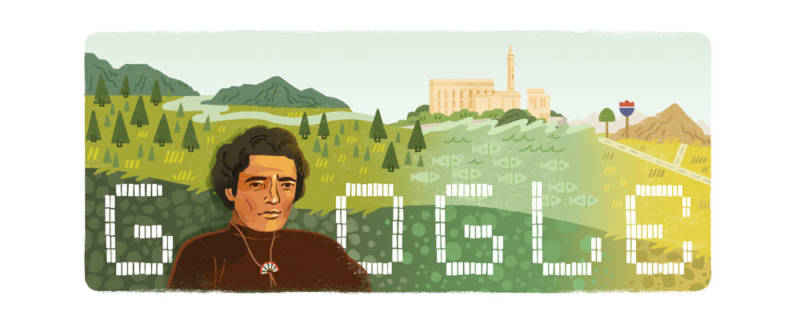
"caption": "The Google doodle in honor of Richard Oakes' birthday.",
"description": "The Google doodle in honor of Richard Oakes' birthday.",
"title": "richard-oakes-75th-birthday-5656537195347968.3-2x",
"credit": null,
"status": "inherit",
"isLoading": false,
"fetchFailed": false
},
"news_11471653": {
"type": "attachments",
"id": "news_11471653",
"meta": {
"index": "attachments_1716263798",
"site": "news",
"id": "11471653",
"found": true
},
"parent": 11471652,
"imgSizes": {
"small": {
"file": "https://ww2.kqed.org/app/uploads/sites/10/2017/05/front-page_wide-489cab3888e71a49261e7387c313cdc47ab956d2-520x292.jpg",
"width": 520,
"mimeType": "image/jpeg",
"height": 292
},
"thumbnail": {
"file": "https://ww2.kqed.org/app/uploads/sites/10/2017/05/front-page_wide-489cab3888e71a49261e7387c313cdc47ab956d2-160x90.jpg",
"width": 160,
"mimeType": "image/jpeg",
"height": 90
},
"fd-sm": {
"file": "https://ww2.kqed.org/app/uploads/sites/10/2017/05/front-page_wide-489cab3888e71a49261e7387c313cdc47ab956d2-960x539.jpg",
"width": 960,
"mimeType": "image/jpeg",
"height": 539
},
"post-thumbnail": {
"file": "https://ww2.kqed.org/app/uploads/sites/10/2017/05/front-page_wide-489cab3888e71a49261e7387c313cdc47ab956d2-672x372.jpg",
"width": 672,
"mimeType": "image/jpeg",
"height": 372
},
"xsmall": {
"file": "https://ww2.kqed.org/app/uploads/sites/10/2017/05/front-page_wide-489cab3888e71a49261e7387c313cdc47ab956d2-375x211.jpg",
"width": 375,
"mimeType": "image/jpeg",
"height": 211
},
"kqedFullSize": {
"file": "https://ww2.kqed.org/app/uploads/sites/10/2017/05/front-page_wide-489cab3888e71a49261e7387c313cdc47ab956d2.jpg",
"width": 981,
"height": 551
},
"guest-author-50": {
"file": "https://ww2.kqed.org/app/uploads/sites/10/2017/05/front-page_wide-489cab3888e71a49261e7387c313cdc47ab956d2-50x50.jpg",
"width": 50,
"mimeType": "image/jpeg",
"height": 50
},
"guest-author-96": {
"file": "https://ww2.kqed.org/app/uploads/sites/10/2017/05/front-page_wide-489cab3888e71a49261e7387c313cdc47ab956d2-96x96.jpg",
"width": 96,
"mimeType": "image/jpeg",
"height": 96
},
"medium": {
"file": "https://ww2.kqed.org/app/uploads/sites/10/2017/05/front-page_wide-489cab3888e71a49261e7387c313cdc47ab956d2-800x449.jpg",
"width": 800,
"mimeType": "image/jpeg",
"height": 449
},
"guest-author-64": {
"file": "https://ww2.kqed.org/app/uploads/sites/10/2017/05/front-page_wide-489cab3888e71a49261e7387c313cdc47ab956d2-64x64.jpg",
"width": 64,
"mimeType": "image/jpeg",
"height": 64
},
"guest-author-32": {
"file": "https://ww2.kqed.org/app/uploads/sites/10/2017/05/front-page_wide-489cab3888e71a49261e7387c313cdc47ab956d2-32x32.jpg",
"width": 32,
"mimeType": "image/jpeg",
"height": 32
},
"detail": {
"file": "https://ww2.kqed.org/app/uploads/sites/10/2017/05/front-page_wide-489cab3888e71a49261e7387c313cdc47ab956d2-150x150.jpg",
"width": 150,
"mimeType": "image/jpeg",
"height": 150
},
"guest-author-128": {
"file": "https://ww2.kqed.org/app/uploads/sites/10/2017/05/front-page_wide-489cab3888e71a49261e7387c313cdc47ab956d2-128x128.jpg",
"width": 128,
"mimeType": "image/jpeg",
"height": 128
},
"xxsmall": {
"file": "https://ww2.kqed.org/app/uploads/sites/10/2017/05/front-page_wide-489cab3888e71a49261e7387c313cdc47ab956d2-240x135.jpg",
"width": 240,
"mimeType": "image/jpeg",
"height": 135
}
},
"publishDate": 1495475093,
"modified": 1495475612,
"caption": "The Gab.ai home page cites the First Amendment of the U.S. Constitution.",
"description": "The Gab.ai home page cites the First Amendment of the U.S. Constitution.",
"title": "The Gab.ai home page cites the First Amendment of the U.S. Constitution.",
"credit": "Gab.ai/Screenshot by NPR",
"status": "inherit",
"isLoading": false,
"fetchFailed": false
},
"news_11463444": {
"type": "attachments",
"id": "news_11463444",
"meta": {
"index": "attachments_1716263798",
"site": "news",
"id": "11463444",
"found": true
},
"parent": 11463440,
"imgSizes": {
"small": {
"file": "https://ww2.kqed.org/app/uploads/sites/10/2017/05/BobM-520x347.jpg",
"width": 520,
"mimeType": "image/jpeg",
"height": 347
},
"twentyfourteen-full-width": {
"file": "https://ww2.kqed.org/app/uploads/sites/10/2017/05/BobM-1038x576.jpg",
"width": 1038,
"mimeType": "image/jpeg",
"height": 576
},
"thumbnail": {
"file": "https://ww2.kqed.org/app/uploads/sites/10/2017/05/BobM-160x107.jpg",
"width": 160,
"mimeType": "image/jpeg",
"height": 107
},
"fd-sm": {
"file": "https://ww2.kqed.org/app/uploads/sites/10/2017/05/BobM-960x640.jpg",
"width": 960,
"mimeType": "image/jpeg",
"height": 640
},
"post-thumbnail": {
"file": "https://ww2.kqed.org/app/uploads/sites/10/2017/05/BobM-672x372.jpg",
"width": 672,
"mimeType": "image/jpeg",
"height": 372
},
"xsmall": {
"file": "https://ww2.kqed.org/app/uploads/sites/10/2017/05/BobM-375x250.jpg",
"width": 375,
"mimeType": "image/jpeg",
"height": 250
},
"kqedFullSize": {
"file": "https://ww2.kqed.org/app/uploads/sites/10/2017/05/BobM.jpg",
"width": 1920,
"height": 1280
},
"large": {
"file": "https://ww2.kqed.org/app/uploads/sites/10/2017/05/BobM-1020x680.jpg",
"width": 1020,
"mimeType": "image/jpeg",
"height": 680
},
"xlarge": {
"file": "https://ww2.kqed.org/app/uploads/sites/10/2017/05/BobM-1180x787.jpg",
"width": 1180,
"mimeType": "image/jpeg",
"height": 787
},
"guest-author-50": {
"file": "https://ww2.kqed.org/app/uploads/sites/10/2017/05/BobM-50x50.jpg",
"width": 50,
"mimeType": "image/jpeg",
"height": 50
},
"guest-author-96": {
"file": "https://ww2.kqed.org/app/uploads/sites/10/2017/05/BobM-96x96.jpg",
"width": 96,
"mimeType": "image/jpeg",
"height": 96
},
"medium": {
"file": "https://ww2.kqed.org/app/uploads/sites/10/2017/05/BobM-800x533.jpg",
"width": 800,
"mimeType": "image/jpeg",
"height": 533
},
"guest-author-64": {
"file": "https://ww2.kqed.org/app/uploads/sites/10/2017/05/BobM-64x64.jpg",
"width": 64,
"mimeType": "image/jpeg",
"height": 64
},
"guest-author-32": {
"file": "https://ww2.kqed.org/app/uploads/sites/10/2017/05/BobM-32x32.jpg",
"width": 32,
"mimeType": "image/jpeg",
"height": 32
},
"fd-lrg": {
"file": "https://ww2.kqed.org/app/uploads/sites/10/2017/05/BobM-1920x1280.jpg",
"width": 1920,
"mimeType": "image/jpeg",
"height": 1280
},
"fd-med": {
"file": "https://ww2.kqed.org/app/uploads/sites/10/2017/05/BobM-1180x787.jpg",
"width": 1180,
"mimeType": "image/jpeg",
"height": 787
},
"full-width": {
"file": "https://ww2.kqed.org/app/uploads/sites/10/2017/05/BobM-1920x1280.jpg",
"width": 1920,
"mimeType": "image/jpeg",
"height": 1280
},
"detail": {
"file": "https://ww2.kqed.org/app/uploads/sites/10/2017/05/BobM-150x150.jpg",
"width": 150,
"mimeType": "image/jpeg",
"height": 150
},
"guest-author-128": {
"file": "https://ww2.kqed.org/app/uploads/sites/10/2017/05/BobM-128x128.jpg",
"width": 128,
"mimeType": "image/jpeg",
"height": 128
},
"xxsmall": {
"file": "https://ww2.kqed.org/app/uploads/sites/10/2017/05/BobM-240x160.jpg",
"width": 240,
"mimeType": "image/jpeg",
"height": 160
}
},
"publishDate": 1495059958,
"modified": 1495060048,
"caption": "Former FBI Director Robert Mueller speaks during a farewell ceremony in his honor on August 1, 2013. Mueller has been named special counsel to investigate Russian interference in the 2016 election.",
"description": "Former FBI Director Robert Mueller speaks during a farewell ceremony in his honor on August 1, 2013. Mueller has been named special counsel to investigate Russian interference in the 2016 election.",
"title": "BobM",
"credit": "SAUL LOEB/AFP/Getty Images",
"status": "inherit",
"isLoading": false,
"fetchFailed": false
},
"news_11462899": {
"type": "attachments",
"id": "news_11462899",
"meta": {
"index": "attachments_1716263798",
"site": "news",
"id": "11462899",
"found": true
},
"parent": 11462898,
"imgSizes": {
"small": {
"file": "https://ww2.kqed.org/app/uploads/sites/10/2017/05/gettyimages-683864604_wide-47db3f2e4b668e445e205c3b9048856946925488-520x292.jpg",
"width": 520,
"mimeType": "image/jpeg",
"height": 292
},
"twentyfourteen-full-width": {
"file": "https://ww2.kqed.org/app/uploads/sites/10/2017/05/gettyimages-683864604_wide-47db3f2e4b668e445e205c3b9048856946925488-1038x576.jpg",
"width": 1038,
"mimeType": "image/jpeg",
"height": 576
},
"thumbnail": {
"file": "https://ww2.kqed.org/app/uploads/sites/10/2017/05/gettyimages-683864604_wide-47db3f2e4b668e445e205c3b9048856946925488-160x90.jpg",
"width": 160,
"mimeType": "image/jpeg",
"height": 90
},
"fd-sm": {
"file": "https://ww2.kqed.org/app/uploads/sites/10/2017/05/gettyimages-683864604_wide-47db3f2e4b668e445e205c3b9048856946925488-960x540.jpg",
"width": 960,
"mimeType": "image/jpeg",
"height": 540
},
"post-thumbnail": {
"file": "https://ww2.kqed.org/app/uploads/sites/10/2017/05/gettyimages-683864604_wide-47db3f2e4b668e445e205c3b9048856946925488-672x372.jpg",
"width": 672,
"mimeType": "image/jpeg",
"height": 372
},
"xsmall": {
"file": "https://ww2.kqed.org/app/uploads/sites/10/2017/05/gettyimages-683864604_wide-47db3f2e4b668e445e205c3b9048856946925488-375x211.jpg",
"width": 375,
"mimeType": "image/jpeg",
"height": 211
},
"kqedFullSize": {
"file": "https://ww2.kqed.org/app/uploads/sites/10/2017/05/gettyimages-683864604_wide-47db3f2e4b668e445e205c3b9048856946925488-e1495044807636.jpg",
"width": 1920,
"height": 1080
},
"large": {
"file": "https://ww2.kqed.org/app/uploads/sites/10/2017/05/gettyimages-683864604_wide-47db3f2e4b668e445e205c3b9048856946925488-1020x574.jpg",
"width": 1020,
"mimeType": "image/jpeg",
"height": 574
},
"xlarge": {
"file": "https://ww2.kqed.org/app/uploads/sites/10/2017/05/gettyimages-683864604_wide-47db3f2e4b668e445e205c3b9048856946925488-1180x664.jpg",
"width": 1180,
"mimeType": "image/jpeg",
"height": 664
},
"guest-author-50": {
"file": "https://ww2.kqed.org/app/uploads/sites/10/2017/05/gettyimages-683864604_wide-47db3f2e4b668e445e205c3b9048856946925488-50x50.jpg",
"width": 50,
"mimeType": "image/jpeg",
"height": 50
},
"guest-author-96": {
"file": "https://ww2.kqed.org/app/uploads/sites/10/2017/05/gettyimages-683864604_wide-47db3f2e4b668e445e205c3b9048856946925488-96x96.jpg",
"width": 96,
"mimeType": "image/jpeg",
"height": 96
},
"medium": {
"file": "https://ww2.kqed.org/app/uploads/sites/10/2017/05/gettyimages-683864604_wide-47db3f2e4b668e445e205c3b9048856946925488-800x450.jpg",
"width": 800,
"mimeType": "image/jpeg",
"height": 450
},
"guest-author-64": {
"file": "https://ww2.kqed.org/app/uploads/sites/10/2017/05/gettyimages-683864604_wide-47db3f2e4b668e445e205c3b9048856946925488-64x64.jpg",
"width": 64,
"mimeType": "image/jpeg",
"height": 64
},
"guest-author-32": {
"file": "https://ww2.kqed.org/app/uploads/sites/10/2017/05/gettyimages-683864604_wide-47db3f2e4b668e445e205c3b9048856946925488-32x32.jpg",
"width": 32,
"mimeType": "image/jpeg",
"height": 32
},
"fd-lrg": {
"file": "https://ww2.kqed.org/app/uploads/sites/10/2017/05/gettyimages-683864604_wide-47db3f2e4b668e445e205c3b9048856946925488-1920x1080.jpg",
"width": 1920,
"mimeType": "image/jpeg",
"height": 1080
},
"fd-med": {
"file": "https://ww2.kqed.org/app/uploads/sites/10/2017/05/gettyimages-683864604_wide-47db3f2e4b668e445e205c3b9048856946925488-1180x664.jpg",
"width": 1180,
"mimeType": "image/jpeg",
"height": 664
},
"full-width": {
"file": "https://ww2.kqed.org/app/uploads/sites/10/2017/05/gettyimages-683864604_wide-47db3f2e4b668e445e205c3b9048856946925488-1920x1080.jpg",
"width": 1920,
"mimeType": "image/jpeg",
"height": 1080
},
"detail": {
"file": "https://ww2.kqed.org/app/uploads/sites/10/2017/05/gettyimages-683864604_wide-47db3f2e4b668e445e205c3b9048856946925488-150x150.jpg",
"width": 150,
"mimeType": "image/jpeg",
"height": 150
},
"guest-author-128": {
"file": "https://ww2.kqed.org/app/uploads/sites/10/2017/05/gettyimages-683864604_wide-47db3f2e4b668e445e205c3b9048856946925488-128x128.jpg",
"width": 128,
"mimeType": "image/jpeg",
"height": 128
},
"xxsmall": {
"file": "https://ww2.kqed.org/app/uploads/sites/10/2017/05/gettyimages-683864604_wide-47db3f2e4b668e445e205c3b9048856946925488-240x135.jpg",
"width": 240,
"mimeType": "image/jpeg",
"height": 135
}
},
"publishDate": 1495037276,
"modified": 1495037602,
"caption": "President Trump is facing the biggest pressure of his young presidency to refute an allegation that he pressured the FBI director to end an investigation.",
"description": "President Trump is facing the biggest pressure of his young presidency to refute an allegation that he pressured the FBI director to end an investigation.",
"title": "President Trump is facing the biggest pressure of his young presidency to refute an allegation that he pressured the FBI director to end an investigation.",
"credit": "Saul Loeb/AFP/Getty Images",
"status": "inherit",
"isLoading": false,
"fetchFailed": false
},
"stateofhealth_330320": {
"type": "attachments",
"id": "stateofhealth_330320",
"meta": {
"index": "attachments_1716263798",
"site": "stateofhealth",
"id": "330320",
"found": true
},
"parent": 330316,
"imgSizes": {
"small": {
"file": "https://ww2.kqed.org/app/uploads/sites/27/2017/05/GettyImages-McConnell-and-Cornyn-520x346.jpg",
"width": 520,
"mimeType": "image/jpeg",
"height": 346
},
"twentyfourteen-full-width": {
"file": "https://ww2.kqed.org/app/uploads/sites/27/2017/05/GettyImages-McConnell-and-Cornyn-1038x576.jpg",
"width": 1038,
"mimeType": "image/jpeg",
"height": 576
},
"thumbnail": {
"file": "https://ww2.kqed.org/app/uploads/sites/27/2017/05/GettyImages-McConnell-and-Cornyn-160x107.jpg",
"width": 160,
"mimeType": "image/jpeg",
"height": 107
},
"fd-sm": {
"file": "https://ww2.kqed.org/app/uploads/sites/27/2017/05/GettyImages-McConnell-and-Cornyn-960x640.jpg",
"width": 960,
"mimeType": "image/jpeg",
"height": 640
},
"post-thumbnail": {
"file": "https://ww2.kqed.org/app/uploads/sites/27/2017/05/GettyImages-McConnell-and-Cornyn-672x372.jpg",
"width": 672,
"mimeType": "image/jpeg",
"height": 372
},
"xsmall": {
"file": "https://ww2.kqed.org/app/uploads/sites/27/2017/05/GettyImages-McConnell-and-Cornyn-375x250.jpg",
"width": 375,
"mimeType": "image/jpeg",
"height": 250
},
"kqedFullSize": {
"file": "https://ww2.kqed.org/app/uploads/sites/27/2017/05/GettyImages-McConnell-and-Cornyn.jpg",
"width": 3000,
"height": 1999
},
"large": {
"file": "https://ww2.kqed.org/app/uploads/sites/27/2017/05/GettyImages-McConnell-and-Cornyn-1020x680.jpg",
"width": 1020,
"mimeType": "image/jpeg",
"height": 680
},
"xlarge": {
"file": "https://ww2.kqed.org/app/uploads/sites/27/2017/05/GettyImages-McConnell-and-Cornyn-1180x786.jpg",
"width": 1180,
"mimeType": "image/jpeg",
"height": 786
},
"guest-author-50": {
"file": "https://ww2.kqed.org/app/uploads/sites/27/2017/05/GettyImages-McConnell-and-Cornyn-50x50.jpg",
"width": 50,
"mimeType": "image/jpeg",
"height": 50
},
"guest-author-96": {
"file": "https://ww2.kqed.org/app/uploads/sites/27/2017/05/GettyImages-McConnell-and-Cornyn-96x96.jpg",
"width": 96,
"mimeType": "image/jpeg",
"height": 96
},
"medium": {
"file": "https://ww2.kqed.org/app/uploads/sites/27/2017/05/GettyImages-McConnell-and-Cornyn-800x533.jpg",
"width": 800,
"mimeType": "image/jpeg",
"height": 533
},
"guest-author-64": {
"file": "https://ww2.kqed.org/app/uploads/sites/27/2017/05/GettyImages-McConnell-and-Cornyn-64x64.jpg",
"width": 64,
"mimeType": "image/jpeg",
"height": 64
},
"guest-author-32": {
"file": "https://ww2.kqed.org/app/uploads/sites/27/2017/05/GettyImages-McConnell-and-Cornyn-32x32.jpg",
"width": 32,
"mimeType": "image/jpeg",
"height": 32
},
"fd-lrg": {
"file": "https://ww2.kqed.org/app/uploads/sites/27/2017/05/GettyImages-McConnell-and-Cornyn-1920x1279.jpg",
"width": 1920,
"mimeType": "image/jpeg",
"height": 1279
},
"fd-med": {
"file": "https://ww2.kqed.org/app/uploads/sites/27/2017/05/GettyImages-McConnell-and-Cornyn-1180x786.jpg",
"width": 1180,
"mimeType": "image/jpeg",
"height": 786
},
"full-width": {
"file": "https://ww2.kqed.org/app/uploads/sites/27/2017/05/GettyImages-McConnell-and-Cornyn-1920x1279.jpg",
"width": 1920,
"mimeType": "image/jpeg",
"height": 1279
},
"detail": {
"file": "https://ww2.kqed.org/app/uploads/sites/27/2017/05/GettyImages-McConnell-and-Cornyn-150x150.jpg",
"width": 150,
"mimeType": "image/jpeg",
"height": 150
},
"medium_large": {
"file": "https://ww2.kqed.org/app/uploads/sites/27/2017/05/GettyImages-McConnell-and-Cornyn-768x512.jpg",
"width": 768,
"mimeType": "image/jpeg",
"height": 512
},
"guest-author-128": {
"file": "https://ww2.kqed.org/app/uploads/sites/27/2017/05/GettyImages-McConnell-and-Cornyn-128x128.jpg",
"width": 128,
"mimeType": "image/jpeg",
"height": 128
},
"xxsmall": {
"file": "https://ww2.kqed.org/app/uploads/sites/27/2017/05/GettyImages-McConnell-and-Cornyn-240x160.jpg",
"width": 240,
"mimeType": "image/jpeg",
"height": 160
}
},
"publishDate": 1494881697,
"modified": 1494881864,
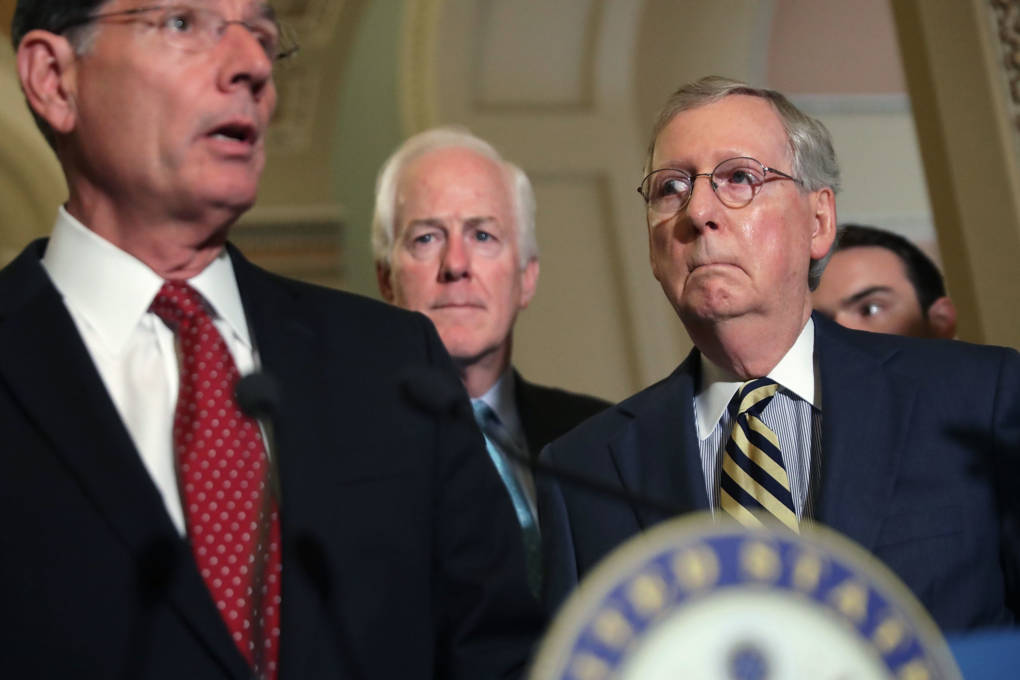
"caption": "Three of the 13 senators in the health care working group. From left to right: Sen. John Barrosso (R-WY), Senate Majority Whip John Cornyn (R-TX)., and Senate Majority Leader Mitch McConnell (R-KY). ",
"description": null,
"title": "Senate Leaders Speak To The Media After Their Weekly Policy Luncheons",
"credit": "Chip Somodevilla/Getty Images",
"status": "inherit",
"isLoading": false,
"fetchFailed": false
},
"news_11459162": {
"type": "attachments",
"id": "news_11459162",
"meta": {
"index": "attachments_1716263798",
"site": "news",
"id": "11459162",
"found": true
},
"parent": 11459089,
"imgSizes": {
"small": {
"file": "https://ww2.kqed.org/app/uploads/sites/10/2017/05/GettyImages-680132324-520x346.jpg",
"width": 520,
"mimeType": "image/jpeg",
"height": 346
},
"twentyfourteen-full-width": {
"file": "https://ww2.kqed.org/app/uploads/sites/10/2017/05/GettyImages-680132324-1038x576.jpg",
"width": 1038,
"mimeType": "image/jpeg",
"height": 576
},
"thumbnail": {
"file": "https://ww2.kqed.org/app/uploads/sites/10/2017/05/GettyImages-680132324-160x106.jpg",
"width": 160,
"mimeType": "image/jpeg",
"height": 106
},
"fd-sm": {
"file": "https://ww2.kqed.org/app/uploads/sites/10/2017/05/GettyImages-680132324-960x639.jpg",
"width": 960,
"mimeType": "image/jpeg",
"height": 639
},
"post-thumbnail": {
"file": "https://ww2.kqed.org/app/uploads/sites/10/2017/05/GettyImages-680132324-672x372.jpg",
"width": 672,
"mimeType": "image/jpeg",
"height": 372
},
"xsmall": {
"file": "https://ww2.kqed.org/app/uploads/sites/10/2017/05/GettyImages-680132324-375x250.jpg",
"width": 375,
"mimeType": "image/jpeg",
"height": 250
},
"kqedFullSize": {
"file": "https://ww2.kqed.org/app/uploads/sites/10/2017/05/GettyImages-680132324-e1494867744494.jpg",
"width": 1920,
"height": 1278
},
"large": {
"file": "https://ww2.kqed.org/app/uploads/sites/10/2017/05/GettyImages-680132324-1020x679.jpg",
"width": 1020,
"mimeType": "image/jpeg",
"height": 679
},
"xlarge": {
"file": "https://ww2.kqed.org/app/uploads/sites/10/2017/05/GettyImages-680132324-1180x785.jpg",
"width": 1180,
"mimeType": "image/jpeg",
"height": 785
},
"guest-author-50": {
"file": "https://ww2.kqed.org/app/uploads/sites/10/2017/05/GettyImages-680132324-50x50.jpg",
"width": 50,
"mimeType": "image/jpeg",
"height": 50
},
"guest-author-96": {
"file": "https://ww2.kqed.org/app/uploads/sites/10/2017/05/GettyImages-680132324-96x96.jpg",
"width": 96,
"mimeType": "image/jpeg",
"height": 96
},
"medium": {
"file": "https://ww2.kqed.org/app/uploads/sites/10/2017/05/GettyImages-680132324-800x532.jpg",
"width": 800,
"mimeType": "image/jpeg",
"height": 532
},
"guest-author-64": {
"file": "https://ww2.kqed.org/app/uploads/sites/10/2017/05/GettyImages-680132324-64x64.jpg",
"width": 64,
"mimeType": "image/jpeg",
"height": 64
},
"guest-author-32": {
"file": "https://ww2.kqed.org/app/uploads/sites/10/2017/05/GettyImages-680132324-32x32.jpg",
"width": 32,
"mimeType": "image/jpeg",
"height": 32
},
"fd-lrg": {
"file": "https://ww2.kqed.org/app/uploads/sites/10/2017/05/GettyImages-680132324-1920x1278.jpg",
"width": 1920,
"mimeType": "image/jpeg",
"height": 1278
},
"fd-med": {
"file": "https://ww2.kqed.org/app/uploads/sites/10/2017/05/GettyImages-680132324-1180x785.jpg",
"width": 1180,
"mimeType": "image/jpeg",
"height": 785
},
"full-width": {
"file": "https://ww2.kqed.org/app/uploads/sites/10/2017/05/GettyImages-680132324-1920x1278.jpg",
"width": 1920,
"mimeType": "image/jpeg",
"height": 1278
},
"detail": {
"file": "https://ww2.kqed.org/app/uploads/sites/10/2017/05/GettyImages-680132324-150x150.jpg",
"width": 150,
"mimeType": "image/jpeg",
"height": 150
},
"guest-author-128": {
"file": "https://ww2.kqed.org/app/uploads/sites/10/2017/05/GettyImages-680132324-128x128.jpg",
"width": 128,
"mimeType": "image/jpeg",
"height": 128
},
"xxsmall": {
"file": "https://ww2.kqed.org/app/uploads/sites/10/2017/05/GettyImages-680132324-240x160.jpg",
"width": 240,
"mimeType": "image/jpeg",
"height": 160
}
},
"publishDate": 1494867719,
"modified": 1494885894,
"caption": "Maxine Waters (L) and actor Tracee Ellis Ross speak onstage during the 2017 MTV Movie And TV Awards at the Shrine Auditorium on May 7, 2017, in Los Angeles. ",
"description": null,
"title": "2017 MTV Movie And TV Awards - Show",
"credit": "Kevin Winter/Getty Images",
"status": "inherit",
"isLoading": false,
"fetchFailed": false
},
"news_11454863": {
"type": "attachments",
"id": "news_11454863",
"meta": {
"index": "attachments_1716263798",
"site": "news",
"id": "11454863",
"found": true
},
"parent": 11454858,
"imgSizes": {
"small": {
"file": "https://ww2.kqed.org/app/uploads/sites/10/2017/05/TeslaRoof-520x317.jpg",
"width": 520,
"mimeType": "image/jpeg",
"height": 317
},
"twentyfourteen-full-width": {
"file": "https://ww2.kqed.org/app/uploads/sites/10/2017/05/TeslaRoof-1038x576.jpg",
"width": 1038,
"mimeType": "image/jpeg",
"height": 576
},
"thumbnail": {
"file": "https://ww2.kqed.org/app/uploads/sites/10/2017/05/TeslaRoof-160x98.jpg",
"width": 160,
"mimeType": "image/jpeg",
"height": 98
},
"fd-sm": {
"file": "https://ww2.kqed.org/app/uploads/sites/10/2017/05/TeslaRoof-960x586.jpg",
"width": 960,
"mimeType": "image/jpeg",
"height": 586
},
"post-thumbnail": {
"file": "https://ww2.kqed.org/app/uploads/sites/10/2017/05/TeslaRoof-672x372.jpg",
"width": 672,
"mimeType": "image/jpeg",
"height": 372
},
"xsmall": {
"file": "https://ww2.kqed.org/app/uploads/sites/10/2017/05/TeslaRoof-375x229.jpg",
"width": 375,
"mimeType": "image/jpeg",
"height": 229
},
"kqedFullSize": {
"file": "https://ww2.kqed.org/app/uploads/sites/10/2017/05/TeslaRoof.jpg",
"width": 1920,
"height": 1171
},
"large": {
"file": "https://ww2.kqed.org/app/uploads/sites/10/2017/05/TeslaRoof-1020x622.jpg",
"width": 1020,
"mimeType": "image/jpeg",
"height": 622
},
"xlarge": {
"file": "https://ww2.kqed.org/app/uploads/sites/10/2017/05/TeslaRoof-1180x720.jpg",
"width": 1180,
"mimeType": "image/jpeg",
"height": 720
},
"guest-author-50": {
"file": "https://ww2.kqed.org/app/uploads/sites/10/2017/05/TeslaRoof-50x50.jpg",
"width": 50,
"mimeType": "image/jpeg",
"height": 50
},
"guest-author-96": {
"file": "https://ww2.kqed.org/app/uploads/sites/10/2017/05/TeslaRoof-96x96.jpg",
"width": 96,
"mimeType": "image/jpeg",
"height": 96
},
"medium": {
"file": "https://ww2.kqed.org/app/uploads/sites/10/2017/05/TeslaRoof-800x488.jpg",
"width": 800,
"mimeType": "image/jpeg",
"height": 488
},
"guest-author-64": {
"file": "https://ww2.kqed.org/app/uploads/sites/10/2017/05/TeslaRoof-64x64.jpg",
"width": 64,
"mimeType": "image/jpeg",
"height": 64
},
"guest-author-32": {
"file": "https://ww2.kqed.org/app/uploads/sites/10/2017/05/TeslaRoof-32x32.jpg",
"width": 32,
"mimeType": "image/jpeg",
"height": 32
},
"fd-lrg": {
"file": "https://ww2.kqed.org/app/uploads/sites/10/2017/05/TeslaRoof-1920x1171.jpg",
"width": 1920,
"mimeType": "image/jpeg",
"height": 1171
},
"fd-med": {
"file": "https://ww2.kqed.org/app/uploads/sites/10/2017/05/TeslaRoof-1180x720.jpg",
"width": 1180,
"mimeType": "image/jpeg",
"height": 720
},
"full-width": {
"file": "https://ww2.kqed.org/app/uploads/sites/10/2017/05/TeslaRoof-1920x1171.jpg",
"width": 1920,
"mimeType": "image/jpeg",
"height": 1171
},
"detail": {
"file": "https://ww2.kqed.org/app/uploads/sites/10/2017/05/TeslaRoof-150x150.jpg",
"width": 150,
"mimeType": "image/jpeg",
"height": 150
},
"guest-author-128": {
"file": "https://ww2.kqed.org/app/uploads/sites/10/2017/05/TeslaRoof-128x128.jpg",
"width": 128,
"mimeType": "image/jpeg",
"height": 128
},
"xxsmall": {
"file": "https://ww2.kqed.org/app/uploads/sites/10/2017/05/TeslaRoof-240x146.jpg",
"width": 240,
"mimeType": "image/jpeg",
"height": 146
}
},
"publishDate": 1494642912,
"modified": 1494642947,
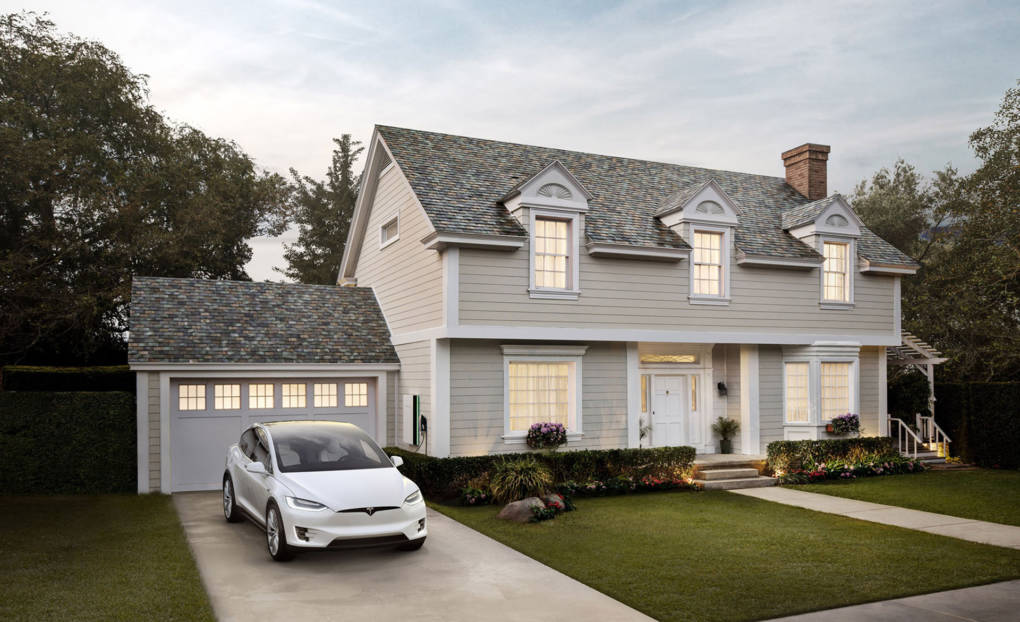
"caption": "Tesla's new glass-covered solar roof tiles are designed to look like a traditional roof, doing away with the need for separate solar panels.",
"description": "Tesla's new glass-covered solar roof tiles are designed to look like a traditional roof, doing away with the need for separate solar panels.",
"title": "TeslaRoof",
"credit": "Tesla",
"status": "inherit",
"isLoading": false,
"fetchFailed": false
},
"news_11448827": {
"type": "attachments",
"id": "news_11448827",
"meta": {
"index": "attachments_1716263798",
"site": "news",
"id": "11448827",
"found": true
},
"parent": 11448826,
"imgSizes": {
"small": {
"file": "https://ww2.kqed.org/app/uploads/sites/10/2017/05/gettyimages-677798454_custom-2c7cf9a62c74e14a0a2bb239835237443c75413d-520x345.jpg",
"width": 520,
"mimeType": "image/jpeg",
"height": 345
},
"twentyfourteen-full-width": {
"file": "https://ww2.kqed.org/app/uploads/sites/10/2017/05/gettyimages-677798454_custom-2c7cf9a62c74e14a0a2bb239835237443c75413d-1038x576.jpg",
"width": 1038,
"mimeType": "image/jpeg",
"height": 576
},
"thumbnail": {
"file": "https://ww2.kqed.org/app/uploads/sites/10/2017/05/gettyimages-677798454_custom-2c7cf9a62c74e14a0a2bb239835237443c75413d-160x106.jpg",
"width": 160,
"mimeType": "image/jpeg",
"height": 106
},
"fd-sm": {
"file": "https://ww2.kqed.org/app/uploads/sites/10/2017/05/gettyimages-677798454_custom-2c7cf9a62c74e14a0a2bb239835237443c75413d-960x638.jpg",
"width": 960,
"mimeType": "image/jpeg",
"height": 638
},
"post-thumbnail": {
"file": "https://ww2.kqed.org/app/uploads/sites/10/2017/05/gettyimages-677798454_custom-2c7cf9a62c74e14a0a2bb239835237443c75413d-672x372.jpg",
"width": 672,
"mimeType": "image/jpeg",
"height": 372
},
"xsmall": {
"file": "https://ww2.kqed.org/app/uploads/sites/10/2017/05/gettyimages-677798454_custom-2c7cf9a62c74e14a0a2bb239835237443c75413d-375x249.jpg",
"width": 375,
"mimeType": "image/jpeg",
"height": 249
},
"kqedFullSize": {
"file": "https://ww2.kqed.org/app/uploads/sites/10/2017/05/gettyimages-677798454_custom-2c7cf9a62c74e14a0a2bb239835237443c75413d-e1494367629301.jpg",
"width": 1920,
"height": 1275
},
"large": {
"file": "https://ww2.kqed.org/app/uploads/sites/10/2017/05/gettyimages-677798454_custom-2c7cf9a62c74e14a0a2bb239835237443c75413d-1020x677.jpg",
"width": 1020,
"mimeType": "image/jpeg",
"height": 677
},
"xlarge": {
"file": "https://ww2.kqed.org/app/uploads/sites/10/2017/05/gettyimages-677798454_custom-2c7cf9a62c74e14a0a2bb239835237443c75413d-1180x784.jpg",
"width": 1180,
"mimeType": "image/jpeg",
"height": 784
},
"guest-author-50": {
"file": "https://ww2.kqed.org/app/uploads/sites/10/2017/05/gettyimages-677798454_custom-2c7cf9a62c74e14a0a2bb239835237443c75413d-50x50.jpg",
"width": 50,
"mimeType": "image/jpeg",
"height": 50
},
"guest-author-96": {
"file": "https://ww2.kqed.org/app/uploads/sites/10/2017/05/gettyimages-677798454_custom-2c7cf9a62c74e14a0a2bb239835237443c75413d-96x96.jpg",
"width": 96,
"mimeType": "image/jpeg",
"height": 96
},
"medium": {
"file": "https://ww2.kqed.org/app/uploads/sites/10/2017/05/gettyimages-677798454_custom-2c7cf9a62c74e14a0a2bb239835237443c75413d-800x531.jpg",
"width": 800,
"mimeType": "image/jpeg",
"height": 531
},
"guest-author-64": {
"file": "https://ww2.kqed.org/app/uploads/sites/10/2017/05/gettyimages-677798454_custom-2c7cf9a62c74e14a0a2bb239835237443c75413d-64x64.jpg",
"width": 64,
"mimeType": "image/jpeg",
"height": 64
},
"guest-author-32": {
"file": "https://ww2.kqed.org/app/uploads/sites/10/2017/05/gettyimages-677798454_custom-2c7cf9a62c74e14a0a2bb239835237443c75413d-32x32.jpg",
"width": 32,
"mimeType": "image/jpeg",
"height": 32
},
"fd-lrg": {
"file": "https://ww2.kqed.org/app/uploads/sites/10/2017/05/gettyimages-677798454_custom-2c7cf9a62c74e14a0a2bb239835237443c75413d-1920x1275.jpg",
"width": 1920,
"mimeType": "image/jpeg",
"height": 1275
},
"fd-med": {
"file": "https://ww2.kqed.org/app/uploads/sites/10/2017/05/gettyimages-677798454_custom-2c7cf9a62c74e14a0a2bb239835237443c75413d-1180x784.jpg",
"width": 1180,
"mimeType": "image/jpeg",
"height": 784
},
"full-width": {
"file": "https://ww2.kqed.org/app/uploads/sites/10/2017/05/gettyimages-677798454_custom-2c7cf9a62c74e14a0a2bb239835237443c75413d-1920x1275.jpg",
"width": 1920,
"mimeType": "image/jpeg",
"height": 1275
},
"detail": {
"file": "https://ww2.kqed.org/app/uploads/sites/10/2017/05/gettyimages-677798454_custom-2c7cf9a62c74e14a0a2bb239835237443c75413d-150x150.jpg",
"width": 150,
"mimeType": "image/jpeg",
"height": 150
},
"guest-author-128": {
"file": "https://ww2.kqed.org/app/uploads/sites/10/2017/05/gettyimages-677798454_custom-2c7cf9a62c74e14a0a2bb239835237443c75413d-128x128.jpg",
"width": 128,
"mimeType": "image/jpeg",
"height": 128
},
"xxsmall": {
"file": "https://ww2.kqed.org/app/uploads/sites/10/2017/05/gettyimages-677798454_custom-2c7cf9a62c74e14a0a2bb239835237443c75413d-240x159.jpg",
"width": 240,
"mimeType": "image/jpeg",
"height": 159
}
},
"publishDate": 1494367489,
"modified": 1494369145,
"caption": "Director of the Federal Bureau of Investigation, James Comey, testifies in front of the Senate Judiciary Committee during an oversight hearing on the FBI on May 3. Comey was terminated from his position on Tuesday, May 9, according to a statement from the White House press secretary.",
"description": "Director of the Federal Bureau of Investigation, James Comey testifies in front of the Senate Judiciary Committee during an oversight hearing on the FBI on May 3. Comey was terminated from his position on Tuesday according to a statement from the White House press secretary.",
"title": "Director of the Federal Bureau of Investigation, James Comey testifies in front of the Senate Judiciary Committee during an oversight hearing on the FBI on May 3. Comey was terminated from his position on Tuesday according to a statement from the White House press secretary.",
"credit": "Eric Thayer/Getty Images",
"status": "inherit",
"isLoading": false,
"fetchFailed": false
},
"news_11448453": {
"type": "attachments",
"id": "news_11448453",
"meta": {
"index": "attachments_1716263798",
"site": "news",
"id": "11448453",
"found": true
},
"parent": 11448442,
"imgSizes": {
"small": {
"file": "https://ww2.kqed.org/app/uploads/sites/10/2017/05/RobBonta-800x533-520x346.jpg",
"width": 520,
"mimeType": "image/jpeg",
"height": 346
},
"thumbnail": {
"file": "https://ww2.kqed.org/app/uploads/sites/10/2017/05/RobBonta-800x533-160x107.jpg",
"width": 160,
"mimeType": "image/jpeg",
"height": 107
},
"post-thumbnail": {
"file": "https://ww2.kqed.org/app/uploads/sites/10/2017/05/RobBonta-800x533-672x372.jpg",
"width": 672,
"mimeType": "image/jpeg",
"height": 372
},
"xsmall": {
"file": "https://ww2.kqed.org/app/uploads/sites/10/2017/05/RobBonta-800x533-375x250.jpg",
"width": 375,
"mimeType": "image/jpeg",
"height": 250
},
"kqedFullSize": {
"file": "https://ww2.kqed.org/app/uploads/sites/10/2017/05/RobBonta-800x533.jpg",
"width": 800,
"height": 533
},
"guest-author-50": {
"file": "https://ww2.kqed.org/app/uploads/sites/10/2017/05/RobBonta-800x533-50x50.jpg",
"width": 50,
"mimeType": "image/jpeg",
"height": 50
},
"guest-author-96": {
"file": "https://ww2.kqed.org/app/uploads/sites/10/2017/05/RobBonta-800x533-96x96.jpg",
"width": 96,
"mimeType": "image/jpeg",
"height": 96
},
"medium": {
"file": "https://ww2.kqed.org/app/uploads/sites/10/2017/05/RobBonta-800x533-800x533.jpg",
"width": 800,
"mimeType": "image/jpeg",
"height": 533
},
"guest-author-64": {
"file": "https://ww2.kqed.org/app/uploads/sites/10/2017/05/RobBonta-800x533-64x64.jpg",
"width": 64,
"mimeType": "image/jpeg",
"height": 64
},
"guest-author-32": {
"file": "https://ww2.kqed.org/app/uploads/sites/10/2017/05/RobBonta-800x533-32x32.jpg",
"width": 32,
"mimeType": "image/jpeg",
"height": 32
},
"detail": {
"file": "https://ww2.kqed.org/app/uploads/sites/10/2017/05/RobBonta-800x533-150x150.jpg",
"width": 150,
"mimeType": "image/jpeg",
"height": 150
},
"guest-author-128": {
"file": "https://ww2.kqed.org/app/uploads/sites/10/2017/05/RobBonta-800x533-128x128.jpg",
"width": 128,
"mimeType": "image/jpeg",
"height": 128
},
"xxsmall": {
"file": "https://ww2.kqed.org/app/uploads/sites/10/2017/05/RobBonta-800x533-240x160.jpg",
"width": 240,
"mimeType": "image/jpeg",
"height": 160
}
},
"publishDate": 1494354222,
"modified": 1494355027,
"caption": "Assemblyman Rob Bonta, D-Oakland, sponsored the bill.",
"description": null,
"title": "RobBonta-800x533",
"credit": "CALMatters",
"status": "inherit",
"isLoading": false,
"fetchFailed": false
},
"news_11440366": {
"type": "attachments",
"id": "news_11440366",
"meta": {
"index": "attachments_1716263798",
"site": "news",
"id": "11440366",
"found": true
},
"parent": 11440106,
"imgSizes": {
"small": {
"file": "https://ww2.kqed.org/app/uploads/sites/10/2017/05/RyanWalks2-520x355.jpg",
"width": 520,
"mimeType": "image/jpeg",
"height": 355
},
"twentyfourteen-full-width": {
"file": "https://ww2.kqed.org/app/uploads/sites/10/2017/05/RyanWalks2-1038x576.jpg",
"width": 1038,
"mimeType": "image/jpeg",
"height": 576
},
"thumbnail": {
"file": "https://ww2.kqed.org/app/uploads/sites/10/2017/05/RyanWalks2-160x109.jpg",
"width": 160,
"mimeType": "image/jpeg",
"height": 109
},
"fd-sm": {
"file": "https://ww2.kqed.org/app/uploads/sites/10/2017/05/RyanWalks2-960x655.jpg",
"width": 960,
"mimeType": "image/jpeg",
"height": 655
},
"post-thumbnail": {
"file": "https://ww2.kqed.org/app/uploads/sites/10/2017/05/RyanWalks2-672x372.jpg",
"width": 672,
"mimeType": "image/jpeg",
"height": 372
},
"xsmall": {
"file": "https://ww2.kqed.org/app/uploads/sites/10/2017/05/RyanWalks2-375x256.jpg",
"width": 375,
"mimeType": "image/jpeg",
"height": 256
},
"kqedFullSize": {
"file": "https://ww2.kqed.org/app/uploads/sites/10/2017/05/RyanWalks2.jpg",
"width": 1920,
"height": 1310
},
"large": {
"file": "https://ww2.kqed.org/app/uploads/sites/10/2017/05/RyanWalks2-1020x696.jpg",
"width": 1020,
"mimeType": "image/jpeg",
"height": 696
},
"xlarge": {
"file": "https://ww2.kqed.org/app/uploads/sites/10/2017/05/RyanWalks2-1180x805.jpg",
"width": 1180,
"mimeType": "image/jpeg",
"height": 805
},
"guest-author-50": {
"file": "https://ww2.kqed.org/app/uploads/sites/10/2017/05/RyanWalks2-50x50.jpg",
"width": 50,
"mimeType": "image/jpeg",
"height": 50
},
"guest-author-96": {
"file": "https://ww2.kqed.org/app/uploads/sites/10/2017/05/RyanWalks2-96x96.jpg",
"width": 96,
"mimeType": "image/jpeg",
"height": 96
},
"medium": {
"file": "https://ww2.kqed.org/app/uploads/sites/10/2017/05/RyanWalks2-800x546.jpg",
"width": 800,
"mimeType": "image/jpeg",
"height": 546
},
"guest-author-64": {
"file": "https://ww2.kqed.org/app/uploads/sites/10/2017/05/RyanWalks2-64x64.jpg",
"width": 64,
"mimeType": "image/jpeg",
"height": 64
},
"guest-author-32": {
"file": "https://ww2.kqed.org/app/uploads/sites/10/2017/05/RyanWalks2-32x32.jpg",
"width": 32,
"mimeType": "image/jpeg",
"height": 32
},
"fd-lrg": {
"file": "https://ww2.kqed.org/app/uploads/sites/10/2017/05/RyanWalks2-1920x1310.jpg",
"width": 1920,
"mimeType": "image/jpeg",
"height": 1310
},
"fd-med": {
"file": "https://ww2.kqed.org/app/uploads/sites/10/2017/05/RyanWalks2-1180x805.jpg",
"width": 1180,
"mimeType": "image/jpeg",
"height": 805
},
"full-width": {
"file": "https://ww2.kqed.org/app/uploads/sites/10/2017/05/RyanWalks2-1920x1310.jpg",
"width": 1920,
"mimeType": "image/jpeg",
"height": 1310
},
"detail": {
"file": "https://ww2.kqed.org/app/uploads/sites/10/2017/05/RyanWalks2-150x150.jpg",
"width": 150,
"mimeType": "image/jpeg",
"height": 150
},
"guest-author-128": {
"file": "https://ww2.kqed.org/app/uploads/sites/10/2017/05/RyanWalks2-128x128.jpg",
"width": 128,
"mimeType": "image/jpeg",
"height": 128
},
"xxsmall": {
"file": "https://ww2.kqed.org/app/uploads/sites/10/2017/05/RyanWalks2-240x164.jpg",
"width": 240,
"mimeType": "image/jpeg",
"height": 164
}
},
"publishDate": 1493924366,
"modified": 1493924414,
"caption": "House Speaker Paul Ryan walks to the House chamber ahead of a vote on Capitol Hill May 3, 2017.",
"description": "House Speaker Paul Ryan walks to the House chamber ahead of a vote on Capitol Hill May 3, 2017.",
"title": "RyanWalks2",
"credit": "Eric Thayer/Getty Images",
"status": "inherit",
"isLoading": false,
"fetchFailed": false
}
},
"audioPlayerReducer": {
"postId": "stream_live",
"isPaused": true,
"isPlaying": false,
"pfsActive": false,
"pledgeModalIsOpen": true,
"playerDrawerIsOpen": false,
"liveAudioPlayStartedAt": 0,
"liveAudioPlayContext": ""
},
"authorsReducer": {
"byline_news_11475451": {
"type": "authors",
"id": "byline_news_11475451",
"meta": {
"override": true
},
"slug": "byline_news_11475451",
"name": "Madeline K. Sofia",
"isLoading": false
},
"byline_news_11473873": {
"type": "authors",
"id": "byline_news_11473873",
"meta": {
"override": true
},
"slug": "byline_news_11473873",
"name": "Colin Dwyer",
"isLoading": false
},
"byline_news_11472102": {
"type": "authors",
"id": "byline_news_11472102",
"meta": {
"override": true
},
"slug": "byline_news_11472102",
"name": "Colin Dwyer\u003cbr>\u003ca href=\"http://www.npr.org/sections/thetwo-way/2017/05/22/529504340/richard-oakes-who-occupied-alcatraz-for-native-rights-gets-a-birthday-honor\">\u003cstrong>NPR\u003c/a>\u003c/strong>",
"isLoading": false
},
"byline_news_11471652": {
"type": "authors",
"id": "byline_news_11471652",
"meta": {
"override": true
},
"slug": "byline_news_11471652",
"name": "Alina Selyukh\u003cbr>\u003cstrong>\u003ca href=\"http://www.npr.org/sections/alltechconsidered/2017/05/21/529005840/feeling-sidelined-by-mainstream-social-media-far-right-users-jump-to-gab\">NPR\u003c/a>\u003c/strong>",
"isLoading": false
},
"byline_news_11463440": {
"type": "authors",
"id": "byline_news_11463440",
"meta": {
"override": true
},
"slug": "byline_news_11463440",
"name": "Jessica Taylor",
"isLoading": false
},
"byline_news_11462898": {
"type": "authors",
"id": "byline_news_11462898",
"meta": {
"override": true
},
"slug": "byline_news_11462898",
"name": "Domenico Montanaro, \u003cstrong>\u003ca href=\"http://www.npr.org/2017/05/17/528743744/the-president-the-comey-memo-and-the-elephant-in-the-room-impeachment\">NPR\u003c/a>\u003c/strong>",
"isLoading": false
},
"byline_stateofhealth_330316": {
"type": "authors",
"id": "byline_stateofhealth_330316",
"meta": {
"override": true
},
"slug": "byline_stateofhealth_330316",
"name": "Susan Davis",
"isLoading": false
},
"byline_news_11459089": {
"type": "authors",
"id": "byline_news_11459089",
"meta": {
"override": true
},
"slug": "byline_news_11459089",
"name": "\u003cstrong>Vanessa Romo\u003c/strong>",
"isLoading": false
},
"byline_news_11454858": {
"type": "authors",
"id": "byline_news_11454858",
"meta": {
"override": true
},
"slug": "byline_news_11454858",
"name": "Bill Chappell",
"isLoading": false
},
"byline_news_11448826": {
"type": "authors",
"id": "byline_news_11448826",
"meta": {
"override": true
},
"slug": "byline_news_11448826",
"name": "\u003cstrong>\u003ca href=\"http://www.npr.org/people/404496424/jessica-taylor\">Jessica Taylor\u003c/a>\u003cbr />\u003ca href=\"http://www.npr.org/\">NPR\u003c/a>\u003c/strong>",
"isLoading": false
},
"byline_news_11448442": {
"type": "authors",
"id": "byline_news_11448442",
"meta": {
"override": true
},
"slug": "byline_news_11448442",
"name": "\u003cstrong>Bill Chappell\u003cbr />NPR\u003c/strong>",
"isLoading": false
},
"byline_news_11440106": {
"type": "authors",
"id": "byline_news_11440106",
"meta": {
"override": true
},
"slug": "byline_news_11440106",
"name": "Domenico Montanaro and Brian Naylor",
"isLoading": false
}
},
"pagesReducer": {
"news_affiliate_npr": {
"type": "terms",
"id": "news_253",
"meta": {
"index": "terms_1716263798",
"site": "news",
"id": "253",
"score": 14.255644
},
"featImg": null,
"name": "NPR",
"description": null,
"taxonomy": "affiliate",
"headData": {
"twImgId": null,
"twTitle": null,
"ogTitle": null,
"ogImgId": null,
"twDescription": null,
"description": "KQED is the NPR station for the Bay Area, providing award-winning news, programming, and community engagement.",
"title": "NPR Archives - Get the Latest News and Reports from California | KQED",
"ogDescription": null
},
"ttid": 7083,
"slug": "npr",
"isLoading": false,
"title": "NPR",
"pageMeta": {
"site": "news",
"WpPageTemplate": "page-topic-editorial",
"currentPage": 80
},
"blocks": [
{
"blockName": "kqed/post-list",
"attrs": {
"layout": "cardArticle2",
"query": "posts/news?affiliate=npr",
"seeMore": false,
"paginated": true,
"page": 80
}
},
{
"blockName": "kqed/ad"
}
]
}
},
"pfsSessionReducer": {},
"postsReducer": {
"stream_live": {
"type": "live",
"id": "stream_live",
"audioUrl": "https://streams.kqed.org/kqedradio",
"title": "Live Stream",
"excerpt": "Live Stream information currently unavailable.",
"link": "/radio",
"featImg": "",
"label": {
"name": "KQED Live",
"link": "/"
}
},
"stream_kqedNewscast": {
"type": "posts",
"id": "stream_kqedNewscast",
"audioUrl": "https://www.kqed.org/.stream/anon/radio/RDnews/newscast.mp3?_=1",
"title": "KQED Newscast",
"featImg": "",
"label": {
"name": "88.5 FM",
"link": "/"
}
},
"news_11475451": {
"type": "posts",
"id": "news_11475451",
"meta": {
"index": "posts_1716263798",
"site": "news",
"id": "11475451",
"score": null,
"sort": [
1495652589000
]
},
"parent": 0,
"labelTerm": {},
"blocks": [],
"publishDate": 1495652589,
"format": "image",
"disqusTitle": "How the Biggest Animal on Earth Got So Big",
"title": "How the Biggest Animal on Earth Got So Big",
"headTitle": "The California Report | KQED News",
"content": "\u003cp>Whales are the largest animals on the planet, but they haven't always been giants. Fossil records show that ancient whales were much smaller than the currently living behemoths.\u003c/p>\n\u003cp>So when did whales get so big, and how?\u003c/p>\n\u003cp>A new study suggests it might be due to changes in climate that affected the food that some whales eat: krill and small fish. Instead of being spread throughout the ocean, lots of krill started being packed into a small area. Bigger whales were simply more efficient at eating the dense pockets of krill, and they beat out their smaller cousins.\u003c/p>\n\u003cp>These whales use filters to feed on the tiny krill. Known as baleens, they include the largest whale on Earth — the blue whale. The baleen filter looks like bristles of a comb and is made up of keratin — the same stuff in our fingernails. To eat, the whale opens its mouth and takes in a huge gulp of water. Then it spits the water back out, and food like krill are caught in the baleen filter. It's a highly efficient way to eat, allowing whales to pack on the pounds.\u003c/p>\n\u003cp>But according to Stanford University researcher \u003ca href=\"http://goldbogen.stanford.edu/people/\">Jeremy Goldbogen\u003c/a>, it can't be the only reason whales got so big. \"Baleen evolved about 20 million years ago, and we didn't see the evolution of gigantism until about very recently, about 3 million to 5 million years ago.\"\u003c/p>\n\u003cp>[ad fullwidth]\u003c/p>\n\u003cp>\u003c!-- iframe plugin v.4.3 wordpress.org/plugins/iframe/ -->\u003cbr>\n\u003ciframe src=\"https://www.npr.org/player/embed/529505847/529804700\" width=\"100%\" height=\"290\" frameborder=\"0\" scrolling=\"no\" title=\"NPR embedded audio player\" class=\"iframe-class\">\u003c/iframe>\u003c/p>\n\u003cp>Goldbogen's group looked back to see what was happening in the ancient oceans, and if there were any clues about what caused the massive growth spurt.\u003c/p>\n\u003cp>They found that around the time baleens began growing larger, the ice ages started. The researchers think changes in climate led to increased runoff and more nutrients pouring into the coasts. At the same time, there was an increase in ocean \u003ca href=\"http://oceanservice.noaa.gov/facts/upwelling.html\">upwelling\u003c/a>, which occurs when wind pushes surface waters offshore and causes deeper ocean waters underneath surface waters to replace it. Those deep waters are often full of nutrients and food for the whales.\u003c/p>\n\u003cp>The combination of the ice ages and more upwelling resulted in dense patches of food in the ocean — setting the stage for massive whales to win out.\u003c/p>\n\u003cfigure id=\"attachment_11475453\" class=\"wp-caption aligncenter\" style=\"max-width: 800px\">\u003cimg class=\"size-medium wp-image-11475453\" src=\"https://ww2.kqed.org/news/wp-content/uploads/sites/10/2017/05/upwelling_custom-4876c5f79aa32af72ea50670b7ad192f33be9115-800x313.jpg\" alt='During upwelling, wind-displaced surface waters are replaced by cold, nutrient-rich water that \"wells up\" from below.' width=\"800\" height=\"313\" srcset=\"https://ww2.kqed.org/app/uploads/sites/10/2017/05/upwelling_custom-4876c5f79aa32af72ea50670b7ad192f33be9115-800x313.jpg 800w, https://ww2.kqed.org/app/uploads/sites/10/2017/05/upwelling_custom-4876c5f79aa32af72ea50670b7ad192f33be9115-160x63.jpg 160w, https://ww2.kqed.org/app/uploads/sites/10/2017/05/upwelling_custom-4876c5f79aa32af72ea50670b7ad192f33be9115.jpg 960w, https://ww2.kqed.org/app/uploads/sites/10/2017/05/upwelling_custom-4876c5f79aa32af72ea50670b7ad192f33be9115-240x94.jpg 240w, https://ww2.kqed.org/app/uploads/sites/10/2017/05/upwelling_custom-4876c5f79aa32af72ea50670b7ad192f33be9115-375x147.jpg 375w, https://ww2.kqed.org/app/uploads/sites/10/2017/05/upwelling_custom-4876c5f79aa32af72ea50670b7ad192f33be9115-520x204.jpg 520w\" sizes=\"(max-width: 800px) 100vw, 800px\">\u003cfigcaption class=\"wp-caption-text\">During upwelling, wind-displaced surface waters are replaced by cold, nutrient-rich water that \"wells up\" from below. \u003ccite>(NOAA)\u003c/cite>\u003c/figcaption>\u003c/figure>\n\u003cp>\"As animals are getting bigger, they're getting much more efficient. So for every gulp, they're getting tremendous amounts of energy\" Goldbogen says.\u003c/p>\n\u003cp>Think about it this way: It takes a lot of energy for a giant whale to open its giant mouth. If a lot of food is packed into a small space, those whales can swallow it up in one big gulp and it's worth all the energy it takes. But if the food is spread out and the whales have to swim around opening and closing their mouths a lot — then it's not great to be a big ol' whale.\u003c/p>\n\u003cp>So big whales are more efficient at eating the dense patches of food, while smaller whales might be more suited to eating food dispersed throughout the ocean.\u003c/p>\n\u003cp>The changes in the ocean also allowed whales to get really big, really fast. The researchers \u003ca href=\"http://dx.doi.org/10.1098/rspb.2017.0546\">reported\u003c/a> in the journal \u003cem>Royal Society B \u003c/em>on Tuesday that the whales increased in body mass from 10 tons to 100 tons in just a few million years.\u003c/p>\n\u003cp>[contextly_sidebar id=\"CfS5eSxdylyQtPKjztG9pbptFui3yNrB\"]\u003c/p>\n\u003cp>Although it's hard to draw a direct connection between whale size and ocean dynamics 3 million years ago, other studies support the hypothesis. \"There are cases where food limitation or food production can basically control body size changes on very short time scales,\" Goldbogen says, referring to a 2013 study published in the \u003ca href=\"https://academic.oup.com/icesjms/article/70/6/1273/637166/Evidence-for-density-dependent-changes-in-body\">ICES Journal of Marine Science\u003c/a>. Therefore, \"the inference here is that if you have enough food available and very, very efficient animals, that perhaps they can evolve larger and larger body sizes.\"\u003c/p>\n\u003cp>Goldbogen is more than a little excited to be studying these ocean giants. \"We're totally living in a time of giants. Unlike no other time in Earth's history\" he says. \"We have a unique opportunity to study how the largest animals of all time function in these different ecosystems, and that's a lot of fun.\"\u003c/p>\n\u003cp>Goldbogen thinks the next question is: \"Are whales still getting bigger? If we fast-forward a few million years into the future if food is not limiting, can they evolve even greater body sizes?\"\u003c/p>\n\u003cp>\u003c/p>\n\u003cp>We'll have to wait to find out.\u003c/p>\n\u003cdiv class=\"fullattribution\">Copyright 2017 NPR. To see more, visit http://www.npr.org/.\u003cimg src=\"https://www.google-analytics.com/__utm.gif?utmac=UA-5828686-4&utmdt=How+The+Biggest+Animal+On+Earth+Got+So+Big&utme=8(APIKey)9(MDAxOTAwOTE4MDEyMTkxMDAzNjczZDljZA004)\">\u003c/div>\n\n",
"disqusIdentifier": "11475451 https://ww2.kqed.org/news/?p=11475451",
"disqusUrl": "https://ww2.kqed.org/news/2017/05/24/how-the-biggest-animal-on-earth-got-so-big/",
"stats": {
"hasVideo": false,
"hasChartOrMap": false,
"hasAudio": false,
"hasPolis": false,
"wordCount": 767,
"hasGoogleForm": false,
"hasGallery": false,
"hasHearkenModule": false,
"iframeSrcs": [],
"paragraphCount": 20
},
"modified": 1495661005,
"excerpt": "Whales might be Earth's largest animals, but they haven't always been so huge. Researchers say they became enormous only fairly recently, and over a short period of time.",
"headData": {
"twImgId": "",
"twTitle": "",
"ogTitle": "",
"ogImgId": "",
"twDescription": "",
"description": "Whales might be Earth's largest animals, but they haven't always been so huge. Researchers say they became enormous only fairly recently, and over a short period of time.",
"title": "How the Biggest Animal on Earth Got So Big | KQED",
"ogDescription": "",
"schema": {
"@context": "https://schema.org",
"@type": "NewsArticle",
"headline": "How the Biggest Animal on Earth Got So Big",
"datePublished": "2017-05-24T12:03:09-07:00",
"dateModified": "2017-05-24T14:23:25-07:00",
"image": "https://cdn.kqed.org/wp-content/uploads/2020/02/KQED-OG-Image@1x.png",
"isAccessibleForFree": "True",
"publisher": {
"@type": "NewsMediaOrganization",
"@id": "https://www.kqed.org/#organization",
"name": "KQED",
"logo": "https://cdn.kqed.org/wp-content/uploads/2020/02/KQED-OG-Image@1x.png",
"url": "https://www.kqed.org",
"sameAs": [
"https://www.facebook.com/KQED",
"https://twitter.com/KQED",
"https://www.instagram.com/kqed/",
"https://www.tiktok.com/@kqedofficial",
"https://www.linkedin.com/company/kqed",
"https://www.youtube.com/channel/UCeC0IOo7i1P_61zVUWbJ4nw"
]
}
}
},
"guestAuthors": [],
"slug": "how-the-biggest-animal-on-earth-got-so-big",
"status": "publish",
"nprApiLink": "http://api.npr.org/query?id=529505847&apiKey=MDAxOTAwOTE4MDEyMTkxMDAzNjczZDljZA004",
"nprStoryDate": "Tue, 23 May 2017 19:02:00 -0400",
"nprLastModifiedDate": "Wed, 24 May 2017 07:26:06 -0400",
"nprHtmlLink": "http://www.npr.org/sections/thetwo-way/2017/05/23/529505847/how-the-biggest-animal-on-earth-got-so-big?ft=nprml&f=529505847",
"nprAudio": "https://ondemand.npr.org/anon.npr-mp3/npr/me/2017/05/20170524_me_how_the_biggest_animal_on_earth_got_so_big.mp3?orgId=1&topicId=1132&aggIds=156490415&d=158&p=3&story=529505847&t=progseg&e=529796789&seg=12&ft=nprml&f=529505847",
"nprImageAgency": " Silverback Films/BBC/Proceedings of the Royal Society B",
"source": "NPR",
"nprAudioM3u": "http://api.npr.org/m3u/1529804700-0f58c2.m3u?orgId=1&topicId=1132&aggIds=156490415&d=158&p=3&story=529505847&t=progseg&e=529796789&seg=12&ft=nprml&f=529505847",
"nprStoryId": "529505847",
"sourceUrl": "http://www.npr.org/",
"nprByline": "Madeline K. Sofia",
"nprRetrievedStory": "1",
"nprPubDate": "Wed, 24 May 2017 08:17:00 -0400",
"path": "/news/11475451/how-the-biggest-animal-on-earth-got-so-big",
"audioUrl": "https://ondemand.npr.org/anon.npr-mp3/npr/me/2017/05/20170524_me_how_the_biggest_animal_on_earth_got_so_big.mp3?orgId=1&topicId=1132&aggIds=156490415&d=158&p=3&story=529505847&t=progseg&e=529796789&seg=12&ft=nprml&f=529505847",
"audioTrackLength": null,
"parsedContent": [
{
"type": "contentString",
"content": "\u003cdiv class=\"post-body\">\u003cp>\u003cp>Whales are the largest animals on the planet, but they haven't always been giants. Fossil records show that ancient whales were much smaller than the currently living behemoths.\u003c/p>\n\u003cp>So when did whales get so big, and how?\u003c/p>\n\u003cp>A new study suggests it might be due to changes in climate that affected the food that some whales eat: krill and small fish. Instead of being spread throughout the ocean, lots of krill started being packed into a small area. Bigger whales were simply more efficient at eating the dense pockets of krill, and they beat out their smaller cousins.\u003c/p>\n\u003cp>These whales use filters to feed on the tiny krill. Known as baleens, they include the largest whale on Earth — the blue whale. The baleen filter looks like bristles of a comb and is made up of keratin — the same stuff in our fingernails. To eat, the whale opens its mouth and takes in a huge gulp of water. Then it spits the water back out, and food like krill are caught in the baleen filter. It's a highly efficient way to eat, allowing whales to pack on the pounds.\u003c/p>\n\u003cp>But according to Stanford University researcher \u003ca href=\"http://goldbogen.stanford.edu/people/\">Jeremy Goldbogen\u003c/a>, it can't be the only reason whales got so big. \"Baleen evolved about 20 million years ago, and we didn't see the evolution of gigantism until about very recently, about 3 million to 5 million years ago.\"\u003c/p>\n\u003cp>\u003c/p>\u003c/div>",
"attributes": {
"named": {},
"numeric": []
}
},
{
"type": "component",
"content": "",
"name": "ad",
"attributes": {
"named": {
"label": "fullwidth"
},
"numeric": [
"fullwidth"
]
}
},
{
"type": "contentString",
"content": "\u003cdiv class=\"post-body\">\u003cp>\u003c/p>\n\u003cp>\u003c!-- iframe plugin v.4.3 wordpress.org/plugins/iframe/ -->\u003cbr>\n\u003ciframe src=\"https://www.npr.org/player/embed/529505847/529804700\" width=\"100%\" height=\"290\" frameborder=\"0\" scrolling=\"no\" title=\"NPR embedded audio player\" class=\"iframe-class\">\u003c/iframe>\u003c/p>\n\u003cp>Goldbogen's group looked back to see what was happening in the ancient oceans, and if there were any clues about what caused the massive growth spurt.\u003c/p>\n\u003cp>They found that around the time baleens began growing larger, the ice ages started. The researchers think changes in climate led to increased runoff and more nutrients pouring into the coasts. At the same time, there was an increase in ocean \u003ca href=\"http://oceanservice.noaa.gov/facts/upwelling.html\">upwelling\u003c/a>, which occurs when wind pushes surface waters offshore and causes deeper ocean waters underneath surface waters to replace it. Those deep waters are often full of nutrients and food for the whales.\u003c/p>\n\u003cp>The combination of the ice ages and more upwelling resulted in dense patches of food in the ocean — setting the stage for massive whales to win out.\u003c/p>\n\u003cfigure id=\"attachment_11475453\" class=\"wp-caption aligncenter\" style=\"max-width: 800px\">\u003cimg class=\"size-medium wp-image-11475453\" src=\"https://ww2.kqed.org/news/wp-content/uploads/sites/10/2017/05/upwelling_custom-4876c5f79aa32af72ea50670b7ad192f33be9115-800x313.jpg\" alt='During upwelling, wind-displaced surface waters are replaced by cold, nutrient-rich water that \"wells up\" from below.' width=\"800\" height=\"313\" srcset=\"https://ww2.kqed.org/app/uploads/sites/10/2017/05/upwelling_custom-4876c5f79aa32af72ea50670b7ad192f33be9115-800x313.jpg 800w, https://ww2.kqed.org/app/uploads/sites/10/2017/05/upwelling_custom-4876c5f79aa32af72ea50670b7ad192f33be9115-160x63.jpg 160w, https://ww2.kqed.org/app/uploads/sites/10/2017/05/upwelling_custom-4876c5f79aa32af72ea50670b7ad192f33be9115.jpg 960w, https://ww2.kqed.org/app/uploads/sites/10/2017/05/upwelling_custom-4876c5f79aa32af72ea50670b7ad192f33be9115-240x94.jpg 240w, https://ww2.kqed.org/app/uploads/sites/10/2017/05/upwelling_custom-4876c5f79aa32af72ea50670b7ad192f33be9115-375x147.jpg 375w, https://ww2.kqed.org/app/uploads/sites/10/2017/05/upwelling_custom-4876c5f79aa32af72ea50670b7ad192f33be9115-520x204.jpg 520w\" sizes=\"(max-width: 800px) 100vw, 800px\">\u003cfigcaption class=\"wp-caption-text\">During upwelling, wind-displaced surface waters are replaced by cold, nutrient-rich water that \"wells up\" from below. \u003ccite>(NOAA)\u003c/cite>\u003c/figcaption>\u003c/figure>\n\u003cp>\"As animals are getting bigger, they're getting much more efficient. So for every gulp, they're getting tremendous amounts of energy\" Goldbogen says.\u003c/p>\n\u003cp>Think about it this way: It takes a lot of energy for a giant whale to open its giant mouth. If a lot of food is packed into a small space, those whales can swallow it up in one big gulp and it's worth all the energy it takes. But if the food is spread out and the whales have to swim around opening and closing their mouths a lot — then it's not great to be a big ol' whale.\u003c/p>\n\u003cp>So big whales are more efficient at eating the dense patches of food, while smaller whales might be more suited to eating food dispersed throughout the ocean.\u003c/p>\n\u003cp>The changes in the ocean also allowed whales to get really big, really fast. The researchers \u003ca href=\"http://dx.doi.org/10.1098/rspb.2017.0546\">reported\u003c/a> in the journal \u003cem>Royal Society B \u003c/em>on Tuesday that the whales increased in body mass from 10 tons to 100 tons in just a few million years.\u003c/p>\n\u003cp>\u003c/p>\u003cp>\u003c/p>\u003cp>\u003c/p>\n\u003cp>Although it's hard to draw a direct connection between whale size and ocean dynamics 3 million years ago, other studies support the hypothesis. \"There are cases where food limitation or food production can basically control body size changes on very short time scales,\" Goldbogen says, referring to a 2013 study published in the \u003ca href=\"https://academic.oup.com/icesjms/article/70/6/1273/637166/Evidence-for-density-dependent-changes-in-body\">ICES Journal of Marine Science\u003c/a>. Therefore, \"the inference here is that if you have enough food available and very, very efficient animals, that perhaps they can evolve larger and larger body sizes.\"\u003c/p>\n\u003cp>Goldbogen is more than a little excited to be studying these ocean giants. \"We're totally living in a time of giants. Unlike no other time in Earth's history\" he says. \"We have a unique opportunity to study how the largest animals of all time function in these different ecosystems, and that's a lot of fun.\"\u003c/p>\n\u003cp>Goldbogen thinks the next question is: \"Are whales still getting bigger? If we fast-forward a few million years into the future if food is not limiting, can they evolve even greater body sizes?\"\u003c/p>\n\u003cp>\u003c/p>\n\u003cp>We'll have to wait to find out.\u003c/p>\n\u003cdiv class=\"fullattribution\">Copyright 2017 NPR. To see more, visit http://www.npr.org/.\u003cimg src=\"https://www.google-analytics.com/__utm.gif?utmac=UA-5828686-4&utmdt=How+The+Biggest+Animal+On+Earth+Got+So+Big&utme=8(APIKey)9(MDAxOTAwOTE4MDEyMTkxMDAzNjczZDljZA004)\">\u003c/div>\n\n\u003c/div>\u003c/p>",
"attributes": {
"named": {},
"numeric": []
}
}
],
"link": "/news/11475451/how-the-biggest-animal-on-earth-got-so-big",
"authors": [
"byline_news_11475451"
],
"programs": [
"news_6944",
"news_72"
],
"categories": [
"news_19906",
"news_8",
"news_356"
],
"tags": [
"news_17286",
"news_841"
],
"affiliates": [
"news_253"
],
"featImg": "news_11475452",
"label": "source_news_11475451"
},
"news_11473873": {
"type": "posts",
"id": "news_11473873",
"meta": {
"index": "posts_1716263798",
"site": "news",
"id": "11473873",
"score": null,
"sort": [
1495575346000
]
},
"parent": 0,
"labelTerm": {},
"blocks": [],
"publishDate": 1495575346,
"format": "standard",
"disqusTitle": "'Like a God,' Google AI Beats Human Champ of Notoriously Complex 'Go' Game",
"title": "'Like a God,' Google AI Beats Human Champ of Notoriously Complex 'Go' Game",
"headTitle": "The California Report | KQED News",
"content": "\u003cp>In the first of three matches with the world's No. 1 Go player, a Google artificial intelligence program claimed victory Tuesday. It won the round by just a fraction of a point in Wuzhen, China, but the win was enough to leave its grandmaster opponent impressed and thoroughly confounded by the result.\u003c/p>\n\u003cp>Last year, after Google's AlphaGo \u003ca href=\"http://www.npr.org/sections/thetwo-way/2016/03/12/470193083/going-going-gone-master-go-player-loses-best-of-5-match-with-a-i\">dispatched a human grandmaster\u003c/a> in the notoriously complex board game for the first time, 19-year-old Ke Jie expressed confidence he wouldn't share the same fate, \u003ca href=\"https://www.nytimes.com/2017/05/23/business/google-deepmind-alphago-go-champion-defeat.html?_r=0\">according to The New York Times\u003c/a>. After all, Ke had defeated Lee Sedol \u003ca href=\"https://www.google.com/url?sa=t&rct=j&q=&esrc=s&source=web&cd=1&cad=rja&uact=8&ved=0ahUKEwiukaSmq4bUAhXD8CYKHYbTDYkQFggoMAA&url=https%3A%2F%2Fgogameguru.com%2F2nd-mlily-cup-final%2F&usg=AFQjCNFacMG2nd7GGQuRLtpj2p0HA_ITxg&sig2=lNu9EAzEwzWG9NgLqYeLjA\">several times\u003c/a> before himself.\u003c/p>\n\u003cp>By the match's end Tuesday, Ke felt markedly different about his inhuman competitor.\u003c/p>\n\u003cp>\"Last year, it was still quite humanlike when it played,\" Ke said. \"But this year, it became like a god of Go.\"\u003c/p>\n\u003cp>https://www.youtube.com/watch?v=Z-HL5nppBnM\u003c/p>\n\u003cp>[ad fullwidth]\u003c/p>\n\u003cp>His statement feels rather apt considering that, like a god, AlphaGo is its own greatest instructor. Last year, NPR's Geoff Brumfiel \u003ca href=\"http://www.npr.org/sections/thetwo-way/2016/03/08/469638745/how-googles-neural-network-hopes-to-beat-a-go-world-champion\">broke down the basics\u003c/a> of the program developed by Google's DeepMind lab:\u003c/p>\n\u003cblockquote>\u003cp>\"It started by studying a database of about 100,000 human matches, and then continued by playing against itself millions of times.\u003c/p>\n\u003cp>\"As it went, it reprogrammed itself and improved. This type of self-learning program is known as a neural network, and it's based on theories of how the human brain works.\u003c/p>\n\u003cp>\"AlphaGo consists of two neural networks: The first tries to figure out the best move to play each turn, and the second evaluates who is winning the match overall.\"\u003c/p>\u003c/blockquote>\n\u003cp>DeepMind has only further developed the architecture of the program since it defeated Lee last year.\u003c/p>\n\u003cp>Also like a god, AlphaGo has been demonstrating its influence far and wide among the game's top players — including Ke, who \u003ca href=\"https://www.wired.com/2017/05/revamped-alphago-wins-first-game-chinese-go-grandmaster/\">Wired notes\u003c/a> adopted some tactics from AlphaGo. The program played many of the world's top players under the pseudonym \"Master\" in online matches earlier this year, according to the magazine, and its unorthodox playing style affected Ke's.\u003c/p>\n\u003cp>[contextly_sidebar id=\"zheGSSUw3Jql409pa4yeLX1CSImXFvfc\"]\u003c/p>\n\u003cp>In a \u003ca href=\"https://blog.google/topics/machine-learning/alphago-machine-learning-game-go/\">blog post last year\u003c/a>, DeepMind CEO and co-founder Demis Hassabis explained what attracted his lab to the ancient game of Go, which has been around at least since the days of Confucius:\u003c/p>\n\u003cblockquote>\u003cp>\"[A]s simple as the rules are, Go is a game of profound complexity. There are more possible positions than the number of atoms in the universe, and more than a googol times larger than chess.\"\u003c/p>\u003c/blockquote>\n\u003cp>It doesn't hurt that the game originated -- and remains very popular -- in China, with which Google has shared a fraught relationship. Roughly seven years ago, the California-based tech giant \u003ca href=\"http://www.npr.org/2011/07/22/125028043/google-to-shift-chinese-users-to-hong-kong\">pulled out of the country\u003c/a>, citing discomfort with Chinese censorship requirements.\u003c/p>\n\u003cp>Although \u003ca href=\"http://www.reuters.com/article/us-science-intelligence-go-idUSKBN18J0PE\">Reuters reports\u003c/a> that Eric Schmidt, chief of Google parent Alphabet, watched the match in person in China, the \u003cem>Times\u003c/em> notes that \"there was no obvious live video of the event\" available to viewers on the Chinese mainland. Chinese officials don't allow access to Google-owned YouTube, where the match was live-streamed, or Google search.\u003c/p>\n\u003cp>Yet Google continues to have designs on the massive Chinese market, announcing recently that it intends to bring some of its products back to China, according to Reuters.\u003c/p>\n\u003cp>For now, though, skittish onlookers watching the \u003ca href=\"http://www.usgo.org/news/2017/05/alphago-ke-jie-match-schedule-released/\">next two matches\u003c/a> between Ke and AlphaGo on Thursday and Saturday might do well to remember Geoff's reassurance: \"This program will not lead to a dystopian future in which humanity is enslaved by killer robots.\u003c/p>\n\u003cp>\u003c/p>\n\u003cp>\"At least not for a few more years.\"\u003c/p>\n\u003cdiv class=\"fullattribution\">Copyright 2017 NPR. To see more, visit http://www.npr.org/.\u003cimg src=\"https://www.google-analytics.com/__utm.gif?utmac=UA-5828686-4&utmdt=%27Like+A+God%2C%27+Google+A.I.+Beats+Human+Champ+Of+Notoriously+Complex+%27Go%27+Game&utme=8(APIKey)9(MDAxOTAwOTE4MDEyMTkxMDAzNjczZDljZA004)\">\u003c/div>\n\n",
"disqusIdentifier": "11473873 https://ww2.kqed.org/news/?p=11473873",
"disqusUrl": "https://ww2.kqed.org/news/2017/05/23/like-a-god-google-a-i-beats-human-champ-of-notoriously-complex-go-game/",
"stats": {
"hasVideo": true,
"hasChartOrMap": false,
"hasAudio": false,
"hasPolis": false,
"wordCount": 609,
"hasGoogleForm": false,
"hasGallery": false,
"hasHearkenModule": false,
"iframeSrcs": [],
"paragraphCount": 20
},
"modified": 1495578590,
"excerpt": "'Last year, it was still quite humanlike when it played,' the world's No. 1 Go player, Ke Jie, said after losing the first of a three-match series. 'But this year, it became like a god of Go.'",
"headData": {
"twImgId": "",
"twTitle": "",
"ogTitle": "",
"ogImgId": "",
"twDescription": "",
"description": "'Last year, it was still quite humanlike when it played,' the world's No. 1 Go player, Ke Jie, said after losing the first of a three-match series. 'But this year, it became like a god of Go.'",
"title": "'Like a God,' Google AI Beats Human Champ of Notoriously Complex 'Go' Game | KQED",
"ogDescription": "",
"schema": {
"@context": "https://schema.org",
"@type": "NewsArticle",
"headline": "'Like a God,' Google AI Beats Human Champ of Notoriously Complex 'Go' Game",
"datePublished": "2017-05-23T14:35:46-07:00",
"dateModified": "2017-05-23T15:29:50-07:00",
"image": "https://cdn.kqed.org/wp-content/uploads/2020/02/KQED-OG-Image@1x.png",
"isAccessibleForFree": "True",
"publisher": {
"@type": "NewsMediaOrganization",
"@id": "https://www.kqed.org/#organization",
"name": "KQED",
"logo": "https://cdn.kqed.org/wp-content/uploads/2020/02/KQED-OG-Image@1x.png",
"url": "https://www.kqed.org",
"sameAs": [
"https://www.facebook.com/KQED",
"https://twitter.com/KQED",
"https://www.instagram.com/kqed/",
"https://www.tiktok.com/@kqedofficial",
"https://www.linkedin.com/company/kqed",
"https://www.youtube.com/channel/UCeC0IOo7i1P_61zVUWbJ4nw"
]
}
}
},
"guestAuthors": [],
"slug": "like-a-god-google-a-i-beats-human-champ-of-notoriously-complex-go-game",
"status": "publish",
"sourceUrl": "http://www.npr.org/",
"nprApiLink": "http://api.npr.org/query?id=529673475&apiKey=MDAxOTAwOTE4MDEyMTkxMDAzNjczZDljZA004",
"nprByline": "Colin Dwyer",
"nprStoryDate": "Tue, 23 May 2017 13:38:00 -0400",
"nprLastModifiedDate": "Tue, 23 May 2017 13:40:55 -0400",
"nprHtmlLink": "http://www.npr.org/sections/thetwo-way/2017/05/23/529673475/like-a-god-google-a-i-beats-human-champ-of-notoriously-complex-go-game?ft=nprml&f=529673475",
"nprImageAgency": "AP",
"nprImageCredit": "Peng Peng",
"source": "NPR",
"nprStoryId": "529673475",
"nprRetrievedStory": "1",
"nprPubDate": "Tue, 23 May 2017 13:39:00 -0400",
"path": "/news/11473873/like-a-god-google-a-i-beats-human-champ-of-notoriously-complex-go-game",
"audioTrackLength": null,
"parsedContent": [
{
"type": "contentString",
"content": "\u003cdiv class=\"post-body\">\u003cp>\u003cp>In the first of three matches with the world's No. 1 Go player, a Google artificial intelligence program claimed victory Tuesday. It won the round by just a fraction of a point in Wuzhen, China, but the win was enough to leave its grandmaster opponent impressed and thoroughly confounded by the result.\u003c/p>\n\u003cp>Last year, after Google's AlphaGo \u003ca href=\"http://www.npr.org/sections/thetwo-way/2016/03/12/470193083/going-going-gone-master-go-player-loses-best-of-5-match-with-a-i\">dispatched a human grandmaster\u003c/a> in the notoriously complex board game for the first time, 19-year-old Ke Jie expressed confidence he wouldn't share the same fate, \u003ca href=\"https://www.nytimes.com/2017/05/23/business/google-deepmind-alphago-go-champion-defeat.html?_r=0\">according to The New York Times\u003c/a>. After all, Ke had defeated Lee Sedol \u003ca href=\"https://www.google.com/url?sa=t&rct=j&q=&esrc=s&source=web&cd=1&cad=rja&uact=8&ved=0ahUKEwiukaSmq4bUAhXD8CYKHYbTDYkQFggoMAA&url=https%3A%2F%2Fgogameguru.com%2F2nd-mlily-cup-final%2F&usg=AFQjCNFacMG2nd7GGQuRLtpj2p0HA_ITxg&sig2=lNu9EAzEwzWG9NgLqYeLjA\">several times\u003c/a> before himself.\u003c/p>\n\u003cp>By the match's end Tuesday, Ke felt markedly different about his inhuman competitor.\u003c/p>\n\u003cp>\"Last year, it was still quite humanlike when it played,\" Ke said. \"But this year, it became like a god of Go.\"\u003c/p>\u003c/p>\u003cp>\u003cspan class='utils-parseShortcode-shortcodes-__youtubeShortcode__embedYoutube'>\n \u003cspan class='utils-parseShortcode-shortcodes-__youtubeShortcode__embedYoutubeInside'>\n \u003ciframe\n loading='lazy'\n class='utils-parseShortcode-shortcodes-__youtubeShortcode__youtubePlayer'\n type='text/html'\n src='//www.youtube.com/embed/Z-HL5nppBnM'\n title='//www.youtube.com/embed/Z-HL5nppBnM'\n allowfullscreen='true'\n style='border:0;'>\u003c/iframe>\n \u003c/span>\n \u003c/span>\u003c/p>\u003cp>\u003cp>\u003c/p>\u003c/div>",
"attributes": {
"named": {},
"numeric": []
}
},
{
"type": "component",
"content": "",
"name": "ad",
"attributes": {
"named": {
"label": "fullwidth"
},
"numeric": [
"fullwidth"
]
}
},
{
"type": "contentString",
"content": "\u003cdiv class=\"post-body\">\u003cp>\u003c/p>\n\u003cp>His statement feels rather apt considering that, like a god, AlphaGo is its own greatest instructor. Last year, NPR's Geoff Brumfiel \u003ca href=\"http://www.npr.org/sections/thetwo-way/2016/03/08/469638745/how-googles-neural-network-hopes-to-beat-a-go-world-champion\">broke down the basics\u003c/a> of the program developed by Google's DeepMind lab:\u003c/p>\n\u003cblockquote>\u003cp>\"It started by studying a database of about 100,000 human matches, and then continued by playing against itself millions of times.\u003c/p>\n\u003cp>\"As it went, it reprogrammed itself and improved. This type of self-learning program is known as a neural network, and it's based on theories of how the human brain works.\u003c/p>\n\u003cp>\"AlphaGo consists of two neural networks: The first tries to figure out the best move to play each turn, and the second evaluates who is winning the match overall.\"\u003c/p>\u003c/blockquote>\n\u003cp>DeepMind has only further developed the architecture of the program since it defeated Lee last year.\u003c/p>\n\u003cp>Also like a god, AlphaGo has been demonstrating its influence far and wide among the game's top players — including Ke, who \u003ca href=\"https://www.wired.com/2017/05/revamped-alphago-wins-first-game-chinese-go-grandmaster/\">Wired notes\u003c/a> adopted some tactics from AlphaGo. The program played many of the world's top players under the pseudonym \"Master\" in online matches earlier this year, according to the magazine, and its unorthodox playing style affected Ke's.\u003c/p>\n\u003cp>\u003c/p>\u003cp>\u003c/p>\u003cp>\u003c/p>\n\u003cp>In a \u003ca href=\"https://blog.google/topics/machine-learning/alphago-machine-learning-game-go/\">blog post last year\u003c/a>, DeepMind CEO and co-founder Demis Hassabis explained what attracted his lab to the ancient game of Go, which has been around at least since the days of Confucius:\u003c/p>\n\u003cblockquote>\u003cp>\"[A]s simple as the rules are, Go is a game of profound complexity. There are more possible positions than the number of atoms in the universe, and more than a googol times larger than chess.\"\u003c/p>\u003c/blockquote>\n\u003cp>It doesn't hurt that the game originated -- and remains very popular -- in China, with which Google has shared a fraught relationship. Roughly seven years ago, the California-based tech giant \u003ca href=\"http://www.npr.org/2011/07/22/125028043/google-to-shift-chinese-users-to-hong-kong\">pulled out of the country\u003c/a>, citing discomfort with Chinese censorship requirements.\u003c/p>\n\u003cp>Although \u003ca href=\"http://www.reuters.com/article/us-science-intelligence-go-idUSKBN18J0PE\">Reuters reports\u003c/a> that Eric Schmidt, chief of Google parent Alphabet, watched the match in person in China, the \u003cem>Times\u003c/em> notes that \"there was no obvious live video of the event\" available to viewers on the Chinese mainland. Chinese officials don't allow access to Google-owned YouTube, where the match was live-streamed, or Google search.\u003c/p>\n\u003cp>Yet Google continues to have designs on the massive Chinese market, announcing recently that it intends to bring some of its products back to China, according to Reuters.\u003c/p>\n\u003cp>For now, though, skittish onlookers watching the \u003ca href=\"http://www.usgo.org/news/2017/05/alphago-ke-jie-match-schedule-released/\">next two matches\u003c/a> between Ke and AlphaGo on Thursday and Saturday might do well to remember Geoff's reassurance: \"This program will not lead to a dystopian future in which humanity is enslaved by killer robots.\u003c/p>\n\u003cp>\u003c/p>\n\u003cp>\"At least not for a few more years.\"\u003c/p>\n\u003cdiv class=\"fullattribution\">Copyright 2017 NPR. To see more, visit http://www.npr.org/.\u003cimg src=\"https://www.google-analytics.com/__utm.gif?utmac=UA-5828686-4&utmdt=%27Like+A+God%2C%27+Google+A.I.+Beats+Human+Champ+Of+Notoriously+Complex+%27Go%27+Game&utme=8(APIKey)9(MDAxOTAwOTE4MDEyMTkxMDAzNjczZDljZA004)\">\u003c/div>\n\n\u003c/div>\u003c/p>",
"attributes": {
"named": {},
"numeric": []
}
}
],
"link": "/news/11473873/like-a-god-google-a-i-beats-human-champ-of-notoriously-complex-go-game",
"authors": [
"byline_news_11473873"
],
"programs": [
"news_6944",
"news_72"
],
"categories": [
"news_223",
"news_8",
"news_356",
"news_248"
],
"tags": [
"news_2114",
"news_20002",
"news_93",
"news_17286"
],
"affiliates": [
"news_253"
],
"featImg": "news_11473880",
"label": "source_news_11473873"
},
"news_11472102": {
"type": "posts",
"id": "news_11472102",
"meta": {
"index": "posts_1716263798",
"site": "news",
"id": "11472102",
"score": null,
"sort": [
1495494047000
]
},
"parent": 0,
"labelTerm": {},
"blocks": [],
"publishDate": 1495494047,
"format": "standard",
"disqusTitle": "Richard Oakes, Who Occupied Alcatraz for Native Rights, Gets a Birthday Honor",
"title": "Richard Oakes, Who Occupied Alcatraz for Native Rights, Gets a Birthday Honor",
"headTitle": "The California Report | KQED News",
"content": "\u003cp>In November 1969, Richard Oakes and dozens of his fellow Native American activists came ashore at Alcatraz. The little island in San Francisco Bay had lain dormant since 1963, when its infamous federal prison had been shut down, and the group Oakes led set out to claim the land as its own.\u003c/p>\n\u003cp>The Indians of All Tribes had a century-old legal basis: \u003ca href=\"http://www.pbs.org/weta/thewest/resources/archives/four/ftlaram.htm\">the 1868 Fort Laramie Treaty\u003c/a> between the U.S. and the Sioux and Lakota, which they said returned defunct federal lands to native people. They announced that, by the terms of this treaty, Alcatraz could be legally claimed as theirs.\u003c/p>\n\u003cp>And so Oakes and his compatriots stayed.\u003c/p>\n\u003cp>https://www.youtube.com/watch?v=7QNfUE7hBUc\u003c/p>\n\u003cp>That day commenced a 19-month occupation of the island that attracted national attention to native rights and catapulted Oakes into wider notoriety and acclaim — such acclaim, in fact, that nearly five decades later, Google is celebrating his birthday with a \u003ca href=\"https://www.google.com/doodles/richard-oakes-75th-birthday\">doodle in his honor\u003c/a>.\u003c/p>\n\u003cp>[ad fullwidth]\u003c/p>\n\u003cp>\"The aim was not only to set up a community, complete with a university, museum and cultural center, but also for the government to acknowledge the rights of American Indians to claim the out-of-use federal land as their own,\" the tech giant writes in a blog post. \"Although Richard didn't succeed in gaining the deeds to Alcatraz for his people, he brought their issues into the media spotlight and made a substantial impact on the treatment of American Indians in the US.\"\u003c/p>\n\u003cp>\"There's just a dual sense of justice in this country,\" Oakes said in \u003ca href=\"https://diva.sfsu.edu/collections/sfbatv/bundles/187780\">an interview just days after the occupation began\u003c/a>. \"We'd like an end to this. And I think this — manning the island of Alcatraz — is a positive step in that direction. If they're going to treat us separately, then we'll remain separately.\"\u003c/p>\n\u003cp>Within half a year, though, the occupation began to splinter and weaken as many of the original occupiers returned to their daily lives and were replaced with others, some of whom rejected the Mohawk activist's leadership and pursued different aims.\u003c/p>\n\u003cp>\"The final blow to the organized leadership occurred on January 5, 1970, when Oakes's 13 year old stepdaughter fell three floors down a stairwell to her death,\" \u003ca href=\"https://www.nps.gov/alca/learn/historyculture/we-hold-the-rock.htm\">the National Park Service writes\u003c/a>. \"Following Yvonne's death, Oakes left the island and the two competing groups maneuvered back and forth for leadership on the island.\"\u003c/p>\n\u003cp>It would be another year and a half before federal law enforcement stormed Alcatraz and removed the few remaining occupiers.\u003c/p>\n\u003cp>And while the overt aims of the occupation were never realized, the Park Service explains that something else was achieved with Oakes' efforts:\u003c/p>\n\u003cblockquote>\u003cp>\"The success or failure of the occupation should not be judged by whether the demands of the occupiers were realized. The underlying goals of the Indians on Alcatraz were to awaken the American public to the reality of the plight of the first Americans and to assert the need for Indian self-determination. As a result of the occupation, either directly or indirectly, the official government policy of termination of Indian tribes was ended and a policy of Indian self-determination became the official US government policy.\"\u003c/p>\u003c/blockquote>\n\u003cp>Before that occupation even ended, Oakes was on to his next fight, taking part in the Pit River Indians' attempts to reclaim tribal land in Northern California. And once more he had little difficulty grabbing national headlines, joining the tribe in resisting not only Pacific Gas & Electric — the company that had laid claim to the land — but \u003ca href=\"https://cdnc.ucr.edu/cgi-bin/cdnc?a=d&d=DS19700605.2.15\">U.S. law enforcement, too\u003c/a>.\u003c/p>\n\u003cp>\u003c/p>\n\u003cp>He was killed in 1972 under murky circumstances, after a confrontation with a white man turned violent. Though Oakes was unarmed, the man who shot him dead was acquitted of manslaughter on grounds of self-defense.\u003c/p>\n\u003cdiv class=\"fullattribution\">\u003cem>Copyright 2017 NPR. To see more, visit \u003ca href=\"http://www.npr.org\" target=\"_blank\" rel=\"noopener noreferrer\">www.npr.org\u003c/a>.\u003cimg src=\"https://www.google-analytics.com/__utm.gif?utmac=UA-5828686-4&utmdt=Richard+Oakes%2C+Who+Occupied+Alcatraz+For+Native+Rights%2C+Gets+A+Birthday+Honor&utme=8(APIKey)9(MDAxOTAwOTE4MDEyMTkxMDAzNjczZDljZA004)\">\u003c/em>\u003c/div>\n\n",
"disqusIdentifier": "11472102 https://ww2.kqed.org/news/?p=11472102",
"disqusUrl": "https://ww2.kqed.org/news/2017/05/22/richard-oakes-who-occupied-alcatraz-for-native-rights-gets-a-birthday-honor/",
"stats": {
"hasVideo": true,
"hasChartOrMap": false,
"hasAudio": false,
"hasPolis": false,
"wordCount": 647,
"hasGoogleForm": false,
"hasGallery": false,
"hasHearkenModule": false,
"iframeSrcs": [],
"paragraphCount": 15
},
"modified": 1495498317,
"excerpt": "The late activist and Google doodle honoree stormed the island with dozens of other activists in 1969, citing a century-old treaty in claiming it for Native Americans. He would have been 75 on Monday.",
"headData": {
"twImgId": "",
"twTitle": "",
"ogTitle": "",
"ogImgId": "",
"twDescription": "",
"description": "The late activist and Google doodle honoree stormed the island with dozens of other activists in 1969, citing a century-old treaty in claiming it for Native Americans. He would have been 75 on Monday.",
"title": "Richard Oakes, Who Occupied Alcatraz for Native Rights, Gets a Birthday Honor | KQED",
"ogDescription": "",
"schema": {
"@context": "https://schema.org",
"@type": "NewsArticle",
"headline": "Richard Oakes, Who Occupied Alcatraz for Native Rights, Gets a Birthday Honor",
"datePublished": "2017-05-22T16:00:47-07:00",
"dateModified": "2017-05-22T17:11:57-07:00",
"image": "https://cdn.kqed.org/wp-content/uploads/2020/02/KQED-OG-Image@1x.png",
"isAccessibleForFree": "True",
"publisher": {
"@type": "NewsMediaOrganization",
"@id": "https://www.kqed.org/#organization",
"name": "KQED",
"logo": "https://cdn.kqed.org/wp-content/uploads/2020/02/KQED-OG-Image@1x.png",
"url": "https://www.kqed.org",
"sameAs": [
"https://www.facebook.com/KQED",
"https://twitter.com/KQED",
"https://www.instagram.com/kqed/",
"https://www.tiktok.com/@kqedofficial",
"https://www.linkedin.com/company/kqed",
"https://www.youtube.com/channel/UCeC0IOo7i1P_61zVUWbJ4nw"
]
}
}
},
"guestAuthors": [],
"slug": "richard-oakes-who-occupied-alcatraz-for-native-rights-gets-a-birthday-honor",
"status": "publish",
"sourceUrl": "http://www.npr.org/sections/thetwo-way/2017/05/22/529504340/richard-oakes-who-occupied-alcatraz-for-native-rights-gets-a-birthday-honor",
"nprApiLink": "http://api.npr.org/query?id=529504340&apiKey=MDAxOTAwOTE4MDEyMTkxMDAzNjczZDljZA004",
"nprByline": "Colin Dwyer\u003cbr>\u003ca href=\"http://www.npr.org/sections/thetwo-way/2017/05/22/529504340/richard-oakes-who-occupied-alcatraz-for-native-rights-gets-a-birthday-honor\">\u003cstrong>NPR\u003c/a>\u003c/strong>",
"nprStoryDate": "Mon, 22 May 2017 15:41:00 -0400",
"nprLastModifiedDate": "Mon, 22 May 2017 15:43:16 -0400",
"nprHtmlLink": "http://www.npr.org/sections/thetwo-way/2017/05/22/529504340/richard-oakes-who-occupied-alcatraz-for-native-rights-gets-a-birthday-honor?ft=nprml&f=529504340",
"nprImageAgency": "AP",
"nprImageCredit": "Sal Veder",
"source": "NPR",
"nprStoryId": "529504340",
"nprRetrievedStory": "1",
"nprPubDate": "Mon, 22 May 2017 15:41:00 -0400",
"path": "/news/11472102/richard-oakes-who-occupied-alcatraz-for-native-rights-gets-a-birthday-honor",
"audioTrackLength": null,
"parsedContent": [
{
"type": "contentString",
"content": "\u003cdiv class=\"post-body\">\u003cp>\u003cp>In November 1969, Richard Oakes and dozens of his fellow Native American activists came ashore at Alcatraz. The little island in San Francisco Bay had lain dormant since 1963, when its infamous federal prison had been shut down, and the group Oakes led set out to claim the land as its own.\u003c/p>\n\u003cp>The Indians of All Tribes had a century-old legal basis: \u003ca href=\"http://www.pbs.org/weta/thewest/resources/archives/four/ftlaram.htm\">the 1868 Fort Laramie Treaty\u003c/a> between the U.S. and the Sioux and Lakota, which they said returned defunct federal lands to native people. They announced that, by the terms of this treaty, Alcatraz could be legally claimed as theirs.\u003c/p>\n\u003cp>And so Oakes and his compatriots stayed.\u003c/p>\u003c/p>\u003cp>\u003cspan class='utils-parseShortcode-shortcodes-__youtubeShortcode__embedYoutube'>\n \u003cspan class='utils-parseShortcode-shortcodes-__youtubeShortcode__embedYoutubeInside'>\n \u003ciframe\n loading='lazy'\n class='utils-parseShortcode-shortcodes-__youtubeShortcode__youtubePlayer'\n type='text/html'\n src='//www.youtube.com/embed/7QNfUE7hBUc'\n title='//www.youtube.com/embed/7QNfUE7hBUc'\n allowfullscreen='true'\n style='border:0;'>\u003c/iframe>\n \u003c/span>\n \u003c/span>\u003c/p>\u003cp>\u003cp>That day commenced a 19-month occupation of the island that attracted national attention to native rights and catapulted Oakes into wider notoriety and acclaim — such acclaim, in fact, that nearly five decades later, Google is celebrating his birthday with a \u003ca href=\"https://www.google.com/doodles/richard-oakes-75th-birthday\">doodle in his honor\u003c/a>.\u003c/p>\n\u003cp>\u003c/p>\u003c/div>",
"attributes": {
"named": {},
"numeric": []
}
},
{
"type": "component",
"content": "",
"name": "ad",
"attributes": {
"named": {
"label": "fullwidth"
},
"numeric": [
"fullwidth"
]
}
},
{
"type": "contentString",
"content": "\u003cdiv class=\"post-body\">\u003cp>\u003c/p>\n\u003cp>\"The aim was not only to set up a community, complete with a university, museum and cultural center, but also for the government to acknowledge the rights of American Indians to claim the out-of-use federal land as their own,\" the tech giant writes in a blog post. \"Although Richard didn't succeed in gaining the deeds to Alcatraz for his people, he brought their issues into the media spotlight and made a substantial impact on the treatment of American Indians in the US.\"\u003c/p>\n\u003cp>\"There's just a dual sense of justice in this country,\" Oakes said in \u003ca href=\"https://diva.sfsu.edu/collections/sfbatv/bundles/187780\">an interview just days after the occupation began\u003c/a>. \"We'd like an end to this. And I think this — manning the island of Alcatraz — is a positive step in that direction. If they're going to treat us separately, then we'll remain separately.\"\u003c/p>\n\u003cp>Within half a year, though, the occupation began to splinter and weaken as many of the original occupiers returned to their daily lives and were replaced with others, some of whom rejected the Mohawk activist's leadership and pursued different aims.\u003c/p>\n\u003cp>\"The final blow to the organized leadership occurred on January 5, 1970, when Oakes's 13 year old stepdaughter fell three floors down a stairwell to her death,\" \u003ca href=\"https://www.nps.gov/alca/learn/historyculture/we-hold-the-rock.htm\">the National Park Service writes\u003c/a>. \"Following Yvonne's death, Oakes left the island and the two competing groups maneuvered back and forth for leadership on the island.\"\u003c/p>\n\u003cp>It would be another year and a half before federal law enforcement stormed Alcatraz and removed the few remaining occupiers.\u003c/p>\n\u003cp>And while the overt aims of the occupation were never realized, the Park Service explains that something else was achieved with Oakes' efforts:\u003c/p>\n\u003cblockquote>\u003cp>\"The success or failure of the occupation should not be judged by whether the demands of the occupiers were realized. The underlying goals of the Indians on Alcatraz were to awaken the American public to the reality of the plight of the first Americans and to assert the need for Indian self-determination. As a result of the occupation, either directly or indirectly, the official government policy of termination of Indian tribes was ended and a policy of Indian self-determination became the official US government policy.\"\u003c/p>\u003c/blockquote>\n\u003cp>Before that occupation even ended, Oakes was on to his next fight, taking part in the Pit River Indians' attempts to reclaim tribal land in Northern California. And once more he had little difficulty grabbing national headlines, joining the tribe in resisting not only Pacific Gas & Electric — the company that had laid claim to the land — but \u003ca href=\"https://cdnc.ucr.edu/cgi-bin/cdnc?a=d&d=DS19700605.2.15\">U.S. law enforcement, too\u003c/a>.\u003c/p>\n\u003cp>\u003c/p>\n\u003cp>He was killed in 1972 under murky circumstances, after a confrontation with a white man turned violent. Though Oakes was unarmed, the man who shot him dead was acquitted of manslaughter on grounds of self-defense.\u003c/p>\n\u003cdiv class=\"fullattribution\">\u003cem>Copyright 2017 NPR. To see more, visit \u003ca href=\"http://www.npr.org\" target=\"_blank\" rel=\"noopener noreferrer\">www.npr.org\u003c/a>.\u003cimg src=\"https://www.google-analytics.com/__utm.gif?utmac=UA-5828686-4&utmdt=Richard+Oakes%2C+Who+Occupied+Alcatraz+For+Native+Rights%2C+Gets+A+Birthday+Honor&utme=8(APIKey)9(MDAxOTAwOTE4MDEyMTkxMDAzNjczZDljZA004)\">\u003c/em>\u003c/div>\n\n\u003c/div>\u003c/p>",
"attributes": {
"named": {},
"numeric": []
}
}
],
"link": "/news/11472102/richard-oakes-who-occupied-alcatraz-for-native-rights-gets-a-birthday-honor",
"authors": [
"byline_news_11472102"
],
"programs": [
"news_6944",
"news_72"
],
"categories": [
"news_6188",
"news_8"
],
"tags": [
"news_165",
"news_1123",
"news_1262"
],
"affiliates": [
"news_253"
],
"featImg": "news_11472106",
"label": "source_news_11472102"
},
"news_11471652": {
"type": "posts",
"id": "news_11471652",
"meta": {
"index": "posts_1716263798",
"site": "news",
"id": "11471652",
"score": null,
"sort": [
1495476039000
]
},
"parent": 0,
"labelTerm": {},
"blocks": [],
"publishDate": 1495476039,
"format": "standard",
"disqusTitle": "Feeling Sidelined By Mainstream Social Media, Far-Right Users Jump To Gab",
"title": "Feeling Sidelined By Mainstream Social Media, Far-Right Users Jump To Gab",
"headTitle": "News Fix | KQED News",
"content": "\u003cp>A new social network has grown quietly in recent months. It's called Gab, and its users are invited to #SpeakFreely — an appeal attractive to many members of the far right and others who feel their views are stifled by mainstream sites like Twitter and Facebook.\u003c/p>\n\u003cp>Gab.ai was born not long before the election, a brainchild of a young CEO in a \"Make America Great Again\" hat, taking on what he calls \"the Big Social\" with a motto \"Free Speech For Everyone.\" While Facebook and Twitter are attempting to clean up offensive content and misinformation, Gab CEO Andrew Torba argues the efforts result in censorship.\u003c/p>\n\u003cp>\"For whatever reason, we're shying away from individual liberty, individual responsibility to this nanny-state, Big-Brother-esque forum or model of the internet, which is really scary to me,\" Torba said in a \u003ca href=\"https://www.youtube.com/watch?v=IsBQfEZvJeY\" target=\"_blank\" rel=\"noopener noreferrer\">recent conversation\u003c/a> with a commentator on YouTube.\u003c/p>\n\u003cp>Instead, Gab makes the case for people to be able to post whatever they want, as long as it's legal. That means the site's \u003ca href=\"https://gab.ai/about/guidelines\" target=\"_blank\" rel=\"noopener noreferrer\">user guidelines\u003c/a> prohibit very few types of posts: illegal pornography, threats of violence or terrorism, confidential information of users without their consent.\u003c/p>\n\u003cp>Shortly after Gab launched, a \u003cem>Wired\u003c/em> \u003ca href=\"https://www.wired.com/2016/09/gab-alt-rights-twitter-ultimate-filter-bubble/\" target=\"_blank\" rel=\"noopener noreferrer\">article described\u003c/a> the site as \"an artifact from a dystopian universe where the alt-right completely took over Twitter.\" The alt-right has been associated with racism, anti-Semitism and misogyny.\u003c/p>\n\u003cp>[ad fullwidth]\u003c/p>\n\u003cp>Richard Spencer, the white nationalist and a major \"alt-right\" figure, was suspended from Twitter \u003ca href=\"https://ww2.kqed.org/news/2016/11/16/twitter-suspends-prominent-alt-right-accounts/\" target=\"_blank\" rel=\"noopener noreferrer\">in November\u003c/a> along with several other alt-right figures. \"To be honest, I don't know what I'm going to do,\" Spencer said in a follow-up \u003ca href=\"https://www.youtube.com/watch?v=qiADHzBOqZ0\" target=\"_blank\" rel=\"noopener noreferrer\">YouTube video\u003c/a>. \"There's obviously Gab, which is an interesting medium. ... I think that will be the place where we go next.\"\u003c/p>\n\u003cp>A wave of news stories followed. \u003cem>The New York Times\u003c/em> \u003ca href=\"https://www.nytimes.com/2016/11/30/arts/the-far-right-has-a-new-digital-safe-space.html?_r=2&mtrref=undefined\" target=\"_blank\" rel=\"noopener noreferrer\">described Gab\u003c/a> as \"a digital safe space for the far right.\" A \u003cem>Salon\u003c/em> reporter \u003ca href=\"http://www.salon.com/2016/11/05/inside-the-twitter-for-racists-gab-the-site-where-milo-yiannopoulos-goes-to-troll-now/\" target=\"_blank\" rel=\"noopener noreferrer\">asked Torba\u003c/a> about Gab's logo — a green frog dubbed Gabby: \"I suspected it was a reference to Pepe the frog,\" the reporter wrote, referring to \u003ca href=\"http://www.npr.org/sections/alltechconsidered/2017/05/11/527590762/what-pepe-the-frogs-death-can-teach-us-about-the-internet\">the Internet cartoon character\u003c/a> that's been associated with the alt-right, neo-Nazis and white nationalists. Torba says the Gab frog is a religious reference, a symbol of exodus and rebirth.\u003c/p>\n\u003cp>At the time, in the fall, Gab was invitation-only. Thousands of people were said to be on the wait-list. \"Gab is less than a month old, so it may well flame out like \u003ca href=\"https://www.wired.com/2016/01/peach-is-so-hot-right-now-heres-why-the-internets-obsessed-with-it/\" target=\"_blank\" rel=\"noopener noreferrer\">Peach\u003c/a> or \u003ca href=\"https://www.wired.com/2016/05/ello-artists/\" target=\"_blank\" rel=\"noopener noreferrer\">Ello\u003c/a>,\" \u003cem>Wired's\u003c/em> Emma Grey Ellis wrote in that September feature.\u003c/p>\n\u003cp>Earlier this month, Gab.ai opened to the public. It is funded with users' contributions. In a \u003ca href=\"https://medium.com/@getongab/gab-is-now-out-of-beta-testing-with-open-registration-7c406e927116\" target=\"_blank\" rel=\"noopener noreferrer\">post on Medium\u003c/a> on May 8, Gab leaders shared the latest statistics: \"In under nine months, 170,000 Gabbers have 7.6 million posts and raised $145,000 to help us expand our team and cover operational expenses.\"\u003c/p>\n\u003cfigure id=\"attachment_11471654\" class=\"wp-caption aligncenter\" style=\"max-width: 631px\">\u003ca href=\"https://ww2.kqed.org/news/wp-content/uploads/sites/10/2017/05/compose-post_wide-7a380326a07c6d62376de022141a1e58b41c7cd8.jpg\">\u003cimg class=\"size-full wp-image-11471654\" src=\"https://ww2.kqed.org/news/wp-content/uploads/sites/10/2017/05/compose-post_wide-7a380326a07c6d62376de022141a1e58b41c7cd8.jpg\" alt=\"\" width=\"631\" height=\"355\" srcset=\"https://ww2.kqed.org/app/uploads/sites/10/2017/05/compose-post_wide-7a380326a07c6d62376de022141a1e58b41c7cd8.jpg 631w, https://ww2.kqed.org/app/uploads/sites/10/2017/05/compose-post_wide-7a380326a07c6d62376de022141a1e58b41c7cd8-160x90.jpg 160w, https://ww2.kqed.org/app/uploads/sites/10/2017/05/compose-post_wide-7a380326a07c6d62376de022141a1e58b41c7cd8-240x135.jpg 240w, https://ww2.kqed.org/app/uploads/sites/10/2017/05/compose-post_wide-7a380326a07c6d62376de022141a1e58b41c7cd8-375x211.jpg 375w, https://ww2.kqed.org/app/uploads/sites/10/2017/05/compose-post_wide-7a380326a07c6d62376de022141a1e58b41c7cd8-520x293.jpg 520w\" sizes=\"(max-width: 631px) 100vw, 631px\">\u003c/a>\u003cfigcaption class=\"wp-caption-text\">Gab has very few restrictions on what users aren't allowed to post, limited mostly to illegal porn and threats of violence. \u003ccite>(Gab.ai/Screenshot by NPR)\u003c/cite>\u003c/figcaption>\u003c/figure>\n\u003cp>\u003cstrong>'I want a buffet'\u003c/strong>\u003c/p>\n\u003cp>Visually, Gab sort of combines some of the features of Twitter, Reddit and Facebook. You can follow people and repost or comment on anything anywhere. Posts are restricted to 300 characters and can be upvoted by the community. Gab has developed an Android app, but Apple has so far rejected the social network from its app store.\u003c/p>\n\u003cp>There are permanent categories like \"Cuisine\" or \"Sports\" and sort of trending ones, called \"Live Topics,\" like \"Julian Assange\" or \"Seth Rich\" (\u003ca href=\"http://www.npr.org/sections/thetwo-way/2017/05/19/529086029/sweden-drops-rape-case-against-julian-assange\" target=\"_blank\" rel=\"noopener noreferrer\">both reflecting\u003c/a> the \u003ca href=\"http://www.npr.org/2017/05/17/528804792/unproved-claims-reemerge-around-dnc-staffer-s-death-here-s-what-you-should-know\" target=\"_blank\" rel=\"noopener noreferrer\">latest news cycles\u003c/a>). Before Gab got rid of trending hashtags, #MAGA, #gabfam and #Trump were the virtually permanent mainstays.\u003c/p>\n\u003cp>There are no bans on hate speech or harassment (and language does fly freely). The users have the option to \"mute\" whatever people or terms they want. In the wild, without muting or following particular people, a random scroll through categories on Gab is a roller-coaster of posts: Some benign ones (a chicken recipe, a prayer in support of President Trump, some links to music clips), then a startling one (a photo of a group of Klansmen, the \u003ca href=\"http://www.georgiaencyclopedia.org/articles/history-archaeology/leo-frank-case\" target=\"_blank\" rel=\"noopener noreferrer\">Leo Frank\u003c/a> lynching), then back to regular internet lore (a dog video, a \u003cem>Saturday Night Live\u003c/em> skit). Throughout it all, there's a tremendous amount of debate over news, with a heavy dose of conspiracy theories.\u003c/p>\n\u003cp>\"Even when you have a bunch of people that are anti-politically correct and, you know, 'things were better in the 50s' or whatever the case ... people you might call alt-right, there's a much bigger group of people that aren't that,\" says Ryan Donker.\u003c/p>\n\u003cp>I originally saw him posting in the science topics on Gab and later followed him on Twitter. His online handle is @TruckDrivinRyan — he drives 18-wheelers for a living.\u003c/p>\n\u003cp>\"As a local driver doing port work, I have a lot of down time. Most of my day is sitting at the port waiting for a box to be taken off or put on,\" Donker says. \"It's times like that when I'll go on the internet, goof off with people, read up on interesting things, get into arguments — whatever I can do to pass the time.\"\u003c/p>\n\u003cp>Donker describes himself as libertarian. He says Trump is better than Hillary Clinton, but he does not always agree with the president. Donker is also openly gay. His partner is an immigrant. On Gab, he says he's faced off with a few haters — but that's what he likes about it: He says here, people are laid bare.\u003c/p>\n\u003cp>\"You know, this social media starts as a place to be free and open and share a bunch of thoughts and ideas all willy-nilly is the way it should be,\" Donker says. \"I don't want you to feed me — I want a buffet, where I can pick what I want. I don't want an algorithm to control my news feed, I want to decide for myself.\"\u003c/p>\n\u003cfigure id=\"attachment_11471655\" class=\"wp-caption aligncenter\" style=\"max-width: 904px\">\u003ca href=\"https://ww2.kqed.org/news/wp-content/uploads/sites/10/2017/05/torba_wide-b504ae001b200b9fa25110559371daac6c5227c5.jpg\">\u003cimg class=\"size-full wp-image-11471655\" src=\"https://ww2.kqed.org/news/wp-content/uploads/sites/10/2017/05/torba_wide-b504ae001b200b9fa25110559371daac6c5227c5.jpg\" alt=\"\" width=\"904\" height=\"508\" srcset=\"https://ww2.kqed.org/app/uploads/sites/10/2017/05/torba_wide-b504ae001b200b9fa25110559371daac6c5227c5.jpg 904w, https://ww2.kqed.org/app/uploads/sites/10/2017/05/torba_wide-b504ae001b200b9fa25110559371daac6c5227c5-160x90.jpg 160w, https://ww2.kqed.org/app/uploads/sites/10/2017/05/torba_wide-b504ae001b200b9fa25110559371daac6c5227c5-800x450.jpg 800w, https://ww2.kqed.org/app/uploads/sites/10/2017/05/torba_wide-b504ae001b200b9fa25110559371daac6c5227c5-240x135.jpg 240w, https://ww2.kqed.org/app/uploads/sites/10/2017/05/torba_wide-b504ae001b200b9fa25110559371daac6c5227c5-375x211.jpg 375w, https://ww2.kqed.org/app/uploads/sites/10/2017/05/torba_wide-b504ae001b200b9fa25110559371daac6c5227c5-520x292.jpg 520w\" sizes=\"(max-width: 904px) 100vw, 904px\">\u003c/a>\u003cfigcaption class=\"wp-caption-text\">Gab CEO's page on his own social network. \u003ccite>(Gab.ai/Screenshot by NPR)\u003c/cite>\u003c/figcaption>\u003c/figure>\n\u003cp>\u003cstrong>'Conservative exodus from Twitter'\u003c/strong>\u003c/p>\n\u003cp>As told by CEO Torba, Gab's birth dates to the \u003ca href=\"https://ww2.kqed.org/news/2016/05/13/amid-allegations-of-bias-facebook-explains-how-trending-topics-works/\" target=\"_blank\" rel=\"noopener noreferrer\">controversy\u003c/a> over Facebook's sidelining of conservative-leaning topics from the \"Trending\" display.\u003c/p>\n\u003cp>\"That's when I saw the opportunity to ... step up and defend free speech, defend individual liberty, defend the free flow of information that I saw under attack,\" Torba says in the recent YouTube video, in which he also describes feeling \"like a minority\" in Silicon Valley \"as a conservative, as a Christian, as a straight white male\" in a place that's \"very far-left, very progressive and very liberal-minded.\" (He now lives in Austin.)\u003c/p>\n\u003cp>Craig Combs, a poet and writer from Michigan, says he felt Facebook was dominated by the liberal left. He says his posts there would regularly get removed, which he attributes to censorship. \"It was almost like being thrown into a timeout corner as a child,\" he says. \"I'm 48; I don't need to be treated this way.\"\u003c/p>\n\u003cp>Combs says he first heard about Gab from David Seaman and other YouTubers as he followed the \u003ca href=\"http://www.npr.org/sections/thetwo-way/2017/03/26/521545788/conspiracy-theorist-alex-jones-apologizes-for-promoting-pizzagate\" target=\"_blank\" rel=\"noopener noreferrer\">\"pizzagate\" conspiracy\u003c/a>. (Combs does not believe mainstream fact-checking and news sites that have debunked the rumors and maintains his belief in the story.) He quickly shifted to the new platform, and describes himself as an \"avid poster.\"\u003c/p>\n\u003cp>\"At first, I will be frank, it was a little culture shock for me,\" he says. \"Going from the liberalism of Facebook and having to adjust to that culture, then going to Gab — which frankly, even four months ago was very different than it is now. ... It was like a conservative exodus from Twitter.\"\u003c/p>\n\u003cp>Combs says he is not conservative — he has conservative values, but he describes himself as a libertarian, an \"independent thinker,\" and he is also gay.\u003c/p>\n\u003cp>\"I was at odds quite a bit over that,\" Combs says. \"I have encountered several people on Gab when I first started, I will be very frank, there is a very conservative thread that runs through that platform. And I think they're starting to get it that they're not there to control the conversation.\"\u003c/p>\n\u003cp>Combs and Donker both say Gab's decision to \"open the floodgates\" is already helping to add diversity of views to what they both assume was the original crowd of hard-line conservative Republicans.\u003c/p>\n\u003cp>[ad floatright]\u003c/p>\n\u003cp>But are there any liberals? Donker laughs. \"There are a few,\" he says, later adding: \"I've never heard anybody say they support Hillary. But then again, Gab is a big place.\"\u003c/p>\n\u003cdiv class=\"fullattribution\">\u003cem>Copyright 2017 NPR. To see more, visit \u003ca href=\"http://www.npr.org/\">www.npr.org\u003c/a>.\u003cimg src=\"https://www.google-analytics.com/__utm.gif?utmac=UA-5828686-4&utmdt=Feeling+Sidelined+By+Mainstream+Social+Media%2C+Far-Right+Users+Jump+To+Gab&utme=8(APIKey)9(MDAxOTAwOTE4MDEyMTkxMDAzNjczZDljZA004)\">\u003c/em>\u003c/div>\n\n",
"disqusIdentifier": "11471652 https://ww2.kqed.org/news/?p=11471652",
"disqusUrl": "https://ww2.kqed.org/news/2017/05/22/feeling-sidelined-by-mainstream-social-media-far-right-users-jump-to-gab/",
"stats": {
"hasVideo": false,
"hasChartOrMap": false,
"hasAudio": false,
"hasPolis": false,
"wordCount": 1458,
"hasGoogleForm": false,
"hasGallery": false,
"hasHearkenModule": false,
"iframeSrcs": [],
"paragraphCount": 30
},
"modified": 1495476160,
"excerpt": "Criticized for being affiliated with the alt-right, the social site Gab now reports 170,000 users. It has found a niche among some conservatives and others who feel stifled by Facebook and Twitter.",
"headData": {
"twImgId": "",
"twTitle": "",
"ogTitle": "",
"ogImgId": "",
"twDescription": "",
"description": "Criticized for being affiliated with the alt-right, the social site Gab now reports 170,000 users. It has found a niche among some conservatives and others who feel stifled by Facebook and Twitter.",
"title": "Feeling Sidelined By Mainstream Social Media, Far-Right Users Jump To Gab | KQED",
"ogDescription": "",
"schema": {
"@context": "https://schema.org",
"@type": "NewsArticle",
"headline": "Feeling Sidelined By Mainstream Social Media, Far-Right Users Jump To Gab",
"datePublished": "2017-05-22T11:00:39-07:00",
"dateModified": "2017-05-22T11:02:40-07:00",
"image": "https://cdn.kqed.org/wp-content/uploads/2020/02/KQED-OG-Image@1x.png",
"isAccessibleForFree": "True",
"publisher": {
"@type": "NewsMediaOrganization",
"@id": "https://www.kqed.org/#organization",
"name": "KQED",
"logo": "https://cdn.kqed.org/wp-content/uploads/2020/02/KQED-OG-Image@1x.png",
"url": "https://www.kqed.org",
"sameAs": [
"https://www.facebook.com/KQED",
"https://twitter.com/KQED",
"https://www.instagram.com/kqed/",
"https://www.tiktok.com/@kqedofficial",
"https://www.linkedin.com/company/kqed",
"https://www.youtube.com/channel/UCeC0IOo7i1P_61zVUWbJ4nw"
]
}
}
},
"guestAuthors": [],
"slug": "feeling-sidelined-by-mainstream-social-media-far-right-users-jump-to-gab",
"status": "publish",
"nprApiLink": "http://api.npr.org/query?id=529005840&apiKey=MDAxOTAwOTE4MDEyMTkxMDAzNjczZDljZA004",
"nprStoryDate": "Sun, 21 May 2017 06:46:00 -0400",
"nprLastModifiedDate": "Sun, 21 May 2017 21:34:48 -0400",
"nprHtmlLink": "http://www.npr.org/sections/alltechconsidered/2017/05/21/529005840/feeling-sidelined-by-mainstream-social-media-far-right-users-jump-to-gab?ft=nprml&f=529005840",
"nprAudio": "https://ondemand.npr.org/anon.npr-mp3/npr/wesun/2017/05/20170521_wesun_feeling_sidelined_by_mainstream_social_media_far-right_users_jump_to_gab.mp3?orgId=1&topicId=1019&d=244&p=10&story=529005840&t=progseg&e=529364442&seg=13&ft=nprml&f=529005840",
"nprImageAgency": "Gab.ai/Screenshot by NPR",
"source": "NPR",
"nprAudioM3u": "http://api.npr.org/m3u/1529364554-9617be.m3u?orgId=1&topicId=1019&d=244&p=10&story=529005840&t=progseg&e=529364442&seg=13&ft=nprml&f=529005840",
"nprStoryId": "529005840",
"sourceUrl": "http://www.npr.org/sections/alltechconsidered/2017/05/21/529005840/feeling-sidelined-by-mainstream-social-media-far-right-users-jump-to-gab",
"nprByline": "Alina Selyukh\u003cbr>\u003cstrong>\u003ca href=\"http://www.npr.org/sections/alltechconsidered/2017/05/21/529005840/feeling-sidelined-by-mainstream-social-media-far-right-users-jump-to-gab\">NPR\u003c/a>\u003c/strong>",
"nprRetrievedStory": "1",
"nprPubDate": "Sun, 21 May 2017 08:20:00 -0400",
"path": "/news/11471652/feeling-sidelined-by-mainstream-social-media-far-right-users-jump-to-gab",
"audioUrl": "https://ondemand.npr.org/anon.npr-mp3/npr/wesun/2017/05/20170521_wesun_feeling_sidelined_by_mainstream_social_media_far-right_users_jump_to_gab.mp3?orgId=1&topicId=1019&d=244&p=10&story=529005840&t=progseg&e=529364442&seg=13&ft=nprml&f=529005840",
"audioTrackLength": null,
"parsedContent": [
{
"type": "contentString",
"content": "\u003cdiv class=\"post-body\">\u003cp>\u003cp>A new social network has grown quietly in recent months. It's called Gab, and its users are invited to #SpeakFreely — an appeal attractive to many members of the far right and others who feel their views are stifled by mainstream sites like Twitter and Facebook.\u003c/p>\n\u003cp>Gab.ai was born not long before the election, a brainchild of a young CEO in a \"Make America Great Again\" hat, taking on what he calls \"the Big Social\" with a motto \"Free Speech For Everyone.\" While Facebook and Twitter are attempting to clean up offensive content and misinformation, Gab CEO Andrew Torba argues the efforts result in censorship.\u003c/p>\n\u003cp>\"For whatever reason, we're shying away from individual liberty, individual responsibility to this nanny-state, Big-Brother-esque forum or model of the internet, which is really scary to me,\" Torba said in a \u003ca href=\"https://www.youtube.com/watch?v=IsBQfEZvJeY\" target=\"_blank\" rel=\"noopener noreferrer\">recent conversation\u003c/a> with a commentator on YouTube.\u003c/p>\n\u003cp>Instead, Gab makes the case for people to be able to post whatever they want, as long as it's legal. That means the site's \u003ca href=\"https://gab.ai/about/guidelines\" target=\"_blank\" rel=\"noopener noreferrer\">user guidelines\u003c/a> prohibit very few types of posts: illegal pornography, threats of violence or terrorism, confidential information of users without their consent.\u003c/p>\n\u003cp>Shortly after Gab launched, a \u003cem>Wired\u003c/em> \u003ca href=\"https://www.wired.com/2016/09/gab-alt-rights-twitter-ultimate-filter-bubble/\" target=\"_blank\" rel=\"noopener noreferrer\">article described\u003c/a> the site as \"an artifact from a dystopian universe where the alt-right completely took over Twitter.\" The alt-right has been associated with racism, anti-Semitism and misogyny.\u003c/p>\n\u003cp>\u003c/p>\u003c/div>",
"attributes": {
"named": {},
"numeric": []
}
},
{
"type": "component",
"content": "",
"name": "ad",
"attributes": {
"named": {
"label": "fullwidth"
},
"numeric": [
"fullwidth"
]
}
},
{
"type": "contentString",
"content": "\u003cdiv class=\"post-body\">\u003cp>\u003c/p>\n\u003cp>Richard Spencer, the white nationalist and a major \"alt-right\" figure, was suspended from Twitter \u003ca href=\"https://ww2.kqed.org/news/2016/11/16/twitter-suspends-prominent-alt-right-accounts/\" target=\"_blank\" rel=\"noopener noreferrer\">in November\u003c/a> along with several other alt-right figures. \"To be honest, I don't know what I'm going to do,\" Spencer said in a follow-up \u003ca href=\"https://www.youtube.com/watch?v=qiADHzBOqZ0\" target=\"_blank\" rel=\"noopener noreferrer\">YouTube video\u003c/a>. \"There's obviously Gab, which is an interesting medium. ... I think that will be the place where we go next.\"\u003c/p>\n\u003cp>A wave of news stories followed. \u003cem>The New York Times\u003c/em> \u003ca href=\"https://www.nytimes.com/2016/11/30/arts/the-far-right-has-a-new-digital-safe-space.html?_r=2&mtrref=undefined\" target=\"_blank\" rel=\"noopener noreferrer\">described Gab\u003c/a> as \"a digital safe space for the far right.\" A \u003cem>Salon\u003c/em> reporter \u003ca href=\"http://www.salon.com/2016/11/05/inside-the-twitter-for-racists-gab-the-site-where-milo-yiannopoulos-goes-to-troll-now/\" target=\"_blank\" rel=\"noopener noreferrer\">asked Torba\u003c/a> about Gab's logo — a green frog dubbed Gabby: \"I suspected it was a reference to Pepe the frog,\" the reporter wrote, referring to \u003ca href=\"http://www.npr.org/sections/alltechconsidered/2017/05/11/527590762/what-pepe-the-frogs-death-can-teach-us-about-the-internet\">the Internet cartoon character\u003c/a> that's been associated with the alt-right, neo-Nazis and white nationalists. Torba says the Gab frog is a religious reference, a symbol of exodus and rebirth.\u003c/p>\n\u003cp>At the time, in the fall, Gab was invitation-only. Thousands of people were said to be on the wait-list. \"Gab is less than a month old, so it may well flame out like \u003ca href=\"https://www.wired.com/2016/01/peach-is-so-hot-right-now-heres-why-the-internets-obsessed-with-it/\" target=\"_blank\" rel=\"noopener noreferrer\">Peach\u003c/a> or \u003ca href=\"https://www.wired.com/2016/05/ello-artists/\" target=\"_blank\" rel=\"noopener noreferrer\">Ello\u003c/a>,\" \u003cem>Wired's\u003c/em> Emma Grey Ellis wrote in that September feature.\u003c/p>\n\u003cp>Earlier this month, Gab.ai opened to the public. It is funded with users' contributions. In a \u003ca href=\"https://medium.com/@getongab/gab-is-now-out-of-beta-testing-with-open-registration-7c406e927116\" target=\"_blank\" rel=\"noopener noreferrer\">post on Medium\u003c/a> on May 8, Gab leaders shared the latest statistics: \"In under nine months, 170,000 Gabbers have 7.6 million posts and raised $145,000 to help us expand our team and cover operational expenses.\"\u003c/p>\n\u003cfigure id=\"attachment_11471654\" class=\"wp-caption aligncenter\" style=\"max-width: 631px\">\u003ca href=\"https://ww2.kqed.org/news/wp-content/uploads/sites/10/2017/05/compose-post_wide-7a380326a07c6d62376de022141a1e58b41c7cd8.jpg\">\u003cimg class=\"size-full wp-image-11471654\" src=\"https://ww2.kqed.org/news/wp-content/uploads/sites/10/2017/05/compose-post_wide-7a380326a07c6d62376de022141a1e58b41c7cd8.jpg\" alt=\"\" width=\"631\" height=\"355\" srcset=\"https://ww2.kqed.org/app/uploads/sites/10/2017/05/compose-post_wide-7a380326a07c6d62376de022141a1e58b41c7cd8.jpg 631w, https://ww2.kqed.org/app/uploads/sites/10/2017/05/compose-post_wide-7a380326a07c6d62376de022141a1e58b41c7cd8-160x90.jpg 160w, https://ww2.kqed.org/app/uploads/sites/10/2017/05/compose-post_wide-7a380326a07c6d62376de022141a1e58b41c7cd8-240x135.jpg 240w, https://ww2.kqed.org/app/uploads/sites/10/2017/05/compose-post_wide-7a380326a07c6d62376de022141a1e58b41c7cd8-375x211.jpg 375w, https://ww2.kqed.org/app/uploads/sites/10/2017/05/compose-post_wide-7a380326a07c6d62376de022141a1e58b41c7cd8-520x293.jpg 520w\" sizes=\"(max-width: 631px) 100vw, 631px\">\u003c/a>\u003cfigcaption class=\"wp-caption-text\">Gab has very few restrictions on what users aren't allowed to post, limited mostly to illegal porn and threats of violence. \u003ccite>(Gab.ai/Screenshot by NPR)\u003c/cite>\u003c/figcaption>\u003c/figure>\n\u003cp>\u003cstrong>'I want a buffet'\u003c/strong>\u003c/p>\n\u003cp>Visually, Gab sort of combines some of the features of Twitter, Reddit and Facebook. You can follow people and repost or comment on anything anywhere. Posts are restricted to 300 characters and can be upvoted by the community. Gab has developed an Android app, but Apple has so far rejected the social network from its app store.\u003c/p>\n\u003cp>There are permanent categories like \"Cuisine\" or \"Sports\" and sort of trending ones, called \"Live Topics,\" like \"Julian Assange\" or \"Seth Rich\" (\u003ca href=\"http://www.npr.org/sections/thetwo-way/2017/05/19/529086029/sweden-drops-rape-case-against-julian-assange\" target=\"_blank\" rel=\"noopener noreferrer\">both reflecting\u003c/a> the \u003ca href=\"http://www.npr.org/2017/05/17/528804792/unproved-claims-reemerge-around-dnc-staffer-s-death-here-s-what-you-should-know\" target=\"_blank\" rel=\"noopener noreferrer\">latest news cycles\u003c/a>). Before Gab got rid of trending hashtags, #MAGA, #gabfam and #Trump were the virtually permanent mainstays.\u003c/p>\n\u003cp>There are no bans on hate speech or harassment (and language does fly freely). The users have the option to \"mute\" whatever people or terms they want. In the wild, without muting or following particular people, a random scroll through categories on Gab is a roller-coaster of posts: Some benign ones (a chicken recipe, a prayer in support of President Trump, some links to music clips), then a startling one (a photo of a group of Klansmen, the \u003ca href=\"http://www.georgiaencyclopedia.org/articles/history-archaeology/leo-frank-case\" target=\"_blank\" rel=\"noopener noreferrer\">Leo Frank\u003c/a> lynching), then back to regular internet lore (a dog video, a \u003cem>Saturday Night Live\u003c/em> skit). Throughout it all, there's a tremendous amount of debate over news, with a heavy dose of conspiracy theories.\u003c/p>\n\u003cp>\"Even when you have a bunch of people that are anti-politically correct and, you know, 'things were better in the 50s' or whatever the case ... people you might call alt-right, there's a much bigger group of people that aren't that,\" says Ryan Donker.\u003c/p>\n\u003cp>I originally saw him posting in the science topics on Gab and later followed him on Twitter. His online handle is @TruckDrivinRyan — he drives 18-wheelers for a living.\u003c/p>\n\u003cp>\"As a local driver doing port work, I have a lot of down time. Most of my day is sitting at the port waiting for a box to be taken off or put on,\" Donker says. \"It's times like that when I'll go on the internet, goof off with people, read up on interesting things, get into arguments — whatever I can do to pass the time.\"\u003c/p>\n\u003cp>Donker describes himself as libertarian. He says Trump is better than Hillary Clinton, but he does not always agree with the president. Donker is also openly gay. His partner is an immigrant. On Gab, he says he's faced off with a few haters — but that's what he likes about it: He says here, people are laid bare.\u003c/p>\n\u003cp>\"You know, this social media starts as a place to be free and open and share a bunch of thoughts and ideas all willy-nilly is the way it should be,\" Donker says. \"I don't want you to feed me — I want a buffet, where I can pick what I want. I don't want an algorithm to control my news feed, I want to decide for myself.\"\u003c/p>\n\u003cfigure id=\"attachment_11471655\" class=\"wp-caption aligncenter\" style=\"max-width: 904px\">\u003ca href=\"https://ww2.kqed.org/news/wp-content/uploads/sites/10/2017/05/torba_wide-b504ae001b200b9fa25110559371daac6c5227c5.jpg\">\u003cimg class=\"size-full wp-image-11471655\" src=\"https://ww2.kqed.org/news/wp-content/uploads/sites/10/2017/05/torba_wide-b504ae001b200b9fa25110559371daac6c5227c5.jpg\" alt=\"\" width=\"904\" height=\"508\" srcset=\"https://ww2.kqed.org/app/uploads/sites/10/2017/05/torba_wide-b504ae001b200b9fa25110559371daac6c5227c5.jpg 904w, https://ww2.kqed.org/app/uploads/sites/10/2017/05/torba_wide-b504ae001b200b9fa25110559371daac6c5227c5-160x90.jpg 160w, https://ww2.kqed.org/app/uploads/sites/10/2017/05/torba_wide-b504ae001b200b9fa25110559371daac6c5227c5-800x450.jpg 800w, https://ww2.kqed.org/app/uploads/sites/10/2017/05/torba_wide-b504ae001b200b9fa25110559371daac6c5227c5-240x135.jpg 240w, https://ww2.kqed.org/app/uploads/sites/10/2017/05/torba_wide-b504ae001b200b9fa25110559371daac6c5227c5-375x211.jpg 375w, https://ww2.kqed.org/app/uploads/sites/10/2017/05/torba_wide-b504ae001b200b9fa25110559371daac6c5227c5-520x292.jpg 520w\" sizes=\"(max-width: 904px) 100vw, 904px\">\u003c/a>\u003cfigcaption class=\"wp-caption-text\">Gab CEO's page on his own social network. \u003ccite>(Gab.ai/Screenshot by NPR)\u003c/cite>\u003c/figcaption>\u003c/figure>\n\u003cp>\u003cstrong>'Conservative exodus from Twitter'\u003c/strong>\u003c/p>\n\u003cp>As told by CEO Torba, Gab's birth dates to the \u003ca href=\"https://ww2.kqed.org/news/2016/05/13/amid-allegations-of-bias-facebook-explains-how-trending-topics-works/\" target=\"_blank\" rel=\"noopener noreferrer\">controversy\u003c/a> over Facebook's sidelining of conservative-leaning topics from the \"Trending\" display.\u003c/p>\n\u003cp>\"That's when I saw the opportunity to ... step up and defend free speech, defend individual liberty, defend the free flow of information that I saw under attack,\" Torba says in the recent YouTube video, in which he also describes feeling \"like a minority\" in Silicon Valley \"as a conservative, as a Christian, as a straight white male\" in a place that's \"very far-left, very progressive and very liberal-minded.\" (He now lives in Austin.)\u003c/p>\n\u003cp>Craig Combs, a poet and writer from Michigan, says he felt Facebook was dominated by the liberal left. He says his posts there would regularly get removed, which he attributes to censorship. \"It was almost like being thrown into a timeout corner as a child,\" he says. \"I'm 48; I don't need to be treated this way.\"\u003c/p>\n\u003cp>Combs says he first heard about Gab from David Seaman and other YouTubers as he followed the \u003ca href=\"http://www.npr.org/sections/thetwo-way/2017/03/26/521545788/conspiracy-theorist-alex-jones-apologizes-for-promoting-pizzagate\" target=\"_blank\" rel=\"noopener noreferrer\">\"pizzagate\" conspiracy\u003c/a>. (Combs does not believe mainstream fact-checking and news sites that have debunked the rumors and maintains his belief in the story.) He quickly shifted to the new platform, and describes himself as an \"avid poster.\"\u003c/p>\n\u003cp>\"At first, I will be frank, it was a little culture shock for me,\" he says. \"Going from the liberalism of Facebook and having to adjust to that culture, then going to Gab — which frankly, even four months ago was very different than it is now. ... It was like a conservative exodus from Twitter.\"\u003c/p>\n\u003cp>Combs says he is not conservative — he has conservative values, but he describes himself as a libertarian, an \"independent thinker,\" and he is also gay.\u003c/p>\n\u003cp>\"I was at odds quite a bit over that,\" Combs says. \"I have encountered several people on Gab when I first started, I will be very frank, there is a very conservative thread that runs through that platform. And I think they're starting to get it that they're not there to control the conversation.\"\u003c/p>\n\u003cp>Combs and Donker both say Gab's decision to \"open the floodgates\" is already helping to add diversity of views to what they both assume was the original crowd of hard-line conservative Republicans.\u003c/p>\n\u003cp>\u003c/p>\u003c/div>",
"attributes": {
"named": {},
"numeric": []
}
},
{
"type": "component",
"content": "",
"name": "ad",
"attributes": {
"named": {
"label": "floatright"
},
"numeric": [
"floatright"
]
}
},
{
"type": "contentString",
"content": "\u003cdiv class=\"post-body\">\u003cp>\u003c/p>\n\u003cp>But are there any liberals? Donker laughs. \"There are a few,\" he says, later adding: \"I've never heard anybody say they support Hillary. But then again, Gab is a big place.\"\u003c/p>\n\u003cdiv class=\"fullattribution\">\u003cem>Copyright 2017 NPR. To see more, visit \u003ca href=\"http://www.npr.org/\">www.npr.org\u003c/a>.\u003cimg src=\"https://www.google-analytics.com/__utm.gif?utmac=UA-5828686-4&utmdt=Feeling+Sidelined+By+Mainstream+Social+Media%2C+Far-Right+Users+Jump+To+Gab&utme=8(APIKey)9(MDAxOTAwOTE4MDEyMTkxMDAzNjczZDljZA004)\">\u003c/em>\u003c/div>\n\n\u003c/div>\u003c/p>",
"attributes": {
"named": {},
"numeric": []
}
}
],
"link": "/news/11471652/feeling-sidelined-by-mainstream-social-media-far-right-users-jump-to-gab",
"authors": [
"byline_news_11471652"
],
"programs": [
"news_6944"
],
"categories": [
"news_8",
"news_248"
],
"tags": [
"news_249",
"news_20261",
"news_1089"
],
"affiliates": [
"news_253"
],
"featImg": "news_11471653",
"label": "source_news_11471652"
},
"news_11463440": {
"type": "posts",
"id": "news_11463440",
"meta": {
"index": "posts_1716263798",
"site": "news",
"id": "11463440",
"score": null,
"sort": [
1495065600000
]
},
"parent": 0,
"labelTerm": {},
"blocks": [],
"publishDate": 1495065600,
"format": "standard",
"disqusTitle": "Former FBI Director Mueller Appointed Special Counsel to Oversee Russia Probe",
"title": "Former FBI Director Mueller Appointed Special Counsel to Oversee Russia Probe",
"headTitle": "The California Report | KQED News",
"content": "\u003cp>\u003cstrong>Updated at 7:45 p.m. ET\u003c/strong>\u003c/p>\n\u003cp>The Justice Department is appointing former FBI Director Robert Mueller as a special counsel to oversee the growing probe into Russian meddling in the 2016 election and possible ties to associates of President Trump.\u003c/p>\n\u003cp>\"In my capacity as acting Attorney General, I determined that it is in the public interest for me to exercise my authority and appoint a Special Counsel to assume responsibility for this matter,\" Deputy Attorney General Rod Rosenstein said in a statement.\u003c/p>\n\u003cp>\"My decision is not a finding that crimes have been committed or that any prosecution is warranted. I have made no such determination,\" Rosenstein continued. \"What I have determined is that based upon the unique circumstances, the public interest requires me to place this investigation under the authority of a person who exercises a degree of independence from the normal chain of command.\"\u003c/p>\n\u003cp>[contextly_sidebar id=\"wKNIMf5Zvafxe99yRfF41ixDxj53gwUm\"]\u003c/p>\n\u003cp>Trump argued in a statement after the appointment that, \"As I have stated many times, a thorough investigation will confirm what we already know — there was no collusion between my campaign and any foreign entity. I look forward to this matter concluding quickly. In the meantime, I will never stop fighting for the people and the issues that matter most to the future of our country.\"\u003c/p>\n\u003cp>[ad fullwidth]\u003c/p>\n\u003cp>The appointment of Mueller -- who is widely respected on both sides of the aisle -- comes after growing outcry, mostly from Democrats, amid fallout of President Trump's \u003ca href=\"https://ww2.kqed.org/news/tag/james-comey/\" target=\"_blank\">firing of FBI Director James Comey\u003c/a> last week. While the White House initially insisted the dismissal was precipitated by Comey's mishandling of the investigation into Democratic presidential nominee Hillary Clinton's emails, Trump later told NBC's Lester Holt that the Russia investigation factored into his decision.\u003c/p>\n\u003cp>Two sources close to Comey \u003ca href=\"http://www.npr.org/2017/05/16/528679977/trump-asked-comey-to-shut-down-flynn-investigation\">told NPR\u003c/a> that Trump asked Comey to scuttle an investigation into former national security adviser Michael Flynn the day after he resigned. Flynn stepped down after reports he had misled Vice President Pence about his conversations with the Russian ambassador. The White House denies that Trump made the request to shut down the probe.\u003c/p>\n\u003cp>[contextly_sidebar id=\"XAnBDHWDg0KlBPrvJb37OIJPIqBfqIhu\"]\u003c/p>\n\u003cp>A Comey associate says Comey wrote a memo after his encounter with the president, and congressional committees investigating the Russia ties have requested to see the memo and other related documentation. The House Oversight and Government Reform Committee has also asked Comey to testify next week.\u003c/p>\n\u003cp>Rosenstein, deputy attorney general, had the authority to appoint a special counsel since Attorney General Jeff Sessions has recused himself from any part in the investigation. Sessions \u003ca href=\"http://www.npr.org/2017/03/02/518198749/attorney-general-sessions-to-recuse-himself-from-any-trump-campaign-investigatio\">said in March he would step back\u003c/a>, after reports he had met twice with the Russian ambassador during the campaign — contacts he insisted were innocent.\u003c/p>\n\u003cp>As special counsel, Mueller will have full authorization to direct the Russia investigation, including any links or coordination between the Russian government and individuals associated with Trump's campaign, and any other matters. He can only be fired by Rosenstein, only with cause, and with notice to Congress.\u003c/p>\n\u003cp>Mueller, who preceded Comey at the FBI, had a 12-year stint at the agency after being unanimously confirmed by the Senate in 2001 — just the week before the Sept. 11 terrorist attacks. His tenure leading the bureau were defined by what he did to adapt to the new threats posed to America by terrorism, and he was asked by President Barack Obama to stay on beyond the typical 10-year term for two additional years, which Congress approved.\u003c/p>\n\u003cp>[contextly_sidebar id=\"iaEYNKegCVtCMxyqAPiK5ZniRghsCL7T\"]\u003c/p>\n\u003cp>\"I had been a prosecutor before, so I anticipated spending time on public corruption cases and narcotics cases and bank robberies and the like, and Sept. 11 changed all of that,\" he \u003ca href=\"http://www.npr.org/2013/08/23/214549458/outgoing-fbi-boss-on-his-legacy-and-what-kept-him-up-at-night\">told NPR in 2013\u003c/a> as he was stepping down.\u003c/p>\n\u003cp>Mueller moved 2,000 agents from criminal investigations into counterterrorism and national security in his time leading the FBI. Airline-related terrorism was a theme for Mueller throughout his career even before that, however; as a prosecutor he spent years working on an investigation into the bombing of Pan Am Flight 103, which exploded over Lockerbie, Scotland, in 1988.\u003c/p>\n\u003cp>Since retiring from the FBI in 2013, he has been working as a partner for the law firm WilmerHale. The Justice Department says he will resign from the firm to avoid any conflicts of interest.\u003c/p>\n\u003cp>House Minority Leader Nancy Pelosi said she was \"pleased\" that the Justice Department had decided to appoint a special counsel, and called Mueller \"a respected public servant of the highest integrity.\"\u003c/p>\n\u003cp>Senate Judiciary Committee Ranking Member Dianne Feinstein, D-Calif., called Mueller \"a fine U.S. attorney, a great FBI director and there's no better person who could be asked to perform this function. He is respected, he is talented and he has the knowledge and ability to do the right thing.\"\u003c/p>\n\u003cp>Senate Majority Leader Mitch McConnell said that Mueller's appointment \"confirms that the investigation into Russian intervention into our election will continue, as stated last week by Acting FBI Director Andrew McCabe. The Senate Select Committee on Intelligence will also continue its investigation into this matter.\"\u003cem>\u003c/em>\u003c/p>\n\u003cp>\u003c/p>\n\u003cp>\u003cem>Miles Parks contributed\u003c/em>. \u003c/p>\n\u003cdiv class=\"fullattribution\">Copyright 2017 NPR. To see more, visit http://www.npr.org/.\u003cimg src=\"https://www.google-analytics.com/__utm.gif?utmac=UA-5828686-4&utmdt=Former+FBI+Director+Mueller+Appointed+Special+Counsel+To+Oversee+Russia+Probe+&utme=8(APIKey)9(MDAxOTAwOTE4MDEyMTkxMDAzNjczZDljZA004)\">\u003c/div>\n\n",
"disqusIdentifier": "11463440 https://ww2.kqed.org/news/?p=11463440",
"disqusUrl": "https://ww2.kqed.org/news/2017/05/17/former-fbi-director-mueller-appointed-special-counsel-to-oversee-russia-probe/",
"stats": {
"hasVideo": false,
"hasChartOrMap": false,
"hasAudio": false,
"hasPolis": false,
"wordCount": 863,
"hasGoogleForm": false,
"hasGallery": false,
"hasHearkenModule": false,
"iframeSrcs": [],
"paragraphCount": 23
},
"modified": 1495067474,
"excerpt": "Deputy Attorney General Rod Rosenstein has appointed Robert Mueller to oversee the growing probe into Russian meddling in the 2016 election and possible ties to Trump associates.",
"headData": {
"twImgId": "",
"twTitle": "",
"ogTitle": "",
"ogImgId": "",
"twDescription": "",
"description": "Deputy Attorney General Rod Rosenstein has appointed Robert Mueller to oversee the growing probe into Russian meddling in the 2016 election and possible ties to Trump associates.",
"title": "Former FBI Director Mueller Appointed Special Counsel to Oversee Russia Probe | KQED",
"ogDescription": "",
"schema": {
"@context": "https://schema.org",
"@type": "NewsArticle",
"headline": "Former FBI Director Mueller Appointed Special Counsel to Oversee Russia Probe",
"datePublished": "2017-05-17T17:00:00-07:00",
"dateModified": "2017-05-17T17:31:14-07:00",
"image": "https://cdn.kqed.org/wp-content/uploads/2020/02/KQED-OG-Image@1x.png",
"isAccessibleForFree": "True",
"publisher": {
"@type": "NewsMediaOrganization",
"@id": "https://www.kqed.org/#organization",
"name": "KQED",
"logo": "https://cdn.kqed.org/wp-content/uploads/2020/02/KQED-OG-Image@1x.png",
"url": "https://www.kqed.org",
"sameAs": [
"https://www.facebook.com/KQED",
"https://twitter.com/KQED",
"https://www.instagram.com/kqed/",
"https://www.tiktok.com/@kqedofficial",
"https://www.linkedin.com/company/kqed",
"https://www.youtube.com/channel/UCeC0IOo7i1P_61zVUWbJ4nw"
]
}
}
},
"guestAuthors": [],
"slug": "former-fbi-director-mueller-appointed-special-counsel-to-oversee-russia-probe",
"status": "publish",
"sourceUrl": "http://www.npr.org/",
"nprApiLink": "http://api.npr.org/query?id=528846598&apiKey=MDAxOTAwOTE4MDEyMTkxMDAzNjczZDljZA004",
"nprByline": "Jessica Taylor",
"nprStoryDate": "Wed, 17 May 2017 18:10:00 -0400",
"nprLastModifiedDate": "Wed, 17 May 2017 19:49:44 -0400",
"nprHtmlLink": "http://www.npr.org/2017/05/17/528846598/former-fbi-director-mueller-appointed-special-counsel-to-oversee-russia-probe?ft=nprml&f=528846598",
"nprImageAgency": "AP",
"nprImageCredit": "Susan Walsh",
"source": "NPR",
"nprStoryId": "528846598",
"nprRetrievedStory": "1",
"nprPubDate": "Wed, 17 May 2017 19:49:00 -0400",
"path": "/news/11463440/former-fbi-director-mueller-appointed-special-counsel-to-oversee-russia-probe",
"audioTrackLength": null,
"parsedContent": [
{
"type": "contentString",
"content": "\u003cdiv class=\"post-body\">\u003cp>\u003cp>\u003cstrong>Updated at 7:45 p.m. ET\u003c/strong>\u003c/p>\n\u003cp>The Justice Department is appointing former FBI Director Robert Mueller as a special counsel to oversee the growing probe into Russian meddling in the 2016 election and possible ties to associates of President Trump.\u003c/p>\n\u003cp>\"In my capacity as acting Attorney General, I determined that it is in the public interest for me to exercise my authority and appoint a Special Counsel to assume responsibility for this matter,\" Deputy Attorney General Rod Rosenstein said in a statement.\u003c/p>\n\u003cp>\"My decision is not a finding that crimes have been committed or that any prosecution is warranted. I have made no such determination,\" Rosenstein continued. \"What I have determined is that based upon the unique circumstances, the public interest requires me to place this investigation under the authority of a person who exercises a degree of independence from the normal chain of command.\"\u003c/p>\n\u003cp>\u003c/p>\u003cp>\u003c/p>\u003cp>\u003c/p>\n\u003cp>Trump argued in a statement after the appointment that, \"As I have stated many times, a thorough investigation will confirm what we already know — there was no collusion between my campaign and any foreign entity. I look forward to this matter concluding quickly. In the meantime, I will never stop fighting for the people and the issues that matter most to the future of our country.\"\u003c/p>\n\u003cp>\u003c/p>\u003c/div>",
"attributes": {
"named": {},
"numeric": []
}
},
{
"type": "component",
"content": "",
"name": "ad",
"attributes": {
"named": {
"label": "fullwidth"
},
"numeric": [
"fullwidth"
]
}
},
{
"type": "contentString",
"content": "\u003cdiv class=\"post-body\">\u003cp>\u003c/p>\n\u003cp>The appointment of Mueller -- who is widely respected on both sides of the aisle -- comes after growing outcry, mostly from Democrats, amid fallout of President Trump's \u003ca href=\"https://ww2.kqed.org/news/tag/james-comey/\" target=\"_blank\">firing of FBI Director James Comey\u003c/a> last week. While the White House initially insisted the dismissal was precipitated by Comey's mishandling of the investigation into Democratic presidential nominee Hillary Clinton's emails, Trump later told NBC's Lester Holt that the Russia investigation factored into his decision.\u003c/p>\n\u003cp>Two sources close to Comey \u003ca href=\"http://www.npr.org/2017/05/16/528679977/trump-asked-comey-to-shut-down-flynn-investigation\">told NPR\u003c/a> that Trump asked Comey to scuttle an investigation into former national security adviser Michael Flynn the day after he resigned. Flynn stepped down after reports he had misled Vice President Pence about his conversations with the Russian ambassador. The White House denies that Trump made the request to shut down the probe.\u003c/p>\n\u003cp>\u003c/p>\u003cp>\u003c/p>\u003cp>\u003c/p>\n\u003cp>A Comey associate says Comey wrote a memo after his encounter with the president, and congressional committees investigating the Russia ties have requested to see the memo and other related documentation. The House Oversight and Government Reform Committee has also asked Comey to testify next week.\u003c/p>\n\u003cp>Rosenstein, deputy attorney general, had the authority to appoint a special counsel since Attorney General Jeff Sessions has recused himself from any part in the investigation. Sessions \u003ca href=\"http://www.npr.org/2017/03/02/518198749/attorney-general-sessions-to-recuse-himself-from-any-trump-campaign-investigatio\">said in March he would step back\u003c/a>, after reports he had met twice with the Russian ambassador during the campaign — contacts he insisted were innocent.\u003c/p>\n\u003cp>As special counsel, Mueller will have full authorization to direct the Russia investigation, including any links or coordination between the Russian government and individuals associated with Trump's campaign, and any other matters. He can only be fired by Rosenstein, only with cause, and with notice to Congress.\u003c/p>\n\u003cp>Mueller, who preceded Comey at the FBI, had a 12-year stint at the agency after being unanimously confirmed by the Senate in 2001 — just the week before the Sept. 11 terrorist attacks. His tenure leading the bureau were defined by what he did to adapt to the new threats posed to America by terrorism, and he was asked by President Barack Obama to stay on beyond the typical 10-year term for two additional years, which Congress approved.\u003c/p>\n\u003cp>\u003c/p>\u003cp>\u003c/p>\u003cp>\u003c/p>\n\u003cp>\"I had been a prosecutor before, so I anticipated spending time on public corruption cases and narcotics cases and bank robberies and the like, and Sept. 11 changed all of that,\" he \u003ca href=\"http://www.npr.org/2013/08/23/214549458/outgoing-fbi-boss-on-his-legacy-and-what-kept-him-up-at-night\">told NPR in 2013\u003c/a> as he was stepping down.\u003c/p>\n\u003cp>Mueller moved 2,000 agents from criminal investigations into counterterrorism and national security in his time leading the FBI. Airline-related terrorism was a theme for Mueller throughout his career even before that, however; as a prosecutor he spent years working on an investigation into the bombing of Pan Am Flight 103, which exploded over Lockerbie, Scotland, in 1988.\u003c/p>\n\u003cp>Since retiring from the FBI in 2013, he has been working as a partner for the law firm WilmerHale. The Justice Department says he will resign from the firm to avoid any conflicts of interest.\u003c/p>\n\u003cp>House Minority Leader Nancy Pelosi said she was \"pleased\" that the Justice Department had decided to appoint a special counsel, and called Mueller \"a respected public servant of the highest integrity.\"\u003c/p>\n\u003cp>Senate Judiciary Committee Ranking Member Dianne Feinstein, D-Calif., called Mueller \"a fine U.S. attorney, a great FBI director and there's no better person who could be asked to perform this function. He is respected, he is talented and he has the knowledge and ability to do the right thing.\"\u003c/p>\n\u003cp>Senate Majority Leader Mitch McConnell said that Mueller's appointment \"confirms that the investigation into Russian intervention into our election will continue, as stated last week by Acting FBI Director Andrew McCabe. The Senate Select Committee on Intelligence will also continue its investigation into this matter.\"\u003cem>\u003c/em>\u003c/p>\n\u003cp>\u003c/p>\n\u003cp>\u003cem>Miles Parks contributed\u003c/em>. \u003c/p>\n\u003cdiv class=\"fullattribution\">Copyright 2017 NPR. To see more, visit http://www.npr.org/.\u003cimg src=\"https://www.google-analytics.com/__utm.gif?utmac=UA-5828686-4&utmdt=Former+FBI+Director+Mueller+Appointed+Special+Counsel+To+Oversee+Russia+Probe+&utme=8(APIKey)9(MDAxOTAwOTE4MDEyMTkxMDAzNjczZDljZA004)\">\u003c/div>\n\n\u003c/div>\u003c/p>",
"attributes": {
"named": {},
"numeric": []
}
}
],
"link": "/news/11463440/former-fbi-director-mueller-appointed-special-counsel-to-oversee-russia-probe",
"authors": [
"byline_news_11463440"
],
"programs": [
"news_6944",
"news_72"
],
"categories": [
"news_6188",
"news_8",
"news_13"
],
"tags": [
"news_1323",
"news_19542",
"news_20383",
"news_20963",
"news_20279",
"news_17041"
],
"affiliates": [
"news_253"
],
"featImg": "news_11463444",
"label": "source_news_11463440"
},
"news_11462898": {
"type": "posts",
"id": "news_11462898",
"meta": {
"index": "posts_1716263798",
"site": "news",
"id": "11462898",
"score": null,
"sort": [
1495037941000
]
},
"guestAuthors": [],
"slug": "trump-impeachment-talk-grows-from-conspiracy-theory-to-mainstream",
"title": "Trump Impeachment Talk Grows From Conspiracy Theory to Mainstream",
"publishDate": 1495037941,
"format": "standard",
"headTitle": "Trump Impeachment Talk Grows From Conspiracy Theory to Mainstream | KQED",
"labelTerm": {},
"content": "\u003cp>The elephant in the room whenever talking about President Trump and the Russia investigation is the big “I” word — impeachment.\u003c/p>\n\u003cp>The word had been in the not-so-far reaches of liberal conspiracy talk since Trump was elected. There’s a website with \u003ca href=\"https://impeachdonaldtrumpnow.org/\">more than 976,000 signatures\u003c/a> on a petition encouraging Congress to impeach Trump. There’s even an “\u003ca href=\"https://twitter.com/Impeach_D_Trump?ref_src=twsrc%5Egoogle%7Ctwcamp%5Eserp%7Ctwgr%5Eauthor\">Impeach Donald Trump” Twitter handle\u003c/a>.\u003c/p>\n\u003cp>It is highly unlikely — there’s almost zero chance — Trump would be impeached by a Republican Congress.\u003c/p>\n\u003cp>But \u003ca href=\"http://www.npr.org/2017/05/16/528679977/trump-asked-comey-to-shut-down-flynn-investigation\">with the revelation \u003c/a>that James Comey, who was fired as FBI director last week, penned a memo after a Valentine’s Day meeting with Trump in which Comey associates say Trump asked him to end the investigation into former National Security Adviser Michael Flynn, the “I” word is creeping its way into the mainstream.\u003c/p>\n\u003cp>[contextly_sidebar id=”cJA3P7J7DITM7XImlv47cUiRuP72FUAN”]\u003c/p>\n\u003cp>Asked on CNN by Wolf Blitzer after the news broke Tuesday evening whether Trump could face impeachment, Sen. Angus King, I-Maine, said, “Reluctantly, Wolf, I have to say yes simply because obstruction of justice is such a serious offense.”\u003c/p>\n\u003cp>[ad fullwidth]\u003c/p>\n\u003cp>He later walked back that statement \u003ca href=\"http://mainepublic.org/post/angus-king-tempers-trump-impeachment-comment#stream/0\">during a conference call\u003c/a> with Maine reporters. “You’re jumping way forward,” King said of the possibility of impeachment. “What we really need to do is get the facts of this situation.”\u003c/p>\n\u003cp>He added, “Before we start talking about obstruction of justice or impeachment, we need to get to the underlying facts.”\u003c/p>\n\u003cp>The number of Democrats starting to use the “I” word is growing.\u003c/p>\n\u003cp>After Comey was fired, Connecticut Sen. Richard Blumenthal said, “It may well produce impeachment proceedings.”\u003c/p>\n\u003cp>“We’re actually pretty close to considering impeachment,” said Kentucky Rep. John Yarmuth.\u003c/p>\n\u003cp>“He has committed an impeachable act and must be charged,” said Rep. Al Green of Texas.\u003c/p>\n\u003cp>“We don’t have to be afraid to use the word impeachment,” Rep. Maxine Waters of California \u003ca href=\"http://thehill.com/homenews/administration/333696-waters-we-dont-have-to-think-impeachment-is-out-of-our-reach\">said Tuesday at a conference\u003c/a> of the liberal think tank, the Center for American Progress, in Washington. “We don’t have to think impeachment is out of our reach.”\u003c/p>\n\u003cp>https://twitter.com/davidaxelrod/status/864609258935111684\u003c/p>\n\u003cp>https://twitter.com/davidaxelrod/status/864609322214592512\u003c/p>\n\u003cp>Former top Obama adviser David Axelrod tweeted an hour after \u003ca href=\"https://www.nytimes.com/2017/05/16/us/politics/james-comey-trump-flynn-russia-investigation.html?_r=0\">The New York Times\u003c/a> broke the story of the Comey memo that he’s been “resistant to impeachment talk until now.”\u003c/p>\n\u003cp>The White House understands the gravity of what \u003cem>The Times\u003c/em> reported and NPR has confirmed — that in a closed-door meeting, the president allegedly told Comey he thinks Flynn is a good guy and said, “I hope you can let this go.”\u003c/p>\n\u003cp>It is flatly denying that Trump did this.\u003c/p>\n\u003cp>“While the President has repeatedly expressed his view that General Flynn is a decent man who served and protected our country, the president has never asked Mr. Comey or anyone else to end any investigation, including any investigation involving General Flynn,” a White House official said in a statement. “The president has the utmost respect for our law enforcement agencies, and all investigations. This is not a truthful or accurate portrayal of the conversation between the president and Mr. Comey.”\u003c/p>\n\u003cp>The official also noted, accurately, that “Deputy Director McCabe said in his testimony last week that the WH had not interfered with any investigation.”\u003c/p>\n\u003cp>This White House has tried to spin its way out of a lot — from things as small as the president’s inauguration crowd size to as big as whether the president leaked classified information to the Russians.\u003c/p>\n\u003cp>[contextly_sidebar id=”Z93mCV225f7m86AXLXugOKNMV5E0zuHr”]\u003c/p>\n\u003cp>But this flat denial is drawing a bright line in the sand. The White House understands that this is very serious and, if true, could have huge consequences for the Trump presidency.\u003c/p>\n\u003cp>So there are still a ton of questions to be asked. The White House press briefing has already been must-see TV and will continue to be, but the questions with teeth need to come from Congress. And a lot has to happen — and a lot of facts gathered — before anyone gets down the road to impeachment:\u003c/p>\n\u003cp>\u003cstrong>1. The memo has to be produced. \u003c/strong>Right now, many Republicans are doubting the veracity of the story. Sen. Richard Burr, the North Carolina Republican in charge of the Senate Intelligence Committee, said Tuesday shortly after \u003cem>The Times\u003c/em> story came out that “the burden is on \u003cem>The New York Times\u003c/em>” to produce the memo. Will he still feel that way in the light of day, especially given the fact that House Oversight Committee Chairman Jason Chaffetz issued a subpoena to the FBI to turn over any Comey memos related to the investigation in one week?\u003c/p>\n\u003cp>\u003cstrong>2. Comey has to testify on the record and in public about the memo and the meeting.\u003c/strong> Even if the memo is produced, Comey will likely be brought before Congress to testify about the encounter. He should be expected to talk about it with the same vivid detail he did \u003ca href=\"http://www.washingtonpost.com/wp-dyn/content/article/2007/05/15/AR2007051500864.html\">10 years ago yesterday\u003c/a> — interestingly — about the night in March 2004 when he, as deputy attorney general, went to the hospital bed of then-Attorney General John Ashcroft to prevent White House counsel Alberto Gonzales and White House Chief of Staff Andy Card from pressuring Ashcroft to reauthorize the Bush administration’s domestic surveillance program.\u003c/p>\n\u003cp>\u003cstrong>3. There have to be many willing Republicans to go along.\u003c/strong> Even if Comey testified, he’d have to produce damning evidence that would convince Republicans that Trump had obstructed justice and should no longer serve. Grounds for impeachment are ambiguous. \u003ca href=\"https://www.usconstitution.net/xconst_A2Sec4.html\">Article 2, Section 4 of the Constitution\u003c/a> reads:\u003c/p>\n\u003cblockquote>\u003cp>“The President, Vice President and all civil Officers of the United States, shall be removed from Office on Impeachment for, and Conviction of, Treason, Bribery, or other high Crimes and Misdemeanors.”\u003c/p>\u003c/blockquote>\n\u003cp>Impeaching a president takes a majority in the House and two-thirds of the Senate, and Republicans currently control both chambers.\u003c/p>\n\u003cp>\u003cstrong>4. Is this obstruction of justice? \u003c/strong>The \u003ca href=\"http://www.presidency.ucsb.edu/ws/?pid=76082\">first article of impeachment against Richard Nixon\u003c/a>, who resigned before he could be impeached, read (emphasis ours):\u003c/p>\n\u003cblockquote>\u003cp>“In his conduct of the office of President of the United States, Richard M. Nixon, in violation of his constitutional oath faithfully to execute the office of President of the United States and, to the best of his ability, preserve, protect, and defend the Constitution of the United States, and in violation of his constitutional duty to take care that the laws be faithfully executed, has prevented, \u003cstrong>obstructed, and impeded the administration of justice\u003c/strong>….”\u003c/p>\u003c/blockquote>\n\u003cp>[contextly_sidebar id=”8GygU2HEe88Dfzm5LGjH5wvQ5w7ziuRm”]\u003c/p>\n\u003cp>But there is a question, even if the Comey memo is proved to be true, of whether what Trump is alleged to have done meets the legal definition of obstruction of justice. Some legal analysts and professors say yes. “When someone at the White House is telling someone at DOJ or the FBI to soft-pedal or abandon an investigation, that’s when people start talking about obstruction,” University of Texas law professor Stephen Vladeck told \u003ca href=\"http://www.politico.com/story/2017/05/16/trump-comey-obstruction-justice-238466\">Politico\u003c/a>.\u003c/p>\n\u003cp>Harvard law professor Alan Dershowitz says maybe not. “If it was a polite request saying, ‘Oh, you know, he’s a good guy, Flynn, I wish you’d back off this thing,’ that’s not an obstruction of justice,” Dershowitz contended on MSNBC on Tuesday. “If it was a command, it would raise stronger problems.”\u003c/p>\n\u003cp>He continued, “I just think it’s a very, very high bar to get over obstruction of justice for a president who, in fact, is the head of the unitary executive branch that includes the FBI and the Justice Department.”\u003c/p>\n\u003ch3>Impeachment as political weapon\u003c/h3>\n\u003cp>To be clear, “impeachment” has been used as a political weapon by angry opponents — some with better cases than others — for a long time. As \u003ca href=\"http://www.npr.org/sections/itsallpolitics/2013/08/27/216156619/impeach-obama-and-fdr-eisenhower-carter-reagan-etc\">Frank James wrote for NPR in 2013\u003c/a>:\u003c/p>\n\u003cblockquote>\u003cp>“[N]ame a modern, non-impeached president and someone probably imagined him being impeached.\u003c/p>\n\u003cp>“A Republican congressman from Michigan \u003ca href=\"http://news.google.com/newspapers?nid=1144&dat=19410626&id=2lgbAAAAIBAJ&sjid=Z0wEAAAAIBAJ&pg=4786,3185702\">wanted Franklin Roosevelt impeached\u003c/a>, and he wasn’t alone. Perhaps more fancifully, the poet Lawrence Ferlinghetti wrote a poem titled ‘\u003ca href=\"http://www.tucradio.org/TentativeDescription_Ferlinghetti.pdf\">Tentative Description of a Dinner Given To Promote the Impeachment of President Eisenhower\u003c/a>.’ \u003ca href=\"http://www.larouchepub.com/eiw/public/1977/eirv04n19-19770510/eirv04n19-19770510_013-the_impeachment_of_jimmy_carter-lar.pdf\">Jimmy Carter\u003c/a>, Ronald Reagan, George H.W. Bush and George W. Bush, especially, all inspired more or less serious calls for their impeachment.”\u003c/p>\u003c/blockquote>\n\u003cp>Since Bill Clinton’s impeachment by the House (not confirmed by the Senate) and the advent of the internet, the political rhetoric using the “I” word seems to have ramped up.\u003c/p>\n\u003cp>Plenty on the left were \u003ca href=\"https://www.thenation.com/article/impeachment-george-w-bush/\">calling for\u003c/a> the impeachment of George W. Bush as the Iraq War was spiraling out of control and there was the revelation that the country had no weapons of mass destruction, despite claims of evidence by the U.S. There were “Impeach Bush” bumper stickers in \u003ca href=\"http://www.cafepress.com/mf/9405700/impeach-bush_bumper-sticker?utm_medium=cpc&utm_source=pla-google&utm_campaign=640265467-d-c&utm_content=27654316810-adid-93474652090&utm_term=pla-72529172410-pid-36714164&productId=36714164\">lots\u003c/a> of \u003ca href=\"http://www.cafepress.com/mf/12651877/impeach-bush_bumper-sticker?utm_medium=cpc&utm_source=pla-google&utm_campaign=640265467-d-c&utm_content=27654316810-adid-93474652090&utm_term=pla-72529172410-pid-58830518&productId=58830518\">different\u003c/a> \u003ca href=\"https://www.google.com/search?q=impeach+bush+bumper+sticker&tbm=isch&imgil=VSftstAIPpZXCM%253A%253BQXbeeK8lW0JqaM%253Bhttp%25253A%25252F%25252Fwww.cafepress.com%25252Firregulargoods.26154391&source=iu&pf=m&fir=VSftstAIPpZXCM%253A%252CQXbeeK8lW0JqaM%252C_&usg=__4IqqW54f8P3X1TA9FQhnZolymrU%3D&biw=1280&bih=894&ved=0ahUKEwjV9NmV3PbTAhWGRyYKHe9aDvcQyjcIqwE&ei=_SUcWZWCO4aPmQHvtbm4Dw#imgrc=VSftstAIPpZXCM:\">forms\u003c/a>. (You can still buy some for \u003ca href=\"http://www.cafepress.com/mf/9455474/impeach-bush_bumper-sticker?utm_medium=cpc&utm_source=pla-google&utm_campaign=640265467-d-c&utm_content=27654316810-adid-93474652090&utm_term=pla-72529172410-pid-37019998&productId=37019998\">$4.99 on Cafe Press\u003c/a>.)\u003c/p>\n\u003cp>The calls even came from a New York businessman, who flirted with his own runs for president.\u003c/p>\n\u003cp>“I was surprised that she [then-House Speaker Nancy Pelosi] didn’t do more in terms of Bush and going after Bush. It was almost — it just seemed like she was going to really look to impeach Bush and get him out of office, which, personally, I think would have been a wonderful thing.”\u003c/p>\n\u003cp>That happened to be Donald J. Trump on \u003ca href=\"http://www.politifact.com/truth-o-meter/statements/2016/feb/16/our-principles-pac/anti-trump-ad-says-he-backed-impeaching-bush/\">CNN with Wolf Blitzer\u003c/a>.\u003c/p>\n\u003cp>Blitzer followed up, “Impeaching him?”\u003c/p>\n\u003cp>“Absolutely, for the war, for the war,” Trump responded.\u003c/p>\n\u003cp>“Because of the conduct of the war,” Blitzer said.\u003c/p>\n\u003cp>“Well, he lied,” Trump responded. “He got us into the war with lies. And, I mean, look at the trouble Bill Clinton got into with something that was totally unimportant. And they tried to impeach him, which was nonsense. And, yet, Bush got us into this horrible war with lies, by lying, by saying they had weapons of mass destruction, by saying all sorts of things that turned out not to be true.”\u003c/p>\n\u003cp>That was 2008. Times and opinions change.\u003c/p>\n\u003cp>The calls on the right for Obama’s impeachment were loud as well. There was an \u003ca href=\"http://www.pledgetoimpeach.com/\">Impeach Obama website\u003c/a> that had more than double the petition signers than the Trump one. It urged people to call Congress, gave the Capitol switchboard number and instructed them to “in plain — but \u003cem>polite\u003c/em> — language, demand impeachment and give a reason or two why.”\u003c/p>\n\u003cp>Ben Rhodes, Obama’s deputy national security adviser, even admitted to \u003ca href=\"http://www.politico.com/magazine/story/2017/01/obama-foreign-policy-legacy-ben-rhodes-donald-trump-china-iran-214642\">Michael Crowley in Politico magazine\u003c/a> in January that part of why Obama didn’t act on Syria unilaterally — without Congress’ approval — was fear of impeachment.\u003c/p>\n\u003cp>“[W]e had no domestic legal basis. We actually had Congress warning us against taking action without congressional authorization, which we interpreted as the president could face impeachment,” Rhodes said. “That was a factor. Go back and read the letters from [then-House Speaker John] Boehner, letters from the Republican members of Congress. They laid down markers that this would not be constitutional. If we got drawn into a conflict in Syria without congressional authorization, without international authorization, without international support, you can see very clearly how that could have completely derailed this entire presidency.”\u003c/p>\n\u003cp>To reiterate, Trump is unlikely to be impeached by a Republican Congress.\u003c/p>\n\u003cp>But if things keep up at this pace — if the Comey memo comes out and he delivers damning testimony — and the GOP still does nothing, not even setting up an independent investigation, you can guarantee that the “I” word would hang all over next year’s midterm elections.\u003c/p>\n\u003cp>[ad floatright]\u003c/p>\n\u003cp>And, as much as in any election, Trump’s presidency would be top of mind for voters.\u003c/p>\n\u003cdiv class=\"fullattribution\">\u003cem>Copyright 2017 NPR. To see more, visit http://www.npr.org.\u003cimg decoding=\"async\" src=\"https://www.google-analytics.com/__utm.gif?utmac=UA-5828686-4&utmdt=Trump+Impeachment+Talk+Grows+From+Conspiracy+Theory+To+Mainstream&utme=8(APIKey)9(MDAxOTAwOTE4MDEyMTkxMDAzNjczZDljZA004)\">\u003c/em>\u003c/div>\n\n",
"blocks": [],
"excerpt": "After it was revealed the former FBI director penned a memo saying the president asked to end the Michael Flynn probe, Democrats are talking about the 'I' word. But that's still very far afield.",
"status": "publish",
"parent": 0,
"modified": 1721110194,
"stats": {
"hasAudio": false,
"hasVideo": false,
"hasChartOrMap": false,
"iframeSrcs": [],
"hasGoogleForm": false,
"hasGallery": false,
"hasHearkenModule": false,
"hasPolis": false,
"paragraphCount": 54,
"wordCount": 2052
},
"headData": {
"title": "Trump Impeachment Talk Grows From Conspiracy Theory to Mainstream | KQED",
"description": "After it was revealed the former FBI director penned a memo saying the president asked to end the Michael Flynn probe, Democrats are talking about the 'I' word. But that's still very far afield.",
"ogTitle": "",
"ogDescription": "",
"ogImgId": "",
"twTitle": "",
"twDescription": "",
"twImgId": "",
"schema": {
"@context": "https://schema.org",
"@type": "NewsArticle",
"headline": "Trump Impeachment Talk Grows From Conspiracy Theory to Mainstream",
"datePublished": "2017-05-17T09:19:01-07:00",
"dateModified": "2024-07-15T23:09:54-07:00",
"image": "https://cdn.kqed.org/wp-content/uploads/2020/02/KQED-OG-Image@1x.png",
"isAccessibleForFree": "True",
"publisher": {
"@type": "NewsMediaOrganization",
"@id": "https://www.kqed.org/#organization",
"name": "KQED",
"logo": "https://cdn.kqed.org/wp-content/uploads/2020/02/KQED-OG-Image@1x.png",
"url": "https://www.kqed.org",
"sameAs": [
"https://www.facebook.com/KQED",
"https://twitter.com/KQED",
"https://www.instagram.com/kqed/",
"https://www.tiktok.com/@kqedofficial",
"https://www.linkedin.com/company/kqed",
"https://www.youtube.com/channel/UCeC0IOo7i1P_61zVUWbJ4nw"
]
}
}
},
"source": "NPR",
"sourceUrl": "http://www.npr.org/2017/05/17/528743744/the-president-the-comey-memo-and-the-elephant-in-the-room-impeachment",
"sticky": false,
"nprImageCredit": "Saul Loeb",
"nprByline": "Domenico Montanaro, \u003cstrong>\u003ca href=\"http://www.npr.org/2017/05/17/528743744/the-president-the-comey-memo-and-the-elephant-in-the-room-impeachment\">NPR\u003c/a>\u003c/strong>",
"nprImageAgency": "AFP/Getty Images",
"nprStoryId": "528743744",
"nprApiLink": "http://api.npr.org/query?id=528743744&apiKey=MDAxOTAwOTE4MDEyMTkxMDAzNjczZDljZA004",
"nprHtmlLink": "http://www.npr.org/2017/05/17/528743744/the-president-the-comey-memo-and-the-elephant-in-the-room-impeachment?ft=nprml&f=528743744",
"nprRetrievedStory": "1",
"nprPubDate": "Wed, 17 May 2017 11:29:00 -0400",
"nprStoryDate": "Wed, 17 May 2017 08:24:00 -0400",
"nprLastModifiedDate": "Wed, 17 May 2017 11:29:51 -0400",
"path": "/news/11462898/trump-impeachment-talk-grows-from-conspiracy-theory-to-mainstream",
"audioTrackLength": null,
"parsedContent": [
{
"type": "contentString",
"content": "\u003cdiv class=\"post-body\">\u003cp>\u003cp>The elephant in the room whenever talking about President Trump and the Russia investigation is the big “I” word — impeachment.\u003c/p>\n\u003cp>The word had been in the not-so-far reaches of liberal conspiracy talk since Trump was elected. There’s a website with \u003ca href=\"https://impeachdonaldtrumpnow.org/\">more than 976,000 signatures\u003c/a> on a petition encouraging Congress to impeach Trump. There’s even an “\u003ca href=\"https://twitter.com/Impeach_D_Trump?ref_src=twsrc%5Egoogle%7Ctwcamp%5Eserp%7Ctwgr%5Eauthor\">Impeach Donald Trump” Twitter handle\u003c/a>.\u003c/p>\n\u003cp>It is highly unlikely — there’s almost zero chance — Trump would be impeached by a Republican Congress.\u003c/p>\n\u003cp>But \u003ca href=\"http://www.npr.org/2017/05/16/528679977/trump-asked-comey-to-shut-down-flynn-investigation\">with the revelation \u003c/a>that James Comey, who was fired as FBI director last week, penned a memo after a Valentine’s Day meeting with Trump in which Comey associates say Trump asked him to end the investigation into former National Security Adviser Michael Flynn, the “I” word is creeping its way into the mainstream.\u003c/p>\n\u003cp>\u003c/p>\u003cp>\u003c/p>\u003cp>\u003c/p>\n\u003cp>Asked on CNN by Wolf Blitzer after the news broke Tuesday evening whether Trump could face impeachment, Sen. Angus King, I-Maine, said, “Reluctantly, Wolf, I have to say yes simply because obstruction of justice is such a serious offense.”\u003c/p>\n\u003cp>\u003c/p>\u003c/div>",
"attributes": {
"named": {},
"numeric": []
}
},
{
"type": "component",
"content": "",
"name": "ad",
"attributes": {
"named": {
"label": "fullwidth"
},
"numeric": [
"fullwidth"
]
}
},
{
"type": "contentString",
"content": "\u003cdiv class=\"post-body\">\u003cp>\u003c/p>\n\u003cp>He later walked back that statement \u003ca href=\"http://mainepublic.org/post/angus-king-tempers-trump-impeachment-comment#stream/0\">during a conference call\u003c/a> with Maine reporters. “You’re jumping way forward,” King said of the possibility of impeachment. “What we really need to do is get the facts of this situation.”\u003c/p>\n\u003cp>He added, “Before we start talking about obstruction of justice or impeachment, we need to get to the underlying facts.”\u003c/p>\n\u003cp>The number of Democrats starting to use the “I” word is growing.\u003c/p>\n\u003cp>After Comey was fired, Connecticut Sen. Richard Blumenthal said, “It may well produce impeachment proceedings.”\u003c/p>\n\u003cp>“We’re actually pretty close to considering impeachment,” said Kentucky Rep. John Yarmuth.\u003c/p>\n\u003cp>“He has committed an impeachable act and must be charged,” said Rep. Al Green of Texas.\u003c/p>\n\u003cp>“We don’t have to be afraid to use the word impeachment,” Rep. Maxine Waters of California \u003ca href=\"http://thehill.com/homenews/administration/333696-waters-we-dont-have-to-think-impeachment-is-out-of-our-reach\">said Tuesday at a conference\u003c/a> of the liberal think tank, the Center for American Progress, in Washington. “We don’t have to think impeachment is out of our reach.”\u003c/p>\u003c/p>\u003c/div>",
"attributes": {
"named": {},
"numeric": []
}
},
{
"type": "component",
"content": "",
"name": "singleTwitterStatus",
"attributes": {
"named": {
"id": "864609258935111684"
},
"numeric": []
}
},
{
"type": "contentString",
"content": "\u003cdiv class=\"post-body\">\u003cp>\u003c/p>\u003c/div>",
"attributes": {
"named": {},
"numeric": []
}
},
{
"type": "component",
"content": "",
"name": "singleTwitterStatus",
"attributes": {
"named": {
"id": "864609322214592512"
},
"numeric": []
}
},
{
"type": "contentString",
"content": "\u003cdiv class=\"post-body\">\u003cp>\n\u003cp>Former top Obama adviser David Axelrod tweeted an hour after \u003ca href=\"https://www.nytimes.com/2017/05/16/us/politics/james-comey-trump-flynn-russia-investigation.html?_r=0\">The New York Times\u003c/a> broke the story of the Comey memo that he’s been “resistant to impeachment talk until now.”\u003c/p>\n\u003cp>The White House understands the gravity of what \u003cem>The Times\u003c/em> reported and NPR has confirmed — that in a closed-door meeting, the president allegedly told Comey he thinks Flynn is a good guy and said, “I hope you can let this go.”\u003c/p>\n\u003cp>It is flatly denying that Trump did this.\u003c/p>\n\u003cp>“While the President has repeatedly expressed his view that General Flynn is a decent man who served and protected our country, the president has never asked Mr. Comey or anyone else to end any investigation, including any investigation involving General Flynn,” a White House official said in a statement. “The president has the utmost respect for our law enforcement agencies, and all investigations. This is not a truthful or accurate portrayal of the conversation between the president and Mr. Comey.”\u003c/p>\n\u003cp>The official also noted, accurately, that “Deputy Director McCabe said in his testimony last week that the WH had not interfered with any investigation.”\u003c/p>\n\u003cp>This White House has tried to spin its way out of a lot — from things as small as the president’s inauguration crowd size to as big as whether the president leaked classified information to the Russians.\u003c/p>\n\u003cp>\u003c/p>\u003cp>\u003c/p>\u003cp>\u003c/p>\n\u003cp>But this flat denial is drawing a bright line in the sand. The White House understands that this is very serious and, if true, could have huge consequences for the Trump presidency.\u003c/p>\n\u003cp>So there are still a ton of questions to be asked. The White House press briefing has already been must-see TV and will continue to be, but the questions with teeth need to come from Congress. And a lot has to happen — and a lot of facts gathered — before anyone gets down the road to impeachment:\u003c/p>\n\u003cp>\u003cstrong>1. The memo has to be produced. \u003c/strong>Right now, many Republicans are doubting the veracity of the story. Sen. Richard Burr, the North Carolina Republican in charge of the Senate Intelligence Committee, said Tuesday shortly after \u003cem>The Times\u003c/em> story came out that “the burden is on \u003cem>The New York Times\u003c/em>” to produce the memo. Will he still feel that way in the light of day, especially given the fact that House Oversight Committee Chairman Jason Chaffetz issued a subpoena to the FBI to turn over any Comey memos related to the investigation in one week?\u003c/p>\n\u003cp>\u003cstrong>2. Comey has to testify on the record and in public about the memo and the meeting.\u003c/strong> Even if the memo is produced, Comey will likely be brought before Congress to testify about the encounter. He should be expected to talk about it with the same vivid detail he did \u003ca href=\"http://www.washingtonpost.com/wp-dyn/content/article/2007/05/15/AR2007051500864.html\">10 years ago yesterday\u003c/a> — interestingly — about the night in March 2004 when he, as deputy attorney general, went to the hospital bed of then-Attorney General John Ashcroft to prevent White House counsel Alberto Gonzales and White House Chief of Staff Andy Card from pressuring Ashcroft to reauthorize the Bush administration’s domestic surveillance program.\u003c/p>\n\u003cp>\u003cstrong>3. There have to be many willing Republicans to go along.\u003c/strong> Even if Comey testified, he’d have to produce damning evidence that would convince Republicans that Trump had obstructed justice and should no longer serve. Grounds for impeachment are ambiguous. \u003ca href=\"https://www.usconstitution.net/xconst_A2Sec4.html\">Article 2, Section 4 of the Constitution\u003c/a> reads:\u003c/p>\n\u003cblockquote>\u003cp>“The President, Vice President and all civil Officers of the United States, shall be removed from Office on Impeachment for, and Conviction of, Treason, Bribery, or other high Crimes and Misdemeanors.”\u003c/p>\u003c/blockquote>\n\u003cp>Impeaching a president takes a majority in the House and two-thirds of the Senate, and Republicans currently control both chambers.\u003c/p>\n\u003cp>\u003cstrong>4. Is this obstruction of justice? \u003c/strong>The \u003ca href=\"http://www.presidency.ucsb.edu/ws/?pid=76082\">first article of impeachment against Richard Nixon\u003c/a>, who resigned before he could be impeached, read (emphasis ours):\u003c/p>\n\u003cblockquote>\u003cp>“In his conduct of the office of President of the United States, Richard M. Nixon, in violation of his constitutional oath faithfully to execute the office of President of the United States and, to the best of his ability, preserve, protect, and defend the Constitution of the United States, and in violation of his constitutional duty to take care that the laws be faithfully executed, has prevented, \u003cstrong>obstructed, and impeded the administration of justice\u003c/strong>….”\u003c/p>\u003c/blockquote>\n\u003cp>\u003c/p>\u003cp>\u003c/p>\u003cp>\u003c/p>\n\u003cp>But there is a question, even if the Comey memo is proved to be true, of whether what Trump is alleged to have done meets the legal definition of obstruction of justice. Some legal analysts and professors say yes. “When someone at the White House is telling someone at DOJ or the FBI to soft-pedal or abandon an investigation, that’s when people start talking about obstruction,” University of Texas law professor Stephen Vladeck told \u003ca href=\"http://www.politico.com/story/2017/05/16/trump-comey-obstruction-justice-238466\">Politico\u003c/a>.\u003c/p>\n\u003cp>Harvard law professor Alan Dershowitz says maybe not. “If it was a polite request saying, ‘Oh, you know, he’s a good guy, Flynn, I wish you’d back off this thing,’ that’s not an obstruction of justice,” Dershowitz contended on MSNBC on Tuesday. “If it was a command, it would raise stronger problems.”\u003c/p>\n\u003cp>He continued, “I just think it’s a very, very high bar to get over obstruction of justice for a president who, in fact, is the head of the unitary executive branch that includes the FBI and the Justice Department.”\u003c/p>\n\u003ch3>Impeachment as political weapon\u003c/h3>\n\u003cp>To be clear, “impeachment” has been used as a political weapon by angry opponents — some with better cases than others — for a long time. As \u003ca href=\"http://www.npr.org/sections/itsallpolitics/2013/08/27/216156619/impeach-obama-and-fdr-eisenhower-carter-reagan-etc\">Frank James wrote for NPR in 2013\u003c/a>:\u003c/p>\n\u003cblockquote>\u003cp>“[N]ame a modern, non-impeached president and someone probably imagined him being impeached.\u003c/p>\n\u003cp>“A Republican congressman from Michigan \u003ca href=\"http://news.google.com/newspapers?nid=1144&dat=19410626&id=2lgbAAAAIBAJ&sjid=Z0wEAAAAIBAJ&pg=4786,3185702\">wanted Franklin Roosevelt impeached\u003c/a>, and he wasn’t alone. Perhaps more fancifully, the poet Lawrence Ferlinghetti wrote a poem titled ‘\u003ca href=\"http://www.tucradio.org/TentativeDescription_Ferlinghetti.pdf\">Tentative Description of a Dinner Given To Promote the Impeachment of President Eisenhower\u003c/a>.’ \u003ca href=\"http://www.larouchepub.com/eiw/public/1977/eirv04n19-19770510/eirv04n19-19770510_013-the_impeachment_of_jimmy_carter-lar.pdf\">Jimmy Carter\u003c/a>, Ronald Reagan, George H.W. Bush and George W. Bush, especially, all inspired more or less serious calls for their impeachment.”\u003c/p>\u003c/blockquote>\n\u003cp>Since Bill Clinton’s impeachment by the House (not confirmed by the Senate) and the advent of the internet, the political rhetoric using the “I” word seems to have ramped up.\u003c/p>\n\u003cp>Plenty on the left were \u003ca href=\"https://www.thenation.com/article/impeachment-george-w-bush/\">calling for\u003c/a> the impeachment of George W. Bush as the Iraq War was spiraling out of control and there was the revelation that the country had no weapons of mass destruction, despite claims of evidence by the U.S. There were “Impeach Bush” bumper stickers in \u003ca href=\"http://www.cafepress.com/mf/9405700/impeach-bush_bumper-sticker?utm_medium=cpc&utm_source=pla-google&utm_campaign=640265467-d-c&utm_content=27654316810-adid-93474652090&utm_term=pla-72529172410-pid-36714164&productId=36714164\">lots\u003c/a> of \u003ca href=\"http://www.cafepress.com/mf/12651877/impeach-bush_bumper-sticker?utm_medium=cpc&utm_source=pla-google&utm_campaign=640265467-d-c&utm_content=27654316810-adid-93474652090&utm_term=pla-72529172410-pid-58830518&productId=58830518\">different\u003c/a> \u003ca href=\"https://www.google.com/search?q=impeach+bush+bumper+sticker&tbm=isch&imgil=VSftstAIPpZXCM%253A%253BQXbeeK8lW0JqaM%253Bhttp%25253A%25252F%25252Fwww.cafepress.com%25252Firregulargoods.26154391&source=iu&pf=m&fir=VSftstAIPpZXCM%253A%252CQXbeeK8lW0JqaM%252C_&usg=__4IqqW54f8P3X1TA9FQhnZolymrU%3D&biw=1280&bih=894&ved=0ahUKEwjV9NmV3PbTAhWGRyYKHe9aDvcQyjcIqwE&ei=_SUcWZWCO4aPmQHvtbm4Dw#imgrc=VSftstAIPpZXCM:\">forms\u003c/a>. (You can still buy some for \u003ca href=\"http://www.cafepress.com/mf/9455474/impeach-bush_bumper-sticker?utm_medium=cpc&utm_source=pla-google&utm_campaign=640265467-d-c&utm_content=27654316810-adid-93474652090&utm_term=pla-72529172410-pid-37019998&productId=37019998\">$4.99 on Cafe Press\u003c/a>.)\u003c/p>\n\u003cp>The calls even came from a New York businessman, who flirted with his own runs for president.\u003c/p>\n\u003cp>“I was surprised that she [then-House Speaker Nancy Pelosi] didn’t do more in terms of Bush and going after Bush. It was almost — it just seemed like she was going to really look to impeach Bush and get him out of office, which, personally, I think would have been a wonderful thing.”\u003c/p>\n\u003cp>That happened to be Donald J. Trump on \u003ca href=\"http://www.politifact.com/truth-o-meter/statements/2016/feb/16/our-principles-pac/anti-trump-ad-says-he-backed-impeaching-bush/\">CNN with Wolf Blitzer\u003c/a>.\u003c/p>\n\u003cp>Blitzer followed up, “Impeaching him?”\u003c/p>\n\u003cp>“Absolutely, for the war, for the war,” Trump responded.\u003c/p>\n\u003cp>“Because of the conduct of the war,” Blitzer said.\u003c/p>\n\u003cp>“Well, he lied,” Trump responded. “He got us into the war with lies. And, I mean, look at the trouble Bill Clinton got into with something that was totally unimportant. And they tried to impeach him, which was nonsense. And, yet, Bush got us into this horrible war with lies, by lying, by saying they had weapons of mass destruction, by saying all sorts of things that turned out not to be true.”\u003c/p>\n\u003cp>That was 2008. Times and opinions change.\u003c/p>\n\u003cp>The calls on the right for Obama’s impeachment were loud as well. There was an \u003ca href=\"http://www.pledgetoimpeach.com/\">Impeach Obama website\u003c/a> that had more than double the petition signers than the Trump one. It urged people to call Congress, gave the Capitol switchboard number and instructed them to “in plain — but \u003cem>polite\u003c/em> — language, demand impeachment and give a reason or two why.”\u003c/p>\n\u003cp>Ben Rhodes, Obama’s deputy national security adviser, even admitted to \u003ca href=\"http://www.politico.com/magazine/story/2017/01/obama-foreign-policy-legacy-ben-rhodes-donald-trump-china-iran-214642\">Michael Crowley in Politico magazine\u003c/a> in January that part of why Obama didn’t act on Syria unilaterally — without Congress’ approval — was fear of impeachment.\u003c/p>\n\u003cp>“[W]e had no domestic legal basis. We actually had Congress warning us against taking action without congressional authorization, which we interpreted as the president could face impeachment,” Rhodes said. “That was a factor. Go back and read the letters from [then-House Speaker John] Boehner, letters from the Republican members of Congress. They laid down markers that this would not be constitutional. If we got drawn into a conflict in Syria without congressional authorization, without international authorization, without international support, you can see very clearly how that could have completely derailed this entire presidency.”\u003c/p>\n\u003cp>To reiterate, Trump is unlikely to be impeached by a Republican Congress.\u003c/p>\n\u003cp>But if things keep up at this pace — if the Comey memo comes out and he delivers damning testimony — and the GOP still does nothing, not even setting up an independent investigation, you can guarantee that the “I” word would hang all over next year’s midterm elections.\u003c/p>\n\u003cp>\u003c/p>\u003c/div>",
"attributes": {
"named": {},
"numeric": []
}
},
{
"type": "component",
"content": "",
"name": "ad",
"attributes": {
"named": {
"label": "floatright"
},
"numeric": [
"floatright"
]
}
},
{
"type": "contentString",
"content": "\u003cdiv class=\"post-body\">\u003cp>\u003c/p>\n\u003cp>And, as much as in any election, Trump’s presidency would be top of mind for voters.\u003c/p>\n\u003cdiv class=\"fullattribution\">\u003cem>Copyright 2017 NPR. To see more, visit http://www.npr.org.\u003cimg decoding=\"async\" src=\"https://www.google-analytics.com/__utm.gif?utmac=UA-5828686-4&utmdt=Trump+Impeachment+Talk+Grows+From+Conspiracy+Theory+To+Mainstream&utme=8(APIKey)9(MDAxOTAwOTE4MDEyMTkxMDAzNjczZDljZA004)\">\u003c/em>\u003c/div>\n\n\u003c/div>\u003c/p>",
"attributes": {
"named": {},
"numeric": []
}
}
],
"link": "/news/11462898/trump-impeachment-talk-grows-from-conspiracy-theory-to-mainstream",
"authors": [
"byline_news_11462898"
],
"programs": [
"news_6944",
"news_72"
],
"categories": [
"news_6188",
"news_8",
"news_13"
],
"tags": [
"news_1323",
"news_19542",
"news_20383",
"news_17968",
"news_20279"
],
"affiliates": [
"news_253"
],
"featImg": "news_11462899",
"label": "source_news_11462898"
},
"stateofhealth_330316": {
"type": "posts",
"id": "stateofhealth_330316",
"meta": {
"index": "posts_1716263798",
"site": "stateofhealth",
"id": "330316",
"score": null,
"sort": [
1494881976000
]
},
"parent": 0,
"labelTerm": {
"site": "stateofhealth"
},
"blocks": [],
"publishDate": 1494881976,
"format": "standard",
"disqusTitle": "Secret Republican Senate Talks Are Shaping Health Care Legislation",
"title": "Secret Republican Senate Talks Are Shaping Health Care Legislation",
"headTitle": "State of Health | KQED News",
"content": "\u003cp>The Senate is negotiating its own legislation to repeal and replace much of the Affordable Care Act in secret talks with senators hand-picked by party leaders and with no plans for committee hearings to publicly vet the bill.\u003c/p>\n\u003cp>\"I am encouraged by what we are seeing in the Senate. We're seeing senators leading,\" said Sen. Ted Cruz, R-Texas, one of the 13 Republicans involved in the private talks. \"We're seeing senators working together in good faith. We're not seeing senators throwing rocks at each other, either in private or in the press.\"\u003c/p>\n\u003cp>Senate Democrats have a different take. \"Your morning reminder that under the cloud cover of the FBI story, 13 GOP Senators are still secretly writing a bill to destroy the ACA,\" Sen. Chris Murphy, D-Conn., \u003ca href=\"https://twitter.com/ChrisMurphyCT/status/864089871270457345\">tweeted\u003c/a> Monday morning.\u003c/p>\n\u003cp>Senate Republicans have shrugged away criticism about their decision to avoid action in committees in favor of closely guarded meetings in the U.S. Capitol to craft legislation to repeal and replace key pillars of President Barack Obama's health care law and reshape Medicaid.\u003c/p>\n\u003cp>The working group has met four times, and it plans to continue to meet every Tuesday and Thursday. So far, its strategy appears to be selectively suggesting potential provisions of the legislation to the media.\u003c/p>\n\u003cp>[ad fullwidth]\u003c/p>\n\u003cp>For instance, Sen. John Thune, R-S.D., has \u003ca href=\"http://www.politico.com/story/2017/05/12/senate-obamacare-repeal-tax-credits-238290\">floated\u003c/a> pegging tax credits to help Americans buy health insurance to their income instead of their age like it does in the House version of the bill.\u003c/p>\n\u003cp>While the fallout over President Trump's decision to fire FBI Director James Comey consumes the news cycle, it has not had an impact on Republicans' health care talks. A GOP aide for a senator involved in the talks said it has even given the Senate some breathing room to negotiate with so much attention focused elsewhere.\u003c/p>\n\u003cp>Senate Majority Leader Mitch McConnell formed the negotiating team to take the lead on crafting health care legislation that can ultimately win the support of at least 50 of the chamber's 52 Republicans. No Democrats are expected to support any potential GOP health care bill. The legislation is moving under special budget rules known as reconciliation, which means it is not subject to usual filibuster rules and cannot be blocked by the minority party.\u003c/p>\n\u003cp>Republicans ditched the House-passed bill in pursuit of their own legislation, although the two chambers share the broad goals of repealing the ACA's individual mandates and taxes, restricting access to abortion services and overhauling the Medicaid system from an open-ended federal guarantee that covers costs to a system that gives states more flexibility to spend an allotted amount of money.\u003c/p>\n\u003cp>Conservatives like Cruz are also laying down what they say is a key marker for whether a bill can pass the Senate: \"Do premiums go up, or do they go down?\" Cruz said.\u003c/p>\n\u003cp>Sen. Ron Johnson, R-Wis., told reporters last week that Republicans are still in the early planning phase of crafting a bill. \"We still need to agree on those goals and find out what's achievable,\" he said. Like Cruz, Johnson said for him lowering premiums is a top goal and he wants to repeal as much of the ACA as possible under the Senate's more strict budget rules.\u003c/p>\n\u003cp>Early talks suggest Republicans are optimistic they can ultimately pass a bill by the August recess. \"We've got a group of 52 Republican senators, all of us want to get to 'yes,'\" Johnson said.\u003c/p>\n\u003cp>Sens. Susan Collins, R-Maine, and Bill Cassidy, R-La., have introduced their own health care plan, and they have been prominent voices in the debate, but they were excluded from the health care working group.\u003c/p>\n\u003cp>Republicans were roundly criticized for not including any women in their core group, but the Republican women in the Senate who were asked about the omission said they didn't mind. \"It doesn't bother me, the leaders have the right to choose whoever they wish,\" said Collins. \"It doesn't mean that I'm not going to work on health care.\"\u003c/p>\n\u003cp>Cassidy and Collins have been moderating voices in the health care debate, and their support or opposition could be critical to Republicans' success.\u003c/p>\n\u003cp>The Cassidy-Collins proposal would let states keep the ACA, also known as Obamacare, in place if they wanted to, and it leaves in place the ACA's taxes and fees to have revenue streams to pay for their health care overhaul. However, their plan doesn't enjoy support among conservatives who don't believe it goes far enough to repeal and replace Obamacare — the party's signature campaign pledge.\u003c/p>\n\u003cp>The duo has been reaching out to Democrats, but Cassidy said his efforts have been rejected. Democrats see no policy or political upside to working with Republicans to dismantle the ACA. \"Let me phrase this carefully. I've had seven or eight meetings with Democrats either in their office, maybe once my office or on the floor, and that was the consistent message I got,\" Cassidy said.\u003c/p>\n\u003cp>Most Republicans see no political advantage to attempting to craft bipartisan legislation that could aid vulnerable Red State Senate Democrats heading in to the midterm elections. In other words, there is mutual disinterest in bipartisanship when it comes to the fundamentals of Obamacare.\u003c/p>\n\u003cp>The GOP health care talks are expected to roll through the summer months in the Senate. The long-term strategy — according to senior GOP aides in both the House and Senate — is to pass a Senate bill and send it back to the House for an up-or-down vote.\u003c/p>\n\u003cp>\u003c/p>\n\u003cp>While House passage of their bill was hailed by the president in an unusual Rose Garden ceremony earlier this month, Republicans are still a long way away from fulfilling their campaign promises on health care. \u003c/p>\n\u003cdiv class=\"fullattribution\">Copyright 2017 NPR. To see more, visit http://www.npr.org/.\u003cimg src=\"https://www.google-analytics.com/__utm.gif?utmac=UA-5828686-4&utmdt=Secret+Republican+Senate+Talks+Are+Shaping+Health+Care+Legislation&utme=8(APIKey)9(MDAxOTAwOTE4MDEyMTkxMDAzNjczZDljZA004)\">\u003c/div>\n\n",
"disqusIdentifier": "330316 https://ww2.kqed.org/stateofhealth/?p=330316",
"disqusUrl": "https://ww2.kqed.org/stateofhealth/2017/05/15/secret-republican-senate-talks-are-shaping-health-care-legislation/",
"stats": {
"hasVideo": false,
"hasChartOrMap": false,
"hasAudio": false,
"hasPolis": false,
"wordCount": 987,
"hasGoogleForm": false,
"hasGallery": false,
"hasHearkenModule": false,
"iframeSrcs": [],
"paragraphCount": 22
},
"modified": 1494882012,
"excerpt": "A group of 13 Republican senators is leading the negotiations to craft a new bill to repeal and replace most of the Affordable Care Act. Senators plan to vote by the August recess.",
"headData": {
"twImgId": "",
"twTitle": "",
"ogTitle": "",
"ogImgId": "",
"twDescription": "",
"description": "A group of 13 Republican senators is leading the negotiations to craft a new bill to repeal and replace most of the Affordable Care Act. Senators plan to vote by the August recess.",
"title": "Secret Republican Senate Talks Are Shaping Health Care Legislation | KQED",
"ogDescription": "",
"schema": {
"@context": "https://schema.org",
"@type": "Article",
"headline": "Secret Republican Senate Talks Are Shaping Health Care Legislation",
"datePublished": "2017-05-15T13:59:36-07:00",
"dateModified": "2017-05-15T14:00:12-07:00",
"image": "https://cdn.kqed.org/wp-content/uploads/2020/02/KQED-OG-Image@1x.png"
}
},
"guestAuthors": [],
"slug": "secret-republican-senate-talks-are-shaping-health-care-legislation",
"status": "publish",
"nprApiLink": "http://api.npr.org/query?id=528449558&apiKey=MDAxOTAwOTE4MDEyMTkxMDAzNjczZDljZA004",
"nprByline": "Susan Davis",
"nprStoryDate": "Mon, 15 May 2017 13:41:00 -0400",
"nprLastModifiedDate": "Mon, 15 May 2017 14:44:30 -0400",
"nprHtmlLink": "http://www.npr.org/2017/05/15/528449558/secret-republican-senate-talks-shaping-health-care-legislation?ft=nprml&f=528449558",
"nprImageAgency": "AP",
"nprImageCredit": "Jacquelyn Martin",
"nprStoryId": "528449558",
"nprRetrievedStory": "1",
"nprPubDate": "Mon, 15 May 2017 14:44:00 -0400",
"path": "/stateofhealth/330316/secret-republican-senate-talks-are-shaping-health-care-legislation",
"audioTrackLength": null,
"parsedContent": [
{
"type": "contentString",
"content": "\u003cdiv class=\"post-body\">\u003cp>\u003cp>The Senate is negotiating its own legislation to repeal and replace much of the Affordable Care Act in secret talks with senators hand-picked by party leaders and with no plans for committee hearings to publicly vet the bill.\u003c/p>\n\u003cp>\"I am encouraged by what we are seeing in the Senate. We're seeing senators leading,\" said Sen. Ted Cruz, R-Texas, one of the 13 Republicans involved in the private talks. \"We're seeing senators working together in good faith. We're not seeing senators throwing rocks at each other, either in private or in the press.\"\u003c/p>\n\u003cp>Senate Democrats have a different take. \"Your morning reminder that under the cloud cover of the FBI story, 13 GOP Senators are still secretly writing a bill to destroy the ACA,\" Sen. Chris Murphy, D-Conn., \u003ca href=\"https://twitter.com/ChrisMurphyCT/status/864089871270457345\">tweeted\u003c/a> Monday morning.\u003c/p>\n\u003cp>Senate Republicans have shrugged away criticism about their decision to avoid action in committees in favor of closely guarded meetings in the U.S. Capitol to craft legislation to repeal and replace key pillars of President Barack Obama's health care law and reshape Medicaid.\u003c/p>\n\u003cp>The working group has met four times, and it plans to continue to meet every Tuesday and Thursday. So far, its strategy appears to be selectively suggesting potential provisions of the legislation to the media.\u003c/p>\n\u003cp>\u003c/p>\u003c/div>",
"attributes": {
"named": {},
"numeric": []
}
},
{
"type": "component",
"content": "",
"name": "ad",
"attributes": {
"named": {
"label": "fullwidth"
},
"numeric": [
"fullwidth"
]
}
},
{
"type": "contentString",
"content": "\u003cdiv class=\"post-body\">\u003cp>\u003c/p>\n\u003cp>For instance, Sen. John Thune, R-S.D., has \u003ca href=\"http://www.politico.com/story/2017/05/12/senate-obamacare-repeal-tax-credits-238290\">floated\u003c/a> pegging tax credits to help Americans buy health insurance to their income instead of their age like it does in the House version of the bill.\u003c/p>\n\u003cp>While the fallout over President Trump's decision to fire FBI Director James Comey consumes the news cycle, it has not had an impact on Republicans' health care talks. A GOP aide for a senator involved in the talks said it has even given the Senate some breathing room to negotiate with so much attention focused elsewhere.\u003c/p>\n\u003cp>Senate Majority Leader Mitch McConnell formed the negotiating team to take the lead on crafting health care legislation that can ultimately win the support of at least 50 of the chamber's 52 Republicans. No Democrats are expected to support any potential GOP health care bill. The legislation is moving under special budget rules known as reconciliation, which means it is not subject to usual filibuster rules and cannot be blocked by the minority party.\u003c/p>\n\u003cp>Republicans ditched the House-passed bill in pursuit of their own legislation, although the two chambers share the broad goals of repealing the ACA's individual mandates and taxes, restricting access to abortion services and overhauling the Medicaid system from an open-ended federal guarantee that covers costs to a system that gives states more flexibility to spend an allotted amount of money.\u003c/p>\n\u003cp>Conservatives like Cruz are also laying down what they say is a key marker for whether a bill can pass the Senate: \"Do premiums go up, or do they go down?\" Cruz said.\u003c/p>\n\u003cp>Sen. Ron Johnson, R-Wis., told reporters last week that Republicans are still in the early planning phase of crafting a bill. \"We still need to agree on those goals and find out what's achievable,\" he said. Like Cruz, Johnson said for him lowering premiums is a top goal and he wants to repeal as much of the ACA as possible under the Senate's more strict budget rules.\u003c/p>\n\u003cp>Early talks suggest Republicans are optimistic they can ultimately pass a bill by the August recess. \"We've got a group of 52 Republican senators, all of us want to get to 'yes,'\" Johnson said.\u003c/p>\n\u003cp>Sens. Susan Collins, R-Maine, and Bill Cassidy, R-La., have introduced their own health care plan, and they have been prominent voices in the debate, but they were excluded from the health care working group.\u003c/p>\n\u003cp>Republicans were roundly criticized for not including any women in their core group, but the Republican women in the Senate who were asked about the omission said they didn't mind. \"It doesn't bother me, the leaders have the right to choose whoever they wish,\" said Collins. \"It doesn't mean that I'm not going to work on health care.\"\u003c/p>\n\u003cp>Cassidy and Collins have been moderating voices in the health care debate, and their support or opposition could be critical to Republicans' success.\u003c/p>\n\u003cp>The Cassidy-Collins proposal would let states keep the ACA, also known as Obamacare, in place if they wanted to, and it leaves in place the ACA's taxes and fees to have revenue streams to pay for their health care overhaul. However, their plan doesn't enjoy support among conservatives who don't believe it goes far enough to repeal and replace Obamacare — the party's signature campaign pledge.\u003c/p>\n\u003cp>The duo has been reaching out to Democrats, but Cassidy said his efforts have been rejected. Democrats see no policy or political upside to working with Republicans to dismantle the ACA. \"Let me phrase this carefully. I've had seven or eight meetings with Democrats either in their office, maybe once my office or on the floor, and that was the consistent message I got,\" Cassidy said.\u003c/p>\n\u003cp>Most Republicans see no political advantage to attempting to craft bipartisan legislation that could aid vulnerable Red State Senate Democrats heading in to the midterm elections. In other words, there is mutual disinterest in bipartisanship when it comes to the fundamentals of Obamacare.\u003c/p>\n\u003cp>The GOP health care talks are expected to roll through the summer months in the Senate. The long-term strategy — according to senior GOP aides in both the House and Senate — is to pass a Senate bill and send it back to the House for an up-or-down vote.\u003c/p>\n\u003cp>\u003c/p>\n\u003cp>While House passage of their bill was hailed by the president in an unusual Rose Garden ceremony earlier this month, Republicans are still a long way away from fulfilling their campaign promises on health care. \u003c/p>\n\u003cdiv class=\"fullattribution\">Copyright 2017 NPR. To see more, visit http://www.npr.org/.\u003cimg src=\"https://www.google-analytics.com/__utm.gif?utmac=UA-5828686-4&utmdt=Secret+Republican+Senate+Talks+Are+Shaping+Health+Care+Legislation&utme=8(APIKey)9(MDAxOTAwOTE4MDEyMTkxMDAzNjczZDljZA004)\">\u003c/div>\n\n\u003c/div>\u003c/p>",
"attributes": {
"named": {},
"numeric": []
}
}
],
"link": "/stateofhealth/330316/secret-republican-senate-talks-are-shaping-health-care-legislation",
"authors": [
"byline_stateofhealth_330316"
],
"categories": [
"stateofhealth_2442",
"stateofhealth_15"
],
"tags": [
"stateofhealth_3104",
"stateofhealth_2808",
"stateofhealth_2519",
"stateofhealth_365",
"stateofhealth_3105"
],
"featImg": "stateofhealth_330320",
"label": "stateofhealth"
},
"news_11459089": {
"type": "posts",
"id": "news_11459089",
"meta": {
"index": "posts_1716263798",
"site": "news",
"id": "11459089",
"score": null,
"sort": [
1494869278000
]
},
"parent": 0,
"labelTerm": {},
"blocks": [],
"publishDate": 1494869278,
"format": "standard",
"disqusTitle": "'Auntie' Maxine: The Young Progressives' Political Crush of the Moment",
"title": "'Auntie' Maxine: The Young Progressives' Political Crush of the Moment",
"headTitle": "The California Report | KQED News",
"content": "\u003cp>There's a famous story about how Lana Turner was discovered: sitting in a Hollywood drugstore, sipping a soda. Next thing you know, she's one of the most sought after \"It\" girls of the 1940s.\u003c/p>\n\u003cp>There may be some key details left out of that account, but one can assume, at least in theory, that it makes sense.\u003c/p>\n\u003cp>What doesn't necessarily make sense? The recent fever pitch over 78-year-old Rep. Maxine Waters, D-Calif., who has been adopted by a new generation as \"Auntie Maxine.\"\u003c/p>\n\u003cp>Waters has spent more than four decades in public service but it's only now that she's become the political crush for young progressives. That's due to her fierce attacks on President Trump and his new administration. While other politicians practice staid sound bites, Waters is extemporaneous and unpredictable. But usually her message is along the lines of \"Impeach 45!\"\u003c/p>\n\u003cp>That has made her deep raspy voice and withering facial expressions almost inescapable recently.\u003c/p>\n\u003cp>[ad fullwidth]\u003c/p>\n\u003cp>Although she's been a staple of cable news shows on CNN and MSNBC, Waters' popularity and reach have surpassed the traditional political audience and grabbed hold of young left-leaning hearts and minds.\u003c/p>\n\u003cp>In the past month alone, she's appeared at the MTV Music Awards where she basked and curtsied in the roaring applause of a standing ovation that went on and on. She's been featured in the \u003cem>Huffington Post\u003c/em>, \u003cem>Teen Vogue\u003c/em>, \u003cem>Ebony\u003c/em> and \u003cem>The Washington Post's\u003c/em> \"Cape Up\" podcast.\u003c/p>\n\u003cp>But it was probably a \u003ca href=\"http://www.elle.com/culture/career-politics/news/a42222/rep-maxine-waters-will-read-you-now/\">January article\u003c/a> by humor columnist R. Eric Thomas on Elle.com that catapulted the septuagenarian to stardom with the selfie-taking set and led to her new, familial nickname.\u003c/p>\n\u003cfigure id=\"attachment_11459093\" class=\"wp-caption aligncenter\" style=\"max-width: 640px\">\u003cimg class=\"wp-image-11459093 size-large\" src=\"https://ww2.kqed.org/news/wp-content/uploads/sites/10/2017/05/GettyImages-623386242-1020x680.jpg\" alt=\"\" width=\"640\" height=\"427\">\u003cfigcaption class=\"wp-caption-text\">Rep. Maxine Waters speaks during a House Financial Services Committee hearing on Capitol Hill on Nov. 15, 2016, in Washington, D.C. \u003ccite>(Zach Gibson/Getty Images)\u003c/cite>\u003c/figcaption>\u003c/figure>\n\u003cp>Apparently, Thomas, who has a Lana Turner story of his own — he was hired by the magazine after being discovered on Twitter — was home watching C-SPAN, when Waters serendipitously appeared on the screen.\u003c/p>\n\u003cp>Thomas had found a new muse.\u003c/p>\n\u003cp>If you haven't seen the performance that launched hundreds of thousands of tweets, take 30 seconds to watch the \u003ca href=\"https://www.c-span.org/video/?c4646033/maxine-waters-says-fbi-director-credibility\">whole thing\u003c/a>. But if you don't have the time, here's what you need to know: Waters had left an intelligence briefing with then-FBI Director James Comey. She was not pleased with what she had heard.\u003c/p>\n\u003cp>\"Yes, can I help you? What do you want?\" is how she addressed reporters.\u003c/p>\n\u003cp>Thomas can't help laughing as he recalls watching it unfold in real time. \"I was like, 'Who is this person?' \" he said, \"She walks into a press conference like they're already on her last nerve.\"\u003c/p>\n\u003cp>He was delighted, flabbergasted and inspired and that led to \u003ca href=\"http://www.elle.com/culture/career-politics/news/a42222/rep-maxine-waters-will-read-you-now/\">this unforgettable paragraph\u003c/a>:\u003c/p>\n\u003cblockquote>\u003cp>\"I have never seen anything like this outside of a family reunion. Rep. Waters is definitely that auntie who got rich selling Avon and doesn't really like your father. Or any of these low-rent people. But you sit by her so that she can stage-whisper critiques with a mouth full of potato salad.\"\u003c/p>\u003c/blockquote>\n\u003cp>So, technically, the words \"Auntie Maxine\" may never have been strung together by Thomas, but he takes full credit anyway.\u003c/p>\n\u003cp>\"It's on my business card!\" he bragged.\u003c/p>\n\u003cp>Asheya Warren is among Waters' legion of fans, and says the congresswoman's frank style and \"shade\"-throwing skills are what appeal to her.\u003c/p>\n\u003cp>\"It's the way she says what she says,\" Warren said. Older women like Waters get a pass to freely speak their minds, added the 30-year-old.\u003c/p>\n\u003cp>Once a woman is over 60, she said, \"You're able to say whatever you want to, whenever you want to. My mom does it, her two sisters do it, my grandmother did it, and again, that's why that 'Auntie' moniker is so well received.\"\u003c/p>\n\u003cp>Waters is thrilled by it all.\u003c/p>\n\u003cp>\"I am surprised and honored to be so enthusiastically supported by millennials,\" she said by phone from her office in Los Angeles.\u003c/p>\n\u003cp>She says millennials — though she may be a little generous with that designation — stop her on the street, at the mall and in restaurants, with the same cry. \"Auntie Maxine! Oh my God, can I take a picture?\" they squeal in excitement.\u003c/p>\n\u003cp>Waters recognizes she's filling a void left by today's professional politicians, who are sometimes afraid to state their genuine opinions, fearing a backlash from constituents or the potential loss of their seat. \"But I'm not afraid of that,\" she said defiantly. \"I will speak my mind.\"\u003c/p>\n\u003cp>\u003c/p>\n\u003cp>And if that makes you want to call her \"Auntie,\" be ready. She likes giving hugs.\u003c/p>\n\u003cdiv class=\"fullattribution\">Copyright 2017 NPR. To see more, visit http://www.npr.org/.\u003cimg src=\"https://www.google-analytics.com/__utm.gif?utmac=UA-5828686-4&utmdt=%27Auntie%27+Maxine+Waters+Is+The+Political+Crush+Of+The+Moment+For+Young+Progressives&utme=8(APIKey)9(MDAxOTAwOTE4MDEyMTkxMDAzNjczZDljZA004)\">\u003c/div>\n\n",
"disqusIdentifier": "11459089 https://ww2.kqed.org/news/?p=11459089",
"disqusUrl": "https://ww2.kqed.org/news/2017/05/15/auntie-maxine-the-young-progressives-political-crush-of-the-moment/",
"stats": {
"hasVideo": false,
"hasChartOrMap": false,
"hasAudio": false,
"hasPolis": false,
"wordCount": 805,
"hasGoogleForm": false,
"hasGallery": false,
"hasHearkenModule": false,
"iframeSrcs": [],
"paragraphCount": 27
},
"modified": 1494887063,
"excerpt": "Rep. Maxine Waters, D-Calif., has spent more than 40 years in public service. But suddenly, she's the \"It\" girl of the left.",
"headData": {
"twImgId": "",
"twTitle": "",
"ogTitle": "",
"ogImgId": "",
"twDescription": "",
"description": "Rep. Maxine Waters, D-Calif., has spent more than 40 years in public service. But suddenly, she's the "It" girl of the left.",
"title": "'Auntie' Maxine: The Young Progressives' Political Crush of the Moment | KQED",
"ogDescription": "",
"schema": {
"@context": "https://schema.org",
"@type": "NewsArticle",
"headline": "'Auntie' Maxine: The Young Progressives' Political Crush of the Moment",
"datePublished": "2017-05-15T10:27:58-07:00",
"dateModified": "2017-05-15T15:24:23-07:00",
"image": "https://cdn.kqed.org/wp-content/uploads/2020/02/KQED-OG-Image@1x.png",
"isAccessibleForFree": "True",
"publisher": {
"@type": "NewsMediaOrganization",
"@id": "https://www.kqed.org/#organization",
"name": "KQED",
"logo": "https://cdn.kqed.org/wp-content/uploads/2020/02/KQED-OG-Image@1x.png",
"url": "https://www.kqed.org",
"sameAs": [
"https://www.facebook.com/KQED",
"https://twitter.com/KQED",
"https://www.instagram.com/kqed/",
"https://www.tiktok.com/@kqedofficial",
"https://www.linkedin.com/company/kqed",
"https://www.youtube.com/channel/UCeC0IOo7i1P_61zVUWbJ4nw"
]
}
}
},
"guestAuthors": [],
"slug": "auntie-maxine-the-young-progressives-political-crush-of-the-moment",
"status": "publish",
"nprApiLink": "http://api.npr.org/query?id=528294333&apiKey=MDAxOTAwOTE4MDEyMTkxMDAzNjczZDljZA004",
"nprStoryDate": "Sat, 13 May 2017 21:43:00 -0400",
"nprLastModifiedDate": "Sat, 13 May 2017 22:18:14 -0400",
"nprHtmlLink": "http://www.npr.org/2017/05/13/528294333/auntie-maxine-waters-is-the-political-crush-of-the-moment-for-young-progressives?ft=nprml&f=528294333",
"nprAudio": "https://ondemand.npr.org/anon.npr-mp3/npr/wesat/2017/05/20170513_wesat_auntie_maxine.mp3?orgId=1&topicId=1014&d=190&story=528294333&ft=nprml&f=528294333",
"nprImageAgency": "AP",
"source": "NPR",
"nprAudioM3u": "http://api.npr.org/m3u/1528302794-5c264a.m3u?orgId=1&topicId=1014&d=190&story=528294333&ft=nprml&f=528294333",
"nprStoryId": "528294333",
"nprByline": "\u003cstrong>Vanessa Romo\u003c/strong>",
"nprImageCredit": "Manuel Balce Ceneta",
"nprRetrievedStory": "1",
"nprPubDate": "Sat, 13 May 2017 22:18:00 -0400",
"path": "/news/11459089/auntie-maxine-the-young-progressives-political-crush-of-the-moment",
"audioUrl": "https://ondemand.npr.org/anon.npr-mp3/npr/wesat/2017/05/20170513_wesat_auntie_maxine.mp3?orgId=1&topicId=1014&d=190&story=528294333&ft=nprml&f=528294333",
"audioTrackLength": null,
"parsedContent": [
{
"type": "contentString",
"content": "\u003cdiv class=\"post-body\">\u003cp>\u003cp>There's a famous story about how Lana Turner was discovered: sitting in a Hollywood drugstore, sipping a soda. Next thing you know, she's one of the most sought after \"It\" girls of the 1940s.\u003c/p>\n\u003cp>There may be some key details left out of that account, but one can assume, at least in theory, that it makes sense.\u003c/p>\n\u003cp>What doesn't necessarily make sense? The recent fever pitch over 78-year-old Rep. Maxine Waters, D-Calif., who has been adopted by a new generation as \"Auntie Maxine.\"\u003c/p>\n\u003cp>Waters has spent more than four decades in public service but it's only now that she's become the political crush for young progressives. That's due to her fierce attacks on President Trump and his new administration. While other politicians practice staid sound bites, Waters is extemporaneous and unpredictable. But usually her message is along the lines of \"Impeach 45!\"\u003c/p>\n\u003cp>That has made her deep raspy voice and withering facial expressions almost inescapable recently.\u003c/p>\n\u003cp>\u003c/p>\u003c/div>",
"attributes": {
"named": {},
"numeric": []
}
},
{
"type": "component",
"content": "",
"name": "ad",
"attributes": {
"named": {
"label": "fullwidth"
},
"numeric": [
"fullwidth"
]
}
},
{
"type": "contentString",
"content": "\u003cdiv class=\"post-body\">\u003cp>\u003c/p>\n\u003cp>Although she's been a staple of cable news shows on CNN and MSNBC, Waters' popularity and reach have surpassed the traditional political audience and grabbed hold of young left-leaning hearts and minds.\u003c/p>\n\u003cp>In the past month alone, she's appeared at the MTV Music Awards where she basked and curtsied in the roaring applause of a standing ovation that went on and on. She's been featured in the \u003cem>Huffington Post\u003c/em>, \u003cem>Teen Vogue\u003c/em>, \u003cem>Ebony\u003c/em> and \u003cem>The Washington Post's\u003c/em> \"Cape Up\" podcast.\u003c/p>\n\u003cp>But it was probably a \u003ca href=\"http://www.elle.com/culture/career-politics/news/a42222/rep-maxine-waters-will-read-you-now/\">January article\u003c/a> by humor columnist R. Eric Thomas on Elle.com that catapulted the septuagenarian to stardom with the selfie-taking set and led to her new, familial nickname.\u003c/p>\n\u003cfigure id=\"attachment_11459093\" class=\"wp-caption aligncenter\" style=\"max-width: 640px\">\u003cimg class=\"wp-image-11459093 size-large\" src=\"https://ww2.kqed.org/news/wp-content/uploads/sites/10/2017/05/GettyImages-623386242-1020x680.jpg\" alt=\"\" width=\"640\" height=\"427\">\u003cfigcaption class=\"wp-caption-text\">Rep. Maxine Waters speaks during a House Financial Services Committee hearing on Capitol Hill on Nov. 15, 2016, in Washington, D.C. \u003ccite>(Zach Gibson/Getty Images)\u003c/cite>\u003c/figcaption>\u003c/figure>\n\u003cp>Apparently, Thomas, who has a Lana Turner story of his own — he was hired by the magazine after being discovered on Twitter — was home watching C-SPAN, when Waters serendipitously appeared on the screen.\u003c/p>\n\u003cp>Thomas had found a new muse.\u003c/p>\n\u003cp>If you haven't seen the performance that launched hundreds of thousands of tweets, take 30 seconds to watch the \u003ca href=\"https://www.c-span.org/video/?c4646033/maxine-waters-says-fbi-director-credibility\">whole thing\u003c/a>. But if you don't have the time, here's what you need to know: Waters had left an intelligence briefing with then-FBI Director James Comey. She was not pleased with what she had heard.\u003c/p>\n\u003cp>\"Yes, can I help you? What do you want?\" is how she addressed reporters.\u003c/p>\n\u003cp>Thomas can't help laughing as he recalls watching it unfold in real time. \"I was like, 'Who is this person?' \" he said, \"She walks into a press conference like they're already on her last nerve.\"\u003c/p>\n\u003cp>He was delighted, flabbergasted and inspired and that led to \u003ca href=\"http://www.elle.com/culture/career-politics/news/a42222/rep-maxine-waters-will-read-you-now/\">this unforgettable paragraph\u003c/a>:\u003c/p>\n\u003cblockquote>\u003cp>\"I have never seen anything like this outside of a family reunion. Rep. Waters is definitely that auntie who got rich selling Avon and doesn't really like your father. Or any of these low-rent people. But you sit by her so that she can stage-whisper critiques with a mouth full of potato salad.\"\u003c/p>\u003c/blockquote>\n\u003cp>So, technically, the words \"Auntie Maxine\" may never have been strung together by Thomas, but he takes full credit anyway.\u003c/p>\n\u003cp>\"It's on my business card!\" he bragged.\u003c/p>\n\u003cp>Asheya Warren is among Waters' legion of fans, and says the congresswoman's frank style and \"shade\"-throwing skills are what appeal to her.\u003c/p>\n\u003cp>\"It's the way she says what she says,\" Warren said. Older women like Waters get a pass to freely speak their minds, added the 30-year-old.\u003c/p>\n\u003cp>Once a woman is over 60, she said, \"You're able to say whatever you want to, whenever you want to. My mom does it, her two sisters do it, my grandmother did it, and again, that's why that 'Auntie' moniker is so well received.\"\u003c/p>\n\u003cp>Waters is thrilled by it all.\u003c/p>\n\u003cp>\"I am surprised and honored to be so enthusiastically supported by millennials,\" she said by phone from her office in Los Angeles.\u003c/p>\n\u003cp>She says millennials — though she may be a little generous with that designation — stop her on the street, at the mall and in restaurants, with the same cry. \"Auntie Maxine! Oh my God, can I take a picture?\" they squeal in excitement.\u003c/p>\n\u003cp>Waters recognizes she's filling a void left by today's professional politicians, who are sometimes afraid to state their genuine opinions, fearing a backlash from constituents or the potential loss of their seat. \"But I'm not afraid of that,\" she said defiantly. \"I will speak my mind.\"\u003c/p>\n\u003cp>\u003c/p>\n\u003cp>And if that makes you want to call her \"Auntie,\" be ready. She likes giving hugs.\u003c/p>\n\u003cdiv class=\"fullattribution\">Copyright 2017 NPR. To see more, visit http://www.npr.org/.\u003cimg src=\"https://www.google-analytics.com/__utm.gif?utmac=UA-5828686-4&utmdt=%27Auntie%27+Maxine+Waters+Is+The+Political+Crush+Of+The+Moment+For+Young+Progressives&utme=8(APIKey)9(MDAxOTAwOTE4MDEyMTkxMDAzNjczZDljZA004)\">\u003c/div>\n\n\u003c/div>\u003c/p>",
"attributes": {
"named": {},
"numeric": []
}
}
],
"link": "/news/11459089/auntie-maxine-the-young-progressives-political-crush-of-the-moment",
"authors": [
"byline_news_11459089"
],
"programs": [
"news_6944",
"news_72"
],
"categories": [
"news_6188",
"news_8",
"news_13"
],
"tags": [
"news_176",
"news_1323",
"news_20954"
],
"affiliates": [
"news_253"
],
"featImg": "news_11459162",
"label": "source_news_11459089"
},
"news_11454858": {
"type": "posts",
"id": "news_11454858",
"meta": {
"index": "posts_1716263798",
"site": "news",
"id": "11454858",
"score": null,
"sort": [
1494770404000
]
},
"parent": 0,
"labelTerm": {},
"blocks": [],
"publishDate": 1494770404,
"format": "standard",
"disqusTitle": "Tesla Begins Taking Orders for Its Solar Energy Roof Tile Systems",
"title": "Tesla Begins Taking Orders for Its Solar Energy Roof Tile Systems",
"headTitle": "The California Report | KQED News",
"content": "\u003cp>Tesla is now accepting deposits for its new solar roof system, offering an \"infinity\" warranty for tiles that integrate solar power into roof coverings. Installations will begin in June, the company says.\u003c/p>\n\u003cp>Resembling normal roofing shingles, the solar tiles will be offered in a variety of styles, from slate and terra cotta to smooth or textured dark gray. \u003ca href=\"https://www.tesla.com/solarroof\">On its website\u003c/a>, Tesla is taking $1,000 deposits toward work that includes removing a house's existing roof, installing the solar tiles and equipping the home with a battery to store power.\u003cstrong>\u003c/strong>\u003cstrong>\u003c/strong>\u003c/p>\n\u003cp>Potential customers can use the company's online tool to estimate the solar roof's costs and savings, based on their roof's square footage. The results, which draw on Google's \u003ca href=\"https://www.google.com/get/sunroof\">Project Sunroof\u003c/a>, vary according to energy costs and other factors.\u003c/p>\n\u003cp>The solar roof tiles are made of quartz glass. But not all tiles on a house with the system will be actively gathering the sun's energy. Tesla's plan calls for mixing solar and nonsolar tiles. From the street, the company says, the two look identical.\u003c/p>\n\u003cp>For a two-story house in Raleigh, N.C., with 2,467 square feet — the median size of a new, single-family home in the U.S., according to \u003ca href=\"https://www.census.gov/construction/chars/pdf/c25ann2015.pdf\">recent Census Bureau data\u003c/a> — the upfront cost of replacing a roof with the solar tile system comes to $46,400, according to Tesla's online tool.\u003c/p>\n\u003cp>[ad fullwidth]\u003c/p>\n\u003cp>A federal tax credit drops that amount by nearly $14,000, but Tesla's Powerwall battery adds a $7,000 expense. With 60 percent solar coverage on the roof, the system would generate $38,100 worth of energy over 30 years, according to the estimate, leaving the homeowner with a net cost of $1,400. Depending on the local energy market, a similar home in another area could generate a profit.\u003c/p>\n\u003cp>The \"infinity\" warranty covers the glass in the tiles, Tesla says. The company offers a 30-year warranty for other aspects of the system, such as the tiles' power output and the system's ability to prevent leaks.\u003c/p>\n\u003cp>The price per square foot varies with the proportion of solar and nonsolar tiles. Tesla says active tiles will cost $42 per square foot, while inert tiles will be around $11 per square foot. The active tiles have three main layers, with a base solar cell beneath a colored louver film that's covered by tempered glass.\u003c/p>\n\u003cp>A standard solar panel setup could cost about 30 percent less than the Tesla system, \u003ca href=\"https://www.bloomberg.com/news/articles/2017-05-10/tesla-s-solar-roof-is-finally-ready-for-you-to-buy\">Bloomberg reports\u003c/a>. But the news outlet also says Tesla is bringing its aesthetically appealing tiles to market at a price that's well beneath earlier expectations.\u003c/p>\n\u003cp>\u003c/p>\n\u003cp>Tesla says its SolarCity subsidiary will begin installing the first systems in California in June and will then spread to other areas. For 2017, the solar tiles will be installed only in the U.S., the company says. \u003c/p>\n\u003cdiv class=\"fullattribution\">Copyright 2017 NPR. To see more, visit http://www.npr.org/.\u003cimg src=\"https://www.google-analytics.com/__utm.gif?utmac=UA-5828686-4&utmdt=Tesla+Begins+Taking+Orders+For+Its+Solar+Energy+Roof+Tile+Systems&utme=8(APIKey)9(MDAxOTAwOTE4MDEyMTkxMDAzNjczZDljZA004)\">\u003c/div>\n\n",
"disqusIdentifier": "11454858 https://ww2.kqed.org/news/?p=11454858",
"disqusUrl": "https://ww2.kqed.org/news/2017/05/14/tesla-begins-taking-orders-for-its-solar-energy-roof-tile-systems/",
"stats": {
"hasVideo": false,
"hasChartOrMap": false,
"hasAudio": false,
"hasPolis": false,
"wordCount": 495,
"hasGoogleForm": false,
"hasGallery": false,
"hasHearkenModule": false,
"iframeSrcs": [],
"paragraphCount": 12
},
"modified": 1494642999,
"excerpt": "The company offers an 'infinity' warranty on its tiles that integrate solar power into roof coverings. Tesla has published a web tool that can estimate costs and savings.",
"headData": {
"twImgId": "",
"twTitle": "",
"ogTitle": "",
"ogImgId": "",
"twDescription": "",
"description": "The company offers an 'infinity' warranty on its tiles that integrate solar power into roof coverings. Tesla has published a web tool that can estimate costs and savings.",
"title": "Tesla Begins Taking Orders for Its Solar Energy Roof Tile Systems | KQED",
"ogDescription": "",
"schema": {
"@context": "https://schema.org",
"@type": "NewsArticle",
"headline": "Tesla Begins Taking Orders for Its Solar Energy Roof Tile Systems",
"datePublished": "2017-05-14T07:00:04-07:00",
"dateModified": "2017-05-12T19:36:39-07:00",
"image": "https://cdn.kqed.org/wp-content/uploads/2020/02/KQED-OG-Image@1x.png",
"isAccessibleForFree": "True",
"publisher": {
"@type": "NewsMediaOrganization",
"@id": "https://www.kqed.org/#organization",
"name": "KQED",
"logo": "https://cdn.kqed.org/wp-content/uploads/2020/02/KQED-OG-Image@1x.png",
"url": "https://www.kqed.org",
"sameAs": [
"https://www.facebook.com/KQED",
"https://twitter.com/KQED",
"https://www.instagram.com/kqed/",
"https://www.tiktok.com/@kqedofficial",
"https://www.linkedin.com/company/kqed",
"https://www.youtube.com/channel/UCeC0IOo7i1P_61zVUWbJ4nw"
]
}
}
},
"guestAuthors": [],
"slug": "tesla-begins-taking-orders-for-its-solar-energy-roof-tile-systems",
"status": "publish",
"sourceUrl": "http://www.npr.org/",
"nprApiLink": "http://api.npr.org/query?id=527930243&apiKey=MDAxOTAwOTE4MDEyMTkxMDAzNjczZDljZA004",
"nprByline": "Bill Chappell",
"nprStoryDate": "Thu, 11 May 2017 11:51:00 -0400",
"nprLastModifiedDate": "Thu, 11 May 2017 15:04:19 -0400",
"nprHtmlLink": "http://www.npr.org/sections/thetwo-way/2017/05/11/527930243/tesla-begins-taking-orders-for-its-solar-energy-roof-tile-systems?ft=nprml&f=527930243",
"nprImageAgency": "AP",
"source": "NPR",
"nprStoryId": "527930243",
"nprRetrievedStory": "1",
"nprPubDate": "Thu, 11 May 2017 14:33:00 -0400",
"path": "/news/11454858/tesla-begins-taking-orders-for-its-solar-energy-roof-tile-systems",
"audioTrackLength": null,
"parsedContent": [
{
"type": "contentString",
"content": "\u003cdiv class=\"post-body\">\u003cp>\u003cp>Tesla is now accepting deposits for its new solar roof system, offering an \"infinity\" warranty for tiles that integrate solar power into roof coverings. Installations will begin in June, the company says.\u003c/p>\n\u003cp>Resembling normal roofing shingles, the solar tiles will be offered in a variety of styles, from slate and terra cotta to smooth or textured dark gray. \u003ca href=\"https://www.tesla.com/solarroof\">On its website\u003c/a>, Tesla is taking $1,000 deposits toward work that includes removing a house's existing roof, installing the solar tiles and equipping the home with a battery to store power.\u003cstrong>\u003c/strong>\u003cstrong>\u003c/strong>\u003c/p>\n\u003cp>Potential customers can use the company's online tool to estimate the solar roof's costs and savings, based on their roof's square footage. The results, which draw on Google's \u003ca href=\"https://www.google.com/get/sunroof\">Project Sunroof\u003c/a>, vary according to energy costs and other factors.\u003c/p>\n\u003cp>The solar roof tiles are made of quartz glass. But not all tiles on a house with the system will be actively gathering the sun's energy. Tesla's plan calls for mixing solar and nonsolar tiles. From the street, the company says, the two look identical.\u003c/p>\n\u003cp>For a two-story house in Raleigh, N.C., with 2,467 square feet — the median size of a new, single-family home in the U.S., according to \u003ca href=\"https://www.census.gov/construction/chars/pdf/c25ann2015.pdf\">recent Census Bureau data\u003c/a> — the upfront cost of replacing a roof with the solar tile system comes to $46,400, according to Tesla's online tool.\u003c/p>\n\u003cp>\u003c/p>\u003c/div>",
"attributes": {
"named": {},
"numeric": []
}
},
{
"type": "component",
"content": "",
"name": "ad",
"attributes": {
"named": {
"label": "fullwidth"
},
"numeric": [
"fullwidth"
]
}
},
{
"type": "contentString",
"content": "\u003cdiv class=\"post-body\">\u003cp>\u003c/p>\n\u003cp>A federal tax credit drops that amount by nearly $14,000, but Tesla's Powerwall battery adds a $7,000 expense. With 60 percent solar coverage on the roof, the system would generate $38,100 worth of energy over 30 years, according to the estimate, leaving the homeowner with a net cost of $1,400. Depending on the local energy market, a similar home in another area could generate a profit.\u003c/p>\n\u003cp>The \"infinity\" warranty covers the glass in the tiles, Tesla says. The company offers a 30-year warranty for other aspects of the system, such as the tiles' power output and the system's ability to prevent leaks.\u003c/p>\n\u003cp>The price per square foot varies with the proportion of solar and nonsolar tiles. Tesla says active tiles will cost $42 per square foot, while inert tiles will be around $11 per square foot. The active tiles have three main layers, with a base solar cell beneath a colored louver film that's covered by tempered glass.\u003c/p>\n\u003cp>A standard solar panel setup could cost about 30 percent less than the Tesla system, \u003ca href=\"https://www.bloomberg.com/news/articles/2017-05-10/tesla-s-solar-roof-is-finally-ready-for-you-to-buy\">Bloomberg reports\u003c/a>. But the news outlet also says Tesla is bringing its aesthetically appealing tiles to market at a price that's well beneath earlier expectations.\u003c/p>\n\u003cp>\u003c/p>\n\u003cp>Tesla says its SolarCity subsidiary will begin installing the first systems in California in June and will then spread to other areas. For 2017, the solar tiles will be installed only in the U.S., the company says. \u003c/p>\n\u003cdiv class=\"fullattribution\">Copyright 2017 NPR. To see more, visit http://www.npr.org/.\u003cimg src=\"https://www.google-analytics.com/__utm.gif?utmac=UA-5828686-4&utmdt=Tesla+Begins+Taking+Orders+For+Its+Solar+Energy+Roof+Tile+Systems&utme=8(APIKey)9(MDAxOTAwOTE4MDEyMTkxMDAzNjczZDljZA004)\">\u003c/div>\n\n\u003c/div>\u003c/p>",
"attributes": {
"named": {},
"numeric": []
}
}
],
"link": "/news/11454858/tesla-begins-taking-orders-for-its-solar-energy-roof-tile-systems",
"authors": [
"byline_news_11454858"
],
"programs": [
"news_6944",
"news_72"
],
"categories": [
"news_19906",
"news_8",
"news_356",
"news_248"
],
"tags": [
"news_17611",
"news_394",
"news_17286",
"news_57"
],
"affiliates": [
"news_253"
],
"featImg": "news_11454863",
"label": "source_news_11454858"
},
"news_11448826": {
"type": "posts",
"id": "news_11448826",
"meta": {
"index": "posts_1716263798",
"site": "news",
"id": "11448826",
"score": null,
"sort": [
1494377760000
]
},
"parent": 0,
"labelTerm": {},
"blocks": [],
"publishDate": 1494377760,
"format": "standard",
"disqusTitle": "President Trump Fires FBI Director James Comey",
"title": "President Trump Fires FBI Director James Comey",
"headTitle": "The California Report | KQED News",
"content": "\u003cp>\u003cstrong>Updated at 9:22 p.m. ET\u003c/strong>\u003c/p>\n\u003cp>The president has fired FBI Director James Comey, who was overseeing an investigation into Russian meddling in the 2016 elections and possible ties to the Trump campaign and top aides.\u003c/p>\n\u003cp>The White House pointed to Comey's handling of the probe into Democratic presidential nominee Hillary Clinton's private email server while secretary of state as the reason for his dismissal. But Democrats were quick to call the move \u003ca href=\"http://www.npr.org/2017/05/09/527677009/nothing-less-than-nixonian-democrats-react-to-comey-firing\">\"Nixonian,\"\u003c/a> claiming that the decision by President Trump was part of an effort to impede the Justice Department's Russia investigation which, in the view of many leading Capitol Hill Democrats, could now only be managed by a special prosecutor going forward.\u003c/p>\n\u003cp>[contextly_sidebar id=\"k818C8K6OQZHsKqpY3gDbg9mJLadMcgE\"]\u003c/p>\n\u003cp>\"Today, President Donald J. Trump informed FBI Director James Comey that he has been terminated and removed from office. President Trump acted based on the clear recommendations of both Deputy Attorney General Rod Rosenstein and Attorney General Jeff Sessions,\" White House press secretary Sean Spicer said in a statement.\u003c/p>\n\u003cp>[ad fullwidth]\u003c/p>\n\u003cp>\"The FBI is one of our Nation's most cherished and respected institutions and today will mark a new beginning for our crown jewel of law enforcement,\" the president said in the statement.\u003c/p>\n\u003cp>[ComeyLetter]\u003c/p>\n\u003ch3>Russia probe looms over surprise dismissal\u003c/h3>\n\u003cp>The abrupt decision by the White House brings to an end a tumultuous tenure for the career prosecutor who found himself at the center of controversy about the 2016 election, taking heat from both sides.\u003c/p>\n\u003cp>But it also raised questions about the ongoing Russia probe, with Democrats saying the firing was an effort by the White House to derail the investigation.\u003c/p>\n\u003cp>[contextly_sidebar id=\"VaybQVaWkmjLDjl8fmG8g8Mq88CxuJ4E\"]\u003c/p>\n\u003cp>\"The first question the administration has to answer is, 'Why now?'\" said Senate Democratic Leader Chuck Schumer, D-N.Y. \"If the administration had objections to the way Director Comey handled the Clinton investigation, they had those objections the minute the president got into office. But they didn't fire him then. Why did it happen today?\"\u003c/p>\n\u003cp>\"If Deputy Attorney General Rosenstein does not appoint an independent special prosecutor, every American will rightly suspect that the decision to fire Director Comey was part of a cover-up,\" Schumer continued.\u003c/p>\n\u003ch3>FBI Director became a flashpoint in 2016 election\u003c/h3>\n\u003cp>Comey first made waves in July 2016 when he announced that the FBI was \u003ca href=\"http://www.npr.org/sections/thetwo-way/2016/07/05/484785586/fbi-recommends-no-charges-for-hillary-clinton-in-email-server-case\">not recommending any charges\u003c/a> against Democratic presidential nominee Hillary Clinton over her handling of her controversial private server while she was secretary of state during the Obama administration.\u003c/p>\n\u003cp>But even though there would be no prosecution, Comey's press conference in and of itself was damning, as he declared that Clinton and her staff had been \"extremely careless\" in handling classified data — fodder that Trump and Republicans would use throughout the campaign.\u003c/p>\n\u003cp>[contextly_sidebar id=\"QV3UFD190E7qSw6JLODT7BMkn9Ph2pvz\"]\u003c/p>\n\u003cp>But Rosenstein, Trump's deputy attorney general, said in his memorandum to Attorney General Jeff Sessions that those actions were in part what motivated his dismissal:\u003c/p>\n\u003cblockquote>\n\u003cp>\"The Director was wrong to usurp the Attorney General's authority on July 5, 2016, and announce his conclusion that the case should be closed without prosecution. It is not the function of the Director to make such an announcement. At most, the Director should have said the FBI had completed its investigation and presented its findings to federal prosecutors.\"\u003c/p>\n\u003c/blockquote>\n\u003cp>On Twitter last week, Trump \u003ca href=\"https://twitter.com/realDonaldTrump/status/859601184285491201\">claimed\u003c/a> that Comey \"was the best thing that ever happened to Hillary Clinton in that he gave her a free pass for many bad deeds!\"\u003c/p>\n\u003cp>Comey again found himself at the center of a political firestorm when less than two weeks before Election Day last year he notified Congress he was re-opening the investigation into Clinton's emails. Clinton \u003ca href=\"http://www.npr.org/2017/05/02/526586505/clinton-blames-2016-loss-on-comey-letter-russian-interference-and-herself\">said last week\u003c/a> she believed that controversial decision contributed to her loss.\u003c/p>\n\u003cp>During the campaign, Trump \u003ca href=\"http://thehill.com/policy/national-security/332641-flashback-trump-praised-comey-in-october\">said\u003c/a> that Comey's decision to re-open the Clinton investigation \"took a lot of guts.\"\u003c/p>\n\u003cp>\"It makes me mildly nauseous to think that we might have had some impact on the election,\" \u003ca href=\"http://www.npr.org/2017/05/03/526720922/fbi-director-comey-testifies-before-senate-judiciary-committee\">Comey testified\u003c/a> before the Senate Judiciary Committee last week in defending his decision. \"But honestly, it wouldn't change the decision.\"\u003c/p>\n\u003cp>[contextly_sidebar id=\"pLfvsQawVlc7vbLyKQB7YtWQGxsQaRXL\"]\u003c/p>\n\u003cp>During that same testimony, Comey said that Clinton aide Huma Abedin had forwarded \"hundreds and thousands\" of Clinton's emails, \"some of which contained classified information\" to her then-husband, former Rep. Anthony Weiner, to print out. The discovery of those emails while Weiner was being investigated for possible lewd contact with a minor online is what triggered the re-opening of the Clinton investigation just before Election Day. However, after \u003ca href=\"https://www.propublica.org/article/comeys-testimony-on-huma-abedin-forwarding-emails-was-inaccurate\">ProPublica\u003c/a> reported Comey's testimony had been inaccurate, and that there had only been a \"small number\" of emails forwarded, Comey had to clarify those comments in a \u003ca href=\"https://www.judiciary.senate.gov/imo/media/doc/2017-05-09%20FBI%20to%20CEG%20-%20Comey%20Testimony%20Supplement.pdf\">letter\u003c/a> to the Senate Judiciary Committee released Tuesday nearly the same time news of his firing began to break in the media.\u003c/p>\n\u003cp>Comey \u003ca href=\"http://www.npr.org/sections/thetwo-way/2017/03/20/520765159/watch-live-house-hearing-on-russian-attempts-to-interfere-in-u-s-election\">confirmed\u003c/a> earlier this year that the FBI was investigating possible coordination between the Trump campaign and Russian attempts to influence the U.S. presidential election. The president has repeatedly downplayed any investigation, dismissing it as a \"total hoax.\"\u003c/p>\n\u003cp>In his letter to Comey relieving him of his duties effective immediately, Trump alluded to the ongoing Russia investigation but also stressed that he had not personally been implicated:\u003c/p>\n\u003cblockquote>\n\u003cp>\"While I greatly appreciate you informing me. on three separate occasions. that I am not under investigation, I nevertheless concur with the judgment of the Department of Justice that you are not able to effectively lead the Bureau.\"\u003c/p>\n\u003c/blockquote>\n\u003cp>But the ongoing Russia investigation badly complicates Trump's decision to fire Comey.\u003c/p>\n\u003cp>Sessions, who recommended Comey's dismissal, had already \u003ca href=\"http://www.npr.org/2017/03/02/518198749/attorney-general-sessions-to-recuse-himself-from-any-trump-campaign-investigatio\">recused himself\u003c/a> from any investigation into Russian meddling in the 2016 election, leaving any inquiry to be led by Rosenstein. The decision by Sessions, who was a top Trump surrogate, came in March after he first testified he had no contact with Russian officials during the campaign but then later clarified that he did twice meet with Russian Ambassador to the U.S. Sergey Kislyak.\u003c/p>\n\u003cp>\"Given that the Attorney General supposedly recused himself from the Russia investigation, he should not have played any role in removing the lead investigator from his duties,\" Sen. Patrick Leahy, D-Vt., a senior Judiciary Committee member, said in a statement. \"Deputy Attorney General Rosenstein now has no choice but to appoint a Special Counsel. His integrity, and the integrity of the entire Justice Department, are at stake.\u003c/p>\n\u003ch3>Republicans raise concerns over firing \u003c/h3>\n\u003cp>It wasn't just Democrats who were questioning the rapid turn of events. Senate Intelligence Committee Chairman Richard Burr said in a statement that he was \"troubled by the timing and reasoning of Director Comey's termination.\"\u003c/p>\n\u003cp>\"Director Comey has been more forthcoming with information than any FBI Director I can recall in my tenure on the congressional intelligence committees,\" the North Carolina Republican said. \"His dismissal, I believe, is a loss for the Bureau and the nation.\u003c/p>\n\u003cp>[contextly_sidebar id=\"Kqi3HsmW5cOzCoWr1VYxyQUhM9X8g40b\"]\u003c/p>\n\u003cp>Rep. Justin Amash, R-Mich., who's been critical of Trump in the past, \u003ca href=\"https://twitter.com/justinamash/status/862089192603607041\">tweeted\u003c/a> that he and his staff were \"reviewing legislation to establish an independent commission on Russia,\" calling Trump's comments in his letter to Comey underscoring that he himself wasn't under investigation \"bizarre.\"\u003c/p>\n\u003cp>Comey was just four years into a ten-year term after being nominated by President Obama in 2013. His pick drew bipartisan praise and he was \u003ca href=\"http://thehill.com/blogs/floor-action/senate/314179-senate-votes-93-1-to-confirm-obamas-nominee-to-lead-the-fbi\">confirmed\u003c/a> by the Senate overwhelmingly by a vote of 93-1. A former Republican, Comey served as the deputy attorney general for nearly two years under President George W. Bush.\u003c/p>\n\u003cp>Comey has repeatedly reiterated he planned to remain at the FBI, \u003ca href=\"http://www.npr.org/2017/03/08/519235979/youre-stuck-with-me-fbi-director-says-citing-no-plans-to-leave-job\">saying in March\u003c/a>, \"You're stuck with me for about 6 1/2 years.\"\u003c/p>\n\u003cp>Trump does have the authority to fire the FBI director, even without a reason, as \u003ca href=\"http://www.newsweek.com/can-president-fire-fbi-director-trump-comey-594716\">Newsweek\u003c/a> noted just last week.\u003c/p>\n\u003cp>[ad floatright]\u003c/p>\n\u003cp>But a president has only taken such action once before. In 1993 President Bill Clinton \u003ca href=\"http://www.nytimes.com/1993/07/20/us/defiant-fbi-chief-removed-from-job-by-the-president.html\">dismissed\u003c/a> FBI Director William Sessions amid ethics concerns after Sessions refused to resign. But that was after the culmination of a long investigation that found that Sessions had abused his office. \u003c/p>\n\u003cdiv class=\"fullattribution\">Copyright 2017 NPR. To see more, visit http://www.npr.org/.\u003cimg src=\"https://www.google-analytics.com/__utm.gif?utmac=UA-5828686-4&utmdt=President+Trump+Fires+FBI+Director+James+Comey&utme=8(APIKey)9(MDAxOTAwOTE4MDEyMTkxMDAzNjczZDljZA004)\">\u003c/div>\n\n",
"disqusIdentifier": "11448826 https://ww2.kqed.org/news/?p=11448826",
"disqusUrl": "https://ww2.kqed.org/news/2017/05/09/president-trump-fires-fbi-director-james-comey/",
"stats": {
"hasVideo": false,
"hasChartOrMap": false,
"hasAudio": false,
"hasPolis": false,
"wordCount": 1362,
"hasGoogleForm": false,
"hasGallery": false,
"hasHearkenModule": false,
"iframeSrcs": [],
"paragraphCount": 39
},
"modified": 1494438736,
"excerpt": "The White House pointed to Comey's handling of Clinton's email server as the reason for his firing, but Democrats argued it was designed to derail the investigation into Russian election interference.",
"headData": {
"twImgId": "",
"twTitle": "",
"ogTitle": "",
"ogImgId": "",
"twDescription": "",
"description": "The White House pointed to Comey's handling of Clinton's email server as the reason for his firing, but Democrats argued it was designed to derail the investigation into Russian election interference.",
"title": "President Trump Fires FBI Director James Comey | KQED",
"ogDescription": "",
"schema": {
"@context": "https://schema.org",
"@type": "NewsArticle",
"headline": "President Trump Fires FBI Director James Comey",
"datePublished": "2017-05-09T17:56:00-07:00",
"dateModified": "2017-05-10T10:52:16-07:00",
"image": "https://cdn.kqed.org/wp-content/uploads/2020/02/KQED-OG-Image@1x.png",
"isAccessibleForFree": "True",
"publisher": {
"@type": "NewsMediaOrganization",
"@id": "https://www.kqed.org/#organization",
"name": "KQED",
"logo": "https://cdn.kqed.org/wp-content/uploads/2020/02/KQED-OG-Image@1x.png",
"url": "https://www.kqed.org",
"sameAs": [
"https://www.facebook.com/KQED",
"https://twitter.com/KQED",
"https://www.instagram.com/kqed/",
"https://www.tiktok.com/@kqedofficial",
"https://www.linkedin.com/company/kqed",
"https://www.youtube.com/channel/UCeC0IOo7i1P_61zVUWbJ4nw"
]
}
}
},
"guestAuthors": [],
"slug": "president-trump-fires-fbi-director-james-comey",
"status": "publish",
"sourceUrl": "http://www.npr.org/",
"nprApiLink": "http://api.npr.org/query?id=527663050&apiKey=MDAxOTAwOTE4MDEyMTkxMDAzNjczZDljZA004",
"nprByline": "\u003cstrong>\u003ca href=\"http://www.npr.org/people/404496424/jessica-taylor\">Jessica Taylor\u003c/a>\u003cbr />\u003ca href=\"http://www.npr.org/\">NPR\u003c/a>\u003c/strong>",
"nprStoryDate": "Tue, 09 May 2017 17:56:00 -0400",
"nprLastModifiedDate": "Tue, 09 May 2017 21:23:57 -0400",
"nprHtmlLink": "http://www.npr.org/2017/05/09/527663050/president-trump-fires-fbi-director-james-comey?ft=nprml&f=527663050",
"nprImageAgency": "Getty Images",
"nprImageCredit": "Eric Thayer",
"source": "NPR",
"nprStoryId": "527663050",
"nprRetrievedStory": "1",
"nprPubDate": "Tue, 09 May 2017 21:23:00 -0400",
"path": "/news/11448826/president-trump-fires-fbi-director-james-comey",
"audioTrackLength": null,
"parsedContent": [
{
"type": "contentString",
"content": "\u003cdiv class=\"post-body\">\u003cp>\u003cp>\u003cstrong>Updated at 9:22 p.m. ET\u003c/strong>\u003c/p>\n\u003cp>The president has fired FBI Director James Comey, who was overseeing an investigation into Russian meddling in the 2016 elections and possible ties to the Trump campaign and top aides.\u003c/p>\n\u003cp>The White House pointed to Comey's handling of the probe into Democratic presidential nominee Hillary Clinton's private email server while secretary of state as the reason for his dismissal. But Democrats were quick to call the move \u003ca href=\"http://www.npr.org/2017/05/09/527677009/nothing-less-than-nixonian-democrats-react-to-comey-firing\">\"Nixonian,\"\u003c/a> claiming that the decision by President Trump was part of an effort to impede the Justice Department's Russia investigation which, in the view of many leading Capitol Hill Democrats, could now only be managed by a special prosecutor going forward.\u003c/p>\n\u003cp>\u003c/p>\u003cp>\u003c/p>\u003cp>\u003c/p>\n\u003cp>\"Today, President Donald J. Trump informed FBI Director James Comey that he has been terminated and removed from office. President Trump acted based on the clear recommendations of both Deputy Attorney General Rod Rosenstein and Attorney General Jeff Sessions,\" White House press secretary Sean Spicer said in a statement.\u003c/p>\n\u003cp>\u003c/p>\u003c/div>",
"attributes": {
"named": {},
"numeric": []
}
},
{
"type": "component",
"content": "",
"name": "ad",
"attributes": {
"named": {
"label": "fullwidth"
},
"numeric": [
"fullwidth"
]
}
},
{
"type": "contentString",
"content": "\u003cdiv class=\"post-body\">\u003cp>\u003c/p>\n\u003cp>\"The FBI is one of our Nation's most cherished and respected institutions and today will mark a new beginning for our crown jewel of law enforcement,\" the president said in the statement.\u003c/p>\n\u003cp>[ComeyLetter]\u003c/p>\n\u003ch3>Russia probe looms over surprise dismissal\u003c/h3>\n\u003cp>The abrupt decision by the White House brings to an end a tumultuous tenure for the career prosecutor who found himself at the center of controversy about the 2016 election, taking heat from both sides.\u003c/p>\n\u003cp>But it also raised questions about the ongoing Russia probe, with Democrats saying the firing was an effort by the White House to derail the investigation.\u003c/p>\n\u003cp>\u003c/p>\u003cp>\u003c/p>\u003cp>\u003c/p>\n\u003cp>\"The first question the administration has to answer is, 'Why now?'\" said Senate Democratic Leader Chuck Schumer, D-N.Y. \"If the administration had objections to the way Director Comey handled the Clinton investigation, they had those objections the minute the president got into office. But they didn't fire him then. Why did it happen today?\"\u003c/p>\n\u003cp>\"If Deputy Attorney General Rosenstein does not appoint an independent special prosecutor, every American will rightly suspect that the decision to fire Director Comey was part of a cover-up,\" Schumer continued.\u003c/p>\n\u003ch3>FBI Director became a flashpoint in 2016 election\u003c/h3>\n\u003cp>Comey first made waves in July 2016 when he announced that the FBI was \u003ca href=\"http://www.npr.org/sections/thetwo-way/2016/07/05/484785586/fbi-recommends-no-charges-for-hillary-clinton-in-email-server-case\">not recommending any charges\u003c/a> against Democratic presidential nominee Hillary Clinton over her handling of her controversial private server while she was secretary of state during the Obama administration.\u003c/p>\n\u003cp>But even though there would be no prosecution, Comey's press conference in and of itself was damning, as he declared that Clinton and her staff had been \"extremely careless\" in handling classified data — fodder that Trump and Republicans would use throughout the campaign.\u003c/p>\n\u003cp>\u003c/p>\u003cp>\u003c/p>\u003cp>\u003c/p>\n\u003cp>But Rosenstein, Trump's deputy attorney general, said in his memorandum to Attorney General Jeff Sessions that those actions were in part what motivated his dismissal:\u003c/p>\n\u003cblockquote>\n\u003cp>\"The Director was wrong to usurp the Attorney General's authority on July 5, 2016, and announce his conclusion that the case should be closed without prosecution. It is not the function of the Director to make such an announcement. At most, the Director should have said the FBI had completed its investigation and presented its findings to federal prosecutors.\"\u003c/p>\n\u003c/blockquote>\n\u003cp>On Twitter last week, Trump \u003ca href=\"https://twitter.com/realDonaldTrump/status/859601184285491201\">claimed\u003c/a> that Comey \"was the best thing that ever happened to Hillary Clinton in that he gave her a free pass for many bad deeds!\"\u003c/p>\n\u003cp>Comey again found himself at the center of a political firestorm when less than two weeks before Election Day last year he notified Congress he was re-opening the investigation into Clinton's emails. Clinton \u003ca href=\"http://www.npr.org/2017/05/02/526586505/clinton-blames-2016-loss-on-comey-letter-russian-interference-and-herself\">said last week\u003c/a> she believed that controversial decision contributed to her loss.\u003c/p>\n\u003cp>During the campaign, Trump \u003ca href=\"http://thehill.com/policy/national-security/332641-flashback-trump-praised-comey-in-october\">said\u003c/a> that Comey's decision to re-open the Clinton investigation \"took a lot of guts.\"\u003c/p>\n\u003cp>\"It makes me mildly nauseous to think that we might have had some impact on the election,\" \u003ca href=\"http://www.npr.org/2017/05/03/526720922/fbi-director-comey-testifies-before-senate-judiciary-committee\">Comey testified\u003c/a> before the Senate Judiciary Committee last week in defending his decision. \"But honestly, it wouldn't change the decision.\"\u003c/p>\n\u003cp>\u003c/p>\u003cp>\u003c/p>\u003cp>\u003c/p>\n\u003cp>During that same testimony, Comey said that Clinton aide Huma Abedin had forwarded \"hundreds and thousands\" of Clinton's emails, \"some of which contained classified information\" to her then-husband, former Rep. Anthony Weiner, to print out. The discovery of those emails while Weiner was being investigated for possible lewd contact with a minor online is what triggered the re-opening of the Clinton investigation just before Election Day. However, after \u003ca href=\"https://www.propublica.org/article/comeys-testimony-on-huma-abedin-forwarding-emails-was-inaccurate\">ProPublica\u003c/a> reported Comey's testimony had been inaccurate, and that there had only been a \"small number\" of emails forwarded, Comey had to clarify those comments in a \u003ca href=\"https://www.judiciary.senate.gov/imo/media/doc/2017-05-09%20FBI%20to%20CEG%20-%20Comey%20Testimony%20Supplement.pdf\">letter\u003c/a> to the Senate Judiciary Committee released Tuesday nearly the same time news of his firing began to break in the media.\u003c/p>\n\u003cp>Comey \u003ca href=\"http://www.npr.org/sections/thetwo-way/2017/03/20/520765159/watch-live-house-hearing-on-russian-attempts-to-interfere-in-u-s-election\">confirmed\u003c/a> earlier this year that the FBI was investigating possible coordination between the Trump campaign and Russian attempts to influence the U.S. presidential election. The president has repeatedly downplayed any investigation, dismissing it as a \"total hoax.\"\u003c/p>\n\u003cp>In his letter to Comey relieving him of his duties effective immediately, Trump alluded to the ongoing Russia investigation but also stressed that he had not personally been implicated:\u003c/p>\n\u003cblockquote>\n\u003cp>\"While I greatly appreciate you informing me. on three separate occasions. that I am not under investigation, I nevertheless concur with the judgment of the Department of Justice that you are not able to effectively lead the Bureau.\"\u003c/p>\n\u003c/blockquote>\n\u003cp>But the ongoing Russia investigation badly complicates Trump's decision to fire Comey.\u003c/p>\n\u003cp>Sessions, who recommended Comey's dismissal, had already \u003ca href=\"http://www.npr.org/2017/03/02/518198749/attorney-general-sessions-to-recuse-himself-from-any-trump-campaign-investigatio\">recused himself\u003c/a> from any investigation into Russian meddling in the 2016 election, leaving any inquiry to be led by Rosenstein. The decision by Sessions, who was a top Trump surrogate, came in March after he first testified he had no contact with Russian officials during the campaign but then later clarified that he did twice meet with Russian Ambassador to the U.S. Sergey Kislyak.\u003c/p>\n\u003cp>\"Given that the Attorney General supposedly recused himself from the Russia investigation, he should not have played any role in removing the lead investigator from his duties,\" Sen. Patrick Leahy, D-Vt., a senior Judiciary Committee member, said in a statement. \"Deputy Attorney General Rosenstein now has no choice but to appoint a Special Counsel. His integrity, and the integrity of the entire Justice Department, are at stake.\u003c/p>\n\u003ch3>Republicans raise concerns over firing \u003c/h3>\n\u003cp>It wasn't just Democrats who were questioning the rapid turn of events. Senate Intelligence Committee Chairman Richard Burr said in a statement that he was \"troubled by the timing and reasoning of Director Comey's termination.\"\u003c/p>\n\u003cp>\"Director Comey has been more forthcoming with information than any FBI Director I can recall in my tenure on the congressional intelligence committees,\" the North Carolina Republican said. \"His dismissal, I believe, is a loss for the Bureau and the nation.\u003c/p>\n\u003cp>\u003c/p>\u003cp>\u003c/p>\u003cp>\u003c/p>\n\u003cp>Rep. Justin Amash, R-Mich., who's been critical of Trump in the past, \u003ca href=\"https://twitter.com/justinamash/status/862089192603607041\">tweeted\u003c/a> that he and his staff were \"reviewing legislation to establish an independent commission on Russia,\" calling Trump's comments in his letter to Comey underscoring that he himself wasn't under investigation \"bizarre.\"\u003c/p>\n\u003cp>Comey was just four years into a ten-year term after being nominated by President Obama in 2013. His pick drew bipartisan praise and he was \u003ca href=\"http://thehill.com/blogs/floor-action/senate/314179-senate-votes-93-1-to-confirm-obamas-nominee-to-lead-the-fbi\">confirmed\u003c/a> by the Senate overwhelmingly by a vote of 93-1. A former Republican, Comey served as the deputy attorney general for nearly two years under President George W. Bush.\u003c/p>\n\u003cp>Comey has repeatedly reiterated he planned to remain at the FBI, \u003ca href=\"http://www.npr.org/2017/03/08/519235979/youre-stuck-with-me-fbi-director-says-citing-no-plans-to-leave-job\">saying in March\u003c/a>, \"You're stuck with me for about 6 1/2 years.\"\u003c/p>\n\u003cp>Trump does have the authority to fire the FBI director, even without a reason, as \u003ca href=\"http://www.newsweek.com/can-president-fire-fbi-director-trump-comey-594716\">Newsweek\u003c/a> noted just last week.\u003c/p>\n\u003cp>\u003c/p>\u003c/div>",
"attributes": {
"named": {},
"numeric": []
}
},
{
"type": "component",
"content": "",
"name": "ad",
"attributes": {
"named": {
"label": "floatright"
},
"numeric": [
"floatright"
]
}
},
{
"type": "contentString",
"content": "\u003cdiv class=\"post-body\">\u003cp>\u003c/p>\n\u003cp>But a president has only taken such action once before. In 1993 President Bill Clinton \u003ca href=\"http://www.nytimes.com/1993/07/20/us/defiant-fbi-chief-removed-from-job-by-the-president.html\">dismissed\u003c/a> FBI Director William Sessions amid ethics concerns after Sessions refused to resign. But that was after the culmination of a long investigation that found that Sessions had abused his office. \u003c/p>\n\u003cdiv class=\"fullattribution\">Copyright 2017 NPR. To see more, visit http://www.npr.org/.\u003cimg src=\"https://www.google-analytics.com/__utm.gif?utmac=UA-5828686-4&utmdt=President+Trump+Fires+FBI+Director+James+Comey&utme=8(APIKey)9(MDAxOTAwOTE4MDEyMTkxMDAzNjczZDljZA004)\">\u003c/div>\n\n\u003c/div>\u003c/p>",
"attributes": {
"named": {},
"numeric": []
}
}
],
"link": "/news/11448826/president-trump-fires-fbi-director-james-comey",
"authors": [
"byline_news_11448826"
],
"programs": [
"news_6944",
"news_72"
],
"categories": [
"news_6188",
"news_8",
"news_13"
],
"tags": [
"news_1323",
"news_425",
"news_20383"
],
"affiliates": [
"news_253"
],
"featImg": "news_11448827",
"label": "source_news_11448826"
},
"news_11448442": {
"type": "posts",
"id": "news_11448442",
"meta": {
"index": "posts_1716263798",
"site": "news",
"id": "11448442",
"score": null,
"sort": [
1494354502000
]
},
"guestAuthors": [],
"slug": "californias-assembly-votes-to-allow-communists-to-hold-state-jobs",
"title": "California's Assembly Votes to Allow Communists to Hold State Jobs",
"publishDate": 1494354502,
"format": "standard",
"headTitle": "California’s Assembly Votes to Allow Communists to Hold State Jobs | KQED",
"labelTerm": {},
"content": "\u003cp>California may end a decades-old ban on members of the Communist Party working in its government, after the state Assembly approved a bill that would delete references to the party from its employment requirements.\u003c/p>\n\u003cp>The bill’s sponsor, Assemblyman Rob Bonta, D-Oakland, said that California’s laws should focus on individuals’ actions and evidence rather than political affiliations and what he termed “empty labels.”\u003c/p>\n\u003cp>Speaking on the floor of the Assembly, Bonta called the legislation a “cleanup bill that removes archaic and outdated references to the Communist Party in our state laws, specifically those stating that a public employee may be dismissed from employment if he or she advocates or is knowingly a member of the Communist Party.”\u003c/p>\n\u003cp>The bill passed in a 41-30 vote, after a debate that touched on the Cold War, the U.S. history of fighting communism — and the potential for future conflicts.\u003c/p>\n\u003cp>While Bonta called the measure “an appropriate step forward” for the state, three of his Republican colleagues in the California Assembly rose to speak against the bill, \u003ca href=\"http://leginfo.legislature.ca.gov/faces/billVotesClient.xhtml?bill_id=201720180AB22\" target=\"_blank\" rel=\"noopener\">AB 22\u003c/a>.\u003c/p>\n\u003cp>[ad fullwidth]\u003c/p>\n\u003cp>“This bill is blatantly offensive to all Californians,” said Assemblyman Travis Allen, R-Huntington Beach, who said his constituents include people who fled Vietnam’s Communist regime. “Communism stands for everything that the United States stands against.”\u003c/p>\n\u003cp>Allen concluded, “To allow subversives and avowed Communists to now work for the state of California is a direct insult to the people of California who pay for that government.”\u003c/p>\n\u003cp>Assemblyman Randy Voepel, R-Santee, also opposed the bill, noting America’s history of going to war to combat communism.\u003c/p>\n\u003cp>“There are 1.9 million veterans in California,” Voepel said. “Many of us fought the communists. They are still a threat. We have North Korea, that wants to do us in. We have China, who is a great, great threat to the United States.”\u003c/p>\n\u003cp>After those objections were raised, Bonta told his colleagues that the legislation includes a provision that allows the dismissal of any state employee “if that public employee advocates or is knowingly a member” of an organization that works toward “the overthrow of the government of the United States or any state by force or violence.”\u003c/p>\n\u003cp>The Northern California chairman for the Communist Party USA, Juan Lopez, has pushed to roll back similar bans in recent years — including one that forbids teachers from being in his party.\u003c/p>\n\u003cp>The Communist Party isn’t a registered political party in California, Lopez \u003ca href=\"http://www.dailybulletin.com/article/zz/20130113/NEWS/130118554\" target=\"_blank\" rel=\"noopener\">told the Daily Bulletin\u003c/a> in 2013.\u003c/p>\n\u003cp>\u003c/p>\n\u003cp>Copyright 2017 NPR. To see more, visit http://www.npr.org/.\u003c/p>\n\n",
"blocks": [],
"excerpt": "The bill's sponsor says the legislation is \"an appropriate step forward.\" But one opponent said it was an insult to \"to allow subversives and avowed Communists\" to work for the state.",
"status": "publish",
"parent": 0,
"modified": 1721152822,
"stats": {
"hasAudio": false,
"hasVideo": false,
"hasChartOrMap": false,
"iframeSrcs": [],
"hasGoogleForm": false,
"hasGallery": false,
"hasHearkenModule": false,
"hasPolis": false,
"paragraphCount": 15,
"wordCount": 456
},
"headData": {
"title": "California's Assembly Votes to Allow Communists to Hold State Jobs | KQED",
"description": "The bill's sponsor says the legislation is "an appropriate step forward." But one opponent said it was an insult to "to allow subversives and avowed Communists" to work for the state.",
"ogTitle": "",
"ogDescription": "",
"ogImgId": "",
"twTitle": "",
"twDescription": "",
"twImgId": "",
"schema": {
"@context": "https://schema.org",
"@type": "NewsArticle",
"headline": "California's Assembly Votes to Allow Communists to Hold State Jobs",
"datePublished": "2017-05-09T11:28:22-07:00",
"dateModified": "2024-07-16T11:00:22-07:00",
"image": "https://cdn.kqed.org/wp-content/uploads/2020/02/KQED-OG-Image@1x.png",
"isAccessibleForFree": "True",
"publisher": {
"@type": "NewsMediaOrganization",
"@id": "https://www.kqed.org/#organization",
"name": "KQED",
"logo": "https://cdn.kqed.org/wp-content/uploads/2020/02/KQED-OG-Image@1x.png",
"url": "https://www.kqed.org",
"sameAs": [
"https://www.facebook.com/KQED",
"https://twitter.com/KQED",
"https://www.instagram.com/kqed/",
"https://www.tiktok.com/@kqedofficial",
"https://www.linkedin.com/company/kqed",
"https://www.youtube.com/channel/UCeC0IOo7i1P_61zVUWbJ4nw"
]
}
}
},
"source": "NPR",
"sourceUrl": "http://www.npr.org/",
"sticky": false,
"nprImageCredit": "Rich Pedroncelli",
"nprByline": "\u003cstrong>Bill Chappell\u003cbr />NPR\u003c/strong>",
"nprImageAgency": "AP",
"nprStoryId": "527586682",
"nprApiLink": "http://api.npr.org/query?id=527586682&apiKey=MDAxOTAwOTE4MDEyMTkxMDAzNjczZDljZA004",
"nprHtmlLink": "http://www.npr.org/sections/thetwo-way/2017/05/09/527586682/california-assembly-votes-to-allow-communists-to-hold-state-jobs?ft=nprml&f=527586682",
"nprRetrievedStory": "1",
"nprPubDate": "Tue, 09 May 2017 11:57:00 -0400",
"nprStoryDate": "Tue, 09 May 2017 11:16:00 -0400",
"nprLastModifiedDate": "Tue, 09 May 2017 11:57:29 -0400",
"path": "/news/11448442/californias-assembly-votes-to-allow-communists-to-hold-state-jobs",
"audioTrackLength": null,
"parsedContent": [
{
"type": "contentString",
"content": "\u003cdiv class=\"post-body\">\u003cp>\u003cp>California may end a decades-old ban on members of the Communist Party working in its government, after the state Assembly approved a bill that would delete references to the party from its employment requirements.\u003c/p>\n\u003cp>The bill’s sponsor, Assemblyman Rob Bonta, D-Oakland, said that California’s laws should focus on individuals’ actions and evidence rather than political affiliations and what he termed “empty labels.”\u003c/p>\n\u003cp>Speaking on the floor of the Assembly, Bonta called the legislation a “cleanup bill that removes archaic and outdated references to the Communist Party in our state laws, specifically those stating that a public employee may be dismissed from employment if he or she advocates or is knowingly a member of the Communist Party.”\u003c/p>\n\u003cp>The bill passed in a 41-30 vote, after a debate that touched on the Cold War, the U.S. history of fighting communism — and the potential for future conflicts.\u003c/p>\n\u003cp>While Bonta called the measure “an appropriate step forward” for the state, three of his Republican colleagues in the California Assembly rose to speak against the bill, \u003ca href=\"http://leginfo.legislature.ca.gov/faces/billVotesClient.xhtml?bill_id=201720180AB22\" target=\"_blank\" rel=\"noopener\">AB 22\u003c/a>.\u003c/p>\n\u003cp>\u003c/p>\u003c/div>",
"attributes": {
"named": {},
"numeric": []
}
},
{
"type": "component",
"content": "",
"name": "ad",
"attributes": {
"named": {
"label": "fullwidth"
},
"numeric": [
"fullwidth"
]
}
},
{
"type": "contentString",
"content": "\u003cdiv class=\"post-body\">\u003cp>\u003c/p>\n\u003cp>“This bill is blatantly offensive to all Californians,” said Assemblyman Travis Allen, R-Huntington Beach, who said his constituents include people who fled Vietnam’s Communist regime. “Communism stands for everything that the United States stands against.”\u003c/p>\n\u003cp>Allen concluded, “To allow subversives and avowed Communists to now work for the state of California is a direct insult to the people of California who pay for that government.”\u003c/p>\n\u003cp>Assemblyman Randy Voepel, R-Santee, also opposed the bill, noting America’s history of going to war to combat communism.\u003c/p>\n\u003cp>“There are 1.9 million veterans in California,” Voepel said. “Many of us fought the communists. They are still a threat. We have North Korea, that wants to do us in. We have China, who is a great, great threat to the United States.”\u003c/p>\n\u003cp>After those objections were raised, Bonta told his colleagues that the legislation includes a provision that allows the dismissal of any state employee “if that public employee advocates or is knowingly a member” of an organization that works toward “the overthrow of the government of the United States or any state by force or violence.”\u003c/p>\n\u003cp>The Northern California chairman for the Communist Party USA, Juan Lopez, has pushed to roll back similar bans in recent years — including one that forbids teachers from being in his party.\u003c/p>\n\u003cp>The Communist Party isn’t a registered political party in California, Lopez \u003ca href=\"http://www.dailybulletin.com/article/zz/20130113/NEWS/130118554\" target=\"_blank\" rel=\"noopener\">told the Daily Bulletin\u003c/a> in 2013.\u003c/p>\n\u003cp>\u003c/p>\n\u003cp>Copyright 2017 NPR. To see more, visit http://www.npr.org/.\u003c/p>\n\n\u003c/div>\u003c/p>",
"attributes": {
"named": {},
"numeric": []
}
}
],
"link": "/news/11448442/californias-assembly-votes-to-allow-communists-to-hold-state-jobs",
"authors": [
"byline_news_11448442"
],
"programs": [
"news_6944",
"news_72"
],
"categories": [
"news_8",
"news_13"
],
"affiliates": [
"news_253"
],
"featImg": "news_11448453",
"label": "source_news_11448442"
},
"news_11440106": {
"type": "posts",
"id": "news_11440106",
"meta": {
"index": "posts_1716263798",
"site": "news",
"id": "11440106",
"score": null,
"sort": [
1493916148000
]
},
"guestAuthors": [],
"slug": "a-gop-health-care-bill-is-expected-to-pass-but-still-has-a-long-way-to-go",
"title": "House Passes GOP Health Care Bill, But It Still Has a Long Way to Go",
"publishDate": 1493916148,
"format": "standard",
"headTitle": "House Passes GOP Health Care Bill, But It Still Has a Long Way to Go | KQED",
"labelTerm": {},
"content": "\u003cp>\u003cstrong>Update, 1:25 p.m., Thursday:\u003c/strong>\u003cbr>\nThe House voted Thursday to narrowly approve a Republican-drafted measure that would eliminate many of the provisions of the Affordable Care Act — the first step toward keeping one of President Trump’s campaign pledges and a victory for GOP lawmakers who have long railed against Obamacare, as the ACA is commonly known. The vote was 217-213.\u003c/p>\n\u003cp>The measure moves to the Senate, where its fate is far from certain.\u003c/p>\n\u003cp>After passing the measure, House Republicans jumped on buses for a quick trip to an unusual victory lap event in the White House Rose Garden — given that the measure has a long way before it actually becomes law.\u003c/p>\n\u003cp>[contextly_sidebar id=”tLBOmNSoftUFhfMXsUMurzLjMnS7I88a”]\u003c/p>\n\u003cp>Trump promised that premiums and deductibles would be coming down under the GOP plan and said that he feels “confident” the measure will make it through the Senate. “It’s going to be an unbelievable victory when we get it through the Senate,” he added. Trump also praised House Speaker Paul Ryan as “a genius” for engineering Thursday’s legislative win.\u003c/p>\n\u003cp>[ad fullwidth]\u003c/p>\n\u003cp>Speaking after Trump in the Rose Garden, Ryan asserted the GOP bill was “the beginning of the end of Obamacare.”\u003c/p>\n\u003cp>House Majority Leader Kevin McCarthy told lawmakers “finally after years of waiting, we have the chance to do something good today.”\u003c/p>\n\u003cp>Democrats accused Republicans of ramming the bill through without fully understanding its provisions or its implications.\u003c/p>\n\u003cp>\u003cimg loading=\"lazy\" decoding=\"async\" class=\"aligncenter size-medium wp-image-11440299\" src=\"https://ww2.kqed.org/news/wp-content/uploads/sites/10/2017/05/McCarthy_ModifiedGOP-800x800.png\" alt=\"\" width=\"800\" height=\"800\" srcset=\"https://cdn.kqed.org/wp-content/uploads/sites/10/2017/05/McCarthy_ModifiedGOP-800x800.png 800w, https://cdn.kqed.org/wp-content/uploads/sites/10/2017/05/McCarthy_ModifiedGOP-160x160.png 160w, https://cdn.kqed.org/wp-content/uploads/sites/10/2017/05/McCarthy_ModifiedGOP-960x960.png 960w, https://cdn.kqed.org/wp-content/uploads/sites/10/2017/05/McCarthy_ModifiedGOP-240x240.png 240w, https://cdn.kqed.org/wp-content/uploads/sites/10/2017/05/McCarthy_ModifiedGOP-375x375.png 375w, https://cdn.kqed.org/wp-content/uploads/sites/10/2017/05/McCarthy_ModifiedGOP-520x520.png 520w, https://cdn.kqed.org/wp-content/uploads/sites/10/2017/05/McCarthy_ModifiedGOP-32x32.png 32w, https://cdn.kqed.org/wp-content/uploads/sites/10/2017/05/McCarthy_ModifiedGOP-50x50.png 50w, https://cdn.kqed.org/wp-content/uploads/sites/10/2017/05/McCarthy_ModifiedGOP-64x64.png 64w, https://cdn.kqed.org/wp-content/uploads/sites/10/2017/05/McCarthy_ModifiedGOP-96x96.png 96w, https://cdn.kqed.org/wp-content/uploads/sites/10/2017/05/McCarthy_ModifiedGOP-128x128.png 128w, https://cdn.kqed.org/wp-content/uploads/sites/10/2017/05/McCarthy_ModifiedGOP-150x150.png 150w, https://cdn.kqed.org/wp-content/uploads/sites/10/2017/05/McCarthy_ModifiedGOP.png 1000w\" sizes=\"auto, (max-width: 800px) 100vw, 800px\">\u003c/p>\n\u003cp>All Republican representatives from California \u003ca href=\"https://ww2.kqed.org/news/2017/05/04/how-your-california-rep-voted-on-gop-health-care-bill/\" target=\"_blank\">voted for the bill\u003c/a>.\u003c/p>\n\u003cp>The bill included last-minute amendments designed to draw votes from the most conservative House Republicans in the House Freedom Caucus, as well as from their more moderate counterparts.\u003c/p>\n\u003cp>The changes were necessary after the original bill \u003ca href=\"http://www.npr.org/2017/03/24/521395060/ryan-trump-meet-as-more-republicans-defect-from-health-care-bill\">was pulled\u003c/a> from the floor in March when it became apparent it would not pass. And last week, GOP leaders considered bringing it back, but then \u003ca href=\"http://www.npr.org/2017/04/28/526050474/congress-passes-spending-bill-to-avoid-shutdown-again-punts-on-health-care\">decided not to risk another vote\u003c/a>.\u003c/p>\n\u003cp>[contextly_sidebar id=”qEVVPcKYRU6s9yEbCbNdQE46SAXieUvA”]\u003c/p>\n\u003cp>Republican members had their arms twisted by Trump in phone calls, and attended a last-minute pep rally Thursday morning, in which GOP House leaders reportedly told them it was \u003ca href=\"http://www.foxbusiness.com/markets/2017/05/04/gop-revives-struggling-health-care-bill-and-plans-house-vote.html\">“time to live or die by this day.”\u003c/a>\u003c/p>\n\u003cp>The measure, known as the American Health Care Act, was called “a monstrosity” by House Minority Leader Nancy Pelosi, who said centrist Republicans who voted for the bill will have “walked the plank from moderate to radical,” adding “you will glow in the dark,” after voting for the bill.\u003c/p>\n\u003cp>\u003cimg loading=\"lazy\" decoding=\"async\" class=\"aligncenter size-medium wp-image-11440300\" src=\"https://ww2.kqed.org/news/wp-content/uploads/sites/10/2017/05/Pelosi_ModifiedBill-800x800.png\" alt=\"\" width=\"800\" height=\"800\" srcset=\"https://cdn.kqed.org/wp-content/uploads/sites/10/2017/05/Pelosi_ModifiedBill-800x800.png 800w, https://cdn.kqed.org/wp-content/uploads/sites/10/2017/05/Pelosi_ModifiedBill-160x160.png 160w, https://cdn.kqed.org/wp-content/uploads/sites/10/2017/05/Pelosi_ModifiedBill-960x960.png 960w, https://cdn.kqed.org/wp-content/uploads/sites/10/2017/05/Pelosi_ModifiedBill-240x240.png 240w, https://cdn.kqed.org/wp-content/uploads/sites/10/2017/05/Pelosi_ModifiedBill-375x375.png 375w, https://cdn.kqed.org/wp-content/uploads/sites/10/2017/05/Pelosi_ModifiedBill-520x520.png 520w, https://cdn.kqed.org/wp-content/uploads/sites/10/2017/05/Pelosi_ModifiedBill-32x32.png 32w, https://cdn.kqed.org/wp-content/uploads/sites/10/2017/05/Pelosi_ModifiedBill-50x50.png 50w, https://cdn.kqed.org/wp-content/uploads/sites/10/2017/05/Pelosi_ModifiedBill-64x64.png 64w, https://cdn.kqed.org/wp-content/uploads/sites/10/2017/05/Pelosi_ModifiedBill-96x96.png 96w, https://cdn.kqed.org/wp-content/uploads/sites/10/2017/05/Pelosi_ModifiedBill-128x128.png 128w, https://cdn.kqed.org/wp-content/uploads/sites/10/2017/05/Pelosi_ModifiedBill-150x150.png 150w, https://cdn.kqed.org/wp-content/uploads/sites/10/2017/05/Pelosi_ModifiedBill.png 1000w\" sizes=\"auto, (max-width: 800px) 100vw, 800px\">\u003c/p>\n\u003cp>\u003cstrong>Original Post:\u003c/strong>\u003cbr>\nRepublicans appear to have finally gotten their health care bill.\u003c/p>\n\u003cp>After seven years of repeal-and-replace rhetoric against the Affordable Care Act, two presidential campaigns waged for and against it and a recent high-profile failure, GOP House leaders say they have the votes for their bill.\u003c/p>\n\u003cp>The trouble is this bill is likely never to become law — at least in its current iteration.\u003c/p>\n\u003cp>Here’s why: While the bill is expected to pass the House (narrowly) Thursday afternoon, it still has to go to the Senate. It’s being done with a wink and a promise that the Senate will overhaul substantial portions of the bill.\u003c/p>\n\u003cp>“This thing is going to the United States Senate. It’s going to change in my view in the United States Senate in some way,” Rep. Tom Cole of Oklahoma, a deputy whip in the House, told \u003cem>NPR’s Morning Edition\u003c/em>. (He’s one of the people in charge of making sure Republicans have the votes.) “Then we have to have a conference to work out the differences. \u003cem>If\u003c/em> we can do that, then it has to still pass the House and the Senate again before it ever gets to the president. So at some point, you just have to move.”\u003c/p>\n\u003cp>\u003c!-- iframe plugin v.4.3 wordpress.org/plugins/iframe/ -->\u003cbr>\n\u003ciframe loading=\"lazy\" src=\"https://www.npr.org/player/embed/526833507/526833508\" width=\"100%\" height=\"290\" frameborder=\"0\" scrolling=\"no\" title=\"NPR embedded audio player\" class=\"iframe-class\">\u003c/iframe>\u003c/p>\n\u003cp>Sure, the Senate is controlled by Republicans, too, but they have an even slimmer majority there with equally fractious divisions. If they lose three votes, the bill goes down.\u003c/p>\n\u003cp>Sen. Tom Cotton of Arkansas has been doing a delicate dance on Medicaid expansion. His state took federal money to expand Medicaid, but he’s called it a “welfare program” and said “\u003ca href=\"http://www.mediaite.com/online/gop-senator-republican-healthcare-plan-is-not-going-to-work-to-bring-down-premiums/\">able-bodied adults\u003c/a>” shouldn’t be on it.\u003c/p>\n\u003cp>After an angry town hall, he changed his tune, saying the House bill was “\u003ca href=\"https://www.arktimes.com/ArkansasBlog/archives/2017/04/18/tom-cottons-obamacare-repeal-dance\">moving too fast; I didn’t think it got it right\u003c/a>.” He also has indicated he’s against it in its current form because, “I simply think that it’s not going to work to bring down premiums for working Arkansans or working Americans around the country.”\u003c/p>\n\u003cp>Other senators, like Sens. Lisa Murkowski of Alaska, Susan Collins of Maine, Bob Corker of Tennessee, Rob Portman of Ohio and Bill Cassidy of Louisiana, are in favor of repeal, but \u003ca href=\"https://www.corker.senate.gov/public/index.cfm/2017/1/senators-introduce-amendment-to-improve-process-for-repealing-and-replacing-health-care-law-in-timely-fashion\">want something “stable” \u003c/a>to replace it. They have indicated that affordability, coverage and rural access (like what the bill means for rural hospitals) are key.\u003c/p>\n\u003cp>Senate Majority Leader Mitch McConnell is going to allow amendments. That means the bill will change. And if even a comma is inserted, it has to pass the House — again.\u003c/p>\n\u003cp>And that is inevitably going to bring back this whole game of whack-a-mole in the House.\u003c/p>\n\u003cp>Exhausted yet?\u003c/p>\n\u003cp>Wait, there’s more. Because Democrats aren’t going to sign onto something that guts the coverage mandates of the Affordable Care Act, Republicans can’t get 60 votes to advance the legislation.\u003c/p>\n\u003cp>[contextly_sidebar id=”VajiqRclxG7Eyq4VufiI3TOZ6hfrnGMq”]\u003c/p>\n\u003cp>So in order to pass it, they’re going to have to use the process known as \u003cstrong>reconciliation\u003c/strong>. That allows legislation to pass with just a majority (plus one). But there’s a catch — it has to be tied to the budget.\u003c/p>\n\u003cp>Get ready to hear a whole lot more about the \u003cstrong>“Byrd Rule.”\u003c/strong> What’s that? The Committee for a Responsible Federal Budget \u003ca href=\"http://www.crfb.org/blogs/byrd-rule-and-its-effect-health-reform-short-guide\">explains it this way\u003c/a>:\u003c/p>\n\u003cblockquote>\u003cp>“Although reconciliation bills are granted many privileges that are not available to most other legislation (see Reconciliation 101), they remain bound by several conditions. Some of these restrictions championed by former Senator Robert Byrd (D-WV) and established in Section 313 of the Budget Act are jointly referred to as the ‘Byrd Rule.’ The Byrd Rule disallows “extraneous matter” from being included in a reconciliation bill, extraneous matter being defined in three major categories of restrictions.\u003c/p>\n\u003cp>“First, reconciliation legislation must only involve budget-related changes and cannot include policies that have no fiscal impact, that have ‘merely incidental’ fiscal impacts, or that increase the deficit if the committee did not follow its reconciliation instructions (including proposals outside of a committee’s proper jurisdiction—more on this below). Second, reconciliation bills cannot change Social Security spending or dedicated revenue, which are considered ‘off-budget.’ And finally, provisions in a reconciliation bill cannot increase the deficit in any fiscal year after the window of the reconciliation bill (usually ten years in the future) unless the costs outside the budget window are offset by other savings in the bill.”\u003c/p>\u003c/blockquote>\n\u003cp>The umpire of what qualifies under the Byrd Rule is the \u003cstrong>Senate parliamentarian\u003c/strong>. Her name is Elizabeth MacDonough. \u003ca href=\"http://www.politico.com/story/2015/01/senate-parliamentarian-elizabeth-macdonough-obamacare-114274\">Politico\u003c/a> wrote of her in 2015:\u003c/p>\n\u003cblockquote>\u003cp>“[S]he may very well be the most powerful person in Washington in determining how far Republicans can go in trying to repeal Obamacare. As the Senate parliamentarian, MacDonough will make the decisions on which pieces of the law qualify to be repealed using a complicated budget procedure called reconciliation. Her decisions would allow Senate Republicans to vote to kill major provisions of the health care law under a simple 51-vote majority without giving Democrats a chance to filibuster.”\u003c/p>\u003c/blockquote>\n\u003cp>MacDonough was appointed in 2012, and even though she’s liked on Capitol Hill by both sides, past parliamentarians (\u003ca href=\"http://www.politico.com/story/2012/02/new-parliamentarian-knows-her-way-around-072526\">known colloquially on the Hill as “parls”\u003c/a>) have come under fire because the majority party didn’t like how they ruled. \u003ca href=\"http://www.politico.com/story/2015/01/senate-parliamentarian-elizabeth-macdonough-obamacare-114274\">More from Politico\u003c/a>:\u003c/p>\n\u003cblockquote>\u003cp>“Republicans protested decisions by then-parliamentarian Alan Frumin in the 2010 health care reform fight, when Democrats used the budget fast-track tool to pass a small part of the Affordable Care Act. In 2001, Republicans fired Robert Dove as parliamentarian after he ruled against them on how many reconciliation bills could be used. That was actually his second stint in the job: Democrats had fired Dove when they took the majority in 1987.”\u003c/p>\u003c/blockquote>\n\u003cp>Reconciliation — and what fits and doesn’t fit into it — isn’t the GOP’s only complication. Their biggest one is the policy itself. It has a lot of shortcomings.\u003c/p>\n\u003cp>The nonpartisan \u003cstrong>Congressional Budget Office\u003c/strong> said of the last iteration of the House bill that it would save money but would leave some 24 million without insurance.\u003c/p>\n\u003cp>So the GOP bill would be less generous in terms of benefits and cover fewer. And the only reason it would save money is because the repeal bill would \u003ca href=\"http://www.politico.com/story/2017/03/trump-obamacare-promises-236021\">cut $880 billion from Medicaid\u003c/a>.\u003c/p>\n\u003cp>That would break Trump’s promises of “insurance for everybody” and “no cuts to Social Security, Medicare & Medicaid.”\u003c/p>\n\u003cp>The CBO won’t get out an analysis of the bill before Republicans are planning to vote. Politically, that gives them a chance to wipe their brows and not have to defend something that could be difficult to defend.\u003c/p>\n\u003cp>It’s morally questionable, though, to vote on something without knowing its cost or consequences. And what happens when the CBO score does come out — and they’ve already voted for it without the opportunity to make changes?\u003c/p>\n\u003cp>And there’s the issue of the popular \u003cstrong>pre-existing conditions\u003c/strong> provision in Obamacare — that requires insurance companies to cover people with pre-existing conditions.\u003c/p>\n\u003cp>Trump claimed as late as this week that this bill would guarantee people with pre-existing conditions would continue to be covered. But Republicans’ attempts at doing that are very different from how Obamacare achieves it.\u003c/p>\n\u003cp>The GOP plan would essentially allow states to take sicker people out of the broader pool of people buying coverage and put them into a “high-risk pool.” That, in theory, would bring down the cost of insurance for healthier people, but drive up the cost for the sick. Depending upon how much costs increase, that could shut some or many of the people who definitely need health care out of the insurance market.\u003c/p>\n\u003cp>High-risk pools \u003ca href=\"http://www.npr.org/2017/02/03/513311344/republicans-consider-restoring-high-risk-pools-in-obamacare-replacement\">haven’t shown great results\u003c/a> where they have been currently implemented. Part of the problem has been funding. That’s why Trump picked up two more votes with a proposal for $8 billion more for those pools, but experts say that’s not even likely enough.\u003c/p>\n\u003cp>[contextly_sidebar id=”eunRwEXPkmqidH6LoEqaj64hk4ZeBZMv”]\u003c/p>\n\u003cp>The U.S. government already has very high-profile high-risk pools, Medicare and Medicaid. Medicare, health care for the elderly, is popular but expensive.\u003c/p>\n\u003cp>A big point of Obamacare was to not go down that potentially problematic funding lane. Healthier people might pay a little more, but if you got sick, it wouldn’t bankrupt you.\u003c/p>\n\u003cp>So why the rush to get this through if it has all these holes and it may not be what eventually becomes law anyway? Politics. The House finally has a chance to tell its base it did something, it passed \u003cem>something\u003c/em> to repeal and replace Obamacare.\u003c/p>\n\u003cp>The House goes on recess next week, and Republicans want to get this done and hand Trump a win before then.\u003c/p>\n\u003cp>It’s a huge relief for House Speaker Paul Ryan, who was feeling the heat of not being able to govern House Republicans.\u003c/p>\n\u003cp>It’s a huge relief for Trump, who has been made to look ineffectual with no legislative wins to speak of in his first 100 days and little other major accomplishments in that time — despite Republicans being in charge of the White House, the House and Senate.\u003c/p>\n\u003cp>But remember, the GOP plan that failed previously had just a \u003ca href=\"https://poll.qu.edu/national/release-detail?ReleaseID=2443\">17 percent approval rating\u003c/a>. And, policywise, it hasn’t changed all that much.\u003c/p>\n\u003cp>President Obama ran into a similar problem — health care is very difficult to message about but very easy to poke holes in. And Democrats lost control of the House in 2010 because of health care.\u003c/p>\n\u003cp>Now, the Affordable Care Act, Obama’s signature legislative achievement, has had a resurgence in public opinion. Gallup found approval of the ACA at 55 percent this month, the first time it’s ever reached a majority in the poll.\u003c/p>\n\u003cp>https://twitter.com/realDonaldTrump/status/858659215451271168\u003c/p>\n\u003cp>President Trump says the GOP bill can’t be compared to the ACA “because Obamacare is dead.”\u003c/p>\n\u003cp>First of all, that’s not true. The last CBO analysis of the ACA said it’s not in a death spiral.\u003c/p>\n\u003cp>Second, anything that comes after Obamacare has to be compared to it.\u003c/p>\n\u003cp>[ad floatright]\u003c/p>\n\u003cp>What’s that you say, health care \u003cem>and\u003c/em> legislating are complicated? Yes, they are, and there’s still a long way to go.\u003c/p>\n\u003cdiv class=\"fullattribution\">Copyright 2017 NPR. To see more, visit http://www.npr.org/.\u003cimg decoding=\"async\" src=\"https://www.google-analytics.com/__utm.gif?utmac=UA-5828686-4&utmdt=GOP+Expected+To+Pass+Its+Health+Care+Bill+At+Long+Last%2C+But+Still+A+Long+Way+To+Go&utme=8(APIKey)9(MDAxOTAwOTE4MDEyMTkxMDAzNjczZDljZA004)\">\u003c/div>\n\n",
"blocks": [],
"excerpt": "The House voted Thursday to repeal and replace the Affordable Care Act. But this bill will likely never become law, at least not in its current form.",
"status": "publish",
"parent": 0,
"modified": 1738187227,
"stats": {
"hasAudio": false,
"hasVideo": false,
"hasChartOrMap": false,
"iframeSrcs": [],
"hasGoogleForm": false,
"hasGallery": false,
"hasHearkenModule": false,
"hasPolis": false,
"paragraphCount": 65,
"wordCount": 2248
},
"headData": {
"title": "House Passes GOP Health Care Bill, But It Still Has a Long Way to Go | KQED",
"description": "The House voted Thursday to repeal and replace the Affordable Care Act. But this bill will likely never become law, at least not in its current form.",
"ogTitle": "",
"ogDescription": "",
"ogImgId": "",
"twTitle": "",
"twDescription": "",
"twImgId": "",
"schema": {
"@context": "https://schema.org",
"@type": "NewsArticle",
"headline": "House Passes GOP Health Care Bill, But It Still Has a Long Way to Go",
"datePublished": "2017-05-04T09:42:28-07:00",
"dateModified": "2025-01-29T13:47:07-08:00",
"image": "https://cdn.kqed.org/wp-content/uploads/2020/02/KQED-OG-Image@1x.png",
"isAccessibleForFree": "True",
"publisher": {
"@type": "NewsMediaOrganization",
"@id": "https://www.kqed.org/#organization",
"name": "KQED",
"logo": "https://cdn.kqed.org/wp-content/uploads/2020/02/KQED-OG-Image@1x.png",
"url": "https://www.kqed.org",
"sameAs": [
"https://www.facebook.com/KQED",
"https://twitter.com/KQED",
"https://www.instagram.com/kqed/",
"https://www.tiktok.com/@kqedofficial",
"https://www.linkedin.com/company/kqed",
"https://www.youtube.com/channel/UCeC0IOo7i1P_61zVUWbJ4nw"
]
}
}
},
"source": "NPR",
"sourceUrl": "http://www.npr.org/",
"sticky": false,
"nprImageCredit": "J. Scott Applewhite",
"nprByline": "Domenico Montanaro and Brian Naylor",
"nprImageAgency": "AP",
"nprStoryId": "526854352",
"nprApiLink": "http://api.npr.org/query?id=526854352&apiKey=MDAxOTAwOTE4MDEyMTkxMDAzNjczZDljZA004",
"nprHtmlLink": "http://www.npr.org/2017/05/04/526854352/gop-expected-to-pass-its-health-care-bill-at-long-last-but-still-a-long-way-to-g?ft=nprml&f=526854352",
"nprRetrievedStory": "1",
"nprPubDate": "Thu, 04 May 2017 12:18:00 -0400",
"nprStoryDate": "Thu, 04 May 2017 10:45:00 -0400",
"nprLastModifiedDate": "Thu, 04 May 2017 12:18:16 -0400",
"path": "/news/11440106/a-gop-health-care-bill-is-expected-to-pass-but-still-has-a-long-way-to-go",
"audioTrackLength": null,
"parsedContent": [
{
"type": "contentString",
"content": "\u003cdiv class=\"post-body\">\u003cp>\u003cp>\u003cstrong>Update, 1:25 p.m., Thursday:\u003c/strong>\u003cbr>\nThe House voted Thursday to narrowly approve a Republican-drafted measure that would eliminate many of the provisions of the Affordable Care Act — the first step toward keeping one of President Trump’s campaign pledges and a victory for GOP lawmakers who have long railed against Obamacare, as the ACA is commonly known. The vote was 217-213.\u003c/p>\n\u003cp>The measure moves to the Senate, where its fate is far from certain.\u003c/p>\n\u003cp>After passing the measure, House Republicans jumped on buses for a quick trip to an unusual victory lap event in the White House Rose Garden — given that the measure has a long way before it actually becomes law.\u003c/p>\n\u003cp>\u003c/p>\u003cp>\u003c/p>\u003cp>\u003c/p>\n\u003cp>Trump promised that premiums and deductibles would be coming down under the GOP plan and said that he feels “confident” the measure will make it through the Senate. “It’s going to be an unbelievable victory when we get it through the Senate,” he added. Trump also praised House Speaker Paul Ryan as “a genius” for engineering Thursday’s legislative win.\u003c/p>\n\u003cp>\u003c/p>\u003c/div>",
"attributes": {
"named": {},
"numeric": []
}
},
{
"type": "component",
"content": "",
"name": "ad",
"attributes": {
"named": {
"label": "fullwidth"
},
"numeric": [
"fullwidth"
]
}
},
{
"type": "contentString",
"content": "\u003cdiv class=\"post-body\">\u003cp>\u003c/p>\n\u003cp>Speaking after Trump in the Rose Garden, Ryan asserted the GOP bill was “the beginning of the end of Obamacare.”\u003c/p>\n\u003cp>House Majority Leader Kevin McCarthy told lawmakers “finally after years of waiting, we have the chance to do something good today.”\u003c/p>\n\u003cp>Democrats accused Republicans of ramming the bill through without fully understanding its provisions or its implications.\u003c/p>\n\u003cp>\u003cimg loading=\"lazy\" decoding=\"async\" class=\"aligncenter size-medium wp-image-11440299\" src=\"https://ww2.kqed.org/news/wp-content/uploads/sites/10/2017/05/McCarthy_ModifiedGOP-800x800.png\" alt=\"\" width=\"800\" height=\"800\" srcset=\"https://cdn.kqed.org/wp-content/uploads/sites/10/2017/05/McCarthy_ModifiedGOP-800x800.png 800w, https://cdn.kqed.org/wp-content/uploads/sites/10/2017/05/McCarthy_ModifiedGOP-160x160.png 160w, https://cdn.kqed.org/wp-content/uploads/sites/10/2017/05/McCarthy_ModifiedGOP-960x960.png 960w, https://cdn.kqed.org/wp-content/uploads/sites/10/2017/05/McCarthy_ModifiedGOP-240x240.png 240w, https://cdn.kqed.org/wp-content/uploads/sites/10/2017/05/McCarthy_ModifiedGOP-375x375.png 375w, https://cdn.kqed.org/wp-content/uploads/sites/10/2017/05/McCarthy_ModifiedGOP-520x520.png 520w, https://cdn.kqed.org/wp-content/uploads/sites/10/2017/05/McCarthy_ModifiedGOP-32x32.png 32w, https://cdn.kqed.org/wp-content/uploads/sites/10/2017/05/McCarthy_ModifiedGOP-50x50.png 50w, https://cdn.kqed.org/wp-content/uploads/sites/10/2017/05/McCarthy_ModifiedGOP-64x64.png 64w, https://cdn.kqed.org/wp-content/uploads/sites/10/2017/05/McCarthy_ModifiedGOP-96x96.png 96w, https://cdn.kqed.org/wp-content/uploads/sites/10/2017/05/McCarthy_ModifiedGOP-128x128.png 128w, https://cdn.kqed.org/wp-content/uploads/sites/10/2017/05/McCarthy_ModifiedGOP-150x150.png 150w, https://cdn.kqed.org/wp-content/uploads/sites/10/2017/05/McCarthy_ModifiedGOP.png 1000w\" sizes=\"auto, (max-width: 800px) 100vw, 800px\">\u003c/p>\n\u003cp>All Republican representatives from California \u003ca href=\"https://ww2.kqed.org/news/2017/05/04/how-your-california-rep-voted-on-gop-health-care-bill/\" target=\"_blank\">voted for the bill\u003c/a>.\u003c/p>\n\u003cp>The bill included last-minute amendments designed to draw votes from the most conservative House Republicans in the House Freedom Caucus, as well as from their more moderate counterparts.\u003c/p>\n\u003cp>The changes were necessary after the original bill \u003ca href=\"http://www.npr.org/2017/03/24/521395060/ryan-trump-meet-as-more-republicans-defect-from-health-care-bill\">was pulled\u003c/a> from the floor in March when it became apparent it would not pass. And last week, GOP leaders considered bringing it back, but then \u003ca href=\"http://www.npr.org/2017/04/28/526050474/congress-passes-spending-bill-to-avoid-shutdown-again-punts-on-health-care\">decided not to risk another vote\u003c/a>.\u003c/p>\n\u003cp>\u003c/p>\u003cp>\u003c/p>\u003cp>\u003c/p>\n\u003cp>Republican members had their arms twisted by Trump in phone calls, and attended a last-minute pep rally Thursday morning, in which GOP House leaders reportedly told them it was \u003ca href=\"http://www.foxbusiness.com/markets/2017/05/04/gop-revives-struggling-health-care-bill-and-plans-house-vote.html\">“time to live or die by this day.”\u003c/a>\u003c/p>\n\u003cp>The measure, known as the American Health Care Act, was called “a monstrosity” by House Minority Leader Nancy Pelosi, who said centrist Republicans who voted for the bill will have “walked the plank from moderate to radical,” adding “you will glow in the dark,” after voting for the bill.\u003c/p>\n\u003cp>\u003cimg loading=\"lazy\" decoding=\"async\" class=\"aligncenter size-medium wp-image-11440300\" src=\"https://ww2.kqed.org/news/wp-content/uploads/sites/10/2017/05/Pelosi_ModifiedBill-800x800.png\" alt=\"\" width=\"800\" height=\"800\" srcset=\"https://cdn.kqed.org/wp-content/uploads/sites/10/2017/05/Pelosi_ModifiedBill-800x800.png 800w, https://cdn.kqed.org/wp-content/uploads/sites/10/2017/05/Pelosi_ModifiedBill-160x160.png 160w, https://cdn.kqed.org/wp-content/uploads/sites/10/2017/05/Pelosi_ModifiedBill-960x960.png 960w, https://cdn.kqed.org/wp-content/uploads/sites/10/2017/05/Pelosi_ModifiedBill-240x240.png 240w, https://cdn.kqed.org/wp-content/uploads/sites/10/2017/05/Pelosi_ModifiedBill-375x375.png 375w, https://cdn.kqed.org/wp-content/uploads/sites/10/2017/05/Pelosi_ModifiedBill-520x520.png 520w, https://cdn.kqed.org/wp-content/uploads/sites/10/2017/05/Pelosi_ModifiedBill-32x32.png 32w, https://cdn.kqed.org/wp-content/uploads/sites/10/2017/05/Pelosi_ModifiedBill-50x50.png 50w, https://cdn.kqed.org/wp-content/uploads/sites/10/2017/05/Pelosi_ModifiedBill-64x64.png 64w, https://cdn.kqed.org/wp-content/uploads/sites/10/2017/05/Pelosi_ModifiedBill-96x96.png 96w, https://cdn.kqed.org/wp-content/uploads/sites/10/2017/05/Pelosi_ModifiedBill-128x128.png 128w, https://cdn.kqed.org/wp-content/uploads/sites/10/2017/05/Pelosi_ModifiedBill-150x150.png 150w, https://cdn.kqed.org/wp-content/uploads/sites/10/2017/05/Pelosi_ModifiedBill.png 1000w\" sizes=\"auto, (max-width: 800px) 100vw, 800px\">\u003c/p>\n\u003cp>\u003cstrong>Original Post:\u003c/strong>\u003cbr>\nRepublicans appear to have finally gotten their health care bill.\u003c/p>\n\u003cp>After seven years of repeal-and-replace rhetoric against the Affordable Care Act, two presidential campaigns waged for and against it and a recent high-profile failure, GOP House leaders say they have the votes for their bill.\u003c/p>\n\u003cp>The trouble is this bill is likely never to become law — at least in its current iteration.\u003c/p>\n\u003cp>Here’s why: While the bill is expected to pass the House (narrowly) Thursday afternoon, it still has to go to the Senate. It’s being done with a wink and a promise that the Senate will overhaul substantial portions of the bill.\u003c/p>\n\u003cp>“This thing is going to the United States Senate. It’s going to change in my view in the United States Senate in some way,” Rep. Tom Cole of Oklahoma, a deputy whip in the House, told \u003cem>NPR’s Morning Edition\u003c/em>. (He’s one of the people in charge of making sure Republicans have the votes.) “Then we have to have a conference to work out the differences. \u003cem>If\u003c/em> we can do that, then it has to still pass the House and the Senate again before it ever gets to the president. So at some point, you just have to move.”\u003c/p>\n\u003cp>\u003c!-- iframe plugin v.4.3 wordpress.org/plugins/iframe/ -->\u003cbr>\n\u003ciframe loading=\"lazy\" src=\"https://www.npr.org/player/embed/526833507/526833508\" width=\"100%\" height=\"290\" frameborder=\"0\" scrolling=\"no\" title=\"NPR embedded audio player\" class=\"iframe-class\">\u003c/iframe>\u003c/p>\n\u003cp>Sure, the Senate is controlled by Republicans, too, but they have an even slimmer majority there with equally fractious divisions. If they lose three votes, the bill goes down.\u003c/p>\n\u003cp>Sen. Tom Cotton of Arkansas has been doing a delicate dance on Medicaid expansion. His state took federal money to expand Medicaid, but he’s called it a “welfare program” and said “\u003ca href=\"http://www.mediaite.com/online/gop-senator-republican-healthcare-plan-is-not-going-to-work-to-bring-down-premiums/\">able-bodied adults\u003c/a>” shouldn’t be on it.\u003c/p>\n\u003cp>After an angry town hall, he changed his tune, saying the House bill was “\u003ca href=\"https://www.arktimes.com/ArkansasBlog/archives/2017/04/18/tom-cottons-obamacare-repeal-dance\">moving too fast; I didn’t think it got it right\u003c/a>.” He also has indicated he’s against it in its current form because, “I simply think that it’s not going to work to bring down premiums for working Arkansans or working Americans around the country.”\u003c/p>\n\u003cp>Other senators, like Sens. Lisa Murkowski of Alaska, Susan Collins of Maine, Bob Corker of Tennessee, Rob Portman of Ohio and Bill Cassidy of Louisiana, are in favor of repeal, but \u003ca href=\"https://www.corker.senate.gov/public/index.cfm/2017/1/senators-introduce-amendment-to-improve-process-for-repealing-and-replacing-health-care-law-in-timely-fashion\">want something “stable” \u003c/a>to replace it. They have indicated that affordability, coverage and rural access (like what the bill means for rural hospitals) are key.\u003c/p>\n\u003cp>Senate Majority Leader Mitch McConnell is going to allow amendments. That means the bill will change. And if even a comma is inserted, it has to pass the House — again.\u003c/p>\n\u003cp>And that is inevitably going to bring back this whole game of whack-a-mole in the House.\u003c/p>\n\u003cp>Exhausted yet?\u003c/p>\n\u003cp>Wait, there’s more. Because Democrats aren’t going to sign onto something that guts the coverage mandates of the Affordable Care Act, Republicans can’t get 60 votes to advance the legislation.\u003c/p>\n\u003cp>\u003c/p>\u003cp>\u003c/p>\u003cp>\u003c/p>\n\u003cp>So in order to pass it, they’re going to have to use the process known as \u003cstrong>reconciliation\u003c/strong>. That allows legislation to pass with just a majority (plus one). But there’s a catch — it has to be tied to the budget.\u003c/p>\n\u003cp>Get ready to hear a whole lot more about the \u003cstrong>“Byrd Rule.”\u003c/strong> What’s that? The Committee for a Responsible Federal Budget \u003ca href=\"http://www.crfb.org/blogs/byrd-rule-and-its-effect-health-reform-short-guide\">explains it this way\u003c/a>:\u003c/p>\n\u003cblockquote>\u003cp>“Although reconciliation bills are granted many privileges that are not available to most other legislation (see Reconciliation 101), they remain bound by several conditions. Some of these restrictions championed by former Senator Robert Byrd (D-WV) and established in Section 313 of the Budget Act are jointly referred to as the ‘Byrd Rule.’ The Byrd Rule disallows “extraneous matter” from being included in a reconciliation bill, extraneous matter being defined in three major categories of restrictions.\u003c/p>\n\u003cp>“First, reconciliation legislation must only involve budget-related changes and cannot include policies that have no fiscal impact, that have ‘merely incidental’ fiscal impacts, or that increase the deficit if the committee did not follow its reconciliation instructions (including proposals outside of a committee’s proper jurisdiction—more on this below). Second, reconciliation bills cannot change Social Security spending or dedicated revenue, which are considered ‘off-budget.’ And finally, provisions in a reconciliation bill cannot increase the deficit in any fiscal year after the window of the reconciliation bill (usually ten years in the future) unless the costs outside the budget window are offset by other savings in the bill.”\u003c/p>\u003c/blockquote>\n\u003cp>The umpire of what qualifies under the Byrd Rule is the \u003cstrong>Senate parliamentarian\u003c/strong>. Her name is Elizabeth MacDonough. \u003ca href=\"http://www.politico.com/story/2015/01/senate-parliamentarian-elizabeth-macdonough-obamacare-114274\">Politico\u003c/a> wrote of her in 2015:\u003c/p>\n\u003cblockquote>\u003cp>“[S]he may very well be the most powerful person in Washington in determining how far Republicans can go in trying to repeal Obamacare. As the Senate parliamentarian, MacDonough will make the decisions on which pieces of the law qualify to be repealed using a complicated budget procedure called reconciliation. Her decisions would allow Senate Republicans to vote to kill major provisions of the health care law under a simple 51-vote majority without giving Democrats a chance to filibuster.”\u003c/p>\u003c/blockquote>\n\u003cp>MacDonough was appointed in 2012, and even though she’s liked on Capitol Hill by both sides, past parliamentarians (\u003ca href=\"http://www.politico.com/story/2012/02/new-parliamentarian-knows-her-way-around-072526\">known colloquially on the Hill as “parls”\u003c/a>) have come under fire because the majority party didn’t like how they ruled. \u003ca href=\"http://www.politico.com/story/2015/01/senate-parliamentarian-elizabeth-macdonough-obamacare-114274\">More from Politico\u003c/a>:\u003c/p>\n\u003cblockquote>\u003cp>“Republicans protested decisions by then-parliamentarian Alan Frumin in the 2010 health care reform fight, when Democrats used the budget fast-track tool to pass a small part of the Affordable Care Act. In 2001, Republicans fired Robert Dove as parliamentarian after he ruled against them on how many reconciliation bills could be used. That was actually his second stint in the job: Democrats had fired Dove when they took the majority in 1987.”\u003c/p>\u003c/blockquote>\n\u003cp>Reconciliation — and what fits and doesn’t fit into it — isn’t the GOP’s only complication. Their biggest one is the policy itself. It has a lot of shortcomings.\u003c/p>\n\u003cp>The nonpartisan \u003cstrong>Congressional Budget Office\u003c/strong> said of the last iteration of the House bill that it would save money but would leave some 24 million without insurance.\u003c/p>\n\u003cp>So the GOP bill would be less generous in terms of benefits and cover fewer. And the only reason it would save money is because the repeal bill would \u003ca href=\"http://www.politico.com/story/2017/03/trump-obamacare-promises-236021\">cut $880 billion from Medicaid\u003c/a>.\u003c/p>\n\u003cp>That would break Trump’s promises of “insurance for everybody” and “no cuts to Social Security, Medicare & Medicaid.”\u003c/p>\n\u003cp>The CBO won’t get out an analysis of the bill before Republicans are planning to vote. Politically, that gives them a chance to wipe their brows and not have to defend something that could be difficult to defend.\u003c/p>\n\u003cp>It’s morally questionable, though, to vote on something without knowing its cost or consequences. And what happens when the CBO score does come out — and they’ve already voted for it without the opportunity to make changes?\u003c/p>\n\u003cp>And there’s the issue of the popular \u003cstrong>pre-existing conditions\u003c/strong> provision in Obamacare — that requires insurance companies to cover people with pre-existing conditions.\u003c/p>\n\u003cp>Trump claimed as late as this week that this bill would guarantee people with pre-existing conditions would continue to be covered. But Republicans’ attempts at doing that are very different from how Obamacare achieves it.\u003c/p>\n\u003cp>The GOP plan would essentially allow states to take sicker people out of the broader pool of people buying coverage and put them into a “high-risk pool.” That, in theory, would bring down the cost of insurance for healthier people, but drive up the cost for the sick. Depending upon how much costs increase, that could shut some or many of the people who definitely need health care out of the insurance market.\u003c/p>\n\u003cp>High-risk pools \u003ca href=\"http://www.npr.org/2017/02/03/513311344/republicans-consider-restoring-high-risk-pools-in-obamacare-replacement\">haven’t shown great results\u003c/a> where they have been currently implemented. Part of the problem has been funding. That’s why Trump picked up two more votes with a proposal for $8 billion more for those pools, but experts say that’s not even likely enough.\u003c/p>\n\u003cp>\u003c/p>\u003cp>\u003c/p>\u003cp>\u003c/p>\n\u003cp>The U.S. government already has very high-profile high-risk pools, Medicare and Medicaid. Medicare, health care for the elderly, is popular but expensive.\u003c/p>\n\u003cp>A big point of Obamacare was to not go down that potentially problematic funding lane. Healthier people might pay a little more, but if you got sick, it wouldn’t bankrupt you.\u003c/p>\n\u003cp>So why the rush to get this through if it has all these holes and it may not be what eventually becomes law anyway? Politics. The House finally has a chance to tell its base it did something, it passed \u003cem>something\u003c/em> to repeal and replace Obamacare.\u003c/p>\n\u003cp>The House goes on recess next week, and Republicans want to get this done and hand Trump a win before then.\u003c/p>\n\u003cp>It’s a huge relief for House Speaker Paul Ryan, who was feeling the heat of not being able to govern House Republicans.\u003c/p>\n\u003cp>It’s a huge relief for Trump, who has been made to look ineffectual with no legislative wins to speak of in his first 100 days and little other major accomplishments in that time — despite Republicans being in charge of the White House, the House and Senate.\u003c/p>\n\u003cp>But remember, the GOP plan that failed previously had just a \u003ca href=\"https://poll.qu.edu/national/release-detail?ReleaseID=2443\">17 percent approval rating\u003c/a>. And, policywise, it hasn’t changed all that much.\u003c/p>\n\u003cp>President Obama ran into a similar problem — health care is very difficult to message about but very easy to poke holes in. And Democrats lost control of the House in 2010 because of health care.\u003c/p>\n\u003cp>Now, the Affordable Care Act, Obama’s signature legislative achievement, has had a resurgence in public opinion. Gallup found approval of the ACA at 55 percent this month, the first time it’s ever reached a majority in the poll.\u003c/p>\u003c/p>\u003c/div>",
"attributes": {
"named": {},
"numeric": []
}
},
{
"type": "component",
"content": "",
"name": "singleTwitterStatus",
"attributes": {
"named": {
"id": "858659215451271168"
},
"numeric": []
}
},
{
"type": "contentString",
"content": "\u003cdiv class=\"post-body\">\u003cp>\n\u003cp>President Trump says the GOP bill can’t be compared to the ACA “because Obamacare is dead.”\u003c/p>\n\u003cp>First of all, that’s not true. The last CBO analysis of the ACA said it’s not in a death spiral.\u003c/p>\n\u003cp>Second, anything that comes after Obamacare has to be compared to it.\u003c/p>\n\u003cp>\u003c/p>\u003c/div>",
"attributes": {
"named": {},
"numeric": []
}
},
{
"type": "component",
"content": "",
"name": "ad",
"attributes": {
"named": {
"label": "floatright"
},
"numeric": [
"floatright"
]
}
},
{
"type": "contentString",
"content": "\u003cdiv class=\"post-body\">\u003cp>\u003c/p>\n\u003cp>What’s that you say, health care \u003cem>and\u003c/em> legislating are complicated? Yes, they are, and there’s still a long way to go.\u003c/p>\n\u003cdiv class=\"fullattribution\">Copyright 2017 NPR. To see more, visit http://www.npr.org/.\u003cimg decoding=\"async\" src=\"https://www.google-analytics.com/__utm.gif?utmac=UA-5828686-4&utmdt=GOP+Expected+To+Pass+Its+Health+Care+Bill+At+Long+Last%2C+But+Still+A+Long+Way+To+Go&utme=8(APIKey)9(MDAxOTAwOTE4MDEyMTkxMDAzNjczZDljZA004)\">\u003c/div>\n\n\u003c/div>\u003c/p>",
"attributes": {
"named": {},
"numeric": []
}
}
],
"link": "/news/11440106/a-gop-health-care-bill-is-expected-to-pass-but-still-has-a-long-way-to-go",
"authors": [
"byline_news_11440106"
],
"programs": [
"news_6944",
"news_72"
],
"categories": [
"news_457",
"news_8",
"news_33520",
"news_13"
],
"tags": [
"news_2409",
"news_19542",
"news_18543",
"news_3890",
"news_17286",
"news_17041",
"news_387"
],
"affiliates": [
"news_253"
],
"featImg": "news_11440366",
"label": "source_news_11440106"
}
},
"podcastsReducer": {
"isFetching": false,
"fetchFailed": false,
"hasFetched": false,
"podcasts": {}
},
"radioProgramsReducer": {
"isFetching": false,
"fetchFailed": false,
"hasFetched": false,
"radioPrograms": {}
},
"radioSearchSegmentsReducer": {},
"programsReducer": {
"all-things-considered": {
"id": "all-things-considered",
"title": "All Things Considered",
"info": "Every weekday, \u003cem>All Things Considered\u003c/em> hosts Robert Siegel, Audie Cornish, Ari Shapiro, and Kelly McEvers present the program's trademark mix of news, interviews, commentaries, reviews, and offbeat features. Michel Martin hosts on the weekends.",
"airtime": "MON-FRI 1pm-2pm, 4:30pm-6:30pm\u003cbr />SAT-SUN 5pm-6pm",
"imageSrc": "https://cdn.kqed.org/wp-content/uploads/2024/04/All-Things-Considered-Podcast-Tile-360x360-1.jpg",
"officialWebsiteLink": "https://www.npr.org/programs/all-things-considered/",
"meta": {
"site": "news",
"source": "npr"
},
"link": "/radio/program/all-things-considered"
},
"american-suburb-podcast": {
"id": "american-suburb-podcast",
"title": "American Suburb: The Podcast",
"tagline": "The flip side of gentrification, told through one town",
"info": "Gentrification is changing cities across America, forcing people from neighborhoods they have long called home. Call them the displaced. Now those priced out of the Bay Area are looking for a better life in an unlikely place. American Suburb follows this migration to one California town along the Delta, 45 miles from San Francisco. But is this once sleepy suburb ready for them?",
"imageSrc": "https://cdn.kqed.org/wp-content/uploads/2024/04/American-Suburb-Podcast-Tile-703x703-1.jpg",
"officialWebsiteLink": "/news/series/american-suburb-podcast",
"meta": {
"site": "news",
"source": "kqed",
"order": 19
},
"link": "/news/series/american-suburb-podcast/",
"subscribe": {
"npr": "https://rpb3r.app.goo.gl/RBrW",
"apple": "https://itunes.apple.com/WebObjects/MZStore.woa/wa/viewPodcast?mt=2&id=1287748328",
"tuneIn": "https://tunein.com/radio/American-Suburb-p1086805/",
"rss": "https://ww2.kqed.org/news/series/american-suburb-podcast/feed/podcast",
"google": "https://podcasts.google.com/feed/aHR0cHM6Ly9mZWVkcy5tZWdhcGhvbmUuZm0vS1FJTkMzMDExODgxNjA5"
}
},
"baycurious": {
"id": "baycurious",
"title": "Bay Curious",
"tagline": "Exploring the Bay Area, one question at a time",
"info": "KQED’s new podcast, Bay Curious, gets to the bottom of the mysteries — both profound and peculiar — that give the Bay Area its unique identity. And we’ll do it with your help! You ask the questions. You decide what Bay Curious investigates. And you join us on the journey to find the answers.",
"imageSrc": "https://cdn.kqed.org/wp-content/uploads/2024/04/Bay-Curious-Podcast-Tile-703x703-1.jpg",
"imageAlt": "KQED Bay Curious",
"officialWebsiteLink": "/news/series/baycurious",
"meta": {
"site": "news",
"source": "kqed",
"order": 3
},
"link": "/podcasts/baycurious",
"subscribe": {
"apple": "https://podcasts.apple.com/us/podcast/bay-curious/id1172473406",
"npr": "https://www.npr.org/podcasts/500557090/bay-curious",
"rss": "https://ww2.kqed.org/news/category/bay-curious-podcast/feed/podcast",
"amazon": "https://music.amazon.com/podcasts/9a90d476-aa04-455d-9a4c-0871ed6216d4/bay-curious",
"stitcher": "https://www.stitcher.com/podcast/kqed/bay-curious",
"spotify": "https://open.spotify.com/show/6O76IdmhixfijmhTZLIJ8k"
}
},
"bbc-world-service": {
"id": "bbc-world-service",
"title": "BBC World Service",
"info": "The day's top stories from BBC News compiled twice daily in the week, once at weekends.",
"airtime": "MON-FRI 9pm-10pm, TUE-FRI 1am-2am",
"imageSrc": "https://cdn.kqed.org/wp-content/uploads/2024/04/BBC-World-Service-Podcast-Tile-360x360-1.jpg",
"officialWebsiteLink": "https://www.bbc.co.uk/sounds/play/live:bbc_world_service",
"meta": {
"site": "news",
"source": "BBC World Service"
},
"link": "/radio/program/bbc-world-service",
"subscribe": {
"apple": "https://itunes.apple.com/us/podcast/global-news-podcast/id135067274?mt=2",
"tuneIn": "https://tunein.com/radio/BBC-World-Service-p455581/",
"rss": "https://podcasts.files.bbci.co.uk/p02nq0gn.rss"
}
},
"californiareport": {
"id": "californiareport",
"title": "The California Report",
"tagline": "California, day by day",
"info": "KQED’s statewide radio news program providing daily coverage of issues, trends and public policy decisions.",
"imageSrc": "https://cdn.kqed.org/wp-content/uploads/2024/04/The-California-Report-Podcast-Tile-703x703-1.jpg",
"imageAlt": "KQED The California Report",
"officialWebsiteLink": "/californiareport",
"meta": {
"site": "news",
"source": "kqed",
"order": 8
},
"link": "/californiareport",
"subscribe": {
"apple": "https://podcasts.apple.com/us/podcast/kqeds-the-california-report/id79681292",
"amazon": "https://music.amazon.com/podcasts/26099305-72af-4542-9dde-ac1807fe36d5/kqed-s-the-california-report",
"npr": "https://www.npr.org/podcasts/432285393/the-california-report",
"stitcher": "https://www.stitcher.com/podcast/kqedfm-kqeds-the-california-report-podcast-8838",
"rss": "https://ww2.kqed.org/news/tag/tcram/feed/podcast"
}
},
"californiareportmagazine": {
"id": "californiareportmagazine",
"title": "The California Report Magazine",
"tagline": "Your state, your stories",
"info": "Every week, The California Report Magazine takes you on a road trip for the ears: to visit the places and meet the people who make California unique. The in-depth storytelling podcast from the California Report.",
"airtime": "FRI 4:30pm-5pm, 6:30pm-7pm, 11pm-11:30pm",
"imageSrc": "https://cdn.kqed.org/wp-content/uploads/2024/04/The-California-Report-Magazine-Podcast-Tile-703x703-1.jpg",
"imageAlt": "KQED The California Report Magazine",
"officialWebsiteLink": "/californiareportmagazine",
"meta": {
"site": "news",
"source": "kqed",
"order": 10
},
"link": "/californiareportmagazine",
"subscribe": {
"apple": "https://podcasts.apple.com/us/podcast/the-california-report-magazine/id1314750545",
"google": "https://podcasts.google.com/feed/aHR0cHM6Ly9mZWVkcy5tZWdhcGhvbmUuZm0vS1FJTkM3NjkwNjk1OTAz",
"npr": "https://www.npr.org/podcasts/564733126/the-california-report-magazine",
"stitcher": "https://www.stitcher.com/podcast/kqed/the-california-report-magazine",
"rss": "https://ww2.kqed.org/news/tag/tcrmag/feed/podcast"
}
},
"city-arts": {
"id": "city-arts",
"title": "City Arts & Lectures",
"info": "A one-hour radio program to hear celebrated writers, artists and thinkers address contemporary ideas and values, often discussing the creative process. Please note: tapes or transcripts are not available",
"imageSrc": "https://ww2.kqed.org/radio/wp-content/uploads/sites/50/2018/05/cityartsandlecture-300x300.jpg",
"officialWebsiteLink": "https://www.cityarts.net/",
"airtime": "SUN 1pm-2pm, TUE 10pm, WED 1am",
"meta": {
"site": "news",
"source": "City Arts & Lectures"
},
"link": "https://www.cityarts.net",
"subscribe": {
"tuneIn": "https://tunein.com/radio/City-Arts-and-Lectures-p692/",
"rss": "https://www.cityarts.net/feed/"
}
},
"closealltabs": {
"id": "closealltabs",
"title": "Close All Tabs",
"tagline": "Your irreverent guide to the trends redefining our world",
"info": "Close All Tabs breaks down how digital culture shapes our world through thoughtful insights and irreverent humor.",
"imageSrc": "https://cdn.kqed.org/wp-content/uploads/2025/02/CAT_2_Tile-scaled.jpg",
"imageAlt": "KQED Close All Tabs",
"officialWebsiteLink": "/podcasts/closealltabs",
"meta": {
"site": "news",
"source": "kqed",
"order": 1
},
"link": "/podcasts/closealltabs",
"subscribe": {
"apple": "https://podcasts.apple.com/us/podcast/close-all-tabs/id214663465",
"rss": "https://feeds.megaphone.fm/KQINC6993880386",
"amazon": "https://music.amazon.com/podcasts/92d9d4ac-67a3-4eed-b10a-fb45d45b1ef2/close-all-tabs",
"spotify": "https://open.spotify.com/show/6LAJFHnGK1pYXYzv6SIol6?si=deb0cae19813417c"
}
},
"code-switch-life-kit": {
"id": "code-switch-life-kit",
"title": "Code Switch / Life Kit",
"info": "\u003cem>Code Switch\u003c/em>, which listeners will hear in the first part of the hour, has fearless and much-needed conversations about race. Hosted by journalists of color, the show tackles the subject of race head-on, exploring how it impacts every part of society — from politics and pop culture to history, sports and more.\u003cbr />\u003cbr />\u003cem>Life Kit\u003c/em>, which will be in the second part of the hour, guides you through spaces and feelings no one prepares you for — from finances to mental health, from workplace microaggressions to imposter syndrome, from relationships to parenting. The show features experts with real world experience and shares their knowledge. Because everyone needs a little help being human.\u003cbr />\u003cbr />\u003ca href=\"https://www.npr.org/podcasts/510312/codeswitch\">\u003cem>Code Switch\u003c/em> offical site and podcast\u003c/a>\u003cbr />\u003ca href=\"https://www.npr.org/lifekit\">\u003cem>Life Kit\u003c/em> offical site and podcast\u003c/a>\u003cbr />",
"airtime": "SUN 9pm-10pm",
"imageSrc": "https://cdn.kqed.org/wp-content/uploads/2024/04/Code-Switch-Life-Kit-Podcast-Tile-360x360-1.jpg",
"meta": {
"site": "radio",
"source": "npr"
},
"link": "/radio/program/code-switch-life-kit",
"subscribe": {
"apple": "https://podcasts.apple.com/podcast/1112190608?mt=2&at=11l79Y&ct=nprdirectory",
"google": "https://podcasts.google.com/feed/aHR0cHM6Ly93d3cubnByLm9yZy9yc3MvcG9kY2FzdC5waHA_aWQ9NTEwMzEy",
"spotify": "https://open.spotify.com/show/3bExJ9JQpkwNhoHvaIIuyV",
"rss": "https://feeds.npr.org/510312/podcast.xml"
}
},
"commonwealth-club": {
"id": "commonwealth-club",
"title": "Commonwealth Club of California Podcast",
"info": "The Commonwealth Club of California is the nation's oldest and largest public affairs forum. As a non-partisan forum, The Club brings to the public airwaves diverse viewpoints on important topics. The Club's weekly radio broadcast - the oldest in the U.S., dating back to 1924 - is carried across the nation on public radio stations and is now podcasting. Our website archive features audio of our recent programs, as well as selected speeches from our long and distinguished history. This podcast feed is usually updated twice a week and is always un-edited.",
"airtime": "THU 10pm, FRI 1am",
"imageSrc": "https://cdn.kqed.org/wp-content/uploads/2024/04/Commonwealth-Club-Podcast-Tile-360x360-1.jpg",
"officialWebsiteLink": "https://www.commonwealthclub.org/podcasts",
"meta": {
"site": "news",
"source": "Commonwealth Club of California"
},
"link": "/radio/program/commonwealth-club",
"subscribe": {
"apple": "https://itunes.apple.com/us/podcast/commonwealth-club-of-california-podcast/id976334034?mt=2",
"google": "https://podcasts.google.com/feed/aHR0cDovL3d3dy5jb21tb253ZWFsdGhjbHViLm9yZy9hdWRpby9wb2RjYXN0L3dlZWtseS54bWw",
"tuneIn": "https://tunein.com/radio/Commonwealth-Club-of-California-p1060/"
}
},
"forum": {
"id": "forum",
"title": "Forum",
"tagline": "The conversation starts here",
"info": "KQED’s live call-in program discussing local, state, national and international issues, as well as in-depth interviews.",
"airtime": "MON-FRI 9am-11am, 10pm-11pm",
"imageSrc": "https://cdn.kqed.org/wp-content/uploads/2024/04/Forum-Podcast-Tile-703x703-1.jpg",
"imageAlt": "KQED Forum with Mina Kim and Alexis Madrigal",
"officialWebsiteLink": "/forum",
"meta": {
"site": "news",
"source": "kqed",
"order": 9
},
"link": "/forum",
"subscribe": {
"apple": "https://podcasts.apple.com/us/podcast/kqeds-forum/id73329719",
"google": "https://podcasts.google.com/feed/aHR0cHM6Ly9mZWVkcy5tZWdhcGhvbmUuZm0vS1FJTkM5NTU3MzgxNjMz",
"npr": "https://www.npr.org/podcasts/432307980/forum",
"stitcher": "https://www.stitcher.com/podcast/kqedfm-kqeds-forum-podcast",
"rss": "https://feeds.megaphone.fm/KQINC9557381633"
}
},
"freakonomics-radio": {
"id": "freakonomics-radio",
"title": "Freakonomics Radio",
"info": "Freakonomics Radio is a one-hour award-winning podcast and public-radio project hosted by Stephen Dubner, with co-author Steve Levitt as a regular guest. It is produced in partnership with WNYC.",
"imageSrc": "https://ww2.kqed.org/news/wp-content/uploads/sites/10/2018/05/freakonomicsRadio.png",
"officialWebsiteLink": "http://freakonomics.com/",
"airtime": "SUN 1am-2am, SAT 3pm-4pm",
"meta": {
"site": "radio",
"source": "WNYC"
},
"link": "/radio/program/freakonomics-radio",
"subscribe": {
"npr": "https://rpb3r.app.goo.gl/4s8b",
"apple": "https://itunes.apple.com/us/podcast/freakonomics-radio/id354668519",
"tuneIn": "https://tunein.com/podcasts/WNYC-Podcasts/Freakonomics-Radio-p272293/",
"rss": "https://feeds.feedburner.com/freakonomicsradio"
}
},
"fresh-air": {
"id": "fresh-air",
"title": "Fresh Air",
"info": "Hosted by Terry Gross, \u003cem>Fresh Air from WHYY\u003c/em> is the Peabody Award-winning weekday magazine of contemporary arts and issues. One of public radio's most popular programs, Fresh Air features intimate conversations with today's biggest luminaries.",
"airtime": "MON-FRI 7pm-8pm",
"imageSrc": "https://cdn.kqed.org/wp-content/uploads/2024/04/Fresh-Air-Podcast-Tile-360x360-1.jpg",
"officialWebsiteLink": "https://www.npr.org/programs/fresh-air/",
"meta": {
"site": "radio",
"source": "npr"
},
"link": "/radio/program/fresh-air",
"subscribe": {
"npr": "https://rpb3r.app.goo.gl/4s8b",
"apple": "https://itunes.apple.com/WebObjects/MZStore.woa/wa/viewPodcast?s=143441&mt=2&id=214089682&at=11l79Y&ct=nprdirectory",
"tuneIn": "https://tunein.com/radio/Fresh-Air-p17/",
"rss": "https://feeds.npr.org/381444908/podcast.xml"
}
},
"here-and-now": {
"id": "here-and-now",
"title": "Here & Now",
"info": "A live production of NPR and WBUR Boston, in collaboration with stations across the country, Here & Now reflects the fluid world of news as it's happening in the middle of the day, with timely, in-depth news, interviews and conversation. Hosted by Robin Young, Jeremy Hobson and Tonya Mosley.",
"airtime": "MON-THU 11am-12pm",
"imageSrc": "https://cdn.kqed.org/wp-content/uploads/2024/04/Here-And-Now-Podcast-Tile-360x360-1.jpg",
"officialWebsiteLink": "http://www.wbur.org/hereandnow",
"meta": {
"site": "news",
"source": "npr"
},
"link": "/radio/program/here-and-now",
"subsdcribe": {
"apple": "https://itunes.apple.com/WebObjects/MZStore.woa/wa/viewPodcast?mt=2&id=426698661",
"tuneIn": "https://tunein.com/radio/Here--Now-p211/",
"rss": "https://feeds.npr.org/510051/podcast.xml"
}
},
"hidden-brain": {
"id": "hidden-brain",
"title": "Hidden Brain",
"info": "Shankar Vedantam uses science and storytelling to reveal the unconscious patterns that drive human behavior, shape our choices and direct our relationships.",
"imageSrc": "https://ww2.kqed.org/radio/wp-content/uploads/sites/50/2018/05/hiddenbrain.jpg",
"officialWebsiteLink": "https://www.npr.org/series/423302056/hidden-brain",
"airtime": "SUN 7pm-8pm",
"meta": {
"site": "news",
"source": "NPR"
},
"link": "/radio/program/hidden-brain",
"subscribe": {
"apple": "https://itunes.apple.com/us/podcast/hidden-brain/id1028908750?mt=2",
"tuneIn": "https://tunein.com/podcasts/Science-Podcasts/Hidden-Brain-p787503/",
"rss": "https://feeds.npr.org/510308/podcast.xml"
}
},
"how-i-built-this": {
"id": "how-i-built-this",
"title": "How I Built This with Guy Raz",
"info": "Guy Raz dives into the stories behind some of the world's best known companies. How I Built This weaves a narrative journey about innovators, entrepreneurs and idealists—and the movements they built.",
"imageSrc": "https://ww2.kqed.org/news/wp-content/uploads/sites/10/2018/05/howIBuiltThis.png",
"officialWebsiteLink": "https://www.npr.org/podcasts/510313/how-i-built-this",
"airtime": "SUN 7:30pm-8pm",
"meta": {
"site": "news",
"source": "npr"
},
"link": "/radio/program/how-i-built-this",
"subscribe": {
"npr": "https://rpb3r.app.goo.gl/3zxy",
"apple": "https://itunes.apple.com/us/podcast/how-i-built-this-with-guy-raz/id1150510297?mt=2",
"tuneIn": "https://tunein.com/podcasts/Arts--Culture-Podcasts/How-I-Built-This-p910896/",
"rss": "https://feeds.npr.org/510313/podcast.xml"
}
},
"hyphenacion": {
"id": "hyphenacion",
"title": "Hyphenación",
"tagline": "Where conversation and cultura meet",
"info": "What kind of no sabo word is Hyphenación? For us, it’s about living within a hyphenation. Like being a third-gen Mexican-American from the Texas border now living that Bay Area Chicano life. Like Xorje! Each week we bring together a couple of hyphenated Latinos to talk all about personal life choices: family, careers, relationships, belonging … everything is on the table. ",
"imageSrc": "https://cdn.kqed.org/wp-content/uploads/2025/03/Hyphenacion_FinalAssets_PodcastTile.png",
"imageAlt": "KQED Hyphenación",
"officialWebsiteLink": "/podcasts/hyphenacion",
"meta": {
"site": "news",
"source": "kqed",
"order": 15
},
"link": "/podcasts/hyphenacion",
"subscribe": {
"apple": "https://podcasts.apple.com/us/podcast/hyphenaci%C3%B3n/id1191591838",
"spotify": "https://open.spotify.com/show/2p3Fifq96nw9BPcmFdIq0o?si=39209f7b25774f38",
"youtube": "https://www.youtube.com/c/kqedarts",
"amazon": "https://music.amazon.com/podcasts/6c3dd23c-93fb-4aab-97ba-1725fa6315f1/hyphenaci%C3%B3n",
"rss": "https://feeds.megaphone.fm/KQINC2275451163"
}
},
"jerrybrown": {
"id": "jerrybrown",
"title": "The Political Mind of Jerry Brown",
"tagline": "Lessons from a lifetime in politics",
"info": "The Political Mind of Jerry Brown brings listeners the wisdom of the former Governor, Mayor, and presidential candidate. Scott Shafer interviewed Brown for more than 40 hours, covering the former governor's life and half-century in the political game – and Brown has some lessons he'd like to share. ",
"imageSrc": "https://cdn.kqed.org/wp-content/uploads/2024/04/The-Political-Mind-of-Jerry-Brown-Podcast-Tile-703x703-1.jpg",
"imageAlt": "KQED The Political Mind of Jerry Brown",
"officialWebsiteLink": "/podcasts/jerrybrown",
"meta": {
"site": "news",
"source": "kqed",
"order": 18
},
"link": "/podcasts/jerrybrown",
"subscribe": {
"npr": "https://www.npr.org/podcasts/790253322/the-political-mind-of-jerry-brown",
"apple": "https://itunes.apple.com/us/podcast/id1492194549",
"rss": "https://ww2.kqed.org/news/series/jerrybrown/feed/podcast/",
"tuneIn": "http://tun.in/pjGcK",
"stitcher": "https://www.stitcher.com/podcast/kqed/the-political-mind-of-jerry-brown",
"spotify": "https://open.spotify.com/show/54C1dmuyFyKMFttY6X2j6r?si=K8SgRCoISNK6ZbjpXrX5-w",
"amazon": "https://music.amazon.com/podcasts/44420f75-3b0e-4301-ab3b-16da6b09e543/the-political-mind-of-jerry-brown"
}
},
"latino-usa": {
"id": "latino-usa",
"title": "Latino USA",
"airtime": "MON 1am-2am, SUN 6pm-7pm",
"info": "Latino USA, the radio journal of news and culture, is the only national, English-language radio program produced from a Latino perspective.",
"imageSrc": "https://ww2.kqed.org/radio/wp-content/uploads/sites/50/2018/04/latinoUsa.jpg",
"officialWebsiteLink": "http://latinousa.org/",
"meta": {
"site": "news",
"source": "npr"
},
"link": "/radio/program/latino-usa",
"subscribe": {
"npr": "https://rpb3r.app.goo.gl/xtTd",
"apple": "https://itunes.apple.com/WebObjects/MZStore.woa/wa/viewPodcast?s=143441&mt=2&id=79681317&at=11l79Y&ct=nprdirectory",
"tuneIn": "https://tunein.com/radio/Latino-USA-p621/",
"rss": "https://feeds.npr.org/510016/podcast.xml"
}
},
"marketplace": {
"id": "marketplace",
"title": "Marketplace",
"info": "Our flagship program, helmed by Kai Ryssdal, examines what the day in money delivered, through stories, conversations, newsworthy numbers and more. Updated Monday through Friday at about 3:30 p.m. PT.",
"airtime": "MON-FRI 4pm-4:30pm, MON-WED 6:30pm-7pm",
"imageSrc": "https://cdn.kqed.org/wp-content/uploads/2024/04/Marketplace-Podcast-Tile-360x360-1.jpg",
"officialWebsiteLink": "https://www.marketplace.org/",
"meta": {
"site": "news",
"source": "American Public Media"
},
"link": "/radio/program/marketplace",
"subscribe": {
"apple": "https://itunes.apple.com/WebObjects/MZStore.woa/wa/viewPodcast?s=143441&mt=2&id=201853034&at=11l79Y&ct=nprdirectory",
"tuneIn": "https://tunein.com/radio/APM-Marketplace-p88/",
"rss": "https://feeds.publicradio.org/public_feeds/marketplace-pm/rss/rss"
}
},
"masters-of-scale": {
"id": "masters-of-scale",
"title": "Masters of Scale",
"info": "Masters of Scale is an original podcast in which LinkedIn co-founder and Greylock Partner Reid Hoffman sets out to describe and prove theories that explain how great entrepreneurs take their companies from zero to a gazillion in ingenious fashion.",
"airtime": "Every other Wednesday June 12 through October 16 at 8pm (repeats Thursdays at 2am)",
"imageSrc": "https://cdn.kqed.org/wp-content/uploads/2024/04/Masters-of-Scale-Podcast-Tile-360x360-1.jpg",
"officialWebsiteLink": "https://mastersofscale.com/",
"meta": {
"site": "radio",
"source": "WaitWhat"
},
"link": "/radio/program/masters-of-scale",
"subscribe": {
"apple": "http://mastersofscale.app.link/",
"rss": "https://rss.art19.com/masters-of-scale"
}
},
"mindshift": {
"id": "mindshift",
"title": "MindShift",
"tagline": "A podcast about the future of learning and how we raise our kids",
"info": "The MindShift podcast explores the innovations in education that are shaping how kids learn. Hosts Ki Sung and Katrina Schwartz introduce listeners to educators, researchers, parents and students who are developing effective ways to improve how kids learn. We cover topics like how fed-up administrators are developing surprising tactics to deal with classroom disruptions; how listening to podcasts are helping kids develop reading skills; the consequences of overparenting; and why interdisciplinary learning can engage students on all ends of the traditional achievement spectrum. This podcast is part of the MindShift education site, a division of KQED News. KQED is an NPR/PBS member station based in San Francisco. You can also visit the MindShift website for episodes and supplemental blog posts or tweet us \u003ca href=\"https://twitter.com/MindShiftKQED\">@MindShiftKQED\u003c/a> or visit us at \u003ca href=\"/mindshift\">MindShift.KQED.org\u003c/a>",
"imageSrc": "https://cdn.kqed.org/wp-content/uploads/2024/04/Mindshift-Podcast-Tile-703x703-1.jpg",
"imageAlt": "KQED MindShift: How We Will Learn",
"officialWebsiteLink": "/mindshift/",
"meta": {
"site": "news",
"source": "kqed",
"order": 12
},
"link": "/podcasts/mindshift",
"subscribe": {
"apple": "https://podcasts.apple.com/us/podcast/mindshift-podcast/id1078765985",
"google": "https://podcasts.google.com/feed/aHR0cHM6Ly9mZWVkcy5tZWdhcGhvbmUuZm0vS1FJTkM1NzY0NjAwNDI5",
"npr": "https://www.npr.org/podcasts/464615685/mind-shift-podcast",
"stitcher": "https://www.stitcher.com/podcast/kqed/stories-teachers-share",
"spotify": "https://open.spotify.com/show/0MxSpNYZKNprFLCl7eEtyx"
}
},
"morning-edition": {
"id": "morning-edition",
"title": "Morning Edition",
"info": "\u003cem>Morning Edition\u003c/em> takes listeners around the country and the world with multi-faceted stories and commentaries every weekday. Hosts Steve Inskeep, David Greene and Rachel Martin bring you the latest breaking news and features to prepare you for the day.",
"airtime": "MON-FRI 3am-9am",
"imageSrc": "https://cdn.kqed.org/wp-content/uploads/2024/04/Morning-Edition-Podcast-Tile-360x360-1.jpg",
"officialWebsiteLink": "https://www.npr.org/programs/morning-edition/",
"meta": {
"site": "news",
"source": "npr"
},
"link": "/radio/program/morning-edition"
},
"onourwatch": {
"id": "onourwatch",
"title": "On Our Watch",
"tagline": "Deeply-reported investigative journalism",
"info": "For decades, the process for how police police themselves has been inconsistent – if not opaque. In some states, like California, these proceedings were completely hidden. After a new police transparency law unsealed scores of internal affairs files, our reporters set out to examine these cases and the shadow world of police discipline. On Our Watch brings listeners into the rooms where officers are questioned and witnesses are interrogated to find out who this system is really protecting. Is it the officers, or the public they've sworn to serve?",
"imageSrc": "https://cdn.kqed.org/wp-content/uploads/2024/04/On-Our-Watch-Podcast-Tile-703x703-1.jpg",
"imageAlt": "On Our Watch from NPR and KQED",
"officialWebsiteLink": "/podcasts/onourwatch",
"meta": {
"site": "news",
"source": "kqed",
"order": 11
},
"link": "/podcasts/onourwatch",
"subscribe": {
"apple": "https://podcasts.apple.com/podcast/id1567098962",
"google": "https://podcasts.google.com/feed/aHR0cHM6Ly9mZWVkcy5ucHIub3JnLzUxMDM2MC9wb2RjYXN0LnhtbD9zYz1nb29nbGVwb2RjYXN0cw",
"npr": "https://rpb3r.app.goo.gl/onourwatch",
"spotify": "https://open.spotify.com/show/0OLWoyizopu6tY1XiuX70x",
"tuneIn": "https://tunein.com/radio/On-Our-Watch-p1436229/",
"stitcher": "https://www.stitcher.com/show/on-our-watch",
"rss": "https://feeds.npr.org/510360/podcast.xml"
}
},
"on-the-media": {
"id": "on-the-media",
"title": "On The Media",
"info": "Our weekly podcast explores how the media 'sausage' is made, casts an incisive eye on fluctuations in the marketplace of ideas, and examines threats to the freedom of information and expression in America and abroad. For one hour a week, the show tries to lift the veil from the process of \"making media,\" especially news media, because it's through that lens that we see the world and the world sees us",
"airtime": "SUN 2pm-3pm, MON 12am-1am",
"imageSrc": "https://ww2.kqed.org/radio/wp-content/uploads/sites/50/2018/04/onTheMedia.png",
"officialWebsiteLink": "https://www.wnycstudios.org/shows/otm",
"meta": {
"site": "news",
"source": "wnyc"
},
"link": "/radio/program/on-the-media",
"subscribe": {
"apple": "https://itunes.apple.com/us/podcast/on-the-media/id73330715?mt=2",
"tuneIn": "https://tunein.com/radio/On-the-Media-p69/",
"rss": "http://feeds.wnyc.org/onthemedia"
}
},
"pbs-newshour": {
"id": "pbs-newshour",
"title": "PBS NewsHour",
"info": "Analysis, background reports and updates from the PBS NewsHour putting today's news in context.",
"airtime": "MON-FRI 3pm-4pm",
"imageSrc": "https://cdn.kqed.org/wp-content/uploads/2024/04/PBS-News-Hour-Podcast-Tile-360x360-1.jpg",
"officialWebsiteLink": "https://www.pbs.org/newshour/",
"meta": {
"site": "news",
"source": "pbs"
},
"link": "/radio/program/pbs-newshour",
"subscribe": {
"apple": "https://itunes.apple.com/us/podcast/pbs-newshour-full-show/id394432287?mt=2",
"tuneIn": "https://tunein.com/radio/PBS-NewsHour---Full-Show-p425698/",
"rss": "https://www.pbs.org/newshour/feeds/rss/podcasts/show"
}
},
"perspectives": {
"id": "perspectives",
"title": "Perspectives",
"tagline": "KQED's series of daily listener commentaries since 1991",
"info": "KQED's series of daily listener commentaries since 1991.",
"imageSrc": "https://cdn.kqed.org/wp-content/uploads/2025/01/Perspectives_Tile_Final.jpg",
"imageAlt": "KQED Perspectives",
"officialWebsiteLink": "/perspectives/",
"meta": {
"site": "radio",
"source": "kqed",
"order": 14
},
"link": "/perspectives",
"subscribe": {
"apple": "https://podcasts.apple.com/us/podcast/id73801135",
"npr": "https://www.npr.org/podcasts/432309616/perspectives",
"rss": "https://ww2.kqed.org/perspectives/category/perspectives/feed/",
"google": "https://podcasts.google.com/feed/aHR0cHM6Ly93dzIua3FlZC5vcmcvcGVyc3BlY3RpdmVzL2NhdGVnb3J5L3BlcnNwZWN0aXZlcy9mZWVkLw"
}
},
"planet-money": {
"id": "planet-money",
"title": "Planet Money",
"info": "The economy explained. Imagine you could call up a friend and say, Meet me at the bar and tell me what's going on with the economy. Now imagine that's actually a fun evening.",
"airtime": "SUN 3pm-4pm",
"imageSrc": "https://ww2.kqed.org/radio/wp-content/uploads/sites/50/2018/04/planetmoney.jpg",
"officialWebsiteLink": "https://www.npr.org/sections/money/",
"meta": {
"site": "news",
"source": "npr"
},
"link": "/radio/program/planet-money",
"subscribe": {
"npr": "https://rpb3r.app.goo.gl/M4f5",
"apple": "https://itunes.apple.com/us/podcast/planet-money/id290783428?mt=2",
"tuneIn": "https://tunein.com/podcasts/Business--Economics-Podcasts/Planet-Money-p164680/",
"rss": "https://feeds.npr.org/510289/podcast.xml"
}
},
"politicalbreakdown": {
"id": "politicalbreakdown",
"title": "Political Breakdown",
"tagline": "Politics from a personal perspective",
"info": "Political Breakdown is a new series that explores the political intersection of California and the nation. Each week hosts Scott Shafer and Marisa Lagos are joined with a new special guest to unpack politics -- with personality — and offer an insider’s glimpse at how politics happens.",
"airtime": "THU 6:30pm-7pm",
"imageSrc": "https://cdn.kqed.org/wp-content/uploads/2024/04/Political-Breakdown-2024-Podcast-Tile-703x703-1.jpg",
"imageAlt": "KQED Political Breakdown",
"officialWebsiteLink": "/podcasts/politicalbreakdown",
"meta": {
"site": "radio",
"source": "kqed",
"order": 5
},
"link": "/podcasts/politicalbreakdown",
"subscribe": {
"apple": "https://podcasts.apple.com/us/podcast/political-breakdown/id1327641087",
"amazon": "https://music.amazon.com/podcasts/e0c2d153-ad36-4c8d-901d-f1da6a724824/political-breakdown",
"npr": "https://www.npr.org/podcasts/572155894/political-breakdown",
"stitcher": "https://www.stitcher.com/podcast/kqed/political-breakdown",
"spotify": "https://open.spotify.com/show/07RVyIjIdk2WDuVehvBMoN",
"rss": "https://ww2.kqed.org/news/tag/political-breakdown/feed/podcast"
}
},
"possible": {
"id": "possible",
"title": "Possible",
"info": "Possible is hosted by entrepreneur Reid Hoffman and writer Aria Finger. Together in Possible, Hoffman and Finger lead enlightening discussions about building a brighter collective future. The show features interviews with visionary guests like Trevor Noah, Sam Altman and Janette Sadik-Khan. Possible paints an optimistic portrait of the world we can create through science, policy, business, art and our shared humanity. It asks: What if everything goes right for once? How can we get there? Each episode also includes a short fiction story generated by advanced AI GPT-4, serving as a thought-provoking springboard to speculate how humanity could leverage technology for good.",
"airtime": "SUN 2pm",
"imageSrc": "https://cdn.kqed.org/wp-content/uploads/2024/04/Possible-Podcast-Tile-360x360-1.jpg",
"officialWebsiteLink": "https://www.possible.fm/",
"meta": {
"site": "news",
"source": "Possible"
},
"link": "/radio/program/possible",
"subscribe": {
"apple": "https://podcasts.apple.com/us/podcast/possible/id1677184070",
"spotify": "https://open.spotify.com/show/730YpdUSNlMyPQwNnyjp4k"
}
},
"pri-the-world": {
"id": "pri-the-world",
"title": "PRI's The World: Latest Edition",
"info": "Each weekday, host Marco Werman and his team of producers bring you the world's most interesting stories in an hour of radio that reminds us just how small our planet really is.",
"airtime": "MON-FRI 2pm-3pm",
"imageSrc": "https://cdn.kqed.org/wp-content/uploads/2024/04/The-World-Podcast-Tile-360x360-1.jpg",
"officialWebsiteLink": "https://www.pri.org/programs/the-world",
"meta": {
"site": "news",
"source": "PRI"
},
"link": "/radio/program/pri-the-world",
"subscribe": {
"apple": "https://itunes.apple.com/us/podcast/pris-the-world-latest-edition/id278196007?mt=2",
"tuneIn": "https://tunein.com/podcasts/News--Politics-Podcasts/PRIs-The-World-p24/",
"rss": "http://feeds.feedburner.com/pri/theworld"
}
},
"radiolab": {
"id": "radiolab",
"title": "Radiolab",
"info": "A two-time Peabody Award-winner, Radiolab is an investigation told through sounds and stories, and centered around one big idea. In the Radiolab world, information sounds like music and science and culture collide. Hosted by Jad Abumrad and Robert Krulwich, the show is designed for listeners who demand skepticism, but appreciate wonder. WNYC Studios is the producer of other leading podcasts including Freakonomics Radio, Death, Sex & Money, On the Media and many more.",
"airtime": "SUN 12am-1am, SAT 2pm-3pm",
"imageSrc": "https://ww2.kqed.org/radio/wp-content/uploads/sites/50/2018/04/radiolab1400.png",
"officialWebsiteLink": "https://www.wnycstudios.org/shows/radiolab/",
"meta": {
"site": "science",
"source": "WNYC"
},
"link": "/radio/program/radiolab",
"subscribe": {
"apple": "https://itunes.apple.com/us/podcast/radiolab/id152249110?mt=2",
"tuneIn": "https://tunein.com/radio/RadioLab-p68032/",
"rss": "https://feeds.wnyc.org/radiolab"
}
},
"reveal": {
"id": "reveal",
"title": "Reveal",
"info": "Created by The Center for Investigative Reporting and PRX, Reveal is public radios first one-hour weekly radio show and podcast dedicated to investigative reporting. Credible, fact based and without a partisan agenda, Reveal combines the power and artistry of driveway moment storytelling with data-rich reporting on critically important issues. The result is stories that inform and inspire, arming our listeners with information to right injustices, hold the powerful accountable and improve lives.Reveal is hosted by Al Letson and showcases the award-winning work of CIR and newsrooms large and small across the nation. In a radio and podcast market crowded with choices, Reveal focuses on important and often surprising stories that illuminate the world for our listeners.",
"airtime": "SAT 4pm-5pm",
"imageSrc": "https://ww2.kqed.org/radio/wp-content/uploads/sites/50/2018/04/reveal300px.png",
"officialWebsiteLink": "https://www.revealnews.org/episodes/",
"meta": {
"site": "news",
"source": "npr"
},
"link": "/radio/program/reveal",
"subscribe": {
"apple": "https://itunes.apple.com/us/podcast/reveal/id886009669",
"tuneIn": "https://tunein.com/radio/Reveal-p679597/",
"rss": "http://feeds.revealradio.org/revealpodcast"
}
},
"rightnowish": {
"id": "rightnowish",
"title": "Rightnowish",
"tagline": "Art is where you find it",
"info": "Rightnowish digs into life in the Bay Area right now… ish. Journalist Pendarvis Harshaw takes us to galleries painted on the sides of liquor stores in West Oakland. We'll dance in warehouses in the Bayview, make smoothies with kids in South Berkeley, and listen to classical music in a 1984 Cutlass Supreme in Richmond. Every week, Pen talks to movers and shakers about how the Bay Area shapes what they create, and how they shape the place we call home.",
"imageSrc": "https://cdn.kqed.org/wp-content/uploads/2024/04/Rightnowish-Podcast-Tile-500x500-1.jpg",
"imageAlt": "KQED Rightnowish with Pendarvis Harshaw",
"officialWebsiteLink": "/podcasts/rightnowish",
"meta": {
"site": "arts",
"source": "kqed",
"order": 16
},
"link": "/podcasts/rightnowish",
"subscribe": {
"npr": "https://www.npr.org/podcasts/721590300/rightnowish",
"rss": "https://ww2.kqed.org/arts/programs/rightnowish/feed/podcast",
"apple": "https://podcasts.apple.com/us/podcast/rightnowish/id1482187648",
"stitcher": "https://www.stitcher.com/podcast/kqed/rightnowish",
"google": "https://podcasts.google.com/feed/aHR0cHM6Ly9mZWVkcy5tZWdhcGhvbmUuZm0vS1FJTkMxMjU5MTY3NDc4",
"spotify": "https://open.spotify.com/show/7kEJuafTzTVan7B78ttz1I"
}
},
"science-friday": {
"id": "science-friday",
"title": "Science Friday",
"info": "Science Friday is a weekly science talk show, broadcast live over public radio stations nationwide. Each week, the show focuses on science topics that are in the news and tries to bring an educated, balanced discussion to bear on the scientific issues at hand. Panels of expert guests join host Ira Flatow, a veteran science journalist, to discuss science and to take questions from listeners during the call-in portion of the program.",
"airtime": "FRI 11am-1pm",
"imageSrc": "https://cdn.kqed.org/wp-content/uploads/2024/04/Science-Friday-Podcast-Tile-360x360-1.jpg",
"officialWebsiteLink": "https://www.wnycstudios.org/shows/science-friday",
"meta": {
"site": "news",
"source": "npr"
},
"link": "/radio/program/science-friday",
"subscribe": {
"apple": "https://itunes.apple.com/WebObjects/MZStore.woa/wa/viewPodcast?s=143441&mt=2&id=73329284&at=11l79Y&ct=nprdirectory",
"tuneIn": "https://tunein.com/radio/Science-Friday-p394/",
"rss": "http://feeds.wnyc.org/science-friday"
}
},
"snap-judgment": {
"id": "snap-judgment",
"title": "Snap Judgment",
"tagline": "Real stories with killer beats",
"info": "The Snap Judgment radio show and podcast mixes real stories with killer beats to produce cinematic, dramatic radio. Snap's musical brand of storytelling dares listeners to see the world through the eyes of another. This is storytelling... with a BEAT!! Snap first aired on public radio stations nationwide in July 2010. Today, Snap Judgment airs on over 450 public radio stations and is brought to the airwaves by KQED & PRX.",
"airtime": "SAT 1pm-2pm, 9pm-10pm",
"imageSrc": "https://cdn.kqed.org/wp-content/uploads/2024/05/Snap-Judgment-Podcast-Tile-703x703-1.jpg",
"imageAlt": "KQED Snap Judgment",
"officialWebsiteLink": "https://snapjudgment.org",
"meta": {
"site": "arts",
"source": "kqed",
"order": 4
},
"link": "https://snapjudgment.org",
"subscribe": {
"apple": "https://podcasts.apple.com/us/podcast/snap-judgment/id283657561",
"npr": "https://www.npr.org/podcasts/449018144/snap-judgment",
"stitcher": "https://www.pandora.com/podcast/snap-judgment/PC:241?source=stitcher-sunset",
"spotify": "https://open.spotify.com/show/3Cct7ZWmxHNAtLgBTqjC5v",
"rss": "https://snap.feed.snapjudgment.org/"
}
},
"soldout": {
"id": "soldout",
"title": "SOLD OUT: Rethinking Housing in America",
"tagline": "A new future for housing",
"info": "Sold Out: Rethinking Housing in America",
"imageSrc": "https://cdn.kqed.org/wp-content/uploads/2024/04/Sold-Out-Podcast-Tile-703x703-1.jpg",
"imageAlt": "KQED Sold Out: Rethinking Housing in America",
"officialWebsiteLink": "/podcasts/soldout",
"meta": {
"site": "news",
"source": "kqed",
"order": 13
},
"link": "/podcasts/soldout",
"subscribe": {
"npr": "https://www.npr.org/podcasts/911586047/s-o-l-d-o-u-t-a-new-future-for-housing",
"apple": "https://podcasts.apple.com/us/podcast/introducing-sold-out-rethinking-housing-in-america/id1531354937",
"rss": "https://feeds.megaphone.fm/soldout",
"spotify": "https://open.spotify.com/show/38dTBSk2ISFoPiyYNoKn1X",
"stitcher": "https://www.stitcher.com/podcast/kqed/sold-out-rethinking-housing-in-america",
"tunein": "https://tunein.com/radio/SOLD-OUT-Rethinking-Housing-in-America-p1365871/"
}
},
"spooked": {
"id": "spooked",
"title": "Spooked",
"tagline": "True-life supernatural stories",
"info": "",
"imageSrc": "https://cdn.kqed.org/wp-content/uploads/2024/10/Spooked-Podcast-Tile-703x703-1.jpg",
"imageAlt": "KQED Spooked",
"officialWebsiteLink": "https://spookedpodcast.org/",
"meta": {
"site": "news",
"source": "kqed",
"order": 7
},
"link": "https://spookedpodcast.org/",
"subscribe": {
"apple": "https://podcasts.apple.com/us/podcast/spooked/id1279361017",
"npr": "https://www.npr.org/podcasts/549547848/snap-judgment-presents-spooked",
"spotify": "https://open.spotify.com/show/76571Rfl3m7PLJQZKQIGCT",
"rss": "https://feeds.simplecast.com/TBotaapn"
}
},
"tech-nation": {
"id": "tech-nation",
"title": "Tech Nation Radio Podcast",
"info": "Tech Nation is a weekly public radio program, hosted by Dr. Moira Gunn. Founded in 1993, it has grown from a simple interview show to a multi-faceted production, featuring conversations with noted technology and science leaders, and a weekly science and technology-related commentary.",
"airtime": "FRI 10pm",
"imageSrc": "https://cdn.kqed.org/wp-content/uploads/2024/04/Tech-Nation-Radio-Podcast-Tile-360x360-1.jpg",
"officialWebsiteLink": "http://technation.podomatic.com/",
"meta": {
"site": "science",
"source": "Tech Nation Media"
},
"link": "/radio/program/tech-nation",
"subscribe": {
"rss": "https://technation.podomatic.com/rss2.xml"
}
},
"ted-radio-hour": {
"id": "ted-radio-hour",
"title": "TED Radio Hour",
"info": "The TED Radio Hour is a journey through fascinating ideas, astonishing inventions, fresh approaches to old problems, and new ways to think and create.",
"airtime": "SUN 3pm-4pm, SAT 10pm-11pm",
"imageSrc": "https://ww2.kqed.org/radio/wp-content/uploads/sites/50/2018/04/tedRadioHour.jpg",
"officialWebsiteLink": "https://www.npr.org/programs/ted-radio-hour/?showDate=2018-06-22",
"meta": {
"site": "news",
"source": "npr"
},
"link": "/radio/program/ted-radio-hour",
"subscribe": {
"npr": "https://rpb3r.app.goo.gl/8vsS",
"apple": "https://itunes.apple.com/WebObjects/MZStore.woa/wa/viewPodcast?s=143441&mt=2&id=523121474&at=11l79Y&ct=nprdirectory",
"tuneIn": "https://tunein.com/radio/TED-Radio-Hour-p418021/",
"rss": "https://feeds.npr.org/510298/podcast.xml"
}
},
"thebay": {
"id": "thebay",
"title": "The Bay",
"tagline": "Local news to keep you rooted",
"info": "Host Devin Katayama walks you through the biggest story of the day with reporters and newsmakers.",
"imageSrc": "https://cdn.kqed.org/wp-content/uploads/2024/04/The-Bay-Podcast-Tile-703x703-1.jpg",
"imageAlt": "KQED The Bay",
"officialWebsiteLink": "/podcasts/thebay",
"meta": {
"site": "radio",
"source": "kqed",
"order": 2
},
"link": "/podcasts/thebay",
"subscribe": {
"apple": "https://podcasts.apple.com/us/podcast/the-bay/id1350043452",
"amazon": "https://music.amazon.com/podcasts/d800ea4c-7a2c-42f2-b861-edaf78a5db0b/the-bay",
"npr": "https://www.npr.org/podcasts/586725995/the-bay",
"stitcher": "https://www.stitcher.com/podcast/kqed/the-bay",
"spotify": "https://open.spotify.com/show/4BIKBKIujizLHlIlBNaAqQ",
"rss": "https://feeds.megaphone.fm/KQINC8259786327"
}
},
"thelatest": {
"id": "thelatest",
"title": "The Latest",
"tagline": "Trusted local news in real time",
"info": "",
"imageSrc": "https://cdn.kqed.org/wp-content/uploads/2025/05/The-Latest-2025-Podcast-Tile-703x703-1.jpg",
"imageAlt": "KQED The Latest",
"officialWebsiteLink": "/thelatest",
"meta": {
"site": "news",
"source": "kqed",
"order": 6
},
"link": "/thelatest",
"subscribe": {
"apple": "https://podcasts.apple.com/us/podcast/the-latest-from-kqed/id1197721799",
"npr": "https://www.npr.org/podcasts/1257949365/the-latest-from-k-q-e-d",
"spotify": "https://open.spotify.com/show/5KIIXMgM9GTi5AepwOYvIZ?si=bd3053fec7244dba",
"rss": "https://feeds.megaphone.fm/KQINC9137121918"
}
},
"theleap": {
"id": "theleap",
"title": "The Leap",
"tagline": "What if you closed your eyes, and jumped?",
"info": "Stories about people making dramatic, risky changes, told by award-winning public radio reporter Judy Campbell.",
"imageSrc": "https://cdn.kqed.org/wp-content/uploads/2024/04/The-Leap-Podcast-Tile-703x703-1.jpg",
"imageAlt": "KQED The Leap",
"officialWebsiteLink": "/podcasts/theleap",
"meta": {
"site": "news",
"source": "kqed",
"order": 17
},
"link": "/podcasts/theleap",
"subscribe": {
"apple": "https://podcasts.apple.com/us/podcast/the-leap/id1046668171",
"npr": "https://www.npr.org/podcasts/447248267/the-leap",
"stitcher": "https://www.stitcher.com/podcast/kqed/the-leap",
"spotify": "https://open.spotify.com/show/3sSlVHHzU0ytLwuGs1SD1U",
"rss": "https://ww2.kqed.org/news/programs/the-leap/feed/podcast"
}
},
"the-moth-radio-hour": {
"id": "the-moth-radio-hour",
"title": "The Moth Radio Hour",
"info": "Since its launch in 1997, The Moth has presented thousands of true stories, told live and without notes, to standing-room-only crowds worldwide. Moth storytellers stand alone, under a spotlight, with only a microphone and a roomful of strangers. The storyteller and the audience embark on a high-wire act of shared experience which is both terrifying and exhilarating. Since 2008, The Moth podcast has featured many of our favorite stories told live on Moth stages around the country. For information on all of our programs and live events, visit themoth.org.",
"airtime": "SAT 8pm-9pm and SUN 11am-12pm",
"imageSrc": "https://ww2.kqed.org/radio/wp-content/uploads/sites/50/2018/04/theMoth.jpg",
"officialWebsiteLink": "https://themoth.org/",
"meta": {
"site": "arts",
"source": "prx"
},
"link": "/radio/program/the-moth-radio-hour",
"subscribe": {
"apple": "https://itunes.apple.com/us/podcast/the-moth-podcast/id275699983?mt=2",
"tuneIn": "https://tunein.com/radio/The-Moth-p273888/",
"rss": "http://feeds.themoth.org/themothpodcast"
}
},
"the-new-yorker-radio-hour": {
"id": "the-new-yorker-radio-hour",
"title": "The New Yorker Radio Hour",
"info": "The New Yorker Radio Hour is a weekly program presented by the magazine's editor, David Remnick, and produced by WNYC Studios and The New Yorker. Each episode features a diverse mix of interviews, profiles, storytelling, and an occasional burst of humor inspired by the magazine, and shaped by its writers, artists, and editors. This isn't a radio version of a magazine, but something all its own, reflecting the rich possibilities of audio storytelling and conversation. Theme music for the show was composed and performed by Merrill Garbus of tUnE-YArDs.",
"airtime": "SAT 10am-11am",
"imageSrc": "https://cdn.kqed.org/wp-content/uploads/2024/04/The-New-Yorker-Podcast-Tile-360x360-1.jpg",
"officialWebsiteLink": "https://www.wnycstudios.org/shows/tnyradiohour",
"meta": {
"site": "arts",
"source": "WNYC"
},
"link": "/radio/program/the-new-yorker-radio-hour",
"subscribe": {
"apple": "https://itunes.apple.com/us/podcast/id1050430296",
"tuneIn": "https://tunein.com/podcasts/WNYC-Podcasts/New-Yorker-Radio-Hour-p803804/",
"rss": "https://feeds.feedburner.com/newyorkerradiohour"
}
},
"the-sam-sanders-show": {
"id": "the-sam-sanders-show",
"title": "The Sam Sanders Show",
"info": "One of public radio's most dynamic voices, Sam Sanders helped launch The NPR Politics Podcast and hosted NPR's hit show It's Been A Minute. Now, the award-winning host returns with something brand new, The Sam Sanders Show. Every week, Sam Sanders and friends dig into the culture that shapes our lives: what's driving the biggest trends, how artists really think, and even the memes you can't stop scrolling past. Sam is beloved for his way of unpacking the world and bringing you up close to fresh currents and engaging conversations. The Sam Sanders Show is smart, funny and always a good time.",
"airtime": "FRI 12-1pm AND SAT 11am-12pm",
"imageSrc": "https://cdn.kqed.org/wp-content/uploads/2025/11/The-Sam-Sanders-Show-Podcast-Tile-400x400-1.jpg",
"officialWebsiteLink": "https://www.kcrw.com/shows/the-sam-sanders-show/latest",
"meta": {
"site": "arts",
"source": "KCRW"
},
"link": "https://www.kcrw.com/shows/the-sam-sanders-show/latest",
"subscribe": {
"rss": "https://feed.cdnstream1.com/zjb/feed/download/ac/28/59/ac28594c-e1d0-4231-8728-61865cdc80e8.xml"
}
},
"the-splendid-table": {
"id": "the-splendid-table",
"title": "The Splendid Table",
"info": "\u003cem>The Splendid Table\u003c/em> hosts our nation's conversations about cooking, sustainability and food culture.",
"imageSrc": "https://cdn.kqed.org/wp-content/uploads/2024/04/The-Splendid-Table-Podcast-Tile-360x360-1.jpg",
"officialWebsiteLink": "https://www.splendidtable.org/",
"airtime": "SUN 10-11 pm",
"meta": {
"site": "radio",
"source": "npr"
},
"link": "/radio/program/the-splendid-table"
},
"this-american-life": {
"id": "this-american-life",
"title": "This American Life",
"info": "This American Life is a weekly public radio show, heard by 2.2 million people on more than 500 stations. Another 2.5 million people download the weekly podcast. It is hosted by Ira Glass, produced in collaboration with Chicago Public Media, delivered to stations by PRX The Public Radio Exchange, and has won all of the major broadcasting awards.",
"airtime": "SAT 12pm-1pm, 7pm-8pm",
"imageSrc": "https://ww2.kqed.org/radio/wp-content/uploads/sites/50/2018/04/thisAmericanLife.png",
"officialWebsiteLink": "https://www.thisamericanlife.org/",
"meta": {
"site": "news",
"source": "wbez"
},
"link": "/radio/program/this-american-life",
"subscribe": {
"apple": "https://itunes.apple.com/WebObjects/MZStore.woa/wa/viewPodcast?s=143441&mt=2&id=201671138&at=11l79Y&ct=nprdirectory",
"rss": "https://www.thisamericanlife.org/podcast/rss.xml"
}
},
"tinydeskradio": {
"id": "tinydeskradio",
"title": "Tiny Desk Radio",
"info": "We're bringing the best of Tiny Desk to the airwaves, only on public radio.",
"airtime": "SUN 8pm and SAT 9pm",
"imageSrc": "https://cdn.kqed.org/wp-content/uploads/2025/04/300x300-For-Member-Station-Logo-Tiny-Desk-Radio-@2x.png",
"officialWebsiteLink": "https://www.npr.org/series/g-s1-52030/tiny-desk-radio",
"meta": {
"site": "news",
"source": "npr"
},
"link": "/radio/program/tinydeskradio",
"subscribe": {
"rss": "https://feeds.npr.org/g-s1-52030/rss.xml"
}
},
"wait-wait-dont-tell-me": {
"id": "wait-wait-dont-tell-me",
"title": "Wait Wait... Don't Tell Me!",
"info": "Peter Sagal and Bill Kurtis host the weekly NPR News quiz show alongside some of the best and brightest news and entertainment personalities.",
"airtime": "SUN 10am-11am, SAT 11am-12pm, SAT 6pm-7pm",
"imageSrc": "https://cdn.kqed.org/wp-content/uploads/2024/04/Wait-Wait-Podcast-Tile-300x300-1.jpg",
"officialWebsiteLink": "https://www.npr.org/programs/wait-wait-dont-tell-me/",
"meta": {
"site": "news",
"source": "npr"
},
"link": "/radio/program/wait-wait-dont-tell-me",
"subscribe": {
"npr": "https://rpb3r.app.goo.gl/Xogv",
"apple": "https://itunes.apple.com/WebObjects/MZStore.woa/wa/viewPodcast?s=143441&mt=2&id=121493804&at=11l79Y&ct=nprdirectory",
"tuneIn": "https://tunein.com/radio/Wait-Wait-Dont-Tell-Me-p46/",
"rss": "https://feeds.npr.org/344098539/podcast.xml"
}
},
"weekend-edition-saturday": {
"id": "weekend-edition-saturday",
"title": "Weekend Edition Saturday",
"info": "Weekend Edition Saturday wraps up the week's news and offers a mix of analysis and features on a wide range of topics, including arts, sports, entertainment, and human interest stories. The two-hour program is hosted by NPR's Peabody Award-winning Scott Simon.",
"airtime": "SAT 5am-10am",
"imageSrc": "https://cdn.kqed.org/wp-content/uploads/2024/04/Weekend-Edition-Podcast-Tile-360x360-1.jpg",
"officialWebsiteLink": "https://www.npr.org/programs/weekend-edition-saturday/",
"meta": {
"site": "news",
"source": "npr"
},
"link": "/radio/program/weekend-edition-saturday"
},
"weekend-edition-sunday": {
"id": "weekend-edition-sunday",
"title": "Weekend Edition Sunday",
"info": "Weekend Edition Sunday features interviews with newsmakers, artists, scientists, politicians, musicians, writers, theologians and historians. The program has covered news events from Nelson Mandela's 1990 release from a South African prison to the capture of Saddam Hussein.",
"airtime": "SUN 5am-10am",
"imageSrc": "https://cdn.kqed.org/wp-content/uploads/2024/04/Weekend-Edition-Podcast-Tile-360x360-1.jpg",
"officialWebsiteLink": "https://www.npr.org/programs/weekend-edition-sunday/",
"meta": {
"site": "news",
"source": "npr"
},
"link": "/radio/program/weekend-edition-sunday"
}
},
"racesReducer": {},
"racesGenElectionReducer": {},
"racesGenElection2026Reducer": {},
"radioSchedulesReducer": {},
"listsReducer": {
"posts/news?affiliate=npr": {
"isFetching": false,
"latestQuery": {
"from": 948,
"size": 12
},
"vitalsOnly": false,
"totalRequested": 12,
"isLoading": false,
"isLoadingMore": true,
"total": {
"value": 1246,
"relation": "eq"
},
"items": [
"news_11475451",
"news_11473873",
"news_11472102",
"news_11471652",
"news_11463440",
"news_11462898",
"stateofhealth_330316",
"news_11459089",
"news_11454858",
"news_11448826",
"news_11448442",
"news_11440106"
],
"complete": true
}
},
"recallGuideReducer": {
"intros": {},
"policy": {},
"candidates": {}
},
"savedArticleReducer": {
"articles": [],
"status": {}
},
"newslettersReducer": {
"isFetching": false,
"fetchFailed": false,
"hasFetched": false,
"newsletters": {},
"isSubscribing": false,
"isUnsubscribing": false,
"subscribedNewsletters": {}
},
"termsReducer": {
"about": {
"name": "About",
"type": "terms",
"id": "about",
"slug": "about",
"link": "/about",
"taxonomy": "site"
},
"arts": {
"name": "Arts & Culture",
"grouping": [
"arts",
"pop",
"trulyca"
],
"description": "KQED Arts provides daily in-depth coverage of the Bay Area's music, art, film, performing arts, literature and arts news, as well as cultural commentary and criticism.",
"type": "terms",
"id": "arts",
"slug": "arts",
"link": "/arts",
"taxonomy": "site"
},
"artschool": {
"name": "Art School",
"parent": "arts",
"type": "terms",
"id": "artschool",
"slug": "artschool",
"link": "/artschool",
"taxonomy": "site"
},
"bayareabites": {
"name": "KQED food",
"grouping": [
"food",
"bayareabites",
"checkplease"
],
"parent": "food",
"type": "terms",
"id": "bayareabites",
"slug": "bayareabites",
"link": "/food",
"taxonomy": "site"
},
"bayareahiphop": {
"name": "Bay Area Hiphop",
"type": "terms",
"id": "bayareahiphop",
"slug": "bayareahiphop",
"link": "/bayareahiphop",
"taxonomy": "site"
},
"campaign21": {
"name": "Campaign 21",
"type": "terms",
"id": "campaign21",
"slug": "campaign21",
"link": "/campaign21",
"taxonomy": "site"
},
"careers": {
"name": "Careers",
"type": "terms",
"id": "careers",
"slug": "careers",
"link": "/careers",
"taxonomy": "site"
},
"checkplease": {
"name": "KQED food",
"grouping": [
"food",
"bayareabites",
"checkplease"
],
"parent": "food",
"type": "terms",
"id": "checkplease",
"slug": "checkplease",
"link": "/food",
"taxonomy": "site"
},
"education": {
"name": "Education",
"grouping": [
"education"
],
"type": "terms",
"id": "education",
"slug": "education",
"link": "/education",
"taxonomy": "site"
},
"elections": {
"name": "Elections",
"type": "terms",
"id": "elections",
"slug": "elections",
"link": "/elections",
"taxonomy": "site"
},
"events": {
"name": "Events",
"type": "terms",
"id": "events",
"slug": "events",
"link": "/events",
"taxonomy": "site"
},
"event": {
"name": "Event",
"alias": "events",
"type": "terms",
"id": "event",
"slug": "event",
"link": "/event",
"taxonomy": "site"
},
"filmschoolshorts": {
"name": "Film School Shorts",
"type": "terms",
"id": "filmschoolshorts",
"slug": "filmschoolshorts",
"link": "/filmschoolshorts",
"taxonomy": "site"
},
"food": {
"name": "KQED food",
"grouping": [
"food",
"bayareabites",
"checkplease"
],
"type": "terms",
"id": "food",
"slug": "food",
"link": "/food",
"taxonomy": "site"
},
"forum": {
"name": "Forum",
"relatedContentQuery": "posts/forum?",
"parent": "news",
"type": "terms",
"id": "forum",
"slug": "forum",
"link": "/forum",
"taxonomy": "site"
},
"futureofyou": {
"name": "Future of You",
"grouping": [
"science",
"futureofyou"
],
"parent": "science",
"type": "terms",
"id": "futureofyou",
"slug": "futureofyou",
"link": "/futureofyou",
"taxonomy": "site"
},
"jpepinheart": {
"name": "KQED food",
"relatedContentQuery": "posts/food,bayareabites,checkplease",
"parent": "food",
"type": "terms",
"id": "jpepinheart",
"slug": "jpepinheart",
"link": "/food",
"taxonomy": "site"
},
"liveblog": {
"name": "Live Blog",
"type": "terms",
"id": "liveblog",
"slug": "liveblog",
"link": "/liveblog",
"taxonomy": "site"
},
"livetv": {
"name": "Live TV",
"parent": "tv",
"type": "terms",
"id": "livetv",
"slug": "livetv",
"link": "/livetv",
"taxonomy": "site"
},
"lowdown": {
"name": "The Lowdown",
"relatedContentQuery": "posts/lowdown?",
"parent": "news",
"type": "terms",
"id": "lowdown",
"slug": "lowdown",
"link": "/lowdown",
"taxonomy": "site"
},
"mindshift": {
"name": "Mindshift",
"parent": "news",
"description": "MindShift explores the future of education by highlighting the innovative – and sometimes counterintuitive – ways educators and parents are helping all children succeed.",
"type": "terms",
"id": "mindshift",
"slug": "mindshift",
"link": "/mindshift",
"taxonomy": "site"
},
"news": {
"name": "News",
"grouping": [
"news",
"forum"
],
"type": "terms",
"id": "news",
"slug": "news",
"link": "/news",
"taxonomy": "site"
},
"newsletters": {
"name": "newsletters",
"type": "terms",
"id": "newsletters",
"slug": "newsletters",
"link": "/newsletters",
"taxonomy": "site"
},
"perspectives": {
"name": "Perspectives",
"parent": "radio",
"type": "terms",
"id": "perspectives",
"slug": "perspectives",
"link": "/perspectives",
"taxonomy": "site"
},
"podcasts": {
"name": "Podcasts",
"type": "terms",
"id": "podcasts",
"slug": "podcasts",
"link": "/podcasts",
"taxonomy": "site"
},
"pop": {
"name": "Pop",
"parent": "arts",
"type": "terms",
"id": "pop",
"slug": "pop",
"link": "/pop",
"taxonomy": "site"
},
"pressroom": {
"name": "Pressroom",
"type": "terms",
"id": "pressroom",
"slug": "pressroom",
"link": "/pressroom",
"taxonomy": "site"
},
"quest": {
"name": "Quest",
"parent": "science",
"type": "terms",
"id": "quest",
"slug": "quest",
"link": "/quest",
"taxonomy": "site"
},
"radio": {
"name": "Radio",
"grouping": [
"forum",
"perspectives"
],
"description": "Listen to KQED Public Radio – home of Forum and The California Report – on 88.5 FM in San Francisco, 89.3 FM in Sacramento, 88.3 FM in Santa Rosa and 88.1 FM in Martinez.",
"type": "terms",
"id": "radio",
"slug": "radio",
"link": "/radio",
"taxonomy": "site"
},
"root": {
"name": "KQED",
"image": "https://ww2.kqed.org/app/uploads/2020/02/KQED-OG-Image@1x.png",
"imageWidth": 1200,
"imageHeight": 630,
"headData": {
"title": "KQED | News, Radio, Podcasts, TV | Public Media for Northern California",
"description": "KQED provides public radio, television, and independent reporting on issues that matter to the Bay Area. We’re the NPR and PBS member station for Northern California."
},
"type": "terms",
"id": "root",
"slug": "root",
"link": "/root",
"taxonomy": "site"
},
"science": {
"name": "Science",
"grouping": [
"science",
"futureofyou"
],
"description": "KQED Science brings you award-winning science and environment coverage from the Bay Area and beyond.",
"type": "terms",
"id": "science",
"slug": "science",
"link": "/science",
"taxonomy": "site"
},
"stateofhealth": {
"name": "State of Health",
"parent": "science",
"type": "terms",
"id": "stateofhealth",
"slug": "stateofhealth",
"link": "/stateofhealth",
"taxonomy": "site"
},
"support": {
"name": "Support",
"type": "terms",
"id": "support",
"slug": "support",
"link": "/support",
"taxonomy": "site"
},
"thedolist": {
"name": "The Do List",
"parent": "arts",
"type": "terms",
"id": "thedolist",
"slug": "thedolist",
"link": "/thedolist",
"taxonomy": "site"
},
"trulyca": {
"name": "Truly CA",
"grouping": [
"arts",
"pop",
"trulyca"
],
"parent": "arts",
"type": "terms",
"id": "trulyca",
"slug": "trulyca",
"link": "/trulyca",
"taxonomy": "site"
},
"tv": {
"name": "TV",
"type": "terms",
"id": "tv",
"slug": "tv",
"link": "/tv",
"taxonomy": "site"
},
"voterguide": {
"name": "Voter Guide",
"parent": "elections",
"alias": "elections",
"type": "terms",
"id": "voterguide",
"slug": "voterguide",
"link": "/voterguide",
"taxonomy": "site"
},
"guiaelectoral": {
"name": "Guia Electoral",
"parent": "elections",
"alias": "elections",
"type": "terms",
"id": "guiaelectoral",
"slug": "guiaelectoral",
"link": "/guiaelectoral",
"taxonomy": "site"
},
"news_affiliate_npr": {
"isLoading": true
},
"news_253": {
"type": "terms",
"id": "news_253",
"meta": {
"index": "terms_1716263798",
"site": "news",
"id": "253",
"found": true
},
"relationships": {},
"featImg": null,
"name": "NPR",
"description": null,
"taxonomy": "affiliate",
"headData": {
"twImgId": null,
"twTitle": null,
"ogTitle": null,
"ogImgId": null,
"twDescription": null,
"description": "KQED is the NPR station for the Bay Area, providing award-winning news, programming, and community engagement.",
"title": "NPR Archives - Get the Latest News and Reports from California | KQED",
"ogDescription": null
},
"ttid": 7083,
"slug": "npr",
"isLoading": false,
"link": "/news/affiliate/npr"
},
"source_news_11475451": {
"type": "terms",
"id": "source_news_11475451",
"meta": {
"override": true
},
"name": "NPR",
"link": "http://www.npr.org/",
"isLoading": false
},
"source_news_11473873": {
"type": "terms",
"id": "source_news_11473873",
"meta": {
"override": true
},
"name": "NPR",
"link": "http://www.npr.org/",
"isLoading": false
},
"source_news_11472102": {
"type": "terms",
"id": "source_news_11472102",
"meta": {
"override": true
},
"name": "NPR",
"link": "http://www.npr.org/sections/thetwo-way/2017/05/22/529504340/richard-oakes-who-occupied-alcatraz-for-native-rights-gets-a-birthday-honor",
"isLoading": false
},
"source_news_11471652": {
"type": "terms",
"id": "source_news_11471652",
"meta": {
"override": true
},
"name": "NPR",
"link": "http://www.npr.org/sections/alltechconsidered/2017/05/21/529005840/feeling-sidelined-by-mainstream-social-media-far-right-users-jump-to-gab",
"isLoading": false
},
"source_news_11463440": {
"type": "terms",
"id": "source_news_11463440",
"meta": {
"override": true
},
"name": "NPR",
"link": "http://www.npr.org/",
"isLoading": false
},
"source_news_11462898": {
"type": "terms",
"id": "source_news_11462898",
"meta": {
"override": true
},
"name": "NPR",
"link": "http://www.npr.org/2017/05/17/528743744/the-president-the-comey-memo-and-the-elephant-in-the-room-impeachment",
"isLoading": false
},
"source_news_11459089": {
"type": "terms",
"id": "source_news_11459089",
"meta": {
"override": true
},
"name": "NPR",
"isLoading": false
},
"source_news_11454858": {
"type": "terms",
"id": "source_news_11454858",
"meta": {
"override": true
},
"name": "NPR",
"link": "http://www.npr.org/",
"isLoading": false
},
"source_news_11448826": {
"type": "terms",
"id": "source_news_11448826",
"meta": {
"override": true
},
"name": "NPR",
"link": "http://www.npr.org/",
"isLoading": false
},
"source_news_11448442": {
"type": "terms",
"id": "source_news_11448442",
"meta": {
"override": true
},
"name": "NPR",
"link": "http://www.npr.org/",
"isLoading": false
},
"source_news_11440106": {
"type": "terms",
"id": "source_news_11440106",
"meta": {
"override": true
},
"name": "NPR",
"link": "http://www.npr.org/",
"isLoading": false
},
"news_6944": {
"type": "terms",
"id": "news_6944",
"meta": {
"index": "terms_1716263798",
"site": "news",
"id": "6944",
"found": true
},
"relationships": {},
"featImg": "https://ww2.kqed.org/app/uploads/sites/10/2014/10/News-Fix-Logo-Web-Banners-04.png",
"name": "News Fix",
"description": null,
"taxonomy": "program",
"headData": {
"twImgId": null,
"twTitle": null,
"ogTitle": null,
"ogImgId": null,
"twDescription": null,
"description": "The News Fix is a daily news podcast from KQED that breaks down the latest headlines and provides in-depth analysis of the stories that matter to the Bay Area.",
"title": "News Fix - Daily Dose of Bay Area News | KQED",
"ogDescription": null
},
"ttid": 6968,
"slug": "news-fix",
"isLoading": false,
"link": "/news/program/news-fix"
},
"news_72": {
"type": "terms",
"id": "news_72",
"meta": {
"index": "terms_1716263798",
"site": "news",
"id": "72",
"found": true
},
"relationships": {},
"featImg": "https://ww2.kqed.org/app/uploads/sites/10/2014/10/TCR-2-Logo-Web-Banners-03.png",
"name": "The California Report",
"description": null,
"taxonomy": "program",
"headData": {
"twImgId": null,
"twTitle": null,
"ogTitle": null,
"ogImgId": null,
"twDescription": null,
"description": null,
"title": "The California Report Archives | KQED News",
"ogDescription": null
},
"ttid": 6969,
"slug": "the-california-report",
"isLoading": false,
"link": "/news/program/the-california-report"
},
"news_19906": {
"type": "terms",
"id": "news_19906",
"meta": {
"index": "terms_1716263798",
"site": "news",
"id": "19906",
"found": true
},
"relationships": {},
"featImg": null,
"name": "Environment",
"description": null,
"taxonomy": "category",
"headData": {
"twImgId": null,
"twTitle": null,
"ogTitle": null,
"ogImgId": null,
"twDescription": null,
"description": null,
"title": "Environment Archives | KQED News",
"ogDescription": null
},
"ttid": 19923,
"slug": "environment",
"isLoading": false,
"link": "/news/category/environment"
},
"news_8": {
"type": "terms",
"id": "news_8",
"meta": {
"index": "terms_1716263798",
"site": "news",
"id": "8",
"found": true
},
"relationships": {},
"featImg": null,
"name": "News",
"description": null,
"taxonomy": "category",
"headData": {
"twImgId": null,
"twTitle": null,
"ogTitle": null,
"ogImgId": null,
"twDescription": null,
"description": null,
"title": "News Archives | KQED News",
"ogDescription": null
},
"ttid": 8,
"slug": "news",
"isLoading": false,
"link": "/news/category/news"
},
"news_356": {
"type": "terms",
"id": "news_356",
"meta": {
"index": "terms_1716263798",
"site": "news",
"id": "356",
"found": true
},
"relationships": {},
"featImg": null,
"name": "Science",
"description": null,
"taxonomy": "category",
"headData": {
"twImgId": null,
"twTitle": null,
"ogTitle": null,
"ogImgId": null,
"twDescription": null,
"description": null,
"title": "Science Archives | KQED News",
"ogDescription": null
},
"ttid": 364,
"slug": "science",
"isLoading": false,
"link": "/news/category/science"
},
"news_17286": {
"type": "terms",
"id": "news_17286",
"meta": {
"index": "terms_1716263798",
"site": "news",
"id": "17286",
"found": true
},
"relationships": {},
"featImg": null,
"name": "tcr",
"description": null,
"taxonomy": "tag",
"headData": {
"twImgId": null,
"twTitle": null,
"ogTitle": null,
"ogImgId": null,
"twDescription": null,
"description": null,
"title": "tcr Archives | KQED News",
"ogDescription": null
},
"ttid": 17318,
"slug": "tcr",
"isLoading": false,
"link": "/news/tag/tcr"
},
"news_841": {
"type": "terms",
"id": "news_841",
"meta": {
"index": "terms_1716263798",
"site": "news",
"id": "841",
"found": true
},
"relationships": {},
"featImg": null,
"name": "whales",
"description": null,
"taxonomy": "tag",
"headData": {
"twImgId": null,
"twTitle": null,
"ogTitle": null,
"ogImgId": null,
"twDescription": null,
"description": null,
"title": "whales Archives | KQED News",
"ogDescription": null
},
"ttid": 851,
"slug": "whales",
"isLoading": false,
"link": "/news/tag/whales"
},
"news_223": {
"type": "terms",
"id": "news_223",
"meta": {
"index": "terms_1716263798",
"site": "news",
"id": "223",
"found": true
},
"relationships": {},
"featImg": null,
"name": "Arts and Culture",
"description": null,
"taxonomy": "category",
"headData": {
"twImgId": null,
"twTitle": null,
"ogTitle": null,
"ogImgId": null,
"twDescription": null,
"description": null,
"title": "Arts and Culture Archives | KQED News",
"ogDescription": null
},
"ttid": 231,
"slug": "arts-and-culture",
"isLoading": false,
"link": "/news/category/arts-and-culture"
},
"news_248": {
"type": "terms",
"id": "news_248",
"meta": {
"index": "terms_1716263798",
"site": "news",
"id": "248",
"found": true
},
"relationships": {},
"featImg": null,
"name": "Technology",
"description": null,
"taxonomy": "category",
"headData": {
"twImgId": null,
"twTitle": null,
"ogTitle": null,
"ogImgId": null,
"twDescription": null,
"description": null,
"title": "Technology Archives | KQED News",
"ogDescription": null
},
"ttid": 256,
"slug": "technology",
"isLoading": false,
"link": "/news/category/technology"
},
"news_20002": {
"type": "terms",
"id": "news_20002",
"meta": {
"index": "terms_1716263798",
"site": "news",
"id": "20002",
"found": true
},
"relationships": {},
"featImg": null,
"name": "gaming",
"description": null,
"taxonomy": "tag",
"headData": {
"twImgId": null,
"twTitle": null,
"ogTitle": null,
"ogImgId": null,
"twDescription": null,
"description": null,
"title": "gaming Archives | KQED News",
"ogDescription": null
},
"ttid": 20019,
"slug": "gaming",
"isLoading": false,
"link": "/news/tag/gaming"
},
"news_93": {
"type": "terms",
"id": "news_93",
"meta": {
"index": "terms_1716263798",
"site": "news",
"id": "93",
"found": true
},
"relationships": {},
"featImg": null,
"name": "Google",
"description": null,
"taxonomy": "tag",
"headData": {
"twImgId": null,
"twTitle": null,
"ogTitle": null,
"ogImgId": null,
"twDescription": null,
"description": null,
"title": "Google Archives | KQED News",
"ogDescription": null
},
"ttid": 96,
"slug": "google",
"isLoading": false,
"link": "/news/tag/google"
},
"news_6188": {
"type": "terms",
"id": "news_6188",
"meta": {
"index": "terms_1716263798",
"site": "news",
"id": "6188",
"found": true
},
"relationships": {},
"featImg": null,
"name": "Law and Justice",
"description": null,
"taxonomy": "category",
"headData": {
"twImgId": null,
"twTitle": null,
"ogTitle": null,
"ogImgId": null,
"twDescription": null,
"description": null,
"title": "Law and Justice Archives | KQED News",
"ogDescription": null
},
"ttid": 6212,
"slug": "law-and-justice",
"isLoading": false,
"link": "/news/category/law-and-justice"
},
"news_165": {
"type": "terms",
"id": "news_165",
"meta": {
"index": "terms_1716263798",
"site": "news",
"id": "165",
"found": true
},
"relationships": {},
"name": "Alcatraz",
"slug": "alcatraz",
"taxonomy": "tag",
"description": null,
"featImg": null,
"headData": {
"title": "Alcatraz | KQED News",
"description": null,
"ogTitle": null,
"ogDescription": null,
"ogImgId": null,
"twTitle": null,
"twDescription": null,
"twImgId": null,
"metaRobotsNoIndex": "noindex"
},
"ttid": 172,
"isLoading": false,
"link": "/news/tag/alcatraz"
},
"news_1123": {
"type": "terms",
"id": "news_1123",
"meta": {
"index": "terms_1716263798",
"site": "news",
"id": "1123",
"found": true
},
"relationships": {},
"featImg": null,
"name": "Google Doodle",
"description": null,
"taxonomy": "tag",
"headData": {
"twImgId": null,
"twTitle": null,
"ogTitle": null,
"ogImgId": null,
"twDescription": null,
"description": null,
"title": "Google Doodle Archives | KQED News",
"ogDescription": null
},
"ttid": 1134,
"slug": "google-doodle",
"isLoading": false,
"link": "/news/tag/google-doodle"
},
"news_1262": {
"type": "terms",
"id": "news_1262",
"meta": {
"index": "terms_1716263798",
"site": "news",
"id": "1262",
"found": true
},
"relationships": {},
"featImg": null,
"name": "native americans",
"description": null,
"taxonomy": "tag",
"headData": {
"twImgId": null,
"twTitle": null,
"ogTitle": null,
"ogImgId": null,
"twDescription": null,
"description": null,
"title": "native americans Archives | KQED News",
"ogDescription": null
},
"ttid": 1274,
"slug": "native-americans",
"isLoading": false,
"link": "/news/tag/native-americans"
},
"news_249": {
"type": "terms",
"id": "news_249",
"meta": {
"index": "terms_1716263798",
"site": "news",
"id": "249",
"found": true
},
"relationships": {},
"featImg": null,
"name": "Facebook",
"description": null,
"taxonomy": "tag",
"headData": {
"twImgId": null,
"twTitle": null,
"ogTitle": null,
"ogImgId": null,
"twDescription": null,
"description": null,
"title": "Facebook Archives | KQED News",
"ogDescription": null
},
"ttid": 257,
"slug": "facebook",
"isLoading": false,
"link": "/news/tag/facebook"
},
"news_20261": {
"type": "terms",
"id": "news_20261",
"meta": {
"index": "terms_1716263798",
"site": "news",
"id": "20261",
"found": true
},
"relationships": {},
"featImg": null,
"name": "fake news",
"description": null,
"taxonomy": "tag",
"headData": {
"twImgId": null,
"twTitle": null,
"ogTitle": null,
"ogImgId": null,
"twDescription": null,
"description": null,
"title": "fake news Archives | KQED News",
"ogDescription": null
},
"ttid": 20278,
"slug": "fake-news",
"isLoading": false,
"link": "/news/tag/fake-news"
},
"news_1089": {
"type": "terms",
"id": "news_1089",
"meta": {
"index": "terms_1716263798",
"site": "news",
"id": "1089",
"found": true
},
"relationships": {},
"featImg": null,
"name": "social media",
"description": null,
"taxonomy": "tag",
"headData": {
"twImgId": null,
"twTitle": null,
"ogTitle": null,
"ogImgId": null,
"twDescription": null,
"description": null,
"title": "social media Archives | KQED News",
"ogDescription": null
},
"ttid": 1100,
"slug": "social-media",
"isLoading": false,
"link": "/news/tag/social-media"
},
"news_13": {
"type": "terms",
"id": "news_13",
"meta": {
"index": "terms_1716263798",
"site": "news",
"id": "13",
"found": true
},
"relationships": {},
"name": "Politics",
"slug": "politics",
"taxonomy": "category",
"description": null,
"featImg": null,
"headData": {
"title": "Politics | KQED News",
"description": null,
"ogTitle": null,
"ogDescription": null,
"ogImgId": null,
"twTitle": null,
"twDescription": null,
"twImgId": null
},
"ttid": 13,
"isLoading": false,
"link": "/news/category/politics"
},
"news_1323": {
"type": "terms",
"id": "news_1323",
"meta": {
"index": "terms_1716263798",
"site": "news",
"id": "1323",
"found": true
},
"relationships": {},
"featImg": null,
"name": "Donald Trump",
"description": null,
"taxonomy": "tag",
"headData": {
"twImgId": null,
"twTitle": null,
"ogTitle": null,
"ogImgId": null,
"twDescription": null,
"description": null,
"title": "Donald Trump Archives | KQED News",
"ogDescription": null
},
"ttid": 1335,
"slug": "donald-trump",
"isLoading": false,
"link": "/news/tag/donald-trump"
},
"news_19542": {
"type": "terms",
"id": "news_19542",
"meta": {
"index": "terms_1716263798",
"site": "news",
"id": "19542",
"found": true
},
"relationships": {},
"featImg": null,
"name": "featured",
"description": null,
"taxonomy": "tag",
"headData": {
"twImgId": null,
"twTitle": null,
"ogTitle": null,
"ogImgId": null,
"twDescription": null,
"description": null,
"title": "featured Archives | KQED News",
"ogDescription": null
},
"ttid": 19559,
"slug": "featured",
"isLoading": false,
"link": "/news/tag/featured"
},
"news_20383": {
"type": "terms",
"id": "news_20383",
"meta": {
"index": "terms_1716263798",
"site": "news",
"id": "20383",
"found": true
},
"relationships": {},
"featImg": null,
"name": "James Comey",
"description": null,
"taxonomy": "tag",
"headData": {
"twImgId": null,
"twTitle": null,
"ogTitle": null,
"ogImgId": null,
"twDescription": null,
"description": null,
"title": "James Comey Archives | KQED News",
"ogDescription": null
},
"ttid": 20400,
"slug": "james-comey",
"isLoading": false,
"link": "/news/tag/james-comey"
},
"news_20963": {
"type": "terms",
"id": "news_20963",
"meta": {
"index": "terms_1716263798",
"site": "news",
"id": "20963",
"found": true
},
"relationships": {},
"featImg": null,
"name": "Robert Mueller",
"description": null,
"taxonomy": "tag",
"headData": {
"twImgId": null,
"twTitle": null,
"ogTitle": null,
"ogImgId": null,
"twDescription": null,
"description": null,
"title": "Robert Mueller Archives | KQED News",
"ogDescription": null
},
"ttid": 20980,
"slug": "robert-mueller",
"isLoading": false,
"link": "/news/tag/robert-mueller"
},
"news_20279": {
"type": "terms",
"id": "news_20279",
"meta": {
"index": "terms_1716263798",
"site": "news",
"id": "20279",
"found": true
},
"relationships": {},
"featImg": null,
"name": "Russia",
"description": null,
"taxonomy": "tag",
"headData": {
"twImgId": null,
"twTitle": null,
"ogTitle": null,
"ogImgId": null,
"twDescription": null,
"description": null,
"title": "Russia Archives | KQED News",
"ogDescription": null
},
"ttid": 20296,
"slug": "russia",
"isLoading": false,
"link": "/news/tag/russia"
},
"news_17041": {
"type": "terms",
"id": "news_17041",
"meta": {
"index": "terms_1716263798",
"site": "news",
"id": "17041",
"found": true
},
"relationships": {},
"featImg": null,
"name": "the-california-report-featured",
"description": null,
"taxonomy": "tag",
"headData": {
"twImgId": null,
"twTitle": null,
"ogTitle": null,
"ogImgId": null,
"twDescription": null,
"description": null,
"title": "the-california-report-featured Archives | KQED News",
"ogDescription": null
},
"ttid": 17067,
"slug": "the-california-report-featured",
"isLoading": false,
"link": "/news/tag/the-california-report-featured"
},
"news_17968": {
"type": "terms",
"id": "news_17968",
"meta": {
"index": "terms_1716263798",
"site": "news",
"id": "17968",
"found": true
},
"relationships": {},
"name": "Politics",
"slug": "politics",
"taxonomy": "tag",
"description": null,
"featImg": null,
"headData": {
"title": "Politics | KQED News",
"description": null,
"ogTitle": null,
"ogDescription": null,
"ogImgId": null,
"twTitle": null,
"twDescription": null,
"twImgId": null
},
"ttid": 18002,
"isLoading": false,
"link": "/news/tag/politics"
},
"stateofhealth_2442": {
"type": "terms",
"id": "stateofhealth_2442",
"meta": {
"index": "terms_1716263798",
"site": "stateofhealth",
"id": "2442",
"found": true
},
"relationships": {},
"featImg": null,
"name": "Health Insurance",
"description": null,
"taxonomy": "category",
"headData": {
"twImgId": null,
"twTitle": null,
"ogTitle": null,
"ogImgId": null,
"twDescription": null,
"description": null,
"title": "Health Insurance Archives | KQED Arts",
"ogDescription": null
},
"ttid": 2453,
"slug": "health-insurance",
"isLoading": false,
"link": "/stateofhealth/category/health-insurance"
},
"stateofhealth_15": {
"type": "terms",
"id": "stateofhealth_15",
"meta": {
"index": "terms_1716263798",
"site": "stateofhealth",
"id": "15",
"found": true
},
"relationships": {},
"featImg": null,
"name": "Obamacare",
"description": "The Affordable Care Act celebrates its seventh birthday this year. California has embraced the law, but will it survive a new Congress and President? \r\n",
"taxonomy": "category",
"headData": {
"twImgId": null,
"twTitle": null,
"ogTitle": null,
"ogImgId": null,
"twDescription": null,
"description": "The Affordable Care Act celebrates its seventh birthday this year. California has embraced the law, but will it survive a new Congress and President?",
"title": "Obamacare Archives | KQED Arts",
"ogDescription": null
},
"ttid": 15,
"slug": "reform",
"isLoading": false,
"link": "/stateofhealth/category/reform"
},
"stateofhealth_3104": {
"type": "terms",
"id": "stateofhealth_3104",
"meta": {
"index": "terms_1716263798",
"site": "stateofhealth",
"id": "3104",
"found": true
},
"relationships": {},
"featImg": null,
"name": "AHCA",
"description": null,
"taxonomy": "tag",
"headData": {
"twImgId": null,
"twTitle": null,
"ogTitle": null,
"ogImgId": null,
"twDescription": null,
"description": null,
"title": "AHCA Archives | KQED Arts",
"ogDescription": null
},
"ttid": 3113,
"slug": "ahca",
"isLoading": false,
"link": "/stateofhealth/tag/ahca"
},
"stateofhealth_2808": {
"type": "terms",
"id": "stateofhealth_2808",
"meta": {
"index": "terms_1716263798",
"site": "stateofhealth",
"id": "2808",
"found": true
},
"relationships": {},
"featImg": null,
"name": "featured",
"description": null,
"taxonomy": "tag",
"headData": {
"twImgId": null,
"twTitle": null,
"ogTitle": null,
"ogImgId": null,
"twDescription": null,
"description": null,
"title": "featured Archives | KQED Arts",
"ogDescription": null
},
"ttid": 2817,
"slug": "featured",
"isLoading": false,
"link": "/stateofhealth/tag/featured"
},
"stateofhealth_2519": {
"type": "terms",
"id": "stateofhealth_2519",
"meta": {
"index": "terms_1716263798",
"site": "stateofhealth",
"id": "2519",
"found": true
},
"relationships": {},
"featImg": null,
"name": "News",
"description": null,
"taxonomy": "tag",
"headData": {
"twImgId": null,
"twTitle": null,
"ogTitle": null,
"ogImgId": null,
"twDescription": null,
"description": null,
"title": "News Archives | KQED Arts",
"ogDescription": null
},
"ttid": 2528,
"slug": "news",
"isLoading": false,
"link": "/stateofhealth/tag/news"
},
"stateofhealth_365": {
"type": "terms",
"id": "stateofhealth_365",
"meta": {
"index": "terms_1716263798",
"site": "stateofhealth",
"id": "365",
"found": true
},
"relationships": {},
"featImg": null,
"name": "Obamacare",
"description": null,
"taxonomy": "tag",
"headData": {
"twImgId": null,
"twTitle": null,
"ogTitle": null,
"ogImgId": null,
"twDescription": null,
"description": null,
"title": "Obamacare Archives | KQED Arts",
"ogDescription": null
},
"ttid": 366,
"slug": "obamacare",
"isLoading": false,
"link": "/stateofhealth/tag/obamacare"
},
"stateofhealth_3105": {
"type": "terms",
"id": "stateofhealth_3105",
"meta": {
"index": "terms_1716263798",
"site": "stateofhealth",
"id": "3105",
"found": true
},
"relationships": {},
"featImg": null,
"name": "repeal and replace",
"description": null,
"taxonomy": "tag",
"headData": {
"twImgId": null,
"twTitle": null,
"ogTitle": null,
"ogImgId": null,
"twDescription": null,
"description": null,
"title": "repeal and replace Archives | KQED Arts",
"ogDescription": null
},
"ttid": 3114,
"slug": "repeal-and-replace",
"isLoading": false,
"link": "/stateofhealth/tag/repeal-and-replace"
},
"news_176": {
"type": "terms",
"id": "news_176",
"meta": {
"index": "terms_1716263798",
"site": "news",
"id": "176",
"found": true
},
"relationships": {},
"featImg": null,
"name": "Democrats",
"description": null,
"taxonomy": "tag",
"headData": {
"twImgId": null,
"twTitle": null,
"ogTitle": null,
"ogImgId": null,
"twDescription": null,
"description": null,
"title": "Democrats Archives | KQED News",
"ogDescription": null
},
"ttid": 183,
"slug": "democrats",
"isLoading": false,
"link": "/news/tag/democrats"
},
"news_20954": {
"type": "terms",
"id": "news_20954",
"meta": {
"index": "terms_1716263798",
"site": "news",
"id": "20954",
"found": true
},
"relationships": {},
"name": "Maxine Waters",
"slug": "maxine-waters",
"taxonomy": "tag",
"description": null,
"featImg": null,
"headData": {
"title": "Maxine Waters | KQED News",
"description": null,
"ogTitle": null,
"ogDescription": null,
"ogImgId": null,
"twTitle": null,
"twDescription": null,
"twImgId": null,
"metaRobotsNoIndex": "noindex"
},
"ttid": 20971,
"isLoading": false,
"link": "/news/tag/maxine-waters"
},
"news_17611": {
"type": "terms",
"id": "news_17611",
"meta": {
"index": "terms_1716263798",
"site": "news",
"id": "17611",
"found": true
},
"relationships": {},
"featImg": null,
"name": "business",
"description": null,
"taxonomy": "tag",
"headData": {
"twImgId": null,
"twTitle": null,
"ogTitle": null,
"ogImgId": null,
"twDescription": null,
"description": null,
"title": "business Archives | KQED News",
"ogDescription": null
},
"ttid": 17645,
"slug": "business",
"isLoading": false,
"link": "/news/tag/business"
},
"news_394": {
"type": "terms",
"id": "news_394",
"meta": {
"index": "terms_1716263798",
"site": "news",
"id": "394",
"found": true
},
"relationships": {},
"featImg": null,
"name": "solar power",
"description": null,
"taxonomy": "tag",
"headData": {
"twImgId": null,
"twTitle": null,
"ogTitle": null,
"ogImgId": null,
"twDescription": null,
"description": null,
"title": "solar power Archives | KQED News",
"ogDescription": null
},
"ttid": 402,
"slug": "solar-power",
"isLoading": false,
"link": "/news/tag/solar-power"
},
"news_57": {
"type": "terms",
"id": "news_57",
"meta": {
"index": "terms_1716263798",
"site": "news",
"id": "57",
"found": true
},
"relationships": {},
"featImg": null,
"name": "Tesla",
"description": null,
"taxonomy": "tag",
"headData": {
"twImgId": null,
"twTitle": null,
"ogTitle": null,
"ogImgId": null,
"twDescription": null,
"description": null,
"title": "Tesla Archives | KQED News",
"ogDescription": null
},
"ttid": 57,
"slug": "tesla",
"isLoading": false,
"link": "/news/tag/tesla"
},
"news_425": {
"type": "terms",
"id": "news_425",
"meta": {
"index": "terms_1716263798",
"site": "news",
"id": "425",
"found": true
},
"relationships": {},
"featImg": null,
"name": "FBI",
"description": null,
"taxonomy": "tag",
"headData": {
"twImgId": null,
"twTitle": null,
"ogTitle": null,
"ogImgId": null,
"twDescription": null,
"description": null,
"title": "FBI Archives | KQED News",
"ogDescription": null
},
"ttid": 434,
"slug": "fbi",
"isLoading": false,
"link": "/news/tag/fbi"
},
"news_457": {
"type": "terms",
"id": "news_457",
"meta": {
"index": "terms_1716263798",
"site": "news",
"id": "457",
"found": true
},
"relationships": {},
"featImg": null,
"name": "Health",
"description": null,
"taxonomy": "category",
"headData": {
"twImgId": null,
"twTitle": null,
"ogTitle": null,
"ogImgId": null,
"twDescription": null,
"description": null,
"title": "Health Archives | KQED News",
"ogDescription": null
},
"ttid": 16998,
"slug": "health",
"isLoading": false,
"link": "/news/category/health"
},
"news_33520": {
"type": "terms",
"id": "news_33520",
"meta": {
"index": "terms_1716263798",
"site": "news",
"id": "33520",
"found": true
},
"relationships": {},
"featImg": null,
"name": "Podcast",
"description": null,
"taxonomy": "category",
"headData": {
"twImgId": null,
"twTitle": null,
"ogTitle": null,
"ogImgId": null,
"twDescription": null,
"description": null,
"title": "Podcast Archives | KQED News",
"ogDescription": null
},
"ttid": 33537,
"slug": "podcast",
"isLoading": false,
"link": "/news/category/podcast"
},
"news_2409": {
"type": "terms",
"id": "news_2409",
"meta": {
"index": "terms_1716263798",
"site": "news",
"id": "2409",
"found": true
},
"relationships": {},
"featImg": null,
"name": "Affordable Care Act",
"description": null,
"taxonomy": "tag",
"headData": {
"twImgId": null,
"twTitle": null,
"ogTitle": null,
"ogImgId": null,
"twDescription": null,
"description": null,
"title": "Affordable Care Act Archives | KQED News",
"ogDescription": null
},
"ttid": 2424,
"slug": "affordable-care-act",
"isLoading": false,
"link": "/news/tag/affordable-care-act"
},
"news_18543": {
"type": "terms",
"id": "news_18543",
"meta": {
"index": "terms_1716263798",
"site": "news",
"id": "18543",
"found": true
},
"relationships": {},
"featImg": null,
"name": "Health",
"description": null,
"taxonomy": "tag",
"headData": {
"twImgId": null,
"twTitle": null,
"ogTitle": null,
"ogImgId": null,
"twDescription": null,
"description": null,
"title": "Health Archives | KQED News",
"ogDescription": null
},
"ttid": 466,
"slug": "health",
"isLoading": false,
"link": "/news/tag/health"
},
"news_3890": {
"type": "terms",
"id": "news_3890",
"meta": {
"index": "terms_1716263798",
"site": "news",
"id": "3890",
"found": true
},
"relationships": {},
"featImg": null,
"name": "Obamacare",
"description": null,
"taxonomy": "tag",
"headData": {
"twImgId": null,
"twTitle": null,
"ogTitle": null,
"ogImgId": null,
"twDescription": null,
"description": null,
"title": "Obamacare Archives | KQED News",
"ogDescription": null
},
"ttid": 3909,
"slug": "obamacare",
"isLoading": false,
"link": "/news/tag/obamacare"
},
"news_387": {
"type": "terms",
"id": "news_387",
"meta": {
"index": "terms_1716263798",
"site": "news",
"id": "387",
"found": true
},
"relationships": {},
"featImg": null,
"name": "U.S. House of Representatives",
"description": null,
"taxonomy": "tag",
"headData": {
"twImgId": null,
"twTitle": null,
"ogTitle": null,
"ogImgId": null,
"twDescription": null,
"description": null,
"title": "U.S. House of Representatives Archives | KQED News",
"ogDescription": null
},
"ttid": 395,
"slug": "u-s-house-of-representatives",
"isLoading": false,
"link": "/news/tag/u-s-house-of-representatives"
}
},
"userPermissionsReducer": {
"wpLoggedIn": false
},
"eventsReducer": {},
"fssReducer": {},
"tvDailyScheduleReducer": {},
"tvWeeklyScheduleReducer": {},
"tvPrimetimeScheduleReducer": {},
"tvMonthlyScheduleReducer": {},
"userAccountReducer": {
"user": {
"email": null,
"emailStatus": "EMAIL_UNVALIDATED",
"loggedStatus": "LOGGED_OUT",
"loggingChecked": false,
"articles": [],
"firstName": null,
"lastName": null,
"phoneNumber": null,
"fetchingMembership": false,
"membershipError": false,
"memberships": [
{
"id": null,
"startDate": null,
"firstName": null,
"lastName": null,
"familyNumber": null,
"memberNumber": null,
"memberSince": null,
"expirationDate": null,
"pfsEligible": false,
"isSustaining": false,
"membershipLevel": "Prospect",
"membershipStatus": "Non Member",
"lastGiftDate": null,
"renewalDate": null,
"lastDonationAmount": null
}
]
},
"authModal": {
"isOpen": false,
"view": "LANDING_VIEW"
},
"error": null
},
"youthMediaReducer": {},
"checkPleaseReducer": {
"filterData": {
"region": {
"key": "Restaurant Region",
"filters": [
"Any Region"
]
},
"cuisine": {
"key": "Restaurant Cuisine",
"filters": [
"Any Cuisine"
]
}
},
"restaurantDataById": {},
"restaurantIdsSorted": [],
"error": null
},
"userAgentReducer": {
"userAgent": "Mozilla/5.0 AppleWebKit/537.36 (KHTML, like Gecko; compatible; ClaudeBot/1.0; +claudebot@anthropic.com)",
"isBot": true
},
"requestOutcomesReducer": {
"notFound": []
}
}