window.__IS_SSR__=true
window.__INITIAL_STATE__={
"attachmentsReducer": {
"audio_0": {
"type": "attachments",
"id": "audio_0",
"imgSizes": {
"kqedFullSize": {
"file": "https://ww2.kqed.org/news/wp-content/themes/KQED-unified/img/audio_bgs/background0.jpg"
}
}
},
"audio_1": {
"type": "attachments",
"id": "audio_1",
"imgSizes": {
"kqedFullSize": {
"file": "https://ww2.kqed.org/news/wp-content/themes/KQED-unified/img/audio_bgs/background1.jpg"
}
}
},
"audio_2": {
"type": "attachments",
"id": "audio_2",
"imgSizes": {
"kqedFullSize": {
"file": "https://ww2.kqed.org/news/wp-content/themes/KQED-unified/img/audio_bgs/background2.jpg"
}
}
},
"audio_3": {
"type": "attachments",
"id": "audio_3",
"imgSizes": {
"kqedFullSize": {
"file": "https://ww2.kqed.org/news/wp-content/themes/KQED-unified/img/audio_bgs/background3.jpg"
}
}
},
"audio_4": {
"type": "attachments",
"id": "audio_4",
"imgSizes": {
"kqedFullSize": {
"file": "https://ww2.kqed.org/news/wp-content/themes/KQED-unified/img/audio_bgs/background4.jpg"
}
}
},
"placeholder": {
"type": "attachments",
"id": "placeholder",
"imgSizes": {
"thumbnail": {
"file": "https://cdn.kqed.org/wp-content/uploads/2024/12/KQED-Default-Image-816638274-2000x1333-1-160x107.jpg",
"width": 160,
"height": 107,
"mimeType": "image/jpeg"
},
"medium": {
"file": "https://cdn.kqed.org/wp-content/uploads/2024/12/KQED-Default-Image-816638274-2000x1333-1-800x533.jpg",
"width": 800,
"height": 533,
"mimeType": "image/jpeg"
},
"medium_large": {
"file": "https://cdn.kqed.org/wp-content/uploads/2024/12/KQED-Default-Image-816638274-2000x1333-1-768x512.jpg",
"width": 768,
"height": 512,
"mimeType": "image/jpeg"
},
"large": {
"file": "https://cdn.kqed.org/wp-content/uploads/2024/12/KQED-Default-Image-816638274-2000x1333-1-1020x680.jpg",
"width": 1020,
"height": 680,
"mimeType": "image/jpeg"
},
"1536x1536": {
"file": "https://cdn.kqed.org/wp-content/uploads/2024/12/KQED-Default-Image-816638274-2000x1333-1-1536x1024.jpg",
"width": 1536,
"height": 1024,
"mimeType": "image/jpeg"
},
"fd-lrg": {
"file": "https://cdn.kqed.org/wp-content/uploads/2024/12/KQED-Default-Image-816638274-2000x1333-1-1536x1024.jpg",
"width": 1536,
"height": 1024,
"mimeType": "image/jpeg"
},
"fd-med": {
"file": "https://cdn.kqed.org/wp-content/uploads/2024/12/KQED-Default-Image-816638274-2000x1333-1-1020x680.jpg",
"width": 1020,
"height": 680,
"mimeType": "image/jpeg"
},
"fd-sm": {
"file": "https://cdn.kqed.org/wp-content/uploads/2024/12/KQED-Default-Image-816638274-2000x1333-1-800x533.jpg",
"width": 800,
"height": 533,
"mimeType": "image/jpeg"
},
"post-thumbnail": {
"file": "https://cdn.kqed.org/wp-content/uploads/2024/12/KQED-Default-Image-816638274-2000x1333-1-672x372.jpg",
"width": 672,
"height": 372,
"mimeType": "image/jpeg"
},
"twentyfourteen-full-width": {
"file": "https://cdn.kqed.org/wp-content/uploads/2024/12/KQED-Default-Image-816638274-2000x1333-1-1038x576.jpg",
"width": 1038,
"height": 576,
"mimeType": "image/jpeg"
},
"xxsmall": {
"file": "https://cdn.kqed.org/wp-content/uploads/2024/12/KQED-Default-Image-816638274-2000x1333-1-160x107.jpg",
"width": 160,
"height": 107,
"mimeType": "image/jpeg"
},
"xsmall": {
"file": "https://cdn.kqed.org/wp-content/uploads/2024/12/KQED-Default-Image-816638274-2000x1333-1-672x372.jpg",
"width": 672,
"height": 372,
"mimeType": "image/jpeg"
},
"small": {
"file": "https://cdn.kqed.org/wp-content/uploads/2024/12/KQED-Default-Image-816638274-2000x1333-1-672x372.jpg",
"width": 672,
"height": 372,
"mimeType": "image/jpeg"
},
"xlarge": {
"file": "https://cdn.kqed.org/wp-content/uploads/2024/12/KQED-Default-Image-816638274-2000x1333-1-1020x680.jpg",
"width": 1020,
"height": 680,
"mimeType": "image/jpeg"
},
"full-width": {
"file": "https://cdn.kqed.org/wp-content/uploads/2024/12/KQED-Default-Image-816638274-2000x1333-1-1920x1280.jpg",
"width": 1920,
"height": 1280,
"mimeType": "image/jpeg"
},
"guest-author-32": {
"file": "https://cdn.kqed.org/wp-content/uploads/2025/01/KQED-Default-Image-816638274-1333x1333-1-160x160.jpg",
"width": 32,
"height": 32,
"mimeType": "image/jpeg"
},
"guest-author-50": {
"file": "https://cdn.kqed.org/wp-content/uploads/2025/01/KQED-Default-Image-816638274-1333x1333-1-160x160.jpg",
"width": 50,
"height": 50,
"mimeType": "image/jpeg"
},
"guest-author-64": {
"file": "https://cdn.kqed.org/wp-content/uploads/2025/01/KQED-Default-Image-816638274-1333x1333-1-160x160.jpg",
"width": 64,
"height": 64,
"mimeType": "image/jpeg"
},
"guest-author-96": {
"file": "https://cdn.kqed.org/wp-content/uploads/2025/01/KQED-Default-Image-816638274-1333x1333-1-160x160.jpg",
"width": 96,
"height": 96,
"mimeType": "image/jpeg"
},
"guest-author-128": {
"file": "https://cdn.kqed.org/wp-content/uploads/2025/01/KQED-Default-Image-816638274-1333x1333-1-160x160.jpg",
"width": 128,
"height": 128,
"mimeType": "image/jpeg"
},
"detail": {
"file": "https://cdn.kqed.org/wp-content/uploads/2025/01/KQED-Default-Image-816638274-1333x1333-1-160x160.jpg",
"width": 160,
"height": 160,
"mimeType": "image/jpeg"
},
"kqedFullSize": {
"file": "https://cdn.kqed.org/wp-content/uploads/2024/12/KQED-Default-Image-816638274-2000x1333-1.jpg",
"width": 2000,
"height": 1333
}
}
},
"news_11296730": {
"type": "attachments",
"id": "news_11296730",
"meta": {
"index": "attachments_1716263798",
"site": "news",
"id": "11296730",
"found": true
},
"parent": 11296726,
"imgSizes": {
"small": {
"file": "https://ww2.kqed.org/app/uploads/sites/10/2017/02/EmissionsDTLA-520x292.jpg",
"width": 520,
"mimeType": "image/jpeg",
"height": 292
},
"twentyfourteen-full-width": {
"file": "https://ww2.kqed.org/app/uploads/sites/10/2017/02/EmissionsDTLA-1038x576.jpg",
"width": 1038,
"mimeType": "image/jpeg",
"height": 576
},
"thumbnail": {
"file": "https://ww2.kqed.org/app/uploads/sites/10/2017/02/EmissionsDTLA-160x90.jpg",
"width": 160,
"mimeType": "image/jpeg",
"height": 90
},
"fd-sm": {
"file": "https://ww2.kqed.org/app/uploads/sites/10/2017/02/EmissionsDTLA-960x539.jpg",
"width": 960,
"mimeType": "image/jpeg",
"height": 539
},
"post-thumbnail": {
"file": "https://ww2.kqed.org/app/uploads/sites/10/2017/02/EmissionsDTLA-672x372.jpg",
"width": 672,
"mimeType": "image/jpeg",
"height": 372
},
"xsmall": {
"file": "https://ww2.kqed.org/app/uploads/sites/10/2017/02/EmissionsDTLA-375x211.jpg",
"width": 375,
"mimeType": "image/jpeg",
"height": 211
},
"kqedFullSize": {
"file": "https://ww2.kqed.org/app/uploads/sites/10/2017/02/EmissionsDTLA.jpg",
"width": 1920,
"height": 1078
},
"large": {
"file": "https://ww2.kqed.org/app/uploads/sites/10/2017/02/EmissionsDTLA-1020x573.jpg",
"width": 1020,
"mimeType": "image/jpeg",
"height": 573
},
"xlarge": {
"file": "https://ww2.kqed.org/app/uploads/sites/10/2017/02/EmissionsDTLA-1180x663.jpg",
"width": 1180,
"mimeType": "image/jpeg",
"height": 663
},
"guest-author-50": {
"file": "https://ww2.kqed.org/app/uploads/sites/10/2017/02/EmissionsDTLA-50x50.jpg",
"width": 50,
"mimeType": "image/jpeg",
"height": 50
},
"guest-author-96": {
"file": "https://ww2.kqed.org/app/uploads/sites/10/2017/02/EmissionsDTLA-96x96.jpg",
"width": 96,
"mimeType": "image/jpeg",
"height": 96
},
"medium": {
"file": "https://ww2.kqed.org/app/uploads/sites/10/2017/02/EmissionsDTLA-800x449.jpg",
"width": 800,
"mimeType": "image/jpeg",
"height": 449
},
"guest-author-64": {
"file": "https://ww2.kqed.org/app/uploads/sites/10/2017/02/EmissionsDTLA-64x64.jpg",
"width": 64,
"mimeType": "image/jpeg",
"height": 64
},
"guest-author-32": {
"file": "https://ww2.kqed.org/app/uploads/sites/10/2017/02/EmissionsDTLA-32x32.jpg",
"width": 32,
"mimeType": "image/jpeg",
"height": 32
},
"jmtc-small-thumb": {
"file": "https://ww2.kqed.org/app/uploads/sites/10/2017/02/EmissionsDTLA-280x150.jpg",
"width": 280,
"mimeType": "image/jpeg",
"height": 150
},
"fd-lrg": {
"file": "https://ww2.kqed.org/app/uploads/sites/10/2017/02/EmissionsDTLA-1920x1078.jpg",
"width": 1920,
"mimeType": "image/jpeg",
"height": 1078
},
"fd-med": {
"file": "https://ww2.kqed.org/app/uploads/sites/10/2017/02/EmissionsDTLA-1180x663.jpg",
"width": 1180,
"mimeType": "image/jpeg",
"height": 663
},
"full-width": {
"file": "https://ww2.kqed.org/app/uploads/sites/10/2017/02/EmissionsDTLA-1920x1078.jpg",
"width": 1920,
"mimeType": "image/jpeg",
"height": 1078
},
"detail": {
"file": "https://ww2.kqed.org/app/uploads/sites/10/2017/02/EmissionsDTLA-150x150.jpg",
"width": 150,
"mimeType": "image/jpeg",
"height": 150
},
"guest-author-128": {
"file": "https://ww2.kqed.org/app/uploads/sites/10/2017/02/EmissionsDTLA-128x128.jpg",
"width": 128,
"mimeType": "image/jpeg",
"height": 128
},
"xxsmall": {
"file": "https://ww2.kqed.org/app/uploads/sites/10/2017/02/EmissionsDTLA-240x135.jpg",
"width": 240,
"mimeType": "image/jpeg",
"height": 135
}
},
"publishDate": 1485987146,
"modified": 1485987208,
"caption": "The Los Angeles skyline appears under a layer of smog -- but the city's air quality has vastly improved in recent years.",
"description": "The Los Angeles skyline appears under a layer of smog -- but the city's air quality has vastly improved in recent years.",
"title": "EmissionsDTLA",
"credit": "M. Weber/CALmatters",
"status": "inherit",
"isLoading": false,
"fetchFailed": false
},
"stateofhealth_287950": {
"type": "attachments",
"id": "stateofhealth_287950",
"meta": {
"index": "attachments_1716263798",
"site": "stateofhealth",
"id": "287950",
"found": true
},
"parent": 287935,
"imgSizes": {
"small": {
"file": "https://ww2.kqed.org/app/uploads/sites/27/2017/01/UNDOCUMENTED-KIDS-Photo-1-520x347.jpg",
"width": 520,
"mimeType": "image/jpeg",
"height": 347
},
"twentyfourteen-full-width": {
"file": "https://ww2.kqed.org/app/uploads/sites/27/2017/01/UNDOCUMENTED-KIDS-Photo-1-1038x576.jpg",
"width": 1038,
"mimeType": "image/jpeg",
"height": 576
},
"thumbnail": {
"file": "https://ww2.kqed.org/app/uploads/sites/27/2017/01/UNDOCUMENTED-KIDS-Photo-1-160x107.jpg",
"width": 160,
"mimeType": "image/jpeg",
"height": 107
},
"fd-sm": {
"file": "https://ww2.kqed.org/app/uploads/sites/27/2017/01/UNDOCUMENTED-KIDS-Photo-1-960x640.jpg",
"width": 960,
"mimeType": "image/jpeg",
"height": 640
},
"post-thumbnail": {
"file": "https://ww2.kqed.org/app/uploads/sites/27/2017/01/UNDOCUMENTED-KIDS-Photo-1-672x372.jpg",
"width": 672,
"mimeType": "image/jpeg",
"height": 372
},
"xsmall": {
"file": "https://ww2.kqed.org/app/uploads/sites/27/2017/01/UNDOCUMENTED-KIDS-Photo-1-375x250.jpg",
"width": 375,
"mimeType": "image/jpeg",
"height": 250
},
"kqedFullSize": {
"file": "https://ww2.kqed.org/app/uploads/sites/27/2017/01/UNDOCUMENTED-KIDS-Photo-1-e1485475922531.jpg",
"width": 1920,
"height": 1280
},
"large": {
"file": "https://ww2.kqed.org/app/uploads/sites/27/2017/01/UNDOCUMENTED-KIDS-Photo-1-1020x680.jpg",
"width": 1020,
"mimeType": "image/jpeg",
"height": 680
},
"xlarge": {
"file": "https://ww2.kqed.org/app/uploads/sites/27/2017/01/UNDOCUMENTED-KIDS-Photo-1-1180x787.jpg",
"width": 1180,
"mimeType": "image/jpeg",
"height": 787
},
"guest-author-50": {
"file": "https://ww2.kqed.org/app/uploads/sites/27/2017/01/UNDOCUMENTED-KIDS-Photo-1-50x50.jpg",
"width": 50,
"mimeType": "image/jpeg",
"height": 50
},
"guest-author-96": {
"file": "https://ww2.kqed.org/app/uploads/sites/27/2017/01/UNDOCUMENTED-KIDS-Photo-1-96x96.jpg",
"width": 96,
"mimeType": "image/jpeg",
"height": 96
},
"medium": {
"file": "https://ww2.kqed.org/app/uploads/sites/27/2017/01/UNDOCUMENTED-KIDS-Photo-1-800x533.jpg",
"width": 800,
"mimeType": "image/jpeg",
"height": 533
},
"guest-author-64": {
"file": "https://ww2.kqed.org/app/uploads/sites/27/2017/01/UNDOCUMENTED-KIDS-Photo-1-64x64.jpg",
"width": 64,
"mimeType": "image/jpeg",
"height": 64
},
"guest-author-32": {
"file": "https://ww2.kqed.org/app/uploads/sites/27/2017/01/UNDOCUMENTED-KIDS-Photo-1-32x32.jpg",
"width": 32,
"mimeType": "image/jpeg",
"height": 32
},
"jmtc-small-thumb": {
"file": "https://ww2.kqed.org/app/uploads/sites/27/2017/01/UNDOCUMENTED-KIDS-Photo-1-280x150.jpg",
"width": 280,
"mimeType": "image/jpeg",
"height": 150
},
"fd-lrg": {
"file": "https://ww2.kqed.org/app/uploads/sites/27/2017/01/UNDOCUMENTED-KIDS-Photo-1-1920x1280.jpg",
"width": 1920,
"mimeType": "image/jpeg",
"height": 1280
},
"fd-med": {
"file": "https://ww2.kqed.org/app/uploads/sites/27/2017/01/UNDOCUMENTED-KIDS-Photo-1-1180x787.jpg",
"width": 1180,
"mimeType": "image/jpeg",
"height": 787
},
"full-width": {
"file": "https://ww2.kqed.org/app/uploads/sites/27/2017/01/UNDOCUMENTED-KIDS-Photo-1-1920x1280.jpg",
"width": 1920,
"mimeType": "image/jpeg",
"height": 1280
},
"detail": {
"file": "https://ww2.kqed.org/app/uploads/sites/27/2017/01/UNDOCUMENTED-KIDS-Photo-1-150x150.jpg",
"width": 150,
"mimeType": "image/jpeg",
"height": 150
},
"medium_large": {
"file": "https://ww2.kqed.org/app/uploads/sites/27/2017/01/UNDOCUMENTED-KIDS-Photo-1-768x512.jpg",
"width": 768,
"mimeType": "image/jpeg",
"height": 512
},
"guest-author-128": {
"file": "https://ww2.kqed.org/app/uploads/sites/27/2017/01/UNDOCUMENTED-KIDS-Photo-1-128x128.jpg",
"width": 128,
"mimeType": "image/jpeg",
"height": 128
},
"xxsmall": {
"file": "https://ww2.kqed.org/app/uploads/sites/27/2017/01/UNDOCUMENTED-KIDS-Photo-1-240x160.jpg",
"width": 240,
"mimeType": "image/jpeg",
"height": 160
}
},
"publishDate": 1485458162,
"modified": 1485460464,
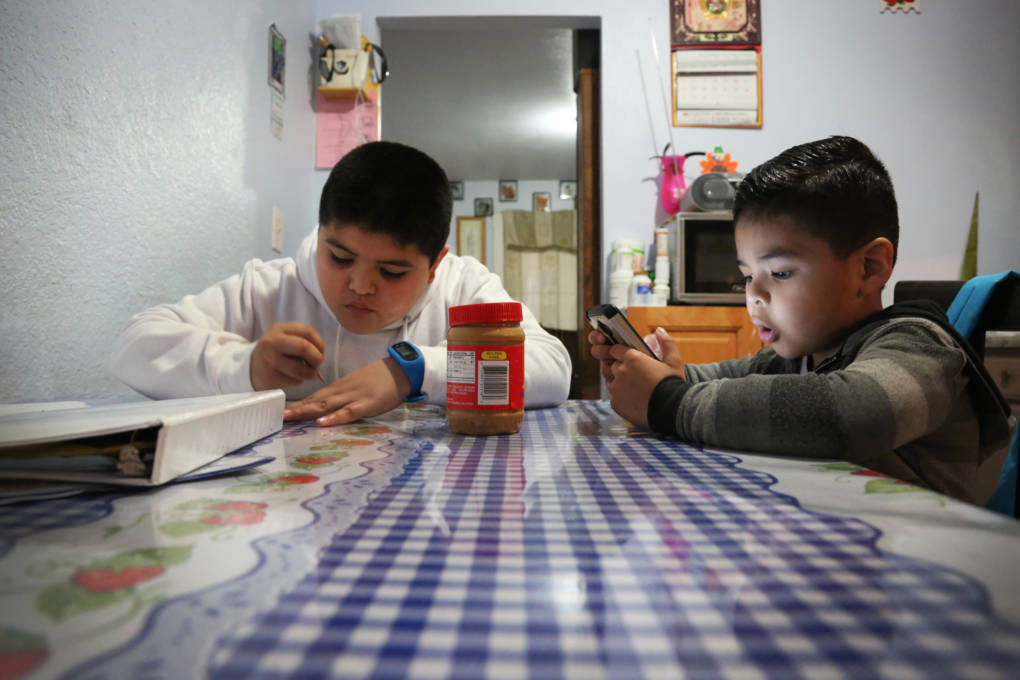
"caption": "Edwin Bernal, 9, finished homework, while his brother Angel Lozano, 5, watches videos before school at their home in Los Angeles, on Jan. 20. Last year Edwin was among a group of undocumented children who qualified for Medi-Cal coverage through a state-funded program. His brother is already covered because he was born in the U.S. ",
"description": null,
"title": "Medi-Cal Kids",
"credit": "Maria J. Avila/CalMatters",
"status": "inherit",
"isLoading": false,
"fetchFailed": false
},
"news_11277728": {
"type": "attachments",
"id": "news_11277728",
"meta": {
"index": "attachments_1716263798",
"site": "news",
"id": "11277728",
"found": true
},
"parent": 11277721,
"imgSizes": {
"small": {
"file": "https://ww2.kqed.org/app/uploads/sites/10/2017/01/FreeSpeechIllus-520x398.jpg",
"width": 520,
"mimeType": "image/jpeg",
"height": 398
},
"twentyfourteen-full-width": {
"file": "https://ww2.kqed.org/app/uploads/sites/10/2017/01/FreeSpeechIllus-1038x576.jpg",
"width": 1038,
"mimeType": "image/jpeg",
"height": 576
},
"thumbnail": {
"file": "https://ww2.kqed.org/app/uploads/sites/10/2017/01/FreeSpeechIllus-160x123.jpg",
"width": 160,
"mimeType": "image/jpeg",
"height": 123
},
"fd-sm": {
"file": "https://ww2.kqed.org/app/uploads/sites/10/2017/01/FreeSpeechIllus-960x736.jpg",
"width": 960,
"mimeType": "image/jpeg",
"height": 736
},
"post-thumbnail": {
"file": "https://ww2.kqed.org/app/uploads/sites/10/2017/01/FreeSpeechIllus-672x372.jpg",
"width": 672,
"mimeType": "image/jpeg",
"height": 372
},
"xsmall": {
"file": "https://ww2.kqed.org/app/uploads/sites/10/2017/01/FreeSpeechIllus-375x287.jpg",
"width": 375,
"mimeType": "image/jpeg",
"height": 287
},
"kqedFullSize": {
"file": "https://ww2.kqed.org/app/uploads/sites/10/2017/01/FreeSpeechIllus.jpg",
"width": 1920,
"height": 1471
},
"large": {
"file": "https://ww2.kqed.org/app/uploads/sites/10/2017/01/FreeSpeechIllus-1020x781.jpg",
"width": 1020,
"mimeType": "image/jpeg",
"height": 781
},
"xlarge": {
"file": "https://ww2.kqed.org/app/uploads/sites/10/2017/01/FreeSpeechIllus-1180x904.jpg",
"width": 1180,
"mimeType": "image/jpeg",
"height": 904
},
"guest-author-50": {
"file": "https://ww2.kqed.org/app/uploads/sites/10/2017/01/FreeSpeechIllus-50x50.jpg",
"width": 50,
"mimeType": "image/jpeg",
"height": 50
},
"guest-author-96": {
"file": "https://ww2.kqed.org/app/uploads/sites/10/2017/01/FreeSpeechIllus-96x96.jpg",
"width": 96,
"mimeType": "image/jpeg",
"height": 96
},
"medium": {
"file": "https://ww2.kqed.org/app/uploads/sites/10/2017/01/FreeSpeechIllus-800x613.jpg",
"width": 800,
"mimeType": "image/jpeg",
"height": 613
},
"guest-author-64": {
"file": "https://ww2.kqed.org/app/uploads/sites/10/2017/01/FreeSpeechIllus-64x64.jpg",
"width": 64,
"mimeType": "image/jpeg",
"height": 64
},
"guest-author-32": {
"file": "https://ww2.kqed.org/app/uploads/sites/10/2017/01/FreeSpeechIllus-32x32.jpg",
"width": 32,
"mimeType": "image/jpeg",
"height": 32
},
"jmtc-small-thumb": {
"file": "https://ww2.kqed.org/app/uploads/sites/10/2017/01/FreeSpeechIllus-280x150.jpg",
"width": 280,
"mimeType": "image/jpeg",
"height": 150
},
"fd-lrg": {
"file": "https://ww2.kqed.org/app/uploads/sites/10/2017/01/FreeSpeechIllus-1920x1471.jpg",
"width": 1920,
"mimeType": "image/jpeg",
"height": 1471
},
"fd-med": {
"file": "https://ww2.kqed.org/app/uploads/sites/10/2017/01/FreeSpeechIllus-1180x904.jpg",
"width": 1180,
"mimeType": "image/jpeg",
"height": 904
},
"full-width": {
"file": "https://ww2.kqed.org/app/uploads/sites/10/2017/01/FreeSpeechIllus-1920x1471.jpg",
"width": 1920,
"mimeType": "image/jpeg",
"height": 1471
},
"detail": {
"file": "https://ww2.kqed.org/app/uploads/sites/10/2017/01/FreeSpeechIllus-150x150.jpg",
"width": 150,
"mimeType": "image/jpeg",
"height": 150
},
"guest-author-128": {
"file": "https://ww2.kqed.org/app/uploads/sites/10/2017/01/FreeSpeechIllus-128x128.jpg",
"width": 128,
"mimeType": "image/jpeg",
"height": 128
},
"xxsmall": {
"file": "https://ww2.kqed.org/app/uploads/sites/10/2017/01/FreeSpeechIllus-240x184.jpg",
"width": 240,
"mimeType": "image/jpeg",
"height": 184
}
},
"publishDate": 1484879151,
"modified": 1484879175,
"caption": null,
"description": null,
"title": "FreeSpeechIllus",
"credit": "Digital Vision/CALmatters",
"status": "inherit",
"isLoading": false,
"fetchFailed": false
},
"news_11267944": {
"type": "attachments",
"id": "news_11267944",
"meta": {
"index": "attachments_1716263798",
"site": "news",
"id": "11267944",
"found": true
},
"parent": 11267938,
"imgSizes": {
"small": {
"file": "https://ww2.kqed.org/app/uploads/sites/10/2017/01/Lighthouse-520x289.jpg",
"width": 520,
"mimeType": "image/jpeg",
"height": 289
},
"twentyfourteen-full-width": {
"file": "https://ww2.kqed.org/app/uploads/sites/10/2017/01/Lighthouse-1038x576.jpg",
"width": 1038,
"mimeType": "image/jpeg",
"height": 576
},
"thumbnail": {
"file": "https://ww2.kqed.org/app/uploads/sites/10/2017/01/Lighthouse-160x89.jpg",
"width": 160,
"mimeType": "image/jpeg",
"height": 89
},
"fd-sm": {
"file": "https://ww2.kqed.org/app/uploads/sites/10/2017/01/Lighthouse-960x534.jpg",
"width": 960,
"mimeType": "image/jpeg",
"height": 534
},
"post-thumbnail": {
"file": "https://ww2.kqed.org/app/uploads/sites/10/2017/01/Lighthouse-672x372.jpg",
"width": 672,
"mimeType": "image/jpeg",
"height": 372
},
"xsmall": {
"file": "https://ww2.kqed.org/app/uploads/sites/10/2017/01/Lighthouse-375x208.jpg",
"width": 375,
"mimeType": "image/jpeg",
"height": 208
},
"kqedFullSize": {
"file": "https://ww2.kqed.org/app/uploads/sites/10/2017/01/Lighthouse.jpg",
"width": 1920,
"height": 1067
},
"large": {
"file": "https://ww2.kqed.org/app/uploads/sites/10/2017/01/Lighthouse-1020x567.jpg",
"width": 1020,
"mimeType": "image/jpeg",
"height": 567
},
"xlarge": {
"file": "https://ww2.kqed.org/app/uploads/sites/10/2017/01/Lighthouse-1180x656.jpg",
"width": 1180,
"mimeType": "image/jpeg",
"height": 656
},
"guest-author-50": {
"file": "https://ww2.kqed.org/app/uploads/sites/10/2017/01/Lighthouse-50x50.jpg",
"width": 50,
"mimeType": "image/jpeg",
"height": 50
},
"guest-author-96": {
"file": "https://ww2.kqed.org/app/uploads/sites/10/2017/01/Lighthouse-96x96.jpg",
"width": 96,
"mimeType": "image/jpeg",
"height": 96
},
"medium": {
"file": "https://ww2.kqed.org/app/uploads/sites/10/2017/01/Lighthouse-800x445.jpg",
"width": 800,
"mimeType": "image/jpeg",
"height": 445
},
"guest-author-64": {
"file": "https://ww2.kqed.org/app/uploads/sites/10/2017/01/Lighthouse-64x64.jpg",
"width": 64,
"mimeType": "image/jpeg",
"height": 64
},
"guest-author-32": {
"file": "https://ww2.kqed.org/app/uploads/sites/10/2017/01/Lighthouse-32x32.jpg",
"width": 32,
"mimeType": "image/jpeg",
"height": 32
},
"jmtc-small-thumb": {
"file": "https://ww2.kqed.org/app/uploads/sites/10/2017/01/Lighthouse-280x150.jpg",
"width": 280,
"mimeType": "image/jpeg",
"height": 150
},
"fd-lrg": {
"file": "https://ww2.kqed.org/app/uploads/sites/10/2017/01/Lighthouse-1920x1067.jpg",
"width": 1920,
"mimeType": "image/jpeg",
"height": 1067
},
"fd-med": {
"file": "https://ww2.kqed.org/app/uploads/sites/10/2017/01/Lighthouse-1180x656.jpg",
"width": 1180,
"mimeType": "image/jpeg",
"height": 656
},
"full-width": {
"file": "https://ww2.kqed.org/app/uploads/sites/10/2017/01/Lighthouse-1920x1067.jpg",
"width": 1920,
"mimeType": "image/jpeg",
"height": 1067
},
"detail": {
"file": "https://ww2.kqed.org/app/uploads/sites/10/2017/01/Lighthouse-150x150.jpg",
"width": 150,
"mimeType": "image/jpeg",
"height": 150
},
"guest-author-128": {
"file": "https://ww2.kqed.org/app/uploads/sites/10/2017/01/Lighthouse-128x128.jpg",
"width": 128,
"mimeType": "image/jpeg",
"height": 128
},
"xxsmall": {
"file": "https://ww2.kqed.org/app/uploads/sites/10/2017/01/Lighthouse-240x133.jpg",
"width": 240,
"mimeType": "image/jpeg",
"height": 133
}
},
"publishDate": 1484337267,
"modified": 1484337314,
"caption": "Along the coast of San Luis Obispo County, the Piedras Blancas is a historic lighthouse surrounded by land of cultural significance to the Chumash and Salinan tribes.",
"description": "Along the coast of San Luis Obispo County, the Piedras Blancas is a historic lighthouse surrounded by land of cultural significance to the Chumash and Salinan tribes.",
"title": "lighthouse",
"credit": "Mike Baird/Flickr",
"status": "inherit",
"isLoading": false,
"fetchFailed": false
},
"news_11266656": {
"type": "attachments",
"id": "news_11266656",
"meta": {
"index": "attachments_1716263798",
"site": "news",
"id": "11266656",
"found": true
},
"parent": 11266652,
"imgSizes": {
"small": {
"file": "https://ww2.kqed.org/app/uploads/sites/10/2017/01/TradeMarkPot1-520x349.jpg",
"width": 520,
"mimeType": "image/jpeg",
"height": 349
},
"twentyfourteen-full-width": {
"file": "https://ww2.kqed.org/app/uploads/sites/10/2017/01/TradeMarkPot1-1038x576.jpg",
"width": 1038,
"mimeType": "image/jpeg",
"height": 576
},
"thumbnail": {
"file": "https://ww2.kqed.org/app/uploads/sites/10/2017/01/TradeMarkPot1-160x107.jpg",
"width": 160,
"mimeType": "image/jpeg",
"height": 107
},
"fd-sm": {
"file": "https://ww2.kqed.org/app/uploads/sites/10/2017/01/TradeMarkPot1-960x644.jpg",
"width": 960,
"mimeType": "image/jpeg",
"height": 644
},
"post-thumbnail": {
"file": "https://ww2.kqed.org/app/uploads/sites/10/2017/01/TradeMarkPot1-672x372.jpg",
"width": 672,
"mimeType": "image/jpeg",
"height": 372
},
"xsmall": {
"file": "https://ww2.kqed.org/app/uploads/sites/10/2017/01/TradeMarkPot1-375x251.jpg",
"width": 375,
"mimeType": "image/jpeg",
"height": 251
},
"kqedFullSize": {
"file": "https://ww2.kqed.org/app/uploads/sites/10/2017/01/TradeMarkPot1.jpg",
"width": 1920,
"height": 1287
},
"large": {
"file": "https://ww2.kqed.org/app/uploads/sites/10/2017/01/TradeMarkPot1-1020x684.jpg",
"width": 1020,
"mimeType": "image/jpeg",
"height": 684
},
"xlarge": {
"file": "https://ww2.kqed.org/app/uploads/sites/10/2017/01/TradeMarkPot1-1180x791.jpg",
"width": 1180,
"mimeType": "image/jpeg",
"height": 791
},
"guest-author-50": {
"file": "https://ww2.kqed.org/app/uploads/sites/10/2017/01/TradeMarkPot1-50x50.jpg",
"width": 50,
"mimeType": "image/jpeg",
"height": 50
},
"guest-author-96": {
"file": "https://ww2.kqed.org/app/uploads/sites/10/2017/01/TradeMarkPot1-96x96.jpg",
"width": 96,
"mimeType": "image/jpeg",
"height": 96
},
"medium": {
"file": "https://ww2.kqed.org/app/uploads/sites/10/2017/01/TradeMarkPot1-800x536.jpg",
"width": 800,
"mimeType": "image/jpeg",
"height": 536
},
"guest-author-64": {
"file": "https://ww2.kqed.org/app/uploads/sites/10/2017/01/TradeMarkPot1-64x64.jpg",
"width": 64,
"mimeType": "image/jpeg",
"height": 64
},
"guest-author-32": {
"file": "https://ww2.kqed.org/app/uploads/sites/10/2017/01/TradeMarkPot1-32x32.jpg",
"width": 32,
"mimeType": "image/jpeg",
"height": 32
},
"jmtc-small-thumb": {
"file": "https://ww2.kqed.org/app/uploads/sites/10/2017/01/TradeMarkPot1-280x150.jpg",
"width": 280,
"mimeType": "image/jpeg",
"height": 150
},
"fd-lrg": {
"file": "https://ww2.kqed.org/app/uploads/sites/10/2017/01/TradeMarkPot1-1920x1287.jpg",
"width": 1920,
"mimeType": "image/jpeg",
"height": 1287
},
"fd-med": {
"file": "https://ww2.kqed.org/app/uploads/sites/10/2017/01/TradeMarkPot1-1180x791.jpg",
"width": 1180,
"mimeType": "image/jpeg",
"height": 791
},
"full-width": {
"file": "https://ww2.kqed.org/app/uploads/sites/10/2017/01/TradeMarkPot1-1920x1287.jpg",
"width": 1920,
"mimeType": "image/jpeg",
"height": 1287
},
"detail": {
"file": "https://ww2.kqed.org/app/uploads/sites/10/2017/01/TradeMarkPot1-150x150.jpg",
"width": 150,
"mimeType": "image/jpeg",
"height": 150
},
"guest-author-128": {
"file": "https://ww2.kqed.org/app/uploads/sites/10/2017/01/TradeMarkPot1-128x128.jpg",
"width": 128,
"mimeType": "image/jpeg",
"height": 128
},
"xxsmall": {
"file": "https://ww2.kqed.org/app/uploads/sites/10/2017/01/TradeMarkPot1-240x161.jpg",
"width": 240,
"mimeType": "image/jpeg",
"height": 161
}
},
"publishDate": 1484257681,
"modified": 1484257837,
"caption": "Name-brand cannabis products on display at a dispensary in Sacramento.",
"description": "Name-brand cannabis products on display at a dispensary in Sacramento.",
"title": "trademarkpot1",
"credit": "Laurel Rosenhall/CALmatters",
"status": "inherit",
"isLoading": false,
"fetchFailed": false
},
"news_11255420": {
"type": "attachments",
"id": "news_11255420",
"meta": {
"index": "attachments_1716263798",
"site": "news",
"id": "11255420",
"found": true
},
"parent": 11255334,
"imgSizes": {
"small": {
"file": "https://ww2.kqed.org/app/uploads/sites/10/2017/01/Assembly-520x316.jpg",
"width": 520,
"mimeType": "image/jpeg",
"height": 316
},
"twentyfourteen-full-width": {
"file": "https://ww2.kqed.org/app/uploads/sites/10/2017/01/Assembly-1038x576.jpg",
"width": 1038,
"mimeType": "image/jpeg",
"height": 576
},
"thumbnail": {
"file": "https://ww2.kqed.org/app/uploads/sites/10/2017/01/Assembly-160x97.jpg",
"width": 160,
"mimeType": "image/jpeg",
"height": 97
},
"fd-sm": {
"file": "https://ww2.kqed.org/app/uploads/sites/10/2017/01/Assembly-960x584.jpg",
"width": 960,
"mimeType": "image/jpeg",
"height": 584
},
"post-thumbnail": {
"file": "https://ww2.kqed.org/app/uploads/sites/10/2017/01/Assembly-672x372.jpg",
"width": 672,
"mimeType": "image/jpeg",
"height": 372
},
"xsmall": {
"file": "https://ww2.kqed.org/app/uploads/sites/10/2017/01/Assembly-375x228.jpg",
"width": 375,
"mimeType": "image/jpeg",
"height": 228
},
"kqedFullSize": {
"file": "https://ww2.kqed.org/app/uploads/sites/10/2017/01/Assembly.jpg",
"width": 1920,
"height": 1168
},
"large": {
"file": "https://ww2.kqed.org/app/uploads/sites/10/2017/01/Assembly-1020x621.jpg",
"width": 1020,
"mimeType": "image/jpeg",
"height": 621
},
"xlarge": {
"file": "https://ww2.kqed.org/app/uploads/sites/10/2017/01/Assembly-1180x718.jpg",
"width": 1180,
"mimeType": "image/jpeg",
"height": 718
},
"guest-author-50": {
"file": "https://ww2.kqed.org/app/uploads/sites/10/2017/01/Assembly-50x50.jpg",
"width": 50,
"mimeType": "image/jpeg",
"height": 50
},
"guest-author-96": {
"file": "https://ww2.kqed.org/app/uploads/sites/10/2017/01/Assembly-96x96.jpg",
"width": 96,
"mimeType": "image/jpeg",
"height": 96
},
"medium": {
"file": "https://ww2.kqed.org/app/uploads/sites/10/2017/01/Assembly-800x487.jpg",
"width": 800,
"mimeType": "image/jpeg",
"height": 487
},
"guest-author-64": {
"file": "https://ww2.kqed.org/app/uploads/sites/10/2017/01/Assembly-64x64.jpg",
"width": 64,
"mimeType": "image/jpeg",
"height": 64
},
"guest-author-32": {
"file": "https://ww2.kqed.org/app/uploads/sites/10/2017/01/Assembly-32x32.jpg",
"width": 32,
"mimeType": "image/jpeg",
"height": 32
},
"jmtc-small-thumb": {
"file": "https://ww2.kqed.org/app/uploads/sites/10/2017/01/Assembly-280x150.jpg",
"width": 280,
"mimeType": "image/jpeg",
"height": 150
},
"fd-lrg": {
"file": "https://ww2.kqed.org/app/uploads/sites/10/2017/01/Assembly-1920x1168.jpg",
"width": 1920,
"mimeType": "image/jpeg",
"height": 1168
},
"fd-med": {
"file": "https://ww2.kqed.org/app/uploads/sites/10/2017/01/Assembly-1180x718.jpg",
"width": 1180,
"mimeType": "image/jpeg",
"height": 718
},
"full-width": {
"file": "https://ww2.kqed.org/app/uploads/sites/10/2017/01/Assembly-1920x1168.jpg",
"width": 1920,
"mimeType": "image/jpeg",
"height": 1168
},
"detail": {
"file": "https://ww2.kqed.org/app/uploads/sites/10/2017/01/Assembly-150x150.jpg",
"width": 150,
"mimeType": "image/jpeg",
"height": 150
},
"guest-author-128": {
"file": "https://ww2.kqed.org/app/uploads/sites/10/2017/01/Assembly-128x128.jpg",
"width": 128,
"mimeType": "image/jpeg",
"height": 128
},
"xxsmall": {
"file": "https://ww2.kqed.org/app/uploads/sites/10/2017/01/Assembly-240x146.jpg",
"width": 240,
"mimeType": "image/jpeg",
"height": 146
}
},
"publishDate": 1483650380,
"modified": 1483650414,
"caption": "Members of the California Assembly consider a new state budget in 2015.",
"description": "Members of the California Assembly consider a new state budget in 2015.",
"title": "assembly",
"credit": "Max Whittaker/KQED",
"status": "inherit",
"isLoading": false,
"fetchFailed": false
},
"news_11240355": {
"type": "attachments",
"id": "news_11240355",
"meta": {
"index": "attachments_1716263798",
"site": "news",
"id": "11240355",
"found": true
},
"parent": 11240351,
"imgSizes": {
"small": {
"file": "https://ww2.kqed.org/app/uploads/sites/10/2016/12/BillNumbersjpg-thumbnail-1200x1200-70-520x351.jpg",
"width": 520,
"mimeType": "image/jpeg",
"height": 351
},
"twentyfourteen-full-width": {
"file": "https://ww2.kqed.org/app/uploads/sites/10/2016/12/BillNumbersjpg-thumbnail-1200x1200-70-1038x576.jpg",
"width": 1038,
"mimeType": "image/jpeg",
"height": 576
},
"thumbnail": {
"file": "https://ww2.kqed.org/app/uploads/sites/10/2016/12/BillNumbersjpg-thumbnail-1200x1200-70-160x108.jpg",
"width": 160,
"mimeType": "image/jpeg",
"height": 108
},
"fd-sm": {
"file": "https://ww2.kqed.org/app/uploads/sites/10/2016/12/BillNumbersjpg-thumbnail-1200x1200-70-960x648.jpg",
"width": 960,
"mimeType": "image/jpeg",
"height": 648
},
"post-thumbnail": {
"file": "https://ww2.kqed.org/app/uploads/sites/10/2016/12/BillNumbersjpg-thumbnail-1200x1200-70-672x372.jpg",
"width": 672,
"mimeType": "image/jpeg",
"height": 372
},
"xsmall": {
"file": "https://ww2.kqed.org/app/uploads/sites/10/2016/12/BillNumbersjpg-thumbnail-1200x1200-70-375x253.jpg",
"width": 375,
"mimeType": "image/jpeg",
"height": 253
},
"kqedFullSize": {
"file": "https://ww2.kqed.org/app/uploads/sites/10/2016/12/BillNumbersjpg-thumbnail-1200x1200-70.jpg",
"width": 1200,
"height": 810
},
"large": {
"file": "https://ww2.kqed.org/app/uploads/sites/10/2016/12/BillNumbersjpg-thumbnail-1200x1200-70-1020x689.jpg",
"width": 1020,
"mimeType": "image/jpeg",
"height": 689
},
"xlarge": {
"file": "https://ww2.kqed.org/app/uploads/sites/10/2016/12/BillNumbersjpg-thumbnail-1200x1200-70-1180x797.jpg",
"width": 1180,
"mimeType": "image/jpeg",
"height": 797
},
"guest-author-50": {
"file": "https://ww2.kqed.org/app/uploads/sites/10/2016/12/BillNumbersjpg-thumbnail-1200x1200-70-50x50.jpg",
"width": 50,
"mimeType": "image/jpeg",
"height": 50
},
"guest-author-96": {
"file": "https://ww2.kqed.org/app/uploads/sites/10/2016/12/BillNumbersjpg-thumbnail-1200x1200-70-96x96.jpg",
"width": 96,
"mimeType": "image/jpeg",
"height": 96
},
"medium": {
"file": "https://ww2.kqed.org/app/uploads/sites/10/2016/12/BillNumbersjpg-thumbnail-1200x1200-70-800x540.jpg",
"width": 800,
"mimeType": "image/jpeg",
"height": 540
},
"guest-author-64": {
"file": "https://ww2.kqed.org/app/uploads/sites/10/2016/12/BillNumbersjpg-thumbnail-1200x1200-70-64x64.jpg",
"width": 64,
"mimeType": "image/jpeg",
"height": 64
},
"guest-author-32": {
"file": "https://ww2.kqed.org/app/uploads/sites/10/2016/12/BillNumbersjpg-thumbnail-1200x1200-70-32x32.jpg",
"width": 32,
"mimeType": "image/jpeg",
"height": 32
},
"jmtc-small-thumb": {
"file": "https://ww2.kqed.org/app/uploads/sites/10/2016/12/BillNumbersjpg-thumbnail-1200x1200-70-280x150.jpg",
"width": 280,
"mimeType": "image/jpeg",
"height": 150
},
"fd-med": {
"file": "https://ww2.kqed.org/app/uploads/sites/10/2016/12/BillNumbersjpg-thumbnail-1200x1200-70-1180x797.jpg",
"width": 1180,
"mimeType": "image/jpeg",
"height": 797
},
"detail": {
"file": "https://ww2.kqed.org/app/uploads/sites/10/2016/12/BillNumbersjpg-thumbnail-1200x1200-70-150x150.jpg",
"width": 150,
"mimeType": "image/jpeg",
"height": 150
},
"guest-author-128": {
"file": "https://ww2.kqed.org/app/uploads/sites/10/2016/12/BillNumbersjpg-thumbnail-1200x1200-70-128x128.jpg",
"width": 128,
"mimeType": "image/jpeg",
"height": 128
},
"xxsmall": {
"file": "https://ww2.kqed.org/app/uploads/sites/10/2016/12/BillNumbersjpg-thumbnail-1200x1200-70-240x162.jpg",
"width": 240,
"mimeType": "image/jpeg",
"height": 162
}
},
"publishDate": 1482869423,
"modified": 1482869462,
"caption": "In the state Senate, Bernadette McNulty greets bill-bearing aides and assigns bill numbers. ",
"description": "In the state Senate, Bernadette McNulty greets bill-bearing aides and assigns bill numbers. ",
"title": "billnumbersjpg-thumbnail-1200x1200-70",
"credit": "Steve Yeater/CALmatters",
"status": "inherit",
"isLoading": false,
"fetchFailed": false
},
"news_11198715": {
"type": "attachments",
"id": "news_11198715",
"meta": {
"index": "attachments_1716263798",
"site": "news",
"id": "11198715",
"found": true
},
"parent": 11198705,
"imgSizes": {
"small": {
"file": "https://ww2.kqed.org/app/uploads/sites/10/2016/11/JerryBrown-520x342.jpg",
"width": 520,
"mimeType": "image/jpeg",
"height": 342
},
"twentyfourteen-full-width": {
"file": "https://ww2.kqed.org/app/uploads/sites/10/2016/11/JerryBrown-1038x576.jpg",
"width": 1038,
"mimeType": "image/jpeg",
"height": 576
},
"thumbnail": {
"file": "https://ww2.kqed.org/app/uploads/sites/10/2016/11/JerryBrown-160x105.jpg",
"width": 160,
"mimeType": "image/jpeg",
"height": 105
},
"fd-sm": {
"file": "https://ww2.kqed.org/app/uploads/sites/10/2016/11/JerryBrown-960x631.jpg",
"width": 960,
"mimeType": "image/jpeg",
"height": 631
},
"post-thumbnail": {
"file": "https://ww2.kqed.org/app/uploads/sites/10/2016/11/JerryBrown-672x372.jpg",
"width": 672,
"mimeType": "image/jpeg",
"height": 372
},
"xsmall": {
"file": "https://ww2.kqed.org/app/uploads/sites/10/2016/11/JerryBrown-375x246.jpg",
"width": 375,
"mimeType": "image/jpeg",
"height": 246
},
"kqedFullSize": {
"file": "https://ww2.kqed.org/app/uploads/sites/10/2016/11/JerryBrown.jpg",
"width": 1920,
"height": 1262
},
"large": {
"file": "https://ww2.kqed.org/app/uploads/sites/10/2016/11/JerryBrown-1020x670.jpg",
"width": 1020,
"mimeType": "image/jpeg",
"height": 670
},
"xlarge": {
"file": "https://ww2.kqed.org/app/uploads/sites/10/2016/11/JerryBrown-1180x776.jpg",
"width": 1180,
"mimeType": "image/jpeg",
"height": 776
},
"guest-author-50": {
"file": "https://ww2.kqed.org/app/uploads/sites/10/2016/11/JerryBrown-50x50.jpg",
"width": 50,
"mimeType": "image/jpeg",
"height": 50
},
"guest-author-96": {
"file": "https://ww2.kqed.org/app/uploads/sites/10/2016/11/JerryBrown-96x96.jpg",
"width": 96,
"mimeType": "image/jpeg",
"height": 96
},
"medium": {
"file": "https://ww2.kqed.org/app/uploads/sites/10/2016/11/JerryBrown-800x526.jpg",
"width": 800,
"mimeType": "image/jpeg",
"height": 526
},
"guest-author-64": {
"file": "https://ww2.kqed.org/app/uploads/sites/10/2016/11/JerryBrown-64x64.jpg",
"width": 64,
"mimeType": "image/jpeg",
"height": 64
},
"guest-author-32": {
"file": "https://ww2.kqed.org/app/uploads/sites/10/2016/11/JerryBrown-32x32.jpg",
"width": 32,
"mimeType": "image/jpeg",
"height": 32
},
"jmtc-small-thumb": {
"file": "https://ww2.kqed.org/app/uploads/sites/10/2016/11/JerryBrown-280x150.jpg",
"width": 280,
"mimeType": "image/jpeg",
"height": 150
},
"fd-lrg": {
"file": "https://ww2.kqed.org/app/uploads/sites/10/2016/11/JerryBrown-1920x1262.jpg",
"width": 1920,
"mimeType": "image/jpeg",
"height": 1262
},
"fd-med": {
"file": "https://ww2.kqed.org/app/uploads/sites/10/2016/11/JerryBrown-1180x776.jpg",
"width": 1180,
"mimeType": "image/jpeg",
"height": 776
},
"full-width": {
"file": "https://ww2.kqed.org/app/uploads/sites/10/2016/11/JerryBrown-1920x1262.jpg",
"width": 1920,
"mimeType": "image/jpeg",
"height": 1262
},
"detail": {
"file": "https://ww2.kqed.org/app/uploads/sites/10/2016/11/JerryBrown-150x150.jpg",
"width": 150,
"mimeType": "image/jpeg",
"height": 150
},
"guest-author-128": {
"file": "https://ww2.kqed.org/app/uploads/sites/10/2016/11/JerryBrown-128x128.jpg",
"width": 128,
"mimeType": "image/jpeg",
"height": 128
},
"xxsmall": {
"file": "https://ww2.kqed.org/app/uploads/sites/10/2016/11/JerryBrown-240x158.jpg",
"width": 240,
"mimeType": "image/jpeg",
"height": 158
}
},
"publishDate": 1480555303,
"modified": 1480555352,
"caption": "Gov. Jerry Brown",
"description": "Gov. Jerry Brown",
"title": "jerrybrown",
"credit": "Justin Sullivan/Getty Images",
"status": "inherit",
"isLoading": false,
"fetchFailed": false
},
"news_11196908": {
"type": "attachments",
"id": "news_11196908",
"meta": {
"index": "attachments_1716263798",
"site": "news",
"id": "11196908",
"found": true
},
"parent": 11196904,
"imgSizes": {
"small": {
"file": "https://ww2.kqed.org/app/uploads/sites/10/2016/11/DeltaBoyer-520x298.jpg",
"width": 520,
"mimeType": "image/jpeg",
"height": 298
},
"twentyfourteen-full-width": {
"file": "https://ww2.kqed.org/app/uploads/sites/10/2016/11/DeltaBoyer-1038x576.jpg",
"width": 1038,
"mimeType": "image/jpeg",
"height": 576
},
"thumbnail": {
"file": "https://ww2.kqed.org/app/uploads/sites/10/2016/11/DeltaBoyer-160x92.jpg",
"width": 160,
"mimeType": "image/jpeg",
"height": 92
},
"fd-sm": {
"file": "https://ww2.kqed.org/app/uploads/sites/10/2016/11/DeltaBoyer-960x551.jpg",
"width": 960,
"mimeType": "image/jpeg",
"height": 551
},
"post-thumbnail": {
"file": "https://ww2.kqed.org/app/uploads/sites/10/2016/11/DeltaBoyer-672x372.jpg",
"width": 672,
"mimeType": "image/jpeg",
"height": 372
},
"xsmall": {
"file": "https://ww2.kqed.org/app/uploads/sites/10/2016/11/DeltaBoyer-375x215.jpg",
"width": 375,
"mimeType": "image/jpeg",
"height": 215
},
"kqedFullSize": {
"file": "https://ww2.kqed.org/app/uploads/sites/10/2016/11/DeltaBoyer.jpg",
"width": 1920,
"height": 1101
},
"large": {
"file": "https://ww2.kqed.org/app/uploads/sites/10/2016/11/DeltaBoyer-1020x585.jpg",
"width": 1020,
"mimeType": "image/jpeg",
"height": 585
},
"xlarge": {
"file": "https://ww2.kqed.org/app/uploads/sites/10/2016/11/DeltaBoyer-1180x677.jpg",
"width": 1180,
"mimeType": "image/jpeg",
"height": 677
},
"guest-author-50": {
"file": "https://ww2.kqed.org/app/uploads/sites/10/2016/11/DeltaBoyer-50x50.jpg",
"width": 50,
"mimeType": "image/jpeg",
"height": 50
},
"guest-author-96": {
"file": "https://ww2.kqed.org/app/uploads/sites/10/2016/11/DeltaBoyer-96x96.jpg",
"width": 96,
"mimeType": "image/jpeg",
"height": 96
},
"medium": {
"file": "https://ww2.kqed.org/app/uploads/sites/10/2016/11/DeltaBoyer-800x459.jpg",
"width": 800,
"mimeType": "image/jpeg",
"height": 459
},
"guest-author-64": {
"file": "https://ww2.kqed.org/app/uploads/sites/10/2016/11/DeltaBoyer-64x64.jpg",
"width": 64,
"mimeType": "image/jpeg",
"height": 64
},
"guest-author-32": {
"file": "https://ww2.kqed.org/app/uploads/sites/10/2016/11/DeltaBoyer-32x32.jpg",
"width": 32,
"mimeType": "image/jpeg",
"height": 32
},
"jmtc-small-thumb": {
"file": "https://ww2.kqed.org/app/uploads/sites/10/2016/11/DeltaBoyer-280x150.jpg",
"width": 280,
"mimeType": "image/jpeg",
"height": 150
},
"fd-lrg": {
"file": "https://ww2.kqed.org/app/uploads/sites/10/2016/11/DeltaBoyer-1920x1101.jpg",
"width": 1920,
"mimeType": "image/jpeg",
"height": 1101
},
"fd-med": {
"file": "https://ww2.kqed.org/app/uploads/sites/10/2016/11/DeltaBoyer-1180x677.jpg",
"width": 1180,
"mimeType": "image/jpeg",
"height": 677
},
"full-width": {
"file": "https://ww2.kqed.org/app/uploads/sites/10/2016/11/DeltaBoyer-1920x1101.jpg",
"width": 1920,
"mimeType": "image/jpeg",
"height": 1101
},
"detail": {
"file": "https://ww2.kqed.org/app/uploads/sites/10/2016/11/DeltaBoyer-150x150.jpg",
"width": 150,
"mimeType": "image/jpeg",
"height": 150
},
"guest-author-128": {
"file": "https://ww2.kqed.org/app/uploads/sites/10/2016/11/DeltaBoyer-128x128.jpg",
"width": 128,
"mimeType": "image/jpeg",
"height": 128
},
"xxsmall": {
"file": "https://ww2.kqed.org/app/uploads/sites/10/2016/11/DeltaBoyer-240x138.jpg",
"width": 240,
"mimeType": "image/jpeg",
"height": 138
}
},
"publishDate": 1480468943,
"modified": 1480469045,
"caption": "The depleted Sacramento-San Joaquin Delta is suffering from water diversion to farms and cities. ",
"description": "The depleted Sacramento-San Joaquin Delta is suffering from water diversion to farms and cities. ",
"title": "deltaboyer",
"credit": "Mark Andrew Boyer/KQED",
"status": "inherit",
"isLoading": false,
"fetchFailed": false
},
"news_11194931": {
"type": "attachments",
"id": "news_11194931",
"meta": {
"index": "attachments_1716263798",
"site": "news",
"id": "11194931",
"found": true
},
"parent": 11194927,
"imgSizes": {
"small": {
"file": "https://ww2.kqed.org/app/uploads/sites/10/2016/11/SCHOOL-CONSTRUCTION-520x348.jpg",
"width": 520,
"mimeType": "image/jpeg",
"height": 348
},
"twentyfourteen-full-width": {
"file": "https://ww2.kqed.org/app/uploads/sites/10/2016/11/SCHOOL-CONSTRUCTION-1038x576.jpg",
"width": 1038,
"mimeType": "image/jpeg",
"height": 576
},
"thumbnail": {
"file": "https://ww2.kqed.org/app/uploads/sites/10/2016/11/SCHOOL-CONSTRUCTION-160x107.jpg",
"width": 160,
"mimeType": "image/jpeg",
"height": 107
},
"fd-sm": {
"file": "https://ww2.kqed.org/app/uploads/sites/10/2016/11/SCHOOL-CONSTRUCTION-960x642.jpg",
"width": 960,
"mimeType": "image/jpeg",
"height": 642
},
"post-thumbnail": {
"file": "https://ww2.kqed.org/app/uploads/sites/10/2016/11/SCHOOL-CONSTRUCTION-672x372.jpg",
"width": 672,
"mimeType": "image/jpeg",
"height": 372
},
"xsmall": {
"file": "https://ww2.kqed.org/app/uploads/sites/10/2016/11/SCHOOL-CONSTRUCTION-375x251.jpg",
"width": 375,
"mimeType": "image/jpeg",
"height": 251
},
"kqedFullSize": {
"file": "https://ww2.kqed.org/app/uploads/sites/10/2016/11/SCHOOL-CONSTRUCTION.jpg",
"width": 2000,
"height": 1338
},
"large": {
"file": "https://ww2.kqed.org/app/uploads/sites/10/2016/11/SCHOOL-CONSTRUCTION-1020x682.jpg",
"width": 1020,
"mimeType": "image/jpeg",
"height": 682
},
"xlarge": {
"file": "https://ww2.kqed.org/app/uploads/sites/10/2016/11/SCHOOL-CONSTRUCTION-1180x789.jpg",
"width": 1180,
"mimeType": "image/jpeg",
"height": 789
},
"guest-author-50": {
"file": "https://ww2.kqed.org/app/uploads/sites/10/2016/11/SCHOOL-CONSTRUCTION-50x50.jpg",
"width": 50,
"mimeType": "image/jpeg",
"height": 50
},
"guest-author-96": {
"file": "https://ww2.kqed.org/app/uploads/sites/10/2016/11/SCHOOL-CONSTRUCTION-96x96.jpg",
"width": 96,
"mimeType": "image/jpeg",
"height": 96
},
"medium": {
"file": "https://ww2.kqed.org/app/uploads/sites/10/2016/11/SCHOOL-CONSTRUCTION-800x535.jpg",
"width": 800,
"mimeType": "image/jpeg",
"height": 535
},
"guest-author-64": {
"file": "https://ww2.kqed.org/app/uploads/sites/10/2016/11/SCHOOL-CONSTRUCTION-64x64.jpg",
"width": 64,
"mimeType": "image/jpeg",
"height": 64
},
"guest-author-32": {
"file": "https://ww2.kqed.org/app/uploads/sites/10/2016/11/SCHOOL-CONSTRUCTION-32x32.jpg",
"width": 32,
"mimeType": "image/jpeg",
"height": 32
},
"jmtc-small-thumb": {
"file": "https://ww2.kqed.org/app/uploads/sites/10/2016/11/SCHOOL-CONSTRUCTION-280x150.jpg",
"width": 280,
"mimeType": "image/jpeg",
"height": 150
},
"fd-lrg": {
"file": "https://ww2.kqed.org/app/uploads/sites/10/2016/11/SCHOOL-CONSTRUCTION-1920x1284.jpg",
"width": 1920,
"mimeType": "image/jpeg",
"height": 1284
},
"fd-med": {
"file": "https://ww2.kqed.org/app/uploads/sites/10/2016/11/SCHOOL-CONSTRUCTION-1180x789.jpg",
"width": 1180,
"mimeType": "image/jpeg",
"height": 789
},
"full-width": {
"file": "https://ww2.kqed.org/app/uploads/sites/10/2016/11/SCHOOL-CONSTRUCTION-1920x1284.jpg",
"width": 1920,
"mimeType": "image/jpeg",
"height": 1284
},
"detail": {
"file": "https://ww2.kqed.org/app/uploads/sites/10/2016/11/SCHOOL-CONSTRUCTION-150x150.jpg",
"width": 150,
"mimeType": "image/jpeg",
"height": 150
},
"guest-author-128": {
"file": "https://ww2.kqed.org/app/uploads/sites/10/2016/11/SCHOOL-CONSTRUCTION-128x128.jpg",
"width": 128,
"mimeType": "image/jpeg",
"height": 128
},
"xxsmall": {
"file": "https://ww2.kqed.org/app/uploads/sites/10/2016/11/SCHOOL-CONSTRUCTION-240x161.jpg",
"width": 240,
"mimeType": "image/jpeg",
"height": 161
}
},
"publishDate": 1480367728,
"modified": 1480380112,
"caption": "A worker recycles cardboard boxes during the construction of Santee High School in South Los Angeles, which opened in 2005 as the first high school built in 35 years in the nation's second-largest district.",
"description": "A worker recycles cardboard boxes during the construction of Santee High School in South Los Angeles, which opened in 2005 as the first high school built in 35 years in the nation's second-largest district.",
"title": "*{B6CFB8E3-3C2A-4D23-8F46-B743D6DB46D3}*",
"credit": "Ric Francis/Associated Press",
"status": "inherit",
"isLoading": false,
"fetchFailed": false
},
"news_11148157": {
"type": "attachments",
"id": "news_11148157",
"meta": {
"index": "attachments_1716263798",
"site": "news",
"id": "11148157",
"found": true
},
"parent": 11148154,
"imgSizes": {
"small": {
"file": "https://ww2.kqed.org/app/uploads/sites/10/2016/10/SupermajorityTrumpCoin-520x246.jpg",
"width": 520,
"mimeType": "image/jpeg",
"height": 246
},
"twentyfourteen-full-width": {
"file": "https://ww2.kqed.org/app/uploads/sites/10/2016/10/SupermajorityTrumpCoin-1038x576.jpg",
"width": 1038,
"mimeType": "image/jpeg",
"height": 576
},
"thumbnail": {
"file": "https://ww2.kqed.org/app/uploads/sites/10/2016/10/SupermajorityTrumpCoin-160x76.jpg",
"width": 160,
"mimeType": "image/jpeg",
"height": 76
},
"fd-sm": {
"file": "https://ww2.kqed.org/app/uploads/sites/10/2016/10/SupermajorityTrumpCoin-960x454.jpg",
"width": 960,
"mimeType": "image/jpeg",
"height": 454
},
"post-thumbnail": {
"file": "https://ww2.kqed.org/app/uploads/sites/10/2016/10/SupermajorityTrumpCoin-672x372.jpg",
"width": 672,
"mimeType": "image/jpeg",
"height": 372
},
"xsmall": {
"file": "https://ww2.kqed.org/app/uploads/sites/10/2016/10/SupermajorityTrumpCoin-375x177.jpg",
"width": 375,
"mimeType": "image/jpeg",
"height": 177
},
"kqedFullSize": {
"file": "https://ww2.kqed.org/app/uploads/sites/10/2016/10/SupermajorityTrumpCoin.jpg",
"width": 1920,
"height": 907
},
"large": {
"file": "https://ww2.kqed.org/app/uploads/sites/10/2016/10/SupermajorityTrumpCoin-1020x482.jpg",
"width": 1020,
"mimeType": "image/jpeg",
"height": 482
},
"xlarge": {
"file": "https://ww2.kqed.org/app/uploads/sites/10/2016/10/SupermajorityTrumpCoin-1180x557.jpg",
"width": 1180,
"mimeType": "image/jpeg",
"height": 557
},
"guest-author-50": {
"file": "https://ww2.kqed.org/app/uploads/sites/10/2016/10/SupermajorityTrumpCoin-50x50.jpg",
"width": 50,
"mimeType": "image/jpeg",
"height": 50
},
"guest-author-96": {
"file": "https://ww2.kqed.org/app/uploads/sites/10/2016/10/SupermajorityTrumpCoin-96x96.jpg",
"width": 96,
"mimeType": "image/jpeg",
"height": 96
},
"medium": {
"file": "https://ww2.kqed.org/app/uploads/sites/10/2016/10/SupermajorityTrumpCoin-800x378.jpg",
"width": 800,
"mimeType": "image/jpeg",
"height": 378
},
"guest-author-64": {
"file": "https://ww2.kqed.org/app/uploads/sites/10/2016/10/SupermajorityTrumpCoin-64x64.jpg",
"width": 64,
"mimeType": "image/jpeg",
"height": 64
},
"guest-author-32": {
"file": "https://ww2.kqed.org/app/uploads/sites/10/2016/10/SupermajorityTrumpCoin-32x32.jpg",
"width": 32,
"mimeType": "image/jpeg",
"height": 32
},
"jmtc-small-thumb": {
"file": "https://ww2.kqed.org/app/uploads/sites/10/2016/10/SupermajorityTrumpCoin-280x150.jpg",
"width": 280,
"mimeType": "image/jpeg",
"height": 150
},
"fd-lrg": {
"file": "https://ww2.kqed.org/app/uploads/sites/10/2016/10/SupermajorityTrumpCoin-1920x907.jpg",
"width": 1920,
"mimeType": "image/jpeg",
"height": 907
},
"fd-med": {
"file": "https://ww2.kqed.org/app/uploads/sites/10/2016/10/SupermajorityTrumpCoin-1180x557.jpg",
"width": 1180,
"mimeType": "image/jpeg",
"height": 557
},
"full-width": {
"file": "https://ww2.kqed.org/app/uploads/sites/10/2016/10/SupermajorityTrumpCoin-1920x907.jpg",
"width": 1920,
"mimeType": "image/jpeg",
"height": 907
},
"detail": {
"file": "https://ww2.kqed.org/app/uploads/sites/10/2016/10/SupermajorityTrumpCoin-150x150.jpg",
"width": 150,
"mimeType": "image/jpeg",
"height": 150
},
"guest-author-128": {
"file": "https://ww2.kqed.org/app/uploads/sites/10/2016/10/SupermajorityTrumpCoin-128x128.jpg",
"width": 128,
"mimeType": "image/jpeg",
"height": 128
},
"xxsmall": {
"file": "https://ww2.kqed.org/app/uploads/sites/10/2016/10/SupermajorityTrumpCoin-240x113.jpg",
"width": 240,
"mimeType": "image/jpeg",
"height": 113
}
},
"publishDate": 1477592674,
"modified": 1477604091,
"caption": "A screen shot of a TV ad running to link California GOP legislators to the party's presidential nominee. \n",
"description": "A screenshot of a TV ad running to link California GOP legislators to the party's presidential nominee. \n",
"title": "SupermajorityTrumpCoin",
"credit": "YouTube",
"status": "inherit",
"isLoading": false,
"fetchFailed": false
},
"science_1092837": {
"type": "attachments",
"id": "science_1092837",
"meta": {
"index": "attachments_1716263798",
"site": "science",
"id": "1092837",
"found": true
},
"title": "plastic bags",
"publishDate": 1476989993,
"status": "inherit",
"parent": 1092832,
"modified": 1742579333,
"caption": "Plastics can contain or absorb endocrine-disrupting chemicals that interfere with hormones, potentially leading to reproductive and developmental issues, according to the National Library of Medicine.",
"credit": "Thinkstock",
"altTag": null,
"description": null,
"imgSizes": {
"thumbnail": {
"file": "https://cdn.kqed.org/wp-content/uploads/sites/35/2016/10/PlasticBags1—Bags-160x107.jpg",
"width": 160,
"height": 107,
"mimeType": "image/jpeg"
},
"medium": {
"file": "https://cdn.kqed.org/wp-content/uploads/sites/35/2016/10/PlasticBags1—Bags-800x533.jpg",
"width": 800,
"height": 533,
"mimeType": "image/jpeg"
},
"medium_large": {
"file": "https://cdn.kqed.org/wp-content/uploads/sites/35/2016/10/PlasticBags1—Bags-768x512.jpg",
"width": 768,
"height": 512,
"mimeType": "image/jpeg"
},
"large": {
"file": "https://cdn.kqed.org/wp-content/uploads/sites/35/2016/10/PlasticBags1—Bags-1020x680.jpg",
"width": 1020,
"height": 680,
"mimeType": "image/jpeg"
},
"fd-lrg": {
"file": "https://cdn.kqed.org/wp-content/uploads/sites/35/2016/10/PlasticBags1—Bags-1920x1280.jpg",
"width": 1920,
"height": 1280,
"mimeType": "image/jpeg"
},
"fd-med": {
"file": "https://cdn.kqed.org/wp-content/uploads/sites/35/2016/10/PlasticBags1—Bags-1180x787.jpg",
"width": 1180,
"height": 787,
"mimeType": "image/jpeg"
},
"fd-sm": {
"file": "https://cdn.kqed.org/wp-content/uploads/sites/35/2016/10/PlasticBags1—Bags-960x640.jpg",
"width": 960,
"height": 640,
"mimeType": "image/jpeg"
},
"post-thumbnail": {
"file": "https://cdn.kqed.org/wp-content/uploads/sites/35/2016/10/PlasticBags1—Bags-672x372.jpg",
"width": 672,
"height": 372,
"mimeType": "image/jpeg"
},
"twentyfourteen-full-width": {
"file": "https://cdn.kqed.org/wp-content/uploads/sites/35/2016/10/PlasticBags1—Bags-1038x576.jpg",
"width": 1038,
"height": 576,
"mimeType": "image/jpeg"
},
"xxsmall": {
"file": "https://cdn.kqed.org/wp-content/uploads/sites/35/2016/10/PlasticBags1—Bags-240x160.jpg",
"width": 240,
"height": 160,
"mimeType": "image/jpeg"
},
"xsmall": {
"file": "https://cdn.kqed.org/wp-content/uploads/sites/35/2016/10/PlasticBags1—Bags-375x250.jpg",
"width": 375,
"height": 250,
"mimeType": "image/jpeg"
},
"small": {
"file": "https://cdn.kqed.org/wp-content/uploads/sites/35/2016/10/PlasticBags1—Bags-520x347.jpg",
"width": 520,
"height": 347,
"mimeType": "image/jpeg"
},
"xlarge": {
"file": "https://cdn.kqed.org/wp-content/uploads/sites/35/2016/10/PlasticBags1—Bags-1180x787.jpg",
"width": 1180,
"height": 787,
"mimeType": "image/jpeg"
},
"full-width": {
"file": "https://cdn.kqed.org/wp-content/uploads/sites/35/2016/10/PlasticBags1—Bags-1920x1280.jpg",
"width": 1920,
"height": 1280,
"mimeType": "image/jpeg"
},
"guest-author-32": {
"file": "https://cdn.kqed.org/wp-content/uploads/sites/35/2016/10/PlasticBags1—Bags-32x32.jpg",
"width": 32,
"height": 32,
"mimeType": "image/jpeg"
},
"guest-author-50": {
"file": "https://cdn.kqed.org/wp-content/uploads/sites/35/2016/10/PlasticBags1—Bags-50x50.jpg",
"width": 50,
"height": 50,
"mimeType": "image/jpeg"
},
"guest-author-64": {
"file": "https://cdn.kqed.org/wp-content/uploads/sites/35/2016/10/PlasticBags1—Bags-64x64.jpg",
"width": 64,
"height": 64,
"mimeType": "image/jpeg"
},
"guest-author-96": {
"file": "https://cdn.kqed.org/wp-content/uploads/sites/35/2016/10/PlasticBags1—Bags-96x96.jpg",
"width": 96,
"height": 96,
"mimeType": "image/jpeg"
},
"guest-author-128": {
"file": "https://cdn.kqed.org/wp-content/uploads/sites/35/2016/10/PlasticBags1—Bags-128x128.jpg",
"width": 128,
"height": 128,
"mimeType": "image/jpeg"
},
"detail": {
"file": "https://cdn.kqed.org/wp-content/uploads/sites/35/2016/10/PlasticBags1—Bags-150x150.jpg",
"width": 150,
"height": 150,
"mimeType": "image/jpeg"
},
"kqedFullSize": {
"file": "https://cdn.kqed.org/wp-content/uploads/sites/35/2016/10/PlasticBags1—Bags-e1742579030377.jpg",
"width": 2000,
"height": 1333
}
},
"isLoading": false,
"fetchFailed": false
}
},
"audioPlayerReducer": {
"postId": "stream_live",
"isPaused": true,
"isPlaying": false,
"pfsActive": false,
"pledgeModalIsOpen": true,
"playerDrawerIsOpen": false,
"liveAudioPlayStartedAt": 0,
"liveAudioPlayContext": ""
},
"authorsReducer": {
"byline_news_11296726": {
"type": "authors",
"id": "byline_news_11296726",
"meta": {
"override": true
},
"slug": "byline_news_11296726",
"name": "\u003cstrong>\u003ca href=\"https://calmatters.org/about/staff/julie-cart/\">Julie Cart\u003c/a>\u003cbr>\u003ca href=\"https://calmatters.org/\">CALmatters\u003c/a>\u003c/strong>",
"isLoading": false
},
"byline_stateofhealth_287935": {
"type": "authors",
"id": "byline_stateofhealth_287935",
"meta": {
"override": true
},
"slug": "byline_stateofhealth_287935",
"name": "\u003ca href=\"https://calmatters.org/about/staff/elizabeth-aguilera/\">\u003cstrong>Elizabeth Aguilera\u003c/a>\u003c/strong>\u003cbr/>\u003ca href=\"https://calmatters.org/\">CALmatters\u003c/a>",
"isLoading": false
},
"byline_news_11277721": {
"type": "authors",
"id": "byline_news_11277721",
"meta": {
"override": true
},
"slug": "byline_news_11277721",
"name": "\u003cstrong>\u003ca href=\"https://calmatters.org/about/staff/laurel-rosenhall/\">Laurel Rosenhall\u003c/a>\u003cbr>\u003ca href=\"https://calmatters.org/\">CALmatters\u003c/a>\u003c/strong>",
"isLoading": false
},
"byline_news_11267938": {
"type": "authors",
"id": "byline_news_11267938",
"meta": {
"override": true
},
"slug": "byline_news_11267938",
"name": "\u003cstrong>\u003ca href=\"https://calmatters.org/about/staff/julie-cart/\">Julie Cart\u003c/a>\u003cbr>\u003ca href=\"https://calmatters.org/\">CALmatters\u003c/a>\u003c/strong>",
"isLoading": false
},
"byline_news_11266652": {
"type": "authors",
"id": "byline_news_11266652",
"meta": {
"override": true
},
"slug": "byline_news_11266652",
"name": "\u003cstrong>\u003ca href=\"https://calmatters.org/about/staff/laurel-rosenhall/\">Laurel Rosenhall\u003c/a>\u003cbr>\u003ca href=\"https://calmatters.org/\">CALmatters\u003c/a>\u003c/strong>",
"isLoading": false
},
"byline_news_11255334": {
"type": "authors",
"id": "byline_news_11255334",
"meta": {
"override": true
},
"slug": "byline_news_11255334",
"name": "\u003cstrong>\u003ca href=\"https://calmatters.org/about/staff/matt-levin/\">Matt Levin\u003c/a>\u003cbr>\u003ca href=\"https://calmatters.org/\">CALmatters\u003c/a>\u003c/strong>",
"isLoading": false
},
"byline_news_11240351": {
"type": "authors",
"id": "byline_news_11240351",
"meta": {
"override": true
},
"slug": "byline_news_11240351",
"name": "\u003cstrong>Laurel Rosenhall\u003cbr />CALmatters\u003c/strong>",
"isLoading": false
},
"byline_news_11198705": {
"type": "authors",
"id": "byline_news_11198705",
"meta": {
"override": true
},
"slug": "byline_news_11198705",
"name": "\u003cstrong>\u003ca href=\"https://calmatters.org/about/staff/laurel-rosenhall/\">Laurel Rosenhall\u003c/a>\u003cbr>\u003ca href=\"https://calmatters.org/\">CALmatters\u003c/a>\u003c/strong>",
"isLoading": false
},
"byline_news_11196904": {
"type": "authors",
"id": "byline_news_11196904",
"meta": {
"override": true
},
"slug": "byline_news_11196904",
"name": "\u003cstrong>\u003ca href=\"https://calmatters.org/about/staff/julie-cart/\">Julie Cart\u003c/a>\u003cbr>\u003ca href=\"https://calmatters.org/\">CALmatters\u003c/a>\u003c/strong>",
"isLoading": false
},
"byline_news_11194927": {
"type": "authors",
"id": "byline_news_11194927",
"meta": {
"override": true
},
"slug": "byline_news_11194927",
"name": "\u003cstrong>Jessica Calefati, \u003ca href=\"https://calmatters.org/articles/school-building-bonanzabut-new-dollars-might-not-reach-poor-districts/\">CALmatters\u003c/a>\u003c/strong>",
"isLoading": false
},
"byline_news_11148154": {
"type": "authors",
"id": "byline_news_11148154",
"meta": {
"override": true
},
"slug": "byline_news_11148154",
"name": "\u003cstrong>\u003ca href=\"https://calmatters.org/about/staff/laurel-rosenhall/\">Laurel Rosenhall\u003c/a> \u003cbr> \u003ca href=\"https://calmatters.org/\">CALmatters\u003c/a>\u003c/strong>",
"isLoading": false
},
"byline_science_1092832": {
"type": "authors",
"id": "byline_science_1092832",
"meta": {
"override": true
},
"slug": "byline_science_1092832",
"name": "Julie Cart\u003c/br>CALmatters",
"isLoading": false
}
},
"pagesReducer": {
"news_affiliate_calmatters": {
"type": "terms",
"id": "news_18481",
"meta": {
"index": "terms_1716263798",
"site": "news",
"id": "18481",
"score": 15.359951
},
"featImg": null,
"name": "CALmatters",
"description": null,
"taxonomy": "affiliate",
"headData": {
"twImgId": null,
"twTitle": null,
"ogTitle": null,
"ogImgId": null,
"twDescription": null,
"description": null,
"title": "CALmatters Archives | KQED Arts",
"ogDescription": null
},
"ttid": 18515,
"slug": "calmatters",
"isLoading": false,
"title": "CALmatters",
"pageMeta": {
"site": "news",
"WpPageTemplate": "page-topic-editorial",
"currentPage": 83
},
"blocks": [
{
"blockName": "kqed/post-list",
"attrs": {
"layout": "cardArticle2",
"query": "posts/news?affiliate=calmatters",
"seeMore": false,
"paginated": true,
"page": 83
}
},
{
"blockName": "kqed/ad"
}
]
}
},
"pfsSessionReducer": {},
"postsReducer": {
"stream_live": {
"type": "live",
"id": "stream_live",
"audioUrl": "https://hls.kqed.org/hls/kqed_app/playlist.m3u8",
"title": "Live Stream",
"excerpt": "Live Stream information currently unavailable.",
"link": "/radio",
"featImg": "",
"label": {
"name": "KQED Live",
"link": "/"
}
},
"stream_kqedNewscast": {
"type": "posts",
"id": "stream_kqedNewscast",
"audioUrl": "https://www.kqed.org/.stream/anon/radio/RDnews/newscast.mp3?_=1",
"title": "KQED Newscast",
"featImg": "",
"label": {
"name": "88.5 FM",
"link": "/"
}
},
"news_11296726": {
"type": "posts",
"id": "news_11296726",
"meta": {
"index": "posts_1716263798",
"site": "news",
"id": "11296726",
"score": null,
"sort": [
1485989610000
]
},
"parent": 0,
"labelTerm": {},
"blocks": [],
"publishDate": 1485989610,
"format": "image",
"disqusTitle": "California's Climate Policy Depends on Federal Waivers -- What if Trump Doesn’t Grant Them?",
"title": "California's Climate Policy Depends on Federal Waivers -- What if Trump Doesn’t Grant Them?",
"headTitle": "The California Report | KQED News",
"content": "\u003cp>California officials have discerned a chilling signal that the Trump administration may be willing to halt the state’s unique authority to impose its own vehicle emission rules -- a move that could undercut its pioneering effort to battle climate change.\u003c/p>\n\u003cp>The threat arose during the confirmation hearing for \u003ca href=\"https://ww2.kqed.org/news/2017/01/18/epa-critic-to-get-sharp-questions-on-industry-ties-as-he-vies-to-run-agency/\" target=\"_blank\">Scott Pruitt\u003c/a>, Trump’s choice to head the Environmental Protection Agency. Pruitt was asked by California Democratic Sen. Kamala Harris if he would pledge to continue the EPA’s decades-long policy of granting California waivers from the federal Clean Air Act, giving the state the right to set its own more stringent clean air standards. Pruitt -- who as Oklahoma’s attorney general sued the EPA more than a dozen times -- refused to commit to continuing California’s authority, instead saying he would have to study the issue.\u003c/p>\n\u003cp>The waivers have been the bedrock on which much of California’s climate change goals stand. The state’s emissions from passenger cars and light trucks have been reduced by more than 30 percent since 2009, when California expanded its use of the air quality waiver to regulate greenhouse gas emissions.\u003c/p>\n\u003cp>The ability of the state to chart its own course has brought California to a place of national and international leadership in combating climate change, often without the partnership of recalcitrant elected officials in Washington. In many cases, California’s regulations have become the de facto federal standards.\u003c/p>\n\u003cp>[contextly_sidebar id=\"LWc9n20Vd2Wax7CwZJJMoTBbRQo7b8LC\"]\u003c/p>\n\u003cp>Fran Pavley, the recently retired Democratic state senator who authored most of California’s climate change legislation, said in an interview that the state would “absolutely not” have been able to achieve the current greenhouse gas reductions without waivers.\u003c/p>\n\u003cp>[ad fullwidth]\u003c/p>\n\u003cp>Losing that flexibility under the Trump administration would be a crushing blow to more than a decade of carefully crafted policies that, stitched together across multiple state and local agencies, aim to reduce California’s carbon footprint and dramatically reshape how the state generates and uses energy.\u003c/p>\n\u003cp>The clean air waivers also play a critical role in improving public health across California -- and although they’ve helped clean pollutants from the air, large parts of the state still have air quality that violates federal ozone thresholds.\u003c/p>\n\u003cp>“There is no way that the 10 million Californians living in areas with smoggy air will be able to breathe healthy air without the state keeping (waiver) authority,” said Bill Magavern, policy director for the Coalition for Clean Air.\u003c/p>\n\u003cp>Since 1967, California has requested more than 100 waivers, covering an array of issues related to air quality, ranging from requiring more advanced engine diagnostic information on heavy duty trucks to emissions standards for forklifts. All but one was approved. That pushback came as George W. Bush was leaving office, and the state’s application was granted in Barack Obama’s first term.\u003c/p>\n\u003cp>Dave Clegern, a spokesman for the California Air Resources Board, said the state does not have any waiver requests pending -- and that emission standards for passenger cars and light trucks are in place until 2025.\u003c/p>\n\u003cp>The Trump administration’s intentions are not yet clear. But should a Pruitt-run EPA elect not to grant, the state would likely mount a legal challenge bolstered by 50 years of precedent.\u003c/p>\n\u003cp>\"I think it would be a heavy lift to say no now,\" said David Pettit, a senior attorney in the Natural Resources Defense Council’s Southern California Air Program. “The EPA can’t do something that is arbitrary or capricious. If you show a judge a 1,000-page administrative record, that judge is going to ask EPA what has changed.\"\u003c/p>\n\u003cp>He said that because California’s right to seek an EPA waiver is written into statute, the \"nightmare scenario\" would come into play should Congress undertake to rewrite the Clean Air Act.\u003c/p>\n\u003cp>\"There have been rumblings,\" Pettit said.\u003c/p>\n\u003cfigure id=\"attachment_11296758\" class=\"wp-caption aligncenter\" style=\"max-width: 800px\">\u003cimg class=\"size-medium wp-image-11296758\" src=\"https://ww2.kqed.org/news/wp-content/uploads/sites/10/2017/02/Pruitt-800x533.jpg\" alt=\"Scott Pruitt, Trump's choice to head the EPA, testifies during his confirmation hearing. Pruitt refused to commit to continuing California's authority to set its own more stringent clean air standards.\" width=\"800\" height=\"533\" srcset=\"https://ww2.kqed.org/app/uploads/sites/10/2017/02/Pruitt-800x533.jpg 800w, https://ww2.kqed.org/app/uploads/sites/10/2017/02/Pruitt-160x107.jpg 160w, https://ww2.kqed.org/app/uploads/sites/10/2017/02/Pruitt-1020x680.jpg 1020w, https://ww2.kqed.org/app/uploads/sites/10/2017/02/Pruitt.jpg 1920w, https://ww2.kqed.org/app/uploads/sites/10/2017/02/Pruitt-1180x787.jpg 1180w, https://ww2.kqed.org/app/uploads/sites/10/2017/02/Pruitt-960x640.jpg 960w, https://ww2.kqed.org/app/uploads/sites/10/2017/02/Pruitt-240x160.jpg 240w, https://ww2.kqed.org/app/uploads/sites/10/2017/02/Pruitt-375x250.jpg 375w, https://ww2.kqed.org/app/uploads/sites/10/2017/02/Pruitt-520x347.jpg 520w\" sizes=\"(max-width: 800px) 100vw, 800px\">\u003cfigcaption class=\"wp-caption-text\">Scott Pruitt, Trump's choice to head the EPA, testifies during his confirmation hearing. Pruitt refused to commit to continuing California's authority to set its own more stringent clean air standards. \u003ccite>(Aaron P. Bernstein/Getty Images)\u003c/cite>\u003c/figcaption>\u003c/figure>\n\u003cp>But some conservatives, who contend that regulations often saddle businesses with unfair burdens, welcome the notion of eliminating the right of states to make their own rules. Former state Assemblyman Tim Donnelly recently wrote a column for the alt-right Breitbart website supporting dismantling both the state air board (CARB) and the EPA.\u003c/p>\n\u003cp>“But now, CARB could be on the ropes for a change,” Donnelly wrote. “If President Trump’s pick for EPA picks a serious fight with CARB, this could be the first ray of hope for the long-suffering Americans living behind enemy lines in the Socialist Republic of California.\"\u003c/p>\n\u003cp>Expect California’s leaders to strike back at any such move. Since the November election, the state has girded for a fight, bringing aboard a legal hired gun, former U.S. Attorney General Eric Holder, to look out for the state’s interests. California’s new attorney general, Xavier Becerra, also intends to defend state policies from erosion by federal decree.\u003c/p>\n\u003cp>[contextly_sidebar id=\"JqHZrjxo6NKLM3ZVFbu9WdmKBzHi3nky\"]\u003c/p>\n\u003cp>California’s right to set its own clean air standards dates back to the mid 1960s, when the federal Clean Air Act was written. In acknowledgement of the state’s smog crisis -- when the mountain backdrop of Los Angeles resembled a brown smudge -- California was the only state granted the ability to seek a waiver from federal regulations so that it could set stricter emission standards.\u003c/p>\n\u003cp>“We needed exceptional regulations in order to meet federal standards,” Clegern said. “We have unique geography, a large population and millions of vehicles on the road of all ages and conditions. The one-size-fits-all national rule did not get us anywhere.”\u003c/p>\n\u003cp>In many instances, policies California put in place through waivers were adopted as national and even international standards. For example, the state used waivers to mandate the adoption of unleaded gasoline and to require that vehicles be fitted with catalytic converters.\u003c/p>\n\u003cp>“An engineer from China told me several years ago, ‘If it weren’t for California, we wouldn’t have catalytic converters in China,’” Pavley said.\u003c/p>\n\u003cp>Pavley was in the delegation that went to Washington in 2008 to negotiate when the EPA issued its only waiver denial. She said that today California has a target on its back with the Trump administration, but the battle isn’t just about one state.\u003c/p>\n\u003cp>“I can’t believe that Americans and other states don’t care about clean air,” she said.\u003c/p>\n\u003cp>[ad floatright]\u003c/p>\n\u003cp>\u003cem>CALmatters.org is a nonprofit, nonpartisan news venture explaining California policies and politics.\u003c/em>\u003c/p>\n\n",
"disqusIdentifier": "11296726 https://ww2.kqed.org/news/?p=11296726",
"disqusUrl": "https://ww2.kqed.org/news/2017/02/01/californias-climate-policy-depends-on-federal-waivers-what-if-trump-doesnt-grant-them/",
"stats": {
"hasVideo": false,
"hasChartOrMap": false,
"hasAudio": false,
"hasPolis": false,
"wordCount": 1135,
"hasGoogleForm": false,
"hasGallery": false,
"hasHearkenModule": false,
"iframeSrcs": [],
"paragraphCount": 28
},
"modified": 1486054135,
"excerpt": "Officials have discerned a chilling signal that the Trump administration may be willing to halt California's unique authority to impose its own vehicle emission rules.",
"headData": {
"twImgId": "",
"twTitle": "",
"ogTitle": "",
"ogImgId": "",
"twDescription": "",
"description": "Officials have discerned a chilling signal that the Trump administration may be willing to halt California's unique authority to impose its own vehicle emission rules.",
"title": "California's Climate Policy Depends on Federal Waivers -- What if Trump Doesn’t Grant Them? | KQED",
"ogDescription": "",
"schema": {
"@context": "https://schema.org",
"@type": "NewsArticle",
"headline": "California's Climate Policy Depends on Federal Waivers -- What if Trump Doesn’t Grant Them?",
"datePublished": "2017-02-01T14:53:30-08:00",
"dateModified": "2017-02-02T08:48:55-08:00",
"image": "https://cdn.kqed.org/wp-content/uploads/2020/02/KQED-OG-Image@1x.png",
"isAccessibleForFree": "True",
"publisher": {
"@type": "NewsMediaOrganization",
"@id": "https://www.kqed.org/#organization",
"name": "KQED",
"logo": "https://cdn.kqed.org/wp-content/uploads/2020/02/KQED-OG-Image@1x.png",
"url": "https://www.kqed.org",
"sameAs": [
"https://www.facebook.com/KQED",
"https://twitter.com/KQED",
"https://www.instagram.com/kqed/",
"https://www.tiktok.com/@kqedofficial",
"https://www.linkedin.com/company/kqed",
"https://www.youtube.com/channel/UCeC0IOo7i1P_61zVUWbJ4nw"
]
}
}
},
"guestAuthors": [],
"slug": "californias-climate-policy-depends-on-federal-waivers-what-if-trump-doesnt-grant-them",
"status": "publish",
"nprByline": "\u003cstrong>\u003ca href=\"https://calmatters.org/about/staff/julie-cart/\">Julie Cart\u003c/a>\u003cbr>\u003ca href=\"https://calmatters.org/\">CALmatters\u003c/a>\u003c/strong>",
"source": "CALmatters",
"path": "/news/11296726/californias-climate-policy-depends-on-federal-waivers-what-if-trump-doesnt-grant-them",
"audioTrackLength": null,
"parsedContent": [
{
"type": "contentString",
"content": "\u003cdiv class=\"post-body\">\u003cp>\u003cp>California officials have discerned a chilling signal that the Trump administration may be willing to halt the state’s unique authority to impose its own vehicle emission rules -- a move that could undercut its pioneering effort to battle climate change.\u003c/p>\n\u003cp>The threat arose during the confirmation hearing for \u003ca href=\"https://ww2.kqed.org/news/2017/01/18/epa-critic-to-get-sharp-questions-on-industry-ties-as-he-vies-to-run-agency/\" target=\"_blank\">Scott Pruitt\u003c/a>, Trump’s choice to head the Environmental Protection Agency. Pruitt was asked by California Democratic Sen. Kamala Harris if he would pledge to continue the EPA’s decades-long policy of granting California waivers from the federal Clean Air Act, giving the state the right to set its own more stringent clean air standards. Pruitt -- who as Oklahoma’s attorney general sued the EPA more than a dozen times -- refused to commit to continuing California’s authority, instead saying he would have to study the issue.\u003c/p>\n\u003cp>The waivers have been the bedrock on which much of California’s climate change goals stand. The state’s emissions from passenger cars and light trucks have been reduced by more than 30 percent since 2009, when California expanded its use of the air quality waiver to regulate greenhouse gas emissions.\u003c/p>\n\u003cp>The ability of the state to chart its own course has brought California to a place of national and international leadership in combating climate change, often without the partnership of recalcitrant elected officials in Washington. In many cases, California’s regulations have become the de facto federal standards.\u003c/p>\n\u003cp>\u003c/p>\u003cp>\u003c/p>\u003cp>\u003c/p>\n\u003cp>Fran Pavley, the recently retired Democratic state senator who authored most of California’s climate change legislation, said in an interview that the state would “absolutely not” have been able to achieve the current greenhouse gas reductions without waivers.\u003c/p>\n\u003cp>\u003c/p>\u003c/div>",
"attributes": {
"named": {},
"numeric": []
}
},
{
"type": "component",
"content": "",
"name": "ad",
"attributes": {
"named": {
"label": "fullwidth"
},
"numeric": [
"fullwidth"
]
}
},
{
"type": "contentString",
"content": "\u003cdiv class=\"post-body\">\u003cp>\u003c/p>\n\u003cp>Losing that flexibility under the Trump administration would be a crushing blow to more than a decade of carefully crafted policies that, stitched together across multiple state and local agencies, aim to reduce California’s carbon footprint and dramatically reshape how the state generates and uses energy.\u003c/p>\n\u003cp>The clean air waivers also play a critical role in improving public health across California -- and although they’ve helped clean pollutants from the air, large parts of the state still have air quality that violates federal ozone thresholds.\u003c/p>\n\u003cp>“There is no way that the 10 million Californians living in areas with smoggy air will be able to breathe healthy air without the state keeping (waiver) authority,” said Bill Magavern, policy director for the Coalition for Clean Air.\u003c/p>\n\u003cp>Since 1967, California has requested more than 100 waivers, covering an array of issues related to air quality, ranging from requiring more advanced engine diagnostic information on heavy duty trucks to emissions standards for forklifts. All but one was approved. That pushback came as George W. Bush was leaving office, and the state’s application was granted in Barack Obama’s first term.\u003c/p>\n\u003cp>Dave Clegern, a spokesman for the California Air Resources Board, said the state does not have any waiver requests pending -- and that emission standards for passenger cars and light trucks are in place until 2025.\u003c/p>\n\u003cp>The Trump administration’s intentions are not yet clear. But should a Pruitt-run EPA elect not to grant, the state would likely mount a legal challenge bolstered by 50 years of precedent.\u003c/p>\n\u003cp>\"I think it would be a heavy lift to say no now,\" said David Pettit, a senior attorney in the Natural Resources Defense Council’s Southern California Air Program. “The EPA can’t do something that is arbitrary or capricious. If you show a judge a 1,000-page administrative record, that judge is going to ask EPA what has changed.\"\u003c/p>\n\u003cp>He said that because California’s right to seek an EPA waiver is written into statute, the \"nightmare scenario\" would come into play should Congress undertake to rewrite the Clean Air Act.\u003c/p>\n\u003cp>\"There have been rumblings,\" Pettit said.\u003c/p>\n\u003cfigure id=\"attachment_11296758\" class=\"wp-caption aligncenter\" style=\"max-width: 800px\">\u003cimg class=\"size-medium wp-image-11296758\" src=\"https://ww2.kqed.org/news/wp-content/uploads/sites/10/2017/02/Pruitt-800x533.jpg\" alt=\"Scott Pruitt, Trump's choice to head the EPA, testifies during his confirmation hearing. Pruitt refused to commit to continuing California's authority to set its own more stringent clean air standards.\" width=\"800\" height=\"533\" srcset=\"https://ww2.kqed.org/app/uploads/sites/10/2017/02/Pruitt-800x533.jpg 800w, https://ww2.kqed.org/app/uploads/sites/10/2017/02/Pruitt-160x107.jpg 160w, https://ww2.kqed.org/app/uploads/sites/10/2017/02/Pruitt-1020x680.jpg 1020w, https://ww2.kqed.org/app/uploads/sites/10/2017/02/Pruitt.jpg 1920w, https://ww2.kqed.org/app/uploads/sites/10/2017/02/Pruitt-1180x787.jpg 1180w, https://ww2.kqed.org/app/uploads/sites/10/2017/02/Pruitt-960x640.jpg 960w, https://ww2.kqed.org/app/uploads/sites/10/2017/02/Pruitt-240x160.jpg 240w, https://ww2.kqed.org/app/uploads/sites/10/2017/02/Pruitt-375x250.jpg 375w, https://ww2.kqed.org/app/uploads/sites/10/2017/02/Pruitt-520x347.jpg 520w\" sizes=\"(max-width: 800px) 100vw, 800px\">\u003cfigcaption class=\"wp-caption-text\">Scott Pruitt, Trump's choice to head the EPA, testifies during his confirmation hearing. Pruitt refused to commit to continuing California's authority to set its own more stringent clean air standards. \u003ccite>(Aaron P. Bernstein/Getty Images)\u003c/cite>\u003c/figcaption>\u003c/figure>\n\u003cp>But some conservatives, who contend that regulations often saddle businesses with unfair burdens, welcome the notion of eliminating the right of states to make their own rules. Former state Assemblyman Tim Donnelly recently wrote a column for the alt-right Breitbart website supporting dismantling both the state air board (CARB) and the EPA.\u003c/p>\n\u003cp>“But now, CARB could be on the ropes for a change,” Donnelly wrote. “If President Trump’s pick for EPA picks a serious fight with CARB, this could be the first ray of hope for the long-suffering Americans living behind enemy lines in the Socialist Republic of California.\"\u003c/p>\n\u003cp>Expect California’s leaders to strike back at any such move. Since the November election, the state has girded for a fight, bringing aboard a legal hired gun, former U.S. Attorney General Eric Holder, to look out for the state’s interests. California’s new attorney general, Xavier Becerra, also intends to defend state policies from erosion by federal decree.\u003c/p>\n\u003cp>\u003c/p>\u003cp>\u003c/p>\u003cp>\u003c/p>\n\u003cp>California’s right to set its own clean air standards dates back to the mid 1960s, when the federal Clean Air Act was written. In acknowledgement of the state’s smog crisis -- when the mountain backdrop of Los Angeles resembled a brown smudge -- California was the only state granted the ability to seek a waiver from federal regulations so that it could set stricter emission standards.\u003c/p>\n\u003cp>“We needed exceptional regulations in order to meet federal standards,” Clegern said. “We have unique geography, a large population and millions of vehicles on the road of all ages and conditions. The one-size-fits-all national rule did not get us anywhere.”\u003c/p>\n\u003cp>In many instances, policies California put in place through waivers were adopted as national and even international standards. For example, the state used waivers to mandate the adoption of unleaded gasoline and to require that vehicles be fitted with catalytic converters.\u003c/p>\n\u003cp>“An engineer from China told me several years ago, ‘If it weren’t for California, we wouldn’t have catalytic converters in China,’” Pavley said.\u003c/p>\n\u003cp>Pavley was in the delegation that went to Washington in 2008 to negotiate when the EPA issued its only waiver denial. She said that today California has a target on its back with the Trump administration, but the battle isn’t just about one state.\u003c/p>\n\u003cp>“I can’t believe that Americans and other states don’t care about clean air,” she said.\u003c/p>\n\u003cp>\u003c/p>\u003c/div>",
"attributes": {
"named": {},
"numeric": []
}
},
{
"type": "component",
"content": "",
"name": "ad",
"attributes": {
"named": {
"label": "floatright"
},
"numeric": [
"floatright"
]
}
},
{
"type": "contentString",
"content": "\u003cdiv class=\"post-body\">\u003cp>\u003c/p>\n\u003cp>\u003cem>CALmatters.org is a nonprofit, nonpartisan news venture explaining California policies and politics.\u003c/em>\u003c/p>\n\n\u003c/div>\u003c/p>",
"attributes": {
"named": {},
"numeric": []
}
}
],
"link": "/news/11296726/californias-climate-policy-depends-on-federal-waivers-what-if-trump-doesnt-grant-them",
"authors": [
"byline_news_11296726"
],
"programs": [
"news_6944",
"news_72"
],
"categories": [
"news_19906",
"news_457",
"news_8",
"news_13",
"news_356"
],
"tags": [
"news_1323",
"news_6402",
"news_17286",
"news_17041"
],
"affiliates": [
"news_18481"
],
"featImg": "news_11296730",
"label": "source_news_11296726"
},
"stateofhealth_287935": {
"type": "posts",
"id": "stateofhealth_287935",
"meta": {
"index": "posts_1716263798",
"site": "stateofhealth",
"id": "287935",
"score": null,
"sort": [
1485468243000
]
},
"parent": 0,
"labelTerm": {
"site": "stateofhealth",
"term": 3041
},
"blocks": [],
"publishDate": 1485468243,
"format": "standard",
"disqusTitle": "California’s Undocumented Kids—Why They Could be First to Lose Medical Care Under Trump",
"title": "California’s Undocumented Kids—Why They Could be First to Lose Medical Care Under Trump",
"headTitle": "CALmatters | State of Health | KQED News",
"content": "\u003cp>On a recent rainy morning in Los Angeles, Maria Bernal’s stove clicks to life with a bright blue flame to toast bread on a griddle for her 9-year-old son Edwin to smear with peanut butter. As she scoops papaya chunks into the blender for a smoothie, she recalls her worry during all the years when she couldn’t afford health care and he suffered painful ear infections.\u003c/p>\n\u003cp>The waiting six months to get an appointment for Edwin at a county facility. The nights trying to calm him as he cried in constant pain. The months-long wait for each of three surgeries to insert tubes into his ears. The fear when the medical bills arrived.\u003c/p>\n\u003cp>At the time, she couldn’t afford health care, and he wasn't eligible for regular government-funded Medi-Cal coverage because she had brought Edwin to the United States illegally from Mexico when he was 1. He qualified for a local program and emergency Medi-Cal, but that didn’t provide all the care he needed. Then last year, she heard on TV that California was \u003ca href=\"http://www.dhcs.ca.gov/services/medi-cal/eligibility/Documents/SB75/SB75_EE_Plan_032116_Final.PDF\" target=\"_blank\">creating a new program\u003c/a> under Medi-Cal to fully cover poor undocumented children. Relieved, she rushed to sign Edwin up. As a result, she says, “I can take him in whenever he needs to go.”\u003c/p>\n\u003cp>Now, however, the ability of Edwin and some 164,000 poor undocumented California children to see a doctor for regular medical care hangs in the balance—with several experts predicting they could be among the first to lose health coverage if the Trump administration carries out its promise to end much of Obamacare, leaving California to try to make up the difference.\u003c/p>\n\u003cp>To be clear, the federal government does pay \u003ca href=\"http://www.dhcs.ca.gov/services/medi-cal/eligibility/Pages/Medi-CalFAQs2014b.aspx\" target=\"_blank\">limited medical costs\u003c/a> for kids in the country illegally under the restricted-scope Medi-Cal program, which is available to anyone regardless of immigration status for emergency and prenatal services only. Last May, however, California became one of a handful of states to provide \u003ca href=\"http://www.scpr.org/programs/take-two/2016/04/21/48148/medi-cal-for-immigrant-kids-in-us-illegally-starts/\" target=\"_blank\">state-funded full-scope Medi-Cal\u003c/a>, California’s Medicaid program. About 71 percent of the program is funded by the state, according to the state \u003ca href=\"http://www.dhcs.ca.gov/services/medi-cal/eligibility/Pages/SB-75.aspx\" target=\"_blank\">Department of Health Care Services\u003c/a>, with 29 percent paid for out of \u003ca href=\"https://www.medicaid.gov/medicaid/outreach-and-enrollment/downloads/overview-of-eligibility-for-non-citizens-in-medicaid-and-chip.pdf\" target=\"_blank\">federal funds\u003c/a> for emergency coverage. Also of note: Because the federal government funds emergency services, the state shares enrollee information with federal health officials.\u003c/p>\n\u003cp>[ad fullwidth]\u003c/p>\n\u003cp>In his most recent \u003ca href=\"http://www.ebudget.ca.gov/2017-18/pdf/BudgetSummary/FullBudgetSummary.pdf\" target=\"_blank\">budget proposal\u003c/a>, Gov. Jerry Brown allocated $279.5 million to cover approximately 185,000 kids in the coming year in what the state has dubbed its Health for All Kids program—double what the program was estimated to cost when it was approved.\u003c/p>\n\u003cp>With the election of Donald Trump, who took office last week, some health policy experts and advocates say the fledgling program is in danger. Assuming the new administration carries out plans to change how Medicaid is funded, California could stand to lose $17 billion the federal government currently provides for the Medi-Cal expansion that California adopted under the Affordable Care Act.\u003c/p>\n\u003cp>Such a cut would leave state leaders unable to fully make up the funding difference—and could force them to revisit a decades-old debate over whether the state has an obligation to care for sick children regardless of their immigration status, or should focus limited resources on citizens and legal residents.\u003c/p>\n\u003cp>It’s impossible to precisely predict the ripple effects. But, said Nancy Gomez, organizing director of the health advocacy organization \u003ca href=\"http://Health%20Access%20California\" target=\"_blank\">Health Access California\u003c/a>: “The first things that are going to go are these optional programs. They are not optional to us. But Health for All Kids are discretionary funds and they may be the first to go.”\u003c/p>\n\u003cp>Trying to make up the gap will be nearly impossible, experts say.\u003c/p>\n\u003cp>“These federal cuts to the broader Medi-Cal program would force California policymakers to make some difficult decisions—raise revenue by unprecedented amounts to maintain the current program, cut benefits, reduce eligibility, or make other cuts to the program,” said Laurel Lucia, manager of the Health Care Program at the UC Berkeley \u003ca href=\"http://laborcenter.berkeley.edu/\" target=\"_blank\">Center for Labor Research and Education\u003c/a>. But, she acknowledged, “if the Legislature decides to take a 'last in, first out' approach to making eligibility cuts in response to federal cuts, state-funded Medi-Cal for undocumented kids would especially be at risk because the expansion started less than one year ago.”\u003c/p>\n\u003cp>That’s as is should be, according to those who insist that anyone in the country illegally should not receive state resources—especially if funding is cut short.\u003c/p>\n\u003cp>“Sacramento should be focused on helping American citizens,” said Robin Hvidston, executive director of \u003ca href=\"https://wethepeoplerising.wordpress.com/\" target=\"_blank\">We The People Rising\u003c/a>, a Claremont-based organization that fights against legislation that it says promotes illegal immigration. The group opposed the expansion, which she contends is merely an open invitation for illegal immigration.\u003c/p>\n\u003cp>“It’s a program our state cannot afford,” she said. “We have a burgeoning homeless crisis in this state, we have disabled people in this state that need help. This energy and our tax dollars should be going to help our suffering American citizens in this state and not those here illegally.”\u003c/p>\n\u003cp>Nonetheless, the lawmaker who \u003ca href=\"https://calmatters.org/articles/californias-undocumented-kidswhy-they-could-be-first-to-lose-medical-care-under-trump/\" target=\"_blank\">authored\u003c/a> the expansion to cover undocumented children, Democratic Sen. Ricardo Lara of Los Angeles, has vowed to protect them.\u003c/p>\n\u003cp>“I will fight to ensure that they remain a priority population in terms of receiving adequate healthcare and meeting their health needs,” Lara said. “It makes economic sense, it’s the moral thing to do.”\u003c/p>\n\u003cp>But in an unmistakable sign that the Democratic-controlled state is changing tactics in response to a less receptive White House, California recently \u003ca href=\"http://khn.org/news/california-withdraws-bid-to-allow-undocumented-immigrants-to-buy-unsubsidized-obamacare-plans/\" target=\"_blank\">retracted\u003c/a> its request for a federal waiver that it had hoped would allow undocumented immigrants of all ages to buy unsubsidized health care via California’s Affordable Care Act exchange. Lara labeled it the “first California casualty of the Trump presidency.”\u003c/p>\n\u003cp>He said the state could always renew its quest for such a waiver, but won’t until it first ensures that the state can protect the data immigrants would be sharing with the federal government by using the health exchange.\u003c/p>\n\u003cp>“It’s very clear and apparent that we are dealing with a hostile administration toward our immigration community,” Lara said. “Given the fact that we are working currently on legislation to protect the privacy of the immigrant communities, we felt that it was appropriate to pull the waiver and focus on the fights ahead with the incoming administration.”\u003c/p>\n\u003cp>President Trump and the Republican-controlled Congress favor establishing caps on Medicaid and changing funding to a block grant formula that sets limits on total spending per state regardless of how many people are in the program. Currently it is funded as an entitlement for all enrollees who qualify.\u003c/p>\n\u003cp>Medicaid is the largest insurer in the country, with 73 million people enrolled, mostly low-income or disabled. In California, 13.5 million people are on Medi-Cal, or roughly one in three Californians. The program grew by 3.6 million people when it was expanded under the Affordable Care Act.\u003c/p>\n\u003cp>A study by the Center on Budget and Policy Priorities found that the proposals to reorganize Medicaid funding would decrease funding by one-third to one-half within a decade.\u003c/p>\n\u003cp>Such federal cuts would trigger a cascade of effects, said Senate President Pro Tem Kevin de Leon (D-Los Angeles).\u003c/p>\n\u003cp>“If the Trump administration decides to remove and take away access to quality healthcare that could possibly drive a budget deficit—and if you drive a budget deficit that means cuts would have to be made,” he said at a health care rally in Los Angeles after the November election. “If cuts have to be made that means other people could be hurt.”\u003c/p>\n\u003cp>But others aren’t ready to concede that outcome, and say there are likely alternatives the state can employ to keep as many people covered as possible.\u003c/p>\n\u003cp>“The reality is if Congress has enough votes to change the Medicaid program into a block grant program, California will struggle to maintain its commitment to the 13.5 million people currently covered,” said Gerald Kominski, director of the UCLA Center for Health Policy Research. “I suspect the governor and Legislature will give higher priority to cutting covered services rather than cutting the number of beneficiaries.”\u003c/p>\n\u003cp>Sen. Lara said he hopes the state resists choosing one group over another—adding that he plans to suggest cutting coverage, as the state has done during lean times, or increasing eligibility thresholds in his fight to keep health care for the neediest across all groups, including undocumented children.\u003c/p>\n\u003cp>As for 9-year-old Edwin Bernal, he says going to the doctor more often is good for him because of his hearing challenges and ear tubes.\u003c/p>\n\u003cfigure id=\"attachment_287952\" class=\"wp-caption alignnone\" style=\"max-width: 800px\">\u003cimg src=\"https://ww2.kqed.org/stateofhealth/wp-content/uploads/sites/27/2017/01/UNDOCUMENTED-KIDS-Photo-2-800x533.jpg\" alt=\"Maria Bernal, 30, cooks breakfast for her son Edwin Bernal, 9, before school at their home in Los Angeles. His mother fears that under the Trump administration the program will be in danger.\" width=\"800\" height=\"533\" class=\"size-medium wp-image-287952\" srcset=\"https://ww2.kqed.org/app/uploads/sites/27/2017/01/UNDOCUMENTED-KIDS-Photo-2-800x533.jpg 800w, https://ww2.kqed.org/app/uploads/sites/27/2017/01/UNDOCUMENTED-KIDS-Photo-2-160x107.jpg 160w, https://ww2.kqed.org/app/uploads/sites/27/2017/01/UNDOCUMENTED-KIDS-Photo-2-768x512.jpg 768w, https://ww2.kqed.org/app/uploads/sites/27/2017/01/UNDOCUMENTED-KIDS-Photo-2-1020x680.jpg 1020w, https://ww2.kqed.org/app/uploads/sites/27/2017/01/UNDOCUMENTED-KIDS-Photo-2-1180x787.jpg 1180w, https://ww2.kqed.org/app/uploads/sites/27/2017/01/UNDOCUMENTED-KIDS-Photo-2-960x640.jpg 960w, https://ww2.kqed.org/app/uploads/sites/27/2017/01/UNDOCUMENTED-KIDS-Photo-2-240x160.jpg 240w, https://ww2.kqed.org/app/uploads/sites/27/2017/01/UNDOCUMENTED-KIDS-Photo-2-375x250.jpg 375w, https://ww2.kqed.org/app/uploads/sites/27/2017/01/UNDOCUMENTED-KIDS-Photo-2-520x347.jpg 520w\" sizes=\"(max-width: 800px) 100vw, 800px\">\u003cfigcaption class=\"wp-caption-text\">Maria Bernal, 30, cooks breakfast for her son Edwin Bernal, 9, before school at their home in Los Angeles. His mother fears that under the Trump administration the program will be in danger. \u003ccite>(Maria J. Avila/CalMatters)\u003c/cite>\u003c/figcaption>\u003c/figure>\n\u003cp>“My friends talk to me and I’m like ‘what, what,’ because I can’t hear them that good,” he said. “Same with my mom, she tells me something and I don’t really hear her and I don’t do the stuff she tells me because I can’t hear. So it’s better, I can hear her and I’m not getting in more trouble.”\u003c/p>\n\u003cp>If kids like Edwin lose Medi-Cal overage, their health care will depend largely on where they live. \u003c/p>\n\u003cp>In Los Angeles, the county offers a basic low-cost program to everyone regardless of immigration status and emergency Medi-Cal is expected to still be available. Private insurer Kaiser Permanente also offers a community benefit program for kids without legal status who live near their facilities.\u003c/p>\n\u003cp>“It’s going to be a challenge for us and the patients,” said Chona de Leon, senior vice president and chief operating officer at Eisner Pediatric & Family Center, in downtown Los Angeles, where Edwin has received care since he was a baby. \u003c/p>\n\u003cp>Clinics like Eisner would lose the increased funding that has come from previously uninsured patients getting access through the Affordable Care Act. de Leon says they would continue to serve uninsured patients as they always have, although they would have to work hard to find outside funding and donations.\u003c/p>\n\u003cp>But in 11 California counties, including Orange and San Diego, there are no programs for undocumented families to find care for their children outside of charitable clinics and hospital emergency rooms.\u003c/p>\n\u003cp>[ad floatright]\u003c/p>\n\u003cp>\u003cem>\u003ca href=\"http://CALmatters.org\" target=\"_blank\">CALmatters.org\u003c/a> is a nonprofit, nonpartisan media venture explaining California’s policies and politics.\u003cbr>\n\u003c/em>\u003c/p>\n\n",
"disqusIdentifier": "287935 https://ww2.kqed.org/stateofhealth/?p=287935",
"disqusUrl": "https://ww2.kqed.org/stateofhealth/2017/01/26/californias-undocumented-kids-why-they-could-be-first-to-lose-medical-care-under-trump/",
"stats": {
"hasVideo": false,
"hasChartOrMap": false,
"hasAudio": false,
"hasPolis": false,
"wordCount": 1837,
"hasGoogleForm": false,
"hasGallery": false,
"hasHearkenModule": false,
"iframeSrcs": [],
"paragraphCount": 37
},
"modified": 1485468585,
"excerpt": "A medical plan covering some 164,000 poor undocumented California children hangs in the balance. Both experts and families fear a cut-off if the Trump administration carries out its promise to end much of Obamacare. ",
"headData": {
"twImgId": "",
"twTitle": "",
"ogTitle": "",
"ogImgId": "",
"twDescription": "",
"description": "A medical plan covering some 164,000 poor undocumented California children hangs in the balance. Both experts and families fear a cut-off if the Trump administration carries out its promise to end much of Obamacare. ",
"title": "California’s Undocumented Kids—Why They Could be First to Lose Medical Care Under Trump | KQED",
"ogDescription": "",
"schema": {
"@context": "https://schema.org",
"@type": "Article",
"headline": "California’s Undocumented Kids—Why They Could be First to Lose Medical Care Under Trump",
"datePublished": "2017-01-26T14:04:03-08:00",
"dateModified": "2017-01-26T14:09:45-08:00",
"image": "https://cdn.kqed.org/wp-content/uploads/2020/02/KQED-OG-Image@1x.png"
}
},
"guestAuthors": [],
"slug": "californias-undocumented-kids-why-they-could-be-first-to-lose-medical-care-under-trump",
"status": "publish",
"nprByline": "\u003ca href=\"https://calmatters.org/about/staff/elizabeth-aguilera/\">\u003cstrong>Elizabeth Aguilera\u003c/a>\u003c/strong>\u003cbr/>\u003ca href=\"https://calmatters.org/\">CALmatters\u003c/a>",
"path": "/stateofhealth/287935/californias-undocumented-kids-why-they-could-be-first-to-lose-medical-care-under-trump",
"audioTrackLength": null,
"parsedContent": [
{
"type": "contentString",
"content": "\u003cdiv class=\"post-body\">\u003cp>\u003cp>On a recent rainy morning in Los Angeles, Maria Bernal’s stove clicks to life with a bright blue flame to toast bread on a griddle for her 9-year-old son Edwin to smear with peanut butter. As she scoops papaya chunks into the blender for a smoothie, she recalls her worry during all the years when she couldn’t afford health care and he suffered painful ear infections.\u003c/p>\n\u003cp>The waiting six months to get an appointment for Edwin at a county facility. The nights trying to calm him as he cried in constant pain. The months-long wait for each of three surgeries to insert tubes into his ears. The fear when the medical bills arrived.\u003c/p>\n\u003cp>At the time, she couldn’t afford health care, and he wasn't eligible for regular government-funded Medi-Cal coverage because she had brought Edwin to the United States illegally from Mexico when he was 1. He qualified for a local program and emergency Medi-Cal, but that didn’t provide all the care he needed. Then last year, she heard on TV that California was \u003ca href=\"http://www.dhcs.ca.gov/services/medi-cal/eligibility/Documents/SB75/SB75_EE_Plan_032116_Final.PDF\" target=\"_blank\">creating a new program\u003c/a> under Medi-Cal to fully cover poor undocumented children. Relieved, she rushed to sign Edwin up. As a result, she says, “I can take him in whenever he needs to go.”\u003c/p>\n\u003cp>Now, however, the ability of Edwin and some 164,000 poor undocumented California children to see a doctor for regular medical care hangs in the balance—with several experts predicting they could be among the first to lose health coverage if the Trump administration carries out its promise to end much of Obamacare, leaving California to try to make up the difference.\u003c/p>\n\u003cp>To be clear, the federal government does pay \u003ca href=\"http://www.dhcs.ca.gov/services/medi-cal/eligibility/Pages/Medi-CalFAQs2014b.aspx\" target=\"_blank\">limited medical costs\u003c/a> for kids in the country illegally under the restricted-scope Medi-Cal program, which is available to anyone regardless of immigration status for emergency and prenatal services only. Last May, however, California became one of a handful of states to provide \u003ca href=\"http://www.scpr.org/programs/take-two/2016/04/21/48148/medi-cal-for-immigrant-kids-in-us-illegally-starts/\" target=\"_blank\">state-funded full-scope Medi-Cal\u003c/a>, California’s Medicaid program. About 71 percent of the program is funded by the state, according to the state \u003ca href=\"http://www.dhcs.ca.gov/services/medi-cal/eligibility/Pages/SB-75.aspx\" target=\"_blank\">Department of Health Care Services\u003c/a>, with 29 percent paid for out of \u003ca href=\"https://www.medicaid.gov/medicaid/outreach-and-enrollment/downloads/overview-of-eligibility-for-non-citizens-in-medicaid-and-chip.pdf\" target=\"_blank\">federal funds\u003c/a> for emergency coverage. Also of note: Because the federal government funds emergency services, the state shares enrollee information with federal health officials.\u003c/p>\n\u003cp>\u003c/p>\u003c/div>",
"attributes": {
"named": {},
"numeric": []
}
},
{
"type": "component",
"content": "",
"name": "ad",
"attributes": {
"named": {
"label": "fullwidth"
},
"numeric": [
"fullwidth"
]
}
},
{
"type": "contentString",
"content": "\u003cdiv class=\"post-body\">\u003cp>\u003c/p>\n\u003cp>In his most recent \u003ca href=\"http://www.ebudget.ca.gov/2017-18/pdf/BudgetSummary/FullBudgetSummary.pdf\" target=\"_blank\">budget proposal\u003c/a>, Gov. Jerry Brown allocated $279.5 million to cover approximately 185,000 kids in the coming year in what the state has dubbed its Health for All Kids program—double what the program was estimated to cost when it was approved.\u003c/p>\n\u003cp>With the election of Donald Trump, who took office last week, some health policy experts and advocates say the fledgling program is in danger. Assuming the new administration carries out plans to change how Medicaid is funded, California could stand to lose $17 billion the federal government currently provides for the Medi-Cal expansion that California adopted under the Affordable Care Act.\u003c/p>\n\u003cp>Such a cut would leave state leaders unable to fully make up the funding difference—and could force them to revisit a decades-old debate over whether the state has an obligation to care for sick children regardless of their immigration status, or should focus limited resources on citizens and legal residents.\u003c/p>\n\u003cp>It’s impossible to precisely predict the ripple effects. But, said Nancy Gomez, organizing director of the health advocacy organization \u003ca href=\"http://Health%20Access%20California\" target=\"_blank\">Health Access California\u003c/a>: “The first things that are going to go are these optional programs. They are not optional to us. But Health for All Kids are discretionary funds and they may be the first to go.”\u003c/p>\n\u003cp>Trying to make up the gap will be nearly impossible, experts say.\u003c/p>\n\u003cp>“These federal cuts to the broader Medi-Cal program would force California policymakers to make some difficult decisions—raise revenue by unprecedented amounts to maintain the current program, cut benefits, reduce eligibility, or make other cuts to the program,” said Laurel Lucia, manager of the Health Care Program at the UC Berkeley \u003ca href=\"http://laborcenter.berkeley.edu/\" target=\"_blank\">Center for Labor Research and Education\u003c/a>. But, she acknowledged, “if the Legislature decides to take a 'last in, first out' approach to making eligibility cuts in response to federal cuts, state-funded Medi-Cal for undocumented kids would especially be at risk because the expansion started less than one year ago.”\u003c/p>\n\u003cp>That’s as is should be, according to those who insist that anyone in the country illegally should not receive state resources—especially if funding is cut short.\u003c/p>\n\u003cp>“Sacramento should be focused on helping American citizens,” said Robin Hvidston, executive director of \u003ca href=\"https://wethepeoplerising.wordpress.com/\" target=\"_blank\">We The People Rising\u003c/a>, a Claremont-based organization that fights against legislation that it says promotes illegal immigration. The group opposed the expansion, which she contends is merely an open invitation for illegal immigration.\u003c/p>\n\u003cp>“It’s a program our state cannot afford,” she said. “We have a burgeoning homeless crisis in this state, we have disabled people in this state that need help. This energy and our tax dollars should be going to help our suffering American citizens in this state and not those here illegally.”\u003c/p>\n\u003cp>Nonetheless, the lawmaker who \u003ca href=\"https://calmatters.org/articles/californias-undocumented-kidswhy-they-could-be-first-to-lose-medical-care-under-trump/\" target=\"_blank\">authored\u003c/a> the expansion to cover undocumented children, Democratic Sen. Ricardo Lara of Los Angeles, has vowed to protect them.\u003c/p>\n\u003cp>“I will fight to ensure that they remain a priority population in terms of receiving adequate healthcare and meeting their health needs,” Lara said. “It makes economic sense, it’s the moral thing to do.”\u003c/p>\n\u003cp>But in an unmistakable sign that the Democratic-controlled state is changing tactics in response to a less receptive White House, California recently \u003ca href=\"http://khn.org/news/california-withdraws-bid-to-allow-undocumented-immigrants-to-buy-unsubsidized-obamacare-plans/\" target=\"_blank\">retracted\u003c/a> its request for a federal waiver that it had hoped would allow undocumented immigrants of all ages to buy unsubsidized health care via California’s Affordable Care Act exchange. Lara labeled it the “first California casualty of the Trump presidency.”\u003c/p>\n\u003cp>He said the state could always renew its quest for such a waiver, but won’t until it first ensures that the state can protect the data immigrants would be sharing with the federal government by using the health exchange.\u003c/p>\n\u003cp>“It’s very clear and apparent that we are dealing with a hostile administration toward our immigration community,” Lara said. “Given the fact that we are working currently on legislation to protect the privacy of the immigrant communities, we felt that it was appropriate to pull the waiver and focus on the fights ahead with the incoming administration.”\u003c/p>\n\u003cp>President Trump and the Republican-controlled Congress favor establishing caps on Medicaid and changing funding to a block grant formula that sets limits on total spending per state regardless of how many people are in the program. Currently it is funded as an entitlement for all enrollees who qualify.\u003c/p>\n\u003cp>Medicaid is the largest insurer in the country, with 73 million people enrolled, mostly low-income or disabled. In California, 13.5 million people are on Medi-Cal, or roughly one in three Californians. The program grew by 3.6 million people when it was expanded under the Affordable Care Act.\u003c/p>\n\u003cp>A study by the Center on Budget and Policy Priorities found that the proposals to reorganize Medicaid funding would decrease funding by one-third to one-half within a decade.\u003c/p>\n\u003cp>Such federal cuts would trigger a cascade of effects, said Senate President Pro Tem Kevin de Leon (D-Los Angeles).\u003c/p>\n\u003cp>“If the Trump administration decides to remove and take away access to quality healthcare that could possibly drive a budget deficit—and if you drive a budget deficit that means cuts would have to be made,” he said at a health care rally in Los Angeles after the November election. “If cuts have to be made that means other people could be hurt.”\u003c/p>\n\u003cp>But others aren’t ready to concede that outcome, and say there are likely alternatives the state can employ to keep as many people covered as possible.\u003c/p>\n\u003cp>“The reality is if Congress has enough votes to change the Medicaid program into a block grant program, California will struggle to maintain its commitment to the 13.5 million people currently covered,” said Gerald Kominski, director of the UCLA Center for Health Policy Research. “I suspect the governor and Legislature will give higher priority to cutting covered services rather than cutting the number of beneficiaries.”\u003c/p>\n\u003cp>Sen. Lara said he hopes the state resists choosing one group over another—adding that he plans to suggest cutting coverage, as the state has done during lean times, or increasing eligibility thresholds in his fight to keep health care for the neediest across all groups, including undocumented children.\u003c/p>\n\u003cp>As for 9-year-old Edwin Bernal, he says going to the doctor more often is good for him because of his hearing challenges and ear tubes.\u003c/p>\n\u003cfigure id=\"attachment_287952\" class=\"wp-caption alignnone\" style=\"max-width: 800px\">\u003cimg src=\"https://ww2.kqed.org/stateofhealth/wp-content/uploads/sites/27/2017/01/UNDOCUMENTED-KIDS-Photo-2-800x533.jpg\" alt=\"Maria Bernal, 30, cooks breakfast for her son Edwin Bernal, 9, before school at their home in Los Angeles. His mother fears that under the Trump administration the program will be in danger.\" width=\"800\" height=\"533\" class=\"size-medium wp-image-287952\" srcset=\"https://ww2.kqed.org/app/uploads/sites/27/2017/01/UNDOCUMENTED-KIDS-Photo-2-800x533.jpg 800w, https://ww2.kqed.org/app/uploads/sites/27/2017/01/UNDOCUMENTED-KIDS-Photo-2-160x107.jpg 160w, https://ww2.kqed.org/app/uploads/sites/27/2017/01/UNDOCUMENTED-KIDS-Photo-2-768x512.jpg 768w, https://ww2.kqed.org/app/uploads/sites/27/2017/01/UNDOCUMENTED-KIDS-Photo-2-1020x680.jpg 1020w, https://ww2.kqed.org/app/uploads/sites/27/2017/01/UNDOCUMENTED-KIDS-Photo-2-1180x787.jpg 1180w, https://ww2.kqed.org/app/uploads/sites/27/2017/01/UNDOCUMENTED-KIDS-Photo-2-960x640.jpg 960w, https://ww2.kqed.org/app/uploads/sites/27/2017/01/UNDOCUMENTED-KIDS-Photo-2-240x160.jpg 240w, https://ww2.kqed.org/app/uploads/sites/27/2017/01/UNDOCUMENTED-KIDS-Photo-2-375x250.jpg 375w, https://ww2.kqed.org/app/uploads/sites/27/2017/01/UNDOCUMENTED-KIDS-Photo-2-520x347.jpg 520w\" sizes=\"(max-width: 800px) 100vw, 800px\">\u003cfigcaption class=\"wp-caption-text\">Maria Bernal, 30, cooks breakfast for her son Edwin Bernal, 9, before school at their home in Los Angeles. His mother fears that under the Trump administration the program will be in danger. \u003ccite>(Maria J. Avila/CalMatters)\u003c/cite>\u003c/figcaption>\u003c/figure>\n\u003cp>“My friends talk to me and I’m like ‘what, what,’ because I can’t hear them that good,” he said. “Same with my mom, she tells me something and I don’t really hear her and I don’t do the stuff she tells me because I can’t hear. So it’s better, I can hear her and I’m not getting in more trouble.”\u003c/p>\n\u003cp>If kids like Edwin lose Medi-Cal overage, their health care will depend largely on where they live. \u003c/p>\n\u003cp>In Los Angeles, the county offers a basic low-cost program to everyone regardless of immigration status and emergency Medi-Cal is expected to still be available. Private insurer Kaiser Permanente also offers a community benefit program for kids without legal status who live near their facilities.\u003c/p>\n\u003cp>“It’s going to be a challenge for us and the patients,” said Chona de Leon, senior vice president and chief operating officer at Eisner Pediatric & Family Center, in downtown Los Angeles, where Edwin has received care since he was a baby. \u003c/p>\n\u003cp>Clinics like Eisner would lose the increased funding that has come from previously uninsured patients getting access through the Affordable Care Act. de Leon says they would continue to serve uninsured patients as they always have, although they would have to work hard to find outside funding and donations.\u003c/p>\n\u003cp>But in 11 California counties, including Orange and San Diego, there are no programs for undocumented families to find care for their children outside of charitable clinics and hospital emergency rooms.\u003c/p>\n\u003cp>\u003c/p>\u003c/div>",
"attributes": {
"named": {},
"numeric": []
}
},
{
"type": "component",
"content": "",
"name": "ad",
"attributes": {
"named": {
"label": "floatright"
},
"numeric": [
"floatright"
]
}
},
{
"type": "contentString",
"content": "\u003cdiv class=\"post-body\">\u003cp>\u003c/p>\n\u003cp>\u003cem>\u003ca href=\"http://CALmatters.org\" target=\"_blank\">CALmatters.org\u003c/a> is a nonprofit, nonpartisan media venture explaining California’s policies and politics.\u003cbr>\n\u003c/em>\u003c/p>\n\n\u003c/div>\u003c/p>",
"attributes": {
"named": {},
"numeric": []
}
}
],
"link": "/stateofhealth/287935/californias-undocumented-kids-why-they-could-be-first-to-lose-medical-care-under-trump",
"authors": [
"byline_stateofhealth_287935"
],
"categories": [
"stateofhealth_166",
"stateofhealth_15",
"stateofhealth_14"
],
"tags": [
"stateofhealth_294",
"stateofhealth_2808",
"stateofhealth_2519",
"stateofhealth_3040"
],
"affiliates": [
"stateofhealth_3041"
],
"featImg": "stateofhealth_287950",
"label": "stateofhealth_3041"
},
"news_11277721": {
"type": "posts",
"id": "news_11277721",
"meta": {
"index": "posts_1716263798",
"site": "news",
"id": "11277721",
"score": null,
"sort": [
1484901008000
]
},
"parent": 0,
"labelTerm": {},
"blocks": [],
"publishDate": 1484901008,
"format": "image",
"disqusTitle": "Legislature Curbs Free Speech for 'Worthy' Goal -- Then Come the Lawsuits",
"title": "Legislature Curbs Free Speech for 'Worthy' Goal -- Then Come the Lawsuits",
"headTitle": "The California Report | KQED News",
"content": "\u003cp>Back before the internet made it so easy to find a celebrity’s age, a 29-year-old actress landed the role of a 17-year-old girl -- and helped propel “Beverly Hills 90210” into a hit TV show in the 1990s.\u003c/p>\n\u003cp>That was the story actress Gabrielle Carteris \u003ca href=\"https://www.digitaldemocracy.org/hearing/1415?startTime=76&vid=z_OciBOfPy0\">told state lawmakers last year\u003c/a> as she lobbied for a bill to strip actors’ ages from commercial websites used in casting. Now the president of the Screen Actors Guild, Carteris said she would never have been able to land the career-making role today because of websites like IMDB.com that publish actors’ ages. In response, lawmakers -- sweeping aside First Amendment concerns that the government doesn’t have the right to keep anyone from publishing information such as a birthdate -- approved \u003ca href=\"http://leginfo.legislature.ca.gov/faces/billTextClient.xhtml?bill_id=201520160AB1687\">Assembly Bill 1687\u003c/a>, and the governor signed it into law.\u003c/p>\n\u003cp>That law is now being challenged in federal court with a lawsuit that says it amounts to unconstitutional censorship. It’s one of a handful of policies to come out of the Democratic-controlled Legislature that limit unfettered speech -- some of them prompted by pressure from liberal allies such as the actors’ labor union and Planned Parenthood.\u003c/p>\n\u003cp>And when the state has to defend them, taxpayers wind up footing the bill.\u003c/p>\n\u003cp>“The government tries to restrict speech in order to serve whatever it sees as important goals,” said Eugene Volokh, a law professor at University of California, Los Angeles, one of several First Amendment scholars who signed an \u003ca href=\"https://drive.google.com/file/d/0B0bVbbb-ycumNDNDcVlsX2RKcmVxX1lWdEttTmh3Y0U4MUx3/view?usp=sharing\">amicus brief\u003c/a> supporting IMDB.com in its \u003ca href=\"https://drive.google.com/file/d/0B0bVbbb-ycumeWlSMmpiR2FNSXc/view?usp=sharing\">suit against the state\u003c/a> over AB 1687.\u003c/p>\n\u003cp>[ad fullwidth]\u003c/p>\n\u003cp>“Usually free speech prevails, even against worthy government goals.”\u003c/p>\n\u003cp>In this case, the “worthy” goal was the Legislature’s desire to shield actors from being discriminated against as they age. Assemblyman Ian Calderon, the Whittier Democrat who wrote AB 1687, said his bill does that without violating the Constitution.\u003c/p>\n\u003cp>“The Legislature isn’t looking to censor anyone or anything just because we think we can,” he said. “It’s about protecting an industry that is large in this state, that is homegrown to this state, and the folks that work within it.”\u003c/p>\n\u003cfigure id=\"attachment_11277732\" class=\"wp-caption aligncenter\" style=\"max-width: 800px\">\u003cimg class=\"size-medium wp-image-11277732\" src=\"https://ww2.kqed.org/news/wp-content/uploads/sites/10/2017/01/Rendon-800x504.jpg\" alt=\"Assemblyman Ian Calderon (C), with Assemblywoman Cristina Garcia and Assembly Speaker Anthony Rendon.\" width=\"800\" height=\"504\" srcset=\"https://ww2.kqed.org/app/uploads/sites/10/2017/01/Rendon-800x504.jpg 800w, https://ww2.kqed.org/app/uploads/sites/10/2017/01/Rendon-160x101.jpg 160w, https://ww2.kqed.org/app/uploads/sites/10/2017/01/Rendon-1020x642.jpg 1020w, https://ww2.kqed.org/app/uploads/sites/10/2017/01/Rendon.jpg 1920w, https://ww2.kqed.org/app/uploads/sites/10/2017/01/Rendon-1180x743.jpg 1180w, https://ww2.kqed.org/app/uploads/sites/10/2017/01/Rendon-960x605.jpg 960w, https://ww2.kqed.org/app/uploads/sites/10/2017/01/Rendon-240x151.jpg 240w, https://ww2.kqed.org/app/uploads/sites/10/2017/01/Rendon-375x236.jpg 375w, https://ww2.kqed.org/app/uploads/sites/10/2017/01/Rendon-520x327.jpg 520w\" sizes=\"(max-width: 800px) 100vw, 800px\">\u003cfigcaption class=\"wp-caption-text\">Assemblyman Ian Calderon (C), with Assemblywoman Cristina Garcia and Assembly Speaker Anthony Rendon. \u003ccite>(CALmatters)\u003c/cite>\u003c/figcaption>\u003c/figure>\n\u003cp>A different case Volokh litigated last year, on behalf of a gun-rights group called the Firearms Policy Coalition, challenged the \u003ca href=\"https://www.washingtonpost.com/news/volokh-conspiracy/wp/2016/05/27/california-law-criminalizing-use-of-assembly-video-for-political-purposes/?utm_term=.ba6abbd0bd69\">Assembly’s long-standing rule\u003c/a> that prohibits rebroadcasting public video footage of its proceedings “for any political or commercial purpose.” The firearms group wanted to use government video clips in political ads, and argued that the prohibition infringed on its right to free speech. The Legislature defended the rule, saying it was meant to keep lawmakers from grandstanding.\u003c/p>\n\u003cp>A federal court judge ripped that argument apart in a \u003ca href=\"https://www.washingtonpost.com/news/volokh-conspiracy/wp-content/uploads/sites/14/2016/06/2016-06-22-Firearms-Poly-Coalition-Order-Granting-Preliminary-Injunction.pdf\">sharply worded injunction\u003c/a> that said the Assembly’s rule violated the First Amendment.\u003c/p>\n\u003cp>“One person’s ‘grandstanding’ is another’s ‘passionate debate.’ In other words, ‘grandstanding’ is simply ‘speech’ by another name. The State’s interest in preventing such speech is far from compelling,” wrote U.S. District Court Judge Morrison England.\u003c/p>\n\u003cp>The Legislature then \u003ca href=\"http://www.leginfo.ca.gov/pub/15-16/bill/asm/ab_0851-0900/ab_884_bill_20160831_enrolled.html\">passed a new law\u003c/a> repealing the prohibition on rebroadcasting public video footage.\u003c/p>\n\u003cp>First Amendment concerns were also raised last year as the Legislature debated a bill inspired by the revelation of secretly recorded videos of a Planned Parenthood executive. State law already forbids secret recordings; the bill made it an additional crime to distribute a “confidential communication with a health care provider.”\u003c/p>\n\u003cp>Lobbyists for the news media feared the bill would inhibit a free press. Publishers and other First Amendment advocates \u003ca href=\"http://www.cjr.org/united_states_project/undercover_video_planned_parenthood.php\">successfully lobbied\u003c/a> for amendments that prevent news organizations from being prosecuted for distributing undercover videos they did not record.\u003c/p>\n\u003cp>Still, legislative staffers flagged the potential for a lawsuit in their \u003ca href=\"http://leginfo.legislature.ca.gov/faces/billNavClient.xhtml?bill_id=201520160AB1671\">analysis of the bill\u003c/a>, writing that there could be “potentially significant future costs for litigation ... to the extent the provisions of this measure face constitutional challenges under the First Amendment.” Nonetheless, the bill was approved and signed into law in September.\u003c/p>\n\u003cp>It's impossible to know exactly how much First Amendment legal challenges cost the state, because they are handled by the attorney general's office as part of its overall case load. Free speech advocates in Sacramento expect debates to continue as the media landscape shifts with the evolution of technology.\u003c/p>\n\u003cp>“The internet is a Wild West of free speech issues,” said Nikki Moore, a lawyer for the California Newspaper Publishers Association. “I don’t expect this to be a dying trend.”\u003c/p>\n\u003cp>Case in point: Democratic lawmakers have already \u003ca href=\"http://www.sacbee.com/news/politics-government/capitol-alert/article126103934.html\">proposed two new bills\u003c/a> inspired by the “fake news” phenomenon that emerged during presidential campaign. Assembly Bill 155 and Senate Bill 135 call on education officials to craft lessons teaching students to discern which online news stories are trustworthy.\u003c/p>\n\u003cp>Free speech advocates will be watching to see if Democrats’ response to the latest liberal \u003cem>cause celebre\u003c/em> escalates into a constitutional violation.\u003c/p>\n\u003cp>\u003c/p>\n\u003cp>\u003cem>CALmattters.org is a nonprofit, nonpartisan media venture explaining California policies and politics.\u003c/em>\u003c/p>\n\n",
"disqusIdentifier": "11277721 https://ww2.kqed.org/news/?p=11277721",
"disqusUrl": "https://ww2.kqed.org/news/2017/01/20/legislature-curbs-free-speech-for-worthy-goal-then-come-the-lawsuits/",
"stats": {
"hasVideo": false,
"hasChartOrMap": false,
"hasAudio": false,
"hasPolis": false,
"wordCount": 879,
"hasGoogleForm": false,
"hasGallery": false,
"hasHearkenModule": false,
"iframeSrcs": [],
"paragraphCount": 22
},
"modified": 1484961913,
"excerpt": "A handful of policies out of the Democratic-controlled Legislature limit unfettered speech -- and when the state has to defend them, taxpayers wind up footing the bill.",
"headData": {
"twImgId": "",
"twTitle": "",
"ogTitle": "",
"ogImgId": "",
"twDescription": "",
"description": "A handful of policies out of the Democratic-controlled Legislature limit unfettered speech -- and when the state has to defend them, taxpayers wind up footing the bill.",
"title": "Legislature Curbs Free Speech for 'Worthy' Goal -- Then Come the Lawsuits | KQED",
"ogDescription": "",
"schema": {
"@context": "https://schema.org",
"@type": "NewsArticle",
"headline": "Legislature Curbs Free Speech for 'Worthy' Goal -- Then Come the Lawsuits",
"datePublished": "2017-01-20T00:30:08-08:00",
"dateModified": "2017-01-20T17:25:13-08:00",
"image": "https://cdn.kqed.org/wp-content/uploads/2020/02/KQED-OG-Image@1x.png",
"isAccessibleForFree": "True",
"publisher": {
"@type": "NewsMediaOrganization",
"@id": "https://www.kqed.org/#organization",
"name": "KQED",
"logo": "https://cdn.kqed.org/wp-content/uploads/2020/02/KQED-OG-Image@1x.png",
"url": "https://www.kqed.org",
"sameAs": [
"https://www.facebook.com/KQED",
"https://twitter.com/KQED",
"https://www.instagram.com/kqed/",
"https://www.tiktok.com/@kqedofficial",
"https://www.linkedin.com/company/kqed",
"https://www.youtube.com/channel/UCeC0IOo7i1P_61zVUWbJ4nw"
]
}
}
},
"guestAuthors": [],
"slug": "legislature-curbs-free-speech-for-worthy-goal-then-come-the-lawsuits",
"status": "publish",
"sourceUrl": "https://calmatters.org/",
"nprByline": "\u003cstrong>\u003ca href=\"https://calmatters.org/about/staff/laurel-rosenhall/\">Laurel Rosenhall\u003c/a>\u003cbr>\u003ca href=\"https://calmatters.org/\">CALmatters\u003c/a>\u003c/strong>",
"source": "CALmatters",
"path": "/news/11277721/legislature-curbs-free-speech-for-worthy-goal-then-come-the-lawsuits",
"audioTrackLength": null,
"parsedContent": [
{
"type": "contentString",
"content": "\u003cdiv class=\"post-body\">\u003cp>\u003cp>Back before the internet made it so easy to find a celebrity’s age, a 29-year-old actress landed the role of a 17-year-old girl -- and helped propel “Beverly Hills 90210” into a hit TV show in the 1990s.\u003c/p>\n\u003cp>That was the story actress Gabrielle Carteris \u003ca href=\"https://www.digitaldemocracy.org/hearing/1415?startTime=76&vid=z_OciBOfPy0\">told state lawmakers last year\u003c/a> as she lobbied for a bill to strip actors’ ages from commercial websites used in casting. Now the president of the Screen Actors Guild, Carteris said she would never have been able to land the career-making role today because of websites like IMDB.com that publish actors’ ages. In response, lawmakers -- sweeping aside First Amendment concerns that the government doesn’t have the right to keep anyone from publishing information such as a birthdate -- approved \u003ca href=\"http://leginfo.legislature.ca.gov/faces/billTextClient.xhtml?bill_id=201520160AB1687\">Assembly Bill 1687\u003c/a>, and the governor signed it into law.\u003c/p>\n\u003cp>That law is now being challenged in federal court with a lawsuit that says it amounts to unconstitutional censorship. It’s one of a handful of policies to come out of the Democratic-controlled Legislature that limit unfettered speech -- some of them prompted by pressure from liberal allies such as the actors’ labor union and Planned Parenthood.\u003c/p>\n\u003cp>And when the state has to defend them, taxpayers wind up footing the bill.\u003c/p>\n\u003cp>“The government tries to restrict speech in order to serve whatever it sees as important goals,” said Eugene Volokh, a law professor at University of California, Los Angeles, one of several First Amendment scholars who signed an \u003ca href=\"https://drive.google.com/file/d/0B0bVbbb-ycumNDNDcVlsX2RKcmVxX1lWdEttTmh3Y0U4MUx3/view?usp=sharing\">amicus brief\u003c/a> supporting IMDB.com in its \u003ca href=\"https://drive.google.com/file/d/0B0bVbbb-ycumeWlSMmpiR2FNSXc/view?usp=sharing\">suit against the state\u003c/a> over AB 1687.\u003c/p>\n\u003cp>\u003c/p>\u003c/div>",
"attributes": {
"named": {},
"numeric": []
}
},
{
"type": "component",
"content": "",
"name": "ad",
"attributes": {
"named": {
"label": "fullwidth"
},
"numeric": [
"fullwidth"
]
}
},
{
"type": "contentString",
"content": "\u003cdiv class=\"post-body\">\u003cp>\u003c/p>\n\u003cp>“Usually free speech prevails, even against worthy government goals.”\u003c/p>\n\u003cp>In this case, the “worthy” goal was the Legislature’s desire to shield actors from being discriminated against as they age. Assemblyman Ian Calderon, the Whittier Democrat who wrote AB 1687, said his bill does that without violating the Constitution.\u003c/p>\n\u003cp>“The Legislature isn’t looking to censor anyone or anything just because we think we can,” he said. “It’s about protecting an industry that is large in this state, that is homegrown to this state, and the folks that work within it.”\u003c/p>\n\u003cfigure id=\"attachment_11277732\" class=\"wp-caption aligncenter\" style=\"max-width: 800px\">\u003cimg class=\"size-medium wp-image-11277732\" src=\"https://ww2.kqed.org/news/wp-content/uploads/sites/10/2017/01/Rendon-800x504.jpg\" alt=\"Assemblyman Ian Calderon (C), with Assemblywoman Cristina Garcia and Assembly Speaker Anthony Rendon.\" width=\"800\" height=\"504\" srcset=\"https://ww2.kqed.org/app/uploads/sites/10/2017/01/Rendon-800x504.jpg 800w, https://ww2.kqed.org/app/uploads/sites/10/2017/01/Rendon-160x101.jpg 160w, https://ww2.kqed.org/app/uploads/sites/10/2017/01/Rendon-1020x642.jpg 1020w, https://ww2.kqed.org/app/uploads/sites/10/2017/01/Rendon.jpg 1920w, https://ww2.kqed.org/app/uploads/sites/10/2017/01/Rendon-1180x743.jpg 1180w, https://ww2.kqed.org/app/uploads/sites/10/2017/01/Rendon-960x605.jpg 960w, https://ww2.kqed.org/app/uploads/sites/10/2017/01/Rendon-240x151.jpg 240w, https://ww2.kqed.org/app/uploads/sites/10/2017/01/Rendon-375x236.jpg 375w, https://ww2.kqed.org/app/uploads/sites/10/2017/01/Rendon-520x327.jpg 520w\" sizes=\"(max-width: 800px) 100vw, 800px\">\u003cfigcaption class=\"wp-caption-text\">Assemblyman Ian Calderon (C), with Assemblywoman Cristina Garcia and Assembly Speaker Anthony Rendon. \u003ccite>(CALmatters)\u003c/cite>\u003c/figcaption>\u003c/figure>\n\u003cp>A different case Volokh litigated last year, on behalf of a gun-rights group called the Firearms Policy Coalition, challenged the \u003ca href=\"https://www.washingtonpost.com/news/volokh-conspiracy/wp/2016/05/27/california-law-criminalizing-use-of-assembly-video-for-political-purposes/?utm_term=.ba6abbd0bd69\">Assembly’s long-standing rule\u003c/a> that prohibits rebroadcasting public video footage of its proceedings “for any political or commercial purpose.” The firearms group wanted to use government video clips in political ads, and argued that the prohibition infringed on its right to free speech. The Legislature defended the rule, saying it was meant to keep lawmakers from grandstanding.\u003c/p>\n\u003cp>A federal court judge ripped that argument apart in a \u003ca href=\"https://www.washingtonpost.com/news/volokh-conspiracy/wp-content/uploads/sites/14/2016/06/2016-06-22-Firearms-Poly-Coalition-Order-Granting-Preliminary-Injunction.pdf\">sharply worded injunction\u003c/a> that said the Assembly’s rule violated the First Amendment.\u003c/p>\n\u003cp>“One person’s ‘grandstanding’ is another’s ‘passionate debate.’ In other words, ‘grandstanding’ is simply ‘speech’ by another name. The State’s interest in preventing such speech is far from compelling,” wrote U.S. District Court Judge Morrison England.\u003c/p>\n\u003cp>The Legislature then \u003ca href=\"http://www.leginfo.ca.gov/pub/15-16/bill/asm/ab_0851-0900/ab_884_bill_20160831_enrolled.html\">passed a new law\u003c/a> repealing the prohibition on rebroadcasting public video footage.\u003c/p>\n\u003cp>First Amendment concerns were also raised last year as the Legislature debated a bill inspired by the revelation of secretly recorded videos of a Planned Parenthood executive. State law already forbids secret recordings; the bill made it an additional crime to distribute a “confidential communication with a health care provider.”\u003c/p>\n\u003cp>Lobbyists for the news media feared the bill would inhibit a free press. Publishers and other First Amendment advocates \u003ca href=\"http://www.cjr.org/united_states_project/undercover_video_planned_parenthood.php\">successfully lobbied\u003c/a> for amendments that prevent news organizations from being prosecuted for distributing undercover videos they did not record.\u003c/p>\n\u003cp>Still, legislative staffers flagged the potential for a lawsuit in their \u003ca href=\"http://leginfo.legislature.ca.gov/faces/billNavClient.xhtml?bill_id=201520160AB1671\">analysis of the bill\u003c/a>, writing that there could be “potentially significant future costs for litigation ... to the extent the provisions of this measure face constitutional challenges under the First Amendment.” Nonetheless, the bill was approved and signed into law in September.\u003c/p>\n\u003cp>It's impossible to know exactly how much First Amendment legal challenges cost the state, because they are handled by the attorney general's office as part of its overall case load. Free speech advocates in Sacramento expect debates to continue as the media landscape shifts with the evolution of technology.\u003c/p>\n\u003cp>“The internet is a Wild West of free speech issues,” said Nikki Moore, a lawyer for the California Newspaper Publishers Association. “I don’t expect this to be a dying trend.”\u003c/p>\n\u003cp>Case in point: Democratic lawmakers have already \u003ca href=\"http://www.sacbee.com/news/politics-government/capitol-alert/article126103934.html\">proposed two new bills\u003c/a> inspired by the “fake news” phenomenon that emerged during presidential campaign. Assembly Bill 155 and Senate Bill 135 call on education officials to craft lessons teaching students to discern which online news stories are trustworthy.\u003c/p>\n\u003cp>Free speech advocates will be watching to see if Democrats’ response to the latest liberal \u003cem>cause celebre\u003c/em> escalates into a constitutional violation.\u003c/p>\n\u003cp>\u003c/p>\n\u003cp>\u003cem>CALmattters.org is a nonprofit, nonpartisan media venture explaining California policies and politics.\u003c/em>\u003c/p>\n\n\u003c/div>\u003c/p>",
"attributes": {
"named": {},
"numeric": []
}
}
],
"link": "/news/11277721/legislature-curbs-free-speech-for-worthy-goal-then-come-the-lawsuits",
"authors": [
"byline_news_11277721"
],
"programs": [
"news_6944",
"news_72"
],
"categories": [
"news_8",
"news_13"
],
"tags": [
"news_2704",
"news_17286"
],
"affiliates": [
"news_18481"
],
"featImg": "news_11277728",
"label": "source_news_11277721"
},
"news_11267938": {
"type": "posts",
"id": "news_11267938",
"meta": {
"index": "posts_1716263798",
"site": "news",
"id": "11267938",
"score": null,
"sort": [
1484382621000
]
},
"guestAuthors": [],
"slug": "obama-just-expanded-protections-along-californias-coast-can-trump-undo-them",
"title": "Obama Just Expanded Protections Along California's Coast -- Can Trump Undo Them?",
"publishDate": 1484382621,
"format": "image",
"headTitle": "Obama Just Expanded Protections Along California’s Coast — Can Trump Undo Them? | KQED",
"labelTerm": {},
"content": "\u003cp>In what is likely Barack Obama’s final environmental action before Donald Trump moves into the White House, the president has just expanded the existing \u003ca href=\"https://www.blm.gov/nlcs_web/sites/ca/st/en/prog/nlcs/California_Coastal_NM.html\">California Coastal National Monument\u003c/a> — adding a mix of lighthouses, rocky outcroppings, stands of redwoods and significant Native American grounds that will be knitted into the existing federal preserve on and off the coast from Humboldt County to Orange County.\u003c/p>\n\u003cp>The move was applauded by environmentalists who feel a greater urgency to shore up conservation gains before the Obama administration is ushered out. Given the general anti-environmental tenor in Congress, and the Trump administration’s uncertain and unexpressed view on conservation issues, some groups saw the announcement as important not so much because it afforded the California sites protection from encroaching development, but because those areas would be spared from a questionable future.\u003c/p>\n\u003cp>Generally, monument designations or other categories of protection aim to shield special places from more imminent threats such as energy exploration, logging or other commercial development. In the case of the California additions, there were few such threats. The fear here was of the unknown — that the desirable coastal land could have eventually been yanked away from federal managers and placed in the hands of those willing to sacrifice its environmental and cultural value.\u003c/p>\n\u003cp>“The great thing is that this ensures that these areas remain part of the public lands system,” said Dan Smuts, senior director of the Pacific region for the Wilderness Society. “It precludes the government disposing of these lands. Given that they are small, scattered parcels along the coast, they are supremely valuable, and it’s important that they be kept in the public estate.”\u003c/p>\n\u003cfigure id=\"attachment_11268003\" class=\"wp-caption aligncenter\" style=\"max-width: 800px\">\u003cimg loading=\"lazy\" decoding=\"async\" class=\"size-medium wp-image-11268003\" src=\"http://ww2.kqed.org/news/wp-content/uploads/sites/10/2017/01/CoastDairies-800x520.jpg\" alt=\"The Cotoni-Coast Dairies site in Santa Cruz County.\" width=\"800\" height=\"520\" srcset=\"https://cdn.kqed.org/wp-content/uploads/sites/10/2017/01/CoastDairies-800x520.jpg 800w, https://cdn.kqed.org/wp-content/uploads/sites/10/2017/01/CoastDairies-160x104.jpg 160w, https://cdn.kqed.org/wp-content/uploads/sites/10/2017/01/CoastDairies-1020x662.jpg 1020w, https://cdn.kqed.org/wp-content/uploads/sites/10/2017/01/CoastDairies.jpg 1920w, https://cdn.kqed.org/wp-content/uploads/sites/10/2017/01/CoastDairies-1180x766.jpg 1180w, https://cdn.kqed.org/wp-content/uploads/sites/10/2017/01/CoastDairies-960x624.jpg 960w, https://cdn.kqed.org/wp-content/uploads/sites/10/2017/01/CoastDairies-240x156.jpg 240w, https://cdn.kqed.org/wp-content/uploads/sites/10/2017/01/CoastDairies-375x244.jpg 375w, https://cdn.kqed.org/wp-content/uploads/sites/10/2017/01/CoastDairies-520x338.jpg 520w\" sizes=\"(max-width: 800px) 100vw, 800px\">\u003cfigcaption class=\"wp-caption-text\">The Cotoni-Coast Dairies site in Santa Cruz County. \u003ccite>(BLM file photo)\u003c/cite>\u003c/figcaption>\u003c/figure>\n\u003cp>Western conservatives have been increasingly pressing the federal government to surrender lands it now owns, and the Republican-controlled Congress has taken up the campaign. On the first day back in session earlier this month, the House \u003ca href=\"https://www.washingtonpost.com/news/energy-environment/wp/2017/01/03/house-gop-rules-change-would-make-it-easier-to-sell-off-federal-land/?utm_term=.487b86a8799d\">made it easier to transfer federal land\u003c/a> to states or local entities by overturning a rule requiring a calculation of the value of federal land before such a transfer.\u003c/p>\n\u003cp>[ad fullwidth]\u003c/p>\n\u003cp>A host of legislators in the intermountain West, led by Utah Gov. Gary Herbert, have long been clamoring for U.S. land management agencies to cede control of federal land to states, which bridle at being managed from Washington. The federal government is the West’s biggest landlord, and the idea of wresting control of vast tracts of deserts and forests is an enduring and uniquely Western motif.\u003c/p>\n\u003caside class=\"pullquote alignright\">‘Our coast belongs to all Californians, and preserving its scenic beauty and biodiversity is crucial for California’s climate and economic future.’\u003ccite>Sarah Rose, California League of Conservation Voters\u003c/cite>\u003c/aside>\n\u003cp>As a candidate, Trump spent scant time discussing public lands issues, which would understandably be unfamiliar to a lifelong New Yorker. Trump’s home state contains less than 1 percent federal land. By comparison, nearly 48 percent of the land in California is held by the federal government.\u003c/p>\n\u003cp>Even as Trump’s personal conservation views are something of a cipher, activists worry that partisanship in Washington could drown out support for even the most laudable projects. Land conservation has historically been somewhat sheltered from the partisan ideology that surrounds other environmental issues, but an anti-government groundswell has made compromise on federal land protections more difficult.\u003c/p>\n\u003cp>“There is an ideological opposition to the federal government owning and managing even an acre of land,” Smuts said. “We are clear-eyed that it will be difficult to make conservation gains in this administration and this Congress. But in my time I have seen the pendulum swing from pro-conservation administrations and back. We have been successful in getting important areas protected under Democrats and Republicans.”\u003c/p>\n\u003cp>Groups lined up Thursday to praise Obama, and to cast a wary glance at the future.\u003c/p>\n\u003cfigure id=\"attachment_11268006\" class=\"wp-caption aligncenter\" style=\"max-width: 800px\">\u003cimg loading=\"lazy\" decoding=\"async\" class=\"size-medium wp-image-11268006\" src=\"http://ww2.kqed.org/news/wp-content/uploads/sites/10/2017/01/LostCoastHeadlands-800x533.jpg\" alt=\"The Lost Coast Headlands in Humboldt County.\" width=\"800\" height=\"533\" srcset=\"https://cdn.kqed.org/wp-content/uploads/sites/10/2017/01/LostCoastHeadlands-800x533.jpg 800w, https://cdn.kqed.org/wp-content/uploads/sites/10/2017/01/LostCoastHeadlands-160x107.jpg 160w, https://cdn.kqed.org/wp-content/uploads/sites/10/2017/01/LostCoastHeadlands-1020x680.jpg 1020w, https://cdn.kqed.org/wp-content/uploads/sites/10/2017/01/LostCoastHeadlands.jpg 1920w, https://cdn.kqed.org/wp-content/uploads/sites/10/2017/01/LostCoastHeadlands-1180x787.jpg 1180w, https://cdn.kqed.org/wp-content/uploads/sites/10/2017/01/LostCoastHeadlands-960x640.jpg 960w, https://cdn.kqed.org/wp-content/uploads/sites/10/2017/01/LostCoastHeadlands-240x160.jpg 240w, https://cdn.kqed.org/wp-content/uploads/sites/10/2017/01/LostCoastHeadlands-375x250.jpg 375w, https://cdn.kqed.org/wp-content/uploads/sites/10/2017/01/LostCoastHeadlands-520x347.jpg 520w\" sizes=\"(max-width: 800px) 100vw, 800px\">\u003cfigcaption class=\"wp-caption-text\">The Lost Coast Headlands in Humboldt County. \u003ccite>(BLMCalifornia/Flickr)\u003c/cite>\u003c/figcaption>\u003c/figure>\n\u003cp>“Our coast belongs to all Californians and preserving its scenic beauty and biodiversity is crucial for California’s climate and economic future,” said California League of Conservation Voters CEO Sarah Rose in a statement. “With the new presidential administration about to take office, it is crucial we act to make certain our magnificent landscapes and wildlife continue to belong to all of us now, and for generations to come.”\u003c/p>\n\u003cp>Obama’s proclamation not only adds 6,200 acres to the existing monument, it significantly amplifies the protections afforded the new sites, which will be managed by the federal Bureau of Land Management.\u003c/p>\n\u003cp>Obama made the addition by using the Antiquities Act, which allows the president to set aside tracts of federal land or significant places for protection, without the consent of Congress. That 1906 law — which gives the executive authority to bypass Congress — has in recent years enraged some Republicans, who see it as a cudgel and frequently characterize its use as “federal land grabs.”\u003c/p>\n\u003cp>Unlike executive orders, which can be undone with the stroke of a presidential pen, monument designations cannot be rescinded by a successor. While some in Washington believe Congress has the right to claw back the decisions, there has not yet been a legal challenge to a presidential monument proclamation.\u003c/p>\n\u003cp>[contextly_sidebar id=”fMnrFkyHLBgA2iSNeGtY10xBBs2EO8tb”]\u003c/p>\n\u003cp>That could change under a Trump administration. Among the bills taking aim at the Antiquities Act is one proffered this month by Sen. Lisa Murkowski, a Republican from Alaska. The proposal, the \u003ca href=\"http://www.energy.senate.gov/public/index.cfm/republican-news?ID=4665A6D3-568B-4537-A504-F43C01BC6FBD\">Improved National Monument Designation Process Act\u003c/a>, would require future national monuments receive approval not only from Congress before designation, but also from the legislature in the state or states affected.\u003c/p>\n\u003cp>Among the other monument designations made Thursday were three historically significant civil rights sites in Alabama and South Carolina, as well as an expansion of the Cascade-Siskiyou National Monument in Oregon.\u003c/p>\n\u003cp>Conservation groups in California had long campaigned for adding the sites to the monument, which was first established in 2000 and expanded by Obama in 2014. That cause was championed by Democratic Sen. Barbara Boxer, whose bill to expand the monument stalled before her retirement this year.\u003c/p>\n\u003cp>The coastal monument is a unique preserve, encompassing rocks and small islands critical for marine species, and historic and cultural sites on beaches and headlands.\u003c/p>\n\u003cp>The sites added are:\u003c/p>\n\u003cul>\n\u003cli>Trinidad Head (Humboldt County) — a 60-acre headland reaching into Trinidad Harbor, with a historic lighthouse.\u003c/li>\n\u003c/ul>\n\u003cul>\n\u003cli>The Lost Coast Headlands (Humboldt County) — a former Navy installation on coastal bluffs that provide plant and wildlife habitat.\u003c/li>\n\u003c/ul>\n\u003cul>\n\u003cli>Waluplh-Lighthouse Ranch (Humboldt County) — site of a former 19\u003csup>th\u003c/sup> century lighthouse with views of the Eel River Delta, the Pacific and parts of Humboldt Bay.\u003c/li>\n\u003c/ul>\n\u003cul>\n\u003cli>Cotoni-Coast Dairies (Santa Cruz County) — a former dairy and industrial site that is now habitat for rare animals. The waters are home to whales and other marine mammals.\u003c/li>\n\u003c/ul>\n\u003cul>\n\u003cli>Piedras Blancas (San Luis Obispo County) — a historic lighthouse and an area with cultural significance to the Chumash and Salinan tribes.\u003c/li>\n\u003c/ul>\n\u003cul>\n\u003cli>Rocks and islands (Orange County) — formations that provide roosting habitat for sea birds and “haul-out” or resting areas for seals and sea lions.\u003c/li>\n\u003c/ul>\n\u003cp>The first land-based expansion of the California Coastal National Monument came in 2014, when Obama included what came to be called \u003ca href=\"https://www.blm.gov/nlcs_web/sites/style/medialib/blm/ca/nlcs/California_Coastal_NM/docs.Par.93458.File.dat/Proclamation%209089.pdf\">Point Arena-Stornetta Public Lands\u003c/a>, about 1,665 acres north of the town of Point Arena in Mendocino County.\u003c/p>\n\u003cp>[ad floatright]\u003c/p>\n\u003cp>\u003cem>CALmatters.org is a nonprofit media venture explaining California’s policies and politics.\u003c/em>\u003c/p>\n\n",
"blocks": [],
"excerpt": "The expansion of the California Coastal National Monument, lauded by environmentalists, includes significant Native American grounds.",
"status": "publish",
"parent": 0,
"modified": 1721108473,
"stats": {
"hasAudio": false,
"hasVideo": false,
"hasChartOrMap": false,
"iframeSrcs": [],
"hasGoogleForm": false,
"hasGallery": false,
"hasHearkenModule": false,
"hasPolis": false,
"paragraphCount": 24,
"wordCount": 1270
},
"headData": {
"title": "Obama Just Expanded Protections Along California's Coast -- Can Trump Undo Them? | KQED",
"description": "The expansion of the California Coastal National Monument, lauded by environmentalists, includes significant Native American grounds.",
"ogTitle": "",
"ogDescription": "",
"ogImgId": "",
"twTitle": "",
"twDescription": "",
"twImgId": "",
"schema": {
"@context": "https://schema.org",
"@type": "NewsArticle",
"headline": "Obama Just Expanded Protections Along California's Coast -- Can Trump Undo Them?",
"datePublished": "2017-01-14T00:30:21-08:00",
"dateModified": "2024-07-15T22:41:13-07:00",
"image": "https://cdn.kqed.org/wp-content/uploads/2020/02/KQED-OG-Image@1x.png",
"isAccessibleForFree": "True",
"publisher": {
"@type": "NewsMediaOrganization",
"@id": "https://www.kqed.org/#organization",
"name": "KQED",
"logo": "https://cdn.kqed.org/wp-content/uploads/2020/02/KQED-OG-Image@1x.png",
"url": "https://www.kqed.org",
"sameAs": [
"https://www.facebook.com/KQED",
"https://twitter.com/KQED",
"https://www.instagram.com/kqed/",
"https://www.tiktok.com/@kqedofficial",
"https://www.linkedin.com/company/kqed",
"https://www.youtube.com/channel/UCeC0IOo7i1P_61zVUWbJ4nw"
]
}
}
},
"source": "CALmatters",
"sourceUrl": "https://calmatters.org/",
"sticky": false,
"nprByline": "\u003cstrong>\u003ca href=\"https://calmatters.org/about/staff/julie-cart/\">Julie Cart\u003c/a>\u003cbr>\u003ca href=\"https://calmatters.org/\">CALmatters\u003c/a>\u003c/strong>",
"path": "/news/11267938/obama-just-expanded-protections-along-californias-coast-can-trump-undo-them",
"audioTrackLength": null,
"parsedContent": [
{
"type": "contentString",
"content": "\u003cdiv class=\"post-body\">\u003cp>\u003cp>In what is likely Barack Obama’s final environmental action before Donald Trump moves into the White House, the president has just expanded the existing \u003ca href=\"https://www.blm.gov/nlcs_web/sites/ca/st/en/prog/nlcs/California_Coastal_NM.html\">California Coastal National Monument\u003c/a> — adding a mix of lighthouses, rocky outcroppings, stands of redwoods and significant Native American grounds that will be knitted into the existing federal preserve on and off the coast from Humboldt County to Orange County.\u003c/p>\n\u003cp>The move was applauded by environmentalists who feel a greater urgency to shore up conservation gains before the Obama administration is ushered out. Given the general anti-environmental tenor in Congress, and the Trump administration’s uncertain and unexpressed view on conservation issues, some groups saw the announcement as important not so much because it afforded the California sites protection from encroaching development, but because those areas would be spared from a questionable future.\u003c/p>\n\u003cp>Generally, monument designations or other categories of protection aim to shield special places from more imminent threats such as energy exploration, logging or other commercial development. In the case of the California additions, there were few such threats. The fear here was of the unknown — that the desirable coastal land could have eventually been yanked away from federal managers and placed in the hands of those willing to sacrifice its environmental and cultural value.\u003c/p>\n\u003cp>“The great thing is that this ensures that these areas remain part of the public lands system,” said Dan Smuts, senior director of the Pacific region for the Wilderness Society. “It precludes the government disposing of these lands. Given that they are small, scattered parcels along the coast, they are supremely valuable, and it’s important that they be kept in the public estate.”\u003c/p>\n\u003cfigure id=\"attachment_11268003\" class=\"wp-caption aligncenter\" style=\"max-width: 800px\">\u003cimg loading=\"lazy\" decoding=\"async\" class=\"size-medium wp-image-11268003\" src=\"http://ww2.kqed.org/news/wp-content/uploads/sites/10/2017/01/CoastDairies-800x520.jpg\" alt=\"The Cotoni-Coast Dairies site in Santa Cruz County.\" width=\"800\" height=\"520\" srcset=\"https://cdn.kqed.org/wp-content/uploads/sites/10/2017/01/CoastDairies-800x520.jpg 800w, https://cdn.kqed.org/wp-content/uploads/sites/10/2017/01/CoastDairies-160x104.jpg 160w, https://cdn.kqed.org/wp-content/uploads/sites/10/2017/01/CoastDairies-1020x662.jpg 1020w, https://cdn.kqed.org/wp-content/uploads/sites/10/2017/01/CoastDairies.jpg 1920w, https://cdn.kqed.org/wp-content/uploads/sites/10/2017/01/CoastDairies-1180x766.jpg 1180w, https://cdn.kqed.org/wp-content/uploads/sites/10/2017/01/CoastDairies-960x624.jpg 960w, https://cdn.kqed.org/wp-content/uploads/sites/10/2017/01/CoastDairies-240x156.jpg 240w, https://cdn.kqed.org/wp-content/uploads/sites/10/2017/01/CoastDairies-375x244.jpg 375w, https://cdn.kqed.org/wp-content/uploads/sites/10/2017/01/CoastDairies-520x338.jpg 520w\" sizes=\"(max-width: 800px) 100vw, 800px\">\u003cfigcaption class=\"wp-caption-text\">The Cotoni-Coast Dairies site in Santa Cruz County. \u003ccite>(BLM file photo)\u003c/cite>\u003c/figcaption>\u003c/figure>\n\u003cp>Western conservatives have been increasingly pressing the federal government to surrender lands it now owns, and the Republican-controlled Congress has taken up the campaign. On the first day back in session earlier this month, the House \u003ca href=\"https://www.washingtonpost.com/news/energy-environment/wp/2017/01/03/house-gop-rules-change-would-make-it-easier-to-sell-off-federal-land/?utm_term=.487b86a8799d\">made it easier to transfer federal land\u003c/a> to states or local entities by overturning a rule requiring a calculation of the value of federal land before such a transfer.\u003c/p>\n\u003cp>\u003c/p>\u003c/div>",
"attributes": {
"named": {},
"numeric": []
}
},
{
"type": "component",
"content": "",
"name": "ad",
"attributes": {
"named": {
"label": "fullwidth"
},
"numeric": [
"fullwidth"
]
}
},
{
"type": "contentString",
"content": "\u003cdiv class=\"post-body\">\u003cp>\u003c/p>\n\u003cp>A host of legislators in the intermountain West, led by Utah Gov. Gary Herbert, have long been clamoring for U.S. land management agencies to cede control of federal land to states, which bridle at being managed from Washington. The federal government is the West’s biggest landlord, and the idea of wresting control of vast tracts of deserts and forests is an enduring and uniquely Western motif.\u003c/p>\n\u003caside class=\"pullquote alignright\">‘Our coast belongs to all Californians, and preserving its scenic beauty and biodiversity is crucial for California’s climate and economic future.’\u003ccite>Sarah Rose, California League of Conservation Voters\u003c/cite>\u003c/aside>\n\u003cp>As a candidate, Trump spent scant time discussing public lands issues, which would understandably be unfamiliar to a lifelong New Yorker. Trump’s home state contains less than 1 percent federal land. By comparison, nearly 48 percent of the land in California is held by the federal government.\u003c/p>\n\u003cp>Even as Trump’s personal conservation views are something of a cipher, activists worry that partisanship in Washington could drown out support for even the most laudable projects. Land conservation has historically been somewhat sheltered from the partisan ideology that surrounds other environmental issues, but an anti-government groundswell has made compromise on federal land protections more difficult.\u003c/p>\n\u003cp>“There is an ideological opposition to the federal government owning and managing even an acre of land,” Smuts said. “We are clear-eyed that it will be difficult to make conservation gains in this administration and this Congress. But in my time I have seen the pendulum swing from pro-conservation administrations and back. We have been successful in getting important areas protected under Democrats and Republicans.”\u003c/p>\n\u003cp>Groups lined up Thursday to praise Obama, and to cast a wary glance at the future.\u003c/p>\n\u003cfigure id=\"attachment_11268006\" class=\"wp-caption aligncenter\" style=\"max-width: 800px\">\u003cimg loading=\"lazy\" decoding=\"async\" class=\"size-medium wp-image-11268006\" src=\"http://ww2.kqed.org/news/wp-content/uploads/sites/10/2017/01/LostCoastHeadlands-800x533.jpg\" alt=\"The Lost Coast Headlands in Humboldt County.\" width=\"800\" height=\"533\" srcset=\"https://cdn.kqed.org/wp-content/uploads/sites/10/2017/01/LostCoastHeadlands-800x533.jpg 800w, https://cdn.kqed.org/wp-content/uploads/sites/10/2017/01/LostCoastHeadlands-160x107.jpg 160w, https://cdn.kqed.org/wp-content/uploads/sites/10/2017/01/LostCoastHeadlands-1020x680.jpg 1020w, https://cdn.kqed.org/wp-content/uploads/sites/10/2017/01/LostCoastHeadlands.jpg 1920w, https://cdn.kqed.org/wp-content/uploads/sites/10/2017/01/LostCoastHeadlands-1180x787.jpg 1180w, https://cdn.kqed.org/wp-content/uploads/sites/10/2017/01/LostCoastHeadlands-960x640.jpg 960w, https://cdn.kqed.org/wp-content/uploads/sites/10/2017/01/LostCoastHeadlands-240x160.jpg 240w, https://cdn.kqed.org/wp-content/uploads/sites/10/2017/01/LostCoastHeadlands-375x250.jpg 375w, https://cdn.kqed.org/wp-content/uploads/sites/10/2017/01/LostCoastHeadlands-520x347.jpg 520w\" sizes=\"(max-width: 800px) 100vw, 800px\">\u003cfigcaption class=\"wp-caption-text\">The Lost Coast Headlands in Humboldt County. \u003ccite>(BLMCalifornia/Flickr)\u003c/cite>\u003c/figcaption>\u003c/figure>\n\u003cp>“Our coast belongs to all Californians and preserving its scenic beauty and biodiversity is crucial for California’s climate and economic future,” said California League of Conservation Voters CEO Sarah Rose in a statement. “With the new presidential administration about to take office, it is crucial we act to make certain our magnificent landscapes and wildlife continue to belong to all of us now, and for generations to come.”\u003c/p>\n\u003cp>Obama’s proclamation not only adds 6,200 acres to the existing monument, it significantly amplifies the protections afforded the new sites, which will be managed by the federal Bureau of Land Management.\u003c/p>\n\u003cp>Obama made the addition by using the Antiquities Act, which allows the president to set aside tracts of federal land or significant places for protection, without the consent of Congress. That 1906 law — which gives the executive authority to bypass Congress — has in recent years enraged some Republicans, who see it as a cudgel and frequently characterize its use as “federal land grabs.”\u003c/p>\n\u003cp>Unlike executive orders, which can be undone with the stroke of a presidential pen, monument designations cannot be rescinded by a successor. While some in Washington believe Congress has the right to claw back the decisions, there has not yet been a legal challenge to a presidential monument proclamation.\u003c/p>\n\u003cp>\u003c/p>\u003cp>\u003c/p>\u003cp>\u003c/p>\n\u003cp>That could change under a Trump administration. Among the bills taking aim at the Antiquities Act is one proffered this month by Sen. Lisa Murkowski, a Republican from Alaska. The proposal, the \u003ca href=\"http://www.energy.senate.gov/public/index.cfm/republican-news?ID=4665A6D3-568B-4537-A504-F43C01BC6FBD\">Improved National Monument Designation Process Act\u003c/a>, would require future national monuments receive approval not only from Congress before designation, but also from the legislature in the state or states affected.\u003c/p>\n\u003cp>Among the other monument designations made Thursday were three historically significant civil rights sites in Alabama and South Carolina, as well as an expansion of the Cascade-Siskiyou National Monument in Oregon.\u003c/p>\n\u003cp>Conservation groups in California had long campaigned for adding the sites to the monument, which was first established in 2000 and expanded by Obama in 2014. That cause was championed by Democratic Sen. Barbara Boxer, whose bill to expand the monument stalled before her retirement this year.\u003c/p>\n\u003cp>The coastal monument is a unique preserve, encompassing rocks and small islands critical for marine species, and historic and cultural sites on beaches and headlands.\u003c/p>\n\u003cp>The sites added are:\u003c/p>\n\u003cul>\n\u003cli>Trinidad Head (Humboldt County) — a 60-acre headland reaching into Trinidad Harbor, with a historic lighthouse.\u003c/li>\n\u003c/ul>\n\u003cul>\n\u003cli>The Lost Coast Headlands (Humboldt County) — a former Navy installation on coastal bluffs that provide plant and wildlife habitat.\u003c/li>\n\u003c/ul>\n\u003cul>\n\u003cli>Waluplh-Lighthouse Ranch (Humboldt County) — site of a former 19\u003csup>th\u003c/sup> century lighthouse with views of the Eel River Delta, the Pacific and parts of Humboldt Bay.\u003c/li>\n\u003c/ul>\n\u003cul>\n\u003cli>Cotoni-Coast Dairies (Santa Cruz County) — a former dairy and industrial site that is now habitat for rare animals. The waters are home to whales and other marine mammals.\u003c/li>\n\u003c/ul>\n\u003cul>\n\u003cli>Piedras Blancas (San Luis Obispo County) — a historic lighthouse and an area with cultural significance to the Chumash and Salinan tribes.\u003c/li>\n\u003c/ul>\n\u003cul>\n\u003cli>Rocks and islands (Orange County) — formations that provide roosting habitat for sea birds and “haul-out” or resting areas for seals and sea lions.\u003c/li>\n\u003c/ul>\n\u003cp>The first land-based expansion of the California Coastal National Monument came in 2014, when Obama included what came to be called \u003ca href=\"https://www.blm.gov/nlcs_web/sites/style/medialib/blm/ca/nlcs/California_Coastal_NM/docs.Par.93458.File.dat/Proclamation%209089.pdf\">Point Arena-Stornetta Public Lands\u003c/a>, about 1,665 acres north of the town of Point Arena in Mendocino County.\u003c/p>\n\u003cp>\u003c/p>\u003c/div>",
"attributes": {
"named": {},
"numeric": []
}
},
{
"type": "component",
"content": "",
"name": "ad",
"attributes": {
"named": {
"label": "floatright"
},
"numeric": [
"floatright"
]
}
},
{
"type": "contentString",
"content": "\u003cdiv class=\"post-body\">\u003cp>\u003c/p>\n\u003cp>\u003cem>CALmatters.org is a nonprofit media venture explaining California’s policies and politics.\u003c/em>\u003c/p>\n\n\u003c/div>\u003c/p>",
"attributes": {
"named": {},
"numeric": []
}
}
],
"link": "/news/11267938/obama-just-expanded-protections-along-californias-coast-can-trump-undo-them",
"authors": [
"byline_news_11267938"
],
"programs": [
"news_6944",
"news_72"
],
"categories": [
"news_19906",
"news_8",
"news_13",
"news_356"
],
"tags": [
"news_335",
"news_18538",
"news_20023",
"news_19542",
"news_17286",
"news_17041"
],
"affiliates": [
"news_18481"
],
"featImg": "news_11267944",
"label": "source_news_11267938"
},
"news_11266652": {
"type": "posts",
"id": "news_11266652",
"meta": {
"index": "posts_1716263798",
"site": "news",
"id": "11266652",
"score": null,
"sort": [
1484260807000
]
},
"parent": 0,
"labelTerm": {},
"blocks": [],
"publishDate": 1484260807,
"format": "image",
"disqusTitle": "Branding Bud: Marijuana Companies Want California to Issue Trademarks for Pot",
"title": "Branding Bud: Marijuana Companies Want California to Issue Trademarks for Pot",
"headTitle": "The California Report | KQED News",
"content": "\u003cp>The sandwich baggie brimming with buds is gradually becoming a thing of the past in California. In its place, an era of name-brand marijuana is emerging.\u003c/p>\n\u003cp>Celebrities -- including actress \u003ca href=\"http://whoopiandmaya.com/\">Whoopi Goldberg\u003c/a>, rapper \u003ca href=\"http://www.leafsbysnoop.com/\">Snoop Dogg\u003c/a>, rocker \u003ca href=\"http://blog.sfgate.com/smellthetruth/2016/09/06/melissa-etheridge-farms-marijuana-products-coming-to-a-dispensary-near-you/\">Melissa Etheridge\u003c/a> and the family of reggae legend \u003ca href=\"http://fortune.com/2016/02/05/bob-marley-marijuana-brand/\">Bob Marley\u003c/a> -- are branding their own herb. Law firms have sprouted to help marijuana sellers brand their goods. Pretty packages of cannabis-infused products bear labels like “Highland Pantry” (almond butter), “Madame Munchie” (cookies) and “Sweet ReLeaf” (skin cream).\u003c/p>\n\u003cp>Branded pot products gained footing in recent years as California sanctioned medical use of marijuana, and other states began permitting recreational use. Now that California voters have approved \u003ca href=\"https://calmatters.org/proposition/proposition-64-legalizing-marijuana/\">a ballot measure\u003c/a> allowing all adults to use the drug, cannabis businesses want more authority to brand their products.\u003c/p>\n\u003cp>But officially trademarking marijuana is a tricky legal task. The federal government still considers it an illegal drug, and won’t grant patents or trademarks for pot or anything made from it. Cannabis brands fear they are at risk of being copied. So marijuana businesses in California -- eyeing what could become a \u003ca href=\"http://time.com/4466338/california-marijuana-legalization-vote-revenue/\">$6.4 billion industry\u003c/a> -- have turned to the state government for help.\u003c/p>\n\u003cp>\"Not being able to trademark your brand is a huge setback if you’re trying to get capital investment,\" said Nate Bradley, who lobbies for marijuana sellers as the executive director of California Cannabis Industry Association. \"If you’re not able to protect what you’re asking people to invest in, you’re not likely to get investments.\"\u003c/p>\n\u003cp>[ad fullwidth]\u003c/p>\n\u003cp>[contextly_sidebar id=\"KtlZeChDy35HvEYGKSBQ4vAjacRA2Yyu\"]\u003c/p>\n\u003cp>A bill recently introduced in the Legislature would create a state-level trademark for California cannabis products, providing marijuana businesses new legal protections and greater access to cash from investors as the state ushers in a sanctioned commercial marketplace.\u003c/p>\n\u003cp>The California secretary of state already has the power to register state-level trademarks, but only for items recognized by federal trademark law. \u003ca href=\"http://leginfo.legislature.ca.gov/faces/billTextClient.xhtml?bill_id=201720180AB64\">Assembly Bill 64\u003c/a> would change that by allowing the secretary of state to register trademarks for cannabis goods and services.\u003c/p>\n\u003cp>\"Cannabis businesses are like other businesses, lawful and regulated. They should be able to protect their intellectual property,\" said bill author Assemblyman Rob Bonta, a Democrat from Alameda.\u003c/p>\n\u003cp>Trademarks will help bring marijuana vendors “out of the shadows,” he said, and also help consumers by assuring that “you’re going to get a certain quality or product when you purchase these goods.\"\u003c/p>\n\u003cfigure id=\"attachment_11266716\" class=\"wp-caption aligncenter\" style=\"max-width: 800px\">\u003cimg class=\"size-medium wp-image-11266716\" src=\"http://ww2.kqed.org/news/wp-content/uploads/sites/10/2017/01/RobBonta-800x533.jpg\" alt=\"Alameda Assemblyman Rob Bonta, sponsor of legislation to allow the state to trademark pot products.\" width=\"800\" height=\"533\" srcset=\"https://ww2.kqed.org/app/uploads/sites/10/2017/01/RobBonta-800x533.jpg 800w, https://ww2.kqed.org/app/uploads/sites/10/2017/01/RobBonta-160x107.jpg 160w, https://ww2.kqed.org/app/uploads/sites/10/2017/01/RobBonta-1020x680.jpg 1020w, https://ww2.kqed.org/app/uploads/sites/10/2017/01/RobBonta.jpg 1920w, https://ww2.kqed.org/app/uploads/sites/10/2017/01/RobBonta-1180x787.jpg 1180w, https://ww2.kqed.org/app/uploads/sites/10/2017/01/RobBonta-960x640.jpg 960w, https://ww2.kqed.org/app/uploads/sites/10/2017/01/RobBonta-240x160.jpg 240w, https://ww2.kqed.org/app/uploads/sites/10/2017/01/RobBonta-375x250.jpg 375w, https://ww2.kqed.org/app/uploads/sites/10/2017/01/RobBonta-520x347.jpg 520w\" sizes=\"(max-width: 800px) 100vw, 800px\">\u003cfigcaption class=\"wp-caption-text\">Alameda Assemblyman Rob Bonta, sponsor of legislation to allow the state to trademark pot products. \u003ccite>(Steve Yeater/CALmatters)\u003c/cite>\u003c/figcaption>\u003c/figure>\n\u003cp>The secretary of state's office has not yet taken a position on the bill.\u003c/p>\n\u003cp>So far law enforcement groups, many of which opposed the ballot measure to legalize marijuana, are not speaking out against the move toward branding. Lauren Michaels, a lobbyist for the California Police Chiefs Association, said her group is focused on making sure that branded products aren’t advertised in a way that appeals to children. Police chiefs are supporting Bonta’s bill because it would restrict marijuana billboards near freeways. AB 64 also would speed up funding to establish \u003ca href=\"http://elections.kqed.org/article/11019100/how-can-you-tell-if-a-driver-is-stoned\">standards for impaired driving\u003c/a> and allow recreational marijuana to be sold through \u003ca href=\"https://calmatters.org/articles/budding-confusion-split-over-whether-prop-64-would-allow-on-demand-marijuana-delivery/\">web-based delivery services\u003c/a> -- both contentious points in the initiative campaign.\u003c/p>\n\u003cp>The bill already has some bipartisan support, including a Republican co-author. Still, some GOP lawmakers are wary. Senate Republican leader Jean Fuller of Bakersfield said she doesn’t yet have a position on the bill, but cautioned that \"it's always precarious for a state to take on the federal government and make laws that are in conflict.\"\u003c/p>\n\u003cp>The policy is being considered in Sacramento as the nation prepares for a new federal government that could be more hostile to states that have permitted marijuana. U.S. Sen. Jeff Sessions of Alabama, who is Republican President-elect Donald Trump’s nominee for attorney general, has criticized the Obama administration for its hands-off approach. In a \u003ca href=\"https://www.washingtonpost.com/news/wonk/wp/2017/01/10/sessions-on-enforcing-federal-marijuana-laws-it-wont-be-an-easy-decision/?utm_term=.766ebe1471eb\">confirmation hearing this week\u003c/a> Sessions stopped short of saying he would go after states that have regulated pot, leaving marijuana advocates and state officials unsure of his plans.\u003c/p>\n\u003cp>Asked how Sessions as U.S. attorney general could impact marijuana policy in California, Democratic Gov. Jerry Brown said he had \"no idea.\"\u003c/p>\n\u003cp>\"Sometimes you take a step forward and then a step back,\" Brown said during a Capitol budget press conference this week. “I think people will continue to be able to satisfy this particular need.”\u003c/p>\n\u003cp>[contextly_sidebar id=\"rzxslDUHLF6P5qTHAJaCXYxq2xV3HExb\"]\u003c/p>\n\u003cp>Colorado and Washington -- two states that legalized recreational marijuana a few years ago -- already offer state-level trademarks for pot products, said attorney Amanda Conley, a founder of the National Cannabis Bar Association. Her Brand and Branch law firm in Oakland helps cannabis businesses navigate legal issues related to branding and trademarks.\u003c/p>\n\u003cp>Without a state-level trademark in California, businesses that want to sell cannabis under a brand name here must find a legal hack around the federal ban on trademarking pot. Conley said she advises companies to seek a federal trademark for the federally lawful goods and services they offer that do not themselves include marijuana. For instance, an entrepreneur could seek to trademark an informative website about the medical uses of marijuana, or the rechargeable batteries used with vaping pipes.\u003c/p>\n\u003cp>Sleek cases holding such pipes and batteries were on display at a Sacramento dispensary, where bottles of “Cannabis Quencher” juices and packages of “Heavenly Sweet” cookies stood near aromatic jars of indica and sativa.\u003c/p>\n\u003cp>Most patients ask for products based on the desired effect -- a sleep aid, or something to relieve pain -- said Kimberly Cargile, who runs the dispensary called A Therapeutic Alternative. But, she said, \"they're starting to more and more ask for brand names.\"\u003c/p>\n\u003cp>Cargile said she expects to see more of that as the shop prepares for newly required state packaging rules. Plastic Ziplocs will be phased out.\u003c/p>\n\u003cp>\"In the future,\" she said, \"it will all be packaged and branded.\"\u003c/p>\n\u003cp>[ad floatright]\u003c/p>\n\u003cp>\u003cem>\u003ca href=\"https://calmatters.org/\" target=\"_blank\">CALmatters.org\u003c/a> is a nonprofit news venture focused on covering state policy and politics.\u003c/em>\u003c/p>\n\n",
"disqusIdentifier": "11266652 http://ww2.kqed.org/news/?p=11266652",
"disqusUrl": "https://ww2.kqed.org/news/2017/01/12/branding-bud-marijuana-companies-want-california-to-issue-trademarks-for-pot/",
"stats": {
"hasVideo": false,
"hasChartOrMap": false,
"hasAudio": false,
"hasPolis": false,
"wordCount": 1028,
"hasGoogleForm": false,
"hasGallery": false,
"hasHearkenModule": false,
"iframeSrcs": [],
"paragraphCount": 26
},
"modified": 1484274280,
"excerpt": "A new bill would create a state-level trademark for cannabis products, providing businesses new legal protections. What the feds will do is unclear.",
"headData": {
"twImgId": "",
"twTitle": "",
"ogTitle": "",
"ogImgId": "",
"twDescription": "",
"description": "A new bill would create a state-level trademark for cannabis products, providing businesses new legal protections. What the feds will do is unclear.",
"title": "Branding Bud: Marijuana Companies Want California to Issue Trademarks for Pot | KQED",
"ogDescription": "",
"schema": {
"@context": "https://schema.org",
"@type": "NewsArticle",
"headline": "Branding Bud: Marijuana Companies Want California to Issue Trademarks for Pot",
"datePublished": "2017-01-12T14:40:07-08:00",
"dateModified": "2017-01-12T18:24:40-08:00",
"image": "https://cdn.kqed.org/wp-content/uploads/2020/02/KQED-OG-Image@1x.png",
"isAccessibleForFree": "True",
"publisher": {
"@type": "NewsMediaOrganization",
"@id": "https://www.kqed.org/#organization",
"name": "KQED",
"logo": "https://cdn.kqed.org/wp-content/uploads/2020/02/KQED-OG-Image@1x.png",
"url": "https://www.kqed.org",
"sameAs": [
"https://www.facebook.com/KQED",
"https://twitter.com/KQED",
"https://www.instagram.com/kqed/",
"https://www.tiktok.com/@kqedofficial",
"https://www.linkedin.com/company/kqed",
"https://www.youtube.com/channel/UCeC0IOo7i1P_61zVUWbJ4nw"
]
}
}
},
"guestAuthors": [],
"slug": "branding-bud-marijuana-companies-want-california-to-issue-trademarks-for-pot",
"status": "publish",
"sourceUrl": "https://calmatters.org/",
"nprByline": "\u003cstrong>\u003ca href=\"https://calmatters.org/about/staff/laurel-rosenhall/\">Laurel Rosenhall\u003c/a>\u003cbr>\u003ca href=\"https://calmatters.org/\">CALmatters\u003c/a>\u003c/strong>",
"source": "CALmatters",
"path": "/news/11266652/branding-bud-marijuana-companies-want-california-to-issue-trademarks-for-pot",
"audioTrackLength": null,
"parsedContent": [
{
"type": "contentString",
"content": "\u003cdiv class=\"post-body\">\u003cp>\u003cp>The sandwich baggie brimming with buds is gradually becoming a thing of the past in California. In its place, an era of name-brand marijuana is emerging.\u003c/p>\n\u003cp>Celebrities -- including actress \u003ca href=\"http://whoopiandmaya.com/\">Whoopi Goldberg\u003c/a>, rapper \u003ca href=\"http://www.leafsbysnoop.com/\">Snoop Dogg\u003c/a>, rocker \u003ca href=\"http://blog.sfgate.com/smellthetruth/2016/09/06/melissa-etheridge-farms-marijuana-products-coming-to-a-dispensary-near-you/\">Melissa Etheridge\u003c/a> and the family of reggae legend \u003ca href=\"http://fortune.com/2016/02/05/bob-marley-marijuana-brand/\">Bob Marley\u003c/a> -- are branding their own herb. Law firms have sprouted to help marijuana sellers brand their goods. Pretty packages of cannabis-infused products bear labels like “Highland Pantry” (almond butter), “Madame Munchie” (cookies) and “Sweet ReLeaf” (skin cream).\u003c/p>\n\u003cp>Branded pot products gained footing in recent years as California sanctioned medical use of marijuana, and other states began permitting recreational use. Now that California voters have approved \u003ca href=\"https://calmatters.org/proposition/proposition-64-legalizing-marijuana/\">a ballot measure\u003c/a> allowing all adults to use the drug, cannabis businesses want more authority to brand their products.\u003c/p>\n\u003cp>But officially trademarking marijuana is a tricky legal task. The federal government still considers it an illegal drug, and won’t grant patents or trademarks for pot or anything made from it. Cannabis brands fear they are at risk of being copied. So marijuana businesses in California -- eyeing what could become a \u003ca href=\"http://time.com/4466338/california-marijuana-legalization-vote-revenue/\">$6.4 billion industry\u003c/a> -- have turned to the state government for help.\u003c/p>\n\u003cp>\"Not being able to trademark your brand is a huge setback if you’re trying to get capital investment,\" said Nate Bradley, who lobbies for marijuana sellers as the executive director of California Cannabis Industry Association. \"If you’re not able to protect what you’re asking people to invest in, you’re not likely to get investments.\"\u003c/p>\n\u003cp>\u003c/p>\u003c/div>",
"attributes": {
"named": {},
"numeric": []
}
},
{
"type": "component",
"content": "",
"name": "ad",
"attributes": {
"named": {
"label": "fullwidth"
},
"numeric": [
"fullwidth"
]
}
},
{
"type": "contentString",
"content": "\u003cdiv class=\"post-body\">\u003cp>\u003c/p>\n\u003cp>\u003c/p>\u003cp>\u003c/p>\u003cp>\u003c/p>\n\u003cp>A bill recently introduced in the Legislature would create a state-level trademark for California cannabis products, providing marijuana businesses new legal protections and greater access to cash from investors as the state ushers in a sanctioned commercial marketplace.\u003c/p>\n\u003cp>The California secretary of state already has the power to register state-level trademarks, but only for items recognized by federal trademark law. \u003ca href=\"http://leginfo.legislature.ca.gov/faces/billTextClient.xhtml?bill_id=201720180AB64\">Assembly Bill 64\u003c/a> would change that by allowing the secretary of state to register trademarks for cannabis goods and services.\u003c/p>\n\u003cp>\"Cannabis businesses are like other businesses, lawful and regulated. They should be able to protect their intellectual property,\" said bill author Assemblyman Rob Bonta, a Democrat from Alameda.\u003c/p>\n\u003cp>Trademarks will help bring marijuana vendors “out of the shadows,” he said, and also help consumers by assuring that “you’re going to get a certain quality or product when you purchase these goods.\"\u003c/p>\n\u003cfigure id=\"attachment_11266716\" class=\"wp-caption aligncenter\" style=\"max-width: 800px\">\u003cimg class=\"size-medium wp-image-11266716\" src=\"http://ww2.kqed.org/news/wp-content/uploads/sites/10/2017/01/RobBonta-800x533.jpg\" alt=\"Alameda Assemblyman Rob Bonta, sponsor of legislation to allow the state to trademark pot products.\" width=\"800\" height=\"533\" srcset=\"https://ww2.kqed.org/app/uploads/sites/10/2017/01/RobBonta-800x533.jpg 800w, https://ww2.kqed.org/app/uploads/sites/10/2017/01/RobBonta-160x107.jpg 160w, https://ww2.kqed.org/app/uploads/sites/10/2017/01/RobBonta-1020x680.jpg 1020w, https://ww2.kqed.org/app/uploads/sites/10/2017/01/RobBonta.jpg 1920w, https://ww2.kqed.org/app/uploads/sites/10/2017/01/RobBonta-1180x787.jpg 1180w, https://ww2.kqed.org/app/uploads/sites/10/2017/01/RobBonta-960x640.jpg 960w, https://ww2.kqed.org/app/uploads/sites/10/2017/01/RobBonta-240x160.jpg 240w, https://ww2.kqed.org/app/uploads/sites/10/2017/01/RobBonta-375x250.jpg 375w, https://ww2.kqed.org/app/uploads/sites/10/2017/01/RobBonta-520x347.jpg 520w\" sizes=\"(max-width: 800px) 100vw, 800px\">\u003cfigcaption class=\"wp-caption-text\">Alameda Assemblyman Rob Bonta, sponsor of legislation to allow the state to trademark pot products. \u003ccite>(Steve Yeater/CALmatters)\u003c/cite>\u003c/figcaption>\u003c/figure>\n\u003cp>The secretary of state's office has not yet taken a position on the bill.\u003c/p>\n\u003cp>So far law enforcement groups, many of which opposed the ballot measure to legalize marijuana, are not speaking out against the move toward branding. Lauren Michaels, a lobbyist for the California Police Chiefs Association, said her group is focused on making sure that branded products aren’t advertised in a way that appeals to children. Police chiefs are supporting Bonta’s bill because it would restrict marijuana billboards near freeways. AB 64 also would speed up funding to establish \u003ca href=\"http://elections.kqed.org/article/11019100/how-can-you-tell-if-a-driver-is-stoned\">standards for impaired driving\u003c/a> and allow recreational marijuana to be sold through \u003ca href=\"https://calmatters.org/articles/budding-confusion-split-over-whether-prop-64-would-allow-on-demand-marijuana-delivery/\">web-based delivery services\u003c/a> -- both contentious points in the initiative campaign.\u003c/p>\n\u003cp>The bill already has some bipartisan support, including a Republican co-author. Still, some GOP lawmakers are wary. Senate Republican leader Jean Fuller of Bakersfield said she doesn’t yet have a position on the bill, but cautioned that \"it's always precarious for a state to take on the federal government and make laws that are in conflict.\"\u003c/p>\n\u003cp>The policy is being considered in Sacramento as the nation prepares for a new federal government that could be more hostile to states that have permitted marijuana. U.S. Sen. Jeff Sessions of Alabama, who is Republican President-elect Donald Trump’s nominee for attorney general, has criticized the Obama administration for its hands-off approach. In a \u003ca href=\"https://www.washingtonpost.com/news/wonk/wp/2017/01/10/sessions-on-enforcing-federal-marijuana-laws-it-wont-be-an-easy-decision/?utm_term=.766ebe1471eb\">confirmation hearing this week\u003c/a> Sessions stopped short of saying he would go after states that have regulated pot, leaving marijuana advocates and state officials unsure of his plans.\u003c/p>\n\u003cp>Asked how Sessions as U.S. attorney general could impact marijuana policy in California, Democratic Gov. Jerry Brown said he had \"no idea.\"\u003c/p>\n\u003cp>\"Sometimes you take a step forward and then a step back,\" Brown said during a Capitol budget press conference this week. “I think people will continue to be able to satisfy this particular need.”\u003c/p>\n\u003cp>\u003c/p>\u003cp>\u003c/p>\u003cp>\u003c/p>\n\u003cp>Colorado and Washington -- two states that legalized recreational marijuana a few years ago -- already offer state-level trademarks for pot products, said attorney Amanda Conley, a founder of the National Cannabis Bar Association. Her Brand and Branch law firm in Oakland helps cannabis businesses navigate legal issues related to branding and trademarks.\u003c/p>\n\u003cp>Without a state-level trademark in California, businesses that want to sell cannabis under a brand name here must find a legal hack around the federal ban on trademarking pot. Conley said she advises companies to seek a federal trademark for the federally lawful goods and services they offer that do not themselves include marijuana. For instance, an entrepreneur could seek to trademark an informative website about the medical uses of marijuana, or the rechargeable batteries used with vaping pipes.\u003c/p>\n\u003cp>Sleek cases holding such pipes and batteries were on display at a Sacramento dispensary, where bottles of “Cannabis Quencher” juices and packages of “Heavenly Sweet” cookies stood near aromatic jars of indica and sativa.\u003c/p>\n\u003cp>Most patients ask for products based on the desired effect -- a sleep aid, or something to relieve pain -- said Kimberly Cargile, who runs the dispensary called A Therapeutic Alternative. But, she said, \"they're starting to more and more ask for brand names.\"\u003c/p>\n\u003cp>Cargile said she expects to see more of that as the shop prepares for newly required state packaging rules. Plastic Ziplocs will be phased out.\u003c/p>\n\u003cp>\"In the future,\" she said, \"it will all be packaged and branded.\"\u003c/p>\n\u003cp>\u003c/p>\u003c/div>",
"attributes": {
"named": {},
"numeric": []
}
},
{
"type": "component",
"content": "",
"name": "ad",
"attributes": {
"named": {
"label": "floatright"
},
"numeric": [
"floatright"
]
}
},
{
"type": "contentString",
"content": "\u003cdiv class=\"post-body\">\u003cp>\u003c/p>\n\u003cp>\u003cem>\u003ca href=\"https://calmatters.org/\" target=\"_blank\">CALmatters.org\u003c/a> is a nonprofit news venture focused on covering state policy and politics.\u003c/em>\u003c/p>\n\n\u003c/div>\u003c/p>",
"attributes": {
"named": {},
"numeric": []
}
}
],
"link": "/news/11266652/branding-bud-marijuana-companies-want-california-to-issue-trademarks-for-pot",
"authors": [
"byline_news_11266652"
],
"programs": [
"news_6944",
"news_72"
],
"categories": [
"news_1758",
"news_8"
],
"tags": [
"news_17611",
"news_102",
"news_17286"
],
"affiliates": [
"news_18481"
],
"featImg": "news_11266656",
"label": "source_news_11266652"
},
"news_11255334": {
"type": "posts",
"id": "news_11255334",
"meta": {
"index": "posts_1716263798",
"site": "news",
"id": "11255334",
"score": null,
"sort": [
1483650902000
]
},
"parent": 0,
"labelTerm": {},
"blocks": [],
"publishDate": 1483650902,
"format": "image",
"disqusTitle": "California's New Legislators: Just Like You?",
"title": "California's New Legislators: Just Like You?",
"headTitle": "The California Report | KQED News",
"content": "\u003cp>There are more white men named Jim in the California Legislature than black and Asian-American women, combined. And that’s not even including another white James. Or a Latino Jimmy.\u003c/p>\n\u003cp>California’s new legislative session begins in earnest this week, and a fresh class of legislators will influence everything from how bad your commute is to the quality of the air you breathe. But while California prides itself on diversity, is that diversity reflected in the Capitol?\u003c/p>\n\u003cp>A new interactive tool from \u003ca href=\"https://calmatters.org/\" target=\"_blank\">CALmatters\u003c/a> allows anyone to find out how many of California’s legislators are just like them.\u003c/p>\n\u003cp>[LegislatorsLikeYou]\u003c/p>\n\u003cp>Voters sent dozens of new faces to Sacramento last November. In many ways, the new Legislature is as reflective of the state’s diverse population as any in recent memory. But some Californians remain sorely underrepresented in their state government. Here’s a breakdown of how the state Legislature and the population it represents stacks up.\u003c/p>\n\u003cp>[ad fullwidth]\u003c/p>\n\u003cp>\u003cstrong>Who’s missing from the Legislature?\u003c/strong>\u003c/p>\n\u003cul>\n\u003cli>Women: The lack of female legislators is perhaps the most glaring difference between Californians outside of the Capitol and those within it. Twenty-two percent of state legislators are women, the lowest percentage since the early 1990s. Slightly more than half of Californians are female.\u003c/li>\n\u003cli>Latinos: While the number of Latino legislators is on the upswing, California’s largest nonwhite ethnic group is still underrepresented in Sacramento. Twenty-three percent of California’s state lawmakers are Latino, compared to just under 40 percent of the population as a whole.\u003c/li>\n\u003cli>People Who Make Less Than $100,000: Cheating a little here, but it’s noteworthy that legislators’ salaries put them in an income bracket well above your average Californian. The median income for a California household in 2015 was about $62,000 -- about $40,000 short of what a legislator makes. California legislators are the highest paid of any state lawmakers in the country.\u003c/li>\n\u003c/ul>\n\u003cp>https://infogr.am/52e40045-47ba-4794-8a90-30a36425a2c4\u003c/p>\n\u003cp>\u003cstrong>Who’s overrepresented?\u003c/strong>\u003c/p>\n\u003cul>\n\u003cul>\n\u003cli>Whites -- and specifically white men -- and very specifically white men named Jim: In a state where 60 percent of the population consists of people of color, just over 45 percent of lawmakers are non-white. White males alone account for nearly half of the Legislature.\u003c/li>\n\u003cli>People in their 40s, 50s and 60s: Baby Boomers and Gen Xers dominate the California Legislature. While Californians under age 40 comprise about 40 percent of the state’s adult population, they make up only 23 percent of lawmakers. Part of that is simply a function of experience -- it’s hard to have a compelling political resume in your 20s. But a handful of young legislators are challenging that norm.\u003c/li>\n\u003cli>Gays and Lesbians: Although it’s difficult to get a precise count of LGBT people in California, one well-respected estimate places the proportion at about 4.6 percent of the population. Eight state lawmakers are openly gay, making up nearly 7 percent of the Legislature. There are, however, no transgender legislators.\u003c/li>\n\u003c/ul>\n\u003c/ul>\n\u003cp>https://infogr.am/7a6fb5c1-2597-459e-8c52-e286aaa0ea6a\u003c/p>\n\u003cp>It’s one thing to look at the diversity (or lack thereof) of lawmakers in a vacuum. But how does the California Legislature compare to those of other large states with diverse populations?\u003c/p>\n\u003cp>The chart below contrasts the ethnic demographics of California, Texas, Florida and New York with the demographics of their state legislators. In this context, California legislators appear much more reflective of their communities than those of Texas, the state with the second-largest Latino population in the country. However, the proportion of nonwhite state legislators from New York and Florida more closely matches the demographics of their states than is the case in California.\u003c/p>\n\u003cp>https://infogr.am/5f74b9f8-93d6-47a0-85a4-062650026d88\u003c/p>\n\u003cp>Of course, the question of how well legislators reflect their constituents extends well beyond any legislator’s ethnicity, gender or sexual orientation. And just because a legislator mirrors the demographic profile of a given voter does not mean that lawmaker necessarily reflects that voter's ideological disposition, nor does it mean he or she is an especially effective legislator.\u003c/p>\n\u003cp>Let's just hope the name \"Jim\" is associated with good policymaking.\u003c/p>\n\u003cp>https://infogr.am/f4f8eef7-238a-42d2-b2ff-25b48dd41d4b\u003c/p>\n\u003cp>\u003c/p>\n\u003cp>\u003cem>\u003ca href=\"https://calmatters.org/\" target=\"_blank\">CALmatters.org\u003c/a> is a nonprofit news venture devoted to covering state policy and politics.\u003c/em>\u003c/p>\n\n",
"disqusIdentifier": "11255334 http://ww2.kqed.org/news/?p=11255334",
"disqusUrl": "https://ww2.kqed.org/news/2017/01/05/californias-new-legislators-just-like-you/",
"stats": {
"hasVideo": false,
"hasChartOrMap": false,
"hasAudio": false,
"hasPolis": false,
"wordCount": 727,
"hasGoogleForm": false,
"hasGallery": false,
"hasHearkenModule": false,
"iframeSrcs": [],
"paragraphCount": 14
},
"modified": 1483667661,
"excerpt": "California prides itself on diversity, but is that diversity reflected in the Capitol? There are more white men named Jim in the Legislature than black and Asian-American women, combined.",
"headData": {
"twImgId": "",
"twTitle": "",
"ogTitle": "",
"ogImgId": "",
"twDescription": "",
"description": "California prides itself on diversity, but is that diversity reflected in the Capitol? There are more white men named Jim in the Legislature than black and Asian-American women, combined.",
"title": "California's New Legislators: Just Like You? | KQED",
"ogDescription": "",
"schema": {
"@context": "https://schema.org",
"@type": "NewsArticle",
"headline": "California's New Legislators: Just Like You?",
"datePublished": "2017-01-05T13:15:02-08:00",
"dateModified": "2017-01-05T17:54:21-08:00",
"image": "https://cdn.kqed.org/wp-content/uploads/2020/02/KQED-OG-Image@1x.png",
"isAccessibleForFree": "True",
"publisher": {
"@type": "NewsMediaOrganization",
"@id": "https://www.kqed.org/#organization",
"name": "KQED",
"logo": "https://cdn.kqed.org/wp-content/uploads/2020/02/KQED-OG-Image@1x.png",
"url": "https://www.kqed.org",
"sameAs": [
"https://www.facebook.com/KQED",
"https://twitter.com/KQED",
"https://www.instagram.com/kqed/",
"https://www.tiktok.com/@kqedofficial",
"https://www.linkedin.com/company/kqed",
"https://www.youtube.com/channel/UCeC0IOo7i1P_61zVUWbJ4nw"
]
}
}
},
"guestAuthors": [],
"slug": "californias-new-legislators-just-like-you",
"status": "publish",
"sourceUrl": "https://calmatters.org/",
"nprByline": "\u003cstrong>\u003ca href=\"https://calmatters.org/about/staff/matt-levin/\">Matt Levin\u003c/a>\u003cbr>\u003ca href=\"https://calmatters.org/\">CALmatters\u003c/a>\u003c/strong>",
"source": "CALmatters",
"path": "/news/11255334/californias-new-legislators-just-like-you",
"audioTrackLength": null,
"parsedContent": [
{
"type": "contentString",
"content": "\u003cdiv class=\"post-body\">\u003cp>\u003cp>There are more white men named Jim in the California Legislature than black and Asian-American women, combined. And that’s not even including another white James. Or a Latino Jimmy.\u003c/p>\n\u003cp>California’s new legislative session begins in earnest this week, and a fresh class of legislators will influence everything from how bad your commute is to the quality of the air you breathe. But while California prides itself on diversity, is that diversity reflected in the Capitol?\u003c/p>\n\u003cp>A new interactive tool from \u003ca href=\"https://calmatters.org/\" target=\"_blank\">CALmatters\u003c/a> allows anyone to find out how many of California’s legislators are just like them.\u003c/p>\n\u003cp>[LegislatorsLikeYou]\u003c/p>\n\u003cp>Voters sent dozens of new faces to Sacramento last November. In many ways, the new Legislature is as reflective of the state’s diverse population as any in recent memory. But some Californians remain sorely underrepresented in their state government. Here’s a breakdown of how the state Legislature and the population it represents stacks up.\u003c/p>\n\u003cp>\u003c/p>\u003c/div>",
"attributes": {
"named": {},
"numeric": []
}
},
{
"type": "component",
"content": "",
"name": "ad",
"attributes": {
"named": {
"label": "fullwidth"
},
"numeric": [
"fullwidth"
]
}
},
{
"type": "contentString",
"content": "\u003cdiv class=\"post-body\">\u003cp>\u003c/p>\n\u003cp>\u003cstrong>Who’s missing from the Legislature?\u003c/strong>\u003c/p>\n\u003cul>\n\u003cli>Women: The lack of female legislators is perhaps the most glaring difference between Californians outside of the Capitol and those within it. Twenty-two percent of state legislators are women, the lowest percentage since the early 1990s. Slightly more than half of Californians are female.\u003c/li>\n\u003cli>Latinos: While the number of Latino legislators is on the upswing, California’s largest nonwhite ethnic group is still underrepresented in Sacramento. Twenty-three percent of California’s state lawmakers are Latino, compared to just under 40 percent of the population as a whole.\u003c/li>\n\u003cli>People Who Make Less Than $100,000: Cheating a little here, but it’s noteworthy that legislators’ salaries put them in an income bracket well above your average Californian. The median income for a California household in 2015 was about $62,000 -- about $40,000 short of what a legislator makes. California legislators are the highest paid of any state lawmakers in the country.\u003c/li>\n\u003c/ul>\n\u003cp>https://infogr.am/52e40045-47ba-4794-8a90-30a36425a2c4\u003c/p>\n\u003cp>\u003cstrong>Who’s overrepresented?\u003c/strong>\u003c/p>\n\u003cul>\n\u003cul>\n\u003cli>Whites -- and specifically white men -- and very specifically white men named Jim: In a state where 60 percent of the population consists of people of color, just over 45 percent of lawmakers are non-white. White males alone account for nearly half of the Legislature.\u003c/li>\n\u003cli>People in their 40s, 50s and 60s: Baby Boomers and Gen Xers dominate the California Legislature. While Californians under age 40 comprise about 40 percent of the state’s adult population, they make up only 23 percent of lawmakers. Part of that is simply a function of experience -- it’s hard to have a compelling political resume in your 20s. But a handful of young legislators are challenging that norm.\u003c/li>\n\u003cli>Gays and Lesbians: Although it’s difficult to get a precise count of LGBT people in California, one well-respected estimate places the proportion at about 4.6 percent of the population. Eight state lawmakers are openly gay, making up nearly 7 percent of the Legislature. There are, however, no transgender legislators.\u003c/li>\n\u003c/ul>\n\u003c/ul>\n\u003cp>https://infogr.am/7a6fb5c1-2597-459e-8c52-e286aaa0ea6a\u003c/p>\n\u003cp>It’s one thing to look at the diversity (or lack thereof) of lawmakers in a vacuum. But how does the California Legislature compare to those of other large states with diverse populations?\u003c/p>\n\u003cp>The chart below contrasts the ethnic demographics of California, Texas, Florida and New York with the demographics of their state legislators. In this context, California legislators appear much more reflective of their communities than those of Texas, the state with the second-largest Latino population in the country. However, the proportion of nonwhite state legislators from New York and Florida more closely matches the demographics of their states than is the case in California.\u003c/p>\n\u003cp>https://infogr.am/5f74b9f8-93d6-47a0-85a4-062650026d88\u003c/p>\n\u003cp>Of course, the question of how well legislators reflect their constituents extends well beyond any legislator’s ethnicity, gender or sexual orientation. And just because a legislator mirrors the demographic profile of a given voter does not mean that lawmaker necessarily reflects that voter's ideological disposition, nor does it mean he or she is an especially effective legislator.\u003c/p>\n\u003cp>Let's just hope the name \"Jim\" is associated with good policymaking.\u003c/p>\n\u003cp>https://infogr.am/f4f8eef7-238a-42d2-b2ff-25b48dd41d4b\u003c/p>\n\u003cp>\u003c/p>\n\u003cp>\u003cem>\u003ca href=\"https://calmatters.org/\" target=\"_blank\">CALmatters.org\u003c/a> is a nonprofit news venture devoted to covering state policy and politics.\u003c/em>\u003c/p>\n\n\u003c/div>\u003c/p>",
"attributes": {
"named": {},
"numeric": []
}
}
],
"link": "/news/11255334/californias-new-legislators-just-like-you",
"authors": [
"byline_news_11255334"
],
"programs": [
"news_6944",
"news_72"
],
"categories": [
"news_8",
"news_13"
],
"tags": [
"news_2704",
"news_17286"
],
"affiliates": [
"news_18481"
],
"featImg": "news_11255420",
"label": "source_news_11255334"
},
"news_11240351": {
"type": "posts",
"id": "news_11240351",
"meta": {
"index": "posts_1716263798",
"site": "news",
"id": "11240351",
"score": null,
"sort": [
1482933614000
]
},
"parent": 0,
"labelTerm": {
"site": "news",
"term": 72
},
"blocks": [],
"publishDate": 1482933614,
"format": "standard",
"disqusTitle": "Symbolic, Superstitious or Silly—Legislators Scramble for Bill Numbers",
"title": "Symbolic, Superstitious or Silly—Legislators Scramble for Bill Numbers",
"headTitle": "The California Report | KQED News",
"content": "\u003cp>As the Legislature opened a new two-year session this month, staffers lined up before 9 a.m. to hand freshly written bills to the clerk, who assigns them an all-important number. Whether a bill lives or dies won’t be known for many months, but the work to nab the right bill number starts the minute the session opens.\u003c/p>\n\u003cp>[soundcloud url=\"https://api.soundcloud.com/tracks/299913962\" params=\"color=ff5500&auto_play=false&hide_related=false&show_comments=true&show_user=true&show_reposts=false\" width=\"100%\" height=\"166\" iframe=\"true\" /]\u003c/p>\n\u003cp>First up in the state Senate: a bill by Sen. Jim Beall (D-San Jose) that would raise gas taxes and car registration fees to pay for a backlog of road repairs. The plan envisions spending $6 billion a year for the next decade fixing roads, bridges and transit systems—repairs that have been delayed for years and are now widely seen as urgent. After getting its official stamp, the legislation became Senate Bill 1.\u003c/p>\n\u003cp>“When you put number one on the bill, that means it’s a high priority,” said Beall, who’s worked unsuccessfully for the last two years to pass similar legislation. “Whether or not that means, in the final analysis, that people vote for it is another question. But it indicates that it’s a priority.”\u003c/p>\n\u003cp>Politics is full of symbolism and it’s no different when it comes to the arcane system of numbering bills. With the start of a new session of the California Legislature, the numbering begins anew. And if past years are any indication, laws proposed in the coming months will be slapped with clever, silly and superstitious numbers.\u003c/p>\n\u003cp>[ad fullwidth]\u003c/p>\n\u003cp>In past years, a bill dealing with optometry was AB 2020. Legislation about emergency phone lines was AB 911. A proposal to change gambling licenses got lucky number 777. And an Assembly bill declaring denim the official state fabric carried the number of a famous pair of jeans: 501.\u003c/p>\n\u003cp>“Some numbers are very important to members,” said Bernadette McNulty, the Senate official who gives bills their numbers. “I try to accommodate that as much as I can.”\u003c/p>\n\u003cp>For the most part, assigning bill numbers is haphazard. Legislative staff line up at McNulty’s desk inside the Senate chambers and she stamps bills in the order received. “Who’s 56? 56 next,” she called out on a recent afternoon as a senator’s staffer stepped up to hand her a new bill.\u003c/p>\n\u003cp>But timing is critical because McNulty and her counterpart in the Assembly won’t skip numbers. Take 420 — the number that became a code after some stoners popularized their tradition of getting high at 4:20 p.m. Now it’s a number senators request for bills dealing with marijuana.\u003c/p>\n\u003cp>“If I’m in the process and I’m at 410, I’ll call them and say, ‘Bring the (folder) down,’ ” she said.\u003c/p>\n\u003cp>With the Legislature processing thousands of bills each session, symbolic numbers help lawmakers market their bills, providing fodder for social media slogans or nerdy humor. When Sen. Mike McGuire last year presented his SB 747 — a bill dealing with airport funding — the Healdsburg Democrat opened his speech joking that “there are four exits, two in the front of the room and two in the back.”\u003c/p>\n\u003cp>Former Democratic Assemblyman Luis Alejo of Watsonville went after bill number 10 for his 2013 legislation to raise the minimum wage to $10 an hour. “He thought it would be a way to make it stand out,” said spokesman Andrew Bird.\u003c/p>\n\u003cp>The same year, former Assemblyman Mike Gatto carried a bill to alleviate freeway congestion. “So naturally we sought AB 405, a freeway number which southern Californians instantly associate with commuting delays,” the Los Angeles Democrat said by email.\u003c/p>\n\u003cp>Other legislators take a cultural approach to seeking bill numbers. Democratic Sen. Richard Pan of Sacramento, who is Chinese-American, said he often tries to get his legislation tagged with anything that includes the number 8, a symbol for good luck in many Asian cultures. (He also tries to avoid bills with the number 4, which represents bad luck.)\u003c/p>\n\u003cp>A few years ago, while Pan carried AB 888 (about procedures for giving students medicine at school), other Chinese-American legislators carried SB 888 (about picketing at funerals) and SB 88 (about translating candidate names on ballots). Despite the auspicious numbers, all three bills died or were vetoed.\u003c/p>\n\u003cp>Still, Pan said “it’s fun” to play the numbers game. And hope, it seems, springs eternal: For the new session, he’s already nabbed Senate bills 18 and 28.\u003c/p>\n\u003cp>\u003c/p>\n\u003cp>\u003cem>\u003ca href=\"https://calmatters.org/articles/symbolic-superstitious-or-sillylegislators-scramble-for-bill-numbers/\" target=\"_blank\">CALmatters\u003c/a> is a nonpartisan, nonprofit journalism venture committed to explaining how California’s state Capitol works and why it matters.\u003c/em>\u003c/p>\n\n",
"disqusIdentifier": "11240351 http://ww2.kqed.org/news/?p=11240351",
"disqusUrl": "https://ww2.kqed.org/news/2016/12/28/symbolic-superstitious-or-silly-legislators-scramble-for-bill-numbers/",
"stats": {
"hasVideo": false,
"hasChartOrMap": false,
"hasAudio": false,
"hasPolis": false,
"wordCount": 829,
"hasGoogleForm": false,
"hasGallery": false,
"hasHearkenModule": false,
"iframeSrcs": [],
"paragraphCount": 19
},
"modified": 1482954368,
"excerpt": "Symbolic numbers help lawmakers market their bills, providing fodder for social media slogans or nerdy humor. ",
"headData": {
"twImgId": "",
"twTitle": "",
"ogTitle": "",
"ogImgId": "",
"twDescription": "",
"description": "Symbolic numbers help lawmakers market their bills, providing fodder for social media slogans or nerdy humor. ",
"title": "Symbolic, Superstitious or Silly—Legislators Scramble for Bill Numbers | KQED",
"ogDescription": "",
"schema": {
"@context": "https://schema.org",
"@type": "NewsArticle",
"headline": "Symbolic, Superstitious or Silly—Legislators Scramble for Bill Numbers",
"datePublished": "2016-12-28T06:00:14-08:00",
"dateModified": "2016-12-28T11:46:08-08:00",
"image": "https://cdn.kqed.org/wp-content/uploads/2020/02/KQED-OG-Image@1x.png",
"isAccessibleForFree": "True",
"publisher": {
"@type": "NewsMediaOrganization",
"@id": "https://www.kqed.org/#organization",
"name": "KQED",
"logo": "https://cdn.kqed.org/wp-content/uploads/2020/02/KQED-OG-Image@1x.png",
"url": "https://www.kqed.org",
"sameAs": [
"https://www.facebook.com/KQED",
"https://twitter.com/KQED",
"https://www.instagram.com/kqed/",
"https://www.tiktok.com/@kqedofficial",
"https://www.linkedin.com/company/kqed",
"https://www.youtube.com/channel/UCeC0IOo7i1P_61zVUWbJ4nw"
]
}
}
},
"guestAuthors": [],
"slug": "symbolic-superstitious-or-silly-legislators-scramble-for-bill-numbers",
"status": "publish",
"nprByline": "\u003cstrong>Laurel Rosenhall\u003cbr />CALmatters\u003c/strong>",
"path": "/news/11240351/symbolic-superstitious-or-silly-legislators-scramble-for-bill-numbers",
"audioTrackLength": null,
"parsedContent": [
{
"type": "contentString",
"content": "\u003cdiv class=\"post-body\">\u003cp>\u003cp>As the Legislature opened a new two-year session this month, staffers lined up before 9 a.m. to hand freshly written bills to the clerk, who assigns them an all-important number. Whether a bill lives or dies won’t be known for many months, but the work to nab the right bill number starts the minute the session opens.\u003c/p>\n\u003cp>\u003c/p>\u003cp>\u003cdiv class='utils-parseShortcode-shortcodes-__shortcodes__shortcodeWrapper'>\n \u003ciframe width='100%' height='166'\n scrolling='no' frameborder='no'\n src='https://w.soundcloud.com/player/?url=https://api.soundcloud.com/tracks/299913962&visual=true&color=ff5500&auto_play=false&hide_related=false&show_comments=true&show_user=true&show_reposts=false'\n title='https://api.soundcloud.com/tracks/299913962'>\n \u003c/iframe>\n \u003c/div>\u003c/p>\u003cp>\u003c/p>\n\u003cp>First up in the state Senate: a bill by Sen. Jim Beall (D-San Jose) that would raise gas taxes and car registration fees to pay for a backlog of road repairs. The plan envisions spending $6 billion a year for the next decade fixing roads, bridges and transit systems—repairs that have been delayed for years and are now widely seen as urgent. After getting its official stamp, the legislation became Senate Bill 1.\u003c/p>\n\u003cp>“When you put number one on the bill, that means it’s a high priority,” said Beall, who’s worked unsuccessfully for the last two years to pass similar legislation. “Whether or not that means, in the final analysis, that people vote for it is another question. But it indicates that it’s a priority.”\u003c/p>\n\u003cp>Politics is full of symbolism and it’s no different when it comes to the arcane system of numbering bills. With the start of a new session of the California Legislature, the numbering begins anew. And if past years are any indication, laws proposed in the coming months will be slapped with clever, silly and superstitious numbers.\u003c/p>\n\u003cp>\u003c/p>\u003c/div>",
"attributes": {
"named": {},
"numeric": []
}
},
{
"type": "component",
"content": "",
"name": "ad",
"attributes": {
"named": {
"label": "fullwidth"
},
"numeric": [
"fullwidth"
]
}
},
{
"type": "contentString",
"content": "\u003cdiv class=\"post-body\">\u003cp>\u003c/p>\n\u003cp>In past years, a bill dealing with optometry was AB 2020. Legislation about emergency phone lines was AB 911. A proposal to change gambling licenses got lucky number 777. And an Assembly bill declaring denim the official state fabric carried the number of a famous pair of jeans: 501.\u003c/p>\n\u003cp>“Some numbers are very important to members,” said Bernadette McNulty, the Senate official who gives bills their numbers. “I try to accommodate that as much as I can.”\u003c/p>\n\u003cp>For the most part, assigning bill numbers is haphazard. Legislative staff line up at McNulty’s desk inside the Senate chambers and she stamps bills in the order received. “Who’s 56? 56 next,” she called out on a recent afternoon as a senator’s staffer stepped up to hand her a new bill.\u003c/p>\n\u003cp>But timing is critical because McNulty and her counterpart in the Assembly won’t skip numbers. Take 420 — the number that became a code after some stoners popularized their tradition of getting high at 4:20 p.m. Now it’s a number senators request for bills dealing with marijuana.\u003c/p>\n\u003cp>“If I’m in the process and I’m at 410, I’ll call them and say, ‘Bring the (folder) down,’ ” she said.\u003c/p>\n\u003cp>With the Legislature processing thousands of bills each session, symbolic numbers help lawmakers market their bills, providing fodder for social media slogans or nerdy humor. When Sen. Mike McGuire last year presented his SB 747 — a bill dealing with airport funding — the Healdsburg Democrat opened his speech joking that “there are four exits, two in the front of the room and two in the back.”\u003c/p>\n\u003cp>Former Democratic Assemblyman Luis Alejo of Watsonville went after bill number 10 for his 2013 legislation to raise the minimum wage to $10 an hour. “He thought it would be a way to make it stand out,” said spokesman Andrew Bird.\u003c/p>\n\u003cp>The same year, former Assemblyman Mike Gatto carried a bill to alleviate freeway congestion. “So naturally we sought AB 405, a freeway number which southern Californians instantly associate with commuting delays,” the Los Angeles Democrat said by email.\u003c/p>\n\u003cp>Other legislators take a cultural approach to seeking bill numbers. Democratic Sen. Richard Pan of Sacramento, who is Chinese-American, said he often tries to get his legislation tagged with anything that includes the number 8, a symbol for good luck in many Asian cultures. (He also tries to avoid bills with the number 4, which represents bad luck.)\u003c/p>\n\u003cp>A few years ago, while Pan carried AB 888 (about procedures for giving students medicine at school), other Chinese-American legislators carried SB 888 (about picketing at funerals) and SB 88 (about translating candidate names on ballots). Despite the auspicious numbers, all three bills died or were vetoed.\u003c/p>\n\u003cp>Still, Pan said “it’s fun” to play the numbers game. And hope, it seems, springs eternal: For the new session, he’s already nabbed Senate bills 18 and 28.\u003c/p>\n\u003cp>\u003c/p>\n\u003cp>\u003cem>\u003ca href=\"https://calmatters.org/articles/symbolic-superstitious-or-sillylegislators-scramble-for-bill-numbers/\" target=\"_blank\">CALmatters\u003c/a> is a nonpartisan, nonprofit journalism venture committed to explaining how California’s state Capitol works and why it matters.\u003c/em>\u003c/p>\n\n\u003c/div>\u003c/p>",
"attributes": {
"named": {},
"numeric": []
}
}
],
"link": "/news/11240351/symbolic-superstitious-or-silly-legislators-scramble-for-bill-numbers",
"authors": [
"byline_news_11240351"
],
"programs": [
"news_6944",
"news_72"
],
"categories": [
"news_13"
],
"tags": [
"news_17286",
"news_17041"
],
"affiliates": [
"news_18481"
],
"featImg": "news_11240355",
"label": "news_72"
},
"news_11198705": {
"type": "posts",
"id": "news_11198705",
"meta": {
"index": "posts_1716263798",
"site": "news",
"id": "11198705",
"score": null,
"sort": [
1480581008000
]
},
"parent": 0,
"labelTerm": {},
"blocks": [],
"publishDate": 1480581008,
"format": "standard",
"disqusTitle": "Morally Torn Over State Executions, Will Gov. Brown Ever Permit One?",
"title": "Morally Torn Over State Executions, Will Gov. Brown Ever Permit One?",
"headTitle": "The California Report | KQED News",
"content": "\u003cp>Although he has served as governor longer than anyone else in California history, Jerry Brown has never been forced to make one of the weightiest decisions governors face: whether to spare a convicted criminal from execution.\u003c/p>\n\u003cp>California has executed more than \u003ca href=\"http://www.cdcr.ca.gov/Capital_Punishment/Number_Executions.html\">500 people\u003c/a>, but the death penalty has been on hold pending legal challenges during both of Brown’s two-term stints as governor. It’s been a politically convenient coincidence for the Democrat who rose to prominence as an outspoken opponent of capital punishment, even as California voters repeatedly demonstrated support for it.\u003c/p>\n\u003cp>Their most recent \u003ca href=\"https://calmatters.org/proposition/proposition-62-and-66-death-penalty/\">affirmation\u003c/a> came this November. Voters rejected Proposition 62, which would have abolished capital punishment, and passed Proposition 66, which seeks to expedite death penalty appeals. The outcome means California may resume executions during Brown’s final two years as governor, potentially challenging the legacy of the former Jesuit seminarian who was once so morally opposed to capital punishment that he protested outside the gates of death row.\u003c/p>\n\u003cp>It’s not certain that executions will resume; death penalty opponents have filed a \u003ca href=\"http://www.sfgate.com/politics/article/Suit-filed-to-block-death-penalty-measure-Prop-66-10605400.php\">lawsuit trying to block Proposition 66\u003c/a> and a \u003ca href=\"http://www.latimes.com/local/lanow/la-me-ln-execution-suit-20161115-story.html\">separate challenge of a law\u003c/a> that gives corrections officials broad authority to establish execution procedures. A federal court would need to lift a decade-old stay on lethal injections in California.\u003c/p>\n\u003cp>But supporters insist they will prevail in court, and that executions will begin next year.\u003c/p>\n\u003cfigure id=\"attachment_11198733\" class=\"wp-caption aligncenter\" style=\"max-width: 800px\">\u003cimg class=\"size-medium wp-image-11198733\" src=\"http://ww2.kqed.org/news/wp-content/uploads/sites/10/2016/11/ExecutionPhones-800x518.jpg\" alt=\"Phones line the wall of the execution chamber at San Quentin State Prison. \" width=\"800\" height=\"518\" srcset=\"https://ww2.kqed.org/app/uploads/sites/10/2016/11/ExecutionPhones-800x518.jpg 800w, https://ww2.kqed.org/app/uploads/sites/10/2016/11/ExecutionPhones-160x104.jpg 160w, https://ww2.kqed.org/app/uploads/sites/10/2016/11/ExecutionPhones-1020x661.jpg 1020w, https://ww2.kqed.org/app/uploads/sites/10/2016/11/ExecutionPhones.jpg 1920w, https://ww2.kqed.org/app/uploads/sites/10/2016/11/ExecutionPhones-1180x765.jpg 1180w, https://ww2.kqed.org/app/uploads/sites/10/2016/11/ExecutionPhones-960x622.jpg 960w, https://ww2.kqed.org/app/uploads/sites/10/2016/11/ExecutionPhones-240x156.jpg 240w, https://ww2.kqed.org/app/uploads/sites/10/2016/11/ExecutionPhones-375x243.jpg 375w, https://ww2.kqed.org/app/uploads/sites/10/2016/11/ExecutionPhones-520x337.jpg 520w\" sizes=\"(max-width: 800px) 100vw, 800px\">\u003cfigcaption class=\"wp-caption-text\">Phones line the wall of the execution chamber at San Quentin State Prison. If Gov. Brown were to stay an execution at the last minute, one of these phones would ring. \u003ccite>(Scott Shafer/KQED)\u003c/cite>\u003c/figcaption>\u003c/figure>\n\u003cp>Executions were suspended in California in 2006 when a federal court ruled that the state’s three-drug lethal injection process amounted to cruel and unusual punishment. \u003ca href=\"http://www.cdcr.ca.gov/Capital_Punishment/docs/Timeline-Lethal-Injection-Protocol-Regs-Factsheet.pdf?pdf=Capital-Punishment\">Since then\u003c/a>, corrections officials have been drafting a new execution procedure using only one drug, while also responding to a tangle of lawsuits challenging the way they were planning to reinstate the death penalty. The single-drug plan introduced \u003ca href=\"http://www.latimes.com/politics/la-me-pol-ca-execution-protocol-20151105-story.html\">last year\u003c/a>, like many proposed state regulations, doesn’t go into effect until after a public review period. But one piece of Proposition 66 removes that review period —allowing prison officials to more swiftly move ahead with single-drug lethal injections.\u003c/p>\n\u003cp>[ad fullwidth]\u003c/p>\n\u003cp>“The (corrections department) should be able to begin use of the protocol that it’s already established, which means that execution dates can be set,” said \u003ca href=\"http://www.theatlantic.com/politics/archive/2014/09/mr-death-penalty/379858/\">Kent Scheidegger\u003c/a>, a Sacramento attorney who helped write Proposition 66, and whom The Atlantic once called “Mr. Death Penalty” for his advocacy on the issue. “I’m sure it will be an intensely fought battle. But we’ll certainly make the argument that there’s been far too much delay and courts shouldn’t delay any further.”\u003c/p>\n\u003cp>If courts allow Proposition 66 to proceed — more action on the suit is expected after election results are certified in mid-December —execution dates would be established after district attorneys seek death warrants from the trial courts. Eighteen of the 748 \u003ca href=\"http://www.cdcr.ca.gov/Capital_Punishment/docs/CondemnedInmateListSecure.pdf?pdf=Condemned-Inmates\">death row inmates\u003c/a> have exhausted all their appeals, making them likely to be executed soonest. They include \u003ca href=\"http://www.sfgate.com/bayarea/article/Death-sentence-for-rapist-upheld-in-1979-murder-3175009.php\">Harvey Heishman\u003c/a>, who raped an Oakland woman and then murdered her in 1979 before she could testify against him; \u003ca href=\"http://www.sandiegouniontribune.com/sdut-two-tried-in-san-diego-could-be-among-next-2015nov28-story.html\">Richard Samayoa\u003c/a>, who broke into a San Diego home in 1985 and beat a young mother and her toddler to death with a wrench; and \u003ca href=\"http://www.sfgate.com/opinion/saunders/article/Kermit-Alexander-s-life-sentence-6630535.php\">Tiequon Cox\u003c/a>, who murdered four Los Angeles family members of Kermit Alexander, the former pro football player who put Proposition 66 on the ballot.\u003c/p>\n\u003cp>\u003cstrong>California death row inmates who have exhausted appeals, by location of crime:\u003c/strong>\u003cbr>\n[ExhaustedAppeal]\u003cbr>\n\u003cem>Click on a pin to see the death row inmate and the crime committed. Locations of crime are approximations. (Map: Matt Levin)\u003cbr>\n\u003c/em>\u003cbr>\nDespite his activism against the death penalty as a young man, Brown never weighed in publicly on the November initiatives.\u003c/p>\n\u003cp>“I think he just felt he would be compelled to do whatever the voters decide and therefore did not enter into the fray,” said Cruz Reynoso, a former California Supreme Court justice and death penalty opponent.\u003c/p>\n\u003cp>Reynoso — one of three Brown appointees tossed off the Supreme Court in a 1986 campaign that targeted them for overturning death sentences — said if executions are scheduled before 2018, he wouldn’t expect Brown to block them. “Jerry Brown, like yours truly, may have a moral position,” he said, “but as a public official will enforce the law.”\u003c/p>\n\u003cp>The governor’s staff declined to answer questions about potential executions. But Brown \u003ca href=\"https://www.amazon.com/Trailblazer-Biography-Jerry-Chuck-McFadden/dp/0520275632\">biographer Chuck McFadden\u003c/a> said if executions did resume in his final term, “he wouldn’t like it, not one bit.\u003c/p>\n\u003cp>“It’s an open question whether he would say anything publicly decrying the execution. … But he would certainly be unhappy about it, even though he’s a far different person today than he was in 1960.”\u003c/p>\n\u003cp>In that year Brown famously \u003ca href=\"http://www.sacbee.com/news/politics-government/capitol-alert/article107782622.html\">lobbied his father\u003c/a>, then-Gov. Pat Brown, to stay the execution of a convicted rapist. Seven years later, the younger Brown stood vigil outside of San Quentin as a cop-killer was put to death inside the prison.\u003c/p>\n\u003cp>Governors have broad authority under state law to block executions. The elder Brown spared 23 death row inmates by commuting their sentences but allowed 36 to be executed. In his biography “Public Justice, Private Mercy: A Governor's Education on Death Row,” Pat Brown described the difficulty of being “the last stop on the road to the gas chamber.”\u003c/p>\n\u003cp>“It was an awesome, ultimate power over the lives of others that no person or government should have, or crave,” wrote Pat Brown, who contended that his qualms about it helped Ronald Reagan unseat him in 1966.\u003c/p>\n\u003cp>After 1967, legal challenges put the death penalty on hold in California for \u003ca href=\"http://www.cdcr.ca.gov/Capital_Punishment/history_of_capital_punishment.html\">25 years\u003c/a>. Because Jerry Brown’s first two terms as governor (from 1975-1983) came during this hiatus, he avoided the clemency decisions that had racked his father.\u003c/p>\n\u003cp>\u003cstrong>Executions in California\u003cbr>\n\u003c/strong>[CAExecutions]\u003c/p>\n\u003cp>As a young governor, Jerry Brown took other actions reflecting his objection to capital punishment—and met resistance. In 1977 he vetoed a bill to reinstate it after courts had abolished it, only to see the Legislature overrule his veto. In 1978, voters re-elected Brown even as they approved an initiative creating the death penalty law still on the books today. Brown appointed justices opposed to executions, only to see voters refuse to retain them.\u003c/p>\n\u003cp>By the time the state resumed executions in 1992, Brown was running for president—and touting his “uncompromising” opposition to capital punishment.\u003c/p>\n\u003cp>“When someone is contained in a cage, then to bureaucratically, cold-bloodedly snuff out their life, whether by poison or electrocution or by gas, it doesn’t seem right to me,” Brown \u003ca href=\"https://www.youtube.com/watch?v=Ltl9vAxAfuU\">said\u003c/a> that year.\u003c/p>\n\u003cp>In 2007 he became California’s attorney general, a position that required him to defend hundreds of death penalty convictions even as the state stopped executions due to lawsuits over lethal injection. It took nearly a decade to produce a new \u003ca href=\"http://www.latimes.com/politics/la-me-pol-ca-execution-protocol-20151105-story.html\">lethal injection plan\u003c/a>, a slow process some blamed on Brown.\u003c/p>\n\u003cp>[ad floatright]\u003c/p>\n\u003cp>Campaigning for governor in 2010, he said he would prefer a society “where we didn’t have to use death as a punishment,” but recognized his opinion had been overruled by lawmakers and voters. \u003ca href=\"https://www.youtube.com/watch?v=2J5gcbib2hw\">He promised\u003c/a> to carry out the death penalty “with compassion but…with great fidelity to the rule of law.\"\u003c/p>\n\n",
"disqusIdentifier": "11198705 http://ww2.kqed.org/news/?p=11198705",
"disqusUrl": "https://ww2.kqed.org/news/2016/12/01/morally-torn-over-state-executions-will-gov-brown-ever-permit-one/",
"stats": {
"hasVideo": false,
"hasChartOrMap": false,
"hasAudio": false,
"hasPolis": false,
"wordCount": 1282,
"hasGoogleForm": false,
"hasGallery": false,
"hasHearkenModule": false,
"iframeSrcs": [],
"paragraphCount": 25
},
"modified": 1480643843,
"excerpt": "He's served as governor longer than anyone else in California history, but Jerry Brown has never had to make one of the weightiest decisions governors face.",
"headData": {
"twImgId": "",
"twTitle": "",
"ogTitle": "",
"ogImgId": "",
"twDescription": "",
"description": "He's served as governor longer than anyone else in California history, but Jerry Brown has never had to make one of the weightiest decisions governors face.",
"title": "Morally Torn Over State Executions, Will Gov. Brown Ever Permit One? | KQED",
"ogDescription": "",
"schema": {
"@context": "https://schema.org",
"@type": "NewsArticle",
"headline": "Morally Torn Over State Executions, Will Gov. Brown Ever Permit One?",
"datePublished": "2016-12-01T00:30:08-08:00",
"dateModified": "2016-12-01T17:57:23-08:00",
"image": "https://cdn.kqed.org/wp-content/uploads/2020/02/KQED-OG-Image@1x.png",
"isAccessibleForFree": "True",
"publisher": {
"@type": "NewsMediaOrganization",
"@id": "https://www.kqed.org/#organization",
"name": "KQED",
"logo": "https://cdn.kqed.org/wp-content/uploads/2020/02/KQED-OG-Image@1x.png",
"url": "https://www.kqed.org",
"sameAs": [
"https://www.facebook.com/KQED",
"https://twitter.com/KQED",
"https://www.instagram.com/kqed/",
"https://www.tiktok.com/@kqedofficial",
"https://www.linkedin.com/company/kqed",
"https://www.youtube.com/channel/UCeC0IOo7i1P_61zVUWbJ4nw"
]
}
}
},
"guestAuthors": [],
"slug": "morally-torn-over-state-executions-will-gov-brown-ever-permit-one",
"status": "publish",
"sourceUrl": "https://calmatters.org/",
"nprByline": "\u003cstrong>\u003ca href=\"https://calmatters.org/about/staff/laurel-rosenhall/\">Laurel Rosenhall\u003c/a>\u003cbr>\u003ca href=\"https://calmatters.org/\">CALmatters\u003c/a>\u003c/strong>",
"source": "CALmatters",
"path": "/news/11198705/morally-torn-over-state-executions-will-gov-brown-ever-permit-one",
"audioTrackLength": null,
"parsedContent": [
{
"type": "contentString",
"content": "\u003cdiv class=\"post-body\">\u003cp>\u003cp>Although he has served as governor longer than anyone else in California history, Jerry Brown has never been forced to make one of the weightiest decisions governors face: whether to spare a convicted criminal from execution.\u003c/p>\n\u003cp>California has executed more than \u003ca href=\"http://www.cdcr.ca.gov/Capital_Punishment/Number_Executions.html\">500 people\u003c/a>, but the death penalty has been on hold pending legal challenges during both of Brown’s two-term stints as governor. It’s been a politically convenient coincidence for the Democrat who rose to prominence as an outspoken opponent of capital punishment, even as California voters repeatedly demonstrated support for it.\u003c/p>\n\u003cp>Their most recent \u003ca href=\"https://calmatters.org/proposition/proposition-62-and-66-death-penalty/\">affirmation\u003c/a> came this November. Voters rejected Proposition 62, which would have abolished capital punishment, and passed Proposition 66, which seeks to expedite death penalty appeals. The outcome means California may resume executions during Brown’s final two years as governor, potentially challenging the legacy of the former Jesuit seminarian who was once so morally opposed to capital punishment that he protested outside the gates of death row.\u003c/p>\n\u003cp>It’s not certain that executions will resume; death penalty opponents have filed a \u003ca href=\"http://www.sfgate.com/politics/article/Suit-filed-to-block-death-penalty-measure-Prop-66-10605400.php\">lawsuit trying to block Proposition 66\u003c/a> and a \u003ca href=\"http://www.latimes.com/local/lanow/la-me-ln-execution-suit-20161115-story.html\">separate challenge of a law\u003c/a> that gives corrections officials broad authority to establish execution procedures. A federal court would need to lift a decade-old stay on lethal injections in California.\u003c/p>\n\u003cp>But supporters insist they will prevail in court, and that executions will begin next year.\u003c/p>\n\u003cfigure id=\"attachment_11198733\" class=\"wp-caption aligncenter\" style=\"max-width: 800px\">\u003cimg class=\"size-medium wp-image-11198733\" src=\"http://ww2.kqed.org/news/wp-content/uploads/sites/10/2016/11/ExecutionPhones-800x518.jpg\" alt=\"Phones line the wall of the execution chamber at San Quentin State Prison. \" width=\"800\" height=\"518\" srcset=\"https://ww2.kqed.org/app/uploads/sites/10/2016/11/ExecutionPhones-800x518.jpg 800w, https://ww2.kqed.org/app/uploads/sites/10/2016/11/ExecutionPhones-160x104.jpg 160w, https://ww2.kqed.org/app/uploads/sites/10/2016/11/ExecutionPhones-1020x661.jpg 1020w, https://ww2.kqed.org/app/uploads/sites/10/2016/11/ExecutionPhones.jpg 1920w, https://ww2.kqed.org/app/uploads/sites/10/2016/11/ExecutionPhones-1180x765.jpg 1180w, https://ww2.kqed.org/app/uploads/sites/10/2016/11/ExecutionPhones-960x622.jpg 960w, https://ww2.kqed.org/app/uploads/sites/10/2016/11/ExecutionPhones-240x156.jpg 240w, https://ww2.kqed.org/app/uploads/sites/10/2016/11/ExecutionPhones-375x243.jpg 375w, https://ww2.kqed.org/app/uploads/sites/10/2016/11/ExecutionPhones-520x337.jpg 520w\" sizes=\"(max-width: 800px) 100vw, 800px\">\u003cfigcaption class=\"wp-caption-text\">Phones line the wall of the execution chamber at San Quentin State Prison. If Gov. Brown were to stay an execution at the last minute, one of these phones would ring. \u003ccite>(Scott Shafer/KQED)\u003c/cite>\u003c/figcaption>\u003c/figure>\n\u003cp>Executions were suspended in California in 2006 when a federal court ruled that the state’s three-drug lethal injection process amounted to cruel and unusual punishment. \u003ca href=\"http://www.cdcr.ca.gov/Capital_Punishment/docs/Timeline-Lethal-Injection-Protocol-Regs-Factsheet.pdf?pdf=Capital-Punishment\">Since then\u003c/a>, corrections officials have been drafting a new execution procedure using only one drug, while also responding to a tangle of lawsuits challenging the way they were planning to reinstate the death penalty. The single-drug plan introduced \u003ca href=\"http://www.latimes.com/politics/la-me-pol-ca-execution-protocol-20151105-story.html\">last year\u003c/a>, like many proposed state regulations, doesn’t go into effect until after a public review period. But one piece of Proposition 66 removes that review period —allowing prison officials to more swiftly move ahead with single-drug lethal injections.\u003c/p>\n\u003cp>\u003c/p>\u003c/div>",
"attributes": {
"named": {},
"numeric": []
}
},
{
"type": "component",
"content": "",
"name": "ad",
"attributes": {
"named": {
"label": "fullwidth"
},
"numeric": [
"fullwidth"
]
}
},
{
"type": "contentString",
"content": "\u003cdiv class=\"post-body\">\u003cp>\u003c/p>\n\u003cp>“The (corrections department) should be able to begin use of the protocol that it’s already established, which means that execution dates can be set,” said \u003ca href=\"http://www.theatlantic.com/politics/archive/2014/09/mr-death-penalty/379858/\">Kent Scheidegger\u003c/a>, a Sacramento attorney who helped write Proposition 66, and whom The Atlantic once called “Mr. Death Penalty” for his advocacy on the issue. “I’m sure it will be an intensely fought battle. But we’ll certainly make the argument that there’s been far too much delay and courts shouldn’t delay any further.”\u003c/p>\n\u003cp>If courts allow Proposition 66 to proceed — more action on the suit is expected after election results are certified in mid-December —execution dates would be established after district attorneys seek death warrants from the trial courts. Eighteen of the 748 \u003ca href=\"http://www.cdcr.ca.gov/Capital_Punishment/docs/CondemnedInmateListSecure.pdf?pdf=Condemned-Inmates\">death row inmates\u003c/a> have exhausted all their appeals, making them likely to be executed soonest. They include \u003ca href=\"http://www.sfgate.com/bayarea/article/Death-sentence-for-rapist-upheld-in-1979-murder-3175009.php\">Harvey Heishman\u003c/a>, who raped an Oakland woman and then murdered her in 1979 before she could testify against him; \u003ca href=\"http://www.sandiegouniontribune.com/sdut-two-tried-in-san-diego-could-be-among-next-2015nov28-story.html\">Richard Samayoa\u003c/a>, who broke into a San Diego home in 1985 and beat a young mother and her toddler to death with a wrench; and \u003ca href=\"http://www.sfgate.com/opinion/saunders/article/Kermit-Alexander-s-life-sentence-6630535.php\">Tiequon Cox\u003c/a>, who murdered four Los Angeles family members of Kermit Alexander, the former pro football player who put Proposition 66 on the ballot.\u003c/p>\n\u003cp>\u003cstrong>California death row inmates who have exhausted appeals, by location of crime:\u003c/strong>\u003cbr>\n[ExhaustedAppeal]\u003cbr>\n\u003cem>Click on a pin to see the death row inmate and the crime committed. Locations of crime are approximations. (Map: Matt Levin)\u003cbr>\n\u003c/em>\u003cbr>\nDespite his activism against the death penalty as a young man, Brown never weighed in publicly on the November initiatives.\u003c/p>\n\u003cp>“I think he just felt he would be compelled to do whatever the voters decide and therefore did not enter into the fray,” said Cruz Reynoso, a former California Supreme Court justice and death penalty opponent.\u003c/p>\n\u003cp>Reynoso — one of three Brown appointees tossed off the Supreme Court in a 1986 campaign that targeted them for overturning death sentences — said if executions are scheduled before 2018, he wouldn’t expect Brown to block them. “Jerry Brown, like yours truly, may have a moral position,” he said, “but as a public official will enforce the law.”\u003c/p>\n\u003cp>The governor’s staff declined to answer questions about potential executions. But Brown \u003ca href=\"https://www.amazon.com/Trailblazer-Biography-Jerry-Chuck-McFadden/dp/0520275632\">biographer Chuck McFadden\u003c/a> said if executions did resume in his final term, “he wouldn’t like it, not one bit.\u003c/p>\n\u003cp>“It’s an open question whether he would say anything publicly decrying the execution. … But he would certainly be unhappy about it, even though he’s a far different person today than he was in 1960.”\u003c/p>\n\u003cp>In that year Brown famously \u003ca href=\"http://www.sacbee.com/news/politics-government/capitol-alert/article107782622.html\">lobbied his father\u003c/a>, then-Gov. Pat Brown, to stay the execution of a convicted rapist. Seven years later, the younger Brown stood vigil outside of San Quentin as a cop-killer was put to death inside the prison.\u003c/p>\n\u003cp>Governors have broad authority under state law to block executions. The elder Brown spared 23 death row inmates by commuting their sentences but allowed 36 to be executed. In his biography “Public Justice, Private Mercy: A Governor's Education on Death Row,” Pat Brown described the difficulty of being “the last stop on the road to the gas chamber.”\u003c/p>\n\u003cp>“It was an awesome, ultimate power over the lives of others that no person or government should have, or crave,” wrote Pat Brown, who contended that his qualms about it helped Ronald Reagan unseat him in 1966.\u003c/p>\n\u003cp>After 1967, legal challenges put the death penalty on hold in California for \u003ca href=\"http://www.cdcr.ca.gov/Capital_Punishment/history_of_capital_punishment.html\">25 years\u003c/a>. Because Jerry Brown’s first two terms as governor (from 1975-1983) came during this hiatus, he avoided the clemency decisions that had racked his father.\u003c/p>\n\u003cp>\u003cstrong>Executions in California\u003cbr>\n\u003c/strong>[CAExecutions]\u003c/p>\n\u003cp>As a young governor, Jerry Brown took other actions reflecting his objection to capital punishment—and met resistance. In 1977 he vetoed a bill to reinstate it after courts had abolished it, only to see the Legislature overrule his veto. In 1978, voters re-elected Brown even as they approved an initiative creating the death penalty law still on the books today. Brown appointed justices opposed to executions, only to see voters refuse to retain them.\u003c/p>\n\u003cp>By the time the state resumed executions in 1992, Brown was running for president—and touting his “uncompromising” opposition to capital punishment.\u003c/p>\n\u003cp>“When someone is contained in a cage, then to bureaucratically, cold-bloodedly snuff out their life, whether by poison or electrocution or by gas, it doesn’t seem right to me,” Brown \u003ca href=\"https://www.youtube.com/watch?v=Ltl9vAxAfuU\">said\u003c/a> that year.\u003c/p>\n\u003cp>In 2007 he became California’s attorney general, a position that required him to defend hundreds of death penalty convictions even as the state stopped executions due to lawsuits over lethal injection. It took nearly a decade to produce a new \u003ca href=\"http://www.latimes.com/politics/la-me-pol-ca-execution-protocol-20151105-story.html\">lethal injection plan\u003c/a>, a slow process some blamed on Brown.\u003c/p>\n\u003cp>\u003c/p>\u003c/div>",
"attributes": {
"named": {},
"numeric": []
}
},
{
"type": "component",
"content": "",
"name": "ad",
"attributes": {
"named": {
"label": "floatright"
},
"numeric": [
"floatright"
]
}
},
{
"type": "contentString",
"content": "\u003cdiv class=\"post-body\">\u003cp>\u003c/p>\n\u003cp>Campaigning for governor in 2010, he said he would prefer a society “where we didn’t have to use death as a punishment,” but recognized his opinion had been overruled by lawmakers and voters. \u003ca href=\"https://www.youtube.com/watch?v=2J5gcbib2hw\">He promised\u003c/a> to carry out the death penalty “with compassion but…with great fidelity to the rule of law.\"\u003c/p>\n\n\u003c/div>\u003c/p>",
"attributes": {
"named": {},
"numeric": []
}
}
],
"link": "/news/11198705/morally-torn-over-state-executions-will-gov-brown-ever-permit-one",
"authors": [
"byline_news_11198705"
],
"programs": [
"news_6944",
"news_72"
],
"categories": [
"news_6188",
"news_8",
"news_13"
],
"tags": [
"news_18282",
"news_30",
"news_19922",
"news_17286",
"news_17041"
],
"affiliates": [
"news_18481"
],
"featImg": "news_11198715",
"label": "source_news_11198705"
},
"news_11196904": {
"type": "posts",
"id": "news_11196904",
"meta": {
"index": "posts_1716263798",
"site": "news",
"id": "11196904",
"score": null,
"sort": [
1480494656000
]
},
"parent": 0,
"labelTerm": {},
"blocks": [],
"publishDate": 1480494656,
"format": "image",
"disqusTitle": "To Save S.F. Bay and Its Dying Delta, State Aims to Replumb California",
"title": "To Save S.F. Bay and Its Dying Delta, State Aims to Replumb California",
"headTitle": "The California Report | KQED News",
"content": "\u003cp>\u003cspan style=\"font-size: 4.6875em;float: left;line-height: 0.733em;padding: 0.05em 0.1em 0 0;font-family: times, serif, georgia\">T\u003c/span>he report’s findings were unequivocal: Given the current pace of water diversions, the San Francisco Bay and the Delta network of rivers and marshes are ecological goners, with many of its native fish species now experiencing a “sixth extinction,” environmental science’s most-dire definition of ecosystem collapse.\u003c/p>\n\u003cp>Once a vast, soaked marsh and channel fed by the gushing Sacramento and San Joaquin rivers, the Delta has diminished dramatically over the previous century as those rivers and their mountain tributaries have been diverted to irrigate Central Valley farms and Bay Area urbanity. With winnowing supplies of Chinook salmon available for food, Orcas off the coast are starving. So, too, are seals and fish-eating birds. And the Gulf of the Farallones, a national marine sanctuary, is suffering from a lack of freshwater fed by the Bay.\u003c/p>\n\u003cp>Those \u003ca href=\"http://thebayinstitute.org/sf-bay-freshwater-starved-estuary\">grim conclusions\u003c/a> in this fall’s report by scientists at the Bay Institute, an environmental group focused on the bay’s ecosystem, would normally have set off alarm bells -- except that those warnings have been sounding for decades. That’s about as long as state agencies have been in the planning process to re-plumb the region that supplies close to half of California’s water and supports world-leading agricultural production, fisheries and tourism.\u003c/p>\n\u003cp>The state’s goal: recalibrate the water flows that have drained vital rivers down to as low as 10 percent of their natural levels -- just a fifth of the 60 percent flow scientists say is necessary to preserve the ecosystem.\u003c/p>\n\u003caside class=\"pullquote alignright\">As is the way with California water policy, everyone’s share of water is going to be cut, so no one is happy.\u003c/aside>\n\u003cp>But the mechanism for change -- the state water board’s much-anticipated \u003ca href=\"http://www.waterboards.ca.gov/waterrights/water_issues/programs/bay_delta/bay_delta_plan/docs/091516_bay_delta_plan_update.pdf\">update to its Bay-Delta plan\u003c/a> -- is running “way, way behind,” according to board officials. The plan hasn’t had a significant update in more than two decades. And recent progress has been agonizingly slow.\u003c/p>\n\u003cp>[ad fullwidth]\u003c/p>\n\u003cp>The first of the plan’s phases -- setting targets for turning the tap on and off on the vanishing San Joaquin river, and for reducing water salinity -- has been six years in the making and runs thousands of pages long. It isn’t expected to be finalized until next summer.\u003c/p>\n\u003cp>After analyzing possible flow rates, the state board’s staff, in its draft, sets a target that would have to be met: an “adaptive range” of 30 to 50 percent of the average unimpeded water flow for the San Joaquin River and its key tributaries, the Merced, Stanislaus and Tuolumne rivers. Such a flow, averaging about 40 percent, will “provide reasonable protection of fish and wildlife while moderating impacts to water supply for drinking water and agriculture.”\u003c/p>\n\u003cfigure id=\"attachment_11196911\" class=\"wp-caption aligncenter\" style=\"max-width: 800px\">\u003cimg src=\"http://ww2.kqed.org/news/wp-content/uploads/sites/10/2016/11/Watershed-800x801.jpg\" alt=\"Fed by mountain tributaries, the San Joaquin River runs up the spine of California before flowing into Delta. \" width=\"800\" height=\"801\" class=\"size-medium wp-image-11196911\" srcset=\"https://ww2.kqed.org/app/uploads/sites/10/2016/11/Watershed-800x801.jpg 800w, https://ww2.kqed.org/app/uploads/sites/10/2016/11/Watershed-160x160.jpg 160w, https://ww2.kqed.org/app/uploads/sites/10/2016/11/Watershed-1020x1022.jpg 1020w, https://ww2.kqed.org/app/uploads/sites/10/2016/11/Watershed-960x962.jpg 960w, https://ww2.kqed.org/app/uploads/sites/10/2016/11/Watershed-240x240.jpg 240w, https://ww2.kqed.org/app/uploads/sites/10/2016/11/Watershed-375x376.jpg 375w, https://ww2.kqed.org/app/uploads/sites/10/2016/11/Watershed-520x521.jpg 520w, https://ww2.kqed.org/app/uploads/sites/10/2016/11/Watershed-32x32.jpg 32w, https://ww2.kqed.org/app/uploads/sites/10/2016/11/Watershed-50x50.jpg 50w, https://ww2.kqed.org/app/uploads/sites/10/2016/11/Watershed-64x64.jpg 64w, https://ww2.kqed.org/app/uploads/sites/10/2016/11/Watershed-96x96.jpg 96w, https://ww2.kqed.org/app/uploads/sites/10/2016/11/Watershed-128x128.jpg 128w, https://ww2.kqed.org/app/uploads/sites/10/2016/11/Watershed-150x150.jpg 150w, https://ww2.kqed.org/app/uploads/sites/10/2016/11/Watershed.jpg 1092w\" sizes=\"(max-width: 800px) 100vw, 800px\">\u003cfigcaption class=\"wp-caption-text\">Fed by mountain tributaries, the San Joaquin River runs up the spine of California before flowing into Delta.\u003c/figcaption>\u003c/figure>\n\u003cp>In a later phase, at best a few years down the road, the state will play the role of Solomon, determining which competing parties get what amount of water.\u003c/p>\n\u003cp>As is the way with California water policy, everyone’s share of water is going to be cut, so no one is happy. Farmers predict fallowing of crops, Bay Area officials say impeding development will drive up housing prices, rural counties say the policies are inhibiting growth, and environmental groups still insist that not enough water is being set aside to maintain the health of the complex water system and the fish and wildlife that depend on it.\u003c/p>\n\u003cp>And, as the tedious, divisive planning process creeps along, the region’s economy is at a standstill. Farms and harbors are in disrepair, private sector investments have withered, and residents are waiting for a consistent policy from Sacramento. Further adding to the uncertainty is the incipient presidency of Donald Trump, who, while campaigning in Fresno in May, proclaimed that it was “insane” to “shove water out to the sea” on behalf of endangered fish.\u003c/p>\n\u003cp>Nobody knows quite what to expect from a Trump administration, but it could try to undermine the state effort by withholding federal funds for restoration of the San Joaquin River and by relaxing federal Endangered Species Act protections. A Republican-controlled Congress also could weigh in by passing federal laws governing how water is divvied up.\u003c/p>\n\u003cp>\u003c!-- iframe plugin v.4.3 wordpress.org/plugins/iframe/ -->\u003cbr>\n\u003ciframe src=\"https://player.vimeo.com/video/192854703\" width=\"800\" height=\"400\" frameborder=\"0\" scrolling=\"yes\" class=\"iframe-class\">\u003c/iframe>\u003c/p>\n\u003cp>“We all know that the Delta as it exists today is not sustainable,” said Michael George, who serves as the \u003ca href=\"http://www.waterboards.ca.gov/water_issues/programs/delta_watermaster/\">Delta Watermaster\u003c/a> for the state Water Resources Control Board. “People have been waiting for a policy and no one is making any long term investments because the policy is so uncertain. There’s wariness. Nobody in the Delta wants Sacramento to do anything other than go away,”\u003c/p>\n\u003cp>There’s not enough water to satisfy all takers and that is not likely to change. What will have to change is the way scarce water supplies are allocated.\u003c/p>\n\u003cp>“It’s a game of musical chairs right now and we are missing about three chairs,” said Chris Scheuring, a water lawyer for the California Farm Bureau Federation, which is fighting to preserve water supplies on behalf of the state’s powerful agriculture industry. “It’s a zero-sum game and somebody has to lose. The drought has intensified. Climate change is on the horizon. We have a declining snow pack. This is putting us on the path of an epic train wreck.”\u003c/p>\n\u003cp>[contextly_sidebar id=\"0GTRc1ycrHuw6wLMwHNzxaYw9ah96JKo\"]\u003c/p>\n\u003cp>The situation has come down to powerful forces wrestling over a few drops. At any given time more than 80 percent of the water that would naturally flow through the various rivers, tributaries and sloughs feeding the Delta and Bay is siphoned off for storage, agricultural or municipal use. What comes out the south end, or into the San Francisco Bay, is often less a flow than a trickle. The San Joaquin River, for example, at some points has become almost a dry bed, its key tributaries also tapped (the Tuolumne, for example, feeds the Hetch Hetchy Reservoir that supports San Francisco.) As a result, last year less than 10 percent of the San Joaquin River’s water was available to replenish the Delta.\u003c/p>\n\u003cp>The catastrophic collapse of the estuary has driven the three-inch \u003ca href=\"https://www.fws.gov/sfbaydelta/species/delta_smelt.cfm\">Delta Smelt\u003c/a> to the brink of extinction and decimated the Sacramento Splittail, as well as two runs of chinook salmon, Central Valley steelhead, among others. The first phase of the state’s plan, by setting its 40 percent flow target, attempts to help fish populations recover.\u003c/p>\n\u003cfigure id=\"attachment_11196917\" class=\"wp-caption aligncenter\" style=\"max-width: 800px\">\u003cimg src=\"http://ww2.kqed.org/news/wp-content/uploads/sites/10/2016/11/Delta-Smelt-800x600.jpg\" alt=\"The tiny, endangered Delta Smelt is vanishing -- a consequence of an over-tapped estuary.\" width=\"800\" height=\"600\" class=\"size-medium wp-image-11196917\" srcset=\"https://ww2.kqed.org/app/uploads/sites/10/2016/11/Delta-Smelt-800x600.jpg 800w, https://ww2.kqed.org/app/uploads/sites/10/2016/11/Delta-Smelt-160x120.jpg 160w, https://ww2.kqed.org/app/uploads/sites/10/2016/11/Delta-Smelt-1020x765.jpg 1020w, https://ww2.kqed.org/app/uploads/sites/10/2016/11/Delta-Smelt-960x720.jpg 960w, https://ww2.kqed.org/app/uploads/sites/10/2016/11/Delta-Smelt-240x180.jpg 240w, https://ww2.kqed.org/app/uploads/sites/10/2016/11/Delta-Smelt-375x281.jpg 375w, https://ww2.kqed.org/app/uploads/sites/10/2016/11/Delta-Smelt-520x390.jpg 520w, https://ww2.kqed.org/app/uploads/sites/10/2016/11/Delta-Smelt.jpg 1024w\" sizes=\"(max-width: 800px) 100vw, 800px\">\u003cfigcaption class=\"wp-caption-text\">The tiny, endangered Delta Smelt is vanishing -- a consequence of an over-tapped estuary.\u003cbr> \u003ccite>(U.S. Fish and Wildlife Service)\u003c/cite>\u003c/figcaption>\u003c/figure>\n\u003cp>Although that flow would amount to a veritable flood in sections that are seeing less than 10 percent of natural levels, it would still be one-third below the board’s own \u003ca href=\"http://www.waterboards.ca.gov/waterrights/water_issues/programs/bay_delta/deltaflow/docs/final_rpt080310.pdf\">2010 analysis\u003c/a> that pegged 60 percent flow as best for fisheries recovery.\u003c/p>\n\u003cp>“If the 40 standard does anything beneficial for the fish, it sends them to extinction less quickly,” said Jon Rosenfield, the lead scientist on the Bay Institute report. “Chinook salmon are the hardiest fish species we know of. They colonized every watershed from Monterey through Alaska to Japan. If Chinook salmon cannot live in your rivers, something is very, very wrong.”\u003c/p>\n\u003cp>But water board chairwoman Felicia Marcus stressed that a 60 percent standard represents “what fish would have asked for if the fish could talk\" -- and that the final plan must balance the needs of all water users.\u003c/p>\n\u003cp>[contextly_sidebar id=\"zwUSnVdn9A9beMdKuq0HZiMu4qKojGZf\"]\u003c/p>\n\u003cp>“I was stunned to see that over half the time we are diverting 80 and as much as 90 percent of water out of these rivers. That’s gonna be tough on these fish,” she said. “At the same time, people have to realize you can’t put it all back. We’re coming to grips with where we’ve been and where we need to go. We need to figure out how to share the rivers and water more thoughtfully, between human use and nature.”\u003c/p>\n\u003cp>What’s good for the fish is often in conflict with the reality of a region that has been markedly altered by human hands. Nineteenth-century federal policy that favored bending nature to boost commerce meant draining the Delta’s marshes and swamps to make way for farming islands and ever-growing settlement. Today an \u003ca href=\"http://www.sfei.org/sites/default/files/biblio_files/DeltaTransformed_SFEI_110414.pdf\">estimated 98 \u003c/a>\u003ca href=\"http://www.sfei.org/sites/default/files/biblio_files/DeltaTransformed_SFEI_110414.pdf\">percent\u003c/a> of the Delta’s historic tidal wetlands have disappeared.\u003c/p>\n\u003cp>“We don’t have enough water to serve all of the demands that we put on it,” George said. It’s not farms versus fish, not cities versus rural areas, not North verses South. It’s an all-of-the-above crisis.\u003c/p>\n\u003cfigure id=\"attachment_11196919\" class=\"wp-caption aligncenter\" style=\"max-width: 800px\">\u003cimg src=\"http://ww2.kqed.org/news/wp-content/uploads/sites/10/2016/11/SeaLions-800x534.jpg\" alt=\"Wildlife on the Farallones -- a marine sanctuary outside San Francisco Bay -- are also suffering due to a lack of freshwater flowing from the Delta.\" width=\"800\" height=\"534\" class=\"size-medium wp-image-11196919\" srcset=\"https://ww2.kqed.org/app/uploads/sites/10/2016/11/SeaLions-800x534.jpg 800w, https://ww2.kqed.org/app/uploads/sites/10/2016/11/SeaLions-160x107.jpg 160w, https://ww2.kqed.org/app/uploads/sites/10/2016/11/SeaLions-960x640.jpg 960w, https://ww2.kqed.org/app/uploads/sites/10/2016/11/SeaLions-240x160.jpg 240w, https://ww2.kqed.org/app/uploads/sites/10/2016/11/SeaLions-375x250.jpg 375w, https://ww2.kqed.org/app/uploads/sites/10/2016/11/SeaLions-520x347.jpg 520w, https://ww2.kqed.org/app/uploads/sites/10/2016/11/SeaLions.jpg 1000w\" sizes=\"(max-width: 800px) 100vw, 800px\">\u003cfigcaption class=\"wp-caption-text\">Wildlife on the Farallones -- a marine sanctuary outside San Francisco Bay -- are also suffering due to a lack of freshwater flowing from the Delta.\u003c/figcaption>\u003c/figure>\n\u003cp>Much of the Delta’s farm-to-town economy is dormant, as investors have waited for consistent signals from Sacramento about the future of water policy. Farm machinery sits rusting and once-busy marinas and docks are choked with mats of invasive water hyacinth.\u003c/p>\n\u003cp>“The economy is stagnant, uncertainty about policy has been hanging there for a decade,” said Jeffrey Michael, director of the Center for Business and Policy Research at the University of the Pacific in Stockton.\u003c/p>\n\u003cp>The farm bureau’s Scheuring said growers have adopted new water methods that have enabled them to produce twice the value of crops with the same amount of water as they required 30 years ago. Now, he says, farmers can’t give up any more water.\u003c/p>\n\u003cp>Neither can San Francisco, according to Charles Sheehan, spokesman for the city’s Public Utilities Commission. The region’s 2.6 million frugal customers are already consuming water at less than half the statewide average, he said. Less water has meant shorter showers, browner public parks and, officials say, restrictive economic development. More restrictions could restrict new development, further driving up home prices.\u003c/p>\n\u003cp>The crisis also takes a toll on other industries. A federal \u003ca href=\"http://www.st.nmfs.noaa.gov/Assets/commercial/fus/fus15/documents/02_Commercial2015.pdf\">report\u003c/a> showed the value of California’s fishing harvest plummeted 53 percent last year.\u003c/p>\n\u003cp>Across the state, people are lining up to recount tales of water woes. Often at the top of their lungs. In recent months, Stanislaus County officials flatly accused state water officials of lying -- and the rhetoric at a Merced County Board of Supervisors meeting got so overheated that one citizen compared the impact of the Delta plan on farmers to the Holocaust.\u003c/p>\n\u003cp>\"It's not the most comfortable place to be, people are always mad at you,\" said Marcus, the state water board’s chair. \"But we are going to make these decisions. Either you help us make the decision or we are going to move.\"\u003c/p>\n\u003cp>[ad floatright]\u003c/p>\n\u003cp>\u003cem>CALmatters.org is a nonprofit news venture devoted to coverage of state policy and politics.\u003c/em>\u003c/p>\n\n",
"disqusIdentifier": "11196904 http://ww2.kqed.org/news/?p=11196904",
"disqusUrl": "https://ww2.kqed.org/news/2016/11/30/to-save-s-f-bay-and-its-dying-delta-state-aims-to-re-plumb-california/",
"stats": {
"hasVideo": true,
"hasChartOrMap": false,
"hasAudio": false,
"hasPolis": false,
"wordCount": 1862,
"hasGoogleForm": false,
"hasGallery": false,
"hasHearkenModule": false,
"iframeSrcs": [],
"paragraphCount": 35
},
"modified": 1480525768,
"excerpt": "With the current pace of water diversions, S.F. Bay and Sacramento-San Joaquin Delta are ecological goners, a recent report says.",
"headData": {
"twImgId": "",
"twTitle": "",
"ogTitle": "",
"ogImgId": "",
"twDescription": "",
"description": "With the current pace of water diversions, S.F. Bay and Sacramento-San Joaquin Delta are ecological goners, a recent report says.",
"title": "To Save S.F. Bay and Its Dying Delta, State Aims to Replumb California | KQED",
"ogDescription": "",
"schema": {
"@context": "https://schema.org",
"@type": "NewsArticle",
"headline": "To Save S.F. Bay and Its Dying Delta, State Aims to Replumb California",
"datePublished": "2016-11-30T00:30:56-08:00",
"dateModified": "2016-11-30T09:09:28-08:00",
"image": "https://cdn.kqed.org/wp-content/uploads/2020/02/KQED-OG-Image@1x.png",
"isAccessibleForFree": "True",
"publisher": {
"@type": "NewsMediaOrganization",
"@id": "https://www.kqed.org/#organization",
"name": "KQED",
"logo": "https://cdn.kqed.org/wp-content/uploads/2020/02/KQED-OG-Image@1x.png",
"url": "https://www.kqed.org",
"sameAs": [
"https://www.facebook.com/KQED",
"https://twitter.com/KQED",
"https://www.instagram.com/kqed/",
"https://www.tiktok.com/@kqedofficial",
"https://www.linkedin.com/company/kqed",
"https://www.youtube.com/channel/UCeC0IOo7i1P_61zVUWbJ4nw"
]
}
}
},
"guestAuthors": [],
"slug": "to-save-s-f-bay-and-its-dying-delta-state-aims-to-re-plumb-california",
"status": "publish",
"nprByline": "\u003cstrong>\u003ca href=\"https://calmatters.org/about/staff/julie-cart/\">Julie Cart\u003c/a>\u003cbr>\u003ca href=\"https://calmatters.org/\">CALmatters\u003c/a>\u003c/strong>",
"source": "CALmatters",
"path": "/news/11196904/to-save-s-f-bay-and-its-dying-delta-state-aims-to-re-plumb-california",
"audioTrackLength": null,
"parsedContent": [
{
"type": "contentString",
"content": "\u003cdiv class=\"post-body\">\u003cp>\u003cp>\u003cspan style=\"font-size: 4.6875em;float: left;line-height: 0.733em;padding: 0.05em 0.1em 0 0;font-family: times, serif, georgia\">T\u003c/span>he report’s findings were unequivocal: Given the current pace of water diversions, the San Francisco Bay and the Delta network of rivers and marshes are ecological goners, with many of its native fish species now experiencing a “sixth extinction,” environmental science’s most-dire definition of ecosystem collapse.\u003c/p>\n\u003cp>Once a vast, soaked marsh and channel fed by the gushing Sacramento and San Joaquin rivers, the Delta has diminished dramatically over the previous century as those rivers and their mountain tributaries have been diverted to irrigate Central Valley farms and Bay Area urbanity. With winnowing supplies of Chinook salmon available for food, Orcas off the coast are starving. So, too, are seals and fish-eating birds. And the Gulf of the Farallones, a national marine sanctuary, is suffering from a lack of freshwater fed by the Bay.\u003c/p>\n\u003cp>Those \u003ca href=\"http://thebayinstitute.org/sf-bay-freshwater-starved-estuary\">grim conclusions\u003c/a> in this fall’s report by scientists at the Bay Institute, an environmental group focused on the bay’s ecosystem, would normally have set off alarm bells -- except that those warnings have been sounding for decades. That’s about as long as state agencies have been in the planning process to re-plumb the region that supplies close to half of California’s water and supports world-leading agricultural production, fisheries and tourism.\u003c/p>\n\u003cp>The state’s goal: recalibrate the water flows that have drained vital rivers down to as low as 10 percent of their natural levels -- just a fifth of the 60 percent flow scientists say is necessary to preserve the ecosystem.\u003c/p>\n\u003caside class=\"pullquote alignright\">As is the way with California water policy, everyone’s share of water is going to be cut, so no one is happy.\u003c/aside>\n\u003cp>But the mechanism for change -- the state water board’s much-anticipated \u003ca href=\"http://www.waterboards.ca.gov/waterrights/water_issues/programs/bay_delta/bay_delta_plan/docs/091516_bay_delta_plan_update.pdf\">update to its Bay-Delta plan\u003c/a> -- is running “way, way behind,” according to board officials. The plan hasn’t had a significant update in more than two decades. And recent progress has been agonizingly slow.\u003c/p>\n\u003cp>\u003c/p>\u003c/div>",
"attributes": {
"named": {},
"numeric": []
}
},
{
"type": "component",
"content": "",
"name": "ad",
"attributes": {
"named": {
"label": "fullwidth"
},
"numeric": [
"fullwidth"
]
}
},
{
"type": "contentString",
"content": "\u003cdiv class=\"post-body\">\u003cp>\u003c/p>\n\u003cp>The first of the plan’s phases -- setting targets for turning the tap on and off on the vanishing San Joaquin river, and for reducing water salinity -- has been six years in the making and runs thousands of pages long. It isn’t expected to be finalized until next summer.\u003c/p>\n\u003cp>After analyzing possible flow rates, the state board’s staff, in its draft, sets a target that would have to be met: an “adaptive range” of 30 to 50 percent of the average unimpeded water flow for the San Joaquin River and its key tributaries, the Merced, Stanislaus and Tuolumne rivers. Such a flow, averaging about 40 percent, will “provide reasonable protection of fish and wildlife while moderating impacts to water supply for drinking water and agriculture.”\u003c/p>\n\u003cfigure id=\"attachment_11196911\" class=\"wp-caption aligncenter\" style=\"max-width: 800px\">\u003cimg src=\"http://ww2.kqed.org/news/wp-content/uploads/sites/10/2016/11/Watershed-800x801.jpg\" alt=\"Fed by mountain tributaries, the San Joaquin River runs up the spine of California before flowing into Delta. \" width=\"800\" height=\"801\" class=\"size-medium wp-image-11196911\" srcset=\"https://ww2.kqed.org/app/uploads/sites/10/2016/11/Watershed-800x801.jpg 800w, https://ww2.kqed.org/app/uploads/sites/10/2016/11/Watershed-160x160.jpg 160w, https://ww2.kqed.org/app/uploads/sites/10/2016/11/Watershed-1020x1022.jpg 1020w, https://ww2.kqed.org/app/uploads/sites/10/2016/11/Watershed-960x962.jpg 960w, https://ww2.kqed.org/app/uploads/sites/10/2016/11/Watershed-240x240.jpg 240w, https://ww2.kqed.org/app/uploads/sites/10/2016/11/Watershed-375x376.jpg 375w, https://ww2.kqed.org/app/uploads/sites/10/2016/11/Watershed-520x521.jpg 520w, https://ww2.kqed.org/app/uploads/sites/10/2016/11/Watershed-32x32.jpg 32w, https://ww2.kqed.org/app/uploads/sites/10/2016/11/Watershed-50x50.jpg 50w, https://ww2.kqed.org/app/uploads/sites/10/2016/11/Watershed-64x64.jpg 64w, https://ww2.kqed.org/app/uploads/sites/10/2016/11/Watershed-96x96.jpg 96w, https://ww2.kqed.org/app/uploads/sites/10/2016/11/Watershed-128x128.jpg 128w, https://ww2.kqed.org/app/uploads/sites/10/2016/11/Watershed-150x150.jpg 150w, https://ww2.kqed.org/app/uploads/sites/10/2016/11/Watershed.jpg 1092w\" sizes=\"(max-width: 800px) 100vw, 800px\">\u003cfigcaption class=\"wp-caption-text\">Fed by mountain tributaries, the San Joaquin River runs up the spine of California before flowing into Delta.\u003c/figcaption>\u003c/figure>\n\u003cp>In a later phase, at best a few years down the road, the state will play the role of Solomon, determining which competing parties get what amount of water.\u003c/p>\n\u003cp>As is the way with California water policy, everyone’s share of water is going to be cut, so no one is happy. Farmers predict fallowing of crops, Bay Area officials say impeding development will drive up housing prices, rural counties say the policies are inhibiting growth, and environmental groups still insist that not enough water is being set aside to maintain the health of the complex water system and the fish and wildlife that depend on it.\u003c/p>\n\u003cp>And, as the tedious, divisive planning process creeps along, the region’s economy is at a standstill. Farms and harbors are in disrepair, private sector investments have withered, and residents are waiting for a consistent policy from Sacramento. Further adding to the uncertainty is the incipient presidency of Donald Trump, who, while campaigning in Fresno in May, proclaimed that it was “insane” to “shove water out to the sea” on behalf of endangered fish.\u003c/p>\n\u003cp>Nobody knows quite what to expect from a Trump administration, but it could try to undermine the state effort by withholding federal funds for restoration of the San Joaquin River and by relaxing federal Endangered Species Act protections. A Republican-controlled Congress also could weigh in by passing federal laws governing how water is divvied up.\u003c/p>\n\u003cp>\u003c!-- iframe plugin v.4.3 wordpress.org/plugins/iframe/ -->\u003cbr>\n\u003ciframe src=\"https://player.vimeo.com/video/192854703\" width=\"800\" height=\"400\" frameborder=\"0\" scrolling=\"yes\" class=\"iframe-class\">\u003c/iframe>\u003c/p>\n\u003cp>“We all know that the Delta as it exists today is not sustainable,” said Michael George, who serves as the \u003ca href=\"http://www.waterboards.ca.gov/water_issues/programs/delta_watermaster/\">Delta Watermaster\u003c/a> for the state Water Resources Control Board. “People have been waiting for a policy and no one is making any long term investments because the policy is so uncertain. There’s wariness. Nobody in the Delta wants Sacramento to do anything other than go away,”\u003c/p>\n\u003cp>There’s not enough water to satisfy all takers and that is not likely to change. What will have to change is the way scarce water supplies are allocated.\u003c/p>\n\u003cp>“It’s a game of musical chairs right now and we are missing about three chairs,” said Chris Scheuring, a water lawyer for the California Farm Bureau Federation, which is fighting to preserve water supplies on behalf of the state’s powerful agriculture industry. “It’s a zero-sum game and somebody has to lose. The drought has intensified. Climate change is on the horizon. We have a declining snow pack. This is putting us on the path of an epic train wreck.”\u003c/p>\n\u003cp>\u003c/p>\u003cp>\u003c/p>\u003cp>\u003c/p>\n\u003cp>The situation has come down to powerful forces wrestling over a few drops. At any given time more than 80 percent of the water that would naturally flow through the various rivers, tributaries and sloughs feeding the Delta and Bay is siphoned off for storage, agricultural or municipal use. What comes out the south end, or into the San Francisco Bay, is often less a flow than a trickle. The San Joaquin River, for example, at some points has become almost a dry bed, its key tributaries also tapped (the Tuolumne, for example, feeds the Hetch Hetchy Reservoir that supports San Francisco.) As a result, last year less than 10 percent of the San Joaquin River’s water was available to replenish the Delta.\u003c/p>\n\u003cp>The catastrophic collapse of the estuary has driven the three-inch \u003ca href=\"https://www.fws.gov/sfbaydelta/species/delta_smelt.cfm\">Delta Smelt\u003c/a> to the brink of extinction and decimated the Sacramento Splittail, as well as two runs of chinook salmon, Central Valley steelhead, among others. The first phase of the state’s plan, by setting its 40 percent flow target, attempts to help fish populations recover.\u003c/p>\n\u003cfigure id=\"attachment_11196917\" class=\"wp-caption aligncenter\" style=\"max-width: 800px\">\u003cimg src=\"http://ww2.kqed.org/news/wp-content/uploads/sites/10/2016/11/Delta-Smelt-800x600.jpg\" alt=\"The tiny, endangered Delta Smelt is vanishing -- a consequence of an over-tapped estuary.\" width=\"800\" height=\"600\" class=\"size-medium wp-image-11196917\" srcset=\"https://ww2.kqed.org/app/uploads/sites/10/2016/11/Delta-Smelt-800x600.jpg 800w, https://ww2.kqed.org/app/uploads/sites/10/2016/11/Delta-Smelt-160x120.jpg 160w, https://ww2.kqed.org/app/uploads/sites/10/2016/11/Delta-Smelt-1020x765.jpg 1020w, https://ww2.kqed.org/app/uploads/sites/10/2016/11/Delta-Smelt-960x720.jpg 960w, https://ww2.kqed.org/app/uploads/sites/10/2016/11/Delta-Smelt-240x180.jpg 240w, https://ww2.kqed.org/app/uploads/sites/10/2016/11/Delta-Smelt-375x281.jpg 375w, https://ww2.kqed.org/app/uploads/sites/10/2016/11/Delta-Smelt-520x390.jpg 520w, https://ww2.kqed.org/app/uploads/sites/10/2016/11/Delta-Smelt.jpg 1024w\" sizes=\"(max-width: 800px) 100vw, 800px\">\u003cfigcaption class=\"wp-caption-text\">The tiny, endangered Delta Smelt is vanishing -- a consequence of an over-tapped estuary.\u003cbr> \u003ccite>(U.S. Fish and Wildlife Service)\u003c/cite>\u003c/figcaption>\u003c/figure>\n\u003cp>Although that flow would amount to a veritable flood in sections that are seeing less than 10 percent of natural levels, it would still be one-third below the board’s own \u003ca href=\"http://www.waterboards.ca.gov/waterrights/water_issues/programs/bay_delta/deltaflow/docs/final_rpt080310.pdf\">2010 analysis\u003c/a> that pegged 60 percent flow as best for fisheries recovery.\u003c/p>\n\u003cp>“If the 40 standard does anything beneficial for the fish, it sends them to extinction less quickly,” said Jon Rosenfield, the lead scientist on the Bay Institute report. “Chinook salmon are the hardiest fish species we know of. They colonized every watershed from Monterey through Alaska to Japan. If Chinook salmon cannot live in your rivers, something is very, very wrong.”\u003c/p>\n\u003cp>But water board chairwoman Felicia Marcus stressed that a 60 percent standard represents “what fish would have asked for if the fish could talk\" -- and that the final plan must balance the needs of all water users.\u003c/p>\n\u003cp>\u003c/p>\u003cp>\u003c/p>\u003cp>\u003c/p>\n\u003cp>“I was stunned to see that over half the time we are diverting 80 and as much as 90 percent of water out of these rivers. That’s gonna be tough on these fish,” she said. “At the same time, people have to realize you can’t put it all back. We’re coming to grips with where we’ve been and where we need to go. We need to figure out how to share the rivers and water more thoughtfully, between human use and nature.”\u003c/p>\n\u003cp>What’s good for the fish is often in conflict with the reality of a region that has been markedly altered by human hands. Nineteenth-century federal policy that favored bending nature to boost commerce meant draining the Delta’s marshes and swamps to make way for farming islands and ever-growing settlement. Today an \u003ca href=\"http://www.sfei.org/sites/default/files/biblio_files/DeltaTransformed_SFEI_110414.pdf\">estimated 98 \u003c/a>\u003ca href=\"http://www.sfei.org/sites/default/files/biblio_files/DeltaTransformed_SFEI_110414.pdf\">percent\u003c/a> of the Delta’s historic tidal wetlands have disappeared.\u003c/p>\n\u003cp>“We don’t have enough water to serve all of the demands that we put on it,” George said. It’s not farms versus fish, not cities versus rural areas, not North verses South. It’s an all-of-the-above crisis.\u003c/p>\n\u003cfigure id=\"attachment_11196919\" class=\"wp-caption aligncenter\" style=\"max-width: 800px\">\u003cimg src=\"http://ww2.kqed.org/news/wp-content/uploads/sites/10/2016/11/SeaLions-800x534.jpg\" alt=\"Wildlife on the Farallones -- a marine sanctuary outside San Francisco Bay -- are also suffering due to a lack of freshwater flowing from the Delta.\" width=\"800\" height=\"534\" class=\"size-medium wp-image-11196919\" srcset=\"https://ww2.kqed.org/app/uploads/sites/10/2016/11/SeaLions-800x534.jpg 800w, https://ww2.kqed.org/app/uploads/sites/10/2016/11/SeaLions-160x107.jpg 160w, https://ww2.kqed.org/app/uploads/sites/10/2016/11/SeaLions-960x640.jpg 960w, https://ww2.kqed.org/app/uploads/sites/10/2016/11/SeaLions-240x160.jpg 240w, https://ww2.kqed.org/app/uploads/sites/10/2016/11/SeaLions-375x250.jpg 375w, https://ww2.kqed.org/app/uploads/sites/10/2016/11/SeaLions-520x347.jpg 520w, https://ww2.kqed.org/app/uploads/sites/10/2016/11/SeaLions.jpg 1000w\" sizes=\"(max-width: 800px) 100vw, 800px\">\u003cfigcaption class=\"wp-caption-text\">Wildlife on the Farallones -- a marine sanctuary outside San Francisco Bay -- are also suffering due to a lack of freshwater flowing from the Delta.\u003c/figcaption>\u003c/figure>\n\u003cp>Much of the Delta’s farm-to-town economy is dormant, as investors have waited for consistent signals from Sacramento about the future of water policy. Farm machinery sits rusting and once-busy marinas and docks are choked with mats of invasive water hyacinth.\u003c/p>\n\u003cp>“The economy is stagnant, uncertainty about policy has been hanging there for a decade,” said Jeffrey Michael, director of the Center for Business and Policy Research at the University of the Pacific in Stockton.\u003c/p>\n\u003cp>The farm bureau’s Scheuring said growers have adopted new water methods that have enabled them to produce twice the value of crops with the same amount of water as they required 30 years ago. Now, he says, farmers can’t give up any more water.\u003c/p>\n\u003cp>Neither can San Francisco, according to Charles Sheehan, spokesman for the city’s Public Utilities Commission. The region’s 2.6 million frugal customers are already consuming water at less than half the statewide average, he said. Less water has meant shorter showers, browner public parks and, officials say, restrictive economic development. More restrictions could restrict new development, further driving up home prices.\u003c/p>\n\u003cp>The crisis also takes a toll on other industries. A federal \u003ca href=\"http://www.st.nmfs.noaa.gov/Assets/commercial/fus/fus15/documents/02_Commercial2015.pdf\">report\u003c/a> showed the value of California’s fishing harvest plummeted 53 percent last year.\u003c/p>\n\u003cp>Across the state, people are lining up to recount tales of water woes. Often at the top of their lungs. In recent months, Stanislaus County officials flatly accused state water officials of lying -- and the rhetoric at a Merced County Board of Supervisors meeting got so overheated that one citizen compared the impact of the Delta plan on farmers to the Holocaust.\u003c/p>\n\u003cp>\"It's not the most comfortable place to be, people are always mad at you,\" said Marcus, the state water board’s chair. \"But we are going to make these decisions. Either you help us make the decision or we are going to move.\"\u003c/p>\n\u003cp>\u003c/p>\u003c/div>",
"attributes": {
"named": {},
"numeric": []
}
},
{
"type": "component",
"content": "",
"name": "ad",
"attributes": {
"named": {
"label": "floatright"
},
"numeric": [
"floatright"
]
}
},
{
"type": "contentString",
"content": "\u003cdiv class=\"post-body\">\u003cp>\u003c/p>\n\u003cp>\u003cem>CALmatters.org is a nonprofit news venture devoted to coverage of state policy and politics.\u003c/em>\u003c/p>\n\n\u003c/div>\u003c/p>",
"attributes": {
"named": {},
"numeric": []
}
}
],
"link": "/news/11196904/to-save-s-f-bay-and-its-dying-delta-state-aims-to-re-plumb-california",
"authors": [
"byline_news_11196904"
],
"programs": [
"news_6944",
"news_72"
],
"categories": [
"news_19906",
"news_8",
"news_356"
],
"tags": [
"news_2513",
"news_17286",
"news_17041",
"news_6442"
],
"affiliates": [
"news_18481"
],
"featImg": "news_11196908",
"label": "source_news_11196904"
},
"news_11194927": {
"type": "posts",
"id": "news_11194927",
"meta": {
"index": "posts_1716263798",
"site": "news",
"id": "11194927",
"score": null,
"sort": [
1480368352000
]
},
"guestAuthors": [],
"slug": "school-building-bonanza-but-new-dollars-might-not-reach-poor-districts",
"title": "School Building Bonanza—But New Dollars Might Not Reach Poor Districts",
"publishDate": 1480368352,
"format": "standard",
"headTitle": "School Building Bonanza—But New Dollars Might Not Reach Poor Districts | KQED",
"labelTerm": {},
"content": "\u003cp>It’s tough for California voters to say no to more money for school construction. They almost always approve state bond requests, and this month they passed a $9 billion package that backers promised would help pay for repairs and upgrades needed to preserve students’ access to safe, modern classrooms.\u003c/p>\n\u003cp>Unlike previous bonds, however, Proposition 51 was placed on the ballot not by elected lawmakers, but by developers looking out for their own interests. Its approval locks in an outdated system that was designed for a time when the student population was growing, and its application process may limit poor districts’ chances of claiming their fair share of the money.\u003c/p>\n\u003cp>Instead of prioritizing projects for needy communities, the state will dole out these bond proceeds the way it always has: on a first-come, first-served basis. Scores of well-off districts are already in line, and small impoverished ones have no one in their corner helping them navigate the complicated application process. That means some worthy repair projects may never see a dime.\u003c/p>\n\u003cp>“Children all across the state are sitting in subpar buildings with leaky roofs and classrooms that can’t support their curriculum,” said Jeff Vincent, who directs UC Berkeley’s Center for Cities and Schools. “Some of those problems may not get fixed any time soon.”\u003c/p>\n\u003cp>It’s widely agreed that California needs more money for school facilities, and that the bond will help pay for projects that have languished. But the problem starts with how the funding is divided among projects.\u003c/p>\n\u003cp>[ad fullwidth]\u003c/p>\n\u003cp>One-third of the $9 billion bond’s proceeds will support new construction, another third will finance modernization projects and the rest of it will go to career technical education, charter school and community college buildings. That mix may sound reasonable. But when the state created the School Facility Program in 1998, California’s population was booming and new school construction was needed to keep pace. By contrast, public school enrollment over the next decade is projected to dip slightly.\u003c/p>\n\u003cp>“There will be some new construction needs. Some counties are growing,” said Vincent. “But to suggest that we should spend as much on new construction as we spend on modernization is out of skew with our needs on the ground. Demand for upgrades is far greater.”\u003c/p>\n\u003cp>The next problem is how the money is awarded. Districts applying to the state must provide matching funds, giving wealthier communities an advantage because they can tap a deeper well of local taxes.\u003c/p>\n\u003cp>At the Hanford Elementary School District, which serves a small farming town in the Central Valley, the wish list includes replacing old electrical wiring in schools that are more than half a century old, improving students’ access to computers and getting some new fire alarms.\u003c/p>\n\u003cp>Anticipating voter approval of Proposition 51, Hanford was one of nearly 200 districts across the state that used the November ballot to also seek voter approval of local school bonds.\u003c/p>\n\u003cp>The district’s $24 million bond passed, but Hanford will never qualify for as much state support as the Campbell Union School District, located in the heart of Silicon Valley. Voters there approved a $72 million bond, which could mean three times as much state matching money as Hanford — even though the districts serve about the same number of students in roughly the same number of buildings.\u003c/p>\n\u003cp>This disparity isn’t fair to students from Hanford and other needy parts of the state, said Shin Green, an Oakland-based consultant whose firm specializes in school infrastructure financing. “We don’t know where the next doctor or physicist or inventor will come from,” Green said. “Substantial differences in the quality of our facilities mean substantial differences in our kids’ opportunities to learn. And that strikes me as wrong.”\u003c/p>\n\u003cp>Poor districts incapable of raising money locally through bonds or developer fees — which communities charge to help pay for new school construction — may ask the state to cover a project’s full cost. But few are familiar enough with the application process to make it work in their favor, Green said.\u003c/p>\n\u003cp>“Districts trying to get the septic system fixed or get that bus alternator replaced may not even know who in Sacramento to call for help,” Green said. “I’ve run across districts that assume they can’t get any money and don’t bother applying.”[subscription_form]\u003c/p>\n\u003cp>Still, Proposition 51 drew support from a large, diverse coalition of interest groups and politicians, including the California Chamber of Commerce, the State Building and Construction Trades Council, and both the state Democratic and Republican parties. Proponents were eager to replenish California’s fund for school construction, which ran dry four years ago after churning through $40 billion in bond money over the last two decades.\u003c/p>\n\u003cp>Breaking with recent tradition, this year’s measure was sponsored by two groups that stand to benefit from an incoming wave of school and home building: the Coalition for Adequate School Housing, which promotes new school construction, and the California Building Industry Association, a trade group for developers.\u003c/p>\n\u003cp>Representatives from both organizations declined a CALmattters request for interviews about their motivations and the need for the bond. Had it failed, districts likely would have raised fees on developers to pay for school projects — either cutting into developers’ bottom lines or prompting them to raise home prices.\u003c/p>\n\u003cp>Proposition 51’s loudest critic was Gov. Jerry Brown, who called it “a blunderbuss” and said in an interview with the Los Angeles Times that the Legislature could have done a better job than “the developers who put that one together.”\u003c/p>\n\u003cp>Early this year, Brown collaborated with legislative leaders on a much smaller $5 billion bond that would also have changed the way the state distributes the money, prioritizing projects that reduce overcrowding and protect students’ health and safety. But the developers who sponsored the measure refused to change anything about the existing program or even discuss how to improve it, state Department of Finance Director Michael Cohen noted in an October op-ed urging a no vote. “They insisted on the status quo,” he wrote.\u003c/p>\n\u003cp>Even so, Chris Funk, who leads San Jose’s East Side Union High School District, says he’s glad the measure passed because school systems such as his can’t wait any longer to get financing for repairs on old pipes, leaky roofs and broken air-conditioning systems.\u003c/p>\n\u003cp>Funk also rejected the governor’s criticism of the measure’s price tag, which the nonpartisan Legislative Analyst’s Office pegs at $17.6 billion to pay off both the bond’s principal and interest over the next 35 years — via payments of about $500 million annually. “Until the governor starts fully funding education and providing the right money for facilities, I would much rather perpetuate the current system,” he said.\u003c/p>\n\u003cp>Tucked into Proposition 51 is a key provision that voters likely glossed over: It prohibits the state from modifying the way it allocates school construction funding without another vote of the people.\u003c/p>\n\u003cp>Outgoing state Senate Education Committee Chairwoman Carol Liu, D-Glendale, said she opposed the bond, too, and wishes the Legislature could have done more to fix the problem. “We have lost an opportunity to reform a fragmented system of bond administration and disbursement that does not ensure that school districts and communities with the greatest need for new facilities receive funds,” she said.\u003c/p>\n\u003cp>[ad floatright]\u003c/p>\n\u003cp>\u003cem>\u003ca href=\"https://calmatters.org\" target=\"_blank\" rel=\"noopener\">CALmatters.org\u003c/a> is a nonprofit news venture devoted to coverage of state policy and politics.\u003c/em>\u003c/p>\n\n",
"blocks": [],
"excerpt": "Voter-approved Proposition 51 was placed on the ballot not by elected lawmakers, but by developers looking out for their own interests. It now locks in an outdated system.",
"status": "publish",
"parent": 0,
"modified": 1721109251,
"stats": {
"hasAudio": false,
"hasVideo": false,
"hasChartOrMap": false,
"iframeSrcs": [],
"hasGoogleForm": false,
"hasGallery": false,
"hasHearkenModule": false,
"hasPolis": false,
"paragraphCount": 26,
"wordCount": 1307
},
"headData": {
"title": "School Building Bonanza—But New Dollars Might Not Reach Poor Districts | KQED",
"description": "Voter-approved Proposition 51 was placed on the ballot not by elected lawmakers, but by developers looking out for their own interests. It now locks in an outdated system.",
"ogTitle": "",
"ogDescription": "",
"ogImgId": "",
"twTitle": "",
"twDescription": "",
"twImgId": "",
"schema": {
"@context": "https://schema.org",
"@type": "NewsArticle",
"headline": "School Building Bonanza—But New Dollars Might Not Reach Poor Districts",
"datePublished": "2016-11-28T13:25:52-08:00",
"dateModified": "2024-07-15T22:54:11-07:00",
"image": "https://cdn.kqed.org/wp-content/uploads/2020/02/KQED-OG-Image@1x.png",
"isAccessibleForFree": "True",
"publisher": {
"@type": "NewsMediaOrganization",
"@id": "https://www.kqed.org/#organization",
"name": "KQED",
"logo": "https://cdn.kqed.org/wp-content/uploads/2020/02/KQED-OG-Image@1x.png",
"url": "https://www.kqed.org",
"sameAs": [
"https://www.facebook.com/KQED",
"https://twitter.com/KQED",
"https://www.instagram.com/kqed/",
"https://www.tiktok.com/@kqedofficial",
"https://www.linkedin.com/company/kqed",
"https://www.youtube.com/channel/UCeC0IOo7i1P_61zVUWbJ4nw"
]
}
}
},
"source": "CALmatters",
"sourceUrl": "https://calmatters.org/articles/school-building-bonanzabut-new-dollars-might-not-reach-poor-districts/",
"sticky": false,
"nprByline": "\u003cstrong>Jessica Calefati, \u003ca href=\"https://calmatters.org/articles/school-building-bonanzabut-new-dollars-might-not-reach-poor-districts/\">CALmatters\u003c/a>\u003c/strong>",
"path": "/news/11194927/school-building-bonanza-but-new-dollars-might-not-reach-poor-districts",
"audioTrackLength": null,
"parsedContent": [
{
"type": "contentString",
"content": "\u003cdiv class=\"post-body\">\u003cp>\u003cp>It’s tough for California voters to say no to more money for school construction. They almost always approve state bond requests, and this month they passed a $9 billion package that backers promised would help pay for repairs and upgrades needed to preserve students’ access to safe, modern classrooms.\u003c/p>\n\u003cp>Unlike previous bonds, however, Proposition 51 was placed on the ballot not by elected lawmakers, but by developers looking out for their own interests. Its approval locks in an outdated system that was designed for a time when the student population was growing, and its application process may limit poor districts’ chances of claiming their fair share of the money.\u003c/p>\n\u003cp>Instead of prioritizing projects for needy communities, the state will dole out these bond proceeds the way it always has: on a first-come, first-served basis. Scores of well-off districts are already in line, and small impoverished ones have no one in their corner helping them navigate the complicated application process. That means some worthy repair projects may never see a dime.\u003c/p>\n\u003cp>“Children all across the state are sitting in subpar buildings with leaky roofs and classrooms that can’t support their curriculum,” said Jeff Vincent, who directs UC Berkeley’s Center for Cities and Schools. “Some of those problems may not get fixed any time soon.”\u003c/p>\n\u003cp>It’s widely agreed that California needs more money for school facilities, and that the bond will help pay for projects that have languished. But the problem starts with how the funding is divided among projects.\u003c/p>\n\u003cp>\u003c/p>\u003c/div>",
"attributes": {
"named": {},
"numeric": []
}
},
{
"type": "component",
"content": "",
"name": "ad",
"attributes": {
"named": {
"label": "fullwidth"
},
"numeric": [
"fullwidth"
]
}
},
{
"type": "contentString",
"content": "\u003cdiv class=\"post-body\">\u003cp>\u003c/p>\n\u003cp>One-third of the $9 billion bond’s proceeds will support new construction, another third will finance modernization projects and the rest of it will go to career technical education, charter school and community college buildings. That mix may sound reasonable. But when the state created the School Facility Program in 1998, California’s population was booming and new school construction was needed to keep pace. By contrast, public school enrollment over the next decade is projected to dip slightly.\u003c/p>\n\u003cp>“There will be some new construction needs. Some counties are growing,” said Vincent. “But to suggest that we should spend as much on new construction as we spend on modernization is out of skew with our needs on the ground. Demand for upgrades is far greater.”\u003c/p>\n\u003cp>The next problem is how the money is awarded. Districts applying to the state must provide matching funds, giving wealthier communities an advantage because they can tap a deeper well of local taxes.\u003c/p>\n\u003cp>At the Hanford Elementary School District, which serves a small farming town in the Central Valley, the wish list includes replacing old electrical wiring in schools that are more than half a century old, improving students’ access to computers and getting some new fire alarms.\u003c/p>\n\u003cp>Anticipating voter approval of Proposition 51, Hanford was one of nearly 200 districts across the state that used the November ballot to also seek voter approval of local school bonds.\u003c/p>\n\u003cp>The district’s $24 million bond passed, but Hanford will never qualify for as much state support as the Campbell Union School District, located in the heart of Silicon Valley. Voters there approved a $72 million bond, which could mean three times as much state matching money as Hanford — even though the districts serve about the same number of students in roughly the same number of buildings.\u003c/p>\n\u003cp>This disparity isn’t fair to students from Hanford and other needy parts of the state, said Shin Green, an Oakland-based consultant whose firm specializes in school infrastructure financing. “We don’t know where the next doctor or physicist or inventor will come from,” Green said. “Substantial differences in the quality of our facilities mean substantial differences in our kids’ opportunities to learn. And that strikes me as wrong.”\u003c/p>\n\u003cp>Poor districts incapable of raising money locally through bonds or developer fees — which communities charge to help pay for new school construction — may ask the state to cover a project’s full cost. But few are familiar enough with the application process to make it work in their favor, Green said.\u003c/p>\n\u003cp>“Districts trying to get the septic system fixed or get that bus alternator replaced may not even know who in Sacramento to call for help,” Green said. “I’ve run across districts that assume they can’t get any money and don’t bother applying.”[subscription_form]\u003c/p>\n\u003cp>Still, Proposition 51 drew support from a large, diverse coalition of interest groups and politicians, including the California Chamber of Commerce, the State Building and Construction Trades Council, and both the state Democratic and Republican parties. Proponents were eager to replenish California’s fund for school construction, which ran dry four years ago after churning through $40 billion in bond money over the last two decades.\u003c/p>\n\u003cp>Breaking with recent tradition, this year’s measure was sponsored by two groups that stand to benefit from an incoming wave of school and home building: the Coalition for Adequate School Housing, which promotes new school construction, and the California Building Industry Association, a trade group for developers.\u003c/p>\n\u003cp>Representatives from both organizations declined a CALmattters request for interviews about their motivations and the need for the bond. Had it failed, districts likely would have raised fees on developers to pay for school projects — either cutting into developers’ bottom lines or prompting them to raise home prices.\u003c/p>\n\u003cp>Proposition 51’s loudest critic was Gov. Jerry Brown, who called it “a blunderbuss” and said in an interview with the Los Angeles Times that the Legislature could have done a better job than “the developers who put that one together.”\u003c/p>\n\u003cp>Early this year, Brown collaborated with legislative leaders on a much smaller $5 billion bond that would also have changed the way the state distributes the money, prioritizing projects that reduce overcrowding and protect students’ health and safety. But the developers who sponsored the measure refused to change anything about the existing program or even discuss how to improve it, state Department of Finance Director Michael Cohen noted in an October op-ed urging a no vote. “They insisted on the status quo,” he wrote.\u003c/p>\n\u003cp>Even so, Chris Funk, who leads San Jose’s East Side Union High School District, says he’s glad the measure passed because school systems such as his can’t wait any longer to get financing for repairs on old pipes, leaky roofs and broken air-conditioning systems.\u003c/p>\n\u003cp>Funk also rejected the governor’s criticism of the measure’s price tag, which the nonpartisan Legislative Analyst’s Office pegs at $17.6 billion to pay off both the bond’s principal and interest over the next 35 years — via payments of about $500 million annually. “Until the governor starts fully funding education and providing the right money for facilities, I would much rather perpetuate the current system,” he said.\u003c/p>\n\u003cp>Tucked into Proposition 51 is a key provision that voters likely glossed over: It prohibits the state from modifying the way it allocates school construction funding without another vote of the people.\u003c/p>\n\u003cp>Outgoing state Senate Education Committee Chairwoman Carol Liu, D-Glendale, said she opposed the bond, too, and wishes the Legislature could have done more to fix the problem. “We have lost an opportunity to reform a fragmented system of bond administration and disbursement that does not ensure that school districts and communities with the greatest need for new facilities receive funds,” she said.\u003c/p>\n\u003cp>\u003c/p>\u003c/div>",
"attributes": {
"named": {},
"numeric": []
}
},
{
"type": "component",
"content": "",
"name": "ad",
"attributes": {
"named": {
"label": "floatright"
},
"numeric": [
"floatright"
]
}
},
{
"type": "contentString",
"content": "\u003cdiv class=\"post-body\">\u003cp>\u003c/p>\n\u003cp>\u003cem>\u003ca href=\"https://calmatters.org\" target=\"_blank\" rel=\"noopener\">CALmatters.org\u003c/a> is a nonprofit news venture devoted to coverage of state policy and politics.\u003c/em>\u003c/p>\n\n\u003c/div>\u003c/p>",
"attributes": {
"named": {},
"numeric": []
}
}
],
"link": "/news/11194927/school-building-bonanza-but-new-dollars-might-not-reach-poor-districts",
"authors": [
"byline_news_11194927"
],
"programs": [
"news_72"
],
"categories": [
"news_18540",
"news_13"
],
"tags": [
"news_20013",
"news_19909",
"news_4961",
"news_17286"
],
"affiliates": [
"news_18481"
],
"featImg": "news_11194931",
"label": "source_news_11194927"
},
"news_11148154": {
"type": "posts",
"id": "news_11148154",
"meta": {
"index": "posts_1716263798",
"site": "news",
"id": "11148154",
"score": null,
"sort": [
1477595481000
]
},
"parent": 0,
"labelTerm": {},
"blocks": [],
"publishDate": 1477595481,
"format": "image",
"disqusTitle": "Aiming for a Supermajority in California, Democrats Play the Trump Card",
"title": "Aiming for a Supermajority in California, Democrats Play the Trump Card",
"headTitle": "Election 2016 | The California Report | KQED News",
"content": "\u003cp>The one shred of power Republicans hold in the California statehouse -- enough seats to block Democratic lawmakers from a “supermajority” -- is on the brink in this election.\u003c/p>\n\u003cp>Already, California is one of only seven states in which Democrats control the Legislature and the governor’s office (as compared with \u003ca href=\"http://www.ncsl.org/research/about-state-legislatures/partisan-composition.aspx\">23 states\u003c/a> where the GOP holds both). Here, Republicans no longer hold a single statewide office. What they do have is enough seats to block Democrats from a two-thirds majority -- meaning that Democrats can’t raise taxes or pass certain kinds of bills without some bipartisan support.\u003c/p>\n\u003cp>But even that modicum of clout could slip away at the polls next month. The Republican share of California’s registered voters has dwindled to just 27 percent. Demographics, voting trends and turnout at the polls all threaten to cut even further against the GOP here. And of course there’s the elephant in the room: Donald Trump, a presidential nominee quite \u003ca href=\"http://www.realclearpolitics.com/epolls/2016/president/ca/california_trump_vs_clinton-5849.html\">unpopular\u003c/a> in California.\u003c/p>\n\u003cp>If the state emerges after Nov. 8 with a Democratic supermajority, the only consolation prize for conservatives will be the reality that \u003ca href=\"https://calmatters.org/articles/rise-of-the-business-democrat/\">some\u003c/a> of those Democrats will be moderate, pro-business types willing to buck liberals in their own party.\u003c/p>\n\u003cp>But that doesn’t much cushion the fall for Republicans -- the once-dominant party of Ronald Reagan, now struggling to maintain a voice in Sacramento.\u003c/p>\n\u003cp>[ad fullwidth]\u003c/p>\n\u003cp>“What already looked to have been a very steep uphill challenge for legislative Republicans in California is now looking like an almost insurmountable obstacle,” said Dan Schnur, director of the Unruh Institute of Politics at the University of Southern California, who spent decades working for Republican politicians. “There is simply not enough information available to voters about most Assembly and Senate candidates to disassociate them from the top of the ticket. ... Most voters translate that ‘R’ next to their name as ‘Friend of Trump.’ ”\u003c/p>\n\u003cp>Democrats hope to capitalize on that perception, and are paying for ads linking Trump to Republican lawmakers. One portrays Trump as the \u003ca href=\"https://www.youtube.com/watch?v=Fwl1cdFowCQ\">puppet master\u003c/a> of Assemblywoman Young Kim of Fullerton; another shows Trump and Rancho Cucamonga Assemblyman Marc Steinorth as two sides of the \u003ca href=\"https://www.youtube.com/watch?v=8jfxPn4-4R4\">same coin\u003c/a>; and a third claims Trump and Manhattan Beach Assemblyman David Hadley possess “\u003ca href=\"http://hadleytrump.com/\">shared values\u003c/a>.”\u003c/p>\n\u003cp>The attacks may not be fair -- Steinorth and Hadley have publicly said they’re not voting for Trump -- but that hasn’t deterred Democrats.\u003c/p>\n\u003cp>With a long campaign stoking fears of immigrants and insulting Latinos, Trump has given California Democrats plenty of fodder. Latinos \u003ca href=\"http://www.latimes.com/local/california/la-me-census-latinos-20150708-story.html\">outnumber whites\u003c/a> in California, home to \u003ca href=\"http://www.migrationpolicy.org/programs/data-hub/charts/us-immigrant-population-state-and-county\">more immigrants\u003c/a> than any other state. Earlier this month, several Democratic legislators staged an event to mobilize Latino and immigrant voters by deploying taco trucks on several Los Angeles street corners -- a jab at the Trump supporter who \u003ca href=\"http://www.nytimes.com/2016/09/03/us/politics/taco-trucks-on-every-corner-trump-supporters-anti-immigration-warning.html?_r=0\">made headlines\u003c/a> by ominously predicting that would be America’s future unless Trump was victorious.\u003c/p>\n\u003cp>“Donald Trump has had a significant impact on lots of folks in California. His vision for America is something that a lot of folks are rejecting. Anyone associated with his ideas is in trouble now,” said Democratic Assembly Speaker Anthony Rendon, who has been campaigning for Democrats in swing districts.\u003c/p>\n\u003cp>His Republican counterpart called the attacks linking California lawmakers to Trump “more than ridiculous,” but acknowledged that Trump’s candidacy is making a tough situation worse. “It is having a negative impact. ... It makes these races more competitive than they otherwise would be,” said Assemblyman Chad Mayes of Yucca Valley, who leads the GOP caucus.\u003c/p>\n\u003cfigure id=\"attachment_11148164\" class=\"wp-caption aligncenter\" style=\"max-width: 800px\">\u003cimg class=\"size-medium wp-image-11148164\" src=\"http://ww2.kqed.org/news/wp-content/uploads/sites/10/2016/10/CaliforniaLegislature-800x506.jpg\" alt=\"The chambers of the California Legislature.\" width=\"800\" height=\"506\" srcset=\"https://ww2.kqed.org/app/uploads/sites/10/2016/10/CaliforniaLegislature-800x506.jpg 800w, https://ww2.kqed.org/app/uploads/sites/10/2016/10/CaliforniaLegislature-160x101.jpg 160w, https://ww2.kqed.org/app/uploads/sites/10/2016/10/CaliforniaLegislature-1020x645.jpg 1020w, https://ww2.kqed.org/app/uploads/sites/10/2016/10/CaliforniaLegislature.jpg 1920w, https://ww2.kqed.org/app/uploads/sites/10/2016/10/CaliforniaLegislature-1180x746.jpg 1180w, https://ww2.kqed.org/app/uploads/sites/10/2016/10/CaliforniaLegislature-960x607.jpg 960w, https://ww2.kqed.org/app/uploads/sites/10/2016/10/CaliforniaLegislature-240x152.jpg 240w, https://ww2.kqed.org/app/uploads/sites/10/2016/10/CaliforniaLegislature-375x237.jpg 375w, https://ww2.kqed.org/app/uploads/sites/10/2016/10/CaliforniaLegislature-520x329.jpg 520w\" sizes=\"(max-width: 800px) 100vw, 800px\">\u003cfigcaption class=\"wp-caption-text\">The chambers of the California Legislature.\u003c/figcaption>\u003c/figure>\n\u003cp>Even without Trump, Democrats were in a strong position to gain seats this year. They typically show higher turnout rates in presidential election years -- and that may be particularly true this time, with little on the state ballot to ignite Republican interest (the two contenders in the U.S. Senate race, for example, are both Democrats.) And \u003ca href=\"https://calmatters.org/articles/states-voter-rolls-are-surgingand-1-in-3-new-voters-is-latino/\">only 15 percent\u003c/a> of California’s 2.2 million new voters have registered as Republicans.\u003c/p>\n\u003cp>Of the 100 legislative seats up for election this fall, the balance of power will be determined by races in \u003ca href=\"http://www.sacbee.com/news/politics-government/capitol-alert/article109083257.html\">12 swing districts\u003c/a>, most of them in Los Angeles, Orange and San Bernardino counties. Assuming Democrats hold the seats they have, they need to pick up only three additional seats -- two in the Assembly and one in the Senate -- to gain a supermajority.\u003c/p>\n\u003cp>If they succeed, that bloc of Democrats would have enough votes to raise taxes, change political ethics laws, put constitutional amendments on the ballot and override gubernatorial vetoes -- wiping out any need to compromise with Republicans.\u003c/p>\n\u003cp>In recent years, Republicans used the two-thirds vote requirement to force Democrats to compromise on money to build new reservoirs in the 2014 water bond, and the restructuring of a tax on health plans.\u003c/p>\n\u003cp>But the biggest issue that once allowed Republicans to leverage their position on two-thirds votes is no longer an issue in Sacramento. Until a few years ago, a supermajority was needed to pass the annual state budget. That led to months of partisan standoffs, which so frustrated voters that they overturned the requirement in 2010.\u003c/p>\n\u003cp>In reality, a supermajority would be unlikely to trigger huge policy changes -- at least in the near term. Democrats from swing districts would be reluctant to raise taxes, and the party is already \u003ca href=\"https://calmatters.org/articles/rise-of-the-business-democrat/\">split\u003c/a> on key environmental and labor issues. Nor did Democrats do much with the supermajority they won in 2012, before they lost it in early 2014 when two senators went on leave to fight criminal indictments.\u003c/p>\n\u003cp>But this election is unusual because of its potential to shape the Legislature for many years to come. A change to term limits -- lawmakers are now allowed to run for re-election to the same house for up to 12 years -- means the Assembly will have no vacancies created by term limits until 2024.\u003c/p>\n\u003cp>“This election will affect the supermajority for the next decade -- not just the next two years,” said Assemblywoman Catharine Baker, a Dublin Republican making the case that her re-election is critical to maintain “any semblance of balance” in the Capitol.\u003c/p>\n\u003cp>[ad floatright]\u003c/p>\n\u003cp>\u003cem>CALmatters is a nonprofit news venture devoted to covering California policy and politics. For more analysis by Laurel Rosenhall, go \u003ca href=\"https://calmatters.org/politics/laurel-rosenhall/?page=3\" target=\"_blank\">here\u003c/a>.\u003c/em>\u003c/p>\n\n",
"disqusIdentifier": "11148154 http://ww2.kqed.org/news/?p=11148154",
"disqusUrl": "https://ww2.kqed.org/news/2016/10/27/aiming-for-a-supermajority-in-california-democrats-play-the-trump-card/",
"stats": {
"hasVideo": false,
"hasChartOrMap": false,
"hasAudio": false,
"hasPolis": false,
"wordCount": 1070,
"hasGoogleForm": false,
"hasGallery": false,
"hasHearkenModule": false,
"iframeSrcs": [],
"paragraphCount": 22
},
"modified": 1477604272,
"excerpt": "California Democrats are doing their best to associate GOP candidates with Donald Trump as a way to go after the one shred of power Republicans hold in the statehouse.",
"headData": {
"twImgId": "",
"twTitle": "",
"ogTitle": "",
"ogImgId": "",
"twDescription": "",
"description": "California Democrats are doing their best to associate GOP candidates with Donald Trump as a way to go after the one shred of power Republicans hold in the statehouse.",
"title": "Aiming for a Supermajority in California, Democrats Play the Trump Card | KQED",
"ogDescription": "",
"schema": {
"@context": "https://schema.org",
"@type": "NewsArticle",
"headline": "Aiming for a Supermajority in California, Democrats Play the Trump Card",
"datePublished": "2016-10-27T12:11:21-07:00",
"dateModified": "2016-10-27T14:37:52-07:00",
"image": "https://cdn.kqed.org/wp-content/uploads/2020/02/KQED-OG-Image@1x.png",
"isAccessibleForFree": "True",
"publisher": {
"@type": "NewsMediaOrganization",
"@id": "https://www.kqed.org/#organization",
"name": "KQED",
"logo": "https://cdn.kqed.org/wp-content/uploads/2020/02/KQED-OG-Image@1x.png",
"url": "https://www.kqed.org",
"sameAs": [
"https://www.facebook.com/KQED",
"https://twitter.com/KQED",
"https://www.instagram.com/kqed/",
"https://www.tiktok.com/@kqedofficial",
"https://www.linkedin.com/company/kqed",
"https://www.youtube.com/channel/UCeC0IOo7i1P_61zVUWbJ4nw"
]
}
}
},
"guestAuthors": [],
"slug": "aiming-for-a-supermajority-in-california-democrats-play-the-trump-card",
"status": "publish",
"sourceUrl": "https://calmatters.org/",
"nprByline": "\u003cstrong>\u003ca href=\"https://calmatters.org/about/staff/laurel-rosenhall/\">Laurel Rosenhall\u003c/a> \u003cbr> \u003ca href=\"https://calmatters.org/\">CALmatters\u003c/a>\u003c/strong>",
"source": "CALmatters",
"path": "/news/11148154/aiming-for-a-supermajority-in-california-democrats-play-the-trump-card",
"audioTrackLength": null,
"parsedContent": [
{
"type": "contentString",
"content": "\u003cdiv class=\"post-body\">\u003cp>\u003cp>The one shred of power Republicans hold in the California statehouse -- enough seats to block Democratic lawmakers from a “supermajority” -- is on the brink in this election.\u003c/p>\n\u003cp>Already, California is one of only seven states in which Democrats control the Legislature and the governor’s office (as compared with \u003ca href=\"http://www.ncsl.org/research/about-state-legislatures/partisan-composition.aspx\">23 states\u003c/a> where the GOP holds both). Here, Republicans no longer hold a single statewide office. What they do have is enough seats to block Democrats from a two-thirds majority -- meaning that Democrats can’t raise taxes or pass certain kinds of bills without some bipartisan support.\u003c/p>\n\u003cp>But even that modicum of clout could slip away at the polls next month. The Republican share of California’s registered voters has dwindled to just 27 percent. Demographics, voting trends and turnout at the polls all threaten to cut even further against the GOP here. And of course there’s the elephant in the room: Donald Trump, a presidential nominee quite \u003ca href=\"http://www.realclearpolitics.com/epolls/2016/president/ca/california_trump_vs_clinton-5849.html\">unpopular\u003c/a> in California.\u003c/p>\n\u003cp>If the state emerges after Nov. 8 with a Democratic supermajority, the only consolation prize for conservatives will be the reality that \u003ca href=\"https://calmatters.org/articles/rise-of-the-business-democrat/\">some\u003c/a> of those Democrats will be moderate, pro-business types willing to buck liberals in their own party.\u003c/p>\n\u003cp>But that doesn’t much cushion the fall for Republicans -- the once-dominant party of Ronald Reagan, now struggling to maintain a voice in Sacramento.\u003c/p>\n\u003cp>\u003c/p>\u003c/div>",
"attributes": {
"named": {},
"numeric": []
}
},
{
"type": "component",
"content": "",
"name": "ad",
"attributes": {
"named": {
"label": "fullwidth"
},
"numeric": [
"fullwidth"
]
}
},
{
"type": "contentString",
"content": "\u003cdiv class=\"post-body\">\u003cp>\u003c/p>\n\u003cp>“What already looked to have been a very steep uphill challenge for legislative Republicans in California is now looking like an almost insurmountable obstacle,” said Dan Schnur, director of the Unruh Institute of Politics at the University of Southern California, who spent decades working for Republican politicians. “There is simply not enough information available to voters about most Assembly and Senate candidates to disassociate them from the top of the ticket. ... Most voters translate that ‘R’ next to their name as ‘Friend of Trump.’ ”\u003c/p>\n\u003cp>Democrats hope to capitalize on that perception, and are paying for ads linking Trump to Republican lawmakers. One portrays Trump as the \u003ca href=\"https://www.youtube.com/watch?v=Fwl1cdFowCQ\">puppet master\u003c/a> of Assemblywoman Young Kim of Fullerton; another shows Trump and Rancho Cucamonga Assemblyman Marc Steinorth as two sides of the \u003ca href=\"https://www.youtube.com/watch?v=8jfxPn4-4R4\">same coin\u003c/a>; and a third claims Trump and Manhattan Beach Assemblyman David Hadley possess “\u003ca href=\"http://hadleytrump.com/\">shared values\u003c/a>.”\u003c/p>\n\u003cp>The attacks may not be fair -- Steinorth and Hadley have publicly said they’re not voting for Trump -- but that hasn’t deterred Democrats.\u003c/p>\n\u003cp>With a long campaign stoking fears of immigrants and insulting Latinos, Trump has given California Democrats plenty of fodder. Latinos \u003ca href=\"http://www.latimes.com/local/california/la-me-census-latinos-20150708-story.html\">outnumber whites\u003c/a> in California, home to \u003ca href=\"http://www.migrationpolicy.org/programs/data-hub/charts/us-immigrant-population-state-and-county\">more immigrants\u003c/a> than any other state. Earlier this month, several Democratic legislators staged an event to mobilize Latino and immigrant voters by deploying taco trucks on several Los Angeles street corners -- a jab at the Trump supporter who \u003ca href=\"http://www.nytimes.com/2016/09/03/us/politics/taco-trucks-on-every-corner-trump-supporters-anti-immigration-warning.html?_r=0\">made headlines\u003c/a> by ominously predicting that would be America’s future unless Trump was victorious.\u003c/p>\n\u003cp>“Donald Trump has had a significant impact on lots of folks in California. His vision for America is something that a lot of folks are rejecting. Anyone associated with his ideas is in trouble now,” said Democratic Assembly Speaker Anthony Rendon, who has been campaigning for Democrats in swing districts.\u003c/p>\n\u003cp>His Republican counterpart called the attacks linking California lawmakers to Trump “more than ridiculous,” but acknowledged that Trump’s candidacy is making a tough situation worse. “It is having a negative impact. ... It makes these races more competitive than they otherwise would be,” said Assemblyman Chad Mayes of Yucca Valley, who leads the GOP caucus.\u003c/p>\n\u003cfigure id=\"attachment_11148164\" class=\"wp-caption aligncenter\" style=\"max-width: 800px\">\u003cimg class=\"size-medium wp-image-11148164\" src=\"http://ww2.kqed.org/news/wp-content/uploads/sites/10/2016/10/CaliforniaLegislature-800x506.jpg\" alt=\"The chambers of the California Legislature.\" width=\"800\" height=\"506\" srcset=\"https://ww2.kqed.org/app/uploads/sites/10/2016/10/CaliforniaLegislature-800x506.jpg 800w, https://ww2.kqed.org/app/uploads/sites/10/2016/10/CaliforniaLegislature-160x101.jpg 160w, https://ww2.kqed.org/app/uploads/sites/10/2016/10/CaliforniaLegislature-1020x645.jpg 1020w, https://ww2.kqed.org/app/uploads/sites/10/2016/10/CaliforniaLegislature.jpg 1920w, https://ww2.kqed.org/app/uploads/sites/10/2016/10/CaliforniaLegislature-1180x746.jpg 1180w, https://ww2.kqed.org/app/uploads/sites/10/2016/10/CaliforniaLegislature-960x607.jpg 960w, https://ww2.kqed.org/app/uploads/sites/10/2016/10/CaliforniaLegislature-240x152.jpg 240w, https://ww2.kqed.org/app/uploads/sites/10/2016/10/CaliforniaLegislature-375x237.jpg 375w, https://ww2.kqed.org/app/uploads/sites/10/2016/10/CaliforniaLegislature-520x329.jpg 520w\" sizes=\"(max-width: 800px) 100vw, 800px\">\u003cfigcaption class=\"wp-caption-text\">The chambers of the California Legislature.\u003c/figcaption>\u003c/figure>\n\u003cp>Even without Trump, Democrats were in a strong position to gain seats this year. They typically show higher turnout rates in presidential election years -- and that may be particularly true this time, with little on the state ballot to ignite Republican interest (the two contenders in the U.S. Senate race, for example, are both Democrats.) And \u003ca href=\"https://calmatters.org/articles/states-voter-rolls-are-surgingand-1-in-3-new-voters-is-latino/\">only 15 percent\u003c/a> of California’s 2.2 million new voters have registered as Republicans.\u003c/p>\n\u003cp>Of the 100 legislative seats up for election this fall, the balance of power will be determined by races in \u003ca href=\"http://www.sacbee.com/news/politics-government/capitol-alert/article109083257.html\">12 swing districts\u003c/a>, most of them in Los Angeles, Orange and San Bernardino counties. Assuming Democrats hold the seats they have, they need to pick up only three additional seats -- two in the Assembly and one in the Senate -- to gain a supermajority.\u003c/p>\n\u003cp>If they succeed, that bloc of Democrats would have enough votes to raise taxes, change political ethics laws, put constitutional amendments on the ballot and override gubernatorial vetoes -- wiping out any need to compromise with Republicans.\u003c/p>\n\u003cp>In recent years, Republicans used the two-thirds vote requirement to force Democrats to compromise on money to build new reservoirs in the 2014 water bond, and the restructuring of a tax on health plans.\u003c/p>\n\u003cp>But the biggest issue that once allowed Republicans to leverage their position on two-thirds votes is no longer an issue in Sacramento. Until a few years ago, a supermajority was needed to pass the annual state budget. That led to months of partisan standoffs, which so frustrated voters that they overturned the requirement in 2010.\u003c/p>\n\u003cp>In reality, a supermajority would be unlikely to trigger huge policy changes -- at least in the near term. Democrats from swing districts would be reluctant to raise taxes, and the party is already \u003ca href=\"https://calmatters.org/articles/rise-of-the-business-democrat/\">split\u003c/a> on key environmental and labor issues. Nor did Democrats do much with the supermajority they won in 2012, before they lost it in early 2014 when two senators went on leave to fight criminal indictments.\u003c/p>\n\u003cp>But this election is unusual because of its potential to shape the Legislature for many years to come. A change to term limits -- lawmakers are now allowed to run for re-election to the same house for up to 12 years -- means the Assembly will have no vacancies created by term limits until 2024.\u003c/p>\n\u003cp>“This election will affect the supermajority for the next decade -- not just the next two years,” said Assemblywoman Catharine Baker, a Dublin Republican making the case that her re-election is critical to maintain “any semblance of balance” in the Capitol.\u003c/p>\n\u003cp>\u003c/p>\u003c/div>",
"attributes": {
"named": {},
"numeric": []
}
},
{
"type": "component",
"content": "",
"name": "ad",
"attributes": {
"named": {
"label": "floatright"
},
"numeric": [
"floatright"
]
}
},
{
"type": "contentString",
"content": "\u003cdiv class=\"post-body\">\u003cp>\u003c/p>\n\u003cp>\u003cem>CALmatters is a nonprofit news venture devoted to covering California policy and politics. For more analysis by Laurel Rosenhall, go \u003ca href=\"https://calmatters.org/politics/laurel-rosenhall/?page=3\" target=\"_blank\">here\u003c/a>.\u003c/em>\u003c/p>\n\n\u003c/div>\u003c/p>",
"attributes": {
"named": {},
"numeric": []
}
}
],
"link": "/news/11148154/aiming-for-a-supermajority-in-california-democrats-play-the-trump-card",
"authors": [
"byline_news_11148154"
],
"programs": [
"news_72"
],
"series": [
"news_19101"
],
"categories": [
"news_8",
"news_13"
],
"tags": [
"news_2704",
"news_1323",
"news_17286"
],
"affiliates": [
"news_18481"
],
"featImg": "news_11148157",
"label": "source_news_11148154"
},
"science_1092832": {
"type": "posts",
"id": "science_1092832",
"meta": {
"index": "posts_1716263798",
"site": "science",
"id": "1092832",
"score": null,
"sort": [
1476991526000
]
},
"guestAuthors": [],
"slug": "pity-the-plastic-bag-will-californians-seal-its-fate-with-a-ban",
"title": "Pity the Plastic Bag: Will Californians Seal Its Fate With a Ban?",
"publishDate": 1476991526,
"format": "image",
"headTitle": "Pity the Plastic Bag: Will Californians Seal Its Fate With a Ban? | KQED",
"labelTerm": {},
"content": "\u003cp>Oh, to be a plastic bag. Helpful, ubiquitous and ever useful. Carefree, wafting on the wind, and alive for a thousand years.\u003c/p>\n\u003cp>On the other hand, you are cheap and trashy. Discarded, your presence mars beautiful landscapes. You and your trillions of clones clog sewers, accumulate in the worlds’ oceans, and entangle and choke wildlife and sea creatures.\u003c/p>\n\u003cp>California banned your flimsy presence in the Golden State, consigning you to an environmentally-sensitive death by recycling.\u003c/p>\n\u003cp>But, as shoppers know all too well, getting rid of plastic bags isn’t that easy.\u003c/p>\n\u003cp>The “paper-or-plastic?” checkout query was supposed to be a relic of our unenlightened past. After reviewing the scientific evidence of persistent environmental harm, California legislators in 2014 banned thin plastic carryout bags, authorizing stores to charge customers 10 cents for heavier-duty plastic sacks or paper bags.\u003c/p>\n\u003cp>[ad fullwidth]\u003c/p>\n\u003cp>But the ban inflamed the nation’s bag makers, who intervened before the law could take effect. They wielded two ballot measures to poke a stick in the eye of the Legislature and the grocery industry, whom they haven’t forgiven for switching sides to support the ban after the Legislature allowed the grocers to keep the 10 cent fee.\u003c/p>\n\u003cp>So, in the confounding manner of direct democracy, California voters in November will ponder two opposing initiatives, each sponsored by the plastic bag industry—which has spent more than $6 million to put them on the ballot.\u003c/p>\n\u003cp>One, \u003ca href=\"https://calmatters.org/proposition/propositions-65-and-67-plastic-bags/\">Prop. 67\u003c/a>, is a referendum—an attempt to block the bag ban by asking voters whether they agree with the new law. The plastic bag industry is hoping to convince enough Californians to vote no, thereby preempting the ban.\u003c/p>\n\u003cp>Another, \u003ca href=\"https://calmatters.org/proposition/propositions-65-and-67-plastic-bags/\">Prop. 65\u003c/a>, would redirect the 10 cent bag fee consumers pay, so that rather than stores reaping the benefit, it would instead go to an environmental fund administered by the state Wildlife Conservation Board. The plastics industry is backing this one, a smack-down to the grocery industry.\u003c/p>\n\u003cfigure id=\"attachment_1092839\" class=\"wp-caption alignleft\" style=\"max-width: 640px\">\u003cimg loading=\"lazy\" decoding=\"async\" class=\"size-full wp-image-1092839\" src=\"http://ww2.kqed.org/science/wp-content/uploads/sites/35/2016/10/PlasticBag2Checkout.jpg\" alt=\"Plastic bags at checkout.\" width=\"640\" height=\"480\" srcset=\"https://cdn.kqed.org/wp-content/uploads/sites/35/2016/10/PlasticBag2Checkout.jpg 640w, https://cdn.kqed.org/wp-content/uploads/sites/35/2016/10/PlasticBag2Checkout-160x120.jpg 160w, https://cdn.kqed.org/wp-content/uploads/sites/35/2016/10/PlasticBag2Checkout-240x180.jpg 240w, https://cdn.kqed.org/wp-content/uploads/sites/35/2016/10/PlasticBag2Checkout-375x281.jpg 375w, https://cdn.kqed.org/wp-content/uploads/sites/35/2016/10/PlasticBag2Checkout-520x390.jpg 520w\" sizes=\"(max-width: 640px) 100vw, 640px\">\u003cfigcaption class=\"wp-caption-text\">Plastic bags at checkout. \u003ccite>(Day Donaldson/flickr)\u003c/cite>\u003c/figcaption>\u003c/figure>\n\u003cp>If the bag ban survives at the polls, Californians would say goodbye to one of the world’s most utilitarian products. Thus would the plastic bag, a humble object engineered to be of long and useful service, become undone by its very design.\u003c/p>\n\u003cp>It already has been exiled from \u003ca href=\"http://www.lao.ca.gov/BallotAnalysis/Proposition?number=67&year=2016\">150 cities and counties\u003c/a>, primarily along the Pacific coast.\u003c/p>\n\u003cp>“We believe the environmental facts have been misconstrued,” said Phil Rozenski, policy chair of the American Progressive Bag Alliance, and a senior director at Novolex. Its subsidiary, Hilex Poly Co., has contributed to the ballot propositions. “This is all about politics and emotional debate. Science left the building years ago.”\u003c/p>\n\u003cp>Because of plastic’s durability, even when exposed to constant wave action and degraded by a relentless sun, it doesn’t disappear, but breaks down into tiny particles called microplastics.\u003c/p>\n\u003cp>Two years ago, a survey of existing research estimated that as many as 51 trillion particles of microplastics are floating around the planet’s oceans, weighing as much as 236,000 metric tons. Closer to home, a \u003ca href=\"http://www.sfei.org/documents/microplastic-contamination-san-francisco-bay\">2015 study\u003c/a> found that eight wastewater treatment plants discharge nearly half a million microplastic particles into the San Francisco Bay each day.\u003c/p>\n\u003cp>Even taking into consideration that bags represent only a portion of all plastics found in marine debris, researchers say 80 percent of trash floating in the ocean is plastic. “The problems with plastics are well-documented,” said Eben Schwartz, who oversees the California Coastal Commission’s Marine Debris Program. “Sea animals ingest plastic and it not only gives the sense of being full, so they starve, but it can also get caught in the esophagus, and keep food from getting down.”\u003c/p>\n\u003cfigure id=\"attachment_1092840\" class=\"wp-caption alignright\" style=\"max-width: 1963px\">\u003cimg loading=\"lazy\" decoding=\"async\" class=\"wp-image-1092840 size-full\" src=\"http://ww2.kqed.org/science/wp-content/uploads/sites/35/2016/10/PlasticBag3FloatinginOcean.png\" alt=\"PlasticBag3FloatinginOcean\" width=\"1963\" height=\"1098\" srcset=\"https://cdn.kqed.org/wp-content/uploads/sites/35/2016/10/PlasticBag3FloatinginOcean.png 1963w, https://cdn.kqed.org/wp-content/uploads/sites/35/2016/10/PlasticBag3FloatinginOcean-160x89.png 160w, https://cdn.kqed.org/wp-content/uploads/sites/35/2016/10/PlasticBag3FloatinginOcean-800x447.png 800w, https://cdn.kqed.org/wp-content/uploads/sites/35/2016/10/PlasticBag3FloatinginOcean-768x430.png 768w, https://cdn.kqed.org/wp-content/uploads/sites/35/2016/10/PlasticBag3FloatinginOcean-1020x571.png 1020w, https://cdn.kqed.org/wp-content/uploads/sites/35/2016/10/PlasticBag3FloatinginOcean-1920x1074.png 1920w, https://cdn.kqed.org/wp-content/uploads/sites/35/2016/10/PlasticBag3FloatinginOcean-1180x660.png 1180w, https://cdn.kqed.org/wp-content/uploads/sites/35/2016/10/PlasticBag3FloatinginOcean-960x537.png 960w, https://cdn.kqed.org/wp-content/uploads/sites/35/2016/10/PlasticBag3FloatinginOcean-240x134.png 240w, https://cdn.kqed.org/wp-content/uploads/sites/35/2016/10/PlasticBag3FloatinginOcean-375x210.png 375w, https://cdn.kqed.org/wp-content/uploads/sites/35/2016/10/PlasticBag3FloatinginOcean-520x291.png 520w\" sizes=\"(max-width: 1963px) 100vw, 1963px\">\u003cfigcaption class=\"wp-caption-text\">Credit: \u003ccite>(NOAA)\u003c/cite>\u003c/figcaption>\u003c/figure>\n\u003cp>Plastic accumulated in the stomach of a marine mammal, renders the animals more buoyant and makes it more difficult to dive for food. Sea turtles can mistake floating plastic bags for their favorite meal, jellyfish. Offshore and onshore, animals become entangled with plastic bags.\u003c/p>\n\u003cp>Still, Californians use about 15 million single-use plastic bags a year—as the Legislative Analyst \u003ca href=\"http://www.lao.ca.gov/BallotAnalysis/Proposition?number=67&year=2016\">notes\u003c/a>, that’s more than 400 bags per Californian.\u003c/p>\n\u003cp>Because plastic is marvelous. Few modern inventions have so quickly shoved aside the competition and staked a spot smack in the middle of American culture, industrial design and manufacturing. Plastics emerged in the late 1940s full of promise and vigor. Then, as now, plastic begins life as a petrochemical. Manufacturing processes convert chains of hydrogen and carbon molecules into a polymer resin that is then heated, shaped and cooled.\u003c/p>\n\u003cp>Cheap and versatile, it can become just about anything.\u003c/p>\n\u003cp>But plastic formulation prevents it from bio-degrading along with other garbage. Scientists sifting through landfills of the future will dredge up diapers—and Safeway bags. Even the industry’s “biodegradable” bags don’t completely break down, and these green plastic bags account for less than 1 per cent of the market.\u003c/p>\n\u003cp>This description of a plastic bag’s afterlife, from an \u003ca href=\"http://plasticbaglaws.org/wordpress/wp-content/uploads/2010/04/MEA_green-cities-CA.pdf\">environmental assessment\u003c/a> prepared for California local governments: “The majority of bags end up as litter or in the landfill, and even those in the landfill may be blown away as litter due to their light weight. Although some recycling facilities will handle plastic bags, most reject them because they can get caught in the machinery and cause malfunctioning, or are contaminated after use.”\u003c/p>\n\u003cfigure id=\"attachment_1092843\" class=\"wp-caption alignleft\" style=\"max-width: 1653px\">\u003cimg loading=\"lazy\" decoding=\"async\" class=\"size-full wp-image-1092843\" src=\"http://ww2.kqed.org/science/wp-content/uploads/sites/35/2016/10/PlasticBag4Landfill_for-web.jpg\" alt=\"Credit:\" width=\"1653\" height=\"1045\" srcset=\"https://cdn.kqed.org/wp-content/uploads/sites/35/2016/10/PlasticBag4Landfill_for-web.jpg 1653w, https://cdn.kqed.org/wp-content/uploads/sites/35/2016/10/PlasticBag4Landfill_for-web-160x101.jpg 160w, https://cdn.kqed.org/wp-content/uploads/sites/35/2016/10/PlasticBag4Landfill_for-web-800x506.jpg 800w, https://cdn.kqed.org/wp-content/uploads/sites/35/2016/10/PlasticBag4Landfill_for-web-768x486.jpg 768w, https://cdn.kqed.org/wp-content/uploads/sites/35/2016/10/PlasticBag4Landfill_for-web-1020x645.jpg 1020w, https://cdn.kqed.org/wp-content/uploads/sites/35/2016/10/PlasticBag4Landfill_for-web-1180x746.jpg 1180w, https://cdn.kqed.org/wp-content/uploads/sites/35/2016/10/PlasticBag4Landfill_for-web-960x607.jpg 960w, https://cdn.kqed.org/wp-content/uploads/sites/35/2016/10/PlasticBag4Landfill_for-web-240x152.jpg 240w, https://cdn.kqed.org/wp-content/uploads/sites/35/2016/10/PlasticBag4Landfill_for-web-375x237.jpg 375w, https://cdn.kqed.org/wp-content/uploads/sites/35/2016/10/PlasticBag4Landfill_for-web-520x329.jpg 520w\" sizes=\"(max-width: 1653px) 100vw, 1653px\">\u003cfigcaption class=\"wp-caption-text\">Credit: \u003ccite>(NOAA)\u003c/cite>\u003c/figcaption>\u003c/figure>\n\u003cp>Bags snag on tree limbs, blow around on vacant lots and loiter in gutters. But don’t blame the bag, says the industry, blame a populace ridden with litterbugs.\u003c/p>\n\u003cp>“Whether it’s marine debris or litter—it shouldn’t be there,” said Rozenski. “We have to work on it as a society. Approaching it on a product-by-product basis is not the way to do it.”\u003c/p>\n\u003cp>Others oppose the ban on philosophical grounds. “The government shouldn’t be telling stores what kind of bags to offer. That’s between the store and the customer,” said Ted Brown, chairman of the state Libertarian Party, which opposes both propositions.\u003c/p>\n\u003cp>Do bag bans really make a difference?\u003c/p>\n\u003cp>Since San Francisco’s ban has been in place, plastic bag refuse found on the Bay Area’s inland and coastal beaches has fallen 34 per cent, according to Schwartz of the coastal commission. He cited data gathered at annual Bay Area cleanups showing that in 2008, plastic bags accounted for about 9 percent of all debris removed from beaches. By 2012, they were only 6 percent.\u003c/p>\n\u003cp>“We never see drops like that,” he said. “The bans are effective.”\u003c/p>\n\u003cp>[ad floatright]\u003c/p>\n\u003cp>\u003ca href=\"http://calmatters.org/\">\u003cem>CALmatters\u003c/em>\u003c/a>\u003cem> is a non-profit journalism venture dedicated to exploring state policies and politics. For more stories by Julie Cart, go to calmatters.org/about/staff/julie-cart/\u003c/em>\u003c/p>\n\n",
"blocks": [],
"excerpt": "California voters will find two opposing plastic bag initiatives on the November ballot -- Proposition 67 and Proposition 65 -- both sponsored by the plastic bag industry.",
"status": "publish",
"parent": 0,
"modified": 1721108951,
"stats": {
"hasAudio": false,
"hasVideo": false,
"hasChartOrMap": false,
"iframeSrcs": [],
"hasGoogleForm": false,
"hasGallery": false,
"hasHearkenModule": false,
"hasPolis": false,
"paragraphCount": 30,
"wordCount": 1176
},
"headData": {
"title": "Pity the Plastic Bag: Will Californians Seal Its Fate With a Ban? | KQED",
"description": "California voters will find two opposing plastic bag initiatives on the November ballot -- Proposition 67 and Proposition 65 -- both sponsored by the plastic bag industry.",
"ogTitle": "",
"ogDescription": "",
"ogImgId": "",
"twTitle": "",
"twDescription": "",
"twImgId": "",
"schema": {
"@context": "https://schema.org",
"@type": "Article",
"headline": "Pity the Plastic Bag: Will Californians Seal Its Fate With a Ban?",
"datePublished": "2016-10-20T12:25:26-07:00",
"dateModified": "2024-07-15T22:49:11-07:00",
"image": "https://cdn.kqed.org/wp-content/uploads/2020/02/KQED-OG-Image@1x.png"
}
},
"source": "CALmatters",
"sourceUrl": "https://calmatters.org/",
"sticky": false,
"nprByline": "Julie Cart\u003c/br>CALmatters",
"path": "/science/1092832/pity-the-plastic-bag-will-californians-seal-its-fate-with-a-ban",
"audioTrackLength": null,
"parsedContent": [
{
"type": "contentString",
"content": "\u003cdiv class=\"post-body\">\u003cp>\u003cp>Oh, to be a plastic bag. Helpful, ubiquitous and ever useful. Carefree, wafting on the wind, and alive for a thousand years.\u003c/p>\n\u003cp>On the other hand, you are cheap and trashy. Discarded, your presence mars beautiful landscapes. You and your trillions of clones clog sewers, accumulate in the worlds’ oceans, and entangle and choke wildlife and sea creatures.\u003c/p>\n\u003cp>California banned your flimsy presence in the Golden State, consigning you to an environmentally-sensitive death by recycling.\u003c/p>\n\u003cp>But, as shoppers know all too well, getting rid of plastic bags isn’t that easy.\u003c/p>\n\u003cp>The “paper-or-plastic?” checkout query was supposed to be a relic of our unenlightened past. After reviewing the scientific evidence of persistent environmental harm, California legislators in 2014 banned thin plastic carryout bags, authorizing stores to charge customers 10 cents for heavier-duty plastic sacks or paper bags.\u003c/p>\n\u003cp>\u003c/p>\u003c/div>",
"attributes": {
"named": {},
"numeric": []
}
},
{
"type": "component",
"content": "",
"name": "ad",
"attributes": {
"named": {
"label": "fullwidth"
},
"numeric": [
"fullwidth"
]
}
},
{
"type": "contentString",
"content": "\u003cdiv class=\"post-body\">\u003cp>\u003c/p>\n\u003cp>But the ban inflamed the nation’s bag makers, who intervened before the law could take effect. They wielded two ballot measures to poke a stick in the eye of the Legislature and the grocery industry, whom they haven’t forgiven for switching sides to support the ban after the Legislature allowed the grocers to keep the 10 cent fee.\u003c/p>\n\u003cp>So, in the confounding manner of direct democracy, California voters in November will ponder two opposing initiatives, each sponsored by the plastic bag industry—which has spent more than $6 million to put them on the ballot.\u003c/p>\n\u003cp>One, \u003ca href=\"https://calmatters.org/proposition/propositions-65-and-67-plastic-bags/\">Prop. 67\u003c/a>, is a referendum—an attempt to block the bag ban by asking voters whether they agree with the new law. The plastic bag industry is hoping to convince enough Californians to vote no, thereby preempting the ban.\u003c/p>\n\u003cp>Another, \u003ca href=\"https://calmatters.org/proposition/propositions-65-and-67-plastic-bags/\">Prop. 65\u003c/a>, would redirect the 10 cent bag fee consumers pay, so that rather than stores reaping the benefit, it would instead go to an environmental fund administered by the state Wildlife Conservation Board. The plastics industry is backing this one, a smack-down to the grocery industry.\u003c/p>\n\u003cfigure id=\"attachment_1092839\" class=\"wp-caption alignleft\" style=\"max-width: 640px\">\u003cimg loading=\"lazy\" decoding=\"async\" class=\"size-full wp-image-1092839\" src=\"http://ww2.kqed.org/science/wp-content/uploads/sites/35/2016/10/PlasticBag2Checkout.jpg\" alt=\"Plastic bags at checkout.\" width=\"640\" height=\"480\" srcset=\"https://cdn.kqed.org/wp-content/uploads/sites/35/2016/10/PlasticBag2Checkout.jpg 640w, https://cdn.kqed.org/wp-content/uploads/sites/35/2016/10/PlasticBag2Checkout-160x120.jpg 160w, https://cdn.kqed.org/wp-content/uploads/sites/35/2016/10/PlasticBag2Checkout-240x180.jpg 240w, https://cdn.kqed.org/wp-content/uploads/sites/35/2016/10/PlasticBag2Checkout-375x281.jpg 375w, https://cdn.kqed.org/wp-content/uploads/sites/35/2016/10/PlasticBag2Checkout-520x390.jpg 520w\" sizes=\"(max-width: 640px) 100vw, 640px\">\u003cfigcaption class=\"wp-caption-text\">Plastic bags at checkout. \u003ccite>(Day Donaldson/flickr)\u003c/cite>\u003c/figcaption>\u003c/figure>\n\u003cp>If the bag ban survives at the polls, Californians would say goodbye to one of the world’s most utilitarian products. Thus would the plastic bag, a humble object engineered to be of long and useful service, become undone by its very design.\u003c/p>\n\u003cp>It already has been exiled from \u003ca href=\"http://www.lao.ca.gov/BallotAnalysis/Proposition?number=67&year=2016\">150 cities and counties\u003c/a>, primarily along the Pacific coast.\u003c/p>\n\u003cp>“We believe the environmental facts have been misconstrued,” said Phil Rozenski, policy chair of the American Progressive Bag Alliance, and a senior director at Novolex. Its subsidiary, Hilex Poly Co., has contributed to the ballot propositions. “This is all about politics and emotional debate. Science left the building years ago.”\u003c/p>\n\u003cp>Because of plastic’s durability, even when exposed to constant wave action and degraded by a relentless sun, it doesn’t disappear, but breaks down into tiny particles called microplastics.\u003c/p>\n\u003cp>Two years ago, a survey of existing research estimated that as many as 51 trillion particles of microplastics are floating around the planet’s oceans, weighing as much as 236,000 metric tons. Closer to home, a \u003ca href=\"http://www.sfei.org/documents/microplastic-contamination-san-francisco-bay\">2015 study\u003c/a> found that eight wastewater treatment plants discharge nearly half a million microplastic particles into the San Francisco Bay each day.\u003c/p>\n\u003cp>Even taking into consideration that bags represent only a portion of all plastics found in marine debris, researchers say 80 percent of trash floating in the ocean is plastic. “The problems with plastics are well-documented,” said Eben Schwartz, who oversees the California Coastal Commission’s Marine Debris Program. “Sea animals ingest plastic and it not only gives the sense of being full, so they starve, but it can also get caught in the esophagus, and keep food from getting down.”\u003c/p>\n\u003cfigure id=\"attachment_1092840\" class=\"wp-caption alignright\" style=\"max-width: 1963px\">\u003cimg loading=\"lazy\" decoding=\"async\" class=\"wp-image-1092840 size-full\" src=\"http://ww2.kqed.org/science/wp-content/uploads/sites/35/2016/10/PlasticBag3FloatinginOcean.png\" alt=\"PlasticBag3FloatinginOcean\" width=\"1963\" height=\"1098\" srcset=\"https://cdn.kqed.org/wp-content/uploads/sites/35/2016/10/PlasticBag3FloatinginOcean.png 1963w, https://cdn.kqed.org/wp-content/uploads/sites/35/2016/10/PlasticBag3FloatinginOcean-160x89.png 160w, https://cdn.kqed.org/wp-content/uploads/sites/35/2016/10/PlasticBag3FloatinginOcean-800x447.png 800w, https://cdn.kqed.org/wp-content/uploads/sites/35/2016/10/PlasticBag3FloatinginOcean-768x430.png 768w, https://cdn.kqed.org/wp-content/uploads/sites/35/2016/10/PlasticBag3FloatinginOcean-1020x571.png 1020w, https://cdn.kqed.org/wp-content/uploads/sites/35/2016/10/PlasticBag3FloatinginOcean-1920x1074.png 1920w, https://cdn.kqed.org/wp-content/uploads/sites/35/2016/10/PlasticBag3FloatinginOcean-1180x660.png 1180w, https://cdn.kqed.org/wp-content/uploads/sites/35/2016/10/PlasticBag3FloatinginOcean-960x537.png 960w, https://cdn.kqed.org/wp-content/uploads/sites/35/2016/10/PlasticBag3FloatinginOcean-240x134.png 240w, https://cdn.kqed.org/wp-content/uploads/sites/35/2016/10/PlasticBag3FloatinginOcean-375x210.png 375w, https://cdn.kqed.org/wp-content/uploads/sites/35/2016/10/PlasticBag3FloatinginOcean-520x291.png 520w\" sizes=\"(max-width: 1963px) 100vw, 1963px\">\u003cfigcaption class=\"wp-caption-text\">Credit: \u003ccite>(NOAA)\u003c/cite>\u003c/figcaption>\u003c/figure>\n\u003cp>Plastic accumulated in the stomach of a marine mammal, renders the animals more buoyant and makes it more difficult to dive for food. Sea turtles can mistake floating plastic bags for their favorite meal, jellyfish. Offshore and onshore, animals become entangled with plastic bags.\u003c/p>\n\u003cp>Still, Californians use about 15 million single-use plastic bags a year—as the Legislative Analyst \u003ca href=\"http://www.lao.ca.gov/BallotAnalysis/Proposition?number=67&year=2016\">notes\u003c/a>, that’s more than 400 bags per Californian.\u003c/p>\n\u003cp>Because plastic is marvelous. Few modern inventions have so quickly shoved aside the competition and staked a spot smack in the middle of American culture, industrial design and manufacturing. Plastics emerged in the late 1940s full of promise and vigor. Then, as now, plastic begins life as a petrochemical. Manufacturing processes convert chains of hydrogen and carbon molecules into a polymer resin that is then heated, shaped and cooled.\u003c/p>\n\u003cp>Cheap and versatile, it can become just about anything.\u003c/p>\n\u003cp>But plastic formulation prevents it from bio-degrading along with other garbage. Scientists sifting through landfills of the future will dredge up diapers—and Safeway bags. Even the industry’s “biodegradable” bags don’t completely break down, and these green plastic bags account for less than 1 per cent of the market.\u003c/p>\n\u003cp>This description of a plastic bag’s afterlife, from an \u003ca href=\"http://plasticbaglaws.org/wordpress/wp-content/uploads/2010/04/MEA_green-cities-CA.pdf\">environmental assessment\u003c/a> prepared for California local governments: “The majority of bags end up as litter or in the landfill, and even those in the landfill may be blown away as litter due to their light weight. Although some recycling facilities will handle plastic bags, most reject them because they can get caught in the machinery and cause malfunctioning, or are contaminated after use.”\u003c/p>\n\u003cfigure id=\"attachment_1092843\" class=\"wp-caption alignleft\" style=\"max-width: 1653px\">\u003cimg loading=\"lazy\" decoding=\"async\" class=\"size-full wp-image-1092843\" src=\"http://ww2.kqed.org/science/wp-content/uploads/sites/35/2016/10/PlasticBag4Landfill_for-web.jpg\" alt=\"Credit:\" width=\"1653\" height=\"1045\" srcset=\"https://cdn.kqed.org/wp-content/uploads/sites/35/2016/10/PlasticBag4Landfill_for-web.jpg 1653w, https://cdn.kqed.org/wp-content/uploads/sites/35/2016/10/PlasticBag4Landfill_for-web-160x101.jpg 160w, https://cdn.kqed.org/wp-content/uploads/sites/35/2016/10/PlasticBag4Landfill_for-web-800x506.jpg 800w, https://cdn.kqed.org/wp-content/uploads/sites/35/2016/10/PlasticBag4Landfill_for-web-768x486.jpg 768w, https://cdn.kqed.org/wp-content/uploads/sites/35/2016/10/PlasticBag4Landfill_for-web-1020x645.jpg 1020w, https://cdn.kqed.org/wp-content/uploads/sites/35/2016/10/PlasticBag4Landfill_for-web-1180x746.jpg 1180w, https://cdn.kqed.org/wp-content/uploads/sites/35/2016/10/PlasticBag4Landfill_for-web-960x607.jpg 960w, https://cdn.kqed.org/wp-content/uploads/sites/35/2016/10/PlasticBag4Landfill_for-web-240x152.jpg 240w, https://cdn.kqed.org/wp-content/uploads/sites/35/2016/10/PlasticBag4Landfill_for-web-375x237.jpg 375w, https://cdn.kqed.org/wp-content/uploads/sites/35/2016/10/PlasticBag4Landfill_for-web-520x329.jpg 520w\" sizes=\"(max-width: 1653px) 100vw, 1653px\">\u003cfigcaption class=\"wp-caption-text\">Credit: \u003ccite>(NOAA)\u003c/cite>\u003c/figcaption>\u003c/figure>\n\u003cp>Bags snag on tree limbs, blow around on vacant lots and loiter in gutters. But don’t blame the bag, says the industry, blame a populace ridden with litterbugs.\u003c/p>\n\u003cp>“Whether it’s marine debris or litter—it shouldn’t be there,” said Rozenski. “We have to work on it as a society. Approaching it on a product-by-product basis is not the way to do it.”\u003c/p>\n\u003cp>Others oppose the ban on philosophical grounds. “The government shouldn’t be telling stores what kind of bags to offer. That’s between the store and the customer,” said Ted Brown, chairman of the state Libertarian Party, which opposes both propositions.\u003c/p>\n\u003cp>Do bag bans really make a difference?\u003c/p>\n\u003cp>Since San Francisco’s ban has been in place, plastic bag refuse found on the Bay Area’s inland and coastal beaches has fallen 34 per cent, according to Schwartz of the coastal commission. He cited data gathered at annual Bay Area cleanups showing that in 2008, plastic bags accounted for about 9 percent of all debris removed from beaches. By 2012, they were only 6 percent.\u003c/p>\n\u003cp>“We never see drops like that,” he said. “The bans are effective.”\u003c/p>\n\u003cp>\u003c/p>\u003c/div>",
"attributes": {
"named": {},
"numeric": []
}
},
{
"type": "component",
"content": "",
"name": "ad",
"attributes": {
"named": {
"label": "floatright"
},
"numeric": [
"floatright"
]
}
},
{
"type": "contentString",
"content": "\u003cdiv class=\"post-body\">\u003cp>\u003c/p>\n\u003cp>\u003ca href=\"http://calmatters.org/\">\u003cem>CALmatters\u003c/em>\u003c/a>\u003cem> is a non-profit journalism venture dedicated to exploring state policies and politics. For more stories by Julie Cart, go to calmatters.org/about/staff/julie-cart/\u003c/em>\u003c/p>\n\n\u003c/div>\u003c/p>",
"attributes": {
"named": {},
"numeric": []
}
}
],
"link": "/science/1092832/pity-the-plastic-bag-will-californians-seal-its-fate-with-a-ban",
"authors": [
"byline_science_1092832"
],
"series": [
"science_3178"
],
"categories": [
"science_35",
"science_40"
],
"featImg": "science_1092837",
"label": "source_science_1092832"
}
},
"podcastsReducer": {
"isFetching": false,
"fetchFailed": false,
"hasFetched": false,
"podcasts": {}
},
"radioProgramsReducer": {
"isFetching": false,
"fetchFailed": false,
"hasFetched": false,
"radioPrograms": {}
},
"radioSearchSegmentsReducer": {},
"programsReducer": {
"all-things-considered": {
"id": "all-things-considered",
"title": "All Things Considered",
"info": "Every weekday, \u003cem>All Things Considered\u003c/em> hosts Robert Siegel, Audie Cornish, Ari Shapiro, and Kelly McEvers present the program's trademark mix of news, interviews, commentaries, reviews, and offbeat features. Michel Martin hosts on the weekends.",
"airtime": "MON-FRI 1pm-2pm, 4:30pm-6:30pm\u003cbr />SAT-SUN 5pm-6pm",
"imageSrc": "https://cdn.kqed.org/wp-content/uploads/2024/04/All-Things-Considered-Podcast-Tile-360x360-1.jpg",
"officialWebsiteLink": "https://www.npr.org/programs/all-things-considered/",
"meta": {
"site": "news",
"source": "npr"
},
"link": "/radio/program/all-things-considered"
},
"american-suburb-podcast": {
"id": "american-suburb-podcast",
"title": "American Suburb: The Podcast",
"tagline": "The flip side of gentrification, told through one town",
"info": "Gentrification is changing cities across America, forcing people from neighborhoods they have long called home. Call them the displaced. Now those priced out of the Bay Area are looking for a better life in an unlikely place. American Suburb follows this migration to one California town along the Delta, 45 miles from San Francisco. But is this once sleepy suburb ready for them?",
"imageSrc": "https://cdn.kqed.org/wp-content/uploads/2024/04/American-Suburb-Podcast-Tile-703x703-1.jpg",
"officialWebsiteLink": "/news/series/american-suburb-podcast",
"meta": {
"site": "news",
"source": "kqed",
"order": 19
},
"link": "/news/series/american-suburb-podcast/",
"subscribe": {
"npr": "https://rpb3r.app.goo.gl/RBrW",
"apple": "https://itunes.apple.com/WebObjects/MZStore.woa/wa/viewPodcast?mt=2&id=1287748328",
"tuneIn": "https://tunein.com/radio/American-Suburb-p1086805/",
"rss": "https://ww2.kqed.org/news/series/american-suburb-podcast/feed/podcast",
"google": "https://podcasts.google.com/feed/aHR0cHM6Ly9mZWVkcy5tZWdhcGhvbmUuZm0vS1FJTkMzMDExODgxNjA5"
}
},
"baycurious": {
"id": "baycurious",
"title": "Bay Curious",
"tagline": "Exploring the Bay Area, one question at a time",
"info": "KQED’s new podcast, Bay Curious, gets to the bottom of the mysteries — both profound and peculiar — that give the Bay Area its unique identity. And we’ll do it with your help! You ask the questions. You decide what Bay Curious investigates. And you join us on the journey to find the answers.",
"imageSrc": "https://cdn.kqed.org/wp-content/uploads/2024/04/Bay-Curious-Podcast-Tile-703x703-1.jpg",
"imageAlt": "KQED Bay Curious",
"officialWebsiteLink": "/news/series/baycurious",
"meta": {
"site": "news",
"source": "kqed",
"order": 3
},
"link": "/podcasts/baycurious",
"subscribe": {
"apple": "https://podcasts.apple.com/us/podcast/bay-curious/id1172473406",
"npr": "https://www.npr.org/podcasts/500557090/bay-curious",
"rss": "https://ww2.kqed.org/news/category/bay-curious-podcast/feed/podcast",
"amazon": "https://music.amazon.com/podcasts/9a90d476-aa04-455d-9a4c-0871ed6216d4/bay-curious",
"stitcher": "https://www.stitcher.com/podcast/kqed/bay-curious",
"spotify": "https://open.spotify.com/show/6O76IdmhixfijmhTZLIJ8k"
}
},
"bbc-world-service": {
"id": "bbc-world-service",
"title": "BBC World Service",
"info": "The day's top stories from BBC News compiled twice daily in the week, once at weekends.",
"airtime": "MON-FRI 9pm-10pm, TUE-FRI 1am-2am",
"imageSrc": "https://cdn.kqed.org/wp-content/uploads/2024/04/BBC-World-Service-Podcast-Tile-360x360-1.jpg",
"officialWebsiteLink": "https://www.bbc.co.uk/sounds/play/live:bbc_world_service",
"meta": {
"site": "news",
"source": "BBC World Service"
},
"link": "/radio/program/bbc-world-service",
"subscribe": {
"apple": "https://itunes.apple.com/us/podcast/global-news-podcast/id135067274?mt=2",
"tuneIn": "https://tunein.com/radio/BBC-World-Service-p455581/",
"rss": "https://podcasts.files.bbci.co.uk/p02nq0gn.rss"
}
},
"californiareport": {
"id": "californiareport",
"title": "The California Report",
"tagline": "California, day by day",
"info": "KQED’s statewide radio news program providing daily coverage of issues, trends and public policy decisions.",
"imageSrc": "https://cdn.kqed.org/wp-content/uploads/2024/04/The-California-Report-Podcast-Tile-703x703-1.jpg",
"imageAlt": "KQED The California Report",
"officialWebsiteLink": "/californiareport",
"meta": {
"site": "news",
"source": "kqed",
"order": 8
},
"link": "/californiareport",
"subscribe": {
"apple": "https://podcasts.apple.com/us/podcast/kqeds-the-california-report/id79681292",
"amazon": "https://music.amazon.com/podcasts/26099305-72af-4542-9dde-ac1807fe36d5/kqed-s-the-california-report",
"npr": "https://www.npr.org/podcasts/432285393/the-california-report",
"stitcher": "https://www.stitcher.com/podcast/kqedfm-kqeds-the-california-report-podcast-8838",
"rss": "https://ww2.kqed.org/news/tag/tcram/feed/podcast"
}
},
"californiareportmagazine": {
"id": "californiareportmagazine",
"title": "The California Report Magazine",
"tagline": "Your state, your stories",
"info": "Every week, The California Report Magazine takes you on a road trip for the ears: to visit the places and meet the people who make California unique. The in-depth storytelling podcast from the California Report.",
"airtime": "FRI 4:30pm-5pm, 6:30pm-7pm, 11pm-11:30pm",
"imageSrc": "https://cdn.kqed.org/wp-content/uploads/2024/04/The-California-Report-Magazine-Podcast-Tile-703x703-1.jpg",
"imageAlt": "KQED The California Report Magazine",
"officialWebsiteLink": "/californiareportmagazine",
"meta": {
"site": "news",
"source": "kqed",
"order": 10
},
"link": "/californiareportmagazine",
"subscribe": {
"apple": "https://podcasts.apple.com/us/podcast/the-california-report-magazine/id1314750545",
"google": "https://podcasts.google.com/feed/aHR0cHM6Ly9mZWVkcy5tZWdhcGhvbmUuZm0vS1FJTkM3NjkwNjk1OTAz",
"npr": "https://www.npr.org/podcasts/564733126/the-california-report-magazine",
"stitcher": "https://www.stitcher.com/podcast/kqed/the-california-report-magazine",
"rss": "https://ww2.kqed.org/news/tag/tcrmag/feed/podcast"
}
},
"city-arts": {
"id": "city-arts",
"title": "City Arts & Lectures",
"info": "A one-hour radio program to hear celebrated writers, artists and thinkers address contemporary ideas and values, often discussing the creative process. Please note: tapes or transcripts are not available",
"imageSrc": "https://ww2.kqed.org/radio/wp-content/uploads/sites/50/2018/05/cityartsandlecture-300x300.jpg",
"officialWebsiteLink": "https://www.cityarts.net/",
"airtime": "SUN 1pm-2pm, TUE 10pm, WED 1am",
"meta": {
"site": "news",
"source": "City Arts & Lectures"
},
"link": "https://www.cityarts.net",
"subscribe": {
"tuneIn": "https://tunein.com/radio/City-Arts-and-Lectures-p692/",
"rss": "https://www.cityarts.net/feed/"
}
},
"closealltabs": {
"id": "closealltabs",
"title": "Close All Tabs",
"tagline": "Your irreverent guide to the trends redefining our world",
"info": "Close All Tabs breaks down how digital culture shapes our world through thoughtful insights and irreverent humor.",
"imageSrc": "https://cdn.kqed.org/wp-content/uploads/2025/02/CAT_2_Tile-scaled.jpg",
"imageAlt": "KQED Close All Tabs",
"officialWebsiteLink": "/podcasts/closealltabs",
"meta": {
"site": "news",
"source": "kqed",
"order": 1
},
"link": "/podcasts/closealltabs",
"subscribe": {
"apple": "https://podcasts.apple.com/us/podcast/close-all-tabs/id214663465",
"rss": "https://feeds.megaphone.fm/KQINC6993880386",
"amazon": "https://music.amazon.com/podcasts/92d9d4ac-67a3-4eed-b10a-fb45d45b1ef2/close-all-tabs",
"spotify": "https://open.spotify.com/show/6LAJFHnGK1pYXYzv6SIol6?si=deb0cae19813417c"
}
},
"code-switch-life-kit": {
"id": "code-switch-life-kit",
"title": "Code Switch / Life Kit",
"info": "\u003cem>Code Switch\u003c/em>, which listeners will hear in the first part of the hour, has fearless and much-needed conversations about race. Hosted by journalists of color, the show tackles the subject of race head-on, exploring how it impacts every part of society — from politics and pop culture to history, sports and more.\u003cbr />\u003cbr />\u003cem>Life Kit\u003c/em>, which will be in the second part of the hour, guides you through spaces and feelings no one prepares you for — from finances to mental health, from workplace microaggressions to imposter syndrome, from relationships to parenting. The show features experts with real world experience and shares their knowledge. Because everyone needs a little help being human.\u003cbr />\u003cbr />\u003ca href=\"https://www.npr.org/podcasts/510312/codeswitch\">\u003cem>Code Switch\u003c/em> offical site and podcast\u003c/a>\u003cbr />\u003ca href=\"https://www.npr.org/lifekit\">\u003cem>Life Kit\u003c/em> offical site and podcast\u003c/a>\u003cbr />",
"airtime": "SUN 9pm-10pm",
"imageSrc": "https://cdn.kqed.org/wp-content/uploads/2024/04/Code-Switch-Life-Kit-Podcast-Tile-360x360-1.jpg",
"meta": {
"site": "radio",
"source": "npr"
},
"link": "/radio/program/code-switch-life-kit",
"subscribe": {
"apple": "https://podcasts.apple.com/podcast/1112190608?mt=2&at=11l79Y&ct=nprdirectory",
"google": "https://podcasts.google.com/feed/aHR0cHM6Ly93d3cubnByLm9yZy9yc3MvcG9kY2FzdC5waHA_aWQ9NTEwMzEy",
"spotify": "https://open.spotify.com/show/3bExJ9JQpkwNhoHvaIIuyV",
"rss": "https://feeds.npr.org/510312/podcast.xml"
}
},
"commonwealth-club": {
"id": "commonwealth-club",
"title": "Commonwealth Club of California Podcast",
"info": "The Commonwealth Club of California is the nation's oldest and largest public affairs forum. As a non-partisan forum, The Club brings to the public airwaves diverse viewpoints on important topics. The Club's weekly radio broadcast - the oldest in the U.S., dating back to 1924 - is carried across the nation on public radio stations and is now podcasting. Our website archive features audio of our recent programs, as well as selected speeches from our long and distinguished history. This podcast feed is usually updated twice a week and is always un-edited.",
"airtime": "THU 10pm, FRI 1am",
"imageSrc": "https://cdn.kqed.org/wp-content/uploads/2024/04/Commonwealth-Club-Podcast-Tile-360x360-1.jpg",
"officialWebsiteLink": "https://www.commonwealthclub.org/podcasts",
"meta": {
"site": "news",
"source": "Commonwealth Club of California"
},
"link": "/radio/program/commonwealth-club",
"subscribe": {
"apple": "https://itunes.apple.com/us/podcast/commonwealth-club-of-california-podcast/id976334034?mt=2",
"google": "https://podcasts.google.com/feed/aHR0cDovL3d3dy5jb21tb253ZWFsdGhjbHViLm9yZy9hdWRpby9wb2RjYXN0L3dlZWtseS54bWw",
"tuneIn": "https://tunein.com/radio/Commonwealth-Club-of-California-p1060/"
}
},
"forum": {
"id": "forum",
"title": "Forum",
"tagline": "The conversation starts here",
"info": "KQED’s live call-in program discussing local, state, national and international issues, as well as in-depth interviews.",
"airtime": "MON-FRI 9am-11am, 10pm-11pm",
"imageSrc": "https://cdn.kqed.org/wp-content/uploads/2024/04/Forum-Podcast-Tile-703x703-1.jpg",
"imageAlt": "KQED Forum with Mina Kim and Alexis Madrigal",
"officialWebsiteLink": "/forum",
"meta": {
"site": "news",
"source": "kqed",
"order": 9
},
"link": "/forum",
"subscribe": {
"apple": "https://podcasts.apple.com/us/podcast/kqeds-forum/id73329719",
"google": "https://podcasts.google.com/feed/aHR0cHM6Ly9mZWVkcy5tZWdhcGhvbmUuZm0vS1FJTkM5NTU3MzgxNjMz",
"npr": "https://www.npr.org/podcasts/432307980/forum",
"stitcher": "https://www.stitcher.com/podcast/kqedfm-kqeds-forum-podcast",
"rss": "https://feeds.megaphone.fm/KQINC9557381633"
}
},
"freakonomics-radio": {
"id": "freakonomics-radio",
"title": "Freakonomics Radio",
"info": "Freakonomics Radio is a one-hour award-winning podcast and public-radio project hosted by Stephen Dubner, with co-author Steve Levitt as a regular guest. It is produced in partnership with WNYC.",
"imageSrc": "https://ww2.kqed.org/news/wp-content/uploads/sites/10/2018/05/freakonomicsRadio.png",
"officialWebsiteLink": "http://freakonomics.com/",
"airtime": "SUN 1am-2am, SAT 3pm-4pm",
"meta": {
"site": "radio",
"source": "WNYC"
},
"link": "/radio/program/freakonomics-radio",
"subscribe": {
"npr": "https://rpb3r.app.goo.gl/4s8b",
"apple": "https://itunes.apple.com/us/podcast/freakonomics-radio/id354668519",
"tuneIn": "https://tunein.com/podcasts/WNYC-Podcasts/Freakonomics-Radio-p272293/",
"rss": "https://feeds.feedburner.com/freakonomicsradio"
}
},
"fresh-air": {
"id": "fresh-air",
"title": "Fresh Air",
"info": "Hosted by Terry Gross, \u003cem>Fresh Air from WHYY\u003c/em> is the Peabody Award-winning weekday magazine of contemporary arts and issues. One of public radio's most popular programs, Fresh Air features intimate conversations with today's biggest luminaries.",
"airtime": "MON-FRI 7pm-8pm",
"imageSrc": "https://cdn.kqed.org/wp-content/uploads/2024/04/Fresh-Air-Podcast-Tile-360x360-1.jpg",
"officialWebsiteLink": "https://www.npr.org/programs/fresh-air/",
"meta": {
"site": "radio",
"source": "npr"
},
"link": "/radio/program/fresh-air",
"subscribe": {
"npr": "https://rpb3r.app.goo.gl/4s8b",
"apple": "https://itunes.apple.com/WebObjects/MZStore.woa/wa/viewPodcast?s=143441&mt=2&id=214089682&at=11l79Y&ct=nprdirectory",
"tuneIn": "https://tunein.com/radio/Fresh-Air-p17/",
"rss": "https://feeds.npr.org/381444908/podcast.xml"
}
},
"here-and-now": {
"id": "here-and-now",
"title": "Here & Now",
"info": "A live production of NPR and WBUR Boston, in collaboration with stations across the country, Here & Now reflects the fluid world of news as it's happening in the middle of the day, with timely, in-depth news, interviews and conversation. Hosted by Robin Young, Jeremy Hobson and Tonya Mosley.",
"airtime": "MON-THU 11am-12pm",
"imageSrc": "https://cdn.kqed.org/wp-content/uploads/2024/04/Here-And-Now-Podcast-Tile-360x360-1.jpg",
"officialWebsiteLink": "http://www.wbur.org/hereandnow",
"meta": {
"site": "news",
"source": "npr"
},
"link": "/radio/program/here-and-now",
"subsdcribe": {
"apple": "https://itunes.apple.com/WebObjects/MZStore.woa/wa/viewPodcast?mt=2&id=426698661",
"tuneIn": "https://tunein.com/radio/Here--Now-p211/",
"rss": "https://feeds.npr.org/510051/podcast.xml"
}
},
"hidden-brain": {
"id": "hidden-brain",
"title": "Hidden Brain",
"info": "Shankar Vedantam uses science and storytelling to reveal the unconscious patterns that drive human behavior, shape our choices and direct our relationships.",
"imageSrc": "https://ww2.kqed.org/radio/wp-content/uploads/sites/50/2018/05/hiddenbrain.jpg",
"officialWebsiteLink": "https://www.npr.org/series/423302056/hidden-brain",
"airtime": "SUN 7pm-8pm",
"meta": {
"site": "news",
"source": "NPR"
},
"link": "/radio/program/hidden-brain",
"subscribe": {
"apple": "https://itunes.apple.com/us/podcast/hidden-brain/id1028908750?mt=2",
"tuneIn": "https://tunein.com/podcasts/Science-Podcasts/Hidden-Brain-p787503/",
"rss": "https://feeds.npr.org/510308/podcast.xml"
}
},
"how-i-built-this": {
"id": "how-i-built-this",
"title": "How I Built This with Guy Raz",
"info": "Guy Raz dives into the stories behind some of the world's best known companies. How I Built This weaves a narrative journey about innovators, entrepreneurs and idealists—and the movements they built.",
"imageSrc": "https://ww2.kqed.org/news/wp-content/uploads/sites/10/2018/05/howIBuiltThis.png",
"officialWebsiteLink": "https://www.npr.org/podcasts/510313/how-i-built-this",
"airtime": "SUN 7:30pm-8pm",
"meta": {
"site": "news",
"source": "npr"
},
"link": "/radio/program/how-i-built-this",
"subscribe": {
"npr": "https://rpb3r.app.goo.gl/3zxy",
"apple": "https://itunes.apple.com/us/podcast/how-i-built-this-with-guy-raz/id1150510297?mt=2",
"tuneIn": "https://tunein.com/podcasts/Arts--Culture-Podcasts/How-I-Built-This-p910896/",
"rss": "https://feeds.npr.org/510313/podcast.xml"
}
},
"hyphenacion": {
"id": "hyphenacion",
"title": "Hyphenación",
"tagline": "Where conversation and cultura meet",
"info": "What kind of no sabo word is Hyphenación? For us, it’s about living within a hyphenation. Like being a third-gen Mexican-American from the Texas border now living that Bay Area Chicano life. Like Xorje! Each week we bring together a couple of hyphenated Latinos to talk all about personal life choices: family, careers, relationships, belonging … everything is on the table. ",
"imageSrc": "https://cdn.kqed.org/wp-content/uploads/2025/03/Hyphenacion_FinalAssets_PodcastTile.png",
"imageAlt": "KQED Hyphenación",
"officialWebsiteLink": "/podcasts/hyphenacion",
"meta": {
"site": "news",
"source": "kqed",
"order": 15
},
"link": "/podcasts/hyphenacion",
"subscribe": {
"apple": "https://podcasts.apple.com/us/podcast/hyphenaci%C3%B3n/id1191591838",
"spotify": "https://open.spotify.com/show/2p3Fifq96nw9BPcmFdIq0o?si=39209f7b25774f38",
"youtube": "https://www.youtube.com/c/kqedarts",
"amazon": "https://music.amazon.com/podcasts/6c3dd23c-93fb-4aab-97ba-1725fa6315f1/hyphenaci%C3%B3n",
"rss": "https://feeds.megaphone.fm/KQINC2275451163"
}
},
"jerrybrown": {
"id": "jerrybrown",
"title": "The Political Mind of Jerry Brown",
"tagline": "Lessons from a lifetime in politics",
"info": "The Political Mind of Jerry Brown brings listeners the wisdom of the former Governor, Mayor, and presidential candidate. Scott Shafer interviewed Brown for more than 40 hours, covering the former governor's life and half-century in the political game – and Brown has some lessons he'd like to share. ",
"imageSrc": "https://cdn.kqed.org/wp-content/uploads/2024/04/The-Political-Mind-of-Jerry-Brown-Podcast-Tile-703x703-1.jpg",
"imageAlt": "KQED The Political Mind of Jerry Brown",
"officialWebsiteLink": "/podcasts/jerrybrown",
"meta": {
"site": "news",
"source": "kqed",
"order": 18
},
"link": "/podcasts/jerrybrown",
"subscribe": {
"npr": "https://www.npr.org/podcasts/790253322/the-political-mind-of-jerry-brown",
"apple": "https://itunes.apple.com/us/podcast/id1492194549",
"rss": "https://ww2.kqed.org/news/series/jerrybrown/feed/podcast/",
"tuneIn": "http://tun.in/pjGcK",
"stitcher": "https://www.stitcher.com/podcast/kqed/the-political-mind-of-jerry-brown",
"spotify": "https://open.spotify.com/show/54C1dmuyFyKMFttY6X2j6r?si=K8SgRCoISNK6ZbjpXrX5-w",
"amazon": "https://music.amazon.com/podcasts/44420f75-3b0e-4301-ab3b-16da6b09e543/the-political-mind-of-jerry-brown"
}
},
"latino-usa": {
"id": "latino-usa",
"title": "Latino USA",
"airtime": "MON 1am-2am, SUN 6pm-7pm",
"info": "Latino USA, the radio journal of news and culture, is the only national, English-language radio program produced from a Latino perspective.",
"imageSrc": "https://ww2.kqed.org/radio/wp-content/uploads/sites/50/2018/04/latinoUsa.jpg",
"officialWebsiteLink": "http://latinousa.org/",
"meta": {
"site": "news",
"source": "npr"
},
"link": "/radio/program/latino-usa",
"subscribe": {
"npr": "https://rpb3r.app.goo.gl/xtTd",
"apple": "https://itunes.apple.com/WebObjects/MZStore.woa/wa/viewPodcast?s=143441&mt=2&id=79681317&at=11l79Y&ct=nprdirectory",
"tuneIn": "https://tunein.com/radio/Latino-USA-p621/",
"rss": "https://feeds.npr.org/510016/podcast.xml"
}
},
"marketplace": {
"id": "marketplace",
"title": "Marketplace",
"info": "Our flagship program, helmed by Kai Ryssdal, examines what the day in money delivered, through stories, conversations, newsworthy numbers and more. Updated Monday through Friday at about 3:30 p.m. PT.",
"airtime": "MON-FRI 4pm-4:30pm, MON-WED 6:30pm-7pm",
"imageSrc": "https://cdn.kqed.org/wp-content/uploads/2024/04/Marketplace-Podcast-Tile-360x360-1.jpg",
"officialWebsiteLink": "https://www.marketplace.org/",
"meta": {
"site": "news",
"source": "American Public Media"
},
"link": "/radio/program/marketplace",
"subscribe": {
"apple": "https://itunes.apple.com/WebObjects/MZStore.woa/wa/viewPodcast?s=143441&mt=2&id=201853034&at=11l79Y&ct=nprdirectory",
"tuneIn": "https://tunein.com/radio/APM-Marketplace-p88/",
"rss": "https://feeds.publicradio.org/public_feeds/marketplace-pm/rss/rss"
}
},
"masters-of-scale": {
"id": "masters-of-scale",
"title": "Masters of Scale",
"info": "Masters of Scale is an original podcast in which LinkedIn co-founder and Greylock Partner Reid Hoffman sets out to describe and prove theories that explain how great entrepreneurs take their companies from zero to a gazillion in ingenious fashion.",
"airtime": "Every other Wednesday June 12 through October 16 at 8pm (repeats Thursdays at 2am)",
"imageSrc": "https://cdn.kqed.org/wp-content/uploads/2024/04/Masters-of-Scale-Podcast-Tile-360x360-1.jpg",
"officialWebsiteLink": "https://mastersofscale.com/",
"meta": {
"site": "radio",
"source": "WaitWhat"
},
"link": "/radio/program/masters-of-scale",
"subscribe": {
"apple": "http://mastersofscale.app.link/",
"rss": "https://rss.art19.com/masters-of-scale"
}
},
"mindshift": {
"id": "mindshift",
"title": "MindShift",
"tagline": "A podcast about the future of learning and how we raise our kids",
"info": "The MindShift podcast explores the innovations in education that are shaping how kids learn. Hosts Ki Sung and Katrina Schwartz introduce listeners to educators, researchers, parents and students who are developing effective ways to improve how kids learn. We cover topics like how fed-up administrators are developing surprising tactics to deal with classroom disruptions; how listening to podcasts are helping kids develop reading skills; the consequences of overparenting; and why interdisciplinary learning can engage students on all ends of the traditional achievement spectrum. This podcast is part of the MindShift education site, a division of KQED News. KQED is an NPR/PBS member station based in San Francisco. You can also visit the MindShift website for episodes and supplemental blog posts or tweet us \u003ca href=\"https://twitter.com/MindShiftKQED\">@MindShiftKQED\u003c/a> or visit us at \u003ca href=\"/mindshift\">MindShift.KQED.org\u003c/a>",
"imageSrc": "https://cdn.kqed.org/wp-content/uploads/2024/04/Mindshift-Podcast-Tile-703x703-1.jpg",
"imageAlt": "KQED MindShift: How We Will Learn",
"officialWebsiteLink": "/mindshift/",
"meta": {
"site": "news",
"source": "kqed",
"order": 12
},
"link": "/podcasts/mindshift",
"subscribe": {
"apple": "https://podcasts.apple.com/us/podcast/mindshift-podcast/id1078765985",
"google": "https://podcasts.google.com/feed/aHR0cHM6Ly9mZWVkcy5tZWdhcGhvbmUuZm0vS1FJTkM1NzY0NjAwNDI5",
"npr": "https://www.npr.org/podcasts/464615685/mind-shift-podcast",
"stitcher": "https://www.stitcher.com/podcast/kqed/stories-teachers-share",
"spotify": "https://open.spotify.com/show/0MxSpNYZKNprFLCl7eEtyx"
}
},
"morning-edition": {
"id": "morning-edition",
"title": "Morning Edition",
"info": "\u003cem>Morning Edition\u003c/em> takes listeners around the country and the world with multi-faceted stories and commentaries every weekday. Hosts Steve Inskeep, David Greene and Rachel Martin bring you the latest breaking news and features to prepare you for the day.",
"airtime": "MON-FRI 3am-9am",
"imageSrc": "https://cdn.kqed.org/wp-content/uploads/2024/04/Morning-Edition-Podcast-Tile-360x360-1.jpg",
"officialWebsiteLink": "https://www.npr.org/programs/morning-edition/",
"meta": {
"site": "news",
"source": "npr"
},
"link": "/radio/program/morning-edition"
},
"onourwatch": {
"id": "onourwatch",
"title": "On Our Watch",
"tagline": "Deeply-reported investigative journalism",
"info": "For decades, the process for how police police themselves has been inconsistent – if not opaque. In some states, like California, these proceedings were completely hidden. After a new police transparency law unsealed scores of internal affairs files, our reporters set out to examine these cases and the shadow world of police discipline. On Our Watch brings listeners into the rooms where officers are questioned and witnesses are interrogated to find out who this system is really protecting. Is it the officers, or the public they've sworn to serve?",
"imageSrc": "https://cdn.kqed.org/wp-content/uploads/2024/04/On-Our-Watch-Podcast-Tile-703x703-1.jpg",
"imageAlt": "On Our Watch from NPR and KQED",
"officialWebsiteLink": "/podcasts/onourwatch",
"meta": {
"site": "news",
"source": "kqed",
"order": 11
},
"link": "/podcasts/onourwatch",
"subscribe": {
"apple": "https://podcasts.apple.com/podcast/id1567098962",
"google": "https://podcasts.google.com/feed/aHR0cHM6Ly9mZWVkcy5ucHIub3JnLzUxMDM2MC9wb2RjYXN0LnhtbD9zYz1nb29nbGVwb2RjYXN0cw",
"npr": "https://rpb3r.app.goo.gl/onourwatch",
"spotify": "https://open.spotify.com/show/0OLWoyizopu6tY1XiuX70x",
"tuneIn": "https://tunein.com/radio/On-Our-Watch-p1436229/",
"stitcher": "https://www.stitcher.com/show/on-our-watch",
"rss": "https://feeds.npr.org/510360/podcast.xml"
}
},
"on-the-media": {
"id": "on-the-media",
"title": "On The Media",
"info": "Our weekly podcast explores how the media 'sausage' is made, casts an incisive eye on fluctuations in the marketplace of ideas, and examines threats to the freedom of information and expression in America and abroad. For one hour a week, the show tries to lift the veil from the process of \"making media,\" especially news media, because it's through that lens that we see the world and the world sees us",
"airtime": "SUN 2pm-3pm, MON 12am-1am",
"imageSrc": "https://ww2.kqed.org/radio/wp-content/uploads/sites/50/2018/04/onTheMedia.png",
"officialWebsiteLink": "https://www.wnycstudios.org/shows/otm",
"meta": {
"site": "news",
"source": "wnyc"
},
"link": "/radio/program/on-the-media",
"subscribe": {
"apple": "https://itunes.apple.com/us/podcast/on-the-media/id73330715?mt=2",
"tuneIn": "https://tunein.com/radio/On-the-Media-p69/",
"rss": "http://feeds.wnyc.org/onthemedia"
}
},
"pbs-newshour": {
"id": "pbs-newshour",
"title": "PBS NewsHour",
"info": "Analysis, background reports and updates from the PBS NewsHour putting today's news in context.",
"airtime": "MON-FRI 3pm-4pm",
"imageSrc": "https://cdn.kqed.org/wp-content/uploads/2024/04/PBS-News-Hour-Podcast-Tile-360x360-1.jpg",
"officialWebsiteLink": "https://www.pbs.org/newshour/",
"meta": {
"site": "news",
"source": "pbs"
},
"link": "/radio/program/pbs-newshour",
"subscribe": {
"apple": "https://itunes.apple.com/us/podcast/pbs-newshour-full-show/id394432287?mt=2",
"tuneIn": "https://tunein.com/radio/PBS-NewsHour---Full-Show-p425698/",
"rss": "https://www.pbs.org/newshour/feeds/rss/podcasts/show"
}
},
"perspectives": {
"id": "perspectives",
"title": "Perspectives",
"tagline": "KQED's series of daily listener commentaries since 1991",
"info": "KQED's series of daily listener commentaries since 1991.",
"imageSrc": "https://cdn.kqed.org/wp-content/uploads/2025/01/Perspectives_Tile_Final.jpg",
"imageAlt": "KQED Perspectives",
"officialWebsiteLink": "/perspectives/",
"meta": {
"site": "radio",
"source": "kqed",
"order": 14
},
"link": "/perspectives",
"subscribe": {
"apple": "https://podcasts.apple.com/us/podcast/id73801135",
"npr": "https://www.npr.org/podcasts/432309616/perspectives",
"rss": "https://ww2.kqed.org/perspectives/category/perspectives/feed/",
"google": "https://podcasts.google.com/feed/aHR0cHM6Ly93dzIua3FlZC5vcmcvcGVyc3BlY3RpdmVzL2NhdGVnb3J5L3BlcnNwZWN0aXZlcy9mZWVkLw"
}
},
"planet-money": {
"id": "planet-money",
"title": "Planet Money",
"info": "The economy explained. Imagine you could call up a friend and say, Meet me at the bar and tell me what's going on with the economy. Now imagine that's actually a fun evening.",
"airtime": "SUN 3pm-4pm",
"imageSrc": "https://ww2.kqed.org/radio/wp-content/uploads/sites/50/2018/04/planetmoney.jpg",
"officialWebsiteLink": "https://www.npr.org/sections/money/",
"meta": {
"site": "news",
"source": "npr"
},
"link": "/radio/program/planet-money",
"subscribe": {
"npr": "https://rpb3r.app.goo.gl/M4f5",
"apple": "https://itunes.apple.com/us/podcast/planet-money/id290783428?mt=2",
"tuneIn": "https://tunein.com/podcasts/Business--Economics-Podcasts/Planet-Money-p164680/",
"rss": "https://feeds.npr.org/510289/podcast.xml"
}
},
"politicalbreakdown": {
"id": "politicalbreakdown",
"title": "Political Breakdown",
"tagline": "Politics from a personal perspective",
"info": "Political Breakdown is a new series that explores the political intersection of California and the nation. Each week hosts Scott Shafer and Marisa Lagos are joined with a new special guest to unpack politics -- with personality — and offer an insider’s glimpse at how politics happens.",
"airtime": "THU 6:30pm-7pm",
"imageSrc": "https://cdn.kqed.org/wp-content/uploads/2024/04/Political-Breakdown-2024-Podcast-Tile-703x703-1.jpg",
"imageAlt": "KQED Political Breakdown",
"officialWebsiteLink": "/podcasts/politicalbreakdown",
"meta": {
"site": "radio",
"source": "kqed",
"order": 5
},
"link": "/podcasts/politicalbreakdown",
"subscribe": {
"apple": "https://podcasts.apple.com/us/podcast/political-breakdown/id1327641087",
"amazon": "https://music.amazon.com/podcasts/e0c2d153-ad36-4c8d-901d-f1da6a724824/political-breakdown",
"npr": "https://www.npr.org/podcasts/572155894/political-breakdown",
"stitcher": "https://www.stitcher.com/podcast/kqed/political-breakdown",
"spotify": "https://open.spotify.com/show/07RVyIjIdk2WDuVehvBMoN",
"rss": "https://ww2.kqed.org/news/tag/political-breakdown/feed/podcast"
}
},
"possible": {
"id": "possible",
"title": "Possible",
"info": "Possible is hosted by entrepreneur Reid Hoffman and writer Aria Finger. Together in Possible, Hoffman and Finger lead enlightening discussions about building a brighter collective future. The show features interviews with visionary guests like Trevor Noah, Sam Altman and Janette Sadik-Khan. Possible paints an optimistic portrait of the world we can create through science, policy, business, art and our shared humanity. It asks: What if everything goes right for once? How can we get there? Each episode also includes a short fiction story generated by advanced AI GPT-4, serving as a thought-provoking springboard to speculate how humanity could leverage technology for good.",
"airtime": "SUN 2pm",
"imageSrc": "https://cdn.kqed.org/wp-content/uploads/2024/04/Possible-Podcast-Tile-360x360-1.jpg",
"officialWebsiteLink": "https://www.possible.fm/",
"meta": {
"site": "news",
"source": "Possible"
},
"link": "/radio/program/possible",
"subscribe": {
"apple": "https://podcasts.apple.com/us/podcast/possible/id1677184070",
"spotify": "https://open.spotify.com/show/730YpdUSNlMyPQwNnyjp4k"
}
},
"pri-the-world": {
"id": "pri-the-world",
"title": "PRI's The World: Latest Edition",
"info": "Each weekday, host Marco Werman and his team of producers bring you the world's most interesting stories in an hour of radio that reminds us just how small our planet really is.",
"airtime": "MON-FRI 2pm-3pm",
"imageSrc": "https://cdn.kqed.org/wp-content/uploads/2024/04/The-World-Podcast-Tile-360x360-1.jpg",
"officialWebsiteLink": "https://www.pri.org/programs/the-world",
"meta": {
"site": "news",
"source": "PRI"
},
"link": "/radio/program/pri-the-world",
"subscribe": {
"apple": "https://itunes.apple.com/us/podcast/pris-the-world-latest-edition/id278196007?mt=2",
"tuneIn": "https://tunein.com/podcasts/News--Politics-Podcasts/PRIs-The-World-p24/",
"rss": "http://feeds.feedburner.com/pri/theworld"
}
},
"radiolab": {
"id": "radiolab",
"title": "Radiolab",
"info": "A two-time Peabody Award-winner, Radiolab is an investigation told through sounds and stories, and centered around one big idea. In the Radiolab world, information sounds like music and science and culture collide. Hosted by Jad Abumrad and Robert Krulwich, the show is designed for listeners who demand skepticism, but appreciate wonder. WNYC Studios is the producer of other leading podcasts including Freakonomics Radio, Death, Sex & Money, On the Media and many more.",
"airtime": "SUN 12am-1am, SAT 2pm-3pm",
"imageSrc": "https://ww2.kqed.org/radio/wp-content/uploads/sites/50/2018/04/radiolab1400.png",
"officialWebsiteLink": "https://www.wnycstudios.org/shows/radiolab/",
"meta": {
"site": "science",
"source": "WNYC"
},
"link": "/radio/program/radiolab",
"subscribe": {
"apple": "https://itunes.apple.com/us/podcast/radiolab/id152249110?mt=2",
"tuneIn": "https://tunein.com/radio/RadioLab-p68032/",
"rss": "https://feeds.wnyc.org/radiolab"
}
},
"reveal": {
"id": "reveal",
"title": "Reveal",
"info": "Created by The Center for Investigative Reporting and PRX, Reveal is public radios first one-hour weekly radio show and podcast dedicated to investigative reporting. Credible, fact based and without a partisan agenda, Reveal combines the power and artistry of driveway moment storytelling with data-rich reporting on critically important issues. The result is stories that inform and inspire, arming our listeners with information to right injustices, hold the powerful accountable and improve lives.Reveal is hosted by Al Letson and showcases the award-winning work of CIR and newsrooms large and small across the nation. In a radio and podcast market crowded with choices, Reveal focuses on important and often surprising stories that illuminate the world for our listeners.",
"airtime": "SAT 4pm-5pm",
"imageSrc": "https://ww2.kqed.org/radio/wp-content/uploads/sites/50/2018/04/reveal300px.png",
"officialWebsiteLink": "https://www.revealnews.org/episodes/",
"meta": {
"site": "news",
"source": "npr"
},
"link": "/radio/program/reveal",
"subscribe": {
"apple": "https://itunes.apple.com/us/podcast/reveal/id886009669",
"tuneIn": "https://tunein.com/radio/Reveal-p679597/",
"rss": "http://feeds.revealradio.org/revealpodcast"
}
},
"rightnowish": {
"id": "rightnowish",
"title": "Rightnowish",
"tagline": "Art is where you find it",
"info": "Rightnowish digs into life in the Bay Area right now… ish. Journalist Pendarvis Harshaw takes us to galleries painted on the sides of liquor stores in West Oakland. We'll dance in warehouses in the Bayview, make smoothies with kids in South Berkeley, and listen to classical music in a 1984 Cutlass Supreme in Richmond. Every week, Pen talks to movers and shakers about how the Bay Area shapes what they create, and how they shape the place we call home.",
"imageSrc": "https://cdn.kqed.org/wp-content/uploads/2024/04/Rightnowish-Podcast-Tile-500x500-1.jpg",
"imageAlt": "KQED Rightnowish with Pendarvis Harshaw",
"officialWebsiteLink": "/podcasts/rightnowish",
"meta": {
"site": "arts",
"source": "kqed",
"order": 16
},
"link": "/podcasts/rightnowish",
"subscribe": {
"npr": "https://www.npr.org/podcasts/721590300/rightnowish",
"rss": "https://ww2.kqed.org/arts/programs/rightnowish/feed/podcast",
"apple": "https://podcasts.apple.com/us/podcast/rightnowish/id1482187648",
"stitcher": "https://www.stitcher.com/podcast/kqed/rightnowish",
"google": "https://podcasts.google.com/feed/aHR0cHM6Ly9mZWVkcy5tZWdhcGhvbmUuZm0vS1FJTkMxMjU5MTY3NDc4",
"spotify": "https://open.spotify.com/show/7kEJuafTzTVan7B78ttz1I"
}
},
"science-friday": {
"id": "science-friday",
"title": "Science Friday",
"info": "Science Friday is a weekly science talk show, broadcast live over public radio stations nationwide. Each week, the show focuses on science topics that are in the news and tries to bring an educated, balanced discussion to bear on the scientific issues at hand. Panels of expert guests join host Ira Flatow, a veteran science journalist, to discuss science and to take questions from listeners during the call-in portion of the program.",
"airtime": "FRI 11am-1pm",
"imageSrc": "https://cdn.kqed.org/wp-content/uploads/2024/04/Science-Friday-Podcast-Tile-360x360-1.jpg",
"officialWebsiteLink": "https://www.wnycstudios.org/shows/science-friday",
"meta": {
"site": "news",
"source": "npr"
},
"link": "/radio/program/science-friday",
"subscribe": {
"apple": "https://itunes.apple.com/WebObjects/MZStore.woa/wa/viewPodcast?s=143441&mt=2&id=73329284&at=11l79Y&ct=nprdirectory",
"tuneIn": "https://tunein.com/radio/Science-Friday-p394/",
"rss": "http://feeds.wnyc.org/science-friday"
}
},
"snap-judgment": {
"id": "snap-judgment",
"title": "Snap Judgment",
"tagline": "Real stories with killer beats",
"info": "The Snap Judgment radio show and podcast mixes real stories with killer beats to produce cinematic, dramatic radio. Snap's musical brand of storytelling dares listeners to see the world through the eyes of another. This is storytelling... with a BEAT!! Snap first aired on public radio stations nationwide in July 2010. Today, Snap Judgment airs on over 450 public radio stations and is brought to the airwaves by KQED & PRX.",
"airtime": "SAT 1pm-2pm, 9pm-10pm",
"imageSrc": "https://cdn.kqed.org/wp-content/uploads/2024/05/Snap-Judgment-Podcast-Tile-703x703-1.jpg",
"imageAlt": "KQED Snap Judgment",
"officialWebsiteLink": "https://snapjudgment.org",
"meta": {
"site": "arts",
"source": "kqed",
"order": 4
},
"link": "https://snapjudgment.org",
"subscribe": {
"apple": "https://podcasts.apple.com/us/podcast/snap-judgment/id283657561",
"npr": "https://www.npr.org/podcasts/449018144/snap-judgment",
"stitcher": "https://www.pandora.com/podcast/snap-judgment/PC:241?source=stitcher-sunset",
"spotify": "https://open.spotify.com/show/3Cct7ZWmxHNAtLgBTqjC5v",
"rss": "https://snap.feed.snapjudgment.org/"
}
},
"soldout": {
"id": "soldout",
"title": "SOLD OUT: Rethinking Housing in America",
"tagline": "A new future for housing",
"info": "Sold Out: Rethinking Housing in America",
"imageSrc": "https://cdn.kqed.org/wp-content/uploads/2024/04/Sold-Out-Podcast-Tile-703x703-1.jpg",
"imageAlt": "KQED Sold Out: Rethinking Housing in America",
"officialWebsiteLink": "/podcasts/soldout",
"meta": {
"site": "news",
"source": "kqed",
"order": 13
},
"link": "/podcasts/soldout",
"subscribe": {
"npr": "https://www.npr.org/podcasts/911586047/s-o-l-d-o-u-t-a-new-future-for-housing",
"apple": "https://podcasts.apple.com/us/podcast/introducing-sold-out-rethinking-housing-in-america/id1531354937",
"rss": "https://feeds.megaphone.fm/soldout",
"spotify": "https://open.spotify.com/show/38dTBSk2ISFoPiyYNoKn1X",
"stitcher": "https://www.stitcher.com/podcast/kqed/sold-out-rethinking-housing-in-america",
"tunein": "https://tunein.com/radio/SOLD-OUT-Rethinking-Housing-in-America-p1365871/"
}
},
"spooked": {
"id": "spooked",
"title": "Spooked",
"tagline": "True-life supernatural stories",
"info": "",
"imageSrc": "https://cdn.kqed.org/wp-content/uploads/2024/10/Spooked-Podcast-Tile-703x703-1.jpg",
"imageAlt": "KQED Spooked",
"officialWebsiteLink": "https://spookedpodcast.org/",
"meta": {
"site": "news",
"source": "kqed",
"order": 7
},
"link": "https://spookedpodcast.org/",
"subscribe": {
"apple": "https://podcasts.apple.com/us/podcast/spooked/id1279361017",
"npr": "https://www.npr.org/podcasts/549547848/snap-judgment-presents-spooked",
"spotify": "https://open.spotify.com/show/76571Rfl3m7PLJQZKQIGCT",
"rss": "https://feeds.simplecast.com/TBotaapn"
}
},
"tech-nation": {
"id": "tech-nation",
"title": "Tech Nation Radio Podcast",
"info": "Tech Nation is a weekly public radio program, hosted by Dr. Moira Gunn. Founded in 1993, it has grown from a simple interview show to a multi-faceted production, featuring conversations with noted technology and science leaders, and a weekly science and technology-related commentary.",
"airtime": "FRI 10pm",
"imageSrc": "https://cdn.kqed.org/wp-content/uploads/2024/04/Tech-Nation-Radio-Podcast-Tile-360x360-1.jpg",
"officialWebsiteLink": "http://technation.podomatic.com/",
"meta": {
"site": "science",
"source": "Tech Nation Media"
},
"link": "/radio/program/tech-nation",
"subscribe": {
"rss": "https://technation.podomatic.com/rss2.xml"
}
},
"ted-radio-hour": {
"id": "ted-radio-hour",
"title": "TED Radio Hour",
"info": "The TED Radio Hour is a journey through fascinating ideas, astonishing inventions, fresh approaches to old problems, and new ways to think and create.",
"airtime": "SUN 3pm-4pm, SAT 10pm-11pm",
"imageSrc": "https://ww2.kqed.org/radio/wp-content/uploads/sites/50/2018/04/tedRadioHour.jpg",
"officialWebsiteLink": "https://www.npr.org/programs/ted-radio-hour/?showDate=2018-06-22",
"meta": {
"site": "news",
"source": "npr"
},
"link": "/radio/program/ted-radio-hour",
"subscribe": {
"npr": "https://rpb3r.app.goo.gl/8vsS",
"apple": "https://itunes.apple.com/WebObjects/MZStore.woa/wa/viewPodcast?s=143441&mt=2&id=523121474&at=11l79Y&ct=nprdirectory",
"tuneIn": "https://tunein.com/radio/TED-Radio-Hour-p418021/",
"rss": "https://feeds.npr.org/510298/podcast.xml"
}
},
"thebay": {
"id": "thebay",
"title": "The Bay",
"tagline": "Local news to keep you rooted",
"info": "Host Devin Katayama walks you through the biggest story of the day with reporters and newsmakers.",
"imageSrc": "https://cdn.kqed.org/wp-content/uploads/2024/04/The-Bay-Podcast-Tile-703x703-1.jpg",
"imageAlt": "KQED The Bay",
"officialWebsiteLink": "/podcasts/thebay",
"meta": {
"site": "radio",
"source": "kqed",
"order": 2
},
"link": "/podcasts/thebay",
"subscribe": {
"apple": "https://podcasts.apple.com/us/podcast/the-bay/id1350043452",
"amazon": "https://music.amazon.com/podcasts/d800ea4c-7a2c-42f2-b861-edaf78a5db0b/the-bay",
"npr": "https://www.npr.org/podcasts/586725995/the-bay",
"stitcher": "https://www.stitcher.com/podcast/kqed/the-bay",
"spotify": "https://open.spotify.com/show/4BIKBKIujizLHlIlBNaAqQ",
"rss": "https://feeds.megaphone.fm/KQINC8259786327"
}
},
"thelatest": {
"id": "thelatest",
"title": "The Latest",
"tagline": "Trusted local news in real time",
"info": "",
"imageSrc": "https://cdn.kqed.org/wp-content/uploads/2025/05/The-Latest-2025-Podcast-Tile-703x703-1.jpg",
"imageAlt": "KQED The Latest",
"officialWebsiteLink": "/thelatest",
"meta": {
"site": "news",
"source": "kqed",
"order": 6
},
"link": "/thelatest",
"subscribe": {
"apple": "https://podcasts.apple.com/us/podcast/the-latest-from-kqed/id1197721799",
"npr": "https://www.npr.org/podcasts/1257949365/the-latest-from-k-q-e-d",
"spotify": "https://open.spotify.com/show/5KIIXMgM9GTi5AepwOYvIZ?si=bd3053fec7244dba",
"rss": "https://feeds.megaphone.fm/KQINC9137121918"
}
},
"theleap": {
"id": "theleap",
"title": "The Leap",
"tagline": "What if you closed your eyes, and jumped?",
"info": "Stories about people making dramatic, risky changes, told by award-winning public radio reporter Judy Campbell.",
"imageSrc": "https://cdn.kqed.org/wp-content/uploads/2024/04/The-Leap-Podcast-Tile-703x703-1.jpg",
"imageAlt": "KQED The Leap",
"officialWebsiteLink": "/podcasts/theleap",
"meta": {
"site": "news",
"source": "kqed",
"order": 17
},
"link": "/podcasts/theleap",
"subscribe": {
"apple": "https://podcasts.apple.com/us/podcast/the-leap/id1046668171",
"npr": "https://www.npr.org/podcasts/447248267/the-leap",
"stitcher": "https://www.stitcher.com/podcast/kqed/the-leap",
"spotify": "https://open.spotify.com/show/3sSlVHHzU0ytLwuGs1SD1U",
"rss": "https://ww2.kqed.org/news/programs/the-leap/feed/podcast"
}
},
"the-moth-radio-hour": {
"id": "the-moth-radio-hour",
"title": "The Moth Radio Hour",
"info": "Since its launch in 1997, The Moth has presented thousands of true stories, told live and without notes, to standing-room-only crowds worldwide. Moth storytellers stand alone, under a spotlight, with only a microphone and a roomful of strangers. The storyteller and the audience embark on a high-wire act of shared experience which is both terrifying and exhilarating. Since 2008, The Moth podcast has featured many of our favorite stories told live on Moth stages around the country. For information on all of our programs and live events, visit themoth.org.",
"airtime": "SAT 8pm-9pm and SUN 11am-12pm",
"imageSrc": "https://ww2.kqed.org/radio/wp-content/uploads/sites/50/2018/04/theMoth.jpg",
"officialWebsiteLink": "https://themoth.org/",
"meta": {
"site": "arts",
"source": "prx"
},
"link": "/radio/program/the-moth-radio-hour",
"subscribe": {
"apple": "https://itunes.apple.com/us/podcast/the-moth-podcast/id275699983?mt=2",
"tuneIn": "https://tunein.com/radio/The-Moth-p273888/",
"rss": "http://feeds.themoth.org/themothpodcast"
}
},
"the-new-yorker-radio-hour": {
"id": "the-new-yorker-radio-hour",
"title": "The New Yorker Radio Hour",
"info": "The New Yorker Radio Hour is a weekly program presented by the magazine's editor, David Remnick, and produced by WNYC Studios and The New Yorker. Each episode features a diverse mix of interviews, profiles, storytelling, and an occasional burst of humor inspired by the magazine, and shaped by its writers, artists, and editors. This isn't a radio version of a magazine, but something all its own, reflecting the rich possibilities of audio storytelling and conversation. Theme music for the show was composed and performed by Merrill Garbus of tUnE-YArDs.",
"airtime": "SAT 10am-11am",
"imageSrc": "https://cdn.kqed.org/wp-content/uploads/2024/04/The-New-Yorker-Podcast-Tile-360x360-1.jpg",
"officialWebsiteLink": "https://www.wnycstudios.org/shows/tnyradiohour",
"meta": {
"site": "arts",
"source": "WNYC"
},
"link": "/radio/program/the-new-yorker-radio-hour",
"subscribe": {
"apple": "https://itunes.apple.com/us/podcast/id1050430296",
"tuneIn": "https://tunein.com/podcasts/WNYC-Podcasts/New-Yorker-Radio-Hour-p803804/",
"rss": "https://feeds.feedburner.com/newyorkerradiohour"
}
},
"the-sam-sanders-show": {
"id": "the-sam-sanders-show",
"title": "The Sam Sanders Show",
"info": "One of public radio's most dynamic voices, Sam Sanders helped launch The NPR Politics Podcast and hosted NPR's hit show It's Been A Minute. Now, the award-winning host returns with something brand new, The Sam Sanders Show. Every week, Sam Sanders and friends dig into the culture that shapes our lives: what's driving the biggest trends, how artists really think, and even the memes you can't stop scrolling past. Sam is beloved for his way of unpacking the world and bringing you up close to fresh currents and engaging conversations. The Sam Sanders Show is smart, funny and always a good time.",
"airtime": "FRI 12-1pm AND SAT 11am-12pm",
"imageSrc": "https://cdn.kqed.org/wp-content/uploads/2025/11/The-Sam-Sanders-Show-Podcast-Tile-400x400-1.jpg",
"officialWebsiteLink": "https://www.kcrw.com/shows/the-sam-sanders-show/latest",
"meta": {
"site": "arts",
"source": "KCRW"
},
"link": "https://www.kcrw.com/shows/the-sam-sanders-show/latest",
"subscribe": {
"rss": "https://feed.cdnstream1.com/zjb/feed/download/ac/28/59/ac28594c-e1d0-4231-8728-61865cdc80e8.xml"
}
},
"the-splendid-table": {
"id": "the-splendid-table",
"title": "The Splendid Table",
"info": "\u003cem>The Splendid Table\u003c/em> hosts our nation's conversations about cooking, sustainability and food culture.",
"imageSrc": "https://cdn.kqed.org/wp-content/uploads/2024/04/The-Splendid-Table-Podcast-Tile-360x360-1.jpg",
"officialWebsiteLink": "https://www.splendidtable.org/",
"airtime": "SUN 10-11 pm",
"meta": {
"site": "radio",
"source": "npr"
},
"link": "/radio/program/the-splendid-table"
},
"this-american-life": {
"id": "this-american-life",
"title": "This American Life",
"info": "This American Life is a weekly public radio show, heard by 2.2 million people on more than 500 stations. Another 2.5 million people download the weekly podcast. It is hosted by Ira Glass, produced in collaboration with Chicago Public Media, delivered to stations by PRX The Public Radio Exchange, and has won all of the major broadcasting awards.",
"airtime": "SAT 12pm-1pm, 7pm-8pm",
"imageSrc": "https://ww2.kqed.org/radio/wp-content/uploads/sites/50/2018/04/thisAmericanLife.png",
"officialWebsiteLink": "https://www.thisamericanlife.org/",
"meta": {
"site": "news",
"source": "wbez"
},
"link": "/radio/program/this-american-life",
"subscribe": {
"apple": "https://itunes.apple.com/WebObjects/MZStore.woa/wa/viewPodcast?s=143441&mt=2&id=201671138&at=11l79Y&ct=nprdirectory",
"rss": "https://www.thisamericanlife.org/podcast/rss.xml"
}
},
"tinydeskradio": {
"id": "tinydeskradio",
"title": "Tiny Desk Radio",
"info": "We're bringing the best of Tiny Desk to the airwaves, only on public radio.",
"airtime": "SUN 8pm and SAT 9pm",
"imageSrc": "https://cdn.kqed.org/wp-content/uploads/2025/04/300x300-For-Member-Station-Logo-Tiny-Desk-Radio-@2x.png",
"officialWebsiteLink": "https://www.npr.org/series/g-s1-52030/tiny-desk-radio",
"meta": {
"site": "news",
"source": "npr"
},
"link": "/radio/program/tinydeskradio",
"subscribe": {
"rss": "https://feeds.npr.org/g-s1-52030/rss.xml"
}
},
"wait-wait-dont-tell-me": {
"id": "wait-wait-dont-tell-me",
"title": "Wait Wait... Don't Tell Me!",
"info": "Peter Sagal and Bill Kurtis host the weekly NPR News quiz show alongside some of the best and brightest news and entertainment personalities.",
"airtime": "SUN 10am-11am, SAT 11am-12pm, SAT 6pm-7pm",
"imageSrc": "https://cdn.kqed.org/wp-content/uploads/2024/04/Wait-Wait-Podcast-Tile-300x300-1.jpg",
"officialWebsiteLink": "https://www.npr.org/programs/wait-wait-dont-tell-me/",
"meta": {
"site": "news",
"source": "npr"
},
"link": "/radio/program/wait-wait-dont-tell-me",
"subscribe": {
"npr": "https://rpb3r.app.goo.gl/Xogv",
"apple": "https://itunes.apple.com/WebObjects/MZStore.woa/wa/viewPodcast?s=143441&mt=2&id=121493804&at=11l79Y&ct=nprdirectory",
"tuneIn": "https://tunein.com/radio/Wait-Wait-Dont-Tell-Me-p46/",
"rss": "https://feeds.npr.org/344098539/podcast.xml"
}
},
"weekend-edition-saturday": {
"id": "weekend-edition-saturday",
"title": "Weekend Edition Saturday",
"info": "Weekend Edition Saturday wraps up the week's news and offers a mix of analysis and features on a wide range of topics, including arts, sports, entertainment, and human interest stories. The two-hour program is hosted by NPR's Peabody Award-winning Scott Simon.",
"airtime": "SAT 5am-10am",
"imageSrc": "https://cdn.kqed.org/wp-content/uploads/2024/04/Weekend-Edition-Podcast-Tile-360x360-1.jpg",
"officialWebsiteLink": "https://www.npr.org/programs/weekend-edition-saturday/",
"meta": {
"site": "news",
"source": "npr"
},
"link": "/radio/program/weekend-edition-saturday"
},
"weekend-edition-sunday": {
"id": "weekend-edition-sunday",
"title": "Weekend Edition Sunday",
"info": "Weekend Edition Sunday features interviews with newsmakers, artists, scientists, politicians, musicians, writers, theologians and historians. The program has covered news events from Nelson Mandela's 1990 release from a South African prison to the capture of Saddam Hussein.",
"airtime": "SUN 5am-10am",
"imageSrc": "https://cdn.kqed.org/wp-content/uploads/2024/04/Weekend-Edition-Podcast-Tile-360x360-1.jpg",
"officialWebsiteLink": "https://www.npr.org/programs/weekend-edition-sunday/",
"meta": {
"site": "news",
"source": "npr"
},
"link": "/radio/program/weekend-edition-sunday"
}
},
"racesReducer": {},
"racesGenElectionReducer": {},
"racesGenElection2026Reducer": {},
"racesGenElection2026PresidentialReducer": {},
"radioSchedulesReducer": {},
"listsReducer": {
"posts/news?affiliate=calmatters": {
"isFetching": false,
"latestQuery": {
"from": 984,
"size": 12
},
"vitalsOnly": false,
"totalRequested": 12,
"isLoading": false,
"isLoadingMore": true,
"total": {
"value": 1012,
"relation": "eq"
},
"items": [
"news_11296726",
"stateofhealth_287935",
"news_11277721",
"news_11267938",
"news_11266652",
"news_11255334",
"news_11240351",
"news_11198705",
"news_11196904",
"news_11194927",
"news_11148154",
"science_1092832"
],
"complete": true
}
},
"recallGuideReducer": {
"intros": {},
"policy": {},
"candidates": {}
},
"savedArticleReducer": {
"articles": [],
"status": {}
},
"newslettersReducer": {
"isFetching": false,
"fetchFailed": false,
"hasFetched": false,
"newsletters": {},
"isSubscribing": false,
"isUnsubscribing": false,
"subscribedNewsletters": {}
},
"termsReducer": {
"about": {
"name": "About",
"type": "terms",
"id": "about",
"slug": "about",
"link": "/about",
"taxonomy": "site"
},
"arts": {
"name": "Arts & Culture",
"grouping": [
"arts",
"pop",
"trulyca"
],
"description": "KQED Arts provides daily in-depth coverage of the Bay Area's music, art, film, performing arts, literature and arts news, as well as cultural commentary and criticism.",
"type": "terms",
"id": "arts",
"slug": "arts",
"link": "/arts",
"taxonomy": "site"
},
"artschool": {
"name": "Art School",
"parent": "arts",
"type": "terms",
"id": "artschool",
"slug": "artschool",
"link": "/artschool",
"taxonomy": "site"
},
"bayareabites": {
"name": "KQED food",
"grouping": [
"food",
"bayareabites",
"checkplease"
],
"parent": "food",
"type": "terms",
"id": "bayareabites",
"slug": "bayareabites",
"link": "/food",
"taxonomy": "site"
},
"bayareahiphop": {
"name": "Bay Area Hiphop",
"type": "terms",
"id": "bayareahiphop",
"slug": "bayareahiphop",
"link": "/bayareahiphop",
"taxonomy": "site"
},
"campaign21": {
"name": "Campaign 21",
"type": "terms",
"id": "campaign21",
"slug": "campaign21",
"link": "/campaign21",
"taxonomy": "site"
},
"careers": {
"name": "Careers",
"type": "terms",
"id": "careers",
"slug": "careers",
"link": "/careers",
"taxonomy": "site"
},
"checkplease": {
"name": "KQED food",
"grouping": [
"food",
"bayareabites",
"checkplease"
],
"parent": "food",
"type": "terms",
"id": "checkplease",
"slug": "checkplease",
"link": "/food",
"taxonomy": "site"
},
"education": {
"name": "Education",
"grouping": [
"education"
],
"type": "terms",
"id": "education",
"slug": "education",
"link": "/education",
"taxonomy": "site"
},
"elections": {
"name": "Elections",
"type": "terms",
"id": "elections",
"slug": "elections",
"link": "/elections",
"taxonomy": "site"
},
"events": {
"name": "Events",
"type": "terms",
"id": "events",
"slug": "events",
"link": "/events",
"taxonomy": "site"
},
"event": {
"name": "Event",
"alias": "events",
"type": "terms",
"id": "event",
"slug": "event",
"link": "/event",
"taxonomy": "site"
},
"filmschoolshorts": {
"name": "Film School Shorts",
"type": "terms",
"id": "filmschoolshorts",
"slug": "filmschoolshorts",
"link": "/filmschoolshorts",
"taxonomy": "site"
},
"food": {
"name": "KQED food",
"grouping": [
"food",
"bayareabites",
"checkplease"
],
"type": "terms",
"id": "food",
"slug": "food",
"link": "/food",
"taxonomy": "site"
},
"forum": {
"name": "Forum",
"relatedContentQuery": "posts/forum?",
"parent": "news",
"type": "terms",
"id": "forum",
"slug": "forum",
"link": "/forum",
"taxonomy": "site"
},
"futureofyou": {
"name": "Future of You",
"grouping": [
"science",
"futureofyou"
],
"parent": "science",
"type": "terms",
"id": "futureofyou",
"slug": "futureofyou",
"link": "/futureofyou",
"taxonomy": "site"
},
"jpepinheart": {
"name": "KQED food",
"relatedContentQuery": "posts/food,bayareabites,checkplease",
"parent": "food",
"type": "terms",
"id": "jpepinheart",
"slug": "jpepinheart",
"link": "/food",
"taxonomy": "site"
},
"liveblog": {
"name": "Live Blog",
"type": "terms",
"id": "liveblog",
"slug": "liveblog",
"link": "/liveblog",
"taxonomy": "site"
},
"livetv": {
"name": "Live TV",
"parent": "tv",
"type": "terms",
"id": "livetv",
"slug": "livetv",
"link": "/livetv",
"taxonomy": "site"
},
"lowdown": {
"name": "The Lowdown",
"relatedContentQuery": "posts/lowdown?",
"parent": "news",
"type": "terms",
"id": "lowdown",
"slug": "lowdown",
"link": "/lowdown",
"taxonomy": "site"
},
"mindshift": {
"name": "Mindshift",
"parent": "news",
"description": "MindShift explores the future of education by highlighting the innovative – and sometimes counterintuitive – ways educators and parents are helping all children succeed.",
"type": "terms",
"id": "mindshift",
"slug": "mindshift",
"link": "/mindshift",
"taxonomy": "site"
},
"news": {
"name": "News",
"grouping": [
"news",
"forum"
],
"type": "terms",
"id": "news",
"slug": "news",
"link": "/news",
"taxonomy": "site"
},
"newsletters": {
"name": "newsletters",
"type": "terms",
"id": "newsletters",
"slug": "newsletters",
"link": "/newsletters",
"taxonomy": "site"
},
"perspectives": {
"name": "Perspectives",
"parent": "radio",
"type": "terms",
"id": "perspectives",
"slug": "perspectives",
"link": "/perspectives",
"taxonomy": "site"
},
"podcasts": {
"name": "Podcasts",
"type": "terms",
"id": "podcasts",
"slug": "podcasts",
"link": "/podcasts",
"taxonomy": "site"
},
"pop": {
"name": "Pop",
"parent": "arts",
"type": "terms",
"id": "pop",
"slug": "pop",
"link": "/pop",
"taxonomy": "site"
},
"pressroom": {
"name": "Pressroom",
"type": "terms",
"id": "pressroom",
"slug": "pressroom",
"link": "/pressroom",
"taxonomy": "site"
},
"quest": {
"name": "Quest",
"parent": "science",
"type": "terms",
"id": "quest",
"slug": "quest",
"link": "/quest",
"taxonomy": "site"
},
"radio": {
"name": "Radio",
"grouping": [
"forum",
"perspectives"
],
"description": "Listen to KQED Public Radio – home of Forum and The California Report – on 88.5 FM in San Francisco, 89.3 FM in Sacramento, 88.3 FM in Santa Rosa and 88.1 FM in Martinez.",
"type": "terms",
"id": "radio",
"slug": "radio",
"link": "/radio",
"taxonomy": "site"
},
"root": {
"name": "KQED",
"image": "https://ww2.kqed.org/app/uploads/2020/02/KQED-OG-Image@1x.png",
"imageWidth": 1200,
"imageHeight": 630,
"headData": {
"title": "KQED | News, Radio, Podcasts, TV | Public Media for Northern California",
"description": "KQED provides public radio, television, and independent reporting on issues that matter to the Bay Area. We’re the NPR and PBS member station for Northern California."
},
"type": "terms",
"id": "root",
"slug": "root",
"link": "/root",
"taxonomy": "site"
},
"science": {
"name": "Science",
"grouping": [
"science",
"futureofyou"
],
"description": "KQED Science brings you award-winning science and environment coverage from the Bay Area and beyond.",
"type": "terms",
"id": "science",
"slug": "science",
"link": "/science",
"taxonomy": "site"
},
"stateofhealth": {
"name": "State of Health",
"parent": "science",
"type": "terms",
"id": "stateofhealth",
"slug": "stateofhealth",
"link": "/stateofhealth",
"taxonomy": "site"
},
"support": {
"name": "Support",
"type": "terms",
"id": "support",
"slug": "support",
"link": "/support",
"taxonomy": "site"
},
"thedolist": {
"name": "The Do List",
"parent": "arts",
"type": "terms",
"id": "thedolist",
"slug": "thedolist",
"link": "/thedolist",
"taxonomy": "site"
},
"trulyca": {
"name": "Truly CA",
"grouping": [
"arts",
"pop",
"trulyca"
],
"parent": "arts",
"type": "terms",
"id": "trulyca",
"slug": "trulyca",
"link": "/trulyca",
"taxonomy": "site"
},
"tv": {
"name": "TV",
"type": "terms",
"id": "tv",
"slug": "tv",
"link": "/tv",
"taxonomy": "site"
},
"voterguide": {
"name": "Voter Guide",
"parent": "elections",
"alias": "elections",
"type": "terms",
"id": "voterguide",
"slug": "voterguide",
"link": "/voterguide",
"taxonomy": "site"
},
"guiaelectoral": {
"name": "Guia Electoral",
"parent": "elections",
"alias": "elections",
"type": "terms",
"id": "guiaelectoral",
"slug": "guiaelectoral",
"link": "/guiaelectoral",
"taxonomy": "site"
},
"news_affiliate_calmatters": {
"isLoading": true
},
"news_18481": {
"type": "terms",
"id": "news_18481",
"meta": {
"index": "terms_1716263798",
"site": "news",
"id": "18481",
"found": true
},
"relationships": {},
"featImg": null,
"name": "CALmatters",
"description": null,
"taxonomy": "affiliate",
"headData": {
"twImgId": null,
"twTitle": null,
"ogTitle": null,
"ogImgId": null,
"twDescription": null,
"description": null,
"title": "CALmatters Archives | KQED Arts",
"ogDescription": null
},
"ttid": 18515,
"slug": "calmatters",
"isLoading": false,
"link": "/news/affiliate/calmatters"
},
"source_news_11296726": {
"type": "terms",
"id": "source_news_11296726",
"meta": {
"override": true
},
"name": "CALmatters",
"isLoading": false
},
"source_news_11277721": {
"type": "terms",
"id": "source_news_11277721",
"meta": {
"override": true
},
"name": "CALmatters",
"link": "https://calmatters.org/",
"isLoading": false
},
"source_news_11267938": {
"type": "terms",
"id": "source_news_11267938",
"meta": {
"override": true
},
"name": "CALmatters",
"link": "https://calmatters.org/",
"isLoading": false
},
"source_news_11266652": {
"type": "terms",
"id": "source_news_11266652",
"meta": {
"override": true
},
"name": "CALmatters",
"link": "https://calmatters.org/",
"isLoading": false
},
"source_news_11255334": {
"type": "terms",
"id": "source_news_11255334",
"meta": {
"override": true
},
"name": "CALmatters",
"link": "https://calmatters.org/",
"isLoading": false
},
"source_news_11198705": {
"type": "terms",
"id": "source_news_11198705",
"meta": {
"override": true
},
"name": "CALmatters",
"link": "https://calmatters.org/",
"isLoading": false
},
"source_news_11196904": {
"type": "terms",
"id": "source_news_11196904",
"meta": {
"override": true
},
"name": "CALmatters",
"isLoading": false
},
"source_news_11194927": {
"type": "terms",
"id": "source_news_11194927",
"meta": {
"override": true
},
"name": "CALmatters",
"link": "https://calmatters.org/articles/school-building-bonanzabut-new-dollars-might-not-reach-poor-districts/",
"isLoading": false
},
"source_news_11148154": {
"type": "terms",
"id": "source_news_11148154",
"meta": {
"override": true
},
"name": "CALmatters",
"link": "https://calmatters.org/",
"isLoading": false
},
"source_science_1092832": {
"type": "terms",
"id": "source_science_1092832",
"meta": {
"override": true
},
"name": "CALmatters",
"link": "https://calmatters.org/",
"isLoading": false
},
"news_6944": {
"type": "terms",
"id": "news_6944",
"meta": {
"index": "terms_1716263798",
"site": "news",
"id": "6944",
"found": true
},
"relationships": {},
"featImg": "https://ww2.kqed.org/app/uploads/sites/10/2014/10/News-Fix-Logo-Web-Banners-04.png",
"name": "News Fix",
"description": null,
"taxonomy": "program",
"headData": {
"twImgId": null,
"twTitle": null,
"ogTitle": null,
"ogImgId": null,
"twDescription": null,
"description": "The News Fix is a daily news podcast from KQED that breaks down the latest headlines and provides in-depth analysis of the stories that matter to the Bay Area.",
"title": "News Fix - Daily Dose of Bay Area News | KQED",
"ogDescription": null
},
"ttid": 6968,
"slug": "news-fix",
"isLoading": false,
"link": "/news/program/news-fix"
},
"news_72": {
"type": "terms",
"id": "news_72",
"meta": {
"index": "terms_1716263798",
"site": "news",
"id": "72",
"found": true
},
"relationships": {},
"featImg": "https://ww2.kqed.org/app/uploads/sites/10/2014/10/TCR-2-Logo-Web-Banners-03.png",
"name": "The California Report",
"description": null,
"taxonomy": "program",
"headData": {
"twImgId": null,
"twTitle": null,
"ogTitle": null,
"ogImgId": null,
"twDescription": null,
"description": null,
"title": "The California Report Archives | KQED News",
"ogDescription": null
},
"ttid": 6969,
"slug": "the-california-report",
"isLoading": false,
"link": "/news/program/the-california-report"
},
"news_19906": {
"type": "terms",
"id": "news_19906",
"meta": {
"index": "terms_1716263798",
"site": "news",
"id": "19906",
"found": true
},
"relationships": {},
"featImg": null,
"name": "Environment",
"description": null,
"taxonomy": "category",
"headData": {
"twImgId": null,
"twTitle": null,
"ogTitle": null,
"ogImgId": null,
"twDescription": null,
"description": null,
"title": "Environment Archives | KQED News",
"ogDescription": null
},
"ttid": 19923,
"slug": "environment",
"isLoading": false,
"link": "/news/category/environment"
},
"news_457": {
"type": "terms",
"id": "news_457",
"meta": {
"index": "terms_1716263798",
"site": "news",
"id": "457",
"found": true
},
"relationships": {},
"featImg": null,
"name": "Health",
"description": null,
"taxonomy": "category",
"headData": {
"twImgId": null,
"twTitle": null,
"ogTitle": null,
"ogImgId": null,
"twDescription": null,
"description": null,
"title": "Health Archives | KQED News",
"ogDescription": null
},
"ttid": 16998,
"slug": "health",
"isLoading": false,
"link": "/news/category/health"
},
"news_8": {
"type": "terms",
"id": "news_8",
"meta": {
"index": "terms_1716263798",
"site": "news",
"id": "8",
"found": true
},
"relationships": {},
"featImg": null,
"name": "News",
"description": null,
"taxonomy": "category",
"headData": {
"twImgId": null,
"twTitle": null,
"ogTitle": null,
"ogImgId": null,
"twDescription": null,
"description": null,
"title": "News Archives | KQED News",
"ogDescription": null
},
"ttid": 8,
"slug": "news",
"isLoading": false,
"link": "/news/category/news"
},
"news_13": {
"type": "terms",
"id": "news_13",
"meta": {
"index": "terms_1716263798",
"site": "news",
"id": "13",
"found": true
},
"relationships": {},
"name": "Politics",
"slug": "politics",
"taxonomy": "category",
"description": null,
"featImg": null,
"headData": {
"title": "Politics | KQED News",
"description": null,
"ogTitle": null,
"ogDescription": null,
"ogImgId": null,
"twTitle": null,
"twDescription": null,
"twImgId": null
},
"ttid": 13,
"isLoading": false,
"link": "/news/category/politics"
},
"news_356": {
"type": "terms",
"id": "news_356",
"meta": {
"index": "terms_1716263798",
"site": "news",
"id": "356",
"found": true
},
"relationships": {},
"featImg": null,
"name": "Science",
"description": null,
"taxonomy": "category",
"headData": {
"twImgId": null,
"twTitle": null,
"ogTitle": null,
"ogImgId": null,
"twDescription": null,
"description": null,
"title": "Science Archives | KQED News",
"ogDescription": null
},
"ttid": 364,
"slug": "science",
"isLoading": false,
"link": "/news/category/science"
},
"news_1323": {
"type": "terms",
"id": "news_1323",
"meta": {
"index": "terms_1716263798",
"site": "news",
"id": "1323",
"found": true
},
"relationships": {},
"featImg": null,
"name": "Donald Trump",
"description": null,
"taxonomy": "tag",
"headData": {
"twImgId": null,
"twTitle": null,
"ogTitle": null,
"ogImgId": null,
"twDescription": null,
"description": null,
"title": "Donald Trump Archives | KQED News",
"ogDescription": null
},
"ttid": 1335,
"slug": "donald-trump",
"isLoading": false,
"link": "/news/tag/donald-trump"
},
"news_6402": {
"type": "terms",
"id": "news_6402",
"meta": {
"index": "terms_1716263798",
"site": "news",
"id": "6402",
"found": true
},
"relationships": {},
"featImg": null,
"name": "greenhouse emissions",
"description": null,
"taxonomy": "tag",
"headData": {
"twImgId": null,
"twTitle": null,
"ogTitle": null,
"ogImgId": null,
"twDescription": null,
"description": null,
"title": "greenhouse emissions Archives | KQED News",
"ogDescription": null
},
"ttid": 6426,
"slug": "greenhouse-emissions",
"isLoading": false,
"link": "/news/tag/greenhouse-emissions"
},
"news_17286": {
"type": "terms",
"id": "news_17286",
"meta": {
"index": "terms_1716263798",
"site": "news",
"id": "17286",
"found": true
},
"relationships": {},
"featImg": null,
"name": "tcr",
"description": null,
"taxonomy": "tag",
"headData": {
"twImgId": null,
"twTitle": null,
"ogTitle": null,
"ogImgId": null,
"twDescription": null,
"description": null,
"title": "tcr Archives | KQED News",
"ogDescription": null
},
"ttid": 17318,
"slug": "tcr",
"isLoading": false,
"link": "/news/tag/tcr"
},
"news_17041": {
"type": "terms",
"id": "news_17041",
"meta": {
"index": "terms_1716263798",
"site": "news",
"id": "17041",
"found": true
},
"relationships": {},
"featImg": null,
"name": "the-california-report-featured",
"description": null,
"taxonomy": "tag",
"headData": {
"twImgId": null,
"twTitle": null,
"ogTitle": null,
"ogImgId": null,
"twDescription": null,
"description": null,
"title": "the-california-report-featured Archives | KQED News",
"ogDescription": null
},
"ttid": 17067,
"slug": "the-california-report-featured",
"isLoading": false,
"link": "/news/tag/the-california-report-featured"
},
"stateofhealth_166": {
"type": "terms",
"id": "stateofhealth_166",
"meta": {
"index": "terms_1716263798",
"site": "stateofhealth",
"id": "166",
"found": true
},
"relationships": {},
"featImg": null,
"name": "KQED blogs",
"description": null,
"taxonomy": "category",
"headData": {
"twImgId": null,
"twTitle": null,
"ogTitle": null,
"ogImgId": null,
"twDescription": null,
"description": null,
"title": "KQED blogs Archives | KQED Arts",
"ogDescription": null
},
"ttid": 166,
"slug": "kqed-blogs",
"isLoading": false,
"link": "/stateofhealth/category/kqed-blogs"
},
"stateofhealth_15": {
"type": "terms",
"id": "stateofhealth_15",
"meta": {
"index": "terms_1716263798",
"site": "stateofhealth",
"id": "15",
"found": true
},
"relationships": {},
"featImg": null,
"name": "Obamacare",
"description": "The Affordable Care Act celebrates its seventh birthday this year. California has embraced the law, but will it survive a new Congress and President? \r\n",
"taxonomy": "category",
"headData": {
"twImgId": null,
"twTitle": null,
"ogTitle": null,
"ogImgId": null,
"twDescription": null,
"description": "The Affordable Care Act celebrates its seventh birthday this year. California has embraced the law, but will it survive a new Congress and President?",
"title": "Obamacare Archives | KQED Arts",
"ogDescription": null
},
"ttid": 15,
"slug": "reform",
"isLoading": false,
"link": "/stateofhealth/category/reform"
},
"stateofhealth_14": {
"type": "terms",
"id": "stateofhealth_14",
"meta": {
"index": "terms_1716263798",
"site": "stateofhealth",
"id": "14",
"found": true
},
"relationships": {},
"featImg": null,
"name": "Policy",
"description": "Actions by people in power – lawmakers, regulators and the like – can make a difference to your health, for better or for worse. We keep you informed",
"taxonomy": "category",
"headData": {
"twImgId": null,
"twTitle": null,
"ogTitle": null,
"ogImgId": null,
"twDescription": null,
"description": "Actions by people in power – lawmakers, regulators and the like – can make a difference to your health, for better or for worse. We keep you informed",
"title": "Policy Archives | KQED Arts",
"ogDescription": null
},
"ttid": 14,
"slug": "policy",
"isLoading": false,
"link": "/stateofhealth/category/policy"
},
"stateofhealth_294": {
"type": "terms",
"id": "stateofhealth_294",
"meta": {
"index": "terms_1716263798",
"site": "stateofhealth",
"id": "294",
"found": true
},
"relationships": {},
"featImg": null,
"name": "ACA",
"description": null,
"taxonomy": "tag",
"headData": {
"twImgId": null,
"twTitle": null,
"ogTitle": null,
"ogImgId": null,
"twDescription": null,
"description": null,
"title": "ACA Archives | KQED Arts",
"ogDescription": null
},
"ttid": 295,
"slug": "aca",
"isLoading": false,
"link": "/stateofhealth/tag/aca"
},
"stateofhealth_2808": {
"type": "terms",
"id": "stateofhealth_2808",
"meta": {
"index": "terms_1716263798",
"site": "stateofhealth",
"id": "2808",
"found": true
},
"relationships": {},
"featImg": null,
"name": "featured",
"description": null,
"taxonomy": "tag",
"headData": {
"twImgId": null,
"twTitle": null,
"ogTitle": null,
"ogImgId": null,
"twDescription": null,
"description": null,
"title": "featured Archives | KQED Arts",
"ogDescription": null
},
"ttid": 2817,
"slug": "featured",
"isLoading": false,
"link": "/stateofhealth/tag/featured"
},
"stateofhealth_2519": {
"type": "terms",
"id": "stateofhealth_2519",
"meta": {
"index": "terms_1716263798",
"site": "stateofhealth",
"id": "2519",
"found": true
},
"relationships": {},
"featImg": null,
"name": "News",
"description": null,
"taxonomy": "tag",
"headData": {
"twImgId": null,
"twTitle": null,
"ogTitle": null,
"ogImgId": null,
"twDescription": null,
"description": null,
"title": "News Archives | KQED Arts",
"ogDescription": null
},
"ttid": 2528,
"slug": "news",
"isLoading": false,
"link": "/stateofhealth/tag/news"
},
"stateofhealth_3040": {
"type": "terms",
"id": "stateofhealth_3040",
"meta": {
"index": "terms_1716263798",
"site": "stateofhealth",
"id": "3040",
"found": true
},
"relationships": {},
"featImg": null,
"name": "undocumnted",
"description": null,
"taxonomy": "tag",
"headData": {
"twImgId": null,
"twTitle": null,
"ogTitle": null,
"ogImgId": null,
"twDescription": null,
"description": null,
"title": "undocumnted Archives | KQED Arts",
"ogDescription": null
},
"ttid": 3049,
"slug": "undocumnted",
"isLoading": false,
"link": "/stateofhealth/tag/undocumnted"
},
"stateofhealth_3041": {
"type": "terms",
"id": "stateofhealth_3041",
"meta": {
"index": "terms_1716263798",
"site": "stateofhealth",
"id": "3041",
"found": true
},
"relationships": {},
"featImg": null,
"name": "CALmatters",
"description": null,
"taxonomy": "affiliate",
"headData": {
"twImgId": null,
"twTitle": null,
"ogTitle": null,
"ogImgId": null,
"twDescription": null,
"description": null,
"title": "CALmatters Archives | KQED Arts",
"ogDescription": null
},
"ttid": 3050,
"slug": "calmatters",
"isLoading": false,
"link": "/stateofhealth/affiliate/calmatters"
},
"news_2704": {
"type": "terms",
"id": "news_2704",
"meta": {
"index": "terms_1716263798",
"site": "news",
"id": "2704",
"found": true
},
"relationships": {},
"featImg": null,
"name": "California Legislature",
"description": null,
"taxonomy": "tag",
"headData": {
"twImgId": null,
"twTitle": null,
"ogTitle": null,
"ogImgId": null,
"twDescription": null,
"description": null,
"title": "California Legislature Archives | KQED News",
"ogDescription": null
},
"ttid": 2722,
"slug": "california-legislature",
"isLoading": false,
"link": "/news/tag/california-legislature"
},
"news_335": {
"type": "terms",
"id": "news_335",
"meta": {
"index": "terms_1716263798",
"site": "news",
"id": "335",
"found": true
},
"relationships": {},
"featImg": null,
"name": "Barack Obama",
"description": null,
"taxonomy": "tag",
"headData": {
"twImgId": null,
"twTitle": null,
"ogTitle": null,
"ogImgId": null,
"twDescription": null,
"description": null,
"title": "Barack Obama Archives | KQED News",
"ogDescription": null
},
"ttid": 343,
"slug": "barack-obama",
"isLoading": false,
"link": "/news/tag/barack-obama"
},
"news_18538": {
"type": "terms",
"id": "news_18538",
"meta": {
"index": "terms_1716263798",
"site": "news",
"id": "18538",
"found": true
},
"relationships": {},
"featImg": null,
"name": "California",
"description": null,
"taxonomy": "tag",
"headData": {
"twImgId": null,
"twTitle": null,
"ogTitle": null,
"ogImgId": null,
"twDescription": null,
"description": null,
"title": "California Archives | KQED News",
"ogDescription": null
},
"ttid": 31,
"slug": "california",
"isLoading": false,
"link": "/news/tag/california"
},
"news_20023": {
"type": "terms",
"id": "news_20023",
"meta": {
"index": "terms_1716263798",
"site": "news",
"id": "20023",
"found": true
},
"relationships": {},
"featImg": null,
"name": "environment",
"description": null,
"taxonomy": "tag",
"headData": {
"twImgId": null,
"twTitle": null,
"ogTitle": null,
"ogImgId": null,
"twDescription": null,
"description": null,
"title": "environment Archives | KQED News",
"ogDescription": null
},
"ttid": 20040,
"slug": "environment",
"isLoading": false,
"link": "/news/tag/environment"
},
"news_19542": {
"type": "terms",
"id": "news_19542",
"meta": {
"index": "terms_1716263798",
"site": "news",
"id": "19542",
"found": true
},
"relationships": {},
"featImg": null,
"name": "featured",
"description": null,
"taxonomy": "tag",
"headData": {
"twImgId": null,
"twTitle": null,
"ogTitle": null,
"ogImgId": null,
"twDescription": null,
"description": null,
"title": "featured Archives | KQED News",
"ogDescription": null
},
"ttid": 19559,
"slug": "featured",
"isLoading": false,
"link": "/news/tag/featured"
},
"news_1758": {
"type": "terms",
"id": "news_1758",
"meta": {
"index": "terms_1716263798",
"site": "news",
"id": "1758",
"found": true
},
"relationships": {},
"featImg": null,
"name": "Economy",
"description": null,
"taxonomy": "category",
"headData": {
"twImgId": null,
"twTitle": null,
"ogTitle": null,
"ogImgId": null,
"twDescription": null,
"description": "Full coverage of the economy",
"title": "Economy Archives | KQED News",
"ogDescription": null
},
"ttid": 2648,
"slug": "economy",
"isLoading": false,
"link": "/news/category/economy"
},
"news_17611": {
"type": "terms",
"id": "news_17611",
"meta": {
"index": "terms_1716263798",
"site": "news",
"id": "17611",
"found": true
},
"relationships": {},
"featImg": null,
"name": "business",
"description": null,
"taxonomy": "tag",
"headData": {
"twImgId": null,
"twTitle": null,
"ogTitle": null,
"ogImgId": null,
"twDescription": null,
"description": null,
"title": "business Archives | KQED News",
"ogDescription": null
},
"ttid": 17645,
"slug": "business",
"isLoading": false,
"link": "/news/tag/business"
},
"news_102": {
"type": "terms",
"id": "news_102",
"meta": {
"index": "terms_1716263798",
"site": "news",
"id": "102",
"found": true
},
"relationships": {},
"featImg": null,
"name": "marijuana",
"description": null,
"taxonomy": "tag",
"headData": {
"twImgId": null,
"twTitle": null,
"ogTitle": null,
"ogImgId": null,
"twDescription": null,
"description": null,
"title": "marijuana Archives | KQED News",
"ogDescription": null
},
"ttid": 106,
"slug": "marijuana",
"isLoading": false,
"link": "/news/tag/marijuana"
},
"news_6188": {
"type": "terms",
"id": "news_6188",
"meta": {
"index": "terms_1716263798",
"site": "news",
"id": "6188",
"found": true
},
"relationships": {},
"featImg": null,
"name": "Law and Justice",
"description": null,
"taxonomy": "category",
"headData": {
"twImgId": null,
"twTitle": null,
"ogTitle": null,
"ogImgId": null,
"twDescription": null,
"description": null,
"title": "Law and Justice Archives | KQED News",
"ogDescription": null
},
"ttid": 6212,
"slug": "law-and-justice",
"isLoading": false,
"link": "/news/category/law-and-justice"
},
"news_18282": {
"type": "terms",
"id": "news_18282",
"meta": {
"index": "terms_1716263798",
"site": "news",
"id": "18282",
"found": true
},
"relationships": {},
"featImg": null,
"name": "death penalty",
"description": null,
"taxonomy": "tag",
"headData": {
"twImgId": null,
"twTitle": null,
"ogTitle": null,
"ogImgId": null,
"twDescription": null,
"description": null,
"title": "death penalty Archives | KQED News",
"ogDescription": null
},
"ttid": 18316,
"slug": "death-penalty",
"isLoading": false,
"link": "/news/tag/death-penalty"
},
"news_30": {
"type": "terms",
"id": "news_30",
"meta": {
"index": "terms_1716263798",
"site": "news",
"id": "30",
"found": true
},
"relationships": {},
"featImg": null,
"name": "Jerry Brown",
"description": null,
"taxonomy": "tag",
"headData": {
"twImgId": null,
"twTitle": null,
"ogTitle": null,
"ogImgId": null,
"twDescription": null,
"description": null,
"title": "Jerry Brown Archives | KQED News",
"ogDescription": null
},
"ttid": 30,
"slug": "jerry-brown",
"isLoading": false,
"link": "/news/tag/jerry-brown"
},
"news_19922": {
"type": "terms",
"id": "news_19922",
"meta": {
"index": "terms_1716263798",
"site": "news",
"id": "19922",
"found": true
},
"relationships": {},
"featImg": null,
"name": "Proposition 66",
"description": null,
"taxonomy": "tag",
"headData": {
"twImgId": null,
"twTitle": null,
"ogTitle": null,
"ogImgId": null,
"twDescription": null,
"description": null,
"title": "Proposition 66 Archives | KQED News",
"ogDescription": null
},
"ttid": 19939,
"slug": "proposition-66",
"isLoading": false,
"link": "/news/tag/proposition-66"
},
"news_2513": {
"type": "terms",
"id": "news_2513",
"meta": {
"index": "terms_1716263798",
"site": "news",
"id": "2513",
"found": true
},
"relationships": {},
"featImg": null,
"name": "Sacramento-San Joaquin Delta",
"description": null,
"taxonomy": "tag",
"headData": {
"twImgId": null,
"twTitle": null,
"ogTitle": null,
"ogImgId": null,
"twDescription": null,
"description": null,
"title": "Sacramento-San Joaquin Delta Archives | KQED News",
"ogDescription": null
},
"ttid": 2528,
"slug": "sacramento-san-joaquin-delta",
"isLoading": false,
"link": "/news/tag/sacramento-san-joaquin-delta"
},
"news_6442": {
"type": "terms",
"id": "news_6442",
"meta": {
"index": "terms_1716263798",
"site": "news",
"id": "6442",
"found": true
},
"relationships": {},
"featImg": null,
"name": "water conservation",
"description": null,
"taxonomy": "tag",
"headData": {
"twImgId": null,
"twTitle": null,
"ogTitle": null,
"ogImgId": null,
"twDescription": null,
"description": null,
"title": "water conservation Archives | KQED News",
"ogDescription": null
},
"ttid": 6466,
"slug": "water-conservation",
"isLoading": false,
"link": "/news/tag/water-conservation"
},
"news_18540": {
"type": "terms",
"id": "news_18540",
"meta": {
"index": "terms_1716263798",
"site": "news",
"id": "18540",
"found": true
},
"relationships": {},
"featImg": null,
"name": "Education",
"description": null,
"taxonomy": "category",
"headData": {
"twImgId": null,
"twTitle": null,
"ogTitle": null,
"ogImgId": null,
"twDescription": null,
"description": null,
"title": "Education Archives | KQED News",
"ogDescription": null
},
"ttid": 2595,
"slug": "education",
"isLoading": false,
"link": "/news/category/education"
},
"news_20013": {
"type": "terms",
"id": "news_20013",
"meta": {
"index": "terms_1716263798",
"site": "news",
"id": "20013",
"found": true
},
"relationships": {},
"featImg": null,
"name": "education",
"description": null,
"taxonomy": "tag",
"headData": {
"twImgId": null,
"twTitle": null,
"ogTitle": null,
"ogImgId": null,
"twDescription": null,
"description": null,
"title": "education Archives | KQED News",
"ogDescription": null
},
"ttid": 20030,
"slug": "education",
"isLoading": false,
"link": "/news/tag/education"
},
"news_19909": {
"type": "terms",
"id": "news_19909",
"meta": {
"index": "terms_1716263798",
"site": "news",
"id": "19909",
"found": true
},
"relationships": {},
"featImg": null,
"name": "Proposition 51",
"description": null,
"taxonomy": "tag",
"headData": {
"twImgId": null,
"twTitle": null,
"ogTitle": null,
"ogImgId": null,
"twDescription": null,
"description": null,
"title": "Proposition 51 Archives | KQED News",
"ogDescription": null
},
"ttid": 19926,
"slug": "proposition-51",
"isLoading": false,
"link": "/news/tag/proposition-51"
},
"news_4961": {
"type": "terms",
"id": "news_4961",
"meta": {
"index": "terms_1716263798",
"site": "news",
"id": "4961",
"found": true
},
"relationships": {},
"featImg": null,
"name": "school funding",
"description": null,
"taxonomy": "tag",
"headData": {
"twImgId": null,
"twTitle": null,
"ogTitle": null,
"ogImgId": null,
"twDescription": null,
"description": null,
"title": "school funding Archives | KQED News",
"ogDescription": null
},
"ttid": 4980,
"slug": "school-funding",
"isLoading": false,
"link": "/news/tag/school-funding"
},
"news_19101": {
"type": "terms",
"id": "news_19101",
"meta": {
"index": "terms_1716263798",
"site": "news",
"id": "19101",
"found": true
},
"relationships": {},
"featImg": "https://ww2.kqed.org/app/uploads/sites/10/2016/04/election2016_hor.png",
"name": "Election 2016",
"description": null,
"taxonomy": "series",
"headData": {
"twImgId": null,
"twTitle": null,
"ogTitle": null,
"ogImgId": null,
"twDescription": null,
"description": null,
"title": "Election 2016 Archives | KQED News",
"ogDescription": null
},
"ttid": 19118,
"slug": "election-2016",
"isLoading": false,
"link": "/news/series/election-2016"
},
"science_3178": {
"type": "terms",
"id": "science_3178",
"meta": {
"index": "terms_1716263798",
"site": "science",
"id": "3178",
"found": true
},
"relationships": {},
"featImg": null,
"name": "Election 2016",
"description": null,
"taxonomy": "series",
"headData": {
"twImgId": null,
"twTitle": null,
"ogTitle": null,
"ogImgId": null,
"twDescription": null,
"description": null,
"title": "Election 2016 Archives | KQED Science",
"ogDescription": null
},
"ttid": 3178,
"slug": "election-2016",
"isLoading": false,
"link": "/science/series/election-2016"
},
"science_35": {
"type": "terms",
"id": "science_35",
"meta": {
"index": "terms_1716263798",
"site": "science",
"id": "35",
"found": true
},
"relationships": {},
"featImg": null,
"name": "Environment",
"description": null,
"taxonomy": "category",
"headData": {
"twImgId": null,
"twTitle": null,
"ogTitle": null,
"ogImgId": null,
"twDescription": null,
"description": null,
"title": "Environment Archives | KQED Science",
"ogDescription": null
},
"ttid": 37,
"slug": "environment",
"isLoading": false,
"link": "/science/category/environment"
},
"science_40": {
"type": "terms",
"id": "science_40",
"meta": {
"index": "terms_1716263798",
"site": "science",
"id": "40",
"found": true
},
"relationships": {},
"featImg": null,
"name": "News",
"description": null,
"taxonomy": "category",
"headData": {
"twImgId": null,
"twTitle": null,
"ogTitle": null,
"ogImgId": null,
"twDescription": null,
"description": null,
"title": "News Archives | KQED Science",
"ogDescription": null
},
"ttid": 42,
"slug": "news",
"isLoading": false,
"link": "/science/category/news"
}
},
"userPermissionsReducer": {
"wpLoggedIn": false
},
"eventsReducer": {},
"fssReducer": {},
"tvDailyScheduleReducer": {},
"tvWeeklyScheduleReducer": {},
"tvPrimetimeScheduleReducer": {},
"tvMonthlyScheduleReducer": {},
"userAccountReducer": {
"user": {
"email": null,
"emailStatus": "EMAIL_UNVALIDATED",
"loggedStatus": "LOGGED_OUT",
"loggingChecked": false,
"articles": [],
"firstName": null,
"lastName": null,
"phoneNumber": null,
"fetchingMembership": false,
"membershipError": false,
"memberships": [
{
"id": null,
"startDate": null,
"firstName": null,
"lastName": null,
"familyNumber": null,
"memberNumber": null,
"memberSince": null,
"expirationDate": null,
"pfsEligible": false,
"isSustaining": false,
"membershipLevel": "Prospect",
"membershipStatus": "Non Member",
"lastGiftDate": null,
"renewalDate": null,
"lastDonationAmount": null
}
]
},
"authModal": {
"isOpen": false,
"view": "LANDING_VIEW"
},
"error": null
},
"youthMediaReducer": {},
"checkPleaseReducer": {
"filterData": {
"region": {
"key": "Restaurant Region",
"filters": [
"Any Region"
]
},
"cuisine": {
"key": "Restaurant Cuisine",
"filters": [
"Any Cuisine"
]
}
},
"restaurantDataById": {},
"restaurantIdsSorted": [],
"error": null
},
"userAgentReducer": {
"userAgent": "Mozilla/5.0 AppleWebKit/537.36 (KHTML, like Gecko; compatible; ClaudeBot/1.0; +claudebot@anthropic.com)",
"isBot": true
},
"requestOutcomesReducer": {
"notFound": []
},
"navPromosReducer": {
"isFetching": false,
"fetchFailed": false,
"hasFetched": true,
"promos": {
"news": {
"name": "2026 Voter Guide",
"link": "/voterguide",
"imageURL": "https://cdn.kqed.org/wp-content/uploads/2026/10/Nav-News-Nov2026ElectionCoverage@2x-7bd4aad4.png",
"description": "Get informed in minutes with our Voter Guide for California’s November 3 election."
},
"podcasts-radio": {},
"video-tv": {},
"events": {},
"support": {}
}
}
}