window.__IS_SSR__=true
window.__INITIAL_STATE__={
"attachmentsReducer": {
"audio_0": {
"type": "attachments",
"id": "audio_0",
"imgSizes": {
"kqedFullSize": {
"file": "https://ww2.kqed.org/news/wp-content/themes/KQED-unified/img/audio_bgs/background0.jpg"
}
}
},
"audio_1": {
"type": "attachments",
"id": "audio_1",
"imgSizes": {
"kqedFullSize": {
"file": "https://ww2.kqed.org/news/wp-content/themes/KQED-unified/img/audio_bgs/background1.jpg"
}
}
},
"audio_2": {
"type": "attachments",
"id": "audio_2",
"imgSizes": {
"kqedFullSize": {
"file": "https://ww2.kqed.org/news/wp-content/themes/KQED-unified/img/audio_bgs/background2.jpg"
}
}
},
"audio_3": {
"type": "attachments",
"id": "audio_3",
"imgSizes": {
"kqedFullSize": {
"file": "https://ww2.kqed.org/news/wp-content/themes/KQED-unified/img/audio_bgs/background3.jpg"
}
}
},
"audio_4": {
"type": "attachments",
"id": "audio_4",
"imgSizes": {
"kqedFullSize": {
"file": "https://ww2.kqed.org/news/wp-content/themes/KQED-unified/img/audio_bgs/background4.jpg"
}
}
},
"placeholder": {
"type": "attachments",
"id": "placeholder",
"imgSizes": {
"thumbnail": {
"file": "https://cdn.kqed.org/wp-content/uploads/2024/12/KQED-Default-Image-816638274-2000x1333-1-160x107.jpg",
"width": 160,
"height": 107,
"mimeType": "image/jpeg"
},
"medium": {
"file": "https://cdn.kqed.org/wp-content/uploads/2024/12/KQED-Default-Image-816638274-2000x1333-1-800x533.jpg",
"width": 800,
"height": 533,
"mimeType": "image/jpeg"
},
"medium_large": {
"file": "https://cdn.kqed.org/wp-content/uploads/2024/12/KQED-Default-Image-816638274-2000x1333-1-768x512.jpg",
"width": 768,
"height": 512,
"mimeType": "image/jpeg"
},
"large": {
"file": "https://cdn.kqed.org/wp-content/uploads/2024/12/KQED-Default-Image-816638274-2000x1333-1-1020x680.jpg",
"width": 1020,
"height": 680,
"mimeType": "image/jpeg"
},
"1536x1536": {
"file": "https://cdn.kqed.org/wp-content/uploads/2024/12/KQED-Default-Image-816638274-2000x1333-1-1536x1024.jpg",
"width": 1536,
"height": 1024,
"mimeType": "image/jpeg"
},
"fd-lrg": {
"file": "https://cdn.kqed.org/wp-content/uploads/2024/12/KQED-Default-Image-816638274-2000x1333-1-1536x1024.jpg",
"width": 1536,
"height": 1024,
"mimeType": "image/jpeg"
},
"fd-med": {
"file": "https://cdn.kqed.org/wp-content/uploads/2024/12/KQED-Default-Image-816638274-2000x1333-1-1020x680.jpg",
"width": 1020,
"height": 680,
"mimeType": "image/jpeg"
},
"fd-sm": {
"file": "https://cdn.kqed.org/wp-content/uploads/2024/12/KQED-Default-Image-816638274-2000x1333-1-800x533.jpg",
"width": 800,
"height": 533,
"mimeType": "image/jpeg"
},
"post-thumbnail": {
"file": "https://cdn.kqed.org/wp-content/uploads/2024/12/KQED-Default-Image-816638274-2000x1333-1-672x372.jpg",
"width": 672,
"height": 372,
"mimeType": "image/jpeg"
},
"twentyfourteen-full-width": {
"file": "https://cdn.kqed.org/wp-content/uploads/2024/12/KQED-Default-Image-816638274-2000x1333-1-1038x576.jpg",
"width": 1038,
"height": 576,
"mimeType": "image/jpeg"
},
"xxsmall": {
"file": "https://cdn.kqed.org/wp-content/uploads/2024/12/KQED-Default-Image-816638274-2000x1333-1-160x107.jpg",
"width": 160,
"height": 107,
"mimeType": "image/jpeg"
},
"xsmall": {
"file": "https://cdn.kqed.org/wp-content/uploads/2024/12/KQED-Default-Image-816638274-2000x1333-1-672x372.jpg",
"width": 672,
"height": 372,
"mimeType": "image/jpeg"
},
"small": {
"file": "https://cdn.kqed.org/wp-content/uploads/2024/12/KQED-Default-Image-816638274-2000x1333-1-672x372.jpg",
"width": 672,
"height": 372,
"mimeType": "image/jpeg"
},
"xlarge": {
"file": "https://cdn.kqed.org/wp-content/uploads/2024/12/KQED-Default-Image-816638274-2000x1333-1-1020x680.jpg",
"width": 1020,
"height": 680,
"mimeType": "image/jpeg"
},
"full-width": {
"file": "https://cdn.kqed.org/wp-content/uploads/2024/12/KQED-Default-Image-816638274-2000x1333-1-1920x1280.jpg",
"width": 1920,
"height": 1280,
"mimeType": "image/jpeg"
},
"guest-author-32": {
"file": "https://cdn.kqed.org/wp-content/uploads/2025/01/KQED-Default-Image-816638274-1333x1333-1-160x160.jpg",
"width": 32,
"height": 32,
"mimeType": "image/jpeg"
},
"guest-author-50": {
"file": "https://cdn.kqed.org/wp-content/uploads/2025/01/KQED-Default-Image-816638274-1333x1333-1-160x160.jpg",
"width": 50,
"height": 50,
"mimeType": "image/jpeg"
},
"guest-author-64": {
"file": "https://cdn.kqed.org/wp-content/uploads/2025/01/KQED-Default-Image-816638274-1333x1333-1-160x160.jpg",
"width": 64,
"height": 64,
"mimeType": "image/jpeg"
},
"guest-author-96": {
"file": "https://cdn.kqed.org/wp-content/uploads/2025/01/KQED-Default-Image-816638274-1333x1333-1-160x160.jpg",
"width": 96,
"height": 96,
"mimeType": "image/jpeg"
},
"guest-author-128": {
"file": "https://cdn.kqed.org/wp-content/uploads/2025/01/KQED-Default-Image-816638274-1333x1333-1-160x160.jpg",
"width": 128,
"height": 128,
"mimeType": "image/jpeg"
},
"detail": {
"file": "https://cdn.kqed.org/wp-content/uploads/2025/01/KQED-Default-Image-816638274-1333x1333-1-160x160.jpg",
"width": 160,
"height": 160,
"mimeType": "image/jpeg"
},
"kqedFullSize": {
"file": "https://cdn.kqed.org/wp-content/uploads/2024/12/KQED-Default-Image-816638274-2000x1333-1.jpg",
"width": 2000,
"height": 1333
}
}
},
"news_11591820": {
"type": "attachments",
"id": "news_11591820",
"meta": {
"index": "attachments_1716263798",
"site": "news",
"id": "11591820",
"found": true
},
"parent": 11591770,
"imgSizes": {
"small": {
"file": "https://ww2.kqed.org/app/uploads/sites/10/2017/07/RefugeeMom-520x347.jpg",
"width": 520,
"mimeType": "image/jpeg",
"height": 347
},
"twentyfourteen-full-width": {
"file": "https://ww2.kqed.org/app/uploads/sites/10/2017/07/RefugeeMom-1038x576.jpg",
"width": 1038,
"mimeType": "image/jpeg",
"height": 576
},
"thumbnail": {
"file": "https://ww2.kqed.org/app/uploads/sites/10/2017/07/RefugeeMom-160x107.jpg",
"width": 160,
"mimeType": "image/jpeg",
"height": 107
},
"fd-sm": {
"file": "https://ww2.kqed.org/app/uploads/sites/10/2017/07/RefugeeMom-960x640.jpg",
"width": 960,
"mimeType": "image/jpeg",
"height": 640
},
"post-thumbnail": {
"file": "https://ww2.kqed.org/app/uploads/sites/10/2017/07/RefugeeMom-672x372.jpg",
"width": 672,
"mimeType": "image/jpeg",
"height": 372
},
"xsmall": {
"file": "https://ww2.kqed.org/app/uploads/sites/10/2017/07/RefugeeMom-375x250.jpg",
"width": 375,
"mimeType": "image/jpeg",
"height": 250
},
"kqedFullSize": {
"file": "https://ww2.kqed.org/app/uploads/sites/10/2017/07/RefugeeMom.jpg",
"width": 1920,
"height": 1280
},
"large": {
"file": "https://ww2.kqed.org/app/uploads/sites/10/2017/07/RefugeeMom-1020x680.jpg",
"width": 1020,
"mimeType": "image/jpeg",
"height": 680
},
"xlarge": {
"file": "https://ww2.kqed.org/app/uploads/sites/10/2017/07/RefugeeMom-1180x787.jpg",
"width": 1180,
"mimeType": "image/jpeg",
"height": 787
},
"guest-author-50": {
"file": "https://ww2.kqed.org/app/uploads/sites/10/2017/07/RefugeeMom-50x50.jpg",
"width": 50,
"mimeType": "image/jpeg",
"height": 50
},
"guest-author-96": {
"file": "https://ww2.kqed.org/app/uploads/sites/10/2017/07/RefugeeMom-96x96.jpg",
"width": 96,
"mimeType": "image/jpeg",
"height": 96
},
"medium": {
"file": "https://ww2.kqed.org/app/uploads/sites/10/2017/07/RefugeeMom-800x533.jpg",
"width": 800,
"mimeType": "image/jpeg",
"height": 533
},
"guest-author-64": {
"file": "https://ww2.kqed.org/app/uploads/sites/10/2017/07/RefugeeMom-64x64.jpg",
"width": 64,
"mimeType": "image/jpeg",
"height": 64
},
"guest-author-32": {
"file": "https://ww2.kqed.org/app/uploads/sites/10/2017/07/RefugeeMom-32x32.jpg",
"width": 32,
"mimeType": "image/jpeg",
"height": 32
},
"fd-lrg": {
"file": "https://ww2.kqed.org/app/uploads/sites/10/2017/07/RefugeeMom-1920x1280.jpg",
"width": 1920,
"mimeType": "image/jpeg",
"height": 1280
},
"fd-med": {
"file": "https://ww2.kqed.org/app/uploads/sites/10/2017/07/RefugeeMom-1180x787.jpg",
"width": 1180,
"mimeType": "image/jpeg",
"height": 787
},
"full-width": {
"file": "https://ww2.kqed.org/app/uploads/sites/10/2017/07/RefugeeMom-1920x1280.jpg",
"width": 1920,
"mimeType": "image/jpeg",
"height": 1280
},
"detail": {
"file": "https://ww2.kqed.org/app/uploads/sites/10/2017/07/RefugeeMom-150x150.jpg",
"width": 150,
"mimeType": "image/jpeg",
"height": 150
},
"guest-author-128": {
"file": "https://ww2.kqed.org/app/uploads/sites/10/2017/07/RefugeeMom-128x128.jpg",
"width": 128,
"mimeType": "image/jpeg",
"height": 128
},
"xxsmall": {
"file": "https://ww2.kqed.org/app/uploads/sites/10/2017/07/RefugeeMom-240x160.jpg",
"width": 240,
"mimeType": "image/jpeg",
"height": 160
}
},
"publishDate": 1500929851,
"modified": 1500929897,
"caption": "Anisa Omar holds her friend's son while his mother dances at a picnic where primarily Congolese refugees celebrate completion of English classes.",
"description": "Anisa Omar holds her friend's son while his mother dances at a picnic where primarily Congolese refugees celebrate completion of English classes.",
"title": "RefugeeMom",
"credit": "Peggy Peattie/CALmatters",
"status": "inherit",
"isLoading": false,
"fetchFailed": false
},
"news_11576165": {
"type": "attachments",
"id": "news_11576165",
"meta": {
"index": "attachments_1716263798",
"site": "news",
"id": "11576165",
"found": true
},
"parent": 11576041,
"imgSizes": {
"small": {
"file": "https://ww2.kqed.org/app/uploads/sites/10/2017/07/GOPonStage-520x300.jpg",
"width": 520,
"mimeType": "image/jpeg",
"height": 300
},
"twentyfourteen-full-width": {
"file": "https://ww2.kqed.org/app/uploads/sites/10/2017/07/GOPonStage-1038x576.jpg",
"width": 1038,
"mimeType": "image/jpeg",
"height": 576
},
"thumbnail": {
"file": "https://ww2.kqed.org/app/uploads/sites/10/2017/07/GOPonStage-160x92.jpg",
"width": 160,
"mimeType": "image/jpeg",
"height": 92
},
"fd-sm": {
"file": "https://ww2.kqed.org/app/uploads/sites/10/2017/07/GOPonStage-960x553.jpg",
"width": 960,
"mimeType": "image/jpeg",
"height": 553
},
"post-thumbnail": {
"file": "https://ww2.kqed.org/app/uploads/sites/10/2017/07/GOPonStage-672x372.jpg",
"width": 672,
"mimeType": "image/jpeg",
"height": 372
},
"xsmall": {
"file": "https://ww2.kqed.org/app/uploads/sites/10/2017/07/GOPonStage-375x216.jpg",
"width": 375,
"mimeType": "image/jpeg",
"height": 216
},
"kqedFullSize": {
"file": "https://ww2.kqed.org/app/uploads/sites/10/2017/07/GOPonStage.jpg",
"width": 1920,
"height": 1106
},
"large": {
"file": "https://ww2.kqed.org/app/uploads/sites/10/2017/07/GOPonStage-1020x588.jpg",
"width": 1020,
"mimeType": "image/jpeg",
"height": 588
},
"xlarge": {
"file": "https://ww2.kqed.org/app/uploads/sites/10/2017/07/GOPonStage-1180x680.jpg",
"width": 1180,
"mimeType": "image/jpeg",
"height": 680
},
"guest-author-50": {
"file": "https://ww2.kqed.org/app/uploads/sites/10/2017/07/GOPonStage-50x50.jpg",
"width": 50,
"mimeType": "image/jpeg",
"height": 50
},
"guest-author-96": {
"file": "https://ww2.kqed.org/app/uploads/sites/10/2017/07/GOPonStage-96x96.jpg",
"width": 96,
"mimeType": "image/jpeg",
"height": 96
},
"medium": {
"file": "https://ww2.kqed.org/app/uploads/sites/10/2017/07/GOPonStage-800x461.jpg",
"width": 800,
"mimeType": "image/jpeg",
"height": 461
},
"guest-author-64": {
"file": "https://ww2.kqed.org/app/uploads/sites/10/2017/07/GOPonStage-64x64.jpg",
"width": 64,
"mimeType": "image/jpeg",
"height": 64
},
"guest-author-32": {
"file": "https://ww2.kqed.org/app/uploads/sites/10/2017/07/GOPonStage-32x32.jpg",
"width": 32,
"mimeType": "image/jpeg",
"height": 32
},
"fd-lrg": {
"file": "https://ww2.kqed.org/app/uploads/sites/10/2017/07/GOPonStage-1920x1106.jpg",
"width": 1920,
"mimeType": "image/jpeg",
"height": 1106
},
"fd-med": {
"file": "https://ww2.kqed.org/app/uploads/sites/10/2017/07/GOPonStage-1180x680.jpg",
"width": 1180,
"mimeType": "image/jpeg",
"height": 680
},
"full-width": {
"file": "https://ww2.kqed.org/app/uploads/sites/10/2017/07/GOPonStage-1920x1106.jpg",
"width": 1920,
"mimeType": "image/jpeg",
"height": 1106
},
"detail": {
"file": "https://ww2.kqed.org/app/uploads/sites/10/2017/07/GOPonStage-150x150.jpg",
"width": 150,
"mimeType": "image/jpeg",
"height": 150
},
"guest-author-128": {
"file": "https://ww2.kqed.org/app/uploads/sites/10/2017/07/GOPonStage-128x128.jpg",
"width": 128,
"mimeType": "image/jpeg",
"height": 128
},
"xxsmall": {
"file": "https://ww2.kqed.org/app/uploads/sites/10/2017/07/GOPonStage-240x138.jpg",
"width": 240,
"mimeType": "image/jpeg",
"height": 138
}
},
"publishDate": 1500496729,
"modified": 1500509066,
"caption": "Assembly GOP Leader Chad Mayes (at podium) and seven fellow Republicans cast vital votes to ensure passage of cap and trade in California.",
"description": "Assembly GOP Leader Chad Mayes (at podium) and seven fellow Republicans cast vital votes to ensure passage of cap-and-trade in California.",
"title": "GOPonStage",
"credit": "Laurel Rosenhall for CALmatters",
"status": "inherit",
"isLoading": false,
"fetchFailed": false
},
"news_11574589": {
"type": "attachments",
"id": "news_11574589",
"meta": {
"index": "attachments_1716263798",
"site": "news",
"id": "11574589",
"found": true
},
"parent": 11574585,
"imgSizes": {
"small": {
"file": "https://ww2.kqed.org/app/uploads/sites/10/2017/07/SFHouses-520x316.jpg",
"width": 520,
"mimeType": "image/jpeg",
"height": 316
},
"twentyfourteen-full-width": {
"file": "https://ww2.kqed.org/app/uploads/sites/10/2017/07/SFHouses-1038x576.jpg",
"width": 1038,
"mimeType": "image/jpeg",
"height": 576
},
"thumbnail": {
"file": "https://ww2.kqed.org/app/uploads/sites/10/2017/07/SFHouses-160x97.jpg",
"width": 160,
"mimeType": "image/jpeg",
"height": 97
},
"fd-sm": {
"file": "https://ww2.kqed.org/app/uploads/sites/10/2017/07/SFHouses-960x584.jpg",
"width": 960,
"mimeType": "image/jpeg",
"height": 584
},
"post-thumbnail": {
"file": "https://ww2.kqed.org/app/uploads/sites/10/2017/07/SFHouses-672x372.jpg",
"width": 672,
"mimeType": "image/jpeg",
"height": 372
},
"xsmall": {
"file": "https://ww2.kqed.org/app/uploads/sites/10/2017/07/SFHouses-375x228.jpg",
"width": 375,
"mimeType": "image/jpeg",
"height": 228
},
"kqedFullSize": {
"file": "https://ww2.kqed.org/app/uploads/sites/10/2017/07/SFHouses.jpg",
"width": 1920,
"height": 1167
},
"large": {
"file": "https://ww2.kqed.org/app/uploads/sites/10/2017/07/SFHouses-1020x620.jpg",
"width": 1020,
"mimeType": "image/jpeg",
"height": 620
},
"xlarge": {
"file": "https://ww2.kqed.org/app/uploads/sites/10/2017/07/SFHouses-1180x717.jpg",
"width": 1180,
"mimeType": "image/jpeg",
"height": 717
},
"guest-author-50": {
"file": "https://ww2.kqed.org/app/uploads/sites/10/2017/07/SFHouses-50x50.jpg",
"width": 50,
"mimeType": "image/jpeg",
"height": 50
},
"guest-author-96": {
"file": "https://ww2.kqed.org/app/uploads/sites/10/2017/07/SFHouses-96x96.jpg",
"width": 96,
"mimeType": "image/jpeg",
"height": 96
},
"medium": {
"file": "https://ww2.kqed.org/app/uploads/sites/10/2017/07/SFHouses-800x486.jpg",
"width": 800,
"mimeType": "image/jpeg",
"height": 486
},
"guest-author-64": {
"file": "https://ww2.kqed.org/app/uploads/sites/10/2017/07/SFHouses-64x64.jpg",
"width": 64,
"mimeType": "image/jpeg",
"height": 64
},
"guest-author-32": {
"file": "https://ww2.kqed.org/app/uploads/sites/10/2017/07/SFHouses-32x32.jpg",
"width": 32,
"mimeType": "image/jpeg",
"height": 32
},
"fd-lrg": {
"file": "https://ww2.kqed.org/app/uploads/sites/10/2017/07/SFHouses-1920x1167.jpg",
"width": 1920,
"mimeType": "image/jpeg",
"height": 1167
},
"fd-med": {
"file": "https://ww2.kqed.org/app/uploads/sites/10/2017/07/SFHouses-1180x717.jpg",
"width": 1180,
"mimeType": "image/jpeg",
"height": 717
},
"full-width": {
"file": "https://ww2.kqed.org/app/uploads/sites/10/2017/07/SFHouses-1920x1167.jpg",
"width": 1920,
"mimeType": "image/jpeg",
"height": 1167
},
"detail": {
"file": "https://ww2.kqed.org/app/uploads/sites/10/2017/07/SFHouses-150x150.jpg",
"width": 150,
"mimeType": "image/jpeg",
"height": 150
},
"guest-author-128": {
"file": "https://ww2.kqed.org/app/uploads/sites/10/2017/07/SFHouses-128x128.jpg",
"width": 128,
"mimeType": "image/jpeg",
"height": 128
},
"xxsmall": {
"file": "https://ww2.kqed.org/app/uploads/sites/10/2017/07/SFHouses-240x146.jpg",
"width": 240,
"mimeType": "image/jpeg",
"height": 146
}
},
"publishDate": 1500411153,
"modified": 1505846063,
"caption": "Houses line a street in San Francisco's Mission District. ",
"description": "Houses line a street in San Francisco's Mission District. The highest property tax gains are being recorded in the Bay Area, thanks to its red-hot economy and property markets.",
"title": "SFHouses",
"credit": "Sean Gallup/Getty Images",
"status": "inherit",
"isLoading": false,
"fetchFailed": false
},
"news_11563889": {
"type": "attachments",
"id": "news_11563889",
"meta": {
"index": "attachments_1716263798",
"site": "news",
"id": "11563889",
"found": true
},
"parent": 11563885,
"imgSizes": {
"small": {
"file": "https://ww2.kqed.org/app/uploads/sites/10/2017/07/SmokingManGGBR-520x339.jpg",
"width": 520,
"mimeType": "image/jpeg",
"height": 339
},
"twentyfourteen-full-width": {
"file": "https://ww2.kqed.org/app/uploads/sites/10/2017/07/SmokingManGGBR-1038x576.jpg",
"width": 1038,
"mimeType": "image/jpeg",
"height": 576
},
"thumbnail": {
"file": "https://ww2.kqed.org/app/uploads/sites/10/2017/07/SmokingManGGBR-160x104.jpg",
"width": 160,
"mimeType": "image/jpeg",
"height": 104
},
"fd-sm": {
"file": "https://ww2.kqed.org/app/uploads/sites/10/2017/07/SmokingManGGBR-960x626.jpg",
"width": 960,
"mimeType": "image/jpeg",
"height": 626
},
"post-thumbnail": {
"file": "https://ww2.kqed.org/app/uploads/sites/10/2017/07/SmokingManGGBR-672x372.jpg",
"width": 672,
"mimeType": "image/jpeg",
"height": 372
},
"xsmall": {
"file": "https://ww2.kqed.org/app/uploads/sites/10/2017/07/SmokingManGGBR-375x244.jpg",
"width": 375,
"mimeType": "image/jpeg",
"height": 244
},
"kqedFullSize": {
"file": "https://ww2.kqed.org/app/uploads/sites/10/2017/07/SmokingManGGBR.jpg",
"width": 1920,
"height": 1251
},
"large": {
"file": "https://ww2.kqed.org/app/uploads/sites/10/2017/07/SmokingManGGBR-1020x665.jpg",
"width": 1020,
"mimeType": "image/jpeg",
"height": 665
},
"xlarge": {
"file": "https://ww2.kqed.org/app/uploads/sites/10/2017/07/SmokingManGGBR-1180x769.jpg",
"width": 1180,
"mimeType": "image/jpeg",
"height": 769
},
"guest-author-50": {
"file": "https://ww2.kqed.org/app/uploads/sites/10/2017/07/SmokingManGGBR-50x50.jpg",
"width": 50,
"mimeType": "image/jpeg",
"height": 50
},
"guest-author-96": {
"file": "https://ww2.kqed.org/app/uploads/sites/10/2017/07/SmokingManGGBR-96x96.jpg",
"width": 96,
"mimeType": "image/jpeg",
"height": 96
},
"medium": {
"file": "https://ww2.kqed.org/app/uploads/sites/10/2017/07/SmokingManGGBR-800x521.jpg",
"width": 800,
"mimeType": "image/jpeg",
"height": 521
},
"guest-author-64": {
"file": "https://ww2.kqed.org/app/uploads/sites/10/2017/07/SmokingManGGBR-64x64.jpg",
"width": 64,
"mimeType": "image/jpeg",
"height": 64
},
"guest-author-32": {
"file": "https://ww2.kqed.org/app/uploads/sites/10/2017/07/SmokingManGGBR-32x32.jpg",
"width": 32,
"mimeType": "image/jpeg",
"height": 32
},
"fd-lrg": {
"file": "https://ww2.kqed.org/app/uploads/sites/10/2017/07/SmokingManGGBR-1920x1251.jpg",
"width": 1920,
"mimeType": "image/jpeg",
"height": 1251
},
"fd-med": {
"file": "https://ww2.kqed.org/app/uploads/sites/10/2017/07/SmokingManGGBR-1180x769.jpg",
"width": 1180,
"mimeType": "image/jpeg",
"height": 769
},
"full-width": {
"file": "https://ww2.kqed.org/app/uploads/sites/10/2017/07/SmokingManGGBR-1920x1251.jpg",
"width": 1920,
"mimeType": "image/jpeg",
"height": 1251
},
"detail": {
"file": "https://ww2.kqed.org/app/uploads/sites/10/2017/07/SmokingManGGBR-150x150.jpg",
"width": 150,
"mimeType": "image/jpeg",
"height": 150
},
"guest-author-128": {
"file": "https://ww2.kqed.org/app/uploads/sites/10/2017/07/SmokingManGGBR-128x128.jpg",
"width": 128,
"mimeType": "image/jpeg",
"height": 128
},
"xxsmall": {
"file": "https://ww2.kqed.org/app/uploads/sites/10/2017/07/SmokingManGGBR-240x156.jpg",
"width": 240,
"mimeType": "image/jpeg",
"height": 156
}
},
"publishDate": 1499883854,
"modified": 1499883905,
"caption": "A man smokes a cigarette near the Golden Gate Bridge.",
"description": null,
"title": "SmokingManGGBR",
"credit": "Justin Sullivan/Getty Images",
"status": "inherit",
"isLoading": false,
"fetchFailed": false
},
"news_11541305": {
"type": "attachments",
"id": "news_11541305",
"meta": {
"index": "attachments_1716263798",
"site": "news",
"id": "11541305",
"found": true
},
"parent": 11541193,
"imgSizes": {
"small": {
"file": "https://ww2.kqed.org/app/uploads/sites/10/2017/06/Hwy37FloodCar-520x289.jpg",
"width": 520,
"mimeType": "image/jpeg",
"height": 289
},
"twentyfourteen-full-width": {
"file": "https://ww2.kqed.org/app/uploads/sites/10/2017/06/Hwy37FloodCar-1038x576.jpg",
"width": 1038,
"mimeType": "image/jpeg",
"height": 576
},
"thumbnail": {
"file": "https://ww2.kqed.org/app/uploads/sites/10/2017/06/Hwy37FloodCar-160x89.jpg",
"width": 160,
"mimeType": "image/jpeg",
"height": 89
},
"fd-sm": {
"file": "https://ww2.kqed.org/app/uploads/sites/10/2017/06/Hwy37FloodCar-960x534.jpg",
"width": 960,
"mimeType": "image/jpeg",
"height": 534
},
"post-thumbnail": {
"file": "https://ww2.kqed.org/app/uploads/sites/10/2017/06/Hwy37FloodCar-672x372.jpg",
"width": 672,
"mimeType": "image/jpeg",
"height": 372
},
"xsmall": {
"file": "https://ww2.kqed.org/app/uploads/sites/10/2017/06/Hwy37FloodCar-375x209.jpg",
"width": 375,
"mimeType": "image/jpeg",
"height": 209
},
"kqedFullSize": {
"file": "https://ww2.kqed.org/app/uploads/sites/10/2017/06/Hwy37FloodCar.jpg",
"width": 1920,
"height": 1068
},
"large": {
"file": "https://ww2.kqed.org/app/uploads/sites/10/2017/06/Hwy37FloodCar-1020x567.jpg",
"width": 1020,
"mimeType": "image/jpeg",
"height": 567
},
"xlarge": {
"file": "https://ww2.kqed.org/app/uploads/sites/10/2017/06/Hwy37FloodCar-1180x656.jpg",
"width": 1180,
"mimeType": "image/jpeg",
"height": 656
},
"guest-author-50": {
"file": "https://ww2.kqed.org/app/uploads/sites/10/2017/06/Hwy37FloodCar-50x50.jpg",
"width": 50,
"mimeType": "image/jpeg",
"height": 50
},
"guest-author-96": {
"file": "https://ww2.kqed.org/app/uploads/sites/10/2017/06/Hwy37FloodCar-96x96.jpg",
"width": 96,
"mimeType": "image/jpeg",
"height": 96
},
"medium": {
"file": "https://ww2.kqed.org/app/uploads/sites/10/2017/06/Hwy37FloodCar-800x445.jpg",
"width": 800,
"mimeType": "image/jpeg",
"height": 445
},
"guest-author-64": {
"file": "https://ww2.kqed.org/app/uploads/sites/10/2017/06/Hwy37FloodCar-64x64.jpg",
"width": 64,
"mimeType": "image/jpeg",
"height": 64
},
"guest-author-32": {
"file": "https://ww2.kqed.org/app/uploads/sites/10/2017/06/Hwy37FloodCar-32x32.jpg",
"width": 32,
"mimeType": "image/jpeg",
"height": 32
},
"fd-lrg": {
"file": "https://ww2.kqed.org/app/uploads/sites/10/2017/06/Hwy37FloodCar-1920x1068.jpg",
"width": 1920,
"mimeType": "image/jpeg",
"height": 1068
},
"fd-med": {
"file": "https://ww2.kqed.org/app/uploads/sites/10/2017/06/Hwy37FloodCar-1180x656.jpg",
"width": 1180,
"mimeType": "image/jpeg",
"height": 656
},
"full-width": {
"file": "https://ww2.kqed.org/app/uploads/sites/10/2017/06/Hwy37FloodCar-1920x1068.jpg",
"width": 1920,
"mimeType": "image/jpeg",
"height": 1068
},
"detail": {
"file": "https://ww2.kqed.org/app/uploads/sites/10/2017/06/Hwy37FloodCar-150x150.jpg",
"width": 150,
"mimeType": "image/jpeg",
"height": 150
},
"guest-author-128": {
"file": "https://ww2.kqed.org/app/uploads/sites/10/2017/06/Hwy37FloodCar-128x128.jpg",
"width": 128,
"mimeType": "image/jpeg",
"height": 128
},
"xxsmall": {
"file": "https://ww2.kqed.org/app/uploads/sites/10/2017/06/Hwy37FloodCar-240x134.jpg",
"width": 240,
"mimeType": "image/jpeg",
"height": 134
}
},
"publishDate": 1498863937,
"modified": 1498863999,
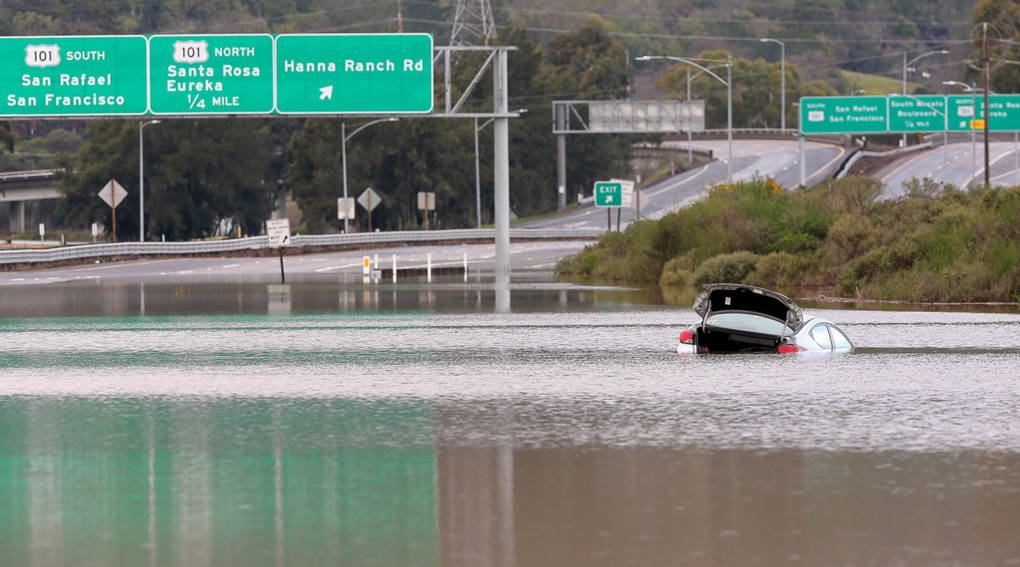
"caption": "Portions of Highway 37 flood on a regular basis, and the important commuter road is increasingly vulnerable to rising seas. Officials are considering an array of options, including raising the road surface by several feet and protecting it with levees.",
"description": "Portions of Highway 37 flood on a regular basis, and the important commuter road is increasingly vulnerable to rising seas. Officials are considering an array of options, including raising the road surface by several feet and protecting it with levees.",
"title": "Hwy37FloodCar",
"credit": "Christopher Chung/The Press Democrat",
"status": "inherit",
"isLoading": false,
"fetchFailed": false
},
"news_11540946": {
"type": "attachments",
"id": "news_11540946",
"meta": {
"index": "attachments_1716263798",
"site": "news",
"id": "11540946",
"found": true
},
"parent": 11540912,
"imgSizes": {
"small": {
"file": "https://ww2.kqed.org/app/uploads/sites/10/2017/06/GIG-WORKER-Photos-1-Uber-520x293.jpg",
"width": 520,
"mimeType": "image/jpeg",
"height": 293
},
"twentyfourteen-full-width": {
"file": "https://ww2.kqed.org/app/uploads/sites/10/2017/06/GIG-WORKER-Photos-1-Uber-1038x576.jpg",
"width": 1038,
"mimeType": "image/jpeg",
"height": 576
},
"thumbnail": {
"file": "https://ww2.kqed.org/app/uploads/sites/10/2017/06/GIG-WORKER-Photos-1-Uber-160x90.jpg",
"width": 160,
"mimeType": "image/jpeg",
"height": 90
},
"fd-sm": {
"file": "https://ww2.kqed.org/app/uploads/sites/10/2017/06/GIG-WORKER-Photos-1-Uber-960x540.jpg",
"width": 960,
"mimeType": "image/jpeg",
"height": 540
},
"post-thumbnail": {
"file": "https://ww2.kqed.org/app/uploads/sites/10/2017/06/GIG-WORKER-Photos-1-Uber-672x372.jpg",
"width": 672,
"mimeType": "image/jpeg",
"height": 372
},
"xsmall": {
"file": "https://ww2.kqed.org/app/uploads/sites/10/2017/06/GIG-WORKER-Photos-1-Uber-375x211.jpg",
"width": 375,
"mimeType": "image/jpeg",
"height": 211
},
"kqedFullSize": {
"file": "https://ww2.kqed.org/app/uploads/sites/10/2017/06/GIG-WORKER-Photos-1-Uber-e1498850086919.jpg",
"width": 1920,
"height": 1080
},
"large": {
"file": "https://ww2.kqed.org/app/uploads/sites/10/2017/06/GIG-WORKER-Photos-1-Uber-1020x574.jpg",
"width": 1020,
"mimeType": "image/jpeg",
"height": 574
},
"xlarge": {
"file": "https://ww2.kqed.org/app/uploads/sites/10/2017/06/GIG-WORKER-Photos-1-Uber-1180x664.jpg",
"width": 1180,
"mimeType": "image/jpeg",
"height": 664
},
"guest-author-50": {
"file": "https://ww2.kqed.org/app/uploads/sites/10/2017/06/GIG-WORKER-Photos-1-Uber-50x50.jpg",
"width": 50,
"mimeType": "image/jpeg",
"height": 50
},
"guest-author-96": {
"file": "https://ww2.kqed.org/app/uploads/sites/10/2017/06/GIG-WORKER-Photos-1-Uber-96x96.jpg",
"width": 96,
"mimeType": "image/jpeg",
"height": 96
},
"medium": {
"file": "https://ww2.kqed.org/app/uploads/sites/10/2017/06/GIG-WORKER-Photos-1-Uber-800x450.jpg",
"width": 800,
"mimeType": "image/jpeg",
"height": 450
},
"guest-author-64": {
"file": "https://ww2.kqed.org/app/uploads/sites/10/2017/06/GIG-WORKER-Photos-1-Uber-64x64.jpg",
"width": 64,
"mimeType": "image/jpeg",
"height": 64
},
"guest-author-32": {
"file": "https://ww2.kqed.org/app/uploads/sites/10/2017/06/GIG-WORKER-Photos-1-Uber-32x32.jpg",
"width": 32,
"mimeType": "image/jpeg",
"height": 32
},
"fd-lrg": {
"file": "https://ww2.kqed.org/app/uploads/sites/10/2017/06/GIG-WORKER-Photos-1-Uber-1920x1080.jpg",
"width": 1920,
"mimeType": "image/jpeg",
"height": 1080
},
"fd-med": {
"file": "https://ww2.kqed.org/app/uploads/sites/10/2017/06/GIG-WORKER-Photos-1-Uber-1180x664.jpg",
"width": 1180,
"mimeType": "image/jpeg",
"height": 664
},
"full-width": {
"file": "https://ww2.kqed.org/app/uploads/sites/10/2017/06/GIG-WORKER-Photos-1-Uber-1920x1080.jpg",
"width": 1920,
"mimeType": "image/jpeg",
"height": 1080
},
"detail": {
"file": "https://ww2.kqed.org/app/uploads/sites/10/2017/06/GIG-WORKER-Photos-1-Uber-150x150.jpg",
"width": 150,
"mimeType": "image/jpeg",
"height": 150
},
"guest-author-128": {
"file": "https://ww2.kqed.org/app/uploads/sites/10/2017/06/GIG-WORKER-Photos-1-Uber-128x128.jpg",
"width": 128,
"mimeType": "image/jpeg",
"height": 128
},
"xxsmall": {
"file": "https://ww2.kqed.org/app/uploads/sites/10/2017/06/GIG-WORKER-Photos-1-Uber-240x135.jpg",
"width": 240,
"mimeType": "image/jpeg",
"height": 135
}
},
"publishDate": 1498849986,
"modified": 1498850007,
"caption": "An Uber drives gives a passenger a ride.",
"description": null,
"title": "GIG WORKER Photos 1 (Uber)",
"credit": "Alexander Torrenegra via Wikimedia Commons",
"status": "inherit",
"isLoading": false,
"fetchFailed": false
},
"news_11526400": {
"type": "attachments",
"id": "news_11526400",
"meta": {
"index": "attachments_1716263798",
"site": "news",
"id": "11526400",
"found": true
},
"parent": 11526398,
"imgSizes": {
"small": {
"file": "https://ww2.kqed.org/app/uploads/sites/10/2017/06/DEPORTED-VETS-Photo-1-520x345.jpg",
"width": 520,
"mimeType": "image/jpeg",
"height": 345
},
"twentyfourteen-full-width": {
"file": "https://ww2.kqed.org/app/uploads/sites/10/2017/06/DEPORTED-VETS-Photo-1-1038x576.jpg",
"width": 1038,
"mimeType": "image/jpeg",
"height": 576
},
"thumbnail": {
"file": "https://ww2.kqed.org/app/uploads/sites/10/2017/06/DEPORTED-VETS-Photo-1-160x106.jpg",
"width": 160,
"mimeType": "image/jpeg",
"height": 106
},
"fd-sm": {
"file": "https://ww2.kqed.org/app/uploads/sites/10/2017/06/DEPORTED-VETS-Photo-1-960x638.jpg",
"width": 960,
"mimeType": "image/jpeg",
"height": 638
},
"post-thumbnail": {
"file": "https://ww2.kqed.org/app/uploads/sites/10/2017/06/DEPORTED-VETS-Photo-1-672x372.jpg",
"width": 672,
"mimeType": "image/jpeg",
"height": 372
},
"xsmall": {
"file": "https://ww2.kqed.org/app/uploads/sites/10/2017/06/DEPORTED-VETS-Photo-1-375x249.jpg",
"width": 375,
"mimeType": "image/jpeg",
"height": 249
},
"kqedFullSize": {
"file": "https://ww2.kqed.org/app/uploads/sites/10/2017/06/DEPORTED-VETS-Photo-1.jpg",
"width": 4200,
"height": 2790
},
"large": {
"file": "https://ww2.kqed.org/app/uploads/sites/10/2017/06/DEPORTED-VETS-Photo-1-1020x678.jpg",
"width": 1020,
"mimeType": "image/jpeg",
"height": 678
},
"xlarge": {
"file": "https://ww2.kqed.org/app/uploads/sites/10/2017/06/DEPORTED-VETS-Photo-1-1180x784.jpg",
"width": 1180,
"mimeType": "image/jpeg",
"height": 784
},
"guest-author-50": {
"file": "https://ww2.kqed.org/app/uploads/sites/10/2017/06/DEPORTED-VETS-Photo-1-50x50.jpg",
"width": 50,
"mimeType": "image/jpeg",
"height": 50
},
"guest-author-96": {
"file": "https://ww2.kqed.org/app/uploads/sites/10/2017/06/DEPORTED-VETS-Photo-1-96x96.jpg",
"width": 96,
"mimeType": "image/jpeg",
"height": 96
},
"medium": {
"file": "https://ww2.kqed.org/app/uploads/sites/10/2017/06/DEPORTED-VETS-Photo-1-800x531.jpg",
"width": 800,
"mimeType": "image/jpeg",
"height": 531
},
"guest-author-64": {
"file": "https://ww2.kqed.org/app/uploads/sites/10/2017/06/DEPORTED-VETS-Photo-1-64x64.jpg",
"width": 64,
"mimeType": "image/jpeg",
"height": 64
},
"guest-author-32": {
"file": "https://ww2.kqed.org/app/uploads/sites/10/2017/06/DEPORTED-VETS-Photo-1-32x32.jpg",
"width": 32,
"mimeType": "image/jpeg",
"height": 32
},
"fd-lrg": {
"file": "https://ww2.kqed.org/app/uploads/sites/10/2017/06/DEPORTED-VETS-Photo-1-1920x1275.jpg",
"width": 1920,
"mimeType": "image/jpeg",
"height": 1275
},
"fd-med": {
"file": "https://ww2.kqed.org/app/uploads/sites/10/2017/06/DEPORTED-VETS-Photo-1-1180x784.jpg",
"width": 1180,
"mimeType": "image/jpeg",
"height": 784
},
"full-width": {
"file": "https://ww2.kqed.org/app/uploads/sites/10/2017/06/DEPORTED-VETS-Photo-1-1920x1275.jpg",
"width": 1920,
"mimeType": "image/jpeg",
"height": 1275
},
"detail": {
"file": "https://ww2.kqed.org/app/uploads/sites/10/2017/06/DEPORTED-VETS-Photo-1-150x150.jpg",
"width": 150,
"mimeType": "image/jpeg",
"height": 150
},
"guest-author-128": {
"file": "https://ww2.kqed.org/app/uploads/sites/10/2017/06/DEPORTED-VETS-Photo-1-128x128.jpg",
"width": 128,
"mimeType": "image/jpeg",
"height": 128
},
"xxsmall": {
"file": "https://ww2.kqed.org/app/uploads/sites/10/2017/06/DEPORTED-VETS-Photo-1-240x159.jpg",
"width": 240,
"mimeType": "image/jpeg",
"height": 159
}
},
"publishDate": 1498164499,
"modified": 1498164596,
"caption": "Hector Barajas, founder and director of the Deported Veterans Support House, chats with a deported veteran at the house in Tijuana, Mexico.\nBarajas, a Mexican citizen and U.S. Army veteran, was deported to Mexico in 2004.",
"description": null,
"title": "DEPORTED VETS Photo 1",
"credit": "David Maung/CALmatters",
"status": "inherit",
"isLoading": false,
"fetchFailed": false
},
"news_11524627": {
"type": "attachments",
"id": "news_11524627",
"meta": {
"index": "attachments_1716263798",
"site": "news",
"id": "11524627",
"found": true
},
"parent": 11524617,
"imgSizes": {
"small": {
"file": "https://ww2.kqed.org/app/uploads/sites/10/2017/06/AchievementGapMain-1-520x306.jpg",
"width": 520,
"mimeType": "image/jpeg",
"height": 306
},
"twentyfourteen-full-width": {
"file": "https://ww2.kqed.org/app/uploads/sites/10/2017/06/AchievementGapMain-1-1038x576.jpg",
"width": 1038,
"mimeType": "image/jpeg",
"height": 576
},
"thumbnail": {
"file": "https://ww2.kqed.org/app/uploads/sites/10/2017/06/AchievementGapMain-1-160x94.jpg",
"width": 160,
"mimeType": "image/jpeg",
"height": 94
},
"fd-sm": {
"file": "https://ww2.kqed.org/app/uploads/sites/10/2017/06/AchievementGapMain-1-960x564.jpg",
"width": 960,
"mimeType": "image/jpeg",
"height": 564
},
"post-thumbnail": {
"file": "https://ww2.kqed.org/app/uploads/sites/10/2017/06/AchievementGapMain-1-672x372.jpg",
"width": 672,
"mimeType": "image/jpeg",
"height": 372
},
"xsmall": {
"file": "https://ww2.kqed.org/app/uploads/sites/10/2017/06/AchievementGapMain-1-375x220.jpg",
"width": 375,
"mimeType": "image/jpeg",
"height": 220
},
"kqedFullSize": {
"file": "https://ww2.kqed.org/app/uploads/sites/10/2017/06/AchievementGapMain-1.jpg",
"width": 1920,
"height": 1128
},
"large": {
"file": "https://ww2.kqed.org/app/uploads/sites/10/2017/06/AchievementGapMain-1-1020x599.jpg",
"width": 1020,
"mimeType": "image/jpeg",
"height": 599
},
"xlarge": {
"file": "https://ww2.kqed.org/app/uploads/sites/10/2017/06/AchievementGapMain-1-1180x693.jpg",
"width": 1180,
"mimeType": "image/jpeg",
"height": 693
},
"guest-author-50": {
"file": "https://ww2.kqed.org/app/uploads/sites/10/2017/06/AchievementGapMain-1-50x50.jpg",
"width": 50,
"mimeType": "image/jpeg",
"height": 50
},
"guest-author-96": {
"file": "https://ww2.kqed.org/app/uploads/sites/10/2017/06/AchievementGapMain-1-96x96.jpg",
"width": 96,
"mimeType": "image/jpeg",
"height": 96
},
"medium": {
"file": "https://ww2.kqed.org/app/uploads/sites/10/2017/06/AchievementGapMain-1-800x470.jpg",
"width": 800,
"mimeType": "image/jpeg",
"height": 470
},
"guest-author-64": {
"file": "https://ww2.kqed.org/app/uploads/sites/10/2017/06/AchievementGapMain-1-64x64.jpg",
"width": 64,
"mimeType": "image/jpeg",
"height": 64
},
"guest-author-32": {
"file": "https://ww2.kqed.org/app/uploads/sites/10/2017/06/AchievementGapMain-1-32x32.jpg",
"width": 32,
"mimeType": "image/jpeg",
"height": 32
},
"fd-lrg": {
"file": "https://ww2.kqed.org/app/uploads/sites/10/2017/06/AchievementGapMain-1-1920x1128.jpg",
"width": 1920,
"mimeType": "image/jpeg",
"height": 1128
},
"fd-med": {
"file": "https://ww2.kqed.org/app/uploads/sites/10/2017/06/AchievementGapMain-1-1180x693.jpg",
"width": 1180,
"mimeType": "image/jpeg",
"height": 693
},
"full-width": {
"file": "https://ww2.kqed.org/app/uploads/sites/10/2017/06/AchievementGapMain-1-1920x1128.jpg",
"width": 1920,
"mimeType": "image/jpeg",
"height": 1128
},
"detail": {
"file": "https://ww2.kqed.org/app/uploads/sites/10/2017/06/AchievementGapMain-1-150x150.jpg",
"width": 150,
"mimeType": "image/jpeg",
"height": 150
},
"guest-author-128": {
"file": "https://ww2.kqed.org/app/uploads/sites/10/2017/06/AchievementGapMain-1-128x128.jpg",
"width": 128,
"mimeType": "image/jpeg",
"height": 128
},
"xxsmall": {
"file": "https://ww2.kqed.org/app/uploads/sites/10/2017/06/AchievementGapMain-1-240x141.jpg",
"width": 240,
"mimeType": "image/jpeg",
"height": 141
}
},
"publishDate": 1498080504,
"modified": 1498080567,
"caption": "A Greenfield Union student takes notes during class at Kendrick Elementary School in Bakersfield. The district is one of 15 CALmatters studied to understand how well the state’s new school funding formula is working.",
"description": "A Greenfield Union student takes notes during class at Kendrick Elementary School in Bakersfield. The district is one of 15 CALmatters studied to understand how well the state’s new school funding formula is working.",
"title": "AchievementGapMain",
"credit": "Henry Barrios/The Californian",
"status": "inherit",
"isLoading": false,
"fetchFailed": false
},
"news_11501694": {
"type": "attachments",
"id": "news_11501694",
"meta": {
"index": "attachments_1716263798",
"site": "news",
"id": "11501694",
"found": true
},
"parent": 11501627,
"imgSizes": {
"small": {
"file": "https://ww2.kqed.org/app/uploads/sites/10/2017/06/dreamstime_xl_12753809-1280x640-520x260.jpg",
"width": 520,
"mimeType": "image/jpeg",
"height": 260
},
"twentyfourteen-full-width": {
"file": "https://ww2.kqed.org/app/uploads/sites/10/2017/06/dreamstime_xl_12753809-1280x640-1038x576.jpg",
"width": 1038,
"mimeType": "image/jpeg",
"height": 576
},
"thumbnail": {
"file": "https://ww2.kqed.org/app/uploads/sites/10/2017/06/dreamstime_xl_12753809-1280x640-160x80.jpg",
"width": 160,
"mimeType": "image/jpeg",
"height": 80
},
"fd-sm": {
"file": "https://ww2.kqed.org/app/uploads/sites/10/2017/06/dreamstime_xl_12753809-1280x640-960x480.jpg",
"width": 960,
"mimeType": "image/jpeg",
"height": 480
},
"post-thumbnail": {
"file": "https://ww2.kqed.org/app/uploads/sites/10/2017/06/dreamstime_xl_12753809-1280x640-672x372.jpg",
"width": 672,
"mimeType": "image/jpeg",
"height": 372
},
"xsmall": {
"file": "https://ww2.kqed.org/app/uploads/sites/10/2017/06/dreamstime_xl_12753809-1280x640-375x188.jpg",
"width": 375,
"mimeType": "image/jpeg",
"height": 188
},
"kqedFullSize": {
"file": "https://ww2.kqed.org/app/uploads/sites/10/2017/06/dreamstime_xl_12753809-1280x640.jpg",
"width": 1280,
"height": 640
},
"large": {
"file": "https://ww2.kqed.org/app/uploads/sites/10/2017/06/dreamstime_xl_12753809-1280x640-1020x510.jpg",
"width": 1020,
"mimeType": "image/jpeg",
"height": 510
},
"xlarge": {
"file": "https://ww2.kqed.org/app/uploads/sites/10/2017/06/dreamstime_xl_12753809-1280x640-1180x590.jpg",
"width": 1180,
"mimeType": "image/jpeg",
"height": 590
},
"guest-author-50": {
"file": "https://ww2.kqed.org/app/uploads/sites/10/2017/06/dreamstime_xl_12753809-1280x640-50x50.jpg",
"width": 50,
"mimeType": "image/jpeg",
"height": 50
},
"guest-author-96": {
"file": "https://ww2.kqed.org/app/uploads/sites/10/2017/06/dreamstime_xl_12753809-1280x640-96x96.jpg",
"width": 96,
"mimeType": "image/jpeg",
"height": 96
},
"medium": {
"file": "https://ww2.kqed.org/app/uploads/sites/10/2017/06/dreamstime_xl_12753809-1280x640-800x400.jpg",
"width": 800,
"mimeType": "image/jpeg",
"height": 400
},
"guest-author-64": {
"file": "https://ww2.kqed.org/app/uploads/sites/10/2017/06/dreamstime_xl_12753809-1280x640-64x64.jpg",
"width": 64,
"mimeType": "image/jpeg",
"height": 64
},
"guest-author-32": {
"file": "https://ww2.kqed.org/app/uploads/sites/10/2017/06/dreamstime_xl_12753809-1280x640-32x32.jpg",
"width": 32,
"mimeType": "image/jpeg",
"height": 32
},
"fd-med": {
"file": "https://ww2.kqed.org/app/uploads/sites/10/2017/06/dreamstime_xl_12753809-1280x640-1180x590.jpg",
"width": 1180,
"mimeType": "image/jpeg",
"height": 590
},
"detail": {
"file": "https://ww2.kqed.org/app/uploads/sites/10/2017/06/dreamstime_xl_12753809-1280x640-150x150.jpg",
"width": 150,
"mimeType": "image/jpeg",
"height": 150
},
"guest-author-128": {
"file": "https://ww2.kqed.org/app/uploads/sites/10/2017/06/dreamstime_xl_12753809-1280x640-128x128.jpg",
"width": 128,
"mimeType": "image/jpeg",
"height": 128
},
"xxsmall": {
"file": "https://ww2.kqed.org/app/uploads/sites/10/2017/06/dreamstime_xl_12753809-1280x640-240x120.jpg",
"width": 240,
"mimeType": "image/jpeg",
"height": 120
}
},
"publishDate": 1497031454,
"modified": 1497031487,
"caption": "African-American boys trailed their female counterparts by a considerable margin on state reading tests",
"description": null,
"title": "dreamstime_xl_12753809-1280x640",
"credit": "Iofoto via Dreamstime",
"status": "inherit",
"isLoading": false,
"fetchFailed": false
},
"news_11487841": {
"type": "attachments",
"id": "news_11487841",
"meta": {
"index": "attachments_1716263798",
"site": "news",
"id": "11487841",
"found": true
},
"parent": 11487777,
"imgSizes": {
"small": {
"file": "https://ww2.kqed.org/app/uploads/sites/10/2017/05/DetergentsShelf-520x341.jpg",
"width": 520,
"mimeType": "image/jpeg",
"height": 341
},
"twentyfourteen-full-width": {
"file": "https://ww2.kqed.org/app/uploads/sites/10/2017/05/DetergentsShelf-1038x576.jpg",
"width": 1038,
"mimeType": "image/jpeg",
"height": 576
},
"thumbnail": {
"file": "https://ww2.kqed.org/app/uploads/sites/10/2017/05/DetergentsShelf-160x105.jpg",
"width": 160,
"mimeType": "image/jpeg",
"height": 105
},
"fd-sm": {
"file": "https://ww2.kqed.org/app/uploads/sites/10/2017/05/DetergentsShelf-960x629.jpg",
"width": 960,
"mimeType": "image/jpeg",
"height": 629
},
"post-thumbnail": {
"file": "https://ww2.kqed.org/app/uploads/sites/10/2017/05/DetergentsShelf-672x372.jpg",
"width": 672,
"mimeType": "image/jpeg",
"height": 372
},
"xsmall": {
"file": "https://ww2.kqed.org/app/uploads/sites/10/2017/05/DetergentsShelf-375x246.jpg",
"width": 375,
"mimeType": "image/jpeg",
"height": 246
},
"kqedFullSize": {
"file": "https://ww2.kqed.org/app/uploads/sites/10/2017/05/DetergentsShelf.jpg",
"width": 1920,
"height": 1258
},
"large": {
"file": "https://ww2.kqed.org/app/uploads/sites/10/2017/05/DetergentsShelf-1020x668.jpg",
"width": 1020,
"mimeType": "image/jpeg",
"height": 668
},
"xlarge": {
"file": "https://ww2.kqed.org/app/uploads/sites/10/2017/05/DetergentsShelf-1180x773.jpg",
"width": 1180,
"mimeType": "image/jpeg",
"height": 773
},
"guest-author-50": {
"file": "https://ww2.kqed.org/app/uploads/sites/10/2017/05/DetergentsShelf-50x50.jpg",
"width": 50,
"mimeType": "image/jpeg",
"height": 50
},
"guest-author-96": {
"file": "https://ww2.kqed.org/app/uploads/sites/10/2017/05/DetergentsShelf-96x96.jpg",
"width": 96,
"mimeType": "image/jpeg",
"height": 96
},
"medium": {
"file": "https://ww2.kqed.org/app/uploads/sites/10/2017/05/DetergentsShelf-800x524.jpg",
"width": 800,
"mimeType": "image/jpeg",
"height": 524
},
"guest-author-64": {
"file": "https://ww2.kqed.org/app/uploads/sites/10/2017/05/DetergentsShelf-64x64.jpg",
"width": 64,
"mimeType": "image/jpeg",
"height": 64
},
"guest-author-32": {
"file": "https://ww2.kqed.org/app/uploads/sites/10/2017/05/DetergentsShelf-32x32.jpg",
"width": 32,
"mimeType": "image/jpeg",
"height": 32
},
"fd-lrg": {
"file": "https://ww2.kqed.org/app/uploads/sites/10/2017/05/DetergentsShelf-1920x1258.jpg",
"width": 1920,
"mimeType": "image/jpeg",
"height": 1258
},
"fd-med": {
"file": "https://ww2.kqed.org/app/uploads/sites/10/2017/05/DetergentsShelf-1180x773.jpg",
"width": 1180,
"mimeType": "image/jpeg",
"height": 773
},
"full-width": {
"file": "https://ww2.kqed.org/app/uploads/sites/10/2017/05/DetergentsShelf-1920x1258.jpg",
"width": 1920,
"mimeType": "image/jpeg",
"height": 1258
},
"detail": {
"file": "https://ww2.kqed.org/app/uploads/sites/10/2017/05/DetergentsShelf-150x150.jpg",
"width": 150,
"mimeType": "image/jpeg",
"height": 150
},
"guest-author-128": {
"file": "https://ww2.kqed.org/app/uploads/sites/10/2017/05/DetergentsShelf-128x128.jpg",
"width": 128,
"mimeType": "image/jpeg",
"height": 128
},
"xxsmall": {
"file": "https://ww2.kqed.org/app/uploads/sites/10/2017/05/DetergentsShelf-240x157.jpg",
"width": 240,
"mimeType": "image/jpeg",
"height": 157
}
},
"publishDate": 1496267884,
"modified": 1496267978,
"caption": "Laundry detergent on sale at a supermarket.",
"description": "Laundry detergent on sale at a supermarket.",
"title": "DetergentsShelf",
"credit": "Joe Raedle/Getty Images",
"status": "inherit",
"isLoading": false,
"fetchFailed": false
},
"news_11475935": {
"type": "attachments",
"id": "news_11475935",
"meta": {
"index": "attachments_1716263798",
"site": "news",
"id": "11475935",
"found": true
},
"parent": 11475927,
"imgSizes": {
"small": {
"file": "https://ww2.kqed.org/app/uploads/sites/10/2017/05/WeedGrower-520x348.jpg",
"width": 520,
"mimeType": "image/jpeg",
"height": 348
},
"twentyfourteen-full-width": {
"file": "https://ww2.kqed.org/app/uploads/sites/10/2017/05/WeedGrower-1038x576.jpg",
"width": 1038,
"mimeType": "image/jpeg",
"height": 576
},
"thumbnail": {
"file": "https://ww2.kqed.org/app/uploads/sites/10/2017/05/WeedGrower-160x107.jpg",
"width": 160,
"mimeType": "image/jpeg",
"height": 107
},
"fd-sm": {
"file": "https://ww2.kqed.org/app/uploads/sites/10/2017/05/WeedGrower-960x642.jpg",
"width": 960,
"mimeType": "image/jpeg",
"height": 642
},
"post-thumbnail": {
"file": "https://ww2.kqed.org/app/uploads/sites/10/2017/05/WeedGrower-672x372.jpg",
"width": 672,
"mimeType": "image/jpeg",
"height": 372
},
"xsmall": {
"file": "https://ww2.kqed.org/app/uploads/sites/10/2017/05/WeedGrower-375x251.jpg",
"width": 375,
"mimeType": "image/jpeg",
"height": 251
},
"kqedFullSize": {
"file": "https://ww2.kqed.org/app/uploads/sites/10/2017/05/WeedGrower.jpg",
"width": 1920,
"height": 1284
},
"large": {
"file": "https://ww2.kqed.org/app/uploads/sites/10/2017/05/WeedGrower-1020x682.jpg",
"width": 1020,
"mimeType": "image/jpeg",
"height": 682
},
"xlarge": {
"file": "https://ww2.kqed.org/app/uploads/sites/10/2017/05/WeedGrower-1180x789.jpg",
"width": 1180,
"mimeType": "image/jpeg",
"height": 789
},
"guest-author-50": {
"file": "https://ww2.kqed.org/app/uploads/sites/10/2017/05/WeedGrower-50x50.jpg",
"width": 50,
"mimeType": "image/jpeg",
"height": 50
},
"guest-author-96": {
"file": "https://ww2.kqed.org/app/uploads/sites/10/2017/05/WeedGrower-96x96.jpg",
"width": 96,
"mimeType": "image/jpeg",
"height": 96
},
"medium": {
"file": "https://ww2.kqed.org/app/uploads/sites/10/2017/05/WeedGrower-800x535.jpg",
"width": 800,
"mimeType": "image/jpeg",
"height": 535
},
"guest-author-64": {
"file": "https://ww2.kqed.org/app/uploads/sites/10/2017/05/WeedGrower-64x64.jpg",
"width": 64,
"mimeType": "image/jpeg",
"height": 64
},
"guest-author-32": {
"file": "https://ww2.kqed.org/app/uploads/sites/10/2017/05/WeedGrower-32x32.jpg",
"width": 32,
"mimeType": "image/jpeg",
"height": 32
},
"fd-lrg": {
"file": "https://ww2.kqed.org/app/uploads/sites/10/2017/05/WeedGrower-1920x1284.jpg",
"width": 1920,
"mimeType": "image/jpeg",
"height": 1284
},
"fd-med": {
"file": "https://ww2.kqed.org/app/uploads/sites/10/2017/05/WeedGrower-1180x789.jpg",
"width": 1180,
"mimeType": "image/jpeg",
"height": 789
},
"full-width": {
"file": "https://ww2.kqed.org/app/uploads/sites/10/2017/05/WeedGrower-1920x1284.jpg",
"width": 1920,
"mimeType": "image/jpeg",
"height": 1284
},
"detail": {
"file": "https://ww2.kqed.org/app/uploads/sites/10/2017/05/WeedGrower-150x150.jpg",
"width": 150,
"mimeType": "image/jpeg",
"height": 150
},
"guest-author-128": {
"file": "https://ww2.kqed.org/app/uploads/sites/10/2017/05/WeedGrower-128x128.jpg",
"width": 128,
"mimeType": "image/jpeg",
"height": 128
},
"xxsmall": {
"file": "https://ww2.kqed.org/app/uploads/sites/10/2017/05/WeedGrower-240x161.jpg",
"width": 240,
"mimeType": "image/jpeg",
"height": 161
}
},
"publishDate": 1495668235,
"modified": 1495668286,
"caption": "A grower prunes his marijuana crops in Mendocino County.",
"description": "A grower prunes his marijuana crops in Mendocino County.",
"title": "WeedGrower",
"credit": "JOSH EDELSON/AFP/Getty Images",
"status": "inherit",
"isLoading": false,
"fetchFailed": false
},
"news_11465545": {
"type": "attachments",
"id": "news_11465545",
"meta": {
"index": "attachments_1716263798",
"site": "news",
"id": "11465545",
"found": true
},
"parent": 11465542,
"imgSizes": {
"small": {
"file": "https://ww2.kqed.org/app/uploads/sites/10/2017/05/EngStudents-520x376.jpg",
"width": 520,
"mimeType": "image/jpeg",
"height": 376
},
"twentyfourteen-full-width": {
"file": "https://ww2.kqed.org/app/uploads/sites/10/2017/05/EngStudents-1038x576.jpg",
"width": 1038,
"mimeType": "image/jpeg",
"height": 576
},
"thumbnail": {
"file": "https://ww2.kqed.org/app/uploads/sites/10/2017/05/EngStudents-160x116.jpg",
"width": 160,
"mimeType": "image/jpeg",
"height": 116
},
"fd-sm": {
"file": "https://ww2.kqed.org/app/uploads/sites/10/2017/05/EngStudents-960x695.jpg",
"width": 960,
"mimeType": "image/jpeg",
"height": 695
},
"post-thumbnail": {
"file": "https://ww2.kqed.org/app/uploads/sites/10/2017/05/EngStudents-672x372.jpg",
"width": 672,
"mimeType": "image/jpeg",
"height": 372
},
"xsmall": {
"file": "https://ww2.kqed.org/app/uploads/sites/10/2017/05/EngStudents-375x271.jpg",
"width": 375,
"mimeType": "image/jpeg",
"height": 271
},
"kqedFullSize": {
"file": "https://ww2.kqed.org/app/uploads/sites/10/2017/05/EngStudents.jpg",
"width": 1920,
"height": 1389
},
"large": {
"file": "https://ww2.kqed.org/app/uploads/sites/10/2017/05/EngStudents-1020x738.jpg",
"width": 1020,
"mimeType": "image/jpeg",
"height": 738
},
"xlarge": {
"file": "https://ww2.kqed.org/app/uploads/sites/10/2017/05/EngStudents-1180x854.jpg",
"width": 1180,
"mimeType": "image/jpeg",
"height": 854
},
"guest-author-50": {
"file": "https://ww2.kqed.org/app/uploads/sites/10/2017/05/EngStudents-50x50.jpg",
"width": 50,
"mimeType": "image/jpeg",
"height": 50
},
"guest-author-96": {
"file": "https://ww2.kqed.org/app/uploads/sites/10/2017/05/EngStudents-96x96.jpg",
"width": 96,
"mimeType": "image/jpeg",
"height": 96
},
"medium": {
"file": "https://ww2.kqed.org/app/uploads/sites/10/2017/05/EngStudents-800x579.jpg",
"width": 800,
"mimeType": "image/jpeg",
"height": 579
},
"guest-author-64": {
"file": "https://ww2.kqed.org/app/uploads/sites/10/2017/05/EngStudents-64x64.jpg",
"width": 64,
"mimeType": "image/jpeg",
"height": 64
},
"guest-author-32": {
"file": "https://ww2.kqed.org/app/uploads/sites/10/2017/05/EngStudents-32x32.jpg",
"width": 32,
"mimeType": "image/jpeg",
"height": 32
},
"fd-lrg": {
"file": "https://ww2.kqed.org/app/uploads/sites/10/2017/05/EngStudents-1920x1389.jpg",
"width": 1920,
"mimeType": "image/jpeg",
"height": 1389
},
"fd-med": {
"file": "https://ww2.kqed.org/app/uploads/sites/10/2017/05/EngStudents-1180x854.jpg",
"width": 1180,
"mimeType": "image/jpeg",
"height": 854
},
"full-width": {
"file": "https://ww2.kqed.org/app/uploads/sites/10/2017/05/EngStudents-1920x1389.jpg",
"width": 1920,
"mimeType": "image/jpeg",
"height": 1389
},
"detail": {
"file": "https://ww2.kqed.org/app/uploads/sites/10/2017/05/EngStudents-150x150.jpg",
"width": 150,
"mimeType": "image/jpeg",
"height": 150
},
"guest-author-128": {
"file": "https://ww2.kqed.org/app/uploads/sites/10/2017/05/EngStudents-128x128.jpg",
"width": 128,
"mimeType": "image/jpeg",
"height": 128
},
"xxsmall": {
"file": "https://ww2.kqed.org/app/uploads/sites/10/2017/05/EngStudents-240x174.jpg",
"width": 240,
"mimeType": "image/jpeg",
"height": 174
}
},
"publishDate": 1495154731,
"modified": 1495154799,
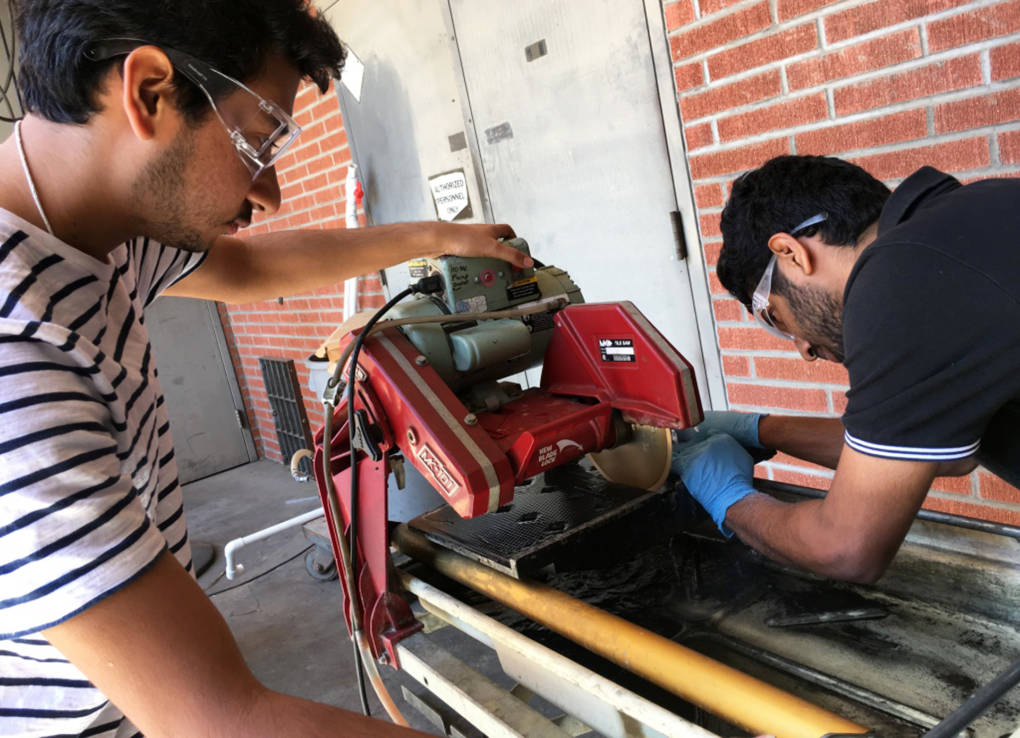
"caption": "Graduate engineering students Manoj Sampangi Ram (L) and Skanda Rai are originally from India and study at California State University, Long Beach on student visas.",
"description": "Graduate engineering students Manoj Sampangi Ram (L) and Skanda Rai are originally from India and study at California State University, Long Beach on student visas.",
"title": "EngStudents",
"credit": "Adolfo Guzman-Lopez/KPCC",
"status": "inherit",
"isLoading": false,
"fetchFailed": false
}
},
"audioPlayerReducer": {
"postId": "stream_live",
"isPaused": true,
"isPlaying": false,
"pfsActive": false,
"pledgeModalIsOpen": true,
"playerDrawerIsOpen": false,
"liveAudioPlayStartedAt": 0,
"liveAudioPlayContext": ""
},
"authorsReducer": {
"byline_news_11591770": {
"type": "authors",
"id": "byline_news_11591770",
"meta": {
"override": true
},
"slug": "byline_news_11591770",
"name": "\u003cstrong>\u003ca href=\"https://calmatters.org/articles/author/elizabeth-aguilera/\">Elizabeth Aguilera\u003c/a>\u003c/strong>",
"isLoading": false
},
"byline_news_11576041": {
"type": "authors",
"id": "byline_news_11576041",
"meta": {
"override": true
},
"slug": "byline_news_11576041",
"name": "\u003cstrong>\u003ca href=\"https://calmatters.org/articles/author/laurel-rosenhall/\">Laurel Rosenhall\u003c/a>\u003c/strong>",
"isLoading": false
},
"byline_news_11574585": {
"type": "authors",
"id": "byline_news_11574585",
"meta": {
"override": true
},
"slug": "byline_news_11574585",
"name": "\u003cstrong>\u003ca href=\"https://calmatters.org/articles/author/dan-walters/\">Dan Walters\u003c/a>\u003cbr>\u003ca href=\"https://calmatters.org/articles/category/commentary/\">CALmatters Commentary\u003c/a>\u003c/strong>",
"isLoading": false
},
"byline_news_11563885": {
"type": "authors",
"id": "byline_news_11563885",
"meta": {
"override": true
},
"slug": "byline_news_11563885",
"name": "\u003cstrong>\u003ca href=\"https://calmatters.org/articles/author/matt-levin/\">Matt Levin\u003c/a>\u003c/strong>",
"isLoading": false
},
"byline_news_11541193": {
"type": "authors",
"id": "byline_news_11541193",
"meta": {
"override": true
},
"slug": "byline_news_11541193",
"name": "\u003cstrong>\u003ca href=\"https://calmatters.org/articles/author/julie-cart/\">Julie Cart\u003c/a>\u003c/strong>",
"isLoading": false
},
"byline_news_11540912": {
"type": "authors",
"id": "byline_news_11540912",
"meta": {
"override": true
},
"slug": "byline_news_11540912",
"name": "\u003cstrong>\u003ca href=\"https://calmatters.org/articles/author/ben-christopher/\">Ben Christopher\u003ca/>\u003cbr>CALmatters\u003ca href=\"https://calmatters.org/articles/california-gives-gig-workers-break-just-little-one-start/\"\u003c/a>\u003c/strong>",
"isLoading": false
},
"byline_news_11526398": {
"type": "authors",
"id": "byline_news_11526398",
"meta": {
"override": true
},
"slug": "byline_news_11526398",
"name": "\u003cstrong>Elizabeth Aguilera\u003c/strong> \u003cbr>\u003cstrong>\u003ca href=\"https://calmatters.org/articles/discharged-deported-california-may-cover-legal-bid-return/\">CALmatters\u003c/a>\u003c/strong>",
"isLoading": false
},
"byline_news_11524617": {
"type": "authors",
"id": "byline_news_11524617",
"meta": {
"override": true
},
"slug": "byline_news_11524617",
"name": "\u003cstrong>\u003ca href=\"https://calmatters.org/articles/author/jessica-calefati/\" target=\"_blank\">Jessica Calefati\u003c/a>\u003c/strong>",
"isLoading": false
},
"byline_news_11501627": {
"type": "authors",
"id": "byline_news_11501627",
"meta": {
"override": true
},
"slug": "byline_news_11501627",
"name": "Matt Levin\u003cbr>\u003cstrong>\u003ca href=\"https://calmatters.org/articles/data-exclusive-75-of-black-california-boys-dont-meet-reading-standards/\">CALMatters\u003c/a>\u003c/strong>",
"isLoading": false
},
"byline_news_11487777": {
"type": "authors",
"id": "byline_news_11487777",
"meta": {
"override": true
},
"slug": "byline_news_11487777",
"name": "\u003cstrong>\u003ca href=\"https://calmatters.org/articles/author/laurel-rosenhall/\">Laurel Rosenhall\u003c/a>\u003c/strong>",
"isLoading": false
},
"byline_news_11475927": {
"type": "authors",
"id": "byline_news_11475927",
"meta": {
"override": true
},
"slug": "byline_news_11475927",
"name": "\u003cstrong>\u003ca href=\"https://calmatters.org/articles/author/ben-christopher/\">Ben Christopher\u003c/a>\u003c/strong>",
"isLoading": false
},
"byline_news_11465542": {
"type": "authors",
"id": "byline_news_11465542",
"meta": {
"override": true
},
"slug": "byline_news_11465542",
"name": "\u003cstrong>\u003ca href=\"http://www.scpr.org/about/people/staff/adolfo-guzman-lopez\">Adolfo Guzman-Lopez\u003c/a>\u003cbr>\u003ca href=\"http://www.scpr.org/\">KPCC\u003c/a>\u003c/strong>",
"isLoading": false
}
},
"pagesReducer": {
"news_affiliate_calmatters": {
"type": "terms",
"id": "news_18481",
"meta": {
"index": "terms_1716263798",
"site": "news",
"id": "18481",
"score": 15.355904
},
"featImg": null,
"name": "CALmatters",
"description": null,
"taxonomy": "affiliate",
"headData": {
"twImgId": null,
"twTitle": null,
"ogTitle": null,
"ogImgId": null,
"twDescription": null,
"description": null,
"title": "CALmatters Archives | KQED Arts",
"ogDescription": null
},
"ttid": 18515,
"slug": "calmatters",
"isLoading": false,
"title": "CALmatters",
"pageMeta": {
"site": "news",
"WpPageTemplate": "page-topic-editorial",
"currentPage": 80
},
"blocks": [
{
"blockName": "kqed/post-list",
"attrs": {
"layout": "cardArticle2",
"query": "posts/news?affiliate=calmatters",
"seeMore": false,
"paginated": true,
"page": 80
}
},
{
"blockName": "kqed/ad"
}
]
}
},
"pfsSessionReducer": {},
"postsReducer": {
"stream_live": {
"type": "live",
"id": "stream_live",
"audioUrl": "https://streams.kqed.org/kqedradio",
"title": "Live Stream",
"excerpt": "Live Stream information currently unavailable.",
"link": "/radio",
"featImg": "",
"label": {
"name": "KQED Live",
"link": "/"
}
},
"stream_kqedNewscast": {
"type": "posts",
"id": "stream_kqedNewscast",
"audioUrl": "https://www.kqed.org/.stream/anon/radio/RDnews/newscast.mp3?_=1",
"title": "KQED Newscast",
"featImg": "",
"label": {
"name": "88.5 FM",
"link": "/"
}
},
"news_11591770": {
"type": "posts",
"id": "news_11591770",
"meta": {
"index": "posts_1716263798",
"site": "news",
"id": "11591770",
"score": null,
"sort": [
1500934198000
]
},
"parent": 0,
"labelTerm": {},
"blocks": [],
"publishDate": 1500934198,
"format": "image",
"disqusTitle": "San Diego Welcomes More Refugees Than Any Other California County",
"title": "San Diego Welcomes More Refugees Than Any Other California County",
"headTitle": "The California Report | KQED News",
"content": "\u003cp>Zawadi Namagazuzyo was about 12 when she was forced to flee her native Congo. Her mother and many family members were dead. Her father wanted her to live.\u003c/p>\n\u003cp>“There was fighting, a lot of fighting,” she said, recalling how the two of them ended up at a refugee camp in Zambia. She grew up there for 13 years -- getting married, giving birth and always waiting to be resettled somewhere else in the world.\u003c/p>\n\u003cp>Then 10 months ago, Namagazuzyo and her family were resettled in San Diego County, where her father had been living for a few months. And under a brilliant sun on a recent Friday, she joined other refugees at a picnic to celebrate their graduation from a 12-week English intensive class. Drumming reverberated through the park, Congolese and Somali dishes were spread out alongside pizza -- and a red, white and blue cake anchored the dessert section.\u003c/p>\n\u003cp>\"I ask questions about the life in San Diego, about the rent, bills, electricity,” said Namagazuzyo, who was surprised to find so many fellow African immigrants in her new home. “We speak together the language, we are many in San Diego. I feel good.\"\u003c/p>\n\u003caside class=\"pullquote alignright\">'They've had to flee some of the most horrific things human beings have to offer.'\u003ccite>David Murphy, International Rescue Committee\u003c/cite>\u003c/aside>\n\u003cp>For nearly a decade, no California county has received more refugees than San Diego County, followed by Los Angeles and Sacramento, according to state and federal data. A large number of refugees are assigned to San Diego because of its concentration of four resettlement agencies and the existence of several rooted immigrant communities already in the area. The trend dates back to the Vietnam War, when hundreds of thousands of Southeast Asians landed at Camp Pendleton for U.S. resettlement. Many stayed, helping make the area a beacon for people fleeing from violence, hunger and instability.\u003c/p>\n\u003cp>[ad fullwidth]\u003c/p>\n\u003cp>“San Diego historically has been a very welcoming county,” said David Murphy, executive director of the International Rescue Committee there that resettled Namagazuzyo’s family and hosted the English class. “There is now a vibrant multicultural population living in San Diego.”\u003c/p>\n\u003cp>At a time when President Trump cites terrorism as justification to crack down on immigration -- the U.S. Supreme Court on Wednesday \u003ca href=\"https://www.nytimes.com/2017/07/19/us/politics/trump-travel-ban-supreme-court.html\">upheld\u003c/a>, for now, key provisions of his ban on refugees -- California lawmakers are working to extend the Golden State’s welcome to the world’s displaced people. Democratic legislators from counties with significant refugee populations are pushing bills to help with education and employment, and secured a $10 million budget \u003ca href=\"https://leginfo.legislature.ca.gov/faces/billTextClient.xhtml?bill_id=201720180AB99\">allocation\u003c/a> to help refugee children.\u003c/p>\n\u003cp>“We are a warm place and not just the weather but our hearts, and the legacy of that continues,” said Democratic Assemblyman Kevin McCarty of Sacramento, lead author of the refugee bills. “We welcome refugees who are escaping war and persecution.”\u003c/p>\n\u003cfigure id=\"attachment_11591864\" class=\"wp-caption aligncenter\" style=\"max-width: 800px\">\u003cimg class=\"size-medium wp-image-11591864\" src=\"https://ww2.kqed.org/news/wp-content/uploads/sites/10/2017/07/RefugeesDance-800x613.jpg\" alt=\"Ramazani Ali leads refugees in a graduation dance at a San Diego park. His wife, Zawadi, is behind him in a yellow headscarf.\" width=\"800\" height=\"613\" srcset=\"https://ww2.kqed.org/app/uploads/sites/10/2017/07/RefugeesDance-800x613.jpg 800w, https://ww2.kqed.org/app/uploads/sites/10/2017/07/RefugeesDance-160x123.jpg 160w, https://ww2.kqed.org/app/uploads/sites/10/2017/07/RefugeesDance-1020x781.jpg 1020w, https://ww2.kqed.org/app/uploads/sites/10/2017/07/RefugeesDance.jpg 1920w, https://ww2.kqed.org/app/uploads/sites/10/2017/07/RefugeesDance-1180x904.jpg 1180w, https://ww2.kqed.org/app/uploads/sites/10/2017/07/RefugeesDance-960x736.jpg 960w, https://ww2.kqed.org/app/uploads/sites/10/2017/07/RefugeesDance-240x184.jpg 240w, https://ww2.kqed.org/app/uploads/sites/10/2017/07/RefugeesDance-375x287.jpg 375w, https://ww2.kqed.org/app/uploads/sites/10/2017/07/RefugeesDance-520x398.jpg 520w\" sizes=\"(max-width: 800px) 100vw, 800px\">\u003cfigcaption class=\"wp-caption-text\">Ramazani Ali leads refugees in a graduation dance at a San Diego park. His wife, Zawadi, is behind him in a yellow headscarf. \u003ccite>(Peggy Peattie/CALmatters)\u003c/cite>\u003c/figcaption>\u003c/figure>\n\u003cp>Trump’s current \u003ca href=\"https://www.whitehouse.gov/the-press-office/2017/03/06/executive-order-protecting-nation-foreign-terrorist-entry-united-states\">executive order\u003c/a> states that more than 300 people who entered the United States as refugees are currently under FBI counterterrorism investigation, and cites two examples of convictions -- including a Somali man brought to the U.S. as a child refugee and sentenced to 30 years in prison for his role in the plot to bomb a Christmas tree lighting ceremony in Portland, Oregon. It also would cut the number of refugees admitted this fiscal year from 110,000 to no more than 50,000, saying any more would be “detrimental” to the country.\u003c/p>\n\u003cp>It’s unclear what that means for refugees from countries that the order singled out for a broader ban: Iran, Syria, Libya, Sudan, Yemen and Somalia. The U.S. Supreme Court will hear challenges to the order this fall.\u003c/p>\n\u003cp>“They’ve had to flee some of the most horrific things human beings have to offer, they are escaping war, they are escaping terrorists, they are escaping ISIS, they have been vetted and now we are putting them through another merry-go-round of uncertainty,” Murphy said.\u003c/p>\n\u003cp>[contextly_sidebar id=\"ZG3UCstOqgnLGmQ6OQ4oNOa9X0feli30\"]\u003c/p>\n\u003cp>Last year the U.S. admitted nearly 85,000 refugees. More than half went to just 10 states, including Texas and New York, but the largest group, \u003ca href=\"http://www.cdss.ca.gov/Portals/9/Refugee/Arrivals/Arrivals2016_by_county.pdf?ver=2017-03-08-154727-590\">7,908 refugees\u003c/a>, settled in California, according to a Pew Research \u003ca href=\"http://www.pewresearch.org/fact-tank/2016/12/06/just-10-states-resettled-more-than-half-of-recent-refugees-to-u-s/\">study\u003c/a>.\u003c/p>\n\u003cp>And 3,100 of those landed in San Diego County, along with another 520 military interpreters on special immigrant visas, who are also classified as refugees.\u003c/p>\n\u003cp>Since the end of the Vietnam War, California has \u003ca href=\"http://www.cdss.ca.gov/Portals/9/Refugee/Arrivals/arrivals_by_county_and_year_since_1975.pdf?ver=2017-03-08-144555-390\">welcomed\u003c/a> 732,000 refugees, according to state data. During that time, San Diego resettled more than 85,000 refugees -- roughly equal to the entire population of cities such as Chico or Newport Beach.\u003c/p>\n\u003cfigure id=\"attachment_11591866\" class=\"wp-caption aligncenter\" style=\"max-width: 800px\">\u003cimg class=\"size-medium wp-image-11591866\" src=\"https://ww2.kqed.org/news/wp-content/uploads/sites/10/2017/07/BoyDrum-800x524.jpg\" alt=\"Mazani Ali, age 2, takes to the drums at a picnic in San Diego, home to the state’s largest cluster of refugees.\" width=\"800\" height=\"524\" srcset=\"https://ww2.kqed.org/app/uploads/sites/10/2017/07/BoyDrum-800x524.jpg 800w, https://ww2.kqed.org/app/uploads/sites/10/2017/07/BoyDrum-160x105.jpg 160w, https://ww2.kqed.org/app/uploads/sites/10/2017/07/BoyDrum-1020x668.jpg 1020w, https://ww2.kqed.org/app/uploads/sites/10/2017/07/BoyDrum.jpg 1920w, https://ww2.kqed.org/app/uploads/sites/10/2017/07/BoyDrum-1180x773.jpg 1180w, https://ww2.kqed.org/app/uploads/sites/10/2017/07/BoyDrum-960x629.jpg 960w, https://ww2.kqed.org/app/uploads/sites/10/2017/07/BoyDrum-240x157.jpg 240w, https://ww2.kqed.org/app/uploads/sites/10/2017/07/BoyDrum-375x246.jpg 375w, https://ww2.kqed.org/app/uploads/sites/10/2017/07/BoyDrum-520x340.jpg 520w\" sizes=\"(max-width: 800px) 100vw, 800px\">\u003cfigcaption class=\"wp-caption-text\">Mazani Ali, age 2, takes to the drums at a picnic in San Diego, home to the state’s largest cluster of refugees. \u003ccite>(Peggy Peattie/CALmatters)\u003c/cite>\u003c/figcaption>\u003c/figure>\n\u003cp>You see it, hear it and feel it as you walk the streets of the City Heights neighborhood east of downtown San Diego, where shoppers throng Somali, Ethiopian and assorted Asian restaurants and a cacophony of languages ricochets in the air. In the nearby city of El Cajon, where Arabic speakers do a brisk business in shops along Main Street, Iraqi Christians known as Chaldeans number an estimated 60,000. Many arrived as refugees.\u003c/p>\n\u003cp>“San Diego has the fault of having the best weather in the world,” said Bishop Bawai Soro of St. Peter Chaldean Catholic Church, which is now looking for a third location in which to hold its overflow services. Soro himself arrived in Chicago as a refugee 40 years ago, and today he ministers to the infusion of Iraqi refugees in San Diego.\u003c/p>\n\u003cp>“The wars that took place in Iraq didn’t just destroy buildings and bridges and infrastructure -- they destroyed the human soul as well,” he said. “These Iraqis are the luckiest people in the world because they came to America.”\u003c/p>\n\u003cp>The office of the \u003ca href=\"http://www.unhcr.org/en-us/history-of-unhcr.html\">United Nations High Commission\u003c/a>\u003ca href=\"http://www.unhcr.org/en-us/history-of-unhcr.html\">er\u003c/a> \u003ca href=\"http://www.unhcr.org/en-us/history-of-unhcr.html\">for \u003c/a>\u003ca href=\"http://www.unhcr.org/en-us/history-of-unhcr.html\">Refugees\u003c/a> defines a refugee as someone who has “been forced to flee his or her country because of persecution, war, or violence.” The U.S. government further defines a refugee as someone who may “face persecution based on religion, political opinion, race, nationality or membership in a particular social group.” As a result, waves of refugees tend to reflect global conflict zones.\u003c/p>\n\u003cp>Once refugees have \u003ca href=\"https://www.state.gov/j/prm/releases/factsheets/2017/266447.htm\">applied\u003c/a> for refugee status from the U.N., the agency, the U.S. Embassy or other nongovernmental agencies may refer refugees for resettlement in the U.S. That referral kicks off an application process that can take years.\u003c/p>\n\u003cp>The average wait time in a refugee camp is 17 years.\u003c/p>\n\u003cp>https://infogram.com/top_10_refugee_receiving_states\u003c/p>\n\u003cp>When considering a refugee, the U.S. conducts one of the most \u003ca href=\"https://www.state.gov/j/prm/releases/factsheets/2017/266447.htm\">rigorous\u003c/a> vetting processes of any person allowed into the country, according to the U.S. Department of State. Accepted refugees have little say about to which state or county they will be sent. Two factors play a role: if a refugee has family members in a certain locale, and if a large community of refugees from the same country has already settled in a given area. The idea, Murphy said, is to provide a home where refugees will find support and a network to help them settle in.\u003c/p>\n\u003cp>More than two-thirds of refugees, he said, do have some sort of family connection in the States.\u003c/p>\n\u003cp>Refugees enter the U.S. on refugee status and after a year they must apply to become a legal permanent resident, which grants them a green card. After five years in the U.S. they can apply for citizenship.\u003c/p>\n\u003cp>In San Diego, the majority of recent refugees are from Iraq and Afghanistan, according to the \u003ca href=\"http://www.sdrefugeeforum.org/\">San Diego Refugee Forum\u003c/a>, a collaboration between the four resettlement agencies in the county -- IRC, Catholic Charities, Jewish Family Services, and the Alliance for African Assistance.\u003c/p>\n\u003cp>“We want California to put out the welcome mat for refugees, many of whom assisted our military as interpreters overseas, to help them normalize their lives and be more productive members of our communities,” said Assemblywoman Lorena Gonzalez Fletcher, a Democrat from San Diego and co-author of the refugee bills currently being considered in the state Capitol.\u003c/p>\n\u003cp>https://infogram.com/refugees_resettled_in_california\u003c/p>\n\u003cp>The legislators have claimed one victory already -- the final state budget approved in June allocates $10 million to be used over three years for high-refugee-population school districts to help support and integrate refugee children.\u003c/p>\n\u003cp>“Many of these kids come from heartbreaking and extreme trauma-filled circumstances,” said McCarty, the assemblyman from Sacramento. “Certainly counseling and mental health support is critical, and most school districts need extra translation services.”\u003c/p>\n\u003cp>The federal government funds the bulk of refugee costs, funneled through resettlement agencies. This year $37 million of that came to California. The funds pay for initial housing costs and then provide cash aid for the refugees for about 90 days, until refugees must begin paying their own expenses. Refugees are required to pay back the organization that transports them for the travel expenses incurred in getting them to the U.S.\u003c/p>\n\u003cp>[contextly_sidebar id=\"JmdlcvLRQllU5KDDnJV9jw1oap43B23x\"]\u003c/p>\n\u003cp>In addition, refugees may receive help from programs such as CalWORKs (cash and food assistance) and Medi-Cal (health care) that are funded by both the state and the federal government, according to the state Social Services Department. The agency does not keep data specifically on what those costs are for this group.\u003c/p>\n\u003cp>One of the \u003ca href=\"http://leginfo.legislature.ca.gov/faces/billTextClient.xhtml?bill_id=201720180AB343\">bills\u003c/a> would allow refugees and special immigrant visa holders to pay in-state tuition rates upon arrival at public colleges. No one voted against it in the Assembly, although 15 members skipped the vote, and it’s now before the Senate Appropriations Committee.\u003c/p>\n\u003cp>Another \u003ca href=\"http://leginfo.legislature.ca.gov/faces/billNavClient.xhtml?bill_id=201720180AB349\">proposal\u003c/a> would allow special immigrant visa holders who pass certain tests to move to the top of hiring lists for particular government jobs. It’s on hold until next year, McCarty says, while sponsors work out details. Among opponents: the Service Employees International Union Local 1000, which complained that it went too far by offering refugees special consideration otherwise reserved exclusively for U.S. veterans.\u003c/p>\n\u003cp>Critics, such as the organization \u003ca href=\"https://refugeeresettlementwatch.wordpress.com/\">Refugee Resettlement Watch\u003c/a>, insist the program disregards the impact refugees have on U.S. natural resources. They also contend that it’s wrong for the U.S. to welcome refugees that will provide cheap labor for certain industries and end up receiving welfare and other taxpayer-funded aid.\u003c/p>\n\u003cfigure id=\"attachment_11591879\" class=\"wp-caption aligncenter\" style=\"max-width: 800px\">\u003cimg class=\"size-medium wp-image-11591879\" src=\"https://ww2.kqed.org/news/wp-content/uploads/sites/10/2017/07/PickingGreesRefugees-800x516.jpg\" alt=\"In the community garden down the street from the International Rescue Committee, Idzai Mubaiwa, originally from Zimbabwe, harvests collard greens, batching them for sale the following day at a street market. \" width=\"800\" height=\"516\" srcset=\"https://ww2.kqed.org/app/uploads/sites/10/2017/07/PickingGreesRefugees-800x516.jpg 800w, https://ww2.kqed.org/app/uploads/sites/10/2017/07/PickingGreesRefugees-160x103.jpg 160w, https://ww2.kqed.org/app/uploads/sites/10/2017/07/PickingGreesRefugees-1020x658.jpg 1020w, https://ww2.kqed.org/app/uploads/sites/10/2017/07/PickingGreesRefugees.jpg 1920w, https://ww2.kqed.org/app/uploads/sites/10/2017/07/PickingGreesRefugees-1180x761.jpg 1180w, https://ww2.kqed.org/app/uploads/sites/10/2017/07/PickingGreesRefugees-960x619.jpg 960w, https://ww2.kqed.org/app/uploads/sites/10/2017/07/PickingGreesRefugees-240x155.jpg 240w, https://ww2.kqed.org/app/uploads/sites/10/2017/07/PickingGreesRefugees-375x242.jpg 375w, https://ww2.kqed.org/app/uploads/sites/10/2017/07/PickingGreesRefugees-520x335.jpg 520w\" sizes=\"(max-width: 800px) 100vw, 800px\">\u003cfigcaption class=\"wp-caption-text\">In the community garden down the street from the International Rescue Committee, Idzai Mubaiwa, originally from Zimbabwe, harvests collard greens, batching them for sale the following day at a street market. \u003ccite>(Peggy Peattie/CALmatters)\u003c/cite>\u003c/figcaption>\u003c/figure>\n\u003cp>When refugees arrive in the U.S., resettlement agencies work with them for an intense 90 days to help them find jobs, open bank accounts, register their children for school and set up their lives. After that, the agencies offer other services that refugees can apply for, such as auto and business loans.\u003c/p>\n\u003cp>Back in City Heights at IRC’s New Roots Community Garden, where mainly refugees tend some 95 plots, the greenhouses are filled with edibles rustling in the breeze.\u003c/p>\n\u003cp>Idzai Mubaiwa, 51, stretches her arms out over her three lush plots, bursting with kale, collard greens and sugar cane stalks. She arrived in San Diego 15 years ago from Zimbabwe, and remembers being the newbie absorbing the cultural shocks of American life, such as how children don’t have to wear school uniforms. Now her daughters are graduates of or are in college -- one on a scholarship at Vassar.\u003c/p>\n\u003cp>“The moment I got this garden it was gold for me. It just brings me close to home,” she said. “It made a huge difference because this is part of my income, it helps me sustain my family.”\u003c/p>\n\u003cp>She grows corn as her family’s chief food source, but the rest of the rows she plants to sell at local farmers markets under the name African Sisters Produce. She picked up on what people are looking for. Kale has been hot. And that’s why this year she’s finally trying her green thumb on a California staple: strawberries.\u003c/p>\n\u003cp>[ad floatright]\u003c/p>\n\u003cp>\u003cem>CALmatters.org is a nonprofit, nonpartisan media venture explaining California policies and politics.\u003c/em>\u003c/p>\n\n",
"disqusIdentifier": "11591770 https://ww2.kqed.org/news/?p=11591770",
"disqusUrl": "https://ww2.kqed.org/news/2017/07/24/san-diego-welcomes-more-refugees-than-any-other-california-county/",
"stats": {
"hasVideo": false,
"hasChartOrMap": false,
"hasAudio": false,
"hasPolis": false,
"wordCount": 2116,
"hasGoogleForm": false,
"hasGallery": false,
"hasHearkenModule": false,
"iframeSrcs": [],
"paragraphCount": 42
},
"modified": 1500945144,
"excerpt": "Since the Vietnam War, the city has resettled over 85,000 refugees -- roughly equal to the entire population of cities such as Chico or Newport Beach.",
"headData": {
"twImgId": "",
"twTitle": "",
"ogTitle": "",
"ogImgId": "",
"twDescription": "",
"description": "Since the Vietnam War, the city has resettled over 85,000 refugees -- roughly equal to the entire population of cities such as Chico or Newport Beach.",
"title": "San Diego Welcomes More Refugees Than Any Other California County | KQED",
"ogDescription": "",
"schema": {
"@context": "https://schema.org",
"@type": "NewsArticle",
"headline": "San Diego Welcomes More Refugees Than Any Other California County",
"datePublished": "2017-07-24T15:09:58-07:00",
"dateModified": "2017-07-24T18:12:24-07:00",
"image": "https://cdn.kqed.org/wp-content/uploads/2020/02/KQED-OG-Image@1x.png",
"isAccessibleForFree": "True",
"publisher": {
"@type": "NewsMediaOrganization",
"@id": "https://www.kqed.org/#organization",
"name": "KQED",
"logo": "https://cdn.kqed.org/wp-content/uploads/2020/02/KQED-OG-Image@1x.png",
"url": "https://www.kqed.org",
"sameAs": [
"https://www.facebook.com/KQED",
"https://twitter.com/KQED",
"https://www.instagram.com/kqed/",
"https://www.tiktok.com/@kqedofficial",
"https://www.linkedin.com/company/kqed",
"https://www.youtube.com/channel/UCeC0IOo7i1P_61zVUWbJ4nw"
]
}
}
},
"guestAuthors": [],
"slug": "san-diego-welcomes-more-refugees-than-any-other-california-county",
"status": "publish",
"sourceUrl": "https://calmatters.org/",
"nprByline": "\u003cstrong>\u003ca href=\"https://calmatters.org/articles/author/elizabeth-aguilera/\">Elizabeth Aguilera\u003c/a>\u003c/strong>",
"source": "CALmatters",
"path": "/news/11591770/san-diego-welcomes-more-refugees-than-any-other-california-county",
"audioTrackLength": null,
"parsedContent": [
{
"type": "contentString",
"content": "\u003cdiv class=\"post-body\">\u003cp>\u003cp>Zawadi Namagazuzyo was about 12 when she was forced to flee her native Congo. Her mother and many family members were dead. Her father wanted her to live.\u003c/p>\n\u003cp>“There was fighting, a lot of fighting,” she said, recalling how the two of them ended up at a refugee camp in Zambia. She grew up there for 13 years -- getting married, giving birth and always waiting to be resettled somewhere else in the world.\u003c/p>\n\u003cp>Then 10 months ago, Namagazuzyo and her family were resettled in San Diego County, where her father had been living for a few months. And under a brilliant sun on a recent Friday, she joined other refugees at a picnic to celebrate their graduation from a 12-week English intensive class. Drumming reverberated through the park, Congolese and Somali dishes were spread out alongside pizza -- and a red, white and blue cake anchored the dessert section.\u003c/p>\n\u003cp>\"I ask questions about the life in San Diego, about the rent, bills, electricity,” said Namagazuzyo, who was surprised to find so many fellow African immigrants in her new home. “We speak together the language, we are many in San Diego. I feel good.\"\u003c/p>\n\u003caside class=\"pullquote alignright\">'They've had to flee some of the most horrific things human beings have to offer.'\u003ccite>David Murphy, International Rescue Committee\u003c/cite>\u003c/aside>\n\u003cp>For nearly a decade, no California county has received more refugees than San Diego County, followed by Los Angeles and Sacramento, according to state and federal data. A large number of refugees are assigned to San Diego because of its concentration of four resettlement agencies and the existence of several rooted immigrant communities already in the area. The trend dates back to the Vietnam War, when hundreds of thousands of Southeast Asians landed at Camp Pendleton for U.S. resettlement. Many stayed, helping make the area a beacon for people fleeing from violence, hunger and instability.\u003c/p>\n\u003cp>\u003c/p>\u003c/div>",
"attributes": {
"named": {},
"numeric": []
}
},
{
"type": "component",
"content": "",
"name": "ad",
"attributes": {
"named": {
"label": "fullwidth"
},
"numeric": [
"fullwidth"
]
}
},
{
"type": "contentString",
"content": "\u003cdiv class=\"post-body\">\u003cp>\u003c/p>\n\u003cp>“San Diego historically has been a very welcoming county,” said David Murphy, executive director of the International Rescue Committee there that resettled Namagazuzyo’s family and hosted the English class. “There is now a vibrant multicultural population living in San Diego.”\u003c/p>\n\u003cp>At a time when President Trump cites terrorism as justification to crack down on immigration -- the U.S. Supreme Court on Wednesday \u003ca href=\"https://www.nytimes.com/2017/07/19/us/politics/trump-travel-ban-supreme-court.html\">upheld\u003c/a>, for now, key provisions of his ban on refugees -- California lawmakers are working to extend the Golden State’s welcome to the world’s displaced people. Democratic legislators from counties with significant refugee populations are pushing bills to help with education and employment, and secured a $10 million budget \u003ca href=\"https://leginfo.legislature.ca.gov/faces/billTextClient.xhtml?bill_id=201720180AB99\">allocation\u003c/a> to help refugee children.\u003c/p>\n\u003cp>“We are a warm place and not just the weather but our hearts, and the legacy of that continues,” said Democratic Assemblyman Kevin McCarty of Sacramento, lead author of the refugee bills. “We welcome refugees who are escaping war and persecution.”\u003c/p>\n\u003cfigure id=\"attachment_11591864\" class=\"wp-caption aligncenter\" style=\"max-width: 800px\">\u003cimg class=\"size-medium wp-image-11591864\" src=\"https://ww2.kqed.org/news/wp-content/uploads/sites/10/2017/07/RefugeesDance-800x613.jpg\" alt=\"Ramazani Ali leads refugees in a graduation dance at a San Diego park. His wife, Zawadi, is behind him in a yellow headscarf.\" width=\"800\" height=\"613\" srcset=\"https://ww2.kqed.org/app/uploads/sites/10/2017/07/RefugeesDance-800x613.jpg 800w, https://ww2.kqed.org/app/uploads/sites/10/2017/07/RefugeesDance-160x123.jpg 160w, https://ww2.kqed.org/app/uploads/sites/10/2017/07/RefugeesDance-1020x781.jpg 1020w, https://ww2.kqed.org/app/uploads/sites/10/2017/07/RefugeesDance.jpg 1920w, https://ww2.kqed.org/app/uploads/sites/10/2017/07/RefugeesDance-1180x904.jpg 1180w, https://ww2.kqed.org/app/uploads/sites/10/2017/07/RefugeesDance-960x736.jpg 960w, https://ww2.kqed.org/app/uploads/sites/10/2017/07/RefugeesDance-240x184.jpg 240w, https://ww2.kqed.org/app/uploads/sites/10/2017/07/RefugeesDance-375x287.jpg 375w, https://ww2.kqed.org/app/uploads/sites/10/2017/07/RefugeesDance-520x398.jpg 520w\" sizes=\"(max-width: 800px) 100vw, 800px\">\u003cfigcaption class=\"wp-caption-text\">Ramazani Ali leads refugees in a graduation dance at a San Diego park. His wife, Zawadi, is behind him in a yellow headscarf. \u003ccite>(Peggy Peattie/CALmatters)\u003c/cite>\u003c/figcaption>\u003c/figure>\n\u003cp>Trump’s current \u003ca href=\"https://www.whitehouse.gov/the-press-office/2017/03/06/executive-order-protecting-nation-foreign-terrorist-entry-united-states\">executive order\u003c/a> states that more than 300 people who entered the United States as refugees are currently under FBI counterterrorism investigation, and cites two examples of convictions -- including a Somali man brought to the U.S. as a child refugee and sentenced to 30 years in prison for his role in the plot to bomb a Christmas tree lighting ceremony in Portland, Oregon. It also would cut the number of refugees admitted this fiscal year from 110,000 to no more than 50,000, saying any more would be “detrimental” to the country.\u003c/p>\n\u003cp>It’s unclear what that means for refugees from countries that the order singled out for a broader ban: Iran, Syria, Libya, Sudan, Yemen and Somalia. The U.S. Supreme Court will hear challenges to the order this fall.\u003c/p>\n\u003cp>“They’ve had to flee some of the most horrific things human beings have to offer, they are escaping war, they are escaping terrorists, they are escaping ISIS, they have been vetted and now we are putting them through another merry-go-round of uncertainty,” Murphy said.\u003c/p>\n\u003cp>\u003c/p>\u003cp>\u003c/p>\u003cp>\u003c/p>\n\u003cp>Last year the U.S. admitted nearly 85,000 refugees. More than half went to just 10 states, including Texas and New York, but the largest group, \u003ca href=\"http://www.cdss.ca.gov/Portals/9/Refugee/Arrivals/Arrivals2016_by_county.pdf?ver=2017-03-08-154727-590\">7,908 refugees\u003c/a>, settled in California, according to a Pew Research \u003ca href=\"http://www.pewresearch.org/fact-tank/2016/12/06/just-10-states-resettled-more-than-half-of-recent-refugees-to-u-s/\">study\u003c/a>.\u003c/p>\n\u003cp>And 3,100 of those landed in San Diego County, along with another 520 military interpreters on special immigrant visas, who are also classified as refugees.\u003c/p>\n\u003cp>Since the end of the Vietnam War, California has \u003ca href=\"http://www.cdss.ca.gov/Portals/9/Refugee/Arrivals/arrivals_by_county_and_year_since_1975.pdf?ver=2017-03-08-144555-390\">welcomed\u003c/a> 732,000 refugees, according to state data. During that time, San Diego resettled more than 85,000 refugees -- roughly equal to the entire population of cities such as Chico or Newport Beach.\u003c/p>\n\u003cfigure id=\"attachment_11591866\" class=\"wp-caption aligncenter\" style=\"max-width: 800px\">\u003cimg class=\"size-medium wp-image-11591866\" src=\"https://ww2.kqed.org/news/wp-content/uploads/sites/10/2017/07/BoyDrum-800x524.jpg\" alt=\"Mazani Ali, age 2, takes to the drums at a picnic in San Diego, home to the state’s largest cluster of refugees.\" width=\"800\" height=\"524\" srcset=\"https://ww2.kqed.org/app/uploads/sites/10/2017/07/BoyDrum-800x524.jpg 800w, https://ww2.kqed.org/app/uploads/sites/10/2017/07/BoyDrum-160x105.jpg 160w, https://ww2.kqed.org/app/uploads/sites/10/2017/07/BoyDrum-1020x668.jpg 1020w, https://ww2.kqed.org/app/uploads/sites/10/2017/07/BoyDrum.jpg 1920w, https://ww2.kqed.org/app/uploads/sites/10/2017/07/BoyDrum-1180x773.jpg 1180w, https://ww2.kqed.org/app/uploads/sites/10/2017/07/BoyDrum-960x629.jpg 960w, https://ww2.kqed.org/app/uploads/sites/10/2017/07/BoyDrum-240x157.jpg 240w, https://ww2.kqed.org/app/uploads/sites/10/2017/07/BoyDrum-375x246.jpg 375w, https://ww2.kqed.org/app/uploads/sites/10/2017/07/BoyDrum-520x340.jpg 520w\" sizes=\"(max-width: 800px) 100vw, 800px\">\u003cfigcaption class=\"wp-caption-text\">Mazani Ali, age 2, takes to the drums at a picnic in San Diego, home to the state’s largest cluster of refugees. \u003ccite>(Peggy Peattie/CALmatters)\u003c/cite>\u003c/figcaption>\u003c/figure>\n\u003cp>You see it, hear it and feel it as you walk the streets of the City Heights neighborhood east of downtown San Diego, where shoppers throng Somali, Ethiopian and assorted Asian restaurants and a cacophony of languages ricochets in the air. In the nearby city of El Cajon, where Arabic speakers do a brisk business in shops along Main Street, Iraqi Christians known as Chaldeans number an estimated 60,000. Many arrived as refugees.\u003c/p>\n\u003cp>“San Diego has the fault of having the best weather in the world,” said Bishop Bawai Soro of St. Peter Chaldean Catholic Church, which is now looking for a third location in which to hold its overflow services. Soro himself arrived in Chicago as a refugee 40 years ago, and today he ministers to the infusion of Iraqi refugees in San Diego.\u003c/p>\n\u003cp>“The wars that took place in Iraq didn’t just destroy buildings and bridges and infrastructure -- they destroyed the human soul as well,” he said. “These Iraqis are the luckiest people in the world because they came to America.”\u003c/p>\n\u003cp>The office of the \u003ca href=\"http://www.unhcr.org/en-us/history-of-unhcr.html\">United Nations High Commission\u003c/a>\u003ca href=\"http://www.unhcr.org/en-us/history-of-unhcr.html\">er\u003c/a> \u003ca href=\"http://www.unhcr.org/en-us/history-of-unhcr.html\">for \u003c/a>\u003ca href=\"http://www.unhcr.org/en-us/history-of-unhcr.html\">Refugees\u003c/a> defines a refugee as someone who has “been forced to flee his or her country because of persecution, war, or violence.” The U.S. government further defines a refugee as someone who may “face persecution based on religion, political opinion, race, nationality or membership in a particular social group.” As a result, waves of refugees tend to reflect global conflict zones.\u003c/p>\n\u003cp>Once refugees have \u003ca href=\"https://www.state.gov/j/prm/releases/factsheets/2017/266447.htm\">applied\u003c/a> for refugee status from the U.N., the agency, the U.S. Embassy or other nongovernmental agencies may refer refugees for resettlement in the U.S. That referral kicks off an application process that can take years.\u003c/p>\n\u003cp>The average wait time in a refugee camp is 17 years.\u003c/p>\n\u003cp>https://infogram.com/top_10_refugee_receiving_states\u003c/p>\n\u003cp>When considering a refugee, the U.S. conducts one of the most \u003ca href=\"https://www.state.gov/j/prm/releases/factsheets/2017/266447.htm\">rigorous\u003c/a> vetting processes of any person allowed into the country, according to the U.S. Department of State. Accepted refugees have little say about to which state or county they will be sent. Two factors play a role: if a refugee has family members in a certain locale, and if a large community of refugees from the same country has already settled in a given area. The idea, Murphy said, is to provide a home where refugees will find support and a network to help them settle in.\u003c/p>\n\u003cp>More than two-thirds of refugees, he said, do have some sort of family connection in the States.\u003c/p>\n\u003cp>Refugees enter the U.S. on refugee status and after a year they must apply to become a legal permanent resident, which grants them a green card. After five years in the U.S. they can apply for citizenship.\u003c/p>\n\u003cp>In San Diego, the majority of recent refugees are from Iraq and Afghanistan, according to the \u003ca href=\"http://www.sdrefugeeforum.org/\">San Diego Refugee Forum\u003c/a>, a collaboration between the four resettlement agencies in the county -- IRC, Catholic Charities, Jewish Family Services, and the Alliance for African Assistance.\u003c/p>\n\u003cp>“We want California to put out the welcome mat for refugees, many of whom assisted our military as interpreters overseas, to help them normalize their lives and be more productive members of our communities,” said Assemblywoman Lorena Gonzalez Fletcher, a Democrat from San Diego and co-author of the refugee bills currently being considered in the state Capitol.\u003c/p>\n\u003cp>https://infogram.com/refugees_resettled_in_california\u003c/p>\n\u003cp>The legislators have claimed one victory already -- the final state budget approved in June allocates $10 million to be used over three years for high-refugee-population school districts to help support and integrate refugee children.\u003c/p>\n\u003cp>“Many of these kids come from heartbreaking and extreme trauma-filled circumstances,” said McCarty, the assemblyman from Sacramento. “Certainly counseling and mental health support is critical, and most school districts need extra translation services.”\u003c/p>\n\u003cp>The federal government funds the bulk of refugee costs, funneled through resettlement agencies. This year $37 million of that came to California. The funds pay for initial housing costs and then provide cash aid for the refugees for about 90 days, until refugees must begin paying their own expenses. Refugees are required to pay back the organization that transports them for the travel expenses incurred in getting them to the U.S.\u003c/p>\n\u003cp>\u003c/p>\u003cp>\u003c/p>\u003cp>\u003c/p>\n\u003cp>In addition, refugees may receive help from programs such as CalWORKs (cash and food assistance) and Medi-Cal (health care) that are funded by both the state and the federal government, according to the state Social Services Department. The agency does not keep data specifically on what those costs are for this group.\u003c/p>\n\u003cp>One of the \u003ca href=\"http://leginfo.legislature.ca.gov/faces/billTextClient.xhtml?bill_id=201720180AB343\">bills\u003c/a> would allow refugees and special immigrant visa holders to pay in-state tuition rates upon arrival at public colleges. No one voted against it in the Assembly, although 15 members skipped the vote, and it’s now before the Senate Appropriations Committee.\u003c/p>\n\u003cp>Another \u003ca href=\"http://leginfo.legislature.ca.gov/faces/billNavClient.xhtml?bill_id=201720180AB349\">proposal\u003c/a> would allow special immigrant visa holders who pass certain tests to move to the top of hiring lists for particular government jobs. It’s on hold until next year, McCarty says, while sponsors work out details. Among opponents: the Service Employees International Union Local 1000, which complained that it went too far by offering refugees special consideration otherwise reserved exclusively for U.S. veterans.\u003c/p>\n\u003cp>Critics, such as the organization \u003ca href=\"https://refugeeresettlementwatch.wordpress.com/\">Refugee Resettlement Watch\u003c/a>, insist the program disregards the impact refugees have on U.S. natural resources. They also contend that it’s wrong for the U.S. to welcome refugees that will provide cheap labor for certain industries and end up receiving welfare and other taxpayer-funded aid.\u003c/p>\n\u003cfigure id=\"attachment_11591879\" class=\"wp-caption aligncenter\" style=\"max-width: 800px\">\u003cimg class=\"size-medium wp-image-11591879\" src=\"https://ww2.kqed.org/news/wp-content/uploads/sites/10/2017/07/PickingGreesRefugees-800x516.jpg\" alt=\"In the community garden down the street from the International Rescue Committee, Idzai Mubaiwa, originally from Zimbabwe, harvests collard greens, batching them for sale the following day at a street market. \" width=\"800\" height=\"516\" srcset=\"https://ww2.kqed.org/app/uploads/sites/10/2017/07/PickingGreesRefugees-800x516.jpg 800w, https://ww2.kqed.org/app/uploads/sites/10/2017/07/PickingGreesRefugees-160x103.jpg 160w, https://ww2.kqed.org/app/uploads/sites/10/2017/07/PickingGreesRefugees-1020x658.jpg 1020w, https://ww2.kqed.org/app/uploads/sites/10/2017/07/PickingGreesRefugees.jpg 1920w, https://ww2.kqed.org/app/uploads/sites/10/2017/07/PickingGreesRefugees-1180x761.jpg 1180w, https://ww2.kqed.org/app/uploads/sites/10/2017/07/PickingGreesRefugees-960x619.jpg 960w, https://ww2.kqed.org/app/uploads/sites/10/2017/07/PickingGreesRefugees-240x155.jpg 240w, https://ww2.kqed.org/app/uploads/sites/10/2017/07/PickingGreesRefugees-375x242.jpg 375w, https://ww2.kqed.org/app/uploads/sites/10/2017/07/PickingGreesRefugees-520x335.jpg 520w\" sizes=\"(max-width: 800px) 100vw, 800px\">\u003cfigcaption class=\"wp-caption-text\">In the community garden down the street from the International Rescue Committee, Idzai Mubaiwa, originally from Zimbabwe, harvests collard greens, batching them for sale the following day at a street market. \u003ccite>(Peggy Peattie/CALmatters)\u003c/cite>\u003c/figcaption>\u003c/figure>\n\u003cp>When refugees arrive in the U.S., resettlement agencies work with them for an intense 90 days to help them find jobs, open bank accounts, register their children for school and set up their lives. After that, the agencies offer other services that refugees can apply for, such as auto and business loans.\u003c/p>\n\u003cp>Back in City Heights at IRC’s New Roots Community Garden, where mainly refugees tend some 95 plots, the greenhouses are filled with edibles rustling in the breeze.\u003c/p>\n\u003cp>Idzai Mubaiwa, 51, stretches her arms out over her three lush plots, bursting with kale, collard greens and sugar cane stalks. She arrived in San Diego 15 years ago from Zimbabwe, and remembers being the newbie absorbing the cultural shocks of American life, such as how children don’t have to wear school uniforms. Now her daughters are graduates of or are in college -- one on a scholarship at Vassar.\u003c/p>\n\u003cp>“The moment I got this garden it was gold for me. It just brings me close to home,” she said. “It made a huge difference because this is part of my income, it helps me sustain my family.”\u003c/p>\n\u003cp>She grows corn as her family’s chief food source, but the rest of the rows she plants to sell at local farmers markets under the name African Sisters Produce. She picked up on what people are looking for. Kale has been hot. And that’s why this year she’s finally trying her green thumb on a California staple: strawberries.\u003c/p>\n\u003cp>\u003c/p>\u003c/div>",
"attributes": {
"named": {},
"numeric": []
}
},
{
"type": "component",
"content": "",
"name": "ad",
"attributes": {
"named": {
"label": "floatright"
},
"numeric": [
"floatright"
]
}
},
{
"type": "contentString",
"content": "\u003cdiv class=\"post-body\">\u003cp>\u003c/p>\n\u003cp>\u003cem>CALmatters.org is a nonprofit, nonpartisan media venture explaining California policies and politics.\u003c/em>\u003c/p>\n\n\u003c/div>\u003c/p>",
"attributes": {
"named": {},
"numeric": []
}
}
],
"link": "/news/11591770/san-diego-welcomes-more-refugees-than-any-other-california-county",
"authors": [
"byline_news_11591770"
],
"programs": [
"news_6944",
"news_72"
],
"categories": [
"news_1169",
"news_8",
"news_13"
],
"tags": [
"news_19006",
"news_4486",
"news_17286",
"news_17041"
],
"affiliates": [
"news_18481"
],
"featImg": "news_11591820",
"label": "source_news_11591770"
},
"news_11576041": {
"type": "posts",
"id": "news_11576041",
"meta": {
"index": "posts_1716263798",
"site": "news",
"id": "11576041",
"score": null,
"sort": [
1500500012000
]
},
"guestAuthors": [],
"slug": "californias-latest-innovation-a-republican-case-for-cap-and-trade",
"title": "California's Latest Innovation? A Republican Case for Cap and Trade",
"publishDate": 1500500012,
"format": "standard",
"headTitle": "California’s Latest Innovation? A Republican Case for Cap and Trade | KQED",
"labelTerm": {},
"content": "\u003cp>Minutes after a bipartisan coalition of California lawmakers \u003ca href=\"https://ww2.kqed.org/news/2017/07/17/california-lawmakers-approve-plan-to-extend-cap-and-trade-system/\" target=\"_blank\" rel=\"noopener noreferrer\">voted to extend the state’s landmark climate change policy\u003c/a> for another decade, Democratic Gov. Jerry Brown stood in front of a bank of television cameras and compared the plan to one championed 30 years ago by GOP icon Ronald Reagan.\u003c/p>\n\u003cp>Back then, the Republican president helped negotiate the Montreal protocol to curb the release of gases that were destroying the ozone layer, persuading Republicans to join Democrats in approving “an \u003ca href=\"https://www.washingtonpost.com/opinions/a-reagan-model-on-climate-change/2015/03/13/4f4182e2-c6a8-11e4-b2a1-bed1aaea2816_story.html?postshare=6071426282195512&utm_term=.d9442e6464a0\">insurance policy\u003c/a>” that made economic sense in case environmentalists were right. Brown said the California cap-and-trade program the Legislature approved Monday night won support for a similar reason.\u003c/p>\n\u003cp>“This is an insurance policy,” he said. “I think the business community, to a great extent, sees that and agrees with where we’re going.”\u003c/p>\n\u003cp>[contextly_sidebar id=”tuTrsjnzBU1QuKOSMGOHfSjDGcWgEKx3″]\u003c/p>\n\u003cp>Indeed, though major business groups have fought against California climate policies in the past, they backed the plan to extend\u003ca href=\"https://calmatters.org/articles/cap-and-trade-is-california-a-leader-or-a-loner/\"> cap and trade\u003c/a> — a 5-year-old marketplace in which companies buy and sell permits to emit greenhouse gases. Business support prompted some Republicans to favor the legislation as well, leading to a bipartisan vote that notches a win for Brown’s environmental agenda. In fact, some progressive groups complained that the bipartisan negotiations had resulted in a monstrosity of a plan overly favorable to corporate interests.\u003c/p>\n\u003cp>[ad fullwidth]\u003c/p>\n\u003cp>That the Democratic governor celebrated its passage by invoking Reagan, the legendary conservative, signals the political surprise underlying the fight over how to stem global warming: the Republican case for cap and trade. It’s hard to imagine it on the national stage, with Republicans in Washington\u003ca href=\"http://thehill.com/policy/energy-environment/234026-sen-inhofe-throws-snowball-to-disprove-climate-change\"> challenging\u003c/a> the veracity of climate science and President Trump pulling the country out of an international agreement to slow global warming.\u003c/p>\n\u003cp>But in California, a deep-blue state leading the charge to curb climate change, the question for many Republicans isn’t whether global warming is happening — it’s what kind of policies are best to address it.\u003c/p>\n\u003caside class=\"pullquote alignright\">Without cap and trade, many business groups said, the state could impose requirements for slashing emissions that would be more onerous.\u003c/aside>\n\u003cp>“I know for some, they’re going to look at this and say what in the world is going on? Why are Republicans talking about something like cap and trade?” Assembly Republican\u003ca href=\"https://calmatters.org/articles/new-gop-leader-wants-to-give-a-hand-up/\"> Leader Chad Mayes\u003c/a> of Yucca Valley said following the vote Monday night.\u003c/p>\n\u003cp>“Well, I’ll tell you, we believe that markets are better than Soviet-style command and control. We believe that markets are better than the government coercing people into doing things that they don’t want to do. We believe that businesses in California want to do the right thing, which is why we supported cap and trade.”\u003c/p>\n\u003cp>Most Republicans disagreed with him — the bill won support from just eight of 38 Republican legislators, and all but a handful of Democrats. The GOP divide revealed a split between business-aligned Republicans who favored cap and trade, and others who rejected it with a Trump-style message of economic populism. Assemblyman Travis Allen, a conservative Republican from Huntington Beach who is running for governor next year, called cap and trade “a continuation of California Democrats’ attack on the working middle class and the poor of this state,” because it will cause fuel prices to go up.\u003c/p>\n\u003cfigure id=\"attachment_11576223\" class=\"wp-caption aligncenter\" style=\"max-width: 800px\">\u003cimg loading=\"lazy\" decoding=\"async\" class=\"wp-image-11576223 size-medium\" src=\"https://ww2.kqed.org/news/wp-content/uploads/sites/10/2017/07/ChavezHug-800x656.jpg\" alt=\"GOP Assemblyman Rocky Chavez gets a congratulatory hug after his vote to back cap-and-trade’s reauthorization.\" width=\"800\" height=\"656\" srcset=\"https://cdn.kqed.org/wp-content/uploads/sites/10/2017/07/ChavezHug-800x656.jpg 800w, https://cdn.kqed.org/wp-content/uploads/sites/10/2017/07/ChavezHug-160x131.jpg 160w, https://cdn.kqed.org/wp-content/uploads/sites/10/2017/07/ChavezHug-1020x837.jpg 1020w, https://cdn.kqed.org/wp-content/uploads/sites/10/2017/07/ChavezHug.jpg 1920w, https://cdn.kqed.org/wp-content/uploads/sites/10/2017/07/ChavezHug-1180x968.jpg 1180w, https://cdn.kqed.org/wp-content/uploads/sites/10/2017/07/ChavezHug-960x788.jpg 960w, https://cdn.kqed.org/wp-content/uploads/sites/10/2017/07/ChavezHug-240x197.jpg 240w, https://cdn.kqed.org/wp-content/uploads/sites/10/2017/07/ChavezHug-375x308.jpg 375w, https://cdn.kqed.org/wp-content/uploads/sites/10/2017/07/ChavezHug-520x427.jpg 520w\" sizes=\"(max-width: 800px) 100vw, 800px\">\u003cfigcaption class=\"wp-caption-text\">GOP Assemblyman Rocky Chavez gets a congratulatory hug after his vote to back the reauthorization of cap and trade. \u003ccite>(Laurel Rosenhall for CALmatters)\u003c/cite>\u003c/figcaption>\u003c/figure>\n\u003cp>But polluting industries that participate in cap and trade — oil companies, utilities, food processors and others — broadly agree that cap and trade will cost less than the alternatives. That’s because last year, California\u003ca href=\"https://calmatters.org/articles/back-from-the-brink-state-expands-climate-goals-but-doubt-and-distrust-linger/\"> enshrined in state law\u003c/a> a goal to slash greenhouse gas emissions by a whopping 40 percent between 2020 and 2030. Business groups fought hard against the bill establishing that goal because it will make operations more expensive for companies that send climate-warming gas into the air. But they lost that fight, and with the target now set, cap and trade appeals to businesses as a way to maintain some flexibility while they work to reach the collective emissions reduction goal.\u003c/p>\n\u003cp>“Once (the law) was in place and we had the goals that we must reach, it was all about finding the least expensive path for our economy,” said Gino DiCaro, vice president of the California Manufacturers and Technology Association, which opposed the plan to lower emissions last year but supported this year’s cap-and-trade bill.\u003c/p>\n\u003cp>Without cap and trade, many business groups said, the state could impose requirements for slashing emissions that would be more onerous on business, speculating that air board bureaucrats could cook up tougher regulations or a new carbon tax that would cost a lot more than cap and trade.\u003c/p>\n\u003cp>[contextly_sidebar id=”HOIupfEUDMgoCkiH3iLESvLWbnCe75sS”]\u003c/p>\n\u003cp>DiCaro pointed to\u003ca href=\"http://cmta.net/multimedia/final_nera_economic_impacts_of_california_climate_change_goals_8_2_16.pdf\"> research\u003c/a> showing that costs would go up three times as much without cap and trade if the state came up with other ways to reduce emissions. The California Chamber of Commerce also supported the cap-and-trade extension, even though it’s been challenging the program in court for years. Spokeswoman Denise Davis said the Chamber has backed cap and trade since it was first envisioned in 2006 and that its lawsuit focused only on whether the auction component of cap and trade amounted to an illegal tax—an argument the courts \u003ca href=\"http://www.latimes.com/politics/essential/la-pol-ca-essential-politics-updates-state-appeals-court-upholds-1491511922-htmlstory.html\">rejected\u003c/a>.\u003c/p>\n\u003cp>Even though most Republican lawmakers opposed the bill to extend cap and trade, those who voted for it argued that it was good for business. And by negotiating with Brown over many months, Mayes, the Assembly Republican leader, was able to extract\u003ca href=\"http://www.sacbee.com/news/politics-government/capitol-alert/article161905653.html\"> key concessions\u003c/a> that made a vote for cap and trade more enticing to some GOP lawmakers.\u003c/p>\n\u003cp>The package of bills includes the repeal of a firefighting fee on rural homeowners that Republicans have long tried to scrap, a tax break for energy companies pursuing clean energy projects, the extension of a sales tax break for manufacturing companies, and a constitutional amendment that could give Republicans more say in 2024 on how to spend cap-and-trade revenues.\u003c/p>\n\u003cp>After the bill passed, the California Business Roundtable — a consortium of the state’s largest employers — launched a series of social media ads thanking the eight Republicans who voted for cap and trade. But a bitter \u003ca href=\"http://www.sacbee.com/news/politics-government/capitol-alert/article162290823.html\">backlash\u003c/a> was brewing among conservative Republicans, with one publicly calling on Mayes to resign.\u003c/p>\n\u003cp>Yet former Gov. Arnold Schwarzenegger, the Republican who signed the 2006 bill that led to the creation of California’s cap and trade, took\u003ca href=\"https://www.facebook.com/arnold/posts/10155427516201760\"> to Facebook\u003c/a> to thank Mayes “for following in the footsteps of great Republicans like Teddy Roosevelt and Ronald Reagan, who fought for his own cap-and-trade program to repair the ozone layer.”\u003c/p>\n\u003cp>“I hope Republicans around the country can learn from the example of Assemblyman Mayes and his fellow Republicans that we can fight for free market policies to clean up our environment for our children at the same time we fight for a booming economy.”\u003c/p>\n\u003cp>[ad floatright]\u003c/p>\n\u003cp>\u003ca href=\"http://calmatters.org\">\u003cem>CALmatters.org\u003c/em>\u003c/a>\u003cem> is a nonprofit, nonpartisan media venture explaining California policies and politics. \u003c/em>\u003c/p>\n\n",
"blocks": [],
"excerpt": "The question for many state GOP leaders isn’t whether global warming is happening -- it’s what kind of policies are best to address it.",
"status": "publish",
"parent": 0,
"modified": 1721150407,
"stats": {
"hasAudio": false,
"hasVideo": false,
"hasChartOrMap": false,
"iframeSrcs": [],
"hasGoogleForm": false,
"hasGallery": false,
"hasHearkenModule": false,
"hasPolis": false,
"paragraphCount": 23,
"wordCount": 1224
},
"headData": {
"title": "California's Latest Innovation? A Republican Case for Cap and Trade | KQED",
"description": "The question for many state GOP leaders isn’t whether global warming is happening -- it’s what kind of policies are best to address it.",
"ogTitle": "",
"ogDescription": "",
"ogImgId": "",
"twTitle": "",
"twDescription": "",
"twImgId": "",
"schema": {
"@context": "https://schema.org",
"@type": "NewsArticle",
"headline": "California's Latest Innovation? A Republican Case for Cap and Trade",
"datePublished": "2017-07-19T14:33:32-07:00",
"dateModified": "2024-07-16T10:20:07-07:00",
"image": "https://cdn.kqed.org/wp-content/uploads/2020/02/KQED-OG-Image@1x.png",
"isAccessibleForFree": "True",
"publisher": {
"@type": "NewsMediaOrganization",
"@id": "https://www.kqed.org/#organization",
"name": "KQED",
"logo": "https://cdn.kqed.org/wp-content/uploads/2020/02/KQED-OG-Image@1x.png",
"url": "https://www.kqed.org",
"sameAs": [
"https://www.facebook.com/KQED",
"https://twitter.com/KQED",
"https://www.instagram.com/kqed/",
"https://www.tiktok.com/@kqedofficial",
"https://www.linkedin.com/company/kqed",
"https://www.youtube.com/channel/UCeC0IOo7i1P_61zVUWbJ4nw"
]
}
}
},
"source": "CALmatters",
"sourceUrl": "https://calmatters.org/",
"sticky": false,
"nprByline": "\u003cstrong>\u003ca href=\"https://calmatters.org/articles/author/laurel-rosenhall/\">Laurel Rosenhall\u003c/a>\u003c/strong>",
"path": "/news/11576041/californias-latest-innovation-a-republican-case-for-cap-and-trade",
"audioTrackLength": null,
"parsedContent": [
{
"type": "contentString",
"content": "\u003cdiv class=\"post-body\">\u003cp>\u003cp>Minutes after a bipartisan coalition of California lawmakers \u003ca href=\"https://ww2.kqed.org/news/2017/07/17/california-lawmakers-approve-plan-to-extend-cap-and-trade-system/\" target=\"_blank\" rel=\"noopener noreferrer\">voted to extend the state’s landmark climate change policy\u003c/a> for another decade, Democratic Gov. Jerry Brown stood in front of a bank of television cameras and compared the plan to one championed 30 years ago by GOP icon Ronald Reagan.\u003c/p>\n\u003cp>Back then, the Republican president helped negotiate the Montreal protocol to curb the release of gases that were destroying the ozone layer, persuading Republicans to join Democrats in approving “an \u003ca href=\"https://www.washingtonpost.com/opinions/a-reagan-model-on-climate-change/2015/03/13/4f4182e2-c6a8-11e4-b2a1-bed1aaea2816_story.html?postshare=6071426282195512&utm_term=.d9442e6464a0\">insurance policy\u003c/a>” that made economic sense in case environmentalists were right. Brown said the California cap-and-trade program the Legislature approved Monday night won support for a similar reason.\u003c/p>\n\u003cp>“This is an insurance policy,” he said. “I think the business community, to a great extent, sees that and agrees with where we’re going.”\u003c/p>\n\u003cp>\u003c/p>\u003cp>\u003c/p>\u003cp>\u003c/p>\n\u003cp>Indeed, though major business groups have fought against California climate policies in the past, they backed the plan to extend\u003ca href=\"https://calmatters.org/articles/cap-and-trade-is-california-a-leader-or-a-loner/\"> cap and trade\u003c/a> — a 5-year-old marketplace in which companies buy and sell permits to emit greenhouse gases. Business support prompted some Republicans to favor the legislation as well, leading to a bipartisan vote that notches a win for Brown’s environmental agenda. In fact, some progressive groups complained that the bipartisan negotiations had resulted in a monstrosity of a plan overly favorable to corporate interests.\u003c/p>\n\u003cp>\u003c/p>\u003c/div>",
"attributes": {
"named": {},
"numeric": []
}
},
{
"type": "component",
"content": "",
"name": "ad",
"attributes": {
"named": {
"label": "fullwidth"
},
"numeric": [
"fullwidth"
]
}
},
{
"type": "contentString",
"content": "\u003cdiv class=\"post-body\">\u003cp>\u003c/p>\n\u003cp>That the Democratic governor celebrated its passage by invoking Reagan, the legendary conservative, signals the political surprise underlying the fight over how to stem global warming: the Republican case for cap and trade. It’s hard to imagine it on the national stage, with Republicans in Washington\u003ca href=\"http://thehill.com/policy/energy-environment/234026-sen-inhofe-throws-snowball-to-disprove-climate-change\"> challenging\u003c/a> the veracity of climate science and President Trump pulling the country out of an international agreement to slow global warming.\u003c/p>\n\u003cp>But in California, a deep-blue state leading the charge to curb climate change, the question for many Republicans isn’t whether global warming is happening — it’s what kind of policies are best to address it.\u003c/p>\n\u003caside class=\"pullquote alignright\">Without cap and trade, many business groups said, the state could impose requirements for slashing emissions that would be more onerous.\u003c/aside>\n\u003cp>“I know for some, they’re going to look at this and say what in the world is going on? Why are Republicans talking about something like cap and trade?” Assembly Republican\u003ca href=\"https://calmatters.org/articles/new-gop-leader-wants-to-give-a-hand-up/\"> Leader Chad Mayes\u003c/a> of Yucca Valley said following the vote Monday night.\u003c/p>\n\u003cp>“Well, I’ll tell you, we believe that markets are better than Soviet-style command and control. We believe that markets are better than the government coercing people into doing things that they don’t want to do. We believe that businesses in California want to do the right thing, which is why we supported cap and trade.”\u003c/p>\n\u003cp>Most Republicans disagreed with him — the bill won support from just eight of 38 Republican legislators, and all but a handful of Democrats. The GOP divide revealed a split between business-aligned Republicans who favored cap and trade, and others who rejected it with a Trump-style message of economic populism. Assemblyman Travis Allen, a conservative Republican from Huntington Beach who is running for governor next year, called cap and trade “a continuation of California Democrats’ attack on the working middle class and the poor of this state,” because it will cause fuel prices to go up.\u003c/p>\n\u003cfigure id=\"attachment_11576223\" class=\"wp-caption aligncenter\" style=\"max-width: 800px\">\u003cimg loading=\"lazy\" decoding=\"async\" class=\"wp-image-11576223 size-medium\" src=\"https://ww2.kqed.org/news/wp-content/uploads/sites/10/2017/07/ChavezHug-800x656.jpg\" alt=\"GOP Assemblyman Rocky Chavez gets a congratulatory hug after his vote to back cap-and-trade’s reauthorization.\" width=\"800\" height=\"656\" srcset=\"https://cdn.kqed.org/wp-content/uploads/sites/10/2017/07/ChavezHug-800x656.jpg 800w, https://cdn.kqed.org/wp-content/uploads/sites/10/2017/07/ChavezHug-160x131.jpg 160w, https://cdn.kqed.org/wp-content/uploads/sites/10/2017/07/ChavezHug-1020x837.jpg 1020w, https://cdn.kqed.org/wp-content/uploads/sites/10/2017/07/ChavezHug.jpg 1920w, https://cdn.kqed.org/wp-content/uploads/sites/10/2017/07/ChavezHug-1180x968.jpg 1180w, https://cdn.kqed.org/wp-content/uploads/sites/10/2017/07/ChavezHug-960x788.jpg 960w, https://cdn.kqed.org/wp-content/uploads/sites/10/2017/07/ChavezHug-240x197.jpg 240w, https://cdn.kqed.org/wp-content/uploads/sites/10/2017/07/ChavezHug-375x308.jpg 375w, https://cdn.kqed.org/wp-content/uploads/sites/10/2017/07/ChavezHug-520x427.jpg 520w\" sizes=\"(max-width: 800px) 100vw, 800px\">\u003cfigcaption class=\"wp-caption-text\">GOP Assemblyman Rocky Chavez gets a congratulatory hug after his vote to back the reauthorization of cap and trade. \u003ccite>(Laurel Rosenhall for CALmatters)\u003c/cite>\u003c/figcaption>\u003c/figure>\n\u003cp>But polluting industries that participate in cap and trade — oil companies, utilities, food processors and others — broadly agree that cap and trade will cost less than the alternatives. That’s because last year, California\u003ca href=\"https://calmatters.org/articles/back-from-the-brink-state-expands-climate-goals-but-doubt-and-distrust-linger/\"> enshrined in state law\u003c/a> a goal to slash greenhouse gas emissions by a whopping 40 percent between 2020 and 2030. Business groups fought hard against the bill establishing that goal because it will make operations more expensive for companies that send climate-warming gas into the air. But they lost that fight, and with the target now set, cap and trade appeals to businesses as a way to maintain some flexibility while they work to reach the collective emissions reduction goal.\u003c/p>\n\u003cp>“Once (the law) was in place and we had the goals that we must reach, it was all about finding the least expensive path for our economy,” said Gino DiCaro, vice president of the California Manufacturers and Technology Association, which opposed the plan to lower emissions last year but supported this year’s cap-and-trade bill.\u003c/p>\n\u003cp>Without cap and trade, many business groups said, the state could impose requirements for slashing emissions that would be more onerous on business, speculating that air board bureaucrats could cook up tougher regulations or a new carbon tax that would cost a lot more than cap and trade.\u003c/p>\n\u003cp>\u003c/p>\u003cp>\u003c/p>\u003cp>\u003c/p>\n\u003cp>DiCaro pointed to\u003ca href=\"http://cmta.net/multimedia/final_nera_economic_impacts_of_california_climate_change_goals_8_2_16.pdf\"> research\u003c/a> showing that costs would go up three times as much without cap and trade if the state came up with other ways to reduce emissions. The California Chamber of Commerce also supported the cap-and-trade extension, even though it’s been challenging the program in court for years. Spokeswoman Denise Davis said the Chamber has backed cap and trade since it was first envisioned in 2006 and that its lawsuit focused only on whether the auction component of cap and trade amounted to an illegal tax—an argument the courts \u003ca href=\"http://www.latimes.com/politics/essential/la-pol-ca-essential-politics-updates-state-appeals-court-upholds-1491511922-htmlstory.html\">rejected\u003c/a>.\u003c/p>\n\u003cp>Even though most Republican lawmakers opposed the bill to extend cap and trade, those who voted for it argued that it was good for business. And by negotiating with Brown over many months, Mayes, the Assembly Republican leader, was able to extract\u003ca href=\"http://www.sacbee.com/news/politics-government/capitol-alert/article161905653.html\"> key concessions\u003c/a> that made a vote for cap and trade more enticing to some GOP lawmakers.\u003c/p>\n\u003cp>The package of bills includes the repeal of a firefighting fee on rural homeowners that Republicans have long tried to scrap, a tax break for energy companies pursuing clean energy projects, the extension of a sales tax break for manufacturing companies, and a constitutional amendment that could give Republicans more say in 2024 on how to spend cap-and-trade revenues.\u003c/p>\n\u003cp>After the bill passed, the California Business Roundtable — a consortium of the state’s largest employers — launched a series of social media ads thanking the eight Republicans who voted for cap and trade. But a bitter \u003ca href=\"http://www.sacbee.com/news/politics-government/capitol-alert/article162290823.html\">backlash\u003c/a> was brewing among conservative Republicans, with one publicly calling on Mayes to resign.\u003c/p>\n\u003cp>Yet former Gov. Arnold Schwarzenegger, the Republican who signed the 2006 bill that led to the creation of California’s cap and trade, took\u003ca href=\"https://www.facebook.com/arnold/posts/10155427516201760\"> to Facebook\u003c/a> to thank Mayes “for following in the footsteps of great Republicans like Teddy Roosevelt and Ronald Reagan, who fought for his own cap-and-trade program to repair the ozone layer.”\u003c/p>\n\u003cp>“I hope Republicans around the country can learn from the example of Assemblyman Mayes and his fellow Republicans that we can fight for free market policies to clean up our environment for our children at the same time we fight for a booming economy.”\u003c/p>\n\u003cp>\u003c/p>\u003c/div>",
"attributes": {
"named": {},
"numeric": []
}
},
{
"type": "component",
"content": "",
"name": "ad",
"attributes": {
"named": {
"label": "floatright"
},
"numeric": [
"floatright"
]
}
},
{
"type": "contentString",
"content": "\u003cdiv class=\"post-body\">\u003cp>\u003c/p>\n\u003cp>\u003ca href=\"http://calmatters.org\">\u003cem>CALmatters.org\u003c/em>\u003c/a>\u003cem> is a nonprofit, nonpartisan media venture explaining California policies and politics. \u003c/em>\u003c/p>\n\n\u003c/div>\u003c/p>",
"attributes": {
"named": {},
"numeric": []
}
}
],
"link": "/news/11576041/californias-latest-innovation-a-republican-case-for-cap-and-trade",
"authors": [
"byline_news_11576041"
],
"programs": [
"news_6944",
"news_72"
],
"categories": [
"news_19906",
"news_8",
"news_13",
"news_356"
],
"tags": [
"news_782",
"news_20615",
"news_255",
"news_386",
"news_17286"
],
"affiliates": [
"news_18481"
],
"featImg": "news_11576165",
"label": "source_news_11576041"
},
"news_11574585": {
"type": "posts",
"id": "news_11574585",
"meta": {
"index": "posts_1716263798",
"site": "news",
"id": "11574585",
"score": null,
"sort": [
1500413429000
]
},
"parent": 0,
"labelTerm": {},
"blocks": [],
"publishDate": 1500413429,
"format": "audio",
"disqusTitle": "Despite Proposition 13, California Property Tax Revenue Has Soared",
"title": "Despite Proposition 13, California Property Tax Revenue Has Soared",
"headTitle": "The California Report | KQED News",
"content": "\u003cp>Much has been said and written -- mostly negatively -- about the effects of Proposition 13, California’s iconic law limiting property taxes.\u003c/p>\n\u003cp>Its critics say that Proposition 13, which restricts taxes to 1 percent of property values and caps increases in those values at 2 percent a year, has starved schools and local governments of vital revenue.\u003c/p>\n\u003cp>However, the latest data on homes, farms and commercial and industrial property, compiled by county property assessors, tell a much different story.\u003c/p>\n\u003cp>Assessors completed their 2017-18 rolls of taxable property this month and are reporting about a 5 percent statewide gain to approximately $5.75 trillion -- yes, that’s trillion with a “t” -- in taxable value. That huge figure will translate into at least $65 billion in property taxes, including levies to repay bonds, which are exempt from the 1 percent limit.\u003c/p>\n\u003cp>Not surprisingly, the highest gains are being recorded in the San Francisco Bay Area, thanks to its red-hot economy and property markets, topped by a nearly 11 percent gain in San Francisco itself.\u003c/p>\n\u003cp>[ad fullwidth]\u003c/p>\n\u003cp>The most eye-popping number, however, is the immense growth in property tax revenue -- well over 50 percent during the last decade alone and about 1,000 percent since 1978, when Proposition 13 was overwhelmingly passed by voters.\u003c/p>\n\u003cp>The Legislature’s budget analyst, Mac Taylor, points out that “the property tax has grown faster than the economy” since then.\u003c/p>\n\u003cp>[contextly_sidebar id=\"tCV094YdHG05Mk2hqHUICiYRAEfxZTZT\"]\u003c/p>\n\u003cp>“Personal income in California -- an approximate measure of the size of the state’s economy -- has grown at an average annual rate of 6.3 percent since 1979,” Taylor’s 2012 report says. “Over the same period, revenue from the 1 percent property tax rate has grown at an average annual rate of 7.3 percent.”\u003c/p>\n\u003cp>How is that possible?\u003c/p>\n\u003cp>While Proposition 13 limits taxes on any particular piece of property as long as it remains under the same ownership, taxable values are upgraded when it changes hands. That, along with ever-rising market values, accounts for much of the steady increase.\u003c/p>\n\u003cp>Another big factor is new construction, both residential and commercial, added to the tax rolls as population increases. However it happens, property tax revenue keeps growing, currently by about $3 billion each year.\u003c/p>\n\u003cp>Proposition 13’s critics -- public employee unions and their political allies mostly -- have yearned for decades to repeal or modify it.\u003c/p>\n\u003cp>Repeal would be a political impossibility; it remains very popular with voters, most of whom are homeowners and benefit from its limits. Critics, therefore, have tried to gain traction for a “split roll” that would eliminate the limits for commercial property, arguing that it changes hands less often than homes and its owners are getting an undeserved tax break.\u003c/p>\n\u003cp>They’ve also sought to change laws governing change of ownership, claiming -- with some justification -- that they allow property owners to manipulate the system and avoid tax value upgrades by creative structuring of deals.\u003c/p>\n\u003cp>One could argue, however, that Proposition 13 staved off what could have been a much larger tax revolt.\u003c/p>\n\u003cp>Had it not been enacted, and were local officials today using the same uncapped assessment practices and still taxing at the same rate as they did before 1978, property taxes would be three times as high, or about $200 billion a year.\u003c/p>\n\u003cp>That would have been politically unsustainable, so some limit on property tax growth was inevitable. The Legislature had plenty of warning in the 1970s that a tax revolt was coming and ignored it, thus giving Howard Jarvis and other Proposition 13 proponents an opening.\u003c/p>\n\u003cp>\u003c/p>\n\u003cp>The Proposition 13 debate will continue, but arguing that it has undermined vital tax revenue is disingenuous, as the latest data prove.\u003c/p>\n\n",
"disqusIdentifier": "11574585 https://ww2.kqed.org/news/?p=11574585",
"disqusUrl": "https://ww2.kqed.org/news/2017/07/18/despite-proposition-13-california-property-tax-revenue-has-soared/",
"stats": {
"hasVideo": false,
"hasChartOrMap": false,
"hasAudio": false,
"hasPolis": false,
"wordCount": 632,
"hasGoogleForm": false,
"hasGallery": false,
"hasHearkenModule": false,
"iframeSrcs": [],
"paragraphCount": 21
},
"modified": 1500589730,
"excerpt": "Not surprisingly, the highest gains are being recorded in the Bay Area, thanks to its red-hot economy and property markets.",
"headData": {
"twImgId": "",
"twTitle": "",
"ogTitle": "",
"ogImgId": "",
"twDescription": "",
"description": "Not surprisingly, the highest gains are being recorded in the Bay Area, thanks to its red-hot economy and property markets.",
"title": "Despite Proposition 13, California Property Tax Revenue Has Soared | KQED",
"ogDescription": "",
"schema": {
"@context": "https://schema.org",
"@type": "NewsArticle",
"headline": "Despite Proposition 13, California Property Tax Revenue Has Soared",
"datePublished": "2017-07-18T14:30:29-07:00",
"dateModified": "2017-07-20T15:28:50-07:00",
"image": "https://cdn.kqed.org/wp-content/uploads/2020/02/KQED-OG-Image@1x.png",
"isAccessibleForFree": "True",
"publisher": {
"@type": "NewsMediaOrganization",
"@id": "https://www.kqed.org/#organization",
"name": "KQED",
"logo": "https://cdn.kqed.org/wp-content/uploads/2020/02/KQED-OG-Image@1x.png",
"url": "https://www.kqed.org",
"sameAs": [
"https://www.facebook.com/KQED",
"https://twitter.com/KQED",
"https://www.instagram.com/kqed/",
"https://www.tiktok.com/@kqedofficial",
"https://www.linkedin.com/company/kqed",
"https://www.youtube.com/channel/UCeC0IOo7i1P_61zVUWbJ4nw"
]
}
}
},
"guestAuthors": [],
"slug": "despite-proposition-13-california-property-tax-revenue-has-soared",
"status": "publish",
"sourceUrl": "https://calmatters.org/",
"audioUrl": "http://www.kqed.org/.stream/anon/radio/tcr/2017/07/2017-07-18f-tcr.mp3",
"nprByline": "\u003cstrong>\u003ca href=\"https://calmatters.org/articles/author/dan-walters/\">Dan Walters\u003c/a>\u003cbr>\u003ca href=\"https://calmatters.org/articles/category/commentary/\">CALmatters Commentary\u003c/a>\u003c/strong>",
"guestFields": "0",
"source": "CALmatters",
"path": "/news/11574585/despite-proposition-13-california-property-tax-revenue-has-soared",
"audioTrackLength": null,
"parsedContent": [
{
"type": "contentString",
"content": "\u003cdiv class=\"post-body\">\u003cp>\u003cp>Much has been said and written -- mostly negatively -- about the effects of Proposition 13, California’s iconic law limiting property taxes.\u003c/p>\n\u003cp>Its critics say that Proposition 13, which restricts taxes to 1 percent of property values and caps increases in those values at 2 percent a year, has starved schools and local governments of vital revenue.\u003c/p>\n\u003cp>However, the latest data on homes, farms and commercial and industrial property, compiled by county property assessors, tell a much different story.\u003c/p>\n\u003cp>Assessors completed their 2017-18 rolls of taxable property this month and are reporting about a 5 percent statewide gain to approximately $5.75 trillion -- yes, that’s trillion with a “t” -- in taxable value. That huge figure will translate into at least $65 billion in property taxes, including levies to repay bonds, which are exempt from the 1 percent limit.\u003c/p>\n\u003cp>Not surprisingly, the highest gains are being recorded in the San Francisco Bay Area, thanks to its red-hot economy and property markets, topped by a nearly 11 percent gain in San Francisco itself.\u003c/p>\n\u003cp>\u003c/p>\u003c/div>",
"attributes": {
"named": {},
"numeric": []
}
},
{
"type": "component",
"content": "",
"name": "ad",
"attributes": {
"named": {
"label": "fullwidth"
},
"numeric": [
"fullwidth"
]
}
},
{
"type": "contentString",
"content": "\u003cdiv class=\"post-body\">\u003cp>\u003c/p>\n\u003cp>The most eye-popping number, however, is the immense growth in property tax revenue -- well over 50 percent during the last decade alone and about 1,000 percent since 1978, when Proposition 13 was overwhelmingly passed by voters.\u003c/p>\n\u003cp>The Legislature’s budget analyst, Mac Taylor, points out that “the property tax has grown faster than the economy” since then.\u003c/p>\n\u003cp>\u003c/p>\u003cp>\u003c/p>\u003cp>\u003c/p>\n\u003cp>“Personal income in California -- an approximate measure of the size of the state’s economy -- has grown at an average annual rate of 6.3 percent since 1979,” Taylor’s 2012 report says. “Over the same period, revenue from the 1 percent property tax rate has grown at an average annual rate of 7.3 percent.”\u003c/p>\n\u003cp>How is that possible?\u003c/p>\n\u003cp>While Proposition 13 limits taxes on any particular piece of property as long as it remains under the same ownership, taxable values are upgraded when it changes hands. That, along with ever-rising market values, accounts for much of the steady increase.\u003c/p>\n\u003cp>Another big factor is new construction, both residential and commercial, added to the tax rolls as population increases. However it happens, property tax revenue keeps growing, currently by about $3 billion each year.\u003c/p>\n\u003cp>Proposition 13’s critics -- public employee unions and their political allies mostly -- have yearned for decades to repeal or modify it.\u003c/p>\n\u003cp>Repeal would be a political impossibility; it remains very popular with voters, most of whom are homeowners and benefit from its limits. Critics, therefore, have tried to gain traction for a “split roll” that would eliminate the limits for commercial property, arguing that it changes hands less often than homes and its owners are getting an undeserved tax break.\u003c/p>\n\u003cp>They’ve also sought to change laws governing change of ownership, claiming -- with some justification -- that they allow property owners to manipulate the system and avoid tax value upgrades by creative structuring of deals.\u003c/p>\n\u003cp>One could argue, however, that Proposition 13 staved off what could have been a much larger tax revolt.\u003c/p>\n\u003cp>Had it not been enacted, and were local officials today using the same uncapped assessment practices and still taxing at the same rate as they did before 1978, property taxes would be three times as high, or about $200 billion a year.\u003c/p>\n\u003cp>That would have been politically unsustainable, so some limit on property tax growth was inevitable. The Legislature had plenty of warning in the 1970s that a tax revolt was coming and ignored it, thus giving Howard Jarvis and other Proposition 13 proponents an opening.\u003c/p>\n\u003cp>\u003c/p>\n\u003cp>The Proposition 13 debate will continue, but arguing that it has undermined vital tax revenue is disingenuous, as the latest data prove.\u003c/p>\n\n\u003c/div>\u003c/p>",
"attributes": {
"named": {},
"numeric": []
}
}
],
"link": "/news/11574585/despite-proposition-13-california-property-tax-revenue-has-soared",
"authors": [
"byline_news_11574585"
],
"programs": [
"news_6944",
"news_72"
],
"categories": [
"news_1758",
"news_8",
"news_13"
],
"tags": [
"news_725",
"news_423",
"news_17286"
],
"affiliates": [
"news_18481"
],
"featImg": "news_11574589",
"label": "source_news_11574585"
},
"news_11563885": {
"type": "posts",
"id": "news_11563885",
"meta": {
"index": "posts_1716263798",
"site": "news",
"id": "11563885",
"score": null,
"sort": [
1499885624000
]
},
"parent": 0,
"labelTerm": {},
"blocks": [],
"publishDate": 1499885624,
"format": "standard",
"disqusTitle": "Is the New Tobacco Tax Causing a Drop in Smoking? Big Time, Indicators Suggest",
"title": "Is the New Tobacco Tax Causing a Drop in Smoking? Big Time, Indicators Suggest",
"headTitle": "The California Report | KQED News",
"content": "\u003cp>Last fall, California voters approved the biggest increase in cigarette taxes since the state first began levying tobacco in the 1950s. Advocates for Proposition 56, which passed with a fairly overwhelming 64 percent of the vote, argued that a $2-per-pack tax hike would hurt pocketbooks enough to nudge millions of California smokers to quit, or at least to light up less frequently.\u003c/p>\n\u003cp>When the tax went into effect in April, smokers saw the average cost of a pack of cigarettes soar from under $6 to up to $9, making California one of the most expensive states in which to buy cigarettes. But the question then: Was that enough to force smokers to kick an increasingly expensive habit?\u003c/p>\n\u003cp>The early data suggest that yes, California cigarette sales have declined significantly since prices went up. In fact, the drop is even sharper than the state anticipated -- which could spell trouble for state coffers.\u003c/p>\n\u003cp>[cigtax]\u003c/p>\n\u003cp>Cigarette pack \"distributions\" -- tax lingo for a pack of cigarettes typically sold from a distributor to a retailer, and a good proxy for consumption -- dropped 56 percent year-over-year in the two months following the tax increase, according to data obtained from the California Department of Tax and Fee Administration and analyzed by CALmatters. That’s a decline of nearly 82 million packs.\u003c/p>\n\u003cp>[ad fullwidth]\u003c/p>\n\u003cp>“This is a big effect,” said Dr. Stanton Glantz, a researcher at UCSF's Center for Tobacco Control Research and Education. “I have felt for a long time where we’re getting to the point in California where smoking is so low that a couple of good shoves like this one, and we might be rid of it.”\u003c/p>\n\u003cp>Glantz and other tobacco experts cautioned that it is still far too early to make definitive conclusions: It’s difficult to draw inferences from two months of data, as both suppliers and consumers are still figuring out what they can and can’t afford.\u003c/p>\n\u003cp>Knowing that prices were about to rise, tobacco distributors and smokers also rushed to stockpile as many cigarettes as possible the month preceding the tax hike, deflating the April and May figures. California cigarette distributors sold nearly 104 million cigarette packs in March, by far the most of any month in the last two years.\u003c/p>\n\u003cp>[contextly_sidebar id=\"7wYFkDkJqpG5LX8BPIbgWZ6c23FJqkpm\"]\u003c/p>\n\u003cp>But even after adjusting for stockpiling, the tax hike appears to be having a major impact: Cigarette sales still dropped 23 percent year-over-year for the three-month period, including the pretax run-up.\u003c/p>\n\u003cp>Experts say cigarette consumption will likely rise slightly in the months ahead, before stabilizing in the next four to five months. Lower-income and younger smokers are typically the first to cut back in response to a tax hike.\u003c/p>\n\u003cp>But what’s beneficial for public health isn’t necessarily good for the state budget, at least in the near term.\u003c/p>\n\u003cp>Proposition 56 was supposed to generate an additional $1.3 billion in revenue for the state to shore up Medi-Cal, the state health insurance program for low-income Californians. In the two months since the tax has been in place, the state has raised a total of $182 million -- below what the Brown administration was expecting.\u003c/p>\n\u003cp>\"Sales are still more sluggish than had been originally anticipated,\" H.D. Palmer, spokesman for the Department of Finance, said via email. \"Given that we only have two months of data, it is too early to predict a trend. If the current trend holds, we would likely make a revision to our expected decline in consumption.\"\u003c/p>\n\u003cp>[contextly_sidebar id=\"B6j14NxRMaFQ9SqSivOZuj8kr97QZdE1\"]\u003c/p>\n\u003cp>How the new cigarette tax revenue would be spent became a \u003ca href=\"http://www.latimes.com/politics/la-pol-sac-tobacco-tax-budget-20170316-story.html\" target=\"_blank\" rel=\"noopener noreferrer\">hot-button issue\u003c/a> in state budget negotiations last month. Ultimately, legislators and Gov. Jerry Brown agreed to divide the new revenue between increased payments to physicians and general Medi-Cal expenses.\u003c/p>\n\u003cp>Palmer said that if cigarette tax revenues continue to come in lower than anticipated, the administration would need to identify an alternative revenue source or propose cutbacks to Medi-Cal.\u003c/p>\n\u003cp>Of course, tax revenue is just one side of the equation when it comes to the fiscal effects of the new cigarette tax. Savings from lower health care costs as more low-income smokers quit are not factored into the revenue side of the state budget.\u003c/p>\n\u003cp>\u003c/p>\n\u003cp>\u003cem>\u003ca href=\"https://calmatters.org/\" target=\"_blank\" rel=\"noopener noreferrer\">CALmatters.org\u003c/a> is a nonprofit, nonpartisan media venture explaining California policies and politic\u003c/em>s.\u003c/p>\n\n",
"disqusIdentifier": "11563885 https://ww2.kqed.org/news/?p=11563885",
"disqusUrl": "https://ww2.kqed.org/news/2017/07/12/is-the-new-tobacco-tax-causing-a-drop-in-smoking-big-time-indicators-suggest/",
"stats": {
"hasVideo": false,
"hasChartOrMap": false,
"hasAudio": false,
"hasPolis": false,
"wordCount": 732,
"hasGoogleForm": false,
"hasGallery": false,
"hasHearkenModule": false,
"iframeSrcs": [],
"paragraphCount": 21
},
"modified": 1499903494,
"excerpt": "Two months after California enacted a new $2-per-pack tax, one cigarette sales indicator has dropped 56 percent -- further than the state expected.",
"headData": {
"twImgId": "",
"twTitle": "",
"ogTitle": "",
"ogImgId": "",
"twDescription": "",
"description": "Two months after California enacted a new $2-per-pack tax, one cigarette sales indicator has dropped 56 percent -- further than the state expected.",
"title": "Is the New Tobacco Tax Causing a Drop in Smoking? Big Time, Indicators Suggest | KQED",
"ogDescription": "",
"schema": {
"@context": "https://schema.org",
"@type": "NewsArticle",
"headline": "Is the New Tobacco Tax Causing a Drop in Smoking? Big Time, Indicators Suggest",
"datePublished": "2017-07-12T11:53:44-07:00",
"dateModified": "2017-07-12T16:51:34-07:00",
"image": "https://cdn.kqed.org/wp-content/uploads/2020/02/KQED-OG-Image@1x.png",
"isAccessibleForFree": "True",
"publisher": {
"@type": "NewsMediaOrganization",
"@id": "https://www.kqed.org/#organization",
"name": "KQED",
"logo": "https://cdn.kqed.org/wp-content/uploads/2020/02/KQED-OG-Image@1x.png",
"url": "https://www.kqed.org",
"sameAs": [
"https://www.facebook.com/KQED",
"https://twitter.com/KQED",
"https://www.instagram.com/kqed/",
"https://www.tiktok.com/@kqedofficial",
"https://www.linkedin.com/company/kqed",
"https://www.youtube.com/channel/UCeC0IOo7i1P_61zVUWbJ4nw"
]
}
}
},
"guestAuthors": [],
"slug": "is-the-new-tobacco-tax-causing-a-drop-in-smoking-big-time-indicators-suggest",
"status": "publish",
"sourceUrl": "https://calmatters.org/",
"nprByline": "\u003cstrong>\u003ca href=\"https://calmatters.org/articles/author/matt-levin/\">Matt Levin\u003c/a>\u003c/strong>",
"source": "CALmatters",
"path": "/news/11563885/is-the-new-tobacco-tax-causing-a-drop-in-smoking-big-time-indicators-suggest",
"audioTrackLength": null,
"parsedContent": [
{
"type": "contentString",
"content": "\u003cdiv class=\"post-body\">\u003cp>\u003cp>Last fall, California voters approved the biggest increase in cigarette taxes since the state first began levying tobacco in the 1950s. Advocates for Proposition 56, which passed with a fairly overwhelming 64 percent of the vote, argued that a $2-per-pack tax hike would hurt pocketbooks enough to nudge millions of California smokers to quit, or at least to light up less frequently.\u003c/p>\n\u003cp>When the tax went into effect in April, smokers saw the average cost of a pack of cigarettes soar from under $6 to up to $9, making California one of the most expensive states in which to buy cigarettes. But the question then: Was that enough to force smokers to kick an increasingly expensive habit?\u003c/p>\n\u003cp>The early data suggest that yes, California cigarette sales have declined significantly since prices went up. In fact, the drop is even sharper than the state anticipated -- which could spell trouble for state coffers.\u003c/p>\n\u003cp>[cigtax]\u003c/p>\n\u003cp>Cigarette pack \"distributions\" -- tax lingo for a pack of cigarettes typically sold from a distributor to a retailer, and a good proxy for consumption -- dropped 56 percent year-over-year in the two months following the tax increase, according to data obtained from the California Department of Tax and Fee Administration and analyzed by CALmatters. That’s a decline of nearly 82 million packs.\u003c/p>\n\u003cp>\u003c/p>\u003c/div>",
"attributes": {
"named": {},
"numeric": []
}
},
{
"type": "component",
"content": "",
"name": "ad",
"attributes": {
"named": {
"label": "fullwidth"
},
"numeric": [
"fullwidth"
]
}
},
{
"type": "contentString",
"content": "\u003cdiv class=\"post-body\">\u003cp>\u003c/p>\n\u003cp>“This is a big effect,” said Dr. Stanton Glantz, a researcher at UCSF's Center for Tobacco Control Research and Education. “I have felt for a long time where we’re getting to the point in California where smoking is so low that a couple of good shoves like this one, and we might be rid of it.”\u003c/p>\n\u003cp>Glantz and other tobacco experts cautioned that it is still far too early to make definitive conclusions: It’s difficult to draw inferences from two months of data, as both suppliers and consumers are still figuring out what they can and can’t afford.\u003c/p>\n\u003cp>Knowing that prices were about to rise, tobacco distributors and smokers also rushed to stockpile as many cigarettes as possible the month preceding the tax hike, deflating the April and May figures. California cigarette distributors sold nearly 104 million cigarette packs in March, by far the most of any month in the last two years.\u003c/p>\n\u003cp>\u003c/p>\u003cp>\u003c/p>\u003cp>\u003c/p>\n\u003cp>But even after adjusting for stockpiling, the tax hike appears to be having a major impact: Cigarette sales still dropped 23 percent year-over-year for the three-month period, including the pretax run-up.\u003c/p>\n\u003cp>Experts say cigarette consumption will likely rise slightly in the months ahead, before stabilizing in the next four to five months. Lower-income and younger smokers are typically the first to cut back in response to a tax hike.\u003c/p>\n\u003cp>But what’s beneficial for public health isn’t necessarily good for the state budget, at least in the near term.\u003c/p>\n\u003cp>Proposition 56 was supposed to generate an additional $1.3 billion in revenue for the state to shore up Medi-Cal, the state health insurance program for low-income Californians. In the two months since the tax has been in place, the state has raised a total of $182 million -- below what the Brown administration was expecting.\u003c/p>\n\u003cp>\"Sales are still more sluggish than had been originally anticipated,\" H.D. Palmer, spokesman for the Department of Finance, said via email. \"Given that we only have two months of data, it is too early to predict a trend. If the current trend holds, we would likely make a revision to our expected decline in consumption.\"\u003c/p>\n\u003cp>\u003c/p>\u003cp>\u003c/p>\u003cp>\u003c/p>\n\u003cp>How the new cigarette tax revenue would be spent became a \u003ca href=\"http://www.latimes.com/politics/la-pol-sac-tobacco-tax-budget-20170316-story.html\" target=\"_blank\" rel=\"noopener noreferrer\">hot-button issue\u003c/a> in state budget negotiations last month. Ultimately, legislators and Gov. Jerry Brown agreed to divide the new revenue between increased payments to physicians and general Medi-Cal expenses.\u003c/p>\n\u003cp>Palmer said that if cigarette tax revenues continue to come in lower than anticipated, the administration would need to identify an alternative revenue source or propose cutbacks to Medi-Cal.\u003c/p>\n\u003cp>Of course, tax revenue is just one side of the equation when it comes to the fiscal effects of the new cigarette tax. Savings from lower health care costs as more low-income smokers quit are not factored into the revenue side of the state budget.\u003c/p>\n\u003cp>\u003c/p>\n\u003cp>\u003cem>\u003ca href=\"https://calmatters.org/\" target=\"_blank\" rel=\"noopener noreferrer\">CALmatters.org\u003c/a> is a nonprofit, nonpartisan media venture explaining California policies and politic\u003c/em>s.\u003c/p>\n\n\u003c/div>\u003c/p>",
"attributes": {
"named": {},
"numeric": []
}
}
],
"link": "/news/11563885/is-the-new-tobacco-tax-causing-a-drop-in-smoking-big-time-indicators-suggest",
"authors": [
"byline_news_11563885"
],
"programs": [
"news_6944",
"news_72"
],
"categories": [
"news_1758",
"news_457",
"news_8",
"news_13"
],
"tags": [
"news_458",
"news_423",
"news_17286",
"news_2561"
],
"affiliates": [
"news_18481"
],
"featImg": "news_11563889",
"label": "source_news_11563885"
},
"news_11541193": {
"type": "posts",
"id": "news_11541193",
"meta": {
"index": "posts_1716263798",
"site": "news",
"id": "11541193",
"score": null,
"sort": [
1498996918000
]
},
"parent": 0,
"labelTerm": {},
"blocks": [],
"publishDate": 1498996918,
"format": "image",
"disqusTitle": "Shoring Up the State: Is California's Response to Rising Seas Enough?",
"title": "Shoring Up the State: Is California's Response to Rising Seas Enough?",
"headTitle": "The California Report | KQED News",
"content": "\u003cp>[dropcap]F[/dropcap]or Will Travis, it began 12 years ago, with an eye-opening article in the New Yorker magazine about rising seas and the widespread flooding and dislocation that would bring. As the executive director of the \u003ca href=\"http://www.bcdc.ca.gov/\">San Francisco Bay Conservation and Development Commission\u003c/a>, the region’s coastal management agency, he needed to know more.\u003c/p>\n\u003cp>Travis directed his staff to research the issue. In 2007 they handed him a report that foretold catastrophe. The agency produced maps with colorful, frightening flood projections and shared it with local policymakers. Trillions of dollars in public and private infrastructure were at risk, Travis told them. The time to prepare was now.\u003c/p>\n\u003cp>Yet the region’s elected officials and Silicon Valley’s cluster of high-tech firms were deaf to the urgency of his message. No one was planning for higher seas. Their problems were more immediate.\u003c/p>\n\u003cp>“What I heard a lot was, ‘I’m trying to get my kid into a good college, my wife wants me to lose weight, the car transmission is making a funny noise and you want me to worry about sea level rise?’ ” Travis said. “ ‘Yeah, I’ll get to that when I prepare my earthquake supplies.’ ”\u003c/p>\n\u003cp>[contextly_sidebar id=\"Y5pvkTpE9EU2uaM9APJ4VWLkilTv77mS\"]\u003c/p>\n\u003cp>He crafted a policy response for his region anyway. In 2011, after four years of scientific analysis, intense bickering, and legal fights, the commission issued what Travis described as the nation’s first enforceable requirement that all shoreline development address the problem of rising seas.\u003c/p>\n\u003cp>[ad fullwidth]\u003c/p>\n\u003cp>Today, with the breadth and scale of the problem known, the entire state is grappling with how to respond. Every agency and most municipalities are busily crafting plans and prioritizing projects, totaling up what will ultimately be hundreds of billions of dollars in costs to build barriers, restore wetlands and -- somehow -- raise or relocate roads, bridges, railroads and power plants away from the onrushing Pacific.\u003c/p>\n\u003cp>Global climate change is warming oceans and melting glaciers, raising seas higher and threatening the people and things that crowd California’s 1,200-mile coastline. Beaches are shrinking and bluffs are being pulverized. And the water’s rise, which had been somewhat steady in the past 100 years, is now accelerating alarmingly, 30 to 40 times faster than in the last century.\u003c/p>\n\u003cfigure id=\"attachment_11541508\" class=\"wp-caption aligncenter\" style=\"max-width: 800px\">\u003cimg class=\"size-medium wp-image-11541508\" src=\"https://ww2.kqed.org/news/wp-content/uploads/sites/10/2017/07/WillTravis-800x525.jpg\" alt=\"Will Travis was one of the first Bay Area officials to take the threat of sea-level rise seriously. When he was executive director of the Bay Conservation and Development Commission, Travis crafted the first enforceable regulations requiring developers to take rising seas into account.\" width=\"800\" height=\"525\" srcset=\"https://ww2.kqed.org/app/uploads/sites/10/2017/07/WillTravis-800x525.jpg 800w, https://ww2.kqed.org/app/uploads/sites/10/2017/07/WillTravis-160x105.jpg 160w, https://ww2.kqed.org/app/uploads/sites/10/2017/07/WillTravis-1020x669.jpg 1020w, https://ww2.kqed.org/app/uploads/sites/10/2017/07/WillTravis.jpg 1920w, https://ww2.kqed.org/app/uploads/sites/10/2017/07/WillTravis-1180x774.jpg 1180w, https://ww2.kqed.org/app/uploads/sites/10/2017/07/WillTravis-960x630.jpg 960w, https://ww2.kqed.org/app/uploads/sites/10/2017/07/WillTravis-240x158.jpg 240w, https://ww2.kqed.org/app/uploads/sites/10/2017/07/WillTravis-375x246.jpg 375w, https://ww2.kqed.org/app/uploads/sites/10/2017/07/WillTravis-520x341.jpg 520w\" sizes=\"(max-width: 800px) 100vw, 800px\">\u003cfigcaption class=\"wp-caption-text\">Will Travis was one of the first Bay Area officials to take the threat of sea-level rise seriously. When he was executive director of the Bay Conservation and Development Commission, Travis crafted the first enforceable regulations requiring developers to take rising seas into account. \u003ccite>(Penni Gladstone/CALmatters)\u003c/cite>\u003c/figcaption>\u003c/figure>\n\u003cp>In as few as three decades, scientists say, some areas that are now dry will be permanently under water. Other places, miles from the ocean, will flood more regularly and more deeply, as warmer waters spawn more intense storms and the already swollen sea pushes farther onshore, unimpeded.\u003c/p>\n\u003cp>This winter’s lashing storms that \u003ca href=\"https://ww2.kqed.org/news/2017/06/02/into-the-big-surreal-36-hours-in-californias-isolated-lonely-island/\" target=\"_blank\" rel=\"noopener noreferrer\">took out parts of Highway 1\u003c/a> are an example of collateral damage: Rising seas are making flood-related events worse because there’s more water available to do damage. Flooding along roads is more frequent and lingers longer. Erosion from more powerful waves works away at bridge footings, undermining spans that are critical to transportation corridors, which themselves are strung along the California coast.\u003c/p>\n\u003cp>A \u003ca href=\"http://www.opc.ca.gov/webmaster/ftp/pdf/docs/rising-seas-in-california-an-update-on-sea-level-rise-science.pdf\">report\u003c/a> by the Ocean Protection Council, the state agency that coordinates the government’s coastal programs, was released in April with the most dire projections yet: The Pacific could rise as much as 10 feet in California in the next 80 years, covering up 800 feet of existing beach and taking out anything in its path.\u003c/p>\n\u003cp>Preparing for this eventuality has been declared a top priority in California. By calling for extensive scientific studies and projections, the state has thrown its full power behind the problem. But its power is not absolute. Even though the effects of rising water will be felt comprehensively, bridging public and private property and interests, some of the state’s jurisdiction stops at local borders.\u003c/p>\n\u003cp>[contextly_sidebar id=\"dGko5C5Qxmf0kg2hTKHhouPPx5bYAMAI\"]\u003c/p>\n\u003cp>State planning began in 2008 with an \u003ca href=\"https://www.gov.ca.gov/news.php?id=11036\">executive order\u003c/a> from then-Gov. Arnold Schwarzenegger. That was followed by Gov. Jerry Brown’s 2010 requirement that state agencies include an adaptation strategy in all planning and permitting documents. Most are still refining those plans.\u003c/p>\n\u003cp>The beleaguered Department of Transportation has inventoried its holdings, identified which highways will be moved back from the coast and which low-lying roads must be elevated. Highway 1, the meandering, coast-hugging byway famed more for windshield tourism than modern transportation, has been clawed at by erosion and appears often on the state’s flood maps. A section of the roadway at Gleason’s Beach in Sonoma County will be pushed back from the shore some 400 feet. Approvals for the project are expected next year.\u003cstrong> \u003c/strong>\u003c/p>\n\u003cp>Similar ground-level planning is under way in other agencies. The parks department, for instance, is considering relocating parking lots and restrooms away from the beach up and down the state -- although in some areas there is no room to move facilities, even if the agency could afford to do it.\u003c/p>\n\u003cp>The Coastal Commission has assisted California’s 15 coastal counties in preparing \u003ca href=\"https://www.coastal.ca.gov/lcp/grants/\">vulnerability assessments\u003c/a>, which identify structures to be moved and areas where it’s too dangerous to build. The commission, which approves permits for all development along the coast, has denied the siting of a wastewater treatment plant in Morro Bay and has deemed a power plant in Oxnard to be in harm’s way.\u003c/p>\n\u003cp>But despite such efforts, some say officials need to be much more nimble.\u003c/p>\n\u003cfigure id=\"attachment_11541533\" class=\"wp-caption aligncenter\" style=\"max-width: 800px\">\u003cimg class=\"size-medium wp-image-11541533\" src=\"https://ww2.kqed.org/news/wp-content/uploads/sites/10/2017/07/SolanaBeach-800x523.jpg\" alt=\"Property owners in Solana Beach have been involved in a protracted legal battle with the city for the right to construct sea walls and shore up fragile beach bluffs that underlay their homes. Such so-called 'armoring' redirects wave action elsewhere, causing unintended harm.\" width=\"800\" height=\"523\" srcset=\"https://ww2.kqed.org/app/uploads/sites/10/2017/07/SolanaBeach-800x523.jpg 800w, https://ww2.kqed.org/app/uploads/sites/10/2017/07/SolanaBeach-160x105.jpg 160w, https://ww2.kqed.org/app/uploads/sites/10/2017/07/SolanaBeach-1020x667.jpg 1020w, https://ww2.kqed.org/app/uploads/sites/10/2017/07/SolanaBeach.jpg 1920w, https://ww2.kqed.org/app/uploads/sites/10/2017/07/SolanaBeach-1180x772.jpg 1180w, https://ww2.kqed.org/app/uploads/sites/10/2017/07/SolanaBeach-960x628.jpg 960w, https://ww2.kqed.org/app/uploads/sites/10/2017/07/SolanaBeach-240x157.jpg 240w, https://ww2.kqed.org/app/uploads/sites/10/2017/07/SolanaBeach-375x245.jpg 375w, https://ww2.kqed.org/app/uploads/sites/10/2017/07/SolanaBeach-520x340.jpg 520w\" sizes=\"(max-width: 800px) 100vw, 800px\">\u003cfigcaption class=\"wp-caption-text\">Property owners in Solana Beach have been involved in a protracted legal battle with the city for the right to construct sea walls and shore up fragile beach bluffs that underlay their homes. Such so-called 'armoring' redirects wave action elsewhere, causing unintended harm. \u003ccite>(Wikimedia Commons)\u003c/cite>\u003c/figcaption>\u003c/figure>\n\u003cp>The public cost of armoring the coast with sea walls and breakwaters -- not always the right response but sometimes the best short-term option -- of lifting up highways and defending airports, railways and power plants surely will be staggering. No one knows what it is. The exhaustive scientific analyses commissioned by the state don’t address cost.\u003c/p>\n\u003cp>State Sen. Bob Wieckowski, a Democrat from Fremont who chairs the Senate’s Environmental Quality Committee, would not hazard a guess at the overall cost of shoring up state-owned infrastructure.\u003c/p>\n\u003cp>“That would be a scary number,” he said.\u003c/p>\n\u003cp>For all the state’s studies, the precise details for responding to sea rise are mostly local decisions involving zoning, building codes and engineering projects with crippling costs attached.\u003c/p>\n\u003cp>In Sonoma County, Highway 37, built on a base of mud, flooded on 27 days last winter and has already sunk more than two feet, according to Sonoma County Supervisor David Rabbitt. He said that the state’s transportation agency, Caltrans, told local officials that it could get to the \u003ca href=\"http://www.dot.ca.gov/dist4/systemplanning/docs/sr-37-studies/Phase_II_SR_37_Stewardship_FinalReport_Task%204_Benefits_Impacts.pdf\">problem\u003c/a> in 2088.\u003c/p>\n\u003cp>Four affected counties, unable to wait 71 years, are considering a number of options, including putting the critical commuter highway atop a 6-foot levee. The price tag for the 20-mile project is as much as $4 billion, and no one knows who will pay for it.\u003c/p>\n\u003cp>\u003c!-- iframe plugin v.4.3 wordpress.org/plugins/iframe/ -->\u003cbr>\n\u003ciframe src=\"https://player.vimeo.com/video/223503294\" width=\"800\" height=\"460\" frameborder=\"0\" scrolling=\"yes\" class=\"iframe-class\">\u003c/iframe>\u003c/p>\n\u003cp>Foster City, on San Francisco Bay, reckons it will take more than $90 million to shore up its eight miles of \u003ca href=\"http://www.fostercity.org/publicworks/lagoonandlevee/Levee-Protection-Planning.cfm\">rock levees\u003c/a> that protect neighborhoods from encroaching water.\u003c/p>\n\u003cp>The city of Goleta, just north of Santa Barbara, compiled this list two years ago: an estimated $7.9 million to $63.2 million to cap or recap oil wells in flood-risk areas, flood damage expected on private and public property estimated at $14 million by the end of the century, $500,000 to add four to six inches of asphalt to local roads to elevate them above the water for the next decade.\u003c/p>\n\u003cp>Driving across the soaring Dumbarton Bridge into Menlo Park at the south end of San Francisco Bay, Travis -- who is now a consultant -- is a grim tour guide. Where most would find serenity in the shimmering necklace of the California coastline, Travis sees an inventory of potential calamity for the state’s bridges, levees, homes and sewage plants. He points to a neat grid of commercial salt ponds that create a colorful mosaic of water behind long lines of levees. Colorful yes, but the marshes that could swell with seawater are held back only by flimsy earthen berms.\u003c/p>\n\u003cfigure id=\"attachment_11541536\" class=\"wp-caption aligncenter\" style=\"max-width: 800px\">\u003cimg class=\"size-medium wp-image-11541536\" src=\"https://ww2.kqed.org/news/wp-content/uploads/sites/10/2017/07/SaltPonds-800x499.jpg\" alt=\"The vast network of commercial salt ponds and degraded marshes in the southern end of the San Francisco Bay are the focus of an intensive restoration effort that encompasses tens of thousands of acres. The wetlands will help protect low-lying communities from flooding by slowing storm surges and absorbing rising seas.\" width=\"800\" height=\"499\" srcset=\"https://ww2.kqed.org/app/uploads/sites/10/2017/07/SaltPonds-800x499.jpg 800w, https://ww2.kqed.org/app/uploads/sites/10/2017/07/SaltPonds-160x100.jpg 160w, https://ww2.kqed.org/app/uploads/sites/10/2017/07/SaltPonds-1020x636.jpg 1020w, https://ww2.kqed.org/app/uploads/sites/10/2017/07/SaltPonds.jpg 1920w, https://ww2.kqed.org/app/uploads/sites/10/2017/07/SaltPonds-1180x736.jpg 1180w, https://ww2.kqed.org/app/uploads/sites/10/2017/07/SaltPonds-960x599.jpg 960w, https://ww2.kqed.org/app/uploads/sites/10/2017/07/SaltPonds-240x150.jpg 240w, https://ww2.kqed.org/app/uploads/sites/10/2017/07/SaltPonds-375x234.jpg 375w, https://ww2.kqed.org/app/uploads/sites/10/2017/07/SaltPonds-520x324.jpg 520w\" sizes=\"(max-width: 800px) 100vw, 800px\">\u003cfigcaption class=\"wp-caption-text\">The vast network of commercial salt ponds and degraded marshes in the southern end of the San Francisco Bay are the focus of an intensive restoration effort that encompasses tens of thousands of acres. The wetlands will help protect low-lying communities from flooding by slowing storm surges and absorbing rising seas. \u003ccite>(Jitze Couperus/CALmatters)\u003c/cite>\u003c/figcaption>\u003c/figure>\n\u003cp>There is much at stake here, where the soggy, low-lying coast is the most heavily developed in the state. The density of people, and public and private assets, coupled with the region’s vulnerable geography, put the Bay Area at the top of the state’s triage list.\u003cstrong> \u003c/strong>\u003c/p>\n\u003cp>This is the gateway to Silicon Valley, formerly known as Valley of Heart’s Delight -- a reference to once-sprawling fruit orchards -- now home to Tesla, Apple, eBay, Facebook, Google and Hewlett Packard. State officials are keenly aware that its critical economic driver is in the path of eventual disaster.\u003c/p>\n\u003cp>Adaptation projects in this region show how nature is being harnessed to hold back Pacific waters. The Bay begins with a deficit, having lost more than 80 percent of its marshes in the last 200 years, each new development gouging out some natural protection. Multiple efforts are underway to reclaim those wetlands, restoring vegetation that absorbs floodwater and slows storm surges.\u003c/p>\n\u003cp>Voters in nine Bay Area counties last year approved a parcel tax to raise a half-billion dollars in the next 20 years, with plans to restore tidal marshes along the bay and creeks.\u003c/p>\n\u003cp>More sobering for the public is the question of how to protect the international airports in San Francisco and Oakland. San Francisco airport, which, like Oakland’s, juts like a finger into the bay, has crumbling cement along its eight miles of sea wall. SFO officials are developing a $60 million shoreline protection project. At both airports, efforts will focus on buttressing and expanding existing walls and barriers.\u003c/p>\n\u003cp>[gallery type=\"square\" link=\"file\" size=\"full\" ids=\"11541540,11541541\"]\u003c/p>\n\u003cp>The sea wall that rims the waterfront Embarcadero office park and promenade of shops requires a multi-billion-dollar upgrade. The Port of San Francisco is soliciting improvement proposals and has set aside \u003ca href=\"https://sfseawall.com/\">$40 million for the project\u003c/a>. The venerable rock pile is a critical bulwark: Behind it sits nearly $40 billion in commercial development.\u003c/p>\n\u003cp>As if those numbers aren’t staggering enough, Travis’s back-of-the-envelope calculation for protecting just the San Francisco Bay with a simple levee -- not accounting for any relocating, rebuilding or constructing more sophisticated defensive measures: As much as $100 billion. His bleak coda: The cost of doing nothing and paying to clean up the mess is four times that figure.\u003c/p>\n\u003cp>[ad floatright]\u003c/p>\n\u003cp>\u003cem>This is an abridged version of the full story, which is available at \u003c/em>\u003ca href=\"http://calmatters.org/\">\u003cem>calmatters.org\u003c/em>\u003c/a>\u003cem>. CALmatters is a nonprofit, nonpartisan media venture explaining California policies and politics.\u003c/em>\u003c/p>\n\n",
"disqusIdentifier": "11541193 https://ww2.kqed.org/news/?p=11541193",
"disqusUrl": "https://ww2.kqed.org/news/2017/07/02/shoring-up-the-state-is-californias-response-to-rising-seas-enough/",
"stats": {
"hasVideo": true,
"hasChartOrMap": false,
"hasAudio": false,
"hasPolis": false,
"wordCount": 1919,
"hasGoogleForm": false,
"hasGallery": true,
"hasHearkenModule": false,
"iframeSrcs": [],
"paragraphCount": 39
},
"modified": 1498875755,
"excerpt": "Preparation is a top priority for the state, but the precise details of responding to sea level rise are mostly local decisions involving crippling costs.",
"headData": {
"twImgId": "",
"twTitle": "",
"ogTitle": "",
"ogImgId": "",
"twDescription": "",
"description": "Preparation is a top priority for the state, but the precise details of responding to sea level rise are mostly local decisions involving crippling costs.",
"title": "Shoring Up the State: Is California's Response to Rising Seas Enough? | KQED",
"ogDescription": "",
"schema": {
"@context": "https://schema.org",
"@type": "NewsArticle",
"headline": "Shoring Up the State: Is California's Response to Rising Seas Enough?",
"datePublished": "2017-07-02T05:01:58-07:00",
"dateModified": "2017-06-30T19:22:35-07:00",
"image": "https://cdn.kqed.org/wp-content/uploads/2020/02/KQED-OG-Image@1x.png",
"isAccessibleForFree": "True",
"publisher": {
"@type": "NewsMediaOrganization",
"@id": "https://www.kqed.org/#organization",
"name": "KQED",
"logo": "https://cdn.kqed.org/wp-content/uploads/2020/02/KQED-OG-Image@1x.png",
"url": "https://www.kqed.org",
"sameAs": [
"https://www.facebook.com/KQED",
"https://twitter.com/KQED",
"https://www.instagram.com/kqed/",
"https://www.tiktok.com/@kqedofficial",
"https://www.linkedin.com/company/kqed",
"https://www.youtube.com/channel/UCeC0IOo7i1P_61zVUWbJ4nw"
]
}
}
},
"guestAuthors": [],
"slug": "shoring-up-the-state-is-californias-response-to-rising-seas-enough",
"status": "publish",
"sourceUrl": "https://calmatters.org/",
"nprByline": "\u003cstrong>\u003ca href=\"https://calmatters.org/articles/author/julie-cart/\">Julie Cart\u003c/a>\u003c/strong>",
"source": "CALmatters",
"path": "/news/11541193/shoring-up-the-state-is-californias-response-to-rising-seas-enough",
"audioTrackLength": null,
"parsedContent": [
{
"type": "contentString",
"content": "\u003cdiv class=\"post-body\">\u003cp>\u003cp>\u003c/p>\u003cp>\u003cspan class=\"utils-parseShortcode-shortcodes-__dropcapShortcode__dropcap\">F\u003c/span>\u003c/p>\u003cp>or Will Travis, it began 12 years ago, with an eye-opening article in the New Yorker magazine about rising seas and the widespread flooding and dislocation that would bring. As the executive director of the \u003ca href=\"http://www.bcdc.ca.gov/\">San Francisco Bay Conservation and Development Commission\u003c/a>, the region’s coastal management agency, he needed to know more.\u003c/p>\n\u003cp>Travis directed his staff to research the issue. In 2007 they handed him a report that foretold catastrophe. The agency produced maps with colorful, frightening flood projections and shared it with local policymakers. Trillions of dollars in public and private infrastructure were at risk, Travis told them. The time to prepare was now.\u003c/p>\n\u003cp>Yet the region’s elected officials and Silicon Valley’s cluster of high-tech firms were deaf to the urgency of his message. No one was planning for higher seas. Their problems were more immediate.\u003c/p>\n\u003cp>“What I heard a lot was, ‘I’m trying to get my kid into a good college, my wife wants me to lose weight, the car transmission is making a funny noise and you want me to worry about sea level rise?’ ” Travis said. “ ‘Yeah, I’ll get to that when I prepare my earthquake supplies.’ ”\u003c/p>\n\u003cp>\u003c/p>\u003cp>\u003c/p>\u003cp>\u003c/p>\n\u003cp>He crafted a policy response for his region anyway. In 2011, after four years of scientific analysis, intense bickering, and legal fights, the commission issued what Travis described as the nation’s first enforceable requirement that all shoreline development address the problem of rising seas.\u003c/p>\n\u003cp>\u003c/p>\u003c/div>",
"attributes": {
"named": {},
"numeric": []
}
},
{
"type": "component",
"content": "",
"name": "ad",
"attributes": {
"named": {
"label": "fullwidth"
},
"numeric": [
"fullwidth"
]
}
},
{
"type": "contentString",
"content": "\u003cdiv class=\"post-body\">\u003cp>\u003c/p>\n\u003cp>Today, with the breadth and scale of the problem known, the entire state is grappling with how to respond. Every agency and most municipalities are busily crafting plans and prioritizing projects, totaling up what will ultimately be hundreds of billions of dollars in costs to build barriers, restore wetlands and -- somehow -- raise or relocate roads, bridges, railroads and power plants away from the onrushing Pacific.\u003c/p>\n\u003cp>Global climate change is warming oceans and melting glaciers, raising seas higher and threatening the people and things that crowd California’s 1,200-mile coastline. Beaches are shrinking and bluffs are being pulverized. And the water’s rise, which had been somewhat steady in the past 100 years, is now accelerating alarmingly, 30 to 40 times faster than in the last century.\u003c/p>\n\u003cfigure id=\"attachment_11541508\" class=\"wp-caption aligncenter\" style=\"max-width: 800px\">\u003cimg class=\"size-medium wp-image-11541508\" src=\"https://ww2.kqed.org/news/wp-content/uploads/sites/10/2017/07/WillTravis-800x525.jpg\" alt=\"Will Travis was one of the first Bay Area officials to take the threat of sea-level rise seriously. When he was executive director of the Bay Conservation and Development Commission, Travis crafted the first enforceable regulations requiring developers to take rising seas into account.\" width=\"800\" height=\"525\" srcset=\"https://ww2.kqed.org/app/uploads/sites/10/2017/07/WillTravis-800x525.jpg 800w, https://ww2.kqed.org/app/uploads/sites/10/2017/07/WillTravis-160x105.jpg 160w, https://ww2.kqed.org/app/uploads/sites/10/2017/07/WillTravis-1020x669.jpg 1020w, https://ww2.kqed.org/app/uploads/sites/10/2017/07/WillTravis.jpg 1920w, https://ww2.kqed.org/app/uploads/sites/10/2017/07/WillTravis-1180x774.jpg 1180w, https://ww2.kqed.org/app/uploads/sites/10/2017/07/WillTravis-960x630.jpg 960w, https://ww2.kqed.org/app/uploads/sites/10/2017/07/WillTravis-240x158.jpg 240w, https://ww2.kqed.org/app/uploads/sites/10/2017/07/WillTravis-375x246.jpg 375w, https://ww2.kqed.org/app/uploads/sites/10/2017/07/WillTravis-520x341.jpg 520w\" sizes=\"(max-width: 800px) 100vw, 800px\">\u003cfigcaption class=\"wp-caption-text\">Will Travis was one of the first Bay Area officials to take the threat of sea-level rise seriously. When he was executive director of the Bay Conservation and Development Commission, Travis crafted the first enforceable regulations requiring developers to take rising seas into account. \u003ccite>(Penni Gladstone/CALmatters)\u003c/cite>\u003c/figcaption>\u003c/figure>\n\u003cp>In as few as three decades, scientists say, some areas that are now dry will be permanently under water. Other places, miles from the ocean, will flood more regularly and more deeply, as warmer waters spawn more intense storms and the already swollen sea pushes farther onshore, unimpeded.\u003c/p>\n\u003cp>This winter’s lashing storms that \u003ca href=\"https://ww2.kqed.org/news/2017/06/02/into-the-big-surreal-36-hours-in-californias-isolated-lonely-island/\" target=\"_blank\" rel=\"noopener noreferrer\">took out parts of Highway 1\u003c/a> are an example of collateral damage: Rising seas are making flood-related events worse because there’s more water available to do damage. Flooding along roads is more frequent and lingers longer. Erosion from more powerful waves works away at bridge footings, undermining spans that are critical to transportation corridors, which themselves are strung along the California coast.\u003c/p>\n\u003cp>A \u003ca href=\"http://www.opc.ca.gov/webmaster/ftp/pdf/docs/rising-seas-in-california-an-update-on-sea-level-rise-science.pdf\">report\u003c/a> by the Ocean Protection Council, the state agency that coordinates the government’s coastal programs, was released in April with the most dire projections yet: The Pacific could rise as much as 10 feet in California in the next 80 years, covering up 800 feet of existing beach and taking out anything in its path.\u003c/p>\n\u003cp>Preparing for this eventuality has been declared a top priority in California. By calling for extensive scientific studies and projections, the state has thrown its full power behind the problem. But its power is not absolute. Even though the effects of rising water will be felt comprehensively, bridging public and private property and interests, some of the state’s jurisdiction stops at local borders.\u003c/p>\n\u003cp>\u003c/p>\u003cp>\u003c/p>\u003cp>\u003c/p>\n\u003cp>State planning began in 2008 with an \u003ca href=\"https://www.gov.ca.gov/news.php?id=11036\">executive order\u003c/a> from then-Gov. Arnold Schwarzenegger. That was followed by Gov. Jerry Brown’s 2010 requirement that state agencies include an adaptation strategy in all planning and permitting documents. Most are still refining those plans.\u003c/p>\n\u003cp>The beleaguered Department of Transportation has inventoried its holdings, identified which highways will be moved back from the coast and which low-lying roads must be elevated. Highway 1, the meandering, coast-hugging byway famed more for windshield tourism than modern transportation, has been clawed at by erosion and appears often on the state’s flood maps. A section of the roadway at Gleason’s Beach in Sonoma County will be pushed back from the shore some 400 feet. Approvals for the project are expected next year.\u003cstrong> \u003c/strong>\u003c/p>\n\u003cp>Similar ground-level planning is under way in other agencies. The parks department, for instance, is considering relocating parking lots and restrooms away from the beach up and down the state -- although in some areas there is no room to move facilities, even if the agency could afford to do it.\u003c/p>\n\u003cp>The Coastal Commission has assisted California’s 15 coastal counties in preparing \u003ca href=\"https://www.coastal.ca.gov/lcp/grants/\">vulnerability assessments\u003c/a>, which identify structures to be moved and areas where it’s too dangerous to build. The commission, which approves permits for all development along the coast, has denied the siting of a wastewater treatment plant in Morro Bay and has deemed a power plant in Oxnard to be in harm’s way.\u003c/p>\n\u003cp>But despite such efforts, some say officials need to be much more nimble.\u003c/p>\n\u003cfigure id=\"attachment_11541533\" class=\"wp-caption aligncenter\" style=\"max-width: 800px\">\u003cimg class=\"size-medium wp-image-11541533\" src=\"https://ww2.kqed.org/news/wp-content/uploads/sites/10/2017/07/SolanaBeach-800x523.jpg\" alt=\"Property owners in Solana Beach have been involved in a protracted legal battle with the city for the right to construct sea walls and shore up fragile beach bluffs that underlay their homes. Such so-called 'armoring' redirects wave action elsewhere, causing unintended harm.\" width=\"800\" height=\"523\" srcset=\"https://ww2.kqed.org/app/uploads/sites/10/2017/07/SolanaBeach-800x523.jpg 800w, https://ww2.kqed.org/app/uploads/sites/10/2017/07/SolanaBeach-160x105.jpg 160w, https://ww2.kqed.org/app/uploads/sites/10/2017/07/SolanaBeach-1020x667.jpg 1020w, https://ww2.kqed.org/app/uploads/sites/10/2017/07/SolanaBeach.jpg 1920w, https://ww2.kqed.org/app/uploads/sites/10/2017/07/SolanaBeach-1180x772.jpg 1180w, https://ww2.kqed.org/app/uploads/sites/10/2017/07/SolanaBeach-960x628.jpg 960w, https://ww2.kqed.org/app/uploads/sites/10/2017/07/SolanaBeach-240x157.jpg 240w, https://ww2.kqed.org/app/uploads/sites/10/2017/07/SolanaBeach-375x245.jpg 375w, https://ww2.kqed.org/app/uploads/sites/10/2017/07/SolanaBeach-520x340.jpg 520w\" sizes=\"(max-width: 800px) 100vw, 800px\">\u003cfigcaption class=\"wp-caption-text\">Property owners in Solana Beach have been involved in a protracted legal battle with the city for the right to construct sea walls and shore up fragile beach bluffs that underlay their homes. Such so-called 'armoring' redirects wave action elsewhere, causing unintended harm. \u003ccite>(Wikimedia Commons)\u003c/cite>\u003c/figcaption>\u003c/figure>\n\u003cp>The public cost of armoring the coast with sea walls and breakwaters -- not always the right response but sometimes the best short-term option -- of lifting up highways and defending airports, railways and power plants surely will be staggering. No one knows what it is. The exhaustive scientific analyses commissioned by the state don’t address cost.\u003c/p>\n\u003cp>State Sen. Bob Wieckowski, a Democrat from Fremont who chairs the Senate’s Environmental Quality Committee, would not hazard a guess at the overall cost of shoring up state-owned infrastructure.\u003c/p>\n\u003cp>“That would be a scary number,” he said.\u003c/p>\n\u003cp>For all the state’s studies, the precise details for responding to sea rise are mostly local decisions involving zoning, building codes and engineering projects with crippling costs attached.\u003c/p>\n\u003cp>In Sonoma County, Highway 37, built on a base of mud, flooded on 27 days last winter and has already sunk more than two feet, according to Sonoma County Supervisor David Rabbitt. He said that the state’s transportation agency, Caltrans, told local officials that it could get to the \u003ca href=\"http://www.dot.ca.gov/dist4/systemplanning/docs/sr-37-studies/Phase_II_SR_37_Stewardship_FinalReport_Task%204_Benefits_Impacts.pdf\">problem\u003c/a> in 2088.\u003c/p>\n\u003cp>Four affected counties, unable to wait 71 years, are considering a number of options, including putting the critical commuter highway atop a 6-foot levee. The price tag for the 20-mile project is as much as $4 billion, and no one knows who will pay for it.\u003c/p>\n\u003cp>\u003c!-- iframe plugin v.4.3 wordpress.org/plugins/iframe/ -->\u003cbr>\n\u003ciframe src=\"https://player.vimeo.com/video/223503294\" width=\"800\" height=\"460\" frameborder=\"0\" scrolling=\"yes\" class=\"iframe-class\">\u003c/iframe>\u003c/p>\n\u003cp>Foster City, on San Francisco Bay, reckons it will take more than $90 million to shore up its eight miles of \u003ca href=\"http://www.fostercity.org/publicworks/lagoonandlevee/Levee-Protection-Planning.cfm\">rock levees\u003c/a> that protect neighborhoods from encroaching water.\u003c/p>\n\u003cp>The city of Goleta, just north of Santa Barbara, compiled this list two years ago: an estimated $7.9 million to $63.2 million to cap or recap oil wells in flood-risk areas, flood damage expected on private and public property estimated at $14 million by the end of the century, $500,000 to add four to six inches of asphalt to local roads to elevate them above the water for the next decade.\u003c/p>\n\u003cp>Driving across the soaring Dumbarton Bridge into Menlo Park at the south end of San Francisco Bay, Travis -- who is now a consultant -- is a grim tour guide. Where most would find serenity in the shimmering necklace of the California coastline, Travis sees an inventory of potential calamity for the state’s bridges, levees, homes and sewage plants. He points to a neat grid of commercial salt ponds that create a colorful mosaic of water behind long lines of levees. Colorful yes, but the marshes that could swell with seawater are held back only by flimsy earthen berms.\u003c/p>\n\u003cfigure id=\"attachment_11541536\" class=\"wp-caption aligncenter\" style=\"max-width: 800px\">\u003cimg class=\"size-medium wp-image-11541536\" src=\"https://ww2.kqed.org/news/wp-content/uploads/sites/10/2017/07/SaltPonds-800x499.jpg\" alt=\"The vast network of commercial salt ponds and degraded marshes in the southern end of the San Francisco Bay are the focus of an intensive restoration effort that encompasses tens of thousands of acres. The wetlands will help protect low-lying communities from flooding by slowing storm surges and absorbing rising seas.\" width=\"800\" height=\"499\" srcset=\"https://ww2.kqed.org/app/uploads/sites/10/2017/07/SaltPonds-800x499.jpg 800w, https://ww2.kqed.org/app/uploads/sites/10/2017/07/SaltPonds-160x100.jpg 160w, https://ww2.kqed.org/app/uploads/sites/10/2017/07/SaltPonds-1020x636.jpg 1020w, https://ww2.kqed.org/app/uploads/sites/10/2017/07/SaltPonds.jpg 1920w, https://ww2.kqed.org/app/uploads/sites/10/2017/07/SaltPonds-1180x736.jpg 1180w, https://ww2.kqed.org/app/uploads/sites/10/2017/07/SaltPonds-960x599.jpg 960w, https://ww2.kqed.org/app/uploads/sites/10/2017/07/SaltPonds-240x150.jpg 240w, https://ww2.kqed.org/app/uploads/sites/10/2017/07/SaltPonds-375x234.jpg 375w, https://ww2.kqed.org/app/uploads/sites/10/2017/07/SaltPonds-520x324.jpg 520w\" sizes=\"(max-width: 800px) 100vw, 800px\">\u003cfigcaption class=\"wp-caption-text\">The vast network of commercial salt ponds and degraded marshes in the southern end of the San Francisco Bay are the focus of an intensive restoration effort that encompasses tens of thousands of acres. The wetlands will help protect low-lying communities from flooding by slowing storm surges and absorbing rising seas. \u003ccite>(Jitze Couperus/CALmatters)\u003c/cite>\u003c/figcaption>\u003c/figure>\n\u003cp>There is much at stake here, where the soggy, low-lying coast is the most heavily developed in the state. The density of people, and public and private assets, coupled with the region’s vulnerable geography, put the Bay Area at the top of the state’s triage list.\u003cstrong> \u003c/strong>\u003c/p>\n\u003cp>This is the gateway to Silicon Valley, formerly known as Valley of Heart’s Delight -- a reference to once-sprawling fruit orchards -- now home to Tesla, Apple, eBay, Facebook, Google and Hewlett Packard. State officials are keenly aware that its critical economic driver is in the path of eventual disaster.\u003c/p>\n\u003cp>Adaptation projects in this region show how nature is being harnessed to hold back Pacific waters. The Bay begins with a deficit, having lost more than 80 percent of its marshes in the last 200 years, each new development gouging out some natural protection. Multiple efforts are underway to reclaim those wetlands, restoring vegetation that absorbs floodwater and slows storm surges.\u003c/p>\n\u003cp>Voters in nine Bay Area counties last year approved a parcel tax to raise a half-billion dollars in the next 20 years, with plans to restore tidal marshes along the bay and creeks.\u003c/p>\n\u003cp>More sobering for the public is the question of how to protect the international airports in San Francisco and Oakland. San Francisco airport, which, like Oakland’s, juts like a finger into the bay, has crumbling cement along its eight miles of sea wall. SFO officials are developing a $60 million shoreline protection project. At both airports, efforts will focus on buttressing and expanding existing walls and barriers.\u003c/p>\n\u003cp>\u003c/p>\u003c/div>",
"attributes": {
"named": {},
"numeric": []
}
},
{
"type": "component",
"content": "",
"name": "gallery",
"attributes": {
"named": {
"type": "square",
"link": "file",
"size": "full",
"ids": "11541540,11541541",
"label": ""
},
"numeric": []
}
},
{
"type": "contentString",
"content": "\u003cdiv class=\"post-body\">\u003cp>\u003c/p>\n\u003cp>The sea wall that rims the waterfront Embarcadero office park and promenade of shops requires a multi-billion-dollar upgrade. The Port of San Francisco is soliciting improvement proposals and has set aside \u003ca href=\"https://sfseawall.com/\">$40 million for the project\u003c/a>. The venerable rock pile is a critical bulwark: Behind it sits nearly $40 billion in commercial development.\u003c/p>\n\u003cp>As if those numbers aren’t staggering enough, Travis’s back-of-the-envelope calculation for protecting just the San Francisco Bay with a simple levee -- not accounting for any relocating, rebuilding or constructing more sophisticated defensive measures: As much as $100 billion. His bleak coda: The cost of doing nothing and paying to clean up the mess is four times that figure.\u003c/p>\n\u003cp>\u003c/p>\u003c/div>",
"attributes": {
"named": {},
"numeric": []
}
},
{
"type": "component",
"content": "",
"name": "ad",
"attributes": {
"named": {
"label": "floatright"
},
"numeric": [
"floatright"
]
}
},
{
"type": "contentString",
"content": "\u003cdiv class=\"post-body\">\u003cp>\u003c/p>\n\u003cp>\u003cem>This is an abridged version of the full story, which is available at \u003c/em>\u003ca href=\"http://calmatters.org/\">\u003cem>calmatters.org\u003c/em>\u003c/a>\u003cem>. CALmatters is a nonprofit, nonpartisan media venture explaining California policies and politics.\u003c/em>\u003c/p>\n\n\u003c/div>\u003c/p>",
"attributes": {
"named": {},
"numeric": []
}
}
],
"link": "/news/11541193/shoring-up-the-state-is-californias-response-to-rising-seas-enough",
"authors": [
"byline_news_11541193"
],
"programs": [
"news_6944",
"news_72"
],
"categories": [
"news_19906",
"news_8",
"news_356"
],
"tags": [
"news_255",
"news_19542",
"news_3430",
"news_17286",
"news_17041"
],
"affiliates": [
"news_18481"
],
"featImg": "news_11541305",
"label": "source_news_11541193"
},
"news_11540912": {
"type": "posts",
"id": "news_11540912",
"meta": {
"index": "posts_1716263798",
"site": "news",
"id": "11540912",
"score": null,
"sort": [
1498917608000
]
},
"parent": 0,
"labelTerm": {},
"blocks": [],
"publishDate": 1498917608,
"format": "standard",
"disqusTitle": "California Gives Gig Workers a Break—But Just a Little One",
"title": "California Gives Gig Workers a Break—But Just a Little One",
"headTitle": "The California Report | KQED News",
"content": "\u003cp class=\"p2\">\u003cb>\u003c/b>\u003cspan class=\"s1\">Angelo Henry describes himself as \"unemployed,\" but that isn't entirely right. Under California labor law, he's a self-starting freelancer. An entrepreneur.\u003c/span>\u003c/p>\n\u003cp class=\"p3\">\u003cspan class=\"s1\">A 25-year-old with a mechanical engineering degree from the University of Southern California, Henry is a semi-reluctant tenant at his mother's Pasadena house in search of full-time work. In the meantime, like an increasing number of Californians with four wheels and not enough cash, he’s a weekend chauffeur-for-digital-hire with Lyft and Uber.\u003c/span>\u003c/p>\n\u003cp class=\"p3\">\u003cspan class=\"s1\">\"It's not ideal, honestly,\" he said. \"It's just a means to pay my student loans, my bills, my credit card. And I have to pay my mom something too, because I can’t just live at home and not pay anything.\"\u003c/span>\u003c/p>\n\u003cp class=\"p3\">\u003cspan class=\"s1\">Henry said he earns $800 per month after accounting for gas and other driving expenses. The gig offers flexibility. No set schedules, no obligations, no demanding bosses. Also: no safety net. Henry is on his mom's health insurance plan, an option he'll have through the Affordable Care Act until his next birthday. But as for workers compensation, retirement savings, minimum wage, and sick leave? There Henry,\u003ca href=\"http://laborcenter.berkeley.edu/what-do-we-know-about-gig-work-in-california/\"> \u003cspan class=\"s2\">along\u003c/span>\u003c/a> with one out of every 12 Californians, is on his own.\u003c/span>\u003c/p>\n\u003cp class=\"p3\">\u003cspan class=\"s1\">At least for now.\u003c/span>\u003c/p>\n\u003cp>[ad fullwidth]\u003c/p>\n\u003cp class=\"p3\">\u003cspan class=\"s1\">This week, Gov. Jerry Brown signed a new budget that will expand the state's earned income tax credit—one of the state's premier anti-poverty programs—to the self-employed. The credit is directed\u003ca href=\"https://www.ftb.ca.gov/businesses/Economic_Development_Incentives/EITCReport2016.pdf\"> \u003cspan class=\"s2\">primarily\u003c/span>\u003c/a> at poor families with children. And gig workers like Henry now stand to benefit too, though in his case it will mean only an extra $60 for the year.\u003c/span>\u003c/p>\n\u003cp class=\"p3\">\u003cspan class=\"s1\">Financially speaking, that’s slim pickings. The most generous annual credit for a family of three kids or more is around $2,700.\u003cspan class=\"Apple-converted-space\"> \u003c/span>But for a group that is often denied the income support programs, labor protections and other benefits regularly afforded traditional employees, that extra pocket change represents a significant political win. It’s one of a string of recent legislative efforts to redefine the legal status of independent contractors, provide gig economy workers with new rights and benefits, and introduce state-sponsored benefit programs for the self- or precariously employed. The expanded credit is the most successful push yet from lawmakers and advocates who want to remake the 20th century social safety net for the 21st century labor force.\u003c/span>\u003c/p>\n\u003cp>[gigeconomy]\u003c/p>\n\u003cp class=\"p3\">\u003cspan class=\"s1\">“We have a lot more activity in our economy in these ‘other’ categories, and we’re leaving those folks behind,” said Chris Hoene, executive director of the \u003ca href=\"http://calbudgetcenter.org/\" target=\"_blank\" rel=\"noopener noreferrer\">California Budget & Policy Center\u003c/a>, a nonpartisan think tank. “Our traditional definitions of work basically exclude them from the types of support that we provide to other people.”\u003c/span>\u003c/p>\n\u003cp class=\"p3\">\u003cspan class=\"s1\">How many of these \"other\" workers actually exist?\u003c/span>\u003c/p>\n\u003cp class=\"p3\">\u003cspan class=\"s1\">According to a recent\u003ca href=\"http://laborcenter.berkeley.edu/what-do-we-know-about-gig-work-in-california/\" target=\"_blank\" rel=\"noopener noreferrer\"> \u003cspan class=\"s2\">study\u003c/span>\u003c/a> from the Center for Labor Research and Education at the University of California, Berkeley, 8.5 percent of California's workforce falls into the category of “unincorporated self-employed.\" Many more Californians work odd jobs on the side—nationwide, an\u003ca href=\"https://www.treasury.gov/resource-center/tax-policy/tax-analysis/Documents/WP-114.pdf\" target=\"_blank\" rel=\"noopener noreferrer\"> \u003cspan class=\"s2\">estimated\u003c/span>\u003c/a> 6 percent do that.\u003c/span>\u003c/p>\n\u003cp class=\"p3\">\u003cspan class=\"s1\">Despite all the attention to the boom in on-demand labor platforms like Uber and TaskRabbit, the study’s authors say they actually represent a tiny portion of the “gig economy.” To the contrary, the overall share of self-employed Californians has remained relatively stable over the last two decades.\u003c/span>\u003c/p>\n\u003cp class=\"p3\">\u003cspan class=\"s1\">Still, Silicon Valley’s economic influence—coupled with a decades-long\u003ca href=\"http://www.npr.org/sections/money/2015/02/23/385843576/50-years-of-shrinking-union-membership-in-one-map\" target=\"_blank\" rel=\"noopener noreferrer\"> \u003cspan class=\"s2\">decline\u003c/span>\u003c/a> in unionization rates, falling pension\u003ca href=\"https://www.ssa.gov/policy/docs/ssb/v69n3/v69n3p1.html\" target=\"_blank\" rel=\"noopener noreferrer\"> \u003cspan class=\"s2\">coverage\u003c/span>\u003c/a>, and\u003ca href=\"http://www.healthsystemtracker.org/interactive/?display=As%2520a%2520%2525%2520of%2520GDP&service=Hospitals%252CPhysicians%2520%2526%2520Clinics%252CPrescription%2520Drug\" target=\"_blank\" rel=\"noopener noreferrer\"> \u003cspan class=\"s2\">rising\u003c/span>\u003c/a> health care costs—raises new questions about what workforce protections and benefits should look like for the \"gig economy.\"\u003c/span>\u003c/p>\n\u003cp class=\"p3\">\u003cspan class=\"s1\">“We’re trying to figure this out before it comes a real issue,” said Assemblywoman Lorena Gonzalez Fletcher, chair of the Appropriations Committee. “I don’t feel like there’s been enough thought in a lot of circles about the economy that we’re creating and what that will do for the safety net of the state.”\u003c/span>\u003c/p>\n\u003cp class=\"p3\">\u003cspan class=\"s1\">The expansion of the earned income tax credit suggests one possible way forward.\u003c/span>\u003c/p>\n\u003cp class=\"p3\">\u003cspan class=\"s1\">By design, the credit provides additional resources to low-income Californians, while also encouraging them work. When introduced in 2015, the credit was restricted to wage and salary earners as a fraud prevention measure.\u003c/span>\u003c/p>\n\u003cp class=\"p3\">\u003cspan class=\"s1\">The new expansion, which extends eligibility to those earning up to $22,300, is expected to cost $140 million annually. Low income, self-employed Californians will be able to claim the credit when they file their income taxes next spring.\u003c/span>\u003c/p>\n\u003cp class=\"p3\">\u003cspan class=\"s1\">Gonzalez Fletcher agrees that expanding the credit to non-employees is a “really exciting” development. But, she argues, it shouldn’t necessarily serve as a model for how to provide independent contractors with financial security.\u003c/span>\u003c/p>\n\u003cp class=\"p3\">\u003cspan class=\"s1\">“It is an admission that we as a state are going to pick up the slack, that we’re going to supplement the income of the poor,” she said. “In doing that, what level of responsibility are we giving to these companies?”\u003c/span>\u003c/p>\n\u003cp class=\"p3\">\u003cspan class=\"s1\">Gonzalez Fletcher has instead introduced a host of bills in the last few years that would grant gig workers new rights and protections, largely at the expense of the companies that hire them. These include proposals to\u003ca href=\"https://leginfo.legislature.ca.gov/faces/billTextClient.xhtml?bill_id=201520160AB1727\" target=\"_blank\" rel=\"noopener noreferrer\"> \u003cspan class=\"s2\">give\u003c/span>\u003c/a> independent contractors the right to collectively bargain, to\u003ca href=\"http://leginfo.legislature.ca.gov/faces/billStatusClient.xhtml?bill_id=201720180AB206\" target=\"_blank\" rel=\"noopener noreferrer\"> \u003cspan class=\"s2\">expand\u003c/span>\u003c/a> workers compensation insurance to short-term day laborers, to\u003ca href=\"https://leginfo.legislature.ca.gov/faces/billNavClient.xhtml?bill_id=201520160AB202\" target=\"_blank\" rel=\"noopener noreferrer\"> \u003cspan class=\"s2\">re-classify\u003c/span>\u003c/a> professional cheerleaders as employees, and to\u003ca href=\"https://leginfo.legislature.ca.gov/faces/billTextClient.xhtml?bill_id=201720180AB1099\" target=\"_blank\" rel=\"noopener noreferrer\"> \u003cspan class=\"s2\">force\u003c/span>\u003c/a> app-based services to provide a tipping option.\u003c/span>\u003c/p>\n\u003cp class=\"p3\">\u003cspan class=\"s1\">So far, the results have been mixed. \u003ca href=\"http://www.espn.com/espn/story/_/id/13263516/new-california-law-recognizes-cheerleaders-employees\" target=\"_blank\" rel=\"noopener noreferrer\">The cheerleader bill was signed into law in 2015\u003c/a>. Uber, which famously did not offer its users the option to tip, for a variety of reasons\u003cspan class=\"Apple-converted-space\"> \u003c/span>announced a\u003ca href=\"https://pages.et.uber.com/180-days/\" target=\"_blank\" rel=\"noopener noreferrer\"> \u003cspan class=\"s2\">change\u003c/span>\u003c/a> of policy this month. But the collective bargaining provision was killed last year and the day laborer bill is currently idling in committee.\u003c/span>\u003c/p>\n\u003cp class=\"p3\">\u003cspan class=\"s1\">Gonzalez Fletcher attributes some of the uneven progress to the industry's cachet.\u003c/span>\u003c/p>\n\u003cp class=\"p3\">\u003cspan class=\"s1\">“They’re saying, ‘We have tech, we have innovation, we have Silicon Valley,’ and that’s all cool,” she said. “It’s not cool to be the skunk at the garden party.”\u003c/span>\u003c/p>\n\u003cp class=\"p3\">\u003cspan class=\"s1\">\u003ca href=\"https://internetassociation.org/\" target=\"_blank\" rel=\"noopener noreferrer\">The Internet Association\u003c/a>, a trade group that lobbies on behalf of sharing-economy titans like Uber, Lyft, Etsy, and AirBnB, responded to a request for comment by pointing to the association’s opposition letter to Gonzalez Fletcher’s tipping bill.\u003c/span>\u003c/p>\n\u003cp class=\"p3\">\u003cspan class=\"s1\">“The state should not be mandating business decisions of this kind in the first place,” the letter said. “This is especially true in the fiercely competitive internet-enabled sharing economy, where the market best dictates these decisions.”\u003c/span>\u003c/p>\n\u003cp class=\"p3\">\u003cspan class=\"s1\">“This proved true...with Uber's decision to accept gratuities,” communications director Noah Theran said in an email.\u003c/span>\u003c/p>\n\u003cp class=\"p3\">\u003cspan class=\"s1\">While the industry may not be keen on redefining the arrangement it currently enjoys with its workforce of independent contractors, some tech leaders have endorsed a new model of employer benefits. The aim: to cover independent contractors regardless of where they work or how many jobs they have.\u003c/span>\u003c/p>\n\u003cp class=\"p3\">\u003cspan class=\"s1\">“Maybe the old employer-employee negotiated benefit model is out of date,” said Hoene of the Budget & Policy Center, who suggests a \"portable benefits\" system might be more appropriate in an economy of freelancers. Rather than tying benefits to a specific job, he describes a “state-sponsored system that workers can port with them as they move from work to non-work, or from one kind of work to another.”\u003c/span>\u003c/p>\n\u003cp class=\"p3\">\u003cspan class=\"s1\">In practice, this might mean that a company would pay for the benefits of its independent contractors in proportion to the hours they work, or that the state might provide the benefits.\u003c/span>\u003c/p>\n\u003cp class=\"p3\">\u003cspan class=\"s1\">The lack of specifics has made the concept of \"portable benefits\" popular with a\u003ca href=\"https://medium.com/the-wtf-economy/common-ground-for-independent-workers-83f3fbcf548f\" target=\"_blank\" rel=\"noopener noreferrer\"> \u003cspan class=\"s2\">diverse\u003c/span>\u003c/a> group of labor policy wonks, tech industry leaders, and labor advocates. When Democratic U.S. Sen. Mark Warner of Virginia\u003ca href=\"https://www.warner.senate.gov/public/index.cfm/2017/5/legislation-to-test-drive-portable-benefit-models-introduced-in-the-house-and-senate\" target=\"_blank\" rel=\"noopener noreferrer\"> \u003cspan class=\"s2\">introduced\u003c/span>\u003c/a> a federal bill last May that would set up a portable benefit pilot program for independent contractors and other workers who don’t get benefits through their jobs, both Lyft and on-demand courier service Postmates backed the proposal.\u003c/span>\u003c/p>\n\u003cp class=\"p3\">\u003cspan class=\"s1\">But in Sacramento, efforts to sever the link between benefits and workplace haven’t taken off.\u003c/span>\u003c/p>\n\u003cfigure id=\"attachment_11540945\" class=\"wp-caption aligncenter\" style=\"max-width: 1920px\">\u003ca href=\"https://ww2.kqed.org/news/wp-content/uploads/sites/10/2017/06/GIG-WORKERS-Photo-2-freelancing-in-coffee-shop-e1498850059933.jpg\">\u003cimg class=\"size-full wp-image-11540945\" src=\"https://ww2.kqed.org/news/wp-content/uploads/sites/10/2017/06/GIG-WORKERS-Photo-2-freelancing-in-coffee-shop-e1498850059933.jpg\" alt=\"\" width=\"1920\" height=\"1280\">\u003c/a>\u003cfigcaption class=\"wp-caption-text\">Details\u003cbr>Description\u003cbr>One in 12 Californians work independently, so-called gig economy workers. \u003ccite>(Photo via Pexels)\u003c/cite>\u003c/figcaption>\u003c/figure>\n\u003cp class=\"p3\">\u003cspan class=\"s1\">The state is developing a program to offer retirement savings accounts to workers who lack that option through their jobs. But the State Treasurer’s office, which hopes to launch that \u003ca href=\"http://www.treasurer.ca.gov/scib/\" target=\"_blank\" rel=\"noopener noreferrer\">“Secure Choice”\u003c/a> program by 2019, has yet to decide whether to allow self-employed Californians to opt-in. Meanwhile, a single-payer bill to provide state-funded health insurance to all Californians—employees, contractors, and the unemployed alike—passed the state Senate but stalled out in the Assembly.\u003c/span>\u003c/p>\n\u003cp class=\"p3\">\u003cspan class=\"s1\">Not everyone is convinced that the solution lies in transforming benefits.\u003c/span>\u003c/p>\n\u003cp class=\"p3\">\u003cspan class=\"s1\">\"We need to create a situation where there is not an incentive to use independent contractors to get around labor standards and to avoid paying taxes,\" said Ken Jacobs, chair of the labor research center at UC Berkeley. Rather than reinvent California labor law, he said, state lawmakers should focus on ensuring that workers aren't being wrongly classified as independent contractors.\u003c/span>\u003c/p>\n\u003cp class=\"p3\">\u003cspan class=\"s1\">For all the focus on the gig workers of the tech industry, as he points out, these on-demand platform workers only make up about 1 percent of the labor force in most of California’s big cities. \u003c/span>\u003c/p>\n\u003cp class=\"p3\">\u003cspan class=\"s1\">As a whole, independent contractors are a broad mix of workers: lawyers and architects, day laborers and janitors, freelance artists and journalists, and, yes, rideshare drivers.\u003c/span>\u003c/p>\n\u003cp class=\"p3\">\u003cspan class=\"s1\">It's a mix that also includes Tonia McMillian.\u003c/span>\u003c/p>\n\u003cp class=\"p3\">\u003cspan class=\"s1\">McMillian, who has been operating a childcare center out of her home in Bellflower for the last 24 years, doesn't get paid through an app and doesn't find her clients online. But she is an independent contractor with an unstable salary—a growing concern for her now that she is approaching the end of her working years.\u003c/span>\u003c/p>\n\u003cp class=\"p3\">\u003cspan class=\"s1\">\"I woke up one day and realized I have no retirement,\" she said. And if she gets injured on the job, \"I can't get disability, I can't get workers' comp, I'm just on my own.\"\u003c/span>\u003c/p>\n\u003cp class=\"p3\">\u003cspan class=\"s1\">McMillian, who serves as treasurer at Service Employees International Union Local 99, a union of teachers and childcare workers in Los Angeles, applauds the expansion of the earned income tax credit. But with its income cap of a little over $15,000 for individuals without dependent children, she said the policy “is neither here nor there” for her. \u003c/span>\u003c/p>\n\u003cp class=\"p3\">\u003cspan class=\"s1\">That, she said, in a country that celebrates entrepreneurs, is a “shame.”\u003c/span>\u003c/p>\n\u003cp>[ad floatright]\u003c/p>\n\u003cp class=\"p3\">\u003cspan class=\"s2\">\u003ca href=\"http://calmatters.org\">\u003ci>CALmatters.org\u003c/i>\u003c/a>\u003c/span>\u003cspan class=\"s1\">\u003ci> is a nonprofit, nonpartisan media venture explaining California policies and politics.\u003c/i>\u003c/span>\u003c/p>\n\n",
"disqusIdentifier": "11540912 https://ww2.kqed.org/news/?p=11540912",
"disqusUrl": "https://ww2.kqed.org/news/2017/07/01/california-gives-gig-workers-a-break-but-just-a-little-one/",
"stats": {
"hasVideo": false,
"hasChartOrMap": false,
"hasAudio": false,
"hasPolis": false,
"wordCount": 1840,
"hasGoogleForm": false,
"hasGallery": false,
"hasHearkenModule": false,
"iframeSrcs": [],
"paragraphCount": 3
},
"modified": 1498876738,
"excerpt": "California's earned income tax credit could be expanded to the self-employed, but does that fully address the needs of a changing workforce?",
"headData": {
"twImgId": "",
"twTitle": "",
"ogTitle": "",
"ogImgId": "",
"twDescription": "",
"description": "California's earned income tax credit could be expanded to the self-employed, but does that fully address the needs of a changing workforce?",
"title": "California Gives Gig Workers a Break—But Just a Little One | KQED",
"ogDescription": "",
"schema": {
"@context": "https://schema.org",
"@type": "NewsArticle",
"headline": "California Gives Gig Workers a Break—But Just a Little One",
"datePublished": "2017-07-01T07:00:08-07:00",
"dateModified": "2017-06-30T19:38:58-07:00",
"image": "https://cdn.kqed.org/wp-content/uploads/2020/02/KQED-OG-Image@1x.png",
"isAccessibleForFree": "True",
"publisher": {
"@type": "NewsMediaOrganization",
"@id": "https://www.kqed.org/#organization",
"name": "KQED",
"logo": "https://cdn.kqed.org/wp-content/uploads/2020/02/KQED-OG-Image@1x.png",
"url": "https://www.kqed.org",
"sameAs": [
"https://www.facebook.com/KQED",
"https://twitter.com/KQED",
"https://www.instagram.com/kqed/",
"https://www.tiktok.com/@kqedofficial",
"https://www.linkedin.com/company/kqed",
"https://www.youtube.com/channel/UCeC0IOo7i1P_61zVUWbJ4nw"
]
}
}
},
"guestAuthors": [],
"slug": "california-gives-gig-workers-a-break-but-just-a-little-one",
"status": "publish",
"sourceUrl": "https://calmatters.org/articles/california-gives-gig-workers-break-just-little-one-start/",
"nprByline": "\u003cstrong>\u003ca href=\"https://calmatters.org/articles/author/ben-christopher/\">Ben Christopher\u003ca/>\u003cbr>CALmatters\u003ca href=\"https://calmatters.org/articles/california-gives-gig-workers-break-just-little-one-start/\"\u003c/a>\u003c/strong>",
"source": "CALmatters",
"path": "/news/11540912/california-gives-gig-workers-a-break-but-just-a-little-one",
"audioTrackLength": null,
"parsedContent": [
{
"type": "contentString",
"content": "\u003cdiv class=\"post-body\">\u003cp>\u003cp class=\"p2\">\u003cb>\u003c/b>\u003cspan class=\"s1\">Angelo Henry describes himself as \"unemployed,\" but that isn't entirely right. Under California labor law, he's a self-starting freelancer. An entrepreneur.\u003c/span>\u003c/p>\n\u003cp class=\"p3\">\u003cspan class=\"s1\">A 25-year-old with a mechanical engineering degree from the University of Southern California, Henry is a semi-reluctant tenant at his mother's Pasadena house in search of full-time work. In the meantime, like an increasing number of Californians with four wheels and not enough cash, he’s a weekend chauffeur-for-digital-hire with Lyft and Uber.\u003c/span>\u003c/p>\n\u003cp class=\"p3\">\u003cspan class=\"s1\">\"It's not ideal, honestly,\" he said. \"It's just a means to pay my student loans, my bills, my credit card. And I have to pay my mom something too, because I can’t just live at home and not pay anything.\"\u003c/span>\u003c/p>\n\u003cp class=\"p3\">\u003cspan class=\"s1\">Henry said he earns $800 per month after accounting for gas and other driving expenses. The gig offers flexibility. No set schedules, no obligations, no demanding bosses. Also: no safety net. Henry is on his mom's health insurance plan, an option he'll have through the Affordable Care Act until his next birthday. But as for workers compensation, retirement savings, minimum wage, and sick leave? There Henry,\u003ca href=\"http://laborcenter.berkeley.edu/what-do-we-know-about-gig-work-in-california/\"> \u003cspan class=\"s2\">along\u003c/span>\u003c/a> with one out of every 12 Californians, is on his own.\u003c/span>\u003c/p>\n\u003cp class=\"p3\">\u003cspan class=\"s1\">At least for now.\u003c/span>\u003c/p>\n\u003cp>\u003c/p>\u003c/div>",
"attributes": {
"named": {},
"numeric": []
}
},
{
"type": "component",
"content": "",
"name": "ad",
"attributes": {
"named": {
"label": "fullwidth"
},
"numeric": [
"fullwidth"
]
}
},
{
"type": "contentString",
"content": "\u003cdiv class=\"post-body\">\u003cp>\u003c/p>\n\u003cp class=\"p3\">\u003cspan class=\"s1\">This week, Gov. Jerry Brown signed a new budget that will expand the state's earned income tax credit—one of the state's premier anti-poverty programs—to the self-employed. The credit is directed\u003ca href=\"https://www.ftb.ca.gov/businesses/Economic_Development_Incentives/EITCReport2016.pdf\"> \u003cspan class=\"s2\">primarily\u003c/span>\u003c/a> at poor families with children. And gig workers like Henry now stand to benefit too, though in his case it will mean only an extra $60 for the year.\u003c/span>\u003c/p>\n\u003cp class=\"p3\">\u003cspan class=\"s1\">Financially speaking, that’s slim pickings. The most generous annual credit for a family of three kids or more is around $2,700.\u003cspan class=\"Apple-converted-space\"> \u003c/span>But for a group that is often denied the income support programs, labor protections and other benefits regularly afforded traditional employees, that extra pocket change represents a significant political win. It’s one of a string of recent legislative efforts to redefine the legal status of independent contractors, provide gig economy workers with new rights and benefits, and introduce state-sponsored benefit programs for the self- or precariously employed. The expanded credit is the most successful push yet from lawmakers and advocates who want to remake the 20th century social safety net for the 21st century labor force.\u003c/span>\u003c/p>\n\u003cp>[gigeconomy]\u003c/p>\n\u003cp class=\"p3\">\u003cspan class=\"s1\">“We have a lot more activity in our economy in these ‘other’ categories, and we’re leaving those folks behind,” said Chris Hoene, executive director of the \u003ca href=\"http://calbudgetcenter.org/\" target=\"_blank\" rel=\"noopener noreferrer\">California Budget & Policy Center\u003c/a>, a nonpartisan think tank. “Our traditional definitions of work basically exclude them from the types of support that we provide to other people.”\u003c/span>\u003c/p>\n\u003cp class=\"p3\">\u003cspan class=\"s1\">How many of these \"other\" workers actually exist?\u003c/span>\u003c/p>\n\u003cp class=\"p3\">\u003cspan class=\"s1\">According to a recent\u003ca href=\"http://laborcenter.berkeley.edu/what-do-we-know-about-gig-work-in-california/\" target=\"_blank\" rel=\"noopener noreferrer\"> \u003cspan class=\"s2\">study\u003c/span>\u003c/a> from the Center for Labor Research and Education at the University of California, Berkeley, 8.5 percent of California's workforce falls into the category of “unincorporated self-employed.\" Many more Californians work odd jobs on the side—nationwide, an\u003ca href=\"https://www.treasury.gov/resource-center/tax-policy/tax-analysis/Documents/WP-114.pdf\" target=\"_blank\" rel=\"noopener noreferrer\"> \u003cspan class=\"s2\">estimated\u003c/span>\u003c/a> 6 percent do that.\u003c/span>\u003c/p>\n\u003cp class=\"p3\">\u003cspan class=\"s1\">Despite all the attention to the boom in on-demand labor platforms like Uber and TaskRabbit, the study’s authors say they actually represent a tiny portion of the “gig economy.” To the contrary, the overall share of self-employed Californians has remained relatively stable over the last two decades.\u003c/span>\u003c/p>\n\u003cp class=\"p3\">\u003cspan class=\"s1\">Still, Silicon Valley’s economic influence—coupled with a decades-long\u003ca href=\"http://www.npr.org/sections/money/2015/02/23/385843576/50-years-of-shrinking-union-membership-in-one-map\" target=\"_blank\" rel=\"noopener noreferrer\"> \u003cspan class=\"s2\">decline\u003c/span>\u003c/a> in unionization rates, falling pension\u003ca href=\"https://www.ssa.gov/policy/docs/ssb/v69n3/v69n3p1.html\" target=\"_blank\" rel=\"noopener noreferrer\"> \u003cspan class=\"s2\">coverage\u003c/span>\u003c/a>, and\u003ca href=\"http://www.healthsystemtracker.org/interactive/?display=As%2520a%2520%2525%2520of%2520GDP&service=Hospitals%252CPhysicians%2520%2526%2520Clinics%252CPrescription%2520Drug\" target=\"_blank\" rel=\"noopener noreferrer\"> \u003cspan class=\"s2\">rising\u003c/span>\u003c/a> health care costs—raises new questions about what workforce protections and benefits should look like for the \"gig economy.\"\u003c/span>\u003c/p>\n\u003cp class=\"p3\">\u003cspan class=\"s1\">“We’re trying to figure this out before it comes a real issue,” said Assemblywoman Lorena Gonzalez Fletcher, chair of the Appropriations Committee. “I don’t feel like there’s been enough thought in a lot of circles about the economy that we’re creating and what that will do for the safety net of the state.”\u003c/span>\u003c/p>\n\u003cp class=\"p3\">\u003cspan class=\"s1\">The expansion of the earned income tax credit suggests one possible way forward.\u003c/span>\u003c/p>\n\u003cp class=\"p3\">\u003cspan class=\"s1\">By design, the credit provides additional resources to low-income Californians, while also encouraging them work. When introduced in 2015, the credit was restricted to wage and salary earners as a fraud prevention measure.\u003c/span>\u003c/p>\n\u003cp class=\"p3\">\u003cspan class=\"s1\">The new expansion, which extends eligibility to those earning up to $22,300, is expected to cost $140 million annually. Low income, self-employed Californians will be able to claim the credit when they file their income taxes next spring.\u003c/span>\u003c/p>\n\u003cp class=\"p3\">\u003cspan class=\"s1\">Gonzalez Fletcher agrees that expanding the credit to non-employees is a “really exciting” development. But, she argues, it shouldn’t necessarily serve as a model for how to provide independent contractors with financial security.\u003c/span>\u003c/p>\n\u003cp class=\"p3\">\u003cspan class=\"s1\">“It is an admission that we as a state are going to pick up the slack, that we’re going to supplement the income of the poor,” she said. “In doing that, what level of responsibility are we giving to these companies?”\u003c/span>\u003c/p>\n\u003cp class=\"p3\">\u003cspan class=\"s1\">Gonzalez Fletcher has instead introduced a host of bills in the last few years that would grant gig workers new rights and protections, largely at the expense of the companies that hire them. These include proposals to\u003ca href=\"https://leginfo.legislature.ca.gov/faces/billTextClient.xhtml?bill_id=201520160AB1727\" target=\"_blank\" rel=\"noopener noreferrer\"> \u003cspan class=\"s2\">give\u003c/span>\u003c/a> independent contractors the right to collectively bargain, to\u003ca href=\"http://leginfo.legislature.ca.gov/faces/billStatusClient.xhtml?bill_id=201720180AB206\" target=\"_blank\" rel=\"noopener noreferrer\"> \u003cspan class=\"s2\">expand\u003c/span>\u003c/a> workers compensation insurance to short-term day laborers, to\u003ca href=\"https://leginfo.legislature.ca.gov/faces/billNavClient.xhtml?bill_id=201520160AB202\" target=\"_blank\" rel=\"noopener noreferrer\"> \u003cspan class=\"s2\">re-classify\u003c/span>\u003c/a> professional cheerleaders as employees, and to\u003ca href=\"https://leginfo.legislature.ca.gov/faces/billTextClient.xhtml?bill_id=201720180AB1099\" target=\"_blank\" rel=\"noopener noreferrer\"> \u003cspan class=\"s2\">force\u003c/span>\u003c/a> app-based services to provide a tipping option.\u003c/span>\u003c/p>\n\u003cp class=\"p3\">\u003cspan class=\"s1\">So far, the results have been mixed. \u003ca href=\"http://www.espn.com/espn/story/_/id/13263516/new-california-law-recognizes-cheerleaders-employees\" target=\"_blank\" rel=\"noopener noreferrer\">The cheerleader bill was signed into law in 2015\u003c/a>. Uber, which famously did not offer its users the option to tip, for a variety of reasons\u003cspan class=\"Apple-converted-space\"> \u003c/span>announced a\u003ca href=\"https://pages.et.uber.com/180-days/\" target=\"_blank\" rel=\"noopener noreferrer\"> \u003cspan class=\"s2\">change\u003c/span>\u003c/a> of policy this month. But the collective bargaining provision was killed last year and the day laborer bill is currently idling in committee.\u003c/span>\u003c/p>\n\u003cp class=\"p3\">\u003cspan class=\"s1\">Gonzalez Fletcher attributes some of the uneven progress to the industry's cachet.\u003c/span>\u003c/p>\n\u003cp class=\"p3\">\u003cspan class=\"s1\">“They’re saying, ‘We have tech, we have innovation, we have Silicon Valley,’ and that’s all cool,” she said. “It’s not cool to be the skunk at the garden party.”\u003c/span>\u003c/p>\n\u003cp class=\"p3\">\u003cspan class=\"s1\">\u003ca href=\"https://internetassociation.org/\" target=\"_blank\" rel=\"noopener noreferrer\">The Internet Association\u003c/a>, a trade group that lobbies on behalf of sharing-economy titans like Uber, Lyft, Etsy, and AirBnB, responded to a request for comment by pointing to the association’s opposition letter to Gonzalez Fletcher’s tipping bill.\u003c/span>\u003c/p>\n\u003cp class=\"p3\">\u003cspan class=\"s1\">“The state should not be mandating business decisions of this kind in the first place,” the letter said. “This is especially true in the fiercely competitive internet-enabled sharing economy, where the market best dictates these decisions.”\u003c/span>\u003c/p>\n\u003cp class=\"p3\">\u003cspan class=\"s1\">“This proved true...with Uber's decision to accept gratuities,” communications director Noah Theran said in an email.\u003c/span>\u003c/p>\n\u003cp class=\"p3\">\u003cspan class=\"s1\">While the industry may not be keen on redefining the arrangement it currently enjoys with its workforce of independent contractors, some tech leaders have endorsed a new model of employer benefits. The aim: to cover independent contractors regardless of where they work or how many jobs they have.\u003c/span>\u003c/p>\n\u003cp class=\"p3\">\u003cspan class=\"s1\">“Maybe the old employer-employee negotiated benefit model is out of date,” said Hoene of the Budget & Policy Center, who suggests a \"portable benefits\" system might be more appropriate in an economy of freelancers. Rather than tying benefits to a specific job, he describes a “state-sponsored system that workers can port with them as they move from work to non-work, or from one kind of work to another.”\u003c/span>\u003c/p>\n\u003cp class=\"p3\">\u003cspan class=\"s1\">In practice, this might mean that a company would pay for the benefits of its independent contractors in proportion to the hours they work, or that the state might provide the benefits.\u003c/span>\u003c/p>\n\u003cp class=\"p3\">\u003cspan class=\"s1\">The lack of specifics has made the concept of \"portable benefits\" popular with a\u003ca href=\"https://medium.com/the-wtf-economy/common-ground-for-independent-workers-83f3fbcf548f\" target=\"_blank\" rel=\"noopener noreferrer\"> \u003cspan class=\"s2\">diverse\u003c/span>\u003c/a> group of labor policy wonks, tech industry leaders, and labor advocates. When Democratic U.S. Sen. Mark Warner of Virginia\u003ca href=\"https://www.warner.senate.gov/public/index.cfm/2017/5/legislation-to-test-drive-portable-benefit-models-introduced-in-the-house-and-senate\" target=\"_blank\" rel=\"noopener noreferrer\"> \u003cspan class=\"s2\">introduced\u003c/span>\u003c/a> a federal bill last May that would set up a portable benefit pilot program for independent contractors and other workers who don’t get benefits through their jobs, both Lyft and on-demand courier service Postmates backed the proposal.\u003c/span>\u003c/p>\n\u003cp class=\"p3\">\u003cspan class=\"s1\">But in Sacramento, efforts to sever the link between benefits and workplace haven’t taken off.\u003c/span>\u003c/p>\n\u003cfigure id=\"attachment_11540945\" class=\"wp-caption aligncenter\" style=\"max-width: 1920px\">\u003ca href=\"https://ww2.kqed.org/news/wp-content/uploads/sites/10/2017/06/GIG-WORKERS-Photo-2-freelancing-in-coffee-shop-e1498850059933.jpg\">\u003cimg class=\"size-full wp-image-11540945\" src=\"https://ww2.kqed.org/news/wp-content/uploads/sites/10/2017/06/GIG-WORKERS-Photo-2-freelancing-in-coffee-shop-e1498850059933.jpg\" alt=\"\" width=\"1920\" height=\"1280\">\u003c/a>\u003cfigcaption class=\"wp-caption-text\">Details\u003cbr>Description\u003cbr>One in 12 Californians work independently, so-called gig economy workers. \u003ccite>(Photo via Pexels)\u003c/cite>\u003c/figcaption>\u003c/figure>\n\u003cp class=\"p3\">\u003cspan class=\"s1\">The state is developing a program to offer retirement savings accounts to workers who lack that option through their jobs. But the State Treasurer’s office, which hopes to launch that \u003ca href=\"http://www.treasurer.ca.gov/scib/\" target=\"_blank\" rel=\"noopener noreferrer\">“Secure Choice”\u003c/a> program by 2019, has yet to decide whether to allow self-employed Californians to opt-in. Meanwhile, a single-payer bill to provide state-funded health insurance to all Californians—employees, contractors, and the unemployed alike—passed the state Senate but stalled out in the Assembly.\u003c/span>\u003c/p>\n\u003cp class=\"p3\">\u003cspan class=\"s1\">Not everyone is convinced that the solution lies in transforming benefits.\u003c/span>\u003c/p>\n\u003cp class=\"p3\">\u003cspan class=\"s1\">\"We need to create a situation where there is not an incentive to use independent contractors to get around labor standards and to avoid paying taxes,\" said Ken Jacobs, chair of the labor research center at UC Berkeley. Rather than reinvent California labor law, he said, state lawmakers should focus on ensuring that workers aren't being wrongly classified as independent contractors.\u003c/span>\u003c/p>\n\u003cp class=\"p3\">\u003cspan class=\"s1\">For all the focus on the gig workers of the tech industry, as he points out, these on-demand platform workers only make up about 1 percent of the labor force in most of California’s big cities. \u003c/span>\u003c/p>\n\u003cp class=\"p3\">\u003cspan class=\"s1\">As a whole, independent contractors are a broad mix of workers: lawyers and architects, day laborers and janitors, freelance artists and journalists, and, yes, rideshare drivers.\u003c/span>\u003c/p>\n\u003cp class=\"p3\">\u003cspan class=\"s1\">It's a mix that also includes Tonia McMillian.\u003c/span>\u003c/p>\n\u003cp class=\"p3\">\u003cspan class=\"s1\">McMillian, who has been operating a childcare center out of her home in Bellflower for the last 24 years, doesn't get paid through an app and doesn't find her clients online. But she is an independent contractor with an unstable salary—a growing concern for her now that she is approaching the end of her working years.\u003c/span>\u003c/p>\n\u003cp class=\"p3\">\u003cspan class=\"s1\">\"I woke up one day and realized I have no retirement,\" she said. And if she gets injured on the job, \"I can't get disability, I can't get workers' comp, I'm just on my own.\"\u003c/span>\u003c/p>\n\u003cp class=\"p3\">\u003cspan class=\"s1\">McMillian, who serves as treasurer at Service Employees International Union Local 99, a union of teachers and childcare workers in Los Angeles, applauds the expansion of the earned income tax credit. But with its income cap of a little over $15,000 for individuals without dependent children, she said the policy “is neither here nor there” for her. \u003c/span>\u003c/p>\n\u003cp class=\"p3\">\u003cspan class=\"s1\">That, she said, in a country that celebrates entrepreneurs, is a “shame.”\u003c/span>\u003c/p>\n\u003cp>\u003c/p>\u003c/div>",
"attributes": {
"named": {},
"numeric": []
}
},
{
"type": "component",
"content": "",
"name": "ad",
"attributes": {
"named": {
"label": "floatright"
},
"numeric": [
"floatright"
]
}
},
{
"type": "contentString",
"content": "\u003cdiv class=\"post-body\">\u003cp>\u003c/p>\n\u003cp class=\"p3\">\u003cspan class=\"s2\">\u003ca href=\"http://calmatters.org\">\u003ci>CALmatters.org\u003c/i>\u003c/a>\u003c/span>\u003cspan class=\"s1\">\u003ci> is a nonprofit, nonpartisan media venture explaining California policies and politics.\u003c/i>\u003c/span>\u003c/p>\n\n\u003c/div>\u003c/p>",
"attributes": {
"named": {},
"numeric": []
}
}
],
"link": "/news/11540912/california-gives-gig-workers-a-break-but-just-a-little-one",
"authors": [
"byline_news_11540912"
],
"programs": [
"news_72"
],
"categories": [
"news_1758",
"news_8",
"news_13",
"news_248"
],
"tags": [
"news_17994",
"news_30",
"news_4524",
"news_423",
"news_17286",
"news_4523"
],
"affiliates": [
"news_18481"
],
"featImg": "news_11540946",
"label": "source_news_11540912"
},
"news_11526398": {
"type": "posts",
"id": "news_11526398",
"meta": {
"index": "posts_1716263798",
"site": "news",
"id": "11526398",
"score": null,
"sort": [
1498165368000
]
},
"parent": 0,
"labelTerm": {},
"blocks": [],
"publishDate": 1498165368,
"format": "standard",
"disqusTitle": "Discharged, Deported: Why California May Cover Vets’ Legal Bids to Return",
"title": "Discharged, Deported: Why California May Cover Vets’ Legal Bids to Return",
"headTitle": "The California Report | KQED News",
"content": "\u003cp class=\"p3\">\u003cb>\u003c/b>\u003cspan class=\"s1\">Andy de Leon thought he was the only one.\u003c/span>\u003c/p>\n\u003cp class=\"p3\">\u003cspan class=\"s1\">Deported to Mexico, the Vietnam-era Army cook struggled to find a way to live in Tijuana—landing in the sprawling border city after serving time for a drug conviction. At age 65 he lost his home in Madera, his car and his family. It’s been years since he’s seen his 10 grandchildren.\u003c/span>\u003c/p>\n\u003cp class=\"p3\">\u003cspan class=\"s1\">“I think it’s wrong. We risked our lives for Uncle Sam, and then for a little mistake we made in our lives and got in trouble with the police, they deport us right away. They don’t want us,” said de Leon, adding he became addicted to drugs and sold them\u003cspan class=\"Apple-converted-space\"> \u003c/span>to support his habit after his mother died and he couldn’t find a job.\u003c/span>\u003c/p>\n\u003cp class=\"p3\">\u003cspan class=\"s1\">De Leon, who notes he was honorably discharged, is not alone. He is one of an estimated several thousand veterans expelled from the United States since 1996, when deportation of immigrants with certain convictions became mandatory, with no judicial discretion. It wasn’t until their deportations, after serving their time in jail or prison, that many of them realized they were not citizens.\u003c/span>\u003c/p>\n\u003cp class=\"p3\">\u003cspan class=\"s1\">Clad in black sweats and a Super Bowl T-shirt, de Leon sits on a metal folding chair in a place that’s become a second home to vets like him: the Deported Veterans Support House. \u003c/span>\u003c/p>\n\u003cp>[ad fullwidth]\u003c/p>\n\u003cp class=\"p3\">\u003cspan class=\"s1\">“They should give us a chance to go back,” he said, his voice loud and raspy. “We are not angels that came down from heaven. We all make mistakes.”\u003c/span>\u003c/p>\n\u003cp class=\"p3\">\u003cspan class=\"s1\">Now state and federal lawmakers are trying to help them. The California Assembly this month approved \u003ca href=\"http://leginfo.legislature.ca.gov/faces/billTextClient.xhtml?bill_id=201720180AB386\">\u003cspan class=\"s2\">AB 386\u003c/span>\u003c/a>, which would direct the state to pay legal fees for certain deported veterans trying to return to the U.S. if they have a California connection—such as having been stationed at a California base, or having children attending school here. Nobody voted no on the Assembly floor, and the bill is expected to clear the state Senate.\u003c/span>\u003c/p>\n\u003cfigure id=\"attachment_11526402\" class=\"wp-caption aligncenter\" style=\"max-width: 640px\">\u003ca href=\"https://ww2.kqed.org/news/wp-content/uploads/sites/10/2017/06/DEPORTED-VETS-Photo-3.jpg\">\u003cimg class=\"size-large wp-image-11526402\" src=\"https://ww2.kqed.org/news/wp-content/uploads/sites/10/2017/06/DEPORTED-VETS-Photo-3-1020x679.jpg\" alt=\"\" width=\"640\" height=\"426\" srcset=\"https://ww2.kqed.org/app/uploads/sites/10/2017/06/DEPORTED-VETS-Photo-3-1020x679.jpg 1020w, https://ww2.kqed.org/app/uploads/sites/10/2017/06/DEPORTED-VETS-Photo-3-160x106.jpg 160w, https://ww2.kqed.org/app/uploads/sites/10/2017/06/DEPORTED-VETS-Photo-3-800x532.jpg 800w, https://ww2.kqed.org/app/uploads/sites/10/2017/06/DEPORTED-VETS-Photo-3-1180x785.jpg 1180w, https://ww2.kqed.org/app/uploads/sites/10/2017/06/DEPORTED-VETS-Photo-3-960x639.jpg 960w, https://ww2.kqed.org/app/uploads/sites/10/2017/06/DEPORTED-VETS-Photo-3-240x160.jpg 240w, https://ww2.kqed.org/app/uploads/sites/10/2017/06/DEPORTED-VETS-Photo-3-375x250.jpg 375w, https://ww2.kqed.org/app/uploads/sites/10/2017/06/DEPORTED-VETS-Photo-3-520x346.jpg 520w, https://ww2.kqed.org/app/uploads/sites/10/2017/06/DEPORTED-VETS-Photo-3.jpg 1500w\" sizes=\"(max-width: 640px) 100vw, 640px\">\u003c/a>\u003cfigcaption class=\"wp-caption-text\">Deported U.S. military veterans, Andrew De Leon, left, and Alejandro Gomez Cortez, chat at the Deported Veteran's Support House, where he is living, in Tijuana, Mexico. \u003ccite>(David Maung/CALmatters)\u003c/cite>\u003c/figcaption>\u003c/figure>\n\u003cp class=\"p3\">\u003cspan class=\"s1\">It’s unknown how much this would cost the state, but the bill states that legal aid would be\u003cspan class=\"Apple-converted-space\"> \u003c/span>subject to annual funding. Last week the Legislature sent Gov. Jerry Brown a budget that \u003ca href=\"http://leginfo.legislature.ca.gov/faces/billNavClient.xhtml?bill_id=201720180SB89\">\u003cspan class=\"s2\">includes\u003c/span>\u003c/a> $45 million for the legal defense of immigrants facing deportation. The bill sponsor, San Diego Democratic Assemblywoman Lorena Gonzalez Fletcher, is pushing ahead with the legislation because it would explicitly state that deported veterans are eligible for that legal aid.\u003c/span>\u003c/p>\n\u003cp class=\"p3\">\u003cspan class=\"s1\">Immigrants who serve in the U.S. military are automatically eligible for citizenship, but to gain it they must complete the application process. The legal permanent residents— green card holders—say they mistakenly thought they received citizenship when they enlisted and took their military oaths. Others didn’t follow through with the paperwork during active duty.\u003c/span>\u003c/p>\n\u003cp class=\"p3\">\u003cspan class=\"s1\">Many of the veterans at the support house, started by deported former Army paratrooper Hector Barajas-Varela in 2013, have pinned their hopes on the California bill and federal efforts. Otherwise, they don’t expect to return to California until they are dead—when they will be allowed to be buried with military honors in a U.S. cemetery.\u003c/span>\u003c/p>\n\u003cp class=\"p3\">\u003cspan class=\"s1\">If Brown signs the bill it would be the first time any government aid has gone to individuals removed from the country.\u003c/span>\u003c/p>\n\u003cp class=\"p3\">\u003cspan class=\"s1\">“These are people who made a compact with the federal government—they were willing to give their life and fight for their country—and in exchange our military service said ‘you will be granted citizenship.’ And for whatever reason that didn’t happen,” Gonzalez Fletcher said. \u003c/span>\u003c/p>\n\u003cp class=\"p3\">\u003cspan class=\"s1\">“To me, whatever crime they committed is irrelevant because we don’t deport people who commit crimes,” she said, “we deport people who aren’t U.S. citizens.”\u003c/span>\u003c/p>\n\u003cp class=\"p3\">\u003cspan class=\"s1\">Although California is at the forefront of resistance to the Trump administration’s crackdown against undocumented immigrants, the Assemblywoman said her bill’s timing is coincidental. Many of the targeted vets were deported under previous administrations and attention to their plight has been building.\u003c/span>\u003c/p>\n\u003cp class=\"p3\">\u003cspan class=\"s1\">Gonzalez Fletcher said her husband, veteran and former state legislator Nathan Fletcher, had been leading an effort to persuade a Democratic White House to take action. But when Hillary Clinton lost the November election, however, Gonzalez Fletcher said the focus turned to what California could do.\u003c/span>\u003c/p>\n\u003cfigure id=\"attachment_11526403\" class=\"wp-caption alignright\" style=\"max-width: 500px\">\u003ca href=\"https://ww2.kqed.org/news/wp-content/uploads/sites/10/2017/06/DEPORTED-VETS-Photo-4.jpg\">\u003cimg class=\"wp-image-11526403\" src=\"https://ww2.kqed.org/news/wp-content/uploads/sites/10/2017/06/DEPORTED-VETS-Photo-4.jpg\" alt=\"\" width=\"500\" height=\"751\" srcset=\"https://ww2.kqed.org/app/uploads/sites/10/2017/06/DEPORTED-VETS-Photo-4.jpg 800w, https://ww2.kqed.org/app/uploads/sites/10/2017/06/DEPORTED-VETS-Photo-4-160x240.jpg 160w, https://ww2.kqed.org/app/uploads/sites/10/2017/06/DEPORTED-VETS-Photo-4-240x361.jpg 240w, https://ww2.kqed.org/app/uploads/sites/10/2017/06/DEPORTED-VETS-Photo-4-375x563.jpg 375w, https://ww2.kqed.org/app/uploads/sites/10/2017/06/DEPORTED-VETS-Photo-4-520x781.jpg 520w\" sizes=\"(max-width: 500px) 100vw, 500px\">\u003c/a>\u003cfigcaption class=\"wp-caption-text\">Military identification tags hang on a wall at the Deported Veteran's Support House. \u003ccite>(David Maung/CALmatters)\u003c/cite>\u003c/figcaption>\u003c/figure>\n\u003cp class=\"p3\">\u003cspan class=\"s1\">Opposition stems from organizations pushing for more stringent immigration laws, increased deportations and less legal immigration. Mark Krikorian heads the Center for Immigration Studies, which advocates for strict immigration enforcement and limits on legal immigration. His position: Deported vets should not be let back in.\u003c/span>\u003c/p>\n\u003cp class=\"p3\">\u003cspan class=\"s1\">“They had a chance to become citizens on the fast track while in the service, and they chose not to take it, despite the military's hectoring green-card soldiers to get naturalized,” he said. “They're grown-ups and need to deal with the consequences of their actions.”\u003c/span>\u003c/p>\n\u003cp class=\"p3\">\u003cspan class=\"s1\">Critics also see this as another move by California to go out of its way to protect immigrants since President Donald Trump took office.\u003c/span>\u003c/p>\n\u003cp class=\"p3\">\u003cspan class=\"s1\">“California does not have a legal defense fund for other veterans who find themselves in legal difficulties,” said Ira Mehlman, spokesman for the \u003ca href=\"http://www.fairus.org/about/staff\">\u003cspan class=\"s2\">Federation for American Immigration Reform\u003c/span>\u003c/a>, an organization that advocates for strict immigration enforcement and limited immigration. “The infrastructure is crumbling and schools and hospitals are a mess but they seem to always have money, not just for veterans but for anybody illegally in the country.”\u003c/span>\u003c/p>\n\u003cp class=\"p3\">\u003cspan class=\"s1\">The U.S. military allows legal permanent residents who hold green cards to enlist, and about 5,000 of them do every year. The armed services also take \u003ca href=\"https://www.usatoday.com/story/news/nation/2014/09/25/policy-to-allow-undocumented-immigrants-in-military/16225135/\">\u003cspan class=\"s2\">undocumented\u003c/span>\u003c/a> immigrants if they have certain skills. And during a draft, they will take any able-bodied person, including undocumented immigrants who are required by law to register for service.\u003c/span>\u003c/p>\n\u003cp class=\"p3\">\u003cspan class=\"s1\">Immigration authorities do not track how many veterans the federal government deports each year. But in the past two decades since the immigration \u003ca href=\"https://www.congress.gov/104/crpt/hrpt828/CRPT-104hrpt828.pdf\">\u003cspan class=\"s2\">laws\u003c/span>\u003c/a> changed, the American Civil Liberties Union estimates some 3,000 veterans have been deported—many of them leaving behind children and partners.\u003c/span>\u003c/p>\n\u003cp class=\"p3\">\u003cspan class=\"s1\">“All of these folks served their time. They should not be serving a life sentence, and that is what they are serving with deportation,” said Jennie Pasquarella, director of immigrant rights for the ACLU of California. “They deserve the same second chance any other citizen would have that commits a crime.”\u003c/span>\u003c/p>\n\u003cp class=\"p3\">\u003cspan class=\"s1\">She added that nearly all of the deported veterans the ACLU has worked with through the support house, known as the Bunker, were legal permanent residents who arrived in the U.S. as children and enlisted when they were old enough.\u003c/span>\u003c/p>\n\u003cp class=\"p3\">\u003cspan class=\"s1\">An ACLU \u003ca href=\"https://www.aclusandiego.org/wp-content/uploads/2017/06/DischargedThenDiscarded-ACLUofCA.pdf\">\u003cspan class=\"s2\">report\u003c/span>\u003c/a> last year interviewed about 240 veterans deported to 34 countries. It states that in many cases “these were minor offenses committed by veterans who succumbed to the difficulties of readjusting to civilian life and paid their debt to society. Had they been naturalized, as they should have been after being honorably discharged, they would not have been forced to settle a second debt—lifetime banishment from the United States.”\u003c/span>\u003c/p>\n\u003cp class=\"p3\">\u003cspan class=\"s1\">The ACLU is working with the members of the Bunker, combing through their cases looking for legal recourse. Veterans may be eligible to expunge their record, reclassify their crime under current laws, appeal their deportation or apply for citizenship or visas that would allow them to return.\u003c/span>\u003c/p>\n\u003cfigure id=\"attachment_11526401\" class=\"wp-caption aligncenter\" style=\"max-width: 640px\">\u003ca href=\"https://ww2.kqed.org/news/wp-content/uploads/sites/10/2017/06/DEPORTED-VETS-Photo-2.jpg\">\u003cimg class=\"size-large wp-image-11526401\" src=\"https://ww2.kqed.org/news/wp-content/uploads/sites/10/2017/06/DEPORTED-VETS-Photo-2-1020x1533.jpg\" alt=\"\" width=\"640\" height=\"962\" srcset=\"https://ww2.kqed.org/app/uploads/sites/10/2017/06/DEPORTED-VETS-Photo-2-1020x1533.jpg 1020w, https://ww2.kqed.org/app/uploads/sites/10/2017/06/DEPORTED-VETS-Photo-2-160x240.jpg 160w, https://ww2.kqed.org/app/uploads/sites/10/2017/06/DEPORTED-VETS-Photo-2-800x1202.jpg 800w, https://ww2.kqed.org/app/uploads/sites/10/2017/06/DEPORTED-VETS-Photo-2-1920x2885.jpg 1920w, https://ww2.kqed.org/app/uploads/sites/10/2017/06/DEPORTED-VETS-Photo-2-1180x1773.jpg 1180w, https://ww2.kqed.org/app/uploads/sites/10/2017/06/DEPORTED-VETS-Photo-2-960x1443.jpg 960w, https://ww2.kqed.org/app/uploads/sites/10/2017/06/DEPORTED-VETS-Photo-2-240x361.jpg 240w, https://ww2.kqed.org/app/uploads/sites/10/2017/06/DEPORTED-VETS-Photo-2-375x564.jpg 375w, https://ww2.kqed.org/app/uploads/sites/10/2017/06/DEPORTED-VETS-Photo-2-520x781.jpg 520w\" sizes=\"(max-width: 640px) 100vw, 640px\">\u003c/a>\u003cfigcaption class=\"wp-caption-text\">Alejandro Gomez Cortez, a deported U.S. military veteran, walks up a stairway at the Deported Veteran's Support House, in Tijuana, Mexico, on June 19, 2017. \u003ccite>(David Maung/CALmatters)\u003c/cite>\u003c/figcaption>\u003c/figure>\n\u003cp class=\"p3\">\u003cspan class=\"s1\">At the support house they call The Bunker, the veterans have created a community. It’s a small space, part storefront, part apartment, on a quiet dusty side street about 15 minutes from the border. Draped in American and military flags, the office doubles as founder Barajas-Varela’s bunk. Cots are arranged upstairs for veterans who need a place to sleep after deportation. The house dog, a friendly brindle mutt, is named Boots.\u003c/span>\u003c/p>\n\u003cp class=\"p3\">\u003cspan class=\"s1\">Barajas-Varela is the backbone of the operation—he counsels other vets about their cases and welcomes film and news crews. He’s one of three vets who recently received a pardon from Brown, and he’s anxiously awaiting a federal decision on his citizenship application. \u003c/span>\u003c/p>\n\u003cp class=\"p3\">\u003cspan class=\"s1\">He’s also tuned in to the fate of the California bill.\u003c/span>\u003c/p>\n\u003cp class=\"p3\">\u003cspan class=\"s1\"> “When you are deported no one cares about you,” he said. “For this legislation to be introduced is huge.”\u003c/span>\u003c/p>\n\u003cp class=\"p3\">\u003cspan class=\"s1\">Barajas-Varela and his parents arrived in the U.S. from Mexico when he was 7. He grew up in Gardena and Compton and enlisted in the Army at age 17, going on to serve in the 82\u003c/span>\u003cspan class=\"s3\">\u003csup>nd\u003c/sup>\u003c/span>\u003cspan class=\"s1\"> Airborne until his honorable discharge in 2001 after six years of service.\u003c/span>\u003c/p>\n\u003cp class=\"p3\">\u003cspan class=\"s1\">“I wanted to join to get away from my neighborhood, because of the promises of education, citizenship, a career,” Barajas-Varela remembers. “I wanted to be a G.I. Joe and serve my country.” He said he presumed citizenship was automatic and only learned later that he needed to complete paperwork, when he was busy with assignments and jumping out of airplanes.\u003c/span>\u003c/p>\n\u003cp class=\"p3\">\u003cspan class=\"s1\">The year after he left the Army he got in trouble, eventually pleading guilty to discharging a firearm into a vehicle. After nearly two years in jail, he was deported. \u003c/span>\u003c/p>\n\u003cp class=\"p3\">\u003cspan class=\"s1\">Within a few months he was back—starting a family and working in construction until a fender-bender led to police attention and ultimately banishment across the border.\u003c/span>\u003c/p>\n\u003cp class=\"p3\">\u003cspan class=\"s1\">His daughter Lilliana was a preschooler then. Now she’s 11, talks to her dad via Skype and hasn’t seen him in nearly a year.\u003c/span>\u003c/p>\n\u003cp class=\"p3\">\u003cspan class=\"s1\">“I started with a little list of people,” he said about making contact with other vets. “When I first started I didn’t have a plan, except that if you were a deported veteran we said, ‘come and stay here with us.’”\u003c/span>\u003c/p>\n\u003cp class=\"p3\">\u003cspan class=\"s1\">“At the end of the day we are still American veterans, and we should be allowed to live in the country, and if we screw up again then we should go to jail,” Barajas-Varela said. “Some of the men get in trouble because of their military service. Everyone copes differently and they come back to environments that are unhealthy.”\u003c/span>\u003c/p>\n\u003cp class=\"p3\">\u003cspan class=\"s1\">The California bill will only help those who have an option under current laws, including a new one that allows people to apply to reclassify previous convictions. But for many ejected vets, legal defense won’t get them home, at least not until there is a federal change.\u003c/span>\u003c/p>\n\u003cp class=\"p3\">\u003cspan class=\"s1\">Last month, a congressional delegation led by Democratic Rep. Juan Vargas of San Diego visited the Bunker, garnering attention for federal bills that would\u003cspan class=\"Apple-converted-space\"> \u003c/span>prevent the deportation of veterans in the first place and give deported veterans access to medical care and the right to re-enter the U.S. to process citizenship papers.\u003c/span>\u003c/p>\n\u003cp class=\"p3\">\u003cspan class=\"s1\">“There’s just not a lot more that a state can do,” said Gonzalez Fletcher. “I’m hopeful we can get similar support in Washington to move on a federal level.”\u003c/span>\u003c/p>\n\u003cp>[ad floatright]\u003c/p>\n\u003cp class=\"p4\">\u003cspan class=\"s2\">\u003ca href=\"http://calmatters.org\">\u003ci>CALmatters.org\u003c/i>\u003c/a>\u003c/span>\u003cspan class=\"s1\">\u003ci> is a public interest journalism venture committed to explaining how California’s state Capitol works and why it matters.\u003c/i>\u003c/span>\u003c/p>\n\n",
"disqusIdentifier": "11526398 https://ww2.kqed.org/news/?p=11526398",
"disqusUrl": "https://ww2.kqed.org/news/2017/06/22/discharged-deported-why-california-may-cover-vets-legal-bids-to-return/",
"stats": {
"hasVideo": false,
"hasChartOrMap": false,
"hasAudio": false,
"hasPolis": false,
"wordCount": 1988,
"hasGoogleForm": false,
"hasGallery": false,
"hasHearkenModule": false,
"iframeSrcs": [],
"paragraphCount": 2
},
"modified": 1498180781,
"excerpt": "The California Assembly this month approved AB 386 to pay legal fees for certain deported veterans trying to return to the U.S.",
"headData": {
"twImgId": "",
"twTitle": "",
"ogTitle": "",
"ogImgId": "",
"twDescription": "",
"description": "The California Assembly this month approved AB 386 to pay legal fees for certain deported veterans trying to return to the U.S.",
"title": "Discharged, Deported: Why California May Cover Vets’ Legal Bids to Return | KQED",
"ogDescription": "",
"schema": {
"@context": "https://schema.org",
"@type": "NewsArticle",
"headline": "Discharged, Deported: Why California May Cover Vets’ Legal Bids to Return",
"datePublished": "2017-06-22T14:02:48-07:00",
"dateModified": "2017-06-22T18:19:41-07:00",
"image": "https://cdn.kqed.org/wp-content/uploads/2020/02/KQED-OG-Image@1x.png",
"isAccessibleForFree": "True",
"publisher": {
"@type": "NewsMediaOrganization",
"@id": "https://www.kqed.org/#organization",
"name": "KQED",
"logo": "https://cdn.kqed.org/wp-content/uploads/2020/02/KQED-OG-Image@1x.png",
"url": "https://www.kqed.org",
"sameAs": [
"https://www.facebook.com/KQED",
"https://twitter.com/KQED",
"https://www.instagram.com/kqed/",
"https://www.tiktok.com/@kqedofficial",
"https://www.linkedin.com/company/kqed",
"https://www.youtube.com/channel/UCeC0IOo7i1P_61zVUWbJ4nw"
]
}
}
},
"guestAuthors": [],
"slug": "discharged-deported-why-california-may-cover-vets-legal-bids-to-return",
"status": "publish",
"sourceUrl": "https://calmatters.org/articles/discharged-deported-california-may-cover-legal-bid-return/",
"nprByline": "\u003cstrong>Elizabeth Aguilera\u003c/strong> \u003cbr>\u003cstrong>\u003ca href=\"https://calmatters.org/articles/discharged-deported-california-may-cover-legal-bid-return/\">CALmatters\u003c/a>\u003c/strong>",
"source": "CALmatters",
"path": "/news/11526398/discharged-deported-why-california-may-cover-vets-legal-bids-to-return",
"audioTrackLength": null,
"parsedContent": [
{
"type": "contentString",
"content": "\u003cdiv class=\"post-body\">\u003cp>\u003cp class=\"p3\">\u003cb>\u003c/b>\u003cspan class=\"s1\">Andy de Leon thought he was the only one.\u003c/span>\u003c/p>\n\u003cp class=\"p3\">\u003cspan class=\"s1\">Deported to Mexico, the Vietnam-era Army cook struggled to find a way to live in Tijuana—landing in the sprawling border city after serving time for a drug conviction. At age 65 he lost his home in Madera, his car and his family. It’s been years since he’s seen his 10 grandchildren.\u003c/span>\u003c/p>\n\u003cp class=\"p3\">\u003cspan class=\"s1\">“I think it’s wrong. We risked our lives for Uncle Sam, and then for a little mistake we made in our lives and got in trouble with the police, they deport us right away. They don’t want us,” said de Leon, adding he became addicted to drugs and sold them\u003cspan class=\"Apple-converted-space\"> \u003c/span>to support his habit after his mother died and he couldn’t find a job.\u003c/span>\u003c/p>\n\u003cp class=\"p3\">\u003cspan class=\"s1\">De Leon, who notes he was honorably discharged, is not alone. He is one of an estimated several thousand veterans expelled from the United States since 1996, when deportation of immigrants with certain convictions became mandatory, with no judicial discretion. It wasn’t until their deportations, after serving their time in jail or prison, that many of them realized they were not citizens.\u003c/span>\u003c/p>\n\u003cp class=\"p3\">\u003cspan class=\"s1\">Clad in black sweats and a Super Bowl T-shirt, de Leon sits on a metal folding chair in a place that’s become a second home to vets like him: the Deported Veterans Support House. \u003c/span>\u003c/p>\n\u003cp>\u003c/p>\u003c/div>",
"attributes": {
"named": {},
"numeric": []
}
},
{
"type": "component",
"content": "",
"name": "ad",
"attributes": {
"named": {
"label": "fullwidth"
},
"numeric": [
"fullwidth"
]
}
},
{
"type": "contentString",
"content": "\u003cdiv class=\"post-body\">\u003cp>\u003c/p>\n\u003cp class=\"p3\">\u003cspan class=\"s1\">“They should give us a chance to go back,” he said, his voice loud and raspy. “We are not angels that came down from heaven. We all make mistakes.”\u003c/span>\u003c/p>\n\u003cp class=\"p3\">\u003cspan class=\"s1\">Now state and federal lawmakers are trying to help them. The California Assembly this month approved \u003ca href=\"http://leginfo.legislature.ca.gov/faces/billTextClient.xhtml?bill_id=201720180AB386\">\u003cspan class=\"s2\">AB 386\u003c/span>\u003c/a>, which would direct the state to pay legal fees for certain deported veterans trying to return to the U.S. if they have a California connection—such as having been stationed at a California base, or having children attending school here. Nobody voted no on the Assembly floor, and the bill is expected to clear the state Senate.\u003c/span>\u003c/p>\n\u003cfigure id=\"attachment_11526402\" class=\"wp-caption aligncenter\" style=\"max-width: 640px\">\u003ca href=\"https://ww2.kqed.org/news/wp-content/uploads/sites/10/2017/06/DEPORTED-VETS-Photo-3.jpg\">\u003cimg class=\"size-large wp-image-11526402\" src=\"https://ww2.kqed.org/news/wp-content/uploads/sites/10/2017/06/DEPORTED-VETS-Photo-3-1020x679.jpg\" alt=\"\" width=\"640\" height=\"426\" srcset=\"https://ww2.kqed.org/app/uploads/sites/10/2017/06/DEPORTED-VETS-Photo-3-1020x679.jpg 1020w, https://ww2.kqed.org/app/uploads/sites/10/2017/06/DEPORTED-VETS-Photo-3-160x106.jpg 160w, https://ww2.kqed.org/app/uploads/sites/10/2017/06/DEPORTED-VETS-Photo-3-800x532.jpg 800w, https://ww2.kqed.org/app/uploads/sites/10/2017/06/DEPORTED-VETS-Photo-3-1180x785.jpg 1180w, https://ww2.kqed.org/app/uploads/sites/10/2017/06/DEPORTED-VETS-Photo-3-960x639.jpg 960w, https://ww2.kqed.org/app/uploads/sites/10/2017/06/DEPORTED-VETS-Photo-3-240x160.jpg 240w, https://ww2.kqed.org/app/uploads/sites/10/2017/06/DEPORTED-VETS-Photo-3-375x250.jpg 375w, https://ww2.kqed.org/app/uploads/sites/10/2017/06/DEPORTED-VETS-Photo-3-520x346.jpg 520w, https://ww2.kqed.org/app/uploads/sites/10/2017/06/DEPORTED-VETS-Photo-3.jpg 1500w\" sizes=\"(max-width: 640px) 100vw, 640px\">\u003c/a>\u003cfigcaption class=\"wp-caption-text\">Deported U.S. military veterans, Andrew De Leon, left, and Alejandro Gomez Cortez, chat at the Deported Veteran's Support House, where he is living, in Tijuana, Mexico. \u003ccite>(David Maung/CALmatters)\u003c/cite>\u003c/figcaption>\u003c/figure>\n\u003cp class=\"p3\">\u003cspan class=\"s1\">It’s unknown how much this would cost the state, but the bill states that legal aid would be\u003cspan class=\"Apple-converted-space\"> \u003c/span>subject to annual funding. Last week the Legislature sent Gov. Jerry Brown a budget that \u003ca href=\"http://leginfo.legislature.ca.gov/faces/billNavClient.xhtml?bill_id=201720180SB89\">\u003cspan class=\"s2\">includes\u003c/span>\u003c/a> $45 million for the legal defense of immigrants facing deportation. The bill sponsor, San Diego Democratic Assemblywoman Lorena Gonzalez Fletcher, is pushing ahead with the legislation because it would explicitly state that deported veterans are eligible for that legal aid.\u003c/span>\u003c/p>\n\u003cp class=\"p3\">\u003cspan class=\"s1\">Immigrants who serve in the U.S. military are automatically eligible for citizenship, but to gain it they must complete the application process. The legal permanent residents— green card holders—say they mistakenly thought they received citizenship when they enlisted and took their military oaths. Others didn’t follow through with the paperwork during active duty.\u003c/span>\u003c/p>\n\u003cp class=\"p3\">\u003cspan class=\"s1\">Many of the veterans at the support house, started by deported former Army paratrooper Hector Barajas-Varela in 2013, have pinned their hopes on the California bill and federal efforts. Otherwise, they don’t expect to return to California until they are dead—when they will be allowed to be buried with military honors in a U.S. cemetery.\u003c/span>\u003c/p>\n\u003cp class=\"p3\">\u003cspan class=\"s1\">If Brown signs the bill it would be the first time any government aid has gone to individuals removed from the country.\u003c/span>\u003c/p>\n\u003cp class=\"p3\">\u003cspan class=\"s1\">“These are people who made a compact with the federal government—they were willing to give their life and fight for their country—and in exchange our military service said ‘you will be granted citizenship.’ And for whatever reason that didn’t happen,” Gonzalez Fletcher said. \u003c/span>\u003c/p>\n\u003cp class=\"p3\">\u003cspan class=\"s1\">“To me, whatever crime they committed is irrelevant because we don’t deport people who commit crimes,” she said, “we deport people who aren’t U.S. citizens.”\u003c/span>\u003c/p>\n\u003cp class=\"p3\">\u003cspan class=\"s1\">Although California is at the forefront of resistance to the Trump administration’s crackdown against undocumented immigrants, the Assemblywoman said her bill’s timing is coincidental. Many of the targeted vets were deported under previous administrations and attention to their plight has been building.\u003c/span>\u003c/p>\n\u003cp class=\"p3\">\u003cspan class=\"s1\">Gonzalez Fletcher said her husband, veteran and former state legislator Nathan Fletcher, had been leading an effort to persuade a Democratic White House to take action. But when Hillary Clinton lost the November election, however, Gonzalez Fletcher said the focus turned to what California could do.\u003c/span>\u003c/p>\n\u003cfigure id=\"attachment_11526403\" class=\"wp-caption alignright\" style=\"max-width: 500px\">\u003ca href=\"https://ww2.kqed.org/news/wp-content/uploads/sites/10/2017/06/DEPORTED-VETS-Photo-4.jpg\">\u003cimg class=\"wp-image-11526403\" src=\"https://ww2.kqed.org/news/wp-content/uploads/sites/10/2017/06/DEPORTED-VETS-Photo-4.jpg\" alt=\"\" width=\"500\" height=\"751\" srcset=\"https://ww2.kqed.org/app/uploads/sites/10/2017/06/DEPORTED-VETS-Photo-4.jpg 800w, https://ww2.kqed.org/app/uploads/sites/10/2017/06/DEPORTED-VETS-Photo-4-160x240.jpg 160w, https://ww2.kqed.org/app/uploads/sites/10/2017/06/DEPORTED-VETS-Photo-4-240x361.jpg 240w, https://ww2.kqed.org/app/uploads/sites/10/2017/06/DEPORTED-VETS-Photo-4-375x563.jpg 375w, https://ww2.kqed.org/app/uploads/sites/10/2017/06/DEPORTED-VETS-Photo-4-520x781.jpg 520w\" sizes=\"(max-width: 500px) 100vw, 500px\">\u003c/a>\u003cfigcaption class=\"wp-caption-text\">Military identification tags hang on a wall at the Deported Veteran's Support House. \u003ccite>(David Maung/CALmatters)\u003c/cite>\u003c/figcaption>\u003c/figure>\n\u003cp class=\"p3\">\u003cspan class=\"s1\">Opposition stems from organizations pushing for more stringent immigration laws, increased deportations and less legal immigration. Mark Krikorian heads the Center for Immigration Studies, which advocates for strict immigration enforcement and limits on legal immigration. His position: Deported vets should not be let back in.\u003c/span>\u003c/p>\n\u003cp class=\"p3\">\u003cspan class=\"s1\">“They had a chance to become citizens on the fast track while in the service, and they chose not to take it, despite the military's hectoring green-card soldiers to get naturalized,” he said. “They're grown-ups and need to deal with the consequences of their actions.”\u003c/span>\u003c/p>\n\u003cp class=\"p3\">\u003cspan class=\"s1\">Critics also see this as another move by California to go out of its way to protect immigrants since President Donald Trump took office.\u003c/span>\u003c/p>\n\u003cp class=\"p3\">\u003cspan class=\"s1\">“California does not have a legal defense fund for other veterans who find themselves in legal difficulties,” said Ira Mehlman, spokesman for the \u003ca href=\"http://www.fairus.org/about/staff\">\u003cspan class=\"s2\">Federation for American Immigration Reform\u003c/span>\u003c/a>, an organization that advocates for strict immigration enforcement and limited immigration. “The infrastructure is crumbling and schools and hospitals are a mess but they seem to always have money, not just for veterans but for anybody illegally in the country.”\u003c/span>\u003c/p>\n\u003cp class=\"p3\">\u003cspan class=\"s1\">The U.S. military allows legal permanent residents who hold green cards to enlist, and about 5,000 of them do every year. The armed services also take \u003ca href=\"https://www.usatoday.com/story/news/nation/2014/09/25/policy-to-allow-undocumented-immigrants-in-military/16225135/\">\u003cspan class=\"s2\">undocumented\u003c/span>\u003c/a> immigrants if they have certain skills. And during a draft, they will take any able-bodied person, including undocumented immigrants who are required by law to register for service.\u003c/span>\u003c/p>\n\u003cp class=\"p3\">\u003cspan class=\"s1\">Immigration authorities do not track how many veterans the federal government deports each year. But in the past two decades since the immigration \u003ca href=\"https://www.congress.gov/104/crpt/hrpt828/CRPT-104hrpt828.pdf\">\u003cspan class=\"s2\">laws\u003c/span>\u003c/a> changed, the American Civil Liberties Union estimates some 3,000 veterans have been deported—many of them leaving behind children and partners.\u003c/span>\u003c/p>\n\u003cp class=\"p3\">\u003cspan class=\"s1\">“All of these folks served their time. They should not be serving a life sentence, and that is what they are serving with deportation,” said Jennie Pasquarella, director of immigrant rights for the ACLU of California. “They deserve the same second chance any other citizen would have that commits a crime.”\u003c/span>\u003c/p>\n\u003cp class=\"p3\">\u003cspan class=\"s1\">She added that nearly all of the deported veterans the ACLU has worked with through the support house, known as the Bunker, were legal permanent residents who arrived in the U.S. as children and enlisted when they were old enough.\u003c/span>\u003c/p>\n\u003cp class=\"p3\">\u003cspan class=\"s1\">An ACLU \u003ca href=\"https://www.aclusandiego.org/wp-content/uploads/2017/06/DischargedThenDiscarded-ACLUofCA.pdf\">\u003cspan class=\"s2\">report\u003c/span>\u003c/a> last year interviewed about 240 veterans deported to 34 countries. It states that in many cases “these were minor offenses committed by veterans who succumbed to the difficulties of readjusting to civilian life and paid their debt to society. Had they been naturalized, as they should have been after being honorably discharged, they would not have been forced to settle a second debt—lifetime banishment from the United States.”\u003c/span>\u003c/p>\n\u003cp class=\"p3\">\u003cspan class=\"s1\">The ACLU is working with the members of the Bunker, combing through their cases looking for legal recourse. Veterans may be eligible to expunge their record, reclassify their crime under current laws, appeal their deportation or apply for citizenship or visas that would allow them to return.\u003c/span>\u003c/p>\n\u003cfigure id=\"attachment_11526401\" class=\"wp-caption aligncenter\" style=\"max-width: 640px\">\u003ca href=\"https://ww2.kqed.org/news/wp-content/uploads/sites/10/2017/06/DEPORTED-VETS-Photo-2.jpg\">\u003cimg class=\"size-large wp-image-11526401\" src=\"https://ww2.kqed.org/news/wp-content/uploads/sites/10/2017/06/DEPORTED-VETS-Photo-2-1020x1533.jpg\" alt=\"\" width=\"640\" height=\"962\" srcset=\"https://ww2.kqed.org/app/uploads/sites/10/2017/06/DEPORTED-VETS-Photo-2-1020x1533.jpg 1020w, https://ww2.kqed.org/app/uploads/sites/10/2017/06/DEPORTED-VETS-Photo-2-160x240.jpg 160w, https://ww2.kqed.org/app/uploads/sites/10/2017/06/DEPORTED-VETS-Photo-2-800x1202.jpg 800w, https://ww2.kqed.org/app/uploads/sites/10/2017/06/DEPORTED-VETS-Photo-2-1920x2885.jpg 1920w, https://ww2.kqed.org/app/uploads/sites/10/2017/06/DEPORTED-VETS-Photo-2-1180x1773.jpg 1180w, https://ww2.kqed.org/app/uploads/sites/10/2017/06/DEPORTED-VETS-Photo-2-960x1443.jpg 960w, https://ww2.kqed.org/app/uploads/sites/10/2017/06/DEPORTED-VETS-Photo-2-240x361.jpg 240w, https://ww2.kqed.org/app/uploads/sites/10/2017/06/DEPORTED-VETS-Photo-2-375x564.jpg 375w, https://ww2.kqed.org/app/uploads/sites/10/2017/06/DEPORTED-VETS-Photo-2-520x781.jpg 520w\" sizes=\"(max-width: 640px) 100vw, 640px\">\u003c/a>\u003cfigcaption class=\"wp-caption-text\">Alejandro Gomez Cortez, a deported U.S. military veteran, walks up a stairway at the Deported Veteran's Support House, in Tijuana, Mexico, on June 19, 2017. \u003ccite>(David Maung/CALmatters)\u003c/cite>\u003c/figcaption>\u003c/figure>\n\u003cp class=\"p3\">\u003cspan class=\"s1\">At the support house they call The Bunker, the veterans have created a community. It’s a small space, part storefront, part apartment, on a quiet dusty side street about 15 minutes from the border. Draped in American and military flags, the office doubles as founder Barajas-Varela’s bunk. Cots are arranged upstairs for veterans who need a place to sleep after deportation. The house dog, a friendly brindle mutt, is named Boots.\u003c/span>\u003c/p>\n\u003cp class=\"p3\">\u003cspan class=\"s1\">Barajas-Varela is the backbone of the operation—he counsels other vets about their cases and welcomes film and news crews. He’s one of three vets who recently received a pardon from Brown, and he’s anxiously awaiting a federal decision on his citizenship application. \u003c/span>\u003c/p>\n\u003cp class=\"p3\">\u003cspan class=\"s1\">He’s also tuned in to the fate of the California bill.\u003c/span>\u003c/p>\n\u003cp class=\"p3\">\u003cspan class=\"s1\"> “When you are deported no one cares about you,” he said. “For this legislation to be introduced is huge.”\u003c/span>\u003c/p>\n\u003cp class=\"p3\">\u003cspan class=\"s1\">Barajas-Varela and his parents arrived in the U.S. from Mexico when he was 7. He grew up in Gardena and Compton and enlisted in the Army at age 17, going on to serve in the 82\u003c/span>\u003cspan class=\"s3\">\u003csup>nd\u003c/sup>\u003c/span>\u003cspan class=\"s1\"> Airborne until his honorable discharge in 2001 after six years of service.\u003c/span>\u003c/p>\n\u003cp class=\"p3\">\u003cspan class=\"s1\">“I wanted to join to get away from my neighborhood, because of the promises of education, citizenship, a career,” Barajas-Varela remembers. “I wanted to be a G.I. Joe and serve my country.” He said he presumed citizenship was automatic and only learned later that he needed to complete paperwork, when he was busy with assignments and jumping out of airplanes.\u003c/span>\u003c/p>\n\u003cp class=\"p3\">\u003cspan class=\"s1\">The year after he left the Army he got in trouble, eventually pleading guilty to discharging a firearm into a vehicle. After nearly two years in jail, he was deported. \u003c/span>\u003c/p>\n\u003cp class=\"p3\">\u003cspan class=\"s1\">Within a few months he was back—starting a family and working in construction until a fender-bender led to police attention and ultimately banishment across the border.\u003c/span>\u003c/p>\n\u003cp class=\"p3\">\u003cspan class=\"s1\">His daughter Lilliana was a preschooler then. Now she’s 11, talks to her dad via Skype and hasn’t seen him in nearly a year.\u003c/span>\u003c/p>\n\u003cp class=\"p3\">\u003cspan class=\"s1\">“I started with a little list of people,” he said about making contact with other vets. “When I first started I didn’t have a plan, except that if you were a deported veteran we said, ‘come and stay here with us.’”\u003c/span>\u003c/p>\n\u003cp class=\"p3\">\u003cspan class=\"s1\">“At the end of the day we are still American veterans, and we should be allowed to live in the country, and if we screw up again then we should go to jail,” Barajas-Varela said. “Some of the men get in trouble because of their military service. Everyone copes differently and they come back to environments that are unhealthy.”\u003c/span>\u003c/p>\n\u003cp class=\"p3\">\u003cspan class=\"s1\">The California bill will only help those who have an option under current laws, including a new one that allows people to apply to reclassify previous convictions. But for many ejected vets, legal defense won’t get them home, at least not until there is a federal change.\u003c/span>\u003c/p>\n\u003cp class=\"p3\">\u003cspan class=\"s1\">Last month, a congressional delegation led by Democratic Rep. Juan Vargas of San Diego visited the Bunker, garnering attention for federal bills that would\u003cspan class=\"Apple-converted-space\"> \u003c/span>prevent the deportation of veterans in the first place and give deported veterans access to medical care and the right to re-enter the U.S. to process citizenship papers.\u003c/span>\u003c/p>\n\u003cp class=\"p3\">\u003cspan class=\"s1\">“There’s just not a lot more that a state can do,” said Gonzalez Fletcher. “I’m hopeful we can get similar support in Washington to move on a federal level.”\u003c/span>\u003c/p>\n\u003cp>\u003c/p>\u003c/div>",
"attributes": {
"named": {},
"numeric": []
}
},
{
"type": "component",
"content": "",
"name": "ad",
"attributes": {
"named": {
"label": "floatright"
},
"numeric": [
"floatright"
]
}
},
{
"type": "contentString",
"content": "\u003cdiv class=\"post-body\">\u003cp>\u003c/p>\n\u003cp class=\"p4\">\u003cspan class=\"s2\">\u003ca href=\"http://calmatters.org\">\u003ci>CALmatters.org\u003c/i>\u003c/a>\u003c/span>\u003cspan class=\"s1\">\u003ci> is a public interest journalism venture committed to explaining how California’s state Capitol works and why it matters.\u003c/i>\u003c/span>\u003c/p>\n\n\u003c/div>\u003c/p>",
"attributes": {
"named": {},
"numeric": []
}
}
],
"link": "/news/11526398/discharged-deported-why-california-may-cover-vets-legal-bids-to-return",
"authors": [
"byline_news_11526398"
],
"programs": [
"news_72"
],
"categories": [
"news_1169",
"news_6188",
"news_13"
],
"tags": [
"news_18123",
"news_17286",
"news_237"
],
"affiliates": [
"news_18481"
],
"featImg": "news_11526400",
"label": "source_news_11526398"
},
"news_11524617": {
"type": "posts",
"id": "news_11524617",
"meta": {
"index": "posts_1716263798",
"site": "news",
"id": "11524617",
"score": null,
"sort": [
1498116604000
]
},
"parent": 0,
"labelTerm": {},
"blocks": [],
"publishDate": 1498116604,
"format": "image",
"disqusTitle": "Is California’s Investment in Needy Students Paying Off? Few Signs Indicate Achievement Gap Is Closing",
"title": "Is California’s Investment in Needy Students Paying Off? Few Signs Indicate Achievement Gap Is Closing",
"headTitle": "The California Report | KQED News",
"content": "\u003cp>[dropcap]C[/dropcap]alifornia’s new system for funding public education has pumped tens of billions of extra dollars into struggling schools, but there’s little evidence yet that the investment is helping the most disadvantaged students.\u003c/p>\n\u003cp>A CALmatters analysis of the biggest districts with the greatest clusters of needy children found limited success with the policy’s \u003ca href=\"http://www.sbsun.com/general-news/20130612/brown-plan-gives-big-money-to-close-education-gap\" target=\"_blank\">goal\u003c/a>: to close the achievement gap between these students and their more privileged peers. Instead, results in most of those places show the gap is growing.\u003c/p>\n\u003cp>The test scores echo a broader and growing concern about the four-year-old Local Control Funding Formula from civil rights groups, \u003ca href=\"https://calmatters.org/articles/needy-california-kids-still-fewer-education-choices/\" target=\"_blank\">researchers\u003c/a> and legislators. They also raise concerns about whether the $31 billion invested so far in foster youth, kids learning English and students from low-income families has been well spent.\u003c/p>\n\u003cp>That concern has created a high-stakes confrontation with Gov. Jerry Brown, the formula’s architect, because his goal of shifting more responsibility to the local level means the state does not track basic information such as how much grant money each district gets for needy students or how it’s allocated.\u003c/p>\n\u003cp>“The state has spent tens of billions of dollars trying to lift poor kids and not one penny evaluating whether any of it is working,” said Bruce Fuller, an education policy professor at UC Berkeley. \"That's outrageous.\"\u003c/p>\n\u003cp>[ad fullwidth]\u003c/p>\n\u003cp>Brown, who once championed the new system as “\u003ca href=\"https://www.gov.ca.gov/news.php?id=18123\" target=\"_blank\">revolutionary\u003c/a>,” declined to grant an interview. Last month, speaking at a Capitol news conference, the governor defended the state’s limited role in monitoring the formula’s impact.\u003c/p>\n\u003cp>“We want the activists, the parents, the teachers to go to their local boards and put pressure on them. They can drive their own cars, park in the local parking lots and argue there,” he said, later adding “but if there is something that we need to handle, we will.”\u003c/p>\n\u003cfigure id=\"attachment_11524632\" class=\"wp-caption aligncenter\" style=\"max-width: 800px\">\u003cimg class=\"wp-image-11524632 size-medium\" src=\"https://ww2.kqed.org/news/wp-content/uploads/sites/10/2017/06/PrincipalSelfie-800x533.jpg\" alt=\"Madison Elementary School Principal Lisa Gonzales-Solomon snaps a selfie with her students one morning before class in Santa Ana. The district is one of 15 CALmatters studied to understand how well the state’s new school funding formula is working.\" width=\"800\" height=\"533\" srcset=\"https://ww2.kqed.org/app/uploads/sites/10/2017/06/PrincipalSelfie-800x533.jpg 800w, https://ww2.kqed.org/app/uploads/sites/10/2017/06/PrincipalSelfie-160x107.jpg 160w, https://ww2.kqed.org/app/uploads/sites/10/2017/06/PrincipalSelfie-1020x680.jpg 1020w, https://ww2.kqed.org/app/uploads/sites/10/2017/06/PrincipalSelfie.jpg 1920w, https://ww2.kqed.org/app/uploads/sites/10/2017/06/PrincipalSelfie-1180x787.jpg 1180w, https://ww2.kqed.org/app/uploads/sites/10/2017/06/PrincipalSelfie-960x640.jpg 960w, https://ww2.kqed.org/app/uploads/sites/10/2017/06/PrincipalSelfie-240x160.jpg 240w, https://ww2.kqed.org/app/uploads/sites/10/2017/06/PrincipalSelfie-375x250.jpg 375w, https://ww2.kqed.org/app/uploads/sites/10/2017/06/PrincipalSelfie-520x347.jpg 520w\" sizes=\"(max-width: 800px) 100vw, 800px\">\u003cfigcaption class=\"wp-caption-text\">Madison Elementary School Principal Lisa Gonzales-Solomon snaps a selfie with her students one morning before class in Santa Ana. The district is one of 15 CALmatters studied to understand how well the state’s new school funding formula is working. \u003ccite>(Iris Schneider/CALmatters)\u003c/cite>\u003c/figcaption>\u003c/figure>\n\u003cp>[dropcap]T[/dropcap]wo years after the state adopted the new funding formula, it created new tests to measure student performance. Experts say it’s too early to draw sweeping conclusions from the new test scores in 2015 and 2016, but they’re troubled that the early results show little improvement for the neediest students and, in many cases, a widening achievement gap.\u003c/p>\n\u003cp>The CALmatters examination of the 15 largest \u003ca href=\"https://calmatters.org/articles/school-funding-data-table/\" target=\"_blank\">school systems\u003c/a> where nine out of 10 kids qualify for extra funding shows that serious problems remain. Large majorities of students in these districts, which are mostly in Southern California, still fail state tests. And although test scores are improving, the growth lags behind progress made by students not targeted by the new policy.\u003c/p>\n\u003cp>According to the analysis:\u003c/p>\n\u003cul>\n\u003cli>Almost all of the districts saw the gap between their low-income students’ proficiency in math and that of others across the state stay the same or grow larger. In reading, more than half the districts failed to nudge the gap.\u003c/li>\n\u003cli>English-learners enrolled in these school systems are even worse off. Gaps between their test scores and those of fluent students grew in both subjects. A few districts even saw those students’ passing rates decline.\u003c/li>\n\u003cli>Districts that responded to questions about their academic results touted improvements in raw “scale scores” that haven’t yet translated into higher levels of proficiency. But achievement gaps are growing in most of these places even when growth in raw scores is examined.\u003c/li>\n\u003c/ul>\n\u003cp>Santa Ana Deputy Superintendent David Haglund stressed the obstacles his students face: Many are Central American immigrants who arrive speaking no English, and often live with other families in crowded bungalows -- doing homework on the floor or in a garage.\u003c/p>\n\u003caside class=\"pullquote alignright\">'However we cut it, the funding higher poverty districts have received hasn’t translated into better opportunities for kids in lower-income schools.'\u003ccite>Carrie Hahnel, Education Trust-West\u003c/cite>\u003c/aside>\n\u003cp>“Are we happy with the results? It’s a crazy question,” he said. “No, we always want to do better. We can do better. But we have to be reasonable and rational about our students’ environment.”\u003c/p>\n\u003cp>Disadvantaged students may not be improving more because some key changes haven’t occurred.\u003c/p>\n\u003cp>UC Berkeley researchers Bruce Fuller and JoonHo Lee \u003ca href=\"https://gse.berkeley.edu/sites/default/files/users/bruce-fuller/CASchoolFinance_Lee_Fuller_June2017_workingpaper.pdf\" target=\"_blank\">examined\u003c/a> whether the policy led more needy students to take courses required to attend California’s public universities. Although some districts saw progress, it wasn’t evident in places with the most needy kids.\u003c/p>\n\u003cp>Another statewide \u003ca href=\"https://west.edtrust.org/resource/the-steep-road-to-resource-equity-in-california-education/\" target=\"_blank\">study\u003c/a> published by the nonprofit civil rights group Education Trust-West found that even under the new formula, low-income students still have far less access to support staff -- including counselors, nurses and psychologists -- and to key courses, such as calculus, physics and music.\u003c/p>\n\u003cp>“However we cut it, the funding higher poverty districts have received hasn’t translated into better opportunities for kids in lower-income schools,” study author Carrie Hahnel said.\u003c/p>\n\u003cp>When Brown overhauled school funding four years ago, he was responding to concerns that had been building for decades. Low-income students’ test scores had long lagged about 30 percentage points behind their peers. In addition, the state’s old “categorical” system for distributing money to public schools had for years frustrated advocates of all stripes.\u003c/p>\n\u003cp>Brown’s plan awards districts funding based on a formula and gives them more flexibility to determine how it’s spent. Since 2013, the state has distributed about $31 billion in grant funding for disadvantaged kids, according to estimates by the nonpartisan Legislative Analyst’s Office.\u003c/p>\n\u003cp>[NeedyKidsCash]\u003c/p>\n\u003cp>Once Brown, legislative leaders and key supporters settled on the formula’s framework, they turned their attention to rules for transparency and accountability. But the parties involved in those talks couldn’t reach agreement. So with a deadline looming to finalize the deal, they punted and left it up to the State Board of Education to craft the rules through regulation.\u003c/p>\n\u003cp>Democratic Assemblymembers Phil Ting of San Francisco and Shirley Weber of San Diego have been fighting for fiscal transparency alongside advocates for disadvantaged kids ever since. In 2014, the two lawmakers added a provision to the state budget that would have required each district to report the values of their supplemental and concentration grants separately.\u003c/p>\n\u003cp>But the Brown administration insisted that be deleted from the budget before lawmakers had a chance to vote on it.\u003c/p>\n\u003cp>The following year, Ting and Weber tried again, and Brown blocked their efforts a second time. He would only agree to impose more stringent fiscal reporting requirements in 2020, two years after he leaves office, when he says the Local Control Funding Formula will be fully phased in.\u003c/p>\n\u003cfigure id=\"attachment_11524720\" class=\"wp-caption aligncenter\" style=\"max-width: 800px\">\u003cimg src=\"https://ww2.kqed.org/news/wp-content/uploads/sites/10/2017/06/Weber-800x533.jpg\" alt=\"Democratic Assemblywoman Shirley Weber of San Diego is one of the most powerful members of the Assembly Education Committee. She has been fighting for greater fiscal transparency since California adopted a new school funding system four years ago.\" width=\"800\" height=\"533\" class=\"size-medium wp-image-11524720\" srcset=\"https://ww2.kqed.org/app/uploads/sites/10/2017/06/Weber-800x533.jpg 800w, https://ww2.kqed.org/app/uploads/sites/10/2017/06/Weber-160x107.jpg 160w, https://ww2.kqed.org/app/uploads/sites/10/2017/06/Weber-1020x680.jpg 1020w, https://ww2.kqed.org/app/uploads/sites/10/2017/06/Weber.jpg 1920w, https://ww2.kqed.org/app/uploads/sites/10/2017/06/Weber-1180x787.jpg 1180w, https://ww2.kqed.org/app/uploads/sites/10/2017/06/Weber-960x640.jpg 960w, https://ww2.kqed.org/app/uploads/sites/10/2017/06/Weber-240x160.jpg 240w, https://ww2.kqed.org/app/uploads/sites/10/2017/06/Weber-375x250.jpg 375w, https://ww2.kqed.org/app/uploads/sites/10/2017/06/Weber-520x347.jpg 520w\" sizes=\"(max-width: 800px) 100vw, 800px\">\u003cfigcaption class=\"wp-caption-text\">Democratic Assemblywoman Shirley Weber of San Diego is one of the most powerful members of the Assembly Education Committee. She has been fighting for greater fiscal transparency since California adopted a new school funding system four years ago. \u003ccite>(Steve Yeater/CALmatters)\u003c/cite>\u003c/figcaption>\u003c/figure>\n\u003cp>The policy called on state educators to intervene in any school district that failed to meet expectations in three out of four years. But the clock for possible state interventions wasn’t started until this year. In the meantime, the State Board of Education requires districts to file an annual Local Control and Accountability Plan with their county office of education, which will begin identifying failing school districts and offering assistance next school year.\u003c/p>\n\u003cp>“Are the extra resources reaching the populations we’re trying to help?” asked Ting, who chairs the Assembly Budget Committee. “Right now, we don’t know.”\u003cbr>\nThe governor declined to answer any questions about his opposition to collecting spending figures now. State Board of Education President Michael Kirst said in a statement that it’s too early to fairly assess the formula’s performance, and that schools need more time to adapt to new tests and curricula.\u003c/p>\n\u003cp>“Drawing any kind of hard and fast conclusion about the success or failure of California’s massive shifts in the public education landscape based on only two years of test data would be irresponsible,” Kirst said.\u003c/p>\n\u003cp>Plus, the state just unveiled its new “dashboard,” which contains performance metrics for each of its more than 1,000 districts. It displays suspension rates, graduation rates, parent engagement, and scores from a new test, Smarter Balanced, that the state began in 2015 to evaluate student achievement.\u003c/p>\n\u003cp>But the dashboard lacks information about the money districts have received under the new policy.\u003c/p>\n\u003cp>Weber has been pushing legislation that would require the state to track and publish, broken down by type, the amount of federal state and local money given to each of California’s more than 10,000 public schools. Late last month, Assembly Bill 1321 cleared the state Assembly with unanimous support.\u003c/p>\n\u003cp>“There’s a lockdown on information,” said Weber, a former school board president. “It’s a major problem. And if the governor doesn’t solve this problem, we may have to dismantle this policy.”\u003c/p>\n\u003cfigure id=\"attachment_11524717\" class=\"wp-caption aligncenter\" style=\"max-width: 800px\">\u003cimg src=\"https://ww2.kqed.org/news/wp-content/uploads/sites/10/2017/06/WorkingWStudents-800x499.jpg\" alt=\"Teacher Dennise Carter works with a small group of students at Kendrick Elementary School in Bakersfield’s Greenfield Union School District. The district used some of the money it received for needy students under the state’s new school funding system to hire veteran teachers like Carter as academic coaches.\" width=\"800\" height=\"499\" class=\"size-medium wp-image-11524717\" srcset=\"https://ww2.kqed.org/app/uploads/sites/10/2017/06/WorkingWStudents-800x499.jpg 800w, https://ww2.kqed.org/app/uploads/sites/10/2017/06/WorkingWStudents-160x100.jpg 160w, https://ww2.kqed.org/app/uploads/sites/10/2017/06/WorkingWStudents-1020x636.jpg 1020w, https://ww2.kqed.org/app/uploads/sites/10/2017/06/WorkingWStudents.jpg 1920w, https://ww2.kqed.org/app/uploads/sites/10/2017/06/WorkingWStudents-1180x736.jpg 1180w, https://ww2.kqed.org/app/uploads/sites/10/2017/06/WorkingWStudents-960x599.jpg 960w, https://ww2.kqed.org/app/uploads/sites/10/2017/06/WorkingWStudents-240x150.jpg 240w, https://ww2.kqed.org/app/uploads/sites/10/2017/06/WorkingWStudents-375x234.jpg 375w, https://ww2.kqed.org/app/uploads/sites/10/2017/06/WorkingWStudents-520x324.jpg 520w\" sizes=\"(max-width: 800px) 100vw, 800px\">\u003cfigcaption class=\"wp-caption-text\">Teacher Dennise Carter works with a small group of students at Kendrick Elementary School in Bakersfield’s Greenfield Union School District. The district used some of the money it received for needy students under the state’s new school funding system to hire veteran teachers like Carter as academic coaches. \u003ccite>(Henry Barrios/The Californian)\u003c/cite>\u003c/figcaption>\u003c/figure>\n\u003cp>[dropcap]N[/dropcap]one of the districts CALmatters \u003ca href=\"https://calmatters.org/articles/open-reporting-school-funding-california/\">studied\u003c/a> has tracked its own spending as carefully as Greenfield Union in Bakersfield. It publishes a detailed, annual list of its investments in poor kids, foster youth and English learners.\u003c/p>\n\u003cp>Previously, the district’s finance and teaching teams hardly spoke and almost never collaborated, said Lori Aragon, assistant superintendent of curriculum. “The budget used to determine our needs,” she said. “Now, our needs determine the budget.” And for the first time, parents are helping the district identify those needs by sharing feedback at popular community meetings.\u003c/p>\n\u003cp>The strategy seems to be working.\u003c/p>\n\u003cp>Greenfield Union’s share of low-income students passing standardized reading and math tests grew by 9 and 7 percentage points, respectively—among the biggest gains of any district CALmatters analyzed, and well above the state’s average increase.\u003c/p>\n\u003cp>But as California’s booming economy slows and districts face rising pension and health care costs, the formula’s ability to drive change will weaken, meaning the state may have already seen the best of what it has to offer disadvantaged kids.\u003c/p>\n\u003cp>“That’s what has me concerned,” said researcher Hahnel. “The results we’ve seen so far aren’t commensurate with the investment we’ve made. Yes, change takes time, but that assumes we’re keeping our foot on the gas. Right now, it looks like we’re about to pull away.”\u003c/p>\n\u003cp>[ad floatright]\u003c/p>\n\u003cp>\u003cem>This is an abridged version of the complete story, which is available at \u003c/em>\u003ca href=\"https://calmatters.org/\" target=\"_blank\">\u003cem>CALmatters.org\u003c/em>\u003c/a>\u003cem>—a public interest journalism venture committed to explaining how California’s state Capitol works and why it matters. \u003c/em>\u003c/p>\n\n",
"disqusIdentifier": "11524617 https://ww2.kqed.org/news/?p=11524617",
"disqusUrl": "https://ww2.kqed.org/news/2017/06/22/is-californias-investment-in-needy-students-paying-off-few-signs-indicate-achievement-gap-is-closing/",
"stats": {
"hasVideo": false,
"hasChartOrMap": false,
"hasAudio": false,
"hasPolis": false,
"wordCount": 1914,
"hasGoogleForm": false,
"hasGallery": false,
"hasHearkenModule": false,
"iframeSrcs": [],
"paragraphCount": 39
},
"modified": 1498096462,
"excerpt": "Analysis of the biggest districts with the greatest clusters of needy kids finds a still-growing gap between the disadvantaged students and their more privileged peers.",
"headData": {
"twImgId": "",
"twTitle": "",
"ogTitle": "",
"ogImgId": "",
"twDescription": "",
"description": "Analysis of the biggest districts with the greatest clusters of needy kids finds a still-growing gap between the disadvantaged students and their more privileged peers.",
"title": "Is California’s Investment in Needy Students Paying Off? Few Signs Indicate Achievement Gap Is Closing | KQED",
"ogDescription": "",
"schema": {
"@context": "https://schema.org",
"@type": "NewsArticle",
"headline": "Is California’s Investment in Needy Students Paying Off? Few Signs Indicate Achievement Gap Is Closing",
"datePublished": "2017-06-22T00:30:04-07:00",
"dateModified": "2017-06-21T18:54:22-07:00",
"image": "https://cdn.kqed.org/wp-content/uploads/2020/02/KQED-OG-Image@1x.png",
"isAccessibleForFree": "True",
"publisher": {
"@type": "NewsMediaOrganization",
"@id": "https://www.kqed.org/#organization",
"name": "KQED",
"logo": "https://cdn.kqed.org/wp-content/uploads/2020/02/KQED-OG-Image@1x.png",
"url": "https://www.kqed.org",
"sameAs": [
"https://www.facebook.com/KQED",
"https://twitter.com/KQED",
"https://www.instagram.com/kqed/",
"https://www.tiktok.com/@kqedofficial",
"https://www.linkedin.com/company/kqed",
"https://www.youtube.com/channel/UCeC0IOo7i1P_61zVUWbJ4nw"
]
}
}
},
"guestAuthors": [],
"slug": "is-californias-investment-in-needy-students-paying-off-few-signs-indicate-achievement-gap-is-closing",
"status": "publish",
"sourceUrl": "https://calmatters.org/",
"nprByline": "\u003cstrong>\u003ca href=\"https://calmatters.org/articles/author/jessica-calefati/\" target=\"_blank\">Jessica Calefati\u003c/a>\u003c/strong>",
"source": "CALmatters",
"path": "/news/11524617/is-californias-investment-in-needy-students-paying-off-few-signs-indicate-achievement-gap-is-closing",
"audioTrackLength": null,
"parsedContent": [
{
"type": "contentString",
"content": "\u003cdiv class=\"post-body\">\u003cp>\u003cp>\u003c/p>\u003cp>\u003cspan class=\"utils-parseShortcode-shortcodes-__dropcapShortcode__dropcap\">C\u003c/span>\u003c/p>\u003cp>alifornia’s new system for funding public education has pumped tens of billions of extra dollars into struggling schools, but there’s little evidence yet that the investment is helping the most disadvantaged students.\u003c/p>\n\u003cp>A CALmatters analysis of the biggest districts with the greatest clusters of needy children found limited success with the policy’s \u003ca href=\"http://www.sbsun.com/general-news/20130612/brown-plan-gives-big-money-to-close-education-gap\" target=\"_blank\">goal\u003c/a>: to close the achievement gap between these students and their more privileged peers. Instead, results in most of those places show the gap is growing.\u003c/p>\n\u003cp>The test scores echo a broader and growing concern about the four-year-old Local Control Funding Formula from civil rights groups, \u003ca href=\"https://calmatters.org/articles/needy-california-kids-still-fewer-education-choices/\" target=\"_blank\">researchers\u003c/a> and legislators. They also raise concerns about whether the $31 billion invested so far in foster youth, kids learning English and students from low-income families has been well spent.\u003c/p>\n\u003cp>That concern has created a high-stakes confrontation with Gov. Jerry Brown, the formula’s architect, because his goal of shifting more responsibility to the local level means the state does not track basic information such as how much grant money each district gets for needy students or how it’s allocated.\u003c/p>\n\u003cp>“The state has spent tens of billions of dollars trying to lift poor kids and not one penny evaluating whether any of it is working,” said Bruce Fuller, an education policy professor at UC Berkeley. \"That's outrageous.\"\u003c/p>\n\u003cp>\u003c/p>\u003c/div>",
"attributes": {
"named": {},
"numeric": []
}
},
{
"type": "component",
"content": "",
"name": "ad",
"attributes": {
"named": {
"label": "fullwidth"
},
"numeric": [
"fullwidth"
]
}
},
{
"type": "contentString",
"content": "\u003cdiv class=\"post-body\">\u003cp>\u003c/p>\n\u003cp>Brown, who once championed the new system as “\u003ca href=\"https://www.gov.ca.gov/news.php?id=18123\" target=\"_blank\">revolutionary\u003c/a>,” declined to grant an interview. Last month, speaking at a Capitol news conference, the governor defended the state’s limited role in monitoring the formula’s impact.\u003c/p>\n\u003cp>“We want the activists, the parents, the teachers to go to their local boards and put pressure on them. They can drive their own cars, park in the local parking lots and argue there,” he said, later adding “but if there is something that we need to handle, we will.”\u003c/p>\n\u003cfigure id=\"attachment_11524632\" class=\"wp-caption aligncenter\" style=\"max-width: 800px\">\u003cimg class=\"wp-image-11524632 size-medium\" src=\"https://ww2.kqed.org/news/wp-content/uploads/sites/10/2017/06/PrincipalSelfie-800x533.jpg\" alt=\"Madison Elementary School Principal Lisa Gonzales-Solomon snaps a selfie with her students one morning before class in Santa Ana. The district is one of 15 CALmatters studied to understand how well the state’s new school funding formula is working.\" width=\"800\" height=\"533\" srcset=\"https://ww2.kqed.org/app/uploads/sites/10/2017/06/PrincipalSelfie-800x533.jpg 800w, https://ww2.kqed.org/app/uploads/sites/10/2017/06/PrincipalSelfie-160x107.jpg 160w, https://ww2.kqed.org/app/uploads/sites/10/2017/06/PrincipalSelfie-1020x680.jpg 1020w, https://ww2.kqed.org/app/uploads/sites/10/2017/06/PrincipalSelfie.jpg 1920w, https://ww2.kqed.org/app/uploads/sites/10/2017/06/PrincipalSelfie-1180x787.jpg 1180w, https://ww2.kqed.org/app/uploads/sites/10/2017/06/PrincipalSelfie-960x640.jpg 960w, https://ww2.kqed.org/app/uploads/sites/10/2017/06/PrincipalSelfie-240x160.jpg 240w, https://ww2.kqed.org/app/uploads/sites/10/2017/06/PrincipalSelfie-375x250.jpg 375w, https://ww2.kqed.org/app/uploads/sites/10/2017/06/PrincipalSelfie-520x347.jpg 520w\" sizes=\"(max-width: 800px) 100vw, 800px\">\u003cfigcaption class=\"wp-caption-text\">Madison Elementary School Principal Lisa Gonzales-Solomon snaps a selfie with her students one morning before class in Santa Ana. The district is one of 15 CALmatters studied to understand how well the state’s new school funding formula is working. \u003ccite>(Iris Schneider/CALmatters)\u003c/cite>\u003c/figcaption>\u003c/figure>\n\u003cp>\u003c/p>\u003cp>\u003cspan class=\"utils-parseShortcode-shortcodes-__dropcapShortcode__dropcap\">T\u003c/span>\u003c/p>\u003cp>wo years after the state adopted the new funding formula, it created new tests to measure student performance. Experts say it’s too early to draw sweeping conclusions from the new test scores in 2015 and 2016, but they’re troubled that the early results show little improvement for the neediest students and, in many cases, a widening achievement gap.\u003c/p>\n\u003cp>The CALmatters examination of the 15 largest \u003ca href=\"https://calmatters.org/articles/school-funding-data-table/\" target=\"_blank\">school systems\u003c/a> where nine out of 10 kids qualify for extra funding shows that serious problems remain. Large majorities of students in these districts, which are mostly in Southern California, still fail state tests. And although test scores are improving, the growth lags behind progress made by students not targeted by the new policy.\u003c/p>\n\u003cp>According to the analysis:\u003c/p>\n\u003cul>\n\u003cli>Almost all of the districts saw the gap between their low-income students’ proficiency in math and that of others across the state stay the same or grow larger. In reading, more than half the districts failed to nudge the gap.\u003c/li>\n\u003cli>English-learners enrolled in these school systems are even worse off. Gaps between their test scores and those of fluent students grew in both subjects. A few districts even saw those students’ passing rates decline.\u003c/li>\n\u003cli>Districts that responded to questions about their academic results touted improvements in raw “scale scores” that haven’t yet translated into higher levels of proficiency. But achievement gaps are growing in most of these places even when growth in raw scores is examined.\u003c/li>\n\u003c/ul>\n\u003cp>Santa Ana Deputy Superintendent David Haglund stressed the obstacles his students face: Many are Central American immigrants who arrive speaking no English, and often live with other families in crowded bungalows -- doing homework on the floor or in a garage.\u003c/p>\n\u003caside class=\"pullquote alignright\">'However we cut it, the funding higher poverty districts have received hasn’t translated into better opportunities for kids in lower-income schools.'\u003ccite>Carrie Hahnel, Education Trust-West\u003c/cite>\u003c/aside>\n\u003cp>“Are we happy with the results? It’s a crazy question,” he said. “No, we always want to do better. We can do better. But we have to be reasonable and rational about our students’ environment.”\u003c/p>\n\u003cp>Disadvantaged students may not be improving more because some key changes haven’t occurred.\u003c/p>\n\u003cp>UC Berkeley researchers Bruce Fuller and JoonHo Lee \u003ca href=\"https://gse.berkeley.edu/sites/default/files/users/bruce-fuller/CASchoolFinance_Lee_Fuller_June2017_workingpaper.pdf\" target=\"_blank\">examined\u003c/a> whether the policy led more needy students to take courses required to attend California’s public universities. Although some districts saw progress, it wasn’t evident in places with the most needy kids.\u003c/p>\n\u003cp>Another statewide \u003ca href=\"https://west.edtrust.org/resource/the-steep-road-to-resource-equity-in-california-education/\" target=\"_blank\">study\u003c/a> published by the nonprofit civil rights group Education Trust-West found that even under the new formula, low-income students still have far less access to support staff -- including counselors, nurses and psychologists -- and to key courses, such as calculus, physics and music.\u003c/p>\n\u003cp>“However we cut it, the funding higher poverty districts have received hasn’t translated into better opportunities for kids in lower-income schools,” study author Carrie Hahnel said.\u003c/p>\n\u003cp>When Brown overhauled school funding four years ago, he was responding to concerns that had been building for decades. Low-income students’ test scores had long lagged about 30 percentage points behind their peers. In addition, the state’s old “categorical” system for distributing money to public schools had for years frustrated advocates of all stripes.\u003c/p>\n\u003cp>Brown’s plan awards districts funding based on a formula and gives them more flexibility to determine how it’s spent. Since 2013, the state has distributed about $31 billion in grant funding for disadvantaged kids, according to estimates by the nonpartisan Legislative Analyst’s Office.\u003c/p>\n\u003cp>[NeedyKidsCash]\u003c/p>\n\u003cp>Once Brown, legislative leaders and key supporters settled on the formula’s framework, they turned their attention to rules for transparency and accountability. But the parties involved in those talks couldn’t reach agreement. So with a deadline looming to finalize the deal, they punted and left it up to the State Board of Education to craft the rules through regulation.\u003c/p>\n\u003cp>Democratic Assemblymembers Phil Ting of San Francisco and Shirley Weber of San Diego have been fighting for fiscal transparency alongside advocates for disadvantaged kids ever since. In 2014, the two lawmakers added a provision to the state budget that would have required each district to report the values of their supplemental and concentration grants separately.\u003c/p>\n\u003cp>But the Brown administration insisted that be deleted from the budget before lawmakers had a chance to vote on it.\u003c/p>\n\u003cp>The following year, Ting and Weber tried again, and Brown blocked their efforts a second time. He would only agree to impose more stringent fiscal reporting requirements in 2020, two years after he leaves office, when he says the Local Control Funding Formula will be fully phased in.\u003c/p>\n\u003cfigure id=\"attachment_11524720\" class=\"wp-caption aligncenter\" style=\"max-width: 800px\">\u003cimg src=\"https://ww2.kqed.org/news/wp-content/uploads/sites/10/2017/06/Weber-800x533.jpg\" alt=\"Democratic Assemblywoman Shirley Weber of San Diego is one of the most powerful members of the Assembly Education Committee. She has been fighting for greater fiscal transparency since California adopted a new school funding system four years ago.\" width=\"800\" height=\"533\" class=\"size-medium wp-image-11524720\" srcset=\"https://ww2.kqed.org/app/uploads/sites/10/2017/06/Weber-800x533.jpg 800w, https://ww2.kqed.org/app/uploads/sites/10/2017/06/Weber-160x107.jpg 160w, https://ww2.kqed.org/app/uploads/sites/10/2017/06/Weber-1020x680.jpg 1020w, https://ww2.kqed.org/app/uploads/sites/10/2017/06/Weber.jpg 1920w, https://ww2.kqed.org/app/uploads/sites/10/2017/06/Weber-1180x787.jpg 1180w, https://ww2.kqed.org/app/uploads/sites/10/2017/06/Weber-960x640.jpg 960w, https://ww2.kqed.org/app/uploads/sites/10/2017/06/Weber-240x160.jpg 240w, https://ww2.kqed.org/app/uploads/sites/10/2017/06/Weber-375x250.jpg 375w, https://ww2.kqed.org/app/uploads/sites/10/2017/06/Weber-520x347.jpg 520w\" sizes=\"(max-width: 800px) 100vw, 800px\">\u003cfigcaption class=\"wp-caption-text\">Democratic Assemblywoman Shirley Weber of San Diego is one of the most powerful members of the Assembly Education Committee. She has been fighting for greater fiscal transparency since California adopted a new school funding system four years ago. \u003ccite>(Steve Yeater/CALmatters)\u003c/cite>\u003c/figcaption>\u003c/figure>\n\u003cp>The policy called on state educators to intervene in any school district that failed to meet expectations in three out of four years. But the clock for possible state interventions wasn’t started until this year. In the meantime, the State Board of Education requires districts to file an annual Local Control and Accountability Plan with their county office of education, which will begin identifying failing school districts and offering assistance next school year.\u003c/p>\n\u003cp>“Are the extra resources reaching the populations we’re trying to help?” asked Ting, who chairs the Assembly Budget Committee. “Right now, we don’t know.”\u003cbr>\nThe governor declined to answer any questions about his opposition to collecting spending figures now. State Board of Education President Michael Kirst said in a statement that it’s too early to fairly assess the formula’s performance, and that schools need more time to adapt to new tests and curricula.\u003c/p>\n\u003cp>“Drawing any kind of hard and fast conclusion about the success or failure of California’s massive shifts in the public education landscape based on only two years of test data would be irresponsible,” Kirst said.\u003c/p>\n\u003cp>Plus, the state just unveiled its new “dashboard,” which contains performance metrics for each of its more than 1,000 districts. It displays suspension rates, graduation rates, parent engagement, and scores from a new test, Smarter Balanced, that the state began in 2015 to evaluate student achievement.\u003c/p>\n\u003cp>But the dashboard lacks information about the money districts have received under the new policy.\u003c/p>\n\u003cp>Weber has been pushing legislation that would require the state to track and publish, broken down by type, the amount of federal state and local money given to each of California’s more than 10,000 public schools. Late last month, Assembly Bill 1321 cleared the state Assembly with unanimous support.\u003c/p>\n\u003cp>“There’s a lockdown on information,” said Weber, a former school board president. “It’s a major problem. And if the governor doesn’t solve this problem, we may have to dismantle this policy.”\u003c/p>\n\u003cfigure id=\"attachment_11524717\" class=\"wp-caption aligncenter\" style=\"max-width: 800px\">\u003cimg src=\"https://ww2.kqed.org/news/wp-content/uploads/sites/10/2017/06/WorkingWStudents-800x499.jpg\" alt=\"Teacher Dennise Carter works with a small group of students at Kendrick Elementary School in Bakersfield’s Greenfield Union School District. The district used some of the money it received for needy students under the state’s new school funding system to hire veteran teachers like Carter as academic coaches.\" width=\"800\" height=\"499\" class=\"size-medium wp-image-11524717\" srcset=\"https://ww2.kqed.org/app/uploads/sites/10/2017/06/WorkingWStudents-800x499.jpg 800w, https://ww2.kqed.org/app/uploads/sites/10/2017/06/WorkingWStudents-160x100.jpg 160w, https://ww2.kqed.org/app/uploads/sites/10/2017/06/WorkingWStudents-1020x636.jpg 1020w, https://ww2.kqed.org/app/uploads/sites/10/2017/06/WorkingWStudents.jpg 1920w, https://ww2.kqed.org/app/uploads/sites/10/2017/06/WorkingWStudents-1180x736.jpg 1180w, https://ww2.kqed.org/app/uploads/sites/10/2017/06/WorkingWStudents-960x599.jpg 960w, https://ww2.kqed.org/app/uploads/sites/10/2017/06/WorkingWStudents-240x150.jpg 240w, https://ww2.kqed.org/app/uploads/sites/10/2017/06/WorkingWStudents-375x234.jpg 375w, https://ww2.kqed.org/app/uploads/sites/10/2017/06/WorkingWStudents-520x324.jpg 520w\" sizes=\"(max-width: 800px) 100vw, 800px\">\u003cfigcaption class=\"wp-caption-text\">Teacher Dennise Carter works with a small group of students at Kendrick Elementary School in Bakersfield’s Greenfield Union School District. The district used some of the money it received for needy students under the state’s new school funding system to hire veteran teachers like Carter as academic coaches. \u003ccite>(Henry Barrios/The Californian)\u003c/cite>\u003c/figcaption>\u003c/figure>\n\u003cp>\u003c/p>\u003cp>\u003cspan class=\"utils-parseShortcode-shortcodes-__dropcapShortcode__dropcap\">N\u003c/span>\u003c/p>\u003cp>one of the districts CALmatters \u003ca href=\"https://calmatters.org/articles/open-reporting-school-funding-california/\">studied\u003c/a> has tracked its own spending as carefully as Greenfield Union in Bakersfield. It publishes a detailed, annual list of its investments in poor kids, foster youth and English learners.\u003c/p>\n\u003cp>Previously, the district’s finance and teaching teams hardly spoke and almost never collaborated, said Lori Aragon, assistant superintendent of curriculum. “The budget used to determine our needs,” she said. “Now, our needs determine the budget.” And for the first time, parents are helping the district identify those needs by sharing feedback at popular community meetings.\u003c/p>\n\u003cp>The strategy seems to be working.\u003c/p>\n\u003cp>Greenfield Union’s share of low-income students passing standardized reading and math tests grew by 9 and 7 percentage points, respectively—among the biggest gains of any district CALmatters analyzed, and well above the state’s average increase.\u003c/p>\n\u003cp>But as California’s booming economy slows and districts face rising pension and health care costs, the formula’s ability to drive change will weaken, meaning the state may have already seen the best of what it has to offer disadvantaged kids.\u003c/p>\n\u003cp>“That’s what has me concerned,” said researcher Hahnel. “The results we’ve seen so far aren’t commensurate with the investment we’ve made. Yes, change takes time, but that assumes we’re keeping our foot on the gas. Right now, it looks like we’re about to pull away.”\u003c/p>\n\u003cp>\u003c/p>\u003c/div>",
"attributes": {
"named": {},
"numeric": []
}
},
{
"type": "component",
"content": "",
"name": "ad",
"attributes": {
"named": {
"label": "floatright"
},
"numeric": [
"floatright"
]
}
},
{
"type": "contentString",
"content": "\u003cdiv class=\"post-body\">\u003cp>\u003c/p>\n\u003cp>\u003cem>This is an abridged version of the complete story, which is available at \u003c/em>\u003ca href=\"https://calmatters.org/\" target=\"_blank\">\u003cem>CALmatters.org\u003c/em>\u003c/a>\u003cem>—a public interest journalism venture committed to explaining how California’s state Capitol works and why it matters. \u003c/em>\u003c/p>\n\n\u003c/div>\u003c/p>",
"attributes": {
"named": {},
"numeric": []
}
}
],
"link": "/news/11524617/is-californias-investment-in-needy-students-paying-off-few-signs-indicate-achievement-gap-is-closing",
"authors": [
"byline_news_11524617"
],
"programs": [
"news_6944",
"news_72"
],
"categories": [
"news_18540",
"news_8",
"news_13"
],
"tags": [
"news_1585",
"news_2998",
"news_17286",
"news_17041"
],
"affiliates": [
"news_18481"
],
"featImg": "news_11524627",
"label": "source_news_11524617"
},
"news_11501627": {
"type": "posts",
"id": "news_11501627",
"meta": {
"index": "posts_1716263798",
"site": "news",
"id": "11501627",
"score": null,
"sort": [
1497031586000
]
},
"parent": 0,
"labelTerm": {},
"blocks": [],
"publishDate": 1497031586,
"format": "standard",
"disqusTitle": "Data Show Boys Consistently Score Lower on Reading Tests, But There's No Clear Explanation",
"title": "Data Show Boys Consistently Score Lower on Reading Tests, But There's No Clear Explanation",
"headTitle": "The California Report | KQED News",
"content": "\u003cp>Three of four African-American boys in California classrooms failed to meet reading and writing standards on the most recent round of testing, according to data obtained from the state Department of Education and analyzed by CALmatters.\u003c/p>\n\u003cp>More than half of black boys scored in the lowest category on the English portion of the test, trailing their female counterparts. The disparity reflects a stubbornly persistent gender gap in reading and writing scores that stretches across ethnic groups.\u003c/p>\n\u003cp>Posted below, the data provide a unique glimpse of how gender interacts with race and class in mastery of basic reading, writing and listening skills tested on state exams. While California publishes \u003ca href=\"http://caaspp.cde.ca.gov/sb2016/Search\">separate figures\u003c/a> on the performance of various ethnic and economic groups, it does not make public a more detailed breakdown of how boys and girls are performing within those groups. State officials say they do not sort the data that way because of complexity, cost and time constraints.\u003c/p>\n\u003cp>[AfAmBoys1]\u003c/p>\n\u003cp>Unlike in math, where \u003ca href=\"https://calmatters.org/articles/california-students-heres-one-test-score-gap-that-isnt-closing/\">girls have caught up to boys\u003c/a> in California and elsewhere, female students in general maintain a sizable lead over their male classmates in the language arts. While \u003ca href=\"http://www.women.ca.gov/STEM.aspx\">initiatives\u003c/a> to encourage girls to learn math and science have received considerable publicity, the gender reading gap is viewed less as a problem warranting action.\u003c/p>\n\u003cp>[ad fullwidth]\u003c/p>\n\u003cp>“I wouldn’t put this in the same category of severity or concern as other achievement gaps,” said Tom Loveless, an education researcher for the Brookings Institution, a public policy think tank in Washington, D.C. “But there needs to be greater awareness of this.”\u003c/p>\n\u003cp>The gap spans all grade levels. Boys in high school score better than those in grade school, but girls outperform them by consistent margins at every age. And a higher family income does not appear to even things out.\u003c/p>\n\u003cp>The gap is not unique to California. In states that administer the same standardized exam as California, girls outscore boys by similar margins. In international reading comprehension exams, girls best boys in nearly every country and at nearly every age.\u003c/p>\n\u003cp>The phenomenon is nevertheless worrisome because it may compound other educational disparities California has attempted to close for decades, without success.\u003c/p>\n\u003cp>“If boys don’t read as well as girls, and if that persists all the way through K-12, it means when you reach certain thresholds like college, it places the males at a disadvantage,” says Loveless. “The ability to read well has a lot to do with the ability to get into college and the ability to do well while you’re in college.”\u003c/p>\n\u003ch3>What explains the poor scores? And why doesn’t the state provide more detailed data?\u003c/h3>\n\u003cp>Certainly scores aren’t the only educational area in which black boys trail their peers. African-American boys are more likely to be suspended and drop out of school than other demographic groups, in California and elsewhere.\u003c/p>\n\u003cp>But the reading data is sobering. As early as fourth grade, for example, nearly 80 percent of black boys failed to meet state reading standards. Of all ethnic groups for which the state collects data, black boys trailed black girls by the widest margin.\u003c/p>\n\u003cp>[AfAmBoys2]\u003c/p>\n\u003cp>“Part of this may be structural, in having texts that aren’t relevant to the experiences and legacy of African-American boys,” said Chris Chatmon, founding executive director of the African-American Male Achievement program at the Oakland Unified School District. “When a lot of the curriculum you have access to isn’t familiar, or doesn’t acknowledge your past or your present, you have a tendency not to be engaged with it or want to read it.”\u003c/p>\n\u003cp>While the state makes it relatively easy for parents to look up the test scores of African-Americans at local schools, the data is not broken down by gender. So it may be difficult to identify schools where black boys are performing well, as well as schools that are struggling.\u003c/p>\n\u003cp>“The state should report this data,” Ryan Smith, executive director of the education reform advocacy group Ed Trust-West, said via email. “One of the consistent things we find in our research is that schools and districts closing gaps for students of color tend to do more with data, not less.”\u003c/p>\n\u003cp>The data limitation is not unique to California—detail is lacking in many other states’ public-facing test results. A spokeswoman for the California Department of Education said producing more detailed data is under consideration, but “schools and districts already have the capacity to create student results by all kinds of cross-tabulations.”\u003c/p>\n\u003cp>[AfAmBoys3]\u003c/p>\n\u003ch3>Are girls inherently better readers? Isn’t that what they used to say about boys being better at math? What does the research say?\u003c/h3>\n\u003cp>Education researchers have multiple theories about why girls routinely outperform boys on reading and writing tasks.\u003c/p>\n\u003cp>Loveless explains three main schools of thought. One longstanding explanation—that some hidden biological difference in development makes girls inherently better readers and writers—still has support in some quarters.\u003c/p>\n\u003cp>“That there is something about the male and female brains–that we’re just hardwired differently—if that’s really true, …at that point it’s doubtful we’re really going to be able to fix it,” he says.\u003c/p>\n\u003cp>However, the supposition that “hardwiring” made boys superior in math and science has appeared to fade over time, as girls in California and elsewhere have matched boys on standardized tests.\u003c/p>\n\u003cp>A second explanation holds that cultural norms involving masculinity and reading may be at play—that it’s not considered manly to read and write or even excel academically. Several studies have shown that boys increasingly see school as a female pursuit and that various cultural cues depict reading and writing as feminine activity.\u003c/p>\n\u003cp>But the consistency of the gender gap internationally and over time casts doubt on that explanation. In cultures as varied as Finland’s and Japan’s, girls still score better on standardized tests.\u003c/p>\n\u003cp>Finally, many point to how schools are structured—a lack of sufficient recess to allow high-energy boys to blow off steam, reading materials unrelated to male interests and a predominantly female teaching workforce. But Loveless cautions that those arguments stem less from empirical research and more from old-fashioned stereotypes.\u003c/p>\n\u003cp>And again the gap persists in foreign education systems, many of which are radically different from ours. In addition, international and state reading tests are routinely tested for gender bias.\u003c/p>\n\u003cp>That leaves researchers like Loveless without a conclusive answer.\u003c/p>\n\u003cp>For its part, the California Department of Education is noncommittal on whether the gender reading gap is worthy of the administration’s attention. Differences between boys and girls still pale in comparison to differences found by race, ethnicity and class.\u003c/p>\n\u003cp>“There have often been gender gaps in performance,” a department spokesman said by email. “These gaps show up in different ways depending on what is being measured.…Some gender gaps are more noticeable within certain race/ethnicities.”\u003c/p>\n\u003cp>\u003cstrong>\u003cem>Click the link below to download the data yourself. The workbook includes test results for boys and girls, broken down by ethnicity, economic status and grade, for the English portion of the 2016 Smarter Balanced exam. For definitions of specific terms, please consult the Department of Education’s \u003ca href=\"http://caaspp.cde.ca.gov/sb2016/UnderstandingCAASPPReports\" target=\"_blank\" rel=\"noopener noreferrer\">guide to interpreting exam scores\u003c/a>.\u003c/em> \u003c/strong>\u003c/p>\n\u003cp>[ad floatright]\u003c/p>\n\u003cp>\u003ca href=\"https://calmatters.org/wp-content/uploads/Data_for_Posting.xlsx?x35230\" target=\"_blank\" rel=\"noopener noreferrer\">Download the data\u003c/a>\u003c/p>\n\n",
"disqusIdentifier": "11501627 https://ww2.kqed.org/news/?p=11501627",
"disqusUrl": "https://ww2.kqed.org/news/2017/06/09/data-exclusive-75-percent-of-black-california-boys-dont-meet-state-reading-standards/",
"stats": {
"hasVideo": false,
"hasChartOrMap": false,
"hasAudio": false,
"hasPolis": false,
"wordCount": 1262,
"hasGoogleForm": false,
"hasGallery": false,
"hasHearkenModule": false,
"iframeSrcs": [],
"paragraphCount": 33
},
"modified": 1497050770,
"excerpt": "The data is sobering. Of all ethnic groups for which the state collects data, black boys trailed black girls by the widest margin.",
"headData": {
"twImgId": "",
"twTitle": "",
"ogTitle": "",
"ogImgId": "",
"twDescription": "",
"description": "The data is sobering. Of all ethnic groups for which the state collects data, black boys trailed black girls by the widest margin.",
"title": "Data Show Boys Consistently Score Lower on Reading Tests, But There's No Clear Explanation | KQED",
"ogDescription": "",
"schema": {
"@context": "https://schema.org",
"@type": "NewsArticle",
"headline": "Data Show Boys Consistently Score Lower on Reading Tests, But There's No Clear Explanation",
"datePublished": "2017-06-09T11:06:26-07:00",
"dateModified": "2017-06-09T16:26:10-07:00",
"image": "https://cdn.kqed.org/wp-content/uploads/2020/02/KQED-OG-Image@1x.png",
"isAccessibleForFree": "True",
"publisher": {
"@type": "NewsMediaOrganization",
"@id": "https://www.kqed.org/#organization",
"name": "KQED",
"logo": "https://cdn.kqed.org/wp-content/uploads/2020/02/KQED-OG-Image@1x.png",
"url": "https://www.kqed.org",
"sameAs": [
"https://www.facebook.com/KQED",
"https://twitter.com/KQED",
"https://www.instagram.com/kqed/",
"https://www.tiktok.com/@kqedofficial",
"https://www.linkedin.com/company/kqed",
"https://www.youtube.com/channel/UCeC0IOo7i1P_61zVUWbJ4nw"
]
}
}
},
"guestAuthors": [],
"slug": "data-exclusive-75-percent-of-black-california-boys-dont-meet-state-reading-standards",
"status": "publish",
"sourceUrl": "https://calmatters.org/articles/data-exclusive-75-of-black-california-boys-dont-meet-reading-standards/",
"nprByline": "Matt Levin\u003cbr>\u003cstrong>\u003ca href=\"https://calmatters.org/articles/data-exclusive-75-of-black-california-boys-dont-meet-reading-standards/\">CALMatters\u003c/a>\u003c/strong>",
"source": "CALMatters",
"path": "/news/11501627/data-exclusive-75-percent-of-black-california-boys-dont-meet-state-reading-standards",
"audioTrackLength": null,
"parsedContent": [
{
"type": "contentString",
"content": "\u003cdiv class=\"post-body\">\u003cp>\u003cp>Three of four African-American boys in California classrooms failed to meet reading and writing standards on the most recent round of testing, according to data obtained from the state Department of Education and analyzed by CALmatters.\u003c/p>\n\u003cp>More than half of black boys scored in the lowest category on the English portion of the test, trailing their female counterparts. The disparity reflects a stubbornly persistent gender gap in reading and writing scores that stretches across ethnic groups.\u003c/p>\n\u003cp>Posted below, the data provide a unique glimpse of how gender interacts with race and class in mastery of basic reading, writing and listening skills tested on state exams. While California publishes \u003ca href=\"http://caaspp.cde.ca.gov/sb2016/Search\">separate figures\u003c/a> on the performance of various ethnic and economic groups, it does not make public a more detailed breakdown of how boys and girls are performing within those groups. State officials say they do not sort the data that way because of complexity, cost and time constraints.\u003c/p>\n\u003cp>[AfAmBoys1]\u003c/p>\n\u003cp>Unlike in math, where \u003ca href=\"https://calmatters.org/articles/california-students-heres-one-test-score-gap-that-isnt-closing/\">girls have caught up to boys\u003c/a> in California and elsewhere, female students in general maintain a sizable lead over their male classmates in the language arts. While \u003ca href=\"http://www.women.ca.gov/STEM.aspx\">initiatives\u003c/a> to encourage girls to learn math and science have received considerable publicity, the gender reading gap is viewed less as a problem warranting action.\u003c/p>\n\u003cp>\u003c/p>\u003c/div>",
"attributes": {
"named": {},
"numeric": []
}
},
{
"type": "component",
"content": "",
"name": "ad",
"attributes": {
"named": {
"label": "fullwidth"
},
"numeric": [
"fullwidth"
]
}
},
{
"type": "contentString",
"content": "\u003cdiv class=\"post-body\">\u003cp>\u003c/p>\n\u003cp>“I wouldn’t put this in the same category of severity or concern as other achievement gaps,” said Tom Loveless, an education researcher for the Brookings Institution, a public policy think tank in Washington, D.C. “But there needs to be greater awareness of this.”\u003c/p>\n\u003cp>The gap spans all grade levels. Boys in high school score better than those in grade school, but girls outperform them by consistent margins at every age. And a higher family income does not appear to even things out.\u003c/p>\n\u003cp>The gap is not unique to California. In states that administer the same standardized exam as California, girls outscore boys by similar margins. In international reading comprehension exams, girls best boys in nearly every country and at nearly every age.\u003c/p>\n\u003cp>The phenomenon is nevertheless worrisome because it may compound other educational disparities California has attempted to close for decades, without success.\u003c/p>\n\u003cp>“If boys don’t read as well as girls, and if that persists all the way through K-12, it means when you reach certain thresholds like college, it places the males at a disadvantage,” says Loveless. “The ability to read well has a lot to do with the ability to get into college and the ability to do well while you’re in college.”\u003c/p>\n\u003ch3>What explains the poor scores? And why doesn’t the state provide more detailed data?\u003c/h3>\n\u003cp>Certainly scores aren’t the only educational area in which black boys trail their peers. African-American boys are more likely to be suspended and drop out of school than other demographic groups, in California and elsewhere.\u003c/p>\n\u003cp>But the reading data is sobering. As early as fourth grade, for example, nearly 80 percent of black boys failed to meet state reading standards. Of all ethnic groups for which the state collects data, black boys trailed black girls by the widest margin.\u003c/p>\n\u003cp>[AfAmBoys2]\u003c/p>\n\u003cp>“Part of this may be structural, in having texts that aren’t relevant to the experiences and legacy of African-American boys,” said Chris Chatmon, founding executive director of the African-American Male Achievement program at the Oakland Unified School District. “When a lot of the curriculum you have access to isn’t familiar, or doesn’t acknowledge your past or your present, you have a tendency not to be engaged with it or want to read it.”\u003c/p>\n\u003cp>While the state makes it relatively easy for parents to look up the test scores of African-Americans at local schools, the data is not broken down by gender. So it may be difficult to identify schools where black boys are performing well, as well as schools that are struggling.\u003c/p>\n\u003cp>“The state should report this data,” Ryan Smith, executive director of the education reform advocacy group Ed Trust-West, said via email. “One of the consistent things we find in our research is that schools and districts closing gaps for students of color tend to do more with data, not less.”\u003c/p>\n\u003cp>The data limitation is not unique to California—detail is lacking in many other states’ public-facing test results. A spokeswoman for the California Department of Education said producing more detailed data is under consideration, but “schools and districts already have the capacity to create student results by all kinds of cross-tabulations.”\u003c/p>\n\u003cp>[AfAmBoys3]\u003c/p>\n\u003ch3>Are girls inherently better readers? Isn’t that what they used to say about boys being better at math? What does the research say?\u003c/h3>\n\u003cp>Education researchers have multiple theories about why girls routinely outperform boys on reading and writing tasks.\u003c/p>\n\u003cp>Loveless explains three main schools of thought. One longstanding explanation—that some hidden biological difference in development makes girls inherently better readers and writers—still has support in some quarters.\u003c/p>\n\u003cp>“That there is something about the male and female brains–that we’re just hardwired differently—if that’s really true, …at that point it’s doubtful we’re really going to be able to fix it,” he says.\u003c/p>\n\u003cp>However, the supposition that “hardwiring” made boys superior in math and science has appeared to fade over time, as girls in California and elsewhere have matched boys on standardized tests.\u003c/p>\n\u003cp>A second explanation holds that cultural norms involving masculinity and reading may be at play—that it’s not considered manly to read and write or even excel academically. Several studies have shown that boys increasingly see school as a female pursuit and that various cultural cues depict reading and writing as feminine activity.\u003c/p>\n\u003cp>But the consistency of the gender gap internationally and over time casts doubt on that explanation. In cultures as varied as Finland’s and Japan’s, girls still score better on standardized tests.\u003c/p>\n\u003cp>Finally, many point to how schools are structured—a lack of sufficient recess to allow high-energy boys to blow off steam, reading materials unrelated to male interests and a predominantly female teaching workforce. But Loveless cautions that those arguments stem less from empirical research and more from old-fashioned stereotypes.\u003c/p>\n\u003cp>And again the gap persists in foreign education systems, many of which are radically different from ours. In addition, international and state reading tests are routinely tested for gender bias.\u003c/p>\n\u003cp>That leaves researchers like Loveless without a conclusive answer.\u003c/p>\n\u003cp>For its part, the California Department of Education is noncommittal on whether the gender reading gap is worthy of the administration’s attention. Differences between boys and girls still pale in comparison to differences found by race, ethnicity and class.\u003c/p>\n\u003cp>“There have often been gender gaps in performance,” a department spokesman said by email. “These gaps show up in different ways depending on what is being measured.…Some gender gaps are more noticeable within certain race/ethnicities.”\u003c/p>\n\u003cp>\u003cstrong>\u003cem>Click the link below to download the data yourself. The workbook includes test results for boys and girls, broken down by ethnicity, economic status and grade, for the English portion of the 2016 Smarter Balanced exam. For definitions of specific terms, please consult the Department of Education’s \u003ca href=\"http://caaspp.cde.ca.gov/sb2016/UnderstandingCAASPPReports\" target=\"_blank\" rel=\"noopener noreferrer\">guide to interpreting exam scores\u003c/a>.\u003c/em> \u003c/strong>\u003c/p>\n\u003cp>\u003c/p>\u003c/div>",
"attributes": {
"named": {},
"numeric": []
}
},
{
"type": "component",
"content": "",
"name": "ad",
"attributes": {
"named": {
"label": "floatright"
},
"numeric": [
"floatright"
]
}
},
{
"type": "contentString",
"content": "\u003cdiv class=\"post-body\">\u003cp>\u003c/p>\n\u003cp>\u003ca href=\"https://calmatters.org/wp-content/uploads/Data_for_Posting.xlsx?x35230\" target=\"_blank\" rel=\"noopener noreferrer\">Download the data\u003c/a>\u003c/p>\n\n\u003c/div>\u003c/p>",
"attributes": {
"named": {},
"numeric": []
}
}
],
"link": "/news/11501627/data-exclusive-75-percent-of-black-california-boys-dont-meet-state-reading-standards",
"authors": [
"byline_news_11501627"
],
"programs": [
"news_72"
],
"categories": [
"news_18540"
],
"tags": [
"news_6385",
"news_2998",
"news_17286"
],
"affiliates": [
"news_18481"
],
"featImg": "news_11501694",
"label": "source_news_11501627"
},
"news_11487777": {
"type": "posts",
"id": "news_11487777",
"meta": {
"index": "posts_1716263798",
"site": "news",
"id": "11487777",
"score": null,
"sort": [
1496302258000
]
},
"parent": 0,
"labelTerm": {},
"blocks": [],
"publishDate": 1496302258,
"format": "image",
"disqusTitle": "In California Battles Over Product Labels, Industry Usually Wins",
"title": "In California Battles Over Product Labels, Industry Usually Wins",
"headTitle": "The California Report | KQED News",
"content": "\u003cp>Nail polish and hair dye. Cleaning products. Plants and flowers for the garden.\u003c/p>\n\u003cp>All of these could get new labels under proposals being considered by California lawmakers, triggering an annual conflict in the state Capitol over how much to tell people about what they buy at the store or use at work.\u003c/p>\n\u003cp>The bills reflect a recurring tension in the statehouse: environmentalists and consumer advocates argue that people have a right to know what’s in everyday products, while industry lobbyists say putting too much information on a label could harm sales by creating unfounded fear.\u003c/p>\n\u003cp>In most cases, industry wins.\u003c/p>\n\u003cp>Already this year, the Democratic-controlled Legislature sidelined a bill to label soda and other sugary drinks with warnings that they contribute to obesity, diabetes and tooth decay -- a proposal lawmakers have rejected for the last few years. They also killed a different \u003ca href=\"http://leginfo.legislature.ca.gov/faces/billNavClient.xhtml?bill_id=201720180SB504\">bill\u003c/a> that would have added warning labels to foods containing synthetic dyes. In past years, lawmakers rejected bills to label genetically engineered foods and require ingredients to be listed on the labels of cleaning products.\u003c/p>\n\u003cp>[ad fullwidth]\u003c/p>\n\u003cp>“You’re fighting the manufacturers, the retailers, the chemistry industry and a long list of business groups who are probably irrelevant with the general public but are highly relevant within the Capitol,” said Richard Holober, executive director of the Consumer Federation of California, which supports more information on labels. “It’s almost always an uphill battle.”\u003c/p>\n\u003cp>Business groups that oppose such bills work to influence the process in ways big and small. They donate to political campaigns, hire well-connected lobbyists and provide goodies to lawmakers and their staffs. As PepsiCo lobbied against the soda-labeling bill this year, it \u003ca href=\"http://cal-access.sos.ca.gov/PDFGen/pdfgen.prg?filingid=2157795&amendid=0\">donated\u003c/a> more than $3,800 worth of products to fundraising parties for four lawmakers, including $442 to an event for Sen. Ed Hernandez, chairman of the health committee in which the bill stalled.\u003c/p>\n\u003cp>The Personal Care Products Council, which opposes legislation to list ingredients on beauty products, hosts an annual reception for lawmakers and their staffs. Thirty of them \u003ca href=\"http://cal-access.sos.ca.gov/PDFGen/pdfgen.prg?filingid=2065018&amendid=0\">attended last year’s event\u003c/a> at a swanky restaurant near the Capitol, and the group gave gift bags to an additional 145.\u003c/p>\n\u003cfigure id=\"attachment_11487929\" class=\"wp-caption aligncenter\" style=\"max-width: 800px\">\u003cimg class=\"size-medium wp-image-11487929\" src=\"https://ww2.kqed.org/news/wp-content/uploads/sites/10/2017/05/JanitorSupplies-800x519.jpg\" alt=\"A union representing janitors supports Senate Bill 258, which would require that cleaning products carry labels listing all ingredients.\" width=\"800\" height=\"519\" srcset=\"https://ww2.kqed.org/app/uploads/sites/10/2017/05/JanitorSupplies-800x519.jpg 800w, https://ww2.kqed.org/app/uploads/sites/10/2017/05/JanitorSupplies-160x104.jpg 160w, https://ww2.kqed.org/app/uploads/sites/10/2017/05/JanitorSupplies-1020x662.jpg 1020w, https://ww2.kqed.org/app/uploads/sites/10/2017/05/JanitorSupplies.jpg 1920w, https://ww2.kqed.org/app/uploads/sites/10/2017/05/JanitorSupplies-1180x766.jpg 1180w, https://ww2.kqed.org/app/uploads/sites/10/2017/05/JanitorSupplies-960x623.jpg 960w, https://ww2.kqed.org/app/uploads/sites/10/2017/05/JanitorSupplies-240x156.jpg 240w, https://ww2.kqed.org/app/uploads/sites/10/2017/05/JanitorSupplies-375x243.jpg 375w, https://ww2.kqed.org/app/uploads/sites/10/2017/05/JanitorSupplies-520x337.jpg 520w\" sizes=\"(max-width: 800px) 100vw, 800px\">\u003cfigcaption class=\"wp-caption-text\">A union representing janitors supports Senate Bill 258, which would require that cleaning products carry labels listing all ingredients. \u003ccite>(Getty Images)\u003c/cite>\u003c/figcaption>\u003c/figure>\n\u003cp>The business groups also make persuasive arguments about the downsides of slapping products with new labels: The supply chain becomes complicated if one state requires labels different from others, label requirements create the potential for new lawsuits and consumers could become confused by label information without much context.\u003c/p>\n\u003cp>“If you say there’s a chemical in something, the connotation is that it’s bad, when in reality chemicals serve a number of valuable purposes,” said Michael Shaw, a lobbyist for the California Manufacturers & Technology Association. “It creates concerns about the product that aren’t necessarily legitimate concerns.”\u003c/p>\n\u003cp>The possibility that new labels could change what people buy is exactly why these bills remain a perpetual battleground in Sacramento. Here are a few bills still pending that would require new product labels:\u003c/p>\n\u003ch3>What's in that window cleaner?\u003c/h3>\n\u003cp>Senate Bill 258, by Sen. Ricardo Lara (D-Bell Gardens), would require that cleaning products carry labels listing all ingredients and a pictogram illustrating their potential health effects. Environmentalists, health advocates and a union representing janitors support the bill, arguing that it would allow people to avoid products that may cause them harm.\u003c/p>\n\u003cp>“I have seen firsthand how chemicals have impacted my coworkers through breathing problems or exposure to the skin,” janitor Marvin Mugallo \u003ca href=\"https://ca.digitaldemocracy.org/hearing/52111?startTime=200&vid=46bedc57caccc63b9bad526fe069215c\">testified\u003c/a> at a hearing in March.\u003c/p>\n\u003cp>The chemical industry, as well as groups representing manufacturers and retailers, are fighting the bill. They say disclosing ingredients could give away trade secrets and listing potentially hundreds of chemicals on a label is impractical for companies and unhelpful to consumers.\u003c/p>\n\u003cp>“Just because a product might contain a certain chemical, it would be inappropriate to send a message that that product may somehow be harmful to human health and the environment,” said Tim Shestek, a lobbyist for the American Chemistry Council.\u003c/p>\n\u003cp>Lawmakers killed a similar proposal last year.\u003c/p>\n\u003ch3>Hair dye and health concerns\u003c/h3>\n\u003cp>Beauty products sold at the retail level already must list their ingredients. Assembly Bill 1575, by Assemblyman Ash Kalra (D-San Jose), would put a similar requirement on cosmetics used in beauty salons. The bill is supported by many groups that advocate for women’s health; their position is that hair stylists and nail salon workers are exposed to harsh chemicals on the job.\u003c/p>\n\u003cp>“At work, I often experience headaches and skin rashes that I believe may be related to the products I used. Many of my co-workers experience similar symptoms,” nail salon worker Kathy Pham testified.\u003c/p>\n\u003cp>[contextly_sidebar id=\"gtuj14Lxn85kT7R3rL6qur6iaEGVrrhn\"]\u003c/p>\n\u003cp>The Personal Care Products Council opposes the bill, saying it already lists cosmetic ingredients on information sheets that salons are required to make available to their employees.\u003c/p>\n\u003cp>“Our companies often provide [this] information in multiple languages -- not just English -- in recognition of the diversity of the workplace professionals that use our products,” said Thomas Myers, a lawyer for the group.\u003c/p>\n\u003ch3>Could your daisies hurt bees?\u003c/h3>\n\u003cp>Advocates who want to stem the ongoing \u003ca href=\"https://www.usatoday.com/story/news/nation-now/2017/05/26/third-nations-honeybee-colonies-died-last-year-why-you-should-care/348418001/\">decline\u003c/a> in the population of bees have proposed Senate Bill 602, filed by Sen. Ben Allen (D-Santa Monica), which would add a new label to flowers and plants that have been treated with certain pesticides. Nursery shoppers would see a label that says, “State of California Safety Warning: May harm bees,” on plants and seed packets treated with a class of chemicals known as neonicotinoids.\u003c/p>\n\u003cp>Those chemicals have been found in tomato plants, salvias and daisies, and remain in the plant long after the initial application, said Paul Towers, organizing director of the Pesticide Action Network, which supports the measure. Labels would help consumers, he said, because many “don’t have any knowledge that products they’re purchasing may in fact harm bees or kill them outright.”\u003c/p>\n\u003cp>Numerous agricultural groups and gardening stores oppose the bill. Their lobbyist, Louis Brown Jr., \u003ca href=\"https://ca.digitaldemocracy.org/hearing/52111?startTime=0&vid=cf741e6c0265d65e36bc424674f6e5d2\">challenged\u003c/a> the value of a new label, saying it “informs consumers of very little.”\u003c/p>\n\u003cp>“In our mind,” he said, “warning without context is nothing but … instigating fear to keep people from buying products.”\u003c/p>\n\u003cp>[ad floatright]\u003c/p>\n\u003cp>\u003cem>CALmatters is a nonprofit journalism venture dedicated to exploring state policies and politics. For more stories by Laurel Rosenhall, go to calmatters.org/newsanalysis.\u003c/em>\u003c/p>\n\n",
"disqusIdentifier": "11487777 https://ww2.kqed.org/news/?p=11487777",
"disqusUrl": "https://ww2.kqed.org/news/2017/06/01/in-california-battles-over-product-labels-industry-usually-wins/",
"stats": {
"hasVideo": false,
"hasChartOrMap": false,
"hasAudio": false,
"hasPolis": false,
"wordCount": 1105,
"hasGoogleForm": false,
"hasGallery": false,
"hasHearkenModule": false,
"iframeSrcs": [],
"paragraphCount": 28
},
"modified": 1496277978,
"excerpt": "Lawmakers are once again looking at revamping product labeling, from nail polish to houseplants, reflecting recurring tension between consumer advocates and industry lobbyists.",
"headData": {
"twImgId": "",
"twTitle": "",
"ogTitle": "",
"ogImgId": "",
"twDescription": "",
"description": "Lawmakers are once again looking at revamping product labeling, from nail polish to houseplants, reflecting recurring tension between consumer advocates and industry lobbyists.",
"title": "In California Battles Over Product Labels, Industry Usually Wins | KQED",
"ogDescription": "",
"schema": {
"@context": "https://schema.org",
"@type": "NewsArticle",
"headline": "In California Battles Over Product Labels, Industry Usually Wins",
"datePublished": "2017-06-01T00:30:58-07:00",
"dateModified": "2017-05-31T17:46:18-07:00",
"image": "https://cdn.kqed.org/wp-content/uploads/2020/02/KQED-OG-Image@1x.png",
"isAccessibleForFree": "True",
"publisher": {
"@type": "NewsMediaOrganization",
"@id": "https://www.kqed.org/#organization",
"name": "KQED",
"logo": "https://cdn.kqed.org/wp-content/uploads/2020/02/KQED-OG-Image@1x.png",
"url": "https://www.kqed.org",
"sameAs": [
"https://www.facebook.com/KQED",
"https://twitter.com/KQED",
"https://www.instagram.com/kqed/",
"https://www.tiktok.com/@kqedofficial",
"https://www.linkedin.com/company/kqed",
"https://www.youtube.com/channel/UCeC0IOo7i1P_61zVUWbJ4nw"
]
}
}
},
"guestAuthors": [],
"slug": "in-california-battles-over-product-labels-industry-usually-wins",
"status": "publish",
"sourceUrl": "https://calmatters.org/",
"nprByline": "\u003cstrong>\u003ca href=\"https://calmatters.org/articles/author/laurel-rosenhall/\">Laurel Rosenhall\u003c/a>\u003c/strong>",
"source": "CALmatters",
"path": "/news/11487777/in-california-battles-over-product-labels-industry-usually-wins",
"audioTrackLength": null,
"parsedContent": [
{
"type": "contentString",
"content": "\u003cdiv class=\"post-body\">\u003cp>\u003cp>Nail polish and hair dye. Cleaning products. Plants and flowers for the garden.\u003c/p>\n\u003cp>All of these could get new labels under proposals being considered by California lawmakers, triggering an annual conflict in the state Capitol over how much to tell people about what they buy at the store or use at work.\u003c/p>\n\u003cp>The bills reflect a recurring tension in the statehouse: environmentalists and consumer advocates argue that people have a right to know what’s in everyday products, while industry lobbyists say putting too much information on a label could harm sales by creating unfounded fear.\u003c/p>\n\u003cp>In most cases, industry wins.\u003c/p>\n\u003cp>Already this year, the Democratic-controlled Legislature sidelined a bill to label soda and other sugary drinks with warnings that they contribute to obesity, diabetes and tooth decay -- a proposal lawmakers have rejected for the last few years. They also killed a different \u003ca href=\"http://leginfo.legislature.ca.gov/faces/billNavClient.xhtml?bill_id=201720180SB504\">bill\u003c/a> that would have added warning labels to foods containing synthetic dyes. In past years, lawmakers rejected bills to label genetically engineered foods and require ingredients to be listed on the labels of cleaning products.\u003c/p>\n\u003cp>\u003c/p>\u003c/div>",
"attributes": {
"named": {},
"numeric": []
}
},
{
"type": "component",
"content": "",
"name": "ad",
"attributes": {
"named": {
"label": "fullwidth"
},
"numeric": [
"fullwidth"
]
}
},
{
"type": "contentString",
"content": "\u003cdiv class=\"post-body\">\u003cp>\u003c/p>\n\u003cp>“You’re fighting the manufacturers, the retailers, the chemistry industry and a long list of business groups who are probably irrelevant with the general public but are highly relevant within the Capitol,” said Richard Holober, executive director of the Consumer Federation of California, which supports more information on labels. “It’s almost always an uphill battle.”\u003c/p>\n\u003cp>Business groups that oppose such bills work to influence the process in ways big and small. They donate to political campaigns, hire well-connected lobbyists and provide goodies to lawmakers and their staffs. As PepsiCo lobbied against the soda-labeling bill this year, it \u003ca href=\"http://cal-access.sos.ca.gov/PDFGen/pdfgen.prg?filingid=2157795&amendid=0\">donated\u003c/a> more than $3,800 worth of products to fundraising parties for four lawmakers, including $442 to an event for Sen. Ed Hernandez, chairman of the health committee in which the bill stalled.\u003c/p>\n\u003cp>The Personal Care Products Council, which opposes legislation to list ingredients on beauty products, hosts an annual reception for lawmakers and their staffs. Thirty of them \u003ca href=\"http://cal-access.sos.ca.gov/PDFGen/pdfgen.prg?filingid=2065018&amendid=0\">attended last year’s event\u003c/a> at a swanky restaurant near the Capitol, and the group gave gift bags to an additional 145.\u003c/p>\n\u003cfigure id=\"attachment_11487929\" class=\"wp-caption aligncenter\" style=\"max-width: 800px\">\u003cimg class=\"size-medium wp-image-11487929\" src=\"https://ww2.kqed.org/news/wp-content/uploads/sites/10/2017/05/JanitorSupplies-800x519.jpg\" alt=\"A union representing janitors supports Senate Bill 258, which would require that cleaning products carry labels listing all ingredients.\" width=\"800\" height=\"519\" srcset=\"https://ww2.kqed.org/app/uploads/sites/10/2017/05/JanitorSupplies-800x519.jpg 800w, https://ww2.kqed.org/app/uploads/sites/10/2017/05/JanitorSupplies-160x104.jpg 160w, https://ww2.kqed.org/app/uploads/sites/10/2017/05/JanitorSupplies-1020x662.jpg 1020w, https://ww2.kqed.org/app/uploads/sites/10/2017/05/JanitorSupplies.jpg 1920w, https://ww2.kqed.org/app/uploads/sites/10/2017/05/JanitorSupplies-1180x766.jpg 1180w, https://ww2.kqed.org/app/uploads/sites/10/2017/05/JanitorSupplies-960x623.jpg 960w, https://ww2.kqed.org/app/uploads/sites/10/2017/05/JanitorSupplies-240x156.jpg 240w, https://ww2.kqed.org/app/uploads/sites/10/2017/05/JanitorSupplies-375x243.jpg 375w, https://ww2.kqed.org/app/uploads/sites/10/2017/05/JanitorSupplies-520x337.jpg 520w\" sizes=\"(max-width: 800px) 100vw, 800px\">\u003cfigcaption class=\"wp-caption-text\">A union representing janitors supports Senate Bill 258, which would require that cleaning products carry labels listing all ingredients. \u003ccite>(Getty Images)\u003c/cite>\u003c/figcaption>\u003c/figure>\n\u003cp>The business groups also make persuasive arguments about the downsides of slapping products with new labels: The supply chain becomes complicated if one state requires labels different from others, label requirements create the potential for new lawsuits and consumers could become confused by label information without much context.\u003c/p>\n\u003cp>“If you say there’s a chemical in something, the connotation is that it’s bad, when in reality chemicals serve a number of valuable purposes,” said Michael Shaw, a lobbyist for the California Manufacturers & Technology Association. “It creates concerns about the product that aren’t necessarily legitimate concerns.”\u003c/p>\n\u003cp>The possibility that new labels could change what people buy is exactly why these bills remain a perpetual battleground in Sacramento. Here are a few bills still pending that would require new product labels:\u003c/p>\n\u003ch3>What's in that window cleaner?\u003c/h3>\n\u003cp>Senate Bill 258, by Sen. Ricardo Lara (D-Bell Gardens), would require that cleaning products carry labels listing all ingredients and a pictogram illustrating their potential health effects. Environmentalists, health advocates and a union representing janitors support the bill, arguing that it would allow people to avoid products that may cause them harm.\u003c/p>\n\u003cp>“I have seen firsthand how chemicals have impacted my coworkers through breathing problems or exposure to the skin,” janitor Marvin Mugallo \u003ca href=\"https://ca.digitaldemocracy.org/hearing/52111?startTime=200&vid=46bedc57caccc63b9bad526fe069215c\">testified\u003c/a> at a hearing in March.\u003c/p>\n\u003cp>The chemical industry, as well as groups representing manufacturers and retailers, are fighting the bill. They say disclosing ingredients could give away trade secrets and listing potentially hundreds of chemicals on a label is impractical for companies and unhelpful to consumers.\u003c/p>\n\u003cp>“Just because a product might contain a certain chemical, it would be inappropriate to send a message that that product may somehow be harmful to human health and the environment,” said Tim Shestek, a lobbyist for the American Chemistry Council.\u003c/p>\n\u003cp>Lawmakers killed a similar proposal last year.\u003c/p>\n\u003ch3>Hair dye and health concerns\u003c/h3>\n\u003cp>Beauty products sold at the retail level already must list their ingredients. Assembly Bill 1575, by Assemblyman Ash Kalra (D-San Jose), would put a similar requirement on cosmetics used in beauty salons. The bill is supported by many groups that advocate for women’s health; their position is that hair stylists and nail salon workers are exposed to harsh chemicals on the job.\u003c/p>\n\u003cp>“At work, I often experience headaches and skin rashes that I believe may be related to the products I used. Many of my co-workers experience similar symptoms,” nail salon worker Kathy Pham testified.\u003c/p>\n\u003cp>\u003c/p>\u003cp>\u003c/p>\u003cp>\u003c/p>\n\u003cp>The Personal Care Products Council opposes the bill, saying it already lists cosmetic ingredients on information sheets that salons are required to make available to their employees.\u003c/p>\n\u003cp>“Our companies often provide [this] information in multiple languages -- not just English -- in recognition of the diversity of the workplace professionals that use our products,” said Thomas Myers, a lawyer for the group.\u003c/p>\n\u003ch3>Could your daisies hurt bees?\u003c/h3>\n\u003cp>Advocates who want to stem the ongoing \u003ca href=\"https://www.usatoday.com/story/news/nation-now/2017/05/26/third-nations-honeybee-colonies-died-last-year-why-you-should-care/348418001/\">decline\u003c/a> in the population of bees have proposed Senate Bill 602, filed by Sen. Ben Allen (D-Santa Monica), which would add a new label to flowers and plants that have been treated with certain pesticides. Nursery shoppers would see a label that says, “State of California Safety Warning: May harm bees,” on plants and seed packets treated with a class of chemicals known as neonicotinoids.\u003c/p>\n\u003cp>Those chemicals have been found in tomato plants, salvias and daisies, and remain in the plant long after the initial application, said Paul Towers, organizing director of the Pesticide Action Network, which supports the measure. Labels would help consumers, he said, because many “don’t have any knowledge that products they’re purchasing may in fact harm bees or kill them outright.”\u003c/p>\n\u003cp>Numerous agricultural groups and gardening stores oppose the bill. Their lobbyist, Louis Brown Jr., \u003ca href=\"https://ca.digitaldemocracy.org/hearing/52111?startTime=0&vid=cf741e6c0265d65e36bc424674f6e5d2\">challenged\u003c/a> the value of a new label, saying it “informs consumers of very little.”\u003c/p>\n\u003cp>“In our mind,” he said, “warning without context is nothing but … instigating fear to keep people from buying products.”\u003c/p>\n\u003cp>\u003c/p>\u003c/div>",
"attributes": {
"named": {},
"numeric": []
}
},
{
"type": "component",
"content": "",
"name": "ad",
"attributes": {
"named": {
"label": "floatright"
},
"numeric": [
"floatright"
]
}
},
{
"type": "contentString",
"content": "\u003cdiv class=\"post-body\">\u003cp>\u003c/p>\n\u003cp>\u003cem>CALmatters is a nonprofit journalism venture dedicated to exploring state policies and politics. For more stories by Laurel Rosenhall, go to calmatters.org/newsanalysis.\u003c/em>\u003c/p>\n\n\u003c/div>\u003c/p>",
"attributes": {
"named": {},
"numeric": []
}
}
],
"link": "/news/11487777/in-california-battles-over-product-labels-industry-usually-wins",
"authors": [
"byline_news_11487777"
],
"programs": [
"news_6944",
"news_72"
],
"categories": [
"news_457",
"news_8",
"news_13"
],
"tags": [
"news_17286"
],
"affiliates": [
"news_18481"
],
"featImg": "news_11487841",
"label": "source_news_11487777"
},
"news_11475927": {
"type": "posts",
"id": "news_11475927",
"meta": {
"index": "posts_1716263798",
"site": "news",
"id": "11475927",
"score": null,
"sort": [
1495831389000
]
},
"parent": 0,
"labelTerm": {},
"blocks": [],
"publishDate": 1495831389,
"format": "image",
"disqusTitle": "For Local Governments, Cashing in on Cannabis Won't Be Easy",
"title": "For Local Governments, Cashing in on Cannabis Won't Be Easy",
"headTitle": "The California Report | KQED News",
"content": "\u003cp>At the office of Monterey County’s Treasurer-Tax Collector, gun-toting guards now stand sentry over the parking lot and entry door.\u003c/p>\n\u003cp>A newly renovated front office now serves as a secure drop-off point for taxpayers carrying duffel bags full of cash (payments made by appointment only). A fleet of state-of-the-art currency counters stand ready to speedily tally unprecedented sums of paper bills. And the regularly scheduled armored truck pickups are now passing through at a quicker clip.\u003c/p>\n\u003cp>Monterey County is among the many California cities and counties discovering a hard truth as they angle for a cut of the state’s newly legalized marijuana proceeds: Tax collecting in cannabis country comes with its share of obstacles. And there’s no “how to” guide.\u003c/p>\n\u003cp>“It’s been a challenge just to craft all of this from scratch,” county Treasurer-Tax Collector Mary Zeeb said from her office in Salinas. As of the first of this year, all licensed medical pot growers in unincorporated Monterey County owe Zeeb’s office $2 for every square foot they farm. That’s thanks to a measure passed by an overwhelming 74 percent of the county’s voters last November, who decided that if cannabis is going to be a mostly-legal local industry, the county treasury might as well get in on the action.\u003c/p>\n\u003cp>Among the list of questions that city fiscal analysts and county councilmembers are now puzzling over:\u003c/p>\n\u003cul>\n\u003cli>What is the “sweet spot” tax rate that will keep local budgets in the black without chasing growers and vendors back into the black market?\u003c/li>\n\u003cli>Who exactly are the officially licensed weed dealers in their jurisdiction?\u003c/li>\n\u003cli>When taxing an industry that is effectively barred from the traditional banking sector, what do you do with all their cash?\u003c/li>\n\u003cli>And just how do you audit a pot farm anyway?\u003c/li>\n\u003c/ul>\n\u003cp>“We set up our processes, and we hoped that they were going to work. So far, I’ve been pleasantly surprised that they mostly have,” says Zeeb, now processing the first quarter of collections.\u003c/p>\n\u003cp>[ad fullwidth]\u003c/p>\n\u003cp>Monterey County reports taking in roughly $700,000 from 60 growers (with 15 more still in arrears as of earlier this month). Those tax bills were based on self-report yield data from the growers themselves, but once all the permits are finalized, Zeeb says each grower will be taxed based on his or her permitted acreage.\u003c/p>\n\u003cp>“This is kind of the startup period,” she says. “We had a very steep learning curve.”\u003c/p>\n\u003cfigure id=\"attachment_11479241\" class=\"wp-caption aligncenter\" style=\"max-width: 800px\">\u003cimg src=\"https://ww2.kqed.org/news/wp-content/uploads/sites/10/2017/05/FistfullOfWeed-800x545.jpg\" alt=\"A marijuana grower displays cannabis grown at one of his properties.\" width=\"800\" height=\"545\" class=\"size-medium wp-image-11479241\" srcset=\"https://ww2.kqed.org/app/uploads/sites/10/2017/05/FistfullOfWeed-800x545.jpg 800w, https://ww2.kqed.org/app/uploads/sites/10/2017/05/FistfullOfWeed-160x109.jpg 160w, https://ww2.kqed.org/app/uploads/sites/10/2017/05/FistfullOfWeed-1020x695.jpg 1020w, https://ww2.kqed.org/app/uploads/sites/10/2017/05/FistfullOfWeed.jpg 1920w, https://ww2.kqed.org/app/uploads/sites/10/2017/05/FistfullOfWeed-1180x804.jpg 1180w, https://ww2.kqed.org/app/uploads/sites/10/2017/05/FistfullOfWeed-960x654.jpg 960w, https://ww2.kqed.org/app/uploads/sites/10/2017/05/FistfullOfWeed-240x164.jpg 240w, https://ww2.kqed.org/app/uploads/sites/10/2017/05/FistfullOfWeed-375x255.jpg 375w, https://ww2.kqed.org/app/uploads/sites/10/2017/05/FistfullOfWeed-520x354.jpg 520w\" sizes=\"(max-width: 800px) 100vw, 800px\">\u003cfigcaption class=\"wp-caption-text\">A marijuana grower displays cannabis grown at one of his properties. \u003ccite>(JOSH EDELSON/AFP/Getty Images)\u003c/cite>\u003c/figcaption>\u003c/figure>\n\u003cp>Monterey County isn’t the only local government learning on the fly. \u003c/p>\n\u003cp>Last election, 32 cities and nine counties put marijuana tax measures on the ballot. All but two were approved -- and more measures have been scheduled during special elections since. These taxes largely apply to medical cannabis, but were designed to encompass recreational pot once the state begins issuing permits no sooner than the beginning of next year.\u003c/p>\n\u003cp>“This certainly was by far the biggest year -- last November -- for these sorts of measures,” says Michael Coleman, fiscal policy advisor to the League of California Cities.\u003c/p>\n\u003cp>Coleman attributes the green wave at the local level as a response to Proposition 64, by which state voters in November legalized the cultivation, sale and use of marijuana by adults for recreational purposes. Though the initiative gives local governments the right to restrict marijuana business activity within its borders, it requires them to do so proactively.\u003c/p>\n\u003cp>The proposition “begged the question for everyone,” he says. “If you say nothing, you’re making the decision to allow a bunch of stuff to happen in your community.”\u003c/p>\n\u003cp>[contextly_sidebar id=\"PPQ4MHu6h2RC7dD7w90QxkhQFwucFLqR\"]\u003c/p>\n\u003cp>Instead, many local governments have opted to allow the marijuana industry to set up shop, but to tax them for the right to do so.\u003c/p>\n\u003cp>Alongside the cultivation tax, for example, Monterey County applies a 5 percent gross-receipts tax on all operations in the business of distributing, manufacturing and testing cannabis. That’s on top of the 15 percent excise tax and $9.25 per ounce cultivation tax the state will \u003ca href=\"https://www.boe.ca.gov/industry/medical_cannabis.html#Overview\">impose\u003c/a> on both medical and recreational marijuana under Prop. 64 (though card-carrying medical marijuana patients will be exempt from the state’s 7.25 percent sales tax) -- as well as the property, business license and corporate taxes that all companies pay.\u003c/p>\n\u003cp>Cannabis entrepreneurs complain about the heavy tab.\u003c/p>\n\u003cp>But these tax initiatives aren’t solely a cash grab by locals, said David McPherson, the cannabis compliance director at HdL Companies, which advises local governments on cannabis regulatory and tax issues.\u003c/p>\n\u003cp>Some cities and counties are simply trying to recoup the expenses of setting up a new regulatory system and pay for the expected cost of cracking down on the non-compliant. Other communities want to hammer out rules and regulations early to send a message to the industry that they are legally (and maybe philosophically) open to a well-regulated, professional weed industry.\u003c/p>\n\u003cp>But the potential growth of commercial cannabis represents an undeniable fiscal opportunity.\u003c/p>\n\u003cp>“Cities and counties have been struggling for the last 20 years,” McPherson said, who used to be the head tax collector for the City of Oakland, the first municipality to tax and regulate the industry. “They’re just figuring out how to keep out bankruptcy.” He points to Proposition 13 and other constitutional restrictions on local taxes, and the escalating costs of public pension contributions. In constrained times, cannabis represents that rare opportunity for local government: a fresh source of untapped tax revenue.\u003c/p>\n\u003cp>How to tap that source is a work in progress.\u003c/p>\n\u003cp>[contextly_sidebar id=\"FnL06GXETZVM5xRCpnrI1ck3ODyq7JIy\"]\u003c/p>\n\u003cp>In Humboldt County, where a world-renowned cannabis industry has long operated off the grid and off the books, voters approved a $1 to $3 per-square-foot cultivation tax on growers by a greater than 2-to-1 margin. But of the nearly 10,000 grow operations that local officials estimate lie scattered across the lightly populated, densely forested county, fewer than 2,500 have registered, according to Treasurer-Tax Collector John Bartholomew. And since the ordinance only allows the county to collect taxes from fully permitted growers, Bartholomew’s office has only sent out 13 tax bills.\u003c/p>\n\u003cp>“It’s just too bad that we couldn’t levy the taxes on any grower we knew that was operating,” he said. “If they don’t have the permit, we can’t bill them. I think that there was probably influence from the industry in how that measure was written.”\u003c/p>\n\u003cp>In the meantime, Bartholomew is concerned that transient operators -- so-called “trimmigrants” who arrive for the season, harvest a plot, and then leave the county -- may be able to skip town without paying their share. Bartholomew has lobbied Sacramento for a change to state law that would allow his department to seize the property of those who allow their land to be used for cultivation but don’t pay their taxes. So far, not a single legislator has agreed to carry such a bill.\u003c/p>\n\u003cfigure id=\"attachment_11479245\" class=\"wp-caption aligncenter\" style=\"max-width: 800px\">\u003cimg src=\"https://ww2.kqed.org/news/wp-content/uploads/sites/10/2017/05/WeedGrowRoom-800x586.jpg\" alt=\"A marijuana greenhouse at one of the relatively few registered Humboldt County pot farms.\" width=\"800\" height=\"586\" class=\"size-medium wp-image-11479245\" srcset=\"https://ww2.kqed.org/app/uploads/sites/10/2017/05/WeedGrowRoom-800x586.jpg 800w, https://ww2.kqed.org/app/uploads/sites/10/2017/05/WeedGrowRoom-160x117.jpg 160w, https://ww2.kqed.org/app/uploads/sites/10/2017/05/WeedGrowRoom-1020x747.jpg 1020w, https://ww2.kqed.org/app/uploads/sites/10/2017/05/WeedGrowRoom.jpg 1920w, https://ww2.kqed.org/app/uploads/sites/10/2017/05/WeedGrowRoom-1180x865.jpg 1180w, https://ww2.kqed.org/app/uploads/sites/10/2017/05/WeedGrowRoom-960x704.jpg 960w, https://ww2.kqed.org/app/uploads/sites/10/2017/05/WeedGrowRoom-240x176.jpg 240w, https://ww2.kqed.org/app/uploads/sites/10/2017/05/WeedGrowRoom-375x275.jpg 375w, https://ww2.kqed.org/app/uploads/sites/10/2017/05/WeedGrowRoom-520x381.jpg 520w\" sizes=\"(max-width: 800px) 100vw, 800px\">\u003cfigcaption class=\"wp-caption-text\">A marijuana greenhouse at one of the relatively few registered Humboldt County pot farms. \u003ccite>(Sam Harnett/KQED)\u003c/cite>\u003c/figcaption>\u003c/figure>\n\u003cp>But even in more urbanized areas, where the regulatory authority of local government is less contested, authorities are still puzzling over some basic questions when it comes to taxing marijuana.\u003c/p>\n\u003cp>For example, what exactly is the “right” tax rate for the cannabis industry? Absent much economic literature on the subject, many cities and counties have established a maximum levy, while giving themselves a flexible range of rates to charge in the future. The Goldilocks-like task of finding that “just right” tax burden -- the rate that funds local regulatory requirements without pushing growers and vendors out of business -- is something that cities and counties will be experimenting with in the years to come.\u003c/p>\n\u003cp>What these county-by-county and city-by-city rates and policies will mean for the development of the industry is unclear.\u003c/p>\n\u003cp>Last March, Sonoma voters passed a gross receipts tax with a maximum rate of 10 percent for all marijuana businesses in unincorporated sections of the county. This came over the objections of the local growers alliance. But this June, Santa Rosa, the Sonoma County seat, will be voting on its own local gross receipts tax that will undercut the county rate, setting its ceiling at 8 percent. (The starting rates will range from 1 to 3 percent, depending on the type of business.)\u003c/p>\n\u003cp>With Santa Rosa positioning itself as the more business friendly alternative in the area, the city has seen marijuana investment money pour in as the vacancy rate for industrial space plummets.\u003c/p>\n\u003cp>“There’s an enormous amount of speculation going on,” says David Guhin, director of the city’s planning and economic development department. “We’re hearing stories of other smaller industrial users -- like butcher shops and other things -- that can’t expand now because they can’t compete with the money that cannabis is bringing to the table.”\u003c/p>\n\u003cp>[contextly_sidebar id=\"nBqw7bw7SflSaax3RHQQpSO6lA35zGKv\"]\u003c/p>\n\u003cp>According to Cara Martinson with the California State Association of Counties, cities and counties will need to coordinate to avoid creating a “patchwork” of tax rates that drives the cannabis industry in one direction or another. But she says coordination is tricky because state policy itself remains fluid.\u003c/p>\n\u003cp>The state has until the end of 2017 to craft regulations under Prop. 64 and to square them with existing rules that apply to medical marijuana, which are also in flux. Earlier this month the state released draft regulations for medical weed.\u003c/p>\n\u003cp>At the same time, lawmakers and regulators in Sacramento are struggling with some of the same logistical issues that beguile local tax authorities. Chief among them is the question of how to collect an \u003ca href=\"http://www.lao.ca.gov/BallotAnalysis/Proposition?number=64&year=2016\">expected\u003c/a> $1 billion in annual tax revenue in cash -- a question that remains unresolved. \u003c/p>\n\u003cp>The State Treasurer’s Office has put together a group to figure out how to get otherwise “unbankable” cannabis businesses their own checking accounts. Likewise, state lawmakers have introduced bills that would \u003ca href=\"https://leginfo.legislature.ca.gov/faces/billTextClient.xhtml?bill_id=201720180SB148\">set up\u003c/a> additional tax payment centers and \u003ca href=\"https://leginfo.legislature.ca.gov/faces/billTextClient.xhtml?bill_id=201720180AB1410\">allow\u003c/a> cannabis distributors to collect tax payments from their farmers. Some state officials have even floated a proposal to establish a state-run \u003ca href=\"http://www.willitsnews.com/article/NR/20170202/NEWS/170209996\">bank\u003c/a> -- though it is unclear whether such a bank would have an easier time than the private sector skirting federal banking regulations.\u003c/p>\n\u003cp>But for now, these are simply proposals. As state lawmakers puzzle over these questions, local governments are forging ahead.\u003c/p>\n\u003cp>[contextly_sidebar id=\"jOogNYU7ZRI2Hp6ASCtvDviVi1nWSytN\"]\u003c/p>\n\u003cp>“The fact that there’s a moving target at the state level makes it way more challenging for folks to develop thoughtful, comprehensive, local ordinances,” says Martinson.\u003c/p>\n\u003cp>Even so, David Guhin in Santa Rosa says he’s optimistic about the prospects of the local measure. That is in part because the city began offering interim permits to cannabis manufacturers and vendors as early as late 2015 while the regulations were still being hammered out. That gave city officials a year and half of lead time to figure out how big the local industry actually is, how much they can be taxed, and how much the new regulations will cost the city.\u003c/p>\n\u003cp>If the city weed tax passes in June, Guhin says Santa Rosa will have an advantage over cities and counties that only began enacting their policies after a tax was approved. Still there is more learning ahead.\u003c/p>\n\u003cp>“We get a new question every day -- one that we haven’t thought of,” he says. “But we’re trying to figure it out with everyone else.”\u003c/p>\n\u003cp>[ad floatright]\u003c/p>\n\u003cp>\u003cem>CALmatters.org is a nonprofit, nonpartisan media venture explaining California policies and politics.\u003c/em>\u003c/p>\n\n",
"disqusIdentifier": "11475927 https://ww2.kqed.org/news/?p=11475927",
"disqusUrl": "https://ww2.kqed.org/news/2017/05/26/for-local-governments-cashing-in-on-cannabis-wont-be-easy/",
"stats": {
"hasVideo": false,
"hasChartOrMap": false,
"hasAudio": false,
"hasPolis": false,
"wordCount": 2011,
"hasGoogleForm": false,
"hasGallery": false,
"hasHearkenModule": false,
"iframeSrcs": [],
"paragraphCount": 46
},
"modified": 1495831389,
"excerpt": "California counties are angling for a cut of newly legalized pot proceeds. But tax collecting comes with its share of obstacles, and there’s no ‘how to’ guide.",
"headData": {
"twImgId": "",
"twTitle": "",
"ogTitle": "",
"ogImgId": "",
"twDescription": "",
"description": "California counties are angling for a cut of newly legalized pot proceeds. But tax collecting comes with its share of obstacles, and there’s no ‘how to’ guide.",
"title": "For Local Governments, Cashing in on Cannabis Won't Be Easy | KQED",
"ogDescription": "",
"schema": {
"@context": "https://schema.org",
"@type": "NewsArticle",
"headline": "For Local Governments, Cashing in on Cannabis Won't Be Easy",
"datePublished": "2017-05-26T13:43:09-07:00",
"dateModified": "2017-05-26T13:43:09-07:00",
"image": "https://cdn.kqed.org/wp-content/uploads/2020/02/KQED-OG-Image@1x.png",
"isAccessibleForFree": "True",
"publisher": {
"@type": "NewsMediaOrganization",
"@id": "https://www.kqed.org/#organization",
"name": "KQED",
"logo": "https://cdn.kqed.org/wp-content/uploads/2020/02/KQED-OG-Image@1x.png",
"url": "https://www.kqed.org",
"sameAs": [
"https://www.facebook.com/KQED",
"https://twitter.com/KQED",
"https://www.instagram.com/kqed/",
"https://www.tiktok.com/@kqedofficial",
"https://www.linkedin.com/company/kqed",
"https://www.youtube.com/channel/UCeC0IOo7i1P_61zVUWbJ4nw"
]
}
}
},
"guestAuthors": [],
"slug": "for-local-governments-cashing-in-on-cannabis-wont-be-easy",
"status": "publish",
"sourceUrl": "https://calmatters.org/",
"nprByline": "\u003cstrong>\u003ca href=\"https://calmatters.org/articles/author/ben-christopher/\">Ben Christopher\u003c/a>\u003c/strong>",
"source": "CALmatters",
"path": "/news/11475927/for-local-governments-cashing-in-on-cannabis-wont-be-easy",
"audioTrackLength": null,
"parsedContent": [
{
"type": "contentString",
"content": "\u003cdiv class=\"post-body\">\u003cp>\u003cp>At the office of Monterey County’s Treasurer-Tax Collector, gun-toting guards now stand sentry over the parking lot and entry door.\u003c/p>\n\u003cp>A newly renovated front office now serves as a secure drop-off point for taxpayers carrying duffel bags full of cash (payments made by appointment only). A fleet of state-of-the-art currency counters stand ready to speedily tally unprecedented sums of paper bills. And the regularly scheduled armored truck pickups are now passing through at a quicker clip.\u003c/p>\n\u003cp>Monterey County is among the many California cities and counties discovering a hard truth as they angle for a cut of the state’s newly legalized marijuana proceeds: Tax collecting in cannabis country comes with its share of obstacles. And there’s no “how to” guide.\u003c/p>\n\u003cp>“It’s been a challenge just to craft all of this from scratch,” county Treasurer-Tax Collector Mary Zeeb said from her office in Salinas. As of the first of this year, all licensed medical pot growers in unincorporated Monterey County owe Zeeb’s office $2 for every square foot they farm. That’s thanks to a measure passed by an overwhelming 74 percent of the county’s voters last November, who decided that if cannabis is going to be a mostly-legal local industry, the county treasury might as well get in on the action.\u003c/p>\n\u003cp>Among the list of questions that city fiscal analysts and county councilmembers are now puzzling over:\u003c/p>\n\u003cul>\n\u003cli>What is the “sweet spot” tax rate that will keep local budgets in the black without chasing growers and vendors back into the black market?\u003c/li>\n\u003cli>Who exactly are the officially licensed weed dealers in their jurisdiction?\u003c/li>\n\u003cli>When taxing an industry that is effectively barred from the traditional banking sector, what do you do with all their cash?\u003c/li>\n\u003cli>And just how do you audit a pot farm anyway?\u003c/li>\n\u003c/ul>\n\u003cp>“We set up our processes, and we hoped that they were going to work. So far, I’ve been pleasantly surprised that they mostly have,” says Zeeb, now processing the first quarter of collections.\u003c/p>\n\u003cp>\u003c/p>\u003c/div>",
"attributes": {
"named": {},
"numeric": []
}
},
{
"type": "component",
"content": "",
"name": "ad",
"attributes": {
"named": {
"label": "fullwidth"
},
"numeric": [
"fullwidth"
]
}
},
{
"type": "contentString",
"content": "\u003cdiv class=\"post-body\">\u003cp>\u003c/p>\n\u003cp>Monterey County reports taking in roughly $700,000 from 60 growers (with 15 more still in arrears as of earlier this month). Those tax bills were based on self-report yield data from the growers themselves, but once all the permits are finalized, Zeeb says each grower will be taxed based on his or her permitted acreage.\u003c/p>\n\u003cp>“This is kind of the startup period,” she says. “We had a very steep learning curve.”\u003c/p>\n\u003cfigure id=\"attachment_11479241\" class=\"wp-caption aligncenter\" style=\"max-width: 800px\">\u003cimg src=\"https://ww2.kqed.org/news/wp-content/uploads/sites/10/2017/05/FistfullOfWeed-800x545.jpg\" alt=\"A marijuana grower displays cannabis grown at one of his properties.\" width=\"800\" height=\"545\" class=\"size-medium wp-image-11479241\" srcset=\"https://ww2.kqed.org/app/uploads/sites/10/2017/05/FistfullOfWeed-800x545.jpg 800w, https://ww2.kqed.org/app/uploads/sites/10/2017/05/FistfullOfWeed-160x109.jpg 160w, https://ww2.kqed.org/app/uploads/sites/10/2017/05/FistfullOfWeed-1020x695.jpg 1020w, https://ww2.kqed.org/app/uploads/sites/10/2017/05/FistfullOfWeed.jpg 1920w, https://ww2.kqed.org/app/uploads/sites/10/2017/05/FistfullOfWeed-1180x804.jpg 1180w, https://ww2.kqed.org/app/uploads/sites/10/2017/05/FistfullOfWeed-960x654.jpg 960w, https://ww2.kqed.org/app/uploads/sites/10/2017/05/FistfullOfWeed-240x164.jpg 240w, https://ww2.kqed.org/app/uploads/sites/10/2017/05/FistfullOfWeed-375x255.jpg 375w, https://ww2.kqed.org/app/uploads/sites/10/2017/05/FistfullOfWeed-520x354.jpg 520w\" sizes=\"(max-width: 800px) 100vw, 800px\">\u003cfigcaption class=\"wp-caption-text\">A marijuana grower displays cannabis grown at one of his properties. \u003ccite>(JOSH EDELSON/AFP/Getty Images)\u003c/cite>\u003c/figcaption>\u003c/figure>\n\u003cp>Monterey County isn’t the only local government learning on the fly. \u003c/p>\n\u003cp>Last election, 32 cities and nine counties put marijuana tax measures on the ballot. All but two were approved -- and more measures have been scheduled during special elections since. These taxes largely apply to medical cannabis, but were designed to encompass recreational pot once the state begins issuing permits no sooner than the beginning of next year.\u003c/p>\n\u003cp>“This certainly was by far the biggest year -- last November -- for these sorts of measures,” says Michael Coleman, fiscal policy advisor to the League of California Cities.\u003c/p>\n\u003cp>Coleman attributes the green wave at the local level as a response to Proposition 64, by which state voters in November legalized the cultivation, sale and use of marijuana by adults for recreational purposes. Though the initiative gives local governments the right to restrict marijuana business activity within its borders, it requires them to do so proactively.\u003c/p>\n\u003cp>The proposition “begged the question for everyone,” he says. “If you say nothing, you’re making the decision to allow a bunch of stuff to happen in your community.”\u003c/p>\n\u003cp>\u003c/p>\u003cp>\u003c/p>\u003cp>\u003c/p>\n\u003cp>Instead, many local governments have opted to allow the marijuana industry to set up shop, but to tax them for the right to do so.\u003c/p>\n\u003cp>Alongside the cultivation tax, for example, Monterey County applies a 5 percent gross-receipts tax on all operations in the business of distributing, manufacturing and testing cannabis. That’s on top of the 15 percent excise tax and $9.25 per ounce cultivation tax the state will \u003ca href=\"https://www.boe.ca.gov/industry/medical_cannabis.html#Overview\">impose\u003c/a> on both medical and recreational marijuana under Prop. 64 (though card-carrying medical marijuana patients will be exempt from the state’s 7.25 percent sales tax) -- as well as the property, business license and corporate taxes that all companies pay.\u003c/p>\n\u003cp>Cannabis entrepreneurs complain about the heavy tab.\u003c/p>\n\u003cp>But these tax initiatives aren’t solely a cash grab by locals, said David McPherson, the cannabis compliance director at HdL Companies, which advises local governments on cannabis regulatory and tax issues.\u003c/p>\n\u003cp>Some cities and counties are simply trying to recoup the expenses of setting up a new regulatory system and pay for the expected cost of cracking down on the non-compliant. Other communities want to hammer out rules and regulations early to send a message to the industry that they are legally (and maybe philosophically) open to a well-regulated, professional weed industry.\u003c/p>\n\u003cp>But the potential growth of commercial cannabis represents an undeniable fiscal opportunity.\u003c/p>\n\u003cp>“Cities and counties have been struggling for the last 20 years,” McPherson said, who used to be the head tax collector for the City of Oakland, the first municipality to tax and regulate the industry. “They’re just figuring out how to keep out bankruptcy.” He points to Proposition 13 and other constitutional restrictions on local taxes, and the escalating costs of public pension contributions. In constrained times, cannabis represents that rare opportunity for local government: a fresh source of untapped tax revenue.\u003c/p>\n\u003cp>How to tap that source is a work in progress.\u003c/p>\n\u003cp>\u003c/p>\u003cp>\u003c/p>\u003cp>\u003c/p>\n\u003cp>In Humboldt County, where a world-renowned cannabis industry has long operated off the grid and off the books, voters approved a $1 to $3 per-square-foot cultivation tax on growers by a greater than 2-to-1 margin. But of the nearly 10,000 grow operations that local officials estimate lie scattered across the lightly populated, densely forested county, fewer than 2,500 have registered, according to Treasurer-Tax Collector John Bartholomew. And since the ordinance only allows the county to collect taxes from fully permitted growers, Bartholomew’s office has only sent out 13 tax bills.\u003c/p>\n\u003cp>“It’s just too bad that we couldn’t levy the taxes on any grower we knew that was operating,” he said. “If they don’t have the permit, we can’t bill them. I think that there was probably influence from the industry in how that measure was written.”\u003c/p>\n\u003cp>In the meantime, Bartholomew is concerned that transient operators -- so-called “trimmigrants” who arrive for the season, harvest a plot, and then leave the county -- may be able to skip town without paying their share. Bartholomew has lobbied Sacramento for a change to state law that would allow his department to seize the property of those who allow their land to be used for cultivation but don’t pay their taxes. So far, not a single legislator has agreed to carry such a bill.\u003c/p>\n\u003cfigure id=\"attachment_11479245\" class=\"wp-caption aligncenter\" style=\"max-width: 800px\">\u003cimg src=\"https://ww2.kqed.org/news/wp-content/uploads/sites/10/2017/05/WeedGrowRoom-800x586.jpg\" alt=\"A marijuana greenhouse at one of the relatively few registered Humboldt County pot farms.\" width=\"800\" height=\"586\" class=\"size-medium wp-image-11479245\" srcset=\"https://ww2.kqed.org/app/uploads/sites/10/2017/05/WeedGrowRoom-800x586.jpg 800w, https://ww2.kqed.org/app/uploads/sites/10/2017/05/WeedGrowRoom-160x117.jpg 160w, https://ww2.kqed.org/app/uploads/sites/10/2017/05/WeedGrowRoom-1020x747.jpg 1020w, https://ww2.kqed.org/app/uploads/sites/10/2017/05/WeedGrowRoom.jpg 1920w, https://ww2.kqed.org/app/uploads/sites/10/2017/05/WeedGrowRoom-1180x865.jpg 1180w, https://ww2.kqed.org/app/uploads/sites/10/2017/05/WeedGrowRoom-960x704.jpg 960w, https://ww2.kqed.org/app/uploads/sites/10/2017/05/WeedGrowRoom-240x176.jpg 240w, https://ww2.kqed.org/app/uploads/sites/10/2017/05/WeedGrowRoom-375x275.jpg 375w, https://ww2.kqed.org/app/uploads/sites/10/2017/05/WeedGrowRoom-520x381.jpg 520w\" sizes=\"(max-width: 800px) 100vw, 800px\">\u003cfigcaption class=\"wp-caption-text\">A marijuana greenhouse at one of the relatively few registered Humboldt County pot farms. \u003ccite>(Sam Harnett/KQED)\u003c/cite>\u003c/figcaption>\u003c/figure>\n\u003cp>But even in more urbanized areas, where the regulatory authority of local government is less contested, authorities are still puzzling over some basic questions when it comes to taxing marijuana.\u003c/p>\n\u003cp>For example, what exactly is the “right” tax rate for the cannabis industry? Absent much economic literature on the subject, many cities and counties have established a maximum levy, while giving themselves a flexible range of rates to charge in the future. The Goldilocks-like task of finding that “just right” tax burden -- the rate that funds local regulatory requirements without pushing growers and vendors out of business -- is something that cities and counties will be experimenting with in the years to come.\u003c/p>\n\u003cp>What these county-by-county and city-by-city rates and policies will mean for the development of the industry is unclear.\u003c/p>\n\u003cp>Last March, Sonoma voters passed a gross receipts tax with a maximum rate of 10 percent for all marijuana businesses in unincorporated sections of the county. This came over the objections of the local growers alliance. But this June, Santa Rosa, the Sonoma County seat, will be voting on its own local gross receipts tax that will undercut the county rate, setting its ceiling at 8 percent. (The starting rates will range from 1 to 3 percent, depending on the type of business.)\u003c/p>\n\u003cp>With Santa Rosa positioning itself as the more business friendly alternative in the area, the city has seen marijuana investment money pour in as the vacancy rate for industrial space plummets.\u003c/p>\n\u003cp>“There’s an enormous amount of speculation going on,” says David Guhin, director of the city’s planning and economic development department. “We’re hearing stories of other smaller industrial users -- like butcher shops and other things -- that can’t expand now because they can’t compete with the money that cannabis is bringing to the table.”\u003c/p>\n\u003cp>\u003c/p>\u003cp>\u003c/p>\u003cp>\u003c/p>\n\u003cp>According to Cara Martinson with the California State Association of Counties, cities and counties will need to coordinate to avoid creating a “patchwork” of tax rates that drives the cannabis industry in one direction or another. But she says coordination is tricky because state policy itself remains fluid.\u003c/p>\n\u003cp>The state has until the end of 2017 to craft regulations under Prop. 64 and to square them with existing rules that apply to medical marijuana, which are also in flux. Earlier this month the state released draft regulations for medical weed.\u003c/p>\n\u003cp>At the same time, lawmakers and regulators in Sacramento are struggling with some of the same logistical issues that beguile local tax authorities. Chief among them is the question of how to collect an \u003ca href=\"http://www.lao.ca.gov/BallotAnalysis/Proposition?number=64&year=2016\">expected\u003c/a> $1 billion in annual tax revenue in cash -- a question that remains unresolved. \u003c/p>\n\u003cp>The State Treasurer’s Office has put together a group to figure out how to get otherwise “unbankable” cannabis businesses their own checking accounts. Likewise, state lawmakers have introduced bills that would \u003ca href=\"https://leginfo.legislature.ca.gov/faces/billTextClient.xhtml?bill_id=201720180SB148\">set up\u003c/a> additional tax payment centers and \u003ca href=\"https://leginfo.legislature.ca.gov/faces/billTextClient.xhtml?bill_id=201720180AB1410\">allow\u003c/a> cannabis distributors to collect tax payments from their farmers. Some state officials have even floated a proposal to establish a state-run \u003ca href=\"http://www.willitsnews.com/article/NR/20170202/NEWS/170209996\">bank\u003c/a> -- though it is unclear whether such a bank would have an easier time than the private sector skirting federal banking regulations.\u003c/p>\n\u003cp>But for now, these are simply proposals. As state lawmakers puzzle over these questions, local governments are forging ahead.\u003c/p>\n\u003cp>\u003c/p>\u003cp>\u003c/p>\u003cp>\u003c/p>\n\u003cp>“The fact that there’s a moving target at the state level makes it way more challenging for folks to develop thoughtful, comprehensive, local ordinances,” says Martinson.\u003c/p>\n\u003cp>Even so, David Guhin in Santa Rosa says he’s optimistic about the prospects of the local measure. That is in part because the city began offering interim permits to cannabis manufacturers and vendors as early as late 2015 while the regulations were still being hammered out. That gave city officials a year and half of lead time to figure out how big the local industry actually is, how much they can be taxed, and how much the new regulations will cost the city.\u003c/p>\n\u003cp>If the city weed tax passes in June, Guhin says Santa Rosa will have an advantage over cities and counties that only began enacting their policies after a tax was approved. Still there is more learning ahead.\u003c/p>\n\u003cp>“We get a new question every day -- one that we haven’t thought of,” he says. “But we’re trying to figure it out with everyone else.”\u003c/p>\n\u003cp>\u003c/p>\u003c/div>",
"attributes": {
"named": {},
"numeric": []
}
},
{
"type": "component",
"content": "",
"name": "ad",
"attributes": {
"named": {
"label": "floatright"
},
"numeric": [
"floatright"
]
}
},
{
"type": "contentString",
"content": "\u003cdiv class=\"post-body\">\u003cp>\u003c/p>\n\u003cp>\u003cem>CALmatters.org is a nonprofit, nonpartisan media venture explaining California policies and politics.\u003c/em>\u003c/p>\n\n\u003c/div>\u003c/p>",
"attributes": {
"named": {},
"numeric": []
}
}
],
"link": "/news/11475927/for-local-governments-cashing-in-on-cannabis-wont-be-easy",
"authors": [
"byline_news_11475927"
],
"programs": [
"news_6944",
"news_72"
],
"categories": [
"news_1758",
"news_19906",
"news_6188",
"news_8"
],
"tags": [
"news_102",
"news_3788",
"news_4889",
"news_17286"
],
"affiliates": [
"news_18481"
],
"featImg": "news_11475935",
"label": "source_news_11475927"
},
"news_11465542": {
"type": "posts",
"id": "news_11465542",
"meta": {
"index": "posts_1716263798",
"site": "news",
"id": "11465542",
"score": null,
"sort": [
1495179932000
]
},
"guestAuthors": [],
"slug": "the-trump-effect-on-colleges-fewer-international-students-applying",
"title": "The Trump Effect on Colleges? Fewer International Students Applying",
"publishDate": 1495179932,
"format": "audio",
"headTitle": "The Trump Effect on Colleges? Fewer International Students Applying | KQED",
"labelTerm": {
"term": 72,
"site": "news"
},
"content": "\u003cp>\u003ci>This story is part of our series “\u003ca href=\"https://ww2.kqed.org/news/tag/trump-ed/\" target=\"_blank\" rel=\"noopener\">Trump Ed\u003c/a>,” exploring how President Trump’s proposed federal education policies could impact California schools. The series was produced in collaboration with reporters from \u003ca href=\"http://www.kpbs.org/\" target=\"_blank\" rel=\"noopener noreferrer\">KPBS\u003c/a>, \u003ca href=\"http://www.scpr.org/\" target=\"_blank\" rel=\"noopener noreferrer\">KPCC\u003c/a> and \u003ca href=\"https://calmatters.org/\" target=\"_blank\" rel=\"noopener noreferrer\">CALmatters\u003c/a>.\u003c/i>\u003c/p>\n\u003cp>Admissions officials at Cal State Long Beach were struck recently when they got their latest batch of applications on April 1.\u003c/p>\n\u003cp>While there was a slight increase in the number of undergraduate applications received, the decline in graduate applications from some countries was in the double digits: 42 percent drop from India, 9 percent drop from China and a 24 percent drop from Iran.\u003c/p>\n\u003cp>“Certainly that number is significant, and we didn’t anticipate that large of a drop in those applications for graduate studies,” said Terrence Graham, the campus’s executive director of International Programs.\u003c/p>\n\u003cp>[contextly_sidebar id=”2NqWOgOwUWg1S13hNMm3jiGnYWGf753U”]\u003c/p>\n\u003cp>California State University Fullerton and UC Riverside are seeing similar drops, also from some of the same countries. The University of California \u003ca href=\"http://www.ucop.edu/institutional-research-academic-planning/_files/factsheets/2017/fall-2017-applications-table2.1-v2.pdf\">saw a drop systemwide\u003c/a>.\u003c/p>\n\u003cp>[ad fullwidth]\u003c/p>\n\u003cp>Graham says his staff heard from applicants wanting to know about violence toward foreigners and about White House policies that could make it harder for them to get a job in the U.S. after graduation.\u003c/p>\n\u003cp>“We did get emails from concerned students from India saying, ‘Should I finish my application? Is there any point in me planning to come?'” Graham said. “We have heard from students from Iran[…] concerns certainly there with a lot of the rhetoric about [President Trump’s travel ban].”\u003c/p>\n\u003cp>The application decline could be an early warning to higher education institutions about enrollment declines that could dampen the amount of tuition they collect each year. Many international students enroll in engineering and business majors. College administrators say these American industries could be weakened as colleges graduate fewer professionals.\u003c/p>\n\u003caside class=\"pullquote alignright\">‘The workforce will be impacted [because] we have relied on foreign-born American-educated graduates in industry and in the faculty ranks in the academy.’\u003ccite>Forouzan Golshani, dean of the College of Engineering, Cal State Long Beach\u003c/cite>\u003c/aside>\n\u003cp>Seventy percent of the graduate students in engineering at Cal State Long Beach are international students. Some of them echo the concerns heard by university staff.\u003c/p>\n\u003cp>Manoj Sampangi Ram — a native of Bangalore, India — is in the first year of the engineering master’s program that teaches students how to design and manufacture parts for industries such as aerospace. In the fall he talked to friends in India who wanted to follow in his footsteps at an American university.\u003c/p>\n\u003cp>“When Trump won they all backed out. Because his rules are very strict, H-1B for students,” Sampangi Ram said.\u003c/p>\n\u003cp>He’s talking about the visa that allows foreigners to stay and work in the U.S. for a limited amount of time. President Trump has pledged to enact limits on the H-1B visa, and that worries Sampangi Ram.\u003c/p>\n\u003cp>[contextly_sidebar id=”KF8SIyRMjI2iMXINUdUmnzz4XAmKLXVT”]\u003c/p>\n\u003cp>The application drop at Cal State Long Beach appears to also be happening at campuses in different parts of the nation.\u003c/p>\n\u003cp>In April, the American Association of Collegiate Registrars and Admissions Officers released results of \u003ca href=\"http://www.aacrao.org/docs/default-source/TrendTopic/Immigration/final-report.pdf?sfvrsn=0\">a survey of 294 college admission officials.\u003c/a>\u003c/p>\n\u003cp>Nearly 40 percent of the institutions represented in the survey reported a drop in applications from international students. According to the report, there are more than 100,000 students from the Middle East enrolled in U.S. higher education, while nearly half a million students from China and India study here.\u003c/p>\n\u003cp>According to the survey, students who want to study in U.S. universities said they’re concerned that U.S. embassies and consulates will deny them student visas and that the U.S. is becoming less welcoming to foreigners. They also worry the U.S. government will modify visas to restrict travel and employment.\u003c/p>\n\u003cp>The results, the association said, are early warnings of potential declines rather than definitive proof that fewer students from abroad will enroll in U.S. universities.\u003c/p>\n\u003cp>[contextly_sidebar id=”RficXbjs0VeVRdiHVBPo6xtfdUoLZASx”]\u003c/p>\n\u003cp>At Cal State Long Beach, officials said a drop in foreign student enrollment could reduce class offerings and mean fewer graduates in careers that are key to the U.S. economy.\u003c/p>\n\u003cp>“The workforce will be impacted much more significantly,” said Forouzan Golshani, dean of the College of Engineering. “The reason is that we have relied on foreign-born American-educated graduates in industry and in the faculty ranks in the academy.”\u003c/p>\n\u003cp>That’s because, he said, so few American-born public school students pursue advanced degrees in science, technology, engineering and math.\u003c/p>\n\u003cp>If foreign applications continue to drop, Golshani said, American public schools will need to do a better job getting students interested in science, technology, engineering and math careers.\u003c/p>\n\u003cp>Cal State Long Beach’s international student office has decided to take action on a couple of fronts. They’ve \u003ca href=\"https://www.youtube.com/watch?v=FlCZPm-4_Hc\">created videos\u003c/a> to send overseas applicants the message that Southern California is a tolerant place where they are welcome.\u003c/p>\n\u003cp>https://www.youtube.com/watch?v=FlCZPm-4_Hc\u003c/p>\n\u003cp>This campus has nearly 2,000 students from abroad earning a degree, one of the highest number among all 23 Cal State universities. International students pay about double in tuition and fees compared to a California resident.\u003c/p>\n\u003cp>To counter the expected drop in international student enrollment, Cal State Long Beach is sending recruiters to places they rarely go.\u003c/p>\n\u003cp>“Latin America, for example, looking at Africa, looking at some other regions that we might not have been putting as many resources into so that we’re less susceptible to those political ups and downs that are part of this business,” said executive director Terrence Graham.\u003c/p>\n\u003cp>\u003c/p>\n\u003cp>But even in those countries, he said, his staff will likely get similar questions about whether it’s safe to study in the U.S. and whether government policies will allow them to stay and work after graduation.\u003c/p>\n\n",
"blocks": [],
"excerpt": "Applicants are concerned about violence toward foreigners, and about White House policies that could make it harder for them to get a job in the U.S. after graduation.",
"status": "publish",
"parent": 0,
"modified": 1721110286,
"stats": {
"hasAudio": false,
"hasVideo": true,
"hasChartOrMap": false,
"iframeSrcs": [],
"hasGoogleForm": false,
"hasGallery": false,
"hasHearkenModule": false,
"hasPolis": false,
"paragraphCount": 31,
"wordCount": 999
},
"headData": {
"title": "The Trump Effect on Colleges? Fewer International Students Applying | KQED",
"description": "Applicants are concerned about violence toward foreigners, and about White House policies that could make it harder for them to get a job in the U.S. after graduation.",
"ogTitle": "",
"ogDescription": "",
"ogImgId": "",
"twTitle": "",
"twDescription": "",
"twImgId": "",
"schema": {
"@context": "https://schema.org",
"@type": "NewsArticle",
"headline": "The Trump Effect on Colleges? Fewer International Students Applying",
"datePublished": "2017-05-19T00:45:32-07:00",
"dateModified": "2024-07-15T23:11:26-07:00",
"image": "https://cdn.kqed.org/wp-content/uploads/2020/02/KQED-OG-Image@1x.png",
"isAccessibleForFree": "True",
"publisher": {
"@type": "NewsMediaOrganization",
"@id": "https://www.kqed.org/#organization",
"name": "KQED",
"logo": "https://cdn.kqed.org/wp-content/uploads/2020/02/KQED-OG-Image@1x.png",
"url": "https://www.kqed.org",
"sameAs": [
"https://www.facebook.com/KQED",
"https://twitter.com/KQED",
"https://www.instagram.com/kqed/",
"https://www.tiktok.com/@kqedofficial",
"https://www.linkedin.com/company/kqed",
"https://www.youtube.com/channel/UCeC0IOo7i1P_61zVUWbJ4nw"
]
}
}
},
"audioUrl": "http://www.kqed.org/.stream/anon/radio/tcr/2017/05/2017-05-19a-tcr.mp3",
"guestFields": "0",
"sticky": false,
"nprByline": "\u003cstrong>\u003ca href=\"http://www.scpr.org/about/people/staff/adolfo-guzman-lopez\">Adolfo Guzman-Lopez\u003c/a>\u003cbr>\u003ca href=\"http://www.scpr.org/\">KPCC\u003c/a>\u003c/strong>",
"path": "/news/11465542/the-trump-effect-on-colleges-fewer-international-students-applying",
"audioTrackLength": null,
"parsedContent": [
{
"type": "contentString",
"content": "\u003cdiv class=\"post-body\">\u003cp>\u003cp>\u003ci>This story is part of our series “\u003ca href=\"https://ww2.kqed.org/news/tag/trump-ed/\" target=\"_blank\" rel=\"noopener\">Trump Ed\u003c/a>,” exploring how President Trump’s proposed federal education policies could impact California schools. The series was produced in collaboration with reporters from \u003ca href=\"http://www.kpbs.org/\" target=\"_blank\" rel=\"noopener noreferrer\">KPBS\u003c/a>, \u003ca href=\"http://www.scpr.org/\" target=\"_blank\" rel=\"noopener noreferrer\">KPCC\u003c/a> and \u003ca href=\"https://calmatters.org/\" target=\"_blank\" rel=\"noopener noreferrer\">CALmatters\u003c/a>.\u003c/i>\u003c/p>\n\u003cp>Admissions officials at Cal State Long Beach were struck recently when they got their latest batch of applications on April 1.\u003c/p>\n\u003cp>While there was a slight increase in the number of undergraduate applications received, the decline in graduate applications from some countries was in the double digits: 42 percent drop from India, 9 percent drop from China and a 24 percent drop from Iran.\u003c/p>\n\u003cp>“Certainly that number is significant, and we didn’t anticipate that large of a drop in those applications for graduate studies,” said Terrence Graham, the campus’s executive director of International Programs.\u003c/p>\n\u003cp>\u003c/p>\u003cp>\u003c/p>\u003cp>\u003c/p>\n\u003cp>California State University Fullerton and UC Riverside are seeing similar drops, also from some of the same countries. The University of California \u003ca href=\"http://www.ucop.edu/institutional-research-academic-planning/_files/factsheets/2017/fall-2017-applications-table2.1-v2.pdf\">saw a drop systemwide\u003c/a>.\u003c/p>\n\u003cp>\u003c/p>\u003c/div>",
"attributes": {
"named": {},
"numeric": []
}
},
{
"type": "component",
"content": "",
"name": "ad",
"attributes": {
"named": {
"label": "fullwidth"
},
"numeric": [
"fullwidth"
]
}
},
{
"type": "contentString",
"content": "\u003cdiv class=\"post-body\">\u003cp>\u003c/p>\n\u003cp>Graham says his staff heard from applicants wanting to know about violence toward foreigners and about White House policies that could make it harder for them to get a job in the U.S. after graduation.\u003c/p>\n\u003cp>“We did get emails from concerned students from India saying, ‘Should I finish my application? Is there any point in me planning to come?'” Graham said. “We have heard from students from Iran[…] concerns certainly there with a lot of the rhetoric about [President Trump’s travel ban].”\u003c/p>\n\u003cp>The application decline could be an early warning to higher education institutions about enrollment declines that could dampen the amount of tuition they collect each year. Many international students enroll in engineering and business majors. College administrators say these American industries could be weakened as colleges graduate fewer professionals.\u003c/p>\n\u003caside class=\"pullquote alignright\">‘The workforce will be impacted [because] we have relied on foreign-born American-educated graduates in industry and in the faculty ranks in the academy.’\u003ccite>Forouzan Golshani, dean of the College of Engineering, Cal State Long Beach\u003c/cite>\u003c/aside>\n\u003cp>Seventy percent of the graduate students in engineering at Cal State Long Beach are international students. Some of them echo the concerns heard by university staff.\u003c/p>\n\u003cp>Manoj Sampangi Ram — a native of Bangalore, India — is in the first year of the engineering master’s program that teaches students how to design and manufacture parts for industries such as aerospace. In the fall he talked to friends in India who wanted to follow in his footsteps at an American university.\u003c/p>\n\u003cp>“When Trump won they all backed out. Because his rules are very strict, H-1B for students,” Sampangi Ram said.\u003c/p>\n\u003cp>He’s talking about the visa that allows foreigners to stay and work in the U.S. for a limited amount of time. President Trump has pledged to enact limits on the H-1B visa, and that worries Sampangi Ram.\u003c/p>\n\u003cp>\u003c/p>\u003cp>\u003c/p>\u003cp>\u003c/p>\n\u003cp>The application drop at Cal State Long Beach appears to also be happening at campuses in different parts of the nation.\u003c/p>\n\u003cp>In April, the American Association of Collegiate Registrars and Admissions Officers released results of \u003ca href=\"http://www.aacrao.org/docs/default-source/TrendTopic/Immigration/final-report.pdf?sfvrsn=0\">a survey of 294 college admission officials.\u003c/a>\u003c/p>\n\u003cp>Nearly 40 percent of the institutions represented in the survey reported a drop in applications from international students. According to the report, there are more than 100,000 students from the Middle East enrolled in U.S. higher education, while nearly half a million students from China and India study here.\u003c/p>\n\u003cp>According to the survey, students who want to study in U.S. universities said they’re concerned that U.S. embassies and consulates will deny them student visas and that the U.S. is becoming less welcoming to foreigners. They also worry the U.S. government will modify visas to restrict travel and employment.\u003c/p>\n\u003cp>The results, the association said, are early warnings of potential declines rather than definitive proof that fewer students from abroad will enroll in U.S. universities.\u003c/p>\n\u003cp>\u003c/p>\u003cp>\u003c/p>\u003cp>\u003c/p>\n\u003cp>At Cal State Long Beach, officials said a drop in foreign student enrollment could reduce class offerings and mean fewer graduates in careers that are key to the U.S. economy.\u003c/p>\n\u003cp>“The workforce will be impacted much more significantly,” said Forouzan Golshani, dean of the College of Engineering. “The reason is that we have relied on foreign-born American-educated graduates in industry and in the faculty ranks in the academy.”\u003c/p>\n\u003cp>That’s because, he said, so few American-born public school students pursue advanced degrees in science, technology, engineering and math.\u003c/p>\n\u003cp>If foreign applications continue to drop, Golshani said, American public schools will need to do a better job getting students interested in science, technology, engineering and math careers.\u003c/p>\n\u003cp>Cal State Long Beach’s international student office has decided to take action on a couple of fronts. They’ve \u003ca href=\"https://www.youtube.com/watch?v=FlCZPm-4_Hc\">created videos\u003c/a> to send overseas applicants the message that Southern California is a tolerant place where they are welcome.\u003c/p>\u003c/p>\u003cp>\u003cspan class='utils-parseShortcode-shortcodes-__youtubeShortcode__embedYoutube'>\n \u003cspan class='utils-parseShortcode-shortcodes-__youtubeShortcode__embedYoutubeInside'>\n \u003ciframe\n loading='lazy'\n class='utils-parseShortcode-shortcodes-__youtubeShortcode__youtubePlayer'\n type='text/html'\n src='//www.youtube.com/embed/FlCZPm-4_Hc'\n title='//www.youtube.com/embed/FlCZPm-4_Hc'\n allowfullscreen='true'\n style='border:0;'>\u003c/iframe>\n \u003c/span>\n \u003c/span>\u003c/p>\u003cp>\u003cp>This campus has nearly 2,000 students from abroad earning a degree, one of the highest number among all 23 Cal State universities. International students pay about double in tuition and fees compared to a California resident.\u003c/p>\n\u003cp>To counter the expected drop in international student enrollment, Cal State Long Beach is sending recruiters to places they rarely go.\u003c/p>\n\u003cp>“Latin America, for example, looking at Africa, looking at some other regions that we might not have been putting as many resources into so that we’re less susceptible to those political ups and downs that are part of this business,” said executive director Terrence Graham.\u003c/p>\n\u003cp>\u003c/p>\n\u003cp>But even in those countries, he said, his staff will likely get similar questions about whether it’s safe to study in the U.S. and whether government policies will allow them to stay and work after graduation.\u003c/p>\n\n\u003c/div>\u003c/p>",
"attributes": {
"named": {},
"numeric": []
}
}
],
"link": "/news/11465542/the-trump-effect-on-colleges-fewer-international-students-applying",
"authors": [
"byline_news_11465542"
],
"programs": [
"news_6944",
"news_72"
],
"categories": [
"news_18540",
"news_1169",
"news_8",
"news_13"
],
"tags": [
"news_1323",
"news_20526",
"news_17286"
],
"affiliates": [
"news_18481",
"news_7054",
"news_7055"
],
"featImg": "news_11465545",
"label": "news_72"
}
},
"podcastsReducer": {
"isFetching": false,
"fetchFailed": false,
"hasFetched": false,
"podcasts": {}
},
"radioProgramsReducer": {
"isFetching": false,
"fetchFailed": false,
"hasFetched": false,
"radioPrograms": {}
},
"radioSearchSegmentsReducer": {},
"programsReducer": {
"all-things-considered": {
"id": "all-things-considered",
"title": "All Things Considered",
"info": "Every weekday, \u003cem>All Things Considered\u003c/em> hosts Robert Siegel, Audie Cornish, Ari Shapiro, and Kelly McEvers present the program's trademark mix of news, interviews, commentaries, reviews, and offbeat features. Michel Martin hosts on the weekends.",
"airtime": "MON-FRI 1pm-2pm, 4:30pm-6:30pm\u003cbr />SAT-SUN 5pm-6pm",
"imageSrc": "https://cdn.kqed.org/wp-content/uploads/2024/04/All-Things-Considered-Podcast-Tile-360x360-1.jpg",
"officialWebsiteLink": "https://www.npr.org/programs/all-things-considered/",
"meta": {
"site": "news",
"source": "npr"
},
"link": "/radio/program/all-things-considered"
},
"american-suburb-podcast": {
"id": "american-suburb-podcast",
"title": "American Suburb: The Podcast",
"tagline": "The flip side of gentrification, told through one town",
"info": "Gentrification is changing cities across America, forcing people from neighborhoods they have long called home. Call them the displaced. Now those priced out of the Bay Area are looking for a better life in an unlikely place. American Suburb follows this migration to one California town along the Delta, 45 miles from San Francisco. But is this once sleepy suburb ready for them?",
"imageSrc": "https://cdn.kqed.org/wp-content/uploads/2024/04/American-Suburb-Podcast-Tile-703x703-1.jpg",
"officialWebsiteLink": "/news/series/american-suburb-podcast",
"meta": {
"site": "news",
"source": "kqed",
"order": 19
},
"link": "/news/series/american-suburb-podcast/",
"subscribe": {
"npr": "https://rpb3r.app.goo.gl/RBrW",
"apple": "https://itunes.apple.com/WebObjects/MZStore.woa/wa/viewPodcast?mt=2&id=1287748328",
"tuneIn": "https://tunein.com/radio/American-Suburb-p1086805/",
"rss": "https://ww2.kqed.org/news/series/american-suburb-podcast/feed/podcast",
"google": "https://podcasts.google.com/feed/aHR0cHM6Ly9mZWVkcy5tZWdhcGhvbmUuZm0vS1FJTkMzMDExODgxNjA5"
}
},
"baycurious": {
"id": "baycurious",
"title": "Bay Curious",
"tagline": "Exploring the Bay Area, one question at a time",
"info": "KQED’s new podcast, Bay Curious, gets to the bottom of the mysteries — both profound and peculiar — that give the Bay Area its unique identity. And we’ll do it with your help! You ask the questions. You decide what Bay Curious investigates. And you join us on the journey to find the answers.",
"imageSrc": "https://cdn.kqed.org/wp-content/uploads/2024/04/Bay-Curious-Podcast-Tile-703x703-1.jpg",
"imageAlt": "KQED Bay Curious",
"officialWebsiteLink": "/news/series/baycurious",
"meta": {
"site": "news",
"source": "kqed",
"order": 3
},
"link": "/podcasts/baycurious",
"subscribe": {
"apple": "https://podcasts.apple.com/us/podcast/bay-curious/id1172473406",
"npr": "https://www.npr.org/podcasts/500557090/bay-curious",
"rss": "https://ww2.kqed.org/news/category/bay-curious-podcast/feed/podcast",
"amazon": "https://music.amazon.com/podcasts/9a90d476-aa04-455d-9a4c-0871ed6216d4/bay-curious",
"stitcher": "https://www.stitcher.com/podcast/kqed/bay-curious",
"spotify": "https://open.spotify.com/show/6O76IdmhixfijmhTZLIJ8k"
}
},
"bbc-world-service": {
"id": "bbc-world-service",
"title": "BBC World Service",
"info": "The day's top stories from BBC News compiled twice daily in the week, once at weekends.",
"airtime": "MON-FRI 9pm-10pm, TUE-FRI 1am-2am",
"imageSrc": "https://cdn.kqed.org/wp-content/uploads/2024/04/BBC-World-Service-Podcast-Tile-360x360-1.jpg",
"officialWebsiteLink": "https://www.bbc.co.uk/sounds/play/live:bbc_world_service",
"meta": {
"site": "news",
"source": "BBC World Service"
},
"link": "/radio/program/bbc-world-service",
"subscribe": {
"apple": "https://itunes.apple.com/us/podcast/global-news-podcast/id135067274?mt=2",
"tuneIn": "https://tunein.com/radio/BBC-World-Service-p455581/",
"rss": "https://podcasts.files.bbci.co.uk/p02nq0gn.rss"
}
},
"californiareport": {
"id": "californiareport",
"title": "The California Report",
"tagline": "California, day by day",
"info": "KQED’s statewide radio news program providing daily coverage of issues, trends and public policy decisions.",
"imageSrc": "https://cdn.kqed.org/wp-content/uploads/2024/04/The-California-Report-Podcast-Tile-703x703-1.jpg",
"imageAlt": "KQED The California Report",
"officialWebsiteLink": "/californiareport",
"meta": {
"site": "news",
"source": "kqed",
"order": 8
},
"link": "/californiareport",
"subscribe": {
"apple": "https://podcasts.apple.com/us/podcast/kqeds-the-california-report/id79681292",
"amazon": "https://music.amazon.com/podcasts/26099305-72af-4542-9dde-ac1807fe36d5/kqed-s-the-california-report",
"npr": "https://www.npr.org/podcasts/432285393/the-california-report",
"stitcher": "https://www.stitcher.com/podcast/kqedfm-kqeds-the-california-report-podcast-8838",
"rss": "https://ww2.kqed.org/news/tag/tcram/feed/podcast"
}
},
"californiareportmagazine": {
"id": "californiareportmagazine",
"title": "The California Report Magazine",
"tagline": "Your state, your stories",
"info": "Every week, The California Report Magazine takes you on a road trip for the ears: to visit the places and meet the people who make California unique. The in-depth storytelling podcast from the California Report.",
"airtime": "FRI 4:30pm-5pm, 6:30pm-7pm, 11pm-11:30pm",
"imageSrc": "https://cdn.kqed.org/wp-content/uploads/2024/04/The-California-Report-Magazine-Podcast-Tile-703x703-1.jpg",
"imageAlt": "KQED The California Report Magazine",
"officialWebsiteLink": "/californiareportmagazine",
"meta": {
"site": "news",
"source": "kqed",
"order": 10
},
"link": "/californiareportmagazine",
"subscribe": {
"apple": "https://podcasts.apple.com/us/podcast/the-california-report-magazine/id1314750545",
"google": "https://podcasts.google.com/feed/aHR0cHM6Ly9mZWVkcy5tZWdhcGhvbmUuZm0vS1FJTkM3NjkwNjk1OTAz",
"npr": "https://www.npr.org/podcasts/564733126/the-california-report-magazine",
"stitcher": "https://www.stitcher.com/podcast/kqed/the-california-report-magazine",
"rss": "https://ww2.kqed.org/news/tag/tcrmag/feed/podcast"
}
},
"city-arts": {
"id": "city-arts",
"title": "City Arts & Lectures",
"info": "A one-hour radio program to hear celebrated writers, artists and thinkers address contemporary ideas and values, often discussing the creative process. Please note: tapes or transcripts are not available",
"imageSrc": "https://ww2.kqed.org/radio/wp-content/uploads/sites/50/2018/05/cityartsandlecture-300x300.jpg",
"officialWebsiteLink": "https://www.cityarts.net/",
"airtime": "SUN 1pm-2pm, TUE 10pm, WED 1am",
"meta": {
"site": "news",
"source": "City Arts & Lectures"
},
"link": "https://www.cityarts.net",
"subscribe": {
"tuneIn": "https://tunein.com/radio/City-Arts-and-Lectures-p692/",
"rss": "https://www.cityarts.net/feed/"
}
},
"closealltabs": {
"id": "closealltabs",
"title": "Close All Tabs",
"tagline": "Your irreverent guide to the trends redefining our world",
"info": "Close All Tabs breaks down how digital culture shapes our world through thoughtful insights and irreverent humor.",
"imageSrc": "https://cdn.kqed.org/wp-content/uploads/2025/02/CAT_2_Tile-scaled.jpg",
"imageAlt": "KQED Close All Tabs",
"officialWebsiteLink": "/podcasts/closealltabs",
"meta": {
"site": "news",
"source": "kqed",
"order": 1
},
"link": "/podcasts/closealltabs",
"subscribe": {
"apple": "https://podcasts.apple.com/us/podcast/close-all-tabs/id214663465",
"rss": "https://feeds.megaphone.fm/KQINC6993880386",
"amazon": "https://music.amazon.com/podcasts/92d9d4ac-67a3-4eed-b10a-fb45d45b1ef2/close-all-tabs",
"spotify": "https://open.spotify.com/show/6LAJFHnGK1pYXYzv6SIol6?si=deb0cae19813417c"
}
},
"code-switch-life-kit": {
"id": "code-switch-life-kit",
"title": "Code Switch / Life Kit",
"info": "\u003cem>Code Switch\u003c/em>, which listeners will hear in the first part of the hour, has fearless and much-needed conversations about race. Hosted by journalists of color, the show tackles the subject of race head-on, exploring how it impacts every part of society — from politics and pop culture to history, sports and more.\u003cbr />\u003cbr />\u003cem>Life Kit\u003c/em>, which will be in the second part of the hour, guides you through spaces and feelings no one prepares you for — from finances to mental health, from workplace microaggressions to imposter syndrome, from relationships to parenting. The show features experts with real world experience and shares their knowledge. Because everyone needs a little help being human.\u003cbr />\u003cbr />\u003ca href=\"https://www.npr.org/podcasts/510312/codeswitch\">\u003cem>Code Switch\u003c/em> offical site and podcast\u003c/a>\u003cbr />\u003ca href=\"https://www.npr.org/lifekit\">\u003cem>Life Kit\u003c/em> offical site and podcast\u003c/a>\u003cbr />",
"airtime": "SUN 9pm-10pm",
"imageSrc": "https://cdn.kqed.org/wp-content/uploads/2024/04/Code-Switch-Life-Kit-Podcast-Tile-360x360-1.jpg",
"meta": {
"site": "radio",
"source": "npr"
},
"link": "/radio/program/code-switch-life-kit",
"subscribe": {
"apple": "https://podcasts.apple.com/podcast/1112190608?mt=2&at=11l79Y&ct=nprdirectory",
"google": "https://podcasts.google.com/feed/aHR0cHM6Ly93d3cubnByLm9yZy9yc3MvcG9kY2FzdC5waHA_aWQ9NTEwMzEy",
"spotify": "https://open.spotify.com/show/3bExJ9JQpkwNhoHvaIIuyV",
"rss": "https://feeds.npr.org/510312/podcast.xml"
}
},
"commonwealth-club": {
"id": "commonwealth-club",
"title": "Commonwealth Club of California Podcast",
"info": "The Commonwealth Club of California is the nation's oldest and largest public affairs forum. As a non-partisan forum, The Club brings to the public airwaves diverse viewpoints on important topics. The Club's weekly radio broadcast - the oldest in the U.S., dating back to 1924 - is carried across the nation on public radio stations and is now podcasting. Our website archive features audio of our recent programs, as well as selected speeches from our long and distinguished history. This podcast feed is usually updated twice a week and is always un-edited.",
"airtime": "THU 10pm, FRI 1am",
"imageSrc": "https://cdn.kqed.org/wp-content/uploads/2024/04/Commonwealth-Club-Podcast-Tile-360x360-1.jpg",
"officialWebsiteLink": "https://www.commonwealthclub.org/podcasts",
"meta": {
"site": "news",
"source": "Commonwealth Club of California"
},
"link": "/radio/program/commonwealth-club",
"subscribe": {
"apple": "https://itunes.apple.com/us/podcast/commonwealth-club-of-california-podcast/id976334034?mt=2",
"google": "https://podcasts.google.com/feed/aHR0cDovL3d3dy5jb21tb253ZWFsdGhjbHViLm9yZy9hdWRpby9wb2RjYXN0L3dlZWtseS54bWw",
"tuneIn": "https://tunein.com/radio/Commonwealth-Club-of-California-p1060/"
}
},
"forum": {
"id": "forum",
"title": "Forum",
"tagline": "The conversation starts here",
"info": "KQED’s live call-in program discussing local, state, national and international issues, as well as in-depth interviews.",
"airtime": "MON-FRI 9am-11am, 10pm-11pm",
"imageSrc": "https://cdn.kqed.org/wp-content/uploads/2024/04/Forum-Podcast-Tile-703x703-1.jpg",
"imageAlt": "KQED Forum with Mina Kim and Alexis Madrigal",
"officialWebsiteLink": "/forum",
"meta": {
"site": "news",
"source": "kqed",
"order": 9
},
"link": "/forum",
"subscribe": {
"apple": "https://podcasts.apple.com/us/podcast/kqeds-forum/id73329719",
"google": "https://podcasts.google.com/feed/aHR0cHM6Ly9mZWVkcy5tZWdhcGhvbmUuZm0vS1FJTkM5NTU3MzgxNjMz",
"npr": "https://www.npr.org/podcasts/432307980/forum",
"stitcher": "https://www.stitcher.com/podcast/kqedfm-kqeds-forum-podcast",
"rss": "https://feeds.megaphone.fm/KQINC9557381633"
}
},
"freakonomics-radio": {
"id": "freakonomics-radio",
"title": "Freakonomics Radio",
"info": "Freakonomics Radio is a one-hour award-winning podcast and public-radio project hosted by Stephen Dubner, with co-author Steve Levitt as a regular guest. It is produced in partnership with WNYC.",
"imageSrc": "https://ww2.kqed.org/news/wp-content/uploads/sites/10/2018/05/freakonomicsRadio.png",
"officialWebsiteLink": "http://freakonomics.com/",
"airtime": "SUN 1am-2am, SAT 3pm-4pm",
"meta": {
"site": "radio",
"source": "WNYC"
},
"link": "/radio/program/freakonomics-radio",
"subscribe": {
"npr": "https://rpb3r.app.goo.gl/4s8b",
"apple": "https://itunes.apple.com/us/podcast/freakonomics-radio/id354668519",
"tuneIn": "https://tunein.com/podcasts/WNYC-Podcasts/Freakonomics-Radio-p272293/",
"rss": "https://feeds.feedburner.com/freakonomicsradio"
}
},
"fresh-air": {
"id": "fresh-air",
"title": "Fresh Air",
"info": "Hosted by Terry Gross, \u003cem>Fresh Air from WHYY\u003c/em> is the Peabody Award-winning weekday magazine of contemporary arts and issues. One of public radio's most popular programs, Fresh Air features intimate conversations with today's biggest luminaries.",
"airtime": "MON-FRI 7pm-8pm",
"imageSrc": "https://cdn.kqed.org/wp-content/uploads/2024/04/Fresh-Air-Podcast-Tile-360x360-1.jpg",
"officialWebsiteLink": "https://www.npr.org/programs/fresh-air/",
"meta": {
"site": "radio",
"source": "npr"
},
"link": "/radio/program/fresh-air",
"subscribe": {
"npr": "https://rpb3r.app.goo.gl/4s8b",
"apple": "https://itunes.apple.com/WebObjects/MZStore.woa/wa/viewPodcast?s=143441&mt=2&id=214089682&at=11l79Y&ct=nprdirectory",
"tuneIn": "https://tunein.com/radio/Fresh-Air-p17/",
"rss": "https://feeds.npr.org/381444908/podcast.xml"
}
},
"here-and-now": {
"id": "here-and-now",
"title": "Here & Now",
"info": "A live production of NPR and WBUR Boston, in collaboration with stations across the country, Here & Now reflects the fluid world of news as it's happening in the middle of the day, with timely, in-depth news, interviews and conversation. Hosted by Robin Young, Jeremy Hobson and Tonya Mosley.",
"airtime": "MON-THU 11am-12pm",
"imageSrc": "https://cdn.kqed.org/wp-content/uploads/2024/04/Here-And-Now-Podcast-Tile-360x360-1.jpg",
"officialWebsiteLink": "http://www.wbur.org/hereandnow",
"meta": {
"site": "news",
"source": "npr"
},
"link": "/radio/program/here-and-now",
"subsdcribe": {
"apple": "https://itunes.apple.com/WebObjects/MZStore.woa/wa/viewPodcast?mt=2&id=426698661",
"tuneIn": "https://tunein.com/radio/Here--Now-p211/",
"rss": "https://feeds.npr.org/510051/podcast.xml"
}
},
"hidden-brain": {
"id": "hidden-brain",
"title": "Hidden Brain",
"info": "Shankar Vedantam uses science and storytelling to reveal the unconscious patterns that drive human behavior, shape our choices and direct our relationships.",
"imageSrc": "https://ww2.kqed.org/radio/wp-content/uploads/sites/50/2018/05/hiddenbrain.jpg",
"officialWebsiteLink": "https://www.npr.org/series/423302056/hidden-brain",
"airtime": "SUN 7pm-8pm",
"meta": {
"site": "news",
"source": "NPR"
},
"link": "/radio/program/hidden-brain",
"subscribe": {
"apple": "https://itunes.apple.com/us/podcast/hidden-brain/id1028908750?mt=2",
"tuneIn": "https://tunein.com/podcasts/Science-Podcasts/Hidden-Brain-p787503/",
"rss": "https://feeds.npr.org/510308/podcast.xml"
}
},
"how-i-built-this": {
"id": "how-i-built-this",
"title": "How I Built This with Guy Raz",
"info": "Guy Raz dives into the stories behind some of the world's best known companies. How I Built This weaves a narrative journey about innovators, entrepreneurs and idealists—and the movements they built.",
"imageSrc": "https://ww2.kqed.org/news/wp-content/uploads/sites/10/2018/05/howIBuiltThis.png",
"officialWebsiteLink": "https://www.npr.org/podcasts/510313/how-i-built-this",
"airtime": "SUN 7:30pm-8pm",
"meta": {
"site": "news",
"source": "npr"
},
"link": "/radio/program/how-i-built-this",
"subscribe": {
"npr": "https://rpb3r.app.goo.gl/3zxy",
"apple": "https://itunes.apple.com/us/podcast/how-i-built-this-with-guy-raz/id1150510297?mt=2",
"tuneIn": "https://tunein.com/podcasts/Arts--Culture-Podcasts/How-I-Built-This-p910896/",
"rss": "https://feeds.npr.org/510313/podcast.xml"
}
},
"hyphenacion": {
"id": "hyphenacion",
"title": "Hyphenación",
"tagline": "Where conversation and cultura meet",
"info": "What kind of no sabo word is Hyphenación? For us, it’s about living within a hyphenation. Like being a third-gen Mexican-American from the Texas border now living that Bay Area Chicano life. Like Xorje! Each week we bring together a couple of hyphenated Latinos to talk all about personal life choices: family, careers, relationships, belonging … everything is on the table. ",
"imageSrc": "https://cdn.kqed.org/wp-content/uploads/2025/03/Hyphenacion_FinalAssets_PodcastTile.png",
"imageAlt": "KQED Hyphenación",
"officialWebsiteLink": "/podcasts/hyphenacion",
"meta": {
"site": "news",
"source": "kqed",
"order": 15
},
"link": "/podcasts/hyphenacion",
"subscribe": {
"apple": "https://podcasts.apple.com/us/podcast/hyphenaci%C3%B3n/id1191591838",
"spotify": "https://open.spotify.com/show/2p3Fifq96nw9BPcmFdIq0o?si=39209f7b25774f38",
"youtube": "https://www.youtube.com/c/kqedarts",
"amazon": "https://music.amazon.com/podcasts/6c3dd23c-93fb-4aab-97ba-1725fa6315f1/hyphenaci%C3%B3n",
"rss": "https://feeds.megaphone.fm/KQINC2275451163"
}
},
"jerrybrown": {
"id": "jerrybrown",
"title": "The Political Mind of Jerry Brown",
"tagline": "Lessons from a lifetime in politics",
"info": "The Political Mind of Jerry Brown brings listeners the wisdom of the former Governor, Mayor, and presidential candidate. Scott Shafer interviewed Brown for more than 40 hours, covering the former governor's life and half-century in the political game – and Brown has some lessons he'd like to share. ",
"imageSrc": "https://cdn.kqed.org/wp-content/uploads/2024/04/The-Political-Mind-of-Jerry-Brown-Podcast-Tile-703x703-1.jpg",
"imageAlt": "KQED The Political Mind of Jerry Brown",
"officialWebsiteLink": "/podcasts/jerrybrown",
"meta": {
"site": "news",
"source": "kqed",
"order": 18
},
"link": "/podcasts/jerrybrown",
"subscribe": {
"npr": "https://www.npr.org/podcasts/790253322/the-political-mind-of-jerry-brown",
"apple": "https://itunes.apple.com/us/podcast/id1492194549",
"rss": "https://ww2.kqed.org/news/series/jerrybrown/feed/podcast/",
"tuneIn": "http://tun.in/pjGcK",
"stitcher": "https://www.stitcher.com/podcast/kqed/the-political-mind-of-jerry-brown",
"spotify": "https://open.spotify.com/show/54C1dmuyFyKMFttY6X2j6r?si=K8SgRCoISNK6ZbjpXrX5-w",
"amazon": "https://music.amazon.com/podcasts/44420f75-3b0e-4301-ab3b-16da6b09e543/the-political-mind-of-jerry-brown"
}
},
"latino-usa": {
"id": "latino-usa",
"title": "Latino USA",
"airtime": "MON 1am-2am, SUN 6pm-7pm",
"info": "Latino USA, the radio journal of news and culture, is the only national, English-language radio program produced from a Latino perspective.",
"imageSrc": "https://ww2.kqed.org/radio/wp-content/uploads/sites/50/2018/04/latinoUsa.jpg",
"officialWebsiteLink": "http://latinousa.org/",
"meta": {
"site": "news",
"source": "npr"
},
"link": "/radio/program/latino-usa",
"subscribe": {
"npr": "https://rpb3r.app.goo.gl/xtTd",
"apple": "https://itunes.apple.com/WebObjects/MZStore.woa/wa/viewPodcast?s=143441&mt=2&id=79681317&at=11l79Y&ct=nprdirectory",
"tuneIn": "https://tunein.com/radio/Latino-USA-p621/",
"rss": "https://feeds.npr.org/510016/podcast.xml"
}
},
"marketplace": {
"id": "marketplace",
"title": "Marketplace",
"info": "Our flagship program, helmed by Kai Ryssdal, examines what the day in money delivered, through stories, conversations, newsworthy numbers and more. Updated Monday through Friday at about 3:30 p.m. PT.",
"airtime": "MON-FRI 4pm-4:30pm, MON-WED 6:30pm-7pm",
"imageSrc": "https://cdn.kqed.org/wp-content/uploads/2024/04/Marketplace-Podcast-Tile-360x360-1.jpg",
"officialWebsiteLink": "https://www.marketplace.org/",
"meta": {
"site": "news",
"source": "American Public Media"
},
"link": "/radio/program/marketplace",
"subscribe": {
"apple": "https://itunes.apple.com/WebObjects/MZStore.woa/wa/viewPodcast?s=143441&mt=2&id=201853034&at=11l79Y&ct=nprdirectory",
"tuneIn": "https://tunein.com/radio/APM-Marketplace-p88/",
"rss": "https://feeds.publicradio.org/public_feeds/marketplace-pm/rss/rss"
}
},
"masters-of-scale": {
"id": "masters-of-scale",
"title": "Masters of Scale",
"info": "Masters of Scale is an original podcast in which LinkedIn co-founder and Greylock Partner Reid Hoffman sets out to describe and prove theories that explain how great entrepreneurs take their companies from zero to a gazillion in ingenious fashion.",
"airtime": "Every other Wednesday June 12 through October 16 at 8pm (repeats Thursdays at 2am)",
"imageSrc": "https://cdn.kqed.org/wp-content/uploads/2024/04/Masters-of-Scale-Podcast-Tile-360x360-1.jpg",
"officialWebsiteLink": "https://mastersofscale.com/",
"meta": {
"site": "radio",
"source": "WaitWhat"
},
"link": "/radio/program/masters-of-scale",
"subscribe": {
"apple": "http://mastersofscale.app.link/",
"rss": "https://rss.art19.com/masters-of-scale"
}
},
"mindshift": {
"id": "mindshift",
"title": "MindShift",
"tagline": "A podcast about the future of learning and how we raise our kids",
"info": "The MindShift podcast explores the innovations in education that are shaping how kids learn. Hosts Ki Sung and Katrina Schwartz introduce listeners to educators, researchers, parents and students who are developing effective ways to improve how kids learn. We cover topics like how fed-up administrators are developing surprising tactics to deal with classroom disruptions; how listening to podcasts are helping kids develop reading skills; the consequences of overparenting; and why interdisciplinary learning can engage students on all ends of the traditional achievement spectrum. This podcast is part of the MindShift education site, a division of KQED News. KQED is an NPR/PBS member station based in San Francisco. You can also visit the MindShift website for episodes and supplemental blog posts or tweet us \u003ca href=\"https://twitter.com/MindShiftKQED\">@MindShiftKQED\u003c/a> or visit us at \u003ca href=\"/mindshift\">MindShift.KQED.org\u003c/a>",
"imageSrc": "https://cdn.kqed.org/wp-content/uploads/2024/04/Mindshift-Podcast-Tile-703x703-1.jpg",
"imageAlt": "KQED MindShift: How We Will Learn",
"officialWebsiteLink": "/mindshift/",
"meta": {
"site": "news",
"source": "kqed",
"order": 12
},
"link": "/podcasts/mindshift",
"subscribe": {
"apple": "https://podcasts.apple.com/us/podcast/mindshift-podcast/id1078765985",
"google": "https://podcasts.google.com/feed/aHR0cHM6Ly9mZWVkcy5tZWdhcGhvbmUuZm0vS1FJTkM1NzY0NjAwNDI5",
"npr": "https://www.npr.org/podcasts/464615685/mind-shift-podcast",
"stitcher": "https://www.stitcher.com/podcast/kqed/stories-teachers-share",
"spotify": "https://open.spotify.com/show/0MxSpNYZKNprFLCl7eEtyx"
}
},
"morning-edition": {
"id": "morning-edition",
"title": "Morning Edition",
"info": "\u003cem>Morning Edition\u003c/em> takes listeners around the country and the world with multi-faceted stories and commentaries every weekday. Hosts Steve Inskeep, David Greene and Rachel Martin bring you the latest breaking news and features to prepare you for the day.",
"airtime": "MON-FRI 3am-9am",
"imageSrc": "https://cdn.kqed.org/wp-content/uploads/2024/04/Morning-Edition-Podcast-Tile-360x360-1.jpg",
"officialWebsiteLink": "https://www.npr.org/programs/morning-edition/",
"meta": {
"site": "news",
"source": "npr"
},
"link": "/radio/program/morning-edition"
},
"onourwatch": {
"id": "onourwatch",
"title": "On Our Watch",
"tagline": "Deeply-reported investigative journalism",
"info": "For decades, the process for how police police themselves has been inconsistent – if not opaque. In some states, like California, these proceedings were completely hidden. After a new police transparency law unsealed scores of internal affairs files, our reporters set out to examine these cases and the shadow world of police discipline. On Our Watch brings listeners into the rooms where officers are questioned and witnesses are interrogated to find out who this system is really protecting. Is it the officers, or the public they've sworn to serve?",
"imageSrc": "https://cdn.kqed.org/wp-content/uploads/2024/04/On-Our-Watch-Podcast-Tile-703x703-1.jpg",
"imageAlt": "On Our Watch from NPR and KQED",
"officialWebsiteLink": "/podcasts/onourwatch",
"meta": {
"site": "news",
"source": "kqed",
"order": 11
},
"link": "/podcasts/onourwatch",
"subscribe": {
"apple": "https://podcasts.apple.com/podcast/id1567098962",
"google": "https://podcasts.google.com/feed/aHR0cHM6Ly9mZWVkcy5ucHIub3JnLzUxMDM2MC9wb2RjYXN0LnhtbD9zYz1nb29nbGVwb2RjYXN0cw",
"npr": "https://rpb3r.app.goo.gl/onourwatch",
"spotify": "https://open.spotify.com/show/0OLWoyizopu6tY1XiuX70x",
"tuneIn": "https://tunein.com/radio/On-Our-Watch-p1436229/",
"stitcher": "https://www.stitcher.com/show/on-our-watch",
"rss": "https://feeds.npr.org/510360/podcast.xml"
}
},
"on-the-media": {
"id": "on-the-media",
"title": "On The Media",
"info": "Our weekly podcast explores how the media 'sausage' is made, casts an incisive eye on fluctuations in the marketplace of ideas, and examines threats to the freedom of information and expression in America and abroad. For one hour a week, the show tries to lift the veil from the process of \"making media,\" especially news media, because it's through that lens that we see the world and the world sees us",
"airtime": "SUN 2pm-3pm, MON 12am-1am",
"imageSrc": "https://ww2.kqed.org/radio/wp-content/uploads/sites/50/2018/04/onTheMedia.png",
"officialWebsiteLink": "https://www.wnycstudios.org/shows/otm",
"meta": {
"site": "news",
"source": "wnyc"
},
"link": "/radio/program/on-the-media",
"subscribe": {
"apple": "https://itunes.apple.com/us/podcast/on-the-media/id73330715?mt=2",
"tuneIn": "https://tunein.com/radio/On-the-Media-p69/",
"rss": "http://feeds.wnyc.org/onthemedia"
}
},
"pbs-newshour": {
"id": "pbs-newshour",
"title": "PBS NewsHour",
"info": "Analysis, background reports and updates from the PBS NewsHour putting today's news in context.",
"airtime": "MON-FRI 3pm-4pm",
"imageSrc": "https://cdn.kqed.org/wp-content/uploads/2024/04/PBS-News-Hour-Podcast-Tile-360x360-1.jpg",
"officialWebsiteLink": "https://www.pbs.org/newshour/",
"meta": {
"site": "news",
"source": "pbs"
},
"link": "/radio/program/pbs-newshour",
"subscribe": {
"apple": "https://itunes.apple.com/us/podcast/pbs-newshour-full-show/id394432287?mt=2",
"tuneIn": "https://tunein.com/radio/PBS-NewsHour---Full-Show-p425698/",
"rss": "https://www.pbs.org/newshour/feeds/rss/podcasts/show"
}
},
"perspectives": {
"id": "perspectives",
"title": "Perspectives",
"tagline": "KQED's series of daily listener commentaries since 1991",
"info": "KQED's series of daily listener commentaries since 1991.",
"imageSrc": "https://cdn.kqed.org/wp-content/uploads/2025/01/Perspectives_Tile_Final.jpg",
"imageAlt": "KQED Perspectives",
"officialWebsiteLink": "/perspectives/",
"meta": {
"site": "radio",
"source": "kqed",
"order": 14
},
"link": "/perspectives",
"subscribe": {
"apple": "https://podcasts.apple.com/us/podcast/id73801135",
"npr": "https://www.npr.org/podcasts/432309616/perspectives",
"rss": "https://ww2.kqed.org/perspectives/category/perspectives/feed/",
"google": "https://podcasts.google.com/feed/aHR0cHM6Ly93dzIua3FlZC5vcmcvcGVyc3BlY3RpdmVzL2NhdGVnb3J5L3BlcnNwZWN0aXZlcy9mZWVkLw"
}
},
"planet-money": {
"id": "planet-money",
"title": "Planet Money",
"info": "The economy explained. Imagine you could call up a friend and say, Meet me at the bar and tell me what's going on with the economy. Now imagine that's actually a fun evening.",
"airtime": "SUN 3pm-4pm",
"imageSrc": "https://ww2.kqed.org/radio/wp-content/uploads/sites/50/2018/04/planetmoney.jpg",
"officialWebsiteLink": "https://www.npr.org/sections/money/",
"meta": {
"site": "news",
"source": "npr"
},
"link": "/radio/program/planet-money",
"subscribe": {
"npr": "https://rpb3r.app.goo.gl/M4f5",
"apple": "https://itunes.apple.com/us/podcast/planet-money/id290783428?mt=2",
"tuneIn": "https://tunein.com/podcasts/Business--Economics-Podcasts/Planet-Money-p164680/",
"rss": "https://feeds.npr.org/510289/podcast.xml"
}
},
"politicalbreakdown": {
"id": "politicalbreakdown",
"title": "Political Breakdown",
"tagline": "Politics from a personal perspective",
"info": "Political Breakdown is a new series that explores the political intersection of California and the nation. Each week hosts Scott Shafer and Marisa Lagos are joined with a new special guest to unpack politics -- with personality — and offer an insider’s glimpse at how politics happens.",
"airtime": "THU 6:30pm-7pm",
"imageSrc": "https://cdn.kqed.org/wp-content/uploads/2024/04/Political-Breakdown-2024-Podcast-Tile-703x703-1.jpg",
"imageAlt": "KQED Political Breakdown",
"officialWebsiteLink": "/podcasts/politicalbreakdown",
"meta": {
"site": "radio",
"source": "kqed",
"order": 5
},
"link": "/podcasts/politicalbreakdown",
"subscribe": {
"apple": "https://podcasts.apple.com/us/podcast/political-breakdown/id1327641087",
"amazon": "https://music.amazon.com/podcasts/e0c2d153-ad36-4c8d-901d-f1da6a724824/political-breakdown",
"npr": "https://www.npr.org/podcasts/572155894/political-breakdown",
"stitcher": "https://www.stitcher.com/podcast/kqed/political-breakdown",
"spotify": "https://open.spotify.com/show/07RVyIjIdk2WDuVehvBMoN",
"rss": "https://ww2.kqed.org/news/tag/political-breakdown/feed/podcast"
}
},
"possible": {
"id": "possible",
"title": "Possible",
"info": "Possible is hosted by entrepreneur Reid Hoffman and writer Aria Finger. Together in Possible, Hoffman and Finger lead enlightening discussions about building a brighter collective future. The show features interviews with visionary guests like Trevor Noah, Sam Altman and Janette Sadik-Khan. Possible paints an optimistic portrait of the world we can create through science, policy, business, art and our shared humanity. It asks: What if everything goes right for once? How can we get there? Each episode also includes a short fiction story generated by advanced AI GPT-4, serving as a thought-provoking springboard to speculate how humanity could leverage technology for good.",
"airtime": "SUN 2pm",
"imageSrc": "https://cdn.kqed.org/wp-content/uploads/2024/04/Possible-Podcast-Tile-360x360-1.jpg",
"officialWebsiteLink": "https://www.possible.fm/",
"meta": {
"site": "news",
"source": "Possible"
},
"link": "/radio/program/possible",
"subscribe": {
"apple": "https://podcasts.apple.com/us/podcast/possible/id1677184070",
"spotify": "https://open.spotify.com/show/730YpdUSNlMyPQwNnyjp4k"
}
},
"pri-the-world": {
"id": "pri-the-world",
"title": "PRI's The World: Latest Edition",
"info": "Each weekday, host Marco Werman and his team of producers bring you the world's most interesting stories in an hour of radio that reminds us just how small our planet really is.",
"airtime": "MON-FRI 2pm-3pm",
"imageSrc": "https://cdn.kqed.org/wp-content/uploads/2024/04/The-World-Podcast-Tile-360x360-1.jpg",
"officialWebsiteLink": "https://www.pri.org/programs/the-world",
"meta": {
"site": "news",
"source": "PRI"
},
"link": "/radio/program/pri-the-world",
"subscribe": {
"apple": "https://itunes.apple.com/us/podcast/pris-the-world-latest-edition/id278196007?mt=2",
"tuneIn": "https://tunein.com/podcasts/News--Politics-Podcasts/PRIs-The-World-p24/",
"rss": "http://feeds.feedburner.com/pri/theworld"
}
},
"radiolab": {
"id": "radiolab",
"title": "Radiolab",
"info": "A two-time Peabody Award-winner, Radiolab is an investigation told through sounds and stories, and centered around one big idea. In the Radiolab world, information sounds like music and science and culture collide. Hosted by Jad Abumrad and Robert Krulwich, the show is designed for listeners who demand skepticism, but appreciate wonder. WNYC Studios is the producer of other leading podcasts including Freakonomics Radio, Death, Sex & Money, On the Media and many more.",
"airtime": "SUN 12am-1am, SAT 2pm-3pm",
"imageSrc": "https://ww2.kqed.org/radio/wp-content/uploads/sites/50/2018/04/radiolab1400.png",
"officialWebsiteLink": "https://www.wnycstudios.org/shows/radiolab/",
"meta": {
"site": "science",
"source": "WNYC"
},
"link": "/radio/program/radiolab",
"subscribe": {
"apple": "https://itunes.apple.com/us/podcast/radiolab/id152249110?mt=2",
"tuneIn": "https://tunein.com/radio/RadioLab-p68032/",
"rss": "https://feeds.wnyc.org/radiolab"
}
},
"reveal": {
"id": "reveal",
"title": "Reveal",
"info": "Created by The Center for Investigative Reporting and PRX, Reveal is public radios first one-hour weekly radio show and podcast dedicated to investigative reporting. Credible, fact based and without a partisan agenda, Reveal combines the power and artistry of driveway moment storytelling with data-rich reporting on critically important issues. The result is stories that inform and inspire, arming our listeners with information to right injustices, hold the powerful accountable and improve lives.Reveal is hosted by Al Letson and showcases the award-winning work of CIR and newsrooms large and small across the nation. In a radio and podcast market crowded with choices, Reveal focuses on important and often surprising stories that illuminate the world for our listeners.",
"airtime": "SAT 4pm-5pm",
"imageSrc": "https://ww2.kqed.org/radio/wp-content/uploads/sites/50/2018/04/reveal300px.png",
"officialWebsiteLink": "https://www.revealnews.org/episodes/",
"meta": {
"site": "news",
"source": "npr"
},
"link": "/radio/program/reveal",
"subscribe": {
"apple": "https://itunes.apple.com/us/podcast/reveal/id886009669",
"tuneIn": "https://tunein.com/radio/Reveal-p679597/",
"rss": "http://feeds.revealradio.org/revealpodcast"
}
},
"rightnowish": {
"id": "rightnowish",
"title": "Rightnowish",
"tagline": "Art is where you find it",
"info": "Rightnowish digs into life in the Bay Area right now… ish. Journalist Pendarvis Harshaw takes us to galleries painted on the sides of liquor stores in West Oakland. We'll dance in warehouses in the Bayview, make smoothies with kids in South Berkeley, and listen to classical music in a 1984 Cutlass Supreme in Richmond. Every week, Pen talks to movers and shakers about how the Bay Area shapes what they create, and how they shape the place we call home.",
"imageSrc": "https://cdn.kqed.org/wp-content/uploads/2024/04/Rightnowish-Podcast-Tile-500x500-1.jpg",
"imageAlt": "KQED Rightnowish with Pendarvis Harshaw",
"officialWebsiteLink": "/podcasts/rightnowish",
"meta": {
"site": "arts",
"source": "kqed",
"order": 16
},
"link": "/podcasts/rightnowish",
"subscribe": {
"npr": "https://www.npr.org/podcasts/721590300/rightnowish",
"rss": "https://ww2.kqed.org/arts/programs/rightnowish/feed/podcast",
"apple": "https://podcasts.apple.com/us/podcast/rightnowish/id1482187648",
"stitcher": "https://www.stitcher.com/podcast/kqed/rightnowish",
"google": "https://podcasts.google.com/feed/aHR0cHM6Ly9mZWVkcy5tZWdhcGhvbmUuZm0vS1FJTkMxMjU5MTY3NDc4",
"spotify": "https://open.spotify.com/show/7kEJuafTzTVan7B78ttz1I"
}
},
"science-friday": {
"id": "science-friday",
"title": "Science Friday",
"info": "Science Friday is a weekly science talk show, broadcast live over public radio stations nationwide. Each week, the show focuses on science topics that are in the news and tries to bring an educated, balanced discussion to bear on the scientific issues at hand. Panels of expert guests join host Ira Flatow, a veteran science journalist, to discuss science and to take questions from listeners during the call-in portion of the program.",
"airtime": "FRI 11am-1pm",
"imageSrc": "https://cdn.kqed.org/wp-content/uploads/2024/04/Science-Friday-Podcast-Tile-360x360-1.jpg",
"officialWebsiteLink": "https://www.wnycstudios.org/shows/science-friday",
"meta": {
"site": "news",
"source": "npr"
},
"link": "/radio/program/science-friday",
"subscribe": {
"apple": "https://itunes.apple.com/WebObjects/MZStore.woa/wa/viewPodcast?s=143441&mt=2&id=73329284&at=11l79Y&ct=nprdirectory",
"tuneIn": "https://tunein.com/radio/Science-Friday-p394/",
"rss": "http://feeds.wnyc.org/science-friday"
}
},
"snap-judgment": {
"id": "snap-judgment",
"title": "Snap Judgment",
"tagline": "Real stories with killer beats",
"info": "The Snap Judgment radio show and podcast mixes real stories with killer beats to produce cinematic, dramatic radio. Snap's musical brand of storytelling dares listeners to see the world through the eyes of another. This is storytelling... with a BEAT!! Snap first aired on public radio stations nationwide in July 2010. Today, Snap Judgment airs on over 450 public radio stations and is brought to the airwaves by KQED & PRX.",
"airtime": "SAT 1pm-2pm, 9pm-10pm",
"imageSrc": "https://cdn.kqed.org/wp-content/uploads/2024/05/Snap-Judgment-Podcast-Tile-703x703-1.jpg",
"imageAlt": "KQED Snap Judgment",
"officialWebsiteLink": "https://snapjudgment.org",
"meta": {
"site": "arts",
"source": "kqed",
"order": 4
},
"link": "https://snapjudgment.org",
"subscribe": {
"apple": "https://podcasts.apple.com/us/podcast/snap-judgment/id283657561",
"npr": "https://www.npr.org/podcasts/449018144/snap-judgment",
"stitcher": "https://www.pandora.com/podcast/snap-judgment/PC:241?source=stitcher-sunset",
"spotify": "https://open.spotify.com/show/3Cct7ZWmxHNAtLgBTqjC5v",
"rss": "https://snap.feed.snapjudgment.org/"
}
},
"soldout": {
"id": "soldout",
"title": "SOLD OUT: Rethinking Housing in America",
"tagline": "A new future for housing",
"info": "Sold Out: Rethinking Housing in America",
"imageSrc": "https://cdn.kqed.org/wp-content/uploads/2024/04/Sold-Out-Podcast-Tile-703x703-1.jpg",
"imageAlt": "KQED Sold Out: Rethinking Housing in America",
"officialWebsiteLink": "/podcasts/soldout",
"meta": {
"site": "news",
"source": "kqed",
"order": 13
},
"link": "/podcasts/soldout",
"subscribe": {
"npr": "https://www.npr.org/podcasts/911586047/s-o-l-d-o-u-t-a-new-future-for-housing",
"apple": "https://podcasts.apple.com/us/podcast/introducing-sold-out-rethinking-housing-in-america/id1531354937",
"rss": "https://feeds.megaphone.fm/soldout",
"spotify": "https://open.spotify.com/show/38dTBSk2ISFoPiyYNoKn1X",
"stitcher": "https://www.stitcher.com/podcast/kqed/sold-out-rethinking-housing-in-america",
"tunein": "https://tunein.com/radio/SOLD-OUT-Rethinking-Housing-in-America-p1365871/"
}
},
"spooked": {
"id": "spooked",
"title": "Spooked",
"tagline": "True-life supernatural stories",
"info": "",
"imageSrc": "https://cdn.kqed.org/wp-content/uploads/2024/10/Spooked-Podcast-Tile-703x703-1.jpg",
"imageAlt": "KQED Spooked",
"officialWebsiteLink": "https://spookedpodcast.org/",
"meta": {
"site": "news",
"source": "kqed",
"order": 7
},
"link": "https://spookedpodcast.org/",
"subscribe": {
"apple": "https://podcasts.apple.com/us/podcast/spooked/id1279361017",
"npr": "https://www.npr.org/podcasts/549547848/snap-judgment-presents-spooked",
"spotify": "https://open.spotify.com/show/76571Rfl3m7PLJQZKQIGCT",
"rss": "https://feeds.simplecast.com/TBotaapn"
}
},
"tech-nation": {
"id": "tech-nation",
"title": "Tech Nation Radio Podcast",
"info": "Tech Nation is a weekly public radio program, hosted by Dr. Moira Gunn. Founded in 1993, it has grown from a simple interview show to a multi-faceted production, featuring conversations with noted technology and science leaders, and a weekly science and technology-related commentary.",
"airtime": "FRI 10pm",
"imageSrc": "https://cdn.kqed.org/wp-content/uploads/2024/04/Tech-Nation-Radio-Podcast-Tile-360x360-1.jpg",
"officialWebsiteLink": "http://technation.podomatic.com/",
"meta": {
"site": "science",
"source": "Tech Nation Media"
},
"link": "/radio/program/tech-nation",
"subscribe": {
"rss": "https://technation.podomatic.com/rss2.xml"
}
},
"ted-radio-hour": {
"id": "ted-radio-hour",
"title": "TED Radio Hour",
"info": "The TED Radio Hour is a journey through fascinating ideas, astonishing inventions, fresh approaches to old problems, and new ways to think and create.",
"airtime": "SUN 3pm-4pm, SAT 10pm-11pm",
"imageSrc": "https://ww2.kqed.org/radio/wp-content/uploads/sites/50/2018/04/tedRadioHour.jpg",
"officialWebsiteLink": "https://www.npr.org/programs/ted-radio-hour/?showDate=2018-06-22",
"meta": {
"site": "news",
"source": "npr"
},
"link": "/radio/program/ted-radio-hour",
"subscribe": {
"npr": "https://rpb3r.app.goo.gl/8vsS",
"apple": "https://itunes.apple.com/WebObjects/MZStore.woa/wa/viewPodcast?s=143441&mt=2&id=523121474&at=11l79Y&ct=nprdirectory",
"tuneIn": "https://tunein.com/radio/TED-Radio-Hour-p418021/",
"rss": "https://feeds.npr.org/510298/podcast.xml"
}
},
"thebay": {
"id": "thebay",
"title": "The Bay",
"tagline": "Local news to keep you rooted",
"info": "Host Devin Katayama walks you through the biggest story of the day with reporters and newsmakers.",
"imageSrc": "https://cdn.kqed.org/wp-content/uploads/2024/04/The-Bay-Podcast-Tile-703x703-1.jpg",
"imageAlt": "KQED The Bay",
"officialWebsiteLink": "/podcasts/thebay",
"meta": {
"site": "radio",
"source": "kqed",
"order": 2
},
"link": "/podcasts/thebay",
"subscribe": {
"apple": "https://podcasts.apple.com/us/podcast/the-bay/id1350043452",
"amazon": "https://music.amazon.com/podcasts/d800ea4c-7a2c-42f2-b861-edaf78a5db0b/the-bay",
"npr": "https://www.npr.org/podcasts/586725995/the-bay",
"stitcher": "https://www.stitcher.com/podcast/kqed/the-bay",
"spotify": "https://open.spotify.com/show/4BIKBKIujizLHlIlBNaAqQ",
"rss": "https://feeds.megaphone.fm/KQINC8259786327"
}
},
"thelatest": {
"id": "thelatest",
"title": "The Latest",
"tagline": "Trusted local news in real time",
"info": "",
"imageSrc": "https://cdn.kqed.org/wp-content/uploads/2025/05/The-Latest-2025-Podcast-Tile-703x703-1.jpg",
"imageAlt": "KQED The Latest",
"officialWebsiteLink": "/thelatest",
"meta": {
"site": "news",
"source": "kqed",
"order": 6
},
"link": "/thelatest",
"subscribe": {
"apple": "https://podcasts.apple.com/us/podcast/the-latest-from-kqed/id1197721799",
"npr": "https://www.npr.org/podcasts/1257949365/the-latest-from-k-q-e-d",
"spotify": "https://open.spotify.com/show/5KIIXMgM9GTi5AepwOYvIZ?si=bd3053fec7244dba",
"rss": "https://feeds.megaphone.fm/KQINC9137121918"
}
},
"theleap": {
"id": "theleap",
"title": "The Leap",
"tagline": "What if you closed your eyes, and jumped?",
"info": "Stories about people making dramatic, risky changes, told by award-winning public radio reporter Judy Campbell.",
"imageSrc": "https://cdn.kqed.org/wp-content/uploads/2024/04/The-Leap-Podcast-Tile-703x703-1.jpg",
"imageAlt": "KQED The Leap",
"officialWebsiteLink": "/podcasts/theleap",
"meta": {
"site": "news",
"source": "kqed",
"order": 17
},
"link": "/podcasts/theleap",
"subscribe": {
"apple": "https://podcasts.apple.com/us/podcast/the-leap/id1046668171",
"npr": "https://www.npr.org/podcasts/447248267/the-leap",
"stitcher": "https://www.stitcher.com/podcast/kqed/the-leap",
"spotify": "https://open.spotify.com/show/3sSlVHHzU0ytLwuGs1SD1U",
"rss": "https://ww2.kqed.org/news/programs/the-leap/feed/podcast"
}
},
"the-moth-radio-hour": {
"id": "the-moth-radio-hour",
"title": "The Moth Radio Hour",
"info": "Since its launch in 1997, The Moth has presented thousands of true stories, told live and without notes, to standing-room-only crowds worldwide. Moth storytellers stand alone, under a spotlight, with only a microphone and a roomful of strangers. The storyteller and the audience embark on a high-wire act of shared experience which is both terrifying and exhilarating. Since 2008, The Moth podcast has featured many of our favorite stories told live on Moth stages around the country. For information on all of our programs and live events, visit themoth.org.",
"airtime": "SAT 8pm-9pm and SUN 11am-12pm",
"imageSrc": "https://ww2.kqed.org/radio/wp-content/uploads/sites/50/2018/04/theMoth.jpg",
"officialWebsiteLink": "https://themoth.org/",
"meta": {
"site": "arts",
"source": "prx"
},
"link": "/radio/program/the-moth-radio-hour",
"subscribe": {
"apple": "https://itunes.apple.com/us/podcast/the-moth-podcast/id275699983?mt=2",
"tuneIn": "https://tunein.com/radio/The-Moth-p273888/",
"rss": "http://feeds.themoth.org/themothpodcast"
}
},
"the-new-yorker-radio-hour": {
"id": "the-new-yorker-radio-hour",
"title": "The New Yorker Radio Hour",
"info": "The New Yorker Radio Hour is a weekly program presented by the magazine's editor, David Remnick, and produced by WNYC Studios and The New Yorker. Each episode features a diverse mix of interviews, profiles, storytelling, and an occasional burst of humor inspired by the magazine, and shaped by its writers, artists, and editors. This isn't a radio version of a magazine, but something all its own, reflecting the rich possibilities of audio storytelling and conversation. Theme music for the show was composed and performed by Merrill Garbus of tUnE-YArDs.",
"airtime": "SAT 10am-11am",
"imageSrc": "https://cdn.kqed.org/wp-content/uploads/2024/04/The-New-Yorker-Podcast-Tile-360x360-1.jpg",
"officialWebsiteLink": "https://www.wnycstudios.org/shows/tnyradiohour",
"meta": {
"site": "arts",
"source": "WNYC"
},
"link": "/radio/program/the-new-yorker-radio-hour",
"subscribe": {
"apple": "https://itunes.apple.com/us/podcast/id1050430296",
"tuneIn": "https://tunein.com/podcasts/WNYC-Podcasts/New-Yorker-Radio-Hour-p803804/",
"rss": "https://feeds.feedburner.com/newyorkerradiohour"
}
},
"the-sam-sanders-show": {
"id": "the-sam-sanders-show",
"title": "The Sam Sanders Show",
"info": "One of public radio's most dynamic voices, Sam Sanders helped launch The NPR Politics Podcast and hosted NPR's hit show It's Been A Minute. Now, the award-winning host returns with something brand new, The Sam Sanders Show. Every week, Sam Sanders and friends dig into the culture that shapes our lives: what's driving the biggest trends, how artists really think, and even the memes you can't stop scrolling past. Sam is beloved for his way of unpacking the world and bringing you up close to fresh currents and engaging conversations. The Sam Sanders Show is smart, funny and always a good time.",
"airtime": "FRI 12-1pm AND SAT 11am-12pm",
"imageSrc": "https://cdn.kqed.org/wp-content/uploads/2025/11/The-Sam-Sanders-Show-Podcast-Tile-400x400-1.jpg",
"officialWebsiteLink": "https://www.kcrw.com/shows/the-sam-sanders-show/latest",
"meta": {
"site": "arts",
"source": "KCRW"
},
"link": "https://www.kcrw.com/shows/the-sam-sanders-show/latest",
"subscribe": {
"rss": "https://feed.cdnstream1.com/zjb/feed/download/ac/28/59/ac28594c-e1d0-4231-8728-61865cdc80e8.xml"
}
},
"the-splendid-table": {
"id": "the-splendid-table",
"title": "The Splendid Table",
"info": "\u003cem>The Splendid Table\u003c/em> hosts our nation's conversations about cooking, sustainability and food culture.",
"imageSrc": "https://cdn.kqed.org/wp-content/uploads/2024/04/The-Splendid-Table-Podcast-Tile-360x360-1.jpg",
"officialWebsiteLink": "https://www.splendidtable.org/",
"airtime": "SUN 10-11 pm",
"meta": {
"site": "radio",
"source": "npr"
},
"link": "/radio/program/the-splendid-table"
},
"this-american-life": {
"id": "this-american-life",
"title": "This American Life",
"info": "This American Life is a weekly public radio show, heard by 2.2 million people on more than 500 stations. Another 2.5 million people download the weekly podcast. It is hosted by Ira Glass, produced in collaboration with Chicago Public Media, delivered to stations by PRX The Public Radio Exchange, and has won all of the major broadcasting awards.",
"airtime": "SAT 12pm-1pm, 7pm-8pm",
"imageSrc": "https://ww2.kqed.org/radio/wp-content/uploads/sites/50/2018/04/thisAmericanLife.png",
"officialWebsiteLink": "https://www.thisamericanlife.org/",
"meta": {
"site": "news",
"source": "wbez"
},
"link": "/radio/program/this-american-life",
"subscribe": {
"apple": "https://itunes.apple.com/WebObjects/MZStore.woa/wa/viewPodcast?s=143441&mt=2&id=201671138&at=11l79Y&ct=nprdirectory",
"rss": "https://www.thisamericanlife.org/podcast/rss.xml"
}
},
"tinydeskradio": {
"id": "tinydeskradio",
"title": "Tiny Desk Radio",
"info": "We're bringing the best of Tiny Desk to the airwaves, only on public radio.",
"airtime": "SUN 8pm and SAT 9pm",
"imageSrc": "https://cdn.kqed.org/wp-content/uploads/2025/04/300x300-For-Member-Station-Logo-Tiny-Desk-Radio-@2x.png",
"officialWebsiteLink": "https://www.npr.org/series/g-s1-52030/tiny-desk-radio",
"meta": {
"site": "news",
"source": "npr"
},
"link": "/radio/program/tinydeskradio",
"subscribe": {
"rss": "https://feeds.npr.org/g-s1-52030/rss.xml"
}
},
"wait-wait-dont-tell-me": {
"id": "wait-wait-dont-tell-me",
"title": "Wait Wait... Don't Tell Me!",
"info": "Peter Sagal and Bill Kurtis host the weekly NPR News quiz show alongside some of the best and brightest news and entertainment personalities.",
"airtime": "SUN 10am-11am, SAT 11am-12pm, SAT 6pm-7pm",
"imageSrc": "https://cdn.kqed.org/wp-content/uploads/2024/04/Wait-Wait-Podcast-Tile-300x300-1.jpg",
"officialWebsiteLink": "https://www.npr.org/programs/wait-wait-dont-tell-me/",
"meta": {
"site": "news",
"source": "npr"
},
"link": "/radio/program/wait-wait-dont-tell-me",
"subscribe": {
"npr": "https://rpb3r.app.goo.gl/Xogv",
"apple": "https://itunes.apple.com/WebObjects/MZStore.woa/wa/viewPodcast?s=143441&mt=2&id=121493804&at=11l79Y&ct=nprdirectory",
"tuneIn": "https://tunein.com/radio/Wait-Wait-Dont-Tell-Me-p46/",
"rss": "https://feeds.npr.org/344098539/podcast.xml"
}
},
"weekend-edition-saturday": {
"id": "weekend-edition-saturday",
"title": "Weekend Edition Saturday",
"info": "Weekend Edition Saturday wraps up the week's news and offers a mix of analysis and features on a wide range of topics, including arts, sports, entertainment, and human interest stories. The two-hour program is hosted by NPR's Peabody Award-winning Scott Simon.",
"airtime": "SAT 5am-10am",
"imageSrc": "https://cdn.kqed.org/wp-content/uploads/2024/04/Weekend-Edition-Podcast-Tile-360x360-1.jpg",
"officialWebsiteLink": "https://www.npr.org/programs/weekend-edition-saturday/",
"meta": {
"site": "news",
"source": "npr"
},
"link": "/radio/program/weekend-edition-saturday"
},
"weekend-edition-sunday": {
"id": "weekend-edition-sunday",
"title": "Weekend Edition Sunday",
"info": "Weekend Edition Sunday features interviews with newsmakers, artists, scientists, politicians, musicians, writers, theologians and historians. The program has covered news events from Nelson Mandela's 1990 release from a South African prison to the capture of Saddam Hussein.",
"airtime": "SUN 5am-10am",
"imageSrc": "https://cdn.kqed.org/wp-content/uploads/2024/04/Weekend-Edition-Podcast-Tile-360x360-1.jpg",
"officialWebsiteLink": "https://www.npr.org/programs/weekend-edition-sunday/",
"meta": {
"site": "news",
"source": "npr"
},
"link": "/radio/program/weekend-edition-sunday"
}
},
"racesReducer": {},
"racesGenElectionReducer": {},
"racesGenElection2026Reducer": {},
"racesGenElection2026PresidentialReducer": {},
"radioSchedulesReducer": {},
"listsReducer": {
"posts/news?affiliate=calmatters": {
"isFetching": false,
"latestQuery": {
"from": 948,
"size": 12
},
"vitalsOnly": false,
"totalRequested": 12,
"isLoading": false,
"isLoadingMore": true,
"total": {
"value": 1004,
"relation": "eq"
},
"items": [
"news_11591770",
"news_11576041",
"news_11574585",
"news_11563885",
"news_11541193",
"news_11540912",
"news_11526398",
"news_11524617",
"news_11501627",
"news_11487777",
"news_11475927",
"news_11465542"
],
"complete": true
}
},
"recallGuideReducer": {
"intros": {},
"policy": {},
"candidates": {}
},
"savedArticleReducer": {
"articles": [],
"status": {}
},
"newslettersReducer": {
"isFetching": false,
"fetchFailed": false,
"hasFetched": false,
"newsletters": {},
"isSubscribing": false,
"isUnsubscribing": false,
"subscribedNewsletters": {}
},
"termsReducer": {
"about": {
"name": "About",
"type": "terms",
"id": "about",
"slug": "about",
"link": "/about",
"taxonomy": "site"
},
"arts": {
"name": "Arts & Culture",
"grouping": [
"arts",
"pop",
"trulyca"
],
"description": "KQED Arts provides daily in-depth coverage of the Bay Area's music, art, film, performing arts, literature and arts news, as well as cultural commentary and criticism.",
"type": "terms",
"id": "arts",
"slug": "arts",
"link": "/arts",
"taxonomy": "site"
},
"artschool": {
"name": "Art School",
"parent": "arts",
"type": "terms",
"id": "artschool",
"slug": "artschool",
"link": "/artschool",
"taxonomy": "site"
},
"bayareabites": {
"name": "KQED food",
"grouping": [
"food",
"bayareabites",
"checkplease"
],
"parent": "food",
"type": "terms",
"id": "bayareabites",
"slug": "bayareabites",
"link": "/food",
"taxonomy": "site"
},
"bayareahiphop": {
"name": "Bay Area Hiphop",
"type": "terms",
"id": "bayareahiphop",
"slug": "bayareahiphop",
"link": "/bayareahiphop",
"taxonomy": "site"
},
"campaign21": {
"name": "Campaign 21",
"type": "terms",
"id": "campaign21",
"slug": "campaign21",
"link": "/campaign21",
"taxonomy": "site"
},
"careers": {
"name": "Careers",
"type": "terms",
"id": "careers",
"slug": "careers",
"link": "/careers",
"taxonomy": "site"
},
"checkplease": {
"name": "KQED food",
"grouping": [
"food",
"bayareabites",
"checkplease"
],
"parent": "food",
"type": "terms",
"id": "checkplease",
"slug": "checkplease",
"link": "/food",
"taxonomy": "site"
},
"education": {
"name": "Education",
"grouping": [
"education"
],
"type": "terms",
"id": "education",
"slug": "education",
"link": "/education",
"taxonomy": "site"
},
"elections": {
"name": "Elections",
"type": "terms",
"id": "elections",
"slug": "elections",
"link": "/elections",
"taxonomy": "site"
},
"events": {
"name": "Events",
"type": "terms",
"id": "events",
"slug": "events",
"link": "/events",
"taxonomy": "site"
},
"event": {
"name": "Event",
"alias": "events",
"type": "terms",
"id": "event",
"slug": "event",
"link": "/event",
"taxonomy": "site"
},
"filmschoolshorts": {
"name": "Film School Shorts",
"type": "terms",
"id": "filmschoolshorts",
"slug": "filmschoolshorts",
"link": "/filmschoolshorts",
"taxonomy": "site"
},
"food": {
"name": "KQED food",
"grouping": [
"food",
"bayareabites",
"checkplease"
],
"type": "terms",
"id": "food",
"slug": "food",
"link": "/food",
"taxonomy": "site"
},
"forum": {
"name": "Forum",
"relatedContentQuery": "posts/forum?",
"parent": "news",
"type": "terms",
"id": "forum",
"slug": "forum",
"link": "/forum",
"taxonomy": "site"
},
"futureofyou": {
"name": "Future of You",
"grouping": [
"science",
"futureofyou"
],
"parent": "science",
"type": "terms",
"id": "futureofyou",
"slug": "futureofyou",
"link": "/futureofyou",
"taxonomy": "site"
},
"jpepinheart": {
"name": "KQED food",
"relatedContentQuery": "posts/food,bayareabites,checkplease",
"parent": "food",
"type": "terms",
"id": "jpepinheart",
"slug": "jpepinheart",
"link": "/food",
"taxonomy": "site"
},
"liveblog": {
"name": "Live Blog",
"type": "terms",
"id": "liveblog",
"slug": "liveblog",
"link": "/liveblog",
"taxonomy": "site"
},
"livetv": {
"name": "Live TV",
"parent": "tv",
"type": "terms",
"id": "livetv",
"slug": "livetv",
"link": "/livetv",
"taxonomy": "site"
},
"lowdown": {
"name": "The Lowdown",
"relatedContentQuery": "posts/lowdown?",
"parent": "news",
"type": "terms",
"id": "lowdown",
"slug": "lowdown",
"link": "/lowdown",
"taxonomy": "site"
},
"mindshift": {
"name": "Mindshift",
"parent": "news",
"description": "MindShift explores the future of education by highlighting the innovative – and sometimes counterintuitive – ways educators and parents are helping all children succeed.",
"type": "terms",
"id": "mindshift",
"slug": "mindshift",
"link": "/mindshift",
"taxonomy": "site"
},
"news": {
"name": "News",
"grouping": [
"news",
"forum"
],
"type": "terms",
"id": "news",
"slug": "news",
"link": "/news",
"taxonomy": "site"
},
"newsletters": {
"name": "newsletters",
"type": "terms",
"id": "newsletters",
"slug": "newsletters",
"link": "/newsletters",
"taxonomy": "site"
},
"perspectives": {
"name": "Perspectives",
"parent": "radio",
"type": "terms",
"id": "perspectives",
"slug": "perspectives",
"link": "/perspectives",
"taxonomy": "site"
},
"podcasts": {
"name": "Podcasts",
"type": "terms",
"id": "podcasts",
"slug": "podcasts",
"link": "/podcasts",
"taxonomy": "site"
},
"pop": {
"name": "Pop",
"parent": "arts",
"type": "terms",
"id": "pop",
"slug": "pop",
"link": "/pop",
"taxonomy": "site"
},
"pressroom": {
"name": "Pressroom",
"type": "terms",
"id": "pressroom",
"slug": "pressroom",
"link": "/pressroom",
"taxonomy": "site"
},
"quest": {
"name": "Quest",
"parent": "science",
"type": "terms",
"id": "quest",
"slug": "quest",
"link": "/quest",
"taxonomy": "site"
},
"radio": {
"name": "Radio",
"grouping": [
"forum",
"perspectives"
],
"description": "Listen to KQED Public Radio – home of Forum and The California Report – on 88.5 FM in San Francisco, 89.3 FM in Sacramento, 88.3 FM in Santa Rosa and 88.1 FM in Martinez.",
"type": "terms",
"id": "radio",
"slug": "radio",
"link": "/radio",
"taxonomy": "site"
},
"root": {
"name": "KQED",
"image": "https://ww2.kqed.org/app/uploads/2020/02/KQED-OG-Image@1x.png",
"imageWidth": 1200,
"imageHeight": 630,
"headData": {
"title": "KQED | News, Radio, Podcasts, TV | Public Media for Northern California",
"description": "KQED provides public radio, television, and independent reporting on issues that matter to the Bay Area. We’re the NPR and PBS member station for Northern California."
},
"type": "terms",
"id": "root",
"slug": "root",
"link": "/root",
"taxonomy": "site"
},
"science": {
"name": "Science",
"grouping": [
"science",
"futureofyou"
],
"description": "KQED Science brings you award-winning science and environment coverage from the Bay Area and beyond.",
"type": "terms",
"id": "science",
"slug": "science",
"link": "/science",
"taxonomy": "site"
},
"stateofhealth": {
"name": "State of Health",
"parent": "science",
"type": "terms",
"id": "stateofhealth",
"slug": "stateofhealth",
"link": "/stateofhealth",
"taxonomy": "site"
},
"support": {
"name": "Support",
"type": "terms",
"id": "support",
"slug": "support",
"link": "/support",
"taxonomy": "site"
},
"thedolist": {
"name": "The Do List",
"parent": "arts",
"type": "terms",
"id": "thedolist",
"slug": "thedolist",
"link": "/thedolist",
"taxonomy": "site"
},
"trulyca": {
"name": "Truly CA",
"grouping": [
"arts",
"pop",
"trulyca"
],
"parent": "arts",
"type": "terms",
"id": "trulyca",
"slug": "trulyca",
"link": "/trulyca",
"taxonomy": "site"
},
"tv": {
"name": "TV",
"type": "terms",
"id": "tv",
"slug": "tv",
"link": "/tv",
"taxonomy": "site"
},
"voterguide": {
"name": "Voter Guide",
"parent": "elections",
"alias": "elections",
"type": "terms",
"id": "voterguide",
"slug": "voterguide",
"link": "/voterguide",
"taxonomy": "site"
},
"guiaelectoral": {
"name": "Guia Electoral",
"parent": "elections",
"alias": "elections",
"type": "terms",
"id": "guiaelectoral",
"slug": "guiaelectoral",
"link": "/guiaelectoral",
"taxonomy": "site"
},
"news_affiliate_calmatters": {
"isLoading": true
},
"news_18481": {
"type": "terms",
"id": "news_18481",
"meta": {
"index": "terms_1716263798",
"site": "news",
"id": "18481",
"found": true
},
"relationships": {},
"featImg": null,
"name": "CALmatters",
"description": null,
"taxonomy": "affiliate",
"headData": {
"twImgId": null,
"twTitle": null,
"ogTitle": null,
"ogImgId": null,
"twDescription": null,
"description": null,
"title": "CALmatters Archives | KQED Arts",
"ogDescription": null
},
"ttid": 18515,
"slug": "calmatters",
"isLoading": false,
"link": "/news/affiliate/calmatters"
},
"source_news_11591770": {
"type": "terms",
"id": "source_news_11591770",
"meta": {
"override": true
},
"name": "CALmatters",
"link": "https://calmatters.org/",
"isLoading": false
},
"source_news_11576041": {
"type": "terms",
"id": "source_news_11576041",
"meta": {
"override": true
},
"name": "CALmatters",
"link": "https://calmatters.org/",
"isLoading": false
},
"source_news_11574585": {
"type": "terms",
"id": "source_news_11574585",
"meta": {
"override": true
},
"name": "CALmatters",
"link": "https://calmatters.org/",
"isLoading": false
},
"source_news_11563885": {
"type": "terms",
"id": "source_news_11563885",
"meta": {
"override": true
},
"name": "CALmatters",
"link": "https://calmatters.org/",
"isLoading": false
},
"source_news_11541193": {
"type": "terms",
"id": "source_news_11541193",
"meta": {
"override": true
},
"name": "CALmatters",
"link": "https://calmatters.org/",
"isLoading": false
},
"source_news_11540912": {
"type": "terms",
"id": "source_news_11540912",
"meta": {
"override": true
},
"name": "CALmatters",
"link": "https://calmatters.org/articles/california-gives-gig-workers-break-just-little-one-start/",
"isLoading": false
},
"source_news_11526398": {
"type": "terms",
"id": "source_news_11526398",
"meta": {
"override": true
},
"name": "CALmatters",
"link": "https://calmatters.org/articles/discharged-deported-california-may-cover-legal-bid-return/",
"isLoading": false
},
"source_news_11524617": {
"type": "terms",
"id": "source_news_11524617",
"meta": {
"override": true
},
"name": "CALmatters",
"link": "https://calmatters.org/",
"isLoading": false
},
"source_news_11501627": {
"type": "terms",
"id": "source_news_11501627",
"meta": {
"override": true
},
"name": "CALMatters",
"link": "https://calmatters.org/articles/data-exclusive-75-of-black-california-boys-dont-meet-reading-standards/",
"isLoading": false
},
"source_news_11487777": {
"type": "terms",
"id": "source_news_11487777",
"meta": {
"override": true
},
"name": "CALmatters",
"link": "https://calmatters.org/",
"isLoading": false
},
"source_news_11475927": {
"type": "terms",
"id": "source_news_11475927",
"meta": {
"override": true
},
"name": "CALmatters",
"link": "https://calmatters.org/",
"isLoading": false
},
"news_6944": {
"type": "terms",
"id": "news_6944",
"meta": {
"index": "terms_1716263798",
"site": "news",
"id": "6944",
"found": true
},
"relationships": {},
"featImg": "https://ww2.kqed.org/app/uploads/sites/10/2014/10/News-Fix-Logo-Web-Banners-04.png",
"name": "News Fix",
"description": null,
"taxonomy": "program",
"headData": {
"twImgId": null,
"twTitle": null,
"ogTitle": null,
"ogImgId": null,
"twDescription": null,
"description": "The News Fix is a daily news podcast from KQED that breaks down the latest headlines and provides in-depth analysis of the stories that matter to the Bay Area.",
"title": "News Fix - Daily Dose of Bay Area News | KQED",
"ogDescription": null
},
"ttid": 6968,
"slug": "news-fix",
"isLoading": false,
"link": "/news/program/news-fix"
},
"news_72": {
"type": "terms",
"id": "news_72",
"meta": {
"index": "terms_1716263798",
"site": "news",
"id": "72",
"found": true
},
"relationships": {},
"featImg": "https://ww2.kqed.org/app/uploads/sites/10/2014/10/TCR-2-Logo-Web-Banners-03.png",
"name": "The California Report",
"description": null,
"taxonomy": "program",
"headData": {
"twImgId": null,
"twTitle": null,
"ogTitle": null,
"ogImgId": null,
"twDescription": null,
"description": null,
"title": "The California Report Archives | KQED News",
"ogDescription": null
},
"ttid": 6969,
"slug": "the-california-report",
"isLoading": false,
"link": "/news/program/the-california-report"
},
"news_1169": {
"type": "terms",
"id": "news_1169",
"meta": {
"index": "terms_1716263798",
"site": "news",
"id": "1169",
"found": true
},
"relationships": {},
"featImg": null,
"name": "Immigration",
"description": null,
"taxonomy": "category",
"headData": {
"twImgId": null,
"twTitle": null,
"ogTitle": null,
"ogImgId": null,
"twDescription": null,
"description": null,
"title": "Immigration Archives | KQED News",
"ogDescription": null
},
"ttid": 1180,
"slug": "immigration",
"isLoading": false,
"link": "/news/category/immigration"
},
"news_8": {
"type": "terms",
"id": "news_8",
"meta": {
"index": "terms_1716263798",
"site": "news",
"id": "8",
"found": true
},
"relationships": {},
"featImg": null,
"name": "News",
"description": null,
"taxonomy": "category",
"headData": {
"twImgId": null,
"twTitle": null,
"ogTitle": null,
"ogImgId": null,
"twDescription": null,
"description": null,
"title": "News Archives | KQED News",
"ogDescription": null
},
"ttid": 8,
"slug": "news",
"isLoading": false,
"link": "/news/category/news"
},
"news_13": {
"type": "terms",
"id": "news_13",
"meta": {
"index": "terms_1716263798",
"site": "news",
"id": "13",
"found": true
},
"relationships": {},
"name": "Politics",
"slug": "politics",
"taxonomy": "category",
"description": null,
"featImg": null,
"headData": {
"title": "Politics | KQED News",
"description": null,
"ogTitle": null,
"ogDescription": null,
"ogImgId": null,
"twTitle": null,
"twDescription": null,
"twImgId": null
},
"ttid": 13,
"isLoading": false,
"link": "/news/category/politics"
},
"news_19006": {
"type": "terms",
"id": "news_19006",
"meta": {
"index": "terms_1716263798",
"site": "news",
"id": "19006",
"found": true
},
"relationships": {},
"featImg": null,
"name": "refugees",
"description": null,
"taxonomy": "tag",
"headData": {
"twImgId": null,
"twTitle": null,
"ogTitle": null,
"ogImgId": null,
"twDescription": null,
"description": null,
"title": "refugees Archives | KQED News",
"ogDescription": null
},
"ttid": 19023,
"slug": "refugees",
"isLoading": false,
"link": "/news/tag/refugees"
},
"news_4486": {
"type": "terms",
"id": "news_4486",
"meta": {
"index": "terms_1716263798",
"site": "news",
"id": "4486",
"found": true
},
"relationships": {},
"featImg": null,
"name": "San Diego",
"description": null,
"taxonomy": "tag",
"headData": {
"twImgId": null,
"twTitle": null,
"ogTitle": null,
"ogImgId": null,
"twDescription": null,
"description": null,
"title": "San Diego Archives | KQED News",
"ogDescription": null
},
"ttid": 4505,
"slug": "san-diego",
"isLoading": false,
"link": "/news/tag/san-diego"
},
"news_17286": {
"type": "terms",
"id": "news_17286",
"meta": {
"index": "terms_1716263798",
"site": "news",
"id": "17286",
"found": true
},
"relationships": {},
"featImg": null,
"name": "tcr",
"description": null,
"taxonomy": "tag",
"headData": {
"twImgId": null,
"twTitle": null,
"ogTitle": null,
"ogImgId": null,
"twDescription": null,
"description": null,
"title": "tcr Archives | KQED News",
"ogDescription": null
},
"ttid": 17318,
"slug": "tcr",
"isLoading": false,
"link": "/news/tag/tcr"
},
"news_17041": {
"type": "terms",
"id": "news_17041",
"meta": {
"index": "terms_1716263798",
"site": "news",
"id": "17041",
"found": true
},
"relationships": {},
"featImg": null,
"name": "the-california-report-featured",
"description": null,
"taxonomy": "tag",
"headData": {
"twImgId": null,
"twTitle": null,
"ogTitle": null,
"ogImgId": null,
"twDescription": null,
"description": null,
"title": "the-california-report-featured Archives | KQED News",
"ogDescription": null
},
"ttid": 17067,
"slug": "the-california-report-featured",
"isLoading": false,
"link": "/news/tag/the-california-report-featured"
},
"news_19906": {
"type": "terms",
"id": "news_19906",
"meta": {
"index": "terms_1716263798",
"site": "news",
"id": "19906",
"found": true
},
"relationships": {},
"featImg": null,
"name": "Environment",
"description": null,
"taxonomy": "category",
"headData": {
"twImgId": null,
"twTitle": null,
"ogTitle": null,
"ogImgId": null,
"twDescription": null,
"description": null,
"title": "Environment Archives | KQED News",
"ogDescription": null
},
"ttid": 19923,
"slug": "environment",
"isLoading": false,
"link": "/news/category/environment"
},
"news_356": {
"type": "terms",
"id": "news_356",
"meta": {
"index": "terms_1716263798",
"site": "news",
"id": "356",
"found": true
},
"relationships": {},
"featImg": null,
"name": "Science",
"description": null,
"taxonomy": "category",
"headData": {
"twImgId": null,
"twTitle": null,
"ogTitle": null,
"ogImgId": null,
"twDescription": null,
"description": null,
"title": "Science Archives | KQED News",
"ogDescription": null
},
"ttid": 364,
"slug": "science",
"isLoading": false,
"link": "/news/category/science"
},
"news_782": {
"type": "terms",
"id": "news_782",
"meta": {
"index": "terms_1716263798",
"site": "news",
"id": "782",
"found": true
},
"relationships": {},
"featImg": null,
"name": "cap and trade",
"description": null,
"taxonomy": "tag",
"headData": {
"twImgId": null,
"twTitle": null,
"ogTitle": null,
"ogImgId": null,
"twDescription": null,
"description": null,
"title": "cap and trade Archives | KQED News",
"ogDescription": null
},
"ttid": 791,
"slug": "cap-and-trade",
"isLoading": false,
"link": "/news/tag/cap-and-trade"
},
"news_20615": {
"type": "terms",
"id": "news_20615",
"meta": {
"index": "terms_1716263798",
"site": "news",
"id": "20615",
"found": true
},
"relationships": {},
"featImg": null,
"name": "Chad Mayes",
"description": null,
"taxonomy": "tag",
"headData": {
"twImgId": null,
"twTitle": null,
"ogTitle": null,
"ogImgId": null,
"twDescription": null,
"description": null,
"title": "Chad Mayes Archives | KQED News",
"ogDescription": null
},
"ttid": 20632,
"slug": "chad-mayes",
"isLoading": false,
"link": "/news/tag/chad-mayes"
},
"news_255": {
"type": "terms",
"id": "news_255",
"meta": {
"index": "terms_1716263798",
"site": "news",
"id": "255",
"found": true
},
"relationships": {},
"featImg": null,
"name": "climate change",
"description": null,
"taxonomy": "tag",
"headData": {
"twImgId": null,
"twTitle": null,
"ogTitle": null,
"ogImgId": null,
"twDescription": null,
"description": null,
"title": "climate change Archives | KQED News",
"ogDescription": null
},
"ttid": 263,
"slug": "climate-change",
"isLoading": false,
"link": "/news/tag/climate-change"
},
"news_386": {
"type": "terms",
"id": "news_386",
"meta": {
"index": "terms_1716263798",
"site": "news",
"id": "386",
"found": true
},
"relationships": {},
"featImg": null,
"name": "Republicans",
"description": null,
"taxonomy": "tag",
"headData": {
"twImgId": null,
"twTitle": null,
"ogTitle": null,
"ogImgId": null,
"twDescription": null,
"description": null,
"title": "Republicans Archives | KQED News",
"ogDescription": null
},
"ttid": 394,
"slug": "republicans",
"isLoading": false,
"link": "/news/tag/republicans"
},
"news_1758": {
"type": "terms",
"id": "news_1758",
"meta": {
"index": "terms_1716263798",
"site": "news",
"id": "1758",
"found": true
},
"relationships": {},
"featImg": null,
"name": "Economy",
"description": null,
"taxonomy": "category",
"headData": {
"twImgId": null,
"twTitle": null,
"ogTitle": null,
"ogImgId": null,
"twDescription": null,
"description": "Full coverage of the economy",
"title": "Economy Archives | KQED News",
"ogDescription": null
},
"ttid": 2648,
"slug": "economy",
"isLoading": false,
"link": "/news/category/economy"
},
"news_725": {
"type": "terms",
"id": "news_725",
"meta": {
"index": "terms_1716263798",
"site": "news",
"id": "725",
"found": true
},
"relationships": {},
"featImg": null,
"name": "Proposition 13",
"description": null,
"taxonomy": "tag",
"headData": {
"twImgId": null,
"twTitle": null,
"ogTitle": null,
"ogImgId": null,
"twDescription": null,
"description": null,
"title": "Proposition 13 Archives | KQED News",
"ogDescription": null
},
"ttid": 734,
"slug": "proposition-13",
"isLoading": false,
"link": "/news/tag/proposition-13"
},
"news_423": {
"type": "terms",
"id": "news_423",
"meta": {
"index": "terms_1716263798",
"site": "news",
"id": "423",
"found": true
},
"relationships": {},
"featImg": null,
"name": "taxes",
"description": null,
"taxonomy": "tag",
"headData": {
"twImgId": null,
"twTitle": null,
"ogTitle": null,
"ogImgId": null,
"twDescription": null,
"description": null,
"title": "taxes Archives | KQED News",
"ogDescription": null
},
"ttid": 432,
"slug": "taxes",
"isLoading": false,
"link": "/news/tag/taxes"
},
"news_457": {
"type": "terms",
"id": "news_457",
"meta": {
"index": "terms_1716263798",
"site": "news",
"id": "457",
"found": true
},
"relationships": {},
"featImg": null,
"name": "Health",
"description": null,
"taxonomy": "category",
"headData": {
"twImgId": null,
"twTitle": null,
"ogTitle": null,
"ogImgId": null,
"twDescription": null,
"description": null,
"title": "Health Archives | KQED News",
"ogDescription": null
},
"ttid": 16998,
"slug": "health",
"isLoading": false,
"link": "/news/category/health"
},
"news_458": {
"type": "terms",
"id": "news_458",
"meta": {
"index": "terms_1716263798",
"site": "news",
"id": "458",
"found": true
},
"relationships": {},
"featImg": null,
"name": "smoking",
"description": null,
"taxonomy": "tag",
"headData": {
"twImgId": null,
"twTitle": null,
"ogTitle": null,
"ogImgId": null,
"twDescription": null,
"description": null,
"title": "smoking Archives | KQED News",
"ogDescription": null
},
"ttid": 467,
"slug": "smoking",
"isLoading": false,
"link": "/news/tag/smoking"
},
"news_2561": {
"type": "terms",
"id": "news_2561",
"meta": {
"index": "terms_1716263798",
"site": "news",
"id": "2561",
"found": true
},
"relationships": {},
"featImg": null,
"name": "tobacco tax",
"description": null,
"taxonomy": "tag",
"headData": {
"twImgId": null,
"twTitle": null,
"ogTitle": null,
"ogImgId": null,
"twDescription": null,
"description": null,
"title": "tobacco tax Archives | KQED News",
"ogDescription": null
},
"ttid": 2576,
"slug": "tobacco-tax",
"isLoading": false,
"link": "/news/tag/tobacco-tax"
},
"news_19542": {
"type": "terms",
"id": "news_19542",
"meta": {
"index": "terms_1716263798",
"site": "news",
"id": "19542",
"found": true
},
"relationships": {},
"featImg": null,
"name": "featured",
"description": null,
"taxonomy": "tag",
"headData": {
"twImgId": null,
"twTitle": null,
"ogTitle": null,
"ogImgId": null,
"twDescription": null,
"description": null,
"title": "featured Archives | KQED News",
"ogDescription": null
},
"ttid": 19559,
"slug": "featured",
"isLoading": false,
"link": "/news/tag/featured"
},
"news_3430": {
"type": "terms",
"id": "news_3430",
"meta": {
"index": "terms_1716263798",
"site": "news",
"id": "3430",
"found": true
},
"relationships": {},
"featImg": null,
"name": "sea levels",
"description": null,
"taxonomy": "tag",
"headData": {
"twImgId": null,
"twTitle": null,
"ogTitle": null,
"ogImgId": null,
"twDescription": null,
"description": null,
"title": "sea levels Archives | KQED News",
"ogDescription": null
},
"ttid": 3448,
"slug": "sea-levels",
"isLoading": false,
"link": "/news/tag/sea-levels"
},
"news_248": {
"type": "terms",
"id": "news_248",
"meta": {
"index": "terms_1716263798",
"site": "news",
"id": "248",
"found": true
},
"relationships": {},
"featImg": null,
"name": "Technology",
"description": null,
"taxonomy": "category",
"headData": {
"twImgId": null,
"twTitle": null,
"ogTitle": null,
"ogImgId": null,
"twDescription": null,
"description": null,
"title": "Technology Archives | KQED News",
"ogDescription": null
},
"ttid": 256,
"slug": "technology",
"isLoading": false,
"link": "/news/category/technology"
},
"news_17994": {
"type": "terms",
"id": "news_17994",
"meta": {
"index": "terms_1716263798",
"site": "news",
"id": "17994",
"found": true
},
"relationships": {},
"featImg": null,
"name": "gig economy",
"description": null,
"taxonomy": "tag",
"headData": {
"twImgId": null,
"twTitle": null,
"ogTitle": null,
"ogImgId": null,
"twDescription": null,
"description": null,
"title": "gig economy Archives | KQED News",
"ogDescription": null
},
"ttid": 18028,
"slug": "gig-economy",
"isLoading": false,
"link": "/news/tag/gig-economy"
},
"news_30": {
"type": "terms",
"id": "news_30",
"meta": {
"index": "terms_1716263798",
"site": "news",
"id": "30",
"found": true
},
"relationships": {},
"featImg": null,
"name": "Jerry Brown",
"description": null,
"taxonomy": "tag",
"headData": {
"twImgId": null,
"twTitle": null,
"ogTitle": null,
"ogImgId": null,
"twDescription": null,
"description": null,
"title": "Jerry Brown Archives | KQED News",
"ogDescription": null
},
"ttid": 30,
"slug": "jerry-brown",
"isLoading": false,
"link": "/news/tag/jerry-brown"
},
"news_4524": {
"type": "terms",
"id": "news_4524",
"meta": {
"index": "terms_1716263798",
"site": "news",
"id": "4524",
"found": true
},
"relationships": {},
"featImg": null,
"name": "Lyft",
"description": null,
"taxonomy": "tag",
"headData": {
"twImgId": null,
"twTitle": null,
"ogTitle": null,
"ogImgId": null,
"twDescription": null,
"description": null,
"title": "Lyft Archives | KQED News",
"ogDescription": null
},
"ttid": 4543,
"slug": "lyft",
"isLoading": false,
"link": "/news/tag/lyft"
},
"news_4523": {
"type": "terms",
"id": "news_4523",
"meta": {
"index": "terms_1716263798",
"site": "news",
"id": "4523",
"found": true
},
"relationships": {},
"featImg": null,
"name": "Uber",
"description": null,
"taxonomy": "tag",
"headData": {
"twImgId": null,
"twTitle": null,
"ogTitle": null,
"ogImgId": null,
"twDescription": null,
"description": null,
"title": "Uber Archives | KQED News",
"ogDescription": null
},
"ttid": 4542,
"slug": "uber",
"isLoading": false,
"link": "/news/tag/uber"
},
"news_6188": {
"type": "terms",
"id": "news_6188",
"meta": {
"index": "terms_1716263798",
"site": "news",
"id": "6188",
"found": true
},
"relationships": {},
"featImg": null,
"name": "Law and Justice",
"description": null,
"taxonomy": "category",
"headData": {
"twImgId": null,
"twTitle": null,
"ogTitle": null,
"ogImgId": null,
"twDescription": null,
"description": null,
"title": "Law and Justice Archives | KQED News",
"ogDescription": null
},
"ttid": 6212,
"slug": "law-and-justice",
"isLoading": false,
"link": "/news/category/law-and-justice"
},
"news_18123": {
"type": "terms",
"id": "news_18123",
"meta": {
"index": "terms_1716263798",
"site": "news",
"id": "18123",
"found": true
},
"relationships": {},
"featImg": null,
"name": "deportation",
"description": null,
"taxonomy": "tag",
"headData": {
"twImgId": null,
"twTitle": null,
"ogTitle": null,
"ogImgId": null,
"twDescription": null,
"description": null,
"title": "deportation Archives | KQED News",
"ogDescription": null
},
"ttid": 18157,
"slug": "deportation",
"isLoading": false,
"link": "/news/tag/deportation"
},
"news_237": {
"type": "terms",
"id": "news_237",
"meta": {
"index": "terms_1716263798",
"site": "news",
"id": "237",
"found": true
},
"relationships": {},
"featImg": null,
"name": "veterans",
"description": null,
"taxonomy": "tag",
"headData": {
"twImgId": null,
"twTitle": null,
"ogTitle": null,
"ogImgId": null,
"twDescription": null,
"description": null,
"title": "veterans Archives | KQED News",
"ogDescription": null
},
"ttid": 245,
"slug": "veterans",
"isLoading": false,
"link": "/news/tag/veterans"
},
"news_18540": {
"type": "terms",
"id": "news_18540",
"meta": {
"index": "terms_1716263798",
"site": "news",
"id": "18540",
"found": true
},
"relationships": {},
"featImg": null,
"name": "Education",
"description": null,
"taxonomy": "category",
"headData": {
"twImgId": null,
"twTitle": null,
"ogTitle": null,
"ogImgId": null,
"twDescription": null,
"description": null,
"title": "Education Archives | KQED News",
"ogDescription": null
},
"ttid": 2595,
"slug": "education",
"isLoading": false,
"link": "/news/category/education"
},
"news_1585": {
"type": "terms",
"id": "news_1585",
"meta": {
"index": "terms_1716263798",
"site": "news",
"id": "1585",
"found": true
},
"relationships": {},
"featImg": null,
"name": "poverty",
"description": null,
"taxonomy": "tag",
"headData": {
"twImgId": null,
"twTitle": null,
"ogTitle": null,
"ogImgId": null,
"twDescription": null,
"description": null,
"title": "poverty Archives | KQED News",
"ogDescription": null
},
"ttid": 1597,
"slug": "poverty",
"isLoading": false,
"link": "/news/tag/poverty"
},
"news_2998": {
"type": "terms",
"id": "news_2998",
"meta": {
"index": "terms_1716263798",
"site": "news",
"id": "2998",
"found": true
},
"relationships": {},
"featImg": null,
"name": "schools",
"description": null,
"taxonomy": "tag",
"headData": {
"twImgId": null,
"twTitle": null,
"ogTitle": null,
"ogImgId": null,
"twDescription": null,
"description": null,
"title": "schools Archives | KQED News",
"ogDescription": null
},
"ttid": 3016,
"slug": "schools",
"isLoading": false,
"link": "/news/tag/schools"
},
"news_6385": {
"type": "terms",
"id": "news_6385",
"meta": {
"index": "terms_1716263798",
"site": "news",
"id": "6385",
"found": true
},
"relationships": {},
"featImg": null,
"name": "African Americans",
"description": null,
"taxonomy": "tag",
"headData": {
"twImgId": null,
"twTitle": null,
"ogTitle": null,
"ogImgId": null,
"twDescription": null,
"description": null,
"title": "African Americans Archives | KQED News",
"ogDescription": null
},
"ttid": 6409,
"slug": "african-americans",
"isLoading": false,
"link": "/news/tag/african-americans"
},
"news_102": {
"type": "terms",
"id": "news_102",
"meta": {
"index": "terms_1716263798",
"site": "news",
"id": "102",
"found": true
},
"relationships": {},
"featImg": null,
"name": "marijuana",
"description": null,
"taxonomy": "tag",
"headData": {
"twImgId": null,
"twTitle": null,
"ogTitle": null,
"ogImgId": null,
"twDescription": null,
"description": null,
"title": "marijuana Archives | KQED News",
"ogDescription": null
},
"ttid": 106,
"slug": "marijuana",
"isLoading": false,
"link": "/news/tag/marijuana"
},
"news_3788": {
"type": "terms",
"id": "news_3788",
"meta": {
"index": "terms_1716263798",
"site": "news",
"id": "3788",
"found": true
},
"relationships": {},
"featImg": null,
"name": "Monterey",
"description": null,
"taxonomy": "tag",
"headData": {
"twImgId": null,
"twTitle": null,
"ogTitle": null,
"ogImgId": null,
"twDescription": null,
"description": null,
"title": "Monterey Archives | KQED News",
"ogDescription": null
},
"ttid": 3806,
"slug": "monterey",
"isLoading": false,
"link": "/news/tag/monterey"
},
"news_4889": {
"type": "terms",
"id": "news_4889",
"meta": {
"index": "terms_1716263798",
"site": "news",
"id": "4889",
"found": true
},
"relationships": {},
"featImg": null,
"name": "Salinas",
"description": null,
"taxonomy": "tag",
"headData": {
"twImgId": null,
"twTitle": null,
"ogTitle": null,
"ogImgId": null,
"twDescription": null,
"description": null,
"title": "Salinas Archives | KQED News",
"ogDescription": null
},
"ttid": 4908,
"slug": "salinas",
"isLoading": false,
"link": "/news/tag/salinas"
},
"news_1323": {
"type": "terms",
"id": "news_1323",
"meta": {
"index": "terms_1716263798",
"site": "news",
"id": "1323",
"found": true
},
"relationships": {},
"featImg": null,
"name": "Donald Trump",
"description": null,
"taxonomy": "tag",
"headData": {
"twImgId": null,
"twTitle": null,
"ogTitle": null,
"ogImgId": null,
"twDescription": null,
"description": null,
"title": "Donald Trump Archives | KQED News",
"ogDescription": null
},
"ttid": 1335,
"slug": "donald-trump",
"isLoading": false,
"link": "/news/tag/donald-trump"
},
"news_20526": {
"type": "terms",
"id": "news_20526",
"meta": {
"index": "terms_1716263798",
"site": "news",
"id": "20526",
"found": true
},
"relationships": {},
"featImg": null,
"name": "H-1B visas",
"description": null,
"taxonomy": "tag",
"headData": {
"twImgId": null,
"twTitle": null,
"ogTitle": null,
"ogImgId": null,
"twDescription": null,
"description": null,
"title": "H-1B visas Archives | KQED News",
"ogDescription": null
},
"ttid": 20543,
"slug": "h-1b-visas",
"isLoading": false,
"link": "/news/tag/h-1b-visas"
},
"news_7054": {
"type": "terms",
"id": "news_7054",
"meta": {
"index": "terms_1716263798",
"site": "news",
"id": "7054",
"found": true
},
"relationships": {},
"featImg": null,
"name": "KPBS",
"description": null,
"taxonomy": "affiliate",
"headData": {
"twImgId": null,
"twTitle": null,
"ogTitle": null,
"ogImgId": null,
"twDescription": null,
"description": null,
"title": "KPBS Archives | KQED Arts",
"ogDescription": null
},
"ttid": 7081,
"slug": "kpbs",
"isLoading": false,
"link": "/news/affiliate/kpbs"
},
"news_7055": {
"type": "terms",
"id": "news_7055",
"meta": {
"index": "terms_1716263798",
"site": "news",
"id": "7055",
"found": true
},
"relationships": {},
"featImg": null,
"name": "KPCC",
"description": null,
"taxonomy": "affiliate",
"headData": {
"twImgId": null,
"twTitle": null,
"ogTitle": null,
"ogImgId": null,
"twDescription": null,
"description": null,
"title": "KPCC Archives | KQED Arts",
"ogDescription": null
},
"ttid": 7082,
"slug": "kpcc",
"isLoading": false,
"link": "/news/affiliate/kpcc"
}
},
"userPermissionsReducer": {
"wpLoggedIn": false
},
"eventsReducer": {},
"fssReducer": {},
"tvDailyScheduleReducer": {},
"tvWeeklyScheduleReducer": {},
"tvPrimetimeScheduleReducer": {},
"tvMonthlyScheduleReducer": {},
"userAccountReducer": {
"user": {
"email": null,
"emailStatus": "EMAIL_UNVALIDATED",
"loggedStatus": "LOGGED_OUT",
"loggingChecked": false,
"articles": [],
"firstName": null,
"lastName": null,
"phoneNumber": null,
"fetchingMembership": false,
"membershipError": false,
"memberships": [
{
"id": null,
"startDate": null,
"firstName": null,
"lastName": null,
"familyNumber": null,
"memberNumber": null,
"memberSince": null,
"expirationDate": null,
"pfsEligible": false,
"isSustaining": false,
"membershipLevel": "Prospect",
"membershipStatus": "Non Member",
"lastGiftDate": null,
"renewalDate": null,
"lastDonationAmount": null
}
]
},
"authModal": {
"isOpen": false,
"view": "LANDING_VIEW"
},
"error": null
},
"youthMediaReducer": {},
"checkPleaseReducer": {
"filterData": {
"region": {
"key": "Restaurant Region",
"filters": [
"Any Region"
]
},
"cuisine": {
"key": "Restaurant Cuisine",
"filters": [
"Any Cuisine"
]
}
},
"restaurantDataById": {},
"restaurantIdsSorted": [],
"error": null
},
"userAgentReducer": {
"userAgent": "Mozilla/5.0 AppleWebKit/537.36 (KHTML, like Gecko; compatible; ClaudeBot/1.0; +claudebot@anthropic.com)",
"isBot": true
},
"requestOutcomesReducer": {
"notFound": []
}
}