window.__IS_SSR__=true
window.__INITIAL_STATE__={
"attachmentsReducer": {
"audio_0": {
"type": "attachments",
"id": "audio_0",
"imgSizes": {
"kqedFullSize": {
"file": "https://ww2.kqed.org/news/wp-content/themes/KQED-unified/img/audio_bgs/background0.jpg"
}
}
},
"audio_1": {
"type": "attachments",
"id": "audio_1",
"imgSizes": {
"kqedFullSize": {
"file": "https://ww2.kqed.org/news/wp-content/themes/KQED-unified/img/audio_bgs/background1.jpg"
}
}
},
"audio_2": {
"type": "attachments",
"id": "audio_2",
"imgSizes": {
"kqedFullSize": {
"file": "https://ww2.kqed.org/news/wp-content/themes/KQED-unified/img/audio_bgs/background2.jpg"
}
}
},
"audio_3": {
"type": "attachments",
"id": "audio_3",
"imgSizes": {
"kqedFullSize": {
"file": "https://ww2.kqed.org/news/wp-content/themes/KQED-unified/img/audio_bgs/background3.jpg"
}
}
},
"audio_4": {
"type": "attachments",
"id": "audio_4",
"imgSizes": {
"kqedFullSize": {
"file": "https://ww2.kqed.org/news/wp-content/themes/KQED-unified/img/audio_bgs/background4.jpg"
}
}
},
"placeholder": {
"type": "attachments",
"id": "placeholder",
"imgSizes": {
"thumbnail": {
"file": "https://cdn.kqed.org/wp-content/uploads/2024/12/KQED-Default-Image-816638274-2000x1333-1-160x107.jpg",
"width": 160,
"height": 107,
"mimeType": "image/jpeg"
},
"medium": {
"file": "https://cdn.kqed.org/wp-content/uploads/2024/12/KQED-Default-Image-816638274-2000x1333-1-800x533.jpg",
"width": 800,
"height": 533,
"mimeType": "image/jpeg"
},
"medium_large": {
"file": "https://cdn.kqed.org/wp-content/uploads/2024/12/KQED-Default-Image-816638274-2000x1333-1-768x512.jpg",
"width": 768,
"height": 512,
"mimeType": "image/jpeg"
},
"large": {
"file": "https://cdn.kqed.org/wp-content/uploads/2024/12/KQED-Default-Image-816638274-2000x1333-1-1020x680.jpg",
"width": 1020,
"height": 680,
"mimeType": "image/jpeg"
},
"1536x1536": {
"file": "https://cdn.kqed.org/wp-content/uploads/2024/12/KQED-Default-Image-816638274-2000x1333-1-1536x1024.jpg",
"width": 1536,
"height": 1024,
"mimeType": "image/jpeg"
},
"fd-lrg": {
"file": "https://cdn.kqed.org/wp-content/uploads/2024/12/KQED-Default-Image-816638274-2000x1333-1-1536x1024.jpg",
"width": 1536,
"height": 1024,
"mimeType": "image/jpeg"
},
"fd-med": {
"file": "https://cdn.kqed.org/wp-content/uploads/2024/12/KQED-Default-Image-816638274-2000x1333-1-1020x680.jpg",
"width": 1020,
"height": 680,
"mimeType": "image/jpeg"
},
"fd-sm": {
"file": "https://cdn.kqed.org/wp-content/uploads/2024/12/KQED-Default-Image-816638274-2000x1333-1-800x533.jpg",
"width": 800,
"height": 533,
"mimeType": "image/jpeg"
},
"post-thumbnail": {
"file": "https://cdn.kqed.org/wp-content/uploads/2024/12/KQED-Default-Image-816638274-2000x1333-1-672x372.jpg",
"width": 672,
"height": 372,
"mimeType": "image/jpeg"
},
"twentyfourteen-full-width": {
"file": "https://cdn.kqed.org/wp-content/uploads/2024/12/KQED-Default-Image-816638274-2000x1333-1-1038x576.jpg",
"width": 1038,
"height": 576,
"mimeType": "image/jpeg"
},
"xxsmall": {
"file": "https://cdn.kqed.org/wp-content/uploads/2024/12/KQED-Default-Image-816638274-2000x1333-1-160x107.jpg",
"width": 160,
"height": 107,
"mimeType": "image/jpeg"
},
"xsmall": {
"file": "https://cdn.kqed.org/wp-content/uploads/2024/12/KQED-Default-Image-816638274-2000x1333-1-672x372.jpg",
"width": 672,
"height": 372,
"mimeType": "image/jpeg"
},
"small": {
"file": "https://cdn.kqed.org/wp-content/uploads/2024/12/KQED-Default-Image-816638274-2000x1333-1-672x372.jpg",
"width": 672,
"height": 372,
"mimeType": "image/jpeg"
},
"xlarge": {
"file": "https://cdn.kqed.org/wp-content/uploads/2024/12/KQED-Default-Image-816638274-2000x1333-1-1020x680.jpg",
"width": 1020,
"height": 680,
"mimeType": "image/jpeg"
},
"full-width": {
"file": "https://cdn.kqed.org/wp-content/uploads/2024/12/KQED-Default-Image-816638274-2000x1333-1-1920x1280.jpg",
"width": 1920,
"height": 1280,
"mimeType": "image/jpeg"
},
"guest-author-32": {
"file": "https://cdn.kqed.org/wp-content/uploads/2025/01/KQED-Default-Image-816638274-1333x1333-1-160x160.jpg",
"width": 32,
"height": 32,
"mimeType": "image/jpeg"
},
"guest-author-50": {
"file": "https://cdn.kqed.org/wp-content/uploads/2025/01/KQED-Default-Image-816638274-1333x1333-1-160x160.jpg",
"width": 50,
"height": 50,
"mimeType": "image/jpeg"
},
"guest-author-64": {
"file": "https://cdn.kqed.org/wp-content/uploads/2025/01/KQED-Default-Image-816638274-1333x1333-1-160x160.jpg",
"width": 64,
"height": 64,
"mimeType": "image/jpeg"
},
"guest-author-96": {
"file": "https://cdn.kqed.org/wp-content/uploads/2025/01/KQED-Default-Image-816638274-1333x1333-1-160x160.jpg",
"width": 96,
"height": 96,
"mimeType": "image/jpeg"
},
"guest-author-128": {
"file": "https://cdn.kqed.org/wp-content/uploads/2025/01/KQED-Default-Image-816638274-1333x1333-1-160x160.jpg",
"width": 128,
"height": 128,
"mimeType": "image/jpeg"
},
"detail": {
"file": "https://cdn.kqed.org/wp-content/uploads/2025/01/KQED-Default-Image-816638274-1333x1333-1-160x160.jpg",
"width": 160,
"height": 160,
"mimeType": "image/jpeg"
},
"kqedFullSize": {
"file": "https://cdn.kqed.org/wp-content/uploads/2024/12/KQED-Default-Image-816638274-2000x1333-1.jpg",
"width": 2000,
"height": 1333
}
}
},
"news_11618317": {
"type": "attachments",
"id": "news_11618317",
"meta": {
"index": "attachments_1716263798",
"site": "news",
"id": "11618317",
"found": true
},
"parent": 11618285,
"imgSizes": {
"small": {
"file": "https://ww2.kqed.org/app/uploads/sites/10/2017/09/StateSenateChambers-520x336.jpg",
"width": 520,
"mimeType": "image/jpeg",
"height": 336
},
"twentyfourteen-full-width": {
"file": "https://ww2.kqed.org/app/uploads/sites/10/2017/09/StateSenateChambers-1038x576.jpg",
"width": 1038,
"mimeType": "image/jpeg",
"height": 576
},
"thumbnail": {
"file": "https://ww2.kqed.org/app/uploads/sites/10/2017/09/StateSenateChambers-160x104.jpg",
"width": 160,
"mimeType": "image/jpeg",
"height": 104
},
"fd-sm": {
"file": "https://ww2.kqed.org/app/uploads/sites/10/2017/09/StateSenateChambers-960x621.jpg",
"width": 960,
"mimeType": "image/jpeg",
"height": 621
},
"post-thumbnail": {
"file": "https://ww2.kqed.org/app/uploads/sites/10/2017/09/StateSenateChambers-672x372.jpg",
"width": 672,
"mimeType": "image/jpeg",
"height": 372
},
"xsmall": {
"file": "https://ww2.kqed.org/app/uploads/sites/10/2017/09/StateSenateChambers-375x243.jpg",
"width": 375,
"mimeType": "image/jpeg",
"height": 243
},
"kqedFullSize": {
"file": "https://ww2.kqed.org/app/uploads/sites/10/2017/09/StateSenateChambers.jpg",
"width": 1920,
"height": 1242
},
"large": {
"file": "https://ww2.kqed.org/app/uploads/sites/10/2017/09/StateSenateChambers-1020x660.jpg",
"width": 1020,
"mimeType": "image/jpeg",
"height": 660
},
"xlarge": {
"file": "https://ww2.kqed.org/app/uploads/sites/10/2017/09/StateSenateChambers-1180x763.jpg",
"width": 1180,
"mimeType": "image/jpeg",
"height": 763
},
"guest-author-50": {
"file": "https://ww2.kqed.org/app/uploads/sites/10/2017/09/StateSenateChambers-50x50.jpg",
"width": 50,
"mimeType": "image/jpeg",
"height": 50
},
"guest-author-96": {
"file": "https://ww2.kqed.org/app/uploads/sites/10/2017/09/StateSenateChambers-96x96.jpg",
"width": 96,
"mimeType": "image/jpeg",
"height": 96
},
"medium": {
"file": "https://ww2.kqed.org/app/uploads/sites/10/2017/09/StateSenateChambers-800x518.jpg",
"width": 800,
"mimeType": "image/jpeg",
"height": 518
},
"guest-author-64": {
"file": "https://ww2.kqed.org/app/uploads/sites/10/2017/09/StateSenateChambers-64x64.jpg",
"width": 64,
"mimeType": "image/jpeg",
"height": 64
},
"guest-author-32": {
"file": "https://ww2.kqed.org/app/uploads/sites/10/2017/09/StateSenateChambers-32x32.jpg",
"width": 32,
"mimeType": "image/jpeg",
"height": 32
},
"fd-lrg": {
"file": "https://ww2.kqed.org/app/uploads/sites/10/2017/09/StateSenateChambers-1920x1242.jpg",
"width": 1920,
"mimeType": "image/jpeg",
"height": 1242
},
"fd-med": {
"file": "https://ww2.kqed.org/app/uploads/sites/10/2017/09/StateSenateChambers-1180x763.jpg",
"width": 1180,
"mimeType": "image/jpeg",
"height": 763
},
"full-width": {
"file": "https://ww2.kqed.org/app/uploads/sites/10/2017/09/StateSenateChambers-1920x1242.jpg",
"width": 1920,
"mimeType": "image/jpeg",
"height": 1242
},
"detail": {
"file": "https://ww2.kqed.org/app/uploads/sites/10/2017/09/StateSenateChambers-150x150.jpg",
"width": 150,
"mimeType": "image/jpeg",
"height": 150
},
"guest-author-128": {
"file": "https://ww2.kqed.org/app/uploads/sites/10/2017/09/StateSenateChambers-128x128.jpg",
"width": 128,
"mimeType": "image/jpeg",
"height": 128
},
"xxsmall": {
"file": "https://ww2.kqed.org/app/uploads/sites/10/2017/09/StateSenateChambers-240x155.jpg",
"width": 240,
"mimeType": "image/jpeg",
"height": 155
}
},
"publishDate": 1506021268,
"modified": 1506021315,
"caption": "The California Senate chambers at the state Capitol in Sacramento.",
"description": "The California Senate chambers at the state Capitol in Sacramento.",
"title": "StateSenateChambers",
"credit": "Justin Sullivan/Getty Images",
"status": "inherit",
"isLoading": false,
"fetchFailed": false
},
"news_11616472": {
"type": "attachments",
"id": "news_11616472",
"meta": {
"index": "attachments_1716263798",
"site": "news",
"id": "11616472",
"found": true
},
"parent": 11616462,
"imgSizes": {
"small": {
"file": "https://ww2.kqed.org/app/uploads/sites/10/2017/09/StateCap-520x339.jpg",
"width": 520,
"mimeType": "image/jpeg",
"height": 339
},
"twentyfourteen-full-width": {
"file": "https://ww2.kqed.org/app/uploads/sites/10/2017/09/StateCap-1038x576.jpg",
"width": 1038,
"mimeType": "image/jpeg",
"height": 576
},
"thumbnail": {
"file": "https://ww2.kqed.org/app/uploads/sites/10/2017/09/StateCap-160x104.jpg",
"width": 160,
"mimeType": "image/jpeg",
"height": 104
},
"fd-sm": {
"file": "https://ww2.kqed.org/app/uploads/sites/10/2017/09/StateCap-960x626.jpg",
"width": 960,
"mimeType": "image/jpeg",
"height": 626
},
"post-thumbnail": {
"file": "https://ww2.kqed.org/app/uploads/sites/10/2017/09/StateCap-672x372.jpg",
"width": 672,
"mimeType": "image/jpeg",
"height": 372
},
"xsmall": {
"file": "https://ww2.kqed.org/app/uploads/sites/10/2017/09/StateCap-375x244.jpg",
"width": 375,
"mimeType": "image/jpeg",
"height": 244
},
"kqedFullSize": {
"file": "https://ww2.kqed.org/app/uploads/sites/10/2017/09/StateCap.jpg",
"width": 1920,
"height": 1251
},
"large": {
"file": "https://ww2.kqed.org/app/uploads/sites/10/2017/09/StateCap-1020x665.jpg",
"width": 1020,
"mimeType": "image/jpeg",
"height": 665
},
"xlarge": {
"file": "https://ww2.kqed.org/app/uploads/sites/10/2017/09/StateCap-1180x769.jpg",
"width": 1180,
"mimeType": "image/jpeg",
"height": 769
},
"guest-author-50": {
"file": "https://ww2.kqed.org/app/uploads/sites/10/2017/09/StateCap-50x50.jpg",
"width": 50,
"mimeType": "image/jpeg",
"height": 50
},
"guest-author-96": {
"file": "https://ww2.kqed.org/app/uploads/sites/10/2017/09/StateCap-96x96.jpg",
"width": 96,
"mimeType": "image/jpeg",
"height": 96
},
"medium": {
"file": "https://ww2.kqed.org/app/uploads/sites/10/2017/09/StateCap-800x521.jpg",
"width": 800,
"mimeType": "image/jpeg",
"height": 521
},
"guest-author-64": {
"file": "https://ww2.kqed.org/app/uploads/sites/10/2017/09/StateCap-64x64.jpg",
"width": 64,
"mimeType": "image/jpeg",
"height": 64
},
"guest-author-32": {
"file": "https://ww2.kqed.org/app/uploads/sites/10/2017/09/StateCap-32x32.jpg",
"width": 32,
"mimeType": "image/jpeg",
"height": 32
},
"fd-lrg": {
"file": "https://ww2.kqed.org/app/uploads/sites/10/2017/09/StateCap-1920x1251.jpg",
"width": 1920,
"mimeType": "image/jpeg",
"height": 1251
},
"fd-med": {
"file": "https://ww2.kqed.org/app/uploads/sites/10/2017/09/StateCap-1180x769.jpg",
"width": 1180,
"mimeType": "image/jpeg",
"height": 769
},
"full-width": {
"file": "https://ww2.kqed.org/app/uploads/sites/10/2017/09/StateCap-1920x1251.jpg",
"width": 1920,
"mimeType": "image/jpeg",
"height": 1251
},
"detail": {
"file": "https://ww2.kqed.org/app/uploads/sites/10/2017/09/StateCap-150x150.jpg",
"width": 150,
"mimeType": "image/jpeg",
"height": 150
},
"guest-author-128": {
"file": "https://ww2.kqed.org/app/uploads/sites/10/2017/09/StateCap-128x128.jpg",
"width": 128,
"mimeType": "image/jpeg",
"height": 128
},
"xxsmall": {
"file": "https://ww2.kqed.org/app/uploads/sites/10/2017/09/StateCap-240x156.jpg",
"width": 240,
"mimeType": "image/jpeg",
"height": 156
}
},
"publishDate": 1505244149,
"modified": 1505244248,
"caption": "The state Capitol in Sacramento.",
"description": "The state Capitol in Sacramento.",
"title": "StateCap",
"credit": "Wikimedia Commons",
"status": "inherit",
"isLoading": false,
"fetchFailed": false
},
"news_11614861": {
"type": "attachments",
"id": "news_11614861",
"meta": {
"index": "attachments_1716263798",
"site": "news",
"id": "11614861",
"found": true
},
"parent": 11614857,
"imgSizes": {
"small": {
"file": "https://ww2.kqed.org/app/uploads/sites/10/2017/08/MayesHugMain-520x347.jpg",
"width": 520,
"mimeType": "image/jpeg",
"height": 347
},
"twentyfourteen-full-width": {
"file": "https://ww2.kqed.org/app/uploads/sites/10/2017/08/MayesHugMain-1038x576.jpg",
"width": 1038,
"mimeType": "image/jpeg",
"height": 576
},
"thumbnail": {
"file": "https://ww2.kqed.org/app/uploads/sites/10/2017/08/MayesHugMain-160x107.jpg",
"width": 160,
"mimeType": "image/jpeg",
"height": 107
},
"fd-sm": {
"file": "https://ww2.kqed.org/app/uploads/sites/10/2017/08/MayesHugMain-960x640.jpg",
"width": 960,
"mimeType": "image/jpeg",
"height": 640
},
"post-thumbnail": {
"file": "https://ww2.kqed.org/app/uploads/sites/10/2017/08/MayesHugMain-672x372.jpg",
"width": 672,
"mimeType": "image/jpeg",
"height": 372
},
"xsmall": {
"file": "https://ww2.kqed.org/app/uploads/sites/10/2017/08/MayesHugMain-375x250.jpg",
"width": 375,
"mimeType": "image/jpeg",
"height": 250
},
"kqedFullSize": {
"file": "https://ww2.kqed.org/app/uploads/sites/10/2017/08/MayesHugMain.jpg",
"width": 1920,
"height": 1280
},
"large": {
"file": "https://ww2.kqed.org/app/uploads/sites/10/2017/08/MayesHugMain-1020x680.jpg",
"width": 1020,
"mimeType": "image/jpeg",
"height": 680
},
"xlarge": {
"file": "https://ww2.kqed.org/app/uploads/sites/10/2017/08/MayesHugMain-1180x787.jpg",
"width": 1180,
"mimeType": "image/jpeg",
"height": 787
},
"guest-author-50": {
"file": "https://ww2.kqed.org/app/uploads/sites/10/2017/08/MayesHugMain-50x50.jpg",
"width": 50,
"mimeType": "image/jpeg",
"height": 50
},
"guest-author-96": {
"file": "https://ww2.kqed.org/app/uploads/sites/10/2017/08/MayesHugMain-96x96.jpg",
"width": 96,
"mimeType": "image/jpeg",
"height": 96
},
"medium": {
"file": "https://ww2.kqed.org/app/uploads/sites/10/2017/08/MayesHugMain-800x533.jpg",
"width": 800,
"mimeType": "image/jpeg",
"height": 533
},
"guest-author-64": {
"file": "https://ww2.kqed.org/app/uploads/sites/10/2017/08/MayesHugMain-64x64.jpg",
"width": 64,
"mimeType": "image/jpeg",
"height": 64
},
"guest-author-32": {
"file": "https://ww2.kqed.org/app/uploads/sites/10/2017/08/MayesHugMain-32x32.jpg",
"width": 32,
"mimeType": "image/jpeg",
"height": 32
},
"fd-lrg": {
"file": "https://ww2.kqed.org/app/uploads/sites/10/2017/08/MayesHugMain-1920x1280.jpg",
"width": 1920,
"mimeType": "image/jpeg",
"height": 1280
},
"fd-med": {
"file": "https://ww2.kqed.org/app/uploads/sites/10/2017/08/MayesHugMain-1180x787.jpg",
"width": 1180,
"mimeType": "image/jpeg",
"height": 787
},
"full-width": {
"file": "https://ww2.kqed.org/app/uploads/sites/10/2017/08/MayesHugMain-1920x1280.jpg",
"width": 1920,
"mimeType": "image/jpeg",
"height": 1280
},
"detail": {
"file": "https://ww2.kqed.org/app/uploads/sites/10/2017/08/MayesHugMain-150x150.jpg",
"width": 150,
"mimeType": "image/jpeg",
"height": 150
},
"guest-author-128": {
"file": "https://ww2.kqed.org/app/uploads/sites/10/2017/08/MayesHugMain-128x128.jpg",
"width": 128,
"mimeType": "image/jpeg",
"height": 128
},
"xxsmall": {
"file": "https://ww2.kqed.org/app/uploads/sites/10/2017/08/MayesHugMain-240x160.jpg",
"width": 240,
"mimeType": "image/jpeg",
"height": 160
}
},
"publishDate": 1504140939,
"modified": 1504140992,
"caption": "Democratic Assembly Speaker Anthony Rendon (L) embraces former Assembly GOP leader Chad Mayes in December, 2016.",
"description": "Democratic Assembly Speaker Anthony Rendon (L) embraces former Assembly GOP leader Chad Mayes in December, 2016.",
"title": "MayesHugMain",
"credit": "Steve Yeater/CALmatters",
"status": "inherit",
"isLoading": false,
"fetchFailed": false
},
"news_11614731": {
"type": "attachments",
"id": "news_11614731",
"meta": {
"index": "attachments_1716263798",
"site": "news",
"id": "11614731",
"found": true
},
"parent": 11614729,
"imgSizes": {
"small": {
"file": "https://ww2.kqed.org/app/uploads/sites/10/2017/08/NonBinaryMain-520x346.jpg",
"width": 520,
"mimeType": "image/jpeg",
"height": 346
},
"twentyfourteen-full-width": {
"file": "https://ww2.kqed.org/app/uploads/sites/10/2017/08/NonBinaryMain-1038x576.jpg",
"width": 1038,
"mimeType": "image/jpeg",
"height": 576
},
"thumbnail": {
"file": "https://ww2.kqed.org/app/uploads/sites/10/2017/08/NonBinaryMain-160x106.jpg",
"width": 160,
"mimeType": "image/jpeg",
"height": 106
},
"fd-sm": {
"file": "https://ww2.kqed.org/app/uploads/sites/10/2017/08/NonBinaryMain-960x639.jpg",
"width": 960,
"mimeType": "image/jpeg",
"height": 639
},
"post-thumbnail": {
"file": "https://ww2.kqed.org/app/uploads/sites/10/2017/08/NonBinaryMain-672x372.jpg",
"width": 672,
"mimeType": "image/jpeg",
"height": 372
},
"xsmall": {
"file": "https://ww2.kqed.org/app/uploads/sites/10/2017/08/NonBinaryMain-375x249.jpg",
"width": 375,
"mimeType": "image/jpeg",
"height": 249
},
"kqedFullSize": {
"file": "https://ww2.kqed.org/app/uploads/sites/10/2017/08/NonBinaryMain.jpg",
"width": 1920,
"height": 1277
},
"large": {
"file": "https://ww2.kqed.org/app/uploads/sites/10/2017/08/NonBinaryMain-1020x678.jpg",
"width": 1020,
"mimeType": "image/jpeg",
"height": 678
},
"xlarge": {
"file": "https://ww2.kqed.org/app/uploads/sites/10/2017/08/NonBinaryMain-1180x785.jpg",
"width": 1180,
"mimeType": "image/jpeg",
"height": 785
},
"guest-author-50": {
"file": "https://ww2.kqed.org/app/uploads/sites/10/2017/08/NonBinaryMain-50x50.jpg",
"width": 50,
"mimeType": "image/jpeg",
"height": 50
},
"guest-author-96": {
"file": "https://ww2.kqed.org/app/uploads/sites/10/2017/08/NonBinaryMain-96x96.jpg",
"width": 96,
"mimeType": "image/jpeg",
"height": 96
},
"medium": {
"file": "https://ww2.kqed.org/app/uploads/sites/10/2017/08/NonBinaryMain-800x532.jpg",
"width": 800,
"mimeType": "image/jpeg",
"height": 532
},
"guest-author-64": {
"file": "https://ww2.kqed.org/app/uploads/sites/10/2017/08/NonBinaryMain-64x64.jpg",
"width": 64,
"mimeType": "image/jpeg",
"height": 64
},
"guest-author-32": {
"file": "https://ww2.kqed.org/app/uploads/sites/10/2017/08/NonBinaryMain-32x32.jpg",
"width": 32,
"mimeType": "image/jpeg",
"height": 32
},
"fd-lrg": {
"file": "https://ww2.kqed.org/app/uploads/sites/10/2017/08/NonBinaryMain-1920x1277.jpg",
"width": 1920,
"mimeType": "image/jpeg",
"height": 1277
},
"fd-med": {
"file": "https://ww2.kqed.org/app/uploads/sites/10/2017/08/NonBinaryMain-1180x785.jpg",
"width": 1180,
"mimeType": "image/jpeg",
"height": 785
},
"full-width": {
"file": "https://ww2.kqed.org/app/uploads/sites/10/2017/08/NonBinaryMain-1920x1277.jpg",
"width": 1920,
"mimeType": "image/jpeg",
"height": 1277
},
"detail": {
"file": "https://ww2.kqed.org/app/uploads/sites/10/2017/08/NonBinaryMain-150x150.jpg",
"width": 150,
"mimeType": "image/jpeg",
"height": 150
},
"guest-author-128": {
"file": "https://ww2.kqed.org/app/uploads/sites/10/2017/08/NonBinaryMain-128x128.jpg",
"width": 128,
"mimeType": "image/jpeg",
"height": 128
},
"xxsmall": {
"file": "https://ww2.kqed.org/app/uploads/sites/10/2017/08/NonBinaryMain-240x160.jpg",
"width": 240,
"mimeType": "image/jpeg",
"height": 160
}
},
"publishDate": 1504120574,
"modified": 1504120601,
"caption": null,
"description": null,
"title": "NonBinaryMain",
"credit": "Jason Rogers/Wikimedia Commons",
"status": "inherit",
"isLoading": false,
"fetchFailed": false
},
"news_11613492": {
"type": "attachments",
"id": "news_11613492",
"meta": {
"index": "attachments_1716263798",
"site": "news",
"id": "11613492",
"found": true
},
"parent": 11613457,
"imgSizes": {
"small": {
"file": "https://ww2.kqed.org/app/uploads/sites/10/2017/08/chapter-1-housing-520x361.jpg",
"width": 520,
"mimeType": "image/jpeg",
"height": 361
},
"twentyfourteen-full-width": {
"file": "https://ww2.kqed.org/app/uploads/sites/10/2017/08/chapter-1-housing-1038x576.jpg",
"width": 1038,
"mimeType": "image/jpeg",
"height": 576
},
"thumbnail": {
"file": "https://ww2.kqed.org/app/uploads/sites/10/2017/08/chapter-1-housing-160x111.jpg",
"width": 160,
"mimeType": "image/jpeg",
"height": 111
},
"fd-sm": {
"file": "https://ww2.kqed.org/app/uploads/sites/10/2017/08/chapter-1-housing-960x666.jpg",
"width": 960,
"mimeType": "image/jpeg",
"height": 666
},
"post-thumbnail": {
"file": "https://ww2.kqed.org/app/uploads/sites/10/2017/08/chapter-1-housing-672x372.jpg",
"width": 672,
"mimeType": "image/jpeg",
"height": 372
},
"xsmall": {
"file": "https://ww2.kqed.org/app/uploads/sites/10/2017/08/chapter-1-housing-375x260.jpg",
"width": 375,
"mimeType": "image/jpeg",
"height": 260
},
"kqedFullSize": {
"file": "https://ww2.kqed.org/app/uploads/sites/10/2017/08/chapter-1-housing.jpg",
"width": 1280,
"height": 888
},
"large": {
"file": "https://ww2.kqed.org/app/uploads/sites/10/2017/08/chapter-1-housing-1020x708.jpg",
"width": 1020,
"mimeType": "image/jpeg",
"height": 708
},
"xlarge": {
"file": "https://ww2.kqed.org/app/uploads/sites/10/2017/08/chapter-1-housing-1180x819.jpg",
"width": 1180,
"mimeType": "image/jpeg",
"height": 819
},
"guest-author-50": {
"file": "https://ww2.kqed.org/app/uploads/sites/10/2017/08/chapter-1-housing-50x50.jpg",
"width": 50,
"mimeType": "image/jpeg",
"height": 50
},
"guest-author-96": {
"file": "https://ww2.kqed.org/app/uploads/sites/10/2017/08/chapter-1-housing-96x96.jpg",
"width": 96,
"mimeType": "image/jpeg",
"height": 96
},
"medium": {
"file": "https://ww2.kqed.org/app/uploads/sites/10/2017/08/chapter-1-housing-800x555.jpg",
"width": 800,
"mimeType": "image/jpeg",
"height": 555
},
"guest-author-64": {
"file": "https://ww2.kqed.org/app/uploads/sites/10/2017/08/chapter-1-housing-64x64.jpg",
"width": 64,
"mimeType": "image/jpeg",
"height": 64
},
"guest-author-32": {
"file": "https://ww2.kqed.org/app/uploads/sites/10/2017/08/chapter-1-housing-32x32.jpg",
"width": 32,
"mimeType": "image/jpeg",
"height": 32
},
"fd-med": {
"file": "https://ww2.kqed.org/app/uploads/sites/10/2017/08/chapter-1-housing-1180x819.jpg",
"width": 1180,
"mimeType": "image/jpeg",
"height": 819
},
"detail": {
"file": "https://ww2.kqed.org/app/uploads/sites/10/2017/08/chapter-1-housing-150x150.jpg",
"width": 150,
"mimeType": "image/jpeg",
"height": 150
},
"guest-author-128": {
"file": "https://ww2.kqed.org/app/uploads/sites/10/2017/08/chapter-1-housing-128x128.jpg",
"width": 128,
"mimeType": "image/jpeg",
"height": 128
},
"xxsmall": {
"file": "https://ww2.kqed.org/app/uploads/sites/10/2017/08/chapter-1-housing-240x167.jpg",
"width": 240,
"mimeType": "image/jpeg",
"height": 167
}
},
"publishDate": 1503516276,
"modified": 1503516307,
"caption": null,
"description": null,
"title": "chapter-1-housing",
"credit": "CALmatters",
"status": "inherit",
"isLoading": false,
"fetchFailed": false
},
"news_11612986": {
"type": "attachments",
"id": "news_11612986",
"meta": {
"index": "attachments_1716263798",
"site": "news",
"id": "11612986",
"found": true
},
"parent": 11612691,
"imgSizes": {
"small": {
"file": "https://ww2.kqed.org/app/uploads/sites/10/2017/08/RS26277_GettyImages-108323683-qut-520x352.jpg",
"width": 520,
"mimeType": "image/jpeg",
"height": 352
},
"twentyfourteen-full-width": {
"file": "https://ww2.kqed.org/app/uploads/sites/10/2017/08/RS26277_GettyImages-108323683-qut-1038x576.jpg",
"width": 1038,
"mimeType": "image/jpeg",
"height": 576
},
"thumbnail": {
"file": "https://ww2.kqed.org/app/uploads/sites/10/2017/08/RS26277_GettyImages-108323683-qut-160x108.jpg",
"width": 160,
"mimeType": "image/jpeg",
"height": 108
},
"fd-sm": {
"file": "https://ww2.kqed.org/app/uploads/sites/10/2017/08/RS26277_GettyImages-108323683-qut-960x650.jpg",
"width": 960,
"mimeType": "image/jpeg",
"height": 650
},
"post-thumbnail": {
"file": "https://ww2.kqed.org/app/uploads/sites/10/2017/08/RS26277_GettyImages-108323683-qut-672x372.jpg",
"width": 672,
"mimeType": "image/jpeg",
"height": 372
},
"xsmall": {
"file": "https://ww2.kqed.org/app/uploads/sites/10/2017/08/RS26277_GettyImages-108323683-qut-375x254.jpg",
"width": 375,
"mimeType": "image/jpeg",
"height": 254
},
"kqedFullSize": {
"file": "https://ww2.kqed.org/app/uploads/sites/10/2017/08/RS26277_GettyImages-108323683-qut.jpg",
"width": 1920,
"height": 1300
},
"large": {
"file": "https://ww2.kqed.org/app/uploads/sites/10/2017/08/RS26277_GettyImages-108323683-qut-1020x691.jpg",
"width": 1020,
"mimeType": "image/jpeg",
"height": 691
},
"xlarge": {
"file": "https://ww2.kqed.org/app/uploads/sites/10/2017/08/RS26277_GettyImages-108323683-qut-1180x799.jpg",
"width": 1180,
"mimeType": "image/jpeg",
"height": 799
},
"guest-author-50": {
"file": "https://ww2.kqed.org/app/uploads/sites/10/2017/08/RS26277_GettyImages-108323683-qut-50x50.jpg",
"width": 50,
"mimeType": "image/jpeg",
"height": 50
},
"guest-author-96": {
"file": "https://ww2.kqed.org/app/uploads/sites/10/2017/08/RS26277_GettyImages-108323683-qut-96x96.jpg",
"width": 96,
"mimeType": "image/jpeg",
"height": 96
},
"medium": {
"file": "https://ww2.kqed.org/app/uploads/sites/10/2017/08/RS26277_GettyImages-108323683-qut-800x542.jpg",
"width": 800,
"mimeType": "image/jpeg",
"height": 542
},
"guest-author-64": {
"file": "https://ww2.kqed.org/app/uploads/sites/10/2017/08/RS26277_GettyImages-108323683-qut-64x64.jpg",
"width": 64,
"mimeType": "image/jpeg",
"height": 64
},
"guest-author-32": {
"file": "https://ww2.kqed.org/app/uploads/sites/10/2017/08/RS26277_GettyImages-108323683-qut-32x32.jpg",
"width": 32,
"mimeType": "image/jpeg",
"height": 32
},
"fd-lrg": {
"file": "https://ww2.kqed.org/app/uploads/sites/10/2017/08/RS26277_GettyImages-108323683-qut-1920x1300.jpg",
"width": 1920,
"mimeType": "image/jpeg",
"height": 1300
},
"fd-med": {
"file": "https://ww2.kqed.org/app/uploads/sites/10/2017/08/RS26277_GettyImages-108323683-qut-1180x799.jpg",
"width": 1180,
"mimeType": "image/jpeg",
"height": 799
},
"full-width": {
"file": "https://ww2.kqed.org/app/uploads/sites/10/2017/08/RS26277_GettyImages-108323683-qut-1920x1300.jpg",
"width": 1920,
"mimeType": "image/jpeg",
"height": 1300
},
"detail": {
"file": "https://ww2.kqed.org/app/uploads/sites/10/2017/08/RS26277_GettyImages-108323683-qut-150x150.jpg",
"width": 150,
"mimeType": "image/jpeg",
"height": 150
},
"guest-author-128": {
"file": "https://ww2.kqed.org/app/uploads/sites/10/2017/08/RS26277_GettyImages-108323683-qut-128x128.jpg",
"width": 128,
"mimeType": "image/jpeg",
"height": 128
},
"xxsmall": {
"file": "https://ww2.kqed.org/app/uploads/sites/10/2017/08/RS26277_GettyImages-108323683-qut-240x163.jpg",
"width": 240,
"mimeType": "image/jpeg",
"height": 163
}
},
"publishDate": 1503094275,
"modified": 1631233209,
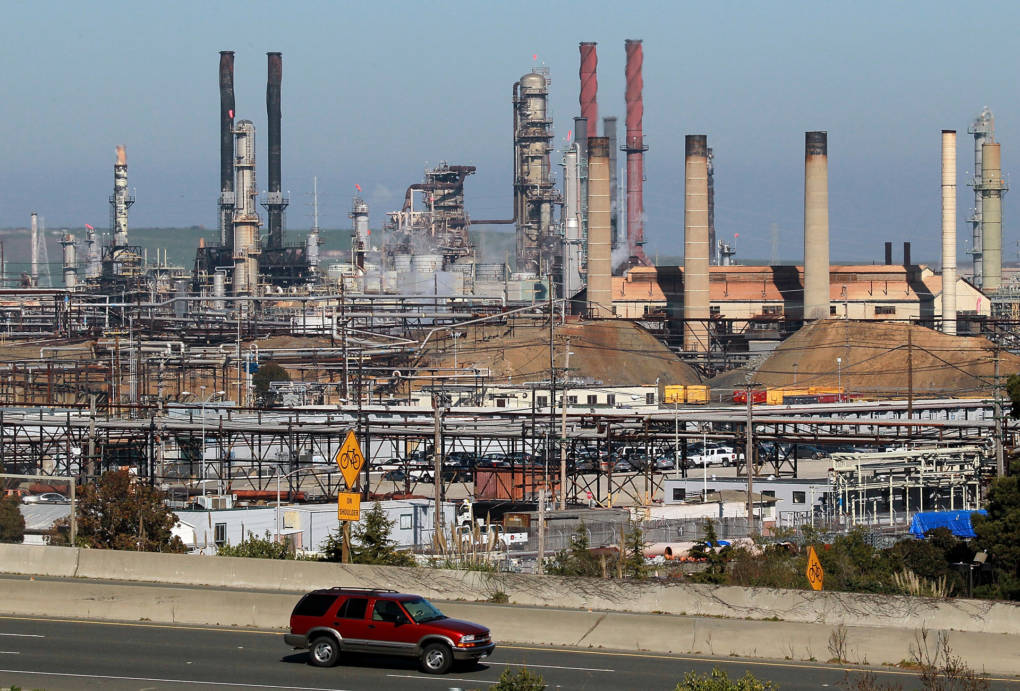
"caption": "The Chevron refinery in Richmond.",
"description": null,
"title": "Gas Prices Continue To Rise, Inching Up Over Last Two Weeks",
"credit": "Justin Sullivan/Getty Images",
"status": "inherit",
"altTag": "About a dozen cement smokestacks rise amid low-lying building beyond a freeway.",
"isLoading": false,
"fetchFailed": false
},
"news_11612699": {
"type": "attachments",
"id": "news_11612699",
"meta": {
"index": "attachments_1716263798",
"site": "news",
"id": "11612699",
"found": true
},
"parent": 11612695,
"imgSizes": {
"small": {
"file": "https://ww2.kqed.org/app/uploads/sites/10/2017/08/CommonMain-520x326.jpg",
"width": 520,
"mimeType": "image/jpeg",
"height": 326
},
"twentyfourteen-full-width": {
"file": "https://ww2.kqed.org/app/uploads/sites/10/2017/08/CommonMain-1038x576.jpg",
"width": 1038,
"mimeType": "image/jpeg",
"height": 576
},
"thumbnail": {
"file": "https://ww2.kqed.org/app/uploads/sites/10/2017/08/CommonMain-160x100.jpg",
"width": 160,
"mimeType": "image/jpeg",
"height": 100
},
"fd-sm": {
"file": "https://ww2.kqed.org/app/uploads/sites/10/2017/08/CommonMain-960x603.jpg",
"width": 960,
"mimeType": "image/jpeg",
"height": 603
},
"post-thumbnail": {
"file": "https://ww2.kqed.org/app/uploads/sites/10/2017/08/CommonMain-672x372.jpg",
"width": 672,
"mimeType": "image/jpeg",
"height": 372
},
"xsmall": {
"file": "https://ww2.kqed.org/app/uploads/sites/10/2017/08/CommonMain-375x235.jpg",
"width": 375,
"mimeType": "image/jpeg",
"height": 235
},
"kqedFullSize": {
"file": "https://ww2.kqed.org/app/uploads/sites/10/2017/08/CommonMain.jpg",
"width": 1920,
"height": 1205
},
"large": {
"file": "https://ww2.kqed.org/app/uploads/sites/10/2017/08/CommonMain-1020x640.jpg",
"width": 1020,
"mimeType": "image/jpeg",
"height": 640
},
"xlarge": {
"file": "https://ww2.kqed.org/app/uploads/sites/10/2017/08/CommonMain-1180x741.jpg",
"width": 1180,
"mimeType": "image/jpeg",
"height": 741
},
"guest-author-50": {
"file": "https://ww2.kqed.org/app/uploads/sites/10/2017/08/CommonMain-50x50.jpg",
"width": 50,
"mimeType": "image/jpeg",
"height": 50
},
"guest-author-96": {
"file": "https://ww2.kqed.org/app/uploads/sites/10/2017/08/CommonMain-96x96.jpg",
"width": 96,
"mimeType": "image/jpeg",
"height": 96
},
"medium": {
"file": "https://ww2.kqed.org/app/uploads/sites/10/2017/08/CommonMain-800x502.jpg",
"width": 800,
"mimeType": "image/jpeg",
"height": 502
},
"guest-author-64": {
"file": "https://ww2.kqed.org/app/uploads/sites/10/2017/08/CommonMain-64x64.jpg",
"width": 64,
"mimeType": "image/jpeg",
"height": 64
},
"guest-author-32": {
"file": "https://ww2.kqed.org/app/uploads/sites/10/2017/08/CommonMain-32x32.jpg",
"width": 32,
"mimeType": "image/jpeg",
"height": 32
},
"fd-lrg": {
"file": "https://ww2.kqed.org/app/uploads/sites/10/2017/08/CommonMain-1920x1205.jpg",
"width": 1920,
"mimeType": "image/jpeg",
"height": 1205
},
"fd-med": {
"file": "https://ww2.kqed.org/app/uploads/sites/10/2017/08/CommonMain-1180x741.jpg",
"width": 1180,
"mimeType": "image/jpeg",
"height": 741
},
"full-width": {
"file": "https://ww2.kqed.org/app/uploads/sites/10/2017/08/CommonMain-1920x1205.jpg",
"width": 1920,
"mimeType": "image/jpeg",
"height": 1205
},
"detail": {
"file": "https://ww2.kqed.org/app/uploads/sites/10/2017/08/CommonMain-150x150.jpg",
"width": 150,
"mimeType": "image/jpeg",
"height": 150
},
"guest-author-128": {
"file": "https://ww2.kqed.org/app/uploads/sites/10/2017/08/CommonMain-128x128.jpg",
"width": 128,
"mimeType": "image/jpeg",
"height": 128
},
"xxsmall": {
"file": "https://ww2.kqed.org/app/uploads/sites/10/2017/08/CommonMain-240x151.jpg",
"width": 240,
"mimeType": "image/jpeg",
"height": 151
}
},
"publishDate": 1503004654,
"modified": 1504056018,
"caption": "Hip-hop artist Common meets with inmates at a California prison. ",
"description": "Hip-hop artist Common meets with inmates at a California prison. ",
"title": "CommonMain",
"credit": "Sade C. Joseph",
"status": "inherit",
"isLoading": false,
"fetchFailed": false
},
"news_11611031": {
"type": "attachments",
"id": "news_11611031",
"meta": {
"index": "attachments_1716263798",
"site": "news",
"id": "11611031",
"found": true
},
"parent": 11611028,
"imgSizes": {
"small": {
"file": "https://ww2.kqed.org/app/uploads/sites/10/2017/08/SleepyStudents-520x347.jpg",
"width": 520,
"mimeType": "image/jpeg",
"height": 347
},
"twentyfourteen-full-width": {
"file": "https://ww2.kqed.org/app/uploads/sites/10/2017/08/SleepyStudents-1038x576.jpg",
"width": 1038,
"mimeType": "image/jpeg",
"height": 576
},
"thumbnail": {
"file": "https://ww2.kqed.org/app/uploads/sites/10/2017/08/SleepyStudents-160x107.jpg",
"width": 160,
"mimeType": "image/jpeg",
"height": 107
},
"fd-sm": {
"file": "https://ww2.kqed.org/app/uploads/sites/10/2017/08/SleepyStudents-960x640.jpg",
"width": 960,
"mimeType": "image/jpeg",
"height": 640
},
"post-thumbnail": {
"file": "https://ww2.kqed.org/app/uploads/sites/10/2017/08/SleepyStudents-672x372.jpg",
"width": 672,
"mimeType": "image/jpeg",
"height": 372
},
"xsmall": {
"file": "https://ww2.kqed.org/app/uploads/sites/10/2017/08/SleepyStudents-375x250.jpg",
"width": 375,
"mimeType": "image/jpeg",
"height": 250
},
"kqedFullSize": {
"file": "https://ww2.kqed.org/app/uploads/sites/10/2017/08/SleepyStudents.jpg",
"width": 1920,
"height": 1280
},
"large": {
"file": "https://ww2.kqed.org/app/uploads/sites/10/2017/08/SleepyStudents-1020x680.jpg",
"width": 1020,
"mimeType": "image/jpeg",
"height": 680
},
"xlarge": {
"file": "https://ww2.kqed.org/app/uploads/sites/10/2017/08/SleepyStudents-1180x787.jpg",
"width": 1180,
"mimeType": "image/jpeg",
"height": 787
},
"guest-author-50": {
"file": "https://ww2.kqed.org/app/uploads/sites/10/2017/08/SleepyStudents-50x50.jpg",
"width": 50,
"mimeType": "image/jpeg",
"height": 50
},
"guest-author-96": {
"file": "https://ww2.kqed.org/app/uploads/sites/10/2017/08/SleepyStudents-96x96.jpg",
"width": 96,
"mimeType": "image/jpeg",
"height": 96
},
"medium": {
"file": "https://ww2.kqed.org/app/uploads/sites/10/2017/08/SleepyStudents-800x533.jpg",
"width": 800,
"mimeType": "image/jpeg",
"height": 533
},
"guest-author-64": {
"file": "https://ww2.kqed.org/app/uploads/sites/10/2017/08/SleepyStudents-64x64.jpg",
"width": 64,
"mimeType": "image/jpeg",
"height": 64
},
"guest-author-32": {
"file": "https://ww2.kqed.org/app/uploads/sites/10/2017/08/SleepyStudents-32x32.jpg",
"width": 32,
"mimeType": "image/jpeg",
"height": 32
},
"fd-lrg": {
"file": "https://ww2.kqed.org/app/uploads/sites/10/2017/08/SleepyStudents-1920x1280.jpg",
"width": 1920,
"mimeType": "image/jpeg",
"height": 1280
},
"fd-med": {
"file": "https://ww2.kqed.org/app/uploads/sites/10/2017/08/SleepyStudents-1180x787.jpg",
"width": 1180,
"mimeType": "image/jpeg",
"height": 787
},
"full-width": {
"file": "https://ww2.kqed.org/app/uploads/sites/10/2017/08/SleepyStudents-1920x1280.jpg",
"width": 1920,
"mimeType": "image/jpeg",
"height": 1280
},
"detail": {
"file": "https://ww2.kqed.org/app/uploads/sites/10/2017/08/SleepyStudents-150x150.jpg",
"width": 150,
"mimeType": "image/jpeg",
"height": 150
},
"guest-author-128": {
"file": "https://ww2.kqed.org/app/uploads/sites/10/2017/08/SleepyStudents-128x128.jpg",
"width": 128,
"mimeType": "image/jpeg",
"height": 128
},
"xxsmall": {
"file": "https://ww2.kqed.org/app/uploads/sites/10/2017/08/SleepyStudents-240x160.jpg",
"width": 240,
"mimeType": "image/jpeg",
"height": 160
}
},
"publishDate": 1502401713,
"modified": 1502401754,
"caption": "Research shows two-thirds of adolescents aren’t getting enough sleep, and that the consequences are far-reaching. ",
"description": "Research shows two-thirds of adolescents aren’t getting enough sleep, and that the consequences are far-reaching. ",
"title": "SleepyStudents",
"credit": "Thinkstock",
"status": "inherit",
"isLoading": false,
"fetchFailed": false
},
"news_11610184": {
"type": "attachments",
"id": "news_11610184",
"meta": {
"index": "attachments_1716263798",
"site": "news",
"id": "11610184",
"found": true
},
"parent": 11610179,
"imgSizes": {
"small": {
"file": "https://ww2.kqed.org/app/uploads/sites/10/2017/08/AfterSchoolCutsKids-520x347.jpg",
"width": 520,
"mimeType": "image/jpeg",
"height": 347
},
"twentyfourteen-full-width": {
"file": "https://ww2.kqed.org/app/uploads/sites/10/2017/08/AfterSchoolCutsKids-1038x576.jpg",
"width": 1038,
"mimeType": "image/jpeg",
"height": 576
},
"thumbnail": {
"file": "https://ww2.kqed.org/app/uploads/sites/10/2017/08/AfterSchoolCutsKids-160x107.jpg",
"width": 160,
"mimeType": "image/jpeg",
"height": 107
},
"fd-sm": {
"file": "https://ww2.kqed.org/app/uploads/sites/10/2017/08/AfterSchoolCutsKids-960x640.jpg",
"width": 960,
"mimeType": "image/jpeg",
"height": 640
},
"post-thumbnail": {
"file": "https://ww2.kqed.org/app/uploads/sites/10/2017/08/AfterSchoolCutsKids-672x372.jpg",
"width": 672,
"mimeType": "image/jpeg",
"height": 372
},
"xsmall": {
"file": "https://ww2.kqed.org/app/uploads/sites/10/2017/08/AfterSchoolCutsKids-375x250.jpg",
"width": 375,
"mimeType": "image/jpeg",
"height": 250
},
"kqedFullSize": {
"file": "https://ww2.kqed.org/app/uploads/sites/10/2017/08/AfterSchoolCutsKids.jpg",
"width": 1920,
"height": 1280
},
"large": {
"file": "https://ww2.kqed.org/app/uploads/sites/10/2017/08/AfterSchoolCutsKids-1020x680.jpg",
"width": 1020,
"mimeType": "image/jpeg",
"height": 680
},
"xlarge": {
"file": "https://ww2.kqed.org/app/uploads/sites/10/2017/08/AfterSchoolCutsKids-1180x787.jpg",
"width": 1180,
"mimeType": "image/jpeg",
"height": 787
},
"guest-author-50": {
"file": "https://ww2.kqed.org/app/uploads/sites/10/2017/08/AfterSchoolCutsKids-50x50.jpg",
"width": 50,
"mimeType": "image/jpeg",
"height": 50
},
"guest-author-96": {
"file": "https://ww2.kqed.org/app/uploads/sites/10/2017/08/AfterSchoolCutsKids-96x96.jpg",
"width": 96,
"mimeType": "image/jpeg",
"height": 96
},
"medium": {
"file": "https://ww2.kqed.org/app/uploads/sites/10/2017/08/AfterSchoolCutsKids-800x533.jpg",
"width": 800,
"mimeType": "image/jpeg",
"height": 533
},
"guest-author-64": {
"file": "https://ww2.kqed.org/app/uploads/sites/10/2017/08/AfterSchoolCutsKids-64x64.jpg",
"width": 64,
"mimeType": "image/jpeg",
"height": 64
},
"guest-author-32": {
"file": "https://ww2.kqed.org/app/uploads/sites/10/2017/08/AfterSchoolCutsKids-32x32.jpg",
"width": 32,
"mimeType": "image/jpeg",
"height": 32
},
"fd-lrg": {
"file": "https://ww2.kqed.org/app/uploads/sites/10/2017/08/AfterSchoolCutsKids-1920x1280.jpg",
"width": 1920,
"mimeType": "image/jpeg",
"height": 1280
},
"fd-med": {
"file": "https://ww2.kqed.org/app/uploads/sites/10/2017/08/AfterSchoolCutsKids-1180x787.jpg",
"width": 1180,
"mimeType": "image/jpeg",
"height": 787
},
"full-width": {
"file": "https://ww2.kqed.org/app/uploads/sites/10/2017/08/AfterSchoolCutsKids-1920x1280.jpg",
"width": 1920,
"mimeType": "image/jpeg",
"height": 1280
},
"detail": {
"file": "https://ww2.kqed.org/app/uploads/sites/10/2017/08/AfterSchoolCutsKids-150x150.jpg",
"width": 150,
"mimeType": "image/jpeg",
"height": 150
},
"guest-author-128": {
"file": "https://ww2.kqed.org/app/uploads/sites/10/2017/08/AfterSchoolCutsKids-128x128.jpg",
"width": 128,
"mimeType": "image/jpeg",
"height": 128
},
"xxsmall": {
"file": "https://ww2.kqed.org/app/uploads/sites/10/2017/08/AfterSchoolCutsKids-240x160.jpg",
"width": 240,
"mimeType": "image/jpeg",
"height": 160
}
},
"publishDate": 1501874814,
"modified": 1501874858,
"caption": "Summer school students sign a sobriety pledge at Rosemont High Summer of Service in Sacramento.",
"description": "Summer school students sign a sobriety pledge at Rosemont High Summer of Service in Sacramento.",
"title": "AfterSchoolCutsKids",
"credit": "Max Whittaker/CALmatters",
"status": "inherit",
"isLoading": false,
"fetchFailed": false
},
"news_11610085": {
"type": "attachments",
"id": "news_11610085",
"meta": {
"index": "attachments_1716263798",
"site": "news",
"id": "11610085",
"found": true
},
"parent": 11610072,
"imgSizes": {
"small": {
"file": "https://ww2.kqed.org/app/uploads/sites/10/2017/08/BagofBuds-520x354.jpg",
"width": 520,
"mimeType": "image/jpeg",
"height": 354
},
"twentyfourteen-full-width": {
"file": "https://ww2.kqed.org/app/uploads/sites/10/2017/08/BagofBuds-1038x576.jpg",
"width": 1038,
"mimeType": "image/jpeg",
"height": 576
},
"thumbnail": {
"file": "https://ww2.kqed.org/app/uploads/sites/10/2017/08/BagofBuds-160x109.jpg",
"width": 160,
"mimeType": "image/jpeg",
"height": 109
},
"fd-sm": {
"file": "https://ww2.kqed.org/app/uploads/sites/10/2017/08/BagofBuds-960x654.jpg",
"width": 960,
"mimeType": "image/jpeg",
"height": 654
},
"post-thumbnail": {
"file": "https://ww2.kqed.org/app/uploads/sites/10/2017/08/BagofBuds-672x372.jpg",
"width": 672,
"mimeType": "image/jpeg",
"height": 372
},
"xsmall": {
"file": "https://ww2.kqed.org/app/uploads/sites/10/2017/08/BagofBuds-375x255.jpg",
"width": 375,
"mimeType": "image/jpeg",
"height": 255
},
"kqedFullSize": {
"file": "https://ww2.kqed.org/app/uploads/sites/10/2017/08/BagofBuds.jpg",
"width": 1920,
"height": 1308
},
"large": {
"file": "https://ww2.kqed.org/app/uploads/sites/10/2017/08/BagofBuds-1020x695.jpg",
"width": 1020,
"mimeType": "image/jpeg",
"height": 695
},
"xlarge": {
"file": "https://ww2.kqed.org/app/uploads/sites/10/2017/08/BagofBuds-1180x804.jpg",
"width": 1180,
"mimeType": "image/jpeg",
"height": 804
},
"guest-author-50": {
"file": "https://ww2.kqed.org/app/uploads/sites/10/2017/08/BagofBuds-50x50.jpg",
"width": 50,
"mimeType": "image/jpeg",
"height": 50
},
"guest-author-96": {
"file": "https://ww2.kqed.org/app/uploads/sites/10/2017/08/BagofBuds-96x96.jpg",
"width": 96,
"mimeType": "image/jpeg",
"height": 96
},
"medium": {
"file": "https://ww2.kqed.org/app/uploads/sites/10/2017/08/BagofBuds-800x545.jpg",
"width": 800,
"mimeType": "image/jpeg",
"height": 545
},
"guest-author-64": {
"file": "https://ww2.kqed.org/app/uploads/sites/10/2017/08/BagofBuds-64x64.jpg",
"width": 64,
"mimeType": "image/jpeg",
"height": 64
},
"guest-author-32": {
"file": "https://ww2.kqed.org/app/uploads/sites/10/2017/08/BagofBuds-32x32.jpg",
"width": 32,
"mimeType": "image/jpeg",
"height": 32
},
"fd-lrg": {
"file": "https://ww2.kqed.org/app/uploads/sites/10/2017/08/BagofBuds-1920x1308.jpg",
"width": 1920,
"mimeType": "image/jpeg",
"height": 1308
},
"fd-med": {
"file": "https://ww2.kqed.org/app/uploads/sites/10/2017/08/BagofBuds-1180x804.jpg",
"width": 1180,
"mimeType": "image/jpeg",
"height": 804
},
"full-width": {
"file": "https://ww2.kqed.org/app/uploads/sites/10/2017/08/BagofBuds-1920x1308.jpg",
"width": 1920,
"mimeType": "image/jpeg",
"height": 1308
},
"detail": {
"file": "https://ww2.kqed.org/app/uploads/sites/10/2017/08/BagofBuds-150x150.jpg",
"width": 150,
"mimeType": "image/jpeg",
"height": 150
},
"guest-author-128": {
"file": "https://ww2.kqed.org/app/uploads/sites/10/2017/08/BagofBuds-128x128.jpg",
"width": 128,
"mimeType": "image/jpeg",
"height": 128
},
"xxsmall": {
"file": "https://ww2.kqed.org/app/uploads/sites/10/2017/08/BagofBuds-240x164.jpg",
"width": 240,
"mimeType": "image/jpeg",
"height": 164
}
},
"publishDate": 1501803765,
"modified": 1501803812,
"caption": "A Mendocino County marijuana grower displays some of his harvest.",
"description": "A Mendocino County marijuana grower displays some of his harvest.",
"title": "BagofBuds",
"credit": "JOSH EDELSON/AFP/Getty Images",
"status": "inherit",
"isLoading": false,
"fetchFailed": false
},
"news_11608333": {
"type": "attachments",
"id": "news_11608333",
"meta": {
"index": "attachments_1716263798",
"site": "news",
"id": "11608333",
"found": true
},
"parent": 11608324,
"imgSizes": {
"small": {
"file": "https://ww2.kqed.org/app/uploads/sites/10/2017/08/RapeKitBacklog-520x327.jpg",
"width": 520,
"mimeType": "image/jpeg",
"height": 327
},
"twentyfourteen-full-width": {
"file": "https://ww2.kqed.org/app/uploads/sites/10/2017/08/RapeKitBacklog-1038x576.jpg",
"width": 1038,
"mimeType": "image/jpeg",
"height": 576
},
"thumbnail": {
"file": "https://ww2.kqed.org/app/uploads/sites/10/2017/08/RapeKitBacklog-160x101.jpg",
"width": 160,
"mimeType": "image/jpeg",
"height": 101
},
"fd-sm": {
"file": "https://ww2.kqed.org/app/uploads/sites/10/2017/08/RapeKitBacklog-960x605.jpg",
"width": 960,
"mimeType": "image/jpeg",
"height": 605
},
"post-thumbnail": {
"file": "https://ww2.kqed.org/app/uploads/sites/10/2017/08/RapeKitBacklog-672x372.jpg",
"width": 672,
"mimeType": "image/jpeg",
"height": 372
},
"xsmall": {
"file": "https://ww2.kqed.org/app/uploads/sites/10/2017/08/RapeKitBacklog-375x236.jpg",
"width": 375,
"mimeType": "image/jpeg",
"height": 236
},
"kqedFullSize": {
"file": "https://ww2.kqed.org/app/uploads/sites/10/2017/08/RapeKitBacklog.jpg",
"width": 1920,
"height": 1209
},
"large": {
"file": "https://ww2.kqed.org/app/uploads/sites/10/2017/08/RapeKitBacklog-1020x642.jpg",
"width": 1020,
"mimeType": "image/jpeg",
"height": 642
},
"xlarge": {
"file": "https://ww2.kqed.org/app/uploads/sites/10/2017/08/RapeKitBacklog-1180x743.jpg",
"width": 1180,
"mimeType": "image/jpeg",
"height": 743
},
"guest-author-50": {
"file": "https://ww2.kqed.org/app/uploads/sites/10/2017/08/RapeKitBacklog-50x50.jpg",
"width": 50,
"mimeType": "image/jpeg",
"height": 50
},
"guest-author-96": {
"file": "https://ww2.kqed.org/app/uploads/sites/10/2017/08/RapeKitBacklog-96x96.jpg",
"width": 96,
"mimeType": "image/jpeg",
"height": 96
},
"medium": {
"file": "https://ww2.kqed.org/app/uploads/sites/10/2017/08/RapeKitBacklog-800x504.jpg",
"width": 800,
"mimeType": "image/jpeg",
"height": 504
},
"guest-author-64": {
"file": "https://ww2.kqed.org/app/uploads/sites/10/2017/08/RapeKitBacklog-64x64.jpg",
"width": 64,
"mimeType": "image/jpeg",
"height": 64
},
"guest-author-32": {
"file": "https://ww2.kqed.org/app/uploads/sites/10/2017/08/RapeKitBacklog-32x32.jpg",
"width": 32,
"mimeType": "image/jpeg",
"height": 32
},
"fd-lrg": {
"file": "https://ww2.kqed.org/app/uploads/sites/10/2017/08/RapeKitBacklog-1920x1209.jpg",
"width": 1920,
"mimeType": "image/jpeg",
"height": 1209
},
"fd-med": {
"file": "https://ww2.kqed.org/app/uploads/sites/10/2017/08/RapeKitBacklog-1180x743.jpg",
"width": 1180,
"mimeType": "image/jpeg",
"height": 743
},
"full-width": {
"file": "https://ww2.kqed.org/app/uploads/sites/10/2017/08/RapeKitBacklog-1920x1209.jpg",
"width": 1920,
"mimeType": "image/jpeg",
"height": 1209
},
"detail": {
"file": "https://ww2.kqed.org/app/uploads/sites/10/2017/08/RapeKitBacklog-150x150.jpg",
"width": 150,
"mimeType": "image/jpeg",
"height": 150
},
"guest-author-128": {
"file": "https://ww2.kqed.org/app/uploads/sites/10/2017/08/RapeKitBacklog-128x128.jpg",
"width": 128,
"mimeType": "image/jpeg",
"height": 128
},
"xxsmall": {
"file": "https://ww2.kqed.org/app/uploads/sites/10/2017/08/RapeKitBacklog-240x151.jpg",
"width": 240,
"mimeType": "image/jpeg",
"height": 151
}
},
"publishDate": 1501711693,
"modified": 1501711720,
"caption": null,
"description": null,
"title": "RapeKitBacklog",
"credit": "Thinkstock",
"status": "inherit",
"isLoading": false,
"fetchFailed": false
},
"news_11595591": {
"type": "attachments",
"id": "news_11595591",
"meta": {
"index": "attachments_1716263798",
"site": "news",
"id": "11595591",
"found": true
},
"parent": 11595532,
"imgSizes": {
"small": {
"file": "https://ww2.kqed.org/app/uploads/sites/10/2017/07/InjectionSite-520x333.jpg",
"width": 520,
"mimeType": "image/jpeg",
"height": 333
},
"twentyfourteen-full-width": {
"file": "https://ww2.kqed.org/app/uploads/sites/10/2017/07/InjectionSite-1038x576.jpg",
"width": 1038,
"mimeType": "image/jpeg",
"height": 576
},
"thumbnail": {
"file": "https://ww2.kqed.org/app/uploads/sites/10/2017/07/InjectionSite-160x102.jpg",
"width": 160,
"mimeType": "image/jpeg",
"height": 102
},
"fd-sm": {
"file": "https://ww2.kqed.org/app/uploads/sites/10/2017/07/InjectionSite-960x614.jpg",
"width": 960,
"mimeType": "image/jpeg",
"height": 614
},
"post-thumbnail": {
"file": "https://ww2.kqed.org/app/uploads/sites/10/2017/07/InjectionSite-672x372.jpg",
"width": 672,
"mimeType": "image/jpeg",
"height": 372
},
"xsmall": {
"file": "https://ww2.kqed.org/app/uploads/sites/10/2017/07/InjectionSite-375x240.jpg",
"width": 375,
"mimeType": "image/jpeg",
"height": 240
},
"kqedFullSize": {
"file": "https://ww2.kqed.org/app/uploads/sites/10/2017/07/InjectionSite.jpg",
"width": 1920,
"height": 1228
},
"large": {
"file": "https://ww2.kqed.org/app/uploads/sites/10/2017/07/InjectionSite-1020x652.jpg",
"width": 1020,
"mimeType": "image/jpeg",
"height": 652
},
"xlarge": {
"file": "https://ww2.kqed.org/app/uploads/sites/10/2017/07/InjectionSite-1180x755.jpg",
"width": 1180,
"mimeType": "image/jpeg",
"height": 755
},
"guest-author-50": {
"file": "https://ww2.kqed.org/app/uploads/sites/10/2017/07/InjectionSite-50x50.jpg",
"width": 50,
"mimeType": "image/jpeg",
"height": 50
},
"guest-author-96": {
"file": "https://ww2.kqed.org/app/uploads/sites/10/2017/07/InjectionSite-96x96.jpg",
"width": 96,
"mimeType": "image/jpeg",
"height": 96
},
"medium": {
"file": "https://ww2.kqed.org/app/uploads/sites/10/2017/07/InjectionSite-800x512.jpg",
"width": 800,
"mimeType": "image/jpeg",
"height": 512
},
"guest-author-64": {
"file": "https://ww2.kqed.org/app/uploads/sites/10/2017/07/InjectionSite-64x64.jpg",
"width": 64,
"mimeType": "image/jpeg",
"height": 64
},
"guest-author-32": {
"file": "https://ww2.kqed.org/app/uploads/sites/10/2017/07/InjectionSite-32x32.jpg",
"width": 32,
"mimeType": "image/jpeg",
"height": 32
},
"fd-lrg": {
"file": "https://ww2.kqed.org/app/uploads/sites/10/2017/07/InjectionSite-1920x1228.jpg",
"width": 1920,
"mimeType": "image/jpeg",
"height": 1228
},
"fd-med": {
"file": "https://ww2.kqed.org/app/uploads/sites/10/2017/07/InjectionSite-1180x755.jpg",
"width": 1180,
"mimeType": "image/jpeg",
"height": 755
},
"full-width": {
"file": "https://ww2.kqed.org/app/uploads/sites/10/2017/07/InjectionSite-1920x1228.jpg",
"width": 1920,
"mimeType": "image/jpeg",
"height": 1228
},
"detail": {
"file": "https://ww2.kqed.org/app/uploads/sites/10/2017/07/InjectionSite-150x150.jpg",
"width": 150,
"mimeType": "image/jpeg",
"height": 150
},
"guest-author-128": {
"file": "https://ww2.kqed.org/app/uploads/sites/10/2017/07/InjectionSite-128x128.jpg",
"width": 128,
"mimeType": "image/jpeg",
"height": 128
},
"xxsmall": {
"file": "https://ww2.kqed.org/app/uploads/sites/10/2017/07/InjectionSite-240x154.jpg",
"width": 240,
"mimeType": "image/jpeg",
"height": 154
}
},
"publishDate": 1501117202,
"modified": 1501117227,
"caption": null,
"description": null,
"title": "InjectionSite",
"credit": "Urban Seed Education via Flickr",
"status": "inherit",
"isLoading": false,
"fetchFailed": false
}
},
"audioPlayerReducer": {
"postId": "stream_live",
"isPaused": true,
"isPlaying": false,
"pfsActive": false,
"pledgeModalIsOpen": true,
"playerDrawerIsOpen": false,
"liveAudioPlayStartedAt": 0,
"liveAudioPlayContext": ""
},
"authorsReducer": {
"byline_news_11618285": {
"type": "authors",
"id": "byline_news_11618285",
"meta": {
"override": true
},
"slug": "byline_news_11618285",
"name": "\u003cstrong>\u003ca href=\"https://calmatters.org/articles/author/jessica-calefati/\">Jessica Calefati\u003c/a>\u003c/strong>",
"isLoading": false
},
"byline_news_11616462": {
"type": "authors",
"id": "byline_news_11616462",
"meta": {
"override": true
},
"slug": "byline_news_11616462",
"name": "\u003cstrong>\u003ca href=\"https://calmatters.org/articles/author/julie-cart/\">Julie Cart\u003c/a>\u003c/strong>",
"isLoading": false
},
"byline_news_11614857": {
"type": "authors",
"id": "byline_news_11614857",
"meta": {
"override": true
},
"slug": "byline_news_11614857",
"name": "\u003cstrong>\u003ca href=\"https://calmatters.org/articles/author/laurel-rosenhall/\">Laurel Rosenhall\u003c/a>\u003c/strong>",
"isLoading": false
},
"byline_news_11614729": {
"type": "authors",
"id": "byline_news_11614729",
"meta": {
"override": true
},
"slug": "byline_news_11614729",
"name": "\u003cstrong>\u003ca href=\"https://calmatters.org/articles/author/ben-christopher/\">Ben Christopher\u003c/a>\u003c/strong>",
"isLoading": false
},
"byline_news_11613457": {
"type": "authors",
"id": "byline_news_11613457",
"meta": {
"override": true
},
"slug": "byline_news_11613457",
"name": "\u003cstrong>\u003ca href=\"https://calmatters.org/articles/author/ben-christopher/\">Ben Christopher\u003c/a>\u003c/strong> and \u003cstrong>\u003ca href=\"https://calmatters.org/articles/author/matt-levin/\">Matt Levin\u003c/a>\u003c/strong>\u003cbr />\u003cstrong>\u003ca href=\"https://calmatters.org/\">CALmatters\u003c/a>\u003c/strong>",
"isLoading": false
},
"byline_news_11612691": {
"type": "authors",
"id": "byline_news_11612691",
"meta": {
"override": true
},
"slug": "byline_news_11612691",
"name": "\u003cstrong>Julie Cart\u003c/strong> and \u003cstrong>Laurel Rosenhall\u003c/strong>",
"isLoading": false
},
"byline_news_11612695": {
"type": "authors",
"id": "byline_news_11612695",
"meta": {
"override": true
},
"slug": "byline_news_11612695",
"name": "\u003cstrong>\u003ca href=\"https://calmatters.org/articles/author/laurel-rosenhall/\">Laurel Rosenhall\u003c/a>\u003c/strong>",
"isLoading": false
},
"byline_news_11611028": {
"type": "authors",
"id": "byline_news_11611028",
"meta": {
"override": true
},
"slug": "byline_news_11611028",
"name": "\u003cstrong>\u003ca href=\"https://calmatters.org/articles/author/jessica-calefati/\">Jessica Calefati\u003c/a>\u003c/strong>",
"isLoading": false
},
"byline_news_11610179": {
"type": "authors",
"id": "byline_news_11610179",
"meta": {
"override": true
},
"slug": "byline_news_11610179",
"name": "\u003cstrong>\u003ca href=\"https://calmatters.org/articles/author/jessica-calefati/\">Jessica Calefati\u003c/a>\u003c/strong>",
"isLoading": false
},
"byline_news_11610072": {
"type": "authors",
"id": "byline_news_11610072",
"meta": {
"override": true
},
"slug": "byline_news_11610072",
"name": "\u003cstrong>\u003ca href=\"https://calmatters.org/articles/author/laurel-rosenhall/\">Laurel Rosenhall\u003c/a>\u003c/strong>",
"isLoading": false
},
"byline_news_11608324": {
"type": "authors",
"id": "byline_news_11608324",
"meta": {
"override": true
},
"slug": "byline_news_11608324",
"name": "\u003cstrong>\u003ca href=\"https://calmatters.org/articles/author/samantha-young/\">Samantha Young\u003c/a>\u003c/strong>",
"isLoading": false
},
"byline_news_11595532": {
"type": "authors",
"id": "byline_news_11595532",
"meta": {
"override": true
},
"slug": "byline_news_11595532",
"name": "\u003cstrong>\u003ca href=\"https://calmatters.org/articles/author/laurel-rosenhall/\">Laurel Rosenhall\u003c/a>\u003c/strong>",
"isLoading": false
}
},
"pagesReducer": {
"news_affiliate_calmatters": {
"type": "terms",
"id": "news_18481",
"meta": {
"index": "terms_1716263798",
"site": "news",
"id": "18481",
"score": 15.355904
},
"featImg": null,
"name": "CALmatters",
"description": null,
"taxonomy": "affiliate",
"headData": {
"twImgId": null,
"twTitle": null,
"ogTitle": null,
"ogImgId": null,
"twDescription": null,
"description": null,
"title": "CALmatters Archives | KQED Arts",
"ogDescription": null
},
"ttid": 18515,
"slug": "calmatters",
"isLoading": false,
"title": "CALmatters",
"pageMeta": {
"site": "news",
"WpPageTemplate": "page-topic-editorial",
"currentPage": 79
},
"blocks": [
{
"blockName": "kqed/post-list",
"attrs": {
"layout": "cardArticle2",
"query": "posts/news?affiliate=calmatters",
"seeMore": false,
"paginated": true,
"page": 79
}
},
{
"blockName": "kqed/ad"
}
]
}
},
"pfsSessionReducer": {},
"postsReducer": {
"stream_live": {
"type": "live",
"id": "stream_live",
"audioUrl": "https://streams.kqed.org/kqedradio",
"title": "Live Stream",
"excerpt": "Live Stream information currently unavailable.",
"link": "/radio",
"featImg": "",
"label": {
"name": "KQED Live",
"link": "/"
}
},
"stream_kqedNewscast": {
"type": "posts",
"id": "stream_kqedNewscast",
"audioUrl": "https://www.kqed.org/.stream/anon/radio/RDnews/newscast.mp3?_=1",
"title": "KQED Newscast",
"featImg": "",
"label": {
"name": "88.5 FM",
"link": "/"
}
},
"news_11618285": {
"type": "posts",
"id": "news_11618285",
"meta": {
"index": "posts_1716263798",
"site": "news",
"id": "11618285",
"score": null,
"sort": [
1506023114000
]
},
"parent": 0,
"labelTerm": {},
"blocks": [],
"publishDate": 1506023114,
"format": "image",
"disqusTitle": "In Education Duel, Foes Fight to a Draw in Sacramento",
"title": "In Education Duel, Foes Fight to a Draw in Sacramento",
"headTitle": "The California Report | KQED News",
"content": "\u003cp>The sun was already sinking below the horizon on the final night of the lawmaking year as nearly two dozen lobbyists stalked the Capitol’s brightly lit hallways, making sure lawmakers didn’t approve a new math and science school for disadvantaged students.\u003c/p>\n\u003cp>Supporters, including billionaire philanthropist Eli Broad, had pitched the school as a slingshot from poor communities to the state’s most prestigious universities. But the state’s most powerful teachers union saw it as a dangerous effort to siphon away taxpayer money for a private operation with little public oversight.\u003c/p>\n\u003cp>By the time lawmakers finished their work at close to 3 a.m., the California Teachers Association had won; the \u003ca href=\"https://leginfo.legislature.ca.gov/faces/billNavClient.xhtml?bill_id=201720180AB1217\" target=\"_blank\" rel=\"noopener noreferrer\">proposal\u003c/a> had never come up for a vote.\u003c/p>\n\u003cp>It was the last piece of education legislation to \u003ca href=\"http://laschoolreport.com/plans-for-state-run-stem-school-in-downtown-la-die-as-bill-fails-to-win-support/\" target=\"_blank\" rel=\"noopener noreferrer\">die\u003c/a> in a year when the teachers union and its ascendant adversary, the California Charter Schools Association, fought to a stalemate while trying to shape the future of the state’s public schools. Both groups successfully halted virtually all the legislation they opposed.\u003c/p>\n\u003caside class=\"pullquote alignright\">'Rather than address huge issues like our achievement gaps, these groups are working hard to protect their short-term self-interests.'\u003ccite>Bruce Fuller, UC Berkeley\u003c/cite>\u003c/aside>\n\u003cp>The union stopped more than two dozen bills, including proposals to \u003ca href=\"http://www.capradio.org/articles/2017/07/11/teacher-tenure-debate-returns-to-california-legislature/\" target=\"_blank\" rel=\"noopener noreferrer\">extend\u003c/a> the length of time teachers must work before gaining lifetime job protection and to \u003ca href=\"https://edsource.org/2017/to-retain-teachers-lawmakers-push-to-exempt-them-from-state-income-tax/578841\" target=\"_blank\" rel=\"noopener noreferrer\">address\u003c/a> a \u003ca href=\"https://calmatters.org/articles/lawmakers-ease-california-teacher-shortage/\" target=\"_blank\" rel=\"noopener noreferrer\">shortage\u003c/a> of educators in some hard-to-staff areas. The charter advocates killed half a dozen proposals, including some that would have \u003ca href=\"http://www.latimes.com/local/education/la-essential-education-updates-southern-la-teachers-union-unveils-bill-to-1489711203-htmlstory.html\" target=\"_blank\" rel=\"noopener noreferrer\">forced\u003c/a> their schools to hold public meetings and \u003ca href=\"https://calmatters.org/articles/california-bills-aim-crack-profit-charter-schools/\" target=\"_blank\" rel=\"noopener noreferrer\">banned\u003c/a> schools run by for-profit companies.\u003c/p>\n\u003cp>[ad fullwidth]\u003c/p>\n\u003cp>With lawmakers focused on the state’s shortage of affordable \u003ca href=\"https://calmatters.org/articles/california-legislature-final-bills-governor-brown/\" target=\"_blank\" rel=\"noopener noreferrer\">housing\u003c/a> and its crumbling \u003ca href=\"https://calmatters.org/articles/california-democrats-struggling-keep-party-unity/\" target=\"_blank\" rel=\"noopener noreferrer\">roads\u003c/a>, education policymaking this year took a back seat. The losers, some experts say, are California’s low-income students, whose persistently low achievement hasn’t budged in decades amid the opponents’ charged policy battles.\u003c/p>\n\u003cp>“Rather than come around the table to address huge issues like our achievement gaps, these groups are working hard to protect their short-term self-interests,” said Bruce Fuller, an education policy professor at UC Berkeley. “California rags on Washington politicians for thinking this way. If we looked in the mirror, we’d see we’re doing the same thing when it comes to our education politics.”\u003c/p>\n\u003cp>The back-and-forth wears on lawmakers, too.\u003c/p>\n\u003cp>Sen. Ben Allen, a Democrat from Santa Monica who leads the Senate Education Committee, said he recites the serenity prayer before most hearings: God grant me the serenity to accept the things I cannot change ...\u003c/p>\n\u003cp>“No one wants this job. It’s a tough committee,” he said. “The work can be very discouraging.”\u003c/p>\n\u003cfigure id=\"attachment_11618326\" class=\"wp-caption alignright\" style=\"max-width: 800px\">\u003cimg class=\"size-medium wp-image-11618326\" src=\"https://ww2.kqed.org/news/wp-content/uploads/sites/10/2017/09/EricHeins-800x811.jpg\" alt=\"Eric Heins, president of the California Teachers Association.\" width=\"800\" height=\"811\" srcset=\"https://ww2.kqed.org/app/uploads/sites/10/2017/09/EricHeins-800x811.jpg 800w, https://ww2.kqed.org/app/uploads/sites/10/2017/09/EricHeins-160x162.jpg 160w, https://ww2.kqed.org/app/uploads/sites/10/2017/09/EricHeins-1020x1034.jpg 1020w, https://ww2.kqed.org/app/uploads/sites/10/2017/09/EricHeins.jpg 1920w, https://ww2.kqed.org/app/uploads/sites/10/2017/09/EricHeins-1180x1197.jpg 1180w, https://ww2.kqed.org/app/uploads/sites/10/2017/09/EricHeins-960x974.jpg 960w, https://ww2.kqed.org/app/uploads/sites/10/2017/09/EricHeins-240x243.jpg 240w, https://ww2.kqed.org/app/uploads/sites/10/2017/09/EricHeins-375x380.jpg 375w, https://ww2.kqed.org/app/uploads/sites/10/2017/09/EricHeins-520x527.jpg 520w, https://ww2.kqed.org/app/uploads/sites/10/2017/09/EricHeins-32x32.jpg 32w, https://ww2.kqed.org/app/uploads/sites/10/2017/09/EricHeins-50x50.jpg 50w, https://ww2.kqed.org/app/uploads/sites/10/2017/09/EricHeins-64x64.jpg 64w, https://ww2.kqed.org/app/uploads/sites/10/2017/09/EricHeins-96x96.jpg 96w\" sizes=\"(max-width: 800px) 100vw, 800px\">\u003cfigcaption class=\"wp-caption-text\">Eric Heins, president of the California Teachers Association. \u003ccite>(California Teachers Association)\u003c/cite>\u003c/figcaption>\u003c/figure>\n\u003cp>California Teachers Association President Eric Heins applauded the union’s record.\u003c/p>\n\u003cp>“We’re obviously happy when the things we oppose get stalled,” said Heins, whose group blocked or persuaded lawmakers to change all but one of the 30 bills it opposed this year. Many of those proposals stalled in the Legislature’s secretive appropriations committees.\u003c/p>\n\u003cp>The only \u003ca href=\"https://leginfo.legislature.ca.gov/faces/billNavClient.xhtml?bill_id=201720180AB1194\" target=\"_blank\" rel=\"noopener noreferrer\">measure\u003c/a> going to Gov. Jerry Brown for consideration without the union’s stamp of approval would require municipalities to disclose the tax rate required to fund bond measures, including school bonds.\u003c/p>\n\u003cp>The two groups did reach a \u003ca href=\"http://www.scpr.org/news/2017/05/25/72181/kicked-out-of-a-charter-school-deal-struck-in-sacr/\" target=\"_blank\" rel=\"noopener noreferrer\">compromise\u003c/a> on a \u003ca href=\"https://leginfo.legislature.ca.gov/faces/billCompareClient.xhtml?bill_id=201720180AB1360\" target=\"_blank\" rel=\"noopener noreferrer\">bill\u003c/a> that strengthens charter school discipline and dismissal policies. But the charter association’s chief advocate, Carlos Marquez, acknowledged how rare such agreements are. He called his group’s tension with the union a “regrettable state of affairs.”\u003c/p>\n\u003cp>“Where do we go from here?” said Marquez, the group’s senior vice president for government affairs. “Honestly, I don’t know. This work requires us to take the long view.”\u003c/p>\n\u003cp>The association didn’t take a formal position on the proposal to create a state-run STEM school for about 800 Los Angeles-area students, but it might as well have. Broad, one of the group’s wealthy benefactors and one of the union’s biggest foes, had been pushing for it since January.\u003c/p>\n\u003cp>His involvement was bound to draw union opposition.\u003c/p>\n\u003cp>Last year, Broad was among a small group of donors who banded together to \u003ca href=\"http://www.scpr.org/news/2016/11/11/66059/flood-of-spending-by-charter-advocates-leads-to-el/\" target=\"_blank\" rel=\"noopener noreferrer\">invest\u003c/a> nearly $20 million in campaigns that sent Democrats to Sacramento who support charter schools. This year, many of those donors, including Netflix CEO Reed Hastings, \u003ca href=\"http://www.latimes.com/local/la-me-edu-school-election-money-20170521-htmlstory.html\" target=\"_blank\" rel=\"noopener noreferrer\">put another $10 million\u003c/a> into Los Angeles school board races and helped elect candidates who view charters favorably.\u003c/p>\n\u003cfigure id=\"attachment_11618330\" class=\"wp-caption alignright\" style=\"max-width: 800px\">\u003cimg class=\"size-medium wp-image-11618330\" src=\"https://ww2.kqed.org/news/wp-content/uploads/sites/10/2017/09/EliBroad-800x858.jpg\" alt=\"Charter schools advocate Eli Broad.\" width=\"800\" height=\"858\" srcset=\"https://ww2.kqed.org/app/uploads/sites/10/2017/09/EliBroad-800x858.jpg 800w, https://ww2.kqed.org/app/uploads/sites/10/2017/09/EliBroad-160x172.jpg 160w, https://ww2.kqed.org/app/uploads/sites/10/2017/09/EliBroad-1020x1094.jpg 1020w, https://ww2.kqed.org/app/uploads/sites/10/2017/09/EliBroad.jpg 1920w, https://ww2.kqed.org/app/uploads/sites/10/2017/09/EliBroad-1180x1266.jpg 1180w, https://ww2.kqed.org/app/uploads/sites/10/2017/09/EliBroad-960x1030.jpg 960w, https://ww2.kqed.org/app/uploads/sites/10/2017/09/EliBroad-240x258.jpg 240w, https://ww2.kqed.org/app/uploads/sites/10/2017/09/EliBroad-375x402.jpg 375w, https://ww2.kqed.org/app/uploads/sites/10/2017/09/EliBroad-520x558.jpg 520w\" sizes=\"(max-width: 800px) 100vw, 800px\">\u003cfigcaption class=\"wp-caption-text\">Charter schools advocate Eli Broad. \u003ccite>(Michael Buckner/Getty Images)\u003c/cite>\u003c/figcaption>\u003c/figure>\n\u003cp>By comparison, the union used only about $2 million from its political war chest for 2016 legislative races and backed mostly losing candidates with independent spending. It invested considerably more in ballot-measure battles. That imbalance led to speculation that the union’s prospects for a successful legislative year would dim, but that didn’t pan out.\u003c/p>\n\u003cp>Broad said the nonprofit STEM school would seek to serve low-income and other high-need students—foster youth, homeless children, English learners—and “ensure they have the opportunity and the skill set to become leaders.”\u003c/p>\n\u003cp>He also pledged to support the school financially. That generosity fueled criticism by the union and their allies that Broad might seek to profit from the public school. A union lobbyist even doctored editorial cartoons on other topics to make them seem as though they’d been drawn to make that point.\u003c/p>\n\u003cp>A spokeswoman for the union called that move a “poor choice” and said the union doesn’t condone the lobbyist’s behavior.\u003c/p>\n\u003cp>A spokeswoman for Broad said neither he nor any of the more than 40 organizations that endorsed the school proposal wanted to make money from it or could have done so.\u003c/p>\n\u003cp>The vast sums of cash the union and charter groups have spent to influence policy helps explain their success in halting legislation they oppose.\u003c/p>\n\u003cp>During the first half of this year, according to the most recent reports, the union spent about $1.5 million on lobbying, while the charter schools association and EdVoice, another group that supports charters, together spent about $800,000. Both camps rank in the top 10 among the state’s lobbyist employers for money spent.\u003c/p>\n\u003cp>[EducationDuel]\u003c/p>\n\u003cp>Marquez helped the association defeat all six proposals it opposed, including \u003ca href=\"https://leginfo.legislature.ca.gov/faces/billNavClient.xhtml?bill_id=201720180AB1478\" target=\"_blank\" rel=\"noopener noreferrer\">one\u003c/a> that would have forced charters to follow the state’s open records and public meetings laws, and \u003ca href=\"https://leginfo.legislature.ca.gov/faces/billNavClient.xhtml?bill_id=201720180SB808\" target=\"_blank\" rel=\"noopener noreferrer\">another\u003c/a> to dismantle the system of appeals that applicants seeking to open a school may use when their petitions are denied.\u003c/p>\n\u003cp>Charter schools have been operating in California since the early 1990s, but some state lawmakers still know relatively little about them, Marquez said. Helping to elect charter-friendly legislators has made his work easier. What makes it harder, he said, are the union’s lobbying tactics.\u003c/p>\n\u003cp>He pointed to a flier the union distributed ahead of a vote on a \u003ca href=\"https://leginfo.legislature.ca.gov/faces/billNavClient.xhtml?bill_id=201720180AB1220\" target=\"_blank\" rel=\"noopener noreferrer\">measure\u003c/a> to make teachers work longer before winning tenure. The flier compared the proposal’s author, Democratic Assemblywoman \u003ca href=\"https://calmatters.org/articles/shirley-weber-sharecroppers-daughter-fierce-california-lawmaker/\" target=\"_blank\" rel=\"noopener noreferrer\">Shirley Weber\u003c/a> of San Diego, to President Trump and urged legislators to vote no.\u003c/p>\n\u003cp>“If they’re willing to put stuff out there about Dr. Weber that any reasonable person would conclude is a lie, you have to ask yourself some hard questions about the claims they put out there on the charter sector and about a lot of other arguments they advance,” Marquez said.\u003c/p>\n\u003cp>Weber’s bill is unique among proposals the union opposed this year. Several union members helped her craft the bill, which \u003ca href=\"https://edsource.org/2017/author-shelves-teacher-tenure-bill-union-backed-alternative-emerges/584760\" target=\"_blank\" rel=\"noopener noreferrer\">stalled\u003c/a> in the Senate after clearing that tough vote in the Assembly.\u003c/p>\n\u003cp>Heins, the union president, was dismissive of the \u003ca href=\"https://e4e.org/blog-news/press-release/educators-excellence-los-angeles-statement-introduction-teacher-and-0\" target=\"_blank\" rel=\"noopener noreferrer\">teachers\u003c/a> who worked on the legislation. He said they don’t speak for his roughly 325,000 members, whose jobs, wages and working conditions are his duty to protect.\u003c/p>\n\u003cp>That “people power” is the real source of the union’s might in Sacramento, said Jack Pitney, a political scientist at Claremont McKenna College.\u003c/p>\n\u003cp>“They don’t have to run on all cylinders in every election because everyone knows what they could do if they had to,” Pitney said. “They have members in every single community in California. They’re well organized, and if they needed to they could organize en masse very quickly.”\u003c/p>\n\u003cp>“These teachers,” he added, “are awfully hard to beat.”\u003c/p>\n\u003cp>[ad floatright]\u003c/p>\n\u003cp>\u003cem>CALmatters.org is a nonprofit, nonpartisan media venture explaining California policies and politics.\u003c/em>\u003c/p>\n\n",
"disqusIdentifier": "11618285 https://ww2.kqed.org/news/?p=11618285",
"disqusUrl": "https://ww2.kqed.org/news/2017/09/21/in-education-duel-foes-fight-to-a-draw-in-sacramento/",
"stats": {
"hasVideo": false,
"hasChartOrMap": false,
"hasAudio": false,
"hasPolis": false,
"wordCount": 1460,
"hasGoogleForm": false,
"hasGallery": false,
"hasHearkenModule": false,
"iframeSrcs": [],
"paragraphCount": 38
},
"modified": 1506041321,
"excerpt": "The teachers union and its ascendant adversary, the California Charter Schools Association, fought to a stalemate this year while trying to shape the future of the state's public schools.",
"headData": {
"twImgId": "",
"twTitle": "",
"ogTitle": "",
"ogImgId": "",
"twDescription": "",
"description": "The teachers union and its ascendant adversary, the California Charter Schools Association, fought to a stalemate this year while trying to shape the future of the state's public schools.",
"title": "In Education Duel, Foes Fight to a Draw in Sacramento | KQED",
"ogDescription": "",
"schema": {
"@context": "https://schema.org",
"@type": "NewsArticle",
"headline": "In Education Duel, Foes Fight to a Draw in Sacramento",
"datePublished": "2017-09-21T12:45:14-07:00",
"dateModified": "2017-09-21T17:48:41-07:00",
"image": "https://cdn.kqed.org/wp-content/uploads/2020/02/KQED-OG-Image@1x.png",
"isAccessibleForFree": "True",
"publisher": {
"@type": "NewsMediaOrganization",
"@id": "https://www.kqed.org/#organization",
"name": "KQED",
"logo": "https://cdn.kqed.org/wp-content/uploads/2020/02/KQED-OG-Image@1x.png",
"url": "https://www.kqed.org",
"sameAs": [
"https://www.facebook.com/KQED",
"https://twitter.com/KQED",
"https://www.instagram.com/kqed/",
"https://www.tiktok.com/@kqedofficial",
"https://www.linkedin.com/company/kqed",
"https://www.youtube.com/channel/UCeC0IOo7i1P_61zVUWbJ4nw"
]
}
}
},
"guestAuthors": [],
"slug": "in-education-duel-foes-fight-to-a-draw-in-sacramento",
"status": "publish",
"sourceUrl": "https://calmatters.org/",
"nprByline": "\u003cstrong>\u003ca href=\"https://calmatters.org/articles/author/jessica-calefati/\">Jessica Calefati\u003c/a>\u003c/strong>",
"source": "CALmatters",
"path": "/news/11618285/in-education-duel-foes-fight-to-a-draw-in-sacramento",
"audioTrackLength": null,
"parsedContent": [
{
"type": "contentString",
"content": "\u003cdiv class=\"post-body\">\u003cp>\u003cp>The sun was already sinking below the horizon on the final night of the lawmaking year as nearly two dozen lobbyists stalked the Capitol’s brightly lit hallways, making sure lawmakers didn’t approve a new math and science school for disadvantaged students.\u003c/p>\n\u003cp>Supporters, including billionaire philanthropist Eli Broad, had pitched the school as a slingshot from poor communities to the state’s most prestigious universities. But the state’s most powerful teachers union saw it as a dangerous effort to siphon away taxpayer money for a private operation with little public oversight.\u003c/p>\n\u003cp>By the time lawmakers finished their work at close to 3 a.m., the California Teachers Association had won; the \u003ca href=\"https://leginfo.legislature.ca.gov/faces/billNavClient.xhtml?bill_id=201720180AB1217\" target=\"_blank\" rel=\"noopener noreferrer\">proposal\u003c/a> had never come up for a vote.\u003c/p>\n\u003cp>It was the last piece of education legislation to \u003ca href=\"http://laschoolreport.com/plans-for-state-run-stem-school-in-downtown-la-die-as-bill-fails-to-win-support/\" target=\"_blank\" rel=\"noopener noreferrer\">die\u003c/a> in a year when the teachers union and its ascendant adversary, the California Charter Schools Association, fought to a stalemate while trying to shape the future of the state’s public schools. Both groups successfully halted virtually all the legislation they opposed.\u003c/p>\n\u003caside class=\"pullquote alignright\">'Rather than address huge issues like our achievement gaps, these groups are working hard to protect their short-term self-interests.'\u003ccite>Bruce Fuller, UC Berkeley\u003c/cite>\u003c/aside>\n\u003cp>The union stopped more than two dozen bills, including proposals to \u003ca href=\"http://www.capradio.org/articles/2017/07/11/teacher-tenure-debate-returns-to-california-legislature/\" target=\"_blank\" rel=\"noopener noreferrer\">extend\u003c/a> the length of time teachers must work before gaining lifetime job protection and to \u003ca href=\"https://edsource.org/2017/to-retain-teachers-lawmakers-push-to-exempt-them-from-state-income-tax/578841\" target=\"_blank\" rel=\"noopener noreferrer\">address\u003c/a> a \u003ca href=\"https://calmatters.org/articles/lawmakers-ease-california-teacher-shortage/\" target=\"_blank\" rel=\"noopener noreferrer\">shortage\u003c/a> of educators in some hard-to-staff areas. The charter advocates killed half a dozen proposals, including some that would have \u003ca href=\"http://www.latimes.com/local/education/la-essential-education-updates-southern-la-teachers-union-unveils-bill-to-1489711203-htmlstory.html\" target=\"_blank\" rel=\"noopener noreferrer\">forced\u003c/a> their schools to hold public meetings and \u003ca href=\"https://calmatters.org/articles/california-bills-aim-crack-profit-charter-schools/\" target=\"_blank\" rel=\"noopener noreferrer\">banned\u003c/a> schools run by for-profit companies.\u003c/p>\n\u003cp>\u003c/p>\u003c/div>",
"attributes": {
"named": {},
"numeric": []
}
},
{
"type": "component",
"content": "",
"name": "ad",
"attributes": {
"named": {
"label": "fullwidth"
},
"numeric": [
"fullwidth"
]
}
},
{
"type": "contentString",
"content": "\u003cdiv class=\"post-body\">\u003cp>\u003c/p>\n\u003cp>With lawmakers focused on the state’s shortage of affordable \u003ca href=\"https://calmatters.org/articles/california-legislature-final-bills-governor-brown/\" target=\"_blank\" rel=\"noopener noreferrer\">housing\u003c/a> and its crumbling \u003ca href=\"https://calmatters.org/articles/california-democrats-struggling-keep-party-unity/\" target=\"_blank\" rel=\"noopener noreferrer\">roads\u003c/a>, education policymaking this year took a back seat. The losers, some experts say, are California’s low-income students, whose persistently low achievement hasn’t budged in decades amid the opponents’ charged policy battles.\u003c/p>\n\u003cp>“Rather than come around the table to address huge issues like our achievement gaps, these groups are working hard to protect their short-term self-interests,” said Bruce Fuller, an education policy professor at UC Berkeley. “California rags on Washington politicians for thinking this way. If we looked in the mirror, we’d see we’re doing the same thing when it comes to our education politics.”\u003c/p>\n\u003cp>The back-and-forth wears on lawmakers, too.\u003c/p>\n\u003cp>Sen. Ben Allen, a Democrat from Santa Monica who leads the Senate Education Committee, said he recites the serenity prayer before most hearings: God grant me the serenity to accept the things I cannot change ...\u003c/p>\n\u003cp>“No one wants this job. It’s a tough committee,” he said. “The work can be very discouraging.”\u003c/p>\n\u003cfigure id=\"attachment_11618326\" class=\"wp-caption alignright\" style=\"max-width: 800px\">\u003cimg class=\"size-medium wp-image-11618326\" src=\"https://ww2.kqed.org/news/wp-content/uploads/sites/10/2017/09/EricHeins-800x811.jpg\" alt=\"Eric Heins, president of the California Teachers Association.\" width=\"800\" height=\"811\" srcset=\"https://ww2.kqed.org/app/uploads/sites/10/2017/09/EricHeins-800x811.jpg 800w, https://ww2.kqed.org/app/uploads/sites/10/2017/09/EricHeins-160x162.jpg 160w, https://ww2.kqed.org/app/uploads/sites/10/2017/09/EricHeins-1020x1034.jpg 1020w, https://ww2.kqed.org/app/uploads/sites/10/2017/09/EricHeins.jpg 1920w, https://ww2.kqed.org/app/uploads/sites/10/2017/09/EricHeins-1180x1197.jpg 1180w, https://ww2.kqed.org/app/uploads/sites/10/2017/09/EricHeins-960x974.jpg 960w, https://ww2.kqed.org/app/uploads/sites/10/2017/09/EricHeins-240x243.jpg 240w, https://ww2.kqed.org/app/uploads/sites/10/2017/09/EricHeins-375x380.jpg 375w, https://ww2.kqed.org/app/uploads/sites/10/2017/09/EricHeins-520x527.jpg 520w, https://ww2.kqed.org/app/uploads/sites/10/2017/09/EricHeins-32x32.jpg 32w, https://ww2.kqed.org/app/uploads/sites/10/2017/09/EricHeins-50x50.jpg 50w, https://ww2.kqed.org/app/uploads/sites/10/2017/09/EricHeins-64x64.jpg 64w, https://ww2.kqed.org/app/uploads/sites/10/2017/09/EricHeins-96x96.jpg 96w\" sizes=\"(max-width: 800px) 100vw, 800px\">\u003cfigcaption class=\"wp-caption-text\">Eric Heins, president of the California Teachers Association. \u003ccite>(California Teachers Association)\u003c/cite>\u003c/figcaption>\u003c/figure>\n\u003cp>California Teachers Association President Eric Heins applauded the union’s record.\u003c/p>\n\u003cp>“We’re obviously happy when the things we oppose get stalled,” said Heins, whose group blocked or persuaded lawmakers to change all but one of the 30 bills it opposed this year. Many of those proposals stalled in the Legislature’s secretive appropriations committees.\u003c/p>\n\u003cp>The only \u003ca href=\"https://leginfo.legislature.ca.gov/faces/billNavClient.xhtml?bill_id=201720180AB1194\" target=\"_blank\" rel=\"noopener noreferrer\">measure\u003c/a> going to Gov. Jerry Brown for consideration without the union’s stamp of approval would require municipalities to disclose the tax rate required to fund bond measures, including school bonds.\u003c/p>\n\u003cp>The two groups did reach a \u003ca href=\"http://www.scpr.org/news/2017/05/25/72181/kicked-out-of-a-charter-school-deal-struck-in-sacr/\" target=\"_blank\" rel=\"noopener noreferrer\">compromise\u003c/a> on a \u003ca href=\"https://leginfo.legislature.ca.gov/faces/billCompareClient.xhtml?bill_id=201720180AB1360\" target=\"_blank\" rel=\"noopener noreferrer\">bill\u003c/a> that strengthens charter school discipline and dismissal policies. But the charter association’s chief advocate, Carlos Marquez, acknowledged how rare such agreements are. He called his group’s tension with the union a “regrettable state of affairs.”\u003c/p>\n\u003cp>“Where do we go from here?” said Marquez, the group’s senior vice president for government affairs. “Honestly, I don’t know. This work requires us to take the long view.”\u003c/p>\n\u003cp>The association didn’t take a formal position on the proposal to create a state-run STEM school for about 800 Los Angeles-area students, but it might as well have. Broad, one of the group’s wealthy benefactors and one of the union’s biggest foes, had been pushing for it since January.\u003c/p>\n\u003cp>His involvement was bound to draw union opposition.\u003c/p>\n\u003cp>Last year, Broad was among a small group of donors who banded together to \u003ca href=\"http://www.scpr.org/news/2016/11/11/66059/flood-of-spending-by-charter-advocates-leads-to-el/\" target=\"_blank\" rel=\"noopener noreferrer\">invest\u003c/a> nearly $20 million in campaigns that sent Democrats to Sacramento who support charter schools. This year, many of those donors, including Netflix CEO Reed Hastings, \u003ca href=\"http://www.latimes.com/local/la-me-edu-school-election-money-20170521-htmlstory.html\" target=\"_blank\" rel=\"noopener noreferrer\">put another $10 million\u003c/a> into Los Angeles school board races and helped elect candidates who view charters favorably.\u003c/p>\n\u003cfigure id=\"attachment_11618330\" class=\"wp-caption alignright\" style=\"max-width: 800px\">\u003cimg class=\"size-medium wp-image-11618330\" src=\"https://ww2.kqed.org/news/wp-content/uploads/sites/10/2017/09/EliBroad-800x858.jpg\" alt=\"Charter schools advocate Eli Broad.\" width=\"800\" height=\"858\" srcset=\"https://ww2.kqed.org/app/uploads/sites/10/2017/09/EliBroad-800x858.jpg 800w, https://ww2.kqed.org/app/uploads/sites/10/2017/09/EliBroad-160x172.jpg 160w, https://ww2.kqed.org/app/uploads/sites/10/2017/09/EliBroad-1020x1094.jpg 1020w, https://ww2.kqed.org/app/uploads/sites/10/2017/09/EliBroad.jpg 1920w, https://ww2.kqed.org/app/uploads/sites/10/2017/09/EliBroad-1180x1266.jpg 1180w, https://ww2.kqed.org/app/uploads/sites/10/2017/09/EliBroad-960x1030.jpg 960w, https://ww2.kqed.org/app/uploads/sites/10/2017/09/EliBroad-240x258.jpg 240w, https://ww2.kqed.org/app/uploads/sites/10/2017/09/EliBroad-375x402.jpg 375w, https://ww2.kqed.org/app/uploads/sites/10/2017/09/EliBroad-520x558.jpg 520w\" sizes=\"(max-width: 800px) 100vw, 800px\">\u003cfigcaption class=\"wp-caption-text\">Charter schools advocate Eli Broad. \u003ccite>(Michael Buckner/Getty Images)\u003c/cite>\u003c/figcaption>\u003c/figure>\n\u003cp>By comparison, the union used only about $2 million from its political war chest for 2016 legislative races and backed mostly losing candidates with independent spending. It invested considerably more in ballot-measure battles. That imbalance led to speculation that the union’s prospects for a successful legislative year would dim, but that didn’t pan out.\u003c/p>\n\u003cp>Broad said the nonprofit STEM school would seek to serve low-income and other high-need students—foster youth, homeless children, English learners—and “ensure they have the opportunity and the skill set to become leaders.”\u003c/p>\n\u003cp>He also pledged to support the school financially. That generosity fueled criticism by the union and their allies that Broad might seek to profit from the public school. A union lobbyist even doctored editorial cartoons on other topics to make them seem as though they’d been drawn to make that point.\u003c/p>\n\u003cp>A spokeswoman for the union called that move a “poor choice” and said the union doesn’t condone the lobbyist’s behavior.\u003c/p>\n\u003cp>A spokeswoman for Broad said neither he nor any of the more than 40 organizations that endorsed the school proposal wanted to make money from it or could have done so.\u003c/p>\n\u003cp>The vast sums of cash the union and charter groups have spent to influence policy helps explain their success in halting legislation they oppose.\u003c/p>\n\u003cp>During the first half of this year, according to the most recent reports, the union spent about $1.5 million on lobbying, while the charter schools association and EdVoice, another group that supports charters, together spent about $800,000. Both camps rank in the top 10 among the state’s lobbyist employers for money spent.\u003c/p>\n\u003cp>[EducationDuel]\u003c/p>\n\u003cp>Marquez helped the association defeat all six proposals it opposed, including \u003ca href=\"https://leginfo.legislature.ca.gov/faces/billNavClient.xhtml?bill_id=201720180AB1478\" target=\"_blank\" rel=\"noopener noreferrer\">one\u003c/a> that would have forced charters to follow the state’s open records and public meetings laws, and \u003ca href=\"https://leginfo.legislature.ca.gov/faces/billNavClient.xhtml?bill_id=201720180SB808\" target=\"_blank\" rel=\"noopener noreferrer\">another\u003c/a> to dismantle the system of appeals that applicants seeking to open a school may use when their petitions are denied.\u003c/p>\n\u003cp>Charter schools have been operating in California since the early 1990s, but some state lawmakers still know relatively little about them, Marquez said. Helping to elect charter-friendly legislators has made his work easier. What makes it harder, he said, are the union’s lobbying tactics.\u003c/p>\n\u003cp>He pointed to a flier the union distributed ahead of a vote on a \u003ca href=\"https://leginfo.legislature.ca.gov/faces/billNavClient.xhtml?bill_id=201720180AB1220\" target=\"_blank\" rel=\"noopener noreferrer\">measure\u003c/a> to make teachers work longer before winning tenure. The flier compared the proposal’s author, Democratic Assemblywoman \u003ca href=\"https://calmatters.org/articles/shirley-weber-sharecroppers-daughter-fierce-california-lawmaker/\" target=\"_blank\" rel=\"noopener noreferrer\">Shirley Weber\u003c/a> of San Diego, to President Trump and urged legislators to vote no.\u003c/p>\n\u003cp>“If they’re willing to put stuff out there about Dr. Weber that any reasonable person would conclude is a lie, you have to ask yourself some hard questions about the claims they put out there on the charter sector and about a lot of other arguments they advance,” Marquez said.\u003c/p>\n\u003cp>Weber’s bill is unique among proposals the union opposed this year. Several union members helped her craft the bill, which \u003ca href=\"https://edsource.org/2017/author-shelves-teacher-tenure-bill-union-backed-alternative-emerges/584760\" target=\"_blank\" rel=\"noopener noreferrer\">stalled\u003c/a> in the Senate after clearing that tough vote in the Assembly.\u003c/p>\n\u003cp>Heins, the union president, was dismissive of the \u003ca href=\"https://e4e.org/blog-news/press-release/educators-excellence-los-angeles-statement-introduction-teacher-and-0\" target=\"_blank\" rel=\"noopener noreferrer\">teachers\u003c/a> who worked on the legislation. He said they don’t speak for his roughly 325,000 members, whose jobs, wages and working conditions are his duty to protect.\u003c/p>\n\u003cp>That “people power” is the real source of the union’s might in Sacramento, said Jack Pitney, a political scientist at Claremont McKenna College.\u003c/p>\n\u003cp>“They don’t have to run on all cylinders in every election because everyone knows what they could do if they had to,” Pitney said. “They have members in every single community in California. They’re well organized, and if they needed to they could organize en masse very quickly.”\u003c/p>\n\u003cp>“These teachers,” he added, “are awfully hard to beat.”\u003c/p>\n\u003cp>\u003c/p>\u003c/div>",
"attributes": {
"named": {},
"numeric": []
}
},
{
"type": "component",
"content": "",
"name": "ad",
"attributes": {
"named": {
"label": "floatright"
},
"numeric": [
"floatright"
]
}
},
{
"type": "contentString",
"content": "\u003cdiv class=\"post-body\">\u003cp>\u003c/p>\n\u003cp>\u003cem>CALmatters.org is a nonprofit, nonpartisan media venture explaining California policies and politics.\u003c/em>\u003c/p>\n\n\u003c/div>\u003c/p>",
"attributes": {
"named": {},
"numeric": []
}
}
],
"link": "/news/11618285/in-education-duel-foes-fight-to-a-draw-in-sacramento",
"authors": [
"byline_news_11618285"
],
"programs": [
"news_6944",
"news_72"
],
"categories": [
"news_18540",
"news_8",
"news_13"
],
"tags": [
"news_18286",
"news_19655",
"news_17286"
],
"affiliates": [
"news_18481"
],
"featImg": "news_11618317",
"label": "source_news_11618285"
},
"news_11616462": {
"type": "posts",
"id": "news_11616462",
"meta": {
"index": "posts_1716263798",
"site": "news",
"id": "11616462",
"score": null,
"sort": [
1505248814000
]
},
"parent": 0,
"labelTerm": {},
"blocks": [],
"publishDate": 1505248814,
"format": "image",
"disqusTitle": "They Come Hat in Hand for California's 'Green' Money",
"title": "They Come Hat in Hand for California's 'Green' Money",
"headTitle": "The California Report | KQED News",
"content": "\u003cp>It should come as no surprise that when the California Legislature recently began the process of divvying up proceeds from the state’s cap-and-trade auctions, a cavalcade of local officials, community activists and lobbyists rushed to Sacramento, with hands out. \u003c/p>\n\u003cp>Billions of dollars burning a hole in the state’s pocket has that effect on people, and the competition is fierce. \u003c/p>\n\u003cp>Appeals from advocates to fund pet projects were spread over two days in late August, in windowless rooms before sometimes distracted officials. The requests are for cash for electric vehicles, to create green spaces, even for machines to cut pollution from cow manure. \u003c/p>\n\u003cp>Brevity is prized in this legislative equivalent of speed dating, which plays out in front of committees in the Senate and Assembly. There’s scant time to make the case for your cause. Talk too much, and you risk irritating the panelists. Nobody wants the stink eye from the people with the purse strings. \u003c/p>\n\u003cp>“Thirty to 60 seconds is the sweet spot,” said Amy Vanderwarker, co-director of the \u003ca href=\"http://caleja.org/\" target=\"_blank\">California Environmental Justice Alliance\u003c/a>, who sought millions in funding for programs that help people in low-income communities adapt to climate change with solar panels and weatherproofing.\u003c/p>\n\u003cp>[ad fullwidth]\u003c/p>\n\u003cp>For Vanderwarker and the dozens of others who filed through, there’s a lot at stake.\u003c/p>\n\u003cp>Nearly $5 billion has flowed into the state’s unique Greenhouse Gas Reduction Fund since 2013. The money is raised when the state auctions permits to pollute, part of \u003ca href=\"https://calmatters.org/articles/on-ramp-californias-climate-change-planwhat_is_the_california_global_warming_solutions_act_and_is_it_working/\" target=\"_blank\">California’s program\u003c/a> to cap planet-warming emissions. The account fluctuates with the carbon market.\u003c/p>\n\u003cp>A big chunk of the revenue each year is spoken for, set aside for the state’s high-speed rail plan, affordable housing and a host of transit projects. The discretionary portion amounts to about 40 percent of the total and must go toward projects that lower greenhouse gas emissions or assist low-income areas.\u003c/p>\n\u003cp>\u003cimg src=\"https://ww2.kqed.org/news/wp-content/uploads/sites/10/2017/09/BrownCapTrade.jpg\" alt=\"\" width=\"550\" height=\"865\" class=\"aligncenter size-full wp-image-11616476\" srcset=\"https://ww2.kqed.org/app/uploads/sites/10/2017/09/BrownCapTrade.jpg 550w, https://ww2.kqed.org/app/uploads/sites/10/2017/09/BrownCapTrade-160x252.jpg 160w, https://ww2.kqed.org/app/uploads/sites/10/2017/09/BrownCapTrade-240x377.jpg 240w, https://ww2.kqed.org/app/uploads/sites/10/2017/09/BrownCapTrade-375x590.jpg 375w, https://ww2.kqed.org/app/uploads/sites/10/2017/09/BrownCapTrade-520x818.jpg 520w\" sizes=\"(max-width: 550px) 100vw, 550px\">\u003c/p>\n\u003cp>The feeding frenzy this time was for less than $1 billion, and balancing the account won’t be easy. Lawmakers’ wish lists total $3.5 billion, the governor wants $1.5 billion, and the supplicants came in seeking more than $2 billion. There’s list overlap -- many of the projects are the same, but they cannot all be fully funded.\u003c/p>\n\u003cp>At the outset of the Senate hearing, Bob Wieckowski, a Fremont Democrat who chairs the budget subcommittee, attempted to lower expectations for those who saw a bottomless well. There’s $842 million for use now, he told the audience, so work with that when making requests.\u003c/p>\n\u003cp>There is an art to queuing up for a shot at the pot of gold. Better to be an earlier speaker when attention spans are fresh, or at the end, to get the last word? \u003c/p>\n\u003cp>Ronald Hughes, director of the \u003ca href=\"http://www.calvans.org/about-us/history-of-calvans\" target=\"_blank\">California Vanpool Authority\u003c/a>, employed the early-bird strategy: “Sit toward the front” during the opening portion of the proceedings, he said -- prime placement to snag a spot at the front of the line.\u003c/p>\n\u003cp>To be pressed cheek by jowl with high-priced lobbyists and speak before harried legislators “is always intimidating,” Hughes said. “I’m from a small town, Hanford. You’ve got to stand there and have your ‘elevator speech’ ready. It’s uncomfortable.”\u003c/p>\n\u003cp>Hughes’ “ask,” as the requests are known, was among the day’s most modest: $6 million to fund the statewide system of vans that ferry farm workers to and from the fields, reducing traffic and keeping heavily polluting jalopies off the road.\u003c/p>\n\u003cfigure id=\"attachment_11616474\" class=\"wp-caption aligncenter\" style=\"max-width: 800px\">\u003cimg src=\"https://ww2.kqed.org/news/wp-content/uploads/sites/10/2017/09/RichardBloom-800x543.jpg\" alt=\"Assemblyman Richard Bloom\" width=\"800\" height=\"543\" class=\"size-medium wp-image-11616474\" srcset=\"https://ww2.kqed.org/app/uploads/sites/10/2017/09/RichardBloom-800x543.jpg 800w, https://ww2.kqed.org/app/uploads/sites/10/2017/09/RichardBloom-160x109.jpg 160w, https://ww2.kqed.org/app/uploads/sites/10/2017/09/RichardBloom-1020x692.jpg 1020w, https://ww2.kqed.org/app/uploads/sites/10/2017/09/RichardBloom.jpg 1920w, https://ww2.kqed.org/app/uploads/sites/10/2017/09/RichardBloom-1180x801.jpg 1180w, https://ww2.kqed.org/app/uploads/sites/10/2017/09/RichardBloom-960x652.jpg 960w, https://ww2.kqed.org/app/uploads/sites/10/2017/09/RichardBloom-240x163.jpg 240w, https://ww2.kqed.org/app/uploads/sites/10/2017/09/RichardBloom-375x254.jpg 375w, https://ww2.kqed.org/app/uploads/sites/10/2017/09/RichardBloom-520x353.jpg 520w\" sizes=\"(max-width: 800px) 100vw, 800px\">\u003cfigcaption class=\"wp-caption-text\">Assemblyman Richard Bloom \u003ccite>(Wikimedia Commons)\u003c/cite>\u003c/figcaption>\u003c/figure>\n\u003cp>Over in the Assembly, Richard Bloom, a Democrat from Santa Monica, chaired the hearing. “Remain orderly and don’t elbow anyone out of the way,” he announced.\u003c/p>\n\u003cp>Max Podemski, planning director for the community group Pacoima Beautiful, was preparing an ask for the first time and wasn’t ready for the rush when the public was welcomed to the floor. \u003c/p>\n\u003cp>“I was sitting there, and all of a sudden there was a stampede” to the microphone, Podemski said. His group wants $20 million for greening and beautification of \u003ca href=\"http://www.pacoimabeautiful.org/what-we-do/community-planning\" target=\"_blank\">Pacoima Wash\u003c/a>, a 10-mile flood-control channel in the San Fernando Valley. The funds would provide park space, a bike path and connections to public transportation.\u003c/p>\n\u003cp>The jockeying can get testy. There was much harrumphing when a delegation of uniformed fire chiefs, resplendent in brass-buttoned and beribboned uniforms, broke from protocol and cut to the front of the line.\u003c/p>\n\u003cp>After two and a half hours, the last speaker in line, Terry McHale, a lobbyist for a state firefighters union, drew appreciative chuckles as he acknowledged the ordeal.\u003c/p>\n\u003cp>“Not since my large Irish Catholic family would line up for allowance have I been in such a long line of people with their hand out,” McHale said. “Being the smallest in my family, I was the last in that line, too.” \u003c/p>\n\u003cp>Back in the Senate, the knot in Wieckowski’s tie was slipping south and the line of those still waiting to speak had no end in sight. \u003c/p>\n\u003cp>Eventually, everyone had their say, if not their money. \u003c/p>\n\u003cp>Lawmakers will vote on the entreaties—they typically favor transportation, forestry, agriculture and urban “greening” projects—before adjourning for the year on Sep. 15.\u003c/p>\n\u003cp>\u003c/p>\n\u003cp>\u003cem>CALmatters is a nonprofit journalism venture dedicated to exploring state policies and politics. \u003c/em>\u003c/p>\n\n",
"disqusIdentifier": "11616462 https://ww2.kqed.org/news/?p=11616462",
"disqusUrl": "https://ww2.kqed.org/news/2017/09/12/they-come-hat-in-hand-for-californias-green-money/",
"stats": {
"hasVideo": false,
"hasChartOrMap": false,
"hasAudio": false,
"hasPolis": false,
"wordCount": 922,
"hasGoogleForm": false,
"hasGallery": false,
"hasHearkenModule": false,
"iframeSrcs": [],
"paragraphCount": 27
},
"modified": 1505256494,
"excerpt": "When the Legislature recently started divvying up cap-and-trade auction proceeds, a cavalcade of local officials, activists and lobbyists rushed to Sacramento, with hands out.",
"headData": {
"twImgId": "",
"twTitle": "",
"ogTitle": "",
"ogImgId": "",
"twDescription": "",
"description": "When the Legislature recently started divvying up cap-and-trade auction proceeds, a cavalcade of local officials, activists and lobbyists rushed to Sacramento, with hands out.",
"title": "They Come Hat in Hand for California's 'Green' Money | KQED",
"ogDescription": "",
"schema": {
"@context": "https://schema.org",
"@type": "NewsArticle",
"headline": "They Come Hat in Hand for California's 'Green' Money",
"datePublished": "2017-09-12T13:40:14-07:00",
"dateModified": "2017-09-12T15:48:14-07:00",
"image": "https://cdn.kqed.org/wp-content/uploads/2020/02/KQED-OG-Image@1x.png",
"isAccessibleForFree": "True",
"publisher": {
"@type": "NewsMediaOrganization",
"@id": "https://www.kqed.org/#organization",
"name": "KQED",
"logo": "https://cdn.kqed.org/wp-content/uploads/2020/02/KQED-OG-Image@1x.png",
"url": "https://www.kqed.org",
"sameAs": [
"https://www.facebook.com/KQED",
"https://twitter.com/KQED",
"https://www.instagram.com/kqed/",
"https://www.tiktok.com/@kqedofficial",
"https://www.linkedin.com/company/kqed",
"https://www.youtube.com/channel/UCeC0IOo7i1P_61zVUWbJ4nw"
]
}
}
},
"guestAuthors": [],
"slug": "they-come-hat-in-hand-for-californias-green-money",
"status": "publish",
"sourceUrl": "https://calmatters.org/",
"nprByline": "\u003cstrong>\u003ca href=\"https://calmatters.org/articles/author/julie-cart/\">Julie Cart\u003c/a>\u003c/strong>",
"source": "CALmatters",
"path": "/news/11616462/they-come-hat-in-hand-for-californias-green-money",
"audioTrackLength": null,
"parsedContent": [
{
"type": "contentString",
"content": "\u003cdiv class=\"post-body\">\u003cp>\u003cp>It should come as no surprise that when the California Legislature recently began the process of divvying up proceeds from the state’s cap-and-trade auctions, a cavalcade of local officials, community activists and lobbyists rushed to Sacramento, with hands out. \u003c/p>\n\u003cp>Billions of dollars burning a hole in the state’s pocket has that effect on people, and the competition is fierce. \u003c/p>\n\u003cp>Appeals from advocates to fund pet projects were spread over two days in late August, in windowless rooms before sometimes distracted officials. The requests are for cash for electric vehicles, to create green spaces, even for machines to cut pollution from cow manure. \u003c/p>\n\u003cp>Brevity is prized in this legislative equivalent of speed dating, which plays out in front of committees in the Senate and Assembly. There’s scant time to make the case for your cause. Talk too much, and you risk irritating the panelists. Nobody wants the stink eye from the people with the purse strings. \u003c/p>\n\u003cp>“Thirty to 60 seconds is the sweet spot,” said Amy Vanderwarker, co-director of the \u003ca href=\"http://caleja.org/\" target=\"_blank\">California Environmental Justice Alliance\u003c/a>, who sought millions in funding for programs that help people in low-income communities adapt to climate change with solar panels and weatherproofing.\u003c/p>\n\u003cp>\u003c/p>\u003c/div>",
"attributes": {
"named": {},
"numeric": []
}
},
{
"type": "component",
"content": "",
"name": "ad",
"attributes": {
"named": {
"label": "fullwidth"
},
"numeric": [
"fullwidth"
]
}
},
{
"type": "contentString",
"content": "\u003cdiv class=\"post-body\">\u003cp>\u003c/p>\n\u003cp>For Vanderwarker and the dozens of others who filed through, there’s a lot at stake.\u003c/p>\n\u003cp>Nearly $5 billion has flowed into the state’s unique Greenhouse Gas Reduction Fund since 2013. The money is raised when the state auctions permits to pollute, part of \u003ca href=\"https://calmatters.org/articles/on-ramp-californias-climate-change-planwhat_is_the_california_global_warming_solutions_act_and_is_it_working/\" target=\"_blank\">California’s program\u003c/a> to cap planet-warming emissions. The account fluctuates with the carbon market.\u003c/p>\n\u003cp>A big chunk of the revenue each year is spoken for, set aside for the state’s high-speed rail plan, affordable housing and a host of transit projects. The discretionary portion amounts to about 40 percent of the total and must go toward projects that lower greenhouse gas emissions or assist low-income areas.\u003c/p>\n\u003cp>\u003cimg src=\"https://ww2.kqed.org/news/wp-content/uploads/sites/10/2017/09/BrownCapTrade.jpg\" alt=\"\" width=\"550\" height=\"865\" class=\"aligncenter size-full wp-image-11616476\" srcset=\"https://ww2.kqed.org/app/uploads/sites/10/2017/09/BrownCapTrade.jpg 550w, https://ww2.kqed.org/app/uploads/sites/10/2017/09/BrownCapTrade-160x252.jpg 160w, https://ww2.kqed.org/app/uploads/sites/10/2017/09/BrownCapTrade-240x377.jpg 240w, https://ww2.kqed.org/app/uploads/sites/10/2017/09/BrownCapTrade-375x590.jpg 375w, https://ww2.kqed.org/app/uploads/sites/10/2017/09/BrownCapTrade-520x818.jpg 520w\" sizes=\"(max-width: 550px) 100vw, 550px\">\u003c/p>\n\u003cp>The feeding frenzy this time was for less than $1 billion, and balancing the account won’t be easy. Lawmakers’ wish lists total $3.5 billion, the governor wants $1.5 billion, and the supplicants came in seeking more than $2 billion. There’s list overlap -- many of the projects are the same, but they cannot all be fully funded.\u003c/p>\n\u003cp>At the outset of the Senate hearing, Bob Wieckowski, a Fremont Democrat who chairs the budget subcommittee, attempted to lower expectations for those who saw a bottomless well. There’s $842 million for use now, he told the audience, so work with that when making requests.\u003c/p>\n\u003cp>There is an art to queuing up for a shot at the pot of gold. Better to be an earlier speaker when attention spans are fresh, or at the end, to get the last word? \u003c/p>\n\u003cp>Ronald Hughes, director of the \u003ca href=\"http://www.calvans.org/about-us/history-of-calvans\" target=\"_blank\">California Vanpool Authority\u003c/a>, employed the early-bird strategy: “Sit toward the front” during the opening portion of the proceedings, he said -- prime placement to snag a spot at the front of the line.\u003c/p>\n\u003cp>To be pressed cheek by jowl with high-priced lobbyists and speak before harried legislators “is always intimidating,” Hughes said. “I’m from a small town, Hanford. You’ve got to stand there and have your ‘elevator speech’ ready. It’s uncomfortable.”\u003c/p>\n\u003cp>Hughes’ “ask,” as the requests are known, was among the day’s most modest: $6 million to fund the statewide system of vans that ferry farm workers to and from the fields, reducing traffic and keeping heavily polluting jalopies off the road.\u003c/p>\n\u003cfigure id=\"attachment_11616474\" class=\"wp-caption aligncenter\" style=\"max-width: 800px\">\u003cimg src=\"https://ww2.kqed.org/news/wp-content/uploads/sites/10/2017/09/RichardBloom-800x543.jpg\" alt=\"Assemblyman Richard Bloom\" width=\"800\" height=\"543\" class=\"size-medium wp-image-11616474\" srcset=\"https://ww2.kqed.org/app/uploads/sites/10/2017/09/RichardBloom-800x543.jpg 800w, https://ww2.kqed.org/app/uploads/sites/10/2017/09/RichardBloom-160x109.jpg 160w, https://ww2.kqed.org/app/uploads/sites/10/2017/09/RichardBloom-1020x692.jpg 1020w, https://ww2.kqed.org/app/uploads/sites/10/2017/09/RichardBloom.jpg 1920w, https://ww2.kqed.org/app/uploads/sites/10/2017/09/RichardBloom-1180x801.jpg 1180w, https://ww2.kqed.org/app/uploads/sites/10/2017/09/RichardBloom-960x652.jpg 960w, https://ww2.kqed.org/app/uploads/sites/10/2017/09/RichardBloom-240x163.jpg 240w, https://ww2.kqed.org/app/uploads/sites/10/2017/09/RichardBloom-375x254.jpg 375w, https://ww2.kqed.org/app/uploads/sites/10/2017/09/RichardBloom-520x353.jpg 520w\" sizes=\"(max-width: 800px) 100vw, 800px\">\u003cfigcaption class=\"wp-caption-text\">Assemblyman Richard Bloom \u003ccite>(Wikimedia Commons)\u003c/cite>\u003c/figcaption>\u003c/figure>\n\u003cp>Over in the Assembly, Richard Bloom, a Democrat from Santa Monica, chaired the hearing. “Remain orderly and don’t elbow anyone out of the way,” he announced.\u003c/p>\n\u003cp>Max Podemski, planning director for the community group Pacoima Beautiful, was preparing an ask for the first time and wasn’t ready for the rush when the public was welcomed to the floor. \u003c/p>\n\u003cp>“I was sitting there, and all of a sudden there was a stampede” to the microphone, Podemski said. His group wants $20 million for greening and beautification of \u003ca href=\"http://www.pacoimabeautiful.org/what-we-do/community-planning\" target=\"_blank\">Pacoima Wash\u003c/a>, a 10-mile flood-control channel in the San Fernando Valley. The funds would provide park space, a bike path and connections to public transportation.\u003c/p>\n\u003cp>The jockeying can get testy. There was much harrumphing when a delegation of uniformed fire chiefs, resplendent in brass-buttoned and beribboned uniforms, broke from protocol and cut to the front of the line.\u003c/p>\n\u003cp>After two and a half hours, the last speaker in line, Terry McHale, a lobbyist for a state firefighters union, drew appreciative chuckles as he acknowledged the ordeal.\u003c/p>\n\u003cp>“Not since my large Irish Catholic family would line up for allowance have I been in such a long line of people with their hand out,” McHale said. “Being the smallest in my family, I was the last in that line, too.” \u003c/p>\n\u003cp>Back in the Senate, the knot in Wieckowski’s tie was slipping south and the line of those still waiting to speak had no end in sight. \u003c/p>\n\u003cp>Eventually, everyone had their say, if not their money. \u003c/p>\n\u003cp>Lawmakers will vote on the entreaties—they typically favor transportation, forestry, agriculture and urban “greening” projects—before adjourning for the year on Sep. 15.\u003c/p>\n\u003cp>\u003c/p>\n\u003cp>\u003cem>CALmatters is a nonprofit journalism venture dedicated to exploring state policies and politics. \u003c/em>\u003c/p>\n\n\u003c/div>\u003c/p>",
"attributes": {
"named": {},
"numeric": []
}
}
],
"link": "/news/11616462/they-come-hat-in-hand-for-californias-green-money",
"authors": [
"byline_news_11616462"
],
"programs": [
"news_6944",
"news_72"
],
"categories": [
"news_1758",
"news_19906",
"news_8",
"news_13",
"news_356"
],
"tags": [
"news_782",
"news_17286",
"news_17041"
],
"affiliates": [
"news_18481"
],
"featImg": "news_11616472",
"label": "source_news_11616462"
},
"news_11614857": {
"type": "posts",
"id": "news_11614857",
"meta": {
"index": "posts_1716263798",
"site": "news",
"id": "11614857",
"score": null,
"sort": [
1504163444000
]
},
"parent": 0,
"labelTerm": {},
"blocks": [],
"publishDate": 1504163444,
"format": "image",
"disqusTitle": "Ousted Leader's Advice to Fellow Republicans: Stop 'Repelling' Californians",
"title": "Ousted Leader's Advice to Fellow Republicans: Stop 'Repelling' Californians",
"headTitle": "The California Report | KQED News",
"content": "\u003cp>Days after \u003ca href=\"https://ww2.kqed.org/news/2017/08/24/assembly-republicans-oust-leader-after-cap-and-trade-spat/\" target=\"_blank\">losing his position\u003c/a> as leader of Assembly Republicans, Chad Mayes was entertaining lobbyists and lawmakers at a bar near the state Capitol, raising money for his re-election with a live video message from Arnold Schwarzenegger.\u003c/p>\n\u003cp>“I think you are the future of the Republican Party,” Schwarzenegger said to Mayes from the big screen, as guests sipped cocktails and nibbled on Ahi tuna hors d’oeuvres.\u003c/p>\n\u003cp>The Republican former governor went on to praise Mayes, of Yucca Valley, for negotiating a bipartisan deal to \u003ca href=\"https://ww2.kqed.org/news/2017/07/17/california-lawmakers-approve-plan-to-extend-cap-and-trade-system/\" target=\"_blank\">extend California’s cap-and-trade program\u003c/a>—an environmental policy Schwarzenegger helped create to curb global warming by forcing companies to pay for emitting greenhouse gases—and called it “a fantastic way to move forward.”\u003c/p>\n\u003cp>“If the Republican Party will go in that direction then we will have an increase in the membership of the Republican Party,” Schwarzenegger said. “Because this is what the people want us to do.”\u003c/p>\n\u003cp>[contextly_sidebar id=\"dSLhHPHsjc1FzPaAXBwEha6HfzRQqKNe\"]\u003c/p>\n\u003cp>The comment illuminated a vast schism among California Republicans, who are divided over how to bring their shrinking party back to relevancy. \u003c/p>\n\u003cp>[ad fullwidth]\u003c/p>\n\u003cp>The very reason Schwarzenegger called Mayes the “future of the Republican party”—his work on climate change—was what ultimately cost him his leadership post. Most of his fellow Republicans voted against the cap and trade bill, even though it was backed by traditional \u003ca href=\"https://calmatters.org/articles/latest-california-innovation-republican-case-cap-trade/\">GOP interests\u003c/a> including oil companies and the Chamber of Commerce. Republican activists saw Mayes’ support for a program that adds costs for businesses and their consumers as a betrayal of GOP values. They turned up the pressure until he was forced last week \u003ca href=\"http://www.mercurynews.com/2017/08/24/california-republican-lawmakers-oust-chad-mayes-elect-new-leader/\">to resign\u003c/a>. Schwarzenegger, by contrast, saw a modern Republican taking pragmatic steps to broaden the party’s appeal in a state where voters \u003ca href=\"http://www.ppic.org/publication/ppic-statewide-survey-californians-and-the-environment-july-2017/\">overwhelmingly support\u003c/a> policy to address global warming.\u003c/p>\n\u003cp>Mayes’ ouster shows how hard it is for California Republicans to embrace a more moderate stance. A decade ago Schwarzenegger \u003ca href=\"http://www.sfgate.com/politics/article/We-re-dying-at-the-box-office-Schwarzenegger-2505307.php\">famously said\u003c/a> California Republicans were “dying at the box office” because hard-right politics appealed to so few people in an increasingly diverse state. Since then, the GOP has slipped even further. \u003c/p>\n\u003cp>Today just 26 percent of California voters are registered Republicans, and internal polling Mayes highlighted shows 7 percent of state Republicans are considering abandoning the party because of its stance on climate change. The GOP holds only one-third of the seats in the Legislature, too few to be of any consequence on most issues. And a Republican hasn’t won a statewide contest in California since Schwarzenegger’s reelection in 2006.\u003c/p>\n\u003cp>[GOPVoters]\u003c/p>\n\u003cp>“We have one of two options,” Mayes said this week during an interview in his Capitol office. A stack of books on the table included a collection of Christian prayers and photos from the civil rights movement. On the wall hung a Teddy Roosevelt quote: “Dare mighty things.”\u003c/p>\n\u003cp>“We can either convert individuals to become Republicans, or we can reflect California values and as a party begin to move toward Californians. What we’ve been doing for the last 20 years is not converting Californians to our ideas. We’ve been repelling them. And we haven’t been reflecting Californians, we’ve become more insular and ideologically pure. And both of those are not winning strategies.”\u003c/p>\n\u003cp>But Donald Trump’s victory last year, campaigning against climate policy and immigration, made it harder for Mayes to convince fellow Republicans that moderation was the key to electoral success. Even though Trump was trounced in California, he won the highest office in the land by appealing to the far right.\u003c/p>\n\u003cp>Mayes’ cap-and-trade vote in July was the tipping point for conservative activists who wanted him out. But it was not the first time Mayes had tried to craft a different image for California Republicans. Earlier this year, he \u003ca href=\"http://www.sacbee.com/news/politics-government/capitol-alert/article153463614.html\">took flack from the right\u003c/a> after the Assembly Republican caucus honored gay-rights icon Harvey Milk in a social media post.\u003c/p>\n\u003cp>https://twitter.com/AssemblyGOP/status/866766353763516416\u003c/p>\n\u003cp>During almost two years as leader, Mayes brought his caucus to a \u003ca href=\"https://calmatters.org/articles/new-gop-leader-wants-to-give-a-hand-up/\">homeless shelter\u003c/a> and spoke often about California’s soaring poverty rate. He wrote a bill (still pending) that would give welfare recipients incentive grants for completing their education. He negotiated with Democrats on a bill enacted last year that \u003ca href=\"http://californiahealthline.org/news/state-legislature-passes-new-mco-tax-rescues-over-1-billion-for-medi-cal/\">taxes health plans\u003c/a> to bring in more money to provide health care for the poor. Mayes and Democratic Assembly Speaker Anthony Rendon became known for their rare \u003ca href=\"https://twitter.com/LaurelRosenhall/status/715613598681202688\">bipartisan bromance\u003c/a>.\u003c/p>\n\u003cp>Yet Mayes is hardly a liberal sop. The son of an evangelical preacher raised in a desert town near Palm Springs, Mayes opposed Democrats’ plan to raise gas taxes to pay for road repairs. He voted against bills to increase the minimum wage and pay overtime to farmworkers. He earned an A+ rating from the Firearms Policy Coalition for his votes supporting gun rights.\u003c/p>\n\u003cp>Still, his chummy approach to Democrats didn’t fly with Republican party activists, who publicly accused him of having \u003ca href=\"http://www.sacbee.com/news/politics-government/capitol-alert/article162290823.html\">an extramarital affair\u003c/a> with a former assemblywoman as the cap and trade vote loomed. (Mayes declined to answer questions about his personal life, other than to confirm that he is going through a divorce.) After the vote—and his participation in a bipartisan celebration in Gov. Jerry Brown’s office—the California Republican Party took the unusual step of \u003ca href=\"http://www.latimes.com/politics/essential/la-pol-ca-essential-politics-updates-chad-mayes-told-to-step-down-as-1503115777-htmlstory.html\">formally urging\u003c/a> Mayes to step down. Party leaders felt the cap and trade extension was both bad policy and bad politics because in delivering Republican votes for the bill, Mayes allowed some Democrats to vote against it. The Democratic supermajority had splintered over cap and trade, with some progressives opposing it as \u003ca href=\"https://calmatters.org/articles/california-climate-deal-net-big-bucks-polluters/\">too business-friendly\u003c/a>, and some moderates withholding support to appease conservative voters in their swing districts.\u003c/p>\n\u003cfigure id=\"attachment_11613721\" class=\"wp-caption aligncenter\" style=\"max-width: 800px\">\u003cimg src=\"https://ww2.kqed.org/news/wp-content/uploads/sites/10/2017/08/MayesDahle-e1503608995728-800x600.jpg\" alt=\"Assembly Republican Leader Chad Mayes (R-Yucca Valley) announces the election of his successor, Brian Dahle (R-Bieber). \" width=\"800\" height=\"600\" class=\"size-medium wp-image-11613721\">\u003cfigcaption class=\"wp-caption-text\">Assembly Republican Leader Chad Mayes (R-Yucca Valley) announces the election of his successor, Brian Dahle (R-Bieber). \u003ccite>(Guy Marzorati/KQED)\u003c/cite>\u003c/figcaption>\u003c/figure>\n\u003cp>Harmeet Dhillon, who represents California on the Republican National Committee, said Mayes was too focused on being liked by Democrats, and criticized him for handing Brown a victory by supporting cap and trade.\u003c/p>\n\u003cp>“We should all be bipartisan on issues that genuinely two sides can agree on. But there are no two sides to over-taxing Californians,” she said. “This is not an area where we can agree to have different shades as Republicans.”\u003c/p>\n\u003cp>Dhillon believes the new caucus leader, Assemblyman Brian Dahle, will be more reliably conservative. Dahle is a farmer who voted against extending cap and trade. His hometown of Bieber in Lassen County has 300 residents and his rural district is solid Trump country.\u003c/p>\n\u003cp>Dahle is also known for building relationships across the aisle—he has already hosted the Democratic Assembly speaker at his home—and said Mayes’ bipartisanship makes sense in a statehouse so heavily dominated by Democrats. But Mayes “moved a little faster than the party could keep up with,” Dahle said during an interview at the Sacramento fundraiser.\u003c/p>\n\u003cp>“He takes huge gambles. And unfortunately it was maybe too fast for some of the Republicans in California.”\u003c/p>\n\u003cp>\u003ca href=\"http://calmatters.org\">\u003cem>CALmatters.org\u003c/em>\u003c/a>\u003cem> is a nonprofit, nonpartisan media venture explaining California policies and politics.\u003c/em>\u003c/p>\n\u003cp>[ad floatright]\u003c/p>\n\u003cp>\u003cem>For more analysis by Laurel Rosenhall: https://calmatters.org/articles/category/california/politics/\u003c/em>\u003c/p>\n\n",
"disqusIdentifier": "11614857 https://ww2.kqed.org/news/?p=11614857",
"disqusUrl": "https://ww2.kqed.org/news/2017/08/31/ousted-leaders-advice-to-fellow-republicans-stop-repelling-californians/",
"stats": {
"hasVideo": false,
"hasChartOrMap": false,
"hasAudio": false,
"hasPolis": false,
"wordCount": 1241,
"hasGoogleForm": false,
"hasGallery": false,
"hasHearkenModule": false,
"iframeSrcs": [],
"paragraphCount": 26
},
"modified": 1504202552,
"excerpt": "'We can either convert individuals to become Republicans, or we can reflect California values and as a party begin to move toward Californians,' said Chad Mayes.",
"headData": {
"twImgId": "",
"twTitle": "",
"ogTitle": "",
"ogImgId": "",
"twDescription": "",
"description": "'We can either convert individuals to become Republicans, or we can reflect California values and as a party begin to move toward Californians,' said Chad Mayes.",
"title": "Ousted Leader's Advice to Fellow Republicans: Stop 'Repelling' Californians | KQED",
"ogDescription": "",
"schema": {
"@context": "https://schema.org",
"@type": "NewsArticle",
"headline": "Ousted Leader's Advice to Fellow Republicans: Stop 'Repelling' Californians",
"datePublished": "2017-08-31T00:10:44-07:00",
"dateModified": "2017-08-31T11:02:32-07:00",
"image": "https://cdn.kqed.org/wp-content/uploads/2020/02/KQED-OG-Image@1x.png",
"isAccessibleForFree": "True",
"publisher": {
"@type": "NewsMediaOrganization",
"@id": "https://www.kqed.org/#organization",
"name": "KQED",
"logo": "https://cdn.kqed.org/wp-content/uploads/2020/02/KQED-OG-Image@1x.png",
"url": "https://www.kqed.org",
"sameAs": [
"https://www.facebook.com/KQED",
"https://twitter.com/KQED",
"https://www.instagram.com/kqed/",
"https://www.tiktok.com/@kqedofficial",
"https://www.linkedin.com/company/kqed",
"https://www.youtube.com/channel/UCeC0IOo7i1P_61zVUWbJ4nw"
]
}
}
},
"guestAuthors": [],
"slug": "ousted-leaders-advice-to-fellow-republicans-stop-repelling-californians",
"status": "publish",
"sourceUrl": "https://calmatters.org/",
"nprByline": "\u003cstrong>\u003ca href=\"https://calmatters.org/articles/author/laurel-rosenhall/\">Laurel Rosenhall\u003c/a>\u003c/strong>",
"source": "CALmatters",
"path": "/news/11614857/ousted-leaders-advice-to-fellow-republicans-stop-repelling-californians",
"audioTrackLength": null,
"parsedContent": [
{
"type": "contentString",
"content": "\u003cdiv class=\"post-body\">\u003cp>\u003cp>Days after \u003ca href=\"https://ww2.kqed.org/news/2017/08/24/assembly-republicans-oust-leader-after-cap-and-trade-spat/\" target=\"_blank\">losing his position\u003c/a> as leader of Assembly Republicans, Chad Mayes was entertaining lobbyists and lawmakers at a bar near the state Capitol, raising money for his re-election with a live video message from Arnold Schwarzenegger.\u003c/p>\n\u003cp>“I think you are the future of the Republican Party,” Schwarzenegger said to Mayes from the big screen, as guests sipped cocktails and nibbled on Ahi tuna hors d’oeuvres.\u003c/p>\n\u003cp>The Republican former governor went on to praise Mayes, of Yucca Valley, for negotiating a bipartisan deal to \u003ca href=\"https://ww2.kqed.org/news/2017/07/17/california-lawmakers-approve-plan-to-extend-cap-and-trade-system/\" target=\"_blank\">extend California’s cap-and-trade program\u003c/a>—an environmental policy Schwarzenegger helped create to curb global warming by forcing companies to pay for emitting greenhouse gases—and called it “a fantastic way to move forward.”\u003c/p>\n\u003cp>“If the Republican Party will go in that direction then we will have an increase in the membership of the Republican Party,” Schwarzenegger said. “Because this is what the people want us to do.”\u003c/p>\n\u003cp>\u003c/p>\u003cp>\u003c/p>\u003cp>\u003c/p>\n\u003cp>The comment illuminated a vast schism among California Republicans, who are divided over how to bring their shrinking party back to relevancy. \u003c/p>\n\u003cp>\u003c/p>\u003c/div>",
"attributes": {
"named": {},
"numeric": []
}
},
{
"type": "component",
"content": "",
"name": "ad",
"attributes": {
"named": {
"label": "fullwidth"
},
"numeric": [
"fullwidth"
]
}
},
{
"type": "contentString",
"content": "\u003cdiv class=\"post-body\">\u003cp>\u003c/p>\n\u003cp>The very reason Schwarzenegger called Mayes the “future of the Republican party”—his work on climate change—was what ultimately cost him his leadership post. Most of his fellow Republicans voted against the cap and trade bill, even though it was backed by traditional \u003ca href=\"https://calmatters.org/articles/latest-california-innovation-republican-case-cap-trade/\">GOP interests\u003c/a> including oil companies and the Chamber of Commerce. Republican activists saw Mayes’ support for a program that adds costs for businesses and their consumers as a betrayal of GOP values. They turned up the pressure until he was forced last week \u003ca href=\"http://www.mercurynews.com/2017/08/24/california-republican-lawmakers-oust-chad-mayes-elect-new-leader/\">to resign\u003c/a>. Schwarzenegger, by contrast, saw a modern Republican taking pragmatic steps to broaden the party’s appeal in a state where voters \u003ca href=\"http://www.ppic.org/publication/ppic-statewide-survey-californians-and-the-environment-july-2017/\">overwhelmingly support\u003c/a> policy to address global warming.\u003c/p>\n\u003cp>Mayes’ ouster shows how hard it is for California Republicans to embrace a more moderate stance. A decade ago Schwarzenegger \u003ca href=\"http://www.sfgate.com/politics/article/We-re-dying-at-the-box-office-Schwarzenegger-2505307.php\">famously said\u003c/a> California Republicans were “dying at the box office” because hard-right politics appealed to so few people in an increasingly diverse state. Since then, the GOP has slipped even further. \u003c/p>\n\u003cp>Today just 26 percent of California voters are registered Republicans, and internal polling Mayes highlighted shows 7 percent of state Republicans are considering abandoning the party because of its stance on climate change. The GOP holds only one-third of the seats in the Legislature, too few to be of any consequence on most issues. And a Republican hasn’t won a statewide contest in California since Schwarzenegger’s reelection in 2006.\u003c/p>\n\u003cp>[GOPVoters]\u003c/p>\n\u003cp>“We have one of two options,” Mayes said this week during an interview in his Capitol office. A stack of books on the table included a collection of Christian prayers and photos from the civil rights movement. On the wall hung a Teddy Roosevelt quote: “Dare mighty things.”\u003c/p>\n\u003cp>“We can either convert individuals to become Republicans, or we can reflect California values and as a party begin to move toward Californians. What we’ve been doing for the last 20 years is not converting Californians to our ideas. We’ve been repelling them. And we haven’t been reflecting Californians, we’ve become more insular and ideologically pure. And both of those are not winning strategies.”\u003c/p>\n\u003cp>But Donald Trump’s victory last year, campaigning against climate policy and immigration, made it harder for Mayes to convince fellow Republicans that moderation was the key to electoral success. Even though Trump was trounced in California, he won the highest office in the land by appealing to the far right.\u003c/p>\n\u003cp>Mayes’ cap-and-trade vote in July was the tipping point for conservative activists who wanted him out. But it was not the first time Mayes had tried to craft a different image for California Republicans. Earlier this year, he \u003ca href=\"http://www.sacbee.com/news/politics-government/capitol-alert/article153463614.html\">took flack from the right\u003c/a> after the Assembly Republican caucus honored gay-rights icon Harvey Milk in a social media post.\u003c/p>\u003c/p>\u003c/div>",
"attributes": {
"named": {},
"numeric": []
}
},
{
"type": "component",
"content": "",
"name": "singleTwitterStatus",
"attributes": {
"named": {
"id": "866766353763516416"
},
"numeric": []
}
},
{
"type": "contentString",
"content": "\u003cdiv class=\"post-body\">\u003cp>\n\u003cp>During almost two years as leader, Mayes brought his caucus to a \u003ca href=\"https://calmatters.org/articles/new-gop-leader-wants-to-give-a-hand-up/\">homeless shelter\u003c/a> and spoke often about California’s soaring poverty rate. He wrote a bill (still pending) that would give welfare recipients incentive grants for completing their education. He negotiated with Democrats on a bill enacted last year that \u003ca href=\"http://californiahealthline.org/news/state-legislature-passes-new-mco-tax-rescues-over-1-billion-for-medi-cal/\">taxes health plans\u003c/a> to bring in more money to provide health care for the poor. Mayes and Democratic Assembly Speaker Anthony Rendon became known for their rare \u003ca href=\"https://twitter.com/LaurelRosenhall/status/715613598681202688\">bipartisan bromance\u003c/a>.\u003c/p>\n\u003cp>Yet Mayes is hardly a liberal sop. The son of an evangelical preacher raised in a desert town near Palm Springs, Mayes opposed Democrats’ plan to raise gas taxes to pay for road repairs. He voted against bills to increase the minimum wage and pay overtime to farmworkers. He earned an A+ rating from the Firearms Policy Coalition for his votes supporting gun rights.\u003c/p>\n\u003cp>Still, his chummy approach to Democrats didn’t fly with Republican party activists, who publicly accused him of having \u003ca href=\"http://www.sacbee.com/news/politics-government/capitol-alert/article162290823.html\">an extramarital affair\u003c/a> with a former assemblywoman as the cap and trade vote loomed. (Mayes declined to answer questions about his personal life, other than to confirm that he is going through a divorce.) After the vote—and his participation in a bipartisan celebration in Gov. Jerry Brown’s office—the California Republican Party took the unusual step of \u003ca href=\"http://www.latimes.com/politics/essential/la-pol-ca-essential-politics-updates-chad-mayes-told-to-step-down-as-1503115777-htmlstory.html\">formally urging\u003c/a> Mayes to step down. Party leaders felt the cap and trade extension was both bad policy and bad politics because in delivering Republican votes for the bill, Mayes allowed some Democrats to vote against it. The Democratic supermajority had splintered over cap and trade, with some progressives opposing it as \u003ca href=\"https://calmatters.org/articles/california-climate-deal-net-big-bucks-polluters/\">too business-friendly\u003c/a>, and some moderates withholding support to appease conservative voters in their swing districts.\u003c/p>\n\u003cfigure id=\"attachment_11613721\" class=\"wp-caption aligncenter\" style=\"max-width: 800px\">\u003cimg src=\"https://ww2.kqed.org/news/wp-content/uploads/sites/10/2017/08/MayesDahle-e1503608995728-800x600.jpg\" alt=\"Assembly Republican Leader Chad Mayes (R-Yucca Valley) announces the election of his successor, Brian Dahle (R-Bieber). \" width=\"800\" height=\"600\" class=\"size-medium wp-image-11613721\">\u003cfigcaption class=\"wp-caption-text\">Assembly Republican Leader Chad Mayes (R-Yucca Valley) announces the election of his successor, Brian Dahle (R-Bieber). \u003ccite>(Guy Marzorati/KQED)\u003c/cite>\u003c/figcaption>\u003c/figure>\n\u003cp>Harmeet Dhillon, who represents California on the Republican National Committee, said Mayes was too focused on being liked by Democrats, and criticized him for handing Brown a victory by supporting cap and trade.\u003c/p>\n\u003cp>“We should all be bipartisan on issues that genuinely two sides can agree on. But there are no two sides to over-taxing Californians,” she said. “This is not an area where we can agree to have different shades as Republicans.”\u003c/p>\n\u003cp>Dhillon believes the new caucus leader, Assemblyman Brian Dahle, will be more reliably conservative. Dahle is a farmer who voted against extending cap and trade. His hometown of Bieber in Lassen County has 300 residents and his rural district is solid Trump country.\u003c/p>\n\u003cp>Dahle is also known for building relationships across the aisle—he has already hosted the Democratic Assembly speaker at his home—and said Mayes’ bipartisanship makes sense in a statehouse so heavily dominated by Democrats. But Mayes “moved a little faster than the party could keep up with,” Dahle said during an interview at the Sacramento fundraiser.\u003c/p>\n\u003cp>“He takes huge gambles. And unfortunately it was maybe too fast for some of the Republicans in California.”\u003c/p>\n\u003cp>\u003ca href=\"http://calmatters.org\">\u003cem>CALmatters.org\u003c/em>\u003c/a>\u003cem> is a nonprofit, nonpartisan media venture explaining California policies and politics.\u003c/em>\u003c/p>\n\u003cp>\u003c/p>\u003c/div>",
"attributes": {
"named": {},
"numeric": []
}
},
{
"type": "component",
"content": "",
"name": "ad",
"attributes": {
"named": {
"label": "floatright"
},
"numeric": [
"floatright"
]
}
},
{
"type": "contentString",
"content": "\u003cdiv class=\"post-body\">\u003cp>\u003c/p>\n\u003cp>\u003cem>For more analysis by Laurel Rosenhall: https://calmatters.org/articles/category/california/politics/\u003c/em>\u003c/p>\n\n\u003c/div>\u003c/p>",
"attributes": {
"named": {},
"numeric": []
}
}
],
"link": "/news/11614857/ousted-leaders-advice-to-fellow-republicans-stop-repelling-californians",
"authors": [
"byline_news_11614857"
],
"programs": [
"news_6944",
"news_72"
],
"categories": [
"news_8",
"news_13"
],
"tags": [
"news_3976",
"news_782",
"news_20615",
"news_17286",
"news_17041"
],
"affiliates": [
"news_18481"
],
"featImg": "news_11614861",
"label": "source_news_11614857"
},
"news_11614729": {
"type": "posts",
"id": "news_11614729",
"meta": {
"index": "posts_1716263798",
"site": "news",
"id": "11614729",
"score": null,
"sort": [
1504121277000
]
},
"guestAuthors": [],
"slug": "gender-x-california-may-be-first-state-to-create-broad-nonbinary-option",
"title": "Gender X? California May Be First State to Create Broad 'Nonbinary' Option",
"publishDate": 1504121277,
"format": "standard",
"headTitle": "Gender X? California May Be First State to Create Broad ‘Nonbinary’ Option | KQED",
"labelTerm": {},
"content": "\u003cp>When Californians are designated by gender on a driver’s license, a birth certificate or any state identification, there are only two possible boxes to check: either “M” or “F.”\u003c/p>\n\u003cp>But they may soon have a third option.\u003c/p>\n\u003cp>A bill advancing in the Legislature would allow Californians to opt for a “nonbinary” gender marker on all forms of state identification (it’s not yet clear which alphabetical abbreviation will be used, though “X” appears to be a leading candidate). That will make California the first state in the nation to fully depart from the rigid either/or categorization of gender, embracing a more fluid understanding of the term—at least on paper.\u003c/p>\n\u003cp>\u003ca href=\"https://leginfo.legislature.ca.gov/faces/billHistoryClient.xhtml?bill_id=201720180SB179\" target=\"_blank\" rel=\"noopener noreferrer\">Senate Bill 179\u003c/a>, introduced by Democratic Sens. Toni Atkins of San Diego and Scott Wiener of San Francisco, has already cleared the Senate and is set to be considered soon in the Assembly Appropriations Committee. The bill would also make it easier for transgender Californians to legally change their designated gender on state documents, including minors who receive parental consent.\u003c/p>\n\u003cp>[contextly_sidebar id=”cE5VDVCrJlBpBOBELPIV2yGcsNwnOKrz”]\u003c/p>\n\u003cp>“Nonbinary” is a catch-all category that includes those who are intersex (born with a combination of male and female biological characteristics), along with those who feel that neither category male nor female reflect their gender.\u003c/p>\n\u003cp>[ad fullwidth]\u003c/p>\n\u003cp>The concept has gained cred with millennials,who have shown an unprecedented willingness to challenge traditional gender designations. Fusion’s Massive Millennial Poll found that half of millennials—those ages 18 to 34—believe gender is a spectrum and that “some people fall outside traditional categories.” And when it comes to describing themselves, 12 percent of millennials said in a survey for the LGBTQ advocacy organization GLAAD that they don’t consider themselves cisgender (a term meaning that their personal identity or gender corresponds to the sex on their birth certificates.)\u003c/p>\n\u003cp>Should California adopt a nonbinary category, it will still lag far behind Facebook—the social media giant offers users more than 50 custom gender options, including nonbinary, bigender, gender nonconforming, genderqueer and gender fluid.\u003c/p>\n\u003cp>This June, the state of Oregon’s Transportation Commission agreed to issue a driver’s license with a nonbinary designation for the first time in the United States. California law would go a step further by requiring nonbinary options on all state identification documents. In doing so, California would be the only state to provide this designation in the country, though it follows the lead of countries such as Germany, New Zealand, and India.\u003c/p>\n\u003cp>While so-called bathroom bill legislation has placed statehouses in Texas and North Carolina at the front lines of the nation’s culture war around the question of gender identity, SB 179 has so far enjoyed a relatively peaceful passage through the state Legislature. Despite the not-unexpected objections of conservative religious groups, the bill has so far glided through committees in both chambers with all Democrats, and more than a few Republicans, voting in favor.\u003c/p>\n\u003cp>[contextly_sidebar id=”hzneRNSt8TdjNzd9AQoPo9ELNLB7NsHP”]\u003c/p>\n\u003cp>Supporters of the bill say the nonbinary marker would allow those who do not identify as either male or female to more easily navigate the tasks of daily life—from making a credit card purchase to boarding an airplane to buying a beer—without subjecting themselves to embarrassment or misunderstanding.\u003c/p>\n\u003cp>“For someone who has an ID that states a gender that doesn’t match their gender presentation, things can get difficult: everything from a delay in completing what should be a mundane task to outright harassment,” said Sen. Atkins, speaking on the Senate floor last May.\u003c/p>\n\u003cp>But the bill is about more than convenience, says Dee Shull, who identifies as genderfluid (meaning gender identity varies over time) and uses the pronouns “they” and “them.” It’s also a simple matter of having one’s identity acknowledged and respected.\u003c/p>\n\u003cp>“It’s liberating to be able to say, ‘yes, this is who I am’ and ‘yes, my state documentation matches that,’ ” they say.\u003c/p>\n\u003cfigure id=\"attachment_11614734\" class=\"wp-caption aligncenter\" style=\"max-width: 800px\">\u003cimg loading=\"lazy\" decoding=\"async\" class=\"size-medium wp-image-11614734\" src=\"https://ww2.kqed.org/news/wp-content/uploads/sites/10/2017/08/DeeShull-800x654.jpg\" alt=\"Dee Shull is fighting for the nonbinary category.\" width=\"800\" height=\"654\" srcset=\"https://cdn.kqed.org/wp-content/uploads/sites/10/2017/08/DeeShull-800x654.jpg 800w, https://cdn.kqed.org/wp-content/uploads/sites/10/2017/08/DeeShull-160x131.jpg 160w, https://cdn.kqed.org/wp-content/uploads/sites/10/2017/08/DeeShull-1020x834.jpg 1020w, https://cdn.kqed.org/wp-content/uploads/sites/10/2017/08/DeeShull.jpg 1920w, https://cdn.kqed.org/wp-content/uploads/sites/10/2017/08/DeeShull-1180x964.jpg 1180w, https://cdn.kqed.org/wp-content/uploads/sites/10/2017/08/DeeShull-960x785.jpg 960w, https://cdn.kqed.org/wp-content/uploads/sites/10/2017/08/DeeShull-240x196.jpg 240w, https://cdn.kqed.org/wp-content/uploads/sites/10/2017/08/DeeShull-375x306.jpg 375w, https://cdn.kqed.org/wp-content/uploads/sites/10/2017/08/DeeShull-520x425.jpg 520w\" sizes=\"(max-width: 800px) 100vw, 800px\">\u003cfigcaption class=\"wp-caption-text\">Dee Shull is fighting for the nonbinary category. \u003ccite>(Courtesy Dee Shull)\u003c/cite>\u003c/figcaption>\u003c/figure>\n\u003cp>Shull is the communications specialist for the Intersex and Genderqueer Recognition Project, a California nonprofit that bills itself as the first organization in the United States solely focused on helping nonbinary people correct their gender designation on government documents.\u003c/p>\n\u003cp>“It will take some Californians time to adapt to this,” Shull says. “I’m not expecting miracles, but if I have an ID that accurately reflects who I am, then that’s one less thing that I have to worry about.”\u003c/p>\n\u003cp>Under current law, anyone who wants to change the gender stated on official state identification documents—either from “M” to “F” or vice versa—must make a court appearance. They must also receive a doctor’s note confirming that they are undergoing gender confirmation treatment of some kind. That means transgender and gender nonconforming Californians must rely on the availability and moral approval of a medical professional to change a letter on their driver’s license or birth certificate.\u003c/p>\n\u003cp>Nonbinary people, for whom neither letter applies, must petition the court directly and hope to find a sympathetic judge if they wish to receive nonbinary status—that’s happened on an ad hoc basis a few times.\u003c/p>\n\u003cp>[contextly_sidebar id=”R7saB3scevOyPBLzlJf7sBBAdMmTzTFS”]\u003c/p>\n\u003cp>In the Legislature, opposition has come from predictable quarters. Christian conservative organizations such as the California Family Council and church groups have bemoaned what they call a fundamental redefinition of gender, which they consider to be an immutable characteristic connected to biological traits.\u003c/p>\n\u003cp>At an Assembly Transportation Committee hearing in July, a lobbyist for the council brought along a copy of the American Heritage College Dictionary to recite the meaning of the word “female.”\u003c/p>\n\u003cp>“Since the dictionary has not been changed to accommodate this new gender definition, that should be an indication your constituents still believe that gender is based on biology,” Greg Burt said.\u003c/p>\n\u003cp>But the council has also raised logistical and legal concerns. These arguments, less vulnerable to the critique that they are motivated by prejudice, have been echoed by some Republican lawmakers in committee as well.\u003c/p>\n\u003cp>“With all the ID fraud … it seems to me that it would be pretty simple to steal someone’s identity down the line,” Republican Sen. Mike Morrell of Rancho Cucamonga warned the Senate Transportation Committee last April before voting against the bill. He declined to comment for this article.\u003c/p>\n\u003cp>But Rick Zbur, executive director of Equality California, an LGBTQ advocacy organization that co-sponsored the bill, calls this concern a “red herring.”\u003c/p>\n\u003cp>“In some ways you could say this bill strengthens procedures to make sure that people’s identities are consistent with who they actually are,” he said. “It’s just about making sure that people’s rights are respected.”\u003c/p>\n\u003cp>[ad floatright]\u003c/p>\n\u003cp>\u003cem>Ben Christopher is a contributing writer to CALmatters.org—a nonprofit, nonpartisan media venture explaining California policies and politics.\u003c/em>\u003c/p>\n\n",
"blocks": [],
"excerpt": "A bill advancing in the Legislature would allow Californians to opt for a 'nonbinary' gender marker on all forms of state identification.",
"status": "publish",
"parent": 0,
"modified": 1721105672,
"stats": {
"hasAudio": false,
"hasVideo": false,
"hasChartOrMap": false,
"iframeSrcs": [],
"hasGoogleForm": false,
"hasGallery": false,
"hasHearkenModule": false,
"hasPolis": false,
"paragraphCount": 30,
"wordCount": 1213
},
"headData": {
"title": "Gender X? California May Be First State to Create Broad 'Nonbinary' Option | KQED",
"description": "A bill advancing in the Legislature would allow Californians to opt for a 'nonbinary' gender marker on all forms of state identification.",
"ogTitle": "",
"ogDescription": "",
"ogImgId": "",
"twTitle": "",
"twDescription": "",
"twImgId": "",
"schema": {
"@context": "https://schema.org",
"@type": "NewsArticle",
"headline": "Gender X? California May Be First State to Create Broad 'Nonbinary' Option",
"datePublished": "2017-08-30T12:27:57-07:00",
"dateModified": "2024-07-15T21:54:32-07:00",
"image": "https://cdn.kqed.org/wp-content/uploads/2020/02/KQED-OG-Image@1x.png",
"isAccessibleForFree": "True",
"publisher": {
"@type": "NewsMediaOrganization",
"@id": "https://www.kqed.org/#organization",
"name": "KQED",
"logo": "https://cdn.kqed.org/wp-content/uploads/2020/02/KQED-OG-Image@1x.png",
"url": "https://www.kqed.org",
"sameAs": [
"https://www.facebook.com/KQED",
"https://twitter.com/KQED",
"https://www.instagram.com/kqed/",
"https://www.tiktok.com/@kqedofficial",
"https://www.linkedin.com/company/kqed",
"https://www.youtube.com/channel/UCeC0IOo7i1P_61zVUWbJ4nw"
]
}
}
},
"source": "CALmatters",
"sourceUrl": "https://calmatters.org/",
"sticky": false,
"nprByline": "\u003cstrong>\u003ca href=\"https://calmatters.org/articles/author/ben-christopher/\">Ben Christopher\u003c/a>\u003c/strong>",
"path": "/news/11614729/gender-x-california-may-be-first-state-to-create-broad-nonbinary-option",
"audioTrackLength": null,
"parsedContent": [
{
"type": "contentString",
"content": "\u003cdiv class=\"post-body\">\u003cp>\u003cp>When Californians are designated by gender on a driver’s license, a birth certificate or any state identification, there are only two possible boxes to check: either “M” or “F.”\u003c/p>\n\u003cp>But they may soon have a third option.\u003c/p>\n\u003cp>A bill advancing in the Legislature would allow Californians to opt for a “nonbinary” gender marker on all forms of state identification (it’s not yet clear which alphabetical abbreviation will be used, though “X” appears to be a leading candidate). That will make California the first state in the nation to fully depart from the rigid either/or categorization of gender, embracing a more fluid understanding of the term—at least on paper.\u003c/p>\n\u003cp>\u003ca href=\"https://leginfo.legislature.ca.gov/faces/billHistoryClient.xhtml?bill_id=201720180SB179\" target=\"_blank\" rel=\"noopener noreferrer\">Senate Bill 179\u003c/a>, introduced by Democratic Sens. Toni Atkins of San Diego and Scott Wiener of San Francisco, has already cleared the Senate and is set to be considered soon in the Assembly Appropriations Committee. The bill would also make it easier for transgender Californians to legally change their designated gender on state documents, including minors who receive parental consent.\u003c/p>\n\u003cp>\u003c/p>\u003cp>\u003c/p>\u003cp>\u003c/p>\n\u003cp>“Nonbinary” is a catch-all category that includes those who are intersex (born with a combination of male and female biological characteristics), along with those who feel that neither category male nor female reflect their gender.\u003c/p>\n\u003cp>\u003c/p>\u003c/div>",
"attributes": {
"named": {},
"numeric": []
}
},
{
"type": "component",
"content": "",
"name": "ad",
"attributes": {
"named": {
"label": "fullwidth"
},
"numeric": [
"fullwidth"
]
}
},
{
"type": "contentString",
"content": "\u003cdiv class=\"post-body\">\u003cp>\u003c/p>\n\u003cp>The concept has gained cred with millennials,who have shown an unprecedented willingness to challenge traditional gender designations. Fusion’s Massive Millennial Poll found that half of millennials—those ages 18 to 34—believe gender is a spectrum and that “some people fall outside traditional categories.” And when it comes to describing themselves, 12 percent of millennials said in a survey for the LGBTQ advocacy organization GLAAD that they don’t consider themselves cisgender (a term meaning that their personal identity or gender corresponds to the sex on their birth certificates.)\u003c/p>\n\u003cp>Should California adopt a nonbinary category, it will still lag far behind Facebook—the social media giant offers users more than 50 custom gender options, including nonbinary, bigender, gender nonconforming, genderqueer and gender fluid.\u003c/p>\n\u003cp>This June, the state of Oregon’s Transportation Commission agreed to issue a driver’s license with a nonbinary designation for the first time in the United States. California law would go a step further by requiring nonbinary options on all state identification documents. In doing so, California would be the only state to provide this designation in the country, though it follows the lead of countries such as Germany, New Zealand, and India.\u003c/p>\n\u003cp>While so-called bathroom bill legislation has placed statehouses in Texas and North Carolina at the front lines of the nation’s culture war around the question of gender identity, SB 179 has so far enjoyed a relatively peaceful passage through the state Legislature. Despite the not-unexpected objections of conservative religious groups, the bill has so far glided through committees in both chambers with all Democrats, and more than a few Republicans, voting in favor.\u003c/p>\n\u003cp>\u003c/p>\u003cp>\u003c/p>\u003cp>\u003c/p>\n\u003cp>Supporters of the bill say the nonbinary marker would allow those who do not identify as either male or female to more easily navigate the tasks of daily life—from making a credit card purchase to boarding an airplane to buying a beer—without subjecting themselves to embarrassment or misunderstanding.\u003c/p>\n\u003cp>“For someone who has an ID that states a gender that doesn’t match their gender presentation, things can get difficult: everything from a delay in completing what should be a mundane task to outright harassment,” said Sen. Atkins, speaking on the Senate floor last May.\u003c/p>\n\u003cp>But the bill is about more than convenience, says Dee Shull, who identifies as genderfluid (meaning gender identity varies over time) and uses the pronouns “they” and “them.” It’s also a simple matter of having one’s identity acknowledged and respected.\u003c/p>\n\u003cp>“It’s liberating to be able to say, ‘yes, this is who I am’ and ‘yes, my state documentation matches that,’ ” they say.\u003c/p>\n\u003cfigure id=\"attachment_11614734\" class=\"wp-caption aligncenter\" style=\"max-width: 800px\">\u003cimg loading=\"lazy\" decoding=\"async\" class=\"size-medium wp-image-11614734\" src=\"https://ww2.kqed.org/news/wp-content/uploads/sites/10/2017/08/DeeShull-800x654.jpg\" alt=\"Dee Shull is fighting for the nonbinary category.\" width=\"800\" height=\"654\" srcset=\"https://cdn.kqed.org/wp-content/uploads/sites/10/2017/08/DeeShull-800x654.jpg 800w, https://cdn.kqed.org/wp-content/uploads/sites/10/2017/08/DeeShull-160x131.jpg 160w, https://cdn.kqed.org/wp-content/uploads/sites/10/2017/08/DeeShull-1020x834.jpg 1020w, https://cdn.kqed.org/wp-content/uploads/sites/10/2017/08/DeeShull.jpg 1920w, https://cdn.kqed.org/wp-content/uploads/sites/10/2017/08/DeeShull-1180x964.jpg 1180w, https://cdn.kqed.org/wp-content/uploads/sites/10/2017/08/DeeShull-960x785.jpg 960w, https://cdn.kqed.org/wp-content/uploads/sites/10/2017/08/DeeShull-240x196.jpg 240w, https://cdn.kqed.org/wp-content/uploads/sites/10/2017/08/DeeShull-375x306.jpg 375w, https://cdn.kqed.org/wp-content/uploads/sites/10/2017/08/DeeShull-520x425.jpg 520w\" sizes=\"(max-width: 800px) 100vw, 800px\">\u003cfigcaption class=\"wp-caption-text\">Dee Shull is fighting for the nonbinary category. \u003ccite>(Courtesy Dee Shull)\u003c/cite>\u003c/figcaption>\u003c/figure>\n\u003cp>Shull is the communications specialist for the Intersex and Genderqueer Recognition Project, a California nonprofit that bills itself as the first organization in the United States solely focused on helping nonbinary people correct their gender designation on government documents.\u003c/p>\n\u003cp>“It will take some Californians time to adapt to this,” Shull says. “I’m not expecting miracles, but if I have an ID that accurately reflects who I am, then that’s one less thing that I have to worry about.”\u003c/p>\n\u003cp>Under current law, anyone who wants to change the gender stated on official state identification documents—either from “M” to “F” or vice versa—must make a court appearance. They must also receive a doctor’s note confirming that they are undergoing gender confirmation treatment of some kind. That means transgender and gender nonconforming Californians must rely on the availability and moral approval of a medical professional to change a letter on their driver’s license or birth certificate.\u003c/p>\n\u003cp>Nonbinary people, for whom neither letter applies, must petition the court directly and hope to find a sympathetic judge if they wish to receive nonbinary status—that’s happened on an ad hoc basis a few times.\u003c/p>\n\u003cp>\u003c/p>\u003cp>\u003c/p>\u003cp>\u003c/p>\n\u003cp>In the Legislature, opposition has come from predictable quarters. Christian conservative organizations such as the California Family Council and church groups have bemoaned what they call a fundamental redefinition of gender, which they consider to be an immutable characteristic connected to biological traits.\u003c/p>\n\u003cp>At an Assembly Transportation Committee hearing in July, a lobbyist for the council brought along a copy of the American Heritage College Dictionary to recite the meaning of the word “female.”\u003c/p>\n\u003cp>“Since the dictionary has not been changed to accommodate this new gender definition, that should be an indication your constituents still believe that gender is based on biology,” Greg Burt said.\u003c/p>\n\u003cp>But the council has also raised logistical and legal concerns. These arguments, less vulnerable to the critique that they are motivated by prejudice, have been echoed by some Republican lawmakers in committee as well.\u003c/p>\n\u003cp>“With all the ID fraud … it seems to me that it would be pretty simple to steal someone’s identity down the line,” Republican Sen. Mike Morrell of Rancho Cucamonga warned the Senate Transportation Committee last April before voting against the bill. He declined to comment for this article.\u003c/p>\n\u003cp>But Rick Zbur, executive director of Equality California, an LGBTQ advocacy organization that co-sponsored the bill, calls this concern a “red herring.”\u003c/p>\n\u003cp>“In some ways you could say this bill strengthens procedures to make sure that people’s identities are consistent with who they actually are,” he said. “It’s just about making sure that people’s rights are respected.”\u003c/p>\n\u003cp>\u003c/p>\u003c/div>",
"attributes": {
"named": {},
"numeric": []
}
},
{
"type": "component",
"content": "",
"name": "ad",
"attributes": {
"named": {
"label": "floatright"
},
"numeric": [
"floatright"
]
}
},
{
"type": "contentString",
"content": "\u003cdiv class=\"post-body\">\u003cp>\u003c/p>\n\u003cp>\u003cem>Ben Christopher is a contributing writer to CALmatters.org—a nonprofit, nonpartisan media venture explaining California policies and politics.\u003c/em>\u003c/p>\n\n\u003c/div>\u003c/p>",
"attributes": {
"named": {},
"numeric": []
}
}
],
"link": "/news/11614729/gender-x-california-may-be-first-state-to-create-broad-nonbinary-option",
"authors": [
"byline_news_11614729"
],
"programs": [
"news_6944",
"news_72"
],
"categories": [
"news_8",
"news_13"
],
"tags": [
"news_20004",
"news_17286"
],
"affiliates": [
"news_18481"
],
"featImg": "news_11614731",
"label": "source_news_11614729"
},
"news_11613457": {
"type": "posts",
"id": "news_11613457",
"meta": {
"index": "posts_1716263798",
"site": "news",
"id": "11613457",
"score": null,
"sort": [
1503516427000
]
},
"parent": 0,
"labelTerm": {},
"blocks": [],
"publishDate": 1503516427,
"format": "standard",
"disqusTitle": "Californians: Here’s Why Your Housing Costs Are So High",
"title": "Californians: Here’s Why Your Housing Costs Are So High",
"headTitle": "The California Report | KQED News",
"content": "\u003cp>Half the state’s households struggle to afford the roof over their heads. Homeownership -- once a staple of the California Dream -- is at its lowest rate since World War II. Nearly 70 percent of poor Californians see the majority of their paychecks go immediately to escalating rents.\u003c/p>\n\u003cp>This month, state lawmakers are debating a long-delayed housing package.\u003c/p>\n\u003cp>Here’s what you need to know about one of California’s most vexing issues.\u003c/p>\n\u003cp>John Osborn D’Agostino contributed to this story.\u003c/p>\n\u003cp>Read the story below.\u003c/p>\n\u003cp>[ad fullwidth]\u003c/p>\n\u003cp>\u003c/p>\n\u003cp>[CaliforniaHousingCosts]\u003c/p>\n\n",
"disqusIdentifier": "11613457 https://ww2.kqed.org/news/?p=11613457",
"disqusUrl": "https://ww2.kqed.org/news/2017/08/23/californians-heres-why-your-housing-costs-are-so-high/",
"stats": {
"hasVideo": false,
"hasChartOrMap": false,
"hasAudio": false,
"hasPolis": false,
"wordCount": 92,
"hasGoogleForm": false,
"hasGallery": false,
"hasHearkenModule": false,
"iframeSrcs": [],
"paragraphCount": 8
},
"modified": 1503535417,
"excerpt": "Half the state’s households struggle to afford the roof over their heads. Homeownership -- once a staple of the California Dream -- is at its lowest rate since World War II. Nearly 70 percent of poor Californians see the majority of their paychecks go immediately to escalating rents. This month, state lawmakers are debating a long-delayed housing package. Here’s what you need to know about one of California’s most vexing issues.",
"headData": {
"twImgId": "",
"twTitle": "",
"ogTitle": "",
"ogImgId": "",
"twDescription": "",
"description": "Half the state’s households struggle to afford the roof over their heads. Homeownership -- once a staple of the California Dream -- is at its lowest rate since World War II. Nearly 70 percent of poor Californians see the majority of their paychecks go immediately to escalating rents. This month, state lawmakers are debating a long-delayed housing package. Here’s what you need to know about one of California’s most vexing issues.",
"title": "Californians: Here’s Why Your Housing Costs Are So High | KQED",
"ogDescription": "",
"schema": {
"@context": "https://schema.org",
"@type": "NewsArticle",
"headline": "Californians: Here’s Why Your Housing Costs Are So High",
"datePublished": "2017-08-23T12:27:07-07:00",
"dateModified": "2017-08-23T17:43:37-07:00",
"image": "https://cdn.kqed.org/wp-content/uploads/2020/02/KQED-OG-Image@1x.png",
"isAccessibleForFree": "True",
"publisher": {
"@type": "NewsMediaOrganization",
"@id": "https://www.kqed.org/#organization",
"name": "KQED",
"logo": "https://cdn.kqed.org/wp-content/uploads/2020/02/KQED-OG-Image@1x.png",
"url": "https://www.kqed.org",
"sameAs": [
"https://www.facebook.com/KQED",
"https://twitter.com/KQED",
"https://www.instagram.com/kqed/",
"https://www.tiktok.com/@kqedofficial",
"https://www.linkedin.com/company/kqed",
"https://www.youtube.com/channel/UCeC0IOo7i1P_61zVUWbJ4nw"
]
}
}
},
"guestAuthors": [],
"slug": "californians-heres-why-your-housing-costs-are-so-high",
"status": "publish",
"sourceUrl": "https://calmatters.org/",
"nprByline": "\u003cstrong>\u003ca href=\"https://calmatters.org/articles/author/ben-christopher/\">Ben Christopher\u003c/a>\u003c/strong> and \u003cstrong>\u003ca href=\"https://calmatters.org/articles/author/matt-levin/\">Matt Levin\u003c/a>\u003c/strong>\u003cbr />\u003cstrong>\u003ca href=\"https://calmatters.org/\">CALmatters\u003c/a>\u003c/strong>",
"source": "CALmatters",
"path": "/news/11613457/californians-heres-why-your-housing-costs-are-so-high",
"audioTrackLength": null,
"parsedContent": [
{
"type": "contentString",
"content": "\u003cdiv class=\"post-body\">\u003cp>\u003cp>Half the state’s households struggle to afford the roof over their heads. Homeownership -- once a staple of the California Dream -- is at its lowest rate since World War II. Nearly 70 percent of poor Californians see the majority of their paychecks go immediately to escalating rents.\u003c/p>\n\u003cp>This month, state lawmakers are debating a long-delayed housing package.\u003c/p>\n\u003cp>Here’s what you need to know about one of California’s most vexing issues.\u003c/p>\n\u003cp>John Osborn D’Agostino contributed to this story.\u003c/p>\n\u003cp>Read the story below.\u003c/p>\n\u003cp>\u003c/p>\u003c/div>",
"attributes": {
"named": {},
"numeric": []
}
},
{
"type": "component",
"content": "",
"name": "ad",
"attributes": {
"named": {
"label": "fullwidth"
},
"numeric": [
"fullwidth"
]
}
},
{
"type": "contentString",
"content": "\u003cdiv class=\"post-body\">\u003cp>\u003c/p>\n\u003cp>\u003c/p>\n\u003cp>[CaliforniaHousingCosts]\u003c/p>\n\n\u003c/div>\u003c/p>",
"attributes": {
"named": {},
"numeric": []
}
}
],
"link": "/news/11613457/californians-heres-why-your-housing-costs-are-so-high",
"authors": [
"byline_news_11613457"
],
"programs": [
"news_6944",
"news_72"
],
"categories": [
"news_6266",
"news_8"
],
"affiliates": [
"news_18481"
],
"featImg": "news_11613492",
"label": "source_news_11613457"
},
"news_11612691": {
"type": "posts",
"id": "news_11612691",
"meta": {
"index": "posts_1716263798",
"site": "news",
"id": "11612691",
"score": null,
"sort": [
1503105156000
]
},
"parent": 0,
"labelTerm": {},
"blocks": [],
"publishDate": 1503105156,
"format": "image",
"disqusTitle": "California Climate Deal Could Net Big Bucks for Polluters",
"title": "California Climate Deal Could Net Big Bucks for Polluters",
"headTitle": "The California Report | KQED News",
"content": "\u003cp>Against the sparkling backdrop of sailboats bobbing on San Francisco Bay, Gov. Jerry Brown last month signed a bill extending California's cap-and-trade program, assuring that the most high-profile piece of the state's fight against climate change persists for another decade.\u003c/p>\n\u003cp>In a Sacramento hearing room two days later, the California Air Resources Board approved a paragraph, tucked within a 17-page \u003ca href=\"https://www.arb.ca.gov/regact/2016/capandtrade16/ctreso17-21.pdf\">resolution\u003c/a>, that will likely result in benefits worth hundreds of millions of dollars for the oil and agriculture industries. It was the first domino to visibly fall as a consequence of behind-the-scenes dealmaking that produced a cap-and-trade program acceptable to both key environmental groups and major polluters.\u003c/p>\n\u003cp>The air board’s generous impulse toward those polluters was an abrupt reversal of previous plans, ran counter to \u003ca href=\"https://www.arb.ca.gov/regact/2016/capandtrade16/attachb.pdf\">staff recommendations\u003c/a>, and left at least one confused board member later saying he wished he had abstained from voting.\u003c/p>\n\u003cp>Although the board’s move was not written into the cap-and-trade legislation Brown signed, the bill’s author acknowledged it was a necessary concession in the scramble to secure its cliffhanger passage in the Legislature. Cap and trade, which lawmakers extended until 2030 with a \u003ca href=\"https://calmatters.org/articles/latest-california-innovation-republican-case-cap-trade/\">bipartisan\u003c/a> vote, is supposed to help California slow global warming by forcing industry to either operate more cleanly or pay to pollute.\u003c/p>\n\u003cp>“It was part of the deal to make sure we could get a (two-thirds) vote to extend the cap-and-trade program,” said Democratic Assemblyman Eduardo Garcia of Coachella. “Without a doubt, it's a compromise in order to reach the greater goal, and at the same time, to put forward what would be the nation’s strongest air quality policies that you could ever see.”\u003c/p>\n\u003cp>[ad fullwidth]\u003c/p>\n\u003cp>The deal would provide maximum compensation to companies for the extra cost of doing business in a state with the nation’s toughest emissions standards. But some critics say it merely gives a lucrative financial leg-up to polluting firms that don’t need it—and by removing some of those firms’ incentives to reduce greenhouse gas emissions, could even undermine cap and trade’s prime goal.\u003c/p>\n\u003cp>[CaClimateDeal]\u003c/p>\n\u003cp>The complex program, which took effect in 2013, illustrates the delicate balancing act California is trying to pull off as it works to lead the world in aggressively combating climate change while simultaneously fostering a robust economy.\u003c/p>\n\u003cp>Here’s how it works: California sets a steadily decreasing “cap” on greenhouse gas emissions each year, and sells major businesses permits, known as allowances, allowing them to pollute. To ease the burden on industry, the state also gives many permits away for free. That allocation is determined by a complicated formula that depends, in part, on how likely the companies are to flee the state if regulations become too financially burdensome.\u003c/p>\n\u003cp>The air board has grouped businesses into three categories based on whether they are at high-, medium- or low-risk of moving out of state. Each category is assigned an “industry assistance factor” that plays into the formula for free allowances.\u003c/p>\n\u003cp>High-risk industries such as oil and gas producers are guaranteed 100 percent assistance in perpetuity. The two other categories have been receiving maximum assistance since 2013, but that was scheduled to drop next year.\u003c/p>\n\u003cp>That meant hundreds of businesses—primarily oil refineries, but also fruit and vegetable canneries, large wineries and breweries, plaster and stucco manufacturers, and assorted other smokestack industries—were slated to receive fewer free allowances for three years.\u003c/p>\n\u003cp>The system was designed to be generous in the early years of the program, but as businesses adjusted, the state intended to wean companies off the allowances. In recent years the air board staff has even recommended dropping below the 75 and 50 percent reductions scheduled to take effect next year.\u003c/p>\n\u003cp>But each time the board considered peeling away some of the allowances, California businesses have fought back with chilling declarations of financial ruin.\u003c/p>\n\u003cp>At the July meeting, the board unanimously passed a resolution asking staff to produce a regulation change that would keep all California’s covered industries at the 100 percent assistance rate. It will make a final decision later, although dozens of lobbyists at the meeting lined up to offer their thanks as if it were a done deal.\u003c/p>\n\u003cp>The air board’s move would ensure industry the maximum assistance through 2020. The cap-and-trade bill then guarantees it through from 2021 to 2030. The upshot: California will have bestowed the biggest possible financial cushion to every polluter in the state for the entirety of cap and trade’s existence.\u003c/p>\n\u003cp>Gov. Brown’s office referred reporters’ questions to the air board, which is part of his administration. The board chair—a Brown appointee—said she was not privy to legislators’ deals. She noted that the board frequently adjusts any number of aspects of the regulations and that focusing on which companies got which allowances misses the larger point.\u003c/p>\n\u003cp>“From my perspective, my eye is on the ball—it’s a long ball,” said Mary Nichols. She added that the agency is focused on running a market-based program that is “calm and well managed.”\u003c/p>\n\u003cfigure id=\"attachment_11613069\" class=\"wp-caption aligncenter\" style=\"max-width: 800px\">\u003cimg class=\"wp-image-11613069 size-medium\" src=\"https://ww2.kqed.org/news/wp-content/uploads/sites/10/2017/08/RS26278_GettyImages-681988766-qut-800x539.jpg\" alt=\"\" width=\"800\" height=\"539\" srcset=\"https://ww2.kqed.org/app/uploads/sites/10/2017/08/RS26278_GettyImages-681988766-qut-800x539.jpg 800w, https://ww2.kqed.org/app/uploads/sites/10/2017/08/RS26278_GettyImages-681988766-qut-160x108.jpg 160w, https://ww2.kqed.org/app/uploads/sites/10/2017/08/RS26278_GettyImages-681988766-qut-1020x687.jpg 1020w, https://ww2.kqed.org/app/uploads/sites/10/2017/08/RS26278_GettyImages-681988766-qut.jpg 1920w, https://ww2.kqed.org/app/uploads/sites/10/2017/08/RS26278_GettyImages-681988766-qut-1180x795.jpg 1180w, https://ww2.kqed.org/app/uploads/sites/10/2017/08/RS26278_GettyImages-681988766-qut-960x647.jpg 960w, https://ww2.kqed.org/app/uploads/sites/10/2017/08/RS26278_GettyImages-681988766-qut-240x162.jpg 240w, https://ww2.kqed.org/app/uploads/sites/10/2017/08/RS26278_GettyImages-681988766-qut-375x253.jpg 375w, https://ww2.kqed.org/app/uploads/sites/10/2017/08/RS26278_GettyImages-681988766-qut-520x350.jpg 520w\" sizes=\"(max-width: 800px) 100vw, 800px\">\u003cfigcaption class=\"wp-caption-text\">Gov. Jerry Brown's office referred reporters’ questions about the cap-and-trade bill to the air board. \u003ccite>(Justin Sullivan/Getty Images)\u003c/cite>\u003c/figcaption>\u003c/figure>\n\u003cp>There was much that was unusual about the agency’s recent meeting. The actual resolution the board considered, as well as the staff’s discussion, were not publicly available prior to the meeting. In fact, the \u003ca href=\"https://www.arb.ca.gov/board/res/2017/res17-21.pdf\">proposal \u003c/a>and \u003ca href=\"https://www.arb.ca.gov/regact/2016/capandtrade16/ctresoatta.pdf\">affiliated documents\u003c/a> were not posted on the air board’s website until a week after the vote.\u003c/p>\n\u003cp>One board member said that during the meeting there was confusion about what the panel was voting on, and called the process rushed and sloppy.\u003c/p>\n\u003cp>“If I knew I would have asked, ‘Is the assistance factor going from 75 percent to 100?’ \"said Dean Florez, a former state senator who now sits on the air board. “I don’t know if everyone knew that that’s what they were voting on.”\u003c/p>\n\u003cp>Florez said that if he were voting on the resolution today, he would abstain.\u003c/p>\n\u003cp>Since the board’s vote last month, a leading energy economist \u003ca href=\"https://www.ghgpolicy.org/blog/resolution-17-21\">has determined\u003c/a> that extending the higher rate of industry assistance for three years would amount to a $300 million benefit to oil refineries. The boon to other emitters—such as food processors and aerospace manufacturers—would likely come to tens of millions of dollars.\u003c/p>\n\u003cp>“If the Legislature comes in and says, ‘We don’t care what experts say about allocations, we still want to give away more,’ that’s a political decision and that’s a big part of the politics of (the cap-and- trade bill),” said Danny Cullenward, who works at Near Zero, a climate policy think tank at Carnegie Institution and teaches at Stanford’s law school.\u003c/p>\n\u003cp>“But this is specifically going against what, at least as of a couple of months ago, was what the air board said was the right way to approach this.”\u003c/p>\n\u003cp>The industry assistance program was created to acknowledge that the cost of complying with state rules might place some companies at a competitive disadvantage. In some cases, as with utilities, the free allocations were meant to protect ratepayers from sticker shock.\u003c/p>\n\u003cp>Businesses say the program helps them keep prices lower for consumers while maintaining jobs in California. Cathy Reheis-Boyd, president of the Western States Petroleum Association, said that without free permits to emit greenhouse gases, oil refineries could find it too expensive to do business in California—accelerating a trend that’s already seen the number of refineries in the state drop 50 percent since 1985.\u003c/p>\n\u003cp>“There’s been a decline in the number of refineries over time due to increasing costs and the difficulty of managing that,” Reheis-Boyd said.\u003c/p>\n\u003cp>Dorothy Rothrock, president of the California Manufacturers & Technology Association, contended that the air board bears the burden of proof to demonstrate that its policies are not harming business. In her view, they are.\u003c/p>\n\u003cp>Compare investment rates in manufacturing in California to the rest of the country, she said, and the results are “pathetic. It’s really alarming. California is sucking wind.”\u003c/p>\n\u003cp>It is sometimes difficult to square businesses’ dire depiction of a gasping industrial sector with the governor’s insistence that California’s climate policies have not been a drag on the state’s robust economic engine.\u003c/p>\n\u003cp>Florez, at least, said he wants companies to show their work. “Prove why 75 percent is not working,” he said. “I would like people to prove to me that they are leaving. Prove that this would be so onerous that you will leave the state.”\u003c/p>\n\u003cp>Business officials seldom provide studies or specifics to make their case, saying disclosing that information equates to revealing trade secrets. For the most part, the board has been sympathetic to industry’s needs, having once before canceled a scheduled drop in cap-and-trade’s assistance to industry.\u003c/p>\n\u003cp>But economist Stephen Levy said the economic impact of strict emissions rules is actually negligible. “You create some jobs, some jobs are lost. The numbers are miniscule,” said Levy, director of the Center for Continuing Study of the California Economy, a private economic research firm.\u003c/p>\n\u003cp>On the issue of businesses leaving California, he was skeptical. “Are they saying they are leaving because of air quality rules or because the CEO wants to live somewhere else?” Levy said. “Leaving doesn’t always mean ‘leaving because of the regulations.’ ”\u003c/p>\n\u003cp>Still, business complaints loomed large as state leaders debated cap and trade this spring. The program was set to expire in 2020 and Brown—positioning himself as the environmental antithesis of Republican President Donald Trump—was determined to sign a law extending it for another decade. He wanted a deal that could pass with a two-thirds supermajority to protect cap and trade from further legal challenges.\u003c/p>\n\u003cp>That meant walking a political tightrope. Though Democrats have a supermajority in the Legislature, some were not going to support cap and trade—either as progressives who see the program as too business-friendly, or as moderates who fear angering conservative voters in swing districts. \u003ca href=\"https://calmatters.org/articles/latest-california-innovation-republican-case-cap-trade/\">Republicans\u003c/a> also were divided on the bill.\u003c/p>\n\u003cp>Given the stakes, a powerful coalition of industry groups spent millions lobbying to shape the cap-and-trade extension, and then threw its weight behind the final bill. Securing the continuation of free allowances between 2021 and 2030 was a key item on industry’s wish list—and was included in the version of the bill Brown signed at the ceremony overlooking San Francisco Bay.\u003c/p>\n\u003cp>Assemblywoman Monique Limon of Santa Barbara, one of three Democrats who voted against the bill, said she was concerned the free allowances, coupled with other provisions, could weaken the environmental power of cap and trade, and ultimately hamper the state’s ability to reach its goal of reducing greenhouse gas emissions by 40 percent by 2030.\u003c/p>\n\u003cp>“In the end, my vote reflected that I didn’t have the evidence I needed to…believe we will successfully get there,” Limon said.\u003c/p>\n\u003cp>Assemblyman Jim Cooper, a business-friendly Democrat from Elk Grove who voted to extend cap and trade, said maintaining the free allowances was important to him because it keeps costs down for the agricultural interests in his Central Valley district that are facing global competition.\u003c/p>\n\u003cp>“I’m looking at it at the 30,000-foot level,” Cooper said. “Do we want to drive our dairy herds out of California?”\u003c/p>\n\u003cp>But the lawmakers’ debate over the appropriate rate of industry assistance in the cap-and-trade extension addressed how the program will operate from 2021 to 2030. The law Brown signed doesn’t say anything about industry assistance before then.\u003c/p>\n\u003cp>Instead, that appears to have been worked out in an agreement that’s left little in the way of a paper trail or explanation.\u003c/p>\n\u003cp>Garcia, who has a non-voting seat on the air board, said politicians had to agree to grant the free allowances—before 2021 and after—in order to get enough votes for his bill to pass. And, he said, because lawmakers also approved \u003ca href=\"https://calmatters.org/articles/pollution-bill-legislature-just-passed-downpayment-environmental-justice/\">a companion bill\u003c/a> to better monitor air quality in industrial neighborhoods, he feels confident that the end result is good for Californians.\u003c/p>\n\u003cp>How cap and trade gets implemented will help determine whether the state has a shot at reaching its 2030 climate targets ”an ambitious accomplishment that most people believe (the cap-and-trade extension) has just delivered,” said Cullenward, the economist. He noted that a $300 million “transfer of wealth from the general public to a special interest is a notable development, but I’m not claiming this particular episode will make or break the whole cap-and-trade program.”\u003c/p>\n\u003cp>If regulators take the same industry-friendly approach to the rest of its cap-and-trade operations, he added, “it will.”\u003c/p>\n\u003cp>[ad floatright]\u003c/p>\n\u003cp>\u003ca href=\"http://calmatters.org\">\u003cem>CALmatters.org\u003c/em>\u003c/a>\u003cem> is a nonprofit, nonpartisan media venture explaining California policies and politics.\u003c/em>\u003c/p>\n\n",
"disqusIdentifier": "11612691 https://ww2.kqed.org/news/?p=11612691",
"disqusUrl": "https://ww2.kqed.org/news/2017/08/18/california-climate-deal-could-net-big-bucks-for-polluters/",
"stats": {
"hasVideo": false,
"hasChartOrMap": false,
"hasAudio": false,
"hasPolis": false,
"wordCount": 2272,
"hasGoogleForm": false,
"hasGallery": false,
"hasHearkenModule": false,
"iframeSrcs": [],
"paragraphCount": 50
},
"modified": 1503360937,
"excerpt": "New provisions to California's cap-and-trade program will likely benefit the oil and agriculture industries. ",
"headData": {
"twImgId": "",
"twTitle": "",
"ogTitle": "",
"ogImgId": "",
"twDescription": "",
"description": "New provisions to California's cap-and-trade program will likely benefit the oil and agriculture industries. ",
"title": "California Climate Deal Could Net Big Bucks for Polluters | KQED",
"ogDescription": "",
"schema": {
"@context": "https://schema.org",
"@type": "NewsArticle",
"headline": "California Climate Deal Could Net Big Bucks for Polluters",
"datePublished": "2017-08-18T18:12:36-07:00",
"dateModified": "2017-08-21T17:15:37-07:00",
"image": "https://cdn.kqed.org/wp-content/uploads/2020/02/KQED-OG-Image@1x.png",
"isAccessibleForFree": "True",
"publisher": {
"@type": "NewsMediaOrganization",
"@id": "https://www.kqed.org/#organization",
"name": "KQED",
"logo": "https://cdn.kqed.org/wp-content/uploads/2020/02/KQED-OG-Image@1x.png",
"url": "https://www.kqed.org",
"sameAs": [
"https://www.facebook.com/KQED",
"https://twitter.com/KQED",
"https://www.instagram.com/kqed/",
"https://www.tiktok.com/@kqedofficial",
"https://www.linkedin.com/company/kqed",
"https://www.youtube.com/channel/UCeC0IOo7i1P_61zVUWbJ4nw"
]
}
}
},
"guestAuthors": [],
"slug": "california-climate-deal-could-net-big-bucks-for-polluters",
"status": "publish",
"sourceUrl": "https://calmatters.org/",
"nprByline": "\u003cstrong>Julie Cart\u003c/strong> and \u003cstrong>Laurel Rosenhall\u003c/strong>",
"source": "CALmatters",
"path": "/news/11612691/california-climate-deal-could-net-big-bucks-for-polluters",
"audioTrackLength": null,
"parsedContent": [
{
"type": "contentString",
"content": "\u003cdiv class=\"post-body\">\u003cp>\u003cp>Against the sparkling backdrop of sailboats bobbing on San Francisco Bay, Gov. Jerry Brown last month signed a bill extending California's cap-and-trade program, assuring that the most high-profile piece of the state's fight against climate change persists for another decade.\u003c/p>\n\u003cp>In a Sacramento hearing room two days later, the California Air Resources Board approved a paragraph, tucked within a 17-page \u003ca href=\"https://www.arb.ca.gov/regact/2016/capandtrade16/ctreso17-21.pdf\">resolution\u003c/a>, that will likely result in benefits worth hundreds of millions of dollars for the oil and agriculture industries. It was the first domino to visibly fall as a consequence of behind-the-scenes dealmaking that produced a cap-and-trade program acceptable to both key environmental groups and major polluters.\u003c/p>\n\u003cp>The air board’s generous impulse toward those polluters was an abrupt reversal of previous plans, ran counter to \u003ca href=\"https://www.arb.ca.gov/regact/2016/capandtrade16/attachb.pdf\">staff recommendations\u003c/a>, and left at least one confused board member later saying he wished he had abstained from voting.\u003c/p>\n\u003cp>Although the board’s move was not written into the cap-and-trade legislation Brown signed, the bill’s author acknowledged it was a necessary concession in the scramble to secure its cliffhanger passage in the Legislature. Cap and trade, which lawmakers extended until 2030 with a \u003ca href=\"https://calmatters.org/articles/latest-california-innovation-republican-case-cap-trade/\">bipartisan\u003c/a> vote, is supposed to help California slow global warming by forcing industry to either operate more cleanly or pay to pollute.\u003c/p>\n\u003cp>“It was part of the deal to make sure we could get a (two-thirds) vote to extend the cap-and-trade program,” said Democratic Assemblyman Eduardo Garcia of Coachella. “Without a doubt, it's a compromise in order to reach the greater goal, and at the same time, to put forward what would be the nation’s strongest air quality policies that you could ever see.”\u003c/p>\n\u003cp>\u003c/p>\u003c/div>",
"attributes": {
"named": {},
"numeric": []
}
},
{
"type": "component",
"content": "",
"name": "ad",
"attributes": {
"named": {
"label": "fullwidth"
},
"numeric": [
"fullwidth"
]
}
},
{
"type": "contentString",
"content": "\u003cdiv class=\"post-body\">\u003cp>\u003c/p>\n\u003cp>The deal would provide maximum compensation to companies for the extra cost of doing business in a state with the nation’s toughest emissions standards. But some critics say it merely gives a lucrative financial leg-up to polluting firms that don’t need it—and by removing some of those firms’ incentives to reduce greenhouse gas emissions, could even undermine cap and trade’s prime goal.\u003c/p>\n\u003cp>[CaClimateDeal]\u003c/p>\n\u003cp>The complex program, which took effect in 2013, illustrates the delicate balancing act California is trying to pull off as it works to lead the world in aggressively combating climate change while simultaneously fostering a robust economy.\u003c/p>\n\u003cp>Here’s how it works: California sets a steadily decreasing “cap” on greenhouse gas emissions each year, and sells major businesses permits, known as allowances, allowing them to pollute. To ease the burden on industry, the state also gives many permits away for free. That allocation is determined by a complicated formula that depends, in part, on how likely the companies are to flee the state if regulations become too financially burdensome.\u003c/p>\n\u003cp>The air board has grouped businesses into three categories based on whether they are at high-, medium- or low-risk of moving out of state. Each category is assigned an “industry assistance factor” that plays into the formula for free allowances.\u003c/p>\n\u003cp>High-risk industries such as oil and gas producers are guaranteed 100 percent assistance in perpetuity. The two other categories have been receiving maximum assistance since 2013, but that was scheduled to drop next year.\u003c/p>\n\u003cp>That meant hundreds of businesses—primarily oil refineries, but also fruit and vegetable canneries, large wineries and breweries, plaster and stucco manufacturers, and assorted other smokestack industries—were slated to receive fewer free allowances for three years.\u003c/p>\n\u003cp>The system was designed to be generous in the early years of the program, but as businesses adjusted, the state intended to wean companies off the allowances. In recent years the air board staff has even recommended dropping below the 75 and 50 percent reductions scheduled to take effect next year.\u003c/p>\n\u003cp>But each time the board considered peeling away some of the allowances, California businesses have fought back with chilling declarations of financial ruin.\u003c/p>\n\u003cp>At the July meeting, the board unanimously passed a resolution asking staff to produce a regulation change that would keep all California’s covered industries at the 100 percent assistance rate. It will make a final decision later, although dozens of lobbyists at the meeting lined up to offer their thanks as if it were a done deal.\u003c/p>\n\u003cp>The air board’s move would ensure industry the maximum assistance through 2020. The cap-and-trade bill then guarantees it through from 2021 to 2030. The upshot: California will have bestowed the biggest possible financial cushion to every polluter in the state for the entirety of cap and trade’s existence.\u003c/p>\n\u003cp>Gov. Brown’s office referred reporters’ questions to the air board, which is part of his administration. The board chair—a Brown appointee—said she was not privy to legislators’ deals. She noted that the board frequently adjusts any number of aspects of the regulations and that focusing on which companies got which allowances misses the larger point.\u003c/p>\n\u003cp>“From my perspective, my eye is on the ball—it’s a long ball,” said Mary Nichols. She added that the agency is focused on running a market-based program that is “calm and well managed.”\u003c/p>\n\u003cfigure id=\"attachment_11613069\" class=\"wp-caption aligncenter\" style=\"max-width: 800px\">\u003cimg class=\"wp-image-11613069 size-medium\" src=\"https://ww2.kqed.org/news/wp-content/uploads/sites/10/2017/08/RS26278_GettyImages-681988766-qut-800x539.jpg\" alt=\"\" width=\"800\" height=\"539\" srcset=\"https://ww2.kqed.org/app/uploads/sites/10/2017/08/RS26278_GettyImages-681988766-qut-800x539.jpg 800w, https://ww2.kqed.org/app/uploads/sites/10/2017/08/RS26278_GettyImages-681988766-qut-160x108.jpg 160w, https://ww2.kqed.org/app/uploads/sites/10/2017/08/RS26278_GettyImages-681988766-qut-1020x687.jpg 1020w, https://ww2.kqed.org/app/uploads/sites/10/2017/08/RS26278_GettyImages-681988766-qut.jpg 1920w, https://ww2.kqed.org/app/uploads/sites/10/2017/08/RS26278_GettyImages-681988766-qut-1180x795.jpg 1180w, https://ww2.kqed.org/app/uploads/sites/10/2017/08/RS26278_GettyImages-681988766-qut-960x647.jpg 960w, https://ww2.kqed.org/app/uploads/sites/10/2017/08/RS26278_GettyImages-681988766-qut-240x162.jpg 240w, https://ww2.kqed.org/app/uploads/sites/10/2017/08/RS26278_GettyImages-681988766-qut-375x253.jpg 375w, https://ww2.kqed.org/app/uploads/sites/10/2017/08/RS26278_GettyImages-681988766-qut-520x350.jpg 520w\" sizes=\"(max-width: 800px) 100vw, 800px\">\u003cfigcaption class=\"wp-caption-text\">Gov. Jerry Brown's office referred reporters’ questions about the cap-and-trade bill to the air board. \u003ccite>(Justin Sullivan/Getty Images)\u003c/cite>\u003c/figcaption>\u003c/figure>\n\u003cp>There was much that was unusual about the agency’s recent meeting. The actual resolution the board considered, as well as the staff’s discussion, were not publicly available prior to the meeting. In fact, the \u003ca href=\"https://www.arb.ca.gov/board/res/2017/res17-21.pdf\">proposal \u003c/a>and \u003ca href=\"https://www.arb.ca.gov/regact/2016/capandtrade16/ctresoatta.pdf\">affiliated documents\u003c/a> were not posted on the air board’s website until a week after the vote.\u003c/p>\n\u003cp>One board member said that during the meeting there was confusion about what the panel was voting on, and called the process rushed and sloppy.\u003c/p>\n\u003cp>“If I knew I would have asked, ‘Is the assistance factor going from 75 percent to 100?’ \"said Dean Florez, a former state senator who now sits on the air board. “I don’t know if everyone knew that that’s what they were voting on.”\u003c/p>\n\u003cp>Florez said that if he were voting on the resolution today, he would abstain.\u003c/p>\n\u003cp>Since the board’s vote last month, a leading energy economist \u003ca href=\"https://www.ghgpolicy.org/blog/resolution-17-21\">has determined\u003c/a> that extending the higher rate of industry assistance for three years would amount to a $300 million benefit to oil refineries. The boon to other emitters—such as food processors and aerospace manufacturers—would likely come to tens of millions of dollars.\u003c/p>\n\u003cp>“If the Legislature comes in and says, ‘We don’t care what experts say about allocations, we still want to give away more,’ that’s a political decision and that’s a big part of the politics of (the cap-and- trade bill),” said Danny Cullenward, who works at Near Zero, a climate policy think tank at Carnegie Institution and teaches at Stanford’s law school.\u003c/p>\n\u003cp>“But this is specifically going against what, at least as of a couple of months ago, was what the air board said was the right way to approach this.”\u003c/p>\n\u003cp>The industry assistance program was created to acknowledge that the cost of complying with state rules might place some companies at a competitive disadvantage. In some cases, as with utilities, the free allocations were meant to protect ratepayers from sticker shock.\u003c/p>\n\u003cp>Businesses say the program helps them keep prices lower for consumers while maintaining jobs in California. Cathy Reheis-Boyd, president of the Western States Petroleum Association, said that without free permits to emit greenhouse gases, oil refineries could find it too expensive to do business in California—accelerating a trend that’s already seen the number of refineries in the state drop 50 percent since 1985.\u003c/p>\n\u003cp>“There’s been a decline in the number of refineries over time due to increasing costs and the difficulty of managing that,” Reheis-Boyd said.\u003c/p>\n\u003cp>Dorothy Rothrock, president of the California Manufacturers & Technology Association, contended that the air board bears the burden of proof to demonstrate that its policies are not harming business. In her view, they are.\u003c/p>\n\u003cp>Compare investment rates in manufacturing in California to the rest of the country, she said, and the results are “pathetic. It’s really alarming. California is sucking wind.”\u003c/p>\n\u003cp>It is sometimes difficult to square businesses’ dire depiction of a gasping industrial sector with the governor’s insistence that California’s climate policies have not been a drag on the state’s robust economic engine.\u003c/p>\n\u003cp>Florez, at least, said he wants companies to show their work. “Prove why 75 percent is not working,” he said. “I would like people to prove to me that they are leaving. Prove that this would be so onerous that you will leave the state.”\u003c/p>\n\u003cp>Business officials seldom provide studies or specifics to make their case, saying disclosing that information equates to revealing trade secrets. For the most part, the board has been sympathetic to industry’s needs, having once before canceled a scheduled drop in cap-and-trade’s assistance to industry.\u003c/p>\n\u003cp>But economist Stephen Levy said the economic impact of strict emissions rules is actually negligible. “You create some jobs, some jobs are lost. The numbers are miniscule,” said Levy, director of the Center for Continuing Study of the California Economy, a private economic research firm.\u003c/p>\n\u003cp>On the issue of businesses leaving California, he was skeptical. “Are they saying they are leaving because of air quality rules or because the CEO wants to live somewhere else?” Levy said. “Leaving doesn’t always mean ‘leaving because of the regulations.’ ”\u003c/p>\n\u003cp>Still, business complaints loomed large as state leaders debated cap and trade this spring. The program was set to expire in 2020 and Brown—positioning himself as the environmental antithesis of Republican President Donald Trump—was determined to sign a law extending it for another decade. He wanted a deal that could pass with a two-thirds supermajority to protect cap and trade from further legal challenges.\u003c/p>\n\u003cp>That meant walking a political tightrope. Though Democrats have a supermajority in the Legislature, some were not going to support cap and trade—either as progressives who see the program as too business-friendly, or as moderates who fear angering conservative voters in swing districts. \u003ca href=\"https://calmatters.org/articles/latest-california-innovation-republican-case-cap-trade/\">Republicans\u003c/a> also were divided on the bill.\u003c/p>\n\u003cp>Given the stakes, a powerful coalition of industry groups spent millions lobbying to shape the cap-and-trade extension, and then threw its weight behind the final bill. Securing the continuation of free allowances between 2021 and 2030 was a key item on industry’s wish list—and was included in the version of the bill Brown signed at the ceremony overlooking San Francisco Bay.\u003c/p>\n\u003cp>Assemblywoman Monique Limon of Santa Barbara, one of three Democrats who voted against the bill, said she was concerned the free allowances, coupled with other provisions, could weaken the environmental power of cap and trade, and ultimately hamper the state’s ability to reach its goal of reducing greenhouse gas emissions by 40 percent by 2030.\u003c/p>\n\u003cp>“In the end, my vote reflected that I didn’t have the evidence I needed to…believe we will successfully get there,” Limon said.\u003c/p>\n\u003cp>Assemblyman Jim Cooper, a business-friendly Democrat from Elk Grove who voted to extend cap and trade, said maintaining the free allowances was important to him because it keeps costs down for the agricultural interests in his Central Valley district that are facing global competition.\u003c/p>\n\u003cp>“I’m looking at it at the 30,000-foot level,” Cooper said. “Do we want to drive our dairy herds out of California?”\u003c/p>\n\u003cp>But the lawmakers’ debate over the appropriate rate of industry assistance in the cap-and-trade extension addressed how the program will operate from 2021 to 2030. The law Brown signed doesn’t say anything about industry assistance before then.\u003c/p>\n\u003cp>Instead, that appears to have been worked out in an agreement that’s left little in the way of a paper trail or explanation.\u003c/p>\n\u003cp>Garcia, who has a non-voting seat on the air board, said politicians had to agree to grant the free allowances—before 2021 and after—in order to get enough votes for his bill to pass. And, he said, because lawmakers also approved \u003ca href=\"https://calmatters.org/articles/pollution-bill-legislature-just-passed-downpayment-environmental-justice/\">a companion bill\u003c/a> to better monitor air quality in industrial neighborhoods, he feels confident that the end result is good for Californians.\u003c/p>\n\u003cp>How cap and trade gets implemented will help determine whether the state has a shot at reaching its 2030 climate targets ”an ambitious accomplishment that most people believe (the cap-and-trade extension) has just delivered,” said Cullenward, the economist. He noted that a $300 million “transfer of wealth from the general public to a special interest is a notable development, but I’m not claiming this particular episode will make or break the whole cap-and-trade program.”\u003c/p>\n\u003cp>If regulators take the same industry-friendly approach to the rest of its cap-and-trade operations, he added, “it will.”\u003c/p>\n\u003cp>\u003c/p>\u003c/div>",
"attributes": {
"named": {},
"numeric": []
}
},
{
"type": "component",
"content": "",
"name": "ad",
"attributes": {
"named": {
"label": "floatright"
},
"numeric": [
"floatright"
]
}
},
{
"type": "contentString",
"content": "\u003cdiv class=\"post-body\">\u003cp>\u003c/p>\n\u003cp>\u003ca href=\"http://calmatters.org\">\u003cem>CALmatters.org\u003c/em>\u003c/a>\u003cem> is a nonprofit, nonpartisan media venture explaining California policies and politics.\u003c/em>\u003c/p>\n\n\u003c/div>\u003c/p>",
"attributes": {
"named": {},
"numeric": []
}
}
],
"link": "/news/11612691/california-climate-deal-could-net-big-bucks-for-polluters",
"authors": [
"byline_news_11612691"
],
"programs": [
"news_6944",
"news_72"
],
"categories": [
"news_19906",
"news_8",
"news_356"
],
"tags": [
"news_2036",
"news_782",
"news_255",
"news_20023",
"news_17996",
"news_17286"
],
"affiliates": [
"news_18481"
],
"featImg": "news_11612986",
"label": "source_news_11612691"
},
"news_11612695": {
"type": "posts",
"id": "news_11612695",
"meta": {
"index": "posts_1716263798",
"site": "news",
"id": "11612695",
"score": null,
"sort": [
1503041431000
]
},
"parent": 0,
"labelTerm": {},
"blocks": [],
"publishDate": 1503041431,
"format": "image",
"disqusTitle": "From Lyrics to Legislation: Common Comes Rapping on California's Capitol",
"title": "From Lyrics to Legislation: Common Comes Rapping on California's Capitol",
"headTitle": "The California Report | KQED News",
"content": "\u003cp>Inmates at the state prison in Lancaster got an unusual perk this spring: a private meeting with Gov. Jerry Brown’s top aide and a Grammy-award winning rapper.\u003c/p>\n\u003cp>It was one stop in a larger effort that has recently brought Common -- a musician who blends hip-hop with an activist message -- close to key California decision-makers. \u003c/p>\n\u003cp>After an artistic career that propelled him from the south side of Chicago to poetry nights in the Obama White House, the 45-year-old rapper is now working to influence state policy. A resident of Los Angeles, Common is trying to change the criminal justice system in California.\u003c/p>\n\u003cp>In addition to the meeting with Brown \u003ca href=\"https://twitter.com/NancyEMcFadden/status/853332511136464896\">aide Nancy McFadden\u003c/a> at the Southern California prison in March, Common \u003ca href=\"https://twitter.com/LorenaSGonzalez/status/866166798621605888\">met with Democratic lawmakers\u003c/a> at the Capitol in May to talk about bills that would change California’s \u003ca href=\"https://calmatters.org/articles/fix-unfair-bail-system-will-california-copy-kentucky/\">bail system\u003c/a> and juvenile justice procedures. He’ll be back in Sacramento on Monday, when legislators return from summer recess, holding a \u003ca href=\"https://www.eventbrite.com/e/imagine-justice-concert-tickets-36230203514\">free concert\u003c/a> outside the Capitol and lobbying politicians inside.\u003c/p>\n\u003cp>“I have a lot of respect for him because he goes a level deeper than some might think,” said McFadden, who described their meeting in the prison as a round-table with well-behaved inmates serving life sentences for serious violent crimes.\u003c/p>\n\u003cp>[ad fullwidth]\u003c/p>\n\u003cp>“He really is trying to understand the issue. He was just such a good listener, listening to people's stories and then understanding and connecting dots. I was just really impressed with him.”\u003c/p>\n\u003cfigure id=\"attachment_11612707\" class=\"wp-caption aligncenter\" style=\"max-width: 800px\">\u003cimg src=\"https://ww2.kqed.org/news/wp-content/uploads/sites/10/2017/08/CommonWInmates2-800x464.jpg\" alt=\"Common meets with inmates at a California prison.\" width=\"800\" height=\"464\" class=\"size-medium wp-image-11612707\" srcset=\"https://ww2.kqed.org/app/uploads/sites/10/2017/08/CommonWInmates2-800x464.jpg 800w, https://ww2.kqed.org/app/uploads/sites/10/2017/08/CommonWInmates2-160x93.jpg 160w, https://ww2.kqed.org/app/uploads/sites/10/2017/08/CommonWInmates2-1020x592.jpg 1020w, https://ww2.kqed.org/app/uploads/sites/10/2017/08/CommonWInmates2.jpg 1920w, https://ww2.kqed.org/app/uploads/sites/10/2017/08/CommonWInmates2-1180x685.jpg 1180w, https://ww2.kqed.org/app/uploads/sites/10/2017/08/CommonWInmates2-960x557.jpg 960w, https://ww2.kqed.org/app/uploads/sites/10/2017/08/CommonWInmates2-240x139.jpg 240w, https://ww2.kqed.org/app/uploads/sites/10/2017/08/CommonWInmates2-375x218.jpg 375w, https://ww2.kqed.org/app/uploads/sites/10/2017/08/CommonWInmates2-520x302.jpg 520w\" sizes=\"(max-width: 800px) 100vw, 800px\">\u003cfigcaption class=\"wp-caption-text\">Common meets with inmates at a California prison. \u003ccite>(Sade C. Joseph)\u003c/cite>\u003c/figcaption>\u003c/figure>\n\u003cp>Though Common’s music has long carried political messages, his spokesman Michael Latt said policy advocacy is new. Common’s visits to state prisons this year -- where he performed for inmates and held conversations to learn more about their experiences -- are one piece of his effort to try to curb cycles of violence and incarceration, especially in the black community.\u003c/p>\n\u003cp>The advocacy grew out of Common’s work on the soundtrack to the 2014 film “Selma,” which tells the story of civil rights icon Martin Luther King Jr. and the march he led to secure African-Americans the right to vote.\u003c/p>\n\u003cp>“It really pushed me to a new level in wanting to do more,” Common said last year in a televised \u003ca href=\"http://www.cc.com/video-clips/kz9yjm/the-daily-show-with-trevor-noah-exclusive---common-extended-interview\">interview\u003c/a> with Trevor Noah of Comedy Central’s The Daily Show, in which he described King as one of his heroes.\u003c/p>\n\u003cp>“I want to do that work.”\u003c/p>\n\u003cp>Common has long been known for songs that largely eschew the violence and misogyny of gangster rap in favor of messages with positive social messages. But his lyrics have not been controversy-free: Two years ago, a New Jersey college \u003ca href=\"https://www.washingtonpost.com/news/arts-and-entertainment/wp/2015/04/01/common-gets-disinvited-from-new-jersey-universitys-commencement/?utm_term=.645862ede81e\">rescinded an invitation\u003c/a> for Common to speak at graduation after the state troopers’ association complained about an early song in which he praised a member of the revolutionary Black Panthers group who was convicted of killing a New Jersey state trooper. In 2011, President Barack Obama faced criticism for the same reason when he invited Common to perform at the White House.\u003c/p>\n\u003cp>In Sacramento, Common will be lobbying for two juvenile justice bills. \u003ca href=\"http://leginfo.legislature.ca.gov/faces/billNavClient.xhtml?bill_id=201720180SB394\">Senate Bill 394\u003c/a> would give juvenile offenders a shot at parole after 25 years in prison, even if they were sentenced to life without the possibility of parole. \u003ca href=\"http://leginfo.legislature.ca.gov/faces/billNavClient.xhtml?bill_id=201720180SB395\">Senate Bill 395\u003c/a> would require that juveniles consult with an attorney before waiving their Miranda rights and answering questions from authorities.\u003c/p>\n\u003cp>Assemblyman Jim Cooper, who spent 30 years in law enforcement before politics, said he’s not convinced the bill makes sense. Investigators want to interview suspects as soon as possible, he said, while the details of a crime are still fresh.\u003c/p>\n\u003cp>“To actually have an attorney there takes time,” said Cooper, a Democrat from Elk Grove.\u003c/p>\n\u003cp>He emphasized that he doesn’t yet have a formal position on the bill, and said he’s planning to meet with Common next week to hear him out.\u003c/p>\n\u003cp>https://twitter.com/LorenaSGonzalez/status/866166798621605888\u003c/p>\n\u003cp>Common joins a long list of celebrities that pop into the Capitol to pose for photos and try to sway decisions. Earlier this year, actress \u003ca href=\"http://www.sacbee.com/news/politics-government/capitol-alert/article126540799.html\">Lena Dunham advocated\u003c/a> for Planned Parenthood and reality TV star Dog the Bounty Hunter \u003ca href=\"http://www.sacbee.com/news/politics-government/capitol-alert/article145294029.html\">testified against\u003c/a> a bill to change the bail system. In 2013, Jennifer Garner and Halle Berry \u003ca href=\"http://articles.latimes.com/2013/aug/14/local/la-me-ln-halle-berry-jennifer-garner-paparazzi-bill-20130814\">lobbied for a bill\u003c/a> intended to protect children from paparazzi.\u003c/p>\n\u003cp>“Obviously he’s not the first celebrity that’s been to Sacramento lobbying on an issue,” said Assemblywoman Lorena Gonzalez Fletcher, who was among the group of progressive Democrats who met with Common in May. “They can play an important role highlighting an issue.”\u003c/p>\n\u003cp>\u003c/p>\n\u003cp>\u003ca href=\"http://calmatters.org\">\u003cem>CALmatters.org\u003c/em>\u003c/a>\u003cem> is a nonprofit, nonpartisan media venture explaining California policies and politics.\u003c/em>\u003c/p>\n\n",
"disqusIdentifier": "11612695 https://ww2.kqed.org/news/?p=11612695",
"disqusUrl": "https://ww2.kqed.org/news/2017/08/18/from-lyrics-to-legislation-common-comes-rapping-on-californias-capitol/",
"stats": {
"hasVideo": false,
"hasChartOrMap": false,
"hasAudio": false,
"hasPolis": false,
"wordCount": 814,
"hasGoogleForm": false,
"hasGallery": false,
"hasHearkenModule": false,
"iframeSrcs": [],
"paragraphCount": 20
},
"modified": 1504056026,
"excerpt": "The 45-year-old hip-hop artist and L.A. resident is working to change the state's criminal justice system.",
"headData": {
"twImgId": "",
"twTitle": "",
"ogTitle": "",
"ogImgId": "",
"twDescription": "",
"description": "The 45-year-old hip-hop artist and L.A. resident is working to change the state's criminal justice system.",
"title": "From Lyrics to Legislation: Common Comes Rapping on California's Capitol | KQED",
"ogDescription": "",
"schema": {
"@context": "https://schema.org",
"@type": "NewsArticle",
"headline": "From Lyrics to Legislation: Common Comes Rapping on California's Capitol",
"datePublished": "2017-08-18T00:30:31-07:00",
"dateModified": "2017-08-29T18:20:26-07:00",
"image": "https://cdn.kqed.org/wp-content/uploads/2020/02/KQED-OG-Image@1x.png",
"isAccessibleForFree": "True",
"publisher": {
"@type": "NewsMediaOrganization",
"@id": "https://www.kqed.org/#organization",
"name": "KQED",
"logo": "https://cdn.kqed.org/wp-content/uploads/2020/02/KQED-OG-Image@1x.png",
"url": "https://www.kqed.org",
"sameAs": [
"https://www.facebook.com/KQED",
"https://twitter.com/KQED",
"https://www.instagram.com/kqed/",
"https://www.tiktok.com/@kqedofficial",
"https://www.linkedin.com/company/kqed",
"https://www.youtube.com/channel/UCeC0IOo7i1P_61zVUWbJ4nw"
]
}
}
},
"guestAuthors": [],
"slug": "from-lyrics-to-legislation-common-comes-rapping-on-californias-capitol",
"status": "publish",
"sourceUrl": "https://calmatters.org/",
"nprByline": "\u003cstrong>\u003ca href=\"https://calmatters.org/articles/author/laurel-rosenhall/\">Laurel Rosenhall\u003c/a>\u003c/strong>",
"source": "CALmatters",
"path": "/news/11612695/from-lyrics-to-legislation-common-comes-rapping-on-californias-capitol",
"audioTrackLength": null,
"parsedContent": [
{
"type": "contentString",
"content": "\u003cdiv class=\"post-body\">\u003cp>\u003cp>Inmates at the state prison in Lancaster got an unusual perk this spring: a private meeting with Gov. Jerry Brown’s top aide and a Grammy-award winning rapper.\u003c/p>\n\u003cp>It was one stop in a larger effort that has recently brought Common -- a musician who blends hip-hop with an activist message -- close to key California decision-makers. \u003c/p>\n\u003cp>After an artistic career that propelled him from the south side of Chicago to poetry nights in the Obama White House, the 45-year-old rapper is now working to influence state policy. A resident of Los Angeles, Common is trying to change the criminal justice system in California.\u003c/p>\n\u003cp>In addition to the meeting with Brown \u003ca href=\"https://twitter.com/NancyEMcFadden/status/853332511136464896\">aide Nancy McFadden\u003c/a> at the Southern California prison in March, Common \u003ca href=\"https://twitter.com/LorenaSGonzalez/status/866166798621605888\">met with Democratic lawmakers\u003c/a> at the Capitol in May to talk about bills that would change California’s \u003ca href=\"https://calmatters.org/articles/fix-unfair-bail-system-will-california-copy-kentucky/\">bail system\u003c/a> and juvenile justice procedures. He’ll be back in Sacramento on Monday, when legislators return from summer recess, holding a \u003ca href=\"https://www.eventbrite.com/e/imagine-justice-concert-tickets-36230203514\">free concert\u003c/a> outside the Capitol and lobbying politicians inside.\u003c/p>\n\u003cp>“I have a lot of respect for him because he goes a level deeper than some might think,” said McFadden, who described their meeting in the prison as a round-table with well-behaved inmates serving life sentences for serious violent crimes.\u003c/p>\n\u003cp>\u003c/p>\u003c/div>",
"attributes": {
"named": {},
"numeric": []
}
},
{
"type": "component",
"content": "",
"name": "ad",
"attributes": {
"named": {
"label": "fullwidth"
},
"numeric": [
"fullwidth"
]
}
},
{
"type": "contentString",
"content": "\u003cdiv class=\"post-body\">\u003cp>\u003c/p>\n\u003cp>“He really is trying to understand the issue. He was just such a good listener, listening to people's stories and then understanding and connecting dots. I was just really impressed with him.”\u003c/p>\n\u003cfigure id=\"attachment_11612707\" class=\"wp-caption aligncenter\" style=\"max-width: 800px\">\u003cimg src=\"https://ww2.kqed.org/news/wp-content/uploads/sites/10/2017/08/CommonWInmates2-800x464.jpg\" alt=\"Common meets with inmates at a California prison.\" width=\"800\" height=\"464\" class=\"size-medium wp-image-11612707\" srcset=\"https://ww2.kqed.org/app/uploads/sites/10/2017/08/CommonWInmates2-800x464.jpg 800w, https://ww2.kqed.org/app/uploads/sites/10/2017/08/CommonWInmates2-160x93.jpg 160w, https://ww2.kqed.org/app/uploads/sites/10/2017/08/CommonWInmates2-1020x592.jpg 1020w, https://ww2.kqed.org/app/uploads/sites/10/2017/08/CommonWInmates2.jpg 1920w, https://ww2.kqed.org/app/uploads/sites/10/2017/08/CommonWInmates2-1180x685.jpg 1180w, https://ww2.kqed.org/app/uploads/sites/10/2017/08/CommonWInmates2-960x557.jpg 960w, https://ww2.kqed.org/app/uploads/sites/10/2017/08/CommonWInmates2-240x139.jpg 240w, https://ww2.kqed.org/app/uploads/sites/10/2017/08/CommonWInmates2-375x218.jpg 375w, https://ww2.kqed.org/app/uploads/sites/10/2017/08/CommonWInmates2-520x302.jpg 520w\" sizes=\"(max-width: 800px) 100vw, 800px\">\u003cfigcaption class=\"wp-caption-text\">Common meets with inmates at a California prison. \u003ccite>(Sade C. Joseph)\u003c/cite>\u003c/figcaption>\u003c/figure>\n\u003cp>Though Common’s music has long carried political messages, his spokesman Michael Latt said policy advocacy is new. Common’s visits to state prisons this year -- where he performed for inmates and held conversations to learn more about their experiences -- are one piece of his effort to try to curb cycles of violence and incarceration, especially in the black community.\u003c/p>\n\u003cp>The advocacy grew out of Common’s work on the soundtrack to the 2014 film “Selma,” which tells the story of civil rights icon Martin Luther King Jr. and the march he led to secure African-Americans the right to vote.\u003c/p>\n\u003cp>“It really pushed me to a new level in wanting to do more,” Common said last year in a televised \u003ca href=\"http://www.cc.com/video-clips/kz9yjm/the-daily-show-with-trevor-noah-exclusive---common-extended-interview\">interview\u003c/a> with Trevor Noah of Comedy Central’s The Daily Show, in which he described King as one of his heroes.\u003c/p>\n\u003cp>“I want to do that work.”\u003c/p>\n\u003cp>Common has long been known for songs that largely eschew the violence and misogyny of gangster rap in favor of messages with positive social messages. But his lyrics have not been controversy-free: Two years ago, a New Jersey college \u003ca href=\"https://www.washingtonpost.com/news/arts-and-entertainment/wp/2015/04/01/common-gets-disinvited-from-new-jersey-universitys-commencement/?utm_term=.645862ede81e\">rescinded an invitation\u003c/a> for Common to speak at graduation after the state troopers’ association complained about an early song in which he praised a member of the revolutionary Black Panthers group who was convicted of killing a New Jersey state trooper. In 2011, President Barack Obama faced criticism for the same reason when he invited Common to perform at the White House.\u003c/p>\n\u003cp>In Sacramento, Common will be lobbying for two juvenile justice bills. \u003ca href=\"http://leginfo.legislature.ca.gov/faces/billNavClient.xhtml?bill_id=201720180SB394\">Senate Bill 394\u003c/a> would give juvenile offenders a shot at parole after 25 years in prison, even if they were sentenced to life without the possibility of parole. \u003ca href=\"http://leginfo.legislature.ca.gov/faces/billNavClient.xhtml?bill_id=201720180SB395\">Senate Bill 395\u003c/a> would require that juveniles consult with an attorney before waiving their Miranda rights and answering questions from authorities.\u003c/p>\n\u003cp>Assemblyman Jim Cooper, who spent 30 years in law enforcement before politics, said he’s not convinced the bill makes sense. Investigators want to interview suspects as soon as possible, he said, while the details of a crime are still fresh.\u003c/p>\n\u003cp>“To actually have an attorney there takes time,” said Cooper, a Democrat from Elk Grove.\u003c/p>\n\u003cp>He emphasized that he doesn’t yet have a formal position on the bill, and said he’s planning to meet with Common next week to hear him out.\u003c/p>\u003c/p>\u003c/div>",
"attributes": {
"named": {},
"numeric": []
}
},
{
"type": "component",
"content": "",
"name": "singleTwitterStatus",
"attributes": {
"named": {
"id": "866166798621605888"
},
"numeric": []
}
},
{
"type": "contentString",
"content": "\u003cdiv class=\"post-body\">\u003cp>\n\u003cp>Common joins a long list of celebrities that pop into the Capitol to pose for photos and try to sway decisions. Earlier this year, actress \u003ca href=\"http://www.sacbee.com/news/politics-government/capitol-alert/article126540799.html\">Lena Dunham advocated\u003c/a> for Planned Parenthood and reality TV star Dog the Bounty Hunter \u003ca href=\"http://www.sacbee.com/news/politics-government/capitol-alert/article145294029.html\">testified against\u003c/a> a bill to change the bail system. In 2013, Jennifer Garner and Halle Berry \u003ca href=\"http://articles.latimes.com/2013/aug/14/local/la-me-ln-halle-berry-jennifer-garner-paparazzi-bill-20130814\">lobbied for a bill\u003c/a> intended to protect children from paparazzi.\u003c/p>\n\u003cp>“Obviously he’s not the first celebrity that’s been to Sacramento lobbying on an issue,” said Assemblywoman Lorena Gonzalez Fletcher, who was among the group of progressive Democrats who met with Common in May. “They can play an important role highlighting an issue.”\u003c/p>\n\u003cp>\u003c/p>\n\u003cp>\u003ca href=\"http://calmatters.org\">\u003cem>CALmatters.org\u003c/em>\u003c/a>\u003cem> is a nonprofit, nonpartisan media venture explaining California policies and politics.\u003c/em>\u003c/p>\n\n\u003c/div>\u003c/p>",
"attributes": {
"named": {},
"numeric": []
}
}
],
"link": "/news/11612695/from-lyrics-to-legislation-common-comes-rapping-on-californias-capitol",
"authors": [
"byline_news_11612695"
],
"programs": [
"news_6944",
"news_72"
],
"categories": [
"news_223",
"news_6188",
"news_8"
],
"tags": [
"news_1107",
"news_1425",
"news_1471",
"news_17286"
],
"affiliates": [
"news_18481"
],
"featImg": "news_11612699",
"label": "source_news_11612695"
},
"news_11611028": {
"type": "posts",
"id": "news_11611028",
"meta": {
"index": "posts_1716263798",
"site": "news",
"id": "11611028",
"score": null,
"sort": [
1502403449000
]
},
"parent": 0,
"labelTerm": {},
"blocks": [],
"publishDate": 1502403449,
"format": "image",
"disqusTitle": "A Later Start to the Schoolday? Why California Could Delay the Bell",
"title": "A Later Start to the Schoolday? Why California Could Delay the Bell",
"headTitle": "The California Report | KQED News",
"content": "\u003cp>Coaxing groggy teenagers out of bed and onto an early morning school bus is a challenge for many parents.\u003c/p>\n\u003cp>Democratic state Sen. Anthony Portantino of La Cañada Flintridge says you can count him among them.\u003c/p>\n\u003cp>He’s struggled to get his own sleepy teenage daughter up and out the door on schooldays, and now he’s carrying \u003ca href=\"http://leginfo.legislature.ca.gov/faces/billTextClient.xhtml?bill_id=201720180SB328\">Senate Bill 328\u003c/a>, which would make California the first state in the nation to prohibit public middle and high schools from starting first period any earlier than 8:30 a.m.\u003c/p>\n\u003cp>“If we want healthy kids and healthy schools, we should have a healthy start time based on science, biology and results,” Portantino said.\u003c/p>\n\u003cp>\u003ca href=\"http://nahic.ucsf.edu/wp-content/uploads/2014/08/Sleep-Brief-FINAL.pdf\">Research\u003c/a> shows two-thirds of adolescents aren’t getting enough sleep and that the consequences are far-reaching. The onset of puberty triggers changes in the body’s circadian rhythms, and the result, notes the National Sleep Foundation, is that the typical high schooler’s natural time to fall asleep shifts to 11 p.m. or later. Sleepy teens are more likely to slip into depression or use drugs and less likely to graduate from high school.\u003c/p>\n\u003cp>[ad fullwidth]\u003c/p>\n\u003cp>But there’s disagreement on the best way to address the problem.\u003c/p>\n\u003cp>Some observers say parents need to buckle down and impose stricter bedtimes, while others, like the \u003ca href=\"https://www.aap.org/en-us/about-the-aap/aap-press-room/pages/let-them-sleep-aap-recommends-delaying-start-times-of-middle-and-high-schools-to-combat-teen-sleep-deprivation.aspx\">American Academy of Pediatrics\u003c/a>, point to a “substantial body of research” showing that later school start times alone can reverse the negative effects of sleep deprivation among teens.\u003c/p>\n\u003cp>Currently, California schools are free to begin the schoolday whenever they’d like, and only one in five middle and high schools start as late as Portantino’s bill would require. Many also host sports practices and offer “zero period” classes before the schoolday technically begins, although the bill would not prohibit these early options.\u003c/p>\n\u003cp>Opponents such as the California School Boards Association say SB 328 would wreak havoc on working parents’ schedules and cause districts’ transportation costs to skyrocket.\u003c/p>\n\u003cp>Still, Portantino says he’s siding with science and calls the proposal a response to a “public health crisis” that California shouldn’t ignore.\u003c/p>\n\u003cp>“Schools can’t use ceiling tiles with asbestos because we know it causes cancer. They can’t put lead paint on the walls because we know it causes brain damage. And we shouldn’t let them start school so early when we know it leaves our children sleep-deprived,” Portantino said.\u003c/p>\n\u003cp>[contextly_sidebar id=\"wvOJgWaMZ4fXUuRAox6qI0FF98VuBJvW\"]\u003c/p>\n\u003cp>The value of a good night’s sleep isn’t in dispute, said Nancy Chaires Espinoza, a lobbyist for the California School Boards Association, the measure’s biggest critic.\u003c/p>\n\u003cp>“We recognize the importance of sleep. Of course we do. And we don’t oppose later school start times,” Chaires Espinoza said. “We oppose this bill because we don’t think a one-size-fits-all approach will result in kids getting any more rest.”\u003c/p>\n\u003cp>Chaires Espinoza predicts that most parents won’t be able to modify their work schedules to accommodate the policy change and that they’ll wind up dropping off their children around the same time they do now, regardless of whether school is in session.\u003c/p>\n\u003cp>The California State PTA, however, supports the bill.\u003c/p>\n\u003cp>Flipping the busing schedule so that young children who naturally shoot up out of bed early get driven to school first isn’t cost prohibitive, but it wouldn’t work either, she said. That would require sending kids to elementary school in the dark for part of the year—something parents oppose.\u003c/p>\n\u003cp>She also rejected the applicability of \u003ca href=\"https://www.spps.org/cms/lib/MN01910242/Centricity/Domain/6207/final_version_3-11-14_start_time_report.pdf\">research\u003c/a> frequently cited by Portantino as proof of his proposal’s value, noting that the 2014 study, authored by University of Minnesota researcher Kyla Wahlstrom, wasn’t conducted in California.\u003c/p>\n\u003cp>The study tracked 9,000 students attending eight public high schools in three states and found that when schools start later than 8:30 am, more than 60 percent of students are able to get at least eight hours of sleep. Those students report fewer signs of depression, less caffeine use, better grades, higher standardized test scores and fewer absences.\u003c/p>\n\u003cp>And when schools shifted their start times from 7:35 a.m. to 8:55 a.m., the number of car crashes involving teen drivers ages 16 to 18 dropped by 70 percent, the study found.\u003c/p>\n\u003cp>“The health benefits and the reduction in risky behavior are clear,” Wahlstrom said. “Whether the public health arguments outweigh the local control arguments is for the Legislature to decide.”\u003c/p>\n\u003cp>The short-term benefits of later school start times may be well documented, but the long-term benefits are more murky, say Ian Campbell and Irwin Feinberg, University of California at Davis researchers who study adolescent sleep and warn that Portantino’s promises about what the bill can do may not pan out.\u003c/p>\n\u003cp>They pointed to a 2016 \u003ca href=\"https://www.ncbi.nlm.nih.gov/pmc/articles/PMC4712391/\">study\u003c/a> that examined the impact of a New York high school’s delayed start over several years and found that the increases in sleep that students experienced at first dissipated over time as they gradually pushed back their bedtimes. Sleepiness among adolescents may also be a function of biology, they said.\u003c/p>\n\u003cp>“It would be reckless to make such a sweeping change without the evidence to back it up, and we find the evidence in this case to be pretty weak,” said Feinberg, who called the American Academy of Pediatrics’ recommendation “premature.”\u003c/p>\n\u003cp>SB 328 has already cleared the state Senate and will be taken up by the Assembly Appropriations Committee when lawmakers return from summer recess later this month.\u003c/p>\n\u003cp>Gov. Jerry Brown hasn’t commented on the legislation, but given his penchant for local control, some observers say he’s unlikely to support the measure should it reach his desk.\u003c/p>\n\u003cp>\u003c/p>\n\u003cp>\u003ca href=\"http://calmatters.org\">\u003cem>CALmatters.org\u003c/em>\u003c/a>\u003cem> is a nonprofit, nonpartisan media venture explaining California policies and politics.\u003c/em>\u003c/p>\n\n",
"disqusIdentifier": "11611028 https://ww2.kqed.org/news/?p=11611028",
"disqusUrl": "https://ww2.kqed.org/news/2017/08/10/a-later-start-to-the-school-day-why-california-could-delay-the-bell/",
"stats": {
"hasVideo": false,
"hasChartOrMap": false,
"hasAudio": false,
"hasPolis": false,
"wordCount": 1019,
"hasGoogleForm": false,
"hasGallery": false,
"hasHearkenModule": false,
"iframeSrcs": [],
"paragraphCount": 29
},
"modified": 1502409632,
"excerpt": "Senate Bill 328 would make California the first state to prohibit public middle and high schools from starting earlier than 8:30 a.m.",
"headData": {
"twImgId": "",
"twTitle": "",
"ogTitle": "",
"ogImgId": "",
"twDescription": "",
"description": "Senate Bill 328 would make California the first state to prohibit public middle and high schools from starting earlier than 8:30 a.m.",
"title": "A Later Start to the Schoolday? Why California Could Delay the Bell | KQED",
"ogDescription": "",
"schema": {
"@context": "https://schema.org",
"@type": "NewsArticle",
"headline": "A Later Start to the Schoolday? Why California Could Delay the Bell",
"datePublished": "2017-08-10T15:17:29-07:00",
"dateModified": "2017-08-10T17:00:32-07:00",
"image": "https://cdn.kqed.org/wp-content/uploads/2020/02/KQED-OG-Image@1x.png",
"isAccessibleForFree": "True",
"publisher": {
"@type": "NewsMediaOrganization",
"@id": "https://www.kqed.org/#organization",
"name": "KQED",
"logo": "https://cdn.kqed.org/wp-content/uploads/2020/02/KQED-OG-Image@1x.png",
"url": "https://www.kqed.org",
"sameAs": [
"https://www.facebook.com/KQED",
"https://twitter.com/KQED",
"https://www.instagram.com/kqed/",
"https://www.tiktok.com/@kqedofficial",
"https://www.linkedin.com/company/kqed",
"https://www.youtube.com/channel/UCeC0IOo7i1P_61zVUWbJ4nw"
]
}
}
},
"guestAuthors": [],
"slug": "a-later-start-to-the-school-day-why-california-could-delay-the-bell",
"status": "publish",
"sourceUrl": "https://calmatters.org/",
"nprByline": "\u003cstrong>\u003ca href=\"https://calmatters.org/articles/author/jessica-calefati/\">Jessica Calefati\u003c/a>\u003c/strong>",
"source": "CALmatters",
"path": "/news/11611028/a-later-start-to-the-school-day-why-california-could-delay-the-bell",
"audioTrackLength": null,
"parsedContent": [
{
"type": "contentString",
"content": "\u003cdiv class=\"post-body\">\u003cp>\u003cp>Coaxing groggy teenagers out of bed and onto an early morning school bus is a challenge for many parents.\u003c/p>\n\u003cp>Democratic state Sen. Anthony Portantino of La Cañada Flintridge says you can count him among them.\u003c/p>\n\u003cp>He’s struggled to get his own sleepy teenage daughter up and out the door on schooldays, and now he’s carrying \u003ca href=\"http://leginfo.legislature.ca.gov/faces/billTextClient.xhtml?bill_id=201720180SB328\">Senate Bill 328\u003c/a>, which would make California the first state in the nation to prohibit public middle and high schools from starting first period any earlier than 8:30 a.m.\u003c/p>\n\u003cp>“If we want healthy kids and healthy schools, we should have a healthy start time based on science, biology and results,” Portantino said.\u003c/p>\n\u003cp>\u003ca href=\"http://nahic.ucsf.edu/wp-content/uploads/2014/08/Sleep-Brief-FINAL.pdf\">Research\u003c/a> shows two-thirds of adolescents aren’t getting enough sleep and that the consequences are far-reaching. The onset of puberty triggers changes in the body’s circadian rhythms, and the result, notes the National Sleep Foundation, is that the typical high schooler’s natural time to fall asleep shifts to 11 p.m. or later. Sleepy teens are more likely to slip into depression or use drugs and less likely to graduate from high school.\u003c/p>\n\u003cp>\u003c/p>\u003c/div>",
"attributes": {
"named": {},
"numeric": []
}
},
{
"type": "component",
"content": "",
"name": "ad",
"attributes": {
"named": {
"label": "fullwidth"
},
"numeric": [
"fullwidth"
]
}
},
{
"type": "contentString",
"content": "\u003cdiv class=\"post-body\">\u003cp>\u003c/p>\n\u003cp>But there’s disagreement on the best way to address the problem.\u003c/p>\n\u003cp>Some observers say parents need to buckle down and impose stricter bedtimes, while others, like the \u003ca href=\"https://www.aap.org/en-us/about-the-aap/aap-press-room/pages/let-them-sleep-aap-recommends-delaying-start-times-of-middle-and-high-schools-to-combat-teen-sleep-deprivation.aspx\">American Academy of Pediatrics\u003c/a>, point to a “substantial body of research” showing that later school start times alone can reverse the negative effects of sleep deprivation among teens.\u003c/p>\n\u003cp>Currently, California schools are free to begin the schoolday whenever they’d like, and only one in five middle and high schools start as late as Portantino’s bill would require. Many also host sports practices and offer “zero period” classes before the schoolday technically begins, although the bill would not prohibit these early options.\u003c/p>\n\u003cp>Opponents such as the California School Boards Association say SB 328 would wreak havoc on working parents’ schedules and cause districts’ transportation costs to skyrocket.\u003c/p>\n\u003cp>Still, Portantino says he’s siding with science and calls the proposal a response to a “public health crisis” that California shouldn’t ignore.\u003c/p>\n\u003cp>“Schools can’t use ceiling tiles with asbestos because we know it causes cancer. They can’t put lead paint on the walls because we know it causes brain damage. And we shouldn’t let them start school so early when we know it leaves our children sleep-deprived,” Portantino said.\u003c/p>\n\u003cp>\u003c/p>\u003cp>\u003c/p>\u003cp>\u003c/p>\n\u003cp>The value of a good night’s sleep isn’t in dispute, said Nancy Chaires Espinoza, a lobbyist for the California School Boards Association, the measure’s biggest critic.\u003c/p>\n\u003cp>“We recognize the importance of sleep. Of course we do. And we don’t oppose later school start times,” Chaires Espinoza said. “We oppose this bill because we don’t think a one-size-fits-all approach will result in kids getting any more rest.”\u003c/p>\n\u003cp>Chaires Espinoza predicts that most parents won’t be able to modify their work schedules to accommodate the policy change and that they’ll wind up dropping off their children around the same time they do now, regardless of whether school is in session.\u003c/p>\n\u003cp>The California State PTA, however, supports the bill.\u003c/p>\n\u003cp>Flipping the busing schedule so that young children who naturally shoot up out of bed early get driven to school first isn’t cost prohibitive, but it wouldn’t work either, she said. That would require sending kids to elementary school in the dark for part of the year—something parents oppose.\u003c/p>\n\u003cp>She also rejected the applicability of \u003ca href=\"https://www.spps.org/cms/lib/MN01910242/Centricity/Domain/6207/final_version_3-11-14_start_time_report.pdf\">research\u003c/a> frequently cited by Portantino as proof of his proposal’s value, noting that the 2014 study, authored by University of Minnesota researcher Kyla Wahlstrom, wasn’t conducted in California.\u003c/p>\n\u003cp>The study tracked 9,000 students attending eight public high schools in three states and found that when schools start later than 8:30 am, more than 60 percent of students are able to get at least eight hours of sleep. Those students report fewer signs of depression, less caffeine use, better grades, higher standardized test scores and fewer absences.\u003c/p>\n\u003cp>And when schools shifted their start times from 7:35 a.m. to 8:55 a.m., the number of car crashes involving teen drivers ages 16 to 18 dropped by 70 percent, the study found.\u003c/p>\n\u003cp>“The health benefits and the reduction in risky behavior are clear,” Wahlstrom said. “Whether the public health arguments outweigh the local control arguments is for the Legislature to decide.”\u003c/p>\n\u003cp>The short-term benefits of later school start times may be well documented, but the long-term benefits are more murky, say Ian Campbell and Irwin Feinberg, University of California at Davis researchers who study adolescent sleep and warn that Portantino’s promises about what the bill can do may not pan out.\u003c/p>\n\u003cp>They pointed to a 2016 \u003ca href=\"https://www.ncbi.nlm.nih.gov/pmc/articles/PMC4712391/\">study\u003c/a> that examined the impact of a New York high school’s delayed start over several years and found that the increases in sleep that students experienced at first dissipated over time as they gradually pushed back their bedtimes. Sleepiness among adolescents may also be a function of biology, they said.\u003c/p>\n\u003cp>“It would be reckless to make such a sweeping change without the evidence to back it up, and we find the evidence in this case to be pretty weak,” said Feinberg, who called the American Academy of Pediatrics’ recommendation “premature.”\u003c/p>\n\u003cp>SB 328 has already cleared the state Senate and will be taken up by the Assembly Appropriations Committee when lawmakers return from summer recess later this month.\u003c/p>\n\u003cp>Gov. Jerry Brown hasn’t commented on the legislation, but given his penchant for local control, some observers say he’s unlikely to support the measure should it reach his desk.\u003c/p>\n\u003cp>\u003c/p>\n\u003cp>\u003ca href=\"http://calmatters.org\">\u003cem>CALmatters.org\u003c/em>\u003c/a>\u003cem> is a nonprofit, nonpartisan media venture explaining California policies and politics.\u003c/em>\u003c/p>\n\n\u003c/div>\u003c/p>",
"attributes": {
"named": {},
"numeric": []
}
}
],
"link": "/news/11611028/a-later-start-to-the-school-day-why-california-could-delay-the-bell",
"authors": [
"byline_news_11611028"
],
"programs": [
"news_6944",
"news_72"
],
"categories": [
"news_18540",
"news_457",
"news_8"
],
"tags": [
"news_3457",
"news_17286",
"news_20385"
],
"affiliates": [
"news_18481"
],
"featImg": "news_11611031",
"label": "source_news_11611028"
},
"news_11610179": {
"type": "posts",
"id": "news_11610179",
"meta": {
"index": "posts_1716263798",
"site": "news",
"id": "11610179",
"score": null,
"sort": [
1502004028000
]
},
"parent": 0,
"labelTerm": {},
"blocks": [],
"publishDate": 1502004028,
"format": "image",
"disqusTitle": "After-School Programs -- Big in California -- Fight to Survive as Trump Eyes Cuts",
"title": "After-School Programs -- Big in California -- Fight to Survive as Trump Eyes Cuts",
"headTitle": "The California Report | KQED News",
"content": "\u003cp>Like many of his peers, Kaleb Long is mature enough to stay home alone, but not quite old enough for a part-time job. Had he not enrolled in Rosemont High School’s summer learning program, the 13-year-old predicts he would have spent his Sacramento summer alone, sleeping in and playing video games.\u003c/p>\n\u003cp>Instead, he took six weeks of publicly funded classes in entrepreneurship and slam poetry. He learned how to box and picked up tips that should ease his transition to the upper grades. And he started a community project to raise awareness about racism.\u003c/p>\n\u003cp>“These kids need a safe haven, and we provide one,” said Brianna James, 24, the \u003ca href=\"https://rosemont.scusd.edu/post/summer-service-2017\">program\u003c/a>’s senior team leader. Participants’ families typically can’t pay for summer enrichment out of pocket, she added. “Without us, the students would have nowhere to go.”\u003c/p>\n\u003cp>But such federally funded summer and after-school programs—serving more than 100,000 California students, predominantly middle and high schoolers—will be fighting for \u003ca href=\"http://www.npr.org/2017/05/01/526436087/trumps-budget-proposal-threatens-funding-for-major-after-school-program\">survival\u003c/a> next month as Congress and President Trump start negotiations over the federal \u003ca href=\"https://www.whitehouse.gov/sites/whitehouse.gov/files/omb/budget/fy2018/budget.pdf\">budget\u003c/a>.\u003c/p>\n\u003cp>Currently, over 400 programs operating across the state receive about $130 million annually from Washington. But as Trump seeks to shrink the federal government’s role in education, he’s trying to claw back that funding, arguing that the programs don’t actually boost student achievement like they’re supposed to.\u003c/p>\n\u003cfigure id=\"attachment_11610187\" class=\"wp-caption aligncenter\" style=\"max-width: 800px\">\u003cimg class=\"size-medium wp-image-11610187\" src=\"https://ww2.kqed.org/news/wp-content/uploads/sites/10/2017/08/ProgramTeach-800x533.jpg\" alt=\"Program team leader Erick Recuerdo discusses class options with Sean Busby for the upcoming school year.\" width=\"800\" height=\"533\" srcset=\"https://ww2.kqed.org/app/uploads/sites/10/2017/08/ProgramTeach-800x533.jpg 800w, https://ww2.kqed.org/app/uploads/sites/10/2017/08/ProgramTeach-160x107.jpg 160w, https://ww2.kqed.org/app/uploads/sites/10/2017/08/ProgramTeach-1020x680.jpg 1020w, https://ww2.kqed.org/app/uploads/sites/10/2017/08/ProgramTeach.jpg 1920w, https://ww2.kqed.org/app/uploads/sites/10/2017/08/ProgramTeach-1180x787.jpg 1180w, https://ww2.kqed.org/app/uploads/sites/10/2017/08/ProgramTeach-960x640.jpg 960w, https://ww2.kqed.org/app/uploads/sites/10/2017/08/ProgramTeach-240x160.jpg 240w, https://ww2.kqed.org/app/uploads/sites/10/2017/08/ProgramTeach-375x250.jpg 375w, https://ww2.kqed.org/app/uploads/sites/10/2017/08/ProgramTeach-520x347.jpg 520w\" sizes=\"(max-width: 800px) 100vw, 800px\">\u003cfigcaption class=\"wp-caption-text\">Program team leader Erick Recuerdo discusses class options with Sean Busby for the upcoming school year. \u003ccite>(Max Whittaker/CALmatters)\u003c/cite>\u003c/figcaption>\u003c/figure>\n\u003cp>After-school advocates, including former Gov. Arnold Schwarzenegger, say that’s not true, and point to research showing that California’s programs have prevented juvenile \u003ca href=\"http://www.lasbest.org/download/dept-of-justice-final-report\">crime\u003c/a>, boosted participants’ \u003ca href=\"http://articles.latimes.com/2006/feb/23/local/me-best23\">graduation\u003c/a> rates and improved standardized test \u003ca href=\"http://www.cde.ca.gov/ls/ba/cp/uclaeval.asp\">scores\u003c/a> for students who struggle the most.\u003c/p>\n\u003cp>[ad fullwidth]\u003c/p>\n\u003cp>“The idea that there’s no evidence showing these programs make a difference is laughable,” said Jennifer Peck, president and CEO of the Oakland-based Partnership for Children and Youth, an after-school advocacy group.\u003c/p>\n\u003cp>California sees so much promise in after-school programs that for the last decade, following a Schwarzenegger-sponsored ballot initiative, it has \u003ca href=\"http://www.afterschoolnetwork.org/state-state\">invested\u003c/a> four times as much in the programs as it gets from the federal government.\u003c/p>\n\u003caside class=\"pullquote alignright\">'These proposed cuts are shortsighted, counterproductive and just wrong.'\u003ccite>California Superintendent for Public Instruction Tom Torlakson\u003c/cite>\u003c/aside>\n\u003cp>But that steady stream of state funding won’t make the cuts Trump is seeking any easier for working families to bear, Peck said.\u003c/p>\n\u003cp>State funds may be spent only on elementary and middle school students, so California uses most of its federal money on programs for older students. Losing federal funds would likely mean shuttering hundreds of programs like Rosemont’s. Advocates, researchers and state officials all use the same word to describe the impact: devastating.\u003c/p>\n\u003cp>“These proposed cuts are shortsighted, counterproductive and just wrong,” California Superintendent for Public Instruction Tom Torlakson \u003ca href=\"http://www.cde.ca.gov/nr/ne/yr17/yr17rel54.asp\">said\u003c/a> last month, speaking at a Sacramento-area summer learning program that receives federal funding. “As leaders, we should be searching for ways to help our students thrive, rather than blocking proven paths to success.”\u003c/p>\n\u003cp>This isn’t the first time federally funded after-school programs, known formally as 21\u003csup>st\u003c/sup> Century Community Learning Centers, have faced threats of extinction.\u003c/p>\n\u003cp>Citing research conducted in the early 2000s that found little evidence of program success, President George W. Bush in 2004 sought to \u003ca href=\"http://www.aei.org/publication/dear-president-trump-afterschool-learning-matters-too/\">cut\u003c/a> the centers’ federal funding by more than a third. That effort fizzled when the Mathematica Policy Research \u003ca href=\"https://www2.ed.gov/pubs/21cent/firstyear/firstyear.pdf\">findings\u003c/a> were widely denounced by other academics.\u003c/p>\n\u003cp>But at a March press briefing when White House Office of Management and Budget Director Mick Mulvaney \u003ca href=\"https://www.nytimes.com/2017/03/17/us/politics/fact-check-mick-mulvaney-trump-budget-director.html?_r=0\">defended\u003c/a> the deep cuts Trump had proposed, the administration justified his comments with the same decade-old analysis that many regarded as discredited.\u003c/p>\n\u003cfigure id=\"attachment_11610189\" class=\"wp-caption aligncenter\" style=\"max-width: 800px\">\u003cimg class=\"size-medium wp-image-11610189\" src=\"https://ww2.kqed.org/news/wp-content/uploads/sites/10/2017/08/KidsWalkOut-800x525.jpg\" alt=\"Start of the school day at Rosemont High Summer of Service in Sacramento.\" width=\"800\" height=\"525\" srcset=\"https://ww2.kqed.org/app/uploads/sites/10/2017/08/KidsWalkOut-800x525.jpg 800w, https://ww2.kqed.org/app/uploads/sites/10/2017/08/KidsWalkOut-160x105.jpg 160w, https://ww2.kqed.org/app/uploads/sites/10/2017/08/KidsWalkOut-1020x669.jpg 1020w, https://ww2.kqed.org/app/uploads/sites/10/2017/08/KidsWalkOut.jpg 1920w, https://ww2.kqed.org/app/uploads/sites/10/2017/08/KidsWalkOut-1180x774.jpg 1180w, https://ww2.kqed.org/app/uploads/sites/10/2017/08/KidsWalkOut-960x630.jpg 960w, https://ww2.kqed.org/app/uploads/sites/10/2017/08/KidsWalkOut-240x158.jpg 240w, https://ww2.kqed.org/app/uploads/sites/10/2017/08/KidsWalkOut-375x246.jpg 375w, https://ww2.kqed.org/app/uploads/sites/10/2017/08/KidsWalkOut-520x341.jpg 520w\" sizes=\"(max-width: 800px) 100vw, 800px\">\u003cfigcaption class=\"wp-caption-text\">Start of the school day at Rosemont High Summer of Service in Sacramento. \u003ccite>(Max Whittaker/CALmatters)\u003c/cite>\u003c/figcaption>\u003c/figure>\n\u003cp>“They’re supposed to be educational programs, right? That’s what they’re supposed to do. They’re supposed to help kids who don’t get fed at home get fed so they do better in school, Mulvaney said. “Guess what? There’s no demonstrable evidence they’re actually (improving achievement.) There’s no demonstrable evidence of actually helping results, helping kids do better in school.”\u003c/p>\n\u003cp>The following month, Schwarzenegger \u003ca href=\"http://www.cnn.com/2017/04/05/politics/schwarzenegger-trump-after-school-cuts/index.html\">lashed\u003c/a> out at Trump during a national after-school summit in Los Angeles.\u003c/p>\n\u003cp>“President Trump promised us that he wants to make America great again,” Schwarzenegger said. “Why would you want to balance the budget on the backs of those kids? Kids are the most vulnerable citizens. Kids are our future. We need them. That’s why I say every time that you spend money on those kids wisely, you get it back 10 times over.”\u003c/p>\n\u003cp>That claim is supported by Deborah La Torre’s \u003ca href=\"http://cresst.org/people-of-cresst/deborah-la-torre/\">research\u003c/a>.\u003c/p>\n\u003cp>She’s an associate at UCLA’s National Center for Research on Evaluation, Standards and Student Testing and has studied California’s after-school programs closely. La Torre found that the key to success is “dosage.” Students who attended regularly were less likely to transfer, drop out or get suspended from regular school.\u003c/p>\n\u003cp>“Interacting with caring adults who have degrees can be a big motivator for kids to stay in school,” she said. “There are lots of other things these programs provide besides academic outcomes.”\u003c/p>\n\u003cp>Shrinking the “opportunity gap” between students from wealthier families and those from disadvantaged ones is one of the programs’ greatest achievements, said Jennifer Rinehart, vice president of policy and research for the Afterschool Alliance, a national advocacy group leading the \u003ca href=\"http://www.afterschoolalliance.org/policy21stcclc.cfm\">fight\u003c/a> against Trump’s proposal.\u003c/p>\n\u003cp>“Well-off families can pay for private tutoring, homework help, robotics courses and the like,” Rinehart said. “Many of these kids only get those services through after-school.\"\u003c/p>\n\u003cp>What happens when Trump and Congressional leaders meet to hash out a budget deal is anyone’s guess.\u003c/p>\n\u003cp>“Whether the president’s proposal to eliminate this ineffective federal program ultimately ends up on the chopping block is an open question,” said Lindsey Burke, director of the conservative Heritage Foundation’s center for education policy.\u003c/p>\n\u003cp>If the programs were working as designed, she said, the country’s standardized test scores wouldn’t be in the middle of the pack compared to other nations.\u003c/p>\n\u003cp>A spending plan endorsed last month by a House subcommittee seeks more modest cuts to the programs’ federal funding. But federal budget analysts note that the two sides have virtually never been so far apart, with Trump seeking cuts 10 times deeper than those sought by House Republicans.\u003c/p>\n\u003cp>“We’re not living in normal times,” said David Reich, a senior fellow at the nonpartisan Center on Budget and Policy Priorities. “It’s going to be a long, messy process.”\u003c/p>\n\u003cp>[ad floatright]\u003c/p>\n\u003cp>\u003ca href=\"https://calmatters.org/\">\u003cem>CALmatters.org\u003c/em>\u003c/a>\u003cem> is a nonprofit, nonpartisan media venture explaining California policies and politics.\u003c/em>\u003c/p>\n\n",
"disqusIdentifier": "11610179 https://ww2.kqed.org/news/?p=11610179",
"disqusUrl": "https://ww2.kqed.org/news/2017/08/06/after-school-programs-big-in-california-fight-to-survive-as-trump-eyes-cuts/",
"stats": {
"hasVideo": false,
"hasChartOrMap": false,
"hasAudio": false,
"hasPolis": false,
"wordCount": 1201,
"hasGoogleForm": false,
"hasGallery": false,
"hasHearkenModule": false,
"iframeSrcs": [],
"paragraphCount": 30
},
"modified": 1501894699,
"excerpt": "Over 400 programs in California get about $130 million annually. But as Trump seeks to shrink the government’s role, he’s trying to claw back that funding, arguing the programs don’t boost achievement.",
"headData": {
"twImgId": "",
"twTitle": "",
"ogTitle": "",
"ogImgId": "",
"twDescription": "",
"description": "Over 400 programs in California get about $130 million annually. But as Trump seeks to shrink the government’s role, he’s trying to claw back that funding, arguing the programs don’t boost achievement.",
"title": "After-School Programs -- Big in California -- Fight to Survive as Trump Eyes Cuts | KQED",
"ogDescription": "",
"schema": {
"@context": "https://schema.org",
"@type": "NewsArticle",
"headline": "After-School Programs -- Big in California -- Fight to Survive as Trump Eyes Cuts",
"datePublished": "2017-08-06T00:20:28-07:00",
"dateModified": "2017-08-04T17:58:19-07:00",
"image": "https://cdn.kqed.org/wp-content/uploads/2020/02/KQED-OG-Image@1x.png",
"isAccessibleForFree": "True",
"publisher": {
"@type": "NewsMediaOrganization",
"@id": "https://www.kqed.org/#organization",
"name": "KQED",
"logo": "https://cdn.kqed.org/wp-content/uploads/2020/02/KQED-OG-Image@1x.png",
"url": "https://www.kqed.org",
"sameAs": [
"https://www.facebook.com/KQED",
"https://twitter.com/KQED",
"https://www.instagram.com/kqed/",
"https://www.tiktok.com/@kqedofficial",
"https://www.linkedin.com/company/kqed",
"https://www.youtube.com/channel/UCeC0IOo7i1P_61zVUWbJ4nw"
]
}
}
},
"guestAuthors": [],
"slug": "after-school-programs-big-in-california-fight-to-survive-as-trump-eyes-cuts",
"status": "publish",
"sourceUrl": "https://calmatters.org/",
"nprByline": "\u003cstrong>\u003ca href=\"https://calmatters.org/articles/author/jessica-calefati/\">Jessica Calefati\u003c/a>\u003c/strong>",
"source": "CALmatters",
"path": "/news/11610179/after-school-programs-big-in-california-fight-to-survive-as-trump-eyes-cuts",
"audioTrackLength": null,
"parsedContent": [
{
"type": "contentString",
"content": "\u003cdiv class=\"post-body\">\u003cp>\u003cp>Like many of his peers, Kaleb Long is mature enough to stay home alone, but not quite old enough for a part-time job. Had he not enrolled in Rosemont High School’s summer learning program, the 13-year-old predicts he would have spent his Sacramento summer alone, sleeping in and playing video games.\u003c/p>\n\u003cp>Instead, he took six weeks of publicly funded classes in entrepreneurship and slam poetry. He learned how to box and picked up tips that should ease his transition to the upper grades. And he started a community project to raise awareness about racism.\u003c/p>\n\u003cp>“These kids need a safe haven, and we provide one,” said Brianna James, 24, the \u003ca href=\"https://rosemont.scusd.edu/post/summer-service-2017\">program\u003c/a>’s senior team leader. Participants’ families typically can’t pay for summer enrichment out of pocket, she added. “Without us, the students would have nowhere to go.”\u003c/p>\n\u003cp>But such federally funded summer and after-school programs—serving more than 100,000 California students, predominantly middle and high schoolers—will be fighting for \u003ca href=\"http://www.npr.org/2017/05/01/526436087/trumps-budget-proposal-threatens-funding-for-major-after-school-program\">survival\u003c/a> next month as Congress and President Trump start negotiations over the federal \u003ca href=\"https://www.whitehouse.gov/sites/whitehouse.gov/files/omb/budget/fy2018/budget.pdf\">budget\u003c/a>.\u003c/p>\n\u003cp>Currently, over 400 programs operating across the state receive about $130 million annually from Washington. But as Trump seeks to shrink the federal government’s role in education, he’s trying to claw back that funding, arguing that the programs don’t actually boost student achievement like they’re supposed to.\u003c/p>\n\u003cfigure id=\"attachment_11610187\" class=\"wp-caption aligncenter\" style=\"max-width: 800px\">\u003cimg class=\"size-medium wp-image-11610187\" src=\"https://ww2.kqed.org/news/wp-content/uploads/sites/10/2017/08/ProgramTeach-800x533.jpg\" alt=\"Program team leader Erick Recuerdo discusses class options with Sean Busby for the upcoming school year.\" width=\"800\" height=\"533\" srcset=\"https://ww2.kqed.org/app/uploads/sites/10/2017/08/ProgramTeach-800x533.jpg 800w, https://ww2.kqed.org/app/uploads/sites/10/2017/08/ProgramTeach-160x107.jpg 160w, https://ww2.kqed.org/app/uploads/sites/10/2017/08/ProgramTeach-1020x680.jpg 1020w, https://ww2.kqed.org/app/uploads/sites/10/2017/08/ProgramTeach.jpg 1920w, https://ww2.kqed.org/app/uploads/sites/10/2017/08/ProgramTeach-1180x787.jpg 1180w, https://ww2.kqed.org/app/uploads/sites/10/2017/08/ProgramTeach-960x640.jpg 960w, https://ww2.kqed.org/app/uploads/sites/10/2017/08/ProgramTeach-240x160.jpg 240w, https://ww2.kqed.org/app/uploads/sites/10/2017/08/ProgramTeach-375x250.jpg 375w, https://ww2.kqed.org/app/uploads/sites/10/2017/08/ProgramTeach-520x347.jpg 520w\" sizes=\"(max-width: 800px) 100vw, 800px\">\u003cfigcaption class=\"wp-caption-text\">Program team leader Erick Recuerdo discusses class options with Sean Busby for the upcoming school year. \u003ccite>(Max Whittaker/CALmatters)\u003c/cite>\u003c/figcaption>\u003c/figure>\n\u003cp>After-school advocates, including former Gov. Arnold Schwarzenegger, say that’s not true, and point to research showing that California’s programs have prevented juvenile \u003ca href=\"http://www.lasbest.org/download/dept-of-justice-final-report\">crime\u003c/a>, boosted participants’ \u003ca href=\"http://articles.latimes.com/2006/feb/23/local/me-best23\">graduation\u003c/a> rates and improved standardized test \u003ca href=\"http://www.cde.ca.gov/ls/ba/cp/uclaeval.asp\">scores\u003c/a> for students who struggle the most.\u003c/p>\n\u003cp>\u003c/p>\u003c/div>",
"attributes": {
"named": {},
"numeric": []
}
},
{
"type": "component",
"content": "",
"name": "ad",
"attributes": {
"named": {
"label": "fullwidth"
},
"numeric": [
"fullwidth"
]
}
},
{
"type": "contentString",
"content": "\u003cdiv class=\"post-body\">\u003cp>\u003c/p>\n\u003cp>“The idea that there’s no evidence showing these programs make a difference is laughable,” said Jennifer Peck, president and CEO of the Oakland-based Partnership for Children and Youth, an after-school advocacy group.\u003c/p>\n\u003cp>California sees so much promise in after-school programs that for the last decade, following a Schwarzenegger-sponsored ballot initiative, it has \u003ca href=\"http://www.afterschoolnetwork.org/state-state\">invested\u003c/a> four times as much in the programs as it gets from the federal government.\u003c/p>\n\u003caside class=\"pullquote alignright\">'These proposed cuts are shortsighted, counterproductive and just wrong.'\u003ccite>California Superintendent for Public Instruction Tom Torlakson\u003c/cite>\u003c/aside>\n\u003cp>But that steady stream of state funding won’t make the cuts Trump is seeking any easier for working families to bear, Peck said.\u003c/p>\n\u003cp>State funds may be spent only on elementary and middle school students, so California uses most of its federal money on programs for older students. Losing federal funds would likely mean shuttering hundreds of programs like Rosemont’s. Advocates, researchers and state officials all use the same word to describe the impact: devastating.\u003c/p>\n\u003cp>“These proposed cuts are shortsighted, counterproductive and just wrong,” California Superintendent for Public Instruction Tom Torlakson \u003ca href=\"http://www.cde.ca.gov/nr/ne/yr17/yr17rel54.asp\">said\u003c/a> last month, speaking at a Sacramento-area summer learning program that receives federal funding. “As leaders, we should be searching for ways to help our students thrive, rather than blocking proven paths to success.”\u003c/p>\n\u003cp>This isn’t the first time federally funded after-school programs, known formally as 21\u003csup>st\u003c/sup> Century Community Learning Centers, have faced threats of extinction.\u003c/p>\n\u003cp>Citing research conducted in the early 2000s that found little evidence of program success, President George W. Bush in 2004 sought to \u003ca href=\"http://www.aei.org/publication/dear-president-trump-afterschool-learning-matters-too/\">cut\u003c/a> the centers’ federal funding by more than a third. That effort fizzled when the Mathematica Policy Research \u003ca href=\"https://www2.ed.gov/pubs/21cent/firstyear/firstyear.pdf\">findings\u003c/a> were widely denounced by other academics.\u003c/p>\n\u003cp>But at a March press briefing when White House Office of Management and Budget Director Mick Mulvaney \u003ca href=\"https://www.nytimes.com/2017/03/17/us/politics/fact-check-mick-mulvaney-trump-budget-director.html?_r=0\">defended\u003c/a> the deep cuts Trump had proposed, the administration justified his comments with the same decade-old analysis that many regarded as discredited.\u003c/p>\n\u003cfigure id=\"attachment_11610189\" class=\"wp-caption aligncenter\" style=\"max-width: 800px\">\u003cimg class=\"size-medium wp-image-11610189\" src=\"https://ww2.kqed.org/news/wp-content/uploads/sites/10/2017/08/KidsWalkOut-800x525.jpg\" alt=\"Start of the school day at Rosemont High Summer of Service in Sacramento.\" width=\"800\" height=\"525\" srcset=\"https://ww2.kqed.org/app/uploads/sites/10/2017/08/KidsWalkOut-800x525.jpg 800w, https://ww2.kqed.org/app/uploads/sites/10/2017/08/KidsWalkOut-160x105.jpg 160w, https://ww2.kqed.org/app/uploads/sites/10/2017/08/KidsWalkOut-1020x669.jpg 1020w, https://ww2.kqed.org/app/uploads/sites/10/2017/08/KidsWalkOut.jpg 1920w, https://ww2.kqed.org/app/uploads/sites/10/2017/08/KidsWalkOut-1180x774.jpg 1180w, https://ww2.kqed.org/app/uploads/sites/10/2017/08/KidsWalkOut-960x630.jpg 960w, https://ww2.kqed.org/app/uploads/sites/10/2017/08/KidsWalkOut-240x158.jpg 240w, https://ww2.kqed.org/app/uploads/sites/10/2017/08/KidsWalkOut-375x246.jpg 375w, https://ww2.kqed.org/app/uploads/sites/10/2017/08/KidsWalkOut-520x341.jpg 520w\" sizes=\"(max-width: 800px) 100vw, 800px\">\u003cfigcaption class=\"wp-caption-text\">Start of the school day at Rosemont High Summer of Service in Sacramento. \u003ccite>(Max Whittaker/CALmatters)\u003c/cite>\u003c/figcaption>\u003c/figure>\n\u003cp>“They’re supposed to be educational programs, right? That’s what they’re supposed to do. They’re supposed to help kids who don’t get fed at home get fed so they do better in school, Mulvaney said. “Guess what? There’s no demonstrable evidence they’re actually (improving achievement.) There’s no demonstrable evidence of actually helping results, helping kids do better in school.”\u003c/p>\n\u003cp>The following month, Schwarzenegger \u003ca href=\"http://www.cnn.com/2017/04/05/politics/schwarzenegger-trump-after-school-cuts/index.html\">lashed\u003c/a> out at Trump during a national after-school summit in Los Angeles.\u003c/p>\n\u003cp>“President Trump promised us that he wants to make America great again,” Schwarzenegger said. “Why would you want to balance the budget on the backs of those kids? Kids are the most vulnerable citizens. Kids are our future. We need them. That’s why I say every time that you spend money on those kids wisely, you get it back 10 times over.”\u003c/p>\n\u003cp>That claim is supported by Deborah La Torre’s \u003ca href=\"http://cresst.org/people-of-cresst/deborah-la-torre/\">research\u003c/a>.\u003c/p>\n\u003cp>She’s an associate at UCLA’s National Center for Research on Evaluation, Standards and Student Testing and has studied California’s after-school programs closely. La Torre found that the key to success is “dosage.” Students who attended regularly were less likely to transfer, drop out or get suspended from regular school.\u003c/p>\n\u003cp>“Interacting with caring adults who have degrees can be a big motivator for kids to stay in school,” she said. “There are lots of other things these programs provide besides academic outcomes.”\u003c/p>\n\u003cp>Shrinking the “opportunity gap” between students from wealthier families and those from disadvantaged ones is one of the programs’ greatest achievements, said Jennifer Rinehart, vice president of policy and research for the Afterschool Alliance, a national advocacy group leading the \u003ca href=\"http://www.afterschoolalliance.org/policy21stcclc.cfm\">fight\u003c/a> against Trump’s proposal.\u003c/p>\n\u003cp>“Well-off families can pay for private tutoring, homework help, robotics courses and the like,” Rinehart said. “Many of these kids only get those services through after-school.\"\u003c/p>\n\u003cp>What happens when Trump and Congressional leaders meet to hash out a budget deal is anyone’s guess.\u003c/p>\n\u003cp>“Whether the president’s proposal to eliminate this ineffective federal program ultimately ends up on the chopping block is an open question,” said Lindsey Burke, director of the conservative Heritage Foundation’s center for education policy.\u003c/p>\n\u003cp>If the programs were working as designed, she said, the country’s standardized test scores wouldn’t be in the middle of the pack compared to other nations.\u003c/p>\n\u003cp>A spending plan endorsed last month by a House subcommittee seeks more modest cuts to the programs’ federal funding. But federal budget analysts note that the two sides have virtually never been so far apart, with Trump seeking cuts 10 times deeper than those sought by House Republicans.\u003c/p>\n\u003cp>“We’re not living in normal times,” said David Reich, a senior fellow at the nonpartisan Center on Budget and Policy Priorities. “It’s going to be a long, messy process.”\u003c/p>\n\u003cp>\u003c/p>\u003c/div>",
"attributes": {
"named": {},
"numeric": []
}
},
{
"type": "component",
"content": "",
"name": "ad",
"attributes": {
"named": {
"label": "floatright"
},
"numeric": [
"floatright"
]
}
},
{
"type": "contentString",
"content": "\u003cdiv class=\"post-body\">\u003cp>\u003c/p>\n\u003cp>\u003ca href=\"https://calmatters.org/\">\u003cem>CALmatters.org\u003c/em>\u003c/a>\u003cem> is a nonprofit, nonpartisan media venture explaining California policies and politics.\u003c/em>\u003c/p>\n\n\u003c/div>\u003c/p>",
"attributes": {
"named": {},
"numeric": []
}
}
],
"link": "/news/11610179/after-school-programs-big-in-california-fight-to-survive-as-trump-eyes-cuts",
"authors": [
"byline_news_11610179"
],
"programs": [
"news_6944",
"news_72"
],
"categories": [
"news_18540",
"news_8",
"news_13"
],
"tags": [
"news_17286",
"news_17041",
"news_98"
],
"affiliates": [
"news_18481"
],
"featImg": "news_11610184",
"label": "source_news_11610179"
},
"news_11610072": {
"type": "posts",
"id": "news_11610072",
"meta": {
"index": "posts_1716263798",
"site": "news",
"id": "11610072",
"score": null,
"sort": [
1501831250000
]
},
"parent": 0,
"labelTerm": {},
"blocks": [],
"publishDate": 1501831250,
"format": "image",
"disqusTitle": "Despite Marijuana Legalization, California’s Black Market Could Remain Huge",
"title": "Despite Marijuana Legalization, California’s Black Market Could Remain Huge",
"headTitle": "The California Report | KQED News",
"content": "\u003cp>Legalizing marijuana, California voters were told last year, would create a “safe, legal and comprehensive system” allowing adults to consume the drug while keeping it out of the hands of children. Marijuana would be sold in highly regulated stores, the Proposition 64 campaign promised, and California would gain new tax revenue by bringing the cannabis marketplace “\u003ca href=\"https://web.archive.org/web/20161028222358/http://www.yeson64.org/about\">out into the open\u003c/a>.”\u003c/p>\n\u003cp>Voters overwhelmingly bought the message, with 57 percent approving Proposition 64. But as state regulators prepare to begin offering licenses to marijuana businesses on Jan. 1, it turns out that a huge portion of the state’s weed is likely to remain on the black market.\u003c/p>\n\u003cp>That’s because California grows a lot more pot than its residents consume, and Proposition 64 makes marijuana legal only within the state’s borders. It also didn’t give an automatic seal of approval to every cannabis grower. Those who want to sell legally must be licensed by the state and comply with detailed rules that require testing plants, labeling packages and tracking marijuana as it moves from farm to bong.\u003c/p>\n\u003cp>Exactly how much cannabis circulates in California is unknown because most marijuana grows -- and purchases -- have been illegal for so long. But economists hired by the state government estimate that California farms produce about 13.5 million pounds of cannabis each year, while state residents annually consume about 2.5 million pounds. That leaves 11 million pounds of pot that likely flow out of California illegally, according to the \u003ca href=\"http://www.dof.ca.gov/Forecasting/Economics/Major_Regulations/Major_Regulations_Table/documents/20170203FinalMCCPSRIA.pdf\">economic report \u003c/a>commissioned by the California Department of Food and Agriculture, which regulates cannabis farmers. Other analyses have similarly found that roughly 80 percent of California-grown marijuana leaves the state.\u003c/p>\n\u003cp>Even the 2.5 million pounds of marijuana consumed within California won’t all be purchased through state-sanctioned shops when they open; the economists predict about half of it will probably be sold illegally.\u003c/p>\n\u003cp>[ad fullwidth]\u003c/p>\n\u003cp>“Those sales opportunities will still be there,” said Hezekiah Allen, executive director of the California Growers Association, which represents more than 1,000 marijuana businesses in the state.\u003c/p>\n\u003cp>[BlkMarketWeed]\u003c/p>\n\u003cp>Allen surveyed his members recently and found that 85 percent hope to get a license to sell marijuana legally under Proposition 64. But many fear they won’t be able to because some local governments will limit or ban pot businesses, or because prices could drop too low in the regulated market. And if they can’t sell weed legally, 40 percent of the respondents to Allen’s survey said they would continue operating the way they always have: on the black market.\u003c/p>\n\u003cp>Some longtime cannabis growers will likely go out of business, Allen said. But, “at the end of the day, a lot of businesses in general may stay outside of the regulated market.”\u003c/p>\n\u003cp>That means that despite the passage of Proposition 64, California cops will still have plenty of work going after illicit cannabis operations.\u003c/p>\n\u003cp>“You’re going to see robust enforcement efforts to prevent California from becoming the staging area for drug trafficking nationwide,” said John Lovell, a lobbyist for the California Narcotics Officers' Association, which opposed the ballot measure.\u003c/p>\n\u003cp>[contextly_sidebar id=\"J2CpeRz6tVDhLmgMWwvI1EkzMi8NSUmY\"]\u003c/p>\n\u003cp>A spokesman for the Proposition 64 campaign said the measure wasn’t intended to abolish all criminalization of marijuana but instead to allow opportunities for “operators who want to be responsible and compliant.”\u003c/p>\n\u003cp>“No one ever promised to completely eliminate the black market—that’s like promising security cameras will completely eliminate shoplifting—but it will be significantly reduced,” spokesman Jason Kinney said by email.\u003c/p>\n\u003cp>He added that the state’s estimates of marijuana supply and demand are unreliable because the legal marketplace created by Proposition 64 won’t begin to roll out until next year. And he pointed out that some of the tax dollars generated by legal marijuana sales will go toward cracking down on illicit operations.\u003c/p>\n\u003cp>State officials said they are encouraging marijuana businesses to follow the rules and become part of the regulated system, while also planning how to go after those that remain in the black market.\u003c/p>\n\u003cp>“We are developing a formal complaint system that will allow anyone to report illegal grows or other concerns, and then we will forward those potential issues to the appropriate (law enforcement) agencies,” said Rebecca Forée, a spokeswoman for the state’s cannabis cultivation licensing office within the Department of Food and Agriculture.\u003c/p>\n\u003cp>[contextly_sidebar id=\"v72XkWtzInTP1DkhWg9YprnrfWehqw0u\"]\u003c/p>\n\u003cp>Lori Ajax, chief of the state’s Bureau of Cannabis Control, said her agency is trying to entice marijuana businesses to go legit by crafting rules that aren’t too difficult for them to live by.\u003c/p>\n\u003cp>“It’s making sure those people who want to be in the regulated market, that we have made a path for them. We’re not making our regulations so difficult and hard to comply with that you’re discouraging people,” Ajax said.\u003c/p>\n\u003cp>“First, we’ve got to get those folks in there and … then see what comes after that with enforcement.”\u003c/p>\n\u003cp>\u003c/p>\n\u003cp>\u003cem>\u003ca href=\"http://calmatters.org\">CALmatters.org\u003c/a> is a nonprofit, nonpartisan media venture explaining California policies and politics. For more analysis by Laurel Rosenhall, go to \u003ca href=\"https://calmatters.org/articles/category/california/politics/\">https://calmatters.org/articles/category/california/politics/\u003c/a>\u003c/em>\u003c/p>\n\n",
"disqusIdentifier": "11610072 https://ww2.kqed.org/news/?p=11610072",
"disqusUrl": "https://ww2.kqed.org/news/2017/08/04/despite-marijuana-legalization-californias-black-market-could-remain-huge/",
"stats": {
"hasVideo": false,
"hasChartOrMap": false,
"hasAudio": false,
"hasPolis": false,
"wordCount": 897,
"hasGoogleForm": false,
"hasGallery": false,
"hasHearkenModule": false,
"iframeSrcs": [],
"paragraphCount": 24
},
"modified": 1501808194,
"excerpt": "The short explanation? California grows a lot more weed than its residents consume.",
"headData": {
"twImgId": "",
"twTitle": "",
"ogTitle": "",
"ogImgId": "",
"twDescription": "",
"description": "The short explanation? California grows a lot more weed than its residents consume.",
"title": "Despite Marijuana Legalization, California’s Black Market Could Remain Huge | KQED",
"ogDescription": "",
"schema": {
"@context": "https://schema.org",
"@type": "NewsArticle",
"headline": "Despite Marijuana Legalization, California’s Black Market Could Remain Huge",
"datePublished": "2017-08-04T00:20:50-07:00",
"dateModified": "2017-08-03T17:56:34-07:00",
"image": "https://cdn.kqed.org/wp-content/uploads/2020/02/KQED-OG-Image@1x.png",
"isAccessibleForFree": "True",
"publisher": {
"@type": "NewsMediaOrganization",
"@id": "https://www.kqed.org/#organization",
"name": "KQED",
"logo": "https://cdn.kqed.org/wp-content/uploads/2020/02/KQED-OG-Image@1x.png",
"url": "https://www.kqed.org",
"sameAs": [
"https://www.facebook.com/KQED",
"https://twitter.com/KQED",
"https://www.instagram.com/kqed/",
"https://www.tiktok.com/@kqedofficial",
"https://www.linkedin.com/company/kqed",
"https://www.youtube.com/channel/UCeC0IOo7i1P_61zVUWbJ4nw"
]
}
}
},
"guestAuthors": [],
"slug": "despite-marijuana-legalization-californias-black-market-could-remain-huge",
"status": "publish",
"sourceUrl": "https://calmatters.org/",
"nprByline": "\u003cstrong>\u003ca href=\"https://calmatters.org/articles/author/laurel-rosenhall/\">Laurel Rosenhall\u003c/a>\u003c/strong>",
"source": "CALmatters",
"path": "/news/11610072/despite-marijuana-legalization-californias-black-market-could-remain-huge",
"audioTrackLength": null,
"parsedContent": [
{
"type": "contentString",
"content": "\u003cdiv class=\"post-body\">\u003cp>\u003cp>Legalizing marijuana, California voters were told last year, would create a “safe, legal and comprehensive system” allowing adults to consume the drug while keeping it out of the hands of children. Marijuana would be sold in highly regulated stores, the Proposition 64 campaign promised, and California would gain new tax revenue by bringing the cannabis marketplace “\u003ca href=\"https://web.archive.org/web/20161028222358/http://www.yeson64.org/about\">out into the open\u003c/a>.”\u003c/p>\n\u003cp>Voters overwhelmingly bought the message, with 57 percent approving Proposition 64. But as state regulators prepare to begin offering licenses to marijuana businesses on Jan. 1, it turns out that a huge portion of the state’s weed is likely to remain on the black market.\u003c/p>\n\u003cp>That’s because California grows a lot more pot than its residents consume, and Proposition 64 makes marijuana legal only within the state’s borders. It also didn’t give an automatic seal of approval to every cannabis grower. Those who want to sell legally must be licensed by the state and comply with detailed rules that require testing plants, labeling packages and tracking marijuana as it moves from farm to bong.\u003c/p>\n\u003cp>Exactly how much cannabis circulates in California is unknown because most marijuana grows -- and purchases -- have been illegal for so long. But economists hired by the state government estimate that California farms produce about 13.5 million pounds of cannabis each year, while state residents annually consume about 2.5 million pounds. That leaves 11 million pounds of pot that likely flow out of California illegally, according to the \u003ca href=\"http://www.dof.ca.gov/Forecasting/Economics/Major_Regulations/Major_Regulations_Table/documents/20170203FinalMCCPSRIA.pdf\">economic report \u003c/a>commissioned by the California Department of Food and Agriculture, which regulates cannabis farmers. Other analyses have similarly found that roughly 80 percent of California-grown marijuana leaves the state.\u003c/p>\n\u003cp>Even the 2.5 million pounds of marijuana consumed within California won’t all be purchased through state-sanctioned shops when they open; the economists predict about half of it will probably be sold illegally.\u003c/p>\n\u003cp>\u003c/p>\u003c/div>",
"attributes": {
"named": {},
"numeric": []
}
},
{
"type": "component",
"content": "",
"name": "ad",
"attributes": {
"named": {
"label": "fullwidth"
},
"numeric": [
"fullwidth"
]
}
},
{
"type": "contentString",
"content": "\u003cdiv class=\"post-body\">\u003cp>\u003c/p>\n\u003cp>“Those sales opportunities will still be there,” said Hezekiah Allen, executive director of the California Growers Association, which represents more than 1,000 marijuana businesses in the state.\u003c/p>\n\u003cp>[BlkMarketWeed]\u003c/p>\n\u003cp>Allen surveyed his members recently and found that 85 percent hope to get a license to sell marijuana legally under Proposition 64. But many fear they won’t be able to because some local governments will limit or ban pot businesses, or because prices could drop too low in the regulated market. And if they can’t sell weed legally, 40 percent of the respondents to Allen’s survey said they would continue operating the way they always have: on the black market.\u003c/p>\n\u003cp>Some longtime cannabis growers will likely go out of business, Allen said. But, “at the end of the day, a lot of businesses in general may stay outside of the regulated market.”\u003c/p>\n\u003cp>That means that despite the passage of Proposition 64, California cops will still have plenty of work going after illicit cannabis operations.\u003c/p>\n\u003cp>“You’re going to see robust enforcement efforts to prevent California from becoming the staging area for drug trafficking nationwide,” said John Lovell, a lobbyist for the California Narcotics Officers' Association, which opposed the ballot measure.\u003c/p>\n\u003cp>\u003c/p>\u003cp>\u003c/p>\u003cp>\u003c/p>\n\u003cp>A spokesman for the Proposition 64 campaign said the measure wasn’t intended to abolish all criminalization of marijuana but instead to allow opportunities for “operators who want to be responsible and compliant.”\u003c/p>\n\u003cp>“No one ever promised to completely eliminate the black market—that’s like promising security cameras will completely eliminate shoplifting—but it will be significantly reduced,” spokesman Jason Kinney said by email.\u003c/p>\n\u003cp>He added that the state’s estimates of marijuana supply and demand are unreliable because the legal marketplace created by Proposition 64 won’t begin to roll out until next year. And he pointed out that some of the tax dollars generated by legal marijuana sales will go toward cracking down on illicit operations.\u003c/p>\n\u003cp>State officials said they are encouraging marijuana businesses to follow the rules and become part of the regulated system, while also planning how to go after those that remain in the black market.\u003c/p>\n\u003cp>“We are developing a formal complaint system that will allow anyone to report illegal grows or other concerns, and then we will forward those potential issues to the appropriate (law enforcement) agencies,” said Rebecca Forée, a spokeswoman for the state’s cannabis cultivation licensing office within the Department of Food and Agriculture.\u003c/p>\n\u003cp>\u003c/p>\u003cp>\u003c/p>\u003cp>\u003c/p>\n\u003cp>Lori Ajax, chief of the state’s Bureau of Cannabis Control, said her agency is trying to entice marijuana businesses to go legit by crafting rules that aren’t too difficult for them to live by.\u003c/p>\n\u003cp>“It’s making sure those people who want to be in the regulated market, that we have made a path for them. We’re not making our regulations so difficult and hard to comply with that you’re discouraging people,” Ajax said.\u003c/p>\n\u003cp>“First, we’ve got to get those folks in there and … then see what comes after that with enforcement.”\u003c/p>\n\u003cp>\u003c/p>\n\u003cp>\u003cem>\u003ca href=\"http://calmatters.org\">CALmatters.org\u003c/a> is a nonprofit, nonpartisan media venture explaining California policies and politics. For more analysis by Laurel Rosenhall, go to \u003ca href=\"https://calmatters.org/articles/category/california/politics/\">https://calmatters.org/articles/category/california/politics/\u003c/a>\u003c/em>\u003c/p>\n\n\u003c/div>\u003c/p>",
"attributes": {
"named": {},
"numeric": []
}
}
],
"link": "/news/11610072/despite-marijuana-legalization-californias-black-market-could-remain-huge",
"authors": [
"byline_news_11610072"
],
"programs": [
"news_6944",
"news_72"
],
"categories": [
"news_1758",
"news_6188",
"news_8",
"news_13"
],
"tags": [
"news_102",
"news_17286"
],
"affiliates": [
"news_18481"
],
"featImg": "news_11610085",
"label": "source_news_11610072"
},
"news_11608324": {
"type": "posts",
"id": "news_11608324",
"meta": {
"index": "posts_1716263798",
"site": "news",
"id": "11608324",
"score": null,
"sort": [
1501745456000
]
},
"guestAuthors": [],
"slug": "despite-backlog-of-rape-kits-californias-not-requiring-they-be-tested-or-tallied",
"title": "Despite Backlog of Rape Kits, California's Not Requiring They Be Tested or Tallied",
"publishDate": 1501745456,
"format": "image",
"headTitle": "Despite Backlog of Rape Kits, California’s Not Requiring They Be Tested or Tallied | KQED",
"labelTerm": {},
"content": "\u003cp>After a man held a knife to her throat, forced her into her car and repeatedly raped her, Helena Lazaro underwent a painful and humiliating medical forensic examination. The 17-year-old wanted her attacker caught.\u003c/p>\n\u003cp>She never imagined the evidence collected in what is known as a rape kit would sit untouched for years by the Los Angeles County Sheriff’s Department. And by the time she discovered the identity of her attacker, prosecutors couldn’t charge him with the rape because the statute of limitations had expired in California.\u003c/p>\n\u003cp>“I think about that 17-year-old girl, the 25-year-old girl, the 30-year-old woman – all the versions of myself who have suffered,” Lazaro says. “That suffering could have ended much sooner.”\u003c/p>\n\u003cp>Victims’ rights groups estimate that hundreds of thousands of rape kits remain untested at police departments and crime lab storage facilities nationwide—thus far a partial inventory of California by the \u003ca href=\"http://www.endthebacklog.org/California\">End the Backlog Initiative\u003c/a> has identified some 9,000 untested kits. But the precise number remains a mystery because most states, including California, don’t inventory rape kits, and rape survivors sometimes struggle to get information about their own cases.\u003c/p>\n\u003cp>[audio src=\"http://www.kqed.org/.stream/anon/radio/tcr/2017/08/TCRAMc170802.mp3\" Image=\"https://ww2.kqed.org/news/wp-content/uploads/sites/10/2017/08/RapeKitBacklog-1920x1209.jpg\" Title=\"Despite Backlog of Rape Kits, California's Not Requiring They Be Tested or Tallied\" program=\"The California Report\"]\u003c/p>\n\u003cp>Law enforcement might opt not to submit kits for DNA and other analysis for any number of reasons—the case may be solved or cleared without need for test results, or officers may regard it as a low priority. But another reason so many kits gather dust is financial: Processing costs an estimated $500 to $1,500 per kit, sometimes more.\u003c/p>\n\u003cp>[ad fullwidth]\u003c/p>\n\u003cp>Legislative efforts to count and clear the rape kit backlog, to track the kits and to mandate all new kits be tested have failed over the years in California, with the powerful law enforcement lobby citing the burden on local police budgets and labor. This year appears to be no different. Some legislation that would reform rape kit collection has been watered down. Other bills await approval from lawmakers charged with weeding through bills that carry a price tag, who often reject popular measures because of their cost.\u003c/p>\n\u003cp>The responsibility for submitting rape kits for testing largely falls to local police departments and county sheriff’s offices. But a growing number of states have gotten involved—reacting to public outcry and to evidence that testing rape kits puts serial rapists behind bars. In recent years, California has \u003ca href=\"http://www.leginfo.ca.gov/pub/13-14/bill/asm/ab_1501-1550/ab_1517_bill_20140930_chaptered.pdf\">“encouraged”\u003c/a> law enforcement to submit kits within a certain timeframe and legalized a victims’ bill of rights. But unlike many other states, California has stopped short of mandating testing or even paying to calculate the depth of the backlog.\u003c/p>\n\u003caside class=\"pullquote alignright\">‘When kits are untested, survivors do not get justice.’\u003ccite>Assemblyman David Chiu\u003c/cite>\u003c/aside>\n\u003cp>One legislator has even resorted to a novel approach to crime-solving: A bill that would ask California taxpayers to donate directly to the rape kit backlog fund when filing their state income tax returns.\u003c/p>\n\u003cp>“It takes significant resources and political will, getting leaders to engage in this problem and say it’s a priority and want to fix it,” said Ilse Knecht, director of policy and advocacy at the Joyful Heart Foundation, a national nonprofit that works on sexual assault.\u003c/p>\n\u003cp>Tracking these kits, Knecht argues, is one way the public can hold law enforcement accountable for failures to prioritize sexual assaults as violent crimes, blaming the victim or only testing rape kits if a stranger committed the assault. Those cultural, subjective circumstances are the reason she and other advocates believe every rape kit ought to be tested — to end the discretion, and some say discrimination, involved in rape kit testing.\u003c/p>\n\u003cp>“I think the injustice of this situation is obvious but bears some repeating,” Assemblyman David Chiu testified before a Senate committee in June. “When kits are untested, survivors do not get justice.”\u003c/p>\n\u003cp>[RapeKitBacklog]\u003c/p>\n\u003cp>Chiu, D-San Francisco, authored \u003ca href=\"http://leginfo.legislature.ca.gov/faces/billNavClient.xhtml?bill_id=201720180AB41\">AB 41\u003c/a>, which would require local law enforcement agencies to log, not test, all future rape kits into a California Department of Justice database. It’s a small step toward the eventual goal of testing all rape kits, but even so, simply tracking new kits has garnered the opposition of the California State Sheriffs’ Association, which argues the reporting requirement would divert limited resources from critical services.\u003c/p>\n\u003cp>“If agencies report this information, there will be a database about who has untested kits and why they are untested,” said Cory Salzillo, legislative director of the sheriffs’ association. “That doesn’t necessarily translate into convictions.”\u003c/p>\n\u003cp>Salzillo also challenges the premise that every rape kit should be tested, citing cases where a person who committed a rape admitted to it, both the victim and the perpetrator agree a sexual encounter took place, or if a victim has recanted. But it’s hard to know what percentage of untested kits stem from solved cases in California because law enforcement isn’t required to report the information.\u003c/p>\n\u003cp>Lazaro still doesn’t know why the Los Angeles County Sheriff’s Department didn’t submit her test for analysis or why her case remained unsolved for so long. She spent her final year of high school terrified of her unknown attacker, who had threatened to kill her and her family if she ever reported the attack. When authorities did send Lazaro’s evidence kit for testing in 2003—seven years later—they didn’t tell her they had found a match. Her case never moved forward.\u003c/p>\n\u003caside class=\"pullquote alignright\">‘I hate that I have to argue that it should be important enough to say ‘we need to prevent women from being raped.’ We track information about so many other crimes. Why is this an exception?’\u003ccite>Helena Lazaro\u003c/cite>\u003c/aside>\n\u003cp>She didn’t learn the name of that match until 2009, after the sheriff’s department responded to an inquiry from a local rape crisis agency. Lazaro said she was told that the results had never made it from the lab to the sheriff’s department, and received an apology. But by then, California’s 10-year statute of limitations on rape had expired. (Last year Gov. Jerry Brown signed legislation that removes the statute of limitations on new sex crimes.)\u003c/p>\n\u003cp>Capt. Carlos Marquez from the Los Angeles County Sheriff’s Department declined to comment on the case, saying he was about to meet with Lazaro.\u003c/p>\n\u003cp>At first, Lazaro was relieved when she finally learned that the man authorities had identified through testing as her rapist—a long-haul truck driver from Ohio—was in prison for sexually assaulting his wife. She was safe. She believed her case had just slipped through the cracks. But then she learned about the hundreds of thousands of women nationwide whose rape kits have never been tested.\u003c/p>\n\u003cp>“I hate that I have to argue that it should be important enough to say ‘we need to prevent women from being raped,’ ” Lazaro said. “We track information about so many other crimes. Why is this an exception?”\u003c/p>\n\u003cp>Lawmakers on the Senate Appropriations Committee have put Chiu’s bill on the suspense file, meaning it has a cost to the state and will be heard later this summer. Similar bills have died twice before in appropriations committees.\u003c/p>\n\u003cfigure id=\"attachment_11608356\" class=\"wp-caption aligncenter\" style=\"max-width: 800px\">\u003cimg loading=\"lazy\" decoding=\"async\" class=\"size-medium wp-image-11608356\" src=\"https://ww2.kqed.org/news/wp-content/uploads/sites/10/2017/08/DavidChiu-800x552.jpg\" alt=\"Assemblyman David Chiu authored AB 41, which would require local law enforcement agencies to log, not test, all future rape kits into a state database.\" width=\"800\" height=\"552\" srcset=\"https://cdn.kqed.org/wp-content/uploads/sites/10/2017/08/DavidChiu-800x552.jpg 800w, https://cdn.kqed.org/wp-content/uploads/sites/10/2017/08/DavidChiu-160x110.jpg 160w, https://cdn.kqed.org/wp-content/uploads/sites/10/2017/08/DavidChiu-1020x703.jpg 1020w, https://cdn.kqed.org/wp-content/uploads/sites/10/2017/08/DavidChiu.jpg 1920w, https://cdn.kqed.org/wp-content/uploads/sites/10/2017/08/DavidChiu-1180x814.jpg 1180w, https://cdn.kqed.org/wp-content/uploads/sites/10/2017/08/DavidChiu-960x662.jpg 960w, https://cdn.kqed.org/wp-content/uploads/sites/10/2017/08/DavidChiu-240x166.jpg 240w, https://cdn.kqed.org/wp-content/uploads/sites/10/2017/08/DavidChiu-375x259.jpg 375w, https://cdn.kqed.org/wp-content/uploads/sites/10/2017/08/DavidChiu-520x359.jpg 520w\" sizes=\"(max-width: 800px) 100vw, 800px\">\u003cfigcaption class=\"wp-caption-text\">Assemblyman David Chiu authored AB 41, which would require local law enforcement agencies to log, not test, all future rape kits into a state database. \u003ccite>(Justin Sullivan/Getty Images)\u003c/cite>\u003c/figcaption>\u003c/figure>\n\u003cp>A recent Senate analysis concluded that Chiu’s rape kit reporting bill presents a “potentially significant workload cost of more than $100,000 a year to local law enforcement agencies statewide,” although that cost would likely be reimbursed by the state. Related legislation that would ban the destruction of a rape kit in an unsolved case for 20 years could cost the state $3 million for a new storage facility, along with $150,000 in ongoing costs. That bill, \u003ca href=\"https://leginfo.legislature.ca.gov/faces/billTextClient.xhtml?bill_id=201720180AB1312\">AB 1312\u003c/a> by Democratic Assemblywoman Lorena Gonzalez Fletcher of San Diego, initially contained a provision that would have mandated the submission and testing of all newly collected rape kits. But that was stripped from the bill because of its cost.\u003c/p>\n\u003cp>“Funding shouldn’t even be a question,” said Harriet Salarno, chair of Crime Victims United Charitable Foundation, whose daughter was murdered and has been working with victims for the last 37 years. “Public safety is a constitutional right. Public safety is a priority. They are using funding as an excuse.”\u003c/p>\n\u003cp>Critics say the cost of testing a rape kit is far outweighed by the cost of crimes prevented. In 2016, the Begun Center for Violence Prevention Research and Education at Case Western Reserve University in Ohio released a \u003ca href=\"http://begun.case.edu/wp-content/uploads/2016/06/Cost-Savings-and-Cost-Effectiveness-Brief.pdf\">study\u003c/a> that showed Cuyahoga County, Ohio, had saved $48.2 million by averting future sexual assaults after testing its 4,347 unsubmitted rape kits. A \u003ca href=\"https://www.bja.gov/funding/SAKI17.pdf\">report\u003c/a> by the U.S. Justice Department noted that Detroit alone had identified over 400 serial rapists through the testing of backlogged kits.\u003c/p>\n\u003cp>A growing number of states have taken steps to address the backlog. Arkansas, Iowa, Louisiana and Minnesota now require law enforcement to inventory untested rape kits. Connecticut, Illinois, Ohio and Michigan require all rape kits be tested within certain time frames. California joins Kentucky, Oregon, Pennsylvania and Utah with laws that give survivors the right to know the status of their rape kit, according to the Joyful Heart Foundation, which runs a campaign called End The Backlog.\u003c/p>\n\u003cp>[contextly_sidebar id=”FNwbVnmcTUGQ65cjD0RXgvwxD3TCBWbz”]\u003c/p>\n\u003cp>Congress has also stepped in. Since 2015, federal lawmakers have approved $131 million for the Sexual Assault Kit Initiative, and federal agencies have awarded millions in other grant dollars to help law enforcement and crime labs with their backlogs. The California Department of Justice, Orange County, the Riverside Police Department, the Alameda County District Attorney’s Office and the Contra Costa County District Attorney’s Office, have all benefited from funding, according to the Department of Justice.\u003c/p>\n\u003cp>Still, lawmakers have been reluctant to mandate law enforcement test all future rape kits, eliminate the backlog of untested rape kits or even do a statewide count to determine the backlog that exists.\u003c/p>\n\u003cp>Democratic Assemblyman Evan Low, from the Silicon Valley city of Campbell, said that’s why he put forward \u003ca href=\"https://leginfo.legislature.ca.gov/faces/billTextClient.xhtml?bill_id=201720180AB280\">AB 280\u003c/a>—to find an alternative way to raise funds to eliminate the rape kit backlog. His bill would add a check-off box to personal income tax forms that allows taxpayers to donate directly to the Rape Kit Backlog Voluntary Tax Contribution Fund. If approved by lawmakers and signed into law, California taxpayers would have to donate at least $250,000 a year for the box to stay on the form.\u003c/p>\n\u003cp>The idea, however, hasn’t been well received among advocates for sexual assault victims, who commend Low’s intent but argue the funding should come from law enforcement budgets.\u003c/p>\n\u003cp>“This is the criminal justice system. Laws have been broken and you can’t prosecute without criminal evidence,” says Patti Giggans, executive director of Peace Over Violence, who worked with Los Angeles area public officials after Human Rights Watch in 2009 revealed more than 12,500 untested rape kits in the county.\u003c/p>\n\u003cp>“I don’t know of any other crime where you go to the public,” she added.\u003c/p>\n\u003cp>Low is the first to admit that his bill is “not the ideal nor perfect solution” to address the backlog. “I am in agreement that we as a state and public jurisdictions should adequately fund this for justice to be obtained,” Low says. “But, that’s not the reality.”\u003c/p>\n\u003cp>Lazaro, whose attacker pleaded guilty to rape 15 years later, wants lawmakers to think about survivors like herself when these bills come before them. She is still traumatized by what happened to her at the car wash just four blocks from her home in Downey. And she wonders how her life might have been different had law enforcement immediately submitted her rape kit for testing.\u003c/p>\n\u003cp>“It changed my life,” Lazaro said. “And I’m just now starting to come to terms with how much of my life was stolen.”\u003c/p>\n\u003cp>[ad floatright]\u003c/p>\n\u003cp>\u003cem>Samantha Young is a contributor to \u003c/em>\u003ca href=\"http://calmatters.org\">\u003cem>CALmatters.org\u003c/em>\u003c/a>\u003cem>—a nonprofit, nonpartisan media venture explaining California policies and politics.\u003c/em>\u003c/p>\n\n",
"blocks": [],
"excerpt": "A partial inventory has identified 9,000 untested rape kits in California. But the precise number is a mystery, and survivors struggle to get information about their own cases.",
"status": "publish",
"parent": 0,
"modified": 1721109963,
"stats": {
"hasAudio": true,
"hasVideo": false,
"hasChartOrMap": false,
"iframeSrcs": [],
"hasGoogleForm": false,
"hasGallery": false,
"hasHearkenModule": false,
"hasPolis": false,
"paragraphCount": 38,
"wordCount": 2149
},
"headData": {
"title": "Despite Backlog of Rape Kits, California's Not Requiring They Be Tested or Tallied | KQED",
"description": "A partial inventory has identified 9,000 untested rape kits in California. But the precise number is a mystery, and survivors struggle to get information about their own cases.",
"ogTitle": "",
"ogDescription": "",
"ogImgId": "",
"twTitle": "",
"twDescription": "",
"twImgId": "",
"schema": {
"@context": "https://schema.org",
"@type": "NewsArticle",
"headline": "Despite Backlog of Rape Kits, California's Not Requiring They Be Tested or Tallied",
"datePublished": "2017-08-03T00:30:56-07:00",
"dateModified": "2024-07-15T23:06:03-07:00",
"image": "https://cdn.kqed.org/wp-content/uploads/2020/02/KQED-OG-Image@1x.png",
"isAccessibleForFree": "True",
"publisher": {
"@type": "NewsMediaOrganization",
"@id": "https://www.kqed.org/#organization",
"name": "KQED",
"logo": "https://cdn.kqed.org/wp-content/uploads/2020/02/KQED-OG-Image@1x.png",
"url": "https://www.kqed.org",
"sameAs": [
"https://www.facebook.com/KQED",
"https://twitter.com/KQED",
"https://www.instagram.com/kqed/",
"https://www.tiktok.com/@kqedofficial",
"https://www.linkedin.com/company/kqed",
"https://www.youtube.com/channel/UCeC0IOo7i1P_61zVUWbJ4nw"
]
}
}
},
"source": "CALmatters",
"sourceUrl": "https://calmatters.org/",
"sticky": false,
"nprByline": "\u003cstrong>\u003ca href=\"https://calmatters.org/articles/author/samantha-young/\">Samantha Young\u003c/a>\u003c/strong>",
"path": "/news/11608324/despite-backlog-of-rape-kits-californias-not-requiring-they-be-tested-or-tallied",
"audioTrackLength": null,
"parsedContent": [
{
"type": "contentString",
"content": "\u003cdiv class=\"post-body\">\u003cp>\u003cp>After a man held a knife to her throat, forced her into her car and repeatedly raped her, Helena Lazaro underwent a painful and humiliating medical forensic examination. The 17-year-old wanted her attacker caught.\u003c/p>\n\u003cp>She never imagined the evidence collected in what is known as a rape kit would sit untouched for years by the Los Angeles County Sheriff’s Department. And by the time she discovered the identity of her attacker, prosecutors couldn’t charge him with the rape because the statute of limitations had expired in California.\u003c/p>\n\u003cp>“I think about that 17-year-old girl, the 25-year-old girl, the 30-year-old woman – all the versions of myself who have suffered,” Lazaro says. “That suffering could have ended much sooner.”\u003c/p>\n\u003cp>Victims’ rights groups estimate that hundreds of thousands of rape kits remain untested at police departments and crime lab storage facilities nationwide—thus far a partial inventory of California by the \u003ca href=\"http://www.endthebacklog.org/California\">End the Backlog Initiative\u003c/a> has identified some 9,000 untested kits. But the precise number remains a mystery because most states, including California, don’t inventory rape kits, and rape survivors sometimes struggle to get information about their own cases.\u003c/p>\n\u003cp>\u003c/p>\u003c/div>",
"attributes": {
"named": {},
"numeric": []
}
},
{
"type": "component",
"content": "",
"name": "audio",
"attributes": {
"named": {
"src": "http://www.kqed.org/.stream/anon/radio/tcr/2017/08/TCRAMc170802.mp3",
"image": "https://ww2.kqed.org/news/wp-content/uploads/sites/10/2017/08/RapeKitBacklog-1920x1209.jpg",
"title": "Despite Backlog of Rape Kits, California's Not Requiring They Be Tested or Tallied",
"program": "The California Report",
"label": ""
},
"numeric": []
}
},
{
"type": "contentString",
"content": "\u003cdiv class=\"post-body\">\u003cp>\u003c/p>\n\u003cp>Law enforcement might opt not to submit kits for DNA and other analysis for any number of reasons—the case may be solved or cleared without need for test results, or officers may regard it as a low priority. But another reason so many kits gather dust is financial: Processing costs an estimated $500 to $1,500 per kit, sometimes more.\u003c/p>\n\u003cp>\u003c/p>\u003c/div>",
"attributes": {
"named": {},
"numeric": []
}
},
{
"type": "component",
"content": "",
"name": "ad",
"attributes": {
"named": {
"label": "fullwidth"
},
"numeric": [
"fullwidth"
]
}
},
{
"type": "contentString",
"content": "\u003cdiv class=\"post-body\">\u003cp>\u003c/p>\n\u003cp>Legislative efforts to count and clear the rape kit backlog, to track the kits and to mandate all new kits be tested have failed over the years in California, with the powerful law enforcement lobby citing the burden on local police budgets and labor. This year appears to be no different. Some legislation that would reform rape kit collection has been watered down. Other bills await approval from lawmakers charged with weeding through bills that carry a price tag, who often reject popular measures because of their cost.\u003c/p>\n\u003cp>The responsibility for submitting rape kits for testing largely falls to local police departments and county sheriff’s offices. But a growing number of states have gotten involved—reacting to public outcry and to evidence that testing rape kits puts serial rapists behind bars. In recent years, California has \u003ca href=\"http://www.leginfo.ca.gov/pub/13-14/bill/asm/ab_1501-1550/ab_1517_bill_20140930_chaptered.pdf\">“encouraged”\u003c/a> law enforcement to submit kits within a certain timeframe and legalized a victims’ bill of rights. But unlike many other states, California has stopped short of mandating testing or even paying to calculate the depth of the backlog.\u003c/p>\n\u003caside class=\"pullquote alignright\">‘When kits are untested, survivors do not get justice.’\u003ccite>Assemblyman David Chiu\u003c/cite>\u003c/aside>\n\u003cp>One legislator has even resorted to a novel approach to crime-solving: A bill that would ask California taxpayers to donate directly to the rape kit backlog fund when filing their state income tax returns.\u003c/p>\n\u003cp>“It takes significant resources and political will, getting leaders to engage in this problem and say it’s a priority and want to fix it,” said Ilse Knecht, director of policy and advocacy at the Joyful Heart Foundation, a national nonprofit that works on sexual assault.\u003c/p>\n\u003cp>Tracking these kits, Knecht argues, is one way the public can hold law enforcement accountable for failures to prioritize sexual assaults as violent crimes, blaming the victim or only testing rape kits if a stranger committed the assault. Those cultural, subjective circumstances are the reason she and other advocates believe every rape kit ought to be tested — to end the discretion, and some say discrimination, involved in rape kit testing.\u003c/p>\n\u003cp>“I think the injustice of this situation is obvious but bears some repeating,” Assemblyman David Chiu testified before a Senate committee in June. “When kits are untested, survivors do not get justice.”\u003c/p>\n\u003cp>[RapeKitBacklog]\u003c/p>\n\u003cp>Chiu, D-San Francisco, authored \u003ca href=\"http://leginfo.legislature.ca.gov/faces/billNavClient.xhtml?bill_id=201720180AB41\">AB 41\u003c/a>, which would require local law enforcement agencies to log, not test, all future rape kits into a California Department of Justice database. It’s a small step toward the eventual goal of testing all rape kits, but even so, simply tracking new kits has garnered the opposition of the California State Sheriffs’ Association, which argues the reporting requirement would divert limited resources from critical services.\u003c/p>\n\u003cp>“If agencies report this information, there will be a database about who has untested kits and why they are untested,” said Cory Salzillo, legislative director of the sheriffs’ association. “That doesn’t necessarily translate into convictions.”\u003c/p>\n\u003cp>Salzillo also challenges the premise that every rape kit should be tested, citing cases where a person who committed a rape admitted to it, both the victim and the perpetrator agree a sexual encounter took place, or if a victim has recanted. But it’s hard to know what percentage of untested kits stem from solved cases in California because law enforcement isn’t required to report the information.\u003c/p>\n\u003cp>Lazaro still doesn’t know why the Los Angeles County Sheriff’s Department didn’t submit her test for analysis or why her case remained unsolved for so long. She spent her final year of high school terrified of her unknown attacker, who had threatened to kill her and her family if she ever reported the attack. When authorities did send Lazaro’s evidence kit for testing in 2003—seven years later—they didn’t tell her they had found a match. Her case never moved forward.\u003c/p>\n\u003caside class=\"pullquote alignright\">‘I hate that I have to argue that it should be important enough to say ‘we need to prevent women from being raped.’ We track information about so many other crimes. Why is this an exception?’\u003ccite>Helena Lazaro\u003c/cite>\u003c/aside>\n\u003cp>She didn’t learn the name of that match until 2009, after the sheriff’s department responded to an inquiry from a local rape crisis agency. Lazaro said she was told that the results had never made it from the lab to the sheriff’s department, and received an apology. But by then, California’s 10-year statute of limitations on rape had expired. (Last year Gov. Jerry Brown signed legislation that removes the statute of limitations on new sex crimes.)\u003c/p>\n\u003cp>Capt. Carlos Marquez from the Los Angeles County Sheriff’s Department declined to comment on the case, saying he was about to meet with Lazaro.\u003c/p>\n\u003cp>At first, Lazaro was relieved when she finally learned that the man authorities had identified through testing as her rapist—a long-haul truck driver from Ohio—was in prison for sexually assaulting his wife. She was safe. She believed her case had just slipped through the cracks. But then she learned about the hundreds of thousands of women nationwide whose rape kits have never been tested.\u003c/p>\n\u003cp>“I hate that I have to argue that it should be important enough to say ‘we need to prevent women from being raped,’ ” Lazaro said. “We track information about so many other crimes. Why is this an exception?”\u003c/p>\n\u003cp>Lawmakers on the Senate Appropriations Committee have put Chiu’s bill on the suspense file, meaning it has a cost to the state and will be heard later this summer. Similar bills have died twice before in appropriations committees.\u003c/p>\n\u003cfigure id=\"attachment_11608356\" class=\"wp-caption aligncenter\" style=\"max-width: 800px\">\u003cimg loading=\"lazy\" decoding=\"async\" class=\"size-medium wp-image-11608356\" src=\"https://ww2.kqed.org/news/wp-content/uploads/sites/10/2017/08/DavidChiu-800x552.jpg\" alt=\"Assemblyman David Chiu authored AB 41, which would require local law enforcement agencies to log, not test, all future rape kits into a state database.\" width=\"800\" height=\"552\" srcset=\"https://cdn.kqed.org/wp-content/uploads/sites/10/2017/08/DavidChiu-800x552.jpg 800w, https://cdn.kqed.org/wp-content/uploads/sites/10/2017/08/DavidChiu-160x110.jpg 160w, https://cdn.kqed.org/wp-content/uploads/sites/10/2017/08/DavidChiu-1020x703.jpg 1020w, https://cdn.kqed.org/wp-content/uploads/sites/10/2017/08/DavidChiu.jpg 1920w, https://cdn.kqed.org/wp-content/uploads/sites/10/2017/08/DavidChiu-1180x814.jpg 1180w, https://cdn.kqed.org/wp-content/uploads/sites/10/2017/08/DavidChiu-960x662.jpg 960w, https://cdn.kqed.org/wp-content/uploads/sites/10/2017/08/DavidChiu-240x166.jpg 240w, https://cdn.kqed.org/wp-content/uploads/sites/10/2017/08/DavidChiu-375x259.jpg 375w, https://cdn.kqed.org/wp-content/uploads/sites/10/2017/08/DavidChiu-520x359.jpg 520w\" sizes=\"(max-width: 800px) 100vw, 800px\">\u003cfigcaption class=\"wp-caption-text\">Assemblyman David Chiu authored AB 41, which would require local law enforcement agencies to log, not test, all future rape kits into a state database. \u003ccite>(Justin Sullivan/Getty Images)\u003c/cite>\u003c/figcaption>\u003c/figure>\n\u003cp>A recent Senate analysis concluded that Chiu’s rape kit reporting bill presents a “potentially significant workload cost of more than $100,000 a year to local law enforcement agencies statewide,” although that cost would likely be reimbursed by the state. Related legislation that would ban the destruction of a rape kit in an unsolved case for 20 years could cost the state $3 million for a new storage facility, along with $150,000 in ongoing costs. That bill, \u003ca href=\"https://leginfo.legislature.ca.gov/faces/billTextClient.xhtml?bill_id=201720180AB1312\">AB 1312\u003c/a> by Democratic Assemblywoman Lorena Gonzalez Fletcher of San Diego, initially contained a provision that would have mandated the submission and testing of all newly collected rape kits. But that was stripped from the bill because of its cost.\u003c/p>\n\u003cp>“Funding shouldn’t even be a question,” said Harriet Salarno, chair of Crime Victims United Charitable Foundation, whose daughter was murdered and has been working with victims for the last 37 years. “Public safety is a constitutional right. Public safety is a priority. They are using funding as an excuse.”\u003c/p>\n\u003cp>Critics say the cost of testing a rape kit is far outweighed by the cost of crimes prevented. In 2016, the Begun Center for Violence Prevention Research and Education at Case Western Reserve University in Ohio released a \u003ca href=\"http://begun.case.edu/wp-content/uploads/2016/06/Cost-Savings-and-Cost-Effectiveness-Brief.pdf\">study\u003c/a> that showed Cuyahoga County, Ohio, had saved $48.2 million by averting future sexual assaults after testing its 4,347 unsubmitted rape kits. A \u003ca href=\"https://www.bja.gov/funding/SAKI17.pdf\">report\u003c/a> by the U.S. Justice Department noted that Detroit alone had identified over 400 serial rapists through the testing of backlogged kits.\u003c/p>\n\u003cp>A growing number of states have taken steps to address the backlog. Arkansas, Iowa, Louisiana and Minnesota now require law enforcement to inventory untested rape kits. Connecticut, Illinois, Ohio and Michigan require all rape kits be tested within certain time frames. California joins Kentucky, Oregon, Pennsylvania and Utah with laws that give survivors the right to know the status of their rape kit, according to the Joyful Heart Foundation, which runs a campaign called End The Backlog.\u003c/p>\n\u003cp>\u003c/p>\u003cp>\u003c/p>\u003cp>\u003c/p>\n\u003cp>Congress has also stepped in. Since 2015, federal lawmakers have approved $131 million for the Sexual Assault Kit Initiative, and federal agencies have awarded millions in other grant dollars to help law enforcement and crime labs with their backlogs. The California Department of Justice, Orange County, the Riverside Police Department, the Alameda County District Attorney’s Office and the Contra Costa County District Attorney’s Office, have all benefited from funding, according to the Department of Justice.\u003c/p>\n\u003cp>Still, lawmakers have been reluctant to mandate law enforcement test all future rape kits, eliminate the backlog of untested rape kits or even do a statewide count to determine the backlog that exists.\u003c/p>\n\u003cp>Democratic Assemblyman Evan Low, from the Silicon Valley city of Campbell, said that’s why he put forward \u003ca href=\"https://leginfo.legislature.ca.gov/faces/billTextClient.xhtml?bill_id=201720180AB280\">AB 280\u003c/a>—to find an alternative way to raise funds to eliminate the rape kit backlog. His bill would add a check-off box to personal income tax forms that allows taxpayers to donate directly to the Rape Kit Backlog Voluntary Tax Contribution Fund. If approved by lawmakers and signed into law, California taxpayers would have to donate at least $250,000 a year for the box to stay on the form.\u003c/p>\n\u003cp>The idea, however, hasn’t been well received among advocates for sexual assault victims, who commend Low’s intent but argue the funding should come from law enforcement budgets.\u003c/p>\n\u003cp>“This is the criminal justice system. Laws have been broken and you can’t prosecute without criminal evidence,” says Patti Giggans, executive director of Peace Over Violence, who worked with Los Angeles area public officials after Human Rights Watch in 2009 revealed more than 12,500 untested rape kits in the county.\u003c/p>\n\u003cp>“I don’t know of any other crime where you go to the public,” she added.\u003c/p>\n\u003cp>Low is the first to admit that his bill is “not the ideal nor perfect solution” to address the backlog. “I am in agreement that we as a state and public jurisdictions should adequately fund this for justice to be obtained,” Low says. “But, that’s not the reality.”\u003c/p>\n\u003cp>Lazaro, whose attacker pleaded guilty to rape 15 years later, wants lawmakers to think about survivors like herself when these bills come before them. She is still traumatized by what happened to her at the car wash just four blocks from her home in Downey. And she wonders how her life might have been different had law enforcement immediately submitted her rape kit for testing.\u003c/p>\n\u003cp>“It changed my life,” Lazaro said. “And I’m just now starting to come to terms with how much of my life was stolen.”\u003c/p>\n\u003cp>\u003c/p>\u003c/div>",
"attributes": {
"named": {},
"numeric": []
}
},
{
"type": "component",
"content": "",
"name": "ad",
"attributes": {
"named": {
"label": "floatright"
},
"numeric": [
"floatright"
]
}
},
{
"type": "contentString",
"content": "\u003cdiv class=\"post-body\">\u003cp>\u003c/p>\n\u003cp>\u003cem>Samantha Young is a contributor to \u003c/em>\u003ca href=\"http://calmatters.org\">\u003cem>CALmatters.org\u003c/em>\u003c/a>\u003cem>—a nonprofit, nonpartisan media venture explaining California policies and politics.\u003c/em>\u003c/p>\n\n\u003c/div>\u003c/p>",
"attributes": {
"named": {},
"numeric": []
}
}
],
"link": "/news/11608324/despite-backlog-of-rape-kits-californias-not-requiring-they-be-tested-or-tallied",
"authors": [
"byline_news_11608324"
],
"programs": [
"news_6944",
"news_72"
],
"categories": [
"news_457",
"news_6188",
"news_8",
"news_13"
],
"tags": [
"news_17725",
"news_4435",
"news_17286"
],
"affiliates": [
"news_18481"
],
"featImg": "news_11608333",
"label": "source_news_11608324"
},
"news_11595532": {
"type": "posts",
"id": "news_11595532",
"meta": {
"index": "posts_1716263798",
"site": "news",
"id": "11595532",
"score": null,
"sort": [
1501140611000
]
},
"parent": 0,
"labelTerm": {},
"blocks": [],
"publishDate": 1501140611,
"format": "image",
"disqusTitle": "Spurred by Drug Deaths, Legislature Advances Idea of Supervised Injection Sites",
"title": "Spurred by Drug Deaths, Legislature Advances Idea of Supervised Injection Sites",
"headTitle": "The California Report | KQED News",
"content": "\u003cp>Many California communities could open centers inviting addicts to shoot up hard drugs under a little-noticed bill that has cleared the state Assembly and now awaits a vote on the Senate floor. The goal is to reduce deaths.\u003c/p>\n\u003cp>Here’s how the concept—modeled after a supervised \u003ca href=\"http://www.communityinsite.ca/video.html\">drug injection facility\u003c/a> in Vancouver, Canada—works: A user walks into a government-run clinic with some heroin in his pocket. He’s greeted by a nurse who directs him to wash his hands before offering an array of clean needles. He sits down at a sterile booth, rolls up a sleeve and shoots up. As the high sinks in, he makes his way to a chill-out room for a cup of coffee or juice. There, staff watch for signs of overdose, prepared to administer life-saving medication if needed.\u003c/p>\n\u003cp>Nothing like this exists in the United States.\u003c/p>\n\u003cp>\u003ca href=\"http://leginfo.legislature.ca.gov/faces/billVotesClient.xhtml?bill_id=201720180AB186\">Assembly Bill 186\u003c/a> would make California the first state in the nation to permit illegal drug use in designated places—and would set up a conflict with federal law, which not only forbids the use of illicit drugs but also prohibits owning or renting buildings for the purpose of consuming them.\u003c/p>\n\u003cp>It’s a radical response to the \u003ca href=\"https://www.nytimes.com/interactive/2017/06/05/upshot/opioid-epidemic-drug-overdose-deaths-are-rising-faster-than-ever.html\">growing scourge\u003c/a> of addiction and overdose that has swept the United States. Nationwide, overdoses kill more people than guns or car crashes. In \u003ca href=\"https://pdop.shinyapps.io/ODdash_v1/\">California\u003c/a>, 4,571 people died from drug overdoses in 2015, a 33 percent increase over the prior decade.\u003c/p>\n\u003cfigure id=\"attachment_11595597\" class=\"wp-caption aligncenter\" style=\"max-width: 800px\">\u003cimg class=\"wp-image-11595597 size-medium\" src=\"https://ww2.kqed.org/news/wp-content/uploads/sites/10/2017/07/SusanEggman-800x694.jpg\" alt=\"Assemblywoman Susan Eggman\" width=\"800\" height=\"694\" srcset=\"https://ww2.kqed.org/app/uploads/sites/10/2017/07/SusanEggman-800x694.jpg 800w, https://ww2.kqed.org/app/uploads/sites/10/2017/07/SusanEggman-160x139.jpg 160w, https://ww2.kqed.org/app/uploads/sites/10/2017/07/SusanEggman-1020x885.jpg 1020w, https://ww2.kqed.org/app/uploads/sites/10/2017/07/SusanEggman.jpg 1920w, https://ww2.kqed.org/app/uploads/sites/10/2017/07/SusanEggman-1180x1023.jpg 1180w, https://ww2.kqed.org/app/uploads/sites/10/2017/07/SusanEggman-960x833.jpg 960w, https://ww2.kqed.org/app/uploads/sites/10/2017/07/SusanEggman-240x208.jpg 240w, https://ww2.kqed.org/app/uploads/sites/10/2017/07/SusanEggman-375x325.jpg 375w, https://ww2.kqed.org/app/uploads/sites/10/2017/07/SusanEggman-520x451.jpg 520w\" sizes=\"(max-width: 800px) 100vw, 800px\">\u003cfigcaption class=\"wp-caption-text\">Assemblywoman Susan Eggman \u003ccite>(Steve Yeater/CALmatters)\u003c/cite>\u003c/figcaption>\u003c/figure>\n\u003cp>“We have an opioid epidemic. We have a public health crisis,” said Assemblywoman Susan Eggman, the Stockton Democrat who is carrying the bill and once worked as a drug treatment counselor.\u003c/p>\n\u003cp>[ad fullwidth]\u003c/p>\n\u003cp>“We have traditionally treated addiction as a criminal issue and that has failed. We need to treat it as the public health issue that it is.”\u003c/p>\n\u003cp>Her bill would allow eight counties—Alameda, Fresno, Humboldt, Los Angeles, Mendocino, San Francisco, San Joaquin and Santa Cruz—and the cities within them, to approve supervised drug injection programs. The facilities would have to provide clean needles, and be staffed with health care workers offering first aid to prevent overdose and referrals to detox for addicts who want to quit. Visitors to the clinic would have to bring their own drugs, and they would be shielded from criminal charges for using at the site.\u003c/p>\n\u003cp>Though law enforcement widely opposes the approach, it has gained growing support in the medical field.\u003c/p>\n\u003cp>https://infogram.com/drug_overdose_deaths_in_california\u003c/p>\n\u003cp>Research published in \u003ca href=\"http://www.thelancet.com/journals/lancet/article/PIIS0140-6736(10)62353-7/abstract\">the Lancet\u003c/a> medical journal shows that overdose deaths decreased by 35 percent in the neighborhood surrounding the Vancouver injection clinic, and by 9 percent in the city overall. The \u003ca href=\"http://www.nejm.org/doi/full/10.1056/NEJMp1613651\">New England Journal of Medicine\u003c/a> recently published an article by a substance abuse specialist who teaches at Harvard’s medical school, making the case that supervised injection saves lives and improves health. The \u003ca href=\"https://www.ama-assn.org/ama-wants-new-approaches-combat-synthetic-and-injectable-drugs\">American Medical Association\u003c/a>, the official voice of the nation’s doctors, voted in June to support the development of pilot projects where addicts can use their own intravenous drugs under medical supervision.\u003c/p>\n\u003cp>“Studies from other countries have shown that supervised injection facilities reduce the number of overdose deaths, reduce transmission rates of infectious disease, and increase the number of individuals initiating treatment for substance use disorders without increasing drug trafficking or crime in the areas where the facilities are located,” the American Medical Association said in announcing its support.\u003c/p>\n\u003cp>Law enforcement groups argue the centers would become crime magnets that would normalize hard drugs rather than helping addicts kick them.\u003c/p>\n\u003cp>The California bill “does not have any robust effort to get addicts into treatment,” said John Lovell, a lobbyist for the California Narcotic Officers’ Association and the Association for Los Angeles Deputy Sheriffs.\u003c/p>\n\u003cp>“Instead it simply accepts that they will come to the county-operated shooting gallery, shoot up and then leave with all of the other consequences.”\u003c/p>\n\u003cfigure id=\"attachment_11595605\" class=\"wp-caption aligncenter\" style=\"max-width: 800px\">\u003cimg class=\"size-medium wp-image-11595605\" src=\"https://ww2.kqed.org/news/wp-content/uploads/sites/10/2017/07/InjectSite-800x480.jpg\" alt=\"A scene from a video shared by Insite, a drug users’ injection facility in Vancouver, Canada, that is serving as a model for California’s proposal.\" width=\"800\" height=\"480\" srcset=\"https://ww2.kqed.org/app/uploads/sites/10/2017/07/InjectSite-800x480.jpg 800w, https://ww2.kqed.org/app/uploads/sites/10/2017/07/InjectSite-160x96.jpg 160w, https://ww2.kqed.org/app/uploads/sites/10/2017/07/InjectSite-1020x613.jpg 1020w, https://ww2.kqed.org/app/uploads/sites/10/2017/07/InjectSite.jpg 1920w, https://ww2.kqed.org/app/uploads/sites/10/2017/07/InjectSite-1180x709.jpg 1180w, https://ww2.kqed.org/app/uploads/sites/10/2017/07/InjectSite-960x577.jpg 960w, https://ww2.kqed.org/app/uploads/sites/10/2017/07/InjectSite-240x144.jpg 240w, https://ww2.kqed.org/app/uploads/sites/10/2017/07/InjectSite-375x225.jpg 375w, https://ww2.kqed.org/app/uploads/sites/10/2017/07/InjectSite-520x312.jpg 520w\" sizes=\"(max-width: 800px) 100vw, 800px\">\u003cfigcaption class=\"wp-caption-text\">A scene from a video shared by Insite, a drug users’ injection facility in Vancouver, Canada, that is serving as a model for California’s proposal.\u003c/figcaption>\u003c/figure>\n\u003cp>Critics raise questions about liability if a drug user dies or hurts someone after leaving an injection clinic, and they say creating them would be unfair to neighborhoods already suffering from poverty and crime. A coalition of inner-city churches that works closely with law enforcement on anti-drug policies is also fighting the bill.\u003c/p>\n\u003cp>“The drug dealers will stand around understanding that … those that are coming out of these safe houses are not going to treatment, but they're going to be looking for more drugs,” said Ron Allen, a Sacramento bishop who heads the International Faith-Based Coalition and described himself in a hearing as a former crack addict.\u003c/p>\n\u003cp>Opposition from law enforcement is usually a potent force in the state Capitol, so it’s surprising that Eggman’s bill has advanced as far as it has. A similar bill last year failed in its first committee. But this year, the bill eked out of the Assembly with the bare number of votes needed and has already passed two committees in the Senate.\u003c/p>\n\u003cp>The bill is sponsored by the Drug Policy Alliance, an advocacy group that works to decriminalize drugs and is funded largely by billionaire \u003ca href=\"https://www.forbes.com/sites/chloesorvino/2014/10/02/an-inside-look-at-the-biggest-drug-reformer-in-the-country-george-soros/#595c87651e29\">George Soros\u003c/a>. The group has pushed, thus far unsuccessfully, for \u003ca href=\"http://www.drugpolicy.org/news/issue/28\">similar legislation\u003c/a> in New York, Maryland, Massachusetts and Vermont. Officials \u003ca href=\"http://www.seattletimes.com/seattle-news/crime/seattle-king-county-move-to-create-2-injection-sites-for-drug-users/\">in Seattle\u003c/a> have announced that they want to open a supervised injection program, but they are up against \u003ca href=\"http://www.seattletimes.com/seattle-news/politics/initiative-proposed-to-ban-heroin-safe-injection-sites-in-king-county/\">local\u003c/a> and \u003ca href=\"http://www.seattletimes.com/seattle-news/politics/gop-state-lawmaker-wants-to-ban-safe-injection-sites-for-drug-users/\">state\u003c/a> efforts to ban them.\u003c/p>\n\u003cp>https://infogram.com/drug_overdose_death_rate_by_county\u003c/p>\n\u003cp>San Francisco is deep into discussions about opening an injection center. Its Board of Supervisors has put together a “Safe Injection Services” \u003ca href=\"https://www.sfdph.org/dph/comupg/knowlcol/SISTaskForce/default.asp\">task force\u003c/a> under its Department of Public Health that is holding public meetings and developing recommendations. The San Francisco Chronicle \u003ca href=\"http://www.sfchronicle.com/news/article/Safe-injection-sites-offer-hope-in-scourge-of-11087892.php\">reported\u003c/a> that city workers in March cleaned up an average of 430 syringes a day.\u003c/p>\n\u003cp>“People are shooting up on the street, in people’s doorsteps, in children’s playgrounds,” said Democratic Sen. Scott Wiener of San Francisco, a co-author of AB 186. “Anything we can do to reduce the open, public shooting up that we see, we should go in that direction.”\u003c/p>\n\u003cp>Republican Sen. Jeff Stone of Temecula, who voted against the bill in committee, warned that the idea would put local governments in stark conflict with the Trump administration. Attorney General Jeff Sessions has expressed zero tolerance for marijuana use—much less more potent illegal drugs—although he hasn’t yet directed a crackdown against states such as California that have legalized pot.\u003c/p>\n\u003cp>“Whether we like or don't like the present administration,” Stone said, “I think their reaction to recreational marijuana is going to be much different than recreational heroin, and having safe zones for that.”\u003c/p>\n\u003cp>After the Vancouver program opened in 2003, Canada’s national government sued to try to shut it down. Ultimately the Canadian Supreme Court in 2011 \u003ca href=\"https://www.theglobeandmail.com/news/british-columbia/supreme-court-ruling-opens-doors-to-drug-injection-clinics-across-canada/article4182250/\">ordered\u003c/a> the federal government to stop interfering with the clinic because it had proved beneficial to drug users and the broader community.\u003c/p>\n\u003cp>Gov. Jerry Brown rarely weighs in on bills before they hit his desk, and his office declined to comment on this one.\u003c/p>\n\u003cp>[ad floatright]\u003c/p>\n\u003cp>\u003ca href=\"http://calmatters.org/\">\u003cem>CALmatters.org\u003c/em>\u003c/a>\u003cem> is a nonprofit, nonpartisan media venture explaining California policies and politics.\u003c/em>\u003c/p>\n\n",
"disqusIdentifier": "11595532 https://ww2.kqed.org/news/?p=11595532",
"disqusUrl": "https://ww2.kqed.org/news/2017/07/27/spurred-by-drug-deaths-legislature-advances-idea-of-supervised-injection-sites/",
"stats": {
"hasVideo": false,
"hasChartOrMap": false,
"hasAudio": false,
"hasPolis": false,
"wordCount": 1252,
"hasGoogleForm": false,
"hasGallery": false,
"hasHearkenModule": false,
"iframeSrcs": [],
"paragraphCount": 27
},
"modified": 1501201193,
"excerpt": "It’s a radical response to the growing scourge of addiction and overdose that’s swept the U.S. -- and it would set up a big conflict with federal government.",
"headData": {
"twImgId": "",
"twTitle": "",
"ogTitle": "",
"ogImgId": "",
"twDescription": "",
"description": "It’s a radical response to the growing scourge of addiction and overdose that’s swept the U.S. -- and it would set up a big conflict with federal government.",
"title": "Spurred by Drug Deaths, Legislature Advances Idea of Supervised Injection Sites | KQED",
"ogDescription": "",
"schema": {
"@context": "https://schema.org",
"@type": "NewsArticle",
"headline": "Spurred by Drug Deaths, Legislature Advances Idea of Supervised Injection Sites",
"datePublished": "2017-07-27T00:30:11-07:00",
"dateModified": "2017-07-27T17:19:53-07:00",
"image": "https://cdn.kqed.org/wp-content/uploads/2020/02/KQED-OG-Image@1x.png",
"isAccessibleForFree": "True",
"publisher": {
"@type": "NewsMediaOrganization",
"@id": "https://www.kqed.org/#organization",
"name": "KQED",
"logo": "https://cdn.kqed.org/wp-content/uploads/2020/02/KQED-OG-Image@1x.png",
"url": "https://www.kqed.org",
"sameAs": [
"https://www.facebook.com/KQED",
"https://twitter.com/KQED",
"https://www.instagram.com/kqed/",
"https://www.tiktok.com/@kqedofficial",
"https://www.linkedin.com/company/kqed",
"https://www.youtube.com/channel/UCeC0IOo7i1P_61zVUWbJ4nw"
]
}
}
},
"guestAuthors": [],
"slug": "spurred-by-drug-deaths-legislature-advances-idea-of-supervised-injection-sites",
"status": "publish",
"sourceUrl": "https://calmatters.org/",
"nprByline": "\u003cstrong>\u003ca href=\"https://calmatters.org/articles/author/laurel-rosenhall/\">Laurel Rosenhall\u003c/a>\u003c/strong>",
"source": "CALmatters",
"path": "/news/11595532/spurred-by-drug-deaths-legislature-advances-idea-of-supervised-injection-sites",
"audioTrackLength": null,
"parsedContent": [
{
"type": "contentString",
"content": "\u003cdiv class=\"post-body\">\u003cp>\u003cp>Many California communities could open centers inviting addicts to shoot up hard drugs under a little-noticed bill that has cleared the state Assembly and now awaits a vote on the Senate floor. The goal is to reduce deaths.\u003c/p>\n\u003cp>Here’s how the concept—modeled after a supervised \u003ca href=\"http://www.communityinsite.ca/video.html\">drug injection facility\u003c/a> in Vancouver, Canada—works: A user walks into a government-run clinic with some heroin in his pocket. He’s greeted by a nurse who directs him to wash his hands before offering an array of clean needles. He sits down at a sterile booth, rolls up a sleeve and shoots up. As the high sinks in, he makes his way to a chill-out room for a cup of coffee or juice. There, staff watch for signs of overdose, prepared to administer life-saving medication if needed.\u003c/p>\n\u003cp>Nothing like this exists in the United States.\u003c/p>\n\u003cp>\u003ca href=\"http://leginfo.legislature.ca.gov/faces/billVotesClient.xhtml?bill_id=201720180AB186\">Assembly Bill 186\u003c/a> would make California the first state in the nation to permit illegal drug use in designated places—and would set up a conflict with federal law, which not only forbids the use of illicit drugs but also prohibits owning or renting buildings for the purpose of consuming them.\u003c/p>\n\u003cp>It’s a radical response to the \u003ca href=\"https://www.nytimes.com/interactive/2017/06/05/upshot/opioid-epidemic-drug-overdose-deaths-are-rising-faster-than-ever.html\">growing scourge\u003c/a> of addiction and overdose that has swept the United States. Nationwide, overdoses kill more people than guns or car crashes. In \u003ca href=\"https://pdop.shinyapps.io/ODdash_v1/\">California\u003c/a>, 4,571 people died from drug overdoses in 2015, a 33 percent increase over the prior decade.\u003c/p>\n\u003cfigure id=\"attachment_11595597\" class=\"wp-caption aligncenter\" style=\"max-width: 800px\">\u003cimg class=\"wp-image-11595597 size-medium\" src=\"https://ww2.kqed.org/news/wp-content/uploads/sites/10/2017/07/SusanEggman-800x694.jpg\" alt=\"Assemblywoman Susan Eggman\" width=\"800\" height=\"694\" srcset=\"https://ww2.kqed.org/app/uploads/sites/10/2017/07/SusanEggman-800x694.jpg 800w, https://ww2.kqed.org/app/uploads/sites/10/2017/07/SusanEggman-160x139.jpg 160w, https://ww2.kqed.org/app/uploads/sites/10/2017/07/SusanEggman-1020x885.jpg 1020w, https://ww2.kqed.org/app/uploads/sites/10/2017/07/SusanEggman.jpg 1920w, https://ww2.kqed.org/app/uploads/sites/10/2017/07/SusanEggman-1180x1023.jpg 1180w, https://ww2.kqed.org/app/uploads/sites/10/2017/07/SusanEggman-960x833.jpg 960w, https://ww2.kqed.org/app/uploads/sites/10/2017/07/SusanEggman-240x208.jpg 240w, https://ww2.kqed.org/app/uploads/sites/10/2017/07/SusanEggman-375x325.jpg 375w, https://ww2.kqed.org/app/uploads/sites/10/2017/07/SusanEggman-520x451.jpg 520w\" sizes=\"(max-width: 800px) 100vw, 800px\">\u003cfigcaption class=\"wp-caption-text\">Assemblywoman Susan Eggman \u003ccite>(Steve Yeater/CALmatters)\u003c/cite>\u003c/figcaption>\u003c/figure>\n\u003cp>“We have an opioid epidemic. We have a public health crisis,” said Assemblywoman Susan Eggman, the Stockton Democrat who is carrying the bill and once worked as a drug treatment counselor.\u003c/p>\n\u003cp>\u003c/p>\u003c/div>",
"attributes": {
"named": {},
"numeric": []
}
},
{
"type": "component",
"content": "",
"name": "ad",
"attributes": {
"named": {
"label": "fullwidth"
},
"numeric": [
"fullwidth"
]
}
},
{
"type": "contentString",
"content": "\u003cdiv class=\"post-body\">\u003cp>\u003c/p>\n\u003cp>“We have traditionally treated addiction as a criminal issue and that has failed. We need to treat it as the public health issue that it is.”\u003c/p>\n\u003cp>Her bill would allow eight counties—Alameda, Fresno, Humboldt, Los Angeles, Mendocino, San Francisco, San Joaquin and Santa Cruz—and the cities within them, to approve supervised drug injection programs. The facilities would have to provide clean needles, and be staffed with health care workers offering first aid to prevent overdose and referrals to detox for addicts who want to quit. Visitors to the clinic would have to bring their own drugs, and they would be shielded from criminal charges for using at the site.\u003c/p>\n\u003cp>Though law enforcement widely opposes the approach, it has gained growing support in the medical field.\u003c/p>\n\u003cp>https://infogram.com/drug_overdose_deaths_in_california\u003c/p>\n\u003cp>Research published in \u003ca href=\"http://www.thelancet.com/journals/lancet/article/PIIS0140-6736(10)62353-7/abstract\">the Lancet\u003c/a> medical journal shows that overdose deaths decreased by 35 percent in the neighborhood surrounding the Vancouver injection clinic, and by 9 percent in the city overall. The \u003ca href=\"http://www.nejm.org/doi/full/10.1056/NEJMp1613651\">New England Journal of Medicine\u003c/a> recently published an article by a substance abuse specialist who teaches at Harvard’s medical school, making the case that supervised injection saves lives and improves health. The \u003ca href=\"https://www.ama-assn.org/ama-wants-new-approaches-combat-synthetic-and-injectable-drugs\">American Medical Association\u003c/a>, the official voice of the nation’s doctors, voted in June to support the development of pilot projects where addicts can use their own intravenous drugs under medical supervision.\u003c/p>\n\u003cp>“Studies from other countries have shown that supervised injection facilities reduce the number of overdose deaths, reduce transmission rates of infectious disease, and increase the number of individuals initiating treatment for substance use disorders without increasing drug trafficking or crime in the areas where the facilities are located,” the American Medical Association said in announcing its support.\u003c/p>\n\u003cp>Law enforcement groups argue the centers would become crime magnets that would normalize hard drugs rather than helping addicts kick them.\u003c/p>\n\u003cp>The California bill “does not have any robust effort to get addicts into treatment,” said John Lovell, a lobbyist for the California Narcotic Officers’ Association and the Association for Los Angeles Deputy Sheriffs.\u003c/p>\n\u003cp>“Instead it simply accepts that they will come to the county-operated shooting gallery, shoot up and then leave with all of the other consequences.”\u003c/p>\n\u003cfigure id=\"attachment_11595605\" class=\"wp-caption aligncenter\" style=\"max-width: 800px\">\u003cimg class=\"size-medium wp-image-11595605\" src=\"https://ww2.kqed.org/news/wp-content/uploads/sites/10/2017/07/InjectSite-800x480.jpg\" alt=\"A scene from a video shared by Insite, a drug users’ injection facility in Vancouver, Canada, that is serving as a model for California’s proposal.\" width=\"800\" height=\"480\" srcset=\"https://ww2.kqed.org/app/uploads/sites/10/2017/07/InjectSite-800x480.jpg 800w, https://ww2.kqed.org/app/uploads/sites/10/2017/07/InjectSite-160x96.jpg 160w, https://ww2.kqed.org/app/uploads/sites/10/2017/07/InjectSite-1020x613.jpg 1020w, https://ww2.kqed.org/app/uploads/sites/10/2017/07/InjectSite.jpg 1920w, https://ww2.kqed.org/app/uploads/sites/10/2017/07/InjectSite-1180x709.jpg 1180w, https://ww2.kqed.org/app/uploads/sites/10/2017/07/InjectSite-960x577.jpg 960w, https://ww2.kqed.org/app/uploads/sites/10/2017/07/InjectSite-240x144.jpg 240w, https://ww2.kqed.org/app/uploads/sites/10/2017/07/InjectSite-375x225.jpg 375w, https://ww2.kqed.org/app/uploads/sites/10/2017/07/InjectSite-520x312.jpg 520w\" sizes=\"(max-width: 800px) 100vw, 800px\">\u003cfigcaption class=\"wp-caption-text\">A scene from a video shared by Insite, a drug users’ injection facility in Vancouver, Canada, that is serving as a model for California’s proposal.\u003c/figcaption>\u003c/figure>\n\u003cp>Critics raise questions about liability if a drug user dies or hurts someone after leaving an injection clinic, and they say creating them would be unfair to neighborhoods already suffering from poverty and crime. A coalition of inner-city churches that works closely with law enforcement on anti-drug policies is also fighting the bill.\u003c/p>\n\u003cp>“The drug dealers will stand around understanding that … those that are coming out of these safe houses are not going to treatment, but they're going to be looking for more drugs,” said Ron Allen, a Sacramento bishop who heads the International Faith-Based Coalition and described himself in a hearing as a former crack addict.\u003c/p>\n\u003cp>Opposition from law enforcement is usually a potent force in the state Capitol, so it’s surprising that Eggman’s bill has advanced as far as it has. A similar bill last year failed in its first committee. But this year, the bill eked out of the Assembly with the bare number of votes needed and has already passed two committees in the Senate.\u003c/p>\n\u003cp>The bill is sponsored by the Drug Policy Alliance, an advocacy group that works to decriminalize drugs and is funded largely by billionaire \u003ca href=\"https://www.forbes.com/sites/chloesorvino/2014/10/02/an-inside-look-at-the-biggest-drug-reformer-in-the-country-george-soros/#595c87651e29\">George Soros\u003c/a>. The group has pushed, thus far unsuccessfully, for \u003ca href=\"http://www.drugpolicy.org/news/issue/28\">similar legislation\u003c/a> in New York, Maryland, Massachusetts and Vermont. Officials \u003ca href=\"http://www.seattletimes.com/seattle-news/crime/seattle-king-county-move-to-create-2-injection-sites-for-drug-users/\">in Seattle\u003c/a> have announced that they want to open a supervised injection program, but they are up against \u003ca href=\"http://www.seattletimes.com/seattle-news/politics/initiative-proposed-to-ban-heroin-safe-injection-sites-in-king-county/\">local\u003c/a> and \u003ca href=\"http://www.seattletimes.com/seattle-news/politics/gop-state-lawmaker-wants-to-ban-safe-injection-sites-for-drug-users/\">state\u003c/a> efforts to ban them.\u003c/p>\n\u003cp>https://infogram.com/drug_overdose_death_rate_by_county\u003c/p>\n\u003cp>San Francisco is deep into discussions about opening an injection center. Its Board of Supervisors has put together a “Safe Injection Services” \u003ca href=\"https://www.sfdph.org/dph/comupg/knowlcol/SISTaskForce/default.asp\">task force\u003c/a> under its Department of Public Health that is holding public meetings and developing recommendations. The San Francisco Chronicle \u003ca href=\"http://www.sfchronicle.com/news/article/Safe-injection-sites-offer-hope-in-scourge-of-11087892.php\">reported\u003c/a> that city workers in March cleaned up an average of 430 syringes a day.\u003c/p>\n\u003cp>“People are shooting up on the street, in people’s doorsteps, in children’s playgrounds,” said Democratic Sen. Scott Wiener of San Francisco, a co-author of AB 186. “Anything we can do to reduce the open, public shooting up that we see, we should go in that direction.”\u003c/p>\n\u003cp>Republican Sen. Jeff Stone of Temecula, who voted against the bill in committee, warned that the idea would put local governments in stark conflict with the Trump administration. Attorney General Jeff Sessions has expressed zero tolerance for marijuana use—much less more potent illegal drugs—although he hasn’t yet directed a crackdown against states such as California that have legalized pot.\u003c/p>\n\u003cp>“Whether we like or don't like the present administration,” Stone said, “I think their reaction to recreational marijuana is going to be much different than recreational heroin, and having safe zones for that.”\u003c/p>\n\u003cp>After the Vancouver program opened in 2003, Canada’s national government sued to try to shut it down. Ultimately the Canadian Supreme Court in 2011 \u003ca href=\"https://www.theglobeandmail.com/news/british-columbia/supreme-court-ruling-opens-doors-to-drug-injection-clinics-across-canada/article4182250/\">ordered\u003c/a> the federal government to stop interfering with the clinic because it had proved beneficial to drug users and the broader community.\u003c/p>\n\u003cp>Gov. Jerry Brown rarely weighs in on bills before they hit his desk, and his office declined to comment on this one.\u003c/p>\n\u003cp>\u003c/p>\u003c/div>",
"attributes": {
"named": {},
"numeric": []
}
},
{
"type": "component",
"content": "",
"name": "ad",
"attributes": {
"named": {
"label": "floatright"
},
"numeric": [
"floatright"
]
}
},
{
"type": "contentString",
"content": "\u003cdiv class=\"post-body\">\u003cp>\u003c/p>\n\u003cp>\u003ca href=\"http://calmatters.org/\">\u003cem>CALmatters.org\u003c/em>\u003c/a>\u003cem> is a nonprofit, nonpartisan media venture explaining California policies and politics.\u003c/em>\u003c/p>\n\n\u003c/div>\u003c/p>",
"attributes": {
"named": {},
"numeric": []
}
}
],
"link": "/news/11595532/spurred-by-drug-deaths-legislature-advances-idea-of-supervised-injection-sites",
"authors": [
"byline_news_11595532"
],
"programs": [
"news_6944",
"news_72"
],
"categories": [
"news_457",
"news_8",
"news_13"
],
"tags": [
"news_913",
"news_2587",
"news_17286",
"news_17041"
],
"affiliates": [
"news_18481"
],
"featImg": "news_11595591",
"label": "source_news_11595532"
}
},
"podcastsReducer": {
"isFetching": false,
"fetchFailed": false,
"hasFetched": false,
"podcasts": {}
},
"radioProgramsReducer": {
"isFetching": false,
"fetchFailed": false,
"hasFetched": false,
"radioPrograms": {}
},
"radioSearchSegmentsReducer": {},
"programsReducer": {
"all-things-considered": {
"id": "all-things-considered",
"title": "All Things Considered",
"info": "Every weekday, \u003cem>All Things Considered\u003c/em> hosts Robert Siegel, Audie Cornish, Ari Shapiro, and Kelly McEvers present the program's trademark mix of news, interviews, commentaries, reviews, and offbeat features. Michel Martin hosts on the weekends.",
"airtime": "MON-FRI 1pm-2pm, 4:30pm-6:30pm\u003cbr />SAT-SUN 5pm-6pm",
"imageSrc": "https://cdn.kqed.org/wp-content/uploads/2024/04/All-Things-Considered-Podcast-Tile-360x360-1.jpg",
"officialWebsiteLink": "https://www.npr.org/programs/all-things-considered/",
"meta": {
"site": "news",
"source": "npr"
},
"link": "/radio/program/all-things-considered"
},
"american-suburb-podcast": {
"id": "american-suburb-podcast",
"title": "American Suburb: The Podcast",
"tagline": "The flip side of gentrification, told through one town",
"info": "Gentrification is changing cities across America, forcing people from neighborhoods they have long called home. Call them the displaced. Now those priced out of the Bay Area are looking for a better life in an unlikely place. American Suburb follows this migration to one California town along the Delta, 45 miles from San Francisco. But is this once sleepy suburb ready for them?",
"imageSrc": "https://cdn.kqed.org/wp-content/uploads/2024/04/American-Suburb-Podcast-Tile-703x703-1.jpg",
"officialWebsiteLink": "/news/series/american-suburb-podcast",
"meta": {
"site": "news",
"source": "kqed",
"order": 19
},
"link": "/news/series/american-suburb-podcast/",
"subscribe": {
"npr": "https://rpb3r.app.goo.gl/RBrW",
"apple": "https://itunes.apple.com/WebObjects/MZStore.woa/wa/viewPodcast?mt=2&id=1287748328",
"tuneIn": "https://tunein.com/radio/American-Suburb-p1086805/",
"rss": "https://ww2.kqed.org/news/series/american-suburb-podcast/feed/podcast",
"google": "https://podcasts.google.com/feed/aHR0cHM6Ly9mZWVkcy5tZWdhcGhvbmUuZm0vS1FJTkMzMDExODgxNjA5"
}
},
"baycurious": {
"id": "baycurious",
"title": "Bay Curious",
"tagline": "Exploring the Bay Area, one question at a time",
"info": "KQED’s new podcast, Bay Curious, gets to the bottom of the mysteries — both profound and peculiar — that give the Bay Area its unique identity. And we’ll do it with your help! You ask the questions. You decide what Bay Curious investigates. And you join us on the journey to find the answers.",
"imageSrc": "https://cdn.kqed.org/wp-content/uploads/2024/04/Bay-Curious-Podcast-Tile-703x703-1.jpg",
"imageAlt": "KQED Bay Curious",
"officialWebsiteLink": "/news/series/baycurious",
"meta": {
"site": "news",
"source": "kqed",
"order": 3
},
"link": "/podcasts/baycurious",
"subscribe": {
"apple": "https://podcasts.apple.com/us/podcast/bay-curious/id1172473406",
"npr": "https://www.npr.org/podcasts/500557090/bay-curious",
"rss": "https://ww2.kqed.org/news/category/bay-curious-podcast/feed/podcast",
"amazon": "https://music.amazon.com/podcasts/9a90d476-aa04-455d-9a4c-0871ed6216d4/bay-curious",
"stitcher": "https://www.stitcher.com/podcast/kqed/bay-curious",
"spotify": "https://open.spotify.com/show/6O76IdmhixfijmhTZLIJ8k"
}
},
"bbc-world-service": {
"id": "bbc-world-service",
"title": "BBC World Service",
"info": "The day's top stories from BBC News compiled twice daily in the week, once at weekends.",
"airtime": "MON-FRI 9pm-10pm, TUE-FRI 1am-2am",
"imageSrc": "https://cdn.kqed.org/wp-content/uploads/2024/04/BBC-World-Service-Podcast-Tile-360x360-1.jpg",
"officialWebsiteLink": "https://www.bbc.co.uk/sounds/play/live:bbc_world_service",
"meta": {
"site": "news",
"source": "BBC World Service"
},
"link": "/radio/program/bbc-world-service",
"subscribe": {
"apple": "https://itunes.apple.com/us/podcast/global-news-podcast/id135067274?mt=2",
"tuneIn": "https://tunein.com/radio/BBC-World-Service-p455581/",
"rss": "https://podcasts.files.bbci.co.uk/p02nq0gn.rss"
}
},
"californiareport": {
"id": "californiareport",
"title": "The California Report",
"tagline": "California, day by day",
"info": "KQED’s statewide radio news program providing daily coverage of issues, trends and public policy decisions.",
"imageSrc": "https://cdn.kqed.org/wp-content/uploads/2024/04/The-California-Report-Podcast-Tile-703x703-1.jpg",
"imageAlt": "KQED The California Report",
"officialWebsiteLink": "/californiareport",
"meta": {
"site": "news",
"source": "kqed",
"order": 8
},
"link": "/californiareport",
"subscribe": {
"apple": "https://podcasts.apple.com/us/podcast/kqeds-the-california-report/id79681292",
"amazon": "https://music.amazon.com/podcasts/26099305-72af-4542-9dde-ac1807fe36d5/kqed-s-the-california-report",
"npr": "https://www.npr.org/podcasts/432285393/the-california-report",
"stitcher": "https://www.stitcher.com/podcast/kqedfm-kqeds-the-california-report-podcast-8838",
"rss": "https://ww2.kqed.org/news/tag/tcram/feed/podcast"
}
},
"californiareportmagazine": {
"id": "californiareportmagazine",
"title": "The California Report Magazine",
"tagline": "Your state, your stories",
"info": "Every week, The California Report Magazine takes you on a road trip for the ears: to visit the places and meet the people who make California unique. The in-depth storytelling podcast from the California Report.",
"airtime": "FRI 4:30pm-5pm, 6:30pm-7pm, 11pm-11:30pm",
"imageSrc": "https://cdn.kqed.org/wp-content/uploads/2024/04/The-California-Report-Magazine-Podcast-Tile-703x703-1.jpg",
"imageAlt": "KQED The California Report Magazine",
"officialWebsiteLink": "/californiareportmagazine",
"meta": {
"site": "news",
"source": "kqed",
"order": 10
},
"link": "/californiareportmagazine",
"subscribe": {
"apple": "https://podcasts.apple.com/us/podcast/the-california-report-magazine/id1314750545",
"google": "https://podcasts.google.com/feed/aHR0cHM6Ly9mZWVkcy5tZWdhcGhvbmUuZm0vS1FJTkM3NjkwNjk1OTAz",
"npr": "https://www.npr.org/podcasts/564733126/the-california-report-magazine",
"stitcher": "https://www.stitcher.com/podcast/kqed/the-california-report-magazine",
"rss": "https://ww2.kqed.org/news/tag/tcrmag/feed/podcast"
}
},
"city-arts": {
"id": "city-arts",
"title": "City Arts & Lectures",
"info": "A one-hour radio program to hear celebrated writers, artists and thinkers address contemporary ideas and values, often discussing the creative process. Please note: tapes or transcripts are not available",
"imageSrc": "https://ww2.kqed.org/radio/wp-content/uploads/sites/50/2018/05/cityartsandlecture-300x300.jpg",
"officialWebsiteLink": "https://www.cityarts.net/",
"airtime": "SUN 1pm-2pm, TUE 10pm, WED 1am",
"meta": {
"site": "news",
"source": "City Arts & Lectures"
},
"link": "https://www.cityarts.net",
"subscribe": {
"tuneIn": "https://tunein.com/radio/City-Arts-and-Lectures-p692/",
"rss": "https://www.cityarts.net/feed/"
}
},
"closealltabs": {
"id": "closealltabs",
"title": "Close All Tabs",
"tagline": "Your irreverent guide to the trends redefining our world",
"info": "Close All Tabs breaks down how digital culture shapes our world through thoughtful insights and irreverent humor.",
"imageSrc": "https://cdn.kqed.org/wp-content/uploads/2025/02/CAT_2_Tile-scaled.jpg",
"imageAlt": "KQED Close All Tabs",
"officialWebsiteLink": "/podcasts/closealltabs",
"meta": {
"site": "news",
"source": "kqed",
"order": 1
},
"link": "/podcasts/closealltabs",
"subscribe": {
"apple": "https://podcasts.apple.com/us/podcast/close-all-tabs/id214663465",
"rss": "https://feeds.megaphone.fm/KQINC6993880386",
"amazon": "https://music.amazon.com/podcasts/92d9d4ac-67a3-4eed-b10a-fb45d45b1ef2/close-all-tabs",
"spotify": "https://open.spotify.com/show/6LAJFHnGK1pYXYzv6SIol6?si=deb0cae19813417c"
}
},
"code-switch-life-kit": {
"id": "code-switch-life-kit",
"title": "Code Switch / Life Kit",
"info": "\u003cem>Code Switch\u003c/em>, which listeners will hear in the first part of the hour, has fearless and much-needed conversations about race. Hosted by journalists of color, the show tackles the subject of race head-on, exploring how it impacts every part of society — from politics and pop culture to history, sports and more.\u003cbr />\u003cbr />\u003cem>Life Kit\u003c/em>, which will be in the second part of the hour, guides you through spaces and feelings no one prepares you for — from finances to mental health, from workplace microaggressions to imposter syndrome, from relationships to parenting. The show features experts with real world experience and shares their knowledge. Because everyone needs a little help being human.\u003cbr />\u003cbr />\u003ca href=\"https://www.npr.org/podcasts/510312/codeswitch\">\u003cem>Code Switch\u003c/em> offical site and podcast\u003c/a>\u003cbr />\u003ca href=\"https://www.npr.org/lifekit\">\u003cem>Life Kit\u003c/em> offical site and podcast\u003c/a>\u003cbr />",
"airtime": "SUN 9pm-10pm",
"imageSrc": "https://cdn.kqed.org/wp-content/uploads/2024/04/Code-Switch-Life-Kit-Podcast-Tile-360x360-1.jpg",
"meta": {
"site": "radio",
"source": "npr"
},
"link": "/radio/program/code-switch-life-kit",
"subscribe": {
"apple": "https://podcasts.apple.com/podcast/1112190608?mt=2&at=11l79Y&ct=nprdirectory",
"google": "https://podcasts.google.com/feed/aHR0cHM6Ly93d3cubnByLm9yZy9yc3MvcG9kY2FzdC5waHA_aWQ9NTEwMzEy",
"spotify": "https://open.spotify.com/show/3bExJ9JQpkwNhoHvaIIuyV",
"rss": "https://feeds.npr.org/510312/podcast.xml"
}
},
"commonwealth-club": {
"id": "commonwealth-club",
"title": "Commonwealth Club of California Podcast",
"info": "The Commonwealth Club of California is the nation's oldest and largest public affairs forum. As a non-partisan forum, The Club brings to the public airwaves diverse viewpoints on important topics. The Club's weekly radio broadcast - the oldest in the U.S., dating back to 1924 - is carried across the nation on public radio stations and is now podcasting. Our website archive features audio of our recent programs, as well as selected speeches from our long and distinguished history. This podcast feed is usually updated twice a week and is always un-edited.",
"airtime": "THU 10pm, FRI 1am",
"imageSrc": "https://cdn.kqed.org/wp-content/uploads/2024/04/Commonwealth-Club-Podcast-Tile-360x360-1.jpg",
"officialWebsiteLink": "https://www.commonwealthclub.org/podcasts",
"meta": {
"site": "news",
"source": "Commonwealth Club of California"
},
"link": "/radio/program/commonwealth-club",
"subscribe": {
"apple": "https://itunes.apple.com/us/podcast/commonwealth-club-of-california-podcast/id976334034?mt=2",
"google": "https://podcasts.google.com/feed/aHR0cDovL3d3dy5jb21tb253ZWFsdGhjbHViLm9yZy9hdWRpby9wb2RjYXN0L3dlZWtseS54bWw",
"tuneIn": "https://tunein.com/radio/Commonwealth-Club-of-California-p1060/"
}
},
"forum": {
"id": "forum",
"title": "Forum",
"tagline": "The conversation starts here",
"info": "KQED’s live call-in program discussing local, state, national and international issues, as well as in-depth interviews.",
"airtime": "MON-FRI 9am-11am, 10pm-11pm",
"imageSrc": "https://cdn.kqed.org/wp-content/uploads/2024/04/Forum-Podcast-Tile-703x703-1.jpg",
"imageAlt": "KQED Forum with Mina Kim and Alexis Madrigal",
"officialWebsiteLink": "/forum",
"meta": {
"site": "news",
"source": "kqed",
"order": 9
},
"link": "/forum",
"subscribe": {
"apple": "https://podcasts.apple.com/us/podcast/kqeds-forum/id73329719",
"google": "https://podcasts.google.com/feed/aHR0cHM6Ly9mZWVkcy5tZWdhcGhvbmUuZm0vS1FJTkM5NTU3MzgxNjMz",
"npr": "https://www.npr.org/podcasts/432307980/forum",
"stitcher": "https://www.stitcher.com/podcast/kqedfm-kqeds-forum-podcast",
"rss": "https://feeds.megaphone.fm/KQINC9557381633"
}
},
"freakonomics-radio": {
"id": "freakonomics-radio",
"title": "Freakonomics Radio",
"info": "Freakonomics Radio is a one-hour award-winning podcast and public-radio project hosted by Stephen Dubner, with co-author Steve Levitt as a regular guest. It is produced in partnership with WNYC.",
"imageSrc": "https://ww2.kqed.org/news/wp-content/uploads/sites/10/2018/05/freakonomicsRadio.png",
"officialWebsiteLink": "http://freakonomics.com/",
"airtime": "SUN 1am-2am, SAT 3pm-4pm",
"meta": {
"site": "radio",
"source": "WNYC"
},
"link": "/radio/program/freakonomics-radio",
"subscribe": {
"npr": "https://rpb3r.app.goo.gl/4s8b",
"apple": "https://itunes.apple.com/us/podcast/freakonomics-radio/id354668519",
"tuneIn": "https://tunein.com/podcasts/WNYC-Podcasts/Freakonomics-Radio-p272293/",
"rss": "https://feeds.feedburner.com/freakonomicsradio"
}
},
"fresh-air": {
"id": "fresh-air",
"title": "Fresh Air",
"info": "Hosted by Terry Gross, \u003cem>Fresh Air from WHYY\u003c/em> is the Peabody Award-winning weekday magazine of contemporary arts and issues. One of public radio's most popular programs, Fresh Air features intimate conversations with today's biggest luminaries.",
"airtime": "MON-FRI 7pm-8pm",
"imageSrc": "https://cdn.kqed.org/wp-content/uploads/2024/04/Fresh-Air-Podcast-Tile-360x360-1.jpg",
"officialWebsiteLink": "https://www.npr.org/programs/fresh-air/",
"meta": {
"site": "radio",
"source": "npr"
},
"link": "/radio/program/fresh-air",
"subscribe": {
"npr": "https://rpb3r.app.goo.gl/4s8b",
"apple": "https://itunes.apple.com/WebObjects/MZStore.woa/wa/viewPodcast?s=143441&mt=2&id=214089682&at=11l79Y&ct=nprdirectory",
"tuneIn": "https://tunein.com/radio/Fresh-Air-p17/",
"rss": "https://feeds.npr.org/381444908/podcast.xml"
}
},
"here-and-now": {
"id": "here-and-now",
"title": "Here & Now",
"info": "A live production of NPR and WBUR Boston, in collaboration with stations across the country, Here & Now reflects the fluid world of news as it's happening in the middle of the day, with timely, in-depth news, interviews and conversation. Hosted by Robin Young, Jeremy Hobson and Tonya Mosley.",
"airtime": "MON-THU 11am-12pm",
"imageSrc": "https://cdn.kqed.org/wp-content/uploads/2024/04/Here-And-Now-Podcast-Tile-360x360-1.jpg",
"officialWebsiteLink": "http://www.wbur.org/hereandnow",
"meta": {
"site": "news",
"source": "npr"
},
"link": "/radio/program/here-and-now",
"subsdcribe": {
"apple": "https://itunes.apple.com/WebObjects/MZStore.woa/wa/viewPodcast?mt=2&id=426698661",
"tuneIn": "https://tunein.com/radio/Here--Now-p211/",
"rss": "https://feeds.npr.org/510051/podcast.xml"
}
},
"hidden-brain": {
"id": "hidden-brain",
"title": "Hidden Brain",
"info": "Shankar Vedantam uses science and storytelling to reveal the unconscious patterns that drive human behavior, shape our choices and direct our relationships.",
"imageSrc": "https://ww2.kqed.org/radio/wp-content/uploads/sites/50/2018/05/hiddenbrain.jpg",
"officialWebsiteLink": "https://www.npr.org/series/423302056/hidden-brain",
"airtime": "SUN 7pm-8pm",
"meta": {
"site": "news",
"source": "NPR"
},
"link": "/radio/program/hidden-brain",
"subscribe": {
"apple": "https://itunes.apple.com/us/podcast/hidden-brain/id1028908750?mt=2",
"tuneIn": "https://tunein.com/podcasts/Science-Podcasts/Hidden-Brain-p787503/",
"rss": "https://feeds.npr.org/510308/podcast.xml"
}
},
"how-i-built-this": {
"id": "how-i-built-this",
"title": "How I Built This with Guy Raz",
"info": "Guy Raz dives into the stories behind some of the world's best known companies. How I Built This weaves a narrative journey about innovators, entrepreneurs and idealists—and the movements they built.",
"imageSrc": "https://ww2.kqed.org/news/wp-content/uploads/sites/10/2018/05/howIBuiltThis.png",
"officialWebsiteLink": "https://www.npr.org/podcasts/510313/how-i-built-this",
"airtime": "SUN 7:30pm-8pm",
"meta": {
"site": "news",
"source": "npr"
},
"link": "/radio/program/how-i-built-this",
"subscribe": {
"npr": "https://rpb3r.app.goo.gl/3zxy",
"apple": "https://itunes.apple.com/us/podcast/how-i-built-this-with-guy-raz/id1150510297?mt=2",
"tuneIn": "https://tunein.com/podcasts/Arts--Culture-Podcasts/How-I-Built-This-p910896/",
"rss": "https://feeds.npr.org/510313/podcast.xml"
}
},
"hyphenacion": {
"id": "hyphenacion",
"title": "Hyphenación",
"tagline": "Where conversation and cultura meet",
"info": "What kind of no sabo word is Hyphenación? For us, it’s about living within a hyphenation. Like being a third-gen Mexican-American from the Texas border now living that Bay Area Chicano life. Like Xorje! Each week we bring together a couple of hyphenated Latinos to talk all about personal life choices: family, careers, relationships, belonging … everything is on the table. ",
"imageSrc": "https://cdn.kqed.org/wp-content/uploads/2025/03/Hyphenacion_FinalAssets_PodcastTile.png",
"imageAlt": "KQED Hyphenación",
"officialWebsiteLink": "/podcasts/hyphenacion",
"meta": {
"site": "news",
"source": "kqed",
"order": 15
},
"link": "/podcasts/hyphenacion",
"subscribe": {
"apple": "https://podcasts.apple.com/us/podcast/hyphenaci%C3%B3n/id1191591838",
"spotify": "https://open.spotify.com/show/2p3Fifq96nw9BPcmFdIq0o?si=39209f7b25774f38",
"youtube": "https://www.youtube.com/c/kqedarts",
"amazon": "https://music.amazon.com/podcasts/6c3dd23c-93fb-4aab-97ba-1725fa6315f1/hyphenaci%C3%B3n",
"rss": "https://feeds.megaphone.fm/KQINC2275451163"
}
},
"jerrybrown": {
"id": "jerrybrown",
"title": "The Political Mind of Jerry Brown",
"tagline": "Lessons from a lifetime in politics",
"info": "The Political Mind of Jerry Brown brings listeners the wisdom of the former Governor, Mayor, and presidential candidate. Scott Shafer interviewed Brown for more than 40 hours, covering the former governor's life and half-century in the political game – and Brown has some lessons he'd like to share. ",
"imageSrc": "https://cdn.kqed.org/wp-content/uploads/2024/04/The-Political-Mind-of-Jerry-Brown-Podcast-Tile-703x703-1.jpg",
"imageAlt": "KQED The Political Mind of Jerry Brown",
"officialWebsiteLink": "/podcasts/jerrybrown",
"meta": {
"site": "news",
"source": "kqed",
"order": 18
},
"link": "/podcasts/jerrybrown",
"subscribe": {
"npr": "https://www.npr.org/podcasts/790253322/the-political-mind-of-jerry-brown",
"apple": "https://itunes.apple.com/us/podcast/id1492194549",
"rss": "https://ww2.kqed.org/news/series/jerrybrown/feed/podcast/",
"tuneIn": "http://tun.in/pjGcK",
"stitcher": "https://www.stitcher.com/podcast/kqed/the-political-mind-of-jerry-brown",
"spotify": "https://open.spotify.com/show/54C1dmuyFyKMFttY6X2j6r?si=K8SgRCoISNK6ZbjpXrX5-w",
"amazon": "https://music.amazon.com/podcasts/44420f75-3b0e-4301-ab3b-16da6b09e543/the-political-mind-of-jerry-brown"
}
},
"latino-usa": {
"id": "latino-usa",
"title": "Latino USA",
"airtime": "MON 1am-2am, SUN 6pm-7pm",
"info": "Latino USA, the radio journal of news and culture, is the only national, English-language radio program produced from a Latino perspective.",
"imageSrc": "https://ww2.kqed.org/radio/wp-content/uploads/sites/50/2018/04/latinoUsa.jpg",
"officialWebsiteLink": "http://latinousa.org/",
"meta": {
"site": "news",
"source": "npr"
},
"link": "/radio/program/latino-usa",
"subscribe": {
"npr": "https://rpb3r.app.goo.gl/xtTd",
"apple": "https://itunes.apple.com/WebObjects/MZStore.woa/wa/viewPodcast?s=143441&mt=2&id=79681317&at=11l79Y&ct=nprdirectory",
"tuneIn": "https://tunein.com/radio/Latino-USA-p621/",
"rss": "https://feeds.npr.org/510016/podcast.xml"
}
},
"marketplace": {
"id": "marketplace",
"title": "Marketplace",
"info": "Our flagship program, helmed by Kai Ryssdal, examines what the day in money delivered, through stories, conversations, newsworthy numbers and more. Updated Monday through Friday at about 3:30 p.m. PT.",
"airtime": "MON-FRI 4pm-4:30pm, MON-WED 6:30pm-7pm",
"imageSrc": "https://cdn.kqed.org/wp-content/uploads/2024/04/Marketplace-Podcast-Tile-360x360-1.jpg",
"officialWebsiteLink": "https://www.marketplace.org/",
"meta": {
"site": "news",
"source": "American Public Media"
},
"link": "/radio/program/marketplace",
"subscribe": {
"apple": "https://itunes.apple.com/WebObjects/MZStore.woa/wa/viewPodcast?s=143441&mt=2&id=201853034&at=11l79Y&ct=nprdirectory",
"tuneIn": "https://tunein.com/radio/APM-Marketplace-p88/",
"rss": "https://feeds.publicradio.org/public_feeds/marketplace-pm/rss/rss"
}
},
"masters-of-scale": {
"id": "masters-of-scale",
"title": "Masters of Scale",
"info": "Masters of Scale is an original podcast in which LinkedIn co-founder and Greylock Partner Reid Hoffman sets out to describe and prove theories that explain how great entrepreneurs take their companies from zero to a gazillion in ingenious fashion.",
"airtime": "Every other Wednesday June 12 through October 16 at 8pm (repeats Thursdays at 2am)",
"imageSrc": "https://cdn.kqed.org/wp-content/uploads/2024/04/Masters-of-Scale-Podcast-Tile-360x360-1.jpg",
"officialWebsiteLink": "https://mastersofscale.com/",
"meta": {
"site": "radio",
"source": "WaitWhat"
},
"link": "/radio/program/masters-of-scale",
"subscribe": {
"apple": "http://mastersofscale.app.link/",
"rss": "https://rss.art19.com/masters-of-scale"
}
},
"mindshift": {
"id": "mindshift",
"title": "MindShift",
"tagline": "A podcast about the future of learning and how we raise our kids",
"info": "The MindShift podcast explores the innovations in education that are shaping how kids learn. Hosts Ki Sung and Katrina Schwartz introduce listeners to educators, researchers, parents and students who are developing effective ways to improve how kids learn. We cover topics like how fed-up administrators are developing surprising tactics to deal with classroom disruptions; how listening to podcasts are helping kids develop reading skills; the consequences of overparenting; and why interdisciplinary learning can engage students on all ends of the traditional achievement spectrum. This podcast is part of the MindShift education site, a division of KQED News. KQED is an NPR/PBS member station based in San Francisco. You can also visit the MindShift website for episodes and supplemental blog posts or tweet us \u003ca href=\"https://twitter.com/MindShiftKQED\">@MindShiftKQED\u003c/a> or visit us at \u003ca href=\"/mindshift\">MindShift.KQED.org\u003c/a>",
"imageSrc": "https://cdn.kqed.org/wp-content/uploads/2024/04/Mindshift-Podcast-Tile-703x703-1.jpg",
"imageAlt": "KQED MindShift: How We Will Learn",
"officialWebsiteLink": "/mindshift/",
"meta": {
"site": "news",
"source": "kqed",
"order": 12
},
"link": "/podcasts/mindshift",
"subscribe": {
"apple": "https://podcasts.apple.com/us/podcast/mindshift-podcast/id1078765985",
"google": "https://podcasts.google.com/feed/aHR0cHM6Ly9mZWVkcy5tZWdhcGhvbmUuZm0vS1FJTkM1NzY0NjAwNDI5",
"npr": "https://www.npr.org/podcasts/464615685/mind-shift-podcast",
"stitcher": "https://www.stitcher.com/podcast/kqed/stories-teachers-share",
"spotify": "https://open.spotify.com/show/0MxSpNYZKNprFLCl7eEtyx"
}
},
"morning-edition": {
"id": "morning-edition",
"title": "Morning Edition",
"info": "\u003cem>Morning Edition\u003c/em> takes listeners around the country and the world with multi-faceted stories and commentaries every weekday. Hosts Steve Inskeep, David Greene and Rachel Martin bring you the latest breaking news and features to prepare you for the day.",
"airtime": "MON-FRI 3am-9am",
"imageSrc": "https://cdn.kqed.org/wp-content/uploads/2024/04/Morning-Edition-Podcast-Tile-360x360-1.jpg",
"officialWebsiteLink": "https://www.npr.org/programs/morning-edition/",
"meta": {
"site": "news",
"source": "npr"
},
"link": "/radio/program/morning-edition"
},
"onourwatch": {
"id": "onourwatch",
"title": "On Our Watch",
"tagline": "Deeply-reported investigative journalism",
"info": "For decades, the process for how police police themselves has been inconsistent – if not opaque. In some states, like California, these proceedings were completely hidden. After a new police transparency law unsealed scores of internal affairs files, our reporters set out to examine these cases and the shadow world of police discipline. On Our Watch brings listeners into the rooms where officers are questioned and witnesses are interrogated to find out who this system is really protecting. Is it the officers, or the public they've sworn to serve?",
"imageSrc": "https://cdn.kqed.org/wp-content/uploads/2024/04/On-Our-Watch-Podcast-Tile-703x703-1.jpg",
"imageAlt": "On Our Watch from NPR and KQED",
"officialWebsiteLink": "/podcasts/onourwatch",
"meta": {
"site": "news",
"source": "kqed",
"order": 11
},
"link": "/podcasts/onourwatch",
"subscribe": {
"apple": "https://podcasts.apple.com/podcast/id1567098962",
"google": "https://podcasts.google.com/feed/aHR0cHM6Ly9mZWVkcy5ucHIub3JnLzUxMDM2MC9wb2RjYXN0LnhtbD9zYz1nb29nbGVwb2RjYXN0cw",
"npr": "https://rpb3r.app.goo.gl/onourwatch",
"spotify": "https://open.spotify.com/show/0OLWoyizopu6tY1XiuX70x",
"tuneIn": "https://tunein.com/radio/On-Our-Watch-p1436229/",
"stitcher": "https://www.stitcher.com/show/on-our-watch",
"rss": "https://feeds.npr.org/510360/podcast.xml"
}
},
"on-the-media": {
"id": "on-the-media",
"title": "On The Media",
"info": "Our weekly podcast explores how the media 'sausage' is made, casts an incisive eye on fluctuations in the marketplace of ideas, and examines threats to the freedom of information and expression in America and abroad. For one hour a week, the show tries to lift the veil from the process of \"making media,\" especially news media, because it's through that lens that we see the world and the world sees us",
"airtime": "SUN 2pm-3pm, MON 12am-1am",
"imageSrc": "https://ww2.kqed.org/radio/wp-content/uploads/sites/50/2018/04/onTheMedia.png",
"officialWebsiteLink": "https://www.wnycstudios.org/shows/otm",
"meta": {
"site": "news",
"source": "wnyc"
},
"link": "/radio/program/on-the-media",
"subscribe": {
"apple": "https://itunes.apple.com/us/podcast/on-the-media/id73330715?mt=2",
"tuneIn": "https://tunein.com/radio/On-the-Media-p69/",
"rss": "http://feeds.wnyc.org/onthemedia"
}
},
"pbs-newshour": {
"id": "pbs-newshour",
"title": "PBS NewsHour",
"info": "Analysis, background reports and updates from the PBS NewsHour putting today's news in context.",
"airtime": "MON-FRI 3pm-4pm",
"imageSrc": "https://cdn.kqed.org/wp-content/uploads/2024/04/PBS-News-Hour-Podcast-Tile-360x360-1.jpg",
"officialWebsiteLink": "https://www.pbs.org/newshour/",
"meta": {
"site": "news",
"source": "pbs"
},
"link": "/radio/program/pbs-newshour",
"subscribe": {
"apple": "https://itunes.apple.com/us/podcast/pbs-newshour-full-show/id394432287?mt=2",
"tuneIn": "https://tunein.com/radio/PBS-NewsHour---Full-Show-p425698/",
"rss": "https://www.pbs.org/newshour/feeds/rss/podcasts/show"
}
},
"perspectives": {
"id": "perspectives",
"title": "Perspectives",
"tagline": "KQED's series of daily listener commentaries since 1991",
"info": "KQED's series of daily listener commentaries since 1991.",
"imageSrc": "https://cdn.kqed.org/wp-content/uploads/2025/01/Perspectives_Tile_Final.jpg",
"imageAlt": "KQED Perspectives",
"officialWebsiteLink": "/perspectives/",
"meta": {
"site": "radio",
"source": "kqed",
"order": 14
},
"link": "/perspectives",
"subscribe": {
"apple": "https://podcasts.apple.com/us/podcast/id73801135",
"npr": "https://www.npr.org/podcasts/432309616/perspectives",
"rss": "https://ww2.kqed.org/perspectives/category/perspectives/feed/",
"google": "https://podcasts.google.com/feed/aHR0cHM6Ly93dzIua3FlZC5vcmcvcGVyc3BlY3RpdmVzL2NhdGVnb3J5L3BlcnNwZWN0aXZlcy9mZWVkLw"
}
},
"planet-money": {
"id": "planet-money",
"title": "Planet Money",
"info": "The economy explained. Imagine you could call up a friend and say, Meet me at the bar and tell me what's going on with the economy. Now imagine that's actually a fun evening.",
"airtime": "SUN 3pm-4pm",
"imageSrc": "https://ww2.kqed.org/radio/wp-content/uploads/sites/50/2018/04/planetmoney.jpg",
"officialWebsiteLink": "https://www.npr.org/sections/money/",
"meta": {
"site": "news",
"source": "npr"
},
"link": "/radio/program/planet-money",
"subscribe": {
"npr": "https://rpb3r.app.goo.gl/M4f5",
"apple": "https://itunes.apple.com/us/podcast/planet-money/id290783428?mt=2",
"tuneIn": "https://tunein.com/podcasts/Business--Economics-Podcasts/Planet-Money-p164680/",
"rss": "https://feeds.npr.org/510289/podcast.xml"
}
},
"politicalbreakdown": {
"id": "politicalbreakdown",
"title": "Political Breakdown",
"tagline": "Politics from a personal perspective",
"info": "Political Breakdown is a new series that explores the political intersection of California and the nation. Each week hosts Scott Shafer and Marisa Lagos are joined with a new special guest to unpack politics -- with personality — and offer an insider’s glimpse at how politics happens.",
"airtime": "THU 6:30pm-7pm",
"imageSrc": "https://cdn.kqed.org/wp-content/uploads/2024/04/Political-Breakdown-2024-Podcast-Tile-703x703-1.jpg",
"imageAlt": "KQED Political Breakdown",
"officialWebsiteLink": "/podcasts/politicalbreakdown",
"meta": {
"site": "radio",
"source": "kqed",
"order": 5
},
"link": "/podcasts/politicalbreakdown",
"subscribe": {
"apple": "https://podcasts.apple.com/us/podcast/political-breakdown/id1327641087",
"amazon": "https://music.amazon.com/podcasts/e0c2d153-ad36-4c8d-901d-f1da6a724824/political-breakdown",
"npr": "https://www.npr.org/podcasts/572155894/political-breakdown",
"stitcher": "https://www.stitcher.com/podcast/kqed/political-breakdown",
"spotify": "https://open.spotify.com/show/07RVyIjIdk2WDuVehvBMoN",
"rss": "https://ww2.kqed.org/news/tag/political-breakdown/feed/podcast"
}
},
"possible": {
"id": "possible",
"title": "Possible",
"info": "Possible is hosted by entrepreneur Reid Hoffman and writer Aria Finger. Together in Possible, Hoffman and Finger lead enlightening discussions about building a brighter collective future. The show features interviews with visionary guests like Trevor Noah, Sam Altman and Janette Sadik-Khan. Possible paints an optimistic portrait of the world we can create through science, policy, business, art and our shared humanity. It asks: What if everything goes right for once? How can we get there? Each episode also includes a short fiction story generated by advanced AI GPT-4, serving as a thought-provoking springboard to speculate how humanity could leverage technology for good.",
"airtime": "SUN 2pm",
"imageSrc": "https://cdn.kqed.org/wp-content/uploads/2024/04/Possible-Podcast-Tile-360x360-1.jpg",
"officialWebsiteLink": "https://www.possible.fm/",
"meta": {
"site": "news",
"source": "Possible"
},
"link": "/radio/program/possible",
"subscribe": {
"apple": "https://podcasts.apple.com/us/podcast/possible/id1677184070",
"spotify": "https://open.spotify.com/show/730YpdUSNlMyPQwNnyjp4k"
}
},
"pri-the-world": {
"id": "pri-the-world",
"title": "PRI's The World: Latest Edition",
"info": "Each weekday, host Marco Werman and his team of producers bring you the world's most interesting stories in an hour of radio that reminds us just how small our planet really is.",
"airtime": "MON-FRI 2pm-3pm",
"imageSrc": "https://cdn.kqed.org/wp-content/uploads/2024/04/The-World-Podcast-Tile-360x360-1.jpg",
"officialWebsiteLink": "https://www.pri.org/programs/the-world",
"meta": {
"site": "news",
"source": "PRI"
},
"link": "/radio/program/pri-the-world",
"subscribe": {
"apple": "https://itunes.apple.com/us/podcast/pris-the-world-latest-edition/id278196007?mt=2",
"tuneIn": "https://tunein.com/podcasts/News--Politics-Podcasts/PRIs-The-World-p24/",
"rss": "http://feeds.feedburner.com/pri/theworld"
}
},
"radiolab": {
"id": "radiolab",
"title": "Radiolab",
"info": "A two-time Peabody Award-winner, Radiolab is an investigation told through sounds and stories, and centered around one big idea. In the Radiolab world, information sounds like music and science and culture collide. Hosted by Jad Abumrad and Robert Krulwich, the show is designed for listeners who demand skepticism, but appreciate wonder. WNYC Studios is the producer of other leading podcasts including Freakonomics Radio, Death, Sex & Money, On the Media and many more.",
"airtime": "SUN 12am-1am, SAT 2pm-3pm",
"imageSrc": "https://ww2.kqed.org/radio/wp-content/uploads/sites/50/2018/04/radiolab1400.png",
"officialWebsiteLink": "https://www.wnycstudios.org/shows/radiolab/",
"meta": {
"site": "science",
"source": "WNYC"
},
"link": "/radio/program/radiolab",
"subscribe": {
"apple": "https://itunes.apple.com/us/podcast/radiolab/id152249110?mt=2",
"tuneIn": "https://tunein.com/radio/RadioLab-p68032/",
"rss": "https://feeds.wnyc.org/radiolab"
}
},
"reveal": {
"id": "reveal",
"title": "Reveal",
"info": "Created by The Center for Investigative Reporting and PRX, Reveal is public radios first one-hour weekly radio show and podcast dedicated to investigative reporting. Credible, fact based and without a partisan agenda, Reveal combines the power and artistry of driveway moment storytelling with data-rich reporting on critically important issues. The result is stories that inform and inspire, arming our listeners with information to right injustices, hold the powerful accountable and improve lives.Reveal is hosted by Al Letson and showcases the award-winning work of CIR and newsrooms large and small across the nation. In a radio and podcast market crowded with choices, Reveal focuses on important and often surprising stories that illuminate the world for our listeners.",
"airtime": "SAT 4pm-5pm",
"imageSrc": "https://ww2.kqed.org/radio/wp-content/uploads/sites/50/2018/04/reveal300px.png",
"officialWebsiteLink": "https://www.revealnews.org/episodes/",
"meta": {
"site": "news",
"source": "npr"
},
"link": "/radio/program/reveal",
"subscribe": {
"apple": "https://itunes.apple.com/us/podcast/reveal/id886009669",
"tuneIn": "https://tunein.com/radio/Reveal-p679597/",
"rss": "http://feeds.revealradio.org/revealpodcast"
}
},
"rightnowish": {
"id": "rightnowish",
"title": "Rightnowish",
"tagline": "Art is where you find it",
"info": "Rightnowish digs into life in the Bay Area right now… ish. Journalist Pendarvis Harshaw takes us to galleries painted on the sides of liquor stores in West Oakland. We'll dance in warehouses in the Bayview, make smoothies with kids in South Berkeley, and listen to classical music in a 1984 Cutlass Supreme in Richmond. Every week, Pen talks to movers and shakers about how the Bay Area shapes what they create, and how they shape the place we call home.",
"imageSrc": "https://cdn.kqed.org/wp-content/uploads/2024/04/Rightnowish-Podcast-Tile-500x500-1.jpg",
"imageAlt": "KQED Rightnowish with Pendarvis Harshaw",
"officialWebsiteLink": "/podcasts/rightnowish",
"meta": {
"site": "arts",
"source": "kqed",
"order": 16
},
"link": "/podcasts/rightnowish",
"subscribe": {
"npr": "https://www.npr.org/podcasts/721590300/rightnowish",
"rss": "https://ww2.kqed.org/arts/programs/rightnowish/feed/podcast",
"apple": "https://podcasts.apple.com/us/podcast/rightnowish/id1482187648",
"stitcher": "https://www.stitcher.com/podcast/kqed/rightnowish",
"google": "https://podcasts.google.com/feed/aHR0cHM6Ly9mZWVkcy5tZWdhcGhvbmUuZm0vS1FJTkMxMjU5MTY3NDc4",
"spotify": "https://open.spotify.com/show/7kEJuafTzTVan7B78ttz1I"
}
},
"science-friday": {
"id": "science-friday",
"title": "Science Friday",
"info": "Science Friday is a weekly science talk show, broadcast live over public radio stations nationwide. Each week, the show focuses on science topics that are in the news and tries to bring an educated, balanced discussion to bear on the scientific issues at hand. Panels of expert guests join host Ira Flatow, a veteran science journalist, to discuss science and to take questions from listeners during the call-in portion of the program.",
"airtime": "FRI 11am-1pm",
"imageSrc": "https://cdn.kqed.org/wp-content/uploads/2024/04/Science-Friday-Podcast-Tile-360x360-1.jpg",
"officialWebsiteLink": "https://www.wnycstudios.org/shows/science-friday",
"meta": {
"site": "news",
"source": "npr"
},
"link": "/radio/program/science-friday",
"subscribe": {
"apple": "https://itunes.apple.com/WebObjects/MZStore.woa/wa/viewPodcast?s=143441&mt=2&id=73329284&at=11l79Y&ct=nprdirectory",
"tuneIn": "https://tunein.com/radio/Science-Friday-p394/",
"rss": "http://feeds.wnyc.org/science-friday"
}
},
"snap-judgment": {
"id": "snap-judgment",
"title": "Snap Judgment",
"tagline": "Real stories with killer beats",
"info": "The Snap Judgment radio show and podcast mixes real stories with killer beats to produce cinematic, dramatic radio. Snap's musical brand of storytelling dares listeners to see the world through the eyes of another. This is storytelling... with a BEAT!! Snap first aired on public radio stations nationwide in July 2010. Today, Snap Judgment airs on over 450 public radio stations and is brought to the airwaves by KQED & PRX.",
"airtime": "SAT 1pm-2pm, 9pm-10pm",
"imageSrc": "https://cdn.kqed.org/wp-content/uploads/2024/05/Snap-Judgment-Podcast-Tile-703x703-1.jpg",
"imageAlt": "KQED Snap Judgment",
"officialWebsiteLink": "https://snapjudgment.org",
"meta": {
"site": "arts",
"source": "kqed",
"order": 4
},
"link": "https://snapjudgment.org",
"subscribe": {
"apple": "https://podcasts.apple.com/us/podcast/snap-judgment/id283657561",
"npr": "https://www.npr.org/podcasts/449018144/snap-judgment",
"stitcher": "https://www.pandora.com/podcast/snap-judgment/PC:241?source=stitcher-sunset",
"spotify": "https://open.spotify.com/show/3Cct7ZWmxHNAtLgBTqjC5v",
"rss": "https://snap.feed.snapjudgment.org/"
}
},
"soldout": {
"id": "soldout",
"title": "SOLD OUT: Rethinking Housing in America",
"tagline": "A new future for housing",
"info": "Sold Out: Rethinking Housing in America",
"imageSrc": "https://cdn.kqed.org/wp-content/uploads/2024/04/Sold-Out-Podcast-Tile-703x703-1.jpg",
"imageAlt": "KQED Sold Out: Rethinking Housing in America",
"officialWebsiteLink": "/podcasts/soldout",
"meta": {
"site": "news",
"source": "kqed",
"order": 13
},
"link": "/podcasts/soldout",
"subscribe": {
"npr": "https://www.npr.org/podcasts/911586047/s-o-l-d-o-u-t-a-new-future-for-housing",
"apple": "https://podcasts.apple.com/us/podcast/introducing-sold-out-rethinking-housing-in-america/id1531354937",
"rss": "https://feeds.megaphone.fm/soldout",
"spotify": "https://open.spotify.com/show/38dTBSk2ISFoPiyYNoKn1X",
"stitcher": "https://www.stitcher.com/podcast/kqed/sold-out-rethinking-housing-in-america",
"tunein": "https://tunein.com/radio/SOLD-OUT-Rethinking-Housing-in-America-p1365871/"
}
},
"spooked": {
"id": "spooked",
"title": "Spooked",
"tagline": "True-life supernatural stories",
"info": "",
"imageSrc": "https://cdn.kqed.org/wp-content/uploads/2024/10/Spooked-Podcast-Tile-703x703-1.jpg",
"imageAlt": "KQED Spooked",
"officialWebsiteLink": "https://spookedpodcast.org/",
"meta": {
"site": "news",
"source": "kqed",
"order": 7
},
"link": "https://spookedpodcast.org/",
"subscribe": {
"apple": "https://podcasts.apple.com/us/podcast/spooked/id1279361017",
"npr": "https://www.npr.org/podcasts/549547848/snap-judgment-presents-spooked",
"spotify": "https://open.spotify.com/show/76571Rfl3m7PLJQZKQIGCT",
"rss": "https://feeds.simplecast.com/TBotaapn"
}
},
"tech-nation": {
"id": "tech-nation",
"title": "Tech Nation Radio Podcast",
"info": "Tech Nation is a weekly public radio program, hosted by Dr. Moira Gunn. Founded in 1993, it has grown from a simple interview show to a multi-faceted production, featuring conversations with noted technology and science leaders, and a weekly science and technology-related commentary.",
"airtime": "FRI 10pm",
"imageSrc": "https://cdn.kqed.org/wp-content/uploads/2024/04/Tech-Nation-Radio-Podcast-Tile-360x360-1.jpg",
"officialWebsiteLink": "http://technation.podomatic.com/",
"meta": {
"site": "science",
"source": "Tech Nation Media"
},
"link": "/radio/program/tech-nation",
"subscribe": {
"rss": "https://technation.podomatic.com/rss2.xml"
}
},
"ted-radio-hour": {
"id": "ted-radio-hour",
"title": "TED Radio Hour",
"info": "The TED Radio Hour is a journey through fascinating ideas, astonishing inventions, fresh approaches to old problems, and new ways to think and create.",
"airtime": "SUN 3pm-4pm, SAT 10pm-11pm",
"imageSrc": "https://ww2.kqed.org/radio/wp-content/uploads/sites/50/2018/04/tedRadioHour.jpg",
"officialWebsiteLink": "https://www.npr.org/programs/ted-radio-hour/?showDate=2018-06-22",
"meta": {
"site": "news",
"source": "npr"
},
"link": "/radio/program/ted-radio-hour",
"subscribe": {
"npr": "https://rpb3r.app.goo.gl/8vsS",
"apple": "https://itunes.apple.com/WebObjects/MZStore.woa/wa/viewPodcast?s=143441&mt=2&id=523121474&at=11l79Y&ct=nprdirectory",
"tuneIn": "https://tunein.com/radio/TED-Radio-Hour-p418021/",
"rss": "https://feeds.npr.org/510298/podcast.xml"
}
},
"thebay": {
"id": "thebay",
"title": "The Bay",
"tagline": "Local news to keep you rooted",
"info": "Host Devin Katayama walks you through the biggest story of the day with reporters and newsmakers.",
"imageSrc": "https://cdn.kqed.org/wp-content/uploads/2024/04/The-Bay-Podcast-Tile-703x703-1.jpg",
"imageAlt": "KQED The Bay",
"officialWebsiteLink": "/podcasts/thebay",
"meta": {
"site": "radio",
"source": "kqed",
"order": 2
},
"link": "/podcasts/thebay",
"subscribe": {
"apple": "https://podcasts.apple.com/us/podcast/the-bay/id1350043452",
"amazon": "https://music.amazon.com/podcasts/d800ea4c-7a2c-42f2-b861-edaf78a5db0b/the-bay",
"npr": "https://www.npr.org/podcasts/586725995/the-bay",
"stitcher": "https://www.stitcher.com/podcast/kqed/the-bay",
"spotify": "https://open.spotify.com/show/4BIKBKIujizLHlIlBNaAqQ",
"rss": "https://feeds.megaphone.fm/KQINC8259786327"
}
},
"thelatest": {
"id": "thelatest",
"title": "The Latest",
"tagline": "Trusted local news in real time",
"info": "",
"imageSrc": "https://cdn.kqed.org/wp-content/uploads/2025/05/The-Latest-2025-Podcast-Tile-703x703-1.jpg",
"imageAlt": "KQED The Latest",
"officialWebsiteLink": "/thelatest",
"meta": {
"site": "news",
"source": "kqed",
"order": 6
},
"link": "/thelatest",
"subscribe": {
"apple": "https://podcasts.apple.com/us/podcast/the-latest-from-kqed/id1197721799",
"npr": "https://www.npr.org/podcasts/1257949365/the-latest-from-k-q-e-d",
"spotify": "https://open.spotify.com/show/5KIIXMgM9GTi5AepwOYvIZ?si=bd3053fec7244dba",
"rss": "https://feeds.megaphone.fm/KQINC9137121918"
}
},
"theleap": {
"id": "theleap",
"title": "The Leap",
"tagline": "What if you closed your eyes, and jumped?",
"info": "Stories about people making dramatic, risky changes, told by award-winning public radio reporter Judy Campbell.",
"imageSrc": "https://cdn.kqed.org/wp-content/uploads/2024/04/The-Leap-Podcast-Tile-703x703-1.jpg",
"imageAlt": "KQED The Leap",
"officialWebsiteLink": "/podcasts/theleap",
"meta": {
"site": "news",
"source": "kqed",
"order": 17
},
"link": "/podcasts/theleap",
"subscribe": {
"apple": "https://podcasts.apple.com/us/podcast/the-leap/id1046668171",
"npr": "https://www.npr.org/podcasts/447248267/the-leap",
"stitcher": "https://www.stitcher.com/podcast/kqed/the-leap",
"spotify": "https://open.spotify.com/show/3sSlVHHzU0ytLwuGs1SD1U",
"rss": "https://ww2.kqed.org/news/programs/the-leap/feed/podcast"
}
},
"the-moth-radio-hour": {
"id": "the-moth-radio-hour",
"title": "The Moth Radio Hour",
"info": "Since its launch in 1997, The Moth has presented thousands of true stories, told live and without notes, to standing-room-only crowds worldwide. Moth storytellers stand alone, under a spotlight, with only a microphone and a roomful of strangers. The storyteller and the audience embark on a high-wire act of shared experience which is both terrifying and exhilarating. Since 2008, The Moth podcast has featured many of our favorite stories told live on Moth stages around the country. For information on all of our programs and live events, visit themoth.org.",
"airtime": "SAT 8pm-9pm and SUN 11am-12pm",
"imageSrc": "https://ww2.kqed.org/radio/wp-content/uploads/sites/50/2018/04/theMoth.jpg",
"officialWebsiteLink": "https://themoth.org/",
"meta": {
"site": "arts",
"source": "prx"
},
"link": "/radio/program/the-moth-radio-hour",
"subscribe": {
"apple": "https://itunes.apple.com/us/podcast/the-moth-podcast/id275699983?mt=2",
"tuneIn": "https://tunein.com/radio/The-Moth-p273888/",
"rss": "http://feeds.themoth.org/themothpodcast"
}
},
"the-new-yorker-radio-hour": {
"id": "the-new-yorker-radio-hour",
"title": "The New Yorker Radio Hour",
"info": "The New Yorker Radio Hour is a weekly program presented by the magazine's editor, David Remnick, and produced by WNYC Studios and The New Yorker. Each episode features a diverse mix of interviews, profiles, storytelling, and an occasional burst of humor inspired by the magazine, and shaped by its writers, artists, and editors. This isn't a radio version of a magazine, but something all its own, reflecting the rich possibilities of audio storytelling and conversation. Theme music for the show was composed and performed by Merrill Garbus of tUnE-YArDs.",
"airtime": "SAT 10am-11am",
"imageSrc": "https://cdn.kqed.org/wp-content/uploads/2024/04/The-New-Yorker-Podcast-Tile-360x360-1.jpg",
"officialWebsiteLink": "https://www.wnycstudios.org/shows/tnyradiohour",
"meta": {
"site": "arts",
"source": "WNYC"
},
"link": "/radio/program/the-new-yorker-radio-hour",
"subscribe": {
"apple": "https://itunes.apple.com/us/podcast/id1050430296",
"tuneIn": "https://tunein.com/podcasts/WNYC-Podcasts/New-Yorker-Radio-Hour-p803804/",
"rss": "https://feeds.feedburner.com/newyorkerradiohour"
}
},
"the-sam-sanders-show": {
"id": "the-sam-sanders-show",
"title": "The Sam Sanders Show",
"info": "One of public radio's most dynamic voices, Sam Sanders helped launch The NPR Politics Podcast and hosted NPR's hit show It's Been A Minute. Now, the award-winning host returns with something brand new, The Sam Sanders Show. Every week, Sam Sanders and friends dig into the culture that shapes our lives: what's driving the biggest trends, how artists really think, and even the memes you can't stop scrolling past. Sam is beloved for his way of unpacking the world and bringing you up close to fresh currents and engaging conversations. The Sam Sanders Show is smart, funny and always a good time.",
"airtime": "FRI 12-1pm AND SAT 11am-12pm",
"imageSrc": "https://cdn.kqed.org/wp-content/uploads/2025/11/The-Sam-Sanders-Show-Podcast-Tile-400x400-1.jpg",
"officialWebsiteLink": "https://www.kcrw.com/shows/the-sam-sanders-show/latest",
"meta": {
"site": "arts",
"source": "KCRW"
},
"link": "https://www.kcrw.com/shows/the-sam-sanders-show/latest",
"subscribe": {
"rss": "https://feed.cdnstream1.com/zjb/feed/download/ac/28/59/ac28594c-e1d0-4231-8728-61865cdc80e8.xml"
}
},
"the-splendid-table": {
"id": "the-splendid-table",
"title": "The Splendid Table",
"info": "\u003cem>The Splendid Table\u003c/em> hosts our nation's conversations about cooking, sustainability and food culture.",
"imageSrc": "https://cdn.kqed.org/wp-content/uploads/2024/04/The-Splendid-Table-Podcast-Tile-360x360-1.jpg",
"officialWebsiteLink": "https://www.splendidtable.org/",
"airtime": "SUN 10-11 pm",
"meta": {
"site": "radio",
"source": "npr"
},
"link": "/radio/program/the-splendid-table"
},
"this-american-life": {
"id": "this-american-life",
"title": "This American Life",
"info": "This American Life is a weekly public radio show, heard by 2.2 million people on more than 500 stations. Another 2.5 million people download the weekly podcast. It is hosted by Ira Glass, produced in collaboration with Chicago Public Media, delivered to stations by PRX The Public Radio Exchange, and has won all of the major broadcasting awards.",
"airtime": "SAT 12pm-1pm, 7pm-8pm",
"imageSrc": "https://ww2.kqed.org/radio/wp-content/uploads/sites/50/2018/04/thisAmericanLife.png",
"officialWebsiteLink": "https://www.thisamericanlife.org/",
"meta": {
"site": "news",
"source": "wbez"
},
"link": "/radio/program/this-american-life",
"subscribe": {
"apple": "https://itunes.apple.com/WebObjects/MZStore.woa/wa/viewPodcast?s=143441&mt=2&id=201671138&at=11l79Y&ct=nprdirectory",
"rss": "https://www.thisamericanlife.org/podcast/rss.xml"
}
},
"tinydeskradio": {
"id": "tinydeskradio",
"title": "Tiny Desk Radio",
"info": "We're bringing the best of Tiny Desk to the airwaves, only on public radio.",
"airtime": "SUN 8pm and SAT 9pm",
"imageSrc": "https://cdn.kqed.org/wp-content/uploads/2025/04/300x300-For-Member-Station-Logo-Tiny-Desk-Radio-@2x.png",
"officialWebsiteLink": "https://www.npr.org/series/g-s1-52030/tiny-desk-radio",
"meta": {
"site": "news",
"source": "npr"
},
"link": "/radio/program/tinydeskradio",
"subscribe": {
"rss": "https://feeds.npr.org/g-s1-52030/rss.xml"
}
},
"wait-wait-dont-tell-me": {
"id": "wait-wait-dont-tell-me",
"title": "Wait Wait... Don't Tell Me!",
"info": "Peter Sagal and Bill Kurtis host the weekly NPR News quiz show alongside some of the best and brightest news and entertainment personalities.",
"airtime": "SUN 10am-11am, SAT 11am-12pm, SAT 6pm-7pm",
"imageSrc": "https://cdn.kqed.org/wp-content/uploads/2024/04/Wait-Wait-Podcast-Tile-300x300-1.jpg",
"officialWebsiteLink": "https://www.npr.org/programs/wait-wait-dont-tell-me/",
"meta": {
"site": "news",
"source": "npr"
},
"link": "/radio/program/wait-wait-dont-tell-me",
"subscribe": {
"npr": "https://rpb3r.app.goo.gl/Xogv",
"apple": "https://itunes.apple.com/WebObjects/MZStore.woa/wa/viewPodcast?s=143441&mt=2&id=121493804&at=11l79Y&ct=nprdirectory",
"tuneIn": "https://tunein.com/radio/Wait-Wait-Dont-Tell-Me-p46/",
"rss": "https://feeds.npr.org/344098539/podcast.xml"
}
},
"weekend-edition-saturday": {
"id": "weekend-edition-saturday",
"title": "Weekend Edition Saturday",
"info": "Weekend Edition Saturday wraps up the week's news and offers a mix of analysis and features on a wide range of topics, including arts, sports, entertainment, and human interest stories. The two-hour program is hosted by NPR's Peabody Award-winning Scott Simon.",
"airtime": "SAT 5am-10am",
"imageSrc": "https://cdn.kqed.org/wp-content/uploads/2024/04/Weekend-Edition-Podcast-Tile-360x360-1.jpg",
"officialWebsiteLink": "https://www.npr.org/programs/weekend-edition-saturday/",
"meta": {
"site": "news",
"source": "npr"
},
"link": "/radio/program/weekend-edition-saturday"
},
"weekend-edition-sunday": {
"id": "weekend-edition-sunday",
"title": "Weekend Edition Sunday",
"info": "Weekend Edition Sunday features interviews with newsmakers, artists, scientists, politicians, musicians, writers, theologians and historians. The program has covered news events from Nelson Mandela's 1990 release from a South African prison to the capture of Saddam Hussein.",
"airtime": "SUN 5am-10am",
"imageSrc": "https://cdn.kqed.org/wp-content/uploads/2024/04/Weekend-Edition-Podcast-Tile-360x360-1.jpg",
"officialWebsiteLink": "https://www.npr.org/programs/weekend-edition-sunday/",
"meta": {
"site": "news",
"source": "npr"
},
"link": "/radio/program/weekend-edition-sunday"
}
},
"racesReducer": {},
"racesGenElectionReducer": {},
"racesGenElection2026Reducer": {},
"racesGenElection2026PresidentialReducer": {},
"radioSchedulesReducer": {},
"listsReducer": {
"posts/news?affiliate=calmatters": {
"isFetching": false,
"latestQuery": {
"from": 936,
"size": 12
},
"vitalsOnly": false,
"totalRequested": 12,
"isLoading": false,
"isLoadingMore": true,
"total": {
"value": 1004,
"relation": "eq"
},
"items": [
"news_11618285",
"news_11616462",
"news_11614857",
"news_11614729",
"news_11613457",
"news_11612691",
"news_11612695",
"news_11611028",
"news_11610179",
"news_11610072",
"news_11608324",
"news_11595532"
],
"complete": true
}
},
"recallGuideReducer": {
"intros": {},
"policy": {},
"candidates": {}
},
"savedArticleReducer": {
"articles": [],
"status": {}
},
"newslettersReducer": {
"isFetching": false,
"fetchFailed": false,
"hasFetched": false,
"newsletters": {},
"isSubscribing": false,
"isUnsubscribing": false,
"subscribedNewsletters": {}
},
"termsReducer": {
"about": {
"name": "About",
"type": "terms",
"id": "about",
"slug": "about",
"link": "/about",
"taxonomy": "site"
},
"arts": {
"name": "Arts & Culture",
"grouping": [
"arts",
"pop",
"trulyca"
],
"description": "KQED Arts provides daily in-depth coverage of the Bay Area's music, art, film, performing arts, literature and arts news, as well as cultural commentary and criticism.",
"type": "terms",
"id": "arts",
"slug": "arts",
"link": "/arts",
"taxonomy": "site"
},
"artschool": {
"name": "Art School",
"parent": "arts",
"type": "terms",
"id": "artschool",
"slug": "artschool",
"link": "/artschool",
"taxonomy": "site"
},
"bayareabites": {
"name": "KQED food",
"grouping": [
"food",
"bayareabites",
"checkplease"
],
"parent": "food",
"type": "terms",
"id": "bayareabites",
"slug": "bayareabites",
"link": "/food",
"taxonomy": "site"
},
"bayareahiphop": {
"name": "Bay Area Hiphop",
"type": "terms",
"id": "bayareahiphop",
"slug": "bayareahiphop",
"link": "/bayareahiphop",
"taxonomy": "site"
},
"campaign21": {
"name": "Campaign 21",
"type": "terms",
"id": "campaign21",
"slug": "campaign21",
"link": "/campaign21",
"taxonomy": "site"
},
"careers": {
"name": "Careers",
"type": "terms",
"id": "careers",
"slug": "careers",
"link": "/careers",
"taxonomy": "site"
},
"checkplease": {
"name": "KQED food",
"grouping": [
"food",
"bayareabites",
"checkplease"
],
"parent": "food",
"type": "terms",
"id": "checkplease",
"slug": "checkplease",
"link": "/food",
"taxonomy": "site"
},
"education": {
"name": "Education",
"grouping": [
"education"
],
"type": "terms",
"id": "education",
"slug": "education",
"link": "/education",
"taxonomy": "site"
},
"elections": {
"name": "Elections",
"type": "terms",
"id": "elections",
"slug": "elections",
"link": "/elections",
"taxonomy": "site"
},
"events": {
"name": "Events",
"type": "terms",
"id": "events",
"slug": "events",
"link": "/events",
"taxonomy": "site"
},
"event": {
"name": "Event",
"alias": "events",
"type": "terms",
"id": "event",
"slug": "event",
"link": "/event",
"taxonomy": "site"
},
"filmschoolshorts": {
"name": "Film School Shorts",
"type": "terms",
"id": "filmschoolshorts",
"slug": "filmschoolshorts",
"link": "/filmschoolshorts",
"taxonomy": "site"
},
"food": {
"name": "KQED food",
"grouping": [
"food",
"bayareabites",
"checkplease"
],
"type": "terms",
"id": "food",
"slug": "food",
"link": "/food",
"taxonomy": "site"
},
"forum": {
"name": "Forum",
"relatedContentQuery": "posts/forum?",
"parent": "news",
"type": "terms",
"id": "forum",
"slug": "forum",
"link": "/forum",
"taxonomy": "site"
},
"futureofyou": {
"name": "Future of You",
"grouping": [
"science",
"futureofyou"
],
"parent": "science",
"type": "terms",
"id": "futureofyou",
"slug": "futureofyou",
"link": "/futureofyou",
"taxonomy": "site"
},
"jpepinheart": {
"name": "KQED food",
"relatedContentQuery": "posts/food,bayareabites,checkplease",
"parent": "food",
"type": "terms",
"id": "jpepinheart",
"slug": "jpepinheart",
"link": "/food",
"taxonomy": "site"
},
"liveblog": {
"name": "Live Blog",
"type": "terms",
"id": "liveblog",
"slug": "liveblog",
"link": "/liveblog",
"taxonomy": "site"
},
"livetv": {
"name": "Live TV",
"parent": "tv",
"type": "terms",
"id": "livetv",
"slug": "livetv",
"link": "/livetv",
"taxonomy": "site"
},
"lowdown": {
"name": "The Lowdown",
"relatedContentQuery": "posts/lowdown?",
"parent": "news",
"type": "terms",
"id": "lowdown",
"slug": "lowdown",
"link": "/lowdown",
"taxonomy": "site"
},
"mindshift": {
"name": "Mindshift",
"parent": "news",
"description": "MindShift explores the future of education by highlighting the innovative – and sometimes counterintuitive – ways educators and parents are helping all children succeed.",
"type": "terms",
"id": "mindshift",
"slug": "mindshift",
"link": "/mindshift",
"taxonomy": "site"
},
"news": {
"name": "News",
"grouping": [
"news",
"forum"
],
"type": "terms",
"id": "news",
"slug": "news",
"link": "/news",
"taxonomy": "site"
},
"newsletters": {
"name": "newsletters",
"type": "terms",
"id": "newsletters",
"slug": "newsletters",
"link": "/newsletters",
"taxonomy": "site"
},
"perspectives": {
"name": "Perspectives",
"parent": "radio",
"type": "terms",
"id": "perspectives",
"slug": "perspectives",
"link": "/perspectives",
"taxonomy": "site"
},
"podcasts": {
"name": "Podcasts",
"type": "terms",
"id": "podcasts",
"slug": "podcasts",
"link": "/podcasts",
"taxonomy": "site"
},
"pop": {
"name": "Pop",
"parent": "arts",
"type": "terms",
"id": "pop",
"slug": "pop",
"link": "/pop",
"taxonomy": "site"
},
"pressroom": {
"name": "Pressroom",
"type": "terms",
"id": "pressroom",
"slug": "pressroom",
"link": "/pressroom",
"taxonomy": "site"
},
"quest": {
"name": "Quest",
"parent": "science",
"type": "terms",
"id": "quest",
"slug": "quest",
"link": "/quest",
"taxonomy": "site"
},
"radio": {
"name": "Radio",
"grouping": [
"forum",
"perspectives"
],
"description": "Listen to KQED Public Radio – home of Forum and The California Report – on 88.5 FM in San Francisco, 89.3 FM in Sacramento, 88.3 FM in Santa Rosa and 88.1 FM in Martinez.",
"type": "terms",
"id": "radio",
"slug": "radio",
"link": "/radio",
"taxonomy": "site"
},
"root": {
"name": "KQED",
"image": "https://ww2.kqed.org/app/uploads/2020/02/KQED-OG-Image@1x.png",
"imageWidth": 1200,
"imageHeight": 630,
"headData": {
"title": "KQED | News, Radio, Podcasts, TV | Public Media for Northern California",
"description": "KQED provides public radio, television, and independent reporting on issues that matter to the Bay Area. We’re the NPR and PBS member station for Northern California."
},
"type": "terms",
"id": "root",
"slug": "root",
"link": "/root",
"taxonomy": "site"
},
"science": {
"name": "Science",
"grouping": [
"science",
"futureofyou"
],
"description": "KQED Science brings you award-winning science and environment coverage from the Bay Area and beyond.",
"type": "terms",
"id": "science",
"slug": "science",
"link": "/science",
"taxonomy": "site"
},
"stateofhealth": {
"name": "State of Health",
"parent": "science",
"type": "terms",
"id": "stateofhealth",
"slug": "stateofhealth",
"link": "/stateofhealth",
"taxonomy": "site"
},
"support": {
"name": "Support",
"type": "terms",
"id": "support",
"slug": "support",
"link": "/support",
"taxonomy": "site"
},
"thedolist": {
"name": "The Do List",
"parent": "arts",
"type": "terms",
"id": "thedolist",
"slug": "thedolist",
"link": "/thedolist",
"taxonomy": "site"
},
"trulyca": {
"name": "Truly CA",
"grouping": [
"arts",
"pop",
"trulyca"
],
"parent": "arts",
"type": "terms",
"id": "trulyca",
"slug": "trulyca",
"link": "/trulyca",
"taxonomy": "site"
},
"tv": {
"name": "TV",
"type": "terms",
"id": "tv",
"slug": "tv",
"link": "/tv",
"taxonomy": "site"
},
"voterguide": {
"name": "Voter Guide",
"parent": "elections",
"alias": "elections",
"type": "terms",
"id": "voterguide",
"slug": "voterguide",
"link": "/voterguide",
"taxonomy": "site"
},
"guiaelectoral": {
"name": "Guia Electoral",
"parent": "elections",
"alias": "elections",
"type": "terms",
"id": "guiaelectoral",
"slug": "guiaelectoral",
"link": "/guiaelectoral",
"taxonomy": "site"
},
"news_affiliate_calmatters": {
"isLoading": true
},
"news_18481": {
"type": "terms",
"id": "news_18481",
"meta": {
"index": "terms_1716263798",
"site": "news",
"id": "18481",
"found": true
},
"relationships": {},
"featImg": null,
"name": "CALmatters",
"description": null,
"taxonomy": "affiliate",
"headData": {
"twImgId": null,
"twTitle": null,
"ogTitle": null,
"ogImgId": null,
"twDescription": null,
"description": null,
"title": "CALmatters Archives | KQED Arts",
"ogDescription": null
},
"ttid": 18515,
"slug": "calmatters",
"isLoading": false,
"link": "/news/affiliate/calmatters"
},
"source_news_11618285": {
"type": "terms",
"id": "source_news_11618285",
"meta": {
"override": true
},
"name": "CALmatters",
"link": "https://calmatters.org/",
"isLoading": false
},
"source_news_11616462": {
"type": "terms",
"id": "source_news_11616462",
"meta": {
"override": true
},
"name": "CALmatters",
"link": "https://calmatters.org/",
"isLoading": false
},
"source_news_11614857": {
"type": "terms",
"id": "source_news_11614857",
"meta": {
"override": true
},
"name": "CALmatters",
"link": "https://calmatters.org/",
"isLoading": false
},
"source_news_11614729": {
"type": "terms",
"id": "source_news_11614729",
"meta": {
"override": true
},
"name": "CALmatters",
"link": "https://calmatters.org/",
"isLoading": false
},
"source_news_11613457": {
"type": "terms",
"id": "source_news_11613457",
"meta": {
"override": true
},
"name": "CALmatters",
"link": "https://calmatters.org/",
"isLoading": false
},
"source_news_11612691": {
"type": "terms",
"id": "source_news_11612691",
"meta": {
"override": true
},
"name": "CALmatters",
"link": "https://calmatters.org/",
"isLoading": false
},
"source_news_11612695": {
"type": "terms",
"id": "source_news_11612695",
"meta": {
"override": true
},
"name": "CALmatters",
"link": "https://calmatters.org/",
"isLoading": false
},
"source_news_11611028": {
"type": "terms",
"id": "source_news_11611028",
"meta": {
"override": true
},
"name": "CALmatters",
"link": "https://calmatters.org/",
"isLoading": false
},
"source_news_11610179": {
"type": "terms",
"id": "source_news_11610179",
"meta": {
"override": true
},
"name": "CALmatters",
"link": "https://calmatters.org/",
"isLoading": false
},
"source_news_11610072": {
"type": "terms",
"id": "source_news_11610072",
"meta": {
"override": true
},
"name": "CALmatters",
"link": "https://calmatters.org/",
"isLoading": false
},
"source_news_11608324": {
"type": "terms",
"id": "source_news_11608324",
"meta": {
"override": true
},
"name": "CALmatters",
"link": "https://calmatters.org/",
"isLoading": false
},
"source_news_11595532": {
"type": "terms",
"id": "source_news_11595532",
"meta": {
"override": true
},
"name": "CALmatters",
"link": "https://calmatters.org/",
"isLoading": false
},
"news_6944": {
"type": "terms",
"id": "news_6944",
"meta": {
"index": "terms_1716263798",
"site": "news",
"id": "6944",
"found": true
},
"relationships": {},
"featImg": "https://ww2.kqed.org/app/uploads/sites/10/2014/10/News-Fix-Logo-Web-Banners-04.png",
"name": "News Fix",
"description": null,
"taxonomy": "program",
"headData": {
"twImgId": null,
"twTitle": null,
"ogTitle": null,
"ogImgId": null,
"twDescription": null,
"description": "The News Fix is a daily news podcast from KQED that breaks down the latest headlines and provides in-depth analysis of the stories that matter to the Bay Area.",
"title": "News Fix - Daily Dose of Bay Area News | KQED",
"ogDescription": null
},
"ttid": 6968,
"slug": "news-fix",
"isLoading": false,
"link": "/news/program/news-fix"
},
"news_72": {
"type": "terms",
"id": "news_72",
"meta": {
"index": "terms_1716263798",
"site": "news",
"id": "72",
"found": true
},
"relationships": {},
"featImg": "https://ww2.kqed.org/app/uploads/sites/10/2014/10/TCR-2-Logo-Web-Banners-03.png",
"name": "The California Report",
"description": null,
"taxonomy": "program",
"headData": {
"twImgId": null,
"twTitle": null,
"ogTitle": null,
"ogImgId": null,
"twDescription": null,
"description": null,
"title": "The California Report Archives | KQED News",
"ogDescription": null
},
"ttid": 6969,
"slug": "the-california-report",
"isLoading": false,
"link": "/news/program/the-california-report"
},
"news_18540": {
"type": "terms",
"id": "news_18540",
"meta": {
"index": "terms_1716263798",
"site": "news",
"id": "18540",
"found": true
},
"relationships": {},
"featImg": null,
"name": "Education",
"description": null,
"taxonomy": "category",
"headData": {
"twImgId": null,
"twTitle": null,
"ogTitle": null,
"ogImgId": null,
"twDescription": null,
"description": null,
"title": "Education Archives | KQED News",
"ogDescription": null
},
"ttid": 2595,
"slug": "education",
"isLoading": false,
"link": "/news/category/education"
},
"news_8": {
"type": "terms",
"id": "news_8",
"meta": {
"index": "terms_1716263798",
"site": "news",
"id": "8",
"found": true
},
"relationships": {},
"featImg": null,
"name": "News",
"description": null,
"taxonomy": "category",
"headData": {
"twImgId": null,
"twTitle": null,
"ogTitle": null,
"ogImgId": null,
"twDescription": null,
"description": null,
"title": "News Archives | KQED News",
"ogDescription": null
},
"ttid": 8,
"slug": "news",
"isLoading": false,
"link": "/news/category/news"
},
"news_13": {
"type": "terms",
"id": "news_13",
"meta": {
"index": "terms_1716263798",
"site": "news",
"id": "13",
"found": true
},
"relationships": {},
"name": "Politics",
"slug": "politics",
"taxonomy": "category",
"description": null,
"featImg": null,
"headData": {
"title": "Politics | KQED News",
"description": null,
"ogTitle": null,
"ogDescription": null,
"ogImgId": null,
"twTitle": null,
"twDescription": null,
"twImgId": null
},
"ttid": 13,
"isLoading": false,
"link": "/news/category/politics"
},
"news_18286": {
"type": "terms",
"id": "news_18286",
"meta": {
"index": "terms_1716263798",
"site": "news",
"id": "18286",
"found": true
},
"relationships": {},
"featImg": null,
"name": "California Teachers Association",
"description": null,
"taxonomy": "tag",
"headData": {
"twImgId": null,
"twTitle": null,
"ogTitle": null,
"ogImgId": null,
"twDescription": null,
"description": null,
"title": "California Teachers Association Archives | KQED News",
"ogDescription": null
},
"ttid": 18320,
"slug": "california-teachers-association",
"isLoading": false,
"link": "/news/tag/california-teachers-association"
},
"news_19655": {
"type": "terms",
"id": "news_19655",
"meta": {
"index": "terms_1716263798",
"site": "news",
"id": "19655",
"found": true
},
"relationships": {},
"featImg": null,
"name": "charter schools",
"description": null,
"taxonomy": "tag",
"headData": {
"twImgId": null,
"twTitle": null,
"ogTitle": null,
"ogImgId": null,
"twDescription": null,
"description": null,
"title": "charter schools Archives | KQED News",
"ogDescription": null
},
"ttid": 19672,
"slug": "charter-schools",
"isLoading": false,
"link": "/news/tag/charter-schools"
},
"news_17286": {
"type": "terms",
"id": "news_17286",
"meta": {
"index": "terms_1716263798",
"site": "news",
"id": "17286",
"found": true
},
"relationships": {},
"featImg": null,
"name": "tcr",
"description": null,
"taxonomy": "tag",
"headData": {
"twImgId": null,
"twTitle": null,
"ogTitle": null,
"ogImgId": null,
"twDescription": null,
"description": null,
"title": "tcr Archives | KQED News",
"ogDescription": null
},
"ttid": 17318,
"slug": "tcr",
"isLoading": false,
"link": "/news/tag/tcr"
},
"news_1758": {
"type": "terms",
"id": "news_1758",
"meta": {
"index": "terms_1716263798",
"site": "news",
"id": "1758",
"found": true
},
"relationships": {},
"featImg": null,
"name": "Economy",
"description": null,
"taxonomy": "category",
"headData": {
"twImgId": null,
"twTitle": null,
"ogTitle": null,
"ogImgId": null,
"twDescription": null,
"description": "Full coverage of the economy",
"title": "Economy Archives | KQED News",
"ogDescription": null
},
"ttid": 2648,
"slug": "economy",
"isLoading": false,
"link": "/news/category/economy"
},
"news_19906": {
"type": "terms",
"id": "news_19906",
"meta": {
"index": "terms_1716263798",
"site": "news",
"id": "19906",
"found": true
},
"relationships": {},
"featImg": null,
"name": "Environment",
"description": null,
"taxonomy": "category",
"headData": {
"twImgId": null,
"twTitle": null,
"ogTitle": null,
"ogImgId": null,
"twDescription": null,
"description": null,
"title": "Environment Archives | KQED News",
"ogDescription": null
},
"ttid": 19923,
"slug": "environment",
"isLoading": false,
"link": "/news/category/environment"
},
"news_356": {
"type": "terms",
"id": "news_356",
"meta": {
"index": "terms_1716263798",
"site": "news",
"id": "356",
"found": true
},
"relationships": {},
"featImg": null,
"name": "Science",
"description": null,
"taxonomy": "category",
"headData": {
"twImgId": null,
"twTitle": null,
"ogTitle": null,
"ogImgId": null,
"twDescription": null,
"description": null,
"title": "Science Archives | KQED News",
"ogDescription": null
},
"ttid": 364,
"slug": "science",
"isLoading": false,
"link": "/news/category/science"
},
"news_782": {
"type": "terms",
"id": "news_782",
"meta": {
"index": "terms_1716263798",
"site": "news",
"id": "782",
"found": true
},
"relationships": {},
"featImg": null,
"name": "cap and trade",
"description": null,
"taxonomy": "tag",
"headData": {
"twImgId": null,
"twTitle": null,
"ogTitle": null,
"ogImgId": null,
"twDescription": null,
"description": null,
"title": "cap and trade Archives | KQED News",
"ogDescription": null
},
"ttid": 791,
"slug": "cap-and-trade",
"isLoading": false,
"link": "/news/tag/cap-and-trade"
},
"news_17041": {
"type": "terms",
"id": "news_17041",
"meta": {
"index": "terms_1716263798",
"site": "news",
"id": "17041",
"found": true
},
"relationships": {},
"featImg": null,
"name": "the-california-report-featured",
"description": null,
"taxonomy": "tag",
"headData": {
"twImgId": null,
"twTitle": null,
"ogTitle": null,
"ogImgId": null,
"twDescription": null,
"description": null,
"title": "the-california-report-featured Archives | KQED News",
"ogDescription": null
},
"ttid": 17067,
"slug": "the-california-report-featured",
"isLoading": false,
"link": "/news/tag/the-california-report-featured"
},
"news_3976": {
"type": "terms",
"id": "news_3976",
"meta": {
"index": "terms_1716263798",
"site": "news",
"id": "3976",
"found": true
},
"relationships": {},
"featImg": null,
"name": "California Republicans",
"description": null,
"taxonomy": "tag",
"headData": {
"twImgId": null,
"twTitle": null,
"ogTitle": null,
"ogImgId": null,
"twDescription": null,
"description": null,
"title": "California Republicans Archives | KQED News",
"ogDescription": null
},
"ttid": 3995,
"slug": "california-republicans",
"isLoading": false,
"link": "/news/tag/california-republicans"
},
"news_20615": {
"type": "terms",
"id": "news_20615",
"meta": {
"index": "terms_1716263798",
"site": "news",
"id": "20615",
"found": true
},
"relationships": {},
"featImg": null,
"name": "Chad Mayes",
"description": null,
"taxonomy": "tag",
"headData": {
"twImgId": null,
"twTitle": null,
"ogTitle": null,
"ogImgId": null,
"twDescription": null,
"description": null,
"title": "Chad Mayes Archives | KQED News",
"ogDescription": null
},
"ttid": 20632,
"slug": "chad-mayes",
"isLoading": false,
"link": "/news/tag/chad-mayes"
},
"news_20004": {
"type": "terms",
"id": "news_20004",
"meta": {
"index": "terms_1716263798",
"site": "news",
"id": "20004",
"found": true
},
"relationships": {},
"featImg": null,
"name": "LGBTQ",
"description": null,
"taxonomy": "tag",
"headData": {
"twImgId": null,
"twTitle": null,
"ogTitle": null,
"ogImgId": null,
"twDescription": null,
"description": null,
"title": "LGBTQ Archives | KQED News",
"ogDescription": null
},
"ttid": 20021,
"slug": "lgbtq",
"isLoading": false,
"link": "/news/tag/lgbtq"
},
"news_6266": {
"type": "terms",
"id": "news_6266",
"meta": {
"index": "terms_1716263798",
"site": "news",
"id": "6266",
"found": true
},
"relationships": {},
"featImg": null,
"name": "Housing",
"description": null,
"taxonomy": "category",
"headData": {
"twImgId": null,
"twTitle": null,
"ogTitle": null,
"ogImgId": null,
"twDescription": null,
"description": null,
"title": "Housing Archives | KQED News",
"ogDescription": null
},
"ttid": 6290,
"slug": "housing",
"isLoading": false,
"link": "/news/category/housing"
},
"news_2036": {
"type": "terms",
"id": "news_2036",
"meta": {
"index": "terms_1716263798",
"site": "news",
"id": "2036",
"found": true
},
"relationships": {},
"featImg": null,
"name": "air pollution",
"description": null,
"taxonomy": "tag",
"headData": {
"twImgId": null,
"twTitle": null,
"ogTitle": null,
"ogImgId": null,
"twDescription": null,
"description": null,
"title": "air pollution Archives | KQED News",
"ogDescription": null
},
"ttid": 2051,
"slug": "air-pollution",
"isLoading": false,
"link": "/news/tag/air-pollution"
},
"news_255": {
"type": "terms",
"id": "news_255",
"meta": {
"index": "terms_1716263798",
"site": "news",
"id": "255",
"found": true
},
"relationships": {},
"featImg": null,
"name": "climate change",
"description": null,
"taxonomy": "tag",
"headData": {
"twImgId": null,
"twTitle": null,
"ogTitle": null,
"ogImgId": null,
"twDescription": null,
"description": null,
"title": "climate change Archives | KQED News",
"ogDescription": null
},
"ttid": 263,
"slug": "climate-change",
"isLoading": false,
"link": "/news/tag/climate-change"
},
"news_20023": {
"type": "terms",
"id": "news_20023",
"meta": {
"index": "terms_1716263798",
"site": "news",
"id": "20023",
"found": true
},
"relationships": {},
"featImg": null,
"name": "environment",
"description": null,
"taxonomy": "tag",
"headData": {
"twImgId": null,
"twTitle": null,
"ogTitle": null,
"ogImgId": null,
"twDescription": null,
"description": null,
"title": "environment Archives | KQED News",
"ogDescription": null
},
"ttid": 20040,
"slug": "environment",
"isLoading": false,
"link": "/news/tag/environment"
},
"news_17996": {
"type": "terms",
"id": "news_17996",
"meta": {
"index": "terms_1716263798",
"site": "news",
"id": "17996",
"found": true
},
"relationships": {},
"featImg": null,
"name": "News",
"description": null,
"taxonomy": "tag",
"headData": {
"twImgId": null,
"twTitle": null,
"ogTitle": null,
"ogImgId": null,
"twDescription": null,
"description": null,
"title": "News Archives | KQED News",
"ogDescription": null
},
"ttid": 18030,
"slug": "news",
"isLoading": false,
"link": "/news/tag/news"
},
"news_223": {
"type": "terms",
"id": "news_223",
"meta": {
"index": "terms_1716263798",
"site": "news",
"id": "223",
"found": true
},
"relationships": {},
"featImg": null,
"name": "Arts and Culture",
"description": null,
"taxonomy": "category",
"headData": {
"twImgId": null,
"twTitle": null,
"ogTitle": null,
"ogImgId": null,
"twDescription": null,
"description": null,
"title": "Arts and Culture Archives | KQED News",
"ogDescription": null
},
"ttid": 231,
"slug": "arts-and-culture",
"isLoading": false,
"link": "/news/category/arts-and-culture"
},
"news_6188": {
"type": "terms",
"id": "news_6188",
"meta": {
"index": "terms_1716263798",
"site": "news",
"id": "6188",
"found": true
},
"relationships": {},
"featImg": null,
"name": "Law and Justice",
"description": null,
"taxonomy": "category",
"headData": {
"twImgId": null,
"twTitle": null,
"ogTitle": null,
"ogImgId": null,
"twDescription": null,
"description": null,
"title": "Law and Justice Archives | KQED News",
"ogDescription": null
},
"ttid": 6212,
"slug": "law-and-justice",
"isLoading": false,
"link": "/news/category/law-and-justice"
},
"news_1107": {
"type": "terms",
"id": "news_1107",
"meta": {
"index": "terms_1716263798",
"site": "news",
"id": "1107",
"found": true
},
"relationships": {},
"featImg": null,
"name": "juvenile justice",
"description": null,
"taxonomy": "tag",
"headData": {
"twImgId": null,
"twTitle": null,
"ogTitle": null,
"ogImgId": null,
"twDescription": null,
"description": null,
"title": "juvenile justice Archives | KQED News",
"ogDescription": null
},
"ttid": 1118,
"slug": "juvenile-justice",
"isLoading": false,
"link": "/news/tag/juvenile-justice"
},
"news_1425": {
"type": "terms",
"id": "news_1425",
"meta": {
"index": "terms_1716263798",
"site": "news",
"id": "1425",
"found": true
},
"relationships": {},
"featImg": null,
"name": "music",
"description": null,
"taxonomy": "tag",
"headData": {
"twImgId": null,
"twTitle": null,
"ogTitle": null,
"ogImgId": null,
"twDescription": null,
"description": null,
"title": "music Archives | KQED News",
"ogDescription": null
},
"ttid": 1437,
"slug": "music",
"isLoading": false,
"link": "/news/tag/music"
},
"news_1471": {
"type": "terms",
"id": "news_1471",
"meta": {
"index": "terms_1716263798",
"site": "news",
"id": "1471",
"found": true
},
"relationships": {},
"featImg": null,
"name": "prisons",
"description": null,
"taxonomy": "tag",
"headData": {
"twImgId": null,
"twTitle": null,
"ogTitle": null,
"ogImgId": null,
"twDescription": null,
"description": null,
"title": "prisons Archives | KQED News",
"ogDescription": null
},
"ttid": 1483,
"slug": "prisons",
"isLoading": false,
"link": "/news/tag/prisons"
},
"news_457": {
"type": "terms",
"id": "news_457",
"meta": {
"index": "terms_1716263798",
"site": "news",
"id": "457",
"found": true
},
"relationships": {},
"featImg": null,
"name": "Health",
"description": null,
"taxonomy": "category",
"headData": {
"twImgId": null,
"twTitle": null,
"ogTitle": null,
"ogImgId": null,
"twDescription": null,
"description": null,
"title": "Health Archives | KQED News",
"ogDescription": null
},
"ttid": 16998,
"slug": "health",
"isLoading": false,
"link": "/news/category/health"
},
"news_3457": {
"type": "terms",
"id": "news_3457",
"meta": {
"index": "terms_1716263798",
"site": "news",
"id": "3457",
"found": true
},
"relationships": {},
"name": "Students",
"slug": "students",
"taxonomy": "tag",
"description": null,
"featImg": null,
"headData": {
"title": "Students | KQED News",
"description": null,
"ogTitle": null,
"ogDescription": null,
"ogImgId": null,
"twTitle": null,
"twDescription": null,
"twImgId": null
},
"ttid": 3475,
"isLoading": false,
"link": "/news/tag/students"
},
"news_20385": {
"type": "terms",
"id": "news_20385",
"meta": {
"index": "terms_1716263798",
"site": "news",
"id": "20385",
"found": true
},
"relationships": {},
"featImg": null,
"name": "teens",
"description": null,
"taxonomy": "tag",
"headData": {
"twImgId": null,
"twTitle": null,
"ogTitle": null,
"ogImgId": null,
"twDescription": null,
"description": null,
"title": "teens Archives | KQED News",
"ogDescription": null
},
"ttid": 20402,
"slug": "teens",
"isLoading": false,
"link": "/news/tag/teens"
},
"news_98": {
"type": "terms",
"id": "news_98",
"meta": {
"index": "terms_1716263798",
"site": "news",
"id": "98",
"found": true
},
"relationships": {},
"featImg": null,
"name": "Youth",
"description": null,
"taxonomy": "tag",
"headData": {
"twImgId": null,
"twTitle": null,
"ogTitle": null,
"ogImgId": null,
"twDescription": null,
"description": null,
"title": "Youth Archives | KQED News",
"ogDescription": null
},
"ttid": 101,
"slug": "youth",
"isLoading": false,
"link": "/news/tag/youth"
},
"news_102": {
"type": "terms",
"id": "news_102",
"meta": {
"index": "terms_1716263798",
"site": "news",
"id": "102",
"found": true
},
"relationships": {},
"featImg": null,
"name": "marijuana",
"description": null,
"taxonomy": "tag",
"headData": {
"twImgId": null,
"twTitle": null,
"ogTitle": null,
"ogImgId": null,
"twDescription": null,
"description": null,
"title": "marijuana Archives | KQED News",
"ogDescription": null
},
"ttid": 106,
"slug": "marijuana",
"isLoading": false,
"link": "/news/tag/marijuana"
},
"news_17725": {
"type": "terms",
"id": "news_17725",
"meta": {
"index": "terms_1716263798",
"site": "news",
"id": "17725",
"found": true
},
"relationships": {},
"featImg": null,
"name": "criminal justice",
"description": null,
"taxonomy": "tag",
"headData": {
"twImgId": null,
"twTitle": null,
"ogTitle": null,
"ogImgId": null,
"twDescription": null,
"description": null,
"title": "criminal justice Archives | KQED News",
"ogDescription": null
},
"ttid": 17759,
"slug": "criminal-justice",
"isLoading": false,
"link": "/news/tag/criminal-justice"
},
"news_4435": {
"type": "terms",
"id": "news_4435",
"meta": {
"index": "terms_1716263798",
"site": "news",
"id": "4435",
"found": true
},
"relationships": {},
"featImg": null,
"name": "Rape",
"description": null,
"taxonomy": "tag",
"headData": {
"twImgId": null,
"twTitle": null,
"ogTitle": null,
"ogImgId": null,
"twDescription": null,
"description": null,
"title": "Rape Archives | KQED News",
"ogDescription": null
},
"ttid": 4454,
"slug": "rape",
"isLoading": false,
"link": "/news/tag/rape"
},
"news_913": {
"type": "terms",
"id": "news_913",
"meta": {
"index": "terms_1716263798",
"site": "news",
"id": "913",
"found": true
},
"relationships": {},
"featImg": null,
"name": "California Assembly",
"description": null,
"taxonomy": "tag",
"headData": {
"twImgId": null,
"twTitle": null,
"ogTitle": null,
"ogImgId": null,
"twDescription": null,
"description": null,
"title": "California Assembly Archives | KQED News",
"ogDescription": null
},
"ttid": 923,
"slug": "california-assembly",
"isLoading": false,
"link": "/news/tag/california-assembly"
},
"news_2587": {
"type": "terms",
"id": "news_2587",
"meta": {
"index": "terms_1716263798",
"site": "news",
"id": "2587",
"found": true
},
"relationships": {},
"featImg": null,
"name": "drugs",
"description": null,
"taxonomy": "tag",
"headData": {
"twImgId": null,
"twTitle": null,
"ogTitle": null,
"ogImgId": null,
"twDescription": null,
"description": null,
"title": "drugs Archives | KQED News",
"ogDescription": null
},
"ttid": 2603,
"slug": "drugs",
"isLoading": false,
"link": "/news/tag/drugs"
}
},
"userPermissionsReducer": {
"wpLoggedIn": false
},
"eventsReducer": {},
"fssReducer": {},
"tvDailyScheduleReducer": {},
"tvWeeklyScheduleReducer": {},
"tvPrimetimeScheduleReducer": {},
"tvMonthlyScheduleReducer": {},
"userAccountReducer": {
"user": {
"email": null,
"emailStatus": "EMAIL_UNVALIDATED",
"loggedStatus": "LOGGED_OUT",
"loggingChecked": false,
"articles": [],
"firstName": null,
"lastName": null,
"phoneNumber": null,
"fetchingMembership": false,
"membershipError": false,
"memberships": [
{
"id": null,
"startDate": null,
"firstName": null,
"lastName": null,
"familyNumber": null,
"memberNumber": null,
"memberSince": null,
"expirationDate": null,
"pfsEligible": false,
"isSustaining": false,
"membershipLevel": "Prospect",
"membershipStatus": "Non Member",
"lastGiftDate": null,
"renewalDate": null,
"lastDonationAmount": null
}
]
},
"authModal": {
"isOpen": false,
"view": "LANDING_VIEW"
},
"error": null
},
"youthMediaReducer": {},
"checkPleaseReducer": {
"filterData": {
"region": {
"key": "Restaurant Region",
"filters": [
"Any Region"
]
},
"cuisine": {
"key": "Restaurant Cuisine",
"filters": [
"Any Cuisine"
]
}
},
"restaurantDataById": {},
"restaurantIdsSorted": [],
"error": null
},
"userAgentReducer": {
"userAgent": "Mozilla/5.0 AppleWebKit/537.36 (KHTML, like Gecko; compatible; ClaudeBot/1.0; +claudebot@anthropic.com)",
"isBot": true
},
"requestOutcomesReducer": {
"notFound": []
}
}