window.__IS_SSR__=true
window.__INITIAL_STATE__={
"attachmentsReducer": {
"audio_0": {
"type": "attachments",
"id": "audio_0",
"imgSizes": {
"kqedFullSize": {
"file": "https://ww2.kqed.org/news/wp-content/themes/KQED-unified/img/audio_bgs/background0.jpg"
}
}
},
"audio_1": {
"type": "attachments",
"id": "audio_1",
"imgSizes": {
"kqedFullSize": {
"file": "https://ww2.kqed.org/news/wp-content/themes/KQED-unified/img/audio_bgs/background1.jpg"
}
}
},
"audio_2": {
"type": "attachments",
"id": "audio_2",
"imgSizes": {
"kqedFullSize": {
"file": "https://ww2.kqed.org/news/wp-content/themes/KQED-unified/img/audio_bgs/background2.jpg"
}
}
},
"audio_3": {
"type": "attachments",
"id": "audio_3",
"imgSizes": {
"kqedFullSize": {
"file": "https://ww2.kqed.org/news/wp-content/themes/KQED-unified/img/audio_bgs/background3.jpg"
}
}
},
"audio_4": {
"type": "attachments",
"id": "audio_4",
"imgSizes": {
"kqedFullSize": {
"file": "https://ww2.kqed.org/news/wp-content/themes/KQED-unified/img/audio_bgs/background4.jpg"
}
}
},
"placeholder": {
"type": "attachments",
"id": "placeholder",
"imgSizes": {
"thumbnail": {
"file": "https://cdn.kqed.org/wp-content/uploads/2024/12/KQED-Default-Image-816638274-2000x1333-1-160x107.jpg",
"width": 160,
"height": 107,
"mimeType": "image/jpeg"
},
"medium": {
"file": "https://cdn.kqed.org/wp-content/uploads/2024/12/KQED-Default-Image-816638274-2000x1333-1-800x533.jpg",
"width": 800,
"height": 533,
"mimeType": "image/jpeg"
},
"medium_large": {
"file": "https://cdn.kqed.org/wp-content/uploads/2024/12/KQED-Default-Image-816638274-2000x1333-1-768x512.jpg",
"width": 768,
"height": 512,
"mimeType": "image/jpeg"
},
"large": {
"file": "https://cdn.kqed.org/wp-content/uploads/2024/12/KQED-Default-Image-816638274-2000x1333-1-1020x680.jpg",
"width": 1020,
"height": 680,
"mimeType": "image/jpeg"
},
"1536x1536": {
"file": "https://cdn.kqed.org/wp-content/uploads/2024/12/KQED-Default-Image-816638274-2000x1333-1-1536x1024.jpg",
"width": 1536,
"height": 1024,
"mimeType": "image/jpeg"
},
"fd-lrg": {
"file": "https://cdn.kqed.org/wp-content/uploads/2024/12/KQED-Default-Image-816638274-2000x1333-1-1536x1024.jpg",
"width": 1536,
"height": 1024,
"mimeType": "image/jpeg"
},
"fd-med": {
"file": "https://cdn.kqed.org/wp-content/uploads/2024/12/KQED-Default-Image-816638274-2000x1333-1-1020x680.jpg",
"width": 1020,
"height": 680,
"mimeType": "image/jpeg"
},
"fd-sm": {
"file": "https://cdn.kqed.org/wp-content/uploads/2024/12/KQED-Default-Image-816638274-2000x1333-1-800x533.jpg",
"width": 800,
"height": 533,
"mimeType": "image/jpeg"
},
"post-thumbnail": {
"file": "https://cdn.kqed.org/wp-content/uploads/2024/12/KQED-Default-Image-816638274-2000x1333-1-672x372.jpg",
"width": 672,
"height": 372,
"mimeType": "image/jpeg"
},
"twentyfourteen-full-width": {
"file": "https://cdn.kqed.org/wp-content/uploads/2024/12/KQED-Default-Image-816638274-2000x1333-1-1038x576.jpg",
"width": 1038,
"height": 576,
"mimeType": "image/jpeg"
},
"xxsmall": {
"file": "https://cdn.kqed.org/wp-content/uploads/2024/12/KQED-Default-Image-816638274-2000x1333-1-160x107.jpg",
"width": 160,
"height": 107,
"mimeType": "image/jpeg"
},
"xsmall": {
"file": "https://cdn.kqed.org/wp-content/uploads/2024/12/KQED-Default-Image-816638274-2000x1333-1-672x372.jpg",
"width": 672,
"height": 372,
"mimeType": "image/jpeg"
},
"small": {
"file": "https://cdn.kqed.org/wp-content/uploads/2024/12/KQED-Default-Image-816638274-2000x1333-1-672x372.jpg",
"width": 672,
"height": 372,
"mimeType": "image/jpeg"
},
"xlarge": {
"file": "https://cdn.kqed.org/wp-content/uploads/2024/12/KQED-Default-Image-816638274-2000x1333-1-1020x680.jpg",
"width": 1020,
"height": 680,
"mimeType": "image/jpeg"
},
"full-width": {
"file": "https://cdn.kqed.org/wp-content/uploads/2024/12/KQED-Default-Image-816638274-2000x1333-1-1920x1280.jpg",
"width": 1920,
"height": 1280,
"mimeType": "image/jpeg"
},
"guest-author-32": {
"file": "https://cdn.kqed.org/wp-content/uploads/2025/01/KQED-Default-Image-816638274-1333x1333-1-160x160.jpg",
"width": 32,
"height": 32,
"mimeType": "image/jpeg"
},
"guest-author-50": {
"file": "https://cdn.kqed.org/wp-content/uploads/2025/01/KQED-Default-Image-816638274-1333x1333-1-160x160.jpg",
"width": 50,
"height": 50,
"mimeType": "image/jpeg"
},
"guest-author-64": {
"file": "https://cdn.kqed.org/wp-content/uploads/2025/01/KQED-Default-Image-816638274-1333x1333-1-160x160.jpg",
"width": 64,
"height": 64,
"mimeType": "image/jpeg"
},
"guest-author-96": {
"file": "https://cdn.kqed.org/wp-content/uploads/2025/01/KQED-Default-Image-816638274-1333x1333-1-160x160.jpg",
"width": 96,
"height": 96,
"mimeType": "image/jpeg"
},
"guest-author-128": {
"file": "https://cdn.kqed.org/wp-content/uploads/2025/01/KQED-Default-Image-816638274-1333x1333-1-160x160.jpg",
"width": 128,
"height": 128,
"mimeType": "image/jpeg"
},
"detail": {
"file": "https://cdn.kqed.org/wp-content/uploads/2025/01/KQED-Default-Image-816638274-1333x1333-1-160x160.jpg",
"width": 160,
"height": 160,
"mimeType": "image/jpeg"
},
"kqedFullSize": {
"file": "https://cdn.kqed.org/wp-content/uploads/2024/12/KQED-Default-Image-816638274-2000x1333-1.jpg",
"width": 2000,
"height": 1333
}
}
},
"news_11635321": {
"type": "attachments",
"id": "news_11635321",
"meta": {
"index": "attachments_1716263798",
"site": "news",
"id": "11635321",
"found": true
},
"parent": 11635310,
"imgSizes": {
"small": {
"file": "https://ww2.kqed.org/app/uploads/sites/10/2017/12/LopezAndBarker-520x363.jpg",
"width": 520,
"mimeType": "image/jpeg",
"height": 363
},
"twentyfourteen-full-width": {
"file": "https://ww2.kqed.org/app/uploads/sites/10/2017/12/LopezAndBarker-1038x576.jpg",
"width": 1038,
"mimeType": "image/jpeg",
"height": 576
},
"thumbnail": {
"file": "https://ww2.kqed.org/app/uploads/sites/10/2017/12/LopezAndBarker-160x112.jpg",
"width": 160,
"mimeType": "image/jpeg",
"height": 112
},
"fd-sm": {
"file": "https://ww2.kqed.org/app/uploads/sites/10/2017/12/LopezAndBarker-960x671.jpg",
"width": 960,
"mimeType": "image/jpeg",
"height": 671
},
"post-thumbnail": {
"file": "https://ww2.kqed.org/app/uploads/sites/10/2017/12/LopezAndBarker-672x372.jpg",
"width": 672,
"mimeType": "image/jpeg",
"height": 372
},
"xsmall": {
"file": "https://ww2.kqed.org/app/uploads/sites/10/2017/12/LopezAndBarker-375x262.jpg",
"width": 375,
"mimeType": "image/jpeg",
"height": 262
},
"kqedFullSize": {
"file": "https://ww2.kqed.org/app/uploads/sites/10/2017/12/LopezAndBarker.jpg",
"width": 1920,
"height": 1341
},
"large": {
"file": "https://ww2.kqed.org/app/uploads/sites/10/2017/12/LopezAndBarker-1020x712.jpg",
"width": 1020,
"mimeType": "image/jpeg",
"height": 712
},
"xlarge": {
"file": "https://ww2.kqed.org/app/uploads/sites/10/2017/12/LopezAndBarker-1180x824.jpg",
"width": 1180,
"mimeType": "image/jpeg",
"height": 824
},
"guest-author-50": {
"file": "https://ww2.kqed.org/app/uploads/sites/10/2017/12/LopezAndBarker-50x50.jpg",
"width": 50,
"mimeType": "image/jpeg",
"height": 50
},
"guest-author-96": {
"file": "https://ww2.kqed.org/app/uploads/sites/10/2017/12/LopezAndBarker-96x96.jpg",
"width": 96,
"mimeType": "image/jpeg",
"height": 96
},
"medium": {
"file": "https://ww2.kqed.org/app/uploads/sites/10/2017/12/LopezAndBarker-800x559.jpg",
"width": 800,
"mimeType": "image/jpeg",
"height": 559
},
"guest-author-64": {
"file": "https://ww2.kqed.org/app/uploads/sites/10/2017/12/LopezAndBarker-64x64.jpg",
"width": 64,
"mimeType": "image/jpeg",
"height": 64
},
"guest-author-32": {
"file": "https://ww2.kqed.org/app/uploads/sites/10/2017/12/LopezAndBarker-32x32.jpg",
"width": 32,
"mimeType": "image/jpeg",
"height": 32
},
"fd-lrg": {
"file": "https://ww2.kqed.org/app/uploads/sites/10/2017/12/LopezAndBarker-1920x1341.jpg",
"width": 1920,
"mimeType": "image/jpeg",
"height": 1341
},
"fd-med": {
"file": "https://ww2.kqed.org/app/uploads/sites/10/2017/12/LopezAndBarker-1180x824.jpg",
"width": 1180,
"mimeType": "image/jpeg",
"height": 824
},
"full-width": {
"file": "https://ww2.kqed.org/app/uploads/sites/10/2017/12/LopezAndBarker-1920x1341.jpg",
"width": 1920,
"mimeType": "image/jpeg",
"height": 1341
},
"detail": {
"file": "https://ww2.kqed.org/app/uploads/sites/10/2017/12/LopezAndBarker-150x150.jpg",
"width": 150,
"mimeType": "image/jpeg",
"height": 150
},
"guest-author-128": {
"file": "https://ww2.kqed.org/app/uploads/sites/10/2017/12/LopezAndBarker-128x128.jpg",
"width": 128,
"mimeType": "image/jpeg",
"height": 128
},
"xxsmall": {
"file": "https://ww2.kqed.org/app/uploads/sites/10/2017/12/LopezAndBarker-240x168.jpg",
"width": 240,
"mimeType": "image/jpeg",
"height": 168
}
},
"publishDate": 1512597371,
"modified": 1512597559,
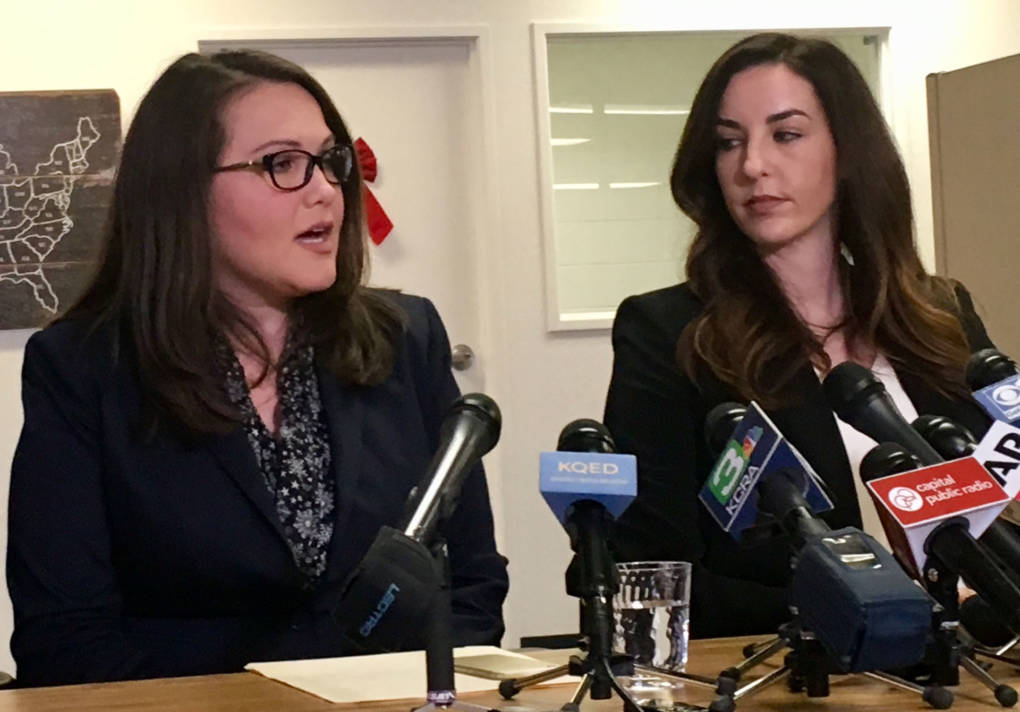
"caption": "Lobbyist Pamela Lopez (L) and Jessica Yas Barker held a press conference on Dec. 4, 2017, to accuse Assemblyman Matt Dababneh of sexual misconduct.",
"description": "Lobbyist Pamela Lopez (L) and Jessica Yas Barker held a press conference on Dec. 4, 2017, to accuse Assemblyman Matt Dababneh of sexual misconduct.",
"title": "LopezAndBarker",
"credit": "Laurel Rosenhall/CALmatters",
"status": "inherit",
"isLoading": false,
"fetchFailed": false
},
"news_11634327": {
"type": "attachments",
"id": "news_11634327",
"meta": {
"index": "attachments_1716263798",
"site": "news",
"id": "11634327",
"found": true
},
"parent": 11634306,
"imgSizes": {
"small": {
"file": "https://ww2.kqed.org/app/uploads/sites/10/2017/12/Becerra1-1280x800-520x325.jpg",
"width": 520,
"mimeType": "image/jpeg",
"height": 325
},
"twentyfourteen-full-width": {
"file": "https://ww2.kqed.org/app/uploads/sites/10/2017/12/Becerra1-1280x800-1038x576.jpg",
"width": 1038,
"mimeType": "image/jpeg",
"height": 576
},
"thumbnail": {
"file": "https://ww2.kqed.org/app/uploads/sites/10/2017/12/Becerra1-1280x800-160x100.jpg",
"width": 160,
"mimeType": "image/jpeg",
"height": 100
},
"fd-sm": {
"file": "https://ww2.kqed.org/app/uploads/sites/10/2017/12/Becerra1-1280x800-960x600.jpg",
"width": 960,
"mimeType": "image/jpeg",
"height": 600
},
"post-thumbnail": {
"file": "https://ww2.kqed.org/app/uploads/sites/10/2017/12/Becerra1-1280x800-672x372.jpg",
"width": 672,
"mimeType": "image/jpeg",
"height": 372
},
"xsmall": {
"file": "https://ww2.kqed.org/app/uploads/sites/10/2017/12/Becerra1-1280x800-375x234.jpg",
"width": 375,
"mimeType": "image/jpeg",
"height": 234
},
"kqedFullSize": {
"file": "https://ww2.kqed.org/app/uploads/sites/10/2017/12/Becerra1-1280x800.jpg",
"width": 1280,
"height": 800
},
"large": {
"file": "https://ww2.kqed.org/app/uploads/sites/10/2017/12/Becerra1-1280x800-1020x638.jpg",
"width": 1020,
"mimeType": "image/jpeg",
"height": 638
},
"xlarge": {
"file": "https://ww2.kqed.org/app/uploads/sites/10/2017/12/Becerra1-1280x800-1180x738.jpg",
"width": 1180,
"mimeType": "image/jpeg",
"height": 738
},
"guest-author-50": {
"file": "https://ww2.kqed.org/app/uploads/sites/10/2017/12/Becerra1-1280x800-50x50.jpg",
"width": 50,
"mimeType": "image/jpeg",
"height": 50
},
"guest-author-96": {
"file": "https://ww2.kqed.org/app/uploads/sites/10/2017/12/Becerra1-1280x800-96x96.jpg",
"width": 96,
"mimeType": "image/jpeg",
"height": 96
},
"medium": {
"file": "https://ww2.kqed.org/app/uploads/sites/10/2017/12/Becerra1-1280x800-800x500.jpg",
"width": 800,
"mimeType": "image/jpeg",
"height": 500
},
"guest-author-64": {
"file": "https://ww2.kqed.org/app/uploads/sites/10/2017/12/Becerra1-1280x800-64x64.jpg",
"width": 64,
"mimeType": "image/jpeg",
"height": 64
},
"guest-author-32": {
"file": "https://ww2.kqed.org/app/uploads/sites/10/2017/12/Becerra1-1280x800-32x32.jpg",
"width": 32,
"mimeType": "image/jpeg",
"height": 32
},
"fd-med": {
"file": "https://ww2.kqed.org/app/uploads/sites/10/2017/12/Becerra1-1280x800-1180x738.jpg",
"width": 1180,
"mimeType": "image/jpeg",
"height": 738
},
"detail": {
"file": "https://ww2.kqed.org/app/uploads/sites/10/2017/12/Becerra1-1280x800-150x150.jpg",
"width": 150,
"mimeType": "image/jpeg",
"height": 150
},
"guest-author-128": {
"file": "https://ww2.kqed.org/app/uploads/sites/10/2017/12/Becerra1-1280x800-128x128.jpg",
"width": 128,
"mimeType": "image/jpeg",
"height": 128
},
"xxsmall": {
"file": "https://ww2.kqed.org/app/uploads/sites/10/2017/12/Becerra1-1280x800-240x150.jpg",
"width": 240,
"mimeType": "image/jpeg",
"height": 150
}
},
"publishDate": 1512162664,
"modified": 1512162757,
"caption": "California Attorney General Xavier Becerra has become a regular legal adversary of the Trump administration.",
"description": null,
"title": "Becerra1-1280x800",
"credit": "Ben Christopher/CALmatters",
"status": "inherit",
"isLoading": false,
"fetchFailed": false
},
"news_11634333": {
"type": "attachments",
"id": "news_11634333",
"meta": {
"index": "attachments_1716263798",
"site": "news",
"id": "11634333",
"found": true
},
"parent": 11634332,
"imgSizes": {
"small": {
"file": "https://ww2.kqed.org/app/uploads/sites/10/2017/12/ShastaDambyBureauofReclamation-1280x800-520x325.jpg",
"width": 520,
"mimeType": "image/jpeg",
"height": 325
},
"twentyfourteen-full-width": {
"file": "https://ww2.kqed.org/app/uploads/sites/10/2017/12/ShastaDambyBureauofReclamation-1280x800-1038x576.jpg",
"width": 1038,
"mimeType": "image/jpeg",
"height": 576
},
"thumbnail": {
"file": "https://ww2.kqed.org/app/uploads/sites/10/2017/12/ShastaDambyBureauofReclamation-1280x800-160x100.jpg",
"width": 160,
"mimeType": "image/jpeg",
"height": 100
},
"fd-sm": {
"file": "https://ww2.kqed.org/app/uploads/sites/10/2017/12/ShastaDambyBureauofReclamation-1280x800-960x600.jpg",
"width": 960,
"mimeType": "image/jpeg",
"height": 600
},
"post-thumbnail": {
"file": "https://ww2.kqed.org/app/uploads/sites/10/2017/12/ShastaDambyBureauofReclamation-1280x800-672x372.jpg",
"width": 672,
"mimeType": "image/jpeg",
"height": 372
},
"xsmall": {
"file": "https://ww2.kqed.org/app/uploads/sites/10/2017/12/ShastaDambyBureauofReclamation-1280x800-375x234.jpg",
"width": 375,
"mimeType": "image/jpeg",
"height": 234
},
"kqedFullSize": {
"file": "https://ww2.kqed.org/app/uploads/sites/10/2017/12/ShastaDambyBureauofReclamation-1280x800.jpg",
"width": 1280,
"height": 800
},
"large": {
"file": "https://ww2.kqed.org/app/uploads/sites/10/2017/12/ShastaDambyBureauofReclamation-1280x800-1020x638.jpg",
"width": 1020,
"mimeType": "image/jpeg",
"height": 638
},
"xlarge": {
"file": "https://ww2.kqed.org/app/uploads/sites/10/2017/12/ShastaDambyBureauofReclamation-1280x800-1180x738.jpg",
"width": 1180,
"mimeType": "image/jpeg",
"height": 738
},
"guest-author-50": {
"file": "https://ww2.kqed.org/app/uploads/sites/10/2017/12/ShastaDambyBureauofReclamation-1280x800-50x50.jpg",
"width": 50,
"mimeType": "image/jpeg",
"height": 50
},
"guest-author-96": {
"file": "https://ww2.kqed.org/app/uploads/sites/10/2017/12/ShastaDambyBureauofReclamation-1280x800-96x96.jpg",
"width": 96,
"mimeType": "image/jpeg",
"height": 96
},
"medium": {
"file": "https://ww2.kqed.org/app/uploads/sites/10/2017/12/ShastaDambyBureauofReclamation-1280x800-800x500.jpg",
"width": 800,
"mimeType": "image/jpeg",
"height": 500
},
"guest-author-64": {
"file": "https://ww2.kqed.org/app/uploads/sites/10/2017/12/ShastaDambyBureauofReclamation-1280x800-64x64.jpg",
"width": 64,
"mimeType": "image/jpeg",
"height": 64
},
"guest-author-32": {
"file": "https://ww2.kqed.org/app/uploads/sites/10/2017/12/ShastaDambyBureauofReclamation-1280x800-32x32.jpg",
"width": 32,
"mimeType": "image/jpeg",
"height": 32
},
"fd-med": {
"file": "https://ww2.kqed.org/app/uploads/sites/10/2017/12/ShastaDambyBureauofReclamation-1280x800-1180x738.jpg",
"width": 1180,
"mimeType": "image/jpeg",
"height": 738
},
"detail": {
"file": "https://ww2.kqed.org/app/uploads/sites/10/2017/12/ShastaDambyBureauofReclamation-1280x800-150x150.jpg",
"width": 150,
"mimeType": "image/jpeg",
"height": 150
},
"guest-author-128": {
"file": "https://ww2.kqed.org/app/uploads/sites/10/2017/12/ShastaDambyBureauofReclamation-1280x800-128x128.jpg",
"width": 128,
"mimeType": "image/jpeg",
"height": 128
},
"xxsmall": {
"file": "https://ww2.kqed.org/app/uploads/sites/10/2017/12/ShastaDambyBureauofReclamation-1280x800-240x150.jpg",
"width": 240,
"mimeType": "image/jpeg",
"height": 150
}
},
"publishDate": 1512164256,
"modified": 1512164304,
"caption": "\nShasta Dam is one of California's largest generators of hydroelectric power.\n",
"description": null,
"title": "ShastaDambyBureauofReclamation-1280x800",
"credit": "Bureau of Reclamation",
"status": "inherit",
"isLoading": false,
"fetchFailed": false
},
"news_11633719": {
"type": "attachments",
"id": "news_11633719",
"meta": {
"index": "attachments_1716263798",
"site": "news",
"id": "11633719",
"found": true
},
"parent": 11633699,
"imgSizes": {
"small": {
"file": "https://ww2.kqed.org/app/uploads/sites/10/2017/11/JobFair-520x349.jpg",
"width": 520,
"mimeType": "image/jpeg",
"height": 349
},
"twentyfourteen-full-width": {
"file": "https://ww2.kqed.org/app/uploads/sites/10/2017/11/JobFair-1038x576.jpg",
"width": 1038,
"mimeType": "image/jpeg",
"height": 576
},
"thumbnail": {
"file": "https://ww2.kqed.org/app/uploads/sites/10/2017/11/JobFair-160x107.jpg",
"width": 160,
"mimeType": "image/jpeg",
"height": 107
},
"fd-sm": {
"file": "https://ww2.kqed.org/app/uploads/sites/10/2017/11/JobFair-960x645.jpg",
"width": 960,
"mimeType": "image/jpeg",
"height": 645
},
"post-thumbnail": {
"file": "https://ww2.kqed.org/app/uploads/sites/10/2017/11/JobFair-672x372.jpg",
"width": 672,
"mimeType": "image/jpeg",
"height": 372
},
"xsmall": {
"file": "https://ww2.kqed.org/app/uploads/sites/10/2017/11/JobFair-375x252.jpg",
"width": 375,
"mimeType": "image/jpeg",
"height": 252
},
"kqedFullSize": {
"file": "https://ww2.kqed.org/app/uploads/sites/10/2017/11/JobFair.jpg",
"width": 1920,
"height": 1289
},
"large": {
"file": "https://ww2.kqed.org/app/uploads/sites/10/2017/11/JobFair-1020x685.jpg",
"width": 1020,
"mimeType": "image/jpeg",
"height": 685
},
"xlarge": {
"file": "https://ww2.kqed.org/app/uploads/sites/10/2017/11/JobFair-1180x792.jpg",
"width": 1180,
"mimeType": "image/jpeg",
"height": 792
},
"guest-author-50": {
"file": "https://ww2.kqed.org/app/uploads/sites/10/2017/11/JobFair-50x50.jpg",
"width": 50,
"mimeType": "image/jpeg",
"height": 50
},
"guest-author-96": {
"file": "https://ww2.kqed.org/app/uploads/sites/10/2017/11/JobFair-96x96.jpg",
"width": 96,
"mimeType": "image/jpeg",
"height": 96
},
"medium": {
"file": "https://ww2.kqed.org/app/uploads/sites/10/2017/11/JobFair-800x537.jpg",
"width": 800,
"mimeType": "image/jpeg",
"height": 537
},
"guest-author-64": {
"file": "https://ww2.kqed.org/app/uploads/sites/10/2017/11/JobFair-64x64.jpg",
"width": 64,
"mimeType": "image/jpeg",
"height": 64
},
"guest-author-32": {
"file": "https://ww2.kqed.org/app/uploads/sites/10/2017/11/JobFair-32x32.jpg",
"width": 32,
"mimeType": "image/jpeg",
"height": 32
},
"fd-lrg": {
"file": "https://ww2.kqed.org/app/uploads/sites/10/2017/11/JobFair-1920x1289.jpg",
"width": 1920,
"mimeType": "image/jpeg",
"height": 1289
},
"fd-med": {
"file": "https://ww2.kqed.org/app/uploads/sites/10/2017/11/JobFair-1180x792.jpg",
"width": 1180,
"mimeType": "image/jpeg",
"height": 792
},
"full-width": {
"file": "https://ww2.kqed.org/app/uploads/sites/10/2017/11/JobFair-1920x1289.jpg",
"width": 1920,
"mimeType": "image/jpeg",
"height": 1289
},
"detail": {
"file": "https://ww2.kqed.org/app/uploads/sites/10/2017/11/JobFair-150x150.jpg",
"width": 150,
"mimeType": "image/jpeg",
"height": 150
},
"guest-author-128": {
"file": "https://ww2.kqed.org/app/uploads/sites/10/2017/11/JobFair-128x128.jpg",
"width": 128,
"mimeType": "image/jpeg",
"height": 128
},
"xxsmall": {
"file": "https://ww2.kqed.org/app/uploads/sites/10/2017/11/JobFair-240x161.jpg",
"width": 240,
"mimeType": "image/jpeg",
"height": 161
}
},
"publishDate": 1511910455,
"modified": 1511910558,
"caption": "A job seeker waits to be interviewed during a job fair in Santa Clara.",
"description": "A job seeker waits to be interviewed during a job fair in Santa Clara.",
"title": "JobFair",
"credit": "Justin Sullivan/Getty Images",
"status": "inherit",
"isLoading": false,
"fetchFailed": false
},
"news_11631413": {
"type": "attachments",
"id": "news_11631413",
"meta": {
"index": "attachments_1716263798",
"site": "news",
"id": "11631413",
"found": true
},
"parent": 11631406,
"imgSizes": {
"small": {
"file": "https://ww2.kqed.org/app/uploads/sites/10/2017/11/CapSac-520x329.jpg",
"width": 520,
"mimeType": "image/jpeg",
"height": 329
},
"twentyfourteen-full-width": {
"file": "https://ww2.kqed.org/app/uploads/sites/10/2017/11/CapSac-1038x576.jpg",
"width": 1038,
"mimeType": "image/jpeg",
"height": 576
},
"thumbnail": {
"file": "https://ww2.kqed.org/app/uploads/sites/10/2017/11/CapSac-160x101.jpg",
"width": 160,
"mimeType": "image/jpeg",
"height": 101
},
"fd-sm": {
"file": "https://ww2.kqed.org/app/uploads/sites/10/2017/11/CapSac-960x608.jpg",
"width": 960,
"mimeType": "image/jpeg",
"height": 608
},
"post-thumbnail": {
"file": "https://ww2.kqed.org/app/uploads/sites/10/2017/11/CapSac-672x372.jpg",
"width": 672,
"mimeType": "image/jpeg",
"height": 372
},
"xsmall": {
"file": "https://ww2.kqed.org/app/uploads/sites/10/2017/11/CapSac-375x238.jpg",
"width": 375,
"mimeType": "image/jpeg",
"height": 238
},
"kqedFullSize": {
"file": "https://ww2.kqed.org/app/uploads/sites/10/2017/11/CapSac.jpg",
"width": 1920,
"height": 1216
},
"large": {
"file": "https://ww2.kqed.org/app/uploads/sites/10/2017/11/CapSac-1020x646.jpg",
"width": 1020,
"mimeType": "image/jpeg",
"height": 646
},
"xlarge": {
"file": "https://ww2.kqed.org/app/uploads/sites/10/2017/11/CapSac-1180x747.jpg",
"width": 1180,
"mimeType": "image/jpeg",
"height": 747
},
"guest-author-50": {
"file": "https://ww2.kqed.org/app/uploads/sites/10/2017/11/CapSac-50x50.jpg",
"width": 50,
"mimeType": "image/jpeg",
"height": 50
},
"guest-author-96": {
"file": "https://ww2.kqed.org/app/uploads/sites/10/2017/11/CapSac-96x96.jpg",
"width": 96,
"mimeType": "image/jpeg",
"height": 96
},
"medium": {
"file": "https://ww2.kqed.org/app/uploads/sites/10/2017/11/CapSac-800x507.jpg",
"width": 800,
"mimeType": "image/jpeg",
"height": 507
},
"guest-author-64": {
"file": "https://ww2.kqed.org/app/uploads/sites/10/2017/11/CapSac-64x64.jpg",
"width": 64,
"mimeType": "image/jpeg",
"height": 64
},
"guest-author-32": {
"file": "https://ww2.kqed.org/app/uploads/sites/10/2017/11/CapSac-32x32.jpg",
"width": 32,
"mimeType": "image/jpeg",
"height": 32
},
"fd-lrg": {
"file": "https://ww2.kqed.org/app/uploads/sites/10/2017/11/CapSac-1920x1216.jpg",
"width": 1920,
"mimeType": "image/jpeg",
"height": 1216
},
"fd-med": {
"file": "https://ww2.kqed.org/app/uploads/sites/10/2017/11/CapSac-1180x747.jpg",
"width": 1180,
"mimeType": "image/jpeg",
"height": 747
},
"full-width": {
"file": "https://ww2.kqed.org/app/uploads/sites/10/2017/11/CapSac-1920x1216.jpg",
"width": 1920,
"mimeType": "image/jpeg",
"height": 1216
},
"detail": {
"file": "https://ww2.kqed.org/app/uploads/sites/10/2017/11/CapSac-150x150.jpg",
"width": 150,
"mimeType": "image/jpeg",
"height": 150
},
"guest-author-128": {
"file": "https://ww2.kqed.org/app/uploads/sites/10/2017/11/CapSac-128x128.jpg",
"width": 128,
"mimeType": "image/jpeg",
"height": 128
},
"xxsmall": {
"file": "https://ww2.kqed.org/app/uploads/sites/10/2017/11/CapSac-240x152.jpg",
"width": 240,
"mimeType": "image/jpeg",
"height": 152
}
},
"publishDate": 1510864748,
"modified": 1510864798,
"caption": "One group of state workers has never had whistleblower protection: those who work for the lawmakers themselves.",
"description": "One group of state workers has never had whistleblower protection: those who work for the lawmakers themselves.",
"title": "CapSac",
"credit": "Justin Sullivan/Getty Images",
"status": "inherit",
"isLoading": false,
"fetchFailed": false
},
"news_11628595": {
"type": "attachments",
"id": "news_11628595",
"meta": {
"index": "attachments_1716263798",
"site": "news",
"id": "11628595",
"found": true
},
"parent": 11628537,
"imgSizes": {
"small": {
"file": "https://ww2.kqed.org/app/uploads/sites/10/2017/11/SFHomes-520x335.jpg",
"width": 520,
"mimeType": "image/jpeg",
"height": 335
},
"twentyfourteen-full-width": {
"file": "https://ww2.kqed.org/app/uploads/sites/10/2017/11/SFHomes-1038x576.jpg",
"width": 1038,
"mimeType": "image/jpeg",
"height": 576
},
"thumbnail": {
"file": "https://ww2.kqed.org/app/uploads/sites/10/2017/11/SFHomes-160x103.jpg",
"width": 160,
"mimeType": "image/jpeg",
"height": 103
},
"fd-sm": {
"file": "https://ww2.kqed.org/app/uploads/sites/10/2017/11/SFHomes-960x618.jpg",
"width": 960,
"mimeType": "image/jpeg",
"height": 618
},
"post-thumbnail": {
"file": "https://ww2.kqed.org/app/uploads/sites/10/2017/11/SFHomes-672x372.jpg",
"width": 672,
"mimeType": "image/jpeg",
"height": 372
},
"xsmall": {
"file": "https://ww2.kqed.org/app/uploads/sites/10/2017/11/SFHomes-375x241.jpg",
"width": 375,
"mimeType": "image/jpeg",
"height": 241
},
"kqedFullSize": {
"file": "https://ww2.kqed.org/app/uploads/sites/10/2017/11/SFHomes.jpg",
"width": 1920,
"height": 1236
},
"large": {
"file": "https://ww2.kqed.org/app/uploads/sites/10/2017/11/SFHomes-1020x657.jpg",
"width": 1020,
"mimeType": "image/jpeg",
"height": 657
},
"xlarge": {
"file": "https://ww2.kqed.org/app/uploads/sites/10/2017/11/SFHomes-1180x760.jpg",
"width": 1180,
"mimeType": "image/jpeg",
"height": 760
},
"guest-author-50": {
"file": "https://ww2.kqed.org/app/uploads/sites/10/2017/11/SFHomes-50x50.jpg",
"width": 50,
"mimeType": "image/jpeg",
"height": 50
},
"guest-author-96": {
"file": "https://ww2.kqed.org/app/uploads/sites/10/2017/11/SFHomes-96x96.jpg",
"width": 96,
"mimeType": "image/jpeg",
"height": 96
},
"medium": {
"file": "https://ww2.kqed.org/app/uploads/sites/10/2017/11/SFHomes-800x515.jpg",
"width": 800,
"mimeType": "image/jpeg",
"height": 515
},
"guest-author-64": {
"file": "https://ww2.kqed.org/app/uploads/sites/10/2017/11/SFHomes-64x64.jpg",
"width": 64,
"mimeType": "image/jpeg",
"height": 64
},
"guest-author-32": {
"file": "https://ww2.kqed.org/app/uploads/sites/10/2017/11/SFHomes-32x32.jpg",
"width": 32,
"mimeType": "image/jpeg",
"height": 32
},
"fd-lrg": {
"file": "https://ww2.kqed.org/app/uploads/sites/10/2017/11/SFHomes-1920x1236.jpg",
"width": 1920,
"mimeType": "image/jpeg",
"height": 1236
},
"fd-med": {
"file": "https://ww2.kqed.org/app/uploads/sites/10/2017/11/SFHomes-1180x760.jpg",
"width": 1180,
"mimeType": "image/jpeg",
"height": 760
},
"full-width": {
"file": "https://ww2.kqed.org/app/uploads/sites/10/2017/11/SFHomes-1920x1236.jpg",
"width": 1920,
"mimeType": "image/jpeg",
"height": 1236
},
"detail": {
"file": "https://ww2.kqed.org/app/uploads/sites/10/2017/11/SFHomes-150x150.jpg",
"width": 150,
"mimeType": "image/jpeg",
"height": 150
},
"guest-author-128": {
"file": "https://ww2.kqed.org/app/uploads/sites/10/2017/11/SFHomes-128x128.jpg",
"width": 128,
"mimeType": "image/jpeg",
"height": 128
},
"xxsmall": {
"file": "https://ww2.kqed.org/app/uploads/sites/10/2017/11/SFHomes-240x155.jpg",
"width": 240,
"mimeType": "image/jpeg",
"height": 155
}
},
"publishDate": 1510008219,
"modified": 1510008284,
"caption": "Less than half of people born in California in 1980 are making more money than their parents did as young adults -- and that's before you factor in cost of living.",
"description": "Less than half of people born in California in 1980 are making more money than their parents did as young adults -- and that's before you factor in cost of living.",
"title": "SFHomes",
"credit": "Justin Sullivan/Getty Images",
"status": "inherit",
"isLoading": false,
"fetchFailed": false
},
"news_11627084": {
"type": "attachments",
"id": "news_11627084",
"meta": {
"index": "attachments_1716263798",
"site": "news",
"id": "11627084",
"found": true
},
"parent": 11627080,
"imgSizes": {
"small": {
"file": "https://ww2.kqed.org/app/uploads/sites/10/2017/10/BlackStudentAchievementMain-520x342.jpg",
"width": 520,
"mimeType": "image/jpeg",
"height": 342
},
"twentyfourteen-full-width": {
"file": "https://ww2.kqed.org/app/uploads/sites/10/2017/10/BlackStudentAchievementMain-1038x576.jpg",
"width": 1038,
"mimeType": "image/jpeg",
"height": 576
},
"thumbnail": {
"file": "https://ww2.kqed.org/app/uploads/sites/10/2017/10/BlackStudentAchievementMain-160x105.jpg",
"width": 160,
"mimeType": "image/jpeg",
"height": 105
},
"fd-sm": {
"file": "https://ww2.kqed.org/app/uploads/sites/10/2017/10/BlackStudentAchievementMain-960x631.jpg",
"width": 960,
"mimeType": "image/jpeg",
"height": 631
},
"post-thumbnail": {
"file": "https://ww2.kqed.org/app/uploads/sites/10/2017/10/BlackStudentAchievementMain-672x372.jpg",
"width": 672,
"mimeType": "image/jpeg",
"height": 372
},
"xsmall": {
"file": "https://ww2.kqed.org/app/uploads/sites/10/2017/10/BlackStudentAchievementMain-375x246.jpg",
"width": 375,
"mimeType": "image/jpeg",
"height": 246
},
"kqedFullSize": {
"file": "https://ww2.kqed.org/app/uploads/sites/10/2017/10/BlackStudentAchievementMain.jpg",
"width": 1920,
"height": 1261
},
"large": {
"file": "https://ww2.kqed.org/app/uploads/sites/10/2017/10/BlackStudentAchievementMain-1020x670.jpg",
"width": 1020,
"mimeType": "image/jpeg",
"height": 670
},
"xlarge": {
"file": "https://ww2.kqed.org/app/uploads/sites/10/2017/10/BlackStudentAchievementMain-1180x775.jpg",
"width": 1180,
"mimeType": "image/jpeg",
"height": 775
},
"guest-author-50": {
"file": "https://ww2.kqed.org/app/uploads/sites/10/2017/10/BlackStudentAchievementMain-50x50.jpg",
"width": 50,
"mimeType": "image/jpeg",
"height": 50
},
"guest-author-96": {
"file": "https://ww2.kqed.org/app/uploads/sites/10/2017/10/BlackStudentAchievementMain-96x96.jpg",
"width": 96,
"mimeType": "image/jpeg",
"height": 96
},
"medium": {
"file": "https://ww2.kqed.org/app/uploads/sites/10/2017/10/BlackStudentAchievementMain-800x525.jpg",
"width": 800,
"mimeType": "image/jpeg",
"height": 525
},
"guest-author-64": {
"file": "https://ww2.kqed.org/app/uploads/sites/10/2017/10/BlackStudentAchievementMain-64x64.jpg",
"width": 64,
"mimeType": "image/jpeg",
"height": 64
},
"guest-author-32": {
"file": "https://ww2.kqed.org/app/uploads/sites/10/2017/10/BlackStudentAchievementMain-32x32.jpg",
"width": 32,
"mimeType": "image/jpeg",
"height": 32
},
"fd-lrg": {
"file": "https://ww2.kqed.org/app/uploads/sites/10/2017/10/BlackStudentAchievementMain-1920x1261.jpg",
"width": 1920,
"mimeType": "image/jpeg",
"height": 1261
},
"fd-med": {
"file": "https://ww2.kqed.org/app/uploads/sites/10/2017/10/BlackStudentAchievementMain-1180x775.jpg",
"width": 1180,
"mimeType": "image/jpeg",
"height": 775
},
"full-width": {
"file": "https://ww2.kqed.org/app/uploads/sites/10/2017/10/BlackStudentAchievementMain-1920x1261.jpg",
"width": 1920,
"mimeType": "image/jpeg",
"height": 1261
},
"detail": {
"file": "https://ww2.kqed.org/app/uploads/sites/10/2017/10/BlackStudentAchievementMain-150x150.jpg",
"width": 150,
"mimeType": "image/jpeg",
"height": 150
},
"guest-author-128": {
"file": "https://ww2.kqed.org/app/uploads/sites/10/2017/10/BlackStudentAchievementMain-128x128.jpg",
"width": 128,
"mimeType": "image/jpeg",
"height": 128
},
"xxsmall": {
"file": "https://ww2.kqed.org/app/uploads/sites/10/2017/10/BlackStudentAchievementMain-240x158.jpg",
"width": 240,
"mimeType": "image/jpeg",
"height": 158
}
},
"publishDate": 1509477791,
"modified": 1509477834,
"caption": "Principal Charleston Brown oversees dismissal at Willie L. Brown Jr. Middle School in San Francisco’s Bayview neighborhood. His black students struggle to pass state tests in reading and math.",
"description": "Principal Charleston Brown oversees dismissal at Willie L. Brown Jr. Middle School in San Francisco’s Bayview neighborhood. His black students struggle to pass state tests in reading and math.",
"title": "BlackStudentAchievementMain",
"credit": "Penni Gladstone/CALmatters",
"status": "inherit",
"isLoading": false,
"fetchFailed": false
},
"news_11626018": {
"type": "attachments",
"id": "news_11626018",
"meta": {
"index": "attachments_1716263798",
"site": "news",
"id": "11626018",
"found": true
},
"parent": 11625675,
"imgSizes": {
"small": {
"file": "https://ww2.kqed.org/app/uploads/sites/10/2017/10/OilRig-520x336.jpg",
"width": 520,
"mimeType": "image/jpeg",
"height": 336
},
"twentyfourteen-full-width": {
"file": "https://ww2.kqed.org/app/uploads/sites/10/2017/10/OilRig-1038x576.jpg",
"width": 1038,
"mimeType": "image/jpeg",
"height": 576
},
"thumbnail": {
"file": "https://ww2.kqed.org/app/uploads/sites/10/2017/10/OilRig-160x103.jpg",
"width": 160,
"mimeType": "image/jpeg",
"height": 103
},
"fd-sm": {
"file": "https://ww2.kqed.org/app/uploads/sites/10/2017/10/OilRig-960x620.jpg",
"width": 960,
"mimeType": "image/jpeg",
"height": 620
},
"post-thumbnail": {
"file": "https://ww2.kqed.org/app/uploads/sites/10/2017/10/OilRig-672x372.jpg",
"width": 672,
"mimeType": "image/jpeg",
"height": 372
},
"xsmall": {
"file": "https://ww2.kqed.org/app/uploads/sites/10/2017/10/OilRig-375x242.jpg",
"width": 375,
"mimeType": "image/jpeg",
"height": 242
},
"kqedFullSize": {
"file": "https://ww2.kqed.org/app/uploads/sites/10/2017/10/OilRig.jpg",
"width": 1920,
"height": 1239
},
"large": {
"file": "https://ww2.kqed.org/app/uploads/sites/10/2017/10/OilRig-1020x658.jpg",
"width": 1020,
"mimeType": "image/jpeg",
"height": 658
},
"xlarge": {
"file": "https://ww2.kqed.org/app/uploads/sites/10/2017/10/OilRig-1180x761.jpg",
"width": 1180,
"mimeType": "image/jpeg",
"height": 761
},
"guest-author-50": {
"file": "https://ww2.kqed.org/app/uploads/sites/10/2017/10/OilRig-50x50.jpg",
"width": 50,
"mimeType": "image/jpeg",
"height": 50
},
"guest-author-96": {
"file": "https://ww2.kqed.org/app/uploads/sites/10/2017/10/OilRig-96x96.jpg",
"width": 96,
"mimeType": "image/jpeg",
"height": 96
},
"medium": {
"file": "https://ww2.kqed.org/app/uploads/sites/10/2017/10/OilRig-800x516.jpg",
"width": 800,
"mimeType": "image/jpeg",
"height": 516
},
"guest-author-64": {
"file": "https://ww2.kqed.org/app/uploads/sites/10/2017/10/OilRig-64x64.jpg",
"width": 64,
"mimeType": "image/jpeg",
"height": 64
},
"guest-author-32": {
"file": "https://ww2.kqed.org/app/uploads/sites/10/2017/10/OilRig-32x32.jpg",
"width": 32,
"mimeType": "image/jpeg",
"height": 32
},
"fd-lrg": {
"file": "https://ww2.kqed.org/app/uploads/sites/10/2017/10/OilRig-1920x1239.jpg",
"width": 1920,
"mimeType": "image/jpeg",
"height": 1239
},
"fd-med": {
"file": "https://ww2.kqed.org/app/uploads/sites/10/2017/10/OilRig-1180x761.jpg",
"width": 1180,
"mimeType": "image/jpeg",
"height": 761
},
"full-width": {
"file": "https://ww2.kqed.org/app/uploads/sites/10/2017/10/OilRig-1920x1239.jpg",
"width": 1920,
"mimeType": "image/jpeg",
"height": 1239
},
"detail": {
"file": "https://ww2.kqed.org/app/uploads/sites/10/2017/10/OilRig-150x150.jpg",
"width": 150,
"mimeType": "image/jpeg",
"height": 150
},
"guest-author-128": {
"file": "https://ww2.kqed.org/app/uploads/sites/10/2017/10/OilRig-128x128.jpg",
"width": 128,
"mimeType": "image/jpeg",
"height": 128
},
"xxsmall": {
"file": "https://ww2.kqed.org/app/uploads/sites/10/2017/10/OilRig-240x155.jpg",
"width": 240,
"mimeType": "image/jpeg",
"height": 155
}
},
"publishDate": 1508969308,
"modified": 1508969359,
"caption": "An oil rig operates in Culver City.",
"description": "An oil rig operates in Culver City.",
"title": "OilRig",
"credit": "GABRIEL BOUYS/AFP/Getty Images",
"status": "inherit",
"isLoading": false,
"fetchFailed": false
},
"news_11625463": {
"type": "attachments",
"id": "news_11625463",
"meta": {
"index": "attachments_1716263798",
"site": "news",
"id": "11625463",
"found": true
},
"parent": 11625454,
"imgSizes": {
"small": {
"file": "https://ww2.kqed.org/app/uploads/sites/10/2017/10/CapitolNight-520x331.jpg",
"width": 520,
"mimeType": "image/jpeg",
"height": 331
},
"twentyfourteen-full-width": {
"file": "https://ww2.kqed.org/app/uploads/sites/10/2017/10/CapitolNight-1038x576.jpg",
"width": 1038,
"mimeType": "image/jpeg",
"height": 576
},
"thumbnail": {
"file": "https://ww2.kqed.org/app/uploads/sites/10/2017/10/CapitolNight-160x102.jpg",
"width": 160,
"mimeType": "image/jpeg",
"height": 102
},
"fd-sm": {
"file": "https://ww2.kqed.org/app/uploads/sites/10/2017/10/CapitolNight-960x611.jpg",
"width": 960,
"mimeType": "image/jpeg",
"height": 611
},
"post-thumbnail": {
"file": "https://ww2.kqed.org/app/uploads/sites/10/2017/10/CapitolNight-672x372.jpg",
"width": 672,
"mimeType": "image/jpeg",
"height": 372
},
"xsmall": {
"file": "https://ww2.kqed.org/app/uploads/sites/10/2017/10/CapitolNight-375x239.jpg",
"width": 375,
"mimeType": "image/jpeg",
"height": 239
},
"kqedFullSize": {
"file": "https://ww2.kqed.org/app/uploads/sites/10/2017/10/CapitolNight.jpg",
"width": 1920,
"height": 1222
},
"large": {
"file": "https://ww2.kqed.org/app/uploads/sites/10/2017/10/CapitolNight-1020x649.jpg",
"width": 1020,
"mimeType": "image/jpeg",
"height": 649
},
"xlarge": {
"file": "https://ww2.kqed.org/app/uploads/sites/10/2017/10/CapitolNight-1180x751.jpg",
"width": 1180,
"mimeType": "image/jpeg",
"height": 751
},
"guest-author-50": {
"file": "https://ww2.kqed.org/app/uploads/sites/10/2017/10/CapitolNight-50x50.jpg",
"width": 50,
"mimeType": "image/jpeg",
"height": 50
},
"guest-author-96": {
"file": "https://ww2.kqed.org/app/uploads/sites/10/2017/10/CapitolNight-96x96.jpg",
"width": 96,
"mimeType": "image/jpeg",
"height": 96
},
"medium": {
"file": "https://ww2.kqed.org/app/uploads/sites/10/2017/10/CapitolNight-800x509.jpg",
"width": 800,
"mimeType": "image/jpeg",
"height": 509
},
"guest-author-64": {
"file": "https://ww2.kqed.org/app/uploads/sites/10/2017/10/CapitolNight-64x64.jpg",
"width": 64,
"mimeType": "image/jpeg",
"height": 64
},
"guest-author-32": {
"file": "https://ww2.kqed.org/app/uploads/sites/10/2017/10/CapitolNight-32x32.jpg",
"width": 32,
"mimeType": "image/jpeg",
"height": 32
},
"fd-lrg": {
"file": "https://ww2.kqed.org/app/uploads/sites/10/2017/10/CapitolNight-1920x1222.jpg",
"width": 1920,
"mimeType": "image/jpeg",
"height": 1222
},
"fd-med": {
"file": "https://ww2.kqed.org/app/uploads/sites/10/2017/10/CapitolNight-1180x751.jpg",
"width": 1180,
"mimeType": "image/jpeg",
"height": 751
},
"full-width": {
"file": "https://ww2.kqed.org/app/uploads/sites/10/2017/10/CapitolNight-1920x1222.jpg",
"width": 1920,
"mimeType": "image/jpeg",
"height": 1222
},
"detail": {
"file": "https://ww2.kqed.org/app/uploads/sites/10/2017/10/CapitolNight-150x150.jpg",
"width": 150,
"mimeType": "image/jpeg",
"height": 150
},
"guest-author-128": {
"file": "https://ww2.kqed.org/app/uploads/sites/10/2017/10/CapitolNight-128x128.jpg",
"width": 128,
"mimeType": "image/jpeg",
"height": 128
},
"xxsmall": {
"file": "https://ww2.kqed.org/app/uploads/sites/10/2017/10/CapitolNight-240x153.jpg",
"width": 240,
"mimeType": "image/jpeg",
"height": 153
}
},
"publishDate": 1508793211,
"modified": 1508793243,
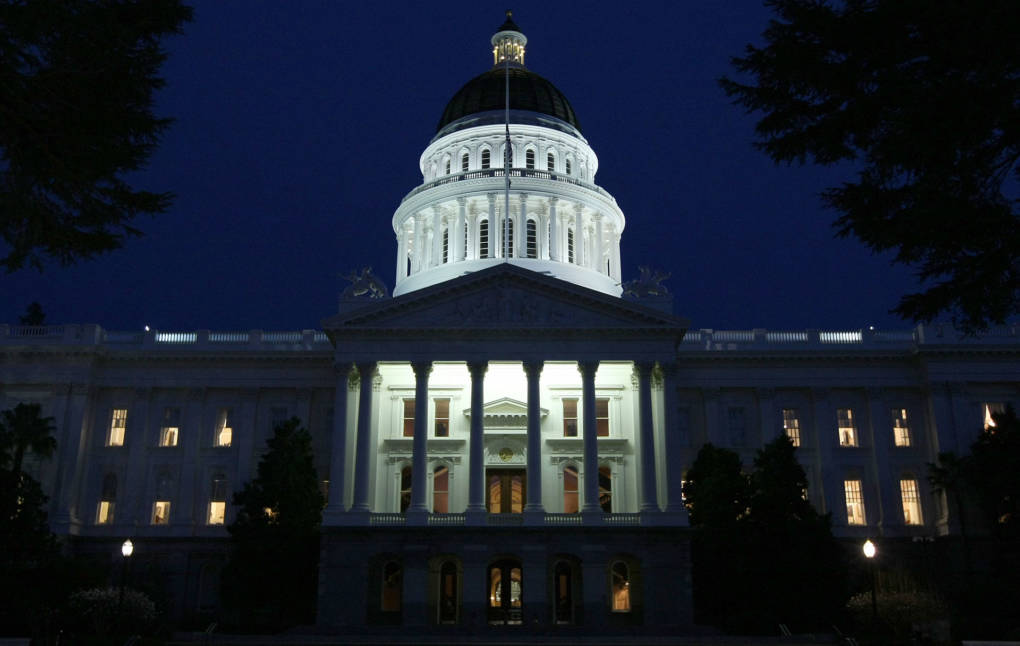
"caption": "The state Capitol in Sacramento.",
"description": "The state Capitol in Sacramento.",
"title": "CapitolNight",
"credit": "Justin Sullivan/Getty Images",
"status": "inherit",
"isLoading": false,
"fetchFailed": false
},
"news_11624608": {
"type": "attachments",
"id": "news_11624608",
"meta": {
"index": "attachments_1716263798",
"site": "news",
"id": "11624608",
"found": true
},
"parent": 11624605,
"imgSizes": {
"small": {
"file": "https://ww2.kqed.org/app/uploads/sites/10/2017/10/JerryBrown-520x359.jpg",
"width": 520,
"mimeType": "image/jpeg",
"height": 359
},
"twentyfourteen-full-width": {
"file": "https://ww2.kqed.org/app/uploads/sites/10/2017/10/JerryBrown-1038x576.jpg",
"width": 1038,
"mimeType": "image/jpeg",
"height": 576
},
"thumbnail": {
"file": "https://ww2.kqed.org/app/uploads/sites/10/2017/10/JerryBrown-160x110.jpg",
"width": 160,
"mimeType": "image/jpeg",
"height": 110
},
"fd-sm": {
"file": "https://ww2.kqed.org/app/uploads/sites/10/2017/10/JerryBrown-960x663.jpg",
"width": 960,
"mimeType": "image/jpeg",
"height": 663
},
"post-thumbnail": {
"file": "https://ww2.kqed.org/app/uploads/sites/10/2017/10/JerryBrown-672x372.jpg",
"width": 672,
"mimeType": "image/jpeg",
"height": 372
},
"xsmall": {
"file": "https://ww2.kqed.org/app/uploads/sites/10/2017/10/JerryBrown-375x259.jpg",
"width": 375,
"mimeType": "image/jpeg",
"height": 259
},
"kqedFullSize": {
"file": "https://ww2.kqed.org/app/uploads/sites/10/2017/10/JerryBrown.jpg",
"width": 1920,
"height": 1325
},
"large": {
"file": "https://ww2.kqed.org/app/uploads/sites/10/2017/10/JerryBrown-1020x704.jpg",
"width": 1020,
"mimeType": "image/jpeg",
"height": 704
},
"xlarge": {
"file": "https://ww2.kqed.org/app/uploads/sites/10/2017/10/JerryBrown-1180x814.jpg",
"width": 1180,
"mimeType": "image/jpeg",
"height": 814
},
"guest-author-50": {
"file": "https://ww2.kqed.org/app/uploads/sites/10/2017/10/JerryBrown-50x50.jpg",
"width": 50,
"mimeType": "image/jpeg",
"height": 50
},
"guest-author-96": {
"file": "https://ww2.kqed.org/app/uploads/sites/10/2017/10/JerryBrown-96x96.jpg",
"width": 96,
"mimeType": "image/jpeg",
"height": 96
},
"medium": {
"file": "https://ww2.kqed.org/app/uploads/sites/10/2017/10/JerryBrown-800x552.jpg",
"width": 800,
"mimeType": "image/jpeg",
"height": 552
},
"guest-author-64": {
"file": "https://ww2.kqed.org/app/uploads/sites/10/2017/10/JerryBrown-64x64.jpg",
"width": 64,
"mimeType": "image/jpeg",
"height": 64
},
"guest-author-32": {
"file": "https://ww2.kqed.org/app/uploads/sites/10/2017/10/JerryBrown-32x32.jpg",
"width": 32,
"mimeType": "image/jpeg",
"height": 32
},
"fd-lrg": {
"file": "https://ww2.kqed.org/app/uploads/sites/10/2017/10/JerryBrown-1920x1325.jpg",
"width": 1920,
"mimeType": "image/jpeg",
"height": 1325
},
"fd-med": {
"file": "https://ww2.kqed.org/app/uploads/sites/10/2017/10/JerryBrown-1180x814.jpg",
"width": 1180,
"mimeType": "image/jpeg",
"height": 814
},
"full-width": {
"file": "https://ww2.kqed.org/app/uploads/sites/10/2017/10/JerryBrown-1920x1325.jpg",
"width": 1920,
"mimeType": "image/jpeg",
"height": 1325
},
"detail": {
"file": "https://ww2.kqed.org/app/uploads/sites/10/2017/10/JerryBrown-150x150.jpg",
"width": 150,
"mimeType": "image/jpeg",
"height": 150
},
"guest-author-128": {
"file": "https://ww2.kqed.org/app/uploads/sites/10/2017/10/JerryBrown-128x128.jpg",
"width": 128,
"mimeType": "image/jpeg",
"height": 128
},
"xxsmall": {
"file": "https://ww2.kqed.org/app/uploads/sites/10/2017/10/JerryBrown-240x166.jpg",
"width": 240,
"mimeType": "image/jpeg",
"height": 166
}
},
"publishDate": 1508440750,
"modified": 1508440855,
"caption": "Gov. Jerry Brown speaks to reporters during a news conference on the state budget on May 11, 2017.",
"description": "Gov. Jerry Brown speaks to reporters during a news conference on the state budget on May 11, 2017.",
"title": "JerryBrown",
"credit": "Justin Sullivan/Getty Images",
"status": "inherit",
"isLoading": false,
"fetchFailed": false
},
"news_11621098": {
"type": "attachments",
"id": "news_11621098",
"meta": {
"index": "attachments_1716263798",
"site": "news",
"id": "11621098",
"found": true
},
"parent": 11621000,
"imgSizes": {
"small": {
"file": "https://ww2.kqed.org/app/uploads/sites/10/2017/10/Solar-panels.-Free-use-photo-via-Pexels.-No-attribution-needed.-520x345.jpeg",
"width": 520,
"mimeType": "image/jpeg",
"height": 345
},
"twentyfourteen-full-width": {
"file": "https://ww2.kqed.org/app/uploads/sites/10/2017/10/Solar-panels.-Free-use-photo-via-Pexels.-No-attribution-needed.-1038x576.jpeg",
"width": 1038,
"mimeType": "image/jpeg",
"height": 576
},
"thumbnail": {
"file": "https://ww2.kqed.org/app/uploads/sites/10/2017/10/Solar-panels.-Free-use-photo-via-Pexels.-No-attribution-needed.-160x106.jpeg",
"width": 160,
"mimeType": "image/jpeg",
"height": 106
},
"fd-sm": {
"file": "https://ww2.kqed.org/app/uploads/sites/10/2017/10/Solar-panels.-Free-use-photo-via-Pexels.-No-attribution-needed.-960x636.jpeg",
"width": 960,
"mimeType": "image/jpeg",
"height": 636
},
"post-thumbnail": {
"file": "https://ww2.kqed.org/app/uploads/sites/10/2017/10/Solar-panels.-Free-use-photo-via-Pexels.-No-attribution-needed.-672x372.jpeg",
"width": 672,
"mimeType": "image/jpeg",
"height": 372
},
"xsmall": {
"file": "https://ww2.kqed.org/app/uploads/sites/10/2017/10/Solar-panels.-Free-use-photo-via-Pexels.-No-attribution-needed.-375x248.jpeg",
"width": 375,
"mimeType": "image/jpeg",
"height": 248
},
"kqedFullSize": {
"file": "https://ww2.kqed.org/app/uploads/sites/10/2017/10/Solar-panels.-Free-use-photo-via-Pexels.-No-attribution-needed..jpeg",
"width": 4164,
"height": 2759
},
"large": {
"file": "https://ww2.kqed.org/app/uploads/sites/10/2017/10/Solar-panels.-Free-use-photo-via-Pexels.-No-attribution-needed.-1020x676.jpeg",
"width": 1020,
"mimeType": "image/jpeg",
"height": 676
},
"xlarge": {
"file": "https://ww2.kqed.org/app/uploads/sites/10/2017/10/Solar-panels.-Free-use-photo-via-Pexels.-No-attribution-needed.-1180x782.jpeg",
"width": 1180,
"mimeType": "image/jpeg",
"height": 782
},
"guest-author-50": {
"file": "https://ww2.kqed.org/app/uploads/sites/10/2017/10/Solar-panels.-Free-use-photo-via-Pexels.-No-attribution-needed.-50x50.jpeg",
"width": 50,
"mimeType": "image/jpeg",
"height": 50
},
"guest-author-96": {
"file": "https://ww2.kqed.org/app/uploads/sites/10/2017/10/Solar-panels.-Free-use-photo-via-Pexels.-No-attribution-needed.-96x96.jpeg",
"width": 96,
"mimeType": "image/jpeg",
"height": 96
},
"medium": {
"file": "https://ww2.kqed.org/app/uploads/sites/10/2017/10/Solar-panels.-Free-use-photo-via-Pexels.-No-attribution-needed.-800x530.jpeg",
"width": 800,
"mimeType": "image/jpeg",
"height": 530
},
"guest-author-64": {
"file": "https://ww2.kqed.org/app/uploads/sites/10/2017/10/Solar-panels.-Free-use-photo-via-Pexels.-No-attribution-needed.-64x64.jpeg",
"width": 64,
"mimeType": "image/jpeg",
"height": 64
},
"guest-author-32": {
"file": "https://ww2.kqed.org/app/uploads/sites/10/2017/10/Solar-panels.-Free-use-photo-via-Pexels.-No-attribution-needed.-32x32.jpeg",
"width": 32,
"mimeType": "image/jpeg",
"height": 32
},
"fd-lrg": {
"file": "https://ww2.kqed.org/app/uploads/sites/10/2017/10/Solar-panels.-Free-use-photo-via-Pexels.-No-attribution-needed.-1920x1272.jpeg",
"width": 1920,
"mimeType": "image/jpeg",
"height": 1272
},
"fd-med": {
"file": "https://ww2.kqed.org/app/uploads/sites/10/2017/10/Solar-panels.-Free-use-photo-via-Pexels.-No-attribution-needed.-1180x782.jpeg",
"width": 1180,
"mimeType": "image/jpeg",
"height": 782
},
"full-width": {
"file": "https://ww2.kqed.org/app/uploads/sites/10/2017/10/Solar-panels.-Free-use-photo-via-Pexels.-No-attribution-needed.-1920x1272.jpeg",
"width": 1920,
"mimeType": "image/jpeg",
"height": 1272
},
"detail": {
"file": "https://ww2.kqed.org/app/uploads/sites/10/2017/10/Solar-panels.-Free-use-photo-via-Pexels.-No-attribution-needed.-150x150.jpeg",
"width": 150,
"mimeType": "image/jpeg",
"height": 150
},
"guest-author-128": {
"file": "https://ww2.kqed.org/app/uploads/sites/10/2017/10/Solar-panels.-Free-use-photo-via-Pexels.-No-attribution-needed.-128x128.jpeg",
"width": 128,
"mimeType": "image/jpeg",
"height": 128
},
"xxsmall": {
"file": "https://ww2.kqed.org/app/uploads/sites/10/2017/10/Solar-panels.-Free-use-photo-via-Pexels.-No-attribution-needed.-240x159.jpeg",
"width": 240,
"mimeType": "image/jpeg",
"height": 159
}
},
"publishDate": 1507157601,
"modified": 1507157688,
"caption": "Solar panels ",
"description": null,
"title": "Solar panels. Free-use photo via Pexels. No attribution needed.",
"credit": null,
"status": "inherit",
"isLoading": false,
"fetchFailed": false
},
"news_11620121": {
"type": "attachments",
"id": "news_11620121",
"meta": {
"index": "attachments_1716263798",
"site": "news",
"id": "11620121",
"found": true
},
"parent": 11620061,
"imgSizes": {
"small": {
"file": "https://ww2.kqed.org/app/uploads/sites/10/2017/09/GettyImages-681991968-520x353.jpg",
"width": 520,
"mimeType": "image/jpeg",
"height": 353
},
"twentyfourteen-full-width": {
"file": "https://ww2.kqed.org/app/uploads/sites/10/2017/09/GettyImages-681991968-1038x576.jpg",
"width": 1038,
"mimeType": "image/jpeg",
"height": 576
},
"thumbnail": {
"file": "https://ww2.kqed.org/app/uploads/sites/10/2017/09/GettyImages-681991968-160x109.jpg",
"width": 160,
"mimeType": "image/jpeg",
"height": 109
},
"fd-sm": {
"file": "https://ww2.kqed.org/app/uploads/sites/10/2017/09/GettyImages-681991968-960x652.jpg",
"width": 960,
"mimeType": "image/jpeg",
"height": 652
},
"post-thumbnail": {
"file": "https://ww2.kqed.org/app/uploads/sites/10/2017/09/GettyImages-681991968-672x372.jpg",
"width": 672,
"mimeType": "image/jpeg",
"height": 372
},
"xsmall": {
"file": "https://ww2.kqed.org/app/uploads/sites/10/2017/09/GettyImages-681991968-375x255.jpg",
"width": 375,
"mimeType": "image/jpeg",
"height": 255
},
"kqedFullSize": {
"file": "https://ww2.kqed.org/app/uploads/sites/10/2017/09/GettyImages-681991968-e1520869635133.jpg",
"width": 1920,
"height": 1303
},
"large": {
"file": "https://ww2.kqed.org/app/uploads/sites/10/2017/09/GettyImages-681991968-1020x692.jpg",
"width": 1020,
"mimeType": "image/jpeg",
"height": 692
},
"xlarge": {
"file": "https://ww2.kqed.org/app/uploads/sites/10/2017/09/GettyImages-681991968-1180x801.jpg",
"width": 1180,
"mimeType": "image/jpeg",
"height": 801
},
"guest-author-50": {
"file": "https://ww2.kqed.org/app/uploads/sites/10/2017/09/GettyImages-681991968-50x50.jpg",
"width": 50,
"mimeType": "image/jpeg",
"height": 50
},
"guest-author-96": {
"file": "https://ww2.kqed.org/app/uploads/sites/10/2017/09/GettyImages-681991968-96x96.jpg",
"width": 96,
"mimeType": "image/jpeg",
"height": 96
},
"medium": {
"file": "https://ww2.kqed.org/app/uploads/sites/10/2017/09/GettyImages-681991968-800x543.jpg",
"width": 800,
"mimeType": "image/jpeg",
"height": 543
},
"guest-author-64": {
"file": "https://ww2.kqed.org/app/uploads/sites/10/2017/09/GettyImages-681991968-64x64.jpg",
"width": 64,
"mimeType": "image/jpeg",
"height": 64
},
"guest-author-32": {
"file": "https://ww2.kqed.org/app/uploads/sites/10/2017/09/GettyImages-681991968-32x32.jpg",
"width": 32,
"mimeType": "image/jpeg",
"height": 32
},
"fd-lrg": {
"file": "https://ww2.kqed.org/app/uploads/sites/10/2017/09/GettyImages-681991968-1920x1303.jpg",
"width": 1920,
"mimeType": "image/jpeg",
"height": 1303
},
"fd-med": {
"file": "https://ww2.kqed.org/app/uploads/sites/10/2017/09/GettyImages-681991968-1180x801.jpg",
"width": 1180,
"mimeType": "image/jpeg",
"height": 801
},
"full-width": {
"file": "https://ww2.kqed.org/app/uploads/sites/10/2017/09/GettyImages-681991968-1920x1303.jpg",
"width": 1920,
"mimeType": "image/jpeg",
"height": 1303
},
"detail": {
"file": "https://ww2.kqed.org/app/uploads/sites/10/2017/09/GettyImages-681991968-150x150.jpg",
"width": 150,
"mimeType": "image/jpeg",
"height": 150
},
"guest-author-128": {
"file": "https://ww2.kqed.org/app/uploads/sites/10/2017/09/GettyImages-681991968-128x128.jpg",
"width": 128,
"mimeType": "image/jpeg",
"height": 128
},
"xxsmall": {
"file": "https://ww2.kqed.org/app/uploads/sites/10/2017/09/GettyImages-681991968-240x163.jpg",
"width": 240,
"mimeType": "image/jpeg",
"height": 163
}
},
"publishDate": 1506726034,
"modified": 1520889728,
"caption": "California Gov. Jerry Brown speaks to reporters during a news conference where he revealed his revised California state budget on May 11, 2017, in Sacramento.",
"description": null,
"title": "Gov. Jerry Brown Reveals Revised California State Budget",
"credit": "Justin Sullivan/Getty Images",
"status": "inherit",
"isLoading": false,
"fetchFailed": false
}
},
"audioPlayerReducer": {
"postId": "stream_live",
"isPaused": true,
"isPlaying": false,
"pfsActive": false,
"pledgeModalIsOpen": true,
"playerDrawerIsOpen": false,
"liveAudioPlayStartedAt": 0,
"liveAudioPlayContext": ""
},
"authorsReducer": {
"byline_news_11635310": {
"type": "authors",
"id": "byline_news_11635310",
"meta": {
"override": true
},
"slug": "byline_news_11635310",
"name": "\u003cstrong>\u003ca href=\"https://calmatters.org/articles/author/laurel-rosenhall/\">Laurel Rosenhall\u003c/a>\u003c/strong>",
"isLoading": false
},
"byline_news_11634306": {
"type": "authors",
"id": "byline_news_11634306",
"meta": {
"override": true
},
"slug": "byline_news_11634306",
"name": "\u003cstrong>\u003ca href=\"https://calmatters.org/articles/author/ben-christopher/\">Ben Christopher\u003c/a>\u003cbr />CALmatters\u003c/strong>",
"isLoading": false
},
"byline_news_11634332": {
"type": "authors",
"id": "byline_news_11634332",
"meta": {
"override": true
},
"slug": "byline_news_11634332",
"name": "\u003cstrong>\u003ca href=\"https://calmatters.org/articles/author/julie-cart/\">Julie Cart\u003c/a>\u003cbr />CALmatters\u003c/strong>",
"isLoading": false
},
"byline_news_11633699": {
"type": "authors",
"id": "byline_news_11633699",
"meta": {
"override": true
},
"slug": "byline_news_11633699",
"name": "\u003cstrong>\u003ca href=\"https://calmatters.org/articles/author/judy-lin/\">Judy Lin\u003c/a>\u003c/strong>",
"isLoading": false
},
"byline_news_11631406": {
"type": "authors",
"id": "byline_news_11631406",
"meta": {
"override": true
},
"slug": "byline_news_11631406",
"name": "\u003cstrong>\u003ca href=\"https://calmatters.org/articles/author/laurel-rosenhall/\">Laurel Rosenhall\u003c/a>\u003c/strong>",
"isLoading": false
},
"byline_news_11628537": {
"type": "authors",
"id": "byline_news_11628537",
"meta": {
"override": true
},
"slug": "byline_news_11628537",
"name": "\u003cstrong>\u003ca href=\"https://calmatters.org/articles/author/matt-levin/\">Matt Levin\u003c/a>\u003c/strong>",
"isLoading": false
},
"byline_news_11627080": {
"type": "authors",
"id": "byline_news_11627080",
"meta": {
"override": true
},
"slug": "byline_news_11627080",
"name": "\u003cstrong>\u003ca href=\"https://calmatters.org/articles/author/jessica-calefati/\">Jessica Calefati\u003c/a>\u003c/strong>",
"isLoading": false
},
"byline_news_11625675": {
"type": "authors",
"id": "byline_news_11625675",
"meta": {
"override": true
},
"slug": "byline_news_11625675",
"name": "\u003cstrong>\u003ca href=\"https://calmatters.org/articles/author/laurel-rosenhall/\">Laurel Rosenhall\u003c/a>\u003c/strong>",
"isLoading": false
},
"byline_news_11625454": {
"type": "authors",
"id": "byline_news_11625454",
"meta": {
"override": true
},
"slug": "byline_news_11625454",
"name": "\u003cstrong>\u003ca href=\"https://calmatters.org/articles/author/laurel-rosenhall/\">Laurel Rosenhall\u003c/a>\u003c/strong>",
"isLoading": false
},
"byline_news_11624605": {
"type": "authors",
"id": "byline_news_11624605",
"meta": {
"override": true
},
"slug": "byline_news_11624605",
"name": "\u003cstrong>\u003ca href=\"https://calmatters.org/articles/author/laurel-rosenhall/\">Laurel Rosenhall\u003c/a>\u003c/strong>",
"isLoading": false
},
"byline_news_11621000": {
"type": "authors",
"id": "byline_news_11621000",
"meta": {
"override": true
},
"slug": "byline_news_11621000",
"name": "\u003ca href=\"https://calmatters.org/articles/author/julie-cart/\">Julie Cart\u003c/a>\u003cbr>\u003cstrong>\u003ca href=\"https://calmatters.org/articles/lawmakers-missed-green-opportunity-consumers-pay-price/\"CALmatters>CALmatters\u003c/a>\u003c/strong>",
"isLoading": false
},
"byline_news_11620061": {
"type": "authors",
"id": "byline_news_11620061",
"meta": {
"override": true
},
"slug": "byline_news_11620061",
"name": "\u003cstrong>\u003ca href=\"https://calmatters.org/articles/author/ben-christopher/\">Ben Christopher\u003c/a>\u003c/strong>",
"isLoading": false
}
},
"pagesReducer": {
"news_affiliate_calmatters": {
"type": "terms",
"id": "news_18481",
"meta": {
"index": "terms_1716263798",
"site": "news",
"id": "18481",
"score": 15.355904
},
"featImg": null,
"name": "CALmatters",
"description": null,
"taxonomy": "affiliate",
"headData": {
"twImgId": null,
"twTitle": null,
"ogTitle": null,
"ogImgId": null,
"twDescription": null,
"description": null,
"title": "CALmatters Archives | KQED Arts",
"ogDescription": null
},
"ttid": 18515,
"slug": "calmatters",
"isLoading": false,
"title": "CALmatters",
"pageMeta": {
"site": "news",
"WpPageTemplate": "page-topic-editorial",
"currentPage": 78
},
"blocks": [
{
"blockName": "kqed/post-list",
"attrs": {
"layout": "cardArticle2",
"query": "posts/news?affiliate=calmatters",
"seeMore": false,
"paginated": true,
"page": 78
}
},
{
"blockName": "kqed/ad"
}
]
}
},
"pfsSessionReducer": {},
"postsReducer": {
"stream_live": {
"type": "live",
"id": "stream_live",
"audioUrl": "https://streams.kqed.org/kqedradio",
"title": "Live Stream",
"excerpt": "Live Stream information currently unavailable.",
"link": "/radio",
"featImg": "",
"label": {
"name": "KQED Live",
"link": "/"
}
},
"stream_kqedNewscast": {
"type": "posts",
"id": "stream_kqedNewscast",
"audioUrl": "https://www.kqed.org/.stream/anon/radio/RDnews/newscast.mp3?_=1",
"title": "KQED Newscast",
"featImg": "",
"label": {
"name": "88.5 FM",
"link": "/"
}
},
"news_11635310": {
"type": "posts",
"id": "news_11635310",
"meta": {
"index": "posts_1716263798",
"site": "news",
"id": "11635310",
"score": null,
"sort": [
1512598670000
]
},
"guestAuthors": [],
"slug": "backlash-ripples-through-california-politics-after-women-denounce-sexual-harassment",
"title": "Backlash Ripples Through California Politics After Women Denounce Sexual Harassment",
"publishDate": 1512598670,
"format": "standard",
"headTitle": "Backlash Ripples Through California Politics After Women Denounce Sexual Harassment | KQED",
"labelTerm": {},
"content": "\u003cp>With sexual harassment and assault allegations ricocheting through the state Capitol, two female lobbyists say they soon faced the consequences of speaking out—a state senator who suddenly wanted to avoid meeting with them.\u003c/p>\n\u003cp>A client of theirs relayed that the senator wanted women excluded from a meeting at a nearby watering hole. The reason: The senator and some of his colleagues had decided that, with accusations of bad behavior mounting against their fellow legislators, it would be safer to simply stop having drinks with lobbyists who happen to be female.\u003c/p>\n\u003cp>“Cutting off an entire gender from that access is clearly harmful,” said lobbyist Jodi Hicks, whose client alerted her of the senator’s intent. “If we are saying we need to change the culture, this is the opposite of that.”\u003c/p>\n\u003cp>[contextly_sidebar id=”HuosfkHObpdlD8pMYeuKrGVW4191fJHr”]\u003c/p>\n\u003cp>Hicks is one of \u003ca href=\"http://www.latimes.com/politics/la-pol-ca-women-harassment-capitol-20171017-story.html\">nearly 150 women\u003c/a> who signed a letter in October condemning what they called the pervasive culture of sexual harassment in California politics. The movement known as \u003ca href=\"https://www.wesaidenough.com/\">“We Said Enough”\u003c/a> began as a general outcry. It has since evolved into a series of specific and disturbing allegations that have toppled one lawmaker and have left two others fighting for their careers.\u003c/p>\n\u003cp>[ad fullwidth]\u003c/p>\n\u003cp>And as women come forward with stories of being propositioned, groped and even assaulted by male colleagues in politics, an undercurrent of retaliation has begun rippling through the state. Men have threatened to sideline women from private meetings. Critics, hiding behind anonymous emails, are trying to shame some of the women speaking out.\u003c/p>\n\u003cp>One lobbyist already has lost her job.\u003c/p>\n\u003cp>“(She) was publicly outspoken about the movement and the contents of the letter. And when she notified her employer that she was a signatory to the letter, she was promptly dismissed,” said employment lawyer Micha Liberty, whom the lobbyist hired.\u003c/p>\n\u003cp>“It was completely retaliatory and extraordinarily damaging.”\u003c/p>\n\u003cp>Liberty declined to name the lobbyist or the firm she was fired from, citing attorney-client privilege and saying they are exploring how to proceed.\u003c/p>\n\u003cp>Together the incidents point to the risk that this wave of activism could inadvertently exacerbate the Capitol’s “boys club” environment—a factor that likely contributed to the problem in the first place. More than three-quarters of state lawmakers are men, and though many women work as lobbyists, most of the partners at big firms are men.\u003c/p>\n\u003cfigure id=\"attachment_11635324\" class=\"wp-caption aligncenter\" style=\"max-width: 800px\">\u003cimg loading=\"lazy\" decoding=\"async\" class=\"size-medium wp-image-11635324\" src=\"https://ww2.kqed.org/news/wp-content/uploads/sites/10/2017/12/Dababneh-800x496.jpg\" alt=\"Assemblyman Matt Dababneh (D-Woodland Hills) (AT RIGHT) talks with colleagues in 2015.\" width=\"800\" height=\"496\" srcset=\"https://cdn.kqed.org/wp-content/uploads/sites/10/2017/12/Dababneh-800x496.jpg 800w, https://cdn.kqed.org/wp-content/uploads/sites/10/2017/12/Dababneh-160x99.jpg 160w, https://cdn.kqed.org/wp-content/uploads/sites/10/2017/12/Dababneh-1020x632.jpg 1020w, https://cdn.kqed.org/wp-content/uploads/sites/10/2017/12/Dababneh.jpg 1920w, https://cdn.kqed.org/wp-content/uploads/sites/10/2017/12/Dababneh-1180x731.jpg 1180w, https://cdn.kqed.org/wp-content/uploads/sites/10/2017/12/Dababneh-960x595.jpg 960w, https://cdn.kqed.org/wp-content/uploads/sites/10/2017/12/Dababneh-240x149.jpg 240w, https://cdn.kqed.org/wp-content/uploads/sites/10/2017/12/Dababneh-375x232.jpg 375w, https://cdn.kqed.org/wp-content/uploads/sites/10/2017/12/Dababneh-520x322.jpg 520w\" sizes=\"(max-width: 800px) 100vw, 800px\">\u003cfigcaption class=\"wp-caption-text\">Assemblyman Matt Dababneh (D-Woodland Hills) (AT RIGHT) talks with colleagues in 2015. \u003ccite>(Max Whittaker/CALmatters)\u003c/cite>\u003c/figcaption>\u003c/figure>\n\u003cp>Three California legislators—all Democrats from the Los Angeles area—have been accused of sexual misconduct in recent weeks. Assemblyman Raul Bocanegra \u003ca href=\"http://www.latimes.com/politics/essential/la-pol-ca-essential-politics-updates-assemblyman-raul-bocanegra-resigns-1511803852-htmlstory.html\">resigned\u003c/a> after several female staffers said he had groped them. State Sen. Tony Mendoza \u003ca href=\"http://www.sacbee.com/news/politics-government/capitol-alert/article186707628.html\">lost his chairmanship\u003c/a> of a powerful committee after people who worked for him said he repeatedly invited young female employees to come to his house or a hotel room late at night. Assemblyman Matt Dababneh is \u003ca href=\"http://www.latimes.com/politics/la-pol-ca-matt-dababneh-harassment-20171204-story.html\">denying a lobbyist’s accusation\u003c/a> that he trapped her in a bathroom and made her watch him masturbate.\u003c/p>\n\u003cp>[contextly_sidebar id=”mGbJPj3ZxHakZD1xercWZ7UtkpkfjDBO”]\u003c/p>\n\u003cp>Women confronting abuse in their professional lives are now also fighting to keep their positions in a male-dominated field. After Hicks heard from the client who said senators didn’t want women coming out for drinks, she says she and her business partner sprang into action behind the scenes: They called the senator and other legislators to make plain that discriminating against women lobbyists would worsen the Capitol’s sexism.\u003c/p>\n\u003cp>Eventually, Hicks said, the senator apologized and assured them he would not bar women from the kinds of meetings he holds with men. The lobbyists, in turn, told him they would not reveal his name so long as the threatened ban never came to pass.\u003c/p>\n\u003cp>Yet whispers endure about California lawmakers implementing a “Mike Pence” rule—a reference to the vice president’s custom of eating a meal with a woman or attending an event where alcohol is served only if his wife accompanies him. Two male lobbyists, who spoke on condition of anonymity to convey private conversations with legislators, said they’ve heard from male lawmakers who say they’ll no longer meet alone with any woman—whether a lobbyist, staff member or constituent. They see it as a way to guard their reputations.\u003c/p>\n\u003cp>Others called that a needless overreaction.\u003c/p>\n\u003cp>[contextly_sidebar id=”Qcps4KrPIJnOzWMlN7gUdWn0OIZ4i9YF”]\u003c/p>\n\u003cp>“Anybody who is behaving like a moral adult shouldn’t worry about that,” said Assemblywoman Laura Friedman, a Democrat from Glendale who is chairing the Assembly committee tasked with updating sexual harassment policies.\u003c/p>\n\u003cp>She said she has not heard any discussion among her colleagues about male lawmakers refusing to meet alone with women: “Most of us are grown up enough to know the way we should be behaving, and what is acceptable … and when you are crossing some lines.”\u003c/p>\n\u003cp>This week Dababneh, a Democratic assemblyman from Woodland Hills, was accused of crossing those lines early last year while attending a party at a Las Vegas hotel. Lobbyist Pamela Lopez said he trapped her in a bathroom and made her watch him masturbate.\u003c/p>\n\u003cp>Dababneh released a statement calling Lopez’s claim a “falsehood” and saying he looks forward to clearing his name. The Assembly has hired a law firm to investigate her claim, and Speaker Anthony Rendon said in a statement that he will ask Dababneh to resign if the investigation finds the allegation is true.\u003c/p>\n\u003cp>[contextly_sidebar id=”q66oYGe7XyyzqykWccgVQt6OY0NWgRho”]\u003c/p>\n\u003cp>Lopez, a partner in a small lobbying firm that represents firefighters and Indian tribes, had described the incident to reporters in October without naming the lawmaker involved. She publicly accused Dababneh on Monday, almost two years after she alleges the incident took place. She said she did not report it for so long because she feared retaliation—public officials who would stop meeting with her, clients who could cut off business, “slut-shaming” whispers in the Capitol hallway.\u003c/p>\n\u003cp>“So much of the business of politics is based on relationships,” Lopez said in an interview. “So if I am shunned informally that really affects my business and my ability to do my job.”\u003c/p>\n\u003cp>Joining Monday’s press conference was a Democratic activist from the San Fernando Valley who also described being harassed by Dababneh. Jessica Yas Barker, who worked for Dababneh in a congressional office before he was elected to the Assembly, said he routinely made comments about her appearance, boasted about his sexual prowess and showed off a desk drawer full of condoms.\u003c/p>\n\u003cp>https://www.youtube.com/watch?v=4w1dkYt_YYI\u003c/p>\n\u003cp>Before the women went public, rumors had swirled in political circles that they were preparing to name Dababneh. Barker said she began to feel the backlash even before they held their press conference.\u003c/p>\n\u003cp>A message — sent through a platform for creating anonymous emails — began circulating that defamed her and others speaking out against harassment, saying “hypocrisy, puritanism, and a witch hunt hit Sacramento.” At an event held by a San Fernando Valley Democratic club over the weekend, Barker said other participants wouldn’t even look her in the face.\u003c/p>\n\u003cp>Lopez said she feels empowered now to speak out because of the collective action by so many women — and because she is an owner of her lobbying firm. She’s nervous about losing business, but she doesn’t have to worry about a boss firing her.\u003c/p>\n\u003cp>“I hope my clients see that I am one tough lady and I’m not to be messed with,” she said. “And that’s a good quality to have in a lobbyist.”\u003c/p>\n\u003cp>[ad floatright]\u003c/p>\n\u003cp>\u003ca href=\"http://calmatters.org\">\u003cem>CALmatters.org\u003c/em>\u003c/a>\u003cem> is a nonprofit, nonpartisan media venture explaining California policies and politics.\u003c/em>\u003c/p>\n\n",
"blocks": [],
"excerpt": "Men have threatened to sideline women from private meetings -- and critics, hiding behind anonymous emails, are trying to shame some of the women speaking out.",
"status": "publish",
"parent": 0,
"modified": 1721112602,
"stats": {
"hasAudio": false,
"hasVideo": true,
"hasChartOrMap": false,
"iframeSrcs": [],
"hasGoogleForm": false,
"hasGallery": false,
"hasHearkenModule": false,
"hasPolis": false,
"paragraphCount": 33,
"wordCount": 1321
},
"headData": {
"title": "Backlash Ripples Through California Politics After Women Denounce Sexual Harassment | KQED",
"description": "Men have threatened to sideline women from private meetings -- and critics, hiding behind anonymous emails, are trying to shame some of the women speaking out.",
"ogTitle": "",
"ogDescription": "",
"ogImgId": "",
"twTitle": "",
"twDescription": "",
"twImgId": "",
"schema": {
"@context": "https://schema.org",
"@type": "NewsArticle",
"headline": "Backlash Ripples Through California Politics After Women Denounce Sexual Harassment",
"datePublished": "2017-12-06T14:17:50-08:00",
"dateModified": "2024-07-15T23:50:02-07:00",
"image": "https://cdn.kqed.org/wp-content/uploads/2020/02/KQED-OG-Image@1x.png",
"isAccessibleForFree": "True",
"publisher": {
"@type": "NewsMediaOrganization",
"@id": "https://www.kqed.org/#organization",
"name": "KQED",
"logo": "https://cdn.kqed.org/wp-content/uploads/2020/02/KQED-OG-Image@1x.png",
"url": "https://www.kqed.org",
"sameAs": [
"https://www.facebook.com/KQED",
"https://twitter.com/KQED",
"https://www.instagram.com/kqed/",
"https://www.tiktok.com/@kqedofficial",
"https://www.linkedin.com/company/kqed",
"https://www.youtube.com/channel/UCeC0IOo7i1P_61zVUWbJ4nw"
]
}
}
},
"source": "CALmatters",
"sourceUrl": "https://calmatters.org/",
"sticky": false,
"nprByline": "\u003cstrong>\u003ca href=\"https://calmatters.org/articles/author/laurel-rosenhall/\">Laurel Rosenhall\u003c/a>\u003c/strong>",
"path": "/news/11635310/backlash-ripples-through-california-politics-after-women-denounce-sexual-harassment",
"audioTrackLength": null,
"parsedContent": [
{
"type": "contentString",
"content": "\u003cdiv class=\"post-body\">\u003cp>\u003cp>With sexual harassment and assault allegations ricocheting through the state Capitol, two female lobbyists say they soon faced the consequences of speaking out—a state senator who suddenly wanted to avoid meeting with them.\u003c/p>\n\u003cp>A client of theirs relayed that the senator wanted women excluded from a meeting at a nearby watering hole. The reason: The senator and some of his colleagues had decided that, with accusations of bad behavior mounting against their fellow legislators, it would be safer to simply stop having drinks with lobbyists who happen to be female.\u003c/p>\n\u003cp>“Cutting off an entire gender from that access is clearly harmful,” said lobbyist Jodi Hicks, whose client alerted her of the senator’s intent. “If we are saying we need to change the culture, this is the opposite of that.”\u003c/p>\n\u003cp>\u003c/p>\u003cp>\u003c/p>\u003cp>\u003c/p>\n\u003cp>Hicks is one of \u003ca href=\"http://www.latimes.com/politics/la-pol-ca-women-harassment-capitol-20171017-story.html\">nearly 150 women\u003c/a> who signed a letter in October condemning what they called the pervasive culture of sexual harassment in California politics. The movement known as \u003ca href=\"https://www.wesaidenough.com/\">“We Said Enough”\u003c/a> began as a general outcry. It has since evolved into a series of specific and disturbing allegations that have toppled one lawmaker and have left two others fighting for their careers.\u003c/p>\n\u003cp>\u003c/p>\u003c/div>",
"attributes": {
"named": {},
"numeric": []
}
},
{
"type": "component",
"content": "",
"name": "ad",
"attributes": {
"named": {
"label": "fullwidth"
},
"numeric": [
"fullwidth"
]
}
},
{
"type": "contentString",
"content": "\u003cdiv class=\"post-body\">\u003cp>\u003c/p>\n\u003cp>And as women come forward with stories of being propositioned, groped and even assaulted by male colleagues in politics, an undercurrent of retaliation has begun rippling through the state. Men have threatened to sideline women from private meetings. Critics, hiding behind anonymous emails, are trying to shame some of the women speaking out.\u003c/p>\n\u003cp>One lobbyist already has lost her job.\u003c/p>\n\u003cp>“(She) was publicly outspoken about the movement and the contents of the letter. And when she notified her employer that she was a signatory to the letter, she was promptly dismissed,” said employment lawyer Micha Liberty, whom the lobbyist hired.\u003c/p>\n\u003cp>“It was completely retaliatory and extraordinarily damaging.”\u003c/p>\n\u003cp>Liberty declined to name the lobbyist or the firm she was fired from, citing attorney-client privilege and saying they are exploring how to proceed.\u003c/p>\n\u003cp>Together the incidents point to the risk that this wave of activism could inadvertently exacerbate the Capitol’s “boys club” environment—a factor that likely contributed to the problem in the first place. More than three-quarters of state lawmakers are men, and though many women work as lobbyists, most of the partners at big firms are men.\u003c/p>\n\u003cfigure id=\"attachment_11635324\" class=\"wp-caption aligncenter\" style=\"max-width: 800px\">\u003cimg loading=\"lazy\" decoding=\"async\" class=\"size-medium wp-image-11635324\" src=\"https://ww2.kqed.org/news/wp-content/uploads/sites/10/2017/12/Dababneh-800x496.jpg\" alt=\"Assemblyman Matt Dababneh (D-Woodland Hills) (AT RIGHT) talks with colleagues in 2015.\" width=\"800\" height=\"496\" srcset=\"https://cdn.kqed.org/wp-content/uploads/sites/10/2017/12/Dababneh-800x496.jpg 800w, https://cdn.kqed.org/wp-content/uploads/sites/10/2017/12/Dababneh-160x99.jpg 160w, https://cdn.kqed.org/wp-content/uploads/sites/10/2017/12/Dababneh-1020x632.jpg 1020w, https://cdn.kqed.org/wp-content/uploads/sites/10/2017/12/Dababneh.jpg 1920w, https://cdn.kqed.org/wp-content/uploads/sites/10/2017/12/Dababneh-1180x731.jpg 1180w, https://cdn.kqed.org/wp-content/uploads/sites/10/2017/12/Dababneh-960x595.jpg 960w, https://cdn.kqed.org/wp-content/uploads/sites/10/2017/12/Dababneh-240x149.jpg 240w, https://cdn.kqed.org/wp-content/uploads/sites/10/2017/12/Dababneh-375x232.jpg 375w, https://cdn.kqed.org/wp-content/uploads/sites/10/2017/12/Dababneh-520x322.jpg 520w\" sizes=\"(max-width: 800px) 100vw, 800px\">\u003cfigcaption class=\"wp-caption-text\">Assemblyman Matt Dababneh (D-Woodland Hills) (AT RIGHT) talks with colleagues in 2015. \u003ccite>(Max Whittaker/CALmatters)\u003c/cite>\u003c/figcaption>\u003c/figure>\n\u003cp>Three California legislators—all Democrats from the Los Angeles area—have been accused of sexual misconduct in recent weeks. Assemblyman Raul Bocanegra \u003ca href=\"http://www.latimes.com/politics/essential/la-pol-ca-essential-politics-updates-assemblyman-raul-bocanegra-resigns-1511803852-htmlstory.html\">resigned\u003c/a> after several female staffers said he had groped them. State Sen. Tony Mendoza \u003ca href=\"http://www.sacbee.com/news/politics-government/capitol-alert/article186707628.html\">lost his chairmanship\u003c/a> of a powerful committee after people who worked for him said he repeatedly invited young female employees to come to his house or a hotel room late at night. Assemblyman Matt Dababneh is \u003ca href=\"http://www.latimes.com/politics/la-pol-ca-matt-dababneh-harassment-20171204-story.html\">denying a lobbyist’s accusation\u003c/a> that he trapped her in a bathroom and made her watch him masturbate.\u003c/p>\n\u003cp>\u003c/p>\u003cp>\u003c/p>\u003cp>\u003c/p>\n\u003cp>Women confronting abuse in their professional lives are now also fighting to keep their positions in a male-dominated field. After Hicks heard from the client who said senators didn’t want women coming out for drinks, she says she and her business partner sprang into action behind the scenes: They called the senator and other legislators to make plain that discriminating against women lobbyists would worsen the Capitol’s sexism.\u003c/p>\n\u003cp>Eventually, Hicks said, the senator apologized and assured them he would not bar women from the kinds of meetings he holds with men. The lobbyists, in turn, told him they would not reveal his name so long as the threatened ban never came to pass.\u003c/p>\n\u003cp>Yet whispers endure about California lawmakers implementing a “Mike Pence” rule—a reference to the vice president’s custom of eating a meal with a woman or attending an event where alcohol is served only if his wife accompanies him. Two male lobbyists, who spoke on condition of anonymity to convey private conversations with legislators, said they’ve heard from male lawmakers who say they’ll no longer meet alone with any woman—whether a lobbyist, staff member or constituent. They see it as a way to guard their reputations.\u003c/p>\n\u003cp>Others called that a needless overreaction.\u003c/p>\n\u003cp>\u003c/p>\u003cp>\u003c/p>\u003cp>\u003c/p>\n\u003cp>“Anybody who is behaving like a moral adult shouldn’t worry about that,” said Assemblywoman Laura Friedman, a Democrat from Glendale who is chairing the Assembly committee tasked with updating sexual harassment policies.\u003c/p>\n\u003cp>She said she has not heard any discussion among her colleagues about male lawmakers refusing to meet alone with women: “Most of us are grown up enough to know the way we should be behaving, and what is acceptable … and when you are crossing some lines.”\u003c/p>\n\u003cp>This week Dababneh, a Democratic assemblyman from Woodland Hills, was accused of crossing those lines early last year while attending a party at a Las Vegas hotel. Lobbyist Pamela Lopez said he trapped her in a bathroom and made her watch him masturbate.\u003c/p>\n\u003cp>Dababneh released a statement calling Lopez’s claim a “falsehood” and saying he looks forward to clearing his name. The Assembly has hired a law firm to investigate her claim, and Speaker Anthony Rendon said in a statement that he will ask Dababneh to resign if the investigation finds the allegation is true.\u003c/p>\n\u003cp>\u003c/p>\u003cp>\u003c/p>\u003cp>\u003c/p>\n\u003cp>Lopez, a partner in a small lobbying firm that represents firefighters and Indian tribes, had described the incident to reporters in October without naming the lawmaker involved. She publicly accused Dababneh on Monday, almost two years after she alleges the incident took place. She said she did not report it for so long because she feared retaliation—public officials who would stop meeting with her, clients who could cut off business, “slut-shaming” whispers in the Capitol hallway.\u003c/p>\n\u003cp>“So much of the business of politics is based on relationships,” Lopez said in an interview. “So if I am shunned informally that really affects my business and my ability to do my job.”\u003c/p>\n\u003cp>Joining Monday’s press conference was a Democratic activist from the San Fernando Valley who also described being harassed by Dababneh. Jessica Yas Barker, who worked for Dababneh in a congressional office before he was elected to the Assembly, said he routinely made comments about her appearance, boasted about his sexual prowess and showed off a desk drawer full of condoms.\u003c/p>\u003c/p>\u003cp>\u003cspan class='utils-parseShortcode-shortcodes-__youtubeShortcode__embedYoutube'>\n \u003cspan class='utils-parseShortcode-shortcodes-__youtubeShortcode__embedYoutubeInside'>\n \u003ciframe\n loading='lazy'\n class='utils-parseShortcode-shortcodes-__youtubeShortcode__youtubePlayer'\n type='text/html'\n src='//www.youtube.com/embed/4w1dkYt_YYI'\n title='//www.youtube.com/embed/4w1dkYt_YYI'\n allowfullscreen='true'\n style='border:0;'>\u003c/iframe>\n \u003c/span>\n \u003c/span>\u003c/p>\u003cp>\u003cp>Before the women went public, rumors had swirled in political circles that they were preparing to name Dababneh. Barker said she began to feel the backlash even before they held their press conference.\u003c/p>\n\u003cp>A message — sent through a platform for creating anonymous emails — began circulating that defamed her and others speaking out against harassment, saying “hypocrisy, puritanism, and a witch hunt hit Sacramento.” At an event held by a San Fernando Valley Democratic club over the weekend, Barker said other participants wouldn’t even look her in the face.\u003c/p>\n\u003cp>Lopez said she feels empowered now to speak out because of the collective action by so many women — and because she is an owner of her lobbying firm. She’s nervous about losing business, but she doesn’t have to worry about a boss firing her.\u003c/p>\n\u003cp>“I hope my clients see that I am one tough lady and I’m not to be messed with,” she said. “And that’s a good quality to have in a lobbyist.”\u003c/p>\n\u003cp>\u003c/p>\u003c/div>",
"attributes": {
"named": {},
"numeric": []
}
},
{
"type": "component",
"content": "",
"name": "ad",
"attributes": {
"named": {
"label": "floatright"
},
"numeric": [
"floatright"
]
}
},
{
"type": "contentString",
"content": "\u003cdiv class=\"post-body\">\u003cp>\u003c/p>\n\u003cp>\u003ca href=\"http://calmatters.org\">\u003cem>CALmatters.org\u003c/em>\u003c/a>\u003cem> is a nonprofit, nonpartisan media venture explaining California policies and politics.\u003c/em>\u003c/p>\n\n\u003c/div>\u003c/p>",
"attributes": {
"named": {},
"numeric": []
}
}
],
"link": "/news/11635310/backlash-ripples-through-california-politics-after-women-denounce-sexual-harassment",
"authors": [
"byline_news_11635310"
],
"programs": [
"news_6944",
"news_72"
],
"categories": [
"news_6188",
"news_8",
"news_13"
],
"tags": [
"news_17725",
"news_22128",
"news_21804",
"news_21866",
"news_2838",
"news_17286"
],
"affiliates": [
"news_18481"
],
"featImg": "news_11635321",
"label": "source_news_11635310"
},
"news_11634306": {
"type": "posts",
"id": "news_11634306",
"meta": {
"index": "posts_1716263798",
"site": "news",
"id": "11634306",
"score": null,
"sort": [
1512173845000
]
},
"parent": 0,
"labelTerm": {},
"blocks": [],
"publishDate": 1512173845,
"format": "standard",
"disqusTitle": "For California Attorney General, Suing Trump Again and Again Is a Team Sport",
"title": "For California Attorney General, Suing Trump Again and Again Is a Team Sport",
"headTitle": "The California Report | KQED News",
"content": "\u003cp>\u003cem>Jump to our \u003ca href=\"#lawsuit\">lawsuit interactive below\u003c/a>.\u003c/em>\u003c/p>\n\u003cp>For a man who has alternatively been called the \u003ca href=\"https://www.nbcnews.com/news/latino/how-u-s-rep-xavier-becerra-may-become-face-trump-n691836\" rel=\"noopener\" target=\"_blank\">face\u003c/a>, the \u003ca href=\"http://www.sfchronicle.com/opinion/diaz/article/State-attorney-general-leader-of-the-California-11243773.php\" rel=\"noopener\" target=\"_blank\">leader\u003c/a>, and the \u003ca href=\"http://blueprint.ucla.edu/feature/xavier-becerra-leading-the-trump-resistance/\" rel=\"noopener\" target=\"_blank\">speartip\u003c/a> of the progressive “resistance” to the Trump administration, Xavier Becerra seems comfortable working outside the spotlight.\u003c/p>\n\u003cp>When Gov. Jerry Brown tapped Becerra to replace U.S. Senate-bound Kamala Harris as California’s attorney general, the 59-year-old congressman came with more than two decades of experience cutting deals and building coalitions as a high-ranking, but (outside certain political circles) little-known representative.\u003c/p>\n\u003cp>Now, almost a year into his Sacramento gig as the state’s top lawyer, Becerra’s office has put its name on 21 lawsuits against the Trump administration. By volume, that represents a rate of litigiousness unmatched by any of his counterparts in other states. But whereas the attorneys general of Washington, Hawaii, Maryland, and New York have been the first to file some of the year’s most headline grabbing cases—the travel ban, the DACA case, and the Emoluments Clause suit, to name a few—Becerra has been more likely to spearhead lower-profile challenges or sit back and provide support while others take the lead.\u003c/p>\n\u003cp>“Public service is a team sport,” he told CALmatters of his efforts working with attorneys general in other states. “You can’t get things done -- whether it’s as a member of Congress or as an attorney general -- without relying on a team.”\u003c/p>\n\u003cp>[ad fullwidth]\u003c/p>\n\u003cp>The approach is consistent with the public persona that Becerra—who was raised in Sacramento, represented part of Los Angeles in the House of Representatives, and was tasked with keeping his colleagues unified as \u003ca href=\"http://thehill.com/latino/311112-xavier-becerra-moves-back-to-california-after-24-years\" rel=\"noopener\" target=\"_blank\">chairman\u003c/a> of the House Democratic Caucus—has \u003ca href=\"https://calmatters.org/articles/california-attorney-general/\" rel=\"noopener\" target=\"_blank\">cultivated\u003c/a> for himself as a careful, dispassionate and capable public servant.\u003c/p>\n\u003cp>“We’re not looking to pick a fight, but we’re ready for one,” he said during his state confirmation hearing, and many times since—including during an interview this week. Before hitting the “nuclear option” of a lawsuit, he said, “we’d like to resolve things if possible. That’s what I had to do when I was in Congress.”\u003c/p>\n\u003cp>But by his definition, Becerra isn’t afraid to go nuclear. Beyond the 21 lawsuits, he has filed nearly 20 friend-of-the-court briefs, an avalanche of sternly worded letters, and a handful of cases in which the state has intervened on the same side as federal agencies sued by conservative groups or businesses, anticipating a half-hearted defense from the Trump administration.\u003c/p>\n\u003cp>Still, if California is the Democratic state leading “the resistance” against an aggressive Republican administration, it appears to be leading from behind at times.\u003c/p>\n\u003cp>When President Trump issued his first two travel bans, which barred citizens from more than half a dozen Muslim-majority countries from entering the United States, it was the attorneys general of Washington and Hawaii who led the charge, with California only joining later.\u003c/p>\n\u003cp>When the president announced that he was ending the Deferred Action for Childhood Arrivals immigration program, which allowed those who entered the United States illegally as minors to remain on a temporary basis, 15 states and the District of Columbia sued within 24 hours. California’s suit came a week later.\u003c/p>\n\u003cp>When the top law enforcement officers from Maryland and D.C. filed a suit claiming that the president had violated the anti-corruption Emoluments Clause of the Constitution, there was silence from Sacramento.\u003c/p>\n\u003cp>And when liberal comedy show host Samantha Bee \u003ca href=\"https://www.youtube.com/watch?v=E5_buE1b21U\" rel=\"noopener\" target=\"_blank\">interviewed\u003c/a> New York’s Attorney General Eric Schneiderman, characterizing him as a literal comic book superhero battling to save progressive America from the Trump regime, Becerra went unmentioned.\u003c/p>\n\u003cp>President Trump’s legal \u003ca href=\"https://www.politico.com/magazine/story/2017/02/eric-schneiderman-donald-trump-new-york-214734\" rel=\"noopener\" target=\"_blank\">tangles\u003c/a> with Schneiderman pre-date his presidency—he has called the New York AG a “lightweight” and a “hack” out to get him. But the White House has refrained from striking back against Becerra in a direct way, instead insisting that lawsuit challenges are wrong-headed and expressing confidence that the administration will ultimately prevail in the courts.\u003c/p>\n\u003cp>Whether the California attorney general’s relatively low profile exemplifies political deftness and pragmatism, or merely a lack of gusto, depends on whom you ask.\u003c/p>\n\u003cp>Former Maine Attorney General James Tierney, for one, says Becerra has demonstrated national leadership “even in cases where his name is not in the headlines.” The skills that he developed in the House, building consensus and holding a caucus together, seem to have served Becerra in building ties with attorneys general in other states, said Tierney, a lecturer at Harvard Law School who teaches a class on the role of attorneys general. “He knew from his congressional experience that everybody counts.”\u003c/p>\n\u003cp>Since before President Trump’s inauguration, staff from the 21 Democratic state attorneys general offices have been holding weekly conference calls to share notes, anticipate the president’s next move, and build a nationwide strategy of litigative resistance.\u003c/p>\n\u003cp>“California, to its credit, has really stepped up under Becerra,” said George Jepsen, the attorney general of Connecticut, who has filed or signed onto eight lawsuits against the administration, six of them alongside California.\u003c/p>\n\u003cp>But while some see a team player, others call for a team captain. In that camp is Dave Jones, California’s Democratic state’s insurance commissioner, who hopes to unseat Becerra in next year’s election.\u003c/p>\n\u003cp>“We have a lot at stake in California and so we ought to be leading,” Jones said. “Much of what the attorney general has done is to join others’ lawsuits and I think you lose control—you’re not able to bring to bear the expertise of the California Department of Justice.”\u003c/p>\n\u003cp>Jones attributes what he characterizes as Becerra’s chief failure to a lack of legal experience.\u003c/p>\n\u003cp>“Mr. Becerra has been in Congress for 23 years. He hasn’t been practicing law,” he said. “What I bring to this is direct experience as a practicing lawyer, as a litigator who has been practicing law and preparing himself for the office of attorney general for my entire career. This is not something that just fell into my lap.”\u003c/p>\n\u003cp>Becerra’s qualifications for the job notwithstanding—prior to his legislative career, he served as deputy state attorney general—his appointment by Gov. Brown last December couldn’t have come at a better time. A late 2015 \u003ca href=\"https://www.politico.com/story/2015/12/xavier-becerra-democrats-house-216783\" rel=\"noopener\" target=\"_blank\">profile\u003c/a> in Politico described the congressman as a perennial “up-and-comer,” whose rising political star was tethered by the shortage of available positions at the top of the party and a lack of broader name recognition. Maybe he could run for the U.S. Senate, the profile noted, but “his name ID outside Los Angeles (is) in the low single digits.”\u003c/p>\n\u003cp>That may be changing. If January 2017 represents a political nadir for the Democratic party nationwide, it was just about the best time to be a Democratic attorney general. In a state where voters turned against the current president by a two-to-one margin and when late night comedy hosts are treating litigants against the president as superheros, what left-of-center politician wouldn’t jump at the chance to be chief thorn in the president’s side?\u003c/p>\n\u003cp>On the right, not surprisingly, the California GOP has slammed the attorney general for a perceived fixation on the Trump administration. In an online political ad, Steven Bailey, one of two Republicans registered to run for the seat, bemoans the fact that the state’s top law enforcement officer “seems more occupied with fighting with the federal government in Washington than doing his job here in California“ over a video clip of Becerra speaking at the U.S.-Mexico border. He and other Republicans have argued that the attorney general’s office should instead focus on curbing the recent \u003ca href=\"https://openjustice.doj.ca.gov/resources/publications\" rel=\"noopener\" target=\"_blank\">increase\u003c/a> in the statewide violent crime rate.\u003c/p>\n\u003cp>But given the blue hue of California’s electorate, the question of who is best suited to take on the Trump administration is likely to dominate next year’s race.\u003c/p>\n\u003cp>“That’s a really fundamental shift in the nature of the job,” said Paul Nolette, a political science assistant professor at Marquette University. “One of the things that attorneys general are supposed to do is represent the state’s interest in court, but they have increasingly defined those state interests through a partisan lens.”\u003c/p>\n\u003cp>That shift began in the last few years of the Obama administration, when red state attorneys general such as Greg Abbott of Texas (now the state’s governor) and Oklahoma’s Scott Pruitt (now leading President Trump’s Environmental Protection Agency) led a conservative “rapid response team” against the Obama White House. Thus the famous quote from Abbott describing his job as the Lone Star state’s top lawyer: “I go into the office in the morning, I sue Barack Obama, and then I go home.”\u003c/p>\n\u003cp>Becerra may insist that he’s not looking to pick a fight, but that Texas approach has continued under Trump, stronger than ever.\u003c/p>\n\u003cp>“If you compare Becerra to AGs even 10 years ago, he’s very aggressive in terms of how rapidly he’s responding,” said Nolette. “I guess it’s all relative.”\u003c/p>\n\u003cp>\u003cem>\u003ca href=\"https://calmatters.org/\" rel=\"noopener\" target=\"_blank\">CALmatters.org\u003c/a> is a nonprofit, nonpartisan media venture explaining California policies and politics.\u003c/em>\u003c/p>\n\u003cp>\u003ca id=\"lawsuit\">Becerra v Trump: How California Is Using the Courts to Fight the Administration\u003c/a>\u003c/p>\n\u003cp>[ad floatright]\u003c/p>\n\u003cp>\u003c!-- iframe plugin v.4.3 wordpress.org/plugins/iframe/ -->\u003cbr>\n\u003ciframe src=\"https://calmatters.org/wp-content/products/interactives/trump-lawsuit-2017/\" width=\"100%\" height=\"700\" frameborder=\"0\" scrolling=\"yes\" class=\"iframe-class\">\u003c/iframe>\u003c/p>\n\n",
"disqusIdentifier": "11634306 https://ww2.kqed.org/news/?p=11634306",
"disqusUrl": "https://ww2.kqed.org/news/2017/12/01/for-california-attorney-general-suing-trump-again-and-again-is-a-team-sport/",
"stats": {
"hasVideo": false,
"hasChartOrMap": false,
"hasAudio": false,
"hasPolis": false,
"wordCount": 1644,
"hasGoogleForm": false,
"hasGallery": false,
"hasHearkenModule": false,
"iframeSrcs": [],
"paragraphCount": 35
},
"modified": 1512236168,
"excerpt": "Almost a year into his Sacramento gig as the state’s top lawyer, Becerra’s office has put its name on 21 lawsuits against the Trump administration.",
"headData": {
"twImgId": "",
"twTitle": "",
"ogTitle": "",
"ogImgId": "",
"twDescription": "",
"description": "Almost a year into his Sacramento gig as the state’s top lawyer, Becerra’s office has put its name on 21 lawsuits against the Trump administration.",
"title": "For California Attorney General, Suing Trump Again and Again Is a Team Sport | KQED",
"ogDescription": "",
"schema": {
"@context": "https://schema.org",
"@type": "NewsArticle",
"headline": "For California Attorney General, Suing Trump Again and Again Is a Team Sport",
"datePublished": "2017-12-01T16:17:25-08:00",
"dateModified": "2017-12-02T09:36:08-08:00",
"image": "https://cdn.kqed.org/wp-content/uploads/2020/02/KQED-OG-Image@1x.png",
"isAccessibleForFree": "True",
"publisher": {
"@type": "NewsMediaOrganization",
"@id": "https://www.kqed.org/#organization",
"name": "KQED",
"logo": "https://cdn.kqed.org/wp-content/uploads/2020/02/KQED-OG-Image@1x.png",
"url": "https://www.kqed.org",
"sameAs": [
"https://www.facebook.com/KQED",
"https://twitter.com/KQED",
"https://www.instagram.com/kqed/",
"https://www.tiktok.com/@kqedofficial",
"https://www.linkedin.com/company/kqed",
"https://www.youtube.com/channel/UCeC0IOo7i1P_61zVUWbJ4nw"
]
}
}
},
"guestAuthors": [],
"slug": "for-california-attorney-general-suing-trump-again-and-again-is-a-team-sport",
"status": "publish",
"sourceUrl": "https://calmatters.org/",
"nprByline": "\u003cstrong>\u003ca href=\"https://calmatters.org/articles/author/ben-christopher/\">Ben Christopher\u003c/a>\u003cbr />CALmatters\u003c/strong>",
"source": "CALmatters",
"path": "/news/11634306/for-california-attorney-general-suing-trump-again-and-again-is-a-team-sport",
"audioTrackLength": null,
"parsedContent": [
{
"type": "contentString",
"content": "\u003cdiv class=\"post-body\">\u003cp>\u003cp>\u003cem>Jump to our \u003ca href=\"#lawsuit\">lawsuit interactive below\u003c/a>.\u003c/em>\u003c/p>\n\u003cp>For a man who has alternatively been called the \u003ca href=\"https://www.nbcnews.com/news/latino/how-u-s-rep-xavier-becerra-may-become-face-trump-n691836\" rel=\"noopener\" target=\"_blank\">face\u003c/a>, the \u003ca href=\"http://www.sfchronicle.com/opinion/diaz/article/State-attorney-general-leader-of-the-California-11243773.php\" rel=\"noopener\" target=\"_blank\">leader\u003c/a>, and the \u003ca href=\"http://blueprint.ucla.edu/feature/xavier-becerra-leading-the-trump-resistance/\" rel=\"noopener\" target=\"_blank\">speartip\u003c/a> of the progressive “resistance” to the Trump administration, Xavier Becerra seems comfortable working outside the spotlight.\u003c/p>\n\u003cp>When Gov. Jerry Brown tapped Becerra to replace U.S. Senate-bound Kamala Harris as California’s attorney general, the 59-year-old congressman came with more than two decades of experience cutting deals and building coalitions as a high-ranking, but (outside certain political circles) little-known representative.\u003c/p>\n\u003cp>Now, almost a year into his Sacramento gig as the state’s top lawyer, Becerra’s office has put its name on 21 lawsuits against the Trump administration. By volume, that represents a rate of litigiousness unmatched by any of his counterparts in other states. But whereas the attorneys general of Washington, Hawaii, Maryland, and New York have been the first to file some of the year’s most headline grabbing cases—the travel ban, the DACA case, and the Emoluments Clause suit, to name a few—Becerra has been more likely to spearhead lower-profile challenges or sit back and provide support while others take the lead.\u003c/p>\n\u003cp>“Public service is a team sport,” he told CALmatters of his efforts working with attorneys general in other states. “You can’t get things done -- whether it’s as a member of Congress or as an attorney general -- without relying on a team.”\u003c/p>\n\u003cp>\u003c/p>\u003c/div>",
"attributes": {
"named": {},
"numeric": []
}
},
{
"type": "component",
"content": "",
"name": "ad",
"attributes": {
"named": {
"label": "fullwidth"
},
"numeric": [
"fullwidth"
]
}
},
{
"type": "contentString",
"content": "\u003cdiv class=\"post-body\">\u003cp>\u003c/p>\n\u003cp>The approach is consistent with the public persona that Becerra—who was raised in Sacramento, represented part of Los Angeles in the House of Representatives, and was tasked with keeping his colleagues unified as \u003ca href=\"http://thehill.com/latino/311112-xavier-becerra-moves-back-to-california-after-24-years\" rel=\"noopener\" target=\"_blank\">chairman\u003c/a> of the House Democratic Caucus—has \u003ca href=\"https://calmatters.org/articles/california-attorney-general/\" rel=\"noopener\" target=\"_blank\">cultivated\u003c/a> for himself as a careful, dispassionate and capable public servant.\u003c/p>\n\u003cp>“We’re not looking to pick a fight, but we’re ready for one,” he said during his state confirmation hearing, and many times since—including during an interview this week. Before hitting the “nuclear option” of a lawsuit, he said, “we’d like to resolve things if possible. That’s what I had to do when I was in Congress.”\u003c/p>\n\u003cp>But by his definition, Becerra isn’t afraid to go nuclear. Beyond the 21 lawsuits, he has filed nearly 20 friend-of-the-court briefs, an avalanche of sternly worded letters, and a handful of cases in which the state has intervened on the same side as federal agencies sued by conservative groups or businesses, anticipating a half-hearted defense from the Trump administration.\u003c/p>\n\u003cp>Still, if California is the Democratic state leading “the resistance” against an aggressive Republican administration, it appears to be leading from behind at times.\u003c/p>\n\u003cp>When President Trump issued his first two travel bans, which barred citizens from more than half a dozen Muslim-majority countries from entering the United States, it was the attorneys general of Washington and Hawaii who led the charge, with California only joining later.\u003c/p>\n\u003cp>When the president announced that he was ending the Deferred Action for Childhood Arrivals immigration program, which allowed those who entered the United States illegally as minors to remain on a temporary basis, 15 states and the District of Columbia sued within 24 hours. California’s suit came a week later.\u003c/p>\n\u003cp>When the top law enforcement officers from Maryland and D.C. filed a suit claiming that the president had violated the anti-corruption Emoluments Clause of the Constitution, there was silence from Sacramento.\u003c/p>\n\u003cp>And when liberal comedy show host Samantha Bee \u003ca href=\"https://www.youtube.com/watch?v=E5_buE1b21U\" rel=\"noopener\" target=\"_blank\">interviewed\u003c/a> New York’s Attorney General Eric Schneiderman, characterizing him as a literal comic book superhero battling to save progressive America from the Trump regime, Becerra went unmentioned.\u003c/p>\n\u003cp>President Trump’s legal \u003ca href=\"https://www.politico.com/magazine/story/2017/02/eric-schneiderman-donald-trump-new-york-214734\" rel=\"noopener\" target=\"_blank\">tangles\u003c/a> with Schneiderman pre-date his presidency—he has called the New York AG a “lightweight” and a “hack” out to get him. But the White House has refrained from striking back against Becerra in a direct way, instead insisting that lawsuit challenges are wrong-headed and expressing confidence that the administration will ultimately prevail in the courts.\u003c/p>\n\u003cp>Whether the California attorney general’s relatively low profile exemplifies political deftness and pragmatism, or merely a lack of gusto, depends on whom you ask.\u003c/p>\n\u003cp>Former Maine Attorney General James Tierney, for one, says Becerra has demonstrated national leadership “even in cases where his name is not in the headlines.” The skills that he developed in the House, building consensus and holding a caucus together, seem to have served Becerra in building ties with attorneys general in other states, said Tierney, a lecturer at Harvard Law School who teaches a class on the role of attorneys general. “He knew from his congressional experience that everybody counts.”\u003c/p>\n\u003cp>Since before President Trump’s inauguration, staff from the 21 Democratic state attorneys general offices have been holding weekly conference calls to share notes, anticipate the president’s next move, and build a nationwide strategy of litigative resistance.\u003c/p>\n\u003cp>“California, to its credit, has really stepped up under Becerra,” said George Jepsen, the attorney general of Connecticut, who has filed or signed onto eight lawsuits against the administration, six of them alongside California.\u003c/p>\n\u003cp>But while some see a team player, others call for a team captain. In that camp is Dave Jones, California’s Democratic state’s insurance commissioner, who hopes to unseat Becerra in next year’s election.\u003c/p>\n\u003cp>“We have a lot at stake in California and so we ought to be leading,” Jones said. “Much of what the attorney general has done is to join others’ lawsuits and I think you lose control—you’re not able to bring to bear the expertise of the California Department of Justice.”\u003c/p>\n\u003cp>Jones attributes what he characterizes as Becerra’s chief failure to a lack of legal experience.\u003c/p>\n\u003cp>“Mr. Becerra has been in Congress for 23 years. He hasn’t been practicing law,” he said. “What I bring to this is direct experience as a practicing lawyer, as a litigator who has been practicing law and preparing himself for the office of attorney general for my entire career. This is not something that just fell into my lap.”\u003c/p>\n\u003cp>Becerra’s qualifications for the job notwithstanding—prior to his legislative career, he served as deputy state attorney general—his appointment by Gov. Brown last December couldn’t have come at a better time. A late 2015 \u003ca href=\"https://www.politico.com/story/2015/12/xavier-becerra-democrats-house-216783\" rel=\"noopener\" target=\"_blank\">profile\u003c/a> in Politico described the congressman as a perennial “up-and-comer,” whose rising political star was tethered by the shortage of available positions at the top of the party and a lack of broader name recognition. Maybe he could run for the U.S. Senate, the profile noted, but “his name ID outside Los Angeles (is) in the low single digits.”\u003c/p>\n\u003cp>That may be changing. If January 2017 represents a political nadir for the Democratic party nationwide, it was just about the best time to be a Democratic attorney general. In a state where voters turned against the current president by a two-to-one margin and when late night comedy hosts are treating litigants against the president as superheros, what left-of-center politician wouldn’t jump at the chance to be chief thorn in the president’s side?\u003c/p>\n\u003cp>On the right, not surprisingly, the California GOP has slammed the attorney general for a perceived fixation on the Trump administration. In an online political ad, Steven Bailey, one of two Republicans registered to run for the seat, bemoans the fact that the state’s top law enforcement officer “seems more occupied with fighting with the federal government in Washington than doing his job here in California“ over a video clip of Becerra speaking at the U.S.-Mexico border. He and other Republicans have argued that the attorney general’s office should instead focus on curbing the recent \u003ca href=\"https://openjustice.doj.ca.gov/resources/publications\" rel=\"noopener\" target=\"_blank\">increase\u003c/a> in the statewide violent crime rate.\u003c/p>\n\u003cp>But given the blue hue of California’s electorate, the question of who is best suited to take on the Trump administration is likely to dominate next year’s race.\u003c/p>\n\u003cp>“That’s a really fundamental shift in the nature of the job,” said Paul Nolette, a political science assistant professor at Marquette University. “One of the things that attorneys general are supposed to do is represent the state’s interest in court, but they have increasingly defined those state interests through a partisan lens.”\u003c/p>\n\u003cp>That shift began in the last few years of the Obama administration, when red state attorneys general such as Greg Abbott of Texas (now the state’s governor) and Oklahoma’s Scott Pruitt (now leading President Trump’s Environmental Protection Agency) led a conservative “rapid response team” against the Obama White House. Thus the famous quote from Abbott describing his job as the Lone Star state’s top lawyer: “I go into the office in the morning, I sue Barack Obama, and then I go home.”\u003c/p>\n\u003cp>Becerra may insist that he’s not looking to pick a fight, but that Texas approach has continued under Trump, stronger than ever.\u003c/p>\n\u003cp>“If you compare Becerra to AGs even 10 years ago, he’s very aggressive in terms of how rapidly he’s responding,” said Nolette. “I guess it’s all relative.”\u003c/p>\n\u003cp>\u003cem>\u003ca href=\"https://calmatters.org/\" rel=\"noopener\" target=\"_blank\">CALmatters.org\u003c/a> is a nonprofit, nonpartisan media venture explaining California policies and politics.\u003c/em>\u003c/p>\n\u003cp>\u003ca id=\"lawsuit\">Becerra v Trump: How California Is Using the Courts to Fight the Administration\u003c/a>\u003c/p>\n\u003cp>\u003c/p>\u003c/div>",
"attributes": {
"named": {},
"numeric": []
}
},
{
"type": "component",
"content": "",
"name": "ad",
"attributes": {
"named": {
"label": "floatright"
},
"numeric": [
"floatright"
]
}
},
{
"type": "contentString",
"content": "\u003cdiv class=\"post-body\">\u003cp>\u003c/p>\n\u003cp>\u003c!-- iframe plugin v.4.3 wordpress.org/plugins/iframe/ -->\u003cbr>\n\u003ciframe src=\"https://calmatters.org/wp-content/products/interactives/trump-lawsuit-2017/\" width=\"100%\" height=\"700\" frameborder=\"0\" scrolling=\"yes\" class=\"iframe-class\">\u003c/iframe>\u003c/p>\n\n\u003c/div>\u003c/p>",
"attributes": {
"named": {},
"numeric": []
}
}
],
"link": "/news/11634306/for-california-attorney-general-suing-trump-again-and-again-is-a-team-sport",
"authors": [
"byline_news_11634306"
],
"programs": [
"news_6944",
"news_72"
],
"categories": [
"news_1169",
"news_6188",
"news_8",
"news_13"
],
"tags": [
"news_1323",
"news_17286",
"news_20378"
],
"affiliates": [
"news_18481"
],
"featImg": "news_11634327",
"label": "source_news_11634306"
},
"news_11634332": {
"type": "posts",
"id": "news_11634332",
"meta": {
"index": "posts_1716263798",
"site": "news",
"id": "11634332",
"score": null,
"sort": [
1512164701000
]
},
"parent": 0,
"labelTerm": {},
"blocks": [],
"publishDate": 1512164701,
"format": "standard",
"disqusTitle": "California’s Emissions Dip -- But Climate Policies Get Less Credit Than the Weather",
"title": "California’s Emissions Dip -- But Climate Policies Get Less Credit Than the Weather",
"headTitle": "The California Report | KQED News",
"content": "\u003cp>As Gov. Jerry Brown was making his way through Europe last month, striking an evangelical tone about the global peril represented by climate change, California’s Air Resources Board released good news about emissions reported by companies covered under the state’s cap-and-trade system.\u003c/p>\n\u003cp>Its \u003ca href=\"https://ww2.arb.ca.gov/our-work/programs/mandatory-greenhouse-gas-emissions-reporting/data\" rel=\"noopener\" target=\"_blank\">report\u003c/a> showed greenhouse gas emissions reduced by almost 5 percent in 2016, propelling the state toward meeting its ambitious goals. And for that we can thank Mother Nature.\u003c/p>\n\u003cp>According to analyses from the air board and independent experts, last year’s emissions drops came about not because of technological breakthroughs or drastic pollution reductions from oil refineries or other industries, nor did the lauded \u003ca href=\"https://calmatters.org/articles/cap-and-trade-in-two-and-half-minutes-video/\" rel=\"noopener\" target=\"_blank\">cap-and-trade\u003c/a> program make a signifiant difference.\u003c/p>\n\u003cp>It was the rain.\u003c/p>\n\u003cp>Record winter precipitation, especially in the northern part of the state, brought hydroelectric dams back into play and allowed utilities to rely less on gas-fired power. And the air board’s report credits electricity generation for the biggest cuts: Emissions from in-state electricity generation decreased more than 19 percent last year, and emissions from imported electricity dropped nearly 23 percent.\u003c/p>\n\u003cp>[ad fullwidth]\u003c/p>\n\u003cp>And California’s policy continues to add green power to the grid: Large-scale solar generation increased by 32 percent and wind generation increased by 11 percent.\u003c/p>\n\u003cp>That trend is in keeping with a \u003ca href=\"http://www.cpuc.ca.gov/uploadedFiles/CPUC_Website/Content/Utilities_and_Industries/Energy/Reports_and_White_Papers/Nov%202017%20-%20RPS%20Annual%20Report.pdf\" rel=\"noopener\" target=\"_blank\">report\u003c/a> issued last month by the California Public Utilities Commission that found that the state’s major utilities have met or will soon exceed the target of 33 percent clean electric energy by 2020.\u003c/p>\n\u003cp>On the other hand, emissions from oil refineries, transportation fuels and cement plants increased slightly. In the case of the cement manufacturing, the air board attributed the increase to ramped up production.\u003c/p>\n\u003cp>The report does not take into account all the state’s greenhouse gas emissions in any given year; only those from entities covered under cap and trade are required to report. Much of the highly polluting transportation sector, for example, is not regulated.\u003c/p>\n\u003cp>The air board report did not attribute the emissions decrease to any one of the state’s myriad programs intended to reduce energy consumption and industrial pollution. But the world heard a different story from Brown’s during his trip to attend the U.N Climate Change Conference in Bonn, Germany.\u003c/p>\n\u003cp>The governor was an enthusiastic salesman of the cap-and-trade program, in which certain industries are required to limit their emissions. If they operate under their caps, the companies may sell any carbon “credits” in an auction or on the private market.\u003c/p>\n\u003cp>When laying out the California environmental success story to the world last month, Brown most often mentioned cap and trade as the cornerstone of the the state’s policies. At one point, the governor met with Chinese officials in Bonn, and suggested the nation, as the planet’s largest polluter, join California’s carbon trading market, which already includes the Canadian province of Quebec.\u003c/p>\n\u003cp>The most recent auction results indicate why cap and trade is popular with some legislators, having raised nearly $5 billion since its inception. The end of November’s permit auction achieved record-high sales of $800 million, with every permit sold.\u003c/p>\n\u003cp>But it is not a prime mover of greenhouse gas reductions, and the air board considers it an adjunct program supporting California’s other policies. Brown, however, has made cap and trade a signature policy, and he’s its fiercest defender.\u003c/p>\n\u003cp>The governor expended enormous political capital pushing through legislation to extend cap and trade until 2030. At one point during this summer’s debate, he addressed a state Senate committee and told legislators, “This is the most important vote of your life.”\u003c/p>\n\u003cp>Given the emphasis he’s placed on the program, it seems to under-deliver on real carbon-cutting results. But in an interview with CALmatters, Brown denied he gives cap and trade primacy over other of the state’s carbon-cutting programs.\u003c/p>\n\u003cp>“That’s not true. I don’t talk only about it,” he said during the interview in Bonn. “I talk about solar, about electric cars. Energy efficiency. You want to say cap and trade is not that important (for greenhouse gas reduction). I know that. I’m Mr. ‘It Ain’t That Much.’ It isn’t that much. Everybody here is hype, hype to the skies.”\u003c/p>\n\u003cp>Researchers have reached the same conclusion. Analysts at Near Zero, a think tank affiliated with the Carnegie Institution for Science at Stanford University, presented an analysis of state climate policy at an \u003ca href=\"https://energy.stanford.edu/events/energy-seminar-michael-mastrandrea-mason-inman-and-danny-cullenward-assessing-californias\" rel=\"noopener\" target=\"_blank\">Energy Seminar\u003c/a> in October and found that the last economic recession is responsible for about half of observed greenhouse gas reductions since the passage of the law that instituted cap and trade.\u003c/p>\n\u003cp>This finding is consistent with a Legislative Analyst’s Office \u003ca href=\"http://www.lao.ca.gov/Publications/Report/3553\" rel=\"noopener\" target=\"_blank\">report\u003c/a> from earlier this year.\u003c/p>\n\u003cp>For Democratic Assemblywoman Cristina Garcia of Bell Gardens, it’s time to recognize the other programs that are helping the state meet its emission-reduction goals.\u003c/p>\n\u003cp>\u003c/p>\n\u003cp>“We definitely have a responsibility when we are out here on the world stage and saying to people, learn from us. One is making it clear that we have a portfolio of initiatives,” said Garcia, who was also attending the U.N conference in Bonn. As example, she cited the state’s requirement to procure power from renewable resources, its clean air policy, and its push to electrify the transportation fleet. “Cap and trade is a piece of it,” she said, “but it’s not all of what we do.”\u003c/p>\n\n",
"disqusIdentifier": "11634332 https://ww2.kqed.org/news/?p=11634332",
"disqusUrl": "https://ww2.kqed.org/news/2017/12/01/californias-emissions-dip-but-climate-policies-get-less-credit-than-the-weather/",
"stats": {
"hasVideo": false,
"hasChartOrMap": false,
"hasAudio": false,
"hasPolis": false,
"wordCount": 958,
"hasGoogleForm": false,
"hasGallery": false,
"hasHearkenModule": false,
"iframeSrcs": [],
"paragraphCount": 23
},
"modified": 1512164701,
"excerpt": "As Gov. Jerry Brown was making his way through Europe last month, striking an evangelical tone about the global peril represented by climate change, California’s Air Resources Board released good news about emissions reported by companies covered under the state’s cap-and-trade system. Its report showed greenhouse gas emissions reduced by almost 5 percent in 2016, propelling the state toward meeting its ambitious goals. And for that we can thank not the state's celebrated climate policies, but all the rain.",
"headData": {
"twImgId": "",
"twTitle": "",
"ogTitle": "",
"ogImgId": "",
"twDescription": "",
"description": "As Gov. Jerry Brown was making his way through Europe last month, striking an evangelical tone about the global peril represented by climate change, California’s Air Resources Board released good news about emissions reported by companies covered under the state’s cap-and-trade system. Its report showed greenhouse gas emissions reduced by almost 5 percent in 2016, propelling the state toward meeting its ambitious goals. And for that we can thank not the state's celebrated climate policies, but all the rain.",
"title": "California’s Emissions Dip -- But Climate Policies Get Less Credit Than the Weather | KQED",
"ogDescription": "",
"schema": {
"@context": "https://schema.org",
"@type": "NewsArticle",
"headline": "California’s Emissions Dip -- But Climate Policies Get Less Credit Than the Weather",
"datePublished": "2017-12-01T13:45:01-08:00",
"dateModified": "2017-12-01T13:45:01-08:00",
"image": "https://cdn.kqed.org/wp-content/uploads/2020/02/KQED-OG-Image@1x.png",
"isAccessibleForFree": "True",
"publisher": {
"@type": "NewsMediaOrganization",
"@id": "https://www.kqed.org/#organization",
"name": "KQED",
"logo": "https://cdn.kqed.org/wp-content/uploads/2020/02/KQED-OG-Image@1x.png",
"url": "https://www.kqed.org",
"sameAs": [
"https://www.facebook.com/KQED",
"https://twitter.com/KQED",
"https://www.instagram.com/kqed/",
"https://www.tiktok.com/@kqedofficial",
"https://www.linkedin.com/company/kqed",
"https://www.youtube.com/channel/UCeC0IOo7i1P_61zVUWbJ4nw"
]
}
}
},
"guestAuthors": [],
"slug": "californias-emissions-dip-but-climate-policies-get-less-credit-than-the-weather",
"status": "publish",
"sourceUrl": "https://calmatters.org/",
"nprByline": "\u003cstrong>\u003ca href=\"https://calmatters.org/articles/author/julie-cart/\">Julie Cart\u003c/a>\u003cbr />CALmatters\u003c/strong>",
"source": "CALmatters",
"path": "/news/11634332/californias-emissions-dip-but-climate-policies-get-less-credit-than-the-weather",
"audioTrackLength": null,
"parsedContent": [
{
"type": "contentString",
"content": "\u003cdiv class=\"post-body\">\u003cp>\u003cp>As Gov. Jerry Brown was making his way through Europe last month, striking an evangelical tone about the global peril represented by climate change, California’s Air Resources Board released good news about emissions reported by companies covered under the state’s cap-and-trade system.\u003c/p>\n\u003cp>Its \u003ca href=\"https://ww2.arb.ca.gov/our-work/programs/mandatory-greenhouse-gas-emissions-reporting/data\" rel=\"noopener\" target=\"_blank\">report\u003c/a> showed greenhouse gas emissions reduced by almost 5 percent in 2016, propelling the state toward meeting its ambitious goals. And for that we can thank Mother Nature.\u003c/p>\n\u003cp>According to analyses from the air board and independent experts, last year’s emissions drops came about not because of technological breakthroughs or drastic pollution reductions from oil refineries or other industries, nor did the lauded \u003ca href=\"https://calmatters.org/articles/cap-and-trade-in-two-and-half-minutes-video/\" rel=\"noopener\" target=\"_blank\">cap-and-trade\u003c/a> program make a signifiant difference.\u003c/p>\n\u003cp>It was the rain.\u003c/p>\n\u003cp>Record winter precipitation, especially in the northern part of the state, brought hydroelectric dams back into play and allowed utilities to rely less on gas-fired power. And the air board’s report credits electricity generation for the biggest cuts: Emissions from in-state electricity generation decreased more than 19 percent last year, and emissions from imported electricity dropped nearly 23 percent.\u003c/p>\n\u003cp>\u003c/p>\u003c/div>",
"attributes": {
"named": {},
"numeric": []
}
},
{
"type": "component",
"content": "",
"name": "ad",
"attributes": {
"named": {
"label": "fullwidth"
},
"numeric": [
"fullwidth"
]
}
},
{
"type": "contentString",
"content": "\u003cdiv class=\"post-body\">\u003cp>\u003c/p>\n\u003cp>And California’s policy continues to add green power to the grid: Large-scale solar generation increased by 32 percent and wind generation increased by 11 percent.\u003c/p>\n\u003cp>That trend is in keeping with a \u003ca href=\"http://www.cpuc.ca.gov/uploadedFiles/CPUC_Website/Content/Utilities_and_Industries/Energy/Reports_and_White_Papers/Nov%202017%20-%20RPS%20Annual%20Report.pdf\" rel=\"noopener\" target=\"_blank\">report\u003c/a> issued last month by the California Public Utilities Commission that found that the state’s major utilities have met or will soon exceed the target of 33 percent clean electric energy by 2020.\u003c/p>\n\u003cp>On the other hand, emissions from oil refineries, transportation fuels and cement plants increased slightly. In the case of the cement manufacturing, the air board attributed the increase to ramped up production.\u003c/p>\n\u003cp>The report does not take into account all the state’s greenhouse gas emissions in any given year; only those from entities covered under cap and trade are required to report. Much of the highly polluting transportation sector, for example, is not regulated.\u003c/p>\n\u003cp>The air board report did not attribute the emissions decrease to any one of the state’s myriad programs intended to reduce energy consumption and industrial pollution. But the world heard a different story from Brown’s during his trip to attend the U.N Climate Change Conference in Bonn, Germany.\u003c/p>\n\u003cp>The governor was an enthusiastic salesman of the cap-and-trade program, in which certain industries are required to limit their emissions. If they operate under their caps, the companies may sell any carbon “credits” in an auction or on the private market.\u003c/p>\n\u003cp>When laying out the California environmental success story to the world last month, Brown most often mentioned cap and trade as the cornerstone of the the state’s policies. At one point, the governor met with Chinese officials in Bonn, and suggested the nation, as the planet’s largest polluter, join California’s carbon trading market, which already includes the Canadian province of Quebec.\u003c/p>\n\u003cp>The most recent auction results indicate why cap and trade is popular with some legislators, having raised nearly $5 billion since its inception. The end of November’s permit auction achieved record-high sales of $800 million, with every permit sold.\u003c/p>\n\u003cp>But it is not a prime mover of greenhouse gas reductions, and the air board considers it an adjunct program supporting California’s other policies. Brown, however, has made cap and trade a signature policy, and he’s its fiercest defender.\u003c/p>\n\u003cp>The governor expended enormous political capital pushing through legislation to extend cap and trade until 2030. At one point during this summer’s debate, he addressed a state Senate committee and told legislators, “This is the most important vote of your life.”\u003c/p>\n\u003cp>Given the emphasis he’s placed on the program, it seems to under-deliver on real carbon-cutting results. But in an interview with CALmatters, Brown denied he gives cap and trade primacy over other of the state’s carbon-cutting programs.\u003c/p>\n\u003cp>“That’s not true. I don’t talk only about it,” he said during the interview in Bonn. “I talk about solar, about electric cars. Energy efficiency. You want to say cap and trade is not that important (for greenhouse gas reduction). I know that. I’m Mr. ‘It Ain’t That Much.’ It isn’t that much. Everybody here is hype, hype to the skies.”\u003c/p>\n\u003cp>Researchers have reached the same conclusion. Analysts at Near Zero, a think tank affiliated with the Carnegie Institution for Science at Stanford University, presented an analysis of state climate policy at an \u003ca href=\"https://energy.stanford.edu/events/energy-seminar-michael-mastrandrea-mason-inman-and-danny-cullenward-assessing-californias\" rel=\"noopener\" target=\"_blank\">Energy Seminar\u003c/a> in October and found that the last economic recession is responsible for about half of observed greenhouse gas reductions since the passage of the law that instituted cap and trade.\u003c/p>\n\u003cp>This finding is consistent with a Legislative Analyst’s Office \u003ca href=\"http://www.lao.ca.gov/Publications/Report/3553\" rel=\"noopener\" target=\"_blank\">report\u003c/a> from earlier this year.\u003c/p>\n\u003cp>For Democratic Assemblywoman Cristina Garcia of Bell Gardens, it’s time to recognize the other programs that are helping the state meet its emission-reduction goals.\u003c/p>\n\u003cp>\u003c/p>\n\u003cp>“We definitely have a responsibility when we are out here on the world stage and saying to people, learn from us. One is making it clear that we have a portfolio of initiatives,” said Garcia, who was also attending the U.N conference in Bonn. As example, she cited the state’s requirement to procure power from renewable resources, its clean air policy, and its push to electrify the transportation fleet. “Cap and trade is a piece of it,” she said, “but it’s not all of what we do.”\u003c/p>\n\n\u003c/div>\u003c/p>",
"attributes": {
"named": {},
"numeric": []
}
}
],
"link": "/news/11634332/californias-emissions-dip-but-climate-policies-get-less-credit-than-the-weather",
"authors": [
"byline_news_11634332"
],
"programs": [
"news_6944",
"news_72"
],
"categories": [
"news_19906",
"news_8",
"news_356"
],
"affiliates": [
"news_18481"
],
"featImg": "news_11634333",
"label": "source_news_11634332"
},
"news_11633699": {
"type": "posts",
"id": "news_11633699",
"meta": {
"index": "posts_1716263798",
"site": "news",
"id": "11633699",
"score": null,
"sort": [
1511960486000
]
},
"parent": 0,
"labelTerm": {},
"blocks": [],
"publishDate": 1511960486,
"format": "image",
"disqusTitle": "What New Jobs? California Program to Entice Hiring Falls Short",
"title": "What New Jobs? California Program to Entice Hiring Falls Short",
"headTitle": "The California Report | KQED News",
"content": "\u003cp>Four years after Gov. Jerry Brown launched his signature program to boost California jobs by awarding tax credits to the businesses that create them, businesses have left two-thirds of those available credits unclaimed—a sign that most expected jobs have yet to materialize.\u003c/p>\n\u003cp>Nor can the state say for sure how many of the administration’s 83,414 projected jobs over five years have actually been created. State offices responsible for awarding and monitoring the California Competes tax credits say they aren’t keeping count.\u003c/p>\n\u003cp>And an independent analyst \u003ca href=\"http://www.lao.ca.gov/Publications/Report/3709#Recommendation_and_Options\">warns\u003c/a> that some of the governor’s incentives that have been put to use may inadvertently be picking winners and losers within California. The state has awarded about 15 percent of the tax credits to service professionals such as hair stylists, plumbers, insurance agents and doctors, giving them an advantage over their competitors in the same market.\u003c/p>\n\u003cp>Administration spokesman Sid Voorakkara said the governor stands by California Competes, calling the program a “vital tool to support businesses.” Asked why more companies aren’t taking advantage of the tax credit, Voorakkara said it may be too early to tell because businesses have five years to meet their hiring targets, and there may be tax advantages for waiting to claim the credit.\u003c/p>\n\u003cp>One economic development expert, however, said he doesn’t expect the claim rate to improve any time soon, given that businesses have been doing brisk hiring these past few years.\u003c/p>\n\u003cp>[ad fullwidth]\u003c/p>\n\u003cp>“I don’t expect the early results that we’ve seen are just a matter of the program not being a full implementation,” said Micah Weinberg, president of the Bay Area Council Economic Institute, a think tank focused on economic issues facing Silicon Valley. “I think the results that we’ve seen are the nature of the results we should expect from that program.”\u003c/p>\n\u003cfigure id=\"attachment_11633725\" class=\"wp-caption aligncenter\" style=\"max-width: 800px\">\u003cimg class=\"size-medium wp-image-11633725\" src=\"https://ww2.kqed.org/news/wp-content/uploads/sites/10/2017/11/JerryBrown-800x552.jpg\" alt=\"Four years after Gov. Jerry Brown launched California Competes, businesses have left two thirds of the available tax credits unclaimed.\" width=\"800\" height=\"552\" srcset=\"https://ww2.kqed.org/app/uploads/sites/10/2017/11/JerryBrown-800x552.jpg 800w, https://ww2.kqed.org/app/uploads/sites/10/2017/11/JerryBrown-160x110.jpg 160w, https://ww2.kqed.org/app/uploads/sites/10/2017/11/JerryBrown-1020x704.jpg 1020w, https://ww2.kqed.org/app/uploads/sites/10/2017/11/JerryBrown.jpg 1920w, https://ww2.kqed.org/app/uploads/sites/10/2017/11/JerryBrown-1180x814.jpg 1180w, https://ww2.kqed.org/app/uploads/sites/10/2017/11/JerryBrown-960x663.jpg 960w, https://ww2.kqed.org/app/uploads/sites/10/2017/11/JerryBrown-240x166.jpg 240w, https://ww2.kqed.org/app/uploads/sites/10/2017/11/JerryBrown-375x259.jpg 375w, https://ww2.kqed.org/app/uploads/sites/10/2017/11/JerryBrown-520x359.jpg 520w\" sizes=\"(max-width: 800px) 100vw, 800px\">\u003cfigcaption class=\"wp-caption-text\">Four years after Gov. Jerry Brown launched California Competes, businesses have left two-thirds of the available tax credits unclaimed. \u003ccite>(Justin Sullivan/Getty Images)\u003c/cite>\u003c/figcaption>\u003c/figure>\n\u003cp>The California Competes program was launched in 2014 to help California businesses stay in the state and grow by offering variable amounts of tax credit, based on the number of full-time jobs they create and how much a company seeks. Credits vary but typically amount to several thousand dollars per new job. So far, the Governor’s Office of Business and Economic Development (GO-Biz) has awarded $622.8 million to 865 companies.\u003c/p>\n\u003cp>GO-Biz touts the program as projected to create 83,414 jobs the next several years but the Franchise Tax Board, the state entity responsible for reviewing awards, isn’t tracking the number of new jobs. Tax board spokesman Jacob Roper said publishing a job-creation tally at this stage “wouldn’t necessarily capture all the successful milestones of the program.”\u003c/p>\n\u003cp>“Perhaps it would benefit everyone if we had some aggregation so we can evaluate how effective the program is,” said Assemblyman Jay Obernolte, R-Big Bear Lake, vice chair of the Assembly Budget Committee.\u003c/p>\n\u003cp>The jobs program was authorized with bipartisan support in \u003ca href=\"https://www.gov.ca.gov/news.php?id=18137&l=ri\">2013\u003c/a> as part of an overhaul of the state’s economic development strategy. California eliminated a three-decade-old enterprise zone program after finding it simply shifted jobs from one part of the state to another without creating a net increase in jobs.\u003c/p>\n\u003cp>The state replaced it with three economic programs, including California Competes, to improve the state’s business climate, which despite robust growth was recently ranked 28th in a \u003ca href=\"https://www.cnbc.com/2017/07/11/americas-top-states-for-business-2017-overall-ranking.html\">CNBC\u003c/a> state-by-state scorecard. In addition to California Competes, the Legislature authorized a sales tax exemption on manufacturing and research and development equipment, and hiring credits for businesses in areas with high unemployment and poverty.\u003c/p>\n\u003cfigure id=\"attachment_11633736\" class=\"wp-caption aligncenter\" style=\"max-width: 800px\">\u003cimg class=\"size-medium wp-image-11633736\" src=\"https://ww2.kqed.org/news/wp-content/uploads/sites/10/2017/11/Barber-800x548.jpg\" alt=\"California has awarded about 15 percent of the tax credits to service professionals such as barbers, plumbers, insurance agents and doctors, giving them an advantage over their competitors in the same market.\" width=\"800\" height=\"548\" srcset=\"https://ww2.kqed.org/app/uploads/sites/10/2017/11/Barber-800x548.jpg 800w, https://ww2.kqed.org/app/uploads/sites/10/2017/11/Barber-160x110.jpg 160w, https://ww2.kqed.org/app/uploads/sites/10/2017/11/Barber-1020x699.jpg 1020w, https://ww2.kqed.org/app/uploads/sites/10/2017/11/Barber.jpg 1920w, https://ww2.kqed.org/app/uploads/sites/10/2017/11/Barber-1180x809.jpg 1180w, https://ww2.kqed.org/app/uploads/sites/10/2017/11/Barber-960x658.jpg 960w, https://ww2.kqed.org/app/uploads/sites/10/2017/11/Barber-240x165.jpg 240w, https://ww2.kqed.org/app/uploads/sites/10/2017/11/Barber-375x257.jpg 375w, https://ww2.kqed.org/app/uploads/sites/10/2017/11/Barber-520x356.jpg 520w\" sizes=\"(max-width: 800px) 100vw, 800px\">\u003cfigcaption class=\"wp-caption-text\">California has awarded about 15 percent of the tax credits to service professionals such as barbers, plumbers, insurance agents and doctors, giving them an advantage over their competitors in the same market. \u003ccite>(PAUL J. RICHARDS/AFP/Getty Images)\u003c/cite>\u003c/figcaption>\u003c/figure>\n\u003cp>So far, a lot of California businesses appear to be having a hard time using Brown’s economic development program. Of the $50 million that was available to be used in 2014 and 2015, the tax board reported 377 companies claimed just \u003ca href=\"https://www.ftb.ca.gov/businesses/Economic_Development_Incentives/CCCReportMarch2017.pdf\">$15.7 million\u003c/a>—less than a third of the credit eligible to be claimed for those years. The amount is low compared to the total handed out because the program was just being launched and the credits are spread out over several years. Information wasn’t yet available for the 2016 tax year.\u003c/p>\n\u003cp>The Legislature’s nonpartisan fiscal analyst finds that low.\u003c/p>\n\u003cp>“Based on the terms of the tax credit agreements, we anticipated somewhat larger amounts,” wrote the Legislative Analyst’s Office in a recent \u003ca href=\"http://www.lao.ca.gov/Publications/Report/3709#Recommendation_and_Options\">review\u003c/a>. Either businesses haven’t hit their hiring targets or they are deliberately carrying the credit forward to claim on taxes later. The law allows businesses to carry the remaining amount forward for five tax years.\u003c/p>\n\u003cp>Some business owners say the credit isn’t big enough and should have asked for more.\u003c/p>\n\u003cp>Matt Pentecost, owner of Sac Surface Pro, a tile cleaning service in the Sacramento area, applied for the credit and was awarded $30,000 back in April 2015. The award was handed out on the condition that he add three full-time workers within the next five years.\u003c/p>\n\u003cp>His tax credit works out to $6,000 a year, which he says isn’t enough of an incentive to hire; small businesses often struggle to pay salary, workers comp and employment taxes that can add up to more than $75,000 per worker.\u003c/p>\n\u003cp>“To be honest with you, I haven’t been able to take advantage of it at this point,” Pentecost said. “All it is at this point is a little more of a negative for me because I spent a lot of time setting this up and now that I actually signed up for it, I have to submit paperwork every year.”\u003c/p>\n\u003cp>Still, he hopes to use at least some of the credit before it runs out. He recently hired two employees and is in the process of training them.\u003c/p>\n\u003cp>Some large companies say they have quickly met or exceeded their hiring targets.\u003c/p>\n\u003cfigure id=\"attachment_11633738\" class=\"wp-caption aligncenter\" style=\"max-width: 800px\">\u003cimg class=\"size-medium wp-image-11633738\" src=\"https://ww2.kqed.org/news/wp-content/uploads/sites/10/2017/11/AmazonTracy-800x530.jpg\" alt=\"Workers pack orders at an Amazon fulfillment center in Tracy.\" width=\"800\" height=\"530\" srcset=\"https://ww2.kqed.org/app/uploads/sites/10/2017/11/AmazonTracy-800x530.jpg 800w, https://ww2.kqed.org/app/uploads/sites/10/2017/11/AmazonTracy-160x106.jpg 160w, https://ww2.kqed.org/app/uploads/sites/10/2017/11/AmazonTracy-1020x676.jpg 1020w, https://ww2.kqed.org/app/uploads/sites/10/2017/11/AmazonTracy.jpg 1920w, https://ww2.kqed.org/app/uploads/sites/10/2017/11/AmazonTracy-1180x782.jpg 1180w, https://ww2.kqed.org/app/uploads/sites/10/2017/11/AmazonTracy-960x636.jpg 960w, https://ww2.kqed.org/app/uploads/sites/10/2017/11/AmazonTracy-240x159.jpg 240w, https://ww2.kqed.org/app/uploads/sites/10/2017/11/AmazonTracy-375x248.jpg 375w, https://ww2.kqed.org/app/uploads/sites/10/2017/11/AmazonTracy-520x345.jpg 520w\" sizes=\"(max-width: 800px) 100vw, 800px\">\u003cfigcaption class=\"wp-caption-text\">Workers pack orders at an Amazon fulfillment center in Tracy. \u003ccite>(Justin Sullivan/Getty Images)\u003c/cite>\u003c/figcaption>\u003c/figure>\n\u003cp>\u003ca href=\"https://www.amazon.com/\">Amazon\u003c/a>, the online retailing giant, was awarded nearly $1.6 million in tax credits for adding 1,550 jobs at warehouse and distribution centers in Moreno Valley, Tracy, Newark and San Bernardino. An Amazon spokesman said it has hired more workers than promised.\u003c/p>\n\u003cp>\u003ca href=\"http://www.northropgrumman.com/Pages/default.aspx\">Northrop Grumman\u003c/a>, the state’s largest aerospace employer, can claim $10 million for adding 1,359 jobs in Southern California. Northrop spokesman Tim Paynter said the aircraft manufacturer also expects to use all its credits.\u003c/p>\n\u003cp>Despite hiring and growing, companies such as \u003ca href=\"https://www.tesla.com/\">Tesla\u003c/a> may not have had a chance to claim its $15 million credit because the premium electric car maker has reported only a few quarters of profitability. The program is structured so that the credits are used to offset taxes owed.\u003c/p>\n\u003cp>[contextly_sidebar id=\"eWGjAAAx8sz8sqRDd9usHzgkGjOLnzNh\"]\u003c/p>\n\u003cp>But 21 businesses, including IBM, Honeywell and Novartis Pharmaceutical, have decided not to use their credits. Voorakkara, a spokesman for GO-Biz, said companies can end their agreements if the company isn’t growing fast enough, gets sold, goes out of business or changes its business plan. The state can choose to award those unused credits to other employers.\u003c/p>\n\u003cp>It’s important to note that when businesses contemplate creating new hiring positions, they take into account many factors, including access to market, workforce, transportation and even the quality of schools. People shouldn’t expect too much from tax incentives, said Weinberg of the Bay Area Council Economic Institute.\u003c/p>\n\u003cp>“The California Competes tax incentive is a fine arrow to have in our quiver, but we also need to be very realistic about the extent to which incentives are a big part of siting decisions,” Weinberg said.\u003c/p>\n\u003cp>The legislative analyst says the governor’s economic development program could do a better job of increasing economic activity in the state by limiting the tax credits to employers that export goods and services outside California. That would help avoid the risk that the state is picking winners at the expense of their local competitors.\u003c/p>\n\u003cp>Obernolte, the Republican lawmaker, said he would support such a change when California Competes comes up for reauthorization. The program was authorized for 10 years and will expire in 2025.\u003c/p>\n\u003cp>The Brown administration says it’s open to suggestions but wants to make sure small businesses retain access to tax credits. GO-Biz has conducted more than 200 in-person and online workshops since 2014.\u003c/p>\n\u003cp>[contextly_sidebar id=\"rU6oBnCtyLSw7VCUsoIBDZPKnFfjwW4L\"]\u003c/p>\n\u003cp>“Given that the needs of regional economies vary, the program is accessible to small businesses that address local needs and also to businesses that operate at the national and international level,” Voorakkara said.\u003c/p>\n\u003cp>For now, even the few California small businesses that bothered to go through the application and annual reporting process haven’t necessarily used it.\u003c/p>\n\u003cp>Niko Pikios, owner of Midtown Autoworks in Sacramento, said he hasn’t claimed any of the $45,000 tax credit approved back in January 2015 simply because he hasn’t found the right mechanic for his shop, which specializes in Porsches and Mercedes.\u003c/p>\n\u003cp>“We’re having a hard time finding somebody with the skill set that we need,” Pikios said.\u003c/p>\n\u003cp>[ad floatright]\u003c/p>\n\u003cp>\u003cem>CALmatters is a nonpartisan, nonprofit media venture explaining California policies and politics.\u003c/em>\u003c/p>\n\n",
"disqusIdentifier": "11633699 https://ww2.kqed.org/news/?p=11633699",
"disqusUrl": "https://ww2.kqed.org/news/2017/11/29/what-new-jobs-california-program-to-entice-hiring-falls-short/",
"stats": {
"hasVideo": false,
"hasChartOrMap": false,
"hasAudio": false,
"hasPolis": false,
"wordCount": 1623,
"hasGoogleForm": false,
"hasGallery": false,
"hasHearkenModule": false,
"iframeSrcs": [],
"paragraphCount": 38
},
"modified": 1511983725,
"excerpt": "Four years after Gov. Brown launched a program to boost jobs by awarding tax credits to businesses that create them, businesses have left two-thirds of available credits unclaimed.",
"headData": {
"twImgId": "",
"twTitle": "",
"ogTitle": "",
"ogImgId": "",
"twDescription": "",
"description": "Four years after Gov. Brown launched a program to boost jobs by awarding tax credits to businesses that create them, businesses have left two-thirds of available credits unclaimed.",
"title": "What New Jobs? California Program to Entice Hiring Falls Short | KQED",
"ogDescription": "",
"schema": {
"@context": "https://schema.org",
"@type": "NewsArticle",
"headline": "What New Jobs? California Program to Entice Hiring Falls Short",
"datePublished": "2017-11-29T05:01:26-08:00",
"dateModified": "2017-11-29T11:28:45-08:00",
"image": "https://cdn.kqed.org/wp-content/uploads/2020/02/KQED-OG-Image@1x.png",
"isAccessibleForFree": "True",
"publisher": {
"@type": "NewsMediaOrganization",
"@id": "https://www.kqed.org/#organization",
"name": "KQED",
"logo": "https://cdn.kqed.org/wp-content/uploads/2020/02/KQED-OG-Image@1x.png",
"url": "https://www.kqed.org",
"sameAs": [
"https://www.facebook.com/KQED",
"https://twitter.com/KQED",
"https://www.instagram.com/kqed/",
"https://www.tiktok.com/@kqedofficial",
"https://www.linkedin.com/company/kqed",
"https://www.youtube.com/channel/UCeC0IOo7i1P_61zVUWbJ4nw"
]
}
}
},
"guestAuthors": [],
"slug": "what-new-jobs-california-program-to-entice-hiring-falls-short",
"status": "publish",
"sourceUrl": "https://calmatters.org/",
"nprByline": "\u003cstrong>\u003ca href=\"https://calmatters.org/articles/author/judy-lin/\">Judy Lin\u003c/a>\u003c/strong>",
"source": "CALmatters",
"path": "/news/11633699/what-new-jobs-california-program-to-entice-hiring-falls-short",
"audioTrackLength": null,
"parsedContent": [
{
"type": "contentString",
"content": "\u003cdiv class=\"post-body\">\u003cp>\u003cp>Four years after Gov. Jerry Brown launched his signature program to boost California jobs by awarding tax credits to the businesses that create them, businesses have left two-thirds of those available credits unclaimed—a sign that most expected jobs have yet to materialize.\u003c/p>\n\u003cp>Nor can the state say for sure how many of the administration’s 83,414 projected jobs over five years have actually been created. State offices responsible for awarding and monitoring the California Competes tax credits say they aren’t keeping count.\u003c/p>\n\u003cp>And an independent analyst \u003ca href=\"http://www.lao.ca.gov/Publications/Report/3709#Recommendation_and_Options\">warns\u003c/a> that some of the governor’s incentives that have been put to use may inadvertently be picking winners and losers within California. The state has awarded about 15 percent of the tax credits to service professionals such as hair stylists, plumbers, insurance agents and doctors, giving them an advantage over their competitors in the same market.\u003c/p>\n\u003cp>Administration spokesman Sid Voorakkara said the governor stands by California Competes, calling the program a “vital tool to support businesses.” Asked why more companies aren’t taking advantage of the tax credit, Voorakkara said it may be too early to tell because businesses have five years to meet their hiring targets, and there may be tax advantages for waiting to claim the credit.\u003c/p>\n\u003cp>One economic development expert, however, said he doesn’t expect the claim rate to improve any time soon, given that businesses have been doing brisk hiring these past few years.\u003c/p>\n\u003cp>\u003c/p>\u003c/div>",
"attributes": {
"named": {},
"numeric": []
}
},
{
"type": "component",
"content": "",
"name": "ad",
"attributes": {
"named": {
"label": "fullwidth"
},
"numeric": [
"fullwidth"
]
}
},
{
"type": "contentString",
"content": "\u003cdiv class=\"post-body\">\u003cp>\u003c/p>\n\u003cp>“I don’t expect the early results that we’ve seen are just a matter of the program not being a full implementation,” said Micah Weinberg, president of the Bay Area Council Economic Institute, a think tank focused on economic issues facing Silicon Valley. “I think the results that we’ve seen are the nature of the results we should expect from that program.”\u003c/p>\n\u003cfigure id=\"attachment_11633725\" class=\"wp-caption aligncenter\" style=\"max-width: 800px\">\u003cimg class=\"size-medium wp-image-11633725\" src=\"https://ww2.kqed.org/news/wp-content/uploads/sites/10/2017/11/JerryBrown-800x552.jpg\" alt=\"Four years after Gov. Jerry Brown launched California Competes, businesses have left two thirds of the available tax credits unclaimed.\" width=\"800\" height=\"552\" srcset=\"https://ww2.kqed.org/app/uploads/sites/10/2017/11/JerryBrown-800x552.jpg 800w, https://ww2.kqed.org/app/uploads/sites/10/2017/11/JerryBrown-160x110.jpg 160w, https://ww2.kqed.org/app/uploads/sites/10/2017/11/JerryBrown-1020x704.jpg 1020w, https://ww2.kqed.org/app/uploads/sites/10/2017/11/JerryBrown.jpg 1920w, https://ww2.kqed.org/app/uploads/sites/10/2017/11/JerryBrown-1180x814.jpg 1180w, https://ww2.kqed.org/app/uploads/sites/10/2017/11/JerryBrown-960x663.jpg 960w, https://ww2.kqed.org/app/uploads/sites/10/2017/11/JerryBrown-240x166.jpg 240w, https://ww2.kqed.org/app/uploads/sites/10/2017/11/JerryBrown-375x259.jpg 375w, https://ww2.kqed.org/app/uploads/sites/10/2017/11/JerryBrown-520x359.jpg 520w\" sizes=\"(max-width: 800px) 100vw, 800px\">\u003cfigcaption class=\"wp-caption-text\">Four years after Gov. Jerry Brown launched California Competes, businesses have left two-thirds of the available tax credits unclaimed. \u003ccite>(Justin Sullivan/Getty Images)\u003c/cite>\u003c/figcaption>\u003c/figure>\n\u003cp>The California Competes program was launched in 2014 to help California businesses stay in the state and grow by offering variable amounts of tax credit, based on the number of full-time jobs they create and how much a company seeks. Credits vary but typically amount to several thousand dollars per new job. So far, the Governor’s Office of Business and Economic Development (GO-Biz) has awarded $622.8 million to 865 companies.\u003c/p>\n\u003cp>GO-Biz touts the program as projected to create 83,414 jobs the next several years but the Franchise Tax Board, the state entity responsible for reviewing awards, isn’t tracking the number of new jobs. Tax board spokesman Jacob Roper said publishing a job-creation tally at this stage “wouldn’t necessarily capture all the successful milestones of the program.”\u003c/p>\n\u003cp>“Perhaps it would benefit everyone if we had some aggregation so we can evaluate how effective the program is,” said Assemblyman Jay Obernolte, R-Big Bear Lake, vice chair of the Assembly Budget Committee.\u003c/p>\n\u003cp>The jobs program was authorized with bipartisan support in \u003ca href=\"https://www.gov.ca.gov/news.php?id=18137&l=ri\">2013\u003c/a> as part of an overhaul of the state’s economic development strategy. California eliminated a three-decade-old enterprise zone program after finding it simply shifted jobs from one part of the state to another without creating a net increase in jobs.\u003c/p>\n\u003cp>The state replaced it with three economic programs, including California Competes, to improve the state’s business climate, which despite robust growth was recently ranked 28th in a \u003ca href=\"https://www.cnbc.com/2017/07/11/americas-top-states-for-business-2017-overall-ranking.html\">CNBC\u003c/a> state-by-state scorecard. In addition to California Competes, the Legislature authorized a sales tax exemption on manufacturing and research and development equipment, and hiring credits for businesses in areas with high unemployment and poverty.\u003c/p>\n\u003cfigure id=\"attachment_11633736\" class=\"wp-caption aligncenter\" style=\"max-width: 800px\">\u003cimg class=\"size-medium wp-image-11633736\" src=\"https://ww2.kqed.org/news/wp-content/uploads/sites/10/2017/11/Barber-800x548.jpg\" alt=\"California has awarded about 15 percent of the tax credits to service professionals such as barbers, plumbers, insurance agents and doctors, giving them an advantage over their competitors in the same market.\" width=\"800\" height=\"548\" srcset=\"https://ww2.kqed.org/app/uploads/sites/10/2017/11/Barber-800x548.jpg 800w, https://ww2.kqed.org/app/uploads/sites/10/2017/11/Barber-160x110.jpg 160w, https://ww2.kqed.org/app/uploads/sites/10/2017/11/Barber-1020x699.jpg 1020w, https://ww2.kqed.org/app/uploads/sites/10/2017/11/Barber.jpg 1920w, https://ww2.kqed.org/app/uploads/sites/10/2017/11/Barber-1180x809.jpg 1180w, https://ww2.kqed.org/app/uploads/sites/10/2017/11/Barber-960x658.jpg 960w, https://ww2.kqed.org/app/uploads/sites/10/2017/11/Barber-240x165.jpg 240w, https://ww2.kqed.org/app/uploads/sites/10/2017/11/Barber-375x257.jpg 375w, https://ww2.kqed.org/app/uploads/sites/10/2017/11/Barber-520x356.jpg 520w\" sizes=\"(max-width: 800px) 100vw, 800px\">\u003cfigcaption class=\"wp-caption-text\">California has awarded about 15 percent of the tax credits to service professionals such as barbers, plumbers, insurance agents and doctors, giving them an advantage over their competitors in the same market. \u003ccite>(PAUL J. RICHARDS/AFP/Getty Images)\u003c/cite>\u003c/figcaption>\u003c/figure>\n\u003cp>So far, a lot of California businesses appear to be having a hard time using Brown’s economic development program. Of the $50 million that was available to be used in 2014 and 2015, the tax board reported 377 companies claimed just \u003ca href=\"https://www.ftb.ca.gov/businesses/Economic_Development_Incentives/CCCReportMarch2017.pdf\">$15.7 million\u003c/a>—less than a third of the credit eligible to be claimed for those years. The amount is low compared to the total handed out because the program was just being launched and the credits are spread out over several years. Information wasn’t yet available for the 2016 tax year.\u003c/p>\n\u003cp>The Legislature’s nonpartisan fiscal analyst finds that low.\u003c/p>\n\u003cp>“Based on the terms of the tax credit agreements, we anticipated somewhat larger amounts,” wrote the Legislative Analyst’s Office in a recent \u003ca href=\"http://www.lao.ca.gov/Publications/Report/3709#Recommendation_and_Options\">review\u003c/a>. Either businesses haven’t hit their hiring targets or they are deliberately carrying the credit forward to claim on taxes later. The law allows businesses to carry the remaining amount forward for five tax years.\u003c/p>\n\u003cp>Some business owners say the credit isn’t big enough and should have asked for more.\u003c/p>\n\u003cp>Matt Pentecost, owner of Sac Surface Pro, a tile cleaning service in the Sacramento area, applied for the credit and was awarded $30,000 back in April 2015. The award was handed out on the condition that he add three full-time workers within the next five years.\u003c/p>\n\u003cp>His tax credit works out to $6,000 a year, which he says isn’t enough of an incentive to hire; small businesses often struggle to pay salary, workers comp and employment taxes that can add up to more than $75,000 per worker.\u003c/p>\n\u003cp>“To be honest with you, I haven’t been able to take advantage of it at this point,” Pentecost said. “All it is at this point is a little more of a negative for me because I spent a lot of time setting this up and now that I actually signed up for it, I have to submit paperwork every year.”\u003c/p>\n\u003cp>Still, he hopes to use at least some of the credit before it runs out. He recently hired two employees and is in the process of training them.\u003c/p>\n\u003cp>Some large companies say they have quickly met or exceeded their hiring targets.\u003c/p>\n\u003cfigure id=\"attachment_11633738\" class=\"wp-caption aligncenter\" style=\"max-width: 800px\">\u003cimg class=\"size-medium wp-image-11633738\" src=\"https://ww2.kqed.org/news/wp-content/uploads/sites/10/2017/11/AmazonTracy-800x530.jpg\" alt=\"Workers pack orders at an Amazon fulfillment center in Tracy.\" width=\"800\" height=\"530\" srcset=\"https://ww2.kqed.org/app/uploads/sites/10/2017/11/AmazonTracy-800x530.jpg 800w, https://ww2.kqed.org/app/uploads/sites/10/2017/11/AmazonTracy-160x106.jpg 160w, https://ww2.kqed.org/app/uploads/sites/10/2017/11/AmazonTracy-1020x676.jpg 1020w, https://ww2.kqed.org/app/uploads/sites/10/2017/11/AmazonTracy.jpg 1920w, https://ww2.kqed.org/app/uploads/sites/10/2017/11/AmazonTracy-1180x782.jpg 1180w, https://ww2.kqed.org/app/uploads/sites/10/2017/11/AmazonTracy-960x636.jpg 960w, https://ww2.kqed.org/app/uploads/sites/10/2017/11/AmazonTracy-240x159.jpg 240w, https://ww2.kqed.org/app/uploads/sites/10/2017/11/AmazonTracy-375x248.jpg 375w, https://ww2.kqed.org/app/uploads/sites/10/2017/11/AmazonTracy-520x345.jpg 520w\" sizes=\"(max-width: 800px) 100vw, 800px\">\u003cfigcaption class=\"wp-caption-text\">Workers pack orders at an Amazon fulfillment center in Tracy. \u003ccite>(Justin Sullivan/Getty Images)\u003c/cite>\u003c/figcaption>\u003c/figure>\n\u003cp>\u003ca href=\"https://www.amazon.com/\">Amazon\u003c/a>, the online retailing giant, was awarded nearly $1.6 million in tax credits for adding 1,550 jobs at warehouse and distribution centers in Moreno Valley, Tracy, Newark and San Bernardino. An Amazon spokesman said it has hired more workers than promised.\u003c/p>\n\u003cp>\u003ca href=\"http://www.northropgrumman.com/Pages/default.aspx\">Northrop Grumman\u003c/a>, the state’s largest aerospace employer, can claim $10 million for adding 1,359 jobs in Southern California. Northrop spokesman Tim Paynter said the aircraft manufacturer also expects to use all its credits.\u003c/p>\n\u003cp>Despite hiring and growing, companies such as \u003ca href=\"https://www.tesla.com/\">Tesla\u003c/a> may not have had a chance to claim its $15 million credit because the premium electric car maker has reported only a few quarters of profitability. The program is structured so that the credits are used to offset taxes owed.\u003c/p>\n\u003cp>\u003c/p>\u003cp>\u003c/p>\u003cp>\u003c/p>\n\u003cp>But 21 businesses, including IBM, Honeywell and Novartis Pharmaceutical, have decided not to use their credits. Voorakkara, a spokesman for GO-Biz, said companies can end their agreements if the company isn’t growing fast enough, gets sold, goes out of business or changes its business plan. The state can choose to award those unused credits to other employers.\u003c/p>\n\u003cp>It’s important to note that when businesses contemplate creating new hiring positions, they take into account many factors, including access to market, workforce, transportation and even the quality of schools. People shouldn’t expect too much from tax incentives, said Weinberg of the Bay Area Council Economic Institute.\u003c/p>\n\u003cp>“The California Competes tax incentive is a fine arrow to have in our quiver, but we also need to be very realistic about the extent to which incentives are a big part of siting decisions,” Weinberg said.\u003c/p>\n\u003cp>The legislative analyst says the governor’s economic development program could do a better job of increasing economic activity in the state by limiting the tax credits to employers that export goods and services outside California. That would help avoid the risk that the state is picking winners at the expense of their local competitors.\u003c/p>\n\u003cp>Obernolte, the Republican lawmaker, said he would support such a change when California Competes comes up for reauthorization. The program was authorized for 10 years and will expire in 2025.\u003c/p>\n\u003cp>The Brown administration says it’s open to suggestions but wants to make sure small businesses retain access to tax credits. GO-Biz has conducted more than 200 in-person and online workshops since 2014.\u003c/p>\n\u003cp>\u003c/p>\u003cp>\u003c/p>\u003cp>\u003c/p>\n\u003cp>“Given that the needs of regional economies vary, the program is accessible to small businesses that address local needs and also to businesses that operate at the national and international level,” Voorakkara said.\u003c/p>\n\u003cp>For now, even the few California small businesses that bothered to go through the application and annual reporting process haven’t necessarily used it.\u003c/p>\n\u003cp>Niko Pikios, owner of Midtown Autoworks in Sacramento, said he hasn’t claimed any of the $45,000 tax credit approved back in January 2015 simply because he hasn’t found the right mechanic for his shop, which specializes in Porsches and Mercedes.\u003c/p>\n\u003cp>“We’re having a hard time finding somebody with the skill set that we need,” Pikios said.\u003c/p>\n\u003cp>\u003c/p>\u003c/div>",
"attributes": {
"named": {},
"numeric": []
}
},
{
"type": "component",
"content": "",
"name": "ad",
"attributes": {
"named": {
"label": "floatright"
},
"numeric": [
"floatright"
]
}
},
{
"type": "contentString",
"content": "\u003cdiv class=\"post-body\">\u003cp>\u003c/p>\n\u003cp>\u003cem>CALmatters is a nonpartisan, nonprofit media venture explaining California policies and politics.\u003c/em>\u003c/p>\n\n\u003c/div>\u003c/p>",
"attributes": {
"named": {},
"numeric": []
}
}
],
"link": "/news/11633699/what-new-jobs-california-program-to-entice-hiring-falls-short",
"authors": [
"byline_news_11633699"
],
"programs": [
"news_6944",
"news_72"
],
"categories": [
"news_1758",
"news_8",
"news_13"
],
"tags": [
"news_17611",
"news_30",
"news_1760",
"news_19904",
"news_17286"
],
"affiliates": [
"news_18481"
],
"featImg": "news_11633719",
"label": "source_news_11633699"
},
"news_11631406": {
"type": "posts",
"id": "news_11631406",
"meta": {
"index": "posts_1716263798",
"site": "news",
"id": "11631406",
"score": null,
"sort": [
1510866869000
]
},
"parent": 0,
"labelTerm": {},
"blocks": [],
"publishDate": 1510866869,
"format": "image",
"disqusTitle": "Lawmakers to Californians: Do as We Say, Not as We Do",
"title": "Lawmakers to Californians: Do as We Say, Not as We Do",
"headTitle": "The California Report | KQED News",
"content": "\u003cp>With a declaration that “public servants best serve the citizenry when they can be candid and honest without reservation in conducting the people’s business,” lawmakers passed the California Whistleblower Protection Act in 1999.\u003c/p>\n\u003cp>The idea was to protect workers who report misconduct, so that they can blow the whistle on bad actors without losing their jobs. The bill at that time covered workers at state agencies and California’s two public university systems. Lawmakers expanded it in 2010 to cover employees of the state’s courts.\u003c/p>\n\u003cp>But one group of California government workers has never had whistleblower protection under the law: those who work for the lawmakers themselves. It’s an example of how the Legislature sometimes imposes laws on other people that it doesn’t adhere to itself.\u003c/p>\n\u003cp>“Lawmakers make laws that affect all of us, including them, and they are softening the blow of regulations for themselves,” said Jessica Levinson, a professor at Loyola Law School who chairs the Los Angeles Ethics Commission.\u003c/p>\n\u003cp>“It feels like double talk.”\u003c/p>\n\u003cp>[ad fullwidth]\u003c/p>\n\u003cp>The Legislature’s exemption from the Whistleblower Protection Act has garnered attention in recent weeks, as a groundswell of women complaining of \u003ca href=\"http://www.latimes.com/politics/la-pol-ca-women-harassment-capitol-20171017-story.html\">pervasive sexual harassment\u003c/a> in the state Capitol \u003ca href=\"https://www.cadem.org/news/press-releases/2017/california-democratic-party-statement-from-cdp-womens-caucus-chair-christine-pelosi-on-sexual-harassment-in-politics\">publicly call\u003c/a> for such protections for legislative employees.\u003c/p>\n\u003cp>[contextly_sidebar id=\"zfjSsmeCIZQYm8TpAkJoTZ3YH4zqc0FP\"]\u003c/p>\n\u003cp>But the whistleblower act isn’t the only area of the law in which the Legislature has demonstrated a “do as I say, not as I do” mentality:\u003c/p>\n\u003ch2>Public Records\u003c/h2>\n\u003cp>Want to know whom government officials are meeting with, talking to or emailing? Or how officials were disciplined after an investigation found them culpable of wrongdoing?\u003c/p>\n\u003cp>State agencies and local governments must release such information—calendars, emails and disciplinary records—under the California Public Records Act, which the Legislature created in 1968. But the same information is nearly impossible to get from state lawmakers because the Public Records Act does not apply to the Legislature.\u003c/p>\n\u003cp>Instead, lawmakers are covered by the Legislative Open Records Act, which they passed in 1975 in the wake of the Watergate scandal. The act that applies to them is riddled with exceptions, effectively keeping secret many documents that other branches of government must disclose.\u003c/p>\n\u003cp>“The Legislature has created, in many areas, a black box where the public can’t see records it would be entitled to see if the public officials at issue weren’t in the Legislature,” said David Snyder, executive director of the First Amendment Coalition, a nonprofit organization advocating government transparency.\u003c/p>\n\u003cp>The Legislature’s open-records law allows it to withhold investigations of wrongdoing, even when they led to disciplinary action. It also keeps secret correspondence by lawmakers and their staff, as well as officials’ calendars. The Legislature even refused to give reporters the calendars of two senators undergoing federal prosecution on corruption charges, until media companies sued and won \u003ca href=\"http://www.dailynews.com/2015/06/04/los-angeles-news-group-prevails-in-final-ruling-on-yee-calderon-calendars/\">a court order\u003c/a> compelling their release.\u003c/p>\n\u003cp>[contextly_sidebar id=\"FkQHv2bO0BXPQy9z38DegpxP2kImBdxq\"]\u003c/p>\n\u003cp>Another difference: As more government agencies began storing information electronically, the Legislature updated the Public Records Act in 2000 to compel disclosure of digital records. Now state agencies and local governments must provide public records in any format in which they exist. That gives the public access to electronic records, such as databases, in their original digital format.\u003c/p>\n\u003cp>But the Legislature has never made the same update to its own open-records act. \"It was a non-starter,\" former Assemblyman Kevin Shelley told \u003ca href=\"http://www.sacbee.com/news/investigations/the-public-eye/article14446568.html\">the Sacramento Bee\u003c/a> in 2015.\u003c/p>\n\u003ch2>Open Meetings\u003c/h2>\n\u003cp>The idea that government meetings should be open to the public, and designed to welcome public input, has been enshrined in California law for more than 60 years. In 1953, the Legislature passed the open-meeting law that applies to local governments, and in 1967 it passed a similar one for state agencies.\u003c/p>\n\u003cp>Yet the 1973 law it passed requiring open meetings of the Legislature \u003ca href=\"https://firstamendmentcoalition.org/2014/10/aa-open-meeting-law-covers-ca-legislature/\">does not follow\u003c/a> the same rules. One major difference: It allows legislators to gather secretly in partisan caucuses.\u003c/p>\n\u003cp>When contentious issues hit the floor of the Assembly or the Senate, it’s common for one political party or the other to pause proceedings and call for a caucus. Legislators file out of the chamber and into two private meeting rooms where Democrats and Republicans separately gather for conversations that exclude the public and the press. They can hash out disagreements or craft strategy behind closed doors, then return to the chamber to publicly cast their votes.\u003c/p>\n\u003cp>Local governments, such as city councils, cannot do this. With a few limited exceptions, state law forbids a majority of a local board from gathering privately precisely because it shuts the public out of the decision-making process.\u003c/p>\n\u003cp>“I always remember county supervisors being rankled,” said Peter Detwiler, a retired long-time staffer to the state Senate’s local government committee. “‘You guys put these rules on us and you don’t ever put rules like that on yourself.’”\u003c/p>\n\u003cfigure id=\"attachment_11631415\" class=\"wp-caption aligncenter\" style=\"max-width: 800px\">\u003cimg src=\"https://ww2.kqed.org/news/wp-content/uploads/sites/10/2017/11/StateSenatorsChambers-800x533.jpg\" alt=\"California state senators weigh a new state budget in June, 2015.\" width=\"800\" height=\"533\" class=\"size-medium wp-image-11631415\" srcset=\"https://ww2.kqed.org/app/uploads/sites/10/2017/11/StateSenatorsChambers-800x533.jpg 800w, https://ww2.kqed.org/app/uploads/sites/10/2017/11/StateSenatorsChambers-160x107.jpg 160w, https://ww2.kqed.org/app/uploads/sites/10/2017/11/StateSenatorsChambers-1020x680.jpg 1020w, https://ww2.kqed.org/app/uploads/sites/10/2017/11/StateSenatorsChambers.jpg 1920w, https://ww2.kqed.org/app/uploads/sites/10/2017/11/StateSenatorsChambers-1180x787.jpg 1180w, https://ww2.kqed.org/app/uploads/sites/10/2017/11/StateSenatorsChambers-960x640.jpg 960w, https://ww2.kqed.org/app/uploads/sites/10/2017/11/StateSenatorsChambers-240x160.jpg 240w, https://ww2.kqed.org/app/uploads/sites/10/2017/11/StateSenatorsChambers-375x250.jpg 375w, https://ww2.kqed.org/app/uploads/sites/10/2017/11/StateSenatorsChambers-520x347.jpg 520w\" sizes=\"(max-width: 800px) 100vw, 800px\">\u003cfigcaption class=\"wp-caption-text\">California state senators weigh a new state budget in June, 2015. \u003ccite>(Max Whittaker/KQED)\u003c/cite>\u003c/figcaption>\u003c/figure>\n\u003cp>The same laws also slow down decision-making by local governments and state agencies so that the public can weigh in. Local governments must give at least three days notice before taking action, while state agencies have to post agendas 10 days in advance.\u003c/p>\n\u003cp>Legislators, until this year, did not have the same constraints. Though most bills go through a months-long process of public deliberations, a handful of bills each session were written just hours before lawmakers cast votes on them, leaving the public no time to offer their input. Democrats who control the Legislature said the last-minute lawmaking allowed them to put together sensitive compromises that could have blown up with more public scrutiny.\u003c/p>\n\u003cp>But voters grew frustrated with the secrecy. A Republican donor worked with non-partisan good-government groups to put \u003ca href=\"https://calmatters.org/articles/proposition-54-last-minute-lawmaking/\">Proposition 54\u003c/a> on last year’s ballot, requiring that bills be written and posted online for at least three days before lawmakers can vote on them. The result: voters \u003ca href=\"https://calmatters.org/articles/difference-three-days-makes-voters-shook-californias-legislature/\">put a rule\u003c/a> on legislators that the politicians wouldn’t put on themselves.\u003c/p>\n\u003ch2>Out of State Travel\u003c/h2>\n\u003cp>With culture wars raging nationally over transgender rights, California’s liberal Legislature last year passed a law banning state-funded travel to states with laws that discriminate against gay or transgender people. Eight states are now on California’s no-go list. Some have laws that could forbid LGBT people from adopting children or exclude gay students from some school clubs; others have banned anti-discrimination policies that would allow transgender people to use the bathroom that matches their identity.\u003c/p>\n\u003cp>Yet while legislators have \u003ca href=\"https://www.oag.ca.gov/ab1887/faqs\">banned state-sponsored travel\u003c/a> to Alabama, Kansas, Kentucky, Mississippi, North Carolina, South Dakota, Tennessee and Texas, they haven’t stopped traveling to those places themselves. In June, Democratic Sen. Ricardo Lara \u003ca href=\"http://www.latimes.com/politics/essential/la-pol-ca-essential-politics-updates-california-politicians-are-in-dallas-1498254488-htmlstory.html\">traveled to Texas\u003c/a> for a conference of Latino government officials. Soon after, Democratic Sen. Bob Hertzberg \u003ca href=\"https://calmatters.org/articles/fix-unfair-bail-system-will-california-copy-kentucky/\">went to Kentucky\u003c/a> to study the state’s bail system.\u003c/p>\n\u003cp>Hertzberg was working on legislation to overhaul bail in California, and “felt it critical to observe first-hand the impact of bail reform in (Kentucky), which has a very well-established system of pretrial release,” his chief of staff Diane Griffiths wrote in an email.\u003c/p>\n\u003cfigure id=\"attachment_11631418\" class=\"wp-caption aligncenter\" style=\"max-width: 800px\">\u003cimg src=\"https://ww2.kqed.org/news/wp-content/uploads/sites/10/2017/11/Hertzberg-800x487.jpg\" alt=\"Sen. Bob Hertzberg went to Kentucky to study its bail system, a state the Legislature has barred state-funded travel to. Hertzberg had to use non-tax dollars to get there.\" width=\"800\" height=\"487\" class=\"size-medium wp-image-11631418\" srcset=\"https://ww2.kqed.org/app/uploads/sites/10/2017/11/Hertzberg-800x487.jpg 800w, https://ww2.kqed.org/app/uploads/sites/10/2017/11/Hertzberg-160x97.jpg 160w, https://ww2.kqed.org/app/uploads/sites/10/2017/11/Hertzberg-1020x621.jpg 1020w, https://ww2.kqed.org/app/uploads/sites/10/2017/11/Hertzberg.jpg 1920w, https://ww2.kqed.org/app/uploads/sites/10/2017/11/Hertzberg-1180x718.jpg 1180w, https://ww2.kqed.org/app/uploads/sites/10/2017/11/Hertzberg-960x585.jpg 960w, https://ww2.kqed.org/app/uploads/sites/10/2017/11/Hertzberg-240x146.jpg 240w, https://ww2.kqed.org/app/uploads/sites/10/2017/11/Hertzberg-375x228.jpg 375w, https://ww2.kqed.org/app/uploads/sites/10/2017/11/Hertzberg-520x317.jpg 520w\" sizes=\"(max-width: 800px) 100vw, 800px\">\u003cfigcaption class=\"wp-caption-text\">Sen. Bob Hertzberg went to Kentucky to study its bail system, a state the Legislature has barred state-funded travel to. Hertzberg had to use non-tax dollars to get there. \u003ccite>(Max Whittaker/KQED)\u003c/cite>\u003c/figcaption>\u003c/figure>\n\u003cp>The travel-ban bill does not exempt lawmakers—a late amendment actually specifies that it also applies to the Legislature—so how are these trips taking place? Lawmakers are getting around the law by using campaign funds (not tax-dollars) to pay for them.\u003c/p>\n\u003cp>The Legislature’s leaders declined to defend the exemptions, but in the past lawmakers have contended that they are justified because of the unique role of a law-making body and the need to protect legislators’ security. As far as critics are concerned, legislators get away with making exceptions for themselves because they know their hypocrisy won’t attract enough notice to generate mass outrage.\u003c/p>\n\u003cp>Right now there’s plenty of attention on the Legislature over its policies for dealing with sexual harassment—and some debate about whether extending the whistleblower act would help remedy the problem.\u003c/p>\n\u003cp>[contextly_sidebar id=\"jYSnVIq2Acje3CXFdEuHEJucP37OkXU8\"]\u003c/p>\n\u003cp>As is, the Legislature has internal personnel policies that forbid retaliation, and legislative employees are also covered by a different state law that prohibits retaliation for complaining about discrimination or harassment. But the whistleblower act goes even further, laying out a process for workers to \u003ca href=\"https://www.auditor.ca.gov/hotline\">confidentially file complaints\u003c/a> to the independent state auditor.\u003c/p>\n\u003cp>Lawmakers will yet again consider a bill giving whistleblower protection to legislative staff when they return to Sacramento next year. GOP Assemblywoman Melissa Melendez of Lake Elsinore plans to re-introduce a measure that has \u003ca href=\"https://calmatters.org/articles/capitol-hit-reports-sexual-harassment-assault-will-lawmakers-make-changes/\">stalled in the past\u003c/a>. And—in a nod to some who say her bill wouldn’t apply to employees reporting sexual harassment—she said she’ll add language explicitly stating that it does.\u003c/p>\n\u003cp>[ad floatright]\u003c/p>\n\u003cp>\u003ca href=\"http://calmatters.org\">\u003cem>CALmatters.org\u003c/em>\u003c/a>\u003cem> is a nonprofit, nonpartisan media venture explaining California policies and politics.\u003c/em>\u003c/p>\n\n",
"disqusIdentifier": "11631406 https://ww2.kqed.org/news/?p=11631406",
"disqusUrl": "https://ww2.kqed.org/news/2017/11/16/lawmakers-to-californians-do-as-we-say-not-as-we-do/",
"stats": {
"hasVideo": false,
"hasChartOrMap": false,
"hasAudio": false,
"hasPolis": false,
"wordCount": 1557,
"hasGoogleForm": false,
"hasGallery": false,
"hasHearkenModule": false,
"iframeSrcs": [],
"paragraphCount": 36
},
"modified": 1510866869,
"excerpt": "One group of state workers that's never had whistleblower protection? Those who work for the lawmakers. That's garnering attention as a groundswell of women complain of pervasive sexual harassment in Sacramento.",
"headData": {
"twImgId": "",
"twTitle": "",
"ogTitle": "",
"ogImgId": "",
"twDescription": "",
"description": "One group of state workers that's never had whistleblower protection? Those who work for the lawmakers. That's garnering attention as a groundswell of women complain of pervasive sexual harassment in Sacramento.",
"title": "Lawmakers to Californians: Do as We Say, Not as We Do | KQED",
"ogDescription": "",
"schema": {
"@context": "https://schema.org",
"@type": "NewsArticle",
"headline": "Lawmakers to Californians: Do as We Say, Not as We Do",
"datePublished": "2017-11-16T13:14:29-08:00",
"dateModified": "2017-11-16T13:14:29-08:00",
"image": "https://cdn.kqed.org/wp-content/uploads/2020/02/KQED-OG-Image@1x.png",
"isAccessibleForFree": "True",
"publisher": {
"@type": "NewsMediaOrganization",
"@id": "https://www.kqed.org/#organization",
"name": "KQED",
"logo": "https://cdn.kqed.org/wp-content/uploads/2020/02/KQED-OG-Image@1x.png",
"url": "https://www.kqed.org",
"sameAs": [
"https://www.facebook.com/KQED",
"https://twitter.com/KQED",
"https://www.instagram.com/kqed/",
"https://www.tiktok.com/@kqedofficial",
"https://www.linkedin.com/company/kqed",
"https://www.youtube.com/channel/UCeC0IOo7i1P_61zVUWbJ4nw"
]
}
}
},
"guestAuthors": [],
"slug": "lawmakers-to-californians-do-as-we-say-not-as-we-do",
"status": "publish",
"sourceUrl": "https://calmatters.org/",
"nprByline": "\u003cstrong>\u003ca href=\"https://calmatters.org/articles/author/laurel-rosenhall/\">Laurel Rosenhall\u003c/a>\u003c/strong>",
"source": "CALmatters",
"path": "/news/11631406/lawmakers-to-californians-do-as-we-say-not-as-we-do",
"audioTrackLength": null,
"parsedContent": [
{
"type": "contentString",
"content": "\u003cdiv class=\"post-body\">\u003cp>\u003cp>With a declaration that “public servants best serve the citizenry when they can be candid and honest without reservation in conducting the people’s business,” lawmakers passed the California Whistleblower Protection Act in 1999.\u003c/p>\n\u003cp>The idea was to protect workers who report misconduct, so that they can blow the whistle on bad actors without losing their jobs. The bill at that time covered workers at state agencies and California’s two public university systems. Lawmakers expanded it in 2010 to cover employees of the state’s courts.\u003c/p>\n\u003cp>But one group of California government workers has never had whistleblower protection under the law: those who work for the lawmakers themselves. It’s an example of how the Legislature sometimes imposes laws on other people that it doesn’t adhere to itself.\u003c/p>\n\u003cp>“Lawmakers make laws that affect all of us, including them, and they are softening the blow of regulations for themselves,” said Jessica Levinson, a professor at Loyola Law School who chairs the Los Angeles Ethics Commission.\u003c/p>\n\u003cp>“It feels like double talk.”\u003c/p>\n\u003cp>\u003c/p>\u003c/div>",
"attributes": {
"named": {},
"numeric": []
}
},
{
"type": "component",
"content": "",
"name": "ad",
"attributes": {
"named": {
"label": "fullwidth"
},
"numeric": [
"fullwidth"
]
}
},
{
"type": "contentString",
"content": "\u003cdiv class=\"post-body\">\u003cp>\u003c/p>\n\u003cp>The Legislature’s exemption from the Whistleblower Protection Act has garnered attention in recent weeks, as a groundswell of women complaining of \u003ca href=\"http://www.latimes.com/politics/la-pol-ca-women-harassment-capitol-20171017-story.html\">pervasive sexual harassment\u003c/a> in the state Capitol \u003ca href=\"https://www.cadem.org/news/press-releases/2017/california-democratic-party-statement-from-cdp-womens-caucus-chair-christine-pelosi-on-sexual-harassment-in-politics\">publicly call\u003c/a> for such protections for legislative employees.\u003c/p>\n\u003cp>\u003c/p>\u003cp>\u003c/p>\u003cp>\u003c/p>\n\u003cp>But the whistleblower act isn’t the only area of the law in which the Legislature has demonstrated a “do as I say, not as I do” mentality:\u003c/p>\n\u003ch2>Public Records\u003c/h2>\n\u003cp>Want to know whom government officials are meeting with, talking to or emailing? Or how officials were disciplined after an investigation found them culpable of wrongdoing?\u003c/p>\n\u003cp>State agencies and local governments must release such information—calendars, emails and disciplinary records—under the California Public Records Act, which the Legislature created in 1968. But the same information is nearly impossible to get from state lawmakers because the Public Records Act does not apply to the Legislature.\u003c/p>\n\u003cp>Instead, lawmakers are covered by the Legislative Open Records Act, which they passed in 1975 in the wake of the Watergate scandal. The act that applies to them is riddled with exceptions, effectively keeping secret many documents that other branches of government must disclose.\u003c/p>\n\u003cp>“The Legislature has created, in many areas, a black box where the public can’t see records it would be entitled to see if the public officials at issue weren’t in the Legislature,” said David Snyder, executive director of the First Amendment Coalition, a nonprofit organization advocating government transparency.\u003c/p>\n\u003cp>The Legislature’s open-records law allows it to withhold investigations of wrongdoing, even when they led to disciplinary action. It also keeps secret correspondence by lawmakers and their staff, as well as officials’ calendars. The Legislature even refused to give reporters the calendars of two senators undergoing federal prosecution on corruption charges, until media companies sued and won \u003ca href=\"http://www.dailynews.com/2015/06/04/los-angeles-news-group-prevails-in-final-ruling-on-yee-calderon-calendars/\">a court order\u003c/a> compelling their release.\u003c/p>\n\u003cp>\u003c/p>\u003cp>\u003c/p>\u003cp>\u003c/p>\n\u003cp>Another difference: As more government agencies began storing information electronically, the Legislature updated the Public Records Act in 2000 to compel disclosure of digital records. Now state agencies and local governments must provide public records in any format in which they exist. That gives the public access to electronic records, such as databases, in their original digital format.\u003c/p>\n\u003cp>But the Legislature has never made the same update to its own open-records act. \"It was a non-starter,\" former Assemblyman Kevin Shelley told \u003ca href=\"http://www.sacbee.com/news/investigations/the-public-eye/article14446568.html\">the Sacramento Bee\u003c/a> in 2015.\u003c/p>\n\u003ch2>Open Meetings\u003c/h2>\n\u003cp>The idea that government meetings should be open to the public, and designed to welcome public input, has been enshrined in California law for more than 60 years. In 1953, the Legislature passed the open-meeting law that applies to local governments, and in 1967 it passed a similar one for state agencies.\u003c/p>\n\u003cp>Yet the 1973 law it passed requiring open meetings of the Legislature \u003ca href=\"https://firstamendmentcoalition.org/2014/10/aa-open-meeting-law-covers-ca-legislature/\">does not follow\u003c/a> the same rules. One major difference: It allows legislators to gather secretly in partisan caucuses.\u003c/p>\n\u003cp>When contentious issues hit the floor of the Assembly or the Senate, it’s common for one political party or the other to pause proceedings and call for a caucus. Legislators file out of the chamber and into two private meeting rooms where Democrats and Republicans separately gather for conversations that exclude the public and the press. They can hash out disagreements or craft strategy behind closed doors, then return to the chamber to publicly cast their votes.\u003c/p>\n\u003cp>Local governments, such as city councils, cannot do this. With a few limited exceptions, state law forbids a majority of a local board from gathering privately precisely because it shuts the public out of the decision-making process.\u003c/p>\n\u003cp>“I always remember county supervisors being rankled,” said Peter Detwiler, a retired long-time staffer to the state Senate’s local government committee. “‘You guys put these rules on us and you don’t ever put rules like that on yourself.’”\u003c/p>\n\u003cfigure id=\"attachment_11631415\" class=\"wp-caption aligncenter\" style=\"max-width: 800px\">\u003cimg src=\"https://ww2.kqed.org/news/wp-content/uploads/sites/10/2017/11/StateSenatorsChambers-800x533.jpg\" alt=\"California state senators weigh a new state budget in June, 2015.\" width=\"800\" height=\"533\" class=\"size-medium wp-image-11631415\" srcset=\"https://ww2.kqed.org/app/uploads/sites/10/2017/11/StateSenatorsChambers-800x533.jpg 800w, https://ww2.kqed.org/app/uploads/sites/10/2017/11/StateSenatorsChambers-160x107.jpg 160w, https://ww2.kqed.org/app/uploads/sites/10/2017/11/StateSenatorsChambers-1020x680.jpg 1020w, https://ww2.kqed.org/app/uploads/sites/10/2017/11/StateSenatorsChambers.jpg 1920w, https://ww2.kqed.org/app/uploads/sites/10/2017/11/StateSenatorsChambers-1180x787.jpg 1180w, https://ww2.kqed.org/app/uploads/sites/10/2017/11/StateSenatorsChambers-960x640.jpg 960w, https://ww2.kqed.org/app/uploads/sites/10/2017/11/StateSenatorsChambers-240x160.jpg 240w, https://ww2.kqed.org/app/uploads/sites/10/2017/11/StateSenatorsChambers-375x250.jpg 375w, https://ww2.kqed.org/app/uploads/sites/10/2017/11/StateSenatorsChambers-520x347.jpg 520w\" sizes=\"(max-width: 800px) 100vw, 800px\">\u003cfigcaption class=\"wp-caption-text\">California state senators weigh a new state budget in June, 2015. \u003ccite>(Max Whittaker/KQED)\u003c/cite>\u003c/figcaption>\u003c/figure>\n\u003cp>The same laws also slow down decision-making by local governments and state agencies so that the public can weigh in. Local governments must give at least three days notice before taking action, while state agencies have to post agendas 10 days in advance.\u003c/p>\n\u003cp>Legislators, until this year, did not have the same constraints. Though most bills go through a months-long process of public deliberations, a handful of bills each session were written just hours before lawmakers cast votes on them, leaving the public no time to offer their input. Democrats who control the Legislature said the last-minute lawmaking allowed them to put together sensitive compromises that could have blown up with more public scrutiny.\u003c/p>\n\u003cp>But voters grew frustrated with the secrecy. A Republican donor worked with non-partisan good-government groups to put \u003ca href=\"https://calmatters.org/articles/proposition-54-last-minute-lawmaking/\">Proposition 54\u003c/a> on last year’s ballot, requiring that bills be written and posted online for at least three days before lawmakers can vote on them. The result: voters \u003ca href=\"https://calmatters.org/articles/difference-three-days-makes-voters-shook-californias-legislature/\">put a rule\u003c/a> on legislators that the politicians wouldn’t put on themselves.\u003c/p>\n\u003ch2>Out of State Travel\u003c/h2>\n\u003cp>With culture wars raging nationally over transgender rights, California’s liberal Legislature last year passed a law banning state-funded travel to states with laws that discriminate against gay or transgender people. Eight states are now on California’s no-go list. Some have laws that could forbid LGBT people from adopting children or exclude gay students from some school clubs; others have banned anti-discrimination policies that would allow transgender people to use the bathroom that matches their identity.\u003c/p>\n\u003cp>Yet while legislators have \u003ca href=\"https://www.oag.ca.gov/ab1887/faqs\">banned state-sponsored travel\u003c/a> to Alabama, Kansas, Kentucky, Mississippi, North Carolina, South Dakota, Tennessee and Texas, they haven’t stopped traveling to those places themselves. In June, Democratic Sen. Ricardo Lara \u003ca href=\"http://www.latimes.com/politics/essential/la-pol-ca-essential-politics-updates-california-politicians-are-in-dallas-1498254488-htmlstory.html\">traveled to Texas\u003c/a> for a conference of Latino government officials. Soon after, Democratic Sen. Bob Hertzberg \u003ca href=\"https://calmatters.org/articles/fix-unfair-bail-system-will-california-copy-kentucky/\">went to Kentucky\u003c/a> to study the state’s bail system.\u003c/p>\n\u003cp>Hertzberg was working on legislation to overhaul bail in California, and “felt it critical to observe first-hand the impact of bail reform in (Kentucky), which has a very well-established system of pretrial release,” his chief of staff Diane Griffiths wrote in an email.\u003c/p>\n\u003cfigure id=\"attachment_11631418\" class=\"wp-caption aligncenter\" style=\"max-width: 800px\">\u003cimg src=\"https://ww2.kqed.org/news/wp-content/uploads/sites/10/2017/11/Hertzberg-800x487.jpg\" alt=\"Sen. Bob Hertzberg went to Kentucky to study its bail system, a state the Legislature has barred state-funded travel to. Hertzberg had to use non-tax dollars to get there.\" width=\"800\" height=\"487\" class=\"size-medium wp-image-11631418\" srcset=\"https://ww2.kqed.org/app/uploads/sites/10/2017/11/Hertzberg-800x487.jpg 800w, https://ww2.kqed.org/app/uploads/sites/10/2017/11/Hertzberg-160x97.jpg 160w, https://ww2.kqed.org/app/uploads/sites/10/2017/11/Hertzberg-1020x621.jpg 1020w, https://ww2.kqed.org/app/uploads/sites/10/2017/11/Hertzberg.jpg 1920w, https://ww2.kqed.org/app/uploads/sites/10/2017/11/Hertzberg-1180x718.jpg 1180w, https://ww2.kqed.org/app/uploads/sites/10/2017/11/Hertzberg-960x585.jpg 960w, https://ww2.kqed.org/app/uploads/sites/10/2017/11/Hertzberg-240x146.jpg 240w, https://ww2.kqed.org/app/uploads/sites/10/2017/11/Hertzberg-375x228.jpg 375w, https://ww2.kqed.org/app/uploads/sites/10/2017/11/Hertzberg-520x317.jpg 520w\" sizes=\"(max-width: 800px) 100vw, 800px\">\u003cfigcaption class=\"wp-caption-text\">Sen. Bob Hertzberg went to Kentucky to study its bail system, a state the Legislature has barred state-funded travel to. Hertzberg had to use non-tax dollars to get there. \u003ccite>(Max Whittaker/KQED)\u003c/cite>\u003c/figcaption>\u003c/figure>\n\u003cp>The travel-ban bill does not exempt lawmakers—a late amendment actually specifies that it also applies to the Legislature—so how are these trips taking place? Lawmakers are getting around the law by using campaign funds (not tax-dollars) to pay for them.\u003c/p>\n\u003cp>The Legislature’s leaders declined to defend the exemptions, but in the past lawmakers have contended that they are justified because of the unique role of a law-making body and the need to protect legislators’ security. As far as critics are concerned, legislators get away with making exceptions for themselves because they know their hypocrisy won’t attract enough notice to generate mass outrage.\u003c/p>\n\u003cp>Right now there’s plenty of attention on the Legislature over its policies for dealing with sexual harassment—and some debate about whether extending the whistleblower act would help remedy the problem.\u003c/p>\n\u003cp>\u003c/p>\u003cp>\u003c/p>\u003cp>\u003c/p>\n\u003cp>As is, the Legislature has internal personnel policies that forbid retaliation, and legislative employees are also covered by a different state law that prohibits retaliation for complaining about discrimination or harassment. But the whistleblower act goes even further, laying out a process for workers to \u003ca href=\"https://www.auditor.ca.gov/hotline\">confidentially file complaints\u003c/a> to the independent state auditor.\u003c/p>\n\u003cp>Lawmakers will yet again consider a bill giving whistleblower protection to legislative staff when they return to Sacramento next year. GOP Assemblywoman Melissa Melendez of Lake Elsinore plans to re-introduce a measure that has \u003ca href=\"https://calmatters.org/articles/capitol-hit-reports-sexual-harassment-assault-will-lawmakers-make-changes/\">stalled in the past\u003c/a>. And—in a nod to some who say her bill wouldn’t apply to employees reporting sexual harassment—she said she’ll add language explicitly stating that it does.\u003c/p>\n\u003cp>\u003c/p>\u003c/div>",
"attributes": {
"named": {},
"numeric": []
}
},
{
"type": "component",
"content": "",
"name": "ad",
"attributes": {
"named": {
"label": "floatright"
},
"numeric": [
"floatright"
]
}
},
{
"type": "contentString",
"content": "\u003cdiv class=\"post-body\">\u003cp>\u003c/p>\n\u003cp>\u003ca href=\"http://calmatters.org\">\u003cem>CALmatters.org\u003c/em>\u003c/a>\u003cem> is a nonprofit, nonpartisan media venture explaining California policies and politics.\u003c/em>\u003c/p>\n\n\u003c/div>\u003c/p>",
"attributes": {
"named": {},
"numeric": []
}
}
],
"link": "/news/11631406/lawmakers-to-californians-do-as-we-say-not-as-we-do",
"authors": [
"byline_news_11631406"
],
"programs": [
"news_6944",
"news_72"
],
"categories": [
"news_8",
"news_13"
],
"tags": [
"news_2704",
"news_4540",
"news_2838",
"news_17286"
],
"affiliates": [
"news_18481"
],
"featImg": "news_11631413",
"label": "source_news_11631406"
},
"news_11628537": {
"type": "posts",
"id": "news_11628537",
"meta": {
"index": "posts_1716263798",
"site": "news",
"id": "11628537",
"score": null,
"sort": [
1510008664000
]
},
"parent": 0,
"labelTerm": {},
"blocks": [],
"publishDate": 1510008664,
"format": "image",
"disqusTitle": "The Withering California Dream, by the Numbers",
"title": "The Withering California Dream, by the Numbers",
"headTitle": "The California Dream | The California Report | KQED News",
"content": "\u003cp>The California dream isn’t dead. It just upped and moved to South Dakota.\u003c/p>\n\u003cp>Less than half of people born in California in 1980 are making more money than their parents did as young adults. That’s the lowest percentage of children out-earning their parents that California has seen since at least 1940.\u003c/p>\n\u003cp>By contrast, 62 percent of people born in South Dakota in 1980 out-earn their parents. That’s the highest percentage for any state in the country.\u003c/p>\n\u003cp>Those figures come from a \u003ca href=\"http://www.equality-of-opportunity.org/papers/abs_mobility_paper.pdf\">study\u003c/a> by Stanford economist Raj Chetty and several prominent co-authors, whose \u003ca href=\"https://www.nytimes.com/interactive/2015/05/03/upshot/the-best-and-worst-places-to-grow-up-how-your-area-compares.html?mtrref=www.nytimes.com&gwh=A162EB05EBD48940B641AB3545D9DB70&gwt=pay\">widely publicized\u003c/a> work on intergenerational income mobility—the likelihood children will fare better financially than their parents—has transformed what we know about the data behind the American dream.\u003c/p>\n\u003cp>Chetty’s research has profound implications for California, a state whose unique mythology of boundless opportunity and instant riches has attracted generations of migrants to settle here in pursuit of a better life for their children. There’s a reason you’ve heard of “\u003ca href=\"https://ww2.kqed.org/news/series/californiadream/\" target=\"_blank\" rel=\"noopener\">the California dream\u003c/a>,” while the phrase “Vermont dream” doesn’t really evoke much beyond a good name for a Ben and Jerry’s flavor.\u003c/p>\n\u003cp>[ad fullwidth]\u003c/p>\n\u003cp>[contextly_sidebar id=\"ISmXptzosfdXWTjzaqEL1FDv8ziNa5Z3\"]\u003c/p>\n\u003cp>With the president \u003ca href=\"https://www.youtube.com/watch?v=aqUP3kCA5jo\">declaring the American Dream dead\u003c/a> and at least \u003ca href=\"http://antonioforcalifornia.com/\">one leading candidate \u003c/a>\u003ca href=\"http://antonioforcalifornia.com/\">for\u003c/a>\u003ca href=\"http://antonioforcalifornia.com/\"> governor\u003c/a> staking claim to “the California dream” as a major campaign theme, let’s play Freud for a moment and analyze why decades ago young Californians dreamt of picket fences and swimming pools, while many of today’s young Californians can dream only that their parents will subsidize their cell phone bill well into their forties.\u003c/p>\n\u003cp>To the charts and graphs!\u003c/p>\n\u003ch2>Since 1940, the Proportion of Californians Out-earning Their Parents has Dropped by Nearly Half\u003c/h2>\n\u003cp>According to Chetty’s research—which is revolutionary primarily because of access to a longitudinal database of Americans’ tax records—children born in 1940 in California had a roughly 90 percent chance of making more money than their parents did around the age of 30. Fast-forward 40 years, and Californians born in 1980 stand less than a 50 percent chance of making more than their parents.\u003c/p>\n\u003cp>[OddsOfOutEarning]\u003c/p>\n\u003cp>It’s important to think through how the comparison between children and parents is actually being measured here. For California babies born in 1980, researchers are using the total income they’re receiving as young adults in 2010, regardless of whether they stay in the state or move elsewhere.\u003c/p>\n\u003cp>They are then comparing that income to what their parents made at around the same age, regardless of their age when they became parents, or where those parents were born. So we’re not just comparing one generation of native Californians to another.\u003c/p>\n\u003cp>Obviously, part of that drop over that 50-year-period can be attributed simply to how poor everyone was back in 1940, when the United States had yet to fully escape the depths of the Great Depression. In 2014 dollars, the national median income of parents for children born in 1940 was around $18,000.\u003c/p>\n\u003ch2>Falling Income Mobility Closely Tracks What's Happening Nationwide\u003c/h2>\n\u003cp>Younger Californians shouldn’t feel uniquely sheepish about making less than their parents. California mirrors the national pattern in income mobility very closely.\u003c/p>\n\u003cp>Nationwide, only 50 percent of Americans born in 1980 were out-earning their parents at the age of 30. That percentage has ticked up a bit in subsequent years, but not by much.\u003c/p>\n\u003cp>[Ohio]\u003c/p>\n\u003cp>There’s not a lot of variation between states in levels of income mobility, or in changes in mobility over time. There are some exceptions to this—states like South Dakota, Montana, and Arkansas all appear to have above-average mobility rates for younger natives.\u003c/p>\n\u003cp>But interestingly, California does not fare much better than many states in the Midwest, where the narrative of a dying American dream played heavily in the 2016 presidential campaign. Ohio and California have very similar mobility rates.\u003c/p>\n\u003ch2>How Can We Be Similar to Ohio? We Have Silicon Valley and the World's 6\u003csup>th\u003c/sup> Largest Economy! Ohio has… LeBron?\u003c/h2>\n\u003cp>To be fair to Chetty and his co-authors, their research is less focused on state-by-state differences than the broader national picture of declining mobility. But one of the study’s conclusions about why the American dream is fading could help explain what’s happening at the state level.\u003c/p>\n\u003cp>There are two primary determinants of mobility: economic growth and inequality.\u003c/p>\n\u003cp>To use the overwrought \"pie metaphor,\" it’s inherently good for income mobility when the economic pie grows over time. But when a smaller share of the population receives a larger chunk of that pie, the odds that the average child will out-earn his or her parents shrinks.\u003c/p>\n\u003cp>“What we’re seeing on the national level is that most of the decline (in mobility) is not due to overall economic growth,” says Robert Fluegge, a Stanford researcher who contributed to the study. “What counts more is the change in the distribution for income growth.”\u003c/p>\n\u003cp>[contextly_sidebar id=\"fZmLIWuyAsmoylCTrY6dlqGYfVwXT3VJ\"]\u003c/p>\n\u003cp>To test how much rising inequality determined mobility rates, Chetty’s team simulated what would have happened if the United States kept its very equal income distribution from 1940 through 2010. Under that scenario, 80 percent of children born in 1980 made more than their parents.\u003c/p>\n\u003cp>That would help explain why despite its remarkable economic growth over the past half century, California’s mobility rate is not that much different than states like Ohio or Indiana.\u003c/p>\n\u003cp>\"Even if you’re in California, you’re getting a concentration of income growth among high skilled labor that are able to use technology,\" says Fluegge. \"And those type of jobs are likely grabbing a lot of that income growth.\"\u003c/p>\n\u003cp>Fluegge cautions that although inequality is likely part of the explanation for California, researchers have yet to drill down on the state specifically.\u003c/p>\n\u003cp>Interestingly, plotting the level of inequality in a state to its level of mobility doesn’t reveal much of a relationship. Nor does plotting changes in the level of inequality over the past decade, which arguably would affect young wage-earners more. Researchers will have more work to do disentangling the relationship between inequality, growth and mobility at the state level.\u003c/p>\n\u003ch2>Can’t You Tell Me Some Good News About Living in this State?\u003c/h2>\n\u003cp>While the fact that only 49 percent of younger Californians are making more than their parents may seem concerning, there are reasons to think that number may be overstating things a little.\u003c/p>\n\u003cp>That figure is at the household level, and does not adjust for household size. So a single 30-year-old born in 1980 may be compared to the dual incomes of their married parents at the same age.\u003c/p>\n\u003cp>When adjusting for family size, the share of young adults out-earning their parents nationally improves from 50 percent to 60 percent (unfortunately those figures aren’t calculated at the state level). The sharp downward trend from 1940 persists, but the picture is somewhat rosier.\u003c/p>\n\u003cp>[contextly_sidebar id=\"u94itVnNHwUTiotZfiEfuAUIt90tIaZR\"]\u003c/p>\n\u003cp>Perhaps more significant for California, the 49 percent figure does not include immigrant children.\u003c/p>\n\u003cp>That shortcoming could be of enormous consequence to the Golden State, which has the highest percentage of foreign-born residents of any state in the country (27 percent).\u003c/p>\n\u003cp>Also, 2010 was also a particularly bad year for California incomes. In the depths of the Great Recession, median California household income dipped to a five-year low. The result could be that measuring the income of a 30-year old born in 1980 is artificially depressed in California, relative to both previous generations and other states where the recession took less of a toll.\u003c/p>\n\u003ch2>What About Cost of Living?\u003c/h2>\n\u003cp>So that’s the glass half full version of income mobility in California.\u003c/p>\n\u003cp>The glass half empty version? Nothing in Chetty’s study accounts for this chart:\u003c/p>\n\u003cp>[MedianHome]\u003c/p>\n\u003cp>Over the past 40 years, the cost of housing has exploded in California relative to the rest of the United States. While the chart above only refers to median housing prices, there’s nothing much better about California’s rental market.\u003c/p>\n\u003cp>That means that those 49 percent of Californians making more than their parents are likely seeing their paycheck stretched much thinner by steeper mortgages and rents.\u003c/p>\n\u003cp>[contextly_sidebar id=\"jWti9zsY6bN7Dva5uEHprhE2yEImE84S\"]\u003c/p>\n\u003cp>Here again, Californians might look at South Dakota with envy. Before adjusting for cost of living, younger Californians could defend the state’s lackluster mobility numbers by saying, “well, sure South Dakotans may be making more than their parents. But that doesn’t mean Californians aren’t making more than South Dakotans overall.”\u003c/p>\n\u003cp>Indeed, the median household income for 25 to 44 year-olds in California is about $8,000 more than their equivalents in South Dakota.\u003c/p>\n\u003cp>But after adjusting for California’s high cost of living, South Dakotans appear much better off.\u003c/p>\n\u003cp>[SouthDakota]\u003c/p>\n\u003cp>\u003cem>CALmatters.org is a nonprofit, nonpartisan media venture explaining California policies and politics.\u003c/em>\u003c/p>\n\u003cp>\u003cem>\u003ca href=\"https://www.kqed.org/news/series/californiadream/\" target=\"_blank\" rel=\"noopener\">The California Dream series\u003c/a> is a statewide media collaboration of CALmatters, KPBS, KPCC, KQED and Capital Public Radio with support from the Corporation for Public Broadcasting, the James Irvine Foundation and the College Futures Foundation.\u003c/em>\u003c/p>\n\u003cp>[ad floatright]\u003c/p>\n\u003cp>\u003cimg class=\"aligncenter size-medium wp-image-11660142\" src=\"https://ww2.kqed.org/news/wp-content/uploads/sites/10/2018/04/CADreamBanner-800x219.jpg\" alt=\"\" width=\"800\" height=\"219\" srcset=\"https://ww2.kqed.org/app/uploads/sites/10/2018/04/CADreamBanner-800x219.jpg 800w, https://ww2.kqed.org/app/uploads/sites/10/2018/04/CADreamBanner-160x44.jpg 160w, https://ww2.kqed.org/app/uploads/sites/10/2018/04/CADreamBanner-1020x280.jpg 1020w, https://ww2.kqed.org/app/uploads/sites/10/2018/04/CADreamBanner-1180x324.jpg 1180w, https://ww2.kqed.org/app/uploads/sites/10/2018/04/CADreamBanner-960x263.jpg 960w, https://ww2.kqed.org/app/uploads/sites/10/2018/04/CADreamBanner-240x66.jpg 240w, https://ww2.kqed.org/app/uploads/sites/10/2018/04/CADreamBanner-375x103.jpg 375w, https://ww2.kqed.org/app/uploads/sites/10/2018/04/CADreamBanner-520x143.jpg 520w, https://ww2.kqed.org/app/uploads/sites/10/2018/04/CADreamBanner.jpg 1867w\" sizes=\"(max-width: 800px) 100vw, 800px\">\u003c/p>\n\n",
"disqusIdentifier": "11628537 https://ww2.kqed.org/news/?p=11628537",
"disqusUrl": "https://ww2.kqed.org/news/2017/11/06/the-withering-california-dream-by-the-numbers/",
"stats": {
"hasVideo": false,
"hasChartOrMap": false,
"hasAudio": false,
"hasPolis": false,
"wordCount": 1576,
"hasGoogleForm": false,
"hasGallery": false,
"hasHearkenModule": false,
"iframeSrcs": [],
"paragraphCount": 50
},
"modified": 1523647544,
"excerpt": "Less than half of people born in California in 1980 make more money than their parents did. That's the lowest percentage California's seen since at least 1940.",
"headData": {
"twImgId": "",
"twTitle": "",
"ogTitle": "",
"ogImgId": "",
"twDescription": "",
"description": "Less than half of people born in California in 1980 make more money than their parents did. That's the lowest percentage California's seen since at least 1940.",
"title": "The Withering California Dream, by the Numbers | KQED",
"ogDescription": "",
"schema": {
"@context": "https://schema.org",
"@type": "NewsArticle",
"headline": "The Withering California Dream, by the Numbers",
"datePublished": "2017-11-06T14:51:04-08:00",
"dateModified": "2018-04-13T12:25:44-07:00",
"image": "https://cdn.kqed.org/wp-content/uploads/2020/02/KQED-OG-Image@1x.png",
"isAccessibleForFree": "True",
"publisher": {
"@type": "NewsMediaOrganization",
"@id": "https://www.kqed.org/#organization",
"name": "KQED",
"logo": "https://cdn.kqed.org/wp-content/uploads/2020/02/KQED-OG-Image@1x.png",
"url": "https://www.kqed.org",
"sameAs": [
"https://www.facebook.com/KQED",
"https://twitter.com/KQED",
"https://www.instagram.com/kqed/",
"https://www.tiktok.com/@kqedofficial",
"https://www.linkedin.com/company/kqed",
"https://www.youtube.com/channel/UCeC0IOo7i1P_61zVUWbJ4nw"
]
}
}
},
"guestAuthors": [],
"slug": "the-withering-california-dream-by-the-numbers",
"status": "publish",
"sourceUrl": "https://calmatters.org/",
"nprByline": "\u003cstrong>\u003ca href=\"https://calmatters.org/articles/author/matt-levin/\">Matt Levin\u003c/a>\u003c/strong>",
"source": "CALmatters",
"path": "/news/11628537/the-withering-california-dream-by-the-numbers",
"audioTrackLength": null,
"parsedContent": [
{
"type": "contentString",
"content": "\u003cdiv class=\"post-body\">\u003cp>\u003cp>The California dream isn’t dead. It just upped and moved to South Dakota.\u003c/p>\n\u003cp>Less than half of people born in California in 1980 are making more money than their parents did as young adults. That’s the lowest percentage of children out-earning their parents that California has seen since at least 1940.\u003c/p>\n\u003cp>By contrast, 62 percent of people born in South Dakota in 1980 out-earn their parents. That’s the highest percentage for any state in the country.\u003c/p>\n\u003cp>Those figures come from a \u003ca href=\"http://www.equality-of-opportunity.org/papers/abs_mobility_paper.pdf\">study\u003c/a> by Stanford economist Raj Chetty and several prominent co-authors, whose \u003ca href=\"https://www.nytimes.com/interactive/2015/05/03/upshot/the-best-and-worst-places-to-grow-up-how-your-area-compares.html?mtrref=www.nytimes.com&gwh=A162EB05EBD48940B641AB3545D9DB70&gwt=pay\">widely publicized\u003c/a> work on intergenerational income mobility—the likelihood children will fare better financially than their parents—has transformed what we know about the data behind the American dream.\u003c/p>\n\u003cp>Chetty’s research has profound implications for California, a state whose unique mythology of boundless opportunity and instant riches has attracted generations of migrants to settle here in pursuit of a better life for their children. There’s a reason you’ve heard of “\u003ca href=\"https://ww2.kqed.org/news/series/californiadream/\" target=\"_blank\" rel=\"noopener\">the California dream\u003c/a>,” while the phrase “Vermont dream” doesn’t really evoke much beyond a good name for a Ben and Jerry’s flavor.\u003c/p>\n\u003cp>\u003c/p>\u003c/div>",
"attributes": {
"named": {},
"numeric": []
}
},
{
"type": "component",
"content": "",
"name": "ad",
"attributes": {
"named": {
"label": "fullwidth"
},
"numeric": [
"fullwidth"
]
}
},
{
"type": "contentString",
"content": "\u003cdiv class=\"post-body\">\u003cp>\u003c/p>\n\u003cp>\u003c/p>\u003cp>\u003c/p>\u003cp>\u003c/p>\n\u003cp>With the president \u003ca href=\"https://www.youtube.com/watch?v=aqUP3kCA5jo\">declaring the American Dream dead\u003c/a> and at least \u003ca href=\"http://antonioforcalifornia.com/\">one leading candidate \u003c/a>\u003ca href=\"http://antonioforcalifornia.com/\">for\u003c/a>\u003ca href=\"http://antonioforcalifornia.com/\"> governor\u003c/a> staking claim to “the California dream” as a major campaign theme, let’s play Freud for a moment and analyze why decades ago young Californians dreamt of picket fences and swimming pools, while many of today’s young Californians can dream only that their parents will subsidize their cell phone bill well into their forties.\u003c/p>\n\u003cp>To the charts and graphs!\u003c/p>\n\u003ch2>Since 1940, the Proportion of Californians Out-earning Their Parents has Dropped by Nearly Half\u003c/h2>\n\u003cp>According to Chetty’s research—which is revolutionary primarily because of access to a longitudinal database of Americans’ tax records—children born in 1940 in California had a roughly 90 percent chance of making more money than their parents did around the age of 30. Fast-forward 40 years, and Californians born in 1980 stand less than a 50 percent chance of making more than their parents.\u003c/p>\n\u003cp>[OddsOfOutEarning]\u003c/p>\n\u003cp>It’s important to think through how the comparison between children and parents is actually being measured here. For California babies born in 1980, researchers are using the total income they’re receiving as young adults in 2010, regardless of whether they stay in the state or move elsewhere.\u003c/p>\n\u003cp>They are then comparing that income to what their parents made at around the same age, regardless of their age when they became parents, or where those parents were born. So we’re not just comparing one generation of native Californians to another.\u003c/p>\n\u003cp>Obviously, part of that drop over that 50-year-period can be attributed simply to how poor everyone was back in 1940, when the United States had yet to fully escape the depths of the Great Depression. In 2014 dollars, the national median income of parents for children born in 1940 was around $18,000.\u003c/p>\n\u003ch2>Falling Income Mobility Closely Tracks What's Happening Nationwide\u003c/h2>\n\u003cp>Younger Californians shouldn’t feel uniquely sheepish about making less than their parents. California mirrors the national pattern in income mobility very closely.\u003c/p>\n\u003cp>Nationwide, only 50 percent of Americans born in 1980 were out-earning their parents at the age of 30. That percentage has ticked up a bit in subsequent years, but not by much.\u003c/p>\n\u003cp>[Ohio]\u003c/p>\n\u003cp>There’s not a lot of variation between states in levels of income mobility, or in changes in mobility over time. There are some exceptions to this—states like South Dakota, Montana, and Arkansas all appear to have above-average mobility rates for younger natives.\u003c/p>\n\u003cp>But interestingly, California does not fare much better than many states in the Midwest, where the narrative of a dying American dream played heavily in the 2016 presidential campaign. Ohio and California have very similar mobility rates.\u003c/p>\n\u003ch2>How Can We Be Similar to Ohio? We Have Silicon Valley and the World's 6\u003csup>th\u003c/sup> Largest Economy! Ohio has… LeBron?\u003c/h2>\n\u003cp>To be fair to Chetty and his co-authors, their research is less focused on state-by-state differences than the broader national picture of declining mobility. But one of the study’s conclusions about why the American dream is fading could help explain what’s happening at the state level.\u003c/p>\n\u003cp>There are two primary determinants of mobility: economic growth and inequality.\u003c/p>\n\u003cp>To use the overwrought \"pie metaphor,\" it’s inherently good for income mobility when the economic pie grows over time. But when a smaller share of the population receives a larger chunk of that pie, the odds that the average child will out-earn his or her parents shrinks.\u003c/p>\n\u003cp>“What we’re seeing on the national level is that most of the decline (in mobility) is not due to overall economic growth,” says Robert Fluegge, a Stanford researcher who contributed to the study. “What counts more is the change in the distribution for income growth.”\u003c/p>\n\u003cp>\u003c/p>\u003cp>\u003c/p>\u003cp>\u003c/p>\n\u003cp>To test how much rising inequality determined mobility rates, Chetty’s team simulated what would have happened if the United States kept its very equal income distribution from 1940 through 2010. Under that scenario, 80 percent of children born in 1980 made more than their parents.\u003c/p>\n\u003cp>That would help explain why despite its remarkable economic growth over the past half century, California’s mobility rate is not that much different than states like Ohio or Indiana.\u003c/p>\n\u003cp>\"Even if you’re in California, you’re getting a concentration of income growth among high skilled labor that are able to use technology,\" says Fluegge. \"And those type of jobs are likely grabbing a lot of that income growth.\"\u003c/p>\n\u003cp>Fluegge cautions that although inequality is likely part of the explanation for California, researchers have yet to drill down on the state specifically.\u003c/p>\n\u003cp>Interestingly, plotting the level of inequality in a state to its level of mobility doesn’t reveal much of a relationship. Nor does plotting changes in the level of inequality over the past decade, which arguably would affect young wage-earners more. Researchers will have more work to do disentangling the relationship between inequality, growth and mobility at the state level.\u003c/p>\n\u003ch2>Can’t You Tell Me Some Good News About Living in this State?\u003c/h2>\n\u003cp>While the fact that only 49 percent of younger Californians are making more than their parents may seem concerning, there are reasons to think that number may be overstating things a little.\u003c/p>\n\u003cp>That figure is at the household level, and does not adjust for household size. So a single 30-year-old born in 1980 may be compared to the dual incomes of their married parents at the same age.\u003c/p>\n\u003cp>When adjusting for family size, the share of young adults out-earning their parents nationally improves from 50 percent to 60 percent (unfortunately those figures aren’t calculated at the state level). The sharp downward trend from 1940 persists, but the picture is somewhat rosier.\u003c/p>\n\u003cp>\u003c/p>\u003cp>\u003c/p>\u003cp>\u003c/p>\n\u003cp>Perhaps more significant for California, the 49 percent figure does not include immigrant children.\u003c/p>\n\u003cp>That shortcoming could be of enormous consequence to the Golden State, which has the highest percentage of foreign-born residents of any state in the country (27 percent).\u003c/p>\n\u003cp>Also, 2010 was also a particularly bad year for California incomes. In the depths of the Great Recession, median California household income dipped to a five-year low. The result could be that measuring the income of a 30-year old born in 1980 is artificially depressed in California, relative to both previous generations and other states where the recession took less of a toll.\u003c/p>\n\u003ch2>What About Cost of Living?\u003c/h2>\n\u003cp>So that’s the glass half full version of income mobility in California.\u003c/p>\n\u003cp>The glass half empty version? Nothing in Chetty’s study accounts for this chart:\u003c/p>\n\u003cp>[MedianHome]\u003c/p>\n\u003cp>Over the past 40 years, the cost of housing has exploded in California relative to the rest of the United States. While the chart above only refers to median housing prices, there’s nothing much better about California’s rental market.\u003c/p>\n\u003cp>That means that those 49 percent of Californians making more than their parents are likely seeing their paycheck stretched much thinner by steeper mortgages and rents.\u003c/p>\n\u003cp>\u003c/p>\u003cp>\u003c/p>\u003cp>\u003c/p>\n\u003cp>Here again, Californians might look at South Dakota with envy. Before adjusting for cost of living, younger Californians could defend the state’s lackluster mobility numbers by saying, “well, sure South Dakotans may be making more than their parents. But that doesn’t mean Californians aren’t making more than South Dakotans overall.”\u003c/p>\n\u003cp>Indeed, the median household income for 25 to 44 year-olds in California is about $8,000 more than their equivalents in South Dakota.\u003c/p>\n\u003cp>But after adjusting for California’s high cost of living, South Dakotans appear much better off.\u003c/p>\n\u003cp>[SouthDakota]\u003c/p>\n\u003cp>\u003cem>CALmatters.org is a nonprofit, nonpartisan media venture explaining California policies and politics.\u003c/em>\u003c/p>\n\u003cp>\u003cem>\u003ca href=\"https://www.kqed.org/news/series/californiadream/\" target=\"_blank\" rel=\"noopener\">The California Dream series\u003c/a> is a statewide media collaboration of CALmatters, KPBS, KPCC, KQED and Capital Public Radio with support from the Corporation for Public Broadcasting, the James Irvine Foundation and the College Futures Foundation.\u003c/em>\u003c/p>\n\u003cp>\u003c/p>\u003c/div>",
"attributes": {
"named": {},
"numeric": []
}
},
{
"type": "component",
"content": "",
"name": "ad",
"attributes": {
"named": {
"label": "floatright"
},
"numeric": [
"floatright"
]
}
},
{
"type": "contentString",
"content": "\u003cdiv class=\"post-body\">\u003cp>\u003c/p>\n\u003cp>\u003cimg class=\"aligncenter size-medium wp-image-11660142\" src=\"https://ww2.kqed.org/news/wp-content/uploads/sites/10/2018/04/CADreamBanner-800x219.jpg\" alt=\"\" width=\"800\" height=\"219\" srcset=\"https://ww2.kqed.org/app/uploads/sites/10/2018/04/CADreamBanner-800x219.jpg 800w, https://ww2.kqed.org/app/uploads/sites/10/2018/04/CADreamBanner-160x44.jpg 160w, https://ww2.kqed.org/app/uploads/sites/10/2018/04/CADreamBanner-1020x280.jpg 1020w, https://ww2.kqed.org/app/uploads/sites/10/2018/04/CADreamBanner-1180x324.jpg 1180w, https://ww2.kqed.org/app/uploads/sites/10/2018/04/CADreamBanner-960x263.jpg 960w, https://ww2.kqed.org/app/uploads/sites/10/2018/04/CADreamBanner-240x66.jpg 240w, https://ww2.kqed.org/app/uploads/sites/10/2018/04/CADreamBanner-375x103.jpg 375w, https://ww2.kqed.org/app/uploads/sites/10/2018/04/CADreamBanner-520x143.jpg 520w, https://ww2.kqed.org/app/uploads/sites/10/2018/04/CADreamBanner.jpg 1867w\" sizes=\"(max-width: 800px) 100vw, 800px\">\u003c/p>\n\n\u003c/div>\u003c/p>",
"attributes": {
"named": {},
"numeric": []
}
}
],
"link": "/news/11628537/the-withering-california-dream-by-the-numbers",
"authors": [
"byline_news_11628537"
],
"programs": [
"news_6944",
"news_72"
],
"series": [
"news_21879"
],
"categories": [
"news_1758",
"news_6266",
"news_8"
],
"tags": [
"news_3921",
"news_5096",
"news_17286",
"news_17041"
],
"affiliates": [
"news_18481"
],
"featImg": "news_11628595",
"label": "source_news_11628537"
},
"news_11627080": {
"type": "posts",
"id": "news_11627080",
"meta": {
"index": "posts_1716263798",
"site": "news",
"id": "11627080",
"score": null,
"sort": [
1509480094000
]
},
"parent": 0,
"labelTerm": {},
"blocks": [],
"publishDate": 1509480094,
"format": "image",
"disqusTitle": "Why Is San Francisco the State's Worst County for Black Student Achievement?",
"title": "Why Is San Francisco the State's Worst County for Black Student Achievement?",
"headTitle": "The California Report | KQED News",
"content": "\u003cp>Parents from San Francisco’s Bayview neighborhood gathered around school cafeteria tables and listened as administrators delivered a hopeful message: Their children, who all attend Charles R. Drew Preparatory Academy, one of the city’s few schools serving mostly black students, were already on track to do better on next year’s state tests.\u003c/p>\n\u003cp>But the staff didn’t tell the parents about this year’s results, even though the recent meeting had been billed as a forum to discuss the scores, which the state published online several weeks ago. Those results present a much different picture. Nine out of 10 black students at the \u003ca href=\"https://caaspp.cde.ca.gov/sb2017/ViewReport?ps=true&lstTestYear=2017&lstTestType=B&lstGroup=5&lstCounty=38&lstDistrict=68478-000&lstSchool=6104673\">school\u003c/a> had failed reading and math exams.\u003c/p>\n\u003cp>“Really? That’s surprising,” said parent Ashley Wysinger, 31, when a reporter shared the results with her afterward.\u003c/p>\n\u003cp>And Drew isn’t the only place in the city with lackluster scores among black students. Across the district, \u003ca href=\"https://caaspp.cde.ca.gov/sb2017/ViewReport?ps=true&lstTestYear=2017&lstTestType=B&lstGroup=5&lstCounty=38&lstDistrict=68478-000&lstSchool=0000000\">19 percent\u003c/a> of them passed the state test in reading, compared to \u003ca href=\"https://caaspp.cde.ca.gov/sb2017/ViewReport?ps=true&lstTestYear=2017&lstTestType=B&lstGroup=5&lstCounty=00&lstDistrict=00000&lstSchool=0000000\">31 percent\u003c/a> of black students statewide. \u003c/p>\n\u003cp>The result: San Francisco, a progressive enclave and beacon for technological innovation, has the worst black student achievement of any county in California.\u003c/p>\n\u003cp>[ad fullwidth]\u003c/p>\n\u003cp>“We’ve been tilling the field and cultivating the soil, trying to create conditions that will translate into gains on our standardized tests,” Landon Dickey, the district’s special assistant for African-American achievement and leadership, said in an interview. “But those gains haven’t materialized yet.”\u003c/p>\n\u003cp>The problem in San Francisco may be severe, but it’s not unique. Huge gaps between black kids’ scores and those of their white peers have existed in California for decades. And average reading test scores statewide show the problem persists, even as districts make progress narrowing the achievement gap between Latino and white students.\u003c/p>\n\u003caside class=\"pullquote alignright\">'Our African-American students are talented and capable and extremely intelligent. We’re not seeing that reflected in our scores, so we believe that this is a problem with us as adults that we’re working to fix.'\u003ccite>Landon Dickey, S.F. Unified\u003c/cite>\u003c/aside>\n\u003cp>State education officials say schools must work diligently to close those gaps, but some in San Francisco are taking a more aggressive stance. Next month the local NAACP, some faith leaders and parents plan to call on the district to declare the city's black student achievement problem a state of emergency -- a symbolic effort intended to trigger a more urgent response and infusion of district resources.\u003c/p>\n\u003cp>“He who’s behind must run faster in order to catch up,” said Rev. Amos C. Brown, president of the NAACP’s San Francisco branch. “We have not done enough running fast on achievement challenges for black kids in the state of California. It’s an abysmal situation.”\u003c/p>\n\u003cp>San Francisco’s challenges are escalating even as its black population and share of young residents are shrinking. Soaring housing costs have been driving lower- and middle-income families out for decades, and it now has a lower percentage of \u003ca href=\"https://www.nytimes.com/2017/01/21/us/san-francisco-children.html?_r=0\">children\u003c/a> than any other major city in America.\u003c/p>\n\u003cp>Many of the black \u003ca href=\"https://www.nytimes.com/2016/07/21/us/black-exodus-from-san-francisco.html\">families\u003c/a> who remain are concentrated in public housing in the city’s industrial Bayview and Hunters Point neighborhoods near the \u003ca href=\"http://kalw.org/post/san-francisco-shipyard-undoing-toxic-legacy#stream/0\">toxic\u003c/a> naval shipyard whose jobs drew black laborers there around World War II. And their children are concentrated in the flagging neighborhood schools.\u003c/p>\n\u003cp>Dickey, who is black himself, knows what that’s like. He grew up in San Francisco and graduated from Lowell High School in the city’s Lakeshore neighborhood before attending Harvard Business School and advising the city of Boston on school reform. Now he’s back and his sole purpose is to devise a plan to boost black students’ success.\u003c/p>\n\u003cp>Deep poverty and the housing instability and emotional trauma that come with it are some of the key factors impacting their performance on state tests, Dickey said. But the problem isn't purely economic. San Francisco's poor white students outperformed their disadvantaged black peers by more than 30 percentage points, the test results show.\u003c/p>\n\u003cp>[contextly_sidebar id=\"2S8yGeav0XJrr7Q5cOT9E4QtNn7LouNu\"]\u003c/p>\n\u003cp>Aries Bedgood is a junior at Raoul Wallenberg High School in the city’s Fillmore neighborhood, a diminishing hub for black culture. He cited yet another contributing influence: San Francisco’s under-performing black students sometimes ostracize and try to intimidate high-achievers. “If you try to excel in school, other kids will try to get you to back off and blend in,” said Bedgood, who is on track to graduate and plans to go to college. “The community reinforces that. It’s pretty sad.”\u003c/p>\n\u003cp>Dickey also pointed to the unusually high rate of \u003ca href=\"http://www.sfusd.edu/en/assets/sfusd-staff/about-SFUSD/files/board-presentations/2016-12-06_Bayview%20COW_publish.pdf\">turnover\u003c/a> among teachers in the district’s Bayview schools, which is twice as high as in other parts of the city, and the schools’ large share of inexperienced first- and second-year teachers.\u003c/p>\n\u003cp>The kids themselves, he said, are not the problem.\u003c/p>\n\u003cp>“Our African-American students are talented and capable and extremely intelligent,” Dickey said. “We’re not seeing that reflected in our scores, so we continue to believe that this is a problem with us as adults that we’re working to fix.”\u003c/p>\n\u003cfigure id=\"attachment_11627085\" class=\"wp-caption aligncenter\" style=\"max-width: 800px\">\u003cimg src=\"https://ww2.kqed.org/news/wp-content/uploads/sites/10/2017/10/Raushanah-800x549.jpg\" alt=\"Raushanah Riles walks her twin nieces home from pre-school at Charles R. Drew College Preparatory Academy in the Bayview.\" width=\"800\" height=\"549\" class=\"size-medium wp-image-11627085\" srcset=\"https://ww2.kqed.org/app/uploads/sites/10/2017/10/Raushanah-800x549.jpg 800w, https://ww2.kqed.org/app/uploads/sites/10/2017/10/Raushanah-160x110.jpg 160w, https://ww2.kqed.org/app/uploads/sites/10/2017/10/Raushanah-1020x700.jpg 1020w, https://ww2.kqed.org/app/uploads/sites/10/2017/10/Raushanah.jpg 1920w, https://ww2.kqed.org/app/uploads/sites/10/2017/10/Raushanah-1180x809.jpg 1180w, https://ww2.kqed.org/app/uploads/sites/10/2017/10/Raushanah-960x659.jpg 960w, https://ww2.kqed.org/app/uploads/sites/10/2017/10/Raushanah-240x165.jpg 240w, https://ww2.kqed.org/app/uploads/sites/10/2017/10/Raushanah-375x257.jpg 375w, https://ww2.kqed.org/app/uploads/sites/10/2017/10/Raushanah-520x357.jpg 520w\" sizes=\"(max-width: 800px) 100vw, 800px\">\u003cfigcaption class=\"wp-caption-text\">Raushanah Riles walks her twin nieces home from pre-school at Charles R. Drew College Preparatory Academy in the Bayview. \u003ccite>(Penni Gladstone/CALmatters)\u003c/cite>\u003c/figcaption>\u003c/figure>\n\u003cp>His \u003ca href=\"http://www.sfusd.edu/en/news/current-news/2015-news-archive/01/sfusd-alumnus,-landon-dickey,-joins-district-leadership-to-help-improve-outcomes.html\">hiring\u003c/a> almost three years ago was the latest in a long line of ambitious plans aimed at solving the city’s black student achievement problem.\u003c/p>\n\u003cp>First came the 1978 NAACP \u003ca href=\"http://www.sfgate.com/education/article/SAN-FRANCISCO-Judge-puts-end-to-court-s-role-in-2574811.php\">lawsuit\u003c/a> alleging systemic mistreatment of black students, which led a U.S. district judge in 1983 to sign a consent decree ordering the city to desegregate its schools.\u003c/p>\n\u003cp>Then in 2004, a few years after a group of Chinese-American parents challenged that order and forced the city to abandon it, the district transformed several Bayview schools, including Drew, into so-called \u003ca href=\"http://www.sfgate.com/education/article/SAN-FRANCISCO-Dream-Schools-strive-to-raise-bar-2729276.php\">dream\u003c/a> schools. Modeled after Harlem’s successful Frederick Douglas Academy, the dream schools offered Bayview’s black students a longer school day, rigorous academic standards, foreign language instruction, music, art, sports, tutoring and a focus on college and career preparation.\u003c/p>\n\u003cp>While those initiatives may have boosted scores and sparked hope at moments over the last few decades, this year’s test results affirm that little of that sporadic success could be sustained. Third graders' improved performance on the math exam and eighth graders scores on the reading test are two bright spots Dickey said he will highlight in a forthcoming report on the district's efforts to close the achievement gap by 2021, a goal set by the school board.\u003c/p>\n\u003cp>Given how slow progress has been so far and unsure when lasting improvements will come, Dickey said he must pick strategies that won't fade away because of dwindling funding or a change in district leadership. That commitment is especially key given that public school parents make up a smaller share of San Francisco's population than they do in most major cities, minimizing their influence over policymakers.\u003c/p>\n\u003cp>San Francisco may also get some help from the state.\u003c/p>\n\u003cp>Next month, California will begin using a public database called the dashboard to identify school districts where certain types of students, such as poor kids or African-American children, are doing poorly on the state test and struggling in other areas, too. Ones with the lowest levels of achievement in multiple categories will receive support, state Board of Education President Michael Kirst said.\u003c/p>\n\u003cp>“Clearly, there is more work to do,” Kirst said. “We absolutely must continue to address disparities and build on those areas where we are seeing improvement.”\u003c/p>\n\u003cp>[BlackAchievementCounty]\u003c/p>\n\u003cp>One strategy designed to boost academic achievement across the district and better prepare students to join a modern workforce is a citywide focus on science, technology, engineering and math instruction. Willie L. Brown Jr. Middle School anchors that effort in the Bayview.\u003c/p>\n\u003cp>The gleaming $55 million \u003ca href=\"http://kalw.org/post/san-franciscos-new-dream-school-living-its-potential#stream/0\">campus\u003c/a> with state-of-the-art laboratories and floor-to-ceiling windows with panoramic city views opened to fanfare in 2015 on the site of Willie Brown College Preparatory Academy, which was under-enrolled, had low test scores and was crumbling before the city tore it down in 2011.\u003c/p>\n\u003cp>“We are gathered to celebrate the manifestation of a vision,” founding principal Demetrius Hobson said at a ceremony to mark the school’s opening. “A vision that strongly communicates to the children and families of San Francisco that the adults of this city care about their futures.”\u003c/p>\n\u003cp>But the school’s early years have been rocky.\u003c/p>\n\u003cp>Hobson resigned one month into that first school year, and the principal who replaced him \u003ca href=\"http://www.sfexaminer.com/sfs-newest-public-school-loses-second-principal-many-years/\">left\u003c/a> in June at the end of the second. Charleston Brown is running the school now and he’s blunt about the challenges his poor, black students face outside the classroom.\u003c/p>\n\u003cp>[contextly_sidebar id=\"Mc3mZEzqmRGHknP1KfeRUJetCPYctzGU\"]\u003c/p>\n\u003cp>Moments before the bell rang one recent afternoon, he pulled a student into his office to discuss a tiff she’d had with a classmate. Fearing that the argument might balloon into a fight among the girls’ relatives on the sidewalk outside the school, he organized an on-the-spot summit in his office to calm everyone’s nerves.\u003c/p>\n\u003cp>“The events in this community have no choice but to spill over into this school,” said principal Brown, adding that the same was true when he was a black student growing up in South Central Los Angeles.\u003c/p>\n\u003cp>His San Francisco students’ recent test scores further illustrate the steep road ahead.\u003c/p>\n\u003cp>Last academic year, at a school named for the city’s first black mayor, only 10 percent of black students passed the state test in reading and 2 percent passed math—an improvement from the prior school year when none of the school’s black students passed the math exam.\u003c/p>\n\u003cp>Convincing his tween students that he cares about them and persuading their skeptical parents that he has the kids’ best interests at heart will be key to any success he achieves this school year, Brown said.\u003c/p>\n\u003cp>“We have to change the narrative that says you have to come from an established community to have abundant success,” said Brown, who commutes to work from Fairfield each day on a motorcycle. “We will change that narrative. I can’t accept nothin’ less. That’s why I’m still out here.”\u003c/p>\n\u003cfigure id=\"attachment_11627087\" class=\"wp-caption aligncenter\" style=\"max-width: 800px\">\u003cimg src=\"https://ww2.kqed.org/news/wp-content/uploads/sites/10/2017/10/Freeman-800x557.jpg\" alt=\"Officer Rodney Freeman passes out stickers on Third Street in the Bayview, where many black residents live. So many families have left the city due to its high cost of living that it now has a lower percentage of children than any other major U.S. city.\" width=\"800\" height=\"557\" class=\"size-medium wp-image-11627087\" srcset=\"https://ww2.kqed.org/app/uploads/sites/10/2017/10/Freeman-800x557.jpg 800w, https://ww2.kqed.org/app/uploads/sites/10/2017/10/Freeman-160x111.jpg 160w, https://ww2.kqed.org/app/uploads/sites/10/2017/10/Freeman-1020x710.jpg 1020w, https://ww2.kqed.org/app/uploads/sites/10/2017/10/Freeman.jpg 1920w, https://ww2.kqed.org/app/uploads/sites/10/2017/10/Freeman-1180x821.jpg 1180w, https://ww2.kqed.org/app/uploads/sites/10/2017/10/Freeman-960x668.jpg 960w, https://ww2.kqed.org/app/uploads/sites/10/2017/10/Freeman-240x167.jpg 240w, https://ww2.kqed.org/app/uploads/sites/10/2017/10/Freeman-375x261.jpg 375w, https://ww2.kqed.org/app/uploads/sites/10/2017/10/Freeman-520x362.jpg 520w\" sizes=\"(max-width: 800px) 100vw, 800px\">\u003cfigcaption class=\"wp-caption-text\">Officer Rodney Freeman passes out stickers on Third Street in the Bayview, where many black residents live. So many families have left the city due to its high cost of living that it now has a lower percentage of children than any other major U.S. city. \u003ccite>(Penni Gladstone/CALmatters)\u003c/cite>\u003c/figcaption>\u003c/figure>\n\u003cp>Even as the gulf between California’s black and white students endures, some school districts have managed to chip away at it. \u003ca href=\"https://caaspp.cde.ca.gov/sb2017/ViewReport?ps=true&lstTestYear=2017&lstTestType=B&lstGroup=5&lstCounty=10&lstDistrict=76778-000&lstSchool=0000000\">Washington Unified\u003c/a> in Fresno is one of them. The small district serving about 3,000 mostly poor kids shrunk the gap between its black students and white children across the state by 17 percentage points in reading and 8 percentage points in math.\u003c/p>\n\u003cp>As in San Francisco’s district, Washington’s black student population has declined in recent years and many of the families who remain are living in deep poverty, with median annual incomes below $30,000.\u003c/p>\n\u003cp>Superintendent Joey Campbell attributes his district’s success to its focus on what he calls the three Rs— rigor, relevance and relationships. Teachers connecting with their students is step one, he said.\u003c/p>\n\u003cp>“Once that relationship exists and students buy into the idea that their school work matters, our teachers can raise the rigor,” Campbell said.\u003c/p>\n\u003cp>Next comes culturally relevant curriculum, which he described as lessons drawn directly from students’ life experiences in and around Fresno. The formula has worked well for students of all backgrounds, but it has been critical to the district’s success with black students.\u003c/p>\n\u003cp>“We had to earn their trust,” Campbell said.\u003c/p>\n\u003cp>Asked if anyone from the state or county office of education had approached him about sharing the secrets to his success, Campbell said they had not. That’s partly because Gov. Jerry Brown believes school policy is best made not at the state level but locally, where he contends accountability will be greater.\u003c/p>\n\u003cp>But at a recent meeting of Fresno County schools chiefs, Campbell said one of his colleagues lamented that California’s many administrators aren’t talking to and learning from one another.\u003c/p>\n\u003cp>David Plank, who directs a research center at Stanford University called PACE, shares that superintendent’s frustration.\u003c/p>\n\u003cp>“We ought to be learning from districts that have experienced success,” Plank said. “But the state hasn’t set up a learning system or support system that would help them disseminate lessons from those districts. The state has completely abdicated that responsibility.”\u003c/p>\n\u003cp>[ad floatright]\u003c/p>\n\u003cp>\u003ca href=\"http://calmatters.org\">\u003cstrong>\u003cem>CALmatters.org\u003c/em>\u003c/strong>\u003c/a>\u003cstrong>\u003cem> is a nonprofit, nonpartisan media venture explaining California's policies and politics.\u003c/em>\u003c/strong>\u003c/p>\n\n",
"disqusIdentifier": "11627080 https://ww2.kqed.org/news/?p=11627080",
"disqusUrl": "https://ww2.kqed.org/news/2017/10/31/why-is-san-francisco-the-states-worst-county-for-black-student-achievement/",
"stats": {
"hasVideo": false,
"hasChartOrMap": false,
"hasAudio": false,
"hasPolis": false,
"wordCount": 2212,
"hasGoogleForm": false,
"hasGallery": false,
"hasHearkenModule": false,
"iframeSrcs": [],
"paragraphCount": 52
},
"modified": 1509480094,
"excerpt": "Next month the NAACP, faith leaders and parents plan to call on the district to declare the city's black student achievement problem a state of emergency.",
"headData": {
"twImgId": "",
"twTitle": "",
"ogTitle": "",
"ogImgId": "",
"twDescription": "",
"description": "Next month the NAACP, faith leaders and parents plan to call on the district to declare the city's black student achievement problem a state of emergency.",
"title": "Why Is San Francisco the State's Worst County for Black Student Achievement? | KQED",
"ogDescription": "",
"schema": {
"@context": "https://schema.org",
"@type": "NewsArticle",
"headline": "Why Is San Francisco the State's Worst County for Black Student Achievement?",
"datePublished": "2017-10-31T13:01:34-07:00",
"dateModified": "2017-10-31T13:01:34-07:00",
"image": "https://cdn.kqed.org/wp-content/uploads/2020/02/KQED-OG-Image@1x.png",
"isAccessibleForFree": "True",
"publisher": {
"@type": "NewsMediaOrganization",
"@id": "https://www.kqed.org/#organization",
"name": "KQED",
"logo": "https://cdn.kqed.org/wp-content/uploads/2020/02/KQED-OG-Image@1x.png",
"url": "https://www.kqed.org",
"sameAs": [
"https://www.facebook.com/KQED",
"https://twitter.com/KQED",
"https://www.instagram.com/kqed/",
"https://www.tiktok.com/@kqedofficial",
"https://www.linkedin.com/company/kqed",
"https://www.youtube.com/channel/UCeC0IOo7i1P_61zVUWbJ4nw"
]
}
}
},
"guestAuthors": [],
"slug": "why-is-san-francisco-the-states-worst-county-for-black-student-achievement",
"status": "publish",
"sourceUrl": "https://calmatters.org/",
"nprByline": "\u003cstrong>\u003ca href=\"https://calmatters.org/articles/author/jessica-calefati/\">Jessica Calefati\u003c/a>\u003c/strong>",
"source": "CALmatters",
"path": "/news/11627080/why-is-san-francisco-the-states-worst-county-for-black-student-achievement",
"audioTrackLength": null,
"parsedContent": [
{
"type": "contentString",
"content": "\u003cdiv class=\"post-body\">\u003cp>\u003cp>Parents from San Francisco’s Bayview neighborhood gathered around school cafeteria tables and listened as administrators delivered a hopeful message: Their children, who all attend Charles R. Drew Preparatory Academy, one of the city’s few schools serving mostly black students, were already on track to do better on next year’s state tests.\u003c/p>\n\u003cp>But the staff didn’t tell the parents about this year’s results, even though the recent meeting had been billed as a forum to discuss the scores, which the state published online several weeks ago. Those results present a much different picture. Nine out of 10 black students at the \u003ca href=\"https://caaspp.cde.ca.gov/sb2017/ViewReport?ps=true&lstTestYear=2017&lstTestType=B&lstGroup=5&lstCounty=38&lstDistrict=68478-000&lstSchool=6104673\">school\u003c/a> had failed reading and math exams.\u003c/p>\n\u003cp>“Really? That’s surprising,” said parent Ashley Wysinger, 31, when a reporter shared the results with her afterward.\u003c/p>\n\u003cp>And Drew isn’t the only place in the city with lackluster scores among black students. Across the district, \u003ca href=\"https://caaspp.cde.ca.gov/sb2017/ViewReport?ps=true&lstTestYear=2017&lstTestType=B&lstGroup=5&lstCounty=38&lstDistrict=68478-000&lstSchool=0000000\">19 percent\u003c/a> of them passed the state test in reading, compared to \u003ca href=\"https://caaspp.cde.ca.gov/sb2017/ViewReport?ps=true&lstTestYear=2017&lstTestType=B&lstGroup=5&lstCounty=00&lstDistrict=00000&lstSchool=0000000\">31 percent\u003c/a> of black students statewide. \u003c/p>\n\u003cp>The result: San Francisco, a progressive enclave and beacon for technological innovation, has the worst black student achievement of any county in California.\u003c/p>\n\u003cp>\u003c/p>\u003c/div>",
"attributes": {
"named": {},
"numeric": []
}
},
{
"type": "component",
"content": "",
"name": "ad",
"attributes": {
"named": {
"label": "fullwidth"
},
"numeric": [
"fullwidth"
]
}
},
{
"type": "contentString",
"content": "\u003cdiv class=\"post-body\">\u003cp>\u003c/p>\n\u003cp>“We’ve been tilling the field and cultivating the soil, trying to create conditions that will translate into gains on our standardized tests,” Landon Dickey, the district’s special assistant for African-American achievement and leadership, said in an interview. “But those gains haven’t materialized yet.”\u003c/p>\n\u003cp>The problem in San Francisco may be severe, but it’s not unique. Huge gaps between black kids’ scores and those of their white peers have existed in California for decades. And average reading test scores statewide show the problem persists, even as districts make progress narrowing the achievement gap between Latino and white students.\u003c/p>\n\u003caside class=\"pullquote alignright\">'Our African-American students are talented and capable and extremely intelligent. We’re not seeing that reflected in our scores, so we believe that this is a problem with us as adults that we’re working to fix.'\u003ccite>Landon Dickey, S.F. Unified\u003c/cite>\u003c/aside>\n\u003cp>State education officials say schools must work diligently to close those gaps, but some in San Francisco are taking a more aggressive stance. Next month the local NAACP, some faith leaders and parents plan to call on the district to declare the city's black student achievement problem a state of emergency -- a symbolic effort intended to trigger a more urgent response and infusion of district resources.\u003c/p>\n\u003cp>“He who’s behind must run faster in order to catch up,” said Rev. Amos C. Brown, president of the NAACP’s San Francisco branch. “We have not done enough running fast on achievement challenges for black kids in the state of California. It’s an abysmal situation.”\u003c/p>\n\u003cp>San Francisco’s challenges are escalating even as its black population and share of young residents are shrinking. Soaring housing costs have been driving lower- and middle-income families out for decades, and it now has a lower percentage of \u003ca href=\"https://www.nytimes.com/2017/01/21/us/san-francisco-children.html?_r=0\">children\u003c/a> than any other major city in America.\u003c/p>\n\u003cp>Many of the black \u003ca href=\"https://www.nytimes.com/2016/07/21/us/black-exodus-from-san-francisco.html\">families\u003c/a> who remain are concentrated in public housing in the city’s industrial Bayview and Hunters Point neighborhoods near the \u003ca href=\"http://kalw.org/post/san-francisco-shipyard-undoing-toxic-legacy#stream/0\">toxic\u003c/a> naval shipyard whose jobs drew black laborers there around World War II. And their children are concentrated in the flagging neighborhood schools.\u003c/p>\n\u003cp>Dickey, who is black himself, knows what that’s like. He grew up in San Francisco and graduated from Lowell High School in the city’s Lakeshore neighborhood before attending Harvard Business School and advising the city of Boston on school reform. Now he’s back and his sole purpose is to devise a plan to boost black students’ success.\u003c/p>\n\u003cp>Deep poverty and the housing instability and emotional trauma that come with it are some of the key factors impacting their performance on state tests, Dickey said. But the problem isn't purely economic. San Francisco's poor white students outperformed their disadvantaged black peers by more than 30 percentage points, the test results show.\u003c/p>\n\u003cp>\u003c/p>\u003cp>\u003c/p>\u003cp>\u003c/p>\n\u003cp>Aries Bedgood is a junior at Raoul Wallenberg High School in the city’s Fillmore neighborhood, a diminishing hub for black culture. He cited yet another contributing influence: San Francisco’s under-performing black students sometimes ostracize and try to intimidate high-achievers. “If you try to excel in school, other kids will try to get you to back off and blend in,” said Bedgood, who is on track to graduate and plans to go to college. “The community reinforces that. It’s pretty sad.”\u003c/p>\n\u003cp>Dickey also pointed to the unusually high rate of \u003ca href=\"http://www.sfusd.edu/en/assets/sfusd-staff/about-SFUSD/files/board-presentations/2016-12-06_Bayview%20COW_publish.pdf\">turnover\u003c/a> among teachers in the district’s Bayview schools, which is twice as high as in other parts of the city, and the schools’ large share of inexperienced first- and second-year teachers.\u003c/p>\n\u003cp>The kids themselves, he said, are not the problem.\u003c/p>\n\u003cp>“Our African-American students are talented and capable and extremely intelligent,” Dickey said. “We’re not seeing that reflected in our scores, so we continue to believe that this is a problem with us as adults that we’re working to fix.”\u003c/p>\n\u003cfigure id=\"attachment_11627085\" class=\"wp-caption aligncenter\" style=\"max-width: 800px\">\u003cimg src=\"https://ww2.kqed.org/news/wp-content/uploads/sites/10/2017/10/Raushanah-800x549.jpg\" alt=\"Raushanah Riles walks her twin nieces home from pre-school at Charles R. Drew College Preparatory Academy in the Bayview.\" width=\"800\" height=\"549\" class=\"size-medium wp-image-11627085\" srcset=\"https://ww2.kqed.org/app/uploads/sites/10/2017/10/Raushanah-800x549.jpg 800w, https://ww2.kqed.org/app/uploads/sites/10/2017/10/Raushanah-160x110.jpg 160w, https://ww2.kqed.org/app/uploads/sites/10/2017/10/Raushanah-1020x700.jpg 1020w, https://ww2.kqed.org/app/uploads/sites/10/2017/10/Raushanah.jpg 1920w, https://ww2.kqed.org/app/uploads/sites/10/2017/10/Raushanah-1180x809.jpg 1180w, https://ww2.kqed.org/app/uploads/sites/10/2017/10/Raushanah-960x659.jpg 960w, https://ww2.kqed.org/app/uploads/sites/10/2017/10/Raushanah-240x165.jpg 240w, https://ww2.kqed.org/app/uploads/sites/10/2017/10/Raushanah-375x257.jpg 375w, https://ww2.kqed.org/app/uploads/sites/10/2017/10/Raushanah-520x357.jpg 520w\" sizes=\"(max-width: 800px) 100vw, 800px\">\u003cfigcaption class=\"wp-caption-text\">Raushanah Riles walks her twin nieces home from pre-school at Charles R. Drew College Preparatory Academy in the Bayview. \u003ccite>(Penni Gladstone/CALmatters)\u003c/cite>\u003c/figcaption>\u003c/figure>\n\u003cp>His \u003ca href=\"http://www.sfusd.edu/en/news/current-news/2015-news-archive/01/sfusd-alumnus,-landon-dickey,-joins-district-leadership-to-help-improve-outcomes.html\">hiring\u003c/a> almost three years ago was the latest in a long line of ambitious plans aimed at solving the city’s black student achievement problem.\u003c/p>\n\u003cp>First came the 1978 NAACP \u003ca href=\"http://www.sfgate.com/education/article/SAN-FRANCISCO-Judge-puts-end-to-court-s-role-in-2574811.php\">lawsuit\u003c/a> alleging systemic mistreatment of black students, which led a U.S. district judge in 1983 to sign a consent decree ordering the city to desegregate its schools.\u003c/p>\n\u003cp>Then in 2004, a few years after a group of Chinese-American parents challenged that order and forced the city to abandon it, the district transformed several Bayview schools, including Drew, into so-called \u003ca href=\"http://www.sfgate.com/education/article/SAN-FRANCISCO-Dream-Schools-strive-to-raise-bar-2729276.php\">dream\u003c/a> schools. Modeled after Harlem’s successful Frederick Douglas Academy, the dream schools offered Bayview’s black students a longer school day, rigorous academic standards, foreign language instruction, music, art, sports, tutoring and a focus on college and career preparation.\u003c/p>\n\u003cp>While those initiatives may have boosted scores and sparked hope at moments over the last few decades, this year’s test results affirm that little of that sporadic success could be sustained. Third graders' improved performance on the math exam and eighth graders scores on the reading test are two bright spots Dickey said he will highlight in a forthcoming report on the district's efforts to close the achievement gap by 2021, a goal set by the school board.\u003c/p>\n\u003cp>Given how slow progress has been so far and unsure when lasting improvements will come, Dickey said he must pick strategies that won't fade away because of dwindling funding or a change in district leadership. That commitment is especially key given that public school parents make up a smaller share of San Francisco's population than they do in most major cities, minimizing their influence over policymakers.\u003c/p>\n\u003cp>San Francisco may also get some help from the state.\u003c/p>\n\u003cp>Next month, California will begin using a public database called the dashboard to identify school districts where certain types of students, such as poor kids or African-American children, are doing poorly on the state test and struggling in other areas, too. Ones with the lowest levels of achievement in multiple categories will receive support, state Board of Education President Michael Kirst said.\u003c/p>\n\u003cp>“Clearly, there is more work to do,” Kirst said. “We absolutely must continue to address disparities and build on those areas where we are seeing improvement.”\u003c/p>\n\u003cp>[BlackAchievementCounty]\u003c/p>\n\u003cp>One strategy designed to boost academic achievement across the district and better prepare students to join a modern workforce is a citywide focus on science, technology, engineering and math instruction. Willie L. Brown Jr. Middle School anchors that effort in the Bayview.\u003c/p>\n\u003cp>The gleaming $55 million \u003ca href=\"http://kalw.org/post/san-franciscos-new-dream-school-living-its-potential#stream/0\">campus\u003c/a> with state-of-the-art laboratories and floor-to-ceiling windows with panoramic city views opened to fanfare in 2015 on the site of Willie Brown College Preparatory Academy, which was under-enrolled, had low test scores and was crumbling before the city tore it down in 2011.\u003c/p>\n\u003cp>“We are gathered to celebrate the manifestation of a vision,” founding principal Demetrius Hobson said at a ceremony to mark the school’s opening. “A vision that strongly communicates to the children and families of San Francisco that the adults of this city care about their futures.”\u003c/p>\n\u003cp>But the school’s early years have been rocky.\u003c/p>\n\u003cp>Hobson resigned one month into that first school year, and the principal who replaced him \u003ca href=\"http://www.sfexaminer.com/sfs-newest-public-school-loses-second-principal-many-years/\">left\u003c/a> in June at the end of the second. Charleston Brown is running the school now and he’s blunt about the challenges his poor, black students face outside the classroom.\u003c/p>\n\u003cp>\u003c/p>\u003cp>\u003c/p>\u003cp>\u003c/p>\n\u003cp>Moments before the bell rang one recent afternoon, he pulled a student into his office to discuss a tiff she’d had with a classmate. Fearing that the argument might balloon into a fight among the girls’ relatives on the sidewalk outside the school, he organized an on-the-spot summit in his office to calm everyone’s nerves.\u003c/p>\n\u003cp>“The events in this community have no choice but to spill over into this school,” said principal Brown, adding that the same was true when he was a black student growing up in South Central Los Angeles.\u003c/p>\n\u003cp>His San Francisco students’ recent test scores further illustrate the steep road ahead.\u003c/p>\n\u003cp>Last academic year, at a school named for the city’s first black mayor, only 10 percent of black students passed the state test in reading and 2 percent passed math—an improvement from the prior school year when none of the school’s black students passed the math exam.\u003c/p>\n\u003cp>Convincing his tween students that he cares about them and persuading their skeptical parents that he has the kids’ best interests at heart will be key to any success he achieves this school year, Brown said.\u003c/p>\n\u003cp>“We have to change the narrative that says you have to come from an established community to have abundant success,” said Brown, who commutes to work from Fairfield each day on a motorcycle. “We will change that narrative. I can’t accept nothin’ less. That’s why I’m still out here.”\u003c/p>\n\u003cfigure id=\"attachment_11627087\" class=\"wp-caption aligncenter\" style=\"max-width: 800px\">\u003cimg src=\"https://ww2.kqed.org/news/wp-content/uploads/sites/10/2017/10/Freeman-800x557.jpg\" alt=\"Officer Rodney Freeman passes out stickers on Third Street in the Bayview, where many black residents live. So many families have left the city due to its high cost of living that it now has a lower percentage of children than any other major U.S. city.\" width=\"800\" height=\"557\" class=\"size-medium wp-image-11627087\" srcset=\"https://ww2.kqed.org/app/uploads/sites/10/2017/10/Freeman-800x557.jpg 800w, https://ww2.kqed.org/app/uploads/sites/10/2017/10/Freeman-160x111.jpg 160w, https://ww2.kqed.org/app/uploads/sites/10/2017/10/Freeman-1020x710.jpg 1020w, https://ww2.kqed.org/app/uploads/sites/10/2017/10/Freeman.jpg 1920w, https://ww2.kqed.org/app/uploads/sites/10/2017/10/Freeman-1180x821.jpg 1180w, https://ww2.kqed.org/app/uploads/sites/10/2017/10/Freeman-960x668.jpg 960w, https://ww2.kqed.org/app/uploads/sites/10/2017/10/Freeman-240x167.jpg 240w, https://ww2.kqed.org/app/uploads/sites/10/2017/10/Freeman-375x261.jpg 375w, https://ww2.kqed.org/app/uploads/sites/10/2017/10/Freeman-520x362.jpg 520w\" sizes=\"(max-width: 800px) 100vw, 800px\">\u003cfigcaption class=\"wp-caption-text\">Officer Rodney Freeman passes out stickers on Third Street in the Bayview, where many black residents live. So many families have left the city due to its high cost of living that it now has a lower percentage of children than any other major U.S. city. \u003ccite>(Penni Gladstone/CALmatters)\u003c/cite>\u003c/figcaption>\u003c/figure>\n\u003cp>Even as the gulf between California’s black and white students endures, some school districts have managed to chip away at it. \u003ca href=\"https://caaspp.cde.ca.gov/sb2017/ViewReport?ps=true&lstTestYear=2017&lstTestType=B&lstGroup=5&lstCounty=10&lstDistrict=76778-000&lstSchool=0000000\">Washington Unified\u003c/a> in Fresno is one of them. The small district serving about 3,000 mostly poor kids shrunk the gap between its black students and white children across the state by 17 percentage points in reading and 8 percentage points in math.\u003c/p>\n\u003cp>As in San Francisco’s district, Washington’s black student population has declined in recent years and many of the families who remain are living in deep poverty, with median annual incomes below $30,000.\u003c/p>\n\u003cp>Superintendent Joey Campbell attributes his district’s success to its focus on what he calls the three Rs— rigor, relevance and relationships. Teachers connecting with their students is step one, he said.\u003c/p>\n\u003cp>“Once that relationship exists and students buy into the idea that their school work matters, our teachers can raise the rigor,” Campbell said.\u003c/p>\n\u003cp>Next comes culturally relevant curriculum, which he described as lessons drawn directly from students’ life experiences in and around Fresno. The formula has worked well for students of all backgrounds, but it has been critical to the district’s success with black students.\u003c/p>\n\u003cp>“We had to earn their trust,” Campbell said.\u003c/p>\n\u003cp>Asked if anyone from the state or county office of education had approached him about sharing the secrets to his success, Campbell said they had not. That’s partly because Gov. Jerry Brown believes school policy is best made not at the state level but locally, where he contends accountability will be greater.\u003c/p>\n\u003cp>But at a recent meeting of Fresno County schools chiefs, Campbell said one of his colleagues lamented that California’s many administrators aren’t talking to and learning from one another.\u003c/p>\n\u003cp>David Plank, who directs a research center at Stanford University called PACE, shares that superintendent’s frustration.\u003c/p>\n\u003cp>“We ought to be learning from districts that have experienced success,” Plank said. “But the state hasn’t set up a learning system or support system that would help them disseminate lessons from those districts. The state has completely abdicated that responsibility.”\u003c/p>\n\u003cp>\u003c/p>\u003c/div>",
"attributes": {
"named": {},
"numeric": []
}
},
{
"type": "component",
"content": "",
"name": "ad",
"attributes": {
"named": {
"label": "floatright"
},
"numeric": [
"floatright"
]
}
},
{
"type": "contentString",
"content": "\u003cdiv class=\"post-body\">\u003cp>\u003c/p>\n\u003cp>\u003ca href=\"http://calmatters.org\">\u003cstrong>\u003cem>CALmatters.org\u003c/em>\u003c/strong>\u003c/a>\u003cstrong>\u003cem> is a nonprofit, nonpartisan media venture explaining California's policies and politics.\u003c/em>\u003c/strong>\u003c/p>\n\n\u003c/div>\u003c/p>",
"attributes": {
"named": {},
"numeric": []
}
}
],
"link": "/news/11627080/why-is-san-francisco-the-states-worst-county-for-black-student-achievement",
"authors": [
"byline_news_11627080"
],
"programs": [
"news_6944",
"news_72"
],
"categories": [
"news_18540",
"news_8"
],
"tags": [
"news_6385",
"news_38"
],
"affiliates": [
"news_18481"
],
"featImg": "news_11627084",
"label": "source_news_11627080"
},
"news_11625675": {
"type": "posts",
"id": "news_11625675",
"meta": {
"index": "posts_1716263798",
"site": "news",
"id": "11625675",
"score": null,
"sort": [
1509022804000
]
},
"parent": 0,
"labelTerm": {},
"blocks": [],
"publishDate": 1509022804,
"format": "image",
"disqusTitle": "Big Oil Pulls Democratic Lawmakers Through the Revolving Door",
"title": "Big Oil Pulls Democratic Lawmakers Through the Revolving Door",
"headTitle": "The California Report | KQED News",
"content": "\u003cp>Inside the California Assembly chamber on the night of June 1, the presiding officer urged lawmakers to recognize former members in their midst, “the honorable Henry Perea and Felipe Fuentes.” In a familiar Capitol ritual, the former assemblymen waved from the balcony as applause rang out from their onetime colleagues.\u003c/p>\n\u003cp>But the two weren’t just retired lawmakers—they were now lobbyists being paid by oil companies to kill a \u003ca href=\"http://leginfo.legislature.ca.gov/faces/billVotesClient.xhtml?bill_id=201720180AB378\" target=\"_blank\" rel=\"noopener\">bill\u003c/a> that would soon meet its fate on the Assembly floor below.\u003c/p>\n\u003cp>That bill, by Democratic Assemblywoman Cristina Garcia, aimed to force industry to reduce air pollution that comes from their plants. Garcia knew the lobbyists in the balcony were pals with many of her Assembly colleagues, she knew oil and other industries were working hard to defeat her, and she knew her bill was in danger.\u003c/p>\n\u003cp>A million people in her industrial Los Angeles neighborhood “have been treated like a wasteland,” Garcia said in frustration, wiping tears from her eyes. Then she cast a glance toward the balcony. “Clean air is a big deal for a lot of Californians,” she said. “You have a choice: Do we all matter?”\u003c/p>\n\u003cp>Her bill fell six votes short, as moderate Democrats joined Republicans to quash it. The moment marked a win for oil—and revolving-door politics.\u003c/p>\n\u003cp>[ad fullwidth]\u003c/p>\n\u003cp>Today Garcia cites the lobbyists’ special relationships with current legislators as among the \u003ca href=\"http://www.latimes.com/politics/la-pol-ca-california-climate-change-unions-20170920-story.html\" target=\"_blank\" rel=\"noopener\">factors\u003c/a> to blame for her bill’s demise.\u003c/p>\n\u003cp>“When you have a former member on the floor at the same time they are working for or against the bill,” she said, “you open the opportunity to have access in a way lobbyists normally would not have.”\u003c/p>\n\u003cfigure id=\"attachment_11626010\" class=\"wp-caption alignright\" style=\"max-width: 800px\">\u003cimg class=\"size-medium wp-image-11626010\" src=\"https://ww2.kqed.org/news/wp-content/uploads/sites/10/2017/10/HenryAtWork-800x890.jpg\" alt=\"Henry Perea (L), former assemblymember and current oil lobbyist, at work in the Capitol.\" width=\"800\" height=\"890\" srcset=\"https://ww2.kqed.org/app/uploads/sites/10/2017/10/HenryAtWork-800x890.jpg 800w, https://ww2.kqed.org/app/uploads/sites/10/2017/10/HenryAtWork-160x178.jpg 160w, https://ww2.kqed.org/app/uploads/sites/10/2017/10/HenryAtWork-1020x1135.jpg 1020w, https://ww2.kqed.org/app/uploads/sites/10/2017/10/HenryAtWork.jpg 1920w, https://ww2.kqed.org/app/uploads/sites/10/2017/10/HenryAtWork-1180x1313.jpg 1180w, https://ww2.kqed.org/app/uploads/sites/10/2017/10/HenryAtWork-960x1069.jpg 960w, https://ww2.kqed.org/app/uploads/sites/10/2017/10/HenryAtWork-240x267.jpg 240w, https://ww2.kqed.org/app/uploads/sites/10/2017/10/HenryAtWork-375x417.jpg 375w, https://ww2.kqed.org/app/uploads/sites/10/2017/10/HenryAtWork-520x579.jpg 520w\" sizes=\"(max-width: 800px) 100vw, 800px\">\u003cfigcaption class=\"wp-caption-text\">Henry Perea (L), former Assembly member and current oil lobbyist, at work in the Capitol. \u003ccite>(Laurel Rosenhall/CALmatters)\u003c/cite>\u003c/figcaption>\u003c/figure>\n\u003cp>Sacramento is full of termed-out or retired lawmakers who make second careers as lobbyists, strolling through a “revolving door” between government and the private sector. Current law prohibits ex-legislators from directly lobbying their former colleagues for one year after they leave the Legislature, and a \u003ca href=\"http://leginfo.legislature.ca.gov/faces/billTextClient.xhtml?bill_id=201720180AB1620\" target=\"_blank\" rel=\"noopener\">measure\u003c/a> on Gov. Jerry Brown’s desk would slightly strengthen that by barring legislators who quit mid-term from lobbying during the remainder of that two-year-session, plus another year.\u003c/p>\n\u003cp>Still, the oil industry’s strategy this year was striking. After failing last year to \u003ca href=\"http://www.latimes.com/politics/la-pol-ca-jerry-brown-signs-climate-laws-20160908-snap-story.html\" target=\"_blank\" rel=\"noopener\">prevent\u003c/a> a new law requiring massive cuts to greenhouse gas emissions, oil came back this year lobbying hard. Now Democrats held a supermajority in the Legislature but were divided over how to redesign the state’s landmark cap-and-trade program, which forces businesses to reduce emissions or pay for permits to pollute.\u003c/p>\n\u003cp>The oil industry’s goal: to shape the next phase of cap and trade through 2030. And it had hired four former lawmakers—all Democrats—to advocate on its behalf.\u003c/p>\n\u003cp>Each hailed from predominantly working-class Latino districts and joined an influential “mod squad” of moderates during their legislative tenures, which covered various periods between 2002 and 2015. Two are from Kern County, the biggest oil producer in California. And three quit their elective office mid-term to work for industry.\u003c/p>\n\u003cp>All four declined interviews for this article, as did their employers. Three were registered lobbyists during the peak of cap-and-trade negotiations this year:\u003c/p>\n\u003cul>\n\u003cli>\u003ca href=\"http://cal-access.sos.ca.gov/Lobbying/Lobbyists/Detail.aspx?id=1396800&session=2017\" target=\"_blank\" rel=\"noopener\">Henry Perea\u003c/a>, the son of a Fresno city councilman and grandson of Mexican immigrants, made his mark in the Assembly as the former leader of its mod caucus before quitting mid-term, initially to work for a pharmaceutical trade association. Now he lobbies for the Western States Petroleum Association.\u003c/li>\n\u003cli>\u003ca href=\"http://cal-access.sos.ca.gov/Lobbying/Lobbyists/Detail.aspx?id=1391011&session=2017\" target=\"_blank\" rel=\"noopener\">Felipe Fuentes\u003c/a>, raised in the San Fernando Valley, worked as a legislator to secure tax credits to keep filmmakers in the state, then was named to the Los Angeles Times \u003ca href=\"http://www.latimes.com/opinion/editorials/la-ed-christmas-naughty-nice-20161225-story.html\" target=\"_blank\" rel=\"noopener\">2016 “naughty” list\u003c/a> for bailing on his LA City Council seat to become a lobbyist. His firm’s clients include an oil production company.\u003c/li>\n\u003cli>\u003ca href=\"http://cal-access.sos.ca.gov/Lobbying/Lobbyists/Detail.aspx?id=1397077&session=2017\" target=\"_blank\" rel=\"noopener\">Michael Rubio\u003c/a>, who worked his way up in Kern County politics, abruptly quit the state Senate in 2013 to work for Chevron, saying he wanted to spend more time with his family.\u003c/li>\n\u003c/ul>\n\u003cp>A fourth is not a registered lobbyist, but manages government affairs for a refinery company:\u003c/p>\n\u003cul>\n\u003cli>\u003ca href=\"https://capitolmr.com/ku-parra/\" target=\"_blank\" rel=\"noopener\">Nicole Parra\u003c/a>, whose father was a Kern County supervisor, won election to the Assembly at age 32 and also became a mod caucus leader, known for sometimes endorsing Republicans.\u003c/li>\n\u003c/ul>\n\u003cp>“The industry showed incredible smarts by going out and hiring these people. Nationally, the oil industry is very Republican,” said David Townsend, a Democratic political consultant who knows all four through his work running a fundraising committee that \u003ca href=\"http://www.sacbee.com/news/investigations/the-public-eye/article2597114.html\" target=\"_blank\" rel=\"noopener\">helps elect\u003c/a> business-friendly Democrats.\u003c/p>\n\u003cp>\u003cimg class=\"aligncenter size-medium wp-image-11625979\" src=\"https://ww2.kqed.org/news/wp-content/uploads/sites/10/2017/10/RevoDoor-800x800.jpg\" alt=\"\" width=\"800\" height=\"800\" srcset=\"https://ww2.kqed.org/app/uploads/sites/10/2017/10/RevoDoor-800x800.jpg 800w, https://ww2.kqed.org/app/uploads/sites/10/2017/10/RevoDoor-160x160.jpg 160w, https://ww2.kqed.org/app/uploads/sites/10/2017/10/RevoDoor-1020x1020.jpg 1020w, https://ww2.kqed.org/app/uploads/sites/10/2017/10/RevoDoor-1180x1180.jpg 1180w, https://ww2.kqed.org/app/uploads/sites/10/2017/10/RevoDoor-960x960.jpg 960w, https://ww2.kqed.org/app/uploads/sites/10/2017/10/RevoDoor-240x240.jpg 240w, https://ww2.kqed.org/app/uploads/sites/10/2017/10/RevoDoor-375x375.jpg 375w, https://ww2.kqed.org/app/uploads/sites/10/2017/10/RevoDoor-520x520.jpg 520w, https://ww2.kqed.org/app/uploads/sites/10/2017/10/RevoDoor-32x32.jpg 32w, https://ww2.kqed.org/app/uploads/sites/10/2017/10/RevoDoor-50x50.jpg 50w, https://ww2.kqed.org/app/uploads/sites/10/2017/10/RevoDoor-64x64.jpg 64w, https://ww2.kqed.org/app/uploads/sites/10/2017/10/RevoDoor-96x96.jpg 96w, https://ww2.kqed.org/app/uploads/sites/10/2017/10/RevoDoor-128x128.jpg 128w, https://ww2.kqed.org/app/uploads/sites/10/2017/10/RevoDoor-150x150.jpg 150w, https://ww2.kqed.org/app/uploads/sites/10/2017/10/RevoDoor.jpg 1500w\" sizes=\"(max-width: 800px) 100vw, 800px\">\u003c/p>\n\u003cp>“Their knowledge base is enormous. Their relationships are broad-based and deep. If I were in trouble, they are some of the ones I’d hire,” Townsend said.\u003c/p>\n\u003cp>Oil companies have a long history of fighting against the aggressive climate policies backed by many California Democrats. This year, though, instead of fighting against cap and trade, oil teamed with other business interests to lobby to make cap and trade more industry-friendly. In the final deal that lawmakers approved on a bipartisan vote in July, oil won a new law forbidding local air quality districts from enacting emissions restrictions tighter than the state’s—as well as a \u003ca href=\"https://calmatters.org/articles/california-climate-deal-net-big-bucks-polluters/\" target=\"_blank\" rel=\"noopener\">potential perk\u003c/a> worth hundreds of millions of dollars. Leading environmental groups supported the bill to extend cap and trade for another decade, but other environmentalists wound up opposing it for being too easy on polluters.\u003c/p>\n\u003cp>“This easy crossing from legislator to advocate for the industry has happened before, but it seems to have been happening recently in greater bulk. So that, to me, is kind of distressing,” said Kathryn Phillips, a lobbyist for the Sierra Club, which opposed the cap-and-trade plan.\u003c/p>\n\u003cp>“These are people who have been friends with the people they are going to lobby.”\u003c/p>\n\u003cp>https://www.youtube.com/watch?v=gMaWTxBDRSA\u003c/p>\n\u003cp>Many aspects of those relationships play out in ways the public never sees—through text messages, phone calls or at private get-togethers. Weeks before lawmakers voted on the final cap-and-trade bills, Senate leader Kevin de León dined with Perea and Rubio at an intimate Sacramento restaurant known for \u003ca href=\"http://www.sacbee.com/food-drink/restaurants/carla-meyer/article78723247.html\" target=\"_blank\" rel=\"noopener\">$44 steaks\u003c/a>.\u003c/p>\n\u003cp>\u003ca href=\"https://calmatters.org/articles/climate-soulmates/\" target=\"_blank\" rel=\"noopener\">De León\u003c/a>, a Los Angeles Democrat who has carried many clean energy bills, said former lawmakers didn’t get any special treatment from him.\u003c/p>\n\u003cp>“I sit down with everybody across the spectrum. That’s my job as the leader of the Senate,” he said. “I have to sit down with all perspectives, whether it’s oil, whether it’s clean energy, whether it is labor unions, whether it’s businesses.”\u003c/p>\n\u003cp>After Perea became a lobbyist, he met with Assembly Speaker \u003ca href=\"https://calmatters.org/articles/gripping-power-for-the-long-term/\" target=\"_blank\" rel=\"noopener\">Anthony Rendon\u003c/a> to talk about cap and trade, and held additional meetings with the speaker’s staff, Rendon acknowleged. But the speaker rejected the idea that former lawmakers were especially influential in negotiating the next phase of California’s landmark climate policy.\u003c/p>\n\u003cp>“On an issue like cap and trade, where members arrive with a certain set of values and with information already, I am inclined to think that this is less impactful,” Rendon said.\u003c/p>\n\u003cp>On the other hand, former lawmakers—especially those who served most recently—can bring unique insider know-how to any lobbying effort. They understand caucus dynamics, know how to tailor persuasive messages to particular legislators, and enjoy unusual access to public officials.\u003c/p>\n\u003cfigure id=\"attachment_11625982\" class=\"wp-caption aligncenter\" style=\"max-width: 800px\">\u003cimg class=\"size-medium wp-image-11625982\" src=\"https://ww2.kqed.org/news/wp-content/uploads/sites/10/2017/10/MembersOnly-800x613.jpg\" alt=\"Oil lobbyist Henry Perea walked right past this sign outside California’s Assembly chambers.\" width=\"800\" height=\"613\" srcset=\"https://ww2.kqed.org/app/uploads/sites/10/2017/10/MembersOnly-800x613.jpg 800w, https://ww2.kqed.org/app/uploads/sites/10/2017/10/MembersOnly-160x123.jpg 160w, https://ww2.kqed.org/app/uploads/sites/10/2017/10/MembersOnly-1020x781.jpg 1020w, https://ww2.kqed.org/app/uploads/sites/10/2017/10/MembersOnly.jpg 1920w, https://ww2.kqed.org/app/uploads/sites/10/2017/10/MembersOnly-1180x903.jpg 1180w, https://ww2.kqed.org/app/uploads/sites/10/2017/10/MembersOnly-960x735.jpg 960w, https://ww2.kqed.org/app/uploads/sites/10/2017/10/MembersOnly-240x184.jpg 240w, https://ww2.kqed.org/app/uploads/sites/10/2017/10/MembersOnly-375x287.jpg 375w, https://ww2.kqed.org/app/uploads/sites/10/2017/10/MembersOnly-520x398.jpg 520w\" sizes=\"(max-width: 800px) 100vw, 800px\">\u003cfigcaption class=\"wp-caption-text\">Oil lobbyist Henry Perea walked right past this sign outside California’s Assembly chambers. \u003ccite>(Laurel Rosenhall/CALmatters)\u003c/cite>\u003c/figcaption>\u003c/figure>\n\u003cp>Signs of that were on display throughout the year in the bustling Capitol. In April, Parra \u003ca href=\"https://twitter.com/LaurelRosenhall/status/855142545612918784\" target=\"_blank\" rel=\"noopener\">participated\u003c/a> in a lunchtime discussion with legislative staffers about professional advancement for women of color, joined by a legislator, a lawmaker’s chief of staff and an aide to the governor who works on environmental issues.\u003c/p>\n\u003cp>And in September, as lawmakers began a long night voting on dozens of bills, Perea strolled down a Capitol hallway packed with lobbyists and slipped into the back door of the Assembly chamber—right past a sign labeling the room restricted to “members and staff only.”\u003c/p>\n\u003cp>Well-connected environmental advocates also roam the halls. Last year, for example, the Assembly honored former legislator Christine Kehoe, a San Diego Democrat who now runs a \u003ca href=\"http://www.pevcollaborative.org/christine-kehoe\" target=\"_blank\" rel=\"noopener\">group\u003c/a> that works to expand use of electric vehicles.\u003c/p>\n\u003cp>Frequently when politicians leave office, they take a job developing a lobbying strategy—but not directly lobbying. Rubio did that when he \u003ca href=\"http://www.sacbee.com/opinion/opn-columns-blogs/dan-morain/article2576725.html\" target=\"_blank\" rel=\"noopener\">quit\u003c/a> the Legislature in 2013 to work for Chevron, as did Perea when he \u003ca href=\"https://calmatters.org/articles/what-happens-when-a-legislator-quits/\" target=\"_blank\" rel=\"noopener\">resigned\u003c/a> in 2015 to work for a pharmaceutical trade association. But as the cap-and-trade negotiations heated up this year, both officially registered as lobbyists—a sign that they anticipated having a lot more direct contact with lawmakers. Perea left the pharmaceutical group to \u003ca href=\"https://www.wspa.org/staff/henry-perea/\" target=\"_blank\" rel=\"noopener\">join\u003c/a> the Western States Petroleum Association as a registered lobbyist in May. The next month, Rubio registered as a lobbyist for Chevron. In September, he filed paperwork with the Secretary of State ending his registration as a lobbyist. (Both men scored spots this year on a popular \u003ca href=\"http://capitolweekly.net/capitol-weeklys-top-100-list-3/\" target=\"_blank\" rel=\"noopener\">list\u003c/a> of the 100 most influential players around the Capitol.)\u003c/p>\n\u003cp>Fuentes was elected to the Los Angeles City Council after he was termed out of the Assembly in 2012. He \u003ca href=\"http://www.latimes.com/local/lanow/la-me-ln-felipe-fuentes-resignation-20160814-snap-story.html\" target=\"_blank\" rel=\"noopener\">quit\u003c/a> the City Council last year to become a lobbyist with a firm called the Apex Group, whose many \u003ca href=\"http://cal-access.sos.ca.gov/Lobbying/Firms/Detail.aspx?id=1147436&session=2017\" target=\"_blank\" rel=\"noopener\">clients\u003c/a> include Aera Energy—a firm that drills for \u003ca href=\"http://www.aeraenergy.com/who-we-are.asp\" target=\"_blank\" rel=\"noopener\">oil\u003c/a> in the San Joaquin Valley.\u003c/p>\n\u003cp>Parra, after being out of elected office for eight years, was hired by Tesoro (now Andeavor) in November as a manager of state government affairs.\u003c/p>\n\u003cp>No one has complained to California's political watchdog that the former lawmakers broke any ethics rules in their advocacy work this year. The assemblyman carrying the bill to lengthen the time lawmakers are banned from lobbying said it’s not inspired by any of the Legislature’s recent departures.\u003c/p>\n\u003cp>Still, even if legal, the idea that personal relationships may influence statewide policy can be disconcerting, said Jessica Levinson, a professor at Loyola Law School and president of the Los Angeles Ethics Commission. “If we think about what we’re worried about when it comes to any lobbyist, it’s the idea that our lawmakers are making decisions based on what hired guns are asking them to do as opposed to what’s good public policy,” Levinson said.\u003c/p>\n\u003cp>“Lobbyists have an outsized influence on lawmakers, and that is exponentially increased when that lobbyist is a former lawmaker.”\u003c/p>\n\u003cp>\u003cimg class=\"aligncenter size-medium wp-image-11626029\" src=\"https://ww2.kqed.org/news/wp-content/uploads/sites/10/2017/10/BigOilGraphic-800x1178.jpg\" alt=\"\" width=\"800\" height=\"1178\" srcset=\"https://ww2.kqed.org/app/uploads/sites/10/2017/10/BigOilGraphic-800x1178.jpg 800w, https://ww2.kqed.org/app/uploads/sites/10/2017/10/BigOilGraphic-160x236.jpg 160w, https://ww2.kqed.org/app/uploads/sites/10/2017/10/BigOilGraphic-1020x1501.jpg 1020w, https://ww2.kqed.org/app/uploads/sites/10/2017/10/BigOilGraphic.jpg 1920w, https://ww2.kqed.org/app/uploads/sites/10/2017/10/BigOilGraphic-1180x1737.jpg 1180w, https://ww2.kqed.org/app/uploads/sites/10/2017/10/BigOilGraphic-960x1413.jpg 960w, https://ww2.kqed.org/app/uploads/sites/10/2017/10/BigOilGraphic-240x353.jpg 240w, https://ww2.kqed.org/app/uploads/sites/10/2017/10/BigOilGraphic-375x552.jpg 375w, https://ww2.kqed.org/app/uploads/sites/10/2017/10/BigOilGraphic-520x765.jpg 520w\" sizes=\"(max-width: 800px) 100vw, 800px\">\u003c/p>\n\u003cp>Even if former lawmakers held office at different times from today’s legislators, they may be connected through other political circles. That was the case for Assemblywoman Lorena Gonzalez Fletcher, whose time in the lower house coincided with Perea but not the other three. She knew them, though, through California’s larger network of Latino Democrats.\u003c/p>\n\u003cp>Gonzalez Fletcher said she never felt she was being pressured by the former legislators as the cap-and-trade negotiations advanced—perhaps because she declared her support for the bill early. Still, she saw them around the Capitol or ran into them while out for after-work drinks.\u003c/p>\n\u003cp>“There was a lot of checking in: ‘Where are people? Where do you think things will land?’ It felt more like information-gathering in my brief discussions with former members,” Gonzalez Fletcher said. “I didn’t feel a lot of hard lobbying going on.”\u003c/p>\n\u003cp>At a time when many lawmakers \u003ca href=\"http://www.sacbee.com/news/politics-government/capitol-alert/article160220334.html\" target=\"_blank\" rel=\"noopener\">worry\u003c/a> that Sacramento’s lobbying corps isn’t as diverse as either the state or the Legislature (Latinos make up 39 percent of \u003ca href=\"https://www.census.gov/quickfacts/CA\" target=\"_blank\" rel=\"noopener\">Californians\u003c/a> and 23 percent of \u003ca href=\"https://www.library.ca.gov/crb/16/LegDemographicsNov16.pdf\" target=\"_blank\" rel=\"noopener\">state legislators\u003c/a>), the oil industry has been represented by black and Latino lobbyists in the Capitol for several years. Its move to bring on the four Latino former lawmakers reflects a larger economic shift in California.\u003c/p>\n\u003cp>“It’s not because they are Latino,” said Mike Madrid, a Republican political consultant with expertise in Latino politics. “It’s because they represented districts that are poor and working class. There just happens to be a very strong relationship between race and class in California.”\u003c/p>\n\u003cp>Madrid said working-class communities respond to industry arguments about the cost of environmental regulation—either as consumers who will see the cost of gas increase, or as workers who want to keep blue-collar jobs in their regions. With Republicans \u003ca href=\"https://calmatters.org/articles/ousted-leaders-advice-fellow-republicans-stop-repelling-californians/\" target=\"_blank\" rel=\"noopener\">divided\u003c/a> over cap and trade, and lacking much clout in the Capitol, it was logical for oil to bring on some prominent Democrats.\u003c/p>\n\u003cp>“You’re starting to see a transformation of what has traditionally been a right-left red-blue Republican-Democrat divide,” he said. “There is a realignment occurring.”\u003c/p>\n\u003cp>Another indication emerged five days before lawmakers voted on the cap-and-trade extension: The California Business Roundtable, a group of 30 companies including Chevron and Valero, enlisted a new lobbyist: Richie Ross, former bare-knuckles chief of staff to one of the most powerful Democratic Assembly speakers in state history, Willie Brown.\u003c/p>\n\u003cp>Today, \u003ca href=\"http://www.sacbee.com/news/politics-government/article3958362.html\" target=\"_blank\" rel=\"noopener\">Ross is unusual\u003c/a> among Sacramento lobbyists because he is also a political consultant whose clients include 10 Democratic legislators—giving him financial connections both to the groups that pay him to lobby and the politicians who pay him for campaign advice.\u003c/p>\n\u003cp>He said he provided advice to the Roundtable and did not lobby his political clients in the Legislature: “They had me register (as a lobbyist) because at that point everyone was uncertain as to whether they would need me to lobby.”\u003c/p>\n\u003cp>The Roundtable’s president, Rob Lapsley, is a longtime Republican. But he said business groups knew that when it came to cap and trade, they needed Democrats involved to get the plan they wanted from a Democratic-controlled Legislature.\u003c/p>\n\u003cp>“Richie is a smart, strategic adviser with long-term relationships. We found that of great value,” Lapsley said. “He goes back a long way. And he was very helpful in getting additional insights.”\u003c/p>\n\u003cp>[ad floatright]\u003c/p>\n\u003cp>\u003cem>\u003ca href=\"https://calmatters.org/\" target=\"_blank\" rel=\"noopener\">CALmatters.org\u003c/a> is a nonprofit, nonpartisan media venture explaining California policies and politics.\u003c/em>\u003c/p>\n\n",
"disqusIdentifier": "11625675 https://ww2.kqed.org/news/?p=11625675",
"disqusUrl": "https://ww2.kqed.org/news/2017/10/26/big-oil-pulls-democratic-lawmakers-through-the-revolving-door/",
"stats": {
"hasVideo": true,
"hasChartOrMap": false,
"hasAudio": false,
"hasPolis": false,
"wordCount": 2435,
"hasGoogleForm": false,
"hasGallery": false,
"hasHearkenModule": false,
"iframeSrcs": [],
"paragraphCount": 50
},
"modified": 1509041857,
"excerpt": "The oil industry’s goal? To shape the next phase of cap and trade through 2030. And it hired four former lawmakers -- all Democrats -- to advocate on its behalf.",
"headData": {
"twImgId": "",
"twTitle": "",
"ogTitle": "",
"ogImgId": "",
"twDescription": "",
"description": "The oil industry’s goal? To shape the next phase of cap and trade through 2030. And it hired four former lawmakers -- all Democrats -- to advocate on its behalf.",
"title": "Big Oil Pulls Democratic Lawmakers Through the Revolving Door | KQED",
"ogDescription": "",
"schema": {
"@context": "https://schema.org",
"@type": "NewsArticle",
"headline": "Big Oil Pulls Democratic Lawmakers Through the Revolving Door",
"datePublished": "2017-10-26T06:00:04-07:00",
"dateModified": "2017-10-26T11:17:37-07:00",
"image": "https://cdn.kqed.org/wp-content/uploads/2020/02/KQED-OG-Image@1x.png",
"isAccessibleForFree": "True",
"publisher": {
"@type": "NewsMediaOrganization",
"@id": "https://www.kqed.org/#organization",
"name": "KQED",
"logo": "https://cdn.kqed.org/wp-content/uploads/2020/02/KQED-OG-Image@1x.png",
"url": "https://www.kqed.org",
"sameAs": [
"https://www.facebook.com/KQED",
"https://twitter.com/KQED",
"https://www.instagram.com/kqed/",
"https://www.tiktok.com/@kqedofficial",
"https://www.linkedin.com/company/kqed",
"https://www.youtube.com/channel/UCeC0IOo7i1P_61zVUWbJ4nw"
]
}
}
},
"guestAuthors": [],
"slug": "big-oil-pulls-democratic-lawmakers-through-the-revolving-door",
"status": "publish",
"sourceUrl": "https://calmatters.org/",
"nprByline": "\u003cstrong>\u003ca href=\"https://calmatters.org/articles/author/laurel-rosenhall/\">Laurel Rosenhall\u003c/a>\u003c/strong>",
"source": "CALmatters",
"path": "/news/11625675/big-oil-pulls-democratic-lawmakers-through-the-revolving-door",
"audioTrackLength": null,
"parsedContent": [
{
"type": "contentString",
"content": "\u003cdiv class=\"post-body\">\u003cp>\u003cp>Inside the California Assembly chamber on the night of June 1, the presiding officer urged lawmakers to recognize former members in their midst, “the honorable Henry Perea and Felipe Fuentes.” In a familiar Capitol ritual, the former assemblymen waved from the balcony as applause rang out from their onetime colleagues.\u003c/p>\n\u003cp>But the two weren’t just retired lawmakers—they were now lobbyists being paid by oil companies to kill a \u003ca href=\"http://leginfo.legislature.ca.gov/faces/billVotesClient.xhtml?bill_id=201720180AB378\" target=\"_blank\" rel=\"noopener\">bill\u003c/a> that would soon meet its fate on the Assembly floor below.\u003c/p>\n\u003cp>That bill, by Democratic Assemblywoman Cristina Garcia, aimed to force industry to reduce air pollution that comes from their plants. Garcia knew the lobbyists in the balcony were pals with many of her Assembly colleagues, she knew oil and other industries were working hard to defeat her, and she knew her bill was in danger.\u003c/p>\n\u003cp>A million people in her industrial Los Angeles neighborhood “have been treated like a wasteland,” Garcia said in frustration, wiping tears from her eyes. Then she cast a glance toward the balcony. “Clean air is a big deal for a lot of Californians,” she said. “You have a choice: Do we all matter?”\u003c/p>\n\u003cp>Her bill fell six votes short, as moderate Democrats joined Republicans to quash it. The moment marked a win for oil—and revolving-door politics.\u003c/p>\n\u003cp>\u003c/p>\u003c/div>",
"attributes": {
"named": {},
"numeric": []
}
},
{
"type": "component",
"content": "",
"name": "ad",
"attributes": {
"named": {
"label": "fullwidth"
},
"numeric": [
"fullwidth"
]
}
},
{
"type": "contentString",
"content": "\u003cdiv class=\"post-body\">\u003cp>\u003c/p>\n\u003cp>Today Garcia cites the lobbyists’ special relationships with current legislators as among the \u003ca href=\"http://www.latimes.com/politics/la-pol-ca-california-climate-change-unions-20170920-story.html\" target=\"_blank\" rel=\"noopener\">factors\u003c/a> to blame for her bill’s demise.\u003c/p>\n\u003cp>“When you have a former member on the floor at the same time they are working for or against the bill,” she said, “you open the opportunity to have access in a way lobbyists normally would not have.”\u003c/p>\n\u003cfigure id=\"attachment_11626010\" class=\"wp-caption alignright\" style=\"max-width: 800px\">\u003cimg class=\"size-medium wp-image-11626010\" src=\"https://ww2.kqed.org/news/wp-content/uploads/sites/10/2017/10/HenryAtWork-800x890.jpg\" alt=\"Henry Perea (L), former assemblymember and current oil lobbyist, at work in the Capitol.\" width=\"800\" height=\"890\" srcset=\"https://ww2.kqed.org/app/uploads/sites/10/2017/10/HenryAtWork-800x890.jpg 800w, https://ww2.kqed.org/app/uploads/sites/10/2017/10/HenryAtWork-160x178.jpg 160w, https://ww2.kqed.org/app/uploads/sites/10/2017/10/HenryAtWork-1020x1135.jpg 1020w, https://ww2.kqed.org/app/uploads/sites/10/2017/10/HenryAtWork.jpg 1920w, https://ww2.kqed.org/app/uploads/sites/10/2017/10/HenryAtWork-1180x1313.jpg 1180w, https://ww2.kqed.org/app/uploads/sites/10/2017/10/HenryAtWork-960x1069.jpg 960w, https://ww2.kqed.org/app/uploads/sites/10/2017/10/HenryAtWork-240x267.jpg 240w, https://ww2.kqed.org/app/uploads/sites/10/2017/10/HenryAtWork-375x417.jpg 375w, https://ww2.kqed.org/app/uploads/sites/10/2017/10/HenryAtWork-520x579.jpg 520w\" sizes=\"(max-width: 800px) 100vw, 800px\">\u003cfigcaption class=\"wp-caption-text\">Henry Perea (L), former Assembly member and current oil lobbyist, at work in the Capitol. \u003ccite>(Laurel Rosenhall/CALmatters)\u003c/cite>\u003c/figcaption>\u003c/figure>\n\u003cp>Sacramento is full of termed-out or retired lawmakers who make second careers as lobbyists, strolling through a “revolving door” between government and the private sector. Current law prohibits ex-legislators from directly lobbying their former colleagues for one year after they leave the Legislature, and a \u003ca href=\"http://leginfo.legislature.ca.gov/faces/billTextClient.xhtml?bill_id=201720180AB1620\" target=\"_blank\" rel=\"noopener\">measure\u003c/a> on Gov. Jerry Brown’s desk would slightly strengthen that by barring legislators who quit mid-term from lobbying during the remainder of that two-year-session, plus another year.\u003c/p>\n\u003cp>Still, the oil industry’s strategy this year was striking. After failing last year to \u003ca href=\"http://www.latimes.com/politics/la-pol-ca-jerry-brown-signs-climate-laws-20160908-snap-story.html\" target=\"_blank\" rel=\"noopener\">prevent\u003c/a> a new law requiring massive cuts to greenhouse gas emissions, oil came back this year lobbying hard. Now Democrats held a supermajority in the Legislature but were divided over how to redesign the state’s landmark cap-and-trade program, which forces businesses to reduce emissions or pay for permits to pollute.\u003c/p>\n\u003cp>The oil industry’s goal: to shape the next phase of cap and trade through 2030. And it had hired four former lawmakers—all Democrats—to advocate on its behalf.\u003c/p>\n\u003cp>Each hailed from predominantly working-class Latino districts and joined an influential “mod squad” of moderates during their legislative tenures, which covered various periods between 2002 and 2015. Two are from Kern County, the biggest oil producer in California. And three quit their elective office mid-term to work for industry.\u003c/p>\n\u003cp>All four declined interviews for this article, as did their employers. Three were registered lobbyists during the peak of cap-and-trade negotiations this year:\u003c/p>\n\u003cul>\n\u003cli>\u003ca href=\"http://cal-access.sos.ca.gov/Lobbying/Lobbyists/Detail.aspx?id=1396800&session=2017\" target=\"_blank\" rel=\"noopener\">Henry Perea\u003c/a>, the son of a Fresno city councilman and grandson of Mexican immigrants, made his mark in the Assembly as the former leader of its mod caucus before quitting mid-term, initially to work for a pharmaceutical trade association. Now he lobbies for the Western States Petroleum Association.\u003c/li>\n\u003cli>\u003ca href=\"http://cal-access.sos.ca.gov/Lobbying/Lobbyists/Detail.aspx?id=1391011&session=2017\" target=\"_blank\" rel=\"noopener\">Felipe Fuentes\u003c/a>, raised in the San Fernando Valley, worked as a legislator to secure tax credits to keep filmmakers in the state, then was named to the Los Angeles Times \u003ca href=\"http://www.latimes.com/opinion/editorials/la-ed-christmas-naughty-nice-20161225-story.html\" target=\"_blank\" rel=\"noopener\">2016 “naughty” list\u003c/a> for bailing on his LA City Council seat to become a lobbyist. His firm’s clients include an oil production company.\u003c/li>\n\u003cli>\u003ca href=\"http://cal-access.sos.ca.gov/Lobbying/Lobbyists/Detail.aspx?id=1397077&session=2017\" target=\"_blank\" rel=\"noopener\">Michael Rubio\u003c/a>, who worked his way up in Kern County politics, abruptly quit the state Senate in 2013 to work for Chevron, saying he wanted to spend more time with his family.\u003c/li>\n\u003c/ul>\n\u003cp>A fourth is not a registered lobbyist, but manages government affairs for a refinery company:\u003c/p>\n\u003cul>\n\u003cli>\u003ca href=\"https://capitolmr.com/ku-parra/\" target=\"_blank\" rel=\"noopener\">Nicole Parra\u003c/a>, whose father was a Kern County supervisor, won election to the Assembly at age 32 and also became a mod caucus leader, known for sometimes endorsing Republicans.\u003c/li>\n\u003c/ul>\n\u003cp>“The industry showed incredible smarts by going out and hiring these people. Nationally, the oil industry is very Republican,” said David Townsend, a Democratic political consultant who knows all four through his work running a fundraising committee that \u003ca href=\"http://www.sacbee.com/news/investigations/the-public-eye/article2597114.html\" target=\"_blank\" rel=\"noopener\">helps elect\u003c/a> business-friendly Democrats.\u003c/p>\n\u003cp>\u003cimg class=\"aligncenter size-medium wp-image-11625979\" src=\"https://ww2.kqed.org/news/wp-content/uploads/sites/10/2017/10/RevoDoor-800x800.jpg\" alt=\"\" width=\"800\" height=\"800\" srcset=\"https://ww2.kqed.org/app/uploads/sites/10/2017/10/RevoDoor-800x800.jpg 800w, https://ww2.kqed.org/app/uploads/sites/10/2017/10/RevoDoor-160x160.jpg 160w, https://ww2.kqed.org/app/uploads/sites/10/2017/10/RevoDoor-1020x1020.jpg 1020w, https://ww2.kqed.org/app/uploads/sites/10/2017/10/RevoDoor-1180x1180.jpg 1180w, https://ww2.kqed.org/app/uploads/sites/10/2017/10/RevoDoor-960x960.jpg 960w, https://ww2.kqed.org/app/uploads/sites/10/2017/10/RevoDoor-240x240.jpg 240w, https://ww2.kqed.org/app/uploads/sites/10/2017/10/RevoDoor-375x375.jpg 375w, https://ww2.kqed.org/app/uploads/sites/10/2017/10/RevoDoor-520x520.jpg 520w, https://ww2.kqed.org/app/uploads/sites/10/2017/10/RevoDoor-32x32.jpg 32w, https://ww2.kqed.org/app/uploads/sites/10/2017/10/RevoDoor-50x50.jpg 50w, https://ww2.kqed.org/app/uploads/sites/10/2017/10/RevoDoor-64x64.jpg 64w, https://ww2.kqed.org/app/uploads/sites/10/2017/10/RevoDoor-96x96.jpg 96w, https://ww2.kqed.org/app/uploads/sites/10/2017/10/RevoDoor-128x128.jpg 128w, https://ww2.kqed.org/app/uploads/sites/10/2017/10/RevoDoor-150x150.jpg 150w, https://ww2.kqed.org/app/uploads/sites/10/2017/10/RevoDoor.jpg 1500w\" sizes=\"(max-width: 800px) 100vw, 800px\">\u003c/p>\n\u003cp>“Their knowledge base is enormous. Their relationships are broad-based and deep. If I were in trouble, they are some of the ones I’d hire,” Townsend said.\u003c/p>\n\u003cp>Oil companies have a long history of fighting against the aggressive climate policies backed by many California Democrats. This year, though, instead of fighting against cap and trade, oil teamed with other business interests to lobby to make cap and trade more industry-friendly. In the final deal that lawmakers approved on a bipartisan vote in July, oil won a new law forbidding local air quality districts from enacting emissions restrictions tighter than the state’s—as well as a \u003ca href=\"https://calmatters.org/articles/california-climate-deal-net-big-bucks-polluters/\" target=\"_blank\" rel=\"noopener\">potential perk\u003c/a> worth hundreds of millions of dollars. Leading environmental groups supported the bill to extend cap and trade for another decade, but other environmentalists wound up opposing it for being too easy on polluters.\u003c/p>\n\u003cp>“This easy crossing from legislator to advocate for the industry has happened before, but it seems to have been happening recently in greater bulk. So that, to me, is kind of distressing,” said Kathryn Phillips, a lobbyist for the Sierra Club, which opposed the cap-and-trade plan.\u003c/p>\n\u003cp>“These are people who have been friends with the people they are going to lobby.”\u003c/p>\u003c/p>\u003cp>\u003cspan class='utils-parseShortcode-shortcodes-__youtubeShortcode__embedYoutube'>\n \u003cspan class='utils-parseShortcode-shortcodes-__youtubeShortcode__embedYoutubeInside'>\n \u003ciframe\n loading='lazy'\n class='utils-parseShortcode-shortcodes-__youtubeShortcode__youtubePlayer'\n type='text/html'\n src='//www.youtube.com/embed/gMaWTxBDRSA'\n title='//www.youtube.com/embed/gMaWTxBDRSA'\n allowfullscreen='true'\n style='border:0;'>\u003c/iframe>\n \u003c/span>\n \u003c/span>\u003c/p>\u003cp>\u003cp>Many aspects of those relationships play out in ways the public never sees—through text messages, phone calls or at private get-togethers. Weeks before lawmakers voted on the final cap-and-trade bills, Senate leader Kevin de León dined with Perea and Rubio at an intimate Sacramento restaurant known for \u003ca href=\"http://www.sacbee.com/food-drink/restaurants/carla-meyer/article78723247.html\" target=\"_blank\" rel=\"noopener\">$44 steaks\u003c/a>.\u003c/p>\n\u003cp>\u003ca href=\"https://calmatters.org/articles/climate-soulmates/\" target=\"_blank\" rel=\"noopener\">De León\u003c/a>, a Los Angeles Democrat who has carried many clean energy bills, said former lawmakers didn’t get any special treatment from him.\u003c/p>\n\u003cp>“I sit down with everybody across the spectrum. That’s my job as the leader of the Senate,” he said. “I have to sit down with all perspectives, whether it’s oil, whether it’s clean energy, whether it is labor unions, whether it’s businesses.”\u003c/p>\n\u003cp>After Perea became a lobbyist, he met with Assembly Speaker \u003ca href=\"https://calmatters.org/articles/gripping-power-for-the-long-term/\" target=\"_blank\" rel=\"noopener\">Anthony Rendon\u003c/a> to talk about cap and trade, and held additional meetings with the speaker’s staff, Rendon acknowleged. But the speaker rejected the idea that former lawmakers were especially influential in negotiating the next phase of California’s landmark climate policy.\u003c/p>\n\u003cp>“On an issue like cap and trade, where members arrive with a certain set of values and with information already, I am inclined to think that this is less impactful,” Rendon said.\u003c/p>\n\u003cp>On the other hand, former lawmakers—especially those who served most recently—can bring unique insider know-how to any lobbying effort. They understand caucus dynamics, know how to tailor persuasive messages to particular legislators, and enjoy unusual access to public officials.\u003c/p>\n\u003cfigure id=\"attachment_11625982\" class=\"wp-caption aligncenter\" style=\"max-width: 800px\">\u003cimg class=\"size-medium wp-image-11625982\" src=\"https://ww2.kqed.org/news/wp-content/uploads/sites/10/2017/10/MembersOnly-800x613.jpg\" alt=\"Oil lobbyist Henry Perea walked right past this sign outside California’s Assembly chambers.\" width=\"800\" height=\"613\" srcset=\"https://ww2.kqed.org/app/uploads/sites/10/2017/10/MembersOnly-800x613.jpg 800w, https://ww2.kqed.org/app/uploads/sites/10/2017/10/MembersOnly-160x123.jpg 160w, https://ww2.kqed.org/app/uploads/sites/10/2017/10/MembersOnly-1020x781.jpg 1020w, https://ww2.kqed.org/app/uploads/sites/10/2017/10/MembersOnly.jpg 1920w, https://ww2.kqed.org/app/uploads/sites/10/2017/10/MembersOnly-1180x903.jpg 1180w, https://ww2.kqed.org/app/uploads/sites/10/2017/10/MembersOnly-960x735.jpg 960w, https://ww2.kqed.org/app/uploads/sites/10/2017/10/MembersOnly-240x184.jpg 240w, https://ww2.kqed.org/app/uploads/sites/10/2017/10/MembersOnly-375x287.jpg 375w, https://ww2.kqed.org/app/uploads/sites/10/2017/10/MembersOnly-520x398.jpg 520w\" sizes=\"(max-width: 800px) 100vw, 800px\">\u003cfigcaption class=\"wp-caption-text\">Oil lobbyist Henry Perea walked right past this sign outside California’s Assembly chambers. \u003ccite>(Laurel Rosenhall/CALmatters)\u003c/cite>\u003c/figcaption>\u003c/figure>\n\u003cp>Signs of that were on display throughout the year in the bustling Capitol. In April, Parra \u003ca href=\"https://twitter.com/LaurelRosenhall/status/855142545612918784\" target=\"_blank\" rel=\"noopener\">participated\u003c/a> in a lunchtime discussion with legislative staffers about professional advancement for women of color, joined by a legislator, a lawmaker’s chief of staff and an aide to the governor who works on environmental issues.\u003c/p>\n\u003cp>And in September, as lawmakers began a long night voting on dozens of bills, Perea strolled down a Capitol hallway packed with lobbyists and slipped into the back door of the Assembly chamber—right past a sign labeling the room restricted to “members and staff only.”\u003c/p>\n\u003cp>Well-connected environmental advocates also roam the halls. Last year, for example, the Assembly honored former legislator Christine Kehoe, a San Diego Democrat who now runs a \u003ca href=\"http://www.pevcollaborative.org/christine-kehoe\" target=\"_blank\" rel=\"noopener\">group\u003c/a> that works to expand use of electric vehicles.\u003c/p>\n\u003cp>Frequently when politicians leave office, they take a job developing a lobbying strategy—but not directly lobbying. Rubio did that when he \u003ca href=\"http://www.sacbee.com/opinion/opn-columns-blogs/dan-morain/article2576725.html\" target=\"_blank\" rel=\"noopener\">quit\u003c/a> the Legislature in 2013 to work for Chevron, as did Perea when he \u003ca href=\"https://calmatters.org/articles/what-happens-when-a-legislator-quits/\" target=\"_blank\" rel=\"noopener\">resigned\u003c/a> in 2015 to work for a pharmaceutical trade association. But as the cap-and-trade negotiations heated up this year, both officially registered as lobbyists—a sign that they anticipated having a lot more direct contact with lawmakers. Perea left the pharmaceutical group to \u003ca href=\"https://www.wspa.org/staff/henry-perea/\" target=\"_blank\" rel=\"noopener\">join\u003c/a> the Western States Petroleum Association as a registered lobbyist in May. The next month, Rubio registered as a lobbyist for Chevron. In September, he filed paperwork with the Secretary of State ending his registration as a lobbyist. (Both men scored spots this year on a popular \u003ca href=\"http://capitolweekly.net/capitol-weeklys-top-100-list-3/\" target=\"_blank\" rel=\"noopener\">list\u003c/a> of the 100 most influential players around the Capitol.)\u003c/p>\n\u003cp>Fuentes was elected to the Los Angeles City Council after he was termed out of the Assembly in 2012. He \u003ca href=\"http://www.latimes.com/local/lanow/la-me-ln-felipe-fuentes-resignation-20160814-snap-story.html\" target=\"_blank\" rel=\"noopener\">quit\u003c/a> the City Council last year to become a lobbyist with a firm called the Apex Group, whose many \u003ca href=\"http://cal-access.sos.ca.gov/Lobbying/Firms/Detail.aspx?id=1147436&session=2017\" target=\"_blank\" rel=\"noopener\">clients\u003c/a> include Aera Energy—a firm that drills for \u003ca href=\"http://www.aeraenergy.com/who-we-are.asp\" target=\"_blank\" rel=\"noopener\">oil\u003c/a> in the San Joaquin Valley.\u003c/p>\n\u003cp>Parra, after being out of elected office for eight years, was hired by Tesoro (now Andeavor) in November as a manager of state government affairs.\u003c/p>\n\u003cp>No one has complained to California's political watchdog that the former lawmakers broke any ethics rules in their advocacy work this year. The assemblyman carrying the bill to lengthen the time lawmakers are banned from lobbying said it’s not inspired by any of the Legislature’s recent departures.\u003c/p>\n\u003cp>Still, even if legal, the idea that personal relationships may influence statewide policy can be disconcerting, said Jessica Levinson, a professor at Loyola Law School and president of the Los Angeles Ethics Commission. “If we think about what we’re worried about when it comes to any lobbyist, it’s the idea that our lawmakers are making decisions based on what hired guns are asking them to do as opposed to what’s good public policy,” Levinson said.\u003c/p>\n\u003cp>“Lobbyists have an outsized influence on lawmakers, and that is exponentially increased when that lobbyist is a former lawmaker.”\u003c/p>\n\u003cp>\u003cimg class=\"aligncenter size-medium wp-image-11626029\" src=\"https://ww2.kqed.org/news/wp-content/uploads/sites/10/2017/10/BigOilGraphic-800x1178.jpg\" alt=\"\" width=\"800\" height=\"1178\" srcset=\"https://ww2.kqed.org/app/uploads/sites/10/2017/10/BigOilGraphic-800x1178.jpg 800w, https://ww2.kqed.org/app/uploads/sites/10/2017/10/BigOilGraphic-160x236.jpg 160w, https://ww2.kqed.org/app/uploads/sites/10/2017/10/BigOilGraphic-1020x1501.jpg 1020w, https://ww2.kqed.org/app/uploads/sites/10/2017/10/BigOilGraphic.jpg 1920w, https://ww2.kqed.org/app/uploads/sites/10/2017/10/BigOilGraphic-1180x1737.jpg 1180w, https://ww2.kqed.org/app/uploads/sites/10/2017/10/BigOilGraphic-960x1413.jpg 960w, https://ww2.kqed.org/app/uploads/sites/10/2017/10/BigOilGraphic-240x353.jpg 240w, https://ww2.kqed.org/app/uploads/sites/10/2017/10/BigOilGraphic-375x552.jpg 375w, https://ww2.kqed.org/app/uploads/sites/10/2017/10/BigOilGraphic-520x765.jpg 520w\" sizes=\"(max-width: 800px) 100vw, 800px\">\u003c/p>\n\u003cp>Even if former lawmakers held office at different times from today’s legislators, they may be connected through other political circles. That was the case for Assemblywoman Lorena Gonzalez Fletcher, whose time in the lower house coincided with Perea but not the other three. She knew them, though, through California’s larger network of Latino Democrats.\u003c/p>\n\u003cp>Gonzalez Fletcher said she never felt she was being pressured by the former legislators as the cap-and-trade negotiations advanced—perhaps because she declared her support for the bill early. Still, she saw them around the Capitol or ran into them while out for after-work drinks.\u003c/p>\n\u003cp>“There was a lot of checking in: ‘Where are people? Where do you think things will land?’ It felt more like information-gathering in my brief discussions with former members,” Gonzalez Fletcher said. “I didn’t feel a lot of hard lobbying going on.”\u003c/p>\n\u003cp>At a time when many lawmakers \u003ca href=\"http://www.sacbee.com/news/politics-government/capitol-alert/article160220334.html\" target=\"_blank\" rel=\"noopener\">worry\u003c/a> that Sacramento’s lobbying corps isn’t as diverse as either the state or the Legislature (Latinos make up 39 percent of \u003ca href=\"https://www.census.gov/quickfacts/CA\" target=\"_blank\" rel=\"noopener\">Californians\u003c/a> and 23 percent of \u003ca href=\"https://www.library.ca.gov/crb/16/LegDemographicsNov16.pdf\" target=\"_blank\" rel=\"noopener\">state legislators\u003c/a>), the oil industry has been represented by black and Latino lobbyists in the Capitol for several years. Its move to bring on the four Latino former lawmakers reflects a larger economic shift in California.\u003c/p>\n\u003cp>“It’s not because they are Latino,” said Mike Madrid, a Republican political consultant with expertise in Latino politics. “It’s because they represented districts that are poor and working class. There just happens to be a very strong relationship between race and class in California.”\u003c/p>\n\u003cp>Madrid said working-class communities respond to industry arguments about the cost of environmental regulation—either as consumers who will see the cost of gas increase, or as workers who want to keep blue-collar jobs in their regions. With Republicans \u003ca href=\"https://calmatters.org/articles/ousted-leaders-advice-fellow-republicans-stop-repelling-californians/\" target=\"_blank\" rel=\"noopener\">divided\u003c/a> over cap and trade, and lacking much clout in the Capitol, it was logical for oil to bring on some prominent Democrats.\u003c/p>\n\u003cp>“You’re starting to see a transformation of what has traditionally been a right-left red-blue Republican-Democrat divide,” he said. “There is a realignment occurring.”\u003c/p>\n\u003cp>Another indication emerged five days before lawmakers voted on the cap-and-trade extension: The California Business Roundtable, a group of 30 companies including Chevron and Valero, enlisted a new lobbyist: Richie Ross, former bare-knuckles chief of staff to one of the most powerful Democratic Assembly speakers in state history, Willie Brown.\u003c/p>\n\u003cp>Today, \u003ca href=\"http://www.sacbee.com/news/politics-government/article3958362.html\" target=\"_blank\" rel=\"noopener\">Ross is unusual\u003c/a> among Sacramento lobbyists because he is also a political consultant whose clients include 10 Democratic legislators—giving him financial connections both to the groups that pay him to lobby and the politicians who pay him for campaign advice.\u003c/p>\n\u003cp>He said he provided advice to the Roundtable and did not lobby his political clients in the Legislature: “They had me register (as a lobbyist) because at that point everyone was uncertain as to whether they would need me to lobby.”\u003c/p>\n\u003cp>The Roundtable’s president, Rob Lapsley, is a longtime Republican. But he said business groups knew that when it came to cap and trade, they needed Democrats involved to get the plan they wanted from a Democratic-controlled Legislature.\u003c/p>\n\u003cp>“Richie is a smart, strategic adviser with long-term relationships. We found that of great value,” Lapsley said. “He goes back a long way. And he was very helpful in getting additional insights.”\u003c/p>\n\u003cp>\u003c/p>\u003c/div>",
"attributes": {
"named": {},
"numeric": []
}
},
{
"type": "component",
"content": "",
"name": "ad",
"attributes": {
"named": {
"label": "floatright"
},
"numeric": [
"floatright"
]
}
},
{
"type": "contentString",
"content": "\u003cdiv class=\"post-body\">\u003cp>\u003c/p>\n\u003cp>\u003cem>\u003ca href=\"https://calmatters.org/\" target=\"_blank\" rel=\"noopener\">CALmatters.org\u003c/a> is a nonprofit, nonpartisan media venture explaining California policies and politics.\u003c/em>\u003c/p>\n\n\u003c/div>\u003c/p>",
"attributes": {
"named": {},
"numeric": []
}
}
],
"link": "/news/11625675/big-oil-pulls-democratic-lawmakers-through-the-revolving-door",
"authors": [
"byline_news_11625675"
],
"programs": [
"news_6944",
"news_72"
],
"categories": [
"news_19906",
"news_8",
"news_13"
],
"tags": [
"news_2704",
"news_19542",
"news_3172",
"news_3111",
"news_21390",
"news_17286",
"news_17041"
],
"affiliates": [
"news_18481"
],
"featImg": "news_11626018",
"label": "source_news_11625675"
},
"news_11625454": {
"type": "posts",
"id": "news_11625454",
"meta": {
"index": "posts_1716263798",
"site": "news",
"id": "11625454",
"score": null,
"sort": [
1508796137000
]
},
"parent": 0,
"labelTerm": {},
"blocks": [],
"publishDate": 1508796137,
"format": "image",
"disqusTitle": "As 'Me Too' Reports of Sexual Harassment Hit the Capitol, Will Lawmakers Make Changes?",
"title": "As 'Me Too' Reports of Sexual Harassment Hit the Capitol, Will Lawmakers Make Changes?",
"headTitle": "The California Report | KQED News",
"content": "\u003cp>Nanette Farag was a new staffer in the state Capitol, an eager 25-year-old who aspired to a career in politics. So she quickly obliged when a fellow aide—a man with a lot more seniority—suggested they walk up to his office for a meeting.\u003c/p>\n\u003cp>Once they were alone in an empty stairwell, she recounted, he grabbed her rear end—and then, moving closer, said he just couldn’t stop himself from touching her. She punched him. Then she ran away. What she did not do, ever, was report the incident to the Rules committees that run operations within the Legislature.\u003c/p>\n\u003cp>“It was just kind of known: You don’t want to be one of those girls who say these things happen,” she explained, recalling what happened 15 years ago. “The girls who make these accusations don’t get ahead. I was young and ambitious and I wanted to be taken seriously.”\u003c/p>\n\u003cp>Farag, who now works for the Assembly Republican caucus, is among those sharing her story for the first time as \u003ca href=\"http://www.latimes.com/politics/la-pol-ca-women-harassment-capitol-20171017-story.html\">scores of women\u003c/a> who work in Sacramento call for an end to what they describe as a culture of sexual harassment that permeates the \u003ca href=\"https://calmatters.org/articles/boys-town-california-just-sent-even-fewer-women-to-its-capitol/\">male-dominated\u003c/a> state Capitol. They have come forward with \u003ca href=\"https://twitter.com/WeSaidEnough/status/920787750105751553\">stories\u003c/a> of being propositioned, groped and assaulted by male colleagues and bosses—including fellow staffers, lobbyists and, yes, legislators. A common theme is the belief that they can’t identify their attackers for fear that doing so will harm their careers.\u003c/p>\n\u003cp>What unleashed this torrent of revelations was an \u003ca href=\"http://documents.latimes.com/women-california-politics-call-out-pervasive-culture-sexual-harassment/\">open letter\u003c/a> signed by some 150 female lawmakers, lobbyists, consultants and political staffers in the wake of mounting sexual assault allegations against Hollywood mogul \u003ca href=\"https://ww2.kqed.org/arts/2017/10/20/lapd-investigating-accusation-of-2013-rape-by-harvey-weinstein-2/\" target=\"_blank\" rel=\"noopener\">Harvey Weinstein\u003c/a>.\u003c/p>\n\u003cp>[ad fullwidth]\u003c/p>\n\u003cp>[contextly_sidebar id=\"xakEiDrKeamGBVkMG8l1Yor0ITBQdSBl\"]\u003c/p>\n\u003cp>“As women leaders in politics, in a state that postures itself as a leader in justice and equality, you might assume our experience has been different. It has not,” the letter said. “Each of us has endured, or witnessed or worked with women who have experienced some form of dehumanizing behavior by men with power in our workplaces.”\u003c/p>\n\u003cp>The letter has ignited an impassioned debate in Sacramento: Do Capitol employees have enough protection to believe that they can report sexual harassment or assault and maintain their careers?\u003c/p>\n\u003cp>For four years in a row, the Democratic-controlled Legislature has quietly buried a bill—sponsored by a Republican assemblywoman—that would give legislative staff expanded whistleblower protections. Legislative leaders now say they're reviewing procedures to see if they can be improved; the Senate is expected to announce in the coming days that it is appointing an independent investigator to look into complaints.\u003c/p>\n\u003cp>Already, both chambers have “zero tolerance” policies that prohibit harassment and retaliation, and require mandatory training for lawmakers and their staff. Administrators proudly point to cases where employees have complained of harassment and kept their jobs while their complaints were investigated.\u003c/p>\n\u003caside class=\"pullquote alignright\">'It’s a very fox-in-the-henhouse environment.'\u003c/aside>\n\u003cp>But the women who are leading the bipartisan anti-harassment campaign known as \u003ca href=\"https://www.wesaidenough.com/\">We Said Enough\u003c/a> say current policies are insufficient. They call for taking the responsibility for handling complaints out of the hands of the Legislature itself—instead advocating the creation of an independent entity to receive and investigate reports. They also want whistleblower protections enshrined in law to help ensure that people who file complaints won’t face retribution, although they haven’t publicly thrown support behind the whistleblower bill the Legislature has rejected.\u003c/p>\n\u003cp>Under the current system, legislative employees are supposed to report problems to either the Assembly or Senate’s Rules Committee—two powerful panels of lawmakers and their staff that functions as the Legislature’s administrative arms. Debra Gravert, the Assembly’s chief administrative officer, says her committee has received seven complaints of harassment in the last four years.\u003c/p>\n\u003cp>“When allegations of abuse have been reported to the Rules Committee they have been thoroughly investigated and appropriate action has been taken, including termination,” Gravert said.\u003c/p>\n\u003cp>But like all things under the Capitol dome, the Rules Committees can be politically charged. Each reports to either the Assembly speaker or Senate president pro tem. That creates the potential for conflicts and deters victims from coming forward, said Samantha Corbin, a lobbyist who is spearheading the campaign to stop harassment.\u003c/p>\n\u003cp>“It’s a very fox-in-the-henhouse environment,” she said.\u003c/p>\n\u003cfigure id=\"attachment_11625458\" class=\"wp-caption aligncenter\" style=\"max-width: 800px\">\u003cimg class=\"size-medium wp-image-11625458\" src=\"https://ww2.kqed.org/news/wp-content/uploads/sites/10/2017/10/Corbin-800x600.jpg\" alt=\"Lobbyist Samantha Corbin.\" width=\"800\" height=\"600\" srcset=\"https://ww2.kqed.org/app/uploads/sites/10/2017/10/Corbin-800x600.jpg 800w, https://ww2.kqed.org/app/uploads/sites/10/2017/10/Corbin-160x120.jpg 160w, https://ww2.kqed.org/app/uploads/sites/10/2017/10/Corbin-1020x765.jpg 1020w, https://ww2.kqed.org/app/uploads/sites/10/2017/10/Corbin.jpg 1920w, https://ww2.kqed.org/app/uploads/sites/10/2017/10/Corbin-1180x885.jpg 1180w, https://ww2.kqed.org/app/uploads/sites/10/2017/10/Corbin-960x720.jpg 960w, https://ww2.kqed.org/app/uploads/sites/10/2017/10/Corbin-240x180.jpg 240w, https://ww2.kqed.org/app/uploads/sites/10/2017/10/Corbin-375x281.jpg 375w, https://ww2.kqed.org/app/uploads/sites/10/2017/10/Corbin-520x390.jpg 520w\" sizes=\"(max-width: 800px) 100vw, 800px\">\u003cfigcaption class=\"wp-caption-text\">Lobbyist Samantha Corbin. \u003ccite>(Laurel Rosenhall/CALmatters)\u003c/cite>\u003c/figcaption>\u003c/figure>\n\u003cp>When Corbin worked as a legislative staffer several years ago, she said, she saw retaliation against colleagues who reported harassment. After filing complaints, she said, they “were completely incapable of getting a job anywhere in the state Legislature. One actually lost her house when she was unable to pay her bills as a result. Another actually won a settlement, and then was subsequently also blacklisted.”\u003c/p>\n\u003cp>Women see that happen to others, Corbin said, and decide they’d rather not suffer the consequences of reporting misconduct. Federal \u003ca href=\"https://www.vox.com/identities/2017/10/15/16438750/weinstein-sexual-harassment-facts\">research\u003c/a> shows that 75 percent of employees nationwide who speak out against mistreatment face some form of retaliation.\u003c/p>\n\u003cp>Unlike state government employees, people who work for the Legislature are not covered by the \u003ca href=\"https://www.dir.ca.gov/dlse/WhistleblowersNotice.pdf\">California Whistleblower Protection Act\u003c/a>. For four years, GOP Assemblywoman Melissa Melendez of Lake Elsinore has carried a bill that would give such protection to legislative employees. And for four years in a row, the bill has passed out of the Assembly with bipartisan support, only to be killed through a \u003ca href=\"https://calmatters.org/articles/capitol-suspense-california-bills-vanish-almost-without-trace/\">secretive process\u003c/a> in the Senate Appropriations Committee.\u003c/p>\n\u003cp>“It’s ironic to me that the Legislature passes laws that are very specific to what employers can and can’t do, but doesn’t want to impose the same rules on itself,” said Melendez. “What is that?”\u003c/p>\n\u003cp>Appropriations Committee chairman Sen. Ricardo Lara, a Democrat from Bell Gardens, declined to comment for this story. His committee’s \u003ca href=\"http://leginfo.legislature.ca.gov/faces/billAnalysisClient.xhtml?bill_id=201720180AB403\">analysis\u003c/a> of Melendez’s bill says it’s unclear how whistleblower protections could work in the Legislature, where employees are not unionized and can be fired without cause.\u003c/p>\n\u003cp>The Assembly \u003ca href=\"http://www.sacbee.com/news/politics-government/capitol-alert/article179562446.html\">recently agreed\u003c/a> to pay a $100,000 settlement to a former staffer who accused her boss of harassment and retaliation. The deal has given Melendez new fodder to argue for her bill. The employee told the Sacramento Bee that the lack of whistleblower protections made it difficult for women to report sexual misconduct in the Capitol. Melendez is now \u003ca href=\"https://drive.google.com/file/d/0BzPOptuz3u_HNnpEUF9KSEhCMjQ/view\">asking\u003c/a> two prominent Democrats, the chair and vice-chair of the women’s caucus, to become co-authors of the bill, which she plans to re-introduce for the fifth time next year.\u003c/p>\n\u003cp>No one who’s complaining about the Capitol’s culture believes there’s an easy fix to stop harassment. But Farag, the staffer who never reported being attacked in the stairwell 15 years ago, said a law giving legislative employees whistleblower protection could help.\u003c/p>\n\u003cp>“It could go a long way toward adding a layer of security and comfort to those individuals who feel like they want to come forward but are afraid to,” she said.\u003c/p>\n\u003cp>[ad floatright]\u003c/p>\n\u003cp>\u003ca href=\"http://calmatters.org\">\u003cem>Calmatters.org\u003c/em>\u003c/a>\u003cem> is a nonprofit, nonpartisan media venture explaining California policies and politics.\u003c/em>\u003c/p>\n\n",
"disqusIdentifier": "11625454 https://ww2.kqed.org/news/?p=11625454",
"disqusUrl": "https://ww2.kqed.org/news/2017/10/23/as-me-too-reports-of-sexual-harassment-hit-the-capitol-will-lawmakers-make-changes/",
"stats": {
"hasVideo": false,
"hasChartOrMap": false,
"hasAudio": false,
"hasPolis": false,
"wordCount": 1229,
"hasGoogleForm": false,
"hasGallery": false,
"hasHearkenModule": false,
"iframeSrcs": [],
"paragraphCount": 26
},
"modified": 1508890971,
"excerpt": "For four years in a row, the Legislature has quietly buried a bill that would give legislative staff expanded whistleblower protections.\r\n",
"headData": {
"twImgId": "",
"twTitle": "",
"ogTitle": "",
"ogImgId": "",
"twDescription": "",
"description": "For four years in a row, the Legislature has quietly buried a bill that would give legislative staff expanded whistleblower protections.\r\n",
"title": "As 'Me Too' Reports of Sexual Harassment Hit the Capitol, Will Lawmakers Make Changes? | KQED",
"ogDescription": "",
"schema": {
"@context": "https://schema.org",
"@type": "NewsArticle",
"headline": "As 'Me Too' Reports of Sexual Harassment Hit the Capitol, Will Lawmakers Make Changes?",
"datePublished": "2017-10-23T15:02:17-07:00",
"dateModified": "2017-10-24T17:22:51-07:00",
"image": "https://cdn.kqed.org/wp-content/uploads/2020/02/KQED-OG-Image@1x.png",
"isAccessibleForFree": "True",
"publisher": {
"@type": "NewsMediaOrganization",
"@id": "https://www.kqed.org/#organization",
"name": "KQED",
"logo": "https://cdn.kqed.org/wp-content/uploads/2020/02/KQED-OG-Image@1x.png",
"url": "https://www.kqed.org",
"sameAs": [
"https://www.facebook.com/KQED",
"https://twitter.com/KQED",
"https://www.instagram.com/kqed/",
"https://www.tiktok.com/@kqedofficial",
"https://www.linkedin.com/company/kqed",
"https://www.youtube.com/channel/UCeC0IOo7i1P_61zVUWbJ4nw"
]
}
}
},
"guestAuthors": [],
"slug": "as-me-too-reports-of-sexual-harassment-hit-the-capitol-will-lawmakers-make-changes",
"status": "publish",
"sourceUrl": "https://calmatters.org/",
"nprByline": "\u003cstrong>\u003ca href=\"https://calmatters.org/articles/author/laurel-rosenhall/\">Laurel Rosenhall\u003c/a>\u003c/strong>",
"source": "CALmatters",
"path": "/news/11625454/as-me-too-reports-of-sexual-harassment-hit-the-capitol-will-lawmakers-make-changes",
"audioTrackLength": null,
"parsedContent": [
{
"type": "contentString",
"content": "\u003cdiv class=\"post-body\">\u003cp>\u003cp>Nanette Farag was a new staffer in the state Capitol, an eager 25-year-old who aspired to a career in politics. So she quickly obliged when a fellow aide—a man with a lot more seniority—suggested they walk up to his office for a meeting.\u003c/p>\n\u003cp>Once they were alone in an empty stairwell, she recounted, he grabbed her rear end—and then, moving closer, said he just couldn’t stop himself from touching her. She punched him. Then she ran away. What she did not do, ever, was report the incident to the Rules committees that run operations within the Legislature.\u003c/p>\n\u003cp>“It was just kind of known: You don’t want to be one of those girls who say these things happen,” she explained, recalling what happened 15 years ago. “The girls who make these accusations don’t get ahead. I was young and ambitious and I wanted to be taken seriously.”\u003c/p>\n\u003cp>Farag, who now works for the Assembly Republican caucus, is among those sharing her story for the first time as \u003ca href=\"http://www.latimes.com/politics/la-pol-ca-women-harassment-capitol-20171017-story.html\">scores of women\u003c/a> who work in Sacramento call for an end to what they describe as a culture of sexual harassment that permeates the \u003ca href=\"https://calmatters.org/articles/boys-town-california-just-sent-even-fewer-women-to-its-capitol/\">male-dominated\u003c/a> state Capitol. They have come forward with \u003ca href=\"https://twitter.com/WeSaidEnough/status/920787750105751553\">stories\u003c/a> of being propositioned, groped and assaulted by male colleagues and bosses—including fellow staffers, lobbyists and, yes, legislators. A common theme is the belief that they can’t identify their attackers for fear that doing so will harm their careers.\u003c/p>\n\u003cp>What unleashed this torrent of revelations was an \u003ca href=\"http://documents.latimes.com/women-california-politics-call-out-pervasive-culture-sexual-harassment/\">open letter\u003c/a> signed by some 150 female lawmakers, lobbyists, consultants and political staffers in the wake of mounting sexual assault allegations against Hollywood mogul \u003ca href=\"https://ww2.kqed.org/arts/2017/10/20/lapd-investigating-accusation-of-2013-rape-by-harvey-weinstein-2/\" target=\"_blank\" rel=\"noopener\">Harvey Weinstein\u003c/a>.\u003c/p>\n\u003cp>\u003c/p>\u003c/div>",
"attributes": {
"named": {},
"numeric": []
}
},
{
"type": "component",
"content": "",
"name": "ad",
"attributes": {
"named": {
"label": "fullwidth"
},
"numeric": [
"fullwidth"
]
}
},
{
"type": "contentString",
"content": "\u003cdiv class=\"post-body\">\u003cp>\u003c/p>\n\u003cp>\u003c/p>\u003cp>\u003c/p>\u003cp>\u003c/p>\n\u003cp>“As women leaders in politics, in a state that postures itself as a leader in justice and equality, you might assume our experience has been different. It has not,” the letter said. “Each of us has endured, or witnessed or worked with women who have experienced some form of dehumanizing behavior by men with power in our workplaces.”\u003c/p>\n\u003cp>The letter has ignited an impassioned debate in Sacramento: Do Capitol employees have enough protection to believe that they can report sexual harassment or assault and maintain their careers?\u003c/p>\n\u003cp>For four years in a row, the Democratic-controlled Legislature has quietly buried a bill—sponsored by a Republican assemblywoman—that would give legislative staff expanded whistleblower protections. Legislative leaders now say they're reviewing procedures to see if they can be improved; the Senate is expected to announce in the coming days that it is appointing an independent investigator to look into complaints.\u003c/p>\n\u003cp>Already, both chambers have “zero tolerance” policies that prohibit harassment and retaliation, and require mandatory training for lawmakers and their staff. Administrators proudly point to cases where employees have complained of harassment and kept their jobs while their complaints were investigated.\u003c/p>\n\u003caside class=\"pullquote alignright\">'It’s a very fox-in-the-henhouse environment.'\u003c/aside>\n\u003cp>But the women who are leading the bipartisan anti-harassment campaign known as \u003ca href=\"https://www.wesaidenough.com/\">We Said Enough\u003c/a> say current policies are insufficient. They call for taking the responsibility for handling complaints out of the hands of the Legislature itself—instead advocating the creation of an independent entity to receive and investigate reports. They also want whistleblower protections enshrined in law to help ensure that people who file complaints won’t face retribution, although they haven’t publicly thrown support behind the whistleblower bill the Legislature has rejected.\u003c/p>\n\u003cp>Under the current system, legislative employees are supposed to report problems to either the Assembly or Senate’s Rules Committee—two powerful panels of lawmakers and their staff that functions as the Legislature’s administrative arms. Debra Gravert, the Assembly’s chief administrative officer, says her committee has received seven complaints of harassment in the last four years.\u003c/p>\n\u003cp>“When allegations of abuse have been reported to the Rules Committee they have been thoroughly investigated and appropriate action has been taken, including termination,” Gravert said.\u003c/p>\n\u003cp>But like all things under the Capitol dome, the Rules Committees can be politically charged. Each reports to either the Assembly speaker or Senate president pro tem. That creates the potential for conflicts and deters victims from coming forward, said Samantha Corbin, a lobbyist who is spearheading the campaign to stop harassment.\u003c/p>\n\u003cp>“It’s a very fox-in-the-henhouse environment,” she said.\u003c/p>\n\u003cfigure id=\"attachment_11625458\" class=\"wp-caption aligncenter\" style=\"max-width: 800px\">\u003cimg class=\"size-medium wp-image-11625458\" src=\"https://ww2.kqed.org/news/wp-content/uploads/sites/10/2017/10/Corbin-800x600.jpg\" alt=\"Lobbyist Samantha Corbin.\" width=\"800\" height=\"600\" srcset=\"https://ww2.kqed.org/app/uploads/sites/10/2017/10/Corbin-800x600.jpg 800w, https://ww2.kqed.org/app/uploads/sites/10/2017/10/Corbin-160x120.jpg 160w, https://ww2.kqed.org/app/uploads/sites/10/2017/10/Corbin-1020x765.jpg 1020w, https://ww2.kqed.org/app/uploads/sites/10/2017/10/Corbin.jpg 1920w, https://ww2.kqed.org/app/uploads/sites/10/2017/10/Corbin-1180x885.jpg 1180w, https://ww2.kqed.org/app/uploads/sites/10/2017/10/Corbin-960x720.jpg 960w, https://ww2.kqed.org/app/uploads/sites/10/2017/10/Corbin-240x180.jpg 240w, https://ww2.kqed.org/app/uploads/sites/10/2017/10/Corbin-375x281.jpg 375w, https://ww2.kqed.org/app/uploads/sites/10/2017/10/Corbin-520x390.jpg 520w\" sizes=\"(max-width: 800px) 100vw, 800px\">\u003cfigcaption class=\"wp-caption-text\">Lobbyist Samantha Corbin. \u003ccite>(Laurel Rosenhall/CALmatters)\u003c/cite>\u003c/figcaption>\u003c/figure>\n\u003cp>When Corbin worked as a legislative staffer several years ago, she said, she saw retaliation against colleagues who reported harassment. After filing complaints, she said, they “were completely incapable of getting a job anywhere in the state Legislature. One actually lost her house when she was unable to pay her bills as a result. Another actually won a settlement, and then was subsequently also blacklisted.”\u003c/p>\n\u003cp>Women see that happen to others, Corbin said, and decide they’d rather not suffer the consequences of reporting misconduct. Federal \u003ca href=\"https://www.vox.com/identities/2017/10/15/16438750/weinstein-sexual-harassment-facts\">research\u003c/a> shows that 75 percent of employees nationwide who speak out against mistreatment face some form of retaliation.\u003c/p>\n\u003cp>Unlike state government employees, people who work for the Legislature are not covered by the \u003ca href=\"https://www.dir.ca.gov/dlse/WhistleblowersNotice.pdf\">California Whistleblower Protection Act\u003c/a>. For four years, GOP Assemblywoman Melissa Melendez of Lake Elsinore has carried a bill that would give such protection to legislative employees. And for four years in a row, the bill has passed out of the Assembly with bipartisan support, only to be killed through a \u003ca href=\"https://calmatters.org/articles/capitol-suspense-california-bills-vanish-almost-without-trace/\">secretive process\u003c/a> in the Senate Appropriations Committee.\u003c/p>\n\u003cp>“It’s ironic to me that the Legislature passes laws that are very specific to what employers can and can’t do, but doesn’t want to impose the same rules on itself,” said Melendez. “What is that?”\u003c/p>\n\u003cp>Appropriations Committee chairman Sen. Ricardo Lara, a Democrat from Bell Gardens, declined to comment for this story. His committee’s \u003ca href=\"http://leginfo.legislature.ca.gov/faces/billAnalysisClient.xhtml?bill_id=201720180AB403\">analysis\u003c/a> of Melendez’s bill says it’s unclear how whistleblower protections could work in the Legislature, where employees are not unionized and can be fired without cause.\u003c/p>\n\u003cp>The Assembly \u003ca href=\"http://www.sacbee.com/news/politics-government/capitol-alert/article179562446.html\">recently agreed\u003c/a> to pay a $100,000 settlement to a former staffer who accused her boss of harassment and retaliation. The deal has given Melendez new fodder to argue for her bill. The employee told the Sacramento Bee that the lack of whistleblower protections made it difficult for women to report sexual misconduct in the Capitol. Melendez is now \u003ca href=\"https://drive.google.com/file/d/0BzPOptuz3u_HNnpEUF9KSEhCMjQ/view\">asking\u003c/a> two prominent Democrats, the chair and vice-chair of the women’s caucus, to become co-authors of the bill, which she plans to re-introduce for the fifth time next year.\u003c/p>\n\u003cp>No one who’s complaining about the Capitol’s culture believes there’s an easy fix to stop harassment. But Farag, the staffer who never reported being attacked in the stairwell 15 years ago, said a law giving legislative employees whistleblower protection could help.\u003c/p>\n\u003cp>“It could go a long way toward adding a layer of security and comfort to those individuals who feel like they want to come forward but are afraid to,” she said.\u003c/p>\n\u003cp>\u003c/p>\u003c/div>",
"attributes": {
"named": {},
"numeric": []
}
},
{
"type": "component",
"content": "",
"name": "ad",
"attributes": {
"named": {
"label": "floatright"
},
"numeric": [
"floatright"
]
}
},
{
"type": "contentString",
"content": "\u003cdiv class=\"post-body\">\u003cp>\u003c/p>\n\u003cp>\u003ca href=\"http://calmatters.org\">\u003cem>Calmatters.org\u003c/em>\u003c/a>\u003cem> is a nonprofit, nonpartisan media venture explaining California policies and politics.\u003c/em>\u003c/p>\n\n\u003c/div>\u003c/p>",
"attributes": {
"named": {},
"numeric": []
}
}
],
"link": "/news/11625454/as-me-too-reports-of-sexual-harassment-hit-the-capitol-will-lawmakers-make-changes",
"authors": [
"byline_news_11625454"
],
"programs": [
"news_6944",
"news_72"
],
"categories": [
"news_6188",
"news_8",
"news_13"
],
"tags": [
"news_2704",
"news_21804",
"news_95",
"news_2838",
"news_17286"
],
"affiliates": [
"news_18481"
],
"featImg": "news_11625463",
"label": "source_news_11625454"
},
"news_11624605": {
"type": "posts",
"id": "news_11624605",
"meta": {
"index": "posts_1716263798",
"site": "news",
"id": "11624605",
"score": null,
"sort": [
1508441959000
]
},
"parent": 0,
"labelTerm": {},
"blocks": [],
"publishDate": 1508441959,
"format": "standard",
"disqusTitle": "Revealing Rejections: Jerry Brown's Vetoes Are a Window Into His Mind",
"title": "Revealing Rejections: Jerry Brown's Vetoes Are a Window Into His Mind",
"headTitle": "The California Report | KQED News",
"content": "\u003cp>Gov. Jerry Brown is famously enigmatic, a difficult-to-predict politician who said decades ago that he likes to “paddle a little bit on the left side, then… a little bit on the right.”\u003c/p>\n\u003cp>But every year Brown drops clues to his governing approach in a raft of letters he writes to the Legislature detailing why he’s vetoed certain bills. Veto messages are required by state law; most of Brown’s are simple notes of about five or six sentences, straight and to the point.\u003c/p>\n\u003cp>Sometimes, though, Brown expounds with an obscure historical reference or an impassioned philosophical argument. He referenced the legal systems of \u003ca href=\"http://www.sacbee.com/news/politics-government/article2579674.html\">ancient Rome\u003c/a> and 17\u003csup>th\u003c/sup> century England in a three-page-long veto message in 2013, and, in a 2014 veto message, instructed lawmakers to read a \u003ca href=\"http://www.sacbee.com/news/politics-government/capitol-alert/article2619861.html\">50-year-old essay\u003c/a> in the Federal Bar Journal.\u003c/p>\n\u003cp>Together, the veto messages provide a window into the mind of California’s longest-serving governor. Though Brown doesn’t veto many bills—about 13 percent since he returned to the governor’s office in 2011—his vetoes express a consistent set of themes about how government should function.\u003c/p>\n\u003cp>He writes many of the messages himself, frequently by dictating to a staff member. And when he edits one written by an aide, he weighs in on everything from “the literary to the substantive to the grammatical,” said his executive secretary, Nancy McFadden.\u003c/p>\n\u003cp>[ad fullwidth]\u003c/p>\n\u003cp>This year Brown, a Democrat, signed 859 bills and vetoed 118. Here’s what his vetoes reveal:\u003c/p>\n\u003ch2>Every Now and Then, Brown Puts the Brakes on Big Government\u003c/h2>\n\u003cp>Having signed nearly 17,000 bills into law during his four terms as governor, Brown is no libertarian. Yet he sometimes sees a limit to how many rules we need.\u003c/p>\n\u003cp>“If people can’t smoke even on a deserted beach, where can they? There must be some limit to the coercive power of government,” Brown \u003ca href=\"https://www.gov.ca.gov/docs/SB_386_Veto_Message_836.pdf\">wrote\u003c/a> in rejecting two bills that would have banned the practice.\u003c/p>\n\u003cp>He also vetoed a bill that would have put new restrictions on drivers age 18 to 21, writing that it would “create a burden on a segment of adult Californians that are no longer seen as a minor in the eyes of the law.”\u003c/p>\n\u003cp>Brown biographer Chuck McFadden (no relation to Nancy McFadden) said the governor has long displayed a “curious, almost Republican strain of keeping government out of people’s business.”\u003c/p>\n\u003ch2>Brown Is Cautious About 'Resisting' President Trump\u003c/h2>\n\u003cp>Democratic legislators spent much of 2017 \u003ca href=\"https://calmatters.org/articles/californias-resistance-trump-far-semi-successes-fizzles/\">railing against\u003c/a> the new Republican president, and passed several bills aimed at tweaking or thwarting his administration. Brown signed some of them, including a \u003ca href=\"https://calmatters.org/articles/trump_california/governor-signs-sanctuary-state-bill-protect-undocumented-immigrants/\">scaled-back version\u003c/a> of the “sanctuary” bill to shield some undocumented immigrants, but rebuffed others.\u003c/p>\n\u003cp>[contextly_sidebar id=\"lT5E0eGitNorkBFBaPjgjL6ibNGeElQe\"]\u003c/p>\n\u003cp>“While I recognize the political attractiveness—even the merits—of getting President Trump’s tax returns, I worry about the political perils of individual states seeking to regulate presidential elections,” he wrote in vetoing \u003ca href=\"https://caleg.calmatters.org/bill/CA_201720180SB149\">a bill\u003c/a> that would require presidential candidates to release their taxes in order to be placed on a California ballot.\u003c/p>\n\u003cp>“I am not prepared to codify additional requirements in reaction to a shifting federal landscape,” Brown penned in vetoing \u003ca href=\"https://caleg.calmatters.org/bill/CA_201720180SB169\">a bill\u003c/a> to incorporate Obama-era regulations on college campus sexual harassment into state law.\u003c/p>\n\u003cp>The governor also jettisoned \u003ca href=\"https://caleg.calmatters.org/bill/CA_201720180SB51\">a bill\u003c/a> that would require the state to preserve scientific data the Trump Administration might try to destroy. Brown said he would simply tell his administration to save the data.\u003c/p>\n\u003cp>\u003cimg src=\"https://ww2.kqed.org/news/wp-content/uploads/sites/10/2017/10/VetoesGraphic-800x967.jpg\" alt=\"\" width=\"800\" height=\"967\" class=\"aligncenter size-medium wp-image-11624616\" srcset=\"https://ww2.kqed.org/app/uploads/sites/10/2017/10/VetoesGraphic-800x967.jpg 800w, https://ww2.kqed.org/app/uploads/sites/10/2017/10/VetoesGraphic-160x193.jpg 160w, https://ww2.kqed.org/app/uploads/sites/10/2017/10/VetoesGraphic-1020x1233.jpg 1020w, https://ww2.kqed.org/app/uploads/sites/10/2017/10/VetoesGraphic.jpg 1920w, https://ww2.kqed.org/app/uploads/sites/10/2017/10/VetoesGraphic-1180x1426.jpg 1180w, https://ww2.kqed.org/app/uploads/sites/10/2017/10/VetoesGraphic-960x1161.jpg 960w, https://ww2.kqed.org/app/uploads/sites/10/2017/10/VetoesGraphic-240x290.jpg 240w, https://ww2.kqed.org/app/uploads/sites/10/2017/10/VetoesGraphic-375x453.jpg 375w, https://ww2.kqed.org/app/uploads/sites/10/2017/10/VetoesGraphic-520x629.jpg 520w\" sizes=\"(max-width: 800px) 100vw, 800px\">\u003c/p>\n\u003ch2>Brown Doesn’t Often Change His Mind\u003c/h2>\n\u003cp>If Brown vetoed a bill before, he will likely veto it again. And he’s quick to remind lawmakers that he gets the last word. Several veto messages this year included phrases like:\u003c/p>\n\u003cp>\u003cem>“After twice vetoing prior attempts…”\u003c/em> (vetoing a \u003ca href=\"https://www.gov.ca.gov/docs/SB_574_Veto_Message_2017.pdf\">bill\u003c/a> regarding wages for workers contracted by the University of California.)\u003c/p>\n\u003cp>\u003cem>“As I stated in 2014 when I vetoed a nearly identical bill…”\u003c/em> (vetoing a \u003ca href=\"https://www.gov.ca.gov/docs/SB_357_Veto_Message_2017.pdf\">measure\u003c/a> to require a California trade office in Mexico City.)\u003c/p>\n\u003cp>\u003cem>“I vetoed a similar bill in 2015…”\u003c/em> (vetoing a \u003ca href=\"https://www.gov.ca.gov/docs/AB_1393_Veto_Message_2017.pdf\">bill \u003c/a>to impound cars after a driver’s second case of reckless driving.)\u003c/p>\n\u003cp>Brown does sign some bills he’s vetoed in the past—but usually only if lawmakers have made some changes to it.\u003c/p>\n\u003ch2>Brown Doesn’t Like to Enact a Law That Should Be a Budget Item\u003c/h2>\n\u003cp>That was his argument for vetoing bills to provide grants to rescue \u003ca href=\"https://www.gov.ca.gov/docs/SB_290_Veto_Msg_2017.pdf\">marine mammals\u003c/a> and sea turtles, to educate Californians about \u003ca href=\"https://www.gov.ca.gov/docs/AB_1279_Veto_Message_2017.pdf\">Valley Feve\u003c/a>r, and to expand programs for \u003ca href=\"https://www.gov.ca.gov/docs/AB_1607_Veto_Message_2017.pdf\">disabled adults\u003c/a>.\u003c/p>\n\u003cp>In vetoing a \u003ca href=\"https://www.gov.ca.gov/docs/AB_778_Veto_Message_2017.pdf\">pair of bills\u003c/a> that would create new tax breaks, Brown wrote: “These bills are an end run of the budget process.” He went on to say that the negotiation-filled budget process “is the best way to evaluate and prioritize all new spending proposals, including those that create new tax breaks.”\u003c/p>\n\u003cp>Lobbyist Chris Micheli, an expert in tax law, said this governor has been more of a stickler than past governors in vetoing tax exemptions: “He wants them done as part of the budget and not stand-alone.”\u003c/p>\n\u003ch2>Brown Is Wary of Creating New Crimes and Punishments\u003c/h2>\n\u003cp>Two years ago Brown vetoed a slew of measures that would have created new crimes—saying that California’s criminal code had already grown to “more than 5,000 separate provisions, covering almost every conceivable form of human misbehavior.”\u003c/p>\n\u003cp>[contextly_sidebar id=\"Sl8aGCyPttkPBXTHa38BADovPw42w55B\"]\u003c/p>\n\u003cp>“This multiplication and particularization of criminal behavior creates increasing complexity without commensurate benefit,” \u003ca href=\"https://www.gov.ca.gov/docs/AB_144_Veto_Message.pdf\">Brown wrote\u003c/a> in 2015.\u003c/p>\n\u003cp>This year he put the kibosh on bills that would have added a $1,000 penalty for \u003ca href=\"https://www.gov.ca.gov/docs/SB_513_Veto_Message_2017.pdf\">assaulting\u003c/a> a public utility worker and for \u003ca href=\"https://www.gov.ca.gov/docs/SB_784_Veto_Message_2017.pdf\">taking a photo\u003c/a> of someone without their consent and distributing it. And that bill creating a new misdemeanor for false or misleading advertisements related to the sale of cats and dogs? Also a \u003ca href=\"https://www.gov.ca.gov/docs/AB_1138_Veto_Message_2017.pdf\">no\u003c/a>.\u003c/p>\n\u003cfigure id=\"attachment_11624614\" class=\"wp-caption aligncenter\" style=\"max-width: 800px\">\u003cimg src=\"https://ww2.kqed.org/news/wp-content/uploads/sites/10/2017/10/BrownStatement-800x241.jpg\" alt=\"A snippet of Brown’s message on why he vetoed AB 1393, which would have required courts to impound vehicles for 30 days after a driver’s second case of reckless driving.\" width=\"800\" height=\"241\" class=\"size-medium wp-image-11624614\" srcset=\"https://ww2.kqed.org/app/uploads/sites/10/2017/10/BrownStatement-800x241.jpg 800w, https://ww2.kqed.org/app/uploads/sites/10/2017/10/BrownStatement-160x48.jpg 160w, https://ww2.kqed.org/app/uploads/sites/10/2017/10/BrownStatement-1020x308.jpg 1020w, https://ww2.kqed.org/app/uploads/sites/10/2017/10/BrownStatement-1180x356.jpg 1180w, https://ww2.kqed.org/app/uploads/sites/10/2017/10/BrownStatement-960x290.jpg 960w, https://ww2.kqed.org/app/uploads/sites/10/2017/10/BrownStatement-240x72.jpg 240w, https://ww2.kqed.org/app/uploads/sites/10/2017/10/BrownStatement-375x113.jpg 375w, https://ww2.kqed.org/app/uploads/sites/10/2017/10/BrownStatement-520x157.jpg 520w, https://ww2.kqed.org/app/uploads/sites/10/2017/10/BrownStatement.jpg 1186w\" sizes=\"(max-width: 800px) 100vw, 800px\">\u003cfigcaption class=\"wp-caption-text\">A snippet of Brown’s message on why he vetoed AB 1393, which would have required courts to impound vehicles for 30 days after a driver’s second case of reckless driving.\u003c/figcaption>\u003c/figure>\n\u003cp>\u003c/p>\n\u003cp>\u003ca href=\"calmatters.org\">\u003cem>CALmatters.org\u003c/em>\u003c/a>\u003cem> is a nonprofit, nonpartisan media venture explaining California policies and politics\u003c/em>.\u003c/p>\n\n",
"disqusIdentifier": "11624605 https://ww2.kqed.org/news/?p=11624605",
"disqusUrl": "https://ww2.kqed.org/news/2017/10/19/revealing-rejections-jerry-browns-vetoes-are-a-window-into-his-mind/",
"stats": {
"hasVideo": false,
"hasChartOrMap": false,
"hasAudio": false,
"hasPolis": false,
"wordCount": 1070,
"hasGoogleForm": false,
"hasGallery": false,
"hasHearkenModule": false,
"iframeSrcs": [],
"paragraphCount": 31
},
"modified": 1508441959,
"excerpt": "This year, Gov. Brown signed 859 bills and vetoed 118. One of the things his vetoes reveal? He’s cautious about ‘resisting’ Trump.",
"headData": {
"twImgId": "",
"twTitle": "",
"ogTitle": "",
"ogImgId": "",
"twDescription": "",
"description": "This year, Gov. Brown signed 859 bills and vetoed 118. One of the things his vetoes reveal? He’s cautious about ‘resisting’ Trump.",
"title": "Revealing Rejections: Jerry Brown's Vetoes Are a Window Into His Mind | KQED",
"ogDescription": "",
"schema": {
"@context": "https://schema.org",
"@type": "NewsArticle",
"headline": "Revealing Rejections: Jerry Brown's Vetoes Are a Window Into His Mind",
"datePublished": "2017-10-19T12:39:19-07:00",
"dateModified": "2017-10-19T12:39:19-07:00",
"image": "https://cdn.kqed.org/wp-content/uploads/2020/02/KQED-OG-Image@1x.png",
"isAccessibleForFree": "True",
"publisher": {
"@type": "NewsMediaOrganization",
"@id": "https://www.kqed.org/#organization",
"name": "KQED",
"logo": "https://cdn.kqed.org/wp-content/uploads/2020/02/KQED-OG-Image@1x.png",
"url": "https://www.kqed.org",
"sameAs": [
"https://www.facebook.com/KQED",
"https://twitter.com/KQED",
"https://www.instagram.com/kqed/",
"https://www.tiktok.com/@kqedofficial",
"https://www.linkedin.com/company/kqed",
"https://www.youtube.com/channel/UCeC0IOo7i1P_61zVUWbJ4nw"
]
}
}
},
"guestAuthors": [],
"slug": "revealing-rejections-jerry-browns-vetoes-are-a-window-into-his-mind",
"status": "publish",
"sourceUrl": "https://calmatters.org/",
"nprByline": "\u003cstrong>\u003ca href=\"https://calmatters.org/articles/author/laurel-rosenhall/\">Laurel Rosenhall\u003c/a>\u003c/strong>",
"source": "CALmatters",
"path": "/news/11624605/revealing-rejections-jerry-browns-vetoes-are-a-window-into-his-mind",
"audioTrackLength": null,
"parsedContent": [
{
"type": "contentString",
"content": "\u003cdiv class=\"post-body\">\u003cp>\u003cp>Gov. Jerry Brown is famously enigmatic, a difficult-to-predict politician who said decades ago that he likes to “paddle a little bit on the left side, then… a little bit on the right.”\u003c/p>\n\u003cp>But every year Brown drops clues to his governing approach in a raft of letters he writes to the Legislature detailing why he’s vetoed certain bills. Veto messages are required by state law; most of Brown’s are simple notes of about five or six sentences, straight and to the point.\u003c/p>\n\u003cp>Sometimes, though, Brown expounds with an obscure historical reference or an impassioned philosophical argument. He referenced the legal systems of \u003ca href=\"http://www.sacbee.com/news/politics-government/article2579674.html\">ancient Rome\u003c/a> and 17\u003csup>th\u003c/sup> century England in a three-page-long veto message in 2013, and, in a 2014 veto message, instructed lawmakers to read a \u003ca href=\"http://www.sacbee.com/news/politics-government/capitol-alert/article2619861.html\">50-year-old essay\u003c/a> in the Federal Bar Journal.\u003c/p>\n\u003cp>Together, the veto messages provide a window into the mind of California’s longest-serving governor. Though Brown doesn’t veto many bills—about 13 percent since he returned to the governor’s office in 2011—his vetoes express a consistent set of themes about how government should function.\u003c/p>\n\u003cp>He writes many of the messages himself, frequently by dictating to a staff member. And when he edits one written by an aide, he weighs in on everything from “the literary to the substantive to the grammatical,” said his executive secretary, Nancy McFadden.\u003c/p>\n\u003cp>\u003c/p>\u003c/div>",
"attributes": {
"named": {},
"numeric": []
}
},
{
"type": "component",
"content": "",
"name": "ad",
"attributes": {
"named": {
"label": "fullwidth"
},
"numeric": [
"fullwidth"
]
}
},
{
"type": "contentString",
"content": "\u003cdiv class=\"post-body\">\u003cp>\u003c/p>\n\u003cp>This year Brown, a Democrat, signed 859 bills and vetoed 118. Here’s what his vetoes reveal:\u003c/p>\n\u003ch2>Every Now and Then, Brown Puts the Brakes on Big Government\u003c/h2>\n\u003cp>Having signed nearly 17,000 bills into law during his four terms as governor, Brown is no libertarian. Yet he sometimes sees a limit to how many rules we need.\u003c/p>\n\u003cp>“If people can’t smoke even on a deserted beach, where can they? There must be some limit to the coercive power of government,” Brown \u003ca href=\"https://www.gov.ca.gov/docs/SB_386_Veto_Message_836.pdf\">wrote\u003c/a> in rejecting two bills that would have banned the practice.\u003c/p>\n\u003cp>He also vetoed a bill that would have put new restrictions on drivers age 18 to 21, writing that it would “create a burden on a segment of adult Californians that are no longer seen as a minor in the eyes of the law.”\u003c/p>\n\u003cp>Brown biographer Chuck McFadden (no relation to Nancy McFadden) said the governor has long displayed a “curious, almost Republican strain of keeping government out of people’s business.”\u003c/p>\n\u003ch2>Brown Is Cautious About 'Resisting' President Trump\u003c/h2>\n\u003cp>Democratic legislators spent much of 2017 \u003ca href=\"https://calmatters.org/articles/californias-resistance-trump-far-semi-successes-fizzles/\">railing against\u003c/a> the new Republican president, and passed several bills aimed at tweaking or thwarting his administration. Brown signed some of them, including a \u003ca href=\"https://calmatters.org/articles/trump_california/governor-signs-sanctuary-state-bill-protect-undocumented-immigrants/\">scaled-back version\u003c/a> of the “sanctuary” bill to shield some undocumented immigrants, but rebuffed others.\u003c/p>\n\u003cp>\u003c/p>\u003cp>\u003c/p>\u003cp>\u003c/p>\n\u003cp>“While I recognize the political attractiveness—even the merits—of getting President Trump’s tax returns, I worry about the political perils of individual states seeking to regulate presidential elections,” he wrote in vetoing \u003ca href=\"https://caleg.calmatters.org/bill/CA_201720180SB149\">a bill\u003c/a> that would require presidential candidates to release their taxes in order to be placed on a California ballot.\u003c/p>\n\u003cp>“I am not prepared to codify additional requirements in reaction to a shifting federal landscape,” Brown penned in vetoing \u003ca href=\"https://caleg.calmatters.org/bill/CA_201720180SB169\">a bill\u003c/a> to incorporate Obama-era regulations on college campus sexual harassment into state law.\u003c/p>\n\u003cp>The governor also jettisoned \u003ca href=\"https://caleg.calmatters.org/bill/CA_201720180SB51\">a bill\u003c/a> that would require the state to preserve scientific data the Trump Administration might try to destroy. Brown said he would simply tell his administration to save the data.\u003c/p>\n\u003cp>\u003cimg src=\"https://ww2.kqed.org/news/wp-content/uploads/sites/10/2017/10/VetoesGraphic-800x967.jpg\" alt=\"\" width=\"800\" height=\"967\" class=\"aligncenter size-medium wp-image-11624616\" srcset=\"https://ww2.kqed.org/app/uploads/sites/10/2017/10/VetoesGraphic-800x967.jpg 800w, https://ww2.kqed.org/app/uploads/sites/10/2017/10/VetoesGraphic-160x193.jpg 160w, https://ww2.kqed.org/app/uploads/sites/10/2017/10/VetoesGraphic-1020x1233.jpg 1020w, https://ww2.kqed.org/app/uploads/sites/10/2017/10/VetoesGraphic.jpg 1920w, https://ww2.kqed.org/app/uploads/sites/10/2017/10/VetoesGraphic-1180x1426.jpg 1180w, https://ww2.kqed.org/app/uploads/sites/10/2017/10/VetoesGraphic-960x1161.jpg 960w, https://ww2.kqed.org/app/uploads/sites/10/2017/10/VetoesGraphic-240x290.jpg 240w, https://ww2.kqed.org/app/uploads/sites/10/2017/10/VetoesGraphic-375x453.jpg 375w, https://ww2.kqed.org/app/uploads/sites/10/2017/10/VetoesGraphic-520x629.jpg 520w\" sizes=\"(max-width: 800px) 100vw, 800px\">\u003c/p>\n\u003ch2>Brown Doesn’t Often Change His Mind\u003c/h2>\n\u003cp>If Brown vetoed a bill before, he will likely veto it again. And he’s quick to remind lawmakers that he gets the last word. Several veto messages this year included phrases like:\u003c/p>\n\u003cp>\u003cem>“After twice vetoing prior attempts…”\u003c/em> (vetoing a \u003ca href=\"https://www.gov.ca.gov/docs/SB_574_Veto_Message_2017.pdf\">bill\u003c/a> regarding wages for workers contracted by the University of California.)\u003c/p>\n\u003cp>\u003cem>“As I stated in 2014 when I vetoed a nearly identical bill…”\u003c/em> (vetoing a \u003ca href=\"https://www.gov.ca.gov/docs/SB_357_Veto_Message_2017.pdf\">measure\u003c/a> to require a California trade office in Mexico City.)\u003c/p>\n\u003cp>\u003cem>“I vetoed a similar bill in 2015…”\u003c/em> (vetoing a \u003ca href=\"https://www.gov.ca.gov/docs/AB_1393_Veto_Message_2017.pdf\">bill \u003c/a>to impound cars after a driver’s second case of reckless driving.)\u003c/p>\n\u003cp>Brown does sign some bills he’s vetoed in the past—but usually only if lawmakers have made some changes to it.\u003c/p>\n\u003ch2>Brown Doesn’t Like to Enact a Law That Should Be a Budget Item\u003c/h2>\n\u003cp>That was his argument for vetoing bills to provide grants to rescue \u003ca href=\"https://www.gov.ca.gov/docs/SB_290_Veto_Msg_2017.pdf\">marine mammals\u003c/a> and sea turtles, to educate Californians about \u003ca href=\"https://www.gov.ca.gov/docs/AB_1279_Veto_Message_2017.pdf\">Valley Feve\u003c/a>r, and to expand programs for \u003ca href=\"https://www.gov.ca.gov/docs/AB_1607_Veto_Message_2017.pdf\">disabled adults\u003c/a>.\u003c/p>\n\u003cp>In vetoing a \u003ca href=\"https://www.gov.ca.gov/docs/AB_778_Veto_Message_2017.pdf\">pair of bills\u003c/a> that would create new tax breaks, Brown wrote: “These bills are an end run of the budget process.” He went on to say that the negotiation-filled budget process “is the best way to evaluate and prioritize all new spending proposals, including those that create new tax breaks.”\u003c/p>\n\u003cp>Lobbyist Chris Micheli, an expert in tax law, said this governor has been more of a stickler than past governors in vetoing tax exemptions: “He wants them done as part of the budget and not stand-alone.”\u003c/p>\n\u003ch2>Brown Is Wary of Creating New Crimes and Punishments\u003c/h2>\n\u003cp>Two years ago Brown vetoed a slew of measures that would have created new crimes—saying that California’s criminal code had already grown to “more than 5,000 separate provisions, covering almost every conceivable form of human misbehavior.”\u003c/p>\n\u003cp>\u003c/p>\u003cp>\u003c/p>\u003cp>\u003c/p>\n\u003cp>“This multiplication and particularization of criminal behavior creates increasing complexity without commensurate benefit,” \u003ca href=\"https://www.gov.ca.gov/docs/AB_144_Veto_Message.pdf\">Brown wrote\u003c/a> in 2015.\u003c/p>\n\u003cp>This year he put the kibosh on bills that would have added a $1,000 penalty for \u003ca href=\"https://www.gov.ca.gov/docs/SB_513_Veto_Message_2017.pdf\">assaulting\u003c/a> a public utility worker and for \u003ca href=\"https://www.gov.ca.gov/docs/SB_784_Veto_Message_2017.pdf\">taking a photo\u003c/a> of someone without their consent and distributing it. And that bill creating a new misdemeanor for false or misleading advertisements related to the sale of cats and dogs? Also a \u003ca href=\"https://www.gov.ca.gov/docs/AB_1138_Veto_Message_2017.pdf\">no\u003c/a>.\u003c/p>\n\u003cfigure id=\"attachment_11624614\" class=\"wp-caption aligncenter\" style=\"max-width: 800px\">\u003cimg src=\"https://ww2.kqed.org/news/wp-content/uploads/sites/10/2017/10/BrownStatement-800x241.jpg\" alt=\"A snippet of Brown’s message on why he vetoed AB 1393, which would have required courts to impound vehicles for 30 days after a driver’s second case of reckless driving.\" width=\"800\" height=\"241\" class=\"size-medium wp-image-11624614\" srcset=\"https://ww2.kqed.org/app/uploads/sites/10/2017/10/BrownStatement-800x241.jpg 800w, https://ww2.kqed.org/app/uploads/sites/10/2017/10/BrownStatement-160x48.jpg 160w, https://ww2.kqed.org/app/uploads/sites/10/2017/10/BrownStatement-1020x308.jpg 1020w, https://ww2.kqed.org/app/uploads/sites/10/2017/10/BrownStatement-1180x356.jpg 1180w, https://ww2.kqed.org/app/uploads/sites/10/2017/10/BrownStatement-960x290.jpg 960w, https://ww2.kqed.org/app/uploads/sites/10/2017/10/BrownStatement-240x72.jpg 240w, https://ww2.kqed.org/app/uploads/sites/10/2017/10/BrownStatement-375x113.jpg 375w, https://ww2.kqed.org/app/uploads/sites/10/2017/10/BrownStatement-520x157.jpg 520w, https://ww2.kqed.org/app/uploads/sites/10/2017/10/BrownStatement.jpg 1186w\" sizes=\"(max-width: 800px) 100vw, 800px\">\u003cfigcaption class=\"wp-caption-text\">A snippet of Brown’s message on why he vetoed AB 1393, which would have required courts to impound vehicles for 30 days after a driver’s second case of reckless driving.\u003c/figcaption>\u003c/figure>\n\u003cp>\u003c/p>\n\u003cp>\u003ca href=\"calmatters.org\">\u003cem>CALmatters.org\u003c/em>\u003c/a>\u003cem> is a nonprofit, nonpartisan media venture explaining California policies and politics\u003c/em>.\u003c/p>\n\n\u003c/div>\u003c/p>",
"attributes": {
"named": {},
"numeric": []
}
}
],
"link": "/news/11624605/revealing-rejections-jerry-browns-vetoes-are-a-window-into-his-mind",
"authors": [
"byline_news_11624605"
],
"programs": [
"news_6944",
"news_72"
],
"categories": [
"news_8",
"news_13"
],
"tags": [
"news_30",
"news_17286"
],
"affiliates": [
"news_18481"
],
"featImg": "news_11624608",
"label": "source_news_11624605"
},
"news_11621000": {
"type": "posts",
"id": "news_11621000",
"meta": {
"index": "posts_1716263798",
"site": "news",
"id": "11621000",
"score": null,
"sort": [
1507158086000
]
},
"guestAuthors": [],
"slug": "lawmakers-missed-a-green-opportunity-and-consumers-could-pay-the-price",
"title": "Lawmakers Missed a 'Green' Opportunity and Consumers Could Pay the Price",
"publishDate": 1507158086,
"format": "standard",
"headTitle": "Lawmakers Missed a ‘Green’ Opportunity and Consumers Could Pay the Price | KQED",
"labelTerm": {},
"content": "\u003cp>Environmentalists are accustomed to notching wins in the California Legislature, where their projects often receive a friendly hearing from a supermajority of Democrats and a governor with a laser focus on climate change.\u003c/p>\n\u003cp>But there was an unexpected setback near the frantic end of the recent legislative session, when two energy-related proposals stalled.\u003c/p>\n\u003cp>There’s little lost in putting off one of them, the creation of a regional electricity grid that would supply the Western states, until lawmakers reconvene in January. But postponing Senate President Pro Tem Kevin de León’s plan to accelerate the “greening” of California’s own grid with more renewable energy could carry a price tag for consumers.\u003c/p>\n\u003cp>A new \u003ca href=\"http://cpuc.ca.gov/uploadedFiles/CPUCWebsite/Content/UtilitiesIndustries/Energy/EnergyPrograms/ElectPowerProcurementGeneration/irp/AttachmentA.CPUC_IRP_Proposed_Ref_System_Plan_2017_09_18.pdf\" target=\"_blank\" rel=\"noopener\">report\u003c/a> from the state Public Utilities Commission found that the sooner the state’s electric power providers adopted more wind and solar energy, the cheaper that power would be. This is because existing federal subsidies for renewable-energy companies that sell power to utilities are scheduled to be phased out, making it more expensive to build wind and solar facilities and, ultimately, driving up costs.\u003c/p>\n\u003cp>In addition, the potential for related new jobs and cleaner air could be lost along with any subsidies, according to some experts.\u003c/p>\n\u003cp>[ad fullwidth]\u003c/p>\n\u003cp>De León’s \u003ca href=\"https://leginfo.legislature.ca.gov/faces/billHistoryClient.xhtml?bill_id=201720180SB100\" target=\"_blank\" rel=\"noopener\">proposal\u003c/a> called for a modest nudge to the state’s renewable energy use, to 60 percent of its total by 2030, up from the current 50 percent. It set a goal of 100 percent by 2045. Proponents argued that ramping up renewable-energy procurement is attainable and climate-friendly. It could also could mean cheaper energy. The senator said he will bring the bill back next year, so there’s still time to help consumers.\u003c/p>\n\u003cfigure id=\"attachment_11621097\" class=\"wp-caption aligncenter\" style=\"max-width: 1280px\">\u003ca href=\"https://ww2.kqed.org/news/wp-content/uploads/sites/10/2017/10/download-2.jpeg\">\u003cimg loading=\"lazy\" decoding=\"async\" class=\"size-full wp-image-11621097\" src=\"https://ww2.kqed.org/news/wp-content/uploads/sites/10/2017/10/download-2.jpeg\" alt=\"\" width=\"1280\" height=\"640\" srcset=\"https://cdn.kqed.org/wp-content/uploads/sites/10/2017/10/download-2.jpeg 1280w, https://cdn.kqed.org/wp-content/uploads/sites/10/2017/10/download-2-160x80.jpeg 160w, https://cdn.kqed.org/wp-content/uploads/sites/10/2017/10/download-2-800x400.jpeg 800w, https://cdn.kqed.org/wp-content/uploads/sites/10/2017/10/download-2-1020x510.jpeg 1020w, https://cdn.kqed.org/wp-content/uploads/sites/10/2017/10/download-2-1180x590.jpeg 1180w, https://cdn.kqed.org/wp-content/uploads/sites/10/2017/10/download-2-960x480.jpeg 960w, https://cdn.kqed.org/wp-content/uploads/sites/10/2017/10/download-2-240x120.jpeg 240w, https://cdn.kqed.org/wp-content/uploads/sites/10/2017/10/download-2-375x188.jpeg 375w, https://cdn.kqed.org/wp-content/uploads/sites/10/2017/10/download-2-520x260.jpeg 520w\" sizes=\"(max-width: 1280px) 100vw, 1280px\">\u003c/a>\u003cfigcaption class=\"wp-caption-text\">State Senate leader Kevin de Leon at a solar installation project. \u003ccite>(Carl Costa/CALmatters)\u003c/cite>\u003c/figcaption>\u003c/figure>\n\u003cp>“This would have further lowered our utility bills,” de León said in an interview. “This could have saved hundreds of millions of dollars if we procured power at a low cost before federal tax credits expire.”\u003c/p>\n\u003cp>Economists expect that, as California increasingly gets its power from renewable sources, it will spur clean-energy investment and technological efficiency, ultimately bringing down costs. It would also encourage those who develop renewable energy to move quickly on their most immediate projects.\u003c/p>\n\u003cp>Stanford engineering professor Mark Jacobson emphasized other benefits that accompany an increase in clean energy. He calculates that de León’s 100-percent goal would create at least 9,000 jobs in building and electrical trades, and “the health benefits are mind-boggling,” he said, noting that some 13,000 Californians die each year from cardiovascular, respiratory and other diseases that can be related to air pollution.\u003c/p>\n\u003cp>Jacobson, whose research focuses on large-scale renewable energy development, said if it were left to him, he would have designed an even more aggressive bill, calling for all energy sectors to be free of harmful carbon emissions by 2050. “It’s certainly feasible,” he said.\u003c/p>\n\u003cp>California is one of 29 states requiring utilities to get a specified portion of the power they sell from wind, solar and other renewable sources. The policy has significantly helped to lower greenhouse-gas emissions, although the state’s renewable energy requirements cover only electricity and not power for transportation or industrial heating, for example.\u003c/p>\n\u003cp>Other states have similar aspirations. Hawaii hopes to use 100 percent renewable energy by 2045, and New York aims for 50 percent by 2030.\u003ca href=\"https://ww2.kqed.org/news/wp-content/uploads/sites/10/2017/10/Graphic_-Ranking-Californias-green-goals.png\">\u003cimg loading=\"lazy\" decoding=\"async\" class=\"wp-image-11621099 alignright\" src=\"https://ww2.kqed.org/news/wp-content/uploads/sites/10/2017/10/Graphic_-Ranking-Californias-green-goals.png\" alt=\"\" width=\"400\" height=\"535\" srcset=\"https://cdn.kqed.org/wp-content/uploads/sites/10/2017/10/Graphic_-Ranking-Californias-green-goals.png 550w, https://cdn.kqed.org/wp-content/uploads/sites/10/2017/10/Graphic_-Ranking-Californias-green-goals-160x214.png 160w, https://cdn.kqed.org/wp-content/uploads/sites/10/2017/10/Graphic_-Ranking-Californias-green-goals-240x321.png 240w, https://cdn.kqed.org/wp-content/uploads/sites/10/2017/10/Graphic_-Ranking-Californias-green-goals-375x502.png 375w, https://cdn.kqed.org/wp-content/uploads/sites/10/2017/10/Graphic_-Ranking-Californias-green-goals-520x696.png 520w\" sizes=\"(max-width: 400px) 100vw, 400px\">\u003c/a>\u003cbr>\nMatthew Freedman, an attorney with the consumer group Utility Reform Network, agreed that the state missed out by not accelerating its goals this year.\u003c/p>\n\u003cp>“The failure of California to move quickly to take advantage of federal tax credits is a missed opportunity,” he said. “You never know what’s going to happen with federal tax policy.”\u003c/p>\n\u003cp>The utilities commission has been studying various scenarios for reaching California’s renewable-energy targets and reducing harmful emissions, and what it might cost. Its most recent analysis takes into consideration the scheduled sharp decline in federal tax credits for large-scale wind and solar projects, credits set to be all but eliminated by 2030.\u003c/p>\n\u003cp>Based on that assumption, the report calculated that a “buy sooner” strategy would save consumers between $140 million and $250 million a year, depending on the benchmark.\u003c/p>\n\u003cp>“If procurement is deferred until after tax credits expire,” a July report from the commission concluded, “2030 costs to ratepayers may increase significantly; in other words, accelerated procurement of renewables … (in spite of current surplus) could result in significant savings if tax credits are not extended.”\u003c/p>\n\u003cp>The federal Investment Tax Credit for solar projects is 30 percent of a project’s cost through 2019, stepping down to 10 percent in 2021 and thereafter. The Production Tax Credit for wind-energy development is 2.3¢ per kilowatt hour of energy produce will decline and then and sunset in 2020.\u003c/p>\n\u003cp>Developers need no reminder of the expiring tax breaks. “There is a very short window of opportunity right now; there could be several hundred millions dollars in savings over the next ten years,” said Jan Smutny-Jones, CEO of the Independent Energy Producers Assn., a trade group for developers of natural gas and renewable energy.\u003c/p>\n\u003cp>He said tax credits account for as much as a third of the capital costs to build large-scale wind and solar installations. The incentives, he said, have stimulated technology and dropped the price of green power.\u003c/p>\n\u003cp>But “there is a pretty wide expectation in the industry that those tax credits will not be extended,” Smutny-Jones said.\u003c/p>\n\u003cp>The state’s three largest utilities opposed de León’s bill, saying that although they support renewable energy, the proposal did not contain enough protections for consumers.\u003c/p>\n\u003cp>In a joint statement released the last week of the legislative session, the state’s large utilities—San Diego Gas and Electric, Southern California Edison and Pacific Gas and Electric—said the bill “does not protect customers from high costs and ensure equitable cost allocation.” The measure did not “allow regulators to hit the brakes if customer costs are not affordable.”\u003c/p>\n\u003cp>In addition, the power companies expressed concerns about how the influx of renewable energy would affect the flexibility and reliability of California’s electricity supply.\u003c/p>\n\u003cfigure id=\"attachment_11621096\" class=\"wp-caption alignleft\" style=\"max-width: 640px\">\u003ca href=\"https://ww2.kqed.org/news/wp-content/uploads/sites/10/2017/10/download.jpeg\">\u003cimg loading=\"lazy\" decoding=\"async\" class=\"size-large wp-image-11621096\" src=\"https://ww2.kqed.org/news/wp-content/uploads/sites/10/2017/10/download-1020x557.jpeg\" alt=\"\" width=\"640\" height=\"349\" srcset=\"https://cdn.kqed.org/wp-content/uploads/sites/10/2017/10/download-1020x557.jpeg 1020w, https://cdn.kqed.org/wp-content/uploads/sites/10/2017/10/download-160x87.jpeg 160w, https://cdn.kqed.org/wp-content/uploads/sites/10/2017/10/download-800x437.jpeg 800w, https://cdn.kqed.org/wp-content/uploads/sites/10/2017/10/download-1180x644.jpeg 1180w, https://cdn.kqed.org/wp-content/uploads/sites/10/2017/10/download-960x524.jpeg 960w, https://cdn.kqed.org/wp-content/uploads/sites/10/2017/10/download-240x131.jpeg 240w, https://cdn.kqed.org/wp-content/uploads/sites/10/2017/10/download-375x205.jpeg 375w, https://cdn.kqed.org/wp-content/uploads/sites/10/2017/10/download-520x284.jpeg 520w, https://cdn.kqed.org/wp-content/uploads/sites/10/2017/10/download.jpeg 1200w\" sizes=\"(max-width: 640px) 100vw, 640px\">\u003c/a>\u003cfigcaption class=\"wp-caption-text\">Experts expect California’s energy costs to drop with more renewable sources. \u003ccite>(Carl Costa/CALmatters)\u003c/cite>\u003c/figcaption>\u003c/figure>\n\u003cp>De León’s bill languished after being unexpectedly drawn into the legislative vortex in the waning days of the session.\u003c/p>\n\u003cp>When it was introduced months ago, there was little opposition. The proposal to create a Western-wide electricity grid that the state would no longer control, on the other hand, arrived late, was complicated and controversial and attracted the attention of powerful political forces: big utilities and labor unions.\u003c/p>\n\u003cp>In the complicated physics that govern the movement of legislation in Sacramento, the fortunes of the two “grid” bills were tied together and, as prospects for the second measure dimmed, de León’s bill was never brought to a vote in the Assembly.\u003c/p>\n\u003cp>The Senate leader vowed to “double-down’” to advance his legislation next year.\u003c/p>\n\u003cp>“This is not over; we’re still alive,” he said. “This about providing a vision that is doable, that is within reach. It’s about charting the course.”\u003c/p>\n\u003cp>[ad floatright]\u003c/p>\n\u003cp>\u003cem>CALmatters.org is a nonprofit, nonpartisan media venture explaining California policies and politics.\u003c/em>\u003c/p>\n\n",
"blocks": [],
"excerpt": "Postponing a plan to accelerate the “greening” of California’s electrical grid could mean losing out on tax incentives.",
"status": "publish",
"parent": 0,
"modified": 1721152290,
"stats": {
"hasAudio": false,
"hasVideo": false,
"hasChartOrMap": false,
"iframeSrcs": [],
"hasGoogleForm": false,
"hasGallery": false,
"hasHearkenModule": false,
"hasPolis": false,
"paragraphCount": 31,
"wordCount": 1288
},
"headData": {
"title": "Lawmakers Missed a 'Green' Opportunity and Consumers Could Pay the Price | KQED",
"description": "Postponing a plan to accelerate the “greening” of California’s electrical grid could mean losing out on tax incentives.",
"ogTitle": "",
"ogDescription": "",
"ogImgId": "",
"twTitle": "",
"twDescription": "",
"twImgId": "",
"schema": {
"@context": "https://schema.org",
"@type": "NewsArticle",
"headline": "Lawmakers Missed a 'Green' Opportunity and Consumers Could Pay the Price",
"datePublished": "2017-10-04T16:01:26-07:00",
"dateModified": "2024-07-16T10:51:30-07:00",
"image": "https://cdn.kqed.org/wp-content/uploads/2020/02/KQED-OG-Image@1x.png",
"isAccessibleForFree": "True",
"publisher": {
"@type": "NewsMediaOrganization",
"@id": "https://www.kqed.org/#organization",
"name": "KQED",
"logo": "https://cdn.kqed.org/wp-content/uploads/2020/02/KQED-OG-Image@1x.png",
"url": "https://www.kqed.org",
"sameAs": [
"https://www.facebook.com/KQED",
"https://twitter.com/KQED",
"https://www.instagram.com/kqed/",
"https://www.tiktok.com/@kqedofficial",
"https://www.linkedin.com/company/kqed",
"https://www.youtube.com/channel/UCeC0IOo7i1P_61zVUWbJ4nw"
]
}
}
},
"source": "CALmatters",
"sourceUrl": "https://calmatters.org/articles/lawmakers-missed-green-opportunity-consumers-pay-price/",
"sticky": false,
"nprByline": "\u003ca href=\"https://calmatters.org/articles/author/julie-cart/\">Julie Cart\u003c/a>\u003cbr>\u003cstrong>\u003ca href=\"https://calmatters.org/articles/lawmakers-missed-green-opportunity-consumers-pay-price/\"CALmatters>CALmatters\u003c/a>\u003c/strong>",
"path": "/news/11621000/lawmakers-missed-a-green-opportunity-and-consumers-could-pay-the-price",
"audioTrackLength": null,
"parsedContent": [
{
"type": "contentString",
"content": "\u003cdiv class=\"post-body\">\u003cp>\u003cp>Environmentalists are accustomed to notching wins in the California Legislature, where their projects often receive a friendly hearing from a supermajority of Democrats and a governor with a laser focus on climate change.\u003c/p>\n\u003cp>But there was an unexpected setback near the frantic end of the recent legislative session, when two energy-related proposals stalled.\u003c/p>\n\u003cp>There’s little lost in putting off one of them, the creation of a regional electricity grid that would supply the Western states, until lawmakers reconvene in January. But postponing Senate President Pro Tem Kevin de León’s plan to accelerate the “greening” of California’s own grid with more renewable energy could carry a price tag for consumers.\u003c/p>\n\u003cp>A new \u003ca href=\"http://cpuc.ca.gov/uploadedFiles/CPUCWebsite/Content/UtilitiesIndustries/Energy/EnergyPrograms/ElectPowerProcurementGeneration/irp/AttachmentA.CPUC_IRP_Proposed_Ref_System_Plan_2017_09_18.pdf\" target=\"_blank\" rel=\"noopener\">report\u003c/a> from the state Public Utilities Commission found that the sooner the state’s electric power providers adopted more wind and solar energy, the cheaper that power would be. This is because existing federal subsidies for renewable-energy companies that sell power to utilities are scheduled to be phased out, making it more expensive to build wind and solar facilities and, ultimately, driving up costs.\u003c/p>\n\u003cp>In addition, the potential for related new jobs and cleaner air could be lost along with any subsidies, according to some experts.\u003c/p>\n\u003cp>\u003c/p>\u003c/div>",
"attributes": {
"named": {},
"numeric": []
}
},
{
"type": "component",
"content": "",
"name": "ad",
"attributes": {
"named": {
"label": "fullwidth"
},
"numeric": [
"fullwidth"
]
}
},
{
"type": "contentString",
"content": "\u003cdiv class=\"post-body\">\u003cp>\u003c/p>\n\u003cp>De León’s \u003ca href=\"https://leginfo.legislature.ca.gov/faces/billHistoryClient.xhtml?bill_id=201720180SB100\" target=\"_blank\" rel=\"noopener\">proposal\u003c/a> called for a modest nudge to the state’s renewable energy use, to 60 percent of its total by 2030, up from the current 50 percent. It set a goal of 100 percent by 2045. Proponents argued that ramping up renewable-energy procurement is attainable and climate-friendly. It could also could mean cheaper energy. The senator said he will bring the bill back next year, so there’s still time to help consumers.\u003c/p>\n\u003cfigure id=\"attachment_11621097\" class=\"wp-caption aligncenter\" style=\"max-width: 1280px\">\u003ca href=\"https://ww2.kqed.org/news/wp-content/uploads/sites/10/2017/10/download-2.jpeg\">\u003cimg loading=\"lazy\" decoding=\"async\" class=\"size-full wp-image-11621097\" src=\"https://ww2.kqed.org/news/wp-content/uploads/sites/10/2017/10/download-2.jpeg\" alt=\"\" width=\"1280\" height=\"640\" srcset=\"https://cdn.kqed.org/wp-content/uploads/sites/10/2017/10/download-2.jpeg 1280w, https://cdn.kqed.org/wp-content/uploads/sites/10/2017/10/download-2-160x80.jpeg 160w, https://cdn.kqed.org/wp-content/uploads/sites/10/2017/10/download-2-800x400.jpeg 800w, https://cdn.kqed.org/wp-content/uploads/sites/10/2017/10/download-2-1020x510.jpeg 1020w, https://cdn.kqed.org/wp-content/uploads/sites/10/2017/10/download-2-1180x590.jpeg 1180w, https://cdn.kqed.org/wp-content/uploads/sites/10/2017/10/download-2-960x480.jpeg 960w, https://cdn.kqed.org/wp-content/uploads/sites/10/2017/10/download-2-240x120.jpeg 240w, https://cdn.kqed.org/wp-content/uploads/sites/10/2017/10/download-2-375x188.jpeg 375w, https://cdn.kqed.org/wp-content/uploads/sites/10/2017/10/download-2-520x260.jpeg 520w\" sizes=\"(max-width: 1280px) 100vw, 1280px\">\u003c/a>\u003cfigcaption class=\"wp-caption-text\">State Senate leader Kevin de Leon at a solar installation project. \u003ccite>(Carl Costa/CALmatters)\u003c/cite>\u003c/figcaption>\u003c/figure>\n\u003cp>“This would have further lowered our utility bills,” de León said in an interview. “This could have saved hundreds of millions of dollars if we procured power at a low cost before federal tax credits expire.”\u003c/p>\n\u003cp>Economists expect that, as California increasingly gets its power from renewable sources, it will spur clean-energy investment and technological efficiency, ultimately bringing down costs. It would also encourage those who develop renewable energy to move quickly on their most immediate projects.\u003c/p>\n\u003cp>Stanford engineering professor Mark Jacobson emphasized other benefits that accompany an increase in clean energy. He calculates that de León’s 100-percent goal would create at least 9,000 jobs in building and electrical trades, and “the health benefits are mind-boggling,” he said, noting that some 13,000 Californians die each year from cardiovascular, respiratory and other diseases that can be related to air pollution.\u003c/p>\n\u003cp>Jacobson, whose research focuses on large-scale renewable energy development, said if it were left to him, he would have designed an even more aggressive bill, calling for all energy sectors to be free of harmful carbon emissions by 2050. “It’s certainly feasible,” he said.\u003c/p>\n\u003cp>California is one of 29 states requiring utilities to get a specified portion of the power they sell from wind, solar and other renewable sources. The policy has significantly helped to lower greenhouse-gas emissions, although the state’s renewable energy requirements cover only electricity and not power for transportation or industrial heating, for example.\u003c/p>\n\u003cp>Other states have similar aspirations. Hawaii hopes to use 100 percent renewable energy by 2045, and New York aims for 50 percent by 2030.\u003ca href=\"https://ww2.kqed.org/news/wp-content/uploads/sites/10/2017/10/Graphic_-Ranking-Californias-green-goals.png\">\u003cimg loading=\"lazy\" decoding=\"async\" class=\"wp-image-11621099 alignright\" src=\"https://ww2.kqed.org/news/wp-content/uploads/sites/10/2017/10/Graphic_-Ranking-Californias-green-goals.png\" alt=\"\" width=\"400\" height=\"535\" srcset=\"https://cdn.kqed.org/wp-content/uploads/sites/10/2017/10/Graphic_-Ranking-Californias-green-goals.png 550w, https://cdn.kqed.org/wp-content/uploads/sites/10/2017/10/Graphic_-Ranking-Californias-green-goals-160x214.png 160w, https://cdn.kqed.org/wp-content/uploads/sites/10/2017/10/Graphic_-Ranking-Californias-green-goals-240x321.png 240w, https://cdn.kqed.org/wp-content/uploads/sites/10/2017/10/Graphic_-Ranking-Californias-green-goals-375x502.png 375w, https://cdn.kqed.org/wp-content/uploads/sites/10/2017/10/Graphic_-Ranking-Californias-green-goals-520x696.png 520w\" sizes=\"(max-width: 400px) 100vw, 400px\">\u003c/a>\u003cbr>\nMatthew Freedman, an attorney with the consumer group Utility Reform Network, agreed that the state missed out by not accelerating its goals this year.\u003c/p>\n\u003cp>“The failure of California to move quickly to take advantage of federal tax credits is a missed opportunity,” he said. “You never know what’s going to happen with federal tax policy.”\u003c/p>\n\u003cp>The utilities commission has been studying various scenarios for reaching California’s renewable-energy targets and reducing harmful emissions, and what it might cost. Its most recent analysis takes into consideration the scheduled sharp decline in federal tax credits for large-scale wind and solar projects, credits set to be all but eliminated by 2030.\u003c/p>\n\u003cp>Based on that assumption, the report calculated that a “buy sooner” strategy would save consumers between $140 million and $250 million a year, depending on the benchmark.\u003c/p>\n\u003cp>“If procurement is deferred until after tax credits expire,” a July report from the commission concluded, “2030 costs to ratepayers may increase significantly; in other words, accelerated procurement of renewables … (in spite of current surplus) could result in significant savings if tax credits are not extended.”\u003c/p>\n\u003cp>The federal Investment Tax Credit for solar projects is 30 percent of a project’s cost through 2019, stepping down to 10 percent in 2021 and thereafter. The Production Tax Credit for wind-energy development is 2.3¢ per kilowatt hour of energy produce will decline and then and sunset in 2020.\u003c/p>\n\u003cp>Developers need no reminder of the expiring tax breaks. “There is a very short window of opportunity right now; there could be several hundred millions dollars in savings over the next ten years,” said Jan Smutny-Jones, CEO of the Independent Energy Producers Assn., a trade group for developers of natural gas and renewable energy.\u003c/p>\n\u003cp>He said tax credits account for as much as a third of the capital costs to build large-scale wind and solar installations. The incentives, he said, have stimulated technology and dropped the price of green power.\u003c/p>\n\u003cp>But “there is a pretty wide expectation in the industry that those tax credits will not be extended,” Smutny-Jones said.\u003c/p>\n\u003cp>The state’s three largest utilities opposed de León’s bill, saying that although they support renewable energy, the proposal did not contain enough protections for consumers.\u003c/p>\n\u003cp>In a joint statement released the last week of the legislative session, the state’s large utilities—San Diego Gas and Electric, Southern California Edison and Pacific Gas and Electric—said the bill “does not protect customers from high costs and ensure equitable cost allocation.” The measure did not “allow regulators to hit the brakes if customer costs are not affordable.”\u003c/p>\n\u003cp>In addition, the power companies expressed concerns about how the influx of renewable energy would affect the flexibility and reliability of California’s electricity supply.\u003c/p>\n\u003cfigure id=\"attachment_11621096\" class=\"wp-caption alignleft\" style=\"max-width: 640px\">\u003ca href=\"https://ww2.kqed.org/news/wp-content/uploads/sites/10/2017/10/download.jpeg\">\u003cimg loading=\"lazy\" decoding=\"async\" class=\"size-large wp-image-11621096\" src=\"https://ww2.kqed.org/news/wp-content/uploads/sites/10/2017/10/download-1020x557.jpeg\" alt=\"\" width=\"640\" height=\"349\" srcset=\"https://cdn.kqed.org/wp-content/uploads/sites/10/2017/10/download-1020x557.jpeg 1020w, https://cdn.kqed.org/wp-content/uploads/sites/10/2017/10/download-160x87.jpeg 160w, https://cdn.kqed.org/wp-content/uploads/sites/10/2017/10/download-800x437.jpeg 800w, https://cdn.kqed.org/wp-content/uploads/sites/10/2017/10/download-1180x644.jpeg 1180w, https://cdn.kqed.org/wp-content/uploads/sites/10/2017/10/download-960x524.jpeg 960w, https://cdn.kqed.org/wp-content/uploads/sites/10/2017/10/download-240x131.jpeg 240w, https://cdn.kqed.org/wp-content/uploads/sites/10/2017/10/download-375x205.jpeg 375w, https://cdn.kqed.org/wp-content/uploads/sites/10/2017/10/download-520x284.jpeg 520w, https://cdn.kqed.org/wp-content/uploads/sites/10/2017/10/download.jpeg 1200w\" sizes=\"(max-width: 640px) 100vw, 640px\">\u003c/a>\u003cfigcaption class=\"wp-caption-text\">Experts expect California’s energy costs to drop with more renewable sources. \u003ccite>(Carl Costa/CALmatters)\u003c/cite>\u003c/figcaption>\u003c/figure>\n\u003cp>De León’s bill languished after being unexpectedly drawn into the legislative vortex in the waning days of the session.\u003c/p>\n\u003cp>When it was introduced months ago, there was little opposition. The proposal to create a Western-wide electricity grid that the state would no longer control, on the other hand, arrived late, was complicated and controversial and attracted the attention of powerful political forces: big utilities and labor unions.\u003c/p>\n\u003cp>In the complicated physics that govern the movement of legislation in Sacramento, the fortunes of the two “grid” bills were tied together and, as prospects for the second measure dimmed, de León’s bill was never brought to a vote in the Assembly.\u003c/p>\n\u003cp>The Senate leader vowed to “double-down’” to advance his legislation next year.\u003c/p>\n\u003cp>“This is not over; we’re still alive,” he said. “This about providing a vision that is doable, that is within reach. It’s about charting the course.”\u003c/p>\n\u003cp>\u003c/p>\u003c/div>",
"attributes": {
"named": {},
"numeric": []
}
},
{
"type": "component",
"content": "",
"name": "ad",
"attributes": {
"named": {
"label": "floatright"
},
"numeric": [
"floatright"
]
}
},
{
"type": "contentString",
"content": "\u003cdiv class=\"post-body\">\u003cp>\u003c/p>\n\u003cp>\u003cem>CALmatters.org is a nonprofit, nonpartisan media venture explaining California policies and politics.\u003c/em>\u003c/p>\n\n\u003c/div>\u003c/p>",
"attributes": {
"named": {},
"numeric": []
}
}
],
"link": "/news/11621000/lawmakers-missed-a-green-opportunity-and-consumers-could-pay-the-price",
"authors": [
"byline_news_11621000"
],
"programs": [
"news_6944",
"news_72"
],
"categories": [
"news_19906",
"news_8",
"news_13",
"news_356"
],
"tags": [
"news_18305",
"news_17286"
],
"affiliates": [
"news_18481"
],
"featImg": "news_11621098",
"label": "source_news_11621000"
},
"news_11620061": {
"type": "posts",
"id": "news_11620061",
"meta": {
"index": "posts_1716263798",
"site": "news",
"id": "11620061",
"score": null,
"sort": [
1506728453000
]
},
"parent": 0,
"labelTerm": {},
"blocks": [],
"publishDate": 1506728453,
"format": "standard",
"disqusTitle": "As Gov. Brown Signs New Housing Laws, Cities Get Ready -- On Their Own Terms",
"title": "As Gov. Brown Signs New Housing Laws, Cities Get Ready -- On Their Own Terms",
"headTitle": "The California Report | KQED News",
"content": "\u003cp>Gov. Jerry Brown has signed into law more than a dozen bills to address California’s \u003ca href=\"https://calmatters.org/articles/housing-costs-high-california/\" rel=\"noopener\" target=\"_blank\">housing crisis\u003c/a>. Now it's up to cities and counties to begin faithfully (or maybe not so faithfully) enacting the state’s new housing agenda. \u003c/p>\n\u003cp>That process has already begun.\u003c/p>\n\u003cp>“The idea is that we have to comply with these laws of the state of California now,” said Berkeley Mayor Jesse Arreguín, whose city has been defined for years by fights between pro- and slow-development forces. “And so how can we comply ... but also preserve some degree of local control?” \u003c/p>\n\u003cp>The tension between cities’ traditional prerogative over local land use and the state’s broader interest in more housing for dwelling-strapped California framed much of the housing debate in Sacramento this year. Now officials in San Jose, San Luis Obispo, Redondo Beach and other locales are exploring how to work within the new rules -- on their own terms.\u003c/p>\n\u003cp>Arreguín applauds state lawmakers for finally taking action on an issue that cities have been fighting alone for years. New funding is particularly welcome. A pair of new laws offer the promise of fresh dollars for affordable housing construction via a new \u003ca href=\"https://leginfo.legislature.ca.gov/faces/billNavClient.xhtml?bill_id=201720180SB2\" rel=\"noopener\" target=\"_blank\">fee\u003c/a> on real estate documents and a 2018 \u003ca href=\"https://leginfo.legislature.ca.gov/faces/billNavClient.xhtml?bill_id=201720180SB3\" rel=\"noopener\" target=\"_blank\">bond measure\u003c/a>. Those proposals earned the plaudits of local elected leaders and governance groups across the state, including the League of California Cities. \u003c/p>\n\u003cfigure id=\"attachment_11620065\" class=\"wp-caption alignright\" style=\"max-width: 350px\">\u003cimg src=\"https://ww2.kqed.org/news/wp-content/uploads/sites/10/2017/09/JesseArreguin.jpg\" alt=\"Berkeley Mayor Jesse Arreguín\" width=\"350\" height=\"233\" class=\"size-full wp-image-11620065\" srcset=\"https://ww2.kqed.org/app/uploads/sites/10/2017/09/JesseArreguin.jpg 350w, https://ww2.kqed.org/app/uploads/sites/10/2017/09/JesseArreguin-160x107.jpg 160w, https://ww2.kqed.org/app/uploads/sites/10/2017/09/JesseArreguin-240x160.jpg 240w\" sizes=\"(max-width: 350px) 100vw, 350px\">\u003cfigcaption class=\"wp-caption-text\">Berkeley Mayor Jesse Arreguín \u003ccite>(City of Berkeley)\u003c/cite>\u003c/figcaption>\u003c/figure>\n\u003cp>But like most local leaders, Arreguín also has his share of reservations, especially about measures that could make it more difficult to deny new projects they disapprove of. \u003c/p>\n\u003cp>[ad fullwidth]\u003c/p>\n\u003cp>One will \u003ca href=\"https://leginfo.legislature.ca.gov/faces/billNavClient.xhtml?bill_id=201720180SB35\" rel=\"noopener\" target=\"_blank\">require\u003c/a> cities that aren’t meeting their state-determined targets for housing production to offer developers an alternative, “streamlined” approval process. To qualify for fast-track treatment, new multifamily housing developments will have to meet current zoning standards, set aside a certain share of below-market units and pay their workers union wages. \u003c/p>\n\u003cp>How many developers will be willing to tick those boxes is unclear, but proponents call streamlining a necessary measure to bypass NIMBY obstructionism. Many cities call it a usurpation of local authority.\u003c/p>\n\u003cp>Another \u003ca href=\"https://leginfo.legislature.ca.gov/faces/billNavClient.xhtml?bill_id=201720180SB167\" rel=\"noopener\" target=\"_blank\">measure\u003c/a> will make it harder for cities to deny new housing projects if they otherwise comply with local rules, and will raise the penalty for municipalities that wrongly do so.\u003c/p>\n\u003cp>The city of Berkeley did not officially adopt a position on either bill while lawmakers were considering them. But a local response is now in the works.\u003c/p>\n\u003cp>Arreguín said he is developing a Berkeley-specific streamlining process that would be available to developers in addition to the new state process. His alternative is still in its early stages, but the mayor hopes it will steer developers toward low- and moderate-income projects and those providing additional community benefits that are still undefined.\u003c/p>\n\u003cp>The city’s planning commission is also working on tighter zoning laws that would feature new density requirements and design standards while staying in tune with state law. \u003c/p>\n\u003cp>“If we set local requirements that still give the city some flexibility in shaping -- not denying -- but shaping projects, we can ensure compliance with [new laws] and still maintain some degree of control,” Arreguín said. \u003c/p>\n\u003cp>A similar conversation is taking place across San Francisco Bay in Corte Madera, a small town in Marin County.\u003c/p>\n\u003cp>Ever since the town approved a 180-unit apartment complex along Highway 101 over the vociferous objections of some community members, Vice Mayor Carla Condon said the town is looking for less obtrusive ways to expand the housing stock. \u003c/p>\n\u003cfigure id=\"attachment_11620075\" class=\"wp-caption aligncenter\" style=\"max-width: 800px\">\u003cimg src=\"https://ww2.kqed.org/news/wp-content/uploads/sites/10/2017/09/CorteMadera-800x534.jpg\" alt=\"Corte Madera is one city trying to thread the needle between new state mandates and local interests.\" width=\"800\" height=\"534\" class=\"size-medium wp-image-11620075\" srcset=\"https://ww2.kqed.org/app/uploads/sites/10/2017/09/CorteMadera-800x534.jpg 800w, https://ww2.kqed.org/app/uploads/sites/10/2017/09/CorteMadera-160x107.jpg 160w, https://ww2.kqed.org/app/uploads/sites/10/2017/09/CorteMadera-1020x681.jpg 1020w, https://ww2.kqed.org/app/uploads/sites/10/2017/09/CorteMadera.jpg 1920w, https://ww2.kqed.org/app/uploads/sites/10/2017/09/CorteMadera-1180x787.jpg 1180w, https://ww2.kqed.org/app/uploads/sites/10/2017/09/CorteMadera-960x641.jpg 960w, https://ww2.kqed.org/app/uploads/sites/10/2017/09/CorteMadera-240x160.jpg 240w, https://ww2.kqed.org/app/uploads/sites/10/2017/09/CorteMadera-375x250.jpg 375w, https://ww2.kqed.org/app/uploads/sites/10/2017/09/CorteMadera-520x347.jpg 520w\" sizes=\"(max-width: 800px) 100vw, 800px\">\u003cfigcaption class=\"wp-caption-text\">Corte Madera is one city trying to thread the needle between new state mandates and local interests. \u003ccite>(Wikimedia Commons)\u003c/cite>\u003c/figcaption>\u003c/figure>\n\u003cp>One option the town is considering is to waive fees and loosen regulations on secondary dwellings, those fashioned within or near a main home. This might make it easier to convert a basement into an apartment or build a tiny house in a backyard.\u003c/p>\n\u003cp>“We’re doing our best to be compliant but also to try to maintain the small-town character that everybody really cherishes in this community,” Condon said. \u003c/p>\n\u003cp>It’s not clear that secondary units will accommodate the town’s housing needs indefinitely. But for now, Condon says, Corte Madera is producing more housing than the state requires.\u003c/p>\n\u003cp>While Berkeley and Corte Madera try to thread the needle between new state mandates and local interests, other cities are considering blunter instruments. \u003c/p>\n\u003cp>Last week, Redondo Beach placed a 10-and-a-half month-long moratorium on new mixed-use development projects. \u003c/p>\n\u003cp>According to Nils Nehrenheim, a city council member and local slow-growth activist, the ban has been in the works for years but now comes in the nick of time. \u003c/p>\n\u003cp>“Thankfully, we’re starting this this month,” he said. \u003c/p>\n\u003cp>The city attorney’s office and the Department of Community Development are looking into how the various housing bills would affect planning decisions. The goal, Nehrenheim said, is “to learn if we can mitigate some of these issues.”\u003c/p>\n\u003cp>City leaders have also discussed pushing back against the state’s housing-production targets, though it isn’t yet clear how.\u003c/p>\n\u003cp>“We’re going to have to start having more conversations with state legislators” about adjusting those targets, said Nehrenheim. “We’re all very concerned about the loss of local control -- no matter what side of the issue you stand on in terms of development.”\u003c/p>\n\u003cp>Local lawmakers often face tremendous pressure to block, stall or renegotiate unpopular projects. Soon they won’t have as much power to respond to that pressure -- but that isn’t necessarily a bad thing, said Aaron Gomez, who sits on the City Council in San Luis Obispo. \u003c/p>\n\u003cp>Decisions about land use inevitably leave some constituents unhappy. Mandatory streamlining may allow local lawmakers to blame the state if faced with angry voters. \u003c/p>\n\u003cp>“I do like the political cover of that,” Gomez said. “It just limits that conversation.” \u003c/p>\n\u003cp>Others have quietly stomached any threat to their authority over planning as the price of the help they need. \u003c/p>\n\u003cp>“Philosophically, we don’t want the state to necessarily be encroaching on this part of the work that we do as a city,” said Jacky Morales-Ferrand, director of housing for the city of San Jose. But, she said, the city “wanted to create a path forward for some of those signature housing bills that we’ve been waiting on for a long time.”\u003c/p>\n\u003cp>Chief among them is \u003ca href=\"https://leginfo.legislature.ca.gov/faces/billNavClient.xhtml?bill_id=201720180AB1505\" rel=\"noopener\" target=\"_blank\">one\u003c/a> that will effectively reverse a 2009 California court \u003ca href=\"http://caselaw.findlaw.com/ca-court-of-appeal/1077003.html\" rel=\"noopener\" target=\"_blank\">decision\u003c/a> that barred cities from forcing rental-property developers to offer a certain number of new units at below-market rates. Cities across the Bay Area, in Los Angeles and even in rural communities such as Tuolumne County are all now dusting off and re-examining their old inclusionary-housing ordinances.\u003c/p>\n\u003cp>Morales-Ferrand said she hopes the city will “turn on” the policy as soon as Jan. 1.\u003c/p>\n\u003cp>[ad floatright]\u003c/p>\n\u003cp>\u003cem>CALmatters.org is a nonprofit, nonpartisan media venture explaining California policies and politics.\u003c/em>\u003c/p>\n\n",
"disqusIdentifier": "11620061 https://ww2.kqed.org/news/?p=11620061",
"disqusUrl": "https://ww2.kqed.org/news/2017/09/29/as-gov-brown-signs-new-housing-laws-cities-get-ready-on-their-own-terms/",
"stats": {
"hasVideo": false,
"hasChartOrMap": false,
"hasAudio": false,
"hasPolis": false,
"wordCount": 1215,
"hasGoogleForm": false,
"hasGallery": false,
"hasHearkenModule": false,
"iframeSrcs": [],
"paragraphCount": 35
},
"modified": 1506728453,
"excerpt": "The tension between cities' traditional prerogative over local land use and the state's broader interest in alleviating California's housing crisis has framed much of the housing debate in Sacramento.",
"headData": {
"twImgId": "",
"twTitle": "",
"ogTitle": "",
"ogImgId": "",
"twDescription": "",
"description": "The tension between cities' traditional prerogative over local land use and the state's broader interest in alleviating California's housing crisis has framed much of the housing debate in Sacramento.",
"title": "As Gov. Brown Signs New Housing Laws, Cities Get Ready -- On Their Own Terms | KQED",
"ogDescription": "",
"schema": {
"@context": "https://schema.org",
"@type": "NewsArticle",
"headline": "As Gov. Brown Signs New Housing Laws, Cities Get Ready -- On Their Own Terms",
"datePublished": "2017-09-29T16:40:53-07:00",
"dateModified": "2017-09-29T16:40:53-07:00",
"image": "https://cdn.kqed.org/wp-content/uploads/2020/02/KQED-OG-Image@1x.png",
"isAccessibleForFree": "True",
"publisher": {
"@type": "NewsMediaOrganization",
"@id": "https://www.kqed.org/#organization",
"name": "KQED",
"logo": "https://cdn.kqed.org/wp-content/uploads/2020/02/KQED-OG-Image@1x.png",
"url": "https://www.kqed.org",
"sameAs": [
"https://www.facebook.com/KQED",
"https://twitter.com/KQED",
"https://www.instagram.com/kqed/",
"https://www.tiktok.com/@kqedofficial",
"https://www.linkedin.com/company/kqed",
"https://www.youtube.com/channel/UCeC0IOo7i1P_61zVUWbJ4nw"
]
}
}
},
"guestAuthors": [],
"slug": "as-gov-brown-signs-new-housing-laws-cities-get-ready-on-their-own-terms",
"status": "publish",
"sourceUrl": "https://calmatters.org/",
"nprByline": "\u003cstrong>\u003ca href=\"https://calmatters.org/articles/author/ben-christopher/\">Ben Christopher\u003c/a>\u003c/strong>",
"source": "CALmatters",
"path": "/news/11620061/as-gov-brown-signs-new-housing-laws-cities-get-ready-on-their-own-terms",
"audioTrackLength": null,
"parsedContent": [
{
"type": "contentString",
"content": "\u003cdiv class=\"post-body\">\u003cp>\u003cp>Gov. Jerry Brown has signed into law more than a dozen bills to address California’s \u003ca href=\"https://calmatters.org/articles/housing-costs-high-california/\" rel=\"noopener\" target=\"_blank\">housing crisis\u003c/a>. Now it's up to cities and counties to begin faithfully (or maybe not so faithfully) enacting the state’s new housing agenda. \u003c/p>\n\u003cp>That process has already begun.\u003c/p>\n\u003cp>“The idea is that we have to comply with these laws of the state of California now,” said Berkeley Mayor Jesse Arreguín, whose city has been defined for years by fights between pro- and slow-development forces. “And so how can we comply ... but also preserve some degree of local control?” \u003c/p>\n\u003cp>The tension between cities’ traditional prerogative over local land use and the state’s broader interest in more housing for dwelling-strapped California framed much of the housing debate in Sacramento this year. Now officials in San Jose, San Luis Obispo, Redondo Beach and other locales are exploring how to work within the new rules -- on their own terms.\u003c/p>\n\u003cp>Arreguín applauds state lawmakers for finally taking action on an issue that cities have been fighting alone for years. New funding is particularly welcome. A pair of new laws offer the promise of fresh dollars for affordable housing construction via a new \u003ca href=\"https://leginfo.legislature.ca.gov/faces/billNavClient.xhtml?bill_id=201720180SB2\" rel=\"noopener\" target=\"_blank\">fee\u003c/a> on real estate documents and a 2018 \u003ca href=\"https://leginfo.legislature.ca.gov/faces/billNavClient.xhtml?bill_id=201720180SB3\" rel=\"noopener\" target=\"_blank\">bond measure\u003c/a>. Those proposals earned the plaudits of local elected leaders and governance groups across the state, including the League of California Cities. \u003c/p>\n\u003cfigure id=\"attachment_11620065\" class=\"wp-caption alignright\" style=\"max-width: 350px\">\u003cimg src=\"https://ww2.kqed.org/news/wp-content/uploads/sites/10/2017/09/JesseArreguin.jpg\" alt=\"Berkeley Mayor Jesse Arreguín\" width=\"350\" height=\"233\" class=\"size-full wp-image-11620065\" srcset=\"https://ww2.kqed.org/app/uploads/sites/10/2017/09/JesseArreguin.jpg 350w, https://ww2.kqed.org/app/uploads/sites/10/2017/09/JesseArreguin-160x107.jpg 160w, https://ww2.kqed.org/app/uploads/sites/10/2017/09/JesseArreguin-240x160.jpg 240w\" sizes=\"(max-width: 350px) 100vw, 350px\">\u003cfigcaption class=\"wp-caption-text\">Berkeley Mayor Jesse Arreguín \u003ccite>(City of Berkeley)\u003c/cite>\u003c/figcaption>\u003c/figure>\n\u003cp>But like most local leaders, Arreguín also has his share of reservations, especially about measures that could make it more difficult to deny new projects they disapprove of. \u003c/p>\n\u003cp>\u003c/p>\u003c/div>",
"attributes": {
"named": {},
"numeric": []
}
},
{
"type": "component",
"content": "",
"name": "ad",
"attributes": {
"named": {
"label": "fullwidth"
},
"numeric": [
"fullwidth"
]
}
},
{
"type": "contentString",
"content": "\u003cdiv class=\"post-body\">\u003cp>\u003c/p>\n\u003cp>One will \u003ca href=\"https://leginfo.legislature.ca.gov/faces/billNavClient.xhtml?bill_id=201720180SB35\" rel=\"noopener\" target=\"_blank\">require\u003c/a> cities that aren’t meeting their state-determined targets for housing production to offer developers an alternative, “streamlined” approval process. To qualify for fast-track treatment, new multifamily housing developments will have to meet current zoning standards, set aside a certain share of below-market units and pay their workers union wages. \u003c/p>\n\u003cp>How many developers will be willing to tick those boxes is unclear, but proponents call streamlining a necessary measure to bypass NIMBY obstructionism. Many cities call it a usurpation of local authority.\u003c/p>\n\u003cp>Another \u003ca href=\"https://leginfo.legislature.ca.gov/faces/billNavClient.xhtml?bill_id=201720180SB167\" rel=\"noopener\" target=\"_blank\">measure\u003c/a> will make it harder for cities to deny new housing projects if they otherwise comply with local rules, and will raise the penalty for municipalities that wrongly do so.\u003c/p>\n\u003cp>The city of Berkeley did not officially adopt a position on either bill while lawmakers were considering them. But a local response is now in the works.\u003c/p>\n\u003cp>Arreguín said he is developing a Berkeley-specific streamlining process that would be available to developers in addition to the new state process. His alternative is still in its early stages, but the mayor hopes it will steer developers toward low- and moderate-income projects and those providing additional community benefits that are still undefined.\u003c/p>\n\u003cp>The city’s planning commission is also working on tighter zoning laws that would feature new density requirements and design standards while staying in tune with state law. \u003c/p>\n\u003cp>“If we set local requirements that still give the city some flexibility in shaping -- not denying -- but shaping projects, we can ensure compliance with [new laws] and still maintain some degree of control,” Arreguín said. \u003c/p>\n\u003cp>A similar conversation is taking place across San Francisco Bay in Corte Madera, a small town in Marin County.\u003c/p>\n\u003cp>Ever since the town approved a 180-unit apartment complex along Highway 101 over the vociferous objections of some community members, Vice Mayor Carla Condon said the town is looking for less obtrusive ways to expand the housing stock. \u003c/p>\n\u003cfigure id=\"attachment_11620075\" class=\"wp-caption aligncenter\" style=\"max-width: 800px\">\u003cimg src=\"https://ww2.kqed.org/news/wp-content/uploads/sites/10/2017/09/CorteMadera-800x534.jpg\" alt=\"Corte Madera is one city trying to thread the needle between new state mandates and local interests.\" width=\"800\" height=\"534\" class=\"size-medium wp-image-11620075\" srcset=\"https://ww2.kqed.org/app/uploads/sites/10/2017/09/CorteMadera-800x534.jpg 800w, https://ww2.kqed.org/app/uploads/sites/10/2017/09/CorteMadera-160x107.jpg 160w, https://ww2.kqed.org/app/uploads/sites/10/2017/09/CorteMadera-1020x681.jpg 1020w, https://ww2.kqed.org/app/uploads/sites/10/2017/09/CorteMadera.jpg 1920w, https://ww2.kqed.org/app/uploads/sites/10/2017/09/CorteMadera-1180x787.jpg 1180w, https://ww2.kqed.org/app/uploads/sites/10/2017/09/CorteMadera-960x641.jpg 960w, https://ww2.kqed.org/app/uploads/sites/10/2017/09/CorteMadera-240x160.jpg 240w, https://ww2.kqed.org/app/uploads/sites/10/2017/09/CorteMadera-375x250.jpg 375w, https://ww2.kqed.org/app/uploads/sites/10/2017/09/CorteMadera-520x347.jpg 520w\" sizes=\"(max-width: 800px) 100vw, 800px\">\u003cfigcaption class=\"wp-caption-text\">Corte Madera is one city trying to thread the needle between new state mandates and local interests. \u003ccite>(Wikimedia Commons)\u003c/cite>\u003c/figcaption>\u003c/figure>\n\u003cp>One option the town is considering is to waive fees and loosen regulations on secondary dwellings, those fashioned within or near a main home. This might make it easier to convert a basement into an apartment or build a tiny house in a backyard.\u003c/p>\n\u003cp>“We’re doing our best to be compliant but also to try to maintain the small-town character that everybody really cherishes in this community,” Condon said. \u003c/p>\n\u003cp>It’s not clear that secondary units will accommodate the town’s housing needs indefinitely. But for now, Condon says, Corte Madera is producing more housing than the state requires.\u003c/p>\n\u003cp>While Berkeley and Corte Madera try to thread the needle between new state mandates and local interests, other cities are considering blunter instruments. \u003c/p>\n\u003cp>Last week, Redondo Beach placed a 10-and-a-half month-long moratorium on new mixed-use development projects. \u003c/p>\n\u003cp>According to Nils Nehrenheim, a city council member and local slow-growth activist, the ban has been in the works for years but now comes in the nick of time. \u003c/p>\n\u003cp>“Thankfully, we’re starting this this month,” he said. \u003c/p>\n\u003cp>The city attorney’s office and the Department of Community Development are looking into how the various housing bills would affect planning decisions. The goal, Nehrenheim said, is “to learn if we can mitigate some of these issues.”\u003c/p>\n\u003cp>City leaders have also discussed pushing back against the state’s housing-production targets, though it isn’t yet clear how.\u003c/p>\n\u003cp>“We’re going to have to start having more conversations with state legislators” about adjusting those targets, said Nehrenheim. “We’re all very concerned about the loss of local control -- no matter what side of the issue you stand on in terms of development.”\u003c/p>\n\u003cp>Local lawmakers often face tremendous pressure to block, stall or renegotiate unpopular projects. Soon they won’t have as much power to respond to that pressure -- but that isn’t necessarily a bad thing, said Aaron Gomez, who sits on the City Council in San Luis Obispo. \u003c/p>\n\u003cp>Decisions about land use inevitably leave some constituents unhappy. Mandatory streamlining may allow local lawmakers to blame the state if faced with angry voters. \u003c/p>\n\u003cp>“I do like the political cover of that,” Gomez said. “It just limits that conversation.” \u003c/p>\n\u003cp>Others have quietly stomached any threat to their authority over planning as the price of the help they need. \u003c/p>\n\u003cp>“Philosophically, we don’t want the state to necessarily be encroaching on this part of the work that we do as a city,” said Jacky Morales-Ferrand, director of housing for the city of San Jose. But, she said, the city “wanted to create a path forward for some of those signature housing bills that we’ve been waiting on for a long time.”\u003c/p>\n\u003cp>Chief among them is \u003ca href=\"https://leginfo.legislature.ca.gov/faces/billNavClient.xhtml?bill_id=201720180AB1505\" rel=\"noopener\" target=\"_blank\">one\u003c/a> that will effectively reverse a 2009 California court \u003ca href=\"http://caselaw.findlaw.com/ca-court-of-appeal/1077003.html\" rel=\"noopener\" target=\"_blank\">decision\u003c/a> that barred cities from forcing rental-property developers to offer a certain number of new units at below-market rates. Cities across the Bay Area, in Los Angeles and even in rural communities such as Tuolumne County are all now dusting off and re-examining their old inclusionary-housing ordinances.\u003c/p>\n\u003cp>Morales-Ferrand said she hopes the city will “turn on” the policy as soon as Jan. 1.\u003c/p>\n\u003cp>\u003c/p>\u003c/div>",
"attributes": {
"named": {},
"numeric": []
}
},
{
"type": "component",
"content": "",
"name": "ad",
"attributes": {
"named": {
"label": "floatright"
},
"numeric": [
"floatright"
]
}
},
{
"type": "contentString",
"content": "\u003cdiv class=\"post-body\">\u003cp>\u003c/p>\n\u003cp>\u003cem>CALmatters.org is a nonprofit, nonpartisan media venture explaining California policies and politics.\u003c/em>\u003c/p>\n\n\u003c/div>\u003c/p>",
"attributes": {
"named": {},
"numeric": []
}
}
],
"link": "/news/11620061/as-gov-brown-signs-new-housing-laws-cities-get-ready-on-their-own-terms",
"authors": [
"byline_news_11620061"
],
"programs": [
"news_6944",
"news_72"
],
"categories": [
"news_1758",
"news_6266",
"news_8",
"news_13"
],
"tags": [
"news_3921",
"news_129",
"news_17286"
],
"affiliates": [
"news_18481"
],
"featImg": "news_11620121",
"label": "source_news_11620061"
}
},
"podcastsReducer": {
"isFetching": false,
"fetchFailed": false,
"hasFetched": false,
"podcasts": {}
},
"radioProgramsReducer": {
"isFetching": false,
"fetchFailed": false,
"hasFetched": false,
"radioPrograms": {}
},
"radioSearchSegmentsReducer": {},
"programsReducer": {
"all-things-considered": {
"id": "all-things-considered",
"title": "All Things Considered",
"info": "Every weekday, \u003cem>All Things Considered\u003c/em> hosts Robert Siegel, Audie Cornish, Ari Shapiro, and Kelly McEvers present the program's trademark mix of news, interviews, commentaries, reviews, and offbeat features. Michel Martin hosts on the weekends.",
"airtime": "MON-FRI 1pm-2pm, 4:30pm-6:30pm\u003cbr />SAT-SUN 5pm-6pm",
"imageSrc": "https://cdn.kqed.org/wp-content/uploads/2024/04/All-Things-Considered-Podcast-Tile-360x360-1.jpg",
"officialWebsiteLink": "https://www.npr.org/programs/all-things-considered/",
"meta": {
"site": "news",
"source": "npr"
},
"link": "/radio/program/all-things-considered"
},
"american-suburb-podcast": {
"id": "american-suburb-podcast",
"title": "American Suburb: The Podcast",
"tagline": "The flip side of gentrification, told through one town",
"info": "Gentrification is changing cities across America, forcing people from neighborhoods they have long called home. Call them the displaced. Now those priced out of the Bay Area are looking for a better life in an unlikely place. American Suburb follows this migration to one California town along the Delta, 45 miles from San Francisco. But is this once sleepy suburb ready for them?",
"imageSrc": "https://cdn.kqed.org/wp-content/uploads/2024/04/American-Suburb-Podcast-Tile-703x703-1.jpg",
"officialWebsiteLink": "/news/series/american-suburb-podcast",
"meta": {
"site": "news",
"source": "kqed",
"order": 19
},
"link": "/news/series/american-suburb-podcast/",
"subscribe": {
"npr": "https://rpb3r.app.goo.gl/RBrW",
"apple": "https://itunes.apple.com/WebObjects/MZStore.woa/wa/viewPodcast?mt=2&id=1287748328",
"tuneIn": "https://tunein.com/radio/American-Suburb-p1086805/",
"rss": "https://ww2.kqed.org/news/series/american-suburb-podcast/feed/podcast",
"google": "https://podcasts.google.com/feed/aHR0cHM6Ly9mZWVkcy5tZWdhcGhvbmUuZm0vS1FJTkMzMDExODgxNjA5"
}
},
"baycurious": {
"id": "baycurious",
"title": "Bay Curious",
"tagline": "Exploring the Bay Area, one question at a time",
"info": "KQED’s new podcast, Bay Curious, gets to the bottom of the mysteries — both profound and peculiar — that give the Bay Area its unique identity. And we’ll do it with your help! You ask the questions. You decide what Bay Curious investigates. And you join us on the journey to find the answers.",
"imageSrc": "https://cdn.kqed.org/wp-content/uploads/2024/04/Bay-Curious-Podcast-Tile-703x703-1.jpg",
"imageAlt": "KQED Bay Curious",
"officialWebsiteLink": "/news/series/baycurious",
"meta": {
"site": "news",
"source": "kqed",
"order": 3
},
"link": "/podcasts/baycurious",
"subscribe": {
"apple": "https://podcasts.apple.com/us/podcast/bay-curious/id1172473406",
"npr": "https://www.npr.org/podcasts/500557090/bay-curious",
"rss": "https://ww2.kqed.org/news/category/bay-curious-podcast/feed/podcast",
"amazon": "https://music.amazon.com/podcasts/9a90d476-aa04-455d-9a4c-0871ed6216d4/bay-curious",
"stitcher": "https://www.stitcher.com/podcast/kqed/bay-curious",
"spotify": "https://open.spotify.com/show/6O76IdmhixfijmhTZLIJ8k"
}
},
"bbc-world-service": {
"id": "bbc-world-service",
"title": "BBC World Service",
"info": "The day's top stories from BBC News compiled twice daily in the week, once at weekends.",
"airtime": "MON-FRI 9pm-10pm, TUE-FRI 1am-2am",
"imageSrc": "https://cdn.kqed.org/wp-content/uploads/2024/04/BBC-World-Service-Podcast-Tile-360x360-1.jpg",
"officialWebsiteLink": "https://www.bbc.co.uk/sounds/play/live:bbc_world_service",
"meta": {
"site": "news",
"source": "BBC World Service"
},
"link": "/radio/program/bbc-world-service",
"subscribe": {
"apple": "https://itunes.apple.com/us/podcast/global-news-podcast/id135067274?mt=2",
"tuneIn": "https://tunein.com/radio/BBC-World-Service-p455581/",
"rss": "https://podcasts.files.bbci.co.uk/p02nq0gn.rss"
}
},
"californiareport": {
"id": "californiareport",
"title": "The California Report",
"tagline": "California, day by day",
"info": "KQED’s statewide radio news program providing daily coverage of issues, trends and public policy decisions.",
"imageSrc": "https://cdn.kqed.org/wp-content/uploads/2024/04/The-California-Report-Podcast-Tile-703x703-1.jpg",
"imageAlt": "KQED The California Report",
"officialWebsiteLink": "/californiareport",
"meta": {
"site": "news",
"source": "kqed",
"order": 8
},
"link": "/californiareport",
"subscribe": {
"apple": "https://podcasts.apple.com/us/podcast/kqeds-the-california-report/id79681292",
"amazon": "https://music.amazon.com/podcasts/26099305-72af-4542-9dde-ac1807fe36d5/kqed-s-the-california-report",
"npr": "https://www.npr.org/podcasts/432285393/the-california-report",
"stitcher": "https://www.stitcher.com/podcast/kqedfm-kqeds-the-california-report-podcast-8838",
"rss": "https://ww2.kqed.org/news/tag/tcram/feed/podcast"
}
},
"californiareportmagazine": {
"id": "californiareportmagazine",
"title": "The California Report Magazine",
"tagline": "Your state, your stories",
"info": "Every week, The California Report Magazine takes you on a road trip for the ears: to visit the places and meet the people who make California unique. The in-depth storytelling podcast from the California Report.",
"airtime": "FRI 4:30pm-5pm, 6:30pm-7pm, 11pm-11:30pm",
"imageSrc": "https://cdn.kqed.org/wp-content/uploads/2024/04/The-California-Report-Magazine-Podcast-Tile-703x703-1.jpg",
"imageAlt": "KQED The California Report Magazine",
"officialWebsiteLink": "/californiareportmagazine",
"meta": {
"site": "news",
"source": "kqed",
"order": 10
},
"link": "/californiareportmagazine",
"subscribe": {
"apple": "https://podcasts.apple.com/us/podcast/the-california-report-magazine/id1314750545",
"google": "https://podcasts.google.com/feed/aHR0cHM6Ly9mZWVkcy5tZWdhcGhvbmUuZm0vS1FJTkM3NjkwNjk1OTAz",
"npr": "https://www.npr.org/podcasts/564733126/the-california-report-magazine",
"stitcher": "https://www.stitcher.com/podcast/kqed/the-california-report-magazine",
"rss": "https://ww2.kqed.org/news/tag/tcrmag/feed/podcast"
}
},
"city-arts": {
"id": "city-arts",
"title": "City Arts & Lectures",
"info": "A one-hour radio program to hear celebrated writers, artists and thinkers address contemporary ideas and values, often discussing the creative process. Please note: tapes or transcripts are not available",
"imageSrc": "https://ww2.kqed.org/radio/wp-content/uploads/sites/50/2018/05/cityartsandlecture-300x300.jpg",
"officialWebsiteLink": "https://www.cityarts.net/",
"airtime": "SUN 1pm-2pm, TUE 10pm, WED 1am",
"meta": {
"site": "news",
"source": "City Arts & Lectures"
},
"link": "https://www.cityarts.net",
"subscribe": {
"tuneIn": "https://tunein.com/radio/City-Arts-and-Lectures-p692/",
"rss": "https://www.cityarts.net/feed/"
}
},
"closealltabs": {
"id": "closealltabs",
"title": "Close All Tabs",
"tagline": "Your irreverent guide to the trends redefining our world",
"info": "Close All Tabs breaks down how digital culture shapes our world through thoughtful insights and irreverent humor.",
"imageSrc": "https://cdn.kqed.org/wp-content/uploads/2025/02/CAT_2_Tile-scaled.jpg",
"imageAlt": "KQED Close All Tabs",
"officialWebsiteLink": "/podcasts/closealltabs",
"meta": {
"site": "news",
"source": "kqed",
"order": 1
},
"link": "/podcasts/closealltabs",
"subscribe": {
"apple": "https://podcasts.apple.com/us/podcast/close-all-tabs/id214663465",
"rss": "https://feeds.megaphone.fm/KQINC6993880386",
"amazon": "https://music.amazon.com/podcasts/92d9d4ac-67a3-4eed-b10a-fb45d45b1ef2/close-all-tabs",
"spotify": "https://open.spotify.com/show/6LAJFHnGK1pYXYzv6SIol6?si=deb0cae19813417c"
}
},
"code-switch-life-kit": {
"id": "code-switch-life-kit",
"title": "Code Switch / Life Kit",
"info": "\u003cem>Code Switch\u003c/em>, which listeners will hear in the first part of the hour, has fearless and much-needed conversations about race. Hosted by journalists of color, the show tackles the subject of race head-on, exploring how it impacts every part of society — from politics and pop culture to history, sports and more.\u003cbr />\u003cbr />\u003cem>Life Kit\u003c/em>, which will be in the second part of the hour, guides you through spaces and feelings no one prepares you for — from finances to mental health, from workplace microaggressions to imposter syndrome, from relationships to parenting. The show features experts with real world experience and shares their knowledge. Because everyone needs a little help being human.\u003cbr />\u003cbr />\u003ca href=\"https://www.npr.org/podcasts/510312/codeswitch\">\u003cem>Code Switch\u003c/em> offical site and podcast\u003c/a>\u003cbr />\u003ca href=\"https://www.npr.org/lifekit\">\u003cem>Life Kit\u003c/em> offical site and podcast\u003c/a>\u003cbr />",
"airtime": "SUN 9pm-10pm",
"imageSrc": "https://cdn.kqed.org/wp-content/uploads/2024/04/Code-Switch-Life-Kit-Podcast-Tile-360x360-1.jpg",
"meta": {
"site": "radio",
"source": "npr"
},
"link": "/radio/program/code-switch-life-kit",
"subscribe": {
"apple": "https://podcasts.apple.com/podcast/1112190608?mt=2&at=11l79Y&ct=nprdirectory",
"google": "https://podcasts.google.com/feed/aHR0cHM6Ly93d3cubnByLm9yZy9yc3MvcG9kY2FzdC5waHA_aWQ9NTEwMzEy",
"spotify": "https://open.spotify.com/show/3bExJ9JQpkwNhoHvaIIuyV",
"rss": "https://feeds.npr.org/510312/podcast.xml"
}
},
"commonwealth-club": {
"id": "commonwealth-club",
"title": "Commonwealth Club of California Podcast",
"info": "The Commonwealth Club of California is the nation's oldest and largest public affairs forum. As a non-partisan forum, The Club brings to the public airwaves diverse viewpoints on important topics. The Club's weekly radio broadcast - the oldest in the U.S., dating back to 1924 - is carried across the nation on public radio stations and is now podcasting. Our website archive features audio of our recent programs, as well as selected speeches from our long and distinguished history. This podcast feed is usually updated twice a week and is always un-edited.",
"airtime": "THU 10pm, FRI 1am",
"imageSrc": "https://cdn.kqed.org/wp-content/uploads/2024/04/Commonwealth-Club-Podcast-Tile-360x360-1.jpg",
"officialWebsiteLink": "https://www.commonwealthclub.org/podcasts",
"meta": {
"site": "news",
"source": "Commonwealth Club of California"
},
"link": "/radio/program/commonwealth-club",
"subscribe": {
"apple": "https://itunes.apple.com/us/podcast/commonwealth-club-of-california-podcast/id976334034?mt=2",
"google": "https://podcasts.google.com/feed/aHR0cDovL3d3dy5jb21tb253ZWFsdGhjbHViLm9yZy9hdWRpby9wb2RjYXN0L3dlZWtseS54bWw",
"tuneIn": "https://tunein.com/radio/Commonwealth-Club-of-California-p1060/"
}
},
"forum": {
"id": "forum",
"title": "Forum",
"tagline": "The conversation starts here",
"info": "KQED’s live call-in program discussing local, state, national and international issues, as well as in-depth interviews.",
"airtime": "MON-FRI 9am-11am, 10pm-11pm",
"imageSrc": "https://cdn.kqed.org/wp-content/uploads/2024/04/Forum-Podcast-Tile-703x703-1.jpg",
"imageAlt": "KQED Forum with Mina Kim and Alexis Madrigal",
"officialWebsiteLink": "/forum",
"meta": {
"site": "news",
"source": "kqed",
"order": 9
},
"link": "/forum",
"subscribe": {
"apple": "https://podcasts.apple.com/us/podcast/kqeds-forum/id73329719",
"google": "https://podcasts.google.com/feed/aHR0cHM6Ly9mZWVkcy5tZWdhcGhvbmUuZm0vS1FJTkM5NTU3MzgxNjMz",
"npr": "https://www.npr.org/podcasts/432307980/forum",
"stitcher": "https://www.stitcher.com/podcast/kqedfm-kqeds-forum-podcast",
"rss": "https://feeds.megaphone.fm/KQINC9557381633"
}
},
"freakonomics-radio": {
"id": "freakonomics-radio",
"title": "Freakonomics Radio",
"info": "Freakonomics Radio is a one-hour award-winning podcast and public-radio project hosted by Stephen Dubner, with co-author Steve Levitt as a regular guest. It is produced in partnership with WNYC.",
"imageSrc": "https://ww2.kqed.org/news/wp-content/uploads/sites/10/2018/05/freakonomicsRadio.png",
"officialWebsiteLink": "http://freakonomics.com/",
"airtime": "SUN 1am-2am, SAT 3pm-4pm",
"meta": {
"site": "radio",
"source": "WNYC"
},
"link": "/radio/program/freakonomics-radio",
"subscribe": {
"npr": "https://rpb3r.app.goo.gl/4s8b",
"apple": "https://itunes.apple.com/us/podcast/freakonomics-radio/id354668519",
"tuneIn": "https://tunein.com/podcasts/WNYC-Podcasts/Freakonomics-Radio-p272293/",
"rss": "https://feeds.feedburner.com/freakonomicsradio"
}
},
"fresh-air": {
"id": "fresh-air",
"title": "Fresh Air",
"info": "Hosted by Terry Gross, \u003cem>Fresh Air from WHYY\u003c/em> is the Peabody Award-winning weekday magazine of contemporary arts and issues. One of public radio's most popular programs, Fresh Air features intimate conversations with today's biggest luminaries.",
"airtime": "MON-FRI 7pm-8pm",
"imageSrc": "https://cdn.kqed.org/wp-content/uploads/2024/04/Fresh-Air-Podcast-Tile-360x360-1.jpg",
"officialWebsiteLink": "https://www.npr.org/programs/fresh-air/",
"meta": {
"site": "radio",
"source": "npr"
},
"link": "/radio/program/fresh-air",
"subscribe": {
"npr": "https://rpb3r.app.goo.gl/4s8b",
"apple": "https://itunes.apple.com/WebObjects/MZStore.woa/wa/viewPodcast?s=143441&mt=2&id=214089682&at=11l79Y&ct=nprdirectory",
"tuneIn": "https://tunein.com/radio/Fresh-Air-p17/",
"rss": "https://feeds.npr.org/381444908/podcast.xml"
}
},
"here-and-now": {
"id": "here-and-now",
"title": "Here & Now",
"info": "A live production of NPR and WBUR Boston, in collaboration with stations across the country, Here & Now reflects the fluid world of news as it's happening in the middle of the day, with timely, in-depth news, interviews and conversation. Hosted by Robin Young, Jeremy Hobson and Tonya Mosley.",
"airtime": "MON-THU 11am-12pm",
"imageSrc": "https://cdn.kqed.org/wp-content/uploads/2024/04/Here-And-Now-Podcast-Tile-360x360-1.jpg",
"officialWebsiteLink": "http://www.wbur.org/hereandnow",
"meta": {
"site": "news",
"source": "npr"
},
"link": "/radio/program/here-and-now",
"subsdcribe": {
"apple": "https://itunes.apple.com/WebObjects/MZStore.woa/wa/viewPodcast?mt=2&id=426698661",
"tuneIn": "https://tunein.com/radio/Here--Now-p211/",
"rss": "https://feeds.npr.org/510051/podcast.xml"
}
},
"hidden-brain": {
"id": "hidden-brain",
"title": "Hidden Brain",
"info": "Shankar Vedantam uses science and storytelling to reveal the unconscious patterns that drive human behavior, shape our choices and direct our relationships.",
"imageSrc": "https://ww2.kqed.org/radio/wp-content/uploads/sites/50/2018/05/hiddenbrain.jpg",
"officialWebsiteLink": "https://www.npr.org/series/423302056/hidden-brain",
"airtime": "SUN 7pm-8pm",
"meta": {
"site": "news",
"source": "NPR"
},
"link": "/radio/program/hidden-brain",
"subscribe": {
"apple": "https://itunes.apple.com/us/podcast/hidden-brain/id1028908750?mt=2",
"tuneIn": "https://tunein.com/podcasts/Science-Podcasts/Hidden-Brain-p787503/",
"rss": "https://feeds.npr.org/510308/podcast.xml"
}
},
"how-i-built-this": {
"id": "how-i-built-this",
"title": "How I Built This with Guy Raz",
"info": "Guy Raz dives into the stories behind some of the world's best known companies. How I Built This weaves a narrative journey about innovators, entrepreneurs and idealists—and the movements they built.",
"imageSrc": "https://ww2.kqed.org/news/wp-content/uploads/sites/10/2018/05/howIBuiltThis.png",
"officialWebsiteLink": "https://www.npr.org/podcasts/510313/how-i-built-this",
"airtime": "SUN 7:30pm-8pm",
"meta": {
"site": "news",
"source": "npr"
},
"link": "/radio/program/how-i-built-this",
"subscribe": {
"npr": "https://rpb3r.app.goo.gl/3zxy",
"apple": "https://itunes.apple.com/us/podcast/how-i-built-this-with-guy-raz/id1150510297?mt=2",
"tuneIn": "https://tunein.com/podcasts/Arts--Culture-Podcasts/How-I-Built-This-p910896/",
"rss": "https://feeds.npr.org/510313/podcast.xml"
}
},
"hyphenacion": {
"id": "hyphenacion",
"title": "Hyphenación",
"tagline": "Where conversation and cultura meet",
"info": "What kind of no sabo word is Hyphenación? For us, it’s about living within a hyphenation. Like being a third-gen Mexican-American from the Texas border now living that Bay Area Chicano life. Like Xorje! Each week we bring together a couple of hyphenated Latinos to talk all about personal life choices: family, careers, relationships, belonging … everything is on the table. ",
"imageSrc": "https://cdn.kqed.org/wp-content/uploads/2025/03/Hyphenacion_FinalAssets_PodcastTile.png",
"imageAlt": "KQED Hyphenación",
"officialWebsiteLink": "/podcasts/hyphenacion",
"meta": {
"site": "news",
"source": "kqed",
"order": 15
},
"link": "/podcasts/hyphenacion",
"subscribe": {
"apple": "https://podcasts.apple.com/us/podcast/hyphenaci%C3%B3n/id1191591838",
"spotify": "https://open.spotify.com/show/2p3Fifq96nw9BPcmFdIq0o?si=39209f7b25774f38",
"youtube": "https://www.youtube.com/c/kqedarts",
"amazon": "https://music.amazon.com/podcasts/6c3dd23c-93fb-4aab-97ba-1725fa6315f1/hyphenaci%C3%B3n",
"rss": "https://feeds.megaphone.fm/KQINC2275451163"
}
},
"jerrybrown": {
"id": "jerrybrown",
"title": "The Political Mind of Jerry Brown",
"tagline": "Lessons from a lifetime in politics",
"info": "The Political Mind of Jerry Brown brings listeners the wisdom of the former Governor, Mayor, and presidential candidate. Scott Shafer interviewed Brown for more than 40 hours, covering the former governor's life and half-century in the political game – and Brown has some lessons he'd like to share. ",
"imageSrc": "https://cdn.kqed.org/wp-content/uploads/2024/04/The-Political-Mind-of-Jerry-Brown-Podcast-Tile-703x703-1.jpg",
"imageAlt": "KQED The Political Mind of Jerry Brown",
"officialWebsiteLink": "/podcasts/jerrybrown",
"meta": {
"site": "news",
"source": "kqed",
"order": 18
},
"link": "/podcasts/jerrybrown",
"subscribe": {
"npr": "https://www.npr.org/podcasts/790253322/the-political-mind-of-jerry-brown",
"apple": "https://itunes.apple.com/us/podcast/id1492194549",
"rss": "https://ww2.kqed.org/news/series/jerrybrown/feed/podcast/",
"tuneIn": "http://tun.in/pjGcK",
"stitcher": "https://www.stitcher.com/podcast/kqed/the-political-mind-of-jerry-brown",
"spotify": "https://open.spotify.com/show/54C1dmuyFyKMFttY6X2j6r?si=K8SgRCoISNK6ZbjpXrX5-w",
"amazon": "https://music.amazon.com/podcasts/44420f75-3b0e-4301-ab3b-16da6b09e543/the-political-mind-of-jerry-brown"
}
},
"latino-usa": {
"id": "latino-usa",
"title": "Latino USA",
"airtime": "MON 1am-2am, SUN 6pm-7pm",
"info": "Latino USA, the radio journal of news and culture, is the only national, English-language radio program produced from a Latino perspective.",
"imageSrc": "https://ww2.kqed.org/radio/wp-content/uploads/sites/50/2018/04/latinoUsa.jpg",
"officialWebsiteLink": "http://latinousa.org/",
"meta": {
"site": "news",
"source": "npr"
},
"link": "/radio/program/latino-usa",
"subscribe": {
"npr": "https://rpb3r.app.goo.gl/xtTd",
"apple": "https://itunes.apple.com/WebObjects/MZStore.woa/wa/viewPodcast?s=143441&mt=2&id=79681317&at=11l79Y&ct=nprdirectory",
"tuneIn": "https://tunein.com/radio/Latino-USA-p621/",
"rss": "https://feeds.npr.org/510016/podcast.xml"
}
},
"marketplace": {
"id": "marketplace",
"title": "Marketplace",
"info": "Our flagship program, helmed by Kai Ryssdal, examines what the day in money delivered, through stories, conversations, newsworthy numbers and more. Updated Monday through Friday at about 3:30 p.m. PT.",
"airtime": "MON-FRI 4pm-4:30pm, MON-WED 6:30pm-7pm",
"imageSrc": "https://cdn.kqed.org/wp-content/uploads/2024/04/Marketplace-Podcast-Tile-360x360-1.jpg",
"officialWebsiteLink": "https://www.marketplace.org/",
"meta": {
"site": "news",
"source": "American Public Media"
},
"link": "/radio/program/marketplace",
"subscribe": {
"apple": "https://itunes.apple.com/WebObjects/MZStore.woa/wa/viewPodcast?s=143441&mt=2&id=201853034&at=11l79Y&ct=nprdirectory",
"tuneIn": "https://tunein.com/radio/APM-Marketplace-p88/",
"rss": "https://feeds.publicradio.org/public_feeds/marketplace-pm/rss/rss"
}
},
"masters-of-scale": {
"id": "masters-of-scale",
"title": "Masters of Scale",
"info": "Masters of Scale is an original podcast in which LinkedIn co-founder and Greylock Partner Reid Hoffman sets out to describe and prove theories that explain how great entrepreneurs take their companies from zero to a gazillion in ingenious fashion.",
"airtime": "Every other Wednesday June 12 through October 16 at 8pm (repeats Thursdays at 2am)",
"imageSrc": "https://cdn.kqed.org/wp-content/uploads/2024/04/Masters-of-Scale-Podcast-Tile-360x360-1.jpg",
"officialWebsiteLink": "https://mastersofscale.com/",
"meta": {
"site": "radio",
"source": "WaitWhat"
},
"link": "/radio/program/masters-of-scale",
"subscribe": {
"apple": "http://mastersofscale.app.link/",
"rss": "https://rss.art19.com/masters-of-scale"
}
},
"mindshift": {
"id": "mindshift",
"title": "MindShift",
"tagline": "A podcast about the future of learning and how we raise our kids",
"info": "The MindShift podcast explores the innovations in education that are shaping how kids learn. Hosts Ki Sung and Katrina Schwartz introduce listeners to educators, researchers, parents and students who are developing effective ways to improve how kids learn. We cover topics like how fed-up administrators are developing surprising tactics to deal with classroom disruptions; how listening to podcasts are helping kids develop reading skills; the consequences of overparenting; and why interdisciplinary learning can engage students on all ends of the traditional achievement spectrum. This podcast is part of the MindShift education site, a division of KQED News. KQED is an NPR/PBS member station based in San Francisco. You can also visit the MindShift website for episodes and supplemental blog posts or tweet us \u003ca href=\"https://twitter.com/MindShiftKQED\">@MindShiftKQED\u003c/a> or visit us at \u003ca href=\"/mindshift\">MindShift.KQED.org\u003c/a>",
"imageSrc": "https://cdn.kqed.org/wp-content/uploads/2024/04/Mindshift-Podcast-Tile-703x703-1.jpg",
"imageAlt": "KQED MindShift: How We Will Learn",
"officialWebsiteLink": "/mindshift/",
"meta": {
"site": "news",
"source": "kqed",
"order": 12
},
"link": "/podcasts/mindshift",
"subscribe": {
"apple": "https://podcasts.apple.com/us/podcast/mindshift-podcast/id1078765985",
"google": "https://podcasts.google.com/feed/aHR0cHM6Ly9mZWVkcy5tZWdhcGhvbmUuZm0vS1FJTkM1NzY0NjAwNDI5",
"npr": "https://www.npr.org/podcasts/464615685/mind-shift-podcast",
"stitcher": "https://www.stitcher.com/podcast/kqed/stories-teachers-share",
"spotify": "https://open.spotify.com/show/0MxSpNYZKNprFLCl7eEtyx"
}
},
"morning-edition": {
"id": "morning-edition",
"title": "Morning Edition",
"info": "\u003cem>Morning Edition\u003c/em> takes listeners around the country and the world with multi-faceted stories and commentaries every weekday. Hosts Steve Inskeep, David Greene and Rachel Martin bring you the latest breaking news and features to prepare you for the day.",
"airtime": "MON-FRI 3am-9am",
"imageSrc": "https://cdn.kqed.org/wp-content/uploads/2024/04/Morning-Edition-Podcast-Tile-360x360-1.jpg",
"officialWebsiteLink": "https://www.npr.org/programs/morning-edition/",
"meta": {
"site": "news",
"source": "npr"
},
"link": "/radio/program/morning-edition"
},
"onourwatch": {
"id": "onourwatch",
"title": "On Our Watch",
"tagline": "Deeply-reported investigative journalism",
"info": "For decades, the process for how police police themselves has been inconsistent – if not opaque. In some states, like California, these proceedings were completely hidden. After a new police transparency law unsealed scores of internal affairs files, our reporters set out to examine these cases and the shadow world of police discipline. On Our Watch brings listeners into the rooms where officers are questioned and witnesses are interrogated to find out who this system is really protecting. Is it the officers, or the public they've sworn to serve?",
"imageSrc": "https://cdn.kqed.org/wp-content/uploads/2024/04/On-Our-Watch-Podcast-Tile-703x703-1.jpg",
"imageAlt": "On Our Watch from NPR and KQED",
"officialWebsiteLink": "/podcasts/onourwatch",
"meta": {
"site": "news",
"source": "kqed",
"order": 11
},
"link": "/podcasts/onourwatch",
"subscribe": {
"apple": "https://podcasts.apple.com/podcast/id1567098962",
"google": "https://podcasts.google.com/feed/aHR0cHM6Ly9mZWVkcy5ucHIub3JnLzUxMDM2MC9wb2RjYXN0LnhtbD9zYz1nb29nbGVwb2RjYXN0cw",
"npr": "https://rpb3r.app.goo.gl/onourwatch",
"spotify": "https://open.spotify.com/show/0OLWoyizopu6tY1XiuX70x",
"tuneIn": "https://tunein.com/radio/On-Our-Watch-p1436229/",
"stitcher": "https://www.stitcher.com/show/on-our-watch",
"rss": "https://feeds.npr.org/510360/podcast.xml"
}
},
"on-the-media": {
"id": "on-the-media",
"title": "On The Media",
"info": "Our weekly podcast explores how the media 'sausage' is made, casts an incisive eye on fluctuations in the marketplace of ideas, and examines threats to the freedom of information and expression in America and abroad. For one hour a week, the show tries to lift the veil from the process of \"making media,\" especially news media, because it's through that lens that we see the world and the world sees us",
"airtime": "SUN 2pm-3pm, MON 12am-1am",
"imageSrc": "https://ww2.kqed.org/radio/wp-content/uploads/sites/50/2018/04/onTheMedia.png",
"officialWebsiteLink": "https://www.wnycstudios.org/shows/otm",
"meta": {
"site": "news",
"source": "wnyc"
},
"link": "/radio/program/on-the-media",
"subscribe": {
"apple": "https://itunes.apple.com/us/podcast/on-the-media/id73330715?mt=2",
"tuneIn": "https://tunein.com/radio/On-the-Media-p69/",
"rss": "http://feeds.wnyc.org/onthemedia"
}
},
"pbs-newshour": {
"id": "pbs-newshour",
"title": "PBS NewsHour",
"info": "Analysis, background reports and updates from the PBS NewsHour putting today's news in context.",
"airtime": "MON-FRI 3pm-4pm",
"imageSrc": "https://cdn.kqed.org/wp-content/uploads/2024/04/PBS-News-Hour-Podcast-Tile-360x360-1.jpg",
"officialWebsiteLink": "https://www.pbs.org/newshour/",
"meta": {
"site": "news",
"source": "pbs"
},
"link": "/radio/program/pbs-newshour",
"subscribe": {
"apple": "https://itunes.apple.com/us/podcast/pbs-newshour-full-show/id394432287?mt=2",
"tuneIn": "https://tunein.com/radio/PBS-NewsHour---Full-Show-p425698/",
"rss": "https://www.pbs.org/newshour/feeds/rss/podcasts/show"
}
},
"perspectives": {
"id": "perspectives",
"title": "Perspectives",
"tagline": "KQED's series of daily listener commentaries since 1991",
"info": "KQED's series of daily listener commentaries since 1991.",
"imageSrc": "https://cdn.kqed.org/wp-content/uploads/2025/01/Perspectives_Tile_Final.jpg",
"imageAlt": "KQED Perspectives",
"officialWebsiteLink": "/perspectives/",
"meta": {
"site": "radio",
"source": "kqed",
"order": 14
},
"link": "/perspectives",
"subscribe": {
"apple": "https://podcasts.apple.com/us/podcast/id73801135",
"npr": "https://www.npr.org/podcasts/432309616/perspectives",
"rss": "https://ww2.kqed.org/perspectives/category/perspectives/feed/",
"google": "https://podcasts.google.com/feed/aHR0cHM6Ly93dzIua3FlZC5vcmcvcGVyc3BlY3RpdmVzL2NhdGVnb3J5L3BlcnNwZWN0aXZlcy9mZWVkLw"
}
},
"planet-money": {
"id": "planet-money",
"title": "Planet Money",
"info": "The economy explained. Imagine you could call up a friend and say, Meet me at the bar and tell me what's going on with the economy. Now imagine that's actually a fun evening.",
"airtime": "SUN 3pm-4pm",
"imageSrc": "https://ww2.kqed.org/radio/wp-content/uploads/sites/50/2018/04/planetmoney.jpg",
"officialWebsiteLink": "https://www.npr.org/sections/money/",
"meta": {
"site": "news",
"source": "npr"
},
"link": "/radio/program/planet-money",
"subscribe": {
"npr": "https://rpb3r.app.goo.gl/M4f5",
"apple": "https://itunes.apple.com/us/podcast/planet-money/id290783428?mt=2",
"tuneIn": "https://tunein.com/podcasts/Business--Economics-Podcasts/Planet-Money-p164680/",
"rss": "https://feeds.npr.org/510289/podcast.xml"
}
},
"politicalbreakdown": {
"id": "politicalbreakdown",
"title": "Political Breakdown",
"tagline": "Politics from a personal perspective",
"info": "Political Breakdown is a new series that explores the political intersection of California and the nation. Each week hosts Scott Shafer and Marisa Lagos are joined with a new special guest to unpack politics -- with personality — and offer an insider’s glimpse at how politics happens.",
"airtime": "THU 6:30pm-7pm",
"imageSrc": "https://cdn.kqed.org/wp-content/uploads/2024/04/Political-Breakdown-2024-Podcast-Tile-703x703-1.jpg",
"imageAlt": "KQED Political Breakdown",
"officialWebsiteLink": "/podcasts/politicalbreakdown",
"meta": {
"site": "radio",
"source": "kqed",
"order": 5
},
"link": "/podcasts/politicalbreakdown",
"subscribe": {
"apple": "https://podcasts.apple.com/us/podcast/political-breakdown/id1327641087",
"amazon": "https://music.amazon.com/podcasts/e0c2d153-ad36-4c8d-901d-f1da6a724824/political-breakdown",
"npr": "https://www.npr.org/podcasts/572155894/political-breakdown",
"stitcher": "https://www.stitcher.com/podcast/kqed/political-breakdown",
"spotify": "https://open.spotify.com/show/07RVyIjIdk2WDuVehvBMoN",
"rss": "https://ww2.kqed.org/news/tag/political-breakdown/feed/podcast"
}
},
"possible": {
"id": "possible",
"title": "Possible",
"info": "Possible is hosted by entrepreneur Reid Hoffman and writer Aria Finger. Together in Possible, Hoffman and Finger lead enlightening discussions about building a brighter collective future. The show features interviews with visionary guests like Trevor Noah, Sam Altman and Janette Sadik-Khan. Possible paints an optimistic portrait of the world we can create through science, policy, business, art and our shared humanity. It asks: What if everything goes right for once? How can we get there? Each episode also includes a short fiction story generated by advanced AI GPT-4, serving as a thought-provoking springboard to speculate how humanity could leverage technology for good.",
"airtime": "SUN 2pm",
"imageSrc": "https://cdn.kqed.org/wp-content/uploads/2024/04/Possible-Podcast-Tile-360x360-1.jpg",
"officialWebsiteLink": "https://www.possible.fm/",
"meta": {
"site": "news",
"source": "Possible"
},
"link": "/radio/program/possible",
"subscribe": {
"apple": "https://podcasts.apple.com/us/podcast/possible/id1677184070",
"spotify": "https://open.spotify.com/show/730YpdUSNlMyPQwNnyjp4k"
}
},
"pri-the-world": {
"id": "pri-the-world",
"title": "PRI's The World: Latest Edition",
"info": "Each weekday, host Marco Werman and his team of producers bring you the world's most interesting stories in an hour of radio that reminds us just how small our planet really is.",
"airtime": "MON-FRI 2pm-3pm",
"imageSrc": "https://cdn.kqed.org/wp-content/uploads/2024/04/The-World-Podcast-Tile-360x360-1.jpg",
"officialWebsiteLink": "https://www.pri.org/programs/the-world",
"meta": {
"site": "news",
"source": "PRI"
},
"link": "/radio/program/pri-the-world",
"subscribe": {
"apple": "https://itunes.apple.com/us/podcast/pris-the-world-latest-edition/id278196007?mt=2",
"tuneIn": "https://tunein.com/podcasts/News--Politics-Podcasts/PRIs-The-World-p24/",
"rss": "http://feeds.feedburner.com/pri/theworld"
}
},
"radiolab": {
"id": "radiolab",
"title": "Radiolab",
"info": "A two-time Peabody Award-winner, Radiolab is an investigation told through sounds and stories, and centered around one big idea. In the Radiolab world, information sounds like music and science and culture collide. Hosted by Jad Abumrad and Robert Krulwich, the show is designed for listeners who demand skepticism, but appreciate wonder. WNYC Studios is the producer of other leading podcasts including Freakonomics Radio, Death, Sex & Money, On the Media and many more.",
"airtime": "SUN 12am-1am, SAT 2pm-3pm",
"imageSrc": "https://ww2.kqed.org/radio/wp-content/uploads/sites/50/2018/04/radiolab1400.png",
"officialWebsiteLink": "https://www.wnycstudios.org/shows/radiolab/",
"meta": {
"site": "science",
"source": "WNYC"
},
"link": "/radio/program/radiolab",
"subscribe": {
"apple": "https://itunes.apple.com/us/podcast/radiolab/id152249110?mt=2",
"tuneIn": "https://tunein.com/radio/RadioLab-p68032/",
"rss": "https://feeds.wnyc.org/radiolab"
}
},
"reveal": {
"id": "reveal",
"title": "Reveal",
"info": "Created by The Center for Investigative Reporting and PRX, Reveal is public radios first one-hour weekly radio show and podcast dedicated to investigative reporting. Credible, fact based and without a partisan agenda, Reveal combines the power and artistry of driveway moment storytelling with data-rich reporting on critically important issues. The result is stories that inform and inspire, arming our listeners with information to right injustices, hold the powerful accountable and improve lives.Reveal is hosted by Al Letson and showcases the award-winning work of CIR and newsrooms large and small across the nation. In a radio and podcast market crowded with choices, Reveal focuses on important and often surprising stories that illuminate the world for our listeners.",
"airtime": "SAT 4pm-5pm",
"imageSrc": "https://ww2.kqed.org/radio/wp-content/uploads/sites/50/2018/04/reveal300px.png",
"officialWebsiteLink": "https://www.revealnews.org/episodes/",
"meta": {
"site": "news",
"source": "npr"
},
"link": "/radio/program/reveal",
"subscribe": {
"apple": "https://itunes.apple.com/us/podcast/reveal/id886009669",
"tuneIn": "https://tunein.com/radio/Reveal-p679597/",
"rss": "http://feeds.revealradio.org/revealpodcast"
}
},
"rightnowish": {
"id": "rightnowish",
"title": "Rightnowish",
"tagline": "Art is where you find it",
"info": "Rightnowish digs into life in the Bay Area right now… ish. Journalist Pendarvis Harshaw takes us to galleries painted on the sides of liquor stores in West Oakland. We'll dance in warehouses in the Bayview, make smoothies with kids in South Berkeley, and listen to classical music in a 1984 Cutlass Supreme in Richmond. Every week, Pen talks to movers and shakers about how the Bay Area shapes what they create, and how they shape the place we call home.",
"imageSrc": "https://cdn.kqed.org/wp-content/uploads/2024/04/Rightnowish-Podcast-Tile-500x500-1.jpg",
"imageAlt": "KQED Rightnowish with Pendarvis Harshaw",
"officialWebsiteLink": "/podcasts/rightnowish",
"meta": {
"site": "arts",
"source": "kqed",
"order": 16
},
"link": "/podcasts/rightnowish",
"subscribe": {
"npr": "https://www.npr.org/podcasts/721590300/rightnowish",
"rss": "https://ww2.kqed.org/arts/programs/rightnowish/feed/podcast",
"apple": "https://podcasts.apple.com/us/podcast/rightnowish/id1482187648",
"stitcher": "https://www.stitcher.com/podcast/kqed/rightnowish",
"google": "https://podcasts.google.com/feed/aHR0cHM6Ly9mZWVkcy5tZWdhcGhvbmUuZm0vS1FJTkMxMjU5MTY3NDc4",
"spotify": "https://open.spotify.com/show/7kEJuafTzTVan7B78ttz1I"
}
},
"science-friday": {
"id": "science-friday",
"title": "Science Friday",
"info": "Science Friday is a weekly science talk show, broadcast live over public radio stations nationwide. Each week, the show focuses on science topics that are in the news and tries to bring an educated, balanced discussion to bear on the scientific issues at hand. Panels of expert guests join host Ira Flatow, a veteran science journalist, to discuss science and to take questions from listeners during the call-in portion of the program.",
"airtime": "FRI 11am-1pm",
"imageSrc": "https://cdn.kqed.org/wp-content/uploads/2024/04/Science-Friday-Podcast-Tile-360x360-1.jpg",
"officialWebsiteLink": "https://www.wnycstudios.org/shows/science-friday",
"meta": {
"site": "news",
"source": "npr"
},
"link": "/radio/program/science-friday",
"subscribe": {
"apple": "https://itunes.apple.com/WebObjects/MZStore.woa/wa/viewPodcast?s=143441&mt=2&id=73329284&at=11l79Y&ct=nprdirectory",
"tuneIn": "https://tunein.com/radio/Science-Friday-p394/",
"rss": "http://feeds.wnyc.org/science-friday"
}
},
"snap-judgment": {
"id": "snap-judgment",
"title": "Snap Judgment",
"tagline": "Real stories with killer beats",
"info": "The Snap Judgment radio show and podcast mixes real stories with killer beats to produce cinematic, dramatic radio. Snap's musical brand of storytelling dares listeners to see the world through the eyes of another. This is storytelling... with a BEAT!! Snap first aired on public radio stations nationwide in July 2010. Today, Snap Judgment airs on over 450 public radio stations and is brought to the airwaves by KQED & PRX.",
"airtime": "SAT 1pm-2pm, 9pm-10pm",
"imageSrc": "https://cdn.kqed.org/wp-content/uploads/2024/05/Snap-Judgment-Podcast-Tile-703x703-1.jpg",
"imageAlt": "KQED Snap Judgment",
"officialWebsiteLink": "https://snapjudgment.org",
"meta": {
"site": "arts",
"source": "kqed",
"order": 4
},
"link": "https://snapjudgment.org",
"subscribe": {
"apple": "https://podcasts.apple.com/us/podcast/snap-judgment/id283657561",
"npr": "https://www.npr.org/podcasts/449018144/snap-judgment",
"stitcher": "https://www.pandora.com/podcast/snap-judgment/PC:241?source=stitcher-sunset",
"spotify": "https://open.spotify.com/show/3Cct7ZWmxHNAtLgBTqjC5v",
"rss": "https://snap.feed.snapjudgment.org/"
}
},
"soldout": {
"id": "soldout",
"title": "SOLD OUT: Rethinking Housing in America",
"tagline": "A new future for housing",
"info": "Sold Out: Rethinking Housing in America",
"imageSrc": "https://cdn.kqed.org/wp-content/uploads/2024/04/Sold-Out-Podcast-Tile-703x703-1.jpg",
"imageAlt": "KQED Sold Out: Rethinking Housing in America",
"officialWebsiteLink": "/podcasts/soldout",
"meta": {
"site": "news",
"source": "kqed",
"order": 13
},
"link": "/podcasts/soldout",
"subscribe": {
"npr": "https://www.npr.org/podcasts/911586047/s-o-l-d-o-u-t-a-new-future-for-housing",
"apple": "https://podcasts.apple.com/us/podcast/introducing-sold-out-rethinking-housing-in-america/id1531354937",
"rss": "https://feeds.megaphone.fm/soldout",
"spotify": "https://open.spotify.com/show/38dTBSk2ISFoPiyYNoKn1X",
"stitcher": "https://www.stitcher.com/podcast/kqed/sold-out-rethinking-housing-in-america",
"tunein": "https://tunein.com/radio/SOLD-OUT-Rethinking-Housing-in-America-p1365871/"
}
},
"spooked": {
"id": "spooked",
"title": "Spooked",
"tagline": "True-life supernatural stories",
"info": "",
"imageSrc": "https://cdn.kqed.org/wp-content/uploads/2024/10/Spooked-Podcast-Tile-703x703-1.jpg",
"imageAlt": "KQED Spooked",
"officialWebsiteLink": "https://spookedpodcast.org/",
"meta": {
"site": "news",
"source": "kqed",
"order": 7
},
"link": "https://spookedpodcast.org/",
"subscribe": {
"apple": "https://podcasts.apple.com/us/podcast/spooked/id1279361017",
"npr": "https://www.npr.org/podcasts/549547848/snap-judgment-presents-spooked",
"spotify": "https://open.spotify.com/show/76571Rfl3m7PLJQZKQIGCT",
"rss": "https://feeds.simplecast.com/TBotaapn"
}
},
"tech-nation": {
"id": "tech-nation",
"title": "Tech Nation Radio Podcast",
"info": "Tech Nation is a weekly public radio program, hosted by Dr. Moira Gunn. Founded in 1993, it has grown from a simple interview show to a multi-faceted production, featuring conversations with noted technology and science leaders, and a weekly science and technology-related commentary.",
"airtime": "FRI 10pm",
"imageSrc": "https://cdn.kqed.org/wp-content/uploads/2024/04/Tech-Nation-Radio-Podcast-Tile-360x360-1.jpg",
"officialWebsiteLink": "http://technation.podomatic.com/",
"meta": {
"site": "science",
"source": "Tech Nation Media"
},
"link": "/radio/program/tech-nation",
"subscribe": {
"rss": "https://technation.podomatic.com/rss2.xml"
}
},
"ted-radio-hour": {
"id": "ted-radio-hour",
"title": "TED Radio Hour",
"info": "The TED Radio Hour is a journey through fascinating ideas, astonishing inventions, fresh approaches to old problems, and new ways to think and create.",
"airtime": "SUN 3pm-4pm, SAT 10pm-11pm",
"imageSrc": "https://ww2.kqed.org/radio/wp-content/uploads/sites/50/2018/04/tedRadioHour.jpg",
"officialWebsiteLink": "https://www.npr.org/programs/ted-radio-hour/?showDate=2018-06-22",
"meta": {
"site": "news",
"source": "npr"
},
"link": "/radio/program/ted-radio-hour",
"subscribe": {
"npr": "https://rpb3r.app.goo.gl/8vsS",
"apple": "https://itunes.apple.com/WebObjects/MZStore.woa/wa/viewPodcast?s=143441&mt=2&id=523121474&at=11l79Y&ct=nprdirectory",
"tuneIn": "https://tunein.com/radio/TED-Radio-Hour-p418021/",
"rss": "https://feeds.npr.org/510298/podcast.xml"
}
},
"thebay": {
"id": "thebay",
"title": "The Bay",
"tagline": "Local news to keep you rooted",
"info": "Host Devin Katayama walks you through the biggest story of the day with reporters and newsmakers.",
"imageSrc": "https://cdn.kqed.org/wp-content/uploads/2024/04/The-Bay-Podcast-Tile-703x703-1.jpg",
"imageAlt": "KQED The Bay",
"officialWebsiteLink": "/podcasts/thebay",
"meta": {
"site": "radio",
"source": "kqed",
"order": 2
},
"link": "/podcasts/thebay",
"subscribe": {
"apple": "https://podcasts.apple.com/us/podcast/the-bay/id1350043452",
"amazon": "https://music.amazon.com/podcasts/d800ea4c-7a2c-42f2-b861-edaf78a5db0b/the-bay",
"npr": "https://www.npr.org/podcasts/586725995/the-bay",
"stitcher": "https://www.stitcher.com/podcast/kqed/the-bay",
"spotify": "https://open.spotify.com/show/4BIKBKIujizLHlIlBNaAqQ",
"rss": "https://feeds.megaphone.fm/KQINC8259786327"
}
},
"thelatest": {
"id": "thelatest",
"title": "The Latest",
"tagline": "Trusted local news in real time",
"info": "",
"imageSrc": "https://cdn.kqed.org/wp-content/uploads/2025/05/The-Latest-2025-Podcast-Tile-703x703-1.jpg",
"imageAlt": "KQED The Latest",
"officialWebsiteLink": "/thelatest",
"meta": {
"site": "news",
"source": "kqed",
"order": 6
},
"link": "/thelatest",
"subscribe": {
"apple": "https://podcasts.apple.com/us/podcast/the-latest-from-kqed/id1197721799",
"npr": "https://www.npr.org/podcasts/1257949365/the-latest-from-k-q-e-d",
"spotify": "https://open.spotify.com/show/5KIIXMgM9GTi5AepwOYvIZ?si=bd3053fec7244dba",
"rss": "https://feeds.megaphone.fm/KQINC9137121918"
}
},
"theleap": {
"id": "theleap",
"title": "The Leap",
"tagline": "What if you closed your eyes, and jumped?",
"info": "Stories about people making dramatic, risky changes, told by award-winning public radio reporter Judy Campbell.",
"imageSrc": "https://cdn.kqed.org/wp-content/uploads/2024/04/The-Leap-Podcast-Tile-703x703-1.jpg",
"imageAlt": "KQED The Leap",
"officialWebsiteLink": "/podcasts/theleap",
"meta": {
"site": "news",
"source": "kqed",
"order": 17
},
"link": "/podcasts/theleap",
"subscribe": {
"apple": "https://podcasts.apple.com/us/podcast/the-leap/id1046668171",
"npr": "https://www.npr.org/podcasts/447248267/the-leap",
"stitcher": "https://www.stitcher.com/podcast/kqed/the-leap",
"spotify": "https://open.spotify.com/show/3sSlVHHzU0ytLwuGs1SD1U",
"rss": "https://ww2.kqed.org/news/programs/the-leap/feed/podcast"
}
},
"the-moth-radio-hour": {
"id": "the-moth-radio-hour",
"title": "The Moth Radio Hour",
"info": "Since its launch in 1997, The Moth has presented thousands of true stories, told live and without notes, to standing-room-only crowds worldwide. Moth storytellers stand alone, under a spotlight, with only a microphone and a roomful of strangers. The storyteller and the audience embark on a high-wire act of shared experience which is both terrifying and exhilarating. Since 2008, The Moth podcast has featured many of our favorite stories told live on Moth stages around the country. For information on all of our programs and live events, visit themoth.org.",
"airtime": "SAT 8pm-9pm and SUN 11am-12pm",
"imageSrc": "https://ww2.kqed.org/radio/wp-content/uploads/sites/50/2018/04/theMoth.jpg",
"officialWebsiteLink": "https://themoth.org/",
"meta": {
"site": "arts",
"source": "prx"
},
"link": "/radio/program/the-moth-radio-hour",
"subscribe": {
"apple": "https://itunes.apple.com/us/podcast/the-moth-podcast/id275699983?mt=2",
"tuneIn": "https://tunein.com/radio/The-Moth-p273888/",
"rss": "http://feeds.themoth.org/themothpodcast"
}
},
"the-new-yorker-radio-hour": {
"id": "the-new-yorker-radio-hour",
"title": "The New Yorker Radio Hour",
"info": "The New Yorker Radio Hour is a weekly program presented by the magazine's editor, David Remnick, and produced by WNYC Studios and The New Yorker. Each episode features a diverse mix of interviews, profiles, storytelling, and an occasional burst of humor inspired by the magazine, and shaped by its writers, artists, and editors. This isn't a radio version of a magazine, but something all its own, reflecting the rich possibilities of audio storytelling and conversation. Theme music for the show was composed and performed by Merrill Garbus of tUnE-YArDs.",
"airtime": "SAT 10am-11am",
"imageSrc": "https://cdn.kqed.org/wp-content/uploads/2024/04/The-New-Yorker-Podcast-Tile-360x360-1.jpg",
"officialWebsiteLink": "https://www.wnycstudios.org/shows/tnyradiohour",
"meta": {
"site": "arts",
"source": "WNYC"
},
"link": "/radio/program/the-new-yorker-radio-hour",
"subscribe": {
"apple": "https://itunes.apple.com/us/podcast/id1050430296",
"tuneIn": "https://tunein.com/podcasts/WNYC-Podcasts/New-Yorker-Radio-Hour-p803804/",
"rss": "https://feeds.feedburner.com/newyorkerradiohour"
}
},
"the-sam-sanders-show": {
"id": "the-sam-sanders-show",
"title": "The Sam Sanders Show",
"info": "One of public radio's most dynamic voices, Sam Sanders helped launch The NPR Politics Podcast and hosted NPR's hit show It's Been A Minute. Now, the award-winning host returns with something brand new, The Sam Sanders Show. Every week, Sam Sanders and friends dig into the culture that shapes our lives: what's driving the biggest trends, how artists really think, and even the memes you can't stop scrolling past. Sam is beloved for his way of unpacking the world and bringing you up close to fresh currents and engaging conversations. The Sam Sanders Show is smart, funny and always a good time.",
"airtime": "FRI 12-1pm AND SAT 11am-12pm",
"imageSrc": "https://cdn.kqed.org/wp-content/uploads/2025/11/The-Sam-Sanders-Show-Podcast-Tile-400x400-1.jpg",
"officialWebsiteLink": "https://www.kcrw.com/shows/the-sam-sanders-show/latest",
"meta": {
"site": "arts",
"source": "KCRW"
},
"link": "https://www.kcrw.com/shows/the-sam-sanders-show/latest",
"subscribe": {
"rss": "https://feed.cdnstream1.com/zjb/feed/download/ac/28/59/ac28594c-e1d0-4231-8728-61865cdc80e8.xml"
}
},
"the-splendid-table": {
"id": "the-splendid-table",
"title": "The Splendid Table",
"info": "\u003cem>The Splendid Table\u003c/em> hosts our nation's conversations about cooking, sustainability and food culture.",
"imageSrc": "https://cdn.kqed.org/wp-content/uploads/2024/04/The-Splendid-Table-Podcast-Tile-360x360-1.jpg",
"officialWebsiteLink": "https://www.splendidtable.org/",
"airtime": "SUN 10-11 pm",
"meta": {
"site": "radio",
"source": "npr"
},
"link": "/radio/program/the-splendid-table"
},
"this-american-life": {
"id": "this-american-life",
"title": "This American Life",
"info": "This American Life is a weekly public radio show, heard by 2.2 million people on more than 500 stations. Another 2.5 million people download the weekly podcast. It is hosted by Ira Glass, produced in collaboration with Chicago Public Media, delivered to stations by PRX The Public Radio Exchange, and has won all of the major broadcasting awards.",
"airtime": "SAT 12pm-1pm, 7pm-8pm",
"imageSrc": "https://ww2.kqed.org/radio/wp-content/uploads/sites/50/2018/04/thisAmericanLife.png",
"officialWebsiteLink": "https://www.thisamericanlife.org/",
"meta": {
"site": "news",
"source": "wbez"
},
"link": "/radio/program/this-american-life",
"subscribe": {
"apple": "https://itunes.apple.com/WebObjects/MZStore.woa/wa/viewPodcast?s=143441&mt=2&id=201671138&at=11l79Y&ct=nprdirectory",
"rss": "https://www.thisamericanlife.org/podcast/rss.xml"
}
},
"tinydeskradio": {
"id": "tinydeskradio",
"title": "Tiny Desk Radio",
"info": "We're bringing the best of Tiny Desk to the airwaves, only on public radio.",
"airtime": "SUN 8pm and SAT 9pm",
"imageSrc": "https://cdn.kqed.org/wp-content/uploads/2025/04/300x300-For-Member-Station-Logo-Tiny-Desk-Radio-@2x.png",
"officialWebsiteLink": "https://www.npr.org/series/g-s1-52030/tiny-desk-radio",
"meta": {
"site": "news",
"source": "npr"
},
"link": "/radio/program/tinydeskradio",
"subscribe": {
"rss": "https://feeds.npr.org/g-s1-52030/rss.xml"
}
},
"wait-wait-dont-tell-me": {
"id": "wait-wait-dont-tell-me",
"title": "Wait Wait... Don't Tell Me!",
"info": "Peter Sagal and Bill Kurtis host the weekly NPR News quiz show alongside some of the best and brightest news and entertainment personalities.",
"airtime": "SUN 10am-11am, SAT 11am-12pm, SAT 6pm-7pm",
"imageSrc": "https://cdn.kqed.org/wp-content/uploads/2024/04/Wait-Wait-Podcast-Tile-300x300-1.jpg",
"officialWebsiteLink": "https://www.npr.org/programs/wait-wait-dont-tell-me/",
"meta": {
"site": "news",
"source": "npr"
},
"link": "/radio/program/wait-wait-dont-tell-me",
"subscribe": {
"npr": "https://rpb3r.app.goo.gl/Xogv",
"apple": "https://itunes.apple.com/WebObjects/MZStore.woa/wa/viewPodcast?s=143441&mt=2&id=121493804&at=11l79Y&ct=nprdirectory",
"tuneIn": "https://tunein.com/radio/Wait-Wait-Dont-Tell-Me-p46/",
"rss": "https://feeds.npr.org/344098539/podcast.xml"
}
},
"weekend-edition-saturday": {
"id": "weekend-edition-saturday",
"title": "Weekend Edition Saturday",
"info": "Weekend Edition Saturday wraps up the week's news and offers a mix of analysis and features on a wide range of topics, including arts, sports, entertainment, and human interest stories. The two-hour program is hosted by NPR's Peabody Award-winning Scott Simon.",
"airtime": "SAT 5am-10am",
"imageSrc": "https://cdn.kqed.org/wp-content/uploads/2024/04/Weekend-Edition-Podcast-Tile-360x360-1.jpg",
"officialWebsiteLink": "https://www.npr.org/programs/weekend-edition-saturday/",
"meta": {
"site": "news",
"source": "npr"
},
"link": "/radio/program/weekend-edition-saturday"
},
"weekend-edition-sunday": {
"id": "weekend-edition-sunday",
"title": "Weekend Edition Sunday",
"info": "Weekend Edition Sunday features interviews with newsmakers, artists, scientists, politicians, musicians, writers, theologians and historians. The program has covered news events from Nelson Mandela's 1990 release from a South African prison to the capture of Saddam Hussein.",
"airtime": "SUN 5am-10am",
"imageSrc": "https://cdn.kqed.org/wp-content/uploads/2024/04/Weekend-Edition-Podcast-Tile-360x360-1.jpg",
"officialWebsiteLink": "https://www.npr.org/programs/weekend-edition-sunday/",
"meta": {
"site": "news",
"source": "npr"
},
"link": "/radio/program/weekend-edition-sunday"
}
},
"racesReducer": {},
"racesGenElectionReducer": {},
"racesGenElection2026Reducer": {},
"racesGenElection2026PresidentialReducer": {},
"radioSchedulesReducer": {},
"listsReducer": {
"posts/news?affiliate=calmatters": {
"isFetching": false,
"latestQuery": {
"from": 924,
"size": 12
},
"vitalsOnly": false,
"totalRequested": 12,
"isLoading": false,
"isLoadingMore": true,
"total": {
"value": 1004,
"relation": "eq"
},
"items": [
"news_11635310",
"news_11634306",
"news_11634332",
"news_11633699",
"news_11631406",
"news_11628537",
"news_11627080",
"news_11625675",
"news_11625454",
"news_11624605",
"news_11621000",
"news_11620061"
],
"complete": true
}
},
"recallGuideReducer": {
"intros": {},
"policy": {},
"candidates": {}
},
"savedArticleReducer": {
"articles": [],
"status": {}
},
"newslettersReducer": {
"isFetching": false,
"fetchFailed": false,
"hasFetched": false,
"newsletters": {},
"isSubscribing": false,
"isUnsubscribing": false,
"subscribedNewsletters": {}
},
"termsReducer": {
"about": {
"name": "About",
"type": "terms",
"id": "about",
"slug": "about",
"link": "/about",
"taxonomy": "site"
},
"arts": {
"name": "Arts & Culture",
"grouping": [
"arts",
"pop",
"trulyca"
],
"description": "KQED Arts provides daily in-depth coverage of the Bay Area's music, art, film, performing arts, literature and arts news, as well as cultural commentary and criticism.",
"type": "terms",
"id": "arts",
"slug": "arts",
"link": "/arts",
"taxonomy": "site"
},
"artschool": {
"name": "Art School",
"parent": "arts",
"type": "terms",
"id": "artschool",
"slug": "artschool",
"link": "/artschool",
"taxonomy": "site"
},
"bayareabites": {
"name": "KQED food",
"grouping": [
"food",
"bayareabites",
"checkplease"
],
"parent": "food",
"type": "terms",
"id": "bayareabites",
"slug": "bayareabites",
"link": "/food",
"taxonomy": "site"
},
"bayareahiphop": {
"name": "Bay Area Hiphop",
"type": "terms",
"id": "bayareahiphop",
"slug": "bayareahiphop",
"link": "/bayareahiphop",
"taxonomy": "site"
},
"campaign21": {
"name": "Campaign 21",
"type": "terms",
"id": "campaign21",
"slug": "campaign21",
"link": "/campaign21",
"taxonomy": "site"
},
"careers": {
"name": "Careers",
"type": "terms",
"id": "careers",
"slug": "careers",
"link": "/careers",
"taxonomy": "site"
},
"checkplease": {
"name": "KQED food",
"grouping": [
"food",
"bayareabites",
"checkplease"
],
"parent": "food",
"type": "terms",
"id": "checkplease",
"slug": "checkplease",
"link": "/food",
"taxonomy": "site"
},
"education": {
"name": "Education",
"grouping": [
"education"
],
"type": "terms",
"id": "education",
"slug": "education",
"link": "/education",
"taxonomy": "site"
},
"elections": {
"name": "Elections",
"type": "terms",
"id": "elections",
"slug": "elections",
"link": "/elections",
"taxonomy": "site"
},
"events": {
"name": "Events",
"type": "terms",
"id": "events",
"slug": "events",
"link": "/events",
"taxonomy": "site"
},
"event": {
"name": "Event",
"alias": "events",
"type": "terms",
"id": "event",
"slug": "event",
"link": "/event",
"taxonomy": "site"
},
"filmschoolshorts": {
"name": "Film School Shorts",
"type": "terms",
"id": "filmschoolshorts",
"slug": "filmschoolshorts",
"link": "/filmschoolshorts",
"taxonomy": "site"
},
"food": {
"name": "KQED food",
"grouping": [
"food",
"bayareabites",
"checkplease"
],
"type": "terms",
"id": "food",
"slug": "food",
"link": "/food",
"taxonomy": "site"
},
"forum": {
"name": "Forum",
"relatedContentQuery": "posts/forum?",
"parent": "news",
"type": "terms",
"id": "forum",
"slug": "forum",
"link": "/forum",
"taxonomy": "site"
},
"futureofyou": {
"name": "Future of You",
"grouping": [
"science",
"futureofyou"
],
"parent": "science",
"type": "terms",
"id": "futureofyou",
"slug": "futureofyou",
"link": "/futureofyou",
"taxonomy": "site"
},
"jpepinheart": {
"name": "KQED food",
"relatedContentQuery": "posts/food,bayareabites,checkplease",
"parent": "food",
"type": "terms",
"id": "jpepinheart",
"slug": "jpepinheart",
"link": "/food",
"taxonomy": "site"
},
"liveblog": {
"name": "Live Blog",
"type": "terms",
"id": "liveblog",
"slug": "liveblog",
"link": "/liveblog",
"taxonomy": "site"
},
"livetv": {
"name": "Live TV",
"parent": "tv",
"type": "terms",
"id": "livetv",
"slug": "livetv",
"link": "/livetv",
"taxonomy": "site"
},
"lowdown": {
"name": "The Lowdown",
"relatedContentQuery": "posts/lowdown?",
"parent": "news",
"type": "terms",
"id": "lowdown",
"slug": "lowdown",
"link": "/lowdown",
"taxonomy": "site"
},
"mindshift": {
"name": "Mindshift",
"parent": "news",
"description": "MindShift explores the future of education by highlighting the innovative – and sometimes counterintuitive – ways educators and parents are helping all children succeed.",
"type": "terms",
"id": "mindshift",
"slug": "mindshift",
"link": "/mindshift",
"taxonomy": "site"
},
"news": {
"name": "News",
"grouping": [
"news",
"forum"
],
"type": "terms",
"id": "news",
"slug": "news",
"link": "/news",
"taxonomy": "site"
},
"newsletters": {
"name": "newsletters",
"type": "terms",
"id": "newsletters",
"slug": "newsletters",
"link": "/newsletters",
"taxonomy": "site"
},
"perspectives": {
"name": "Perspectives",
"parent": "radio",
"type": "terms",
"id": "perspectives",
"slug": "perspectives",
"link": "/perspectives",
"taxonomy": "site"
},
"podcasts": {
"name": "Podcasts",
"type": "terms",
"id": "podcasts",
"slug": "podcasts",
"link": "/podcasts",
"taxonomy": "site"
},
"pop": {
"name": "Pop",
"parent": "arts",
"type": "terms",
"id": "pop",
"slug": "pop",
"link": "/pop",
"taxonomy": "site"
},
"pressroom": {
"name": "Pressroom",
"type": "terms",
"id": "pressroom",
"slug": "pressroom",
"link": "/pressroom",
"taxonomy": "site"
},
"quest": {
"name": "Quest",
"parent": "science",
"type": "terms",
"id": "quest",
"slug": "quest",
"link": "/quest",
"taxonomy": "site"
},
"radio": {
"name": "Radio",
"grouping": [
"forum",
"perspectives"
],
"description": "Listen to KQED Public Radio – home of Forum and The California Report – on 88.5 FM in San Francisco, 89.3 FM in Sacramento, 88.3 FM in Santa Rosa and 88.1 FM in Martinez.",
"type": "terms",
"id": "radio",
"slug": "radio",
"link": "/radio",
"taxonomy": "site"
},
"root": {
"name": "KQED",
"image": "https://ww2.kqed.org/app/uploads/2020/02/KQED-OG-Image@1x.png",
"imageWidth": 1200,
"imageHeight": 630,
"headData": {
"title": "KQED | News, Radio, Podcasts, TV | Public Media for Northern California",
"description": "KQED provides public radio, television, and independent reporting on issues that matter to the Bay Area. We’re the NPR and PBS member station for Northern California."
},
"type": "terms",
"id": "root",
"slug": "root",
"link": "/root",
"taxonomy": "site"
},
"science": {
"name": "Science",
"grouping": [
"science",
"futureofyou"
],
"description": "KQED Science brings you award-winning science and environment coverage from the Bay Area and beyond.",
"type": "terms",
"id": "science",
"slug": "science",
"link": "/science",
"taxonomy": "site"
},
"stateofhealth": {
"name": "State of Health",
"parent": "science",
"type": "terms",
"id": "stateofhealth",
"slug": "stateofhealth",
"link": "/stateofhealth",
"taxonomy": "site"
},
"support": {
"name": "Support",
"type": "terms",
"id": "support",
"slug": "support",
"link": "/support",
"taxonomy": "site"
},
"thedolist": {
"name": "The Do List",
"parent": "arts",
"type": "terms",
"id": "thedolist",
"slug": "thedolist",
"link": "/thedolist",
"taxonomy": "site"
},
"trulyca": {
"name": "Truly CA",
"grouping": [
"arts",
"pop",
"trulyca"
],
"parent": "arts",
"type": "terms",
"id": "trulyca",
"slug": "trulyca",
"link": "/trulyca",
"taxonomy": "site"
},
"tv": {
"name": "TV",
"type": "terms",
"id": "tv",
"slug": "tv",
"link": "/tv",
"taxonomy": "site"
},
"voterguide": {
"name": "Voter Guide",
"parent": "elections",
"alias": "elections",
"type": "terms",
"id": "voterguide",
"slug": "voterguide",
"link": "/voterguide",
"taxonomy": "site"
},
"guiaelectoral": {
"name": "Guia Electoral",
"parent": "elections",
"alias": "elections",
"type": "terms",
"id": "guiaelectoral",
"slug": "guiaelectoral",
"link": "/guiaelectoral",
"taxonomy": "site"
},
"news_affiliate_calmatters": {
"isLoading": true
},
"news_18481": {
"type": "terms",
"id": "news_18481",
"meta": {
"index": "terms_1716263798",
"site": "news",
"id": "18481",
"found": true
},
"relationships": {},
"featImg": null,
"name": "CALmatters",
"description": null,
"taxonomy": "affiliate",
"headData": {
"twImgId": null,
"twTitle": null,
"ogTitle": null,
"ogImgId": null,
"twDescription": null,
"description": null,
"title": "CALmatters Archives | KQED Arts",
"ogDescription": null
},
"ttid": 18515,
"slug": "calmatters",
"isLoading": false,
"link": "/news/affiliate/calmatters"
},
"source_news_11635310": {
"type": "terms",
"id": "source_news_11635310",
"meta": {
"override": true
},
"name": "CALmatters",
"link": "https://calmatters.org/",
"isLoading": false
},
"source_news_11634306": {
"type": "terms",
"id": "source_news_11634306",
"meta": {
"override": true
},
"name": "CALmatters",
"link": "https://calmatters.org/",
"isLoading": false
},
"source_news_11634332": {
"type": "terms",
"id": "source_news_11634332",
"meta": {
"override": true
},
"name": "CALmatters",
"link": "https://calmatters.org/",
"isLoading": false
},
"source_news_11633699": {
"type": "terms",
"id": "source_news_11633699",
"meta": {
"override": true
},
"name": "CALmatters",
"link": "https://calmatters.org/",
"isLoading": false
},
"source_news_11631406": {
"type": "terms",
"id": "source_news_11631406",
"meta": {
"override": true
},
"name": "CALmatters",
"link": "https://calmatters.org/",
"isLoading": false
},
"source_news_11628537": {
"type": "terms",
"id": "source_news_11628537",
"meta": {
"override": true
},
"name": "CALmatters",
"link": "https://calmatters.org/",
"isLoading": false
},
"source_news_11627080": {
"type": "terms",
"id": "source_news_11627080",
"meta": {
"override": true
},
"name": "CALmatters",
"link": "https://calmatters.org/",
"isLoading": false
},
"source_news_11625675": {
"type": "terms",
"id": "source_news_11625675",
"meta": {
"override": true
},
"name": "CALmatters",
"link": "https://calmatters.org/",
"isLoading": false
},
"source_news_11625454": {
"type": "terms",
"id": "source_news_11625454",
"meta": {
"override": true
},
"name": "CALmatters",
"link": "https://calmatters.org/",
"isLoading": false
},
"source_news_11624605": {
"type": "terms",
"id": "source_news_11624605",
"meta": {
"override": true
},
"name": "CALmatters",
"link": "https://calmatters.org/",
"isLoading": false
},
"source_news_11621000": {
"type": "terms",
"id": "source_news_11621000",
"meta": {
"override": true
},
"name": "CALmatters",
"link": "https://calmatters.org/articles/lawmakers-missed-green-opportunity-consumers-pay-price/",
"isLoading": false
},
"source_news_11620061": {
"type": "terms",
"id": "source_news_11620061",
"meta": {
"override": true
},
"name": "CALmatters",
"link": "https://calmatters.org/",
"isLoading": false
},
"news_6944": {
"type": "terms",
"id": "news_6944",
"meta": {
"index": "terms_1716263798",
"site": "news",
"id": "6944",
"found": true
},
"relationships": {},
"featImg": "https://ww2.kqed.org/app/uploads/sites/10/2014/10/News-Fix-Logo-Web-Banners-04.png",
"name": "News Fix",
"description": null,
"taxonomy": "program",
"headData": {
"twImgId": null,
"twTitle": null,
"ogTitle": null,
"ogImgId": null,
"twDescription": null,
"description": "The News Fix is a daily news podcast from KQED that breaks down the latest headlines and provides in-depth analysis of the stories that matter to the Bay Area.",
"title": "News Fix - Daily Dose of Bay Area News | KQED",
"ogDescription": null
},
"ttid": 6968,
"slug": "news-fix",
"isLoading": false,
"link": "/news/program/news-fix"
},
"news_72": {
"type": "terms",
"id": "news_72",
"meta": {
"index": "terms_1716263798",
"site": "news",
"id": "72",
"found": true
},
"relationships": {},
"featImg": "https://ww2.kqed.org/app/uploads/sites/10/2014/10/TCR-2-Logo-Web-Banners-03.png",
"name": "The California Report",
"description": null,
"taxonomy": "program",
"headData": {
"twImgId": null,
"twTitle": null,
"ogTitle": null,
"ogImgId": null,
"twDescription": null,
"description": null,
"title": "The California Report Archives | KQED News",
"ogDescription": null
},
"ttid": 6969,
"slug": "the-california-report",
"isLoading": false,
"link": "/news/program/the-california-report"
},
"news_6188": {
"type": "terms",
"id": "news_6188",
"meta": {
"index": "terms_1716263798",
"site": "news",
"id": "6188",
"found": true
},
"relationships": {},
"featImg": null,
"name": "Law and Justice",
"description": null,
"taxonomy": "category",
"headData": {
"twImgId": null,
"twTitle": null,
"ogTitle": null,
"ogImgId": null,
"twDescription": null,
"description": null,
"title": "Law and Justice Archives | KQED News",
"ogDescription": null
},
"ttid": 6212,
"slug": "law-and-justice",
"isLoading": false,
"link": "/news/category/law-and-justice"
},
"news_8": {
"type": "terms",
"id": "news_8",
"meta": {
"index": "terms_1716263798",
"site": "news",
"id": "8",
"found": true
},
"relationships": {},
"featImg": null,
"name": "News",
"description": null,
"taxonomy": "category",
"headData": {
"twImgId": null,
"twTitle": null,
"ogTitle": null,
"ogImgId": null,
"twDescription": null,
"description": null,
"title": "News Archives | KQED News",
"ogDescription": null
},
"ttid": 8,
"slug": "news",
"isLoading": false,
"link": "/news/category/news"
},
"news_13": {
"type": "terms",
"id": "news_13",
"meta": {
"index": "terms_1716263798",
"site": "news",
"id": "13",
"found": true
},
"relationships": {},
"name": "Politics",
"slug": "politics",
"taxonomy": "category",
"description": null,
"featImg": null,
"headData": {
"title": "Politics | KQED News",
"description": null,
"ogTitle": null,
"ogDescription": null,
"ogImgId": null,
"twTitle": null,
"twDescription": null,
"twImgId": null
},
"ttid": 13,
"isLoading": false,
"link": "/news/category/politics"
},
"news_17725": {
"type": "terms",
"id": "news_17725",
"meta": {
"index": "terms_1716263798",
"site": "news",
"id": "17725",
"found": true
},
"relationships": {},
"featImg": null,
"name": "criminal justice",
"description": null,
"taxonomy": "tag",
"headData": {
"twImgId": null,
"twTitle": null,
"ogTitle": null,
"ogImgId": null,
"twDescription": null,
"description": null,
"title": "criminal justice Archives | KQED News",
"ogDescription": null
},
"ttid": 17759,
"slug": "criminal-justice",
"isLoading": false,
"link": "/news/tag/criminal-justice"
},
"news_22128": {
"type": "terms",
"id": "news_22128",
"meta": {
"index": "terms_1716263798",
"site": "news",
"id": "22128",
"found": true
},
"relationships": {},
"featImg": null,
"name": "Matt Dababneh",
"description": null,
"taxonomy": "tag",
"headData": {
"twImgId": null,
"twTitle": null,
"ogTitle": null,
"ogImgId": null,
"twDescription": null,
"description": null,
"title": "Matt Dababneh Archives | KQED News",
"ogDescription": null
},
"ttid": 22145,
"slug": "matt-dababneh",
"isLoading": false,
"link": "/news/tag/matt-dababneh"
},
"news_21804": {
"type": "terms",
"id": "news_21804",
"meta": {
"index": "terms_1716263798",
"site": "news",
"id": "21804",
"found": true
},
"relationships": {},
"featImg": null,
"name": "MeToo",
"description": null,
"taxonomy": "tag",
"headData": {
"twImgId": null,
"twTitle": null,
"ogTitle": null,
"ogImgId": null,
"twDescription": null,
"description": null,
"title": "MeToo Archives | KQED News",
"ogDescription": null
},
"ttid": 21821,
"slug": "metoo",
"isLoading": false,
"link": "/news/tag/metoo"
},
"news_21866": {
"type": "terms",
"id": "news_21866",
"meta": {
"index": "terms_1716263798",
"site": "news",
"id": "21866",
"found": true
},
"relationships": {},
"featImg": null,
"name": "Raul Bocanegra",
"description": null,
"taxonomy": "tag",
"headData": {
"twImgId": null,
"twTitle": null,
"ogTitle": null,
"ogImgId": null,
"twDescription": null,
"description": null,
"title": "Raul Bocanegra Archives | KQED News",
"ogDescription": null
},
"ttid": 21883,
"slug": "raul-bocanegra",
"isLoading": false,
"link": "/news/tag/raul-bocanegra"
},
"news_2838": {
"type": "terms",
"id": "news_2838",
"meta": {
"index": "terms_1716263798",
"site": "news",
"id": "2838",
"found": true
},
"relationships": {},
"featImg": null,
"name": "sexual harassment",
"description": null,
"taxonomy": "tag",
"headData": {
"twImgId": null,
"twTitle": null,
"ogTitle": null,
"ogImgId": null,
"twDescription": null,
"description": null,
"title": "sexual harassment Archives | KQED News",
"ogDescription": null
},
"ttid": 2856,
"slug": "sexual-harassment",
"isLoading": false,
"link": "/news/tag/sexual-harassment"
},
"news_17286": {
"type": "terms",
"id": "news_17286",
"meta": {
"index": "terms_1716263798",
"site": "news",
"id": "17286",
"found": true
},
"relationships": {},
"featImg": null,
"name": "tcr",
"description": null,
"taxonomy": "tag",
"headData": {
"twImgId": null,
"twTitle": null,
"ogTitle": null,
"ogImgId": null,
"twDescription": null,
"description": null,
"title": "tcr Archives | KQED News",
"ogDescription": null
},
"ttid": 17318,
"slug": "tcr",
"isLoading": false,
"link": "/news/tag/tcr"
},
"news_1169": {
"type": "terms",
"id": "news_1169",
"meta": {
"index": "terms_1716263798",
"site": "news",
"id": "1169",
"found": true
},
"relationships": {},
"featImg": null,
"name": "Immigration",
"description": null,
"taxonomy": "category",
"headData": {
"twImgId": null,
"twTitle": null,
"ogTitle": null,
"ogImgId": null,
"twDescription": null,
"description": null,
"title": "Immigration Archives | KQED News",
"ogDescription": null
},
"ttid": 1180,
"slug": "immigration",
"isLoading": false,
"link": "/news/category/immigration"
},
"news_1323": {
"type": "terms",
"id": "news_1323",
"meta": {
"index": "terms_1716263798",
"site": "news",
"id": "1323",
"found": true
},
"relationships": {},
"featImg": null,
"name": "Donald Trump",
"description": null,
"taxonomy": "tag",
"headData": {
"twImgId": null,
"twTitle": null,
"ogTitle": null,
"ogImgId": null,
"twDescription": null,
"description": null,
"title": "Donald Trump Archives | KQED News",
"ogDescription": null
},
"ttid": 1335,
"slug": "donald-trump",
"isLoading": false,
"link": "/news/tag/donald-trump"
},
"news_20378": {
"type": "terms",
"id": "news_20378",
"meta": {
"index": "terms_1716263798",
"site": "news",
"id": "20378",
"found": true
},
"relationships": {},
"featImg": null,
"name": "Xavier Becerra",
"description": null,
"taxonomy": "tag",
"headData": {
"twImgId": null,
"twTitle": null,
"ogTitle": null,
"ogImgId": null,
"twDescription": null,
"description": null,
"title": "Xavier Becerra Archives | KQED News",
"ogDescription": null
},
"ttid": 20395,
"slug": "xavier-becerra",
"isLoading": false,
"link": "/news/tag/xavier-becerra"
},
"news_19906": {
"type": "terms",
"id": "news_19906",
"meta": {
"index": "terms_1716263798",
"site": "news",
"id": "19906",
"found": true
},
"relationships": {},
"featImg": null,
"name": "Environment",
"description": null,
"taxonomy": "category",
"headData": {
"twImgId": null,
"twTitle": null,
"ogTitle": null,
"ogImgId": null,
"twDescription": null,
"description": null,
"title": "Environment Archives | KQED News",
"ogDescription": null
},
"ttid": 19923,
"slug": "environment",
"isLoading": false,
"link": "/news/category/environment"
},
"news_356": {
"type": "terms",
"id": "news_356",
"meta": {
"index": "terms_1716263798",
"site": "news",
"id": "356",
"found": true
},
"relationships": {},
"featImg": null,
"name": "Science",
"description": null,
"taxonomy": "category",
"headData": {
"twImgId": null,
"twTitle": null,
"ogTitle": null,
"ogImgId": null,
"twDescription": null,
"description": null,
"title": "Science Archives | KQED News",
"ogDescription": null
},
"ttid": 364,
"slug": "science",
"isLoading": false,
"link": "/news/category/science"
},
"news_1758": {
"type": "terms",
"id": "news_1758",
"meta": {
"index": "terms_1716263798",
"site": "news",
"id": "1758",
"found": true
},
"relationships": {},
"featImg": null,
"name": "Economy",
"description": null,
"taxonomy": "category",
"headData": {
"twImgId": null,
"twTitle": null,
"ogTitle": null,
"ogImgId": null,
"twDescription": null,
"description": "Full coverage of the economy",
"title": "Economy Archives | KQED News",
"ogDescription": null
},
"ttid": 2648,
"slug": "economy",
"isLoading": false,
"link": "/news/category/economy"
},
"news_17611": {
"type": "terms",
"id": "news_17611",
"meta": {
"index": "terms_1716263798",
"site": "news",
"id": "17611",
"found": true
},
"relationships": {},
"featImg": null,
"name": "business",
"description": null,
"taxonomy": "tag",
"headData": {
"twImgId": null,
"twTitle": null,
"ogTitle": null,
"ogImgId": null,
"twDescription": null,
"description": null,
"title": "business Archives | KQED News",
"ogDescription": null
},
"ttid": 17645,
"slug": "business",
"isLoading": false,
"link": "/news/tag/business"
},
"news_30": {
"type": "terms",
"id": "news_30",
"meta": {
"index": "terms_1716263798",
"site": "news",
"id": "30",
"found": true
},
"relationships": {},
"featImg": null,
"name": "Jerry Brown",
"description": null,
"taxonomy": "tag",
"headData": {
"twImgId": null,
"twTitle": null,
"ogTitle": null,
"ogImgId": null,
"twDescription": null,
"description": null,
"title": "Jerry Brown Archives | KQED News",
"ogDescription": null
},
"ttid": 30,
"slug": "jerry-brown",
"isLoading": false,
"link": "/news/tag/jerry-brown"
},
"news_1760": {
"type": "terms",
"id": "news_1760",
"meta": {
"index": "terms_1716263798",
"site": "news",
"id": "1760",
"found": true
},
"relationships": {},
"featImg": null,
"name": "Jobs",
"description": null,
"taxonomy": "tag",
"headData": {
"twImgId": null,
"twTitle": null,
"ogTitle": null,
"ogImgId": null,
"twDescription": null,
"description": null,
"title": "Jobs Archives | KQED News",
"ogDescription": null
},
"ttid": 1773,
"slug": "jobs",
"isLoading": false,
"link": "/news/tag/jobs"
},
"news_19904": {
"type": "terms",
"id": "news_19904",
"meta": {
"index": "terms_1716263798",
"site": "news",
"id": "19904",
"found": true
},
"relationships": {},
"name": "Labor",
"slug": "labor",
"taxonomy": "tag",
"description": null,
"featImg": null,
"headData": {
"title": "Labor | KQED News",
"description": null,
"ogTitle": null,
"ogDescription": null,
"ogImgId": null,
"twTitle": null,
"twDescription": null,
"twImgId": null
},
"ttid": 19921,
"isLoading": false,
"link": "/news/tag/labor"
},
"news_2704": {
"type": "terms",
"id": "news_2704",
"meta": {
"index": "terms_1716263798",
"site": "news",
"id": "2704",
"found": true
},
"relationships": {},
"featImg": null,
"name": "California Legislature",
"description": null,
"taxonomy": "tag",
"headData": {
"twImgId": null,
"twTitle": null,
"ogTitle": null,
"ogImgId": null,
"twDescription": null,
"description": null,
"title": "California Legislature Archives | KQED News",
"ogDescription": null
},
"ttid": 2722,
"slug": "california-legislature",
"isLoading": false,
"link": "/news/tag/california-legislature"
},
"news_4540": {
"type": "terms",
"id": "news_4540",
"meta": {
"index": "terms_1716263798",
"site": "news",
"id": "4540",
"found": true
},
"relationships": {},
"featImg": null,
"name": "California Public Records Act",
"description": null,
"taxonomy": "tag",
"headData": {
"twImgId": null,
"twTitle": null,
"ogTitle": null,
"ogImgId": null,
"twDescription": null,
"description": null,
"title": "California Public Records Act Archives | KQED News",
"ogDescription": null
},
"ttid": 4559,
"slug": "california-public-records-act",
"isLoading": false,
"link": "/news/tag/california-public-records-act"
},
"news_21879": {
"type": "terms",
"id": "news_21879",
"meta": {
"index": "terms_1716263798",
"site": "news",
"id": "21879",
"found": true
},
"relationships": {},
"featImg": "https://ww2.kqed.org/app/uploads/sites/10/2017/10/interstate-1920x1080-tight-crop.jpg",
"name": "The California Dream",
"description": "\u003ch1>The California Dream\u003c/h1>\r\nYou became a Californian because someone in your family believed in a dream. A strong public education. The promise of a job. The weather. (Ahhh, the weather.) In its long history, the California Dream has meant different things to different people. Today, the state’s identity is in marked contrast to the rest of the country. The dream may still be alive, but it’s challenged at every corner.\r\n\r\nWhat does it mean today?\r\n\r\nKQED and mission-driven media organizations around the state will explore the California Dream starting this year. Reporters and producers will tell the personal stories and discuss the ideas that make up the history, future and current state of the California Dream.\r\n\r\nIs the dream still attainable for most people who live here? \u003ca href=\"https://www.kqed.org/news/11671006/what-was-your-familys-california-dream\">\u003cstrong>Tell us your California Dream story\u003c/strong>\u003c/a>.\r\n\r\n\u003ca href=\"https://www.kqed.org/news/11671006/what-was-your-familys-california-dream\">\u003cimg class=\"aligncenter size-medium wp-image-11660152\" src=\"https://ww2.kqed.org/news/wp-content/uploads/sites/10/2018/04/CADreamBanner-1-800x219.jpg\" alt=\"\" width=\"800\" height=\"219\" />\u003c/a>",
"taxonomy": "series",
"headData": {
"twImgId": null,
"twTitle": null,
"ogTitle": null,
"ogImgId": null,
"twDescription": null,
"description": "The California Dream You became a Californian because someone in your family believed in a dream. A strong public education. The promise of a job. The weather. (Ahhh, the weather.) In its long history, the California Dream has meant different things to different people. Today, the state’s identity is in marked contrast to the rest of the country. The dream may still be alive, but it’s challenged at every corner. What does it mean today? KQED and mission-driven media organizations around the state will explore the California Dream starting this year. Reporters and producers will tell the personal stories and discuss the ideas that make up the history, future and current state of the California Dream. Is the dream still attainable for most people who live here? Tell us your California Dream story.",
"title": "The California Dream Archives | KQED News",
"ogDescription": null
},
"ttid": 21896,
"slug": "californiadream",
"isLoading": false,
"link": "/news/series/californiadream"
},
"news_6266": {
"type": "terms",
"id": "news_6266",
"meta": {
"index": "terms_1716263798",
"site": "news",
"id": "6266",
"found": true
},
"relationships": {},
"featImg": null,
"name": "Housing",
"description": null,
"taxonomy": "category",
"headData": {
"twImgId": null,
"twTitle": null,
"ogTitle": null,
"ogImgId": null,
"twDescription": null,
"description": null,
"title": "Housing Archives | KQED News",
"ogDescription": null
},
"ttid": 6290,
"slug": "housing",
"isLoading": false,
"link": "/news/category/housing"
},
"news_3921": {
"type": "terms",
"id": "news_3921",
"meta": {
"index": "terms_1716263798",
"site": "news",
"id": "3921",
"found": true
},
"relationships": {},
"featImg": null,
"name": "affordable housing",
"description": null,
"taxonomy": "tag",
"headData": {
"twImgId": null,
"twTitle": null,
"ogTitle": null,
"ogImgId": null,
"twDescription": null,
"description": null,
"title": "affordable housing Archives | KQED News",
"ogDescription": null
},
"ttid": 3940,
"slug": "affordable-housing",
"isLoading": false,
"link": "/news/tag/affordable-housing"
},
"news_5096": {
"type": "terms",
"id": "news_5096",
"meta": {
"index": "terms_1716263798",
"site": "news",
"id": "5096",
"found": true
},
"relationships": {},
"featImg": null,
"name": "income inequality",
"description": null,
"taxonomy": "tag",
"headData": {
"twImgId": null,
"twTitle": null,
"ogTitle": null,
"ogImgId": null,
"twDescription": null,
"description": null,
"title": "income inequality Archives | KQED News",
"ogDescription": null
},
"ttid": 5117,
"slug": "income-inequality",
"isLoading": false,
"link": "/news/tag/income-inequality"
},
"news_17041": {
"type": "terms",
"id": "news_17041",
"meta": {
"index": "terms_1716263798",
"site": "news",
"id": "17041",
"found": true
},
"relationships": {},
"featImg": null,
"name": "the-california-report-featured",
"description": null,
"taxonomy": "tag",
"headData": {
"twImgId": null,
"twTitle": null,
"ogTitle": null,
"ogImgId": null,
"twDescription": null,
"description": null,
"title": "the-california-report-featured Archives | KQED News",
"ogDescription": null
},
"ttid": 17067,
"slug": "the-california-report-featured",
"isLoading": false,
"link": "/news/tag/the-california-report-featured"
},
"news_18540": {
"type": "terms",
"id": "news_18540",
"meta": {
"index": "terms_1716263798",
"site": "news",
"id": "18540",
"found": true
},
"relationships": {},
"featImg": null,
"name": "Education",
"description": null,
"taxonomy": "category",
"headData": {
"twImgId": null,
"twTitle": null,
"ogTitle": null,
"ogImgId": null,
"twDescription": null,
"description": null,
"title": "Education Archives | KQED News",
"ogDescription": null
},
"ttid": 2595,
"slug": "education",
"isLoading": false,
"link": "/news/category/education"
},
"news_6385": {
"type": "terms",
"id": "news_6385",
"meta": {
"index": "terms_1716263798",
"site": "news",
"id": "6385",
"found": true
},
"relationships": {},
"featImg": null,
"name": "African Americans",
"description": null,
"taxonomy": "tag",
"headData": {
"twImgId": null,
"twTitle": null,
"ogTitle": null,
"ogImgId": null,
"twDescription": null,
"description": null,
"title": "African Americans Archives | KQED News",
"ogDescription": null
},
"ttid": 6409,
"slug": "african-americans",
"isLoading": false,
"link": "/news/tag/african-americans"
},
"news_38": {
"type": "terms",
"id": "news_38",
"meta": {
"index": "terms_1716263798",
"site": "news",
"id": "38",
"found": true
},
"relationships": {},
"featImg": null,
"name": "San Francisco",
"description": null,
"taxonomy": "tag",
"headData": {
"twImgId": null,
"twTitle": null,
"ogTitle": null,
"ogImgId": null,
"twDescription": null,
"description": null,
"title": "San Francisco Archives | KQED News",
"ogDescription": null
},
"ttid": 58,
"slug": "san-francisco",
"isLoading": false,
"link": "/news/tag/san-francisco"
},
"news_19542": {
"type": "terms",
"id": "news_19542",
"meta": {
"index": "terms_1716263798",
"site": "news",
"id": "19542",
"found": true
},
"relationships": {},
"featImg": null,
"name": "featured",
"description": null,
"taxonomy": "tag",
"headData": {
"twImgId": null,
"twTitle": null,
"ogTitle": null,
"ogImgId": null,
"twDescription": null,
"description": null,
"title": "featured Archives | KQED News",
"ogDescription": null
},
"ttid": 19559,
"slug": "featured",
"isLoading": false,
"link": "/news/tag/featured"
},
"news_3172": {
"type": "terms",
"id": "news_3172",
"meta": {
"index": "terms_1716263798",
"site": "news",
"id": "3172",
"found": true
},
"relationships": {},
"featImg": null,
"name": "lobbying",
"description": null,
"taxonomy": "tag",
"headData": {
"twImgId": null,
"twTitle": null,
"ogTitle": null,
"ogImgId": null,
"twDescription": null,
"description": null,
"title": "lobbying Archives | KQED News",
"ogDescription": null
},
"ttid": 3190,
"slug": "lobbying",
"isLoading": false,
"link": "/news/tag/lobbying"
},
"news_3111": {
"type": "terms",
"id": "news_3111",
"meta": {
"index": "terms_1716263798",
"site": "news",
"id": "3111",
"found": true
},
"relationships": {},
"featImg": null,
"name": "oil",
"description": null,
"taxonomy": "tag",
"headData": {
"twImgId": null,
"twTitle": null,
"ogTitle": null,
"ogImgId": null,
"twDescription": null,
"description": null,
"title": "oil Archives | KQED News",
"ogDescription": null
},
"ttid": 3129,
"slug": "oil",
"isLoading": false,
"link": "/news/tag/oil"
},
"news_21390": {
"type": "terms",
"id": "news_21390",
"meta": {
"index": "terms_1716263798",
"site": "news",
"id": "21390",
"found": true
},
"relationships": {},
"featImg": null,
"name": "oil industry",
"description": null,
"taxonomy": "tag",
"headData": {
"twImgId": null,
"twTitle": null,
"ogTitle": null,
"ogImgId": null,
"twDescription": null,
"description": null,
"title": "oil industry Archives | KQED News",
"ogDescription": null
},
"ttid": 21407,
"slug": "oil-industry",
"isLoading": false,
"link": "/news/tag/oil-industry"
},
"news_95": {
"type": "terms",
"id": "news_95",
"meta": {
"index": "terms_1716263798",
"site": "news",
"id": "95",
"found": true
},
"relationships": {},
"featImg": null,
"name": "Sacramento",
"description": null,
"taxonomy": "tag",
"headData": {
"twImgId": null,
"twTitle": null,
"ogTitle": null,
"ogImgId": null,
"twDescription": null,
"description": null,
"title": "Sacramento Archives | KQED News",
"ogDescription": null
},
"ttid": 411,
"slug": "sacramento",
"isLoading": false,
"link": "/news/tag/sacramento"
},
"news_18305": {
"type": "terms",
"id": "news_18305",
"meta": {
"index": "terms_1716263798",
"site": "news",
"id": "18305",
"found": true
},
"relationships": {},
"featImg": null,
"name": "Renewable Energy",
"description": null,
"taxonomy": "tag",
"headData": {
"twImgId": null,
"twTitle": null,
"ogTitle": null,
"ogImgId": null,
"twDescription": null,
"description": null,
"title": "Renewable Energy Archives | KQED News",
"ogDescription": null
},
"ttid": 18339,
"slug": "renewable-energy",
"isLoading": false,
"link": "/news/tag/renewable-energy"
},
"news_129": {
"type": "terms",
"id": "news_129",
"meta": {
"index": "terms_1716263798",
"site": "news",
"id": "129",
"found": true
},
"relationships": {},
"featImg": null,
"name": "Berkeley",
"description": null,
"taxonomy": "tag",
"headData": {
"twImgId": null,
"twTitle": null,
"ogTitle": null,
"ogImgId": null,
"twDescription": null,
"description": null,
"title": "Berkeley Archives | KQED News",
"ogDescription": null
},
"ttid": 133,
"slug": "berkeley",
"isLoading": false,
"link": "/news/tag/berkeley"
}
},
"userPermissionsReducer": {
"wpLoggedIn": false
},
"eventsReducer": {},
"fssReducer": {},
"tvDailyScheduleReducer": {},
"tvWeeklyScheduleReducer": {},
"tvPrimetimeScheduleReducer": {},
"tvMonthlyScheduleReducer": {},
"userAccountReducer": {
"user": {
"email": null,
"emailStatus": "EMAIL_UNVALIDATED",
"loggedStatus": "LOGGED_OUT",
"loggingChecked": false,
"articles": [],
"firstName": null,
"lastName": null,
"phoneNumber": null,
"fetchingMembership": false,
"membershipError": false,
"memberships": [
{
"id": null,
"startDate": null,
"firstName": null,
"lastName": null,
"familyNumber": null,
"memberNumber": null,
"memberSince": null,
"expirationDate": null,
"pfsEligible": false,
"isSustaining": false,
"membershipLevel": "Prospect",
"membershipStatus": "Non Member",
"lastGiftDate": null,
"renewalDate": null,
"lastDonationAmount": null
}
]
},
"authModal": {
"isOpen": false,
"view": "LANDING_VIEW"
},
"error": null
},
"youthMediaReducer": {},
"checkPleaseReducer": {
"filterData": {
"region": {
"key": "Restaurant Region",
"filters": [
"Any Region"
]
},
"cuisine": {
"key": "Restaurant Cuisine",
"filters": [
"Any Cuisine"
]
}
},
"restaurantDataById": {},
"restaurantIdsSorted": [],
"error": null
},
"userAgentReducer": {
"userAgent": "Mozilla/5.0 AppleWebKit/537.36 (KHTML, like Gecko; compatible; ClaudeBot/1.0; +claudebot@anthropic.com)",
"isBot": true
},
"requestOutcomesReducer": {
"notFound": []
}
}