window.__IS_SSR__=true
window.__INITIAL_STATE__={
"attachmentsReducer": {
"audio_0": {
"type": "attachments",
"id": "audio_0",
"imgSizes": {
"kqedFullSize": {
"file": "https://ww2.kqed.org/news/wp-content/themes/KQED-unified/img/audio_bgs/background0.jpg"
}
}
},
"audio_1": {
"type": "attachments",
"id": "audio_1",
"imgSizes": {
"kqedFullSize": {
"file": "https://ww2.kqed.org/news/wp-content/themes/KQED-unified/img/audio_bgs/background1.jpg"
}
}
},
"audio_2": {
"type": "attachments",
"id": "audio_2",
"imgSizes": {
"kqedFullSize": {
"file": "https://ww2.kqed.org/news/wp-content/themes/KQED-unified/img/audio_bgs/background2.jpg"
}
}
},
"audio_3": {
"type": "attachments",
"id": "audio_3",
"imgSizes": {
"kqedFullSize": {
"file": "https://ww2.kqed.org/news/wp-content/themes/KQED-unified/img/audio_bgs/background3.jpg"
}
}
},
"audio_4": {
"type": "attachments",
"id": "audio_4",
"imgSizes": {
"kqedFullSize": {
"file": "https://ww2.kqed.org/news/wp-content/themes/KQED-unified/img/audio_bgs/background4.jpg"
}
}
},
"placeholder": {
"type": "attachments",
"id": "placeholder",
"imgSizes": {
"thumbnail": {
"file": "https://cdn.kqed.org/wp-content/uploads/2024/12/KQED-Default-Image-816638274-2000x1333-1-160x107.jpg",
"width": 160,
"height": 107,
"mimeType": "image/jpeg"
},
"medium": {
"file": "https://cdn.kqed.org/wp-content/uploads/2024/12/KQED-Default-Image-816638274-2000x1333-1-800x533.jpg",
"width": 800,
"height": 533,
"mimeType": "image/jpeg"
},
"medium_large": {
"file": "https://cdn.kqed.org/wp-content/uploads/2024/12/KQED-Default-Image-816638274-2000x1333-1-768x512.jpg",
"width": 768,
"height": 512,
"mimeType": "image/jpeg"
},
"large": {
"file": "https://cdn.kqed.org/wp-content/uploads/2024/12/KQED-Default-Image-816638274-2000x1333-1-1020x680.jpg",
"width": 1020,
"height": 680,
"mimeType": "image/jpeg"
},
"1536x1536": {
"file": "https://cdn.kqed.org/wp-content/uploads/2024/12/KQED-Default-Image-816638274-2000x1333-1-1536x1024.jpg",
"width": 1536,
"height": 1024,
"mimeType": "image/jpeg"
},
"fd-lrg": {
"file": "https://cdn.kqed.org/wp-content/uploads/2024/12/KQED-Default-Image-816638274-2000x1333-1-1536x1024.jpg",
"width": 1536,
"height": 1024,
"mimeType": "image/jpeg"
},
"fd-med": {
"file": "https://cdn.kqed.org/wp-content/uploads/2024/12/KQED-Default-Image-816638274-2000x1333-1-1020x680.jpg",
"width": 1020,
"height": 680,
"mimeType": "image/jpeg"
},
"fd-sm": {
"file": "https://cdn.kqed.org/wp-content/uploads/2024/12/KQED-Default-Image-816638274-2000x1333-1-800x533.jpg",
"width": 800,
"height": 533,
"mimeType": "image/jpeg"
},
"post-thumbnail": {
"file": "https://cdn.kqed.org/wp-content/uploads/2024/12/KQED-Default-Image-816638274-2000x1333-1-672x372.jpg",
"width": 672,
"height": 372,
"mimeType": "image/jpeg"
},
"twentyfourteen-full-width": {
"file": "https://cdn.kqed.org/wp-content/uploads/2024/12/KQED-Default-Image-816638274-2000x1333-1-1038x576.jpg",
"width": 1038,
"height": 576,
"mimeType": "image/jpeg"
},
"xxsmall": {
"file": "https://cdn.kqed.org/wp-content/uploads/2024/12/KQED-Default-Image-816638274-2000x1333-1-160x107.jpg",
"width": 160,
"height": 107,
"mimeType": "image/jpeg"
},
"xsmall": {
"file": "https://cdn.kqed.org/wp-content/uploads/2024/12/KQED-Default-Image-816638274-2000x1333-1-672x372.jpg",
"width": 672,
"height": 372,
"mimeType": "image/jpeg"
},
"small": {
"file": "https://cdn.kqed.org/wp-content/uploads/2024/12/KQED-Default-Image-816638274-2000x1333-1-672x372.jpg",
"width": 672,
"height": 372,
"mimeType": "image/jpeg"
},
"xlarge": {
"file": "https://cdn.kqed.org/wp-content/uploads/2024/12/KQED-Default-Image-816638274-2000x1333-1-1020x680.jpg",
"width": 1020,
"height": 680,
"mimeType": "image/jpeg"
},
"full-width": {
"file": "https://cdn.kqed.org/wp-content/uploads/2024/12/KQED-Default-Image-816638274-2000x1333-1-1920x1280.jpg",
"width": 1920,
"height": 1280,
"mimeType": "image/jpeg"
},
"guest-author-32": {
"file": "https://cdn.kqed.org/wp-content/uploads/2025/01/KQED-Default-Image-816638274-1333x1333-1-160x160.jpg",
"width": 32,
"height": 32,
"mimeType": "image/jpeg"
},
"guest-author-50": {
"file": "https://cdn.kqed.org/wp-content/uploads/2025/01/KQED-Default-Image-816638274-1333x1333-1-160x160.jpg",
"width": 50,
"height": 50,
"mimeType": "image/jpeg"
},
"guest-author-64": {
"file": "https://cdn.kqed.org/wp-content/uploads/2025/01/KQED-Default-Image-816638274-1333x1333-1-160x160.jpg",
"width": 64,
"height": 64,
"mimeType": "image/jpeg"
},
"guest-author-96": {
"file": "https://cdn.kqed.org/wp-content/uploads/2025/01/KQED-Default-Image-816638274-1333x1333-1-160x160.jpg",
"width": 96,
"height": 96,
"mimeType": "image/jpeg"
},
"guest-author-128": {
"file": "https://cdn.kqed.org/wp-content/uploads/2025/01/KQED-Default-Image-816638274-1333x1333-1-160x160.jpg",
"width": 128,
"height": 128,
"mimeType": "image/jpeg"
},
"detail": {
"file": "https://cdn.kqed.org/wp-content/uploads/2025/01/KQED-Default-Image-816638274-1333x1333-1-160x160.jpg",
"width": 160,
"height": 160,
"mimeType": "image/jpeg"
},
"kqedFullSize": {
"file": "https://cdn.kqed.org/wp-content/uploads/2024/12/KQED-Default-Image-816638274-2000x1333-1.jpg",
"width": 2000,
"height": 1333
}
}
},
"news_11612986": {
"type": "attachments",
"id": "news_11612986",
"meta": {
"index": "attachments_1716263798",
"site": "news",
"id": "11612986",
"found": true
},
"parent": 11612691,
"imgSizes": {
"small": {
"file": "https://ww2.kqed.org/app/uploads/sites/10/2017/08/RS26277_GettyImages-108323683-qut-520x352.jpg",
"width": 520,
"mimeType": "image/jpeg",
"height": 352
},
"twentyfourteen-full-width": {
"file": "https://ww2.kqed.org/app/uploads/sites/10/2017/08/RS26277_GettyImages-108323683-qut-1038x576.jpg",
"width": 1038,
"mimeType": "image/jpeg",
"height": 576
},
"thumbnail": {
"file": "https://ww2.kqed.org/app/uploads/sites/10/2017/08/RS26277_GettyImages-108323683-qut-160x108.jpg",
"width": 160,
"mimeType": "image/jpeg",
"height": 108
},
"fd-sm": {
"file": "https://ww2.kqed.org/app/uploads/sites/10/2017/08/RS26277_GettyImages-108323683-qut-960x650.jpg",
"width": 960,
"mimeType": "image/jpeg",
"height": 650
},
"post-thumbnail": {
"file": "https://ww2.kqed.org/app/uploads/sites/10/2017/08/RS26277_GettyImages-108323683-qut-672x372.jpg",
"width": 672,
"mimeType": "image/jpeg",
"height": 372
},
"xsmall": {
"file": "https://ww2.kqed.org/app/uploads/sites/10/2017/08/RS26277_GettyImages-108323683-qut-375x254.jpg",
"width": 375,
"mimeType": "image/jpeg",
"height": 254
},
"kqedFullSize": {
"file": "https://ww2.kqed.org/app/uploads/sites/10/2017/08/RS26277_GettyImages-108323683-qut.jpg",
"width": 1920,
"height": 1300
},
"large": {
"file": "https://ww2.kqed.org/app/uploads/sites/10/2017/08/RS26277_GettyImages-108323683-qut-1020x691.jpg",
"width": 1020,
"mimeType": "image/jpeg",
"height": 691
},
"xlarge": {
"file": "https://ww2.kqed.org/app/uploads/sites/10/2017/08/RS26277_GettyImages-108323683-qut-1180x799.jpg",
"width": 1180,
"mimeType": "image/jpeg",
"height": 799
},
"guest-author-50": {
"file": "https://ww2.kqed.org/app/uploads/sites/10/2017/08/RS26277_GettyImages-108323683-qut-50x50.jpg",
"width": 50,
"mimeType": "image/jpeg",
"height": 50
},
"guest-author-96": {
"file": "https://ww2.kqed.org/app/uploads/sites/10/2017/08/RS26277_GettyImages-108323683-qut-96x96.jpg",
"width": 96,
"mimeType": "image/jpeg",
"height": 96
},
"medium": {
"file": "https://ww2.kqed.org/app/uploads/sites/10/2017/08/RS26277_GettyImages-108323683-qut-800x542.jpg",
"width": 800,
"mimeType": "image/jpeg",
"height": 542
},
"guest-author-64": {
"file": "https://ww2.kqed.org/app/uploads/sites/10/2017/08/RS26277_GettyImages-108323683-qut-64x64.jpg",
"width": 64,
"mimeType": "image/jpeg",
"height": 64
},
"guest-author-32": {
"file": "https://ww2.kqed.org/app/uploads/sites/10/2017/08/RS26277_GettyImages-108323683-qut-32x32.jpg",
"width": 32,
"mimeType": "image/jpeg",
"height": 32
},
"fd-lrg": {
"file": "https://ww2.kqed.org/app/uploads/sites/10/2017/08/RS26277_GettyImages-108323683-qut-1920x1300.jpg",
"width": 1920,
"mimeType": "image/jpeg",
"height": 1300
},
"fd-med": {
"file": "https://ww2.kqed.org/app/uploads/sites/10/2017/08/RS26277_GettyImages-108323683-qut-1180x799.jpg",
"width": 1180,
"mimeType": "image/jpeg",
"height": 799
},
"full-width": {
"file": "https://ww2.kqed.org/app/uploads/sites/10/2017/08/RS26277_GettyImages-108323683-qut-1920x1300.jpg",
"width": 1920,
"mimeType": "image/jpeg",
"height": 1300
},
"detail": {
"file": "https://ww2.kqed.org/app/uploads/sites/10/2017/08/RS26277_GettyImages-108323683-qut-150x150.jpg",
"width": 150,
"mimeType": "image/jpeg",
"height": 150
},
"guest-author-128": {
"file": "https://ww2.kqed.org/app/uploads/sites/10/2017/08/RS26277_GettyImages-108323683-qut-128x128.jpg",
"width": 128,
"mimeType": "image/jpeg",
"height": 128
},
"xxsmall": {
"file": "https://ww2.kqed.org/app/uploads/sites/10/2017/08/RS26277_GettyImages-108323683-qut-240x163.jpg",
"width": 240,
"mimeType": "image/jpeg",
"height": 163
}
},
"publishDate": 1503094275,
"modified": 1631233209,
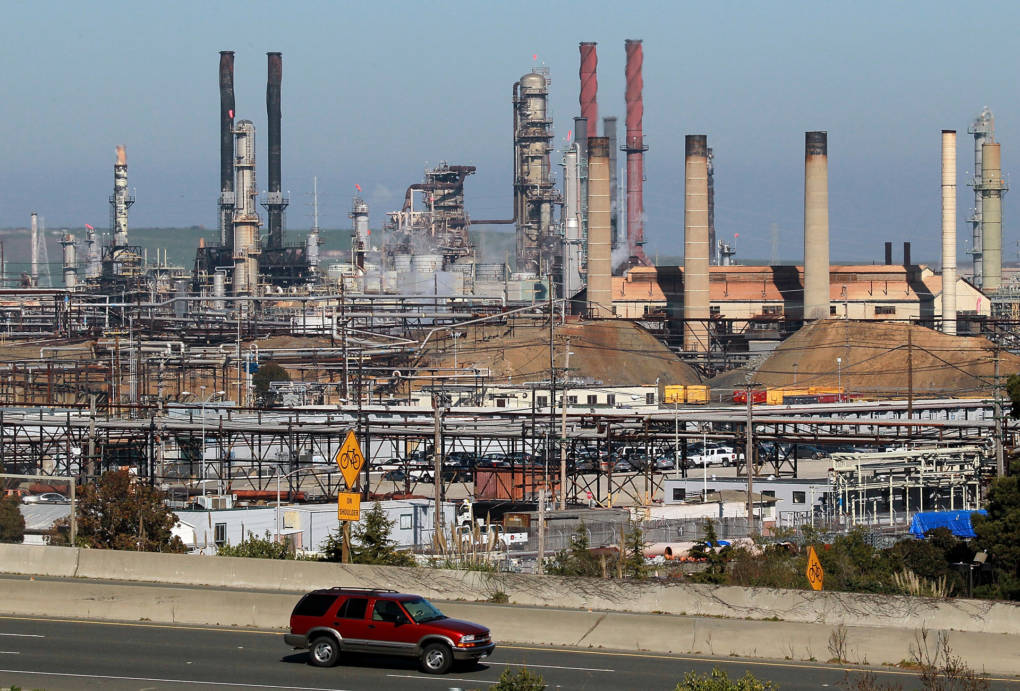
"caption": "The Chevron refinery in Richmond.",
"description": null,
"title": "Gas Prices Continue To Rise, Inching Up Over Last Two Weeks",
"credit": "Justin Sullivan/Getty Images",
"status": "inherit",
"altTag": "About a dozen cement smokestacks rise amid low-lying building beyond a freeway.",
"isLoading": false,
"fetchFailed": false
},
"news_11647840": {
"type": "attachments",
"id": "news_11647840",
"meta": {
"index": "attachments_1716263798",
"site": "news",
"id": "11647840",
"found": true
},
"parent": 11647839,
"imgSizes": {
"small": {
"file": "https://ww2.kqed.org/app/uploads/sites/10/2018/02/califfarmwork-520x325.jpg",
"width": 520,
"mimeType": "image/jpeg",
"height": 325
},
"twentyfourteen-full-width": {
"file": "https://ww2.kqed.org/app/uploads/sites/10/2018/02/califfarmwork-1038x576.jpg",
"width": 1038,
"mimeType": "image/jpeg",
"height": 576
},
"thumbnail": {
"file": "https://ww2.kqed.org/app/uploads/sites/10/2018/02/califfarmwork-160x100.jpg",
"width": 160,
"mimeType": "image/jpeg",
"height": 100
},
"fd-sm": {
"file": "https://ww2.kqed.org/app/uploads/sites/10/2018/02/califfarmwork-960x600.jpg",
"width": 960,
"mimeType": "image/jpeg",
"height": 600
},
"post-thumbnail": {
"file": "https://ww2.kqed.org/app/uploads/sites/10/2018/02/califfarmwork-672x372.jpg",
"width": 672,
"mimeType": "image/jpeg",
"height": 372
},
"xsmall": {
"file": "https://ww2.kqed.org/app/uploads/sites/10/2018/02/califfarmwork-375x234.jpg",
"width": 375,
"mimeType": "image/jpeg",
"height": 234
},
"kqedFullSize": {
"file": "https://ww2.kqed.org/app/uploads/sites/10/2018/02/califfarmwork.jpg",
"width": 1280,
"height": 800
},
"large": {
"file": "https://ww2.kqed.org/app/uploads/sites/10/2018/02/califfarmwork-1020x638.jpg",
"width": 1020,
"mimeType": "image/jpeg",
"height": 638
},
"xlarge": {
"file": "https://ww2.kqed.org/app/uploads/sites/10/2018/02/califfarmwork-1180x738.jpg",
"width": 1180,
"mimeType": "image/jpeg",
"height": 738
},
"guest-author-50": {
"file": "https://ww2.kqed.org/app/uploads/sites/10/2018/02/califfarmwork-50x50.jpg",
"width": 50,
"mimeType": "image/jpeg",
"height": 50
},
"guest-author-96": {
"file": "https://ww2.kqed.org/app/uploads/sites/10/2018/02/califfarmwork-96x96.jpg",
"width": 96,
"mimeType": "image/jpeg",
"height": 96
},
"medium": {
"file": "https://ww2.kqed.org/app/uploads/sites/10/2018/02/califfarmwork-800x500.jpg",
"width": 800,
"mimeType": "image/jpeg",
"height": 500
},
"guest-author-64": {
"file": "https://ww2.kqed.org/app/uploads/sites/10/2018/02/califfarmwork-64x64.jpg",
"width": 64,
"mimeType": "image/jpeg",
"height": 64
},
"guest-author-32": {
"file": "https://ww2.kqed.org/app/uploads/sites/10/2018/02/califfarmwork-32x32.jpg",
"width": 32,
"mimeType": "image/jpeg",
"height": 32
},
"fd-med": {
"file": "https://ww2.kqed.org/app/uploads/sites/10/2018/02/califfarmwork-1180x738.jpg",
"width": 1180,
"mimeType": "image/jpeg",
"height": 738
},
"detail": {
"file": "https://ww2.kqed.org/app/uploads/sites/10/2018/02/califfarmwork-150x150.jpg",
"width": 150,
"mimeType": "image/jpeg",
"height": 150
},
"guest-author-128": {
"file": "https://ww2.kqed.org/app/uploads/sites/10/2018/02/califfarmwork-128x128.jpg",
"width": 128,
"mimeType": "image/jpeg",
"height": 128
},
"xxsmall": {
"file": "https://ww2.kqed.org/app/uploads/sites/10/2018/02/califfarmwork-240x150.jpg",
"width": 240,
"mimeType": "image/jpeg",
"height": 150
}
},
"publishDate": 1517624916,
"modified": 1517625813,
"caption": "Those in immigrant-dependent industries, such as hospitality and agriculture, say conflicting messages from the state, and the federal government, puts them in an especially tough spot. ",
"description": "Those in immigrant-dependent industries, such as hospitality and agriculture, say conflicting messages from the state, and the federal government, puts them in an especially tough spot. ",
"title": "califfarmwork",
"credit": "Bob Nichols/USDA",
"status": "inherit",
"isLoading": false,
"fetchFailed": false
},
"news_11647143": {
"type": "attachments",
"id": "news_11647143",
"meta": {
"index": "attachments_1716263798",
"site": "news",
"id": "11647143",
"found": true
},
"parent": 11647139,
"imgSizes": {
"small": {
"file": "https://ww2.kqed.org/app/uploads/sites/10/2018/01/ChinoInmates-520x320.jpg",
"width": 520,
"mimeType": "image/jpeg",
"height": 320
},
"twentyfourteen-full-width": {
"file": "https://ww2.kqed.org/app/uploads/sites/10/2018/01/ChinoInmates-1038x576.jpg",
"width": 1038,
"mimeType": "image/jpeg",
"height": 576
},
"thumbnail": {
"file": "https://ww2.kqed.org/app/uploads/sites/10/2018/01/ChinoInmates-160x99.jpg",
"width": 160,
"mimeType": "image/jpeg",
"height": 99
},
"fd-sm": {
"file": "https://ww2.kqed.org/app/uploads/sites/10/2018/01/ChinoInmates-960x592.jpg",
"width": 960,
"mimeType": "image/jpeg",
"height": 592
},
"post-thumbnail": {
"file": "https://ww2.kqed.org/app/uploads/sites/10/2018/01/ChinoInmates-672x372.jpg",
"width": 672,
"mimeType": "image/jpeg",
"height": 372
},
"xsmall": {
"file": "https://ww2.kqed.org/app/uploads/sites/10/2018/01/ChinoInmates-375x231.jpg",
"width": 375,
"mimeType": "image/jpeg",
"height": 231
},
"kqedFullSize": {
"file": "https://ww2.kqed.org/app/uploads/sites/10/2018/01/ChinoInmates.jpg",
"width": 1920,
"height": 1183
},
"large": {
"file": "https://ww2.kqed.org/app/uploads/sites/10/2018/01/ChinoInmates-1020x628.jpg",
"width": 1020,
"mimeType": "image/jpeg",
"height": 628
},
"xlarge": {
"file": "https://ww2.kqed.org/app/uploads/sites/10/2018/01/ChinoInmates-1180x727.jpg",
"width": 1180,
"mimeType": "image/jpeg",
"height": 727
},
"guest-author-50": {
"file": "https://ww2.kqed.org/app/uploads/sites/10/2018/01/ChinoInmates-50x50.jpg",
"width": 50,
"mimeType": "image/jpeg",
"height": 50
},
"guest-author-96": {
"file": "https://ww2.kqed.org/app/uploads/sites/10/2018/01/ChinoInmates-96x96.jpg",
"width": 96,
"mimeType": "image/jpeg",
"height": 96
},
"medium": {
"file": "https://ww2.kqed.org/app/uploads/sites/10/2018/01/ChinoInmates-800x493.jpg",
"width": 800,
"mimeType": "image/jpeg",
"height": 493
},
"guest-author-64": {
"file": "https://ww2.kqed.org/app/uploads/sites/10/2018/01/ChinoInmates-64x64.jpg",
"width": 64,
"mimeType": "image/jpeg",
"height": 64
},
"guest-author-32": {
"file": "https://ww2.kqed.org/app/uploads/sites/10/2018/01/ChinoInmates-32x32.jpg",
"width": 32,
"mimeType": "image/jpeg",
"height": 32
},
"fd-lrg": {
"file": "https://ww2.kqed.org/app/uploads/sites/10/2018/01/ChinoInmates-1920x1183.jpg",
"width": 1920,
"mimeType": "image/jpeg",
"height": 1183
},
"fd-med": {
"file": "https://ww2.kqed.org/app/uploads/sites/10/2018/01/ChinoInmates-1180x727.jpg",
"width": 1180,
"mimeType": "image/jpeg",
"height": 727
},
"full-width": {
"file": "https://ww2.kqed.org/app/uploads/sites/10/2018/01/ChinoInmates-1920x1183.jpg",
"width": 1920,
"mimeType": "image/jpeg",
"height": 1183
},
"detail": {
"file": "https://ww2.kqed.org/app/uploads/sites/10/2018/01/ChinoInmates-150x150.jpg",
"width": 150,
"mimeType": "image/jpeg",
"height": 150
},
"guest-author-128": {
"file": "https://ww2.kqed.org/app/uploads/sites/10/2018/01/ChinoInmates-128x128.jpg",
"width": 128,
"mimeType": "image/jpeg",
"height": 128
},
"xxsmall": {
"file": "https://ww2.kqed.org/app/uploads/sites/10/2018/01/ChinoInmates-240x148.jpg",
"width": 240,
"mimeType": "image/jpeg",
"height": 148
}
},
"publishDate": 1517353826,
"modified": 1517353915,
"caption": "Inmates at Chino State Prison walk the hallway in 2010.",
"description": "Inmates at Chino State Prison walk the hallway in 2010.",
"title": "ChinoInmates",
"credit": "Kevork Djansezian/Getty Images",
"status": "inherit",
"isLoading": false,
"fetchFailed": false
},
"news_11644315": {
"type": "attachments",
"id": "news_11644315",
"meta": {
"index": "attachments_1716263798",
"site": "news",
"id": "11644315",
"found": true
},
"parent": 11644304,
"imgSizes": {
"small": {
"file": "https://ww2.kqed.org/app/uploads/sites/10/2018/01/TahoeTrees-520x390.jpg",
"width": 520,
"mimeType": "image/jpeg",
"height": 390
},
"twentyfourteen-full-width": {
"file": "https://ww2.kqed.org/app/uploads/sites/10/2018/01/TahoeTrees-1038x576.jpg",
"width": 1038,
"mimeType": "image/jpeg",
"height": 576
},
"thumbnail": {
"file": "https://ww2.kqed.org/app/uploads/sites/10/2018/01/TahoeTrees-160x120.jpg",
"width": 160,
"mimeType": "image/jpeg",
"height": 120
},
"fd-sm": {
"file": "https://ww2.kqed.org/app/uploads/sites/10/2018/01/TahoeTrees-960x720.jpg",
"width": 960,
"mimeType": "image/jpeg",
"height": 720
},
"post-thumbnail": {
"file": "https://ww2.kqed.org/app/uploads/sites/10/2018/01/TahoeTrees-672x372.jpg",
"width": 672,
"mimeType": "image/jpeg",
"height": 372
},
"xsmall": {
"file": "https://ww2.kqed.org/app/uploads/sites/10/2018/01/TahoeTrees-375x281.jpg",
"width": 375,
"mimeType": "image/jpeg",
"height": 281
},
"kqedFullSize": {
"file": "https://ww2.kqed.org/app/uploads/sites/10/2018/01/TahoeTrees.jpg",
"width": 1920,
"height": 1440
},
"large": {
"file": "https://ww2.kqed.org/app/uploads/sites/10/2018/01/TahoeTrees-1020x765.jpg",
"width": 1020,
"mimeType": "image/jpeg",
"height": 765
},
"xlarge": {
"file": "https://ww2.kqed.org/app/uploads/sites/10/2018/01/TahoeTrees-1180x885.jpg",
"width": 1180,
"mimeType": "image/jpeg",
"height": 885
},
"guest-author-50": {
"file": "https://ww2.kqed.org/app/uploads/sites/10/2018/01/TahoeTrees-50x50.jpg",
"width": 50,
"mimeType": "image/jpeg",
"height": 50
},
"guest-author-96": {
"file": "https://ww2.kqed.org/app/uploads/sites/10/2018/01/TahoeTrees-96x96.jpg",
"width": 96,
"mimeType": "image/jpeg",
"height": 96
},
"medium": {
"file": "https://ww2.kqed.org/app/uploads/sites/10/2018/01/TahoeTrees-800x600.jpg",
"width": 800,
"mimeType": "image/jpeg",
"height": 600
},
"guest-author-64": {
"file": "https://ww2.kqed.org/app/uploads/sites/10/2018/01/TahoeTrees-64x64.jpg",
"width": 64,
"mimeType": "image/jpeg",
"height": 64
},
"guest-author-32": {
"file": "https://ww2.kqed.org/app/uploads/sites/10/2018/01/TahoeTrees-32x32.jpg",
"width": 32,
"mimeType": "image/jpeg",
"height": 32
},
"fd-lrg": {
"file": "https://ww2.kqed.org/app/uploads/sites/10/2018/01/TahoeTrees-1920x1440.jpg",
"width": 1920,
"mimeType": "image/jpeg",
"height": 1440
},
"fd-med": {
"file": "https://ww2.kqed.org/app/uploads/sites/10/2018/01/TahoeTrees-1180x885.jpg",
"width": 1180,
"mimeType": "image/jpeg",
"height": 885
},
"full-width": {
"file": "https://ww2.kqed.org/app/uploads/sites/10/2018/01/TahoeTrees-1920x1440.jpg",
"width": 1920,
"mimeType": "image/jpeg",
"height": 1440
},
"detail": {
"file": "https://ww2.kqed.org/app/uploads/sites/10/2018/01/TahoeTrees-150x150.jpg",
"width": 150,
"mimeType": "image/jpeg",
"height": 150
},
"guest-author-128": {
"file": "https://ww2.kqed.org/app/uploads/sites/10/2018/01/TahoeTrees-128x128.jpg",
"width": 128,
"mimeType": "image/jpeg",
"height": 128
},
"xxsmall": {
"file": "https://ww2.kqed.org/app/uploads/sites/10/2018/01/TahoeTrees-240x180.jpg",
"width": 240,
"mimeType": "image/jpeg",
"height": 180
}
},
"publishDate": 1516916794,
"modified": 1516916868,
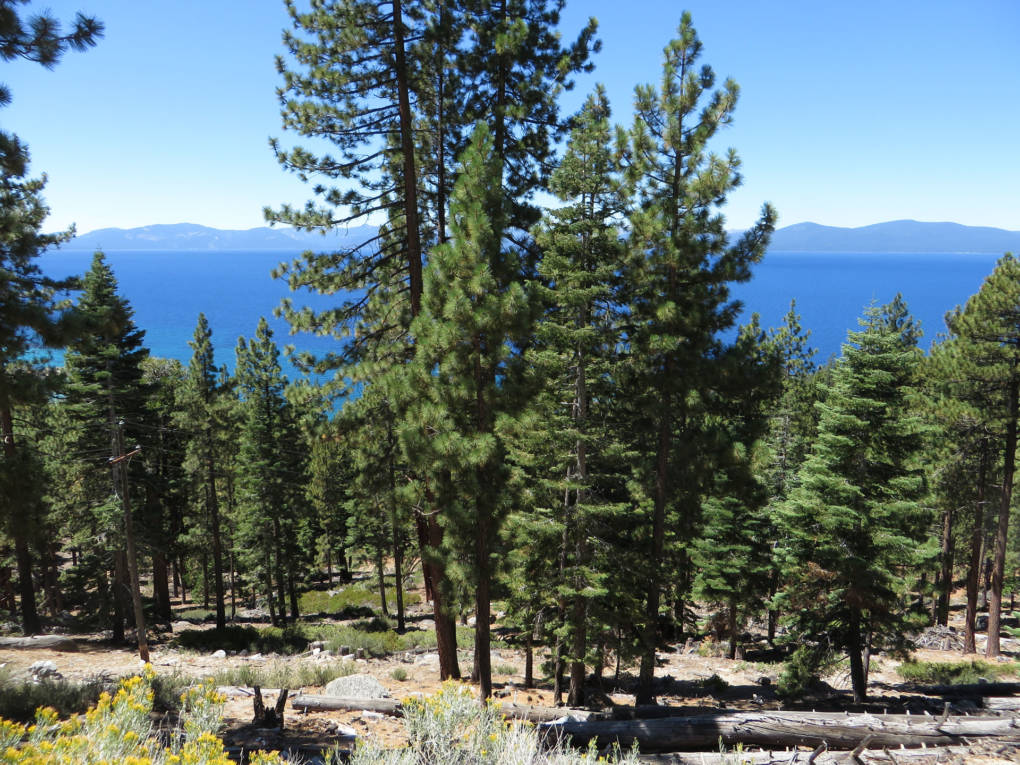
"caption": "Some cap-and-trade proceeds are going to forest and watershed restoration around Lake Tahoe, which is expected to create multiple benefits: Clearing crowded forests allows more healthy trees to grow, take in and store carbon in the ground and stabilize soils that hold water.",
"description": "Some cap-and-trade proceeds are going to forest and watershed restoration around Lake Tahoe, which is expected to create multiple benefits: Clearing crowded forests allows more healthy trees to grow, take in and store carbon in the ground and stabilize soils that hold water.",
"title": "TahoeTrees",
"credit": "Ken Lund/Flickr",
"status": "inherit",
"isLoading": false,
"fetchFailed": false
},
"news_11643809": {
"type": "attachments",
"id": "news_11643809",
"meta": {
"index": "attachments_1716263798",
"site": "news",
"id": "11643809",
"found": true
},
"parent": 11643805,
"imgSizes": {
"small": {
"file": "https://ww2.kqed.org/app/uploads/sites/10/2018/01/LavishBashMain-520x320.jpg",
"width": 520,
"mimeType": "image/jpeg",
"height": 320
},
"twentyfourteen-full-width": {
"file": "https://ww2.kqed.org/app/uploads/sites/10/2018/01/LavishBashMain-1038x576.jpg",
"width": 1038,
"mimeType": "image/jpeg",
"height": 576
},
"thumbnail": {
"file": "https://ww2.kqed.org/app/uploads/sites/10/2018/01/LavishBashMain-160x98.jpg",
"width": 160,
"mimeType": "image/jpeg",
"height": 98
},
"fd-sm": {
"file": "https://ww2.kqed.org/app/uploads/sites/10/2018/01/LavishBashMain-960x591.jpg",
"width": 960,
"mimeType": "image/jpeg",
"height": 591
},
"post-thumbnail": {
"file": "https://ww2.kqed.org/app/uploads/sites/10/2018/01/LavishBashMain-672x372.jpg",
"width": 672,
"mimeType": "image/jpeg",
"height": 372
},
"xsmall": {
"file": "https://ww2.kqed.org/app/uploads/sites/10/2018/01/LavishBashMain-375x231.jpg",
"width": 375,
"mimeType": "image/jpeg",
"height": 231
},
"kqedFullSize": {
"file": "https://ww2.kqed.org/app/uploads/sites/10/2018/01/LavishBashMain.jpg",
"width": 1920,
"height": 1181
},
"large": {
"file": "https://ww2.kqed.org/app/uploads/sites/10/2018/01/LavishBashMain-1020x627.jpg",
"width": 1020,
"mimeType": "image/jpeg",
"height": 627
},
"xlarge": {
"file": "https://ww2.kqed.org/app/uploads/sites/10/2018/01/LavishBashMain-1180x726.jpg",
"width": 1180,
"mimeType": "image/jpeg",
"height": 726
},
"guest-author-50": {
"file": "https://ww2.kqed.org/app/uploads/sites/10/2018/01/LavishBashMain-50x50.jpg",
"width": 50,
"mimeType": "image/jpeg",
"height": 50
},
"guest-author-96": {
"file": "https://ww2.kqed.org/app/uploads/sites/10/2018/01/LavishBashMain-96x96.jpg",
"width": 96,
"mimeType": "image/jpeg",
"height": 96
},
"medium": {
"file": "https://ww2.kqed.org/app/uploads/sites/10/2018/01/LavishBashMain-800x492.jpg",
"width": 800,
"mimeType": "image/jpeg",
"height": 492
},
"guest-author-64": {
"file": "https://ww2.kqed.org/app/uploads/sites/10/2018/01/LavishBashMain-64x64.jpg",
"width": 64,
"mimeType": "image/jpeg",
"height": 64
},
"guest-author-32": {
"file": "https://ww2.kqed.org/app/uploads/sites/10/2018/01/LavishBashMain-32x32.jpg",
"width": 32,
"mimeType": "image/jpeg",
"height": 32
},
"fd-lrg": {
"file": "https://ww2.kqed.org/app/uploads/sites/10/2018/01/LavishBashMain-1920x1181.jpg",
"width": 1920,
"mimeType": "image/jpeg",
"height": 1181
},
"fd-med": {
"file": "https://ww2.kqed.org/app/uploads/sites/10/2018/01/LavishBashMain-1180x726.jpg",
"width": 1180,
"mimeType": "image/jpeg",
"height": 726
},
"full-width": {
"file": "https://ww2.kqed.org/app/uploads/sites/10/2018/01/LavishBashMain-1920x1181.jpg",
"width": 1920,
"mimeType": "image/jpeg",
"height": 1181
},
"detail": {
"file": "https://ww2.kqed.org/app/uploads/sites/10/2018/01/LavishBashMain-150x150.jpg",
"width": 150,
"mimeType": "image/jpeg",
"height": 150
},
"guest-author-128": {
"file": "https://ww2.kqed.org/app/uploads/sites/10/2018/01/LavishBashMain-128x128.jpg",
"width": 128,
"mimeType": "image/jpeg",
"height": 128
},
"xxsmall": {
"file": "https://ww2.kqed.org/app/uploads/sites/10/2018/01/LavishBashMain-240x148.jpg",
"width": 240,
"mimeType": "image/jpeg",
"height": 148
}
},
"publishDate": 1516747456,
"modified": 1516747498,
"caption": "Revelers dance to live music at the Back to Session Bash in Sacramento.",
"description": "Revelers dance to live music at the Back to Session Bash in Sacramento.",
"title": "LavishBashMain",
"credit": "Laurel Rosenhall/CALmatters",
"status": "inherit",
"isLoading": false,
"fetchFailed": false
},
"news_11643436": {
"type": "attachments",
"id": "news_11643436",
"meta": {
"index": "attachments_1716263798",
"site": "news",
"id": "11643436",
"found": true
},
"parent": 11643418,
"imgSizes": {
"small": {
"file": "https://ww2.kqed.org/app/uploads/sites/10/2018/01/RS11180_76754156-520x346.jpg",
"width": 520,
"mimeType": "image/jpeg",
"height": 346
},
"twentyfourteen-full-width": {
"file": "https://ww2.kqed.org/app/uploads/sites/10/2018/01/RS11180_76754156-1038x576.jpg",
"width": 1038,
"mimeType": "image/jpeg",
"height": 576
},
"thumbnail": {
"file": "https://ww2.kqed.org/app/uploads/sites/10/2018/01/RS11180_76754156-160x106.jpg",
"width": 160,
"mimeType": "image/jpeg",
"height": 106
},
"fd-sm": {
"file": "https://ww2.kqed.org/app/uploads/sites/10/2018/01/RS11180_76754156-960x638.jpg",
"width": 960,
"mimeType": "image/jpeg",
"height": 638
},
"post-thumbnail": {
"file": "https://ww2.kqed.org/app/uploads/sites/10/2018/01/RS11180_76754156-672x372.jpg",
"width": 672,
"mimeType": "image/jpeg",
"height": 372
},
"xsmall": {
"file": "https://ww2.kqed.org/app/uploads/sites/10/2018/01/RS11180_76754156-375x249.jpg",
"width": 375,
"mimeType": "image/jpeg",
"height": 249
},
"kqedFullSize": {
"file": "https://ww2.kqed.org/app/uploads/sites/10/2018/01/RS11180_76754156-e1516561727547.jpg",
"width": 1920,
"height": 1277
},
"large": {
"file": "https://ww2.kqed.org/app/uploads/sites/10/2018/01/RS11180_76754156-1020x678.jpg",
"width": 1020,
"mimeType": "image/jpeg",
"height": 678
},
"xlarge": {
"file": "https://ww2.kqed.org/app/uploads/sites/10/2018/01/RS11180_76754156-1180x785.jpg",
"width": 1180,
"mimeType": "image/jpeg",
"height": 785
},
"guest-author-50": {
"file": "https://ww2.kqed.org/app/uploads/sites/10/2018/01/RS11180_76754156-50x50.jpg",
"width": 50,
"mimeType": "image/jpeg",
"height": 50
},
"guest-author-96": {
"file": "https://ww2.kqed.org/app/uploads/sites/10/2018/01/RS11180_76754156-96x96.jpg",
"width": 96,
"mimeType": "image/jpeg",
"height": 96
},
"medium": {
"file": "https://ww2.kqed.org/app/uploads/sites/10/2018/01/RS11180_76754156-800x532.jpg",
"width": 800,
"mimeType": "image/jpeg",
"height": 532
},
"guest-author-64": {
"file": "https://ww2.kqed.org/app/uploads/sites/10/2018/01/RS11180_76754156-64x64.jpg",
"width": 64,
"mimeType": "image/jpeg",
"height": 64
},
"guest-author-32": {
"file": "https://ww2.kqed.org/app/uploads/sites/10/2018/01/RS11180_76754156-32x32.jpg",
"width": 32,
"mimeType": "image/jpeg",
"height": 32
},
"fd-lrg": {
"file": "https://ww2.kqed.org/app/uploads/sites/10/2018/01/RS11180_76754156-1920x1277.jpg",
"width": 1920,
"mimeType": "image/jpeg",
"height": 1277
},
"fd-med": {
"file": "https://ww2.kqed.org/app/uploads/sites/10/2018/01/RS11180_76754156-1180x785.jpg",
"width": 1180,
"mimeType": "image/jpeg",
"height": 785
},
"full-width": {
"file": "https://ww2.kqed.org/app/uploads/sites/10/2018/01/RS11180_76754156-1920x1277.jpg",
"width": 1920,
"mimeType": "image/jpeg",
"height": 1277
},
"detail": {
"file": "https://ww2.kqed.org/app/uploads/sites/10/2018/01/RS11180_76754156-150x150.jpg",
"width": 150,
"mimeType": "image/jpeg",
"height": 150
},
"guest-author-128": {
"file": "https://ww2.kqed.org/app/uploads/sites/10/2018/01/RS11180_76754156-128x128.jpg",
"width": 128,
"mimeType": "image/jpeg",
"height": 128
},
"xxsmall": {
"file": "https://ww2.kqed.org/app/uploads/sites/10/2018/01/RS11180_76754156-240x160.jpg",
"width": 240,
"mimeType": "image/jpeg",
"height": 160
}
},
"publishDate": 1516561704,
"modified": 1516561805,
"caption": "If extremely low, declining performance on math and reading exams alone were enough to trigger state support, the number of California districts that could expect special state help would almost double from 228 to more than 400, a CALmatters analysis shows.",
"description": "If extremely low, declining performance on math and reading exams alone were enough to trigger state support, the number of California districts that could expect special state help would almost double from 228 to more than 400, a CALmatters analysis shows.",
"title": "RS11180_76754156",
"credit": "Getty Images",
"status": "inherit",
"isLoading": false,
"fetchFailed": false
},
"news_11641530": {
"type": "attachments",
"id": "news_11641530",
"meta": {
"index": "attachments_1716263798",
"site": "news",
"id": "11641530",
"found": true
},
"parent": 11641519,
"imgSizes": {
"small": {
"file": "https://ww2.kqed.org/app/uploads/sites/10/2018/01/CapitolSac-520x349.jpg",
"width": 520,
"mimeType": "image/jpeg",
"height": 349
},
"twentyfourteen-full-width": {
"file": "https://ww2.kqed.org/app/uploads/sites/10/2018/01/CapitolSac-1038x576.jpg",
"width": 1038,
"mimeType": "image/jpeg",
"height": 576
},
"thumbnail": {
"file": "https://ww2.kqed.org/app/uploads/sites/10/2018/01/CapitolSac-160x107.jpg",
"width": 160,
"mimeType": "image/jpeg",
"height": 107
},
"fd-sm": {
"file": "https://ww2.kqed.org/app/uploads/sites/10/2018/01/CapitolSac-960x644.jpg",
"width": 960,
"mimeType": "image/jpeg",
"height": 644
},
"post-thumbnail": {
"file": "https://ww2.kqed.org/app/uploads/sites/10/2018/01/CapitolSac-672x372.jpg",
"width": 672,
"mimeType": "image/jpeg",
"height": 372
},
"xsmall": {
"file": "https://ww2.kqed.org/app/uploads/sites/10/2018/01/CapitolSac-375x252.jpg",
"width": 375,
"mimeType": "image/jpeg",
"height": 252
},
"kqedFullSize": {
"file": "https://ww2.kqed.org/app/uploads/sites/10/2018/01/CapitolSac.jpg",
"width": 1920,
"height": 1288
},
"large": {
"file": "https://ww2.kqed.org/app/uploads/sites/10/2018/01/CapitolSac-1020x684.jpg",
"width": 1020,
"mimeType": "image/jpeg",
"height": 684
},
"xlarge": {
"file": "https://ww2.kqed.org/app/uploads/sites/10/2018/01/CapitolSac-1180x792.jpg",
"width": 1180,
"mimeType": "image/jpeg",
"height": 792
},
"guest-author-50": {
"file": "https://ww2.kqed.org/app/uploads/sites/10/2018/01/CapitolSac-50x50.jpg",
"width": 50,
"mimeType": "image/jpeg",
"height": 50
},
"guest-author-96": {
"file": "https://ww2.kqed.org/app/uploads/sites/10/2018/01/CapitolSac-96x96.jpg",
"width": 96,
"mimeType": "image/jpeg",
"height": 96
},
"medium": {
"file": "https://ww2.kqed.org/app/uploads/sites/10/2018/01/CapitolSac-800x537.jpg",
"width": 800,
"mimeType": "image/jpeg",
"height": 537
},
"guest-author-64": {
"file": "https://ww2.kqed.org/app/uploads/sites/10/2018/01/CapitolSac-64x64.jpg",
"width": 64,
"mimeType": "image/jpeg",
"height": 64
},
"guest-author-32": {
"file": "https://ww2.kqed.org/app/uploads/sites/10/2018/01/CapitolSac-32x32.jpg",
"width": 32,
"mimeType": "image/jpeg",
"height": 32
},
"fd-lrg": {
"file": "https://ww2.kqed.org/app/uploads/sites/10/2018/01/CapitolSac-1920x1288.jpg",
"width": 1920,
"mimeType": "image/jpeg",
"height": 1288
},
"fd-med": {
"file": "https://ww2.kqed.org/app/uploads/sites/10/2018/01/CapitolSac-1180x792.jpg",
"width": 1180,
"mimeType": "image/jpeg",
"height": 792
},
"full-width": {
"file": "https://ww2.kqed.org/app/uploads/sites/10/2018/01/CapitolSac-1920x1288.jpg",
"width": 1920,
"mimeType": "image/jpeg",
"height": 1288
},
"detail": {
"file": "https://ww2.kqed.org/app/uploads/sites/10/2018/01/CapitolSac-150x150.jpg",
"width": 150,
"mimeType": "image/jpeg",
"height": 150
},
"guest-author-128": {
"file": "https://ww2.kqed.org/app/uploads/sites/10/2018/01/CapitolSac-128x128.jpg",
"width": 128,
"mimeType": "image/jpeg",
"height": 128
},
"xxsmall": {
"file": "https://ww2.kqed.org/app/uploads/sites/10/2018/01/CapitolSac-240x161.jpg",
"width": 240,
"mimeType": "image/jpeg",
"height": 161
}
},
"publishDate": 1515710944,
"modified": 1517617465,
"caption": "California's Capitol has been dealing with fallout from sexual harassment allegations since last fall, when more than 140 women signed an open letter condemning an atmosphere of sexual harassment in the Capitol community. ",
"description": "California's Capitol has been dealing with fallout from sexual harassment allegations since last fall when more than 140 women signed onto an open letter condemning an atmosphere of sexual harassment in the Capitol community. ",
"title": "CapitolSac",
"credit": "Bert Johnson/KQED",
"status": "inherit",
"isLoading": false,
"fetchFailed": false
},
"stateofhealth_362371": {
"type": "attachments",
"id": "stateofhealth_362371",
"meta": {
"index": "attachments_1716263798",
"site": "stateofhealth",
"id": "362371",
"found": true
},
"parent": 362364,
"imgSizes": {
"small": {
"file": "https://ww2.kqed.org/app/uploads/sites/27/2018/01/20170802_nep_CalMatters_Lead_Janitor-520x359.jpg",
"width": 520,
"mimeType": "image/jpeg",
"height": 359
},
"twentyfourteen-full-width": {
"file": "https://ww2.kqed.org/app/uploads/sites/27/2018/01/20170802_nep_CalMatters_Lead_Janitor-1038x576.jpg",
"width": 1038,
"mimeType": "image/jpeg",
"height": 576
},
"thumbnail": {
"file": "https://ww2.kqed.org/app/uploads/sites/27/2018/01/20170802_nep_CalMatters_Lead_Janitor-160x110.jpg",
"width": 160,
"mimeType": "image/jpeg",
"height": 110
},
"fd-sm": {
"file": "https://ww2.kqed.org/app/uploads/sites/27/2018/01/20170802_nep_CalMatters_Lead_Janitor-960x662.jpg",
"width": 960,
"mimeType": "image/jpeg",
"height": 662
},
"post-thumbnail": {
"file": "https://ww2.kqed.org/app/uploads/sites/27/2018/01/20170802_nep_CalMatters_Lead_Janitor-672x372.jpg",
"width": 672,
"mimeType": "image/jpeg",
"height": 372
},
"xsmall": {
"file": "https://ww2.kqed.org/app/uploads/sites/27/2018/01/20170802_nep_CalMatters_Lead_Janitor-375x259.jpg",
"width": 375,
"mimeType": "image/jpeg",
"height": 259
},
"kqedFullSize": {
"file": "https://ww2.kqed.org/app/uploads/sites/27/2018/01/20170802_nep_CalMatters_Lead_Janitor-e1515607706993.jpg",
"width": 1920,
"height": 1324
},
"large": {
"file": "https://ww2.kqed.org/app/uploads/sites/27/2018/01/20170802_nep_CalMatters_Lead_Janitor-1020x703.jpg",
"width": 1020,
"mimeType": "image/jpeg",
"height": 703
},
"xlarge": {
"file": "https://ww2.kqed.org/app/uploads/sites/27/2018/01/20170802_nep_CalMatters_Lead_Janitor-1180x814.jpg",
"width": 1180,
"mimeType": "image/jpeg",
"height": 814
},
"guest-author-50": {
"file": "https://ww2.kqed.org/app/uploads/sites/27/2018/01/20170802_nep_CalMatters_Lead_Janitor-50x50.jpg",
"width": 50,
"mimeType": "image/jpeg",
"height": 50
},
"guest-author-96": {
"file": "https://ww2.kqed.org/app/uploads/sites/27/2018/01/20170802_nep_CalMatters_Lead_Janitor-96x96.jpg",
"width": 96,
"mimeType": "image/jpeg",
"height": 96
},
"medium": {
"file": "https://ww2.kqed.org/app/uploads/sites/27/2018/01/20170802_nep_CalMatters_Lead_Janitor-800x552.jpg",
"width": 800,
"mimeType": "image/jpeg",
"height": 552
},
"guest-author-64": {
"file": "https://ww2.kqed.org/app/uploads/sites/27/2018/01/20170802_nep_CalMatters_Lead_Janitor-64x64.jpg",
"width": 64,
"mimeType": "image/jpeg",
"height": 64
},
"guest-author-32": {
"file": "https://ww2.kqed.org/app/uploads/sites/27/2018/01/20170802_nep_CalMatters_Lead_Janitor-32x32.jpg",
"width": 32,
"mimeType": "image/jpeg",
"height": 32
},
"fd-lrg": {
"file": "https://ww2.kqed.org/app/uploads/sites/27/2018/01/20170802_nep_CalMatters_Lead_Janitor-1920x1324.jpg",
"width": 1920,
"mimeType": "image/jpeg",
"height": 1324
},
"fd-med": {
"file": "https://ww2.kqed.org/app/uploads/sites/27/2018/01/20170802_nep_CalMatters_Lead_Janitor-1180x814.jpg",
"width": 1180,
"mimeType": "image/jpeg",
"height": 814
},
"full-width": {
"file": "https://ww2.kqed.org/app/uploads/sites/27/2018/01/20170802_nep_CalMatters_Lead_Janitor-1920x1324.jpg",
"width": 1920,
"mimeType": "image/jpeg",
"height": 1324
},
"detail": {
"file": "https://ww2.kqed.org/app/uploads/sites/27/2018/01/20170802_nep_CalMatters_Lead_Janitor-150x150.jpg",
"width": 150,
"mimeType": "image/jpeg",
"height": 150
},
"medium_large": {
"file": "https://ww2.kqed.org/app/uploads/sites/27/2018/01/20170802_nep_CalMatters_Lead_Janitor-768x529.jpg",
"width": 768,
"mimeType": "image/jpeg",
"height": 529
},
"guest-author-128": {
"file": "https://ww2.kqed.org/app/uploads/sites/27/2018/01/20170802_nep_CalMatters_Lead_Janitor-128x128.jpg",
"width": 128,
"mimeType": "image/jpeg",
"height": 128
},
"xxsmall": {
"file": "https://ww2.kqed.org/app/uploads/sites/27/2018/01/20170802_nep_CalMatters_Lead_Janitor-240x165.jpg",
"width": 240,
"mimeType": "image/jpeg",
"height": 165
}
},
"publishDate": 1515576633,
"modified": 1515607713,
"caption": "Daniel Wills, a plumber with the Los Angeles Unified School District, repairs an old fountains that was found to have high levels of lead in the water at John H Francis Polytechnic Senior High in Sun Valley, CA. ",
"description": null,
"title": "20170802_nep_CalMatters_Lead_Janitor",
"credit": "Nancy Pastor/CALmatters",
"status": "inherit",
"isLoading": false,
"fetchFailed": false
},
"news_11640833": {
"type": "attachments",
"id": "news_11640833",
"meta": {
"index": "attachments_1716263798",
"site": "news",
"id": "11640833",
"found": true
},
"parent": 11640827,
"imgSizes": {
"small": {
"file": "https://ww2.kqed.org/app/uploads/sites/10/2018/01/ThinkstockPhotos-87462607-1280x800-520x325.jpg",
"width": 520,
"mimeType": "image/jpeg",
"height": 325
},
"twentyfourteen-full-width": {
"file": "https://ww2.kqed.org/app/uploads/sites/10/2018/01/ThinkstockPhotos-87462607-1280x800-1038x576.jpg",
"width": 1038,
"mimeType": "image/jpeg",
"height": 576
},
"thumbnail": {
"file": "https://ww2.kqed.org/app/uploads/sites/10/2018/01/ThinkstockPhotos-87462607-1280x800-160x100.jpg",
"width": 160,
"mimeType": "image/jpeg",
"height": 100
},
"fd-sm": {
"file": "https://ww2.kqed.org/app/uploads/sites/10/2018/01/ThinkstockPhotos-87462607-1280x800-960x600.jpg",
"width": 960,
"mimeType": "image/jpeg",
"height": 600
},
"post-thumbnail": {
"file": "https://ww2.kqed.org/app/uploads/sites/10/2018/01/ThinkstockPhotos-87462607-1280x800-672x372.jpg",
"width": 672,
"mimeType": "image/jpeg",
"height": 372
},
"xsmall": {
"file": "https://ww2.kqed.org/app/uploads/sites/10/2018/01/ThinkstockPhotos-87462607-1280x800-375x234.jpg",
"width": 375,
"mimeType": "image/jpeg",
"height": 234
},
"kqedFullSize": {
"file": "https://ww2.kqed.org/app/uploads/sites/10/2018/01/ThinkstockPhotos-87462607-1280x800.jpg",
"width": 1280,
"height": 800
},
"large": {
"file": "https://ww2.kqed.org/app/uploads/sites/10/2018/01/ThinkstockPhotos-87462607-1280x800-1020x638.jpg",
"width": 1020,
"mimeType": "image/jpeg",
"height": 638
},
"xlarge": {
"file": "https://ww2.kqed.org/app/uploads/sites/10/2018/01/ThinkstockPhotos-87462607-1280x800-1180x738.jpg",
"width": 1180,
"mimeType": "image/jpeg",
"height": 738
},
"guest-author-50": {
"file": "https://ww2.kqed.org/app/uploads/sites/10/2018/01/ThinkstockPhotos-87462607-1280x800-50x50.jpg",
"width": 50,
"mimeType": "image/jpeg",
"height": 50
},
"guest-author-96": {
"file": "https://ww2.kqed.org/app/uploads/sites/10/2018/01/ThinkstockPhotos-87462607-1280x800-96x96.jpg",
"width": 96,
"mimeType": "image/jpeg",
"height": 96
},
"medium": {
"file": "https://ww2.kqed.org/app/uploads/sites/10/2018/01/ThinkstockPhotos-87462607-1280x800-800x500.jpg",
"width": 800,
"mimeType": "image/jpeg",
"height": 500
},
"guest-author-64": {
"file": "https://ww2.kqed.org/app/uploads/sites/10/2018/01/ThinkstockPhotos-87462607-1280x800-64x64.jpg",
"width": 64,
"mimeType": "image/jpeg",
"height": 64
},
"guest-author-32": {
"file": "https://ww2.kqed.org/app/uploads/sites/10/2018/01/ThinkstockPhotos-87462607-1280x800-32x32.jpg",
"width": 32,
"mimeType": "image/jpeg",
"height": 32
},
"fd-med": {
"file": "https://ww2.kqed.org/app/uploads/sites/10/2018/01/ThinkstockPhotos-87462607-1280x800-1180x738.jpg",
"width": 1180,
"mimeType": "image/jpeg",
"height": 738
},
"detail": {
"file": "https://ww2.kqed.org/app/uploads/sites/10/2018/01/ThinkstockPhotos-87462607-1280x800-150x150.jpg",
"width": 150,
"mimeType": "image/jpeg",
"height": 150
},
"guest-author-128": {
"file": "https://ww2.kqed.org/app/uploads/sites/10/2018/01/ThinkstockPhotos-87462607-1280x800-128x128.jpg",
"width": 128,
"mimeType": "image/jpeg",
"height": 128
},
"xxsmall": {
"file": "https://ww2.kqed.org/app/uploads/sites/10/2018/01/ThinkstockPhotos-87462607-1280x800-240x150.jpg",
"width": 240,
"mimeType": "image/jpeg",
"height": 150
}
},
"publishDate": 1515450190,
"modified": 1515450217,
"caption": null,
"description": null,
"title": "ThinkstockPhotos-87462607-1280x800",
"credit": "Thinkstock",
"status": "inherit",
"isLoading": false,
"fetchFailed": false
},
"news_11638865": {
"type": "attachments",
"id": "news_11638865",
"meta": {
"index": "attachments_1716263798",
"site": "news",
"id": "11638865",
"found": true
},
"parent": 11638862,
"imgSizes": {
"small": {
"file": "https://ww2.kqed.org/app/uploads/sites/10/2017/12/KidWThermometer-520x347.jpg",
"width": 520,
"mimeType": "image/jpeg",
"height": 347
},
"twentyfourteen-full-width": {
"file": "https://ww2.kqed.org/app/uploads/sites/10/2017/12/KidWThermometer-1038x576.jpg",
"width": 1038,
"mimeType": "image/jpeg",
"height": 576
},
"thumbnail": {
"file": "https://ww2.kqed.org/app/uploads/sites/10/2017/12/KidWThermometer-160x107.jpg",
"width": 160,
"mimeType": "image/jpeg",
"height": 107
},
"fd-sm": {
"file": "https://ww2.kqed.org/app/uploads/sites/10/2017/12/KidWThermometer-960x640.jpg",
"width": 960,
"mimeType": "image/jpeg",
"height": 640
},
"post-thumbnail": {
"file": "https://ww2.kqed.org/app/uploads/sites/10/2017/12/KidWThermometer-672x372.jpg",
"width": 672,
"mimeType": "image/jpeg",
"height": 372
},
"xsmall": {
"file": "https://ww2.kqed.org/app/uploads/sites/10/2017/12/KidWThermometer-375x250.jpg",
"width": 375,
"mimeType": "image/jpeg",
"height": 250
},
"kqedFullSize": {
"file": "https://ww2.kqed.org/app/uploads/sites/10/2017/12/KidWThermometer.jpg",
"width": 1920,
"height": 1280
},
"large": {
"file": "https://ww2.kqed.org/app/uploads/sites/10/2017/12/KidWThermometer-1020x680.jpg",
"width": 1020,
"mimeType": "image/jpeg",
"height": 680
},
"xlarge": {
"file": "https://ww2.kqed.org/app/uploads/sites/10/2017/12/KidWThermometer-1180x787.jpg",
"width": 1180,
"mimeType": "image/jpeg",
"height": 787
},
"guest-author-50": {
"file": "https://ww2.kqed.org/app/uploads/sites/10/2017/12/KidWThermometer-50x50.jpg",
"width": 50,
"mimeType": "image/jpeg",
"height": 50
},
"guest-author-96": {
"file": "https://ww2.kqed.org/app/uploads/sites/10/2017/12/KidWThermometer-96x96.jpg",
"width": 96,
"mimeType": "image/jpeg",
"height": 96
},
"medium": {
"file": "https://ww2.kqed.org/app/uploads/sites/10/2017/12/KidWThermometer-800x533.jpg",
"width": 800,
"mimeType": "image/jpeg",
"height": 533
},
"guest-author-64": {
"file": "https://ww2.kqed.org/app/uploads/sites/10/2017/12/KidWThermometer-64x64.jpg",
"width": 64,
"mimeType": "image/jpeg",
"height": 64
},
"guest-author-32": {
"file": "https://ww2.kqed.org/app/uploads/sites/10/2017/12/KidWThermometer-32x32.jpg",
"width": 32,
"mimeType": "image/jpeg",
"height": 32
},
"fd-lrg": {
"file": "https://ww2.kqed.org/app/uploads/sites/10/2017/12/KidWThermometer-1920x1280.jpg",
"width": 1920,
"mimeType": "image/jpeg",
"height": 1280
},
"fd-med": {
"file": "https://ww2.kqed.org/app/uploads/sites/10/2017/12/KidWThermometer-1180x787.jpg",
"width": 1180,
"mimeType": "image/jpeg",
"height": 787
},
"full-width": {
"file": "https://ww2.kqed.org/app/uploads/sites/10/2017/12/KidWThermometer-1920x1280.jpg",
"width": 1920,
"mimeType": "image/jpeg",
"height": 1280
},
"detail": {
"file": "https://ww2.kqed.org/app/uploads/sites/10/2017/12/KidWThermometer-150x150.jpg",
"width": 150,
"mimeType": "image/jpeg",
"height": 150
},
"guest-author-128": {
"file": "https://ww2.kqed.org/app/uploads/sites/10/2017/12/KidWThermometer-128x128.jpg",
"width": 128,
"mimeType": "image/jpeg",
"height": 128
},
"xxsmall": {
"file": "https://ww2.kqed.org/app/uploads/sites/10/2017/12/KidWThermometer-240x160.jpg",
"width": 240,
"mimeType": "image/jpeg",
"height": 160
}
},
"publishDate": 1513899576,
"modified": 1513900309,
"caption": "Without congressional action, California expects its federal funds for CHIP to run out by early January.",
"description": "Without congressional action, California expects its federal funds for CHIP to run out by early January.",
"title": "KidWThermometer",
"credit": "Getty Images",
"status": "inherit",
"isLoading": false,
"fetchFailed": false
},
"news_11638713": {
"type": "attachments",
"id": "news_11638713",
"meta": {
"index": "attachments_1716263798",
"site": "news",
"id": "11638713",
"found": true
},
"parent": 11638711,
"imgSizes": {
"small": {
"file": "https://ww2.kqed.org/app/uploads/sites/10/2017/12/Tesla-Factory-1-1280x800-520x325.jpg",
"width": 520,
"mimeType": "image/jpeg",
"height": 325
},
"twentyfourteen-full-width": {
"file": "https://ww2.kqed.org/app/uploads/sites/10/2017/12/Tesla-Factory-1-1280x800-1038x576.jpg",
"width": 1038,
"mimeType": "image/jpeg",
"height": 576
},
"thumbnail": {
"file": "https://ww2.kqed.org/app/uploads/sites/10/2017/12/Tesla-Factory-1-1280x800-160x100.jpg",
"width": 160,
"mimeType": "image/jpeg",
"height": 100
},
"fd-sm": {
"file": "https://ww2.kqed.org/app/uploads/sites/10/2017/12/Tesla-Factory-1-1280x800-960x600.jpg",
"width": 960,
"mimeType": "image/jpeg",
"height": 600
},
"post-thumbnail": {
"file": "https://ww2.kqed.org/app/uploads/sites/10/2017/12/Tesla-Factory-1-1280x800-672x372.jpg",
"width": 672,
"mimeType": "image/jpeg",
"height": 372
},
"xsmall": {
"file": "https://ww2.kqed.org/app/uploads/sites/10/2017/12/Tesla-Factory-1-1280x800-375x234.jpg",
"width": 375,
"mimeType": "image/jpeg",
"height": 234
},
"kqedFullSize": {
"file": "https://ww2.kqed.org/app/uploads/sites/10/2017/12/Tesla-Factory-1-1280x800.jpg",
"width": 1280,
"height": 800
},
"large": {
"file": "https://ww2.kqed.org/app/uploads/sites/10/2017/12/Tesla-Factory-1-1280x800-1020x638.jpg",
"width": 1020,
"mimeType": "image/jpeg",
"height": 638
},
"xlarge": {
"file": "https://ww2.kqed.org/app/uploads/sites/10/2017/12/Tesla-Factory-1-1280x800-1180x738.jpg",
"width": 1180,
"mimeType": "image/jpeg",
"height": 738
},
"guest-author-50": {
"file": "https://ww2.kqed.org/app/uploads/sites/10/2017/12/Tesla-Factory-1-1280x800-50x50.jpg",
"width": 50,
"mimeType": "image/jpeg",
"height": 50
},
"guest-author-96": {
"file": "https://ww2.kqed.org/app/uploads/sites/10/2017/12/Tesla-Factory-1-1280x800-96x96.jpg",
"width": 96,
"mimeType": "image/jpeg",
"height": 96
},
"medium": {
"file": "https://ww2.kqed.org/app/uploads/sites/10/2017/12/Tesla-Factory-1-1280x800-800x500.jpg",
"width": 800,
"mimeType": "image/jpeg",
"height": 500
},
"guest-author-64": {
"file": "https://ww2.kqed.org/app/uploads/sites/10/2017/12/Tesla-Factory-1-1280x800-64x64.jpg",
"width": 64,
"mimeType": "image/jpeg",
"height": 64
},
"guest-author-32": {
"file": "https://ww2.kqed.org/app/uploads/sites/10/2017/12/Tesla-Factory-1-1280x800-32x32.jpg",
"width": 32,
"mimeType": "image/jpeg",
"height": 32
},
"fd-med": {
"file": "https://ww2.kqed.org/app/uploads/sites/10/2017/12/Tesla-Factory-1-1280x800-1180x738.jpg",
"width": 1180,
"mimeType": "image/jpeg",
"height": 738
},
"detail": {
"file": "https://ww2.kqed.org/app/uploads/sites/10/2017/12/Tesla-Factory-1-1280x800-150x150.jpg",
"width": 150,
"mimeType": "image/jpeg",
"height": 150
},
"guest-author-128": {
"file": "https://ww2.kqed.org/app/uploads/sites/10/2017/12/Tesla-Factory-1-1280x800-128x128.jpg",
"width": 128,
"mimeType": "image/jpeg",
"height": 128
},
"xxsmall": {
"file": "https://ww2.kqed.org/app/uploads/sites/10/2017/12/Tesla-Factory-1-1280x800-240x150.jpg",
"width": 240,
"mimeType": "image/jpeg",
"height": 150
}
},
"publishDate": 1513887573,
"modified": 1513887627,
"caption": "Tesla factory in Fremont",
"description": null,
"title": "Tesla-Factory-1-1280x800",
"credit": "Courtesy of Tesla",
"status": "inherit",
"isLoading": false,
"fetchFailed": false
},
"news_11636441": {
"type": "attachments",
"id": "news_11636441",
"meta": {
"index": "attachments_1716263798",
"site": "news",
"id": "11636441",
"found": true
},
"parent": 11636436,
"imgSizes": {
"small": {
"file": "https://ww2.kqed.org/app/uploads/sites/10/2017/12/IceDetained-520x359.jpg",
"width": 520,
"mimeType": "image/jpeg",
"height": 359
},
"twentyfourteen-full-width": {
"file": "https://ww2.kqed.org/app/uploads/sites/10/2017/12/IceDetained-1038x576.jpg",
"width": 1038,
"mimeType": "image/jpeg",
"height": 576
},
"thumbnail": {
"file": "https://ww2.kqed.org/app/uploads/sites/10/2017/12/IceDetained-160x111.jpg",
"width": 160,
"mimeType": "image/jpeg",
"height": 111
},
"fd-sm": {
"file": "https://ww2.kqed.org/app/uploads/sites/10/2017/12/IceDetained-960x664.jpg",
"width": 960,
"mimeType": "image/jpeg",
"height": 664
},
"post-thumbnail": {
"file": "https://ww2.kqed.org/app/uploads/sites/10/2017/12/IceDetained-672x372.jpg",
"width": 672,
"mimeType": "image/jpeg",
"height": 372
},
"xsmall": {
"file": "https://ww2.kqed.org/app/uploads/sites/10/2017/12/IceDetained-375x259.jpg",
"width": 375,
"mimeType": "image/jpeg",
"height": 259
},
"kqedFullSize": {
"file": "https://ww2.kqed.org/app/uploads/sites/10/2017/12/IceDetained.jpg",
"width": 1920,
"height": 1327
},
"large": {
"file": "https://ww2.kqed.org/app/uploads/sites/10/2017/12/IceDetained-1020x705.jpg",
"width": 1020,
"mimeType": "image/jpeg",
"height": 705
},
"xlarge": {
"file": "https://ww2.kqed.org/app/uploads/sites/10/2017/12/IceDetained-1180x816.jpg",
"width": 1180,
"mimeType": "image/jpeg",
"height": 816
},
"guest-author-50": {
"file": "https://ww2.kqed.org/app/uploads/sites/10/2017/12/IceDetained-50x50.jpg",
"width": 50,
"mimeType": "image/jpeg",
"height": 50
},
"guest-author-96": {
"file": "https://ww2.kqed.org/app/uploads/sites/10/2017/12/IceDetained-96x96.jpg",
"width": 96,
"mimeType": "image/jpeg",
"height": 96
},
"medium": {
"file": "https://ww2.kqed.org/app/uploads/sites/10/2017/12/IceDetained-800x553.jpg",
"width": 800,
"mimeType": "image/jpeg",
"height": 553
},
"guest-author-64": {
"file": "https://ww2.kqed.org/app/uploads/sites/10/2017/12/IceDetained-64x64.jpg",
"width": 64,
"mimeType": "image/jpeg",
"height": 64
},
"guest-author-32": {
"file": "https://ww2.kqed.org/app/uploads/sites/10/2017/12/IceDetained-32x32.jpg",
"width": 32,
"mimeType": "image/jpeg",
"height": 32
},
"fd-lrg": {
"file": "https://ww2.kqed.org/app/uploads/sites/10/2017/12/IceDetained-1920x1327.jpg",
"width": 1920,
"mimeType": "image/jpeg",
"height": 1327
},
"fd-med": {
"file": "https://ww2.kqed.org/app/uploads/sites/10/2017/12/IceDetained-1180x816.jpg",
"width": 1180,
"mimeType": "image/jpeg",
"height": 816
},
"full-width": {
"file": "https://ww2.kqed.org/app/uploads/sites/10/2017/12/IceDetained-1920x1327.jpg",
"width": 1920,
"mimeType": "image/jpeg",
"height": 1327
},
"detail": {
"file": "https://ww2.kqed.org/app/uploads/sites/10/2017/12/IceDetained-150x150.jpg",
"width": 150,
"mimeType": "image/jpeg",
"height": 150
},
"guest-author-128": {
"file": "https://ww2.kqed.org/app/uploads/sites/10/2017/12/IceDetained-128x128.jpg",
"width": 128,
"mimeType": "image/jpeg",
"height": 128
},
"xxsmall": {
"file": "https://ww2.kqed.org/app/uploads/sites/10/2017/12/IceDetained-240x166.jpg",
"width": 240,
"mimeType": "image/jpeg",
"height": 166
}
},
"publishDate": 1513110601,
"modified": 1513129657,
"caption": "A man is detained by Immigration and Customs Enforcement (ICE) agents in October 2015 in Los Angeles",
"description": "A man is detained by Immigration and Customs Enforcement (ICE), agents in October, 2015 in Los Angeles.",
"title": "IceDetained",
"credit": "John Moore/Getty Images",
"status": "inherit",
"isLoading": false,
"fetchFailed": false
}
},
"audioPlayerReducer": {
"postId": "stream_live",
"isPaused": true,
"isPlaying": false,
"pfsActive": false,
"pledgeModalIsOpen": true,
"playerDrawerIsOpen": false,
"liveAudioPlayStartedAt": 0,
"liveAudioPlayContext": ""
},
"authorsReducer": {
"byline_news_11648044": {
"type": "authors",
"id": "byline_news_11648044",
"meta": {
"override": true
},
"slug": "byline_news_11648044",
"name": "\u003cstrong>\u003ca href=\"https://calmatters.org/articles/author/julie-cart/\">Julie Cart\u003c/a>\u003cbr />\u003ca href=\"https://calmatters.org/\">CALmatters\u003c/a>\u003c/strong>",
"isLoading": false
},
"byline_news_11647839": {
"type": "authors",
"id": "byline_news_11647839",
"meta": {
"override": true
},
"slug": "byline_news_11647839",
"name": "\u003cstrong>\u003ca href=\"https://calmatters.org/articles/author/elizabeth-aguilera/\">Elizabeth Aguilera\u003c/a>\u003c/strong>",
"isLoading": false
},
"byline_news_11647139": {
"type": "authors",
"id": "byline_news_11647139",
"meta": {
"override": true
},
"slug": "byline_news_11647139",
"name": "Sophia Bollag",
"isLoading": false
},
"byline_news_11644304": {
"type": "authors",
"id": "byline_news_11644304",
"meta": {
"override": true
},
"slug": "byline_news_11644304",
"name": "\u003cstrong>\u003ca href=\"https://calmatters.org/articles/author/julie-cart/\">Julie Cart\u003c/a>\u003c/strong>",
"isLoading": false
},
"byline_news_11643805": {
"type": "authors",
"id": "byline_news_11643805",
"meta": {
"override": true
},
"slug": "byline_news_11643805",
"name": "\u003cstrong>\u003ca href=\"https://calmatters.org/articles/author/laurel-rosenhall/\">Laurel Rosenhall\u003c/a>\u003c/strong>",
"isLoading": false
},
"byline_news_11643418": {
"type": "authors",
"id": "byline_news_11643418",
"meta": {
"override": true
},
"slug": "byline_news_11643418",
"name": "\u003cstrong>Jessica Calefati\u003c/strong>",
"isLoading": false
},
"byline_news_11641519": {
"type": "authors",
"id": "byline_news_11641519",
"meta": {
"override": true
},
"slug": "byline_news_11641519",
"name": "\u003cstrong>\u003ca href=\"https://calmatters.org/articles/author/judy-lin/\">Judy Lin\u003c/a>\u003c/strong>",
"isLoading": false
},
"byline_stateofhealth_362364": {
"type": "authors",
"id": "byline_stateofhealth_362364",
"meta": {
"override": true
},
"slug": "byline_stateofhealth_362364",
"name": "\u003cstrong>Elizabeth Aguilera\u003c/strong>\u003c/br>CALmatters",
"isLoading": false
},
"byline_news_11640827": {
"type": "authors",
"id": "byline_news_11640827",
"meta": {
"override": true
},
"slug": "byline_news_11640827",
"name": "\u003cstrong>\u003ca href=\"https://calmatters.org/articles/author/matt-levin/\">Matt Levin\u003c/a>\u003cbr />\u003ca href=\"https://calmatters.org/\">CALmatters\u003c/a>\u003c/strong>",
"isLoading": false
},
"byline_news_11638862": {
"type": "authors",
"id": "byline_news_11638862",
"meta": {
"override": true
},
"slug": "byline_news_11638862",
"name": "\u003cstrong>\u003ca href=\"https://calmatters.org/articles/author/elizabeth-aguilera/\">Elizabeth Aguilera\u003c/a>\u003c/strong>",
"isLoading": false
},
"byline_news_11638711": {
"type": "authors",
"id": "byline_news_11638711",
"meta": {
"override": true
},
"slug": "byline_news_11638711",
"name": "\u003cstrong>Judy Lin\u003cbr />CALmatters\u003c/strong>",
"isLoading": false
},
"byline_news_11636436": {
"type": "authors",
"id": "byline_news_11636436",
"meta": {
"override": true
},
"slug": "byline_news_11636436",
"name": "\u003cstrong>\u003ca href=\"https://calmatters.org/articles/author/elizabeth-aguilera/\">Elizabeth Aguilera\u003c/a>\u003c/strong>",
"isLoading": false
}
},
"pagesReducer": {
"news_affiliate_calmatters": {
"type": "terms",
"id": "news_18481",
"meta": {
"index": "terms_1716263798",
"site": "news",
"id": "18481",
"score": 15.355862
},
"featImg": null,
"name": "CALmatters",
"description": null,
"taxonomy": "affiliate",
"headData": {
"twImgId": null,
"twTitle": null,
"ogTitle": null,
"ogImgId": null,
"twDescription": null,
"description": null,
"title": "CALmatters Archives | KQED Arts",
"ogDescription": null
},
"ttid": 18515,
"slug": "calmatters",
"isLoading": false,
"title": "CALmatters",
"pageMeta": {
"site": "news",
"WpPageTemplate": "page-topic-editorial",
"currentPage": 77
},
"blocks": [
{
"blockName": "kqed/post-list",
"attrs": {
"layout": "cardArticle2",
"query": "posts/news?affiliate=calmatters",
"seeMore": false,
"paginated": true,
"page": 77
}
},
{
"blockName": "kqed/ad"
}
]
}
},
"pfsSessionReducer": {},
"postsReducer": {
"stream_live": {
"type": "live",
"id": "stream_live",
"audioUrl": "https://streams.kqed.org/kqedradio",
"title": "Live Stream",
"excerpt": "Live Stream information currently unavailable.",
"link": "/radio",
"featImg": "",
"label": {
"name": "KQED Live",
"link": "/"
}
},
"stream_kqedNewscast": {
"type": "posts",
"id": "stream_kqedNewscast",
"audioUrl": "https://www.kqed.org/.stream/anon/radio/RDnews/newscast.mp3?_=1",
"title": "KQED Newscast",
"featImg": "",
"label": {
"name": "88.5 FM",
"link": "/"
}
},
"news_11648044": {
"type": "posts",
"id": "news_11648044",
"meta": {
"index": "posts_1716263798",
"site": "news",
"id": "11648044",
"score": null,
"sort": [
1517857469000
]
},
"parent": 0,
"labelTerm": {},
"blocks": [],
"publishDate": 1517857469,
"format": "standard",
"disqusTitle": "Could Oil Firms Be Forced to Pay for Climate Change? California Cities Hope So",
"title": "Could Oil Firms Be Forced to Pay for Climate Change? California Cities Hope So",
"headTitle": "The California Report | KQED News",
"content": "\u003cp>The Bay Area city of Richmond recently made an unlikely move that got the attention of its largest employer and taxpayer, Chevron.\u003c/p>\n\u003cp>It followed other municipalities and counties across California that have filed lawsuits against oil companies, alleging that the energy giants knowingly contributed to climate change and should begin paying for it. Literally.\u003c/p>\n\u003cp>Employing the legal strategy that brought states major payouts from tobacco companies decades ago, the plaintiffs are demanding that oil interests begin writing checks to protect Californians against rising seas, crippling drought and harmful air.\u003c/p>\n\u003cp>The legal viability of the lawsuits is unclear; the cases are in early stages. But if any succeed, the implications are profound: The state is already spending hundreds of millions of dollars to shore up coastlines, protect infrastructure and retrofit roads and bridges in response to rising seas. And if companies are persuaded to drill and refine less oil, California has a much better chance of reducing greenhouse-gas emissions on the schedule it has set.\u003c/p>\n\u003cp>Besides Richmond, plaintiffs include the cities of Imperial Beach, Oakland, Santa Cruz and \u003ca href=\"https://www.hbsslaw.com/uploads/case_downloads/climate_change/2017-09-19complaintforpublicnuisance.pdf\" target=\"_blank\" rel=\"noopener\">San Francisco,\u003c/a> and the counties of Marin, San Mateo and Santa Cruz. The Los Angeles City Council is considering its own suit.\u003c/p>\n\u003cp>[ad fullwidth]\u003c/p>\n\u003cp>The state has not joined in, something environmental groups say is a failure of leadership.\u003c/p>\n\u003cp>“Accountability is critical,” said Kassie Siegel, director of the Climate Law Institute at the Center for Biological Diversity. “The state of California can and should file a case seeking money damages and also an injunction against ongoing activities.”\u003c/p>\n\u003cp>The California Department of Justice has sued the Trump administration two dozen times over policies that include several related to the environment. Asked whether the state would join the cities and counties or consider filing its own suit against the oil companies, the Justice Department declined to comment about potential future action.\u003c/p>\n\u003cp>The city-county suits began six months ago when Imperial Beach, in southern San Diego County, sued a handful of oil companies. Richmond, surrounded on three sides by water and imperiled by rising seas, joined the fight Jan. 22. Its city council voted unanimously to \u003ca href=\"http://blogs2.law.columbia.edu/climate-change-litigation/wp-content/uploads/sites/16/case-documents/2018/20180122_docket-C18-00055_complaint.pdf\" target=\"_blank\" rel=\"noopener\">sue\u003c/a> 29 oil producers, even if it meant taking on Chevron, whose tax payments -- $45 million in 2016 -- account for 25 percent of the city’s general fund.\u003c/p>\n\u003cp>“They are a pretty important corporate citizen,” Richmond Mayor Tom Butt said.\u003c/p>\n\u003cp>However, “we are a waterfront city -- Richmond has 32 miles of shoreline on the bay. Part of our city is vulnerable to sea-level rise: our transportation systems, neighborhoods and commercial areas, and thousands of acres of waterfront park.”\u003c/p>\n\u003cp>Among those vulnerable venues is Chevron’s refinery, which sits at the edge of San Francisco Bay. Completed in 1902, this refinery, the state’s largest, was immediately dubbed “the colossus.” The facility today employs more than 3,400 people.\u003c/p>\n\u003cfigure id=\"attachment_11648046\" class=\"wp-caption alignright\" style=\"max-width: 600px\">\u003cimg class=\"size-full wp-image-11648046\" src=\"https://ww2.kqed.org/news/wp-content/uploads/sites/10/2018/02/tomButtwater-600x532.jpg\" alt=\"\" width=\"600\" height=\"532\" srcset=\"https://ww2.kqed.org/app/uploads/sites/10/2018/02/tomButtwater-600x532.jpg 600w, https://ww2.kqed.org/app/uploads/sites/10/2018/02/tomButtwater-600x532-160x142.jpg 160w, https://ww2.kqed.org/app/uploads/sites/10/2018/02/tomButtwater-600x532-240x213.jpg 240w, https://ww2.kqed.org/app/uploads/sites/10/2018/02/tomButtwater-600x532-375x333.jpg 375w, https://ww2.kqed.org/app/uploads/sites/10/2018/02/tomButtwater-600x532-520x461.jpg 520w\" sizes=\"(max-width: 600px) 100vw, 600px\">\u003cfigcaption class=\"wp-caption-text\">“Our city is vulnerable to sea-level rise,” Richmond Mayor Tom Butt said. \u003ccite>(Julie Cart/CALmatters)\u003c/cite>\u003c/figcaption>\u003c/figure>\n\u003cp>Leah Casey, the spokeswoman for Chevron’s Richmond refinery, said in a statement that lawsuits like the local ones “will do nothing to address the serious issue of climate change. Reducing greenhouse-gas emissions is a global issue that requires global engagement.”\u003c/p>\n\u003cp>Butt said the city sued “out of frustration, because I know that these fossil fuel companies are aware of the long-term costs and damage of the widespread consumption of fossil fuel.” He said Richmond was already planning for the sea’s rise but had not yet calculated mitigation costs.\u003c/p>\n\u003cp>The suits are filed in state court under California’s public nuisance law, which allows legal actions against activities that are “injurious to health.”\u003c/p>\n\u003cp>New York City filed a similar claim against five of the world’s largest oil companies in federal court, asking that the cost of mitigating damage done by the companies as a result of their contribution to climate change be charged to them.\u003c/p>\n\u003cp>The legal challenges also assert that the oil industry has known for decades that burning fossil fuels accelerates climate change. The Richmond complaint states, “The industry has known for decades that business-as-usual combustion of their products could be ‘severe’ or even ‘catastrophic.’\u003c/p>\n\u003cp>“Companies were so certain of the threat that some even took steps to protect their own assets from rising seas and more extreme storms,” the complaint goes on, “and they developed new technologies to profit from drilling in a soon-to-be-ice-free Arctic. Yet instead of taking steps to reduce the threat to others, the industry actually increased production while spending billions on public relations, lobbying, and campaign contributions to hide the truth.”\u003c/p>\n\u003cp>The slow unraveling of the decades-long industry cover-up of the medical harm from cigarettes turned the tide in the tobacco cases, according to Ann Carlson, an environmental law professor at the Emmett Institute on Climate Change and the Environment at the UCLA School of Law.\u003c/p>\n\u003cp>Carlson, who is advising some of the plaintiffs’ lawyers, said that courts will take into account the oil-industry-funded campaign to discredit climate science.\u003c/p>\n\u003cp>“That matters in California,” she said. “If you can show evidence that a defendant engaged in a campaign to obfuscate, it’s more than just a nice detail. Evidence helps.”\u003c/p>\n\u003cp>With much at stake, oil companies are pushing back hard. ExxonMobil has responded with a \u003ca href=\"https://www.documentcloud.org/documents/4345487-Exxon-Texas-Petition-Jan-2018.html\" target=\"_blank\" rel=\"noopener\">demand\u003c/a> to depose lawyers representing the California cities and counties.\u003c/p>\n\u003cp>The company says it is a victim of a conspiracy, and cities and counties are being disingenuous: When they issue municipal bonds, they portray risk from climate change as unpredictable, not the fault of oil firms, as the lawsuits claim.\u003c/p>\n\u003cp>The companies have also filed motions to move the cases to federal courts, where they believe there are precedents more favorable to them.\u003c/p>\n\u003cp>The number of legal claims intended to monetize the consequences of a warming planet is growing. Carlson said greater scientific certainty about attributing climate change impacts to specific industries and companies has created a legal opening.\u003c/p>\n\u003cp>“The courts were uncomfortable that they couldn’t trace the harm,” she said.\u003c/p>\n\u003cp>California is the epicenter of so-called climate-attribution science, said Peter Frumhoff, director of science and policy for the Union of Concerned Scientists.\u003c/p>\n\u003cp>“There’s really a quite robust ability to characterize the extent to which climate change impacts have worsened,” he said.\u003c/p>\n\u003cp>Further, by collating data taken from oil companies’ annual accounting and national and international energy agencies’ reports, “one can then connect the dots and assign a cost. That tees up the question, ‘Who is responsible and who should pay?’ ” Frumhoff said.\u003c/p>\n\u003cp>[ad floatright]\u003c/p>\n\u003cp>“This is where the science is taking us, with increasing specificity and confidence,” he said.\u003c/p>\n\n",
"disqusIdentifier": "11648044 https://ww2.kqed.org/news/?p=11648044",
"disqusUrl": "https://ww2.kqed.org/news/2018/02/05/could-oil-firms-be-forced-to-pay-for-climate-change-california-cities-hope-so/",
"stats": {
"hasVideo": false,
"hasChartOrMap": false,
"hasAudio": false,
"hasPolis": false,
"wordCount": 1160,
"hasGoogleForm": false,
"hasGallery": false,
"hasHearkenModule": false,
"iframeSrcs": [],
"paragraphCount": 32
},
"modified": 1517960468,
"excerpt": "Employing the legal strategy that brought states major payouts from tobacco companies decades ago, the plaintiffs are demanding that oil interests begin writing checks to protect Californians against rising seas, crippling drought and harmful air.",
"headData": {
"twImgId": "",
"twTitle": "",
"ogTitle": "",
"ogImgId": "",
"twDescription": "",
"description": "Employing the legal strategy that brought states major payouts from tobacco companies decades ago, the plaintiffs are demanding that oil interests begin writing checks to protect Californians against rising seas, crippling drought and harmful air.",
"title": "Could Oil Firms Be Forced to Pay for Climate Change? California Cities Hope So | KQED",
"ogDescription": "",
"schema": {
"@context": "https://schema.org",
"@type": "NewsArticle",
"headline": "Could Oil Firms Be Forced to Pay for Climate Change? California Cities Hope So",
"datePublished": "2018-02-05T11:04:29-08:00",
"dateModified": "2018-02-06T15:41:08-08:00",
"image": "https://cdn.kqed.org/wp-content/uploads/2020/02/KQED-OG-Image@1x.png",
"isAccessibleForFree": "True",
"publisher": {
"@type": "NewsMediaOrganization",
"@id": "https://www.kqed.org/#organization",
"name": "KQED",
"logo": "https://cdn.kqed.org/wp-content/uploads/2020/02/KQED-OG-Image@1x.png",
"url": "https://www.kqed.org",
"sameAs": [
"https://www.facebook.com/KQED",
"https://twitter.com/KQED",
"https://www.instagram.com/kqed/",
"https://www.tiktok.com/@kqedofficial",
"https://www.linkedin.com/company/kqed",
"https://www.youtube.com/channel/UCeC0IOo7i1P_61zVUWbJ4nw"
]
}
}
},
"guestAuthors": [],
"slug": "could-oil-firms-be-forced-to-pay-for-climate-change-california-cities-hope-so",
"status": "publish",
"sourceUrl": "https://calmatters.org/",
"nprByline": "\u003cstrong>\u003ca href=\"https://calmatters.org/articles/author/julie-cart/\">Julie Cart\u003c/a>\u003cbr />\u003ca href=\"https://calmatters.org/\">CALmatters\u003c/a>\u003c/strong>",
"source": "CALmatters",
"path": "/news/11648044/could-oil-firms-be-forced-to-pay-for-climate-change-california-cities-hope-so",
"audioTrackLength": null,
"parsedContent": [
{
"type": "contentString",
"content": "\u003cdiv class=\"post-body\">\u003cp>\u003cp>The Bay Area city of Richmond recently made an unlikely move that got the attention of its largest employer and taxpayer, Chevron.\u003c/p>\n\u003cp>It followed other municipalities and counties across California that have filed lawsuits against oil companies, alleging that the energy giants knowingly contributed to climate change and should begin paying for it. Literally.\u003c/p>\n\u003cp>Employing the legal strategy that brought states major payouts from tobacco companies decades ago, the plaintiffs are demanding that oil interests begin writing checks to protect Californians against rising seas, crippling drought and harmful air.\u003c/p>\n\u003cp>The legal viability of the lawsuits is unclear; the cases are in early stages. But if any succeed, the implications are profound: The state is already spending hundreds of millions of dollars to shore up coastlines, protect infrastructure and retrofit roads and bridges in response to rising seas. And if companies are persuaded to drill and refine less oil, California has a much better chance of reducing greenhouse-gas emissions on the schedule it has set.\u003c/p>\n\u003cp>Besides Richmond, plaintiffs include the cities of Imperial Beach, Oakland, Santa Cruz and \u003ca href=\"https://www.hbsslaw.com/uploads/case_downloads/climate_change/2017-09-19complaintforpublicnuisance.pdf\" target=\"_blank\" rel=\"noopener\">San Francisco,\u003c/a> and the counties of Marin, San Mateo and Santa Cruz. The Los Angeles City Council is considering its own suit.\u003c/p>\n\u003cp>\u003c/p>\u003c/div>",
"attributes": {
"named": {},
"numeric": []
}
},
{
"type": "component",
"content": "",
"name": "ad",
"attributes": {
"named": {
"label": "fullwidth"
},
"numeric": [
"fullwidth"
]
}
},
{
"type": "contentString",
"content": "\u003cdiv class=\"post-body\">\u003cp>\u003c/p>\n\u003cp>The state has not joined in, something environmental groups say is a failure of leadership.\u003c/p>\n\u003cp>“Accountability is critical,” said Kassie Siegel, director of the Climate Law Institute at the Center for Biological Diversity. “The state of California can and should file a case seeking money damages and also an injunction against ongoing activities.”\u003c/p>\n\u003cp>The California Department of Justice has sued the Trump administration two dozen times over policies that include several related to the environment. Asked whether the state would join the cities and counties or consider filing its own suit against the oil companies, the Justice Department declined to comment about potential future action.\u003c/p>\n\u003cp>The city-county suits began six months ago when Imperial Beach, in southern San Diego County, sued a handful of oil companies. Richmond, surrounded on three sides by water and imperiled by rising seas, joined the fight Jan. 22. Its city council voted unanimously to \u003ca href=\"http://blogs2.law.columbia.edu/climate-change-litigation/wp-content/uploads/sites/16/case-documents/2018/20180122_docket-C18-00055_complaint.pdf\" target=\"_blank\" rel=\"noopener\">sue\u003c/a> 29 oil producers, even if it meant taking on Chevron, whose tax payments -- $45 million in 2016 -- account for 25 percent of the city’s general fund.\u003c/p>\n\u003cp>“They are a pretty important corporate citizen,” Richmond Mayor Tom Butt said.\u003c/p>\n\u003cp>However, “we are a waterfront city -- Richmond has 32 miles of shoreline on the bay. Part of our city is vulnerable to sea-level rise: our transportation systems, neighborhoods and commercial areas, and thousands of acres of waterfront park.”\u003c/p>\n\u003cp>Among those vulnerable venues is Chevron’s refinery, which sits at the edge of San Francisco Bay. Completed in 1902, this refinery, the state’s largest, was immediately dubbed “the colossus.” The facility today employs more than 3,400 people.\u003c/p>\n\u003cfigure id=\"attachment_11648046\" class=\"wp-caption alignright\" style=\"max-width: 600px\">\u003cimg class=\"size-full wp-image-11648046\" src=\"https://ww2.kqed.org/news/wp-content/uploads/sites/10/2018/02/tomButtwater-600x532.jpg\" alt=\"\" width=\"600\" height=\"532\" srcset=\"https://ww2.kqed.org/app/uploads/sites/10/2018/02/tomButtwater-600x532.jpg 600w, https://ww2.kqed.org/app/uploads/sites/10/2018/02/tomButtwater-600x532-160x142.jpg 160w, https://ww2.kqed.org/app/uploads/sites/10/2018/02/tomButtwater-600x532-240x213.jpg 240w, https://ww2.kqed.org/app/uploads/sites/10/2018/02/tomButtwater-600x532-375x333.jpg 375w, https://ww2.kqed.org/app/uploads/sites/10/2018/02/tomButtwater-600x532-520x461.jpg 520w\" sizes=\"(max-width: 600px) 100vw, 600px\">\u003cfigcaption class=\"wp-caption-text\">“Our city is vulnerable to sea-level rise,” Richmond Mayor Tom Butt said. \u003ccite>(Julie Cart/CALmatters)\u003c/cite>\u003c/figcaption>\u003c/figure>\n\u003cp>Leah Casey, the spokeswoman for Chevron’s Richmond refinery, said in a statement that lawsuits like the local ones “will do nothing to address the serious issue of climate change. Reducing greenhouse-gas emissions is a global issue that requires global engagement.”\u003c/p>\n\u003cp>Butt said the city sued “out of frustration, because I know that these fossil fuel companies are aware of the long-term costs and damage of the widespread consumption of fossil fuel.” He said Richmond was already planning for the sea’s rise but had not yet calculated mitigation costs.\u003c/p>\n\u003cp>The suits are filed in state court under California’s public nuisance law, which allows legal actions against activities that are “injurious to health.”\u003c/p>\n\u003cp>New York City filed a similar claim against five of the world’s largest oil companies in federal court, asking that the cost of mitigating damage done by the companies as a result of their contribution to climate change be charged to them.\u003c/p>\n\u003cp>The legal challenges also assert that the oil industry has known for decades that burning fossil fuels accelerates climate change. The Richmond complaint states, “The industry has known for decades that business-as-usual combustion of their products could be ‘severe’ or even ‘catastrophic.’\u003c/p>\n\u003cp>“Companies were so certain of the threat that some even took steps to protect their own assets from rising seas and more extreme storms,” the complaint goes on, “and they developed new technologies to profit from drilling in a soon-to-be-ice-free Arctic. Yet instead of taking steps to reduce the threat to others, the industry actually increased production while spending billions on public relations, lobbying, and campaign contributions to hide the truth.”\u003c/p>\n\u003cp>The slow unraveling of the decades-long industry cover-up of the medical harm from cigarettes turned the tide in the tobacco cases, according to Ann Carlson, an environmental law professor at the Emmett Institute on Climate Change and the Environment at the UCLA School of Law.\u003c/p>\n\u003cp>Carlson, who is advising some of the plaintiffs’ lawyers, said that courts will take into account the oil-industry-funded campaign to discredit climate science.\u003c/p>\n\u003cp>“That matters in California,” she said. “If you can show evidence that a defendant engaged in a campaign to obfuscate, it’s more than just a nice detail. Evidence helps.”\u003c/p>\n\u003cp>With much at stake, oil companies are pushing back hard. ExxonMobil has responded with a \u003ca href=\"https://www.documentcloud.org/documents/4345487-Exxon-Texas-Petition-Jan-2018.html\" target=\"_blank\" rel=\"noopener\">demand\u003c/a> to depose lawyers representing the California cities and counties.\u003c/p>\n\u003cp>The company says it is a victim of a conspiracy, and cities and counties are being disingenuous: When they issue municipal bonds, they portray risk from climate change as unpredictable, not the fault of oil firms, as the lawsuits claim.\u003c/p>\n\u003cp>The companies have also filed motions to move the cases to federal courts, where they believe there are precedents more favorable to them.\u003c/p>\n\u003cp>The number of legal claims intended to monetize the consequences of a warming planet is growing. Carlson said greater scientific certainty about attributing climate change impacts to specific industries and companies has created a legal opening.\u003c/p>\n\u003cp>“The courts were uncomfortable that they couldn’t trace the harm,” she said.\u003c/p>\n\u003cp>California is the epicenter of so-called climate-attribution science, said Peter Frumhoff, director of science and policy for the Union of Concerned Scientists.\u003c/p>\n\u003cp>“There’s really a quite robust ability to characterize the extent to which climate change impacts have worsened,” he said.\u003c/p>\n\u003cp>Further, by collating data taken from oil companies’ annual accounting and national and international energy agencies’ reports, “one can then connect the dots and assign a cost. That tees up the question, ‘Who is responsible and who should pay?’ ” Frumhoff said.\u003c/p>\n\u003cp>\u003c/p>\u003c/div>",
"attributes": {
"named": {},
"numeric": []
}
},
{
"type": "component",
"content": "",
"name": "ad",
"attributes": {
"named": {
"label": "floatright"
},
"numeric": [
"floatright"
]
}
},
{
"type": "contentString",
"content": "\u003cdiv class=\"post-body\">\u003cp>\u003c/p>\n\u003cp>“This is where the science is taking us, with increasing specificity and confidence,” he said.\u003c/p>\n\n\u003c/div>\u003c/p>",
"attributes": {
"named": {},
"numeric": []
}
}
],
"link": "/news/11648044/could-oil-firms-be-forced-to-pay-for-climate-change-california-cities-hope-so",
"authors": [
"byline_news_11648044"
],
"programs": [
"news_6944",
"news_72"
],
"categories": [
"news_1758",
"news_19906",
"news_6188",
"news_8",
"news_356"
],
"tags": [
"news_424",
"news_255",
"news_19542",
"news_18",
"news_579",
"news_38",
"news_721",
"news_17286",
"news_17041"
],
"affiliates": [
"news_18481"
],
"featImg": "news_11612986",
"label": "source_news_11648044"
},
"news_11647839": {
"type": "posts",
"id": "news_11647839",
"meta": {
"index": "posts_1716263798",
"site": "news",
"id": "11647839",
"score": null,
"sort": [
1517625819000
]
},
"parent": 0,
"labelTerm": {},
"blocks": [],
"publishDate": 1517625819,
"format": "standard",
"disqusTitle": "Caught in The Middle: California Businesses Face Conflicting Immigration Laws",
"title": "Caught in The Middle: California Businesses Face Conflicting Immigration Laws",
"headTitle": "The California Report | KQED News",
"content": "\u003cp>Growing tension between California and the federal government over immigration has business owners in the crosshairs, worried about the potential effect on their enterprises and unsure which laws they should follow.\u003c/p>\n\u003cp>Those in immigrant-dependent industries, such as hospitality and agriculture, say conflicting messages from the state, with its new laws to protect undocumented residents, and the federal government, which is cracking down on people in the U.S. illegally, puts them in an especially tough spot.\u003c/p>\n\u003cp>“It’s a bit scary to be caught in the middle of a stand-off between the feds and local law enforcement,” said Sharokina Shams, spokeswoman for the California Restaurant Association.\u003c/p>\n\u003cp>On Jan. 2, the interim director of Immigration and Customs Enforcement said California should “hold on tight,” because he planned to send in a flood of agents and conduct more actions to counter the state’s new “sanctuary” law. That law, which took effect Jan. 1, limits local and state law enforcement agencies’ cooperation with federal authorities.\u003c/p>\n\u003cp>ICE also recently raided nearly 100 7-Eleven franchises across the country and arrested 21 people. If that happened in California, the store owners would be required under a separate law to request warrants and subpoenas.\u003c/p>\n\u003cp>[ad fullwidth]\u003c/p>\n\u003cp>That \u003ca href=\"https://leginfo.legislature.ca.gov/faces/billNavClient.xhtml?bill_id=201720180AB450\" target=\"_blank\" rel=\"noopener\">law,\u003c/a> called the Immigrant Worker Protection Act, also went into effect Jan. 1. It \u003ca href=\"https://www.employers.org/blog/2017/10/25/default/what-the-new-immigrant-worker-protection-act-ab-450-means-for-employers/\" target=\"_blank\" rel=\"noopener\">requires\u003c/a> that employers admit immigration officials to a worksite only if the agents have a warrant; keep workers’ confidential information private in the absence of a subpoena; and notify their workers before a federal audit of employee records takes place.\u003c/p>\n\u003cp>State Attorney General Xavier Becerra \u003ca href=\"http://www.sacbee.com/news/politics-government/capitol-alert/article195434409.html\" target=\"_blank\" rel=\"noopener\">announced\u003c/a> on Jan. 18 that his office would go after employers who share information about workers in contradiction of the new law and they could face prosecution, including fines of up to $10,000.\u003c/p>\n\u003cp>“We want to protect people’s rights to privacy and protect their ability to go about their business, going to work and feeding their kids,” said Becerra, an appointee who is running for election to his post this year.\u003c/p>\n\u003cp>He said his announcement was prompted by rumors in Northern California that immigration agents intend to conduct workplace raids.\u003c/p>\n\u003cp>Immigration and Customs Enforcement says employers in California are expected to comply with \u003ca href=\"https://www.ice.gov/factsheets/i9-inspection\" target=\"_blank\" rel=\"noopener\">federal regulations\u003c/a>, as they have in the past, when asked to open their records for review.\u003c/p>\n\u003cp>The Immigrant Worker Protection Act “reflects yet another effort by the State of California to interfere with federal immigration enforcement authorities,” Lori Haley, spokeswoman for ICE, told CALmatters in an email. “Federal law established by the Immigration Reform and Control Act (IRCA) of 1986 requires employers to verify the identity and work eligibility of all individuals they hire.”\u003c/p>\n\u003cp>Such audits protect jobs for citizens and others who are in the country legally and help battle worker exploitation, child labor and other illegal practices, Haley said.\u003c/p>\n\u003cfigure id=\"attachment_11647841\" class=\"wp-caption aligncenter\" style=\"max-width: 600px\">\u003cimg class=\"size-full wp-image-11647841\" src=\"https://ww2.kqed.org/news/wp-content/uploads/sites/10/2018/02/smallbuis.jpg\" alt=\"“The small business owner is the loser in this,” said Patricia Perez, co-owner of Pho Show restaurants in Culver City and Redondo Beach.\" width=\"600\" height=\"444\" srcset=\"https://ww2.kqed.org/app/uploads/sites/10/2018/02/smallbuis.jpg 600w, https://ww2.kqed.org/app/uploads/sites/10/2018/02/smallbuis-160x118.jpg 160w, https://ww2.kqed.org/app/uploads/sites/10/2018/02/smallbuis-240x178.jpg 240w, https://ww2.kqed.org/app/uploads/sites/10/2018/02/smallbuis-375x278.jpg 375w, https://ww2.kqed.org/app/uploads/sites/10/2018/02/smallbuis-520x385.jpg 520w\" sizes=\"(max-width: 600px) 100vw, 600px\">\u003cfigcaption class=\"wp-caption-text\">“The small business owner is the loser in this,” said Patricia Perez, co-owner of Pho Show restaurants in Culver City and Redondo Beach. (Elizabeth Aguilera)\u003c/figcaption>\u003c/figure>\n\u003cp>California business owners shouldn’t be put at odds with the federal government, said GOP Assemblyman Travis Allen, who represents Huntington Beach.\u003c/p>\n\u003cp>“Business owners should always feel safe to cooperate with federal authorities without fear of persecution by California’s rogue attorney general,” said Allen, who is running for governor. “Business owners should never be used as pawns in the California Democrats’ ongoing war with the White House.”\u003c/p>\n\u003cp>He called the new law unconstitutional and likened Becerra’s threat to the Mafia silencing witnesses.\u003c/p>\n\u003cp>The Constitution has “laid out clearly that immigration is federal, not state jurisdiction,” Allen said. “Federal law trumps state law and Xavier Becerra knows this.”\u003c/p>\n\u003cp>The \u003ca href=\"http://www.cfbf.com/\" target=\"_blank\" rel=\"noopener\">California Farm Bureau Federation\u003c/a>, which represents farmers, has been reaching out to its 27,000 members to educate them about the new employer law. But officials there say they may not be able to reach everyone and worry that some may get caught unaware.\u003c/p>\n\u003cp>“It was a little disconcerting that the attorney general felt compelled to make a public statement to the effect that ‘we are going to fine anybody that we think might have violated the law at the max penalty’ when people make mistakes,” said Bryan Little, director of employment policy for the federation. “It would have been more helpful for the attorney general to be more informative.”\u003c/p>\n\u003cp>Typically, Little said, when immigration authorities decide to do an employment inspection, an employer receives a letter stating that the agency wants to audit its records, how those records should be provided and whether agents plan to show up at the worksite.\u003c/p>\n\u003cp>That’s different from an enforcement action, when agents show up without warning to look for someone specific or to question all employees about their legal status — the kind of operation that does not happen very often.\u003c/p>\n\u003cp>Regardless, said Little, California law adds a layer of complications.\u003c/p>\n\u003cp>“Our business owners, operators and employers are caught in the middle” between ICE’s right to enforce federal law and the state’s limited-cooperation directive, he said. “It’s unfortunate.”\u003c/p>\n\u003cp>In Los Angeles, restaurateur Patricia Perez, co-owner of Pho Show restaurants in Culver City and Redondo Beach, feels the pressure.\u003c/p>\n\u003cp>“Being in the hospitality industry, the whole social and political climate is worrisome,” she said. “Even before this, there is a lot to comply with. I don’t know what we would do.”\u003c/p>\n\u003cp>“The small business owner is the loser in this,” said Perez, who is also on the \u003ca href=\"https://www.calrest.org/post/los-angeles-chapter\" target=\"_blank\" rel=\"noopener\">board \u003c/a>of the Los Angeles Chapter of the California Restaurant Association.\u003c/p>\n\u003cp>Keeping up with new laws and regulations is hard enough, said Perez. Anytime a government agency shows up at a business for audits or information, employers and workers are nervous or even intimidated, and the new employment law doesn’t help, she said.\u003c/p>\n\u003cp>“It’s not an issue of transparency. Once a government agency asks for anything, it’s a feeling of not having a choice,” she said. “Business owners don’t always know their rights or what to do except to comply.”\u003c/p>\n\u003cp>California could be contradicting itself with the new employer law, according to Jonathan Turley, professor of public-interest law at George Washington University in Washington, D.C.\u003c/p>\n\u003cp>The state weighed in on a 2012 case involving an Arizona law that required police to cooperate with immigration agents, Turley noted in a \u003ca href=\"http://thehill.com/opinion/judiciary/370012-california-immigrant-worker-law-is-a-golden-opportunity-for-jeff-sessions\" target=\"_blank\" rel=\"noopener\">review\u003c/a> of California’s new employer law. Kamala Harris, who was then California’s attorney general, signed a brief arguing that Arizona’s law improperly interfered with federal jurisdiction.\u003c/p>\n\u003cp>[ad floatright]\u003c/p>\n\u003cp>Today, California is putting business owners in the direct path of the federal government, Turley argues, and its law could be challenged based on its own position that states should not impede federal authority.\u003c/p>\n\n",
"disqusIdentifier": "11647839 https://ww2.kqed.org/news/?p=11647839",
"disqusUrl": "https://ww2.kqed.org/news/2018/02/02/caught-in-the-middle-california-businesses-face-conflicting-immigration-laws/",
"stats": {
"hasVideo": false,
"hasChartOrMap": false,
"hasAudio": false,
"hasPolis": false,
"wordCount": 1190,
"hasGoogleForm": false,
"hasGallery": false,
"hasHearkenModule": false,
"iframeSrcs": [],
"paragraphCount": 32
},
"modified": 1517860517,
"excerpt": "Those in immigrant-dependent industries, such as hospitality and agriculture, say conflicting messages from the state and the federal government puts them in an especially tough spot.",
"headData": {
"twImgId": "",
"twTitle": "",
"ogTitle": "",
"ogImgId": "",
"twDescription": "",
"description": "Those in immigrant-dependent industries, such as hospitality and agriculture, say conflicting messages from the state and the federal government puts them in an especially tough spot.",
"title": "Caught in The Middle: California Businesses Face Conflicting Immigration Laws | KQED",
"ogDescription": "",
"schema": {
"@context": "https://schema.org",
"@type": "NewsArticle",
"headline": "Caught in The Middle: California Businesses Face Conflicting Immigration Laws",
"datePublished": "2018-02-02T18:43:39-08:00",
"dateModified": "2018-02-05T11:55:17-08:00",
"image": "https://cdn.kqed.org/wp-content/uploads/2020/02/KQED-OG-Image@1x.png",
"isAccessibleForFree": "True",
"publisher": {
"@type": "NewsMediaOrganization",
"@id": "https://www.kqed.org/#organization",
"name": "KQED",
"logo": "https://cdn.kqed.org/wp-content/uploads/2020/02/KQED-OG-Image@1x.png",
"url": "https://www.kqed.org",
"sameAs": [
"https://www.facebook.com/KQED",
"https://twitter.com/KQED",
"https://www.instagram.com/kqed/",
"https://www.tiktok.com/@kqedofficial",
"https://www.linkedin.com/company/kqed",
"https://www.youtube.com/channel/UCeC0IOo7i1P_61zVUWbJ4nw"
]
}
}
},
"guestAuthors": [],
"slug": "caught-in-the-middle-california-businesses-face-conflicting-immigration-laws",
"status": "publish",
"sourceUrl": "https://calmatters.org/",
"nprByline": "\u003cstrong>\u003ca href=\"https://calmatters.org/articles/author/elizabeth-aguilera/\">Elizabeth Aguilera\u003c/a>\u003c/strong>",
"source": "CALmatters",
"path": "/news/11647839/caught-in-the-middle-california-businesses-face-conflicting-immigration-laws",
"audioTrackLength": null,
"parsedContent": [
{
"type": "contentString",
"content": "\u003cdiv class=\"post-body\">\u003cp>\u003cp>Growing tension between California and the federal government over immigration has business owners in the crosshairs, worried about the potential effect on their enterprises and unsure which laws they should follow.\u003c/p>\n\u003cp>Those in immigrant-dependent industries, such as hospitality and agriculture, say conflicting messages from the state, with its new laws to protect undocumented residents, and the federal government, which is cracking down on people in the U.S. illegally, puts them in an especially tough spot.\u003c/p>\n\u003cp>“It’s a bit scary to be caught in the middle of a stand-off between the feds and local law enforcement,” said Sharokina Shams, spokeswoman for the California Restaurant Association.\u003c/p>\n\u003cp>On Jan. 2, the interim director of Immigration and Customs Enforcement said California should “hold on tight,” because he planned to send in a flood of agents and conduct more actions to counter the state’s new “sanctuary” law. That law, which took effect Jan. 1, limits local and state law enforcement agencies’ cooperation with federal authorities.\u003c/p>\n\u003cp>ICE also recently raided nearly 100 7-Eleven franchises across the country and arrested 21 people. If that happened in California, the store owners would be required under a separate law to request warrants and subpoenas.\u003c/p>\n\u003cp>\u003c/p>\u003c/div>",
"attributes": {
"named": {},
"numeric": []
}
},
{
"type": "component",
"content": "",
"name": "ad",
"attributes": {
"named": {
"label": "fullwidth"
},
"numeric": [
"fullwidth"
]
}
},
{
"type": "contentString",
"content": "\u003cdiv class=\"post-body\">\u003cp>\u003c/p>\n\u003cp>That \u003ca href=\"https://leginfo.legislature.ca.gov/faces/billNavClient.xhtml?bill_id=201720180AB450\" target=\"_blank\" rel=\"noopener\">law,\u003c/a> called the Immigrant Worker Protection Act, also went into effect Jan. 1. It \u003ca href=\"https://www.employers.org/blog/2017/10/25/default/what-the-new-immigrant-worker-protection-act-ab-450-means-for-employers/\" target=\"_blank\" rel=\"noopener\">requires\u003c/a> that employers admit immigration officials to a worksite only if the agents have a warrant; keep workers’ confidential information private in the absence of a subpoena; and notify their workers before a federal audit of employee records takes place.\u003c/p>\n\u003cp>State Attorney General Xavier Becerra \u003ca href=\"http://www.sacbee.com/news/politics-government/capitol-alert/article195434409.html\" target=\"_blank\" rel=\"noopener\">announced\u003c/a> on Jan. 18 that his office would go after employers who share information about workers in contradiction of the new law and they could face prosecution, including fines of up to $10,000.\u003c/p>\n\u003cp>“We want to protect people’s rights to privacy and protect their ability to go about their business, going to work and feeding their kids,” said Becerra, an appointee who is running for election to his post this year.\u003c/p>\n\u003cp>He said his announcement was prompted by rumors in Northern California that immigration agents intend to conduct workplace raids.\u003c/p>\n\u003cp>Immigration and Customs Enforcement says employers in California are expected to comply with \u003ca href=\"https://www.ice.gov/factsheets/i9-inspection\" target=\"_blank\" rel=\"noopener\">federal regulations\u003c/a>, as they have in the past, when asked to open their records for review.\u003c/p>\n\u003cp>The Immigrant Worker Protection Act “reflects yet another effort by the State of California to interfere with federal immigration enforcement authorities,” Lori Haley, spokeswoman for ICE, told CALmatters in an email. “Federal law established by the Immigration Reform and Control Act (IRCA) of 1986 requires employers to verify the identity and work eligibility of all individuals they hire.”\u003c/p>\n\u003cp>Such audits protect jobs for citizens and others who are in the country legally and help battle worker exploitation, child labor and other illegal practices, Haley said.\u003c/p>\n\u003cfigure id=\"attachment_11647841\" class=\"wp-caption aligncenter\" style=\"max-width: 600px\">\u003cimg class=\"size-full wp-image-11647841\" src=\"https://ww2.kqed.org/news/wp-content/uploads/sites/10/2018/02/smallbuis.jpg\" alt=\"“The small business owner is the loser in this,” said Patricia Perez, co-owner of Pho Show restaurants in Culver City and Redondo Beach.\" width=\"600\" height=\"444\" srcset=\"https://ww2.kqed.org/app/uploads/sites/10/2018/02/smallbuis.jpg 600w, https://ww2.kqed.org/app/uploads/sites/10/2018/02/smallbuis-160x118.jpg 160w, https://ww2.kqed.org/app/uploads/sites/10/2018/02/smallbuis-240x178.jpg 240w, https://ww2.kqed.org/app/uploads/sites/10/2018/02/smallbuis-375x278.jpg 375w, https://ww2.kqed.org/app/uploads/sites/10/2018/02/smallbuis-520x385.jpg 520w\" sizes=\"(max-width: 600px) 100vw, 600px\">\u003cfigcaption class=\"wp-caption-text\">“The small business owner is the loser in this,” said Patricia Perez, co-owner of Pho Show restaurants in Culver City and Redondo Beach. (Elizabeth Aguilera)\u003c/figcaption>\u003c/figure>\n\u003cp>California business owners shouldn’t be put at odds with the federal government, said GOP Assemblyman Travis Allen, who represents Huntington Beach.\u003c/p>\n\u003cp>“Business owners should always feel safe to cooperate with federal authorities without fear of persecution by California’s rogue attorney general,” said Allen, who is running for governor. “Business owners should never be used as pawns in the California Democrats’ ongoing war with the White House.”\u003c/p>\n\u003cp>He called the new law unconstitutional and likened Becerra’s threat to the Mafia silencing witnesses.\u003c/p>\n\u003cp>The Constitution has “laid out clearly that immigration is federal, not state jurisdiction,” Allen said. “Federal law trumps state law and Xavier Becerra knows this.”\u003c/p>\n\u003cp>The \u003ca href=\"http://www.cfbf.com/\" target=\"_blank\" rel=\"noopener\">California Farm Bureau Federation\u003c/a>, which represents farmers, has been reaching out to its 27,000 members to educate them about the new employer law. But officials there say they may not be able to reach everyone and worry that some may get caught unaware.\u003c/p>\n\u003cp>“It was a little disconcerting that the attorney general felt compelled to make a public statement to the effect that ‘we are going to fine anybody that we think might have violated the law at the max penalty’ when people make mistakes,” said Bryan Little, director of employment policy for the federation. “It would have been more helpful for the attorney general to be more informative.”\u003c/p>\n\u003cp>Typically, Little said, when immigration authorities decide to do an employment inspection, an employer receives a letter stating that the agency wants to audit its records, how those records should be provided and whether agents plan to show up at the worksite.\u003c/p>\n\u003cp>That’s different from an enforcement action, when agents show up without warning to look for someone specific or to question all employees about their legal status — the kind of operation that does not happen very often.\u003c/p>\n\u003cp>Regardless, said Little, California law adds a layer of complications.\u003c/p>\n\u003cp>“Our business owners, operators and employers are caught in the middle” between ICE’s right to enforce federal law and the state’s limited-cooperation directive, he said. “It’s unfortunate.”\u003c/p>\n\u003cp>In Los Angeles, restaurateur Patricia Perez, co-owner of Pho Show restaurants in Culver City and Redondo Beach, feels the pressure.\u003c/p>\n\u003cp>“Being in the hospitality industry, the whole social and political climate is worrisome,” she said. “Even before this, there is a lot to comply with. I don’t know what we would do.”\u003c/p>\n\u003cp>“The small business owner is the loser in this,” said Perez, who is also on the \u003ca href=\"https://www.calrest.org/post/los-angeles-chapter\" target=\"_blank\" rel=\"noopener\">board \u003c/a>of the Los Angeles Chapter of the California Restaurant Association.\u003c/p>\n\u003cp>Keeping up with new laws and regulations is hard enough, said Perez. Anytime a government agency shows up at a business for audits or information, employers and workers are nervous or even intimidated, and the new employment law doesn’t help, she said.\u003c/p>\n\u003cp>“It’s not an issue of transparency. Once a government agency asks for anything, it’s a feeling of not having a choice,” she said. “Business owners don’t always know their rights or what to do except to comply.”\u003c/p>\n\u003cp>California could be contradicting itself with the new employer law, according to Jonathan Turley, professor of public-interest law at George Washington University in Washington, D.C.\u003c/p>\n\u003cp>The state weighed in on a 2012 case involving an Arizona law that required police to cooperate with immigration agents, Turley noted in a \u003ca href=\"http://thehill.com/opinion/judiciary/370012-california-immigrant-worker-law-is-a-golden-opportunity-for-jeff-sessions\" target=\"_blank\" rel=\"noopener\">review\u003c/a> of California’s new employer law. Kamala Harris, who was then California’s attorney general, signed a brief arguing that Arizona’s law improperly interfered with federal jurisdiction.\u003c/p>\n\u003cp>\u003c/p>\u003c/div>",
"attributes": {
"named": {},
"numeric": []
}
},
{
"type": "component",
"content": "",
"name": "ad",
"attributes": {
"named": {
"label": "floatright"
},
"numeric": [
"floatright"
]
}
},
{
"type": "contentString",
"content": "\u003cdiv class=\"post-body\">\u003cp>\u003c/p>\n\u003cp>Today, California is putting business owners in the direct path of the federal government, Turley argues, and its law could be challenged based on its own position that states should not impede federal authority.\u003c/p>\n\n\u003c/div>\u003c/p>",
"attributes": {
"named": {},
"numeric": []
}
}
],
"link": "/news/11647839/caught-in-the-middle-california-businesses-face-conflicting-immigration-laws",
"authors": [
"byline_news_11647839"
],
"programs": [
"news_72"
],
"categories": [
"news_1758",
"news_1169",
"news_8"
],
"tags": [
"news_17611",
"news_18269",
"news_17286"
],
"affiliates": [
"news_18481"
],
"featImg": "news_11647840",
"label": "source_news_11647839"
},
"news_11647139": {
"type": "posts",
"id": "news_11647139",
"meta": {
"index": "posts_1716263798",
"site": "news",
"id": "11647139",
"score": null,
"sort": [
1517354791000
]
},
"parent": 0,
"labelTerm": {},
"blocks": [],
"publishDate": 1517354791,
"format": "image",
"disqusTitle": "California May Up Its Rehab Efforts to Keep Ex-inmates From Returning to Prison",
"title": "California May Up Its Rehab Efforts to Keep Ex-inmates From Returning to Prison",
"headTitle": "The California Report | KQED News",
"content": "\u003cp>Gov. Jerry Brown wants to add millions in new spending on programs to help former inmates stay out of jail—a proposal generating bipartisan praise because of concern they are returning to prison in large numbers. But some say it still isn't enough.\u003c/p>\n\u003cp>The proposed $50 million would expand job training for prisoners and assist them in finding jobs once they are released, such as training them to become firefighters.\u003c/p>\n\u003cp>The governor’s budget plan also includes $106 million for an existing incentive program that rewards counties for reducing recidivism.\u003c/p>\n\u003cp>Many supporters say California must invest more to ensure the state’s criminal justice overhaul—which reduced state prison overcrowding by transferring low-level offenders to county jails and local supervision—achieves its goal of keeping ex-inmates from returning to prison.\u003c/p>\n\u003cp>“The old way of locking people up and throwing away the key clearly hasn’t worked. It’s just led to a lot of costs but not a lot of results,” said Assemblyman Phil Ting, a San Francisco Democrat who chairs the Assembly’s budget committee. But he wants to see more money spent on efforts to prevent people who’ve served their time from committing crimes again, although he declined to give a specific amount.\u003c/p>\n\u003cp>[ad fullwidth]\u003c/p>\n\u003cp>[contextly_sidebar id=\"Ay62FJygo1DXjDEm0sTB26Fx7h751URL\"]\u003c/p>\n\u003cp>“What we would love to see this year is perhaps a longer-term investment that may actually help reduce the population because they’re not recidivating anymore,” he said. “It’s an area that we’ve talked a lot about, but I don’t think that we’ve done enough or taken a harder look at what’s working and what’s not working.”\u003c/p>\n\u003cp>Perhaps the most troubling evidence of what’s not working: Of some 36,000 \u003ca href=\"http://www.cdcr.ca.gov/Adult_Research_Branch/Research_Documents/2017-Outcome-Evaluation-Report.pdf\">state\u003c/a>\u003ca href=\"http://www.cdcr.ca.gov/Adult_Research_Branch/Research_Documents/2017-Outcome-Evaluation-Report.pdf\"> inmates\u003c/a> released in the most recent year for which state data are available, 46 percent were convicted of crimes again within three years.\u003c/p>\n\u003cp>“That’s a very miserable number. It indicates that the efforts, as currently constituted, are not being as successful as they need to be,” said Assemblyman Tom Lackey, a Palmdale Republican. He said he was happy to see the governor proposing new spending on anti-recidivism efforts, but plans to introduce legislation to audit rehabilitation programs to determine which are successful.\u003c/p>\n\u003cfigure id=\"attachment_11647152\" class=\"wp-caption aligncenter\" style=\"max-width: 800px\">\u003cimg class=\"size-medium wp-image-11647152\" src=\"https://ww2.kqed.org/news/wp-content/uploads/sites/10/2018/01/InmateFirefighters-800x531.jpg\" alt=\"Inmates have worked fighting many recent wildfires in California. \" width=\"800\" height=\"531\" srcset=\"https://ww2.kqed.org/app/uploads/sites/10/2018/01/InmateFirefighters-800x531.jpg 800w, https://ww2.kqed.org/app/uploads/sites/10/2018/01/InmateFirefighters-160x106.jpg 160w, https://ww2.kqed.org/app/uploads/sites/10/2018/01/InmateFirefighters-1020x677.jpg 1020w, https://ww2.kqed.org/app/uploads/sites/10/2018/01/InmateFirefighters.jpg 1920w, https://ww2.kqed.org/app/uploads/sites/10/2018/01/InmateFirefighters-1180x784.jpg 1180w, https://ww2.kqed.org/app/uploads/sites/10/2018/01/InmateFirefighters-960x638.jpg 960w, https://ww2.kqed.org/app/uploads/sites/10/2018/01/InmateFirefighters-240x159.jpg 240w, https://ww2.kqed.org/app/uploads/sites/10/2018/01/InmateFirefighters-375x249.jpg 375w, https://ww2.kqed.org/app/uploads/sites/10/2018/01/InmateFirefighters-520x345.jpg 520w\" sizes=\"(max-width: 800px) 100vw, 800px\">\u003cfigcaption class=\"wp-caption-text\">Inmates have worked fighting many recent wildfires in California. \u003ccite>(California Department of Corrections and Rehabilitation)\u003c/cite>\u003c/figcaption>\u003c/figure>\n\u003cp>Experts say it’s difficult to directly compare recidivism rates among states, but California’s rate is considered high, said Mia Bird, a research fellow at the nonpartisan Public Policy Institute of California. California’s state prison population is about 130,000. The state’s incarceration rate had been higher than the national average in the past, but it has \u003ca href=\"http://www.ppic.org/wp-content/uploads/r-118mlr.pdf\">fallen sharply\u003c/a>: Last year California had 334 state inmates for every 100,000 residents.\u003c/p>\n\u003cp>Part of that dramatic decline was driven by a policy known as realignment, which after 2011 assigned the responsibility for new offenders determined to be less serious from state prisons to local jails or back into the community under supervision. Lawmakers made that major switch in 2011 after federal courts ruled California prisons were too overcrowded to provide inmates adequate health care.\u003c/p>\n\u003cp>Supporters promoted realignment as a way to keep former inmates from reoffending by shifting more responsibility to county officials, who theoretically would understand better than the state what programs their communities need.\u003c/p>\n\u003cp>But a recent \u003ca href=\"http://www.ppic.org/wp-content/uploads/r_1217mbr.pdf\">study\u003c/a> by Bird and her colleagues found realignment had mixed effects.\u003c/p>\n\u003cp>[contextly_sidebar id=\"t5aJeUpXsipBafy1hAPPPX4NVLzeb14M\"]\u003c/p>\n\u003cp>“Recidivism rates didn’t change much after realignment, so everyone can breathe a sigh of relief that they didn’t go up dramatically,” Bird said. But she acknowledged that recidivism levels are still high and have been for a long time. “In the short run, we might need to spend a bit more money in order to have some long-run gains.”\u003c/p>\n\u003cp>After realignment kicked in, voters approved two initiatives to further lower incarceration rates by reducing punishment for low-level offenders: Proposition 47 in 2014 and \u003ca href=\"https://calmatters.org/articles/proposition-57-criminal-sentencing/\">Proposition 57\u003c/a> in 2016.\u003c/p>\n\u003cp>But neither realignment nor the other changes have resulted in the crime reductions or savings supporters promised, said Sacramento County District Attorney Anne Marie Schubert.\u003c/p>\n\u003cp>Proposition 47, which lessened penalties for lower-level crimes, including some types of theft and illegal drug use, “wreaked havoc” in California, she said, citing what she described as “rampant” and underreported retail theft as evidence the punishments under the law are too lenient to deter crime.\u003c/p>\n\u003cp>And although realignment successfully reduced the state prison population, it also placed new strain on counties. They’ve received several billion dollars to cover the increased costs to house and supervise more people, but critics say it still isn’t enough to fund needed rehabilitative services.\u003c/p>\n\u003cp>“We need more resources,” Schubert said. “It’s not a cheap process to help get people back on track, but we have to be willing to invest.”\u003c/p>\n\u003cp>\u003cimg class=\"alignright size-full wp-image-11647147\" src=\"https://ww2.kqed.org/news/wp-content/uploads/sites/10/2018/01/RECIDIVISM-graphic.png\" alt=\"\" width=\"550\" height=\"819\" srcset=\"https://ww2.kqed.org/app/uploads/sites/10/2018/01/RECIDIVISM-graphic.png 550w, https://ww2.kqed.org/app/uploads/sites/10/2018/01/RECIDIVISM-graphic-160x238.png 160w, https://ww2.kqed.org/app/uploads/sites/10/2018/01/RECIDIVISM-graphic-240x357.png 240w, https://ww2.kqed.org/app/uploads/sites/10/2018/01/RECIDIVISM-graphic-375x558.png 375w, https://ww2.kqed.org/app/uploads/sites/10/2018/01/RECIDIVISM-graphic-520x774.png 520w\" sizes=\"(max-width: 550px) 100vw, 550px\">\u003c/p>\n\u003cp>Brown proposes to spend about $12 billion—9 percent of the state’s general fund—for the Department of Corrections and Rehabilitation in the fiscal year that begins in July.\u003c/p>\n\u003cp>The budget includes more than $130 million to fix roofs, remove mold and update other aspects of aging infrastructure.\u003c/p>\n\u003cp>Although it’s important for prison facilities to be maintained, money could be better spent on services for former inmates after they leave prison, said John Bauters of Californians for Safety and Justice, a group that advocates for criminal justice reform. The governor’s budget doesn’t make any “dramatic” changes to money spent on rehabilitation programs for inmates, which need to be matched by programs to help people when they re-enter society, Bauters said.\u003c/p>\n\u003cp>“We’ve got so much money that is being spent right now on prison programs and the reality is that if we actually invest in proven prevention methods and rehabilitative programs, we won’t have the same need to spend that kind of money in the future,” he said.\u003c/p>\n\u003cp>Assemblyman Reggie Jones-Sawyer, who chairs the Assembly Public Safety Committee, also is advocating greater accountability—saying he’ll request a review of rehabilitation programs to ensure the state is investing in ones that work. The Los Angeles Democrat praised the investment in community incentives to lower recidivism rates, saying “I think it’s definitely going to be one of his legacy pieces.”\u003c/p>\n\u003cp>[contextly_sidebar id=\"YiAh5GAFkpZSz5lGEbraS4TXSwFdkZNR\"]\u003c/p>\n\u003cp>Prison reform has been a key goal of Brown’s throughout his current term as governor. He championed realignment and Proposition 57, which expands the portion of inmates eligible for parole.\u003c/p>\n\u003cp>“He’s been telling me for years that he really, really wanted to work on the overcrowding in our prisons,” Jones-Sawyer said. “He really felt for California to have one of the highest incarceration rates in the country, it really bothered him.”\u003c/p>\n\u003cp>Some have criticized Brown’s approach to policies as too soft on crime. Sen. Jeff Stone blames realignment and other policy changes for what he characterizes as high crime rates in the state. “We are letting too many people out of jail and we aren’t putting enough people in jail or prison,” the Temecula Republican said. “We’re not holding people accountable for their crimes.”\u003c/p>\n\u003cp>Between now and June, Brown and Democrats who run the Legislature will negotiate a final budget deal. Although the state is expecting a \u003ca href=\"https://calmatters.org/articles/california-sitting-surplus-dont-expect-refund/\">$6 billion surplus\u003c/a> this year, Brown has repeated his usual caution to Democratic lawmakers, who typically push for more spending, to save much of that money for a future recession.\u003c/p>\n\u003cp>But Ting says he sees a key opportunity this year to invest in efforts to stop recidivism. It’s Brown’s final year in office and therefore his last chance to solidify the criminal justice policy changes he oversaw.\u003c/p>\n\u003cp>“Our hope is that we can find significant common ground in this area,” Ting said. “We want to ensure that every individual who’s in the system, we’re doing everything possible to work with them so they don’t come back.”\u003c/p>\n\u003cp>[ad floatright]\u003c/p>\n\u003cp>\u003cem>Sophia Bollag is a contributing writer to \u003c/em>\u003ca href=\"http://calmatters.org\">\u003cem>CALmatters.org\u003c/em>\u003c/a>\u003cem>, a nonprofit, nonpartisan media venture explaining California policies and politics.\u003c/em>\u003c/p>\n\n",
"disqusIdentifier": "11647139 https://ww2.kqed.org/news/?p=11647139",
"disqusUrl": "https://ww2.kqed.org/news/2018/01/30/california-may-up-its-rehab-efforts-to-keep-ex-inmates-from-returning-to-prison/",
"stats": {
"hasVideo": false,
"hasChartOrMap": false,
"hasAudio": false,
"hasPolis": false,
"wordCount": 1434,
"hasGoogleForm": false,
"hasGallery": false,
"hasHearkenModule": false,
"iframeSrcs": [],
"paragraphCount": 36
},
"modified": 1517361071,
"excerpt": "Gov. Jerry Brown wants to add millions in new spending on programs to help former inmates stay out of jail. But some say it still isn’t enough.",
"headData": {
"twImgId": "",
"twTitle": "",
"ogTitle": "",
"ogImgId": "",
"twDescription": "",
"description": "Gov. Jerry Brown wants to add millions in new spending on programs to help former inmates stay out of jail. But some say it still isn’t enough.",
"title": "California May Up Its Rehab Efforts to Keep Ex-inmates From Returning to Prison | KQED",
"ogDescription": "",
"schema": {
"@context": "https://schema.org",
"@type": "NewsArticle",
"headline": "California May Up Its Rehab Efforts to Keep Ex-inmates From Returning to Prison",
"datePublished": "2018-01-30T15:26:31-08:00",
"dateModified": "2018-01-30T17:11:11-08:00",
"image": "https://cdn.kqed.org/wp-content/uploads/2020/02/KQED-OG-Image@1x.png",
"isAccessibleForFree": "True",
"publisher": {
"@type": "NewsMediaOrganization",
"@id": "https://www.kqed.org/#organization",
"name": "KQED",
"logo": "https://cdn.kqed.org/wp-content/uploads/2020/02/KQED-OG-Image@1x.png",
"url": "https://www.kqed.org",
"sameAs": [
"https://www.facebook.com/KQED",
"https://twitter.com/KQED",
"https://www.instagram.com/kqed/",
"https://www.tiktok.com/@kqedofficial",
"https://www.linkedin.com/company/kqed",
"https://www.youtube.com/channel/UCeC0IOo7i1P_61zVUWbJ4nw"
]
}
}
},
"guestAuthors": [],
"slug": "california-may-up-its-rehab-efforts-to-keep-ex-inmates-from-returning-to-prison",
"status": "publish",
"sourceUrl": "https://calmatters.org/",
"nprByline": "Sophia Bollag",
"source": "CALmatters",
"path": "/news/11647139/california-may-up-its-rehab-efforts-to-keep-ex-inmates-from-returning-to-prison",
"audioTrackLength": null,
"parsedContent": [
{
"type": "contentString",
"content": "\u003cdiv class=\"post-body\">\u003cp>\u003cp>Gov. Jerry Brown wants to add millions in new spending on programs to help former inmates stay out of jail—a proposal generating bipartisan praise because of concern they are returning to prison in large numbers. But some say it still isn't enough.\u003c/p>\n\u003cp>The proposed $50 million would expand job training for prisoners and assist them in finding jobs once they are released, such as training them to become firefighters.\u003c/p>\n\u003cp>The governor’s budget plan also includes $106 million for an existing incentive program that rewards counties for reducing recidivism.\u003c/p>\n\u003cp>Many supporters say California must invest more to ensure the state’s criminal justice overhaul—which reduced state prison overcrowding by transferring low-level offenders to county jails and local supervision—achieves its goal of keeping ex-inmates from returning to prison.\u003c/p>\n\u003cp>“The old way of locking people up and throwing away the key clearly hasn’t worked. It’s just led to a lot of costs but not a lot of results,” said Assemblyman Phil Ting, a San Francisco Democrat who chairs the Assembly’s budget committee. But he wants to see more money spent on efforts to prevent people who’ve served their time from committing crimes again, although he declined to give a specific amount.\u003c/p>\n\u003cp>\u003c/p>\u003c/div>",
"attributes": {
"named": {},
"numeric": []
}
},
{
"type": "component",
"content": "",
"name": "ad",
"attributes": {
"named": {
"label": "fullwidth"
},
"numeric": [
"fullwidth"
]
}
},
{
"type": "contentString",
"content": "\u003cdiv class=\"post-body\">\u003cp>\u003c/p>\n\u003cp>\u003c/p>\u003cp>\u003c/p>\u003cp>\u003c/p>\n\u003cp>“What we would love to see this year is perhaps a longer-term investment that may actually help reduce the population because they’re not recidivating anymore,” he said. “It’s an area that we’ve talked a lot about, but I don’t think that we’ve done enough or taken a harder look at what’s working and what’s not working.”\u003c/p>\n\u003cp>Perhaps the most troubling evidence of what’s not working: Of some 36,000 \u003ca href=\"http://www.cdcr.ca.gov/Adult_Research_Branch/Research_Documents/2017-Outcome-Evaluation-Report.pdf\">state\u003c/a>\u003ca href=\"http://www.cdcr.ca.gov/Adult_Research_Branch/Research_Documents/2017-Outcome-Evaluation-Report.pdf\"> inmates\u003c/a> released in the most recent year for which state data are available, 46 percent were convicted of crimes again within three years.\u003c/p>\n\u003cp>“That’s a very miserable number. It indicates that the efforts, as currently constituted, are not being as successful as they need to be,” said Assemblyman Tom Lackey, a Palmdale Republican. He said he was happy to see the governor proposing new spending on anti-recidivism efforts, but plans to introduce legislation to audit rehabilitation programs to determine which are successful.\u003c/p>\n\u003cfigure id=\"attachment_11647152\" class=\"wp-caption aligncenter\" style=\"max-width: 800px\">\u003cimg class=\"size-medium wp-image-11647152\" src=\"https://ww2.kqed.org/news/wp-content/uploads/sites/10/2018/01/InmateFirefighters-800x531.jpg\" alt=\"Inmates have worked fighting many recent wildfires in California. \" width=\"800\" height=\"531\" srcset=\"https://ww2.kqed.org/app/uploads/sites/10/2018/01/InmateFirefighters-800x531.jpg 800w, https://ww2.kqed.org/app/uploads/sites/10/2018/01/InmateFirefighters-160x106.jpg 160w, https://ww2.kqed.org/app/uploads/sites/10/2018/01/InmateFirefighters-1020x677.jpg 1020w, https://ww2.kqed.org/app/uploads/sites/10/2018/01/InmateFirefighters.jpg 1920w, https://ww2.kqed.org/app/uploads/sites/10/2018/01/InmateFirefighters-1180x784.jpg 1180w, https://ww2.kqed.org/app/uploads/sites/10/2018/01/InmateFirefighters-960x638.jpg 960w, https://ww2.kqed.org/app/uploads/sites/10/2018/01/InmateFirefighters-240x159.jpg 240w, https://ww2.kqed.org/app/uploads/sites/10/2018/01/InmateFirefighters-375x249.jpg 375w, https://ww2.kqed.org/app/uploads/sites/10/2018/01/InmateFirefighters-520x345.jpg 520w\" sizes=\"(max-width: 800px) 100vw, 800px\">\u003cfigcaption class=\"wp-caption-text\">Inmates have worked fighting many recent wildfires in California. \u003ccite>(California Department of Corrections and Rehabilitation)\u003c/cite>\u003c/figcaption>\u003c/figure>\n\u003cp>Experts say it’s difficult to directly compare recidivism rates among states, but California’s rate is considered high, said Mia Bird, a research fellow at the nonpartisan Public Policy Institute of California. California’s state prison population is about 130,000. The state’s incarceration rate had been higher than the national average in the past, but it has \u003ca href=\"http://www.ppic.org/wp-content/uploads/r-118mlr.pdf\">fallen sharply\u003c/a>: Last year California had 334 state inmates for every 100,000 residents.\u003c/p>\n\u003cp>Part of that dramatic decline was driven by a policy known as realignment, which after 2011 assigned the responsibility for new offenders determined to be less serious from state prisons to local jails or back into the community under supervision. Lawmakers made that major switch in 2011 after federal courts ruled California prisons were too overcrowded to provide inmates adequate health care.\u003c/p>\n\u003cp>Supporters promoted realignment as a way to keep former inmates from reoffending by shifting more responsibility to county officials, who theoretically would understand better than the state what programs their communities need.\u003c/p>\n\u003cp>But a recent \u003ca href=\"http://www.ppic.org/wp-content/uploads/r_1217mbr.pdf\">study\u003c/a> by Bird and her colleagues found realignment had mixed effects.\u003c/p>\n\u003cp>\u003c/p>\u003cp>\u003c/p>\u003cp>\u003c/p>\n\u003cp>“Recidivism rates didn’t change much after realignment, so everyone can breathe a sigh of relief that they didn’t go up dramatically,” Bird said. But she acknowledged that recidivism levels are still high and have been for a long time. “In the short run, we might need to spend a bit more money in order to have some long-run gains.”\u003c/p>\n\u003cp>After realignment kicked in, voters approved two initiatives to further lower incarceration rates by reducing punishment for low-level offenders: Proposition 47 in 2014 and \u003ca href=\"https://calmatters.org/articles/proposition-57-criminal-sentencing/\">Proposition 57\u003c/a> in 2016.\u003c/p>\n\u003cp>But neither realignment nor the other changes have resulted in the crime reductions or savings supporters promised, said Sacramento County District Attorney Anne Marie Schubert.\u003c/p>\n\u003cp>Proposition 47, which lessened penalties for lower-level crimes, including some types of theft and illegal drug use, “wreaked havoc” in California, she said, citing what she described as “rampant” and underreported retail theft as evidence the punishments under the law are too lenient to deter crime.\u003c/p>\n\u003cp>And although realignment successfully reduced the state prison population, it also placed new strain on counties. They’ve received several billion dollars to cover the increased costs to house and supervise more people, but critics say it still isn’t enough to fund needed rehabilitative services.\u003c/p>\n\u003cp>“We need more resources,” Schubert said. “It’s not a cheap process to help get people back on track, but we have to be willing to invest.”\u003c/p>\n\u003cp>\u003cimg class=\"alignright size-full wp-image-11647147\" src=\"https://ww2.kqed.org/news/wp-content/uploads/sites/10/2018/01/RECIDIVISM-graphic.png\" alt=\"\" width=\"550\" height=\"819\" srcset=\"https://ww2.kqed.org/app/uploads/sites/10/2018/01/RECIDIVISM-graphic.png 550w, https://ww2.kqed.org/app/uploads/sites/10/2018/01/RECIDIVISM-graphic-160x238.png 160w, https://ww2.kqed.org/app/uploads/sites/10/2018/01/RECIDIVISM-graphic-240x357.png 240w, https://ww2.kqed.org/app/uploads/sites/10/2018/01/RECIDIVISM-graphic-375x558.png 375w, https://ww2.kqed.org/app/uploads/sites/10/2018/01/RECIDIVISM-graphic-520x774.png 520w\" sizes=\"(max-width: 550px) 100vw, 550px\">\u003c/p>\n\u003cp>Brown proposes to spend about $12 billion—9 percent of the state’s general fund—for the Department of Corrections and Rehabilitation in the fiscal year that begins in July.\u003c/p>\n\u003cp>The budget includes more than $130 million to fix roofs, remove mold and update other aspects of aging infrastructure.\u003c/p>\n\u003cp>Although it’s important for prison facilities to be maintained, money could be better spent on services for former inmates after they leave prison, said John Bauters of Californians for Safety and Justice, a group that advocates for criminal justice reform. The governor’s budget doesn’t make any “dramatic” changes to money spent on rehabilitation programs for inmates, which need to be matched by programs to help people when they re-enter society, Bauters said.\u003c/p>\n\u003cp>“We’ve got so much money that is being spent right now on prison programs and the reality is that if we actually invest in proven prevention methods and rehabilitative programs, we won’t have the same need to spend that kind of money in the future,” he said.\u003c/p>\n\u003cp>Assemblyman Reggie Jones-Sawyer, who chairs the Assembly Public Safety Committee, also is advocating greater accountability—saying he’ll request a review of rehabilitation programs to ensure the state is investing in ones that work. The Los Angeles Democrat praised the investment in community incentives to lower recidivism rates, saying “I think it’s definitely going to be one of his legacy pieces.”\u003c/p>\n\u003cp>\u003c/p>\u003cp>\u003c/p>\u003cp>\u003c/p>\n\u003cp>Prison reform has been a key goal of Brown’s throughout his current term as governor. He championed realignment and Proposition 57, which expands the portion of inmates eligible for parole.\u003c/p>\n\u003cp>“He’s been telling me for years that he really, really wanted to work on the overcrowding in our prisons,” Jones-Sawyer said. “He really felt for California to have one of the highest incarceration rates in the country, it really bothered him.”\u003c/p>\n\u003cp>Some have criticized Brown’s approach to policies as too soft on crime. Sen. Jeff Stone blames realignment and other policy changes for what he characterizes as high crime rates in the state. “We are letting too many people out of jail and we aren’t putting enough people in jail or prison,” the Temecula Republican said. “We’re not holding people accountable for their crimes.”\u003c/p>\n\u003cp>Between now and June, Brown and Democrats who run the Legislature will negotiate a final budget deal. Although the state is expecting a \u003ca href=\"https://calmatters.org/articles/california-sitting-surplus-dont-expect-refund/\">$6 billion surplus\u003c/a> this year, Brown has repeated his usual caution to Democratic lawmakers, who typically push for more spending, to save much of that money for a future recession.\u003c/p>\n\u003cp>But Ting says he sees a key opportunity this year to invest in efforts to stop recidivism. It’s Brown’s final year in office and therefore his last chance to solidify the criminal justice policy changes he oversaw.\u003c/p>\n\u003cp>“Our hope is that we can find significant common ground in this area,” Ting said. “We want to ensure that every individual who’s in the system, we’re doing everything possible to work with them so they don’t come back.”\u003c/p>\n\u003cp>\u003c/p>\u003c/div>",
"attributes": {
"named": {},
"numeric": []
}
},
{
"type": "component",
"content": "",
"name": "ad",
"attributes": {
"named": {
"label": "floatright"
},
"numeric": [
"floatright"
]
}
},
{
"type": "contentString",
"content": "\u003cdiv class=\"post-body\">\u003cp>\u003c/p>\n\u003cp>\u003cem>Sophia Bollag is a contributing writer to \u003c/em>\u003ca href=\"http://calmatters.org\">\u003cem>CALmatters.org\u003c/em>\u003c/a>\u003cem>, a nonprofit, nonpartisan media venture explaining California policies and politics.\u003c/em>\u003c/p>\n\n\u003c/div>\u003c/p>",
"attributes": {
"named": {},
"numeric": []
}
}
],
"link": "/news/11647139/california-may-up-its-rehab-efforts-to-keep-ex-inmates-from-returning-to-prison",
"authors": [
"byline_news_11647139"
],
"programs": [
"news_6944",
"news_72"
],
"categories": [
"news_6188",
"news_8",
"news_13"
],
"tags": [
"news_17725",
"news_30",
"news_1471",
"news_765",
"news_17286"
],
"affiliates": [
"news_18481"
],
"featImg": "news_11647143",
"label": "source_news_11647139"
},
"news_11644304": {
"type": "posts",
"id": "news_11644304",
"meta": {
"index": "posts_1716263798",
"site": "news",
"id": "11644304",
"score": null,
"sort": [
1516917867000
]
},
"parent": 0,
"labelTerm": {},
"blocks": [],
"publishDate": 1516917867,
"format": "image",
"disqusTitle": "In California's Sierra Nevada, Putting the Trees to Work",
"title": "In California's Sierra Nevada, Putting the Trees to Work",
"headTitle": "The California Report | KQED News",
"content": "\u003cp>This is going to be a big year for one of the state’s smallest agencies.\u003c/p>\n\u003cp>As California redoubles its efforts to reduce greenhouse gases, officials are rooting around for new ways to meet the state’s goals. Included in their plan: recruiting billions of redwood, oak and pine trees to help diminish planet-warming gases by pulling carbon dioxide from the atmosphere.\u003c/p>\n\u003cp>It’s a major pivot, from regulating harmful emissions solely from factories and cars to calling on nature to pitch in. Officials say 2018 is the moment for the state to harness -- and fully measure -- the role forests can play in addressing the pressing problems of wildfires and the dangerous releases of carbon that occur when millions of forested acres burn. Both issues are accelerating in alarming, parallel lines.\u003c/p>\n\u003cp>A good bit of the work will fall to the \u003ca href=\"http://www.sierranevadaconservancy.ca.gov/\" rel=\"noopener\" target=\"_blank\">Sierra Nevada Conservancy\u003c/a>, one of 10 conservancies within the state’s Natural Resources Agency.\u003c/p>\n\u003cp>The group -- two dozen multitasking scientists, biologists and planners in a nondescript office park in Auburn, an old gold-rush town in the Sierra foothills -- was born in 2004 with a mandate nearly as vast as the region. Like the state’s iconic coastline, the Sierra Nevada mountains are a defining feature of California, rising sharply to dizzying elevations, topping out at Mount Whitney’s 14,500 feet, the highest peak in the lower 48 states.\u003c/p>\n\u003cp>[ad fullwidth]\u003c/p>\n\u003cp>The range, tracing the spine of the state across 22 counties from the Oregon border to deep inside the Mojave Desert south of Bakersfield, holds most of California’s forested land and is the source of 60 percent of the state’s drinking water.\u003c/p>\n\u003cp>The conservancy is charged with restoring the Sierra’s environmental and economic health, on a modest $4.5 million annual operating budget derived entirely from the environmental license-plate fund. The bulk of its work, such as facilitating research and making grants for forest and watershed restoration projects, is paid for with state bond money.\u003c/p>\n\u003cp>[contextly_sidebar id=\"QBUTED6Xau5cVVjZhg7GZ45Hexkkj63k\"]\u003c/p>\n\u003cp>The group has no bulldozers or chain saws; it’s largely a clearinghouse and planning entity. But its casual work space lacks the stuffiness of Capitol offices: jeans and hiking boots substitute for Sacramento’s skinny suits and wing-tip shoes. Even with an already full to-do list, executive director Jim Branham says, the organization is ready to take on an expanded role policing carbon in the region’s forests.\u003c/p>\n\u003cp>“There is a sense of urgency,” Branham said.\u003c/p>\n\u003cp>The Sierra forests are overgrown and susceptible to both fire and pests, Branham noted. Last year was the most destructive fire year on record, and the state and national forests within California’s boundaries are strewn with 129 million dead trees, felled by flames, disease and insects. Years of drought, disease and dead wood fed the infernos. The extent of forest loss could not have been foreseen, Branham said.\u003c/p>\n\u003cp>“Some of the best scientists in the world have looked at this and didn’t come close to predicting what happened,” he said. “Our worst fears were nowhere near what actually happened. It’s been far worse.”\u003c/p>\n\u003cp>\u003c!-- iframe plugin v.4.3 wordpress.org/plugins/iframe/ -->\u003cbr>\n\u003ciframe src=\"https://player.vimeo.com/video/252242317\" width=\"800\" height=\"450\" frameborder=\"0\" scrolling=\"yes\" class=\"iframe-class\">\u003c/iframe>\u003c/p>\n\u003cp>It’s the conservancy’s unique job to fashion a response appealing to a mosaic of land owners -- including the federal government, whose land is included in the conservancy’s brief. The federal component alone is a contentious issue for some of the three-quarter-million Sierra residents.\u003c/p>\n\u003cp>The sprawling Sierra, its deep forests studded with icy blue lakes, is not just a geological divide but also a political one. Towns tucked into these foothills and mountains are often deeply conservative and proudly self-sufficient.\u003c/p>\n\u003cp>Some residents are of the opinion that government -- Sacramento and Washington alike -- is already too present in their lives and businesses. The California Farm Bureau was on record opposing the establishment of the conservancy. When the Legislature created it, some locals looked askance at what they anticipated would be yet another bureaucratic agency bossing them around.\u003c/p>\n\u003cp>Doug Teeter was among those residents. Teeter, who is on the Butte County Board of Supervisors, said increasing limits on the use of off-road vehicles and other recreation on federal lands had caused him to harbor anti-government views. When it became his turn to sit on the conservancy’s 16-member board, he was skeptical.\u003c/p>\n\u003cp>“I was hesitant,” he said, fearing the influence of outside environmentalists would impose their will on the region.\u003c/p>\n\u003cp>But while the agency often conceives of and oversees projects, it does not have the staff to undertake them, instead funding local, state or federal agencies and groups. When it became clear that the conservancy’s focus was clearing out forests and shoring up watersheds, Teeter was won over. The agency has doled out $60 million in grants since its inception, rather than hand down edicts, and that has gone a long way to win over locals, he said.\u003c/p>\n\u003cp>[contextly_sidebar id=\"GSqHFJw4R7ViGNwU81guw9YsR3emxzhM\"]\u003c/p>\n\u003cp>“My community has been a big recipient of SNC grants,” Teeter said. Grants to Butte County have gone to restoration of natural streams, the thinning of forests for fire safety and a wastewater project in the town of Paradise, near Chico. “I see the on-the-ground effort that the conservancy has made in our community. Money talks, and people listen when they want that money.”\u003c/p>\n\u003cp>The Sierra had a once-booming economy as the center of the gold rush and timber cutting, but those industries are in the rearview mirror. Today, people are hurting. Branham, who has been running the conservancy since its inception and is sensitive to local sentiment, found a way to marry the needs of the forest to the economy. He made a strategic decision to achieve results by bringing together groups historically indisposed to sitting at the same table: county officials, timber companies, environmental groups and federal land managers.\u003c/p>\n\u003cp>Lacking the regulatory teeth to force landowners or counties to act, the conservancy took a soft-power approach, acting as a broker to champion projects that either employed local businesses or boosted the region’s economy through forest clearing or watershed projects.\u003c/p>\n\u003cp>Restoring forests is “a tremendous economic driver” Branham said. “That’s the other part of our mission. It puts people to work and produces material from, the forest. It was a pretty nice fit to say this ecological restoration initiative across the region serves to make the environment healthier, but it can also serve to make the economy work better.”\u003c/p>\n\u003cp>The scope of the conservancy’s mission narrowed after the devastating 2013 \u003ca href=\"https://ww2.kqed.org/science/tag/rim-fire/\" rel=\"noopener\" target=\"_blank\">Rim Fire\u003c/a>, which raged for more than a year, burning a quarter-million acres of forest in the central Sierra. That fire made it clear the conservancy could not mend every broken place in its portfolio.\u003c/p>\n\u003cfigure id=\"attachment_11644323\" class=\"wp-caption aligncenter\" style=\"max-width: 800px\">\u003cimg src=\"https://ww2.kqed.org/news/wp-content/uploads/sites/10/2018/01/RimFire-800x534.jpg\" alt=\"Flames from the Rim Fire consume trees on August 25, 2013 near Groveland.\" width=\"800\" height=\"534\" class=\"size-medium wp-image-11644323\" srcset=\"https://ww2.kqed.org/app/uploads/sites/10/2018/01/RimFire-800x534.jpg 800w, https://ww2.kqed.org/app/uploads/sites/10/2018/01/RimFire-160x107.jpg 160w, https://ww2.kqed.org/app/uploads/sites/10/2018/01/RimFire-1020x681.jpg 1020w, https://ww2.kqed.org/app/uploads/sites/10/2018/01/RimFire.jpg 1920w, https://ww2.kqed.org/app/uploads/sites/10/2018/01/RimFire-1180x787.jpg 1180w, https://ww2.kqed.org/app/uploads/sites/10/2018/01/RimFire-960x641.jpg 960w, https://ww2.kqed.org/app/uploads/sites/10/2018/01/RimFire-240x160.jpg 240w, https://ww2.kqed.org/app/uploads/sites/10/2018/01/RimFire-375x250.jpg 375w, https://ww2.kqed.org/app/uploads/sites/10/2018/01/RimFire-520x347.jpg 520w\" sizes=\"(max-width: 800px) 100vw, 800px\">\u003cfigcaption class=\"wp-caption-text\">Flames from the Rim Fire consume trees on August 25, 2013 near Groveland. \u003ccite>(Justin Sullivan/Getty Images)\u003c/cite>\u003c/figcaption>\u003c/figure>\n\u003cp>Since then, Branham said, the agency’s work has focused more on forest thinning to minimize fire threats and sustain healthier trees, which stabilize slopes that store valuable water underground. That work clearly dovetails with the state’s interest in using forests to capture carbon emissions and finding ways to reduce the significant carbon release that accompanies massive wildfires.\u003c/p>\n\u003cp>The conservancy has recently partnered with Cal Fire, which is turning over $5 million in proceeds from the state’s cap-and-trade system for reducing harmful emissions. The money will pay for forest and watershed restoration around Lake Tahoe that is expected to create multiple benefits: Clearing crowded forests allows more healthy trees to grow, take in and store carbon in the ground and stabilize soils that hold water.\u003c/p>\n\u003cp>“I applaud the Sierra Nevada Conservancy’s work to increase the amount of carbon captured by our forests,” said state Sen. Bob Wieckowski, a Democrat from Fremont who chairs the Senate Environmental Quality Committee. “The more we can rely on our green infrastructure and let nature help us to mitigate climate change... The better off we will be.”\u003c/p>\n\u003cp>But even the most generous of grants, welcome as they are, don’t go a long way across a vast landscape. A $25 million grant from a state water bond was greeted with excitement but tempered by the enormity of the Sierra itself.\u003c/p>\n\u003cp>“We thought, ‘Awesome, that’s, uh, … one … dollar …. per… acre,’“ said Brittany Covich, the agency’s outreach manager.\u003c/p>\n\u003cp>More money and political will may be available this year, from more cap-and-trade revenue and funding directed by the state Air Resources Board to manage greenhouse gases. Projects those funds could pay for are in the planning stages.\u003c/p>\n\u003cp>Branham has been around long enough to know that the political spotlight seldom lingers, and the important thing is to act quickly.\u003c/p>\n\u003cp>“My experience with these issues is sometimes those opportunities close quicker than you would expect,” he said. “It’s a matter of how much can we do.”\u003c/p>\n\u003cp>[ad floatright]\u003c/p>\n\u003cp>\u003cem>CALmatters.org is a nonprofit, nonpartisan media venture explaining California policies and politics.\u003c/em>\u003c/p>\n\n",
"disqusIdentifier": "11644304 https://ww2.kqed.org/news/?p=11644304",
"disqusUrl": "https://ww2.kqed.org/news/2018/01/25/in-californias-sierra-nevada-putting-the-trees-to-work/",
"stats": {
"hasVideo": true,
"hasChartOrMap": false,
"hasAudio": false,
"hasPolis": false,
"wordCount": 1555,
"hasGoogleForm": false,
"hasGallery": false,
"hasHearkenModule": false,
"iframeSrcs": [],
"paragraphCount": 36
},
"modified": 1516917960,
"excerpt": "Efforts to restore the Sierra’s environmental health focus on forest thinning to minimize fire threat and sustain healthier trees, which stabilize slopes that store valuable water underground.",
"headData": {
"twImgId": "",
"twTitle": "",
"ogTitle": "",
"ogImgId": "",
"twDescription": "",
"description": "Efforts to restore the Sierra’s environmental health focus on forest thinning to minimize fire threat and sustain healthier trees, which stabilize slopes that store valuable water underground.",
"title": "In California's Sierra Nevada, Putting the Trees to Work | KQED",
"ogDescription": "",
"schema": {
"@context": "https://schema.org",
"@type": "NewsArticle",
"headline": "In California's Sierra Nevada, Putting the Trees to Work",
"datePublished": "2018-01-25T14:04:27-08:00",
"dateModified": "2018-01-25T14:06:00-08:00",
"image": "https://cdn.kqed.org/wp-content/uploads/2020/02/KQED-OG-Image@1x.png",
"isAccessibleForFree": "True",
"publisher": {
"@type": "NewsMediaOrganization",
"@id": "https://www.kqed.org/#organization",
"name": "KQED",
"logo": "https://cdn.kqed.org/wp-content/uploads/2020/02/KQED-OG-Image@1x.png",
"url": "https://www.kqed.org",
"sameAs": [
"https://www.facebook.com/KQED",
"https://twitter.com/KQED",
"https://www.instagram.com/kqed/",
"https://www.tiktok.com/@kqedofficial",
"https://www.linkedin.com/company/kqed",
"https://www.youtube.com/channel/UCeC0IOo7i1P_61zVUWbJ4nw"
]
}
}
},
"guestAuthors": [],
"slug": "in-californias-sierra-nevada-putting-the-trees-to-work",
"status": "publish",
"sourceUrl": "https://calmatters.org/",
"nprByline": "\u003cstrong>\u003ca href=\"https://calmatters.org/articles/author/julie-cart/\">Julie Cart\u003c/a>\u003c/strong>",
"source": "CALmatters",
"path": "/news/11644304/in-californias-sierra-nevada-putting-the-trees-to-work",
"audioTrackLength": null,
"parsedContent": [
{
"type": "contentString",
"content": "\u003cdiv class=\"post-body\">\u003cp>\u003cp>This is going to be a big year for one of the state’s smallest agencies.\u003c/p>\n\u003cp>As California redoubles its efforts to reduce greenhouse gases, officials are rooting around for new ways to meet the state’s goals. Included in their plan: recruiting billions of redwood, oak and pine trees to help diminish planet-warming gases by pulling carbon dioxide from the atmosphere.\u003c/p>\n\u003cp>It’s a major pivot, from regulating harmful emissions solely from factories and cars to calling on nature to pitch in. Officials say 2018 is the moment for the state to harness -- and fully measure -- the role forests can play in addressing the pressing problems of wildfires and the dangerous releases of carbon that occur when millions of forested acres burn. Both issues are accelerating in alarming, parallel lines.\u003c/p>\n\u003cp>A good bit of the work will fall to the \u003ca href=\"http://www.sierranevadaconservancy.ca.gov/\" rel=\"noopener\" target=\"_blank\">Sierra Nevada Conservancy\u003c/a>, one of 10 conservancies within the state’s Natural Resources Agency.\u003c/p>\n\u003cp>The group -- two dozen multitasking scientists, biologists and planners in a nondescript office park in Auburn, an old gold-rush town in the Sierra foothills -- was born in 2004 with a mandate nearly as vast as the region. Like the state’s iconic coastline, the Sierra Nevada mountains are a defining feature of California, rising sharply to dizzying elevations, topping out at Mount Whitney’s 14,500 feet, the highest peak in the lower 48 states.\u003c/p>\n\u003cp>\u003c/p>\u003c/div>",
"attributes": {
"named": {},
"numeric": []
}
},
{
"type": "component",
"content": "",
"name": "ad",
"attributes": {
"named": {
"label": "fullwidth"
},
"numeric": [
"fullwidth"
]
}
},
{
"type": "contentString",
"content": "\u003cdiv class=\"post-body\">\u003cp>\u003c/p>\n\u003cp>The range, tracing the spine of the state across 22 counties from the Oregon border to deep inside the Mojave Desert south of Bakersfield, holds most of California’s forested land and is the source of 60 percent of the state’s drinking water.\u003c/p>\n\u003cp>The conservancy is charged with restoring the Sierra’s environmental and economic health, on a modest $4.5 million annual operating budget derived entirely from the environmental license-plate fund. The bulk of its work, such as facilitating research and making grants for forest and watershed restoration projects, is paid for with state bond money.\u003c/p>\n\u003cp>\u003c/p>\u003cp>\u003c/p>\u003cp>\u003c/p>\n\u003cp>The group has no bulldozers or chain saws; it’s largely a clearinghouse and planning entity. But its casual work space lacks the stuffiness of Capitol offices: jeans and hiking boots substitute for Sacramento’s skinny suits and wing-tip shoes. Even with an already full to-do list, executive director Jim Branham says, the organization is ready to take on an expanded role policing carbon in the region’s forests.\u003c/p>\n\u003cp>“There is a sense of urgency,” Branham said.\u003c/p>\n\u003cp>The Sierra forests are overgrown and susceptible to both fire and pests, Branham noted. Last year was the most destructive fire year on record, and the state and national forests within California’s boundaries are strewn with 129 million dead trees, felled by flames, disease and insects. Years of drought, disease and dead wood fed the infernos. The extent of forest loss could not have been foreseen, Branham said.\u003c/p>\n\u003cp>“Some of the best scientists in the world have looked at this and didn’t come close to predicting what happened,” he said. “Our worst fears were nowhere near what actually happened. It’s been far worse.”\u003c/p>\n\u003cp>\u003c!-- iframe plugin v.4.3 wordpress.org/plugins/iframe/ -->\u003cbr>\n\u003ciframe src=\"https://player.vimeo.com/video/252242317\" width=\"800\" height=\"450\" frameborder=\"0\" scrolling=\"yes\" class=\"iframe-class\">\u003c/iframe>\u003c/p>\n\u003cp>It’s the conservancy’s unique job to fashion a response appealing to a mosaic of land owners -- including the federal government, whose land is included in the conservancy’s brief. The federal component alone is a contentious issue for some of the three-quarter-million Sierra residents.\u003c/p>\n\u003cp>The sprawling Sierra, its deep forests studded with icy blue lakes, is not just a geological divide but also a political one. Towns tucked into these foothills and mountains are often deeply conservative and proudly self-sufficient.\u003c/p>\n\u003cp>Some residents are of the opinion that government -- Sacramento and Washington alike -- is already too present in their lives and businesses. The California Farm Bureau was on record opposing the establishment of the conservancy. When the Legislature created it, some locals looked askance at what they anticipated would be yet another bureaucratic agency bossing them around.\u003c/p>\n\u003cp>Doug Teeter was among those residents. Teeter, who is on the Butte County Board of Supervisors, said increasing limits on the use of off-road vehicles and other recreation on federal lands had caused him to harbor anti-government views. When it became his turn to sit on the conservancy’s 16-member board, he was skeptical.\u003c/p>\n\u003cp>“I was hesitant,” he said, fearing the influence of outside environmentalists would impose their will on the region.\u003c/p>\n\u003cp>But while the agency often conceives of and oversees projects, it does not have the staff to undertake them, instead funding local, state or federal agencies and groups. When it became clear that the conservancy’s focus was clearing out forests and shoring up watersheds, Teeter was won over. The agency has doled out $60 million in grants since its inception, rather than hand down edicts, and that has gone a long way to win over locals, he said.\u003c/p>\n\u003cp>\u003c/p>\u003cp>\u003c/p>\u003cp>\u003c/p>\n\u003cp>“My community has been a big recipient of SNC grants,” Teeter said. Grants to Butte County have gone to restoration of natural streams, the thinning of forests for fire safety and a wastewater project in the town of Paradise, near Chico. “I see the on-the-ground effort that the conservancy has made in our community. Money talks, and people listen when they want that money.”\u003c/p>\n\u003cp>The Sierra had a once-booming economy as the center of the gold rush and timber cutting, but those industries are in the rearview mirror. Today, people are hurting. Branham, who has been running the conservancy since its inception and is sensitive to local sentiment, found a way to marry the needs of the forest to the economy. He made a strategic decision to achieve results by bringing together groups historically indisposed to sitting at the same table: county officials, timber companies, environmental groups and federal land managers.\u003c/p>\n\u003cp>Lacking the regulatory teeth to force landowners or counties to act, the conservancy took a soft-power approach, acting as a broker to champion projects that either employed local businesses or boosted the region’s economy through forest clearing or watershed projects.\u003c/p>\n\u003cp>Restoring forests is “a tremendous economic driver” Branham said. “That’s the other part of our mission. It puts people to work and produces material from, the forest. It was a pretty nice fit to say this ecological restoration initiative across the region serves to make the environment healthier, but it can also serve to make the economy work better.”\u003c/p>\n\u003cp>The scope of the conservancy’s mission narrowed after the devastating 2013 \u003ca href=\"https://ww2.kqed.org/science/tag/rim-fire/\" rel=\"noopener\" target=\"_blank\">Rim Fire\u003c/a>, which raged for more than a year, burning a quarter-million acres of forest in the central Sierra. That fire made it clear the conservancy could not mend every broken place in its portfolio.\u003c/p>\n\u003cfigure id=\"attachment_11644323\" class=\"wp-caption aligncenter\" style=\"max-width: 800px\">\u003cimg src=\"https://ww2.kqed.org/news/wp-content/uploads/sites/10/2018/01/RimFire-800x534.jpg\" alt=\"Flames from the Rim Fire consume trees on August 25, 2013 near Groveland.\" width=\"800\" height=\"534\" class=\"size-medium wp-image-11644323\" srcset=\"https://ww2.kqed.org/app/uploads/sites/10/2018/01/RimFire-800x534.jpg 800w, https://ww2.kqed.org/app/uploads/sites/10/2018/01/RimFire-160x107.jpg 160w, https://ww2.kqed.org/app/uploads/sites/10/2018/01/RimFire-1020x681.jpg 1020w, https://ww2.kqed.org/app/uploads/sites/10/2018/01/RimFire.jpg 1920w, https://ww2.kqed.org/app/uploads/sites/10/2018/01/RimFire-1180x787.jpg 1180w, https://ww2.kqed.org/app/uploads/sites/10/2018/01/RimFire-960x641.jpg 960w, https://ww2.kqed.org/app/uploads/sites/10/2018/01/RimFire-240x160.jpg 240w, https://ww2.kqed.org/app/uploads/sites/10/2018/01/RimFire-375x250.jpg 375w, https://ww2.kqed.org/app/uploads/sites/10/2018/01/RimFire-520x347.jpg 520w\" sizes=\"(max-width: 800px) 100vw, 800px\">\u003cfigcaption class=\"wp-caption-text\">Flames from the Rim Fire consume trees on August 25, 2013 near Groveland. \u003ccite>(Justin Sullivan/Getty Images)\u003c/cite>\u003c/figcaption>\u003c/figure>\n\u003cp>Since then, Branham said, the agency’s work has focused more on forest thinning to minimize fire threats and sustain healthier trees, which stabilize slopes that store valuable water underground. That work clearly dovetails with the state’s interest in using forests to capture carbon emissions and finding ways to reduce the significant carbon release that accompanies massive wildfires.\u003c/p>\n\u003cp>The conservancy has recently partnered with Cal Fire, which is turning over $5 million in proceeds from the state’s cap-and-trade system for reducing harmful emissions. The money will pay for forest and watershed restoration around Lake Tahoe that is expected to create multiple benefits: Clearing crowded forests allows more healthy trees to grow, take in and store carbon in the ground and stabilize soils that hold water.\u003c/p>\n\u003cp>“I applaud the Sierra Nevada Conservancy’s work to increase the amount of carbon captured by our forests,” said state Sen. Bob Wieckowski, a Democrat from Fremont who chairs the Senate Environmental Quality Committee. “The more we can rely on our green infrastructure and let nature help us to mitigate climate change... The better off we will be.”\u003c/p>\n\u003cp>But even the most generous of grants, welcome as they are, don’t go a long way across a vast landscape. A $25 million grant from a state water bond was greeted with excitement but tempered by the enormity of the Sierra itself.\u003c/p>\n\u003cp>“We thought, ‘Awesome, that’s, uh, … one … dollar …. per… acre,’“ said Brittany Covich, the agency’s outreach manager.\u003c/p>\n\u003cp>More money and political will may be available this year, from more cap-and-trade revenue and funding directed by the state Air Resources Board to manage greenhouse gases. Projects those funds could pay for are in the planning stages.\u003c/p>\n\u003cp>Branham has been around long enough to know that the political spotlight seldom lingers, and the important thing is to act quickly.\u003c/p>\n\u003cp>“My experience with these issues is sometimes those opportunities close quicker than you would expect,” he said. “It’s a matter of how much can we do.”\u003c/p>\n\u003cp>\u003c/p>\u003c/div>",
"attributes": {
"named": {},
"numeric": []
}
},
{
"type": "component",
"content": "",
"name": "ad",
"attributes": {
"named": {
"label": "floatright"
},
"numeric": [
"floatright"
]
}
},
{
"type": "contentString",
"content": "\u003cdiv class=\"post-body\">\u003cp>\u003c/p>\n\u003cp>\u003cem>CALmatters.org is a nonprofit, nonpartisan media venture explaining California policies and politics.\u003c/em>\u003c/p>\n\n\u003c/div>\u003c/p>",
"attributes": {
"named": {},
"numeric": []
}
}
],
"link": "/news/11644304/in-californias-sierra-nevada-putting-the-trees-to-work",
"authors": [
"byline_news_11644304"
],
"programs": [
"news_6944",
"news_72"
],
"categories": [
"news_19906",
"news_8",
"news_356"
],
"tags": [
"news_255",
"news_4747",
"news_17286",
"news_2595"
],
"affiliates": [
"news_18481"
],
"featImg": "news_11644315",
"label": "source_news_11644304"
},
"news_11643805": {
"type": "posts",
"id": "news_11643805",
"meta": {
"index": "posts_1716263798",
"site": "news",
"id": "11643805",
"score": null,
"sort": [
1516749755000
]
},
"parent": 0,
"labelTerm": {},
"blocks": [],
"publishDate": 1516749755,
"format": "image",
"disqusTitle": "Lavish Bash for California Politicians and Lobbyists Gets a #MeToo Makeover",
"title": "Lavish Bash for California Politicians and Lobbyists Gets a #MeToo Makeover",
"headTitle": "The California Report | KQED News",
"content": "\u003cp>Each January, as lawmakers return to Sacramento from three months in their hometowns, hundreds of lobbyists and staff members join them at The Park nightclub near the Capitol to sip Moscow Mules, puff on cigars and catch up with old friends and frenemies.\u003c/p>\n\u003cp>For more than a decade, the extravagant Back to Session Bash—with cocktails flowing from ice sculptures and hip-hop beats pulsating across the dance floor—was a place to let loose. Debauchery at the bash, insiders \u003ca href=\"https://twitter.com/AlexCVassar/status/687827640984547331\">joked\u003c/a>, ended at least one career annually.\u003c/p>\n\u003cp>But with the Capitol reeling from accusations of sexual harassment and assault that have caused two legislators to resign and a third to take a leave of absence, the mood at the party this month was more subdued. Several women said—happily—that they weren’t getting as many drunken hugs as usual. Many wore black, a statement inspired by Hollywood actresses at this month’s Golden Globes to highlight efforts to stop sexual misconduct.\u003c/p>\n\u003cp>And party organizers decided to scrap the rapper they had planned to bring as the headline performer—Too Short, known for songs like “\u003ca href=\"https://play.google.com/music/preview/Trpkkhn35lxvufptuw35nyqgdki?lyrics=1&utm_source=google&utm_medium=search&utm_campaign=lyrics&pcampaignid=kp-lyrics\">Blowjob Betty\u003c/a>”, “\u003ca href=\"https://play.google.com/music/preview/Tqfko75lz3yyydskmgayari5xl4?lyrics=1&utm_source=google&utm_medium=search&utm_campaign=lyrics&pcampaignid=kp-lyrics\">I’m a Player\u003c/a>” and “\u003ca href=\"https://genius.com/Too-short-call-her-a-bitch-lyrics\">Call her a Bitch\u003c/a>”—after learning he was \u003ca href=\"https://www.bet.com/music/2017/03/03/too-short-is-reportedly-under-investigation-for-rape.html\">accused\u003c/a> last year of rape, an allegation he \u003ca href=\"https://www.bet.com/music/2017/03/04/too-short-issues-statement-denying-recent-rape-allegations.html\">denies\u003c/a>.\u003c/p>\n\u003cp>Instead, the evening opened with a gospel choir singing “Oh Happy Day.”\u003c/p>\n\u003cp>[ad fullwidth]\u003c/p>\n\u003cp>[contextly_sidebar id=\"iKokBjPI79QYIPWHtNPJFgwHapXWnU2W\"]\u003c/p>\n\u003cp>“We want it to be a safe and fun event,” said Paula Treat, a longtime lobbyist who, as part of the #MeToo movement, has \u003ca href=\"http://www.sacbee.com/opinion/op-ed/soapbox/article191301869.html\">spoken out\u003c/a> about a legislator (now dead) who threatened her career when she refused to perform sexual favors.\u003c/p>\n\u003cp>Welcoming the crowd from the stage, Treat emphasized that security guards were stationed around the club: “If you have any issues throughout the night, please let them know.”\u003c/p>\n\u003cp>The party’s tab is picked up by interest groups that lobby in the Capitol—several Indian tribes that run casinos, a cigarette company, a slot machine manufacturer and a council of trade unions. Providing a memorable evening of free booze and entertainment is one way the groups try to wield influence—not only on the Capitol’s powerbrokers but on the junior staff who are frequently gatekeepers.\u003c/p>\n\u003cp>David Quintana, the lobbyist who first organized the bash 13 years ago, said he originally conceived of it as a way to do something fun for young staff members. It has since grown to become one of the Capitol’s main social events of the year—timed to the beginning of the legislative session to foster professional camaraderie before the inevitable showdowns that come with politics.\u003c/p>\n\u003cp>“Very soon the whole environment we’re involved in devolves into one of partisanship and fighting over bills,” said Quintana, a lobbyist whose clients have included Indian tribes and electronic cigarette companies. “Why not give people one opportunity to have fun?”\u003c/p>\n\u003cfigure id=\"attachment_11643834\" class=\"wp-caption aligncenter\" style=\"max-width: 800px\">\u003cimg class=\"size-medium wp-image-11643834\" src=\"https://ww2.kqed.org/news/wp-content/uploads/sites/10/2018/01/BashSign-800x552.jpg\" alt=\"Lots of goodies are available at the annual Back to Session Bash in Sacramento.\" width=\"800\" height=\"552\" srcset=\"https://ww2.kqed.org/app/uploads/sites/10/2018/01/BashSign-800x552.jpg 800w, https://ww2.kqed.org/app/uploads/sites/10/2018/01/BashSign-160x110.jpg 160w, https://ww2.kqed.org/app/uploads/sites/10/2018/01/BashSign-1020x703.jpg 1020w, https://ww2.kqed.org/app/uploads/sites/10/2018/01/BashSign.jpg 1920w, https://ww2.kqed.org/app/uploads/sites/10/2018/01/BashSign-1180x814.jpg 1180w, https://ww2.kqed.org/app/uploads/sites/10/2018/01/BashSign-960x662.jpg 960w, https://ww2.kqed.org/app/uploads/sites/10/2018/01/BashSign-240x166.jpg 240w, https://ww2.kqed.org/app/uploads/sites/10/2018/01/BashSign-375x259.jpg 375w, https://ww2.kqed.org/app/uploads/sites/10/2018/01/BashSign-520x359.jpg 520w\" sizes=\"(max-width: 800px) 100vw, 800px\">\u003cfigcaption class=\"wp-caption-text\">Lots of goodies are available at the annual Back to Session Bash in Sacramento. \u003ccite>(Laurel Rosenhall/CALmatters)\u003c/cite>\u003c/figcaption>\u003c/figure>\n\u003cp>In past years, the party kicked off with welcoming remarks from the Legislature’s elected leaders. This year, legislative leaders were hundreds of miles away— Assembly Speaker Anthony Rendon on a trade mission in Mexico, Senate leader Kevin de León attending meetings in his Los Angeles district.\u003c/p>\n\u003cp>Many legislators still attended—but most of them huddled in the private VIP room or mingled discreetly in public areas. None of them climbed on stage, as happened in 2014 when a handful of legislators \u003ca href=\"https://www.youtube.com/watch?time_continue=29&v=W0bzJ76O9-w\">danced with rapper\u003c/a> Coolio—a moment that devolved into a political nightmare when video of the partying lawmakers showed up in an election attack ad. Its target, Assemblywoman Sharon Quirk Silva, lost re-election that year, then won her seat back in 2016.\u003c/p>\n\u003cp>[contextly_sidebar id=\"GVxXaptavadxMXmeKI2kq5gSVazWlVZp\"]\u003c/p>\n\u003cp>Not that there was any shortage of revelry at this year’s bash. Dance music started pumping after the gospel choir finished. The open bar was packed, and the smell of cigar smoke wafted across the outdoor patio. Assemblyman Travis Allen, a Republican candidate for governor, posed for selfies with party guests. Assemblywoman Lorena Gonzalez Fletcher made the rounds with her adult daughter, chatting with colleagues and taking a quick spin on the dance floor.\u003c/p>\n\u003cp>“It’s fun, and that’s all it is to me,” said Gonzalez Fletcher, a San Diego Democrat who chairs the powerful Appropriations Committee. “The idea that something like that would ever affect how I vote on something is just atrocious and offensive. I can’t imagine it would influence anyone.”\u003c/p>\n\u003cp>Also chatting with friends on the patio was lobbyist Pamela Lopez, who \u003ca href=\"http://www.latimes.com/politics/la-pol-ca-matt-dababneh-harassment-20171204-story.html\">last month accused\u003c/a> Democratic Assemblyman Matt Dababneh of sexually assaulting her in a hotel bathroom. He denies the charge but resigned after Lopez went public with her story.\u003c/p>\n\u003cp>[contextly_sidebar id=\"iCog5Msu3uko02yiF0OckrC4DESBFdk3\"]\u003c/p>\n\u003cp>Lopez said she was pleased that everyone she talked to at the bash wanted to know how they could support her in combating sexual harassment in the Capitol—a new topic for the party crowd.\u003c/p>\n\u003cp>“The room was buzzing with conversations about how we can work together and make our community safe,” Lopez said. “We didn’t have those conversations last year.”\u003c/p>\n\u003cp>\u003c/p>\n\u003cp>\u003ca href=\"http://calmatters.org/\">\u003cem>CALmatters.org\u003c/em>\u003c/a> \u003cem>is a nonprofit, nonpartisan media venture explaining California policies and politics.\u003c/em>\u003c/p>\n\n",
"disqusIdentifier": "11643805 https://ww2.kqed.org/news/?p=11643805",
"disqusUrl": "https://ww2.kqed.org/news/2018/01/23/lavish-bash-for-california-politicians-and-lobbyists-gets-a-metoo-makeover/",
"stats": {
"hasVideo": false,
"hasChartOrMap": false,
"hasAudio": false,
"hasPolis": false,
"wordCount": 912,
"hasGoogleForm": false,
"hasGallery": false,
"hasHearkenModule": false,
"iframeSrcs": [],
"paragraphCount": 23
},
"modified": 1516752132,
"excerpt": "Debauchery at the “Back to Session Bash,” insiders joked, ended at least one career annually. But with the Capitol reeling from accusations of sexual harassment, the mood this year was more subdued.",
"headData": {
"twImgId": "",
"twTitle": "",
"ogTitle": "",
"ogImgId": "",
"twDescription": "",
"description": "Debauchery at the “Back to Session Bash,” insiders joked, ended at least one career annually. But with the Capitol reeling from accusations of sexual harassment, the mood this year was more subdued.",
"title": "Lavish Bash for California Politicians and Lobbyists Gets a #MeToo Makeover | KQED",
"ogDescription": "",
"schema": {
"@context": "https://schema.org",
"@type": "NewsArticle",
"headline": "Lavish Bash for California Politicians and Lobbyists Gets a #MeToo Makeover",
"datePublished": "2018-01-23T15:22:35-08:00",
"dateModified": "2018-01-23T16:02:12-08:00",
"image": "https://cdn.kqed.org/wp-content/uploads/2020/02/KQED-OG-Image@1x.png",
"isAccessibleForFree": "True",
"publisher": {
"@type": "NewsMediaOrganization",
"@id": "https://www.kqed.org/#organization",
"name": "KQED",
"logo": "https://cdn.kqed.org/wp-content/uploads/2020/02/KQED-OG-Image@1x.png",
"url": "https://www.kqed.org",
"sameAs": [
"https://www.facebook.com/KQED",
"https://twitter.com/KQED",
"https://www.instagram.com/kqed/",
"https://www.tiktok.com/@kqedofficial",
"https://www.linkedin.com/company/kqed",
"https://www.youtube.com/channel/UCeC0IOo7i1P_61zVUWbJ4nw"
]
}
}
},
"guestAuthors": [],
"slug": "lavish-bash-for-california-politicians-and-lobbyists-gets-a-metoo-makeover",
"status": "publish",
"sourceUrl": "https://calmatters.org/",
"nprByline": "\u003cstrong>\u003ca href=\"https://calmatters.org/articles/author/laurel-rosenhall/\">Laurel Rosenhall\u003c/a>\u003c/strong>",
"source": "CALmatters",
"path": "/news/11643805/lavish-bash-for-california-politicians-and-lobbyists-gets-a-metoo-makeover",
"audioTrackLength": null,
"parsedContent": [
{
"type": "contentString",
"content": "\u003cdiv class=\"post-body\">\u003cp>\u003cp>Each January, as lawmakers return to Sacramento from three months in their hometowns, hundreds of lobbyists and staff members join them at The Park nightclub near the Capitol to sip Moscow Mules, puff on cigars and catch up with old friends and frenemies.\u003c/p>\n\u003cp>For more than a decade, the extravagant Back to Session Bash—with cocktails flowing from ice sculptures and hip-hop beats pulsating across the dance floor—was a place to let loose. Debauchery at the bash, insiders \u003ca href=\"https://twitter.com/AlexCVassar/status/687827640984547331\">joked\u003c/a>, ended at least one career annually.\u003c/p>\n\u003cp>But with the Capitol reeling from accusations of sexual harassment and assault that have caused two legislators to resign and a third to take a leave of absence, the mood at the party this month was more subdued. Several women said—happily—that they weren’t getting as many drunken hugs as usual. Many wore black, a statement inspired by Hollywood actresses at this month’s Golden Globes to highlight efforts to stop sexual misconduct.\u003c/p>\n\u003cp>And party organizers decided to scrap the rapper they had planned to bring as the headline performer—Too Short, known for songs like “\u003ca href=\"https://play.google.com/music/preview/Trpkkhn35lxvufptuw35nyqgdki?lyrics=1&utm_source=google&utm_medium=search&utm_campaign=lyrics&pcampaignid=kp-lyrics\">Blowjob Betty\u003c/a>”, “\u003ca href=\"https://play.google.com/music/preview/Tqfko75lz3yyydskmgayari5xl4?lyrics=1&utm_source=google&utm_medium=search&utm_campaign=lyrics&pcampaignid=kp-lyrics\">I’m a Player\u003c/a>” and “\u003ca href=\"https://genius.com/Too-short-call-her-a-bitch-lyrics\">Call her a Bitch\u003c/a>”—after learning he was \u003ca href=\"https://www.bet.com/music/2017/03/03/too-short-is-reportedly-under-investigation-for-rape.html\">accused\u003c/a> last year of rape, an allegation he \u003ca href=\"https://www.bet.com/music/2017/03/04/too-short-issues-statement-denying-recent-rape-allegations.html\">denies\u003c/a>.\u003c/p>\n\u003cp>Instead, the evening opened with a gospel choir singing “Oh Happy Day.”\u003c/p>\n\u003cp>\u003c/p>\u003c/div>",
"attributes": {
"named": {},
"numeric": []
}
},
{
"type": "component",
"content": "",
"name": "ad",
"attributes": {
"named": {
"label": "fullwidth"
},
"numeric": [
"fullwidth"
]
}
},
{
"type": "contentString",
"content": "\u003cdiv class=\"post-body\">\u003cp>\u003c/p>\n\u003cp>\u003c/p>\u003cp>\u003c/p>\u003cp>\u003c/p>\n\u003cp>“We want it to be a safe and fun event,” said Paula Treat, a longtime lobbyist who, as part of the #MeToo movement, has \u003ca href=\"http://www.sacbee.com/opinion/op-ed/soapbox/article191301869.html\">spoken out\u003c/a> about a legislator (now dead) who threatened her career when she refused to perform sexual favors.\u003c/p>\n\u003cp>Welcoming the crowd from the stage, Treat emphasized that security guards were stationed around the club: “If you have any issues throughout the night, please let them know.”\u003c/p>\n\u003cp>The party’s tab is picked up by interest groups that lobby in the Capitol—several Indian tribes that run casinos, a cigarette company, a slot machine manufacturer and a council of trade unions. Providing a memorable evening of free booze and entertainment is one way the groups try to wield influence—not only on the Capitol’s powerbrokers but on the junior staff who are frequently gatekeepers.\u003c/p>\n\u003cp>David Quintana, the lobbyist who first organized the bash 13 years ago, said he originally conceived of it as a way to do something fun for young staff members. It has since grown to become one of the Capitol’s main social events of the year—timed to the beginning of the legislative session to foster professional camaraderie before the inevitable showdowns that come with politics.\u003c/p>\n\u003cp>“Very soon the whole environment we’re involved in devolves into one of partisanship and fighting over bills,” said Quintana, a lobbyist whose clients have included Indian tribes and electronic cigarette companies. “Why not give people one opportunity to have fun?”\u003c/p>\n\u003cfigure id=\"attachment_11643834\" class=\"wp-caption aligncenter\" style=\"max-width: 800px\">\u003cimg class=\"size-medium wp-image-11643834\" src=\"https://ww2.kqed.org/news/wp-content/uploads/sites/10/2018/01/BashSign-800x552.jpg\" alt=\"Lots of goodies are available at the annual Back to Session Bash in Sacramento.\" width=\"800\" height=\"552\" srcset=\"https://ww2.kqed.org/app/uploads/sites/10/2018/01/BashSign-800x552.jpg 800w, https://ww2.kqed.org/app/uploads/sites/10/2018/01/BashSign-160x110.jpg 160w, https://ww2.kqed.org/app/uploads/sites/10/2018/01/BashSign-1020x703.jpg 1020w, https://ww2.kqed.org/app/uploads/sites/10/2018/01/BashSign.jpg 1920w, https://ww2.kqed.org/app/uploads/sites/10/2018/01/BashSign-1180x814.jpg 1180w, https://ww2.kqed.org/app/uploads/sites/10/2018/01/BashSign-960x662.jpg 960w, https://ww2.kqed.org/app/uploads/sites/10/2018/01/BashSign-240x166.jpg 240w, https://ww2.kqed.org/app/uploads/sites/10/2018/01/BashSign-375x259.jpg 375w, https://ww2.kqed.org/app/uploads/sites/10/2018/01/BashSign-520x359.jpg 520w\" sizes=\"(max-width: 800px) 100vw, 800px\">\u003cfigcaption class=\"wp-caption-text\">Lots of goodies are available at the annual Back to Session Bash in Sacramento. \u003ccite>(Laurel Rosenhall/CALmatters)\u003c/cite>\u003c/figcaption>\u003c/figure>\n\u003cp>In past years, the party kicked off with welcoming remarks from the Legislature’s elected leaders. This year, legislative leaders were hundreds of miles away— Assembly Speaker Anthony Rendon on a trade mission in Mexico, Senate leader Kevin de León attending meetings in his Los Angeles district.\u003c/p>\n\u003cp>Many legislators still attended—but most of them huddled in the private VIP room or mingled discreetly in public areas. None of them climbed on stage, as happened in 2014 when a handful of legislators \u003ca href=\"https://www.youtube.com/watch?time_continue=29&v=W0bzJ76O9-w\">danced with rapper\u003c/a> Coolio—a moment that devolved into a political nightmare when video of the partying lawmakers showed up in an election attack ad. Its target, Assemblywoman Sharon Quirk Silva, lost re-election that year, then won her seat back in 2016.\u003c/p>\n\u003cp>\u003c/p>\u003cp>\u003c/p>\u003cp>\u003c/p>\n\u003cp>Not that there was any shortage of revelry at this year’s bash. Dance music started pumping after the gospel choir finished. The open bar was packed, and the smell of cigar smoke wafted across the outdoor patio. Assemblyman Travis Allen, a Republican candidate for governor, posed for selfies with party guests. Assemblywoman Lorena Gonzalez Fletcher made the rounds with her adult daughter, chatting with colleagues and taking a quick spin on the dance floor.\u003c/p>\n\u003cp>“It’s fun, and that’s all it is to me,” said Gonzalez Fletcher, a San Diego Democrat who chairs the powerful Appropriations Committee. “The idea that something like that would ever affect how I vote on something is just atrocious and offensive. I can’t imagine it would influence anyone.”\u003c/p>\n\u003cp>Also chatting with friends on the patio was lobbyist Pamela Lopez, who \u003ca href=\"http://www.latimes.com/politics/la-pol-ca-matt-dababneh-harassment-20171204-story.html\">last month accused\u003c/a> Democratic Assemblyman Matt Dababneh of sexually assaulting her in a hotel bathroom. He denies the charge but resigned after Lopez went public with her story.\u003c/p>\n\u003cp>\u003c/p>\u003cp>\u003c/p>\u003cp>\u003c/p>\n\u003cp>Lopez said she was pleased that everyone she talked to at the bash wanted to know how they could support her in combating sexual harassment in the Capitol—a new topic for the party crowd.\u003c/p>\n\u003cp>“The room was buzzing with conversations about how we can work together and make our community safe,” Lopez said. “We didn’t have those conversations last year.”\u003c/p>\n\u003cp>\u003c/p>\n\u003cp>\u003ca href=\"http://calmatters.org/\">\u003cem>CALmatters.org\u003c/em>\u003c/a> \u003cem>is a nonprofit, nonpartisan media venture explaining California policies and politics.\u003c/em>\u003c/p>\n\n\u003c/div>\u003c/p>",
"attributes": {
"named": {},
"numeric": []
}
}
],
"link": "/news/11643805/lavish-bash-for-california-politicians-and-lobbyists-gets-a-metoo-makeover",
"authors": [
"byline_news_11643805"
],
"programs": [
"news_6944",
"news_72"
],
"categories": [
"news_6188",
"news_8",
"news_13"
],
"tags": [
"news_2704",
"news_21804",
"news_2838",
"news_17286"
],
"affiliates": [
"news_18481"
],
"featImg": "news_11643809",
"label": "source_news_11643805"
},
"news_11643418": {
"type": "posts",
"id": "news_11643418",
"meta": {
"index": "posts_1716263798",
"site": "news",
"id": "11643418",
"score": null,
"sort": [
1516654151000
]
},
"guestAuthors": [],
"slug": "dozens-of-california-districts-with-worst-test-scores-excluded-from-extra-state-help",
"title": "Dozens of California Districts With Worst Test Scores Excluded From Extra State Help",
"publishDate": 1516654151,
"format": "standard",
"headTitle": "Dozens of California Districts With Worst Test Scores Excluded From Extra State Help | KQED",
"labelTerm": {},
"content": "\u003cp>Dozens of California school systems with some of the state’s worst test scores and biggest academic achievement gaps won’t get any extra help this year under a support system launched recently by the state.\u003c/p>\n\u003cp>The new \u003ca href=\"https://www.cde.ca.gov/nr/ne/yr17/yr17rel91.asp\" target=\"_blank\" rel=\"noopener\">dashboard \u003c/a>system rates districts in several categories that impact student learning. But—mirroring a nationwide shift away from a narrow focus on tests—it offers special help to ones with sagging academics only if they also suspend a high number of students or graduate too few of them.\u003c/p>\n\u003cp>If extremely low, declining performance on math and reading exams alone were enough to trigger state support, the number of California districts that could expect it would almost double from 228 to more than 400, a CALmatters analysis shows.\u003c/p>\n\u003cp>The analysis also revealed that well over 100,000 students across the state belong to key demographic subgroups that scored poorly on the test but won’t get help. The disparity for students in the Latino subgroup with poor test results is especially stark: More than 95 percent are missing out on extra state support.\u003c/p>\n\u003cp>Part of the problem, experts say, is that categories such as suspension and graduation rates are susceptible to manipulation by districts seeking to avoid scrutiny. They also questioned why the lowest test scores don’t automatically activate outside help.\u003c/p>\n\u003cp>[ad fullwidth]\u003c/p>\n\u003cp>“Under this system, districts can escape notice or attention simply by shining in categories that are less than academic and whose outcomes they control,” said Chad Aldeman, an education policy expert whose Boston-based nonprofit group flagged this problem in a recent \u003ca href=\"https://bellwethereducation.org/sites/default/files/Bellwether_ESSA_PlanReview_CA_Final.pdf\" target=\"_blank\" rel=\"noopener\">report\u003c/a> on California’s school accountability system.\u003c/p>\n\u003cp>Raising similar concerns, the federal government recently \u003ca href=\"https://www2.ed.gov/admins/lead/account/stateplan17/cainterimfeedbackletter.pdf\" target=\"_blank\" rel=\"noopener\">notified \u003c/a>the state that California’s school accountability system might be out of compliance with federal education law, in part because of its diminished focus on academics.\u003c/p>\n\u003cp>The state \u003ca href=\"https://edsource.org/2017/state-updates-school-data-heres-how-the-school-dashboard-works-california-school-dashboard/591355\" target=\"_blank\" rel=\"noopener\">created \u003c/a>the color-coded dashboard system to identify its lowest-performing school districts. To determine them, the state isolates about a dozen student subgroups (such as Latino students or poor students) and rates them in four categories: academic test performance, suspension rate, graduation rate and success teaching English to students who can’t speak the language.\u003c/p>\n\u003cp>Earning red ratings in any two categories triggers special state help for the underperforming subgroups in that school system.\u003c/p>\n\u003cp>But numerous subgroups of students with some of the states’ worst test scores didn’t make the cut. About a third of California’s roughly 1,000 school districts have at least one low-performing subgroup that’s not set to get any extra assistance.\u003c/p>\n\u003cp>Districts that do get flagged qualify for increasing levels of state intervention—starting with a data analysis conducted by a county office of education that’s aimed at understanding the root causes of poor performance, and escalating up to possible state takeover if a district fails to improve. The dashboard does not explicitly record the size of the achievement gap—even though state officials call narrowing it a top goal.\u003c/p>\n\u003cp>Among examples that illustrate the support system’s shortcomings:\u003c/p>\n\u003cul>\n\u003cli>In Santa Ana, one of the state’s largest school districts, only 4 percent of \u003ca href=\"https://caaspp.cde.ca.gov/sb2017/ViewReport?ps=true&lstTestYear=2017&lstTestType=B&lstGroup=4&lstCounty=30&lstDistrict=66670-000&lstSchool=0000000\" target=\"_blank\" rel=\"noopener\">students \u003c/a>learning English passed the state test in math and just 2 percent passed reading, levels of performance labeled red and orange on the dashboard. Yet Santa Ana didn’t make the cut. That’s because English learners there earned better than red in all the other key categories.\u003c/li>\n\u003cli>Stockton’s test scores show that it has eight extremely low-performing student subgroups—more deficient subgroups than any other district in the state. But only one, disabled students, are set to get state assistance.\u003c/li>\n\u003cli>In San Francisco, fewer than one in five black \u003ca href=\"https://caaspp.cde.ca.gov/sb2017/ViewReport?ps=true&lstTestYear=2017&lstTestType=B&lstGroup=5&lstCounty=38&lstDistrict=68478-000&lstSchool=0000000\" target=\"_blank\" rel=\"noopener\">students \u003c/a>passed state tests in math and reading. But because black students’ suspension and graduation rates won orange and yellow ratings, the district doesn’t qualify for outside help aimed at them.\u003c/li>\n\u003c/ul>\n\u003cp>In fact, almost none of the districts with the state’s absolute worst test results for poor and minority students and the largest academic achievement gaps will receive special assistance.\u003c/p>\n\u003cp>\u003cimg loading=\"lazy\" decoding=\"async\" class=\"aligncenter wp-image-11643424 size-medium\" src=\"https://ww2.kqed.org/news/wp-content/uploads/sites/10/2018/01/dashboard-1-800x2032.jpg\" alt=\"\" width=\"800\" height=\"2032\" srcset=\"https://cdn.kqed.org/wp-content/uploads/sites/10/2018/01/dashboard-1-800x2032.jpg 800w, https://cdn.kqed.org/wp-content/uploads/sites/10/2018/01/dashboard-1-160x406.jpg 160w, https://cdn.kqed.org/wp-content/uploads/sites/10/2018/01/dashboard-1-1020x2591.jpg 1020w, https://cdn.kqed.org/wp-content/uploads/sites/10/2018/01/dashboard-1-960x2438.jpg 960w, https://cdn.kqed.org/wp-content/uploads/sites/10/2018/01/dashboard-1-240x610.jpg 240w, https://cdn.kqed.org/wp-content/uploads/sites/10/2018/01/dashboard-1-375x953.jpg 375w, https://cdn.kqed.org/wp-content/uploads/sites/10/2018/01/dashboard-1-520x1321.jpg 520w, https://cdn.kqed.org/wp-content/uploads/sites/10/2018/01/dashboard-1.jpg 1100w\" sizes=\"(max-width: 800px) 100vw, 800px\">\u003c/p>\n\u003cp>State Board of Education President Michael Kirst and state Superintendent for Public Instruction Tom Torlakson declined CALmatters’ requests for interviews. But in a \u003ca href=\"https://calmatters.org/wp-content/uploads/Dashboard-QA.pdf\" target=\"_blank\" rel=\"noopener\">joint response\u003c/a> to our questions, their spokespeople said the state’s criteria for special assistance and the list of districts set to get it reflect California’s deliberate move away from accountability driven by test scores alone.\u003c/p>\n\u003cp>“That said, test scores are important,” Janet Weeks and Bill Ainsworth wrote. “If a subgroup has very low test scores, they have met half the requirement for assistance.”\u003c/p>\n\u003cp>Separately, the officials released a \u003ca href=\"https://www.cde.ca.gov/nr/ne/yr17/yr17rel97.asp\" target=\"_blank\" rel=\"noopener\">statement\u003c/a> saying that while they don’t agree with all of the U.S. Education Department’s findings, they welcome the feedback.\u003c/p>\n\u003cp>Two-thirds of the \u003ca href=\"https://www.cde.ca.gov/fg/aa/lc/documents/assistance-status.xls\" target=\"_blank\" rel=\"noopener\">districts\u003c/a> that do qualify for extra help under the dashboard system landed on the state’s list because of lackluster achievement among their students with disabilities. Not only did the students’ test scores earn a red rating, but their suspension or graduation rate did, too. That means those students’ needs are the greatest in the eyes of the state, Weeks and Ainsworth said.\u003c/p>\n\u003cp>“This is precisely how the system was designed to work,” they wrote. “The dashboard was intended to bring to light inequities and highlight the most glaring gaps in California’s educational system.”\u003c/p>\n\u003cp>Some observers see things differently. The number of districts on track to get help may be limited by the state’s capacity to lend support, said Carrie Hahnel, deputy director of research and policy at Education Trust–West, a nonprofit advocacy organization committed to closing the achievement gap.\u003c/p>\n\u003cp>“An ideal system would send support to anyone that’s severely struggling with academics,” Hahnel said. “But the state has limited resources. It has to triage.”\u003c/p>\n\u003cp>So, if California used a different, broader formula to determine which districts to assist—one that offered support to all of the ones with extremely low-performing student subgroups—would the state have the resources to provide that help?\u003c/p>\n\u003cp>Weeks and Ainsworth said this:\u003c/p>\n\u003cp>“The goal of the system is to increase and build capacity statewide so all districts that need support can get it.”\u003c/p>\n\u003cp>Stockton Unified got flagged for support because the dashboard gave the district’s disabled students several red ratings. Still, seven other student subgroups with bottom-of-the-barrel test scores will escape state scrutiny because they rated better than red in the other categories.\u003c/p>\n\u003cp>Acting Superintendent Dan Wright said he grew concerned about his disadvantaged students’ achievement long before the state released the dashboard. And he doesn’t need an outside consultant to tell him that high rates of teacher turnover in his highest poverty schools are impacting poor kids’ learning. Still, he’s hoping that whatever ideas the state suggests to help his disabled students can help their peers, too.\u003c/p>\n\u003cp>https://infogram.com/students-help-no-help-1h706e05lpjj25y\u003c/p>\n\u003cp>“To be honest, I’m not sure if this system is right or wrong,” Wright said. “What I can tell you is districts that care will own their numbers, drill down and do something about it—whether they get extra help from the state or not.”\u003c/p>\n\u003cp>The special assistance that districts like Stockton qualify for will come from their county offices of education, or another state-approved provider.\u003c/p>\n\u003cp>The Kern County Office of Education is gearing up to assist 15 of its roughly 50 school districts, a greater workload than that of all but two other counties.\u003c/p>\n\u003cp>That work will begin with a data-driven analysis, said Lisa Gilbert, the county’s assistant superintendent of instructional services. For example, if a school district needs to boost its attendance, the county will aim to help the district get to the bottom of its chronic absenteeism.\u003c/p>\n\u003cp>“This process is uncomfortable. It is not fun,” said Gilbert, who noted that districts on track for extra help can choose to opt out—and that the county may be able to support a few additional districts that didn’t qualify. “It requires looking in the mirror, not out the window, and being honest about what you’re doing and not doing to help kids.”\u003c/p>\n\u003cp>Gilbert has high hopes for the school systems she’ll be assisting. But several academic experts said they’re dubious about the support system’s potential.\u003c/p>\n\u003cp>“Being on this list will only yield marginal benefit,” said David Plank, who directs Policy Analysis for California Education, a research center at Stanford University. “No one at the state has proven that they know what to do or how to help.”\u003c/p>\n\u003cp>\u003cem>CALmatters staff reporter Matt Levin compiled and helped analyze data for this story.\u003c/em>\u003c/p>\n\u003cp>\u003cem>You can download some of the underlying data we used for this story \u003ca href=\"https://calmatters.org/wp-content/uploads/DataforPost.xlsx?x74105\">here\u003c/a>. \u003c/em>\u003c/p>\n\u003cp>[ad floatright]\u003c/p>\n\u003cp>[UnhelpedSchools]\u003c/p>\n\n",
"blocks": [],
"excerpt": "If extremely low and declining performance on math and reading exams alone were enough to trigger state support, the number of California districts that could expect special state help would almost double from 228 to more than 400, a CALmatters analysis shows.",
"status": "publish",
"parent": 0,
"modified": 1721106190,
"stats": {
"hasAudio": false,
"hasVideo": false,
"hasChartOrMap": false,
"iframeSrcs": [],
"hasGoogleForm": false,
"hasGallery": false,
"hasHearkenModule": false,
"hasPolis": false,
"paragraphCount": 38,
"wordCount": 1537
},
"headData": {
"title": "Dozens of California Districts With Worst Test Scores Excluded From Extra State Help | KQED",
"description": "If extremely low and declining performance on math and reading exams alone were enough to trigger state support, the number of California districts that could expect special state help would almost double from 228 to more than 400, a CALmatters analysis shows.",
"ogTitle": "",
"ogDescription": "",
"ogImgId": "",
"twTitle": "",
"twDescription": "",
"twImgId": "",
"schema": {
"@context": "https://schema.org",
"@type": "NewsArticle",
"headline": "Dozens of California Districts With Worst Test Scores Excluded From Extra State Help",
"datePublished": "2018-01-22T12:49:11-08:00",
"dateModified": "2024-07-15T22:03:10-07:00",
"image": "https://cdn.kqed.org/wp-content/uploads/2020/02/KQED-OG-Image@1x.png",
"isAccessibleForFree": "True",
"publisher": {
"@type": "NewsMediaOrganization",
"@id": "https://www.kqed.org/#organization",
"name": "KQED",
"logo": "https://cdn.kqed.org/wp-content/uploads/2020/02/KQED-OG-Image@1x.png",
"url": "https://www.kqed.org",
"sameAs": [
"https://www.facebook.com/KQED",
"https://twitter.com/KQED",
"https://www.instagram.com/kqed/",
"https://www.tiktok.com/@kqedofficial",
"https://www.linkedin.com/company/kqed",
"https://www.youtube.com/channel/UCeC0IOo7i1P_61zVUWbJ4nw"
]
}
}
},
"source": "CALmatters",
"sourceUrl": "https://calmatters.org/articles/dozens-california-districts-worst-test-scores-excluded-extra-state-help/",
"sticky": false,
"nprByline": "\u003cstrong>Jessica Calefati\u003c/strong>",
"path": "/news/11643418/dozens-of-california-districts-with-worst-test-scores-excluded-from-extra-state-help",
"audioTrackLength": null,
"parsedContent": [
{
"type": "contentString",
"content": "\u003cdiv class=\"post-body\">\u003cp>\u003cp>Dozens of California school systems with some of the state’s worst test scores and biggest academic achievement gaps won’t get any extra help this year under a support system launched recently by the state.\u003c/p>\n\u003cp>The new \u003ca href=\"https://www.cde.ca.gov/nr/ne/yr17/yr17rel91.asp\" target=\"_blank\" rel=\"noopener\">dashboard \u003c/a>system rates districts in several categories that impact student learning. But—mirroring a nationwide shift away from a narrow focus on tests—it offers special help to ones with sagging academics only if they also suspend a high number of students or graduate too few of them.\u003c/p>\n\u003cp>If extremely low, declining performance on math and reading exams alone were enough to trigger state support, the number of California districts that could expect it would almost double from 228 to more than 400, a CALmatters analysis shows.\u003c/p>\n\u003cp>The analysis also revealed that well over 100,000 students across the state belong to key demographic subgroups that scored poorly on the test but won’t get help. The disparity for students in the Latino subgroup with poor test results is especially stark: More than 95 percent are missing out on extra state support.\u003c/p>\n\u003cp>Part of the problem, experts say, is that categories such as suspension and graduation rates are susceptible to manipulation by districts seeking to avoid scrutiny. They also questioned why the lowest test scores don’t automatically activate outside help.\u003c/p>\n\u003cp>\u003c/p>\u003c/div>",
"attributes": {
"named": {},
"numeric": []
}
},
{
"type": "component",
"content": "",
"name": "ad",
"attributes": {
"named": {
"label": "fullwidth"
},
"numeric": [
"fullwidth"
]
}
},
{
"type": "contentString",
"content": "\u003cdiv class=\"post-body\">\u003cp>\u003c/p>\n\u003cp>“Under this system, districts can escape notice or attention simply by shining in categories that are less than academic and whose outcomes they control,” said Chad Aldeman, an education policy expert whose Boston-based nonprofit group flagged this problem in a recent \u003ca href=\"https://bellwethereducation.org/sites/default/files/Bellwether_ESSA_PlanReview_CA_Final.pdf\" target=\"_blank\" rel=\"noopener\">report\u003c/a> on California’s school accountability system.\u003c/p>\n\u003cp>Raising similar concerns, the federal government recently \u003ca href=\"https://www2.ed.gov/admins/lead/account/stateplan17/cainterimfeedbackletter.pdf\" target=\"_blank\" rel=\"noopener\">notified \u003c/a>the state that California’s school accountability system might be out of compliance with federal education law, in part because of its diminished focus on academics.\u003c/p>\n\u003cp>The state \u003ca href=\"https://edsource.org/2017/state-updates-school-data-heres-how-the-school-dashboard-works-california-school-dashboard/591355\" target=\"_blank\" rel=\"noopener\">created \u003c/a>the color-coded dashboard system to identify its lowest-performing school districts. To determine them, the state isolates about a dozen student subgroups (such as Latino students or poor students) and rates them in four categories: academic test performance, suspension rate, graduation rate and success teaching English to students who can’t speak the language.\u003c/p>\n\u003cp>Earning red ratings in any two categories triggers special state help for the underperforming subgroups in that school system.\u003c/p>\n\u003cp>But numerous subgroups of students with some of the states’ worst test scores didn’t make the cut. About a third of California’s roughly 1,000 school districts have at least one low-performing subgroup that’s not set to get any extra assistance.\u003c/p>\n\u003cp>Districts that do get flagged qualify for increasing levels of state intervention—starting with a data analysis conducted by a county office of education that’s aimed at understanding the root causes of poor performance, and escalating up to possible state takeover if a district fails to improve. The dashboard does not explicitly record the size of the achievement gap—even though state officials call narrowing it a top goal.\u003c/p>\n\u003cp>Among examples that illustrate the support system’s shortcomings:\u003c/p>\n\u003cul>\n\u003cli>In Santa Ana, one of the state’s largest school districts, only 4 percent of \u003ca href=\"https://caaspp.cde.ca.gov/sb2017/ViewReport?ps=true&lstTestYear=2017&lstTestType=B&lstGroup=4&lstCounty=30&lstDistrict=66670-000&lstSchool=0000000\" target=\"_blank\" rel=\"noopener\">students \u003c/a>learning English passed the state test in math and just 2 percent passed reading, levels of performance labeled red and orange on the dashboard. Yet Santa Ana didn’t make the cut. That’s because English learners there earned better than red in all the other key categories.\u003c/li>\n\u003cli>Stockton’s test scores show that it has eight extremely low-performing student subgroups—more deficient subgroups than any other district in the state. But only one, disabled students, are set to get state assistance.\u003c/li>\n\u003cli>In San Francisco, fewer than one in five black \u003ca href=\"https://caaspp.cde.ca.gov/sb2017/ViewReport?ps=true&lstTestYear=2017&lstTestType=B&lstGroup=5&lstCounty=38&lstDistrict=68478-000&lstSchool=0000000\" target=\"_blank\" rel=\"noopener\">students \u003c/a>passed state tests in math and reading. But because black students’ suspension and graduation rates won orange and yellow ratings, the district doesn’t qualify for outside help aimed at them.\u003c/li>\n\u003c/ul>\n\u003cp>In fact, almost none of the districts with the state’s absolute worst test results for poor and minority students and the largest academic achievement gaps will receive special assistance.\u003c/p>\n\u003cp>\u003cimg loading=\"lazy\" decoding=\"async\" class=\"aligncenter wp-image-11643424 size-medium\" src=\"https://ww2.kqed.org/news/wp-content/uploads/sites/10/2018/01/dashboard-1-800x2032.jpg\" alt=\"\" width=\"800\" height=\"2032\" srcset=\"https://cdn.kqed.org/wp-content/uploads/sites/10/2018/01/dashboard-1-800x2032.jpg 800w, https://cdn.kqed.org/wp-content/uploads/sites/10/2018/01/dashboard-1-160x406.jpg 160w, https://cdn.kqed.org/wp-content/uploads/sites/10/2018/01/dashboard-1-1020x2591.jpg 1020w, https://cdn.kqed.org/wp-content/uploads/sites/10/2018/01/dashboard-1-960x2438.jpg 960w, https://cdn.kqed.org/wp-content/uploads/sites/10/2018/01/dashboard-1-240x610.jpg 240w, https://cdn.kqed.org/wp-content/uploads/sites/10/2018/01/dashboard-1-375x953.jpg 375w, https://cdn.kqed.org/wp-content/uploads/sites/10/2018/01/dashboard-1-520x1321.jpg 520w, https://cdn.kqed.org/wp-content/uploads/sites/10/2018/01/dashboard-1.jpg 1100w\" sizes=\"(max-width: 800px) 100vw, 800px\">\u003c/p>\n\u003cp>State Board of Education President Michael Kirst and state Superintendent for Public Instruction Tom Torlakson declined CALmatters’ requests for interviews. But in a \u003ca href=\"https://calmatters.org/wp-content/uploads/Dashboard-QA.pdf\" target=\"_blank\" rel=\"noopener\">joint response\u003c/a> to our questions, their spokespeople said the state’s criteria for special assistance and the list of districts set to get it reflect California’s deliberate move away from accountability driven by test scores alone.\u003c/p>\n\u003cp>“That said, test scores are important,” Janet Weeks and Bill Ainsworth wrote. “If a subgroup has very low test scores, they have met half the requirement for assistance.”\u003c/p>\n\u003cp>Separately, the officials released a \u003ca href=\"https://www.cde.ca.gov/nr/ne/yr17/yr17rel97.asp\" target=\"_blank\" rel=\"noopener\">statement\u003c/a> saying that while they don’t agree with all of the U.S. Education Department’s findings, they welcome the feedback.\u003c/p>\n\u003cp>Two-thirds of the \u003ca href=\"https://www.cde.ca.gov/fg/aa/lc/documents/assistance-status.xls\" target=\"_blank\" rel=\"noopener\">districts\u003c/a> that do qualify for extra help under the dashboard system landed on the state’s list because of lackluster achievement among their students with disabilities. Not only did the students’ test scores earn a red rating, but their suspension or graduation rate did, too. That means those students’ needs are the greatest in the eyes of the state, Weeks and Ainsworth said.\u003c/p>\n\u003cp>“This is precisely how the system was designed to work,” they wrote. “The dashboard was intended to bring to light inequities and highlight the most glaring gaps in California’s educational system.”\u003c/p>\n\u003cp>Some observers see things differently. The number of districts on track to get help may be limited by the state’s capacity to lend support, said Carrie Hahnel, deputy director of research and policy at Education Trust–West, a nonprofit advocacy organization committed to closing the achievement gap.\u003c/p>\n\u003cp>“An ideal system would send support to anyone that’s severely struggling with academics,” Hahnel said. “But the state has limited resources. It has to triage.”\u003c/p>\n\u003cp>So, if California used a different, broader formula to determine which districts to assist—one that offered support to all of the ones with extremely low-performing student subgroups—would the state have the resources to provide that help?\u003c/p>\n\u003cp>Weeks and Ainsworth said this:\u003c/p>\n\u003cp>“The goal of the system is to increase and build capacity statewide so all districts that need support can get it.”\u003c/p>\n\u003cp>Stockton Unified got flagged for support because the dashboard gave the district’s disabled students several red ratings. Still, seven other student subgroups with bottom-of-the-barrel test scores will escape state scrutiny because they rated better than red in the other categories.\u003c/p>\n\u003cp>Acting Superintendent Dan Wright said he grew concerned about his disadvantaged students’ achievement long before the state released the dashboard. And he doesn’t need an outside consultant to tell him that high rates of teacher turnover in his highest poverty schools are impacting poor kids’ learning. Still, he’s hoping that whatever ideas the state suggests to help his disabled students can help their peers, too.\u003c/p>\n\u003cp>https://infogram.com/students-help-no-help-1h706e05lpjj25y\u003c/p>\n\u003cp>“To be honest, I’m not sure if this system is right or wrong,” Wright said. “What I can tell you is districts that care will own their numbers, drill down and do something about it—whether they get extra help from the state or not.”\u003c/p>\n\u003cp>The special assistance that districts like Stockton qualify for will come from their county offices of education, or another state-approved provider.\u003c/p>\n\u003cp>The Kern County Office of Education is gearing up to assist 15 of its roughly 50 school districts, a greater workload than that of all but two other counties.\u003c/p>\n\u003cp>That work will begin with a data-driven analysis, said Lisa Gilbert, the county’s assistant superintendent of instructional services. For example, if a school district needs to boost its attendance, the county will aim to help the district get to the bottom of its chronic absenteeism.\u003c/p>\n\u003cp>“This process is uncomfortable. It is not fun,” said Gilbert, who noted that districts on track for extra help can choose to opt out—and that the county may be able to support a few additional districts that didn’t qualify. “It requires looking in the mirror, not out the window, and being honest about what you’re doing and not doing to help kids.”\u003c/p>\n\u003cp>Gilbert has high hopes for the school systems she’ll be assisting. But several academic experts said they’re dubious about the support system’s potential.\u003c/p>\n\u003cp>“Being on this list will only yield marginal benefit,” said David Plank, who directs Policy Analysis for California Education, a research center at Stanford University. “No one at the state has proven that they know what to do or how to help.”\u003c/p>\n\u003cp>\u003cem>CALmatters staff reporter Matt Levin compiled and helped analyze data for this story.\u003c/em>\u003c/p>\n\u003cp>\u003cem>You can download some of the underlying data we used for this story \u003ca href=\"https://calmatters.org/wp-content/uploads/DataforPost.xlsx?x74105\">here\u003c/a>. \u003c/em>\u003c/p>\n\u003cp>\u003c/p>\u003c/div>",
"attributes": {
"named": {},
"numeric": []
}
},
{
"type": "component",
"content": "",
"name": "ad",
"attributes": {
"named": {
"label": "floatright"
},
"numeric": [
"floatright"
]
}
},
{
"type": "contentString",
"content": "\u003cdiv class=\"post-body\">\u003cp>\u003c/p>\n\u003cp>[UnhelpedSchools]\u003c/p>\n\n\u003c/div>\u003c/p>",
"attributes": {
"named": {},
"numeric": []
}
}
],
"link": "/news/11643418/dozens-of-california-districts-with-worst-test-scores-excluded-from-extra-state-help",
"authors": [
"byline_news_11643418"
],
"programs": [
"news_72"
],
"categories": [
"news_18540",
"news_8"
],
"tags": [
"news_20013",
"news_17286"
],
"affiliates": [
"news_18481"
],
"featImg": "news_11643436",
"label": "source_news_11643418"
},
"news_11641519": {
"type": "posts",
"id": "news_11641519",
"meta": {
"index": "posts_1716263798",
"site": "news",
"id": "11641519",
"score": null,
"sort": [
1515714498000
]
},
"parent": 0,
"labelTerm": {},
"blocks": [],
"publishDate": 1515714498,
"format": "image",
"disqusTitle": "California Is Sitting on a Surplus -- But Don't Expect a Refund",
"title": "California Is Sitting on a Surplus -- But Don't Expect a Refund",
"headTitle": "The California Report | KQED News",
"content": "\u003cp>It should be said that California’s resistance began before there was a resistance.\u003c/p>\n\u003cp>When Gov. Jerry Brown \u003ca href=\"https://ww2.kqed.org/news/2018/01/10/gov-browns-190-billion-state-budget/\" rel=\"noopener\" target=\"_blank\">unveiled his last budget Wednesday\u003c/a>, it will bookended eight years of a progressive march to reduce greenhouse gases, expand health care, grant more rights to undocumented immigrants and raise the minimum wage to $15 an hour. Along the way, blue state voters have assented by passing temporary taxes on the rich—not once, but \u003ca href=\"http://www.latimes.com/nation/politics/trailguide/la-na-election-day-2016-proposition-55-income-tax-1478277671-htmlstory.html\">twice\u003c/a>. The top marginal income tax rate is now 13.3 percent, the \u003ca href=\"http://www.politifact.com/california/statements/2017/jul/11/travis-allen/mostly-true-californias-taxes-among-highest-nation/\">highest\u003c/a> state income tax rate in the country.\u003c/p>\n\u003cp>In short, policies that are now labeled acts of resistance to President Donald Trump were alive and ascendant in California long before he won the White House. But the contrasts have become much more stark.\u003c/p>\n\u003cp>Instead of cutting taxes, the Democratic governor and his party’s legislative leaders have passed a gas tax to help pay for aging infrastructure. Instead of trying to shift government out of the healthcare marketplace, California is looking for a way to fund single-payer health care, including coverage for undocumented immigrants. Instead of criminalizing pot, the state is looking forward to collecting taxes on \u003ca href=\"https://calmatters.org/articles/pot-legal-california-will-get-thought-voted/\">marijuana\u003c/a> sales.\u003c/p>\n\u003cp>[contextly_sidebar id=\"N5345J6Czkq4yxEQjYyk1yZAxppZyYHc\"]\u003c/p>\n\u003cp>In the months between now and the June deadline for a final budget, the governor and the Legislature will hammer out details. The focus this year: what to do with an expected surplus of $6.1 billion. Republicans say return it to California’s 40 million residents as a nice tax refund. The governor's priority is to fill up the state’s rainy day fund. Democratic legislators mostly want to spend it.\u003c/p>\n\u003cp>[ad fullwidth]\u003c/p>\n\u003cp>“We have a very different approach,” said Assemblyman Phil Ting, D-San Francisco, who chairs the Assembly Budget Committee. “Our focus, the people who we think need tax relief, are the working Californians who are making less than $25,000. That’s where we want to spend our money, making sure they have money to pay rent, to pay for food.”\u003c/p>\n\u003cp>Rather than giving out “huge corporate tax breaks and a huge tax break for the wealthiest in this country,” Ting has a long list of how he would like to spend that extra money, including:\u003c/p>\n\u003cul>\n\u003cli>Increase the state’s Earned Income Tax Credit, which puts money into the hands of the working poor\u003c/li>\n\u003cli>Expand Medi-Cal health care for poorer Californians to cover all remaining uninsured residents, mostly undocumented immigrants\u003c/li>\n\u003cli>Expand early education for 4-year-olds through preschool and transitional kindergarten programs\u003c/li>\n\u003cli>Increase college aid\u003c/li>\n\u003cli>Expand mental and social services to reduce the number of criminals who go on to re-offend\u003c/li>\n\u003c/ul>\n\u003cp>As supportive as Brown might be of these Democratic aspirations, his administration is urging legislative leaders to proceed with caution. \u003c/p>\n\u003cp>The state’s tax structure is more vulnerable than ever to the stock market gains and losses of its wealthiest citizens, and the governor said California must prepare for the next economic downturn because a mild recession could wipe away at least $20 billion a year in revenues.\u003c/p>\n\u003cp>\u003cimg src=\"https://ww2.kqed.org/news/wp-content/uploads/sites/10/2018/01/BudgetBreakdown-800x2629.jpg\" alt=\"\" width=\"800\" height=\"2629\" class=\"aligncenter size-medium wp-image-11641531\" srcset=\"https://ww2.kqed.org/app/uploads/sites/10/2018/01/BudgetBreakdown-800x2629.jpg 800w, https://ww2.kqed.org/app/uploads/sites/10/2018/01/BudgetBreakdown-160x526.jpg 160w, https://ww2.kqed.org/app/uploads/sites/10/2018/01/BudgetBreakdown-1020x3352.jpg 1020w, https://ww2.kqed.org/app/uploads/sites/10/2018/01/BudgetBreakdown.jpg 1920w, https://ww2.kqed.org/app/uploads/sites/10/2018/01/BudgetBreakdown-1180x3877.jpg 1180w, https://ww2.kqed.org/app/uploads/sites/10/2018/01/BudgetBreakdown-960x3155.jpg 960w, https://ww2.kqed.org/app/uploads/sites/10/2018/01/BudgetBreakdown-240x789.jpg 240w, https://ww2.kqed.org/app/uploads/sites/10/2018/01/BudgetBreakdown-375x1232.jpg 375w, https://ww2.kqed.org/app/uploads/sites/10/2018/01/BudgetBreakdown-520x1709.jpg 520w\" sizes=\"(max-width: 800px) 100vw, 800px\">\u003c/p>\n\u003cp>Gov. Brown also warns of uncertainty from Washington.\u003c/p>\n\u003cp>“There are certain policies that are radical departures from the norm, and California will fight those, whether it’s immigration or offshore drilling,” Brown said. “We don’t know what will happen. I wouldn’t want to portray a California-Washington battle, although there are some key differences and we’ll espouse our values.”\u003c/p>\n\u003cp>[contextly_sidebar id=\"QCFefAktUaMCZgjPoS28R9iZWtXzSfDL\"]\u003c/p>\n\u003cp>Since Brown was elected to a second stint as governor in November 2010, the state has climbed out of the recession and enjoyed economic prosperity. \u003c/p>\n\u003cp>The unemployment rate, which topped 12 percent, now stands at \u003ca href=\"http://www.edd.ca.gov/About_EDD/pdf/urate201712.pdf\">4.6 percent\u003c/a>. Since his return, California has added \u003ca href=\"http://www.labormarketinfo.edd.ca.gov/data/Top-Statistics.html\">2.4 million\u003c/a> jobs and hourly wages are up \u003ca href=\"http://www.labormarketinfo.edd.ca.gov/data/Top-Statistics.html\">$4.76 an hour\u003c/a>. The state, which carried a $25 billion deficit in his first year back, has enjoyed billion-dollar surpluses in recent years and the state now has a rainy day fund.\u003c/p>\n\u003cp>The governor’s proposed \u003ca href=\"http://www.ebudget.ca.gov/budget/2018-19/#/Home\">$190 billion\u003c/a> budget is dominated by education (29 percent) and health care (32 percent) \u003ca href=\"https://calmatters.org/articles/california-state-budget-best-visualization-tool/\">spending\u003c/a>. Health care spending has been growing particularly fast since the state embraced the Affordable Care Act, best known as Obamacare.\u003c/p>\n\u003cp>The act not only grew the marketplace for private health plans but allowed states to expand their Medicaid health insurance programs for the poor. Because California is among 30 states that expanded Medicaid, the federal government is paying at least 90 percent of the cost for newly eligible enrollees.\u003c/p>\n\u003cp>That has allowed California to draw billions in extra funding from the federal government to bolster Medi-Cal, the state’s version of the national Medicaid program. As a result, the number of people without health coverage in the state has dropped to a historic low: from \u003ca href=\"http://www.chcf.org/~/media/MEDIA%20LIBRARY%20Files/PDF/PDF%20C/PDF%20CaliforniaUninsuredDec2016.pdf\">17.6 percent in the 1980s\u003c/a> to \u003ca href=\"https://www.cdc.gov/nchs/data/nhis/earlyrelease/insur201611.pdf\">7.6 percent in 2016\u003c/a>. Today, \u003ca href=\"http://www.chcf.org/publications/2013/05/medical-facts-figures\">one in three\u003c/a> Californians are covered by Medi-Cal.\u003c/p>\n\u003cp>Public schools too have greatly benefited since the recession, with much of the extra spending on schools going to improve teachers’ \u003ca href=\"https://www.ed-data.org/\">salaries\u003c/a>.\u003c/p>\n\u003cp>However, if the federal government doesn’t \u003ca href=\"https://calmatters.org/articles/tens-thousands-california-kids-lose-health-care/\">reauthorize\u003c/a> the Children’s Health Insurance Program for 1.3 million children, that could add more than $850 million in costs to the state over two years.\u003c/p>\n\u003cp>[contextly_sidebar id=\"6V0gO63cMEeSjKQhw0mxdejihSZ86928\"]\u003c/p>\n\u003cp>Worse, if Republicans in Washington slash Medicaid funding in 2018, the state could lose between $25 billion and $50 billion, said Chris Hoene, executive director of the California Budget & Policy Center, a progressive think tank in Sacramento.\u003c/p>\n\u003cp>“The reality is California could not afford the scale of the cuts the GOP has been proposing,” Hoene said. “That’s going to put state leaders in a position of deciding who gets state services and how do they fund that.”\u003c/p>\n\u003cp>Other factors are straining the budget.\u003c/p>\n\u003cp>For example, pension costs for public workers continue to be one of the fastest-growing liabilities—driven by lower investment rate assumptions, higher health care costs and longer life spans.\u003c/p>\n\u003cp>Voters, too, could turn on Brown and lawmakers. Early \u003ca href=\"https://www.igs.berkeley.edu/sites/default/files/2017-21_gas_tax_repeal.pdf\">polling\u003c/a> suggests Republicans have a decent shot at repealing a gas tax hike that went into effect late last year. Brown said at a press conference Wednesday that he believes a repeal initiative could be defeated.\u003c/p>\n\u003cp>The Legislature’s nonpartisan budget analyst is urging lawmakers not to commit to too many new spending programs.\u003c/p>\n\u003cp>“As it crafts the 2018-19 budget and future budgets, we encourage the Legislature to consider all of the uncertainty faced by the budget in future years and continue its recent practice of building its reserve levels,” the analyst \u003ca href=\"http://lao.ca.gov/reports/2017/3718/fiscal-outlook-111517.pdf\">wrote\u003c/a>.\u003c/p>\n\u003cp>On the flipside, Republicans are calling for a tax refund, if not an outright repeal of state income taxes. They argue that California’s high taxes chase residents out of state.\u003c/p>\n\u003cp>“This surplus is a direct result of Capitol Democrats overtaxing hard-working Californians,” \u003ca href=\"https://twitter.com/AsmHarper/status/948969552100057088\">said\u003c/a> Assemblyman Matthew Harper, R-Huntington Beach. “Rather than expanding an ever-growing list of government programs, our leaders should figure out a way to return that money to the people who earned it in the first place.”\u003c/p>\n\u003cp>\u003c!-- iframe plugin v.4.3 wordpress.org/plugins/iframe/ -->\u003cbr>\n\u003ciframe src=\"https://e.infogram.com/f2acd022-56d6-48db-bc60-e21c12a1d261?src=embed\" title=\"California Tax Increases\" width=\"800\" height=\"700\" scrolling=\"no\" frameborder=\"0\" style=\"border:none;\" allowfullscreen=\"allowfullscreen\" class=\"iframe-class\">\u003c/iframe>\u003c/p>\n\u003cp>Assemblyman Vince Fong, R-Bakersfield, said he plans to introduce tax cuts aimed at helping families and small businesses stay in California.\u003c/p>\n\u003cp>“As we see all too often now, we are losing families and small businesses to neighboring states that have tax burdens much lower than California’s high-priced tax code,” Fong \u003ca href=\"https://twitter.com/vfong/status/948994635845611525\">said\u003c/a> on Twitter. “We have an opportunity to change that.”\u003c/p>\n\u003cp>Brown dismissed the refund idea, saying it would only prompt service cuts to public schools and universities later. “If you want to budget responsibly, you need big surpluses in years that are good,” he said.\u003c/p>\n\u003cp>Still, there’s a growing sentiment that California may have to respond to recent changes in the federal tax plan, specifically to a $10,000 cap on state and local deductions that will hit millions of households.\u003c/p>\n\u003cp>[contextly_sidebar id=\"aePxEpQv8dWe5MbzcOOVpb8RJVDTcrwL\"]\u003c/p>\n\u003cp>According to the state \u003ca href=\"https://calmatters.org/wp-content/uploads/Letter-to-conferees-121117.pdf?x74105\">Finance Department\u003c/a>, the average deduction for state and local income taxes alone is nearly $16,000 per return, while state and local property taxes average less than $6,000 per return. Because a portion of those taxes will no longer be deductible, it acts as double taxation for California taxpayers.\u003c/p>\n\u003cp>Senate President Pro Tem Kevin de León, who is running for U.S. Senate, introduced legislation Thursday to shield Californians from bearing the costs of the tax overhaul. The \u003ca href=\"https://leginfo.legislature.ca.gov/faces/billNavClient.xhtml?bill_id=201720180SB227\">bill\u003c/a>, dubbed Protect California Taxpayers Act, would allow taxpayers to make charitable deductions to the state and receive a dollar-for-dollar tax credit on the full amount of their contribution. By having residents donate to the state government as a charitable contribution, the contribution remains deductible on federal taxes.\u003c/p>\n\u003cp>“The Republican tax plan gives corporations and hedge-fund managers a trillion-dollar tax cut and expects California taxpayers to foot the bill,” de León said in announcing his legislation. “We won’t allow California residents to be the casualty of this disastrous tax scheme.”\u003c/p>\n\u003cp>Brown was particularly vocal against the GOP tax proposal, calling it a “\u003ca href=\"https://calmatters.org/articles/trump_california/jerry-brown-urges-no-vote-tax-monstrosity/\">tax monstrosity\u003c/a>,” but the governor expressed reservations about whether the state could sidestep federal law.\u003c/p>\n\u003cp>“It looks interesting,” Brown said. “But two questions: Can it work? If it does work, can the Internal Revenue Service issue a regulation and completely subvert it?”\u003c/p>\n\u003cp>De León responded that he was confident it would work because similar charitable deductions have already been given out for education-based contributions.\u003c/p>\n\u003cp>For now, state Democrats are in agreement about a common threat.\u003c/p>\n\u003cp>Whether it’s federal tax changes or entitlement cuts, the leader of the Assembly, Anthony Rendon, D-Paramount, said he’s most concerned Republicans in Congress and the Trump administration will take another swipe at liberal California in 2018. “We’re worried about the next shoe to drop.”\u003c/p>\n\u003cp>[ad floatright]\u003c/p>\n\u003cp>\u003cem>CALmatters is a nonpartisan, nonprofit media venture explaining California policies and politics.\u003c/em>\u003c/p>\n\n",
"disqusIdentifier": "11641519 https://ww2.kqed.org/news/?p=11641519",
"disqusUrl": "https://ww2.kqed.org/news/2018/01/11/california-is-sitting-on-a-surplus-but-dont-expect-a-refund/",
"stats": {
"hasVideo": false,
"hasChartOrMap": false,
"hasAudio": false,
"hasPolis": false,
"wordCount": 1710,
"hasGoogleForm": false,
"hasGallery": false,
"hasHearkenModule": false,
"iframeSrcs": [],
"paragraphCount": 48
},
"modified": 1515714498,
"excerpt": "The state’s tax structure is more vulnerable than ever to the stock market gains and losses of its wealthiest citizens, and Gov. Brown said California must prepare for the next economic downturn.",
"headData": {
"twImgId": "",
"twTitle": "",
"ogTitle": "",
"ogImgId": "",
"twDescription": "",
"description": "The state’s tax structure is more vulnerable than ever to the stock market gains and losses of its wealthiest citizens, and Gov. Brown said California must prepare for the next economic downturn.",
"title": "California Is Sitting on a Surplus -- But Don't Expect a Refund | KQED",
"ogDescription": "",
"schema": {
"@context": "https://schema.org",
"@type": "NewsArticle",
"headline": "California Is Sitting on a Surplus -- But Don't Expect a Refund",
"datePublished": "2018-01-11T15:48:18-08:00",
"dateModified": "2018-01-11T15:48:18-08:00",
"image": "https://cdn.kqed.org/wp-content/uploads/2020/02/KQED-OG-Image@1x.png",
"isAccessibleForFree": "True",
"publisher": {
"@type": "NewsMediaOrganization",
"@id": "https://www.kqed.org/#organization",
"name": "KQED",
"logo": "https://cdn.kqed.org/wp-content/uploads/2020/02/KQED-OG-Image@1x.png",
"url": "https://www.kqed.org",
"sameAs": [
"https://www.facebook.com/KQED",
"https://twitter.com/KQED",
"https://www.instagram.com/kqed/",
"https://www.tiktok.com/@kqedofficial",
"https://www.linkedin.com/company/kqed",
"https://www.youtube.com/channel/UCeC0IOo7i1P_61zVUWbJ4nw"
]
}
}
},
"guestAuthors": [],
"slug": "california-is-sitting-on-a-surplus-but-dont-expect-a-refund",
"status": "publish",
"sourceUrl": "https://calmatters.org/",
"nprByline": "\u003cstrong>\u003ca href=\"https://calmatters.org/articles/author/judy-lin/\">Judy Lin\u003c/a>\u003c/strong>",
"source": "CALmatters",
"path": "/news/11641519/california-is-sitting-on-a-surplus-but-dont-expect-a-refund",
"audioTrackLength": null,
"parsedContent": [
{
"type": "contentString",
"content": "\u003cdiv class=\"post-body\">\u003cp>\u003cp>It should be said that California’s resistance began before there was a resistance.\u003c/p>\n\u003cp>When Gov. Jerry Brown \u003ca href=\"https://ww2.kqed.org/news/2018/01/10/gov-browns-190-billion-state-budget/\" rel=\"noopener\" target=\"_blank\">unveiled his last budget Wednesday\u003c/a>, it will bookended eight years of a progressive march to reduce greenhouse gases, expand health care, grant more rights to undocumented immigrants and raise the minimum wage to $15 an hour. Along the way, blue state voters have assented by passing temporary taxes on the rich—not once, but \u003ca href=\"http://www.latimes.com/nation/politics/trailguide/la-na-election-day-2016-proposition-55-income-tax-1478277671-htmlstory.html\">twice\u003c/a>. The top marginal income tax rate is now 13.3 percent, the \u003ca href=\"http://www.politifact.com/california/statements/2017/jul/11/travis-allen/mostly-true-californias-taxes-among-highest-nation/\">highest\u003c/a> state income tax rate in the country.\u003c/p>\n\u003cp>In short, policies that are now labeled acts of resistance to President Donald Trump were alive and ascendant in California long before he won the White House. But the contrasts have become much more stark.\u003c/p>\n\u003cp>Instead of cutting taxes, the Democratic governor and his party’s legislative leaders have passed a gas tax to help pay for aging infrastructure. Instead of trying to shift government out of the healthcare marketplace, California is looking for a way to fund single-payer health care, including coverage for undocumented immigrants. Instead of criminalizing pot, the state is looking forward to collecting taxes on \u003ca href=\"https://calmatters.org/articles/pot-legal-california-will-get-thought-voted/\">marijuana\u003c/a> sales.\u003c/p>\n\u003cp>\u003c/p>\u003cp>\u003c/p>\u003cp>\u003c/p>\n\u003cp>In the months between now and the June deadline for a final budget, the governor and the Legislature will hammer out details. The focus this year: what to do with an expected surplus of $6.1 billion. Republicans say return it to California’s 40 million residents as a nice tax refund. The governor's priority is to fill up the state’s rainy day fund. Democratic legislators mostly want to spend it.\u003c/p>\n\u003cp>\u003c/p>\u003c/div>",
"attributes": {
"named": {},
"numeric": []
}
},
{
"type": "component",
"content": "",
"name": "ad",
"attributes": {
"named": {
"label": "fullwidth"
},
"numeric": [
"fullwidth"
]
}
},
{
"type": "contentString",
"content": "\u003cdiv class=\"post-body\">\u003cp>\u003c/p>\n\u003cp>“We have a very different approach,” said Assemblyman Phil Ting, D-San Francisco, who chairs the Assembly Budget Committee. “Our focus, the people who we think need tax relief, are the working Californians who are making less than $25,000. That’s where we want to spend our money, making sure they have money to pay rent, to pay for food.”\u003c/p>\n\u003cp>Rather than giving out “huge corporate tax breaks and a huge tax break for the wealthiest in this country,” Ting has a long list of how he would like to spend that extra money, including:\u003c/p>\n\u003cul>\n\u003cli>Increase the state’s Earned Income Tax Credit, which puts money into the hands of the working poor\u003c/li>\n\u003cli>Expand Medi-Cal health care for poorer Californians to cover all remaining uninsured residents, mostly undocumented immigrants\u003c/li>\n\u003cli>Expand early education for 4-year-olds through preschool and transitional kindergarten programs\u003c/li>\n\u003cli>Increase college aid\u003c/li>\n\u003cli>Expand mental and social services to reduce the number of criminals who go on to re-offend\u003c/li>\n\u003c/ul>\n\u003cp>As supportive as Brown might be of these Democratic aspirations, his administration is urging legislative leaders to proceed with caution. \u003c/p>\n\u003cp>The state’s tax structure is more vulnerable than ever to the stock market gains and losses of its wealthiest citizens, and the governor said California must prepare for the next economic downturn because a mild recession could wipe away at least $20 billion a year in revenues.\u003c/p>\n\u003cp>\u003cimg src=\"https://ww2.kqed.org/news/wp-content/uploads/sites/10/2018/01/BudgetBreakdown-800x2629.jpg\" alt=\"\" width=\"800\" height=\"2629\" class=\"aligncenter size-medium wp-image-11641531\" srcset=\"https://ww2.kqed.org/app/uploads/sites/10/2018/01/BudgetBreakdown-800x2629.jpg 800w, https://ww2.kqed.org/app/uploads/sites/10/2018/01/BudgetBreakdown-160x526.jpg 160w, https://ww2.kqed.org/app/uploads/sites/10/2018/01/BudgetBreakdown-1020x3352.jpg 1020w, https://ww2.kqed.org/app/uploads/sites/10/2018/01/BudgetBreakdown.jpg 1920w, https://ww2.kqed.org/app/uploads/sites/10/2018/01/BudgetBreakdown-1180x3877.jpg 1180w, https://ww2.kqed.org/app/uploads/sites/10/2018/01/BudgetBreakdown-960x3155.jpg 960w, https://ww2.kqed.org/app/uploads/sites/10/2018/01/BudgetBreakdown-240x789.jpg 240w, https://ww2.kqed.org/app/uploads/sites/10/2018/01/BudgetBreakdown-375x1232.jpg 375w, https://ww2.kqed.org/app/uploads/sites/10/2018/01/BudgetBreakdown-520x1709.jpg 520w\" sizes=\"(max-width: 800px) 100vw, 800px\">\u003c/p>\n\u003cp>Gov. Brown also warns of uncertainty from Washington.\u003c/p>\n\u003cp>“There are certain policies that are radical departures from the norm, and California will fight those, whether it’s immigration or offshore drilling,” Brown said. “We don’t know what will happen. I wouldn’t want to portray a California-Washington battle, although there are some key differences and we’ll espouse our values.”\u003c/p>\n\u003cp>\u003c/p>\u003cp>\u003c/p>\u003cp>\u003c/p>\n\u003cp>Since Brown was elected to a second stint as governor in November 2010, the state has climbed out of the recession and enjoyed economic prosperity. \u003c/p>\n\u003cp>The unemployment rate, which topped 12 percent, now stands at \u003ca href=\"http://www.edd.ca.gov/About_EDD/pdf/urate201712.pdf\">4.6 percent\u003c/a>. Since his return, California has added \u003ca href=\"http://www.labormarketinfo.edd.ca.gov/data/Top-Statistics.html\">2.4 million\u003c/a> jobs and hourly wages are up \u003ca href=\"http://www.labormarketinfo.edd.ca.gov/data/Top-Statistics.html\">$4.76 an hour\u003c/a>. The state, which carried a $25 billion deficit in his first year back, has enjoyed billion-dollar surpluses in recent years and the state now has a rainy day fund.\u003c/p>\n\u003cp>The governor’s proposed \u003ca href=\"http://www.ebudget.ca.gov/budget/2018-19/#/Home\">$190 billion\u003c/a> budget is dominated by education (29 percent) and health care (32 percent) \u003ca href=\"https://calmatters.org/articles/california-state-budget-best-visualization-tool/\">spending\u003c/a>. Health care spending has been growing particularly fast since the state embraced the Affordable Care Act, best known as Obamacare.\u003c/p>\n\u003cp>The act not only grew the marketplace for private health plans but allowed states to expand their Medicaid health insurance programs for the poor. Because California is among 30 states that expanded Medicaid, the federal government is paying at least 90 percent of the cost for newly eligible enrollees.\u003c/p>\n\u003cp>That has allowed California to draw billions in extra funding from the federal government to bolster Medi-Cal, the state’s version of the national Medicaid program. As a result, the number of people without health coverage in the state has dropped to a historic low: from \u003ca href=\"http://www.chcf.org/~/media/MEDIA%20LIBRARY%20Files/PDF/PDF%20C/PDF%20CaliforniaUninsuredDec2016.pdf\">17.6 percent in the 1980s\u003c/a> to \u003ca href=\"https://www.cdc.gov/nchs/data/nhis/earlyrelease/insur201611.pdf\">7.6 percent in 2016\u003c/a>. Today, \u003ca href=\"http://www.chcf.org/publications/2013/05/medical-facts-figures\">one in three\u003c/a> Californians are covered by Medi-Cal.\u003c/p>\n\u003cp>Public schools too have greatly benefited since the recession, with much of the extra spending on schools going to improve teachers’ \u003ca href=\"https://www.ed-data.org/\">salaries\u003c/a>.\u003c/p>\n\u003cp>However, if the federal government doesn’t \u003ca href=\"https://calmatters.org/articles/tens-thousands-california-kids-lose-health-care/\">reauthorize\u003c/a> the Children’s Health Insurance Program for 1.3 million children, that could add more than $850 million in costs to the state over two years.\u003c/p>\n\u003cp>\u003c/p>\u003cp>\u003c/p>\u003cp>\u003c/p>\n\u003cp>Worse, if Republicans in Washington slash Medicaid funding in 2018, the state could lose between $25 billion and $50 billion, said Chris Hoene, executive director of the California Budget & Policy Center, a progressive think tank in Sacramento.\u003c/p>\n\u003cp>“The reality is California could not afford the scale of the cuts the GOP has been proposing,” Hoene said. “That’s going to put state leaders in a position of deciding who gets state services and how do they fund that.”\u003c/p>\n\u003cp>Other factors are straining the budget.\u003c/p>\n\u003cp>For example, pension costs for public workers continue to be one of the fastest-growing liabilities—driven by lower investment rate assumptions, higher health care costs and longer life spans.\u003c/p>\n\u003cp>Voters, too, could turn on Brown and lawmakers. Early \u003ca href=\"https://www.igs.berkeley.edu/sites/default/files/2017-21_gas_tax_repeal.pdf\">polling\u003c/a> suggests Republicans have a decent shot at repealing a gas tax hike that went into effect late last year. Brown said at a press conference Wednesday that he believes a repeal initiative could be defeated.\u003c/p>\n\u003cp>The Legislature’s nonpartisan budget analyst is urging lawmakers not to commit to too many new spending programs.\u003c/p>\n\u003cp>“As it crafts the 2018-19 budget and future budgets, we encourage the Legislature to consider all of the uncertainty faced by the budget in future years and continue its recent practice of building its reserve levels,” the analyst \u003ca href=\"http://lao.ca.gov/reports/2017/3718/fiscal-outlook-111517.pdf\">wrote\u003c/a>.\u003c/p>\n\u003cp>On the flipside, Republicans are calling for a tax refund, if not an outright repeal of state income taxes. They argue that California’s high taxes chase residents out of state.\u003c/p>\n\u003cp>“This surplus is a direct result of Capitol Democrats overtaxing hard-working Californians,” \u003ca href=\"https://twitter.com/AsmHarper/status/948969552100057088\">said\u003c/a> Assemblyman Matthew Harper, R-Huntington Beach. “Rather than expanding an ever-growing list of government programs, our leaders should figure out a way to return that money to the people who earned it in the first place.”\u003c/p>\n\u003cp>\u003c!-- iframe plugin v.4.3 wordpress.org/plugins/iframe/ -->\u003cbr>\n\u003ciframe src=\"https://e.infogram.com/f2acd022-56d6-48db-bc60-e21c12a1d261?src=embed\" title=\"California Tax Increases\" width=\"800\" height=\"700\" scrolling=\"no\" frameborder=\"0\" style=\"border:none;\" allowfullscreen=\"allowfullscreen\" class=\"iframe-class\">\u003c/iframe>\u003c/p>\n\u003cp>Assemblyman Vince Fong, R-Bakersfield, said he plans to introduce tax cuts aimed at helping families and small businesses stay in California.\u003c/p>\n\u003cp>“As we see all too often now, we are losing families and small businesses to neighboring states that have tax burdens much lower than California’s high-priced tax code,” Fong \u003ca href=\"https://twitter.com/vfong/status/948994635845611525\">said\u003c/a> on Twitter. “We have an opportunity to change that.”\u003c/p>\n\u003cp>Brown dismissed the refund idea, saying it would only prompt service cuts to public schools and universities later. “If you want to budget responsibly, you need big surpluses in years that are good,” he said.\u003c/p>\n\u003cp>Still, there’s a growing sentiment that California may have to respond to recent changes in the federal tax plan, specifically to a $10,000 cap on state and local deductions that will hit millions of households.\u003c/p>\n\u003cp>\u003c/p>\u003cp>\u003c/p>\u003cp>\u003c/p>\n\u003cp>According to the state \u003ca href=\"https://calmatters.org/wp-content/uploads/Letter-to-conferees-121117.pdf?x74105\">Finance Department\u003c/a>, the average deduction for state and local income taxes alone is nearly $16,000 per return, while state and local property taxes average less than $6,000 per return. Because a portion of those taxes will no longer be deductible, it acts as double taxation for California taxpayers.\u003c/p>\n\u003cp>Senate President Pro Tem Kevin de León, who is running for U.S. Senate, introduced legislation Thursday to shield Californians from bearing the costs of the tax overhaul. The \u003ca href=\"https://leginfo.legislature.ca.gov/faces/billNavClient.xhtml?bill_id=201720180SB227\">bill\u003c/a>, dubbed Protect California Taxpayers Act, would allow taxpayers to make charitable deductions to the state and receive a dollar-for-dollar tax credit on the full amount of their contribution. By having residents donate to the state government as a charitable contribution, the contribution remains deductible on federal taxes.\u003c/p>\n\u003cp>“The Republican tax plan gives corporations and hedge-fund managers a trillion-dollar tax cut and expects California taxpayers to foot the bill,” de León said in announcing his legislation. “We won’t allow California residents to be the casualty of this disastrous tax scheme.”\u003c/p>\n\u003cp>Brown was particularly vocal against the GOP tax proposal, calling it a “\u003ca href=\"https://calmatters.org/articles/trump_california/jerry-brown-urges-no-vote-tax-monstrosity/\">tax monstrosity\u003c/a>,” but the governor expressed reservations about whether the state could sidestep federal law.\u003c/p>\n\u003cp>“It looks interesting,” Brown said. “But two questions: Can it work? If it does work, can the Internal Revenue Service issue a regulation and completely subvert it?”\u003c/p>\n\u003cp>De León responded that he was confident it would work because similar charitable deductions have already been given out for education-based contributions.\u003c/p>\n\u003cp>For now, state Democrats are in agreement about a common threat.\u003c/p>\n\u003cp>Whether it’s federal tax changes or entitlement cuts, the leader of the Assembly, Anthony Rendon, D-Paramount, said he’s most concerned Republicans in Congress and the Trump administration will take another swipe at liberal California in 2018. “We’re worried about the next shoe to drop.”\u003c/p>\n\u003cp>\u003c/p>\u003c/div>",
"attributes": {
"named": {},
"numeric": []
}
},
{
"type": "component",
"content": "",
"name": "ad",
"attributes": {
"named": {
"label": "floatright"
},
"numeric": [
"floatright"
]
}
},
{
"type": "contentString",
"content": "\u003cdiv class=\"post-body\">\u003cp>\u003c/p>\n\u003cp>\u003cem>CALmatters is a nonpartisan, nonprofit media venture explaining California policies and politics.\u003c/em>\u003c/p>\n\n\u003c/div>\u003c/p>",
"attributes": {
"named": {},
"numeric": []
}
}
],
"link": "/news/11641519/california-is-sitting-on-a-surplus-but-dont-expect-a-refund",
"authors": [
"byline_news_11641519"
],
"programs": [
"news_6944",
"news_72"
],
"categories": [
"news_1758",
"news_8",
"news_13"
],
"tags": [
"news_402",
"news_30",
"news_2605",
"news_423",
"news_17286"
],
"affiliates": [
"news_18481"
],
"featImg": "news_11641530",
"label": "source_news_11641519"
},
"stateofhealth_362364": {
"type": "posts",
"id": "stateofhealth_362364",
"meta": {
"index": "posts_1716263798",
"site": "stateofhealth",
"id": "362364",
"score": null,
"sort": [
1515592847000
]
},
"parent": 0,
"labelTerm": {
"site": "stateofhealth"
},
"blocks": [],
"publishDate": 1515592847,
"format": "standard",
"disqusTitle": "Lead in the Drinking Fountain? California Schools Must Now Test For It",
"title": "Lead in the Drinking Fountain? California Schools Must Now Test For It",
"headTitle": "State of Health | KQED News",
"content": "\u003cp>\u003cspan style=\"font-weight: 400\">When a therapy dog refused to drink the water at a San Diego grade school, it was the first clue that something was wrong.\u003c/span>\u003c/p>\n\u003cp>\u003cspan style=\"font-weight: 400\">Tests soon revealed why the pup turned up its nose back in early 2017 — the presence of vinyl chloride, which is used to make PVC plumbing pipes and may be released as the plastic degrades. It’s also a known carcinogen. \u003c/span>\u003c/p>\n\u003cp>\u003cspan style=\"font-weight: 400\">But further analysis of the water at the San Diego Cooperative Charter School found something else that had gone undetected by the dog, the teachers, and district officials: elevated levels of lead. The district conducted more tests last spring, and found harmful lead levels at other San Diego schools as well. \u003c/span>\u003c/p>\n\u003cp>\u003cspan style=\"font-weight: 400\">It’s not an isolated problem. In Los Angeles, the district has been working for years to identify contaminated fountains and lower the lead levels. And after the much-publicized toxic lead contamination of water in Flint, Mich., a 2016 \u003c/span>\u003ca href=\"http://www.reuters.com/investigates/special-report/usa-lead-testing/\">\u003cspan style=\"font-weight: 400\">Reuters\u003c/span>\u003c/a>\u003cspan style=\"font-weight: 400\"> report revealed that children in dozens of California neighborhoods had elevated lead levels in their blood. \u003c/span>\u003c/p>\n\u003cp>\u003cspan style=\"font-weight: 400\">Lead is a neurotoxin that causes developmental disorders and brain damage. No amount of lead in humans is considered safe.\u003c/span>\u003c/p>\n\u003cp>[ad fullwidth]\u003c/p>\n\u003cp>\u003cspan style=\"font-weight: 400\">Now, under a new law signed by Gov. Jerry Brown in October, public schools are required to get their drinking water sampled for lead, and notify parents if they find traces of the toxic metal. Districts now have until July 2019 to test all campuses, including charter schools. \u003c/span>\u003c/p>\n\u003cp>\u003cspan style=\"font-weight: 400\">The \u003c/span>\u003cspan style=\"font-weight: 400\">school-testing law requires districts to test for lead at least once a year, or once every three years, depending on when the buildings were constructed. If tests find that lead is higher than the state and federal threshold of 15 parts per billion, the school district must notify parents and shut down the contaminated water source until it can be fixed.\u003c/span>\u003c/p>\n\u003cp>\u003cb>“A more aggressive standard” \u003c/b>\u003c/p>\n\u003cp>\u003cspan style=\"font-weight: 400\">Previously, California law gave school districts the option to obtain free testing from their local water supplier, but less than 10 percent of schools had taken advantage of the voluntary program. That’s what spurred \u003c/span>\u003cspan style=\"font-weight: 400\">Assemblywoman Lorena Gonzalez (D-San Diego) to sponsor the new testing bill. \u003c/span>\u003c/p>\n\u003cp>\u003cspan style=\"font-weight: 400\">“You can’t have water with anything testing above the limits that are drinkable and not follow through and fix for the solution,” she said. “We want to ensure that when you find lead, water is shut off and parents are notified so they can have their kids tested.”\u003c/span>\u003c/p>\n\u003cp>\u003cspan style=\"font-weight: 400\">San Diego Unified has rolled out the strongest policy in the state. Its board decided in late July to set its own threshold at 5 parts per billion, well below the state and federal standard of 15.\u003c/span>\u003c/p>\n\u003cp>\u003cspan style=\"font-weight: 400\">“We said the state action level was too high, and so we thought we should have a more aggressive standard,” said district spokesman Andrew Sharp. “We wanted to be able to say ‘Look, when kids go back to school in the fall, if there was a positive test for lead on your campus you should know we will have fixed that fountain or kids won’t be drinking from that fountain.’”\u003c/span>\u003c/p>\n\u003cp>\u003cspan style=\"font-weight: 400\">Water sampling at San Diego public schools has \u003c/span>\u003ca href=\"http://sandiegounified.org/watersampling\" target=\"_blank\" rel=\"noopener\">\u003cspan style=\"font-weight: 400\">revealed\u003c/span>\u003c/a>\u003cspan style=\"font-weight: 400\"> three campuses with at least one water source above 15 parts per billion, and another 33 sites with water that showed levels between 5 and 15 parts per billion.\u003c/span>\u003c/p>\n\u003cp>\u003cspan style=\"font-weight: 400\">The district is working to fix or close the problematic fountains, Sharp said, and intends to test every drinking water source at its schools in the next three to five years. In the meantime, it’s begun a daily “flushing” of fountains at all schools — staff members open the spigot for one minute, to flush through any stagnant water in older pipes and fixtures, which can leach lead into the water overnight. \u003c/span>\u003c/p>\n\u003cp>\u003cspan style=\"font-weight: 400\">Flushing water fountains has been going on for decades in the Los Angeles Unified School District.\u003c/span>\u003c/p>\n\u003cp>\u003cspan style=\"font-weight: 400\">“It became evident that a particular kind of drinking fountain had lead content,” said Robert Laughton, district director for environmental health and safety. \u003c/span>\u003c/p>\n\u003cp>\u003cspan style=\"font-weight: 400\">“It was that old style you used to see, that was the square-mounted stainless-steel thing, that was chilled,” Laughton explained. “Well, those old drinking fountains had lead-lined water basins in them, and so in 1988 we removed all of them and began random sampling and began flushing all fountains district-wide.”\u003c/span>\u003c/p>\n\u003cp>\u003cspan style=\"font-weight: 400\">Back then, the district lacked the money to replace or fix contaminated fountains, so at any school where even one water sample exceeded the lead limit of 15 parts per billion, janitors had to \u003c/span>\u003ca href=\"https://achieve.lausd.net/Page/3450\" target=\"_blank\" rel=\"noopener\">\u003cspan style=\"font-weight: 400\">flush\u003c/span>\u003c/a>\u003cspan style=\"font-weight: 400\"> every drinking source for 30 seconds each morning, said Mark Hovatter, chief facilities executive for the district. Once flushed, the fountains usually tested below the 15 ppb threshold. Those that did not were shut down.\u003c/span>\u003c/p>\n\u003cp>\u003cspan style=\"font-weight: 400\">Hovatter said the district chose to “err on the side of safety” for the children, despite taking “a lot of heat during the drought for our flushing.” \u003c/span>\u003c/p>\n\u003cp>\u003cspan style=\"font-weight: 400\">That’s because the flushing program sent 2.5 million gallons of water down the drain every year. \u003c/span>\u003c/p>\n\u003cp>\u003cb>Moving forward from preventive flushing to a permanent fix\u003c/b>\u003c/p>\n\u003cp>\u003cspan style=\"font-weight: 400\">In 2009, the district began systematically testing every single drinking fountain for lead. And in \u003c/span>\u003cspan style=\"font-weight: 400\">2015 it finally appropriated nearly $20 million to end the flushing, by repairing or closing drinking fountains that tested high for lead. Laughton said all the district’s fountains will be fixed by this fall, and two-thirds of its schools have already been cleared to stop flushing.\u003c/span>\u003c/p>\n\u003cfigure id=\"attachment_362369\" class=\"wp-caption alignnone\" style=\"max-width: 800px\">\u003cimg class=\"size-medium wp-image-362369\" src=\"https://ww2.kqed.org/stateofhealth/wp-content/uploads/sites/27/2018/01/20170802_CalMatters_Lea_Kids-800x563.jpg\" alt=\"\" width=\"800\" height=\"563\" srcset=\"https://ww2.kqed.org/app/uploads/sites/27/2018/01/20170802_CalMatters_Lea_Kids-800x563.jpg 800w, https://ww2.kqed.org/app/uploads/sites/27/2018/01/20170802_CalMatters_Lea_Kids-160x113.jpg 160w, https://ww2.kqed.org/app/uploads/sites/27/2018/01/20170802_CalMatters_Lea_Kids-768x540.jpg 768w, https://ww2.kqed.org/app/uploads/sites/27/2018/01/20170802_CalMatters_Lea_Kids-1020x718.jpg 1020w, https://ww2.kqed.org/app/uploads/sites/27/2018/01/20170802_CalMatters_Lea_Kids-1180x830.jpg 1180w, https://ww2.kqed.org/app/uploads/sites/27/2018/01/20170802_CalMatters_Lea_Kids-960x675.jpg 960w, https://ww2.kqed.org/app/uploads/sites/27/2018/01/20170802_CalMatters_Lea_Kids-240x169.jpg 240w, https://ww2.kqed.org/app/uploads/sites/27/2018/01/20170802_CalMatters_Lea_Kids-375x264.jpg 375w, https://ww2.kqed.org/app/uploads/sites/27/2018/01/20170802_CalMatters_Lea_Kids-520x366.jpg 520w\" sizes=\"(max-width: 800px) 100vw, 800px\">\u003cfigcaption class=\"wp-caption-text\">Students at the 9th Street School in Los Angeles take turns drinking water after recess. It was pajama day at school. \u003ccite>(Elizabeth Aguilera/CALmatters)\u003c/cite>\u003c/figcaption>\u003c/figure>\n\u003cp>\u003cspan style=\"font-weight: 400\">Of the district’s 41,000 fountains, only four percent had lead levels exceeding the 15 ppb limit, according to Mark Cho, an operations deputy. Since the project began, his teams have removed or shut off 800 of those fountains, and fixed or replaced 672.\u003c/span>\u003c/p>\n\u003cp>\u003cspan style=\"font-weight: 400\">At the 9th Street School near downtown, children line up after recess to drink water. To move them along, a playground monitor gives each child five seconds to drink.\u003c/span>\u003c/p>\n\u003cp>\u003cspan style=\"font-weight: 400\">“It tastes really good,” said Monica Marquez, 6, of the water.\u003c/span>\u003c/p>\n\u003cp>\u003cspan style=\"font-weight: 400\">“It tastes like watermelon,” said Vivian Villegas, 7. \u003c/span>\u003c/p>\n\u003cp>\u003cspan style=\"font-weight: 400\">At this school, flushing has already ended for all 43 fountains. Testing showed that none of them had to be fixed or shut down.\u003c/span>\u003c/p>\n\u003cp>\u003cspan style=\"font-weight: 400\">Now, officials in other school districts are calling Laughton and Hovatter, seeking advice on how to comply with the new law. \u003c/span>\u003c/p>\n\u003cp>\u003cspan style=\"font-weight: 400\">“This isn’t a situation where you can stick your head in the sand and say ‘If I don’t think I’m going to like the answer I’m not going to ask the question,” Laughton said. “We are responsible to know.”\u003c/span>\u003c/p>\n\u003cp>\u003cspan style=\"font-weight: 400\">Yet some public health advocates still consider the new law insufficient.\u003c/span>\u003c/p>\n\u003cp>\u003cspan style=\"font-weight: 400\">CALPIRG, a consumer advocacy group, had pushed a more stringent bill that would have required every school district to install filters and adopt a tougher lead limit for their drinking water — just one part per billion, instead of 15. But the bill died in committee. \u003c/span>\u003c/p>\n\u003cp>\u003cspan style=\"font-weight: 400\">Jason Pfeifle, a \u003ca href=\"https://calpirg.org/\" target=\"_blank\" rel=\"noopener\">CALPIRG\u003c/a> health advocate, said children shouldn’t be drinking water that may have lead levels up to 15 parts per billion. \u003c/span>\u003c/p>\n\u003cp>\u003cspan style=\"font-weight: 400\">“If a school finds a positive lead test, or finds that a drinking fountain has elevated levels of lead...then it’s already too late, and children have already been exposed,” Pfeifle said. \u003c/span>\u003c/p>\n\u003cp>\u003cb>Screening children before they get to school\u003c/b>\u003c/p>\n\u003cp>\u003cspan style=\"font-weight: 400\">Gov. Brown also signed into law a related bill to address lead levels in younger children, before they reach kindergarten. \u003c/span>\u003cspan style=\"font-weight: 400\">This new \u003c/span>\u003ca href=\"https://leginfo.legislature.ca.gov/faces/billTextClient.xhtml?bill_id=201720180AB1316\">\u003cspan style=\"font-weight: 400\">law\u003c/span>\u003c/a>\u003cspan style=\"font-weight: 400\"> requires the Department of Public Health to develop a more comprehensive set of screening questions for doctors to use when determining which children should undergo lead-exposure testing. Previously, California only required testing of one- and two-year-olds enrolled in Medi-Cal or other programs for low-income families. \u003c/span>\u003c/p>\n\u003cp>\u003cspan style=\"font-weight: 400\">The new risk-assessment questions, due in 2019, might \u003c/span>\u003cspan style=\"font-weight: 400\">include asking whether the family lives near a major highway, or near the site of a former lead or steel smelter, or whether a child might be exposed because he or she spends time in another home or building. The law also requires the state health department to report the test results more promptly, post the data online, and indicate neighborhoods with significant lead-exposure problems. \u003c/span>\u003c/p>\n\u003cp>\u003cb>Some kids in California have more lead than kids in Flint, MI\u003c/b>\u003c/p>\n\u003cp>\u003cspan style=\"font-weight: 400\">How widespread is the problem? The Centers for Disease Control and Prevention found that five percent of tested children in Flint had elevated lead levels in their blood. By comparison, two percent of tested children in California, mostly those on Medi-Cal, have elevated levels.\u003c/span>\u003c/p>\n\u003cp>\u003cspan style=\"font-weight: 400\">But there are local hot spots in California where the data is alarming. In Alameda County, eight zip codes showed rates higher than or equal to Flint’s. Zip codes within Los Angeles, Monterey and Humboldt counties also showed higher rates of childhood lead exposure. In one \u003c/span>\u003ca href=\"https://www.cdph.ca.gov/Programs/CCDPHP/DEODC/CLPPB/CDPH%20Document%20Library/zip_code_2012_250_tested.pdf\" target=\"_blank\" rel=\"noopener\">\u003cspan style=\"font-weight: 400\">Fresno \u003c/span>\u003c/a>\u003cspan style=\"font-weight: 400\">zip code, nearly 14 percent of the children tested had elevated levels of lead.\u003c/span>\u003c/p>\n\u003cp>\u003cspan style=\"font-weight: 400\">State health officials caution that the numbers are not an accurate representation of all children, because only those whom health providers believe may be at risk are actually tested.\u003c/span>\u003c/p>\n\u003cp>\u003cspan style=\"font-weight: 400\">And the data is a few years old. Department officials say those figures come from 2012, and that the \u003c/span>\u003ca href=\"https://www.cdph.ca.gov/Programs/CCDPHP/DEODC/CLPPB/CDPH%20Document%20Library/BLL%20Counts%202012%20by%20LHD%20final.pdf\" target=\"_blank\" rel=\"noopener\">\u003cspan style=\"font-weight: 400\">data\u003c/span>\u003c/a>\u003cspan style=\"font-weight: 400\"> set is the most recent they have on hand — despite the fact that labs across the state send in 700,000 test results for blood lead levels every year. \u003c/span>\u003c/p>\n\u003cp>\u003cspan style=\"font-weight: 400\">“The problem we have right now is we don’t know all the different sources of lead in the environment,” said Assemblyman Bill Quirk (D-Hayward), who sponsored the bill. “I hope it will lead to children who are at higher risk being tested, because pediatricians will ask more questions, and parents will ask more questions.”\u003c/span>\u003c/p>\n\u003cp>\u003cb>Doctors and insurers didn’t want to have to test every single child \u003c/b>\u003c/p>\n\u003cp>\u003cspan style=\"font-weight: 400\">Quirk’s initially wanted the new law to require that all young children in children get tested for lead by their health provider. But the insurance industry, the California Medical Association and the American Academy of Pediatricians lobbied successfully to remove that requirement from the bill. The medical association objected because universal testing would override a doctor's discretion, and require costly tests even when a doctor determines there is no risk, according to CMA spokeswoman Joanne Adams.\u003c/span>\u003c/p>\n\u003cp>\u003cspan style=\"font-weight: 400\">Currently about 80 percent of children on Medi-Cal are tested, Quirk acknowledged. But he points out that while low-income children are most vulnerable to lead exposure (because they often live in old or dilapidated houses), \u003c/span>\u003ci>\u003cspan style=\"font-weight: 400\">any\u003c/span>\u003c/i>\u003cspan style=\"font-weight: 400\"> child can be exposed to lead in a variety of ways—from school water fountains to soil in playgrounds.\u003c/span>\u003c/p>\n\u003cp>\u003cspan style=\"font-weight: 400\">“I think that every parent should think about having their child tested, period,” Quirk said. “Just ask your pediatrician to order, then you’ll know if there’s a problem. I have a grandchild that just arrived and I’m going to ask my daughter t\u003c/span>\u003cspan style=\"font-weight: 400\">o have her child tested.”\u003c/span>\u003c/p>\n\u003cp>\u003ci>\u003cspan style=\"font-weight: 400\">CALmatters.org is a nonprofit, nonpartisan media venture explaining California policies and politics.\u003c/span>\u003c/i>\u003c/p>\n\u003cp>[ad floatright]\u003c/p>\n\u003cp> \u003c/p>\n\n",
"disqusIdentifier": "362364 https://ww2.kqed.org/stateofhealth/?p=362364",
"disqusUrl": "https://ww2.kqed.org/stateofhealth/2018/01/10/lead-in-the-drinking-fountain-california-schools-must-now-test-for-it/",
"stats": {
"hasVideo": false,
"hasChartOrMap": false,
"hasAudio": false,
"hasPolis": false,
"wordCount": 1916,
"hasGoogleForm": false,
"hasGallery": false,
"hasHearkenModule": false,
"iframeSrcs": [],
"paragraphCount": 49
},
"modified": 1515577641,
"excerpt": "Janitors in LA spent years 'flushing' fountains. San Diego got ugly news after a teacher's dog refused to drink. And legislators wanted action after Flint. ",
"headData": {
"twImgId": "",
"twTitle": "",
"ogTitle": "",
"ogImgId": "",
"twDescription": "",
"description": "Janitors in LA spent years 'flushing' fountains. San Diego got ugly news after a teacher's dog refused to drink. And legislators wanted action after Flint. ",
"title": "Lead in the Drinking Fountain? California Schools Must Now Test For It | KQED",
"ogDescription": "",
"schema": {
"@context": "https://schema.org",
"@type": "Article",
"headline": "Lead in the Drinking Fountain? California Schools Must Now Test For It",
"datePublished": "2018-01-10T06:00:47-08:00",
"dateModified": "2018-01-10T01:47:21-08:00",
"image": "https://cdn.kqed.org/wp-content/uploads/2020/02/KQED-OG-Image@1x.png"
}
},
"guestAuthors": [],
"slug": "lead-in-the-drinking-fountain-california-schools-must-now-test-for-it",
"status": "publish",
"nprByline": "\u003cstrong>Elizabeth Aguilera\u003c/strong>\u003c/br>CALmatters",
"path": "/stateofhealth/362364/lead-in-the-drinking-fountain-california-schools-must-now-test-for-it",
"audioTrackLength": null,
"parsedContent": [
{
"type": "contentString",
"content": "\u003cdiv class=\"post-body\">\u003cp>\u003cp>\u003cspan style=\"font-weight: 400\">When a therapy dog refused to drink the water at a San Diego grade school, it was the first clue that something was wrong.\u003c/span>\u003c/p>\n\u003cp>\u003cspan style=\"font-weight: 400\">Tests soon revealed why the pup turned up its nose back in early 2017 — the presence of vinyl chloride, which is used to make PVC plumbing pipes and may be released as the plastic degrades. It’s also a known carcinogen. \u003c/span>\u003c/p>\n\u003cp>\u003cspan style=\"font-weight: 400\">But further analysis of the water at the San Diego Cooperative Charter School found something else that had gone undetected by the dog, the teachers, and district officials: elevated levels of lead. The district conducted more tests last spring, and found harmful lead levels at other San Diego schools as well. \u003c/span>\u003c/p>\n\u003cp>\u003cspan style=\"font-weight: 400\">It’s not an isolated problem. In Los Angeles, the district has been working for years to identify contaminated fountains and lower the lead levels. And after the much-publicized toxic lead contamination of water in Flint, Mich., a 2016 \u003c/span>\u003ca href=\"http://www.reuters.com/investigates/special-report/usa-lead-testing/\">\u003cspan style=\"font-weight: 400\">Reuters\u003c/span>\u003c/a>\u003cspan style=\"font-weight: 400\"> report revealed that children in dozens of California neighborhoods had elevated lead levels in their blood. \u003c/span>\u003c/p>\n\u003cp>\u003cspan style=\"font-weight: 400\">Lead is a neurotoxin that causes developmental disorders and brain damage. No amount of lead in humans is considered safe.\u003c/span>\u003c/p>\n\u003cp>\u003c/p>\u003c/div>",
"attributes": {
"named": {},
"numeric": []
}
},
{
"type": "component",
"content": "",
"name": "ad",
"attributes": {
"named": {
"label": "fullwidth"
},
"numeric": [
"fullwidth"
]
}
},
{
"type": "contentString",
"content": "\u003cdiv class=\"post-body\">\u003cp>\u003c/p>\n\u003cp>\u003cspan style=\"font-weight: 400\">Now, under a new law signed by Gov. Jerry Brown in October, public schools are required to get their drinking water sampled for lead, and notify parents if they find traces of the toxic metal. Districts now have until July 2019 to test all campuses, including charter schools. \u003c/span>\u003c/p>\n\u003cp>\u003cspan style=\"font-weight: 400\">The \u003c/span>\u003cspan style=\"font-weight: 400\">school-testing law requires districts to test for lead at least once a year, or once every three years, depending on when the buildings were constructed. If tests find that lead is higher than the state and federal threshold of 15 parts per billion, the school district must notify parents and shut down the contaminated water source until it can be fixed.\u003c/span>\u003c/p>\n\u003cp>\u003cb>“A more aggressive standard” \u003c/b>\u003c/p>\n\u003cp>\u003cspan style=\"font-weight: 400\">Previously, California law gave school districts the option to obtain free testing from their local water supplier, but less than 10 percent of schools had taken advantage of the voluntary program. That’s what spurred \u003c/span>\u003cspan style=\"font-weight: 400\">Assemblywoman Lorena Gonzalez (D-San Diego) to sponsor the new testing bill. \u003c/span>\u003c/p>\n\u003cp>\u003cspan style=\"font-weight: 400\">“You can’t have water with anything testing above the limits that are drinkable and not follow through and fix for the solution,” she said. “We want to ensure that when you find lead, water is shut off and parents are notified so they can have their kids tested.”\u003c/span>\u003c/p>\n\u003cp>\u003cspan style=\"font-weight: 400\">San Diego Unified has rolled out the strongest policy in the state. Its board decided in late July to set its own threshold at 5 parts per billion, well below the state and federal standard of 15.\u003c/span>\u003c/p>\n\u003cp>\u003cspan style=\"font-weight: 400\">“We said the state action level was too high, and so we thought we should have a more aggressive standard,” said district spokesman Andrew Sharp. “We wanted to be able to say ‘Look, when kids go back to school in the fall, if there was a positive test for lead on your campus you should know we will have fixed that fountain or kids won’t be drinking from that fountain.’”\u003c/span>\u003c/p>\n\u003cp>\u003cspan style=\"font-weight: 400\">Water sampling at San Diego public schools has \u003c/span>\u003ca href=\"http://sandiegounified.org/watersampling\" target=\"_blank\" rel=\"noopener\">\u003cspan style=\"font-weight: 400\">revealed\u003c/span>\u003c/a>\u003cspan style=\"font-weight: 400\"> three campuses with at least one water source above 15 parts per billion, and another 33 sites with water that showed levels between 5 and 15 parts per billion.\u003c/span>\u003c/p>\n\u003cp>\u003cspan style=\"font-weight: 400\">The district is working to fix or close the problematic fountains, Sharp said, and intends to test every drinking water source at its schools in the next three to five years. In the meantime, it’s begun a daily “flushing” of fountains at all schools — staff members open the spigot for one minute, to flush through any stagnant water in older pipes and fixtures, which can leach lead into the water overnight. \u003c/span>\u003c/p>\n\u003cp>\u003cspan style=\"font-weight: 400\">Flushing water fountains has been going on for decades in the Los Angeles Unified School District.\u003c/span>\u003c/p>\n\u003cp>\u003cspan style=\"font-weight: 400\">“It became evident that a particular kind of drinking fountain had lead content,” said Robert Laughton, district director for environmental health and safety. \u003c/span>\u003c/p>\n\u003cp>\u003cspan style=\"font-weight: 400\">“It was that old style you used to see, that was the square-mounted stainless-steel thing, that was chilled,” Laughton explained. “Well, those old drinking fountains had lead-lined water basins in them, and so in 1988 we removed all of them and began random sampling and began flushing all fountains district-wide.”\u003c/span>\u003c/p>\n\u003cp>\u003cspan style=\"font-weight: 400\">Back then, the district lacked the money to replace or fix contaminated fountains, so at any school where even one water sample exceeded the lead limit of 15 parts per billion, janitors had to \u003c/span>\u003ca href=\"https://achieve.lausd.net/Page/3450\" target=\"_blank\" rel=\"noopener\">\u003cspan style=\"font-weight: 400\">flush\u003c/span>\u003c/a>\u003cspan style=\"font-weight: 400\"> every drinking source for 30 seconds each morning, said Mark Hovatter, chief facilities executive for the district. Once flushed, the fountains usually tested below the 15 ppb threshold. Those that did not were shut down.\u003c/span>\u003c/p>\n\u003cp>\u003cspan style=\"font-weight: 400\">Hovatter said the district chose to “err on the side of safety” for the children, despite taking “a lot of heat during the drought for our flushing.” \u003c/span>\u003c/p>\n\u003cp>\u003cspan style=\"font-weight: 400\">That’s because the flushing program sent 2.5 million gallons of water down the drain every year. \u003c/span>\u003c/p>\n\u003cp>\u003cb>Moving forward from preventive flushing to a permanent fix\u003c/b>\u003c/p>\n\u003cp>\u003cspan style=\"font-weight: 400\">In 2009, the district began systematically testing every single drinking fountain for lead. And in \u003c/span>\u003cspan style=\"font-weight: 400\">2015 it finally appropriated nearly $20 million to end the flushing, by repairing or closing drinking fountains that tested high for lead. Laughton said all the district’s fountains will be fixed by this fall, and two-thirds of its schools have already been cleared to stop flushing.\u003c/span>\u003c/p>\n\u003cfigure id=\"attachment_362369\" class=\"wp-caption alignnone\" style=\"max-width: 800px\">\u003cimg class=\"size-medium wp-image-362369\" src=\"https://ww2.kqed.org/stateofhealth/wp-content/uploads/sites/27/2018/01/20170802_CalMatters_Lea_Kids-800x563.jpg\" alt=\"\" width=\"800\" height=\"563\" srcset=\"https://ww2.kqed.org/app/uploads/sites/27/2018/01/20170802_CalMatters_Lea_Kids-800x563.jpg 800w, https://ww2.kqed.org/app/uploads/sites/27/2018/01/20170802_CalMatters_Lea_Kids-160x113.jpg 160w, https://ww2.kqed.org/app/uploads/sites/27/2018/01/20170802_CalMatters_Lea_Kids-768x540.jpg 768w, https://ww2.kqed.org/app/uploads/sites/27/2018/01/20170802_CalMatters_Lea_Kids-1020x718.jpg 1020w, https://ww2.kqed.org/app/uploads/sites/27/2018/01/20170802_CalMatters_Lea_Kids-1180x830.jpg 1180w, https://ww2.kqed.org/app/uploads/sites/27/2018/01/20170802_CalMatters_Lea_Kids-960x675.jpg 960w, https://ww2.kqed.org/app/uploads/sites/27/2018/01/20170802_CalMatters_Lea_Kids-240x169.jpg 240w, https://ww2.kqed.org/app/uploads/sites/27/2018/01/20170802_CalMatters_Lea_Kids-375x264.jpg 375w, https://ww2.kqed.org/app/uploads/sites/27/2018/01/20170802_CalMatters_Lea_Kids-520x366.jpg 520w\" sizes=\"(max-width: 800px) 100vw, 800px\">\u003cfigcaption class=\"wp-caption-text\">Students at the 9th Street School in Los Angeles take turns drinking water after recess. It was pajama day at school. \u003ccite>(Elizabeth Aguilera/CALmatters)\u003c/cite>\u003c/figcaption>\u003c/figure>\n\u003cp>\u003cspan style=\"font-weight: 400\">Of the district’s 41,000 fountains, only four percent had lead levels exceeding the 15 ppb limit, according to Mark Cho, an operations deputy. Since the project began, his teams have removed or shut off 800 of those fountains, and fixed or replaced 672.\u003c/span>\u003c/p>\n\u003cp>\u003cspan style=\"font-weight: 400\">At the 9th Street School near downtown, children line up after recess to drink water. To move them along, a playground monitor gives each child five seconds to drink.\u003c/span>\u003c/p>\n\u003cp>\u003cspan style=\"font-weight: 400\">“It tastes really good,” said Monica Marquez, 6, of the water.\u003c/span>\u003c/p>\n\u003cp>\u003cspan style=\"font-weight: 400\">“It tastes like watermelon,” said Vivian Villegas, 7. \u003c/span>\u003c/p>\n\u003cp>\u003cspan style=\"font-weight: 400\">At this school, flushing has already ended for all 43 fountains. Testing showed that none of them had to be fixed or shut down.\u003c/span>\u003c/p>\n\u003cp>\u003cspan style=\"font-weight: 400\">Now, officials in other school districts are calling Laughton and Hovatter, seeking advice on how to comply with the new law. \u003c/span>\u003c/p>\n\u003cp>\u003cspan style=\"font-weight: 400\">“This isn’t a situation where you can stick your head in the sand and say ‘If I don’t think I’m going to like the answer I’m not going to ask the question,” Laughton said. “We are responsible to know.”\u003c/span>\u003c/p>\n\u003cp>\u003cspan style=\"font-weight: 400\">Yet some public health advocates still consider the new law insufficient.\u003c/span>\u003c/p>\n\u003cp>\u003cspan style=\"font-weight: 400\">CALPIRG, a consumer advocacy group, had pushed a more stringent bill that would have required every school district to install filters and adopt a tougher lead limit for their drinking water — just one part per billion, instead of 15. But the bill died in committee. \u003c/span>\u003c/p>\n\u003cp>\u003cspan style=\"font-weight: 400\">Jason Pfeifle, a \u003ca href=\"https://calpirg.org/\" target=\"_blank\" rel=\"noopener\">CALPIRG\u003c/a> health advocate, said children shouldn’t be drinking water that may have lead levels up to 15 parts per billion. \u003c/span>\u003c/p>\n\u003cp>\u003cspan style=\"font-weight: 400\">“If a school finds a positive lead test, or finds that a drinking fountain has elevated levels of lead...then it’s already too late, and children have already been exposed,” Pfeifle said. \u003c/span>\u003c/p>\n\u003cp>\u003cb>Screening children before they get to school\u003c/b>\u003c/p>\n\u003cp>\u003cspan style=\"font-weight: 400\">Gov. Brown also signed into law a related bill to address lead levels in younger children, before they reach kindergarten. \u003c/span>\u003cspan style=\"font-weight: 400\">This new \u003c/span>\u003ca href=\"https://leginfo.legislature.ca.gov/faces/billTextClient.xhtml?bill_id=201720180AB1316\">\u003cspan style=\"font-weight: 400\">law\u003c/span>\u003c/a>\u003cspan style=\"font-weight: 400\"> requires the Department of Public Health to develop a more comprehensive set of screening questions for doctors to use when determining which children should undergo lead-exposure testing. Previously, California only required testing of one- and two-year-olds enrolled in Medi-Cal or other programs for low-income families. \u003c/span>\u003c/p>\n\u003cp>\u003cspan style=\"font-weight: 400\">The new risk-assessment questions, due in 2019, might \u003c/span>\u003cspan style=\"font-weight: 400\">include asking whether the family lives near a major highway, or near the site of a former lead or steel smelter, or whether a child might be exposed because he or she spends time in another home or building. The law also requires the state health department to report the test results more promptly, post the data online, and indicate neighborhoods with significant lead-exposure problems. \u003c/span>\u003c/p>\n\u003cp>\u003cb>Some kids in California have more lead than kids in Flint, MI\u003c/b>\u003c/p>\n\u003cp>\u003cspan style=\"font-weight: 400\">How widespread is the problem? The Centers for Disease Control and Prevention found that five percent of tested children in Flint had elevated lead levels in their blood. By comparison, two percent of tested children in California, mostly those on Medi-Cal, have elevated levels.\u003c/span>\u003c/p>\n\u003cp>\u003cspan style=\"font-weight: 400\">But there are local hot spots in California where the data is alarming. In Alameda County, eight zip codes showed rates higher than or equal to Flint’s. Zip codes within Los Angeles, Monterey and Humboldt counties also showed higher rates of childhood lead exposure. In one \u003c/span>\u003ca href=\"https://www.cdph.ca.gov/Programs/CCDPHP/DEODC/CLPPB/CDPH%20Document%20Library/zip_code_2012_250_tested.pdf\" target=\"_blank\" rel=\"noopener\">\u003cspan style=\"font-weight: 400\">Fresno \u003c/span>\u003c/a>\u003cspan style=\"font-weight: 400\">zip code, nearly 14 percent of the children tested had elevated levels of lead.\u003c/span>\u003c/p>\n\u003cp>\u003cspan style=\"font-weight: 400\">State health officials caution that the numbers are not an accurate representation of all children, because only those whom health providers believe may be at risk are actually tested.\u003c/span>\u003c/p>\n\u003cp>\u003cspan style=\"font-weight: 400\">And the data is a few years old. Department officials say those figures come from 2012, and that the \u003c/span>\u003ca href=\"https://www.cdph.ca.gov/Programs/CCDPHP/DEODC/CLPPB/CDPH%20Document%20Library/BLL%20Counts%202012%20by%20LHD%20final.pdf\" target=\"_blank\" rel=\"noopener\">\u003cspan style=\"font-weight: 400\">data\u003c/span>\u003c/a>\u003cspan style=\"font-weight: 400\"> set is the most recent they have on hand — despite the fact that labs across the state send in 700,000 test results for blood lead levels every year. \u003c/span>\u003c/p>\n\u003cp>\u003cspan style=\"font-weight: 400\">“The problem we have right now is we don’t know all the different sources of lead in the environment,” said Assemblyman Bill Quirk (D-Hayward), who sponsored the bill. “I hope it will lead to children who are at higher risk being tested, because pediatricians will ask more questions, and parents will ask more questions.”\u003c/span>\u003c/p>\n\u003cp>\u003cb>Doctors and insurers didn’t want to have to test every single child \u003c/b>\u003c/p>\n\u003cp>\u003cspan style=\"font-weight: 400\">Quirk’s initially wanted the new law to require that all young children in children get tested for lead by their health provider. But the insurance industry, the California Medical Association and the American Academy of Pediatricians lobbied successfully to remove that requirement from the bill. The medical association objected because universal testing would override a doctor's discretion, and require costly tests even when a doctor determines there is no risk, according to CMA spokeswoman Joanne Adams.\u003c/span>\u003c/p>\n\u003cp>\u003cspan style=\"font-weight: 400\">Currently about 80 percent of children on Medi-Cal are tested, Quirk acknowledged. But he points out that while low-income children are most vulnerable to lead exposure (because they often live in old or dilapidated houses), \u003c/span>\u003ci>\u003cspan style=\"font-weight: 400\">any\u003c/span>\u003c/i>\u003cspan style=\"font-weight: 400\"> child can be exposed to lead in a variety of ways—from school water fountains to soil in playgrounds.\u003c/span>\u003c/p>\n\u003cp>\u003cspan style=\"font-weight: 400\">“I think that every parent should think about having their child tested, period,” Quirk said. “Just ask your pediatrician to order, then you’ll know if there’s a problem. I have a grandchild that just arrived and I’m going to ask my daughter t\u003c/span>\u003cspan style=\"font-weight: 400\">o have her child tested.”\u003c/span>\u003c/p>\n\u003cp>\u003ci>\u003cspan style=\"font-weight: 400\">CALmatters.org is a nonprofit, nonpartisan media venture explaining California policies and politics.\u003c/span>\u003c/i>\u003c/p>\n\u003cp>\u003c/p>\u003c/div>",
"attributes": {
"named": {},
"numeric": []
}
},
{
"type": "component",
"content": "",
"name": "ad",
"attributes": {
"named": {
"label": "floatright"
},
"numeric": [
"floatright"
]
}
},
{
"type": "contentString",
"content": "\u003cdiv class=\"post-body\">\u003cp>\u003c/p>\n\u003cp> \u003c/p>\n\n\u003c/div>\u003c/p>",
"attributes": {
"named": {},
"numeric": []
}
}
],
"link": "/stateofhealth/362364/lead-in-the-drinking-fountain-california-schools-must-now-test-for-it",
"authors": [
"byline_stateofhealth_362364"
],
"categories": [
"stateofhealth_11",
"stateofhealth_14",
"stateofhealth_2746",
"stateofhealth_1"
],
"tags": [
"stateofhealth_2808",
"stateofhealth_268",
"stateofhealth_2519"
],
"featImg": "stateofhealth_362371",
"label": "stateofhealth"
},
"news_11640827": {
"type": "posts",
"id": "news_11640827",
"meta": {
"index": "posts_1716263798",
"site": "news",
"id": "11640827",
"score": null,
"sort": [
1515454790000
]
},
"parent": 0,
"labelTerm": {
"site": "news",
"term": 72
},
"blocks": [],
"publishDate": 1515454790,
"format": "standard",
"disqusTitle": "5 Things a Californian Should Know Now About Rent Control",
"title": "5 Things a Californian Should Know Now About Rent Control",
"headTitle": "The California Report | KQED News",
"content": "\u003cp>One way or another, two words are likely to dominate the complicated politics of California’s housing crisis in 2018: rent control.\u003c/p>\n\u003cp>Next week state lawmakers will hear a \u003ca href=\"http://leginfo.legislature.ca.gov/faces/billNavClient.xhtml?bill_id=201720180AB1506\" rel=\"noopener\" target=\"_blank\">proposal\u003c/a> from Assemblyman Richard Bloom, Democrat from Santa Monica, that would allow cities to dramatically restrict what landlords can charge tenants year-over-year. The bill couldn’t even get a hearing last year amid intense opposition from landlords.\u003c/p>\n\u003cp>But looming over legislators’ heads this time around is a potential ballot \u003ca href=\"https://oag.ca.gov/system/files/initiatives/pdfs/Title%20and%20Summary%20%2817-0041%29.pdf\" rel=\"noopener\" target=\"_blank\">initiative\u003c/a> supported by tenants’ rights groups that would do much of the same. If the bill stalls, experts say there’s a good chance you’ll see rent control on your November ballot.\u003c/p>\n\u003cp>What should your average Californian know about a rent control debate poised to gobble up so much political oxygen? Here are five key points:\u003c/p>\n\u003ch2>1. Under current state law, a wide swath of California’s housing stock can’t be placed under rent control.\u003c/h2>\n\u003cp>Rent control or rent stabilization policies come in different shapes and sizes depending on the city you may find them in. Some place a hard cap on how much a landlord can raise rents year over year, others may be indexed to inflation. Currently, 15 California cities have some form of rent control on the books, including major population centers like San Francisco, Los Angeles and Oakland.\u003c/p>\n\u003cp>[ad fullwidth]\u003c/p>\n\u003cp>But current state law prohibits any locality in California from imposing rent control on properties built after 1995. That’s the year the state passed the Costa-Hawkins Act, which also prohibited cities that already had rent control laws on their books from updating them for new properties. Thus, in Los Angeles, rent control only applies to buildings constructed before 1978, and in San Francisco, rent control only applies to buildings built before 1980.\u003c/p>\n\u003cp>https://infogram.com/bay-area-rent-control-laws-1g0n2on0nrd9p4y\u003c/p>\n\u003cp>A bit of background: After some cities responded to tenants’ concerns about rising rents in the 1970s and '80s by adopting rent control ordinances, real estate interests first tried to stop them in the courts. Unsuccessful there, they focused on the Legislature. Bills to preempt local rent control would routinely pass the Assembly and then die in the Senate, held up by then-Senate President Pro Tem David Roberti, a West Hollywood Democrat. The year after he was termed out of office, Costa-Hawkins passed by a one-vote margin.\u003c/p>\n\u003cp>Both Bloom’s bill (as it is currently written) and the initiative would fully repeal Costa Hawkins, massively expanding the number of properties on which cities could impose rent control. That includes single-family homes, which Costa-Hawkins also excluded from rent control protections.\u003c/p>\n\u003ch2>2. Most economists -- left or right -- think rent control is bad.\u003c/h2>\n\u003cp>Economists have a hard time agreeing on most things. But regardless of partisan leaning, most economists would say rent control is not great policy. Even prominent progressives like Paul Krugman have expressed opposition to it.\u003c/p>\n\u003cp>Rent control is quite literally the textbook example of a “price ceiling” -- undergrad economics textbooks will often feature problem sets with questions about what’s wrong with rent control. The classic microeconomic downsides include killing the incentive to build more housing, causing landlords to neglect maintenance and repair, and inflated prices for non-rent-controlled units. A \u003ca href=\"http://www.igmchicago.org/surveys/rent-control\" rel=\"noopener\" target=\"_blank\">poll\u003c/a> of ideologically diverse economists found that only 2 percent agreed with the statement that rent control had had a positive impact on housing affordability in cities like New York and San Francisco.\u003c/p>\n\u003ch2>3. Scholars in other fields are generally bigger fans. And if you took away rent control, the results could be disastrous for affordability.\u003c/h2>\n\u003cp>Many urban planners and other scholars studying gentrification and displacement cite rent control as an effective policy to keep long-time residents in the communities in which they live and work. And because rent control has become so deeply embedded in the housing markets of some cities, taking it away -- no matter how economically inefficient it may be -- could spell disaster for current residents.\u003c/p>\n\u003cp>https://infogram.com/rent-control-key-to-affording-san-francisco-1hnq41n8pk3x63z\u003c/p>\n\u003cp>The Bay Area Council Economic Institute -- a business-aligned policy think tank -- ran a simulation of 20 policy changes that could improve or worsen housing affordability in San Francisco. The policy that would make things worst? Getting rid of rent control, which they found would plunge 16,000 households into an unaffordable housing situation.\u003c/p>\n\u003ch2>4. One of the best studies of rent control shows that it primarily benefits older households at the expense of households without rent control.\u003c/h2>\n\u003cp>There actually aren’t a ton of empirical studies looking at how rent control plays out in practice. But a groundbreaking Stanford University \u003ca href=\"https://web.stanford.edu/~tmcquade/rentcontrol.pdf\" rel=\"noopener\" target=\"_blank\">study\u003c/a> released last year on San Francisco’s rent control experience has shed new light on who wins and who loses from the policy.\u003c/p>\n\u003cp>Looking at a roughly 20-year span of proprietary rental and migration data, the study authors found that rent-controlled tenants age 40 or over saw average savings of nearly $120,000 from rent control; by contrast, younger rent-controlled tenants only saved an average of $40,000.\u003c/p>\n\u003cp>That’s because younger households were more likely to move out of rent-controlled apartments because of various life milestones -- a new job, a new family, buying a house in the suburbs, etc.\u003c/p>\n\u003ch2>5. The study also found that rent control paradoxically fueled gentrification, as landlords converted units to condos.\u003c/h2>\n\u003cp>The Stanford study also found that rent-controlled buildings were 10 percent more likely to be converted to a condominium or some other type of non-rental property, as landlords searched for ways to evade the law. Those units being drawn off the market partly drove up rental prices for tenants searching for apartments in San Francisco. In this sense, the study authors argue, rent control paradoxically contributed to the well-publicized gentrification the city has experienced over the past few decades.\u003c/p>\n\u003cp>https://infogram.com/does-rent-control-actually-keep-a-community-together-1hmr6goxj8784nl\u003c/p>\n\u003cp>While the study also found that rent-controlled tenants were more likely to stay in the city than tenants without rent control, the gap may not be as wide as you think. After 10 years, about 11 percent of tenants without rent control were living at the same San Francisco address. Tenants with rent control? Thirteen percent stayed put.\u003c/p>\n\u003cp>How to participate in the debate: The rent control bill will be heard by the Assembly Housing and Community Development Committee on Thursday, Jan. 11 at 9 a.m., and will include a public comment period. You can watch the hearing—which should be pretty lively as far as legislative hearings go \u003ca href=\"http://www.calchannel.com/live-webcast/\" rel=\"noopener\" target=\"_blank\">here\u003c/a>.\u003c/p>\n\u003cp>[ad floatright]\u003c/p>\n\u003cp>\u003ca href=\"https://calmatters.org/\" rel=\"noopener\" target=\"_blank\">CALmatters.org\u003c/a> is a nonprofit, nonpartisan media venture explaining California policies and politics. For more of Matt Levin’s housing coverage, check out the CALmatters \u003ca href=\"https://calmatters.org/articles/gimme-shelter-podcast-rent-control-good-bad/\" rel=\"noopener\" target=\"_blank\">podcast “Gimme Shelter.”\u003c/a>\u003c/p>\n\n",
"disqusIdentifier": "11640827 https://ww2.kqed.org/news/?p=11640827",
"disqusUrl": "https://ww2.kqed.org/news/2018/01/08/five-things-a-californian-should-know-now-about-rent-control/",
"stats": {
"hasVideo": false,
"hasChartOrMap": false,
"hasAudio": false,
"hasPolis": false,
"wordCount": 1157,
"hasGoogleForm": false,
"hasGallery": false,
"hasHearkenModule": false,
"iframeSrcs": [],
"paragraphCount": 21
},
"modified": 1515463879,
"excerpt": "Two words are likely to dominate the complicated politics of California’s housing crisis in 2018: rent control.",
"headData": {
"twImgId": "",
"twTitle": "",
"ogTitle": "",
"ogImgId": "",
"twDescription": "",
"description": "Two words are likely to dominate the complicated politics of California’s housing crisis in 2018: rent control.",
"title": "5 Things a Californian Should Know Now About Rent Control | KQED",
"ogDescription": "",
"schema": {
"@context": "https://schema.org",
"@type": "NewsArticle",
"headline": "5 Things a Californian Should Know Now About Rent Control",
"datePublished": "2018-01-08T15:39:50-08:00",
"dateModified": "2018-01-08T18:11:19-08:00",
"image": "https://cdn.kqed.org/wp-content/uploads/2020/02/KQED-OG-Image@1x.png",
"isAccessibleForFree": "True",
"publisher": {
"@type": "NewsMediaOrganization",
"@id": "https://www.kqed.org/#organization",
"name": "KQED",
"logo": "https://cdn.kqed.org/wp-content/uploads/2020/02/KQED-OG-Image@1x.png",
"url": "https://www.kqed.org",
"sameAs": [
"https://www.facebook.com/KQED",
"https://twitter.com/KQED",
"https://www.instagram.com/kqed/",
"https://www.tiktok.com/@kqedofficial",
"https://www.linkedin.com/company/kqed",
"https://www.youtube.com/channel/UCeC0IOo7i1P_61zVUWbJ4nw"
]
}
}
},
"guestAuthors": [],
"slug": "five-things-a-californian-should-know-now-about-rent-control",
"status": "publish",
"nprByline": "\u003cstrong>\u003ca href=\"https://calmatters.org/articles/author/matt-levin/\">Matt Levin\u003c/a>\u003cbr />\u003ca href=\"https://calmatters.org/\">CALmatters\u003c/a>\u003c/strong>",
"path": "/news/11640827/five-things-a-californian-should-know-now-about-rent-control",
"audioTrackLength": null,
"parsedContent": [
{
"type": "contentString",
"content": "\u003cdiv class=\"post-body\">\u003cp>\u003cp>One way or another, two words are likely to dominate the complicated politics of California’s housing crisis in 2018: rent control.\u003c/p>\n\u003cp>Next week state lawmakers will hear a \u003ca href=\"http://leginfo.legislature.ca.gov/faces/billNavClient.xhtml?bill_id=201720180AB1506\" rel=\"noopener\" target=\"_blank\">proposal\u003c/a> from Assemblyman Richard Bloom, Democrat from Santa Monica, that would allow cities to dramatically restrict what landlords can charge tenants year-over-year. The bill couldn’t even get a hearing last year amid intense opposition from landlords.\u003c/p>\n\u003cp>But looming over legislators’ heads this time around is a potential ballot \u003ca href=\"https://oag.ca.gov/system/files/initiatives/pdfs/Title%20and%20Summary%20%2817-0041%29.pdf\" rel=\"noopener\" target=\"_blank\">initiative\u003c/a> supported by tenants’ rights groups that would do much of the same. If the bill stalls, experts say there’s a good chance you’ll see rent control on your November ballot.\u003c/p>\n\u003cp>What should your average Californian know about a rent control debate poised to gobble up so much political oxygen? Here are five key points:\u003c/p>\n\u003ch2>1. Under current state law, a wide swath of California’s housing stock can’t be placed under rent control.\u003c/h2>\n\u003cp>Rent control or rent stabilization policies come in different shapes and sizes depending on the city you may find them in. Some place a hard cap on how much a landlord can raise rents year over year, others may be indexed to inflation. Currently, 15 California cities have some form of rent control on the books, including major population centers like San Francisco, Los Angeles and Oakland.\u003c/p>\n\u003cp>\u003c/p>\u003c/div>",
"attributes": {
"named": {},
"numeric": []
}
},
{
"type": "component",
"content": "",
"name": "ad",
"attributes": {
"named": {
"label": "fullwidth"
},
"numeric": [
"fullwidth"
]
}
},
{
"type": "contentString",
"content": "\u003cdiv class=\"post-body\">\u003cp>\u003c/p>\n\u003cp>But current state law prohibits any locality in California from imposing rent control on properties built after 1995. That’s the year the state passed the Costa-Hawkins Act, which also prohibited cities that already had rent control laws on their books from updating them for new properties. Thus, in Los Angeles, rent control only applies to buildings constructed before 1978, and in San Francisco, rent control only applies to buildings built before 1980.\u003c/p>\n\u003cp>https://infogram.com/bay-area-rent-control-laws-1g0n2on0nrd9p4y\u003c/p>\n\u003cp>A bit of background: After some cities responded to tenants’ concerns about rising rents in the 1970s and '80s by adopting rent control ordinances, real estate interests first tried to stop them in the courts. Unsuccessful there, they focused on the Legislature. Bills to preempt local rent control would routinely pass the Assembly and then die in the Senate, held up by then-Senate President Pro Tem David Roberti, a West Hollywood Democrat. The year after he was termed out of office, Costa-Hawkins passed by a one-vote margin.\u003c/p>\n\u003cp>Both Bloom’s bill (as it is currently written) and the initiative would fully repeal Costa Hawkins, massively expanding the number of properties on which cities could impose rent control. That includes single-family homes, which Costa-Hawkins also excluded from rent control protections.\u003c/p>\n\u003ch2>2. Most economists -- left or right -- think rent control is bad.\u003c/h2>\n\u003cp>Economists have a hard time agreeing on most things. But regardless of partisan leaning, most economists would say rent control is not great policy. Even prominent progressives like Paul Krugman have expressed opposition to it.\u003c/p>\n\u003cp>Rent control is quite literally the textbook example of a “price ceiling” -- undergrad economics textbooks will often feature problem sets with questions about what’s wrong with rent control. The classic microeconomic downsides include killing the incentive to build more housing, causing landlords to neglect maintenance and repair, and inflated prices for non-rent-controlled units. A \u003ca href=\"http://www.igmchicago.org/surveys/rent-control\" rel=\"noopener\" target=\"_blank\">poll\u003c/a> of ideologically diverse economists found that only 2 percent agreed with the statement that rent control had had a positive impact on housing affordability in cities like New York and San Francisco.\u003c/p>\n\u003ch2>3. Scholars in other fields are generally bigger fans. And if you took away rent control, the results could be disastrous for affordability.\u003c/h2>\n\u003cp>Many urban planners and other scholars studying gentrification and displacement cite rent control as an effective policy to keep long-time residents in the communities in which they live and work. And because rent control has become so deeply embedded in the housing markets of some cities, taking it away -- no matter how economically inefficient it may be -- could spell disaster for current residents.\u003c/p>\n\u003cp>https://infogram.com/rent-control-key-to-affording-san-francisco-1hnq41n8pk3x63z\u003c/p>\n\u003cp>The Bay Area Council Economic Institute -- a business-aligned policy think tank -- ran a simulation of 20 policy changes that could improve or worsen housing affordability in San Francisco. The policy that would make things worst? Getting rid of rent control, which they found would plunge 16,000 households into an unaffordable housing situation.\u003c/p>\n\u003ch2>4. One of the best studies of rent control shows that it primarily benefits older households at the expense of households without rent control.\u003c/h2>\n\u003cp>There actually aren’t a ton of empirical studies looking at how rent control plays out in practice. But a groundbreaking Stanford University \u003ca href=\"https://web.stanford.edu/~tmcquade/rentcontrol.pdf\" rel=\"noopener\" target=\"_blank\">study\u003c/a> released last year on San Francisco’s rent control experience has shed new light on who wins and who loses from the policy.\u003c/p>\n\u003cp>Looking at a roughly 20-year span of proprietary rental and migration data, the study authors found that rent-controlled tenants age 40 or over saw average savings of nearly $120,000 from rent control; by contrast, younger rent-controlled tenants only saved an average of $40,000.\u003c/p>\n\u003cp>That’s because younger households were more likely to move out of rent-controlled apartments because of various life milestones -- a new job, a new family, buying a house in the suburbs, etc.\u003c/p>\n\u003ch2>5. The study also found that rent control paradoxically fueled gentrification, as landlords converted units to condos.\u003c/h2>\n\u003cp>The Stanford study also found that rent-controlled buildings were 10 percent more likely to be converted to a condominium or some other type of non-rental property, as landlords searched for ways to evade the law. Those units being drawn off the market partly drove up rental prices for tenants searching for apartments in San Francisco. In this sense, the study authors argue, rent control paradoxically contributed to the well-publicized gentrification the city has experienced over the past few decades.\u003c/p>\n\u003cp>https://infogram.com/does-rent-control-actually-keep-a-community-together-1hmr6goxj8784nl\u003c/p>\n\u003cp>While the study also found that rent-controlled tenants were more likely to stay in the city than tenants without rent control, the gap may not be as wide as you think. After 10 years, about 11 percent of tenants without rent control were living at the same San Francisco address. Tenants with rent control? Thirteen percent stayed put.\u003c/p>\n\u003cp>How to participate in the debate: The rent control bill will be heard by the Assembly Housing and Community Development Committee on Thursday, Jan. 11 at 9 a.m., and will include a public comment period. You can watch the hearing—which should be pretty lively as far as legislative hearings go \u003ca href=\"http://www.calchannel.com/live-webcast/\" rel=\"noopener\" target=\"_blank\">here\u003c/a>.\u003c/p>\n\u003cp>\u003c/p>\u003c/div>",
"attributes": {
"named": {},
"numeric": []
}
},
{
"type": "component",
"content": "",
"name": "ad",
"attributes": {
"named": {
"label": "floatright"
},
"numeric": [
"floatright"
]
}
},
{
"type": "contentString",
"content": "\u003cdiv class=\"post-body\">\u003cp>\u003c/p>\n\u003cp>\u003ca href=\"https://calmatters.org/\" rel=\"noopener\" target=\"_blank\">CALmatters.org\u003c/a> is a nonprofit, nonpartisan media venture explaining California policies and politics. For more of Matt Levin’s housing coverage, check out the CALmatters \u003ca href=\"https://calmatters.org/articles/gimme-shelter-podcast-rent-control-good-bad/\" rel=\"noopener\" target=\"_blank\">podcast “Gimme Shelter.”\u003c/a>\u003c/p>\n\n\u003c/div>\u003c/p>",
"attributes": {
"named": {},
"numeric": []
}
}
],
"link": "/news/11640827/five-things-a-californian-should-know-now-about-rent-control",
"authors": [
"byline_news_11640827"
],
"programs": [
"news_6944",
"news_72"
],
"categories": [
"news_1758",
"news_6266",
"news_8"
],
"tags": [
"news_3924",
"news_17286"
],
"affiliates": [
"news_18481"
],
"featImg": "news_11640833",
"label": "news_72"
},
"news_11638862": {
"type": "posts",
"id": "news_11638862",
"meta": {
"index": "posts_1716263798",
"site": "news",
"id": "11638862",
"score": null,
"sort": [
1513900788000
]
},
"guestAuthors": [],
"slug": "are-tens-of-thousands-of-california-kids-about-to-lose-their-health-care",
"title": "Are Tens of Thousands of California Kids About to Lose Their Health Care?",
"publishDate": 1513900788,
"format": "image",
"headTitle": "Are Tens of Thousands of California Kids About to Lose Their Health Care? | KQED",
"labelTerm": {},
"content": "\u003cp>When Alice Mayall rushed her daughter Hannah to the hospital for a head injury after a water polo tournament a few years ago, she didn’t think twice about whether she could afford it. Her daughter was covered by the Children’s Health Insurance Program.\u003c/p>\n\u003cp>Mayall is a self-employed psychologist in Livermore, in the Bay Area, and the mostly federally funded program has helped her get through tough economic times over the years by insuring her twins. It has kept her kids healthy when she needed to give up work hours to be at home with her son Owen, who is autistic.\u003c/p>\n\u003cp>“What ends up being an ongoing issue with any of these publicly funded programs is the uncertainty, especially with what is going on right now,” she said.\u003c/p>\n\u003cp>She was referring to the question of whether Congress will reauthorize funding for \u003ca href=\"https://www.medicaid.gov/chip/index.html\">CHIP\u003c/a>, a program that covers more than 1.3 million California children, including hers, but now hangs in the balance. Federal funding expired in September, and state officials are considering what to do if Congress doesn’t act soon—perhaps this week. Coverage for about 32,000 residents is at risk most immediately.\u003c/p>\n\u003cp>CHIP has benefited from bipartisan support since its inception in 1997, and lawmakers from both sides of the aisle in Washington say they want to renew it. But there’s been disagreement over where the money should come from, and Congress has lately been focused on the tax overhaul.\u003c/p>\n\u003cp>[ad fullwidth]\u003c/p>\n\u003cp>\u003c!-- iframe plugin v.4.3 wordpress.org/plugins/iframe/ -->\u003cbr>\n\u003ciframe loading=\"lazy\" src=\"https://e.infogram.com/07c11dda-cfbe-4978-82e2-54cf61d85939?src=embed\" title=\"CHIP children age\" width=\"800\" height=\"700\" scrolling=\"no\" frameborder=\"0\" style=\"border:none;\" allowfullscreen=\"allowfullscreen\" class=\"iframe-class\">\u003c/iframe>\u003c/p>\n\u003cp>CHIP covers children and pregnant women in families that earn too much to qualify for Medi-Cal, the federal and state health care program for California’s lowest-income residents, but not enough to afford private insurance. These families earn between 108 percent and 266 percent of the \u003ca href=\"http://www.dhcs.ca.gov/services/medi-cal/eligibility/Documents/ACWDL2017/ACWDL17-10.pdf\">federal poverty level\u003c/a>, up to about $65,000 for a family of four, depending on the children’s ages.\u003c/p>\n\u003cp>Without congressional action, California expects its federal funds to run out by early January, if not sooner, leaving state officials to figure out how to make up the difference, which could involve taking money from other programs.\u003c/p>\n\u003cp>“It’s a Sophie’s choice we shouldn’t have to make,” said Anthony Wright, executive director of \u003ca href=\"http://health-access.org/\">Health Access California\u003c/a>, which advocates for consumers. “Part of the evil genius of this is that the cuts show up at the state level and forces state lawmakers to make tough choices.”\u003c/p>\n\u003caside class=\"pullquote alignright\">‘I believe we need to make sure these children are insured. I can’t imagine that we would not make up the difference.’\u003ccite>Ed Hernandez, Calif. Senate Committee on Health chairman\u003c/cite>\u003c/aside>\n\u003cp>California received $3.1 billion from the federal government for the program for the last federal fiscal year, which ended Sept. 30. Those funds make up 88 percent of the costs, said H.D. Palmer, spokesman for the Department of Finance. The state picks up the rest, about $734 million.\u003c/p>\n\u003cp>Families in some other states have begun receiving notices that their insurance is going to end. But not in California.\u003c/p>\n\u003cp>When California expanded Medi-Cal under the Affordable Care Act in 2014, it \u003ca href=\"https://www.medicaid.gov/CHIP/Downloads/CA/CACurrentStatePlan.pdf\">rolled\u003c/a> in nearly all CHIP recipients for administrative purposes. The state \u003ca href=\"https://ccf.georgetown.edu/wp-content/uploads/2017/05/MOE-fact-sheet-FINAL.pdf\">agreed\u003c/a> with the federal government to keep them enrolled through September 2019.\u003c/p>\n\u003cp>The remaining 32,000 are in families with slightly higher incomes—up to $79,000 for four—and would no longer be eligible for any publicly funded coverage if CHIP, which in California used to be called Healthy Families, were eliminated. This group includes recipients in three county programs, in San Francisco, Santa Clara and San Mateo Counties, said Anthony Cava, spokesman for California’s Department of Health Care Services.\u003c/p>\n\u003cp>If the state decides to continue covering them, its options include absorbing all of the costs or helping the families pay for insurance on the Obamacare exchange, according to Wright.\u003c/p>\n\u003cp>What it would cost to cover the majority of the 1.3 million recipients if Congress demurs is unclear. Palmer noted that the state could be on the hook for the entire $3.1 billion that Washington had been providing if California is required to maintain most of its current coverage, or the federal government could agree to pay half, as it does for regular Medi-Cal patients.\u003c/p>\n\u003cp>\u003c!-- iframe plugin v.4.3 wordpress.org/plugins/iframe/ -->\u003cbr>\n\u003ciframe loading=\"lazy\" src=\"https://e.infogram.com/f50abe23-4352-450a-84a0-68027585a343?src=embed\" title=\"Chidren's Health Insurance\" width=\"800\" height=\"700\" scrolling=\"no\" frameborder=\"0\" style=\"border:none;\" allowfullscreen=\"allowfullscreen\" class=\"iframe-class\">\u003c/iframe>\u003c/p>\n\u003cp>“The worst-case scenario is that the kids still stay in Medi-Cal and we do the 50/50 match,” said Democratic state Sen. Ed Hernandez of Azusa, chairman of the Senate \u003ca href=\"http://shea.senate.ca.gov/\">Committee\u003c/a> on Health. “I believe we need to make sure these children are insured. I can’t imagine that we would not make up the difference.”\u003c/p>\n\u003cp>The Legislature anticipated a cut in the federal funding and budgeted an extra $396 million for CHIP through June 30, which could allow the program to limp along until the next budget is worked out in mid-2018, Hernandez said. Gov. Jerry Brown will give the Legislature his proposal for that budget by January 10. It is likely to contain possibilities for CHIP funding, especially if Congress’ intentions remain murky, Palmer said.\u003c/p>\n\u003cp>Hernandez said that if the state has to fund the program, “then something else has to suffer.”\u003c/p>\n\u003cp>The state could reduce the cost by altering eligibility requirements for adults, lowering payments to doctors, hospitals and other health care providers or changing the menu of benefits, said Kelly Hardy, senior managing director of health policy at Children Now, a research and advocacy organization. She said none of those are great options.\u003c/p>\n\u003cp>However, she said, “the state has made a commitment toward a culture of coverage. I would be really surprised if the state went back on that promise.”\u003c/p>\n\u003cp>\u003c/p>\n\u003cp>\u003cem>CALmatters.org is a nonprofit, nonpartisan media venture explaining California policies and politics\u003c/em>\u003c/p>\n\n",
"blocks": [],
"excerpt": "Federal funding for CHIP, which covers more than 1.3 million California kids, expired in Sept. State officials are considering what to do if Congress doesn’t act soon.",
"status": "publish",
"parent": 0,
"modified": 1738187010,
"stats": {
"hasAudio": false,
"hasVideo": false,
"hasChartOrMap": true,
"iframeSrcs": [
"https://e.infogram.com/07c11dda-cfbe-4978-82e2-54cf61d85939",
"https://e.infogram.com/f50abe23-4352-450a-84a0-68027585a343"
],
"hasGoogleForm": false,
"hasGallery": false,
"hasHearkenModule": false,
"hasPolis": false,
"paragraphCount": 24,
"wordCount": 979
},
"headData": {
"title": "Are Tens of Thousands of California Kids About to Lose Their Health Care? | KQED",
"description": "Federal funding for CHIP, which covers more than 1.3 million California kids, expired in Sept. State officials are considering what to do if Congress doesn’t act soon.",
"ogTitle": "",
"ogDescription": "",
"ogImgId": "",
"twTitle": "",
"twDescription": "",
"twImgId": "",
"schema": {
"@context": "https://schema.org",
"@type": "NewsArticle",
"headline": "Are Tens of Thousands of California Kids About to Lose Their Health Care?",
"datePublished": "2017-12-21T15:59:48-08:00",
"dateModified": "2025-01-29T13:43:30-08:00",
"image": "https://cdn.kqed.org/wp-content/uploads/2020/02/KQED-OG-Image@1x.png",
"isAccessibleForFree": "True",
"publisher": {
"@type": "NewsMediaOrganization",
"@id": "https://www.kqed.org/#organization",
"name": "KQED",
"logo": "https://cdn.kqed.org/wp-content/uploads/2020/02/KQED-OG-Image@1x.png",
"url": "https://www.kqed.org",
"sameAs": [
"https://www.facebook.com/KQED",
"https://twitter.com/KQED",
"https://www.instagram.com/kqed/",
"https://www.tiktok.com/@kqedofficial",
"https://www.linkedin.com/company/kqed",
"https://www.youtube.com/channel/UCeC0IOo7i1P_61zVUWbJ4nw"
]
}
}
},
"source": "CALmatters",
"sourceUrl": "https://calmatters.org/",
"sticky": false,
"nprByline": "\u003cstrong>\u003ca href=\"https://calmatters.org/articles/author/elizabeth-aguilera/\">Elizabeth Aguilera\u003c/a>\u003c/strong>",
"path": "/news/11638862/are-tens-of-thousands-of-california-kids-about-to-lose-their-health-care",
"audioTrackLength": null,
"parsedContent": [
{
"type": "contentString",
"content": "\u003cdiv class=\"post-body\">\u003cp>\u003cp>When Alice Mayall rushed her daughter Hannah to the hospital for a head injury after a water polo tournament a few years ago, she didn’t think twice about whether she could afford it. Her daughter was covered by the Children’s Health Insurance Program.\u003c/p>\n\u003cp>Mayall is a self-employed psychologist in Livermore, in the Bay Area, and the mostly federally funded program has helped her get through tough economic times over the years by insuring her twins. It has kept her kids healthy when she needed to give up work hours to be at home with her son Owen, who is autistic.\u003c/p>\n\u003cp>“What ends up being an ongoing issue with any of these publicly funded programs is the uncertainty, especially with what is going on right now,” she said.\u003c/p>\n\u003cp>She was referring to the question of whether Congress will reauthorize funding for \u003ca href=\"https://www.medicaid.gov/chip/index.html\">CHIP\u003c/a>, a program that covers more than 1.3 million California children, including hers, but now hangs in the balance. Federal funding expired in September, and state officials are considering what to do if Congress doesn’t act soon—perhaps this week. Coverage for about 32,000 residents is at risk most immediately.\u003c/p>\n\u003cp>CHIP has benefited from bipartisan support since its inception in 1997, and lawmakers from both sides of the aisle in Washington say they want to renew it. But there’s been disagreement over where the money should come from, and Congress has lately been focused on the tax overhaul.\u003c/p>\n\u003cp>\u003c/p>\u003c/div>",
"attributes": {
"named": {},
"numeric": []
}
},
{
"type": "component",
"content": "",
"name": "ad",
"attributes": {
"named": {
"label": "fullwidth"
},
"numeric": [
"fullwidth"
]
}
},
{
"type": "contentString",
"content": "\u003cdiv class=\"post-body\">\u003cp>\u003c/p>\n\u003cp>\u003c!-- iframe plugin v.4.3 wordpress.org/plugins/iframe/ -->\u003cbr>\n\u003ciframe loading=\"lazy\" src=\"https://e.infogram.com/07c11dda-cfbe-4978-82e2-54cf61d85939?src=embed\" title=\"CHIP children age\" width=\"800\" height=\"700\" scrolling=\"no\" frameborder=\"0\" style=\"border:none;\" allowfullscreen=\"allowfullscreen\" class=\"iframe-class\">\u003c/iframe>\u003c/p>\n\u003cp>CHIP covers children and pregnant women in families that earn too much to qualify for Medi-Cal, the federal and state health care program for California’s lowest-income residents, but not enough to afford private insurance. These families earn between 108 percent and 266 percent of the \u003ca href=\"http://www.dhcs.ca.gov/services/medi-cal/eligibility/Documents/ACWDL2017/ACWDL17-10.pdf\">federal poverty level\u003c/a>, up to about $65,000 for a family of four, depending on the children’s ages.\u003c/p>\n\u003cp>Without congressional action, California expects its federal funds to run out by early January, if not sooner, leaving state officials to figure out how to make up the difference, which could involve taking money from other programs.\u003c/p>\n\u003cp>“It’s a Sophie’s choice we shouldn’t have to make,” said Anthony Wright, executive director of \u003ca href=\"http://health-access.org/\">Health Access California\u003c/a>, which advocates for consumers. “Part of the evil genius of this is that the cuts show up at the state level and forces state lawmakers to make tough choices.”\u003c/p>\n\u003caside class=\"pullquote alignright\">‘I believe we need to make sure these children are insured. I can’t imagine that we would not make up the difference.’\u003ccite>Ed Hernandez, Calif. Senate Committee on Health chairman\u003c/cite>\u003c/aside>\n\u003cp>California received $3.1 billion from the federal government for the program for the last federal fiscal year, which ended Sept. 30. Those funds make up 88 percent of the costs, said H.D. Palmer, spokesman for the Department of Finance. The state picks up the rest, about $734 million.\u003c/p>\n\u003cp>Families in some other states have begun receiving notices that their insurance is going to end. But not in California.\u003c/p>\n\u003cp>When California expanded Medi-Cal under the Affordable Care Act in 2014, it \u003ca href=\"https://www.medicaid.gov/CHIP/Downloads/CA/CACurrentStatePlan.pdf\">rolled\u003c/a> in nearly all CHIP recipients for administrative purposes. The state \u003ca href=\"https://ccf.georgetown.edu/wp-content/uploads/2017/05/MOE-fact-sheet-FINAL.pdf\">agreed\u003c/a> with the federal government to keep them enrolled through September 2019.\u003c/p>\n\u003cp>The remaining 32,000 are in families with slightly higher incomes—up to $79,000 for four—and would no longer be eligible for any publicly funded coverage if CHIP, which in California used to be called Healthy Families, were eliminated. This group includes recipients in three county programs, in San Francisco, Santa Clara and San Mateo Counties, said Anthony Cava, spokesman for California’s Department of Health Care Services.\u003c/p>\n\u003cp>If the state decides to continue covering them, its options include absorbing all of the costs or helping the families pay for insurance on the Obamacare exchange, according to Wright.\u003c/p>\n\u003cp>What it would cost to cover the majority of the 1.3 million recipients if Congress demurs is unclear. Palmer noted that the state could be on the hook for the entire $3.1 billion that Washington had been providing if California is required to maintain most of its current coverage, or the federal government could agree to pay half, as it does for regular Medi-Cal patients.\u003c/p>\n\u003cp>\u003c!-- iframe plugin v.4.3 wordpress.org/plugins/iframe/ -->\u003cbr>\n\u003ciframe loading=\"lazy\" src=\"https://e.infogram.com/f50abe23-4352-450a-84a0-68027585a343?src=embed\" title=\"Chidren's Health Insurance\" width=\"800\" height=\"700\" scrolling=\"no\" frameborder=\"0\" style=\"border:none;\" allowfullscreen=\"allowfullscreen\" class=\"iframe-class\">\u003c/iframe>\u003c/p>\n\u003cp>“The worst-case scenario is that the kids still stay in Medi-Cal and we do the 50/50 match,” said Democratic state Sen. Ed Hernandez of Azusa, chairman of the Senate \u003ca href=\"http://shea.senate.ca.gov/\">Committee\u003c/a> on Health. “I believe we need to make sure these children are insured. I can’t imagine that we would not make up the difference.”\u003c/p>\n\u003cp>The Legislature anticipated a cut in the federal funding and budgeted an extra $396 million for CHIP through June 30, which could allow the program to limp along until the next budget is worked out in mid-2018, Hernandez said. Gov. Jerry Brown will give the Legislature his proposal for that budget by January 10. It is likely to contain possibilities for CHIP funding, especially if Congress’ intentions remain murky, Palmer said.\u003c/p>\n\u003cp>Hernandez said that if the state has to fund the program, “then something else has to suffer.”\u003c/p>\n\u003cp>The state could reduce the cost by altering eligibility requirements for adults, lowering payments to doctors, hospitals and other health care providers or changing the menu of benefits, said Kelly Hardy, senior managing director of health policy at Children Now, a research and advocacy organization. She said none of those are great options.\u003c/p>\n\u003cp>However, she said, “the state has made a commitment toward a culture of coverage. I would be really surprised if the state went back on that promise.”\u003c/p>\n\u003cp>\u003c/p>\n\u003cp>\u003cem>CALmatters.org is a nonprofit, nonpartisan media venture explaining California policies and politics\u003c/em>\u003c/p>\n\n\u003c/div>\u003c/p>",
"attributes": {
"named": {},
"numeric": []
}
}
],
"link": "/news/11638862/are-tens-of-thousands-of-california-kids-about-to-lose-their-health-care",
"authors": [
"byline_news_11638862"
],
"programs": [
"news_6944",
"news_72"
],
"categories": [
"news_34167",
"news_457",
"news_8",
"news_33520",
"news_13"
],
"tags": [
"news_2043",
"news_17725",
"news_18543",
"news_17286"
],
"affiliates": [
"news_18481"
],
"featImg": "news_11638865",
"label": "source_news_11638862"
},
"news_11638711": {
"type": "posts",
"id": "news_11638711",
"meta": {
"index": "posts_1716263798",
"site": "news",
"id": "11638711",
"score": null,
"sort": [
1513890126000
]
},
"parent": 0,
"labelTerm": {},
"blocks": [],
"publishDate": 1513890126,
"format": "standard",
"disqusTitle": "Tesla Troubles: Can California Impose Its Blue Values on the Green Economy?",
"title": "Tesla Troubles: Can California Impose Its Blue Values on the Green Economy?",
"headTitle": "The California Report | KQED News",
"content": "\u003cp>In the waning hours of the legislative session, Democrats pushed through new labor \u003ca href=\"https://leginfo.legislature.ca.gov/faces/billTextClient.xhtml?bill_id=201720180AB134\" rel=\"noopener\" target=\"_blank\">requirements\u003c/a> widely viewed as retaliation against \u003ca href=\"https://www.tesla.com/\" rel=\"noopener\" target=\"_blank\">Tesla\u003c/a>, the electric car maker embroiled in a union-organizing campaign at its Fremont plant.\u003c/p>\n\u003cp>Labor unions got lawmakers to insert two sentences into a \u003ca href=\"https://calmatters.org/articles/cap-and-trade-in-two-and-half-minutes-video/\" rel=\"noopener\" target=\"_blank\">cap-and-trade\u003c/a> funding \u003ca href=\"https://leginfo.legislature.ca.gov/faces/billTextClient.xhtml?bill_id=201720180AB134\" rel=\"noopener\" target=\"_blank\">bill\u003c/a> requiring automakers to be certified “as fair and responsible in the the treatment of their workers” before their customers can obtain up to $2,500 from California’s clean vehicle rebate program.\u003c/p>\n\u003cp>At the time, Democrats openly wrestled with the concern that the United Automobile Workers, which is trying to maintain its role as the auto industry makes big bets on electric vehicles -- was expanding its unionization campaign from the factory floor to the Senate floor. Sen. Steve Glazer of Orinda said the state should not “hold our environmental projects hostage to a fight with one progressive employer.” Sen. Connie Leyva of Chino countered that California shouldn’t want companies to succeed at the expense of workers.\u003c/p>\n\u003cp>Now, with regulators starting to draft the new rules, a lingering question remains. How far will California -- the first state in the nation to approve $15 minimum wage and a state that has set an ambitious goal to put 1.5 million zero emissions vehicles on the road by 2025 -- go in order to graft its blue values onto the green sector?\u003c/p>\n\u003cp>“In politics, your oldest friends are your best friends,” said Dan Schnur, former head of California’s campaign watchdog agency and now a professor at the University of Southern California. “The tech people may have come to Sacramento with a lot of money and with an agenda that dovetails with the governor and legislators’ policy priorities, but they’re still the new guys on the block. Labor’s been there for a long, long time.”\u003c/p>\n\u003cp>[ad fullwidth]\u003c/p>\n\u003cp>Now state regulators -- at both the state Air Resources Board and the Labor & Workforce Development Agency -- will hold public hearings and draft rules for certifying automakers who want their vehicles to qualify for California rebates. The Legislature will then need to approve those.\u003c/p>\n\u003cp>Among the points of contention:\u003c/p>\n\u003cul>\n\u003cli>What is “fair and responsible” to auto workers?\u003c/li>\n\u003cli>How will the state weigh wage and benefit standards, or training and safety requirements, against manufacturing costs?\u003c/li>\n\u003cli>How will the state certify vehicles made outside of California or even out of the country, such as in Mexico and China, where wages are lower and labor regulations are less stringent? Or will automakers self-police by adhering to a code of conduct?\u003c/li>\n\u003c/ul>\n\u003cp>Dean Florez, a former Democratic state lawmaker and a member of the air board, said California can have both labor protections and environmental leadership as the state charts new territory.\u003c/p>\n\u003cp>“We shouldn’t be using public money to fund or support companies that do not meet basic worker protections,” Florez said. “We shouldn’t undercut the labor protections that we have fought for, for so many years. And I think that there is a danger in doing so; I think we would lose the confidence of the public for environmental leadership in the end.”\u003c/p>\n\u003cp>California’s new requirement will apply to all automakers, but it couldn’t have come at a worse time for Tesla, a company that prides itself on innovation and disrupting the status quo. When plant workers went public with complaints about \u003ca href=\"https://medium.com/@moran2017j/time-for-tesla-to-listen-ab5c6259fc88\" rel=\"noopener\" target=\"_blank\">low pay, long hours and unsafe conditions\u003c/a>, Tesla co-founder and CEO Elon Musk labeled labor’s tactics “\u003ca href=\"https://electrek.co/2017/02/24/tesla-union-elon-musk-addresses-employees/\" rel=\"noopener\" target=\"_blank\">disingenuous or outright false\u003c/a>.”\u003c/p>\n\u003cp>While making $17 to $21 an hour is above minimum wage, Tesla employee Jose Moran noted that a living wage in the San Francisco Bay Area is a lot higher -- around $28. Musk responded that Tesla’s compensation package is higher than General Motors, Ford and Fiat when including Tesla’s employee stock program.\u003c/p>\n\u003cp>The company wouldn’t comment now, beyond referring back to what its policy director Sanjay Ranchod told lawmakers at a September hearing: “The company is committed to protecting the health and safety of its workers, and we are committed to continue and to make progress towards our goal of becoming the safest auto factory in the world.”\u003c/p>\n\u003cp>As the nation’s newest automaker, Tesla is also on track to be \u003ca href=\"https://www.bloomberg.com/news/articles/2017-11-02/evs-from-tesla-and-gm-may-start-losing-their-tax-credits\" rel=\"noopener\" target=\"_blank\">the first\u003c/a> to max out on a federal tax credit of up to $7,500 per vehicle. And with its Model 3 sedans pitched as its affordable electric car at $35,000, Tesla will need California’s rebate more than ever to compete against other electric cars such as the Nissan Leaf or Chevrolet Bolt.\u003c/p>\n\u003cp>Business boosters wonder why the state would single out clean-energy vehicles over gasoline cars for greater scrutiny when \u003ca href=\"https://www.arb.ca.gov/msprog/zevprog/zevprog.htm\" rel=\"noopener\" target=\"_blank\">40 percent\u003c/a> of the state’s greenhouse gases come from tailpipe emissions.\u003c/p>\n\u003cp>They worry Sacramento’s pro-labor stance will dissuade companies from locating or expanding in California. Already, Tesla located its first battery factory just outside the state line in Sparks, Nevada.\u003c/p>\n\u003cp>Politicians say they want good-paying jobs, and to grow manufacturing and reduce greenhouse gas emissions, “and yet, we’re in the ironic place where Tesla is being attacked by some elected officials relative to whether or not their workers are unionized,” said Carl Guardino, head of the Silicon Valley Leadership Group, a trade association representing nearly 400 Silicon Valley employers, including Tesla.\u003c/p>\n\u003cp>California is home to about 10,000 auto industry workers, virtually all from Tesla. That’s compared to 38,000 in Michigan, 24,000 in Kentucky and 20,000 in Ohio, according to the U.S. Labor Department’s \u003ca href=\"https://www.bls.gov/iag/tgs/iagauto.htm\" rel=\"noopener\" target=\"_blank\">Bureau of Labor Statistics\u003c/a>.\u003c/p>\n\u003cp>Union representatives say the goal is not to slow the production of clean energy vehicles. Rather, they maintain, if taxpayer money is being used to help sell cars, then it’s up to the state to make sure it results in good-paying jobs.\u003c/p>\n\u003cp>“This is all part of our work at the labor movement to make sure there’s accountability for public investments,” said Angie Wei, an influential lobbyist for the California Labor Federation, the umbrella group for unions including the UAW. “If we’re going to put taxpayer money into it, then we’d sure better be getting something out of it for jobs.”\u003c/p>\n\u003cp>The union also is trying to maintain its role as the auto industry makes big bets on electric vehicles. Just this year, \u003ca href=\"https://www.nytimes.com/2017/07/05/business/energy-environment/volvo-hybrid-electric-car.html\" rel=\"noopener\" target=\"_blank\">Volvo\u003c/a> and \u003ca href=\"https://www.washingtonpost.com/news/innovations/wp/2017/10/02/death-of-diesel-begins-as-gm-announces-plans-for-all-electric-future/?utm_term=.89c8dd93f339\" rel=\"noopener\" target=\"_blank\">GM\u003c/a> announced plans to phase out conventional engines. The union can also use a win in labor-friendly California after losing an organizing effort at a \u003ca href=\"https://www.nytimes.com/2017/08/05/business/nissan-united-auto-workers-union-mississippi.html\" rel=\"noopener\" target=\"_blank\">Nissan plant in Mississippi\u003c/a>, a right-to-work state.\u003c/p>\n\u003cp>It’s worth noting the Nummi plant that Tesla took over in Fremont was represented by the union before the joint venture between GM and Toyota closed in 2010.\u003c/p>\n\u003cp>“It is about Tesla and it isn’t about Tesla,” Wei said. “We had a gas-and-combustion industry that for decades created good middle-class jobs. They’re now being replaced by electric vehicles. This is our new economy, and with major public investment. The question is are we going to allow the auto industry to create and maintain middle class jobs? Or are they going to become the next Walmartization of the economy?”\u003c/p>\n\u003cp>Sacramento has placed itself at the forefront of cleaning up the environment. Gov. Jerry Brown and fellow Democratic lawmakers have \u003ca href=\"https://calmatters.org/articles/blog/leaving-europe-brown-says-hes-talked-enough-wants-get-something-done/\" rel=\"noopener\" target=\"_blank\">pitched California as a model to the world\u003c/a> for reducing air pollution and greenhouse gases that contribute to climate change in direct response to the Trump administration’s anti-regulatory philosophy.\u003c/p>\n\u003cp>But California has also had a longstanding relationship with labor unions, stepping up the minimum wage and offering access to paid sick and family leave. In recent years, the California Labor Federation has successfully pushed legislation to protect immigrant workers from threats of deportation and expanded authority for the state to go after employers who skirt overtime or minimum-wage laws. \u003c/p>\n\u003cp>Lobbying reports show Tesla spent $189,237 on lobbying in the 3-month cycle during which the bill was debated, compared to $103,351 for the labor federation. But labor’s might comes also from being able to mobilize its members on issues and during elections.\u003c/p>\n\u003cp>Democratic lawmakers who struggled to prioritize the interests of two political allies will have more to soul-searching to do next year.\u003c/p>\n\u003cfigure id=\"attachment_11638714\" class=\"wp-caption alignright\" style=\"max-width: 400px\">\u003cimg src=\"https://ww2.kqed.org/news/wp-content/uploads/sites/10/2017/12/TESLA_Catura_004-400x600.jpg\" alt=\"\" width=\"400\" height=\"600\" class=\"size-full wp-image-11638714\" srcset=\"https://ww2.kqed.org/app/uploads/sites/10/2017/12/TESLA_Catura_004-400x600.jpg 400w, https://ww2.kqed.org/app/uploads/sites/10/2017/12/TESLA_Catura_004-400x600-160x240.jpg 160w, https://ww2.kqed.org/app/uploads/sites/10/2017/12/TESLA_Catura_004-400x600-240x360.jpg 240w, https://ww2.kqed.org/app/uploads/sites/10/2017/12/TESLA_Catura_004-400x600-375x563.jpg 375w\" sizes=\"(max-width: 400px) 100vw, 400px\">\u003cfigcaption class=\"wp-caption-text\">Michael Catura, 33, a battery pack line worker at Tesla. \u003ccite>(Penni Gladstone for CALmatters)\u003c/cite>\u003c/figcaption>\u003c/figure>\n\u003cp>Democratic Sen. Scott Weiner of San Francisco, who has a record of advancing the green economy and supporting prevailing wage to maintain union pay on public works projects, said he was unhappy that the so called “Tesla rule” had been inserted at the last minute. “This is significant and important enough that it should be vetted through a normal legislative process with public scrutiny. That to me is the best way to come to the right solution,” he said.\u003c/p>\n\u003cp>His fellow Democratic lawmaker and San Franciscan Phil Ting, who chairs the Assembly Budget Committee and authored the measure, insisted it strikes “a good middle ground.”\u003c/p>\n\u003cp>“We could have said you’re not going to get any money unless your workforce is unionized. That could have been something we inserted. We didn’t,” Ting said in an interview. “Having said that, we also could have done nothing. So if you look at the two extremes where we could done nothing or we could have dictated the type of workforce, I think this is the middle of those extremes.”\u003c/p>\n\u003cp>Ultimately, the decision to unionize remains up to workers.\u003c/p>\n\u003cp>Michael Catura, 33, a battery pack line worker who has been at Tesla for nearly four years, said he supports joining the union because it would mean a higher wage and seniority for him. As the son of a postal worker, Catura said he has been disappointed that he has been passed over for promotions because supervisors can play favorites. He said he started at $17 an hour and now makes $21 an hour.\u003c/p>\n\u003cp>Catura has one message for Elon Musk: “I would tell him, ‘Hey man, scratch my back and I’ll scratch yours. Give us more than just a bone.”\u003c/p>\n\u003cp>[ad floatright]\u003c/p>\n\u003cp>\u003cem>CALmatters.org is a nonprofit, nonpartisan media venture explaining California policies and politics.\u003c/em>\u003c/p>\n\n",
"disqusIdentifier": "11638711 https://ww2.kqed.org/news/?p=11638711",
"disqusUrl": "https://ww2.kqed.org/news/2017/12/21/tesla-troubles-can-california-impose-its-blue-values-on-the-green-economy/",
"stats": {
"hasVideo": false,
"hasChartOrMap": false,
"hasAudio": false,
"hasPolis": false,
"wordCount": 1767,
"hasGoogleForm": false,
"hasGallery": false,
"hasHearkenModule": false,
"iframeSrcs": [],
"paragraphCount": 35
},
"modified": 1513890126,
"excerpt": "With regulators drafting new rules on electric car makers, a lingering question remains. How far will California -- the first state in the nation to approve $15 minimum wage and a state that has set an ambitious goal to put 1.5 million zero emissions vehicles on the road by 2025 -- go in order to graft its blue values onto the green sector?",
"headData": {
"twImgId": "",
"twTitle": "",
"ogTitle": "",
"ogImgId": "",
"twDescription": "",
"description": "With regulators drafting new rules on electric car makers, a lingering question remains. How far will California -- the first state in the nation to approve $15 minimum wage and a state that has set an ambitious goal to put 1.5 million zero emissions vehicles on the road by 2025 -- go in order to graft its blue values onto the green sector?",
"title": "Tesla Troubles: Can California Impose Its Blue Values on the Green Economy? | KQED",
"ogDescription": "",
"schema": {
"@context": "https://schema.org",
"@type": "NewsArticle",
"headline": "Tesla Troubles: Can California Impose Its Blue Values on the Green Economy?",
"datePublished": "2017-12-21T13:02:06-08:00",
"dateModified": "2017-12-21T13:02:06-08:00",
"image": "https://cdn.kqed.org/wp-content/uploads/2020/02/KQED-OG-Image@1x.png",
"isAccessibleForFree": "True",
"publisher": {
"@type": "NewsMediaOrganization",
"@id": "https://www.kqed.org/#organization",
"name": "KQED",
"logo": "https://cdn.kqed.org/wp-content/uploads/2020/02/KQED-OG-Image@1x.png",
"url": "https://www.kqed.org",
"sameAs": [
"https://www.facebook.com/KQED",
"https://twitter.com/KQED",
"https://www.instagram.com/kqed/",
"https://www.tiktok.com/@kqedofficial",
"https://www.linkedin.com/company/kqed",
"https://www.youtube.com/channel/UCeC0IOo7i1P_61zVUWbJ4nw"
]
}
}
},
"guestAuthors": [],
"slug": "tesla-troubles-can-california-impose-its-blue-values-on-the-green-economy",
"status": "publish",
"sourceUrl": "https://calmatters.org/",
"nprByline": "\u003cstrong>Judy Lin\u003cbr />CALmatters\u003c/strong>",
"source": "CALmatters",
"path": "/news/11638711/tesla-troubles-can-california-impose-its-blue-values-on-the-green-economy",
"audioTrackLength": null,
"parsedContent": [
{
"type": "contentString",
"content": "\u003cdiv class=\"post-body\">\u003cp>\u003cp>In the waning hours of the legislative session, Democrats pushed through new labor \u003ca href=\"https://leginfo.legislature.ca.gov/faces/billTextClient.xhtml?bill_id=201720180AB134\" rel=\"noopener\" target=\"_blank\">requirements\u003c/a> widely viewed as retaliation against \u003ca href=\"https://www.tesla.com/\" rel=\"noopener\" target=\"_blank\">Tesla\u003c/a>, the electric car maker embroiled in a union-organizing campaign at its Fremont plant.\u003c/p>\n\u003cp>Labor unions got lawmakers to insert two sentences into a \u003ca href=\"https://calmatters.org/articles/cap-and-trade-in-two-and-half-minutes-video/\" rel=\"noopener\" target=\"_blank\">cap-and-trade\u003c/a> funding \u003ca href=\"https://leginfo.legislature.ca.gov/faces/billTextClient.xhtml?bill_id=201720180AB134\" rel=\"noopener\" target=\"_blank\">bill\u003c/a> requiring automakers to be certified “as fair and responsible in the the treatment of their workers” before their customers can obtain up to $2,500 from California’s clean vehicle rebate program.\u003c/p>\n\u003cp>At the time, Democrats openly wrestled with the concern that the United Automobile Workers, which is trying to maintain its role as the auto industry makes big bets on electric vehicles -- was expanding its unionization campaign from the factory floor to the Senate floor. Sen. Steve Glazer of Orinda said the state should not “hold our environmental projects hostage to a fight with one progressive employer.” Sen. Connie Leyva of Chino countered that California shouldn’t want companies to succeed at the expense of workers.\u003c/p>\n\u003cp>Now, with regulators starting to draft the new rules, a lingering question remains. How far will California -- the first state in the nation to approve $15 minimum wage and a state that has set an ambitious goal to put 1.5 million zero emissions vehicles on the road by 2025 -- go in order to graft its blue values onto the green sector?\u003c/p>\n\u003cp>“In politics, your oldest friends are your best friends,” said Dan Schnur, former head of California’s campaign watchdog agency and now a professor at the University of Southern California. “The tech people may have come to Sacramento with a lot of money and with an agenda that dovetails with the governor and legislators’ policy priorities, but they’re still the new guys on the block. Labor’s been there for a long, long time.”\u003c/p>\n\u003cp>\u003c/p>\u003c/div>",
"attributes": {
"named": {},
"numeric": []
}
},
{
"type": "component",
"content": "",
"name": "ad",
"attributes": {
"named": {
"label": "fullwidth"
},
"numeric": [
"fullwidth"
]
}
},
{
"type": "contentString",
"content": "\u003cdiv class=\"post-body\">\u003cp>\u003c/p>\n\u003cp>Now state regulators -- at both the state Air Resources Board and the Labor & Workforce Development Agency -- will hold public hearings and draft rules for certifying automakers who want their vehicles to qualify for California rebates. The Legislature will then need to approve those.\u003c/p>\n\u003cp>Among the points of contention:\u003c/p>\n\u003cul>\n\u003cli>What is “fair and responsible” to auto workers?\u003c/li>\n\u003cli>How will the state weigh wage and benefit standards, or training and safety requirements, against manufacturing costs?\u003c/li>\n\u003cli>How will the state certify vehicles made outside of California or even out of the country, such as in Mexico and China, where wages are lower and labor regulations are less stringent? Or will automakers self-police by adhering to a code of conduct?\u003c/li>\n\u003c/ul>\n\u003cp>Dean Florez, a former Democratic state lawmaker and a member of the air board, said California can have both labor protections and environmental leadership as the state charts new territory.\u003c/p>\n\u003cp>“We shouldn’t be using public money to fund or support companies that do not meet basic worker protections,” Florez said. “We shouldn’t undercut the labor protections that we have fought for, for so many years. And I think that there is a danger in doing so; I think we would lose the confidence of the public for environmental leadership in the end.”\u003c/p>\n\u003cp>California’s new requirement will apply to all automakers, but it couldn’t have come at a worse time for Tesla, a company that prides itself on innovation and disrupting the status quo. When plant workers went public with complaints about \u003ca href=\"https://medium.com/@moran2017j/time-for-tesla-to-listen-ab5c6259fc88\" rel=\"noopener\" target=\"_blank\">low pay, long hours and unsafe conditions\u003c/a>, Tesla co-founder and CEO Elon Musk labeled labor’s tactics “\u003ca href=\"https://electrek.co/2017/02/24/tesla-union-elon-musk-addresses-employees/\" rel=\"noopener\" target=\"_blank\">disingenuous or outright false\u003c/a>.”\u003c/p>\n\u003cp>While making $17 to $21 an hour is above minimum wage, Tesla employee Jose Moran noted that a living wage in the San Francisco Bay Area is a lot higher -- around $28. Musk responded that Tesla’s compensation package is higher than General Motors, Ford and Fiat when including Tesla’s employee stock program.\u003c/p>\n\u003cp>The company wouldn’t comment now, beyond referring back to what its policy director Sanjay Ranchod told lawmakers at a September hearing: “The company is committed to protecting the health and safety of its workers, and we are committed to continue and to make progress towards our goal of becoming the safest auto factory in the world.”\u003c/p>\n\u003cp>As the nation’s newest automaker, Tesla is also on track to be \u003ca href=\"https://www.bloomberg.com/news/articles/2017-11-02/evs-from-tesla-and-gm-may-start-losing-their-tax-credits\" rel=\"noopener\" target=\"_blank\">the first\u003c/a> to max out on a federal tax credit of up to $7,500 per vehicle. And with its Model 3 sedans pitched as its affordable electric car at $35,000, Tesla will need California’s rebate more than ever to compete against other electric cars such as the Nissan Leaf or Chevrolet Bolt.\u003c/p>\n\u003cp>Business boosters wonder why the state would single out clean-energy vehicles over gasoline cars for greater scrutiny when \u003ca href=\"https://www.arb.ca.gov/msprog/zevprog/zevprog.htm\" rel=\"noopener\" target=\"_blank\">40 percent\u003c/a> of the state’s greenhouse gases come from tailpipe emissions.\u003c/p>\n\u003cp>They worry Sacramento’s pro-labor stance will dissuade companies from locating or expanding in California. Already, Tesla located its first battery factory just outside the state line in Sparks, Nevada.\u003c/p>\n\u003cp>Politicians say they want good-paying jobs, and to grow manufacturing and reduce greenhouse gas emissions, “and yet, we’re in the ironic place where Tesla is being attacked by some elected officials relative to whether or not their workers are unionized,” said Carl Guardino, head of the Silicon Valley Leadership Group, a trade association representing nearly 400 Silicon Valley employers, including Tesla.\u003c/p>\n\u003cp>California is home to about 10,000 auto industry workers, virtually all from Tesla. That’s compared to 38,000 in Michigan, 24,000 in Kentucky and 20,000 in Ohio, according to the U.S. Labor Department’s \u003ca href=\"https://www.bls.gov/iag/tgs/iagauto.htm\" rel=\"noopener\" target=\"_blank\">Bureau of Labor Statistics\u003c/a>.\u003c/p>\n\u003cp>Union representatives say the goal is not to slow the production of clean energy vehicles. Rather, they maintain, if taxpayer money is being used to help sell cars, then it’s up to the state to make sure it results in good-paying jobs.\u003c/p>\n\u003cp>“This is all part of our work at the labor movement to make sure there’s accountability for public investments,” said Angie Wei, an influential lobbyist for the California Labor Federation, the umbrella group for unions including the UAW. “If we’re going to put taxpayer money into it, then we’d sure better be getting something out of it for jobs.”\u003c/p>\n\u003cp>The union also is trying to maintain its role as the auto industry makes big bets on electric vehicles. Just this year, \u003ca href=\"https://www.nytimes.com/2017/07/05/business/energy-environment/volvo-hybrid-electric-car.html\" rel=\"noopener\" target=\"_blank\">Volvo\u003c/a> and \u003ca href=\"https://www.washingtonpost.com/news/innovations/wp/2017/10/02/death-of-diesel-begins-as-gm-announces-plans-for-all-electric-future/?utm_term=.89c8dd93f339\" rel=\"noopener\" target=\"_blank\">GM\u003c/a> announced plans to phase out conventional engines. The union can also use a win in labor-friendly California after losing an organizing effort at a \u003ca href=\"https://www.nytimes.com/2017/08/05/business/nissan-united-auto-workers-union-mississippi.html\" rel=\"noopener\" target=\"_blank\">Nissan plant in Mississippi\u003c/a>, a right-to-work state.\u003c/p>\n\u003cp>It’s worth noting the Nummi plant that Tesla took over in Fremont was represented by the union before the joint venture between GM and Toyota closed in 2010.\u003c/p>\n\u003cp>“It is about Tesla and it isn’t about Tesla,” Wei said. “We had a gas-and-combustion industry that for decades created good middle-class jobs. They’re now being replaced by electric vehicles. This is our new economy, and with major public investment. The question is are we going to allow the auto industry to create and maintain middle class jobs? Or are they going to become the next Walmartization of the economy?”\u003c/p>\n\u003cp>Sacramento has placed itself at the forefront of cleaning up the environment. Gov. Jerry Brown and fellow Democratic lawmakers have \u003ca href=\"https://calmatters.org/articles/blog/leaving-europe-brown-says-hes-talked-enough-wants-get-something-done/\" rel=\"noopener\" target=\"_blank\">pitched California as a model to the world\u003c/a> for reducing air pollution and greenhouse gases that contribute to climate change in direct response to the Trump administration’s anti-regulatory philosophy.\u003c/p>\n\u003cp>But California has also had a longstanding relationship with labor unions, stepping up the minimum wage and offering access to paid sick and family leave. In recent years, the California Labor Federation has successfully pushed legislation to protect immigrant workers from threats of deportation and expanded authority for the state to go after employers who skirt overtime or minimum-wage laws. \u003c/p>\n\u003cp>Lobbying reports show Tesla spent $189,237 on lobbying in the 3-month cycle during which the bill was debated, compared to $103,351 for the labor federation. But labor’s might comes also from being able to mobilize its members on issues and during elections.\u003c/p>\n\u003cp>Democratic lawmakers who struggled to prioritize the interests of two political allies will have more to soul-searching to do next year.\u003c/p>\n\u003cfigure id=\"attachment_11638714\" class=\"wp-caption alignright\" style=\"max-width: 400px\">\u003cimg src=\"https://ww2.kqed.org/news/wp-content/uploads/sites/10/2017/12/TESLA_Catura_004-400x600.jpg\" alt=\"\" width=\"400\" height=\"600\" class=\"size-full wp-image-11638714\" srcset=\"https://ww2.kqed.org/app/uploads/sites/10/2017/12/TESLA_Catura_004-400x600.jpg 400w, https://ww2.kqed.org/app/uploads/sites/10/2017/12/TESLA_Catura_004-400x600-160x240.jpg 160w, https://ww2.kqed.org/app/uploads/sites/10/2017/12/TESLA_Catura_004-400x600-240x360.jpg 240w, https://ww2.kqed.org/app/uploads/sites/10/2017/12/TESLA_Catura_004-400x600-375x563.jpg 375w\" sizes=\"(max-width: 400px) 100vw, 400px\">\u003cfigcaption class=\"wp-caption-text\">Michael Catura, 33, a battery pack line worker at Tesla. \u003ccite>(Penni Gladstone for CALmatters)\u003c/cite>\u003c/figcaption>\u003c/figure>\n\u003cp>Democratic Sen. Scott Weiner of San Francisco, who has a record of advancing the green economy and supporting prevailing wage to maintain union pay on public works projects, said he was unhappy that the so called “Tesla rule” had been inserted at the last minute. “This is significant and important enough that it should be vetted through a normal legislative process with public scrutiny. That to me is the best way to come to the right solution,” he said.\u003c/p>\n\u003cp>His fellow Democratic lawmaker and San Franciscan Phil Ting, who chairs the Assembly Budget Committee and authored the measure, insisted it strikes “a good middle ground.”\u003c/p>\n\u003cp>“We could have said you’re not going to get any money unless your workforce is unionized. That could have been something we inserted. We didn’t,” Ting said in an interview. “Having said that, we also could have done nothing. So if you look at the two extremes where we could done nothing or we could have dictated the type of workforce, I think this is the middle of those extremes.”\u003c/p>\n\u003cp>Ultimately, the decision to unionize remains up to workers.\u003c/p>\n\u003cp>Michael Catura, 33, a battery pack line worker who has been at Tesla for nearly four years, said he supports joining the union because it would mean a higher wage and seniority for him. As the son of a postal worker, Catura said he has been disappointed that he has been passed over for promotions because supervisors can play favorites. He said he started at $17 an hour and now makes $21 an hour.\u003c/p>\n\u003cp>Catura has one message for Elon Musk: “I would tell him, ‘Hey man, scratch my back and I’ll scratch yours. Give us more than just a bone.”\u003c/p>\n\u003cp>\u003c/p>\u003c/div>",
"attributes": {
"named": {},
"numeric": []
}
},
{
"type": "component",
"content": "",
"name": "ad",
"attributes": {
"named": {
"label": "floatright"
},
"numeric": [
"floatright"
]
}
},
{
"type": "contentString",
"content": "\u003cdiv class=\"post-body\">\u003cp>\u003c/p>\n\u003cp>\u003cem>CALmatters.org is a nonprofit, nonpartisan media venture explaining California policies and politics.\u003c/em>\u003c/p>\n\n\u003c/div>\u003c/p>",
"attributes": {
"named": {},
"numeric": []
}
}
],
"link": "/news/11638711/tesla-troubles-can-california-impose-its-blue-values-on-the-green-economy",
"authors": [
"byline_news_11638711"
],
"programs": [
"news_6944",
"news_72"
],
"categories": [
"news_1758",
"news_19906",
"news_8",
"news_248"
],
"tags": [
"news_19904",
"news_2141",
"news_17286",
"news_57"
],
"affiliates": [
"news_18481"
],
"featImg": "news_11638713",
"label": "source_news_11638711"
},
"news_11636436": {
"type": "posts",
"id": "news_11636436",
"meta": {
"index": "posts_1716263798",
"site": "news",
"id": "11636436",
"score": null,
"sort": [
1513125040000
]
},
"parent": 0,
"labelTerm": {},
"blocks": [],
"publishDate": 1513125040,
"format": "image",
"disqusTitle": "California's New 'Sanctuary' Law Will Aid Some Immigrants, But Not All",
"title": "California's New 'Sanctuary' Law Will Aid Some Immigrants, But Not All",
"headTitle": "The California Report | KQED News",
"content": "\u003cp>One of the most controversial issues in Sacramento this year has been widely referred to as the \u003ca href=\"https://ww2.kqed.org/news/2017/10/05/governor-jerry-brown-signs-sanctuary-state-bill-setting-up-standoff-with-trump-adminstration/\" target=\"_blank\" rel=\"noopener\">“sanctuary state” law\u003c/a>, which will take effect Jan. 1.\u003c/p>\n\u003cp>It is intended to protect law-abiding immigrants from being set on a path to deportation after interactions with local police. But in immigrant communities and elsewhere, there is confusion about how the law will work and exactly what protection it provides.\u003c/p>\n\u003cp>Gov. Jerry Brown signed the measure, named the \u003ca href=\"https://leginfo.legislature.ca.gov/faces/billTextClient.xhtml?bill_id=201720180SB54\">California Values Act\u003c/a>, into law after negotiations made it more palatable to law enforcers, who had protested it initially.\u003c/p>\n\u003ch2>Why call it the 'sanctuary state' law when the senator who wrote it says that phrase is a misnomer?\u003c/h2>\n\u003cp>The author, state Senate leader Kevin de Léon, a Los Angeles Democrat, and others say the label is confusing because the term “sanctuary” has become \u003ca href=\"http://www.latimes.com/politics/la-pol-sac-skelton-sanctuary-state-compromise-20170316-story.html\">political\u003c/a>—a flashpoint in the immigration debate. The phrase originated with people who took sanctuary in \u003ca href=\"http://www.cnn.com/2017/02/17/us/immigrants-sanctuary-churches-legality-trnd/index.html\">churches\u003c/a>. Undocumented immigrants continue to do this, and so far immigration officials have not gone to places of worship to arrest them. However, just being in California does not mean blanket protection from federal authorities.\u003c/p>\n\u003cp>The state law sets up guidelines for California law enforcement agencies’ interaction with federal immigration authorities. Undocumented immigrants may still face deportation if they have committed crimes or are swept up in raids by federal agents at workplaces, in neighborhoods or other venues or are arrested individually.\u003c/p>\n\u003cp>[ad fullwidth]\u003c/p>\n\u003cp>The Values Act has been called a tool for public safety, put in place to ensure that immigrants continue to feel safe cooperating with local police as reporters of crimes and witnesses in court. Some police officials, including the chief of police in Los Angeles, endorsed the law for this reason.\u003c/p>\n\u003cfigure id=\"attachment_11636459\" class=\"wp-caption aligncenter\" style=\"max-width: 800px\">\u003cimg class=\"size-medium wp-image-11636459\" src=\"https://ww2.kqed.org/news/wp-content/uploads/sites/10/2017/12/RS15578_BUDGET_34-qut-800x533.jpg\" alt=\"Senate leader Kevin de Léon, author of the California Values Act.\" width=\"800\" height=\"533\" srcset=\"https://ww2.kqed.org/app/uploads/sites/10/2017/12/RS15578_BUDGET_34-qut-800x533.jpg 800w, https://ww2.kqed.org/app/uploads/sites/10/2017/12/RS15578_BUDGET_34-qut-160x107.jpg 160w, https://ww2.kqed.org/app/uploads/sites/10/2017/12/RS15578_BUDGET_34-qut-1020x680.jpg 1020w, https://ww2.kqed.org/app/uploads/sites/10/2017/12/RS15578_BUDGET_34-qut.jpg 1920w, https://ww2.kqed.org/app/uploads/sites/10/2017/12/RS15578_BUDGET_34-qut-1180x787.jpg 1180w, https://ww2.kqed.org/app/uploads/sites/10/2017/12/RS15578_BUDGET_34-qut-960x640.jpg 960w, https://ww2.kqed.org/app/uploads/sites/10/2017/12/RS15578_BUDGET_34-qut-240x160.jpg 240w, https://ww2.kqed.org/app/uploads/sites/10/2017/12/RS15578_BUDGET_34-qut-375x250.jpg 375w, https://ww2.kqed.org/app/uploads/sites/10/2017/12/RS15578_BUDGET_34-qut-520x347.jpg 520w\" sizes=\"(max-width: 800px) 100vw, 800px\">\u003cfigcaption class=\"wp-caption-text\">Senate leader Kevin de Léon, author of the California Values Act. \u003ccite>(Max Whittaker/KQED)\u003c/cite>\u003c/figcaption>\u003c/figure>\n\u003ch2>What does the new law actually do?\u003c/h2>\n\u003cp>The measure erects a barrier between state and local law enforcement and federal immigration agencies. It doesn’t completely prohibit cooperation or the transfer of certain felons to federal custody. It creates a framework for when state agencies may cooperate with federal agencies, and that is only when required by federal law. Previously, state and local authorities could use their discretion in many circumstances.\u003c/p>\n\u003cp>For people convicted of certain crimes—as many as 800, identified in a 2013 law called the \u003ca href=\"https://leginfo.legislature.ca.gov/faces/billNavClient.xhtml?bill_id=201320140AB4\">Trust Act\u003c/a>—there is little protection. Those infractions range from violent crimes and other serious offenses to felony drunk driving. State and local police agencies will still be allowed to let federal immigration authorities know when individuals are to be released and to hand them over to those agents. However, individuals cannot be held beyond their release dates even if they have committed serious crimes.\u003c/p>\n\u003cp>The law does allow state corrections officials to continue to work with federal immigration agencies for those who are incarcerated and who face deportation after serving their sentences. They will continue to communicate with federal authorities about who is in prison and their expected release dates and to hand those individuals over to federal agents upon release.\u003c/p>\n\u003cp>[contextly_sidebar id=\"bzuYmY6PaC9ZSYwpoAZYGhGUgZyaN588\"]\u003c/p>\n\u003cp>But it prohibits new or expanded contracts between the federal government and local facilities to be used as \u003ca href=\"https://calmatters.org/articles/feds-seek-beds-lock-deportable-immigrants-california-may-try-thwart/\">detention centers\u003c/a>. Existing contracts are allowed to continue. The law also designates all courts, schools, libraries and hospitals as safe zones, immune to immigration enforcement as long as federal law does not require arrests there.\u003c/p>\n\u003cp>Police and sheriffs will not be allowed to act as immigration authorities, inquire about a person’s immigration status, detain someone based only on a federal hold request, participate in arrests based on immigration status, assist immigration authorities in arrests or transfer people to federal custody without a warrant or certain other criteria.\u003c/p>\n\u003ch2>Does the Values Act mean immigration agents can't deport people in California?\u003c/h2>\n\u003cp>No. No one can claim that living in California makes them exempt from deportation.\u003c/p>\n\u003cp>Federal authorities can conduct raids, arrest suspected undocumented immigrants and do other work separately from state and local law enforcement. In addition, they can continue to communicate with local agencies about arrestees who have committed certain crimes and will be able to take custody of those individuals from local lockups when they are released. Agencies will not honor “hold requests” from federal immigration agencies that previously could last up to 48 hours.\u003c/p>\n\u003ch2>Does it mean undocumented immigrants won't be deported if they commit violent crimes?\u003c/h2>\n\u003cp>No. Immigrants—those here both legally and illegally—are not safe from deportation under the new law.\u003c/p>\n\u003cp>Undocumented immigrants who are convicted of certain crimes will continue to be reported to federal immigration officials for deportation. The list of relevant crimes was not included when the Values Act was originally proposed.\u003c/p>\n\u003cp>[contextly_sidebar id=\"uop5ZLOuwChhV2AWGmhRyusJH41N7m7Y\"]\u003c/p>\n\u003cp>However, Gov. Jerry Brown negotiated with de León to ensure that those who commit serious crimes, including homicide, sexual assault and theft, will not be allowed to stay, but those arrested for a minor offense will not be held for deportation.\u003c/p>\n\u003ch2>What will happen if a county or city does not follow the new law and allows its jail authorities to cooperate with immigration agents?\u003c/h2>\n\u003cp>Local agencies that do not follow the new law could face lawsuits by advocacy groups or others for failing to uphold it or for constitutional claims such as wrongful detention.\u003c/p>\n\u003cp>They could also face action from the state attorney general. Some law enforcement groups that had \u003ca href=\"http://www.dailynews.com/2017/09/12/despite-compromise-california-law-enforcement-mixed-on-sanctuary-state-bill/\">criticized\u003c/a> the measure dropped their opposition when the list of excluded crimes was increased from 60 to 800.\u003c/p>\n\u003cp>\u003c/p>\n\u003cp>\u003cem>CALmatters.org is a nonprofit, nonpartisan media venture explaining California policies and politics.\u003c/em>\u003c/p>\n\n",
"disqusIdentifier": "11636436 https://ww2.kqed.org/news/?p=11636436",
"disqusUrl": "https://ww2.kqed.org/news/2017/12/12/californias-new-sanctuary-law-will-aid-some-immigrants-but-not-all/",
"stats": {
"hasVideo": false,
"hasChartOrMap": false,
"hasAudio": false,
"hasPolis": false,
"wordCount": 952,
"hasGoogleForm": false,
"hasGallery": false,
"hasHearkenModule": false,
"iframeSrcs": [],
"paragraphCount": 23
},
"modified": 1513129726,
"excerpt": "It is intended to protect law-abiding immigrants from being set on a path to deportation after interactions with local police. ",
"headData": {
"twImgId": "",
"twTitle": "",
"ogTitle": "",
"ogImgId": "",
"twDescription": "",
"description": "It is intended to protect law-abiding immigrants from being set on a path to deportation after interactions with local police. ",
"title": "California's New 'Sanctuary' Law Will Aid Some Immigrants, But Not All | KQED",
"ogDescription": "",
"schema": {
"@context": "https://schema.org",
"@type": "NewsArticle",
"headline": "California's New 'Sanctuary' Law Will Aid Some Immigrants, But Not All",
"datePublished": "2017-12-12T16:30:40-08:00",
"dateModified": "2017-12-12T17:48:46-08:00",
"image": "https://cdn.kqed.org/wp-content/uploads/2020/02/KQED-OG-Image@1x.png",
"isAccessibleForFree": "True",
"publisher": {
"@type": "NewsMediaOrganization",
"@id": "https://www.kqed.org/#organization",
"name": "KQED",
"logo": "https://cdn.kqed.org/wp-content/uploads/2020/02/KQED-OG-Image@1x.png",
"url": "https://www.kqed.org",
"sameAs": [
"https://www.facebook.com/KQED",
"https://twitter.com/KQED",
"https://www.instagram.com/kqed/",
"https://www.tiktok.com/@kqedofficial",
"https://www.linkedin.com/company/kqed",
"https://www.youtube.com/channel/UCeC0IOo7i1P_61zVUWbJ4nw"
]
}
}
},
"guestAuthors": [],
"slug": "californias-new-sanctuary-law-will-aid-some-immigrants-but-not-all",
"status": "publish",
"sourceUrl": "https://calmatters.org/",
"nprByline": "\u003cstrong>\u003ca href=\"https://calmatters.org/articles/author/elizabeth-aguilera/\">Elizabeth Aguilera\u003c/a>\u003c/strong>",
"source": "CALmatters",
"path": "/news/11636436/californias-new-sanctuary-law-will-aid-some-immigrants-but-not-all",
"audioTrackLength": null,
"parsedContent": [
{
"type": "contentString",
"content": "\u003cdiv class=\"post-body\">\u003cp>\u003cp>One of the most controversial issues in Sacramento this year has been widely referred to as the \u003ca href=\"https://ww2.kqed.org/news/2017/10/05/governor-jerry-brown-signs-sanctuary-state-bill-setting-up-standoff-with-trump-adminstration/\" target=\"_blank\" rel=\"noopener\">“sanctuary state” law\u003c/a>, which will take effect Jan. 1.\u003c/p>\n\u003cp>It is intended to protect law-abiding immigrants from being set on a path to deportation after interactions with local police. But in immigrant communities and elsewhere, there is confusion about how the law will work and exactly what protection it provides.\u003c/p>\n\u003cp>Gov. Jerry Brown signed the measure, named the \u003ca href=\"https://leginfo.legislature.ca.gov/faces/billTextClient.xhtml?bill_id=201720180SB54\">California Values Act\u003c/a>, into law after negotiations made it more palatable to law enforcers, who had protested it initially.\u003c/p>\n\u003ch2>Why call it the 'sanctuary state' law when the senator who wrote it says that phrase is a misnomer?\u003c/h2>\n\u003cp>The author, state Senate leader Kevin de Léon, a Los Angeles Democrat, and others say the label is confusing because the term “sanctuary” has become \u003ca href=\"http://www.latimes.com/politics/la-pol-sac-skelton-sanctuary-state-compromise-20170316-story.html\">political\u003c/a>—a flashpoint in the immigration debate. The phrase originated with people who took sanctuary in \u003ca href=\"http://www.cnn.com/2017/02/17/us/immigrants-sanctuary-churches-legality-trnd/index.html\">churches\u003c/a>. Undocumented immigrants continue to do this, and so far immigration officials have not gone to places of worship to arrest them. However, just being in California does not mean blanket protection from federal authorities.\u003c/p>\n\u003cp>The state law sets up guidelines for California law enforcement agencies’ interaction with federal immigration authorities. Undocumented immigrants may still face deportation if they have committed crimes or are swept up in raids by federal agents at workplaces, in neighborhoods or other venues or are arrested individually.\u003c/p>\n\u003cp>\u003c/p>\u003c/div>",
"attributes": {
"named": {},
"numeric": []
}
},
{
"type": "component",
"content": "",
"name": "ad",
"attributes": {
"named": {
"label": "fullwidth"
},
"numeric": [
"fullwidth"
]
}
},
{
"type": "contentString",
"content": "\u003cdiv class=\"post-body\">\u003cp>\u003c/p>\n\u003cp>The Values Act has been called a tool for public safety, put in place to ensure that immigrants continue to feel safe cooperating with local police as reporters of crimes and witnesses in court. Some police officials, including the chief of police in Los Angeles, endorsed the law for this reason.\u003c/p>\n\u003cfigure id=\"attachment_11636459\" class=\"wp-caption aligncenter\" style=\"max-width: 800px\">\u003cimg class=\"size-medium wp-image-11636459\" src=\"https://ww2.kqed.org/news/wp-content/uploads/sites/10/2017/12/RS15578_BUDGET_34-qut-800x533.jpg\" alt=\"Senate leader Kevin de Léon, author of the California Values Act.\" width=\"800\" height=\"533\" srcset=\"https://ww2.kqed.org/app/uploads/sites/10/2017/12/RS15578_BUDGET_34-qut-800x533.jpg 800w, https://ww2.kqed.org/app/uploads/sites/10/2017/12/RS15578_BUDGET_34-qut-160x107.jpg 160w, https://ww2.kqed.org/app/uploads/sites/10/2017/12/RS15578_BUDGET_34-qut-1020x680.jpg 1020w, https://ww2.kqed.org/app/uploads/sites/10/2017/12/RS15578_BUDGET_34-qut.jpg 1920w, https://ww2.kqed.org/app/uploads/sites/10/2017/12/RS15578_BUDGET_34-qut-1180x787.jpg 1180w, https://ww2.kqed.org/app/uploads/sites/10/2017/12/RS15578_BUDGET_34-qut-960x640.jpg 960w, https://ww2.kqed.org/app/uploads/sites/10/2017/12/RS15578_BUDGET_34-qut-240x160.jpg 240w, https://ww2.kqed.org/app/uploads/sites/10/2017/12/RS15578_BUDGET_34-qut-375x250.jpg 375w, https://ww2.kqed.org/app/uploads/sites/10/2017/12/RS15578_BUDGET_34-qut-520x347.jpg 520w\" sizes=\"(max-width: 800px) 100vw, 800px\">\u003cfigcaption class=\"wp-caption-text\">Senate leader Kevin de Léon, author of the California Values Act. \u003ccite>(Max Whittaker/KQED)\u003c/cite>\u003c/figcaption>\u003c/figure>\n\u003ch2>What does the new law actually do?\u003c/h2>\n\u003cp>The measure erects a barrier between state and local law enforcement and federal immigration agencies. It doesn’t completely prohibit cooperation or the transfer of certain felons to federal custody. It creates a framework for when state agencies may cooperate with federal agencies, and that is only when required by federal law. Previously, state and local authorities could use their discretion in many circumstances.\u003c/p>\n\u003cp>For people convicted of certain crimes—as many as 800, identified in a 2013 law called the \u003ca href=\"https://leginfo.legislature.ca.gov/faces/billNavClient.xhtml?bill_id=201320140AB4\">Trust Act\u003c/a>—there is little protection. Those infractions range from violent crimes and other serious offenses to felony drunk driving. State and local police agencies will still be allowed to let federal immigration authorities know when individuals are to be released and to hand them over to those agents. However, individuals cannot be held beyond their release dates even if they have committed serious crimes.\u003c/p>\n\u003cp>The law does allow state corrections officials to continue to work with federal immigration agencies for those who are incarcerated and who face deportation after serving their sentences. They will continue to communicate with federal authorities about who is in prison and their expected release dates and to hand those individuals over to federal agents upon release.\u003c/p>\n\u003cp>\u003c/p>\u003cp>\u003c/p>\u003cp>\u003c/p>\n\u003cp>But it prohibits new or expanded contracts between the federal government and local facilities to be used as \u003ca href=\"https://calmatters.org/articles/feds-seek-beds-lock-deportable-immigrants-california-may-try-thwart/\">detention centers\u003c/a>. Existing contracts are allowed to continue. The law also designates all courts, schools, libraries and hospitals as safe zones, immune to immigration enforcement as long as federal law does not require arrests there.\u003c/p>\n\u003cp>Police and sheriffs will not be allowed to act as immigration authorities, inquire about a person’s immigration status, detain someone based only on a federal hold request, participate in arrests based on immigration status, assist immigration authorities in arrests or transfer people to federal custody without a warrant or certain other criteria.\u003c/p>\n\u003ch2>Does the Values Act mean immigration agents can't deport people in California?\u003c/h2>\n\u003cp>No. No one can claim that living in California makes them exempt from deportation.\u003c/p>\n\u003cp>Federal authorities can conduct raids, arrest suspected undocumented immigrants and do other work separately from state and local law enforcement. In addition, they can continue to communicate with local agencies about arrestees who have committed certain crimes and will be able to take custody of those individuals from local lockups when they are released. Agencies will not honor “hold requests” from federal immigration agencies that previously could last up to 48 hours.\u003c/p>\n\u003ch2>Does it mean undocumented immigrants won't be deported if they commit violent crimes?\u003c/h2>\n\u003cp>No. Immigrants—those here both legally and illegally—are not safe from deportation under the new law.\u003c/p>\n\u003cp>Undocumented immigrants who are convicted of certain crimes will continue to be reported to federal immigration officials for deportation. The list of relevant crimes was not included when the Values Act was originally proposed.\u003c/p>\n\u003cp>\u003c/p>\u003cp>\u003c/p>\u003cp>\u003c/p>\n\u003cp>However, Gov. Jerry Brown negotiated with de León to ensure that those who commit serious crimes, including homicide, sexual assault and theft, will not be allowed to stay, but those arrested for a minor offense will not be held for deportation.\u003c/p>\n\u003ch2>What will happen if a county or city does not follow the new law and allows its jail authorities to cooperate with immigration agents?\u003c/h2>\n\u003cp>Local agencies that do not follow the new law could face lawsuits by advocacy groups or others for failing to uphold it or for constitutional claims such as wrongful detention.\u003c/p>\n\u003cp>They could also face action from the state attorney general. Some law enforcement groups that had \u003ca href=\"http://www.dailynews.com/2017/09/12/despite-compromise-california-law-enforcement-mixed-on-sanctuary-state-bill/\">criticized\u003c/a> the measure dropped their opposition when the list of excluded crimes was increased from 60 to 800.\u003c/p>\n\u003cp>\u003c/p>\n\u003cp>\u003cem>CALmatters.org is a nonprofit, nonpartisan media venture explaining California policies and politics.\u003c/em>\u003c/p>\n\n\u003c/div>\u003c/p>",
"attributes": {
"named": {},
"numeric": []
}
}
],
"link": "/news/11636436/californias-new-sanctuary-law-will-aid-some-immigrants-but-not-all",
"authors": [
"byline_news_11636436"
],
"programs": [
"news_6944",
"news_72"
],
"categories": [
"news_1169",
"news_6188",
"news_8",
"news_13"
],
"tags": [
"news_18391",
"news_20445",
"news_17286",
"news_244"
],
"affiliates": [
"news_18481"
],
"featImg": "news_11636441",
"label": "source_news_11636436"
}
},
"podcastsReducer": {
"isFetching": false,
"fetchFailed": false,
"hasFetched": false,
"podcasts": {}
},
"radioProgramsReducer": {
"isFetching": false,
"fetchFailed": false,
"hasFetched": false,
"radioPrograms": {}
},
"radioSearchSegmentsReducer": {},
"programsReducer": {
"all-things-considered": {
"id": "all-things-considered",
"title": "All Things Considered",
"info": "Every weekday, \u003cem>All Things Considered\u003c/em> hosts Robert Siegel, Audie Cornish, Ari Shapiro, and Kelly McEvers present the program's trademark mix of news, interviews, commentaries, reviews, and offbeat features. Michel Martin hosts on the weekends.",
"airtime": "MON-FRI 1pm-2pm, 4:30pm-6:30pm\u003cbr />SAT-SUN 5pm-6pm",
"imageSrc": "https://cdn.kqed.org/wp-content/uploads/2024/04/All-Things-Considered-Podcast-Tile-360x360-1.jpg",
"officialWebsiteLink": "https://www.npr.org/programs/all-things-considered/",
"meta": {
"site": "news",
"source": "npr"
},
"link": "/radio/program/all-things-considered"
},
"american-suburb-podcast": {
"id": "american-suburb-podcast",
"title": "American Suburb: The Podcast",
"tagline": "The flip side of gentrification, told through one town",
"info": "Gentrification is changing cities across America, forcing people from neighborhoods they have long called home. Call them the displaced. Now those priced out of the Bay Area are looking for a better life in an unlikely place. American Suburb follows this migration to one California town along the Delta, 45 miles from San Francisco. But is this once sleepy suburb ready for them?",
"imageSrc": "https://cdn.kqed.org/wp-content/uploads/2024/04/American-Suburb-Podcast-Tile-703x703-1.jpg",
"officialWebsiteLink": "/news/series/american-suburb-podcast",
"meta": {
"site": "news",
"source": "kqed",
"order": 19
},
"link": "/news/series/american-suburb-podcast/",
"subscribe": {
"npr": "https://rpb3r.app.goo.gl/RBrW",
"apple": "https://itunes.apple.com/WebObjects/MZStore.woa/wa/viewPodcast?mt=2&id=1287748328",
"tuneIn": "https://tunein.com/radio/American-Suburb-p1086805/",
"rss": "https://ww2.kqed.org/news/series/american-suburb-podcast/feed/podcast",
"google": "https://podcasts.google.com/feed/aHR0cHM6Ly9mZWVkcy5tZWdhcGhvbmUuZm0vS1FJTkMzMDExODgxNjA5"
}
},
"baycurious": {
"id": "baycurious",
"title": "Bay Curious",
"tagline": "Exploring the Bay Area, one question at a time",
"info": "KQED’s new podcast, Bay Curious, gets to the bottom of the mysteries — both profound and peculiar — that give the Bay Area its unique identity. And we’ll do it with your help! You ask the questions. You decide what Bay Curious investigates. And you join us on the journey to find the answers.",
"imageSrc": "https://cdn.kqed.org/wp-content/uploads/2024/04/Bay-Curious-Podcast-Tile-703x703-1.jpg",
"imageAlt": "KQED Bay Curious",
"officialWebsiteLink": "/news/series/baycurious",
"meta": {
"site": "news",
"source": "kqed",
"order": 3
},
"link": "/podcasts/baycurious",
"subscribe": {
"apple": "https://podcasts.apple.com/us/podcast/bay-curious/id1172473406",
"npr": "https://www.npr.org/podcasts/500557090/bay-curious",
"rss": "https://ww2.kqed.org/news/category/bay-curious-podcast/feed/podcast",
"amazon": "https://music.amazon.com/podcasts/9a90d476-aa04-455d-9a4c-0871ed6216d4/bay-curious",
"stitcher": "https://www.stitcher.com/podcast/kqed/bay-curious",
"spotify": "https://open.spotify.com/show/6O76IdmhixfijmhTZLIJ8k"
}
},
"bbc-world-service": {
"id": "bbc-world-service",
"title": "BBC World Service",
"info": "The day's top stories from BBC News compiled twice daily in the week, once at weekends.",
"airtime": "MON-FRI 9pm-10pm, TUE-FRI 1am-2am",
"imageSrc": "https://cdn.kqed.org/wp-content/uploads/2024/04/BBC-World-Service-Podcast-Tile-360x360-1.jpg",
"officialWebsiteLink": "https://www.bbc.co.uk/sounds/play/live:bbc_world_service",
"meta": {
"site": "news",
"source": "BBC World Service"
},
"link": "/radio/program/bbc-world-service",
"subscribe": {
"apple": "https://itunes.apple.com/us/podcast/global-news-podcast/id135067274?mt=2",
"tuneIn": "https://tunein.com/radio/BBC-World-Service-p455581/",
"rss": "https://podcasts.files.bbci.co.uk/p02nq0gn.rss"
}
},
"californiareport": {
"id": "californiareport",
"title": "The California Report",
"tagline": "California, day by day",
"info": "KQED’s statewide radio news program providing daily coverage of issues, trends and public policy decisions.",
"imageSrc": "https://cdn.kqed.org/wp-content/uploads/2024/04/The-California-Report-Podcast-Tile-703x703-1.jpg",
"imageAlt": "KQED The California Report",
"officialWebsiteLink": "/californiareport",
"meta": {
"site": "news",
"source": "kqed",
"order": 8
},
"link": "/californiareport",
"subscribe": {
"apple": "https://podcasts.apple.com/us/podcast/kqeds-the-california-report/id79681292",
"amazon": "https://music.amazon.com/podcasts/26099305-72af-4542-9dde-ac1807fe36d5/kqed-s-the-california-report",
"npr": "https://www.npr.org/podcasts/432285393/the-california-report",
"stitcher": "https://www.stitcher.com/podcast/kqedfm-kqeds-the-california-report-podcast-8838",
"rss": "https://ww2.kqed.org/news/tag/tcram/feed/podcast"
}
},
"californiareportmagazine": {
"id": "californiareportmagazine",
"title": "The California Report Magazine",
"tagline": "Your state, your stories",
"info": "Every week, The California Report Magazine takes you on a road trip for the ears: to visit the places and meet the people who make California unique. The in-depth storytelling podcast from the California Report.",
"airtime": "FRI 4:30pm-5pm, 6:30pm-7pm, 11pm-11:30pm",
"imageSrc": "https://cdn.kqed.org/wp-content/uploads/2024/04/The-California-Report-Magazine-Podcast-Tile-703x703-1.jpg",
"imageAlt": "KQED The California Report Magazine",
"officialWebsiteLink": "/californiareportmagazine",
"meta": {
"site": "news",
"source": "kqed",
"order": 10
},
"link": "/californiareportmagazine",
"subscribe": {
"apple": "https://podcasts.apple.com/us/podcast/the-california-report-magazine/id1314750545",
"google": "https://podcasts.google.com/feed/aHR0cHM6Ly9mZWVkcy5tZWdhcGhvbmUuZm0vS1FJTkM3NjkwNjk1OTAz",
"npr": "https://www.npr.org/podcasts/564733126/the-california-report-magazine",
"stitcher": "https://www.stitcher.com/podcast/kqed/the-california-report-magazine",
"rss": "https://ww2.kqed.org/news/tag/tcrmag/feed/podcast"
}
},
"city-arts": {
"id": "city-arts",
"title": "City Arts & Lectures",
"info": "A one-hour radio program to hear celebrated writers, artists and thinkers address contemporary ideas and values, often discussing the creative process. Please note: tapes or transcripts are not available",
"imageSrc": "https://ww2.kqed.org/radio/wp-content/uploads/sites/50/2018/05/cityartsandlecture-300x300.jpg",
"officialWebsiteLink": "https://www.cityarts.net/",
"airtime": "SUN 1pm-2pm, TUE 10pm, WED 1am",
"meta": {
"site": "news",
"source": "City Arts & Lectures"
},
"link": "https://www.cityarts.net",
"subscribe": {
"tuneIn": "https://tunein.com/radio/City-Arts-and-Lectures-p692/",
"rss": "https://www.cityarts.net/feed/"
}
},
"closealltabs": {
"id": "closealltabs",
"title": "Close All Tabs",
"tagline": "Your irreverent guide to the trends redefining our world",
"info": "Close All Tabs breaks down how digital culture shapes our world through thoughtful insights and irreverent humor.",
"imageSrc": "https://cdn.kqed.org/wp-content/uploads/2025/02/CAT_2_Tile-scaled.jpg",
"imageAlt": "KQED Close All Tabs",
"officialWebsiteLink": "/podcasts/closealltabs",
"meta": {
"site": "news",
"source": "kqed",
"order": 1
},
"link": "/podcasts/closealltabs",
"subscribe": {
"apple": "https://podcasts.apple.com/us/podcast/close-all-tabs/id214663465",
"rss": "https://feeds.megaphone.fm/KQINC6993880386",
"amazon": "https://music.amazon.com/podcasts/92d9d4ac-67a3-4eed-b10a-fb45d45b1ef2/close-all-tabs",
"spotify": "https://open.spotify.com/show/6LAJFHnGK1pYXYzv6SIol6?si=deb0cae19813417c"
}
},
"code-switch-life-kit": {
"id": "code-switch-life-kit",
"title": "Code Switch / Life Kit",
"info": "\u003cem>Code Switch\u003c/em>, which listeners will hear in the first part of the hour, has fearless and much-needed conversations about race. Hosted by journalists of color, the show tackles the subject of race head-on, exploring how it impacts every part of society — from politics and pop culture to history, sports and more.\u003cbr />\u003cbr />\u003cem>Life Kit\u003c/em>, which will be in the second part of the hour, guides you through spaces and feelings no one prepares you for — from finances to mental health, from workplace microaggressions to imposter syndrome, from relationships to parenting. The show features experts with real world experience and shares their knowledge. Because everyone needs a little help being human.\u003cbr />\u003cbr />\u003ca href=\"https://www.npr.org/podcasts/510312/codeswitch\">\u003cem>Code Switch\u003c/em> offical site and podcast\u003c/a>\u003cbr />\u003ca href=\"https://www.npr.org/lifekit\">\u003cem>Life Kit\u003c/em> offical site and podcast\u003c/a>\u003cbr />",
"airtime": "SUN 9pm-10pm",
"imageSrc": "https://cdn.kqed.org/wp-content/uploads/2024/04/Code-Switch-Life-Kit-Podcast-Tile-360x360-1.jpg",
"meta": {
"site": "radio",
"source": "npr"
},
"link": "/radio/program/code-switch-life-kit",
"subscribe": {
"apple": "https://podcasts.apple.com/podcast/1112190608?mt=2&at=11l79Y&ct=nprdirectory",
"google": "https://podcasts.google.com/feed/aHR0cHM6Ly93d3cubnByLm9yZy9yc3MvcG9kY2FzdC5waHA_aWQ9NTEwMzEy",
"spotify": "https://open.spotify.com/show/3bExJ9JQpkwNhoHvaIIuyV",
"rss": "https://feeds.npr.org/510312/podcast.xml"
}
},
"commonwealth-club": {
"id": "commonwealth-club",
"title": "Commonwealth Club of California Podcast",
"info": "The Commonwealth Club of California is the nation's oldest and largest public affairs forum. As a non-partisan forum, The Club brings to the public airwaves diverse viewpoints on important topics. The Club's weekly radio broadcast - the oldest in the U.S., dating back to 1924 - is carried across the nation on public radio stations and is now podcasting. Our website archive features audio of our recent programs, as well as selected speeches from our long and distinguished history. This podcast feed is usually updated twice a week and is always un-edited.",
"airtime": "THU 10pm, FRI 1am",
"imageSrc": "https://cdn.kqed.org/wp-content/uploads/2024/04/Commonwealth-Club-Podcast-Tile-360x360-1.jpg",
"officialWebsiteLink": "https://www.commonwealthclub.org/podcasts",
"meta": {
"site": "news",
"source": "Commonwealth Club of California"
},
"link": "/radio/program/commonwealth-club",
"subscribe": {
"apple": "https://itunes.apple.com/us/podcast/commonwealth-club-of-california-podcast/id976334034?mt=2",
"google": "https://podcasts.google.com/feed/aHR0cDovL3d3dy5jb21tb253ZWFsdGhjbHViLm9yZy9hdWRpby9wb2RjYXN0L3dlZWtseS54bWw",
"tuneIn": "https://tunein.com/radio/Commonwealth-Club-of-California-p1060/"
}
},
"forum": {
"id": "forum",
"title": "Forum",
"tagline": "The conversation starts here",
"info": "KQED’s live call-in program discussing local, state, national and international issues, as well as in-depth interviews.",
"airtime": "MON-FRI 9am-11am, 10pm-11pm",
"imageSrc": "https://cdn.kqed.org/wp-content/uploads/2024/04/Forum-Podcast-Tile-703x703-1.jpg",
"imageAlt": "KQED Forum with Mina Kim and Alexis Madrigal",
"officialWebsiteLink": "/forum",
"meta": {
"site": "news",
"source": "kqed",
"order": 9
},
"link": "/forum",
"subscribe": {
"apple": "https://podcasts.apple.com/us/podcast/kqeds-forum/id73329719",
"google": "https://podcasts.google.com/feed/aHR0cHM6Ly9mZWVkcy5tZWdhcGhvbmUuZm0vS1FJTkM5NTU3MzgxNjMz",
"npr": "https://www.npr.org/podcasts/432307980/forum",
"stitcher": "https://www.stitcher.com/podcast/kqedfm-kqeds-forum-podcast",
"rss": "https://feeds.megaphone.fm/KQINC9557381633"
}
},
"freakonomics-radio": {
"id": "freakonomics-radio",
"title": "Freakonomics Radio",
"info": "Freakonomics Radio is a one-hour award-winning podcast and public-radio project hosted by Stephen Dubner, with co-author Steve Levitt as a regular guest. It is produced in partnership with WNYC.",
"imageSrc": "https://ww2.kqed.org/news/wp-content/uploads/sites/10/2018/05/freakonomicsRadio.png",
"officialWebsiteLink": "http://freakonomics.com/",
"airtime": "SUN 1am-2am, SAT 3pm-4pm",
"meta": {
"site": "radio",
"source": "WNYC"
},
"link": "/radio/program/freakonomics-radio",
"subscribe": {
"npr": "https://rpb3r.app.goo.gl/4s8b",
"apple": "https://itunes.apple.com/us/podcast/freakonomics-radio/id354668519",
"tuneIn": "https://tunein.com/podcasts/WNYC-Podcasts/Freakonomics-Radio-p272293/",
"rss": "https://feeds.feedburner.com/freakonomicsradio"
}
},
"fresh-air": {
"id": "fresh-air",
"title": "Fresh Air",
"info": "Hosted by Terry Gross, \u003cem>Fresh Air from WHYY\u003c/em> is the Peabody Award-winning weekday magazine of contemporary arts and issues. One of public radio's most popular programs, Fresh Air features intimate conversations with today's biggest luminaries.",
"airtime": "MON-FRI 7pm-8pm",
"imageSrc": "https://cdn.kqed.org/wp-content/uploads/2024/04/Fresh-Air-Podcast-Tile-360x360-1.jpg",
"officialWebsiteLink": "https://www.npr.org/programs/fresh-air/",
"meta": {
"site": "radio",
"source": "npr"
},
"link": "/radio/program/fresh-air",
"subscribe": {
"npr": "https://rpb3r.app.goo.gl/4s8b",
"apple": "https://itunes.apple.com/WebObjects/MZStore.woa/wa/viewPodcast?s=143441&mt=2&id=214089682&at=11l79Y&ct=nprdirectory",
"tuneIn": "https://tunein.com/radio/Fresh-Air-p17/",
"rss": "https://feeds.npr.org/381444908/podcast.xml"
}
},
"here-and-now": {
"id": "here-and-now",
"title": "Here & Now",
"info": "A live production of NPR and WBUR Boston, in collaboration with stations across the country, Here & Now reflects the fluid world of news as it's happening in the middle of the day, with timely, in-depth news, interviews and conversation. Hosted by Robin Young, Jeremy Hobson and Tonya Mosley.",
"airtime": "MON-THU 11am-12pm",
"imageSrc": "https://cdn.kqed.org/wp-content/uploads/2024/04/Here-And-Now-Podcast-Tile-360x360-1.jpg",
"officialWebsiteLink": "http://www.wbur.org/hereandnow",
"meta": {
"site": "news",
"source": "npr"
},
"link": "/radio/program/here-and-now",
"subsdcribe": {
"apple": "https://itunes.apple.com/WebObjects/MZStore.woa/wa/viewPodcast?mt=2&id=426698661",
"tuneIn": "https://tunein.com/radio/Here--Now-p211/",
"rss": "https://feeds.npr.org/510051/podcast.xml"
}
},
"hidden-brain": {
"id": "hidden-brain",
"title": "Hidden Brain",
"info": "Shankar Vedantam uses science and storytelling to reveal the unconscious patterns that drive human behavior, shape our choices and direct our relationships.",
"imageSrc": "https://ww2.kqed.org/radio/wp-content/uploads/sites/50/2018/05/hiddenbrain.jpg",
"officialWebsiteLink": "https://www.npr.org/series/423302056/hidden-brain",
"airtime": "SUN 7pm-8pm",
"meta": {
"site": "news",
"source": "NPR"
},
"link": "/radio/program/hidden-brain",
"subscribe": {
"apple": "https://itunes.apple.com/us/podcast/hidden-brain/id1028908750?mt=2",
"tuneIn": "https://tunein.com/podcasts/Science-Podcasts/Hidden-Brain-p787503/",
"rss": "https://feeds.npr.org/510308/podcast.xml"
}
},
"how-i-built-this": {
"id": "how-i-built-this",
"title": "How I Built This with Guy Raz",
"info": "Guy Raz dives into the stories behind some of the world's best known companies. How I Built This weaves a narrative journey about innovators, entrepreneurs and idealists—and the movements they built.",
"imageSrc": "https://ww2.kqed.org/news/wp-content/uploads/sites/10/2018/05/howIBuiltThis.png",
"officialWebsiteLink": "https://www.npr.org/podcasts/510313/how-i-built-this",
"airtime": "SUN 7:30pm-8pm",
"meta": {
"site": "news",
"source": "npr"
},
"link": "/radio/program/how-i-built-this",
"subscribe": {
"npr": "https://rpb3r.app.goo.gl/3zxy",
"apple": "https://itunes.apple.com/us/podcast/how-i-built-this-with-guy-raz/id1150510297?mt=2",
"tuneIn": "https://tunein.com/podcasts/Arts--Culture-Podcasts/How-I-Built-This-p910896/",
"rss": "https://feeds.npr.org/510313/podcast.xml"
}
},
"hyphenacion": {
"id": "hyphenacion",
"title": "Hyphenación",
"tagline": "Where conversation and cultura meet",
"info": "What kind of no sabo word is Hyphenación? For us, it’s about living within a hyphenation. Like being a third-gen Mexican-American from the Texas border now living that Bay Area Chicano life. Like Xorje! Each week we bring together a couple of hyphenated Latinos to talk all about personal life choices: family, careers, relationships, belonging … everything is on the table. ",
"imageSrc": "https://cdn.kqed.org/wp-content/uploads/2025/03/Hyphenacion_FinalAssets_PodcastTile.png",
"imageAlt": "KQED Hyphenación",
"officialWebsiteLink": "/podcasts/hyphenacion",
"meta": {
"site": "news",
"source": "kqed",
"order": 15
},
"link": "/podcasts/hyphenacion",
"subscribe": {
"apple": "https://podcasts.apple.com/us/podcast/hyphenaci%C3%B3n/id1191591838",
"spotify": "https://open.spotify.com/show/2p3Fifq96nw9BPcmFdIq0o?si=39209f7b25774f38",
"youtube": "https://www.youtube.com/c/kqedarts",
"amazon": "https://music.amazon.com/podcasts/6c3dd23c-93fb-4aab-97ba-1725fa6315f1/hyphenaci%C3%B3n",
"rss": "https://feeds.megaphone.fm/KQINC2275451163"
}
},
"jerrybrown": {
"id": "jerrybrown",
"title": "The Political Mind of Jerry Brown",
"tagline": "Lessons from a lifetime in politics",
"info": "The Political Mind of Jerry Brown brings listeners the wisdom of the former Governor, Mayor, and presidential candidate. Scott Shafer interviewed Brown for more than 40 hours, covering the former governor's life and half-century in the political game – and Brown has some lessons he'd like to share. ",
"imageSrc": "https://cdn.kqed.org/wp-content/uploads/2024/04/The-Political-Mind-of-Jerry-Brown-Podcast-Tile-703x703-1.jpg",
"imageAlt": "KQED The Political Mind of Jerry Brown",
"officialWebsiteLink": "/podcasts/jerrybrown",
"meta": {
"site": "news",
"source": "kqed",
"order": 18
},
"link": "/podcasts/jerrybrown",
"subscribe": {
"npr": "https://www.npr.org/podcasts/790253322/the-political-mind-of-jerry-brown",
"apple": "https://itunes.apple.com/us/podcast/id1492194549",
"rss": "https://ww2.kqed.org/news/series/jerrybrown/feed/podcast/",
"tuneIn": "http://tun.in/pjGcK",
"stitcher": "https://www.stitcher.com/podcast/kqed/the-political-mind-of-jerry-brown",
"spotify": "https://open.spotify.com/show/54C1dmuyFyKMFttY6X2j6r?si=K8SgRCoISNK6ZbjpXrX5-w",
"amazon": "https://music.amazon.com/podcasts/44420f75-3b0e-4301-ab3b-16da6b09e543/the-political-mind-of-jerry-brown"
}
},
"latino-usa": {
"id": "latino-usa",
"title": "Latino USA",
"airtime": "MON 1am-2am, SUN 6pm-7pm",
"info": "Latino USA, the radio journal of news and culture, is the only national, English-language radio program produced from a Latino perspective.",
"imageSrc": "https://ww2.kqed.org/radio/wp-content/uploads/sites/50/2018/04/latinoUsa.jpg",
"officialWebsiteLink": "http://latinousa.org/",
"meta": {
"site": "news",
"source": "npr"
},
"link": "/radio/program/latino-usa",
"subscribe": {
"npr": "https://rpb3r.app.goo.gl/xtTd",
"apple": "https://itunes.apple.com/WebObjects/MZStore.woa/wa/viewPodcast?s=143441&mt=2&id=79681317&at=11l79Y&ct=nprdirectory",
"tuneIn": "https://tunein.com/radio/Latino-USA-p621/",
"rss": "https://feeds.npr.org/510016/podcast.xml"
}
},
"marketplace": {
"id": "marketplace",
"title": "Marketplace",
"info": "Our flagship program, helmed by Kai Ryssdal, examines what the day in money delivered, through stories, conversations, newsworthy numbers and more. Updated Monday through Friday at about 3:30 p.m. PT.",
"airtime": "MON-FRI 4pm-4:30pm, MON-WED 6:30pm-7pm",
"imageSrc": "https://cdn.kqed.org/wp-content/uploads/2024/04/Marketplace-Podcast-Tile-360x360-1.jpg",
"officialWebsiteLink": "https://www.marketplace.org/",
"meta": {
"site": "news",
"source": "American Public Media"
},
"link": "/radio/program/marketplace",
"subscribe": {
"apple": "https://itunes.apple.com/WebObjects/MZStore.woa/wa/viewPodcast?s=143441&mt=2&id=201853034&at=11l79Y&ct=nprdirectory",
"tuneIn": "https://tunein.com/radio/APM-Marketplace-p88/",
"rss": "https://feeds.publicradio.org/public_feeds/marketplace-pm/rss/rss"
}
},
"masters-of-scale": {
"id": "masters-of-scale",
"title": "Masters of Scale",
"info": "Masters of Scale is an original podcast in which LinkedIn co-founder and Greylock Partner Reid Hoffman sets out to describe and prove theories that explain how great entrepreneurs take their companies from zero to a gazillion in ingenious fashion.",
"airtime": "Every other Wednesday June 12 through October 16 at 8pm (repeats Thursdays at 2am)",
"imageSrc": "https://cdn.kqed.org/wp-content/uploads/2024/04/Masters-of-Scale-Podcast-Tile-360x360-1.jpg",
"officialWebsiteLink": "https://mastersofscale.com/",
"meta": {
"site": "radio",
"source": "WaitWhat"
},
"link": "/radio/program/masters-of-scale",
"subscribe": {
"apple": "http://mastersofscale.app.link/",
"rss": "https://rss.art19.com/masters-of-scale"
}
},
"mindshift": {
"id": "mindshift",
"title": "MindShift",
"tagline": "A podcast about the future of learning and how we raise our kids",
"info": "The MindShift podcast explores the innovations in education that are shaping how kids learn. Hosts Ki Sung and Katrina Schwartz introduce listeners to educators, researchers, parents and students who are developing effective ways to improve how kids learn. We cover topics like how fed-up administrators are developing surprising tactics to deal with classroom disruptions; how listening to podcasts are helping kids develop reading skills; the consequences of overparenting; and why interdisciplinary learning can engage students on all ends of the traditional achievement spectrum. This podcast is part of the MindShift education site, a division of KQED News. KQED is an NPR/PBS member station based in San Francisco. You can also visit the MindShift website for episodes and supplemental blog posts or tweet us \u003ca href=\"https://twitter.com/MindShiftKQED\">@MindShiftKQED\u003c/a> or visit us at \u003ca href=\"/mindshift\">MindShift.KQED.org\u003c/a>",
"imageSrc": "https://cdn.kqed.org/wp-content/uploads/2024/04/Mindshift-Podcast-Tile-703x703-1.jpg",
"imageAlt": "KQED MindShift: How We Will Learn",
"officialWebsiteLink": "/mindshift/",
"meta": {
"site": "news",
"source": "kqed",
"order": 12
},
"link": "/podcasts/mindshift",
"subscribe": {
"apple": "https://podcasts.apple.com/us/podcast/mindshift-podcast/id1078765985",
"google": "https://podcasts.google.com/feed/aHR0cHM6Ly9mZWVkcy5tZWdhcGhvbmUuZm0vS1FJTkM1NzY0NjAwNDI5",
"npr": "https://www.npr.org/podcasts/464615685/mind-shift-podcast",
"stitcher": "https://www.stitcher.com/podcast/kqed/stories-teachers-share",
"spotify": "https://open.spotify.com/show/0MxSpNYZKNprFLCl7eEtyx"
}
},
"morning-edition": {
"id": "morning-edition",
"title": "Morning Edition",
"info": "\u003cem>Morning Edition\u003c/em> takes listeners around the country and the world with multi-faceted stories and commentaries every weekday. Hosts Steve Inskeep, David Greene and Rachel Martin bring you the latest breaking news and features to prepare you for the day.",
"airtime": "MON-FRI 3am-9am",
"imageSrc": "https://cdn.kqed.org/wp-content/uploads/2024/04/Morning-Edition-Podcast-Tile-360x360-1.jpg",
"officialWebsiteLink": "https://www.npr.org/programs/morning-edition/",
"meta": {
"site": "news",
"source": "npr"
},
"link": "/radio/program/morning-edition"
},
"onourwatch": {
"id": "onourwatch",
"title": "On Our Watch",
"tagline": "Deeply-reported investigative journalism",
"info": "For decades, the process for how police police themselves has been inconsistent – if not opaque. In some states, like California, these proceedings were completely hidden. After a new police transparency law unsealed scores of internal affairs files, our reporters set out to examine these cases and the shadow world of police discipline. On Our Watch brings listeners into the rooms where officers are questioned and witnesses are interrogated to find out who this system is really protecting. Is it the officers, or the public they've sworn to serve?",
"imageSrc": "https://cdn.kqed.org/wp-content/uploads/2024/04/On-Our-Watch-Podcast-Tile-703x703-1.jpg",
"imageAlt": "On Our Watch from NPR and KQED",
"officialWebsiteLink": "/podcasts/onourwatch",
"meta": {
"site": "news",
"source": "kqed",
"order": 11
},
"link": "/podcasts/onourwatch",
"subscribe": {
"apple": "https://podcasts.apple.com/podcast/id1567098962",
"google": "https://podcasts.google.com/feed/aHR0cHM6Ly9mZWVkcy5ucHIub3JnLzUxMDM2MC9wb2RjYXN0LnhtbD9zYz1nb29nbGVwb2RjYXN0cw",
"npr": "https://rpb3r.app.goo.gl/onourwatch",
"spotify": "https://open.spotify.com/show/0OLWoyizopu6tY1XiuX70x",
"tuneIn": "https://tunein.com/radio/On-Our-Watch-p1436229/",
"stitcher": "https://www.stitcher.com/show/on-our-watch",
"rss": "https://feeds.npr.org/510360/podcast.xml"
}
},
"on-the-media": {
"id": "on-the-media",
"title": "On The Media",
"info": "Our weekly podcast explores how the media 'sausage' is made, casts an incisive eye on fluctuations in the marketplace of ideas, and examines threats to the freedom of information and expression in America and abroad. For one hour a week, the show tries to lift the veil from the process of \"making media,\" especially news media, because it's through that lens that we see the world and the world sees us",
"airtime": "SUN 2pm-3pm, MON 12am-1am",
"imageSrc": "https://ww2.kqed.org/radio/wp-content/uploads/sites/50/2018/04/onTheMedia.png",
"officialWebsiteLink": "https://www.wnycstudios.org/shows/otm",
"meta": {
"site": "news",
"source": "wnyc"
},
"link": "/radio/program/on-the-media",
"subscribe": {
"apple": "https://itunes.apple.com/us/podcast/on-the-media/id73330715?mt=2",
"tuneIn": "https://tunein.com/radio/On-the-Media-p69/",
"rss": "http://feeds.wnyc.org/onthemedia"
}
},
"pbs-newshour": {
"id": "pbs-newshour",
"title": "PBS NewsHour",
"info": "Analysis, background reports and updates from the PBS NewsHour putting today's news in context.",
"airtime": "MON-FRI 3pm-4pm",
"imageSrc": "https://cdn.kqed.org/wp-content/uploads/2024/04/PBS-News-Hour-Podcast-Tile-360x360-1.jpg",
"officialWebsiteLink": "https://www.pbs.org/newshour/",
"meta": {
"site": "news",
"source": "pbs"
},
"link": "/radio/program/pbs-newshour",
"subscribe": {
"apple": "https://itunes.apple.com/us/podcast/pbs-newshour-full-show/id394432287?mt=2",
"tuneIn": "https://tunein.com/radio/PBS-NewsHour---Full-Show-p425698/",
"rss": "https://www.pbs.org/newshour/feeds/rss/podcasts/show"
}
},
"perspectives": {
"id": "perspectives",
"title": "Perspectives",
"tagline": "KQED's series of daily listener commentaries since 1991",
"info": "KQED's series of daily listener commentaries since 1991.",
"imageSrc": "https://cdn.kqed.org/wp-content/uploads/2025/01/Perspectives_Tile_Final.jpg",
"imageAlt": "KQED Perspectives",
"officialWebsiteLink": "/perspectives/",
"meta": {
"site": "radio",
"source": "kqed",
"order": 14
},
"link": "/perspectives",
"subscribe": {
"apple": "https://podcasts.apple.com/us/podcast/id73801135",
"npr": "https://www.npr.org/podcasts/432309616/perspectives",
"rss": "https://ww2.kqed.org/perspectives/category/perspectives/feed/",
"google": "https://podcasts.google.com/feed/aHR0cHM6Ly93dzIua3FlZC5vcmcvcGVyc3BlY3RpdmVzL2NhdGVnb3J5L3BlcnNwZWN0aXZlcy9mZWVkLw"
}
},
"planet-money": {
"id": "planet-money",
"title": "Planet Money",
"info": "The economy explained. Imagine you could call up a friend and say, Meet me at the bar and tell me what's going on with the economy. Now imagine that's actually a fun evening.",
"airtime": "SUN 3pm-4pm",
"imageSrc": "https://ww2.kqed.org/radio/wp-content/uploads/sites/50/2018/04/planetmoney.jpg",
"officialWebsiteLink": "https://www.npr.org/sections/money/",
"meta": {
"site": "news",
"source": "npr"
},
"link": "/radio/program/planet-money",
"subscribe": {
"npr": "https://rpb3r.app.goo.gl/M4f5",
"apple": "https://itunes.apple.com/us/podcast/planet-money/id290783428?mt=2",
"tuneIn": "https://tunein.com/podcasts/Business--Economics-Podcasts/Planet-Money-p164680/",
"rss": "https://feeds.npr.org/510289/podcast.xml"
}
},
"politicalbreakdown": {
"id": "politicalbreakdown",
"title": "Political Breakdown",
"tagline": "Politics from a personal perspective",
"info": "Political Breakdown is a new series that explores the political intersection of California and the nation. Each week hosts Scott Shafer and Marisa Lagos are joined with a new special guest to unpack politics -- with personality — and offer an insider’s glimpse at how politics happens.",
"airtime": "THU 6:30pm-7pm",
"imageSrc": "https://cdn.kqed.org/wp-content/uploads/2024/04/Political-Breakdown-2024-Podcast-Tile-703x703-1.jpg",
"imageAlt": "KQED Political Breakdown",
"officialWebsiteLink": "/podcasts/politicalbreakdown",
"meta": {
"site": "radio",
"source": "kqed",
"order": 5
},
"link": "/podcasts/politicalbreakdown",
"subscribe": {
"apple": "https://podcasts.apple.com/us/podcast/political-breakdown/id1327641087",
"amazon": "https://music.amazon.com/podcasts/e0c2d153-ad36-4c8d-901d-f1da6a724824/political-breakdown",
"npr": "https://www.npr.org/podcasts/572155894/political-breakdown",
"stitcher": "https://www.stitcher.com/podcast/kqed/political-breakdown",
"spotify": "https://open.spotify.com/show/07RVyIjIdk2WDuVehvBMoN",
"rss": "https://ww2.kqed.org/news/tag/political-breakdown/feed/podcast"
}
},
"possible": {
"id": "possible",
"title": "Possible",
"info": "Possible is hosted by entrepreneur Reid Hoffman and writer Aria Finger. Together in Possible, Hoffman and Finger lead enlightening discussions about building a brighter collective future. The show features interviews with visionary guests like Trevor Noah, Sam Altman and Janette Sadik-Khan. Possible paints an optimistic portrait of the world we can create through science, policy, business, art and our shared humanity. It asks: What if everything goes right for once? How can we get there? Each episode also includes a short fiction story generated by advanced AI GPT-4, serving as a thought-provoking springboard to speculate how humanity could leverage technology for good.",
"airtime": "SUN 2pm",
"imageSrc": "https://cdn.kqed.org/wp-content/uploads/2024/04/Possible-Podcast-Tile-360x360-1.jpg",
"officialWebsiteLink": "https://www.possible.fm/",
"meta": {
"site": "news",
"source": "Possible"
},
"link": "/radio/program/possible",
"subscribe": {
"apple": "https://podcasts.apple.com/us/podcast/possible/id1677184070",
"spotify": "https://open.spotify.com/show/730YpdUSNlMyPQwNnyjp4k"
}
},
"pri-the-world": {
"id": "pri-the-world",
"title": "PRI's The World: Latest Edition",
"info": "Each weekday, host Marco Werman and his team of producers bring you the world's most interesting stories in an hour of radio that reminds us just how small our planet really is.",
"airtime": "MON-FRI 2pm-3pm",
"imageSrc": "https://cdn.kqed.org/wp-content/uploads/2024/04/The-World-Podcast-Tile-360x360-1.jpg",
"officialWebsiteLink": "https://www.pri.org/programs/the-world",
"meta": {
"site": "news",
"source": "PRI"
},
"link": "/radio/program/pri-the-world",
"subscribe": {
"apple": "https://itunes.apple.com/us/podcast/pris-the-world-latest-edition/id278196007?mt=2",
"tuneIn": "https://tunein.com/podcasts/News--Politics-Podcasts/PRIs-The-World-p24/",
"rss": "http://feeds.feedburner.com/pri/theworld"
}
},
"radiolab": {
"id": "radiolab",
"title": "Radiolab",
"info": "A two-time Peabody Award-winner, Radiolab is an investigation told through sounds and stories, and centered around one big idea. In the Radiolab world, information sounds like music and science and culture collide. Hosted by Jad Abumrad and Robert Krulwich, the show is designed for listeners who demand skepticism, but appreciate wonder. WNYC Studios is the producer of other leading podcasts including Freakonomics Radio, Death, Sex & Money, On the Media and many more.",
"airtime": "SUN 12am-1am, SAT 2pm-3pm",
"imageSrc": "https://ww2.kqed.org/radio/wp-content/uploads/sites/50/2018/04/radiolab1400.png",
"officialWebsiteLink": "https://www.wnycstudios.org/shows/radiolab/",
"meta": {
"site": "science",
"source": "WNYC"
},
"link": "/radio/program/radiolab",
"subscribe": {
"apple": "https://itunes.apple.com/us/podcast/radiolab/id152249110?mt=2",
"tuneIn": "https://tunein.com/radio/RadioLab-p68032/",
"rss": "https://feeds.wnyc.org/radiolab"
}
},
"reveal": {
"id": "reveal",
"title": "Reveal",
"info": "Created by The Center for Investigative Reporting and PRX, Reveal is public radios first one-hour weekly radio show and podcast dedicated to investigative reporting. Credible, fact based and without a partisan agenda, Reveal combines the power and artistry of driveway moment storytelling with data-rich reporting on critically important issues. The result is stories that inform and inspire, arming our listeners with information to right injustices, hold the powerful accountable and improve lives.Reveal is hosted by Al Letson and showcases the award-winning work of CIR and newsrooms large and small across the nation. In a radio and podcast market crowded with choices, Reveal focuses on important and often surprising stories that illuminate the world for our listeners.",
"airtime": "SAT 4pm-5pm",
"imageSrc": "https://ww2.kqed.org/radio/wp-content/uploads/sites/50/2018/04/reveal300px.png",
"officialWebsiteLink": "https://www.revealnews.org/episodes/",
"meta": {
"site": "news",
"source": "npr"
},
"link": "/radio/program/reveal",
"subscribe": {
"apple": "https://itunes.apple.com/us/podcast/reveal/id886009669",
"tuneIn": "https://tunein.com/radio/Reveal-p679597/",
"rss": "http://feeds.revealradio.org/revealpodcast"
}
},
"rightnowish": {
"id": "rightnowish",
"title": "Rightnowish",
"tagline": "Art is where you find it",
"info": "Rightnowish digs into life in the Bay Area right now… ish. Journalist Pendarvis Harshaw takes us to galleries painted on the sides of liquor stores in West Oakland. We'll dance in warehouses in the Bayview, make smoothies with kids in South Berkeley, and listen to classical music in a 1984 Cutlass Supreme in Richmond. Every week, Pen talks to movers and shakers about how the Bay Area shapes what they create, and how they shape the place we call home.",
"imageSrc": "https://cdn.kqed.org/wp-content/uploads/2024/04/Rightnowish-Podcast-Tile-500x500-1.jpg",
"imageAlt": "KQED Rightnowish with Pendarvis Harshaw",
"officialWebsiteLink": "/podcasts/rightnowish",
"meta": {
"site": "arts",
"source": "kqed",
"order": 16
},
"link": "/podcasts/rightnowish",
"subscribe": {
"npr": "https://www.npr.org/podcasts/721590300/rightnowish",
"rss": "https://ww2.kqed.org/arts/programs/rightnowish/feed/podcast",
"apple": "https://podcasts.apple.com/us/podcast/rightnowish/id1482187648",
"stitcher": "https://www.stitcher.com/podcast/kqed/rightnowish",
"google": "https://podcasts.google.com/feed/aHR0cHM6Ly9mZWVkcy5tZWdhcGhvbmUuZm0vS1FJTkMxMjU5MTY3NDc4",
"spotify": "https://open.spotify.com/show/7kEJuafTzTVan7B78ttz1I"
}
},
"science-friday": {
"id": "science-friday",
"title": "Science Friday",
"info": "Science Friday is a weekly science talk show, broadcast live over public radio stations nationwide. Each week, the show focuses on science topics that are in the news and tries to bring an educated, balanced discussion to bear on the scientific issues at hand. Panels of expert guests join host Ira Flatow, a veteran science journalist, to discuss science and to take questions from listeners during the call-in portion of the program.",
"airtime": "FRI 11am-1pm",
"imageSrc": "https://cdn.kqed.org/wp-content/uploads/2024/04/Science-Friday-Podcast-Tile-360x360-1.jpg",
"officialWebsiteLink": "https://www.wnycstudios.org/shows/science-friday",
"meta": {
"site": "news",
"source": "npr"
},
"link": "/radio/program/science-friday",
"subscribe": {
"apple": "https://itunes.apple.com/WebObjects/MZStore.woa/wa/viewPodcast?s=143441&mt=2&id=73329284&at=11l79Y&ct=nprdirectory",
"tuneIn": "https://tunein.com/radio/Science-Friday-p394/",
"rss": "http://feeds.wnyc.org/science-friday"
}
},
"snap-judgment": {
"id": "snap-judgment",
"title": "Snap Judgment",
"tagline": "Real stories with killer beats",
"info": "The Snap Judgment radio show and podcast mixes real stories with killer beats to produce cinematic, dramatic radio. Snap's musical brand of storytelling dares listeners to see the world through the eyes of another. This is storytelling... with a BEAT!! Snap first aired on public radio stations nationwide in July 2010. Today, Snap Judgment airs on over 450 public radio stations and is brought to the airwaves by KQED & PRX.",
"airtime": "SAT 1pm-2pm, 9pm-10pm",
"imageSrc": "https://cdn.kqed.org/wp-content/uploads/2024/05/Snap-Judgment-Podcast-Tile-703x703-1.jpg",
"imageAlt": "KQED Snap Judgment",
"officialWebsiteLink": "https://snapjudgment.org",
"meta": {
"site": "arts",
"source": "kqed",
"order": 4
},
"link": "https://snapjudgment.org",
"subscribe": {
"apple": "https://podcasts.apple.com/us/podcast/snap-judgment/id283657561",
"npr": "https://www.npr.org/podcasts/449018144/snap-judgment",
"stitcher": "https://www.pandora.com/podcast/snap-judgment/PC:241?source=stitcher-sunset",
"spotify": "https://open.spotify.com/show/3Cct7ZWmxHNAtLgBTqjC5v",
"rss": "https://snap.feed.snapjudgment.org/"
}
},
"soldout": {
"id": "soldout",
"title": "SOLD OUT: Rethinking Housing in America",
"tagline": "A new future for housing",
"info": "Sold Out: Rethinking Housing in America",
"imageSrc": "https://cdn.kqed.org/wp-content/uploads/2024/04/Sold-Out-Podcast-Tile-703x703-1.jpg",
"imageAlt": "KQED Sold Out: Rethinking Housing in America",
"officialWebsiteLink": "/podcasts/soldout",
"meta": {
"site": "news",
"source": "kqed",
"order": 13
},
"link": "/podcasts/soldout",
"subscribe": {
"npr": "https://www.npr.org/podcasts/911586047/s-o-l-d-o-u-t-a-new-future-for-housing",
"apple": "https://podcasts.apple.com/us/podcast/introducing-sold-out-rethinking-housing-in-america/id1531354937",
"rss": "https://feeds.megaphone.fm/soldout",
"spotify": "https://open.spotify.com/show/38dTBSk2ISFoPiyYNoKn1X",
"stitcher": "https://www.stitcher.com/podcast/kqed/sold-out-rethinking-housing-in-america",
"tunein": "https://tunein.com/radio/SOLD-OUT-Rethinking-Housing-in-America-p1365871/"
}
},
"spooked": {
"id": "spooked",
"title": "Spooked",
"tagline": "True-life supernatural stories",
"info": "",
"imageSrc": "https://cdn.kqed.org/wp-content/uploads/2024/10/Spooked-Podcast-Tile-703x703-1.jpg",
"imageAlt": "KQED Spooked",
"officialWebsiteLink": "https://spookedpodcast.org/",
"meta": {
"site": "news",
"source": "kqed",
"order": 7
},
"link": "https://spookedpodcast.org/",
"subscribe": {
"apple": "https://podcasts.apple.com/us/podcast/spooked/id1279361017",
"npr": "https://www.npr.org/podcasts/549547848/snap-judgment-presents-spooked",
"spotify": "https://open.spotify.com/show/76571Rfl3m7PLJQZKQIGCT",
"rss": "https://feeds.simplecast.com/TBotaapn"
}
},
"tech-nation": {
"id": "tech-nation",
"title": "Tech Nation Radio Podcast",
"info": "Tech Nation is a weekly public radio program, hosted by Dr. Moira Gunn. Founded in 1993, it has grown from a simple interview show to a multi-faceted production, featuring conversations with noted technology and science leaders, and a weekly science and technology-related commentary.",
"airtime": "FRI 10pm",
"imageSrc": "https://cdn.kqed.org/wp-content/uploads/2024/04/Tech-Nation-Radio-Podcast-Tile-360x360-1.jpg",
"officialWebsiteLink": "http://technation.podomatic.com/",
"meta": {
"site": "science",
"source": "Tech Nation Media"
},
"link": "/radio/program/tech-nation",
"subscribe": {
"rss": "https://technation.podomatic.com/rss2.xml"
}
},
"ted-radio-hour": {
"id": "ted-radio-hour",
"title": "TED Radio Hour",
"info": "The TED Radio Hour is a journey through fascinating ideas, astonishing inventions, fresh approaches to old problems, and new ways to think and create.",
"airtime": "SUN 3pm-4pm, SAT 10pm-11pm",
"imageSrc": "https://ww2.kqed.org/radio/wp-content/uploads/sites/50/2018/04/tedRadioHour.jpg",
"officialWebsiteLink": "https://www.npr.org/programs/ted-radio-hour/?showDate=2018-06-22",
"meta": {
"site": "news",
"source": "npr"
},
"link": "/radio/program/ted-radio-hour",
"subscribe": {
"npr": "https://rpb3r.app.goo.gl/8vsS",
"apple": "https://itunes.apple.com/WebObjects/MZStore.woa/wa/viewPodcast?s=143441&mt=2&id=523121474&at=11l79Y&ct=nprdirectory",
"tuneIn": "https://tunein.com/radio/TED-Radio-Hour-p418021/",
"rss": "https://feeds.npr.org/510298/podcast.xml"
}
},
"thebay": {
"id": "thebay",
"title": "The Bay",
"tagline": "Local news to keep you rooted",
"info": "Host Devin Katayama walks you through the biggest story of the day with reporters and newsmakers.",
"imageSrc": "https://cdn.kqed.org/wp-content/uploads/2024/04/The-Bay-Podcast-Tile-703x703-1.jpg",
"imageAlt": "KQED The Bay",
"officialWebsiteLink": "/podcasts/thebay",
"meta": {
"site": "radio",
"source": "kqed",
"order": 2
},
"link": "/podcasts/thebay",
"subscribe": {
"apple": "https://podcasts.apple.com/us/podcast/the-bay/id1350043452",
"amazon": "https://music.amazon.com/podcasts/d800ea4c-7a2c-42f2-b861-edaf78a5db0b/the-bay",
"npr": "https://www.npr.org/podcasts/586725995/the-bay",
"stitcher": "https://www.stitcher.com/podcast/kqed/the-bay",
"spotify": "https://open.spotify.com/show/4BIKBKIujizLHlIlBNaAqQ",
"rss": "https://feeds.megaphone.fm/KQINC8259786327"
}
},
"thelatest": {
"id": "thelatest",
"title": "The Latest",
"tagline": "Trusted local news in real time",
"info": "",
"imageSrc": "https://cdn.kqed.org/wp-content/uploads/2025/05/The-Latest-2025-Podcast-Tile-703x703-1.jpg",
"imageAlt": "KQED The Latest",
"officialWebsiteLink": "/thelatest",
"meta": {
"site": "news",
"source": "kqed",
"order": 6
},
"link": "/thelatest",
"subscribe": {
"apple": "https://podcasts.apple.com/us/podcast/the-latest-from-kqed/id1197721799",
"npr": "https://www.npr.org/podcasts/1257949365/the-latest-from-k-q-e-d",
"spotify": "https://open.spotify.com/show/5KIIXMgM9GTi5AepwOYvIZ?si=bd3053fec7244dba",
"rss": "https://feeds.megaphone.fm/KQINC9137121918"
}
},
"theleap": {
"id": "theleap",
"title": "The Leap",
"tagline": "What if you closed your eyes, and jumped?",
"info": "Stories about people making dramatic, risky changes, told by award-winning public radio reporter Judy Campbell.",
"imageSrc": "https://cdn.kqed.org/wp-content/uploads/2024/04/The-Leap-Podcast-Tile-703x703-1.jpg",
"imageAlt": "KQED The Leap",
"officialWebsiteLink": "/podcasts/theleap",
"meta": {
"site": "news",
"source": "kqed",
"order": 17
},
"link": "/podcasts/theleap",
"subscribe": {
"apple": "https://podcasts.apple.com/us/podcast/the-leap/id1046668171",
"npr": "https://www.npr.org/podcasts/447248267/the-leap",
"stitcher": "https://www.stitcher.com/podcast/kqed/the-leap",
"spotify": "https://open.spotify.com/show/3sSlVHHzU0ytLwuGs1SD1U",
"rss": "https://ww2.kqed.org/news/programs/the-leap/feed/podcast"
}
},
"the-moth-radio-hour": {
"id": "the-moth-radio-hour",
"title": "The Moth Radio Hour",
"info": "Since its launch in 1997, The Moth has presented thousands of true stories, told live and without notes, to standing-room-only crowds worldwide. Moth storytellers stand alone, under a spotlight, with only a microphone and a roomful of strangers. The storyteller and the audience embark on a high-wire act of shared experience which is both terrifying and exhilarating. Since 2008, The Moth podcast has featured many of our favorite stories told live on Moth stages around the country. For information on all of our programs and live events, visit themoth.org.",
"airtime": "SAT 8pm-9pm and SUN 11am-12pm",
"imageSrc": "https://ww2.kqed.org/radio/wp-content/uploads/sites/50/2018/04/theMoth.jpg",
"officialWebsiteLink": "https://themoth.org/",
"meta": {
"site": "arts",
"source": "prx"
},
"link": "/radio/program/the-moth-radio-hour",
"subscribe": {
"apple": "https://itunes.apple.com/us/podcast/the-moth-podcast/id275699983?mt=2",
"tuneIn": "https://tunein.com/radio/The-Moth-p273888/",
"rss": "http://feeds.themoth.org/themothpodcast"
}
},
"the-new-yorker-radio-hour": {
"id": "the-new-yorker-radio-hour",
"title": "The New Yorker Radio Hour",
"info": "The New Yorker Radio Hour is a weekly program presented by the magazine's editor, David Remnick, and produced by WNYC Studios and The New Yorker. Each episode features a diverse mix of interviews, profiles, storytelling, and an occasional burst of humor inspired by the magazine, and shaped by its writers, artists, and editors. This isn't a radio version of a magazine, but something all its own, reflecting the rich possibilities of audio storytelling and conversation. Theme music for the show was composed and performed by Merrill Garbus of tUnE-YArDs.",
"airtime": "SAT 10am-11am",
"imageSrc": "https://cdn.kqed.org/wp-content/uploads/2024/04/The-New-Yorker-Podcast-Tile-360x360-1.jpg",
"officialWebsiteLink": "https://www.wnycstudios.org/shows/tnyradiohour",
"meta": {
"site": "arts",
"source": "WNYC"
},
"link": "/radio/program/the-new-yorker-radio-hour",
"subscribe": {
"apple": "https://itunes.apple.com/us/podcast/id1050430296",
"tuneIn": "https://tunein.com/podcasts/WNYC-Podcasts/New-Yorker-Radio-Hour-p803804/",
"rss": "https://feeds.feedburner.com/newyorkerradiohour"
}
},
"the-sam-sanders-show": {
"id": "the-sam-sanders-show",
"title": "The Sam Sanders Show",
"info": "One of public radio's most dynamic voices, Sam Sanders helped launch The NPR Politics Podcast and hosted NPR's hit show It's Been A Minute. Now, the award-winning host returns with something brand new, The Sam Sanders Show. Every week, Sam Sanders and friends dig into the culture that shapes our lives: what's driving the biggest trends, how artists really think, and even the memes you can't stop scrolling past. Sam is beloved for his way of unpacking the world and bringing you up close to fresh currents and engaging conversations. The Sam Sanders Show is smart, funny and always a good time.",
"airtime": "FRI 12-1pm AND SAT 11am-12pm",
"imageSrc": "https://cdn.kqed.org/wp-content/uploads/2025/11/The-Sam-Sanders-Show-Podcast-Tile-400x400-1.jpg",
"officialWebsiteLink": "https://www.kcrw.com/shows/the-sam-sanders-show/latest",
"meta": {
"site": "arts",
"source": "KCRW"
},
"link": "https://www.kcrw.com/shows/the-sam-sanders-show/latest",
"subscribe": {
"rss": "https://feed.cdnstream1.com/zjb/feed/download/ac/28/59/ac28594c-e1d0-4231-8728-61865cdc80e8.xml"
}
},
"the-splendid-table": {
"id": "the-splendid-table",
"title": "The Splendid Table",
"info": "\u003cem>The Splendid Table\u003c/em> hosts our nation's conversations about cooking, sustainability and food culture.",
"imageSrc": "https://cdn.kqed.org/wp-content/uploads/2024/04/The-Splendid-Table-Podcast-Tile-360x360-1.jpg",
"officialWebsiteLink": "https://www.splendidtable.org/",
"airtime": "SUN 10-11 pm",
"meta": {
"site": "radio",
"source": "npr"
},
"link": "/radio/program/the-splendid-table"
},
"this-american-life": {
"id": "this-american-life",
"title": "This American Life",
"info": "This American Life is a weekly public radio show, heard by 2.2 million people on more than 500 stations. Another 2.5 million people download the weekly podcast. It is hosted by Ira Glass, produced in collaboration with Chicago Public Media, delivered to stations by PRX The Public Radio Exchange, and has won all of the major broadcasting awards.",
"airtime": "SAT 12pm-1pm, 7pm-8pm",
"imageSrc": "https://ww2.kqed.org/radio/wp-content/uploads/sites/50/2018/04/thisAmericanLife.png",
"officialWebsiteLink": "https://www.thisamericanlife.org/",
"meta": {
"site": "news",
"source": "wbez"
},
"link": "/radio/program/this-american-life",
"subscribe": {
"apple": "https://itunes.apple.com/WebObjects/MZStore.woa/wa/viewPodcast?s=143441&mt=2&id=201671138&at=11l79Y&ct=nprdirectory",
"rss": "https://www.thisamericanlife.org/podcast/rss.xml"
}
},
"tinydeskradio": {
"id": "tinydeskradio",
"title": "Tiny Desk Radio",
"info": "We're bringing the best of Tiny Desk to the airwaves, only on public radio.",
"airtime": "SUN 8pm and SAT 9pm",
"imageSrc": "https://cdn.kqed.org/wp-content/uploads/2025/04/300x300-For-Member-Station-Logo-Tiny-Desk-Radio-@2x.png",
"officialWebsiteLink": "https://www.npr.org/series/g-s1-52030/tiny-desk-radio",
"meta": {
"site": "news",
"source": "npr"
},
"link": "/radio/program/tinydeskradio",
"subscribe": {
"rss": "https://feeds.npr.org/g-s1-52030/rss.xml"
}
},
"wait-wait-dont-tell-me": {
"id": "wait-wait-dont-tell-me",
"title": "Wait Wait... Don't Tell Me!",
"info": "Peter Sagal and Bill Kurtis host the weekly NPR News quiz show alongside some of the best and brightest news and entertainment personalities.",
"airtime": "SUN 10am-11am, SAT 11am-12pm, SAT 6pm-7pm",
"imageSrc": "https://cdn.kqed.org/wp-content/uploads/2024/04/Wait-Wait-Podcast-Tile-300x300-1.jpg",
"officialWebsiteLink": "https://www.npr.org/programs/wait-wait-dont-tell-me/",
"meta": {
"site": "news",
"source": "npr"
},
"link": "/radio/program/wait-wait-dont-tell-me",
"subscribe": {
"npr": "https://rpb3r.app.goo.gl/Xogv",
"apple": "https://itunes.apple.com/WebObjects/MZStore.woa/wa/viewPodcast?s=143441&mt=2&id=121493804&at=11l79Y&ct=nprdirectory",
"tuneIn": "https://tunein.com/radio/Wait-Wait-Dont-Tell-Me-p46/",
"rss": "https://feeds.npr.org/344098539/podcast.xml"
}
},
"weekend-edition-saturday": {
"id": "weekend-edition-saturday",
"title": "Weekend Edition Saturday",
"info": "Weekend Edition Saturday wraps up the week's news and offers a mix of analysis and features on a wide range of topics, including arts, sports, entertainment, and human interest stories. The two-hour program is hosted by NPR's Peabody Award-winning Scott Simon.",
"airtime": "SAT 5am-10am",
"imageSrc": "https://cdn.kqed.org/wp-content/uploads/2024/04/Weekend-Edition-Podcast-Tile-360x360-1.jpg",
"officialWebsiteLink": "https://www.npr.org/programs/weekend-edition-saturday/",
"meta": {
"site": "news",
"source": "npr"
},
"link": "/radio/program/weekend-edition-saturday"
},
"weekend-edition-sunday": {
"id": "weekend-edition-sunday",
"title": "Weekend Edition Sunday",
"info": "Weekend Edition Sunday features interviews with newsmakers, artists, scientists, politicians, musicians, writers, theologians and historians. The program has covered news events from Nelson Mandela's 1990 release from a South African prison to the capture of Saddam Hussein.",
"airtime": "SUN 5am-10am",
"imageSrc": "https://cdn.kqed.org/wp-content/uploads/2024/04/Weekend-Edition-Podcast-Tile-360x360-1.jpg",
"officialWebsiteLink": "https://www.npr.org/programs/weekend-edition-sunday/",
"meta": {
"site": "news",
"source": "npr"
},
"link": "/radio/program/weekend-edition-sunday"
}
},
"racesReducer": {},
"racesGenElectionReducer": {},
"racesGenElection2026Reducer": {},
"racesGenElection2026PresidentialReducer": {},
"radioSchedulesReducer": {},
"listsReducer": {
"posts/news?affiliate=calmatters": {
"isFetching": false,
"latestQuery": {
"from": 912,
"size": 12
},
"vitalsOnly": false,
"totalRequested": 12,
"isLoading": false,
"isLoadingMore": true,
"total": {
"value": 1004,
"relation": "eq"
},
"items": [
"news_11648044",
"news_11647839",
"news_11647139",
"news_11644304",
"news_11643805",
"news_11643418",
"news_11641519",
"stateofhealth_362364",
"news_11640827",
"news_11638862",
"news_11638711",
"news_11636436"
],
"complete": true
}
},
"recallGuideReducer": {
"intros": {},
"policy": {},
"candidates": {}
},
"savedArticleReducer": {
"articles": [],
"status": {}
},
"newslettersReducer": {
"isFetching": false,
"fetchFailed": false,
"hasFetched": false,
"newsletters": {},
"isSubscribing": false,
"isUnsubscribing": false,
"subscribedNewsletters": {}
},
"termsReducer": {
"about": {
"name": "About",
"type": "terms",
"id": "about",
"slug": "about",
"link": "/about",
"taxonomy": "site"
},
"arts": {
"name": "Arts & Culture",
"grouping": [
"arts",
"pop",
"trulyca"
],
"description": "KQED Arts provides daily in-depth coverage of the Bay Area's music, art, film, performing arts, literature and arts news, as well as cultural commentary and criticism.",
"type": "terms",
"id": "arts",
"slug": "arts",
"link": "/arts",
"taxonomy": "site"
},
"artschool": {
"name": "Art School",
"parent": "arts",
"type": "terms",
"id": "artschool",
"slug": "artschool",
"link": "/artschool",
"taxonomy": "site"
},
"bayareabites": {
"name": "KQED food",
"grouping": [
"food",
"bayareabites",
"checkplease"
],
"parent": "food",
"type": "terms",
"id": "bayareabites",
"slug": "bayareabites",
"link": "/food",
"taxonomy": "site"
},
"bayareahiphop": {
"name": "Bay Area Hiphop",
"type": "terms",
"id": "bayareahiphop",
"slug": "bayareahiphop",
"link": "/bayareahiphop",
"taxonomy": "site"
},
"campaign21": {
"name": "Campaign 21",
"type": "terms",
"id": "campaign21",
"slug": "campaign21",
"link": "/campaign21",
"taxonomy": "site"
},
"careers": {
"name": "Careers",
"type": "terms",
"id": "careers",
"slug": "careers",
"link": "/careers",
"taxonomy": "site"
},
"checkplease": {
"name": "KQED food",
"grouping": [
"food",
"bayareabites",
"checkplease"
],
"parent": "food",
"type": "terms",
"id": "checkplease",
"slug": "checkplease",
"link": "/food",
"taxonomy": "site"
},
"education": {
"name": "Education",
"grouping": [
"education"
],
"type": "terms",
"id": "education",
"slug": "education",
"link": "/education",
"taxonomy": "site"
},
"elections": {
"name": "Elections",
"type": "terms",
"id": "elections",
"slug": "elections",
"link": "/elections",
"taxonomy": "site"
},
"events": {
"name": "Events",
"type": "terms",
"id": "events",
"slug": "events",
"link": "/events",
"taxonomy": "site"
},
"event": {
"name": "Event",
"alias": "events",
"type": "terms",
"id": "event",
"slug": "event",
"link": "/event",
"taxonomy": "site"
},
"filmschoolshorts": {
"name": "Film School Shorts",
"type": "terms",
"id": "filmschoolshorts",
"slug": "filmschoolshorts",
"link": "/filmschoolshorts",
"taxonomy": "site"
},
"food": {
"name": "KQED food",
"grouping": [
"food",
"bayareabites",
"checkplease"
],
"type": "terms",
"id": "food",
"slug": "food",
"link": "/food",
"taxonomy": "site"
},
"forum": {
"name": "Forum",
"relatedContentQuery": "posts/forum?",
"parent": "news",
"type": "terms",
"id": "forum",
"slug": "forum",
"link": "/forum",
"taxonomy": "site"
},
"futureofyou": {
"name": "Future of You",
"grouping": [
"science",
"futureofyou"
],
"parent": "science",
"type": "terms",
"id": "futureofyou",
"slug": "futureofyou",
"link": "/futureofyou",
"taxonomy": "site"
},
"jpepinheart": {
"name": "KQED food",
"relatedContentQuery": "posts/food,bayareabites,checkplease",
"parent": "food",
"type": "terms",
"id": "jpepinheart",
"slug": "jpepinheart",
"link": "/food",
"taxonomy": "site"
},
"liveblog": {
"name": "Live Blog",
"type": "terms",
"id": "liveblog",
"slug": "liveblog",
"link": "/liveblog",
"taxonomy": "site"
},
"livetv": {
"name": "Live TV",
"parent": "tv",
"type": "terms",
"id": "livetv",
"slug": "livetv",
"link": "/livetv",
"taxonomy": "site"
},
"lowdown": {
"name": "The Lowdown",
"relatedContentQuery": "posts/lowdown?",
"parent": "news",
"type": "terms",
"id": "lowdown",
"slug": "lowdown",
"link": "/lowdown",
"taxonomy": "site"
},
"mindshift": {
"name": "Mindshift",
"parent": "news",
"description": "MindShift explores the future of education by highlighting the innovative – and sometimes counterintuitive – ways educators and parents are helping all children succeed.",
"type": "terms",
"id": "mindshift",
"slug": "mindshift",
"link": "/mindshift",
"taxonomy": "site"
},
"news": {
"name": "News",
"grouping": [
"news",
"forum"
],
"type": "terms",
"id": "news",
"slug": "news",
"link": "/news",
"taxonomy": "site"
},
"newsletters": {
"name": "newsletters",
"type": "terms",
"id": "newsletters",
"slug": "newsletters",
"link": "/newsletters",
"taxonomy": "site"
},
"perspectives": {
"name": "Perspectives",
"parent": "radio",
"type": "terms",
"id": "perspectives",
"slug": "perspectives",
"link": "/perspectives",
"taxonomy": "site"
},
"podcasts": {
"name": "Podcasts",
"type": "terms",
"id": "podcasts",
"slug": "podcasts",
"link": "/podcasts",
"taxonomy": "site"
},
"pop": {
"name": "Pop",
"parent": "arts",
"type": "terms",
"id": "pop",
"slug": "pop",
"link": "/pop",
"taxonomy": "site"
},
"pressroom": {
"name": "Pressroom",
"type": "terms",
"id": "pressroom",
"slug": "pressroom",
"link": "/pressroom",
"taxonomy": "site"
},
"quest": {
"name": "Quest",
"parent": "science",
"type": "terms",
"id": "quest",
"slug": "quest",
"link": "/quest",
"taxonomy": "site"
},
"radio": {
"name": "Radio",
"grouping": [
"forum",
"perspectives"
],
"description": "Listen to KQED Public Radio – home of Forum and The California Report – on 88.5 FM in San Francisco, 89.3 FM in Sacramento, 88.3 FM in Santa Rosa and 88.1 FM in Martinez.",
"type": "terms",
"id": "radio",
"slug": "radio",
"link": "/radio",
"taxonomy": "site"
},
"root": {
"name": "KQED",
"image": "https://ww2.kqed.org/app/uploads/2020/02/KQED-OG-Image@1x.png",
"imageWidth": 1200,
"imageHeight": 630,
"headData": {
"title": "KQED | News, Radio, Podcasts, TV | Public Media for Northern California",
"description": "KQED provides public radio, television, and independent reporting on issues that matter to the Bay Area. We’re the NPR and PBS member station for Northern California."
},
"type": "terms",
"id": "root",
"slug": "root",
"link": "/root",
"taxonomy": "site"
},
"science": {
"name": "Science",
"grouping": [
"science",
"futureofyou"
],
"description": "KQED Science brings you award-winning science and environment coverage from the Bay Area and beyond.",
"type": "terms",
"id": "science",
"slug": "science",
"link": "/science",
"taxonomy": "site"
},
"stateofhealth": {
"name": "State of Health",
"parent": "science",
"type": "terms",
"id": "stateofhealth",
"slug": "stateofhealth",
"link": "/stateofhealth",
"taxonomy": "site"
},
"support": {
"name": "Support",
"type": "terms",
"id": "support",
"slug": "support",
"link": "/support",
"taxonomy": "site"
},
"thedolist": {
"name": "The Do List",
"parent": "arts",
"type": "terms",
"id": "thedolist",
"slug": "thedolist",
"link": "/thedolist",
"taxonomy": "site"
},
"trulyca": {
"name": "Truly CA",
"grouping": [
"arts",
"pop",
"trulyca"
],
"parent": "arts",
"type": "terms",
"id": "trulyca",
"slug": "trulyca",
"link": "/trulyca",
"taxonomy": "site"
},
"tv": {
"name": "TV",
"type": "terms",
"id": "tv",
"slug": "tv",
"link": "/tv",
"taxonomy": "site"
},
"voterguide": {
"name": "Voter Guide",
"parent": "elections",
"alias": "elections",
"type": "terms",
"id": "voterguide",
"slug": "voterguide",
"link": "/voterguide",
"taxonomy": "site"
},
"guiaelectoral": {
"name": "Guia Electoral",
"parent": "elections",
"alias": "elections",
"type": "terms",
"id": "guiaelectoral",
"slug": "guiaelectoral",
"link": "/guiaelectoral",
"taxonomy": "site"
},
"news_affiliate_calmatters": {
"isLoading": true
},
"news_18481": {
"type": "terms",
"id": "news_18481",
"meta": {
"index": "terms_1716263798",
"site": "news",
"id": "18481",
"found": true
},
"relationships": {},
"featImg": null,
"name": "CALmatters",
"description": null,
"taxonomy": "affiliate",
"headData": {
"twImgId": null,
"twTitle": null,
"ogTitle": null,
"ogImgId": null,
"twDescription": null,
"description": null,
"title": "CALmatters Archives | KQED Arts",
"ogDescription": null
},
"ttid": 18515,
"slug": "calmatters",
"isLoading": false,
"link": "/news/affiliate/calmatters"
},
"source_news_11648044": {
"type": "terms",
"id": "source_news_11648044",
"meta": {
"override": true
},
"name": "CALmatters",
"link": "https://calmatters.org/",
"isLoading": false
},
"source_news_11647839": {
"type": "terms",
"id": "source_news_11647839",
"meta": {
"override": true
},
"name": "CALmatters",
"link": "https://calmatters.org/",
"isLoading": false
},
"source_news_11647139": {
"type": "terms",
"id": "source_news_11647139",
"meta": {
"override": true
},
"name": "CALmatters",
"link": "https://calmatters.org/",
"isLoading": false
},
"source_news_11644304": {
"type": "terms",
"id": "source_news_11644304",
"meta": {
"override": true
},
"name": "CALmatters",
"link": "https://calmatters.org/",
"isLoading": false
},
"source_news_11643805": {
"type": "terms",
"id": "source_news_11643805",
"meta": {
"override": true
},
"name": "CALmatters",
"link": "https://calmatters.org/",
"isLoading": false
},
"source_news_11643418": {
"type": "terms",
"id": "source_news_11643418",
"meta": {
"override": true
},
"name": "CALmatters",
"link": "https://calmatters.org/articles/dozens-california-districts-worst-test-scores-excluded-extra-state-help/",
"isLoading": false
},
"source_news_11641519": {
"type": "terms",
"id": "source_news_11641519",
"meta": {
"override": true
},
"name": "CALmatters",
"link": "https://calmatters.org/",
"isLoading": false
},
"source_news_11638862": {
"type": "terms",
"id": "source_news_11638862",
"meta": {
"override": true
},
"name": "CALmatters",
"link": "https://calmatters.org/",
"isLoading": false
},
"source_news_11638711": {
"type": "terms",
"id": "source_news_11638711",
"meta": {
"override": true
},
"name": "CALmatters",
"link": "https://calmatters.org/",
"isLoading": false
},
"source_news_11636436": {
"type": "terms",
"id": "source_news_11636436",
"meta": {
"override": true
},
"name": "CALmatters",
"link": "https://calmatters.org/",
"isLoading": false
},
"news_6944": {
"type": "terms",
"id": "news_6944",
"meta": {
"index": "terms_1716263798",
"site": "news",
"id": "6944",
"found": true
},
"relationships": {},
"featImg": "https://ww2.kqed.org/app/uploads/sites/10/2014/10/News-Fix-Logo-Web-Banners-04.png",
"name": "News Fix",
"description": null,
"taxonomy": "program",
"headData": {
"twImgId": null,
"twTitle": null,
"ogTitle": null,
"ogImgId": null,
"twDescription": null,
"description": "The News Fix is a daily news podcast from KQED that breaks down the latest headlines and provides in-depth analysis of the stories that matter to the Bay Area.",
"title": "News Fix - Daily Dose of Bay Area News | KQED",
"ogDescription": null
},
"ttid": 6968,
"slug": "news-fix",
"isLoading": false,
"link": "/news/program/news-fix"
},
"news_72": {
"type": "terms",
"id": "news_72",
"meta": {
"index": "terms_1716263798",
"site": "news",
"id": "72",
"found": true
},
"relationships": {},
"featImg": "https://ww2.kqed.org/app/uploads/sites/10/2014/10/TCR-2-Logo-Web-Banners-03.png",
"name": "The California Report",
"description": null,
"taxonomy": "program",
"headData": {
"twImgId": null,
"twTitle": null,
"ogTitle": null,
"ogImgId": null,
"twDescription": null,
"description": null,
"title": "The California Report Archives | KQED News",
"ogDescription": null
},
"ttid": 6969,
"slug": "the-california-report",
"isLoading": false,
"link": "/news/program/the-california-report"
},
"news_1758": {
"type": "terms",
"id": "news_1758",
"meta": {
"index": "terms_1716263798",
"site": "news",
"id": "1758",
"found": true
},
"relationships": {},
"featImg": null,
"name": "Economy",
"description": null,
"taxonomy": "category",
"headData": {
"twImgId": null,
"twTitle": null,
"ogTitle": null,
"ogImgId": null,
"twDescription": null,
"description": "Full coverage of the economy",
"title": "Economy Archives | KQED News",
"ogDescription": null
},
"ttid": 2648,
"slug": "economy",
"isLoading": false,
"link": "/news/category/economy"
},
"news_19906": {
"type": "terms",
"id": "news_19906",
"meta": {
"index": "terms_1716263798",
"site": "news",
"id": "19906",
"found": true
},
"relationships": {},
"featImg": null,
"name": "Environment",
"description": null,
"taxonomy": "category",
"headData": {
"twImgId": null,
"twTitle": null,
"ogTitle": null,
"ogImgId": null,
"twDescription": null,
"description": null,
"title": "Environment Archives | KQED News",
"ogDescription": null
},
"ttid": 19923,
"slug": "environment",
"isLoading": false,
"link": "/news/category/environment"
},
"news_6188": {
"type": "terms",
"id": "news_6188",
"meta": {
"index": "terms_1716263798",
"site": "news",
"id": "6188",
"found": true
},
"relationships": {},
"featImg": null,
"name": "Law and Justice",
"description": null,
"taxonomy": "category",
"headData": {
"twImgId": null,
"twTitle": null,
"ogTitle": null,
"ogImgId": null,
"twDescription": null,
"description": null,
"title": "Law and Justice Archives | KQED News",
"ogDescription": null
},
"ttid": 6212,
"slug": "law-and-justice",
"isLoading": false,
"link": "/news/category/law-and-justice"
},
"news_8": {
"type": "terms",
"id": "news_8",
"meta": {
"index": "terms_1716263798",
"site": "news",
"id": "8",
"found": true
},
"relationships": {},
"featImg": null,
"name": "News",
"description": null,
"taxonomy": "category",
"headData": {
"twImgId": null,
"twTitle": null,
"ogTitle": null,
"ogImgId": null,
"twDescription": null,
"description": null,
"title": "News Archives | KQED News",
"ogDescription": null
},
"ttid": 8,
"slug": "news",
"isLoading": false,
"link": "/news/category/news"
},
"news_356": {
"type": "terms",
"id": "news_356",
"meta": {
"index": "terms_1716263798",
"site": "news",
"id": "356",
"found": true
},
"relationships": {},
"featImg": null,
"name": "Science",
"description": null,
"taxonomy": "category",
"headData": {
"twImgId": null,
"twTitle": null,
"ogTitle": null,
"ogImgId": null,
"twDescription": null,
"description": null,
"title": "Science Archives | KQED News",
"ogDescription": null
},
"ttid": 364,
"slug": "science",
"isLoading": false,
"link": "/news/category/science"
},
"news_424": {
"type": "terms",
"id": "news_424",
"meta": {
"index": "terms_1716263798",
"site": "news",
"id": "424",
"found": true
},
"relationships": {},
"featImg": null,
"name": "Chevron",
"description": null,
"taxonomy": "tag",
"headData": {
"twImgId": null,
"twTitle": null,
"ogTitle": null,
"ogImgId": null,
"twDescription": null,
"description": null,
"title": "Chevron Archives | KQED News",
"ogDescription": null
},
"ttid": 433,
"slug": "chevron",
"isLoading": false,
"link": "/news/tag/chevron"
},
"news_255": {
"type": "terms",
"id": "news_255",
"meta": {
"index": "terms_1716263798",
"site": "news",
"id": "255",
"found": true
},
"relationships": {},
"featImg": null,
"name": "climate change",
"description": null,
"taxonomy": "tag",
"headData": {
"twImgId": null,
"twTitle": null,
"ogTitle": null,
"ogImgId": null,
"twDescription": null,
"description": null,
"title": "climate change Archives | KQED News",
"ogDescription": null
},
"ttid": 263,
"slug": "climate-change",
"isLoading": false,
"link": "/news/tag/climate-change"
},
"news_19542": {
"type": "terms",
"id": "news_19542",
"meta": {
"index": "terms_1716263798",
"site": "news",
"id": "19542",
"found": true
},
"relationships": {},
"featImg": null,
"name": "featured",
"description": null,
"taxonomy": "tag",
"headData": {
"twImgId": null,
"twTitle": null,
"ogTitle": null,
"ogImgId": null,
"twDescription": null,
"description": null,
"title": "featured Archives | KQED News",
"ogDescription": null
},
"ttid": 19559,
"slug": "featured",
"isLoading": false,
"link": "/news/tag/featured"
},
"news_579": {
"type": "terms",
"id": "news_579",
"meta": {
"index": "terms_1716263798",
"site": "news",
"id": "579",
"found": true
},
"relationships": {},
"featImg": null,
"name": "Richmond",
"description": null,
"taxonomy": "tag",
"headData": {
"twImgId": null,
"twTitle": null,
"ogTitle": null,
"ogImgId": null,
"twDescription": null,
"description": null,
"title": "Richmond Archives | KQED News",
"ogDescription": null
},
"ttid": 2717,
"slug": "richmond",
"isLoading": false,
"link": "/news/tag/richmond"
},
"news_38": {
"type": "terms",
"id": "news_38",
"meta": {
"index": "terms_1716263798",
"site": "news",
"id": "38",
"found": true
},
"relationships": {},
"featImg": null,
"name": "San Francisco",
"description": null,
"taxonomy": "tag",
"headData": {
"twImgId": null,
"twTitle": null,
"ogTitle": null,
"ogImgId": null,
"twDescription": null,
"description": null,
"title": "San Francisco Archives | KQED News",
"ogDescription": null
},
"ttid": 58,
"slug": "san-francisco",
"isLoading": false,
"link": "/news/tag/san-francisco"
},
"news_721": {
"type": "terms",
"id": "news_721",
"meta": {
"index": "terms_1716263798",
"site": "news",
"id": "721",
"found": true
},
"relationships": {},
"featImg": null,
"name": "Santa Cruz",
"description": null,
"taxonomy": "tag",
"headData": {
"twImgId": null,
"twTitle": null,
"ogTitle": null,
"ogImgId": null,
"twDescription": null,
"description": null,
"title": "Santa Cruz Archives | KQED News",
"ogDescription": null
},
"ttid": 730,
"slug": "santa-cruz",
"isLoading": false,
"link": "/news/tag/santa-cruz"
},
"news_17286": {
"type": "terms",
"id": "news_17286",
"meta": {
"index": "terms_1716263798",
"site": "news",
"id": "17286",
"found": true
},
"relationships": {},
"featImg": null,
"name": "tcr",
"description": null,
"taxonomy": "tag",
"headData": {
"twImgId": null,
"twTitle": null,
"ogTitle": null,
"ogImgId": null,
"twDescription": null,
"description": null,
"title": "tcr Archives | KQED News",
"ogDescription": null
},
"ttid": 17318,
"slug": "tcr",
"isLoading": false,
"link": "/news/tag/tcr"
},
"news_17041": {
"type": "terms",
"id": "news_17041",
"meta": {
"index": "terms_1716263798",
"site": "news",
"id": "17041",
"found": true
},
"relationships": {},
"featImg": null,
"name": "the-california-report-featured",
"description": null,
"taxonomy": "tag",
"headData": {
"twImgId": null,
"twTitle": null,
"ogTitle": null,
"ogImgId": null,
"twDescription": null,
"description": null,
"title": "the-california-report-featured Archives | KQED News",
"ogDescription": null
},
"ttid": 17067,
"slug": "the-california-report-featured",
"isLoading": false,
"link": "/news/tag/the-california-report-featured"
},
"news_1169": {
"type": "terms",
"id": "news_1169",
"meta": {
"index": "terms_1716263798",
"site": "news",
"id": "1169",
"found": true
},
"relationships": {},
"featImg": null,
"name": "Immigration",
"description": null,
"taxonomy": "category",
"headData": {
"twImgId": null,
"twTitle": null,
"ogTitle": null,
"ogImgId": null,
"twDescription": null,
"description": null,
"title": "Immigration Archives | KQED News",
"ogDescription": null
},
"ttid": 1180,
"slug": "immigration",
"isLoading": false,
"link": "/news/category/immigration"
},
"news_17611": {
"type": "terms",
"id": "news_17611",
"meta": {
"index": "terms_1716263798",
"site": "news",
"id": "17611",
"found": true
},
"relationships": {},
"featImg": null,
"name": "business",
"description": null,
"taxonomy": "tag",
"headData": {
"twImgId": null,
"twTitle": null,
"ogTitle": null,
"ogImgId": null,
"twDescription": null,
"description": null,
"title": "business Archives | KQED News",
"ogDescription": null
},
"ttid": 17645,
"slug": "business",
"isLoading": false,
"link": "/news/tag/business"
},
"news_18269": {
"type": "terms",
"id": "news_18269",
"meta": {
"index": "terms_1716263798",
"site": "news",
"id": "18269",
"found": true
},
"relationships": {},
"featImg": null,
"name": "farmworkers",
"description": null,
"taxonomy": "tag",
"headData": {
"twImgId": null,
"twTitle": null,
"ogTitle": null,
"ogImgId": null,
"twDescription": null,
"description": null,
"title": "farmworkers Archives | KQED News",
"ogDescription": null
},
"ttid": 18303,
"slug": "farmworkers",
"isLoading": false,
"link": "/news/tag/farmworkers"
},
"news_13": {
"type": "terms",
"id": "news_13",
"meta": {
"index": "terms_1716263798",
"site": "news",
"id": "13",
"found": true
},
"relationships": {},
"name": "Politics",
"slug": "politics",
"taxonomy": "category",
"description": null,
"featImg": null,
"headData": {
"title": "Politics | KQED News",
"description": null,
"ogTitle": null,
"ogDescription": null,
"ogImgId": null,
"twTitle": null,
"twDescription": null,
"twImgId": null
},
"ttid": 13,
"isLoading": false,
"link": "/news/category/politics"
},
"news_17725": {
"type": "terms",
"id": "news_17725",
"meta": {
"index": "terms_1716263798",
"site": "news",
"id": "17725",
"found": true
},
"relationships": {},
"featImg": null,
"name": "criminal justice",
"description": null,
"taxonomy": "tag",
"headData": {
"twImgId": null,
"twTitle": null,
"ogTitle": null,
"ogImgId": null,
"twDescription": null,
"description": null,
"title": "criminal justice Archives | KQED News",
"ogDescription": null
},
"ttid": 17759,
"slug": "criminal-justice",
"isLoading": false,
"link": "/news/tag/criminal-justice"
},
"news_30": {
"type": "terms",
"id": "news_30",
"meta": {
"index": "terms_1716263798",
"site": "news",
"id": "30",
"found": true
},
"relationships": {},
"featImg": null,
"name": "Jerry Brown",
"description": null,
"taxonomy": "tag",
"headData": {
"twImgId": null,
"twTitle": null,
"ogTitle": null,
"ogImgId": null,
"twDescription": null,
"description": null,
"title": "Jerry Brown Archives | KQED News",
"ogDescription": null
},
"ttid": 30,
"slug": "jerry-brown",
"isLoading": false,
"link": "/news/tag/jerry-brown"
},
"news_1471": {
"type": "terms",
"id": "news_1471",
"meta": {
"index": "terms_1716263798",
"site": "news",
"id": "1471",
"found": true
},
"relationships": {},
"featImg": null,
"name": "prisons",
"description": null,
"taxonomy": "tag",
"headData": {
"twImgId": null,
"twTitle": null,
"ogTitle": null,
"ogImgId": null,
"twDescription": null,
"description": null,
"title": "prisons Archives | KQED News",
"ogDescription": null
},
"ttid": 1483,
"slug": "prisons",
"isLoading": false,
"link": "/news/tag/prisons"
},
"news_765": {
"type": "terms",
"id": "news_765",
"meta": {
"index": "terms_1716263798",
"site": "news",
"id": "765",
"found": true
},
"relationships": {},
"featImg": null,
"name": "realignment",
"description": null,
"taxonomy": "tag",
"headData": {
"twImgId": null,
"twTitle": null,
"ogTitle": null,
"ogImgId": null,
"twDescription": null,
"description": null,
"title": "realignment Archives | KQED News",
"ogDescription": null
},
"ttid": 774,
"slug": "realignment",
"isLoading": false,
"link": "/news/tag/realignment"
},
"news_4747": {
"type": "terms",
"id": "news_4747",
"meta": {
"index": "terms_1716263798",
"site": "news",
"id": "4747",
"found": true
},
"relationships": {},
"featImg": null,
"name": "Sierra Nevada",
"description": null,
"taxonomy": "tag",
"headData": {
"twImgId": null,
"twTitle": null,
"ogTitle": null,
"ogImgId": null,
"twDescription": null,
"description": null,
"title": "Sierra Nevada Archives | KQED News",
"ogDescription": null
},
"ttid": 4766,
"slug": "sierra-nevada",
"isLoading": false,
"link": "/news/tag/sierra-nevada"
},
"news_2595": {
"type": "terms",
"id": "news_2595",
"meta": {
"index": "terms_1716263798",
"site": "news",
"id": "2595",
"found": true
},
"relationships": {},
"featImg": null,
"name": "trees",
"description": null,
"taxonomy": "tag",
"headData": {
"twImgId": null,
"twTitle": null,
"ogTitle": null,
"ogImgId": null,
"twDescription": null,
"description": null,
"title": "trees Archives | KQED News",
"ogDescription": null
},
"ttid": 2611,
"slug": "trees",
"isLoading": false,
"link": "/news/tag/trees"
},
"news_2704": {
"type": "terms",
"id": "news_2704",
"meta": {
"index": "terms_1716263798",
"site": "news",
"id": "2704",
"found": true
},
"relationships": {},
"featImg": null,
"name": "California Legislature",
"description": null,
"taxonomy": "tag",
"headData": {
"twImgId": null,
"twTitle": null,
"ogTitle": null,
"ogImgId": null,
"twDescription": null,
"description": null,
"title": "California Legislature Archives | KQED News",
"ogDescription": null
},
"ttid": 2722,
"slug": "california-legislature",
"isLoading": false,
"link": "/news/tag/california-legislature"
},
"news_21804": {
"type": "terms",
"id": "news_21804",
"meta": {
"index": "terms_1716263798",
"site": "news",
"id": "21804",
"found": true
},
"relationships": {},
"featImg": null,
"name": "MeToo",
"description": null,
"taxonomy": "tag",
"headData": {
"twImgId": null,
"twTitle": null,
"ogTitle": null,
"ogImgId": null,
"twDescription": null,
"description": null,
"title": "MeToo Archives | KQED News",
"ogDescription": null
},
"ttid": 21821,
"slug": "metoo",
"isLoading": false,
"link": "/news/tag/metoo"
},
"news_2838": {
"type": "terms",
"id": "news_2838",
"meta": {
"index": "terms_1716263798",
"site": "news",
"id": "2838",
"found": true
},
"relationships": {},
"featImg": null,
"name": "sexual harassment",
"description": null,
"taxonomy": "tag",
"headData": {
"twImgId": null,
"twTitle": null,
"ogTitle": null,
"ogImgId": null,
"twDescription": null,
"description": null,
"title": "sexual harassment Archives | KQED News",
"ogDescription": null
},
"ttid": 2856,
"slug": "sexual-harassment",
"isLoading": false,
"link": "/news/tag/sexual-harassment"
},
"news_18540": {
"type": "terms",
"id": "news_18540",
"meta": {
"index": "terms_1716263798",
"site": "news",
"id": "18540",
"found": true
},
"relationships": {},
"featImg": null,
"name": "Education",
"description": null,
"taxonomy": "category",
"headData": {
"twImgId": null,
"twTitle": null,
"ogTitle": null,
"ogImgId": null,
"twDescription": null,
"description": null,
"title": "Education Archives | KQED News",
"ogDescription": null
},
"ttid": 2595,
"slug": "education",
"isLoading": false,
"link": "/news/category/education"
},
"news_20013": {
"type": "terms",
"id": "news_20013",
"meta": {
"index": "terms_1716263798",
"site": "news",
"id": "20013",
"found": true
},
"relationships": {},
"featImg": null,
"name": "education",
"description": null,
"taxonomy": "tag",
"headData": {
"twImgId": null,
"twTitle": null,
"ogTitle": null,
"ogImgId": null,
"twDescription": null,
"description": null,
"title": "education Archives | KQED News",
"ogDescription": null
},
"ttid": 20030,
"slug": "education",
"isLoading": false,
"link": "/news/tag/education"
},
"news_402": {
"type": "terms",
"id": "news_402",
"meta": {
"index": "terms_1716263798",
"site": "news",
"id": "402",
"found": true
},
"relationships": {},
"featImg": null,
"name": "California budget",
"description": null,
"taxonomy": "tag",
"headData": {
"twImgId": null,
"twTitle": null,
"ogTitle": null,
"ogImgId": null,
"twDescription": null,
"description": null,
"title": "California budget Archives | KQED News",
"ogDescription": null
},
"ttid": 410,
"slug": "california-budget",
"isLoading": false,
"link": "/news/tag/california-budget"
},
"news_2605": {
"type": "terms",
"id": "news_2605",
"meta": {
"index": "terms_1716263798",
"site": "news",
"id": "2605",
"found": true
},
"relationships": {},
"featImg": null,
"name": "Medi-Cal",
"description": null,
"taxonomy": "tag",
"headData": {
"twImgId": null,
"twTitle": null,
"ogTitle": null,
"ogImgId": null,
"twDescription": null,
"description": null,
"title": "Medi-Cal Archives | KQED News",
"ogDescription": null
},
"ttid": 2621,
"slug": "medi-cal",
"isLoading": false,
"link": "/news/tag/medi-cal"
},
"news_423": {
"type": "terms",
"id": "news_423",
"meta": {
"index": "terms_1716263798",
"site": "news",
"id": "423",
"found": true
},
"relationships": {},
"featImg": null,
"name": "taxes",
"description": null,
"taxonomy": "tag",
"headData": {
"twImgId": null,
"twTitle": null,
"ogTitle": null,
"ogImgId": null,
"twDescription": null,
"description": null,
"title": "taxes Archives | KQED News",
"ogDescription": null
},
"ttid": 432,
"slug": "taxes",
"isLoading": false,
"link": "/news/tag/taxes"
},
"stateofhealth_11": {
"type": "terms",
"id": "stateofhealth_11",
"meta": {
"index": "terms_1716263798",
"site": "stateofhealth",
"id": "11",
"found": true
},
"relationships": {},
"featImg": null,
"name": "Community Health",
"description": "\r\n\r\nFrom rural California to urban neighborhoods, where you live affects your health",
"taxonomy": "category",
"headData": {
"twImgId": null,
"twTitle": null,
"ogTitle": null,
"ogImgId": null,
"twDescription": null,
"description": "From rural California to urban neighborhoods, where you live affects your health",
"title": "Community Health Archives | KQED Arts",
"ogDescription": null
},
"ttid": 11,
"slug": "place-matters",
"isLoading": false,
"link": "/stateofhealth/category/place-matters"
},
"stateofhealth_14": {
"type": "terms",
"id": "stateofhealth_14",
"meta": {
"index": "terms_1716263798",
"site": "stateofhealth",
"id": "14",
"found": true
},
"relationships": {},
"featImg": null,
"name": "Policy",
"description": "Actions by people in power – lawmakers, regulators and the like – can make a difference to your health, for better or for worse. We keep you informed",
"taxonomy": "category",
"headData": {
"twImgId": null,
"twTitle": null,
"ogTitle": null,
"ogImgId": null,
"twDescription": null,
"description": "Actions by people in power – lawmakers, regulators and the like – can make a difference to your health, for better or for worse. We keep you informed",
"title": "Policy Archives | KQED Arts",
"ogDescription": null
},
"ttid": 14,
"slug": "policy",
"isLoading": false,
"link": "/stateofhealth/category/policy"
},
"stateofhealth_2746": {
"type": "terms",
"id": "stateofhealth_2746",
"meta": {
"index": "terms_1716263798",
"site": "stateofhealth",
"id": "2746",
"found": true
},
"relationships": {},
"featImg": null,
"name": "Public Health",
"description": null,
"taxonomy": "category",
"headData": {
"twImgId": null,
"twTitle": null,
"ogTitle": null,
"ogImgId": null,
"twDescription": null,
"description": null,
"title": "Public Health Archives | KQED Arts",
"ogDescription": null
},
"ttid": 2755,
"slug": "public-health",
"isLoading": false,
"link": "/stateofhealth/category/public-health"
},
"stateofhealth_1": {
"type": "terms",
"id": "stateofhealth_1",
"meta": {
"index": "terms_1716263798",
"site": "stateofhealth",
"id": "1",
"found": true
},
"relationships": {},
"featImg": null,
"name": "Uncategorized",
"description": null,
"taxonomy": "category",
"headData": {
"twImgId": null,
"twTitle": null,
"ogTitle": null,
"ogImgId": null,
"twDescription": null,
"description": null,
"title": "Uncategorized Archives | KQED Arts",
"ogDescription": null
},
"ttid": 1,
"slug": "uncategorized",
"isLoading": false,
"link": "/stateofhealth/category/uncategorized"
},
"stateofhealth_2808": {
"type": "terms",
"id": "stateofhealth_2808",
"meta": {
"index": "terms_1716263798",
"site": "stateofhealth",
"id": "2808",
"found": true
},
"relationships": {},
"featImg": null,
"name": "featured",
"description": null,
"taxonomy": "tag",
"headData": {
"twImgId": null,
"twTitle": null,
"ogTitle": null,
"ogImgId": null,
"twDescription": null,
"description": null,
"title": "featured Archives | KQED Arts",
"ogDescription": null
},
"ttid": 2817,
"slug": "featured",
"isLoading": false,
"link": "/stateofhealth/tag/featured"
},
"stateofhealth_268": {
"type": "terms",
"id": "stateofhealth_268",
"meta": {
"index": "terms_1716263798",
"site": "stateofhealth",
"id": "268",
"found": true
},
"relationships": {},
"featImg": null,
"name": "Lead Poisoning",
"description": null,
"taxonomy": "tag",
"headData": {
"twImgId": null,
"twTitle": null,
"ogTitle": null,
"ogImgId": null,
"twDescription": null,
"description": null,
"title": "Lead Poisoning Archives | KQED Arts",
"ogDescription": null
},
"ttid": 268,
"slug": "lead-poisoning",
"isLoading": false,
"link": "/stateofhealth/tag/lead-poisoning"
},
"stateofhealth_2519": {
"type": "terms",
"id": "stateofhealth_2519",
"meta": {
"index": "terms_1716263798",
"site": "stateofhealth",
"id": "2519",
"found": true
},
"relationships": {},
"featImg": null,
"name": "News",
"description": null,
"taxonomy": "tag",
"headData": {
"twImgId": null,
"twTitle": null,
"ogTitle": null,
"ogImgId": null,
"twDescription": null,
"description": null,
"title": "News Archives | KQED Arts",
"ogDescription": null
},
"ttid": 2528,
"slug": "news",
"isLoading": false,
"link": "/stateofhealth/tag/news"
},
"news_6266": {
"type": "terms",
"id": "news_6266",
"meta": {
"index": "terms_1716263798",
"site": "news",
"id": "6266",
"found": true
},
"relationships": {},
"featImg": null,
"name": "Housing",
"description": null,
"taxonomy": "category",
"headData": {
"twImgId": null,
"twTitle": null,
"ogTitle": null,
"ogImgId": null,
"twDescription": null,
"description": null,
"title": "Housing Archives | KQED News",
"ogDescription": null
},
"ttid": 6290,
"slug": "housing",
"isLoading": false,
"link": "/news/category/housing"
},
"news_3924": {
"type": "terms",
"id": "news_3924",
"meta": {
"index": "terms_1716263798",
"site": "news",
"id": "3924",
"found": true
},
"relationships": {},
"name": "Rent Control",
"slug": "rent-control",
"taxonomy": "tag",
"description": null,
"featImg": null,
"headData": {
"title": "Rent Control | KQED News",
"description": null,
"ogTitle": null,
"ogDescription": null,
"ogImgId": null,
"twTitle": null,
"twDescription": null,
"twImgId": null
},
"ttid": 3943,
"isLoading": false,
"link": "/news/tag/rent-control"
},
"news_34167": {
"type": "terms",
"id": "news_34167",
"meta": {
"index": "terms_1716263798",
"site": "news",
"id": "34167",
"found": true
},
"relationships": {},
"name": "Criminal Justice",
"slug": "criminal-justice",
"taxonomy": "category",
"description": null,
"featImg": null,
"headData": {
"title": "Criminal Justice Archives | KQED News",
"description": null,
"ogTitle": null,
"ogDescription": null,
"ogImgId": null,
"twTitle": null,
"twDescription": null,
"twImgId": null
},
"ttid": 34184,
"isLoading": false,
"link": "/news/category/criminal-justice"
},
"news_457": {
"type": "terms",
"id": "news_457",
"meta": {
"index": "terms_1716263798",
"site": "news",
"id": "457",
"found": true
},
"relationships": {},
"featImg": null,
"name": "Health",
"description": null,
"taxonomy": "category",
"headData": {
"twImgId": null,
"twTitle": null,
"ogTitle": null,
"ogImgId": null,
"twDescription": null,
"description": null,
"title": "Health Archives | KQED News",
"ogDescription": null
},
"ttid": 16998,
"slug": "health",
"isLoading": false,
"link": "/news/category/health"
},
"news_33520": {
"type": "terms",
"id": "news_33520",
"meta": {
"index": "terms_1716263798",
"site": "news",
"id": "33520",
"found": true
},
"relationships": {},
"featImg": null,
"name": "Podcast",
"description": null,
"taxonomy": "category",
"headData": {
"twImgId": null,
"twTitle": null,
"ogTitle": null,
"ogImgId": null,
"twDescription": null,
"description": null,
"title": "Podcast Archives | KQED News",
"ogDescription": null
},
"ttid": 33537,
"slug": "podcast",
"isLoading": false,
"link": "/news/category/podcast"
},
"news_2043": {
"type": "terms",
"id": "news_2043",
"meta": {
"index": "terms_1716263798",
"site": "news",
"id": "2043",
"found": true
},
"relationships": {},
"featImg": null,
"name": "children",
"description": null,
"taxonomy": "tag",
"headData": {
"twImgId": null,
"twTitle": null,
"ogTitle": null,
"ogImgId": null,
"twDescription": null,
"description": null,
"title": "children Archives | KQED News",
"ogDescription": null
},
"ttid": 2058,
"slug": "children",
"isLoading": false,
"link": "/news/tag/children"
},
"news_18543": {
"type": "terms",
"id": "news_18543",
"meta": {
"index": "terms_1716263798",
"site": "news",
"id": "18543",
"found": true
},
"relationships": {},
"featImg": null,
"name": "Health",
"description": null,
"taxonomy": "tag",
"headData": {
"twImgId": null,
"twTitle": null,
"ogTitle": null,
"ogImgId": null,
"twDescription": null,
"description": null,
"title": "Health Archives | KQED News",
"ogDescription": null
},
"ttid": 466,
"slug": "health",
"isLoading": false,
"link": "/news/tag/health"
},
"news_248": {
"type": "terms",
"id": "news_248",
"meta": {
"index": "terms_1716263798",
"site": "news",
"id": "248",
"found": true
},
"relationships": {},
"featImg": null,
"name": "Technology",
"description": null,
"taxonomy": "category",
"headData": {
"twImgId": null,
"twTitle": null,
"ogTitle": null,
"ogImgId": null,
"twDescription": null,
"description": null,
"title": "Technology Archives | KQED News",
"ogDescription": null
},
"ttid": 256,
"slug": "technology",
"isLoading": false,
"link": "/news/category/technology"
},
"news_19904": {
"type": "terms",
"id": "news_19904",
"meta": {
"index": "terms_1716263798",
"site": "news",
"id": "19904",
"found": true
},
"relationships": {},
"name": "Labor",
"slug": "labor",
"taxonomy": "tag",
"description": null,
"featImg": null,
"headData": {
"title": "Labor | KQED News",
"description": null,
"ogTitle": null,
"ogDescription": null,
"ogImgId": null,
"twTitle": null,
"twDescription": null,
"twImgId": null
},
"ttid": 19921,
"isLoading": false,
"link": "/news/tag/labor"
},
"news_2141": {
"type": "terms",
"id": "news_2141",
"meta": {
"index": "terms_1716263798",
"site": "news",
"id": "2141",
"found": true
},
"relationships": {},
"featImg": null,
"name": "minimum wage",
"description": null,
"taxonomy": "tag",
"headData": {
"twImgId": null,
"twTitle": null,
"ogTitle": null,
"ogImgId": null,
"twDescription": null,
"description": null,
"title": "minimum wage Archives | KQED News",
"ogDescription": null
},
"ttid": 2156,
"slug": "minimum-wage",
"isLoading": false,
"link": "/news/tag/minimum-wage"
},
"news_57": {
"type": "terms",
"id": "news_57",
"meta": {
"index": "terms_1716263798",
"site": "news",
"id": "57",
"found": true
},
"relationships": {},
"featImg": null,
"name": "Tesla",
"description": null,
"taxonomy": "tag",
"headData": {
"twImgId": null,
"twTitle": null,
"ogTitle": null,
"ogImgId": null,
"twDescription": null,
"description": null,
"title": "Tesla Archives | KQED News",
"ogDescription": null
},
"ttid": 57,
"slug": "tesla",
"isLoading": false,
"link": "/news/tag/tesla"
},
"news_18391": {
"type": "terms",
"id": "news_18391",
"meta": {
"index": "terms_1716263798",
"site": "news",
"id": "18391",
"found": true
},
"relationships": {},
"featImg": null,
"name": "Kevin de Leon",
"description": null,
"taxonomy": "tag",
"headData": {
"twImgId": null,
"twTitle": null,
"ogTitle": null,
"ogImgId": null,
"twDescription": null,
"description": null,
"title": "Kevin de Leon Archives | KQED News",
"ogDescription": null
},
"ttid": 18425,
"slug": "kevin-de-leon",
"isLoading": false,
"link": "/news/tag/kevin-de-leon"
},
"news_20445": {
"type": "terms",
"id": "news_20445",
"meta": {
"index": "terms_1716263798",
"site": "news",
"id": "20445",
"found": true
},
"relationships": {},
"featImg": null,
"name": "Sanctuary Cities",
"description": null,
"taxonomy": "tag",
"headData": {
"twImgId": null,
"twTitle": null,
"ogTitle": null,
"ogImgId": null,
"twDescription": null,
"description": null,
"title": "Sanctuary Cities Archives | KQED News",
"ogDescription": null
},
"ttid": 20462,
"slug": "sanctuary-cities",
"isLoading": false,
"link": "/news/tag/sanctuary-cities"
},
"news_244": {
"type": "terms",
"id": "news_244",
"meta": {
"index": "terms_1716263798",
"site": "news",
"id": "244",
"found": true
},
"relationships": {},
"featImg": null,
"name": "undocumented immigrants",
"description": null,
"taxonomy": "tag",
"headData": {
"twImgId": null,
"twTitle": null,
"ogTitle": null,
"ogImgId": null,
"twDescription": null,
"description": null,
"title": "undocumented immigrants Archives | KQED News",
"ogDescription": null
},
"ttid": 252,
"slug": "undocumented-immigrants",
"isLoading": false,
"link": "/news/tag/undocumented-immigrants"
}
},
"userPermissionsReducer": {
"wpLoggedIn": false
},
"eventsReducer": {},
"fssReducer": {},
"tvDailyScheduleReducer": {},
"tvWeeklyScheduleReducer": {},
"tvPrimetimeScheduleReducer": {},
"tvMonthlyScheduleReducer": {},
"userAccountReducer": {
"user": {
"email": null,
"emailStatus": "EMAIL_UNVALIDATED",
"loggedStatus": "LOGGED_OUT",
"loggingChecked": false,
"articles": [],
"firstName": null,
"lastName": null,
"phoneNumber": null,
"fetchingMembership": false,
"membershipError": false,
"memberships": [
{
"id": null,
"startDate": null,
"firstName": null,
"lastName": null,
"familyNumber": null,
"memberNumber": null,
"memberSince": null,
"expirationDate": null,
"pfsEligible": false,
"isSustaining": false,
"membershipLevel": "Prospect",
"membershipStatus": "Non Member",
"lastGiftDate": null,
"renewalDate": null,
"lastDonationAmount": null
}
]
},
"authModal": {
"isOpen": false,
"view": "LANDING_VIEW"
},
"error": null
},
"youthMediaReducer": {},
"checkPleaseReducer": {
"filterData": {
"region": {
"key": "Restaurant Region",
"filters": [
"Any Region"
]
},
"cuisine": {
"key": "Restaurant Cuisine",
"filters": [
"Any Cuisine"
]
}
},
"restaurantDataById": {},
"restaurantIdsSorted": [],
"error": null
},
"userAgentReducer": {
"userAgent": "Mozilla/5.0 AppleWebKit/537.36 (KHTML, like Gecko; compatible; ClaudeBot/1.0; +claudebot@anthropic.com)",
"isBot": true
},
"requestOutcomesReducer": {
"notFound": []
}
}