window.__IS_SSR__=true
window.__INITIAL_STATE__={
"attachmentsReducer": {
"audio_0": {
"type": "attachments",
"id": "audio_0",
"imgSizes": {
"kqedFullSize": {
"file": "https://ww2.kqed.org/news/wp-content/themes/KQED-unified/img/audio_bgs/background0.jpg"
}
}
},
"audio_1": {
"type": "attachments",
"id": "audio_1",
"imgSizes": {
"kqedFullSize": {
"file": "https://ww2.kqed.org/news/wp-content/themes/KQED-unified/img/audio_bgs/background1.jpg"
}
}
},
"audio_2": {
"type": "attachments",
"id": "audio_2",
"imgSizes": {
"kqedFullSize": {
"file": "https://ww2.kqed.org/news/wp-content/themes/KQED-unified/img/audio_bgs/background2.jpg"
}
}
},
"audio_3": {
"type": "attachments",
"id": "audio_3",
"imgSizes": {
"kqedFullSize": {
"file": "https://ww2.kqed.org/news/wp-content/themes/KQED-unified/img/audio_bgs/background3.jpg"
}
}
},
"audio_4": {
"type": "attachments",
"id": "audio_4",
"imgSizes": {
"kqedFullSize": {
"file": "https://ww2.kqed.org/news/wp-content/themes/KQED-unified/img/audio_bgs/background4.jpg"
}
}
},
"placeholder": {
"type": "attachments",
"id": "placeholder",
"imgSizes": {
"thumbnail": {
"file": "https://cdn.kqed.org/wp-content/uploads/2024/12/KQED-Default-Image-816638274-2000x1333-1-160x107.jpg",
"width": 160,
"height": 107,
"mimeType": "image/jpeg"
},
"medium": {
"file": "https://cdn.kqed.org/wp-content/uploads/2024/12/KQED-Default-Image-816638274-2000x1333-1-800x533.jpg",
"width": 800,
"height": 533,
"mimeType": "image/jpeg"
},
"medium_large": {
"file": "https://cdn.kqed.org/wp-content/uploads/2024/12/KQED-Default-Image-816638274-2000x1333-1-768x512.jpg",
"width": 768,
"height": 512,
"mimeType": "image/jpeg"
},
"large": {
"file": "https://cdn.kqed.org/wp-content/uploads/2024/12/KQED-Default-Image-816638274-2000x1333-1-1020x680.jpg",
"width": 1020,
"height": 680,
"mimeType": "image/jpeg"
},
"1536x1536": {
"file": "https://cdn.kqed.org/wp-content/uploads/2024/12/KQED-Default-Image-816638274-2000x1333-1-1536x1024.jpg",
"width": 1536,
"height": 1024,
"mimeType": "image/jpeg"
},
"fd-lrg": {
"file": "https://cdn.kqed.org/wp-content/uploads/2024/12/KQED-Default-Image-816638274-2000x1333-1-1536x1024.jpg",
"width": 1536,
"height": 1024,
"mimeType": "image/jpeg"
},
"fd-med": {
"file": "https://cdn.kqed.org/wp-content/uploads/2024/12/KQED-Default-Image-816638274-2000x1333-1-1020x680.jpg",
"width": 1020,
"height": 680,
"mimeType": "image/jpeg"
},
"fd-sm": {
"file": "https://cdn.kqed.org/wp-content/uploads/2024/12/KQED-Default-Image-816638274-2000x1333-1-800x533.jpg",
"width": 800,
"height": 533,
"mimeType": "image/jpeg"
},
"post-thumbnail": {
"file": "https://cdn.kqed.org/wp-content/uploads/2024/12/KQED-Default-Image-816638274-2000x1333-1-672x372.jpg",
"width": 672,
"height": 372,
"mimeType": "image/jpeg"
},
"twentyfourteen-full-width": {
"file": "https://cdn.kqed.org/wp-content/uploads/2024/12/KQED-Default-Image-816638274-2000x1333-1-1038x576.jpg",
"width": 1038,
"height": 576,
"mimeType": "image/jpeg"
},
"xxsmall": {
"file": "https://cdn.kqed.org/wp-content/uploads/2024/12/KQED-Default-Image-816638274-2000x1333-1-160x107.jpg",
"width": 160,
"height": 107,
"mimeType": "image/jpeg"
},
"xsmall": {
"file": "https://cdn.kqed.org/wp-content/uploads/2024/12/KQED-Default-Image-816638274-2000x1333-1-672x372.jpg",
"width": 672,
"height": 372,
"mimeType": "image/jpeg"
},
"small": {
"file": "https://cdn.kqed.org/wp-content/uploads/2024/12/KQED-Default-Image-816638274-2000x1333-1-672x372.jpg",
"width": 672,
"height": 372,
"mimeType": "image/jpeg"
},
"xlarge": {
"file": "https://cdn.kqed.org/wp-content/uploads/2024/12/KQED-Default-Image-816638274-2000x1333-1-1020x680.jpg",
"width": 1020,
"height": 680,
"mimeType": "image/jpeg"
},
"full-width": {
"file": "https://cdn.kqed.org/wp-content/uploads/2024/12/KQED-Default-Image-816638274-2000x1333-1-1920x1280.jpg",
"width": 1920,
"height": 1280,
"mimeType": "image/jpeg"
},
"guest-author-32": {
"file": "https://cdn.kqed.org/wp-content/uploads/2025/01/KQED-Default-Image-816638274-1333x1333-1-160x160.jpg",
"width": 32,
"height": 32,
"mimeType": "image/jpeg"
},
"guest-author-50": {
"file": "https://cdn.kqed.org/wp-content/uploads/2025/01/KQED-Default-Image-816638274-1333x1333-1-160x160.jpg",
"width": 50,
"height": 50,
"mimeType": "image/jpeg"
},
"guest-author-64": {
"file": "https://cdn.kqed.org/wp-content/uploads/2025/01/KQED-Default-Image-816638274-1333x1333-1-160x160.jpg",
"width": 64,
"height": 64,
"mimeType": "image/jpeg"
},
"guest-author-96": {
"file": "https://cdn.kqed.org/wp-content/uploads/2025/01/KQED-Default-Image-816638274-1333x1333-1-160x160.jpg",
"width": 96,
"height": 96,
"mimeType": "image/jpeg"
},
"guest-author-128": {
"file": "https://cdn.kqed.org/wp-content/uploads/2025/01/KQED-Default-Image-816638274-1333x1333-1-160x160.jpg",
"width": 128,
"height": 128,
"mimeType": "image/jpeg"
},
"detail": {
"file": "https://cdn.kqed.org/wp-content/uploads/2025/01/KQED-Default-Image-816638274-1333x1333-1-160x160.jpg",
"width": 160,
"height": 160,
"mimeType": "image/jpeg"
},
"kqedFullSize": {
"file": "https://cdn.kqed.org/wp-content/uploads/2024/12/KQED-Default-Image-816638274-2000x1333-1.jpg",
"width": 2000,
"height": 1333
}
}
},
"news_11704077": {
"type": "attachments",
"id": "news_11704077",
"meta": {
"index": "attachments_1716263798",
"site": "news",
"id": "11704077",
"found": true
},
"parent": 11704071,
"imgSizes": {
"small": {
"file": "https://ww2.kqed.org/app/uploads/sites/10/2018/11/SFVoter-520x357.jpg",
"width": 520,
"mimeType": "image/jpeg",
"height": 357
},
"twentyfourteen-full-width": {
"file": "https://ww2.kqed.org/app/uploads/sites/10/2018/11/SFVoter-1038x576.jpg",
"width": 1038,
"mimeType": "image/jpeg",
"height": 576
},
"thumbnail": {
"file": "https://ww2.kqed.org/app/uploads/sites/10/2018/11/SFVoter-160x110.jpg",
"width": 160,
"mimeType": "image/jpeg",
"height": 110
},
"fd-sm": {
"file": "https://ww2.kqed.org/app/uploads/sites/10/2018/11/SFVoter-960x660.jpg",
"width": 960,
"mimeType": "image/jpeg",
"height": 660
},
"post-thumbnail": {
"file": "https://ww2.kqed.org/app/uploads/sites/10/2018/11/SFVoter-672x372.jpg",
"width": 672,
"mimeType": "image/jpeg",
"height": 372
},
"xsmall": {
"file": "https://ww2.kqed.org/app/uploads/sites/10/2018/11/SFVoter-375x258.jpg",
"width": 375,
"mimeType": "image/jpeg",
"height": 258
},
"kqedFullSize": {
"file": "https://ww2.kqed.org/app/uploads/sites/10/2018/11/SFVoter.jpg",
"width": 1920,
"height": 1319
},
"large": {
"file": "https://ww2.kqed.org/app/uploads/sites/10/2018/11/SFVoter-1020x701.jpg",
"width": 1020,
"mimeType": "image/jpeg",
"height": 701
},
"xlarge": {
"file": "https://ww2.kqed.org/app/uploads/sites/10/2018/11/SFVoter-1180x811.jpg",
"width": 1180,
"mimeType": "image/jpeg",
"height": 811
},
"complete_open_graph": {
"file": "https://ww2.kqed.org/app/uploads/sites/10/2018/11/SFVoter-1200x824.jpg",
"width": 1200,
"mimeType": "image/jpeg",
"height": 824
},
"guest-author-50": {
"file": "https://ww2.kqed.org/app/uploads/sites/10/2018/11/SFVoter-50x50.jpg",
"width": 50,
"mimeType": "image/jpeg",
"height": 50
},
"guest-author-96": {
"file": "https://ww2.kqed.org/app/uploads/sites/10/2018/11/SFVoter-96x96.jpg",
"width": 96,
"mimeType": "image/jpeg",
"height": 96
},
"medium": {
"file": "https://ww2.kqed.org/app/uploads/sites/10/2018/11/SFVoter-800x550.jpg",
"width": 800,
"mimeType": "image/jpeg",
"height": 550
},
"guest-author-64": {
"file": "https://ww2.kqed.org/app/uploads/sites/10/2018/11/SFVoter-64x64.jpg",
"width": 64,
"mimeType": "image/jpeg",
"height": 64
},
"guest-author-32": {
"file": "https://ww2.kqed.org/app/uploads/sites/10/2018/11/SFVoter-32x32.jpg",
"width": 32,
"mimeType": "image/jpeg",
"height": 32
},
"fd-lrg": {
"file": "https://ww2.kqed.org/app/uploads/sites/10/2018/11/SFVoter-1920x1319.jpg",
"width": 1920,
"mimeType": "image/jpeg",
"height": 1319
},
"fd-med": {
"file": "https://ww2.kqed.org/app/uploads/sites/10/2018/11/SFVoter-1180x811.jpg",
"width": 1180,
"mimeType": "image/jpeg",
"height": 811
},
"full-width": {
"file": "https://ww2.kqed.org/app/uploads/sites/10/2018/11/SFVoter-1920x1319.jpg",
"width": 1920,
"mimeType": "image/jpeg",
"height": 1319
},
"detail": {
"file": "https://ww2.kqed.org/app/uploads/sites/10/2018/11/SFVoter-150x150.jpg",
"width": 150,
"mimeType": "image/jpeg",
"height": 150
},
"guest-author-128": {
"file": "https://ww2.kqed.org/app/uploads/sites/10/2018/11/SFVoter-128x128.jpg",
"width": 128,
"mimeType": "image/jpeg",
"height": 128
},
"xxsmall": {
"file": "https://ww2.kqed.org/app/uploads/sites/10/2018/11/SFVoter-240x165.jpg",
"width": 240,
"mimeType": "image/jpeg",
"height": 165
}
},
"publishDate": 1541532115,
"modified": 1541532152,
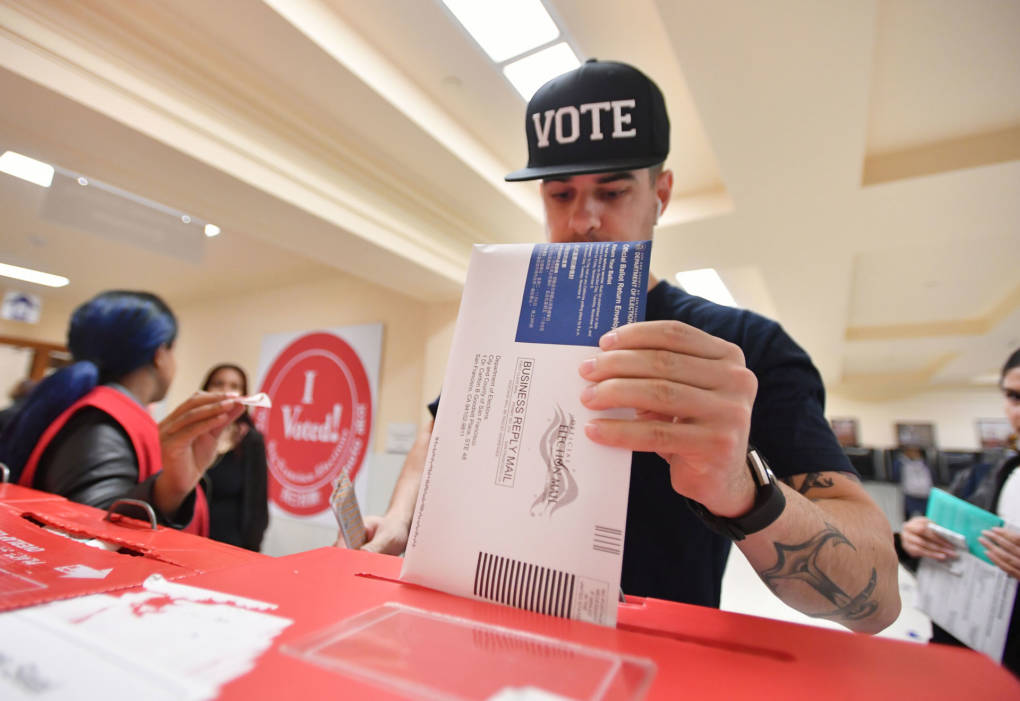
"caption": "A man casts his ballot at City Hall in San Francisco on Nov. 6, 2018.",
"description": "A man casts his ballot at City Hall in San Francisco on Nov. 6, 2018.",
"title": "SFVoter",
"credit": "JOSH EDELSON/AFP/Getty Images",
"status": "inherit",
"isLoading": false,
"fetchFailed": false
},
"news_11734657": {
"type": "attachments",
"id": "news_11734657",
"meta": {
"index": "attachments_1716263798",
"site": "news",
"id": "11734657",
"found": true
},
"parent": 11734654,
"imgSizes": {
"post-thumbnail": {
"file": "https://ww2.kqed.org/app/uploads/sites/10/2019/03/Skip-the-Slip-California-Lawmaker-Wants-Email-Receipts-to-Replace-Paper-Ones-672x372.jpg",
"width": 672,
"mimeType": "image/jpeg",
"height": 372
},
"kqedFullSize": {
"file": "https://ww2.kqed.org/app/uploads/sites/10/2019/03/Skip-the-Slip-California-Lawmaker-Wants-Email-Receipts-to-Replace-Paper-Ones-e1553283279980.jpg",
"width": 1920,
"height": 1359
},
"guest-author-50": {
"file": "https://ww2.kqed.org/app/uploads/sites/10/2019/03/Skip-the-Slip-California-Lawmaker-Wants-Email-Receipts-to-Replace-Paper-Ones-50x50.jpg",
"width": 50,
"mimeType": "image/jpeg",
"height": 50
},
"guest-author-96": {
"file": "https://ww2.kqed.org/app/uploads/sites/10/2019/03/Skip-the-Slip-California-Lawmaker-Wants-Email-Receipts-to-Replace-Paper-Ones-96x96.jpg",
"width": 96,
"mimeType": "image/jpeg",
"height": 96
},
"apple_news_ca_portrait_12_9": {
"file": "https://ww2.kqed.org/app/uploads/sites/10/2019/03/Skip-the-Slip-California-Lawmaker-Wants-Email-Receipts-to-Replace-Paper-Ones-1122x1496.jpg",
"width": 1122,
"mimeType": "image/jpeg",
"height": 1496
},
"medium": {
"file": "https://ww2.kqed.org/app/uploads/sites/10/2019/03/Skip-the-Slip-California-Lawmaker-Wants-Email-Receipts-to-Replace-Paper-Ones-800x566.jpg",
"width": 800,
"mimeType": "image/jpeg",
"height": 566
},
"guest-author-32": {
"file": "https://ww2.kqed.org/app/uploads/sites/10/2019/03/Skip-the-Slip-California-Lawmaker-Wants-Email-Receipts-to-Replace-Paper-Ones-32x32.jpg",
"width": 32,
"mimeType": "image/jpeg",
"height": 32
},
"apple_news_ca_portrait_9_7": {
"file": "https://ww2.kqed.org/app/uploads/sites/10/2019/03/Skip-the-Slip-California-Lawmaker-Wants-Email-Receipts-to-Replace-Paper-Ones-840x1120.jpg",
"width": 840,
"mimeType": "image/jpeg",
"height": 1120
},
"apple_news_ca_square_9_7": {
"file": "https://ww2.kqed.org/app/uploads/sites/10/2019/03/Skip-the-Slip-California-Lawmaker-Wants-Email-Receipts-to-Replace-Paper-Ones-1104x1104.jpg",
"width": 1104,
"mimeType": "image/jpeg",
"height": 1104
},
"apple_news_ca_portrait_4_7": {
"file": "https://ww2.kqed.org/app/uploads/sites/10/2019/03/Skip-the-Slip-California-Lawmaker-Wants-Email-Receipts-to-Replace-Paper-Ones-414x552.jpg",
"width": 414,
"mimeType": "image/jpeg",
"height": 552
},
"apple_news_ca_square_12_9": {
"file": "https://ww2.kqed.org/app/uploads/sites/10/2019/03/Skip-the-Slip-California-Lawmaker-Wants-Email-Receipts-to-Replace-Paper-Ones-1472x1472.jpg",
"width": 1472,
"mimeType": "image/jpeg",
"height": 1472
},
"apple_news_ca_portrait_5_5": {
"file": "https://ww2.kqed.org/app/uploads/sites/10/2019/03/Skip-the-Slip-California-Lawmaker-Wants-Email-Receipts-to-Replace-Paper-Ones-687x916.jpg",
"width": 687,
"mimeType": "image/jpeg",
"height": 916
},
"apple_news_ca_square_4_7": {
"file": "https://ww2.kqed.org/app/uploads/sites/10/2019/03/Skip-the-Slip-California-Lawmaker-Wants-Email-Receipts-to-Replace-Paper-Ones-550x550.jpg",
"width": 550,
"mimeType": "image/jpeg",
"height": 550
},
"apple_news_ca_square_5_5": {
"file": "https://ww2.kqed.org/app/uploads/sites/10/2019/03/Skip-the-Slip-California-Lawmaker-Wants-Email-Receipts-to-Replace-Paper-Ones-912x912.jpg",
"width": 912,
"mimeType": "image/jpeg",
"height": 912
},
"apple_news_ca_landscape_5_5": {
"file": "https://ww2.kqed.org/app/uploads/sites/10/2019/03/Skip-the-Slip-California-Lawmaker-Wants-Email-Receipts-to-Replace-Paper-Ones-1044x783.jpg",
"width": 1044,
"mimeType": "image/jpeg",
"height": 783
},
"apple_news_ca_square_4_0": {
"file": "https://ww2.kqed.org/app/uploads/sites/10/2019/03/Skip-the-Slip-California-Lawmaker-Wants-Email-Receipts-to-Replace-Paper-Ones-470x470.jpg",
"width": 470,
"mimeType": "image/jpeg",
"height": 470
},
"twentyfourteen-full-width": {
"file": "https://ww2.kqed.org/app/uploads/sites/10/2019/03/Skip-the-Slip-California-Lawmaker-Wants-Email-Receipts-to-Replace-Paper-Ones-1038x576.jpg",
"width": 1038,
"mimeType": "image/jpeg",
"height": 576
},
"thumbnail": {
"file": "https://ww2.kqed.org/app/uploads/sites/10/2019/03/Skip-the-Slip-California-Lawmaker-Wants-Email-Receipts-to-Replace-Paper-Ones-160x113.jpg",
"width": 160,
"mimeType": "image/jpeg",
"height": 113
},
"apple_news_ca_landscape_4_7": {
"file": "https://ww2.kqed.org/app/uploads/sites/10/2019/03/Skip-the-Slip-California-Lawmaker-Wants-Email-Receipts-to-Replace-Paper-Ones-632x474.jpg",
"width": 632,
"mimeType": "image/jpeg",
"height": 474
},
"large": {
"file": "https://ww2.kqed.org/app/uploads/sites/10/2019/03/Skip-the-Slip-California-Lawmaker-Wants-Email-Receipts-to-Replace-Paper-Ones-1020x722.jpg",
"width": 1020,
"mimeType": "image/jpeg",
"height": 722
},
"complete_open_graph": {
"file": "https://ww2.kqed.org/app/uploads/sites/10/2019/03/Skip-the-Slip-California-Lawmaker-Wants-Email-Receipts-to-Replace-Paper-Ones-1200x849.jpg",
"width": 1200,
"mimeType": "image/jpeg",
"height": 849
},
"apple_news_ca_landscape_4_0": {
"file": "https://ww2.kqed.org/app/uploads/sites/10/2019/03/Skip-the-Slip-California-Lawmaker-Wants-Email-Receipts-to-Replace-Paper-Ones-536x402.jpg",
"width": 536,
"mimeType": "image/jpeg",
"height": 402
},
"guest-author-64": {
"file": "https://ww2.kqed.org/app/uploads/sites/10/2019/03/Skip-the-Slip-California-Lawmaker-Wants-Email-Receipts-to-Replace-Paper-Ones-64x64.jpg",
"width": 64,
"mimeType": "image/jpeg",
"height": 64
},
"apple_news_ca_portrait_4_0": {
"file": "https://ww2.kqed.org/app/uploads/sites/10/2019/03/Skip-the-Slip-California-Lawmaker-Wants-Email-Receipts-to-Replace-Paper-Ones-354x472.jpg",
"width": 354,
"mimeType": "image/jpeg",
"height": 472
},
"apple_news_ca_landscape_12_9": {
"file": "https://ww2.kqed.org/app/uploads/sites/10/2019/03/Skip-the-Slip-California-Lawmaker-Wants-Email-Receipts-to-Replace-Paper-Ones-1832x1374.jpg",
"width": 1832,
"mimeType": "image/jpeg",
"height": 1374
},
"full-width": {
"file": "https://ww2.kqed.org/app/uploads/sites/10/2019/03/Skip-the-Slip-California-Lawmaker-Wants-Email-Receipts-to-Replace-Paper-Ones-1920x1359.jpg",
"width": 1920,
"mimeType": "image/jpeg",
"height": 1359
},
"guest-author-128": {
"file": "https://ww2.kqed.org/app/uploads/sites/10/2019/03/Skip-the-Slip-California-Lawmaker-Wants-Email-Receipts-to-Replace-Paper-Ones-128x128.jpg",
"width": 128,
"mimeType": "image/jpeg",
"height": 128
},
"apple_news_ca_landscape_9_7": {
"file": "https://ww2.kqed.org/app/uploads/sites/10/2019/03/Skip-the-Slip-California-Lawmaker-Wants-Email-Receipts-to-Replace-Paper-Ones-1376x1032.jpg",
"width": 1376,
"mimeType": "image/jpeg",
"height": 1032
}
},
"publishDate": 1553280788,
"modified": 1553280840,
"caption": "Carol Dahmen poses with a receipt that's more than 4 feet long — for the purchase of a single item.",
"description": "Carol Dahmen poses with a receipt that's more than 4 feet long — for the purchase of a single item.",
"title": "Skip the Slip? California Lawmaker Wants Email Receipts to Replace Paper Ones",
"credit": "Kevin Eckery for CALmatters",
"status": "inherit",
"isLoading": false,
"fetchFailed": false
},
"news_11732443": {
"type": "attachments",
"id": "news_11732443",
"meta": {
"index": "attachments_1716263798",
"site": "news",
"id": "11732443",
"found": true
},
"parent": 11732419,
"imgSizes": {
"thumbnail": {
"file": "https://ww2.kqed.org/app/uploads/sites/10/2019/03/without-border-1000x554-160x89.jpg",
"width": 160,
"mimeType": "image/jpeg",
"height": 89
},
"post-thumbnail": {
"file": "https://ww2.kqed.org/app/uploads/sites/10/2019/03/without-border-1000x554-672x372.jpg",
"width": 672,
"mimeType": "image/jpeg",
"height": 372
},
"kqedFullSize": {
"file": "https://ww2.kqed.org/app/uploads/sites/10/2019/03/without-border-1000x554.jpg",
"width": 1000,
"height": 554
},
"guest-author-50": {
"file": "https://ww2.kqed.org/app/uploads/sites/10/2019/03/without-border-1000x554-50x50.jpg",
"width": 50,
"mimeType": "image/jpeg",
"height": 50
},
"guest-author-96": {
"file": "https://ww2.kqed.org/app/uploads/sites/10/2019/03/without-border-1000x554-96x96.jpg",
"width": 96,
"mimeType": "image/jpeg",
"height": 96
},
"medium": {
"file": "https://ww2.kqed.org/app/uploads/sites/10/2019/03/without-border-1000x554-800x443.jpg",
"width": 800,
"mimeType": "image/jpeg",
"height": 443
},
"guest-author-64": {
"file": "https://ww2.kqed.org/app/uploads/sites/10/2019/03/without-border-1000x554-64x64.jpg",
"width": 64,
"mimeType": "image/jpeg",
"height": 64
},
"guest-author-32": {
"file": "https://ww2.kqed.org/app/uploads/sites/10/2019/03/without-border-1000x554-32x32.jpg",
"width": 32,
"mimeType": "image/jpeg",
"height": 32
},
"guest-author-128": {
"file": "https://ww2.kqed.org/app/uploads/sites/10/2019/03/without-border-1000x554-128x128.jpg",
"width": 128,
"mimeType": "image/jpeg",
"height": 128
}
},
"publishDate": 1552421954,
"modified": 1552421968,
"caption": null,
"description": null,
"title": "without-border-1000x554",
"credit": "CALmatters",
"status": "inherit",
"isLoading": false,
"fetchFailed": false
},
"news_11462825": {
"type": "attachments",
"id": "news_11462825",
"meta": {
"index": "attachments_1716263798",
"site": "news",
"id": "11462825",
"found": true
},
"parent": 11461330,
"imgSizes": {
"small": {
"file": "https://ww2.kqed.org/app/uploads/sites/10/2017/05/RS25386_Stokes-5-qut-2-520x347.jpg",
"width": 520,
"mimeType": "image/jpeg",
"height": 347
},
"twentyfourteen-full-width": {
"file": "https://ww2.kqed.org/app/uploads/sites/10/2017/05/RS25386_Stokes-5-qut-2-1038x576.jpg",
"width": 1038,
"mimeType": "image/jpeg",
"height": 576
},
"thumbnail": {
"file": "https://ww2.kqed.org/app/uploads/sites/10/2017/05/RS25386_Stokes-5-qut-2-160x107.jpg",
"width": 160,
"mimeType": "image/jpeg",
"height": 107
},
"fd-sm": {
"file": "https://ww2.kqed.org/app/uploads/sites/10/2017/05/RS25386_Stokes-5-qut-2-960x640.jpg",
"width": 960,
"mimeType": "image/jpeg",
"height": 640
},
"post-thumbnail": {
"file": "https://ww2.kqed.org/app/uploads/sites/10/2017/05/RS25386_Stokes-5-qut-2-672x372.jpg",
"width": 672,
"mimeType": "image/jpeg",
"height": 372
},
"xsmall": {
"file": "https://ww2.kqed.org/app/uploads/sites/10/2017/05/RS25386_Stokes-5-qut-2-375x250.jpg",
"width": 375,
"mimeType": "image/jpeg",
"height": 250
},
"kqedFullSize": {
"file": "https://ww2.kqed.org/app/uploads/sites/10/2017/05/RS25386_Stokes-5-qut-2.jpg",
"width": 1920,
"height": 1280
},
"large": {
"file": "https://ww2.kqed.org/app/uploads/sites/10/2017/05/RS25386_Stokes-5-qut-2-1020x680.jpg",
"width": 1020,
"mimeType": "image/jpeg",
"height": 680
},
"xlarge": {
"file": "https://ww2.kqed.org/app/uploads/sites/10/2017/05/RS25386_Stokes-5-qut-2-1180x787.jpg",
"width": 1180,
"mimeType": "image/jpeg",
"height": 787
},
"guest-author-50": {
"file": "https://ww2.kqed.org/app/uploads/sites/10/2017/05/RS25386_Stokes-5-qut-2-50x50.jpg",
"width": 50,
"mimeType": "image/jpeg",
"height": 50
},
"guest-author-96": {
"file": "https://ww2.kqed.org/app/uploads/sites/10/2017/05/RS25386_Stokes-5-qut-2-96x96.jpg",
"width": 96,
"mimeType": "image/jpeg",
"height": 96
},
"medium": {
"file": "https://ww2.kqed.org/app/uploads/sites/10/2017/05/RS25386_Stokes-5-qut-2-800x533.jpg",
"width": 800,
"mimeType": "image/jpeg",
"height": 533
},
"guest-author-64": {
"file": "https://ww2.kqed.org/app/uploads/sites/10/2017/05/RS25386_Stokes-5-qut-2-64x64.jpg",
"width": 64,
"mimeType": "image/jpeg",
"height": 64
},
"guest-author-32": {
"file": "https://ww2.kqed.org/app/uploads/sites/10/2017/05/RS25386_Stokes-5-qut-2-32x32.jpg",
"width": 32,
"mimeType": "image/jpeg",
"height": 32
},
"fd-lrg": {
"file": "https://ww2.kqed.org/app/uploads/sites/10/2017/05/RS25386_Stokes-5-qut-2-1920x1280.jpg",
"width": 1920,
"mimeType": "image/jpeg",
"height": 1280
},
"fd-med": {
"file": "https://ww2.kqed.org/app/uploads/sites/10/2017/05/RS25386_Stokes-5-qut-2-1180x787.jpg",
"width": 1180,
"mimeType": "image/jpeg",
"height": 787
},
"full-width": {
"file": "https://ww2.kqed.org/app/uploads/sites/10/2017/05/RS25386_Stokes-5-qut-2-1920x1280.jpg",
"width": 1920,
"mimeType": "image/jpeg",
"height": 1280
},
"detail": {
"file": "https://ww2.kqed.org/app/uploads/sites/10/2017/05/RS25386_Stokes-5-qut-2-150x150.jpg",
"width": 150,
"mimeType": "image/jpeg",
"height": 150
},
"guest-author-128": {
"file": "https://ww2.kqed.org/app/uploads/sites/10/2017/05/RS25386_Stokes-5-qut-2-128x128.jpg",
"width": 128,
"mimeType": "image/jpeg",
"height": 128
},
"xxsmall": {
"file": "https://ww2.kqed.org/app/uploads/sites/10/2017/05/RS25386_Stokes-5-qut-2-240x160.jpg",
"width": 240,
"mimeType": "image/jpeg",
"height": 160
}
},
"publishDate": 1495034220,
"modified": 1551986468,
"caption": "Ánimo Florence-Firestone Middle School in South Los Angeles is operated by Green Dot Public Schools, the leading independent charter school operator in L.A. The organization would be eligible for more federal funding under President Trump's proposed education budget.",
"description": null,
"title": "RS25386_Stokes-5-qut",
"credit": "Kyle Stokes/KPCC",
"status": "inherit",
"isLoading": false,
"fetchFailed": false
},
"news_11730848": {
"type": "attachments",
"id": "news_11730848",
"meta": {
"index": "attachments_1716263798",
"site": "news",
"id": "11730848",
"found": true
},
"parent": 11730837,
"imgSizes": {
"twentyfourteen-full-width": {
"file": "https://ww2.kqed.org/app/uploads/sites/10/2019/03/JerryBrownPensions-1038x576.jpg",
"width": 1038,
"mimeType": "image/jpeg",
"height": 576
},
"thumbnail": {
"file": "https://ww2.kqed.org/app/uploads/sites/10/2019/03/JerryBrownPensions-160x107.jpg",
"width": 160,
"mimeType": "image/jpeg",
"height": 107
},
"post-thumbnail": {
"file": "https://ww2.kqed.org/app/uploads/sites/10/2019/03/JerryBrownPensions-672x372.jpg",
"width": 672,
"mimeType": "image/jpeg",
"height": 372
},
"kqedFullSize": {
"file": "https://ww2.kqed.org/app/uploads/sites/10/2019/03/JerryBrownPensions.jpg",
"width": 1920,
"height": 1280
},
"large": {
"file": "https://ww2.kqed.org/app/uploads/sites/10/2019/03/JerryBrownPensions-1020x680.jpg",
"width": 1020,
"mimeType": "image/jpeg",
"height": 680
},
"complete_open_graph": {
"file": "https://ww2.kqed.org/app/uploads/sites/10/2019/03/JerryBrownPensions-1200x800.jpg",
"width": 1200,
"mimeType": "image/jpeg",
"height": 800
},
"guest-author-50": {
"file": "https://ww2.kqed.org/app/uploads/sites/10/2019/03/JerryBrownPensions-50x50.jpg",
"width": 50,
"mimeType": "image/jpeg",
"height": 50
},
"guest-author-96": {
"file": "https://ww2.kqed.org/app/uploads/sites/10/2019/03/JerryBrownPensions-96x96.jpg",
"width": 96,
"mimeType": "image/jpeg",
"height": 96
},
"medium": {
"file": "https://ww2.kqed.org/app/uploads/sites/10/2019/03/JerryBrownPensions-800x533.jpg",
"width": 800,
"mimeType": "image/jpeg",
"height": 533
},
"guest-author-64": {
"file": "https://ww2.kqed.org/app/uploads/sites/10/2019/03/JerryBrownPensions-64x64.jpg",
"width": 64,
"mimeType": "image/jpeg",
"height": 64
},
"guest-author-32": {
"file": "https://ww2.kqed.org/app/uploads/sites/10/2019/03/JerryBrownPensions-32x32.jpg",
"width": 32,
"mimeType": "image/jpeg",
"height": 32
},
"full-width": {
"file": "https://ww2.kqed.org/app/uploads/sites/10/2019/03/JerryBrownPensions-1920x1280.jpg",
"width": 1920,
"mimeType": "image/jpeg",
"height": 1280
},
"guest-author-128": {
"file": "https://ww2.kqed.org/app/uploads/sites/10/2019/03/JerryBrownPensions-128x128.jpg",
"width": 128,
"mimeType": "image/jpeg",
"height": 128
}
},
"publishDate": 1551832367,
"modified": 1551832404,
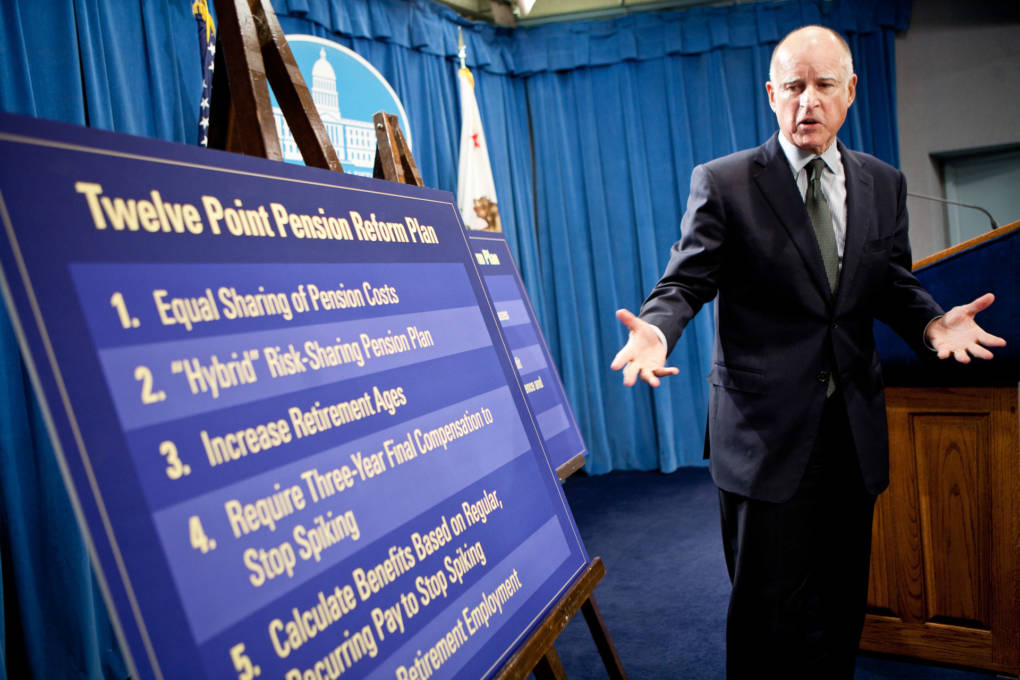
"caption": "The California Supreme Court narrowly upheld a key 2012 reform by Gov. Jerry Brown aimed at lowering public employee pension obligations, but didn't address broader issues. Here, Brown announces his original plan in 2011.",
"description": "The California Supreme Court narrowly upheld a key 2012 reform by Gov. Jerry Brown aimed at lowering public employee pension obligations, but didn't address broader issues. Here, Brown announces his original plan in 2011.",
"title": "JerryBrownPensions",
"credit": "Max Whittaker/Getty Images",
"status": "inherit",
"isLoading": false,
"fetchFailed": false
},
"news_11730255": {
"type": "attachments",
"id": "news_11730255",
"meta": {
"index": "attachments_1716263798",
"site": "news",
"id": "11730255",
"found": true
},
"parent": 11730244,
"imgSizes": {
"twentyfourteen-full-width": {
"file": "https://ww2.kqed.org/app/uploads/sites/10/2019/03/RS8747_SF-Protest-48-1038x576.jpg",
"width": 1038,
"mimeType": "image/jpeg",
"height": 576
},
"thumbnail": {
"file": "https://ww2.kqed.org/app/uploads/sites/10/2019/03/RS8747_SF-Protest-48-160x107.jpg",
"width": 160,
"mimeType": "image/jpeg",
"height": 107
},
"post-thumbnail": {
"file": "https://ww2.kqed.org/app/uploads/sites/10/2019/03/RS8747_SF-Protest-48-672x372.jpg",
"width": 672,
"mimeType": "image/jpeg",
"height": 372
},
"kqedFullSize": {
"file": "https://ww2.kqed.org/app/uploads/sites/10/2019/03/RS8747_SF-Protest-48-e1551558595810.jpg",
"width": 1920,
"height": 1280
},
"large": {
"file": "https://ww2.kqed.org/app/uploads/sites/10/2019/03/RS8747_SF-Protest-48-1020x680.jpg",
"width": 1020,
"mimeType": "image/jpeg",
"height": 680
},
"complete_open_graph": {
"file": "https://ww2.kqed.org/app/uploads/sites/10/2019/03/RS8747_SF-Protest-48-1200x800.jpg",
"width": 1200,
"mimeType": "image/jpeg",
"height": 800
},
"guest-author-50": {
"file": "https://ww2.kqed.org/app/uploads/sites/10/2019/03/RS8747_SF-Protest-48-50x50.jpg",
"width": 50,
"mimeType": "image/jpeg",
"height": 50
},
"guest-author-96": {
"file": "https://ww2.kqed.org/app/uploads/sites/10/2019/03/RS8747_SF-Protest-48-96x96.jpg",
"width": 96,
"mimeType": "image/jpeg",
"height": 96
},
"medium": {
"file": "https://ww2.kqed.org/app/uploads/sites/10/2019/03/RS8747_SF-Protest-48-800x533.jpg",
"width": 800,
"mimeType": "image/jpeg",
"height": 533
},
"guest-author-64": {
"file": "https://ww2.kqed.org/app/uploads/sites/10/2019/03/RS8747_SF-Protest-48-64x64.jpg",
"width": 64,
"mimeType": "image/jpeg",
"height": 64
},
"guest-author-32": {
"file": "https://ww2.kqed.org/app/uploads/sites/10/2019/03/RS8747_SF-Protest-48-32x32.jpg",
"width": 32,
"mimeType": "image/jpeg",
"height": 32
},
"full-width": {
"file": "https://ww2.kqed.org/app/uploads/sites/10/2019/03/RS8747_SF-Protest-48-1920x1280.jpg",
"width": 1920,
"mimeType": "image/jpeg",
"height": 1280
},
"guest-author-128": {
"file": "https://ww2.kqed.org/app/uploads/sites/10/2019/03/RS8747_SF-Protest-48-128x128.jpg",
"width": 128,
"mimeType": "image/jpeg",
"height": 128
}
},
"publishDate": 1551558480,
"modified": 1551562388,
"caption": "Privacy advocates would like for the first privacy law to be broader, while businesses and tech companies want it narrowed.",
"description": null,
"title": "RS8747_SF Protest-48",
"credit": "Jeremy Raff/KQED",
"status": "inherit",
"isLoading": false,
"fetchFailed": false
},
"news_11729668": {
"type": "attachments",
"id": "news_11729668",
"meta": {
"index": "attachments_1716263798",
"site": "news",
"id": "11729668",
"found": true
},
"parent": 11729667,
"imgSizes": {
"thumbnail": {
"file": "https://ww2.kqed.org/app/uploads/sites/10/2019/02/for-profit-college-PHOTO-160x83.png",
"width": 160,
"mimeType": "image/png",
"height": 83
},
"post-thumbnail": {
"file": "https://ww2.kqed.org/app/uploads/sites/10/2019/02/for-profit-college-PHOTO-672x372.png",
"width": 672,
"mimeType": "image/png",
"height": 372
},
"kqedFullSize": {
"file": "https://ww2.kqed.org/app/uploads/sites/10/2019/02/for-profit-college-PHOTO.png",
"width": 1000,
"height": 519
},
"guest-author-50": {
"file": "https://ww2.kqed.org/app/uploads/sites/10/2019/02/for-profit-college-PHOTO-50x50.png",
"width": 50,
"mimeType": "image/png",
"height": 50
},
"guest-author-96": {
"file": "https://ww2.kqed.org/app/uploads/sites/10/2019/02/for-profit-college-PHOTO-96x96.png",
"width": 96,
"mimeType": "image/png",
"height": 96
},
"medium": {
"file": "https://ww2.kqed.org/app/uploads/sites/10/2019/02/for-profit-college-PHOTO-800x415.png",
"width": 800,
"mimeType": "image/png",
"height": 415
},
"guest-author-64": {
"file": "https://ww2.kqed.org/app/uploads/sites/10/2019/02/for-profit-college-PHOTO-64x64.png",
"width": 64,
"mimeType": "image/png",
"height": 64
},
"guest-author-32": {
"file": "https://ww2.kqed.org/app/uploads/sites/10/2019/02/for-profit-college-PHOTO-32x32.png",
"width": 32,
"mimeType": "image/png",
"height": 32
},
"guest-author-128": {
"file": "https://ww2.kqed.org/app/uploads/sites/10/2019/02/for-profit-college-PHOTO-128x128.png",
"width": 128,
"mimeType": "image/png",
"height": 128
}
},
"publishDate": 1551371389,
"modified": 1551371682,
"caption": "Darlene Medina of Rancho Cucamonga complained to state regulators after discovering a for-profit college had taken out a loan in her name that she says she didn’t authorize.",
"description": null,
"title": "for-profit college PHOTO",
"credit": "James Bernal/CALmatters",
"status": "inherit",
"isLoading": false,
"fetchFailed": false
},
"news_11728564": {
"type": "attachments",
"id": "news_11728564",
"meta": {
"index": "attachments_1716263798",
"site": "news",
"id": "11728564",
"found": true
},
"parent": 11728558,
"imgSizes": {
"twentyfourteen-full-width": {
"file": "https://ww2.kqed.org/app/uploads/sites/10/2019/02/RS14289_Mission-Coop_JRaff-5-of-7-1038x576.jpg",
"width": 1038,
"mimeType": "image/jpeg",
"height": 576
},
"thumbnail": {
"file": "https://ww2.kqed.org/app/uploads/sites/10/2019/02/RS14289_Mission-Coop_JRaff-5-of-7-160x107.jpg",
"width": 160,
"mimeType": "image/jpeg",
"height": 107
},
"post-thumbnail": {
"file": "https://ww2.kqed.org/app/uploads/sites/10/2019/02/RS14289_Mission-Coop_JRaff-5-of-7-672x372.jpg",
"width": 672,
"mimeType": "image/jpeg",
"height": 372
},
"kqedFullSize": {
"file": "https://ww2.kqed.org/app/uploads/sites/10/2019/02/RS14289_Mission-Coop_JRaff-5-of-7-e1551036044940.jpg",
"width": 1920,
"height": 1280
},
"large": {
"file": "https://ww2.kqed.org/app/uploads/sites/10/2019/02/RS14289_Mission-Coop_JRaff-5-of-7-1020x680.jpg",
"width": 1020,
"mimeType": "image/jpeg",
"height": 680
},
"complete_open_graph": {
"file": "https://ww2.kqed.org/app/uploads/sites/10/2019/02/RS14289_Mission-Coop_JRaff-5-of-7-1200x800.jpg",
"width": 1200,
"mimeType": "image/jpeg",
"height": 800
},
"guest-author-50": {
"file": "https://ww2.kqed.org/app/uploads/sites/10/2019/02/RS14289_Mission-Coop_JRaff-5-of-7-50x50.jpg",
"width": 50,
"mimeType": "image/jpeg",
"height": 50
},
"guest-author-96": {
"file": "https://ww2.kqed.org/app/uploads/sites/10/2019/02/RS14289_Mission-Coop_JRaff-5-of-7-96x96.jpg",
"width": 96,
"mimeType": "image/jpeg",
"height": 96
},
"medium": {
"file": "https://ww2.kqed.org/app/uploads/sites/10/2019/02/RS14289_Mission-Coop_JRaff-5-of-7-800x533.jpg",
"width": 800,
"mimeType": "image/jpeg",
"height": 533
},
"guest-author-64": {
"file": "https://ww2.kqed.org/app/uploads/sites/10/2019/02/RS14289_Mission-Coop_JRaff-5-of-7-64x64.jpg",
"width": 64,
"mimeType": "image/jpeg",
"height": 64
},
"guest-author-32": {
"file": "https://ww2.kqed.org/app/uploads/sites/10/2019/02/RS14289_Mission-Coop_JRaff-5-of-7-32x32.jpg",
"width": 32,
"mimeType": "image/jpeg",
"height": 32
},
"full-width": {
"file": "https://ww2.kqed.org/app/uploads/sites/10/2019/02/RS14289_Mission-Coop_JRaff-5-of-7-1920x1280.jpg",
"width": 1920,
"mimeType": "image/jpeg",
"height": 1280
},
"detail": {
"file": "https://ww2.kqed.org/app/uploads/sites/10/2019/02/RS14289_Mission-Coop_JRaff-5-of-7-150x150.jpg",
"width": 150,
"mimeType": "image/jpeg",
"height": 150
},
"guest-author-128": {
"file": "https://ww2.kqed.org/app/uploads/sites/10/2019/02/RS14289_Mission-Coop_JRaff-5-of-7-128x128.jpg",
"width": 128,
"mimeType": "image/jpeg",
"height": 128
}
},
"publishDate": 1551035972,
"modified": 1551036155,
"caption": "As California lawmakers seek to remedy its high rents, they're eyeing a possible rent cap to prevent gouging. But how many tenants would qualify?",
"description": null,
"title": "RS14289_Mission Coop_JRaff (5 of 7)",
"credit": "Jeremy Raff/KQED",
"status": "inherit",
"isLoading": false,
"fetchFailed": false
},
"news_11715347": {
"type": "attachments",
"id": "news_11715347",
"meta": {
"index": "attachments_1716263798",
"site": "news",
"id": "11715347",
"found": true
},
"parent": 11714658,
"imgSizes": {
"twentyfourteen-full-width": {
"file": "https://ww2.kqed.org/app/uploads/sites/10/2018/12/RS27120_20171002_Capitol_halfmast_Credit_BertJohnson-3-qut-1038x576.jpg",
"width": 1038,
"mimeType": "image/jpeg",
"height": 576
},
"thumbnail": {
"file": "https://ww2.kqed.org/app/uploads/sites/10/2018/12/RS27120_20171002_Capitol_halfmast_Credit_BertJohnson-3-qut-160x107.jpg",
"width": 160,
"mimeType": "image/jpeg",
"height": 107
},
"post-thumbnail": {
"file": "https://ww2.kqed.org/app/uploads/sites/10/2018/12/RS27120_20171002_Capitol_halfmast_Credit_BertJohnson-3-qut-672x372.jpg",
"width": 672,
"mimeType": "image/jpeg",
"height": 372
},
"kqedFullSize": {
"file": "https://ww2.kqed.org/app/uploads/sites/10/2018/12/RS27120_20171002_Capitol_halfmast_Credit_BertJohnson-3-qut.jpg",
"width": 1920,
"height": 1280
},
"large": {
"file": "https://ww2.kqed.org/app/uploads/sites/10/2018/12/RS27120_20171002_Capitol_halfmast_Credit_BertJohnson-3-qut-1020x680.jpg",
"width": 1020,
"mimeType": "image/jpeg",
"height": 680
},
"complete_open_graph": {
"file": "https://ww2.kqed.org/app/uploads/sites/10/2018/12/RS27120_20171002_Capitol_halfmast_Credit_BertJohnson-3-qut-1200x800.jpg",
"width": 1200,
"mimeType": "image/jpeg",
"height": 800
},
"guest-author-50": {
"file": "https://ww2.kqed.org/app/uploads/sites/10/2018/12/RS27120_20171002_Capitol_halfmast_Credit_BertJohnson-3-qut-50x50.jpg",
"width": 50,
"mimeType": "image/jpeg",
"height": 50
},
"guest-author-96": {
"file": "https://ww2.kqed.org/app/uploads/sites/10/2018/12/RS27120_20171002_Capitol_halfmast_Credit_BertJohnson-3-qut-96x96.jpg",
"width": 96,
"mimeType": "image/jpeg",
"height": 96
},
"medium": {
"file": "https://ww2.kqed.org/app/uploads/sites/10/2018/12/RS27120_20171002_Capitol_halfmast_Credit_BertJohnson-3-qut-800x533.jpg",
"width": 800,
"mimeType": "image/jpeg",
"height": 533
},
"guest-author-64": {
"file": "https://ww2.kqed.org/app/uploads/sites/10/2018/12/RS27120_20171002_Capitol_halfmast_Credit_BertJohnson-3-qut-64x64.jpg",
"width": 64,
"mimeType": "image/jpeg",
"height": 64
},
"guest-author-32": {
"file": "https://ww2.kqed.org/app/uploads/sites/10/2018/12/RS27120_20171002_Capitol_halfmast_Credit_BertJohnson-3-qut-32x32.jpg",
"width": 32,
"mimeType": "image/jpeg",
"height": 32
},
"full-width": {
"file": "https://ww2.kqed.org/app/uploads/sites/10/2018/12/RS27120_20171002_Capitol_halfmast_Credit_BertJohnson-3-qut-1920x1280.jpg",
"width": 1920,
"mimeType": "image/jpeg",
"height": 1280
},
"detail": {
"file": "https://ww2.kqed.org/app/uploads/sites/10/2018/12/RS27120_20171002_Capitol_halfmast_Credit_BertJohnson-3-qut-150x150.jpg",
"width": 150,
"mimeType": "image/jpeg",
"height": 150
},
"guest-author-128": {
"file": "https://ww2.kqed.org/app/uploads/sites/10/2018/12/RS27120_20171002_Capitol_halfmast_Credit_BertJohnson-3-qut-128x128.jpg",
"width": 128,
"mimeType": "image/jpeg",
"height": 128
}
},
"publishDate": 1546218205,
"modified": 1551926458,
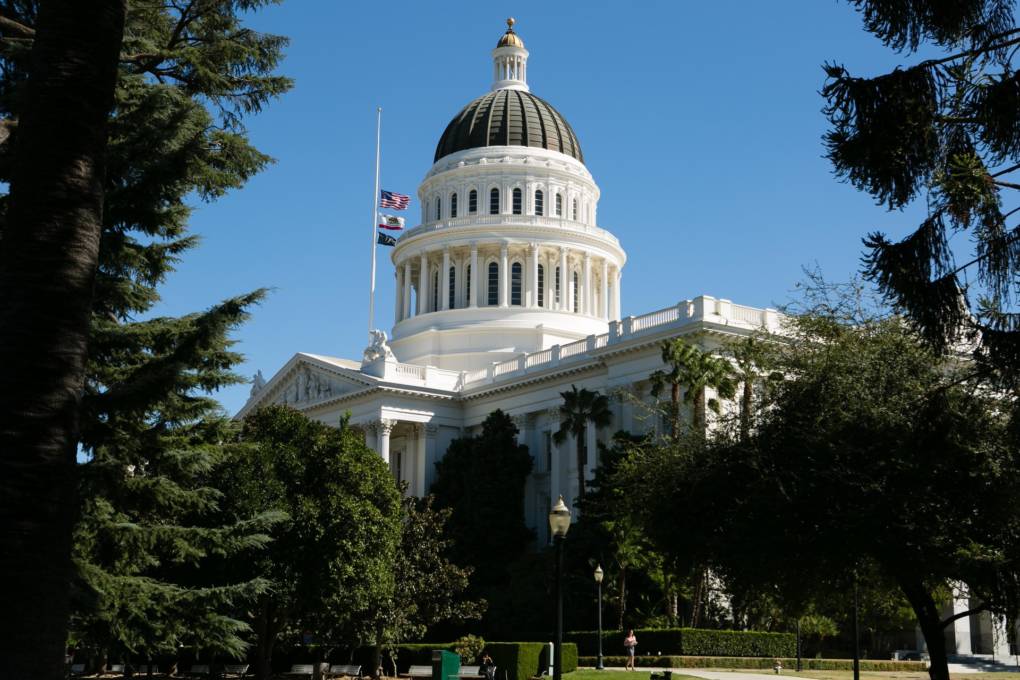
"caption": "The State Capitol",
"description": "The State Capitol",
"title": "RS27120_20171002_Capitol_halfmast_Credit_BertJohnson-3-qut",
"credit": "Bert Johnson/KQED",
"status": "inherit",
"isLoading": false,
"fetchFailed": false
},
"news_11727159": {
"type": "attachments",
"id": "news_11727159",
"meta": {
"index": "attachments_1716263798",
"site": "news",
"id": "11727159",
"found": true
},
"parent": 11727130,
"imgSizes": {
"twentyfourteen-full-width": {
"file": "https://ww2.kqed.org/app/uploads/sites/10/2019/02/RS32466_GettyImages-861017202-qut-1038x576.jpg",
"width": 1038,
"mimeType": "image/jpeg",
"height": 576
},
"thumbnail": {
"file": "https://ww2.kqed.org/app/uploads/sites/10/2019/02/RS32466_GettyImages-861017202-qut-160x107.jpg",
"width": 160,
"mimeType": "image/jpeg",
"height": 107
},
"post-thumbnail": {
"file": "https://ww2.kqed.org/app/uploads/sites/10/2019/02/RS32466_GettyImages-861017202-qut-672x372.jpg",
"width": 672,
"mimeType": "image/jpeg",
"height": 372
},
"kqedFullSize": {
"file": "https://ww2.kqed.org/app/uploads/sites/10/2019/02/RS32466_GettyImages-861017202-qut.jpg",
"width": 1920,
"height": 1280
},
"large": {
"file": "https://ww2.kqed.org/app/uploads/sites/10/2019/02/RS32466_GettyImages-861017202-qut-1020x680.jpg",
"width": 1020,
"mimeType": "image/jpeg",
"height": 680
},
"complete_open_graph": {
"file": "https://ww2.kqed.org/app/uploads/sites/10/2019/02/RS32466_GettyImages-861017202-qut-1200x800.jpg",
"width": 1200,
"mimeType": "image/jpeg",
"height": 800
},
"guest-author-50": {
"file": "https://ww2.kqed.org/app/uploads/sites/10/2019/02/RS32466_GettyImages-861017202-qut-50x50.jpg",
"width": 50,
"mimeType": "image/jpeg",
"height": 50
},
"guest-author-96": {
"file": "https://ww2.kqed.org/app/uploads/sites/10/2019/02/RS32466_GettyImages-861017202-qut-96x96.jpg",
"width": 96,
"mimeType": "image/jpeg",
"height": 96
},
"medium": {
"file": "https://ww2.kqed.org/app/uploads/sites/10/2019/02/RS32466_GettyImages-861017202-qut-800x533.jpg",
"width": 800,
"mimeType": "image/jpeg",
"height": 533
},
"guest-author-64": {
"file": "https://ww2.kqed.org/app/uploads/sites/10/2019/02/RS32466_GettyImages-861017202-qut-64x64.jpg",
"width": 64,
"mimeType": "image/jpeg",
"height": 64
},
"guest-author-32": {
"file": "https://ww2.kqed.org/app/uploads/sites/10/2019/02/RS32466_GettyImages-861017202-qut-32x32.jpg",
"width": 32,
"mimeType": "image/jpeg",
"height": 32
},
"full-width": {
"file": "https://ww2.kqed.org/app/uploads/sites/10/2019/02/RS32466_GettyImages-861017202-qut-1920x1280.jpg",
"width": 1920,
"mimeType": "image/jpeg",
"height": 1280
},
"detail": {
"file": "https://ww2.kqed.org/app/uploads/sites/10/2019/02/RS32466_GettyImages-861017202-qut-150x150.jpg",
"width": 150,
"mimeType": "image/jpeg",
"height": 150
},
"guest-author-128": {
"file": "https://ww2.kqed.org/app/uploads/sites/10/2019/02/RS32466_GettyImages-861017202-qut-128x128.jpg",
"width": 128,
"mimeType": "image/jpeg",
"height": 128
}
},
"publishDate": 1550525296,
"modified": 1550525334,
"caption": "A downed power line and the remains of a home after the Tubbs Fire.",
"description": "A downed power line and the remains of a home after the Tubbs Fire.",
"title": "Multiple Wildfires Continue To Ravage California Wine Country",
"credit": "Elijah Nouvelage/Getty Images",
"status": "inherit",
"isLoading": false,
"fetchFailed": false
},
"news_11727062": {
"type": "attachments",
"id": "news_11727062",
"meta": {
"index": "attachments_1716263798",
"site": "news",
"id": "11727062",
"found": true
},
"parent": 11727055,
"imgSizes": {
"twentyfourteen-full-width": {
"file": "https://ww2.kqed.org/app/uploads/sites/10/2019/02/RS10393_87524849-1038x576.jpg",
"width": 1038,
"mimeType": "image/jpeg",
"height": 576
},
"thumbnail": {
"file": "https://ww2.kqed.org/app/uploads/sites/10/2019/02/RS10393_87524849-160x108.jpg",
"width": 160,
"mimeType": "image/jpeg",
"height": 108
},
"post-thumbnail": {
"file": "https://ww2.kqed.org/app/uploads/sites/10/2019/02/RS10393_87524849-672x372.jpg",
"width": 672,
"mimeType": "image/jpeg",
"height": 372
},
"kqedFullSize": {
"file": "https://ww2.kqed.org/app/uploads/sites/10/2019/02/RS10393_87524849.jpg",
"width": 1920,
"height": 1291
},
"large": {
"file": "https://ww2.kqed.org/app/uploads/sites/10/2019/02/RS10393_87524849-1020x686.jpg",
"width": 1020,
"mimeType": "image/jpeg",
"height": 686
},
"complete_open_graph": {
"file": "https://ww2.kqed.org/app/uploads/sites/10/2019/02/RS10393_87524849-1200x807.jpg",
"width": 1200,
"mimeType": "image/jpeg",
"height": 807
},
"guest-author-50": {
"file": "https://ww2.kqed.org/app/uploads/sites/10/2019/02/RS10393_87524849-50x50.jpg",
"width": 50,
"mimeType": "image/jpeg",
"height": 50
},
"guest-author-96": {
"file": "https://ww2.kqed.org/app/uploads/sites/10/2019/02/RS10393_87524849-96x96.jpg",
"width": 96,
"mimeType": "image/jpeg",
"height": 96
},
"medium": {
"file": "https://ww2.kqed.org/app/uploads/sites/10/2019/02/RS10393_87524849-800x538.jpg",
"width": 800,
"mimeType": "image/jpeg",
"height": 538
},
"guest-author-64": {
"file": "https://ww2.kqed.org/app/uploads/sites/10/2019/02/RS10393_87524849-64x64.jpg",
"width": 64,
"mimeType": "image/jpeg",
"height": 64
},
"guest-author-32": {
"file": "https://ww2.kqed.org/app/uploads/sites/10/2019/02/RS10393_87524849-32x32.jpg",
"width": 32,
"mimeType": "image/jpeg",
"height": 32
},
"full-width": {
"file": "https://ww2.kqed.org/app/uploads/sites/10/2019/02/RS10393_87524849-1920x1291.jpg",
"width": 1920,
"mimeType": "image/jpeg",
"height": 1291
},
"detail": {
"file": "https://ww2.kqed.org/app/uploads/sites/10/2019/02/RS10393_87524849-150x150.jpg",
"width": 150,
"mimeType": "image/jpeg",
"height": 150
},
"guest-author-128": {
"file": "https://ww2.kqed.org/app/uploads/sites/10/2019/02/RS10393_87524849-128x128.jpg",
"width": 128,
"mimeType": "image/jpeg",
"height": 128
}
},
"publishDate": 1550435421,
"modified": 1577477113,
"caption": "The California Supreme Court has revived a long-running debate by reinstating a lawsuit over whether psychotherapists must tell authorities when patients report that they are attracted to child pornography.",
"description": null,
"title": "RS10393_87524849",
"credit": "Getty Images",
"status": "inherit",
"isLoading": false,
"fetchFailed": false
},
"news_11727063": {
"type": "attachments",
"id": "news_11727063",
"meta": {
"index": "attachments_1716263798",
"site": "news",
"id": "11727063",
"found": true
},
"parent": 11727057,
"imgSizes": {
"twentyfourteen-full-width": {
"file": "https://ww2.kqed.org/app/uploads/sites/10/2019/02/RS32465_GettyImages-1013042908-qut-1038x576.jpg",
"width": 1038,
"mimeType": "image/jpeg",
"height": 576
},
"thumbnail": {
"file": "https://ww2.kqed.org/app/uploads/sites/10/2019/02/RS32465_GettyImages-1013042908-qut-160x107.jpg",
"width": 160,
"mimeType": "image/jpeg",
"height": 107
},
"post-thumbnail": {
"file": "https://ww2.kqed.org/app/uploads/sites/10/2019/02/RS32465_GettyImages-1013042908-qut-672x372.jpg",
"width": 672,
"mimeType": "image/jpeg",
"height": 372
},
"kqedFullSize": {
"file": "https://ww2.kqed.org/app/uploads/sites/10/2019/02/RS32465_GettyImages-1013042908-qut.jpg",
"width": 1920,
"height": 1280
},
"large": {
"file": "https://ww2.kqed.org/app/uploads/sites/10/2019/02/RS32465_GettyImages-1013042908-qut-1020x680.jpg",
"width": 1020,
"mimeType": "image/jpeg",
"height": 680
},
"complete_open_graph": {
"file": "https://ww2.kqed.org/app/uploads/sites/10/2019/02/RS32465_GettyImages-1013042908-qut-1200x800.jpg",
"width": 1200,
"mimeType": "image/jpeg",
"height": 800
},
"guest-author-50": {
"file": "https://ww2.kqed.org/app/uploads/sites/10/2019/02/RS32465_GettyImages-1013042908-qut-50x50.jpg",
"width": 50,
"mimeType": "image/jpeg",
"height": 50
},
"guest-author-96": {
"file": "https://ww2.kqed.org/app/uploads/sites/10/2019/02/RS32465_GettyImages-1013042908-qut-96x96.jpg",
"width": 96,
"mimeType": "image/jpeg",
"height": 96
},
"medium": {
"file": "https://ww2.kqed.org/app/uploads/sites/10/2019/02/RS32465_GettyImages-1013042908-qut-800x533.jpg",
"width": 800,
"mimeType": "image/jpeg",
"height": 533
},
"guest-author-64": {
"file": "https://ww2.kqed.org/app/uploads/sites/10/2019/02/RS32465_GettyImages-1013042908-qut-64x64.jpg",
"width": 64,
"mimeType": "image/jpeg",
"height": 64
},
"guest-author-32": {
"file": "https://ww2.kqed.org/app/uploads/sites/10/2019/02/RS32465_GettyImages-1013042908-qut-32x32.jpg",
"width": 32,
"mimeType": "image/jpeg",
"height": 32
},
"full-width": {
"file": "https://ww2.kqed.org/app/uploads/sites/10/2019/02/RS32465_GettyImages-1013042908-qut-1920x1280.jpg",
"width": 1920,
"mimeType": "image/jpeg",
"height": 1280
},
"detail": {
"file": "https://ww2.kqed.org/app/uploads/sites/10/2019/02/RS32465_GettyImages-1013042908-qut-150x150.jpg",
"width": 150,
"mimeType": "image/jpeg",
"height": 150
},
"guest-author-128": {
"file": "https://ww2.kqed.org/app/uploads/sites/10/2019/02/RS32465_GettyImages-1013042908-qut-128x128.jpg",
"width": 128,
"mimeType": "image/jpeg",
"height": 128
}
},
"publishDate": 1550435471,
"modified": 1550436126,
"caption": "Cal Fire firefighters battle the Mendocino Complex fire on August 7, 2018 near Lodoga, California. ",
"description": "Cal Fire firefighters battle the Mendocino Complex fire on August 7, 2018 near Lodoga, California. (Photo by Justin Sullivan/Getty Images)",
"title": "Mendocino-Complex Fire In Northern California Grows To Largest Fire In State's History",
"credit": "Justin Sullivan/Getty Images",
"status": "inherit",
"isLoading": false,
"fetchFailed": false
}
},
"audioPlayerReducer": {
"postId": "stream_live",
"isPaused": true,
"isPlaying": false,
"pfsActive": false,
"pledgeModalIsOpen": true,
"playerDrawerIsOpen": false,
"liveAudioPlayStartedAt": 0,
"liveAudioPlayContext": ""
},
"authorsReducer": {
"byline_news_11736841": {
"type": "authors",
"id": "byline_news_11736841",
"meta": {
"override": true
},
"slug": "byline_news_11736841",
"name": "Ben Christopher, CALmatters",
"isLoading": false
},
"byline_news_11734654": {
"type": "authors",
"id": "byline_news_11734654",
"meta": {
"override": true
},
"slug": "byline_news_11734654",
"name": "\u003cstrong>Elizabeth Castillo\u003c/strong>",
"isLoading": false
},
"byline_news_11732419": {
"type": "authors",
"id": "byline_news_11732419",
"meta": {
"override": true
},
"slug": "byline_news_11732419",
"name": "\u003cstrong>\u003ca href=\"https://calmatters.org/articles/author/judy-lin/\">Judy Lin\u003c/a>\u003cbr />CALmatters\u003c/strong>",
"isLoading": false
},
"byline_news_11731298": {
"type": "authors",
"id": "byline_news_11731298",
"meta": {
"override": true
},
"slug": "byline_news_11731298",
"name": "\u003ca href=\"https://calmatters.org/articles/author/ricardo-cano/\">Ricardo Cano\u003c/a>",
"isLoading": false
},
"byline_news_11730837": {
"type": "authors",
"id": "byline_news_11730837",
"meta": {
"override": true
},
"slug": "byline_news_11730837",
"name": "\u003cstrong>\u003ca href=\"https://calmatters.org/articles/author/judy-lin/\">Judy Lin\u003c/a>\u003c/strong>",
"isLoading": false
},
"byline_news_11730244": {
"type": "authors",
"id": "byline_news_11730244",
"meta": {
"override": true
},
"slug": "byline_news_11730244",
"name": "Laurel Rosenhall",
"isLoading": false
},
"byline_news_11729667": {
"type": "authors",
"id": "byline_news_11729667",
"meta": {
"override": true
},
"slug": "byline_news_11729667",
"name": "\u003cstrong>\u003ca href=\"https://calmatters.org/articles/author/feliciacalmatters-org/\">Felicia Mello\u003cbr />\u003ca href=\"https://calmatters.org/\">CALmatters\u003c/a>\u003c/strong>",
"isLoading": false
},
"byline_news_11728558": {
"type": "authors",
"id": "byline_news_11728558",
"meta": {
"override": true
},
"slug": "byline_news_11728558",
"name": "Matt Levin",
"isLoading": false
},
"byline_news_11728565": {
"type": "authors",
"id": "byline_news_11728565",
"meta": {
"override": true
},
"slug": "byline_news_11728565",
"name": "\u003cstrong>\u003ca href=”https://calmatters.org/articles/blog/california-redistricting-independent-commission-elections-2022/”>Dan Morain\u003c/a>\u003cbr />\u003ca href=”https://calmatters.org/”>CALmatters\u003c/a>\u003c/strong>",
"isLoading": false
},
"byline_news_11727130": {
"type": "authors",
"id": "byline_news_11727130",
"meta": {
"override": true
},
"slug": "byline_news_11727130",
"name": "\u003ca href=\"https://calmatters.org/articles/author/judy-lin/\">Judy Lin\u003c/a>\u003cbr>\u003cstrong>\u003ca href=\"https://calmatters.org/articles/next-california-wildfire-pge-victims-bankruptcy-law/\">CALmatters\u003c/a>\u003c/strong>",
"isLoading": false
},
"byline_news_11727055": {
"type": "authors",
"id": "byline_news_11727055",
"meta": {
"override": true
},
"slug": "byline_news_11727055",
"name": "Ben Christopher",
"isLoading": false
},
"byline_news_11727057": {
"type": "authors",
"id": "byline_news_11727057",
"meta": {
"override": true
},
"slug": "byline_news_11727057",
"name": "Judy Lin, CALmatters",
"isLoading": false
}
},
"pagesReducer": {
"news_affiliate_calmatters": {
"type": "terms",
"id": "news_18481",
"meta": {
"index": "terms_1716263798",
"site": "news",
"id": "18481",
"score": 15.355904
},
"featImg": null,
"name": "CALmatters",
"description": null,
"taxonomy": "affiliate",
"headData": {
"twImgId": null,
"twTitle": null,
"ogTitle": null,
"ogImgId": null,
"twDescription": null,
"description": null,
"title": "CALmatters Archives | KQED Arts",
"ogDescription": null
},
"ttid": 18515,
"slug": "calmatters",
"isLoading": false,
"title": "CALmatters",
"pageMeta": {
"site": "news",
"WpPageTemplate": "page-topic-editorial",
"currentPage": 67
},
"blocks": [
{
"blockName": "kqed/post-list",
"attrs": {
"layout": "cardArticle2",
"query": "posts/news?affiliate=calmatters",
"seeMore": false,
"paginated": true,
"page": 67
}
},
{
"blockName": "kqed/ad"
}
]
}
},
"pfsSessionReducer": {},
"postsReducer": {
"stream_live": {
"type": "live",
"id": "stream_live",
"audioUrl": "https://streams.kqed.org/kqedradio",
"title": "Live Stream",
"excerpt": "Live Stream information currently unavailable.",
"link": "/radio",
"featImg": "",
"label": {
"name": "KQED Live",
"link": "/"
}
},
"stream_kqedNewscast": {
"type": "posts",
"id": "stream_kqedNewscast",
"audioUrl": "https://www.kqed.org/.stream/anon/radio/RDnews/newscast.mp3?_=1",
"title": "KQED Newscast",
"featImg": "",
"label": {
"name": "88.5 FM",
"link": "/"
}
},
"news_11736841": {
"type": "posts",
"id": "news_11736841",
"meta": {
"index": "posts_1716263798",
"site": "news",
"id": "11736841",
"score": null,
"sort": [
1554060165000
]
},
"guestAuthors": [],
"slug": "diminishing-returns-is-california-running-out-of-ways-to-lead-voters-to-the-polls",
"title": "Diminishing Returns: Is California Running Out of Ways to Lead Voters to the Polls?",
"publishDate": 1554060165,
"format": "standard",
"headTitle": "Diminishing Returns: Is California Running Out of Ways to Lead Voters to the Polls? | KQED",
"labelTerm": {},
"content": "\u003cp>This Tuesday, voters in Long Beach turned out to elect a new state senator. Odds are that’s news to you—even if you happen to live in Long Beach. A \u003ca href=\"https://twitter.com/LACountyRRCC/status/1110787717468585990\" target=\"_blank\" rel=\"noopener\">preliminary tally \u003c/a> indicates that less than a measly 7 percent of the district’s registered voters cast a ballot.\u003c/p>\n\u003cp>Even by the subdued standards of an off-year state Senate special election, single-digit turnout marks a historic low.\u003c/p>\n\u003cp>Perhaps unsurprisingly, some Democratic legislators in California—a state that already makes it easier to vote than almost any other—are trying to make it even easier. Assemblyman Evan Low, a Silicon Valley Democrat, is the latest to take up that cause.\u003c/p>\n\u003cp>\u003ca href=\"http://leginfo.legislature.ca.gov/faces/billNavClient.xhtml?bill_id=201920200AB177\" target=\"_blank\" rel=\"noopener\">Low’s bill\u003c/a> would make election day a state holiday, giving the day off to state employees and closing schools and college campuses. Supporters say the holiday would allow more schools to serve as polling stations and let college students volunteer as poll workers.\u003c/p>\n\u003cp>“Other states are looking at increasing barriers to entry,” said Low, noting the recent proliferation of state voter ID laws. “We do the opposite in California. We believe that we are a stronger democracy by having more people participate in the process.”\u003c/p>\n\u003cp>[ad fullwidth]\u003c/p>\n\u003cp>Low has also proposed changing the state constitution to allow 17-year-olds to vote. If it passes the Legislature by a two-thirds margin, it would require voter approval—assuming it survives any \u003ca href=\"http://scocablog.com/lowering-the-voting-age-in-california-possible-but-not-without-problems/#_edn15\" target=\"_blank\" rel=\"noopener\">legal challenges\u003c/a>.\u003c/p>\n\u003cp>Such proposals have become an increasingly easy political sell here. With President Donald Trump and other Republicans using \u003ca href=\"https://calmatters.org/articles/valid-voter-fraud-complaints-in-california-dozens-not-millions/\" target=\"_blank\" rel=\"noopener\">unsupported claims\u003c/a> of widespread voter fraud to call for new restrictions on the franchise, voting rights have become a rallying cry for California Democrats. Whatever they can do to amplify turnout among “low propensity” voters—statistically those who are young, low-income and Latino—generally happens to work to the Democrats’ electoral advantage too.\u003c/p>\n\u003cp>But the evidence is still out as to whether these measures have a significant effect on voter behavior one way or the other. And given the political and legal challenges facing this year’s latest round of proposals, state lawmakers may have run out of obstacles to knock down between the California voter and the ballot box.\u003c/p>\n\u003cp>\u003cimg loading=\"lazy\" decoding=\"async\" class=\"alignleft size-medium wp-image-11736843\" src=\"https://ww2.kqed.org/news/wp-content/uploads/sites/10/2019/03/CalMatters-ELECTION-HOLIDAY-image2-800x1036.jpg\" alt=\"\" width=\"800\" height=\"1036\" srcset=\"https://cdn.kqed.org/wp-content/uploads/sites/10/2019/03/CalMatters-ELECTION-HOLIDAY-image2-800x1036.jpg 800w, https://cdn.kqed.org/wp-content/uploads/sites/10/2019/03/CalMatters-ELECTION-HOLIDAY-image2-160x207.jpg 160w, https://cdn.kqed.org/wp-content/uploads/sites/10/2019/03/CalMatters-ELECTION-HOLIDAY-image2-1020x1320.jpg 1020w, https://cdn.kqed.org/wp-content/uploads/sites/10/2019/03/CalMatters-ELECTION-HOLIDAY-image2-927x1200.jpg 927w, https://cdn.kqed.org/wp-content/uploads/sites/10/2019/03/CalMatters-ELECTION-HOLIDAY-image2-1920x2486.jpg 1920w, https://cdn.kqed.org/wp-content/uploads/sites/10/2019/03/CalMatters-ELECTION-HOLIDAY-image2.jpg 1582w\" sizes=\"(max-width: 800px) 100vw, 800px\">\u003c/p>\n\u003cp>\u003ca href=\"https://www.liebertpub.com/doi/pdf/10.1089/elj.2017.0478\" target=\"_blank\" rel=\"noopener\">One study\u003c/a> that took into account registration restrictions, the presence of voter ID laws and automatic voter registration programs anointed California the third easiest state for voting. Only Oregon and Colorado make it easier—and the researchers did not even account for some of California’s most recent reforms.\u003c/p>\n\u003cp>California allows would-be voters to register on Election Day, to vote well before an election and to so by mail, and to pre-register as long as they will turn 18 by election day. More than 200,000 \u003ca href=\"http://files.constantcontact.com/c1d64240601/6f7f450a-8fd1-427f-b937-9495f9fd0dfe.pdf\" target=\"_blank\" rel=\"noopener\">teenagers pre-registered\u003c/a> in the lead up to last year’s election, according to the Secretary of State’s office. The state also pays the postage on mail-in ballots and automatically registers eligible voters when they visit the DMV (in \u003ca href=\"https://calmatters.org/articles/blog/the-one-thing-the-california-dmv-does-make-it-easy-to-do/\" target=\"_blank\" rel=\"noopener\">theory\u003c/a>, anyway).\u003c/p>\n\u003cp>Of the various policy levers that lawmakers can pull to make it easier to vote, Kati Phillips, spokesperson for the voter-rights advocacy group Common Cause California, identified the most effective: automatic voter registration, early voting and wide-scale vote-by-mail programs.\u003c/p>\n\u003cp>She described Low’s proposal as “a cherry on top,” though maybe “not dinner.”\u003c/p>\n\u003cp>Benjamin Highton, a political scientist at UC Davis, is a little more skeptical. He says that the time, hassle and other “costs” of voting are “contributing factors” to turnout—but they’re relatively small ones. Same-day registration might boost turnout by “five percentage points or less typically,” he said.\u003c/p>\n\u003cp>Additional changes to election law are likely to produce diminishing election returns, he said.\u003c/p>\n\u003cp>“When costs are small,” he added, “you can’t reduce them that much more and the explanation for lack of higher participation is more on the benefit side.”\u003c/p>\n\u003cp>In other words, it’s possible that most non-voters in California eschew voting not because the process is difficult, but because they don’t see the value in doing so.\u003c/p>\n\u003cp>“That’s a much tougher problem for policymakers to solve,” said Highton.\u003c/p>\n\u003cp>There is some evidence to back up Highton’s claim. In the Cooperative Congressional \u003ca href=\"https://dataverse.harvard.edu/dataset.xhtml?persistentId=doi%3A10.7910/DVN/ZSBZ7K\" target=\"_blank\" rel=\"noopener\">Election Study survey\u003c/a> conducted after the 2018 midterm elections, just over 1 in 10 nonvoting Californians said they stayed away from the polls because they were either “too busy” or faced overly long lines at polling places—time constraints that might be solved with a holiday.\u003c/p>\n\u003cp>California law also guarantees employees two-hours paid time off to go the polls and gives voters the ability to register to vote my mail online.\u003c/p>\n\u003cp>Meanwhile, 45 percent of non-voters said they either didn’t know enough, didn’t like their choices, had no interest, simply forgot or were not registered to vote.\u003c/p>\n\u003cp>Another possible reason for lower turnout, said Thad Kousser, a political science professor at UC San Diego, is voter fatigue.\u003c/p>\n\u003cp>\u003cimg loading=\"lazy\" decoding=\"async\" class=\"alignleft size-medium wp-image-11736847\" src=\"https://ww2.kqed.org/news/wp-content/uploads/sites/10/2019/03/CalMatters-ELECTION-HOLIDAY-fatigue-800x1103.jpg\" alt=\"\" width=\"800\" height=\"1103\" srcset=\"https://cdn.kqed.org/wp-content/uploads/sites/10/2019/03/CalMatters-ELECTION-HOLIDAY-fatigue-800x1103.jpg 800w, https://cdn.kqed.org/wp-content/uploads/sites/10/2019/03/CalMatters-ELECTION-HOLIDAY-fatigue-160x221.jpg 160w, https://cdn.kqed.org/wp-content/uploads/sites/10/2019/03/CalMatters-ELECTION-HOLIDAY-fatigue-1020x1406.jpg 1020w, https://cdn.kqed.org/wp-content/uploads/sites/10/2019/03/CalMatters-ELECTION-HOLIDAY-fatigue-871x1200.jpg 871w, https://cdn.kqed.org/wp-content/uploads/sites/10/2019/03/CalMatters-ELECTION-HOLIDAY-fatigue-1920x2646.jpg 1920w, https://cdn.kqed.org/wp-content/uploads/sites/10/2019/03/CalMatters-ELECTION-HOLIDAY-fatigue.jpg 1486w\" sizes=\"(max-width: 800px) 100vw, 800px\">\u003c/p>\n\u003cp>Whereas voters in parliamentary democracies might only vote for one party over another a few times every decade, Californians are invited to vote in primaries, special elections and general elections, and are expected to puzzle over byzantine initiative language and determine who might make the best city auditor.\u003c/p>\n\u003cp>As Kousser put it: “There’s almost no profession you can have that would fully qualify you to vote down a California ballot.”\u003c/p>\n\u003cp>Both Kousser and Highton are part of a group of University of California researchers studying the effects of California’s recently implemented automatic voter registration program. They say it’s still too early to draw any conclusions.\u003c/p>\n\u003cp>California aside, Kousser noted that the United States is still a relatively tough place to vote compared to most economically developed democracies.\u003c/p>\n\u003cp>Australians and Belgians, for example, can be fined if they don’t show up to the polls.\u003c/p>\n\u003cp>“We’re so far behind the starting line of other modern democracies that elected officials in states like California…are always looking for ways to motivate people,” he said.\u003c/p>\n\u003cp>But in Sacramento, the effort to ensure that voting is easy enough may have already peaked. Bills to establish an election day holiday have been introduced three times in the Legislature—twice by Low. Both of Low’s past efforts have been left to die in the Assembly appropriations committee, reflecting the fact that even his Democratic colleagues worry it might not be worth the cost and disruption.\u003c/p>\n\u003cp>Shirley Weber, a Democratic Assemblywoman from San Diego, expressed those concerns during the bill’s first committee hearing earlier this month.\u003c/p>\n\u003cp>Given the various ways in which California law already makes it convenient to vote, she wondered “whether it’s necessary at this point.” She nevertheless voted for the proposal, as did the other Democrats on the committee.\u003c/p>\n\u003cp>But according to Low, a holiday is not simply about removing yet another impediment to voting.\u003c/p>\n\u003cp>Setting aside a day to “to stop and pause” would provide “an opportunity to focus everyone’s attention on civic engagement and reinforce the importance of voting,” he said. “There’s nothing more American.”\u003c/p>\n\u003cp>[ad floatright]\u003c/p>\n\u003cp>\u003ca href=\"http://calmatters.org/\" target=\"_blank\" rel=\"noopener\">\u003cem>CALmatters.org\u003c/em>\u003c/a>\u003cem> is a nonprofit, nonpartisan media venture explaining California policies and politics.\u003c/em>\u003c/p>\n\n",
"blocks": [],
"excerpt": "The state is ranked third in the country for voter ease, yet still struggles with voter participation. ",
"status": "publish",
"parent": 0,
"modified": 1721118799,
"stats": {
"hasAudio": false,
"hasVideo": false,
"hasChartOrMap": false,
"iframeSrcs": [],
"hasGoogleForm": false,
"hasGallery": false,
"hasHearkenModule": false,
"hasPolis": false,
"paragraphCount": 37,
"wordCount": 1268
},
"headData": {
"title": "Diminishing Returns: Is California Running Out of Ways to Lead Voters to the Polls? | KQED",
"description": "The state is ranked third in the country for voter ease, yet still struggles with voter participation. ",
"ogTitle": "",
"ogDescription": "",
"ogImgId": "",
"twTitle": "",
"twDescription": "",
"twImgId": "",
"schema": {
"@context": "https://schema.org",
"@type": "NewsArticle",
"headline": "Diminishing Returns: Is California Running Out of Ways to Lead Voters to the Polls?",
"datePublished": "2019-03-31T12:22:45-07:00",
"dateModified": "2024-07-16T01:33:19-07:00",
"image": "https://cdn.kqed.org/wp-content/uploads/2020/02/KQED-OG-Image@1x.png",
"isAccessibleForFree": "True",
"publisher": {
"@type": "NewsMediaOrganization",
"@id": "https://www.kqed.org/#organization",
"name": "KQED",
"logo": "https://cdn.kqed.org/wp-content/uploads/2020/02/KQED-OG-Image@1x.png",
"url": "https://www.kqed.org",
"sameAs": [
"https://www.facebook.com/KQED",
"https://twitter.com/KQED",
"https://www.instagram.com/kqed/",
"https://www.tiktok.com/@kqedofficial",
"https://www.linkedin.com/company/kqed",
"https://www.youtube.com/channel/UCeC0IOo7i1P_61zVUWbJ4nw"
]
}
}
},
"source": "CALmatters",
"sourceUrl": "https://calmatters.org",
"sticky": false,
"nprByline": "Ben Christopher, CALmatters",
"path": "/news/11736841/diminishing-returns-is-california-running-out-of-ways-to-lead-voters-to-the-polls",
"audioTrackLength": null,
"parsedContent": [
{
"type": "contentString",
"content": "\u003cdiv class=\"post-body\">\u003cp>\u003cp>This Tuesday, voters in Long Beach turned out to elect a new state senator. Odds are that’s news to you—even if you happen to live in Long Beach. A \u003ca href=\"https://twitter.com/LACountyRRCC/status/1110787717468585990\" target=\"_blank\" rel=\"noopener\">preliminary tally \u003c/a> indicates that less than a measly 7 percent of the district’s registered voters cast a ballot.\u003c/p>\n\u003cp>Even by the subdued standards of an off-year state Senate special election, single-digit turnout marks a historic low.\u003c/p>\n\u003cp>Perhaps unsurprisingly, some Democratic legislators in California—a state that already makes it easier to vote than almost any other—are trying to make it even easier. Assemblyman Evan Low, a Silicon Valley Democrat, is the latest to take up that cause.\u003c/p>\n\u003cp>\u003ca href=\"http://leginfo.legislature.ca.gov/faces/billNavClient.xhtml?bill_id=201920200AB177\" target=\"_blank\" rel=\"noopener\">Low’s bill\u003c/a> would make election day a state holiday, giving the day off to state employees and closing schools and college campuses. Supporters say the holiday would allow more schools to serve as polling stations and let college students volunteer as poll workers.\u003c/p>\n\u003cp>“Other states are looking at increasing barriers to entry,” said Low, noting the recent proliferation of state voter ID laws. “We do the opposite in California. We believe that we are a stronger democracy by having more people participate in the process.”\u003c/p>\n\u003cp>\u003c/p>\u003c/div>",
"attributes": {
"named": {},
"numeric": []
}
},
{
"type": "component",
"content": "",
"name": "ad",
"attributes": {
"named": {
"label": "fullwidth"
},
"numeric": [
"fullwidth"
]
}
},
{
"type": "contentString",
"content": "\u003cdiv class=\"post-body\">\u003cp>\u003c/p>\n\u003cp>Low has also proposed changing the state constitution to allow 17-year-olds to vote. If it passes the Legislature by a two-thirds margin, it would require voter approval—assuming it survives any \u003ca href=\"http://scocablog.com/lowering-the-voting-age-in-california-possible-but-not-without-problems/#_edn15\" target=\"_blank\" rel=\"noopener\">legal challenges\u003c/a>.\u003c/p>\n\u003cp>Such proposals have become an increasingly easy political sell here. With President Donald Trump and other Republicans using \u003ca href=\"https://calmatters.org/articles/valid-voter-fraud-complaints-in-california-dozens-not-millions/\" target=\"_blank\" rel=\"noopener\">unsupported claims\u003c/a> of widespread voter fraud to call for new restrictions on the franchise, voting rights have become a rallying cry for California Democrats. Whatever they can do to amplify turnout among “low propensity” voters—statistically those who are young, low-income and Latino—generally happens to work to the Democrats’ electoral advantage too.\u003c/p>\n\u003cp>But the evidence is still out as to whether these measures have a significant effect on voter behavior one way or the other. And given the political and legal challenges facing this year’s latest round of proposals, state lawmakers may have run out of obstacles to knock down between the California voter and the ballot box.\u003c/p>\n\u003cp>\u003cimg loading=\"lazy\" decoding=\"async\" class=\"alignleft size-medium wp-image-11736843\" src=\"https://ww2.kqed.org/news/wp-content/uploads/sites/10/2019/03/CalMatters-ELECTION-HOLIDAY-image2-800x1036.jpg\" alt=\"\" width=\"800\" height=\"1036\" srcset=\"https://cdn.kqed.org/wp-content/uploads/sites/10/2019/03/CalMatters-ELECTION-HOLIDAY-image2-800x1036.jpg 800w, https://cdn.kqed.org/wp-content/uploads/sites/10/2019/03/CalMatters-ELECTION-HOLIDAY-image2-160x207.jpg 160w, https://cdn.kqed.org/wp-content/uploads/sites/10/2019/03/CalMatters-ELECTION-HOLIDAY-image2-1020x1320.jpg 1020w, https://cdn.kqed.org/wp-content/uploads/sites/10/2019/03/CalMatters-ELECTION-HOLIDAY-image2-927x1200.jpg 927w, https://cdn.kqed.org/wp-content/uploads/sites/10/2019/03/CalMatters-ELECTION-HOLIDAY-image2-1920x2486.jpg 1920w, https://cdn.kqed.org/wp-content/uploads/sites/10/2019/03/CalMatters-ELECTION-HOLIDAY-image2.jpg 1582w\" sizes=\"(max-width: 800px) 100vw, 800px\">\u003c/p>\n\u003cp>\u003ca href=\"https://www.liebertpub.com/doi/pdf/10.1089/elj.2017.0478\" target=\"_blank\" rel=\"noopener\">One study\u003c/a> that took into account registration restrictions, the presence of voter ID laws and automatic voter registration programs anointed California the third easiest state for voting. Only Oregon and Colorado make it easier—and the researchers did not even account for some of California’s most recent reforms.\u003c/p>\n\u003cp>California allows would-be voters to register on Election Day, to vote well before an election and to so by mail, and to pre-register as long as they will turn 18 by election day. More than 200,000 \u003ca href=\"http://files.constantcontact.com/c1d64240601/6f7f450a-8fd1-427f-b937-9495f9fd0dfe.pdf\" target=\"_blank\" rel=\"noopener\">teenagers pre-registered\u003c/a> in the lead up to last year’s election, according to the Secretary of State’s office. The state also pays the postage on mail-in ballots and automatically registers eligible voters when they visit the DMV (in \u003ca href=\"https://calmatters.org/articles/blog/the-one-thing-the-california-dmv-does-make-it-easy-to-do/\" target=\"_blank\" rel=\"noopener\">theory\u003c/a>, anyway).\u003c/p>\n\u003cp>Of the various policy levers that lawmakers can pull to make it easier to vote, Kati Phillips, spokesperson for the voter-rights advocacy group Common Cause California, identified the most effective: automatic voter registration, early voting and wide-scale vote-by-mail programs.\u003c/p>\n\u003cp>She described Low’s proposal as “a cherry on top,” though maybe “not dinner.”\u003c/p>\n\u003cp>Benjamin Highton, a political scientist at UC Davis, is a little more skeptical. He says that the time, hassle and other “costs” of voting are “contributing factors” to turnout—but they’re relatively small ones. Same-day registration might boost turnout by “five percentage points or less typically,” he said.\u003c/p>\n\u003cp>Additional changes to election law are likely to produce diminishing election returns, he said.\u003c/p>\n\u003cp>“When costs are small,” he added, “you can’t reduce them that much more and the explanation for lack of higher participation is more on the benefit side.”\u003c/p>\n\u003cp>In other words, it’s possible that most non-voters in California eschew voting not because the process is difficult, but because they don’t see the value in doing so.\u003c/p>\n\u003cp>“That’s a much tougher problem for policymakers to solve,” said Highton.\u003c/p>\n\u003cp>There is some evidence to back up Highton’s claim. In the Cooperative Congressional \u003ca href=\"https://dataverse.harvard.edu/dataset.xhtml?persistentId=doi%3A10.7910/DVN/ZSBZ7K\" target=\"_blank\" rel=\"noopener\">Election Study survey\u003c/a> conducted after the 2018 midterm elections, just over 1 in 10 nonvoting Californians said they stayed away from the polls because they were either “too busy” or faced overly long lines at polling places—time constraints that might be solved with a holiday.\u003c/p>\n\u003cp>California law also guarantees employees two-hours paid time off to go the polls and gives voters the ability to register to vote my mail online.\u003c/p>\n\u003cp>Meanwhile, 45 percent of non-voters said they either didn’t know enough, didn’t like their choices, had no interest, simply forgot or were not registered to vote.\u003c/p>\n\u003cp>Another possible reason for lower turnout, said Thad Kousser, a political science professor at UC San Diego, is voter fatigue.\u003c/p>\n\u003cp>\u003cimg loading=\"lazy\" decoding=\"async\" class=\"alignleft size-medium wp-image-11736847\" src=\"https://ww2.kqed.org/news/wp-content/uploads/sites/10/2019/03/CalMatters-ELECTION-HOLIDAY-fatigue-800x1103.jpg\" alt=\"\" width=\"800\" height=\"1103\" srcset=\"https://cdn.kqed.org/wp-content/uploads/sites/10/2019/03/CalMatters-ELECTION-HOLIDAY-fatigue-800x1103.jpg 800w, https://cdn.kqed.org/wp-content/uploads/sites/10/2019/03/CalMatters-ELECTION-HOLIDAY-fatigue-160x221.jpg 160w, https://cdn.kqed.org/wp-content/uploads/sites/10/2019/03/CalMatters-ELECTION-HOLIDAY-fatigue-1020x1406.jpg 1020w, https://cdn.kqed.org/wp-content/uploads/sites/10/2019/03/CalMatters-ELECTION-HOLIDAY-fatigue-871x1200.jpg 871w, https://cdn.kqed.org/wp-content/uploads/sites/10/2019/03/CalMatters-ELECTION-HOLIDAY-fatigue-1920x2646.jpg 1920w, https://cdn.kqed.org/wp-content/uploads/sites/10/2019/03/CalMatters-ELECTION-HOLIDAY-fatigue.jpg 1486w\" sizes=\"(max-width: 800px) 100vw, 800px\">\u003c/p>\n\u003cp>Whereas voters in parliamentary democracies might only vote for one party over another a few times every decade, Californians are invited to vote in primaries, special elections and general elections, and are expected to puzzle over byzantine initiative language and determine who might make the best city auditor.\u003c/p>\n\u003cp>As Kousser put it: “There’s almost no profession you can have that would fully qualify you to vote down a California ballot.”\u003c/p>\n\u003cp>Both Kousser and Highton are part of a group of University of California researchers studying the effects of California’s recently implemented automatic voter registration program. They say it’s still too early to draw any conclusions.\u003c/p>\n\u003cp>California aside, Kousser noted that the United States is still a relatively tough place to vote compared to most economically developed democracies.\u003c/p>\n\u003cp>Australians and Belgians, for example, can be fined if they don’t show up to the polls.\u003c/p>\n\u003cp>“We’re so far behind the starting line of other modern democracies that elected officials in states like California…are always looking for ways to motivate people,” he said.\u003c/p>\n\u003cp>But in Sacramento, the effort to ensure that voting is easy enough may have already peaked. Bills to establish an election day holiday have been introduced three times in the Legislature—twice by Low. Both of Low’s past efforts have been left to die in the Assembly appropriations committee, reflecting the fact that even his Democratic colleagues worry it might not be worth the cost and disruption.\u003c/p>\n\u003cp>Shirley Weber, a Democratic Assemblywoman from San Diego, expressed those concerns during the bill’s first committee hearing earlier this month.\u003c/p>\n\u003cp>Given the various ways in which California law already makes it convenient to vote, she wondered “whether it’s necessary at this point.” She nevertheless voted for the proposal, as did the other Democrats on the committee.\u003c/p>\n\u003cp>But according to Low, a holiday is not simply about removing yet another impediment to voting.\u003c/p>\n\u003cp>Setting aside a day to “to stop and pause” would provide “an opportunity to focus everyone’s attention on civic engagement and reinforce the importance of voting,” he said. “There’s nothing more American.”\u003c/p>\n\u003cp>\u003c/p>\u003c/div>",
"attributes": {
"named": {},
"numeric": []
}
},
{
"type": "component",
"content": "",
"name": "ad",
"attributes": {
"named": {
"label": "floatright"
},
"numeric": [
"floatright"
]
}
},
{
"type": "contentString",
"content": "\u003cdiv class=\"post-body\">\u003cp>\u003c/p>\n\u003cp>\u003ca href=\"http://calmatters.org/\" target=\"_blank\" rel=\"noopener\">\u003cem>CALmatters.org\u003c/em>\u003c/a>\u003cem> is a nonprofit, nonpartisan media venture explaining California policies and politics.\u003c/em>\u003c/p>\n\n\u003c/div>\u003c/p>",
"attributes": {
"named": {},
"numeric": []
}
}
],
"link": "/news/11736841/diminishing-returns-is-california-running-out-of-ways-to-lead-voters-to-the-polls",
"authors": [
"byline_news_11736841"
],
"categories": [
"news_8"
],
"tags": [
"news_23394",
"news_20572",
"news_17648",
"news_2027"
],
"affiliates": [
"news_18481"
],
"featImg": "news_11704077",
"label": "source_news_11736841"
},
"news_11734654": {
"type": "posts",
"id": "news_11734654",
"meta": {
"index": "posts_1716263798",
"site": "news",
"id": "11734654",
"score": null,
"sort": [
1553287294000
]
},
"guestAuthors": [],
"slug": "skip-the-slip-california-lawmaker-wants-email-receipts-to-replace-paper-ones",
"title": "Skip the Slip? California Lawmaker Wants Email Receipts to Replace Paper Ones",
"publishDate": 1553287294,
"format": "standard",
"headTitle": "Skip the Slip? California Lawmaker Wants Email Receipts to Replace Paper Ones | KQED",
"labelTerm": {},
"content": "\u003cp>When Carol Dahmen discovered the CVS receipt draped across the counter of her Carmichael kitchen, she couldn’t resist pulling out her tape measure to document it.\u003c/p>\n\u003cp>Her husband had purchased one single prescription. The receipt, she discovered, stretched on to contain 11 coupons before topping out at an astonishing 4 feet 8 inches — the height of Olympic champion gymnast \u003ca href=\"https://www.today.com/video/simone-biles-why-i-love-my-body-even-if-i-m-stuck-under-5-feet-tall-1133046339856\" target=\"_blank\" rel=\"noopener\">Simone Biles\u003c/a>.\u003c/p>\n\u003cp>“This receipt is ridiculous and unnecessary,” Dahmen tweeted, endorsing the idea of scrapping paper receipts for emailed versions.\u003c/p>\n\u003cp>https://twitter.com/sactotrixie/status/1105686820430331904?s=12\u003c/p>\n\u003cp>California lawmakers are considering just \u003ca href=\"https://leginfo.legislature.ca.gov/faces/billNavClient.xhtml?bill_id=201920200AB161\" target=\"_blank\" rel=\"noopener\">such a proposal\u003c/a> — a bill by Democratic Assemblyman Phil Ting of San Francisco would make emailed receipts the default for businesses grossing more than $1 million beginning in 2022. \u003c/p>\n\u003cp>Businesses breaking the rule could be fined $25 a day, up to $300 a year. Customers could still get a paper receipt, but they would have to request one — which some would undoubtedly do, rather than share their email addresses with many merchants.\u003c/p>\n\u003cp>https://twitter.com/PhilTing/status/1084899077349765120\u003c/p>\n\u003cp>The state already \u003ca href=\"https://www.calrecycle.ca.gov/plastics/carryoutbags\" target=\"_blank\" rel=\"noopener\">bans\u003c/a> single-use plastic bags and this year, mandated that plastic straws be available \u003ca href=\"https://www.eater.com/2018/9/21/17886256/california-straw-ban-plastic\" target=\"_blank\" rel=\"noopener\">by request only\u003c/a>. If the default e-receipt bill passes, California would once again become the first in the nation to crack down on another ubiquitous product of modern existence.\u003c/p>\n\u003cp>“They’re wasteful and they’re toxic,” Ting said about receipts. “Their lack of recyclability really makes them problematic.”\u003c/p>\n\u003cp>[aside postID=science_808929 label=\"Health Risks of BPA\"]\u003c/p>\n\u003cp>Receipts increasingly are made of thermal paper, and thus printed without ink. A chemical sometimes used to coat thermal paper, Bisphenol A (BPA), mimics estrogen and has been linked to cancer; in 2012, the U.S. Food and Drug Administration \u003ca href=\"https://www.nytimes.com/2012/07/18/science/fda-bans-bpa-from-baby-bottles-and-sippy-cups.html\" target=\"_blank\" rel=\"noopener\">banned\u003c/a> its use in baby bottles. \u003c/p>\n\u003cp>Receipt paper now more commonly contains Bisphenol S (BPS), a replacement for BPA that some recent studies, \u003ca href=\"https://www.uclahealth.org/u-magazine/bpa-replacement-in-plastic-accelerates-embryonic-development-disrupts-reproductive-system\" target=\"_blank\" rel=\"noopener\">including one from UCLA\u003c/a>, indicate may be just as harmful.\u003c/p>\n\u003cp>Opponents say this is yet another hurdle for California small businesses, and a privacy concern for customers.\u003c/p>\n\u003cp>“It’s trying to reduce paper waste and that’s commendable, but we just want to make sure that in the process we’re not creating a big digital trail for everyone who goes into a drug store,” said Bennett Cyphers, a staff technologist at the Electronic Frontier Foundation, a nonprofit digital rights group. \u003c/p>\n\u003cp>“If the business needs to collect some kind of contact information, what do they do with that data? It’s going to be a field day for data brokers, data about what people buy and who’s buying what and when. We’d really like that not to be the case.”\u003c/p>\n\u003cp>Receipts account for millions of pounds of trash waste, and an \u003ca href=\"https://www.greenamerica.org/sites/default/files/2019-01/Skip%20the%20Slip%20Report%202019%20-%20Green%20America.pdf\" target=\"_blank\" rel=\"noopener\">estimated\u003c/a> 9 billion gallons of water, according to Green America, an environmental group supporting the bill.\u003c/p>\n\u003cp>“We don’t really need to use that paper and definitely that water,” Ting said. “We can really save those resources for something else.”\u003c/p>\n\u003cp>Advocates say Ting’s bill is an easy remedy. “It’s tackling one of the lowest hanging fruit,” said Nick Lapis, director of advocacy for Californians Against Waste.\u003c/p>\n\u003cp>[pullquote size=\"medium\" align=”right” citation=\"Bennett Cyphers, Electronic Frontier Foundation\"]“It’s going to be a field day for data brokers, data about what people buy and who’s buying what and when. We’d really like that not to be the case.”[/pullquote]\u003c/p>\n\u003cp>Others suggest the bill could go even further. Republican Heath Flora of Ripon said in a written statement the bill could apply to more than just businesses.\u003c/p>\n\u003cp>“I’m open to the idea of doing away with paper receipts, but right now this bill only applies to businesses and not the state government,” he said. “We should also have a conversation about what to tell the folks who aren’t very tech savvy, or who otherwise don’t have access to internet services.”\u003c/p>\n\u003cp>But some say the bill could burden businesses in more rural parts of the state. Just 59 percent of rural households have broadband internet access, according to a \u003ca href=\"https://www.ppic.org/publication/californias-digital-divide/jtf-californias-digital-divide/\" target=\"_blank\" rel=\"noopener\">report\u003c/a> by the Public Policy Institute of California.\u003c/p>\n\u003cp>“To do it electronically and mandate that for everybody is quite frankly going to be burdensome on business,” said GOP Assemblyman Brian Dahle of Bieber. “Every day it’s something new with the labor code, every day it’s something new with the regulatory environment, and this is just one more add on, making it tough to stay in business in California.”\u003c/p>\n\u003cp>Dahle contends that counties in his district also don’t have the infrastructure in place to rely that heavily on the internet. He said his wife ran a plant nursery and while the business had internet, the connection was weak.\u003c/p>\n\u003cp>[ad fullwidth]\u003c/p>\n\u003cp>Data breaches might make customers hesitant to dole out their email. Prominent \u003ca href=\"https://mashable.com/2018/04/04/every-store-retailer-hacked/#75zNgOLk2Pq7\" target=\"_blank\" rel=\"noopener\">business chains\u003c/a> such as Chipotle and Whole Foods have experienced data breaches, as did Target, \u003ca href=\"https://www.usatoday.com/story/money/2017/05/23/target-pay-185m-2013-data-breach-affected-consumers/102063932/\" target=\"_blank\" rel=\"noopener\">impacting\u003c/a> 41 million customers.\u003c/p>\n\u003cp>“Our emails have been shared with the world and I don’t like that,” Dahle said. “At the end of the day, there are a lot of us who don’t want the whole world having our email.”\u003c/p>\n\u003cp>For those hesitant to surrender their emails to every business they patronize, Ting said customers could simply request paper receipts.\u003cbr>\nOther opponents say the bill would make it harder for customers to locate proofs of purchase.\u003c/p>\n\u003cp>“Unlike other retailers, we’re subject to this state law where we’ve actually encouraged people to bring in their own bags or not use bags,” said Aaron Moreno, the senior director of government relations for the California Grocers Association. “We need to have a way to tell whether someone has bought something.”\u003c/p>\n\u003cp>As other retailers go, CVS is easily lampooned for \u003ca href=\"https://www.vox.com/the-goods/2018/10/10/17956950/why-are-cvs-pharmacy-receipts-so-long\" target=\"_blank\" rel=\"noopener\">printing\u003c/a> human-sized proofs of purchase — and not just by Dahmen, a political advertising consultant who isn’t working on Ting’s bill.\u003c/p>\n\u003cp>Customers have shared \u003ca href=\"https://cheezburger.com/7299077/25-images-and-memes-of-cvs-receipts-that-wont-surprise-you-but-will-amuse-you\" target=\"_blank\" rel=\"noopener\">countless memes\u003c/a> about the practical uses they have discovered for their voluminous CVS receipts (an Ohio man unfurled one as a replacement for a missing strip on the vertical blinds in his bedroom) and obscure facts about CVS receipts (“the sun is approximately 8 CVS receipts from earth”). Then there’s this:\u003c/p>\n\u003cp>https://twitter.com/JCyrus/status/998018068369436672\u003c/p>\n\u003cp>While the company does allow customers \u003ca href=\"https://www.cvs.com/content/digital-receipt\" target=\"_blank\" rel=\"noopener\">to receive electronic receipts upon request\u003c/a>, many customers are not aware of that option or may not want to use it.\u003c/p>\n\u003cp>Last year, a CNBC reporter put the CEO of CVS on the spot while pulling out her own voluminous CVS receipt. “What are we going to do about this?” \u003ca href=\"https://www.cnbc.com/video/2018/11/29/whats-with-those-cvs-receipts.html\" target=\"_blank\" rel=\"noopener\">CNBC’s Bertha Coombs asked\u003c/a>.\u003c/p>\n\u003cp>CEO Larry Merlo urged her to enroll in the company’s digital receipt program. Coombs said she already was. Merlo smiled, and said: “Point taken.”\u003c/p>\n\u003cp>[ad floatright]\u003c/p>\n",
"blocks": [],
"excerpt": "If the default e-receipt bill passes, California would once again become the first in the nation to crack down on another ubiquitous product of modern existence.",
"status": "publish",
"parent": 0,
"modified": 1721150182,
"stats": {
"hasAudio": false,
"hasVideo": false,
"hasChartOrMap": false,
"iframeSrcs": [],
"hasGoogleForm": false,
"hasGallery": false,
"hasHearkenModule": false,
"hasPolis": false,
"paragraphCount": 33,
"wordCount": 1202
},
"headData": {
"title": "Skip the Slip? California Lawmaker Wants Email Receipts to Replace Paper Ones | KQED",
"description": "If the default e-receipt bill passes, California would once again become the first in the nation to crack down on another ubiquitous product of modern existence.",
"ogTitle": "",
"ogDescription": "",
"ogImgId": "",
"twTitle": "",
"twDescription": "",
"twImgId": "",
"schema": {
"@context": "https://schema.org",
"@type": "NewsArticle",
"headline": "Skip the Slip? California Lawmaker Wants Email Receipts to Replace Paper Ones",
"datePublished": "2019-03-22T13:41:34-07:00",
"dateModified": "2024-07-16T10:16:22-07:00",
"image": "https://cdn.kqed.org/wp-content/uploads/2020/02/KQED-OG-Image@1x.png",
"isAccessibleForFree": "True",
"publisher": {
"@type": "NewsMediaOrganization",
"@id": "https://www.kqed.org/#organization",
"name": "KQED",
"logo": "https://cdn.kqed.org/wp-content/uploads/2020/02/KQED-OG-Image@1x.png",
"url": "https://www.kqed.org",
"sameAs": [
"https://www.facebook.com/KQED",
"https://twitter.com/KQED",
"https://www.instagram.com/kqed/",
"https://www.tiktok.com/@kqedofficial",
"https://www.linkedin.com/company/kqed",
"https://www.youtube.com/channel/UCeC0IOo7i1P_61zVUWbJ4nw"
]
}
}
},
"source": "CALmatters",
"sourceUrl": "https://calmatters.org",
"sticky": false,
"nprByline": "\u003cstrong>Elizabeth Castillo\u003c/strong>",
"path": "/news/11734654/skip-the-slip-california-lawmaker-wants-email-receipts-to-replace-paper-ones",
"audioTrackLength": null,
"parsedContent": [
{
"type": "contentString",
"content": "\u003cdiv class=\"post-body\">\u003cp>\u003cp>When Carol Dahmen discovered the CVS receipt draped across the counter of her Carmichael kitchen, she couldn’t resist pulling out her tape measure to document it.\u003c/p>\n\u003cp>Her husband had purchased one single prescription. The receipt, she discovered, stretched on to contain 11 coupons before topping out at an astonishing 4 feet 8 inches — the height of Olympic champion gymnast \u003ca href=\"https://www.today.com/video/simone-biles-why-i-love-my-body-even-if-i-m-stuck-under-5-feet-tall-1133046339856\" target=\"_blank\" rel=\"noopener\">Simone Biles\u003c/a>.\u003c/p>\n\u003cp>“This receipt is ridiculous and unnecessary,” Dahmen tweeted, endorsing the idea of scrapping paper receipts for emailed versions.\u003c/p>\u003c/p>\u003c/div>",
"attributes": {
"named": {},
"numeric": []
}
},
{
"type": "component",
"content": "",
"name": "singleTwitterStatus",
"attributes": {
"named": {
"id": "1105686820430331904"
},
"numeric": []
}
},
{
"type": "contentString",
"content": "\u003cdiv class=\"post-body\">\u003cp>\n\u003cp>California lawmakers are considering just \u003ca href=\"https://leginfo.legislature.ca.gov/faces/billNavClient.xhtml?bill_id=201920200AB161\" target=\"_blank\" rel=\"noopener\">such a proposal\u003c/a> — a bill by Democratic Assemblyman Phil Ting of San Francisco would make emailed receipts the default for businesses grossing more than $1 million beginning in 2022. \u003c/p>\n\u003cp>Businesses breaking the rule could be fined $25 a day, up to $300 a year. Customers could still get a paper receipt, but they would have to request one — which some would undoubtedly do, rather than share their email addresses with many merchants.\u003c/p>\u003c/p>\u003c/div>",
"attributes": {
"named": {},
"numeric": []
}
},
{
"type": "component",
"content": "",
"name": "singleTwitterStatus",
"attributes": {
"named": {
"id": "1084899077349765120"
},
"numeric": []
}
},
{
"type": "contentString",
"content": "\u003cdiv class=\"post-body\">\u003cp>\n\u003cp>The state already \u003ca href=\"https://www.calrecycle.ca.gov/plastics/carryoutbags\" target=\"_blank\" rel=\"noopener\">bans\u003c/a> single-use plastic bags and this year, mandated that plastic straws be available \u003ca href=\"https://www.eater.com/2018/9/21/17886256/california-straw-ban-plastic\" target=\"_blank\" rel=\"noopener\">by request only\u003c/a>. If the default e-receipt bill passes, California would once again become the first in the nation to crack down on another ubiquitous product of modern existence.\u003c/p>\n\u003cp>“They’re wasteful and they’re toxic,” Ting said about receipts. “Their lack of recyclability really makes them problematic.”\u003c/p>\n\u003cp>\u003c/p>\u003c/div>",
"attributes": {
"named": {},
"numeric": []
}
},
{
"type": "component",
"content": "",
"name": "aside",
"attributes": {
"named": {
"postid": "science_808929",
"label": "Health Risks of BPA "
},
"numeric": []
}
},
{
"type": "contentString",
"content": "\u003cdiv class=\"post-body\">\u003cp>\u003c/p>\n\u003cp>Receipts increasingly are made of thermal paper, and thus printed without ink. A chemical sometimes used to coat thermal paper, Bisphenol A (BPA), mimics estrogen and has been linked to cancer; in 2012, the U.S. Food and Drug Administration \u003ca href=\"https://www.nytimes.com/2012/07/18/science/fda-bans-bpa-from-baby-bottles-and-sippy-cups.html\" target=\"_blank\" rel=\"noopener\">banned\u003c/a> its use in baby bottles. \u003c/p>\n\u003cp>Receipt paper now more commonly contains Bisphenol S (BPS), a replacement for BPA that some recent studies, \u003ca href=\"https://www.uclahealth.org/u-magazine/bpa-replacement-in-plastic-accelerates-embryonic-development-disrupts-reproductive-system\" target=\"_blank\" rel=\"noopener\">including one from UCLA\u003c/a>, indicate may be just as harmful.\u003c/p>\n\u003cp>Opponents say this is yet another hurdle for California small businesses, and a privacy concern for customers.\u003c/p>\n\u003cp>“It’s trying to reduce paper waste and that’s commendable, but we just want to make sure that in the process we’re not creating a big digital trail for everyone who goes into a drug store,” said Bennett Cyphers, a staff technologist at the Electronic Frontier Foundation, a nonprofit digital rights group. \u003c/p>\n\u003cp>“If the business needs to collect some kind of contact information, what do they do with that data? It’s going to be a field day for data brokers, data about what people buy and who’s buying what and when. We’d really like that not to be the case.”\u003c/p>\n\u003cp>Receipts account for millions of pounds of trash waste, and an \u003ca href=\"https://www.greenamerica.org/sites/default/files/2019-01/Skip%20the%20Slip%20Report%202019%20-%20Green%20America.pdf\" target=\"_blank\" rel=\"noopener\">estimated\u003c/a> 9 billion gallons of water, according to Green America, an environmental group supporting the bill.\u003c/p>\n\u003cp>“We don’t really need to use that paper and definitely that water,” Ting said. “We can really save those resources for something else.”\u003c/p>\n\u003cp>Advocates say Ting’s bill is an easy remedy. “It’s tackling one of the lowest hanging fruit,” said Nick Lapis, director of advocacy for Californians Against Waste.\u003c/p>\n\u003cp>\u003c/p>\u003c/div>",
"attributes": {
"named": {},
"numeric": []
}
},
{
"type": "component",
"content": "“It’s going to be a field day for data brokers, data about what people buy and who’s buying what and when. We’d really like that not to be the case.”",
"name": "pullquote",
"attributes": {
"named": {
"size": "medium",
"align": "”right”",
"citation": "Bennett Cyphers, Electronic Frontier Foundation",
"label": ""
},
"numeric": []
}
},
{
"type": "contentString",
"content": "\u003cdiv class=\"post-body\">\u003cp>\u003c/p>\n\u003cp>Others suggest the bill could go even further. Republican Heath Flora of Ripon said in a written statement the bill could apply to more than just businesses.\u003c/p>\n\u003cp>“I’m open to the idea of doing away with paper receipts, but right now this bill only applies to businesses and not the state government,” he said. “We should also have a conversation about what to tell the folks who aren’t very tech savvy, or who otherwise don’t have access to internet services.”\u003c/p>\n\u003cp>But some say the bill could burden businesses in more rural parts of the state. Just 59 percent of rural households have broadband internet access, according to a \u003ca href=\"https://www.ppic.org/publication/californias-digital-divide/jtf-californias-digital-divide/\" target=\"_blank\" rel=\"noopener\">report\u003c/a> by the Public Policy Institute of California.\u003c/p>\n\u003cp>“To do it electronically and mandate that for everybody is quite frankly going to be burdensome on business,” said GOP Assemblyman Brian Dahle of Bieber. “Every day it’s something new with the labor code, every day it’s something new with the regulatory environment, and this is just one more add on, making it tough to stay in business in California.”\u003c/p>\n\u003cp>Dahle contends that counties in his district also don’t have the infrastructure in place to rely that heavily on the internet. He said his wife ran a plant nursery and while the business had internet, the connection was weak.\u003c/p>\n\u003cp>\u003c/p>\u003c/div>",
"attributes": {
"named": {},
"numeric": []
}
},
{
"type": "component",
"content": "",
"name": "ad",
"attributes": {
"named": {
"label": "fullwidth"
},
"numeric": [
"fullwidth"
]
}
},
{
"type": "contentString",
"content": "\u003cdiv class=\"post-body\">\u003cp>\u003c/p>\n\u003cp>Data breaches might make customers hesitant to dole out their email. Prominent \u003ca href=\"https://mashable.com/2018/04/04/every-store-retailer-hacked/#75zNgOLk2Pq7\" target=\"_blank\" rel=\"noopener\">business chains\u003c/a> such as Chipotle and Whole Foods have experienced data breaches, as did Target, \u003ca href=\"https://www.usatoday.com/story/money/2017/05/23/target-pay-185m-2013-data-breach-affected-consumers/102063932/\" target=\"_blank\" rel=\"noopener\">impacting\u003c/a> 41 million customers.\u003c/p>\n\u003cp>“Our emails have been shared with the world and I don’t like that,” Dahle said. “At the end of the day, there are a lot of us who don’t want the whole world having our email.”\u003c/p>\n\u003cp>For those hesitant to surrender their emails to every business they patronize, Ting said customers could simply request paper receipts.\u003cbr>\nOther opponents say the bill would make it harder for customers to locate proofs of purchase.\u003c/p>\n\u003cp>“Unlike other retailers, we’re subject to this state law where we’ve actually encouraged people to bring in their own bags or not use bags,” said Aaron Moreno, the senior director of government relations for the California Grocers Association. “We need to have a way to tell whether someone has bought something.”\u003c/p>\n\u003cp>As other retailers go, CVS is easily lampooned for \u003ca href=\"https://www.vox.com/the-goods/2018/10/10/17956950/why-are-cvs-pharmacy-receipts-so-long\" target=\"_blank\" rel=\"noopener\">printing\u003c/a> human-sized proofs of purchase — and not just by Dahmen, a political advertising consultant who isn’t working on Ting’s bill.\u003c/p>\n\u003cp>Customers have shared \u003ca href=\"https://cheezburger.com/7299077/25-images-and-memes-of-cvs-receipts-that-wont-surprise-you-but-will-amuse-you\" target=\"_blank\" rel=\"noopener\">countless memes\u003c/a> about the practical uses they have discovered for their voluminous CVS receipts (an Ohio man unfurled one as a replacement for a missing strip on the vertical blinds in his bedroom) and obscure facts about CVS receipts (“the sun is approximately 8 CVS receipts from earth”). Then there’s this:\u003c/p>\u003c/p>\u003c/div>",
"attributes": {
"named": {},
"numeric": []
}
},
{
"type": "component",
"content": "",
"name": "singleTwitterStatus",
"attributes": {
"named": {
"id": "998018068369436672"
},
"numeric": []
}
},
{
"type": "contentString",
"content": "\u003cdiv class=\"post-body\">\u003cp>\n\u003cp>While the company does allow customers \u003ca href=\"https://www.cvs.com/content/digital-receipt\" target=\"_blank\" rel=\"noopener\">to receive electronic receipts upon request\u003c/a>, many customers are not aware of that option or may not want to use it.\u003c/p>\n\u003cp>Last year, a CNBC reporter put the CEO of CVS on the spot while pulling out her own voluminous CVS receipt. “What are we going to do about this?” \u003ca href=\"https://www.cnbc.com/video/2018/11/29/whats-with-those-cvs-receipts.html\" target=\"_blank\" rel=\"noopener\">CNBC’s Bertha Coombs asked\u003c/a>.\u003c/p>\n\u003cp>CEO Larry Merlo urged her to enroll in the company’s digital receipt program. Coombs said she already was. Merlo smiled, and said: “Point taken.”\u003c/p>\n\u003cp>\u003c/p>\u003c/div>",
"attributes": {
"named": {},
"numeric": []
}
},
{
"type": "component",
"content": "",
"name": "ad",
"attributes": {
"named": {
"label": "floatright"
},
"numeric": [
"floatright"
]
}
},
{
"type": "contentString",
"content": "\u003cdiv class=\"post-body\">\u003cp>\u003c/p>\n\u003c/div>\u003c/p>",
"attributes": {
"named": {},
"numeric": []
}
}
],
"link": "/news/11734654/skip-the-slip-california-lawmaker-wants-email-receipts-to-replace-paper-ones",
"authors": [
"byline_news_11734654"
],
"programs": [
"news_72"
],
"categories": [
"news_19906",
"news_457",
"news_8",
"news_13",
"news_356"
],
"tags": [
"news_22844",
"news_17968"
],
"affiliates": [
"news_18481"
],
"featImg": "news_11734657",
"label": "source_news_11734654"
},
"news_11732419": {
"type": "posts",
"id": "news_11732419",
"meta": {
"index": "posts_1716263798",
"site": "news",
"id": "11732419",
"score": null,
"sort": [
1552425770000
]
},
"parent": 0,
"labelTerm": {},
"blocks": [],
"publishDate": 1552425770,
"format": "standard",
"disqusTitle": "California Has a Giant Surplus — of Ideas for New Taxes. What’s Up With That?",
"title": "California Has a Giant Surplus — of Ideas for New Taxes. What’s Up With That?",
"headTitle": "CALmatters | KQED News",
"content": "\u003cp>California is enjoying a projected \u003ca href=\"https://calmatters.org/articles/blog/newsom-california-spend-budget-surplus/\" rel=\"noopener\" target=\"_blank\">$21.4 billion\u003c/a> surplus. \u003ca href=\"https://www.ppic.org/wp-content/uploads/ppic-statewide-survey-californians-and-their-government-january-2019.pdf#page=11\" rel=\"noopener\" target=\"_blank\">Three-quarters\u003c/a> of the state believes any new revenue increase should be for voters to decide.\u003c/p>\n\u003cp>By population and percentage of personal income, this state already has the nation’s \u003ca href=\"https://calmatters.org/articles/the-open-secret-about-california-taxes/#What-other-states-do\" rel=\"noopener\" target=\"_blank\">10th highest\u003c/a> tax burden. And the leader of the California Senate, Pro Tem Toni Atkins, has pointedly cautioned against any more levies that take cash out of the pockets of working families.\u003c/p>\n\u003cp>In short, California lawmakers needn’t look far for an excuse to avoid raising taxes. Whether Atkins’ fellow Democrats got the memo, however, isn’t clear.\u003c/p>\n\u003cp>Proposals this legislative cycle alone have included — so far — a \u003ca href=\"http://leginfo.legislature.ca.gov/faces/billNavClient.xhtml?bill_id=201920200AB138\" rel=\"noopener\" target=\"_blank\">soda tax\u003c/a> to fight obesity, a \u003ca href=\"https://leginfo.legislature.ca.gov/faces/billNavClient.xhtml?bill_id=201920200AB755\" rel=\"noopener\" target=\"_blank\">tire change tax\u003c/a> for stormwater cleanup and a \u003ca href=\"https://leginfo.legislature.ca.gov/faces/billNavClient.xhtml?bill_id=201920200SB200\" rel=\"noopener\" target=\"_blank\">drinking water tax\u003c/a> to clean up toxic wells. Also a \u003ca href=\"https://leginfo.legislature.ca.gov/faces/billNavClient.xhtml?bill_id=201920200AB18\" rel=\"noopener\" target=\"_blank\">firearms excise tax\u003c/a>, an \u003ca href=\"https://leginfo.legislature.ca.gov/faces/billNavClient.xhtml?bill_id=201920200SB246\" rel=\"noopener\" target=\"_blank\">oil and gas severance tax\u003c/a>, and \u003ca href=\"http://leginfo.legislature.ca.gov/faces/billNavClient.xhtml?bill_id=201920200AB1448\" rel=\"noopener\" target=\"_blank\">a fee on dialysis centers\u003c/a>. Also an increase in \u003ca href=\"https://calmatters.org/articles/california-taxes-legislature-newsom-surplus-soda-water-tax/\" rel=\"noopener\" target=\"_blank\">lead-acid battery fees\u003c/a>.\u003c/p>\n\u003cp>Democratic Gov. Gavin Newsom has embraced the drinking water tax. He’s also put forth a few new revenue streams, namely a monthly phone fee to upgrade the 911 emergency response system, possible higher payroll tax for babies to get six months of \u003ca href=\"https://calmatters.org/articles/newsom-paid-family-leave-proposal-analyzed/\" rel=\"noopener\" target=\"_blank\">paid family leave\u003c/a>, and a state \u003ca href=\"https://calmatters.org/articles/california-ideas-counteract-obamacare-mandate-repeal/\" rel=\"noopener\" target=\"_blank\">individual health mandate\u003c/a> to replace the federal penalty repealed by Republicans.\u003c/p>\n\u003cp>[ad fullwidth]\u003c/p>\n\u003cp>There is, to be sure, some high-profile tax relief in this year’s record \u003ca href=\"https://calmatters.org/articles/blog/most-popular-bill-california-legislature-bipartisan-coauthors/\" rel=\"noopener\" target=\"_blank\">2,628\u003c/a>-piece pile of proposed legislation: \u003ca href=\"https://leginfo.legislature.ca.gov/faces/billTextClient.xhtml?bill_id=201920200AB66\" rel=\"noopener\" target=\"_blank\">Diapers\u003c/a>, \u003ca href=\"https://leginfo.legislature.ca.gov/faces/billNavClient.xhtml?bill_id=201920200AB31\" rel=\"noopener\" target=\"_blank\">tampons\u003c/a> and \u003ca href=\"http://leginfo.legislature.ca.gov/faces/billNavClient.xhtml?bill_id=201920200AB286\" rel=\"noopener\" target=\"_blank\">pot\u003c/a> have all been put forward for potential tax cuts.\u003c/p>\n\u003cp>\u003c!-- iframe plugin v.4.3 wordpress.org/plugins/iframe/ -->\u003cbr>\n\u003ciframe src=\"https://e.infogram.com/daca841c-aa07-487f-b071-e70b79c308a0?src=embed\" title=\"Tax proposals\" width=\"550\" height=\"609\" scrolling=\"no\" frameborder=\"0\" style=\"border:none;\" allowfullscreen=\"allowfullscreen\" class=\"iframe-class\">\u003c/iframe>\u003c/p>\n\u003cp>But the proposed hikes pose the real challenge to legislative leaders such as Atkins, who remember all too clearly the statewide backlash to the 2017 gas tax increase.\u003c/p>\n\u003cp>“Many proposals have been put forward by the governor and by individual legislators,” she said as this year’s session started. “All will be appropriately reviewed through our policy and budget process. But one thing is clear, now is not the time for any major broad-based new tax increases on lower- and middle-income families.”\u003c/p>\n\u003cp>Democratic operatives say there’s no grand strategy for raising taxes even as Republican lawmakers labeled it #taxifornia. But the drumbeat of targeted tax and fee proposals comes after eight years of former Gov. Jerry Brown’s emphasis on fiscal restraint.\u003c/p>\n\u003cp>https://twitter.com/asmMelendez/status/1103328983683280897\u003c/p>\n\u003cp>Brown kept a tight rein on the state’s purse strings with the power of his veto, campaigning more selectively for a sales and income tax hike and encouraging the state’s teachers unions to stump for extended income taxes on the wealthy if they wanted more school funding.\u003c/p>\n\u003cp>“I think a lot of these folks are like, ‘Hey, man, we’ve had a Democrat tell us no, now we have a Democrat who we think is progressive and we want him to tell us yes,’ ” said Andrew Acosta, a Democratic political strategist in Sacramento. “But the reality is, how many things are California voters going to say yes to?”\u003c/p>\n\u003cp>The challenge for Newsom and legislative leaders is to say no if they hope to raise significant revenue to fund such ambitious goals as universal health care, universal preschool and improved K-12 funding. Newsom released a \u003ca href=\"https://calmatters.org/articles/blog/gavin-newsom-budget-takeaways/\" rel=\"noopener\" target=\"_blank\">$209 billion\u003c/a> budget in January and has lofty goals to combat homelessness, expand affordable housing, make college cheaper and pay down pension debts.\u003c/p>\n\u003cp>“Having to vote on an endless series of taxes is political malpractice,” said Steve Maviglio, a Democratic consultant who is fighting the soda tax at the behest of the soda industry. “I think leadership recognizes that and they’re trying to tamp down expectations because that’s the most difficult vote they can take.”\u003c/p>\n\u003ch2>Ghost of Josh Newman\u003c/h2>\n\u003cp>The Democratic legislative leaders – Atkins and Assembly Speaker Anthony Rendon – now preside over a super-duper majority in both houses. The 80-seat Assembly has 61 Democrats, and the 40-seat Senate has 28 Democrats, far more the two-thirds needed to approve a tax hike.\u003c/p>\n\u003cp>On the surface, that should make passing taxes easy. But not all members are free to tax liberally.\u003c/p>\n\u003cp>Josh Newman was \u003ca href=\"https://calmatters.org/articles/nuclear-option-why-politicians-are-warily-watching-the-recall-election-of-sen-josh-newman/\" rel=\"noopener\" target=\"_blank\">recalled\u003c/a> from his Orange County state senate seat last year for his aye vote on a bill to raise California’s gas tax by 12 cents per gallon and increase diesel fuel taxes by 20 cents per gallon to fund road repairs and public transit.\u003c/p>\n\u003cp>Republicans funded an effort to repeal that gas tax in November, and even though the initiative failed statewide, it carried in eight Democratic Assembly districts and one Democratic Senate district, according to Rob Pyers, research director at the California Target Book.\u003c/p>\n\u003cp>\u003c!-- iframe plugin v.4.3 wordpress.org/plugins/iframe/ -->\u003cbr>\n\u003ciframe src=\"https://e.infogram.com/a1080f46-28b2-40d6-8546-df6ae60259db?src=embed\" title=\"Blue seats for gas tax repeal\" width=\"700\" height=\"1300\" scrolling=\"no\" frameborder=\"0\" style=\"border:none;\" allowfullscreen=\"allowfullscreen\" class=\"iframe-class\">\u003c/iframe>\u003c/p>\n\u003ch2>Ambitious Goals\u003c/h2>\n\u003cp>While many of the taxes and fees being proposed are targeted for public health or environmental benefits, they are not enough to fund the Democrats’ most ambitious programs, such as universal health care and a cradle-to-career approach on education.\u003c/p>\n\u003cp>https://twitter.com/GavinNewsom/status/1100922282313175040\u003c/p>\n\u003cp>Anthony Wright, executive director of Health Access California, a statewide consumer health care advocacy group, said the state could invest $5 billion to achieve universal health coverage by expanding the state’s Medicaid program, known as Medi-Cal, to low-income residents regardless of their immigration status and by offering bigger subsidies to working families to purchase coverage through Covered California, the state’s health insurance exchange.\u003c/p>\n\u003cp>So far, Newsom is proposing a limited expansion of Medi-Cal coverage to young adults ages 19 to 25 regardless of their legal status. The state currently covers children from poor families. He’s also supporting a state individual mandate to provide insurance subsidies but that plan would only generate an estimated $700 million.\u003c/p>\n\u003cp>“It would take some general fund investment but it’s in the realm of not just aspirational, but achievable,” Wright said.\u003c/p>\n\u003ch2>Split Roll on the Horizon\u003c/h2>\n\u003cp>Currently, the only measure on the 2020 ballot that would bring in a significant new stream of revenue is the \u003ca href=\"https://schoolsandcommunitiesfirst.org/\" rel=\"noopener\" target=\"_blank\">Schools and Communities First\u003c/a> initiative, which would assess commercial and industrial property at market value to bring in between $6.5 billion and $10.5 billion a year for schools and local governments.\u003c/p>\n\u003cp>But Californians are divided on the so-called split roll change to Proposition 13. According to the \u003ca href=\"https://www.ppic.org/wp-content/uploads/ppic-statewide-survey-californians-and-their-government-january-2019.pdf\" rel=\"noopener\" target=\"_blank\">Public Policy Institute of California\u003c/a>, less than half (47 percent) favor it, 43 percent oppose and 10 percent don’t know.\u003c/p>\n\u003cp>\u003c!-- iframe plugin v.4.3 wordpress.org/plugins/iframe/ -->\u003cbr>\n\u003ciframe src=\"https://e.infogram.com/4e034fb6-9198-4e5e-b840-11f6836ca627?src=embed\" title=\"Split Roll Poll\" width=\"550\" height=\"750\" scrolling=\"no\" frameborder=\"0\" style=\"border:none;\" allowfullscreen=\"allowfullscreen\" class=\"iframe-class\">\u003c/iframe>\u003c/p>\n\u003cp>“Majorities of Californians continue to say that Proposition 13 has been a good thing for California, while the split roll property tax reform draws mixed reviews across party lines,” said PPIC president and CEO Mark Baldassare.\u003c/p>\n\u003cp>Helen Hutchison, president of the League of Women Voters of California, which is supporting the initiative, is casting the measure as closing a tax loophole on a small number of businesses that have held onto property for decades. Think Disneyland and Chevron.\u003c/p>\n\u003cp>She view the tax proposals in the Legislature as complementary.\u003c/p>\n\u003cp>“I actually think it’s positive that we have a focus on taxes and fairness,” Hutchinson said. “We can be another piece of what the Legislature is trying to do.”\u003c/p>\n\u003cp>If supporters can sell that to voters, it would reap new ongoing funding for schools and local governments and help insulate against the volatility of the stock market at the state level.\u003c/p>\n\u003ch2>What Is the Tax Strategy?\u003c/h2>\n\u003cp>Unlike Brown, Newsom is open to entertaining the idea of updating California’s tax system, which is outdated and prone to \u003ca href=\"https://calmatters.org/articles/the-open-secret-about-california-taxes/#Theres-instability-\" rel=\"noopener\" target=\"_blank\">boom and bust\u003c/a> cycles. He spoke about the possibility when unveiling his January budget and his chief of staff, Ann O’Leary, said at a recent PPIC talk that although it’s early still, policymakers will have to think hard in order to secure stable funding for education.\u003c/p>\n\u003cp>Los Angeles-area Sen. Bob Hertzberg, who has been among the Democrats leading the charge on tax reform, has a placeholder bill in \u003ca href=\"http://leginfo.legislature.ca.gov/faces/billTextClient.xhtml?bill_id=201920200SB522\" rel=\"noopener\" target=\"_blank\">SB 522\u003c/a> if the governor entertains broad tax policy changes.\u003c/p>\n\u003cp>But Brown has left Newsom in a difficult corner, said former Assemblyman Mike Gatto of Los Angeles. Brown already passed taxes during his final two turns as governor and even though he could have tried to negotiate a wholesale restructuring of California’s manufacturing-based tax code to better reflect today’s service economy, he declined to tackle it on his way to retirement.\u003c/p>\n\u003cp>“I could not think of anybody in this state except for Jerry Brown and the fact that he shirked that shows how difficult it is. And it’s also a disappointment, frankly,” Gatto said. “I give major props to Mr. Newsom in that he has not shied away from these discussions. He’s got something Jerry Brown never really had, which is optimism. And sometimes optimism can get you pretty far.”\u003c/p>\n\u003cp>[ad floatright]\u003c/p>\n\u003cp>\u003cem>CALmatters reporter Laurel Rosenhall contributed to this report.\u003c/em>\u003c/p>\n\n",
"disqusIdentifier": "11732419 https://ww2.kqed.org/news/?p=11732419",
"disqusUrl": "https://ww2.kqed.org/news/2019/03/12/california-has-a-giant-surplus-of-ideas-for-new-taxes-whats-up-with-that/",
"stats": {
"hasVideo": false,
"hasChartOrMap": false,
"hasAudio": false,
"hasPolis": false,
"wordCount": 1511,
"hasGoogleForm": false,
"hasGallery": false,
"hasHearkenModule": false,
"iframeSrcs": [],
"paragraphCount": 38
},
"modified": 1552425770,
"excerpt": "Democratic leaders at the state Capitol have pointedly cautioned against broad tax increases on working families. Whether their troops and the governor have gotten the memo, though, isn't clear.",
"headData": {
"twImgId": "",
"twTitle": "",
"ogTitle": "",
"ogImgId": "",
"twDescription": "",
"description": "Democratic leaders at the state Capitol have pointedly cautioned against broad tax increases on working families. Whether their troops and the governor have gotten the memo, though, isn't clear.",
"title": "California Has a Giant Surplus — of Ideas for New Taxes. What’s Up With That? | KQED",
"ogDescription": "",
"schema": {
"@context": "https://schema.org",
"@type": "NewsArticle",
"headline": "California Has a Giant Surplus — of Ideas for New Taxes. What’s Up With That?",
"datePublished": "2019-03-12T14:22:50-07:00",
"dateModified": "2019-03-12T14:22:50-07:00",
"image": "https://cdn.kqed.org/wp-content/uploads/2020/02/KQED-OG-Image@1x.png",
"isAccessibleForFree": "True",
"publisher": {
"@type": "NewsMediaOrganization",
"@id": "https://www.kqed.org/#organization",
"name": "KQED",
"logo": "https://cdn.kqed.org/wp-content/uploads/2020/02/KQED-OG-Image@1x.png",
"url": "https://www.kqed.org",
"sameAs": [
"https://www.facebook.com/KQED",
"https://twitter.com/KQED",
"https://www.instagram.com/kqed/",
"https://www.tiktok.com/@kqedofficial",
"https://www.linkedin.com/company/kqed",
"https://www.youtube.com/channel/UCeC0IOo7i1P_61zVUWbJ4nw"
]
}
}
},
"guestAuthors": [],
"slug": "california-has-a-giant-surplus-of-ideas-for-new-taxes-whats-up-with-that",
"status": "publish",
"sourceUrl": "https://calmatters.org/",
"nprByline": "\u003cstrong>\u003ca href=\"https://calmatters.org/articles/author/judy-lin/\">Judy Lin\u003c/a>\u003cbr />CALmatters\u003c/strong>",
"source": "CALmatters",
"path": "/news/11732419/california-has-a-giant-surplus-of-ideas-for-new-taxes-whats-up-with-that",
"audioTrackLength": null,
"parsedContent": [
{
"type": "contentString",
"content": "\u003cdiv class=\"post-body\">\u003cp>\u003cp>California is enjoying a projected \u003ca href=\"https://calmatters.org/articles/blog/newsom-california-spend-budget-surplus/\" rel=\"noopener\" target=\"_blank\">$21.4 billion\u003c/a> surplus. \u003ca href=\"https://www.ppic.org/wp-content/uploads/ppic-statewide-survey-californians-and-their-government-january-2019.pdf#page=11\" rel=\"noopener\" target=\"_blank\">Three-quarters\u003c/a> of the state believes any new revenue increase should be for voters to decide.\u003c/p>\n\u003cp>By population and percentage of personal income, this state already has the nation’s \u003ca href=\"https://calmatters.org/articles/the-open-secret-about-california-taxes/#What-other-states-do\" rel=\"noopener\" target=\"_blank\">10th highest\u003c/a> tax burden. And the leader of the California Senate, Pro Tem Toni Atkins, has pointedly cautioned against any more levies that take cash out of the pockets of working families.\u003c/p>\n\u003cp>In short, California lawmakers needn’t look far for an excuse to avoid raising taxes. Whether Atkins’ fellow Democrats got the memo, however, isn’t clear.\u003c/p>\n\u003cp>Proposals this legislative cycle alone have included — so far — a \u003ca href=\"http://leginfo.legislature.ca.gov/faces/billNavClient.xhtml?bill_id=201920200AB138\" rel=\"noopener\" target=\"_blank\">soda tax\u003c/a> to fight obesity, a \u003ca href=\"https://leginfo.legislature.ca.gov/faces/billNavClient.xhtml?bill_id=201920200AB755\" rel=\"noopener\" target=\"_blank\">tire change tax\u003c/a> for stormwater cleanup and a \u003ca href=\"https://leginfo.legislature.ca.gov/faces/billNavClient.xhtml?bill_id=201920200SB200\" rel=\"noopener\" target=\"_blank\">drinking water tax\u003c/a> to clean up toxic wells. Also a \u003ca href=\"https://leginfo.legislature.ca.gov/faces/billNavClient.xhtml?bill_id=201920200AB18\" rel=\"noopener\" target=\"_blank\">firearms excise tax\u003c/a>, an \u003ca href=\"https://leginfo.legislature.ca.gov/faces/billNavClient.xhtml?bill_id=201920200SB246\" rel=\"noopener\" target=\"_blank\">oil and gas severance tax\u003c/a>, and \u003ca href=\"http://leginfo.legislature.ca.gov/faces/billNavClient.xhtml?bill_id=201920200AB1448\" rel=\"noopener\" target=\"_blank\">a fee on dialysis centers\u003c/a>. Also an increase in \u003ca href=\"https://calmatters.org/articles/california-taxes-legislature-newsom-surplus-soda-water-tax/\" rel=\"noopener\" target=\"_blank\">lead-acid battery fees\u003c/a>.\u003c/p>\n\u003cp>Democratic Gov. Gavin Newsom has embraced the drinking water tax. He’s also put forth a few new revenue streams, namely a monthly phone fee to upgrade the 911 emergency response system, possible higher payroll tax for babies to get six months of \u003ca href=\"https://calmatters.org/articles/newsom-paid-family-leave-proposal-analyzed/\" rel=\"noopener\" target=\"_blank\">paid family leave\u003c/a>, and a state \u003ca href=\"https://calmatters.org/articles/california-ideas-counteract-obamacare-mandate-repeal/\" rel=\"noopener\" target=\"_blank\">individual health mandate\u003c/a> to replace the federal penalty repealed by Republicans.\u003c/p>\n\u003cp>\u003c/p>\u003c/div>",
"attributes": {
"named": {},
"numeric": []
}
},
{
"type": "component",
"content": "",
"name": "ad",
"attributes": {
"named": {
"label": "fullwidth"
},
"numeric": [
"fullwidth"
]
}
},
{
"type": "contentString",
"content": "\u003cdiv class=\"post-body\">\u003cp>\u003c/p>\n\u003cp>There is, to be sure, some high-profile tax relief in this year’s record \u003ca href=\"https://calmatters.org/articles/blog/most-popular-bill-california-legislature-bipartisan-coauthors/\" rel=\"noopener\" target=\"_blank\">2,628\u003c/a>-piece pile of proposed legislation: \u003ca href=\"https://leginfo.legislature.ca.gov/faces/billTextClient.xhtml?bill_id=201920200AB66\" rel=\"noopener\" target=\"_blank\">Diapers\u003c/a>, \u003ca href=\"https://leginfo.legislature.ca.gov/faces/billNavClient.xhtml?bill_id=201920200AB31\" rel=\"noopener\" target=\"_blank\">tampons\u003c/a> and \u003ca href=\"http://leginfo.legislature.ca.gov/faces/billNavClient.xhtml?bill_id=201920200AB286\" rel=\"noopener\" target=\"_blank\">pot\u003c/a> have all been put forward for potential tax cuts.\u003c/p>\n\u003cp>\u003c!-- iframe plugin v.4.3 wordpress.org/plugins/iframe/ -->\u003cbr>\n\u003ciframe src=\"https://e.infogram.com/daca841c-aa07-487f-b071-e70b79c308a0?src=embed\" title=\"Tax proposals\" width=\"550\" height=\"609\" scrolling=\"no\" frameborder=\"0\" style=\"border:none;\" allowfullscreen=\"allowfullscreen\" class=\"iframe-class\">\u003c/iframe>\u003c/p>\n\u003cp>But the proposed hikes pose the real challenge to legislative leaders such as Atkins, who remember all too clearly the statewide backlash to the 2017 gas tax increase.\u003c/p>\n\u003cp>“Many proposals have been put forward by the governor and by individual legislators,” she said as this year’s session started. “All will be appropriately reviewed through our policy and budget process. But one thing is clear, now is not the time for any major broad-based new tax increases on lower- and middle-income families.”\u003c/p>\n\u003cp>Democratic operatives say there’s no grand strategy for raising taxes even as Republican lawmakers labeled it #taxifornia. But the drumbeat of targeted tax and fee proposals comes after eight years of former Gov. Jerry Brown’s emphasis on fiscal restraint.\u003c/p>\u003c/p>\u003c/div>",
"attributes": {
"named": {},
"numeric": []
}
},
{
"type": "component",
"content": "",
"name": "singleTwitterStatus",
"attributes": {
"named": {
"id": "1103328983683280897"
},
"numeric": []
}
},
{
"type": "contentString",
"content": "\u003cdiv class=\"post-body\">\u003cp>\n\u003cp>Brown kept a tight rein on the state’s purse strings with the power of his veto, campaigning more selectively for a sales and income tax hike and encouraging the state’s teachers unions to stump for extended income taxes on the wealthy if they wanted more school funding.\u003c/p>\n\u003cp>“I think a lot of these folks are like, ‘Hey, man, we’ve had a Democrat tell us no, now we have a Democrat who we think is progressive and we want him to tell us yes,’ ” said Andrew Acosta, a Democratic political strategist in Sacramento. “But the reality is, how many things are California voters going to say yes to?”\u003c/p>\n\u003cp>The challenge for Newsom and legislative leaders is to say no if they hope to raise significant revenue to fund such ambitious goals as universal health care, universal preschool and improved K-12 funding. Newsom released a \u003ca href=\"https://calmatters.org/articles/blog/gavin-newsom-budget-takeaways/\" rel=\"noopener\" target=\"_blank\">$209 billion\u003c/a> budget in January and has lofty goals to combat homelessness, expand affordable housing, make college cheaper and pay down pension debts.\u003c/p>\n\u003cp>“Having to vote on an endless series of taxes is political malpractice,” said Steve Maviglio, a Democratic consultant who is fighting the soda tax at the behest of the soda industry. “I think leadership recognizes that and they’re trying to tamp down expectations because that’s the most difficult vote they can take.”\u003c/p>\n\u003ch2>Ghost of Josh Newman\u003c/h2>\n\u003cp>The Democratic legislative leaders – Atkins and Assembly Speaker Anthony Rendon – now preside over a super-duper majority in both houses. The 80-seat Assembly has 61 Democrats, and the 40-seat Senate has 28 Democrats, far more the two-thirds needed to approve a tax hike.\u003c/p>\n\u003cp>On the surface, that should make passing taxes easy. But not all members are free to tax liberally.\u003c/p>\n\u003cp>Josh Newman was \u003ca href=\"https://calmatters.org/articles/nuclear-option-why-politicians-are-warily-watching-the-recall-election-of-sen-josh-newman/\" rel=\"noopener\" target=\"_blank\">recalled\u003c/a> from his Orange County state senate seat last year for his aye vote on a bill to raise California’s gas tax by 12 cents per gallon and increase diesel fuel taxes by 20 cents per gallon to fund road repairs and public transit.\u003c/p>\n\u003cp>Republicans funded an effort to repeal that gas tax in November, and even though the initiative failed statewide, it carried in eight Democratic Assembly districts and one Democratic Senate district, according to Rob Pyers, research director at the California Target Book.\u003c/p>\n\u003cp>\u003c!-- iframe plugin v.4.3 wordpress.org/plugins/iframe/ -->\u003cbr>\n\u003ciframe src=\"https://e.infogram.com/a1080f46-28b2-40d6-8546-df6ae60259db?src=embed\" title=\"Blue seats for gas tax repeal\" width=\"700\" height=\"1300\" scrolling=\"no\" frameborder=\"0\" style=\"border:none;\" allowfullscreen=\"allowfullscreen\" class=\"iframe-class\">\u003c/iframe>\u003c/p>\n\u003ch2>Ambitious Goals\u003c/h2>\n\u003cp>While many of the taxes and fees being proposed are targeted for public health or environmental benefits, they are not enough to fund the Democrats’ most ambitious programs, such as universal health care and a cradle-to-career approach on education.\u003c/p>\u003c/p>\u003c/div>",
"attributes": {
"named": {},
"numeric": []
}
},
{
"type": "component",
"content": "",
"name": "singleTwitterStatus",
"attributes": {
"named": {
"id": "1100922282313175040"
},
"numeric": []
}
},
{
"type": "contentString",
"content": "\u003cdiv class=\"post-body\">\u003cp>\n\u003cp>Anthony Wright, executive director of Health Access California, a statewide consumer health care advocacy group, said the state could invest $5 billion to achieve universal health coverage by expanding the state’s Medicaid program, known as Medi-Cal, to low-income residents regardless of their immigration status and by offering bigger subsidies to working families to purchase coverage through Covered California, the state’s health insurance exchange.\u003c/p>\n\u003cp>So far, Newsom is proposing a limited expansion of Medi-Cal coverage to young adults ages 19 to 25 regardless of their legal status. The state currently covers children from poor families. He’s also supporting a state individual mandate to provide insurance subsidies but that plan would only generate an estimated $700 million.\u003c/p>\n\u003cp>“It would take some general fund investment but it’s in the realm of not just aspirational, but achievable,” Wright said.\u003c/p>\n\u003ch2>Split Roll on the Horizon\u003c/h2>\n\u003cp>Currently, the only measure on the 2020 ballot that would bring in a significant new stream of revenue is the \u003ca href=\"https://schoolsandcommunitiesfirst.org/\" rel=\"noopener\" target=\"_blank\">Schools and Communities First\u003c/a> initiative, which would assess commercial and industrial property at market value to bring in between $6.5 billion and $10.5 billion a year for schools and local governments.\u003c/p>\n\u003cp>But Californians are divided on the so-called split roll change to Proposition 13. According to the \u003ca href=\"https://www.ppic.org/wp-content/uploads/ppic-statewide-survey-californians-and-their-government-january-2019.pdf\" rel=\"noopener\" target=\"_blank\">Public Policy Institute of California\u003c/a>, less than half (47 percent) favor it, 43 percent oppose and 10 percent don’t know.\u003c/p>\n\u003cp>\u003c!-- iframe plugin v.4.3 wordpress.org/plugins/iframe/ -->\u003cbr>\n\u003ciframe src=\"https://e.infogram.com/4e034fb6-9198-4e5e-b840-11f6836ca627?src=embed\" title=\"Split Roll Poll\" width=\"550\" height=\"750\" scrolling=\"no\" frameborder=\"0\" style=\"border:none;\" allowfullscreen=\"allowfullscreen\" class=\"iframe-class\">\u003c/iframe>\u003c/p>\n\u003cp>“Majorities of Californians continue to say that Proposition 13 has been a good thing for California, while the split roll property tax reform draws mixed reviews across party lines,” said PPIC president and CEO Mark Baldassare.\u003c/p>\n\u003cp>Helen Hutchison, president of the League of Women Voters of California, which is supporting the initiative, is casting the measure as closing a tax loophole on a small number of businesses that have held onto property for decades. Think Disneyland and Chevron.\u003c/p>\n\u003cp>She view the tax proposals in the Legislature as complementary.\u003c/p>\n\u003cp>“I actually think it’s positive that we have a focus on taxes and fairness,” Hutchinson said. “We can be another piece of what the Legislature is trying to do.”\u003c/p>\n\u003cp>If supporters can sell that to voters, it would reap new ongoing funding for schools and local governments and help insulate against the volatility of the stock market at the state level.\u003c/p>\n\u003ch2>What Is the Tax Strategy?\u003c/h2>\n\u003cp>Unlike Brown, Newsom is open to entertaining the idea of updating California’s tax system, which is outdated and prone to \u003ca href=\"https://calmatters.org/articles/the-open-secret-about-california-taxes/#Theres-instability-\" rel=\"noopener\" target=\"_blank\">boom and bust\u003c/a> cycles. He spoke about the possibility when unveiling his January budget and his chief of staff, Ann O’Leary, said at a recent PPIC talk that although it’s early still, policymakers will have to think hard in order to secure stable funding for education.\u003c/p>\n\u003cp>Los Angeles-area Sen. Bob Hertzberg, who has been among the Democrats leading the charge on tax reform, has a placeholder bill in \u003ca href=\"http://leginfo.legislature.ca.gov/faces/billTextClient.xhtml?bill_id=201920200SB522\" rel=\"noopener\" target=\"_blank\">SB 522\u003c/a> if the governor entertains broad tax policy changes.\u003c/p>\n\u003cp>But Brown has left Newsom in a difficult corner, said former Assemblyman Mike Gatto of Los Angeles. Brown already passed taxes during his final two turns as governor and even though he could have tried to negotiate a wholesale restructuring of California’s manufacturing-based tax code to better reflect today’s service economy, he declined to tackle it on his way to retirement.\u003c/p>\n\u003cp>“I could not think of anybody in this state except for Jerry Brown and the fact that he shirked that shows how difficult it is. And it’s also a disappointment, frankly,” Gatto said. “I give major props to Mr. Newsom in that he has not shied away from these discussions. He’s got something Jerry Brown never really had, which is optimism. And sometimes optimism can get you pretty far.”\u003c/p>\n\u003cp>\u003c/p>\u003c/div>",
"attributes": {
"named": {},
"numeric": []
}
},
{
"type": "component",
"content": "",
"name": "ad",
"attributes": {
"named": {
"label": "floatright"
},
"numeric": [
"floatright"
]
}
},
{
"type": "contentString",
"content": "\u003cdiv class=\"post-body\">\u003cp>\u003c/p>\n\u003cp>\u003cem>CALmatters reporter Laurel Rosenhall contributed to this report.\u003c/em>\u003c/p>\n\n\u003c/div>\u003c/p>",
"attributes": {
"named": {},
"numeric": []
}
}
],
"link": "/news/11732419/california-has-a-giant-surplus-of-ideas-for-new-taxes-whats-up-with-that",
"authors": [
"byline_news_11732419"
],
"categories": [
"news_8",
"news_13"
],
"tags": [
"news_2704",
"news_423"
],
"affiliates": [
"news_18481"
],
"featImg": "news_11732443",
"label": "source_news_11732419"
},
"news_11731298": {
"type": "posts",
"id": "news_11731298",
"meta": {
"index": "posts_1716263798",
"site": "news",
"id": "11731298",
"score": null,
"sort": [
1551986550000
]
},
"parent": 0,
"labelTerm": {},
"blocks": [],
"publishDate": 1551986550,
"format": "standard",
"disqusTitle": "'Common Sense Regulations' or 'An Extended Middle Finger' — How Far Will California Go on Charter Schools?",
"title": "'Common Sense Regulations' or 'An Extended Middle Finger' — How Far Will California Go on Charter Schools?",
"headTitle": "CALmatters | KQED News",
"content": "\u003cp>With new fast-tracked transparency rules for charter schools in California, Gov. Gavin Newsom has fulfilled a \u003ca href=\"https://calmatters.org/articles/newsom-charter-transparency-amid-la-strike/\" target=\"_blank\" rel=\"noopener\">January pledge\u003c/a> to bring “long overdue” accountability measures to this growing sector of publicly funded schools.\u003c/p>\n\u003cp>But the \u003ca href=\"http://leginfo.legislature.ca.gov/faces/billNavClient.xhtml?bill_id=201920200SB126\" target=\"_blank\" rel=\"noopener\">open meeting and disclosure law\u003c/a> Newsom signed Tuesday, which requires charter schools to abide by the same conflict of interest and open meeting rules as traditional district schools — rules that Gov. Jerry Brown quashed several times — may turn out to be the least controversial part of state lawmakers’ push for tighter charter school regulations.\u003c/p>\n\u003cp>Several bills, introduced as teachers strikes have amplified the issue, would impose far more consequential and politically loaded restrictions on the state’s 1,300-plus charter schools, which are publicly-funded, privately-managed schools that operate outside of the control of school districts and have mostly non-union teaching staff.\u003c/p>\n\u003cp>Among them:\u003c/p>\n\u003cul>\n\u003cli>A cap on charter schools at their current level.\u003c/li>\n\u003cli>Strict limits on charter school locations and the appeal of charters denied by local school districts.\u003c/li>\n\u003cli>New rules that would let districts deny a charter based, at least in part, on the potential financial impact on traditional public schools.\u003c/li>\n\u003c/ul>\n\u003cp>Assembly Bills \u003ca href=\"https://leginfo.legislature.ca.gov/faces/billNavClient.xhtml?bill_id=201920200AB1505\" target=\"_blank\" rel=\"noopener\">1505\u003c/a>, \u003ca href=\"https://leginfo.legislature.ca.gov/faces/billNavClient.xhtml?bill_id=201920200AB1506\" target=\"_blank\" rel=\"noopener\">1506\u003c/a>, \u003ca href=\"https://leginfo.legislature.ca.gov/faces/billNavClient.xhtml?bill_id=201920200AB1507\" target=\"_blank\" rel=\"noopener\">1507\u003c/a> and \u003ca href=\"https://leginfo.legislature.ca.gov/faces/billNavClient.xhtml?bill_id=201920200AB1508\" target=\"_blank\" rel=\"noopener\">1508 \u003c/a>would curb the growth of California’s charter schools, which educate about 10 percent of the state’s 6.2 million public-school students. Legislators pushing the proposals say they are long-needed revisions to laws that have gone mostly unchanged for decades.\u003c/p>\n\u003cp>[ad fullwidth]\u003c/p>\n\u003cp>But unlike \u003ca href=\"https://leginfo.legislature.ca.gov/faces/billNavClient.xhtml?bill_id=201920200SB126\" target=\"_blank\" rel=\"noopener\">Senate Bill 126\u003c/a>, which Newsom signed Tuesday, and which received little opposition from charter school advocates, the forthcoming proposals can expect vigorous and organized pushback.\u003c/p>\n\u003cp>“These are the policy equivalent of an extended middle finger,” said Eric Premack, executive director and founder of the Sacramento-based Charter Schools Development Center. “This is not the type of legislation that is designed to engender constructive discussion.”\u003c/p>\n\u003cp>Teachers unions, however, are welcoming the legislation with open arms.\u003c/p>\n\u003cp>“It’s been a long time coming,” Alex Caputo-Pearl, president of United Teachers Los Angeles, said of the proposed bills, which he called “common-sense regulations.”\u003c/p>\n\u003cp>“The massive community support that was seen in both the L.A. and Oakland teachers’ strikes showed that parents and communities and the public are willing to fight for the sustainability of public schools,” Caputo-Pearl added. The “most important” bill of the bunch, he said, would place caps on the number of new charter schools that can be created.\u003c/p>\n\u003cp>Newsom was noncommittal about the upcoming charter proposals at a Tuesday signing ceremony for SB 126. But the governor also said that he was “exhausted” by the intense, polarizing debates surrounding the role of charter schools in California and was “hopeful, but not naive” about the prospects for consensus.\u003c/p>\n\u003cp>“I want to make sure that I’m a conduit to a package that can be broadly supported,” he said. “The goal over the next few months is to work to address a number of these vexing issues that frankly need to be addressed. It’s long overdue to have these conversations.”\u003c/p>\n\u003cp>The governor emphasized that he’s already asked state Superintendent of Public Instruction Tony Thurmond to commission a report studying the financial impact of charter school growth on districts’ budgets.\u003c/p>\n\u003cp>\u003c!-- iframe plugin v.4.3 wordpress.org/plugins/iframe/ -->\u003cbr>\n\u003ciframe title=\"Map: Map: Where Are Students Attending Charter Schools?\" aria-describedby=\"The majority of California's charter school student population is concentrated in Los Angeles, San Diego and Bay Area counties. Hover through the counties on each map for more information on their charter school growth.\" id=\"datawrapper-chart-bPbYB\" src=\"//datawrapper.dwcdn.net/bPbYB/8/\" scrolling=\"no\" frameborder=\"0\" style=\"width: 0; min-width: 100% !important;\" height=\"400\" width=\"100%\" class=\"iframe-class\">\u003c/iframe>\u003c/p>\n\u003cp>But some lawmakers signaled they might not be willing to wait for the completion of Thurmond’s study, which is expected to be presented in July.\u003c/p>\n\u003cp>Assemblyman Patrick O’Donnell, a Democrat from Long Beach and chair of the Assembly Education Committee, is part of the group of legislators pushing for further regulations on charters. O’Donnell said he would consider the Thurmond-led panel’s recommendations, but did not plan to wait for the report’s completion to advance the bills.\u003c/p>\n\u003cp>“I’m not going to kick the can down the road, which has been done so many times in Sacramento, and wait and hope that some committee that someone has put together comes up with wise recommendations. I’m going to act,” O’Donnell told CALmatters. “This is the year where I’ve seen the largest push and the most fervor and a sense of urgency (to address this issue).”\u003c/p>\n\u003cp>Assemblyman Kevin Kiley of Rocklin, the education committee vice chair and sole Republican, said the proposed bills are “all very bad ideas – each and every one.”\u003c/p>\n\u003cp>“This is just fundamentally an issue of educational equity,” Kiley said. “And I think the debate over these bills is going to be a chance to see who in the Legislature cares about providing every child in California access to a great education and who has other priorities.”\u003c/p>\n\u003cp>The new political landscape follows a prolong period during which California’s powerful teachers unions and the charter school movement often \u003ca href=\"https://calmatters.org/articles/education-foes-fight-draw-sacramento/\" target=\"_blank\" rel=\"noopener\">fought for influence \u003c/a>in Sacramento as \u003ca href=\"https://calmatters.org/articles/california-charter-school-data-enrollment-cost-teachers-unions/\" target=\"_blank\" rel=\"noopener\">charter enrollment exploded\u003c/a> throughout the state. The charter school movement often found support from moderate Democrats, Republicans and Brown, who started two charter schools when he was mayor of Oakland; teachers unions, meanwhile, have largely counted on the support of progressive Democrats, who have more consistently defended traditional public schools.\u003c/p>\n\u003cp>The 2018 elections, however, upended part of that political calculus. Unions and billionaire school reform advocates pumped tens of millions of dollars into the primary and general election campaigns, with Newsom and Thurmond—labor-backed candidates—emerging as the victors.\u003c/p>\n\u003cp>High-profile teacher strikes, both nationally and in California, have further inflamed the debate over charters, which advocates have typically presented as an antidote to low-performing public schools in low-income areas, and unions have framed as a drain on funding and resources for traditional public schools.\u003c/p>\n\u003cp>John Rogers, professor of education at UCLA, said the 2018 election “sent a signal to Democratic legislators that there is a change afoot in the way the broader public, in particular Democratic voters, are thinking about charters.”\u003c/p>\n\u003cp>The two deals that resolved the strikes in Los Angeles and Oakland included commitments from both local school boards to consider enacting a moratorium on the growth of charter schools while their budget impacts could be more carefully scrutinized.\u003c/p>\n\u003cp>Soon after the Los Angeles Unified school board passed its resolution, Newsom asked Thurmond to lead a panel, despite concerns among charter advocates that the strike rhetoric unfairly scapegoated charters. Both districts have seen a huge growth in charter schools in the last 20 years, although their financial turmoil stems from numerous factors, including rising employee pension and health care costs and declining enrollment.\u003c/p>\n\u003cp>Myrna Castrejón, president and CEO of the California Charter Schools Association, joined Newsom in his bill-signing ceremony Tuesday. Though the association took a neutral stance on SB 126, Castrejón called the legislation “a balanced and comprehensive resolution” and touted Newsom’s leadership.\u003c/p>\n\u003cp>Castrejón said the proposed charter regulation bills soon to be debated were “terrible policy,” but expressed hope that Newsom could guide those conversations toward consensus.\u003c/p>\n\u003cp>“With the leadership of our new governor and partners willing to come to the table and have serious conversations and solve serious problems, we’re hopeful that that spirit can carry us through to a better conversation about this package of bills that in the end would damage California’s students,” Castrejón said.\u003c/p>\n\u003cp>[ad floatright]\u003c/p>\n\u003cp>\u003cem>CALmatters.org\u003c/em>\u003cem> is a nonprofit, nonpartisan media venture explaining California policies and politics.\u003c/em>\u003c/p>\n\n",
"disqusIdentifier": "11731298 https://ww2.kqed.org/news/?p=11731298",
"disqusUrl": "https://ww2.kqed.org/news/2019/03/07/common-sense-regulations-or-an-extended-middle-finger-how-far-will-california-go-on-charter-schools/",
"stats": {
"hasVideo": false,
"hasChartOrMap": false,
"hasAudio": false,
"hasPolis": false,
"wordCount": 1292,
"hasGoogleForm": false,
"hasGallery": false,
"hasHearkenModule": false,
"iframeSrcs": [],
"paragraphCount": 31
},
"modified": 1551997202,
"excerpt": "The transparency mandate signed into law Tuesday is just the first in a flurry of bills aimed at curbing California charter schools.",
"headData": {
"twImgId": "",
"twTitle": "",
"ogTitle": "",
"ogImgId": "",
"twDescription": "",
"description": "The transparency mandate signed into law Tuesday is just the first in a flurry of bills aimed at curbing California charter schools.",
"title": "'Common Sense Regulations' or 'An Extended Middle Finger' — How Far Will California Go on Charter Schools? | KQED",
"ogDescription": "",
"schema": {
"@context": "https://schema.org",
"@type": "NewsArticle",
"headline": "'Common Sense Regulations' or 'An Extended Middle Finger' — How Far Will California Go on Charter Schools?",
"datePublished": "2019-03-07T11:22:30-08:00",
"dateModified": "2019-03-07T14:20:02-08:00",
"image": "https://cdn.kqed.org/wp-content/uploads/2020/02/KQED-OG-Image@1x.png",
"isAccessibleForFree": "True",
"publisher": {
"@type": "NewsMediaOrganization",
"@id": "https://www.kqed.org/#organization",
"name": "KQED",
"logo": "https://cdn.kqed.org/wp-content/uploads/2020/02/KQED-OG-Image@1x.png",
"url": "https://www.kqed.org",
"sameAs": [
"https://www.facebook.com/KQED",
"https://twitter.com/KQED",
"https://www.instagram.com/kqed/",
"https://www.tiktok.com/@kqedofficial",
"https://www.linkedin.com/company/kqed",
"https://www.youtube.com/channel/UCeC0IOo7i1P_61zVUWbJ4nw"
]
}
}
},
"guestAuthors": [],
"slug": "common-sense-regulations-or-an-extended-middle-finger-how-far-will-california-go-on-charter-schools",
"status": "publish",
"sourceUrl": "https://calmatters.org/",
"nprByline": "\u003ca href=\"https://calmatters.org/articles/author/ricardo-cano/\">Ricardo Cano\u003c/a>",
"source": "CALmatters",
"path": "/news/11731298/common-sense-regulations-or-an-extended-middle-finger-how-far-will-california-go-on-charter-schools",
"audioTrackLength": null,
"parsedContent": [
{
"type": "contentString",
"content": "\u003cdiv class=\"post-body\">\u003cp>\u003cp>With new fast-tracked transparency rules for charter schools in California, Gov. Gavin Newsom has fulfilled a \u003ca href=\"https://calmatters.org/articles/newsom-charter-transparency-amid-la-strike/\" target=\"_blank\" rel=\"noopener\">January pledge\u003c/a> to bring “long overdue” accountability measures to this growing sector of publicly funded schools.\u003c/p>\n\u003cp>But the \u003ca href=\"http://leginfo.legislature.ca.gov/faces/billNavClient.xhtml?bill_id=201920200SB126\" target=\"_blank\" rel=\"noopener\">open meeting and disclosure law\u003c/a> Newsom signed Tuesday, which requires charter schools to abide by the same conflict of interest and open meeting rules as traditional district schools — rules that Gov. Jerry Brown quashed several times — may turn out to be the least controversial part of state lawmakers’ push for tighter charter school regulations.\u003c/p>\n\u003cp>Several bills, introduced as teachers strikes have amplified the issue, would impose far more consequential and politically loaded restrictions on the state’s 1,300-plus charter schools, which are publicly-funded, privately-managed schools that operate outside of the control of school districts and have mostly non-union teaching staff.\u003c/p>\n\u003cp>Among them:\u003c/p>\n\u003cul>\n\u003cli>A cap on charter schools at their current level.\u003c/li>\n\u003cli>Strict limits on charter school locations and the appeal of charters denied by local school districts.\u003c/li>\n\u003cli>New rules that would let districts deny a charter based, at least in part, on the potential financial impact on traditional public schools.\u003c/li>\n\u003c/ul>\n\u003cp>Assembly Bills \u003ca href=\"https://leginfo.legislature.ca.gov/faces/billNavClient.xhtml?bill_id=201920200AB1505\" target=\"_blank\" rel=\"noopener\">1505\u003c/a>, \u003ca href=\"https://leginfo.legislature.ca.gov/faces/billNavClient.xhtml?bill_id=201920200AB1506\" target=\"_blank\" rel=\"noopener\">1506\u003c/a>, \u003ca href=\"https://leginfo.legislature.ca.gov/faces/billNavClient.xhtml?bill_id=201920200AB1507\" target=\"_blank\" rel=\"noopener\">1507\u003c/a> and \u003ca href=\"https://leginfo.legislature.ca.gov/faces/billNavClient.xhtml?bill_id=201920200AB1508\" target=\"_blank\" rel=\"noopener\">1508 \u003c/a>would curb the growth of California’s charter schools, which educate about 10 percent of the state’s 6.2 million public-school students. Legislators pushing the proposals say they are long-needed revisions to laws that have gone mostly unchanged for decades.\u003c/p>\n\u003cp>\u003c/p>\u003c/div>",
"attributes": {
"named": {},
"numeric": []
}
},
{
"type": "component",
"content": "",
"name": "ad",
"attributes": {
"named": {
"label": "fullwidth"
},
"numeric": [
"fullwidth"
]
}
},
{
"type": "contentString",
"content": "\u003cdiv class=\"post-body\">\u003cp>\u003c/p>\n\u003cp>But unlike \u003ca href=\"https://leginfo.legislature.ca.gov/faces/billNavClient.xhtml?bill_id=201920200SB126\" target=\"_blank\" rel=\"noopener\">Senate Bill 126\u003c/a>, which Newsom signed Tuesday, and which received little opposition from charter school advocates, the forthcoming proposals can expect vigorous and organized pushback.\u003c/p>\n\u003cp>“These are the policy equivalent of an extended middle finger,” said Eric Premack, executive director and founder of the Sacramento-based Charter Schools Development Center. “This is not the type of legislation that is designed to engender constructive discussion.”\u003c/p>\n\u003cp>Teachers unions, however, are welcoming the legislation with open arms.\u003c/p>\n\u003cp>“It’s been a long time coming,” Alex Caputo-Pearl, president of United Teachers Los Angeles, said of the proposed bills, which he called “common-sense regulations.”\u003c/p>\n\u003cp>“The massive community support that was seen in both the L.A. and Oakland teachers’ strikes showed that parents and communities and the public are willing to fight for the sustainability of public schools,” Caputo-Pearl added. The “most important” bill of the bunch, he said, would place caps on the number of new charter schools that can be created.\u003c/p>\n\u003cp>Newsom was noncommittal about the upcoming charter proposals at a Tuesday signing ceremony for SB 126. But the governor also said that he was “exhausted” by the intense, polarizing debates surrounding the role of charter schools in California and was “hopeful, but not naive” about the prospects for consensus.\u003c/p>\n\u003cp>“I want to make sure that I’m a conduit to a package that can be broadly supported,” he said. “The goal over the next few months is to work to address a number of these vexing issues that frankly need to be addressed. It’s long overdue to have these conversations.”\u003c/p>\n\u003cp>The governor emphasized that he’s already asked state Superintendent of Public Instruction Tony Thurmond to commission a report studying the financial impact of charter school growth on districts’ budgets.\u003c/p>\n\u003cp>\u003c!-- iframe plugin v.4.3 wordpress.org/plugins/iframe/ -->\u003cbr>\n\u003ciframe title=\"Map: Map: Where Are Students Attending Charter Schools?\" aria-describedby=\"The majority of California's charter school student population is concentrated in Los Angeles, San Diego and Bay Area counties. Hover through the counties on each map for more information on their charter school growth.\" id=\"datawrapper-chart-bPbYB\" src=\"//datawrapper.dwcdn.net/bPbYB/8/\" scrolling=\"no\" frameborder=\"0\" style=\"width: 0; min-width: 100% !important;\" height=\"400\" width=\"100%\" class=\"iframe-class\">\u003c/iframe>\u003c/p>\n\u003cp>But some lawmakers signaled they might not be willing to wait for the completion of Thurmond’s study, which is expected to be presented in July.\u003c/p>\n\u003cp>Assemblyman Patrick O’Donnell, a Democrat from Long Beach and chair of the Assembly Education Committee, is part of the group of legislators pushing for further regulations on charters. O’Donnell said he would consider the Thurmond-led panel’s recommendations, but did not plan to wait for the report’s completion to advance the bills.\u003c/p>\n\u003cp>“I’m not going to kick the can down the road, which has been done so many times in Sacramento, and wait and hope that some committee that someone has put together comes up with wise recommendations. I’m going to act,” O’Donnell told CALmatters. “This is the year where I’ve seen the largest push and the most fervor and a sense of urgency (to address this issue).”\u003c/p>\n\u003cp>Assemblyman Kevin Kiley of Rocklin, the education committee vice chair and sole Republican, said the proposed bills are “all very bad ideas – each and every one.”\u003c/p>\n\u003cp>“This is just fundamentally an issue of educational equity,” Kiley said. “And I think the debate over these bills is going to be a chance to see who in the Legislature cares about providing every child in California access to a great education and who has other priorities.”\u003c/p>\n\u003cp>The new political landscape follows a prolong period during which California’s powerful teachers unions and the charter school movement often \u003ca href=\"https://calmatters.org/articles/education-foes-fight-draw-sacramento/\" target=\"_blank\" rel=\"noopener\">fought for influence \u003c/a>in Sacramento as \u003ca href=\"https://calmatters.org/articles/california-charter-school-data-enrollment-cost-teachers-unions/\" target=\"_blank\" rel=\"noopener\">charter enrollment exploded\u003c/a> throughout the state. The charter school movement often found support from moderate Democrats, Republicans and Brown, who started two charter schools when he was mayor of Oakland; teachers unions, meanwhile, have largely counted on the support of progressive Democrats, who have more consistently defended traditional public schools.\u003c/p>\n\u003cp>The 2018 elections, however, upended part of that political calculus. Unions and billionaire school reform advocates pumped tens of millions of dollars into the primary and general election campaigns, with Newsom and Thurmond—labor-backed candidates—emerging as the victors.\u003c/p>\n\u003cp>High-profile teacher strikes, both nationally and in California, have further inflamed the debate over charters, which advocates have typically presented as an antidote to low-performing public schools in low-income areas, and unions have framed as a drain on funding and resources for traditional public schools.\u003c/p>\n\u003cp>John Rogers, professor of education at UCLA, said the 2018 election “sent a signal to Democratic legislators that there is a change afoot in the way the broader public, in particular Democratic voters, are thinking about charters.”\u003c/p>\n\u003cp>The two deals that resolved the strikes in Los Angeles and Oakland included commitments from both local school boards to consider enacting a moratorium on the growth of charter schools while their budget impacts could be more carefully scrutinized.\u003c/p>\n\u003cp>Soon after the Los Angeles Unified school board passed its resolution, Newsom asked Thurmond to lead a panel, despite concerns among charter advocates that the strike rhetoric unfairly scapegoated charters. Both districts have seen a huge growth in charter schools in the last 20 years, although their financial turmoil stems from numerous factors, including rising employee pension and health care costs and declining enrollment.\u003c/p>\n\u003cp>Myrna Castrejón, president and CEO of the California Charter Schools Association, joined Newsom in his bill-signing ceremony Tuesday. Though the association took a neutral stance on SB 126, Castrejón called the legislation “a balanced and comprehensive resolution” and touted Newsom’s leadership.\u003c/p>\n\u003cp>Castrejón said the proposed charter regulation bills soon to be debated were “terrible policy,” but expressed hope that Newsom could guide those conversations toward consensus.\u003c/p>\n\u003cp>“With the leadership of our new governor and partners willing to come to the table and have serious conversations and solve serious problems, we’re hopeful that that spirit can carry us through to a better conversation about this package of bills that in the end would damage California’s students,” Castrejón said.\u003c/p>\n\u003cp>\u003c/p>\u003c/div>",
"attributes": {
"named": {},
"numeric": []
}
},
{
"type": "component",
"content": "",
"name": "ad",
"attributes": {
"named": {
"label": "floatright"
},
"numeric": [
"floatright"
]
}
},
{
"type": "contentString",
"content": "\u003cdiv class=\"post-body\">\u003cp>\u003c/p>\n\u003cp>\u003cem>CALmatters.org\u003c/em>\u003cem> is a nonprofit, nonpartisan media venture explaining California policies and politics.\u003c/em>\u003c/p>\n\n\u003c/div>\u003c/p>",
"attributes": {
"named": {},
"numeric": []
}
}
],
"link": "/news/11731298/common-sense-regulations-or-an-extended-middle-finger-how-far-will-california-go-on-charter-schools",
"authors": [
"byline_news_11731298"
],
"categories": [
"news_18540",
"news_8",
"news_13"
],
"tags": [
"news_19655"
],
"affiliates": [
"news_18481"
],
"featImg": "news_11462825",
"label": "source_news_11731298"
},
"news_11730837": {
"type": "posts",
"id": "news_11730837",
"meta": {
"index": "posts_1716263798",
"site": "news",
"id": "11730837",
"score": null,
"sort": [
1551833690000
]
},
"parent": 0,
"labelTerm": {},
"blocks": [],
"publishDate": 1551833690,
"format": "audio",
"disqusTitle": "Everyone Is Saying They Just Won a Big Court Case on Pensions. What Does That Mean for You?",
"title": "Everyone Is Saying They Just Won a Big Court Case on Pensions. What Does That Mean for You?",
"headTitle": "The California Report | KQED News",
"content": "\u003cp>If all sides are declaring victory in the California Supreme Court’s pension ruling on Monday, it’s because the decision had a little something for all the combatants in the state’s pension wars.\u003c/p>\n\u003cp>In a much anticipated decision, the high court \u003ca href=\"https://www.courts.ca.gov/opinions/documents/S239958.PDF\">upheld\u003c/a> a major rollback initiated during Gov. Jerry Brown’s administration—a reform that rescinded a long tradition that had allowed public employees to collect bigger pensions by inflating their years of service. Brown put an end to that tradition—known informally as “airtime”—in 2012.\u003c/p>\n\u003cp>The court ruled that public employees won’t have a right to it anymore, a win for pension reformers. CalPERS has estimated Brown’s reforms, including putting the kibosh on airtime, will save government $29 billion to $38 billion over the next 30 years.\u003c/p>\n\u003cp>\u003c!-- iframe plugin v.4.3 wordpress.org/plugins/iframe/ -->\u003cbr>\n\u003ciframe src=\"https://e.infogram.com/4bbf40bf-2976-4241-bf6f-1c38232da6d3?src=embed\" title=\"Retirement Debt\" width=\"800\" height=\"800\" scrolling=\"no\" frameborder=\"0\" style=\"border:none;\" allowfullscreen=\"allowfullscreen\" class=\"iframe-class\">\u003c/iframe>\u003c/p>\n\u003cp>But that’s a drop in the bucket compared to California’s overall pension obligations to teachers, firefighters, law enforcement officers and government workers—an unfunded liability of hundreds of billions of dollars—which the state, counties, cities and school districts are finding increasingly hard to manage. Pension reformers had hoped the court would open the door to bigger taxpayer savings by reversing a legal precedent called the “California Rule” that has long made it difficult to even limit the growth of public employee pensions.\u003c/p>\n\u003cp>[ad fullwidth]\u003c/p>\n\u003cp>On that, the victory went to labor unions, as the court sidestepped the California Rule question. But other benefits are also being challenged in court, so it ain’t over til it’s over, both sides say.\u003c/p>\n\u003ch3>What’s Going On?\u003c/h3>\n\u003cp>When the Great Recession cratered state finances and the public gained awareness of generous retirement benefits, Brown was able to leverage those issues to successfully champion a package of changes from the \u003ca href=\"https://www.gov.ca.gov/2012/09/12/news17720/\">Public Employee Pension Reform Act of 2012\u003c/a>, also known as PEPRA.\u003c/p>\n\u003cp>While Brown did not get \u003ca href=\"https://www.latimes.com/projects/la-me-pension-crisis-brown/\">key changes\u003c/a> needed to slow down the growth in retirement costs, the Legislature did agree to what the governor called the “biggest rollback to public pension benefits in the history of California.”\u003c/p>\n\u003caside class=\"alignright\">\n\u003c!-- iframe plugin v.4.3 wordpress.org/plugins/iframe/ -->\u003cbr>\n\u003ciframe src=\"https://e.infogram.com/b05b9c14-3a19-4090-b8ae-8c5f9d153698?src=embed\" title=\"Supreme Court on Pensions\" width=\"500\" height=\"634\" scrolling=\"no\" frameborder=\"0\" style=\"border:none;\" allowfullscreen=\"allowfullscreen\" class=\"iframe-class\">\u003c/iframe>\u003cbr>\n\u003c/aside>\n\u003cp>Among other money-saving measures, Brown was able to raise the retirement age for new employees, ban retroactive pension increases, stop practices such as hoarding vacation and sick time to inflate calculations for retirement benefits, and ban the purchase of additional years of service, known as “airtime.”\u003c/p>\n\u003cp>Multiple labor unions sued, arguing that Brown’s 2012 changes infringed on their employer’s contractual obligation to provide retirement benefits at the level that was promised on their first day of work. That premise—the California Rule—left state and local governments with little room for savings.\u003c/p>\n\u003cp>In a \u003ca href=\"http://www.courts.ca.gov/documents/1-s239958-apps-pet-rev-020817.pdf\">challenge\u003c/a> brought by Cal Fire Local 2881, the firefighters union argued that the ability to purchase additional years of service credit toward retirement, known as “airtime,” or ARS credit, is a pension benefit that employees rely on as part of their decision to go into public service.\u003c/p>\n\u003cp>The governor’s attorneys \u003ca href=\"http://www.courts.ca.gov/documents/6-s239958-intervener-resp-state-ca-answer-brief-merits-110717.pdf\">countered\u003c/a> that airtime was never intended by the Legislature to be a vested right and never negotiated through collective bargaining. Therefore, they said, the state can take it away.\u003c/p>\n\u003cp>On Monday, the Supreme Court sided with Brown on airtime, but did not take up the California Rule because, they found, airtime wasn’t covered by it as a contractual benefit.\u003c/p>\n\u003ch3>Why Does This Matter?\u003c/h3>\n\u003cp>State and local governments are facing massive retirement burdens. Unfunded liabilities total some $139 billion at the California Public Employees’ Retirement System and $107 billion at the California State Teachers' Retirement System. There’s a concern that retirement obligations are starting to crowd out public services.\u003c/p>\n\u003cp>If you have only have so much money and more is going to pay for pensions and retiree health care for work that was done in the past, that’s less money for roads, schools, health care, public safety and all the other services Californians need from their government today.\u003c/p>\n\u003caside class=\"alignright\">\n\u003c!-- iframe plugin v.4.3 wordpress.org/plugins/iframe/ -->\u003cbr>\n\u003ciframe src=\"https://e.infogram.com/93ddb2d5-053f-410c-ba5e-e522dad634a5?src=embed\" title=\"Chuck Reed\" width=\"800\" height=\"800\" scrolling=\"no\" frameborder=\"0\" style=\"border:none;\" allowfullscreen=\"allowfullscreen\" class=\"iframe-class\">\u003c/iframe>\u003cbr>\n\u003c/aside>\n\u003cp>Schools are a prime example. Despite billions more in state funding, much of the growth in education spending has been diverted to pensions.\u003c/p>\n\u003cp>The state Department of Finance and Legislative Analyst’s Office say schools may need to use well over half of all new money to cover their \u003ca href=\"https://calmatters.org/articles/california-teacher-pension-debt/\">growing pension obligations\u003c/a>. This is true even though the California State Teachers’ Retirement System has made investment gains.\u003c/p>\n\u003ch3>What Happens Now?\u003c/h3>\n\u003cp>It means the status quo. Brown gets to claim victory on his pension changes, pension reform advocates will be able to argue that not every benefit need be forever, and labor unions will still be able to use the California Rule as a shield against sweeping change.\u003c/p>\n\u003cp>If you are a state employee, your benefits remain the same. The state stopped offering airtime in 2013, and new employees weren’t given the option.\u003c/p>\n\u003cp>If you’re a taxpayer, you can take comfort in the knowledge that Brown saved you tens of billions of dollars and that the government workers who served you are enjoying the comfortable retirement you promised. Or, if you like, you can stew over the hundreds of billions of dollars in retiree benefits that you and your children will have to pay.\u003c/p>\n\u003cp>\u003c/p>\n\u003cp>But otherwise, little will change on the current pension landscape, including the legal challenges over Brown’s reforms. At least two PEPRA cases are in the pipeline. No briefing dates have been scheduled yet.\u003c/p>\n\n",
"disqusIdentifier": "11730837 https://ww2.kqed.org/news/?p=11730837",
"disqusUrl": "https://ww2.kqed.org/news/2019/03/05/everyone-is-saying-they-just-won-a-big-court-case-on-pensions-what-does-that-mean-for-you/",
"stats": {
"hasVideo": false,
"hasChartOrMap": false,
"hasAudio": false,
"hasPolis": false,
"wordCount": 938,
"hasGoogleForm": false,
"hasGallery": false,
"hasHearkenModule": false,
"iframeSrcs": [],
"paragraphCount": 23
},
"modified": 1551900510,
"excerpt": "If all sides are declaring victory in the California Supreme Court’s pension ruling Monday, it’s because the decision had a little something for all the combatants in the state’s pension wars.",
"headData": {
"twImgId": "",
"twTitle": "",
"ogTitle": "",
"ogImgId": "",
"twDescription": "",
"description": "If all sides are declaring victory in the California Supreme Court’s pension ruling Monday, it’s because the decision had a little something for all the combatants in the state’s pension wars.",
"title": "Everyone Is Saying They Just Won a Big Court Case on Pensions. What Does That Mean for You? | KQED",
"ogDescription": "",
"schema": {
"@context": "https://schema.org",
"@type": "NewsArticle",
"headline": "Everyone Is Saying They Just Won a Big Court Case on Pensions. What Does That Mean for You?",
"datePublished": "2019-03-05T16:54:50-08:00",
"dateModified": "2019-03-06T11:28:30-08:00",
"image": "https://cdn.kqed.org/wp-content/uploads/2020/02/KQED-OG-Image@1x.png",
"isAccessibleForFree": "True",
"publisher": {
"@type": "NewsMediaOrganization",
"@id": "https://www.kqed.org/#organization",
"name": "KQED",
"logo": "https://cdn.kqed.org/wp-content/uploads/2020/02/KQED-OG-Image@1x.png",
"url": "https://www.kqed.org",
"sameAs": [
"https://www.facebook.com/KQED",
"https://twitter.com/KQED",
"https://www.instagram.com/kqed/",
"https://www.tiktok.com/@kqedofficial",
"https://www.linkedin.com/company/kqed",
"https://www.youtube.com/channel/UCeC0IOo7i1P_61zVUWbJ4nw"
]
}
}
},
"guestAuthors": [],
"slug": "everyone-is-saying-they-just-won-a-big-court-case-on-pensions-what-does-that-mean-for-you",
"status": "publish",
"sourceUrl": "https://calmatters.org/",
"audioUrl": "https://www.kqed.org/.stream/anon/radio/tcr/2019/03/JamaliNationPension2way.mp3",
"nprByline": "\u003cstrong>\u003ca href=\"https://calmatters.org/articles/author/judy-lin/\">Judy Lin\u003c/a>\u003c/strong>",
"audioTrackLength": 186,
"source": "CALmatters",
"path": "/news/11730837/everyone-is-saying-they-just-won-a-big-court-case-on-pensions-what-does-that-mean-for-you",
"audioDuration": 186000,
"parsedContent": [
{
"type": "contentString",
"content": "\u003cdiv class=\"post-body\">\u003cp>\u003cp>If all sides are declaring victory in the California Supreme Court’s pension ruling on Monday, it’s because the decision had a little something for all the combatants in the state’s pension wars.\u003c/p>\n\u003cp>In a much anticipated decision, the high court \u003ca href=\"https://www.courts.ca.gov/opinions/documents/S239958.PDF\">upheld\u003c/a> a major rollback initiated during Gov. Jerry Brown’s administration—a reform that rescinded a long tradition that had allowed public employees to collect bigger pensions by inflating their years of service. Brown put an end to that tradition—known informally as “airtime”—in 2012.\u003c/p>\n\u003cp>The court ruled that public employees won’t have a right to it anymore, a win for pension reformers. CalPERS has estimated Brown’s reforms, including putting the kibosh on airtime, will save government $29 billion to $38 billion over the next 30 years.\u003c/p>\n\u003cp>\u003c!-- iframe plugin v.4.3 wordpress.org/plugins/iframe/ -->\u003cbr>\n\u003ciframe src=\"https://e.infogram.com/4bbf40bf-2976-4241-bf6f-1c38232da6d3?src=embed\" title=\"Retirement Debt\" width=\"800\" height=\"800\" scrolling=\"no\" frameborder=\"0\" style=\"border:none;\" allowfullscreen=\"allowfullscreen\" class=\"iframe-class\">\u003c/iframe>\u003c/p>\n\u003cp>But that’s a drop in the bucket compared to California’s overall pension obligations to teachers, firefighters, law enforcement officers and government workers—an unfunded liability of hundreds of billions of dollars—which the state, counties, cities and school districts are finding increasingly hard to manage. Pension reformers had hoped the court would open the door to bigger taxpayer savings by reversing a legal precedent called the “California Rule” that has long made it difficult to even limit the growth of public employee pensions.\u003c/p>\n\u003cp>\u003c/p>\u003c/div>",
"attributes": {
"named": {},
"numeric": []
}
},
{
"type": "component",
"content": "",
"name": "ad",
"attributes": {
"named": {
"label": "fullwidth"
},
"numeric": [
"fullwidth"
]
}
},
{
"type": "contentString",
"content": "\u003cdiv class=\"post-body\">\u003cp>\u003c/p>\n\u003cp>On that, the victory went to labor unions, as the court sidestepped the California Rule question. But other benefits are also being challenged in court, so it ain’t over til it’s over, both sides say.\u003c/p>\n\u003ch3>What’s Going On?\u003c/h3>\n\u003cp>When the Great Recession cratered state finances and the public gained awareness of generous retirement benefits, Brown was able to leverage those issues to successfully champion a package of changes from the \u003ca href=\"https://www.gov.ca.gov/2012/09/12/news17720/\">Public Employee Pension Reform Act of 2012\u003c/a>, also known as PEPRA.\u003c/p>\n\u003cp>While Brown did not get \u003ca href=\"https://www.latimes.com/projects/la-me-pension-crisis-brown/\">key changes\u003c/a> needed to slow down the growth in retirement costs, the Legislature did agree to what the governor called the “biggest rollback to public pension benefits in the history of California.”\u003c/p>\n\u003caside class=\"alignright\">\n\u003c!-- iframe plugin v.4.3 wordpress.org/plugins/iframe/ -->\u003cbr>\n\u003ciframe src=\"https://e.infogram.com/b05b9c14-3a19-4090-b8ae-8c5f9d153698?src=embed\" title=\"Supreme Court on Pensions\" width=\"500\" height=\"634\" scrolling=\"no\" frameborder=\"0\" style=\"border:none;\" allowfullscreen=\"allowfullscreen\" class=\"iframe-class\">\u003c/iframe>\u003cbr>\n\u003c/aside>\n\u003cp>Among other money-saving measures, Brown was able to raise the retirement age for new employees, ban retroactive pension increases, stop practices such as hoarding vacation and sick time to inflate calculations for retirement benefits, and ban the purchase of additional years of service, known as “airtime.”\u003c/p>\n\u003cp>Multiple labor unions sued, arguing that Brown’s 2012 changes infringed on their employer’s contractual obligation to provide retirement benefits at the level that was promised on their first day of work. That premise—the California Rule—left state and local governments with little room for savings.\u003c/p>\n\u003cp>In a \u003ca href=\"http://www.courts.ca.gov/documents/1-s239958-apps-pet-rev-020817.pdf\">challenge\u003c/a> brought by Cal Fire Local 2881, the firefighters union argued that the ability to purchase additional years of service credit toward retirement, known as “airtime,” or ARS credit, is a pension benefit that employees rely on as part of their decision to go into public service.\u003c/p>\n\u003cp>The governor’s attorneys \u003ca href=\"http://www.courts.ca.gov/documents/6-s239958-intervener-resp-state-ca-answer-brief-merits-110717.pdf\">countered\u003c/a> that airtime was never intended by the Legislature to be a vested right and never negotiated through collective bargaining. Therefore, they said, the state can take it away.\u003c/p>\n\u003cp>On Monday, the Supreme Court sided with Brown on airtime, but did not take up the California Rule because, they found, airtime wasn’t covered by it as a contractual benefit.\u003c/p>\n\u003ch3>Why Does This Matter?\u003c/h3>\n\u003cp>State and local governments are facing massive retirement burdens. Unfunded liabilities total some $139 billion at the California Public Employees’ Retirement System and $107 billion at the California State Teachers' Retirement System. There’s a concern that retirement obligations are starting to crowd out public services.\u003c/p>\n\u003cp>If you have only have so much money and more is going to pay for pensions and retiree health care for work that was done in the past, that’s less money for roads, schools, health care, public safety and all the other services Californians need from their government today.\u003c/p>\n\u003caside class=\"alignright\">\n\u003c!-- iframe plugin v.4.3 wordpress.org/plugins/iframe/ -->\u003cbr>\n\u003ciframe src=\"https://e.infogram.com/93ddb2d5-053f-410c-ba5e-e522dad634a5?src=embed\" title=\"Chuck Reed\" width=\"800\" height=\"800\" scrolling=\"no\" frameborder=\"0\" style=\"border:none;\" allowfullscreen=\"allowfullscreen\" class=\"iframe-class\">\u003c/iframe>\u003cbr>\n\u003c/aside>\n\u003cp>Schools are a prime example. Despite billions more in state funding, much of the growth in education spending has been diverted to pensions.\u003c/p>\n\u003cp>The state Department of Finance and Legislative Analyst’s Office say schools may need to use well over half of all new money to cover their \u003ca href=\"https://calmatters.org/articles/california-teacher-pension-debt/\">growing pension obligations\u003c/a>. This is true even though the California State Teachers’ Retirement System has made investment gains.\u003c/p>\n\u003ch3>What Happens Now?\u003c/h3>\n\u003cp>It means the status quo. Brown gets to claim victory on his pension changes, pension reform advocates will be able to argue that not every benefit need be forever, and labor unions will still be able to use the California Rule as a shield against sweeping change.\u003c/p>\n\u003cp>If you are a state employee, your benefits remain the same. The state stopped offering airtime in 2013, and new employees weren’t given the option.\u003c/p>\n\u003cp>If you’re a taxpayer, you can take comfort in the knowledge that Brown saved you tens of billions of dollars and that the government workers who served you are enjoying the comfortable retirement you promised. Or, if you like, you can stew over the hundreds of billions of dollars in retiree benefits that you and your children will have to pay.\u003c/p>\n\u003cp>\u003c/p>\n\u003cp>But otherwise, little will change on the current pension landscape, including the legal challenges over Brown’s reforms. At least two PEPRA cases are in the pipeline. No briefing dates have been scheduled yet.\u003c/p>\n\n\u003c/div>\u003c/p>",
"attributes": {
"named": {},
"numeric": []
}
}
],
"link": "/news/11730837/everyone-is-saying-they-just-won-a-big-court-case-on-pensions-what-does-that-mean-for-you",
"authors": [
"byline_news_11730837"
],
"programs": [
"news_72"
],
"categories": [
"news_1758",
"news_8",
"news_13"
],
"tags": [
"news_2783",
"news_30",
"news_118"
],
"affiliates": [
"news_18481"
],
"featImg": "news_11730848",
"label": "source_news_11730837"
},
"news_11730244": {
"type": "posts",
"id": "news_11730244",
"meta": {
"index": "posts_1716263798",
"site": "news",
"id": "11730244",
"score": null,
"sort": [
1551562144000
]
},
"parent": 0,
"labelTerm": {},
"blocks": [],
"publishDate": 1551562144,
"format": "standard",
"disqusTitle": "How Possible Changes to California’s Data Privacy Laws Could Change the Game for Tech Companies and Individuals",
"title": "How Possible Changes to California’s Data Privacy Laws Could Change the Game for Tech Companies and Individuals",
"headTitle": "The California Report | KQED News",
"content": "\u003cp>When California passed the nation’s first law giving consumers control over their personal data last year, legislators built in an unusual buffer: an extra year to change the law before it takes effect in 2020.\u003c/p>\n\u003cp>Lawmakers and lobbyists are now making use of the time, submitting at least 20 bills in recent weeks that would adjust, tweak—or perhaps ultimately gut—California’s unique privacy protections. Privacy advocates are fighting to make the law even broader, while businesses and tech companies want to see it narrowed.\u003c/p>\n\u003cp>[aside postID=\"news_11729086\" label=\"Personal data has become the currency of the Internet. \"]\u003c/p>\n\u003cp>The dynamic could force lawmakers to choose between constituents who overwhelmingly \u003ca href=\"http://www.pewresearch.org/fact-tank/2018/03/27/americans-complicated-feelings-about-social-media-in-an-era-of-privacy-concerns/\" target=\"_blank\" rel=\"noopener\">feel\u003c/a> they have lost control of how their personal information is collected and used, and businesses (including many campaign donors) who argue that broad privacy protections could fundamentally damage the internet economy.\u003c/p>\n\u003cp>The issue landed in the Capitol with huge urgency because of a San Francisco real estate developer named Alastair Mactaggart. Last year—haunted, \u003ca href=\"https://www.nytimes.com/2018/08/14/magazine/facebook-google-privacy-data.html\" target=\"_blank\" rel=\"noopener\">he has said\u003c/a>, by a dinner party chat with a Google engineer who told him Americans would be stunned to know what the tech giant knew about them—he spent $3.2 million to put a data privacy law on the ballot. Tech companies \u003ca href=\"https://calmatters.org/articles/facebook-even-as-it-apologizes-for-scandal-funds-campaign-to-block-a-california-data-privacy-measure/\" target=\"_blank\" rel=\"noopener\">poured\u003c/a> $1 million into an a campaign to fight it, then decided they’d rather seek a compromise in the Legislature. Lawmakers rushed to pass a privacy law last summer, and \u003ca href=\"https://calmatters.org/articles/special-interests-win-as-lawmakers-cut-last-minute-deals-to-pull-initiatives-off-your-ballot/\" target=\"_blank\" rel=\"noopener\">Mactaggart pulled his measure off the ballot\u003c/a>.\u003c/p>\n\u003cp>[ad fullwidth]\u003c/p>\n\u003cp>“I was aware when I withdrew the initiative that that would open us up to the possibility of change, both bad and good,” Mactaggart said to a panel of lawmakers this month. “I believe you guys are going to do a great job defending this bill, and making sure that when it goes into effect next year it’s a great bill for California and for the world.”\u003c/p>\n\u003cp>The law requires that companies tell customers what information it collects about them and who they sell the data to. It also requires that companies give customers an easy way to opt out of having their data sold, and limits how much more they can charge those who do.\u003c/p>\n\u003cp>It’s too soon to say exactly how or whether lawmakers will wind up changing the privacy law. Many of the bills that have been introduced are mere placeholders, and it’s still early in the legislative year. A lot can change before lawmakers cast their final votes in September. But a few general themes have already emerged. Here’s what to watch as California’s privacy battle unfolds:\u003c/p>\n\u003ch2>Teeth are a big Fight\u003c/h2>\n\u003cp>A key aspect of last year’s compromise between tech companies and privacy advocates was minimizing the opportunity for lawsuits. Under the deal they reached, the law only allows lawsuits over data breaches. But that’s now up for debate, with new bills giving Californians the right to sue companies that break other aspects of the privacy law, such as if they don’t give customers the opportunity to opt out of having their data sold or don’t delete data upon customers’ requests.\u003c/p>\n\u003cp>“In order to make sure they comply with the law, we need to make sure people can exercise their rights,” said Democratic Sen. Hannah-Beth Jackson of Santa Barbara, who is carrying a bill that would expand the ability to sue under the privacy law. “If you don’t violate the law, you are not going to get sued.”\u003c/p>\n\u003cp>Big business is likely to push back hard.\u003c/p>\n\u003cp>[aside postID=\"news_11660958\" label=\"Here are a few ways to protect your data (and your friends') online.\"]\u003c/p>\n\u003cp>Chamber of Commerce lobbyist Sarah Boot said changing the privacy law to allow for more lawsuits would trigger “a class action bonanza.”\u003c/p>\n\u003cp>“Frankly, our court system can’t handle that. California businesses can’t handle it. And the California economy can’t handle that,” Boot said in a hearing before Jackson’s bill was introduced.\u003c/p>\n\u003cp>Another flashpoint is a change the tech industry wants—limiting which bits of information consumers can opt out of having sold. Tech companies argue that the law should be narrowed so they can still exchange non-identifiable information with advertisers about, for instance, users’ devices and operating systems.\u003c/p>\n\u003cp>“Treating this as the sale of personal information jeopardizes the underpinnings of the internet,” said Internet Association lobbyist Kevin McKinley.\u003c/p>\n\u003cp>Privacy advocates caution that some changes that seem small may actually weaken the law.\u003c/p>\n\u003cp>“Powerful tech companies and their clever lobbyists know how complex privacy policies are and what they may present as a small tweak here and there can fundamentally change the entire law and completely obliterate the rights people have,” said a statement from Jim Steyer, CEO of Common Sense Media, a nonprofit that is part of a coalition of privacy advocates.\u003c/p>\n\u003ch2>Politics Aren’t on Usual Lines\u003c/h2>\n\u003cp>Lawmakers passed the privacy bill last year with a sweeping bipartisan vote, and the issue continues to resonate across the political spectrum.\u003c/p>\n\u003cp>Republicans—trying to make themselves relevant in a Legislature where Democrats have an enormous majority—have introduced a package of privacy bills, including one that would require social media companies to permanently delete data when people delete their account, and another that would prohibit companies from saving the voice commands people give smart speakers such as Amazon’s Alexa.\u003c/p>\n\u003cp>GOP Assemblyman Jordan Cunningham said he’s gotten some blowback from business lobbyists who are used to having Republicans on their side.\u003c/p>\n\u003cp>“Some people are like, ‘What are you guys doing?’” said Cunningham, of San Luis Obispo.\u003c/p>\n\u003cp>“Privacy is a nonpartisan issue to me. It’s a nonpartisan issue to my constituents. When I talk to people in my district, they uniformly want this stuff. They know their data is being used in ways they’re not aware of.\"\u003c/p>\n\u003cp>”Democrats control the legislative process, so one political question to watch is whether they allow Republican privacy bills to advance, or quietly kill them by preventing them from coming up for a vote.\u003c/p>\n\u003cp>The other political question is whether Democrats themselves will split over any of the proposals, as happens on many fights in the Capitol that impact big business.\u003c/p>\n\u003cp>“I think there will be a real battle between the pragmatists and the idealists,” said Steve Maviglio, a Democratic political consultant who worked on the tech companies’ brief campaign against the privacy ballot measure. “That’s where it’s going to lie.”\u003c/p>\n\u003ch2>Washington is a Wildcard\u003c/h2>\n\u003cp>While California is debating changes to its privacy law, federal lawmakers are also considering a nationwide version. At a pair of hearings this week in Washington, House Democrats \u003ca href=\"https://www.washingtonpost.com/technology/2019/02/26/democrats-vow-congress-will-assert-itself-against-tech-starting-with-silicon-valleys-privacy-practices/?noredirect=on&utm_term=.b8bf7d538ed4\" target=\"_blank\" rel=\"noopener\">vowed\u003c/a> to get tough on tech companies and Senate Republicans \u003ca href=\"https://thehill.com/policy/technology/431853-lawmakers-slam-industry-reps-at-privacy-hearing\" target=\"_blank\" rel=\"noopener\">said\u003c/a> they would like to pass a national privacy law that overrides California’s.\u003c/p>\n\u003cp>Internet companies would prefer a single national law to a patchwork of rules across the states.\u003c/p>\n\u003cp>Privacy advocates, meanwhile, have argued that any nationwide privacy law should be structured to set a tough minimum baseline of privacy protections that state laws could build on.\u003c/p>\n\u003cp>Built into the argument is the sense, on both sides, that California’s size and market influence will do for internet regulation what it did for rules around auto emissions—force the industry to essentially default to California’s regulations as the national standard.\u003c/p>\n\u003cp>There, too, California politics could be a factor.\u003c/p>\n\u003cp>Mactaggart says he thinks it’s unlikely that Congress will pass a law that would substantially weaken California’s, given the size of the state and the prominence Californians hold in the House—both the speaker, Democrat Nancy Pelosi, and the minority leader, Republican Kevin McCarthy, hail from the Golden State.\u003c/p>\n\u003cp>“It’s going to be hard for them to step in and gut a law that protects one in eight Americans,” Mactaggart said.\u003c/p>\n\u003cp>[ad floatright]\u003c/p>\n\u003cp>\u003ca href=\"http://CALmatters.org\" target=\"_blank\" rel=\"noopener\">CALmatters.org\u003c/a> \u003cem>is a nonprofit, nonpartisan media venture explaining California policies and politics.\u003c/em>\u003c/p>\n\n",
"disqusIdentifier": "11730244 https://ww2.kqed.org/news/?p=11730244",
"disqusUrl": "https://ww2.kqed.org/news/2019/03/02/how-possible-changes-to-californias-data-privacy-laws-could-change-the-game-for-tech-companies-and-individuals/",
"stats": {
"hasVideo": false,
"hasChartOrMap": false,
"hasAudio": false,
"hasPolis": false,
"wordCount": 1385,
"hasGoogleForm": false,
"hasGallery": false,
"hasHearkenModule": false,
"iframeSrcs": [],
"paragraphCount": 36
},
"modified": 1551562395,
"excerpt": "California's landmark data privacy law won't take effect until 2020. In the meantime, lawmakers are fine-tuning it. Here's what to watch.",
"headData": {
"twImgId": "",
"twTitle": "",
"ogTitle": "",
"ogImgId": "",
"twDescription": "",
"description": "California's landmark data privacy law won't take effect until 2020. In the meantime, lawmakers are fine-tuning it. Here's what to watch.",
"title": "How Possible Changes to California’s Data Privacy Laws Could Change the Game for Tech Companies and Individuals | KQED",
"ogDescription": "",
"schema": {
"@context": "https://schema.org",
"@type": "NewsArticle",
"headline": "How Possible Changes to California’s Data Privacy Laws Could Change the Game for Tech Companies and Individuals",
"datePublished": "2019-03-02T13:29:04-08:00",
"dateModified": "2019-03-02T13:33:15-08:00",
"image": "https://cdn.kqed.org/wp-content/uploads/2020/02/KQED-OG-Image@1x.png",
"isAccessibleForFree": "True",
"publisher": {
"@type": "NewsMediaOrganization",
"@id": "https://www.kqed.org/#organization",
"name": "KQED",
"logo": "https://cdn.kqed.org/wp-content/uploads/2020/02/KQED-OG-Image@1x.png",
"url": "https://www.kqed.org",
"sameAs": [
"https://www.facebook.com/KQED",
"https://twitter.com/KQED",
"https://www.instagram.com/kqed/",
"https://www.tiktok.com/@kqedofficial",
"https://www.linkedin.com/company/kqed",
"https://www.youtube.com/channel/UCeC0IOo7i1P_61zVUWbJ4nw"
]
}
}
},
"guestAuthors": [],
"slug": "how-possible-changes-to-californias-data-privacy-laws-could-change-the-game-for-tech-companies-and-individuals",
"status": "publish",
"sourceUrl": "https://calmatters.org/",
"nprByline": "Laurel Rosenhall",
"source": "CALmatters",
"path": "/news/11730244/how-possible-changes-to-californias-data-privacy-laws-could-change-the-game-for-tech-companies-and-individuals",
"audioTrackLength": null,
"parsedContent": [
{
"type": "contentString",
"content": "\u003cdiv class=\"post-body\">\u003cp>\u003cp>When California passed the nation’s first law giving consumers control over their personal data last year, legislators built in an unusual buffer: an extra year to change the law before it takes effect in 2020.\u003c/p>\n\u003cp>Lawmakers and lobbyists are now making use of the time, submitting at least 20 bills in recent weeks that would adjust, tweak—or perhaps ultimately gut—California’s unique privacy protections. Privacy advocates are fighting to make the law even broader, while businesses and tech companies want to see it narrowed.\u003c/p>\n\u003cp>\u003c/p>\u003c/div>",
"attributes": {
"named": {},
"numeric": []
}
},
{
"type": "component",
"content": "",
"name": "aside",
"attributes": {
"named": {
"postid": "news_11729086",
"label": "Personal data has become the currency of the Internet. "
},
"numeric": []
}
},
{
"type": "contentString",
"content": "\u003cdiv class=\"post-body\">\u003cp>\u003c/p>\n\u003cp>The dynamic could force lawmakers to choose between constituents who overwhelmingly \u003ca href=\"http://www.pewresearch.org/fact-tank/2018/03/27/americans-complicated-feelings-about-social-media-in-an-era-of-privacy-concerns/\" target=\"_blank\" rel=\"noopener\">feel\u003c/a> they have lost control of how their personal information is collected and used, and businesses (including many campaign donors) who argue that broad privacy protections could fundamentally damage the internet economy.\u003c/p>\n\u003cp>The issue landed in the Capitol with huge urgency because of a San Francisco real estate developer named Alastair Mactaggart. Last year—haunted, \u003ca href=\"https://www.nytimes.com/2018/08/14/magazine/facebook-google-privacy-data.html\" target=\"_blank\" rel=\"noopener\">he has said\u003c/a>, by a dinner party chat with a Google engineer who told him Americans would be stunned to know what the tech giant knew about them—he spent $3.2 million to put a data privacy law on the ballot. Tech companies \u003ca href=\"https://calmatters.org/articles/facebook-even-as-it-apologizes-for-scandal-funds-campaign-to-block-a-california-data-privacy-measure/\" target=\"_blank\" rel=\"noopener\">poured\u003c/a> $1 million into an a campaign to fight it, then decided they’d rather seek a compromise in the Legislature. Lawmakers rushed to pass a privacy law last summer, and \u003ca href=\"https://calmatters.org/articles/special-interests-win-as-lawmakers-cut-last-minute-deals-to-pull-initiatives-off-your-ballot/\" target=\"_blank\" rel=\"noopener\">Mactaggart pulled his measure off the ballot\u003c/a>.\u003c/p>\n\u003cp>\u003c/p>\u003c/div>",
"attributes": {
"named": {},
"numeric": []
}
},
{
"type": "component",
"content": "",
"name": "ad",
"attributes": {
"named": {
"label": "fullwidth"
},
"numeric": [
"fullwidth"
]
}
},
{
"type": "contentString",
"content": "\u003cdiv class=\"post-body\">\u003cp>\u003c/p>\n\u003cp>“I was aware when I withdrew the initiative that that would open us up to the possibility of change, both bad and good,” Mactaggart said to a panel of lawmakers this month. “I believe you guys are going to do a great job defending this bill, and making sure that when it goes into effect next year it’s a great bill for California and for the world.”\u003c/p>\n\u003cp>The law requires that companies tell customers what information it collects about them and who they sell the data to. It also requires that companies give customers an easy way to opt out of having their data sold, and limits how much more they can charge those who do.\u003c/p>\n\u003cp>It’s too soon to say exactly how or whether lawmakers will wind up changing the privacy law. Many of the bills that have been introduced are mere placeholders, and it’s still early in the legislative year. A lot can change before lawmakers cast their final votes in September. But a few general themes have already emerged. Here’s what to watch as California’s privacy battle unfolds:\u003c/p>\n\u003ch2>Teeth are a big Fight\u003c/h2>\n\u003cp>A key aspect of last year’s compromise between tech companies and privacy advocates was minimizing the opportunity for lawsuits. Under the deal they reached, the law only allows lawsuits over data breaches. But that’s now up for debate, with new bills giving Californians the right to sue companies that break other aspects of the privacy law, such as if they don’t give customers the opportunity to opt out of having their data sold or don’t delete data upon customers’ requests.\u003c/p>\n\u003cp>“In order to make sure they comply with the law, we need to make sure people can exercise their rights,” said Democratic Sen. Hannah-Beth Jackson of Santa Barbara, who is carrying a bill that would expand the ability to sue under the privacy law. “If you don’t violate the law, you are not going to get sued.”\u003c/p>\n\u003cp>Big business is likely to push back hard.\u003c/p>\n\u003cp>\u003c/p>\u003c/div>",
"attributes": {
"named": {},
"numeric": []
}
},
{
"type": "component",
"content": "",
"name": "aside",
"attributes": {
"named": {
"postid": "news_11660958",
"label": "Here are a few ways to protect your data (and your friends') online. "
},
"numeric": []
}
},
{
"type": "contentString",
"content": "\u003cdiv class=\"post-body\">\u003cp>\u003c/p>\n\u003cp>Chamber of Commerce lobbyist Sarah Boot said changing the privacy law to allow for more lawsuits would trigger “a class action bonanza.”\u003c/p>\n\u003cp>“Frankly, our court system can’t handle that. California businesses can’t handle it. And the California economy can’t handle that,” Boot said in a hearing before Jackson’s bill was introduced.\u003c/p>\n\u003cp>Another flashpoint is a change the tech industry wants—limiting which bits of information consumers can opt out of having sold. Tech companies argue that the law should be narrowed so they can still exchange non-identifiable information with advertisers about, for instance, users’ devices and operating systems.\u003c/p>\n\u003cp>“Treating this as the sale of personal information jeopardizes the underpinnings of the internet,” said Internet Association lobbyist Kevin McKinley.\u003c/p>\n\u003cp>Privacy advocates caution that some changes that seem small may actually weaken the law.\u003c/p>\n\u003cp>“Powerful tech companies and their clever lobbyists know how complex privacy policies are and what they may present as a small tweak here and there can fundamentally change the entire law and completely obliterate the rights people have,” said a statement from Jim Steyer, CEO of Common Sense Media, a nonprofit that is part of a coalition of privacy advocates.\u003c/p>\n\u003ch2>Politics Aren’t on Usual Lines\u003c/h2>\n\u003cp>Lawmakers passed the privacy bill last year with a sweeping bipartisan vote, and the issue continues to resonate across the political spectrum.\u003c/p>\n\u003cp>Republicans—trying to make themselves relevant in a Legislature where Democrats have an enormous majority—have introduced a package of privacy bills, including one that would require social media companies to permanently delete data when people delete their account, and another that would prohibit companies from saving the voice commands people give smart speakers such as Amazon’s Alexa.\u003c/p>\n\u003cp>GOP Assemblyman Jordan Cunningham said he’s gotten some blowback from business lobbyists who are used to having Republicans on their side.\u003c/p>\n\u003cp>“Some people are like, ‘What are you guys doing?’” said Cunningham, of San Luis Obispo.\u003c/p>\n\u003cp>“Privacy is a nonpartisan issue to me. It’s a nonpartisan issue to my constituents. When I talk to people in my district, they uniformly want this stuff. They know their data is being used in ways they’re not aware of.\"\u003c/p>\n\u003cp>”Democrats control the legislative process, so one political question to watch is whether they allow Republican privacy bills to advance, or quietly kill them by preventing them from coming up for a vote.\u003c/p>\n\u003cp>The other political question is whether Democrats themselves will split over any of the proposals, as happens on many fights in the Capitol that impact big business.\u003c/p>\n\u003cp>“I think there will be a real battle between the pragmatists and the idealists,” said Steve Maviglio, a Democratic political consultant who worked on the tech companies’ brief campaign against the privacy ballot measure. “That’s where it’s going to lie.”\u003c/p>\n\u003ch2>Washington is a Wildcard\u003c/h2>\n\u003cp>While California is debating changes to its privacy law, federal lawmakers are also considering a nationwide version. At a pair of hearings this week in Washington, House Democrats \u003ca href=\"https://www.washingtonpost.com/technology/2019/02/26/democrats-vow-congress-will-assert-itself-against-tech-starting-with-silicon-valleys-privacy-practices/?noredirect=on&utm_term=.b8bf7d538ed4\" target=\"_blank\" rel=\"noopener\">vowed\u003c/a> to get tough on tech companies and Senate Republicans \u003ca href=\"https://thehill.com/policy/technology/431853-lawmakers-slam-industry-reps-at-privacy-hearing\" target=\"_blank\" rel=\"noopener\">said\u003c/a> they would like to pass a national privacy law that overrides California’s.\u003c/p>\n\u003cp>Internet companies would prefer a single national law to a patchwork of rules across the states.\u003c/p>\n\u003cp>Privacy advocates, meanwhile, have argued that any nationwide privacy law should be structured to set a tough minimum baseline of privacy protections that state laws could build on.\u003c/p>\n\u003cp>Built into the argument is the sense, on both sides, that California’s size and market influence will do for internet regulation what it did for rules around auto emissions—force the industry to essentially default to California’s regulations as the national standard.\u003c/p>\n\u003cp>There, too, California politics could be a factor.\u003c/p>\n\u003cp>Mactaggart says he thinks it’s unlikely that Congress will pass a law that would substantially weaken California’s, given the size of the state and the prominence Californians hold in the House—both the speaker, Democrat Nancy Pelosi, and the minority leader, Republican Kevin McCarthy, hail from the Golden State.\u003c/p>\n\u003cp>“It’s going to be hard for them to step in and gut a law that protects one in eight Americans,” Mactaggart said.\u003c/p>\n\u003cp>\u003c/p>\u003c/div>",
"attributes": {
"named": {},
"numeric": []
}
},
{
"type": "component",
"content": "",
"name": "ad",
"attributes": {
"named": {
"label": "floatright"
},
"numeric": [
"floatright"
]
}
},
{
"type": "contentString",
"content": "\u003cdiv class=\"post-body\">\u003cp>\u003c/p>\n\u003cp>\u003ca href=\"http://CALmatters.org\" target=\"_blank\" rel=\"noopener\">CALmatters.org\u003c/a> \u003cem>is a nonprofit, nonpartisan media venture explaining California policies and politics.\u003c/em>\u003c/p>\n\n\u003c/div>\u003c/p>",
"attributes": {
"named": {},
"numeric": []
}
}
],
"link": "/news/11730244/how-possible-changes-to-californias-data-privacy-laws-could-change-the-game-for-tech-companies-and-individuals",
"authors": [
"byline_news_11730244"
],
"programs": [
"news_72"
],
"categories": [
"news_8",
"news_248"
],
"tags": [
"news_22307",
"news_22844",
"news_1859",
"news_1631"
],
"affiliates": [
"news_18481"
],
"featImg": "news_11730255",
"label": "source_news_11730244"
},
"news_11729667": {
"type": "posts",
"id": "news_11729667",
"meta": {
"index": "posts_1716263798",
"site": "news",
"id": "11729667",
"score": null,
"sort": [
1551377620000
]
},
"parent": 0,
"labelTerm": {},
"blocks": [],
"publishDate": 1551377620,
"format": "standard",
"disqusTitle": "Concern for 'Defrauded and Victimized' Students Spurs Calls for Tighter For-Profit College Oversight",
"title": "Concern for 'Defrauded and Victimized' Students Spurs Calls for Tighter For-Profit College Oversight",
"headTitle": "CALmatters | KQED News",
"content": "\u003cp>The turmoil in the for-profit college industry has affected California as much as any state, with the closures of major chains leaving thousands of students deeply in debt, their educations on hold. Meanwhile, the state agency in charge of regulating private colleges and vocational schools has \u003ca href=\"https://calmatters.org/articles/california-for-profit-colleges-investigation/\" rel=\"noopener\" target=\"_blank\">struggled to enforce\u003c/a> California law.\u003c/p>\n\u003cp>Now lawmakers and agency officials are seeking to tighten oversight of the troubled sector.\u003c/p>\n\u003cp>A package of seven bills unveiled Wednesday by Democratic state legislators would make major changes to the standards for-profit colleges must meet to operate in California.\u003c/p>\n\u003cp>One proposal, \u003ca href=\"https://leginfo.legislature.ca.gov/faces/billNavClient.xhtml?bill_id=201920200AB1340\" rel=\"noopener\" target=\"_blank\">Assembly Bill 1340\u003c/a>, would bar schools from enrolling California students in programs designed to prepare them for careers if their students’ debt after graduation rises above a certain percentage of their incomes.\u003c/p>\n\u003cp>It’s based on a “gainful employment” rule adopted by the Obama administration and since \u003ca href=\"https://www.nytimes.com/2018/07/26/us/politics/betsy-devos-for-profit-colleges.html\" rel=\"noopener\" target=\"_blank\">delayed\u003c/a> by U.S. Education Secretary Betsy DeVos. The rule aimed to hold schools accountable for their promises to provide students with a path to a stable career.\u003c/p>\n\u003cp>[ad fullwidth]\u003c/p>\n\u003cp>“The story is commonplace — students taking out thousands of dollars of loans to enroll in a career training program they have been led to believe will lead to a job, only to discover they’ve got themselves in a horrible financial hole with no return on their investment,” said the bill’s author, Assemblyman David Chiu of San Francisco.\u003c/p>\n\u003cp>A previous attempt to enact a California version of the gainful employment rule failed. But that was before California joined 17 other states in suing over the rule’s delay, and DeVos announced her intention to repeal it altogether.\u003c/p>\n\u003cp>About 160,000 California students attend degree-granting for-profit colleges, with many more studying for a career at one of the state’s for-profit vocational schools. Those numbers include 10 percent of black undergraduates, according to a \u003ca href=\"https://collegecampaign.org/portfolio/state-higher-education-black-californians/\" rel=\"noopener\" target=\"_blank\">recent study\u003c/a> by the Campaign for College Opportunity.\u003c/p>\n\u003cfigure id=\"attachment_11729700\" class=\"wp-caption alignright\" style=\"max-width: 800px\">\u003cimg src=\"https://ww2.kqed.org/news/wp-content/uploads/sites/10/2019/02/GettyImages-1017762208-800x1104.jpg\" alt=\"\" width=\"800\" height=\"1104\" class=\"size-medium wp-image-11729700\" srcset=\"https://ww2.kqed.org/app/uploads/sites/10/2019/02/GettyImages-1017762208-800x1104.jpg 800w, https://ww2.kqed.org/app/uploads/sites/10/2019/02/GettyImages-1017762208-160x221.jpg 160w, https://ww2.kqed.org/app/uploads/sites/10/2019/02/GettyImages-1017762208-1020x1408.jpg 1020w, https://ww2.kqed.org/app/uploads/sites/10/2019/02/GettyImages-1017762208-870x1200.jpg 870w, https://ww2.kqed.org/app/uploads/sites/10/2019/02/GettyImages-1017762208-1920x2649.jpg 1920w, https://ww2.kqed.org/app/uploads/sites/10/2019/02/GettyImages-1017762208.jpg 1484w\" sizes=\"(max-width: 800px) 100vw, 800px\">\u003cfigcaption class=\"wp-caption-text\">U.S. Education Secretary Betsy DeVos participates in a meeting of the Federal Commission on School Safety on Aug. 16, 2018 in Washington, D.C. \u003ccite>(Chip Somodevilla/Getty Images)\u003c/cite>\u003c/figcaption>\u003c/figure>\n\u003cp>They also include veterans who use GI bill money to pay for both tuition and living expenses. \u003ca href=\"http://leginfo.legislature.ca.gov/faces/billTextClient.xhtml?bill_id=201920200AB1343\" rel=\"noopener\" target=\"_blank\">Another bill\u003c/a> by Democratic Assemblywoman Susan Eggman of Stockton would prevent colleges from using GI bill funds to rely more heavily on taxpayer money than federal law otherwise allows.\u003c/p>\n\u003cp>A third, \u003ca href=\"https://leginfo.legislature.ca.gov/faces/billNavClient.xhtml?bill_id=201920200AB1344\" rel=\"noopener\" target=\"_blank\">AB 1344\u003c/a> from Democratic Assemblywoman Rebecca Bauer-Kahan of Orinda, would expand the number of state rules that out-of-state colleges enrolling California students in online programs must comply with.\u003c/p>\n\u003cp>A staffer at the California Association of Private Postsecondary Schools, which represents many of the state’s for-profit colleges, said no one was available to comment by press time on the legislative push.\u003c/p>\n\u003cp>Chiu said he was inspired to work with colleagues on the issue after an \u003ca href=\"https://calmatters.org/articles/california-for-profit-colleges-investigation/\" rel=\"noopener\" target=\"_blank\">investigation last fall\u003c/a> by CALmatters and The Sacramento Bee that found California’s Bureau for Private Postsecondary Education often failed to enforce state laws designed to prevent predatory recruiting and other abuses at for-profit schools.\u003c/p>\n\u003cp>The bureau was inspecting schools less than half as often as California law requires, the investigation found, and had a backlog of nearly 1,200 unresolved student complaints, many of which had been pending for years. Some students said their complaints of fraud had been dismissed with little explanation.\u003c/p>\n\u003cp>This month, the bureau’s parent agency, the Department of Consumer Affairs, announced it had created a special five-member task force of current and retired investigators to reduce the backlog.\u003c/p>\n\u003cp>The bureau will also be reorganized, with its current enforcement chief transferring to an administrative role and a new special investigator with experience in complex investigations hired to oversee complaints, said spokesperson Matt Woodcheke.\u003c/p>\n\u003cp>The reorganization “was a long time coming, and we hope that moving forward, the bureau is much more well-positioned to serve the needs of students in California,” he said.\u003c/p>\n\u003cp>Bureau staff said they had reduced the complaint backlog by about a quarter since November — though it’s unclear whether that was due to staffing changes or to the bureau’s decision to close out pending complaints if a student did not respond quickly to a letter asking if they wished to continue their case.\u003c/p>\n\u003cp>Attorney Megumi Tsutsui, a member of the bureau’s independent advisory committee who also represents students in fraud cases, said she hoped the new attention to complaints would lead to more thorough investigations.\u003c/p>\n\u003cp>“It’s great that they’re putting all these resources in place,” she said. “What I wouldn’t want them to do is just find ways to close cases by marking them done and moving on.”\u003c/p>\n\u003cp>If lawmakers pass AB 1340 and Gov. Gavin Newsom signs it, California would be the first state in the nation to establish its own gainful employment rule. At least some of the responsibility for enforcing the rule would likely fall to the bureau.\u003c/p>\n\u003cp>Chiu said he and his colleagues would be monitoring the bureau’s evolution closely.\u003c/p>\n\u003cp>“At this time when our students are being defrauded and victimized, we need the bureau to step up,” he said.\u003cbr>\n\u003cem>\u003cbr>\nThis story and other higher education coverage are supported by the College Futures Foundation.\u003c/em>\u003c/p>\n\u003cp>\u003c/p>\n\u003cp>\u003ca href=\"https://calmatters.org/\" rel=\"noopener\" target=\"_blank\">CALmatters.org\u003c/a> is a nonprofit, nonpartisan media venture explaining California policies and politics.\u003c/p>\n\n",
"disqusIdentifier": "11729667 https://ww2.kqed.org/news/?p=11729667",
"disqusUrl": "https://ww2.kqed.org/news/2019/02/28/concern-for-defrauded-and-victimized-students-spurs-calls-for-tighter-for-profit-college-oversight/",
"stats": {
"hasVideo": false,
"hasChartOrMap": false,
"hasAudio": false,
"hasPolis": false,
"wordCount": 911,
"hasGoogleForm": false,
"hasGallery": false,
"hasHearkenModule": false,
"iframeSrcs": [],
"paragraphCount": 25
},
"modified": 1551377620,
"excerpt": "New legislation would make major changes to the standards for-profit colleges must meet to operate in California, and the state bureau regulating the industry has been reorganized.",
"headData": {
"twImgId": "",
"twTitle": "",
"ogTitle": "",
"ogImgId": "",
"twDescription": "",
"description": "New legislation would make major changes to the standards for-profit colleges must meet to operate in California, and the state bureau regulating the industry has been reorganized.",
"title": "Concern for 'Defrauded and Victimized' Students Spurs Calls for Tighter For-Profit College Oversight | KQED",
"ogDescription": "",
"schema": {
"@context": "https://schema.org",
"@type": "NewsArticle",
"headline": "Concern for 'Defrauded and Victimized' Students Spurs Calls for Tighter For-Profit College Oversight",
"datePublished": "2019-02-28T10:13:40-08:00",
"dateModified": "2019-02-28T10:13:40-08:00",
"image": "https://cdn.kqed.org/wp-content/uploads/2020/02/KQED-OG-Image@1x.png",
"isAccessibleForFree": "True",
"publisher": {
"@type": "NewsMediaOrganization",
"@id": "https://www.kqed.org/#organization",
"name": "KQED",
"logo": "https://cdn.kqed.org/wp-content/uploads/2020/02/KQED-OG-Image@1x.png",
"url": "https://www.kqed.org",
"sameAs": [
"https://www.facebook.com/KQED",
"https://twitter.com/KQED",
"https://www.instagram.com/kqed/",
"https://www.tiktok.com/@kqedofficial",
"https://www.linkedin.com/company/kqed",
"https://www.youtube.com/channel/UCeC0IOo7i1P_61zVUWbJ4nw"
]
}
}
},
"guestAuthors": [],
"slug": "concern-for-defrauded-and-victimized-students-spurs-calls-for-tighter-for-profit-college-oversight",
"status": "publish",
"sourceUrl": "https://calmatters.org/",
"nprByline": "\u003cstrong>\u003ca href=\"https://calmatters.org/articles/author/feliciacalmatters-org/\">Felicia Mello\u003cbr />\u003ca href=\"https://calmatters.org/\">CALmatters\u003c/a>\u003c/strong>",
"source": "CALmatters",
"path": "/news/11729667/concern-for-defrauded-and-victimized-students-spurs-calls-for-tighter-for-profit-college-oversight",
"audioTrackLength": null,
"parsedContent": [
{
"type": "contentString",
"content": "\u003cdiv class=\"post-body\">\u003cp>\u003cp>The turmoil in the for-profit college industry has affected California as much as any state, with the closures of major chains leaving thousands of students deeply in debt, their educations on hold. Meanwhile, the state agency in charge of regulating private colleges and vocational schools has \u003ca href=\"https://calmatters.org/articles/california-for-profit-colleges-investigation/\" rel=\"noopener\" target=\"_blank\">struggled to enforce\u003c/a> California law.\u003c/p>\n\u003cp>Now lawmakers and agency officials are seeking to tighten oversight of the troubled sector.\u003c/p>\n\u003cp>A package of seven bills unveiled Wednesday by Democratic state legislators would make major changes to the standards for-profit colleges must meet to operate in California.\u003c/p>\n\u003cp>One proposal, \u003ca href=\"https://leginfo.legislature.ca.gov/faces/billNavClient.xhtml?bill_id=201920200AB1340\" rel=\"noopener\" target=\"_blank\">Assembly Bill 1340\u003c/a>, would bar schools from enrolling California students in programs designed to prepare them for careers if their students’ debt after graduation rises above a certain percentage of their incomes.\u003c/p>\n\u003cp>It’s based on a “gainful employment” rule adopted by the Obama administration and since \u003ca href=\"https://www.nytimes.com/2018/07/26/us/politics/betsy-devos-for-profit-colleges.html\" rel=\"noopener\" target=\"_blank\">delayed\u003c/a> by U.S. Education Secretary Betsy DeVos. The rule aimed to hold schools accountable for their promises to provide students with a path to a stable career.\u003c/p>\n\u003cp>\u003c/p>\u003c/div>",
"attributes": {
"named": {},
"numeric": []
}
},
{
"type": "component",
"content": "",
"name": "ad",
"attributes": {
"named": {
"label": "fullwidth"
},
"numeric": [
"fullwidth"
]
}
},
{
"type": "contentString",
"content": "\u003cdiv class=\"post-body\">\u003cp>\u003c/p>\n\u003cp>“The story is commonplace — students taking out thousands of dollars of loans to enroll in a career training program they have been led to believe will lead to a job, only to discover they’ve got themselves in a horrible financial hole with no return on their investment,” said the bill’s author, Assemblyman David Chiu of San Francisco.\u003c/p>\n\u003cp>A previous attempt to enact a California version of the gainful employment rule failed. But that was before California joined 17 other states in suing over the rule’s delay, and DeVos announced her intention to repeal it altogether.\u003c/p>\n\u003cp>About 160,000 California students attend degree-granting for-profit colleges, with many more studying for a career at one of the state’s for-profit vocational schools. Those numbers include 10 percent of black undergraduates, according to a \u003ca href=\"https://collegecampaign.org/portfolio/state-higher-education-black-californians/\" rel=\"noopener\" target=\"_blank\">recent study\u003c/a> by the Campaign for College Opportunity.\u003c/p>\n\u003cfigure id=\"attachment_11729700\" class=\"wp-caption alignright\" style=\"max-width: 800px\">\u003cimg src=\"https://ww2.kqed.org/news/wp-content/uploads/sites/10/2019/02/GettyImages-1017762208-800x1104.jpg\" alt=\"\" width=\"800\" height=\"1104\" class=\"size-medium wp-image-11729700\" srcset=\"https://ww2.kqed.org/app/uploads/sites/10/2019/02/GettyImages-1017762208-800x1104.jpg 800w, https://ww2.kqed.org/app/uploads/sites/10/2019/02/GettyImages-1017762208-160x221.jpg 160w, https://ww2.kqed.org/app/uploads/sites/10/2019/02/GettyImages-1017762208-1020x1408.jpg 1020w, https://ww2.kqed.org/app/uploads/sites/10/2019/02/GettyImages-1017762208-870x1200.jpg 870w, https://ww2.kqed.org/app/uploads/sites/10/2019/02/GettyImages-1017762208-1920x2649.jpg 1920w, https://ww2.kqed.org/app/uploads/sites/10/2019/02/GettyImages-1017762208.jpg 1484w\" sizes=\"(max-width: 800px) 100vw, 800px\">\u003cfigcaption class=\"wp-caption-text\">U.S. Education Secretary Betsy DeVos participates in a meeting of the Federal Commission on School Safety on Aug. 16, 2018 in Washington, D.C. \u003ccite>(Chip Somodevilla/Getty Images)\u003c/cite>\u003c/figcaption>\u003c/figure>\n\u003cp>They also include veterans who use GI bill money to pay for both tuition and living expenses. \u003ca href=\"http://leginfo.legislature.ca.gov/faces/billTextClient.xhtml?bill_id=201920200AB1343\" rel=\"noopener\" target=\"_blank\">Another bill\u003c/a> by Democratic Assemblywoman Susan Eggman of Stockton would prevent colleges from using GI bill funds to rely more heavily on taxpayer money than federal law otherwise allows.\u003c/p>\n\u003cp>A third, \u003ca href=\"https://leginfo.legislature.ca.gov/faces/billNavClient.xhtml?bill_id=201920200AB1344\" rel=\"noopener\" target=\"_blank\">AB 1344\u003c/a> from Democratic Assemblywoman Rebecca Bauer-Kahan of Orinda, would expand the number of state rules that out-of-state colleges enrolling California students in online programs must comply with.\u003c/p>\n\u003cp>A staffer at the California Association of Private Postsecondary Schools, which represents many of the state’s for-profit colleges, said no one was available to comment by press time on the legislative push.\u003c/p>\n\u003cp>Chiu said he was inspired to work with colleagues on the issue after an \u003ca href=\"https://calmatters.org/articles/california-for-profit-colleges-investigation/\" rel=\"noopener\" target=\"_blank\">investigation last fall\u003c/a> by CALmatters and The Sacramento Bee that found California’s Bureau for Private Postsecondary Education often failed to enforce state laws designed to prevent predatory recruiting and other abuses at for-profit schools.\u003c/p>\n\u003cp>The bureau was inspecting schools less than half as often as California law requires, the investigation found, and had a backlog of nearly 1,200 unresolved student complaints, many of which had been pending for years. Some students said their complaints of fraud had been dismissed with little explanation.\u003c/p>\n\u003cp>This month, the bureau’s parent agency, the Department of Consumer Affairs, announced it had created a special five-member task force of current and retired investigators to reduce the backlog.\u003c/p>\n\u003cp>The bureau will also be reorganized, with its current enforcement chief transferring to an administrative role and a new special investigator with experience in complex investigations hired to oversee complaints, said spokesperson Matt Woodcheke.\u003c/p>\n\u003cp>The reorganization “was a long time coming, and we hope that moving forward, the bureau is much more well-positioned to serve the needs of students in California,” he said.\u003c/p>\n\u003cp>Bureau staff said they had reduced the complaint backlog by about a quarter since November — though it’s unclear whether that was due to staffing changes or to the bureau’s decision to close out pending complaints if a student did not respond quickly to a letter asking if they wished to continue their case.\u003c/p>\n\u003cp>Attorney Megumi Tsutsui, a member of the bureau’s independent advisory committee who also represents students in fraud cases, said she hoped the new attention to complaints would lead to more thorough investigations.\u003c/p>\n\u003cp>“It’s great that they’re putting all these resources in place,” she said. “What I wouldn’t want them to do is just find ways to close cases by marking them done and moving on.”\u003c/p>\n\u003cp>If lawmakers pass AB 1340 and Gov. Gavin Newsom signs it, California would be the first state in the nation to establish its own gainful employment rule. At least some of the responsibility for enforcing the rule would likely fall to the bureau.\u003c/p>\n\u003cp>Chiu said he and his colleagues would be monitoring the bureau’s evolution closely.\u003c/p>\n\u003cp>“At this time when our students are being defrauded and victimized, we need the bureau to step up,” he said.\u003cbr>\n\u003cem>\u003cbr>\nThis story and other higher education coverage are supported by the College Futures Foundation.\u003c/em>\u003c/p>\n\u003cp>\u003c/p>\n\u003cp>\u003ca href=\"https://calmatters.org/\" rel=\"noopener\" target=\"_blank\">CALmatters.org\u003c/a> is a nonprofit, nonpartisan media venture explaining California policies and politics.\u003c/p>\n\n\u003c/div>\u003c/p>",
"attributes": {
"named": {},
"numeric": []
}
}
],
"link": "/news/11729667/concern-for-defrauded-and-victimized-students-spurs-calls-for-tighter-for-profit-college-oversight",
"authors": [
"byline_news_11729667"
],
"categories": [
"news_18540",
"news_8"
],
"tags": [
"news_2924"
],
"affiliates": [
"news_18481"
],
"featImg": "news_11729668",
"label": "source_news_11729667"
},
"news_11728558": {
"type": "posts",
"id": "news_11728558",
"meta": {
"index": "posts_1716263798",
"site": "news",
"id": "11728558",
"score": null,
"sort": [
1551051574000
]
},
"parent": 0,
"labelTerm": {},
"blocks": [],
"publishDate": 1551051574,
"format": "standard",
"disqusTitle": "If California Pursues a Cap on Rent Increases, How Many Tenants Will it Actually Help?",
"title": "If California Pursues a Cap on Rent Increases, How Many Tenants Will it Actually Help?",
"headTitle": "The California Report | KQED News",
"content": "\u003cp>What happened to all that talk about rent control?\u003c/p>\n\u003cp>Less than four months after \u003ca href=\"https://calmatters.org/articles/blog/proposition-10-rent-control-defeated/\" rel=\"noopener\" target=\"_blank\">an initiative\u003c/a> to allow cities to expand rent control failed overwhelmingly at the ballot box, and less than four months after then-incoming Gov. Gavin Newsom talked about brokering a compromise between tenant and landlord groups, no new legislation from lawmakers or specific proposals from the Newsom administration have been introduced to cap how much rents can rise.\u003c/p>\n\u003caside class=\"alignright\">\n\u003ch3>\u003ca href=\"https://www.kqed.org/arts/13850732/spurred-by-possible-sale-vulcan-arts-lofts-tenants-rally-for-rent-control\" target=\"_blank\" rel=\"noopener\">Spurred by Possible Sale, Tenants of Vulcan Arts Lofts Rally for Rent Control\u003cbr>\n\u003c/a>\u003c/h3>\n\u003cfigure>\u003ca href=\"https://www.kqed.org/arts/13850732/spurred-by-possible-sale-vulcan-arts-lofts-tenants-rally-for-rent-control\" target=\"_blank\" rel=\"noopener\">\u003cimg src=\"https://ww2.kqed.org/arts/wp-content/uploads/sites/2/2019/02/VulcanHall-1020x574.jpg\" alt=\"\">\u003c/a>\u003c/figure>\n\u003cp>The 52-unit East Oakland live-work complex, currently housing some 200 artists, is being marketed as a rare, rent-control exempt investment opportunity.\u003cbr>\n\u003c/p>\u003c/aside>\n\u003cp>Legislators who have backed rent control expansions in the past say they’re working on proposals to help tenants stay in their homes. Newsom, in his \u003ca href=\"https://calmatters.org/articles/newsom-state-of-the-state-annotated/\" rel=\"noopener\" target=\"_blank\">State of the State\u003c/a> address earlier this month, called on the Legislature to send him tenant protections he could sign into law, although he didn’t offer any specifics.\u003c/p>\n\u003cp>“Everything is on the table,” said Assemblyman David Chiu, Democrat from San Francisco, who co-authored a failed rent control bill last year. “”From topics like just cause eviction to \u003ca href=\"https://www.youtube.com/watch?v=-VSxw3xUShU\" rel=\"noopener\" target=\"_blank\">Costa Hawkins\u003c/a> and other protections, everything is being considered.”\u003c/p>\n\u003cp>One possible compromise: A bill to ban “rent gouging,” similar to one poised to take effect in Oregon.\u003c/p>\n\u003cp>[ad fullwidth]\u003c/p>\n\u003cp>\u003ca href=\"https://www.wweek.com/news/state/2019/01/16/democrats-are-confident-they-will-pass-the-nations-first-statewide-rent-controls-and-a-ban-on-no-cause-evictions/\" rel=\"noopener\" target=\"_blank\">That measure\u003c/a>, expected to be signed by Gov. Kate Brown in the next few weeks, would make Oregon the nation’s first state to enact anti-gouging provisions covering the vast majority of rental properties within its borders. While often characterized as statewide “rent control,” in reality it focuses on the most flagrant rent hikes—typically 10 percent or more.\u003c/p>\n\u003cp>“It was surprising to see (Oregon) with that type of success. It was heartening,” said Chiu. “As California policymakers we like to think we’re leading, but in this instance, hats off to our Oregon counterparts.”\u003c/p>\n\u003cp>Chiu stresses that any rent-gouging bill would need to be part of more comprehensive tenant protections, and that other more stringent rent control measures are still a possibility.\u003c/p>\n\u003cp>A UC Berkeley housing think tank released an anti-gouging \u003ca href=\"https://ternercenter.berkeley.edu/finding-common-ground-rent-control\" rel=\"noopener\" target=\"_blank\">proposal\u003c/a> last year after consulting with both landlord and tenant groups. A Bay Area regional housing plan popular with state legislators from the area offers a \u003ca href=\"https://mtc.ca.gov/our-work/plans-projects/casa-committee-house-bay-area\" rel=\"noopener\" target=\"_blank\">similar solution\u003c/a>.\u003c/p>\n\u003cp>So what exactly would an anti-gouging law in California actually look like? And how many people would it actually help?\u003c/p>\n\u003cp>No one can say yet.\u003c/p>\n\u003ch3>What’s the difference between a gouging cap and rent control?\u003c/h3>\n\u003cp>Over a dozen California cities have some form of rent control, including major population centers such as Los Angeles, San Francisco and San Jose. In rent-controlled units in those cities, landlords can raise rents typically from 3 to 5 percent per year, depending on the city and factors such as inflation.\u003c/p>\n\u003caside class=\"alignright\">\n\u003ch3>\u003ca href=\"https://www.kqed.org/news/11712821/map-san-francisco-loses-existing-affordable-housing-almost-as-fast-as-it-builds-it\" target=\"_blank\" rel=\"noopener\">MAP: San Francisco Loses Old Affordable Housing Units Almost as Fast as It Builds New Ones\u003c/a>\u003c/h3>\n\u003cfigure>\u003ca href=\"https://www.kqed.org/news/11712821/map-san-francisco-loses-existing-affordable-housing-almost-as-fast-as-it-builds-it\" target=\"_blank\" rel=\"noopener\">\u003cimg src=\"https://ww2.kqed.org/wp-content/uploads/sites/10/2018/03/kansasstreet2016-1180x888.jpg\" alt=\"\">\u003c/a>\u003c/figure>\n\u003cp>The city's report also found that less than 18 percent of all new units created in the last 10 years were affordable.\u003cbr>\n\u003c/p>\u003c/aside>\n\u003cp>Anti-gouging proposals would give landlords a lot more wiggle room than traditional rent control. The Oregon plan would allow landlords to raise rents up to 7 percent annually plus inflation—had it been in effect last year, rent hikes would have been capped at about 10 percent. In Portland, that means the landlord charging the average rate of of $1,120 for a one-bedroom apartment could still increase the rent $100 a month.\u003c/p>\n\u003cp>“This policy is much different than rent control,” said Mike Wilkerson, an economist with ECONorthwest, an economic consulting firm that analyzed the Oregon plan. “This isn’t going to be reducing anyone’s rent immediately.”\u003c/p>\n\u003cp>The Oregon plan also would allow landlords to raise rent beyond the cap once a tenant decides to leave—a provision sacrosanct to landlords and known in wonkish circles as “vacancy decontrol.”\u003c/p>\n\u003cp>A key California question: What units would fall under a potential gouging cap?\u003c/p>\n\u003cp>A 1995 state law known colloquially in housing circles as “Costa-Hawkins” bans any form of rent control from being applied to units built after 1995, as well as to single- family home rentals.\u003c/p>\n\u003cp>Researchers at the UC Berkeley Terner Center for Housing Innovation recently estimated how many California rentals not currently covered by rent control could be covered by a gouging cap if freed from the constraints of Costa Hawkins. Their conclusion: an additional 4.9 million units—a huge chunk of the state’s rental stock. Nearly 40 percent would be single-family homes.\u003c/p>\n\u003ch3>How many renters would a rent-gouging cap protect?\u003c/h3>\n\u003cp>How did Oregon determine that around 10 percent was the “right” cap? And how many Oregonian renters stand to benefit when the plan takes effect?\u003c/p>\n\u003cp>“I don’t think the (Oregon rent cap law) was particularly rigorous in the sense of data-informed,” says Wilkerson. “My guess is in talks with the development community, I think they kind of tested the water, so to speak.”\u003c/p>\n\u003cp>Wilkerson’s analysis found that in the last 18 years, only in two of those years did more than 20 percent of one-bedroom units in Portland see rent increases over 10 percent.\u003c/p>\n\u003cp>The proposal UC Berkeley researchers issued last year suggested even tighter rent increase caps—5 percent plus regional inflation, which in California averaged out to about 8 percent last year.\u003c/p>\n\u003cp>But that proposal was based off a state law that prohibits increasing the price of any consumer good more than 10 percent after a natural disaster. It had nothing to do with how many renters would actually benefit from a rent-gouging cap.\u003c/p>\n\u003cp>“We need better data about rent levels,” said Hayley Raetz, a Terner Center researcher who is tapping private rental data to try to answer these questions. “And it’s hard to get that data.”\u003c/p>\n\u003cp>Researchers can’t rely on average rent increases in a neighborhood or city to tell how many people might benefit from a cap. Such averages mask the possibility that some units in a region are experiencing major rent hikes, while other units remain stable.\u003c/p>\n\u003cp>Wilkerson, who had access to a private database of Portland rentals, does point out one important insight—that before the new Oregon proposal, most of the largest rent increases were on lower-cost apartments rented by lower-income tenants.\u003c/p>\n\u003cp>That may not be good news for low-income renters now, but it does mean that any rent cap may benefit lower-income Californians more.\u003c/p>\n\u003cp>“Really what this is doing is protecting lower-rent units, where we’re consistently seeing rents going up,” said Wilkerson. “And the benefit is preserving more units to be naturally affordable.”\u003c/p>\n\u003cp>[ad floatright]\u003c/p>\n\u003cp>\u003cem>\u003ca href=\"https://calmatters.org\" rel=\"noopener\" target=\"_blank\">CALmatters.org\u003c/a> is a nonprofit, nonpartisan media venture explaining California policies and politics.\u003c/em>\u003c/p>\n\n",
"disqusIdentifier": "11728558 https://ww2.kqed.org/news/?p=11728558",
"disqusUrl": "https://ww2.kqed.org/news/2019/02/24/if-california-pursues-a-cap-on-rent-increases-how-many-tenants-will-it-actually-help/",
"stats": {
"hasVideo": false,
"hasChartOrMap": false,
"hasAudio": false,
"hasPolis": false,
"wordCount": 1187,
"hasGoogleForm": false,
"hasGallery": false,
"hasHearkenModule": false,
"iframeSrcs": [],
"paragraphCount": 33
},
"modified": 1551037387,
"excerpt": "As California lawmakers seek to remedy its high rents, they're eyeing a possible rent cap to prevent gouging. But how many tenants would qualify?",
"headData": {
"twImgId": "",
"twTitle": "",
"ogTitle": "",
"ogImgId": "",
"twDescription": "",
"description": "As California lawmakers seek to remedy its high rents, they're eyeing a possible rent cap to prevent gouging. But how many tenants would qualify?",
"title": "If California Pursues a Cap on Rent Increases, How Many Tenants Will it Actually Help? | KQED",
"ogDescription": "",
"schema": {
"@context": "https://schema.org",
"@type": "NewsArticle",
"headline": "If California Pursues a Cap on Rent Increases, How Many Tenants Will it Actually Help?",
"datePublished": "2019-02-24T15:39:34-08:00",
"dateModified": "2019-02-24T11:43:07-08:00",
"image": "https://cdn.kqed.org/wp-content/uploads/2020/02/KQED-OG-Image@1x.png",
"isAccessibleForFree": "True",
"publisher": {
"@type": "NewsMediaOrganization",
"@id": "https://www.kqed.org/#organization",
"name": "KQED",
"logo": "https://cdn.kqed.org/wp-content/uploads/2020/02/KQED-OG-Image@1x.png",
"url": "https://www.kqed.org",
"sameAs": [
"https://www.facebook.com/KQED",
"https://twitter.com/KQED",
"https://www.instagram.com/kqed/",
"https://www.tiktok.com/@kqedofficial",
"https://www.linkedin.com/company/kqed",
"https://www.youtube.com/channel/UCeC0IOo7i1P_61zVUWbJ4nw"
]
}
}
},
"guestAuthors": [],
"slug": "if-california-pursues-a-cap-on-rent-increases-how-many-tenants-will-it-actually-help",
"status": "publish",
"sourceUrl": "https://calmatters.org",
"nprByline": "Matt Levin",
"source": "CALmatters",
"path": "/news/11728558/if-california-pursues-a-cap-on-rent-increases-how-many-tenants-will-it-actually-help",
"audioTrackLength": null,
"parsedContent": [
{
"type": "contentString",
"content": "\u003cdiv class=\"post-body\">\u003cp>\u003cp>What happened to all that talk about rent control?\u003c/p>\n\u003cp>Less than four months after \u003ca href=\"https://calmatters.org/articles/blog/proposition-10-rent-control-defeated/\" rel=\"noopener\" target=\"_blank\">an initiative\u003c/a> to allow cities to expand rent control failed overwhelmingly at the ballot box, and less than four months after then-incoming Gov. Gavin Newsom talked about brokering a compromise between tenant and landlord groups, no new legislation from lawmakers or specific proposals from the Newsom administration have been introduced to cap how much rents can rise.\u003c/p>\n\u003caside class=\"alignright\">\n\u003ch3>\u003ca href=\"https://www.kqed.org/arts/13850732/spurred-by-possible-sale-vulcan-arts-lofts-tenants-rally-for-rent-control\" target=\"_blank\" rel=\"noopener\">Spurred by Possible Sale, Tenants of Vulcan Arts Lofts Rally for Rent Control\u003cbr>\n\u003c/a>\u003c/h3>\n\u003cfigure>\u003ca href=\"https://www.kqed.org/arts/13850732/spurred-by-possible-sale-vulcan-arts-lofts-tenants-rally-for-rent-control\" target=\"_blank\" rel=\"noopener\">\u003cimg src=\"https://ww2.kqed.org/arts/wp-content/uploads/sites/2/2019/02/VulcanHall-1020x574.jpg\" alt=\"\">\u003c/a>\u003c/figure>\n\u003cp>The 52-unit East Oakland live-work complex, currently housing some 200 artists, is being marketed as a rare, rent-control exempt investment opportunity.\u003cbr>\n\u003c/p>\u003c/aside>\n\u003cp>Legislators who have backed rent control expansions in the past say they’re working on proposals to help tenants stay in their homes. Newsom, in his \u003ca href=\"https://calmatters.org/articles/newsom-state-of-the-state-annotated/\" rel=\"noopener\" target=\"_blank\">State of the State\u003c/a> address earlier this month, called on the Legislature to send him tenant protections he could sign into law, although he didn’t offer any specifics.\u003c/p>\n\u003cp>“Everything is on the table,” said Assemblyman David Chiu, Democrat from San Francisco, who co-authored a failed rent control bill last year. “”From topics like just cause eviction to \u003ca href=\"https://www.youtube.com/watch?v=-VSxw3xUShU\" rel=\"noopener\" target=\"_blank\">Costa Hawkins\u003c/a> and other protections, everything is being considered.”\u003c/p>\n\u003cp>One possible compromise: A bill to ban “rent gouging,” similar to one poised to take effect in Oregon.\u003c/p>\n\u003cp>\u003c/p>\u003c/div>",
"attributes": {
"named": {},
"numeric": []
}
},
{
"type": "component",
"content": "",
"name": "ad",
"attributes": {
"named": {
"label": "fullwidth"
},
"numeric": [
"fullwidth"
]
}
},
{
"type": "contentString",
"content": "\u003cdiv class=\"post-body\">\u003cp>\u003c/p>\n\u003cp>\u003ca href=\"https://www.wweek.com/news/state/2019/01/16/democrats-are-confident-they-will-pass-the-nations-first-statewide-rent-controls-and-a-ban-on-no-cause-evictions/\" rel=\"noopener\" target=\"_blank\">That measure\u003c/a>, expected to be signed by Gov. Kate Brown in the next few weeks, would make Oregon the nation’s first state to enact anti-gouging provisions covering the vast majority of rental properties within its borders. While often characterized as statewide “rent control,” in reality it focuses on the most flagrant rent hikes—typically 10 percent or more.\u003c/p>\n\u003cp>“It was surprising to see (Oregon) with that type of success. It was heartening,” said Chiu. “As California policymakers we like to think we’re leading, but in this instance, hats off to our Oregon counterparts.”\u003c/p>\n\u003cp>Chiu stresses that any rent-gouging bill would need to be part of more comprehensive tenant protections, and that other more stringent rent control measures are still a possibility.\u003c/p>\n\u003cp>A UC Berkeley housing think tank released an anti-gouging \u003ca href=\"https://ternercenter.berkeley.edu/finding-common-ground-rent-control\" rel=\"noopener\" target=\"_blank\">proposal\u003c/a> last year after consulting with both landlord and tenant groups. A Bay Area regional housing plan popular with state legislators from the area offers a \u003ca href=\"https://mtc.ca.gov/our-work/plans-projects/casa-committee-house-bay-area\" rel=\"noopener\" target=\"_blank\">similar solution\u003c/a>.\u003c/p>\n\u003cp>So what exactly would an anti-gouging law in California actually look like? And how many people would it actually help?\u003c/p>\n\u003cp>No one can say yet.\u003c/p>\n\u003ch3>What’s the difference between a gouging cap and rent control?\u003c/h3>\n\u003cp>Over a dozen California cities have some form of rent control, including major population centers such as Los Angeles, San Francisco and San Jose. In rent-controlled units in those cities, landlords can raise rents typically from 3 to 5 percent per year, depending on the city and factors such as inflation.\u003c/p>\n\u003caside class=\"alignright\">\n\u003ch3>\u003ca href=\"https://www.kqed.org/news/11712821/map-san-francisco-loses-existing-affordable-housing-almost-as-fast-as-it-builds-it\" target=\"_blank\" rel=\"noopener\">MAP: San Francisco Loses Old Affordable Housing Units Almost as Fast as It Builds New Ones\u003c/a>\u003c/h3>\n\u003cfigure>\u003ca href=\"https://www.kqed.org/news/11712821/map-san-francisco-loses-existing-affordable-housing-almost-as-fast-as-it-builds-it\" target=\"_blank\" rel=\"noopener\">\u003cimg src=\"https://ww2.kqed.org/wp-content/uploads/sites/10/2018/03/kansasstreet2016-1180x888.jpg\" alt=\"\">\u003c/a>\u003c/figure>\n\u003cp>The city's report also found that less than 18 percent of all new units created in the last 10 years were affordable.\u003cbr>\n\u003c/p>\u003c/aside>\n\u003cp>Anti-gouging proposals would give landlords a lot more wiggle room than traditional rent control. The Oregon plan would allow landlords to raise rents up to 7 percent annually plus inflation—had it been in effect last year, rent hikes would have been capped at about 10 percent. In Portland, that means the landlord charging the average rate of of $1,120 for a one-bedroom apartment could still increase the rent $100 a month.\u003c/p>\n\u003cp>“This policy is much different than rent control,” said Mike Wilkerson, an economist with ECONorthwest, an economic consulting firm that analyzed the Oregon plan. “This isn’t going to be reducing anyone’s rent immediately.”\u003c/p>\n\u003cp>The Oregon plan also would allow landlords to raise rent beyond the cap once a tenant decides to leave—a provision sacrosanct to landlords and known in wonkish circles as “vacancy decontrol.”\u003c/p>\n\u003cp>A key California question: What units would fall under a potential gouging cap?\u003c/p>\n\u003cp>A 1995 state law known colloquially in housing circles as “Costa-Hawkins” bans any form of rent control from being applied to units built after 1995, as well as to single- family home rentals.\u003c/p>\n\u003cp>Researchers at the UC Berkeley Terner Center for Housing Innovation recently estimated how many California rentals not currently covered by rent control could be covered by a gouging cap if freed from the constraints of Costa Hawkins. Their conclusion: an additional 4.9 million units—a huge chunk of the state’s rental stock. Nearly 40 percent would be single-family homes.\u003c/p>\n\u003ch3>How many renters would a rent-gouging cap protect?\u003c/h3>\n\u003cp>How did Oregon determine that around 10 percent was the “right” cap? And how many Oregonian renters stand to benefit when the plan takes effect?\u003c/p>\n\u003cp>“I don’t think the (Oregon rent cap law) was particularly rigorous in the sense of data-informed,” says Wilkerson. “My guess is in talks with the development community, I think they kind of tested the water, so to speak.”\u003c/p>\n\u003cp>Wilkerson’s analysis found that in the last 18 years, only in two of those years did more than 20 percent of one-bedroom units in Portland see rent increases over 10 percent.\u003c/p>\n\u003cp>The proposal UC Berkeley researchers issued last year suggested even tighter rent increase caps—5 percent plus regional inflation, which in California averaged out to about 8 percent last year.\u003c/p>\n\u003cp>But that proposal was based off a state law that prohibits increasing the price of any consumer good more than 10 percent after a natural disaster. It had nothing to do with how many renters would actually benefit from a rent-gouging cap.\u003c/p>\n\u003cp>“We need better data about rent levels,” said Hayley Raetz, a Terner Center researcher who is tapping private rental data to try to answer these questions. “And it’s hard to get that data.”\u003c/p>\n\u003cp>Researchers can’t rely on average rent increases in a neighborhood or city to tell how many people might benefit from a cap. Such averages mask the possibility that some units in a region are experiencing major rent hikes, while other units remain stable.\u003c/p>\n\u003cp>Wilkerson, who had access to a private database of Portland rentals, does point out one important insight—that before the new Oregon proposal, most of the largest rent increases were on lower-cost apartments rented by lower-income tenants.\u003c/p>\n\u003cp>That may not be good news for low-income renters now, but it does mean that any rent cap may benefit lower-income Californians more.\u003c/p>\n\u003cp>“Really what this is doing is protecting lower-rent units, where we’re consistently seeing rents going up,” said Wilkerson. “And the benefit is preserving more units to be naturally affordable.”\u003c/p>\n\u003cp>\u003c/p>\u003c/div>",
"attributes": {
"named": {},
"numeric": []
}
},
{
"type": "component",
"content": "",
"name": "ad",
"attributes": {
"named": {
"label": "floatright"
},
"numeric": [
"floatright"
]
}
},
{
"type": "contentString",
"content": "\u003cdiv class=\"post-body\">\u003cp>\u003c/p>\n\u003cp>\u003cem>\u003ca href=\"https://calmatters.org\" rel=\"noopener\" target=\"_blank\">CALmatters.org\u003c/a> is a nonprofit, nonpartisan media venture explaining California policies and politics.\u003c/em>\u003c/p>\n\n\u003c/div>\u003c/p>",
"attributes": {
"named": {},
"numeric": []
}
}
],
"link": "/news/11728558/if-california-pursues-a-cap-on-rent-increases-how-many-tenants-will-it-actually-help",
"authors": [
"byline_news_11728558"
],
"programs": [
"news_72"
],
"categories": [
"news_6266",
"news_6188",
"news_8",
"news_13"
],
"tags": [
"news_23068",
"news_3924"
],
"affiliates": [
"news_18481"
],
"featImg": "news_11728564",
"label": "source_news_11728558"
},
"news_11728565": {
"type": "posts",
"id": "news_11728565",
"meta": {
"index": "posts_1716263798",
"site": "news",
"id": "11728565",
"score": null,
"sort": [
1551042713000
]
},
"parent": 0,
"labelTerm": {},
"blocks": [],
"publishDate": 1551042713,
"format": "standard",
"disqusTitle": "Preparing to Draw Lines for Election 2022",
"title": "Preparing to Draw Lines for Election 2022",
"headTitle": "The California Report | KQED News",
"content": "\u003cp>One election is a fading memory and another is year away. What better time to prepare for the vote in 2022?\u003c/p>\n\u003cp>That’s what California State Auditor Elaine Howle is doing.\u003c/p>\n\u003cp>Howle’s office must do the spade work necessary to create a new California \u003ca href=\"https://calmatters.org/articles/commentary/my-turn-why-california-elections-are-fair/\" target=\"_blank\" rel=\"noopener\">Citizens Redistricting Commission\u003c/a> to draw district lines for legislative, congressional and Board of Equalization seats. And she wants your help.\u003c/p>\n\u003cp>“We’re going to do this as publicly and with as much transparency as we can,” Howell said Thursday.\u003c/p>\n\u003cp>The State Auditor is responsible for ensuring the commission is as independent and reflective of California as possible. The process begins with an \u003ca href=\"https://drive.google.com/file/d/1n3bQOeds5cJSRguVVS0hVDrwRybP9MHy/view\" target=\"_blank\" rel=\"noopener\">introductory town hall\u003c/a> at the auditor’s office next Friday at 10 a.m.\u003c/p>\n\u003cp>[ad fullwidth]\u003c/p>\n\u003cp>You can start submitting applications to serve on the commission on June 10.\u003c/p>\n\u003cp>To qualify, you must have been a registered voter for the past five years, and registered in your party of choice—or have been a no-party preference voter—for five years. You must have voted in at least two of the last three state elections, and you can’t have been a campaign donor in recent years.\u003c/p>\n\u003cp>You are ineligible to serve if:\u003c/p>\n\u003cul>\n\u003cli style=\"list-style-type: none\">\n\u003cul>\n\u003cli>You or an immediate family members have served in or been a candidate for congressional or state office.\u003c/li>\n\u003cli>You’ve been an officer, employee or paid consultant for a California political party.\u003c/li>\n\u003cli>You’ve been a paid consultant for a candidate for California congressional or elective state office.\u003c/li>\n\u003cli>You’ve been a registered lobbyist.\u003c/li>\n\u003c/ul>\n\u003c/li>\n\u003c/ul>\n\u003cp>Auditors will winnow down the applications and pick eight commissioners by July 5, 2020. Those eight will pick the final six members.\u003c/p>\n\u003cp>The commission will set about drawing lines for the coming decade, completing the task by Aug. 15, 2021.\u003c/p>\n\u003cfigure id=\"attachment_11728581\" class=\"wp-caption aligncenter\" style=\"max-width: 1920px\">\u003cimg class=\"wp-image-11728581\" src=\"https://ww2.kqed.org/news/wp-content/uploads/sites/10/2019/02/RS33669_sfcityhallvote-800x514.jpg\" alt=\"People vote at City Hall in San Francisco, California on November 6, 2018.\" width=\"1920\" height=\"1234\" srcset=\"https://ww2.kqed.org/app/uploads/sites/10/2019/02/RS33669_sfcityhallvote-800x514.jpg 800w, https://ww2.kqed.org/app/uploads/sites/10/2019/02/RS33669_sfcityhallvote-160x103.jpg 160w, https://ww2.kqed.org/app/uploads/sites/10/2019/02/RS33669_sfcityhallvote-1020x655.jpg 1020w, https://ww2.kqed.org/app/uploads/sites/10/2019/02/RS33669_sfcityhallvote.jpg 1024w\" sizes=\"(max-width: 1920px) 100vw, 1920px\">\u003cfigcaption class=\"wp-caption-text\">People vote at City Hall in San Francisco. \u003ccite>(Josh Edelson/AFP/Getty Images)\u003c/cite>\u003c/figcaption>\u003c/figure>\n\u003cp>California voters in 2008 and in 2010 approved initiatives stripping politicians of the power to draw their own district boundaries, and placed it in the hands of the independent commission.\u003c/p>\n\u003cp>Republican donor \u003ca href=\"https://www.sacbee.com/opinion/opn-columns-blogs/dan-morain/article23884351.html\" target=\"_blank\" rel=\"noopener\">Charles Munger Jr.\u003c/a> took the lead in funding the initiatives, and Gov. Arnold Schwarzenegger, also a Republican, promoted them. Schwarzenegger continues to campaign against gerrymandering nationally, touting California’s model.\u003c/p>\n\u003cp>In California, district lines are not drawn in ways that \u003ca href=\"https://calmatters.org/articles/commentary/commentary-redistricting-help-democrats-fair/\" target=\"_blank\" rel=\"noopener\">protect incumbents\u003c/a>, unlike in most states where the party in power tweaks district lines to ensure they retain control.\u003c/p>\n\u003cp>\u003c/p>\n\u003cp>In recent years, several California legislative and congressional seats have become competitive. As it happens, Democrats are winning most of the swing seats, but that’s because Republicans are losing registration.\u003c/p>\n\n",
"disqusIdentifier": "11728565 https://ww2.kqed.org/news/?p=11728565",
"disqusUrl": "https://ww2.kqed.org/news/2019/02/24/preparing-to-draw-lines-for-election-2022/",
"stats": {
"hasVideo": false,
"hasChartOrMap": false,
"hasAudio": false,
"hasPolis": false,
"wordCount": 443,
"hasGoogleForm": false,
"hasGallery": false,
"hasHearkenModule": false,
"iframeSrcs": [],
"paragraphCount": 16
},
"modified": 1551117945,
"excerpt": "California voters approved initiatives stripping politicians of the power to draw their own district boundaries, and instead placed it in the hands of an independent commission.",
"headData": {
"twImgId": "",
"twTitle": "",
"ogTitle": "",
"ogImgId": "",
"twDescription": "",
"description": "California voters approved initiatives stripping politicians of the power to draw their own district boundaries, and instead placed it in the hands of an independent commission.",
"title": "Preparing to Draw Lines for Election 2022 | KQED",
"ogDescription": "",
"schema": {
"@context": "https://schema.org",
"@type": "NewsArticle",
"headline": "Preparing to Draw Lines for Election 2022",
"datePublished": "2019-02-24T13:11:53-08:00",
"dateModified": "2019-02-25T10:05:45-08:00",
"image": "https://cdn.kqed.org/wp-content/uploads/2020/02/KQED-OG-Image@1x.png",
"isAccessibleForFree": "True",
"publisher": {
"@type": "NewsMediaOrganization",
"@id": "https://www.kqed.org/#organization",
"name": "KQED",
"logo": "https://cdn.kqed.org/wp-content/uploads/2020/02/KQED-OG-Image@1x.png",
"url": "https://www.kqed.org",
"sameAs": [
"https://www.facebook.com/KQED",
"https://twitter.com/KQED",
"https://www.instagram.com/kqed/",
"https://www.tiktok.com/@kqedofficial",
"https://www.linkedin.com/company/kqed",
"https://www.youtube.com/channel/UCeC0IOo7i1P_61zVUWbJ4nw"
]
}
}
},
"guestAuthors": [],
"slug": "preparing-to-draw-lines-for-election-2022",
"status": "publish",
"sourceUrl": "https://calmatters.org/",
"nprByline": "\u003cstrong>\u003ca href=”https://calmatters.org/articles/blog/california-redistricting-independent-commission-elections-2022/”>Dan Morain\u003c/a>\u003cbr />\u003ca href=”https://calmatters.org/”>CALmatters\u003c/a>\u003c/strong>",
"source": "CALmatters",
"path": "/news/11728565/preparing-to-draw-lines-for-election-2022",
"audioTrackLength": null,
"parsedContent": [
{
"type": "contentString",
"content": "\u003cdiv class=\"post-body\">\u003cp>\u003cp>One election is a fading memory and another is year away. What better time to prepare for the vote in 2022?\u003c/p>\n\u003cp>That’s what California State Auditor Elaine Howle is doing.\u003c/p>\n\u003cp>Howle’s office must do the spade work necessary to create a new California \u003ca href=\"https://calmatters.org/articles/commentary/my-turn-why-california-elections-are-fair/\" target=\"_blank\" rel=\"noopener\">Citizens Redistricting Commission\u003c/a> to draw district lines for legislative, congressional and Board of Equalization seats. And she wants your help.\u003c/p>\n\u003cp>“We’re going to do this as publicly and with as much transparency as we can,” Howell said Thursday.\u003c/p>\n\u003cp>The State Auditor is responsible for ensuring the commission is as independent and reflective of California as possible. The process begins with an \u003ca href=\"https://drive.google.com/file/d/1n3bQOeds5cJSRguVVS0hVDrwRybP9MHy/view\" target=\"_blank\" rel=\"noopener\">introductory town hall\u003c/a> at the auditor’s office next Friday at 10 a.m.\u003c/p>\n\u003cp>\u003c/p>\u003c/div>",
"attributes": {
"named": {},
"numeric": []
}
},
{
"type": "component",
"content": "",
"name": "ad",
"attributes": {
"named": {
"label": "fullwidth"
},
"numeric": [
"fullwidth"
]
}
},
{
"type": "contentString",
"content": "\u003cdiv class=\"post-body\">\u003cp>\u003c/p>\n\u003cp>You can start submitting applications to serve on the commission on June 10.\u003c/p>\n\u003cp>To qualify, you must have been a registered voter for the past five years, and registered in your party of choice—or have been a no-party preference voter—for five years. You must have voted in at least two of the last three state elections, and you can’t have been a campaign donor in recent years.\u003c/p>\n\u003cp>You are ineligible to serve if:\u003c/p>\n\u003cul>\n\u003cli style=\"list-style-type: none\">\n\u003cul>\n\u003cli>You or an immediate family members have served in or been a candidate for congressional or state office.\u003c/li>\n\u003cli>You’ve been an officer, employee or paid consultant for a California political party.\u003c/li>\n\u003cli>You’ve been a paid consultant for a candidate for California congressional or elective state office.\u003c/li>\n\u003cli>You’ve been a registered lobbyist.\u003c/li>\n\u003c/ul>\n\u003c/li>\n\u003c/ul>\n\u003cp>Auditors will winnow down the applications and pick eight commissioners by July 5, 2020. Those eight will pick the final six members.\u003c/p>\n\u003cp>The commission will set about drawing lines for the coming decade, completing the task by Aug. 15, 2021.\u003c/p>\n\u003cfigure id=\"attachment_11728581\" class=\"wp-caption aligncenter\" style=\"max-width: 1920px\">\u003cimg class=\"wp-image-11728581\" src=\"https://ww2.kqed.org/news/wp-content/uploads/sites/10/2019/02/RS33669_sfcityhallvote-800x514.jpg\" alt=\"People vote at City Hall in San Francisco, California on November 6, 2018.\" width=\"1920\" height=\"1234\" srcset=\"https://ww2.kqed.org/app/uploads/sites/10/2019/02/RS33669_sfcityhallvote-800x514.jpg 800w, https://ww2.kqed.org/app/uploads/sites/10/2019/02/RS33669_sfcityhallvote-160x103.jpg 160w, https://ww2.kqed.org/app/uploads/sites/10/2019/02/RS33669_sfcityhallvote-1020x655.jpg 1020w, https://ww2.kqed.org/app/uploads/sites/10/2019/02/RS33669_sfcityhallvote.jpg 1024w\" sizes=\"(max-width: 1920px) 100vw, 1920px\">\u003cfigcaption class=\"wp-caption-text\">People vote at City Hall in San Francisco. \u003ccite>(Josh Edelson/AFP/Getty Images)\u003c/cite>\u003c/figcaption>\u003c/figure>\n\u003cp>California voters in 2008 and in 2010 approved initiatives stripping politicians of the power to draw their own district boundaries, and placed it in the hands of the independent commission.\u003c/p>\n\u003cp>Republican donor \u003ca href=\"https://www.sacbee.com/opinion/opn-columns-blogs/dan-morain/article23884351.html\" target=\"_blank\" rel=\"noopener\">Charles Munger Jr.\u003c/a> took the lead in funding the initiatives, and Gov. Arnold Schwarzenegger, also a Republican, promoted them. Schwarzenegger continues to campaign against gerrymandering nationally, touting California’s model.\u003c/p>\n\u003cp>In California, district lines are not drawn in ways that \u003ca href=\"https://calmatters.org/articles/commentary/commentary-redistricting-help-democrats-fair/\" target=\"_blank\" rel=\"noopener\">protect incumbents\u003c/a>, unlike in most states where the party in power tweaks district lines to ensure they retain control.\u003c/p>\n\u003cp>\u003c/p>\n\u003cp>In recent years, several California legislative and congressional seats have become competitive. As it happens, Democrats are winning most of the swing seats, but that’s because Republicans are losing registration.\u003c/p>\n\n\u003c/div>\u003c/p>",
"attributes": {
"named": {},
"numeric": []
}
}
],
"link": "/news/11728565/preparing-to-draw-lines-for-election-2022",
"authors": [
"byline_news_11728565"
],
"programs": [
"news_72"
],
"categories": [
"news_8",
"news_13"
],
"tags": [
"news_23420",
"news_152",
"news_2027"
],
"affiliates": [
"news_18481"
],
"featImg": "news_11715347",
"label": "source_news_11728565"
},
"news_11727130": {
"type": "posts",
"id": "news_11727130",
"meta": {
"index": "posts_1716263798",
"site": "news",
"id": "11727130",
"score": null,
"sort": [
1550525401000
]
},
"parent": 0,
"labelTerm": {},
"blocks": [],
"publishDate": 1550525401,
"format": "image",
"disqusTitle": "What Could Be Worse Than the Next Big Fire? The Next Big Fire Caused by PG&E",
"title": "What Could Be Worse Than the Next Big Fire? The Next Big Fire Caused by PG&E",
"headTitle": "The California Report | KQED News",
"content": "\u003cp>Pacific Gas & Electric’s \u003ca href=\"https://www.kqed.org/news/11722186/5-things-to-know-about-the-pge-bankruptcy\" rel=\"noopener\" target=\"_blank\">bankruptcy\u003c/a> has set off a financial race among creditors, bondholders, wildfire victims, insurers and others hoping to recover as much money as they can from California’s largest utility. The road to rehabilitation is expected to be twisty and long, lasting two to three years.\u003c/p>\n\u003cp>But for Californians confronting the new normal of climate-driven wildfire, PG&E’s woes have an additional wrinkle: the likelihood that the state’s pain will be compounded if PG&E ends up causing the next big disaster — which, given PG&E’s size and record, is a real possibility.\u003c/p>\n\u003caside class=\"alignright\">\n\u003ch3>Read more of KQED's coverage\u003c/h3>\n\u003cul>\n\u003cli>\u003ca href=\"https://www.kqed.org/news/11724248/pge-unveils-wildfire-safety-plan-featuring-possible-large-scale-power-cutoffs\">PG&E Unveils Wildfire Safety Plan Featuring Possible Large-Scale Power Cutoffs\u003c/a>\u003c/li>\n\u003cli>\u003ca href=\"https://www.kqed.org/news/11725974/what-happens-when-the-next-big-wildfire-hits\">What Happens When the Next Big Wildfire Hits?\u003c/a>\u003c/li>\n\u003cli>\u003ca href=\"https://www.kqed.org/news/11720738/cal-fire-pge-not-at-fault-in-fire-that-destroyed-parts-of-santa-rosa\">Cal Fire: PG&E Power Lines Did Not Start Fire That Destroyed Parts of Santa Rosa\u003c/a>\u003c/li>\n\u003c/ul>\u003c/aside>\n\u003cp>Like all California utilities, PG&E has filed \u003ca href=\"https://www.kqed.org/news/11724248/pge-unveils-wildfire-safety-plan-featuring-possible-large-scale-power-cutoffs\" rel=\"noopener\" target=\"_blank\">extensive wildfire prevention plans\u003c/a>. In addition to removing trees, adding weather stations and insulating equipment, the utility serving northern and central California has vowed to expand power shut-off territory to as many as 5.4 million customers, up from 570,000 today.\u003c/p>\n\u003cp>However, PG&E is a prime suspect in the deadliest fire in state history, the Butte County \u003ca href=\"https://www.kqed.org/news/tag/camp-fire\" rel=\"noopener\" target=\"_blank\">Camp Fire\u003c/a>. And a recent \u003ca href=\"https://www.latimes.com/politics/la-pol-ca-california-utilities-wildfires-regulators-20190128-story.html\" rel=\"noopener\" target=\"_blank\">Los Angeles Times report\u003c/a> citing the California Public Utilities Commission found that of more than 2,000 wildfires between June 2014 and December 2017 traced to utilities, more than 1,500 were caused by PG&E equipment.\u003c/p>\n\u003cp>Should PG&E be liable for another major wildfire while the company is still reorganizing in bankruptcy court, it would add costs for consumers and complicate claims for victims. PG&E’s 16 million customers, who are already expected to shoulder bankruptcy debts, would have to pay off new wildfire costs and any new safety measures ordered by a federal judge.\u003c/p>\n\u003cp>[ad fullwidth]\u003c/p>\n\u003cp>In a twist, victims of the next PG&E fire would jump ahead of existing PG&E victims — and likely collect more — as a result of how claims get prioritized in bankruptcy proceedings.\u003c/p>\n\u003cp>“If I were an existing tort victim, I’d say it’s terrible,” said Robert Rasmussen, a law professor specializing in bankruptcy at the Gould School of Law at the University of Southern California.\u003c/p>\n\u003ch3>Growing risk and high stakes\u003c/h3>\n\u003cfigure id=\"attachment_11727141\" class=\"wp-caption aligncenter\" style=\"max-width: 1920px\">\u003ca href=\"https://ww2.kqed.org/news/wp-content/uploads/sites/10/2019/02/RS32084_GettyImages-1006877402-qut.jpg\">\u003cimg src=\"https://ww2.kqed.org/news/wp-content/uploads/sites/10/2019/02/RS32084_GettyImages-1006877402-qut.jpg\" alt=\"\" width=\"1920\" height=\"1331\" class=\"size-full wp-image-11727141\" srcset=\"https://ww2.kqed.org/app/uploads/sites/10/2019/02/RS32084_GettyImages-1006877402-qut.jpg 1920w, https://ww2.kqed.org/app/uploads/sites/10/2019/02/RS32084_GettyImages-1006877402-qut-160x111.jpg 160w, https://ww2.kqed.org/app/uploads/sites/10/2019/02/RS32084_GettyImages-1006877402-qut-800x555.jpg 800w, https://ww2.kqed.org/app/uploads/sites/10/2019/02/RS32084_GettyImages-1006877402-qut-1020x707.jpg 1020w, https://ww2.kqed.org/app/uploads/sites/10/2019/02/RS32084_GettyImages-1006877402-qut-1200x832.jpg 1200w\" sizes=\"(max-width: 1920px) 100vw, 1920px\">\u003c/a>\u003cfigcaption class=\"wp-caption-text\">Redding firefighters look on as the Carr Fire moves through the area on July 28, 2018. \u003ccite>(Justin Sullivan/Getty Images)\u003c/cite>\u003c/figcaption>\u003c/figure>\n\u003cp>The PG&E story is playing out against the broader realization that climate change is about to become breathtakingly costly. Already, insurers are adjusting premiums to reflect the rising frequency and severity of disaster in the state.\u003c/p>\n\u003cp>Wildfire damages from the past two years alone have been so staggering that insurance companies say it could take until the middle of the century for them to break even. Meanwhile, as insurance rates climb in wildfire country, insurers say homeowners, may be scrimping or buying no coverage.\u003c/p>\n\u003cp>Rex Frazier, president of the Personal Insurance Federation of California, said studies show that as insurance rates rise, consumers are more likely to consciously under-insure, often not even covering their cost of rebuilding.\u003c/p>\n\u003cp>“It’s an affordability issue,” Frazier said. “People just buy less.”\u003c/p>\n\u003caside class=\"pullquote alignleft\">\u003cstrong>'This pressure comes at a time when the entire energy market is evolving\u003c/strong> … Regulations and insurance practices created decades ago didn’t anticipate these changes.'\u003ccite>Gov. Gavin Newsom,\u003cbr>2019 State of the State\u003c/cite>\u003c/aside>\n\u003cp>Meanwhile, the environmental risk grows. State and federal forestry officials announced this week that 147 million trees have died in California since 2010. The trees are the direct victims of \u003ca href=\"https://calmatters.org/articles/what-is-killing-californias-trees/\" rel=\"noopener\" target=\"_blank\">drought and disease\u003c/a> and become fuel for the next wildfire season.\u003c/p>\n\u003cp>At ground zero of that ongoing risk are California’s utilities, who fight increasingly long odds as they struggle to keep equipment from sparking towering infernos while keeping the lights on. For them, too, the market has spoken. Credit rating agencies have downgraded not just PG&E but also Southern California Edison and the parent company of San Diego Gas & Electric amid concerns about exposure to fire claims.\u003c/p>\n\u003cp>The situation has offered state lawmakers few easy political solutions.\u003c/p>\n\u003cp>“This pressure comes at a time when the entire energy market is evolving,” Gov. Gavin Newsom noted in his \u003ca href=\"https://calmatters.org/articles/newsom-state-of-the-state-annotated/\" rel=\"noopener\" target=\"_blank\">State of the State address\u003c/a>. “From roof-top solar and wind generation to smart grid technologies, from community choice aggregators to direct access service, otherwise known as power purchasing agreements, more and more of our electricity now is procured outside of investor-owned utilities.\u003c/p>\n\u003cp>“Regulations and insurance practices created decades ago didn’t anticipate these changes. So we must map out longer-term strategies, not just for the utilities’ future, but for California’s energy future, to ensure that the cost of climate change doesn’t fall on those least able to afford it.”\u003c/p>\n\u003cp>Newsom has assembled a strike team of climate experts and bankruptcy lawyers to deal with the PG&E fallout, and said they’ll be working for the next two months on a comprehensive strategy.\u003c/p>\n\u003ch3>Victims vs. victims\u003c/h3>\n\u003cfigure id=\"attachment_11727143\" class=\"wp-caption aligncenter\" style=\"max-width: 1920px\">\u003ca href=\"https://ww2.kqed.org/news/wp-content/uploads/sites/10/2019/02/GettyImages-1129061916-e1550521953504.jpg\">\u003cimg src=\"https://ww2.kqed.org/news/wp-content/uploads/sites/10/2019/02/GettyImages-1129061916-e1550521953504.jpg\" alt=\"\" width=\"1920\" height=\"1280\" class=\"size-full wp-image-11727143\">\u003c/a>\u003cfigcaption class=\"wp-caption-text\">A memorial of wooden crosses line the road in Paradise three months after the Camp Fire in honor of those who lost their lives. \u003ccite>(Justin Sullivan/Getty Images)\u003c/cite>\u003c/figcaption>\u003c/figure>\n\u003cp>Even before the bankruptcy, legal experts and lawmakers warned that those who lost loved ones and homes in the recent wildfires might end up being shortchanged.\u003c/p>\n\u003cp>Lawyers representing 2017 and 2018 fire victims understood that a Chapter 11 filing disadvantaged their clients as unsecured creditors in bankruptcy proceedings. When a company files for bankruptcy, civil lawsuits get put on hold. This automatic “stay,” impairs the negotiating leverage of plaintiffs, who often end up settling for a fraction of what they might have gotten otherwise.\u003c/p>\n\u003cp>Knowing this, fire victims held a last-ditch rally at the Capitol with legal activist \u003ca href=\"https://calmatters.org/articles/pge-tubbs-fire-california-hate/\" rel=\"noopener\" target=\"_blank\">Erin Brockovich\u003c/a> to demand the state keep PG&E out of bankruptcy. But that was just one example of the complexity posed by bankruptcy law.\u003c/p>\n\u003cp>In another legal surprise, any new wildfire victims could jump ahead of old victims because new claims would be have to be filed in bankruptcy court, as opposed to state court. Bankruptcy follows different proceedings, which would deem them administrative claims.\u003c/p>\n\u003cp>Rasmussen said that creates tension between new and old victims. And, he added, bankruptcy proceedings could allow the new victims to be more speedily paid.\u003c/p>\n\u003ch3>Why a PG&E bankruptcy?\u003c/h3>\n\u003cfigure id=\"attachment_11727145\" class=\"wp-caption aligncenter\" style=\"max-width: 1920px\">\u003ca href=\"https://ww2.kqed.org/news/wp-content/uploads/sites/10/2019/02/RS27297_downed_power_and_burned-qut.jpg\">\u003cimg src=\"https://ww2.kqed.org/news/wp-content/uploads/sites/10/2019/02/RS27297_downed_power_and_burned-qut.jpg\" alt=\"\" width=\"1920\" height=\"1280\" class=\"size-full wp-image-11727145\" srcset=\"https://ww2.kqed.org/app/uploads/sites/10/2019/02/RS27297_downed_power_and_burned-qut.jpg 1920w, https://ww2.kqed.org/app/uploads/sites/10/2019/02/RS27297_downed_power_and_burned-qut-160x107.jpg 160w, https://ww2.kqed.org/app/uploads/sites/10/2019/02/RS27297_downed_power_and_burned-qut-800x533.jpg 800w, https://ww2.kqed.org/app/uploads/sites/10/2019/02/RS27297_downed_power_and_burned-qut-1020x680.jpg 1020w, https://ww2.kqed.org/app/uploads/sites/10/2019/02/RS27297_downed_power_and_burned-qut-1200x800.jpg 1200w\" sizes=\"(max-width: 1920px) 100vw, 1920px\">\u003c/a>\u003cfigcaption class=\"wp-caption-text\">Down power lines off Atlas Peak Road in Napa after the fires in the fall of 2017. \u003ccite>(Sheraz Sadiq/KQED)\u003c/cite>\u003c/figcaption>\u003c/figure>\n\u003cp>Under state law, utilities face strict liability for damages from any fire traced to its equipment, even if they were not negligent. This is known as \u003ca href=\"https://www.kqed.org/news/11680950/a-political-firestorm-is-about-to-hit-the-capitol-who-will-pay-for-wildfire-damages\" rel=\"noopener\" target=\"_blank\">inverse condemnation\u003c/a>. Though the legal doctrine has been around for decades, it has become problematic for utilities as the state experiences longer bouts of drought and hot weather. \u003ca href=\"https://www.kqed.org/science/1934332/the-largest-deadliest-and-most-destructive-fires-in-california-history\" rel=\"noopener\" target=\"_blank\">Seven of the 10\u003c/a> most destructive wildfires in state history have happened in the last five years.\u003c/p>\n\u003cp>At the same time, state regulators have seemingly made it harder to pass liability costs to customers. In 2017, the five-member California Public Utilities Commission, the state agency that oversees investor-owned utilities, blocked San Diego Gas & Electric from passing on $379 million in liability costs on the premise that the utility’s management of its facilities is unreasonable.\u003c/p>\n\u003cp>\u003c!-- iframe plugin v.4.3 wordpress.org/plugins/iframe/ -->\u003cbr>\n\u003ciframe src=\"https://e.infogram.com/742bbf72-137e-476d-a57d-498cb6a9cbf9?src=embed\" title=\"PG&E disasters\" width=\"700\" height=\"1400\" scrolling=\"no\" frameborder=\"0\" style=\"border:none;\" allowfullscreen=\"allowfullscreen\" class=\"iframe-class\">\u003c/iframe>\u003c/p>\n\u003cp>Though PG&E was \u003ca href=\"https://calmatters.org/articles/pge-tubbs-fire-california-hate/\" rel=\"noopener\" target=\"_blank\">exonerated\u003c/a> in the 2017 Tubbs Fire in California’s wine country, Cal Fire has linked the company to 17 other major wildfires that year. Investigators have not yet determined whether PG&E equipment sparked the massive Camp Fire, as suspected, but that November catastrophe left \u003ca href=\"https://www.kqed.org/news/11705243/california-wildfires-what-you-need-to-know\" rel=\"noopener\" target=\"_blank\">85 people dead\u003c/a>.\u003c/p>\n\u003cp>PG&E has estimated its potential liability as high as $30 billion. With the utility still on federal probation for six felonies related to the San Bruno gas line explosion, it opted not to ask state regulators for permission to pass on costs to its customers.\u003c/p>\n\u003cp>Instead, it filed bankruptcy, saying it was the only \u003ca href=\"https://calmatters.org/articles/pge-bankruptcy-problems-wildfires-outcomes/\" rel=\"noopener\" target=\"_blank\">viable option\u003c/a>.\u003c/p>\n\u003cp>“Why does PG&E love bankruptcy so much? Because customers don’t have a voice,” said Mindy Spatt, a spokeswoman for The Utility Reform Network, a consumer rights organization. She noted that when PG&E filed bankruptcy in 2001, customers were left paying back \u003ca href=\"https://calmatters.org/articles/what-happens-if-pge-goes-bankrupt/\" rel=\"noopener\" target=\"_blank\">$8 billion\u003c/a>.\u003c/p>\n\u003cp>In the current bankruptcy, the San Francisco-based company argued that it was facing a cash flow problem and needed access to financing in order to make its grid safer. When it filed bankruptcy, it listed $51.7 billion in debts and $71.4 billion in assets.\u003c/p>\n\u003cp>“We intend to work together with our customers, employees and other stakeholders to create a more sustainable foundation for the delivery of safe, reliable and affordable service in the years ahead,” said PG&E interim CEO John Simon in a \u003ca href=\"https://www.pge.com/pge_global/common/pdfs/about-pge/company-information/reorganization/PCG-First%20Day-Press-Release.pdf\" rel=\"noopener\" target=\"_blank\">statement\u003c/a>. “This is our goal.”\u003c/p>\n\u003ch3>Safety costs, human liability\u003c/h3>\n\u003cfigure id=\"attachment_11727154\" class=\"wp-caption aligncenter\" style=\"max-width: 1920px\">\u003ca href=\"https://ww2.kqed.org/news/wp-content/uploads/sites/10/2019/02/RS33764_GettyImages-1059345696-qut.jpg\">\u003cimg src=\"https://ww2.kqed.org/news/wp-content/uploads/sites/10/2019/02/RS33764_GettyImages-1059345696-qut.jpg\" alt=\"\" width=\"1920\" height=\"1273\" class=\"size-full wp-image-11727154\" srcset=\"https://ww2.kqed.org/app/uploads/sites/10/2019/02/RS33764_GettyImages-1059345696-qut.jpg 1920w, https://ww2.kqed.org/app/uploads/sites/10/2019/02/RS33764_GettyImages-1059345696-qut-160x106.jpg 160w, https://ww2.kqed.org/app/uploads/sites/10/2019/02/RS33764_GettyImages-1059345696-qut-800x530.jpg 800w, https://ww2.kqed.org/app/uploads/sites/10/2019/02/RS33764_GettyImages-1059345696-qut-1020x676.jpg 1020w, https://ww2.kqed.org/app/uploads/sites/10/2019/02/RS33764_GettyImages-1059345696-qut-1200x796.jpg 1200w\" sizes=\"(max-width: 1920px) 100vw, 1920px\">\u003c/a>\u003cfigcaption class=\"wp-caption-text\">A home burns during the Camp fire in Paradise on Nov. 8, 2018. \u003ccite>(Josh Edelson/AFP-Getty Images)\u003c/cite>\u003c/figcaption>\u003c/figure>\n\u003cp>If U.S. Bankruptcy Judge Dennis Montali, who is assigned to oversee the restructuring, approves a trust to be set up for the wildfire victims, it would let PG&E cap its liabilities up to the point of the January bankruptcy filing. It would be in the company’s favor to lowball the estimated claims.\u003c/p>\n\u003cp>Rasmussen, the law professor, said that’s what happened in the 1980s when claims were grossly underestimated in an asbestos case related to \u003ca href=\"https://www.nytimes.com/1990/07/08/business/the-bitter-fight-over-the-manville-trust.html\" rel=\"noopener\" target=\"_blank\">the Johns-Manville company\u003c/a>.\u003c/p>\n\u003cp>“Originally there was some thought they’d be paid close to 100 cents on the dollar,” Rasmussen said. “As it turns out, asbestos has a long latency. You could have been injured decades ago, and you go to the trust fund, you get paid something like five cents on the dollar.” \u003c/p>\n\u003caside class=\"pullquote alignleft\">'Going forward, PG&E is going to have to pay everyone it deals with.'\u003ccite>USC law professor Robert Rasmussen \u003c/cite>\u003c/aside>\n\u003cp>Bankruptcy, however, may not get PG&E off the hook for much-needed safety improvements.\u003c/p>\n\u003cp>U.S. District Judge William Alsup, who has declared PG&E in violation of its probation in the 2010 San Bruno gas pipeline explosion, could order the company \u003ca href=\"https://www.kqed.org/news/11722386/san-francisco-judge-blasts-pge-for-lack-of-commitment-to-wildfire-safety\" rel=\"noopener\" target=\"_blank\">to spend $75 billion to $150 billion\u003c/a> to thoroughly inspect its electricity grid and extensive vegetation management ahead of the fire season. A PG&E attorney told the judge such an order could take eight years because there aren’t enough trained tree trimmers.\u003c/p>\n\u003cp>The state is also requiring major utilities to submit annual \u003ca href=\"http://www.cpuc.ca.gov/sb901/\" rel=\"noopener\" target=\"_blank\">fire prevention plans\u003c/a>, which include trimming trees, replacing wood poles with metal poles, shutting off power during red flag weather warnings and more.\u003c/p>\n\u003cp>Rasmussen said any decision Judge Alsup makes will be deemed an administrative claim along with potential new wildfire victims. Administrative claims fall behind creditors with collateral but before unsecured claims such as bondholders and tort claims, including existing wildfire victims.\u003c/p>\n\u003cp>“Going forward, PG&E is going to have to pay everyone it deals with,” the law professor said.\u003c/p>\n\u003ch3>‘What was accomplished?’\u003c/h3>\n\u003cfigure id=\"attachment_11727156\" class=\"wp-caption aligncenter\" style=\"max-width: 600px\">\u003ca href=\"https://ww2.kqed.org/news/wp-content/uploads/sites/10/2019/02/Wildfire-committee_Robbie-Short_003-600x400.jpg\">\u003cimg src=\"https://ww2.kqed.org/news/wp-content/uploads/sites/10/2019/02/Wildfire-committee_Robbie-Short_003-600x400.jpg\" alt=\"\" width=\"600\" height=\"400\" class=\"size-full wp-image-11727156\" srcset=\"https://ww2.kqed.org/app/uploads/sites/10/2019/02/Wildfire-committee_Robbie-Short_003-600x400.jpg 600w, https://ww2.kqed.org/app/uploads/sites/10/2019/02/Wildfire-committee_Robbie-Short_003-600x400-160x107.jpg 160w\" sizes=\"(max-width: 600px) 100vw, 600px\">\u003c/a>\u003cfigcaption class=\"wp-caption-text\">State Sen. Bill Dodd, Democrat of Napa, speaks during a meeting of the Wildfire Preparedness and Response Legislative Conference Committee, Aug. 7, 2018 \u003ccite>(Robbie Short/CALmatters)\u003c/cite>\u003c/figcaption>\u003c/figure>\n\u003cp>The state has yet to be tested on whether a new wildfire cost recovery plan will be enough to assure Wall Street lenders that California’s utilities have a viable process for withstanding disasters. Otherwise the state’s major investor-owned utilities will continue to experience credit \u003ca href=\"https://calmatters.org/articles/newsletters/climate-change-electricity-crisis-lausd-school-strike/\" rel=\"noopener\" target=\"_blank\">downgrades\u003c/a> that raise the price of all Californians’ electricity.\u003c/p>\n\u003cp>The Legislature made it easier last year for utility companies to absorb the cost of fire damages by borrowing from the state and charging customers to pay back the bonds over many years, a procedure called securitization. \u003c/p>\n\u003caside class=\"pullquote alignleft\">\u003cstrong>'We were trying to make sure victims don’t get victimized again.\u003c/strong> It was how do we make sure ratepayers don’t get hammered in this whole process. The only way to do that was to keep PG&E out of junk-bond status and keep PG&E out of bankruptcy.'\u003ccite>Democratic Sen. Bill Dodd of Napa, on SB 901\u003c/cite>\u003c/aside>\n\u003cp>Democratic Sen. Bill Dodd, whose district includes fire-ravaged Napa, said lawmakers voted for the plan, \u003ca href=\"https://calmatters.org/articles/california-wildfire-prevention-bill-issues/\" rel=\"noopener\" target=\"_blank\">SB 901\u003c/a>, not because they wanted to bail out PG&E, but to protect wildfire victims and customers.\u003c/p>\n\u003cp>“We were trying to make sure victims don’t get victimized again,” he said. “It was how do we make sure ratepayers don’t get hammered in this whole process. The only way to do that was to keep PG&E out of junk-bond status and keep PG&E out of bankruptcy. And the reality of the cost of doing that was far less than the cost to ratepayers and victims if they did file bankruptcy.”\u003c/p>\n\u003cp>Now, of course, that bankruptcy has occurred anyway—a move that Dodd calls \"the ultimate PG&E bailout\" — and state policymakers aren’t sure how much it will complicate the state’s new wildfire rules for utilities.\u003c/p>\n\u003cp>If there’s another mega-wildfire with PG&E at fault, those homeowners with insurance would be paid by their insurance companies. The utility, too, would be able to use its own insurance to offset some of the costs. PG&E would then ask state regulators at the California Public Utilities Commission for permission to pass on the remaining fraction that they need help paying.\u003c/p>\n\u003cp>Under SB 901, the state can take into account the financial health of the company; a five-member Commission on Catastrophic Wildfire Cost and Recovery would help regulators decide whether utilities can pass costs onto consumers.\u003c/p>\n\u003cp>The problem, though, is that SB 901 wasn’t enough to keep PG&E from filing bankruptcy. Behind the scenes, suggestions for financial fixes or creating a disaster insurance similar to the state’s earthquake insurance program are being tossed around. But even if California’s utilities truly need help reducing liability, no one in Sacramento wants to be viewed as bailing out PG&E.\u003c/p>\n\u003cp>Spatt of the consumer advocacy group TURN said political repairs won’t do unless the company truly prioritizes safety. Half of PG&E’s board of directors is \u003ca href=\"https://www.apnews.com/6beed677f92f42fa86978ada61381aa8\" rel=\"noopener\" target=\"_blank\">unlikely to return\u003c/a> after its May shareholder meeting.\u003c/p>\n\u003cp>“What was accomplished?” she said of last year’s legislative debate. “The company still went bankrupt. No difference was made in safety operations. What a disaster.”\u003c/p>\n\u003cp>\u003c!-- iframe plugin v.4.3 wordpress.org/plugins/iframe/ -->\u003cbr>\n\u003ciframe src=\"https://e.infogram.com/dd40f897-4cda-40e6-b61c-019c093b437a?src=embed\" title=\"PG&E Solutions\" width=\"700\" height=\"1400\" scrolling=\"no\" frameborder=\"0\" style=\"border:none;\" allowfullscreen=\"allowfullscreen\" class=\"iframe-class\">\u003c/iframe>\u003c/p>\n\u003cp>\u003cem>This is the second in a two-part series. Previously: \u003ca href=\"https://www.kqed.org/news/11725974/what-happens-when-the-next-big-wildfire-hits\" rel=\"noopener\" target=\"_blank\">From a fire-fighting air force to power shutoffs, what are the plans–and the costs–to fight the next big wildfire\u003c/a>.\u003c/em>\u003c/p>\n\u003cp>[ad floatright]\u003c/p>\n\u003cp>\u003cem>\u003ca href=\"https://calmatters.org\" rel=\"noopener\" target=\"_blank\">CALmatters\u003c/a> is a nonprofit, nonpartisan media venture explaining California policies and politics.\u003c/em>\u003c/p>\n\n",
"disqusIdentifier": "11727130 https://ww2.kqed.org/news/?p=11727130",
"disqusUrl": "https://ww2.kqed.org/news/2019/02/18/what-could-be-worse-than-the-next-big-fire-the-next-big-fire-caused-by-pge/",
"stats": {
"hasVideo": false,
"hasChartOrMap": false,
"hasAudio": false,
"hasPolis": false,
"wordCount": 2541,
"hasGoogleForm": false,
"hasGallery": false,
"hasHearkenModule": false,
"iframeSrcs": [],
"paragraphCount": 54
},
"modified": 1550525401,
"excerpt": "Should PG&E be liable for another major wildfire while the company is still reorganizing in bankruptcy court, it would add costs for consumers and complicate claims for victims.",
"headData": {
"twImgId": "",
"twTitle": "",
"ogTitle": "",
"ogImgId": "",
"twDescription": "",
"description": "Should PG&E be liable for another major wildfire while the company is still reorganizing in bankruptcy court, it would add costs for consumers and complicate claims for victims.",
"title": "What Could Be Worse Than the Next Big Fire? The Next Big Fire Caused by PG&E | KQED",
"ogDescription": "",
"schema": {
"@context": "https://schema.org",
"@type": "NewsArticle",
"headline": "What Could Be Worse Than the Next Big Fire? The Next Big Fire Caused by PG&E",
"datePublished": "2019-02-18T13:30:01-08:00",
"dateModified": "2019-02-18T13:30:01-08:00",
"image": "https://cdn.kqed.org/wp-content/uploads/2020/02/KQED-OG-Image@1x.png",
"isAccessibleForFree": "True",
"publisher": {
"@type": "NewsMediaOrganization",
"@id": "https://www.kqed.org/#organization",
"name": "KQED",
"logo": "https://cdn.kqed.org/wp-content/uploads/2020/02/KQED-OG-Image@1x.png",
"url": "https://www.kqed.org",
"sameAs": [
"https://www.facebook.com/KQED",
"https://twitter.com/KQED",
"https://www.instagram.com/kqed/",
"https://www.tiktok.com/@kqedofficial",
"https://www.linkedin.com/company/kqed",
"https://www.youtube.com/channel/UCeC0IOo7i1P_61zVUWbJ4nw"
]
}
}
},
"guestAuthors": [],
"slug": "what-could-be-worse-than-the-next-big-fire-the-next-big-fire-caused-by-pge",
"status": "publish",
"sourceUrl": "https://calmatters.org/articles/next-california-wildfire-pge-victims-bankruptcy-law/",
"nprByline": "\u003ca href=\"https://calmatters.org/articles/author/judy-lin/\">Judy Lin\u003c/a>\u003cbr>\u003cstrong>\u003ca href=\"https://calmatters.org/articles/next-california-wildfire-pge-victims-bankruptcy-law/\">CALmatters\u003c/a>\u003c/strong>",
"source": "CALmatters",
"path": "/news/11727130/what-could-be-worse-than-the-next-big-fire-the-next-big-fire-caused-by-pge",
"audioTrackLength": null,
"parsedContent": [
{
"type": "contentString",
"content": "\u003cdiv class=\"post-body\">\u003cp>\u003cp>Pacific Gas & Electric’s \u003ca href=\"https://www.kqed.org/news/11722186/5-things-to-know-about-the-pge-bankruptcy\" rel=\"noopener\" target=\"_blank\">bankruptcy\u003c/a> has set off a financial race among creditors, bondholders, wildfire victims, insurers and others hoping to recover as much money as they can from California’s largest utility. The road to rehabilitation is expected to be twisty and long, lasting two to three years.\u003c/p>\n\u003cp>But for Californians confronting the new normal of climate-driven wildfire, PG&E’s woes have an additional wrinkle: the likelihood that the state’s pain will be compounded if PG&E ends up causing the next big disaster — which, given PG&E’s size and record, is a real possibility.\u003c/p>\n\u003caside class=\"alignright\">\n\u003ch3>Read more of KQED's coverage\u003c/h3>\n\u003cul>\n\u003cli>\u003ca href=\"https://www.kqed.org/news/11724248/pge-unveils-wildfire-safety-plan-featuring-possible-large-scale-power-cutoffs\">PG&E Unveils Wildfire Safety Plan Featuring Possible Large-Scale Power Cutoffs\u003c/a>\u003c/li>\n\u003cli>\u003ca href=\"https://www.kqed.org/news/11725974/what-happens-when-the-next-big-wildfire-hits\">What Happens When the Next Big Wildfire Hits?\u003c/a>\u003c/li>\n\u003cli>\u003ca href=\"https://www.kqed.org/news/11720738/cal-fire-pge-not-at-fault-in-fire-that-destroyed-parts-of-santa-rosa\">Cal Fire: PG&E Power Lines Did Not Start Fire That Destroyed Parts of Santa Rosa\u003c/a>\u003c/li>\n\u003c/ul>\u003c/aside>\n\u003cp>Like all California utilities, PG&E has filed \u003ca href=\"https://www.kqed.org/news/11724248/pge-unveils-wildfire-safety-plan-featuring-possible-large-scale-power-cutoffs\" rel=\"noopener\" target=\"_blank\">extensive wildfire prevention plans\u003c/a>. In addition to removing trees, adding weather stations and insulating equipment, the utility serving northern and central California has vowed to expand power shut-off territory to as many as 5.4 million customers, up from 570,000 today.\u003c/p>\n\u003cp>However, PG&E is a prime suspect in the deadliest fire in state history, the Butte County \u003ca href=\"https://www.kqed.org/news/tag/camp-fire\" rel=\"noopener\" target=\"_blank\">Camp Fire\u003c/a>. And a recent \u003ca href=\"https://www.latimes.com/politics/la-pol-ca-california-utilities-wildfires-regulators-20190128-story.html\" rel=\"noopener\" target=\"_blank\">Los Angeles Times report\u003c/a> citing the California Public Utilities Commission found that of more than 2,000 wildfires between June 2014 and December 2017 traced to utilities, more than 1,500 were caused by PG&E equipment.\u003c/p>\n\u003cp>Should PG&E be liable for another major wildfire while the company is still reorganizing in bankruptcy court, it would add costs for consumers and complicate claims for victims. PG&E’s 16 million customers, who are already expected to shoulder bankruptcy debts, would have to pay off new wildfire costs and any new safety measures ordered by a federal judge.\u003c/p>\n\u003cp>\u003c/p>\u003c/div>",
"attributes": {
"named": {},
"numeric": []
}
},
{
"type": "component",
"content": "",
"name": "ad",
"attributes": {
"named": {
"label": "fullwidth"
},
"numeric": [
"fullwidth"
]
}
},
{
"type": "contentString",
"content": "\u003cdiv class=\"post-body\">\u003cp>\u003c/p>\n\u003cp>In a twist, victims of the next PG&E fire would jump ahead of existing PG&E victims — and likely collect more — as a result of how claims get prioritized in bankruptcy proceedings.\u003c/p>\n\u003cp>“If I were an existing tort victim, I’d say it’s terrible,” said Robert Rasmussen, a law professor specializing in bankruptcy at the Gould School of Law at the University of Southern California.\u003c/p>\n\u003ch3>Growing risk and high stakes\u003c/h3>\n\u003cfigure id=\"attachment_11727141\" class=\"wp-caption aligncenter\" style=\"max-width: 1920px\">\u003ca href=\"https://ww2.kqed.org/news/wp-content/uploads/sites/10/2019/02/RS32084_GettyImages-1006877402-qut.jpg\">\u003cimg src=\"https://ww2.kqed.org/news/wp-content/uploads/sites/10/2019/02/RS32084_GettyImages-1006877402-qut.jpg\" alt=\"\" width=\"1920\" height=\"1331\" class=\"size-full wp-image-11727141\" srcset=\"https://ww2.kqed.org/app/uploads/sites/10/2019/02/RS32084_GettyImages-1006877402-qut.jpg 1920w, https://ww2.kqed.org/app/uploads/sites/10/2019/02/RS32084_GettyImages-1006877402-qut-160x111.jpg 160w, https://ww2.kqed.org/app/uploads/sites/10/2019/02/RS32084_GettyImages-1006877402-qut-800x555.jpg 800w, https://ww2.kqed.org/app/uploads/sites/10/2019/02/RS32084_GettyImages-1006877402-qut-1020x707.jpg 1020w, https://ww2.kqed.org/app/uploads/sites/10/2019/02/RS32084_GettyImages-1006877402-qut-1200x832.jpg 1200w\" sizes=\"(max-width: 1920px) 100vw, 1920px\">\u003c/a>\u003cfigcaption class=\"wp-caption-text\">Redding firefighters look on as the Carr Fire moves through the area on July 28, 2018. \u003ccite>(Justin Sullivan/Getty Images)\u003c/cite>\u003c/figcaption>\u003c/figure>\n\u003cp>The PG&E story is playing out against the broader realization that climate change is about to become breathtakingly costly. Already, insurers are adjusting premiums to reflect the rising frequency and severity of disaster in the state.\u003c/p>\n\u003cp>Wildfire damages from the past two years alone have been so staggering that insurance companies say it could take until the middle of the century for them to break even. Meanwhile, as insurance rates climb in wildfire country, insurers say homeowners, may be scrimping or buying no coverage.\u003c/p>\n\u003cp>Rex Frazier, president of the Personal Insurance Federation of California, said studies show that as insurance rates rise, consumers are more likely to consciously under-insure, often not even covering their cost of rebuilding.\u003c/p>\n\u003cp>“It’s an affordability issue,” Frazier said. “People just buy less.”\u003c/p>\n\u003caside class=\"pullquote alignleft\">\u003cstrong>'This pressure comes at a time when the entire energy market is evolving\u003c/strong> … Regulations and insurance practices created decades ago didn’t anticipate these changes.'\u003ccite>Gov. Gavin Newsom,\u003cbr>2019 State of the State\u003c/cite>\u003c/aside>\n\u003cp>Meanwhile, the environmental risk grows. State and federal forestry officials announced this week that 147 million trees have died in California since 2010. The trees are the direct victims of \u003ca href=\"https://calmatters.org/articles/what-is-killing-californias-trees/\" rel=\"noopener\" target=\"_blank\">drought and disease\u003c/a> and become fuel for the next wildfire season.\u003c/p>\n\u003cp>At ground zero of that ongoing risk are California’s utilities, who fight increasingly long odds as they struggle to keep equipment from sparking towering infernos while keeping the lights on. For them, too, the market has spoken. Credit rating agencies have downgraded not just PG&E but also Southern California Edison and the parent company of San Diego Gas & Electric amid concerns about exposure to fire claims.\u003c/p>\n\u003cp>The situation has offered state lawmakers few easy political solutions.\u003c/p>\n\u003cp>“This pressure comes at a time when the entire energy market is evolving,” Gov. Gavin Newsom noted in his \u003ca href=\"https://calmatters.org/articles/newsom-state-of-the-state-annotated/\" rel=\"noopener\" target=\"_blank\">State of the State address\u003c/a>. “From roof-top solar and wind generation to smart grid technologies, from community choice aggregators to direct access service, otherwise known as power purchasing agreements, more and more of our electricity now is procured outside of investor-owned utilities.\u003c/p>\n\u003cp>“Regulations and insurance practices created decades ago didn’t anticipate these changes. So we must map out longer-term strategies, not just for the utilities’ future, but for California’s energy future, to ensure that the cost of climate change doesn’t fall on those least able to afford it.”\u003c/p>\n\u003cp>Newsom has assembled a strike team of climate experts and bankruptcy lawyers to deal with the PG&E fallout, and said they’ll be working for the next two months on a comprehensive strategy.\u003c/p>\n\u003ch3>Victims vs. victims\u003c/h3>\n\u003cfigure id=\"attachment_11727143\" class=\"wp-caption aligncenter\" style=\"max-width: 1920px\">\u003ca href=\"https://ww2.kqed.org/news/wp-content/uploads/sites/10/2019/02/GettyImages-1129061916-e1550521953504.jpg\">\u003cimg src=\"https://ww2.kqed.org/news/wp-content/uploads/sites/10/2019/02/GettyImages-1129061916-e1550521953504.jpg\" alt=\"\" width=\"1920\" height=\"1280\" class=\"size-full wp-image-11727143\">\u003c/a>\u003cfigcaption class=\"wp-caption-text\">A memorial of wooden crosses line the road in Paradise three months after the Camp Fire in honor of those who lost their lives. \u003ccite>(Justin Sullivan/Getty Images)\u003c/cite>\u003c/figcaption>\u003c/figure>\n\u003cp>Even before the bankruptcy, legal experts and lawmakers warned that those who lost loved ones and homes in the recent wildfires might end up being shortchanged.\u003c/p>\n\u003cp>Lawyers representing 2017 and 2018 fire victims understood that a Chapter 11 filing disadvantaged their clients as unsecured creditors in bankruptcy proceedings. When a company files for bankruptcy, civil lawsuits get put on hold. This automatic “stay,” impairs the negotiating leverage of plaintiffs, who often end up settling for a fraction of what they might have gotten otherwise.\u003c/p>\n\u003cp>Knowing this, fire victims held a last-ditch rally at the Capitol with legal activist \u003ca href=\"https://calmatters.org/articles/pge-tubbs-fire-california-hate/\" rel=\"noopener\" target=\"_blank\">Erin Brockovich\u003c/a> to demand the state keep PG&E out of bankruptcy. But that was just one example of the complexity posed by bankruptcy law.\u003c/p>\n\u003cp>In another legal surprise, any new wildfire victims could jump ahead of old victims because new claims would be have to be filed in bankruptcy court, as opposed to state court. Bankruptcy follows different proceedings, which would deem them administrative claims.\u003c/p>\n\u003cp>Rasmussen said that creates tension between new and old victims. And, he added, bankruptcy proceedings could allow the new victims to be more speedily paid.\u003c/p>\n\u003ch3>Why a PG&E bankruptcy?\u003c/h3>\n\u003cfigure id=\"attachment_11727145\" class=\"wp-caption aligncenter\" style=\"max-width: 1920px\">\u003ca href=\"https://ww2.kqed.org/news/wp-content/uploads/sites/10/2019/02/RS27297_downed_power_and_burned-qut.jpg\">\u003cimg src=\"https://ww2.kqed.org/news/wp-content/uploads/sites/10/2019/02/RS27297_downed_power_and_burned-qut.jpg\" alt=\"\" width=\"1920\" height=\"1280\" class=\"size-full wp-image-11727145\" srcset=\"https://ww2.kqed.org/app/uploads/sites/10/2019/02/RS27297_downed_power_and_burned-qut.jpg 1920w, https://ww2.kqed.org/app/uploads/sites/10/2019/02/RS27297_downed_power_and_burned-qut-160x107.jpg 160w, https://ww2.kqed.org/app/uploads/sites/10/2019/02/RS27297_downed_power_and_burned-qut-800x533.jpg 800w, https://ww2.kqed.org/app/uploads/sites/10/2019/02/RS27297_downed_power_and_burned-qut-1020x680.jpg 1020w, https://ww2.kqed.org/app/uploads/sites/10/2019/02/RS27297_downed_power_and_burned-qut-1200x800.jpg 1200w\" sizes=\"(max-width: 1920px) 100vw, 1920px\">\u003c/a>\u003cfigcaption class=\"wp-caption-text\">Down power lines off Atlas Peak Road in Napa after the fires in the fall of 2017. \u003ccite>(Sheraz Sadiq/KQED)\u003c/cite>\u003c/figcaption>\u003c/figure>\n\u003cp>Under state law, utilities face strict liability for damages from any fire traced to its equipment, even if they were not negligent. This is known as \u003ca href=\"https://www.kqed.org/news/11680950/a-political-firestorm-is-about-to-hit-the-capitol-who-will-pay-for-wildfire-damages\" rel=\"noopener\" target=\"_blank\">inverse condemnation\u003c/a>. Though the legal doctrine has been around for decades, it has become problematic for utilities as the state experiences longer bouts of drought and hot weather. \u003ca href=\"https://www.kqed.org/science/1934332/the-largest-deadliest-and-most-destructive-fires-in-california-history\" rel=\"noopener\" target=\"_blank\">Seven of the 10\u003c/a> most destructive wildfires in state history have happened in the last five years.\u003c/p>\n\u003cp>At the same time, state regulators have seemingly made it harder to pass liability costs to customers. In 2017, the five-member California Public Utilities Commission, the state agency that oversees investor-owned utilities, blocked San Diego Gas & Electric from passing on $379 million in liability costs on the premise that the utility’s management of its facilities is unreasonable.\u003c/p>\n\u003cp>\u003c!-- iframe plugin v.4.3 wordpress.org/plugins/iframe/ -->\u003cbr>\n\u003ciframe src=\"https://e.infogram.com/742bbf72-137e-476d-a57d-498cb6a9cbf9?src=embed\" title=\"PG&E disasters\" width=\"700\" height=\"1400\" scrolling=\"no\" frameborder=\"0\" style=\"border:none;\" allowfullscreen=\"allowfullscreen\" class=\"iframe-class\">\u003c/iframe>\u003c/p>\n\u003cp>Though PG&E was \u003ca href=\"https://calmatters.org/articles/pge-tubbs-fire-california-hate/\" rel=\"noopener\" target=\"_blank\">exonerated\u003c/a> in the 2017 Tubbs Fire in California’s wine country, Cal Fire has linked the company to 17 other major wildfires that year. Investigators have not yet determined whether PG&E equipment sparked the massive Camp Fire, as suspected, but that November catastrophe left \u003ca href=\"https://www.kqed.org/news/11705243/california-wildfires-what-you-need-to-know\" rel=\"noopener\" target=\"_blank\">85 people dead\u003c/a>.\u003c/p>\n\u003cp>PG&E has estimated its potential liability as high as $30 billion. With the utility still on federal probation for six felonies related to the San Bruno gas line explosion, it opted not to ask state regulators for permission to pass on costs to its customers.\u003c/p>\n\u003cp>Instead, it filed bankruptcy, saying it was the only \u003ca href=\"https://calmatters.org/articles/pge-bankruptcy-problems-wildfires-outcomes/\" rel=\"noopener\" target=\"_blank\">viable option\u003c/a>.\u003c/p>\n\u003cp>“Why does PG&E love bankruptcy so much? Because customers don’t have a voice,” said Mindy Spatt, a spokeswoman for The Utility Reform Network, a consumer rights organization. She noted that when PG&E filed bankruptcy in 2001, customers were left paying back \u003ca href=\"https://calmatters.org/articles/what-happens-if-pge-goes-bankrupt/\" rel=\"noopener\" target=\"_blank\">$8 billion\u003c/a>.\u003c/p>\n\u003cp>In the current bankruptcy, the San Francisco-based company argued that it was facing a cash flow problem and needed access to financing in order to make its grid safer. When it filed bankruptcy, it listed $51.7 billion in debts and $71.4 billion in assets.\u003c/p>\n\u003cp>“We intend to work together with our customers, employees and other stakeholders to create a more sustainable foundation for the delivery of safe, reliable and affordable service in the years ahead,” said PG&E interim CEO John Simon in a \u003ca href=\"https://www.pge.com/pge_global/common/pdfs/about-pge/company-information/reorganization/PCG-First%20Day-Press-Release.pdf\" rel=\"noopener\" target=\"_blank\">statement\u003c/a>. “This is our goal.”\u003c/p>\n\u003ch3>Safety costs, human liability\u003c/h3>\n\u003cfigure id=\"attachment_11727154\" class=\"wp-caption aligncenter\" style=\"max-width: 1920px\">\u003ca href=\"https://ww2.kqed.org/news/wp-content/uploads/sites/10/2019/02/RS33764_GettyImages-1059345696-qut.jpg\">\u003cimg src=\"https://ww2.kqed.org/news/wp-content/uploads/sites/10/2019/02/RS33764_GettyImages-1059345696-qut.jpg\" alt=\"\" width=\"1920\" height=\"1273\" class=\"size-full wp-image-11727154\" srcset=\"https://ww2.kqed.org/app/uploads/sites/10/2019/02/RS33764_GettyImages-1059345696-qut.jpg 1920w, https://ww2.kqed.org/app/uploads/sites/10/2019/02/RS33764_GettyImages-1059345696-qut-160x106.jpg 160w, https://ww2.kqed.org/app/uploads/sites/10/2019/02/RS33764_GettyImages-1059345696-qut-800x530.jpg 800w, https://ww2.kqed.org/app/uploads/sites/10/2019/02/RS33764_GettyImages-1059345696-qut-1020x676.jpg 1020w, https://ww2.kqed.org/app/uploads/sites/10/2019/02/RS33764_GettyImages-1059345696-qut-1200x796.jpg 1200w\" sizes=\"(max-width: 1920px) 100vw, 1920px\">\u003c/a>\u003cfigcaption class=\"wp-caption-text\">A home burns during the Camp fire in Paradise on Nov. 8, 2018. \u003ccite>(Josh Edelson/AFP-Getty Images)\u003c/cite>\u003c/figcaption>\u003c/figure>\n\u003cp>If U.S. Bankruptcy Judge Dennis Montali, who is assigned to oversee the restructuring, approves a trust to be set up for the wildfire victims, it would let PG&E cap its liabilities up to the point of the January bankruptcy filing. It would be in the company’s favor to lowball the estimated claims.\u003c/p>\n\u003cp>Rasmussen, the law professor, said that’s what happened in the 1980s when claims were grossly underestimated in an asbestos case related to \u003ca href=\"https://www.nytimes.com/1990/07/08/business/the-bitter-fight-over-the-manville-trust.html\" rel=\"noopener\" target=\"_blank\">the Johns-Manville company\u003c/a>.\u003c/p>\n\u003cp>“Originally there was some thought they’d be paid close to 100 cents on the dollar,” Rasmussen said. “As it turns out, asbestos has a long latency. You could have been injured decades ago, and you go to the trust fund, you get paid something like five cents on the dollar.” \u003c/p>\n\u003caside class=\"pullquote alignleft\">'Going forward, PG&E is going to have to pay everyone it deals with.'\u003ccite>USC law professor Robert Rasmussen \u003c/cite>\u003c/aside>\n\u003cp>Bankruptcy, however, may not get PG&E off the hook for much-needed safety improvements.\u003c/p>\n\u003cp>U.S. District Judge William Alsup, who has declared PG&E in violation of its probation in the 2010 San Bruno gas pipeline explosion, could order the company \u003ca href=\"https://www.kqed.org/news/11722386/san-francisco-judge-blasts-pge-for-lack-of-commitment-to-wildfire-safety\" rel=\"noopener\" target=\"_blank\">to spend $75 billion to $150 billion\u003c/a> to thoroughly inspect its electricity grid and extensive vegetation management ahead of the fire season. A PG&E attorney told the judge such an order could take eight years because there aren’t enough trained tree trimmers.\u003c/p>\n\u003cp>The state is also requiring major utilities to submit annual \u003ca href=\"http://www.cpuc.ca.gov/sb901/\" rel=\"noopener\" target=\"_blank\">fire prevention plans\u003c/a>, which include trimming trees, replacing wood poles with metal poles, shutting off power during red flag weather warnings and more.\u003c/p>\n\u003cp>Rasmussen said any decision Judge Alsup makes will be deemed an administrative claim along with potential new wildfire victims. Administrative claims fall behind creditors with collateral but before unsecured claims such as bondholders and tort claims, including existing wildfire victims.\u003c/p>\n\u003cp>“Going forward, PG&E is going to have to pay everyone it deals with,” the law professor said.\u003c/p>\n\u003ch3>‘What was accomplished?’\u003c/h3>\n\u003cfigure id=\"attachment_11727156\" class=\"wp-caption aligncenter\" style=\"max-width: 600px\">\u003ca href=\"https://ww2.kqed.org/news/wp-content/uploads/sites/10/2019/02/Wildfire-committee_Robbie-Short_003-600x400.jpg\">\u003cimg src=\"https://ww2.kqed.org/news/wp-content/uploads/sites/10/2019/02/Wildfire-committee_Robbie-Short_003-600x400.jpg\" alt=\"\" width=\"600\" height=\"400\" class=\"size-full wp-image-11727156\" srcset=\"https://ww2.kqed.org/app/uploads/sites/10/2019/02/Wildfire-committee_Robbie-Short_003-600x400.jpg 600w, https://ww2.kqed.org/app/uploads/sites/10/2019/02/Wildfire-committee_Robbie-Short_003-600x400-160x107.jpg 160w\" sizes=\"(max-width: 600px) 100vw, 600px\">\u003c/a>\u003cfigcaption class=\"wp-caption-text\">State Sen. Bill Dodd, Democrat of Napa, speaks during a meeting of the Wildfire Preparedness and Response Legislative Conference Committee, Aug. 7, 2018 \u003ccite>(Robbie Short/CALmatters)\u003c/cite>\u003c/figcaption>\u003c/figure>\n\u003cp>The state has yet to be tested on whether a new wildfire cost recovery plan will be enough to assure Wall Street lenders that California’s utilities have a viable process for withstanding disasters. Otherwise the state’s major investor-owned utilities will continue to experience credit \u003ca href=\"https://calmatters.org/articles/newsletters/climate-change-electricity-crisis-lausd-school-strike/\" rel=\"noopener\" target=\"_blank\">downgrades\u003c/a> that raise the price of all Californians’ electricity.\u003c/p>\n\u003cp>The Legislature made it easier last year for utility companies to absorb the cost of fire damages by borrowing from the state and charging customers to pay back the bonds over many years, a procedure called securitization. \u003c/p>\n\u003caside class=\"pullquote alignleft\">\u003cstrong>'We were trying to make sure victims don’t get victimized again.\u003c/strong> It was how do we make sure ratepayers don’t get hammered in this whole process. The only way to do that was to keep PG&E out of junk-bond status and keep PG&E out of bankruptcy.'\u003ccite>Democratic Sen. Bill Dodd of Napa, on SB 901\u003c/cite>\u003c/aside>\n\u003cp>Democratic Sen. Bill Dodd, whose district includes fire-ravaged Napa, said lawmakers voted for the plan, \u003ca href=\"https://calmatters.org/articles/california-wildfire-prevention-bill-issues/\" rel=\"noopener\" target=\"_blank\">SB 901\u003c/a>, not because they wanted to bail out PG&E, but to protect wildfire victims and customers.\u003c/p>\n\u003cp>“We were trying to make sure victims don’t get victimized again,” he said. “It was how do we make sure ratepayers don’t get hammered in this whole process. The only way to do that was to keep PG&E out of junk-bond status and keep PG&E out of bankruptcy. And the reality of the cost of doing that was far less than the cost to ratepayers and victims if they did file bankruptcy.”\u003c/p>\n\u003cp>Now, of course, that bankruptcy has occurred anyway—a move that Dodd calls \"the ultimate PG&E bailout\" — and state policymakers aren’t sure how much it will complicate the state’s new wildfire rules for utilities.\u003c/p>\n\u003cp>If there’s another mega-wildfire with PG&E at fault, those homeowners with insurance would be paid by their insurance companies. The utility, too, would be able to use its own insurance to offset some of the costs. PG&E would then ask state regulators at the California Public Utilities Commission for permission to pass on the remaining fraction that they need help paying.\u003c/p>\n\u003cp>Under SB 901, the state can take into account the financial health of the company; a five-member Commission on Catastrophic Wildfire Cost and Recovery would help regulators decide whether utilities can pass costs onto consumers.\u003c/p>\n\u003cp>The problem, though, is that SB 901 wasn’t enough to keep PG&E from filing bankruptcy. Behind the scenes, suggestions for financial fixes or creating a disaster insurance similar to the state’s earthquake insurance program are being tossed around. But even if California’s utilities truly need help reducing liability, no one in Sacramento wants to be viewed as bailing out PG&E.\u003c/p>\n\u003cp>Spatt of the consumer advocacy group TURN said political repairs won’t do unless the company truly prioritizes safety. Half of PG&E’s board of directors is \u003ca href=\"https://www.apnews.com/6beed677f92f42fa86978ada61381aa8\" rel=\"noopener\" target=\"_blank\">unlikely to return\u003c/a> after its May shareholder meeting.\u003c/p>\n\u003cp>“What was accomplished?” she said of last year’s legislative debate. “The company still went bankrupt. No difference was made in safety operations. What a disaster.”\u003c/p>\n\u003cp>\u003c!-- iframe plugin v.4.3 wordpress.org/plugins/iframe/ -->\u003cbr>\n\u003ciframe src=\"https://e.infogram.com/dd40f897-4cda-40e6-b61c-019c093b437a?src=embed\" title=\"PG&E Solutions\" width=\"700\" height=\"1400\" scrolling=\"no\" frameborder=\"0\" style=\"border:none;\" allowfullscreen=\"allowfullscreen\" class=\"iframe-class\">\u003c/iframe>\u003c/p>\n\u003cp>\u003cem>This is the second in a two-part series. Previously: \u003ca href=\"https://www.kqed.org/news/11725974/what-happens-when-the-next-big-wildfire-hits\" rel=\"noopener\" target=\"_blank\">From a fire-fighting air force to power shutoffs, what are the plans–and the costs–to fight the next big wildfire\u003c/a>.\u003c/em>\u003c/p>\n\u003cp>\u003c/p>\u003c/div>",
"attributes": {
"named": {},
"numeric": []
}
},
{
"type": "component",
"content": "",
"name": "ad",
"attributes": {
"named": {
"label": "floatright"
},
"numeric": [
"floatright"
]
}
},
{
"type": "contentString",
"content": "\u003cdiv class=\"post-body\">\u003cp>\u003c/p>\n\u003cp>\u003cem>\u003ca href=\"https://calmatters.org\" rel=\"noopener\" target=\"_blank\">CALmatters\u003c/a> is a nonprofit, nonpartisan media venture explaining California policies and politics.\u003c/em>\u003c/p>\n\n\u003c/div>\u003c/p>",
"attributes": {
"named": {},
"numeric": []
}
}
],
"link": "/news/11727130/what-could-be-worse-than-the-next-big-fire-the-next-big-fire-caused-by-pge",
"authors": [
"byline_news_11727130"
],
"programs": [
"news_72"
],
"categories": [
"news_19906",
"news_8",
"news_13",
"news_356"
],
"tags": [
"news_24483",
"news_140",
"news_4463"
],
"affiliates": [
"news_18481"
],
"featImg": "news_11727159",
"label": "source_news_11727130"
},
"news_11727055": {
"type": "posts",
"id": "news_11727055",
"meta": {
"index": "posts_1716263798",
"site": "news",
"id": "11727055",
"score": null,
"sort": [
1550437378000
]
},
"parent": 0,
"labelTerm": {},
"blocks": [],
"publishDate": 1550437378,
"format": "standard",
"disqusTitle": "California’s Supreme Court Has Thrown Cities—and Citizens—Into Chaos Over Local Taxes",
"title": "California’s Supreme Court Has Thrown Cities—and Citizens—Into Chaos Over Local Taxes",
"headTitle": "The California Report | KQED News",
"content": "\u003cp>The California Supreme Court has some explaining to do.\u003c/p>\n\u003cp>Late last year, the city of Oakland put a new land parcel tax on the books, after 62 percent of voters turned out \u003ca href=\"https://www.acvote.org/acvote-assets/02_election_information/PDFs/20181106/en/Measures/23%20-%20Measure%20AA%20-%20City%20of%20Oakland.pdf\" rel=\"noopener\" target=\"_blank\">to boost funding\u003c/a> for public education. Now a local business group is suing the city, arguing that the new tax needed two-thirds of the vote—just over 66 percent— to pass.\u003c/p>\n\u003cp>San Francisco faces a similar problem, only twice as big. The city recently began collecting two new taxes: a gross receipts levy on commercial landlords to fund childcare services, and a land parcel tax to increase teacher pay. Last June, each \u003ca href=\"https://sfelections.sfgov.org/june-5-2018-election-results-summary\" rel=\"noopener\" target=\"_blank\">received 51 and 61 percent\u003c/a> of the vote respectively. The city is being sued twice.\u003c/p>\n\u003cp>And then there’s Fresno. After 52 percent of voters there \u003ca href=\"https://www.co.fresno.ca.us/departments/county-clerk-registrar-of-voters/election-information/election-results/2018-november-general-election-results\" rel=\"noopener\" target=\"_blank\">opted\u003c/a> to increase the city’s sales tax to fund park improvements, city leaders decided to play it safe and do nothing, noting that 52 percent is clearly less than 66. A local nonprofit took them to court for not collecting the new tax.\u003c/p>\n\u003cp>Sued if you do, sued if you don’t. The reason for all this fiscal confusion: the state’s highest court.\u003c/p>\n\u003cp>[ad fullwidth]\u003c/p>\n\u003cp>“It creates havoc for public agencies, it creates all this strange uncertainty for taxpayers and everyone else involved,” said Michael Coleman, an advisor for the League of California Cities, which represents city governments in the Capitol. “This kind of thing fuels cynicism about government.”\u003c/p>\n\u003cp>The central question at issue is a simple one, or at least it ought to be: How many votes does it take in California for a new tax to become law?\u003c/p>\n\u003cp>Over the last four decades, California voters have passed a series of amendments to the state constitution, all designed to make it harder for governments to tax them and raise new revenue. Proposition 13 from 1978 is the mother of all these tax blockers, but voters and the courts have been going \u003ca href=\"https://calmatters.org/articles/california-taxes-two-step/\" rel=\"noopener\" target=\"_blank\">back and forth\u003c/a> over the details ever since.\u003c/p>\n\u003cp>In 1996, voters passed Prop. 218, which clarified that any tax designated for a specific purpose—say, to fund affordable housing—needs two-thirds of the vote to pass. Since then it was widely assumed that this rule applied to all specific taxes—no matter how they find their way onto the ballot.\u003c/p>\n\u003cp>But a year and a half ago, the state’s Supreme Court threw that into question.\u003c/p>\n\u003cp>The short version of its \u003ca href=\"https://cases.justia.com/california/supreme-court/2017-s234148.pdf?ts=1503939675\" rel=\"noopener\" target=\"_blank\">ruling\u003c/a> in \u003cem>California Cannabis Coalition v City of Upland\u003c/em> goes something like this:\u003c/p>\n\u003cul>\n\u003cli>Prop. 218 requires that any tax imposed by “local government” must be voted on during a regularly scheduled election.\u003c/li>\n\u003cli>A cannabis industry trade group argued that that rule doesn’t apply to initiatives put on the ballot by petition of the local citizenry.\u003c/li>\n\u003cli>The court agreed, ruling that a ballot measure initiated by organized citizens (in this case, organized pot shops) is not an act of “local government.”\u003c/li>\n\u003c/ul>\n\u003cp>That got the attention of interest groups and public agencies across the state. If citizen initiatives aren’t acts of “local government” when it comes to the timing of an election, does that mean they aren’t subject to Prop. 218’s other rules—namely, that tax measures need two-thirds of the vote to pass? Did the ruling rip a “huge hole in Prop 13 and 218,” as some initially \u003ca href=\"https://twitter.com/joncoupal/status/902252784958922752\" rel=\"noopener\" target=\"_blank\">suggested\u003c/a>?\u003c/p>\n\u003cp>The state Supreme Court didn’t say. And when lawyers involved in the Upland case asked for clarification, the justices turned them down.\u003c/p>\n\u003cp>But the court surely recognized the implication of its ruling, said attorney Kelly Salt, a Prop. 218 expert. Justice Leondra Kruger even warned in her dissent “that the decision would inevitably extend to the voter-approval requirement,” said Salt. “The logic carries over.”\u003c/p>\n\u003cp>\u003c!-- iframe plugin v.4.3 wordpress.org/plugins/iframe/ -->\u003cbr>\n\u003ciframe src=\"https://e.infogram.com/19050d80-7155-4e36-83ba-28fa1808593b?src=embed\" title=\"What It Takes To Tax\" width=\"700\" height=\"524\" scrolling=\"no\" frameborder=\"0\" style=\"border:none;\" allowfullscreen=\"allowfullscreen\" class=\"iframe-class\">\u003c/iframe>\u003c/p>\n\u003cp>For many legal analysts, the eventual outcome seems clear.\u003c/p>\n\u003cp>“Is there any reasonable way to interpret the tax provision differently than the vote-timing provision?” said Darien Shanske, a law professor at UC Davis. “I would be surprised if any justice thought that there really is much reason to read them differently.”\u003c/p>\n\u003cp>Low-tax advocates and business groups are arguing otherwise, noting that the Supreme Court was not clear on the issue and that, anyway, Prop. 13 also specifies a two-thirds vote for special taxes.\u003c/p>\n\u003cp>“You need a two-thirds vote if the voters put it on (the ballot), if the city put it on, or if anybody else put it on,” said Greg McConnell, CEO of the Jobs and Housing Coalition, the group representing Bay Area business interests that is suing Oakland. He added that in the lead-up to the election, even Oakland voter information pamphlet specified that a two-thirds vote was required to pass the tax.\u003c/p>\n\u003cp>Cities now in legal limbo may have years to wait. San Francisco is collecting those two new taxes, but that money won’t be going to social services or teacher salaries—not yet anyway. It will be parked into “segregated, interest-earning accounts until that litigation risk is cleared,” said a statement from the city’s controller’s office.\u003c/p>\n\u003cp>“These cases tend to be litigated fairly quickly,” said Michael Colantuono, a lawyer who has represented the League of California Cities. What’s quickly? Probably at least “12 to 18 months,” he said.\u003c/p>\n\u003cp>San Francisco is trying to speed the process. After the Howard Jarvis Taxpayers Association sued the city for collecting its universal child care tax, the city attorney went out and tried to get itself sued again for enacting the teacher salary measure—even running a solicitation in the San Francisco Chronicle.\u003c/p>\n\u003cfigure id=\"attachment_11727060\" class=\"wp-caption aligncenter\" style=\"max-width: 600px\">\u003cimg src=\"https://ww2.kqed.org/news/wp-content/uploads/sites/10/2019/02/lawsuitnoticeshot-600x385.png\" alt=\"Digitized version of ad taken out in by the San Francisco city attorney’s office in the San Francisco Chronicle, November 10, 2018.\" width=\"600\" height=\"385\" class=\"size-full wp-image-11727060\" srcset=\"https://ww2.kqed.org/app/uploads/sites/10/2019/02/lawsuitnoticeshot-600x385.png 600w, https://ww2.kqed.org/app/uploads/sites/10/2019/02/lawsuitnoticeshot-600x385-160x103.png 160w\" sizes=\"(max-width: 600px) 100vw, 600px\">\u003cfigcaption class=\"wp-caption-text\">Digitized version of ad taken out in by the San Francisco city attorney’s office in the San Francisco Chronicle, November 10, 2018. \u003ccite>(CALmatters)\u003c/cite>\u003c/figcaption>\u003c/figure>\n\u003cp>The more cases in play, the logic goes, the more likely that one will go to trial—and force the Supreme Court to finally answer the big question.\u003c/p>\n\u003cp>A third San Francisco \u003ca href=\"https://sfelections.sfgov.org/november-6-2018-election-results-summary\" rel=\"noopener\" target=\"_blank\">ballot measure\u003c/a>, a gross receipts tax on local businesses to fund homeless services, also got 61 percent of the vote. The city is still waiting to be sued over that one.\u003c/p>\n\u003cp>If this seems like an awful lot of meshugas just to answer what should be a fundamental question about California governance, even some of the litigants themselves agree.\u003c/p>\n\u003cp>“Both legislative bodies and courts could do the people a big favor in being more precise when they pass legislation or issue court decisions,” said Jon Coupal, president of the Howard Jarvis Taxpayers Association. “They decided not to do that. So it’s like ‘thanks a lot, now you’ve just given us five years of litigation.’”\u003c/p>\n\u003cp>[ad floatright]\u003c/p>\n\u003cp>\u003cem>\u003ca href=\"https://calmatters.org/\" rel=\"noopener\" target=\"_blank\">CALmatters.org\u003c/a> is a nonprofit, nonpartisan media venture explaining California policies and politics.\u003c/em>\u003c/p>\n\n",
"disqusIdentifier": "11727055 https://ww2.kqed.org/news/?p=11727055",
"disqusUrl": "https://ww2.kqed.org/news/2019/02/17/californias-supreme-court-has-thrown-cities-and-citizens-into-chaos-over-local-taxes/",
"stats": {
"hasVideo": false,
"hasChartOrMap": false,
"hasAudio": false,
"hasPolis": false,
"wordCount": 1177,
"hasGoogleForm": false,
"hasGallery": false,
"hasHearkenModule": false,
"iframeSrcs": [],
"paragraphCount": 29
},
"modified": 1550437346,
"excerpt": "How many votes does it take for a new tax to become law? The California Supreme Court has yet to clarify—and now cities are getting sued.",
"headData": {
"twImgId": "",
"twTitle": "",
"ogTitle": "",
"ogImgId": "",
"twDescription": "",
"description": "How many votes does it take for a new tax to become law? The California Supreme Court has yet to clarify—and now cities are getting sued.",
"title": "California’s Supreme Court Has Thrown Cities—and Citizens—Into Chaos Over Local Taxes | KQED",
"ogDescription": "",
"schema": {
"@context": "https://schema.org",
"@type": "NewsArticle",
"headline": "California’s Supreme Court Has Thrown Cities—and Citizens—Into Chaos Over Local Taxes",
"datePublished": "2019-02-17T13:02:58-08:00",
"dateModified": "2019-02-17T13:02:26-08:00",
"image": "https://cdn.kqed.org/wp-content/uploads/2020/02/KQED-OG-Image@1x.png",
"isAccessibleForFree": "True",
"publisher": {
"@type": "NewsMediaOrganization",
"@id": "https://www.kqed.org/#organization",
"name": "KQED",
"logo": "https://cdn.kqed.org/wp-content/uploads/2020/02/KQED-OG-Image@1x.png",
"url": "https://www.kqed.org",
"sameAs": [
"https://www.facebook.com/KQED",
"https://twitter.com/KQED",
"https://www.instagram.com/kqed/",
"https://www.tiktok.com/@kqedofficial",
"https://www.linkedin.com/company/kqed",
"https://www.youtube.com/channel/UCeC0IOo7i1P_61zVUWbJ4nw"
]
}
}
},
"guestAuthors": [],
"slug": "californias-supreme-court-has-thrown-cities-and-citizens-into-chaos-over-local-taxes",
"status": "publish",
"sourceUrl": "https://calmatters.org/",
"nprByline": "Ben Christopher",
"source": "CALmatters",
"path": "/news/11727055/californias-supreme-court-has-thrown-cities-and-citizens-into-chaos-over-local-taxes",
"audioTrackLength": null,
"parsedContent": [
{
"type": "contentString",
"content": "\u003cdiv class=\"post-body\">\u003cp>\u003cp>The California Supreme Court has some explaining to do.\u003c/p>\n\u003cp>Late last year, the city of Oakland put a new land parcel tax on the books, after 62 percent of voters turned out \u003ca href=\"https://www.acvote.org/acvote-assets/02_election_information/PDFs/20181106/en/Measures/23%20-%20Measure%20AA%20-%20City%20of%20Oakland.pdf\" rel=\"noopener\" target=\"_blank\">to boost funding\u003c/a> for public education. Now a local business group is suing the city, arguing that the new tax needed two-thirds of the vote—just over 66 percent— to pass.\u003c/p>\n\u003cp>San Francisco faces a similar problem, only twice as big. The city recently began collecting two new taxes: a gross receipts levy on commercial landlords to fund childcare services, and a land parcel tax to increase teacher pay. Last June, each \u003ca href=\"https://sfelections.sfgov.org/june-5-2018-election-results-summary\" rel=\"noopener\" target=\"_blank\">received 51 and 61 percent\u003c/a> of the vote respectively. The city is being sued twice.\u003c/p>\n\u003cp>And then there’s Fresno. After 52 percent of voters there \u003ca href=\"https://www.co.fresno.ca.us/departments/county-clerk-registrar-of-voters/election-information/election-results/2018-november-general-election-results\" rel=\"noopener\" target=\"_blank\">opted\u003c/a> to increase the city’s sales tax to fund park improvements, city leaders decided to play it safe and do nothing, noting that 52 percent is clearly less than 66. A local nonprofit took them to court for not collecting the new tax.\u003c/p>\n\u003cp>Sued if you do, sued if you don’t. The reason for all this fiscal confusion: the state’s highest court.\u003c/p>\n\u003cp>\u003c/p>\u003c/div>",
"attributes": {
"named": {},
"numeric": []
}
},
{
"type": "component",
"content": "",
"name": "ad",
"attributes": {
"named": {
"label": "fullwidth"
},
"numeric": [
"fullwidth"
]
}
},
{
"type": "contentString",
"content": "\u003cdiv class=\"post-body\">\u003cp>\u003c/p>\n\u003cp>“It creates havoc for public agencies, it creates all this strange uncertainty for taxpayers and everyone else involved,” said Michael Coleman, an advisor for the League of California Cities, which represents city governments in the Capitol. “This kind of thing fuels cynicism about government.”\u003c/p>\n\u003cp>The central question at issue is a simple one, or at least it ought to be: How many votes does it take in California for a new tax to become law?\u003c/p>\n\u003cp>Over the last four decades, California voters have passed a series of amendments to the state constitution, all designed to make it harder for governments to tax them and raise new revenue. Proposition 13 from 1978 is the mother of all these tax blockers, but voters and the courts have been going \u003ca href=\"https://calmatters.org/articles/california-taxes-two-step/\" rel=\"noopener\" target=\"_blank\">back and forth\u003c/a> over the details ever since.\u003c/p>\n\u003cp>In 1996, voters passed Prop. 218, which clarified that any tax designated for a specific purpose—say, to fund affordable housing—needs two-thirds of the vote to pass. Since then it was widely assumed that this rule applied to all specific taxes—no matter how they find their way onto the ballot.\u003c/p>\n\u003cp>But a year and a half ago, the state’s Supreme Court threw that into question.\u003c/p>\n\u003cp>The short version of its \u003ca href=\"https://cases.justia.com/california/supreme-court/2017-s234148.pdf?ts=1503939675\" rel=\"noopener\" target=\"_blank\">ruling\u003c/a> in \u003cem>California Cannabis Coalition v City of Upland\u003c/em> goes something like this:\u003c/p>\n\u003cul>\n\u003cli>Prop. 218 requires that any tax imposed by “local government” must be voted on during a regularly scheduled election.\u003c/li>\n\u003cli>A cannabis industry trade group argued that that rule doesn’t apply to initiatives put on the ballot by petition of the local citizenry.\u003c/li>\n\u003cli>The court agreed, ruling that a ballot measure initiated by organized citizens (in this case, organized pot shops) is not an act of “local government.”\u003c/li>\n\u003c/ul>\n\u003cp>That got the attention of interest groups and public agencies across the state. If citizen initiatives aren’t acts of “local government” when it comes to the timing of an election, does that mean they aren’t subject to Prop. 218’s other rules—namely, that tax measures need two-thirds of the vote to pass? Did the ruling rip a “huge hole in Prop 13 and 218,” as some initially \u003ca href=\"https://twitter.com/joncoupal/status/902252784958922752\" rel=\"noopener\" target=\"_blank\">suggested\u003c/a>?\u003c/p>\n\u003cp>The state Supreme Court didn’t say. And when lawyers involved in the Upland case asked for clarification, the justices turned them down.\u003c/p>\n\u003cp>But the court surely recognized the implication of its ruling, said attorney Kelly Salt, a Prop. 218 expert. Justice Leondra Kruger even warned in her dissent “that the decision would inevitably extend to the voter-approval requirement,” said Salt. “The logic carries over.”\u003c/p>\n\u003cp>\u003c!-- iframe plugin v.4.3 wordpress.org/plugins/iframe/ -->\u003cbr>\n\u003ciframe src=\"https://e.infogram.com/19050d80-7155-4e36-83ba-28fa1808593b?src=embed\" title=\"What It Takes To Tax\" width=\"700\" height=\"524\" scrolling=\"no\" frameborder=\"0\" style=\"border:none;\" allowfullscreen=\"allowfullscreen\" class=\"iframe-class\">\u003c/iframe>\u003c/p>\n\u003cp>For many legal analysts, the eventual outcome seems clear.\u003c/p>\n\u003cp>“Is there any reasonable way to interpret the tax provision differently than the vote-timing provision?” said Darien Shanske, a law professor at UC Davis. “I would be surprised if any justice thought that there really is much reason to read them differently.”\u003c/p>\n\u003cp>Low-tax advocates and business groups are arguing otherwise, noting that the Supreme Court was not clear on the issue and that, anyway, Prop. 13 also specifies a two-thirds vote for special taxes.\u003c/p>\n\u003cp>“You need a two-thirds vote if the voters put it on (the ballot), if the city put it on, or if anybody else put it on,” said Greg McConnell, CEO of the Jobs and Housing Coalition, the group representing Bay Area business interests that is suing Oakland. He added that in the lead-up to the election, even Oakland voter information pamphlet specified that a two-thirds vote was required to pass the tax.\u003c/p>\n\u003cp>Cities now in legal limbo may have years to wait. San Francisco is collecting those two new taxes, but that money won’t be going to social services or teacher salaries—not yet anyway. It will be parked into “segregated, interest-earning accounts until that litigation risk is cleared,” said a statement from the city’s controller’s office.\u003c/p>\n\u003cp>“These cases tend to be litigated fairly quickly,” said Michael Colantuono, a lawyer who has represented the League of California Cities. What’s quickly? Probably at least “12 to 18 months,” he said.\u003c/p>\n\u003cp>San Francisco is trying to speed the process. After the Howard Jarvis Taxpayers Association sued the city for collecting its universal child care tax, the city attorney went out and tried to get itself sued again for enacting the teacher salary measure—even running a solicitation in the San Francisco Chronicle.\u003c/p>\n\u003cfigure id=\"attachment_11727060\" class=\"wp-caption aligncenter\" style=\"max-width: 600px\">\u003cimg src=\"https://ww2.kqed.org/news/wp-content/uploads/sites/10/2019/02/lawsuitnoticeshot-600x385.png\" alt=\"Digitized version of ad taken out in by the San Francisco city attorney’s office in the San Francisco Chronicle, November 10, 2018.\" width=\"600\" height=\"385\" class=\"size-full wp-image-11727060\" srcset=\"https://ww2.kqed.org/app/uploads/sites/10/2019/02/lawsuitnoticeshot-600x385.png 600w, https://ww2.kqed.org/app/uploads/sites/10/2019/02/lawsuitnoticeshot-600x385-160x103.png 160w\" sizes=\"(max-width: 600px) 100vw, 600px\">\u003cfigcaption class=\"wp-caption-text\">Digitized version of ad taken out in by the San Francisco city attorney’s office in the San Francisco Chronicle, November 10, 2018. \u003ccite>(CALmatters)\u003c/cite>\u003c/figcaption>\u003c/figure>\n\u003cp>The more cases in play, the logic goes, the more likely that one will go to trial—and force the Supreme Court to finally answer the big question.\u003c/p>\n\u003cp>A third San Francisco \u003ca href=\"https://sfelections.sfgov.org/november-6-2018-election-results-summary\" rel=\"noopener\" target=\"_blank\">ballot measure\u003c/a>, a gross receipts tax on local businesses to fund homeless services, also got 61 percent of the vote. The city is still waiting to be sued over that one.\u003c/p>\n\u003cp>If this seems like an awful lot of meshugas just to answer what should be a fundamental question about California governance, even some of the litigants themselves agree.\u003c/p>\n\u003cp>“Both legislative bodies and courts could do the people a big favor in being more precise when they pass legislation or issue court decisions,” said Jon Coupal, president of the Howard Jarvis Taxpayers Association. “They decided not to do that. So it’s like ‘thanks a lot, now you’ve just given us five years of litigation.’”\u003c/p>\n\u003cp>\u003c/p>\u003c/div>",
"attributes": {
"named": {},
"numeric": []
}
},
{
"type": "component",
"content": "",
"name": "ad",
"attributes": {
"named": {
"label": "floatright"
},
"numeric": [
"floatright"
]
}
},
{
"type": "contentString",
"content": "\u003cdiv class=\"post-body\">\u003cp>\u003c/p>\n\u003cp>\u003cem>\u003ca href=\"https://calmatters.org/\" rel=\"noopener\" target=\"_blank\">CALmatters.org\u003c/a> is a nonprofit, nonpartisan media venture explaining California policies and politics.\u003c/em>\u003c/p>\n\n\u003c/div>\u003c/p>",
"attributes": {
"named": {},
"numeric": []
}
}
],
"link": "/news/11727055/californias-supreme-court-has-thrown-cities-and-citizens-into-chaos-over-local-taxes",
"authors": [
"byline_news_11727055"
],
"programs": [
"news_72"
],
"categories": [
"news_6188",
"news_8",
"news_13"
],
"affiliates": [
"news_18481"
],
"featImg": "news_11727062",
"label": "source_news_11727055"
},
"news_11727057": {
"type": "posts",
"id": "news_11727057",
"meta": {
"index": "posts_1716263798",
"site": "news",
"id": "11727057",
"score": null,
"sort": [
1550436294000
]
},
"guestAuthors": [],
"slug": "should-california-buy-disaster-insurance",
"title": "Should California Buy Disaster Insurance?",
"publishDate": 1550436294,
"format": "standard",
"headTitle": "Should California Buy Disaster Insurance? | KQED",
"labelTerm": {},
"content": "\u003cp>Hoping to save California taxpayers some money after spending \u003ca href=\"https://calmatters.org/articles/california-wildfires-statistics-tracker/\" target=\"_blank\" rel=\"noopener\">nearly $1 billion\u003c/a> to fight wildfires last year, three officials say it’s time to look at purchasing disaster insurance for the state.\u003c/p>\n\u003cp>Napa Democratic Sen. Bill Dodd, Insurance Commissioner Ricardo Lara and Treasurer Fiona Ma announced Senate Bill 290, which would authorize the state to explore purchasing a policy to cover wildfires, earthquakes, floods and other disasters.\u003c/p>\n\u003cp>“It works just like your home insurance but for our state,” Lara said at a Capitol press conference Thursday. “You pay a premium each year and we are protected. If a disaster strikes, once you cover the deductible, the plan pays you back for your losses.”\u003c/p>\n\u003cp>Other states and even the federal government have used reinsurance policies to manage costs associated with natural disasters. Notably the Federal Emergency Management Agency purchases protection on their flood response to hurricanes. And Oregon has saved millions by paying premiums to cover their wildfire costs.\u003c/p>\n\u003cp>Dodd and Lara say the state needs to get creative in confronting \u003ca href=\"https://calmatters.org/articles/cost-of-california-climate-change/\" target=\"_blank\" rel=\"noopener\">climate change-driven disasters\u003c/a>, which have transformed California into “a tinderbox” during fire season. Last year, more than 6,000 wildfires burned 876,000 acres, leveled thousands of homes and killed 104 people.\u003c/p>\n\u003cp>[ad fullwidth]\u003c/p>\n\u003cp>The state recorded $24 billion in insured losses in the two most destructive wildfires—the Tubbs Fire in 2017 and the Camp Fire in 2018. As a result, the state has exceeded fire suppression costs in seven of the last 10 years.\u003c/p>\n\u003cp>In 2018, California spent $947 million on fire suppression and emergency response, far exceeding the budgeted $450 million.\u003c/p>\n\u003cp>\u003c/p>\n\u003cp>“This is a smart approach to one of the biggest challenges ever faced by the state of California and that is, how to keep the public safe without breaking the bank,” Dodd said.\u003c/p>\n\n",
"blocks": [],
"excerpt": "The state is exploring an insurance policy to cover wildfires, earthquakes, floods and other disasters.",
"status": "publish",
"parent": 0,
"modified": 1721119875,
"stats": {
"hasAudio": false,
"hasVideo": false,
"hasChartOrMap": false,
"iframeSrcs": [],
"hasGoogleForm": false,
"hasGallery": false,
"hasHearkenModule": false,
"hasPolis": false,
"paragraphCount": 10,
"wordCount": 308
},
"headData": {
"title": "Should California Buy Disaster Insurance? | KQED",
"description": "The state is exploring an insurance policy to cover wildfires, earthquakes, floods and other disasters.",
"ogTitle": "",
"ogDescription": "",
"ogImgId": "",
"twTitle": "",
"twDescription": "",
"twImgId": "",
"schema": {
"@context": "https://schema.org",
"@type": "NewsArticle",
"headline": "Should California Buy Disaster Insurance?",
"datePublished": "2019-02-17T12:44:54-08:00",
"dateModified": "2024-07-16T01:51:15-07:00",
"image": "https://cdn.kqed.org/wp-content/uploads/2020/02/KQED-OG-Image@1x.png",
"isAccessibleForFree": "True",
"publisher": {
"@type": "NewsMediaOrganization",
"@id": "https://www.kqed.org/#organization",
"name": "KQED",
"logo": "https://cdn.kqed.org/wp-content/uploads/2020/02/KQED-OG-Image@1x.png",
"url": "https://www.kqed.org",
"sameAs": [
"https://www.facebook.com/KQED",
"https://twitter.com/KQED",
"https://www.instagram.com/kqed/",
"https://www.tiktok.com/@kqedofficial",
"https://www.linkedin.com/company/kqed",
"https://www.youtube.com/channel/UCeC0IOo7i1P_61zVUWbJ4nw"
]
}
}
},
"source": "CALmatters",
"sourceUrl": "https://calmatters.org/",
"sticky": false,
"nprByline": "Judy Lin, CALmatters",
"path": "/news/11727057/should-california-buy-disaster-insurance",
"audioTrackLength": null,
"parsedContent": [
{
"type": "contentString",
"content": "\u003cdiv class=\"post-body\">\u003cp>\u003cp>Hoping to save California taxpayers some money after spending \u003ca href=\"https://calmatters.org/articles/california-wildfires-statistics-tracker/\" target=\"_blank\" rel=\"noopener\">nearly $1 billion\u003c/a> to fight wildfires last year, three officials say it’s time to look at purchasing disaster insurance for the state.\u003c/p>\n\u003cp>Napa Democratic Sen. Bill Dodd, Insurance Commissioner Ricardo Lara and Treasurer Fiona Ma announced Senate Bill 290, which would authorize the state to explore purchasing a policy to cover wildfires, earthquakes, floods and other disasters.\u003c/p>\n\u003cp>“It works just like your home insurance but for our state,” Lara said at a Capitol press conference Thursday. “You pay a premium each year and we are protected. If a disaster strikes, once you cover the deductible, the plan pays you back for your losses.”\u003c/p>\n\u003cp>Other states and even the federal government have used reinsurance policies to manage costs associated with natural disasters. Notably the Federal Emergency Management Agency purchases protection on their flood response to hurricanes. And Oregon has saved millions by paying premiums to cover their wildfire costs.\u003c/p>\n\u003cp>Dodd and Lara say the state needs to get creative in confronting \u003ca href=\"https://calmatters.org/articles/cost-of-california-climate-change/\" target=\"_blank\" rel=\"noopener\">climate change-driven disasters\u003c/a>, which have transformed California into “a tinderbox” during fire season. Last year, more than 6,000 wildfires burned 876,000 acres, leveled thousands of homes and killed 104 people.\u003c/p>\n\u003cp>\u003c/p>\u003c/div>",
"attributes": {
"named": {},
"numeric": []
}
},
{
"type": "component",
"content": "",
"name": "ad",
"attributes": {
"named": {
"label": "fullwidth"
},
"numeric": [
"fullwidth"
]
}
},
{
"type": "contentString",
"content": "\u003cdiv class=\"post-body\">\u003cp>\u003c/p>\n\u003cp>The state recorded $24 billion in insured losses in the two most destructive wildfires—the Tubbs Fire in 2017 and the Camp Fire in 2018. As a result, the state has exceeded fire suppression costs in seven of the last 10 years.\u003c/p>\n\u003cp>In 2018, California spent $947 million on fire suppression and emergency response, far exceeding the budgeted $450 million.\u003c/p>\n\u003cp>\u003c/p>\n\u003cp>“This is a smart approach to one of the biggest challenges ever faced by the state of California and that is, how to keep the public safe without breaking the bank,” Dodd said.\u003c/p>\n\n\u003c/div>\u003c/p>",
"attributes": {
"named": {},
"numeric": []
}
}
],
"link": "/news/11727057/should-california-buy-disaster-insurance",
"authors": [
"byline_news_11727057"
],
"programs": [
"news_72"
],
"categories": [
"news_6188",
"news_8",
"news_13"
],
"tags": [
"news_18538",
"news_18159",
"news_4463"
],
"affiliates": [
"news_18481"
],
"featImg": "news_11727063",
"label": "source_news_11727057"
}
},
"podcastsReducer": {
"isFetching": false,
"fetchFailed": false,
"hasFetched": false,
"podcasts": {}
},
"radioProgramsReducer": {
"isFetching": false,
"fetchFailed": false,
"hasFetched": false,
"radioPrograms": {}
},
"radioSearchSegmentsReducer": {},
"programsReducer": {
"all-things-considered": {
"id": "all-things-considered",
"title": "All Things Considered",
"info": "Every weekday, \u003cem>All Things Considered\u003c/em> hosts Robert Siegel, Audie Cornish, Ari Shapiro, and Kelly McEvers present the program's trademark mix of news, interviews, commentaries, reviews, and offbeat features. Michel Martin hosts on the weekends.",
"airtime": "MON-FRI 1pm-2pm, 4:30pm-6:30pm\u003cbr />SAT-SUN 5pm-6pm",
"imageSrc": "https://cdn.kqed.org/wp-content/uploads/2024/04/All-Things-Considered-Podcast-Tile-360x360-1.jpg",
"officialWebsiteLink": "https://www.npr.org/programs/all-things-considered/",
"meta": {
"site": "news",
"source": "npr"
},
"link": "/radio/program/all-things-considered"
},
"american-suburb-podcast": {
"id": "american-suburb-podcast",
"title": "American Suburb: The Podcast",
"tagline": "The flip side of gentrification, told through one town",
"info": "Gentrification is changing cities across America, forcing people from neighborhoods they have long called home. Call them the displaced. Now those priced out of the Bay Area are looking for a better life in an unlikely place. American Suburb follows this migration to one California town along the Delta, 45 miles from San Francisco. But is this once sleepy suburb ready for them?",
"imageSrc": "https://cdn.kqed.org/wp-content/uploads/2024/04/American-Suburb-Podcast-Tile-703x703-1.jpg",
"officialWebsiteLink": "/news/series/american-suburb-podcast",
"meta": {
"site": "news",
"source": "kqed",
"order": 19
},
"link": "/news/series/american-suburb-podcast/",
"subscribe": {
"npr": "https://rpb3r.app.goo.gl/RBrW",
"apple": "https://itunes.apple.com/WebObjects/MZStore.woa/wa/viewPodcast?mt=2&id=1287748328",
"tuneIn": "https://tunein.com/radio/American-Suburb-p1086805/",
"rss": "https://ww2.kqed.org/news/series/american-suburb-podcast/feed/podcast",
"google": "https://podcasts.google.com/feed/aHR0cHM6Ly9mZWVkcy5tZWdhcGhvbmUuZm0vS1FJTkMzMDExODgxNjA5"
}
},
"baycurious": {
"id": "baycurious",
"title": "Bay Curious",
"tagline": "Exploring the Bay Area, one question at a time",
"info": "KQED’s new podcast, Bay Curious, gets to the bottom of the mysteries — both profound and peculiar — that give the Bay Area its unique identity. And we’ll do it with your help! You ask the questions. You decide what Bay Curious investigates. And you join us on the journey to find the answers.",
"imageSrc": "https://cdn.kqed.org/wp-content/uploads/2024/04/Bay-Curious-Podcast-Tile-703x703-1.jpg",
"imageAlt": "KQED Bay Curious",
"officialWebsiteLink": "/news/series/baycurious",
"meta": {
"site": "news",
"source": "kqed",
"order": 3
},
"link": "/podcasts/baycurious",
"subscribe": {
"apple": "https://podcasts.apple.com/us/podcast/bay-curious/id1172473406",
"npr": "https://www.npr.org/podcasts/500557090/bay-curious",
"rss": "https://ww2.kqed.org/news/category/bay-curious-podcast/feed/podcast",
"amazon": "https://music.amazon.com/podcasts/9a90d476-aa04-455d-9a4c-0871ed6216d4/bay-curious",
"stitcher": "https://www.stitcher.com/podcast/kqed/bay-curious",
"spotify": "https://open.spotify.com/show/6O76IdmhixfijmhTZLIJ8k"
}
},
"bbc-world-service": {
"id": "bbc-world-service",
"title": "BBC World Service",
"info": "The day's top stories from BBC News compiled twice daily in the week, once at weekends.",
"airtime": "MON-FRI 9pm-10pm, TUE-FRI 1am-2am",
"imageSrc": "https://cdn.kqed.org/wp-content/uploads/2024/04/BBC-World-Service-Podcast-Tile-360x360-1.jpg",
"officialWebsiteLink": "https://www.bbc.co.uk/sounds/play/live:bbc_world_service",
"meta": {
"site": "news",
"source": "BBC World Service"
},
"link": "/radio/program/bbc-world-service",
"subscribe": {
"apple": "https://itunes.apple.com/us/podcast/global-news-podcast/id135067274?mt=2",
"tuneIn": "https://tunein.com/radio/BBC-World-Service-p455581/",
"rss": "https://podcasts.files.bbci.co.uk/p02nq0gn.rss"
}
},
"californiareport": {
"id": "californiareport",
"title": "The California Report",
"tagline": "California, day by day",
"info": "KQED’s statewide radio news program providing daily coverage of issues, trends and public policy decisions.",
"imageSrc": "https://cdn.kqed.org/wp-content/uploads/2024/04/The-California-Report-Podcast-Tile-703x703-1.jpg",
"imageAlt": "KQED The California Report",
"officialWebsiteLink": "/californiareport",
"meta": {
"site": "news",
"source": "kqed",
"order": 8
},
"link": "/californiareport",
"subscribe": {
"apple": "https://podcasts.apple.com/us/podcast/kqeds-the-california-report/id79681292",
"amazon": "https://music.amazon.com/podcasts/26099305-72af-4542-9dde-ac1807fe36d5/kqed-s-the-california-report",
"npr": "https://www.npr.org/podcasts/432285393/the-california-report",
"stitcher": "https://www.stitcher.com/podcast/kqedfm-kqeds-the-california-report-podcast-8838",
"rss": "https://ww2.kqed.org/news/tag/tcram/feed/podcast"
}
},
"californiareportmagazine": {
"id": "californiareportmagazine",
"title": "The California Report Magazine",
"tagline": "Your state, your stories",
"info": "Every week, The California Report Magazine takes you on a road trip for the ears: to visit the places and meet the people who make California unique. The in-depth storytelling podcast from the California Report.",
"airtime": "FRI 4:30pm-5pm, 6:30pm-7pm, 11pm-11:30pm",
"imageSrc": "https://cdn.kqed.org/wp-content/uploads/2024/04/The-California-Report-Magazine-Podcast-Tile-703x703-1.jpg",
"imageAlt": "KQED The California Report Magazine",
"officialWebsiteLink": "/californiareportmagazine",
"meta": {
"site": "news",
"source": "kqed",
"order": 10
},
"link": "/californiareportmagazine",
"subscribe": {
"apple": "https://podcasts.apple.com/us/podcast/the-california-report-magazine/id1314750545",
"google": "https://podcasts.google.com/feed/aHR0cHM6Ly9mZWVkcy5tZWdhcGhvbmUuZm0vS1FJTkM3NjkwNjk1OTAz",
"npr": "https://www.npr.org/podcasts/564733126/the-california-report-magazine",
"stitcher": "https://www.stitcher.com/podcast/kqed/the-california-report-magazine",
"rss": "https://ww2.kqed.org/news/tag/tcrmag/feed/podcast"
}
},
"city-arts": {
"id": "city-arts",
"title": "City Arts & Lectures",
"info": "A one-hour radio program to hear celebrated writers, artists and thinkers address contemporary ideas and values, often discussing the creative process. Please note: tapes or transcripts are not available",
"imageSrc": "https://ww2.kqed.org/radio/wp-content/uploads/sites/50/2018/05/cityartsandlecture-300x300.jpg",
"officialWebsiteLink": "https://www.cityarts.net/",
"airtime": "SUN 1pm-2pm, TUE 10pm, WED 1am",
"meta": {
"site": "news",
"source": "City Arts & Lectures"
},
"link": "https://www.cityarts.net",
"subscribe": {
"tuneIn": "https://tunein.com/radio/City-Arts-and-Lectures-p692/",
"rss": "https://www.cityarts.net/feed/"
}
},
"closealltabs": {
"id": "closealltabs",
"title": "Close All Tabs",
"tagline": "Your irreverent guide to the trends redefining our world",
"info": "Close All Tabs breaks down how digital culture shapes our world through thoughtful insights and irreverent humor.",
"imageSrc": "https://cdn.kqed.org/wp-content/uploads/2025/02/CAT_2_Tile-scaled.jpg",
"imageAlt": "KQED Close All Tabs",
"officialWebsiteLink": "/podcasts/closealltabs",
"meta": {
"site": "news",
"source": "kqed",
"order": 1
},
"link": "/podcasts/closealltabs",
"subscribe": {
"apple": "https://podcasts.apple.com/us/podcast/close-all-tabs/id214663465",
"rss": "https://feeds.megaphone.fm/KQINC6993880386",
"amazon": "https://music.amazon.com/podcasts/92d9d4ac-67a3-4eed-b10a-fb45d45b1ef2/close-all-tabs",
"spotify": "https://open.spotify.com/show/6LAJFHnGK1pYXYzv6SIol6?si=deb0cae19813417c"
}
},
"code-switch-life-kit": {
"id": "code-switch-life-kit",
"title": "Code Switch / Life Kit",
"info": "\u003cem>Code Switch\u003c/em>, which listeners will hear in the first part of the hour, has fearless and much-needed conversations about race. Hosted by journalists of color, the show tackles the subject of race head-on, exploring how it impacts every part of society — from politics and pop culture to history, sports and more.\u003cbr />\u003cbr />\u003cem>Life Kit\u003c/em>, which will be in the second part of the hour, guides you through spaces and feelings no one prepares you for — from finances to mental health, from workplace microaggressions to imposter syndrome, from relationships to parenting. The show features experts with real world experience and shares their knowledge. Because everyone needs a little help being human.\u003cbr />\u003cbr />\u003ca href=\"https://www.npr.org/podcasts/510312/codeswitch\">\u003cem>Code Switch\u003c/em> offical site and podcast\u003c/a>\u003cbr />\u003ca href=\"https://www.npr.org/lifekit\">\u003cem>Life Kit\u003c/em> offical site and podcast\u003c/a>\u003cbr />",
"airtime": "SUN 9pm-10pm",
"imageSrc": "https://cdn.kqed.org/wp-content/uploads/2024/04/Code-Switch-Life-Kit-Podcast-Tile-360x360-1.jpg",
"meta": {
"site": "radio",
"source": "npr"
},
"link": "/radio/program/code-switch-life-kit",
"subscribe": {
"apple": "https://podcasts.apple.com/podcast/1112190608?mt=2&at=11l79Y&ct=nprdirectory",
"google": "https://podcasts.google.com/feed/aHR0cHM6Ly93d3cubnByLm9yZy9yc3MvcG9kY2FzdC5waHA_aWQ9NTEwMzEy",
"spotify": "https://open.spotify.com/show/3bExJ9JQpkwNhoHvaIIuyV",
"rss": "https://feeds.npr.org/510312/podcast.xml"
}
},
"commonwealth-club": {
"id": "commonwealth-club",
"title": "Commonwealth Club of California Podcast",
"info": "The Commonwealth Club of California is the nation's oldest and largest public affairs forum. As a non-partisan forum, The Club brings to the public airwaves diverse viewpoints on important topics. The Club's weekly radio broadcast - the oldest in the U.S., dating back to 1924 - is carried across the nation on public radio stations and is now podcasting. Our website archive features audio of our recent programs, as well as selected speeches from our long and distinguished history. This podcast feed is usually updated twice a week and is always un-edited.",
"airtime": "THU 10pm, FRI 1am",
"imageSrc": "https://cdn.kqed.org/wp-content/uploads/2024/04/Commonwealth-Club-Podcast-Tile-360x360-1.jpg",
"officialWebsiteLink": "https://www.commonwealthclub.org/podcasts",
"meta": {
"site": "news",
"source": "Commonwealth Club of California"
},
"link": "/radio/program/commonwealth-club",
"subscribe": {
"apple": "https://itunes.apple.com/us/podcast/commonwealth-club-of-california-podcast/id976334034?mt=2",
"google": "https://podcasts.google.com/feed/aHR0cDovL3d3dy5jb21tb253ZWFsdGhjbHViLm9yZy9hdWRpby9wb2RjYXN0L3dlZWtseS54bWw",
"tuneIn": "https://tunein.com/radio/Commonwealth-Club-of-California-p1060/"
}
},
"forum": {
"id": "forum",
"title": "Forum",
"tagline": "The conversation starts here",
"info": "KQED’s live call-in program discussing local, state, national and international issues, as well as in-depth interviews.",
"airtime": "MON-FRI 9am-11am, 10pm-11pm",
"imageSrc": "https://cdn.kqed.org/wp-content/uploads/2024/04/Forum-Podcast-Tile-703x703-1.jpg",
"imageAlt": "KQED Forum with Mina Kim and Alexis Madrigal",
"officialWebsiteLink": "/forum",
"meta": {
"site": "news",
"source": "kqed",
"order": 9
},
"link": "/forum",
"subscribe": {
"apple": "https://podcasts.apple.com/us/podcast/kqeds-forum/id73329719",
"google": "https://podcasts.google.com/feed/aHR0cHM6Ly9mZWVkcy5tZWdhcGhvbmUuZm0vS1FJTkM5NTU3MzgxNjMz",
"npr": "https://www.npr.org/podcasts/432307980/forum",
"stitcher": "https://www.stitcher.com/podcast/kqedfm-kqeds-forum-podcast",
"rss": "https://feeds.megaphone.fm/KQINC9557381633"
}
},
"freakonomics-radio": {
"id": "freakonomics-radio",
"title": "Freakonomics Radio",
"info": "Freakonomics Radio is a one-hour award-winning podcast and public-radio project hosted by Stephen Dubner, with co-author Steve Levitt as a regular guest. It is produced in partnership with WNYC.",
"imageSrc": "https://ww2.kqed.org/news/wp-content/uploads/sites/10/2018/05/freakonomicsRadio.png",
"officialWebsiteLink": "http://freakonomics.com/",
"airtime": "SUN 1am-2am, SAT 3pm-4pm",
"meta": {
"site": "radio",
"source": "WNYC"
},
"link": "/radio/program/freakonomics-radio",
"subscribe": {
"npr": "https://rpb3r.app.goo.gl/4s8b",
"apple": "https://itunes.apple.com/us/podcast/freakonomics-radio/id354668519",
"tuneIn": "https://tunein.com/podcasts/WNYC-Podcasts/Freakonomics-Radio-p272293/",
"rss": "https://feeds.feedburner.com/freakonomicsradio"
}
},
"fresh-air": {
"id": "fresh-air",
"title": "Fresh Air",
"info": "Hosted by Terry Gross, \u003cem>Fresh Air from WHYY\u003c/em> is the Peabody Award-winning weekday magazine of contemporary arts and issues. One of public radio's most popular programs, Fresh Air features intimate conversations with today's biggest luminaries.",
"airtime": "MON-FRI 7pm-8pm",
"imageSrc": "https://cdn.kqed.org/wp-content/uploads/2024/04/Fresh-Air-Podcast-Tile-360x360-1.jpg",
"officialWebsiteLink": "https://www.npr.org/programs/fresh-air/",
"meta": {
"site": "radio",
"source": "npr"
},
"link": "/radio/program/fresh-air",
"subscribe": {
"npr": "https://rpb3r.app.goo.gl/4s8b",
"apple": "https://itunes.apple.com/WebObjects/MZStore.woa/wa/viewPodcast?s=143441&mt=2&id=214089682&at=11l79Y&ct=nprdirectory",
"tuneIn": "https://tunein.com/radio/Fresh-Air-p17/",
"rss": "https://feeds.npr.org/381444908/podcast.xml"
}
},
"here-and-now": {
"id": "here-and-now",
"title": "Here & Now",
"info": "A live production of NPR and WBUR Boston, in collaboration with stations across the country, Here & Now reflects the fluid world of news as it's happening in the middle of the day, with timely, in-depth news, interviews and conversation. Hosted by Robin Young, Jeremy Hobson and Tonya Mosley.",
"airtime": "MON-THU 11am-12pm",
"imageSrc": "https://cdn.kqed.org/wp-content/uploads/2024/04/Here-And-Now-Podcast-Tile-360x360-1.jpg",
"officialWebsiteLink": "http://www.wbur.org/hereandnow",
"meta": {
"site": "news",
"source": "npr"
},
"link": "/radio/program/here-and-now",
"subsdcribe": {
"apple": "https://itunes.apple.com/WebObjects/MZStore.woa/wa/viewPodcast?mt=2&id=426698661",
"tuneIn": "https://tunein.com/radio/Here--Now-p211/",
"rss": "https://feeds.npr.org/510051/podcast.xml"
}
},
"hidden-brain": {
"id": "hidden-brain",
"title": "Hidden Brain",
"info": "Shankar Vedantam uses science and storytelling to reveal the unconscious patterns that drive human behavior, shape our choices and direct our relationships.",
"imageSrc": "https://ww2.kqed.org/radio/wp-content/uploads/sites/50/2018/05/hiddenbrain.jpg",
"officialWebsiteLink": "https://www.npr.org/series/423302056/hidden-brain",
"airtime": "SUN 7pm-8pm",
"meta": {
"site": "news",
"source": "NPR"
},
"link": "/radio/program/hidden-brain",
"subscribe": {
"apple": "https://itunes.apple.com/us/podcast/hidden-brain/id1028908750?mt=2",
"tuneIn": "https://tunein.com/podcasts/Science-Podcasts/Hidden-Brain-p787503/",
"rss": "https://feeds.npr.org/510308/podcast.xml"
}
},
"how-i-built-this": {
"id": "how-i-built-this",
"title": "How I Built This with Guy Raz",
"info": "Guy Raz dives into the stories behind some of the world's best known companies. How I Built This weaves a narrative journey about innovators, entrepreneurs and idealists—and the movements they built.",
"imageSrc": "https://ww2.kqed.org/news/wp-content/uploads/sites/10/2018/05/howIBuiltThis.png",
"officialWebsiteLink": "https://www.npr.org/podcasts/510313/how-i-built-this",
"airtime": "SUN 7:30pm-8pm",
"meta": {
"site": "news",
"source": "npr"
},
"link": "/radio/program/how-i-built-this",
"subscribe": {
"npr": "https://rpb3r.app.goo.gl/3zxy",
"apple": "https://itunes.apple.com/us/podcast/how-i-built-this-with-guy-raz/id1150510297?mt=2",
"tuneIn": "https://tunein.com/podcasts/Arts--Culture-Podcasts/How-I-Built-This-p910896/",
"rss": "https://feeds.npr.org/510313/podcast.xml"
}
},
"hyphenacion": {
"id": "hyphenacion",
"title": "Hyphenación",
"tagline": "Where conversation and cultura meet",
"info": "What kind of no sabo word is Hyphenación? For us, it’s about living within a hyphenation. Like being a third-gen Mexican-American from the Texas border now living that Bay Area Chicano life. Like Xorje! Each week we bring together a couple of hyphenated Latinos to talk all about personal life choices: family, careers, relationships, belonging … everything is on the table. ",
"imageSrc": "https://cdn.kqed.org/wp-content/uploads/2025/03/Hyphenacion_FinalAssets_PodcastTile.png",
"imageAlt": "KQED Hyphenación",
"officialWebsiteLink": "/podcasts/hyphenacion",
"meta": {
"site": "news",
"source": "kqed",
"order": 15
},
"link": "/podcasts/hyphenacion",
"subscribe": {
"apple": "https://podcasts.apple.com/us/podcast/hyphenaci%C3%B3n/id1191591838",
"spotify": "https://open.spotify.com/show/2p3Fifq96nw9BPcmFdIq0o?si=39209f7b25774f38",
"youtube": "https://www.youtube.com/c/kqedarts",
"amazon": "https://music.amazon.com/podcasts/6c3dd23c-93fb-4aab-97ba-1725fa6315f1/hyphenaci%C3%B3n",
"rss": "https://feeds.megaphone.fm/KQINC2275451163"
}
},
"jerrybrown": {
"id": "jerrybrown",
"title": "The Political Mind of Jerry Brown",
"tagline": "Lessons from a lifetime in politics",
"info": "The Political Mind of Jerry Brown brings listeners the wisdom of the former Governor, Mayor, and presidential candidate. Scott Shafer interviewed Brown for more than 40 hours, covering the former governor's life and half-century in the political game – and Brown has some lessons he'd like to share. ",
"imageSrc": "https://cdn.kqed.org/wp-content/uploads/2024/04/The-Political-Mind-of-Jerry-Brown-Podcast-Tile-703x703-1.jpg",
"imageAlt": "KQED The Political Mind of Jerry Brown",
"officialWebsiteLink": "/podcasts/jerrybrown",
"meta": {
"site": "news",
"source": "kqed",
"order": 18
},
"link": "/podcasts/jerrybrown",
"subscribe": {
"npr": "https://www.npr.org/podcasts/790253322/the-political-mind-of-jerry-brown",
"apple": "https://itunes.apple.com/us/podcast/id1492194549",
"rss": "https://ww2.kqed.org/news/series/jerrybrown/feed/podcast/",
"tuneIn": "http://tun.in/pjGcK",
"stitcher": "https://www.stitcher.com/podcast/kqed/the-political-mind-of-jerry-brown",
"spotify": "https://open.spotify.com/show/54C1dmuyFyKMFttY6X2j6r?si=K8SgRCoISNK6ZbjpXrX5-w",
"amazon": "https://music.amazon.com/podcasts/44420f75-3b0e-4301-ab3b-16da6b09e543/the-political-mind-of-jerry-brown"
}
},
"latino-usa": {
"id": "latino-usa",
"title": "Latino USA",
"airtime": "MON 1am-2am, SUN 6pm-7pm",
"info": "Latino USA, the radio journal of news and culture, is the only national, English-language radio program produced from a Latino perspective.",
"imageSrc": "https://ww2.kqed.org/radio/wp-content/uploads/sites/50/2018/04/latinoUsa.jpg",
"officialWebsiteLink": "http://latinousa.org/",
"meta": {
"site": "news",
"source": "npr"
},
"link": "/radio/program/latino-usa",
"subscribe": {
"npr": "https://rpb3r.app.goo.gl/xtTd",
"apple": "https://itunes.apple.com/WebObjects/MZStore.woa/wa/viewPodcast?s=143441&mt=2&id=79681317&at=11l79Y&ct=nprdirectory",
"tuneIn": "https://tunein.com/radio/Latino-USA-p621/",
"rss": "https://feeds.npr.org/510016/podcast.xml"
}
},
"marketplace": {
"id": "marketplace",
"title": "Marketplace",
"info": "Our flagship program, helmed by Kai Ryssdal, examines what the day in money delivered, through stories, conversations, newsworthy numbers and more. Updated Monday through Friday at about 3:30 p.m. PT.",
"airtime": "MON-FRI 4pm-4:30pm, MON-WED 6:30pm-7pm",
"imageSrc": "https://cdn.kqed.org/wp-content/uploads/2024/04/Marketplace-Podcast-Tile-360x360-1.jpg",
"officialWebsiteLink": "https://www.marketplace.org/",
"meta": {
"site": "news",
"source": "American Public Media"
},
"link": "/radio/program/marketplace",
"subscribe": {
"apple": "https://itunes.apple.com/WebObjects/MZStore.woa/wa/viewPodcast?s=143441&mt=2&id=201853034&at=11l79Y&ct=nprdirectory",
"tuneIn": "https://tunein.com/radio/APM-Marketplace-p88/",
"rss": "https://feeds.publicradio.org/public_feeds/marketplace-pm/rss/rss"
}
},
"masters-of-scale": {
"id": "masters-of-scale",
"title": "Masters of Scale",
"info": "Masters of Scale is an original podcast in which LinkedIn co-founder and Greylock Partner Reid Hoffman sets out to describe and prove theories that explain how great entrepreneurs take their companies from zero to a gazillion in ingenious fashion.",
"airtime": "Every other Wednesday June 12 through October 16 at 8pm (repeats Thursdays at 2am)",
"imageSrc": "https://cdn.kqed.org/wp-content/uploads/2024/04/Masters-of-Scale-Podcast-Tile-360x360-1.jpg",
"officialWebsiteLink": "https://mastersofscale.com/",
"meta": {
"site": "radio",
"source": "WaitWhat"
},
"link": "/radio/program/masters-of-scale",
"subscribe": {
"apple": "http://mastersofscale.app.link/",
"rss": "https://rss.art19.com/masters-of-scale"
}
},
"mindshift": {
"id": "mindshift",
"title": "MindShift",
"tagline": "A podcast about the future of learning and how we raise our kids",
"info": "The MindShift podcast explores the innovations in education that are shaping how kids learn. Hosts Ki Sung and Katrina Schwartz introduce listeners to educators, researchers, parents and students who are developing effective ways to improve how kids learn. We cover topics like how fed-up administrators are developing surprising tactics to deal with classroom disruptions; how listening to podcasts are helping kids develop reading skills; the consequences of overparenting; and why interdisciplinary learning can engage students on all ends of the traditional achievement spectrum. This podcast is part of the MindShift education site, a division of KQED News. KQED is an NPR/PBS member station based in San Francisco. You can also visit the MindShift website for episodes and supplemental blog posts or tweet us \u003ca href=\"https://twitter.com/MindShiftKQED\">@MindShiftKQED\u003c/a> or visit us at \u003ca href=\"/mindshift\">MindShift.KQED.org\u003c/a>",
"imageSrc": "https://cdn.kqed.org/wp-content/uploads/2024/04/Mindshift-Podcast-Tile-703x703-1.jpg",
"imageAlt": "KQED MindShift: How We Will Learn",
"officialWebsiteLink": "/mindshift/",
"meta": {
"site": "news",
"source": "kqed",
"order": 12
},
"link": "/podcasts/mindshift",
"subscribe": {
"apple": "https://podcasts.apple.com/us/podcast/mindshift-podcast/id1078765985",
"google": "https://podcasts.google.com/feed/aHR0cHM6Ly9mZWVkcy5tZWdhcGhvbmUuZm0vS1FJTkM1NzY0NjAwNDI5",
"npr": "https://www.npr.org/podcasts/464615685/mind-shift-podcast",
"stitcher": "https://www.stitcher.com/podcast/kqed/stories-teachers-share",
"spotify": "https://open.spotify.com/show/0MxSpNYZKNprFLCl7eEtyx"
}
},
"morning-edition": {
"id": "morning-edition",
"title": "Morning Edition",
"info": "\u003cem>Morning Edition\u003c/em> takes listeners around the country and the world with multi-faceted stories and commentaries every weekday. Hosts Steve Inskeep, David Greene and Rachel Martin bring you the latest breaking news and features to prepare you for the day.",
"airtime": "MON-FRI 3am-9am",
"imageSrc": "https://cdn.kqed.org/wp-content/uploads/2024/04/Morning-Edition-Podcast-Tile-360x360-1.jpg",
"officialWebsiteLink": "https://www.npr.org/programs/morning-edition/",
"meta": {
"site": "news",
"source": "npr"
},
"link": "/radio/program/morning-edition"
},
"onourwatch": {
"id": "onourwatch",
"title": "On Our Watch",
"tagline": "Deeply-reported investigative journalism",
"info": "For decades, the process for how police police themselves has been inconsistent – if not opaque. In some states, like California, these proceedings were completely hidden. After a new police transparency law unsealed scores of internal affairs files, our reporters set out to examine these cases and the shadow world of police discipline. On Our Watch brings listeners into the rooms where officers are questioned and witnesses are interrogated to find out who this system is really protecting. Is it the officers, or the public they've sworn to serve?",
"imageSrc": "https://cdn.kqed.org/wp-content/uploads/2024/04/On-Our-Watch-Podcast-Tile-703x703-1.jpg",
"imageAlt": "On Our Watch from NPR and KQED",
"officialWebsiteLink": "/podcasts/onourwatch",
"meta": {
"site": "news",
"source": "kqed",
"order": 11
},
"link": "/podcasts/onourwatch",
"subscribe": {
"apple": "https://podcasts.apple.com/podcast/id1567098962",
"google": "https://podcasts.google.com/feed/aHR0cHM6Ly9mZWVkcy5ucHIub3JnLzUxMDM2MC9wb2RjYXN0LnhtbD9zYz1nb29nbGVwb2RjYXN0cw",
"npr": "https://rpb3r.app.goo.gl/onourwatch",
"spotify": "https://open.spotify.com/show/0OLWoyizopu6tY1XiuX70x",
"tuneIn": "https://tunein.com/radio/On-Our-Watch-p1436229/",
"stitcher": "https://www.stitcher.com/show/on-our-watch",
"rss": "https://feeds.npr.org/510360/podcast.xml"
}
},
"on-the-media": {
"id": "on-the-media",
"title": "On The Media",
"info": "Our weekly podcast explores how the media 'sausage' is made, casts an incisive eye on fluctuations in the marketplace of ideas, and examines threats to the freedom of information and expression in America and abroad. For one hour a week, the show tries to lift the veil from the process of \"making media,\" especially news media, because it's through that lens that we see the world and the world sees us",
"airtime": "SUN 2pm-3pm, MON 12am-1am",
"imageSrc": "https://ww2.kqed.org/radio/wp-content/uploads/sites/50/2018/04/onTheMedia.png",
"officialWebsiteLink": "https://www.wnycstudios.org/shows/otm",
"meta": {
"site": "news",
"source": "wnyc"
},
"link": "/radio/program/on-the-media",
"subscribe": {
"apple": "https://itunes.apple.com/us/podcast/on-the-media/id73330715?mt=2",
"tuneIn": "https://tunein.com/radio/On-the-Media-p69/",
"rss": "http://feeds.wnyc.org/onthemedia"
}
},
"pbs-newshour": {
"id": "pbs-newshour",
"title": "PBS NewsHour",
"info": "Analysis, background reports and updates from the PBS NewsHour putting today's news in context.",
"airtime": "MON-FRI 3pm-4pm",
"imageSrc": "https://cdn.kqed.org/wp-content/uploads/2024/04/PBS-News-Hour-Podcast-Tile-360x360-1.jpg",
"officialWebsiteLink": "https://www.pbs.org/newshour/",
"meta": {
"site": "news",
"source": "pbs"
},
"link": "/radio/program/pbs-newshour",
"subscribe": {
"apple": "https://itunes.apple.com/us/podcast/pbs-newshour-full-show/id394432287?mt=2",
"tuneIn": "https://tunein.com/radio/PBS-NewsHour---Full-Show-p425698/",
"rss": "https://www.pbs.org/newshour/feeds/rss/podcasts/show"
}
},
"perspectives": {
"id": "perspectives",
"title": "Perspectives",
"tagline": "KQED's series of daily listener commentaries since 1991",
"info": "KQED's series of daily listener commentaries since 1991.",
"imageSrc": "https://cdn.kqed.org/wp-content/uploads/2025/01/Perspectives_Tile_Final.jpg",
"imageAlt": "KQED Perspectives",
"officialWebsiteLink": "/perspectives/",
"meta": {
"site": "radio",
"source": "kqed",
"order": 14
},
"link": "/perspectives",
"subscribe": {
"apple": "https://podcasts.apple.com/us/podcast/id73801135",
"npr": "https://www.npr.org/podcasts/432309616/perspectives",
"rss": "https://ww2.kqed.org/perspectives/category/perspectives/feed/",
"google": "https://podcasts.google.com/feed/aHR0cHM6Ly93dzIua3FlZC5vcmcvcGVyc3BlY3RpdmVzL2NhdGVnb3J5L3BlcnNwZWN0aXZlcy9mZWVkLw"
}
},
"planet-money": {
"id": "planet-money",
"title": "Planet Money",
"info": "The economy explained. Imagine you could call up a friend and say, Meet me at the bar and tell me what's going on with the economy. Now imagine that's actually a fun evening.",
"airtime": "SUN 3pm-4pm",
"imageSrc": "https://ww2.kqed.org/radio/wp-content/uploads/sites/50/2018/04/planetmoney.jpg",
"officialWebsiteLink": "https://www.npr.org/sections/money/",
"meta": {
"site": "news",
"source": "npr"
},
"link": "/radio/program/planet-money",
"subscribe": {
"npr": "https://rpb3r.app.goo.gl/M4f5",
"apple": "https://itunes.apple.com/us/podcast/planet-money/id290783428?mt=2",
"tuneIn": "https://tunein.com/podcasts/Business--Economics-Podcasts/Planet-Money-p164680/",
"rss": "https://feeds.npr.org/510289/podcast.xml"
}
},
"politicalbreakdown": {
"id": "politicalbreakdown",
"title": "Political Breakdown",
"tagline": "Politics from a personal perspective",
"info": "Political Breakdown is a new series that explores the political intersection of California and the nation. Each week hosts Scott Shafer and Marisa Lagos are joined with a new special guest to unpack politics -- with personality — and offer an insider’s glimpse at how politics happens.",
"airtime": "THU 6:30pm-7pm",
"imageSrc": "https://cdn.kqed.org/wp-content/uploads/2024/04/Political-Breakdown-2024-Podcast-Tile-703x703-1.jpg",
"imageAlt": "KQED Political Breakdown",
"officialWebsiteLink": "/podcasts/politicalbreakdown",
"meta": {
"site": "radio",
"source": "kqed",
"order": 5
},
"link": "/podcasts/politicalbreakdown",
"subscribe": {
"apple": "https://podcasts.apple.com/us/podcast/political-breakdown/id1327641087",
"amazon": "https://music.amazon.com/podcasts/e0c2d153-ad36-4c8d-901d-f1da6a724824/political-breakdown",
"npr": "https://www.npr.org/podcasts/572155894/political-breakdown",
"stitcher": "https://www.stitcher.com/podcast/kqed/political-breakdown",
"spotify": "https://open.spotify.com/show/07RVyIjIdk2WDuVehvBMoN",
"rss": "https://ww2.kqed.org/news/tag/political-breakdown/feed/podcast"
}
},
"possible": {
"id": "possible",
"title": "Possible",
"info": "Possible is hosted by entrepreneur Reid Hoffman and writer Aria Finger. Together in Possible, Hoffman and Finger lead enlightening discussions about building a brighter collective future. The show features interviews with visionary guests like Trevor Noah, Sam Altman and Janette Sadik-Khan. Possible paints an optimistic portrait of the world we can create through science, policy, business, art and our shared humanity. It asks: What if everything goes right for once? How can we get there? Each episode also includes a short fiction story generated by advanced AI GPT-4, serving as a thought-provoking springboard to speculate how humanity could leverage technology for good.",
"airtime": "SUN 2pm",
"imageSrc": "https://cdn.kqed.org/wp-content/uploads/2024/04/Possible-Podcast-Tile-360x360-1.jpg",
"officialWebsiteLink": "https://www.possible.fm/",
"meta": {
"site": "news",
"source": "Possible"
},
"link": "/radio/program/possible",
"subscribe": {
"apple": "https://podcasts.apple.com/us/podcast/possible/id1677184070",
"spotify": "https://open.spotify.com/show/730YpdUSNlMyPQwNnyjp4k"
}
},
"pri-the-world": {
"id": "pri-the-world",
"title": "PRI's The World: Latest Edition",
"info": "Each weekday, host Marco Werman and his team of producers bring you the world's most interesting stories in an hour of radio that reminds us just how small our planet really is.",
"airtime": "MON-FRI 2pm-3pm",
"imageSrc": "https://cdn.kqed.org/wp-content/uploads/2024/04/The-World-Podcast-Tile-360x360-1.jpg",
"officialWebsiteLink": "https://www.pri.org/programs/the-world",
"meta": {
"site": "news",
"source": "PRI"
},
"link": "/radio/program/pri-the-world",
"subscribe": {
"apple": "https://itunes.apple.com/us/podcast/pris-the-world-latest-edition/id278196007?mt=2",
"tuneIn": "https://tunein.com/podcasts/News--Politics-Podcasts/PRIs-The-World-p24/",
"rss": "http://feeds.feedburner.com/pri/theworld"
}
},
"radiolab": {
"id": "radiolab",
"title": "Radiolab",
"info": "A two-time Peabody Award-winner, Radiolab is an investigation told through sounds and stories, and centered around one big idea. In the Radiolab world, information sounds like music and science and culture collide. Hosted by Jad Abumrad and Robert Krulwich, the show is designed for listeners who demand skepticism, but appreciate wonder. WNYC Studios is the producer of other leading podcasts including Freakonomics Radio, Death, Sex & Money, On the Media and many more.",
"airtime": "SUN 12am-1am, SAT 2pm-3pm",
"imageSrc": "https://ww2.kqed.org/radio/wp-content/uploads/sites/50/2018/04/radiolab1400.png",
"officialWebsiteLink": "https://www.wnycstudios.org/shows/radiolab/",
"meta": {
"site": "science",
"source": "WNYC"
},
"link": "/radio/program/radiolab",
"subscribe": {
"apple": "https://itunes.apple.com/us/podcast/radiolab/id152249110?mt=2",
"tuneIn": "https://tunein.com/radio/RadioLab-p68032/",
"rss": "https://feeds.wnyc.org/radiolab"
}
},
"reveal": {
"id": "reveal",
"title": "Reveal",
"info": "Created by The Center for Investigative Reporting and PRX, Reveal is public radios first one-hour weekly radio show and podcast dedicated to investigative reporting. Credible, fact based and without a partisan agenda, Reveal combines the power and artistry of driveway moment storytelling with data-rich reporting on critically important issues. The result is stories that inform and inspire, arming our listeners with information to right injustices, hold the powerful accountable and improve lives.Reveal is hosted by Al Letson and showcases the award-winning work of CIR and newsrooms large and small across the nation. In a radio and podcast market crowded with choices, Reveal focuses on important and often surprising stories that illuminate the world for our listeners.",
"airtime": "SAT 4pm-5pm",
"imageSrc": "https://ww2.kqed.org/radio/wp-content/uploads/sites/50/2018/04/reveal300px.png",
"officialWebsiteLink": "https://www.revealnews.org/episodes/",
"meta": {
"site": "news",
"source": "npr"
},
"link": "/radio/program/reveal",
"subscribe": {
"apple": "https://itunes.apple.com/us/podcast/reveal/id886009669",
"tuneIn": "https://tunein.com/radio/Reveal-p679597/",
"rss": "http://feeds.revealradio.org/revealpodcast"
}
},
"rightnowish": {
"id": "rightnowish",
"title": "Rightnowish",
"tagline": "Art is where you find it",
"info": "Rightnowish digs into life in the Bay Area right now… ish. Journalist Pendarvis Harshaw takes us to galleries painted on the sides of liquor stores in West Oakland. We'll dance in warehouses in the Bayview, make smoothies with kids in South Berkeley, and listen to classical music in a 1984 Cutlass Supreme in Richmond. Every week, Pen talks to movers and shakers about how the Bay Area shapes what they create, and how they shape the place we call home.",
"imageSrc": "https://cdn.kqed.org/wp-content/uploads/2024/04/Rightnowish-Podcast-Tile-500x500-1.jpg",
"imageAlt": "KQED Rightnowish with Pendarvis Harshaw",
"officialWebsiteLink": "/podcasts/rightnowish",
"meta": {
"site": "arts",
"source": "kqed",
"order": 16
},
"link": "/podcasts/rightnowish",
"subscribe": {
"npr": "https://www.npr.org/podcasts/721590300/rightnowish",
"rss": "https://ww2.kqed.org/arts/programs/rightnowish/feed/podcast",
"apple": "https://podcasts.apple.com/us/podcast/rightnowish/id1482187648",
"stitcher": "https://www.stitcher.com/podcast/kqed/rightnowish",
"google": "https://podcasts.google.com/feed/aHR0cHM6Ly9mZWVkcy5tZWdhcGhvbmUuZm0vS1FJTkMxMjU5MTY3NDc4",
"spotify": "https://open.spotify.com/show/7kEJuafTzTVan7B78ttz1I"
}
},
"science-friday": {
"id": "science-friday",
"title": "Science Friday",
"info": "Science Friday is a weekly science talk show, broadcast live over public radio stations nationwide. Each week, the show focuses on science topics that are in the news and tries to bring an educated, balanced discussion to bear on the scientific issues at hand. Panels of expert guests join host Ira Flatow, a veteran science journalist, to discuss science and to take questions from listeners during the call-in portion of the program.",
"airtime": "FRI 11am-1pm",
"imageSrc": "https://cdn.kqed.org/wp-content/uploads/2024/04/Science-Friday-Podcast-Tile-360x360-1.jpg",
"officialWebsiteLink": "https://www.wnycstudios.org/shows/science-friday",
"meta": {
"site": "news",
"source": "npr"
},
"link": "/radio/program/science-friday",
"subscribe": {
"apple": "https://itunes.apple.com/WebObjects/MZStore.woa/wa/viewPodcast?s=143441&mt=2&id=73329284&at=11l79Y&ct=nprdirectory",
"tuneIn": "https://tunein.com/radio/Science-Friday-p394/",
"rss": "http://feeds.wnyc.org/science-friday"
}
},
"snap-judgment": {
"id": "snap-judgment",
"title": "Snap Judgment",
"tagline": "Real stories with killer beats",
"info": "The Snap Judgment radio show and podcast mixes real stories with killer beats to produce cinematic, dramatic radio. Snap's musical brand of storytelling dares listeners to see the world through the eyes of another. This is storytelling... with a BEAT!! Snap first aired on public radio stations nationwide in July 2010. Today, Snap Judgment airs on over 450 public radio stations and is brought to the airwaves by KQED & PRX.",
"airtime": "SAT 1pm-2pm, 9pm-10pm",
"imageSrc": "https://cdn.kqed.org/wp-content/uploads/2024/05/Snap-Judgment-Podcast-Tile-703x703-1.jpg",
"imageAlt": "KQED Snap Judgment",
"officialWebsiteLink": "https://snapjudgment.org",
"meta": {
"site": "arts",
"source": "kqed",
"order": 4
},
"link": "https://snapjudgment.org",
"subscribe": {
"apple": "https://podcasts.apple.com/us/podcast/snap-judgment/id283657561",
"npr": "https://www.npr.org/podcasts/449018144/snap-judgment",
"stitcher": "https://www.pandora.com/podcast/snap-judgment/PC:241?source=stitcher-sunset",
"spotify": "https://open.spotify.com/show/3Cct7ZWmxHNAtLgBTqjC5v",
"rss": "https://snap.feed.snapjudgment.org/"
}
},
"soldout": {
"id": "soldout",
"title": "SOLD OUT: Rethinking Housing in America",
"tagline": "A new future for housing",
"info": "Sold Out: Rethinking Housing in America",
"imageSrc": "https://cdn.kqed.org/wp-content/uploads/2024/04/Sold-Out-Podcast-Tile-703x703-1.jpg",
"imageAlt": "KQED Sold Out: Rethinking Housing in America",
"officialWebsiteLink": "/podcasts/soldout",
"meta": {
"site": "news",
"source": "kqed",
"order": 13
},
"link": "/podcasts/soldout",
"subscribe": {
"npr": "https://www.npr.org/podcasts/911586047/s-o-l-d-o-u-t-a-new-future-for-housing",
"apple": "https://podcasts.apple.com/us/podcast/introducing-sold-out-rethinking-housing-in-america/id1531354937",
"rss": "https://feeds.megaphone.fm/soldout",
"spotify": "https://open.spotify.com/show/38dTBSk2ISFoPiyYNoKn1X",
"stitcher": "https://www.stitcher.com/podcast/kqed/sold-out-rethinking-housing-in-america",
"tunein": "https://tunein.com/radio/SOLD-OUT-Rethinking-Housing-in-America-p1365871/"
}
},
"spooked": {
"id": "spooked",
"title": "Spooked",
"tagline": "True-life supernatural stories",
"info": "",
"imageSrc": "https://cdn.kqed.org/wp-content/uploads/2024/10/Spooked-Podcast-Tile-703x703-1.jpg",
"imageAlt": "KQED Spooked",
"officialWebsiteLink": "https://spookedpodcast.org/",
"meta": {
"site": "news",
"source": "kqed",
"order": 7
},
"link": "https://spookedpodcast.org/",
"subscribe": {
"apple": "https://podcasts.apple.com/us/podcast/spooked/id1279361017",
"npr": "https://www.npr.org/podcasts/549547848/snap-judgment-presents-spooked",
"spotify": "https://open.spotify.com/show/76571Rfl3m7PLJQZKQIGCT",
"rss": "https://feeds.simplecast.com/TBotaapn"
}
},
"tech-nation": {
"id": "tech-nation",
"title": "Tech Nation Radio Podcast",
"info": "Tech Nation is a weekly public radio program, hosted by Dr. Moira Gunn. Founded in 1993, it has grown from a simple interview show to a multi-faceted production, featuring conversations with noted technology and science leaders, and a weekly science and technology-related commentary.",
"airtime": "FRI 10pm",
"imageSrc": "https://cdn.kqed.org/wp-content/uploads/2024/04/Tech-Nation-Radio-Podcast-Tile-360x360-1.jpg",
"officialWebsiteLink": "http://technation.podomatic.com/",
"meta": {
"site": "science",
"source": "Tech Nation Media"
},
"link": "/radio/program/tech-nation",
"subscribe": {
"rss": "https://technation.podomatic.com/rss2.xml"
}
},
"ted-radio-hour": {
"id": "ted-radio-hour",
"title": "TED Radio Hour",
"info": "The TED Radio Hour is a journey through fascinating ideas, astonishing inventions, fresh approaches to old problems, and new ways to think and create.",
"airtime": "SUN 3pm-4pm, SAT 10pm-11pm",
"imageSrc": "https://ww2.kqed.org/radio/wp-content/uploads/sites/50/2018/04/tedRadioHour.jpg",
"officialWebsiteLink": "https://www.npr.org/programs/ted-radio-hour/?showDate=2018-06-22",
"meta": {
"site": "news",
"source": "npr"
},
"link": "/radio/program/ted-radio-hour",
"subscribe": {
"npr": "https://rpb3r.app.goo.gl/8vsS",
"apple": "https://itunes.apple.com/WebObjects/MZStore.woa/wa/viewPodcast?s=143441&mt=2&id=523121474&at=11l79Y&ct=nprdirectory",
"tuneIn": "https://tunein.com/radio/TED-Radio-Hour-p418021/",
"rss": "https://feeds.npr.org/510298/podcast.xml"
}
},
"thebay": {
"id": "thebay",
"title": "The Bay",
"tagline": "Local news to keep you rooted",
"info": "Host Devin Katayama walks you through the biggest story of the day with reporters and newsmakers.",
"imageSrc": "https://cdn.kqed.org/wp-content/uploads/2024/04/The-Bay-Podcast-Tile-703x703-1.jpg",
"imageAlt": "KQED The Bay",
"officialWebsiteLink": "/podcasts/thebay",
"meta": {
"site": "radio",
"source": "kqed",
"order": 2
},
"link": "/podcasts/thebay",
"subscribe": {
"apple": "https://podcasts.apple.com/us/podcast/the-bay/id1350043452",
"amazon": "https://music.amazon.com/podcasts/d800ea4c-7a2c-42f2-b861-edaf78a5db0b/the-bay",
"npr": "https://www.npr.org/podcasts/586725995/the-bay",
"stitcher": "https://www.stitcher.com/podcast/kqed/the-bay",
"spotify": "https://open.spotify.com/show/4BIKBKIujizLHlIlBNaAqQ",
"rss": "https://feeds.megaphone.fm/KQINC8259786327"
}
},
"thelatest": {
"id": "thelatest",
"title": "The Latest",
"tagline": "Trusted local news in real time",
"info": "",
"imageSrc": "https://cdn.kqed.org/wp-content/uploads/2025/05/The-Latest-2025-Podcast-Tile-703x703-1.jpg",
"imageAlt": "KQED The Latest",
"officialWebsiteLink": "/thelatest",
"meta": {
"site": "news",
"source": "kqed",
"order": 6
},
"link": "/thelatest",
"subscribe": {
"apple": "https://podcasts.apple.com/us/podcast/the-latest-from-kqed/id1197721799",
"npr": "https://www.npr.org/podcasts/1257949365/the-latest-from-k-q-e-d",
"spotify": "https://open.spotify.com/show/5KIIXMgM9GTi5AepwOYvIZ?si=bd3053fec7244dba",
"rss": "https://feeds.megaphone.fm/KQINC9137121918"
}
},
"theleap": {
"id": "theleap",
"title": "The Leap",
"tagline": "What if you closed your eyes, and jumped?",
"info": "Stories about people making dramatic, risky changes, told by award-winning public radio reporter Judy Campbell.",
"imageSrc": "https://cdn.kqed.org/wp-content/uploads/2024/04/The-Leap-Podcast-Tile-703x703-1.jpg",
"imageAlt": "KQED The Leap",
"officialWebsiteLink": "/podcasts/theleap",
"meta": {
"site": "news",
"source": "kqed",
"order": 17
},
"link": "/podcasts/theleap",
"subscribe": {
"apple": "https://podcasts.apple.com/us/podcast/the-leap/id1046668171",
"npr": "https://www.npr.org/podcasts/447248267/the-leap",
"stitcher": "https://www.stitcher.com/podcast/kqed/the-leap",
"spotify": "https://open.spotify.com/show/3sSlVHHzU0ytLwuGs1SD1U",
"rss": "https://ww2.kqed.org/news/programs/the-leap/feed/podcast"
}
},
"the-moth-radio-hour": {
"id": "the-moth-radio-hour",
"title": "The Moth Radio Hour",
"info": "Since its launch in 1997, The Moth has presented thousands of true stories, told live and without notes, to standing-room-only crowds worldwide. Moth storytellers stand alone, under a spotlight, with only a microphone and a roomful of strangers. The storyteller and the audience embark on a high-wire act of shared experience which is both terrifying and exhilarating. Since 2008, The Moth podcast has featured many of our favorite stories told live on Moth stages around the country. For information on all of our programs and live events, visit themoth.org.",
"airtime": "SAT 8pm-9pm and SUN 11am-12pm",
"imageSrc": "https://ww2.kqed.org/radio/wp-content/uploads/sites/50/2018/04/theMoth.jpg",
"officialWebsiteLink": "https://themoth.org/",
"meta": {
"site": "arts",
"source": "prx"
},
"link": "/radio/program/the-moth-radio-hour",
"subscribe": {
"apple": "https://itunes.apple.com/us/podcast/the-moth-podcast/id275699983?mt=2",
"tuneIn": "https://tunein.com/radio/The-Moth-p273888/",
"rss": "http://feeds.themoth.org/themothpodcast"
}
},
"the-new-yorker-radio-hour": {
"id": "the-new-yorker-radio-hour",
"title": "The New Yorker Radio Hour",
"info": "The New Yorker Radio Hour is a weekly program presented by the magazine's editor, David Remnick, and produced by WNYC Studios and The New Yorker. Each episode features a diverse mix of interviews, profiles, storytelling, and an occasional burst of humor inspired by the magazine, and shaped by its writers, artists, and editors. This isn't a radio version of a magazine, but something all its own, reflecting the rich possibilities of audio storytelling and conversation. Theme music for the show was composed and performed by Merrill Garbus of tUnE-YArDs.",
"airtime": "SAT 10am-11am",
"imageSrc": "https://cdn.kqed.org/wp-content/uploads/2024/04/The-New-Yorker-Podcast-Tile-360x360-1.jpg",
"officialWebsiteLink": "https://www.wnycstudios.org/shows/tnyradiohour",
"meta": {
"site": "arts",
"source": "WNYC"
},
"link": "/radio/program/the-new-yorker-radio-hour",
"subscribe": {
"apple": "https://itunes.apple.com/us/podcast/id1050430296",
"tuneIn": "https://tunein.com/podcasts/WNYC-Podcasts/New-Yorker-Radio-Hour-p803804/",
"rss": "https://feeds.feedburner.com/newyorkerradiohour"
}
},
"the-sam-sanders-show": {
"id": "the-sam-sanders-show",
"title": "The Sam Sanders Show",
"info": "One of public radio's most dynamic voices, Sam Sanders helped launch The NPR Politics Podcast and hosted NPR's hit show It's Been A Minute. Now, the award-winning host returns with something brand new, The Sam Sanders Show. Every week, Sam Sanders and friends dig into the culture that shapes our lives: what's driving the biggest trends, how artists really think, and even the memes you can't stop scrolling past. Sam is beloved for his way of unpacking the world and bringing you up close to fresh currents and engaging conversations. The Sam Sanders Show is smart, funny and always a good time.",
"airtime": "FRI 12-1pm AND SAT 11am-12pm",
"imageSrc": "https://cdn.kqed.org/wp-content/uploads/2025/11/The-Sam-Sanders-Show-Podcast-Tile-400x400-1.jpg",
"officialWebsiteLink": "https://www.kcrw.com/shows/the-sam-sanders-show/latest",
"meta": {
"site": "arts",
"source": "KCRW"
},
"link": "https://www.kcrw.com/shows/the-sam-sanders-show/latest",
"subscribe": {
"rss": "https://feed.cdnstream1.com/zjb/feed/download/ac/28/59/ac28594c-e1d0-4231-8728-61865cdc80e8.xml"
}
},
"the-splendid-table": {
"id": "the-splendid-table",
"title": "The Splendid Table",
"info": "\u003cem>The Splendid Table\u003c/em> hosts our nation's conversations about cooking, sustainability and food culture.",
"imageSrc": "https://cdn.kqed.org/wp-content/uploads/2024/04/The-Splendid-Table-Podcast-Tile-360x360-1.jpg",
"officialWebsiteLink": "https://www.splendidtable.org/",
"airtime": "SUN 10-11 pm",
"meta": {
"site": "radio",
"source": "npr"
},
"link": "/radio/program/the-splendid-table"
},
"this-american-life": {
"id": "this-american-life",
"title": "This American Life",
"info": "This American Life is a weekly public radio show, heard by 2.2 million people on more than 500 stations. Another 2.5 million people download the weekly podcast. It is hosted by Ira Glass, produced in collaboration with Chicago Public Media, delivered to stations by PRX The Public Radio Exchange, and has won all of the major broadcasting awards.",
"airtime": "SAT 12pm-1pm, 7pm-8pm",
"imageSrc": "https://ww2.kqed.org/radio/wp-content/uploads/sites/50/2018/04/thisAmericanLife.png",
"officialWebsiteLink": "https://www.thisamericanlife.org/",
"meta": {
"site": "news",
"source": "wbez"
},
"link": "/radio/program/this-american-life",
"subscribe": {
"apple": "https://itunes.apple.com/WebObjects/MZStore.woa/wa/viewPodcast?s=143441&mt=2&id=201671138&at=11l79Y&ct=nprdirectory",
"rss": "https://www.thisamericanlife.org/podcast/rss.xml"
}
},
"tinydeskradio": {
"id": "tinydeskradio",
"title": "Tiny Desk Radio",
"info": "We're bringing the best of Tiny Desk to the airwaves, only on public radio.",
"airtime": "SUN 8pm and SAT 9pm",
"imageSrc": "https://cdn.kqed.org/wp-content/uploads/2025/04/300x300-For-Member-Station-Logo-Tiny-Desk-Radio-@2x.png",
"officialWebsiteLink": "https://www.npr.org/series/g-s1-52030/tiny-desk-radio",
"meta": {
"site": "news",
"source": "npr"
},
"link": "/radio/program/tinydeskradio",
"subscribe": {
"rss": "https://feeds.npr.org/g-s1-52030/rss.xml"
}
},
"wait-wait-dont-tell-me": {
"id": "wait-wait-dont-tell-me",
"title": "Wait Wait... Don't Tell Me!",
"info": "Peter Sagal and Bill Kurtis host the weekly NPR News quiz show alongside some of the best and brightest news and entertainment personalities.",
"airtime": "SUN 10am-11am, SAT 11am-12pm, SAT 6pm-7pm",
"imageSrc": "https://cdn.kqed.org/wp-content/uploads/2024/04/Wait-Wait-Podcast-Tile-300x300-1.jpg",
"officialWebsiteLink": "https://www.npr.org/programs/wait-wait-dont-tell-me/",
"meta": {
"site": "news",
"source": "npr"
},
"link": "/radio/program/wait-wait-dont-tell-me",
"subscribe": {
"npr": "https://rpb3r.app.goo.gl/Xogv",
"apple": "https://itunes.apple.com/WebObjects/MZStore.woa/wa/viewPodcast?s=143441&mt=2&id=121493804&at=11l79Y&ct=nprdirectory",
"tuneIn": "https://tunein.com/radio/Wait-Wait-Dont-Tell-Me-p46/",
"rss": "https://feeds.npr.org/344098539/podcast.xml"
}
},
"weekend-edition-saturday": {
"id": "weekend-edition-saturday",
"title": "Weekend Edition Saturday",
"info": "Weekend Edition Saturday wraps up the week's news and offers a mix of analysis and features on a wide range of topics, including arts, sports, entertainment, and human interest stories. The two-hour program is hosted by NPR's Peabody Award-winning Scott Simon.",
"airtime": "SAT 5am-10am",
"imageSrc": "https://cdn.kqed.org/wp-content/uploads/2024/04/Weekend-Edition-Podcast-Tile-360x360-1.jpg",
"officialWebsiteLink": "https://www.npr.org/programs/weekend-edition-saturday/",
"meta": {
"site": "news",
"source": "npr"
},
"link": "/radio/program/weekend-edition-saturday"
},
"weekend-edition-sunday": {
"id": "weekend-edition-sunday",
"title": "Weekend Edition Sunday",
"info": "Weekend Edition Sunday features interviews with newsmakers, artists, scientists, politicians, musicians, writers, theologians and historians. The program has covered news events from Nelson Mandela's 1990 release from a South African prison to the capture of Saddam Hussein.",
"airtime": "SUN 5am-10am",
"imageSrc": "https://cdn.kqed.org/wp-content/uploads/2024/04/Weekend-Edition-Podcast-Tile-360x360-1.jpg",
"officialWebsiteLink": "https://www.npr.org/programs/weekend-edition-sunday/",
"meta": {
"site": "news",
"source": "npr"
},
"link": "/radio/program/weekend-edition-sunday"
}
},
"racesReducer": {},
"racesGenElectionReducer": {},
"racesGenElection2026Reducer": {},
"racesGenElection2026PresidentialReducer": {},
"radioSchedulesReducer": {},
"listsReducer": {
"posts/news?affiliate=calmatters": {
"isFetching": false,
"latestQuery": {
"from": 792,
"size": 12
},
"vitalsOnly": false,
"totalRequested": 12,
"isLoading": false,
"isLoadingMore": true,
"total": {
"value": 1005,
"relation": "eq"
},
"items": [
"news_11736841",
"news_11734654",
"news_11732419",
"news_11731298",
"news_11730837",
"news_11730244",
"news_11729667",
"news_11728558",
"news_11728565",
"news_11727130",
"news_11727055",
"news_11727057"
],
"complete": true
}
},
"recallGuideReducer": {
"intros": {},
"policy": {},
"candidates": {}
},
"savedArticleReducer": {
"articles": [],
"status": {}
},
"newslettersReducer": {
"isFetching": false,
"fetchFailed": false,
"hasFetched": false,
"newsletters": {},
"isSubscribing": false,
"isUnsubscribing": false,
"subscribedNewsletters": {}
},
"termsReducer": {
"about": {
"name": "About",
"type": "terms",
"id": "about",
"slug": "about",
"link": "/about",
"taxonomy": "site"
},
"arts": {
"name": "Arts & Culture",
"grouping": [
"arts",
"pop",
"trulyca"
],
"description": "KQED Arts provides daily in-depth coverage of the Bay Area's music, art, film, performing arts, literature and arts news, as well as cultural commentary and criticism.",
"type": "terms",
"id": "arts",
"slug": "arts",
"link": "/arts",
"taxonomy": "site"
},
"artschool": {
"name": "Art School",
"parent": "arts",
"type": "terms",
"id": "artschool",
"slug": "artschool",
"link": "/artschool",
"taxonomy": "site"
},
"bayareabites": {
"name": "KQED food",
"grouping": [
"food",
"bayareabites",
"checkplease"
],
"parent": "food",
"type": "terms",
"id": "bayareabites",
"slug": "bayareabites",
"link": "/food",
"taxonomy": "site"
},
"bayareahiphop": {
"name": "Bay Area Hiphop",
"type": "terms",
"id": "bayareahiphop",
"slug": "bayareahiphop",
"link": "/bayareahiphop",
"taxonomy": "site"
},
"campaign21": {
"name": "Campaign 21",
"type": "terms",
"id": "campaign21",
"slug": "campaign21",
"link": "/campaign21",
"taxonomy": "site"
},
"careers": {
"name": "Careers",
"type": "terms",
"id": "careers",
"slug": "careers",
"link": "/careers",
"taxonomy": "site"
},
"checkplease": {
"name": "KQED food",
"grouping": [
"food",
"bayareabites",
"checkplease"
],
"parent": "food",
"type": "terms",
"id": "checkplease",
"slug": "checkplease",
"link": "/food",
"taxonomy": "site"
},
"education": {
"name": "Education",
"grouping": [
"education"
],
"type": "terms",
"id": "education",
"slug": "education",
"link": "/education",
"taxonomy": "site"
},
"elections": {
"name": "Elections",
"type": "terms",
"id": "elections",
"slug": "elections",
"link": "/elections",
"taxonomy": "site"
},
"events": {
"name": "Events",
"type": "terms",
"id": "events",
"slug": "events",
"link": "/events",
"taxonomy": "site"
},
"event": {
"name": "Event",
"alias": "events",
"type": "terms",
"id": "event",
"slug": "event",
"link": "/event",
"taxonomy": "site"
},
"filmschoolshorts": {
"name": "Film School Shorts",
"type": "terms",
"id": "filmschoolshorts",
"slug": "filmschoolshorts",
"link": "/filmschoolshorts",
"taxonomy": "site"
},
"food": {
"name": "KQED food",
"grouping": [
"food",
"bayareabites",
"checkplease"
],
"type": "terms",
"id": "food",
"slug": "food",
"link": "/food",
"taxonomy": "site"
},
"forum": {
"name": "Forum",
"relatedContentQuery": "posts/forum?",
"parent": "news",
"type": "terms",
"id": "forum",
"slug": "forum",
"link": "/forum",
"taxonomy": "site"
},
"futureofyou": {
"name": "Future of You",
"grouping": [
"science",
"futureofyou"
],
"parent": "science",
"type": "terms",
"id": "futureofyou",
"slug": "futureofyou",
"link": "/futureofyou",
"taxonomy": "site"
},
"jpepinheart": {
"name": "KQED food",
"relatedContentQuery": "posts/food,bayareabites,checkplease",
"parent": "food",
"type": "terms",
"id": "jpepinheart",
"slug": "jpepinheart",
"link": "/food",
"taxonomy": "site"
},
"liveblog": {
"name": "Live Blog",
"type": "terms",
"id": "liveblog",
"slug": "liveblog",
"link": "/liveblog",
"taxonomy": "site"
},
"livetv": {
"name": "Live TV",
"parent": "tv",
"type": "terms",
"id": "livetv",
"slug": "livetv",
"link": "/livetv",
"taxonomy": "site"
},
"lowdown": {
"name": "The Lowdown",
"relatedContentQuery": "posts/lowdown?",
"parent": "news",
"type": "terms",
"id": "lowdown",
"slug": "lowdown",
"link": "/lowdown",
"taxonomy": "site"
},
"mindshift": {
"name": "Mindshift",
"parent": "news",
"description": "MindShift explores the future of education by highlighting the innovative – and sometimes counterintuitive – ways educators and parents are helping all children succeed.",
"type": "terms",
"id": "mindshift",
"slug": "mindshift",
"link": "/mindshift",
"taxonomy": "site"
},
"news": {
"name": "News",
"grouping": [
"news",
"forum"
],
"type": "terms",
"id": "news",
"slug": "news",
"link": "/news",
"taxonomy": "site"
},
"newsletters": {
"name": "newsletters",
"type": "terms",
"id": "newsletters",
"slug": "newsletters",
"link": "/newsletters",
"taxonomy": "site"
},
"perspectives": {
"name": "Perspectives",
"parent": "radio",
"type": "terms",
"id": "perspectives",
"slug": "perspectives",
"link": "/perspectives",
"taxonomy": "site"
},
"podcasts": {
"name": "Podcasts",
"type": "terms",
"id": "podcasts",
"slug": "podcasts",
"link": "/podcasts",
"taxonomy": "site"
},
"pop": {
"name": "Pop",
"parent": "arts",
"type": "terms",
"id": "pop",
"slug": "pop",
"link": "/pop",
"taxonomy": "site"
},
"pressroom": {
"name": "Pressroom",
"type": "terms",
"id": "pressroom",
"slug": "pressroom",
"link": "/pressroom",
"taxonomy": "site"
},
"quest": {
"name": "Quest",
"parent": "science",
"type": "terms",
"id": "quest",
"slug": "quest",
"link": "/quest",
"taxonomy": "site"
},
"radio": {
"name": "Radio",
"grouping": [
"forum",
"perspectives"
],
"description": "Listen to KQED Public Radio – home of Forum and The California Report – on 88.5 FM in San Francisco, 89.3 FM in Sacramento, 88.3 FM in Santa Rosa and 88.1 FM in Martinez.",
"type": "terms",
"id": "radio",
"slug": "radio",
"link": "/radio",
"taxonomy": "site"
},
"root": {
"name": "KQED",
"image": "https://ww2.kqed.org/app/uploads/2020/02/KQED-OG-Image@1x.png",
"imageWidth": 1200,
"imageHeight": 630,
"headData": {
"title": "KQED | News, Radio, Podcasts, TV | Public Media for Northern California",
"description": "KQED provides public radio, television, and independent reporting on issues that matter to the Bay Area. We’re the NPR and PBS member station for Northern California."
},
"type": "terms",
"id": "root",
"slug": "root",
"link": "/root",
"taxonomy": "site"
},
"science": {
"name": "Science",
"grouping": [
"science",
"futureofyou"
],
"description": "KQED Science brings you award-winning science and environment coverage from the Bay Area and beyond.",
"type": "terms",
"id": "science",
"slug": "science",
"link": "/science",
"taxonomy": "site"
},
"stateofhealth": {
"name": "State of Health",
"parent": "science",
"type": "terms",
"id": "stateofhealth",
"slug": "stateofhealth",
"link": "/stateofhealth",
"taxonomy": "site"
},
"support": {
"name": "Support",
"type": "terms",
"id": "support",
"slug": "support",
"link": "/support",
"taxonomy": "site"
},
"thedolist": {
"name": "The Do List",
"parent": "arts",
"type": "terms",
"id": "thedolist",
"slug": "thedolist",
"link": "/thedolist",
"taxonomy": "site"
},
"trulyca": {
"name": "Truly CA",
"grouping": [
"arts",
"pop",
"trulyca"
],
"parent": "arts",
"type": "terms",
"id": "trulyca",
"slug": "trulyca",
"link": "/trulyca",
"taxonomy": "site"
},
"tv": {
"name": "TV",
"type": "terms",
"id": "tv",
"slug": "tv",
"link": "/tv",
"taxonomy": "site"
},
"voterguide": {
"name": "Voter Guide",
"parent": "elections",
"alias": "elections",
"type": "terms",
"id": "voterguide",
"slug": "voterguide",
"link": "/voterguide",
"taxonomy": "site"
},
"guiaelectoral": {
"name": "Guia Electoral",
"parent": "elections",
"alias": "elections",
"type": "terms",
"id": "guiaelectoral",
"slug": "guiaelectoral",
"link": "/guiaelectoral",
"taxonomy": "site"
},
"news_affiliate_calmatters": {
"isLoading": true
},
"news_18481": {
"type": "terms",
"id": "news_18481",
"meta": {
"index": "terms_1716263798",
"site": "news",
"id": "18481",
"found": true
},
"relationships": {},
"featImg": null,
"name": "CALmatters",
"description": null,
"taxonomy": "affiliate",
"headData": {
"twImgId": null,
"twTitle": null,
"ogTitle": null,
"ogImgId": null,
"twDescription": null,
"description": null,
"title": "CALmatters Archives | KQED Arts",
"ogDescription": null
},
"ttid": 18515,
"slug": "calmatters",
"isLoading": false,
"link": "/news/affiliate/calmatters"
},
"source_news_11736841": {
"type": "terms",
"id": "source_news_11736841",
"meta": {
"override": true
},
"name": "CALmatters",
"link": "https://calmatters.org",
"isLoading": false
},
"source_news_11734654": {
"type": "terms",
"id": "source_news_11734654",
"meta": {
"override": true
},
"name": "CALmatters",
"link": "https://calmatters.org",
"isLoading": false
},
"source_news_11732419": {
"type": "terms",
"id": "source_news_11732419",
"meta": {
"override": true
},
"name": "CALmatters",
"link": "https://calmatters.org/",
"isLoading": false
},
"source_news_11731298": {
"type": "terms",
"id": "source_news_11731298",
"meta": {
"override": true
},
"name": "CALmatters",
"link": "https://calmatters.org/",
"isLoading": false
},
"source_news_11730837": {
"type": "terms",
"id": "source_news_11730837",
"meta": {
"override": true
},
"name": "CALmatters",
"link": "https://calmatters.org/",
"isLoading": false
},
"source_news_11730244": {
"type": "terms",
"id": "source_news_11730244",
"meta": {
"override": true
},
"name": "CALmatters",
"link": "https://calmatters.org/",
"isLoading": false
},
"source_news_11729667": {
"type": "terms",
"id": "source_news_11729667",
"meta": {
"override": true
},
"name": "CALmatters",
"link": "https://calmatters.org/",
"isLoading": false
},
"source_news_11728558": {
"type": "terms",
"id": "source_news_11728558",
"meta": {
"override": true
},
"name": "CALmatters",
"link": "https://calmatters.org",
"isLoading": false
},
"source_news_11728565": {
"type": "terms",
"id": "source_news_11728565",
"meta": {
"override": true
},
"name": "CALmatters",
"link": "https://calmatters.org/",
"isLoading": false
},
"source_news_11727130": {
"type": "terms",
"id": "source_news_11727130",
"meta": {
"override": true
},
"name": "CALmatters",
"link": "https://calmatters.org/articles/next-california-wildfire-pge-victims-bankruptcy-law/",
"isLoading": false
},
"source_news_11727055": {
"type": "terms",
"id": "source_news_11727055",
"meta": {
"override": true
},
"name": "CALmatters",
"link": "https://calmatters.org/",
"isLoading": false
},
"source_news_11727057": {
"type": "terms",
"id": "source_news_11727057",
"meta": {
"override": true
},
"name": "CALmatters",
"link": "https://calmatters.org/",
"isLoading": false
},
"news_8": {
"type": "terms",
"id": "news_8",
"meta": {
"index": "terms_1716263798",
"site": "news",
"id": "8",
"found": true
},
"relationships": {},
"featImg": null,
"name": "News",
"description": null,
"taxonomy": "category",
"headData": {
"twImgId": null,
"twTitle": null,
"ogTitle": null,
"ogImgId": null,
"twDescription": null,
"description": null,
"title": "News Archives | KQED News",
"ogDescription": null
},
"ttid": 8,
"slug": "news",
"isLoading": false,
"link": "/news/category/news"
},
"news_23394": {
"type": "terms",
"id": "news_23394",
"meta": {
"index": "terms_1716263798",
"site": "news",
"id": "23394",
"found": true
},
"relationships": {},
"featImg": null,
"name": "elections",
"description": null,
"taxonomy": "tag",
"headData": {
"twImgId": null,
"twTitle": null,
"ogTitle": null,
"ogImgId": null,
"twDescription": null,
"description": null,
"title": "elections Archives | KQED News",
"ogDescription": null
},
"ttid": 23411,
"slug": "elections",
"isLoading": false,
"link": "/news/tag/elections"
},
"news_20572": {
"type": "terms",
"id": "news_20572",
"meta": {
"index": "terms_1716263798",
"site": "news",
"id": "20572",
"found": true
},
"relationships": {},
"featImg": null,
"name": "voter registration",
"description": null,
"taxonomy": "tag",
"headData": {
"twImgId": null,
"twTitle": null,
"ogTitle": null,
"ogImgId": null,
"twDescription": null,
"description": null,
"title": "voter registration Archives | KQED News",
"ogDescription": null
},
"ttid": 20589,
"slug": "voter-registration",
"isLoading": false,
"link": "/news/tag/voter-registration"
},
"news_17648": {
"type": "terms",
"id": "news_17648",
"meta": {
"index": "terms_1716263798",
"site": "news",
"id": "17648",
"found": true
},
"relationships": {},
"featImg": null,
"name": "voter turnout",
"description": null,
"taxonomy": "tag",
"headData": {
"twImgId": null,
"twTitle": null,
"ogTitle": null,
"ogImgId": null,
"twDescription": null,
"description": null,
"title": "voter turnout Archives | KQED News",
"ogDescription": null
},
"ttid": 17682,
"slug": "voter-turnout",
"isLoading": false,
"link": "/news/tag/voter-turnout"
},
"news_2027": {
"type": "terms",
"id": "news_2027",
"meta": {
"index": "terms_1716263798",
"site": "news",
"id": "2027",
"found": true
},
"relationships": {},
"featImg": null,
"name": "voting",
"description": null,
"taxonomy": "tag",
"headData": {
"twImgId": null,
"twTitle": null,
"ogTitle": null,
"ogImgId": null,
"twDescription": null,
"description": null,
"title": "voting Archives | KQED News",
"ogDescription": null
},
"ttid": 2042,
"slug": "voting",
"isLoading": false,
"link": "/news/tag/voting"
},
"news_72": {
"type": "terms",
"id": "news_72",
"meta": {
"index": "terms_1716263798",
"site": "news",
"id": "72",
"found": true
},
"relationships": {},
"featImg": "https://ww2.kqed.org/app/uploads/sites/10/2014/10/TCR-2-Logo-Web-Banners-03.png",
"name": "The California Report",
"description": null,
"taxonomy": "program",
"headData": {
"twImgId": null,
"twTitle": null,
"ogTitle": null,
"ogImgId": null,
"twDescription": null,
"description": null,
"title": "The California Report Archives | KQED News",
"ogDescription": null
},
"ttid": 6969,
"slug": "the-california-report",
"isLoading": false,
"link": "/news/program/the-california-report"
},
"news_19906": {
"type": "terms",
"id": "news_19906",
"meta": {
"index": "terms_1716263798",
"site": "news",
"id": "19906",
"found": true
},
"relationships": {},
"featImg": null,
"name": "Environment",
"description": null,
"taxonomy": "category",
"headData": {
"twImgId": null,
"twTitle": null,
"ogTitle": null,
"ogImgId": null,
"twDescription": null,
"description": null,
"title": "Environment Archives | KQED News",
"ogDescription": null
},
"ttid": 19923,
"slug": "environment",
"isLoading": false,
"link": "/news/category/environment"
},
"news_457": {
"type": "terms",
"id": "news_457",
"meta": {
"index": "terms_1716263798",
"site": "news",
"id": "457",
"found": true
},
"relationships": {},
"featImg": null,
"name": "Health",
"description": null,
"taxonomy": "category",
"headData": {
"twImgId": null,
"twTitle": null,
"ogTitle": null,
"ogImgId": null,
"twDescription": null,
"description": null,
"title": "Health Archives | KQED News",
"ogDescription": null
},
"ttid": 16998,
"slug": "health",
"isLoading": false,
"link": "/news/category/health"
},
"news_13": {
"type": "terms",
"id": "news_13",
"meta": {
"index": "terms_1716263798",
"site": "news",
"id": "13",
"found": true
},
"relationships": {},
"name": "Politics",
"slug": "politics",
"taxonomy": "category",
"description": null,
"featImg": null,
"headData": {
"title": "Politics | KQED News",
"description": null,
"ogTitle": null,
"ogDescription": null,
"ogImgId": null,
"twTitle": null,
"twDescription": null,
"twImgId": null
},
"ttid": 13,
"isLoading": false,
"link": "/news/category/politics"
},
"news_356": {
"type": "terms",
"id": "news_356",
"meta": {
"index": "terms_1716263798",
"site": "news",
"id": "356",
"found": true
},
"relationships": {},
"featImg": null,
"name": "Science",
"description": null,
"taxonomy": "category",
"headData": {
"twImgId": null,
"twTitle": null,
"ogTitle": null,
"ogImgId": null,
"twDescription": null,
"description": null,
"title": "Science Archives | KQED News",
"ogDescription": null
},
"ttid": 364,
"slug": "science",
"isLoading": false,
"link": "/news/category/science"
},
"news_22844": {
"type": "terms",
"id": "news_22844",
"meta": {
"index": "terms_1716263798",
"site": "news",
"id": "22844",
"found": true
},
"relationships": {},
"featImg": null,
"name": "Data Privacy",
"description": null,
"taxonomy": "tag",
"headData": {
"twImgId": null,
"twTitle": null,
"ogTitle": null,
"ogImgId": null,
"twDescription": null,
"description": null,
"title": "Data Privacy Archives | KQED News",
"ogDescription": null
},
"ttid": 22861,
"slug": "data-privacy",
"isLoading": false,
"link": "/news/tag/data-privacy"
},
"news_17968": {
"type": "terms",
"id": "news_17968",
"meta": {
"index": "terms_1716263798",
"site": "news",
"id": "17968",
"found": true
},
"relationships": {},
"name": "Politics",
"slug": "politics",
"taxonomy": "tag",
"description": null,
"featImg": null,
"headData": {
"title": "Politics | KQED News",
"description": null,
"ogTitle": null,
"ogDescription": null,
"ogImgId": null,
"twTitle": null,
"twDescription": null,
"twImgId": null
},
"ttid": 18002,
"isLoading": false,
"link": "/news/tag/politics"
},
"news_2704": {
"type": "terms",
"id": "news_2704",
"meta": {
"index": "terms_1716263798",
"site": "news",
"id": "2704",
"found": true
},
"relationships": {},
"featImg": null,
"name": "California Legislature",
"description": null,
"taxonomy": "tag",
"headData": {
"twImgId": null,
"twTitle": null,
"ogTitle": null,
"ogImgId": null,
"twDescription": null,
"description": null,
"title": "California Legislature Archives | KQED News",
"ogDescription": null
},
"ttid": 2722,
"slug": "california-legislature",
"isLoading": false,
"link": "/news/tag/california-legislature"
},
"news_423": {
"type": "terms",
"id": "news_423",
"meta": {
"index": "terms_1716263798",
"site": "news",
"id": "423",
"found": true
},
"relationships": {},
"featImg": null,
"name": "taxes",
"description": null,
"taxonomy": "tag",
"headData": {
"twImgId": null,
"twTitle": null,
"ogTitle": null,
"ogImgId": null,
"twDescription": null,
"description": null,
"title": "taxes Archives | KQED News",
"ogDescription": null
},
"ttid": 432,
"slug": "taxes",
"isLoading": false,
"link": "/news/tag/taxes"
},
"news_18540": {
"type": "terms",
"id": "news_18540",
"meta": {
"index": "terms_1716263798",
"site": "news",
"id": "18540",
"found": true
},
"relationships": {},
"featImg": null,
"name": "Education",
"description": null,
"taxonomy": "category",
"headData": {
"twImgId": null,
"twTitle": null,
"ogTitle": null,
"ogImgId": null,
"twDescription": null,
"description": null,
"title": "Education Archives | KQED News",
"ogDescription": null
},
"ttid": 2595,
"slug": "education",
"isLoading": false,
"link": "/news/category/education"
},
"news_19655": {
"type": "terms",
"id": "news_19655",
"meta": {
"index": "terms_1716263798",
"site": "news",
"id": "19655",
"found": true
},
"relationships": {},
"featImg": null,
"name": "charter schools",
"description": null,
"taxonomy": "tag",
"headData": {
"twImgId": null,
"twTitle": null,
"ogTitle": null,
"ogImgId": null,
"twDescription": null,
"description": null,
"title": "charter schools Archives | KQED News",
"ogDescription": null
},
"ttid": 19672,
"slug": "charter-schools",
"isLoading": false,
"link": "/news/tag/charter-schools"
},
"news_1758": {
"type": "terms",
"id": "news_1758",
"meta": {
"index": "terms_1716263798",
"site": "news",
"id": "1758",
"found": true
},
"relationships": {},
"featImg": null,
"name": "Economy",
"description": null,
"taxonomy": "category",
"headData": {
"twImgId": null,
"twTitle": null,
"ogTitle": null,
"ogImgId": null,
"twDescription": null,
"description": "Full coverage of the economy",
"title": "Economy Archives | KQED News",
"ogDescription": null
},
"ttid": 2648,
"slug": "economy",
"isLoading": false,
"link": "/news/category/economy"
},
"news_2783": {
"type": "terms",
"id": "news_2783",
"meta": {
"index": "terms_1716263798",
"site": "news",
"id": "2783",
"found": true
},
"relationships": {},
"featImg": null,
"name": "CalPERS",
"description": null,
"taxonomy": "tag",
"headData": {
"twImgId": null,
"twTitle": null,
"ogTitle": null,
"ogImgId": null,
"twDescription": null,
"description": null,
"title": "CalPERS Archives | KQED News",
"ogDescription": null
},
"ttid": 2801,
"slug": "calpers",
"isLoading": false,
"link": "/news/tag/calpers"
},
"news_30": {
"type": "terms",
"id": "news_30",
"meta": {
"index": "terms_1716263798",
"site": "news",
"id": "30",
"found": true
},
"relationships": {},
"featImg": null,
"name": "Jerry Brown",
"description": null,
"taxonomy": "tag",
"headData": {
"twImgId": null,
"twTitle": null,
"ogTitle": null,
"ogImgId": null,
"twDescription": null,
"description": null,
"title": "Jerry Brown Archives | KQED News",
"ogDescription": null
},
"ttid": 30,
"slug": "jerry-brown",
"isLoading": false,
"link": "/news/tag/jerry-brown"
},
"news_118": {
"type": "terms",
"id": "news_118",
"meta": {
"index": "terms_1716263798",
"site": "news",
"id": "118",
"found": true
},
"relationships": {},
"featImg": null,
"name": "pensions",
"description": null,
"taxonomy": "tag",
"headData": {
"twImgId": null,
"twTitle": null,
"ogTitle": null,
"ogImgId": null,
"twDescription": null,
"description": null,
"title": "pensions Archives | KQED News",
"ogDescription": null
},
"ttid": 122,
"slug": "pensions",
"isLoading": false,
"link": "/news/tag/pensions"
},
"news_248": {
"type": "terms",
"id": "news_248",
"meta": {
"index": "terms_1716263798",
"site": "news",
"id": "248",
"found": true
},
"relationships": {},
"featImg": null,
"name": "Technology",
"description": null,
"taxonomy": "category",
"headData": {
"twImgId": null,
"twTitle": null,
"ogTitle": null,
"ogImgId": null,
"twDescription": null,
"description": null,
"title": "Technology Archives | KQED News",
"ogDescription": null
},
"ttid": 256,
"slug": "technology",
"isLoading": false,
"link": "/news/category/technology"
},
"news_22307": {
"type": "terms",
"id": "news_22307",
"meta": {
"index": "terms_1716263798",
"site": "news",
"id": "22307",
"found": true
},
"relationships": {},
"featImg": null,
"name": "california laws",
"description": null,
"taxonomy": "tag",
"headData": {
"twImgId": null,
"twTitle": null,
"ogTitle": null,
"ogImgId": null,
"twDescription": null,
"description": null,
"title": "california laws Archives | KQED News",
"ogDescription": null
},
"ttid": 22324,
"slug": "california-laws",
"isLoading": false,
"link": "/news/tag/california-laws"
},
"news_1859": {
"type": "terms",
"id": "news_1859",
"meta": {
"index": "terms_1716263798",
"site": "news",
"id": "1859",
"found": true
},
"relationships": {},
"featImg": null,
"name": "privacy",
"description": null,
"taxonomy": "tag",
"headData": {
"twImgId": null,
"twTitle": null,
"ogTitle": null,
"ogImgId": null,
"twDescription": null,
"description": null,
"title": "privacy Archives | KQED News",
"ogDescription": null
},
"ttid": 1874,
"slug": "privacy",
"isLoading": false,
"link": "/news/tag/privacy"
},
"news_1631": {
"type": "terms",
"id": "news_1631",
"meta": {
"index": "terms_1716263798",
"site": "news",
"id": "1631",
"found": true
},
"relationships": {},
"name": "Technology",
"slug": "technology",
"taxonomy": "tag",
"description": null,
"featImg": null,
"headData": {
"title": "Technology | KQED News",
"description": null,
"ogTitle": null,
"ogDescription": null,
"ogImgId": null,
"twTitle": null,
"twDescription": null,
"twImgId": null
},
"ttid": 1643,
"isLoading": false,
"link": "/news/tag/technology"
},
"news_2924": {
"type": "terms",
"id": "news_2924",
"meta": {
"index": "terms_1716263798",
"site": "news",
"id": "2924",
"found": true
},
"relationships": {},
"featImg": null,
"name": "for-profit colleges",
"description": null,
"taxonomy": "tag",
"headData": {
"twImgId": null,
"twTitle": null,
"ogTitle": null,
"ogImgId": null,
"twDescription": null,
"description": null,
"title": "for-profit colleges Archives | KQED News",
"ogDescription": null
},
"ttid": 2942,
"slug": "for-profit-colleges",
"isLoading": false,
"link": "/news/tag/for-profit-colleges"
},
"news_6266": {
"type": "terms",
"id": "news_6266",
"meta": {
"index": "terms_1716263798",
"site": "news",
"id": "6266",
"found": true
},
"relationships": {},
"featImg": null,
"name": "Housing",
"description": null,
"taxonomy": "category",
"headData": {
"twImgId": null,
"twTitle": null,
"ogTitle": null,
"ogImgId": null,
"twDescription": null,
"description": null,
"title": "Housing Archives | KQED News",
"ogDescription": null
},
"ttid": 6290,
"slug": "housing",
"isLoading": false,
"link": "/news/category/housing"
},
"news_6188": {
"type": "terms",
"id": "news_6188",
"meta": {
"index": "terms_1716263798",
"site": "news",
"id": "6188",
"found": true
},
"relationships": {},
"featImg": null,
"name": "Law and Justice",
"description": null,
"taxonomy": "category",
"headData": {
"twImgId": null,
"twTitle": null,
"ogTitle": null,
"ogImgId": null,
"twDescription": null,
"description": null,
"title": "Law and Justice Archives | KQED News",
"ogDescription": null
},
"ttid": 6212,
"slug": "law-and-justice",
"isLoading": false,
"link": "/news/category/law-and-justice"
},
"news_23068": {
"type": "terms",
"id": "news_23068",
"meta": {
"index": "terms_1716263798",
"site": "news",
"id": "23068",
"found": true
},
"relationships": {},
"featImg": null,
"name": "Costa-Hawkins",
"description": null,
"taxonomy": "tag",
"headData": {
"twImgId": null,
"twTitle": null,
"ogTitle": null,
"ogImgId": null,
"twDescription": null,
"description": null,
"title": "Costa-Hawkins Archives | KQED News",
"ogDescription": null
},
"ttid": 23085,
"slug": "costa-hawkins",
"isLoading": false,
"link": "/news/tag/costa-hawkins"
},
"news_3924": {
"type": "terms",
"id": "news_3924",
"meta": {
"index": "terms_1716263798",
"site": "news",
"id": "3924",
"found": true
},
"relationships": {},
"name": "Rent Control",
"slug": "rent-control",
"taxonomy": "tag",
"description": null,
"featImg": null,
"headData": {
"title": "Rent Control | KQED News",
"description": null,
"ogTitle": null,
"ogDescription": null,
"ogImgId": null,
"twTitle": null,
"twDescription": null,
"twImgId": null
},
"ttid": 3943,
"isLoading": false,
"link": "/news/tag/rent-control"
},
"news_152": {
"type": "terms",
"id": "news_152",
"meta": {
"index": "terms_1716263798",
"site": "news",
"id": "152",
"found": true
},
"relationships": {},
"featImg": null,
"name": "Government",
"description": null,
"taxonomy": "tag",
"headData": {
"twImgId": null,
"twTitle": null,
"ogTitle": null,
"ogImgId": null,
"twDescription": null,
"description": null,
"title": "Government Archives | KQED News",
"ogDescription": null
},
"ttid": 159,
"slug": "government",
"isLoading": false,
"link": "/news/tag/government"
},
"news_24483": {
"type": "terms",
"id": "news_24483",
"meta": {
"index": "terms_1716263798",
"site": "news",
"id": "24483",
"found": true
},
"relationships": {},
"featImg": null,
"name": "Camp Fire",
"description": null,
"taxonomy": "tag",
"headData": {
"twImgId": null,
"twTitle": null,
"ogTitle": null,
"ogImgId": null,
"twDescription": null,
"description": null,
"title": "Camp Fire Archives | KQED News",
"ogDescription": null
},
"ttid": 24500,
"slug": "camp-fire",
"isLoading": false,
"link": "/news/tag/camp-fire"
},
"news_140": {
"type": "terms",
"id": "news_140",
"meta": {
"index": "terms_1716263798",
"site": "news",
"id": "140",
"found": true
},
"relationships": {},
"featImg": null,
"name": "PG&E",
"description": null,
"taxonomy": "tag",
"headData": {
"twImgId": null,
"twTitle": null,
"ogTitle": null,
"ogImgId": null,
"twDescription": null,
"description": null,
"title": "PG&E Archives | KQED News",
"ogDescription": null
},
"ttid": 144,
"slug": "pge",
"isLoading": false,
"link": "/news/tag/pge"
},
"news_4463": {
"type": "terms",
"id": "news_4463",
"meta": {
"index": "terms_1716263798",
"site": "news",
"id": "4463",
"found": true
},
"relationships": {},
"featImg": null,
"name": "wildfires",
"description": null,
"taxonomy": "tag",
"headData": {
"twImgId": null,
"twTitle": null,
"ogTitle": null,
"ogImgId": null,
"twDescription": null,
"description": null,
"title": "wildfires Archives | KQED News",
"ogDescription": null
},
"ttid": 4482,
"slug": "wildfires",
"isLoading": false,
"link": "/news/tag/wildfires"
},
"news_18538": {
"type": "terms",
"id": "news_18538",
"meta": {
"index": "terms_1716263798",
"site": "news",
"id": "18538",
"found": true
},
"relationships": {},
"featImg": null,
"name": "California",
"description": null,
"taxonomy": "tag",
"headData": {
"twImgId": null,
"twTitle": null,
"ogTitle": null,
"ogImgId": null,
"twDescription": null,
"description": null,
"title": "California Archives | KQED News",
"ogDescription": null
},
"ttid": 31,
"slug": "california",
"isLoading": false,
"link": "/news/tag/california"
},
"news_18159": {
"type": "terms",
"id": "news_18159",
"meta": {
"index": "terms_1716263798",
"site": "news",
"id": "18159",
"found": true
},
"relationships": {},
"featImg": null,
"name": "insurance",
"description": null,
"taxonomy": "tag",
"headData": {
"twImgId": null,
"twTitle": null,
"ogTitle": null,
"ogImgId": null,
"twDescription": null,
"description": null,
"title": "insurance Archives | KQED News",
"ogDescription": null
},
"ttid": 18193,
"slug": "insurance",
"isLoading": false,
"link": "/news/tag/insurance"
}
},
"userPermissionsReducer": {
"wpLoggedIn": false
},
"eventsReducer": {},
"fssReducer": {},
"tvDailyScheduleReducer": {},
"tvWeeklyScheduleReducer": {},
"tvPrimetimeScheduleReducer": {},
"tvMonthlyScheduleReducer": {},
"userAccountReducer": {
"user": {
"email": null,
"emailStatus": "EMAIL_UNVALIDATED",
"loggedStatus": "LOGGED_OUT",
"loggingChecked": false,
"articles": [],
"firstName": null,
"lastName": null,
"phoneNumber": null,
"fetchingMembership": false,
"membershipError": false,
"memberships": [
{
"id": null,
"startDate": null,
"firstName": null,
"lastName": null,
"familyNumber": null,
"memberNumber": null,
"memberSince": null,
"expirationDate": null,
"pfsEligible": false,
"isSustaining": false,
"membershipLevel": "Prospect",
"membershipStatus": "Non Member",
"lastGiftDate": null,
"renewalDate": null,
"lastDonationAmount": null
}
]
},
"authModal": {
"isOpen": false,
"view": "LANDING_VIEW"
},
"error": null
},
"youthMediaReducer": {},
"checkPleaseReducer": {
"filterData": {
"region": {
"key": "Restaurant Region",
"filters": [
"Any Region"
]
},
"cuisine": {
"key": "Restaurant Cuisine",
"filters": [
"Any Cuisine"
]
}
},
"restaurantDataById": {},
"restaurantIdsSorted": [],
"error": null
},
"userAgentReducer": {
"userAgent": "Mozilla/5.0 AppleWebKit/537.36 (KHTML, like Gecko; compatible; ClaudeBot/1.0; +claudebot@anthropic.com)",
"isBot": true
},
"requestOutcomesReducer": {
"notFound": []
}
}