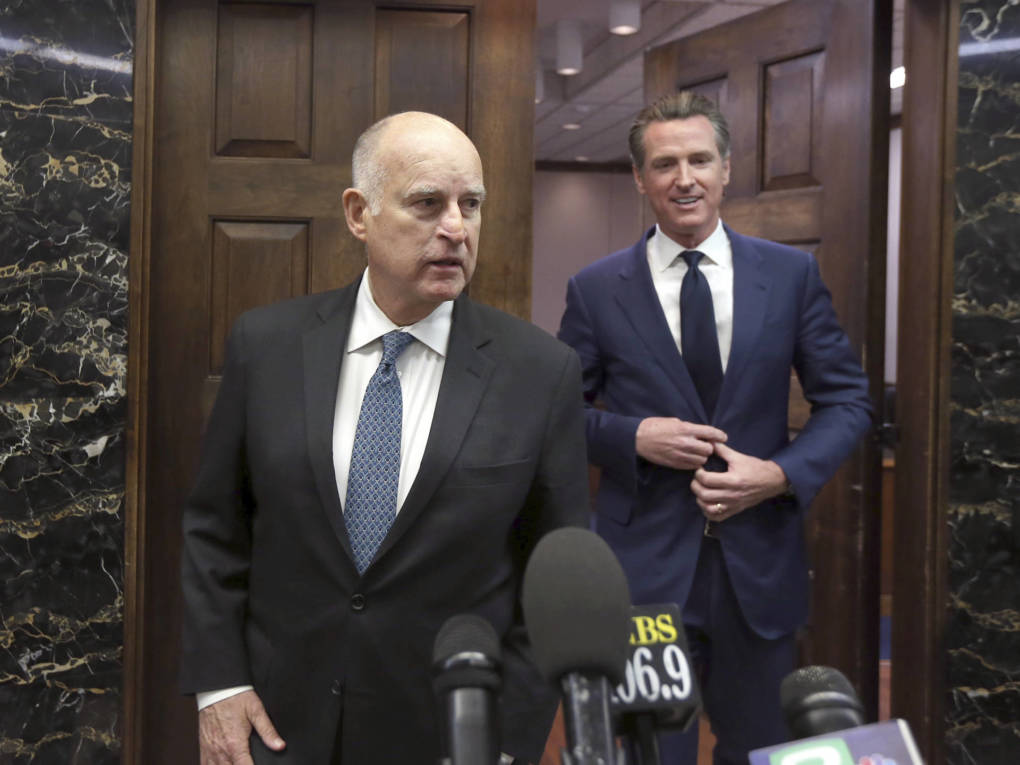
window.__IS_SSR__=true
window.__INITIAL_STATE__={
"attachmentsReducer": {
"audio_0": {
"type": "attachments",
"id": "audio_0",
"imgSizes": {
"kqedFullSize": {
"file": "https://ww2.kqed.org/news/wp-content/themes/KQED-unified/img/audio_bgs/background0.jpg"
}
}
},
"audio_1": {
"type": "attachments",
"id": "audio_1",
"imgSizes": {
"kqedFullSize": {
"file": "https://ww2.kqed.org/news/wp-content/themes/KQED-unified/img/audio_bgs/background1.jpg"
}
}
},
"audio_2": {
"type": "attachments",
"id": "audio_2",
"imgSizes": {
"kqedFullSize": {
"file": "https://ww2.kqed.org/news/wp-content/themes/KQED-unified/img/audio_bgs/background2.jpg"
}
}
},
"audio_3": {
"type": "attachments",
"id": "audio_3",
"imgSizes": {
"kqedFullSize": {
"file": "https://ww2.kqed.org/news/wp-content/themes/KQED-unified/img/audio_bgs/background3.jpg"
}
}
},
"audio_4": {
"type": "attachments",
"id": "audio_4",
"imgSizes": {
"kqedFullSize": {
"file": "https://ww2.kqed.org/news/wp-content/themes/KQED-unified/img/audio_bgs/background4.jpg"
}
}
},
"placeholder": {
"type": "attachments",
"id": "placeholder",
"imgSizes": {
"thumbnail": {
"file": "https://cdn.kqed.org/wp-content/uploads/2024/12/KQED-Default-Image-816638274-2000x1333-1-160x107.jpg",
"width": 160,
"height": 107,
"mimeType": "image/jpeg"
},
"medium": {
"file": "https://cdn.kqed.org/wp-content/uploads/2024/12/KQED-Default-Image-816638274-2000x1333-1-800x533.jpg",
"width": 800,
"height": 533,
"mimeType": "image/jpeg"
},
"medium_large": {
"file": "https://cdn.kqed.org/wp-content/uploads/2024/12/KQED-Default-Image-816638274-2000x1333-1-768x512.jpg",
"width": 768,
"height": 512,
"mimeType": "image/jpeg"
},
"large": {
"file": "https://cdn.kqed.org/wp-content/uploads/2024/12/KQED-Default-Image-816638274-2000x1333-1-1020x680.jpg",
"width": 1020,
"height": 680,
"mimeType": "image/jpeg"
},
"1536x1536": {
"file": "https://cdn.kqed.org/wp-content/uploads/2024/12/KQED-Default-Image-816638274-2000x1333-1-1536x1024.jpg",
"width": 1536,
"height": 1024,
"mimeType": "image/jpeg"
},
"fd-lrg": {
"file": "https://cdn.kqed.org/wp-content/uploads/2024/12/KQED-Default-Image-816638274-2000x1333-1-1536x1024.jpg",
"width": 1536,
"height": 1024,
"mimeType": "image/jpeg"
},
"fd-med": {
"file": "https://cdn.kqed.org/wp-content/uploads/2024/12/KQED-Default-Image-816638274-2000x1333-1-1020x680.jpg",
"width": 1020,
"height": 680,
"mimeType": "image/jpeg"
},
"fd-sm": {
"file": "https://cdn.kqed.org/wp-content/uploads/2024/12/KQED-Default-Image-816638274-2000x1333-1-800x533.jpg",
"width": 800,
"height": 533,
"mimeType": "image/jpeg"
},
"post-thumbnail": {
"file": "https://cdn.kqed.org/wp-content/uploads/2024/12/KQED-Default-Image-816638274-2000x1333-1-672x372.jpg",
"width": 672,
"height": 372,
"mimeType": "image/jpeg"
},
"twentyfourteen-full-width": {
"file": "https://cdn.kqed.org/wp-content/uploads/2024/12/KQED-Default-Image-816638274-2000x1333-1-1038x576.jpg",
"width": 1038,
"height": 576,
"mimeType": "image/jpeg"
},
"xxsmall": {
"file": "https://cdn.kqed.org/wp-content/uploads/2024/12/KQED-Default-Image-816638274-2000x1333-1-160x107.jpg",
"width": 160,
"height": 107,
"mimeType": "image/jpeg"
},
"xsmall": {
"file": "https://cdn.kqed.org/wp-content/uploads/2024/12/KQED-Default-Image-816638274-2000x1333-1-672x372.jpg",
"width": 672,
"height": 372,
"mimeType": "image/jpeg"
},
"small": {
"file": "https://cdn.kqed.org/wp-content/uploads/2024/12/KQED-Default-Image-816638274-2000x1333-1-672x372.jpg",
"width": 672,
"height": 372,
"mimeType": "image/jpeg"
},
"xlarge": {
"file": "https://cdn.kqed.org/wp-content/uploads/2024/12/KQED-Default-Image-816638274-2000x1333-1-1020x680.jpg",
"width": 1020,
"height": 680,
"mimeType": "image/jpeg"
},
"full-width": {
"file": "https://cdn.kqed.org/wp-content/uploads/2024/12/KQED-Default-Image-816638274-2000x1333-1-1920x1280.jpg",
"width": 1920,
"height": 1280,
"mimeType": "image/jpeg"
},
"guest-author-32": {
"file": "https://cdn.kqed.org/wp-content/uploads/2025/01/KQED-Default-Image-816638274-1333x1333-1-160x160.jpg",
"width": 32,
"height": 32,
"mimeType": "image/jpeg"
},
"guest-author-50": {
"file": "https://cdn.kqed.org/wp-content/uploads/2025/01/KQED-Default-Image-816638274-1333x1333-1-160x160.jpg",
"width": 50,
"height": 50,
"mimeType": "image/jpeg"
},
"guest-author-64": {
"file": "https://cdn.kqed.org/wp-content/uploads/2025/01/KQED-Default-Image-816638274-1333x1333-1-160x160.jpg",
"width": 64,
"height": 64,
"mimeType": "image/jpeg"
},
"guest-author-96": {
"file": "https://cdn.kqed.org/wp-content/uploads/2025/01/KQED-Default-Image-816638274-1333x1333-1-160x160.jpg",
"width": 96,
"height": 96,
"mimeType": "image/jpeg"
},
"guest-author-128": {
"file": "https://cdn.kqed.org/wp-content/uploads/2025/01/KQED-Default-Image-816638274-1333x1333-1-160x160.jpg",
"width": 128,
"height": 128,
"mimeType": "image/jpeg"
},
"detail": {
"file": "https://cdn.kqed.org/wp-content/uploads/2025/01/KQED-Default-Image-816638274-1333x1333-1-160x160.jpg",
"width": 160,
"height": 160,
"mimeType": "image/jpeg"
},
"kqedFullSize": {
"file": "https://cdn.kqed.org/wp-content/uploads/2024/12/KQED-Default-Image-816638274-2000x1333-1.jpg",
"width": 2000,
"height": 1333
}
}
},
"news_11716310": {
"type": "attachments",
"id": "news_11716310",
"meta": {
"index": "attachments_1716263798",
"site": "news",
"id": "11716310",
"found": true
},
"parent": 11716309,
"imgSizes": {
"twentyfourteen-full-width": {
"file": "https://ww2.kqed.org/app/uploads/sites/10/2019/01/ap_18317743479007-e5eb20ca3771e1505c604ea1ac73bdad33d203a3-e1546882566141-1038x576.jpg",
"width": 1038,
"mimeType": "image/jpeg",
"height": 576
},
"thumbnail": {
"file": "https://ww2.kqed.org/app/uploads/sites/10/2019/01/ap_18317743479007-e5eb20ca3771e1505c604ea1ac73bdad33d203a3-e1546882566141-160x120.jpg",
"width": 160,
"mimeType": "image/jpeg",
"height": 120
},
"post-thumbnail": {
"file": "https://ww2.kqed.org/app/uploads/sites/10/2019/01/ap_18317743479007-e5eb20ca3771e1505c604ea1ac73bdad33d203a3-e1546882566141-672x372.jpg",
"width": 672,
"mimeType": "image/jpeg",
"height": 372
},
"kqedFullSize": {
"file": "https://ww2.kqed.org/app/uploads/sites/10/2019/01/ap_18317743479007-e5eb20ca3771e1505c604ea1ac73bdad33d203a3-e1546882566141.jpg",
"width": 1920,
"height": 1440
},
"large": {
"file": "https://ww2.kqed.org/app/uploads/sites/10/2019/01/ap_18317743479007-e5eb20ca3771e1505c604ea1ac73bdad33d203a3-e1546882566141-1020x765.jpg",
"width": 1020,
"mimeType": "image/jpeg",
"height": 765
},
"complete_open_graph": {
"file": "https://ww2.kqed.org/app/uploads/sites/10/2019/01/ap_18317743479007-e5eb20ca3771e1505c604ea1ac73bdad33d203a3-e1546882566141-1200x900.jpg",
"width": 1200,
"mimeType": "image/jpeg",
"height": 900
},
"guest-author-50": {
"file": "https://ww2.kqed.org/app/uploads/sites/10/2019/01/ap_18317743479007-e5eb20ca3771e1505c604ea1ac73bdad33d203a3-e1546882566141-50x50.jpg",
"width": 50,
"mimeType": "image/jpeg",
"height": 50
},
"guest-author-96": {
"file": "https://ww2.kqed.org/app/uploads/sites/10/2019/01/ap_18317743479007-e5eb20ca3771e1505c604ea1ac73bdad33d203a3-e1546882566141-96x96.jpg",
"width": 96,
"mimeType": "image/jpeg",
"height": 96
},
"medium": {
"file": "https://ww2.kqed.org/app/uploads/sites/10/2019/01/ap_18317743479007-e5eb20ca3771e1505c604ea1ac73bdad33d203a3-e1546882566141-800x600.jpg",
"width": 800,
"mimeType": "image/jpeg",
"height": 600
},
"guest-author-64": {
"file": "https://ww2.kqed.org/app/uploads/sites/10/2019/01/ap_18317743479007-e5eb20ca3771e1505c604ea1ac73bdad33d203a3-e1546882566141-64x64.jpg",
"width": 64,
"mimeType": "image/jpeg",
"height": 64
},
"guest-author-32": {
"file": "https://ww2.kqed.org/app/uploads/sites/10/2019/01/ap_18317743479007-e5eb20ca3771e1505c604ea1ac73bdad33d203a3-e1546882566141-32x32.jpg",
"width": 32,
"mimeType": "image/jpeg",
"height": 32
},
"full-width": {
"file": "https://ww2.kqed.org/app/uploads/sites/10/2019/01/ap_18317743479007-e5eb20ca3771e1505c604ea1ac73bdad33d203a3-e1546882566141-1920x1440.jpg",
"width": 1920,
"mimeType": "image/jpeg",
"height": 1440
},
"detail": {
"file": "https://ww2.kqed.org/app/uploads/sites/10/2019/01/ap_18317743479007-e5eb20ca3771e1505c604ea1ac73bdad33d203a3-e1546882566141-150x150.jpg",
"width": 150,
"mimeType": "image/jpeg",
"height": 150
},
"guest-author-128": {
"file": "https://ww2.kqed.org/app/uploads/sites/10/2019/01/ap_18317743479007-e5eb20ca3771e1505c604ea1ac73bdad33d203a3-e1546882566141-128x128.jpg",
"width": 128,
"mimeType": "image/jpeg",
"height": 128
}
},
"publishDate": 1546882432,
"modified": 1550098388,
"caption": "Gov. Gavin Newsom (right) and his predecessor, Jerry Brown, after conferring in the governor's office shortly before Newsom was sworn in on Jan. 7, 2019.",
"description": "California Gov. Jerry Brown, left, and Governor-elect Gavin Newsom emerge from the Governor's office to talk with reporters after meeting at the Capitol. Newsom will be sworn into office Monday Jan. 7, 2019.",
"title": "California Gov. Jerry Brown, left, and Governor-elect Gavin Newsom emerge from the Governor's office to talk with reporters after meeting at the Capitol. Newsom will be sworn into office Monday Jan. 7, 2019.",
"credit": "Rich Pedroncelli/AP",
"status": "inherit",
"isLoading": false,
"fetchFailed": false
},
"news_11717405": {
"type": "attachments",
"id": "news_11717405",
"meta": {
"index": "attachments_1716263798",
"site": "news",
"id": "11717405",
"found": true
},
"parent": 11717355,
"imgSizes": {
"twentyfourteen-full-width": {
"file": "https://ww2.kqed.org/app/uploads/sites/10/2019/01/NewsomBudget-1038x576.jpg",
"width": 1038,
"mimeType": "image/jpeg",
"height": 576
},
"thumbnail": {
"file": "https://ww2.kqed.org/app/uploads/sites/10/2019/01/NewsomBudget-160x106.jpg",
"width": 160,
"mimeType": "image/jpeg",
"height": 106
},
"post-thumbnail": {
"file": "https://ww2.kqed.org/app/uploads/sites/10/2019/01/NewsomBudget-672x372.jpg",
"width": 672,
"mimeType": "image/jpeg",
"height": 372
},
"kqedFullSize": {
"file": "https://ww2.kqed.org/app/uploads/sites/10/2019/01/NewsomBudget.jpg",
"width": 1920,
"height": 1277
},
"large": {
"file": "https://ww2.kqed.org/app/uploads/sites/10/2019/01/NewsomBudget-1020x678.jpg",
"width": 1020,
"mimeType": "image/jpeg",
"height": 678
},
"complete_open_graph": {
"file": "https://ww2.kqed.org/app/uploads/sites/10/2019/01/NewsomBudget-1200x798.jpg",
"width": 1200,
"mimeType": "image/jpeg",
"height": 798
},
"guest-author-50": {
"file": "https://ww2.kqed.org/app/uploads/sites/10/2019/01/NewsomBudget-50x50.jpg",
"width": 50,
"mimeType": "image/jpeg",
"height": 50
},
"guest-author-96": {
"file": "https://ww2.kqed.org/app/uploads/sites/10/2019/01/NewsomBudget-96x96.jpg",
"width": 96,
"mimeType": "image/jpeg",
"height": 96
},
"medium": {
"file": "https://ww2.kqed.org/app/uploads/sites/10/2019/01/NewsomBudget-800x532.jpg",
"width": 800,
"mimeType": "image/jpeg",
"height": 532
},
"guest-author-64": {
"file": "https://ww2.kqed.org/app/uploads/sites/10/2019/01/NewsomBudget-64x64.jpg",
"width": 64,
"mimeType": "image/jpeg",
"height": 64
},
"guest-author-32": {
"file": "https://ww2.kqed.org/app/uploads/sites/10/2019/01/NewsomBudget-32x32.jpg",
"width": 32,
"mimeType": "image/jpeg",
"height": 32
},
"full-width": {
"file": "https://ww2.kqed.org/app/uploads/sites/10/2019/01/NewsomBudget-1920x1277.jpg",
"width": 1920,
"mimeType": "image/jpeg",
"height": 1277
},
"detail": {
"file": "https://ww2.kqed.org/app/uploads/sites/10/2019/01/NewsomBudget-150x150.jpg",
"width": 150,
"mimeType": "image/jpeg",
"height": 150
},
"guest-author-128": {
"file": "https://ww2.kqed.org/app/uploads/sites/10/2019/01/NewsomBudget-128x128.jpg",
"width": 128,
"mimeType": "image/jpeg",
"height": 128
}
},
"publishDate": 1547154789,
"modified": 1547154808,
"caption": "Gov. Gavin Newsom unveils his first state budget proposal in Sacramento on Jan. 10, 2019. ",
"description": "Gov. Gavin Newsom unveils his first state budget proposal in Sacramento on Jan. 10, 2019. ",
"title": "NewsomBudget",
"credit": "Marisa Lagos/KQED",
"status": "inherit",
"isLoading": false,
"fetchFailed": false
},
"news_11725180": {
"type": "attachments",
"id": "news_11725180",
"meta": {
"index": "attachments_1716263798",
"site": "news",
"id": "11725180",
"found": true
},
"parent": 11725168,
"imgSizes": {
"twentyfourteen-full-width": {
"file": "https://ww2.kqed.org/app/uploads/sites/10/2019/02/VACCINES-PHOTO-1-1038x576.jpg",
"width": 1038,
"mimeType": "image/jpeg",
"height": 576
},
"thumbnail": {
"file": "https://ww2.kqed.org/app/uploads/sites/10/2019/02/VACCINES-PHOTO-1-160x106.jpg",
"width": 160,
"mimeType": "image/jpeg",
"height": 106
},
"post-thumbnail": {
"file": "https://ww2.kqed.org/app/uploads/sites/10/2019/02/VACCINES-PHOTO-1-672x372.jpg",
"width": 672,
"mimeType": "image/jpeg",
"height": 372
},
"kqedFullSize": {
"file": "https://ww2.kqed.org/app/uploads/sites/10/2019/02/VACCINES-PHOTO-1.jpg",
"width": 1920,
"height": 1267
},
"large": {
"file": "https://ww2.kqed.org/app/uploads/sites/10/2019/02/VACCINES-PHOTO-1-1020x673.jpg",
"width": 1020,
"mimeType": "image/jpeg",
"height": 673
},
"complete_open_graph": {
"file": "https://ww2.kqed.org/app/uploads/sites/10/2019/02/VACCINES-PHOTO-1-1200x792.jpg",
"width": 1200,
"mimeType": "image/jpeg",
"height": 792
},
"guest-author-50": {
"file": "https://ww2.kqed.org/app/uploads/sites/10/2019/02/VACCINES-PHOTO-1-50x50.jpg",
"width": 50,
"mimeType": "image/jpeg",
"height": 50
},
"guest-author-96": {
"file": "https://ww2.kqed.org/app/uploads/sites/10/2019/02/VACCINES-PHOTO-1-96x96.jpg",
"width": 96,
"mimeType": "image/jpeg",
"height": 96
},
"medium": {
"file": "https://ww2.kqed.org/app/uploads/sites/10/2019/02/VACCINES-PHOTO-1-800x528.jpg",
"width": 800,
"mimeType": "image/jpeg",
"height": 528
},
"guest-author-64": {
"file": "https://ww2.kqed.org/app/uploads/sites/10/2019/02/VACCINES-PHOTO-1-64x64.jpg",
"width": 64,
"mimeType": "image/jpeg",
"height": 64
},
"guest-author-32": {
"file": "https://ww2.kqed.org/app/uploads/sites/10/2019/02/VACCINES-PHOTO-1-32x32.jpg",
"width": 32,
"mimeType": "image/jpeg",
"height": 32
},
"full-width": {
"file": "https://ww2.kqed.org/app/uploads/sites/10/2019/02/VACCINES-PHOTO-1-1920x1267.jpg",
"width": 1920,
"mimeType": "image/jpeg",
"height": 1267
},
"detail": {
"file": "https://ww2.kqed.org/app/uploads/sites/10/2019/02/VACCINES-PHOTO-1-150x150.jpg",
"width": 150,
"mimeType": "image/jpeg",
"height": 150
},
"guest-author-128": {
"file": "https://ww2.kqed.org/app/uploads/sites/10/2019/02/VACCINES-PHOTO-1-128x128.jpg",
"width": 128,
"mimeType": "image/jpeg",
"height": 128
}
},
"publishDate": 1549828706,
"modified": 1549828729,
"caption": "A baby receives a vaccine from a nurse.",
"description": null,
"title": "VACCINES PHOTO",
"credit": "Judy Schmidt, federal Centers for Disease Control",
"status": "inherit",
"isLoading": false,
"fetchFailed": false
},
"news_11725153": {
"type": "attachments",
"id": "news_11725153",
"meta": {
"index": "attachments_1716263798",
"site": "news",
"id": "11725153",
"found": true
},
"parent": 11725151,
"imgSizes": {
"twentyfourteen-full-width": {
"file": "https://ww2.kqed.org/app/uploads/sites/10/2019/02/1-1-1038x576.jpg",
"width": 1038,
"mimeType": "image/jpeg",
"height": 576
},
"thumbnail": {
"file": "https://ww2.kqed.org/app/uploads/sites/10/2019/02/1-1-160x119.jpg",
"width": 160,
"mimeType": "image/jpeg",
"height": 119
},
"post-thumbnail": {
"file": "https://ww2.kqed.org/app/uploads/sites/10/2019/02/1-1-672x372.jpg",
"width": 672,
"mimeType": "image/jpeg",
"height": 372
},
"kqedFullSize": {
"file": "https://ww2.kqed.org/app/uploads/sites/10/2019/02/1-1-e1549819291560.jpg",
"width": 1920,
"height": 1424
},
"large": {
"file": "https://ww2.kqed.org/app/uploads/sites/10/2019/02/1-1-1020x757.jpg",
"width": 1020,
"mimeType": "image/jpeg",
"height": 757
},
"complete_open_graph": {
"file": "https://ww2.kqed.org/app/uploads/sites/10/2019/02/1-1-1200x890.jpg",
"width": 1200,
"mimeType": "image/jpeg",
"height": 890
},
"guest-author-50": {
"file": "https://ww2.kqed.org/app/uploads/sites/10/2019/02/1-1-50x50.jpg",
"width": 50,
"mimeType": "image/jpeg",
"height": 50
},
"guest-author-96": {
"file": "https://ww2.kqed.org/app/uploads/sites/10/2019/02/1-1-96x96.jpg",
"width": 96,
"mimeType": "image/jpeg",
"height": 96
},
"medium": {
"file": "https://ww2.kqed.org/app/uploads/sites/10/2019/02/1-1-800x593.jpg",
"width": 800,
"mimeType": "image/jpeg",
"height": 593
},
"guest-author-64": {
"file": "https://ww2.kqed.org/app/uploads/sites/10/2019/02/1-1-64x64.jpg",
"width": 64,
"mimeType": "image/jpeg",
"height": 64
},
"guest-author-32": {
"file": "https://ww2.kqed.org/app/uploads/sites/10/2019/02/1-1-32x32.jpg",
"width": 32,
"mimeType": "image/jpeg",
"height": 32
},
"full-width": {
"file": "https://ww2.kqed.org/app/uploads/sites/10/2019/02/1-1-1920x1424.jpg",
"width": 1920,
"mimeType": "image/jpeg",
"height": 1424
},
"detail": {
"file": "https://ww2.kqed.org/app/uploads/sites/10/2019/02/1-1-150x150.jpg",
"width": 150,
"mimeType": "image/jpeg",
"height": 150
},
"guest-author-128": {
"file": "https://ww2.kqed.org/app/uploads/sites/10/2019/02/1-1-128x128.jpg",
"width": 128,
"mimeType": "image/jpeg",
"height": 128
}
},
"publishDate": 1549819276,
"modified": 1549819312,
"caption": "A student picks up groceries at Mount San Antonio College's mobile food pantry. Half of California community college students say they lack reliable access to healthy food.",
"description": "A student picks up groceries at Mount San Antonio College's mobile food pantry. Half of California community college students say they lack reliable access to healthy food.",
"title": "1 (1)",
"credit": "Courtesy of Mount San Antonio College",
"status": "inherit",
"isLoading": false,
"fetchFailed": false
},
"news_11724606": {
"type": "attachments",
"id": "news_11724606",
"meta": {
"index": "attachments_1716263798",
"site": "news",
"id": "11724606",
"found": true
},
"parent": 11724581,
"imgSizes": {
"twentyfourteen-full-width": {
"file": "https://ww2.kqed.org/app/uploads/sites/10/2019/02/Teen-Driver-1038x576.jpeg",
"width": 1038,
"mimeType": "image/jpeg",
"height": 576
},
"thumbnail": {
"file": "https://ww2.kqed.org/app/uploads/sites/10/2019/02/Teen-Driver-160x107.jpeg",
"width": 160,
"mimeType": "image/jpeg",
"height": 107
},
"post-thumbnail": {
"file": "https://ww2.kqed.org/app/uploads/sites/10/2019/02/Teen-Driver-672x372.jpeg",
"width": 672,
"mimeType": "image/jpeg",
"height": 372
},
"kqedFullSize": {
"file": "https://ww2.kqed.org/app/uploads/sites/10/2019/02/Teen-Driver-e1549585496300.jpeg",
"width": 1920,
"height": 1282
},
"large": {
"file": "https://ww2.kqed.org/app/uploads/sites/10/2019/02/Teen-Driver-1020x681.jpeg",
"width": 1020,
"mimeType": "image/jpeg",
"height": 681
},
"complete_open_graph": {
"file": "https://ww2.kqed.org/app/uploads/sites/10/2019/02/Teen-Driver-1200x801.jpeg",
"width": 1200,
"mimeType": "image/jpeg",
"height": 801
},
"guest-author-50": {
"file": "https://ww2.kqed.org/app/uploads/sites/10/2019/02/Teen-Driver-50x50.jpeg",
"width": 50,
"mimeType": "image/jpeg",
"height": 50
},
"guest-author-96": {
"file": "https://ww2.kqed.org/app/uploads/sites/10/2019/02/Teen-Driver-96x96.jpeg",
"width": 96,
"mimeType": "image/jpeg",
"height": 96
},
"medium": {
"file": "https://ww2.kqed.org/app/uploads/sites/10/2019/02/Teen-Driver-800x534.jpeg",
"width": 800,
"mimeType": "image/jpeg",
"height": 534
},
"guest-author-64": {
"file": "https://ww2.kqed.org/app/uploads/sites/10/2019/02/Teen-Driver-64x64.jpeg",
"width": 64,
"mimeType": "image/jpeg",
"height": 64
},
"guest-author-32": {
"file": "https://ww2.kqed.org/app/uploads/sites/10/2019/02/Teen-Driver-32x32.jpeg",
"width": 32,
"mimeType": "image/jpeg",
"height": 32
},
"full-width": {
"file": "https://ww2.kqed.org/app/uploads/sites/10/2019/02/Teen-Driver-1920x1282.jpeg",
"width": 1920,
"mimeType": "image/jpeg",
"height": 1282
},
"detail": {
"file": "https://ww2.kqed.org/app/uploads/sites/10/2019/02/Teen-Driver-150x150.jpeg",
"width": 150,
"mimeType": "image/jpeg",
"height": 150
},
"guest-author-128": {
"file": "https://ww2.kqed.org/app/uploads/sites/10/2019/02/Teen-Driver-128x128.jpeg",
"width": 128,
"mimeType": "image/jpeg",
"height": 128
}
},
"publishDate": 1549585100,
"modified": 1549586927,
"caption": "Teen female drivers in California will no longer be eligible for discounted auto insurance rates.",
"description": null,
"title": "Teen Driver",
"credit": "\u003ca href=\"https://www.flickr.com/photos/statefarm/9731139381\" target=\"_blank\">State Farm/Flickr\u003c/a>",
"status": "inherit",
"isLoading": false,
"fetchFailed": false
},
"news_11724277": {
"type": "attachments",
"id": "news_11724277",
"meta": {
"index": "attachments_1716263798",
"site": "news",
"id": "11724277",
"found": true
},
"parent": 11723744,
"imgSizes": {
"twentyfourteen-full-width": {
"file": "https://ww2.kqed.org/app/uploads/sites/10/2019/02/PrisonGuard-1038x576.jpg",
"width": 1038,
"mimeType": "image/jpeg",
"height": 576
},
"thumbnail": {
"file": "https://ww2.kqed.org/app/uploads/sites/10/2019/02/PrisonGuard-160x108.jpg",
"width": 160,
"mimeType": "image/jpeg",
"height": 108
},
"post-thumbnail": {
"file": "https://ww2.kqed.org/app/uploads/sites/10/2019/02/PrisonGuard-672x372.jpg",
"width": 672,
"mimeType": "image/jpeg",
"height": 372
},
"kqedFullSize": {
"file": "https://ww2.kqed.org/app/uploads/sites/10/2019/02/PrisonGuard.jpg",
"width": 1920,
"height": 1292
},
"large": {
"file": "https://ww2.kqed.org/app/uploads/sites/10/2019/02/PrisonGuard-1020x686.jpg",
"width": 1020,
"mimeType": "image/jpeg",
"height": 686
},
"complete_open_graph": {
"file": "https://ww2.kqed.org/app/uploads/sites/10/2019/02/PrisonGuard-1200x808.jpg",
"width": 1200,
"mimeType": "image/jpeg",
"height": 808
},
"guest-author-50": {
"file": "https://ww2.kqed.org/app/uploads/sites/10/2019/02/PrisonGuard-50x50.jpg",
"width": 50,
"mimeType": "image/jpeg",
"height": 50
},
"guest-author-96": {
"file": "https://ww2.kqed.org/app/uploads/sites/10/2019/02/PrisonGuard-96x96.jpg",
"width": 96,
"mimeType": "image/jpeg",
"height": 96
},
"medium": {
"file": "https://ww2.kqed.org/app/uploads/sites/10/2019/02/PrisonGuard-800x538.jpg",
"width": 800,
"mimeType": "image/jpeg",
"height": 538
},
"guest-author-64": {
"file": "https://ww2.kqed.org/app/uploads/sites/10/2019/02/PrisonGuard-64x64.jpg",
"width": 64,
"mimeType": "image/jpeg",
"height": 64
},
"guest-author-32": {
"file": "https://ww2.kqed.org/app/uploads/sites/10/2019/02/PrisonGuard-32x32.jpg",
"width": 32,
"mimeType": "image/jpeg",
"height": 32
},
"full-width": {
"file": "https://ww2.kqed.org/app/uploads/sites/10/2019/02/PrisonGuard-1920x1292.jpg",
"width": 1920,
"mimeType": "image/jpeg",
"height": 1292
},
"detail": {
"file": "https://ww2.kqed.org/app/uploads/sites/10/2019/02/PrisonGuard-150x150.jpg",
"width": 150,
"mimeType": "image/jpeg",
"height": 150
},
"guest-author-128": {
"file": "https://ww2.kqed.org/app/uploads/sites/10/2019/02/PrisonGuard-128x128.jpg",
"width": 128,
"mimeType": "image/jpeg",
"height": 128
}
},
"publishDate": 1549500574,
"modified": 1549500637,
"caption": "An armed California Department of Corrections and Rehabilitation (CDCR) officer stands guard at San Quentin State Prison in 2016.",
"description": "An armed California Department of Corrections and Rehabilitation (CDCR) officer stands guard at San Quentin State Prison in 2016.",
"title": "PrisonGuard",
"credit": "Justin Sullivan/Getty Images",
"status": "inherit",
"isLoading": false,
"fetchFailed": false
},
"news_11723915": {
"type": "attachments",
"id": "news_11723915",
"meta": {
"index": "attachments_1716263798",
"site": "news",
"id": "11723915",
"found": true
},
"parent": 11723828,
"imgSizes": {
"twentyfourteen-full-width": {
"file": "https://ww2.kqed.org/app/uploads/sites/10/2019/02/GettyImages-938447524-1038x576.jpg",
"width": 1038,
"mimeType": "image/jpeg",
"height": 576
},
"thumbnail": {
"file": "https://ww2.kqed.org/app/uploads/sites/10/2019/02/GettyImages-938447524-160x107.jpg",
"width": 160,
"mimeType": "image/jpeg",
"height": 107
},
"post-thumbnail": {
"file": "https://ww2.kqed.org/app/uploads/sites/10/2019/02/GettyImages-938447524-672x372.jpg",
"width": 672,
"mimeType": "image/jpeg",
"height": 372
},
"kqedFullSize": {
"file": "https://ww2.kqed.org/app/uploads/sites/10/2019/02/GettyImages-938447524-e1549491731530.jpg",
"width": 1920,
"height": 1280
},
"large": {
"file": "https://ww2.kqed.org/app/uploads/sites/10/2019/02/GettyImages-938447524-1020x680.jpg",
"width": 1020,
"mimeType": "image/jpeg",
"height": 680
},
"complete_open_graph": {
"file": "https://ww2.kqed.org/app/uploads/sites/10/2019/02/GettyImages-938447524-1200x800.jpg",
"width": 1200,
"mimeType": "image/jpeg",
"height": 800
},
"guest-author-50": {
"file": "https://ww2.kqed.org/app/uploads/sites/10/2019/02/GettyImages-938447524-50x50.jpg",
"width": 50,
"mimeType": "image/jpeg",
"height": 50
},
"guest-author-96": {
"file": "https://ww2.kqed.org/app/uploads/sites/10/2019/02/GettyImages-938447524-96x96.jpg",
"width": 96,
"mimeType": "image/jpeg",
"height": 96
},
"medium": {
"file": "https://ww2.kqed.org/app/uploads/sites/10/2019/02/GettyImages-938447524-800x533.jpg",
"width": 800,
"mimeType": "image/jpeg",
"height": 533
},
"guest-author-64": {
"file": "https://ww2.kqed.org/app/uploads/sites/10/2019/02/GettyImages-938447524-64x64.jpg",
"width": 64,
"mimeType": "image/jpeg",
"height": 64
},
"guest-author-32": {
"file": "https://ww2.kqed.org/app/uploads/sites/10/2019/02/GettyImages-938447524-32x32.jpg",
"width": 32,
"mimeType": "image/jpeg",
"height": 32
},
"full-width": {
"file": "https://ww2.kqed.org/app/uploads/sites/10/2019/02/GettyImages-938447524-1920x1280.jpg",
"width": 1920,
"mimeType": "image/jpeg",
"height": 1280
},
"detail": {
"file": "https://ww2.kqed.org/app/uploads/sites/10/2019/02/GettyImages-938447524-150x150.jpg",
"width": 150,
"mimeType": "image/jpeg",
"height": 150
},
"guest-author-128": {
"file": "https://ww2.kqed.org/app/uploads/sites/10/2019/02/GettyImages-938447524-128x128.jpg",
"width": 128,
"mimeType": "image/jpeg",
"height": 128
}
},
"publishDate": 1549491663,
"modified": 1549491721,
"caption": "Demonstrators participate in the March for Our Lives rally in Los Angeles, California. ",
"description": null,
"title": "March For Our Lives Los Angeles",
"credit": "Sarah Morris/Getty Images",
"status": "inherit",
"isLoading": false,
"fetchFailed": false
},
"news_11723567": {
"type": "attachments",
"id": "news_11723567",
"meta": {
"index": "attachments_1716263798",
"site": "news",
"id": "11723567",
"found": true
},
"parent": 11723564,
"imgSizes": {
"twentyfourteen-full-width": {
"file": "https://ww2.kqed.org/app/uploads/sites/10/2019/02/1-1038x576.jpg",
"width": 1038,
"mimeType": "image/jpeg",
"height": 576
},
"thumbnail": {
"file": "https://ww2.kqed.org/app/uploads/sites/10/2019/02/1-160x105.jpg",
"width": 160,
"mimeType": "image/jpeg",
"height": 105
},
"post-thumbnail": {
"file": "https://ww2.kqed.org/app/uploads/sites/10/2019/02/1-672x372.jpg",
"width": 672,
"mimeType": "image/jpeg",
"height": 372
},
"kqedFullSize": {
"file": "https://ww2.kqed.org/app/uploads/sites/10/2019/02/1-e1549397258357.jpg",
"width": 1920,
"height": 1259
},
"large": {
"file": "https://ww2.kqed.org/app/uploads/sites/10/2019/02/1-1020x669.jpg",
"width": 1020,
"mimeType": "image/jpeg",
"height": 669
},
"complete_open_graph": {
"file": "https://ww2.kqed.org/app/uploads/sites/10/2019/02/1-1200x787.jpg",
"width": 1200,
"mimeType": "image/jpeg",
"height": 787
},
"guest-author-50": {
"file": "https://ww2.kqed.org/app/uploads/sites/10/2019/02/1-50x50.jpg",
"width": 50,
"mimeType": "image/jpeg",
"height": 50
},
"guest-author-96": {
"file": "https://ww2.kqed.org/app/uploads/sites/10/2019/02/1-96x96.jpg",
"width": 96,
"mimeType": "image/jpeg",
"height": 96
},
"medium": {
"file": "https://ww2.kqed.org/app/uploads/sites/10/2019/02/1-800x525.jpg",
"width": 800,
"mimeType": "image/jpeg",
"height": 525
},
"guest-author-64": {
"file": "https://ww2.kqed.org/app/uploads/sites/10/2019/02/1-64x64.jpg",
"width": 64,
"mimeType": "image/jpeg",
"height": 64
},
"guest-author-32": {
"file": "https://ww2.kqed.org/app/uploads/sites/10/2019/02/1-32x32.jpg",
"width": 32,
"mimeType": "image/jpeg",
"height": 32
},
"full-width": {
"file": "https://ww2.kqed.org/app/uploads/sites/10/2019/02/1-1920x1259.jpg",
"width": 1920,
"mimeType": "image/jpeg",
"height": 1259
},
"detail": {
"file": "https://ww2.kqed.org/app/uploads/sites/10/2019/02/1-150x150.jpg",
"width": 150,
"mimeType": "image/jpeg",
"height": 150
},
"guest-author-128": {
"file": "https://ww2.kqed.org/app/uploads/sites/10/2019/02/1-128x128.jpg",
"width": 128,
"mimeType": "image/jpeg",
"height": 128
}
},
"publishDate": 1549397132,
"modified": 1549397319,
"caption": "SDG&E emergency operations center. ",
"description": "SDG&E emergency operations center. ",
"title": "1",
"credit": "Peggy Peattie for CALmatters",
"status": "inherit",
"isLoading": false,
"fetchFailed": false
},
"news_11618097": {
"type": "attachments",
"id": "news_11618097",
"meta": {
"index": "attachments_1716263798",
"site": "news",
"id": "11618097",
"found": true
},
"parent": 11618096,
"imgSizes": {
"small": {
"file": "https://ww2.kqed.org/app/uploads/sites/10/2017/09/Chapter-2-520x293.jpg",
"width": 520,
"mimeType": "image/jpeg",
"height": 293
},
"twentyfourteen-full-width": {
"file": "https://ww2.kqed.org/app/uploads/sites/10/2017/09/Chapter-2-1038x576.jpg",
"width": 1038,
"mimeType": "image/jpeg",
"height": 576
},
"thumbnail": {
"file": "https://ww2.kqed.org/app/uploads/sites/10/2017/09/Chapter-2-160x90.jpg",
"width": 160,
"mimeType": "image/jpeg",
"height": 90
},
"fd-sm": {
"file": "https://ww2.kqed.org/app/uploads/sites/10/2017/09/Chapter-2-960x540.jpg",
"width": 960,
"mimeType": "image/jpeg",
"height": 540
},
"post-thumbnail": {
"file": "https://ww2.kqed.org/app/uploads/sites/10/2017/09/Chapter-2-672x372.jpg",
"width": 672,
"mimeType": "image/jpeg",
"height": 372
},
"xsmall": {
"file": "https://ww2.kqed.org/app/uploads/sites/10/2017/09/Chapter-2-375x211.jpg",
"width": 375,
"mimeType": "image/jpeg",
"height": 211
},
"kqedFullSize": {
"file": "https://ww2.kqed.org/app/uploads/sites/10/2017/09/Chapter-2-e1549000579280.jpg",
"width": 1920,
"height": 1080
},
"large": {
"file": "https://ww2.kqed.org/app/uploads/sites/10/2017/09/Chapter-2-1020x574.jpg",
"width": 1020,
"mimeType": "image/jpeg",
"height": 574
},
"xlarge": {
"file": "https://ww2.kqed.org/app/uploads/sites/10/2017/09/Chapter-2-1180x664.jpg",
"width": 1180,
"mimeType": "image/jpeg",
"height": 664
},
"guest-author-50": {
"file": "https://ww2.kqed.org/app/uploads/sites/10/2017/09/Chapter-2-50x50.jpg",
"width": 50,
"mimeType": "image/jpeg",
"height": 50
},
"guest-author-96": {
"file": "https://ww2.kqed.org/app/uploads/sites/10/2017/09/Chapter-2-96x96.jpg",
"width": 96,
"mimeType": "image/jpeg",
"height": 96
},
"medium": {
"file": "https://ww2.kqed.org/app/uploads/sites/10/2017/09/Chapter-2-800x450.jpg",
"width": 800,
"mimeType": "image/jpeg",
"height": 450
},
"guest-author-64": {
"file": "https://ww2.kqed.org/app/uploads/sites/10/2017/09/Chapter-2-64x64.jpg",
"width": 64,
"mimeType": "image/jpeg",
"height": 64
},
"guest-author-32": {
"file": "https://ww2.kqed.org/app/uploads/sites/10/2017/09/Chapter-2-32x32.jpg",
"width": 32,
"mimeType": "image/jpeg",
"height": 32
},
"fd-lrg": {
"file": "https://ww2.kqed.org/app/uploads/sites/10/2017/09/Chapter-2-1920x1080.jpg",
"width": 1920,
"mimeType": "image/jpeg",
"height": 1080
},
"fd-med": {
"file": "https://ww2.kqed.org/app/uploads/sites/10/2017/09/Chapter-2-1180x664.jpg",
"width": 1180,
"mimeType": "image/jpeg",
"height": 664
},
"full-width": {
"file": "https://ww2.kqed.org/app/uploads/sites/10/2017/09/Chapter-2-1920x1080.jpg",
"width": 1920,
"mimeType": "image/jpeg",
"height": 1080
},
"detail": {
"file": "https://ww2.kqed.org/app/uploads/sites/10/2017/09/Chapter-2-150x150.jpg",
"width": 150,
"mimeType": "image/jpeg",
"height": 150
},
"guest-author-128": {
"file": "https://ww2.kqed.org/app/uploads/sites/10/2017/09/Chapter-2-128x128.jpg",
"width": 128,
"mimeType": "image/jpeg",
"height": 128
},
"xxsmall": {
"file": "https://ww2.kqed.org/app/uploads/sites/10/2017/09/Chapter-2-240x135.jpg",
"width": 240,
"mimeType": "image/jpeg",
"height": 135
}
},
"publishDate": 1505945436,
"modified": 1549001437,
"caption": "A Friday night football game at Antioch High School, where the sport still remains very popular despite declining interest statewide.",
"description": null,
"title": "Chapter 2",
"credit": "Adam Grossberg/KQED",
"status": "inherit",
"isLoading": false,
"fetchFailed": false
},
"news_11722066": {
"type": "attachments",
"id": "news_11722066",
"meta": {
"index": "attachments_1716263798",
"site": "news",
"id": "11722066",
"found": true
},
"parent": 11722063,
"imgSizes": {
"thumbnail": {
"file": "https://ww2.kqed.org/app/uploads/sites/10/2019/01/Huntington-Beach-Lawsuit-PHOTO-160x87.jpg",
"width": 160,
"mimeType": "image/jpeg",
"height": 87
},
"post-thumbnail": {
"file": "https://ww2.kqed.org/app/uploads/sites/10/2019/01/Huntington-Beach-Lawsuit-PHOTO-672x372.jpg",
"width": 672,
"mimeType": "image/jpeg",
"height": 372
},
"kqedFullSize": {
"file": "https://ww2.kqed.org/app/uploads/sites/10/2019/01/Huntington-Beach-Lawsuit-PHOTO.jpg",
"width": 886,
"height": 483
},
"guest-author-50": {
"file": "https://ww2.kqed.org/app/uploads/sites/10/2019/01/Huntington-Beach-Lawsuit-PHOTO-50x50.jpg",
"width": 50,
"mimeType": "image/jpeg",
"height": 50
},
"guest-author-96": {
"file": "https://ww2.kqed.org/app/uploads/sites/10/2019/01/Huntington-Beach-Lawsuit-PHOTO-96x96.jpg",
"width": 96,
"mimeType": "image/jpeg",
"height": 96
},
"medium": {
"file": "https://ww2.kqed.org/app/uploads/sites/10/2019/01/Huntington-Beach-Lawsuit-PHOTO-800x436.jpg",
"width": 800,
"mimeType": "image/jpeg",
"height": 436
},
"guest-author-64": {
"file": "https://ww2.kqed.org/app/uploads/sites/10/2019/01/Huntington-Beach-Lawsuit-PHOTO-64x64.jpg",
"width": 64,
"mimeType": "image/jpeg",
"height": 64
},
"detail": {
"file": "https://ww2.kqed.org/app/uploads/sites/10/2019/01/Huntington-Beach-Lawsuit-PHOTO-150x150.jpg",
"width": 150,
"mimeType": "image/jpeg",
"height": 150
},
"guest-author-32": {
"file": "https://ww2.kqed.org/app/uploads/sites/10/2019/01/Huntington-Beach-Lawsuit-PHOTO-32x32.jpg",
"width": 32,
"mimeType": "image/jpeg",
"height": 32
},
"guest-author-128": {
"file": "https://ww2.kqed.org/app/uploads/sites/10/2019/01/Huntington-Beach-Lawsuit-PHOTO-128x128.jpg",
"width": 128,
"mimeType": "image/jpeg",
"height": 128
}
},
"publishDate": 1548805947,
"modified": 1548868081,
"caption": "Huntington Beach is at odds with the state of California over its failure to meet state housing construction rules. ",
"description": null,
"title": "Huntington Beach Lawsuit PHOTO",
"credit": "Via city of Huntington Beach",
"status": "inherit",
"isLoading": false,
"fetchFailed": false
},
"news_11721779": {
"type": "attachments",
"id": "news_11721779",
"meta": {
"index": "attachments_1716263798",
"site": "news",
"id": "11721779",
"found": true
},
"parent": 11721672,
"imgSizes": {
"twentyfourteen-full-width": {
"file": "https://ww2.kqed.org/app/uploads/sites/10/2019/01/Newsom-1038x576.jpg",
"width": 1038,
"mimeType": "image/jpeg",
"height": 576
},
"thumbnail": {
"file": "https://ww2.kqed.org/app/uploads/sites/10/2019/01/Newsom-160x100.jpg",
"width": 160,
"mimeType": "image/jpeg",
"height": 100
},
"post-thumbnail": {
"file": "https://ww2.kqed.org/app/uploads/sites/10/2019/01/Newsom-672x372.jpg",
"width": 672,
"mimeType": "image/jpeg",
"height": 372
},
"kqedFullSize": {
"file": "https://ww2.kqed.org/app/uploads/sites/10/2019/01/Newsom.jpg",
"width": 1920,
"height": 1205
},
"large": {
"file": "https://ww2.kqed.org/app/uploads/sites/10/2019/01/Newsom-1020x640.jpg",
"width": 1020,
"mimeType": "image/jpeg",
"height": 640
},
"complete_open_graph": {
"file": "https://ww2.kqed.org/app/uploads/sites/10/2019/01/Newsom-1200x753.jpg",
"width": 1200,
"mimeType": "image/jpeg",
"height": 753
},
"guest-author-50": {
"file": "https://ww2.kqed.org/app/uploads/sites/10/2019/01/Newsom-50x50.jpg",
"width": 50,
"mimeType": "image/jpeg",
"height": 50
},
"guest-author-96": {
"file": "https://ww2.kqed.org/app/uploads/sites/10/2019/01/Newsom-96x96.jpg",
"width": 96,
"mimeType": "image/jpeg",
"height": 96
},
"medium": {
"file": "https://ww2.kqed.org/app/uploads/sites/10/2019/01/Newsom-800x502.jpg",
"width": 800,
"mimeType": "image/jpeg",
"height": 502
},
"guest-author-64": {
"file": "https://ww2.kqed.org/app/uploads/sites/10/2019/01/Newsom-64x64.jpg",
"width": 64,
"mimeType": "image/jpeg",
"height": 64
},
"guest-author-32": {
"file": "https://ww2.kqed.org/app/uploads/sites/10/2019/01/Newsom-32x32.jpg",
"width": 32,
"mimeType": "image/jpeg",
"height": 32
},
"full-width": {
"file": "https://ww2.kqed.org/app/uploads/sites/10/2019/01/Newsom-1920x1205.jpg",
"width": 1920,
"mimeType": "image/jpeg",
"height": 1205
},
"detail": {
"file": "https://ww2.kqed.org/app/uploads/sites/10/2019/01/Newsom-150x150.jpg",
"width": 150,
"mimeType": "image/jpeg",
"height": 150
},
"guest-author-128": {
"file": "https://ww2.kqed.org/app/uploads/sites/10/2019/01/Newsom-128x128.jpg",
"width": 128,
"mimeType": "image/jpeg",
"height": 128
}
},
"publishDate": 1548724401,
"modified": 1548724446,
"caption": "If Gavin Newsom’s plan is approved, California would offer additional subsidies to families that earn between 250 and 400 percent of the federal poverty level and already receive some federal help. ",
"description": "If Gavin Newsom’s plan is approved, California would offer additional subsidies to families that earn between 250 and 400 percent of the federal poverty level and already receive some federal help. ",
"title": "Newsom",
"credit": "FREDERIC J. BROWN/AFP/Getty Images",
"status": "inherit",
"isLoading": false,
"fetchFailed": false
},
"news_11720309": {
"type": "attachments",
"id": "news_11720309",
"meta": {
"index": "attachments_1716263798",
"site": "news",
"id": "11720309",
"found": true
},
"parent": 11720307,
"imgSizes": {
"twentyfourteen-full-width": {
"file": "https://ww2.kqed.org/app/uploads/sites/10/2019/01/RS34776_kindergartner-savings-PHOTO-qut-1038x576.jpg",
"width": 1038,
"mimeType": "image/jpeg",
"height": 576
},
"thumbnail": {
"file": "https://ww2.kqed.org/app/uploads/sites/10/2019/01/RS34776_kindergartner-savings-PHOTO-qut-160x107.jpg",
"width": 160,
"mimeType": "image/jpeg",
"height": 107
},
"post-thumbnail": {
"file": "https://ww2.kqed.org/app/uploads/sites/10/2019/01/RS34776_kindergartner-savings-PHOTO-qut-672x372.jpg",
"width": 672,
"mimeType": "image/jpeg",
"height": 372
},
"kqedFullSize": {
"file": "https://ww2.kqed.org/app/uploads/sites/10/2019/01/RS34776_kindergartner-savings-PHOTO-qut.jpg",
"width": 1920,
"height": 1280
},
"large": {
"file": "https://ww2.kqed.org/app/uploads/sites/10/2019/01/RS34776_kindergartner-savings-PHOTO-qut-1020x680.jpg",
"width": 1020,
"mimeType": "image/jpeg",
"height": 680
},
"complete_open_graph": {
"file": "https://ww2.kqed.org/app/uploads/sites/10/2019/01/RS34776_kindergartner-savings-PHOTO-qut-1200x800.jpg",
"width": 1200,
"mimeType": "image/jpeg",
"height": 800
},
"guest-author-50": {
"file": "https://ww2.kqed.org/app/uploads/sites/10/2019/01/RS34776_kindergartner-savings-PHOTO-qut-50x50.jpg",
"width": 50,
"mimeType": "image/jpeg",
"height": 50
},
"guest-author-96": {
"file": "https://ww2.kqed.org/app/uploads/sites/10/2019/01/RS34776_kindergartner-savings-PHOTO-qut-96x96.jpg",
"width": 96,
"mimeType": "image/jpeg",
"height": 96
},
"medium": {
"file": "https://ww2.kqed.org/app/uploads/sites/10/2019/01/RS34776_kindergartner-savings-PHOTO-qut-800x533.jpg",
"width": 800,
"mimeType": "image/jpeg",
"height": 533
},
"guest-author-64": {
"file": "https://ww2.kqed.org/app/uploads/sites/10/2019/01/RS34776_kindergartner-savings-PHOTO-qut-64x64.jpg",
"width": 64,
"mimeType": "image/jpeg",
"height": 64
},
"guest-author-32": {
"file": "https://ww2.kqed.org/app/uploads/sites/10/2019/01/RS34776_kindergartner-savings-PHOTO-qut-32x32.jpg",
"width": 32,
"mimeType": "image/jpeg",
"height": 32
},
"full-width": {
"file": "https://ww2.kqed.org/app/uploads/sites/10/2019/01/RS34776_kindergartner-savings-PHOTO-qut-1920x1280.jpg",
"width": 1920,
"mimeType": "image/jpeg",
"height": 1280
},
"detail": {
"file": "https://ww2.kqed.org/app/uploads/sites/10/2019/01/RS34776_kindergartner-savings-PHOTO-qut-150x150.jpg",
"width": 150,
"mimeType": "image/jpeg",
"height": 150
},
"guest-author-128": {
"file": "https://ww2.kqed.org/app/uploads/sites/10/2019/01/RS34776_kindergartner-savings-PHOTO-qut-128x128.jpg",
"width": 128,
"mimeType": "image/jpeg",
"height": 128
}
},
"publishDate": 1548281325,
"modified": 1548281538,
"caption": "San Francisco kindergartners take a field trip to the bank in 2016 as part of the city's Kindergarten to College savings program.",
"description": "San Francisco kindergartners take a field trip to the bank in 2016 as part of the city's Kindergarten to College savings program.",
"title": "RS34776_kindergartner savings PHOTO-qut",
"credit": "Kara Brodgesell, courtesy of the San Francisco Treasurer's Office",
"status": "inherit",
"isLoading": false,
"fetchFailed": false
}
},
"audioPlayerReducer": {
"postId": "stream_live",
"isPaused": true,
"isPlaying": false,
"pfsActive": false,
"pledgeModalIsOpen": true,
"playerDrawerIsOpen": false,
"liveAudioPlayStartedAt": 0,
"liveAudioPlayContext": ""
},
"authorsReducer": {
"byline_news_11725969": {
"type": "authors",
"id": "byline_news_11725969",
"meta": {
"override": true
},
"slug": "byline_news_11725969",
"name": "\u003ca href=\"https://calmatters.org/articles/author/laurel-rosenhall/\">Laurel Rosenhall\u003c/a>",
"isLoading": false
},
"byline_news_11725554": {
"type": "authors",
"id": "byline_news_11725554",
"meta": {
"override": true
},
"slug": "byline_news_11725554",
"name": "\u003cstrong>Matt Levin\u003cbr>CALmatters\u003c/strong>",
"isLoading": false
},
"byline_news_11725168": {
"type": "authors",
"id": "byline_news_11725168",
"meta": {
"override": true
},
"slug": "byline_news_11725168",
"name": "Elizabeth Aguilera",
"isLoading": false
},
"byline_news_11725151": {
"type": "authors",
"id": "byline_news_11725151",
"meta": {
"override": true
},
"slug": "byline_news_11725151",
"name": "Felicia Mello",
"isLoading": false
},
"byline_news_11724581": {
"type": "authors",
"id": "byline_news_11724581",
"meta": {
"override": true
},
"slug": "byline_news_11724581",
"name": "\u003cstrong>Dan Morain\u003cbr>CALmatters\u003c/strong>",
"isLoading": false
},
"byline_news_11723744": {
"type": "authors",
"id": "byline_news_11723744",
"meta": {
"override": true
},
"slug": "byline_news_11723744",
"name": "\u003cstrong>\u003ca href=\"https://calmatters.org/articles/author/jocelyn-wiener/\">Jocelyn Wiener\u003c/a>\u003c/strong>\u003cbr>\u003cstrong>\u003ca href=\"https://calmatters.org/articles/author/jocelyn-wiener/\">CALmatters\u003c/a>\u003c/strong>",
"isLoading": false
},
"byline_news_11723828": {
"type": "authors",
"id": "byline_news_11723828",
"meta": {
"override": true
},
"slug": "byline_news_11723828",
"name": "\u003cstrong>\u003ca href=\"https://calmatters.org/articles/author/ben-christopher/\">Ben Christopher\u003c/a>\u003c/strong>\u003cbr>\u003cstrong>\u003ca href=\"https://calmatters.org/\">CALmatters\u003c/a>\u003c/strong>",
"isLoading": false
},
"byline_news_11723564": {
"type": "authors",
"id": "byline_news_11723564",
"meta": {
"override": true
},
"slug": "byline_news_11723564",
"name": "Julie Cart",
"isLoading": false
},
"byline_news_11722633": {
"type": "authors",
"id": "byline_news_11722633",
"meta": {
"override": true
},
"slug": "byline_news_11722633",
"name": "\u003cstrong>Ricardo Cano\u003cbr>CALmatters\u003c/strong>",
"isLoading": false
},
"byline_news_11722063": {
"type": "authors",
"id": "byline_news_11722063",
"meta": {
"override": true
},
"slug": "byline_news_11722063",
"name": "\u003cstrong>Matt Levin\u003cbr>CALmatters\u003c/strong>",
"isLoading": false
},
"byline_news_11721672": {
"type": "authors",
"id": "byline_news_11721672",
"meta": {
"override": true
},
"slug": "byline_news_11721672",
"name": "Elizabeth Aguilera",
"isLoading": false
},
"byline_news_11720307": {
"type": "authors",
"id": "byline_news_11720307",
"meta": {
"override": true
},
"slug": "byline_news_11720307",
"name": "\u003ca href=\"https://calmatters.org/articles/author/feliciacalmatters-org/\" rel=\"noopener\" target=\"_blank\">Felicia Mello\u003c/a>\u003c/br>CALmatters",
"isLoading": false
}
},
"pagesReducer": {
"news_affiliate_calmatters": {
"type": "terms",
"id": "news_18481",
"meta": {
"index": "terms_1716263798",
"site": "news",
"id": "18481",
"score": 15.355904
},
"featImg": null,
"name": "CALmatters",
"description": null,
"taxonomy": "affiliate",
"headData": {
"twImgId": null,
"twTitle": null,
"ogTitle": null,
"ogImgId": null,
"twDescription": null,
"description": null,
"title": "CALmatters Archives | KQED Arts",
"ogDescription": null
},
"ttid": 18515,
"slug": "calmatters",
"isLoading": false,
"title": "CALmatters",
"pageMeta": {
"site": "news",
"WpPageTemplate": "page-topic-editorial",
"currentPage": 68
},
"blocks": [
{
"blockName": "kqed/post-list",
"attrs": {
"layout": "cardArticle2",
"query": "posts/news?affiliate=calmatters",
"seeMore": false,
"paginated": true,
"page": 68
}
},
{
"blockName": "kqed/ad"
}
]
}
},
"pfsSessionReducer": {},
"postsReducer": {
"stream_live": {
"type": "live",
"id": "stream_live",
"audioUrl": "https://streams.kqed.org/kqedradio",
"title": "Live Stream",
"excerpt": "Live Stream information currently unavailable.",
"link": "/radio",
"featImg": "",
"label": {
"name": "KQED Live",
"link": "/"
}
},
"stream_kqedNewscast": {
"type": "posts",
"id": "stream_kqedNewscast",
"audioUrl": "https://www.kqed.org/.stream/anon/radio/RDnews/newscast.mp3?_=1",
"title": "KQED Newscast",
"featImg": "",
"label": {
"name": "88.5 FM",
"link": "/"
}
},
"news_11725969": {
"type": "posts",
"id": "news_11725969",
"meta": {
"index": "posts_1716263798",
"site": "news",
"id": "11725969",
"score": null,
"sort": [
1550097015000
]
},
"parent": 0,
"labelTerm": {},
"blocks": [],
"publishDate": 1550097015,
"format": "standard",
"disqusTitle": "State of the State: 5 Ways Gavin Newsom Made It Clear He’s Not Jerry Brown",
"title": "State of the State: 5 Ways Gavin Newsom Made It Clear He’s Not Jerry Brown",
"headTitle": "The California Report | KQED News",
"content": "\u003cp>Just a month after his inauguration, Gov. Gavin Newsom used his \u003ca href=\"https://calmatters.org/articles/newsom-state-of-the-state-annotated/\">State of the State speech\u003c/a> Tuesday to make his strongest showing yet that Jerry Brown is no longer in charge.\u003c/p>\n\u003cp>He proposed scaling back two of Brown’s legacy projects — a high-speed train and a pair of tunnels to move water north to south. He rescinded Brown’s deployment of California National Guard troops to the Mexican border. And he voiced support for education and housing policies that Brown generally stayed away from.\u003c/p>\n\u003cp>It’s no shock that Newsom is carving his own path. California’s last several governors took office vowing to right the perceived wrongs of their predecessors. Brown himself, in his first term, was a change agent.\u003c/p>\n\u003cp>But they were Democrats replacing Republicans, or vice versa. Newsom is the first Democrat to follow a Democrat into the California governor’s office in more than a century — and friendship between the Brown and Newsom families \u003ca href=\"https://calmatters.org/articles/commentary/gavin-newsoms-keeping-it-all-in-the-family/\">goes back generations\u003c/a>.\u003c/p>\n\u003cp>And that \u003ca href=\"https://calmatters.org/articles/blog/gavin-newsom-transition-jerry-brown/\">creates a challenge\u003c/a> other recent governors have not faced: Newsom must pay homage to the legacy of his predecessor while also establishing his own vision. It’s not an easy needle to thread — as evidenced by Newsom’s response when asked if he is breaking away from the course Brown set in his two terms in office:\u003c/p>\n\u003cp>[ad fullwidth]\u003c/p>\n\u003cp>“We’re building on a lot of the work that’s been done,” he said in a brief interview after the speech. “We’re just being more sober about it, more deliberative about it, more focused, more transparent.”\u003c/p>\n\u003cp>At this early stage in his governorship, here are five key ways Newsom has sought to differentiate himself:\u003c/p>\n\u003ch2>Border Patrol\u003c/h2>\n\u003cp>Early last year, President Trump asked border-state governors to beef up their National Guard troops along the Mexican border. Brown responded by saying California troops wouldn’t enforce immigration laws or “build a new wall.” \u003ca href=\"https://calmatters.org/articles/trump_california/gavin-newsom-says-hes-refuse-trump-on-sending-national-guard-to-the-border/\">But he agreed\u003c/a> to add 400 troops, saying they would focus on combating transnational crime.\u003c/p>\n\u003cp>Newsom \u003ca href=\"https://calmatters.org/articles/newsletters/national-guard-newsom-state-of-state-kamala-harris-caltrans-homeless/\">rolled back Brown’s order\u003c/a> this week, reassigning most of the troops from the border to areas threatened by wildfire and illegal marijuana grows. Those remaining at the border “will focus on stopping criminals smuggling drugs and guns through existing border checkpoints,” Newsom said in his speech. “This is our answer to the White House: No more division, no more xenophobia and no more nativism.”\u003c/p>\n\u003ch2>High-speed rail\u003c/h2>\n\u003cp>Since his first stint as governor in the 1970s, Brown has advocated for a new high-speed train to connect Northern and Southern California. He took steps more recently to support the project by negotiating funding for it from California’s signature climate change program. “I make no bones about it,” \u003ca href=\"https://www.scpr.org/news/2018/01/25/80125/gov-brown-to-lay-out-vision-in-last-state-of-state/\">Brown said last year\u003c/a>. “I like trains, and I like high-speed trains even better.”\u003c/p>\n\u003cp>Newsom said Tuesday that he has “nothing but respect for Governor Brown’s and Governor Schwarzenegger’s ambitious vision.” But he derided the current plan for a train from San Francisco to Los Angeles, saying it “would cost too much and take too long.”\u003c/p>\n\u003cp>Instead, Newsom embraced a more limited rail line, from Merced to Bakersfield. He also announced a new chairman for the rail authority, Lenny Mendonca, and a plan to post rail spending publicly online, a step meant to hold the administration accountable for cost overruns.\u003c/p>\n\u003cp>Republicans, long opposed to the new train, welcomed Newsom’s tack. State Sen. Shannon Grove of Bakersfield, who will soon take over as the Senate Republican leader, thanked Newsom for scaling back the project and making spending on it more transparent. “That was very responsible,” she said. “I’m pleasantly surprised.”\u003c/p>\n\u003ch2>Water\u003c/h2>\n\u003cp>Newsom also wants to scale back Brown’s controversial plan to carve two massive tunnels through the Sacramento-San Joaquin Delta to move water to Southern California. Instead, as he said during the campaign, and reiterated in his speech, he \u003ca href=\"https://www.latimes.com/politics/la-pol-sac-skelton-john-cox-gavin-newsom-california-governor-debate-20181011-story.html\">wants to build one tunnel.\u003c/a>\u003c/p>\n\u003cp>The idea was quickly embraced by Assembly Speaker Anthony Rendon, who said, “I’ve been skeptical of the two-tunnel approach for a while. Rethinking it and retooling it makes a lot of sense.”\u003c/p>\n\u003cp>To help carry out Newsom’s vision, the governor appointed \u003ca href=\"https://www.waterboards.ca.gov/about_us/board_members/\">Joaquin Esquivel\u003c/a> as the new chair of the state water board, replacing Brown’s pick, Felicia Marcus.\u003c/p>\n\u003ch2>Education\u003c/h2>\n\u003cp>Newsom and Brown have very different views when it comes to keeping track of how students are performing in California’s public schools. Brown repeatedly rejected the idea of developing a database to track student performance over time, saying he disagreed with a focus on test scores and feared the data could be abused to support prejudice. Newsom\u003ca href=\"https://calmatters.org/articles/can-california-afford-newsom-education-plan/\"> is embracing\u003c/a> a long-term student database as a way to measure which programs advance student learning.\u003c/p>\n\u003cp>“We need clear and achievable standards of transparency, more information sharing, and accountability for all public schools,” he said in his speech.\u003c/p>\n\u003cp>Newsom used the speech to announce his pick to lead the state Board of Education, naming \u003ca href=\"https://learningpolicyinstitute.org/person/linda-darling-hammond\">Linda Darling-Hammond\u003c/a> to the post. A former Stanford professor, she is an expert in teacher training and has chaired the state’s Commission on Teacher Credentialing for the last eight years.\u003c/p>\n\u003ch2>Housing & homelessness\u003c/h2>\n\u003cp>Tackling California’s extraordinarily high cost of housing — and the related epidemic of homelessness — was never a top priority for Brown. Even as he left office, he said he didn’t think there was \u003ca href=\"https://www.npr.org/2018/12/11/675647260/transcript-nprs-full-interview-with-california-gov-jerry-brown\">much the state could do\u003c/a> to make homes more affordable.\u003c/p>\n\u003cp>Newsom wants to change that by holding cities accountable for building affordable housing. He already \u003ca href=\"https://calmatters.org/articles/blog/will-dems-neutralize-huntington-beach-housing-suit/\">sued the city of Huntington Beach\u003c/a> for not building enough, and said in his speech that he wants to meet with 47 other cities that aren’t meeting their housing requirements.\u003c/p>\n\u003cp>Newsom also announced that he is establishing a new commission on homelessness, to be led by Sacramento Mayor Darrell Steinberg.\u003c/p>\n\u003cp>\u003c/p>\n\u003cp>\u003cem>\u003ca href=\"https://calmatters.org/\" target=\"_blank\" rel=\"noopener\">CALmatters.org\u003c/a> is a nonprofit, nonpartisan media venture explaining California policies and politics.\u003c/em>\u003c/p>\n\n",
"disqusIdentifier": "11725969 https://ww2.kqed.org/news/?p=11725969",
"disqusUrl": "https://ww2.kqed.org/news/2019/02/13/state-of-the-state-five-ways-gavin-newsom-made-clear-hes-not-jerry-brown/",
"stats": {
"hasVideo": false,
"hasChartOrMap": false,
"hasAudio": false,
"hasPolis": false,
"wordCount": 1066,
"hasGoogleForm": false,
"hasGallery": false,
"hasHearkenModule": false,
"iframeSrcs": [],
"paragraphCount": 25
},
"modified": 1550102509,
"excerpt": "In his first State of the State speech, governor reveals different approach to border patrol, high-speed rail, water, education and housing.\r\n",
"headData": {
"twImgId": "",
"twTitle": "",
"ogTitle": "",
"ogImgId": "",
"twDescription": "",
"description": "In his first State of the State speech, governor reveals different approach to border patrol, high-speed rail, water, education and housing.\r\n",
"title": "State of the State: 5 Ways Gavin Newsom Made It Clear He’s Not Jerry Brown | KQED",
"ogDescription": "",
"schema": {
"@context": "https://schema.org",
"@type": "NewsArticle",
"headline": "State of the State: 5 Ways Gavin Newsom Made It Clear He’s Not Jerry Brown",
"datePublished": "2019-02-13T14:30:15-08:00",
"dateModified": "2019-02-13T16:01:49-08:00",
"image": "https://cdn.kqed.org/wp-content/uploads/2020/02/KQED-OG-Image@1x.png",
"isAccessibleForFree": "True",
"publisher": {
"@type": "NewsMediaOrganization",
"@id": "https://www.kqed.org/#organization",
"name": "KQED",
"logo": "https://cdn.kqed.org/wp-content/uploads/2020/02/KQED-OG-Image@1x.png",
"url": "https://www.kqed.org",
"sameAs": [
"https://www.facebook.com/KQED",
"https://twitter.com/KQED",
"https://www.instagram.com/kqed/",
"https://www.tiktok.com/@kqedofficial",
"https://www.linkedin.com/company/kqed",
"https://www.youtube.com/channel/UCeC0IOo7i1P_61zVUWbJ4nw"
]
}
}
},
"guestAuthors": [],
"slug": "state-of-the-state-five-ways-gavin-newsom-made-clear-hes-not-jerry-brown",
"status": "publish",
"sourceUrl": "https://calmatters.org/",
"nprByline": "\u003ca href=\"https://calmatters.org/articles/author/laurel-rosenhall/\">Laurel Rosenhall\u003c/a>",
"source": "Calmatters",
"path": "/news/11725969/state-of-the-state-five-ways-gavin-newsom-made-clear-hes-not-jerry-brown",
"audioTrackLength": null,
"parsedContent": [
{
"type": "contentString",
"content": "\u003cdiv class=\"post-body\">\u003cp>\u003cp>Just a month after his inauguration, Gov. Gavin Newsom used his \u003ca href=\"https://calmatters.org/articles/newsom-state-of-the-state-annotated/\">State of the State speech\u003c/a> Tuesday to make his strongest showing yet that Jerry Brown is no longer in charge.\u003c/p>\n\u003cp>He proposed scaling back two of Brown’s legacy projects — a high-speed train and a pair of tunnels to move water north to south. He rescinded Brown’s deployment of California National Guard troops to the Mexican border. And he voiced support for education and housing policies that Brown generally stayed away from.\u003c/p>\n\u003cp>It’s no shock that Newsom is carving his own path. California’s last several governors took office vowing to right the perceived wrongs of their predecessors. Brown himself, in his first term, was a change agent.\u003c/p>\n\u003cp>But they were Democrats replacing Republicans, or vice versa. Newsom is the first Democrat to follow a Democrat into the California governor’s office in more than a century — and friendship between the Brown and Newsom families \u003ca href=\"https://calmatters.org/articles/commentary/gavin-newsoms-keeping-it-all-in-the-family/\">goes back generations\u003c/a>.\u003c/p>\n\u003cp>And that \u003ca href=\"https://calmatters.org/articles/blog/gavin-newsom-transition-jerry-brown/\">creates a challenge\u003c/a> other recent governors have not faced: Newsom must pay homage to the legacy of his predecessor while also establishing his own vision. It’s not an easy needle to thread — as evidenced by Newsom’s response when asked if he is breaking away from the course Brown set in his two terms in office:\u003c/p>\n\u003cp>\u003c/p>\u003c/div>",
"attributes": {
"named": {},
"numeric": []
}
},
{
"type": "component",
"content": "",
"name": "ad",
"attributes": {
"named": {
"label": "fullwidth"
},
"numeric": [
"fullwidth"
]
}
},
{
"type": "contentString",
"content": "\u003cdiv class=\"post-body\">\u003cp>\u003c/p>\n\u003cp>“We’re building on a lot of the work that’s been done,” he said in a brief interview after the speech. “We’re just being more sober about it, more deliberative about it, more focused, more transparent.”\u003c/p>\n\u003cp>At this early stage in his governorship, here are five key ways Newsom has sought to differentiate himself:\u003c/p>\n\u003ch2>Border Patrol\u003c/h2>\n\u003cp>Early last year, President Trump asked border-state governors to beef up their National Guard troops along the Mexican border. Brown responded by saying California troops wouldn’t enforce immigration laws or “build a new wall.” \u003ca href=\"https://calmatters.org/articles/trump_california/gavin-newsom-says-hes-refuse-trump-on-sending-national-guard-to-the-border/\">But he agreed\u003c/a> to add 400 troops, saying they would focus on combating transnational crime.\u003c/p>\n\u003cp>Newsom \u003ca href=\"https://calmatters.org/articles/newsletters/national-guard-newsom-state-of-state-kamala-harris-caltrans-homeless/\">rolled back Brown’s order\u003c/a> this week, reassigning most of the troops from the border to areas threatened by wildfire and illegal marijuana grows. Those remaining at the border “will focus on stopping criminals smuggling drugs and guns through existing border checkpoints,” Newsom said in his speech. “This is our answer to the White House: No more division, no more xenophobia and no more nativism.”\u003c/p>\n\u003ch2>High-speed rail\u003c/h2>\n\u003cp>Since his first stint as governor in the 1970s, Brown has advocated for a new high-speed train to connect Northern and Southern California. He took steps more recently to support the project by negotiating funding for it from California’s signature climate change program. “I make no bones about it,” \u003ca href=\"https://www.scpr.org/news/2018/01/25/80125/gov-brown-to-lay-out-vision-in-last-state-of-state/\">Brown said last year\u003c/a>. “I like trains, and I like high-speed trains even better.”\u003c/p>\n\u003cp>Newsom said Tuesday that he has “nothing but respect for Governor Brown’s and Governor Schwarzenegger’s ambitious vision.” But he derided the current plan for a train from San Francisco to Los Angeles, saying it “would cost too much and take too long.”\u003c/p>\n\u003cp>Instead, Newsom embraced a more limited rail line, from Merced to Bakersfield. He also announced a new chairman for the rail authority, Lenny Mendonca, and a plan to post rail spending publicly online, a step meant to hold the administration accountable for cost overruns.\u003c/p>\n\u003cp>Republicans, long opposed to the new train, welcomed Newsom’s tack. State Sen. Shannon Grove of Bakersfield, who will soon take over as the Senate Republican leader, thanked Newsom for scaling back the project and making spending on it more transparent. “That was very responsible,” she said. “I’m pleasantly surprised.”\u003c/p>\n\u003ch2>Water\u003c/h2>\n\u003cp>Newsom also wants to scale back Brown’s controversial plan to carve two massive tunnels through the Sacramento-San Joaquin Delta to move water to Southern California. Instead, as he said during the campaign, and reiterated in his speech, he \u003ca href=\"https://www.latimes.com/politics/la-pol-sac-skelton-john-cox-gavin-newsom-california-governor-debate-20181011-story.html\">wants to build one tunnel.\u003c/a>\u003c/p>\n\u003cp>The idea was quickly embraced by Assembly Speaker Anthony Rendon, who said, “I’ve been skeptical of the two-tunnel approach for a while. Rethinking it and retooling it makes a lot of sense.”\u003c/p>\n\u003cp>To help carry out Newsom’s vision, the governor appointed \u003ca href=\"https://www.waterboards.ca.gov/about_us/board_members/\">Joaquin Esquivel\u003c/a> as the new chair of the state water board, replacing Brown’s pick, Felicia Marcus.\u003c/p>\n\u003ch2>Education\u003c/h2>\n\u003cp>Newsom and Brown have very different views when it comes to keeping track of how students are performing in California’s public schools. Brown repeatedly rejected the idea of developing a database to track student performance over time, saying he disagreed with a focus on test scores and feared the data could be abused to support prejudice. Newsom\u003ca href=\"https://calmatters.org/articles/can-california-afford-newsom-education-plan/\"> is embracing\u003c/a> a long-term student database as a way to measure which programs advance student learning.\u003c/p>\n\u003cp>“We need clear and achievable standards of transparency, more information sharing, and accountability for all public schools,” he said in his speech.\u003c/p>\n\u003cp>Newsom used the speech to announce his pick to lead the state Board of Education, naming \u003ca href=\"https://learningpolicyinstitute.org/person/linda-darling-hammond\">Linda Darling-Hammond\u003c/a> to the post. A former Stanford professor, she is an expert in teacher training and has chaired the state’s Commission on Teacher Credentialing for the last eight years.\u003c/p>\n\u003ch2>Housing & homelessness\u003c/h2>\n\u003cp>Tackling California’s extraordinarily high cost of housing — and the related epidemic of homelessness — was never a top priority for Brown. Even as he left office, he said he didn’t think there was \u003ca href=\"https://www.npr.org/2018/12/11/675647260/transcript-nprs-full-interview-with-california-gov-jerry-brown\">much the state could do\u003c/a> to make homes more affordable.\u003c/p>\n\u003cp>Newsom wants to change that by holding cities accountable for building affordable housing. He already \u003ca href=\"https://calmatters.org/articles/blog/will-dems-neutralize-huntington-beach-housing-suit/\">sued the city of Huntington Beach\u003c/a> for not building enough, and said in his speech that he wants to meet with 47 other cities that aren’t meeting their housing requirements.\u003c/p>\n\u003cp>Newsom also announced that he is establishing a new commission on homelessness, to be led by Sacramento Mayor Darrell Steinberg.\u003c/p>\n\u003cp>\u003c/p>\n\u003cp>\u003cem>\u003ca href=\"https://calmatters.org/\" target=\"_blank\" rel=\"noopener\">CALmatters.org\u003c/a> is a nonprofit, nonpartisan media venture explaining California policies and politics.\u003c/em>\u003c/p>\n\n\u003c/div>\u003c/p>",
"attributes": {
"named": {},
"numeric": []
}
}
],
"link": "/news/11725969/state-of-the-state-five-ways-gavin-newsom-made-clear-hes-not-jerry-brown",
"authors": [
"byline_news_11725969"
],
"programs": [
"news_72"
],
"categories": [
"news_1758",
"news_18540",
"news_6266",
"news_13"
],
"tags": [
"news_756",
"news_16",
"news_309",
"news_17041",
"news_483"
],
"affiliates": [
"news_18481"
],
"featImg": "news_11716310",
"label": "source_news_11725969"
},
"news_11725554": {
"type": "posts",
"id": "news_11725554",
"meta": {
"index": "posts_1716263798",
"site": "news",
"id": "11725554",
"score": null,
"sort": [
1549981230000
]
},
"guestAuthors": [],
"slug": "how-future-proof-is-newsoms-master-plan-for-california",
"title": "How Future-Proof Is Newsom’s Master Plan for California?",
"publishDate": 1549981230,
"format": "standard",
"headTitle": "How Future-Proof Is Newsom’s Master Plan for California? | KQED",
"labelTerm": {},
"content": "\u003cp>\u003ca href=\"https://su.org/\">Singularity University\u003c/a> isn’t really about the\u003ca href=\"https://io9.gizmodo.com/what-is-the-singularity-and-will-you-live-to-see-it-5534848\"> singularity\u003c/a>—that point in the future where new technology will change the world so drastically that it’s basically incomprehensible to people alive today. Imagine a society where humans and robots have merged into such a blissfully dystopic union that iPhone Xs are used only by the Amish to print 3D barns.\u003c/p>\n\u003cp>Nor is Singularity University really a university, at least not in the traditional sense.\u003c/p>\n\u003cp>Picture instead a very exclusive TED Talk for vice presidents of Fortune 500 companies and assorted government leaders, who pay nearly $15,000 to spend a week on a NASA research campus in Mountain View studying topics such as the rise of artificial intelligence and digital biology.\u003c/p>\n\u003cp>And you may recognize one of the alumni.\u003c/p>\n\u003cp>\u003c!-- iframe plugin v.4.3 wordpress.org/plugins/iframe/ -->\u003cbr>\n\u003ciframe loading=\"lazy\" src=\"https://player.vimeo.com/video/122143652\" width=\"640\" height=\"360\" frameborder=\"0\" scrolling=\"yes\" class=\"iframe-class\">\u003c/iframe>\u003c/p>\n\u003cp>[ad fullwidth]\u003c/p>\n\u003cp>California Gov. Gavin Newsom visited Singularity University multiple times over the past decade (a spokesman for Neseom says he was always an invited guide and neither he nor the state ever paid tuition). Among his study endeavors: a seminar on 3D printing in space.\u003c/p>\n\u003cp>And Newsom, for the most part, drank the Tang, recalls Pascal Finette, Singularity’s Chair of Entrepreneurship and Open Innovation.\u003c/p>\n\u003cp>“To his credit, I think he spends a good amount of time to really educate himself on the future and to really understand what the future looks like,” said Finette.\u003c/p>\n\u003cp>Today, Newsom delivers his first State of the State speech from the Capitol. It comes just a few weeks after unveiling a $200 billion budget proposal that serves as the financial roadmap to the state he envisions. Newsom aims to do a lot of forward-looking things in the next 12 months: build homeless shelters, acquire firefighting airplanes, even (gasp) let drivers pay with credit cards at the DMV.\u003c/p>\n\u003cp>Odds are, Newsom’s speech will focus largely on his ambitious plans to restore the \u003ca href=\"http://www.ebudget.ca.gov/2019-20/pdf/BudgetSummary/GovernorsMessage.pdf\">California Dream\u003c/a>. But how does all that money prepare California for that dream — not just next year, but five, 15, 30 years from now?\u003c/p>\n\u003cp>The following are excerpts from our discussions with three experts about the issues likely to confront California at those various benchmarks on the horizon. We asked each expert what kept him up at night when contemplating that year—and how Newsom’s budget does or does not address those concerns. Interviews are edited for brevity and clarity.\u003c/p>\n\u003cfigure id=\"attachment_11663478\" class=\"wp-caption alignnone\" style=\"max-width: 1920px\">\u003ca href=\"https://ww2.kqed.org/news/wp-content/uploads/sites/10/2018/04/GettyImages-861003104-e1524180315497.jpg\">\u003cimg loading=\"lazy\" decoding=\"async\" class=\"size-full wp-image-11663478\" src=\"https://ww2.kqed.org/news/wp-content/uploads/sites/10/2018/04/GettyImages-861003104-e1524180315497.jpg\" alt=\"\" width=\"1920\" height=\"1280\">\u003c/a>\u003cfigcaption class=\"wp-caption-text\">People walk by a Wells Fargo bank branch on Oct. 13, 2017, in New York City. \u003ccite>(Spencer Platt/Getty Images)\u003c/cite>\u003c/figcaption>\u003c/figure>\n\u003cp>\u003cb>Year: 2024\u003cbr>\n\u003c/b>\u003cb>Issue: Recession\u003cbr>\n\u003c/b>\u003cstrong>Expert: Patrick Murphy, a senior fellow at the Public Policy Institute of California\u003c/strong>\u003c/p>\n\u003cp>\u003cb>How worried should we be that California will confront a recession in the near future?\u003c/b>\u003cb>\u003c/b>\u003c/p>\n\u003cp>I’m not a betting person, but I would bet we’ll see [one]. What will cause it? How big? How long? I don’t have that. We’ve been in a recovery\u003ca href=\"http://newsroom.ucla.edu/releases/ucla-anderson-forecast-economic-slowdown-on-horizon\"> for a long time\u003c/a>, we’re in uncharted territory, and it would be quite surprising if there wasn’t a slowdown in the economy at some time.\u003c/p>\n\u003cp>\u003cb>What can the state do to gird itself against an economic downturn?\u003c/b>\u003c/p>\n\u003cp>There’s two schools of thought. One would be to make sure your revenues are stable and predictable in the long term, so you don’t have the highs too high and the lows too low.\u003c/p>\n\u003cp>That \u003ca href=\"https://lao.ca.gov/Publications/Report/3703\">isn’t the course we’ve taken\u003c/a>. The course we’ve taken now is we have a volatile revenue stream, but we try to hedge our bets by socking away savings. It’s the person that doesn’t work for a salary or works piecework or consulting and has a lumpy paycheck.You have to have money in reserve.\u003c/p>\n\u003cp>\u003cb>So what is Newsom doing in this budget for saving while the money is pouring in?\u003c/b>\u003c/p>\n\u003cp>First, he’s continuing something that Gov. Jerry Brown had done, which is to focus on \u003ca href=\"https://www.ppic.org/publication/californias-state-budget/\">setting money \u003c/a>aside. Part of that is constitutionally required, but what’s interesting is we’re kind of going over and above that. I’ll spare the weeds, but we’re saving more than we have to.\u003c/p>\n\u003cp>The other piece is the spending that’s being done. A big chunk of it is being put under the banner of \u003ca href=\"https://lao.ca.gov/Publications/Report/3916#The_Big_Picture\">one-time spending\u003c/a>. And what that really means is that you’re not commiting someone’s job or salary in the long term, where after year one you’re not committing to year two or year three or four.\u003c/p>\n\u003cp>\u003cb>What about pensions?\u003c/b>\u003c/p>\n\u003cp>He’s continuing to pay down some of those unfunded retirement liabilities — payments to retirement plans for state and local employees. That’s kind of like putting money in your 401k. You do it today; your benefits multiply over time.\u003c/p>\n\u003cp>\u003cb>So, grading from A to F, how does this budget fare in preparing us for a recession?\u003c/b>\u003c/p>\n\u003cp>\u003cb>A:\u003c/b> I hate to give grades.\u003c/p>\n\u003cp>\u003cb>You were a professor.\u003c/b>\u003c/p>\n\u003cp>\u003cb>A: \u003c/b>That was the worst part of the job. What I will say is that it’s showing a lot of foresight in how to invest a\u003ca href=\"https://calmatters.org/articles/blog/newsom-california-spend-budget-surplus/\"> $20 billion windfall\u003c/a>. I wish I was doing this at home — I wish I was paying down my mortgage faster. This is kind of the equivalent of trying to pay down your mortgage faster knowing you’re going to benefit from it down the road.\u003c/p>\n\u003cp>\u003cb>So … B+?\u003c/b>\u003c/p>\n\u003cp>B+, yeah. I was a tough grader though.\u003c/p>\n\u003cfigure id=\"attachment_11622404\" class=\"wp-caption alignnone\" style=\"max-width: 1000px\">\u003ca href=\"https://ww2.kqed.org/news/wp-content/uploads/sites/10/2017/10/coast-file-20171002-3782-fi0bx9-e1507740219838.jpg\">\u003cimg loading=\"lazy\" decoding=\"async\" class=\"size-full wp-image-11622404\" src=\"https://ww2.kqed.org/news/wp-content/uploads/sites/10/2017/10/coast-file-20171002-3782-fi0bx9-e1507740219838.jpg\" alt=\"\" width=\"1000\" height=\"750\">\u003c/a>\u003cfigcaption class=\"wp-caption-text\">Three Arch Bay, Laguna Beach \u003ccite>(\u003ca href=\"https://upload.wikimedia.org/wikipedia/commons/f/f3/Three_Arch_Bay_Photo_Taken_by_pilot_D_Ramey_Logan.jpg\">Don Ramey Logan\u003c/a>, \u003ca href=\"http://creativecommons.org/licenses/by/4.0/\">CC BY\u003c/a>)\u003c/cite>\u003c/figcaption>\u003c/figure>\n\u003cp>\u003cb>Year: 2040\u003cbr>\n\u003c/b>\u003cb>Issue: Sea Level Rise\u003cbr>\n\u003c/b>\u003cb>Expert: Will Travis, sea level rise adaptation consultant\u003c/b>\u003c/p>\n\u003cp>\u003cb>We’re standing right outside the Facebook Campus in Menlo Park, which sits right at sea level on the south edge of San Francisco Bay. What is this going to look like 20 years from now?\u003c/b>\u003c/p>\n\u003cp>At some unknown point in the future,\u003ca href=\"https://www.theguardian.com/technology/2016/apr/22/silicon-valley-sea-level-rise-google-facebook-flood-risk\">this area will likely be fully inundated\u003c/a> by the sea. I say at some unknown point because we know \u003ca href=\"https://calmatters.org/articles/rising-seas-climate-change-what-you-need-to-know/\">sea level is rising\u003c/a>, and we know it will rise at an accelerated rate, but we just don’t know how fast that will happen. It depends on how effective we as a species are at reducing the emissions and carbon dioxide we put into the air.\u003c/p>\n\u003cp>\u003cb>It will happen, though? It’s just a question of when?\u003c/b>\u003c/p>\n\u003cp>It’s a question of when. This area will flood for a day or two, and that will happen more and more frequently. Eventually the new reality will be what is now an extreme event that occurs every 10, 15, 20 years will occur every 10,15 or 20 days and then eventually all the time.\u003c/p>\n\u003cp>\u003cb>California’s coastline has almost always been considered an economic asset. But is that going to be the case decades from now?\u003c/b>\u003cb>\u003c/b>\u003c/p>\n\u003cp>Oh, it’s inevitable that vast parts of the coastline, which is now the most expensive real estate in the world,\u003ca href=\"https://calmatters.org/articles/california-response-rising-seas/\">will be written off\u003c/a> and have to be abandoned. That may be a more difficult crisis to deal with than the actual physical problems, because of the economic impact of that.\u003c/p>\n\u003cp>\u003cb>So what can the state actively do to protect against sea level rise?\u003c/b>\u003c/p>\n\u003cp>What the state can actively do is begin to plan for this inevitable future now. And that means sorting out what areas we can protect, how we can protect them, are we going to try to use wetlands, do we want to build higher levees? Or are there areas where we decide to pull back, perhaps prohibit new development and remove existing or older development.\u003c/p>\n\u003cp>\u003cb>What did you make of Newsom’s budget?\u003c/b>\u003c/p>\n\u003cp>Most of the money in the budget to deal with climate change is really addressing mitigation, which is reducing greenhouse gases to slow the impact of climate change. The other side is adaptation, which is to acknowledge no matter how effective we are at reducing greenhouse gases, we are still going to have sea level rise in the future. Relatively speaking, there’s not much money in the governor’s budget for [adaptation] right now.\u003c/p>\n\u003cp>\u003cb>How would you grade his first budget on planning for a future with sea level rise?\u003c/b>\u003c/p>\n\u003cp>It would be difficult to grade somebody like the governor who has been in office now for a [month] on a long-term issue like this. It’s like giving him a grade on a final exam when he just walked in the door to class for the first time. But I have worked with Newsom when he was mayor of San Francisco, and he could turn around and teach the course.\u003c/p>\n\u003cp>\u003cb>If Facebook goes underwater, is that necessarily a bad thing?\u003c/b>\u003c/p>\n\u003cp>(Prolonged Pause)\u003c/p>\n\u003cfigure id=\"attachment_11148548\" class=\"wp-caption alignnone\" style=\"max-width: 1920px\">\u003ca href=\"https://ww2.kqed.org/news/wp-content/uploads/sites/10/2016/10/Robot4-1-e1477610971173.jpg\">\u003cimg loading=\"lazy\" decoding=\"async\" class=\"size-full wp-image-11148548\" src=\"https://ww2.kqed.org/news/wp-content/uploads/sites/10/2016/10/Robot4-1-e1477610971173.jpg\" alt=\"\" width=\"1920\" height=\"1280\">\u003c/a>\u003cfigcaption class=\"wp-caption-text\">Norma, Amelia and Piper, now greeting travelers in San Jose, are the first robots to be deployed at a U.S. airport. \u003ccite>(Courtesy of Mineta San Jose International)\u003c/cite>\u003c/figcaption>\u003c/figure>\n\u003cp>\u003cb>Year: 2050\u003cbr>\n\u003c/b>\u003cb>Issue: Robots and Automation\u003cbr>\n\u003c/b>\u003cb>Expert: Johannes Moenius, professor of global business at University of Redlands\u003c/b>\u003c/p>\n\u003cp>\u003cb>Is there a date in the future that’s a tipping point for automation?\u003c/b>\u003c/p>\n\u003cp>At this point, we don’t really know dates. We just can project certain developments and see what can happen. My personal view is we won’t see much in the next two to three years. We need to start worrying about five years from now, and then again probably by 2040. By 2050, if we haven’t solved the problems, then we’re in really bad shape.\u003c/p>\n\u003cp>\u003cb>Can you give us some examples?\u003c/b>\u003c/p>\n\u003cp>If you think of Southern California, once self-driving trucks come on the road, [labor] replacement can happen quite quickly. All the trucks that we see on the roads right now pretty much have what they need for self-driving except for the [artificial] intelligence. You need a device a little bit smarter than a smartphone, and then you can send a truck from an on-ramp all the way across the country to an off-ramp. And that can have a major effect on employment.\u003c/p>\n\u003cp>\u003cb>What about the argument that automation and technological advances in the past have typically produced more jobs than they’ve replaced. In the end, isn’t it a net positive?\u003c/b>\u003c/p>\n\u003cp>Yes, historically, technological progress has been great at creating jobs. But there’s always been winners and losers. During the Industrial Revolution, some researchers estimate we saw more than 60 years of stagnant real wages. We’ve never had it historically that so many different technologies matured at the same time, and the speed of that replacement is also completely unprecedented.\u003c/p>\n\u003cp>\u003cb>So what can Newsom’s budget do about a change that massive?\u003c/b>\u003c/p>\n\u003cp>One pillar that I think is very important is education. A second one is entrepreneurship. And a third will be creating resilience and providing adjustment assistance for people who will be replaced.\u003c/p>\n\u003cp>\u003cb>What would you specifically like to see with workforce development?\u003c/b>\u003c/p>\n\u003cp>There are possibilities for strategic use of workforce development funds. So, for example, truck drivers: If you’re a truck driver, you know the writing’s on the wall. Why don’t you start something with evening education classes or things along those lines that would be more future-proof?\u003c/p>\n\u003cp>\u003cb>So more workforce development money focused on retraining. What about education?\u003c/b>\u003c/p>\n\u003cp>There’s a few really good things in the budget that point in the direction of the future, although they might not have been implemented with automation in mind. One is an increased focus on 4-year-olds from low-income families, and also a focus on transparency and accountability for school districts. We already had this large effect of digitalization on the income distribution by strengthening the top end and the bottom end. If we’re not starting to prepare low-income families and helping them attain certain levels of education, it’s going to be quite critical.\u003c/p>\n\u003cp>\u003cem>\u003ca href=\"https://www.kqed.org/news/series/californiadream/\" target=\"_blank\" rel=\"noopener\">The California Dream series\u003c/a> is a statewide media collaboration of CALmatters, KPBS, KPCC, KQED and Capital Public Radio with support from the Corporation for Public Broadcasting, the James Irvine Foundation and the College Futures Foundation.\u003c/em>\u003c/p>\n\u003cp>[ad floatright]\u003c/p>\n\u003cp>\u003cimg loading=\"lazy\" decoding=\"async\" class=\"aligncenter size-full wp-image-11660142\" src=\"https://ww2.kqed.org/news/wp-content/uploads/sites/10/2018/04/CADreamBanner.jpg%20https://ww2.kqed.org/news/wp-content/uploads/sites/10/2018/04/CADreamBanner.jpg\" alt=\"\" width=\"1867\" height=\"512\" srcset=\"https://cdn.kqed.org/wp-content/uploads/sites/10/2018/04/CADreamBanner.jpg 1867w, https://cdn.kqed.org/wp-content/uploads/sites/10/2018/04/CADreamBanner-160x44.jpg 160w, https://cdn.kqed.org/wp-content/uploads/sites/10/2018/04/CADreamBanner-800x219.jpg 800w, https://cdn.kqed.org/wp-content/uploads/sites/10/2018/04/CADreamBanner-1020x280.jpg 1020w, https://cdn.kqed.org/wp-content/uploads/sites/10/2018/04/CADreamBanner-1180x324.jpg 1180w, https://cdn.kqed.org/wp-content/uploads/sites/10/2018/04/CADreamBanner-960x263.jpg 960w, https://cdn.kqed.org/wp-content/uploads/sites/10/2018/04/CADreamBanner-240x66.jpg 240w, https://cdn.kqed.org/wp-content/uploads/sites/10/2018/04/CADreamBanner-375x103.jpg 375w, https://cdn.kqed.org/wp-content/uploads/sites/10/2018/04/CADreamBanner-520x143.jpg 520w\" sizes=\"(max-width: 1867px) 100vw, 1867px\">\u003c/p>\n\n",
"blocks": [],
"excerpt": "California’s governor recently unveiled his $200 billion budget. How well does it prepare the state for the challenges of the future?",
"status": "publish",
"parent": 0,
"modified": 1721148044,
"stats": {
"hasAudio": false,
"hasVideo": true,
"hasChartOrMap": false,
"iframeSrcs": [],
"hasGoogleForm": false,
"hasGallery": false,
"hasHearkenModule": false,
"hasPolis": false,
"paragraphCount": 60,
"wordCount": 2052
},
"headData": {
"title": "How Future-Proof Is Newsom’s Master Plan for California? | KQED",
"description": "California’s governor recently unveiled his $200 billion budget. How well does it prepare the state for the challenges of the future?",
"ogTitle": "",
"ogDescription": "",
"ogImgId": "",
"twTitle": "",
"twDescription": "",
"twImgId": "",
"schema": {
"@context": "https://schema.org",
"@type": "NewsArticle",
"headline": "How Future-Proof Is Newsom’s Master Plan for California?",
"datePublished": "2019-02-12T06:20:30-08:00",
"dateModified": "2024-07-16T09:40:44-07:00",
"image": "https://cdn.kqed.org/wp-content/uploads/2020/02/KQED-OG-Image@1x.png",
"isAccessibleForFree": "True",
"publisher": {
"@type": "NewsMediaOrganization",
"@id": "https://www.kqed.org/#organization",
"name": "KQED",
"logo": "https://cdn.kqed.org/wp-content/uploads/2020/02/KQED-OG-Image@1x.png",
"url": "https://www.kqed.org",
"sameAs": [
"https://www.facebook.com/KQED",
"https://twitter.com/KQED",
"https://www.instagram.com/kqed/",
"https://www.tiktok.com/@kqedofficial",
"https://www.linkedin.com/company/kqed",
"https://www.youtube.com/channel/UCeC0IOo7i1P_61zVUWbJ4nw"
]
}
}
},
"source": "CALmatters",
"sourceUrl": "https://calmatters.org/",
"sticky": false,
"nprByline": "\u003cstrong>Matt Levin\u003cbr>CALmatters\u003c/strong>",
"path": "/news/11725554/how-future-proof-is-newsoms-master-plan-for-california",
"audioTrackLength": null,
"parsedContent": [
{
"type": "contentString",
"content": "\u003cdiv class=\"post-body\">\u003cp>\u003cp>\u003ca href=\"https://su.org/\">Singularity University\u003c/a> isn’t really about the\u003ca href=\"https://io9.gizmodo.com/what-is-the-singularity-and-will-you-live-to-see-it-5534848\"> singularity\u003c/a>—that point in the future where new technology will change the world so drastically that it’s basically incomprehensible to people alive today. Imagine a society where humans and robots have merged into such a blissfully dystopic union that iPhone Xs are used only by the Amish to print 3D barns.\u003c/p>\n\u003cp>Nor is Singularity University really a university, at least not in the traditional sense.\u003c/p>\n\u003cp>Picture instead a very exclusive TED Talk for vice presidents of Fortune 500 companies and assorted government leaders, who pay nearly $15,000 to spend a week on a NASA research campus in Mountain View studying topics such as the rise of artificial intelligence and digital biology.\u003c/p>\n\u003cp>And you may recognize one of the alumni.\u003c/p>\n\u003cp>\u003c!-- iframe plugin v.4.3 wordpress.org/plugins/iframe/ -->\u003cbr>\n\u003ciframe loading=\"lazy\" src=\"https://player.vimeo.com/video/122143652\" width=\"640\" height=\"360\" frameborder=\"0\" scrolling=\"yes\" class=\"iframe-class\">\u003c/iframe>\u003c/p>\n\u003cp>\u003c/p>\u003c/div>",
"attributes": {
"named": {},
"numeric": []
}
},
{
"type": "component",
"content": "",
"name": "ad",
"attributes": {
"named": {
"label": "fullwidth"
},
"numeric": [
"fullwidth"
]
}
},
{
"type": "contentString",
"content": "\u003cdiv class=\"post-body\">\u003cp>\u003c/p>\n\u003cp>California Gov. Gavin Newsom visited Singularity University multiple times over the past decade (a spokesman for Neseom says he was always an invited guide and neither he nor the state ever paid tuition). Among his study endeavors: a seminar on 3D printing in space.\u003c/p>\n\u003cp>And Newsom, for the most part, drank the Tang, recalls Pascal Finette, Singularity’s Chair of Entrepreneurship and Open Innovation.\u003c/p>\n\u003cp>“To his credit, I think he spends a good amount of time to really educate himself on the future and to really understand what the future looks like,” said Finette.\u003c/p>\n\u003cp>Today, Newsom delivers his first State of the State speech from the Capitol. It comes just a few weeks after unveiling a $200 billion budget proposal that serves as the financial roadmap to the state he envisions. Newsom aims to do a lot of forward-looking things in the next 12 months: build homeless shelters, acquire firefighting airplanes, even (gasp) let drivers pay with credit cards at the DMV.\u003c/p>\n\u003cp>Odds are, Newsom’s speech will focus largely on his ambitious plans to restore the \u003ca href=\"http://www.ebudget.ca.gov/2019-20/pdf/BudgetSummary/GovernorsMessage.pdf\">California Dream\u003c/a>. But how does all that money prepare California for that dream — not just next year, but five, 15, 30 years from now?\u003c/p>\n\u003cp>The following are excerpts from our discussions with three experts about the issues likely to confront California at those various benchmarks on the horizon. We asked each expert what kept him up at night when contemplating that year—and how Newsom’s budget does or does not address those concerns. Interviews are edited for brevity and clarity.\u003c/p>\n\u003cfigure id=\"attachment_11663478\" class=\"wp-caption alignnone\" style=\"max-width: 1920px\">\u003ca href=\"https://ww2.kqed.org/news/wp-content/uploads/sites/10/2018/04/GettyImages-861003104-e1524180315497.jpg\">\u003cimg loading=\"lazy\" decoding=\"async\" class=\"size-full wp-image-11663478\" src=\"https://ww2.kqed.org/news/wp-content/uploads/sites/10/2018/04/GettyImages-861003104-e1524180315497.jpg\" alt=\"\" width=\"1920\" height=\"1280\">\u003c/a>\u003cfigcaption class=\"wp-caption-text\">People walk by a Wells Fargo bank branch on Oct. 13, 2017, in New York City. \u003ccite>(Spencer Platt/Getty Images)\u003c/cite>\u003c/figcaption>\u003c/figure>\n\u003cp>\u003cb>Year: 2024\u003cbr>\n\u003c/b>\u003cb>Issue: Recession\u003cbr>\n\u003c/b>\u003cstrong>Expert: Patrick Murphy, a senior fellow at the Public Policy Institute of California\u003c/strong>\u003c/p>\n\u003cp>\u003cb>How worried should we be that California will confront a recession in the near future?\u003c/b>\u003cb>\u003c/b>\u003c/p>\n\u003cp>I’m not a betting person, but I would bet we’ll see [one]. What will cause it? How big? How long? I don’t have that. We’ve been in a recovery\u003ca href=\"http://newsroom.ucla.edu/releases/ucla-anderson-forecast-economic-slowdown-on-horizon\"> for a long time\u003c/a>, we’re in uncharted territory, and it would be quite surprising if there wasn’t a slowdown in the economy at some time.\u003c/p>\n\u003cp>\u003cb>What can the state do to gird itself against an economic downturn?\u003c/b>\u003c/p>\n\u003cp>There’s two schools of thought. One would be to make sure your revenues are stable and predictable in the long term, so you don’t have the highs too high and the lows too low.\u003c/p>\n\u003cp>That \u003ca href=\"https://lao.ca.gov/Publications/Report/3703\">isn’t the course we’ve taken\u003c/a>. The course we’ve taken now is we have a volatile revenue stream, but we try to hedge our bets by socking away savings. It’s the person that doesn’t work for a salary or works piecework or consulting and has a lumpy paycheck.You have to have money in reserve.\u003c/p>\n\u003cp>\u003cb>So what is Newsom doing in this budget for saving while the money is pouring in?\u003c/b>\u003c/p>\n\u003cp>First, he’s continuing something that Gov. Jerry Brown had done, which is to focus on \u003ca href=\"https://www.ppic.org/publication/californias-state-budget/\">setting money \u003c/a>aside. Part of that is constitutionally required, but what’s interesting is we’re kind of going over and above that. I’ll spare the weeds, but we’re saving more than we have to.\u003c/p>\n\u003cp>The other piece is the spending that’s being done. A big chunk of it is being put under the banner of \u003ca href=\"https://lao.ca.gov/Publications/Report/3916#The_Big_Picture\">one-time spending\u003c/a>. And what that really means is that you’re not commiting someone’s job or salary in the long term, where after year one you’re not committing to year two or year three or four.\u003c/p>\n\u003cp>\u003cb>What about pensions?\u003c/b>\u003c/p>\n\u003cp>He’s continuing to pay down some of those unfunded retirement liabilities — payments to retirement plans for state and local employees. That’s kind of like putting money in your 401k. You do it today; your benefits multiply over time.\u003c/p>\n\u003cp>\u003cb>So, grading from A to F, how does this budget fare in preparing us for a recession?\u003c/b>\u003c/p>\n\u003cp>\u003cb>A:\u003c/b> I hate to give grades.\u003c/p>\n\u003cp>\u003cb>You were a professor.\u003c/b>\u003c/p>\n\u003cp>\u003cb>A: \u003c/b>That was the worst part of the job. What I will say is that it’s showing a lot of foresight in how to invest a\u003ca href=\"https://calmatters.org/articles/blog/newsom-california-spend-budget-surplus/\"> $20 billion windfall\u003c/a>. I wish I was doing this at home — I wish I was paying down my mortgage faster. This is kind of the equivalent of trying to pay down your mortgage faster knowing you’re going to benefit from it down the road.\u003c/p>\n\u003cp>\u003cb>So … B+?\u003c/b>\u003c/p>\n\u003cp>B+, yeah. I was a tough grader though.\u003c/p>\n\u003cfigure id=\"attachment_11622404\" class=\"wp-caption alignnone\" style=\"max-width: 1000px\">\u003ca href=\"https://ww2.kqed.org/news/wp-content/uploads/sites/10/2017/10/coast-file-20171002-3782-fi0bx9-e1507740219838.jpg\">\u003cimg loading=\"lazy\" decoding=\"async\" class=\"size-full wp-image-11622404\" src=\"https://ww2.kqed.org/news/wp-content/uploads/sites/10/2017/10/coast-file-20171002-3782-fi0bx9-e1507740219838.jpg\" alt=\"\" width=\"1000\" height=\"750\">\u003c/a>\u003cfigcaption class=\"wp-caption-text\">Three Arch Bay, Laguna Beach \u003ccite>(\u003ca href=\"https://upload.wikimedia.org/wikipedia/commons/f/f3/Three_Arch_Bay_Photo_Taken_by_pilot_D_Ramey_Logan.jpg\">Don Ramey Logan\u003c/a>, \u003ca href=\"http://creativecommons.org/licenses/by/4.0/\">CC BY\u003c/a>)\u003c/cite>\u003c/figcaption>\u003c/figure>\n\u003cp>\u003cb>Year: 2040\u003cbr>\n\u003c/b>\u003cb>Issue: Sea Level Rise\u003cbr>\n\u003c/b>\u003cb>Expert: Will Travis, sea level rise adaptation consultant\u003c/b>\u003c/p>\n\u003cp>\u003cb>We’re standing right outside the Facebook Campus in Menlo Park, which sits right at sea level on the south edge of San Francisco Bay. What is this going to look like 20 years from now?\u003c/b>\u003c/p>\n\u003cp>At some unknown point in the future,\u003ca href=\"https://www.theguardian.com/technology/2016/apr/22/silicon-valley-sea-level-rise-google-facebook-flood-risk\">this area will likely be fully inundated\u003c/a> by the sea. I say at some unknown point because we know \u003ca href=\"https://calmatters.org/articles/rising-seas-climate-change-what-you-need-to-know/\">sea level is rising\u003c/a>, and we know it will rise at an accelerated rate, but we just don’t know how fast that will happen. It depends on how effective we as a species are at reducing the emissions and carbon dioxide we put into the air.\u003c/p>\n\u003cp>\u003cb>It will happen, though? It’s just a question of when?\u003c/b>\u003c/p>\n\u003cp>It’s a question of when. This area will flood for a day or two, and that will happen more and more frequently. Eventually the new reality will be what is now an extreme event that occurs every 10, 15, 20 years will occur every 10,15 or 20 days and then eventually all the time.\u003c/p>\n\u003cp>\u003cb>California’s coastline has almost always been considered an economic asset. But is that going to be the case decades from now?\u003c/b>\u003cb>\u003c/b>\u003c/p>\n\u003cp>Oh, it’s inevitable that vast parts of the coastline, which is now the most expensive real estate in the world,\u003ca href=\"https://calmatters.org/articles/california-response-rising-seas/\">will be written off\u003c/a> and have to be abandoned. That may be a more difficult crisis to deal with than the actual physical problems, because of the economic impact of that.\u003c/p>\n\u003cp>\u003cb>So what can the state actively do to protect against sea level rise?\u003c/b>\u003c/p>\n\u003cp>What the state can actively do is begin to plan for this inevitable future now. And that means sorting out what areas we can protect, how we can protect them, are we going to try to use wetlands, do we want to build higher levees? Or are there areas where we decide to pull back, perhaps prohibit new development and remove existing or older development.\u003c/p>\n\u003cp>\u003cb>What did you make of Newsom’s budget?\u003c/b>\u003c/p>\n\u003cp>Most of the money in the budget to deal with climate change is really addressing mitigation, which is reducing greenhouse gases to slow the impact of climate change. The other side is adaptation, which is to acknowledge no matter how effective we are at reducing greenhouse gases, we are still going to have sea level rise in the future. Relatively speaking, there’s not much money in the governor’s budget for [adaptation] right now.\u003c/p>\n\u003cp>\u003cb>How would you grade his first budget on planning for a future with sea level rise?\u003c/b>\u003c/p>\n\u003cp>It would be difficult to grade somebody like the governor who has been in office now for a [month] on a long-term issue like this. It’s like giving him a grade on a final exam when he just walked in the door to class for the first time. But I have worked with Newsom when he was mayor of San Francisco, and he could turn around and teach the course.\u003c/p>\n\u003cp>\u003cb>If Facebook goes underwater, is that necessarily a bad thing?\u003c/b>\u003c/p>\n\u003cp>(Prolonged Pause)\u003c/p>\n\u003cfigure id=\"attachment_11148548\" class=\"wp-caption alignnone\" style=\"max-width: 1920px\">\u003ca href=\"https://ww2.kqed.org/news/wp-content/uploads/sites/10/2016/10/Robot4-1-e1477610971173.jpg\">\u003cimg loading=\"lazy\" decoding=\"async\" class=\"size-full wp-image-11148548\" src=\"https://ww2.kqed.org/news/wp-content/uploads/sites/10/2016/10/Robot4-1-e1477610971173.jpg\" alt=\"\" width=\"1920\" height=\"1280\">\u003c/a>\u003cfigcaption class=\"wp-caption-text\">Norma, Amelia and Piper, now greeting travelers in San Jose, are the first robots to be deployed at a U.S. airport. \u003ccite>(Courtesy of Mineta San Jose International)\u003c/cite>\u003c/figcaption>\u003c/figure>\n\u003cp>\u003cb>Year: 2050\u003cbr>\n\u003c/b>\u003cb>Issue: Robots and Automation\u003cbr>\n\u003c/b>\u003cb>Expert: Johannes Moenius, professor of global business at University of Redlands\u003c/b>\u003c/p>\n\u003cp>\u003cb>Is there a date in the future that’s a tipping point for automation?\u003c/b>\u003c/p>\n\u003cp>At this point, we don’t really know dates. We just can project certain developments and see what can happen. My personal view is we won’t see much in the next two to three years. We need to start worrying about five years from now, and then again probably by 2040. By 2050, if we haven’t solved the problems, then we’re in really bad shape.\u003c/p>\n\u003cp>\u003cb>Can you give us some examples?\u003c/b>\u003c/p>\n\u003cp>If you think of Southern California, once self-driving trucks come on the road, [labor] replacement can happen quite quickly. All the trucks that we see on the roads right now pretty much have what they need for self-driving except for the [artificial] intelligence. You need a device a little bit smarter than a smartphone, and then you can send a truck from an on-ramp all the way across the country to an off-ramp. And that can have a major effect on employment.\u003c/p>\n\u003cp>\u003cb>What about the argument that automation and technological advances in the past have typically produced more jobs than they’ve replaced. In the end, isn’t it a net positive?\u003c/b>\u003c/p>\n\u003cp>Yes, historically, technological progress has been great at creating jobs. But there’s always been winners and losers. During the Industrial Revolution, some researchers estimate we saw more than 60 years of stagnant real wages. We’ve never had it historically that so many different technologies matured at the same time, and the speed of that replacement is also completely unprecedented.\u003c/p>\n\u003cp>\u003cb>So what can Newsom’s budget do about a change that massive?\u003c/b>\u003c/p>\n\u003cp>One pillar that I think is very important is education. A second one is entrepreneurship. And a third will be creating resilience and providing adjustment assistance for people who will be replaced.\u003c/p>\n\u003cp>\u003cb>What would you specifically like to see with workforce development?\u003c/b>\u003c/p>\n\u003cp>There are possibilities for strategic use of workforce development funds. So, for example, truck drivers: If you’re a truck driver, you know the writing’s on the wall. Why don’t you start something with evening education classes or things along those lines that would be more future-proof?\u003c/p>\n\u003cp>\u003cb>So more workforce development money focused on retraining. What about education?\u003c/b>\u003c/p>\n\u003cp>There’s a few really good things in the budget that point in the direction of the future, although they might not have been implemented with automation in mind. One is an increased focus on 4-year-olds from low-income families, and also a focus on transparency and accountability for school districts. We already had this large effect of digitalization on the income distribution by strengthening the top end and the bottom end. If we’re not starting to prepare low-income families and helping them attain certain levels of education, it’s going to be quite critical.\u003c/p>\n\u003cp>\u003cem>\u003ca href=\"https://www.kqed.org/news/series/californiadream/\" target=\"_blank\" rel=\"noopener\">The California Dream series\u003c/a> is a statewide media collaboration of CALmatters, KPBS, KPCC, KQED and Capital Public Radio with support from the Corporation for Public Broadcasting, the James Irvine Foundation and the College Futures Foundation.\u003c/em>\u003c/p>\n\u003cp>\u003c/p>\u003c/div>",
"attributes": {
"named": {},
"numeric": []
}
},
{
"type": "component",
"content": "",
"name": "ad",
"attributes": {
"named": {
"label": "floatright"
},
"numeric": [
"floatright"
]
}
},
{
"type": "contentString",
"content": "\u003cdiv class=\"post-body\">\u003cp>\u003c/p>\n\u003cp>\u003cimg loading=\"lazy\" decoding=\"async\" class=\"aligncenter size-full wp-image-11660142\" src=\"https://ww2.kqed.org/news/wp-content/uploads/sites/10/2018/04/CADreamBanner.jpg%20https://ww2.kqed.org/news/wp-content/uploads/sites/10/2018/04/CADreamBanner.jpg\" alt=\"\" width=\"1867\" height=\"512\" srcset=\"https://cdn.kqed.org/wp-content/uploads/sites/10/2018/04/CADreamBanner.jpg 1867w, https://cdn.kqed.org/wp-content/uploads/sites/10/2018/04/CADreamBanner-160x44.jpg 160w, https://cdn.kqed.org/wp-content/uploads/sites/10/2018/04/CADreamBanner-800x219.jpg 800w, https://cdn.kqed.org/wp-content/uploads/sites/10/2018/04/CADreamBanner-1020x280.jpg 1020w, https://cdn.kqed.org/wp-content/uploads/sites/10/2018/04/CADreamBanner-1180x324.jpg 1180w, https://cdn.kqed.org/wp-content/uploads/sites/10/2018/04/CADreamBanner-960x263.jpg 960w, https://cdn.kqed.org/wp-content/uploads/sites/10/2018/04/CADreamBanner-240x66.jpg 240w, https://cdn.kqed.org/wp-content/uploads/sites/10/2018/04/CADreamBanner-375x103.jpg 375w, https://cdn.kqed.org/wp-content/uploads/sites/10/2018/04/CADreamBanner-520x143.jpg 520w\" sizes=\"(max-width: 1867px) 100vw, 1867px\">\u003c/p>\n\n\u003c/div>\u003c/p>",
"attributes": {
"named": {},
"numeric": []
}
}
],
"link": "/news/11725554/how-future-proof-is-newsoms-master-plan-for-california",
"authors": [
"byline_news_11725554"
],
"programs": [
"news_72"
],
"categories": [
"news_19906",
"news_8",
"news_13",
"news_248",
"news_1397"
],
"tags": [
"news_16"
],
"affiliates": [
"news_18481"
],
"featImg": "news_11717405",
"label": "source_news_11725554"
},
"news_11725168": {
"type": "posts",
"id": "news_11725168",
"meta": {
"index": "posts_1716263798",
"site": "news",
"id": "11725168",
"score": null,
"sort": [
1549829966000
]
},
"guestAuthors": [],
"slug": "california-made-it-hard-to-avoid-vaccinating-kids-medical-waivers-have-tripled-now-what",
"title": "California Made it Hard to Avoid Vaccinating Kids. Medical Waivers Have Tripled. Now What?",
"publishDate": 1549829966,
"format": "standard",
"headTitle": "California Made it Hard to Avoid Vaccinating Kids. Medical Waivers Have Tripled. Now What? | KQED",
"labelTerm": {},
"content": "\u003cp>Three years after California stopped allowing families to easily opt out of childhood vaccines, the number of kids getting medical waivers has tripled—the result, critics say, of some doctors loosely issuing exemptions to help families get around the law.\u003c/p>\n\u003cp>The decrease has left some counties, including Nevada and Plumas, below the recommended vaccination rate required for “community immunity” against dangerous diseases such as measles and whooping cough.\u003c/p>\n\u003cp>And the number of medical exemptions will continue to rise unless the state clamps down, warns a \u003ca href=\"http://pediatrics.aappublications.org/content/142/5/e20181051\" target=\"_blank\" rel=\"noopener\">study\u003c/a> in the journal of the American Academy of Pediatrics. The authors interviewed local public health officers across the state, some of whom complained of doctors charging fees in exchange for writing exemptions.\u003c/p>\n\u003cp>This winter—as an \u003ca href=\"https://www.washingtonpost.com/national/health-science/it-will-take-off-like-a-wildfire-the-unique-dangers-of-the-washington-state-measles-outbreak/2019/02/06/cfd5088a-28fa-11e9-b011-d8500644dc98_story.html?noredirect=on&utm_term=.ab9409e8ad93\" target=\"_blank\" rel=\"noopener\">outbreak of measles\u003c/a> strikes several states that allow parents to opt out of vaccinating their children because of personal or philosophical objections—California is one of three states that allow only medical exemptions. Since \u003ca href=\"https://leginfo.legislature.ca.gov/faces/billNavClient.xhtml?bill_id=201520160SB277\" target=\"_blank\" rel=\"noopener\">the law\u003c/a> was enacted, California’s vaccination rate has risen more than 2 percent. It’s now just over 95 percent, above the 94 percent rate the state health department says should be sufficient to protect those who can’t be vaccinated, but regional pockets of the population remain at risk.\u003c/p>\n\u003cp>Legislators and health experts are debating what to do next. One proposal would be modeled on an existing state requirement that any veterinarian seeking to exempt a sick dog from rabies vaccination must obtain approval from a health official.\u003c/p>\n\u003cp>[ad fullwidth]\u003c/p>\n\u003cp>“We delegated that authority to licensed physicians, and the problem is we have physicians abusing that authority,” said Democratic state Sen. Richard Pan, a Sacramento-area pediatrician who authored the state’s controversial ban on personal waivers after a measles outbreak originating at Disneyland infected 136 people. “I think we need the health departments to basically say when someone is abusing that authority—and to withdraw that authority and invalidate exemptions that were fraudulent.”\u003c/p>\n\u003cp>State Public Health Department \u003ca href=\"https://www.cdph.ca.gov/Programs/CID/DCDC/CDPH%20Document%20Library/Immunization/2017-2018KindergartenSummaryReport.pdf\" target=\"_blank\" rel=\"noopener\">data\u003c/a> shows medical exemptions among kindergarteners rose to now represent 0.7 percent statewide in the last school year, from 0.2 percent two years earlier—an uptick largely in private schools, where more than 1 in 50 students now have a medical waiver from the vaccination law. All told, 4,111 California kindergarteners had permanent medical exemptions from vaccination in the last school year, out of more than a half-million kindergarteners enrolled.\u003c/p>\n\u003cp>Other ideas under state discussion:\u003c/p>\n\u003cul>\n\u003cli>Creating a new review process and oversight managed by local public health officials\u003c/li>\n\u003cli>Giving local public health officials authority to review exemptions\u003c/li>\n\u003cli>Collecting data on physicians granting exemptions\u003c/li>\n\u003cli>Invalidating exemptions and remove authority from physicians who are found in violation\u003c/li>\n\u003c/ul>\n\u003cp>Robert Kim-Farley, professor at the UCLA Fielding School of Public Health, said adapting for doctors requirements similar to those veterinarians must meet to exempt dogs from rabies vaccines. Vets must \u003ca href=\"http://publichealth.lacounty.gov/vet/docs/Exemption_guidelines.pdf\" target=\"_blank\" rel=\"noopener\">submit a form\u003c/a> to a local health official for review, and a granted waiver expires after one year. “When that oversight occurs, they quickly learn they are not going to get this through unless it’s a really serious situation like the dog is having chemotherapy,” Kim-Farley said. Similarly, “physicians need to give a cogent, logical reason why this patient should not receive a vaccine.”\u003c/p>\n\u003cp>Pan has yet to propose a legislative remedy, saying he is working with the state health department and the California Medical Board on how to deal with physicians who may be in violation.\u003c/p>\n\u003cp>\u003c!-- iframe plugin v.4.3 wordpress.org/plugins/iframe/ -->\u003cbr>\n\u003ciframe loading=\"lazy\" src=\"https://e.infogram.com/f5b290bb-0579-4f45-949e-8c45aba66813?src=embed\" title=\"County Vaccination Rates\" width=\"550\" height=\"995\" scrolling=\"no\" frameborder=\"0\" style=\"border:none;\" allowfullscreen=\"allowfullscreen\" class=\"iframe-class\">\u003c/iframe>\u003c/p>\n\u003cp>The California Medical Association, a doctors’ organization that supported eliminating the personal exemption, is again working with Pan. The organization supports “having standards in place to make sure the medical exemption system is not being abused,” said association spokesman Anthony York.\u003c/p>\n\u003cp>But critics say any new rules would amount to overkill by lawmakers, who had promised to leave medical exemptions to the discretion of doctors.\u003c/p>\n\u003cp>“The state is inserting itself in between the patient-doctor relationship,” said Rebecca Estepp, an advocate who campaigned against jettisoning the personal waiver and calls the increase in medical waivers “nothing.”\u003c/p>\n\u003cp>She attributes most of the rise to the fact that many parents whose children qualified for a medical exemption used to just sign a personal exemption card because it was easier.\u003c/p>\n\u003cp>The U.S. Centers for Disease Control urges vaccinations for the vast majority of children, saying they are generally safe, and that the benefits of protection against potentially fatal disease are worth the risk. It \u003ca href=\"https://www.cdc.gov/vaccines/vac-gen/side-effects.htm#mmrv\" target=\"_blank\" rel=\"noopener\">acknowledges\u003c/a> that vaccines can cause side effects, ranging from the most common like soreness and fever to, in rare cases, seizures and brain damage.\u003c/p>\n\u003cp>Federal \u003ca href=\"https://www.cdc.gov/vaccines/hcp/acip-recs/general-recs/contraindications.html\" target=\"_blank\" rel=\"noopener\">guidelines\u003c/a> advise avoiding or delaying certain vaccines for children with compromised immune systems, and those with a personal or family history of seizures, or those who have experienced encephalopathy after receiving a vaccine. California law also allows family medical history to be taken into account.\u003c/p>\n\u003cp>The October \u003ca href=\"http://pediatrics.aappublications.org/content/142/5/e20181051\" target=\"_blank\" rel=\"noopener\">study\u003c/a> in Pediatrics reported that most California county and city health officers and immunization staff reported few or no problems with medical exemptions. But other staffers did report problems, noting that some doctors were listing questionable conditions such as a family history of allergies, or charging fees in exchange for writing exemptions, or charging families for medical tests to establish family history and exemptions signed by doctors who do not usually treat children.\u003c/p>\n\u003cp>One local health officer, the study noted, cited the example of a physician charging families to watch a video before issuing a three-month exemption at a cost of $300. Parents would then be required to return for a fresh exemption at additional cost.\u003c/p>\n\u003cp>One immunization coordinator told the researchers, “The way that the law is written, the physician is the one who makes the decision…. I see some really lame reasons (for medical exemptions.). But I’m not the physician, and it’s not in my capacity to be able to say, ‘Well, that’s not a valid medical exemption.’”\u003c/p>\n\u003cp>Under California’s law, physicians are allowed to take family medical history into consideration, and to use their expertise to decide what qualifies as an exemption.\u003c/p>\n\u003cp>Last summer the California Medical Board \u003ca href=\"http://www2.mbc.ca.gov/BreezePDL/document.aspx?path=%5cDIDOCS%5c20180627%5cDMRAAAGL14%5c&did=AAAGL180627201150927.DID\" target=\"_blank\" rel=\"noopener\">disciplined\u003c/a> Orange County pediatrician \u003ca href=\"https://www.latimes.com/local/california/la-me-ln-sears-license-20180629-story.html\" target=\"_blank\" rel=\"noopener\">Bob Sears\u003c/a>— known for his stance against the current schedule required for vaccines—and gave him a 35-month probation for exempting a toddler from all vaccines without examining the child.\u003c/p>\n\u003cp>\u003c!-- iframe plugin v.4.3 wordpress.org/plugins/iframe/ -->\u003cbr>\n\u003ciframe loading=\"lazy\" src=\"https://e.infogram.com/7a724d9d-e7db-44bb-bc3a-9bca7b630e13?src=embed\" title=\"Copy: Required Vaccinations for Kinder\" width=\"700\" height=\"765\" scrolling=\"no\" frameborder=\"0\" style=\"border:none;\" allowfullscreen=\"allowfullscreen\" class=\"iframe-class\">\u003c/iframe>\u003c/p>\n\u003cp>At that time Sears \u003ca href=\"https://www.facebook.com/permalink.php?story_fbid=1835023183202824&id=116317855073374&__tn__=K-R\" target=\"_blank\" rel=\"noopener\">declared on Facebook\u003c/a> that his punishment was political: “Isn’t it my job to listen to my patients and believe what a parent says happened to her baby?” he wrote. “Isn’t that what ALL doctors do with their patients?”\u003c/p>\n\u003cp>Kenneth Stoller, a former board-certified pediatrician who is now an integrative physician in San Francisco, opposed the law eliminating personal waivers for childhood vaccines. Now he advertises on his website that he will see families seeking exemptions and will consider issuing one after an exam and a full family medical history consultation.\u003c/p>\n\u003cp>He argues that public health officials should not become the arbiters of medical exemptions.\u003c/p>\n\u003cp>“I and my colleagues would object to that because we practice medicine. This needs to be approached on an individual personal medical basis,” Stoller said. “Public health departments are not practicing medicine. They are far more administrative and bureaucratic. They are also constrained by one of their main funding sources—the CDC”\u003c/p>\n\u003cp>More than half of the state’s Public Health budget is \u003ca href=\"https://www.cdph.ca.gov/Documents/CDPH%202018-19%20Budget%20Act%20Highlights.pdf\" target=\"_blank\" rel=\"noopener\">from federal funds\u003c/a>.\u003c/p>\n\u003cp>“We need an independent state commission to come up with guidelines and parameters for writing (medical exemptions) so the act of writing (them), as per the law, is not considered either negligent or inappropriate,” said Stoller.\u003c/p>\n\u003cp>Lawmakers may be reluctant to invite a sequel to the turbulent Capitol fight four years ago over vaccinations exemptions; instead they may urge state regulators to more aggressively crack down on dubious medical exemptions. If a new law is proposed, Estepp said, legislators should expect to see vocal parents and advocates who oppose tighter vaccine regulation flood their offices like they did last time.\u003c/p>\n\u003cp>[ad floatright]\u003c/p>\n\u003cp>\u003cem>\u003ca href=\"https://calmatters.org/\" target=\"_blank\" rel=\"noopener\">CALmatters.org\u003c/a> is a nonprofit, nonpartisan media venture explaining California policies and politics.\u003c/em>\u003c/p>\n\n",
"blocks": [],
"excerpt": "After California stopped the easy refusal of childhood vaccines, the number of kids getting medical waivers has tripled. Here are potential remedies:",
"status": "publish",
"parent": 0,
"modified": 1721119733,
"stats": {
"hasAudio": false,
"hasVideo": false,
"hasChartOrMap": true,
"iframeSrcs": [
"https://e.infogram.com/f5b290bb-0579-4f45-949e-8c45aba66813",
"https://e.infogram.com/7a724d9d-e7db-44bb-bc3a-9bca7b630e13"
],
"hasGoogleForm": false,
"hasGallery": false,
"hasHearkenModule": false,
"hasPolis": false,
"paragraphCount": 33,
"wordCount": 1395
},
"headData": {
"title": "California Made it Hard to Avoid Vaccinating Kids. Medical Waivers Have Tripled. Now What? | KQED",
"description": "After California stopped the easy refusal of childhood vaccines, the number of kids getting medical waivers has tripled. Here are potential remedies:",
"ogTitle": "",
"ogDescription": "",
"ogImgId": "",
"twTitle": "",
"twDescription": "",
"twImgId": "",
"schema": {
"@context": "https://schema.org",
"@type": "NewsArticle",
"headline": "California Made it Hard to Avoid Vaccinating Kids. Medical Waivers Have Tripled. Now What?",
"datePublished": "2019-02-10T12:19:26-08:00",
"dateModified": "2024-07-16T01:48:53-07:00",
"image": "https://cdn.kqed.org/wp-content/uploads/2020/02/KQED-OG-Image@1x.png",
"isAccessibleForFree": "True",
"publisher": {
"@type": "NewsMediaOrganization",
"@id": "https://www.kqed.org/#organization",
"name": "KQED",
"logo": "https://cdn.kqed.org/wp-content/uploads/2020/02/KQED-OG-Image@1x.png",
"url": "https://www.kqed.org",
"sameAs": [
"https://www.facebook.com/KQED",
"https://twitter.com/KQED",
"https://www.instagram.com/kqed/",
"https://www.tiktok.com/@kqedofficial",
"https://www.linkedin.com/company/kqed",
"https://www.youtube.com/channel/UCeC0IOo7i1P_61zVUWbJ4nw"
]
}
}
},
"source": "CALmatters",
"sourceUrl": "https://calmatters.org/",
"sticky": false,
"nprByline": "Elizabeth Aguilera",
"path": "/news/11725168/california-made-it-hard-to-avoid-vaccinating-kids-medical-waivers-have-tripled-now-what",
"audioTrackLength": null,
"parsedContent": [
{
"type": "contentString",
"content": "\u003cdiv class=\"post-body\">\u003cp>\u003cp>Three years after California stopped allowing families to easily opt out of childhood vaccines, the number of kids getting medical waivers has tripled—the result, critics say, of some doctors loosely issuing exemptions to help families get around the law.\u003c/p>\n\u003cp>The decrease has left some counties, including Nevada and Plumas, below the recommended vaccination rate required for “community immunity” against dangerous diseases such as measles and whooping cough.\u003c/p>\n\u003cp>And the number of medical exemptions will continue to rise unless the state clamps down, warns a \u003ca href=\"http://pediatrics.aappublications.org/content/142/5/e20181051\" target=\"_blank\" rel=\"noopener\">study\u003c/a> in the journal of the American Academy of Pediatrics. The authors interviewed local public health officers across the state, some of whom complained of doctors charging fees in exchange for writing exemptions.\u003c/p>\n\u003cp>This winter—as an \u003ca href=\"https://www.washingtonpost.com/national/health-science/it-will-take-off-like-a-wildfire-the-unique-dangers-of-the-washington-state-measles-outbreak/2019/02/06/cfd5088a-28fa-11e9-b011-d8500644dc98_story.html?noredirect=on&utm_term=.ab9409e8ad93\" target=\"_blank\" rel=\"noopener\">outbreak of measles\u003c/a> strikes several states that allow parents to opt out of vaccinating their children because of personal or philosophical objections—California is one of three states that allow only medical exemptions. Since \u003ca href=\"https://leginfo.legislature.ca.gov/faces/billNavClient.xhtml?bill_id=201520160SB277\" target=\"_blank\" rel=\"noopener\">the law\u003c/a> was enacted, California’s vaccination rate has risen more than 2 percent. It’s now just over 95 percent, above the 94 percent rate the state health department says should be sufficient to protect those who can’t be vaccinated, but regional pockets of the population remain at risk.\u003c/p>\n\u003cp>Legislators and health experts are debating what to do next. One proposal would be modeled on an existing state requirement that any veterinarian seeking to exempt a sick dog from rabies vaccination must obtain approval from a health official.\u003c/p>\n\u003cp>\u003c/p>\u003c/div>",
"attributes": {
"named": {},
"numeric": []
}
},
{
"type": "component",
"content": "",
"name": "ad",
"attributes": {
"named": {
"label": "fullwidth"
},
"numeric": [
"fullwidth"
]
}
},
{
"type": "contentString",
"content": "\u003cdiv class=\"post-body\">\u003cp>\u003c/p>\n\u003cp>“We delegated that authority to licensed physicians, and the problem is we have physicians abusing that authority,” said Democratic state Sen. Richard Pan, a Sacramento-area pediatrician who authored the state’s controversial ban on personal waivers after a measles outbreak originating at Disneyland infected 136 people. “I think we need the health departments to basically say when someone is abusing that authority—and to withdraw that authority and invalidate exemptions that were fraudulent.”\u003c/p>\n\u003cp>State Public Health Department \u003ca href=\"https://www.cdph.ca.gov/Programs/CID/DCDC/CDPH%20Document%20Library/Immunization/2017-2018KindergartenSummaryReport.pdf\" target=\"_blank\" rel=\"noopener\">data\u003c/a> shows medical exemptions among kindergarteners rose to now represent 0.7 percent statewide in the last school year, from 0.2 percent two years earlier—an uptick largely in private schools, where more than 1 in 50 students now have a medical waiver from the vaccination law. All told, 4,111 California kindergarteners had permanent medical exemptions from vaccination in the last school year, out of more than a half-million kindergarteners enrolled.\u003c/p>\n\u003cp>Other ideas under state discussion:\u003c/p>\n\u003cul>\n\u003cli>Creating a new review process and oversight managed by local public health officials\u003c/li>\n\u003cli>Giving local public health officials authority to review exemptions\u003c/li>\n\u003cli>Collecting data on physicians granting exemptions\u003c/li>\n\u003cli>Invalidating exemptions and remove authority from physicians who are found in violation\u003c/li>\n\u003c/ul>\n\u003cp>Robert Kim-Farley, professor at the UCLA Fielding School of Public Health, said adapting for doctors requirements similar to those veterinarians must meet to exempt dogs from rabies vaccines. Vets must \u003ca href=\"http://publichealth.lacounty.gov/vet/docs/Exemption_guidelines.pdf\" target=\"_blank\" rel=\"noopener\">submit a form\u003c/a> to a local health official for review, and a granted waiver expires after one year. “When that oversight occurs, they quickly learn they are not going to get this through unless it’s a really serious situation like the dog is having chemotherapy,” Kim-Farley said. Similarly, “physicians need to give a cogent, logical reason why this patient should not receive a vaccine.”\u003c/p>\n\u003cp>Pan has yet to propose a legislative remedy, saying he is working with the state health department and the California Medical Board on how to deal with physicians who may be in violation.\u003c/p>\n\u003cp>\u003c!-- iframe plugin v.4.3 wordpress.org/plugins/iframe/ -->\u003cbr>\n\u003ciframe loading=\"lazy\" src=\"https://e.infogram.com/f5b290bb-0579-4f45-949e-8c45aba66813?src=embed\" title=\"County Vaccination Rates\" width=\"550\" height=\"995\" scrolling=\"no\" frameborder=\"0\" style=\"border:none;\" allowfullscreen=\"allowfullscreen\" class=\"iframe-class\">\u003c/iframe>\u003c/p>\n\u003cp>The California Medical Association, a doctors’ organization that supported eliminating the personal exemption, is again working with Pan. The organization supports “having standards in place to make sure the medical exemption system is not being abused,” said association spokesman Anthony York.\u003c/p>\n\u003cp>But critics say any new rules would amount to overkill by lawmakers, who had promised to leave medical exemptions to the discretion of doctors.\u003c/p>\n\u003cp>“The state is inserting itself in between the patient-doctor relationship,” said Rebecca Estepp, an advocate who campaigned against jettisoning the personal waiver and calls the increase in medical waivers “nothing.”\u003c/p>\n\u003cp>She attributes most of the rise to the fact that many parents whose children qualified for a medical exemption used to just sign a personal exemption card because it was easier.\u003c/p>\n\u003cp>The U.S. Centers for Disease Control urges vaccinations for the vast majority of children, saying they are generally safe, and that the benefits of protection against potentially fatal disease are worth the risk. It \u003ca href=\"https://www.cdc.gov/vaccines/vac-gen/side-effects.htm#mmrv\" target=\"_blank\" rel=\"noopener\">acknowledges\u003c/a> that vaccines can cause side effects, ranging from the most common like soreness and fever to, in rare cases, seizures and brain damage.\u003c/p>\n\u003cp>Federal \u003ca href=\"https://www.cdc.gov/vaccines/hcp/acip-recs/general-recs/contraindications.html\" target=\"_blank\" rel=\"noopener\">guidelines\u003c/a> advise avoiding or delaying certain vaccines for children with compromised immune systems, and those with a personal or family history of seizures, or those who have experienced encephalopathy after receiving a vaccine. California law also allows family medical history to be taken into account.\u003c/p>\n\u003cp>The October \u003ca href=\"http://pediatrics.aappublications.org/content/142/5/e20181051\" target=\"_blank\" rel=\"noopener\">study\u003c/a> in Pediatrics reported that most California county and city health officers and immunization staff reported few or no problems with medical exemptions. But other staffers did report problems, noting that some doctors were listing questionable conditions such as a family history of allergies, or charging fees in exchange for writing exemptions, or charging families for medical tests to establish family history and exemptions signed by doctors who do not usually treat children.\u003c/p>\n\u003cp>One local health officer, the study noted, cited the example of a physician charging families to watch a video before issuing a three-month exemption at a cost of $300. Parents would then be required to return for a fresh exemption at additional cost.\u003c/p>\n\u003cp>One immunization coordinator told the researchers, “The way that the law is written, the physician is the one who makes the decision…. I see some really lame reasons (for medical exemptions.). But I’m not the physician, and it’s not in my capacity to be able to say, ‘Well, that’s not a valid medical exemption.’”\u003c/p>\n\u003cp>Under California’s law, physicians are allowed to take family medical history into consideration, and to use their expertise to decide what qualifies as an exemption.\u003c/p>\n\u003cp>Last summer the California Medical Board \u003ca href=\"http://www2.mbc.ca.gov/BreezePDL/document.aspx?path=%5cDIDOCS%5c20180627%5cDMRAAAGL14%5c&did=AAAGL180627201150927.DID\" target=\"_blank\" rel=\"noopener\">disciplined\u003c/a> Orange County pediatrician \u003ca href=\"https://www.latimes.com/local/california/la-me-ln-sears-license-20180629-story.html\" target=\"_blank\" rel=\"noopener\">Bob Sears\u003c/a>— known for his stance against the current schedule required for vaccines—and gave him a 35-month probation for exempting a toddler from all vaccines without examining the child.\u003c/p>\n\u003cp>\u003c!-- iframe plugin v.4.3 wordpress.org/plugins/iframe/ -->\u003cbr>\n\u003ciframe loading=\"lazy\" src=\"https://e.infogram.com/7a724d9d-e7db-44bb-bc3a-9bca7b630e13?src=embed\" title=\"Copy: Required Vaccinations for Kinder\" width=\"700\" height=\"765\" scrolling=\"no\" frameborder=\"0\" style=\"border:none;\" allowfullscreen=\"allowfullscreen\" class=\"iframe-class\">\u003c/iframe>\u003c/p>\n\u003cp>At that time Sears \u003ca href=\"https://www.facebook.com/permalink.php?story_fbid=1835023183202824&id=116317855073374&__tn__=K-R\" target=\"_blank\" rel=\"noopener\">declared on Facebook\u003c/a> that his punishment was political: “Isn’t it my job to listen to my patients and believe what a parent says happened to her baby?” he wrote. “Isn’t that what ALL doctors do with their patients?”\u003c/p>\n\u003cp>Kenneth Stoller, a former board-certified pediatrician who is now an integrative physician in San Francisco, opposed the law eliminating personal waivers for childhood vaccines. Now he advertises on his website that he will see families seeking exemptions and will consider issuing one after an exam and a full family medical history consultation.\u003c/p>\n\u003cp>He argues that public health officials should not become the arbiters of medical exemptions.\u003c/p>\n\u003cp>“I and my colleagues would object to that because we practice medicine. This needs to be approached on an individual personal medical basis,” Stoller said. “Public health departments are not practicing medicine. They are far more administrative and bureaucratic. They are also constrained by one of their main funding sources—the CDC”\u003c/p>\n\u003cp>More than half of the state’s Public Health budget is \u003ca href=\"https://www.cdph.ca.gov/Documents/CDPH%202018-19%20Budget%20Act%20Highlights.pdf\" target=\"_blank\" rel=\"noopener\">from federal funds\u003c/a>.\u003c/p>\n\u003cp>“We need an independent state commission to come up with guidelines and parameters for writing (medical exemptions) so the act of writing (them), as per the law, is not considered either negligent or inappropriate,” said Stoller.\u003c/p>\n\u003cp>Lawmakers may be reluctant to invite a sequel to the turbulent Capitol fight four years ago over vaccinations exemptions; instead they may urge state regulators to more aggressively crack down on dubious medical exemptions. If a new law is proposed, Estepp said, legislators should expect to see vocal parents and advocates who oppose tighter vaccine regulation flood their offices like they did last time.\u003c/p>\n\u003cp>\u003c/p>\u003c/div>",
"attributes": {
"named": {},
"numeric": []
}
},
{
"type": "component",
"content": "",
"name": "ad",
"attributes": {
"named": {
"label": "floatright"
},
"numeric": [
"floatright"
]
}
},
{
"type": "contentString",
"content": "\u003cdiv class=\"post-body\">\u003cp>\u003c/p>\n\u003cp>\u003cem>\u003ca href=\"https://calmatters.org/\" target=\"_blank\" rel=\"noopener\">CALmatters.org\u003c/a> is a nonprofit, nonpartisan media venture explaining California policies and politics.\u003c/em>\u003c/p>\n\n\u003c/div>\u003c/p>",
"attributes": {
"named": {},
"numeric": []
}
}
],
"link": "/news/11725168/california-made-it-hard-to-avoid-vaccinating-kids-medical-waivers-have-tripled-now-what",
"authors": [
"byline_news_11725168"
],
"programs": [
"news_72"
],
"categories": [
"news_457",
"news_8",
"news_13"
],
"tags": [
"news_22221",
"news_17604",
"news_17615",
"news_1878"
],
"affiliates": [
"news_18481"
],
"featImg": "news_11725180",
"label": "source_news_11725168"
},
"news_11725151": {
"type": "posts",
"id": "news_11725151",
"meta": {
"index": "posts_1716263798",
"site": "news",
"id": "11725151",
"score": null,
"sort": [
1549821163000
]
},
"parent": 0,
"labelTerm": {},
"blocks": [],
"publishDate": 1549821163,
"format": "image",
"disqusTitle": "Not-So-Free College: The Limits of California’s Promise Program",
"title": "Not-So-Free College: The Limits of California’s Promise Program",
"headTitle": "The California Report | KQED News",
"content": "\u003cp>As student government president for the California Community Colleges, Iiyshaa Youngblood represents millions of people who scrape to pay for, and complete, even a two-year degree program. So you might expect the Inland Empire psychology major to be excited about a proposal to offer Californians two years of community college tuition-free. \u003cimg class=\"alignright size-medium wp-image-11725154\" src=\"https://ww2.kqed.org/news/wp-content/uploads/sites/10/2019/02/1-2-800x1311.jpg\" alt=\"\" width=\"800\" height=\"1311\" srcset=\"https://ww2.kqed.org/app/uploads/sites/10/2019/02/1-2-800x1311.jpg 800w, https://ww2.kqed.org/app/uploads/sites/10/2019/02/1-2-160x262.jpg 160w, https://ww2.kqed.org/app/uploads/sites/10/2019/02/1-2-1020x1671.jpg 1020w, https://ww2.kqed.org/app/uploads/sites/10/2019/02/1-2-732x1200.jpg 732w, https://ww2.kqed.org/app/uploads/sites/10/2019/02/1-2.jpg 1250w\" sizes=\"(max-width: 800px) 100vw, 800px\">\u003c/p>\n\u003cp>You’d be wrong.\u003c/p>\n\u003cp>“That bill helps people who can already afford college,” Youngblood, a student at Moreno Valley College, says.\u003c/p>\n\u003cp>She’s referring to \u003ca href=\"https://leginfo.legislature.ca.gov/faces/billTextClient.xhtml?bill_id=201920200AB2\" target=\"_blank\" rel=\"noopener\">legislation\u003c/a> introduced in December that would tack a second year onto California’s existing College Promise Program. The scholarship covers a year’s worth of fees—usually $46 per credit hour—for first-time, full-time students in community college districts that meet certain requirements, such as participating in the federal student loan program and offering counseling services.\u003c/p>\n\u003cp>The problem, according to Youngblood, is who isn’t eligible: part-time students, who make up more than two thirds of the community college population. While research shows students taking 12 units or more per semester are more likely to earn a degree or certificate, Youngblood says many low-income students are simply too busy working to handle a full-time course load.\u003c/p>\n\u003cp>[ad fullwidth]\u003c/p>\n\u003cp>And with rent, food, bus fare or car costs, and hundreds of dollars out of pocket every semester for textbooks, she said, students typically need those paychecks.\u003c/p>\n\u003cp>“I think a lot of times legislators are disconnected from what students actually endure,” she said. “It sounds good, but for a lot of people, especially students of color, it’s unrealistic.”\u003c/p>\n\u003cp>Youngblood’s skepticism illustrates the complexity of debates about tuition-free college programs, which are springing up around the country at a time of rising discontent with student debt and widespread evidence of food insecurity and homelessness on campus. Some state plans have garnered bipartisan support. But often, say college affordability advocates, “free” doesn’t really mean free.\u003c/p>\n\u003cp>California’s Promise program, for example, doesn’t address non-tuition costs, which make up the bulk of community college students’ total price of attendance. When those are taken into account, in most regions of the state, low-income students pay a higher net price for community college than they would to attend a California State University campus or University of California campus, according to a recent report from The Institute for College Access and Success.\u003c/p>\n\u003cp>That’s because there’s more grant aid available at the state’s four-year universities, the report says.\u003c/p>\n\u003cp>For community college students, “there isn’t nearly enough financial aid to bring their other costs of college in reach,” said TICAS vice president Debbie Cochrane in a statement accompanying the report.\u003c/p>\n\u003cp>In a recent Hope Center survey of 40,000 California community college students, half reported experiencing food insecurity in the past year; one in five said they’d been homeless.\u003c/p>\n\u003cp>\u003cimg class=\"alignright size-medium wp-image-11725158\" src=\"https://ww2.kqed.org/news/wp-content/uploads/sites/10/2019/02/1-3-800x565.jpg\" alt=\"\" width=\"800\" height=\"565\" srcset=\"https://ww2.kqed.org/app/uploads/sites/10/2019/02/1-3-800x565.jpg 800w, https://ww2.kqed.org/app/uploads/sites/10/2019/02/1-3-160x113.jpg 160w, https://ww2.kqed.org/app/uploads/sites/10/2019/02/1-3-1020x721.jpg 1020w, https://ww2.kqed.org/app/uploads/sites/10/2019/02/1-3-1200x848.jpg 1200w, https://ww2.kqed.org/app/uploads/sites/10/2019/02/1-3-1920x1357.jpg 1920w, https://ww2.kqed.org/app/uploads/sites/10/2019/02/1-3.jpg 2048w\" sizes=\"(max-width: 800px) 100vw, 800px\">\u003c/p>\n\u003cp>Assemblymember Miguel Santiago, the bill’s author, says he sees the College Promise program as just one piece of a larger college affordability agenda. The program’s requirement that students apply for other federal or state aid, the Los Angeles Democrat said, is designed to lead them to grants that might help cover their living costs.\u003c/p>\n\u003cp>Over a third of high school graduates nationwide didn’t complete a federal student aid application in 2018, according to a \u003ca href=\"https://www.nerdwallet.com/blog/2018-fafsa-study/\" target=\"_blank\" rel=\"noopener\">NerdWallet analysis\u003c/a>, leaving $2.6 billion in need-based Pell Grants on the table. Students can be confused by the form, think they’re not eligible for help, or have concerns about family members’ immigration status.\u003c/p>\n\u003cp>Santiago also said he wants to amend his bill so that current part-time students could receive Promise fee waivers if they decide to take 12 units per semester. But he was firm that students should attend full-time. That way, he said, “it’s not just a giveaway. There’s responsibility on both sides.”\u003c/p>\n\u003cp>California’s economy will need about a million more college graduates by 2030 than the state is on track to produce, the Public Policy Institute of California \u003ca href=\"https://www.ppic.org/publication/will-california-run-out-of-college-graduates/\" target=\"_blank\" rel=\"noopener\">estimates\u003c/a>. Conscious of that projected gap, policymakers are looking for ways to encourage students to earn degrees quickly.\u003c/p>\n\u003cp>Lawmakers’ focus on tuition was on display in Gov. Gavin Newsom’s proposed 2019-2020 budget. Community colleges have spent the past year building food pantries and making it easier for students to spend food stamps on campus, thanks to $10 million in grants from a state fund aimed at fighting college hunger.\u003c/p>\n\u003cp>But that money expires this year, and Newsom didn’t include plans to renew it—though the governor did set aside $40 million to provide a second year tuition-free, along with more support for students with children.\u003c/p>\n\u003cp>A coalition of anti-hunger activists and student government groups has drafted a letter to legislative leaders asking them for $20 million to combat hunger on community college campuses next year, along with $5 million each for UC and CSU.\u003c/p>\n\u003cp>“The forward momentum in preventing hunger on college campuses has been tremendous,” reads the draft letter, which the coalition shared with CALmatters. “Without this funding, campus leaders expect to lose momentum and even lose ground.”\u003c/p>\n\u003cp>\u003cimg class=\"alignright size-medium wp-image-11725160\" src=\"https://ww2.kqed.org/news/wp-content/uploads/sites/10/2019/02/1-4-800x669.jpg\" alt=\"\" width=\"800\" height=\"669\" srcset=\"https://ww2.kqed.org/app/uploads/sites/10/2019/02/1-4-800x669.jpg 800w, https://ww2.kqed.org/app/uploads/sites/10/2019/02/1-4-160x134.jpg 160w, https://ww2.kqed.org/app/uploads/sites/10/2019/02/1-4-1020x853.jpg 1020w, https://ww2.kqed.org/app/uploads/sites/10/2019/02/1-4-1200x1004.jpg 1200w, https://ww2.kqed.org/app/uploads/sites/10/2019/02/1-4-1920x1606.jpg 1920w, https://ww2.kqed.org/app/uploads/sites/10/2019/02/1-4.jpg 2048w\" sizes=\"(max-width: 800px) 100vw, 800px\">\u003c/p>\n\u003cp>Because California already waived community college tuition for low-income students prior to the Promise program—the income ceiling is about $37,000 for a family of four—it mostly helps students whose families earn too much to qualify for a waiver.\u003c/p>\n\u003cp>That poses a dilemma for people like Chris Nellum, director of higher education research at The Education Trust-West, which works to close the achievement gap for low-income students and students of color.\u003c/p>\n\u003cp>“It is really challenging to say you don’t support a free college program,” he said. “It’s something I struggle with personally.”\u003c/p>\n\u003cp>“Is this going to help students? Sure, it’ll help some students. But for the students we care about at Ed Trust West, the ones I’ve spent my career trying to support, I’m not sure it’s going to help them.”\u003c/p>\n\u003cp>Some community colleges have chosen to use their Promise dollars for non-tuition benefits designed to help the neediest students, rather than slash fees for everyone.\u003c/p>\n\u003cp>At Mount San Antonio College in the Southern California suburbs, administrators crunched some numbers and found that the typical student who would receive a fee waiver was a white, male teenager from the upper-middle-class town of Diamond Bar.\u003c/p>\n\u003cp>“The zip codes where they were from and the age group doesn’t match what our neediest students are,” said Bill Scroggins, the college’s president.\u003c/p>\n\u003cp>Instead, said Scroggins, the college is using the money to offer first-time students free bus passes, book grants of up to $250 per semester, and food cards that can be used to buy meals on campus. To qualify, students must be enrolled full-time and earn at least a 2.0 GPA.\u003c/p>\n\u003cp>Las Positas College, in the San Francisco Bay Area, has also used part of its Promise funds to help students with textbooks—up to $500 per semester. The college will spend the rest on hiring more financial aid counselors to help students apply for other forms of aid, said vice president of student services William Garcia.\u003c/p>\n\u003cp>While about half of the college’s students already paid no fees, said Garcia, very few of them had any assistance with textbooks and supplies, which can cost full-time students nearly $2,000 a year.\u003c/p>\n\u003cp>“If you start the first day of class and don’t have that book the teacher’s requiring, you’re going to get behind from day one,” he said.\u003c/p>\n\u003cp>\u003cimg class=\"alignright size-medium wp-image-11725162\" src=\"https://ww2.kqed.org/news/wp-content/uploads/sites/10/2019/02/college-hidden-costs-graphic-4-800x491.jpg\" alt=\"\" width=\"800\" height=\"491\" srcset=\"https://ww2.kqed.org/app/uploads/sites/10/2019/02/college-hidden-costs-graphic-4-800x491.jpg 800w, https://ww2.kqed.org/app/uploads/sites/10/2019/02/college-hidden-costs-graphic-4-160x98.jpg 160w, https://ww2.kqed.org/app/uploads/sites/10/2019/02/college-hidden-costs-graphic-4-1020x626.jpg 1020w, https://ww2.kqed.org/app/uploads/sites/10/2019/02/college-hidden-costs-graphic-4-1200x736.jpg 1200w, https://ww2.kqed.org/app/uploads/sites/10/2019/02/college-hidden-costs-graphic-4-1920x1178.jpg 1920w\" sizes=\"(max-width: 800px) 100vw, 800px\">\u003c/p>\n\u003cp>Supporters of a universal tuition waiver say its importance is symbolic. It sends high-school students a simple message: College is accessible to you.\u003c/p>\n\u003cp>The Los Angeles Community College District has seen a 24 percent bump in Los Angeles Unified School District graduates enrolling right after high school since it began offering them a year of free tuition in 2017. Students who participated in the district’s Promise program were also more likely to continue for a second year than their peers in previous classes.\u003c/p>\n\u003cp>“When we came up with this, we thought, ‘How do we make this a conversation so that college is within somebody’s reach, so they can feel it and taste it, whether they’re a parent or a student?” said Santiago, who also sponsored the original College Promise legislation in 2017.\u003c/p>\n\u003cp>Universal programs can also be politically popular, as middle-class families, too, are squeezed by college costs. In a \u003ca href=\"https://www.edpolicyinca.org/publications/pace-and-usc-rossier-polls-2019\" target=\"_blank\" rel=\"noopener\">PACE/USC Rossier poll\u003c/a> released this week, California voters ranked college affordability as the second-most important education issue for the state, behind gun violence in schools.\u003c/p>\n\u003cp>Some states have gone farther than California, extending tuition-free community college to part-time and returning students. As California lawmakers debate adding a second free year of tuition, they will also consider whether to overhaul the state’s other financial aid program, the Cal Grant, to cover more of students’ living costs.\u003c/p>\n\u003cp>With a Democratic super-majority in the legislature, the question is likely not to be whether to continue California’s march toward free college, but how far to go.\u003c/p>\n\u003cp>“The idea is not going anywhere,” Nellum said.\u003c/p>\n\u003cp>\u003cem>This story and other higher education coverage are being supported by College Futures Foundation. \u003c/em>\u003c/p>\n\u003cp>[ad floatright]\u003c/p>\n\u003cp>\u003cem>\u003ca href=\"https://calmatters.org/\" target=\"_blank\" rel=\"noopener\">CALmatters.org\u003c/a> is a nonprofit, nonpartisan media venture explaining California policies and politics.\u003c/em>\u003c/p>\n\n",
"disqusIdentifier": "11725151 https://ww2.kqed.org/news/?p=11725151",
"disqusUrl": "https://ww2.kqed.org/news/2019/02/10/not-so-free-college-the-limits-of-californias-promise-program/",
"stats": {
"hasVideo": false,
"hasChartOrMap": false,
"hasAudio": false,
"hasPolis": false,
"wordCount": 1644,
"hasGoogleForm": false,
"hasGallery": false,
"hasHearkenModule": false,
"iframeSrcs": [],
"paragraphCount": 45
},
"modified": 1549821163,
"excerpt": "Tuition-free community college programs are springing up around the country, including in California. But to many struggling students, “free” doesn’t really mean free.",
"headData": {
"twImgId": "",
"twTitle": "",
"ogTitle": "",
"ogImgId": "",
"twDescription": "",
"description": "Tuition-free community college programs are springing up around the country, including in California. But to many struggling students, “free” doesn’t really mean free.",
"title": "Not-So-Free College: The Limits of California’s Promise Program | KQED",
"ogDescription": "",
"schema": {
"@context": "https://schema.org",
"@type": "NewsArticle",
"headline": "Not-So-Free College: The Limits of California’s Promise Program",
"datePublished": "2019-02-10T09:52:43-08:00",
"dateModified": "2019-02-10T09:52:43-08:00",
"image": "https://cdn.kqed.org/wp-content/uploads/2020/02/KQED-OG-Image@1x.png",
"isAccessibleForFree": "True",
"publisher": {
"@type": "NewsMediaOrganization",
"@id": "https://www.kqed.org/#organization",
"name": "KQED",
"logo": "https://cdn.kqed.org/wp-content/uploads/2020/02/KQED-OG-Image@1x.png",
"url": "https://www.kqed.org",
"sameAs": [
"https://www.facebook.com/KQED",
"https://twitter.com/KQED",
"https://www.instagram.com/kqed/",
"https://www.tiktok.com/@kqedofficial",
"https://www.linkedin.com/company/kqed",
"https://www.youtube.com/channel/UCeC0IOo7i1P_61zVUWbJ4nw"
]
}
}
},
"guestAuthors": [],
"slug": "not-so-free-college-the-limits-of-californias-promise-program",
"status": "publish",
"sourceUrl": "https://calmatters.org/",
"nprByline": "Felicia Mello",
"source": "CALmatters",
"path": "/news/11725151/not-so-free-college-the-limits-of-californias-promise-program",
"audioTrackLength": null,
"parsedContent": [
{
"type": "contentString",
"content": "\u003cdiv class=\"post-body\">\u003cp>\u003cp>As student government president for the California Community Colleges, Iiyshaa Youngblood represents millions of people who scrape to pay for, and complete, even a two-year degree program. So you might expect the Inland Empire psychology major to be excited about a proposal to offer Californians two years of community college tuition-free. \u003cimg class=\"alignright size-medium wp-image-11725154\" src=\"https://ww2.kqed.org/news/wp-content/uploads/sites/10/2019/02/1-2-800x1311.jpg\" alt=\"\" width=\"800\" height=\"1311\" srcset=\"https://ww2.kqed.org/app/uploads/sites/10/2019/02/1-2-800x1311.jpg 800w, https://ww2.kqed.org/app/uploads/sites/10/2019/02/1-2-160x262.jpg 160w, https://ww2.kqed.org/app/uploads/sites/10/2019/02/1-2-1020x1671.jpg 1020w, https://ww2.kqed.org/app/uploads/sites/10/2019/02/1-2-732x1200.jpg 732w, https://ww2.kqed.org/app/uploads/sites/10/2019/02/1-2.jpg 1250w\" sizes=\"(max-width: 800px) 100vw, 800px\">\u003c/p>\n\u003cp>You’d be wrong.\u003c/p>\n\u003cp>“That bill helps people who can already afford college,” Youngblood, a student at Moreno Valley College, says.\u003c/p>\n\u003cp>She’s referring to \u003ca href=\"https://leginfo.legislature.ca.gov/faces/billTextClient.xhtml?bill_id=201920200AB2\" target=\"_blank\" rel=\"noopener\">legislation\u003c/a> introduced in December that would tack a second year onto California’s existing College Promise Program. The scholarship covers a year’s worth of fees—usually $46 per credit hour—for first-time, full-time students in community college districts that meet certain requirements, such as participating in the federal student loan program and offering counseling services.\u003c/p>\n\u003cp>The problem, according to Youngblood, is who isn’t eligible: part-time students, who make up more than two thirds of the community college population. While research shows students taking 12 units or more per semester are more likely to earn a degree or certificate, Youngblood says many low-income students are simply too busy working to handle a full-time course load.\u003c/p>\n\u003cp>\u003c/p>\u003c/div>",
"attributes": {
"named": {},
"numeric": []
}
},
{
"type": "component",
"content": "",
"name": "ad",
"attributes": {
"named": {
"label": "fullwidth"
},
"numeric": [
"fullwidth"
]
}
},
{
"type": "contentString",
"content": "\u003cdiv class=\"post-body\">\u003cp>\u003c/p>\n\u003cp>And with rent, food, bus fare or car costs, and hundreds of dollars out of pocket every semester for textbooks, she said, students typically need those paychecks.\u003c/p>\n\u003cp>“I think a lot of times legislators are disconnected from what students actually endure,” she said. “It sounds good, but for a lot of people, especially students of color, it’s unrealistic.”\u003c/p>\n\u003cp>Youngblood’s skepticism illustrates the complexity of debates about tuition-free college programs, which are springing up around the country at a time of rising discontent with student debt and widespread evidence of food insecurity and homelessness on campus. Some state plans have garnered bipartisan support. But often, say college affordability advocates, “free” doesn’t really mean free.\u003c/p>\n\u003cp>California’s Promise program, for example, doesn’t address non-tuition costs, which make up the bulk of community college students’ total price of attendance. When those are taken into account, in most regions of the state, low-income students pay a higher net price for community college than they would to attend a California State University campus or University of California campus, according to a recent report from The Institute for College Access and Success.\u003c/p>\n\u003cp>That’s because there’s more grant aid available at the state’s four-year universities, the report says.\u003c/p>\n\u003cp>For community college students, “there isn’t nearly enough financial aid to bring their other costs of college in reach,” said TICAS vice president Debbie Cochrane in a statement accompanying the report.\u003c/p>\n\u003cp>In a recent Hope Center survey of 40,000 California community college students, half reported experiencing food insecurity in the past year; one in five said they’d been homeless.\u003c/p>\n\u003cp>\u003cimg class=\"alignright size-medium wp-image-11725158\" src=\"https://ww2.kqed.org/news/wp-content/uploads/sites/10/2019/02/1-3-800x565.jpg\" alt=\"\" width=\"800\" height=\"565\" srcset=\"https://ww2.kqed.org/app/uploads/sites/10/2019/02/1-3-800x565.jpg 800w, https://ww2.kqed.org/app/uploads/sites/10/2019/02/1-3-160x113.jpg 160w, https://ww2.kqed.org/app/uploads/sites/10/2019/02/1-3-1020x721.jpg 1020w, https://ww2.kqed.org/app/uploads/sites/10/2019/02/1-3-1200x848.jpg 1200w, https://ww2.kqed.org/app/uploads/sites/10/2019/02/1-3-1920x1357.jpg 1920w, https://ww2.kqed.org/app/uploads/sites/10/2019/02/1-3.jpg 2048w\" sizes=\"(max-width: 800px) 100vw, 800px\">\u003c/p>\n\u003cp>Assemblymember Miguel Santiago, the bill’s author, says he sees the College Promise program as just one piece of a larger college affordability agenda. The program’s requirement that students apply for other federal or state aid, the Los Angeles Democrat said, is designed to lead them to grants that might help cover their living costs.\u003c/p>\n\u003cp>Over a third of high school graduates nationwide didn’t complete a federal student aid application in 2018, according to a \u003ca href=\"https://www.nerdwallet.com/blog/2018-fafsa-study/\" target=\"_blank\" rel=\"noopener\">NerdWallet analysis\u003c/a>, leaving $2.6 billion in need-based Pell Grants on the table. Students can be confused by the form, think they’re not eligible for help, or have concerns about family members’ immigration status.\u003c/p>\n\u003cp>Santiago also said he wants to amend his bill so that current part-time students could receive Promise fee waivers if they decide to take 12 units per semester. But he was firm that students should attend full-time. That way, he said, “it’s not just a giveaway. There’s responsibility on both sides.”\u003c/p>\n\u003cp>California’s economy will need about a million more college graduates by 2030 than the state is on track to produce, the Public Policy Institute of California \u003ca href=\"https://www.ppic.org/publication/will-california-run-out-of-college-graduates/\" target=\"_blank\" rel=\"noopener\">estimates\u003c/a>. Conscious of that projected gap, policymakers are looking for ways to encourage students to earn degrees quickly.\u003c/p>\n\u003cp>Lawmakers’ focus on tuition was on display in Gov. Gavin Newsom’s proposed 2019-2020 budget. Community colleges have spent the past year building food pantries and making it easier for students to spend food stamps on campus, thanks to $10 million in grants from a state fund aimed at fighting college hunger.\u003c/p>\n\u003cp>But that money expires this year, and Newsom didn’t include plans to renew it—though the governor did set aside $40 million to provide a second year tuition-free, along with more support for students with children.\u003c/p>\n\u003cp>A coalition of anti-hunger activists and student government groups has drafted a letter to legislative leaders asking them for $20 million to combat hunger on community college campuses next year, along with $5 million each for UC and CSU.\u003c/p>\n\u003cp>“The forward momentum in preventing hunger on college campuses has been tremendous,” reads the draft letter, which the coalition shared with CALmatters. “Without this funding, campus leaders expect to lose momentum and even lose ground.”\u003c/p>\n\u003cp>\u003cimg class=\"alignright size-medium wp-image-11725160\" src=\"https://ww2.kqed.org/news/wp-content/uploads/sites/10/2019/02/1-4-800x669.jpg\" alt=\"\" width=\"800\" height=\"669\" srcset=\"https://ww2.kqed.org/app/uploads/sites/10/2019/02/1-4-800x669.jpg 800w, https://ww2.kqed.org/app/uploads/sites/10/2019/02/1-4-160x134.jpg 160w, https://ww2.kqed.org/app/uploads/sites/10/2019/02/1-4-1020x853.jpg 1020w, https://ww2.kqed.org/app/uploads/sites/10/2019/02/1-4-1200x1004.jpg 1200w, https://ww2.kqed.org/app/uploads/sites/10/2019/02/1-4-1920x1606.jpg 1920w, https://ww2.kqed.org/app/uploads/sites/10/2019/02/1-4.jpg 2048w\" sizes=\"(max-width: 800px) 100vw, 800px\">\u003c/p>\n\u003cp>Because California already waived community college tuition for low-income students prior to the Promise program—the income ceiling is about $37,000 for a family of four—it mostly helps students whose families earn too much to qualify for a waiver.\u003c/p>\n\u003cp>That poses a dilemma for people like Chris Nellum, director of higher education research at The Education Trust-West, which works to close the achievement gap for low-income students and students of color.\u003c/p>\n\u003cp>“It is really challenging to say you don’t support a free college program,” he said. “It’s something I struggle with personally.”\u003c/p>\n\u003cp>“Is this going to help students? Sure, it’ll help some students. But for the students we care about at Ed Trust West, the ones I’ve spent my career trying to support, I’m not sure it’s going to help them.”\u003c/p>\n\u003cp>Some community colleges have chosen to use their Promise dollars for non-tuition benefits designed to help the neediest students, rather than slash fees for everyone.\u003c/p>\n\u003cp>At Mount San Antonio College in the Southern California suburbs, administrators crunched some numbers and found that the typical student who would receive a fee waiver was a white, male teenager from the upper-middle-class town of Diamond Bar.\u003c/p>\n\u003cp>“The zip codes where they were from and the age group doesn’t match what our neediest students are,” said Bill Scroggins, the college’s president.\u003c/p>\n\u003cp>Instead, said Scroggins, the college is using the money to offer first-time students free bus passes, book grants of up to $250 per semester, and food cards that can be used to buy meals on campus. To qualify, students must be enrolled full-time and earn at least a 2.0 GPA.\u003c/p>\n\u003cp>Las Positas College, in the San Francisco Bay Area, has also used part of its Promise funds to help students with textbooks—up to $500 per semester. The college will spend the rest on hiring more financial aid counselors to help students apply for other forms of aid, said vice president of student services William Garcia.\u003c/p>\n\u003cp>While about half of the college’s students already paid no fees, said Garcia, very few of them had any assistance with textbooks and supplies, which can cost full-time students nearly $2,000 a year.\u003c/p>\n\u003cp>“If you start the first day of class and don’t have that book the teacher’s requiring, you’re going to get behind from day one,” he said.\u003c/p>\n\u003cp>\u003cimg class=\"alignright size-medium wp-image-11725162\" src=\"https://ww2.kqed.org/news/wp-content/uploads/sites/10/2019/02/college-hidden-costs-graphic-4-800x491.jpg\" alt=\"\" width=\"800\" height=\"491\" srcset=\"https://ww2.kqed.org/app/uploads/sites/10/2019/02/college-hidden-costs-graphic-4-800x491.jpg 800w, https://ww2.kqed.org/app/uploads/sites/10/2019/02/college-hidden-costs-graphic-4-160x98.jpg 160w, https://ww2.kqed.org/app/uploads/sites/10/2019/02/college-hidden-costs-graphic-4-1020x626.jpg 1020w, https://ww2.kqed.org/app/uploads/sites/10/2019/02/college-hidden-costs-graphic-4-1200x736.jpg 1200w, https://ww2.kqed.org/app/uploads/sites/10/2019/02/college-hidden-costs-graphic-4-1920x1178.jpg 1920w\" sizes=\"(max-width: 800px) 100vw, 800px\">\u003c/p>\n\u003cp>Supporters of a universal tuition waiver say its importance is symbolic. It sends high-school students a simple message: College is accessible to you.\u003c/p>\n\u003cp>The Los Angeles Community College District has seen a 24 percent bump in Los Angeles Unified School District graduates enrolling right after high school since it began offering them a year of free tuition in 2017. Students who participated in the district’s Promise program were also more likely to continue for a second year than their peers in previous classes.\u003c/p>\n\u003cp>“When we came up with this, we thought, ‘How do we make this a conversation so that college is within somebody’s reach, so they can feel it and taste it, whether they’re a parent or a student?” said Santiago, who also sponsored the original College Promise legislation in 2017.\u003c/p>\n\u003cp>Universal programs can also be politically popular, as middle-class families, too, are squeezed by college costs. In a \u003ca href=\"https://www.edpolicyinca.org/publications/pace-and-usc-rossier-polls-2019\" target=\"_blank\" rel=\"noopener\">PACE/USC Rossier poll\u003c/a> released this week, California voters ranked college affordability as the second-most important education issue for the state, behind gun violence in schools.\u003c/p>\n\u003cp>Some states have gone farther than California, extending tuition-free community college to part-time and returning students. As California lawmakers debate adding a second free year of tuition, they will also consider whether to overhaul the state’s other financial aid program, the Cal Grant, to cover more of students’ living costs.\u003c/p>\n\u003cp>With a Democratic super-majority in the legislature, the question is likely not to be whether to continue California’s march toward free college, but how far to go.\u003c/p>\n\u003cp>“The idea is not going anywhere,” Nellum said.\u003c/p>\n\u003cp>\u003cem>This story and other higher education coverage are being supported by College Futures Foundation. \u003c/em>\u003c/p>\n\u003cp>\u003c/p>\u003c/div>",
"attributes": {
"named": {},
"numeric": []
}
},
{
"type": "component",
"content": "",
"name": "ad",
"attributes": {
"named": {
"label": "floatright"
},
"numeric": [
"floatright"
]
}
},
{
"type": "contentString",
"content": "\u003cdiv class=\"post-body\">\u003cp>\u003c/p>\n\u003cp>\u003cem>\u003ca href=\"https://calmatters.org/\" target=\"_blank\" rel=\"noopener\">CALmatters.org\u003c/a> is a nonprofit, nonpartisan media venture explaining California policies and politics.\u003c/em>\u003c/p>\n\n\u003c/div>\u003c/p>",
"attributes": {
"named": {},
"numeric": []
}
}
],
"link": "/news/11725151/not-so-free-college-the-limits-of-californias-promise-program",
"authors": [
"byline_news_11725151"
],
"programs": [
"news_72"
],
"categories": [
"news_18540",
"news_8",
"news_13"
],
"tags": [
"news_18085",
"news_20652",
"news_22697",
"news_797"
],
"affiliates": [
"news_18481"
],
"featImg": "news_11725153",
"label": "source_news_11725151"
},
"news_11724581": {
"type": "posts",
"id": "news_11724581",
"meta": {
"index": "posts_1716263798",
"site": "news",
"id": "11724581",
"score": null,
"sort": [
1549586853000
]
},
"parent": 0,
"labelTerm": {},
"blocks": [],
"publishDate": 1549586853,
"format": "standard",
"disqusTitle": "What California’s ‘Nonbinary’ Gender Designation Will Cost Teen Drivers",
"title": "What California’s ‘Nonbinary’ Gender Designation Will Cost Teen Drivers",
"headTitle": "The California Report | KQED News",
"content": "\u003cp>In a little-noticed side effect of California’s 2018 law granting drivers the option of listing their \u003ca href=\"https://calmatters.org/articles/gender-x-california-may-first-state-create-broad-nonbinary-option/\" target=\"_blank\" rel=\"noopener\">gender as nonbinary\u003c/a>, California’s Department of Insurance has decreed that auto insurance companies can no longer offer female teen drivers lower rates than their male counterparts.\u003c/p>\n\u003cp>Outgoing Insurance Commissioner Dave Jones, in one of his final acts in office, issued a regulation last month prohibiting the use of gender in automobile insurance rating, similar to regulations in six other states.\u003c/p>\n\u003cp>Jones’ replacement, Ricardo Lara, supports that policy, saying in a statement, “Gender, race, ethnicity or sexual orientation are beyond your control, and it is not a fair or even an effective way to predict risk.”\u003c/p>\n\u003cp>Jones’ regulatory action received coverage in the \u003ca href=\"https://www.nytimes.com/2019/01/18/your-money/car-insurance-gender-california.html\" target=\"_blank\" rel=\"noopener\">New York Times\u003c/a> and elsewhere. But the genesis of his decision received far less attention—and had nothing to do with car insurance.\u003c/p>\n\u003cp>It was prompted, at least in part, by \u003ca href=\"https://leginfo.legislature.ca.gov/faces/billTextClient.xhtml?bill_id=201720180SB179\" target=\"_blank\" rel=\"noopener\">legislation\u003c/a> signed by Gov. Jerry Brown in October 2017 granting motorists the option of listing their gender as male, female or nonbinary.\u003c/p>\n\u003cp>[ad fullwidth]\u003c/p>\n\u003cp>“Mindful of all the people I know who are gender-nonconforming, and the families I know with transgender children, I wanted to make sure that California continued to be a leader in gender-identity equality,” said Senate President Pro Tem Toni Atkins, who introduced the bill.\u003c/p>\n\u003cp>Lobbyists for insurance companies had been neutral on the bill, having received assurances that it would have no impact on auto insurance rates.\u003c/p>\n\u003cp>Rex Frazier, president of the Personal Insurance Federation of California, which represents several major auto insurance companies, said insurers were blindsided by Jones’ justification for the regulation, pointing out that none of the 10 legislative analyses of the bill made any mention of potential impacts on insurance rates.\u003c/p>\n\u003cp>“It is commonly understood that teenage male drivers are generally a higher risk than teenage female drivers,” Frazier said in a letter to the Department of Insurance. “Eliminating gender rating would require female teenage drivers to subsidize teenage male drivers.”\u003c/p>\n\u003cp>Frazier said the gender of teen drivers can result in an additional cost for boys or discount for girls of about 6 percent on their premiums. Drivers who list their gender as nonbinary probably would have been given a lower cost than boys, he said, though under the new rule, it's a moot point, as gender cannot be taken into account.\u003c/p>\n\u003cp>In a separate letter to the Insurance Department, the American Insurance Association, an insurance trade group, wrote: “Senate Bill 179 was designed to reduce barriers to existing name and gender change procedures. The bill was never intended, nor was it drafted, to affect established and demonstrated insurance rating factors such as gender.”\u003c/p>\n\u003cp>The association also cited a 2016 Insurance Institute report saying: “Men typically drive more miles than women and more often engage in risky driving practices, including not using safety belts, driving while impaired by alcohol, and speeding.”\u003c/p>\n\u003cp>In the rule-making process, Jones responded to the insurance groups by stating that “the Legislature may not have specifically intended to eliminate gender-based insurance rating” but that Atkins’ legislation had “relevance as a statement of California’s values around the role of gender in society.”\u003c/p>\n\u003cp>In an interview Tuesday, Jones said the “the real driver for the change was that there was really no consistency with regard to how insurers were using gender as a rating factor.” Additionally, he said, gender is “not a characteristic that is within your control.”\u003c/p>\n\u003cp>Atkins said in a statement Tuesday that her bill did not address the insurance-rate question, but that she supports “efforts to ensure that all genders are treated equally.”\u003c/p>\n\u003cp>“However, it’s imperative that these changes be made thoughtfully and with strong input from Californians,” Atkins statement said.\u003c/p>\n\u003cp>The advocacy group Consumer Watchdog had long advocated for the change, saying in a statement, “Gender and sex have no more place in what we pay for auto insurance than race or ethnicity do. These new rules will finally end gender-based discrimination in auto insurance pricing in California.”\u003c/p>\n\u003cp>Insurance companies must submit gender-neutral pricing policies to the Insurance Department by July 1. The new pricing would take effect after that.\u003c/p>\n\u003cp>Frazier has called on the Department of Insurance to at least permit insurance companies to take into account the age of drivers and new car safety features when setting rates. Decisions on those requests are pending.\u003c/p>\n\u003cp>\u003c/p>\n\u003cp>\u003cem>\u003ca href=\"http://calmatters.org/\" target=\"_blank\" rel=\"noopener\">CALmatters.org \u003c/a>is a nonprofit, nonpartisan media venture explaining California policies and politics.\u003c/em>\u003c/p>\n\n",
"disqusIdentifier": "11724581 https://ww2.kqed.org/news/?p=11724581",
"disqusUrl": "https://ww2.kqed.org/news/2019/02/07/what-californias-nonbinary-gender-designation-will-cost-teen-drivers/",
"stats": {
"hasVideo": false,
"hasChartOrMap": false,
"hasAudio": false,
"hasPolis": false,
"wordCount": 788,
"hasGoogleForm": false,
"hasGallery": false,
"hasHearkenModule": false,
"iframeSrcs": [],
"paragraphCount": 22
},
"modified": 1549586971,
"excerpt": "California auto insurers will no longer be able to offer discounted rates to female teen drivers, a largely unforeseen result of the state's new gender identity law.",
"headData": {
"twImgId": "",
"twTitle": "",
"ogTitle": "",
"ogImgId": "",
"twDescription": "",
"description": "California auto insurers will no longer be able to offer discounted rates to female teen drivers, a largely unforeseen result of the state's new gender identity law.",
"title": "What California’s ‘Nonbinary’ Gender Designation Will Cost Teen Drivers | KQED",
"ogDescription": "",
"schema": {
"@context": "https://schema.org",
"@type": "NewsArticle",
"headline": "What California’s ‘Nonbinary’ Gender Designation Will Cost Teen Drivers",
"datePublished": "2019-02-07T16:47:33-08:00",
"dateModified": "2019-02-07T16:49:31-08:00",
"image": "https://cdn.kqed.org/wp-content/uploads/2020/02/KQED-OG-Image@1x.png",
"isAccessibleForFree": "True",
"publisher": {
"@type": "NewsMediaOrganization",
"@id": "https://www.kqed.org/#organization",
"name": "KQED",
"logo": "https://cdn.kqed.org/wp-content/uploads/2020/02/KQED-OG-Image@1x.png",
"url": "https://www.kqed.org",
"sameAs": [
"https://www.facebook.com/KQED",
"https://twitter.com/KQED",
"https://www.instagram.com/kqed/",
"https://www.tiktok.com/@kqedofficial",
"https://www.linkedin.com/company/kqed",
"https://www.youtube.com/channel/UCeC0IOo7i1P_61zVUWbJ4nw"
]
}
}
},
"guestAuthors": [],
"slug": "what-californias-nonbinary-gender-designation-will-cost-teen-drivers",
"status": "publish",
"sourceUrl": "https://calmatters.org/",
"nprByline": "\u003cstrong>Dan Morain\u003cbr>CALmatters\u003c/strong>",
"source": "CALmatters",
"path": "/news/11724581/what-californias-nonbinary-gender-designation-will-cost-teen-drivers",
"audioTrackLength": null,
"parsedContent": [
{
"type": "contentString",
"content": "\u003cdiv class=\"post-body\">\u003cp>\u003cp>In a little-noticed side effect of California’s 2018 law granting drivers the option of listing their \u003ca href=\"https://calmatters.org/articles/gender-x-california-may-first-state-create-broad-nonbinary-option/\" target=\"_blank\" rel=\"noopener\">gender as nonbinary\u003c/a>, California’s Department of Insurance has decreed that auto insurance companies can no longer offer female teen drivers lower rates than their male counterparts.\u003c/p>\n\u003cp>Outgoing Insurance Commissioner Dave Jones, in one of his final acts in office, issued a regulation last month prohibiting the use of gender in automobile insurance rating, similar to regulations in six other states.\u003c/p>\n\u003cp>Jones’ replacement, Ricardo Lara, supports that policy, saying in a statement, “Gender, race, ethnicity or sexual orientation are beyond your control, and it is not a fair or even an effective way to predict risk.”\u003c/p>\n\u003cp>Jones’ regulatory action received coverage in the \u003ca href=\"https://www.nytimes.com/2019/01/18/your-money/car-insurance-gender-california.html\" target=\"_blank\" rel=\"noopener\">New York Times\u003c/a> and elsewhere. But the genesis of his decision received far less attention—and had nothing to do with car insurance.\u003c/p>\n\u003cp>It was prompted, at least in part, by \u003ca href=\"https://leginfo.legislature.ca.gov/faces/billTextClient.xhtml?bill_id=201720180SB179\" target=\"_blank\" rel=\"noopener\">legislation\u003c/a> signed by Gov. Jerry Brown in October 2017 granting motorists the option of listing their gender as male, female or nonbinary.\u003c/p>\n\u003cp>\u003c/p>\u003c/div>",
"attributes": {
"named": {},
"numeric": []
}
},
{
"type": "component",
"content": "",
"name": "ad",
"attributes": {
"named": {
"label": "fullwidth"
},
"numeric": [
"fullwidth"
]
}
},
{
"type": "contentString",
"content": "\u003cdiv class=\"post-body\">\u003cp>\u003c/p>\n\u003cp>“Mindful of all the people I know who are gender-nonconforming, and the families I know with transgender children, I wanted to make sure that California continued to be a leader in gender-identity equality,” said Senate President Pro Tem Toni Atkins, who introduced the bill.\u003c/p>\n\u003cp>Lobbyists for insurance companies had been neutral on the bill, having received assurances that it would have no impact on auto insurance rates.\u003c/p>\n\u003cp>Rex Frazier, president of the Personal Insurance Federation of California, which represents several major auto insurance companies, said insurers were blindsided by Jones’ justification for the regulation, pointing out that none of the 10 legislative analyses of the bill made any mention of potential impacts on insurance rates.\u003c/p>\n\u003cp>“It is commonly understood that teenage male drivers are generally a higher risk than teenage female drivers,” Frazier said in a letter to the Department of Insurance. “Eliminating gender rating would require female teenage drivers to subsidize teenage male drivers.”\u003c/p>\n\u003cp>Frazier said the gender of teen drivers can result in an additional cost for boys or discount for girls of about 6 percent on their premiums. Drivers who list their gender as nonbinary probably would have been given a lower cost than boys, he said, though under the new rule, it's a moot point, as gender cannot be taken into account.\u003c/p>\n\u003cp>In a separate letter to the Insurance Department, the American Insurance Association, an insurance trade group, wrote: “Senate Bill 179 was designed to reduce barriers to existing name and gender change procedures. The bill was never intended, nor was it drafted, to affect established and demonstrated insurance rating factors such as gender.”\u003c/p>\n\u003cp>The association also cited a 2016 Insurance Institute report saying: “Men typically drive more miles than women and more often engage in risky driving practices, including not using safety belts, driving while impaired by alcohol, and speeding.”\u003c/p>\n\u003cp>In the rule-making process, Jones responded to the insurance groups by stating that “the Legislature may not have specifically intended to eliminate gender-based insurance rating” but that Atkins’ legislation had “relevance as a statement of California’s values around the role of gender in society.”\u003c/p>\n\u003cp>In an interview Tuesday, Jones said the “the real driver for the change was that there was really no consistency with regard to how insurers were using gender as a rating factor.” Additionally, he said, gender is “not a characteristic that is within your control.”\u003c/p>\n\u003cp>Atkins said in a statement Tuesday that her bill did not address the insurance-rate question, but that she supports “efforts to ensure that all genders are treated equally.”\u003c/p>\n\u003cp>“However, it’s imperative that these changes be made thoughtfully and with strong input from Californians,” Atkins statement said.\u003c/p>\n\u003cp>The advocacy group Consumer Watchdog had long advocated for the change, saying in a statement, “Gender and sex have no more place in what we pay for auto insurance than race or ethnicity do. These new rules will finally end gender-based discrimination in auto insurance pricing in California.”\u003c/p>\n\u003cp>Insurance companies must submit gender-neutral pricing policies to the Insurance Department by July 1. The new pricing would take effect after that.\u003c/p>\n\u003cp>Frazier has called on the Department of Insurance to at least permit insurance companies to take into account the age of drivers and new car safety features when setting rates. Decisions on those requests are pending.\u003c/p>\n\u003cp>\u003c/p>\n\u003cp>\u003cem>\u003ca href=\"http://calmatters.org/\" target=\"_blank\" rel=\"noopener\">CALmatters.org \u003c/a>is a nonprofit, nonpartisan media venture explaining California policies and politics.\u003c/em>\u003c/p>\n\n\u003c/div>\u003c/p>",
"attributes": {
"named": {},
"numeric": []
}
}
],
"link": "/news/11724581/what-californias-nonbinary-gender-designation-will-cost-teen-drivers",
"authors": [
"byline_news_11724581"
],
"programs": [
"news_72"
],
"categories": [
"news_1758",
"news_6188",
"news_8",
"news_1397"
],
"tags": [
"news_17636",
"news_17940",
"news_24732"
],
"affiliates": [
"news_18481"
],
"featImg": "news_11724606",
"label": "source_news_11724581"
},
"news_11723744": {
"type": "posts",
"id": "news_11723744",
"meta": {
"index": "posts_1716263798",
"site": "news",
"id": "11723744",
"score": null,
"sort": [
1549551610000
]
},
"parent": 0,
"labelTerm": {},
"blocks": [],
"publishDate": 1549551610,
"format": "image",
"disqusTitle": "All Too Often, California’s Default Mental Institutions Are Now Jails and Prisons",
"title": "All Too Often, California’s Default Mental Institutions Are Now Jails and Prisons",
"headTitle": "The California Report | KQED News",
"content": "\u003cp>[dropcap]J[/dropcap]effrey Jurgens stood in a cage in an orange jumpsuit, screaming that he was Jesus Christ. From her seat in the Sacramento courtroom, his mother watched through tears. Joanna Jurgens knew how important it was for the district attorney prosecuting Jeffrey for stealing a car—and the judge deciding his fate—to see the extent of her son’s illness. But it was torture to watch.\u003c/p>\n\u003cp>For years, she had begged judges to steer Jeffrey, who has schizoaffective disorder, into long-term treatment. She worried he would get hurt. She feared he could hurt someone else.\u003c/p>\n\u003cp>Joanna, 56, knew Jeffrey, who was 22 at the time of that 2014 hearing, did not belong behind bars. But after struggling to stabilize him through treatment in the community, she’d become convinced the criminal justice system was her last hope.\u003c/p>\n\u003cp>These days, the main path to treatment at a state psychiatric hospital is through jail. However controversial those state hospitals may be, many families conclude they are the best option for their loved ones.\u003c/p>\n\u003cp>“That is a sad state of affairs in our society, that only when you get locked up does it become a priority to get you treatment,” said Los Angeles District Attorney Jackie Lacey, who said she’s heard many parents describe similar feelings of desperation.\u003c/p>\n\u003cp>[ad fullwidth]\u003c/p>\n\u003cp>Perhaps nowhere is California’s mental health crisis more evident than in its criminal justice system. After decades of failure to create and fund policies that effectively help people with serious mental illnesses, many now say the jails and prisons have become the state’s default mental institutions.\u003c/p>\n\u003cp>\u003ca href=\"https://law.stanford.edu/wp-content/uploads/2017/05/Stanford-Report-FINAL.pdf\" target=\"_blank\" rel=\"noopener\">Close to a third of California’s inmates\u003c/a> have a documented serious mental illness, according to the California Department of Corrections and Rehabilitation.\u003c/p>\n\u003cp>“We’re going to end up with an incarceration system that’s mainly dealing with people that have serious mental health problems,” said Democratic Sen. Jim Beall of San Jose. “It’s our own fault, in a way, for not having a good mental health system.”\u003c/p>\n\u003cp>\u003ca href=\"https://ww2.kqed.org/news/wp-content/uploads/sites/10/2019/02/Mental-health-part-1-Graphic-1-.jpg\">\u003cimg class=\"aligncenter size-medium wp-image-11723765\" src=\"https://ww2.kqed.org/news/wp-content/uploads/sites/10/2019/02/Mental-health-part-1-Graphic-1--800x750.jpg\" alt=\"\" width=\"800\" height=\"750\" srcset=\"https://ww2.kqed.org/app/uploads/sites/10/2019/02/Mental-health-part-1-Graphic-1--800x750.jpg 800w, https://ww2.kqed.org/app/uploads/sites/10/2019/02/Mental-health-part-1-Graphic-1--160x150.jpg 160w, https://ww2.kqed.org/app/uploads/sites/10/2019/02/Mental-health-part-1-Graphic-1--1020x956.jpg 1020w, https://ww2.kqed.org/app/uploads/sites/10/2019/02/Mental-health-part-1-Graphic-1--1200x1124.jpg 1200w, https://ww2.kqed.org/app/uploads/sites/10/2019/02/Mental-health-part-1-Graphic-1--1920x1799.jpg 1920w\" sizes=\"(max-width: 800px) 100vw, 800px\">\u003c/a>\u003c/p>\n\u003cp>In the past five years, the number of people in California who were deemed incompetent to stand trial after arrest—and ordered sent to state hospitals for treatment—increased by 60 percent, state figures show. Judges make such referrals when doctors determine that defendants are unable to understand legal proceedings or cooperate with their attorneys—the goal generally being that they get stabilized and then return to stand trial.\u003c/p>\n\u003cp>Often this leaves people who need mental health treatment stuck in county jails. Inmates in Jeffrey’s condition can wait in limbo for months, or even years, before being sent to a state hospital.\u003c/p>\n\u003cp>Five years ago, an average of 343 inmates with mental illness were awaiting placement. Last year, that number shot up to 819.\u003c/p>\n\u003cp>The increasing number of people deemed incompetent to stand trial may also reflect changing attitudes among public defenders, who now see questioning someone’s competency as an avenue to a more therapeutic environment, said David Meyer, professor with the USC Institute of Psychiatry, Law, and Behavioral Science. Forty years ago, “we would never, ever refer somebody for incompetency proceedings if we could in any way get away with it,” he said. “People would be incarcerated for mental health treatment at a state hospital for a longer time than they would serve if they simply pled guilty.”\u003c/p>\n\u003cp>\u003c!-- iframe plugin v.4.3 wordpress.org/plugins/iframe/ -->\u003cbr>\n\u003ciframe src=\"https://e.infogram.com/629df325-41a8-4d8c-8ec9-02ce2bc573d9?src=embed\" title=\"Criminal referrals swamp state mental hospitals grouped graphics\" width=\"800\" height=\"900\" scrolling=\"no\" frameborder=\"0\" style=\"border:none;\" allowfullscreen=\"allowfullscreen\" class=\"iframe-class\">\u003c/iframe>\u003c/p>\n\u003cp>One major reason for the growing waitlist is that, while the number of state hospital beds has increased, it has not kept pace with the need. State hospitals now have more than 6,200 beds—a significant portion of which are reserved for other needs. In recent years, the state has added about 700 hospital and “jail-based competency restoration” beds.\u003c/p>\n\u003cp>A few decades ago, fewer than half of state hospital patients came from the criminal justice system. Today \u003ca href=\"http://www.dsh.ca.gov/Publications/docs/ADA2017AnnualRept.pdf\" target=\"_blank\" rel=\"noopener\">more than 90 percent\u003c/a> of them do—with more than a fifth of those individuals found incompetent to stand trial. The next largest group were tried and found not guilty by reason of insanity.\u003c/p>\n\u003cp>“We have hundreds of people sitting in our (community) hospitals right now who could benefit from a long-term stay at a state hospital, but we can’t get them in there,” said Sheree Lowe, vice president of behavioral health for the California Hospital Association.\u003c/p>\n\u003cp>That said, many experts believe state hospital stays are so restrictive and expensive that solutions to the crisis must be found elsewhere. The broader issue is that society is “letting people get so sick” they end up in jails and emergency rooms, Lowe said.\u003c/p>\n\u003cp>Jennifer Mathis, director of policy and legal advocacy at the Bazelon Center for Mental Health Law, describes state hospitals as “kind of like living in prison.”\u003c/p>\n\u003cp>“It’s not really a life on a long-term basis,” she said, but added that many families have gone so long without good community mental health services for their loved ones they see no other real option.\u003c/p>\n\u003cp>State data show that 47 percent of the inmates who were found incompetent to stand trial last year had no Medi-Cal mental health services during the six months before they landed in jail. Almost half were unsheltered; in many cases, the charges they faced were directly related to their homelessness and untreated psychosis, according to the Department of State Hospitals.\u003c/p>\n\u003cp>It was not that the system didn’t know them, though. In Napa State Hospital, state data show, nearly half of the people who were incompetent to stand trial had been arrested 15 or more times before they were deemed incompetent.\u003c/p>\n\u003cp>____\u003c/p>\n\u003cp>[dropcap]J[/dropcap]oanna Jurgens’ memories of Jeffrey’s childhood—soccer games and fishing trips and visits to the snow—have been obscured by the shadow of his illness. As a little boy, he acted out so much it was hard to keep him in preschool. By middle school, she was receiving daily calls from the principal’s office. Freshman year in high school, he started getting into fights and brought a knife to school.\u003c/p>\n\u003cfigure id=\"attachment_11723762\" class=\"wp-caption alignleft\" style=\"max-width: 360px\">\u003ca href=\"https://ww2.kqed.org/news/wp-content/uploads/sites/10/2019/02/Mental-health-part-1-Photo-1.png\">\u003cimg class=\"size-full wp-image-11723762\" src=\"https://ww2.kqed.org/news/wp-content/uploads/sites/10/2019/02/Mental-health-part-1-Photo-1.png\" alt=\"\" width=\"360\" height=\"640\" srcset=\"https://ww2.kqed.org/app/uploads/sites/10/2019/02/Mental-health-part-1-Photo-1.png 360w, https://ww2.kqed.org/app/uploads/sites/10/2019/02/Mental-health-part-1-Photo-1-160x284.png 160w\" sizes=\"(max-width: 360px) 100vw, 360px\">\u003c/a>\u003cfigcaption class=\"wp-caption-text\">Jeffrey Jurgens at age 5.\u003c/figcaption>\u003c/figure>\n\u003cp>Unable to control his behavior, Joanna—who operates a clinic for UC Davis Medical Center—and her ex-husband prevailed upon the school district to send their son to a locked residential program in Utah. The structure appeared to help. But after nine months, she said, he returned home, and the same behaviors resurfaced.\u003c/p>\n\u003cp>That Thanksgiving, when Jeffrey was 17, his mother drove him to his grandmother’s house in Tahoe. He couldn’t stop obsessing about a white car he thought was trailing them, which he insisted carried either government agents or the CIA.\u003c/p>\n\u003cp>Joanna took him to psychiatrist after psychiatrist. They put him on mood stabilizers and, eventually, anti-psychotics. He continued to spiral. Marijuana made the symptoms worse. He stole Joanna’s car again and again. Then, at 19, Jeffrey stole a friend’s parents’ car. They pressed charges.\u003c/p>\n\u003cp>“He needs help and I don’t know what to do,” Joanna remembers telling an El Dorado County judge around 2010. “We’re waiting for a disaster to happen.”\u003c/p>\n\u003cp>The judge was sympathetic, but told Joanna his hands were tied. He sent Jeffrey to jail for 90 days. After he got out, Jeffrey was on and off the streets, lost in a haze of street drugs and psychosis.\u003c/p>\n\u003cp>Over and over, he’d land in psychiatric hospitals. But each time he’d stabilize after a few weeks and his insurance provider would insist he be discharged, Joanna said. Joanna was certain her son needed longer-term inpatient treatment. She begged doctors to put him under a conservatorship, allowing a legal guardian to make decisions on his behalf.\u003c/p>\n\u003cp>A doctor who saw him at Sierra Vista Hospital in Sacramento agreed with her, Joanna said. Jeffrey spent six weeks there while the doctor pushed for him to be conserved. The county refused—Joanna remembers being told that Jeffrey needed to fail out of community treatment once more to be eligible.\u003c/p>\n\u003cp>Michelle Lazark, who at the time worked on the Sacramento Police Department’s mobile crisis unit, remembered the first time she came upon the disheveled-looking young man wearing tattered clothes and no shoes.\u003c/p>\n\u003cp>“Are you a new guy?” she asked. Jeffrey told her his name. Lazark asked if she could call his mom.\u003c/p>\n\u003cfigure id=\"attachment_11723761\" class=\"wp-caption aligncenter\" style=\"max-width: 1920px\">\u003ca href=\"https://ww2.kqed.org/news/wp-content/uploads/sites/10/2019/02/Mental-health-part-1-Photo-2-.jpg\">\u003cimg class=\"wp-image-11723761\" src=\"https://ww2.kqed.org/news/wp-content/uploads/sites/10/2019/02/Mental-health-part-1-Photo-2-.jpg\" alt=\"\" width=\"1920\" height=\"1303\" srcset=\"https://ww2.kqed.org/app/uploads/sites/10/2019/02/Mental-health-part-1-Photo-2-.jpg 4820w, https://ww2.kqed.org/app/uploads/sites/10/2019/02/Mental-health-part-1-Photo-2--160x109.jpg 160w, https://ww2.kqed.org/app/uploads/sites/10/2019/02/Mental-health-part-1-Photo-2--800x543.jpg 800w, https://ww2.kqed.org/app/uploads/sites/10/2019/02/Mental-health-part-1-Photo-2--1020x692.jpg 1020w, https://ww2.kqed.org/app/uploads/sites/10/2019/02/Mental-health-part-1-Photo-2--1200x814.jpg 1200w, https://ww2.kqed.org/app/uploads/sites/10/2019/02/Mental-health-part-1-Photo-2--1920x1303.jpg 1920w\" sizes=\"(max-width: 1920px) 100vw, 1920px\">\u003c/a>\u003cfigcaption class=\"wp-caption-text\">Michelle Lazark, a Sacramento police officer who works in the Mental Health Unit, put Jeffrey Jurgens back in touch with his mother. \u003ccite>(Randy Pench/CALmatters)\u003c/cite>\u003c/figcaption>\u003c/figure>\n\u003cp>“Oh my God,” Joanna said after she picked up the phone. “Where did you find him?”\u003c/p>\n\u003cp>Over the years, Lazark would often help Joanna search for Jeffrey. Sometimes he was relatively lucid, and she’d share her sandwich with him and chat. Other times she took him to the hospital. If he was self-medicating with meth, she’d take him to jail for a few hours to sober up.\u003c/p>\n\u003cp>“You want to protect them and you want to take them to a safe place where they can detox,” Lazark said. “If that was jail, then that’s what I would do every time. It’s not criminalizing it, it’s keeping them safe.”\u003c/p>\n\u003cp>But not all interactions with law enforcement went well.\u003c/p>\n\u003cp>In 2012, two CHP officers saw him driving a stolen car the wrong way down a one-way street in Sacramento. After a high-speed chase, he came to a stop. A lawsuit filed by the family in federal court said that although he was unarmed and had raised his hands, officers began kicking and beating him with their batons, leaving him with a broken hand and a traumatic brain injury—and then high-fived each other.\u003c/p>\n\u003cp>After an in-car camera video of the incident came out, the district attorney dropped charges against Jeffrey. Last spring, Jeffrey received \u003ca href=\"https://www.courthousenews.com/wp-content/uploads/2018/05/Jurgens-CHP-SETTLEMENT.pdf\" target=\"_blank\" rel=\"noopener\">a $1 million settlement\u003c/a>. (The officers involved all remain employed by the CHP).\u003c/p>\n\u003cp>The day he was discharged from jail, Jeffrey disappeared back into homelessness, said his attorney, Beau Weiner. Months later, on Dec. 5, 2013, he stole a car from valet parking in downtown Sacramento and was peacefully apprehended.\u003c/p>\n\u003cp>Twice a week, his mother visited him in jail.\u003c/p>\n\u003cp>“I see you in here a lot,” she remembers a security officer telling her one day.\u003c/p>\n\u003cp>“I visit my son,” she said.\u003c/p>\n\u003cp>“He probably doesn’t deserve it,” the officer said.\u003c/p>\n\u003cp>Joanna Jurgens looked at him sadly. Why bother trying to explain?\u003c/p>\n\u003cp>“You don’t know the whole situation,” she said.\u003c/p>\n\u003cp>___\u003c/p>\n\u003cp>[dropcap]B[/dropcap]ecause their mental illness leaves them so vulnerable, inmates in that condition are often kept in solitary confinement for their own protection. But extended stays in solitary exacerbate their mental illnesses, too.\u003c/p>\n\u003cp>“You put a bird in a cage, you got to let him out sometime, or he’ll die,” says Samuel Mays, whose adult son, Lorenzo, has been in Sacramento County Jail for eight years waiting to be declared competent. Lorenzo Mays, who has cognitive delays as well as mental illness, is the lead plaintiff in a class action complaint being brought by Disability Rights California against Sacramento County. The complaint cites overcrowding, understaffing and “dangerous, inhumane and degrading conditions,” including use of extended solitary confinement on inmates with serious mental illness.\u003c/p>\n\u003cp>“He’s suffering,” Samuel Mays said of his son. “You can only take so much of that.”\u003c/p>\n\u003cp>\u003c!-- iframe plugin v.4.3 wordpress.org/plugins/iframe/ -->\u003cbr>\n\u003ciframe src=\"https://e.infogram.com/dc3a4f7c-1557-4c9e-a357-cd680f620e49?src=embed\" title=\"mental illness\" width=\"800\" height=\"800\" scrolling=\"no\" frameborder=\"0\" style=\"border:none;\" allowfullscreen=\"allowfullscreen\" class=\"iframe-class\">\u003c/iframe>\u003c/p>\n\u003cp>Douglas Clark, who landed in jail on an attempted burglary charge in 2009, picked up a new charge in prison after throwing feces at a correctional officer. Clark, who has schizophrenia and hears spirits talking to him, was found incompetent to stand trial, said his mother Tammy Clark. He was sent to regain competency at the state hospital. He returned to jail to be tried, she said, but went off his medication, or had it changed, and then became mentally unstable again. That cycle keeps repeating, she said.\u003c/p>\n\u003cp>She tries not to seem upset when she talks to him—she wants to be “a light” in his dark world.\u003c/p>\n\u003cp>But sometimes he can tell she’s been crying. “It’s so disheartening,” she said.\u003c/p>\n\u003cp>___\u003c/p>\n\u003cp>[dropcap]E[/dropcap]ven as the population of inmates with mental illness burgeons, some advocates see the beginning signs of hope.\u003c/p>\n\u003cp>Sen. Beall, who himself has a family member with schizoaffective disorder, said the administrations of former governors Arnold Schwarzenegger and Jerry Brown rebuffed policy proposals meant to make comprehensive mental health services available in the community.\u003c/p>\n\u003cp>But last year, Brown signed a \u003ca href=\"https://leginfo.legislature.ca.gov/faces/billTextClient.xhtml?bill_id=201720180AB1810\" target=\"_blank\" rel=\"noopener\">provision\u003c/a> to allow courts to divert certain offenders with mental illness into community-based inpatient or outpatient treatment programs, and \u003ca href=\"https://leginfo.legislature.ca.gov/faces/billTextClient.xhtml?bill_id=201720180SB1187\" target=\"_blank\" rel=\"noopener\">another\u003c/a> to reduce the maximum wait time for an inmate to become competent to stand trial—from three years to two.\u003c/p>\n\u003cfigure id=\"attachment_11723760\" class=\"wp-caption aligncenter\" style=\"max-width: 1920px\">\u003ca href=\"https://ww2.kqed.org/news/wp-content/uploads/sites/10/2019/02/Mental-health-part-1-Photo-3.jpg\">\u003cimg class=\"wp-image-11723760\" src=\"https://ww2.kqed.org/news/wp-content/uploads/sites/10/2019/02/Mental-health-part-1-Photo-3.jpg\" alt=\"\" width=\"1920\" height=\"1302\" srcset=\"https://ww2.kqed.org/app/uploads/sites/10/2019/02/Mental-health-part-1-Photo-3.jpg 4786w, https://ww2.kqed.org/app/uploads/sites/10/2019/02/Mental-health-part-1-Photo-3-160x109.jpg 160w, https://ww2.kqed.org/app/uploads/sites/10/2019/02/Mental-health-part-1-Photo-3-800x543.jpg 800w, https://ww2.kqed.org/app/uploads/sites/10/2019/02/Mental-health-part-1-Photo-3-1020x692.jpg 1020w, https://ww2.kqed.org/app/uploads/sites/10/2019/02/Mental-health-part-1-Photo-3-1200x814.jpg 1200w, https://ww2.kqed.org/app/uploads/sites/10/2019/02/Mental-health-part-1-Photo-3-1920x1302.jpg 1920w\" sizes=\"(max-width: 1920px) 100vw, 1920px\">\u003c/a>\u003cfigcaption class=\"wp-caption-text\">Joanna Jurgens reflects on her son Jeffrey, who has struggled with mental illness and is now living at Atascadero State Hospital after stealing a car. \u003ccite>(Randy Pench/CALmatters)\u003c/cite>\u003c/figcaption>\u003c/figure>\n\u003cp>Last month, Gov. Gavin Newsom proposed a state budget that includes tens of millions of dollars for mental health programs, including training law enforcement officers on crisis de-escalation. The budget would also provide one-time grants to treat young people experiencing early psychosis and $100 million for “whole person care” programs that seek to address the housing, health, mental health and substance abuse needs of people experiencing homelessness.\u003c/p>\n\u003cp>Judge Stephen Manley started one of the nation’s first mental health courts in Santa Clara County more than 20 years ago. In these courts, public defenders, prosecutors, judges and social service providers work together to connect people with mental illness who have been arrested for certain crimes with services and treatment, with a goal of keeping them out of jail.\u003c/p>\n\u003cp>“Everyone wants to tell me, ‘It’s so complex, we can’t solve it.’” Manley said. “And I say, ‘No, you can. Get together and figure out what you can do.’”\u003c/p>\n\u003cp>Over the years, the model has expanded to counties around California.\u003c/p>\n\u003cp>On a recent afternoon in Department 8 in the downtown Sacramento courthouse, Judge Lawrence Brown called up the mental health court participants one by one. He complimented a woman’s red hat, another man’s poncho. He ribbed those who had a lot of hair, contrasting it with his own balding pate.\u003c/p>\n\u003cp>Standing alongside their public defenders, some participants beamed as he lauded their progress staying on medications and off drugs, getting jobs and doing their dishes. Others squirmed uncomfortably in the spotlight. One woman’s voice cracked as she described her troubled relationship with her mother.\u003c/p>\n\u003cp>“The fact that you’re taking all of these steps to take care of yourself, we’re behind you 1,000 percent,” the judge told her.\u003c/p>\n\u003cp>Brown, who has run the county’s mental health court since 2013 and has helped it to expand, says he’s been drawn to the work because of the “humanity of it all.”\u003c/p>\n\u003cp>“Keeping them in jail once they’re back on their medication is not a very compassionate approach,” he said. “They’re living a nightmare being behind bars. That setting of being in a cell, with loud noises, is not an opportune manner in which to address serious mental illness.”\u003c/p>\n\u003cp>For now, though, such courts still only serve a fraction of the ballooning need. Sex offenders, arson registrants, active gang members, those who have caused great bodily injury or death, and those arrested for driving under the influence are among those who are typically excluded. And many such courts aren’t designed to serve those who are incompetent to stand trial.\u003c/p>\n\u003cp>___\u003c/p>\n\u003cp>[dropcap]J[/dropcap]effrey Jurgens doesn’t remember much about the months he waited in jail to get a bed at Atascadero State Hospital—one of the five state hospitals that house people with serious mental illness. Reached over the phone there, Jurgens, now 27, said at first only that being in jail “doesn’t feel too good.”\u003c/p>\n\u003cfigure id=\"attachment_11723763\" class=\"wp-caption alignright\" style=\"max-width: 1242px\">\u003ca href=\"https://ww2.kqed.org/news/wp-content/uploads/sites/10/2019/02/Mental-health-part-1-Photo-4.png\">\u003cimg class=\"size-full wp-image-11723763\" src=\"https://ww2.kqed.org/news/wp-content/uploads/sites/10/2019/02/Mental-health-part-1-Photo-4.png\" alt=\"\" width=\"1242\" height=\"2208\" srcset=\"https://ww2.kqed.org/app/uploads/sites/10/2019/02/Mental-health-part-1-Photo-4.png 1242w, https://ww2.kqed.org/app/uploads/sites/10/2019/02/Mental-health-part-1-Photo-4-160x284.png 160w, https://ww2.kqed.org/app/uploads/sites/10/2019/02/Mental-health-part-1-Photo-4-800x1422.png 800w, https://ww2.kqed.org/app/uploads/sites/10/2019/02/Mental-health-part-1-Photo-4-1020x1813.png 1020w, https://ww2.kqed.org/app/uploads/sites/10/2019/02/Mental-health-part-1-Photo-4-675x1200.png 675w\" sizes=\"(max-width: 1242px) 100vw, 1242px\">\u003c/a>\u003cfigcaption class=\"wp-caption-text\">Jeffrey Jurgens at Atascadero State Hospital couple of years ago, surrounded by his parents.\u003c/figcaption>\u003c/figure>\n\u003cp>After his mother prompted him, he recalled being periodically locked in solitary confinement at the Sacramento County Jail after he was arrested in December 2013, alone with the voices, emerging—in her memory—for just an hour every couple of days.\u003c/p>\n\u003cp>“It was a bummer,” he said quietly. “I was going a little stir crazy. I didn’t know what to do, what to think. Nobody would help me while I was there. They just pushed me off because I wasn’t like everyone else.”\u003c/p>\n\u003cp>His mother figures it’s good he doesn’t remember more. Because she does.\u003c/p>\n\u003cp>She remembers the day he called her, panicked, after his heavyset new cellmate kept trying to give him bear hugs. She remembers him whispering into the phone: “I’m really scared.” With Lazark’s help, she got him moved.\u003c/p>\n\u003cp>Joanna also remembers the night Jeffrey called her, agitated and delusional. She was so terrified of what he might do to himself or someone else that she raced to the jail and refused to leave until she spoke to a sergeant.\u003c/p>\n\u003cp>After Jeffrey was arrested for stealing the car from the valet, weeks passed before he appeared before the judge, screaming that he was Jesus. In February 2014, he was admitted to a state hospital.\u003c/p>\n\u003cp>At the end of August, after six months of receiving treatment and preparing for a court appearance, he was found competent enough to have a trial. Months later, in May 2015, he was found not guilty by reason of insanity. He returned to Atascadero State Hospital that June. Someday he hopes he’ll be well enough to get out, so he can spend time with his family and get a job at a grocery store.\u003c/p>\n\u003cp>Joanna wishes her son had received intensive treatment earlier.\u003cbr>\nIt troubles her to think about all the other inmates like him, stuck behind bars with no one to speak up for them.\u003c/p>\n\u003cp>“You’ve got to fight,” she said. “If somebody doesn’t have someone to advocate for them, they don’t stand a chance. They don’t stand a chance.”\u003c/p>\n\u003cp>\u003cem>This is the first of a series exploring the challenges Californians face in the pursuit of mental health care.\u003c/em>\u003c/p>\n\u003cp>\u003cem>Jocelyn Wiener is a contributing writer to CALmatters. This story was supported by a grant from the California Health Care Foundation.\u003c/em>\u003c/p>\n\u003cp>[ad floatright]\u003c/p>\n\u003cp>\u003cem>\u003ca href=\"https://calmatters.org\" target=\"_blank\" rel=\"noopener\">CALmatters.org\u003c/a> is a nonprofit, nonpartisan media venture explaining California policies and politics.\u003c/em>\u003c/p>\n\n",
"disqusIdentifier": "11723744 https://ww2.kqed.org/news/?p=11723744",
"disqusUrl": "https://ww2.kqed.org/news/2019/02/07/all-too-often-californias-default-mental-institutions-are-now-jails-and-prisons/",
"stats": {
"hasVideo": false,
"hasChartOrMap": false,
"hasAudio": false,
"hasPolis": false,
"wordCount": 3235,
"hasGoogleForm": false,
"hasGallery": false,
"hasHearkenModule": false,
"iframeSrcs": [],
"paragraphCount": 84
},
"modified": 1549561002,
"excerpt": "In the past five years, the number of people in California who were deemed incompetent to stand trial—and ordered sent to state hospitals—increased by 60 percent.",
"headData": {
"twImgId": "",
"twTitle": "",
"ogTitle": "",
"ogImgId": "",
"twDescription": "",
"description": "In the past five years, the number of people in California who were deemed incompetent to stand trial—and ordered sent to state hospitals—increased by 60 percent.",
"title": "All Too Often, California’s Default Mental Institutions Are Now Jails and Prisons | KQED",
"ogDescription": "",
"schema": {
"@context": "https://schema.org",
"@type": "NewsArticle",
"headline": "All Too Often, California’s Default Mental Institutions Are Now Jails and Prisons",
"datePublished": "2019-02-07T07:00:10-08:00",
"dateModified": "2019-02-07T09:36:42-08:00",
"image": "https://cdn.kqed.org/wp-content/uploads/2020/02/KQED-OG-Image@1x.png",
"isAccessibleForFree": "True",
"publisher": {
"@type": "NewsMediaOrganization",
"@id": "https://www.kqed.org/#organization",
"name": "KQED",
"logo": "https://cdn.kqed.org/wp-content/uploads/2020/02/KQED-OG-Image@1x.png",
"url": "https://www.kqed.org",
"sameAs": [
"https://www.facebook.com/KQED",
"https://twitter.com/KQED",
"https://www.instagram.com/kqed/",
"https://www.tiktok.com/@kqedofficial",
"https://www.linkedin.com/company/kqed",
"https://www.youtube.com/channel/UCeC0IOo7i1P_61zVUWbJ4nw"
]
}
}
},
"guestAuthors": [],
"slug": "all-too-often-californias-default-mental-institutions-are-now-jails-and-prisons",
"status": "publish",
"sourceUrl": "https://calmatters.org/articles/california-mental-health-treatment-in-prisons/",
"nprByline": "\u003cstrong>\u003ca href=\"https://calmatters.org/articles/author/jocelyn-wiener/\">Jocelyn Wiener\u003c/a>\u003c/strong>\u003cbr>\u003cstrong>\u003ca href=\"https://calmatters.org/articles/author/jocelyn-wiener/\">CALmatters\u003c/a>\u003c/strong>",
"source": "CALmatters",
"path": "/news/11723744/all-too-often-californias-default-mental-institutions-are-now-jails-and-prisons",
"audioTrackLength": null,
"parsedContent": [
{
"type": "contentString",
"content": "\u003cdiv class=\"post-body\">\u003cp>\u003cp>\u003c/p>\u003cp>\u003cspan class=\"utils-parseShortcode-shortcodes-__dropcapShortcode__dropcap\">J\u003c/span>\u003c/p>\u003cp>effrey Jurgens stood in a cage in an orange jumpsuit, screaming that he was Jesus Christ. From her seat in the Sacramento courtroom, his mother watched through tears. Joanna Jurgens knew how important it was for the district attorney prosecuting Jeffrey for stealing a car—and the judge deciding his fate—to see the extent of her son’s illness. But it was torture to watch.\u003c/p>\n\u003cp>For years, she had begged judges to steer Jeffrey, who has schizoaffective disorder, into long-term treatment. She worried he would get hurt. She feared he could hurt someone else.\u003c/p>\n\u003cp>Joanna, 56, knew Jeffrey, who was 22 at the time of that 2014 hearing, did not belong behind bars. But after struggling to stabilize him through treatment in the community, she’d become convinced the criminal justice system was her last hope.\u003c/p>\n\u003cp>These days, the main path to treatment at a state psychiatric hospital is through jail. However controversial those state hospitals may be, many families conclude they are the best option for their loved ones.\u003c/p>\n\u003cp>“That is a sad state of affairs in our society, that only when you get locked up does it become a priority to get you treatment,” said Los Angeles District Attorney Jackie Lacey, who said she’s heard many parents describe similar feelings of desperation.\u003c/p>\n\u003cp>\u003c/p>\u003c/div>",
"attributes": {
"named": {},
"numeric": []
}
},
{
"type": "component",
"content": "",
"name": "ad",
"attributes": {
"named": {
"label": "fullwidth"
},
"numeric": [
"fullwidth"
]
}
},
{
"type": "contentString",
"content": "\u003cdiv class=\"post-body\">\u003cp>\u003c/p>\n\u003cp>Perhaps nowhere is California’s mental health crisis more evident than in its criminal justice system. After decades of failure to create and fund policies that effectively help people with serious mental illnesses, many now say the jails and prisons have become the state’s default mental institutions.\u003c/p>\n\u003cp>\u003ca href=\"https://law.stanford.edu/wp-content/uploads/2017/05/Stanford-Report-FINAL.pdf\" target=\"_blank\" rel=\"noopener\">Close to a third of California’s inmates\u003c/a> have a documented serious mental illness, according to the California Department of Corrections and Rehabilitation.\u003c/p>\n\u003cp>“We’re going to end up with an incarceration system that’s mainly dealing with people that have serious mental health problems,” said Democratic Sen. Jim Beall of San Jose. “It’s our own fault, in a way, for not having a good mental health system.”\u003c/p>\n\u003cp>\u003ca href=\"https://ww2.kqed.org/news/wp-content/uploads/sites/10/2019/02/Mental-health-part-1-Graphic-1-.jpg\">\u003cimg class=\"aligncenter size-medium wp-image-11723765\" src=\"https://ww2.kqed.org/news/wp-content/uploads/sites/10/2019/02/Mental-health-part-1-Graphic-1--800x750.jpg\" alt=\"\" width=\"800\" height=\"750\" srcset=\"https://ww2.kqed.org/app/uploads/sites/10/2019/02/Mental-health-part-1-Graphic-1--800x750.jpg 800w, https://ww2.kqed.org/app/uploads/sites/10/2019/02/Mental-health-part-1-Graphic-1--160x150.jpg 160w, https://ww2.kqed.org/app/uploads/sites/10/2019/02/Mental-health-part-1-Graphic-1--1020x956.jpg 1020w, https://ww2.kqed.org/app/uploads/sites/10/2019/02/Mental-health-part-1-Graphic-1--1200x1124.jpg 1200w, https://ww2.kqed.org/app/uploads/sites/10/2019/02/Mental-health-part-1-Graphic-1--1920x1799.jpg 1920w\" sizes=\"(max-width: 800px) 100vw, 800px\">\u003c/a>\u003c/p>\n\u003cp>In the past five years, the number of people in California who were deemed incompetent to stand trial after arrest—and ordered sent to state hospitals for treatment—increased by 60 percent, state figures show. Judges make such referrals when doctors determine that defendants are unable to understand legal proceedings or cooperate with their attorneys—the goal generally being that they get stabilized and then return to stand trial.\u003c/p>\n\u003cp>Often this leaves people who need mental health treatment stuck in county jails. Inmates in Jeffrey’s condition can wait in limbo for months, or even years, before being sent to a state hospital.\u003c/p>\n\u003cp>Five years ago, an average of 343 inmates with mental illness were awaiting placement. Last year, that number shot up to 819.\u003c/p>\n\u003cp>The increasing number of people deemed incompetent to stand trial may also reflect changing attitudes among public defenders, who now see questioning someone’s competency as an avenue to a more therapeutic environment, said David Meyer, professor with the USC Institute of Psychiatry, Law, and Behavioral Science. Forty years ago, “we would never, ever refer somebody for incompetency proceedings if we could in any way get away with it,” he said. “People would be incarcerated for mental health treatment at a state hospital for a longer time than they would serve if they simply pled guilty.”\u003c/p>\n\u003cp>\u003c!-- iframe plugin v.4.3 wordpress.org/plugins/iframe/ -->\u003cbr>\n\u003ciframe src=\"https://e.infogram.com/629df325-41a8-4d8c-8ec9-02ce2bc573d9?src=embed\" title=\"Criminal referrals swamp state mental hospitals grouped graphics\" width=\"800\" height=\"900\" scrolling=\"no\" frameborder=\"0\" style=\"border:none;\" allowfullscreen=\"allowfullscreen\" class=\"iframe-class\">\u003c/iframe>\u003c/p>\n\u003cp>One major reason for the growing waitlist is that, while the number of state hospital beds has increased, it has not kept pace with the need. State hospitals now have more than 6,200 beds—a significant portion of which are reserved for other needs. In recent years, the state has added about 700 hospital and “jail-based competency restoration” beds.\u003c/p>\n\u003cp>A few decades ago, fewer than half of state hospital patients came from the criminal justice system. Today \u003ca href=\"http://www.dsh.ca.gov/Publications/docs/ADA2017AnnualRept.pdf\" target=\"_blank\" rel=\"noopener\">more than 90 percent\u003c/a> of them do—with more than a fifth of those individuals found incompetent to stand trial. The next largest group were tried and found not guilty by reason of insanity.\u003c/p>\n\u003cp>“We have hundreds of people sitting in our (community) hospitals right now who could benefit from a long-term stay at a state hospital, but we can’t get them in there,” said Sheree Lowe, vice president of behavioral health for the California Hospital Association.\u003c/p>\n\u003cp>That said, many experts believe state hospital stays are so restrictive and expensive that solutions to the crisis must be found elsewhere. The broader issue is that society is “letting people get so sick” they end up in jails and emergency rooms, Lowe said.\u003c/p>\n\u003cp>Jennifer Mathis, director of policy and legal advocacy at the Bazelon Center for Mental Health Law, describes state hospitals as “kind of like living in prison.”\u003c/p>\n\u003cp>“It’s not really a life on a long-term basis,” she said, but added that many families have gone so long without good community mental health services for their loved ones they see no other real option.\u003c/p>\n\u003cp>State data show that 47 percent of the inmates who were found incompetent to stand trial last year had no Medi-Cal mental health services during the six months before they landed in jail. Almost half were unsheltered; in many cases, the charges they faced were directly related to their homelessness and untreated psychosis, according to the Department of State Hospitals.\u003c/p>\n\u003cp>It was not that the system didn’t know them, though. In Napa State Hospital, state data show, nearly half of the people who were incompetent to stand trial had been arrested 15 or more times before they were deemed incompetent.\u003c/p>\n\u003cp>____\u003c/p>\n\u003cp>\u003c/p>\u003cp>\u003cspan class=\"utils-parseShortcode-shortcodes-__dropcapShortcode__dropcap\">J\u003c/span>\u003c/p>\u003cp>oanna Jurgens’ memories of Jeffrey’s childhood—soccer games and fishing trips and visits to the snow—have been obscured by the shadow of his illness. As a little boy, he acted out so much it was hard to keep him in preschool. By middle school, she was receiving daily calls from the principal’s office. Freshman year in high school, he started getting into fights and brought a knife to school.\u003c/p>\n\u003cfigure id=\"attachment_11723762\" class=\"wp-caption alignleft\" style=\"max-width: 360px\">\u003ca href=\"https://ww2.kqed.org/news/wp-content/uploads/sites/10/2019/02/Mental-health-part-1-Photo-1.png\">\u003cimg class=\"size-full wp-image-11723762\" src=\"https://ww2.kqed.org/news/wp-content/uploads/sites/10/2019/02/Mental-health-part-1-Photo-1.png\" alt=\"\" width=\"360\" height=\"640\" srcset=\"https://ww2.kqed.org/app/uploads/sites/10/2019/02/Mental-health-part-1-Photo-1.png 360w, https://ww2.kqed.org/app/uploads/sites/10/2019/02/Mental-health-part-1-Photo-1-160x284.png 160w\" sizes=\"(max-width: 360px) 100vw, 360px\">\u003c/a>\u003cfigcaption class=\"wp-caption-text\">Jeffrey Jurgens at age 5.\u003c/figcaption>\u003c/figure>\n\u003cp>Unable to control his behavior, Joanna—who operates a clinic for UC Davis Medical Center—and her ex-husband prevailed upon the school district to send their son to a locked residential program in Utah. The structure appeared to help. But after nine months, she said, he returned home, and the same behaviors resurfaced.\u003c/p>\n\u003cp>That Thanksgiving, when Jeffrey was 17, his mother drove him to his grandmother’s house in Tahoe. He couldn’t stop obsessing about a white car he thought was trailing them, which he insisted carried either government agents or the CIA.\u003c/p>\n\u003cp>Joanna took him to psychiatrist after psychiatrist. They put him on mood stabilizers and, eventually, anti-psychotics. He continued to spiral. Marijuana made the symptoms worse. He stole Joanna’s car again and again. Then, at 19, Jeffrey stole a friend’s parents’ car. They pressed charges.\u003c/p>\n\u003cp>“He needs help and I don’t know what to do,” Joanna remembers telling an El Dorado County judge around 2010. “We’re waiting for a disaster to happen.”\u003c/p>\n\u003cp>The judge was sympathetic, but told Joanna his hands were tied. He sent Jeffrey to jail for 90 days. After he got out, Jeffrey was on and off the streets, lost in a haze of street drugs and psychosis.\u003c/p>\n\u003cp>Over and over, he’d land in psychiatric hospitals. But each time he’d stabilize after a few weeks and his insurance provider would insist he be discharged, Joanna said. Joanna was certain her son needed longer-term inpatient treatment. She begged doctors to put him under a conservatorship, allowing a legal guardian to make decisions on his behalf.\u003c/p>\n\u003cp>A doctor who saw him at Sierra Vista Hospital in Sacramento agreed with her, Joanna said. Jeffrey spent six weeks there while the doctor pushed for him to be conserved. The county refused—Joanna remembers being told that Jeffrey needed to fail out of community treatment once more to be eligible.\u003c/p>\n\u003cp>Michelle Lazark, who at the time worked on the Sacramento Police Department’s mobile crisis unit, remembered the first time she came upon the disheveled-looking young man wearing tattered clothes and no shoes.\u003c/p>\n\u003cp>“Are you a new guy?” she asked. Jeffrey told her his name. Lazark asked if she could call his mom.\u003c/p>\n\u003cfigure id=\"attachment_11723761\" class=\"wp-caption aligncenter\" style=\"max-width: 1920px\">\u003ca href=\"https://ww2.kqed.org/news/wp-content/uploads/sites/10/2019/02/Mental-health-part-1-Photo-2-.jpg\">\u003cimg class=\"wp-image-11723761\" src=\"https://ww2.kqed.org/news/wp-content/uploads/sites/10/2019/02/Mental-health-part-1-Photo-2-.jpg\" alt=\"\" width=\"1920\" height=\"1303\" srcset=\"https://ww2.kqed.org/app/uploads/sites/10/2019/02/Mental-health-part-1-Photo-2-.jpg 4820w, https://ww2.kqed.org/app/uploads/sites/10/2019/02/Mental-health-part-1-Photo-2--160x109.jpg 160w, https://ww2.kqed.org/app/uploads/sites/10/2019/02/Mental-health-part-1-Photo-2--800x543.jpg 800w, https://ww2.kqed.org/app/uploads/sites/10/2019/02/Mental-health-part-1-Photo-2--1020x692.jpg 1020w, https://ww2.kqed.org/app/uploads/sites/10/2019/02/Mental-health-part-1-Photo-2--1200x814.jpg 1200w, https://ww2.kqed.org/app/uploads/sites/10/2019/02/Mental-health-part-1-Photo-2--1920x1303.jpg 1920w\" sizes=\"(max-width: 1920px) 100vw, 1920px\">\u003c/a>\u003cfigcaption class=\"wp-caption-text\">Michelle Lazark, a Sacramento police officer who works in the Mental Health Unit, put Jeffrey Jurgens back in touch with his mother. \u003ccite>(Randy Pench/CALmatters)\u003c/cite>\u003c/figcaption>\u003c/figure>\n\u003cp>“Oh my God,” Joanna said after she picked up the phone. “Where did you find him?”\u003c/p>\n\u003cp>Over the years, Lazark would often help Joanna search for Jeffrey. Sometimes he was relatively lucid, and she’d share her sandwich with him and chat. Other times she took him to the hospital. If he was self-medicating with meth, she’d take him to jail for a few hours to sober up.\u003c/p>\n\u003cp>“You want to protect them and you want to take them to a safe place where they can detox,” Lazark said. “If that was jail, then that’s what I would do every time. It’s not criminalizing it, it’s keeping them safe.”\u003c/p>\n\u003cp>But not all interactions with law enforcement went well.\u003c/p>\n\u003cp>In 2012, two CHP officers saw him driving a stolen car the wrong way down a one-way street in Sacramento. After a high-speed chase, he came to a stop. A lawsuit filed by the family in federal court said that although he was unarmed and had raised his hands, officers began kicking and beating him with their batons, leaving him with a broken hand and a traumatic brain injury—and then high-fived each other.\u003c/p>\n\u003cp>After an in-car camera video of the incident came out, the district attorney dropped charges against Jeffrey. Last spring, Jeffrey received \u003ca href=\"https://www.courthousenews.com/wp-content/uploads/2018/05/Jurgens-CHP-SETTLEMENT.pdf\" target=\"_blank\" rel=\"noopener\">a $1 million settlement\u003c/a>. (The officers involved all remain employed by the CHP).\u003c/p>\n\u003cp>The day he was discharged from jail, Jeffrey disappeared back into homelessness, said his attorney, Beau Weiner. Months later, on Dec. 5, 2013, he stole a car from valet parking in downtown Sacramento and was peacefully apprehended.\u003c/p>\n\u003cp>Twice a week, his mother visited him in jail.\u003c/p>\n\u003cp>“I see you in here a lot,” she remembers a security officer telling her one day.\u003c/p>\n\u003cp>“I visit my son,” she said.\u003c/p>\n\u003cp>“He probably doesn’t deserve it,” the officer said.\u003c/p>\n\u003cp>Joanna Jurgens looked at him sadly. Why bother trying to explain?\u003c/p>\n\u003cp>“You don’t know the whole situation,” she said.\u003c/p>\n\u003cp>___\u003c/p>\n\u003cp>\u003c/p>\u003cp>\u003cspan class=\"utils-parseShortcode-shortcodes-__dropcapShortcode__dropcap\">B\u003c/span>\u003c/p>\u003cp>ecause their mental illness leaves them so vulnerable, inmates in that condition are often kept in solitary confinement for their own protection. But extended stays in solitary exacerbate their mental illnesses, too.\u003c/p>\n\u003cp>“You put a bird in a cage, you got to let him out sometime, or he’ll die,” says Samuel Mays, whose adult son, Lorenzo, has been in Sacramento County Jail for eight years waiting to be declared competent. Lorenzo Mays, who has cognitive delays as well as mental illness, is the lead plaintiff in a class action complaint being brought by Disability Rights California against Sacramento County. The complaint cites overcrowding, understaffing and “dangerous, inhumane and degrading conditions,” including use of extended solitary confinement on inmates with serious mental illness.\u003c/p>\n\u003cp>“He’s suffering,” Samuel Mays said of his son. “You can only take so much of that.”\u003c/p>\n\u003cp>\u003c!-- iframe plugin v.4.3 wordpress.org/plugins/iframe/ -->\u003cbr>\n\u003ciframe src=\"https://e.infogram.com/dc3a4f7c-1557-4c9e-a357-cd680f620e49?src=embed\" title=\"mental illness\" width=\"800\" height=\"800\" scrolling=\"no\" frameborder=\"0\" style=\"border:none;\" allowfullscreen=\"allowfullscreen\" class=\"iframe-class\">\u003c/iframe>\u003c/p>\n\u003cp>Douglas Clark, who landed in jail on an attempted burglary charge in 2009, picked up a new charge in prison after throwing feces at a correctional officer. Clark, who has schizophrenia and hears spirits talking to him, was found incompetent to stand trial, said his mother Tammy Clark. He was sent to regain competency at the state hospital. He returned to jail to be tried, she said, but went off his medication, or had it changed, and then became mentally unstable again. That cycle keeps repeating, she said.\u003c/p>\n\u003cp>She tries not to seem upset when she talks to him—she wants to be “a light” in his dark world.\u003c/p>\n\u003cp>But sometimes he can tell she’s been crying. “It’s so disheartening,” she said.\u003c/p>\n\u003cp>___\u003c/p>\n\u003cp>\u003c/p>\u003cp>\u003cspan class=\"utils-parseShortcode-shortcodes-__dropcapShortcode__dropcap\">E\u003c/span>\u003c/p>\u003cp>ven as the population of inmates with mental illness burgeons, some advocates see the beginning signs of hope.\u003c/p>\n\u003cp>Sen. Beall, who himself has a family member with schizoaffective disorder, said the administrations of former governors Arnold Schwarzenegger and Jerry Brown rebuffed policy proposals meant to make comprehensive mental health services available in the community.\u003c/p>\n\u003cp>But last year, Brown signed a \u003ca href=\"https://leginfo.legislature.ca.gov/faces/billTextClient.xhtml?bill_id=201720180AB1810\" target=\"_blank\" rel=\"noopener\">provision\u003c/a> to allow courts to divert certain offenders with mental illness into community-based inpatient or outpatient treatment programs, and \u003ca href=\"https://leginfo.legislature.ca.gov/faces/billTextClient.xhtml?bill_id=201720180SB1187\" target=\"_blank\" rel=\"noopener\">another\u003c/a> to reduce the maximum wait time for an inmate to become competent to stand trial—from three years to two.\u003c/p>\n\u003cfigure id=\"attachment_11723760\" class=\"wp-caption aligncenter\" style=\"max-width: 1920px\">\u003ca href=\"https://ww2.kqed.org/news/wp-content/uploads/sites/10/2019/02/Mental-health-part-1-Photo-3.jpg\">\u003cimg class=\"wp-image-11723760\" src=\"https://ww2.kqed.org/news/wp-content/uploads/sites/10/2019/02/Mental-health-part-1-Photo-3.jpg\" alt=\"\" width=\"1920\" height=\"1302\" srcset=\"https://ww2.kqed.org/app/uploads/sites/10/2019/02/Mental-health-part-1-Photo-3.jpg 4786w, https://ww2.kqed.org/app/uploads/sites/10/2019/02/Mental-health-part-1-Photo-3-160x109.jpg 160w, https://ww2.kqed.org/app/uploads/sites/10/2019/02/Mental-health-part-1-Photo-3-800x543.jpg 800w, https://ww2.kqed.org/app/uploads/sites/10/2019/02/Mental-health-part-1-Photo-3-1020x692.jpg 1020w, https://ww2.kqed.org/app/uploads/sites/10/2019/02/Mental-health-part-1-Photo-3-1200x814.jpg 1200w, https://ww2.kqed.org/app/uploads/sites/10/2019/02/Mental-health-part-1-Photo-3-1920x1302.jpg 1920w\" sizes=\"(max-width: 1920px) 100vw, 1920px\">\u003c/a>\u003cfigcaption class=\"wp-caption-text\">Joanna Jurgens reflects on her son Jeffrey, who has struggled with mental illness and is now living at Atascadero State Hospital after stealing a car. \u003ccite>(Randy Pench/CALmatters)\u003c/cite>\u003c/figcaption>\u003c/figure>\n\u003cp>Last month, Gov. Gavin Newsom proposed a state budget that includes tens of millions of dollars for mental health programs, including training law enforcement officers on crisis de-escalation. The budget would also provide one-time grants to treat young people experiencing early psychosis and $100 million for “whole person care” programs that seek to address the housing, health, mental health and substance abuse needs of people experiencing homelessness.\u003c/p>\n\u003cp>Judge Stephen Manley started one of the nation’s first mental health courts in Santa Clara County more than 20 years ago. In these courts, public defenders, prosecutors, judges and social service providers work together to connect people with mental illness who have been arrested for certain crimes with services and treatment, with a goal of keeping them out of jail.\u003c/p>\n\u003cp>“Everyone wants to tell me, ‘It’s so complex, we can’t solve it.’” Manley said. “And I say, ‘No, you can. Get together and figure out what you can do.’”\u003c/p>\n\u003cp>Over the years, the model has expanded to counties around California.\u003c/p>\n\u003cp>On a recent afternoon in Department 8 in the downtown Sacramento courthouse, Judge Lawrence Brown called up the mental health court participants one by one. He complimented a woman’s red hat, another man’s poncho. He ribbed those who had a lot of hair, contrasting it with his own balding pate.\u003c/p>\n\u003cp>Standing alongside their public defenders, some participants beamed as he lauded their progress staying on medications and off drugs, getting jobs and doing their dishes. Others squirmed uncomfortably in the spotlight. One woman’s voice cracked as she described her troubled relationship with her mother.\u003c/p>\n\u003cp>“The fact that you’re taking all of these steps to take care of yourself, we’re behind you 1,000 percent,” the judge told her.\u003c/p>\n\u003cp>Brown, who has run the county’s mental health court since 2013 and has helped it to expand, says he’s been drawn to the work because of the “humanity of it all.”\u003c/p>\n\u003cp>“Keeping them in jail once they’re back on their medication is not a very compassionate approach,” he said. “They’re living a nightmare being behind bars. That setting of being in a cell, with loud noises, is not an opportune manner in which to address serious mental illness.”\u003c/p>\n\u003cp>For now, though, such courts still only serve a fraction of the ballooning need. Sex offenders, arson registrants, active gang members, those who have caused great bodily injury or death, and those arrested for driving under the influence are among those who are typically excluded. And many such courts aren’t designed to serve those who are incompetent to stand trial.\u003c/p>\n\u003cp>___\u003c/p>\n\u003cp>\u003c/p>\u003cp>\u003cspan class=\"utils-parseShortcode-shortcodes-__dropcapShortcode__dropcap\">J\u003c/span>\u003c/p>\u003cp>effrey Jurgens doesn’t remember much about the months he waited in jail to get a bed at Atascadero State Hospital—one of the five state hospitals that house people with serious mental illness. Reached over the phone there, Jurgens, now 27, said at first only that being in jail “doesn’t feel too good.”\u003c/p>\n\u003cfigure id=\"attachment_11723763\" class=\"wp-caption alignright\" style=\"max-width: 1242px\">\u003ca href=\"https://ww2.kqed.org/news/wp-content/uploads/sites/10/2019/02/Mental-health-part-1-Photo-4.png\">\u003cimg class=\"size-full wp-image-11723763\" src=\"https://ww2.kqed.org/news/wp-content/uploads/sites/10/2019/02/Mental-health-part-1-Photo-4.png\" alt=\"\" width=\"1242\" height=\"2208\" srcset=\"https://ww2.kqed.org/app/uploads/sites/10/2019/02/Mental-health-part-1-Photo-4.png 1242w, https://ww2.kqed.org/app/uploads/sites/10/2019/02/Mental-health-part-1-Photo-4-160x284.png 160w, https://ww2.kqed.org/app/uploads/sites/10/2019/02/Mental-health-part-1-Photo-4-800x1422.png 800w, https://ww2.kqed.org/app/uploads/sites/10/2019/02/Mental-health-part-1-Photo-4-1020x1813.png 1020w, https://ww2.kqed.org/app/uploads/sites/10/2019/02/Mental-health-part-1-Photo-4-675x1200.png 675w\" sizes=\"(max-width: 1242px) 100vw, 1242px\">\u003c/a>\u003cfigcaption class=\"wp-caption-text\">Jeffrey Jurgens at Atascadero State Hospital couple of years ago, surrounded by his parents.\u003c/figcaption>\u003c/figure>\n\u003cp>After his mother prompted him, he recalled being periodically locked in solitary confinement at the Sacramento County Jail after he was arrested in December 2013, alone with the voices, emerging—in her memory—for just an hour every couple of days.\u003c/p>\n\u003cp>“It was a bummer,” he said quietly. “I was going a little stir crazy. I didn’t know what to do, what to think. Nobody would help me while I was there. They just pushed me off because I wasn’t like everyone else.”\u003c/p>\n\u003cp>His mother figures it’s good he doesn’t remember more. Because she does.\u003c/p>\n\u003cp>She remembers the day he called her, panicked, after his heavyset new cellmate kept trying to give him bear hugs. She remembers him whispering into the phone: “I’m really scared.” With Lazark’s help, she got him moved.\u003c/p>\n\u003cp>Joanna also remembers the night Jeffrey called her, agitated and delusional. She was so terrified of what he might do to himself or someone else that she raced to the jail and refused to leave until she spoke to a sergeant.\u003c/p>\n\u003cp>After Jeffrey was arrested for stealing the car from the valet, weeks passed before he appeared before the judge, screaming that he was Jesus. In February 2014, he was admitted to a state hospital.\u003c/p>\n\u003cp>At the end of August, after six months of receiving treatment and preparing for a court appearance, he was found competent enough to have a trial. Months later, in May 2015, he was found not guilty by reason of insanity. He returned to Atascadero State Hospital that June. Someday he hopes he’ll be well enough to get out, so he can spend time with his family and get a job at a grocery store.\u003c/p>\n\u003cp>Joanna wishes her son had received intensive treatment earlier.\u003cbr>\nIt troubles her to think about all the other inmates like him, stuck behind bars with no one to speak up for them.\u003c/p>\n\u003cp>“You’ve got to fight,” she said. “If somebody doesn’t have someone to advocate for them, they don’t stand a chance. They don’t stand a chance.”\u003c/p>\n\u003cp>\u003cem>This is the first of a series exploring the challenges Californians face in the pursuit of mental health care.\u003c/em>\u003c/p>\n\u003cp>\u003cem>Jocelyn Wiener is a contributing writer to CALmatters. This story was supported by a grant from the California Health Care Foundation.\u003c/em>\u003c/p>\n\u003cp>\u003c/p>\u003c/div>",
"attributes": {
"named": {},
"numeric": []
}
},
{
"type": "component",
"content": "",
"name": "ad",
"attributes": {
"named": {
"label": "floatright"
},
"numeric": [
"floatright"
]
}
},
{
"type": "contentString",
"content": "\u003cdiv class=\"post-body\">\u003cp>\u003c/p>\n\u003cp>\u003cem>\u003ca href=\"https://calmatters.org\" target=\"_blank\" rel=\"noopener\">CALmatters.org\u003c/a> is a nonprofit, nonpartisan media venture explaining California policies and politics.\u003c/em>\u003c/p>\n\n\u003c/div>\u003c/p>",
"attributes": {
"named": {},
"numeric": []
}
}
],
"link": "/news/11723744/all-too-often-californias-default-mental-institutions-are-now-jails-and-prisons",
"authors": [
"byline_news_11723744"
],
"programs": [
"news_72"
],
"categories": [
"news_457",
"news_6188",
"news_8"
],
"tags": [
"news_616",
"news_19542",
"news_2069",
"news_2109",
"news_1471",
"news_17041"
],
"affiliates": [
"news_18481"
],
"featImg": "news_11724277",
"label": "source_news_11723744"
},
"news_11723828": {
"type": "posts",
"id": "news_11723828",
"meta": {
"index": "posts_1716263798",
"site": "news",
"id": "11723828",
"score": null,
"sort": [
1549510203000
]
},
"parent": 0,
"labelTerm": {},
"blocks": [],
"publishDate": 1549510203,
"format": "audio",
"disqusTitle": "'America's Love Affair With Firearms Has Got to End:' State's Democrats Vow New Gun Control Package",
"title": "'America's Love Affair With Firearms Has Got to End:' State's Democrats Vow New Gun Control Package",
"headTitle": "The California Report | KQED News",
"content": "\u003cp>California already has 109 laws on the books that regulate the use of firearms. That's more gun-control rules than any other state — and more, it seems, are on the way.\u003c/p>\n\u003cp>On Monday, an all-Democratic contingent of lawmakers announced plans to send a raft of new gun-related bills to the governor before the end of the legislative session. The 16 lawmakers were joined by former Congresswoman Gabby Giffords, a gun control advocate and mass shooting survivor, along with representatives of the \u003ca href=\"https://lawcenter.giffords.org\" target=\"_blank\" rel=\"noopener\">Giffords Law Center to Prevent Gun Violence\u003c/a>.\u003c/p>\n\u003cp>With Democrats now wielding unprecedented political power in Sacramento and with the \u003ca href=\"https://www.kqed.org/news/11716195/goodbye-jerry-hello-gavin\">recent election of Gov. Gavin Newsom\u003c/a>, who embraces his role as public enemy of the National Rifle Association, the time seems ripe for a new legislative push.\u003c/p>\n\u003caside class=\"pullquote alignright\">'We have a special opportunity here in California to draft some forward-thinking, meaningful, evidence-based legislation that is going to help end mass shootings and end gun violence.'\u003ccite>Assemblyman Jesse Gabriel of Encino\u003c/cite>\u003c/aside>\n\u003cp>“We have expanded Democratic majorities in both houses, we have a bright and ambitious new governor with a real track record on this issue,” said Assemblyman Jesse Gabriel of Encino, who helped form the “gun violence working group” with Berkeley Assemblywoman Buffy Wicks. \u003c/p>\n\u003cp>“We have a special opportunity here in California to draft some forward-thinking, meaningful, evidence-based legislation that is going to help end mass shootings and end gun violence.”\u003c/p>\n\u003cp>[ad fullwidth]\u003c/p>\n\u003cp>Among the legislative proposals introduced Monday:\u003c/p>\n\u003cul>\n\u003cli>\u003ca href=\"http://leginfo.legislature.ca.gov/faces/billNavClient.xhtml?bill_id=201920200AB165&firstNav=tracking\" target=\"_blank\" rel=\"noopener\">AB 165\u003c/a> by Gabriel, which would call for standards to be developed to teach police officers how to temporarily remove guns from those a court has decided poses a threat to themselves or others. That may include those charged with domestic violence. After a man shot and \u003ca href=\"https://www.kqed.org/news/11704856/12-victims-killed-in-shooting-at-country-music-bar-in-thousand-oaks-california\" target=\"_blank\" rel=\"noopener\">killed 12 people at a Thousand Oaks bar\u003c/a> last November, it was reported that police had paid a home visit to the shooter prior to the incident, but \u003ca href=\"https://www.theguardian.com/us-news/2018/nov/09/california-gun-law-bar-mass-shooting-thousand-oaks-prevention\" target=\"_blank\" rel=\"noopener\">decided\u003c/a> not to seek a “gun violence restraining order” against him.\u003c/li>\n\u003cli>A proposal by Wicks (yet to be formally introduced) to boost funding to the California Violence Intervention and Prevention grant program, which funds local programs that strive to reduce gun violence.\u003c/li>\n\u003cli>A proposal by Assemblyman Mike Gipson from Carson (yet to be formally introduced) that would regulate certain metal components that can be assembled into firearms. A similar bill of his was \u003ca href=\"https://leginfo.legislature.ca.gov/faces/billStatusClient.xhtml?bill_id=201520160AB1673\" target=\"_blank\" rel=\"noopener\">vetoed\u003c/a> by Gov. Jerry Brown last year.\u003c/li>\n\u003c/ul>\n\u003cp>“America’s love affair with firearms has got to end,” said Sen. Hannah-Beth Jackson from Santa Barbara. “I am hopeful that we are going to take our country back.”\u003c/p>\n\u003cp>But as lawmakers ramp up gun control legislation in California, the judicial winds seem to be blowing against them.\u003c/p>\n\u003caside class=\"alignright\">\n\u003ch3>\u003ca href=\"https://www.kqed.org/news/11716835/bay-area-lawmakers-lead-effort-to-expand-gun-background-checks\">Bay Area Lawmakers Lead Effort to Expand Gun Background Checks\u003c/a>\u003c/h3>\n\u003cfigure>\u003ca href=\"https://www.kqed.org/news/11716835/bay-area-lawmakers-lead-effort-to-expand-gun-background-checks\">\u003cimg src=\"https://ww2.kqed.org/wp-content/uploads/sites/10/2019/01/PelosiGunPresser-1020x687.jpg\" alt=\"\">\u003c/a>\u003c/figure>\n\u003c/aside>\n\u003cp>Last month, the U.S. Supreme Court agreed to hear a challenge to a New York City law that strictly limits where gun owners can carry their firearms. That decision was widely taken as a sign that the current court may take a more expansive view of the Second Amendment—perhaps at the expense of California’s strict gun control laws.\u003c/p>\n\u003cp>“We as a state have the right to protect our citizens, to protect our kids and to protect our schools and so we think we can accomplish both of those things while being consistent with the second amendment and also doing big things to prevent gun violence,” Gabriel said.\u003c/p>\n\u003cp>To learn more about gun policy in California, explore this \u003ca href=\"https://calmatters.org/articles/california-gun-laws-policy-explained/\" target=\"_blank\" rel=\"noopener\">in-depth explainer\u003c/a> from CALmatters.\u003c/p>\n\u003cp>\u003c/p>\n\u003cp>\u003cem>\u003ca href=\"http://CALmatters.org\" target=\"_blank\" rel=\"noopener\">CALmatters.org\u003c/a> is a nonprofit, nonpartisan media venture explaining California policies and politics.\u003c/em>\u003c/p>\n\n",
"disqusIdentifier": "11723828 https://ww2.kqed.org/news/?p=11723828",
"disqusUrl": "https://ww2.kqed.org/news/2019/02/06/americas-love-affair-with-firearms-has-got-to-end-states-democrats-vow-new-gun-control-package/",
"stats": {
"hasVideo": false,
"hasChartOrMap": false,
"hasAudio": false,
"hasPolis": false,
"wordCount": 616,
"hasGoogleForm": false,
"hasGallery": false,
"hasHearkenModule": false,
"iframeSrcs": [],
"paragraphCount": 14
},
"modified": 1549499469,
"excerpt": "One proposal would call for standards to teach police officers how to temporarily remove guns from those a court has decided poses a threat to themselves or others.",
"headData": {
"twImgId": "",
"twTitle": "",
"ogTitle": "",
"ogImgId": "",
"twDescription": "",
"description": "One proposal would call for standards to teach police officers how to temporarily remove guns from those a court has decided poses a threat to themselves or others.",
"title": "'America's Love Affair With Firearms Has Got to End:' State's Democrats Vow New Gun Control Package | KQED",
"ogDescription": "",
"schema": {
"@context": "https://schema.org",
"@type": "NewsArticle",
"headline": "'America's Love Affair With Firearms Has Got to End:' State's Democrats Vow New Gun Control Package",
"datePublished": "2019-02-06T19:30:03-08:00",
"dateModified": "2019-02-06T16:31:09-08:00",
"image": "https://cdn.kqed.org/wp-content/uploads/2020/02/KQED-OG-Image@1x.png",
"isAccessibleForFree": "True",
"publisher": {
"@type": "NewsMediaOrganization",
"@id": "https://www.kqed.org/#organization",
"name": "KQED",
"logo": "https://cdn.kqed.org/wp-content/uploads/2020/02/KQED-OG-Image@1x.png",
"url": "https://www.kqed.org",
"sameAs": [
"https://www.facebook.com/KQED",
"https://twitter.com/KQED",
"https://www.instagram.com/kqed/",
"https://www.tiktok.com/@kqedofficial",
"https://www.linkedin.com/company/kqed",
"https://www.youtube.com/channel/UCeC0IOo7i1P_61zVUWbJ4nw"
]
}
}
},
"guestAuthors": [],
"slug": "americas-love-affair-with-firearms-has-got-to-end-states-democrats-vow-new-gun-control-package",
"status": "publish",
"sourceUrl": "https://calmatters.org/",
"audioUrl": "https://www.kqed.org/.stream/anon/radio/tcr/2019/02/EmsliePoliceForce.mp3",
"nprByline": "\u003cstrong>\u003ca href=\"https://calmatters.org/articles/author/ben-christopher/\">Ben Christopher\u003c/a>\u003c/strong>\u003cbr>\u003cstrong>\u003ca href=\"https://calmatters.org/\">CALmatters\u003c/a>\u003c/strong>",
"audioTrackLength": 70,
"source": "CALmatters",
"path": "/news/11723828/americas-love-affair-with-firearms-has-got-to-end-states-democrats-vow-new-gun-control-package",
"audioDuration": 82000,
"parsedContent": [
{
"type": "contentString",
"content": "\u003cdiv class=\"post-body\">\u003cp>\u003cp>California already has 109 laws on the books that regulate the use of firearms. That's more gun-control rules than any other state — and more, it seems, are on the way.\u003c/p>\n\u003cp>On Monday, an all-Democratic contingent of lawmakers announced plans to send a raft of new gun-related bills to the governor before the end of the legislative session. The 16 lawmakers were joined by former Congresswoman Gabby Giffords, a gun control advocate and mass shooting survivor, along with representatives of the \u003ca href=\"https://lawcenter.giffords.org\" target=\"_blank\" rel=\"noopener\">Giffords Law Center to Prevent Gun Violence\u003c/a>.\u003c/p>\n\u003cp>With Democrats now wielding unprecedented political power in Sacramento and with the \u003ca href=\"https://www.kqed.org/news/11716195/goodbye-jerry-hello-gavin\">recent election of Gov. Gavin Newsom\u003c/a>, who embraces his role as public enemy of the National Rifle Association, the time seems ripe for a new legislative push.\u003c/p>\n\u003caside class=\"pullquote alignright\">'We have a special opportunity here in California to draft some forward-thinking, meaningful, evidence-based legislation that is going to help end mass shootings and end gun violence.'\u003ccite>Assemblyman Jesse Gabriel of Encino\u003c/cite>\u003c/aside>\n\u003cp>“We have expanded Democratic majorities in both houses, we have a bright and ambitious new governor with a real track record on this issue,” said Assemblyman Jesse Gabriel of Encino, who helped form the “gun violence working group” with Berkeley Assemblywoman Buffy Wicks. \u003c/p>\n\u003cp>“We have a special opportunity here in California to draft some forward-thinking, meaningful, evidence-based legislation that is going to help end mass shootings and end gun violence.”\u003c/p>\n\u003cp>\u003c/p>\u003c/div>",
"attributes": {
"named": {},
"numeric": []
}
},
{
"type": "component",
"content": "",
"name": "ad",
"attributes": {
"named": {
"label": "fullwidth"
},
"numeric": [
"fullwidth"
]
}
},
{
"type": "contentString",
"content": "\u003cdiv class=\"post-body\">\u003cp>\u003c/p>\n\u003cp>Among the legislative proposals introduced Monday:\u003c/p>\n\u003cul>\n\u003cli>\u003ca href=\"http://leginfo.legislature.ca.gov/faces/billNavClient.xhtml?bill_id=201920200AB165&firstNav=tracking\" target=\"_blank\" rel=\"noopener\">AB 165\u003c/a> by Gabriel, which would call for standards to be developed to teach police officers how to temporarily remove guns from those a court has decided poses a threat to themselves or others. That may include those charged with domestic violence. After a man shot and \u003ca href=\"https://www.kqed.org/news/11704856/12-victims-killed-in-shooting-at-country-music-bar-in-thousand-oaks-california\" target=\"_blank\" rel=\"noopener\">killed 12 people at a Thousand Oaks bar\u003c/a> last November, it was reported that police had paid a home visit to the shooter prior to the incident, but \u003ca href=\"https://www.theguardian.com/us-news/2018/nov/09/california-gun-law-bar-mass-shooting-thousand-oaks-prevention\" target=\"_blank\" rel=\"noopener\">decided\u003c/a> not to seek a “gun violence restraining order” against him.\u003c/li>\n\u003cli>A proposal by Wicks (yet to be formally introduced) to boost funding to the California Violence Intervention and Prevention grant program, which funds local programs that strive to reduce gun violence.\u003c/li>\n\u003cli>A proposal by Assemblyman Mike Gipson from Carson (yet to be formally introduced) that would regulate certain metal components that can be assembled into firearms. A similar bill of his was \u003ca href=\"https://leginfo.legislature.ca.gov/faces/billStatusClient.xhtml?bill_id=201520160AB1673\" target=\"_blank\" rel=\"noopener\">vetoed\u003c/a> by Gov. Jerry Brown last year.\u003c/li>\n\u003c/ul>\n\u003cp>“America’s love affair with firearms has got to end,” said Sen. Hannah-Beth Jackson from Santa Barbara. “I am hopeful that we are going to take our country back.”\u003c/p>\n\u003cp>But as lawmakers ramp up gun control legislation in California, the judicial winds seem to be blowing against them.\u003c/p>\n\u003caside class=\"alignright\">\n\u003ch3>\u003ca href=\"https://www.kqed.org/news/11716835/bay-area-lawmakers-lead-effort-to-expand-gun-background-checks\">Bay Area Lawmakers Lead Effort to Expand Gun Background Checks\u003c/a>\u003c/h3>\n\u003cfigure>\u003ca href=\"https://www.kqed.org/news/11716835/bay-area-lawmakers-lead-effort-to-expand-gun-background-checks\">\u003cimg src=\"https://ww2.kqed.org/wp-content/uploads/sites/10/2019/01/PelosiGunPresser-1020x687.jpg\" alt=\"\">\u003c/a>\u003c/figure>\n\u003c/aside>\n\u003cp>Last month, the U.S. Supreme Court agreed to hear a challenge to a New York City law that strictly limits where gun owners can carry their firearms. That decision was widely taken as a sign that the current court may take a more expansive view of the Second Amendment—perhaps at the expense of California’s strict gun control laws.\u003c/p>\n\u003cp>“We as a state have the right to protect our citizens, to protect our kids and to protect our schools and so we think we can accomplish both of those things while being consistent with the second amendment and also doing big things to prevent gun violence,” Gabriel said.\u003c/p>\n\u003cp>To learn more about gun policy in California, explore this \u003ca href=\"https://calmatters.org/articles/california-gun-laws-policy-explained/\" target=\"_blank\" rel=\"noopener\">in-depth explainer\u003c/a> from CALmatters.\u003c/p>\n\u003cp>\u003c/p>\n\u003cp>\u003cem>\u003ca href=\"http://CALmatters.org\" target=\"_blank\" rel=\"noopener\">CALmatters.org\u003c/a> is a nonprofit, nonpartisan media venture explaining California policies and politics.\u003c/em>\u003c/p>\n\n\u003c/div>\u003c/p>",
"attributes": {
"named": {},
"numeric": []
}
}
],
"link": "/news/11723828/americas-love-affair-with-firearms-has-got-to-end-states-democrats-vow-new-gun-control-package",
"authors": [
"byline_news_11723828"
],
"programs": [
"news_72"
],
"categories": [
"news_6188",
"news_8",
"news_13"
],
"tags": [
"news_2704",
"news_19317",
"news_2795",
"news_18246",
"news_18939",
"news_3058"
],
"affiliates": [
"news_18481"
],
"featImg": "news_11723915",
"label": "source_news_11723828"
},
"news_11723564": {
"type": "posts",
"id": "news_11723564",
"meta": {
"index": "posts_1716263798",
"site": "news",
"id": "11723564",
"score": null,
"sort": [
1549407597000
]
},
"parent": 0,
"labelTerm": {},
"blocks": [],
"publishDate": 1549407597,
"format": "standard",
"disqusTitle": "Cyber-sabotage, Wildfires, Weather—a Web of Threats to the Power Supply Could Leave Californians in the Dark",
"title": "Cyber-sabotage, Wildfires, Weather—a Web of Threats to the Power Supply Could Leave Californians in the Dark",
"headTitle": "The California Report | KQED News",
"content": "\u003cp>Russians hack Ukraine’s electricity network, turning lights off and on at will, rendering the country’s best tech hands helpless to intervene. North Korea takes over the controls of a South Korean nuclear power plant. Snipers with high-velocity rifles unleash a fusillade on a transmission station near San Jose, inflicting $15 million in damage.\u003c/p>\n\u003cp>It’s not the plot of the latest spy novel. Rather, it’s small sampling of actual attacks, the kind of sabotage against vulnerable energy systems that can cut off power with the click of a mouse and bring officials to their knees.\u003c/p>\n\u003cp>Experts say energy grids are the new front in cyber-terrorism. Although the wildfires that periodically dominate the news are a serious threat to California’s power supply, cyber-invaders are an around-the clock danger, trying to penetrate grid security every minute of every day. An all-hands-on-deck battle is being waged against them, and \u003ca href=\"https://calmatters.org/articles/california-electricity-grid-modernization-efforts-cost/\" target=\"_blank\" rel=\"noopener\">the network\u003c/a> that serves nearly 40 million people’s homes, industries and public-safety agencies depends on a successful defense.\u003c/p>\n\u003cp>Should the grid be hijacked, the entire state could be held hostage, experts say. Can the state prevent what one utility executive likened to “a hostile takeover?”\u003c/p>\n\u003cp>Never has California’s aging electricity infrastructure been more vulnerable, even as the government plans to rely on it more completely with 5 million electric cars and, eventually, to fully operate the world’s fifth-largest economy. Moreover, fire and sophisticated hacking aren’t the only risks to the consistent flow of electrical power: The grid can also be undone by California’s formidable natural forces—wind, earthquakes, floods—and the most humble of creatures.\u003c/p>\n\u003cp>[ad fullwidth]\u003c/p>\n\u003cp>Gnawing squirrels have brought \u003ca href=\"https://www.theatlantic.com/business/archive/2015/07/squirrels-trading-new-york-stock-exchange/398108/\" target=\"_blank\" rel=\"noopener\">stock trading\u003c/a> to a halt more than once by chewing electricity lines and disrupting NASDAQ computers. Rodents also interrupted some \u003ca href=\"https://www.scpr.org/news/2018/03/07/81407/but-is-it-squirrel-proof-lax-and-dwp-s-120-million/\" target=\"_blank\" rel=\"noopener\">operations\u003c/a> at Los Angeles International Airport on Thanksgiving Day in 2015, briefly stopping elevators, baggage screening and other functions.\u003c/p>\n\u003cp>A widespread, sustained power outage is frightening to contemplate, with the tools we use to navigate our lives taken from us: no lights, telephone service or charging capacity; no heating or cooling; no computers, working gas pumps or ATMs.\u003c/p>\n\u003cp>\u003c!-- iframe plugin v.4.3 wordpress.org/plugins/iframe/ -->\u003cbr>\n\u003ciframe src=\"https://www.sacbee.com/news/state/california/article225293965.html/video-embed\" width=\"640\" height=\"400\" frameborder=\"0\" allowfullscreen=\"true\" scrolling=\"yes\" class=\"iframe-class\">\u003c/iframe>\u003c/p>\n\u003cp>“Think of the internet as a weapon of mass destruction,” says former news anchor Ted Koppel, whose book “Lights Out” explores threats to U.S. electricity grids.\u003c/p>\n\u003cp>The scale of the challenge to keep the lights on was drawn in sharp relief in November at Stanford University, where experts gathered to peer into the energy future. Hint–it’s murky and potentially dark, including ransom schemes and even grid attacks intended to sow chaos ahead of terrorist ground assaults.\u003c/p>\n\u003cp>“Our adversaries are advancing at a rapid clip,” said Sue Gordon, principal deputy director of national intelligence, the federal government’s leading cybersecurity agency and a \u003ca href=\"https://gef.stanford.edu/videos\" target=\"_blank\" rel=\"noopener\">conference\u003c/a> participant. “Within a few years Russia and China will have the ability to conduct on-demand, localized disruption of service, including of control systems in multiple sectors, simultaneously.”\u003c/p>\n\u003cp>California’s vulnerable electricity infrastructure has the attention of lawmakers in Sacramento. Some have faulted the oversight of safety procedures at power companies, a displeasure that has brought new scrutiny to the Public Utilities Commission, which regulates those businesses.\u003c/p>\n\u003cp>A new \u003ca href=\"https://leginfo.legislature.ca.gov/faces/billTextClient.xhtml?bill_id=201720180SB901\" target=\"_blank\" rel=\"noopener\">state law\u003c/a> requires utilities to undertake broader, more aggressive planning for reducing fire risks associated with utility equipment, though regulators say they have neither funding nor technology to comprehensively monitor even the measures companies already have in place.\u003c/p>\n\u003cp>In addition, the state operates two entities tasked with analyzing and addressing potential hacking threats, particularly to critical infrastructure such as power stations and the dams where hydroelectric power is generated, and coordinating their efforts with utility companies.\u003c/p>\n\u003cfigure id=\"attachment_11723585\" class=\"wp-caption alignright\" style=\"max-width: 800px\">\u003cimg class=\"size-medium wp-image-11723585\" src=\"https://ww2.kqed.org/news/wp-content/uploads/sites/10/2019/02/RS15557_BUDGET_13-qut-800x533.jpg\" alt=\"\" width=\"800\" height=\"533\" srcset=\"https://ww2.kqed.org/app/uploads/sites/10/2019/02/RS15557_BUDGET_13-qut-800x533.jpg 800w, https://ww2.kqed.org/app/uploads/sites/10/2019/02/RS15557_BUDGET_13-qut-160x107.jpg 160w, https://ww2.kqed.org/app/uploads/sites/10/2019/02/RS15557_BUDGET_13-qut-1020x680.jpg 1020w, https://ww2.kqed.org/app/uploads/sites/10/2019/02/RS15557_BUDGET_13-qut-1200x800.jpg 1200w, https://ww2.kqed.org/app/uploads/sites/10/2019/02/RS15557_BUDGET_13-qut.jpg 1920w\" sizes=\"(max-width: 800px) 100vw, 800px\">\u003cfigcaption class=\"wp-caption-text\">State Sen. Bob Hertzberg (D-Los Angeles) speaks during debate at the Capitol on June 15, 2015. \u003ccite>(Max Whittaker/KQED)\u003c/cite>\u003c/figcaption>\u003c/figure>\n\u003cp>Still, state Senator Bob Hertzberg, who has an extensive background in the power sector, worries that California is underprepared.\u003c/p>\n\u003cp>“It’s unbelievable, oh my God; there are so many things that can go wrong,” said the Democrat from Van Nuys, who authored a law last year pinpointing threats to the grid from electromagnetic attacks. “Security is a big deal, and it’s become a big deal because we rely on electricity for everything.”\u003c/p>\n\u003cp>The California Independent System Operator, the private company that is the state’s grid overlord, is obsessed with security. A spokeswoman said it has significantly increased investment in cybersecurity in recent years and regularly conducts internal testing. It even relocated its fortress-like facility to cocoon its operations against harm—sited on high ground, away from known seismic faults, close (but not too close) to Sacramento and a highway.\u003c/p>\n\u003cp>Like every utility and power company in the state, the grid operator has marauders at its cyber-gate every minute of every day.\u003c/p>\n\u003cp>“We are always being attacked,” said Mark Rothleder, a CAISO vice president, gazing down at the gymnasium-sized control room where electricity supply and demand are constantly monitored. “We have mechanisms in place ... but it’s constantly changing. It’s a constantly evolving threat we have to defend against.”\u003c/p>\n\u003cp>Security managers universally seem to adopt a “security through obscurity” approach, not wishing to discuss specific strategies other than to say they are in place. In addition, the state’s largest investor-owned utilities—Pacific Gas and Electric, Southern California Edison and San Diego Gas & Electric—all have specific departments to defend against cyber-incursions.\u003c/p>\n\u003cp>\u003c!-- iframe plugin v.4.3 wordpress.org/plugins/iframe/ -->\u003cbr>\n\u003ciframe src=\"https://e.infogram.com/81ffb848-5f9f-47d8-9445-bb8965ab6e41?src=embed\" title=\"Type \" width=\"924\" height=\"588\" scrolling=\"no\" frameborder=\"0\" style=\"border:none;\" allowfullscreen=\"allowfullscreen\" class=\"iframe-class\">\u003c/iframe>\u003c/p>\n\u003cp>Attacks can come from an unknown source, anywhere in the world. Some hackers gain access to a host system and do nothing more than hide in the figurative bushes, getting to know the lay of the cyber-land and biding time. Malware lurks in dark corners.\u003c/p>\n\u003cp>It can take three to six months to detect a computer breach, according to David Goeckeler, Executive Vice President of San Jose-based CISCO, the computer networking giant with cybersecurity expertise.\u003c/p>\n\u003cp>Just as often, hackers bang on the digital front door, on the off-chance it will be mistakenly opened. Goeckeler, speaking at the Stanford energy forum, said saboteurs attempt to hack CISCO’s systems 20 billion times a day. Yes, billion.\u003c/p>\n\u003cp>Such threats have become a priority for the federal government. California utilities participate with those of other states in federal exercises such as \u003ca href=\"https://www.nerc.com/pa/CI/CIPOutreach/GridEX/GridEx%20IV%20Public%20Lessons%20Learned%20Report.pdf\" target=\"_blank\" rel=\"noopener\">GridEx\u003c/a>, a war game that simulates grid attacks and coordinates potential responses with local and state emergency agencies, law enforcement, the Department of Defense and telecommunications and banking firms.\u003c/p>\n\u003cfigure id=\"attachment_11723630\" class=\"wp-caption alignright\" style=\"max-width: 800px\">\u003cimg class=\"size-medium wp-image-11723630\" src=\"https://ww2.kqed.org/news/wp-content/uploads/sites/10/2019/02/grid-part-2-PHOTO-2-800x574.jpg\" alt=\"\" width=\"800\" height=\"574\">\u003cfigcaption class=\"wp-caption-text\">Zoraya Griffin.\u003c/figcaption>\u003c/figure>\n\u003cp>At SDG&E, which has 3.6 million electricity customers, “there’s always some type of an intrusion attempt daily,” said Zoraya Griffin, the company’s emergency operations manager. “It’s not a matter of if we have them, but how many.”\u003c/p>\n\u003cp>In addition to threats that are difficult to see, such as those posed by hackers, some vulnerabilities are literally before our eyes. Aging equipment. Poorly maintained circuits and other key equipment. Miles of wires surrounded by overgrown vegetation and tinder-dry trees that can ignite in a flash.\u003c/p>\n\u003cp>The state’s response to the issue has been accelerated by the wildfire threat.\u003c/p>\n\u003cp>Officials have ordered utilities to “harden” their equipment with such measures as replacing wooden power poles with metal or composite ones, swathing lines in more robust insulation and wrapping other equipment in metal or other fire-resistant material.\u003c/p>\n\u003cp>The Public Utilities Commission is awaiting companies’ specific fire-mitigation \u003ca href=\"http://cpuc.ca.gov/SB901/\" target=\"_blank\" rel=\"noopener\">plans\u003c/a>, due in early February. Those reports are to detail how the utilities will construct, maintain and operate their equipment to minimize its risk of causing catastrophic blazes.\u003c/p>\n\u003cp>The work will carry a sobering price tag. For example, a federal judge has \u003ca href=\"https://www.npr.org/2019/01/23/688058715/pg-e-says-federal-judge-s-safety-plan-is-infeasible-and-too-expensive\" target=\"_blank\" rel=\"noopener\">proposed\u003c/a> that PG&E inspect its entire transmission system–including nearly 100,000 miles of power lines–and make its equipment more fire-safe. The utility balked, saying the work would cost $150 billion.\u003c/p>\n\u003cp>But why expose equipment and circuits to fire danger in the first place? Money. It makes the most financial sense for utilities to traverse California’s steep mountain passes and broad deserts by erecting power towers that march with giant steps across those vast landscapes.\u003c/p>\n\u003cp>And although companies tend to locate power lines underground in new housing tracts, relocating above-ground lines under the earth is expensive–as much as $3 million a mile. In addition, digging new trenches in established neighborhoods and congested areas typically meets local resistance.\u003c/p>\n\u003cfigure id=\"attachment_11723631\" class=\"wp-caption aligncenter\" style=\"max-width: 800px\">\u003cimg class=\"size-medium wp-image-11723631\" src=\"https://ww2.kqed.org/news/wp-content/uploads/sites/10/2019/02/RS33931_111318_AW_CampFire_18-qut-800x522.jpg\" alt=\"PG&E subcontractors walk along Skyway to assess vegetation at risk for catching fire on November 13, 2018.\" width=\"800\" height=\"522\" srcset=\"https://ww2.kqed.org/app/uploads/sites/10/2019/02/RS33931_111318_AW_CampFire_18-qut-800x522.jpg 800w, https://ww2.kqed.org/app/uploads/sites/10/2019/02/RS33931_111318_AW_CampFire_18-qut-160x104.jpg 160w, https://ww2.kqed.org/app/uploads/sites/10/2019/02/RS33931_111318_AW_CampFire_18-qut-1020x665.jpg 1020w, https://ww2.kqed.org/app/uploads/sites/10/2019/02/RS33931_111318_AW_CampFire_18-qut-1200x783.jpg 1200w, https://ww2.kqed.org/app/uploads/sites/10/2019/02/RS33931_111318_AW_CampFire_18-qut.jpg 1920w\" sizes=\"(max-width: 800px) 100vw, 800px\">\u003cfigcaption class=\"wp-caption-text\">PG&E subcontractors walk along Skyway to assess vegetation at risk for catching fire on November 13, 2018. \u003ccite>(Anne Wernikoff/KQED)\u003c/cite>\u003c/figcaption>\u003c/figure>\n\u003cp>Utilities have stepped up their resiliency efforts, clearing brush and cutting trees, installing cameras to monitor far-flung equipment and focusing more on the potential of weather to cause problems. But one company, San Diego Gas & Electric, is ahead of the pack in elevating weather forecasting to a high priority, investing billions of dollars to respond to threats from nature..\u003c/p>\n\u003cp>The company’s first line of defense begins 20 feet up on power poles, with compact but complex remote weather stations. The utility has the state’s most extensive weather-monitoring network, with 177 stations across 4,000 square miles.\u003c/p>\n\u003cp>Every 10 minutes the stations beam real-time information about temperature, humidity and wind speed and direction to a command center in San Diego. The \u003ca href=\"https://sdgeweather.com/\" target=\"_blank\" rel=\"noopener\">data\u003c/a> is also available to the public on the company’s website.\u003c/p>\n\u003cp>In conditions of high wildfire risk—excessive heat or wind, for example—the information is folded into twice-daily emails shared with the state firefighting agency and local responders. The weather forecast is also included in a separate email dispatched every morning at 6:30 a.m. to company leaders.\u003c/p>\n\u003cp>Remote-controlled cameras provide a picture of what’s happening not only with the company’s equipment but also with the surrounding landscape. Trouble can be spotted more quickly, crews can be better positioned and power shutoffs can occur earlier when necessary. Control of the cameras can be handed off to fire officials during emergencies. In a revenge-of-the-nerds moment, meteorologists and fire forecasters now have a seat at the company table alongside the brass and the engineers when emergencies arise.\u003c/p>\n\u003cp>“Understanding the weather enables decision making,” said Chris Arends, who manages the utility’s meteorology program.\u003c/p>\n\u003cp>David Nahai is the former head of another company, the Los Angeles Department of Water and Power, the largest municipal utility in the United States. He said keeping the lights on requires investment, planning and constant vigilance.\u003c/p>\n\u003cp>“You think about natural disaster all the time. You think about fires all the time. It’s an everyday priority,” Nahai said. “That doesn’t mean you can withstand everything that we are vulnerable to.”\u003c/p>\n\u003cp>\u003cem>This is the second in a \u003ca href=\"https://calmatters.org/articles/category/projects/frayed-wires/\" target=\"_blank\" rel=\"noopener\">series of articles\u003c/a>, published in partnership with The Sacramento Bee, to explore California’s need to modernize the electricity network that powers the state.\u003c/em>\u003c/p>\n\u003cp>[ad floatright]\u003c/p>\n\u003cp>\u003cem>\u003ca href=\"https://calmatters.org/\" target=\"_blank\" rel=\"noopener\">CALmatters.org\u003c/a> is a nonprofit, nonpartisan media venture explaining California policies and politics.\u003c/em>\u003c/p>\n\n",
"disqusIdentifier": "11723564 https://ww2.kqed.org/news/?p=11723564",
"disqusUrl": "https://ww2.kqed.org/news/2019/02/05/cyber-sabotage-wildfires-weather-a-web-of-threats-to-the-power-supply-could-leave-californians-in-the-dark/",
"stats": {
"hasVideo": false,
"hasChartOrMap": false,
"hasAudio": false,
"hasPolis": false,
"wordCount": 1899,
"hasGoogleForm": false,
"hasGallery": false,
"hasHearkenModule": false,
"iframeSrcs": [],
"paragraphCount": 45
},
"modified": 1549407597,
"excerpt": "\"We are always being attacked,\" one expert says. If computer hackers hijack California's electricity network, the entire state could be held hostage.",
"headData": {
"twImgId": "",
"twTitle": "",
"ogTitle": "",
"ogImgId": "",
"twDescription": "",
"description": ""We are always being attacked," one expert says. If computer hackers hijack California's electricity network, the entire state could be held hostage.",
"title": "Cyber-sabotage, Wildfires, Weather—a Web of Threats to the Power Supply Could Leave Californians in the Dark | KQED",
"ogDescription": "",
"schema": {
"@context": "https://schema.org",
"@type": "NewsArticle",
"headline": "Cyber-sabotage, Wildfires, Weather—a Web of Threats to the Power Supply Could Leave Californians in the Dark",
"datePublished": "2019-02-05T14:59:57-08:00",
"dateModified": "2019-02-05T14:59:57-08:00",
"image": "https://cdn.kqed.org/wp-content/uploads/2020/02/KQED-OG-Image@1x.png",
"isAccessibleForFree": "True",
"publisher": {
"@type": "NewsMediaOrganization",
"@id": "https://www.kqed.org/#organization",
"name": "KQED",
"logo": "https://cdn.kqed.org/wp-content/uploads/2020/02/KQED-OG-Image@1x.png",
"url": "https://www.kqed.org",
"sameAs": [
"https://www.facebook.com/KQED",
"https://twitter.com/KQED",
"https://www.instagram.com/kqed/",
"https://www.tiktok.com/@kqedofficial",
"https://www.linkedin.com/company/kqed",
"https://www.youtube.com/channel/UCeC0IOo7i1P_61zVUWbJ4nw"
]
}
}
},
"guestAuthors": [],
"slug": "cyber-sabotage-wildfires-weather-a-web-of-threats-to-the-power-supply-could-leave-californians-in-the-dark",
"status": "publish",
"sourceUrl": "https://calmatters.org/",
"nprByline": "Julie Cart",
"source": "CALmatters",
"path": "/news/11723564/cyber-sabotage-wildfires-weather-a-web-of-threats-to-the-power-supply-could-leave-californians-in-the-dark",
"audioTrackLength": null,
"parsedContent": [
{
"type": "contentString",
"content": "\u003cdiv class=\"post-body\">\u003cp>\u003cp>Russians hack Ukraine’s electricity network, turning lights off and on at will, rendering the country’s best tech hands helpless to intervene. North Korea takes over the controls of a South Korean nuclear power plant. Snipers with high-velocity rifles unleash a fusillade on a transmission station near San Jose, inflicting $15 million in damage.\u003c/p>\n\u003cp>It’s not the plot of the latest spy novel. Rather, it’s small sampling of actual attacks, the kind of sabotage against vulnerable energy systems that can cut off power with the click of a mouse and bring officials to their knees.\u003c/p>\n\u003cp>Experts say energy grids are the new front in cyber-terrorism. Although the wildfires that periodically dominate the news are a serious threat to California’s power supply, cyber-invaders are an around-the clock danger, trying to penetrate grid security every minute of every day. An all-hands-on-deck battle is being waged against them, and \u003ca href=\"https://calmatters.org/articles/california-electricity-grid-modernization-efforts-cost/\" target=\"_blank\" rel=\"noopener\">the network\u003c/a> that serves nearly 40 million people’s homes, industries and public-safety agencies depends on a successful defense.\u003c/p>\n\u003cp>Should the grid be hijacked, the entire state could be held hostage, experts say. Can the state prevent what one utility executive likened to “a hostile takeover?”\u003c/p>\n\u003cp>Never has California’s aging electricity infrastructure been more vulnerable, even as the government plans to rely on it more completely with 5 million electric cars and, eventually, to fully operate the world’s fifth-largest economy. Moreover, fire and sophisticated hacking aren’t the only risks to the consistent flow of electrical power: The grid can also be undone by California’s formidable natural forces—wind, earthquakes, floods—and the most humble of creatures.\u003c/p>\n\u003cp>\u003c/p>\u003c/div>",
"attributes": {
"named": {},
"numeric": []
}
},
{
"type": "component",
"content": "",
"name": "ad",
"attributes": {
"named": {
"label": "fullwidth"
},
"numeric": [
"fullwidth"
]
}
},
{
"type": "contentString",
"content": "\u003cdiv class=\"post-body\">\u003cp>\u003c/p>\n\u003cp>Gnawing squirrels have brought \u003ca href=\"https://www.theatlantic.com/business/archive/2015/07/squirrels-trading-new-york-stock-exchange/398108/\" target=\"_blank\" rel=\"noopener\">stock trading\u003c/a> to a halt more than once by chewing electricity lines and disrupting NASDAQ computers. Rodents also interrupted some \u003ca href=\"https://www.scpr.org/news/2018/03/07/81407/but-is-it-squirrel-proof-lax-and-dwp-s-120-million/\" target=\"_blank\" rel=\"noopener\">operations\u003c/a> at Los Angeles International Airport on Thanksgiving Day in 2015, briefly stopping elevators, baggage screening and other functions.\u003c/p>\n\u003cp>A widespread, sustained power outage is frightening to contemplate, with the tools we use to navigate our lives taken from us: no lights, telephone service or charging capacity; no heating or cooling; no computers, working gas pumps or ATMs.\u003c/p>\n\u003cp>\u003c!-- iframe plugin v.4.3 wordpress.org/plugins/iframe/ -->\u003cbr>\n\u003ciframe src=\"https://www.sacbee.com/news/state/california/article225293965.html/video-embed\" width=\"640\" height=\"400\" frameborder=\"0\" allowfullscreen=\"true\" scrolling=\"yes\" class=\"iframe-class\">\u003c/iframe>\u003c/p>\n\u003cp>“Think of the internet as a weapon of mass destruction,” says former news anchor Ted Koppel, whose book “Lights Out” explores threats to U.S. electricity grids.\u003c/p>\n\u003cp>The scale of the challenge to keep the lights on was drawn in sharp relief in November at Stanford University, where experts gathered to peer into the energy future. Hint–it’s murky and potentially dark, including ransom schemes and even grid attacks intended to sow chaos ahead of terrorist ground assaults.\u003c/p>\n\u003cp>“Our adversaries are advancing at a rapid clip,” said Sue Gordon, principal deputy director of national intelligence, the federal government’s leading cybersecurity agency and a \u003ca href=\"https://gef.stanford.edu/videos\" target=\"_blank\" rel=\"noopener\">conference\u003c/a> participant. “Within a few years Russia and China will have the ability to conduct on-demand, localized disruption of service, including of control systems in multiple sectors, simultaneously.”\u003c/p>\n\u003cp>California’s vulnerable electricity infrastructure has the attention of lawmakers in Sacramento. Some have faulted the oversight of safety procedures at power companies, a displeasure that has brought new scrutiny to the Public Utilities Commission, which regulates those businesses.\u003c/p>\n\u003cp>A new \u003ca href=\"https://leginfo.legislature.ca.gov/faces/billTextClient.xhtml?bill_id=201720180SB901\" target=\"_blank\" rel=\"noopener\">state law\u003c/a> requires utilities to undertake broader, more aggressive planning for reducing fire risks associated with utility equipment, though regulators say they have neither funding nor technology to comprehensively monitor even the measures companies already have in place.\u003c/p>\n\u003cp>In addition, the state operates two entities tasked with analyzing and addressing potential hacking threats, particularly to critical infrastructure such as power stations and the dams where hydroelectric power is generated, and coordinating their efforts with utility companies.\u003c/p>\n\u003cfigure id=\"attachment_11723585\" class=\"wp-caption alignright\" style=\"max-width: 800px\">\u003cimg class=\"size-medium wp-image-11723585\" src=\"https://ww2.kqed.org/news/wp-content/uploads/sites/10/2019/02/RS15557_BUDGET_13-qut-800x533.jpg\" alt=\"\" width=\"800\" height=\"533\" srcset=\"https://ww2.kqed.org/app/uploads/sites/10/2019/02/RS15557_BUDGET_13-qut-800x533.jpg 800w, https://ww2.kqed.org/app/uploads/sites/10/2019/02/RS15557_BUDGET_13-qut-160x107.jpg 160w, https://ww2.kqed.org/app/uploads/sites/10/2019/02/RS15557_BUDGET_13-qut-1020x680.jpg 1020w, https://ww2.kqed.org/app/uploads/sites/10/2019/02/RS15557_BUDGET_13-qut-1200x800.jpg 1200w, https://ww2.kqed.org/app/uploads/sites/10/2019/02/RS15557_BUDGET_13-qut.jpg 1920w\" sizes=\"(max-width: 800px) 100vw, 800px\">\u003cfigcaption class=\"wp-caption-text\">State Sen. Bob Hertzberg (D-Los Angeles) speaks during debate at the Capitol on June 15, 2015. \u003ccite>(Max Whittaker/KQED)\u003c/cite>\u003c/figcaption>\u003c/figure>\n\u003cp>Still, state Senator Bob Hertzberg, who has an extensive background in the power sector, worries that California is underprepared.\u003c/p>\n\u003cp>“It’s unbelievable, oh my God; there are so many things that can go wrong,” said the Democrat from Van Nuys, who authored a law last year pinpointing threats to the grid from electromagnetic attacks. “Security is a big deal, and it’s become a big deal because we rely on electricity for everything.”\u003c/p>\n\u003cp>The California Independent System Operator, the private company that is the state’s grid overlord, is obsessed with security. A spokeswoman said it has significantly increased investment in cybersecurity in recent years and regularly conducts internal testing. It even relocated its fortress-like facility to cocoon its operations against harm—sited on high ground, away from known seismic faults, close (but not too close) to Sacramento and a highway.\u003c/p>\n\u003cp>Like every utility and power company in the state, the grid operator has marauders at its cyber-gate every minute of every day.\u003c/p>\n\u003cp>“We are always being attacked,” said Mark Rothleder, a CAISO vice president, gazing down at the gymnasium-sized control room where electricity supply and demand are constantly monitored. “We have mechanisms in place ... but it’s constantly changing. It’s a constantly evolving threat we have to defend against.”\u003c/p>\n\u003cp>Security managers universally seem to adopt a “security through obscurity” approach, not wishing to discuss specific strategies other than to say they are in place. In addition, the state’s largest investor-owned utilities—Pacific Gas and Electric, Southern California Edison and San Diego Gas & Electric—all have specific departments to defend against cyber-incursions.\u003c/p>\n\u003cp>\u003c!-- iframe plugin v.4.3 wordpress.org/plugins/iframe/ -->\u003cbr>\n\u003ciframe src=\"https://e.infogram.com/81ffb848-5f9f-47d8-9445-bb8965ab6e41?src=embed\" title=\"Type \" width=\"924\" height=\"588\" scrolling=\"no\" frameborder=\"0\" style=\"border:none;\" allowfullscreen=\"allowfullscreen\" class=\"iframe-class\">\u003c/iframe>\u003c/p>\n\u003cp>Attacks can come from an unknown source, anywhere in the world. Some hackers gain access to a host system and do nothing more than hide in the figurative bushes, getting to know the lay of the cyber-land and biding time. Malware lurks in dark corners.\u003c/p>\n\u003cp>It can take three to six months to detect a computer breach, according to David Goeckeler, Executive Vice President of San Jose-based CISCO, the computer networking giant with cybersecurity expertise.\u003c/p>\n\u003cp>Just as often, hackers bang on the digital front door, on the off-chance it will be mistakenly opened. Goeckeler, speaking at the Stanford energy forum, said saboteurs attempt to hack CISCO’s systems 20 billion times a day. Yes, billion.\u003c/p>\n\u003cp>Such threats have become a priority for the federal government. California utilities participate with those of other states in federal exercises such as \u003ca href=\"https://www.nerc.com/pa/CI/CIPOutreach/GridEX/GridEx%20IV%20Public%20Lessons%20Learned%20Report.pdf\" target=\"_blank\" rel=\"noopener\">GridEx\u003c/a>, a war game that simulates grid attacks and coordinates potential responses with local and state emergency agencies, law enforcement, the Department of Defense and telecommunications and banking firms.\u003c/p>\n\u003cfigure id=\"attachment_11723630\" class=\"wp-caption alignright\" style=\"max-width: 800px\">\u003cimg class=\"size-medium wp-image-11723630\" src=\"https://ww2.kqed.org/news/wp-content/uploads/sites/10/2019/02/grid-part-2-PHOTO-2-800x574.jpg\" alt=\"\" width=\"800\" height=\"574\">\u003cfigcaption class=\"wp-caption-text\">Zoraya Griffin.\u003c/figcaption>\u003c/figure>\n\u003cp>At SDG&E, which has 3.6 million electricity customers, “there’s always some type of an intrusion attempt daily,” said Zoraya Griffin, the company’s emergency operations manager. “It’s not a matter of if we have them, but how many.”\u003c/p>\n\u003cp>In addition to threats that are difficult to see, such as those posed by hackers, some vulnerabilities are literally before our eyes. Aging equipment. Poorly maintained circuits and other key equipment. Miles of wires surrounded by overgrown vegetation and tinder-dry trees that can ignite in a flash.\u003c/p>\n\u003cp>The state’s response to the issue has been accelerated by the wildfire threat.\u003c/p>\n\u003cp>Officials have ordered utilities to “harden” their equipment with such measures as replacing wooden power poles with metal or composite ones, swathing lines in more robust insulation and wrapping other equipment in metal or other fire-resistant material.\u003c/p>\n\u003cp>The Public Utilities Commission is awaiting companies’ specific fire-mitigation \u003ca href=\"http://cpuc.ca.gov/SB901/\" target=\"_blank\" rel=\"noopener\">plans\u003c/a>, due in early February. Those reports are to detail how the utilities will construct, maintain and operate their equipment to minimize its risk of causing catastrophic blazes.\u003c/p>\n\u003cp>The work will carry a sobering price tag. For example, a federal judge has \u003ca href=\"https://www.npr.org/2019/01/23/688058715/pg-e-says-federal-judge-s-safety-plan-is-infeasible-and-too-expensive\" target=\"_blank\" rel=\"noopener\">proposed\u003c/a> that PG&E inspect its entire transmission system–including nearly 100,000 miles of power lines–and make its equipment more fire-safe. The utility balked, saying the work would cost $150 billion.\u003c/p>\n\u003cp>But why expose equipment and circuits to fire danger in the first place? Money. It makes the most financial sense for utilities to traverse California’s steep mountain passes and broad deserts by erecting power towers that march with giant steps across those vast landscapes.\u003c/p>\n\u003cp>And although companies tend to locate power lines underground in new housing tracts, relocating above-ground lines under the earth is expensive–as much as $3 million a mile. In addition, digging new trenches in established neighborhoods and congested areas typically meets local resistance.\u003c/p>\n\u003cfigure id=\"attachment_11723631\" class=\"wp-caption aligncenter\" style=\"max-width: 800px\">\u003cimg class=\"size-medium wp-image-11723631\" src=\"https://ww2.kqed.org/news/wp-content/uploads/sites/10/2019/02/RS33931_111318_AW_CampFire_18-qut-800x522.jpg\" alt=\"PG&E subcontractors walk along Skyway to assess vegetation at risk for catching fire on November 13, 2018.\" width=\"800\" height=\"522\" srcset=\"https://ww2.kqed.org/app/uploads/sites/10/2019/02/RS33931_111318_AW_CampFire_18-qut-800x522.jpg 800w, https://ww2.kqed.org/app/uploads/sites/10/2019/02/RS33931_111318_AW_CampFire_18-qut-160x104.jpg 160w, https://ww2.kqed.org/app/uploads/sites/10/2019/02/RS33931_111318_AW_CampFire_18-qut-1020x665.jpg 1020w, https://ww2.kqed.org/app/uploads/sites/10/2019/02/RS33931_111318_AW_CampFire_18-qut-1200x783.jpg 1200w, https://ww2.kqed.org/app/uploads/sites/10/2019/02/RS33931_111318_AW_CampFire_18-qut.jpg 1920w\" sizes=\"(max-width: 800px) 100vw, 800px\">\u003cfigcaption class=\"wp-caption-text\">PG&E subcontractors walk along Skyway to assess vegetation at risk for catching fire on November 13, 2018. \u003ccite>(Anne Wernikoff/KQED)\u003c/cite>\u003c/figcaption>\u003c/figure>\n\u003cp>Utilities have stepped up their resiliency efforts, clearing brush and cutting trees, installing cameras to monitor far-flung equipment and focusing more on the potential of weather to cause problems. But one company, San Diego Gas & Electric, is ahead of the pack in elevating weather forecasting to a high priority, investing billions of dollars to respond to threats from nature..\u003c/p>\n\u003cp>The company’s first line of defense begins 20 feet up on power poles, with compact but complex remote weather stations. The utility has the state’s most extensive weather-monitoring network, with 177 stations across 4,000 square miles.\u003c/p>\n\u003cp>Every 10 minutes the stations beam real-time information about temperature, humidity and wind speed and direction to a command center in San Diego. The \u003ca href=\"https://sdgeweather.com/\" target=\"_blank\" rel=\"noopener\">data\u003c/a> is also available to the public on the company’s website.\u003c/p>\n\u003cp>In conditions of high wildfire risk—excessive heat or wind, for example—the information is folded into twice-daily emails shared with the state firefighting agency and local responders. The weather forecast is also included in a separate email dispatched every morning at 6:30 a.m. to company leaders.\u003c/p>\n\u003cp>Remote-controlled cameras provide a picture of what’s happening not only with the company’s equipment but also with the surrounding landscape. Trouble can be spotted more quickly, crews can be better positioned and power shutoffs can occur earlier when necessary. Control of the cameras can be handed off to fire officials during emergencies. In a revenge-of-the-nerds moment, meteorologists and fire forecasters now have a seat at the company table alongside the brass and the engineers when emergencies arise.\u003c/p>\n\u003cp>“Understanding the weather enables decision making,” said Chris Arends, who manages the utility’s meteorology program.\u003c/p>\n\u003cp>David Nahai is the former head of another company, the Los Angeles Department of Water and Power, the largest municipal utility in the United States. He said keeping the lights on requires investment, planning and constant vigilance.\u003c/p>\n\u003cp>“You think about natural disaster all the time. You think about fires all the time. It’s an everyday priority,” Nahai said. “That doesn’t mean you can withstand everything that we are vulnerable to.”\u003c/p>\n\u003cp>\u003cem>This is the second in a \u003ca href=\"https://calmatters.org/articles/category/projects/frayed-wires/\" target=\"_blank\" rel=\"noopener\">series of articles\u003c/a>, published in partnership with The Sacramento Bee, to explore California’s need to modernize the electricity network that powers the state.\u003c/em>\u003c/p>\n\u003cp>\u003c/p>\u003c/div>",
"attributes": {
"named": {},
"numeric": []
}
},
{
"type": "component",
"content": "",
"name": "ad",
"attributes": {
"named": {
"label": "floatright"
},
"numeric": [
"floatright"
]
}
},
{
"type": "contentString",
"content": "\u003cdiv class=\"post-body\">\u003cp>\u003c/p>\n\u003cp>\u003cem>\u003ca href=\"https://calmatters.org/\" target=\"_blank\" rel=\"noopener\">CALmatters.org\u003c/a> is a nonprofit, nonpartisan media venture explaining California policies and politics.\u003c/em>\u003c/p>\n\n\u003c/div>\u003c/p>",
"attributes": {
"named": {},
"numeric": []
}
}
],
"link": "/news/11723564/cyber-sabotage-wildfires-weather-a-web-of-threats-to-the-power-supply-could-leave-californians-in-the-dark",
"authors": [
"byline_news_11723564"
],
"programs": [
"news_72"
],
"categories": [
"news_19906",
"news_6188",
"news_8",
"news_13",
"news_248"
],
"affiliates": [
"news_18481"
],
"featImg": "news_11723567",
"label": "source_news_11723564"
},
"news_11722633": {
"type": "posts",
"id": "news_11722633",
"meta": {
"index": "posts_1716263798",
"site": "news",
"id": "11722633",
"score": null,
"sort": [
1549029653000
]
},
"guestAuthors": [],
"slug": "super-bowl-fever-aside-high-school-football-in-california-is-losing-steam",
"title": "Super Bowl Fever Aside, High School Football in California Is Losing Steam",
"publishDate": 1549029653,
"format": "standard",
"headTitle": "Super Bowl Fever Aside, High School Football in California Is Losing Steam | KQED",
"labelTerm": {},
"content": "\u003cp>If the Golden State has a \u003ca href=\"https://www.nbclosangeles.com/multimedia/Rams-Patriots-Super-Bowl-Rally-Photos-504944281.html\">rooting interest\u003c/a> in the Super Bowl on Sunday, it won’t just be because the Los Angeles Rams will be on the field. Roughly one player in six on the Rams’ and New England Patriots’ active rosters is a product of California high schools. Year after year, California has churned out top-tier recruits who go on to play football in college and then the NFL.\u003c/p>\n\u003cp>But the state that produced Tom Brady, Jared Goff and Julian Edelman is also in the thick of national trends that are fueling a decline in football participation, largely because of concerns over head injuries and competition from less aggressive sports.\u003c/p>\n\u003cp>Even parts of the state known as football powerhouses have experienced significant declines in high school football participation, a CALmatters analysis of statewide data shows.\u003c/p>\n\u003cp>Figures from the \u003ca href=\"http://www.cifstate.org/landing/index\">California Interscholastic Federation\u003c/a>, the governing body for high school sports in California, and the \u003ca href=\"https://www.nfhs.org/\">National Federation of State High School Associations\u003c/a> show consistent decreases in the number of high school students in California turning out for tackle football over the past decade.\u003c/p>\n\u003cp>In an effort to gain an apples-to-apples comparison of where and how football programs across the state have been impacted by participation declines, CALmatters analyzed data for nearly 800 public and private high schools that submitted 11-player football participation figures to the state in the 2011-12 and 2017-18 school years.\u003c/p>\n\u003cp>[ad fullwidth]\u003c/p>\n\u003cp>Because not all schools submitted data for both years, and because some programs switched to 8-player football, not every school is represented. But the data do cover most of the 877 high schools tallied by state and national censuses in 2017-18.\u003c/p>\n\u003cp>In this time span, these 800 or so schools—large, small and spread throughout California’s ten CIF “sections,” or regions—saw a nearly 11 percent decline in football participation overall, from about 81,500 participants in 2011 to 72,600 students in 2017.\u003c/p>\n\u003cp>Those figures more or less square with estimates by the state governing organization, which reported an approximate 13 percent statewide decline in football over the past decade. Across the country, participation has gone down roughly 5 percent since 2011, the national association reports.\u003c/p>\n\u003cp>\u003c!-- iframe plugin v.4.3 wordpress.org/plugins/iframe/ -->\u003cbr>\n\u003ciframe loading=\"lazy\" src=\"//datawrapper.dwcdn.net/aCpva/2/\" scrolling=\"no\" frameborder=\"0\" width=\"600\" height=\"500\" class=\"iframe-class\">\u003c/iframe>\u003c/p>\n\u003cp>The drop in California has been steeper in some parts of the state than in others, the analysis found. The CIF’s small Oakland Section, for instance, has actually gained players. And in the Central Valley, the decline has scarcely registered. The CIF Central Section, home to historically competitive football regions in Fresno and Bakersfield, saw almost no drop in participation. The 83 schools in the region that submitted data for both years collectively lost about 100 male football players, or a decline of about 1 percent.\u003c/p>\n\u003cp>But in the massive CIF Southern Section—a cohort of hundreds of schools including nationally known programs and spanning most of the counties in Southern California—roughly one player in seven over the last six years has dropped off the roster.\u003c/p>\n\u003cp>The data show growth in participation in only a fraction of schools and only a couple of regions. Only about 50 of the nearly 800 schools included in CALmatters’ analysis gained 30 or more football players between 2011 and 2017. But 168 football programs showed \u003cem>losses\u003c/em> of 30 players or more. In the most extreme examples, the decline essentially halved some schools’ rosters:\u003c/p>\n\u003cul>\n\u003cli>Chino Hills High School in San Bernardino County had 250 kids in its football program in 2011; that number was down to 100 last year.\u003c/li>\n\u003cli>The football program at Vista Murrieta High School in Riverside County went from 307 players to 175 in those six years, according to the data.\u003c/li>\n\u003cli>And at Servite High School in Orange County—which won a state championship in 2009 and where the Class of ‘03 included Patriots star special teamer Matthew Slater, the son of the Rams’ Hall of Famer Jackie Slater—football participation has dropped from 275 kids in 2011 to 148 last year.\u003c/li>\n\u003c/ul>\n\u003cp>\u003c!-- iframe plugin v.4.3 wordpress.org/plugins/iframe/ -->\u003cbr>\n\u003ciframe loading=\"lazy\" id=\"datawrapper-chart-9k7WM\" src=\"//datawrapper.dwcdn.net/9k7WM/1/\" scrolling=\"no\" frameborder=\"0\" style=\"width: 0; min-width: 100% !important;\" height=\"400\" width=\"100%\" class=\"iframe-class\">\u003c/iframe>\u003c/p>\n\u003cp>So far, the decline hasn’t jeopardized California’s standing as a \u003ca href=\"https://www.sbnation.com/college-football-recruiting/2016/6/28/12040586/rankings-state-stars-florida-texas-california\">dominant pipeline\u003c/a> for collegiate and professional football. Only a fraction of high school players ever get recruited to play in college, let alone the pros. And football still is the \u003ca href=\"http://cifstate.org/coaches-admin/census/2017_CIF_Participation_Census.pdf\">most popular boys sport\u003c/a> in California, the nation’s most populous state.\u003c/p>\n\u003cp>However, it comes amid a tense and highly publicized debate in the state over the safety of the sport, with legislators last year unsuccessfully pushing a bill to ban youth tackle football for children under age 12. Though the authors of that bill appear to have backed off this year, new legislation backed by youth football advocates would limit contact time for youth programs.\u003c/p>\n\u003cp>Roger Pielke Jr., director at the Sports Governance Center at University of Colorado, said that while “football is in a relatively healthy condition,” the numbers in California and nationally point to signs that “we in the United States are past peak football.”\u003c/p>\n\u003cp>“It’s undeniable at this point that there’s been a decline in this sport,” Pielke said, adding that youth and high school participation indicate “at a minimum, a slow attrition.”\u003c/p>\n\u003cp>\u003c!-- iframe plugin v.4.3 wordpress.org/plugins/iframe/ -->\u003cbr>\n\u003ciframe loading=\"lazy\" id=\"datawrapper-chart-BBeN8\" src=\"//datawrapper.dwcdn.net/BBeN8/1/\" scrolling=\"no\" frameborder=\"0\" style=\"width: 0; min-width: 100% !important;\" height=\"400\" width=\"100%\" class=\"iframe-class\">\u003c/iframe>\u003c/p>\n\u003cp>The declines have had a pronounced impact on some programs, including Healdsburg High School in Sonoma County, which \u003ca href=\"https://www.pressdemocrat.com/sports/8680510-181/healdsburg-high-shelves-varsity-football\">made headlines last year\u003c/a> when the varsity team cancelled its season due to low numbers.\u003c/p>\n\u003cp>“We do not consider them quitters at all,” Principal Bill Halliday told CALmatters in September, adding that in Healdsburg, “Friday night lights is very much a big part of the community.”\u003c/p>\n\u003cp>But having only 18 players on the team meant that many kids had to play offense, defense and special teams throughout entire games. After the second game of the season, players met and voted whether to continue—a particularly heartbreaking choice for seniors in their final season.\u003c/p>\n\u003cp>“Their parents could feel the pain of their sons, and it pains them,” Halliday said. “It was not easy for anybody.” But, he added, “We think that they very much made a decision and perceived correctly that the situation wasn’t sustainable.”\u003c/p>\n\u003cp>The state’s participation data also indicate some schools in recent years switched from 11-player to 8-player football programs, which still involve full contact but with smaller teams.\u003c/p>\n\u003cp>Weed High School, about 70 miles north of Redding, was among the programs that made the switch, in part because of low participation and declining enrollment that allowed it to meet the state’s threshold for 8-player schools, said Steve Neel, the school’s athletic director.\u003c/p>\n\u003cp>Weed’s programs fielded 28 boys for 11-player football in 2011, according to state data, and had gone down to 18 players by 2017, when the Weed Cougars competed in an eight-player league.\u003c/p>\n\u003cp>“We just really felt for us to compete and for the safety of our kids that it was important to move eight-man,” Neel said.\u003c/p>\n\u003cp>The switch paid off, Neel said. The school was more competitive in an eight-player league and there were fewer injuries. In past years, the school had to fold teams because of low numbers.\u003c/p>\n\u003cp>Weed will again play in an 11-player league this fall in part because of a student enrollment hike that bumps it out of 8-player eligibility, Neel said, event though the varsity roster is projected to field only 13 players. But at least, he added, the school still has a program.\u003c/p>\n\u003cp>“I thought we might in some respects have a chance to lose football at Weed High School,” Neel said.\u003c/p>\n\u003cp>\u003c!-- iframe plugin v.4.3 wordpress.org/plugins/iframe/ -->\u003cbr>\n\u003ciframe loading=\"lazy\" id=\"datawrapper-chart-vaDaE\" src=\"//datawrapper.dwcdn.net/vaDaE/3/\" scrolling=\"no\" frameborder=\"0\" style=\"width: 0; min-width: 100% !important;\" height=\"400\" width=\"100%\" class=\"iframe-class\">\u003c/iframe>\u003c/p>\n\u003cp>And football lovers have gotten creative on other fronts. Last year, Democratic Assemblymembers Kevin McCarty of Sacramento and Lorena Gonzalez of San Diego introduced Assembly Bill 2801, which would have barred students from playing tackle football until high school.\u003c/p>\n\u003cp>Believing the legislation went too far, youth football supporters formed a grassroots coalition, called the \u003ca href=\"https://www.cayfa.org/\">California Youth Football Alliance\u003c/a>, and mounted a successful social media campaign to oppose the bill. Eventually \u003ca href=\"https://leginfo.legislature.ca.gov/faces/billTextClient.xhtml?bill_id=201720180AB2108\">AB 2108\u003c/a> was pulled by McCarty and Gonzalez before being heard in a committee.\u003c/p>\n\u003cp>This year, a representative for Gonzalez said she had no plans to introduce similar legislation, and McCarty said this week that he is “exploring the issue once again, but no definitive answer yet.”\u003c/p>\n\u003cp>Meanwhile, Assemblyman Jim Cooper, a Democrat from Elk Grove, introduced \u003ca href=\"https://leginfo.legislature.ca.gov/faces/billTextClient.xhtml?bill_id=201920200AB1\">AB 1\u003c/a> this session, which would limit youth football programs to two full-contact practices per week at a cap of 60 minutes per day, as well as ban full-contact during the offseason. Those regulations are similar to recent ones the state enacted for high school teams.\u003c/p>\n\u003cp>“The California Youth Football Alliance came to me, they understand there are risks with playing football, and they asked that it be regulated,” Cooper said. “They want to make sure it’s safe for their children.”\u003c/p>\n\u003cp>Cooper said the bill represents a “good medium” for making the sport safer for the state’s youngest students. “It doesn’t have to be either or.”\u003c/p>\n\u003cp>Still, the trend is what it is, with or without legislation, said McCarty.\u003c/p>\n\u003cp>“Every month, another study surfaces outlining the risks of youth tackle football,” he noted. “Every month, another NFL legend speaks up and questions the wisdom of youth tackle football.”\u003c/p>\n\u003cp>He added, “But more importantly, parents see the risks and are voting with their feet.”\u003c/p>\n\u003cp>[ad floatright]\u003c/p>\n\u003cp>\u003cem>\u003ca href=\"https://calmatters.org/\" target=\"_blank\" rel=\"noopener\">CALmatters.org\u003c/a> is a nonprofit, nonpartisan media venture explaining California policies and politics.\u003c/em>\u003c/p>\n\n",
"blocks": [],
"excerpt": "Even parts of the state known as football powerhouses have experienced significant declines in high school football participation.",
"status": "publish",
"parent": 0,
"modified": 1721109008,
"stats": {
"hasAudio": false,
"hasVideo": false,
"hasChartOrMap": true,
"iframeSrcs": [
"//datawrapper.dwcdn.net/aCpva/2/",
"//datawrapper.dwcdn.net/9k7WM/1/",
"//datawrapper.dwcdn.net/BBeN8/1/",
"//datawrapper.dwcdn.net/vaDaE/3/"
],
"hasGoogleForm": false,
"hasGallery": false,
"hasHearkenModule": false,
"hasPolis": false,
"paragraphCount": 42,
"wordCount": 1629
},
"headData": {
"title": "Super Bowl Fever Aside, High School Football in California Is Losing Steam | KQED",
"description": "Even parts of the state known as football powerhouses have experienced significant declines in high school football participation.",
"ogTitle": "",
"ogDescription": "",
"ogImgId": "",
"twTitle": "",
"twDescription": "",
"twImgId": "",
"schema": {
"@context": "https://schema.org",
"@type": "NewsArticle",
"headline": "Super Bowl Fever Aside, High School Football in California Is Losing Steam",
"datePublished": "2019-02-01T06:00:53-08:00",
"dateModified": "2024-07-15T22:50:08-07:00",
"image": "https://cdn.kqed.org/wp-content/uploads/2020/02/KQED-OG-Image@1x.png",
"isAccessibleForFree": "True",
"publisher": {
"@type": "NewsMediaOrganization",
"@id": "https://www.kqed.org/#organization",
"name": "KQED",
"logo": "https://cdn.kqed.org/wp-content/uploads/2020/02/KQED-OG-Image@1x.png",
"url": "https://www.kqed.org",
"sameAs": [
"https://www.facebook.com/KQED",
"https://twitter.com/KQED",
"https://www.instagram.com/kqed/",
"https://www.tiktok.com/@kqedofficial",
"https://www.linkedin.com/company/kqed",
"https://www.youtube.com/channel/UCeC0IOo7i1P_61zVUWbJ4nw"
]
}
}
},
"source": "CALmatters",
"sourceUrl": "https://calmatters.org/",
"sticky": false,
"nprByline": "\u003cstrong>Ricardo Cano\u003cbr>CALmatters\u003c/strong>",
"path": "/news/11722633/super-bowl-fever-aside-high-school-football-in-california-is-losing-steam",
"audioTrackLength": null,
"parsedContent": [
{
"type": "contentString",
"content": "\u003cdiv class=\"post-body\">\u003cp>\u003cp>If the Golden State has a \u003ca href=\"https://www.nbclosangeles.com/multimedia/Rams-Patriots-Super-Bowl-Rally-Photos-504944281.html\">rooting interest\u003c/a> in the Super Bowl on Sunday, it won’t just be because the Los Angeles Rams will be on the field. Roughly one player in six on the Rams’ and New England Patriots’ active rosters is a product of California high schools. Year after year, California has churned out top-tier recruits who go on to play football in college and then the NFL.\u003c/p>\n\u003cp>But the state that produced Tom Brady, Jared Goff and Julian Edelman is also in the thick of national trends that are fueling a decline in football participation, largely because of concerns over head injuries and competition from less aggressive sports.\u003c/p>\n\u003cp>Even parts of the state known as football powerhouses have experienced significant declines in high school football participation, a CALmatters analysis of statewide data shows.\u003c/p>\n\u003cp>Figures from the \u003ca href=\"http://www.cifstate.org/landing/index\">California Interscholastic Federation\u003c/a>, the governing body for high school sports in California, and the \u003ca href=\"https://www.nfhs.org/\">National Federation of State High School Associations\u003c/a> show consistent decreases in the number of high school students in California turning out for tackle football over the past decade.\u003c/p>\n\u003cp>In an effort to gain an apples-to-apples comparison of where and how football programs across the state have been impacted by participation declines, CALmatters analyzed data for nearly 800 public and private high schools that submitted 11-player football participation figures to the state in the 2011-12 and 2017-18 school years.\u003c/p>\n\u003cp>\u003c/p>\u003c/div>",
"attributes": {
"named": {},
"numeric": []
}
},
{
"type": "component",
"content": "",
"name": "ad",
"attributes": {
"named": {
"label": "fullwidth"
},
"numeric": [
"fullwidth"
]
}
},
{
"type": "contentString",
"content": "\u003cdiv class=\"post-body\">\u003cp>\u003c/p>\n\u003cp>Because not all schools submitted data for both years, and because some programs switched to 8-player football, not every school is represented. But the data do cover most of the 877 high schools tallied by state and national censuses in 2017-18.\u003c/p>\n\u003cp>In this time span, these 800 or so schools—large, small and spread throughout California’s ten CIF “sections,” or regions—saw a nearly 11 percent decline in football participation overall, from about 81,500 participants in 2011 to 72,600 students in 2017.\u003c/p>\n\u003cp>Those figures more or less square with estimates by the state governing organization, which reported an approximate 13 percent statewide decline in football over the past decade. Across the country, participation has gone down roughly 5 percent since 2011, the national association reports.\u003c/p>\n\u003cp>\u003c!-- iframe plugin v.4.3 wordpress.org/plugins/iframe/ -->\u003cbr>\n\u003ciframe loading=\"lazy\" src=\"//datawrapper.dwcdn.net/aCpva/2/\" scrolling=\"no\" frameborder=\"0\" width=\"600\" height=\"500\" class=\"iframe-class\">\u003c/iframe>\u003c/p>\n\u003cp>The drop in California has been steeper in some parts of the state than in others, the analysis found. The CIF’s small Oakland Section, for instance, has actually gained players. And in the Central Valley, the decline has scarcely registered. The CIF Central Section, home to historically competitive football regions in Fresno and Bakersfield, saw almost no drop in participation. The 83 schools in the region that submitted data for both years collectively lost about 100 male football players, or a decline of about 1 percent.\u003c/p>\n\u003cp>But in the massive CIF Southern Section—a cohort of hundreds of schools including nationally known programs and spanning most of the counties in Southern California—roughly one player in seven over the last six years has dropped off the roster.\u003c/p>\n\u003cp>The data show growth in participation in only a fraction of schools and only a couple of regions. Only about 50 of the nearly 800 schools included in CALmatters’ analysis gained 30 or more football players between 2011 and 2017. But 168 football programs showed \u003cem>losses\u003c/em> of 30 players or more. In the most extreme examples, the decline essentially halved some schools’ rosters:\u003c/p>\n\u003cul>\n\u003cli>Chino Hills High School in San Bernardino County had 250 kids in its football program in 2011; that number was down to 100 last year.\u003c/li>\n\u003cli>The football program at Vista Murrieta High School in Riverside County went from 307 players to 175 in those six years, according to the data.\u003c/li>\n\u003cli>And at Servite High School in Orange County—which won a state championship in 2009 and where the Class of ‘03 included Patriots star special teamer Matthew Slater, the son of the Rams’ Hall of Famer Jackie Slater—football participation has dropped from 275 kids in 2011 to 148 last year.\u003c/li>\n\u003c/ul>\n\u003cp>\u003c!-- iframe plugin v.4.3 wordpress.org/plugins/iframe/ -->\u003cbr>\n\u003ciframe loading=\"lazy\" id=\"datawrapper-chart-9k7WM\" src=\"//datawrapper.dwcdn.net/9k7WM/1/\" scrolling=\"no\" frameborder=\"0\" style=\"width: 0; min-width: 100% !important;\" height=\"400\" width=\"100%\" class=\"iframe-class\">\u003c/iframe>\u003c/p>\n\u003cp>So far, the decline hasn’t jeopardized California’s standing as a \u003ca href=\"https://www.sbnation.com/college-football-recruiting/2016/6/28/12040586/rankings-state-stars-florida-texas-california\">dominant pipeline\u003c/a> for collegiate and professional football. Only a fraction of high school players ever get recruited to play in college, let alone the pros. And football still is the \u003ca href=\"http://cifstate.org/coaches-admin/census/2017_CIF_Participation_Census.pdf\">most popular boys sport\u003c/a> in California, the nation’s most populous state.\u003c/p>\n\u003cp>However, it comes amid a tense and highly publicized debate in the state over the safety of the sport, with legislators last year unsuccessfully pushing a bill to ban youth tackle football for children under age 12. Though the authors of that bill appear to have backed off this year, new legislation backed by youth football advocates would limit contact time for youth programs.\u003c/p>\n\u003cp>Roger Pielke Jr., director at the Sports Governance Center at University of Colorado, said that while “football is in a relatively healthy condition,” the numbers in California and nationally point to signs that “we in the United States are past peak football.”\u003c/p>\n\u003cp>“It’s undeniable at this point that there’s been a decline in this sport,” Pielke said, adding that youth and high school participation indicate “at a minimum, a slow attrition.”\u003c/p>\n\u003cp>\u003c!-- iframe plugin v.4.3 wordpress.org/plugins/iframe/ -->\u003cbr>\n\u003ciframe loading=\"lazy\" id=\"datawrapper-chart-BBeN8\" src=\"//datawrapper.dwcdn.net/BBeN8/1/\" scrolling=\"no\" frameborder=\"0\" style=\"width: 0; min-width: 100% !important;\" height=\"400\" width=\"100%\" class=\"iframe-class\">\u003c/iframe>\u003c/p>\n\u003cp>The declines have had a pronounced impact on some programs, including Healdsburg High School in Sonoma County, which \u003ca href=\"https://www.pressdemocrat.com/sports/8680510-181/healdsburg-high-shelves-varsity-football\">made headlines last year\u003c/a> when the varsity team cancelled its season due to low numbers.\u003c/p>\n\u003cp>“We do not consider them quitters at all,” Principal Bill Halliday told CALmatters in September, adding that in Healdsburg, “Friday night lights is very much a big part of the community.”\u003c/p>\n\u003cp>But having only 18 players on the team meant that many kids had to play offense, defense and special teams throughout entire games. After the second game of the season, players met and voted whether to continue—a particularly heartbreaking choice for seniors in their final season.\u003c/p>\n\u003cp>“Their parents could feel the pain of their sons, and it pains them,” Halliday said. “It was not easy for anybody.” But, he added, “We think that they very much made a decision and perceived correctly that the situation wasn’t sustainable.”\u003c/p>\n\u003cp>The state’s participation data also indicate some schools in recent years switched from 11-player to 8-player football programs, which still involve full contact but with smaller teams.\u003c/p>\n\u003cp>Weed High School, about 70 miles north of Redding, was among the programs that made the switch, in part because of low participation and declining enrollment that allowed it to meet the state’s threshold for 8-player schools, said Steve Neel, the school’s athletic director.\u003c/p>\n\u003cp>Weed’s programs fielded 28 boys for 11-player football in 2011, according to state data, and had gone down to 18 players by 2017, when the Weed Cougars competed in an eight-player league.\u003c/p>\n\u003cp>“We just really felt for us to compete and for the safety of our kids that it was important to move eight-man,” Neel said.\u003c/p>\n\u003cp>The switch paid off, Neel said. The school was more competitive in an eight-player league and there were fewer injuries. In past years, the school had to fold teams because of low numbers.\u003c/p>\n\u003cp>Weed will again play in an 11-player league this fall in part because of a student enrollment hike that bumps it out of 8-player eligibility, Neel said, event though the varsity roster is projected to field only 13 players. But at least, he added, the school still has a program.\u003c/p>\n\u003cp>“I thought we might in some respects have a chance to lose football at Weed High School,” Neel said.\u003c/p>\n\u003cp>\u003c!-- iframe plugin v.4.3 wordpress.org/plugins/iframe/ -->\u003cbr>\n\u003ciframe loading=\"lazy\" id=\"datawrapper-chart-vaDaE\" src=\"//datawrapper.dwcdn.net/vaDaE/3/\" scrolling=\"no\" frameborder=\"0\" style=\"width: 0; min-width: 100% !important;\" height=\"400\" width=\"100%\" class=\"iframe-class\">\u003c/iframe>\u003c/p>\n\u003cp>And football lovers have gotten creative on other fronts. Last year, Democratic Assemblymembers Kevin McCarty of Sacramento and Lorena Gonzalez of San Diego introduced Assembly Bill 2801, which would have barred students from playing tackle football until high school.\u003c/p>\n\u003cp>Believing the legislation went too far, youth football supporters formed a grassroots coalition, called the \u003ca href=\"https://www.cayfa.org/\">California Youth Football Alliance\u003c/a>, and mounted a successful social media campaign to oppose the bill. Eventually \u003ca href=\"https://leginfo.legislature.ca.gov/faces/billTextClient.xhtml?bill_id=201720180AB2108\">AB 2108\u003c/a> was pulled by McCarty and Gonzalez before being heard in a committee.\u003c/p>\n\u003cp>This year, a representative for Gonzalez said she had no plans to introduce similar legislation, and McCarty said this week that he is “exploring the issue once again, but no definitive answer yet.”\u003c/p>\n\u003cp>Meanwhile, Assemblyman Jim Cooper, a Democrat from Elk Grove, introduced \u003ca href=\"https://leginfo.legislature.ca.gov/faces/billTextClient.xhtml?bill_id=201920200AB1\">AB 1\u003c/a> this session, which would limit youth football programs to two full-contact practices per week at a cap of 60 minutes per day, as well as ban full-contact during the offseason. Those regulations are similar to recent ones the state enacted for high school teams.\u003c/p>\n\u003cp>“The California Youth Football Alliance came to me, they understand there are risks with playing football, and they asked that it be regulated,” Cooper said. “They want to make sure it’s safe for their children.”\u003c/p>\n\u003cp>Cooper said the bill represents a “good medium” for making the sport safer for the state’s youngest students. “It doesn’t have to be either or.”\u003c/p>\n\u003cp>Still, the trend is what it is, with or without legislation, said McCarty.\u003c/p>\n\u003cp>“Every month, another study surfaces outlining the risks of youth tackle football,” he noted. “Every month, another NFL legend speaks up and questions the wisdom of youth tackle football.”\u003c/p>\n\u003cp>He added, “But more importantly, parents see the risks and are voting with their feet.”\u003c/p>\n\u003cp>\u003c/p>\u003c/div>",
"attributes": {
"named": {},
"numeric": []
}
},
{
"type": "component",
"content": "",
"name": "ad",
"attributes": {
"named": {
"label": "floatright"
},
"numeric": [
"floatright"
]
}
},
{
"type": "contentString",
"content": "\u003cdiv class=\"post-body\">\u003cp>\u003c/p>\n\u003cp>\u003cem>\u003ca href=\"https://calmatters.org/\" target=\"_blank\" rel=\"noopener\">CALmatters.org\u003c/a> is a nonprofit, nonpartisan media venture explaining California policies and politics.\u003c/em>\u003c/p>\n\n\u003c/div>\u003c/p>",
"attributes": {
"named": {},
"numeric": []
}
}
],
"link": "/news/11722633/super-bowl-fever-aside-high-school-football-in-california-is-losing-steam",
"authors": [
"byline_news_11722633"
],
"programs": [
"news_72"
],
"categories": [
"news_18540",
"news_8",
"news_10"
],
"tags": [
"news_34078"
],
"affiliates": [
"news_18481"
],
"featImg": "news_11618097",
"label": "source_news_11722633"
},
"news_11722063": {
"type": "posts",
"id": "news_11722063",
"meta": {
"index": "posts_1716263798",
"site": "news",
"id": "11722063",
"score": null,
"sort": [
1548866976000
]
},
"parent": 0,
"labelTerm": {},
"blocks": [],
"publishDate": 1548866976,
"format": "standard",
"disqusTitle": "Will ‘Blue Wave’ Dems Stave Off Newsom’s Housing Suit Against Huntington Beach?",
"title": "Will ‘Blue Wave’ Dems Stave Off Newsom’s Housing Suit Against Huntington Beach?",
"headTitle": "The California Report | KQED News",
"content": "\u003cp>Assemblywoman Cottie Petrie-Norris had a rough weekend.\u003c/p>\n\u003cp>The freshman Democrat from Orange County, who represents part of Huntington Beach, has been working since last week to neutralize a state lawsuit against the seaside city, threatened by Gov. Gavin Newsom under a new state anti-NIMBY law.\u003c/p>\n\u003cp>\u003ca href=\"https://www.kqed.org/news/11721328/state-sues-huntington-beach-over-low-income-housing\" target=\"_blank\" rel=\"noopener\">Newsom announced the lawsuit late Friday\u003c/a>, citing new California rules designed to punish cities that don’t allow enough housing to be built within their borders.\u003c/p>\n\u003cp>“I reached out to every member of the City Council and the city manager and also the governor’s office,” Petrie-Norris told CALmatters before stepping into more negotiations. “My goal in all this was to reach a resolution without having to take this to the courts.”\u003c/p>\n\u003cp>Late Monday, Newsom’s office encouraged such efforts, but warned any compromise would have to meet state housing law.\u003c/p>\n\u003cp>[ad fullwidth]\u003c/p>\n\u003cp>“Our goal has always been for Huntington Beach to amend its housing plan to allow for more housing,” a Newsom spokesman responded in an email. “The governor supports and encourages all efforts to help the city come into compliance with state housing law, and the state will gladly drop its lawsuit once it does so.”\u003c/p>\n\u003cp>Petrie-Norris and fellow Democratic state Sen. Tom Umberg, whose district also includes the city, each won traditionally Republican seats by relatively narrow margins, coasting on the \"blue wave\" that crested over Orange County. Voter registration in Huntington Beach is 40 percent Republican and 28 percent Democratic, and its local government and state legislators historically have tilted conservative.\u003c/p>\n\u003cp>The city has sued the Democrat-dominated state at least twice in two years: once challenging California’s \"sanctuary state\" law limiting local involvement in federal immigration enforcement, and again attempting to overturn another state housing law that bypasses city approval.\u003c/p>\n\u003cp>Having Democrats such as Petrie-Norris and Umberg represent the city could make a deal to end the lawsuit more likely, given that their legislators, governor and attorney general are all members of the same political party. But any compromise could still face opposition from those who want less local control over housing policy.\u003c/p>\n\u003cp>Petrie-Norris said she’s heard a mix of opinions from her constituents about Newsom’s lawsuit. But what she hears most is, “Why us?”\u003c/p>\n\u003cp>“There are those people that feel that Huntington Beach has been unfairly singled out, while cities like Marin are in as bad a situation as Huntington Beach,” Petrie-Norris said.\u003c/p>\n\u003cp>The county of Marin, of course, was the longtime home of Gov. Newsom and has served as a slow-growth poster child for decades.\u003c/p>\n\u003cp>At the very least, Petrie-Norris said, she would have appreciated more of a heads-up that the lawsuit was coming.\u003c/p>\n\u003cp>The governor’s announcement “was not handled in the spirit of collaboration that I hope we can manage going forward,” she said.\u003c/p>\n\u003cp>\u003c/p>\n\u003cp>\u003cem>\u003ca href=\"https://calmatters.org/\" target=\"_blank\" rel=\"noopener\">CALmatters.org\u003c/a> is a nonprofit, nonpartisan media venture explaining California policies and politics.\u003c/em>\u003c/p>\n\n",
"disqusIdentifier": "11722063 https://ww2.kqed.org/news/?p=11722063",
"disqusUrl": "https://ww2.kqed.org/news/2019/01/30/will-blue-wave-dems-stave-off-newsoms-housing-suit-against-huntington-beach/",
"stats": {
"hasVideo": false,
"hasChartOrMap": false,
"hasAudio": false,
"hasPolis": false,
"wordCount": 505,
"hasGoogleForm": false,
"hasGallery": false,
"hasHearkenModule": false,
"iframeSrcs": [],
"paragraphCount": 17
},
"modified": 1548891538,
"excerpt": "The governor announced the lawsuit late Friday, citing new California rules designed to punish cities that don’t allow enough housing to be built within their borders.",
"headData": {
"twImgId": "",
"twTitle": "",
"ogTitle": "",
"ogImgId": "",
"twDescription": "",
"description": "The governor announced the lawsuit late Friday, citing new California rules designed to punish cities that don’t allow enough housing to be built within their borders.",
"title": "Will ‘Blue Wave’ Dems Stave Off Newsom’s Housing Suit Against Huntington Beach? | KQED",
"ogDescription": "",
"schema": {
"@context": "https://schema.org",
"@type": "NewsArticle",
"headline": "Will ‘Blue Wave’ Dems Stave Off Newsom’s Housing Suit Against Huntington Beach?",
"datePublished": "2019-01-30T08:49:36-08:00",
"dateModified": "2019-01-30T15:38:58-08:00",
"image": "https://cdn.kqed.org/wp-content/uploads/2020/02/KQED-OG-Image@1x.png",
"isAccessibleForFree": "True",
"publisher": {
"@type": "NewsMediaOrganization",
"@id": "https://www.kqed.org/#organization",
"name": "KQED",
"logo": "https://cdn.kqed.org/wp-content/uploads/2020/02/KQED-OG-Image@1x.png",
"url": "https://www.kqed.org",
"sameAs": [
"https://www.facebook.com/KQED",
"https://twitter.com/KQED",
"https://www.instagram.com/kqed/",
"https://www.tiktok.com/@kqedofficial",
"https://www.linkedin.com/company/kqed",
"https://www.youtube.com/channel/UCeC0IOo7i1P_61zVUWbJ4nw"
]
}
}
},
"guestAuthors": [],
"slug": "will-blue-wave-dems-stave-off-newsoms-housing-suit-against-huntington-beach",
"status": "publish",
"sourceUrl": "https://calmatters.org/",
"nprByline": "\u003cstrong>Matt Levin\u003cbr>CALmatters\u003c/strong>",
"source": "CALmatters",
"path": "/news/11722063/will-blue-wave-dems-stave-off-newsoms-housing-suit-against-huntington-beach",
"audioTrackLength": null,
"parsedContent": [
{
"type": "contentString",
"content": "\u003cdiv class=\"post-body\">\u003cp>\u003cp>Assemblywoman Cottie Petrie-Norris had a rough weekend.\u003c/p>\n\u003cp>The freshman Democrat from Orange County, who represents part of Huntington Beach, has been working since last week to neutralize a state lawsuit against the seaside city, threatened by Gov. Gavin Newsom under a new state anti-NIMBY law.\u003c/p>\n\u003cp>\u003ca href=\"https://www.kqed.org/news/11721328/state-sues-huntington-beach-over-low-income-housing\" target=\"_blank\" rel=\"noopener\">Newsom announced the lawsuit late Friday\u003c/a>, citing new California rules designed to punish cities that don’t allow enough housing to be built within their borders.\u003c/p>\n\u003cp>“I reached out to every member of the City Council and the city manager and also the governor’s office,” Petrie-Norris told CALmatters before stepping into more negotiations. “My goal in all this was to reach a resolution without having to take this to the courts.”\u003c/p>\n\u003cp>Late Monday, Newsom’s office encouraged such efforts, but warned any compromise would have to meet state housing law.\u003c/p>\n\u003cp>\u003c/p>\u003c/div>",
"attributes": {
"named": {},
"numeric": []
}
},
{
"type": "component",
"content": "",
"name": "ad",
"attributes": {
"named": {
"label": "fullwidth"
},
"numeric": [
"fullwidth"
]
}
},
{
"type": "contentString",
"content": "\u003cdiv class=\"post-body\">\u003cp>\u003c/p>\n\u003cp>“Our goal has always been for Huntington Beach to amend its housing plan to allow for more housing,” a Newsom spokesman responded in an email. “The governor supports and encourages all efforts to help the city come into compliance with state housing law, and the state will gladly drop its lawsuit once it does so.”\u003c/p>\n\u003cp>Petrie-Norris and fellow Democratic state Sen. Tom Umberg, whose district also includes the city, each won traditionally Republican seats by relatively narrow margins, coasting on the \"blue wave\" that crested over Orange County. Voter registration in Huntington Beach is 40 percent Republican and 28 percent Democratic, and its local government and state legislators historically have tilted conservative.\u003c/p>\n\u003cp>The city has sued the Democrat-dominated state at least twice in two years: once challenging California’s \"sanctuary state\" law limiting local involvement in federal immigration enforcement, and again attempting to overturn another state housing law that bypasses city approval.\u003c/p>\n\u003cp>Having Democrats such as Petrie-Norris and Umberg represent the city could make a deal to end the lawsuit more likely, given that their legislators, governor and attorney general are all members of the same political party. But any compromise could still face opposition from those who want less local control over housing policy.\u003c/p>\n\u003cp>Petrie-Norris said she’s heard a mix of opinions from her constituents about Newsom’s lawsuit. But what she hears most is, “Why us?”\u003c/p>\n\u003cp>“There are those people that feel that Huntington Beach has been unfairly singled out, while cities like Marin are in as bad a situation as Huntington Beach,” Petrie-Norris said.\u003c/p>\n\u003cp>The county of Marin, of course, was the longtime home of Gov. Newsom and has served as a slow-growth poster child for decades.\u003c/p>\n\u003cp>At the very least, Petrie-Norris said, she would have appreciated more of a heads-up that the lawsuit was coming.\u003c/p>\n\u003cp>The governor’s announcement “was not handled in the spirit of collaboration that I hope we can manage going forward,” she said.\u003c/p>\n\u003cp>\u003c/p>\n\u003cp>\u003cem>\u003ca href=\"https://calmatters.org/\" target=\"_blank\" rel=\"noopener\">CALmatters.org\u003c/a> is a nonprofit, nonpartisan media venture explaining California policies and politics.\u003c/em>\u003c/p>\n\n\u003c/div>\u003c/p>",
"attributes": {
"named": {},
"numeric": []
}
}
],
"link": "/news/11722063/will-blue-wave-dems-stave-off-newsoms-housing-suit-against-huntington-beach",
"authors": [
"byline_news_11722063"
],
"programs": [
"news_72"
],
"categories": [
"news_6266",
"news_8",
"news_13"
],
"tags": [
"news_24221"
],
"affiliates": [
"news_18481"
],
"featImg": "news_11722066",
"label": "source_news_11722063"
},
"news_11721672": {
"type": "posts",
"id": "news_11721672",
"meta": {
"index": "posts_1716263798",
"site": "news",
"id": "11721672",
"score": null,
"sort": [
1548724802000
]
},
"guestAuthors": [],
"slug": "newsoms-tactic-not-yet-health-care-for-all-but-health-care-for-more",
"title": "Newsom's Tactic: Not Yet Health Care for All, But Health Care for More",
"publishDate": 1548724802,
"format": "standard",
"headTitle": "Newsom’s Tactic: Not Yet Health Care for All, But Health Care for More | KQED",
"labelTerm": {},
"content": "\u003cp>It was way easier for candidate Gavin Newsom to endorse \u003ca href=\"https://calmatters.org/articles/single-payer-health-care-what-californians-need-to-know/\">single-payer health care coverage\u003c/a> for everyone than it is now for Gov. Newsom to deliver it. Yet hardcore advocates say they’re pleased with the moves he’s made thus far—even if it may take years to come to fruition.\u003c/p>\n\u003cp>“This is a governor that is operating from a compass of action,” said Stephanie Roberson, government relations director for the politically powerful California Nurses Association, which hasn’t exactly been \u003ca href=\"https://calmatters.org/articles/union-boss-roseann-demoro-doesnt-play-nice/\">known for its patience\u003c/a> on the issue.\u003c/p>\n\u003cp>Newsom has taken two tacks. He’s asking the Trump administration to let the state create its own single-payer system offering coverage to all Californians—a move almost everyone regards as a very long shot. And he’s also pushing specific ideas to expand health care coverage to hundreds of thousands of still-uninsured Californians—a move that seems much more do-able.\u003c/p>\n\u003cp>During his campaign, Newsom \u003ca href=\"https://www.latimes.com/politics/essential/la-pol-ca-essential-politics-updates-in-speech-to-single-payer-advocates-1506103477-htmlstory.html\">promised the nurses\u003c/a> that he would make it happen. But the state can’t do it alone. That’s why he sent a letter to the federal government right out of the gate, asking the administration and Congress to set up an “innovation waiver” to allow California to create its own single-payer system.\u003c/p>\n\u003cp>[documentcloud url=\"https://www.documentcloud.org/documents/5698578-Letter-to-White-House.html\" width=800 height=800]\u003c/p>\n\u003cp>Experts say there is little chance the Trump administration will give the state the go-ahead on this.\u003c/p>\n\u003cp>“He’s making a statement and sometimes making statements is important—even if there’s little chance of making progress in the immediate future,” said Gerald Kominski, senior fellow at the \u003ca href=\"https://healthpolicy.ucla.edu/Pages/home.aspx\">UCLA Center for Health Policy Research\u003c/a>. “It’s a way of drawing a line in the sand.\u003c/p>\n\u003cp>”It’s also a way to stave off criticism from advocates,” said Jesus Ramirez-Valles, director of the \u003ca href=\"https://healthequity.sfsu.edu/\">Health Equity Institute\u003c/a> at San Francisco State University. “He can say ‘I tried it’ and there is no risk on him. If he doesn’t do what he promised, then he is risking opposition.”\u003c/p>\n\u003caside class=\"alignright\">\n\u003ch3>\u003ca href=\"https://www.kqed.org/news/11712068/poll-californians-want-universal-health-coverage-free-community-college\">Poll: Californians Want Universal Health Coverage, Free Community College\u003c/a>\u003c/h3>\n\u003cfigure>\u003ca href=\"https://www.kqed.org/news/11712068/poll-californians-want-universal-health-coverage-free-community-college\">\u003cimg decoding=\"async\" src=\"https://ww2.kqed.org/news/wp-content/uploads/sites/10/2019/01/RS249_doctor-examining-senior.jpg\" alt=\"\">\u003c/a>\u003c/figure>\n\u003c/aside>\n\u003cp>Federal permission would also require Congress to support a new waiver system—one that would allow the state to redirect funds that usually go to the federal government, such as Medicare income taxes, to a state funding authority that would manage and pay for a single-payer health care system, Kominski said.\u003c/p>\n\u003cp>Current waiver systems do not allow for this type of financial management by the state. Other states have used existing waiver programs for permission to set prices or to implement additional requirements, but not to collect federal money.\u003c/p>\n\u003cp>“You have to ask for the money,” said Roberson of the nurses union. “We are not going to sit on our hands and hope something is going to happen. This strengthens the governor’s commitment to Medicare for all.”\u003c/p>\n\u003cp>Meantime, Newsom is tackling the block of 3 million uninsured California residents by chipping away at the edges—proposing spending to help struggling middle-income families buy health insurance, and providing state coverage to some undocumented young adults.\u003c/p>\n\u003cblockquote class=\"twitter-tweet\">\n\u003cp dir=\"ltr\" lang=\"en\">Powerful forces may try to stand in our way, but California won’t back down. We’re going to build a universal healthcare system that covers every Californian and will inspire the nation.\u003ca href=\"https://t.co/Oa5nAFbA2Z\">https://t.co/Oa5nAFbA2Z\u003c/a>\u003c/p>\n\u003cp>— Gavin Newsom (@GavinNewsom) \u003ca href=\"https://twitter.com/GavinNewsom/status/1088614181174169601?ref_src=twsrc%5Etfw\">January 25, 2019\u003c/a>\u003c/p>\u003c/blockquote>\n\u003cp>He’ll need approval from the Legislature, now a supermajority of Democrats, many of whom have supported similar ideas in recent years.\u003c/p>\n\u003cp>Two \u003ca href=\"http://www.ebudget.ca.gov/2019-20/pdf/BudgetSummary/HealthandHumanServices.pdf\">intertwined proposals\u003c/a> in his budget would offer hundreds of thousands of middle-income families additional state subsidies to buy health insurance, and require every Californian to obtain health coverage or pay a tax penalty.\u003c/p>\n\u003cp>This “state mandate” would replace the controversial federal mandate—a central component of the Affordable Care Act, or Obamacare— that the Trump administration recently canceled. A few other blue states were quicker to create a replacement state mandate, but California’s progressive lawmakers were wary of penalizing people who \u003ca href=\"https://calmatters.org/articles/california-ideas-counteract-obamacare-mandate-repeal/\">failed to buy health insurance\u003c/a> unless the state also cushioned the blow by offering people more subsidies to lower the costs.\u003c/p>\n\u003cp>Newsom also proposes to use $260 million in state funds to extend Medi-Cal, the government health program for people who can’t afford insurance, to low-income undocumented immigrants ages 18 to 26.\u003c/p>\n\u003cp>It’s a classic “Resistance State” action for Newsom, as California tries to counteract the Trump administration’s federal moves to undermine Obamacare. Last year a joint \u003ca href=\"http://laborcenter.berkeley.edu/pdf/2018/CA-Coverage-Gains-To-Erode-Without-Further-State-Action.pdf\">UCLA and UC Berkeley study\u003c/a> found that the uninsured rate in California would rise to nearly 13 percent by 2023 if nothing is done at the state level to prevent it.\u003c/p>\n\u003cp>Since the Affordable Care Act known as Obamacare was enacted, California’s uninsured rate has dropped from about 17 percent to roughly 7 percent. Roughly half of those 3 million remaining qualify for assistance.\u003c/p>\n\u003cp>\u003c!-- iframe plugin v.4.3 wordpress.org/plugins/iframe/ -->\u003cbr>\n\u003ciframe loading=\"lazy\" src=\"https://e.infogram.com/38f2f57c-a5b8-4386-bc7a-afd2c3af941f?src=embed\" title=\"The Uninsured\" width=\"800\" height=\"840\" scrolling=\"no\" frameborder=\"0\" style=\"border:none;\" allowfullscreen=\"allowfullscreen\" class=\"iframe-class\">\u003c/iframe>\u003c/p>\n\u003cp>The \u003ca href=\"https://www.coveredca.com/pdfs/fpl-chart.pdf\">federal poverty level\u003c/a> for 2019 is set at earnings of $12,140 for one person and $25,100 for a family of four.\u003c/p>\n\u003cp>\u003c!-- iframe plugin v.4.3 wordpress.org/plugins/iframe/ -->\u003cbr>\n\u003ciframe loading=\"lazy\" src=\"https://e.infogram.com/0eadb36d-d922-4353-aced-f5e9b46e787c?src=embed\" title=\"Income Limits for Current and Proposed Subsidies\" width=\"800\" height=\"717\" scrolling=\"no\" frameborder=\"0\" style=\"border:none;\" allowfullscreen=\"allowfullscreen\" class=\"iframe-class\">\u003c/iframe>\u003c/p>\n\u003cp>The budget does not include cost estimates for the additional subsidies but Newsom intends to pay for the expansion by having the state collect penalties from Californians who forego insurance. His budget proposal estimates that the mandate penalty could raise about $500 million a year, similar to what about \u003ca href=\"https://www.irs.gov/statistics/soi-tax-stats-historic-table-2\">600,000 Californians paid\u003c/a> to the federal government when it had a mandate and collected its own penalties.\u003c/p>\n\u003cp>Peter Lee, who directs the state health insurance exchange \u003ca href=\"https://www.coveredca.com/\">Covered California\u003c/a>, praised Newsom’s proposals during a recent\u003ca href=\"https://board.coveredca.com/meetings/\" target=\"_blank\" rel=\"noopener\"> board meeting.\u003c/a>\u003c/p>\n\u003cp>“Not only does his initiative propose an individual penalty show courage,” he said, “it shows some thoughtfulness about the challenges that middle-class Americans face.”\u003c/p>\n\u003cp>Enrollment for Covered California, which recently ended, was down 15 percent over last year. Lee said the elimination of the federal penalty is partly to blame.\u003c/p>\n\u003cp>A \u003ca href=\"https://board.coveredca.com/meetings/2019/01-17%20Meeting/Draft_Affordability_Report%20_1-16.pdf\" target=\"_blank\" rel=\"noopener\">draft affordability report\u003c/a> Covered California is preparing for the Legislature concludes that if Newsom’s two proposals—expanded subsidies and a mandate—are adopted, enrollment could rise by nearly 650,000 people.\u003c/p>\n\u003cp>Funding the subsidies with penalties is, of course, a bit of a Catch-22: The more successful California is in getting people to obtain health care, the smaller the penalty fund to pay for the subsidies that help fund that care.\u003c/p>\n\u003cp>“You’re accomplishing your goal, but you’re taking away revenue,” Kominski said. “This is the kind of problem we should be happy to have.”\u003c/p>\n\u003cp>The conundrum is reminiscent of the state’s tobacco tax, which was intended to deter people from smoking. Success has meant a drop in the amount of money the tax brings in.\u003c/p>\n\u003cp>\u003c!-- iframe plugin v.4.3 wordpress.org/plugins/iframe/ -->\u003cbr>\n\u003ciframe loading=\"lazy\" src=\"https://e.infogram.com/e221a34e-9b03-4257-9021-bb6c216bb105?src=embed\" title=\"KFF Poll - Health care\" width=\"800\" height=\"658\" scrolling=\"no\" frameborder=\"0\" style=\"border:none;\" allowfullscreen=\"allowfullscreen\" class=\"iframe-class\">\u003c/iframe>\u003c/p>\n\u003cp>Despite what many see as dismal prospects for single-payer in California so long as the Trump administration can quash the state’s waiver request, the California Nurses Association is undaunted. They’re working on a soon-to-be-introduced single-payer bill, more detailed than the version that \u003ca href=\"https://calmatters.org/articles/trump_california/single-payer-health-bill-set-aside/\" target=\"_blank\" rel=\"noopener\">died in 2017\u003c/a>. That one carried a \u003ca href=\"https://oag.ca.gov/system/files/initiatives/pdfs/fiscal-impact-estimate-report%2817-0019%29.pdf\" target=\"_blank\" rel=\"noopener\">$400 billion price tag\u003c/a>, more than three times the state’s annual budget, lacked support from then-Gov. Jerry Brown and was scant on details. The new version, nurses union rep Roberson said, will be specific about how single-payer would work and how it would be paid for.\u003c/p>\n\u003cp>[ad fullwidth]\u003c/p>\n\u003cp>“We’re not eradicating providers, we are not seeking to dismantle hospitals,” she said. “The fundamental structure of healthcare delivery will stay in place, what we are changing is how healthcare is financed.”\u003c/p>\n\u003cp>And if the Trump administration rejects the waiver request? Roberson sees other paths to a state single-payer system, including petitioning the Centers for Medicare and Medicaid, or trying to set up a system under Affordable Care Act provisions.\u003c/p>\n\u003cp>If the nurses union and other single-payer advocates end up pursuing those other avenues, the question becomes whether Newsom will as well.\u003c/p>\n\u003cp>\u003cem>\u003ca href=\"http://calmatters.org/\" target=\"_blank\" rel=\"noopener\">CALmatters.org\u003c/a> is a nonprofit, nonpartisan media venture explaining California policies and politics.\u003c/em>\u003c/p>\n\u003cp>[ad floatright]\u003c/p>\n",
"blocks": [],
"excerpt": "Two intertwined proposals in Newsom's budget would offer hundreds of thousands of middle-income families additional state subsidies to buy health insurance.",
"status": "publish",
"parent": 0,
"modified": 1738186926,
"stats": {
"hasAudio": false,
"hasVideo": false,
"hasChartOrMap": true,
"iframeSrcs": [
"https://e.infogram.com/38f2f57c-a5b8-4386-bc7a-afd2c3af941f",
"https://e.infogram.com/0eadb36d-d922-4353-aced-f5e9b46e787c",
"https://e.infogram.com/e221a34e-9b03-4257-9021-bb6c216bb105"
],
"hasGoogleForm": false,
"hasGallery": false,
"hasHearkenModule": false,
"hasPolis": false,
"paragraphCount": 38,
"wordCount": 1403
},
"headData": {
"title": "Newsom's Tactic: Not Yet Health Care for All, But Health Care for More | KQED",
"description": "Two intertwined proposals in Newsom's budget would offer hundreds of thousands of middle-income families additional state subsidies to buy health insurance.",
"ogTitle": "",
"ogDescription": "",
"ogImgId": "",
"twTitle": "",
"twDescription": "",
"twImgId": "",
"schema": {
"@context": "https://schema.org",
"@type": "NewsArticle",
"headline": "Newsom's Tactic: Not Yet Health Care for All, But Health Care for More",
"datePublished": "2019-01-28T17:20:02-08:00",
"dateModified": "2025-01-29T13:42:06-08:00",
"image": "https://cdn.kqed.org/wp-content/uploads/2020/02/KQED-OG-Image@1x.png",
"isAccessibleForFree": "True",
"publisher": {
"@type": "NewsMediaOrganization",
"@id": "https://www.kqed.org/#organization",
"name": "KQED",
"logo": "https://cdn.kqed.org/wp-content/uploads/2020/02/KQED-OG-Image@1x.png",
"url": "https://www.kqed.org",
"sameAs": [
"https://www.facebook.com/KQED",
"https://twitter.com/KQED",
"https://www.instagram.com/kqed/",
"https://www.tiktok.com/@kqedofficial",
"https://www.linkedin.com/company/kqed",
"https://www.youtube.com/channel/UCeC0IOo7i1P_61zVUWbJ4nw"
]
}
}
},
"source": "CALmatters",
"sourceUrl": "calmatters.org",
"sticky": false,
"nprByline": "Elizabeth Aguilera",
"path": "/news/11721672/newsoms-tactic-not-yet-health-care-for-all-but-health-care-for-more",
"audioTrackLength": null,
"parsedContent": [
{
"type": "contentString",
"content": "\u003cdiv class=\"post-body\">\u003cp>\u003cp>It was way easier for candidate Gavin Newsom to endorse \u003ca href=\"https://calmatters.org/articles/single-payer-health-care-what-californians-need-to-know/\">single-payer health care coverage\u003c/a> for everyone than it is now for Gov. Newsom to deliver it. Yet hardcore advocates say they’re pleased with the moves he’s made thus far—even if it may take years to come to fruition.\u003c/p>\n\u003cp>“This is a governor that is operating from a compass of action,” said Stephanie Roberson, government relations director for the politically powerful California Nurses Association, which hasn’t exactly been \u003ca href=\"https://calmatters.org/articles/union-boss-roseann-demoro-doesnt-play-nice/\">known for its patience\u003c/a> on the issue.\u003c/p>\n\u003cp>Newsom has taken two tacks. He’s asking the Trump administration to let the state create its own single-payer system offering coverage to all Californians—a move almost everyone regards as a very long shot. And he’s also pushing specific ideas to expand health care coverage to hundreds of thousands of still-uninsured Californians—a move that seems much more do-able.\u003c/p>\n\u003cp>During his campaign, Newsom \u003ca href=\"https://www.latimes.com/politics/essential/la-pol-ca-essential-politics-updates-in-speech-to-single-payer-advocates-1506103477-htmlstory.html\">promised the nurses\u003c/a> that he would make it happen. But the state can’t do it alone. That’s why he sent a letter to the federal government right out of the gate, asking the administration and Congress to set up an “innovation waiver” to allow California to create its own single-payer system.\u003c/p>\n\u003cp>\u003c/p>\u003c/div>",
"attributes": {
"named": {},
"numeric": []
}
},
{
"type": "component",
"content": "",
"name": "documentcloud",
"attributes": {
"named": {
"url": "https://www.documentcloud.org/documents/5698578-Letter-to-White-House.html",
"width": "800",
"height": "800",
"label": ""
},
"numeric": []
}
},
{
"type": "contentString",
"content": "\u003cdiv class=\"post-body\">\u003cp>\u003c/p>\n\u003cp>Experts say there is little chance the Trump administration will give the state the go-ahead on this.\u003c/p>\n\u003cp>“He’s making a statement and sometimes making statements is important—even if there’s little chance of making progress in the immediate future,” said Gerald Kominski, senior fellow at the \u003ca href=\"https://healthpolicy.ucla.edu/Pages/home.aspx\">UCLA Center for Health Policy Research\u003c/a>. “It’s a way of drawing a line in the sand.\u003c/p>\n\u003cp>”It’s also a way to stave off criticism from advocates,” said Jesus Ramirez-Valles, director of the \u003ca href=\"https://healthequity.sfsu.edu/\">Health Equity Institute\u003c/a> at San Francisco State University. “He can say ‘I tried it’ and there is no risk on him. If he doesn’t do what he promised, then he is risking opposition.”\u003c/p>\n\u003caside class=\"alignright\">\n\u003ch3>\u003ca href=\"https://www.kqed.org/news/11712068/poll-californians-want-universal-health-coverage-free-community-college\">Poll: Californians Want Universal Health Coverage, Free Community College\u003c/a>\u003c/h3>\n\u003cfigure>\u003ca href=\"https://www.kqed.org/news/11712068/poll-californians-want-universal-health-coverage-free-community-college\">\u003cimg decoding=\"async\" src=\"https://ww2.kqed.org/news/wp-content/uploads/sites/10/2019/01/RS249_doctor-examining-senior.jpg\" alt=\"\">\u003c/a>\u003c/figure>\n\u003c/aside>\n\u003cp>Federal permission would also require Congress to support a new waiver system—one that would allow the state to redirect funds that usually go to the federal government, such as Medicare income taxes, to a state funding authority that would manage and pay for a single-payer health care system, Kominski said.\u003c/p>\n\u003cp>Current waiver systems do not allow for this type of financial management by the state. Other states have used existing waiver programs for permission to set prices or to implement additional requirements, but not to collect federal money.\u003c/p>\n\u003cp>“You have to ask for the money,” said Roberson of the nurses union. “We are not going to sit on our hands and hope something is going to happen. This strengthens the governor’s commitment to Medicare for all.”\u003c/p>\n\u003cp>Meantime, Newsom is tackling the block of 3 million uninsured California residents by chipping away at the edges—proposing spending to help struggling middle-income families buy health insurance, and providing state coverage to some undocumented young adults.\u003c/p>\n\u003cblockquote class=\"twitter-tweet\">\n\u003cp dir=\"ltr\" lang=\"en\">Powerful forces may try to stand in our way, but California won’t back down. We’re going to build a universal healthcare system that covers every Californian and will inspire the nation.\u003ca href=\"https://t.co/Oa5nAFbA2Z\">https://t.co/Oa5nAFbA2Z\u003c/a>\u003c/p>\n\u003cp>— Gavin Newsom (@GavinNewsom) \u003ca href=\"https://twitter.com/GavinNewsom/status/1088614181174169601?ref_src=twsrc%5Etfw\">January 25, 2019\u003c/a>\u003c/p>\u003c/blockquote>\n\u003cp>He’ll need approval from the Legislature, now a supermajority of Democrats, many of whom have supported similar ideas in recent years.\u003c/p>\n\u003cp>Two \u003ca href=\"http://www.ebudget.ca.gov/2019-20/pdf/BudgetSummary/HealthandHumanServices.pdf\">intertwined proposals\u003c/a> in his budget would offer hundreds of thousands of middle-income families additional state subsidies to buy health insurance, and require every Californian to obtain health coverage or pay a tax penalty.\u003c/p>\n\u003cp>This “state mandate” would replace the controversial federal mandate—a central component of the Affordable Care Act, or Obamacare— that the Trump administration recently canceled. A few other blue states were quicker to create a replacement state mandate, but California’s progressive lawmakers were wary of penalizing people who \u003ca href=\"https://calmatters.org/articles/california-ideas-counteract-obamacare-mandate-repeal/\">failed to buy health insurance\u003c/a> unless the state also cushioned the blow by offering people more subsidies to lower the costs.\u003c/p>\n\u003cp>Newsom also proposes to use $260 million in state funds to extend Medi-Cal, the government health program for people who can’t afford insurance, to low-income undocumented immigrants ages 18 to 26.\u003c/p>\n\u003cp>It’s a classic “Resistance State” action for Newsom, as California tries to counteract the Trump administration’s federal moves to undermine Obamacare. Last year a joint \u003ca href=\"http://laborcenter.berkeley.edu/pdf/2018/CA-Coverage-Gains-To-Erode-Without-Further-State-Action.pdf\">UCLA and UC Berkeley study\u003c/a> found that the uninsured rate in California would rise to nearly 13 percent by 2023 if nothing is done at the state level to prevent it.\u003c/p>\n\u003cp>Since the Affordable Care Act known as Obamacare was enacted, California’s uninsured rate has dropped from about 17 percent to roughly 7 percent. Roughly half of those 3 million remaining qualify for assistance.\u003c/p>\n\u003cp>\u003c!-- iframe plugin v.4.3 wordpress.org/plugins/iframe/ -->\u003cbr>\n\u003ciframe loading=\"lazy\" src=\"https://e.infogram.com/38f2f57c-a5b8-4386-bc7a-afd2c3af941f?src=embed\" title=\"The Uninsured\" width=\"800\" height=\"840\" scrolling=\"no\" frameborder=\"0\" style=\"border:none;\" allowfullscreen=\"allowfullscreen\" class=\"iframe-class\">\u003c/iframe>\u003c/p>\n\u003cp>The \u003ca href=\"https://www.coveredca.com/pdfs/fpl-chart.pdf\">federal poverty level\u003c/a> for 2019 is set at earnings of $12,140 for one person and $25,100 for a family of four.\u003c/p>\n\u003cp>\u003c!-- iframe plugin v.4.3 wordpress.org/plugins/iframe/ -->\u003cbr>\n\u003ciframe loading=\"lazy\" src=\"https://e.infogram.com/0eadb36d-d922-4353-aced-f5e9b46e787c?src=embed\" title=\"Income Limits for Current and Proposed Subsidies\" width=\"800\" height=\"717\" scrolling=\"no\" frameborder=\"0\" style=\"border:none;\" allowfullscreen=\"allowfullscreen\" class=\"iframe-class\">\u003c/iframe>\u003c/p>\n\u003cp>The budget does not include cost estimates for the additional subsidies but Newsom intends to pay for the expansion by having the state collect penalties from Californians who forego insurance. His budget proposal estimates that the mandate penalty could raise about $500 million a year, similar to what about \u003ca href=\"https://www.irs.gov/statistics/soi-tax-stats-historic-table-2\">600,000 Californians paid\u003c/a> to the federal government when it had a mandate and collected its own penalties.\u003c/p>\n\u003cp>Peter Lee, who directs the state health insurance exchange \u003ca href=\"https://www.coveredca.com/\">Covered California\u003c/a>, praised Newsom’s proposals during a recent\u003ca href=\"https://board.coveredca.com/meetings/\" target=\"_blank\" rel=\"noopener\"> board meeting.\u003c/a>\u003c/p>\n\u003cp>“Not only does his initiative propose an individual penalty show courage,” he said, “it shows some thoughtfulness about the challenges that middle-class Americans face.”\u003c/p>\n\u003cp>Enrollment for Covered California, which recently ended, was down 15 percent over last year. Lee said the elimination of the federal penalty is partly to blame.\u003c/p>\n\u003cp>A \u003ca href=\"https://board.coveredca.com/meetings/2019/01-17%20Meeting/Draft_Affordability_Report%20_1-16.pdf\" target=\"_blank\" rel=\"noopener\">draft affordability report\u003c/a> Covered California is preparing for the Legislature concludes that if Newsom’s two proposals—expanded subsidies and a mandate—are adopted, enrollment could rise by nearly 650,000 people.\u003c/p>\n\u003cp>Funding the subsidies with penalties is, of course, a bit of a Catch-22: The more successful California is in getting people to obtain health care, the smaller the penalty fund to pay for the subsidies that help fund that care.\u003c/p>\n\u003cp>“You’re accomplishing your goal, but you’re taking away revenue,” Kominski said. “This is the kind of problem we should be happy to have.”\u003c/p>\n\u003cp>The conundrum is reminiscent of the state’s tobacco tax, which was intended to deter people from smoking. Success has meant a drop in the amount of money the tax brings in.\u003c/p>\n\u003cp>\u003c!-- iframe plugin v.4.3 wordpress.org/plugins/iframe/ -->\u003cbr>\n\u003ciframe loading=\"lazy\" src=\"https://e.infogram.com/e221a34e-9b03-4257-9021-bb6c216bb105?src=embed\" title=\"KFF Poll - Health care\" width=\"800\" height=\"658\" scrolling=\"no\" frameborder=\"0\" style=\"border:none;\" allowfullscreen=\"allowfullscreen\" class=\"iframe-class\">\u003c/iframe>\u003c/p>\n\u003cp>Despite what many see as dismal prospects for single-payer in California so long as the Trump administration can quash the state’s waiver request, the California Nurses Association is undaunted. They’re working on a soon-to-be-introduced single-payer bill, more detailed than the version that \u003ca href=\"https://calmatters.org/articles/trump_california/single-payer-health-bill-set-aside/\" target=\"_blank\" rel=\"noopener\">died in 2017\u003c/a>. That one carried a \u003ca href=\"https://oag.ca.gov/system/files/initiatives/pdfs/fiscal-impact-estimate-report%2817-0019%29.pdf\" target=\"_blank\" rel=\"noopener\">$400 billion price tag\u003c/a>, more than three times the state’s annual budget, lacked support from then-Gov. Jerry Brown and was scant on details. The new version, nurses union rep Roberson said, will be specific about how single-payer would work and how it would be paid for.\u003c/p>\n\u003cp>\u003c/p>\u003c/div>",
"attributes": {
"named": {},
"numeric": []
}
},
{
"type": "component",
"content": "",
"name": "ad",
"attributes": {
"named": {
"label": "fullwidth"
},
"numeric": [
"fullwidth"
]
}
},
{
"type": "contentString",
"content": "\u003cdiv class=\"post-body\">\u003cp>\u003c/p>\n\u003cp>“We’re not eradicating providers, we are not seeking to dismantle hospitals,” she said. “The fundamental structure of healthcare delivery will stay in place, what we are changing is how healthcare is financed.”\u003c/p>\n\u003cp>And if the Trump administration rejects the waiver request? Roberson sees other paths to a state single-payer system, including petitioning the Centers for Medicare and Medicaid, or trying to set up a system under Affordable Care Act provisions.\u003c/p>\n\u003cp>If the nurses union and other single-payer advocates end up pursuing those other avenues, the question becomes whether Newsom will as well.\u003c/p>\n\u003cp>\u003cem>\u003ca href=\"http://calmatters.org/\" target=\"_blank\" rel=\"noopener\">CALmatters.org\u003c/a> is a nonprofit, nonpartisan media venture explaining California policies and politics.\u003c/em>\u003c/p>\n\u003cp>\u003c/p>\u003c/div>",
"attributes": {
"named": {},
"numeric": []
}
},
{
"type": "component",
"content": "",
"name": "ad",
"attributes": {
"named": {
"label": "floatright"
},
"numeric": [
"floatright"
]
}
},
{
"type": "contentString",
"content": "\u003cdiv class=\"post-body\">\u003cp>\u003c/p>\n\u003c/div>\u003c/p>",
"attributes": {
"named": {},
"numeric": []
}
}
],
"link": "/news/11721672/newsoms-tactic-not-yet-health-care-for-all-but-health-care-for-more",
"authors": [
"byline_news_11721672"
],
"programs": [
"news_72"
],
"categories": [
"news_457",
"news_8",
"news_33520",
"news_13"
],
"tags": [
"news_16",
"news_18543",
"news_1054",
"news_1585"
],
"affiliates": [
"news_18481"
],
"featImg": "news_11721779",
"label": "source_news_11721672"
},
"news_11720307": {
"type": "posts",
"id": "news_11720307",
"meta": {
"index": "posts_1716263798",
"site": "news",
"id": "11720307",
"score": null,
"sort": [
1548284972000
]
},
"parent": 0,
"labelTerm": {},
"blocks": [],
"publishDate": 1548284972,
"format": "image",
"disqusTitle": "San Francisco Gives Kindergartners Free Money for College. Could it Work Statewide?",
"title": "San Francisco Gives Kindergartners Free Money for College. Could it Work Statewide?",
"headTitle": "The California Report | KQED News",
"content": "\u003cp>Emelyn Jerónimo is only 12 years old, but she already has $3,000 saved toward college. Socked away by her mother in chunks of $100 or less since Jerónimo was in kindergarten, the money may not seem like much, but it’s helped fuel the San Francisco sixth-grader’s dreams of becoming a pediatrician.\u003c/p>\n\u003cp>Jerónimo’s nest egg is part of a first-of-its-kind program that automatically sets up college savings accounts for every kindergartner in San Francisco’s public schools, each seeded with $50 from the city treasury. And if Gov. Gavin Newsom gets his way, the model could soon roll out to other cities across California.\u003c/p>\n\u003cp>Newsom launched \u003ca href=\"https://sfgov.org/ofe/k2c\" rel=\"noopener\" target=\"_blank\">Kindergarten to College\u003c/a> as mayor of San Francisco in 2010, and last week he proposed spending $50 million on similar pilot projects around the state as part of what he’s calling a cradle-to-career education strategy.\u003c/p>\n\u003cp>“You want to address the stresses, the costs of education?” Newsom said at a press conference unveiling his 2019-20 \u003ca href=\"https://calmatters.org/articles/blog/gavin-newsom-budget-takeaways/\" rel=\"noopener\" target=\"_blank\">budget\u003c/a>. “Let’s start funding those costs when people enter into kindergarten.”\u003c/p>\n\u003cp>Fans of so-called child savings accounts say they help children envision themselves attending college from a young age. Families of San Francisco public school students, many of whom are low-income, have saved a total of $3.4 million of their own money in the Kindergarten to College accounts, according to city Treasurer José Cisneros.\u003c/p>\n\u003cp>[ad fullwidth]\u003c/p>\n\u003cp>Only about 1 in 5 students have contributed money beyond what the city supplies. That still outpaces the percentage of U.S. families \u003ca href=\"https://www.salliemae.com/assets/Research/HAP/HowAmericaPaysforCollege2017.pdf\" rel=\"noopener\" target=\"_blank\">contributing\u003c/a> to 529 plans, tax-deferred accounts that provide another option for college savings—as Cisneros is quick to point out.\u003c/p>\n\u003cp>“To me, when you have millions of dollars saved for college and it’s coming in part from the poorest families in the city, that’s a huge win,” argues Cisneros, who said Newsom has told him he wants to model the California program on San Francisco’s approach. “This is sending a signal to thousands of kids in our city that college is something that’s going to be part of your future.”\u003c/p>\n\u003caside class=\"alignright\">\n\u003ch3>\u003ca href=\"https://www.kqed.org/news/11641238/how-the-san-francisco-school-lottery-works-and-how-it-doesnt-2\" target=\"_blank\" rel=\"noopener\">BAY CURIOUS: How the San Francisco School Lottery Works, And How It Doesn't\u003c/a>\u003c/h3>\n\u003cfigure>\u003ca href=\"https://www.kqed.org/news/11641238/how-the-san-francisco-school-lottery-works-and-how-it-doesnt-2\" target=\"_blank\" rel=\"noopener\">\u003cimg src=\"https://ww2.kqed.org/wp-content/uploads/sites/10/2018/01/school-lottery-1180x664.jpg\" alt=\"\">\u003c/a>\u003c/figure>\n\u003c/aside>\n\u003cp>While individual 529 accounts can require savers to fill out complex paperwork, pay fees or navigate online management tools, parents learn about the Kindergarten to College accounts through a letter from their children’s school. They can make deposits in cash at bank branches or school campuses, and because the program is universal, they don’t have to provide proof of income or citizenship status to participate.\u003c/p>\n\u003cp>A number of other states and cities have also established child savings accounts, funded with either public or philanthropic dollars. It’s a relatively new idea, so most accounts haven’t been around long enough for researchers to study long-term outcomes.\u003c/p>\n\u003cp>Still, there are some signs the programs may be working. Researchers in Oklahoma \u003ca href=\"https://openscholarship.wustl.edu/cgi/viewcontent.cgi?article=1325&context=csd_research\" rel=\"noopener\" target=\"_blank\">studied\u003c/a> 2,700 families with children born in 2007, randomly selecting half of them to receive $1,000 in a college savings account at the child’s birth.\u003c/p>\n\u003cp>They found that children with accounts scored higher on measures of social and emotional development than those in the control group. Their mothers were more likely to report higher educational expectations for their children, the researchers found, and even exhibited less depression than those in the control group.\u003c/p>\n\u003cp>One reason the accounts may appeal to policymakers: They’re relatively simple to supply when compared with addressing systemic inequities that affect educational success, such as access to social networks and family wealth.\u003c/p>\n\u003cp>“Social capital is really important for people but hard to give to them,” said William Elliott, director of the Center for Assets, Education and Inclusion at the University of Michigan. “But we can give them money in their account.”\u003c/p>\n\u003cfigure id=\"attachment_11720323\" class=\"wp-caption aligncenter\" style=\"max-width: 800px\">\u003cimg src=\"https://ww2.kqed.org/news/wp-content/uploads/sites/10/2019/01/RS34777_GettyImages-1078853280-qut-800x533.jpg\" alt=\"Gov. Gavin Newsom launched Kindergarten to College as mayor of San Francisco in 2010, and last week he proposed spending $50 million on similar pilot projects around the state as part of what he’s calling a cradle-to-career education strategy.\" width=\"800\" height=\"533\" class=\"size-medium wp-image-11720323\" srcset=\"https://ww2.kqed.org/app/uploads/sites/10/2019/01/RS34777_GettyImages-1078853280-qut-800x533.jpg 800w, https://ww2.kqed.org/app/uploads/sites/10/2019/01/RS34777_GettyImages-1078853280-qut-160x107.jpg 160w, https://ww2.kqed.org/app/uploads/sites/10/2019/01/RS34777_GettyImages-1078853280-qut-1020x680.jpg 1020w, https://ww2.kqed.org/app/uploads/sites/10/2019/01/RS34777_GettyImages-1078853280-qut-1200x800.jpg 1200w, https://ww2.kqed.org/app/uploads/sites/10/2019/01/RS34777_GettyImages-1078853280-qut.jpg 1920w\" sizes=\"(max-width: 800px) 100vw, 800px\">\u003cfigcaption class=\"wp-caption-text\">Gov. Gavin Newsom launched Kindergarten to College as mayor of San Francisco in 2010, and last week he proposed spending $50 million on similar pilot projects around the state as part of what he’s calling a cradle-to-career education strategy. \u003ccite>(Stephen Lam/Getty Images)\u003c/cite>\u003c/figcaption>\u003c/figure>\n\u003cp>Getting parents to trust the process can pose a challenge. Jerónimo’s mother, Erika Sierra—an immigrant from Oaxaca, Mexico—was unnerved when a bank teller in her Mission District neighborhood asked for her Social Security number in order to deposit money in her daughter’s account.\u003c/p>\n\u003cp>For months, she stopped saving, only resuming when an outreach worker from a local nonprofit, \u003ca href=\"https://www.missiongraduates.org/\" rel=\"noopener\" target=\"_blank\">Mission Graduates\u003c/a>, explained that she could use a different form of identification.\u003c/p>\n\u003cp>Now, she and her two daughters gather up cash from birthday presents and bring it to the bank—her daughters filling up the envelopes themselves.\u003c/p>\n\u003cp>“It’s a good option for teaching them the habit of saving,” she said. But she said many parents at her daughters’ school opt out of using the accounts, whether out of fear or because they don’t understand how. The city tries to combat those doubts by taking kindergartners and their parents on field trips to local bank branches.\u003c/p>\n\u003cp>Cost is another hurdle, especially in cities less flush with tech industry cash than San Francisco. In Lansing, Mich., city leaders decided to offer child savings accounts—modeled on San Francisco’s—with just a $5 initial deposit.\u003c/p>\n\u003caside class=\"alignright\">\n\u003ch3>\u003ca href=\"https://www.kqed.org/mindshift/category/mindshiftpodcast/\" target=\"_blank\" rel=\"noopener\">SUBSCRIBE: MindShift Podcast\u003c/a>\u003c/h3>\n\u003cfigure>\u003ca href=\"https://www.kqed.org/mindshift/category/mindshiftpodcast/\" target=\"_blank\" rel=\"noopener\">\u003cimg src=\"https://ww2.kqed.org/mindshift/wp-content/uploads/sites/23/2018/11/7-1180x787.jpg\" alt=\"\">\u003c/a>\u003c/figure>\n\u003cp>Want more stories about education? Want to hear from students, parents, educators and researchers about the future of education? Subscribe to the MindShift podcast on \u003ca href=\"https://itunes.apple.com/us/podcast/mindshift-podcast/id1078765985?mt=2\" rel=\"noopener\" target=\"_blank\">Apple Podcasts\u003c/a> or wherever you get your podcasts.\u003c/p>\u003c/aside>\n\u003cp>A state investment in college savings accounts could support places like Oakland and Long Beach that are developing their own programs. But those dollars could also be spent shoring up California’s financial aid system. More than 200,000 eligible students applied for the state’s Cal Grant scholarships last year and didn’t receive one. Newsom has called for a modest increase in the number of those grants, along with boosting the amounts awarded to student parents.\u003c/p>\n\u003cp>Advocates for the savings accounts, however, argue that investments in financial aid are better made earlier in a child’s educational career. Some even say that federal Pell Grants—need-based scholarships for higher education—should be divided into two chunks, with one given out during childhood.\u003c/p>\n\u003cp>“Financial aid is in many ways kind of too late,” said Cisneros, the city treasurer in San Francisco. “It’s not there early enough to send a message to 5-, 6- or 7-year-olds that college is something you have every right to have access to.”\u003c/p>\n\u003cp>Researchers are also studying whether rewards cards could help parents who are living paycheck to paycheck save for college by giving them cash back on grocery purchases, and whether universal child savings accounts counteract implicit bias among teachers by encouraging them to see all students as college-bound. California could become a laboratory to test those ideas if the Legislature signs off on Newsom’s plan later this spring.\u003c/p>\n\u003cp>Meanwhile, Sierra, a stay-at-home mom who never went to college herself, says her daughters’ savings accounts have given her an excuse to talk to them about higher education.\u003c/p>\n\u003cp>“I tell them, ‘Don’t worry about what we have or what we don’t have,’ ” she said. “Just keep studying, and you’ll get to college.”\u003c/p>\n\u003cp>[ad floatright]\u003c/p>\n\u003cp>\u003cem>CALmatters.org is a nonprofit, nonpartisan media venture explaining California policies and politics.\u003c/em>\u003c/p>\n\n",
"disqusIdentifier": "11720307 https://ww2.kqed.org/news/?p=11720307",
"disqusUrl": "https://ww2.kqed.org/news/2019/01/23/san-francisco-gives-kindergartners-free-money-for-college-could-it-work-statewide/",
"stats": {
"hasVideo": false,
"hasChartOrMap": false,
"hasAudio": false,
"hasPolis": false,
"wordCount": 1309,
"hasGoogleForm": false,
"hasGallery": false,
"hasHearkenModule": false,
"iframeSrcs": [],
"paragraphCount": 28
},
"modified": 1548288954,
"excerpt": "Gov. Gavin Newsom introduced child savings accounts as mayor of San Francisco in 2010, and last week he proposed spending $50 million on similar pilot projects around the state as part of what he’s calling a cradle-to-career education strategy.",
"headData": {
"twImgId": "",
"twTitle": "",
"ogTitle": "",
"ogImgId": "",
"twDescription": "",
"description": "Gov. Gavin Newsom introduced child savings accounts as mayor of San Francisco in 2010, and last week he proposed spending $50 million on similar pilot projects around the state as part of what he’s calling a cradle-to-career education strategy.",
"title": "San Francisco Gives Kindergartners Free Money for College. Could it Work Statewide? | KQED",
"ogDescription": "",
"schema": {
"@context": "https://schema.org",
"@type": "NewsArticle",
"headline": "San Francisco Gives Kindergartners Free Money for College. Could it Work Statewide?",
"datePublished": "2019-01-23T15:09:32-08:00",
"dateModified": "2019-01-23T16:15:54-08:00",
"image": "https://cdn.kqed.org/wp-content/uploads/2020/02/KQED-OG-Image@1x.png",
"isAccessibleForFree": "True",
"publisher": {
"@type": "NewsMediaOrganization",
"@id": "https://www.kqed.org/#organization",
"name": "KQED",
"logo": "https://cdn.kqed.org/wp-content/uploads/2020/02/KQED-OG-Image@1x.png",
"url": "https://www.kqed.org",
"sameAs": [
"https://www.facebook.com/KQED",
"https://twitter.com/KQED",
"https://www.instagram.com/kqed/",
"https://www.tiktok.com/@kqedofficial",
"https://www.linkedin.com/company/kqed",
"https://www.youtube.com/channel/UCeC0IOo7i1P_61zVUWbJ4nw"
]
}
}
},
"guestAuthors": [],
"slug": "san-francisco-gives-kindergartners-free-money-for-college-could-it-work-statewide",
"status": "publish",
"sourceUrl": "https://calmatters.org/",
"nprByline": "\u003ca href=\"https://calmatters.org/articles/author/feliciacalmatters-org/\" rel=\"noopener\" target=\"_blank\">Felicia Mello\u003c/a>\u003c/br>CALmatters",
"source": "CALmatters",
"path": "/news/11720307/san-francisco-gives-kindergartners-free-money-for-college-could-it-work-statewide",
"audioTrackLength": null,
"parsedContent": [
{
"type": "contentString",
"content": "\u003cdiv class=\"post-body\">\u003cp>\u003cp>Emelyn Jerónimo is only 12 years old, but she already has $3,000 saved toward college. Socked away by her mother in chunks of $100 or less since Jerónimo was in kindergarten, the money may not seem like much, but it’s helped fuel the San Francisco sixth-grader’s dreams of becoming a pediatrician.\u003c/p>\n\u003cp>Jerónimo’s nest egg is part of a first-of-its-kind program that automatically sets up college savings accounts for every kindergartner in San Francisco’s public schools, each seeded with $50 from the city treasury. And if Gov. Gavin Newsom gets his way, the model could soon roll out to other cities across California.\u003c/p>\n\u003cp>Newsom launched \u003ca href=\"https://sfgov.org/ofe/k2c\" rel=\"noopener\" target=\"_blank\">Kindergarten to College\u003c/a> as mayor of San Francisco in 2010, and last week he proposed spending $50 million on similar pilot projects around the state as part of what he’s calling a cradle-to-career education strategy.\u003c/p>\n\u003cp>“You want to address the stresses, the costs of education?” Newsom said at a press conference unveiling his 2019-20 \u003ca href=\"https://calmatters.org/articles/blog/gavin-newsom-budget-takeaways/\" rel=\"noopener\" target=\"_blank\">budget\u003c/a>. “Let’s start funding those costs when people enter into kindergarten.”\u003c/p>\n\u003cp>Fans of so-called child savings accounts say they help children envision themselves attending college from a young age. Families of San Francisco public school students, many of whom are low-income, have saved a total of $3.4 million of their own money in the Kindergarten to College accounts, according to city Treasurer José Cisneros.\u003c/p>\n\u003cp>\u003c/p>\u003c/div>",
"attributes": {
"named": {},
"numeric": []
}
},
{
"type": "component",
"content": "",
"name": "ad",
"attributes": {
"named": {
"label": "fullwidth"
},
"numeric": [
"fullwidth"
]
}
},
{
"type": "contentString",
"content": "\u003cdiv class=\"post-body\">\u003cp>\u003c/p>\n\u003cp>Only about 1 in 5 students have contributed money beyond what the city supplies. That still outpaces the percentage of U.S. families \u003ca href=\"https://www.salliemae.com/assets/Research/HAP/HowAmericaPaysforCollege2017.pdf\" rel=\"noopener\" target=\"_blank\">contributing\u003c/a> to 529 plans, tax-deferred accounts that provide another option for college savings—as Cisneros is quick to point out.\u003c/p>\n\u003cp>“To me, when you have millions of dollars saved for college and it’s coming in part from the poorest families in the city, that’s a huge win,” argues Cisneros, who said Newsom has told him he wants to model the California program on San Francisco’s approach. “This is sending a signal to thousands of kids in our city that college is something that’s going to be part of your future.”\u003c/p>\n\u003caside class=\"alignright\">\n\u003ch3>\u003ca href=\"https://www.kqed.org/news/11641238/how-the-san-francisco-school-lottery-works-and-how-it-doesnt-2\" target=\"_blank\" rel=\"noopener\">BAY CURIOUS: How the San Francisco School Lottery Works, And How It Doesn't\u003c/a>\u003c/h3>\n\u003cfigure>\u003ca href=\"https://www.kqed.org/news/11641238/how-the-san-francisco-school-lottery-works-and-how-it-doesnt-2\" target=\"_blank\" rel=\"noopener\">\u003cimg src=\"https://ww2.kqed.org/wp-content/uploads/sites/10/2018/01/school-lottery-1180x664.jpg\" alt=\"\">\u003c/a>\u003c/figure>\n\u003c/aside>\n\u003cp>While individual 529 accounts can require savers to fill out complex paperwork, pay fees or navigate online management tools, parents learn about the Kindergarten to College accounts through a letter from their children’s school. They can make deposits in cash at bank branches or school campuses, and because the program is universal, they don’t have to provide proof of income or citizenship status to participate.\u003c/p>\n\u003cp>A number of other states and cities have also established child savings accounts, funded with either public or philanthropic dollars. It’s a relatively new idea, so most accounts haven’t been around long enough for researchers to study long-term outcomes.\u003c/p>\n\u003cp>Still, there are some signs the programs may be working. Researchers in Oklahoma \u003ca href=\"https://openscholarship.wustl.edu/cgi/viewcontent.cgi?article=1325&context=csd_research\" rel=\"noopener\" target=\"_blank\">studied\u003c/a> 2,700 families with children born in 2007, randomly selecting half of them to receive $1,000 in a college savings account at the child’s birth.\u003c/p>\n\u003cp>They found that children with accounts scored higher on measures of social and emotional development than those in the control group. Their mothers were more likely to report higher educational expectations for their children, the researchers found, and even exhibited less depression than those in the control group.\u003c/p>\n\u003cp>One reason the accounts may appeal to policymakers: They’re relatively simple to supply when compared with addressing systemic inequities that affect educational success, such as access to social networks and family wealth.\u003c/p>\n\u003cp>“Social capital is really important for people but hard to give to them,” said William Elliott, director of the Center for Assets, Education and Inclusion at the University of Michigan. “But we can give them money in their account.”\u003c/p>\n\u003cfigure id=\"attachment_11720323\" class=\"wp-caption aligncenter\" style=\"max-width: 800px\">\u003cimg src=\"https://ww2.kqed.org/news/wp-content/uploads/sites/10/2019/01/RS34777_GettyImages-1078853280-qut-800x533.jpg\" alt=\"Gov. Gavin Newsom launched Kindergarten to College as mayor of San Francisco in 2010, and last week he proposed spending $50 million on similar pilot projects around the state as part of what he’s calling a cradle-to-career education strategy.\" width=\"800\" height=\"533\" class=\"size-medium wp-image-11720323\" srcset=\"https://ww2.kqed.org/app/uploads/sites/10/2019/01/RS34777_GettyImages-1078853280-qut-800x533.jpg 800w, https://ww2.kqed.org/app/uploads/sites/10/2019/01/RS34777_GettyImages-1078853280-qut-160x107.jpg 160w, https://ww2.kqed.org/app/uploads/sites/10/2019/01/RS34777_GettyImages-1078853280-qut-1020x680.jpg 1020w, https://ww2.kqed.org/app/uploads/sites/10/2019/01/RS34777_GettyImages-1078853280-qut-1200x800.jpg 1200w, https://ww2.kqed.org/app/uploads/sites/10/2019/01/RS34777_GettyImages-1078853280-qut.jpg 1920w\" sizes=\"(max-width: 800px) 100vw, 800px\">\u003cfigcaption class=\"wp-caption-text\">Gov. Gavin Newsom launched Kindergarten to College as mayor of San Francisco in 2010, and last week he proposed spending $50 million on similar pilot projects around the state as part of what he’s calling a cradle-to-career education strategy. \u003ccite>(Stephen Lam/Getty Images)\u003c/cite>\u003c/figcaption>\u003c/figure>\n\u003cp>Getting parents to trust the process can pose a challenge. Jerónimo’s mother, Erika Sierra—an immigrant from Oaxaca, Mexico—was unnerved when a bank teller in her Mission District neighborhood asked for her Social Security number in order to deposit money in her daughter’s account.\u003c/p>\n\u003cp>For months, she stopped saving, only resuming when an outreach worker from a local nonprofit, \u003ca href=\"https://www.missiongraduates.org/\" rel=\"noopener\" target=\"_blank\">Mission Graduates\u003c/a>, explained that she could use a different form of identification.\u003c/p>\n\u003cp>Now, she and her two daughters gather up cash from birthday presents and bring it to the bank—her daughters filling up the envelopes themselves.\u003c/p>\n\u003cp>“It’s a good option for teaching them the habit of saving,” she said. But she said many parents at her daughters’ school opt out of using the accounts, whether out of fear or because they don’t understand how. The city tries to combat those doubts by taking kindergartners and their parents on field trips to local bank branches.\u003c/p>\n\u003cp>Cost is another hurdle, especially in cities less flush with tech industry cash than San Francisco. In Lansing, Mich., city leaders decided to offer child savings accounts—modeled on San Francisco’s—with just a $5 initial deposit.\u003c/p>\n\u003caside class=\"alignright\">\n\u003ch3>\u003ca href=\"https://www.kqed.org/mindshift/category/mindshiftpodcast/\" target=\"_blank\" rel=\"noopener\">SUBSCRIBE: MindShift Podcast\u003c/a>\u003c/h3>\n\u003cfigure>\u003ca href=\"https://www.kqed.org/mindshift/category/mindshiftpodcast/\" target=\"_blank\" rel=\"noopener\">\u003cimg src=\"https://ww2.kqed.org/mindshift/wp-content/uploads/sites/23/2018/11/7-1180x787.jpg\" alt=\"\">\u003c/a>\u003c/figure>\n\u003cp>Want more stories about education? Want to hear from students, parents, educators and researchers about the future of education? Subscribe to the MindShift podcast on \u003ca href=\"https://itunes.apple.com/us/podcast/mindshift-podcast/id1078765985?mt=2\" rel=\"noopener\" target=\"_blank\">Apple Podcasts\u003c/a> or wherever you get your podcasts.\u003c/p>\u003c/aside>\n\u003cp>A state investment in college savings accounts could support places like Oakland and Long Beach that are developing their own programs. But those dollars could also be spent shoring up California’s financial aid system. More than 200,000 eligible students applied for the state’s Cal Grant scholarships last year and didn’t receive one. Newsom has called for a modest increase in the number of those grants, along with boosting the amounts awarded to student parents.\u003c/p>\n\u003cp>Advocates for the savings accounts, however, argue that investments in financial aid are better made earlier in a child’s educational career. Some even say that federal Pell Grants—need-based scholarships for higher education—should be divided into two chunks, with one given out during childhood.\u003c/p>\n\u003cp>“Financial aid is in many ways kind of too late,” said Cisneros, the city treasurer in San Francisco. “It’s not there early enough to send a message to 5-, 6- or 7-year-olds that college is something you have every right to have access to.”\u003c/p>\n\u003cp>Researchers are also studying whether rewards cards could help parents who are living paycheck to paycheck save for college by giving them cash back on grocery purchases, and whether universal child savings accounts counteract implicit bias among teachers by encouraging them to see all students as college-bound. California could become a laboratory to test those ideas if the Legislature signs off on Newsom’s plan later this spring.\u003c/p>\n\u003cp>Meanwhile, Sierra, a stay-at-home mom who never went to college herself, says her daughters’ savings accounts have given her an excuse to talk to them about higher education.\u003c/p>\n\u003cp>“I tell them, ‘Don’t worry about what we have or what we don’t have,’ ” she said. “Just keep studying, and you’ll get to college.”\u003c/p>\n\u003cp>\u003c/p>\u003c/div>",
"attributes": {
"named": {},
"numeric": []
}
},
{
"type": "component",
"content": "",
"name": "ad",
"attributes": {
"named": {
"label": "floatright"
},
"numeric": [
"floatright"
]
}
},
{
"type": "contentString",
"content": "\u003cdiv class=\"post-body\">\u003cp>\u003c/p>\n\u003cp>\u003cem>CALmatters.org is a nonprofit, nonpartisan media venture explaining California policies and politics.\u003c/em>\u003c/p>\n\n\u003c/div>\u003c/p>",
"attributes": {
"named": {},
"numeric": []
}
}
],
"link": "/news/11720307/san-francisco-gives-kindergartners-free-money-for-college-could-it-work-statewide",
"authors": [
"byline_news_11720307"
],
"programs": [
"news_72"
],
"categories": [
"news_18540",
"news_8",
"news_13"
],
"tags": [
"news_22697",
"news_16",
"news_4843",
"news_22350"
],
"affiliates": [
"news_18481"
],
"featImg": "news_11720309",
"label": "source_news_11720307"
}
},
"podcastsReducer": {
"isFetching": false,
"fetchFailed": false,
"hasFetched": false,
"podcasts": {}
},
"radioProgramsReducer": {
"isFetching": false,
"fetchFailed": false,
"hasFetched": false,
"radioPrograms": {}
},
"radioSearchSegmentsReducer": {},
"programsReducer": {
"all-things-considered": {
"id": "all-things-considered",
"title": "All Things Considered",
"info": "Every weekday, \u003cem>All Things Considered\u003c/em> hosts Robert Siegel, Audie Cornish, Ari Shapiro, and Kelly McEvers present the program's trademark mix of news, interviews, commentaries, reviews, and offbeat features. Michel Martin hosts on the weekends.",
"airtime": "MON-FRI 1pm-2pm, 4:30pm-6:30pm\u003cbr />SAT-SUN 5pm-6pm",
"imageSrc": "https://cdn.kqed.org/wp-content/uploads/2024/04/All-Things-Considered-Podcast-Tile-360x360-1.jpg",
"officialWebsiteLink": "https://www.npr.org/programs/all-things-considered/",
"meta": {
"site": "news",
"source": "npr"
},
"link": "/radio/program/all-things-considered"
},
"american-suburb-podcast": {
"id": "american-suburb-podcast",
"title": "American Suburb: The Podcast",
"tagline": "The flip side of gentrification, told through one town",
"info": "Gentrification is changing cities across America, forcing people from neighborhoods they have long called home. Call them the displaced. Now those priced out of the Bay Area are looking for a better life in an unlikely place. American Suburb follows this migration to one California town along the Delta, 45 miles from San Francisco. But is this once sleepy suburb ready for them?",
"imageSrc": "https://cdn.kqed.org/wp-content/uploads/2024/04/American-Suburb-Podcast-Tile-703x703-1.jpg",
"officialWebsiteLink": "/news/series/american-suburb-podcast",
"meta": {
"site": "news",
"source": "kqed",
"order": 19
},
"link": "/news/series/american-suburb-podcast/",
"subscribe": {
"npr": "https://rpb3r.app.goo.gl/RBrW",
"apple": "https://itunes.apple.com/WebObjects/MZStore.woa/wa/viewPodcast?mt=2&id=1287748328",
"tuneIn": "https://tunein.com/radio/American-Suburb-p1086805/",
"rss": "https://ww2.kqed.org/news/series/american-suburb-podcast/feed/podcast",
"google": "https://podcasts.google.com/feed/aHR0cHM6Ly9mZWVkcy5tZWdhcGhvbmUuZm0vS1FJTkMzMDExODgxNjA5"
}
},
"baycurious": {
"id": "baycurious",
"title": "Bay Curious",
"tagline": "Exploring the Bay Area, one question at a time",
"info": "KQED’s new podcast, Bay Curious, gets to the bottom of the mysteries — both profound and peculiar — that give the Bay Area its unique identity. And we’ll do it with your help! You ask the questions. You decide what Bay Curious investigates. And you join us on the journey to find the answers.",
"imageSrc": "https://cdn.kqed.org/wp-content/uploads/2024/04/Bay-Curious-Podcast-Tile-703x703-1.jpg",
"imageAlt": "KQED Bay Curious",
"officialWebsiteLink": "/news/series/baycurious",
"meta": {
"site": "news",
"source": "kqed",
"order": 3
},
"link": "/podcasts/baycurious",
"subscribe": {
"apple": "https://podcasts.apple.com/us/podcast/bay-curious/id1172473406",
"npr": "https://www.npr.org/podcasts/500557090/bay-curious",
"rss": "https://ww2.kqed.org/news/category/bay-curious-podcast/feed/podcast",
"amazon": "https://music.amazon.com/podcasts/9a90d476-aa04-455d-9a4c-0871ed6216d4/bay-curious",
"stitcher": "https://www.stitcher.com/podcast/kqed/bay-curious",
"spotify": "https://open.spotify.com/show/6O76IdmhixfijmhTZLIJ8k"
}
},
"bbc-world-service": {
"id": "bbc-world-service",
"title": "BBC World Service",
"info": "The day's top stories from BBC News compiled twice daily in the week, once at weekends.",
"airtime": "MON-FRI 9pm-10pm, TUE-FRI 1am-2am",
"imageSrc": "https://cdn.kqed.org/wp-content/uploads/2024/04/BBC-World-Service-Podcast-Tile-360x360-1.jpg",
"officialWebsiteLink": "https://www.bbc.co.uk/sounds/play/live:bbc_world_service",
"meta": {
"site": "news",
"source": "BBC World Service"
},
"link": "/radio/program/bbc-world-service",
"subscribe": {
"apple": "https://itunes.apple.com/us/podcast/global-news-podcast/id135067274?mt=2",
"tuneIn": "https://tunein.com/radio/BBC-World-Service-p455581/",
"rss": "https://podcasts.files.bbci.co.uk/p02nq0gn.rss"
}
},
"californiareport": {
"id": "californiareport",
"title": "The California Report",
"tagline": "California, day by day",
"info": "KQED’s statewide radio news program providing daily coverage of issues, trends and public policy decisions.",
"imageSrc": "https://cdn.kqed.org/wp-content/uploads/2024/04/The-California-Report-Podcast-Tile-703x703-1.jpg",
"imageAlt": "KQED The California Report",
"officialWebsiteLink": "/californiareport",
"meta": {
"site": "news",
"source": "kqed",
"order": 8
},
"link": "/californiareport",
"subscribe": {
"apple": "https://podcasts.apple.com/us/podcast/kqeds-the-california-report/id79681292",
"amazon": "https://music.amazon.com/podcasts/26099305-72af-4542-9dde-ac1807fe36d5/kqed-s-the-california-report",
"npr": "https://www.npr.org/podcasts/432285393/the-california-report",
"stitcher": "https://www.stitcher.com/podcast/kqedfm-kqeds-the-california-report-podcast-8838",
"rss": "https://ww2.kqed.org/news/tag/tcram/feed/podcast"
}
},
"californiareportmagazine": {
"id": "californiareportmagazine",
"title": "The California Report Magazine",
"tagline": "Your state, your stories",
"info": "Every week, The California Report Magazine takes you on a road trip for the ears: to visit the places and meet the people who make California unique. The in-depth storytelling podcast from the California Report.",
"airtime": "FRI 4:30pm-5pm, 6:30pm-7pm, 11pm-11:30pm",
"imageSrc": "https://cdn.kqed.org/wp-content/uploads/2024/04/The-California-Report-Magazine-Podcast-Tile-703x703-1.jpg",
"imageAlt": "KQED The California Report Magazine",
"officialWebsiteLink": "/californiareportmagazine",
"meta": {
"site": "news",
"source": "kqed",
"order": 10
},
"link": "/californiareportmagazine",
"subscribe": {
"apple": "https://podcasts.apple.com/us/podcast/the-california-report-magazine/id1314750545",
"google": "https://podcasts.google.com/feed/aHR0cHM6Ly9mZWVkcy5tZWdhcGhvbmUuZm0vS1FJTkM3NjkwNjk1OTAz",
"npr": "https://www.npr.org/podcasts/564733126/the-california-report-magazine",
"stitcher": "https://www.stitcher.com/podcast/kqed/the-california-report-magazine",
"rss": "https://ww2.kqed.org/news/tag/tcrmag/feed/podcast"
}
},
"city-arts": {
"id": "city-arts",
"title": "City Arts & Lectures",
"info": "A one-hour radio program to hear celebrated writers, artists and thinkers address contemporary ideas and values, often discussing the creative process. Please note: tapes or transcripts are not available",
"imageSrc": "https://ww2.kqed.org/radio/wp-content/uploads/sites/50/2018/05/cityartsandlecture-300x300.jpg",
"officialWebsiteLink": "https://www.cityarts.net/",
"airtime": "SUN 1pm-2pm, TUE 10pm, WED 1am",
"meta": {
"site": "news",
"source": "City Arts & Lectures"
},
"link": "https://www.cityarts.net",
"subscribe": {
"tuneIn": "https://tunein.com/radio/City-Arts-and-Lectures-p692/",
"rss": "https://www.cityarts.net/feed/"
}
},
"closealltabs": {
"id": "closealltabs",
"title": "Close All Tabs",
"tagline": "Your irreverent guide to the trends redefining our world",
"info": "Close All Tabs breaks down how digital culture shapes our world through thoughtful insights and irreverent humor.",
"imageSrc": "https://cdn.kqed.org/wp-content/uploads/2025/02/CAT_2_Tile-scaled.jpg",
"imageAlt": "KQED Close All Tabs",
"officialWebsiteLink": "/podcasts/closealltabs",
"meta": {
"site": "news",
"source": "kqed",
"order": 1
},
"link": "/podcasts/closealltabs",
"subscribe": {
"apple": "https://podcasts.apple.com/us/podcast/close-all-tabs/id214663465",
"rss": "https://feeds.megaphone.fm/KQINC6993880386",
"amazon": "https://music.amazon.com/podcasts/92d9d4ac-67a3-4eed-b10a-fb45d45b1ef2/close-all-tabs",
"spotify": "https://open.spotify.com/show/6LAJFHnGK1pYXYzv6SIol6?si=deb0cae19813417c"
}
},
"code-switch-life-kit": {
"id": "code-switch-life-kit",
"title": "Code Switch / Life Kit",
"info": "\u003cem>Code Switch\u003c/em>, which listeners will hear in the first part of the hour, has fearless and much-needed conversations about race. Hosted by journalists of color, the show tackles the subject of race head-on, exploring how it impacts every part of society — from politics and pop culture to history, sports and more.\u003cbr />\u003cbr />\u003cem>Life Kit\u003c/em>, which will be in the second part of the hour, guides you through spaces and feelings no one prepares you for — from finances to mental health, from workplace microaggressions to imposter syndrome, from relationships to parenting. The show features experts with real world experience and shares their knowledge. Because everyone needs a little help being human.\u003cbr />\u003cbr />\u003ca href=\"https://www.npr.org/podcasts/510312/codeswitch\">\u003cem>Code Switch\u003c/em> offical site and podcast\u003c/a>\u003cbr />\u003ca href=\"https://www.npr.org/lifekit\">\u003cem>Life Kit\u003c/em> offical site and podcast\u003c/a>\u003cbr />",
"airtime": "SUN 9pm-10pm",
"imageSrc": "https://cdn.kqed.org/wp-content/uploads/2024/04/Code-Switch-Life-Kit-Podcast-Tile-360x360-1.jpg",
"meta": {
"site": "radio",
"source": "npr"
},
"link": "/radio/program/code-switch-life-kit",
"subscribe": {
"apple": "https://podcasts.apple.com/podcast/1112190608?mt=2&at=11l79Y&ct=nprdirectory",
"google": "https://podcasts.google.com/feed/aHR0cHM6Ly93d3cubnByLm9yZy9yc3MvcG9kY2FzdC5waHA_aWQ9NTEwMzEy",
"spotify": "https://open.spotify.com/show/3bExJ9JQpkwNhoHvaIIuyV",
"rss": "https://feeds.npr.org/510312/podcast.xml"
}
},
"commonwealth-club": {
"id": "commonwealth-club",
"title": "Commonwealth Club of California Podcast",
"info": "The Commonwealth Club of California is the nation's oldest and largest public affairs forum. As a non-partisan forum, The Club brings to the public airwaves diverse viewpoints on important topics. The Club's weekly radio broadcast - the oldest in the U.S., dating back to 1924 - is carried across the nation on public radio stations and is now podcasting. Our website archive features audio of our recent programs, as well as selected speeches from our long and distinguished history. This podcast feed is usually updated twice a week and is always un-edited.",
"airtime": "THU 10pm, FRI 1am",
"imageSrc": "https://cdn.kqed.org/wp-content/uploads/2024/04/Commonwealth-Club-Podcast-Tile-360x360-1.jpg",
"officialWebsiteLink": "https://www.commonwealthclub.org/podcasts",
"meta": {
"site": "news",
"source": "Commonwealth Club of California"
},
"link": "/radio/program/commonwealth-club",
"subscribe": {
"apple": "https://itunes.apple.com/us/podcast/commonwealth-club-of-california-podcast/id976334034?mt=2",
"google": "https://podcasts.google.com/feed/aHR0cDovL3d3dy5jb21tb253ZWFsdGhjbHViLm9yZy9hdWRpby9wb2RjYXN0L3dlZWtseS54bWw",
"tuneIn": "https://tunein.com/radio/Commonwealth-Club-of-California-p1060/"
}
},
"forum": {
"id": "forum",
"title": "Forum",
"tagline": "The conversation starts here",
"info": "KQED’s live call-in program discussing local, state, national and international issues, as well as in-depth interviews.",
"airtime": "MON-FRI 9am-11am, 10pm-11pm",
"imageSrc": "https://cdn.kqed.org/wp-content/uploads/2024/04/Forum-Podcast-Tile-703x703-1.jpg",
"imageAlt": "KQED Forum with Mina Kim and Alexis Madrigal",
"officialWebsiteLink": "/forum",
"meta": {
"site": "news",
"source": "kqed",
"order": 9
},
"link": "/forum",
"subscribe": {
"apple": "https://podcasts.apple.com/us/podcast/kqeds-forum/id73329719",
"google": "https://podcasts.google.com/feed/aHR0cHM6Ly9mZWVkcy5tZWdhcGhvbmUuZm0vS1FJTkM5NTU3MzgxNjMz",
"npr": "https://www.npr.org/podcasts/432307980/forum",
"stitcher": "https://www.stitcher.com/podcast/kqedfm-kqeds-forum-podcast",
"rss": "https://feeds.megaphone.fm/KQINC9557381633"
}
},
"freakonomics-radio": {
"id": "freakonomics-radio",
"title": "Freakonomics Radio",
"info": "Freakonomics Radio is a one-hour award-winning podcast and public-radio project hosted by Stephen Dubner, with co-author Steve Levitt as a regular guest. It is produced in partnership with WNYC.",
"imageSrc": "https://ww2.kqed.org/news/wp-content/uploads/sites/10/2018/05/freakonomicsRadio.png",
"officialWebsiteLink": "http://freakonomics.com/",
"airtime": "SUN 1am-2am, SAT 3pm-4pm",
"meta": {
"site": "radio",
"source": "WNYC"
},
"link": "/radio/program/freakonomics-radio",
"subscribe": {
"npr": "https://rpb3r.app.goo.gl/4s8b",
"apple": "https://itunes.apple.com/us/podcast/freakonomics-radio/id354668519",
"tuneIn": "https://tunein.com/podcasts/WNYC-Podcasts/Freakonomics-Radio-p272293/",
"rss": "https://feeds.feedburner.com/freakonomicsradio"
}
},
"fresh-air": {
"id": "fresh-air",
"title": "Fresh Air",
"info": "Hosted by Terry Gross, \u003cem>Fresh Air from WHYY\u003c/em> is the Peabody Award-winning weekday magazine of contemporary arts and issues. One of public radio's most popular programs, Fresh Air features intimate conversations with today's biggest luminaries.",
"airtime": "MON-FRI 7pm-8pm",
"imageSrc": "https://cdn.kqed.org/wp-content/uploads/2024/04/Fresh-Air-Podcast-Tile-360x360-1.jpg",
"officialWebsiteLink": "https://www.npr.org/programs/fresh-air/",
"meta": {
"site": "radio",
"source": "npr"
},
"link": "/radio/program/fresh-air",
"subscribe": {
"npr": "https://rpb3r.app.goo.gl/4s8b",
"apple": "https://itunes.apple.com/WebObjects/MZStore.woa/wa/viewPodcast?s=143441&mt=2&id=214089682&at=11l79Y&ct=nprdirectory",
"tuneIn": "https://tunein.com/radio/Fresh-Air-p17/",
"rss": "https://feeds.npr.org/381444908/podcast.xml"
}
},
"here-and-now": {
"id": "here-and-now",
"title": "Here & Now",
"info": "A live production of NPR and WBUR Boston, in collaboration with stations across the country, Here & Now reflects the fluid world of news as it's happening in the middle of the day, with timely, in-depth news, interviews and conversation. Hosted by Robin Young, Jeremy Hobson and Tonya Mosley.",
"airtime": "MON-THU 11am-12pm",
"imageSrc": "https://cdn.kqed.org/wp-content/uploads/2024/04/Here-And-Now-Podcast-Tile-360x360-1.jpg",
"officialWebsiteLink": "http://www.wbur.org/hereandnow",
"meta": {
"site": "news",
"source": "npr"
},
"link": "/radio/program/here-and-now",
"subsdcribe": {
"apple": "https://itunes.apple.com/WebObjects/MZStore.woa/wa/viewPodcast?mt=2&id=426698661",
"tuneIn": "https://tunein.com/radio/Here--Now-p211/",
"rss": "https://feeds.npr.org/510051/podcast.xml"
}
},
"hidden-brain": {
"id": "hidden-brain",
"title": "Hidden Brain",
"info": "Shankar Vedantam uses science and storytelling to reveal the unconscious patterns that drive human behavior, shape our choices and direct our relationships.",
"imageSrc": "https://ww2.kqed.org/radio/wp-content/uploads/sites/50/2018/05/hiddenbrain.jpg",
"officialWebsiteLink": "https://www.npr.org/series/423302056/hidden-brain",
"airtime": "SUN 7pm-8pm",
"meta": {
"site": "news",
"source": "NPR"
},
"link": "/radio/program/hidden-brain",
"subscribe": {
"apple": "https://itunes.apple.com/us/podcast/hidden-brain/id1028908750?mt=2",
"tuneIn": "https://tunein.com/podcasts/Science-Podcasts/Hidden-Brain-p787503/",
"rss": "https://feeds.npr.org/510308/podcast.xml"
}
},
"how-i-built-this": {
"id": "how-i-built-this",
"title": "How I Built This with Guy Raz",
"info": "Guy Raz dives into the stories behind some of the world's best known companies. How I Built This weaves a narrative journey about innovators, entrepreneurs and idealists—and the movements they built.",
"imageSrc": "https://ww2.kqed.org/news/wp-content/uploads/sites/10/2018/05/howIBuiltThis.png",
"officialWebsiteLink": "https://www.npr.org/podcasts/510313/how-i-built-this",
"airtime": "SUN 7:30pm-8pm",
"meta": {
"site": "news",
"source": "npr"
},
"link": "/radio/program/how-i-built-this",
"subscribe": {
"npr": "https://rpb3r.app.goo.gl/3zxy",
"apple": "https://itunes.apple.com/us/podcast/how-i-built-this-with-guy-raz/id1150510297?mt=2",
"tuneIn": "https://tunein.com/podcasts/Arts--Culture-Podcasts/How-I-Built-This-p910896/",
"rss": "https://feeds.npr.org/510313/podcast.xml"
}
},
"hyphenacion": {
"id": "hyphenacion",
"title": "Hyphenación",
"tagline": "Where conversation and cultura meet",
"info": "What kind of no sabo word is Hyphenación? For us, it’s about living within a hyphenation. Like being a third-gen Mexican-American from the Texas border now living that Bay Area Chicano life. Like Xorje! Each week we bring together a couple of hyphenated Latinos to talk all about personal life choices: family, careers, relationships, belonging … everything is on the table. ",
"imageSrc": "https://cdn.kqed.org/wp-content/uploads/2025/03/Hyphenacion_FinalAssets_PodcastTile.png",
"imageAlt": "KQED Hyphenación",
"officialWebsiteLink": "/podcasts/hyphenacion",
"meta": {
"site": "news",
"source": "kqed",
"order": 15
},
"link": "/podcasts/hyphenacion",
"subscribe": {
"apple": "https://podcasts.apple.com/us/podcast/hyphenaci%C3%B3n/id1191591838",
"spotify": "https://open.spotify.com/show/2p3Fifq96nw9BPcmFdIq0o?si=39209f7b25774f38",
"youtube": "https://www.youtube.com/c/kqedarts",
"amazon": "https://music.amazon.com/podcasts/6c3dd23c-93fb-4aab-97ba-1725fa6315f1/hyphenaci%C3%B3n",
"rss": "https://feeds.megaphone.fm/KQINC2275451163"
}
},
"jerrybrown": {
"id": "jerrybrown",
"title": "The Political Mind of Jerry Brown",
"tagline": "Lessons from a lifetime in politics",
"info": "The Political Mind of Jerry Brown brings listeners the wisdom of the former Governor, Mayor, and presidential candidate. Scott Shafer interviewed Brown for more than 40 hours, covering the former governor's life and half-century in the political game – and Brown has some lessons he'd like to share. ",
"imageSrc": "https://cdn.kqed.org/wp-content/uploads/2024/04/The-Political-Mind-of-Jerry-Brown-Podcast-Tile-703x703-1.jpg",
"imageAlt": "KQED The Political Mind of Jerry Brown",
"officialWebsiteLink": "/podcasts/jerrybrown",
"meta": {
"site": "news",
"source": "kqed",
"order": 18
},
"link": "/podcasts/jerrybrown",
"subscribe": {
"npr": "https://www.npr.org/podcasts/790253322/the-political-mind-of-jerry-brown",
"apple": "https://itunes.apple.com/us/podcast/id1492194549",
"rss": "https://ww2.kqed.org/news/series/jerrybrown/feed/podcast/",
"tuneIn": "http://tun.in/pjGcK",
"stitcher": "https://www.stitcher.com/podcast/kqed/the-political-mind-of-jerry-brown",
"spotify": "https://open.spotify.com/show/54C1dmuyFyKMFttY6X2j6r?si=K8SgRCoISNK6ZbjpXrX5-w",
"amazon": "https://music.amazon.com/podcasts/44420f75-3b0e-4301-ab3b-16da6b09e543/the-political-mind-of-jerry-brown"
}
},
"latino-usa": {
"id": "latino-usa",
"title": "Latino USA",
"airtime": "MON 1am-2am, SUN 6pm-7pm",
"info": "Latino USA, the radio journal of news and culture, is the only national, English-language radio program produced from a Latino perspective.",
"imageSrc": "https://ww2.kqed.org/radio/wp-content/uploads/sites/50/2018/04/latinoUsa.jpg",
"officialWebsiteLink": "http://latinousa.org/",
"meta": {
"site": "news",
"source": "npr"
},
"link": "/radio/program/latino-usa",
"subscribe": {
"npr": "https://rpb3r.app.goo.gl/xtTd",
"apple": "https://itunes.apple.com/WebObjects/MZStore.woa/wa/viewPodcast?s=143441&mt=2&id=79681317&at=11l79Y&ct=nprdirectory",
"tuneIn": "https://tunein.com/radio/Latino-USA-p621/",
"rss": "https://feeds.npr.org/510016/podcast.xml"
}
},
"marketplace": {
"id": "marketplace",
"title": "Marketplace",
"info": "Our flagship program, helmed by Kai Ryssdal, examines what the day in money delivered, through stories, conversations, newsworthy numbers and more. Updated Monday through Friday at about 3:30 p.m. PT.",
"airtime": "MON-FRI 4pm-4:30pm, MON-WED 6:30pm-7pm",
"imageSrc": "https://cdn.kqed.org/wp-content/uploads/2024/04/Marketplace-Podcast-Tile-360x360-1.jpg",
"officialWebsiteLink": "https://www.marketplace.org/",
"meta": {
"site": "news",
"source": "American Public Media"
},
"link": "/radio/program/marketplace",
"subscribe": {
"apple": "https://itunes.apple.com/WebObjects/MZStore.woa/wa/viewPodcast?s=143441&mt=2&id=201853034&at=11l79Y&ct=nprdirectory",
"tuneIn": "https://tunein.com/radio/APM-Marketplace-p88/",
"rss": "https://feeds.publicradio.org/public_feeds/marketplace-pm/rss/rss"
}
},
"masters-of-scale": {
"id": "masters-of-scale",
"title": "Masters of Scale",
"info": "Masters of Scale is an original podcast in which LinkedIn co-founder and Greylock Partner Reid Hoffman sets out to describe and prove theories that explain how great entrepreneurs take their companies from zero to a gazillion in ingenious fashion.",
"airtime": "Every other Wednesday June 12 through October 16 at 8pm (repeats Thursdays at 2am)",
"imageSrc": "https://cdn.kqed.org/wp-content/uploads/2024/04/Masters-of-Scale-Podcast-Tile-360x360-1.jpg",
"officialWebsiteLink": "https://mastersofscale.com/",
"meta": {
"site": "radio",
"source": "WaitWhat"
},
"link": "/radio/program/masters-of-scale",
"subscribe": {
"apple": "http://mastersofscale.app.link/",
"rss": "https://rss.art19.com/masters-of-scale"
}
},
"mindshift": {
"id": "mindshift",
"title": "MindShift",
"tagline": "A podcast about the future of learning and how we raise our kids",
"info": "The MindShift podcast explores the innovations in education that are shaping how kids learn. Hosts Ki Sung and Katrina Schwartz introduce listeners to educators, researchers, parents and students who are developing effective ways to improve how kids learn. We cover topics like how fed-up administrators are developing surprising tactics to deal with classroom disruptions; how listening to podcasts are helping kids develop reading skills; the consequences of overparenting; and why interdisciplinary learning can engage students on all ends of the traditional achievement spectrum. This podcast is part of the MindShift education site, a division of KQED News. KQED is an NPR/PBS member station based in San Francisco. You can also visit the MindShift website for episodes and supplemental blog posts or tweet us \u003ca href=\"https://twitter.com/MindShiftKQED\">@MindShiftKQED\u003c/a> or visit us at \u003ca href=\"/mindshift\">MindShift.KQED.org\u003c/a>",
"imageSrc": "https://cdn.kqed.org/wp-content/uploads/2024/04/Mindshift-Podcast-Tile-703x703-1.jpg",
"imageAlt": "KQED MindShift: How We Will Learn",
"officialWebsiteLink": "/mindshift/",
"meta": {
"site": "news",
"source": "kqed",
"order": 12
},
"link": "/podcasts/mindshift",
"subscribe": {
"apple": "https://podcasts.apple.com/us/podcast/mindshift-podcast/id1078765985",
"google": "https://podcasts.google.com/feed/aHR0cHM6Ly9mZWVkcy5tZWdhcGhvbmUuZm0vS1FJTkM1NzY0NjAwNDI5",
"npr": "https://www.npr.org/podcasts/464615685/mind-shift-podcast",
"stitcher": "https://www.stitcher.com/podcast/kqed/stories-teachers-share",
"spotify": "https://open.spotify.com/show/0MxSpNYZKNprFLCl7eEtyx"
}
},
"morning-edition": {
"id": "morning-edition",
"title": "Morning Edition",
"info": "\u003cem>Morning Edition\u003c/em> takes listeners around the country and the world with multi-faceted stories and commentaries every weekday. Hosts Steve Inskeep, David Greene and Rachel Martin bring you the latest breaking news and features to prepare you for the day.",
"airtime": "MON-FRI 3am-9am",
"imageSrc": "https://cdn.kqed.org/wp-content/uploads/2024/04/Morning-Edition-Podcast-Tile-360x360-1.jpg",
"officialWebsiteLink": "https://www.npr.org/programs/morning-edition/",
"meta": {
"site": "news",
"source": "npr"
},
"link": "/radio/program/morning-edition"
},
"onourwatch": {
"id": "onourwatch",
"title": "On Our Watch",
"tagline": "Deeply-reported investigative journalism",
"info": "For decades, the process for how police police themselves has been inconsistent – if not opaque. In some states, like California, these proceedings were completely hidden. After a new police transparency law unsealed scores of internal affairs files, our reporters set out to examine these cases and the shadow world of police discipline. On Our Watch brings listeners into the rooms where officers are questioned and witnesses are interrogated to find out who this system is really protecting. Is it the officers, or the public they've sworn to serve?",
"imageSrc": "https://cdn.kqed.org/wp-content/uploads/2024/04/On-Our-Watch-Podcast-Tile-703x703-1.jpg",
"imageAlt": "On Our Watch from NPR and KQED",
"officialWebsiteLink": "/podcasts/onourwatch",
"meta": {
"site": "news",
"source": "kqed",
"order": 11
},
"link": "/podcasts/onourwatch",
"subscribe": {
"apple": "https://podcasts.apple.com/podcast/id1567098962",
"google": "https://podcasts.google.com/feed/aHR0cHM6Ly9mZWVkcy5ucHIub3JnLzUxMDM2MC9wb2RjYXN0LnhtbD9zYz1nb29nbGVwb2RjYXN0cw",
"npr": "https://rpb3r.app.goo.gl/onourwatch",
"spotify": "https://open.spotify.com/show/0OLWoyizopu6tY1XiuX70x",
"tuneIn": "https://tunein.com/radio/On-Our-Watch-p1436229/",
"stitcher": "https://www.stitcher.com/show/on-our-watch",
"rss": "https://feeds.npr.org/510360/podcast.xml"
}
},
"on-the-media": {
"id": "on-the-media",
"title": "On The Media",
"info": "Our weekly podcast explores how the media 'sausage' is made, casts an incisive eye on fluctuations in the marketplace of ideas, and examines threats to the freedom of information and expression in America and abroad. For one hour a week, the show tries to lift the veil from the process of \"making media,\" especially news media, because it's through that lens that we see the world and the world sees us",
"airtime": "SUN 2pm-3pm, MON 12am-1am",
"imageSrc": "https://ww2.kqed.org/radio/wp-content/uploads/sites/50/2018/04/onTheMedia.png",
"officialWebsiteLink": "https://www.wnycstudios.org/shows/otm",
"meta": {
"site": "news",
"source": "wnyc"
},
"link": "/radio/program/on-the-media",
"subscribe": {
"apple": "https://itunes.apple.com/us/podcast/on-the-media/id73330715?mt=2",
"tuneIn": "https://tunein.com/radio/On-the-Media-p69/",
"rss": "http://feeds.wnyc.org/onthemedia"
}
},
"pbs-newshour": {
"id": "pbs-newshour",
"title": "PBS NewsHour",
"info": "Analysis, background reports and updates from the PBS NewsHour putting today's news in context.",
"airtime": "MON-FRI 3pm-4pm",
"imageSrc": "https://cdn.kqed.org/wp-content/uploads/2024/04/PBS-News-Hour-Podcast-Tile-360x360-1.jpg",
"officialWebsiteLink": "https://www.pbs.org/newshour/",
"meta": {
"site": "news",
"source": "pbs"
},
"link": "/radio/program/pbs-newshour",
"subscribe": {
"apple": "https://itunes.apple.com/us/podcast/pbs-newshour-full-show/id394432287?mt=2",
"tuneIn": "https://tunein.com/radio/PBS-NewsHour---Full-Show-p425698/",
"rss": "https://www.pbs.org/newshour/feeds/rss/podcasts/show"
}
},
"perspectives": {
"id": "perspectives",
"title": "Perspectives",
"tagline": "KQED's series of daily listener commentaries since 1991",
"info": "KQED's series of daily listener commentaries since 1991.",
"imageSrc": "https://cdn.kqed.org/wp-content/uploads/2025/01/Perspectives_Tile_Final.jpg",
"imageAlt": "KQED Perspectives",
"officialWebsiteLink": "/perspectives/",
"meta": {
"site": "radio",
"source": "kqed",
"order": 14
},
"link": "/perspectives",
"subscribe": {
"apple": "https://podcasts.apple.com/us/podcast/id73801135",
"npr": "https://www.npr.org/podcasts/432309616/perspectives",
"rss": "https://ww2.kqed.org/perspectives/category/perspectives/feed/",
"google": "https://podcasts.google.com/feed/aHR0cHM6Ly93dzIua3FlZC5vcmcvcGVyc3BlY3RpdmVzL2NhdGVnb3J5L3BlcnNwZWN0aXZlcy9mZWVkLw"
}
},
"planet-money": {
"id": "planet-money",
"title": "Planet Money",
"info": "The economy explained. Imagine you could call up a friend and say, Meet me at the bar and tell me what's going on with the economy. Now imagine that's actually a fun evening.",
"airtime": "SUN 3pm-4pm",
"imageSrc": "https://ww2.kqed.org/radio/wp-content/uploads/sites/50/2018/04/planetmoney.jpg",
"officialWebsiteLink": "https://www.npr.org/sections/money/",
"meta": {
"site": "news",
"source": "npr"
},
"link": "/radio/program/planet-money",
"subscribe": {
"npr": "https://rpb3r.app.goo.gl/M4f5",
"apple": "https://itunes.apple.com/us/podcast/planet-money/id290783428?mt=2",
"tuneIn": "https://tunein.com/podcasts/Business--Economics-Podcasts/Planet-Money-p164680/",
"rss": "https://feeds.npr.org/510289/podcast.xml"
}
},
"politicalbreakdown": {
"id": "politicalbreakdown",
"title": "Political Breakdown",
"tagline": "Politics from a personal perspective",
"info": "Political Breakdown is a new series that explores the political intersection of California and the nation. Each week hosts Scott Shafer and Marisa Lagos are joined with a new special guest to unpack politics -- with personality — and offer an insider’s glimpse at how politics happens.",
"airtime": "THU 6:30pm-7pm",
"imageSrc": "https://cdn.kqed.org/wp-content/uploads/2024/04/Political-Breakdown-2024-Podcast-Tile-703x703-1.jpg",
"imageAlt": "KQED Political Breakdown",
"officialWebsiteLink": "/podcasts/politicalbreakdown",
"meta": {
"site": "radio",
"source": "kqed",
"order": 5
},
"link": "/podcasts/politicalbreakdown",
"subscribe": {
"apple": "https://podcasts.apple.com/us/podcast/political-breakdown/id1327641087",
"amazon": "https://music.amazon.com/podcasts/e0c2d153-ad36-4c8d-901d-f1da6a724824/political-breakdown",
"npr": "https://www.npr.org/podcasts/572155894/political-breakdown",
"stitcher": "https://www.stitcher.com/podcast/kqed/political-breakdown",
"spotify": "https://open.spotify.com/show/07RVyIjIdk2WDuVehvBMoN",
"rss": "https://ww2.kqed.org/news/tag/political-breakdown/feed/podcast"
}
},
"possible": {
"id": "possible",
"title": "Possible",
"info": "Possible is hosted by entrepreneur Reid Hoffman and writer Aria Finger. Together in Possible, Hoffman and Finger lead enlightening discussions about building a brighter collective future. The show features interviews with visionary guests like Trevor Noah, Sam Altman and Janette Sadik-Khan. Possible paints an optimistic portrait of the world we can create through science, policy, business, art and our shared humanity. It asks: What if everything goes right for once? How can we get there? Each episode also includes a short fiction story generated by advanced AI GPT-4, serving as a thought-provoking springboard to speculate how humanity could leverage technology for good.",
"airtime": "SUN 2pm",
"imageSrc": "https://cdn.kqed.org/wp-content/uploads/2024/04/Possible-Podcast-Tile-360x360-1.jpg",
"officialWebsiteLink": "https://www.possible.fm/",
"meta": {
"site": "news",
"source": "Possible"
},
"link": "/radio/program/possible",
"subscribe": {
"apple": "https://podcasts.apple.com/us/podcast/possible/id1677184070",
"spotify": "https://open.spotify.com/show/730YpdUSNlMyPQwNnyjp4k"
}
},
"pri-the-world": {
"id": "pri-the-world",
"title": "PRI's The World: Latest Edition",
"info": "Each weekday, host Marco Werman and his team of producers bring you the world's most interesting stories in an hour of radio that reminds us just how small our planet really is.",
"airtime": "MON-FRI 2pm-3pm",
"imageSrc": "https://cdn.kqed.org/wp-content/uploads/2024/04/The-World-Podcast-Tile-360x360-1.jpg",
"officialWebsiteLink": "https://www.pri.org/programs/the-world",
"meta": {
"site": "news",
"source": "PRI"
},
"link": "/radio/program/pri-the-world",
"subscribe": {
"apple": "https://itunes.apple.com/us/podcast/pris-the-world-latest-edition/id278196007?mt=2",
"tuneIn": "https://tunein.com/podcasts/News--Politics-Podcasts/PRIs-The-World-p24/",
"rss": "http://feeds.feedburner.com/pri/theworld"
}
},
"radiolab": {
"id": "radiolab",
"title": "Radiolab",
"info": "A two-time Peabody Award-winner, Radiolab is an investigation told through sounds and stories, and centered around one big idea. In the Radiolab world, information sounds like music and science and culture collide. Hosted by Jad Abumrad and Robert Krulwich, the show is designed for listeners who demand skepticism, but appreciate wonder. WNYC Studios is the producer of other leading podcasts including Freakonomics Radio, Death, Sex & Money, On the Media and many more.",
"airtime": "SUN 12am-1am, SAT 2pm-3pm",
"imageSrc": "https://ww2.kqed.org/radio/wp-content/uploads/sites/50/2018/04/radiolab1400.png",
"officialWebsiteLink": "https://www.wnycstudios.org/shows/radiolab/",
"meta": {
"site": "science",
"source": "WNYC"
},
"link": "/radio/program/radiolab",
"subscribe": {
"apple": "https://itunes.apple.com/us/podcast/radiolab/id152249110?mt=2",
"tuneIn": "https://tunein.com/radio/RadioLab-p68032/",
"rss": "https://feeds.wnyc.org/radiolab"
}
},
"reveal": {
"id": "reveal",
"title": "Reveal",
"info": "Created by The Center for Investigative Reporting and PRX, Reveal is public radios first one-hour weekly radio show and podcast dedicated to investigative reporting. Credible, fact based and without a partisan agenda, Reveal combines the power and artistry of driveway moment storytelling with data-rich reporting on critically important issues. The result is stories that inform and inspire, arming our listeners with information to right injustices, hold the powerful accountable and improve lives.Reveal is hosted by Al Letson and showcases the award-winning work of CIR and newsrooms large and small across the nation. In a radio and podcast market crowded with choices, Reveal focuses on important and often surprising stories that illuminate the world for our listeners.",
"airtime": "SAT 4pm-5pm",
"imageSrc": "https://ww2.kqed.org/radio/wp-content/uploads/sites/50/2018/04/reveal300px.png",
"officialWebsiteLink": "https://www.revealnews.org/episodes/",
"meta": {
"site": "news",
"source": "npr"
},
"link": "/radio/program/reveal",
"subscribe": {
"apple": "https://itunes.apple.com/us/podcast/reveal/id886009669",
"tuneIn": "https://tunein.com/radio/Reveal-p679597/",
"rss": "http://feeds.revealradio.org/revealpodcast"
}
},
"rightnowish": {
"id": "rightnowish",
"title": "Rightnowish",
"tagline": "Art is where you find it",
"info": "Rightnowish digs into life in the Bay Area right now… ish. Journalist Pendarvis Harshaw takes us to galleries painted on the sides of liquor stores in West Oakland. We'll dance in warehouses in the Bayview, make smoothies with kids in South Berkeley, and listen to classical music in a 1984 Cutlass Supreme in Richmond. Every week, Pen talks to movers and shakers about how the Bay Area shapes what they create, and how they shape the place we call home.",
"imageSrc": "https://cdn.kqed.org/wp-content/uploads/2024/04/Rightnowish-Podcast-Tile-500x500-1.jpg",
"imageAlt": "KQED Rightnowish with Pendarvis Harshaw",
"officialWebsiteLink": "/podcasts/rightnowish",
"meta": {
"site": "arts",
"source": "kqed",
"order": 16
},
"link": "/podcasts/rightnowish",
"subscribe": {
"npr": "https://www.npr.org/podcasts/721590300/rightnowish",
"rss": "https://ww2.kqed.org/arts/programs/rightnowish/feed/podcast",
"apple": "https://podcasts.apple.com/us/podcast/rightnowish/id1482187648",
"stitcher": "https://www.stitcher.com/podcast/kqed/rightnowish",
"google": "https://podcasts.google.com/feed/aHR0cHM6Ly9mZWVkcy5tZWdhcGhvbmUuZm0vS1FJTkMxMjU5MTY3NDc4",
"spotify": "https://open.spotify.com/show/7kEJuafTzTVan7B78ttz1I"
}
},
"science-friday": {
"id": "science-friday",
"title": "Science Friday",
"info": "Science Friday is a weekly science talk show, broadcast live over public radio stations nationwide. Each week, the show focuses on science topics that are in the news and tries to bring an educated, balanced discussion to bear on the scientific issues at hand. Panels of expert guests join host Ira Flatow, a veteran science journalist, to discuss science and to take questions from listeners during the call-in portion of the program.",
"airtime": "FRI 11am-1pm",
"imageSrc": "https://cdn.kqed.org/wp-content/uploads/2024/04/Science-Friday-Podcast-Tile-360x360-1.jpg",
"officialWebsiteLink": "https://www.wnycstudios.org/shows/science-friday",
"meta": {
"site": "news",
"source": "npr"
},
"link": "/radio/program/science-friday",
"subscribe": {
"apple": "https://itunes.apple.com/WebObjects/MZStore.woa/wa/viewPodcast?s=143441&mt=2&id=73329284&at=11l79Y&ct=nprdirectory",
"tuneIn": "https://tunein.com/radio/Science-Friday-p394/",
"rss": "http://feeds.wnyc.org/science-friday"
}
},
"snap-judgment": {
"id": "snap-judgment",
"title": "Snap Judgment",
"tagline": "Real stories with killer beats",
"info": "The Snap Judgment radio show and podcast mixes real stories with killer beats to produce cinematic, dramatic radio. Snap's musical brand of storytelling dares listeners to see the world through the eyes of another. This is storytelling... with a BEAT!! Snap first aired on public radio stations nationwide in July 2010. Today, Snap Judgment airs on over 450 public radio stations and is brought to the airwaves by KQED & PRX.",
"airtime": "SAT 1pm-2pm, 9pm-10pm",
"imageSrc": "https://cdn.kqed.org/wp-content/uploads/2024/05/Snap-Judgment-Podcast-Tile-703x703-1.jpg",
"imageAlt": "KQED Snap Judgment",
"officialWebsiteLink": "https://snapjudgment.org",
"meta": {
"site": "arts",
"source": "kqed",
"order": 4
},
"link": "https://snapjudgment.org",
"subscribe": {
"apple": "https://podcasts.apple.com/us/podcast/snap-judgment/id283657561",
"npr": "https://www.npr.org/podcasts/449018144/snap-judgment",
"stitcher": "https://www.pandora.com/podcast/snap-judgment/PC:241?source=stitcher-sunset",
"spotify": "https://open.spotify.com/show/3Cct7ZWmxHNAtLgBTqjC5v",
"rss": "https://snap.feed.snapjudgment.org/"
}
},
"soldout": {
"id": "soldout",
"title": "SOLD OUT: Rethinking Housing in America",
"tagline": "A new future for housing",
"info": "Sold Out: Rethinking Housing in America",
"imageSrc": "https://cdn.kqed.org/wp-content/uploads/2024/04/Sold-Out-Podcast-Tile-703x703-1.jpg",
"imageAlt": "KQED Sold Out: Rethinking Housing in America",
"officialWebsiteLink": "/podcasts/soldout",
"meta": {
"site": "news",
"source": "kqed",
"order": 13
},
"link": "/podcasts/soldout",
"subscribe": {
"npr": "https://www.npr.org/podcasts/911586047/s-o-l-d-o-u-t-a-new-future-for-housing",
"apple": "https://podcasts.apple.com/us/podcast/introducing-sold-out-rethinking-housing-in-america/id1531354937",
"rss": "https://feeds.megaphone.fm/soldout",
"spotify": "https://open.spotify.com/show/38dTBSk2ISFoPiyYNoKn1X",
"stitcher": "https://www.stitcher.com/podcast/kqed/sold-out-rethinking-housing-in-america",
"tunein": "https://tunein.com/radio/SOLD-OUT-Rethinking-Housing-in-America-p1365871/"
}
},
"spooked": {
"id": "spooked",
"title": "Spooked",
"tagline": "True-life supernatural stories",
"info": "",
"imageSrc": "https://cdn.kqed.org/wp-content/uploads/2024/10/Spooked-Podcast-Tile-703x703-1.jpg",
"imageAlt": "KQED Spooked",
"officialWebsiteLink": "https://spookedpodcast.org/",
"meta": {
"site": "news",
"source": "kqed",
"order": 7
},
"link": "https://spookedpodcast.org/",
"subscribe": {
"apple": "https://podcasts.apple.com/us/podcast/spooked/id1279361017",
"npr": "https://www.npr.org/podcasts/549547848/snap-judgment-presents-spooked",
"spotify": "https://open.spotify.com/show/76571Rfl3m7PLJQZKQIGCT",
"rss": "https://feeds.simplecast.com/TBotaapn"
}
},
"tech-nation": {
"id": "tech-nation",
"title": "Tech Nation Radio Podcast",
"info": "Tech Nation is a weekly public radio program, hosted by Dr. Moira Gunn. Founded in 1993, it has grown from a simple interview show to a multi-faceted production, featuring conversations with noted technology and science leaders, and a weekly science and technology-related commentary.",
"airtime": "FRI 10pm",
"imageSrc": "https://cdn.kqed.org/wp-content/uploads/2024/04/Tech-Nation-Radio-Podcast-Tile-360x360-1.jpg",
"officialWebsiteLink": "http://technation.podomatic.com/",
"meta": {
"site": "science",
"source": "Tech Nation Media"
},
"link": "/radio/program/tech-nation",
"subscribe": {
"rss": "https://technation.podomatic.com/rss2.xml"
}
},
"ted-radio-hour": {
"id": "ted-radio-hour",
"title": "TED Radio Hour",
"info": "The TED Radio Hour is a journey through fascinating ideas, astonishing inventions, fresh approaches to old problems, and new ways to think and create.",
"airtime": "SUN 3pm-4pm, SAT 10pm-11pm",
"imageSrc": "https://ww2.kqed.org/radio/wp-content/uploads/sites/50/2018/04/tedRadioHour.jpg",
"officialWebsiteLink": "https://www.npr.org/programs/ted-radio-hour/?showDate=2018-06-22",
"meta": {
"site": "news",
"source": "npr"
},
"link": "/radio/program/ted-radio-hour",
"subscribe": {
"npr": "https://rpb3r.app.goo.gl/8vsS",
"apple": "https://itunes.apple.com/WebObjects/MZStore.woa/wa/viewPodcast?s=143441&mt=2&id=523121474&at=11l79Y&ct=nprdirectory",
"tuneIn": "https://tunein.com/radio/TED-Radio-Hour-p418021/",
"rss": "https://feeds.npr.org/510298/podcast.xml"
}
},
"thebay": {
"id": "thebay",
"title": "The Bay",
"tagline": "Local news to keep you rooted",
"info": "Host Devin Katayama walks you through the biggest story of the day with reporters and newsmakers.",
"imageSrc": "https://cdn.kqed.org/wp-content/uploads/2024/04/The-Bay-Podcast-Tile-703x703-1.jpg",
"imageAlt": "KQED The Bay",
"officialWebsiteLink": "/podcasts/thebay",
"meta": {
"site": "radio",
"source": "kqed",
"order": 2
},
"link": "/podcasts/thebay",
"subscribe": {
"apple": "https://podcasts.apple.com/us/podcast/the-bay/id1350043452",
"amazon": "https://music.amazon.com/podcasts/d800ea4c-7a2c-42f2-b861-edaf78a5db0b/the-bay",
"npr": "https://www.npr.org/podcasts/586725995/the-bay",
"stitcher": "https://www.stitcher.com/podcast/kqed/the-bay",
"spotify": "https://open.spotify.com/show/4BIKBKIujizLHlIlBNaAqQ",
"rss": "https://feeds.megaphone.fm/KQINC8259786327"
}
},
"thelatest": {
"id": "thelatest",
"title": "The Latest",
"tagline": "Trusted local news in real time",
"info": "",
"imageSrc": "https://cdn.kqed.org/wp-content/uploads/2025/05/The-Latest-2025-Podcast-Tile-703x703-1.jpg",
"imageAlt": "KQED The Latest",
"officialWebsiteLink": "/thelatest",
"meta": {
"site": "news",
"source": "kqed",
"order": 6
},
"link": "/thelatest",
"subscribe": {
"apple": "https://podcasts.apple.com/us/podcast/the-latest-from-kqed/id1197721799",
"npr": "https://www.npr.org/podcasts/1257949365/the-latest-from-k-q-e-d",
"spotify": "https://open.spotify.com/show/5KIIXMgM9GTi5AepwOYvIZ?si=bd3053fec7244dba",
"rss": "https://feeds.megaphone.fm/KQINC9137121918"
}
},
"theleap": {
"id": "theleap",
"title": "The Leap",
"tagline": "What if you closed your eyes, and jumped?",
"info": "Stories about people making dramatic, risky changes, told by award-winning public radio reporter Judy Campbell.",
"imageSrc": "https://cdn.kqed.org/wp-content/uploads/2024/04/The-Leap-Podcast-Tile-703x703-1.jpg",
"imageAlt": "KQED The Leap",
"officialWebsiteLink": "/podcasts/theleap",
"meta": {
"site": "news",
"source": "kqed",
"order": 17
},
"link": "/podcasts/theleap",
"subscribe": {
"apple": "https://podcasts.apple.com/us/podcast/the-leap/id1046668171",
"npr": "https://www.npr.org/podcasts/447248267/the-leap",
"stitcher": "https://www.stitcher.com/podcast/kqed/the-leap",
"spotify": "https://open.spotify.com/show/3sSlVHHzU0ytLwuGs1SD1U",
"rss": "https://ww2.kqed.org/news/programs/the-leap/feed/podcast"
}
},
"the-moth-radio-hour": {
"id": "the-moth-radio-hour",
"title": "The Moth Radio Hour",
"info": "Since its launch in 1997, The Moth has presented thousands of true stories, told live and without notes, to standing-room-only crowds worldwide. Moth storytellers stand alone, under a spotlight, with only a microphone and a roomful of strangers. The storyteller and the audience embark on a high-wire act of shared experience which is both terrifying and exhilarating. Since 2008, The Moth podcast has featured many of our favorite stories told live on Moth stages around the country. For information on all of our programs and live events, visit themoth.org.",
"airtime": "SAT 8pm-9pm and SUN 11am-12pm",
"imageSrc": "https://ww2.kqed.org/radio/wp-content/uploads/sites/50/2018/04/theMoth.jpg",
"officialWebsiteLink": "https://themoth.org/",
"meta": {
"site": "arts",
"source": "prx"
},
"link": "/radio/program/the-moth-radio-hour",
"subscribe": {
"apple": "https://itunes.apple.com/us/podcast/the-moth-podcast/id275699983?mt=2",
"tuneIn": "https://tunein.com/radio/The-Moth-p273888/",
"rss": "http://feeds.themoth.org/themothpodcast"
}
},
"the-new-yorker-radio-hour": {
"id": "the-new-yorker-radio-hour",
"title": "The New Yorker Radio Hour",
"info": "The New Yorker Radio Hour is a weekly program presented by the magazine's editor, David Remnick, and produced by WNYC Studios and The New Yorker. Each episode features a diverse mix of interviews, profiles, storytelling, and an occasional burst of humor inspired by the magazine, and shaped by its writers, artists, and editors. This isn't a radio version of a magazine, but something all its own, reflecting the rich possibilities of audio storytelling and conversation. Theme music for the show was composed and performed by Merrill Garbus of tUnE-YArDs.",
"airtime": "SAT 10am-11am",
"imageSrc": "https://cdn.kqed.org/wp-content/uploads/2024/04/The-New-Yorker-Podcast-Tile-360x360-1.jpg",
"officialWebsiteLink": "https://www.wnycstudios.org/shows/tnyradiohour",
"meta": {
"site": "arts",
"source": "WNYC"
},
"link": "/radio/program/the-new-yorker-radio-hour",
"subscribe": {
"apple": "https://itunes.apple.com/us/podcast/id1050430296",
"tuneIn": "https://tunein.com/podcasts/WNYC-Podcasts/New-Yorker-Radio-Hour-p803804/",
"rss": "https://feeds.feedburner.com/newyorkerradiohour"
}
},
"the-sam-sanders-show": {
"id": "the-sam-sanders-show",
"title": "The Sam Sanders Show",
"info": "One of public radio's most dynamic voices, Sam Sanders helped launch The NPR Politics Podcast and hosted NPR's hit show It's Been A Minute. Now, the award-winning host returns with something brand new, The Sam Sanders Show. Every week, Sam Sanders and friends dig into the culture that shapes our lives: what's driving the biggest trends, how artists really think, and even the memes you can't stop scrolling past. Sam is beloved for his way of unpacking the world and bringing you up close to fresh currents and engaging conversations. The Sam Sanders Show is smart, funny and always a good time.",
"airtime": "FRI 12-1pm AND SAT 11am-12pm",
"imageSrc": "https://cdn.kqed.org/wp-content/uploads/2025/11/The-Sam-Sanders-Show-Podcast-Tile-400x400-1.jpg",
"officialWebsiteLink": "https://www.kcrw.com/shows/the-sam-sanders-show/latest",
"meta": {
"site": "arts",
"source": "KCRW"
},
"link": "https://www.kcrw.com/shows/the-sam-sanders-show/latest",
"subscribe": {
"rss": "https://feed.cdnstream1.com/zjb/feed/download/ac/28/59/ac28594c-e1d0-4231-8728-61865cdc80e8.xml"
}
},
"the-splendid-table": {
"id": "the-splendid-table",
"title": "The Splendid Table",
"info": "\u003cem>The Splendid Table\u003c/em> hosts our nation's conversations about cooking, sustainability and food culture.",
"imageSrc": "https://cdn.kqed.org/wp-content/uploads/2024/04/The-Splendid-Table-Podcast-Tile-360x360-1.jpg",
"officialWebsiteLink": "https://www.splendidtable.org/",
"airtime": "SUN 10-11 pm",
"meta": {
"site": "radio",
"source": "npr"
},
"link": "/radio/program/the-splendid-table"
},
"this-american-life": {
"id": "this-american-life",
"title": "This American Life",
"info": "This American Life is a weekly public radio show, heard by 2.2 million people on more than 500 stations. Another 2.5 million people download the weekly podcast. It is hosted by Ira Glass, produced in collaboration with Chicago Public Media, delivered to stations by PRX The Public Radio Exchange, and has won all of the major broadcasting awards.",
"airtime": "SAT 12pm-1pm, 7pm-8pm",
"imageSrc": "https://ww2.kqed.org/radio/wp-content/uploads/sites/50/2018/04/thisAmericanLife.png",
"officialWebsiteLink": "https://www.thisamericanlife.org/",
"meta": {
"site": "news",
"source": "wbez"
},
"link": "/radio/program/this-american-life",
"subscribe": {
"apple": "https://itunes.apple.com/WebObjects/MZStore.woa/wa/viewPodcast?s=143441&mt=2&id=201671138&at=11l79Y&ct=nprdirectory",
"rss": "https://www.thisamericanlife.org/podcast/rss.xml"
}
},
"tinydeskradio": {
"id": "tinydeskradio",
"title": "Tiny Desk Radio",
"info": "We're bringing the best of Tiny Desk to the airwaves, only on public radio.",
"airtime": "SUN 8pm and SAT 9pm",
"imageSrc": "https://cdn.kqed.org/wp-content/uploads/2025/04/300x300-For-Member-Station-Logo-Tiny-Desk-Radio-@2x.png",
"officialWebsiteLink": "https://www.npr.org/series/g-s1-52030/tiny-desk-radio",
"meta": {
"site": "news",
"source": "npr"
},
"link": "/radio/program/tinydeskradio",
"subscribe": {
"rss": "https://feeds.npr.org/g-s1-52030/rss.xml"
}
},
"wait-wait-dont-tell-me": {
"id": "wait-wait-dont-tell-me",
"title": "Wait Wait... Don't Tell Me!",
"info": "Peter Sagal and Bill Kurtis host the weekly NPR News quiz show alongside some of the best and brightest news and entertainment personalities.",
"airtime": "SUN 10am-11am, SAT 11am-12pm, SAT 6pm-7pm",
"imageSrc": "https://cdn.kqed.org/wp-content/uploads/2024/04/Wait-Wait-Podcast-Tile-300x300-1.jpg",
"officialWebsiteLink": "https://www.npr.org/programs/wait-wait-dont-tell-me/",
"meta": {
"site": "news",
"source": "npr"
},
"link": "/radio/program/wait-wait-dont-tell-me",
"subscribe": {
"npr": "https://rpb3r.app.goo.gl/Xogv",
"apple": "https://itunes.apple.com/WebObjects/MZStore.woa/wa/viewPodcast?s=143441&mt=2&id=121493804&at=11l79Y&ct=nprdirectory",
"tuneIn": "https://tunein.com/radio/Wait-Wait-Dont-Tell-Me-p46/",
"rss": "https://feeds.npr.org/344098539/podcast.xml"
}
},
"weekend-edition-saturday": {
"id": "weekend-edition-saturday",
"title": "Weekend Edition Saturday",
"info": "Weekend Edition Saturday wraps up the week's news and offers a mix of analysis and features on a wide range of topics, including arts, sports, entertainment, and human interest stories. The two-hour program is hosted by NPR's Peabody Award-winning Scott Simon.",
"airtime": "SAT 5am-10am",
"imageSrc": "https://cdn.kqed.org/wp-content/uploads/2024/04/Weekend-Edition-Podcast-Tile-360x360-1.jpg",
"officialWebsiteLink": "https://www.npr.org/programs/weekend-edition-saturday/",
"meta": {
"site": "news",
"source": "npr"
},
"link": "/radio/program/weekend-edition-saturday"
},
"weekend-edition-sunday": {
"id": "weekend-edition-sunday",
"title": "Weekend Edition Sunday",
"info": "Weekend Edition Sunday features interviews with newsmakers, artists, scientists, politicians, musicians, writers, theologians and historians. The program has covered news events from Nelson Mandela's 1990 release from a South African prison to the capture of Saddam Hussein.",
"airtime": "SUN 5am-10am",
"imageSrc": "https://cdn.kqed.org/wp-content/uploads/2024/04/Weekend-Edition-Podcast-Tile-360x360-1.jpg",
"officialWebsiteLink": "https://www.npr.org/programs/weekend-edition-sunday/",
"meta": {
"site": "news",
"source": "npr"
},
"link": "/radio/program/weekend-edition-sunday"
}
},
"racesReducer": {},
"racesGenElectionReducer": {},
"racesGenElection2026Reducer": {},
"racesGenElection2026PresidentialReducer": {},
"radioSchedulesReducer": {},
"listsReducer": {
"posts/news?affiliate=calmatters": {
"isFetching": false,
"latestQuery": {
"from": 804,
"size": 12
},
"vitalsOnly": false,
"totalRequested": 12,
"isLoading": false,
"isLoadingMore": true,
"total": {
"value": 1005,
"relation": "eq"
},
"items": [
"news_11725969",
"news_11725554",
"news_11725168",
"news_11725151",
"news_11724581",
"news_11723744",
"news_11723828",
"news_11723564",
"news_11722633",
"news_11722063",
"news_11721672",
"news_11720307"
],
"complete": true
}
},
"recallGuideReducer": {
"intros": {},
"policy": {},
"candidates": {}
},
"savedArticleReducer": {
"articles": [],
"status": {}
},
"newslettersReducer": {
"isFetching": false,
"fetchFailed": false,
"hasFetched": false,
"newsletters": {},
"isSubscribing": false,
"isUnsubscribing": false,
"subscribedNewsletters": {}
},
"termsReducer": {
"about": {
"name": "About",
"type": "terms",
"id": "about",
"slug": "about",
"link": "/about",
"taxonomy": "site"
},
"arts": {
"name": "Arts & Culture",
"grouping": [
"arts",
"pop",
"trulyca"
],
"description": "KQED Arts provides daily in-depth coverage of the Bay Area's music, art, film, performing arts, literature and arts news, as well as cultural commentary and criticism.",
"type": "terms",
"id": "arts",
"slug": "arts",
"link": "/arts",
"taxonomy": "site"
},
"artschool": {
"name": "Art School",
"parent": "arts",
"type": "terms",
"id": "artschool",
"slug": "artschool",
"link": "/artschool",
"taxonomy": "site"
},
"bayareabites": {
"name": "KQED food",
"grouping": [
"food",
"bayareabites",
"checkplease"
],
"parent": "food",
"type": "terms",
"id": "bayareabites",
"slug": "bayareabites",
"link": "/food",
"taxonomy": "site"
},
"bayareahiphop": {
"name": "Bay Area Hiphop",
"type": "terms",
"id": "bayareahiphop",
"slug": "bayareahiphop",
"link": "/bayareahiphop",
"taxonomy": "site"
},
"campaign21": {
"name": "Campaign 21",
"type": "terms",
"id": "campaign21",
"slug": "campaign21",
"link": "/campaign21",
"taxonomy": "site"
},
"careers": {
"name": "Careers",
"type": "terms",
"id": "careers",
"slug": "careers",
"link": "/careers",
"taxonomy": "site"
},
"checkplease": {
"name": "KQED food",
"grouping": [
"food",
"bayareabites",
"checkplease"
],
"parent": "food",
"type": "terms",
"id": "checkplease",
"slug": "checkplease",
"link": "/food",
"taxonomy": "site"
},
"education": {
"name": "Education",
"grouping": [
"education"
],
"type": "terms",
"id": "education",
"slug": "education",
"link": "/education",
"taxonomy": "site"
},
"elections": {
"name": "Elections",
"type": "terms",
"id": "elections",
"slug": "elections",
"link": "/elections",
"taxonomy": "site"
},
"events": {
"name": "Events",
"type": "terms",
"id": "events",
"slug": "events",
"link": "/events",
"taxonomy": "site"
},
"event": {
"name": "Event",
"alias": "events",
"type": "terms",
"id": "event",
"slug": "event",
"link": "/event",
"taxonomy": "site"
},
"filmschoolshorts": {
"name": "Film School Shorts",
"type": "terms",
"id": "filmschoolshorts",
"slug": "filmschoolshorts",
"link": "/filmschoolshorts",
"taxonomy": "site"
},
"food": {
"name": "KQED food",
"grouping": [
"food",
"bayareabites",
"checkplease"
],
"type": "terms",
"id": "food",
"slug": "food",
"link": "/food",
"taxonomy": "site"
},
"forum": {
"name": "Forum",
"relatedContentQuery": "posts/forum?",
"parent": "news",
"type": "terms",
"id": "forum",
"slug": "forum",
"link": "/forum",
"taxonomy": "site"
},
"futureofyou": {
"name": "Future of You",
"grouping": [
"science",
"futureofyou"
],
"parent": "science",
"type": "terms",
"id": "futureofyou",
"slug": "futureofyou",
"link": "/futureofyou",
"taxonomy": "site"
},
"jpepinheart": {
"name": "KQED food",
"relatedContentQuery": "posts/food,bayareabites,checkplease",
"parent": "food",
"type": "terms",
"id": "jpepinheart",
"slug": "jpepinheart",
"link": "/food",
"taxonomy": "site"
},
"liveblog": {
"name": "Live Blog",
"type": "terms",
"id": "liveblog",
"slug": "liveblog",
"link": "/liveblog",
"taxonomy": "site"
},
"livetv": {
"name": "Live TV",
"parent": "tv",
"type": "terms",
"id": "livetv",
"slug": "livetv",
"link": "/livetv",
"taxonomy": "site"
},
"lowdown": {
"name": "The Lowdown",
"relatedContentQuery": "posts/lowdown?",
"parent": "news",
"type": "terms",
"id": "lowdown",
"slug": "lowdown",
"link": "/lowdown",
"taxonomy": "site"
},
"mindshift": {
"name": "Mindshift",
"parent": "news",
"description": "MindShift explores the future of education by highlighting the innovative – and sometimes counterintuitive – ways educators and parents are helping all children succeed.",
"type": "terms",
"id": "mindshift",
"slug": "mindshift",
"link": "/mindshift",
"taxonomy": "site"
},
"news": {
"name": "News",
"grouping": [
"news",
"forum"
],
"type": "terms",
"id": "news",
"slug": "news",
"link": "/news",
"taxonomy": "site"
},
"newsletters": {
"name": "newsletters",
"type": "terms",
"id": "newsletters",
"slug": "newsletters",
"link": "/newsletters",
"taxonomy": "site"
},
"perspectives": {
"name": "Perspectives",
"parent": "radio",
"type": "terms",
"id": "perspectives",
"slug": "perspectives",
"link": "/perspectives",
"taxonomy": "site"
},
"podcasts": {
"name": "Podcasts",
"type": "terms",
"id": "podcasts",
"slug": "podcasts",
"link": "/podcasts",
"taxonomy": "site"
},
"pop": {
"name": "Pop",
"parent": "arts",
"type": "terms",
"id": "pop",
"slug": "pop",
"link": "/pop",
"taxonomy": "site"
},
"pressroom": {
"name": "Pressroom",
"type": "terms",
"id": "pressroom",
"slug": "pressroom",
"link": "/pressroom",
"taxonomy": "site"
},
"quest": {
"name": "Quest",
"parent": "science",
"type": "terms",
"id": "quest",
"slug": "quest",
"link": "/quest",
"taxonomy": "site"
},
"radio": {
"name": "Radio",
"grouping": [
"forum",
"perspectives"
],
"description": "Listen to KQED Public Radio – home of Forum and The California Report – on 88.5 FM in San Francisco, 89.3 FM in Sacramento, 88.3 FM in Santa Rosa and 88.1 FM in Martinez.",
"type": "terms",
"id": "radio",
"slug": "radio",
"link": "/radio",
"taxonomy": "site"
},
"root": {
"name": "KQED",
"image": "https://ww2.kqed.org/app/uploads/2020/02/KQED-OG-Image@1x.png",
"imageWidth": 1200,
"imageHeight": 630,
"headData": {
"title": "KQED | News, Radio, Podcasts, TV | Public Media for Northern California",
"description": "KQED provides public radio, television, and independent reporting on issues that matter to the Bay Area. We’re the NPR and PBS member station for Northern California."
},
"type": "terms",
"id": "root",
"slug": "root",
"link": "/root",
"taxonomy": "site"
},
"science": {
"name": "Science",
"grouping": [
"science",
"futureofyou"
],
"description": "KQED Science brings you award-winning science and environment coverage from the Bay Area and beyond.",
"type": "terms",
"id": "science",
"slug": "science",
"link": "/science",
"taxonomy": "site"
},
"stateofhealth": {
"name": "State of Health",
"parent": "science",
"type": "terms",
"id": "stateofhealth",
"slug": "stateofhealth",
"link": "/stateofhealth",
"taxonomy": "site"
},
"support": {
"name": "Support",
"type": "terms",
"id": "support",
"slug": "support",
"link": "/support",
"taxonomy": "site"
},
"thedolist": {
"name": "The Do List",
"parent": "arts",
"type": "terms",
"id": "thedolist",
"slug": "thedolist",
"link": "/thedolist",
"taxonomy": "site"
},
"trulyca": {
"name": "Truly CA",
"grouping": [
"arts",
"pop",
"trulyca"
],
"parent": "arts",
"type": "terms",
"id": "trulyca",
"slug": "trulyca",
"link": "/trulyca",
"taxonomy": "site"
},
"tv": {
"name": "TV",
"type": "terms",
"id": "tv",
"slug": "tv",
"link": "/tv",
"taxonomy": "site"
},
"voterguide": {
"name": "Voter Guide",
"parent": "elections",
"alias": "elections",
"type": "terms",
"id": "voterguide",
"slug": "voterguide",
"link": "/voterguide",
"taxonomy": "site"
},
"guiaelectoral": {
"name": "Guia Electoral",
"parent": "elections",
"alias": "elections",
"type": "terms",
"id": "guiaelectoral",
"slug": "guiaelectoral",
"link": "/guiaelectoral",
"taxonomy": "site"
},
"news_affiliate_calmatters": {
"isLoading": true
},
"news_18481": {
"type": "terms",
"id": "news_18481",
"meta": {
"index": "terms_1716263798",
"site": "news",
"id": "18481",
"found": true
},
"relationships": {},
"featImg": null,
"name": "CALmatters",
"description": null,
"taxonomy": "affiliate",
"headData": {
"twImgId": null,
"twTitle": null,
"ogTitle": null,
"ogImgId": null,
"twDescription": null,
"description": null,
"title": "CALmatters Archives | KQED Arts",
"ogDescription": null
},
"ttid": 18515,
"slug": "calmatters",
"isLoading": false,
"link": "/news/affiliate/calmatters"
},
"source_news_11725969": {
"type": "terms",
"id": "source_news_11725969",
"meta": {
"override": true
},
"name": "Calmatters",
"link": "https://calmatters.org/",
"isLoading": false
},
"source_news_11725554": {
"type": "terms",
"id": "source_news_11725554",
"meta": {
"override": true
},
"name": "CALmatters",
"link": "https://calmatters.org/",
"isLoading": false
},
"source_news_11725168": {
"type": "terms",
"id": "source_news_11725168",
"meta": {
"override": true
},
"name": "CALmatters",
"link": "https://calmatters.org/",
"isLoading": false
},
"source_news_11725151": {
"type": "terms",
"id": "source_news_11725151",
"meta": {
"override": true
},
"name": "CALmatters",
"link": "https://calmatters.org/",
"isLoading": false
},
"source_news_11724581": {
"type": "terms",
"id": "source_news_11724581",
"meta": {
"override": true
},
"name": "CALmatters",
"link": "https://calmatters.org/",
"isLoading": false
},
"source_news_11723744": {
"type": "terms",
"id": "source_news_11723744",
"meta": {
"override": true
},
"name": "CALmatters",
"link": "https://calmatters.org/articles/california-mental-health-treatment-in-prisons/",
"isLoading": false
},
"source_news_11723828": {
"type": "terms",
"id": "source_news_11723828",
"meta": {
"override": true
},
"name": "CALmatters",
"link": "https://calmatters.org/",
"isLoading": false
},
"source_news_11723564": {
"type": "terms",
"id": "source_news_11723564",
"meta": {
"override": true
},
"name": "CALmatters",
"link": "https://calmatters.org/",
"isLoading": false
},
"source_news_11722633": {
"type": "terms",
"id": "source_news_11722633",
"meta": {
"override": true
},
"name": "CALmatters",
"link": "https://calmatters.org/",
"isLoading": false
},
"source_news_11722063": {
"type": "terms",
"id": "source_news_11722063",
"meta": {
"override": true
},
"name": "CALmatters",
"link": "https://calmatters.org/",
"isLoading": false
},
"source_news_11721672": {
"type": "terms",
"id": "source_news_11721672",
"meta": {
"override": true
},
"name": "CALmatters",
"link": "calmatters.org",
"isLoading": false
},
"source_news_11720307": {
"type": "terms",
"id": "source_news_11720307",
"meta": {
"override": true
},
"name": "CALmatters",
"link": "https://calmatters.org/",
"isLoading": false
},
"news_72": {
"type": "terms",
"id": "news_72",
"meta": {
"index": "terms_1716263798",
"site": "news",
"id": "72",
"found": true
},
"relationships": {},
"featImg": "https://ww2.kqed.org/app/uploads/sites/10/2014/10/TCR-2-Logo-Web-Banners-03.png",
"name": "The California Report",
"description": null,
"taxonomy": "program",
"headData": {
"twImgId": null,
"twTitle": null,
"ogTitle": null,
"ogImgId": null,
"twDescription": null,
"description": null,
"title": "The California Report Archives | KQED News",
"ogDescription": null
},
"ttid": 6969,
"slug": "the-california-report",
"isLoading": false,
"link": "/news/program/the-california-report"
},
"news_1758": {
"type": "terms",
"id": "news_1758",
"meta": {
"index": "terms_1716263798",
"site": "news",
"id": "1758",
"found": true
},
"relationships": {},
"featImg": null,
"name": "Economy",
"description": null,
"taxonomy": "category",
"headData": {
"twImgId": null,
"twTitle": null,
"ogTitle": null,
"ogImgId": null,
"twDescription": null,
"description": "Full coverage of the economy",
"title": "Economy Archives | KQED News",
"ogDescription": null
},
"ttid": 2648,
"slug": "economy",
"isLoading": false,
"link": "/news/category/economy"
},
"news_18540": {
"type": "terms",
"id": "news_18540",
"meta": {
"index": "terms_1716263798",
"site": "news",
"id": "18540",
"found": true
},
"relationships": {},
"featImg": null,
"name": "Education",
"description": null,
"taxonomy": "category",
"headData": {
"twImgId": null,
"twTitle": null,
"ogTitle": null,
"ogImgId": null,
"twDescription": null,
"description": null,
"title": "Education Archives | KQED News",
"ogDescription": null
},
"ttid": 2595,
"slug": "education",
"isLoading": false,
"link": "/news/category/education"
},
"news_6266": {
"type": "terms",
"id": "news_6266",
"meta": {
"index": "terms_1716263798",
"site": "news",
"id": "6266",
"found": true
},
"relationships": {},
"featImg": null,
"name": "Housing",
"description": null,
"taxonomy": "category",
"headData": {
"twImgId": null,
"twTitle": null,
"ogTitle": null,
"ogImgId": null,
"twDescription": null,
"description": null,
"title": "Housing Archives | KQED News",
"ogDescription": null
},
"ttid": 6290,
"slug": "housing",
"isLoading": false,
"link": "/news/category/housing"
},
"news_13": {
"type": "terms",
"id": "news_13",
"meta": {
"index": "terms_1716263798",
"site": "news",
"id": "13",
"found": true
},
"relationships": {},
"name": "Politics",
"slug": "politics",
"taxonomy": "category",
"description": null,
"featImg": null,
"headData": {
"title": "Politics | KQED News",
"description": null,
"ogTitle": null,
"ogDescription": null,
"ogImgId": null,
"twTitle": null,
"twDescription": null,
"twImgId": null
},
"ttid": 13,
"isLoading": false,
"link": "/news/category/politics"
},
"news_756": {
"type": "terms",
"id": "news_756",
"meta": {
"index": "terms_1716263798",
"site": "news",
"id": "756",
"found": true
},
"relationships": {},
"featImg": null,
"name": "California State of the State",
"description": null,
"taxonomy": "tag",
"headData": {
"twImgId": null,
"twTitle": null,
"ogTitle": null,
"ogImgId": null,
"twDescription": null,
"description": null,
"title": "California State of the State Archives | KQED News",
"ogDescription": null
},
"ttid": 765,
"slug": "california-state-of-the-state",
"isLoading": false,
"link": "/news/tag/california-state-of-the-state"
},
"news_16": {
"type": "terms",
"id": "news_16",
"meta": {
"index": "terms_1716263798",
"site": "news",
"id": "16",
"found": true
},
"relationships": {},
"featImg": null,
"name": "Gavin Newsom",
"description": null,
"taxonomy": "tag",
"headData": {
"twImgId": null,
"twTitle": null,
"ogTitle": null,
"ogImgId": null,
"twDescription": null,
"description": null,
"title": "Gavin Newsom Archives | KQED News",
"ogDescription": null
},
"ttid": 16,
"slug": "gavin-newsom",
"isLoading": false,
"link": "/news/tag/gavin-newsom"
},
"news_309": {
"type": "terms",
"id": "news_309",
"meta": {
"index": "terms_1716263798",
"site": "news",
"id": "309",
"found": true
},
"relationships": {},
"featImg": null,
"name": "high-speed rail",
"description": null,
"taxonomy": "tag",
"headData": {
"twImgId": null,
"twTitle": null,
"ogTitle": null,
"ogImgId": null,
"twDescription": null,
"description": null,
"title": "high-speed rail Archives | KQED News",
"ogDescription": null
},
"ttid": 317,
"slug": "high-speed-rail",
"isLoading": false,
"link": "/news/tag/high-speed-rail"
},
"news_17041": {
"type": "terms",
"id": "news_17041",
"meta": {
"index": "terms_1716263798",
"site": "news",
"id": "17041",
"found": true
},
"relationships": {},
"featImg": null,
"name": "the-california-report-featured",
"description": null,
"taxonomy": "tag",
"headData": {
"twImgId": null,
"twTitle": null,
"ogTitle": null,
"ogImgId": null,
"twDescription": null,
"description": null,
"title": "the-california-report-featured Archives | KQED News",
"ogDescription": null
},
"ttid": 17067,
"slug": "the-california-report-featured",
"isLoading": false,
"link": "/news/tag/the-california-report-featured"
},
"news_483": {
"type": "terms",
"id": "news_483",
"meta": {
"index": "terms_1716263798",
"site": "news",
"id": "483",
"found": true
},
"relationships": {},
"featImg": null,
"name": "water",
"description": null,
"taxonomy": "tag",
"headData": {
"twImgId": null,
"twTitle": null,
"ogTitle": null,
"ogImgId": null,
"twDescription": null,
"description": null,
"title": "water Archives | KQED News",
"ogDescription": null
},
"ttid": 492,
"slug": "water-2",
"isLoading": false,
"link": "/news/tag/water-2"
},
"news_19906": {
"type": "terms",
"id": "news_19906",
"meta": {
"index": "terms_1716263798",
"site": "news",
"id": "19906",
"found": true
},
"relationships": {},
"featImg": null,
"name": "Environment",
"description": null,
"taxonomy": "category",
"headData": {
"twImgId": null,
"twTitle": null,
"ogTitle": null,
"ogImgId": null,
"twDescription": null,
"description": null,
"title": "Environment Archives | KQED News",
"ogDescription": null
},
"ttid": 19923,
"slug": "environment",
"isLoading": false,
"link": "/news/category/environment"
},
"news_8": {
"type": "terms",
"id": "news_8",
"meta": {
"index": "terms_1716263798",
"site": "news",
"id": "8",
"found": true
},
"relationships": {},
"featImg": null,
"name": "News",
"description": null,
"taxonomy": "category",
"headData": {
"twImgId": null,
"twTitle": null,
"ogTitle": null,
"ogImgId": null,
"twDescription": null,
"description": null,
"title": "News Archives | KQED News",
"ogDescription": null
},
"ttid": 8,
"slug": "news",
"isLoading": false,
"link": "/news/category/news"
},
"news_248": {
"type": "terms",
"id": "news_248",
"meta": {
"index": "terms_1716263798",
"site": "news",
"id": "248",
"found": true
},
"relationships": {},
"featImg": null,
"name": "Technology",
"description": null,
"taxonomy": "category",
"headData": {
"twImgId": null,
"twTitle": null,
"ogTitle": null,
"ogImgId": null,
"twDescription": null,
"description": null,
"title": "Technology Archives | KQED News",
"ogDescription": null
},
"ttid": 256,
"slug": "technology",
"isLoading": false,
"link": "/news/category/technology"
},
"news_1397": {
"type": "terms",
"id": "news_1397",
"meta": {
"index": "terms_1716263798",
"site": "news",
"id": "1397",
"found": true
},
"relationships": {},
"featImg": null,
"name": "Transportation",
"description": null,
"taxonomy": "category",
"headData": {
"twImgId": null,
"twTitle": null,
"ogTitle": null,
"ogImgId": null,
"twDescription": null,
"description": null,
"title": "Transportation Archives | KQED News",
"ogDescription": null
},
"ttid": 1409,
"slug": "transportation",
"isLoading": false,
"link": "/news/category/transportation"
},
"news_457": {
"type": "terms",
"id": "news_457",
"meta": {
"index": "terms_1716263798",
"site": "news",
"id": "457",
"found": true
},
"relationships": {},
"featImg": null,
"name": "Health",
"description": null,
"taxonomy": "category",
"headData": {
"twImgId": null,
"twTitle": null,
"ogTitle": null,
"ogImgId": null,
"twDescription": null,
"description": null,
"title": "Health Archives | KQED News",
"ogDescription": null
},
"ttid": 16998,
"slug": "health",
"isLoading": false,
"link": "/news/category/health"
},
"news_22221": {
"type": "terms",
"id": "news_22221",
"meta": {
"index": "terms_1716263798",
"site": "news",
"id": "22221",
"found": true
},
"relationships": {},
"featImg": null,
"name": "cdc",
"description": null,
"taxonomy": "tag",
"headData": {
"twImgId": null,
"twTitle": null,
"ogTitle": null,
"ogImgId": null,
"twDescription": null,
"description": null,
"title": "cdc Archives | KQED News",
"ogDescription": null
},
"ttid": 22238,
"slug": "cdc",
"isLoading": false,
"link": "/news/tag/cdc"
},
"news_17604": {
"type": "terms",
"id": "news_17604",
"meta": {
"index": "terms_1716263798",
"site": "news",
"id": "17604",
"found": true
},
"relationships": {},
"featImg": null,
"name": "measles",
"description": null,
"taxonomy": "tag",
"headData": {
"twImgId": null,
"twTitle": null,
"ogTitle": null,
"ogImgId": null,
"twDescription": null,
"description": null,
"title": "measles Archives | KQED News",
"ogDescription": null
},
"ttid": 17638,
"slug": "measles",
"isLoading": false,
"link": "/news/tag/measles"
},
"news_17615": {
"type": "terms",
"id": "news_17615",
"meta": {
"index": "terms_1716263798",
"site": "news",
"id": "17615",
"found": true
},
"relationships": {},
"featImg": null,
"name": "vaccinations",
"description": null,
"taxonomy": "tag",
"headData": {
"twImgId": null,
"twTitle": null,
"ogTitle": null,
"ogImgId": null,
"twDescription": null,
"description": null,
"title": "vaccinations Archives | KQED News",
"ogDescription": null
},
"ttid": 17649,
"slug": "vaccinations",
"isLoading": false,
"link": "/news/tag/vaccinations"
},
"news_1878": {
"type": "terms",
"id": "news_1878",
"meta": {
"index": "terms_1716263798",
"site": "news",
"id": "1878",
"found": true
},
"relationships": {},
"featImg": null,
"name": "whooping cough",
"description": null,
"taxonomy": "tag",
"headData": {
"twImgId": null,
"twTitle": null,
"ogTitle": null,
"ogImgId": null,
"twDescription": null,
"description": null,
"title": "whooping cough Archives | KQED News",
"ogDescription": null
},
"ttid": 1893,
"slug": "whooping-cough",
"isLoading": false,
"link": "/news/tag/whooping-cough"
},
"news_18085": {
"type": "terms",
"id": "news_18085",
"meta": {
"index": "terms_1716263798",
"site": "news",
"id": "18085",
"found": true
},
"relationships": {},
"name": "College",
"slug": "college",
"taxonomy": "tag",
"description": null,
"featImg": null,
"headData": {
"title": "College | KQED News",
"description": null,
"ogTitle": null,
"ogDescription": null,
"ogImgId": null,
"twTitle": null,
"twDescription": null,
"twImgId": null
},
"ttid": 18119,
"isLoading": false,
"link": "/news/tag/college"
},
"news_20652": {
"type": "terms",
"id": "news_20652",
"meta": {
"index": "terms_1716263798",
"site": "news",
"id": "20652",
"found": true
},
"relationships": {},
"featImg": null,
"name": "community college",
"description": null,
"taxonomy": "tag",
"headData": {
"twImgId": null,
"twTitle": null,
"ogTitle": null,
"ogImgId": null,
"twDescription": null,
"description": null,
"title": "community college Archives | KQED News",
"ogDescription": null
},
"ttid": 20669,
"slug": "community-college",
"isLoading": false,
"link": "/news/tag/community-college"
},
"news_22697": {
"type": "terms",
"id": "news_22697",
"meta": {
"index": "terms_1716263798",
"site": "news",
"id": "22697",
"found": true
},
"relationships": {},
"featImg": null,
"name": "financial aid",
"description": null,
"taxonomy": "tag",
"headData": {
"twImgId": null,
"twTitle": null,
"ogTitle": null,
"ogImgId": null,
"twDescription": null,
"description": null,
"title": "financial aid Archives | KQED News",
"ogDescription": null
},
"ttid": 22714,
"slug": "financial-aid",
"isLoading": false,
"link": "/news/tag/financial-aid"
},
"news_797": {
"type": "terms",
"id": "news_797",
"meta": {
"index": "terms_1716263798",
"site": "news",
"id": "797",
"found": true
},
"relationships": {},
"featImg": null,
"name": "tuition",
"description": null,
"taxonomy": "tag",
"headData": {
"twImgId": null,
"twTitle": null,
"ogTitle": null,
"ogImgId": null,
"twDescription": null,
"description": null,
"title": "tuition Archives | KQED News",
"ogDescription": null
},
"ttid": 807,
"slug": "tuition",
"isLoading": false,
"link": "/news/tag/tuition"
},
"news_6188": {
"type": "terms",
"id": "news_6188",
"meta": {
"index": "terms_1716263798",
"site": "news",
"id": "6188",
"found": true
},
"relationships": {},
"featImg": null,
"name": "Law and Justice",
"description": null,
"taxonomy": "category",
"headData": {
"twImgId": null,
"twTitle": null,
"ogTitle": null,
"ogImgId": null,
"twDescription": null,
"description": null,
"title": "Law and Justice Archives | KQED News",
"ogDescription": null
},
"ttid": 6212,
"slug": "law-and-justice",
"isLoading": false,
"link": "/news/category/law-and-justice"
},
"news_17636": {
"type": "terms",
"id": "news_17636",
"meta": {
"index": "terms_1716263798",
"site": "news",
"id": "17636",
"found": true
},
"relationships": {},
"featImg": null,
"name": "DMV",
"description": null,
"taxonomy": "tag",
"headData": {
"twImgId": null,
"twTitle": null,
"ogTitle": null,
"ogImgId": null,
"twDescription": null,
"description": null,
"title": "DMV Archives | KQED News",
"ogDescription": null
},
"ttid": 17670,
"slug": "dmv",
"isLoading": false,
"link": "/news/tag/dmv"
},
"news_17940": {
"type": "terms",
"id": "news_17940",
"meta": {
"index": "terms_1716263798",
"site": "news",
"id": "17940",
"found": true
},
"relationships": {},
"featImg": null,
"name": "Drivers' Licenses",
"description": null,
"taxonomy": "tag",
"headData": {
"twImgId": null,
"twTitle": null,
"ogTitle": null,
"ogImgId": null,
"twDescription": null,
"description": null,
"title": "Drivers' Licenses Archives | KQED News",
"ogDescription": null
},
"ttid": 17974,
"slug": "drivers-licenses",
"isLoading": false,
"link": "/news/tag/drivers-licenses"
},
"news_24732": {
"type": "terms",
"id": "news_24732",
"meta": {
"index": "terms_1716263798",
"site": "news",
"id": "24732",
"found": true
},
"relationships": {},
"featImg": null,
"name": "nonbinary",
"description": null,
"taxonomy": "tag",
"headData": {
"twImgId": null,
"twTitle": null,
"ogTitle": null,
"ogImgId": null,
"twDescription": null,
"description": null,
"title": "nonbinary Archives | KQED News",
"ogDescription": null
},
"ttid": 24749,
"slug": "nonbinary",
"isLoading": false,
"link": "/news/tag/nonbinary"
},
"news_616": {
"type": "terms",
"id": "news_616",
"meta": {
"index": "terms_1716263798",
"site": "news",
"id": "616",
"found": true
},
"relationships": {},
"featImg": null,
"name": "California prisons",
"description": null,
"taxonomy": "tag",
"headData": {
"twImgId": null,
"twTitle": null,
"ogTitle": null,
"ogImgId": null,
"twDescription": null,
"description": null,
"title": "California prisons Archives | KQED News",
"ogDescription": null
},
"ttid": 625,
"slug": "california-prisons",
"isLoading": false,
"link": "/news/tag/california-prisons"
},
"news_19542": {
"type": "terms",
"id": "news_19542",
"meta": {
"index": "terms_1716263798",
"site": "news",
"id": "19542",
"found": true
},
"relationships": {},
"featImg": null,
"name": "featured",
"description": null,
"taxonomy": "tag",
"headData": {
"twImgId": null,
"twTitle": null,
"ogTitle": null,
"ogImgId": null,
"twDescription": null,
"description": null,
"title": "featured Archives | KQED News",
"ogDescription": null
},
"ttid": 19559,
"slug": "featured",
"isLoading": false,
"link": "/news/tag/featured"
},
"news_2069": {
"type": "terms",
"id": "news_2069",
"meta": {
"index": "terms_1716263798",
"site": "news",
"id": "2069",
"found": true
},
"relationships": {},
"featImg": null,
"name": "Jails",
"description": null,
"taxonomy": "tag",
"headData": {
"twImgId": null,
"twTitle": null,
"ogTitle": null,
"ogImgId": null,
"twDescription": null,
"description": null,
"title": "Jails Archives | KQED News",
"ogDescription": null
},
"ttid": 2084,
"slug": "jails",
"isLoading": false,
"link": "/news/tag/jails"
},
"news_2109": {
"type": "terms",
"id": "news_2109",
"meta": {
"index": "terms_1716263798",
"site": "news",
"id": "2109",
"found": true
},
"relationships": {},
"featImg": null,
"name": "mental health",
"description": null,
"taxonomy": "tag",
"headData": {
"twImgId": null,
"twTitle": null,
"ogTitle": null,
"ogImgId": null,
"twDescription": null,
"description": null,
"title": "mental health Archives | KQED News",
"ogDescription": null
},
"ttid": 2124,
"slug": "mental-health",
"isLoading": false,
"link": "/news/tag/mental-health"
},
"news_1471": {
"type": "terms",
"id": "news_1471",
"meta": {
"index": "terms_1716263798",
"site": "news",
"id": "1471",
"found": true
},
"relationships": {},
"featImg": null,
"name": "prisons",
"description": null,
"taxonomy": "tag",
"headData": {
"twImgId": null,
"twTitle": null,
"ogTitle": null,
"ogImgId": null,
"twDescription": null,
"description": null,
"title": "prisons Archives | KQED News",
"ogDescription": null
},
"ttid": 1483,
"slug": "prisons",
"isLoading": false,
"link": "/news/tag/prisons"
},
"news_2704": {
"type": "terms",
"id": "news_2704",
"meta": {
"index": "terms_1716263798",
"site": "news",
"id": "2704",
"found": true
},
"relationships": {},
"featImg": null,
"name": "California Legislature",
"description": null,
"taxonomy": "tag",
"headData": {
"twImgId": null,
"twTitle": null,
"ogTitle": null,
"ogImgId": null,
"twDescription": null,
"description": null,
"title": "California Legislature Archives | KQED News",
"ogDescription": null
},
"ttid": 2722,
"slug": "california-legislature",
"isLoading": false,
"link": "/news/tag/california-legislature"
},
"news_19317": {
"type": "terms",
"id": "news_19317",
"meta": {
"index": "terms_1716263798",
"site": "news",
"id": "19317",
"found": true
},
"relationships": {},
"featImg": null,
"name": "firearms",
"description": null,
"taxonomy": "tag",
"headData": {
"twImgId": null,
"twTitle": null,
"ogTitle": null,
"ogImgId": null,
"twDescription": null,
"description": null,
"title": "firearms Archives | KQED News",
"ogDescription": null
},
"ttid": 19334,
"slug": "firearms",
"isLoading": false,
"link": "/news/tag/firearms"
},
"news_2795": {
"type": "terms",
"id": "news_2795",
"meta": {
"index": "terms_1716263798",
"site": "news",
"id": "2795",
"found": true
},
"relationships": {},
"featImg": null,
"name": "gun control",
"description": null,
"taxonomy": "tag",
"headData": {
"twImgId": null,
"twTitle": null,
"ogTitle": null,
"ogImgId": null,
"twDescription": null,
"description": null,
"title": "gun control Archives | KQED News",
"ogDescription": null
},
"ttid": 2813,
"slug": "gun-control",
"isLoading": false,
"link": "/news/tag/gun-control"
},
"news_18939": {
"type": "terms",
"id": "news_18939",
"meta": {
"index": "terms_1716263798",
"site": "news",
"id": "18939",
"found": true
},
"relationships": {},
"featImg": null,
"name": "mass shootings",
"description": null,
"taxonomy": "tag",
"headData": {
"twImgId": null,
"twTitle": null,
"ogTitle": null,
"ogImgId": null,
"twDescription": null,
"description": null,
"title": "mass shootings Archives | KQED News",
"ogDescription": null
},
"ttid": 18956,
"slug": "mass-shootings",
"isLoading": false,
"link": "/news/tag/mass-shootings"
},
"news_3058": {
"type": "terms",
"id": "news_3058",
"meta": {
"index": "terms_1716263798",
"site": "news",
"id": "3058",
"found": true
},
"relationships": {},
"featImg": null,
"name": "second amendment",
"description": null,
"taxonomy": "tag",
"headData": {
"twImgId": null,
"twTitle": null,
"ogTitle": null,
"ogImgId": null,
"twDescription": null,
"description": null,
"title": "second amendment Archives | KQED News",
"ogDescription": null
},
"ttid": 3076,
"slug": "second-amendment",
"isLoading": false,
"link": "/news/tag/second-amendment"
},
"news_10": {
"type": "terms",
"id": "news_10",
"meta": {
"index": "terms_1716263798",
"site": "news",
"id": "10",
"found": true
},
"relationships": {},
"featImg": null,
"name": "Sports",
"description": null,
"taxonomy": "category",
"headData": {
"twImgId": null,
"twTitle": null,
"ogTitle": null,
"ogImgId": null,
"twDescription": null,
"description": null,
"title": "Sports Archives | KQED News",
"ogDescription": null
},
"ttid": 10,
"slug": "sports",
"isLoading": false,
"link": "/news/category/sports"
},
"news_34078": {
"type": "terms",
"id": "news_34078",
"meta": {
"index": "terms_1716263798",
"site": "news",
"id": "34078",
"found": true
},
"relationships": {},
"featImg": null,
"name": "sports",
"description": null,
"taxonomy": "tag",
"headData": {
"twImgId": null,
"twTitle": null,
"ogTitle": null,
"ogImgId": null,
"twDescription": null,
"description": null,
"title": "sports Archives | KQED News",
"ogDescription": null
},
"ttid": 34095,
"slug": "sports",
"isLoading": false,
"link": "/news/tag/sports"
},
"news_24221": {
"type": "terms",
"id": "news_24221",
"meta": {
"index": "terms_1716263798",
"site": "news",
"id": "24221",
"found": true
},
"relationships": {},
"featImg": null,
"name": "huntington beach",
"description": null,
"taxonomy": "tag",
"headData": {
"twImgId": null,
"twTitle": null,
"ogTitle": null,
"ogImgId": null,
"twDescription": null,
"description": null,
"title": "huntington beach Archives | KQED News",
"ogDescription": null
},
"ttid": 24238,
"slug": "huntington-beach",
"isLoading": false,
"link": "/news/tag/huntington-beach"
},
"news_33520": {
"type": "terms",
"id": "news_33520",
"meta": {
"index": "terms_1716263798",
"site": "news",
"id": "33520",
"found": true
},
"relationships": {},
"featImg": null,
"name": "Podcast",
"description": null,
"taxonomy": "category",
"headData": {
"twImgId": null,
"twTitle": null,
"ogTitle": null,
"ogImgId": null,
"twDescription": null,
"description": null,
"title": "Podcast Archives | KQED News",
"ogDescription": null
},
"ttid": 33537,
"slug": "podcast",
"isLoading": false,
"link": "/news/category/podcast"
},
"news_18543": {
"type": "terms",
"id": "news_18543",
"meta": {
"index": "terms_1716263798",
"site": "news",
"id": "18543",
"found": true
},
"relationships": {},
"featImg": null,
"name": "Health",
"description": null,
"taxonomy": "tag",
"headData": {
"twImgId": null,
"twTitle": null,
"ogTitle": null,
"ogImgId": null,
"twDescription": null,
"description": null,
"title": "Health Archives | KQED News",
"ogDescription": null
},
"ttid": 466,
"slug": "health",
"isLoading": false,
"link": "/news/tag/health"
},
"news_1054": {
"type": "terms",
"id": "news_1054",
"meta": {
"index": "terms_1716263798",
"site": "news",
"id": "1054",
"found": true
},
"relationships": {},
"featImg": null,
"name": "health insurance",
"description": null,
"taxonomy": "tag",
"headData": {
"twImgId": null,
"twTitle": null,
"ogTitle": null,
"ogImgId": null,
"twDescription": null,
"description": null,
"title": "health insurance Archives | KQED News",
"ogDescription": null
},
"ttid": 1065,
"slug": "health-insurance",
"isLoading": false,
"link": "/news/tag/health-insurance"
},
"news_1585": {
"type": "terms",
"id": "news_1585",
"meta": {
"index": "terms_1716263798",
"site": "news",
"id": "1585",
"found": true
},
"relationships": {},
"featImg": null,
"name": "poverty",
"description": null,
"taxonomy": "tag",
"headData": {
"twImgId": null,
"twTitle": null,
"ogTitle": null,
"ogImgId": null,
"twDescription": null,
"description": null,
"title": "poverty Archives | KQED News",
"ogDescription": null
},
"ttid": 1597,
"slug": "poverty",
"isLoading": false,
"link": "/news/tag/poverty"
},
"news_4843": {
"type": "terms",
"id": "news_4843",
"meta": {
"index": "terms_1716263798",
"site": "news",
"id": "4843",
"found": true
},
"relationships": {},
"featImg": null,
"name": "higher education",
"description": null,
"taxonomy": "tag",
"headData": {
"twImgId": null,
"twTitle": null,
"ogTitle": null,
"ogImgId": null,
"twDescription": null,
"description": null,
"title": "higher education Archives | KQED News",
"ogDescription": null
},
"ttid": 4862,
"slug": "higher-education",
"isLoading": false,
"link": "/news/tag/higher-education"
},
"news_22350": {
"type": "terms",
"id": "news_22350",
"meta": {
"index": "terms_1716263798",
"site": "news",
"id": "22350",
"found": true
},
"relationships": {},
"featImg": null,
"name": "kindergarten",
"description": null,
"taxonomy": "tag",
"headData": {
"twImgId": null,
"twTitle": null,
"ogTitle": null,
"ogImgId": null,
"twDescription": null,
"description": null,
"title": "kindergarten Archives | KQED News",
"ogDescription": null
},
"ttid": 22367,
"slug": "kindergarten",
"isLoading": false,
"link": "/news/tag/kindergarten"
}
},
"userPermissionsReducer": {
"wpLoggedIn": false
},
"eventsReducer": {},
"fssReducer": {},
"tvDailyScheduleReducer": {},
"tvWeeklyScheduleReducer": {},
"tvPrimetimeScheduleReducer": {},
"tvMonthlyScheduleReducer": {},
"userAccountReducer": {
"user": {
"email": null,
"emailStatus": "EMAIL_UNVALIDATED",
"loggedStatus": "LOGGED_OUT",
"loggingChecked": false,
"articles": [],
"firstName": null,
"lastName": null,
"phoneNumber": null,
"fetchingMembership": false,
"membershipError": false,
"memberships": [
{
"id": null,
"startDate": null,
"firstName": null,
"lastName": null,
"familyNumber": null,
"memberNumber": null,
"memberSince": null,
"expirationDate": null,
"pfsEligible": false,
"isSustaining": false,
"membershipLevel": "Prospect",
"membershipStatus": "Non Member",
"lastGiftDate": null,
"renewalDate": null,
"lastDonationAmount": null
}
]
},
"authModal": {
"isOpen": false,
"view": "LANDING_VIEW"
},
"error": null
},
"youthMediaReducer": {},
"checkPleaseReducer": {
"filterData": {
"region": {
"key": "Restaurant Region",
"filters": [
"Any Region"
]
},
"cuisine": {
"key": "Restaurant Cuisine",
"filters": [
"Any Cuisine"
]
}
},
"restaurantDataById": {},
"restaurantIdsSorted": [],
"error": null
},
"userAgentReducer": {
"userAgent": "Mozilla/5.0 AppleWebKit/537.36 (KHTML, like Gecko; compatible; ClaudeBot/1.0; +claudebot@anthropic.com)",
"isBot": true
},
"requestOutcomesReducer": {
"notFound": []
}
}