window.__IS_SSR__=true
window.__INITIAL_STATE__={
"attachmentsReducer": {
"audio_0": {
"type": "attachments",
"id": "audio_0",
"imgSizes": {
"kqedFullSize": {
"file": "https://ww2.kqed.org/news/wp-content/themes/KQED-unified/img/audio_bgs/background0.jpg"
}
}
},
"audio_1": {
"type": "attachments",
"id": "audio_1",
"imgSizes": {
"kqedFullSize": {
"file": "https://ww2.kqed.org/news/wp-content/themes/KQED-unified/img/audio_bgs/background1.jpg"
}
}
},
"audio_2": {
"type": "attachments",
"id": "audio_2",
"imgSizes": {
"kqedFullSize": {
"file": "https://ww2.kqed.org/news/wp-content/themes/KQED-unified/img/audio_bgs/background2.jpg"
}
}
},
"audio_3": {
"type": "attachments",
"id": "audio_3",
"imgSizes": {
"kqedFullSize": {
"file": "https://ww2.kqed.org/news/wp-content/themes/KQED-unified/img/audio_bgs/background3.jpg"
}
}
},
"audio_4": {
"type": "attachments",
"id": "audio_4",
"imgSizes": {
"kqedFullSize": {
"file": "https://ww2.kqed.org/news/wp-content/themes/KQED-unified/img/audio_bgs/background4.jpg"
}
}
},
"placeholder": {
"type": "attachments",
"id": "placeholder",
"imgSizes": {
"thumbnail": {
"file": "https://cdn.kqed.org/wp-content/uploads/2024/12/KQED-Default-Image-816638274-2000x1333-1-160x107.jpg",
"width": 160,
"height": 107,
"mimeType": "image/jpeg"
},
"medium": {
"file": "https://cdn.kqed.org/wp-content/uploads/2024/12/KQED-Default-Image-816638274-2000x1333-1-800x533.jpg",
"width": 800,
"height": 533,
"mimeType": "image/jpeg"
},
"medium_large": {
"file": "https://cdn.kqed.org/wp-content/uploads/2024/12/KQED-Default-Image-816638274-2000x1333-1-768x512.jpg",
"width": 768,
"height": 512,
"mimeType": "image/jpeg"
},
"large": {
"file": "https://cdn.kqed.org/wp-content/uploads/2024/12/KQED-Default-Image-816638274-2000x1333-1-1020x680.jpg",
"width": 1020,
"height": 680,
"mimeType": "image/jpeg"
},
"1536x1536": {
"file": "https://cdn.kqed.org/wp-content/uploads/2024/12/KQED-Default-Image-816638274-2000x1333-1-1536x1024.jpg",
"width": 1536,
"height": 1024,
"mimeType": "image/jpeg"
},
"fd-lrg": {
"file": "https://cdn.kqed.org/wp-content/uploads/2024/12/KQED-Default-Image-816638274-2000x1333-1-1536x1024.jpg",
"width": 1536,
"height": 1024,
"mimeType": "image/jpeg"
},
"fd-med": {
"file": "https://cdn.kqed.org/wp-content/uploads/2024/12/KQED-Default-Image-816638274-2000x1333-1-1020x680.jpg",
"width": 1020,
"height": 680,
"mimeType": "image/jpeg"
},
"fd-sm": {
"file": "https://cdn.kqed.org/wp-content/uploads/2024/12/KQED-Default-Image-816638274-2000x1333-1-800x533.jpg",
"width": 800,
"height": 533,
"mimeType": "image/jpeg"
},
"post-thumbnail": {
"file": "https://cdn.kqed.org/wp-content/uploads/2024/12/KQED-Default-Image-816638274-2000x1333-1-672x372.jpg",
"width": 672,
"height": 372,
"mimeType": "image/jpeg"
},
"twentyfourteen-full-width": {
"file": "https://cdn.kqed.org/wp-content/uploads/2024/12/KQED-Default-Image-816638274-2000x1333-1-1038x576.jpg",
"width": 1038,
"height": 576,
"mimeType": "image/jpeg"
},
"xxsmall": {
"file": "https://cdn.kqed.org/wp-content/uploads/2024/12/KQED-Default-Image-816638274-2000x1333-1-160x107.jpg",
"width": 160,
"height": 107,
"mimeType": "image/jpeg"
},
"xsmall": {
"file": "https://cdn.kqed.org/wp-content/uploads/2024/12/KQED-Default-Image-816638274-2000x1333-1-672x372.jpg",
"width": 672,
"height": 372,
"mimeType": "image/jpeg"
},
"small": {
"file": "https://cdn.kqed.org/wp-content/uploads/2024/12/KQED-Default-Image-816638274-2000x1333-1-672x372.jpg",
"width": 672,
"height": 372,
"mimeType": "image/jpeg"
},
"xlarge": {
"file": "https://cdn.kqed.org/wp-content/uploads/2024/12/KQED-Default-Image-816638274-2000x1333-1-1020x680.jpg",
"width": 1020,
"height": 680,
"mimeType": "image/jpeg"
},
"full-width": {
"file": "https://cdn.kqed.org/wp-content/uploads/2024/12/KQED-Default-Image-816638274-2000x1333-1-1920x1280.jpg",
"width": 1920,
"height": 1280,
"mimeType": "image/jpeg"
},
"guest-author-32": {
"file": "https://cdn.kqed.org/wp-content/uploads/2025/01/KQED-Default-Image-816638274-1333x1333-1-160x160.jpg",
"width": 32,
"height": 32,
"mimeType": "image/jpeg"
},
"guest-author-50": {
"file": "https://cdn.kqed.org/wp-content/uploads/2025/01/KQED-Default-Image-816638274-1333x1333-1-160x160.jpg",
"width": 50,
"height": 50,
"mimeType": "image/jpeg"
},
"guest-author-64": {
"file": "https://cdn.kqed.org/wp-content/uploads/2025/01/KQED-Default-Image-816638274-1333x1333-1-160x160.jpg",
"width": 64,
"height": 64,
"mimeType": "image/jpeg"
},
"guest-author-96": {
"file": "https://cdn.kqed.org/wp-content/uploads/2025/01/KQED-Default-Image-816638274-1333x1333-1-160x160.jpg",
"width": 96,
"height": 96,
"mimeType": "image/jpeg"
},
"guest-author-128": {
"file": "https://cdn.kqed.org/wp-content/uploads/2025/01/KQED-Default-Image-816638274-1333x1333-1-160x160.jpg",
"width": 128,
"height": 128,
"mimeType": "image/jpeg"
},
"detail": {
"file": "https://cdn.kqed.org/wp-content/uploads/2025/01/KQED-Default-Image-816638274-1333x1333-1-160x160.jpg",
"width": 160,
"height": 160,
"mimeType": "image/jpeg"
},
"kqedFullSize": {
"file": "https://cdn.kqed.org/wp-content/uploads/2024/12/KQED-Default-Image-816638274-2000x1333-1.jpg",
"width": 2000,
"height": 1333
}
}
},
"news_11720042": {
"type": "attachments",
"id": "news_11720042",
"meta": {
"index": "attachments_1716263798",
"site": "news",
"id": "11720042",
"found": true
},
"parent": 11719988,
"imgSizes": {
"twentyfourteen-full-width": {
"file": "https://ww2.kqed.org/app/uploads/sites/10/2019/01/f0543f70-legislature-lags-photo-2-e1548196783867-1038x576.jpg",
"width": 1038,
"mimeType": "image/jpeg",
"height": 576
},
"thumbnail": {
"file": "https://ww2.kqed.org/app/uploads/sites/10/2019/01/f0543f70-legislature-lags-photo-2-e1548196783867-160x107.jpg",
"width": 160,
"mimeType": "image/jpeg",
"height": 107
},
"post-thumbnail": {
"file": "https://ww2.kqed.org/app/uploads/sites/10/2019/01/f0543f70-legislature-lags-photo-2-e1548196783867-672x372.jpg",
"width": 672,
"mimeType": "image/jpeg",
"height": 372
},
"kqedFullSize": {
"file": "https://ww2.kqed.org/app/uploads/sites/10/2019/01/f0543f70-legislature-lags-photo-2-e1548196783867.jpg",
"width": 1920,
"height": 1280
},
"large": {
"file": "https://ww2.kqed.org/app/uploads/sites/10/2019/01/f0543f70-legislature-lags-photo-2-e1548196783867-1020x680.jpg",
"width": 1020,
"mimeType": "image/jpeg",
"height": 680
},
"complete_open_graph": {
"file": "https://ww2.kqed.org/app/uploads/sites/10/2019/01/f0543f70-legislature-lags-photo-2-e1548196783867-1200x800.jpg",
"width": 1200,
"mimeType": "image/jpeg",
"height": 800
},
"guest-author-50": {
"file": "https://ww2.kqed.org/app/uploads/sites/10/2019/01/f0543f70-legislature-lags-photo-2-e1548196783867-50x50.jpg",
"width": 50,
"mimeType": "image/jpeg",
"height": 50
},
"guest-author-96": {
"file": "https://ww2.kqed.org/app/uploads/sites/10/2019/01/f0543f70-legislature-lags-photo-2-e1548196783867-96x96.jpg",
"width": 96,
"mimeType": "image/jpeg",
"height": 96
},
"medium": {
"file": "https://ww2.kqed.org/app/uploads/sites/10/2019/01/f0543f70-legislature-lags-photo-2-e1548196783867-800x533.jpg",
"width": 800,
"mimeType": "image/jpeg",
"height": 533
},
"guest-author-64": {
"file": "https://ww2.kqed.org/app/uploads/sites/10/2019/01/f0543f70-legislature-lags-photo-2-e1548196783867-64x64.jpg",
"width": 64,
"mimeType": "image/jpeg",
"height": 64
},
"guest-author-32": {
"file": "https://ww2.kqed.org/app/uploads/sites/10/2019/01/f0543f70-legislature-lags-photo-2-e1548196783867-32x32.jpg",
"width": 32,
"mimeType": "image/jpeg",
"height": 32
},
"full-width": {
"file": "https://ww2.kqed.org/app/uploads/sites/10/2019/01/f0543f70-legislature-lags-photo-2-e1548196783867-1920x1280.jpg",
"width": 1920,
"mimeType": "image/jpeg",
"height": 1280
},
"detail": {
"file": "https://ww2.kqed.org/app/uploads/sites/10/2019/01/f0543f70-legislature-lags-photo-2-e1548196783867-150x150.jpg",
"width": 150,
"mimeType": "image/jpeg",
"height": 150
},
"guest-author-128": {
"file": "https://ww2.kqed.org/app/uploads/sites/10/2019/01/f0543f70-legislature-lags-photo-2-e1548196783867-128x128.jpg",
"width": 128,
"mimeType": "image/jpeg",
"height": 128
}
},
"publishDate": 1548196105,
"modified": 1548202076,
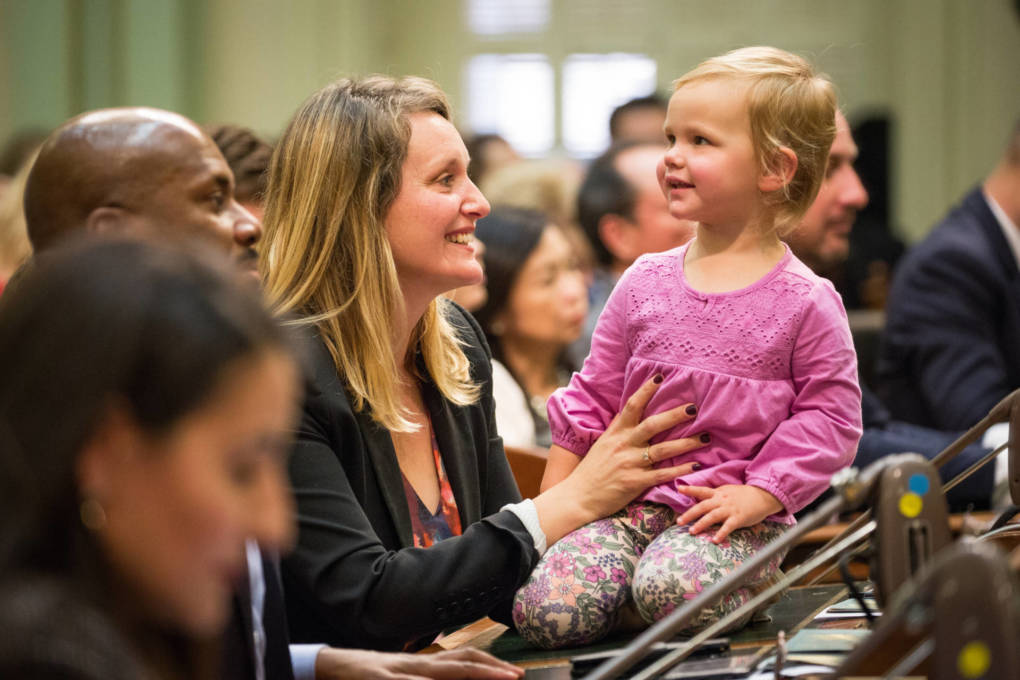
"caption": "Democratic Assemblywoman Buffy Wicks plays with her two-year-old daughter, Josephine Ambler, on her desk after being sworn into the California Assembly on December 3, 2018 at the State Capitol in Sacramento.",
"description": "Democratic Assemblywoman Buffy Wicks plays with her two-year-old daughter, Josephine Ambler, on her desk after being sworn into the California Assembly on December 3, 2018 at the State Capitol in Sacramento.",
"title": "legislature lags PHOTO 2",
"credit": "Max Whittaker/CALmatters",
"status": "inherit",
"isLoading": false,
"fetchFailed": false
},
"news_11719504": {
"type": "attachments",
"id": "news_11719504",
"meta": {
"index": "attachments_1716263798",
"site": "news",
"id": "11719504",
"found": true
},
"parent": 11719378,
"imgSizes": {
"twentyfourteen-full-width": {
"file": "https://ww2.kqed.org/app/uploads/sites/10/2019/01/32bc0ed4-istock-670930578-e1547860295489-1038x576.jpg",
"width": 1038,
"mimeType": "image/jpeg",
"height": 576
},
"thumbnail": {
"file": "https://ww2.kqed.org/app/uploads/sites/10/2019/01/32bc0ed4-istock-670930578-e1547860295489-160x107.jpg",
"width": 160,
"mimeType": "image/jpeg",
"height": 107
},
"post-thumbnail": {
"file": "https://ww2.kqed.org/app/uploads/sites/10/2019/01/32bc0ed4-istock-670930578-e1547860295489-672x372.jpg",
"width": 672,
"mimeType": "image/jpeg",
"height": 372
},
"kqedFullSize": {
"file": "https://ww2.kqed.org/app/uploads/sites/10/2019/01/32bc0ed4-istock-670930578-e1547860295489.jpg",
"width": 1920,
"height": 1280
},
"large": {
"file": "https://ww2.kqed.org/app/uploads/sites/10/2019/01/32bc0ed4-istock-670930578-e1547860295489-1020x680.jpg",
"width": 1020,
"mimeType": "image/jpeg",
"height": 680
},
"complete_open_graph": {
"file": "https://ww2.kqed.org/app/uploads/sites/10/2019/01/32bc0ed4-istock-670930578-e1547860295489-1200x800.jpg",
"width": 1200,
"mimeType": "image/jpeg",
"height": 800
},
"guest-author-50": {
"file": "https://ww2.kqed.org/app/uploads/sites/10/2019/01/32bc0ed4-istock-670930578-e1547860295489-50x50.jpg",
"width": 50,
"mimeType": "image/jpeg",
"height": 50
},
"guest-author-96": {
"file": "https://ww2.kqed.org/app/uploads/sites/10/2019/01/32bc0ed4-istock-670930578-e1547860295489-96x96.jpg",
"width": 96,
"mimeType": "image/jpeg",
"height": 96
},
"medium": {
"file": "https://ww2.kqed.org/app/uploads/sites/10/2019/01/32bc0ed4-istock-670930578-e1547860295489-800x533.jpg",
"width": 800,
"mimeType": "image/jpeg",
"height": 533
},
"guest-author-64": {
"file": "https://ww2.kqed.org/app/uploads/sites/10/2019/01/32bc0ed4-istock-670930578-e1547860295489-64x64.jpg",
"width": 64,
"mimeType": "image/jpeg",
"height": 64
},
"guest-author-32": {
"file": "https://ww2.kqed.org/app/uploads/sites/10/2019/01/32bc0ed4-istock-670930578-e1547860295489-32x32.jpg",
"width": 32,
"mimeType": "image/jpeg",
"height": 32
},
"full-width": {
"file": "https://ww2.kqed.org/app/uploads/sites/10/2019/01/32bc0ed4-istock-670930578-e1547860295489-1920x1280.jpg",
"width": 1920,
"mimeType": "image/jpeg",
"height": 1280
},
"detail": {
"file": "https://ww2.kqed.org/app/uploads/sites/10/2019/01/32bc0ed4-istock-670930578-e1547860295489-150x150.jpg",
"width": 150,
"mimeType": "image/jpeg",
"height": 150
},
"guest-author-128": {
"file": "https://ww2.kqed.org/app/uploads/sites/10/2019/01/32bc0ed4-istock-670930578-e1547860295489-128x128.jpg",
"width": 128,
"mimeType": "image/jpeg",
"height": 128
}
},
"publishDate": 1547860064,
"modified": 1547860359,
"caption": "California Gov. Gavin Newsom's proposal calls for an increase to the current six weeks of partially-paid family leave most workers get under state law. ",
"description": "California Gov. Gavin Newsom's proposal calls for an increase to the current six weeks of partially-paid family leave most workers get under state law. ",
"title": "Parents Home From Hospital With Newborn Baby",
"credit": "iStock/Getty Images",
"status": "inherit",
"isLoading": false,
"fetchFailed": false
},
"news_11688829": {
"type": "attachments",
"id": "news_11688829",
"meta": {
"index": "attachments_1716263798",
"site": "news",
"id": "11688829",
"found": true
},
"parent": 11688828,
"imgSizes": {
"small": {
"file": "https://ww2.kqed.org/app/uploads/sites/10/2018/08/RS21716_GettyImages-84931235-qut-520x344.jpg",
"width": 520,
"mimeType": "image/jpeg",
"height": 344
},
"twentyfourteen-full-width": {
"file": "https://ww2.kqed.org/app/uploads/sites/10/2018/08/RS21716_GettyImages-84931235-qut-1038x576.jpg",
"width": 1038,
"mimeType": "image/jpeg",
"height": 576
},
"thumbnail": {
"file": "https://ww2.kqed.org/app/uploads/sites/10/2018/08/RS21716_GettyImages-84931235-qut-160x106.jpg",
"width": 160,
"mimeType": "image/jpeg",
"height": 106
},
"fd-sm": {
"file": "https://ww2.kqed.org/app/uploads/sites/10/2018/08/RS21716_GettyImages-84931235-qut-960x635.jpg",
"width": 960,
"mimeType": "image/jpeg",
"height": 635
},
"post-thumbnail": {
"file": "https://ww2.kqed.org/app/uploads/sites/10/2018/08/RS21716_GettyImages-84931235-qut-672x372.jpg",
"width": 672,
"mimeType": "image/jpeg",
"height": 372
},
"xsmall": {
"file": "https://ww2.kqed.org/app/uploads/sites/10/2018/08/RS21716_GettyImages-84931235-qut-375x248.jpg",
"width": 375,
"mimeType": "image/jpeg",
"height": 248
},
"kqedFullSize": {
"file": "https://ww2.kqed.org/app/uploads/sites/10/2018/08/RS21716_GettyImages-84931235-qut.jpg",
"width": 1920,
"height": 1270
},
"large": {
"file": "https://ww2.kqed.org/app/uploads/sites/10/2018/08/RS21716_GettyImages-84931235-qut-1020x675.jpg",
"width": 1020,
"mimeType": "image/jpeg",
"height": 675
},
"xlarge": {
"file": "https://ww2.kqed.org/app/uploads/sites/10/2018/08/RS21716_GettyImages-84931235-qut-1180x781.jpg",
"width": 1180,
"mimeType": "image/jpeg",
"height": 781
},
"complete_open_graph": {
"file": "https://ww2.kqed.org/app/uploads/sites/10/2018/08/RS21716_GettyImages-84931235-qut-1200x794.jpg",
"width": 1200,
"mimeType": "image/jpeg",
"height": 794
},
"guest-author-50": {
"file": "https://ww2.kqed.org/app/uploads/sites/10/2018/08/RS21716_GettyImages-84931235-qut-50x50.jpg",
"width": 50,
"mimeType": "image/jpeg",
"height": 50
},
"guest-author-96": {
"file": "https://ww2.kqed.org/app/uploads/sites/10/2018/08/RS21716_GettyImages-84931235-qut-96x96.jpg",
"width": 96,
"mimeType": "image/jpeg",
"height": 96
},
"medium": {
"file": "https://ww2.kqed.org/app/uploads/sites/10/2018/08/RS21716_GettyImages-84931235-qut-800x529.jpg",
"width": 800,
"mimeType": "image/jpeg",
"height": 529
},
"guest-author-64": {
"file": "https://ww2.kqed.org/app/uploads/sites/10/2018/08/RS21716_GettyImages-84931235-qut-64x64.jpg",
"width": 64,
"mimeType": "image/jpeg",
"height": 64
},
"guest-author-32": {
"file": "https://ww2.kqed.org/app/uploads/sites/10/2018/08/RS21716_GettyImages-84931235-qut-32x32.jpg",
"width": 32,
"mimeType": "image/jpeg",
"height": 32
},
"fd-lrg": {
"file": "https://ww2.kqed.org/app/uploads/sites/10/2018/08/RS21716_GettyImages-84931235-qut-1920x1270.jpg",
"width": 1920,
"mimeType": "image/jpeg",
"height": 1270
},
"fd-med": {
"file": "https://ww2.kqed.org/app/uploads/sites/10/2018/08/RS21716_GettyImages-84931235-qut-1180x781.jpg",
"width": 1180,
"mimeType": "image/jpeg",
"height": 781
},
"full-width": {
"file": "https://ww2.kqed.org/app/uploads/sites/10/2018/08/RS21716_GettyImages-84931235-qut-1920x1270.jpg",
"width": 1920,
"mimeType": "image/jpeg",
"height": 1270
},
"detail": {
"file": "https://ww2.kqed.org/app/uploads/sites/10/2018/08/RS21716_GettyImages-84931235-qut-150x150.jpg",
"width": 150,
"mimeType": "image/jpeg",
"height": 150
},
"guest-author-128": {
"file": "https://ww2.kqed.org/app/uploads/sites/10/2018/08/RS21716_GettyImages-84931235-qut-128x128.jpg",
"width": 128,
"mimeType": "image/jpeg",
"height": 128
},
"xxsmall": {
"file": "https://ww2.kqed.org/app/uploads/sites/10/2018/08/RS21716_GettyImages-84931235-qut-240x159.jpg",
"width": 240,
"mimeType": "image/jpeg",
"height": 159
}
},
"publishDate": 1535222150,
"modified": 1535222341,
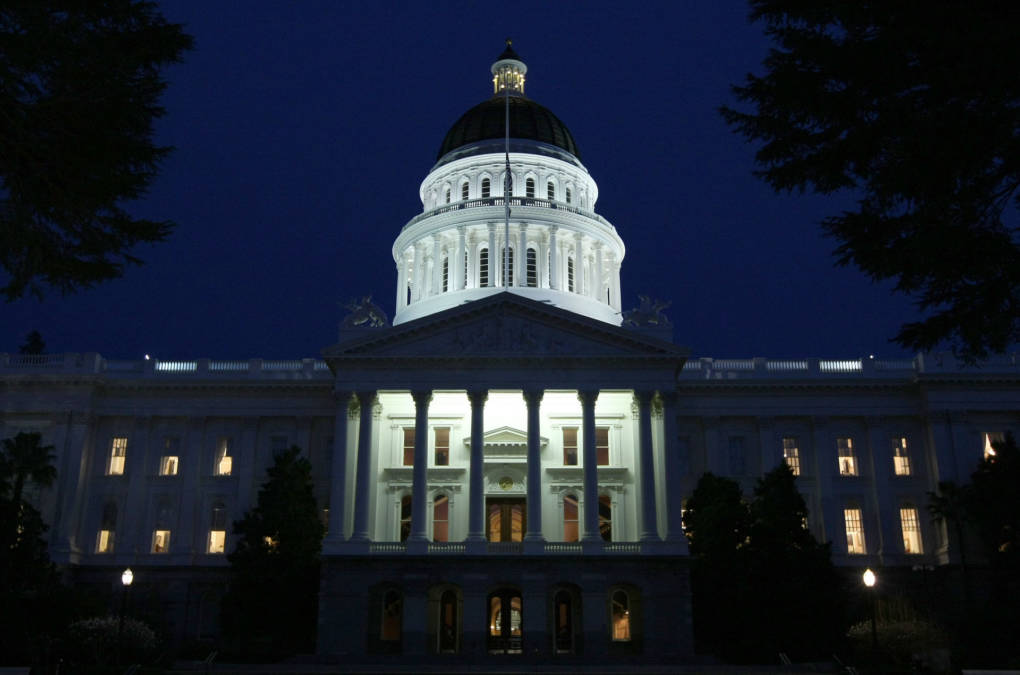
"caption": "A view of the California State Capitol in Sacramento.",
"description": "A view of the California State Capitol in Sacramento.",
"title": "RS21716_GettyImages-84931235-qut",
"credit": "Justin Sullivan/Getty Images",
"status": "inherit",
"isLoading": false,
"fetchFailed": false
},
"news_11717140": {
"type": "attachments",
"id": "news_11717140",
"meta": {
"index": "attachments_1716263798",
"site": "news",
"id": "11717140",
"found": true
},
"parent": 11717134,
"imgSizes": {
"twentyfourteen-full-width": {
"file": "https://ww2.kqed.org/app/uploads/sites/10/2019/01/Lite-Guv-photo-1-e1547072755595-1038x576.jpg",
"width": 1038,
"mimeType": "image/jpeg",
"height": 576
},
"thumbnail": {
"file": "https://ww2.kqed.org/app/uploads/sites/10/2019/01/Lite-Guv-photo-1-e1547072755595-160x107.jpg",
"width": 160,
"mimeType": "image/jpeg",
"height": 107
},
"post-thumbnail": {
"file": "https://ww2.kqed.org/app/uploads/sites/10/2019/01/Lite-Guv-photo-1-e1547072755595-672x372.jpg",
"width": 672,
"mimeType": "image/jpeg",
"height": 372
},
"kqedFullSize": {
"file": "https://ww2.kqed.org/app/uploads/sites/10/2019/01/Lite-Guv-photo-1-e1547072755595.jpg",
"width": 1920,
"height": 1278
},
"large": {
"file": "https://ww2.kqed.org/app/uploads/sites/10/2019/01/Lite-Guv-photo-1-e1547072755595-1020x679.jpg",
"width": 1020,
"mimeType": "image/jpeg",
"height": 679
},
"complete_open_graph": {
"file": "https://ww2.kqed.org/app/uploads/sites/10/2019/01/Lite-Guv-photo-1-e1547072755595-1200x799.jpg",
"width": 1200,
"mimeType": "image/jpeg",
"height": 799
},
"guest-author-50": {
"file": "https://ww2.kqed.org/app/uploads/sites/10/2019/01/Lite-Guv-photo-1-e1547072755595-50x50.jpg",
"width": 50,
"mimeType": "image/jpeg",
"height": 50
},
"guest-author-96": {
"file": "https://ww2.kqed.org/app/uploads/sites/10/2019/01/Lite-Guv-photo-1-e1547072755595-96x96.jpg",
"width": 96,
"mimeType": "image/jpeg",
"height": 96
},
"medium": {
"file": "https://ww2.kqed.org/app/uploads/sites/10/2019/01/Lite-Guv-photo-1-e1547072755595-800x533.jpg",
"width": 800,
"mimeType": "image/jpeg",
"height": 533
},
"guest-author-64": {
"file": "https://ww2.kqed.org/app/uploads/sites/10/2019/01/Lite-Guv-photo-1-e1547072755595-64x64.jpg",
"width": 64,
"mimeType": "image/jpeg",
"height": 64
},
"guest-author-32": {
"file": "https://ww2.kqed.org/app/uploads/sites/10/2019/01/Lite-Guv-photo-1-e1547072755595-32x32.jpg",
"width": 32,
"mimeType": "image/jpeg",
"height": 32
},
"full-width": {
"file": "https://ww2.kqed.org/app/uploads/sites/10/2019/01/Lite-Guv-photo-1-e1547072755595-1920x1278.jpg",
"width": 1920,
"mimeType": "image/jpeg",
"height": 1278
},
"detail": {
"file": "https://ww2.kqed.org/app/uploads/sites/10/2019/01/Lite-Guv-photo-1-e1547072755595-150x150.jpg",
"width": 150,
"mimeType": "image/jpeg",
"height": 150
},
"guest-author-128": {
"file": "https://ww2.kqed.org/app/uploads/sites/10/2019/01/Lite-Guv-photo-1-e1547072755595-128x128.jpg",
"width": 128,
"mimeType": "image/jpeg",
"height": 128
}
},
"publishDate": 1547072604,
"modified": 1621293055,
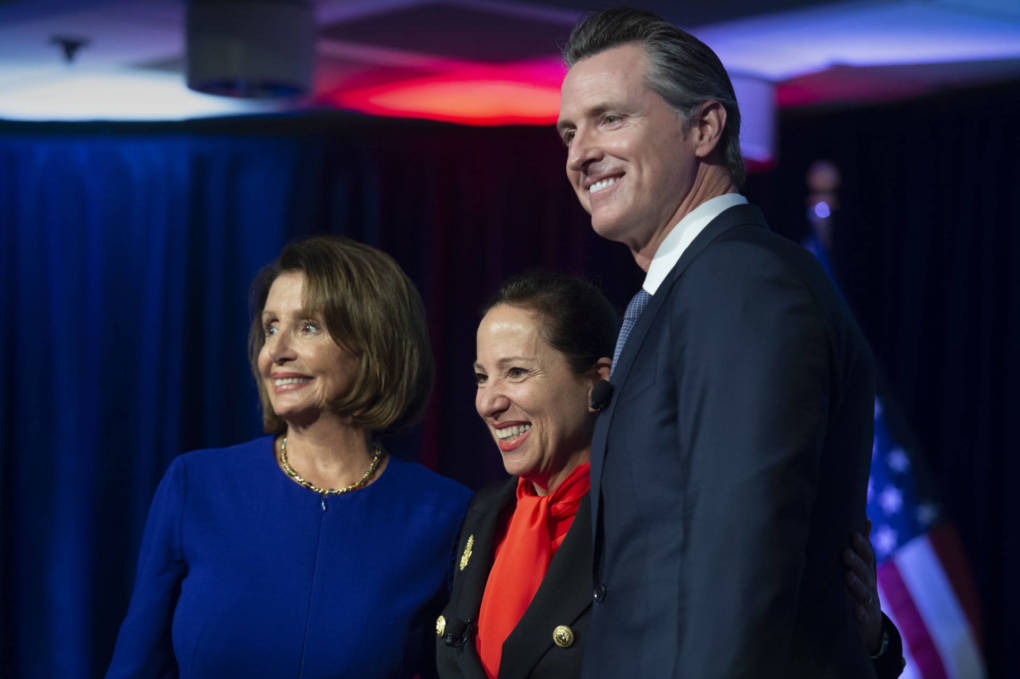
"caption": "Congresswoman Nancy Pelosi, Lt. Gov. Eleni Kounalakis and Gov. Gavin Newsom stand together on stage at the Tsakopoulos Library Galleria on Jan. 7, 2019 in Sacramento.",
"description": "Congresswoman Nancy Pelosi, Lt. Gov. Eleni Kounalakis and Gov. Gavin Newsom stand together on stage at the Tsakopoulos Library Galleria on Monday, January 7, 2019 in Sacramento.",
"title": "Lite-Guv-photo-1",
"credit": "Randy Perch/CalMatters",
"status": "inherit",
"altTag": "Congresswoman Nancy Pelosi, Lt. Gov. Eleni Kounalakis and Gov. Gavin Newsom stand together on stage at the Tsakopoulos Library Galleria on Monday, January 7, 2019 in Sacramento.",
"isLoading": false,
"fetchFailed": false
},
"news_11716448": {
"type": "attachments",
"id": "news_11716448",
"meta": {
"index": "attachments_1716263798",
"site": "news",
"id": "11716448",
"found": true
},
"parent": 11716410,
"imgSizes": {
"twentyfourteen-full-width": {
"file": "https://ww2.kqed.org/app/uploads/sites/10/2019/01/RS25465_20170515_StateCapitol_Sen_RicardoLara_credit_BertJohnson-2-e1546898139908-1038x576.jpg",
"width": 1038,
"mimeType": "image/jpeg",
"height": 576
},
"thumbnail": {
"file": "https://ww2.kqed.org/app/uploads/sites/10/2019/01/RS25465_20170515_StateCapitol_Sen_RicardoLara_credit_BertJohnson-2-e1546898139908-160x107.jpg",
"width": 160,
"mimeType": "image/jpeg",
"height": 107
},
"post-thumbnail": {
"file": "https://ww2.kqed.org/app/uploads/sites/10/2019/01/RS25465_20170515_StateCapitol_Sen_RicardoLara_credit_BertJohnson-2-e1546898139908-672x372.jpg",
"width": 672,
"mimeType": "image/jpeg",
"height": 372
},
"kqedFullSize": {
"file": "https://ww2.kqed.org/app/uploads/sites/10/2019/01/RS25465_20170515_StateCapitol_Sen_RicardoLara_credit_BertJohnson-2-e1546898139908.jpg",
"width": 1920,
"height": 1280
},
"large": {
"file": "https://ww2.kqed.org/app/uploads/sites/10/2019/01/RS25465_20170515_StateCapitol_Sen_RicardoLara_credit_BertJohnson-2-e1546898139908-1020x680.jpg",
"width": 1020,
"mimeType": "image/jpeg",
"height": 680
},
"complete_open_graph": {
"file": "https://ww2.kqed.org/app/uploads/sites/10/2019/01/RS25465_20170515_StateCapitol_Sen_RicardoLara_credit_BertJohnson-2-e1546898139908-1200x800.jpg",
"width": 1200,
"mimeType": "image/jpeg",
"height": 800
},
"guest-author-50": {
"file": "https://ww2.kqed.org/app/uploads/sites/10/2019/01/RS25465_20170515_StateCapitol_Sen_RicardoLara_credit_BertJohnson-2-e1546898139908-50x50.jpg",
"width": 50,
"mimeType": "image/jpeg",
"height": 50
},
"guest-author-96": {
"file": "https://ww2.kqed.org/app/uploads/sites/10/2019/01/RS25465_20170515_StateCapitol_Sen_RicardoLara_credit_BertJohnson-2-e1546898139908-96x96.jpg",
"width": 96,
"mimeType": "image/jpeg",
"height": 96
},
"medium": {
"file": "https://ww2.kqed.org/app/uploads/sites/10/2019/01/RS25465_20170515_StateCapitol_Sen_RicardoLara_credit_BertJohnson-2-e1546898139908-800x533.jpg",
"width": 800,
"mimeType": "image/jpeg",
"height": 533
},
"guest-author-64": {
"file": "https://ww2.kqed.org/app/uploads/sites/10/2019/01/RS25465_20170515_StateCapitol_Sen_RicardoLara_credit_BertJohnson-2-e1546898139908-64x64.jpg",
"width": 64,
"mimeType": "image/jpeg",
"height": 64
},
"guest-author-32": {
"file": "https://ww2.kqed.org/app/uploads/sites/10/2019/01/RS25465_20170515_StateCapitol_Sen_RicardoLara_credit_BertJohnson-2-e1546898139908-32x32.jpg",
"width": 32,
"mimeType": "image/jpeg",
"height": 32
},
"full-width": {
"file": "https://ww2.kqed.org/app/uploads/sites/10/2019/01/RS25465_20170515_StateCapitol_Sen_RicardoLara_credit_BertJohnson-2-e1546898139908-1920x1280.jpg",
"width": 1920,
"mimeType": "image/jpeg",
"height": 1280
},
"detail": {
"file": "https://ww2.kqed.org/app/uploads/sites/10/2019/01/RS25465_20170515_StateCapitol_Sen_RicardoLara_credit_BertJohnson-2-e1546898139908-150x150.jpg",
"width": 150,
"mimeType": "image/jpeg",
"height": 150
},
"guest-author-128": {
"file": "https://ww2.kqed.org/app/uploads/sites/10/2019/01/RS25465_20170515_StateCapitol_Sen_RicardoLara_credit_BertJohnson-2-e1546898139908-128x128.jpg",
"width": 128,
"mimeType": "image/jpeg",
"height": 128
}
},
"publishDate": 1546898080,
"modified": 1546907024,
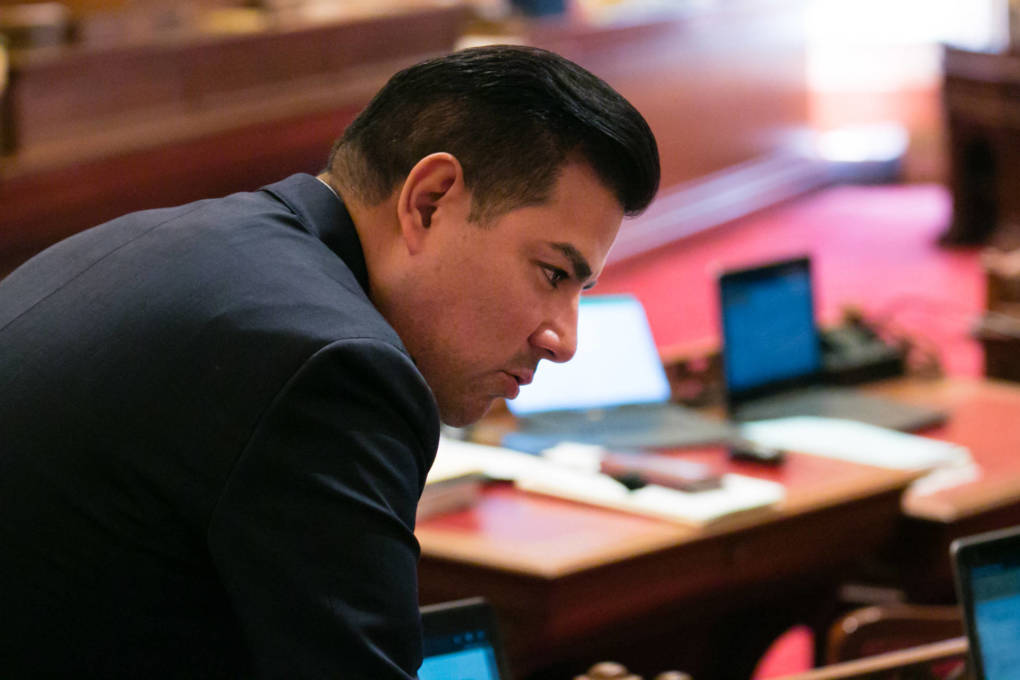
"caption": "Incoming Insurance Commissioner Ricardo Lara, shown here in 2017, has hired a former lobbyist for the drugmaker Gilead to help lead his transition. The Department of Insurance is investigating the company.",
"description": "Incoming Insurance Commissioner Ricardo Lara, shown here in 2017, has hired a former lobbyist for the drug maker Gilead to help lead his transition. The Department of Insurance is investigating the company.",
"title": null,
"credit": "Bert Johnson/KQED",
"status": "inherit",
"isLoading": false,
"fetchFailed": false
},
"news_11715912": {
"type": "attachments",
"id": "news_11715912",
"meta": {
"index": "attachments_1716263798",
"site": "news",
"id": "11715912",
"found": true
},
"parent": 11715907,
"imgSizes": {
"thumbnail": {
"file": "https://ww2.kqed.org/app/uploads/sites/10/2019/01/lexicon-photo-WEB-160x90.jpg",
"width": 160,
"mimeType": "image/jpeg",
"height": 90
},
"post-thumbnail": {
"file": "https://ww2.kqed.org/app/uploads/sites/10/2019/01/lexicon-photo-WEB-672x372.jpg",
"width": 672,
"mimeType": "image/jpeg",
"height": 372
},
"kqedFullSize": {
"file": "https://ww2.kqed.org/app/uploads/sites/10/2019/01/lexicon-photo-WEB.jpg",
"width": 1000,
"height": 563
},
"guest-author-50": {
"file": "https://ww2.kqed.org/app/uploads/sites/10/2019/01/lexicon-photo-WEB-50x50.jpg",
"width": 50,
"mimeType": "image/jpeg",
"height": 50
},
"guest-author-96": {
"file": "https://ww2.kqed.org/app/uploads/sites/10/2019/01/lexicon-photo-WEB-96x96.jpg",
"width": 96,
"mimeType": "image/jpeg",
"height": 96
},
"medium": {
"file": "https://ww2.kqed.org/app/uploads/sites/10/2019/01/lexicon-photo-WEB-800x450.jpg",
"width": 800,
"mimeType": "image/jpeg",
"height": 450
},
"guest-author-64": {
"file": "https://ww2.kqed.org/app/uploads/sites/10/2019/01/lexicon-photo-WEB-64x64.jpg",
"width": 64,
"mimeType": "image/jpeg",
"height": 64
},
"detail": {
"file": "https://ww2.kqed.org/app/uploads/sites/10/2019/01/lexicon-photo-WEB-150x150.jpg",
"width": 150,
"mimeType": "image/jpeg",
"height": 150
},
"guest-author-32": {
"file": "https://ww2.kqed.org/app/uploads/sites/10/2019/01/lexicon-photo-WEB-32x32.jpg",
"width": 32,
"mimeType": "image/jpeg",
"height": 32
},
"guest-author-128": {
"file": "https://ww2.kqed.org/app/uploads/sites/10/2019/01/lexicon-photo-WEB-128x128.jpg",
"width": 128,
"mimeType": "image/jpeg",
"height": 128
}
},
"publishDate": 1546629310,
"modified": 1546629697,
"caption": "Gavin Newsom and Jerry Brown",
"description": null,
"title": "lexicon photo WEB",
"credit": "CALmatters",
"status": "inherit",
"isLoading": false,
"fetchFailed": false
},
"news_11683343": {
"type": "attachments",
"id": "news_11683343",
"meta": {
"index": "attachments_1716263798",
"site": "news",
"id": "11683343",
"found": true
},
"parent": 11683249,
"imgSizes": {
"small": {
"file": "https://ww2.kqed.org/app/uploads/sites/10/2018/07/RS10214_463273943-520x354.jpg",
"width": 520,
"mimeType": "image/jpeg",
"height": 354
},
"twentyfourteen-full-width": {
"file": "https://ww2.kqed.org/app/uploads/sites/10/2018/07/RS10214_463273943-1038x576.jpg",
"width": 1038,
"mimeType": "image/jpeg",
"height": 576
},
"thumbnail": {
"file": "https://ww2.kqed.org/app/uploads/sites/10/2018/07/RS10214_463273943-160x109.jpg",
"width": 160,
"mimeType": "image/jpeg",
"height": 109
},
"fd-sm": {
"file": "https://ww2.kqed.org/app/uploads/sites/10/2018/07/RS10214_463273943-960x654.jpg",
"width": 960,
"mimeType": "image/jpeg",
"height": 654
},
"post-thumbnail": {
"file": "https://ww2.kqed.org/app/uploads/sites/10/2018/07/RS10214_463273943-672x372.jpg",
"width": 672,
"mimeType": "image/jpeg",
"height": 372
},
"xsmall": {
"file": "https://ww2.kqed.org/app/uploads/sites/10/2018/07/RS10214_463273943-375x256.jpg",
"width": 375,
"mimeType": "image/jpeg",
"height": 256
},
"kqedFullSize": {
"file": "https://ww2.kqed.org/app/uploads/sites/10/2018/07/RS10214_463273943.jpg",
"width": 3000,
"height": 2044
},
"large": {
"file": "https://ww2.kqed.org/app/uploads/sites/10/2018/07/RS10214_463273943-1020x695.jpg",
"width": 1020,
"mimeType": "image/jpeg",
"height": 695
},
"xlarge": {
"file": "https://ww2.kqed.org/app/uploads/sites/10/2018/07/RS10214_463273943-1180x804.jpg",
"width": 1180,
"mimeType": "image/jpeg",
"height": 804
},
"complete_open_graph": {
"file": "https://ww2.kqed.org/app/uploads/sites/10/2018/07/RS10214_463273943-1200x818.jpg",
"width": 1200,
"mimeType": "image/jpeg",
"height": 818
},
"guest-author-50": {
"file": "https://ww2.kqed.org/app/uploads/sites/10/2018/07/RS10214_463273943-50x50.jpg",
"width": 50,
"mimeType": "image/jpeg",
"height": 50
},
"guest-author-96": {
"file": "https://ww2.kqed.org/app/uploads/sites/10/2018/07/RS10214_463273943-96x96.jpg",
"width": 96,
"mimeType": "image/jpeg",
"height": 96
},
"medium": {
"file": "https://ww2.kqed.org/app/uploads/sites/10/2018/07/RS10214_463273943-800x545.jpg",
"width": 800,
"mimeType": "image/jpeg",
"height": 545
},
"guest-author-64": {
"file": "https://ww2.kqed.org/app/uploads/sites/10/2018/07/RS10214_463273943-64x64.jpg",
"width": 64,
"mimeType": "image/jpeg",
"height": 64
},
"guest-author-32": {
"file": "https://ww2.kqed.org/app/uploads/sites/10/2018/07/RS10214_463273943-32x32.jpg",
"width": 32,
"mimeType": "image/jpeg",
"height": 32
},
"fd-lrg": {
"file": "https://ww2.kqed.org/app/uploads/sites/10/2018/07/RS10214_463273943-1920x1308.jpg",
"width": 1920,
"mimeType": "image/jpeg",
"height": 1308
},
"fd-med": {
"file": "https://ww2.kqed.org/app/uploads/sites/10/2018/07/RS10214_463273943-1180x804.jpg",
"width": 1180,
"mimeType": "image/jpeg",
"height": 804
},
"full-width": {
"file": "https://ww2.kqed.org/app/uploads/sites/10/2018/07/RS10214_463273943-1920x1308.jpg",
"width": 1920,
"mimeType": "image/jpeg",
"height": 1308
},
"detail": {
"file": "https://ww2.kqed.org/app/uploads/sites/10/2018/07/RS10214_463273943-150x150.jpg",
"width": 150,
"mimeType": "image/jpeg",
"height": 150
},
"guest-author-128": {
"file": "https://ww2.kqed.org/app/uploads/sites/10/2018/07/RS10214_463273943-128x128.jpg",
"width": 128,
"mimeType": "image/jpeg",
"height": 128
},
"xxsmall": {
"file": "https://ww2.kqed.org/app/uploads/sites/10/2018/07/RS10214_463273943-240x164.jpg",
"width": 240,
"mimeType": "image/jpeg",
"height": 164
}
},
"publishDate": 1532733084,
"modified": 1545270907,
"caption": "Gov. Jerry Brown's early promise to clean up corruption in the Capitol ebbed and flowed throughout his career.",
"description": null,
"title": "RS10214_463273943",
"credit": "Justin Sullivan/Getty Images",
"status": "inherit",
"isLoading": false,
"fetchFailed": false
},
"news_11672415": {
"type": "attachments",
"id": "news_11672415",
"meta": {
"index": "attachments_1716263798",
"site": "news",
"id": "11672415",
"found": true
},
"parent": 11672399,
"imgSizes": {
"small": {
"file": "https://ww2.kqed.org/app/uploads/sites/10/2018/06/PreschoolKids-520x349.jpg",
"width": 520,
"mimeType": "image/jpeg",
"height": 349
},
"twentyfourteen-full-width": {
"file": "https://ww2.kqed.org/app/uploads/sites/10/2018/06/PreschoolKids-1038x576.jpg",
"width": 1038,
"mimeType": "image/jpeg",
"height": 576
},
"thumbnail": {
"file": "https://ww2.kqed.org/app/uploads/sites/10/2018/06/PreschoolKids-160x107.jpg",
"width": 160,
"mimeType": "image/jpeg",
"height": 107
},
"fd-sm": {
"file": "https://ww2.kqed.org/app/uploads/sites/10/2018/06/PreschoolKids-960x644.jpg",
"width": 960,
"mimeType": "image/jpeg",
"height": 644
},
"post-thumbnail": {
"file": "https://ww2.kqed.org/app/uploads/sites/10/2018/06/PreschoolKids-672x372.jpg",
"width": 672,
"mimeType": "image/jpeg",
"height": 372
},
"xsmall": {
"file": "https://ww2.kqed.org/app/uploads/sites/10/2018/06/PreschoolKids-375x252.jpg",
"width": 375,
"mimeType": "image/jpeg",
"height": 252
},
"kqedFullSize": {
"file": "https://ww2.kqed.org/app/uploads/sites/10/2018/06/PreschoolKids.jpg",
"width": 1920,
"height": 1288
},
"large": {
"file": "https://ww2.kqed.org/app/uploads/sites/10/2018/06/PreschoolKids-1020x684.jpg",
"width": 1020,
"mimeType": "image/jpeg",
"height": 684
},
"xlarge": {
"file": "https://ww2.kqed.org/app/uploads/sites/10/2018/06/PreschoolKids-1180x792.jpg",
"width": 1180,
"mimeType": "image/jpeg",
"height": 792
},
"complete_open_graph": {
"file": "https://ww2.kqed.org/app/uploads/sites/10/2018/06/PreschoolKids-1200x805.jpg",
"width": 1200,
"mimeType": "image/jpeg",
"height": 805
},
"guest-author-50": {
"file": "https://ww2.kqed.org/app/uploads/sites/10/2018/06/PreschoolKids-50x50.jpg",
"width": 50,
"mimeType": "image/jpeg",
"height": 50
},
"guest-author-96": {
"file": "https://ww2.kqed.org/app/uploads/sites/10/2018/06/PreschoolKids-96x96.jpg",
"width": 96,
"mimeType": "image/jpeg",
"height": 96
},
"medium": {
"file": "https://ww2.kqed.org/app/uploads/sites/10/2018/06/PreschoolKids-800x537.jpg",
"width": 800,
"mimeType": "image/jpeg",
"height": 537
},
"guest-author-64": {
"file": "https://ww2.kqed.org/app/uploads/sites/10/2018/06/PreschoolKids-64x64.jpg",
"width": 64,
"mimeType": "image/jpeg",
"height": 64
},
"guest-author-32": {
"file": "https://ww2.kqed.org/app/uploads/sites/10/2018/06/PreschoolKids-32x32.jpg",
"width": 32,
"mimeType": "image/jpeg",
"height": 32
},
"fd-lrg": {
"file": "https://ww2.kqed.org/app/uploads/sites/10/2018/06/PreschoolKids-1920x1288.jpg",
"width": 1920,
"mimeType": "image/jpeg",
"height": 1288
},
"fd-med": {
"file": "https://ww2.kqed.org/app/uploads/sites/10/2018/06/PreschoolKids-1180x792.jpg",
"width": 1180,
"mimeType": "image/jpeg",
"height": 792
},
"full-width": {
"file": "https://ww2.kqed.org/app/uploads/sites/10/2018/06/PreschoolKids-1920x1288.jpg",
"width": 1920,
"mimeType": "image/jpeg",
"height": 1288
},
"detail": {
"file": "https://ww2.kqed.org/app/uploads/sites/10/2018/06/PreschoolKids-150x150.jpg",
"width": 150,
"mimeType": "image/jpeg",
"height": 150
},
"guest-author-128": {
"file": "https://ww2.kqed.org/app/uploads/sites/10/2018/06/PreschoolKids-128x128.jpg",
"width": 128,
"mimeType": "image/jpeg",
"height": 128
},
"xxsmall": {
"file": "https://ww2.kqed.org/app/uploads/sites/10/2018/06/PreschoolKids-240x161.jpg",
"width": 240,
"mimeType": "image/jpeg",
"height": 161
}
},
"publishDate": 1528141878,
"modified": 1528141924,
"caption": "During the recession, state funding for early childhood programs like preschool was severely cut -- and those funds haven’t been restored.",
"description": "During the recession, state funding for early childhood programs like preschool was severely cut -- and those funds haven’t been restored.",
"title": "PreschoolKids",
"credit": "Getty Images",
"status": "inherit",
"isLoading": false,
"fetchFailed": false
},
"news_11713152": {
"type": "attachments",
"id": "news_11713152",
"meta": {
"index": "attachments_1716263798",
"site": "news",
"id": "11713152",
"found": true
},
"parent": 11713141,
"imgSizes": {
"twentyfourteen-full-width": {
"file": "https://ww2.kqed.org/app/uploads/sites/10/2018/12/KINNEY-photo-lead-e1545078104615-1038x576.jpg",
"width": 1038,
"mimeType": "image/jpeg",
"height": 576
},
"thumbnail": {
"file": "https://ww2.kqed.org/app/uploads/sites/10/2018/12/KINNEY-photo-lead-e1545078104615-160x107.jpg",
"width": 160,
"mimeType": "image/jpeg",
"height": 107
},
"post-thumbnail": {
"file": "https://ww2.kqed.org/app/uploads/sites/10/2018/12/KINNEY-photo-lead-e1545078104615-672x372.jpg",
"width": 672,
"mimeType": "image/jpeg",
"height": 372
},
"kqedFullSize": {
"file": "https://ww2.kqed.org/app/uploads/sites/10/2018/12/KINNEY-photo-lead-e1545078104615.jpg",
"width": 1920,
"height": 1280
},
"large": {
"file": "https://ww2.kqed.org/app/uploads/sites/10/2018/12/KINNEY-photo-lead-e1545078104615-1020x680.jpg",
"width": 1020,
"mimeType": "image/jpeg",
"height": 680
},
"complete_open_graph": {
"file": "https://ww2.kqed.org/app/uploads/sites/10/2018/12/KINNEY-photo-lead-e1545078104615-1200x800.jpg",
"width": 1200,
"mimeType": "image/jpeg",
"height": 800
},
"guest-author-50": {
"file": "https://ww2.kqed.org/app/uploads/sites/10/2018/12/KINNEY-photo-lead-e1545078104615-50x50.jpg",
"width": 50,
"mimeType": "image/jpeg",
"height": 50
},
"guest-author-96": {
"file": "https://ww2.kqed.org/app/uploads/sites/10/2018/12/KINNEY-photo-lead-e1545078104615-96x96.jpg",
"width": 96,
"mimeType": "image/jpeg",
"height": 96
},
"medium": {
"file": "https://ww2.kqed.org/app/uploads/sites/10/2018/12/KINNEY-photo-lead-e1545078104615-800x533.jpg",
"width": 800,
"mimeType": "image/jpeg",
"height": 533
},
"guest-author-64": {
"file": "https://ww2.kqed.org/app/uploads/sites/10/2018/12/KINNEY-photo-lead-e1545078104615-64x64.jpg",
"width": 64,
"mimeType": "image/jpeg",
"height": 64
},
"guest-author-32": {
"file": "https://ww2.kqed.org/app/uploads/sites/10/2018/12/KINNEY-photo-lead-e1545078104615-32x32.jpg",
"width": 32,
"mimeType": "image/jpeg",
"height": 32
},
"full-width": {
"file": "https://ww2.kqed.org/app/uploads/sites/10/2018/12/KINNEY-photo-lead-e1545078104615-1920x1280.jpg",
"width": 1920,
"mimeType": "image/jpeg",
"height": 1280
},
"detail": {
"file": "https://ww2.kqed.org/app/uploads/sites/10/2018/12/KINNEY-photo-lead-e1545078104615-150x150.jpg",
"width": 150,
"mimeType": "image/jpeg",
"height": 150
},
"guest-author-128": {
"file": "https://ww2.kqed.org/app/uploads/sites/10/2018/12/KINNEY-photo-lead-e1545078104615-128x128.jpg",
"width": 128,
"mimeType": "image/jpeg",
"height": 128
}
},
"publishDate": 1545078060,
"modified": 1545087618,
"caption": "Jason Kinney, center, greets state officials and staffers near the Capitol in Sacramento on the first day of the 2019 legislative session. ",
"description": null,
"title": "KINNEY photo lead",
"credit": "Byrhonda Lyons/CALmatters",
"status": "inherit",
"isLoading": false,
"fetchFailed": false
},
"news_11712716": {
"type": "attachments",
"id": "news_11712716",
"meta": {
"index": "attachments_1716263798",
"site": "news",
"id": "11712716",
"found": true
},
"parent": 11712699,
"imgSizes": {
"twentyfourteen-full-width": {
"file": "https://ww2.kqed.org/app/uploads/sites/10/2018/12/tani-1015x576.jpg",
"width": 1015,
"mimeType": "image/jpeg",
"height": 576
},
"thumbnail": {
"file": "https://ww2.kqed.org/app/uploads/sites/10/2018/12/tani-160x114.jpg",
"width": 160,
"mimeType": "image/jpeg",
"height": 114
},
"post-thumbnail": {
"file": "https://ww2.kqed.org/app/uploads/sites/10/2018/12/tani-672x372.jpg",
"width": 672,
"mimeType": "image/jpeg",
"height": 372
},
"kqedFullSize": {
"file": "https://ww2.kqed.org/app/uploads/sites/10/2018/12/tani.jpg",
"width": 1015,
"height": 721
},
"guest-author-50": {
"file": "https://ww2.kqed.org/app/uploads/sites/10/2018/12/tani-50x50.jpg",
"width": 50,
"mimeType": "image/jpeg",
"height": 50
},
"guest-author-96": {
"file": "https://ww2.kqed.org/app/uploads/sites/10/2018/12/tani-96x96.jpg",
"width": 96,
"mimeType": "image/jpeg",
"height": 96
},
"medium": {
"file": "https://ww2.kqed.org/app/uploads/sites/10/2018/12/tani-800x568.jpg",
"width": 800,
"mimeType": "image/jpeg",
"height": 568
},
"guest-author-64": {
"file": "https://ww2.kqed.org/app/uploads/sites/10/2018/12/tani-64x64.jpg",
"width": 64,
"mimeType": "image/jpeg",
"height": 64
},
"detail": {
"file": "https://ww2.kqed.org/app/uploads/sites/10/2018/12/tani-150x150.jpg",
"width": 150,
"mimeType": "image/jpeg",
"height": 150
},
"guest-author-32": {
"file": "https://ww2.kqed.org/app/uploads/sites/10/2018/12/tani-32x32.jpg",
"width": 32,
"mimeType": "image/jpeg",
"height": 32
},
"guest-author-128": {
"file": "https://ww2.kqed.org/app/uploads/sites/10/2018/12/tani-128x128.jpg",
"width": 128,
"mimeType": "image/jpeg",
"height": 128
}
},
"publishDate": 1544827183,
"modified": 1544832754,
"caption": "California Supreme Court Chief Justice Tani Cantil-Sakauye addresses a hearing in San Francisco, Tuesday, Jan. 10, 2012. ",
"description": "California Supreme Court Chief Justice Tani Cantil-Sakauye addresses a hearing in San Francisco, Tuesday, Jan. 10, 2012. ",
"title": "Tani Cantil-Sakauye",
"credit": "Paul Sakuma/AP",
"status": "inherit",
"isLoading": false,
"fetchFailed": false
},
"news_11712106": {
"type": "attachments",
"id": "news_11712106",
"meta": {
"index": "attachments_1716263798",
"site": "news",
"id": "11712106",
"found": true
},
"parent": 11711387,
"imgSizes": {
"twentyfourteen-full-width": {
"file": "https://ww2.kqed.org/app/uploads/sites/10/2018/12/Doctor-1038x576.jpg",
"width": 1038,
"mimeType": "image/jpeg",
"height": 576
},
"thumbnail": {
"file": "https://ww2.kqed.org/app/uploads/sites/10/2018/12/Doctor-160x104.jpg",
"width": 160,
"mimeType": "image/jpeg",
"height": 104
},
"post-thumbnail": {
"file": "https://ww2.kqed.org/app/uploads/sites/10/2018/12/Doctor-672x372.jpg",
"width": 672,
"mimeType": "image/jpeg",
"height": 372
},
"kqedFullSize": {
"file": "https://ww2.kqed.org/app/uploads/sites/10/2018/12/Doctor.jpg",
"width": 1920,
"height": 1251
},
"large": {
"file": "https://ww2.kqed.org/app/uploads/sites/10/2018/12/Doctor-1020x665.jpg",
"width": 1020,
"mimeType": "image/jpeg",
"height": 665
},
"complete_open_graph": {
"file": "https://ww2.kqed.org/app/uploads/sites/10/2018/12/Doctor-1200x782.jpg",
"width": 1200,
"mimeType": "image/jpeg",
"height": 782
},
"guest-author-50": {
"file": "https://ww2.kqed.org/app/uploads/sites/10/2018/12/Doctor-50x50.jpg",
"width": 50,
"mimeType": "image/jpeg",
"height": 50
},
"guest-author-96": {
"file": "https://ww2.kqed.org/app/uploads/sites/10/2018/12/Doctor-96x96.jpg",
"width": 96,
"mimeType": "image/jpeg",
"height": 96
},
"medium": {
"file": "https://ww2.kqed.org/app/uploads/sites/10/2018/12/Doctor-800x521.jpg",
"width": 800,
"mimeType": "image/jpeg",
"height": 521
},
"guest-author-64": {
"file": "https://ww2.kqed.org/app/uploads/sites/10/2018/12/Doctor-64x64.jpg",
"width": 64,
"mimeType": "image/jpeg",
"height": 64
},
"guest-author-32": {
"file": "https://ww2.kqed.org/app/uploads/sites/10/2018/12/Doctor-32x32.jpg",
"width": 32,
"mimeType": "image/jpeg",
"height": 32
},
"full-width": {
"file": "https://ww2.kqed.org/app/uploads/sites/10/2018/12/Doctor-1920x1251.jpg",
"width": 1920,
"mimeType": "image/jpeg",
"height": 1251
},
"detail": {
"file": "https://ww2.kqed.org/app/uploads/sites/10/2018/12/Doctor-150x150.jpg",
"width": 150,
"mimeType": "image/jpeg",
"height": 150
},
"guest-author-128": {
"file": "https://ww2.kqed.org/app/uploads/sites/10/2018/12/Doctor-128x128.jpg",
"width": 128,
"mimeType": "image/jpeg",
"height": 128
}
},
"publishDate": 1544655456,
"modified": 1544655469,
"caption": null,
"description": null,
"title": "Doctor",
"credit": "Getty Images",
"status": "inherit",
"isLoading": false,
"fetchFailed": false
},
"news_11711368": {
"type": "attachments",
"id": "news_11711368",
"meta": {
"index": "attachments_1716263798",
"site": "news",
"id": "11711368",
"found": true
},
"parent": 11711286,
"imgSizes": {
"twentyfourteen-full-width": {
"file": "https://ww2.kqed.org/app/uploads/sites/10/2018/12/LATeacher-1038x576.jpg",
"width": 1038,
"mimeType": "image/jpeg",
"height": 576
},
"thumbnail": {
"file": "https://ww2.kqed.org/app/uploads/sites/10/2018/12/LATeacher-160x107.jpg",
"width": 160,
"mimeType": "image/jpeg",
"height": 107
},
"post-thumbnail": {
"file": "https://ww2.kqed.org/app/uploads/sites/10/2018/12/LATeacher-672x372.jpg",
"width": 672,
"mimeType": "image/jpeg",
"height": 372
},
"kqedFullSize": {
"file": "https://ww2.kqed.org/app/uploads/sites/10/2018/12/LATeacher.jpg",
"width": 1920,
"height": 1280
},
"large": {
"file": "https://ww2.kqed.org/app/uploads/sites/10/2018/12/LATeacher-1020x680.jpg",
"width": 1020,
"mimeType": "image/jpeg",
"height": 680
},
"complete_open_graph": {
"file": "https://ww2.kqed.org/app/uploads/sites/10/2018/12/LATeacher-1200x800.jpg",
"width": 1200,
"mimeType": "image/jpeg",
"height": 800
},
"guest-author-50": {
"file": "https://ww2.kqed.org/app/uploads/sites/10/2018/12/LATeacher-50x50.jpg",
"width": 50,
"mimeType": "image/jpeg",
"height": 50
},
"guest-author-96": {
"file": "https://ww2.kqed.org/app/uploads/sites/10/2018/12/LATeacher-96x96.jpg",
"width": 96,
"mimeType": "image/jpeg",
"height": 96
},
"medium": {
"file": "https://ww2.kqed.org/app/uploads/sites/10/2018/12/LATeacher-800x533.jpg",
"width": 800,
"mimeType": "image/jpeg",
"height": 533
},
"guest-author-64": {
"file": "https://ww2.kqed.org/app/uploads/sites/10/2018/12/LATeacher-64x64.jpg",
"width": 64,
"mimeType": "image/jpeg",
"height": 64
},
"guest-author-32": {
"file": "https://ww2.kqed.org/app/uploads/sites/10/2018/12/LATeacher-32x32.jpg",
"width": 32,
"mimeType": "image/jpeg",
"height": 32
},
"full-width": {
"file": "https://ww2.kqed.org/app/uploads/sites/10/2018/12/LATeacher-1920x1280.jpg",
"width": 1920,
"mimeType": "image/jpeg",
"height": 1280
},
"detail": {
"file": "https://ww2.kqed.org/app/uploads/sites/10/2018/12/LATeacher-150x150.jpg",
"width": 150,
"mimeType": "image/jpeg",
"height": 150
},
"guest-author-128": {
"file": "https://ww2.kqed.org/app/uploads/sites/10/2018/12/LATeacher-128x128.jpg",
"width": 128,
"mimeType": "image/jpeg",
"height": 128
}
},
"publishDate": 1544482848,
"modified": 1544482906,
"caption": "A teacher works with students at Franklin High School in Los Angeles, California, on May 25, 2017.",
"description": "A teacher works with students at Franklin High School in Los Angeles, California, on May 25, 2017.",
"title": "LATeacher",
"credit": "ROBYN BECK/AFP/Getty Images",
"status": "inherit",
"isLoading": false,
"fetchFailed": false
}
},
"audioPlayerReducer": {
"postId": "stream_live",
"isPaused": true,
"isPlaying": false,
"pfsActive": false,
"pledgeModalIsOpen": true,
"playerDrawerIsOpen": false,
"liveAudioPlayStartedAt": 0,
"liveAudioPlayContext": ""
},
"authorsReducer": {
"byline_news_11719988": {
"type": "authors",
"id": "byline_news_11719988",
"meta": {
"override": true
},
"slug": "byline_news_11719988",
"name": "\u003ca href=\"https://calmatters.org/articles/author/elizabeth-castillo/\">Elizabeth Castillo\u003c/a>\u003cbr>CALmatters",
"isLoading": false
},
"byline_news_11719378": {
"type": "authors",
"id": "byline_news_11719378",
"meta": {
"override": true
},
"slug": "byline_news_11719378",
"name": "Laurel Rosenhall\u003cbr>CALmatters",
"isLoading": false
},
"byline_news_11717433": {
"type": "authors",
"id": "byline_news_11717433",
"meta": {
"override": true
},
"slug": "byline_news_11717433",
"name": "Matt Levin, Elizabeth Castillo and John Osborn D'Agostino\u003cbr>CALmatters",
"isLoading": false
},
"byline_news_11717134": {
"type": "authors",
"id": "byline_news_11717134",
"meta": {
"override": true
},
"slug": "byline_news_11717134",
"name": "CALmatters\u003cbr>Dan Morain",
"isLoading": false
},
"byline_news_11716410": {
"type": "authors",
"id": "byline_news_11716410",
"meta": {
"override": true
},
"slug": "byline_news_11716410",
"name": "\u003cstrong>\u003ca href=\"https://calmatters.org/articles/author/dan-morain/\">Dan Morain\u003c/a>\u003c/strong>\u003cbr>CALmatters",
"isLoading": false
},
"byline_news_11715907": {
"type": "authors",
"id": "byline_news_11715907",
"meta": {
"override": true
},
"slug": "byline_news_11715907",
"name": "\u003cstrong>\u003ca href=\"https://calmatters.org/articles/author/ben-christopher/\">Ben Christopher\u003c/a>\u003cbr />CALmatters\u003c/strong>",
"isLoading": false
},
"byline_news_11713576": {
"type": "authors",
"id": "byline_news_11713576",
"meta": {
"override": true
},
"slug": "byline_news_11713576",
"name": "\u003cstrong>Ben Christopher\u003cbr/> CALmatters\u003c/strong>",
"isLoading": false
},
"byline_news_11713345": {
"type": "authors",
"id": "byline_news_11713345",
"meta": {
"override": true
},
"slug": "byline_news_11713345",
"name": "\u003cstrong>\u003ca href=\"https://calmatters.org/articles/author/ricardo-cano/\">Ricardo Cano\u003c/a>\u003c/strong>",
"isLoading": false
},
"byline_news_11713141": {
"type": "authors",
"id": "byline_news_11713141",
"meta": {
"override": true
},
"slug": "byline_news_11713141",
"name": "Laurel Rosenhall",
"isLoading": false
},
"byline_news_11712699": {
"type": "authors",
"id": "byline_news_11712699",
"meta": {
"override": true
},
"slug": "byline_news_11712699",
"name": "Dan Morain",
"isLoading": false
},
"byline_news_11711387": {
"type": "authors",
"id": "byline_news_11711387",
"meta": {
"override": true
},
"slug": "byline_news_11711387",
"name": "\u003cstrong>\u003ca href=\"https://calmatters.org/articles/author/elizabeth-aguilera/\">Elizabeth Aguilera\u003c/a>\u003c/strong>",
"isLoading": false
},
"byline_news_11711286": {
"type": "authors",
"id": "byline_news_11711286",
"meta": {
"override": true
},
"slug": "byline_news_11711286",
"name": "\u003cstrong>\u003ca href=\"https://calmatters.org/articles/author/ricardo-cano/\">Ricardo Cano\u003c/a>\u003c/strong>",
"isLoading": false
}
},
"pagesReducer": {
"news_affiliate_calmatters": {
"type": "terms",
"id": "news_18481",
"meta": {
"index": "terms_1716263798",
"site": "news",
"id": "18481",
"score": 15.355862
},
"featImg": null,
"name": "CALmatters",
"description": null,
"taxonomy": "affiliate",
"headData": {
"twImgId": null,
"twTitle": null,
"ogTitle": null,
"ogImgId": null,
"twDescription": null,
"description": null,
"title": "CALmatters Archives | KQED Arts",
"ogDescription": null
},
"ttid": 18515,
"slug": "calmatters",
"isLoading": false,
"title": "CALmatters",
"pageMeta": {
"site": "news",
"WpPageTemplate": "page-topic-editorial",
"currentPage": 69
},
"blocks": [
{
"blockName": "kqed/post-list",
"attrs": {
"layout": "cardArticle2",
"query": "posts/news?affiliate=calmatters",
"seeMore": false,
"paginated": true,
"page": 69
}
},
{
"blockName": "kqed/ad"
}
]
}
},
"pfsSessionReducer": {},
"postsReducer": {
"stream_live": {
"type": "live",
"id": "stream_live",
"audioUrl": "https://streams.kqed.org/kqedradio",
"title": "Live Stream",
"excerpt": "Live Stream information currently unavailable.",
"link": "/radio",
"featImg": "",
"label": {
"name": "KQED Live",
"link": "/"
}
},
"stream_kqedNewscast": {
"type": "posts",
"id": "stream_kqedNewscast",
"audioUrl": "https://www.kqed.org/.stream/anon/radio/RDnews/newscast.mp3?_=1",
"title": "KQED Newscast",
"featImg": "",
"label": {
"name": "88.5 FM",
"link": "/"
}
},
"news_11719988": {
"type": "posts",
"id": "news_11719988",
"meta": {
"index": "posts_1716263798",
"site": "news",
"id": "11719988",
"score": null,
"sort": [
1548205029000
]
},
"guestAuthors": [],
"slug": "progressive-leader-when-it-comes-to-female-lawmakers-california-ties-georgia-for-20th-place",
"title": "Progressive Leader? When It Comes to Female Lawmakers, California Ties Georgia for 20th Place",
"publishDate": 1548205029,
"format": "standard",
"headTitle": "Progressive Leader? When It Comes to Female Lawmakers, California Ties Georgia for 20th Place | KQED",
"labelTerm": {},
"content": "\u003cp>With the 2018 election hailed as the Year of the Woman, how far has California — a state that prides itself on being on the progressive vanguard — actually come?\u003c/p>\n\u003cp>As CALmatters \u003ca href=\"https://projects.calmatters.org/2019/california-legislators-like-you/\">reported\u003c/a>, only three out of every 10 lawmakers are now women. That means not only is California far behind neighboring Nevada, which became the first state with a majority of female legislators, it lags behind 19 states, including neighbors Arizona, Oregon and Washington, not to mention New York and Colorado, according to the latest count by the National Conference of State Legislatures.\u003c/p>\n\u003cp>This is true despite the fact that California reached a high watermark in the last election for the largest number of women elected to state and federal offices this century.\u003c/p>\n\u003caside class=\"alignright\">\n\u003ch3>\u003ca href=\"https://www.kqed.org/news/11717433/find-yourself-in-the-california-legislature-or-not\">Find Yourself in the California Legislature — or Not\u003c/a>\u003c/h3>\n\u003cfigure>\u003ca href=\"https://www.kqed.org/news/11717433/find-yourself-in-the-california-legislature-or-not\">\u003cimg decoding=\"async\" src=\"https://ww2.kqed.org/news/wp-content/uploads/sites/10/2019/01/e91e39de-gettyimages-1043264356-e1548196839201.jpg\" alt=\"\">\u003c/a>\u003c/figure>\n\u003c/aside>\n\u003cp>Notably, California is represented by powerful women in Washington D.C., including both U.S. senators and the House Speaker, as well as its first female lieutenant governor Eleni Kounalakis and Toni Atkins, California Senate president pro tempore. The state has never come close to accurately reflecting the majority of adult Californians — who are female — nor electing a female governor.\u003c/p>\n\u003cp>Why the gap?\u003c/p>\n\u003cp>Political scientists have noted that women sometimes face a double standard of judgment even from female voters and that women typically face more obstacles raising campaign cash.\u003c/p>\n\u003cp>There’s another potential barrier that deters women from running and winning elected office — the need for childcare. A bill introduced by Democratic Assemblyman Rob Bonta of Alameda aims to lessen that barrier.\u003c/p>\n\u003cp>Even Bonta, when he first ran for Assembly, found that a lack of childcare impacted him. “I had to miss meetings,” he said. “I had to miss important campaign events.”\u003c/p>\n\u003cp>[ad fullwidth]\u003c/p>\n\u003cp>Assemblywoman Blanca Rubio, who has children, recalled traveling to events where her departing flight left at 7 a.m. and her returning flight at 9 p.m. She even filled in 16 different names on her children’s emergency contact forms so that a vast cadre of family and friends were authorized to pick up her kids when she was on the campaign trail.\u003c/p>\n\u003cp>While the law now allows candidates to spend a maximum of $200 per event on childcare — according to the California Fair Political Practices Commission’s campaign manual — Bonta’s bill would eliminate that cap.\u003c/p>\n\u003cp>The manual currently doesn’t specify what constitutes an event or whether parents may spend money on child care when they have flight schedules that conflict with their children’s school schedule. Bonta said the bill will create clarity.\u003c/p>\n\u003caside class=\"alignright\">\n\u003ch3>\u003ca href=\"https://www.kqed.org/news/11704561/election-2018-was-it-the-year-of-the-woman-in-california\">Election 2018: Was It the Year of the Woman in California?\u003c/a>\u003c/h3>\n\u003cfigure>\u003ca href=\"https://www.kqed.org/news/11704561/election-2018-was-it-the-year-of-the-woman-in-california\">\u003cimg decoding=\"async\" src=\"https://ww2.kqed.org/news/wp-content/uploads/sites/10/2018/11/katiehill_getty-qut-1180x715.jpg\" alt=\"\">\u003c/a>\u003c/figure>\n\u003c/aside>\n\u003cp>Childcare has proven a challenge for many female candidates — among them Oakland’s new Democratic Assemblywoman Buffy Wicks, who has acknowledged the complications of breastfeeding her child while running for office.\u003c/p>\n\u003cp>“The thing that I realize is, sometimes in order to fight for change you need a little help changing the diaper,” said Wicks.\u003c/p>\n\u003cp>Parents of young children are part of this year’s class of new lawmakers. While the number of female lawmakers still doesn’t match the number of men, the update in campaign finance rules could be one way to close that gap.\u003c/p>\n\u003cp>“The simple truth is that women are underrepresented at every level of government — from city councils to state Assembly to Congress,” said the bill’s co-author Democratic Assemblywoman Cottie Petrie-Norris of Laguna Beach, in a press release. “This bill removes a critical barrier and helps more women run for office and enter public service.”\u003c/p>\n\u003cp>\u003cem>Note: This comparison is based on CALmatters’ calculation of the percentage of California’s female legislators, which at 30.5 percent ranks California slightly higher for gender equity than the 29.2 percentage used by the National Conference of State Legislatures. Our percentage is based on a total of 118 California legislators instead of 120, because two seats are currently vacant and will be filled by upcoming special elections.\u003c/em>\u003c/p>\n\u003cp>\u003c/p>\n",
"blocks": [],
"excerpt": "Despite ushering a record number of women into political office last November, California lags far behind in the number of women representing its voter makeup.",
"status": "publish",
"parent": 0,
"modified": 1721154409,
"stats": {
"hasAudio": false,
"hasVideo": false,
"hasChartOrMap": false,
"iframeSrcs": [],
"hasGoogleForm": false,
"hasGallery": false,
"hasHearkenModule": false,
"hasPolis": false,
"paragraphCount": 18,
"wordCount": 686
},
"headData": {
"title": "Progressive Leader? When It Comes to Female Lawmakers, California Ties Georgia for 20th Place | KQED",
"description": "Despite ushering a record number of women into political office last November, California lags far behind in the number of women representing its voter makeup.",
"ogTitle": "",
"ogDescription": "",
"ogImgId": "",
"twTitle": "",
"twDescription": "",
"twImgId": "",
"schema": {
"@context": "https://schema.org",
"@type": "NewsArticle",
"headline": "Progressive Leader? When It Comes to Female Lawmakers, California Ties Georgia for 20th Place",
"datePublished": "2019-01-22T16:57:09-08:00",
"dateModified": "2024-07-16T11:26:49-07:00",
"image": "https://cdn.kqed.org/wp-content/uploads/2020/02/KQED-OG-Image@1x.png",
"isAccessibleForFree": "True",
"publisher": {
"@type": "NewsMediaOrganization",
"@id": "https://www.kqed.org/#organization",
"name": "KQED",
"logo": "https://cdn.kqed.org/wp-content/uploads/2020/02/KQED-OG-Image@1x.png",
"url": "https://www.kqed.org",
"sameAs": [
"https://www.facebook.com/KQED",
"https://twitter.com/KQED",
"https://www.instagram.com/kqed/",
"https://www.tiktok.com/@kqedofficial",
"https://www.linkedin.com/company/kqed",
"https://www.youtube.com/channel/UCeC0IOo7i1P_61zVUWbJ4nw"
]
}
}
},
"source": "CALmatters",
"sourceUrl": "https://calmatters.org/",
"sticky": false,
"nprByline": "\u003ca href=\"https://calmatters.org/articles/author/elizabeth-castillo/\">Elizabeth Castillo\u003c/a>\u003cbr>CALmatters",
"path": "/news/11719988/progressive-leader-when-it-comes-to-female-lawmakers-california-ties-georgia-for-20th-place",
"audioTrackLength": null,
"parsedContent": [
{
"type": "contentString",
"content": "\u003cdiv class=\"post-body\">\u003cp>\u003cp>With the 2018 election hailed as the Year of the Woman, how far has California — a state that prides itself on being on the progressive vanguard — actually come?\u003c/p>\n\u003cp>As CALmatters \u003ca href=\"https://projects.calmatters.org/2019/california-legislators-like-you/\">reported\u003c/a>, only three out of every 10 lawmakers are now women. That means not only is California far behind neighboring Nevada, which became the first state with a majority of female legislators, it lags behind 19 states, including neighbors Arizona, Oregon and Washington, not to mention New York and Colorado, according to the latest count by the National Conference of State Legislatures.\u003c/p>\n\u003cp>This is true despite the fact that California reached a high watermark in the last election for the largest number of women elected to state and federal offices this century.\u003c/p>\n\u003caside class=\"alignright\">\n\u003ch3>\u003ca href=\"https://www.kqed.org/news/11717433/find-yourself-in-the-california-legislature-or-not\">Find Yourself in the California Legislature — or Not\u003c/a>\u003c/h3>\n\u003cfigure>\u003ca href=\"https://www.kqed.org/news/11717433/find-yourself-in-the-california-legislature-or-not\">\u003cimg decoding=\"async\" src=\"https://ww2.kqed.org/news/wp-content/uploads/sites/10/2019/01/e91e39de-gettyimages-1043264356-e1548196839201.jpg\" alt=\"\">\u003c/a>\u003c/figure>\n\u003c/aside>\n\u003cp>Notably, California is represented by powerful women in Washington D.C., including both U.S. senators and the House Speaker, as well as its first female lieutenant governor Eleni Kounalakis and Toni Atkins, California Senate president pro tempore. The state has never come close to accurately reflecting the majority of adult Californians — who are female — nor electing a female governor.\u003c/p>\n\u003cp>Why the gap?\u003c/p>\n\u003cp>Political scientists have noted that women sometimes face a double standard of judgment even from female voters and that women typically face more obstacles raising campaign cash.\u003c/p>\n\u003cp>There’s another potential barrier that deters women from running and winning elected office — the need for childcare. A bill introduced by Democratic Assemblyman Rob Bonta of Alameda aims to lessen that barrier.\u003c/p>\n\u003cp>Even Bonta, when he first ran for Assembly, found that a lack of childcare impacted him. “I had to miss meetings,” he said. “I had to miss important campaign events.”\u003c/p>\n\u003cp>\u003c/p>\u003c/div>",
"attributes": {
"named": {},
"numeric": []
}
},
{
"type": "component",
"content": "",
"name": "ad",
"attributes": {
"named": {
"label": "fullwidth"
},
"numeric": [
"fullwidth"
]
}
},
{
"type": "contentString",
"content": "\u003cdiv class=\"post-body\">\u003cp>\u003c/p>\n\u003cp>Assemblywoman Blanca Rubio, who has children, recalled traveling to events where her departing flight left at 7 a.m. and her returning flight at 9 p.m. She even filled in 16 different names on her children’s emergency contact forms so that a vast cadre of family and friends were authorized to pick up her kids when she was on the campaign trail.\u003c/p>\n\u003cp>While the law now allows candidates to spend a maximum of $200 per event on childcare — according to the California Fair Political Practices Commission’s campaign manual — Bonta’s bill would eliminate that cap.\u003c/p>\n\u003cp>The manual currently doesn’t specify what constitutes an event or whether parents may spend money on child care when they have flight schedules that conflict with their children’s school schedule. Bonta said the bill will create clarity.\u003c/p>\n\u003caside class=\"alignright\">\n\u003ch3>\u003ca href=\"https://www.kqed.org/news/11704561/election-2018-was-it-the-year-of-the-woman-in-california\">Election 2018: Was It the Year of the Woman in California?\u003c/a>\u003c/h3>\n\u003cfigure>\u003ca href=\"https://www.kqed.org/news/11704561/election-2018-was-it-the-year-of-the-woman-in-california\">\u003cimg decoding=\"async\" src=\"https://ww2.kqed.org/news/wp-content/uploads/sites/10/2018/11/katiehill_getty-qut-1180x715.jpg\" alt=\"\">\u003c/a>\u003c/figure>\n\u003c/aside>\n\u003cp>Childcare has proven a challenge for many female candidates — among them Oakland’s new Democratic Assemblywoman Buffy Wicks, who has acknowledged the complications of breastfeeding her child while running for office.\u003c/p>\n\u003cp>“The thing that I realize is, sometimes in order to fight for change you need a little help changing the diaper,” said Wicks.\u003c/p>\n\u003cp>Parents of young children are part of this year’s class of new lawmakers. While the number of female lawmakers still doesn’t match the number of men, the update in campaign finance rules could be one way to close that gap.\u003c/p>\n\u003cp>“The simple truth is that women are underrepresented at every level of government — from city councils to state Assembly to Congress,” said the bill’s co-author Democratic Assemblywoman Cottie Petrie-Norris of Laguna Beach, in a press release. “This bill removes a critical barrier and helps more women run for office and enter public service.”\u003c/p>\n\u003cp>\u003cem>Note: This comparison is based on CALmatters’ calculation of the percentage of California’s female legislators, which at 30.5 percent ranks California slightly higher for gender equity than the 29.2 percentage used by the National Conference of State Legislatures. Our percentage is based on a total of 118 California legislators instead of 120, because two seats are currently vacant and will be filled by upcoming special elections.\u003c/em>\u003c/p>\n\u003cp>\u003c/p>\n\u003c/div>\u003c/p>",
"attributes": {
"named": {},
"numeric": []
}
}
],
"link": "/news/11719988/progressive-leader-when-it-comes-to-female-lawmakers-california-ties-georgia-for-20th-place",
"authors": [
"byline_news_11719988"
],
"programs": [
"news_72"
],
"categories": [
"news_8",
"news_13"
],
"tags": [
"news_20179",
"news_2704",
"news_22683",
"news_19542",
"news_17921",
"news_17968",
"news_3674",
"news_5986",
"news_1932"
],
"affiliates": [
"news_18481"
],
"featImg": "news_11720042",
"label": "source_news_11719988"
},
"news_11719378": {
"type": "posts",
"id": "news_11719378",
"meta": {
"index": "posts_1716263798",
"site": "news",
"id": "11719378",
"score": null,
"sort": [
1547902800000
]
},
"guestAuthors": [],
"slug": "that-newsom-proposal-for-6-month-paid-family-leave-its-bold-but-less-so-than-it-seems",
"title": "That Newsom Proposal for 6-Month Paid Family Leave? It’s Bold — But Less So Than it Seems",
"publishDate": 1547902800,
"format": "standard",
"headTitle": "That Newsom Proposal for 6-Month Paid Family Leave? It’s Bold — But Less So Than it Seems | KQED",
"labelTerm": {},
"content": "\u003cp>Californians who like the idea of getting more paid time off work to care for a new baby may find good news and bad news in the details of Gov. Gavin Newsom’s proposed budget.\u003c/p>\n\u003cp>The bad news: The proposal is not quite as generous as it initially seemed. It doesn’t call for each worker to get six months of paid leave, as early news coverage implied. Instead, it calls for each baby to get up to six months of care from a family member, dividing the time between two adults each taking a paid leave of two to four months.\u003c/p>\n\u003caside class=\"alignright\">\n\u003ch3>\u003ca href=\"https://www.kqed.org/news/11716531/newsoms-first-act-as-governor-expanding-health-coverage\">Newsom’s First Act as Governor? Expanding Health Coverage\u003c/a>\u003c/h3>\n\u003cfigure>\u003ca href=\"https://www.kqed.org/news/11716531/newsoms-first-act-as-governor-expanding-health-coverage\">\u003cimg decoding=\"async\" src=\"https://ww2.kqed.org/news/wp-content/uploads/sites/10/2019/01/NewsomInaugWaving-1180x799.jpg\" alt=\"\">\u003c/a>\u003c/figure>\n\u003c/aside>\n\u003cp>The good news: That’s still more than the six weeks of partially-paid family leave most workers get under current state law. And as a more modest increase, the plan may be more likely to win approval.\u003c/p>\n\u003cp>Not that it will be easy. The proposal foreshadows a pitched battle between labor unions and business interests, both powerful forces in the state Capitol. It’s an expensive proposition — Newsom hasn’t even released an estimate yet — and the plan to pay for it is still in formation. One option is an increased payroll tax, which would mean taking more deductions from most workers’ paychecks. Even though Democrats hold more than a supermajority in the California Legislature, support for a new tax is not certain.\u003c/p>\n\u003cp>But if successful, a law giving all families six months to bond with a new baby would reinstate California as the nation’s vanguard of progressive family policy, a position that has slipped in recent years.\u003c/p>\n\u003cp>[ad fullwidth]\u003c/p>\n\u003cp>California was the first state in the country to embrace paid family leave when, in 2002, then-Gov. Gray Davis signed the law giving most workers six weeks of partial pay to care for a new baby or sick family member. It now provides low-income workers 70 percent of their wages while on family leave and other workers 60 percent of their pay — funded by a 0.9 percent tax taken out of most paychecks. In addition, women who give birth get an additional six weeks of disability pay.\u003c/p>\n\u003cp>But in the last few years, a handful of blue states have gone further. New York now gives 10 weeks of paid family leave, and is supposed to increase it to 12 weeks in two years. Massachusetts and Washington passed laws giving 12 weeks of paid family leave, set to go into effect in 2020 and 2021, respectively.\u003c/p>\n\u003cp>\u003c!-- iframe plugin v.4.3 wordpress.org/plugins/iframe/ -->\u003cbr>\n\u003ciframe loading=\"lazy\" src=\"https://e.infogram.com/c01df46d-aa66-4d56-bc4b-5041f4eac695?src=embed\" title=\"paid family leave\" width=\"600\" height=\"909\" scrolling=\"no\" frameborder=\"0\" style=\"border:none;\" allowfullscreen=\"allowfullscreen\" class=\"iframe-class\">\u003c/iframe>\u003c/p>\n\u003cp>Newsom’s proposal would boost the amount of time California workers can take, though by exactly how much has not been decided. Families would likely split the time between two parents, or a single parent and another family member. That could mean each adult taking three months, or one taking two and another taking four, said Ann O’Leary, Newsom’s chief of staff and a leading force behind the proposal.\u003c/p>\n\u003cp>“I don’t think we would do all six months to one person,” O’Leary said, because it would be too onerous on employers.\u003c/p>\n\u003cp>By prioritizing a six-month period during which babies would get family care — as opposed to a precise amount of leave for a worker— Newsom is reframing paid leave as a health-and-economic benefit for children and families.\u003c/p>\n\u003cp>Newsom said he was “committed” in announcing the leave proposal.\u003c/p>\n\u003cp>“It’s a developmental necessity,” he said. “Do you want a parent spending time helping build the architecture of a young child’s brain or do you want government to do it for you?”\u003c/p>\n\u003cp>Infant care costs a lot — on average, more than $13,000 per year in California — so the proposal could save some families money.\u003c/p>\n\u003cp>How much it would cost workers—or their bosses—remains to be seen, and is certain to be the most controversial aspect of the proposal.\u003c/p>\n\u003cp>How to fund the proposal is a key question, said Shawn Lewis, spokesman for the National Federation of Independent Businesses, a lobbying group that represents small companies. “Is there going to be an increase in the payroll tax? That would be a big concern for our members.”\u003c/p>\n\u003cp>The current family leave plan is paid for entirely by workers, through the payroll tax. Labor unions want to see employers pay into the plan as well, said Steve Smith, spokesman for the California Labor Federation. They also want to increase the amount workers receive during leave, arguing that the partial pay under current law forces many low-wage workers to forgo the leave — even though their taxes pay into the fund.\u003c/p>\n\u003cp>“If you are a low-wage worker working two jobs to get by, having your paycheck reduced significantly so you can stay home with your baby just doesn’t work for you,” Smith said. “So those who take advantage of it are on the upper end of the scale.”\u003c/p>\n\u003cp>Democrats in the Legislature have begun introducing bills to give workers full pay during family leave and expand the amount of time off, though the legislation doesn’t yet carry many specifics. Newsom is forming a task force that will examine ways to structure and pay for the expanded leave. One idea: reducing the amount of money held in reserves in the fund that pays for family leave.\u003c/p>\n\u003cp>“There are a lot of smart people talking about this and figuring out the best way to do it,” said Sen. Connie Leyva, a Chino Democrat who chairs the women’s caucus. “I absolutely think it can get done.”\u003c/p>\n\u003cp>Assembly Republican leader Marie Waldron said Republicans like the idea of giving children more time with their parents, but are concerned about the costs. She called a larger payroll tax “a direct hit to the already strained middle class.”\u003c/p>\n\u003cp>Newsom has expressed interest in a larger overhaul of California’s tax system, including potential changes to property taxes and sales taxes. He said a plan to pay for family leave may become part of a broader tax reform proposal.\u003c/p>\n\u003cp>[ad floatright]\u003c/p>\n\u003cp>The new governor’s staffing choices so far indicate that he’s serious about family leave. O’Leary has been studying paid leave systems for many years as a lawyer, an academic and a policy adviser to Hillary Clinton’s presidential campaign. Angie Wei, the cabinet aide Newsom appointed to lead policy development, is a former labor union leader, who was a key architect of California’s 2002 paid family leave law.\u003c/p>\n\n",
"blocks": [],
"excerpt": "Gov. Gavin Newsom's proposal calls for an increase to the current six weeks of partially-paid family leave most workers get under state law. ",
"status": "publish",
"parent": 0,
"modified": 1723498500,
"stats": {
"hasAudio": false,
"hasVideo": false,
"hasChartOrMap": true,
"iframeSrcs": [
"https://e.infogram.com/c01df46d-aa66-4d56-bc4b-5041f4eac695"
],
"hasGoogleForm": false,
"hasGallery": false,
"hasHearkenModule": false,
"hasPolis": false,
"paragraphCount": 25,
"wordCount": 1128
},
"headData": {
"title": "That Newsom Proposal for 6-Month Paid Family Leave? It’s Bold — But Less So Than it Seems | KQED",
"description": "Gov. Gavin Newsom's proposal calls for an increase to the current six weeks of partially-paid family leave most workers get under state law. ",
"ogTitle": "",
"ogDescription": "",
"ogImgId": "",
"twTitle": "",
"twDescription": "",
"twImgId": "",
"schema": {
"@context": "https://schema.org",
"@type": "NewsArticle",
"headline": "That Newsom Proposal for 6-Month Paid Family Leave? It’s Bold — But Less So Than it Seems",
"datePublished": "2019-01-19T05:00:00-08:00",
"dateModified": "2024-08-12T14:35:00-07:00",
"image": "https://cdn.kqed.org/wp-content/uploads/2020/02/KQED-OG-Image@1x.png",
"isAccessibleForFree": "True",
"publisher": {
"@type": "NewsMediaOrganization",
"@id": "https://www.kqed.org/#organization",
"name": "KQED",
"logo": "https://cdn.kqed.org/wp-content/uploads/2020/02/KQED-OG-Image@1x.png",
"url": "https://www.kqed.org",
"sameAs": [
"https://www.facebook.com/KQED",
"https://twitter.com/KQED",
"https://www.instagram.com/kqed/",
"https://www.tiktok.com/@kqedofficial",
"https://www.linkedin.com/company/kqed",
"https://www.youtube.com/channel/UCeC0IOo7i1P_61zVUWbJ4nw"
]
}
}
},
"source": "CALmatters",
"sourceUrl": "https://calmatters.org/",
"sticky": false,
"nprByline": "Laurel Rosenhall\u003cbr>CALmatters",
"path": "/news/11719378/that-newsom-proposal-for-6-month-paid-family-leave-its-bold-but-less-so-than-it-seems",
"audioTrackLength": null,
"parsedContent": [
{
"type": "contentString",
"content": "\u003cdiv class=\"post-body\">\u003cp>\u003cp>Californians who like the idea of getting more paid time off work to care for a new baby may find good news and bad news in the details of Gov. Gavin Newsom’s proposed budget.\u003c/p>\n\u003cp>The bad news: The proposal is not quite as generous as it initially seemed. It doesn’t call for each worker to get six months of paid leave, as early news coverage implied. Instead, it calls for each baby to get up to six months of care from a family member, dividing the time between two adults each taking a paid leave of two to four months.\u003c/p>\n\u003caside class=\"alignright\">\n\u003ch3>\u003ca href=\"https://www.kqed.org/news/11716531/newsoms-first-act-as-governor-expanding-health-coverage\">Newsom’s First Act as Governor? Expanding Health Coverage\u003c/a>\u003c/h3>\n\u003cfigure>\u003ca href=\"https://www.kqed.org/news/11716531/newsoms-first-act-as-governor-expanding-health-coverage\">\u003cimg decoding=\"async\" src=\"https://ww2.kqed.org/news/wp-content/uploads/sites/10/2019/01/NewsomInaugWaving-1180x799.jpg\" alt=\"\">\u003c/a>\u003c/figure>\n\u003c/aside>\n\u003cp>The good news: That’s still more than the six weeks of partially-paid family leave most workers get under current state law. And as a more modest increase, the plan may be more likely to win approval.\u003c/p>\n\u003cp>Not that it will be easy. The proposal foreshadows a pitched battle between labor unions and business interests, both powerful forces in the state Capitol. It’s an expensive proposition — Newsom hasn’t even released an estimate yet — and the plan to pay for it is still in formation. One option is an increased payroll tax, which would mean taking more deductions from most workers’ paychecks. Even though Democrats hold more than a supermajority in the California Legislature, support for a new tax is not certain.\u003c/p>\n\u003cp>But if successful, a law giving all families six months to bond with a new baby would reinstate California as the nation’s vanguard of progressive family policy, a position that has slipped in recent years.\u003c/p>\n\u003cp>\u003c/p>\u003c/div>",
"attributes": {
"named": {},
"numeric": []
}
},
{
"type": "component",
"content": "",
"name": "ad",
"attributes": {
"named": {
"label": "fullwidth"
},
"numeric": [
"fullwidth"
]
}
},
{
"type": "contentString",
"content": "\u003cdiv class=\"post-body\">\u003cp>\u003c/p>\n\u003cp>California was the first state in the country to embrace paid family leave when, in 2002, then-Gov. Gray Davis signed the law giving most workers six weeks of partial pay to care for a new baby or sick family member. It now provides low-income workers 70 percent of their wages while on family leave and other workers 60 percent of their pay — funded by a 0.9 percent tax taken out of most paychecks. In addition, women who give birth get an additional six weeks of disability pay.\u003c/p>\n\u003cp>But in the last few years, a handful of blue states have gone further. New York now gives 10 weeks of paid family leave, and is supposed to increase it to 12 weeks in two years. Massachusetts and Washington passed laws giving 12 weeks of paid family leave, set to go into effect in 2020 and 2021, respectively.\u003c/p>\n\u003cp>\u003c!-- iframe plugin v.4.3 wordpress.org/plugins/iframe/ -->\u003cbr>\n\u003ciframe loading=\"lazy\" src=\"https://e.infogram.com/c01df46d-aa66-4d56-bc4b-5041f4eac695?src=embed\" title=\"paid family leave\" width=\"600\" height=\"909\" scrolling=\"no\" frameborder=\"0\" style=\"border:none;\" allowfullscreen=\"allowfullscreen\" class=\"iframe-class\">\u003c/iframe>\u003c/p>\n\u003cp>Newsom’s proposal would boost the amount of time California workers can take, though by exactly how much has not been decided. Families would likely split the time between two parents, or a single parent and another family member. That could mean each adult taking three months, or one taking two and another taking four, said Ann O’Leary, Newsom’s chief of staff and a leading force behind the proposal.\u003c/p>\n\u003cp>“I don’t think we would do all six months to one person,” O’Leary said, because it would be too onerous on employers.\u003c/p>\n\u003cp>By prioritizing a six-month period during which babies would get family care — as opposed to a precise amount of leave for a worker— Newsom is reframing paid leave as a health-and-economic benefit for children and families.\u003c/p>\n\u003cp>Newsom said he was “committed” in announcing the leave proposal.\u003c/p>\n\u003cp>“It’s a developmental necessity,” he said. “Do you want a parent spending time helping build the architecture of a young child’s brain or do you want government to do it for you?”\u003c/p>\n\u003cp>Infant care costs a lot — on average, more than $13,000 per year in California — so the proposal could save some families money.\u003c/p>\n\u003cp>How much it would cost workers—or their bosses—remains to be seen, and is certain to be the most controversial aspect of the proposal.\u003c/p>\n\u003cp>How to fund the proposal is a key question, said Shawn Lewis, spokesman for the National Federation of Independent Businesses, a lobbying group that represents small companies. “Is there going to be an increase in the payroll tax? That would be a big concern for our members.”\u003c/p>\n\u003cp>The current family leave plan is paid for entirely by workers, through the payroll tax. Labor unions want to see employers pay into the plan as well, said Steve Smith, spokesman for the California Labor Federation. They also want to increase the amount workers receive during leave, arguing that the partial pay under current law forces many low-wage workers to forgo the leave — even though their taxes pay into the fund.\u003c/p>\n\u003cp>“If you are a low-wage worker working two jobs to get by, having your paycheck reduced significantly so you can stay home with your baby just doesn’t work for you,” Smith said. “So those who take advantage of it are on the upper end of the scale.”\u003c/p>\n\u003cp>Democrats in the Legislature have begun introducing bills to give workers full pay during family leave and expand the amount of time off, though the legislation doesn’t yet carry many specifics. Newsom is forming a task force that will examine ways to structure and pay for the expanded leave. One idea: reducing the amount of money held in reserves in the fund that pays for family leave.\u003c/p>\n\u003cp>“There are a lot of smart people talking about this and figuring out the best way to do it,” said Sen. Connie Leyva, a Chino Democrat who chairs the women’s caucus. “I absolutely think it can get done.”\u003c/p>\n\u003cp>Assembly Republican leader Marie Waldron said Republicans like the idea of giving children more time with their parents, but are concerned about the costs. She called a larger payroll tax “a direct hit to the already strained middle class.”\u003c/p>\n\u003cp>Newsom has expressed interest in a larger overhaul of California’s tax system, including potential changes to property taxes and sales taxes. He said a plan to pay for family leave may become part of a broader tax reform proposal.\u003c/p>\n\u003cp>\u003c/p>\u003c/div>",
"attributes": {
"named": {},
"numeric": []
}
},
{
"type": "component",
"content": "",
"name": "ad",
"attributes": {
"named": {
"label": "floatright"
},
"numeric": [
"floatright"
]
}
},
{
"type": "contentString",
"content": "\u003cdiv class=\"post-body\">\u003cp>\u003c/p>\n\u003cp>The new governor’s staffing choices so far indicate that he’s serious about family leave. O’Leary has been studying paid leave systems for many years as a lawyer, an academic and a policy adviser to Hillary Clinton’s presidential campaign. Angie Wei, the cabinet aide Newsom appointed to lead policy development, is a former labor union leader, who was a key architect of California’s 2002 paid family leave law.\u003c/p>\n\n\u003c/div>\u003c/p>",
"attributes": {
"named": {},
"numeric": []
}
}
],
"link": "/news/11719378/that-newsom-proposal-for-6-month-paid-family-leave-its-bold-but-less-so-than-it-seems",
"authors": [
"byline_news_11719378"
],
"programs": [
"news_72"
],
"categories": [
"news_457",
"news_8",
"news_13"
],
"tags": [
"news_16"
],
"affiliates": [
"news_18481"
],
"featImg": "news_11719504",
"label": "source_news_11719378"
},
"news_11717433": {
"type": "posts",
"id": "news_11717433",
"meta": {
"index": "posts_1716263798",
"site": "news",
"id": "11717433",
"score": null,
"sort": [
1547168921000
]
},
"guestAuthors": [],
"slug": "find-yourself-in-the-california-legislature-or-not",
"title": "Find Yourself in the California Legislature — or Not",
"publishDate": 1547168921,
"format": "image",
"headTitle": "Find Yourself in the California Legislature — or Not | KQED",
"labelTerm": {},
"content": "\u003cp>There are (still) more white men named James or Jim in the California Legislature than African-American and Asian-American women combined.\u003c/p>\n\u003cp>Throw in some white Robs, Bobs and Roberts, and you have a pretty sizable “JimBob” caucus with a membership larger than the number of Republican women, openly gay or lesbian legislators, or women from any party under the age of 40.\u003c/p>\n\u003cp>This week, California seats a new class of lawmakers. You may not know their names, but their work is important to your day-to-day life, impacting everything from your taxes to the quality of the air you breathe.\u003c/p>\n\u003cp>But while California prides itself on diversity, in many ways state government looks more like the California of 30 years ago than the California of today.\u003c/p>\n\u003ch3>Women make major gains, but California trails other states on gender parity\u003c/h3>\n\u003cp>After a year in which sexual misconduct allegations led to calls for both parties to run more female candidates, women made significant gains in the Legislature in November’s election.\u003c/p>\n\u003caside class=\"alignright\">\n\u003ch3>\u003ca href=\"https://www.kqed.org/news/11704561/election-2018-was-it-the-year-of-the-woman-in-california\">Election 2018: Was It the Year of the Woman in California?\u003c/a>\u003c/h3>\n\u003cfigure>\u003ca href=\"https://www.kqed.org/news/11704561/election-2018-was-it-the-year-of-the-woman-in-california\">\u003cimg decoding=\"async\" src=\"https://ww2.kqed.org/news/wp-content/uploads/sites/10/2018/11/katiehill_getty-qut-1180x715.jpg\" alt=\"\">\u003c/a>\u003c/figure>\n\u003c/aside>\n\u003cp>California opens 2019 with 36 women in the Legislature — a near record (the previous high was 37 at the end of 2006). Nearly 60 percent of all newly elected California lawmakers are women, mirroring a surge in successful female candidacies across the country.\u003c/p>\n\u003cp>But California’s statehouse still falls far short of equal gender representation. Even after this election’s gains, women account for just 31 percent of California legislators. (If you’re wondering, women make up a little more than half of voting-age Californians.)\u003c/p>\n\u003cp>\u003c!-- iframe plugin v.4.3 wordpress.org/plugins/iframe/ -->\u003cbr>\n\u003ciframe loading=\"lazy\" src=\"https://e.infogram.com/0a06ed03-204f-4f8e-a1fb-2656db56409b?src=embed\" title=\"Legislatures\" width=\"800\" height=\"820\" scrolling=\"no\" frameborder=\"0\" style=\"border:none;\" allowfullscreen=\"allowfullscreen\" class=\"iframe-class\">\u003c/iframe>\u003c/p>\n\u003cp>Male-dominated politics are hardly a uniquely California phenomenon. More than 75 percent of the new Congress is male.\u003c/p>\n\u003cp>But California still trails many other states, including some of its more conservative neighbors. Oregon and Arizona each have a higher proportion of women in their legislatures than California, while Nevada recently made history as the first state to elect a legislature with a female majority.\u003c/p>\n\u003ch3>Asian-American women are sorely underrepresented\u003c/h3>\n\u003cp>Nearly 1 in 10 voting-age Californians is a woman with Asian-American or Pacific Islander heritage. That’s a bigger proportion than the state’s entire voting-age African-American population, male and female.\u003c/p>\n\u003cp>\u003c!-- iframe plugin v.4.3 wordpress.org/plugins/iframe/ -->\u003cbr>\n\u003ciframe loading=\"lazy\" src=\"https://e.infogram.com/d8ee3b0b-339e-4de8-b5a9-d121a8e6e9b6?src=embed\" title=\"triplets\" width=\"800\" height=\"1149\" scrolling=\"no\" frameborder=\"0\" style=\"border:none;\" allowfullscreen=\"allowfullscreen\" class=\"iframe-class\">\u003c/iframe>\u003c/p>\n\u003cp>But only 1 in 118 California legislators is an Asian-American woman. Ling Ling Chang, a Taiwanese Republican senator from Diamond Bar in eastern Los Angeles County, won her seat in the June recall of a sitting Democratic legislator. She’ll likely face a tough re-election battle in 2020.\u003c/p>\n\u003caside class=\"alignright\">\n\u003ch3>\u003ca href=\"https://www.kqed.org/forum/2010101867144/election-2018-asian-american-voters-remain-untapped-by-both-parties\">Election 2018: Asian-American Voters Remain Untapped by Both Parties\u003c/a>\u003c/h3>\n\u003cfigure>\u003ca href=\"https://www.kqed.org/forum/2010101867144/election-2018-asian-american-voters-remain-untapped-by-both-parties\">\u003cimg decoding=\"async\" src=\"https://ww2.kqed.org/news/wp-content/uploads/sites/10/2019/01/GettyImages-155682080.jpg\" alt=\"\">\u003c/a>\u003c/figure>\n\u003c/aside>\n\u003cp>Asian-American is obviously a very broad term. The majority of Asian-Americans in the California Legislature are of Chinese or Taiwanese descent. Notably underrepresented are Vietnamese-Americans and Filipino-Americans, which are among California’s largest Asian-American groups. There is only one Filipino lawmaker, Democrat Rob Bonta of Alameda, and one Vietnamese lawmaker, Republican Tyler Diep of Huntington Beach.\u003c/p>\n\u003cp>Chang is also one of only five nonwhite Republicans in the Legislature, all of whom are Asian-American or Pacific Islander. What’s left of the shrinking California Republican presence in Sacramento reflects the party’s struggle to expand its demographic tent.\u003c/p>\n\u003cp>Of the near-record-low 30 Republicans in the Legislature, 21 are white males. There are no Latino, African-American or openly gay or lesbian GOP legislators.\u003c/p>\n\u003ch3>Latinos are still underrepresented. That’s partly generational, and partly about who votes\u003c/h3>\n\u003caside class=\"alignright\">\n\u003ch3>\u003ca href=\"https://www.kqed.org/news/11697624/why-is-it-so-hard-to-engage-latino-voters-theyre-young-and-historically-neglected\">Why Is It So Hard to Engage Latino Voters? They’re Young – and Historically Neglected\u003c/a>\u003c/h3>\n\u003cfigure>\u003ca href=\"https://www.kqed.org/news/11697624/why-is-it-so-hard-to-engage-latino-voters-theyre-young-and-historically-neglected\">\u003cimg decoding=\"async\" src=\"https://ww2.kqed.org/news/wp-content/uploads/sites/10/2019/01/GettyImages-621796510.jpg\" alt=\"\">\u003c/a>\u003c/figure>\n\u003c/aside>\n\u003cp>Latinos may be the largest ethnic group in all of California, but they are far from a plurality in the Legislature.\u003c/p>\n\u003cp>Even with six new Latino lawmakers elected last November, Latinos account for just over 20 percent of the 2019 legislative class. As of 2017, nearly 40 percent of all Californians identified as Latino.\u003c/p>\n\u003cp>Those awaiting a more visible presence of the “sleeping giant” of California politics can take partial solace in the state’s demographic future. Non-Hispanic whites still make up a larger proportion of Californians over 18 than do Latinos. But Latinos in their 20s, 30s and 40s outnumber whites in the same age groups, as do Latinos under the age of 18.\u003c/p>\n\u003cp>\u003c!-- iframe plugin v.4.3 wordpress.org/plugins/iframe/ -->\u003cbr>\n\u003ciframe loading=\"lazy\" src=\"https://e.infogram.com/1e8f1fba-5571-4c77-b5c1-671627f29eb2?src=embed\" title=\"Likely Voters vs. legislature\" width=\"800\" height=\"800\" scrolling=\"no\" frameborder=\"0\" style=\"border:none;\" allowfullscreen=\"allowfullscreen\" class=\"iframe-class\">\u003c/iframe>\u003c/p>\n\u003cp>Younger and low-income Californians are typically less likely to vote than their older, wealthier neighbors. Since Latinos tend to skew both younger and lower-income in California, it’s perhaps unsurprising that their share of political representation in Sacramento mirrors their share of “frequent” voters.\u003c/p>\n\u003cp>\u003cstrong>Age and Class\u003c/strong>\u003c/p>\n\u003cp>Roughly 40 percent of California’s voting-age population is under the age of 40. But state lawmakers tend to skew significantly older than the people they represent. Only 14 percent of state lawmakers are in their 30s, and none are in their 20s.\u003c/p>\n\u003cp>That’s not shocking if you believe that candidates and those who vote for them tend to look like one another: Despite comprising a huge share of the electorate, only 18 percent of likely California voters are under age 34, according to the Public Policy Institute of California.\u003c/p>\n\u003cp>Another noticeably absent block of Californians from state office: People who make less than six figures. California has the highest compensation for state legislators of any state in the country, at $107,000 per year. The 2017 median income of a California household? $70,000.\u003c/p>\n\u003cp>[ad fullwidth]\u003c/p>\n\u003cp>\u003c/p>\n",
"blocks": [],
"excerpt": "There are (still) more white men named James or Jim in the California Legislature than African-American and Asian-American women combined. ",
"status": "publish",
"parent": 0,
"modified": 1728425649,
"stats": {
"hasAudio": false,
"hasVideo": false,
"hasChartOrMap": true,
"iframeSrcs": [
"https://e.infogram.com/0a06ed03-204f-4f8e-a1fb-2656db56409b",
"https://e.infogram.com/d8ee3b0b-339e-4de8-b5a9-d121a8e6e9b6",
"https://e.infogram.com/1e8f1fba-5571-4c77-b5c1-671627f29eb2"
],
"hasGoogleForm": false,
"hasGallery": false,
"hasHearkenModule": false,
"hasPolis": false,
"paragraphCount": 27,
"wordCount": 919
},
"headData": {
"title": "Find Yourself in the California Legislature — or Not | KQED",
"description": "There are (still) more white men named James or Jim in the California Legislature than African-American and Asian-American women combined. ",
"ogTitle": "",
"ogDescription": "",
"ogImgId": "",
"twTitle": "",
"twDescription": "",
"twImgId": "",
"schema": {
"@context": "https://schema.org",
"@type": "NewsArticle",
"headline": "Find Yourself in the California Legislature — or Not",
"datePublished": "2019-01-10T17:08:41-08:00",
"dateModified": "2024-10-08T15:14:09-07:00",
"image": "https://cdn.kqed.org/wp-content/uploads/2020/02/KQED-OG-Image@1x.png",
"isAccessibleForFree": "True",
"publisher": {
"@type": "NewsMediaOrganization",
"@id": "https://www.kqed.org/#organization",
"name": "KQED",
"logo": "https://cdn.kqed.org/wp-content/uploads/2020/02/KQED-OG-Image@1x.png",
"url": "https://www.kqed.org",
"sameAs": [
"https://www.facebook.com/KQED",
"https://twitter.com/KQED",
"https://www.instagram.com/kqed/",
"https://www.tiktok.com/@kqedofficial",
"https://www.linkedin.com/company/kqed",
"https://www.youtube.com/channel/UCeC0IOo7i1P_61zVUWbJ4nw"
]
}
}
},
"source": "CALmatters",
"sourceUrl": "https://calmatters.org/",
"sticky": false,
"nprByline": "Matt Levin, Elizabeth Castillo and John Osborn D'Agostino\u003cbr>CALmatters",
"path": "/news/11717433/find-yourself-in-the-california-legislature-or-not",
"audioTrackLength": null,
"parsedContent": [
{
"type": "contentString",
"content": "\u003cdiv class=\"post-body\">\u003cp>\u003cp>There are (still) more white men named James or Jim in the California Legislature than African-American and Asian-American women combined.\u003c/p>\n\u003cp>Throw in some white Robs, Bobs and Roberts, and you have a pretty sizable “JimBob” caucus with a membership larger than the number of Republican women, openly gay or lesbian legislators, or women from any party under the age of 40.\u003c/p>\n\u003cp>This week, California seats a new class of lawmakers. You may not know their names, but their work is important to your day-to-day life, impacting everything from your taxes to the quality of the air you breathe.\u003c/p>\n\u003cp>But while California prides itself on diversity, in many ways state government looks more like the California of 30 years ago than the California of today.\u003c/p>\n\u003ch3>Women make major gains, but California trails other states on gender parity\u003c/h3>\n\u003cp>After a year in which sexual misconduct allegations led to calls for both parties to run more female candidates, women made significant gains in the Legislature in November’s election.\u003c/p>\n\u003caside class=\"alignright\">\n\u003ch3>\u003ca href=\"https://www.kqed.org/news/11704561/election-2018-was-it-the-year-of-the-woman-in-california\">Election 2018: Was It the Year of the Woman in California?\u003c/a>\u003c/h3>\n\u003cfigure>\u003ca href=\"https://www.kqed.org/news/11704561/election-2018-was-it-the-year-of-the-woman-in-california\">\u003cimg decoding=\"async\" src=\"https://ww2.kqed.org/news/wp-content/uploads/sites/10/2018/11/katiehill_getty-qut-1180x715.jpg\" alt=\"\">\u003c/a>\u003c/figure>\n\u003c/aside>\n\u003cp>California opens 2019 with 36 women in the Legislature — a near record (the previous high was 37 at the end of 2006). Nearly 60 percent of all newly elected California lawmakers are women, mirroring a surge in successful female candidacies across the country.\u003c/p>\n\u003cp>But California’s statehouse still falls far short of equal gender representation. Even after this election’s gains, women account for just 31 percent of California legislators. (If you’re wondering, women make up a little more than half of voting-age Californians.)\u003c/p>\n\u003cp>\u003c!-- iframe plugin v.4.3 wordpress.org/plugins/iframe/ -->\u003cbr>\n\u003ciframe loading=\"lazy\" src=\"https://e.infogram.com/0a06ed03-204f-4f8e-a1fb-2656db56409b?src=embed\" title=\"Legislatures\" width=\"800\" height=\"820\" scrolling=\"no\" frameborder=\"0\" style=\"border:none;\" allowfullscreen=\"allowfullscreen\" class=\"iframe-class\">\u003c/iframe>\u003c/p>\n\u003cp>Male-dominated politics are hardly a uniquely California phenomenon. More than 75 percent of the new Congress is male.\u003c/p>\n\u003cp>But California still trails many other states, including some of its more conservative neighbors. Oregon and Arizona each have a higher proportion of women in their legislatures than California, while Nevada recently made history as the first state to elect a legislature with a female majority.\u003c/p>\n\u003ch3>Asian-American women are sorely underrepresented\u003c/h3>\n\u003cp>Nearly 1 in 10 voting-age Californians is a woman with Asian-American or Pacific Islander heritage. That’s a bigger proportion than the state’s entire voting-age African-American population, male and female.\u003c/p>\n\u003cp>\u003c!-- iframe plugin v.4.3 wordpress.org/plugins/iframe/ -->\u003cbr>\n\u003ciframe loading=\"lazy\" src=\"https://e.infogram.com/d8ee3b0b-339e-4de8-b5a9-d121a8e6e9b6?src=embed\" title=\"triplets\" width=\"800\" height=\"1149\" scrolling=\"no\" frameborder=\"0\" style=\"border:none;\" allowfullscreen=\"allowfullscreen\" class=\"iframe-class\">\u003c/iframe>\u003c/p>\n\u003cp>But only 1 in 118 California legislators is an Asian-American woman. Ling Ling Chang, a Taiwanese Republican senator from Diamond Bar in eastern Los Angeles County, won her seat in the June recall of a sitting Democratic legislator. She’ll likely face a tough re-election battle in 2020.\u003c/p>\n\u003caside class=\"alignright\">\n\u003ch3>\u003ca href=\"https://www.kqed.org/forum/2010101867144/election-2018-asian-american-voters-remain-untapped-by-both-parties\">Election 2018: Asian-American Voters Remain Untapped by Both Parties\u003c/a>\u003c/h3>\n\u003cfigure>\u003ca href=\"https://www.kqed.org/forum/2010101867144/election-2018-asian-american-voters-remain-untapped-by-both-parties\">\u003cimg decoding=\"async\" src=\"https://ww2.kqed.org/news/wp-content/uploads/sites/10/2019/01/GettyImages-155682080.jpg\" alt=\"\">\u003c/a>\u003c/figure>\n\u003c/aside>\n\u003cp>Asian-American is obviously a very broad term. The majority of Asian-Americans in the California Legislature are of Chinese or Taiwanese descent. Notably underrepresented are Vietnamese-Americans and Filipino-Americans, which are among California’s largest Asian-American groups. There is only one Filipino lawmaker, Democrat Rob Bonta of Alameda, and one Vietnamese lawmaker, Republican Tyler Diep of Huntington Beach.\u003c/p>\n\u003cp>Chang is also one of only five nonwhite Republicans in the Legislature, all of whom are Asian-American or Pacific Islander. What’s left of the shrinking California Republican presence in Sacramento reflects the party’s struggle to expand its demographic tent.\u003c/p>\n\u003cp>Of the near-record-low 30 Republicans in the Legislature, 21 are white males. There are no Latino, African-American or openly gay or lesbian GOP legislators.\u003c/p>\n\u003ch3>Latinos are still underrepresented. That’s partly generational, and partly about who votes\u003c/h3>\n\u003caside class=\"alignright\">\n\u003ch3>\u003ca href=\"https://www.kqed.org/news/11697624/why-is-it-so-hard-to-engage-latino-voters-theyre-young-and-historically-neglected\">Why Is It So Hard to Engage Latino Voters? They’re Young – and Historically Neglected\u003c/a>\u003c/h3>\n\u003cfigure>\u003ca href=\"https://www.kqed.org/news/11697624/why-is-it-so-hard-to-engage-latino-voters-theyre-young-and-historically-neglected\">\u003cimg decoding=\"async\" src=\"https://ww2.kqed.org/news/wp-content/uploads/sites/10/2019/01/GettyImages-621796510.jpg\" alt=\"\">\u003c/a>\u003c/figure>\n\u003c/aside>\n\u003cp>Latinos may be the largest ethnic group in all of California, but they are far from a plurality in the Legislature.\u003c/p>\n\u003cp>Even with six new Latino lawmakers elected last November, Latinos account for just over 20 percent of the 2019 legislative class. As of 2017, nearly 40 percent of all Californians identified as Latino.\u003c/p>\n\u003cp>Those awaiting a more visible presence of the “sleeping giant” of California politics can take partial solace in the state’s demographic future. Non-Hispanic whites still make up a larger proportion of Californians over 18 than do Latinos. But Latinos in their 20s, 30s and 40s outnumber whites in the same age groups, as do Latinos under the age of 18.\u003c/p>\n\u003cp>\u003c!-- iframe plugin v.4.3 wordpress.org/plugins/iframe/ -->\u003cbr>\n\u003ciframe loading=\"lazy\" src=\"https://e.infogram.com/1e8f1fba-5571-4c77-b5c1-671627f29eb2?src=embed\" title=\"Likely Voters vs. legislature\" width=\"800\" height=\"800\" scrolling=\"no\" frameborder=\"0\" style=\"border:none;\" allowfullscreen=\"allowfullscreen\" class=\"iframe-class\">\u003c/iframe>\u003c/p>\n\u003cp>Younger and low-income Californians are typically less likely to vote than their older, wealthier neighbors. Since Latinos tend to skew both younger and lower-income in California, it’s perhaps unsurprising that their share of political representation in Sacramento mirrors their share of “frequent” voters.\u003c/p>\n\u003cp>\u003cstrong>Age and Class\u003c/strong>\u003c/p>\n\u003cp>Roughly 40 percent of California’s voting-age population is under the age of 40. But state lawmakers tend to skew significantly older than the people they represent. Only 14 percent of state lawmakers are in their 30s, and none are in their 20s.\u003c/p>\n\u003cp>That’s not shocking if you believe that candidates and those who vote for them tend to look like one another: Despite comprising a huge share of the electorate, only 18 percent of likely California voters are under age 34, according to the Public Policy Institute of California.\u003c/p>\n\u003cp>Another noticeably absent block of Californians from state office: People who make less than six figures. California has the highest compensation for state legislators of any state in the country, at $107,000 per year. The 2017 median income of a California household? $70,000.\u003c/p>\n\u003cp>\u003c/p>\u003c/div>",
"attributes": {
"named": {},
"numeric": []
}
},
{
"type": "component",
"content": "",
"name": "ad",
"attributes": {
"named": {
"label": "fullwidth"
},
"numeric": [
"fullwidth"
]
}
},
{
"type": "contentString",
"content": "\u003cdiv class=\"post-body\">\u003cp>\u003c/p>\n\u003cp>\u003c/p>\n\u003c/div>\u003c/p>",
"attributes": {
"named": {},
"numeric": []
}
}
],
"link": "/news/11717433/find-yourself-in-the-california-legislature-or-not",
"authors": [
"byline_news_11717433"
],
"programs": [
"news_72"
],
"categories": [
"news_8",
"news_33520",
"news_13"
],
"tags": [
"news_21126",
"news_24788",
"news_2704",
"news_17687",
"news_17921",
"news_1852",
"news_17968",
"news_1932"
],
"affiliates": [
"news_18481"
],
"featImg": "news_11688829",
"label": "source_news_11717433"
},
"news_11717134": {
"type": "posts",
"id": "news_11717134",
"meta": {
"index": "posts_1716263798",
"site": "news",
"id": "11717134",
"score": null,
"sort": [
1547082042000
]
},
"parent": 0,
"labelTerm": {},
"blocks": [],
"publishDate": 1547082042,
"format": "standard",
"disqusTitle": "The Heavies Turn Out for Eleni Kounalakis, the New 'Lite Guv'",
"title": "The Heavies Turn Out for Eleni Kounalakis, the New 'Lite Guv'",
"headTitle": "The California Report | KQED News",
"content": "\u003cp>You’d never know that Eleni Kounalakis was taking an oath of office for an afterthought of a job that has been occupied by men who generally become answers to political trivia questions.\u003c/p>\n\u003cp>As U.S. House Speaker Nancy Pelosi, four other members of Congress and numerous legislators looked on, Gov. Gavin Newsom swore Kounalakis in as California’s 50th lieutenant governor on Monday — the first woman to be elected as governor in waiting.\u003c/p>\n\u003cp>Former Michigan Gov. Jennifer Granholm served as master of ceremonies for the event in a packed Sacramento Public Library auditorium that bears the name of Kounalakis’ father, developer Angelo Tsakopoulos.\u003c/p>\n\u003cp>No governor in recent memory had sworn in a lieutenant governor. In fact, most governors look upon lieutenant governors as upstarts to be kept at arm’s length. Governors and California’s independently elected lieutenant governors “don’t always see eye to eye,” Newsom noted.\u003c/p>\n\u003cp>“That’s about to change,” Newsom said.\u003c/p>\n\u003cp>Exactly what duties Newsom might cede to Kounalakis remain to determined. There was no promise.\u003c/p>\n\u003cp>As “lite guv,” Kounalakis’ duties — at least when Newsom is around — are limited to serving as a University of California regent, a California State University trustee, a member of the State Lands Commission, which has oversight over beaches and offshore oil drilling, and presiding over the hazily defined and sporadically funded California Commission for Economic Development. \u003c/p>\n\u003caside class=\"alignright\">\n\u003ch3>\u003ca href=\"https://www.kqed.org/forum/2010101867607/election-2018-lt-governor-candidate-eleni-kounalakis\">KQED Forum: Lt. Governor Candidate Eleni Kounalakis\u003c/a>\u003c/h3>\n\u003cfigure>\u003ca href=\"https://www.kqed.org/forum/2010101867607/election-2018-lt-governor-candidate-eleni-kounalakis\">\u003cimg src=\"https://ww2.kqed.org/news/wp-content/uploads/sites/10/2019/01/Lite-Guv-photo-2.jpg\" alt=\"\">\u003c/a>\u003c/figure>\n\u003c/aside>\n\u003cp>She also will be acting governor when the governor leaves the state. Newsom quipped that she should not “start appointing judges,” a reference to Mike Curb, who was lieutenant governor when Jerry Brown was governor the first time and attempted to fill judicial openings.\u003c/p>\n\u003cp>Two of California’s four most recent governors — Gray Davis, who also attended her swearing-in, and Newsom — served as lieutenant governor. During his tenure, Newsom would joke about the job, repurposing the old witticism by another ex-lieutenant governor, John Kerry, that his post mainly required its occupant to “wake up every morning, pick up the paper, read the obituaries, and if the governor’s name doesn’t appear in there, go back to sleep.”\u003c/p>\n\u003cp>Once in 2013, when a mother and her son asked Newsom to pose with them for a photo, the boy asked him what a lieutenant governor does. “I ask myself that every day,” the lite guv replied. \u003c/p>\n\u003cp>But clearly Newsom made the most of the post, and over the years came to see it more generously. And Kounalakis, a longtime Democratic activist and fundraiser, campaigned hard for it, pumping $9 million of her own money into her campaign, besides an independent expenditure of more than $5 million by her father and other major donors.\u003c/p>\n\u003cp>“It ain’t such a bad job,” Newsom said on Monday.\u003c/p>\n\u003cp>Kounalakis, 52, was U.S. ambassador to Hungary under President Barack Obama. She defeated Democratic state Sen. Ed Hernandez with 56.6 percent of the vote in November.\u003c/p>\n\u003cp>Kounalakis paid homage to her father, who arrived in Lodi from Greece at age 14 not speaking English, worked his way through Sacramento State College and became a major developer, a Democratic donor and a philanthropist. He sat in the front row as she took the oath.\u003c/p>\n\u003cp>Kounalakis vowed to block any attempts to expand offshore oil drilling, and work to expand access to public universities, calling it the “the best way to address our rapidly changing digital economy.” UC President Janet Napolitano was in the audience. \u003c/p>\n\u003cp>In 1999, former Gov. Davis took umbrage at one of the early actions of then Lt. Gov. Cruz Bustamante. Bustamante’s staff suddenly lost preferred parking privileges, though Davis’ staff at the time called it mere coincidence.\u003c/p>\n\u003cp>“Pay no attention to the critics who say the job has no influence,” Davis said when asked what advice he would offer to Kounalakis.\u003c/p>\n\u003cp>Davis suggested that she use her position as a UC regent and CSU trustee and work at each campus to “help solve their problems.” In most cities, Davis noted, the colleges are the most important economic engines where they’re located.\u003c/p>\n\u003cp>Students, faculty, administrators, university donors and alumni vote. That can be useful for, say, a future political campaign.\u003c/p>\n\u003cp>[ad fullwidth]\u003c/p>\n\u003cp>\u003c/p>\n",
"disqusIdentifier": "11717134 https://ww2.kqed.org/news/?p=11717134",
"disqusUrl": "https://ww2.kqed.org/news/2019/01/09/the-heavies-turn-out-for-eleni-kounalakis-the-new-lite-guv/",
"stats": {
"hasVideo": false,
"hasChartOrMap": false,
"hasAudio": false,
"hasPolis": false,
"wordCount": 736,
"hasGoogleForm": false,
"hasGallery": false,
"hasHearkenModule": false,
"iframeSrcs": [],
"paragraphCount": 21
},
"modified": 1547082042,
"excerpt": "Eleni Kounalakis was sworn in Monday as California's lieutenant governor by Gov. Gavin Newsom. She is the first woman to serve in the post.",
"headData": {
"twImgId": "",
"twTitle": "",
"ogTitle": "",
"ogImgId": "",
"twDescription": "",
"description": "Eleni Kounalakis was sworn in Monday as California's lieutenant governor by Gov. Gavin Newsom. She is the first woman to serve in the post.",
"title": "The Heavies Turn Out for Eleni Kounalakis, the New 'Lite Guv' | KQED",
"ogDescription": "",
"schema": {
"@context": "https://schema.org",
"@type": "NewsArticle",
"headline": "The Heavies Turn Out for Eleni Kounalakis, the New 'Lite Guv'",
"datePublished": "2019-01-09T17:00:42-08:00",
"dateModified": "2019-01-09T17:00:42-08:00",
"image": "https://cdn.kqed.org/wp-content/uploads/2020/02/KQED-OG-Image@1x.png",
"isAccessibleForFree": "True",
"publisher": {
"@type": "NewsMediaOrganization",
"@id": "https://www.kqed.org/#organization",
"name": "KQED",
"logo": "https://cdn.kqed.org/wp-content/uploads/2020/02/KQED-OG-Image@1x.png",
"url": "https://www.kqed.org",
"sameAs": [
"https://www.facebook.com/KQED",
"https://twitter.com/KQED",
"https://www.instagram.com/kqed/",
"https://www.tiktok.com/@kqedofficial",
"https://www.linkedin.com/company/kqed",
"https://www.youtube.com/channel/UCeC0IOo7i1P_61zVUWbJ4nw"
]
}
}
},
"guestAuthors": [],
"slug": "the-heavies-turn-out-for-eleni-kounalakis-the-new-lite-guv",
"status": "publish",
"sourceUrl": "https://calmatters.org/",
"nprByline": "CALmatters\u003cbr>Dan Morain",
"source": "CALmatters",
"path": "/news/11717134/the-heavies-turn-out-for-eleni-kounalakis-the-new-lite-guv",
"audioTrackLength": null,
"parsedContent": [
{
"type": "contentString",
"content": "\u003cdiv class=\"post-body\">\u003cp>\u003cp>You’d never know that Eleni Kounalakis was taking an oath of office for an afterthought of a job that has been occupied by men who generally become answers to political trivia questions.\u003c/p>\n\u003cp>As U.S. House Speaker Nancy Pelosi, four other members of Congress and numerous legislators looked on, Gov. Gavin Newsom swore Kounalakis in as California’s 50th lieutenant governor on Monday — the first woman to be elected as governor in waiting.\u003c/p>\n\u003cp>Former Michigan Gov. Jennifer Granholm served as master of ceremonies for the event in a packed Sacramento Public Library auditorium that bears the name of Kounalakis’ father, developer Angelo Tsakopoulos.\u003c/p>\n\u003cp>No governor in recent memory had sworn in a lieutenant governor. In fact, most governors look upon lieutenant governors as upstarts to be kept at arm’s length. Governors and California’s independently elected lieutenant governors “don’t always see eye to eye,” Newsom noted.\u003c/p>\n\u003cp>“That’s about to change,” Newsom said.\u003c/p>\n\u003cp>Exactly what duties Newsom might cede to Kounalakis remain to determined. There was no promise.\u003c/p>\n\u003cp>As “lite guv,” Kounalakis’ duties — at least when Newsom is around — are limited to serving as a University of California regent, a California State University trustee, a member of the State Lands Commission, which has oversight over beaches and offshore oil drilling, and presiding over the hazily defined and sporadically funded California Commission for Economic Development. \u003c/p>\n\u003caside class=\"alignright\">\n\u003ch3>\u003ca href=\"https://www.kqed.org/forum/2010101867607/election-2018-lt-governor-candidate-eleni-kounalakis\">KQED Forum: Lt. Governor Candidate Eleni Kounalakis\u003c/a>\u003c/h3>\n\u003cfigure>\u003ca href=\"https://www.kqed.org/forum/2010101867607/election-2018-lt-governor-candidate-eleni-kounalakis\">\u003cimg src=\"https://ww2.kqed.org/news/wp-content/uploads/sites/10/2019/01/Lite-Guv-photo-2.jpg\" alt=\"\">\u003c/a>\u003c/figure>\n\u003c/aside>\n\u003cp>She also will be acting governor when the governor leaves the state. Newsom quipped that she should not “start appointing judges,” a reference to Mike Curb, who was lieutenant governor when Jerry Brown was governor the first time and attempted to fill judicial openings.\u003c/p>\n\u003cp>Two of California’s four most recent governors — Gray Davis, who also attended her swearing-in, and Newsom — served as lieutenant governor. During his tenure, Newsom would joke about the job, repurposing the old witticism by another ex-lieutenant governor, John Kerry, that his post mainly required its occupant to “wake up every morning, pick up the paper, read the obituaries, and if the governor’s name doesn’t appear in there, go back to sleep.”\u003c/p>\n\u003cp>Once in 2013, when a mother and her son asked Newsom to pose with them for a photo, the boy asked him what a lieutenant governor does. “I ask myself that every day,” the lite guv replied. \u003c/p>\n\u003cp>But clearly Newsom made the most of the post, and over the years came to see it more generously. And Kounalakis, a longtime Democratic activist and fundraiser, campaigned hard for it, pumping $9 million of her own money into her campaign, besides an independent expenditure of more than $5 million by her father and other major donors.\u003c/p>\n\u003cp>“It ain’t such a bad job,” Newsom said on Monday.\u003c/p>\n\u003cp>Kounalakis, 52, was U.S. ambassador to Hungary under President Barack Obama. She defeated Democratic state Sen. Ed Hernandez with 56.6 percent of the vote in November.\u003c/p>\n\u003cp>Kounalakis paid homage to her father, who arrived in Lodi from Greece at age 14 not speaking English, worked his way through Sacramento State College and became a major developer, a Democratic donor and a philanthropist. He sat in the front row as she took the oath.\u003c/p>\n\u003cp>Kounalakis vowed to block any attempts to expand offshore oil drilling, and work to expand access to public universities, calling it the “the best way to address our rapidly changing digital economy.” UC President Janet Napolitano was in the audience. \u003c/p>\n\u003cp>In 1999, former Gov. Davis took umbrage at one of the early actions of then Lt. Gov. Cruz Bustamante. Bustamante’s staff suddenly lost preferred parking privileges, though Davis’ staff at the time called it mere coincidence.\u003c/p>\n\u003cp>“Pay no attention to the critics who say the job has no influence,” Davis said when asked what advice he would offer to Kounalakis.\u003c/p>\n\u003cp>Davis suggested that she use her position as a UC regent and CSU trustee and work at each campus to “help solve their problems.” In most cities, Davis noted, the colleges are the most important economic engines where they’re located.\u003c/p>\n\u003cp>Students, faculty, administrators, university donors and alumni vote. That can be useful for, say, a future political campaign.\u003c/p>\n\u003cp>\u003c/p>\u003c/div>",
"attributes": {
"named": {},
"numeric": []
}
},
{
"type": "component",
"content": "",
"name": "ad",
"attributes": {
"named": {
"label": "fullwidth"
},
"numeric": [
"fullwidth"
]
}
},
{
"type": "contentString",
"content": "\u003cdiv class=\"post-body\">\u003cp>\u003c/p>\n\u003cp>\u003c/p>\n\u003c/div>\u003c/p>",
"attributes": {
"named": {},
"numeric": []
}
}
],
"link": "/news/11717134/the-heavies-turn-out-for-eleni-kounalakis-the-new-lite-guv",
"authors": [
"byline_news_11717134"
],
"programs": [
"news_72"
],
"categories": [
"news_8",
"news_13"
],
"tags": [
"news_22683",
"news_16",
"news_177",
"news_1932"
],
"affiliates": [
"news_18481"
],
"featImg": "news_11717140",
"label": "source_news_11717134"
},
"news_11716410": {
"type": "posts",
"id": "news_11716410",
"meta": {
"index": "posts_1716263798",
"site": "news",
"id": "11716410",
"score": null,
"sort": [
1546904458000
]
},
"guestAuthors": [],
"slug": "californias-new-insurance-commissioner-hires-ex-lobbyist-for-a-company-under-investigation",
"title": "California’s New Insurance Commissioner Hires Ex-Lobbyist for a Company Under Investigation",
"publishDate": 1546904458,
"format": "standard",
"headTitle": "California’s New Insurance Commissioner Hires Ex-Lobbyist for a Company Under Investigation | KQED",
"labelTerm": {},
"content": "\u003cp>One of two people leading state Sen. Ricardo Lara’s transition as California’s newly elected insurance commissioner worked until last month as the Sacramento lobbyist for a major drugmaker that is the subject of an investigation by the Department of Insurance that Lara soon will head.\u003c/p>\n\u003cp>Lara, a Democrat from Bell Gardens, will be sworn in as insurance commissioner on Monday, succeeding Dave Jones, who was termed out.\u003c/p>\n\u003cp>In December, Lara issued a press release announcing that Michael Martinez would help lead his transition to the 1,300-employee department. That release described Martinez, a former insurance department official and aide to Gov. Jerry Brown, as “currently working in California’s life sciences sector.”\u003c/p>\n\u003cp>The release neglected to elaborate on the work Martinez did in the life sciences sector and it didn’t identify his employer.\u003c/p>\n\u003cp>In a separate public filing with the secretary of state, Martinez disclosed that until December, he had been a lobbyist for the Foster City-based pharmaceutical company, Gilead Sciences.\u003c/p>\n\u003cp>[ad fullwidth]\u003c/p>\n\u003cp>Gilead, in turn, disclosed in filings with the U.S. Securities and Exchange Commission as recently as Nov. 6 — Election Day — that the California Department of Insurance and Alameda County District Attorney’s Office issued subpoenas in October 2017 requesting documents related to its marketing, and interactions with specialty pharmacies.\u003c/p>\n\u003caside class=\"alignright\">\n\u003ch3>\u003ca href=\"https://www.kqed.org/futureofyou/441435/hiv-patients-say-gilead-suppressed-safer-drug-to-preserve-profits\">HIV Patients Say Gilead Suppressed Safer Drug to Preserve Profits\u003c/a>\u003c/h3>\n\u003cfigure>\u003ca href=\"https://www.kqed.org/futureofyou/441435/hiv-patients-say-gilead-suppressed-safer-drug-to-preserve-profits\">\u003cimg decoding=\"async\" src=\"https://ww2.kqed.org/news/wp-content/uploads/sites/10/2019/01/GettyImages-1008152-e1546899795708.jpg\" alt=\"\">\u003c/a>\u003c/figure>\n\u003c/aside>\n\u003cp>Gilead also disclosed it received subpoenas for similar information from U.S. attorney’s offices in Massachusetts and the Southern District of New York, and from the U.S. Department of Health and Human Services.\u003c/p>\n\u003cp>The company said it is cooperating with the inquiries. It did not respond to CALmatters’ requests for comment. Nor did the Department of Insurance comment on the investigation, and outgoing insurance commissioner Jones could not be reached.\u003c/p>\n\u003cp>Gilead’s drugs include Truvada, otherwise known as PrEP, short for pre-exposure prophylaxis. Truvada protects users from contracting HIV, the virus that leads to acquired immune deficiency syndrome. As part of its marketing, Gilead reimburses consumers for their co-payments, regardless of their income levels.\u003c/p>\n\u003cp>In a statement to CALmatters, Lara’s office said: “Commissioner-elect Lara looks forward to Mr. Martinez rejoining the Department of Insurance, where he served under Commissioner Jones with great integrity before serving in Governor Brown’s administration. His new role will be announced in coming days.”\u003c/p>\n\u003cp>The statement did not say whether Martinez would be walled off from any investigation of Gilead.\u003c/p>\n\u003cp>Reflecting the revolving door that regularly swings in Sacramento, Martinez worked for almost a decade as a lobbyist for the firm Manatt, Phelps & Phillips in Sacramento before going to work for the Insurance Department after Jones was elected in 2010, and later for Brown. He joined Gilead at the end of 2017, and worked as its Sacramento lobbyist for a year.\u003c/p>\n\u003caside class=\"alignright\">\n\u003ch3>\u003ca href=\"https://www.kqed.org/news/10714214/in-sacramento-limits-are-few-on-revolving-door-between-government-and-private-jobs\">In Sacramento, Limits Are Few on Revolving Door Between Government and Private Jobs\u003c/a>\u003c/h3>\n\u003cfigure>\u003ca href=\"https://www.kqed.org/news/10714214/in-sacramento-limits-are-few-on-revolving-door-between-government-and-private-jobs\">\u003cimg decoding=\"async\" src=\"https://ww2.kqed.org/news/wp-content/uploads/sites/10/2015/10/Screen-Shot-2015-10-14-at-4.56.10-PM-1038x576.png\" alt=\"\">\u003c/a>\u003c/figure>\n\u003c/aside>\n\u003cp>In Sacramento, Gilead regularly lobbies on legislation related to drug pricing, including the landmark 2017 legislation requiring that pharmaceutical companies disclose if they are raising prices on their products.\u003c/p>\n\u003cp>Gilead also is a regular campaign donor, joining other pharmaceutical companies by spending $4 million to oppose a 2016 initiative that sought to cut prescription drug prices, and spending another $670,000 since 2013 on various candidates and campaigns. Lara received $4,000 from Gilead for his insurance commissioner campaign.\u003c/p>\n\u003cp>In the Democratic wave that swept California, Lara defeated former Insurance Commissioner Steve Poizner, a former Republican-turned no-party-preference candidate, by a 52.9-47.1 percent margin.\u003c/p>\n\u003cp>As insurance commissioner, Lara will oversee a department with 1,325 employees, a budget of $287 million and a significant law enforcement operation.\u003c/p>\n\u003cp>The department shares authority over aspects of health insurance — and thus prescription drugs — with the Department of Managed Health Care.\u003c/p>\n\u003cp>\u003c/p>\n\u003cp>\u003cem>\u003ca href=\"https://calmatters.org/\" target=\"_blank\" rel=\"noopener\">CALmatters\u003c/a> is a nonprofit, nonpartisan media venture explaining California policies and politics.\u003c/em>\u003c/p>\n\n",
"blocks": [],
"excerpt": "Michael Martinez, a top aide to newly elected California Insurance Commissioner Ricardo Lara, worked for Gilead Sciences until last month. Gilead, a major drugmaker, is under investigation by the department Lara now heads.",
"status": "publish",
"parent": 0,
"modified": 1726008688,
"stats": {
"hasAudio": false,
"hasVideo": false,
"hasChartOrMap": false,
"iframeSrcs": [],
"hasGoogleForm": false,
"hasGallery": false,
"hasHearkenModule": false,
"hasPolis": false,
"paragraphCount": 20,
"wordCount": 666
},
"headData": {
"title": "California’s New Insurance Commissioner Hires Ex-Lobbyist for a Company Under Investigation | KQED",
"description": "Michael Martinez, a top aide to newly elected California Insurance Commissioner Ricardo Lara, worked for Gilead Sciences until last month. Gilead, a major drugmaker, is under investigation by the department Lara now heads.",
"ogTitle": "",
"ogDescription": "",
"ogImgId": "",
"twTitle": "",
"twDescription": "",
"twImgId": "",
"schema": {
"@context": "https://schema.org",
"@type": "NewsArticle",
"headline": "California’s New Insurance Commissioner Hires Ex-Lobbyist for a Company Under Investigation",
"datePublished": "2019-01-07T15:40:58-08:00",
"dateModified": "2024-09-10T15:51:28-07:00",
"image": "https://cdn.kqed.org/wp-content/uploads/2020/02/KQED-OG-Image@1x.png",
"isAccessibleForFree": "True",
"publisher": {
"@type": "NewsMediaOrganization",
"@id": "https://www.kqed.org/#organization",
"name": "KQED",
"logo": "https://cdn.kqed.org/wp-content/uploads/2020/02/KQED-OG-Image@1x.png",
"url": "https://www.kqed.org",
"sameAs": [
"https://www.facebook.com/KQED",
"https://twitter.com/KQED",
"https://www.instagram.com/kqed/",
"https://www.tiktok.com/@kqedofficial",
"https://www.linkedin.com/company/kqed",
"https://www.youtube.com/channel/UCeC0IOo7i1P_61zVUWbJ4nw"
]
}
}
},
"source": "CALmatters",
"sourceUrl": "https://calmatters.org/",
"sticky": false,
"nprByline": "\u003cstrong>\u003ca href=\"https://calmatters.org/articles/author/dan-morain/\">Dan Morain\u003c/a>\u003c/strong>\u003cbr>CALmatters",
"path": "/news/11716410/californias-new-insurance-commissioner-hires-ex-lobbyist-for-a-company-under-investigation",
"audioTrackLength": null,
"parsedContent": [
{
"type": "contentString",
"content": "\u003cdiv class=\"post-body\">\u003cp>\u003cp>One of two people leading state Sen. Ricardo Lara’s transition as California’s newly elected insurance commissioner worked until last month as the Sacramento lobbyist for a major drugmaker that is the subject of an investigation by the Department of Insurance that Lara soon will head.\u003c/p>\n\u003cp>Lara, a Democrat from Bell Gardens, will be sworn in as insurance commissioner on Monday, succeeding Dave Jones, who was termed out.\u003c/p>\n\u003cp>In December, Lara issued a press release announcing that Michael Martinez would help lead his transition to the 1,300-employee department. That release described Martinez, a former insurance department official and aide to Gov. Jerry Brown, as “currently working in California’s life sciences sector.”\u003c/p>\n\u003cp>The release neglected to elaborate on the work Martinez did in the life sciences sector and it didn’t identify his employer.\u003c/p>\n\u003cp>In a separate public filing with the secretary of state, Martinez disclosed that until December, he had been a lobbyist for the Foster City-based pharmaceutical company, Gilead Sciences.\u003c/p>\n\u003cp>\u003c/p>\u003c/div>",
"attributes": {
"named": {},
"numeric": []
}
},
{
"type": "component",
"content": "",
"name": "ad",
"attributes": {
"named": {
"label": "fullwidth"
},
"numeric": [
"fullwidth"
]
}
},
{
"type": "contentString",
"content": "\u003cdiv class=\"post-body\">\u003cp>\u003c/p>\n\u003cp>Gilead, in turn, disclosed in filings with the U.S. Securities and Exchange Commission as recently as Nov. 6 — Election Day — that the California Department of Insurance and Alameda County District Attorney’s Office issued subpoenas in October 2017 requesting documents related to its marketing, and interactions with specialty pharmacies.\u003c/p>\n\u003caside class=\"alignright\">\n\u003ch3>\u003ca href=\"https://www.kqed.org/futureofyou/441435/hiv-patients-say-gilead-suppressed-safer-drug-to-preserve-profits\">HIV Patients Say Gilead Suppressed Safer Drug to Preserve Profits\u003c/a>\u003c/h3>\n\u003cfigure>\u003ca href=\"https://www.kqed.org/futureofyou/441435/hiv-patients-say-gilead-suppressed-safer-drug-to-preserve-profits\">\u003cimg decoding=\"async\" src=\"https://ww2.kqed.org/news/wp-content/uploads/sites/10/2019/01/GettyImages-1008152-e1546899795708.jpg\" alt=\"\">\u003c/a>\u003c/figure>\n\u003c/aside>\n\u003cp>Gilead also disclosed it received subpoenas for similar information from U.S. attorney’s offices in Massachusetts and the Southern District of New York, and from the U.S. Department of Health and Human Services.\u003c/p>\n\u003cp>The company said it is cooperating with the inquiries. It did not respond to CALmatters’ requests for comment. Nor did the Department of Insurance comment on the investigation, and outgoing insurance commissioner Jones could not be reached.\u003c/p>\n\u003cp>Gilead’s drugs include Truvada, otherwise known as PrEP, short for pre-exposure prophylaxis. Truvada protects users from contracting HIV, the virus that leads to acquired immune deficiency syndrome. As part of its marketing, Gilead reimburses consumers for their co-payments, regardless of their income levels.\u003c/p>\n\u003cp>In a statement to CALmatters, Lara’s office said: “Commissioner-elect Lara looks forward to Mr. Martinez rejoining the Department of Insurance, where he served under Commissioner Jones with great integrity before serving in Governor Brown’s administration. His new role will be announced in coming days.”\u003c/p>\n\u003cp>The statement did not say whether Martinez would be walled off from any investigation of Gilead.\u003c/p>\n\u003cp>Reflecting the revolving door that regularly swings in Sacramento, Martinez worked for almost a decade as a lobbyist for the firm Manatt, Phelps & Phillips in Sacramento before going to work for the Insurance Department after Jones was elected in 2010, and later for Brown. He joined Gilead at the end of 2017, and worked as its Sacramento lobbyist for a year.\u003c/p>\n\u003caside class=\"alignright\">\n\u003ch3>\u003ca href=\"https://www.kqed.org/news/10714214/in-sacramento-limits-are-few-on-revolving-door-between-government-and-private-jobs\">In Sacramento, Limits Are Few on Revolving Door Between Government and Private Jobs\u003c/a>\u003c/h3>\n\u003cfigure>\u003ca href=\"https://www.kqed.org/news/10714214/in-sacramento-limits-are-few-on-revolving-door-between-government-and-private-jobs\">\u003cimg decoding=\"async\" src=\"https://ww2.kqed.org/news/wp-content/uploads/sites/10/2015/10/Screen-Shot-2015-10-14-at-4.56.10-PM-1038x576.png\" alt=\"\">\u003c/a>\u003c/figure>\n\u003c/aside>\n\u003cp>In Sacramento, Gilead regularly lobbies on legislation related to drug pricing, including the landmark 2017 legislation requiring that pharmaceutical companies disclose if they are raising prices on their products.\u003c/p>\n\u003cp>Gilead also is a regular campaign donor, joining other pharmaceutical companies by spending $4 million to oppose a 2016 initiative that sought to cut prescription drug prices, and spending another $670,000 since 2013 on various candidates and campaigns. Lara received $4,000 from Gilead for his insurance commissioner campaign.\u003c/p>\n\u003cp>In the Democratic wave that swept California, Lara defeated former Insurance Commissioner Steve Poizner, a former Republican-turned no-party-preference candidate, by a 52.9-47.1 percent margin.\u003c/p>\n\u003cp>As insurance commissioner, Lara will oversee a department with 1,325 employees, a budget of $287 million and a significant law enforcement operation.\u003c/p>\n\u003cp>The department shares authority over aspects of health insurance — and thus prescription drugs — with the Department of Managed Health Care.\u003c/p>\n\u003cp>\u003c/p>\n\u003cp>\u003cem>\u003ca href=\"https://calmatters.org/\" target=\"_blank\" rel=\"noopener\">CALmatters\u003c/a> is a nonprofit, nonpartisan media venture explaining California policies and politics.\u003c/em>\u003c/p>\n\n\u003c/div>\u003c/p>",
"attributes": {
"named": {},
"numeric": []
}
}
],
"link": "/news/11716410/californias-new-insurance-commissioner-hires-ex-lobbyist-for-a-company-under-investigation",
"authors": [
"byline_news_11716410"
],
"programs": [
"news_72"
],
"categories": [
"news_457",
"news_6188",
"news_8",
"news_13",
"news_356"
],
"tags": [
"news_23394",
"news_18543",
"news_18159",
"news_24336",
"news_22316"
],
"affiliates": [
"news_18481"
],
"featImg": "news_11716448",
"label": "source_news_11716410"
},
"news_11715907": {
"type": "posts",
"id": "news_11715907",
"meta": {
"index": "posts_1716263798",
"site": "news",
"id": "11715907",
"score": null,
"sort": [
1546638520000
]
},
"parent": 0,
"labelTerm": {},
"blocks": [],
"publishDate": 1546638520,
"format": "standard",
"disqusTitle": "Say What? A CALmatters Decoder to Decipher Those Mysterious Brownisms and Snippets of Gavinese",
"title": "Say What? A CALmatters Decoder to Decipher Those Mysterious Brownisms and Snippets of Gavinese",
"headTitle": "The California Report | KQED News",
"content": "\u003cp>With Gov. Jerry Brown on his way out, soon to be replaced by Lt. Gov. Gavin Newsom, California’s political landscape is shifting.\u003c/p>\n\u003cp>So, too, is its political lexicon.\u003c/p>\n\u003cp>While Brown was known for sprinkling (or occasionally dousing) his speeches with Latin bon mots and scholarly references sure to send reporters rushing to Google, Newsom brings his own unique way of speaking to the governor’s mansion, one that draws equally from Silicon Valley newspeak and the most quotable bits of Jerry Garcia and Kendrick Lamar.\u003c/p>\n\u003cp>For their fans, the two Democratic leaders’ distinct approaches to the English language speak to their intelligence and thoughtfulness. But for the uninitiated, it can be downright confusing. We’re here to help.\u003c/p>\n\u003cp>\u003cimg class=\"aligncenter size-medium wp-image-11715973\" src=\"https://ww2.kqed.org/news/wp-content/uploads/sites/10/2019/01/lexicon-graphic-800-800x5291.jpg\" alt=\"\" width=\"800\" height=\"5291\" srcset=\"https://ww2.kqed.org/app/uploads/sites/10/2019/01/lexicon-graphic-800.jpg 800w, https://ww2.kqed.org/app/uploads/sites/10/2019/01/lexicon-graphic-800-160x1058.jpg 160w\" sizes=\"(max-width: 800px) 100vw, 800px\">\u003c/p>\n\u003cp>[ad fullwidth]\u003c/p>\n\u003cp>\u003c/p>\n",
"disqusIdentifier": "11715907 https://ww2.kqed.org/news/?p=11715907",
"disqusUrl": "https://ww2.kqed.org/news/2019/01/04/say-what-a-calmatters-decoder-to-decipher-those-mysterious-brownisms-and-snippets-of-gavinese/",
"stats": {
"hasVideo": false,
"hasChartOrMap": false,
"hasAudio": false,
"hasPolis": false,
"wordCount": 125,
"hasGoogleForm": false,
"hasGallery": false,
"hasHearkenModule": false,
"iframeSrcs": [],
"paragraphCount": 7
},
"modified": 1546645536,
"excerpt": "For their fans, the two Democratic leaders’ distinct approaches to the English language speak to their intelligence and thoughtfulness. But for the uninitiated, it can be downright confusing. We’re here to help.",
"headData": {
"twImgId": "",
"twTitle": "",
"ogTitle": "",
"ogImgId": "",
"twDescription": "",
"description": "For their fans, the two Democratic leaders’ distinct approaches to the English language speak to their intelligence and thoughtfulness. But for the uninitiated, it can be downright confusing. We’re here to help.",
"title": "Say What? A CALmatters Decoder to Decipher Those Mysterious Brownisms and Snippets of Gavinese | KQED",
"ogDescription": "",
"schema": {
"@context": "https://schema.org",
"@type": "NewsArticle",
"headline": "Say What? A CALmatters Decoder to Decipher Those Mysterious Brownisms and Snippets of Gavinese",
"datePublished": "2019-01-04T13:48:40-08:00",
"dateModified": "2019-01-04T15:45:36-08:00",
"image": "https://cdn.kqed.org/wp-content/uploads/2020/02/KQED-OG-Image@1x.png",
"isAccessibleForFree": "True",
"publisher": {
"@type": "NewsMediaOrganization",
"@id": "https://www.kqed.org/#organization",
"name": "KQED",
"logo": "https://cdn.kqed.org/wp-content/uploads/2020/02/KQED-OG-Image@1x.png",
"url": "https://www.kqed.org",
"sameAs": [
"https://www.facebook.com/KQED",
"https://twitter.com/KQED",
"https://www.instagram.com/kqed/",
"https://www.tiktok.com/@kqedofficial",
"https://www.linkedin.com/company/kqed",
"https://www.youtube.com/channel/UCeC0IOo7i1P_61zVUWbJ4nw"
]
}
}
},
"guestAuthors": [],
"slug": "say-what-a-calmatters-decoder-to-decipher-those-mysterious-brownisms-and-snippets-of-gavinese",
"status": "publish",
"nprByline": "\u003cstrong>\u003ca href=\"https://calmatters.org/articles/author/ben-christopher/\">Ben Christopher\u003c/a>\u003cbr />CALmatters\u003c/strong>",
"source": "CALmatters",
"path": "/news/11715907/say-what-a-calmatters-decoder-to-decipher-those-mysterious-brownisms-and-snippets-of-gavinese",
"audioTrackLength": null,
"parsedContent": [
{
"type": "contentString",
"content": "\u003cdiv class=\"post-body\">\u003cp>\u003cp>With Gov. Jerry Brown on his way out, soon to be replaced by Lt. Gov. Gavin Newsom, California’s political landscape is shifting.\u003c/p>\n\u003cp>So, too, is its political lexicon.\u003c/p>\n\u003cp>While Brown was known for sprinkling (or occasionally dousing) his speeches with Latin bon mots and scholarly references sure to send reporters rushing to Google, Newsom brings his own unique way of speaking to the governor’s mansion, one that draws equally from Silicon Valley newspeak and the most quotable bits of Jerry Garcia and Kendrick Lamar.\u003c/p>\n\u003cp>For their fans, the two Democratic leaders’ distinct approaches to the English language speak to their intelligence and thoughtfulness. But for the uninitiated, it can be downright confusing. We’re here to help.\u003c/p>\n\u003cp>\u003cimg class=\"aligncenter size-medium wp-image-11715973\" src=\"https://ww2.kqed.org/news/wp-content/uploads/sites/10/2019/01/lexicon-graphic-800-800x5291.jpg\" alt=\"\" width=\"800\" height=\"5291\" srcset=\"https://ww2.kqed.org/app/uploads/sites/10/2019/01/lexicon-graphic-800.jpg 800w, https://ww2.kqed.org/app/uploads/sites/10/2019/01/lexicon-graphic-800-160x1058.jpg 160w\" sizes=\"(max-width: 800px) 100vw, 800px\">\u003c/p>\n\u003cp>\u003c/p>\u003c/div>",
"attributes": {
"named": {},
"numeric": []
}
},
{
"type": "component",
"content": "",
"name": "ad",
"attributes": {
"named": {
"label": "fullwidth"
},
"numeric": [
"fullwidth"
]
}
},
{
"type": "contentString",
"content": "\u003cdiv class=\"post-body\">\u003cp>\u003c/p>\n\u003cp>\u003c/p>\n\u003c/div>\u003c/p>",
"attributes": {
"named": {},
"numeric": []
}
}
],
"link": "/news/11715907/say-what-a-calmatters-decoder-to-decipher-those-mysterious-brownisms-and-snippets-of-gavinese",
"authors": [
"byline_news_11715907"
],
"programs": [
"news_72"
],
"categories": [
"news_8",
"news_13"
],
"tags": [
"news_16",
"news_30"
],
"affiliates": [
"news_18481"
],
"featImg": "news_11715912",
"label": "source_news_11715907"
},
"news_11713576": {
"type": "posts",
"id": "news_11713576",
"meta": {
"index": "posts_1716263798",
"site": "news",
"id": "11713576",
"score": null,
"sort": [
1545252308000
]
},
"parent": 0,
"labelTerm": {},
"blocks": [],
"publishDate": 1545252308,
"format": "standard",
"disqusTitle": "5 Remarkably Candid Tips From Departing Gov. Jerry Brown",
"title": "5 Remarkably Candid Tips From Departing Gov. Jerry Brown",
"headTitle": "The California Report | KQED News",
"content": "\u003cp>Are you taking notes, Gov-elect Gavin Newsom?\u003c/p>\n\u003cp>In the final days of his fourth and (presumably) final term as California’s chief executive, Gov. Jerry Brown \u003ca href=\"https://www.kqed.org/forum/2010101868813/im-here-to-enlighten-you-the-legacy-of-jerry-brown\">spoke at the Sacramento Press Club\u003c/a>, offering parting, and remarkably candid, tips on how to best govern the Golden State.\u003c/p>\n\u003cp>The hourlong conversation in the ballroom of the Sacramento Masonic Temple was moderated by Los Angeles Times columnist George Skelton and Miriam Pawel, author of the family biography, \"The Browns of California.\"\u003c/p>\n\u003cp>Brown, now 80, drew upon experience gleaned over 16 years as governor, plus job experience as attorney general, secretary of state, mayor of Oakland and a three-time presidential candidate.\u003c/p>\n\u003cp>\u003cstrong>Tip 1: Avoid overexposure\u003c/strong>\u003c/p>\n\u003cp>Pawel asked Brown if he had learned anything from his father, Pat, who served as the state’s governor between 1959 and 1967.\u003c/p>\n\u003cp>“One thing I learned was not have an open-ended press conference every week,” the governor said. The reason: Reporters have the nasty habit of calling you out when you contradict yourself.\u003c/p>\n\u003caside class=\"pullquote alignright\">'I'm not here to make news, I'm here to enlighten.'\u003ccite> Gov. Jerry Brown\u003c/cite>\u003c/aside>\n\u003cp>“It’s hard to be consistent in the face of an ever-complex, ever-unfolding story,” he said.\u003c/p>\n\u003cp>Sure enough, this was Brown’s first-ever visit to the state Capitol’s reporters club since returning to Sacramento as governor in 2011.\u003c/p>\n\u003cp>But when Skelton asked whether the governor planned on commuting the sentences of any of the 739 people on death row in California, Brown made it clear that he was not there to provide fresh fodder to the reporters in the room.\u003c/p>\n\u003cp>“If I said something that would give you a story,” he said. “I’m not here to make news, I’m here to enlighten.”\u003c/p>\n\u003cp>\u003cstrong>Tip 2: Don’t try to make everyone happy\u003c/strong>\u003c/p>\n\u003cp>Ever since running for governor in 1974 on the promise to introduce an “era of limits,” Brown has cultivated a reputation as willing to buck his party’s big-spending tendencies.\u003c/p>\n\u003cp>Apparently, there is political logic to being a budgetary tightwad.\u003c/p>\n\u003cp>“The idea that you’re going to make people happy and build a lot of support by doing a lot of stuff, frankly, it turns out that there’s a downside,” he said. “The more that you do, the more that people are empowered to demand that you do even more.”\u003c/p>\n\u003cp>\u003cstrong>Tip 3: Do try to make some people happy\u003c/strong>\u003c/p>\n\u003cp>As a politician known for sprinkling Latin into his speeches, Brown paid tribute to the wisdom of the phrase quid pro quo.\u003c/p>\n\u003cp>“In politics, you should take care of your friends,” said Brown, noting that both Michael Picker, president of the California Public Utilities Commission, and Rose Bird, former chief justice of the California court system, started out working for his various campaigns.\u003c/p>\n\u003cp>“Loyalty is important. Keep the meritocracy within limits.”\u003c/p>\n\u003cfigure id=\"attachment_11684493\" class=\"wp-caption aligncenter\" style=\"max-width: 1920px\">\u003cimg class=\"wp-image-11684493 size-full\" src=\"https://ww2.kqed.org/news/wp-content/uploads/sites/10/2018/08/ap_18178646960905-003389137c71bcb9c399990fa7c3426a7c2ed3f0-e1533250607653.jpg\" alt=\"Gov. Jerry Brown stands next to the podium before signing a budget bill in June in Los Angeles.\" width=\"1920\" height=\"1440\">\u003cfigcaption class=\"wp-caption-text\">Gov. Jerry Brown stands next to the podium before signing a budget bill in June in Los Angeles. \u003ccite>(Jae C. Hong/AP)\u003c/cite>\u003c/figcaption>\u003c/figure>\n\u003cp>But there are limits on repaying loyalty, too.\u003c/p>\n\u003cp>“Politics is a difficult business,” he said. “You need to raise massive sums of money from people who all want something, and if you give it to them directly you’ll go to jail. But if you don’t give it to them in some form, you won’t be elected to the next office.\u003c/p>\n\u003cp>“So you square that circle.”\u003c/p>\n\u003cp>\u003cstrong>Tip 4: Don’t get distracted by ideological labels\u003c/strong>\u003c/p>\n\u003cp>Brown was Oakland’s mayor between 1999 and 2007. That stint taught him that just because someone claims to represent a particular viewpoint that you happen to share, that doesn’t mean that they have the best idea.\u003c/p>\n\u003cp>“People show up to City Hall and argue for the stupidest things in the name of all good things,” he said. “Environment, labor, historic preservation, ethics, police accountability. Everybody’s got a good story.”\u003c/p>\n\u003cp>\u003cstrong>Tip 5: If you’re running for president, don’t do it out of California\u003c/strong>\u003c/p>\n\u003cp>“Nixon paved the way” for Californians running for the White House, he said. “He moved to New York.”\u003c/p>\n\u003cp>With so many early primary states located on the East Coast and the daily news starting three hours earlier, “proximity is a key issue that works against Californians.” That could change in 2020. Last year, California legislators voted to bump up the 2020 state primary to March 3.\u003c/p>\n\u003caside class=\"pullquote alignleft\">'I like sparring with the press. I like raising money. I like attacking my opponents. I like being attacked by my opponents.'\u003ccite> Gov. Jerry Brown\u003c/cite>\u003c/aside>\n\u003cp>Brown tackled other topics, all the while honoring his pledge not to say anything too newsworthy.\u003c/p>\n\u003cp>On the \u003ca href=\"https://www.kqed.org/news/11713658/brown-optimistic-rail-water-projects-will-be-completed-after-he-leaves\">state’s high-speed rail\u003c/a>, he assured Skelton that it will be built. “I think at our age we shouldn’t be driving,” he said.\u003c/p>\n\u003cp>On the recent court ruling out of Texas, which declared the entirety of the Affordable Care Act known as Obamacare to be unconstitutional, Brown said that he was “not really worried about it,” confident that the ruling will be overturned. And if it isn’t, there will be electoral hell to pay for the Republicans, he said, allowing Democrats to replace Obamacare with “something even better.”\u003c/p>\n\u003cp>On his imminent departure from elected office, he said that he will miss the constant activity that comes with the job.\u003c/p>\n\u003cp>“I like sparring with the press, I like raising money, I like attacking my opponents, I like being attacked by my opponents,” he said.\u003c/p>\n\u003cp>But come Jan. 7, he will be giving all that up and heading up to his ranch in Colusa County, where he said he’ll have to deal with “real rattlesnakes.”\u003c/p>\n\u003cp>[ad fullwidth]\u003c/p>\n\u003cp>\u003c/p>\n",
"disqusIdentifier": "11713576 https://ww2.kqed.org/news/?p=11713576",
"disqusUrl": "https://ww2.kqed.org/news/2018/12/19/five-remarkably-candid-tips-from-departing-gov-jerrybrown/",
"stats": {
"hasVideo": false,
"hasChartOrMap": false,
"hasAudio": false,
"hasPolis": false,
"wordCount": 1003,
"hasGoogleForm": false,
"hasGallery": false,
"hasHearkenModule": false,
"iframeSrcs": [],
"paragraphCount": 36
},
"modified": 1545271117,
"excerpt": "Don’t hold regular press conferences. Reward loyalty. If you’re a Californian with presidential aspirations, move to New York. The governor spoke at the Sacramento Press Club, offering parting tips on how to best govern the Golden State.",
"headData": {
"twImgId": "",
"twTitle": "",
"ogTitle": "",
"ogImgId": "",
"twDescription": "",
"description": "Don’t hold regular press conferences. Reward loyalty. If you’re a Californian with presidential aspirations, move to New York. The governor spoke at the Sacramento Press Club, offering parting tips on how to best govern the Golden State.",
"title": "5 Remarkably Candid Tips From Departing Gov. Jerry Brown | KQED",
"ogDescription": "",
"schema": {
"@context": "https://schema.org",
"@type": "NewsArticle",
"headline": "5 Remarkably Candid Tips From Departing Gov. Jerry Brown",
"datePublished": "2018-12-19T12:45:08-08:00",
"dateModified": "2018-12-19T17:58:37-08:00",
"image": "https://cdn.kqed.org/wp-content/uploads/2020/02/KQED-OG-Image@1x.png",
"isAccessibleForFree": "True",
"publisher": {
"@type": "NewsMediaOrganization",
"@id": "https://www.kqed.org/#organization",
"name": "KQED",
"logo": "https://cdn.kqed.org/wp-content/uploads/2020/02/KQED-OG-Image@1x.png",
"url": "https://www.kqed.org",
"sameAs": [
"https://www.facebook.com/KQED",
"https://twitter.com/KQED",
"https://www.instagram.com/kqed/",
"https://www.tiktok.com/@kqedofficial",
"https://www.linkedin.com/company/kqed",
"https://www.youtube.com/channel/UCeC0IOo7i1P_61zVUWbJ4nw"
]
}
}
},
"guestAuthors": [],
"slug": "five-remarkably-candid-tips-from-departing-gov-jerrybrown",
"status": "publish",
"sourceUrl": "https://calmatters.org/",
"nprByline": "\u003cstrong>Ben Christopher\u003cbr/> CALmatters\u003c/strong>",
"source": "CALmatters",
"path": "/news/11713576/five-remarkably-candid-tips-from-departing-gov-jerrybrown",
"audioTrackLength": null,
"parsedContent": [
{
"type": "contentString",
"content": "\u003cdiv class=\"post-body\">\u003cp>\u003cp>Are you taking notes, Gov-elect Gavin Newsom?\u003c/p>\n\u003cp>In the final days of his fourth and (presumably) final term as California’s chief executive, Gov. Jerry Brown \u003ca href=\"https://www.kqed.org/forum/2010101868813/im-here-to-enlighten-you-the-legacy-of-jerry-brown\">spoke at the Sacramento Press Club\u003c/a>, offering parting, and remarkably candid, tips on how to best govern the Golden State.\u003c/p>\n\u003cp>The hourlong conversation in the ballroom of the Sacramento Masonic Temple was moderated by Los Angeles Times columnist George Skelton and Miriam Pawel, author of the family biography, \"The Browns of California.\"\u003c/p>\n\u003cp>Brown, now 80, drew upon experience gleaned over 16 years as governor, plus job experience as attorney general, secretary of state, mayor of Oakland and a three-time presidential candidate.\u003c/p>\n\u003cp>\u003cstrong>Tip 1: Avoid overexposure\u003c/strong>\u003c/p>\n\u003cp>Pawel asked Brown if he had learned anything from his father, Pat, who served as the state’s governor between 1959 and 1967.\u003c/p>\n\u003cp>“One thing I learned was not have an open-ended press conference every week,” the governor said. The reason: Reporters have the nasty habit of calling you out when you contradict yourself.\u003c/p>\n\u003caside class=\"pullquote alignright\">'I'm not here to make news, I'm here to enlighten.'\u003ccite> Gov. Jerry Brown\u003c/cite>\u003c/aside>\n\u003cp>“It’s hard to be consistent in the face of an ever-complex, ever-unfolding story,” he said.\u003c/p>\n\u003cp>Sure enough, this was Brown’s first-ever visit to the state Capitol’s reporters club since returning to Sacramento as governor in 2011.\u003c/p>\n\u003cp>But when Skelton asked whether the governor planned on commuting the sentences of any of the 739 people on death row in California, Brown made it clear that he was not there to provide fresh fodder to the reporters in the room.\u003c/p>\n\u003cp>“If I said something that would give you a story,” he said. “I’m not here to make news, I’m here to enlighten.”\u003c/p>\n\u003cp>\u003cstrong>Tip 2: Don’t try to make everyone happy\u003c/strong>\u003c/p>\n\u003cp>Ever since running for governor in 1974 on the promise to introduce an “era of limits,” Brown has cultivated a reputation as willing to buck his party’s big-spending tendencies.\u003c/p>\n\u003cp>Apparently, there is political logic to being a budgetary tightwad.\u003c/p>\n\u003cp>“The idea that you’re going to make people happy and build a lot of support by doing a lot of stuff, frankly, it turns out that there’s a downside,” he said. “The more that you do, the more that people are empowered to demand that you do even more.”\u003c/p>\n\u003cp>\u003cstrong>Tip 3: Do try to make some people happy\u003c/strong>\u003c/p>\n\u003cp>As a politician known for sprinkling Latin into his speeches, Brown paid tribute to the wisdom of the phrase quid pro quo.\u003c/p>\n\u003cp>“In politics, you should take care of your friends,” said Brown, noting that both Michael Picker, president of the California Public Utilities Commission, and Rose Bird, former chief justice of the California court system, started out working for his various campaigns.\u003c/p>\n\u003cp>“Loyalty is important. Keep the meritocracy within limits.”\u003c/p>\n\u003cfigure id=\"attachment_11684493\" class=\"wp-caption aligncenter\" style=\"max-width: 1920px\">\u003cimg class=\"wp-image-11684493 size-full\" src=\"https://ww2.kqed.org/news/wp-content/uploads/sites/10/2018/08/ap_18178646960905-003389137c71bcb9c399990fa7c3426a7c2ed3f0-e1533250607653.jpg\" alt=\"Gov. Jerry Brown stands next to the podium before signing a budget bill in June in Los Angeles.\" width=\"1920\" height=\"1440\">\u003cfigcaption class=\"wp-caption-text\">Gov. Jerry Brown stands next to the podium before signing a budget bill in June in Los Angeles. \u003ccite>(Jae C. Hong/AP)\u003c/cite>\u003c/figcaption>\u003c/figure>\n\u003cp>But there are limits on repaying loyalty, too.\u003c/p>\n\u003cp>“Politics is a difficult business,” he said. “You need to raise massive sums of money from people who all want something, and if you give it to them directly you’ll go to jail. But if you don’t give it to them in some form, you won’t be elected to the next office.\u003c/p>\n\u003cp>“So you square that circle.”\u003c/p>\n\u003cp>\u003cstrong>Tip 4: Don’t get distracted by ideological labels\u003c/strong>\u003c/p>\n\u003cp>Brown was Oakland’s mayor between 1999 and 2007. That stint taught him that just because someone claims to represent a particular viewpoint that you happen to share, that doesn’t mean that they have the best idea.\u003c/p>\n\u003cp>“People show up to City Hall and argue for the stupidest things in the name of all good things,” he said. “Environment, labor, historic preservation, ethics, police accountability. Everybody’s got a good story.”\u003c/p>\n\u003cp>\u003cstrong>Tip 5: If you’re running for president, don’t do it out of California\u003c/strong>\u003c/p>\n\u003cp>“Nixon paved the way” for Californians running for the White House, he said. “He moved to New York.”\u003c/p>\n\u003cp>With so many early primary states located on the East Coast and the daily news starting three hours earlier, “proximity is a key issue that works against Californians.” That could change in 2020. Last year, California legislators voted to bump up the 2020 state primary to March 3.\u003c/p>\n\u003caside class=\"pullquote alignleft\">'I like sparring with the press. I like raising money. I like attacking my opponents. I like being attacked by my opponents.'\u003ccite> Gov. Jerry Brown\u003c/cite>\u003c/aside>\n\u003cp>Brown tackled other topics, all the while honoring his pledge not to say anything too newsworthy.\u003c/p>\n\u003cp>On the \u003ca href=\"https://www.kqed.org/news/11713658/brown-optimistic-rail-water-projects-will-be-completed-after-he-leaves\">state’s high-speed rail\u003c/a>, he assured Skelton that it will be built. “I think at our age we shouldn’t be driving,” he said.\u003c/p>\n\u003cp>On the recent court ruling out of Texas, which declared the entirety of the Affordable Care Act known as Obamacare to be unconstitutional, Brown said that he was “not really worried about it,” confident that the ruling will be overturned. And if it isn’t, there will be electoral hell to pay for the Republicans, he said, allowing Democrats to replace Obamacare with “something even better.”\u003c/p>\n\u003cp>On his imminent departure from elected office, he said that he will miss the constant activity that comes with the job.\u003c/p>\n\u003cp>“I like sparring with the press, I like raising money, I like attacking my opponents, I like being attacked by my opponents,” he said.\u003c/p>\n\u003cp>But come Jan. 7, he will be giving all that up and heading up to his ranch in Colusa County, where he said he’ll have to deal with “real rattlesnakes.”\u003c/p>\n\u003cp>\u003c/p>\u003c/div>",
"attributes": {
"named": {},
"numeric": []
}
},
{
"type": "component",
"content": "",
"name": "ad",
"attributes": {
"named": {
"label": "fullwidth"
},
"numeric": [
"fullwidth"
]
}
},
{
"type": "contentString",
"content": "\u003cdiv class=\"post-body\">\u003cp>\u003c/p>\n\u003cp>\u003c/p>\n\u003c/div>\u003c/p>",
"attributes": {
"named": {},
"numeric": []
}
}
],
"link": "/news/11713576/five-remarkably-candid-tips-from-departing-gov-jerrybrown",
"authors": [
"byline_news_11713576"
],
"programs": [
"news_72"
],
"categories": [
"news_8",
"news_13"
],
"tags": [
"news_30"
],
"affiliates": [
"news_18481"
],
"featImg": "news_11683343",
"label": "source_news_11713576"
},
"news_11713345": {
"type": "posts",
"id": "news_11713345",
"meta": {
"index": "posts_1716263798",
"site": "news",
"id": "11713345",
"score": null,
"sort": [
1545166357000
]
},
"parent": 0,
"labelTerm": {},
"blocks": [],
"publishDate": 1545166357,
"format": "image",
"disqusTitle": "Can California Afford Gavin Newsom's Vision for Public Schools? A K-12 Primer for 2019",
"title": "Can California Afford Gavin Newsom's Vision for Public Schools? A K-12 Primer for 2019",
"headTitle": "The California Report | KQED News",
"content": "\u003cp>Early childhood education. A top-tier national ranking for K-12 per-pupil spending. A data system that would track kids from nursery school through state university.\u003c/p>\n\u003cp>California’s Legislature won’t reconvene until 2019, but the Christmas wish list for public schools is already long and pricey. On the first day of session, Democratic lawmakers introduced two major education bills, calling for nearly $40 billion more in state spending on schools.\u003c/p>\n\u003cp>Gov.-elect Gavin Newsom publicly supports many of the same education initiatives being pushed by legislators. But he’s also \u003ca href=\"https://www.sacbee.com/latest-news/article222632860.html\">said\u003c/a> he plans to “live within our means” and follow Jerry Brown’s frugal example. Whether the economy—and the Democrats’ legislative mega-majority—will comply is an open question.\u003c/p>\n\u003cp>In any case, as California rings in a new administration, here’s a guide to some of the big-ticket education items lawmakers will likely debate next year.\u003c/p>\n\u003cp>\u003cstrong>Universal preschool\u003c/strong>\u003c/p>\n\u003cp>[ad fullwidth]\u003c/p>\n\u003cp>\u003cstrong>Why it matters: \u003c/strong>State leaders view increased spending on preschool and other early childhood programs as key to improving learning outcomes for disadvantaged students and as a powerful\u003ca href=\"http://www.cdss.ca.gov/Portals/9/CalWORKs/AB1520%20-%20Final%20Report.pdf?ver=2018-11-19-145600-677\"> anti-poverty program.\u003c/a>\u003c/p>\n\u003cp>In a \u003ca href=\"http://www.gettingdowntofacts.com/sites/default/files/2018-09/GDTFII_Report_Stipek.pdf\">recent collection of studies\u003c/a> published by Stanford University, professor Deborah Stipek wrote that the state’s “large achievement gap is in part the result of a significant decline in the level of investment in its youngest children.”\u003c/p>\n\u003cp>The studies found that some students enter kindergarten already behind and never catch up to their peers.\u003c/p>\n\u003caside class=\"alignright\">\n\u003cul>\n\u003cli>\u003ca href=\"https://www.kqed.org/news/11701044/how-proposition-13-transformed-neighborhood-public-schools-throughout-california\" target=\"_blank\" rel=\"noopener\">How Prop 13 Transformed Neighborhood Public Schools \u003c/a>\u003c/li>\n\u003cli>\u003ca href=\"https://www.kqed.org/news/10848857/schools-enjoy-rise-in-state-funding-but-pension-costs-and-recession-worries-loom-large\" target=\"_blank\" rel=\"noopener\">Schools Enjoy Funding Boost, But Long-Term Costs and Recession Worries Loom\u003c/a>\u003c/li>\n\u003cli>\u003ca href=\"https://www.kqed.org/news/11305666/will-new-funding-formula-move-schools-towards-education-equity\" target=\"_blank\" rel=\"noopener\">Will New Funding Formula Move Schools Toward Education Equity?\u003cbr>\n\u003c/a>\u003c/li>\n\u003c/ul>\n\u003c/aside>\n\u003cp>\u003cstrong>Backstory: \u003c/strong>California has a subsidized preschool program. But there aren’t enough slots or resources to cover all eligible kids, and legislators and advocates want to better align standards so that more kids are better prepared for kindergarten.\u003c/p>\n\u003cp>Universal preschool and childcare would cost \u003ca href=\"https://www.sacbee.com/news/politics-government/capitol-alert/article216266060.html\">an estimated $8 billion\u003c/a>, and Senate and Assembly leaders say early childhood programs will be high on their agenda. Newsom, a father of four, said he wants to greatly expand access to preschool and childcare services.\u003c/p>\n\u003cp>\u003cstrong>What’s on the table: \u003c/strong>Assemblyman Kevin McCarty of Sacramento this month introduced \u003ca href=\"https://leginfo.legislature.ca.gov/faces/billNavClient.xhtml?bill_id=201920200AB123\">Assembly Bill 123\u003c/a>, part of a package of bills that would more than double funding for the state’s preschool program.\u003c/p>\n\u003cp>McCarty said his plan would fund preschool for all eligible low-income 3- and 4-year-olds in California, as well as “middle-income families who are just outside the income limits.” He said families who don’t qualify for any financial assistance pay “UC Berkeley-type tuition costs” to send their kids to preschool or secure quality childcare services.\u003c/p>\n\u003cp>“We think the window has never been wider,” McCarty told reporters. “We have a governor-elect who’s very into this issue …There are challenges, there is a lot of competition (for funding), but I’ve never been more optimistic about this.”\u003c/p>\n\u003ch3>\u003cstrong>Per-pupil spending\u003c/strong>\u003c/h3>\n\u003cp>\u003cstrong>Why it matters: \u003c/strong>In a state as diverse and large as California, the world’s fifth largest economy, public schools are both a powerful engine of social mobility and key to a skilled workforce. But analysts warn that school districts will be in dire distress if the state doesn’t help them deal with mounting financial pressures.\u003c/p>\n\u003cp>Declining enrollment, larger percentages of special needs students and \u003ca href=\"https://calmatters.org/articles/california-teacher-pension-debt/\">growing pension obligations\u003c/a> have put officials into cost-cutting mode in several districts. An April report by WestEd, a San Francisco-based nonprofit, \u003ca href=\"https://wested.org/wp-content/uploads/2018/05/resource-silent-recession-2.pdf\">described a “silent recession”\u003c/a> brewing within school districts as many begin to whittle down budgets because their fixed costs are outgrowing the money they have to pay for them.\u003c/p>\n\u003cp>Meanwhile, Stanford researchers have found that the state \u003ca href=\"http://gettingdowntofacts.com/sites/default/files/GDTFII_Report_Levin.pdf\">needs to spend $25.6 billion more\u003c/a>—a 38 percent increase—than it currently does for all California students to meet learning expectations.\u003c/p>\n\u003cp>Intense pressure is mounting to boost California’s per-pupil spending toward the top of the nation’s ladder, far beyond the billions of dollars Gov. Brown pumped into the state’s public schools after the recession. Many education advocates and school officials point out that that money merely restored funding that was cut during the downturn, and that California’s per-pupil spending, when adjusted by cost of living, \u003ca href=\"https://www.politifact.com/california/statements/2018/jan/17/delaine-eastin/does-california-rank-41st-student-spending-no-1-pr/\">ranks among the bottom tier of states\u003c/a>.\u003c/p>\n\u003cp>\u003cstrong>Backstory: \u003c/strong>Under Brown’s Local Control Funding Formula, which distributes money partly based on a school’s concentration of disadvantaged students, schools have received gradual funding increases each year since 2013, to the tune of \u003ca href=\"http://www.ebudget.ca.gov/2018-19/pdf/Enacted/BudgetSummary/K-12Education.pdf\">more than $21 billion\u003c/a>.\u003c/p>\n\u003cfigure id=\"attachment_11710882\" class=\"wp-caption alignnone\" style=\"max-width: 800px\">\u003ca href=\"https://ww2.kqed.org/news/wp-content/uploads/sites/10/2018/12/GettyImages-1058496338-e1544218878939.jpg\">\u003cimg class=\"size-medium wp-image-11710882\" src=\"https://ww2.kqed.org/news/wp-content/uploads/sites/10/2018/12/GettyImages-1058496338-800x538.jpg\" alt=\"\" width=\"800\" height=\"538\">\u003c/a>\u003cfigcaption class=\"wp-caption-text\">Gov.-elect Gavin Newsom speaks during election night event on November 6, 2018 in Los Angeles. \u003ccite>(Kevork Djansezian/Getty Images)\u003c/cite>\u003c/figcaption>\u003c/figure>\n\u003cp>This year, the funding formula reached “full implementation,” meaning that the state hit the spending target it originally set for itself. While school officials and education advocates are pleased that Brown’s signature education reform met its goal two years ahead of schedule, schools are uncertain whether they’ll receive similar increases moving forward as their fixed costs keep rising. Reaching the original spending target, they say, was never intended to be the end point.\u003c/p>\n\u003cp>\u003cstrong>What’s on the table: \u003c/strong>Assemblyman Al Muratsuchi, a Democrat from Torrance, introduced AB 39 on the first day of the new session. Muratsuchi’s bill essentially sets a new target to raise school funding by $35 billion more per year, a 60 percent increase, though it doesn’t include a time frame for the goal.\u003c/p>\n\u003cp>“We’re hearing all kinds of new proposals for new programs,” Muratsuchi said. “But I want to make sure that we continue to make our top priority our ongoing (K-12) commitments.”\u003c/p>\n\u003cp>Muratsuchi introduced similar legislation last session that \u003ca href=\"http://leginfo.legislature.ca.gov/faces/billVotesClient.xhtml?bill_id=201720180AB2808\">had near unanimous support\u003c/a> in the Assembly and Senate before it stalled at the end of session. Muratsuchi believes Brown wanted to leave large-scale school spending commitments to the next governor.\u003c/p>\n\u003ch3>\u003cstrong>Data systems\u003c/strong>\u003c/h3>\n\u003cp>\u003cstrong>Why it matters: \u003c/strong>Education leaders and researchers say tracking students through data would give them a more complete picture of whether reforms and efforts to improve student achievement are working as intended. Supporters of a “longitudinal” database, including Newsom, point out that California is among a handful of states that don’t already have such an infrastructure in place.\u003c/p>\n\u003cp>\u003cstrong>Backstory:\u003c/strong> Officials, advocates and researchers have long called for the state to create a system of databases that accurately and reliably tracks students’ outcomes from preschool all the way through college. So far it hasn’t happened. But the concept is aligned with Newsom’s vision of an educational system that tracks Californians “from cradle to career.” While acknowledging that the need to upgrade technology often gets lost in discussions about improving education, he has called it \"profoundly important.\"\u003c/p>\n\u003cp>\u003cstrong>What’s on the table: \u003c/strong>State Senators Steve Glazer and Ben Allen have introduced \u003ca href=\"https://leginfo.legislature.ca.gov/faces/billNavClient.xhtml?bill_id=201920200SB2\">Senate Bill 2\u003c/a>, which would create a statewide longitudinal student database by 2022. Glazer unsuccessfully proposed a similar measure last year; a Senate analysis found the concept needed more work.\u003c/p>\n\u003ch3>\u003cstrong>Funding reality\u003c/strong>\u003c/h3>\n\u003cp>\u003cstrong>Why it matters:\u003c/strong> Despite California’s hefty budget surplus, economists warn that another recession could be around the corner, and the state’s revenue picture is notoriously volatile. That led to traumatic budget cuts and teacher layoffs in the last downturn. But intense, pent-up demand for ambitious projects has also mounted in part due to Brown’s reluctance during his tenure to commit to ongoing spending on new programs.\u003c/p>\n\u003cp>\u003cstrong>Backstory:\u003c/strong> In his second stint as governor, Brown led the state out of a budget crisis and restored school funding to pre-recession levels. He repeatedly reminded legislators in speeches and veto letters to watch spending, warning that the state should be prepared for the next economic downturn.\u003c/p>\n\u003cp>Newsom has vowed to follow Brown’s lead, but also hopes to make his own mark. And with supermajorities in both chambers, Democrats will have unprecedented power in the Legislature this session, and could theoretically pass tax increases for education and other priorities without Republican support.\u003c/p>\n\u003cp>\u003cstrong>What’s on the table:\u003c/strong> Education is already the biggest line item in the state’s budget, absorbing about 40 cents of every taxpayer dollar. Nonetheless, among education leaders and advocates, there is a broad support to raise school funding. Incoming state superintendent of public instruction Tony Thurmond, a former state Assemblyman, said he plans to push an eight-year proposal that would \u003ca href=\"https://calmatters.org/articles/tony-thurmond-wins-state-superintendent-of-schools-race/\">raise California’s per-pupil spending\u003c/a> from the bottom tier to near the top in state education spending rankings.\u003c/p>\n\u003cp>Advocacy groups representing local school boards and administrators launched a campaign this summer calling for “full and fair” funding that would bring California into the Top 10 — a jump of 31 spots, adjusted for cost of living — by 2025.\u003c/p>\n\u003cp>Allen, who chaired the Senate education committee this past session, said he favors preschool expansions that are “pedagogically sound and financially sustainable for the long term.” He expressed optimism about the state’s economy, though added that “it’d be a big mistake to assume that the current (budget) surplus is a long-term reality.”\u003c/p>\n\u003cp>“Unfortunately, the state of California has a history of establishing programs only to have to cut them back significantly in a time of downturn,” Allen said. “It doesn’t help any kids in the long term to (start) a program only to have to scale it back when the revenues start to drop.”\u003c/p>\n\u003cp>Looming over all of this is the prospect of a voter initiative on property taxes that would also have a major impact on school finance. The so-called “split roll” proposal, which recently \u003ca href=\"https://www.sacbee.com/news/politics-government/capitol-alert/article220077410.html\">qualified for the 2020 ballot\u003c/a>, would scale back Proposition 13, a decades-old law that grandfathered property tax rates for some Californians.\u003c/p>\n\u003cp>If successful, the measure would bring in an estimated $6 billion partly earmarked for schools.\u003c/p>\n\u003cp>Lawmakers could also take that issue up themselves, rather than leave the large and complex proposal up to voters to decide.\u003c/p>\n\u003cp>Wesley Smith, executive director for the Association of California School Administrators, said “school districts up and down the state are feeling the impact of a recession that’s not even here yet.”\u003c/p>\n\u003cp>“What we have to avoid with our new governor coming is that we don’t allow people to believe wrongly that public education finance is fixed. It’s not,” Smith said. “When you’re top 5 in the world in revenue generation, but you prioritize your kids in this country 41st out of 50, you haven’t fixed it.”\u003c/p>\n\u003cp>[ad floatright]\u003c/p>\n\u003cp>\u003ca href=\"http://calmatters.org\">\u003cem>CALmatters.org\u003c/em>\u003c/a>\u003cem> is a nonprofit, nonpartisan media venture explaining California policies and politics.\u003c/em>\u003c/p>\n\n",
"disqusIdentifier": "11713345 https://ww2.kqed.org/news/?p=11713345",
"disqusUrl": "https://ww2.kqed.org/news/2018/12/18/can-california-afford-gavin-newsoms-vision-for-public-schools-heres-your-k-12-primer-for-2019/",
"stats": {
"hasVideo": false,
"hasChartOrMap": false,
"hasAudio": false,
"hasPolis": false,
"wordCount": 1853,
"hasGoogleForm": false,
"hasGallery": false,
"hasHearkenModule": false,
"iframeSrcs": [],
"paragraphCount": 40
},
"modified": 1545171122,
"excerpt": "Gov.-elect Gavin Newson and his Democratic allies in the Legislature have ambitious plans for statewide public education improvements.",
"headData": {
"twImgId": "",
"twTitle": "",
"ogTitle": "",
"ogImgId": "",
"twDescription": "",
"description": "Gov.-elect Gavin Newson and his Democratic allies in the Legislature have ambitious plans for statewide public education improvements.",
"title": "Can California Afford Gavin Newsom's Vision for Public Schools? A K-12 Primer for 2019 | KQED",
"ogDescription": "",
"schema": {
"@context": "https://schema.org",
"@type": "NewsArticle",
"headline": "Can California Afford Gavin Newsom's Vision for Public Schools? A K-12 Primer for 2019",
"datePublished": "2018-12-18T12:52:37-08:00",
"dateModified": "2018-12-18T14:12:02-08:00",
"image": "https://cdn.kqed.org/wp-content/uploads/2020/02/KQED-OG-Image@1x.png",
"isAccessibleForFree": "True",
"publisher": {
"@type": "NewsMediaOrganization",
"@id": "https://www.kqed.org/#organization",
"name": "KQED",
"logo": "https://cdn.kqed.org/wp-content/uploads/2020/02/KQED-OG-Image@1x.png",
"url": "https://www.kqed.org",
"sameAs": [
"https://www.facebook.com/KQED",
"https://twitter.com/KQED",
"https://www.instagram.com/kqed/",
"https://www.tiktok.com/@kqedofficial",
"https://www.linkedin.com/company/kqed",
"https://www.youtube.com/channel/UCeC0IOo7i1P_61zVUWbJ4nw"
]
}
}
},
"guestAuthors": [],
"slug": "can-california-afford-gavin-newsoms-vision-for-public-schools-heres-your-k-12-primer-for-2019",
"status": "publish",
"sourceUrl": "https://calmatters.org/",
"nprByline": "\u003cstrong>\u003ca href=\"https://calmatters.org/articles/author/ricardo-cano/\">Ricardo Cano\u003c/a>\u003c/strong>",
"source": "CALmatters",
"path": "/news/11713345/can-california-afford-gavin-newsoms-vision-for-public-schools-heres-your-k-12-primer-for-2019",
"audioTrackLength": null,
"parsedContent": [
{
"type": "contentString",
"content": "\u003cdiv class=\"post-body\">\u003cp>\u003cp>Early childhood education. A top-tier national ranking for K-12 per-pupil spending. A data system that would track kids from nursery school through state university.\u003c/p>\n\u003cp>California’s Legislature won’t reconvene until 2019, but the Christmas wish list for public schools is already long and pricey. On the first day of session, Democratic lawmakers introduced two major education bills, calling for nearly $40 billion more in state spending on schools.\u003c/p>\n\u003cp>Gov.-elect Gavin Newsom publicly supports many of the same education initiatives being pushed by legislators. But he’s also \u003ca href=\"https://www.sacbee.com/latest-news/article222632860.html\">said\u003c/a> he plans to “live within our means” and follow Jerry Brown’s frugal example. Whether the economy—and the Democrats’ legislative mega-majority—will comply is an open question.\u003c/p>\n\u003cp>In any case, as California rings in a new administration, here’s a guide to some of the big-ticket education items lawmakers will likely debate next year.\u003c/p>\n\u003cp>\u003cstrong>Universal preschool\u003c/strong>\u003c/p>\n\u003cp>\u003c/p>\u003c/div>",
"attributes": {
"named": {},
"numeric": []
}
},
{
"type": "component",
"content": "",
"name": "ad",
"attributes": {
"named": {
"label": "fullwidth"
},
"numeric": [
"fullwidth"
]
}
},
{
"type": "contentString",
"content": "\u003cdiv class=\"post-body\">\u003cp>\u003c/p>\n\u003cp>\u003cstrong>Why it matters: \u003c/strong>State leaders view increased spending on preschool and other early childhood programs as key to improving learning outcomes for disadvantaged students and as a powerful\u003ca href=\"http://www.cdss.ca.gov/Portals/9/CalWORKs/AB1520%20-%20Final%20Report.pdf?ver=2018-11-19-145600-677\"> anti-poverty program.\u003c/a>\u003c/p>\n\u003cp>In a \u003ca href=\"http://www.gettingdowntofacts.com/sites/default/files/2018-09/GDTFII_Report_Stipek.pdf\">recent collection of studies\u003c/a> published by Stanford University, professor Deborah Stipek wrote that the state’s “large achievement gap is in part the result of a significant decline in the level of investment in its youngest children.”\u003c/p>\n\u003cp>The studies found that some students enter kindergarten already behind and never catch up to their peers.\u003c/p>\n\u003caside class=\"alignright\">\n\u003cul>\n\u003cli>\u003ca href=\"https://www.kqed.org/news/11701044/how-proposition-13-transformed-neighborhood-public-schools-throughout-california\" target=\"_blank\" rel=\"noopener\">How Prop 13 Transformed Neighborhood Public Schools \u003c/a>\u003c/li>\n\u003cli>\u003ca href=\"https://www.kqed.org/news/10848857/schools-enjoy-rise-in-state-funding-but-pension-costs-and-recession-worries-loom-large\" target=\"_blank\" rel=\"noopener\">Schools Enjoy Funding Boost, But Long-Term Costs and Recession Worries Loom\u003c/a>\u003c/li>\n\u003cli>\u003ca href=\"https://www.kqed.org/news/11305666/will-new-funding-formula-move-schools-towards-education-equity\" target=\"_blank\" rel=\"noopener\">Will New Funding Formula Move Schools Toward Education Equity?\u003cbr>\n\u003c/a>\u003c/li>\n\u003c/ul>\n\u003c/aside>\n\u003cp>\u003cstrong>Backstory: \u003c/strong>California has a subsidized preschool program. But there aren’t enough slots or resources to cover all eligible kids, and legislators and advocates want to better align standards so that more kids are better prepared for kindergarten.\u003c/p>\n\u003cp>Universal preschool and childcare would cost \u003ca href=\"https://www.sacbee.com/news/politics-government/capitol-alert/article216266060.html\">an estimated $8 billion\u003c/a>, and Senate and Assembly leaders say early childhood programs will be high on their agenda. Newsom, a father of four, said he wants to greatly expand access to preschool and childcare services.\u003c/p>\n\u003cp>\u003cstrong>What’s on the table: \u003c/strong>Assemblyman Kevin McCarty of Sacramento this month introduced \u003ca href=\"https://leginfo.legislature.ca.gov/faces/billNavClient.xhtml?bill_id=201920200AB123\">Assembly Bill 123\u003c/a>, part of a package of bills that would more than double funding for the state’s preschool program.\u003c/p>\n\u003cp>McCarty said his plan would fund preschool for all eligible low-income 3- and 4-year-olds in California, as well as “middle-income families who are just outside the income limits.” He said families who don’t qualify for any financial assistance pay “UC Berkeley-type tuition costs” to send their kids to preschool or secure quality childcare services.\u003c/p>\n\u003cp>“We think the window has never been wider,” McCarty told reporters. “We have a governor-elect who’s very into this issue …There are challenges, there is a lot of competition (for funding), but I’ve never been more optimistic about this.”\u003c/p>\n\u003ch3>\u003cstrong>Per-pupil spending\u003c/strong>\u003c/h3>\n\u003cp>\u003cstrong>Why it matters: \u003c/strong>In a state as diverse and large as California, the world’s fifth largest economy, public schools are both a powerful engine of social mobility and key to a skilled workforce. But analysts warn that school districts will be in dire distress if the state doesn’t help them deal with mounting financial pressures.\u003c/p>\n\u003cp>Declining enrollment, larger percentages of special needs students and \u003ca href=\"https://calmatters.org/articles/california-teacher-pension-debt/\">growing pension obligations\u003c/a> have put officials into cost-cutting mode in several districts. An April report by WestEd, a San Francisco-based nonprofit, \u003ca href=\"https://wested.org/wp-content/uploads/2018/05/resource-silent-recession-2.pdf\">described a “silent recession”\u003c/a> brewing within school districts as many begin to whittle down budgets because their fixed costs are outgrowing the money they have to pay for them.\u003c/p>\n\u003cp>Meanwhile, Stanford researchers have found that the state \u003ca href=\"http://gettingdowntofacts.com/sites/default/files/GDTFII_Report_Levin.pdf\">needs to spend $25.6 billion more\u003c/a>—a 38 percent increase—than it currently does for all California students to meet learning expectations.\u003c/p>\n\u003cp>Intense pressure is mounting to boost California’s per-pupil spending toward the top of the nation’s ladder, far beyond the billions of dollars Gov. Brown pumped into the state’s public schools after the recession. Many education advocates and school officials point out that that money merely restored funding that was cut during the downturn, and that California’s per-pupil spending, when adjusted by cost of living, \u003ca href=\"https://www.politifact.com/california/statements/2018/jan/17/delaine-eastin/does-california-rank-41st-student-spending-no-1-pr/\">ranks among the bottom tier of states\u003c/a>.\u003c/p>\n\u003cp>\u003cstrong>Backstory: \u003c/strong>Under Brown’s Local Control Funding Formula, which distributes money partly based on a school’s concentration of disadvantaged students, schools have received gradual funding increases each year since 2013, to the tune of \u003ca href=\"http://www.ebudget.ca.gov/2018-19/pdf/Enacted/BudgetSummary/K-12Education.pdf\">more than $21 billion\u003c/a>.\u003c/p>\n\u003cfigure id=\"attachment_11710882\" class=\"wp-caption alignnone\" style=\"max-width: 800px\">\u003ca href=\"https://ww2.kqed.org/news/wp-content/uploads/sites/10/2018/12/GettyImages-1058496338-e1544218878939.jpg\">\u003cimg class=\"size-medium wp-image-11710882\" src=\"https://ww2.kqed.org/news/wp-content/uploads/sites/10/2018/12/GettyImages-1058496338-800x538.jpg\" alt=\"\" width=\"800\" height=\"538\">\u003c/a>\u003cfigcaption class=\"wp-caption-text\">Gov.-elect Gavin Newsom speaks during election night event on November 6, 2018 in Los Angeles. \u003ccite>(Kevork Djansezian/Getty Images)\u003c/cite>\u003c/figcaption>\u003c/figure>\n\u003cp>This year, the funding formula reached “full implementation,” meaning that the state hit the spending target it originally set for itself. While school officials and education advocates are pleased that Brown’s signature education reform met its goal two years ahead of schedule, schools are uncertain whether they’ll receive similar increases moving forward as their fixed costs keep rising. Reaching the original spending target, they say, was never intended to be the end point.\u003c/p>\n\u003cp>\u003cstrong>What’s on the table: \u003c/strong>Assemblyman Al Muratsuchi, a Democrat from Torrance, introduced AB 39 on the first day of the new session. Muratsuchi’s bill essentially sets a new target to raise school funding by $35 billion more per year, a 60 percent increase, though it doesn’t include a time frame for the goal.\u003c/p>\n\u003cp>“We’re hearing all kinds of new proposals for new programs,” Muratsuchi said. “But I want to make sure that we continue to make our top priority our ongoing (K-12) commitments.”\u003c/p>\n\u003cp>Muratsuchi introduced similar legislation last session that \u003ca href=\"http://leginfo.legislature.ca.gov/faces/billVotesClient.xhtml?bill_id=201720180AB2808\">had near unanimous support\u003c/a> in the Assembly and Senate before it stalled at the end of session. Muratsuchi believes Brown wanted to leave large-scale school spending commitments to the next governor.\u003c/p>\n\u003ch3>\u003cstrong>Data systems\u003c/strong>\u003c/h3>\n\u003cp>\u003cstrong>Why it matters: \u003c/strong>Education leaders and researchers say tracking students through data would give them a more complete picture of whether reforms and efforts to improve student achievement are working as intended. Supporters of a “longitudinal” database, including Newsom, point out that California is among a handful of states that don’t already have such an infrastructure in place.\u003c/p>\n\u003cp>\u003cstrong>Backstory:\u003c/strong> Officials, advocates and researchers have long called for the state to create a system of databases that accurately and reliably tracks students’ outcomes from preschool all the way through college. So far it hasn’t happened. But the concept is aligned with Newsom’s vision of an educational system that tracks Californians “from cradle to career.” While acknowledging that the need to upgrade technology often gets lost in discussions about improving education, he has called it \"profoundly important.\"\u003c/p>\n\u003cp>\u003cstrong>What’s on the table: \u003c/strong>State Senators Steve Glazer and Ben Allen have introduced \u003ca href=\"https://leginfo.legislature.ca.gov/faces/billNavClient.xhtml?bill_id=201920200SB2\">Senate Bill 2\u003c/a>, which would create a statewide longitudinal student database by 2022. Glazer unsuccessfully proposed a similar measure last year; a Senate analysis found the concept needed more work.\u003c/p>\n\u003ch3>\u003cstrong>Funding reality\u003c/strong>\u003c/h3>\n\u003cp>\u003cstrong>Why it matters:\u003c/strong> Despite California’s hefty budget surplus, economists warn that another recession could be around the corner, and the state’s revenue picture is notoriously volatile. That led to traumatic budget cuts and teacher layoffs in the last downturn. But intense, pent-up demand for ambitious projects has also mounted in part due to Brown’s reluctance during his tenure to commit to ongoing spending on new programs.\u003c/p>\n\u003cp>\u003cstrong>Backstory:\u003c/strong> In his second stint as governor, Brown led the state out of a budget crisis and restored school funding to pre-recession levels. He repeatedly reminded legislators in speeches and veto letters to watch spending, warning that the state should be prepared for the next economic downturn.\u003c/p>\n\u003cp>Newsom has vowed to follow Brown’s lead, but also hopes to make his own mark. And with supermajorities in both chambers, Democrats will have unprecedented power in the Legislature this session, and could theoretically pass tax increases for education and other priorities without Republican support.\u003c/p>\n\u003cp>\u003cstrong>What’s on the table:\u003c/strong> Education is already the biggest line item in the state’s budget, absorbing about 40 cents of every taxpayer dollar. Nonetheless, among education leaders and advocates, there is a broad support to raise school funding. Incoming state superintendent of public instruction Tony Thurmond, a former state Assemblyman, said he plans to push an eight-year proposal that would \u003ca href=\"https://calmatters.org/articles/tony-thurmond-wins-state-superintendent-of-schools-race/\">raise California’s per-pupil spending\u003c/a> from the bottom tier to near the top in state education spending rankings.\u003c/p>\n\u003cp>Advocacy groups representing local school boards and administrators launched a campaign this summer calling for “full and fair” funding that would bring California into the Top 10 — a jump of 31 spots, adjusted for cost of living — by 2025.\u003c/p>\n\u003cp>Allen, who chaired the Senate education committee this past session, said he favors preschool expansions that are “pedagogically sound and financially sustainable for the long term.” He expressed optimism about the state’s economy, though added that “it’d be a big mistake to assume that the current (budget) surplus is a long-term reality.”\u003c/p>\n\u003cp>“Unfortunately, the state of California has a history of establishing programs only to have to cut them back significantly in a time of downturn,” Allen said. “It doesn’t help any kids in the long term to (start) a program only to have to scale it back when the revenues start to drop.”\u003c/p>\n\u003cp>Looming over all of this is the prospect of a voter initiative on property taxes that would also have a major impact on school finance. The so-called “split roll” proposal, which recently \u003ca href=\"https://www.sacbee.com/news/politics-government/capitol-alert/article220077410.html\">qualified for the 2020 ballot\u003c/a>, would scale back Proposition 13, a decades-old law that grandfathered property tax rates for some Californians.\u003c/p>\n\u003cp>If successful, the measure would bring in an estimated $6 billion partly earmarked for schools.\u003c/p>\n\u003cp>Lawmakers could also take that issue up themselves, rather than leave the large and complex proposal up to voters to decide.\u003c/p>\n\u003cp>Wesley Smith, executive director for the Association of California School Administrators, said “school districts up and down the state are feeling the impact of a recession that’s not even here yet.”\u003c/p>\n\u003cp>“What we have to avoid with our new governor coming is that we don’t allow people to believe wrongly that public education finance is fixed. It’s not,” Smith said. “When you’re top 5 in the world in revenue generation, but you prioritize your kids in this country 41st out of 50, you haven’t fixed it.”\u003c/p>\n\u003cp>\u003c/p>\u003c/div>",
"attributes": {
"named": {},
"numeric": []
}
},
{
"type": "component",
"content": "",
"name": "ad",
"attributes": {
"named": {
"label": "floatright"
},
"numeric": [
"floatright"
]
}
},
{
"type": "contentString",
"content": "\u003cdiv class=\"post-body\">\u003cp>\u003c/p>\n\u003cp>\u003ca href=\"http://calmatters.org\">\u003cem>CALmatters.org\u003c/em>\u003c/a>\u003cem> is a nonprofit, nonpartisan media venture explaining California policies and politics.\u003c/em>\u003c/p>\n\n\u003c/div>\u003c/p>",
"attributes": {
"named": {},
"numeric": []
}
}
],
"link": "/news/11713345/can-california-afford-gavin-newsoms-vision-for-public-schools-heres-your-k-12-primer-for-2019",
"authors": [
"byline_news_11713345"
],
"programs": [
"news_72"
],
"categories": [
"news_1758",
"news_18540",
"news_8"
],
"tags": [
"news_4961"
],
"affiliates": [
"news_18481"
],
"featImg": "news_11672415",
"label": "source_news_11713345"
},
"news_11713141": {
"type": "posts",
"id": "news_11713141",
"meta": {
"index": "posts_1716263798",
"site": "news",
"id": "11713141",
"score": null,
"sort": [
1545080442000
]
},
"guestAuthors": [],
"slug": "as-the-revolving-door-turns-a-capitol-fixer-is-poised-to-ascend-with-gavin-newsom-and-legal-weed",
"title": "As the Revolving Door Turns, a Capitol Fixer Is Poised to Ascend With Gavin Newsom—and Legal Weed",
"publishDate": 1545080442,
"format": "image",
"headTitle": "As the Revolving Door Turns, a Capitol Fixer Is Poised to Ascend With Gavin Newsom—and Legal Weed | KQED",
"labelTerm": {},
"content": "\u003cp>The week Gavin Newsom was elected governor, three Sacramento lobbyists quit an influential firm where they’d been partners for many years. Two filed paperwork to launch a new lobbying shop. The third, Jason Kinney, de-registered as a lobbyist and immediately became a key member of Newsom’s gubernatorial transition team.\u003c/p>\n\u003cp>The next week, billed as Newsom’s senior adviser, Kinney shared the stage with three state regulators at a huge \u003ca href=\"https://mjbizconference.com/vegas/\">cannabis conference\u003c/a> in Las Vegas. The \u003ca href=\"https://axiomadvisors.zohobackstage.com/Since64ANightwithCaliforniaRegulators#/?lang=en\">event\u003c/a> was sponsored by Axiom Advisors, the new lobbying firm Kinney’s former partners had just launched, and WeedMaps, a marijuana advertising website that was a client at their prior lobbying firm and is now represented by Axiom. The Axiom logo shone on a screen above the stage.\u003c/p>\n\u003cp>And when Kinney introduced himself to the roomful of marijuana entrepreneurs, he quickly mentioned \u003ca href=\"https://www.sacbee.com/news/politics-government/article2602476.html\">Kevin Schmidt\u003c/a>—his former partner now lobbying at the new firm.\u003c/p>\n\u003cp>“Right after the passage of decriminalization and legalization in Colorado and Washington, then-Lt. Gov. Gavin Newsom walked into an office and said to a bunch of us—(including) Kevin Schmidt, who was working in the lieutenant governor’s office at the time, who is here in this audience—he walked in and said, ‘California is going to be next, and we are going to do it,’ ” Kinney recounted.\u003c/p>\n\u003cp>They did do it. Now Kinney, who worked with Newsom to pass the marijuana ballot measure in 2016 and currently serves on the governor-elect’s transition team as an unpaid adviser, is poised to cash in on a nascent industry that is expected to become a $5.1 billion enterprise in California by next year.\u003c/p>\n\u003cp>[ad fullwidth]\u003c/p>\n\u003cp>It would be one more step through the revolving door for Kinney, who has made a lucrative and powerful career in Sacramento by moving from government to campaigns to industry lobbyist.\u003c/p>\n\u003cp>This time, the question is whether he is working for an incoming administration that he will soon seek to influence.\u003c/p>\n\u003cp>“Who is he really serving?” asked Jessica Levinson, a professor at Loyola Law School and former president of the Los Angeles Ethics Commission. “Is he a hired gun for the marijuana industry? Is he a public servant working on a gubernatorial transition? The answer very likely is all of the above. The question is … can he do all of those things at the same time without raising a potential conflict of interest.”\u003c/p>\n\u003cp>Kinney told CALmatters that his appearance at the pot industry conference “was routine, appropriate and not in conflict with my work on the transition.” He added that he has “made no decisions about my professional future beyond Jan. 7,” when Newsom is sworn in.\u003c/p>\n\u003cp>Schmidt said that as far as he knows, Kinney is focused on the transition and hasn’t decided what will come next. Neither of them ruled out the possibility that Kinney could join Axiom.\u003c/p>\n\u003cp>Nathan Click, a Newsom spokesman, said the governor-elect has imposed a “lobbying ban,” and that “those working on the transition have agreed to not lobby transition staff, as defined under the Political Reform Act.” The act refers only to people who are paid more than $2,000 a month, or spend more than a third of their time, trying to influence government decisions. And the ban ends the day Newsom becomes governor.\u003c/p>\n\u003cp>\u003cimg loading=\"lazy\" decoding=\"async\" class=\"alignleft wp-image-11713154 size-full\" src=\"https://ww2.kqed.org/news/wp-content/uploads/sites/10/2018/12/KINNEY-graphic.jpg\" alt=\"\" width=\"700\" height=\"2025\" srcset=\"https://cdn.kqed.org/wp-content/uploads/sites/10/2018/12/KINNEY-graphic.jpg 700w, https://cdn.kqed.org/wp-content/uploads/sites/10/2018/12/KINNEY-graphic-160x463.jpg 160w, https://cdn.kqed.org/wp-content/uploads/sites/10/2018/12/KINNEY-graphic-415x1200.jpg 415w\" sizes=\"(max-width: 700px) 100vw, 700px\">\u003c/p>\n\u003cp>Newsom told CALmatters that Kinney’s role in the transition is informal, taking calls from people who want to connect with the governor-elect and recommending potential job candidates. When asked about their relationship, Newsom said he would draw the line between business and friendship.\u003c/p>\n\u003cp>“I always separate,” Newsom said. “I have 20-plus years of separating those kinds of things.”\u003c/p>\n\u003cp>Until early November, Kinney and Schmidt were lobbyists for a high-powered firm called California Strategies. Kinney—a longtime political adviser to Newsom—also was the communications director for Proposition 64, the 2016 marijuana initiative Newsom championed.\u003c/p>\n\u003cp>Since it passed, California Strategies has reaped more than $1 million from cannabis clients—investment companies, tech platforms and growers seeking to influence the rules for California’s marijuana marketplace. California Strategies’ cannabis clients donated at least $188,000 to Newsom’s campaign, a chunk of the more than $500,000 he \u003ca href=\"https://calmatters.org/articles/cultivating-clout-marijuana-money-flows-into-california-politics/\">raised\u003c/a> from marijuana businesses overall.\u003c/p>\n\u003cp>Like any big-money industry, cannabis businesses are lobbying for laws and regulations to help them succeed. The next governor could shape the potentially lucrative marketplace based on who he appoints to oversee regulations, or whether he signs laws to, for example, decrease taxes on marijuana or create a cannabis-friendly state bank allowing an alternative for what is now an all-cash industry. \u003ca href=\"https://www.apnews.com/927be60ef8464404967c78e4839aaae4\">Rules\u003c/a> nearing final approval already are generating complaints from small farms and cities that they favor large growers and cannabis delivery companies.\u003c/p>\n\u003cp>“Kinney and his colleagues and their clients seem to have a more direct line of communication to Mr. Newsom, and that’s really concerning for a lot of the small businesses that don’t have the resources to have those types of representatives,” said Hezekiah Allen, who chairs a farming co-op called Emerald Grown.\u003c/p>\n\u003cp>“The general sense out there in the community is, ‘Darn, the incoming governor isn’t going to listen to us. There’s this gatekeeper, and it’s a pay to play system.’ ”\u003c/p>\n\u003cp>Newsom has long promoted the idea that marijuana legalization is not just a business opportunity, but a righteous cause. He’s embraced decriminalization policies that offer a second chance to black and brown Californians who were disproportionately harmed by the war on drugs. A panel he led to study model pot policy \u003ca href=\"https://www.sacbee.com/news/politics-government/capitol-alert/article28073746.html\">declared\u003c/a> in 2015 that it “should not be California’s next Gold Rush.”\u003c/p>\n\u003cp>And in 2017, as he raised money for his gubernatorial campaign at the Hollywood Hills home of a cannabis executive, Newsom \u003ca href=\"https://www.youtube.com/watch?v=RcOmBmFFOD0\">said\u003c/a> he wants “to make sure our diverse communities are front and center in this conversation, and that we’re protecting our small growers.”\u003c/p>\n\u003cp>The host—the CEO of Advanced Nutrients, which makes fertilizers for marijuana plants—later \u003ca href=\"https://www.prweb.com/releases/2017/11/prweb14884247.htm\">boasted\u003c/a> that the event raised $140,000 for Newsom in 90 minutes. His company also has been one of California Strategies’ most lucrative \u003ca href=\"http://cal-access.sos.ca.gov/Lobbying/Firms/Detail.aspx?id=1273600&session=2017&view=activity\">clients\u003c/a> since voters passed Proposition 64.\u003c/p>\n\u003cp>A one-time speechwriter for Gov. Gray Davis, Kinney rose to a partnership at California Strategies by working with both elected officials and the corporations that seek to influence them. He has been a strategist for Newsom and Democrats in the state Senate while also being paid by corporate clients, including AT&T and PhRMA.\u003c/p>\n\u003cp>In the cottage industry that is Capitol policymaking, this is not unheard of. Sacramento has a vast ecosystem of fixers and consultants who wield influence—some are lobbyists who represent businesses or unions, others are strategists or consultants who work for politicians. A powerful handful have figured out how to do both.\u003c/p>\n\u003cp>Kinney has run into occasional trouble walking that line. He was forced to register as a lobbyist in 2013, when he \u003ca href=\"https://www.sacbee.com/news/investigations/lobbying-influence/article6692601.html\">was fined\u003c/a> by the state’s political watchdog for hiding his work to sway government decisions. Kinney acknowledged at the time that he broke state law by not formally registering and disclosing who was paying him.\u003c/p>\n\u003cp>Registered lobbyists must take annual ethics classes, post their photos on the secretary of state’s website and publicly disclose who’s paying them and how much. They are banned from giving campaign contributions to candidates for state office. Consultants who don’t register as lobbyists face none of those rules.\u003c/p>\n\u003cp>Kinney also failed to properly register as a \u003ca href=\"https://www.sacbee.com/news/politics-government/article2585286.html\">foreign agent\u003c/a> when he was hired in October 2008 to lead a publicity campaign for an exiled sheik seeking to regain power in an obscure Arab kingdom. The eight months it took him to comply with federal law allowed him and his wife to contribute $52,000 to President Barack Obama’s inauguration, a prime networking event that banned contributions from foreign agents.\u003c/p>\n\u003cp>Since he left California Strategies on Nov. 6 Kinney says he’s been volunteering full time for Newsom’s transition. Like the rest of the transition team, he’s using an “@gavinnewsom.com” email address. Kinney says the email is for official transition business. It’s also a symbol of his proximity to the governor-elect.\u003c/p>\n\u003cp>Lobbyists and other influencers rise and fall with each change of political power in Sacramento. After Gov. Gray Davis took office, his campaign fundraiser, Darius Anderson, opened a lobbying shop and enjoyed enormous clout until Davis was recalled.\u003c/p>\n\u003cp>Then, during the Schwarzenegger administration, California Strategies gained influence—its founder, Bob White, had chaired the movie star’s gubernatorial campaign. The firm has expanded to include a bipartisan staff of former government officials, and brought in $4.5 million in the first nine months of 2018, making it the third-highest earning lobbying firm in the state.\u003c/p>\n\u003cp>But legal weed, and the money to be made from it, is a special wrinkle. Not since the rise of tribal gambling during the Davis administration has a new industry so closely coincided with the rise of a new governor.\u003c/p>\n\u003cp>Several in the cannabis industry who attended the Las Vegas conference saw Kinney’s presence there as a subtle sales pitch for the access he and Axiom could have to Newsom’s administration. Not wanting to anger the incoming governor, however, they spoke on condition of anonymity.\u003c/p>\n\u003cp>“It certainly gave him the opportunity,” one entrepreneur said, “to promote the firm and himself.”\u003c/p>\n\u003cp>\u003cem>CALmatters senior editor Dan Morain contributed to this report. \u003c/em>\u003c/p>\n\u003cp>[ad floatright]\u003c/p>\n\u003cp>\u003ca href=\"http://calmatters.org/\">\u003cem>CALmatters.org\u003c/em>\u003c/a>\u003cem> is a nonprofit, nonpartisan media venture explaining California policies and politics.\u003c/em>\u003c/p>\n\n",
"blocks": [],
"excerpt": "Jason Kinney has moved from government to campaigns to industry lobbyist to, now, adviser to Gavin Newsom's transition team.",
"status": "publish",
"parent": 0,
"modified": 1721119122,
"stats": {
"hasAudio": false,
"hasVideo": false,
"hasChartOrMap": false,
"iframeSrcs": [],
"hasGoogleForm": false,
"hasGallery": false,
"hasHearkenModule": false,
"hasPolis": false,
"paragraphCount": 37,
"wordCount": 1701
},
"headData": {
"title": "As the Revolving Door Turns, a Capitol Fixer Is Poised to Ascend With Gavin Newsom—and Legal Weed | KQED",
"description": "Jason Kinney has moved from government to campaigns to industry lobbyist to, now, adviser to Gavin Newsom's transition team.",
"ogTitle": "",
"ogDescription": "",
"ogImgId": "",
"twTitle": "",
"twDescription": "",
"twImgId": "",
"schema": {
"@context": "https://schema.org",
"@type": "NewsArticle",
"headline": "As the Revolving Door Turns, a Capitol Fixer Is Poised to Ascend With Gavin Newsom—and Legal Weed",
"datePublished": "2018-12-17T13:00:42-08:00",
"dateModified": "2024-07-16T01:38:42-07:00",
"image": "https://cdn.kqed.org/wp-content/uploads/2020/02/KQED-OG-Image@1x.png",
"isAccessibleForFree": "True",
"publisher": {
"@type": "NewsMediaOrganization",
"@id": "https://www.kqed.org/#organization",
"name": "KQED",
"logo": "https://cdn.kqed.org/wp-content/uploads/2020/02/KQED-OG-Image@1x.png",
"url": "https://www.kqed.org",
"sameAs": [
"https://www.facebook.com/KQED",
"https://twitter.com/KQED",
"https://www.instagram.com/kqed/",
"https://www.tiktok.com/@kqedofficial",
"https://www.linkedin.com/company/kqed",
"https://www.youtube.com/channel/UCeC0IOo7i1P_61zVUWbJ4nw"
]
}
}
},
"source": "CALmatters",
"sourceUrl": "https://calmatters.org/",
"sticky": false,
"nprByline": "Laurel Rosenhall",
"path": "/news/11713141/as-the-revolving-door-turns-a-capitol-fixer-is-poised-to-ascend-with-gavin-newsom-and-legal-weed",
"audioTrackLength": null,
"parsedContent": [
{
"type": "contentString",
"content": "\u003cdiv class=\"post-body\">\u003cp>\u003cp>The week Gavin Newsom was elected governor, three Sacramento lobbyists quit an influential firm where they’d been partners for many years. Two filed paperwork to launch a new lobbying shop. The third, Jason Kinney, de-registered as a lobbyist and immediately became a key member of Newsom’s gubernatorial transition team.\u003c/p>\n\u003cp>The next week, billed as Newsom’s senior adviser, Kinney shared the stage with three state regulators at a huge \u003ca href=\"https://mjbizconference.com/vegas/\">cannabis conference\u003c/a> in Las Vegas. The \u003ca href=\"https://axiomadvisors.zohobackstage.com/Since64ANightwithCaliforniaRegulators#/?lang=en\">event\u003c/a> was sponsored by Axiom Advisors, the new lobbying firm Kinney’s former partners had just launched, and WeedMaps, a marijuana advertising website that was a client at their prior lobbying firm and is now represented by Axiom. The Axiom logo shone on a screen above the stage.\u003c/p>\n\u003cp>And when Kinney introduced himself to the roomful of marijuana entrepreneurs, he quickly mentioned \u003ca href=\"https://www.sacbee.com/news/politics-government/article2602476.html\">Kevin Schmidt\u003c/a>—his former partner now lobbying at the new firm.\u003c/p>\n\u003cp>“Right after the passage of decriminalization and legalization in Colorado and Washington, then-Lt. Gov. Gavin Newsom walked into an office and said to a bunch of us—(including) Kevin Schmidt, who was working in the lieutenant governor’s office at the time, who is here in this audience—he walked in and said, ‘California is going to be next, and we are going to do it,’ ” Kinney recounted.\u003c/p>\n\u003cp>They did do it. Now Kinney, who worked with Newsom to pass the marijuana ballot measure in 2016 and currently serves on the governor-elect’s transition team as an unpaid adviser, is poised to cash in on a nascent industry that is expected to become a $5.1 billion enterprise in California by next year.\u003c/p>\n\u003cp>\u003c/p>\u003c/div>",
"attributes": {
"named": {},
"numeric": []
}
},
{
"type": "component",
"content": "",
"name": "ad",
"attributes": {
"named": {
"label": "fullwidth"
},
"numeric": [
"fullwidth"
]
}
},
{
"type": "contentString",
"content": "\u003cdiv class=\"post-body\">\u003cp>\u003c/p>\n\u003cp>It would be one more step through the revolving door for Kinney, who has made a lucrative and powerful career in Sacramento by moving from government to campaigns to industry lobbyist.\u003c/p>\n\u003cp>This time, the question is whether he is working for an incoming administration that he will soon seek to influence.\u003c/p>\n\u003cp>“Who is he really serving?” asked Jessica Levinson, a professor at Loyola Law School and former president of the Los Angeles Ethics Commission. “Is he a hired gun for the marijuana industry? Is he a public servant working on a gubernatorial transition? The answer very likely is all of the above. The question is … can he do all of those things at the same time without raising a potential conflict of interest.”\u003c/p>\n\u003cp>Kinney told CALmatters that his appearance at the pot industry conference “was routine, appropriate and not in conflict with my work on the transition.” He added that he has “made no decisions about my professional future beyond Jan. 7,” when Newsom is sworn in.\u003c/p>\n\u003cp>Schmidt said that as far as he knows, Kinney is focused on the transition and hasn’t decided what will come next. Neither of them ruled out the possibility that Kinney could join Axiom.\u003c/p>\n\u003cp>Nathan Click, a Newsom spokesman, said the governor-elect has imposed a “lobbying ban,” and that “those working on the transition have agreed to not lobby transition staff, as defined under the Political Reform Act.” The act refers only to people who are paid more than $2,000 a month, or spend more than a third of their time, trying to influence government decisions. And the ban ends the day Newsom becomes governor.\u003c/p>\n\u003cp>\u003cimg loading=\"lazy\" decoding=\"async\" class=\"alignleft wp-image-11713154 size-full\" src=\"https://ww2.kqed.org/news/wp-content/uploads/sites/10/2018/12/KINNEY-graphic.jpg\" alt=\"\" width=\"700\" height=\"2025\" srcset=\"https://cdn.kqed.org/wp-content/uploads/sites/10/2018/12/KINNEY-graphic.jpg 700w, https://cdn.kqed.org/wp-content/uploads/sites/10/2018/12/KINNEY-graphic-160x463.jpg 160w, https://cdn.kqed.org/wp-content/uploads/sites/10/2018/12/KINNEY-graphic-415x1200.jpg 415w\" sizes=\"(max-width: 700px) 100vw, 700px\">\u003c/p>\n\u003cp>Newsom told CALmatters that Kinney’s role in the transition is informal, taking calls from people who want to connect with the governor-elect and recommending potential job candidates. When asked about their relationship, Newsom said he would draw the line between business and friendship.\u003c/p>\n\u003cp>“I always separate,” Newsom said. “I have 20-plus years of separating those kinds of things.”\u003c/p>\n\u003cp>Until early November, Kinney and Schmidt were lobbyists for a high-powered firm called California Strategies. Kinney—a longtime political adviser to Newsom—also was the communications director for Proposition 64, the 2016 marijuana initiative Newsom championed.\u003c/p>\n\u003cp>Since it passed, California Strategies has reaped more than $1 million from cannabis clients—investment companies, tech platforms and growers seeking to influence the rules for California’s marijuana marketplace. California Strategies’ cannabis clients donated at least $188,000 to Newsom’s campaign, a chunk of the more than $500,000 he \u003ca href=\"https://calmatters.org/articles/cultivating-clout-marijuana-money-flows-into-california-politics/\">raised\u003c/a> from marijuana businesses overall.\u003c/p>\n\u003cp>Like any big-money industry, cannabis businesses are lobbying for laws and regulations to help them succeed. The next governor could shape the potentially lucrative marketplace based on who he appoints to oversee regulations, or whether he signs laws to, for example, decrease taxes on marijuana or create a cannabis-friendly state bank allowing an alternative for what is now an all-cash industry. \u003ca href=\"https://www.apnews.com/927be60ef8464404967c78e4839aaae4\">Rules\u003c/a> nearing final approval already are generating complaints from small farms and cities that they favor large growers and cannabis delivery companies.\u003c/p>\n\u003cp>“Kinney and his colleagues and their clients seem to have a more direct line of communication to Mr. Newsom, and that’s really concerning for a lot of the small businesses that don’t have the resources to have those types of representatives,” said Hezekiah Allen, who chairs a farming co-op called Emerald Grown.\u003c/p>\n\u003cp>“The general sense out there in the community is, ‘Darn, the incoming governor isn’t going to listen to us. There’s this gatekeeper, and it’s a pay to play system.’ ”\u003c/p>\n\u003cp>Newsom has long promoted the idea that marijuana legalization is not just a business opportunity, but a righteous cause. He’s embraced decriminalization policies that offer a second chance to black and brown Californians who were disproportionately harmed by the war on drugs. A panel he led to study model pot policy \u003ca href=\"https://www.sacbee.com/news/politics-government/capitol-alert/article28073746.html\">declared\u003c/a> in 2015 that it “should not be California’s next Gold Rush.”\u003c/p>\n\u003cp>And in 2017, as he raised money for his gubernatorial campaign at the Hollywood Hills home of a cannabis executive, Newsom \u003ca href=\"https://www.youtube.com/watch?v=RcOmBmFFOD0\">said\u003c/a> he wants “to make sure our diverse communities are front and center in this conversation, and that we’re protecting our small growers.”\u003c/p>\n\u003cp>The host—the CEO of Advanced Nutrients, which makes fertilizers for marijuana plants—later \u003ca href=\"https://www.prweb.com/releases/2017/11/prweb14884247.htm\">boasted\u003c/a> that the event raised $140,000 for Newsom in 90 minutes. His company also has been one of California Strategies’ most lucrative \u003ca href=\"http://cal-access.sos.ca.gov/Lobbying/Firms/Detail.aspx?id=1273600&session=2017&view=activity\">clients\u003c/a> since voters passed Proposition 64.\u003c/p>\n\u003cp>A one-time speechwriter for Gov. Gray Davis, Kinney rose to a partnership at California Strategies by working with both elected officials and the corporations that seek to influence them. He has been a strategist for Newsom and Democrats in the state Senate while also being paid by corporate clients, including AT&T and PhRMA.\u003c/p>\n\u003cp>In the cottage industry that is Capitol policymaking, this is not unheard of. Sacramento has a vast ecosystem of fixers and consultants who wield influence—some are lobbyists who represent businesses or unions, others are strategists or consultants who work for politicians. A powerful handful have figured out how to do both.\u003c/p>\n\u003cp>Kinney has run into occasional trouble walking that line. He was forced to register as a lobbyist in 2013, when he \u003ca href=\"https://www.sacbee.com/news/investigations/lobbying-influence/article6692601.html\">was fined\u003c/a> by the state’s political watchdog for hiding his work to sway government decisions. Kinney acknowledged at the time that he broke state law by not formally registering and disclosing who was paying him.\u003c/p>\n\u003cp>Registered lobbyists must take annual ethics classes, post their photos on the secretary of state’s website and publicly disclose who’s paying them and how much. They are banned from giving campaign contributions to candidates for state office. Consultants who don’t register as lobbyists face none of those rules.\u003c/p>\n\u003cp>Kinney also failed to properly register as a \u003ca href=\"https://www.sacbee.com/news/politics-government/article2585286.html\">foreign agent\u003c/a> when he was hired in October 2008 to lead a publicity campaign for an exiled sheik seeking to regain power in an obscure Arab kingdom. The eight months it took him to comply with federal law allowed him and his wife to contribute $52,000 to President Barack Obama’s inauguration, a prime networking event that banned contributions from foreign agents.\u003c/p>\n\u003cp>Since he left California Strategies on Nov. 6 Kinney says he’s been volunteering full time for Newsom’s transition. Like the rest of the transition team, he’s using an “@gavinnewsom.com” email address. Kinney says the email is for official transition business. It’s also a symbol of his proximity to the governor-elect.\u003c/p>\n\u003cp>Lobbyists and other influencers rise and fall with each change of political power in Sacramento. After Gov. Gray Davis took office, his campaign fundraiser, Darius Anderson, opened a lobbying shop and enjoyed enormous clout until Davis was recalled.\u003c/p>\n\u003cp>Then, during the Schwarzenegger administration, California Strategies gained influence—its founder, Bob White, had chaired the movie star’s gubernatorial campaign. The firm has expanded to include a bipartisan staff of former government officials, and brought in $4.5 million in the first nine months of 2018, making it the third-highest earning lobbying firm in the state.\u003c/p>\n\u003cp>But legal weed, and the money to be made from it, is a special wrinkle. Not since the rise of tribal gambling during the Davis administration has a new industry so closely coincided with the rise of a new governor.\u003c/p>\n\u003cp>Several in the cannabis industry who attended the Las Vegas conference saw Kinney’s presence there as a subtle sales pitch for the access he and Axiom could have to Newsom’s administration. Not wanting to anger the incoming governor, however, they spoke on condition of anonymity.\u003c/p>\n\u003cp>“It certainly gave him the opportunity,” one entrepreneur said, “to promote the firm and himself.”\u003c/p>\n\u003cp>\u003cem>CALmatters senior editor Dan Morain contributed to this report. \u003c/em>\u003c/p>\n\u003cp>\u003c/p>\u003c/div>",
"attributes": {
"named": {},
"numeric": []
}
},
{
"type": "component",
"content": "",
"name": "ad",
"attributes": {
"named": {
"label": "floatright"
},
"numeric": [
"floatright"
]
}
},
{
"type": "contentString",
"content": "\u003cdiv class=\"post-body\">\u003cp>\u003c/p>\n\u003cp>\u003ca href=\"http://calmatters.org/\">\u003cem>CALmatters.org\u003c/em>\u003c/a>\u003cem> is a nonprofit, nonpartisan media venture explaining California policies and politics.\u003c/em>\u003c/p>\n\n\u003c/div>\u003c/p>",
"attributes": {
"named": {},
"numeric": []
}
}
],
"link": "/news/11713141/as-the-revolving-door-turns-a-capitol-fixer-is-poised-to-ascend-with-gavin-newsom-and-legal-weed",
"authors": [
"byline_news_11713141"
],
"programs": [
"news_72"
],
"categories": [
"news_8",
"news_13"
],
"tags": [
"news_16",
"news_102"
],
"affiliates": [
"news_18481"
],
"featImg": "news_11713152",
"label": "source_news_11713141"
},
"news_11712699": {
"type": "posts",
"id": "news_11712699",
"meta": {
"index": "posts_1716263798",
"site": "news",
"id": "11712699",
"score": null,
"sort": [
1544828597000
]
},
"guestAuthors": [],
"slug": "chief-justice-of-the-california-supreme-court-leaves-the-republican-party-citing-kavanaugh",
"title": "Chief Justice of the California Supreme Court Leaves the Republican Party, Citing Kavanaugh",
"publishDate": 1544828597,
"format": "standard",
"headTitle": "Chief Justice of the California Supreme Court Leaves the Republican Party, Citing Kavanaugh | KQED",
"labelTerm": {},
"content": "\u003cp>California Chief Justice Tani Cantil-Sakauye has quietly given up her Republican registration and re-registered as a no-party-preference voter, saying Thursday she had become increasingly uncomfortable with the GOP’s direction nationally and in the state.\u003c/p>\n\u003cp>In a phone interview with CALmatters, Cantil-Sakauye—who was a prosecutor before becoming a judge 28 years ago and California Supreme Court chief justice in 2011—said she made the final decision to change her registration after watching the U.S. Senate confirmation hearings of U.S. Supreme Court Justice Brett Kavanaugh. “You can draw your own conclusions,” she said.\u003c/p>\n\u003cp>In those hearings, Kavanaugh denied allegations by Christine Blasey Ford, a Palo Alto professor, that he assaulted her when they were high school students in Maryland.\u003c/p>\n\u003cp>“I’ve been thinking about it for some time,” Cantil-Sakauye said, adding that she talked it over with her husband and friends. Their consensus, she said, was that, “you didn’t leave the party. The party left you.”\u003c/p>\n\u003cp>The 59-year-old jurist, who as chief justice is the head of the judicial branch of government, is the latest high-profile Republican to disavow the party in the wake of President Donald Trump’s 2016 election, though she did so without fanfare. Political consultant Steve Schmidt, who ran Sen. John McCain’s 2008 presidential campaign, TV personality and former congressman Joe Scarborough and others have publicly peeled off as GOP priorities shifted to reflect the president and his administration’s combative style and nationalist agenda.\u003c/p>\n\u003cp>[ad fullwidth]\u003c/p>\n\u003cp>Her decision also underscores the GOP’s decline in California, where Republicans’ share of registered voters has plummeted to less than a quarter of the electorate, below no-party-preference registration. And it reflects the diminished support for the GOP among women, particularly since the divisive Kavanaugh hearings.\u003c/p>\n\u003cp>An Associated Press poll found that women favored Democratic candidates over Republicans 56-41 percent in the recent congressional elections. “I felt compelled to make a choice now,” said Cantil-Sakauye, the first Filipina-American Supreme Court justice and the second woman to serve as California’s chief justice. “It better suits what I do and how I approach issues.”\u003c/p>\n\u003cp>She answered the question about her party registration Thursday after appearing on a National Judicial College-hosted panel at the National Press Club with judges and justices who discussed attacks on the judiciary.\u003c/p>\n\u003cp>Cantil-Sakauye last year sent a pointed letter to then U.S. Attorney General Jeff Sessions and then Homeland Security Secretary John Kelly urging that federal law enforcement cease the practice of “stalking undocumented immigrants” to arrest them in courthouses. She warned that it would prompt immigrants to stop reporting crimes.\u003c/p>\n\u003caside class=\"alignright\">\n\u003ch3>\u003ca href=\"https://www.kqed.org/news/11712244/judges-ask-ice-to-make-courts-off-limits-to-immigration-arrests\">Judges Ask ICE to Make Courts Off Limits to Immigration Arrests\u003c/a>\u003c/h3>\n\u003cfigure>\u003ca href=\"https://www.kqed.org/news/11712244/judges-ask-ice-to-make-courts-off-limits-to-immigration-arrests\">\u003cimg decoding=\"async\" src=\"https://ww2.kqed.org/news/wp-content/uploads/sites/10/2018/12/gettyimages-888870656-e9acdd0cdcb80ec5cd16b8a05023e4e5664f30fb-1180x885.jpg\" alt=\"\">\u003c/a>\u003c/figure>\n\u003c/aside>\n\u003cp>“Enforcement policies that include stalking courthouses and arresting undocumented immigrants, the vast majority of whom pose no risk to public safety, are neither safe nor fair,” she wrote. Kelly and Sessions dismissed her request, telling her to address her concerns to Gov. Jerry Brown and that California “sanctuary” policies “threaten public safety, rather than enhance it.”\u003c/p>\n\u003cp>At the Thursday event, she cited the dispute over courthouse arrests, and also indirect attacks, including legislative efforts to shape the judiciary by using the budget to direct judges’ priorities, and sniping by other judges. She has resisted such earmarks.\u003c/p>\n\u003cp>“I don’t believe the attacks are going to stop. I do not believe the undermining and marginalizing of the branch will ever stop. And it is people’s right to speak up,” she said. But she added that judges need to help their cause by opening themselves and the courts to the public.\u003c/p>\n\u003cp>In California, she said, she, other judges, legislators, and schools are working to increase and improve civics education in public schools.Republican Govs. George Deukmejian and Pete Wilson appointed Cantil-Sakauye to the trial courts, and Republican Gov. Arnold Schwarzenegger appointed her first to an appellate court and then to the California Supreme Court as chief justice.\u003c/p>\n\u003cp>Until recently, the court had been divided, with four justices appointed by Republican governors and three by Democratic Gov. Brown. Brown’s fourth appointee, Joshua Groban, is expected to be confirmed at a hearing next week.Decisions during Cantil-Sakauye’s tenure as chief justice, however, have generally conveyed cohesion, with the court regularly issuing decisions that are unanimous or near-unanimous.\u003c/p>\n\u003cp>\u003c/p>\n\u003cp>\u003cem>CALmatters.org is a nonprofit, nonpartisan media venture explaining California policies and politics.\u003c/em>\u003c/p>\n\n",
"blocks": [],
"excerpt": "'I felt compelled to make a choice now,' said Tani Cantil-Sakauye, the second woman to serve as California's chief justice. 'It better suits what I do and how I approach issues.'",
"status": "publish",
"parent": 0,
"modified": 1728425657,
"stats": {
"hasAudio": false,
"hasVideo": false,
"hasChartOrMap": false,
"iframeSrcs": [],
"hasGoogleForm": false,
"hasGallery": false,
"hasHearkenModule": false,
"hasPolis": false,
"paragraphCount": 17,
"wordCount": 775
},
"headData": {
"title": "Chief Justice of the California Supreme Court Leaves the Republican Party, Citing Kavanaugh | KQED",
"description": "'I felt compelled to make a choice now,' said Tani Cantil-Sakauye, the second woman to serve as California's chief justice. 'It better suits what I do and how I approach issues.'",
"ogTitle": "",
"ogDescription": "",
"ogImgId": "",
"twTitle": "",
"twDescription": "",
"twImgId": "",
"schema": {
"@context": "https://schema.org",
"@type": "NewsArticle",
"headline": "Chief Justice of the California Supreme Court Leaves the Republican Party, Citing Kavanaugh",
"datePublished": "2018-12-14T15:03:17-08:00",
"dateModified": "2024-10-08T15:14:17-07:00",
"image": "https://cdn.kqed.org/wp-content/uploads/2020/02/KQED-OG-Image@1x.png",
"isAccessibleForFree": "True",
"publisher": {
"@type": "NewsMediaOrganization",
"@id": "https://www.kqed.org/#organization",
"name": "KQED",
"logo": "https://cdn.kqed.org/wp-content/uploads/2020/02/KQED-OG-Image@1x.png",
"url": "https://www.kqed.org",
"sameAs": [
"https://www.facebook.com/KQED",
"https://twitter.com/KQED",
"https://www.instagram.com/kqed/",
"https://www.tiktok.com/@kqedofficial",
"https://www.linkedin.com/company/kqed",
"https://www.youtube.com/channel/UCeC0IOo7i1P_61zVUWbJ4nw"
]
}
}
},
"source": "CALMatters",
"sourceUrl": "https://calmatters.org",
"sticky": false,
"nprByline": "Dan Morain",
"path": "/news/11712699/chief-justice-of-the-california-supreme-court-leaves-the-republican-party-citing-kavanaugh",
"audioTrackLength": null,
"parsedContent": [
{
"type": "contentString",
"content": "\u003cdiv class=\"post-body\">\u003cp>\u003cp>California Chief Justice Tani Cantil-Sakauye has quietly given up her Republican registration and re-registered as a no-party-preference voter, saying Thursday she had become increasingly uncomfortable with the GOP’s direction nationally and in the state.\u003c/p>\n\u003cp>In a phone interview with CALmatters, Cantil-Sakauye—who was a prosecutor before becoming a judge 28 years ago and California Supreme Court chief justice in 2011—said she made the final decision to change her registration after watching the U.S. Senate confirmation hearings of U.S. Supreme Court Justice Brett Kavanaugh. “You can draw your own conclusions,” she said.\u003c/p>\n\u003cp>In those hearings, Kavanaugh denied allegations by Christine Blasey Ford, a Palo Alto professor, that he assaulted her when they were high school students in Maryland.\u003c/p>\n\u003cp>“I’ve been thinking about it for some time,” Cantil-Sakauye said, adding that she talked it over with her husband and friends. Their consensus, she said, was that, “you didn’t leave the party. The party left you.”\u003c/p>\n\u003cp>The 59-year-old jurist, who as chief justice is the head of the judicial branch of government, is the latest high-profile Republican to disavow the party in the wake of President Donald Trump’s 2016 election, though she did so without fanfare. Political consultant Steve Schmidt, who ran Sen. John McCain’s 2008 presidential campaign, TV personality and former congressman Joe Scarborough and others have publicly peeled off as GOP priorities shifted to reflect the president and his administration’s combative style and nationalist agenda.\u003c/p>\n\u003cp>\u003c/p>\u003c/div>",
"attributes": {
"named": {},
"numeric": []
}
},
{
"type": "component",
"content": "",
"name": "ad",
"attributes": {
"named": {
"label": "fullwidth"
},
"numeric": [
"fullwidth"
]
}
},
{
"type": "contentString",
"content": "\u003cdiv class=\"post-body\">\u003cp>\u003c/p>\n\u003cp>Her decision also underscores the GOP’s decline in California, where Republicans’ share of registered voters has plummeted to less than a quarter of the electorate, below no-party-preference registration. And it reflects the diminished support for the GOP among women, particularly since the divisive Kavanaugh hearings.\u003c/p>\n\u003cp>An Associated Press poll found that women favored Democratic candidates over Republicans 56-41 percent in the recent congressional elections. “I felt compelled to make a choice now,” said Cantil-Sakauye, the first Filipina-American Supreme Court justice and the second woman to serve as California’s chief justice. “It better suits what I do and how I approach issues.”\u003c/p>\n\u003cp>She answered the question about her party registration Thursday after appearing on a National Judicial College-hosted panel at the National Press Club with judges and justices who discussed attacks on the judiciary.\u003c/p>\n\u003cp>Cantil-Sakauye last year sent a pointed letter to then U.S. Attorney General Jeff Sessions and then Homeland Security Secretary John Kelly urging that federal law enforcement cease the practice of “stalking undocumented immigrants” to arrest them in courthouses. She warned that it would prompt immigrants to stop reporting crimes.\u003c/p>\n\u003caside class=\"alignright\">\n\u003ch3>\u003ca href=\"https://www.kqed.org/news/11712244/judges-ask-ice-to-make-courts-off-limits-to-immigration-arrests\">Judges Ask ICE to Make Courts Off Limits to Immigration Arrests\u003c/a>\u003c/h3>\n\u003cfigure>\u003ca href=\"https://www.kqed.org/news/11712244/judges-ask-ice-to-make-courts-off-limits-to-immigration-arrests\">\u003cimg decoding=\"async\" src=\"https://ww2.kqed.org/news/wp-content/uploads/sites/10/2018/12/gettyimages-888870656-e9acdd0cdcb80ec5cd16b8a05023e4e5664f30fb-1180x885.jpg\" alt=\"\">\u003c/a>\u003c/figure>\n\u003c/aside>\n\u003cp>“Enforcement policies that include stalking courthouses and arresting undocumented immigrants, the vast majority of whom pose no risk to public safety, are neither safe nor fair,” she wrote. Kelly and Sessions dismissed her request, telling her to address her concerns to Gov. Jerry Brown and that California “sanctuary” policies “threaten public safety, rather than enhance it.”\u003c/p>\n\u003cp>At the Thursday event, she cited the dispute over courthouse arrests, and also indirect attacks, including legislative efforts to shape the judiciary by using the budget to direct judges’ priorities, and sniping by other judges. She has resisted such earmarks.\u003c/p>\n\u003cp>“I don’t believe the attacks are going to stop. I do not believe the undermining and marginalizing of the branch will ever stop. And it is people’s right to speak up,” she said. But she added that judges need to help their cause by opening themselves and the courts to the public.\u003c/p>\n\u003cp>In California, she said, she, other judges, legislators, and schools are working to increase and improve civics education in public schools.Republican Govs. George Deukmejian and Pete Wilson appointed Cantil-Sakauye to the trial courts, and Republican Gov. Arnold Schwarzenegger appointed her first to an appellate court and then to the California Supreme Court as chief justice.\u003c/p>\n\u003cp>Until recently, the court had been divided, with four justices appointed by Republican governors and three by Democratic Gov. Brown. Brown’s fourth appointee, Joshua Groban, is expected to be confirmed at a hearing next week.Decisions during Cantil-Sakauye’s tenure as chief justice, however, have generally conveyed cohesion, with the court regularly issuing decisions that are unanimous or near-unanimous.\u003c/p>\n\u003cp>\u003c/p>\n\u003cp>\u003cem>CALmatters.org is a nonprofit, nonpartisan media venture explaining California policies and politics.\u003c/em>\u003c/p>\n\n\u003c/div>\u003c/p>",
"attributes": {
"named": {},
"numeric": []
}
}
],
"link": "/news/11712699/chief-justice-of-the-california-supreme-court-leaves-the-republican-party-citing-kavanaugh",
"authors": [
"byline_news_11712699"
],
"programs": [
"news_72"
],
"categories": [
"news_6188",
"news_8",
"news_33520",
"news_13"
],
"tags": [
"news_23686",
"news_548",
"news_17968",
"news_1135",
"news_1172"
],
"affiliates": [
"news_18481"
],
"featImg": "news_11712716",
"label": "source_news_11712699"
},
"news_11711387": {
"type": "posts",
"id": "news_11711387",
"meta": {
"index": "posts_1716263798",
"site": "news",
"id": "11711387",
"score": null,
"sort": [
1544656312000
]
},
"guestAuthors": [],
"slug": "the-obamacare-mandate-is-ending-if-california-does-nothing-1-million-could-lose-health-care",
"title": "The Obamacare Mandate Is Ending. If California Does Nothing, 1 Million Could Lose Health Care",
"publishDate": 1544656312,
"format": "image",
"headTitle": "The Obamacare Mandate Is Ending. If California Does Nothing, 1 Million Could Lose Health Care | KQED",
"labelTerm": {},
"content": "\u003cp>[dropcap]I[/dropcap]n a scramble to keep people enrolled in health care plans, what did New Jersey, Vermont and the District of Columbia do earlier this year that California has not done?\u003c/p>\n\u003cp>They began requiring that their residents carry health coverage or face a state penalty for going without it. Such “individual mandates” aim to replace the federal mandate—perhaps the most controversial but essential part of the Affordable Care Act, often called Obamacare—that sought to force people to sign up for health insurance or pay a tax penalty. The Republican Congress and the Trump administration have repealed that federal penalty, effective next year.\u003c/p>\n\u003cp>The clock is ticking. Obamacare has led to a record number of Californians having medical coverage. But a new study warns that if the state does nothing to counteract the Trump administration’s moves to undermine Obamacare, up to 1 million more Californians could be without health insurance within the next five years.\u003c/p>\n\u003cp>What’s kept California from enacting its own mandate? Some state Democratic leaders are wary of enacting a state mandate without also making health insurance cheaper for Californians.\u003c/p>\n\u003cp>“Providing subsidies is a better reality for members of our community than providing penalties,” said Assemblyman Joaquin Arambula, a Fresno Democrat who co-chaired the select committee on universal health care that conducted town halls across the state last summer. “It’s the carrot versus the stick.”\u003c/p>\n\u003cp>[ad fullwidth]\u003c/p>\n\u003cp>Sacramento state Sen. Richard Pan, a Democrat who chairs the Senate Health Committee, said the Legislature is focused on keeping the state’s insurance market exchange, known as Covered California, strong. Some 2 million Californians buy health coverage through the exchange, which provides federal subsidies to low-income purchasers.\u003c/p>\n\u003cp>“We are going to do what we can in California to stabilize the insurance market, to do what we can to make health insurance, particularly on Covered California, affordable,” said Pan, who has not yet endorsed any particular remedy. “We are up against a federal administration that is doing the opposite and forcing people to pay higher premiums.\u003c/p>\n\u003cp>“As we look at options, like do we want to do an individual mandate, we also need to recognize part of what is driving that is not only the removal of the federal mandate, but also actions taken to increase insurance premiums,” Pan continued.\u003c/p>\n\u003cp>Since the Affordable Care Act was implemented in 2013, the state’s uninsured rate has dropped from 20 percent to 7 percent. Currently 3.4 million Californians are uninsured, undocumented immigrant adults making up the majority of that group.\u003c/p>\n\u003caside class=\"pullquote alignright\">“We don’t want to require people to buy coverage that they can’t afford.”\u003cbr>\n— \u003cspan style=\"font-style: italic\">Anthony Wright, executive director of HealthAccess, which advocates for consumers\u003c/span>\u003c/aside>\n\u003cp>But without more aggressive state intervention to counter Washington’s retreat from the program, an estimated 500,000 to 800,000 more Californians under 65 will be uninsured by 2023, according to a new study from the UC Berkeley Center for Labor Research and Education and the UCLA Center for Health Policy Research.\u003c/p>\n\u003cp>A mandate and state subsidies are among options the Legislature will be exploring to combat the expected exodus from insurance. But both are controversial. An Economist/YouGov poll found that 66 percent of Americans oppose a mandate. And although a few other states such as Vermont and Massachusetts do offer state subsidies, in California state subsidies could cost up to an estimated $500 million, at a time when an incoming Democratic governor and Democratic supermajorities in the Legislature have promised pricey programs such as universal health care and universal preschool.\u003c/p>\n\u003cp>So far, Covered California enrollment, now underway through Jan. 15, is meeting projections—with a big caveat. As of the end of November, more than 90,000 newly insured people signed up, said Peter Lee, its executive director. But those projections already were lowered by 10 to 12 percent compared to last year because it was unknown what effect the removal of the penalty would have on sign-ups.\u003c/p>\n\u003cp>“There’s no question that a penalty imposed on individuals for whom health insurance is affordable is a good policy,” said Lee, who said he would follow whatever rules the Legislature adopts. “The penalty encourages people to participate in a system that, if they don’t, we all bear the cost. And it encourages people to do the right thing for themselves.”\u003c/p>\n\u003caside class=\"alignright\">\n\u003ch3>\u003ca href=\"https://www.kqed.org/news/11698852/6-things-to-know-about-covered-california-open-enrollment-for-2019\">6 Things To Know About Covered California Open Enrollment for 2019\u003c/a>\u003c/h3>\n\u003cfigure>\u003ca href=\"https://www.kqed.org/news/11698852/6-things-to-know-about-covered-california-open-enrollment-for-2019\">\u003cimg decoding=\"async\" src=\"https://ww2.kqed.org/news/wp-content/uploads/sites/10/2018/10/RS11278_479421059-1038x576.jpg\" alt=\"\">\u003c/a>\u003c/figure>\n\u003c/aside>\n\u003cp>Covered California is working on a report commissioned by the Legislature on how to best bolster the system. It’s due in February, and Lee said a variety of options are on the table, including a mandate, expanding subsidies and using state money to lower premiums, a process called reinsurance.\u003c/p>\n\u003cp>Some of those ideas echo the recommendations UC researchers offered in their study: incorporate a state mandate with penalty funds going toward making insurance more affordable, state-funded subsidies in addition to the existing federal subsidies, and a Medi-Cal expansion to include low-income undocumented immigrants.\u003c/p>\n\u003cp>These are not new ideas but they are politically and financially costly, said Gerald Kominski, a fellow at the UCLA Center for Health Policy Research.“We know that the mandate drives people into the market,” said Kominski. “If you’re going to pay a tax penalty and not have health insurance, why not look for insurance when almost 90 percent of those who buy in through Covered California received some sort of subsidy.”\u003c/p>\n\u003cp>“The state could consider bringing the whole threshold down for everybody,” he continued. “The point is to lower the thresholds and make people pay less out of pocket. That would increase affordability for lots of families.” Some advocates agree that a potential state mandate must also include a mechanism for making insurance more attainable.\u003c/p>\n\u003cfigure id=\"attachment_11712113\" class=\"wp-caption aligncenter\" style=\"max-width: 800px\">\u003cimg loading=\"lazy\" decoding=\"async\" class=\"size-medium wp-image-11712113\" src=\"https://ww2.kqed.org/news/wp-content/uploads/sites/10/2018/12/HealthCareSignups-800x535.jpg\" alt=\"People wait to register for helath care insurance during an enrollment fair on March 28, 2014 in Bay Point.\" width=\"800\" height=\"535\" srcset=\"https://cdn.kqed.org/wp-content/uploads/sites/10/2018/12/HealthCareSignups-800x535.jpg 800w, https://cdn.kqed.org/wp-content/uploads/sites/10/2018/12/HealthCareSignups-160x107.jpg 160w, https://cdn.kqed.org/wp-content/uploads/sites/10/2018/12/HealthCareSignups-1020x682.jpg 1020w, https://cdn.kqed.org/wp-content/uploads/sites/10/2018/12/HealthCareSignups-1200x802.jpg 1200w, https://cdn.kqed.org/wp-content/uploads/sites/10/2018/12/HealthCareSignups.jpg 1920w\" sizes=\"auto, (max-width: 800px) 100vw, 800px\">\u003cfigcaption class=\"wp-caption-text\">People wait to register for health care insurance during an enrollment fair on March 28, 2014, in Bay Point. \u003ccite>(Justin Sullivan/Getty Images)\u003c/cite>\u003c/figcaption>\u003c/figure>\n\u003cp>“We don’t want to require people to buy coverage that they can’t afford. And what they can afford may be different in a high-cost-of-living state like California,” said Anthony Wright, executive director of HealthAccess, which advocates for consumers. “That’s why it’s hard to have a conversation about a mandate without affordability assistance.”\u003c/p>\n\u003cp>Under the federal mandate, Americans were compelled to carry health insurance or pay a penalty of $695 per adult or 2.5 percent of household income, whichever is higher, unless insurance costs more than 8 percent of a household’s income.\u003c/p>\n\u003cp>With the repeal of that ultimatum, California is bracing for the biggest dropouts among its residents who have been buying insurance through the subsidized Covered California program. The program projects it could lose 10 to 30 percent of its participants.\u003c/p>\n\u003caside class=\"pullquote alignright\">“There’s no question that a penalty imposed on individuals for whom health insurance is affordable is a good policy.” \u003ccite>Peter Lee, executive director for Covered California\u003c/cite>\u003c/aside>\n\u003cp>But the state also expects wider losses, including among the 46 percent of Californians who get insurance through employers, because they also will no longer be required to have it. Even Medi-Cal, the state-paid program for low-income Californians, will lose about 350,000 people, the study estimates, because the lack of a federal mandate may deter people from seeking health coverage at all—meaning they’ll never discover if they qualify for Medi-Cal. Last year the California Legislature considered creating a state mandate as part of budget discussions that included making insurance more affordable, but neither idea made it into the final budget proposal submitted to the governor.\u003c/p>\n\u003cp>Experts and advocates are hopeful that these ideas may gain traction under Gov.-elect Gavin Newsom, who has talked a big game on health care and access, pledging during his campaign to support single payer and universal coverage. If more Californians drop their health insurance, everyone pays. People most likely to drop out are the young and the healthy, experts say. But they are critical to keeping the whole operation afloat because the system cannot be made up of only sick people.\u003c/p>\n\u003cp>California already has taken steps to shore up the Affordable Care Act: banning short-term health plans, adopting legislation barring work requirements for Medi-Cal and offering a longer open enrollment period.\u003c/p>\n\u003cp>“Legislators tell us to expect a fresh look at state initiatives to stabilize the insurance market,” said Richard Cauchi who oversees health initiatives for the National Conference of State Legislatures. “So ‘stay tuned’ to see how many states will create their own solutions.”\u003c/p>\n\u003cp>[ad floatright]\u003c/p>\n\u003cp>\u003ca href=\"https://calmatters.org/\">CALmatters.org\u003c/a> is a nonprofit, nonpartisan media venture explaining California policies and politics.\u003c/p>\n\n",
"blocks": [],
"excerpt": "Obamacare required people to sign up for health insurance or pay a penalty. Congress has repealed that federal penalty, effective next year. And the clock is ticking.",
"status": "publish",
"parent": 0,
"modified": 1738186952,
"stats": {
"hasAudio": false,
"hasVideo": false,
"hasChartOrMap": false,
"iframeSrcs": [],
"hasGoogleForm": false,
"hasGallery": false,
"hasHearkenModule": false,
"hasPolis": false,
"paragraphCount": 27,
"wordCount": 1498
},
"headData": {
"title": "The Obamacare Mandate Is Ending. If California Does Nothing, 1 Million Could Lose Health Care | KQED",
"description": "Obamacare required people to sign up for health insurance or pay a penalty. Congress has repealed that federal penalty, effective next year. And the clock is ticking.",
"ogTitle": "",
"ogDescription": "",
"ogImgId": "",
"twTitle": "",
"twDescription": "",
"twImgId": "",
"schema": {
"@context": "https://schema.org",
"@type": "NewsArticle",
"headline": "The Obamacare Mandate Is Ending. If California Does Nothing, 1 Million Could Lose Health Care",
"datePublished": "2018-12-12T15:11:52-08:00",
"dateModified": "2025-01-29T13:42:32-08:00",
"image": "https://cdn.kqed.org/wp-content/uploads/2020/02/KQED-OG-Image@1x.png",
"isAccessibleForFree": "True",
"publisher": {
"@type": "NewsMediaOrganization",
"@id": "https://www.kqed.org/#organization",
"name": "KQED",
"logo": "https://cdn.kqed.org/wp-content/uploads/2020/02/KQED-OG-Image@1x.png",
"url": "https://www.kqed.org",
"sameAs": [
"https://www.facebook.com/KQED",
"https://twitter.com/KQED",
"https://www.instagram.com/kqed/",
"https://www.tiktok.com/@kqedofficial",
"https://www.linkedin.com/company/kqed",
"https://www.youtube.com/channel/UCeC0IOo7i1P_61zVUWbJ4nw"
]
}
}
},
"source": "CALMatters",
"sourceUrl": "https://calmatters.org/",
"sticky": false,
"nprByline": "\u003cstrong>\u003ca href=\"https://calmatters.org/articles/author/elizabeth-aguilera/\">Elizabeth Aguilera\u003c/a>\u003c/strong>",
"path": "/news/11711387/the-obamacare-mandate-is-ending-if-california-does-nothing-1-million-could-lose-health-care",
"audioTrackLength": null,
"parsedContent": [
{
"type": "contentString",
"content": "\u003cdiv class=\"post-body\">\u003cp>\u003cp>\u003c/p>\u003cp>\u003cspan class=\"utils-parseShortcode-shortcodes-__dropcapShortcode__dropcap\">I\u003c/span>\u003c/p>\u003cp>n a scramble to keep people enrolled in health care plans, what did New Jersey, Vermont and the District of Columbia do earlier this year that California has not done?\u003c/p>\n\u003cp>They began requiring that their residents carry health coverage or face a state penalty for going without it. Such “individual mandates” aim to replace the federal mandate—perhaps the most controversial but essential part of the Affordable Care Act, often called Obamacare—that sought to force people to sign up for health insurance or pay a tax penalty. The Republican Congress and the Trump administration have repealed that federal penalty, effective next year.\u003c/p>\n\u003cp>The clock is ticking. Obamacare has led to a record number of Californians having medical coverage. But a new study warns that if the state does nothing to counteract the Trump administration’s moves to undermine Obamacare, up to 1 million more Californians could be without health insurance within the next five years.\u003c/p>\n\u003cp>What’s kept California from enacting its own mandate? Some state Democratic leaders are wary of enacting a state mandate without also making health insurance cheaper for Californians.\u003c/p>\n\u003cp>“Providing subsidies is a better reality for members of our community than providing penalties,” said Assemblyman Joaquin Arambula, a Fresno Democrat who co-chaired the select committee on universal health care that conducted town halls across the state last summer. “It’s the carrot versus the stick.”\u003c/p>\n\u003cp>\u003c/p>\u003c/div>",
"attributes": {
"named": {},
"numeric": []
}
},
{
"type": "component",
"content": "",
"name": "ad",
"attributes": {
"named": {
"label": "fullwidth"
},
"numeric": [
"fullwidth"
]
}
},
{
"type": "contentString",
"content": "\u003cdiv class=\"post-body\">\u003cp>\u003c/p>\n\u003cp>Sacramento state Sen. Richard Pan, a Democrat who chairs the Senate Health Committee, said the Legislature is focused on keeping the state’s insurance market exchange, known as Covered California, strong. Some 2 million Californians buy health coverage through the exchange, which provides federal subsidies to low-income purchasers.\u003c/p>\n\u003cp>“We are going to do what we can in California to stabilize the insurance market, to do what we can to make health insurance, particularly on Covered California, affordable,” said Pan, who has not yet endorsed any particular remedy. “We are up against a federal administration that is doing the opposite and forcing people to pay higher premiums.\u003c/p>\n\u003cp>“As we look at options, like do we want to do an individual mandate, we also need to recognize part of what is driving that is not only the removal of the federal mandate, but also actions taken to increase insurance premiums,” Pan continued.\u003c/p>\n\u003cp>Since the Affordable Care Act was implemented in 2013, the state’s uninsured rate has dropped from 20 percent to 7 percent. Currently 3.4 million Californians are uninsured, undocumented immigrant adults making up the majority of that group.\u003c/p>\n\u003caside class=\"pullquote alignright\">“We don’t want to require people to buy coverage that they can’t afford.”\u003cbr>\n— \u003cspan style=\"font-style: italic\">Anthony Wright, executive director of HealthAccess, which advocates for consumers\u003c/span>\u003c/aside>\n\u003cp>But without more aggressive state intervention to counter Washington’s retreat from the program, an estimated 500,000 to 800,000 more Californians under 65 will be uninsured by 2023, according to a new study from the UC Berkeley Center for Labor Research and Education and the UCLA Center for Health Policy Research.\u003c/p>\n\u003cp>A mandate and state subsidies are among options the Legislature will be exploring to combat the expected exodus from insurance. But both are controversial. An Economist/YouGov poll found that 66 percent of Americans oppose a mandate. And although a few other states such as Vermont and Massachusetts do offer state subsidies, in California state subsidies could cost up to an estimated $500 million, at a time when an incoming Democratic governor and Democratic supermajorities in the Legislature have promised pricey programs such as universal health care and universal preschool.\u003c/p>\n\u003cp>So far, Covered California enrollment, now underway through Jan. 15, is meeting projections—with a big caveat. As of the end of November, more than 90,000 newly insured people signed up, said Peter Lee, its executive director. But those projections already were lowered by 10 to 12 percent compared to last year because it was unknown what effect the removal of the penalty would have on sign-ups.\u003c/p>\n\u003cp>“There’s no question that a penalty imposed on individuals for whom health insurance is affordable is a good policy,” said Lee, who said he would follow whatever rules the Legislature adopts. “The penalty encourages people to participate in a system that, if they don’t, we all bear the cost. And it encourages people to do the right thing for themselves.”\u003c/p>\n\u003caside class=\"alignright\">\n\u003ch3>\u003ca href=\"https://www.kqed.org/news/11698852/6-things-to-know-about-covered-california-open-enrollment-for-2019\">6 Things To Know About Covered California Open Enrollment for 2019\u003c/a>\u003c/h3>\n\u003cfigure>\u003ca href=\"https://www.kqed.org/news/11698852/6-things-to-know-about-covered-california-open-enrollment-for-2019\">\u003cimg decoding=\"async\" src=\"https://ww2.kqed.org/news/wp-content/uploads/sites/10/2018/10/RS11278_479421059-1038x576.jpg\" alt=\"\">\u003c/a>\u003c/figure>\n\u003c/aside>\n\u003cp>Covered California is working on a report commissioned by the Legislature on how to best bolster the system. It’s due in February, and Lee said a variety of options are on the table, including a mandate, expanding subsidies and using state money to lower premiums, a process called reinsurance.\u003c/p>\n\u003cp>Some of those ideas echo the recommendations UC researchers offered in their study: incorporate a state mandate with penalty funds going toward making insurance more affordable, state-funded subsidies in addition to the existing federal subsidies, and a Medi-Cal expansion to include low-income undocumented immigrants.\u003c/p>\n\u003cp>These are not new ideas but they are politically and financially costly, said Gerald Kominski, a fellow at the UCLA Center for Health Policy Research.“We know that the mandate drives people into the market,” said Kominski. “If you’re going to pay a tax penalty and not have health insurance, why not look for insurance when almost 90 percent of those who buy in through Covered California received some sort of subsidy.”\u003c/p>\n\u003cp>“The state could consider bringing the whole threshold down for everybody,” he continued. “The point is to lower the thresholds and make people pay less out of pocket. That would increase affordability for lots of families.” Some advocates agree that a potential state mandate must also include a mechanism for making insurance more attainable.\u003c/p>\n\u003cfigure id=\"attachment_11712113\" class=\"wp-caption aligncenter\" style=\"max-width: 800px\">\u003cimg loading=\"lazy\" decoding=\"async\" class=\"size-medium wp-image-11712113\" src=\"https://ww2.kqed.org/news/wp-content/uploads/sites/10/2018/12/HealthCareSignups-800x535.jpg\" alt=\"People wait to register for helath care insurance during an enrollment fair on March 28, 2014 in Bay Point.\" width=\"800\" height=\"535\" srcset=\"https://cdn.kqed.org/wp-content/uploads/sites/10/2018/12/HealthCareSignups-800x535.jpg 800w, https://cdn.kqed.org/wp-content/uploads/sites/10/2018/12/HealthCareSignups-160x107.jpg 160w, https://cdn.kqed.org/wp-content/uploads/sites/10/2018/12/HealthCareSignups-1020x682.jpg 1020w, https://cdn.kqed.org/wp-content/uploads/sites/10/2018/12/HealthCareSignups-1200x802.jpg 1200w, https://cdn.kqed.org/wp-content/uploads/sites/10/2018/12/HealthCareSignups.jpg 1920w\" sizes=\"auto, (max-width: 800px) 100vw, 800px\">\u003cfigcaption class=\"wp-caption-text\">People wait to register for health care insurance during an enrollment fair on March 28, 2014, in Bay Point. \u003ccite>(Justin Sullivan/Getty Images)\u003c/cite>\u003c/figcaption>\u003c/figure>\n\u003cp>“We don’t want to require people to buy coverage that they can’t afford. And what they can afford may be different in a high-cost-of-living state like California,” said Anthony Wright, executive director of HealthAccess, which advocates for consumers. “That’s why it’s hard to have a conversation about a mandate without affordability assistance.”\u003c/p>\n\u003cp>Under the federal mandate, Americans were compelled to carry health insurance or pay a penalty of $695 per adult or 2.5 percent of household income, whichever is higher, unless insurance costs more than 8 percent of a household’s income.\u003c/p>\n\u003cp>With the repeal of that ultimatum, California is bracing for the biggest dropouts among its residents who have been buying insurance through the subsidized Covered California program. The program projects it could lose 10 to 30 percent of its participants.\u003c/p>\n\u003caside class=\"pullquote alignright\">“There’s no question that a penalty imposed on individuals for whom health insurance is affordable is a good policy.” \u003ccite>Peter Lee, executive director for Covered California\u003c/cite>\u003c/aside>\n\u003cp>But the state also expects wider losses, including among the 46 percent of Californians who get insurance through employers, because they also will no longer be required to have it. Even Medi-Cal, the state-paid program for low-income Californians, will lose about 350,000 people, the study estimates, because the lack of a federal mandate may deter people from seeking health coverage at all—meaning they’ll never discover if they qualify for Medi-Cal. Last year the California Legislature considered creating a state mandate as part of budget discussions that included making insurance more affordable, but neither idea made it into the final budget proposal submitted to the governor.\u003c/p>\n\u003cp>Experts and advocates are hopeful that these ideas may gain traction under Gov.-elect Gavin Newsom, who has talked a big game on health care and access, pledging during his campaign to support single payer and universal coverage. If more Californians drop their health insurance, everyone pays. People most likely to drop out are the young and the healthy, experts say. But they are critical to keeping the whole operation afloat because the system cannot be made up of only sick people.\u003c/p>\n\u003cp>California already has taken steps to shore up the Affordable Care Act: banning short-term health plans, adopting legislation barring work requirements for Medi-Cal and offering a longer open enrollment period.\u003c/p>\n\u003cp>“Legislators tell us to expect a fresh look at state initiatives to stabilize the insurance market,” said Richard Cauchi who oversees health initiatives for the National Conference of State Legislatures. “So ‘stay tuned’ to see how many states will create their own solutions.”\u003c/p>\n\u003cp>\u003c/p>\u003c/div>",
"attributes": {
"named": {},
"numeric": []
}
},
{
"type": "component",
"content": "",
"name": "ad",
"attributes": {
"named": {
"label": "floatright"
},
"numeric": [
"floatright"
]
}
},
{
"type": "contentString",
"content": "\u003cdiv class=\"post-body\">\u003cp>\u003c/p>\n\u003cp>\u003ca href=\"https://calmatters.org/\">CALmatters.org\u003c/a> is a nonprofit, nonpartisan media venture explaining California policies and politics.\u003c/p>\n\n\u003c/div>\u003c/p>",
"attributes": {
"named": {},
"numeric": []
}
}
],
"link": "/news/11711387/the-obamacare-mandate-is-ending-if-california-does-nothing-1-million-could-lose-health-care",
"authors": [
"byline_news_11711387"
],
"programs": [
"news_72"
],
"categories": [
"news_457",
"news_8",
"news_33520",
"news_13"
],
"tags": [
"news_2409",
"news_5164",
"news_1323",
"news_18543",
"news_1054",
"news_2605",
"news_3890"
],
"affiliates": [
"news_18481"
],
"featImg": "news_11712106",
"label": "source_news_11711387"
},
"news_11711286": {
"type": "posts",
"id": "news_11711286",
"meta": {
"index": "posts_1716263798",
"site": "news",
"id": "11711286",
"score": null,
"sort": [
1544484420000
]
},
"parent": 0,
"labelTerm": {},
"blocks": [],
"publishDate": 1544484420,
"format": "standard",
"disqusTitle": "One-Third of California's School Districts Are 'Struggling With Equity'",
"title": "One-Third of California's School Districts Are 'Struggling With Equity'",
"headTitle": "The California Report | KQED News",
"content": "\u003cp>So many school districts are having such a hard time delivering the basics of an equal opportunity for an education that one in three statewide has been targeted for special assistance, according to a comprehensive state report card released by the California Department of Education Thursday.\u003c/p>\n\u003cp>The state identified 374 school districts out of roughly 1,000 that qualify for additional help — more than 60 percent more than last year, when the state issued its first set of ratings under the new “school dashboard” system.\u003c/p>\n\u003cp>School districts that qualify for the so-called State System of Support show such low scores or so little progress among student groups that they fall into a “red zone” on two or more educational indicators, from test scores to suspension rates and chronic absenteeism. Last year, the state identified 228 such districts, but critics questioned the numbers, noting that test scores pointed to a far more widespread need for assistance. Since then, the dashboard has been tweaked.\u003c/p>\n\u003cp>Carrie Hahnel, interim co-executive director of Education Trust-West, a nonprofit advocacy group focused on closing student achievement gaps, said that means that one-third of the state’s districts “are struggling with equity.”\u003c/p>\n\u003cp>“[This] should create a tremendous urgency for our newly elected state leaders and local leaders to start to do something dramatically different to support our students so that several years from now, far fewer schools are struggling to create opportunities for all students,” Hahnel said.\u003c/p>\n\u003cp>The California School Dashboard, intended to offer a more holistic assessment of public school performance, was created in part to help the state identify low-performing school districts and help them. It also replaces the state’s old standardized-test-based system as a way for communities to see how their schools are doing.\u003c/p>\n\u003cp>\u003c!-- iframe plugin v.4.3 wordpress.org/plugins/iframe/ -->\u003cbr>\n\u003ciframe src=\"https://e.infogram.com/_/3ti0SAu6LOtKSVeo3D3H?src=embed\" title=\"Copy: local bond bar chart\" width=\"800\" height=\"893\" scrolling=\"no\" frameborder=\"0\" style=\"border:none;\" class=\"iframe-class\">\u003c/iframe>\u003c/p>\n\u003cp>To that end, this year’s dashboard — the first since it debuted last year — paints a somewhat chaotic picture, reflecting both the California school system's vast size and its vast mission. Like the aggregate data earlier this year on standardized test scores—which showed a majority of California students underperforming in basic subjects, and little or no progress in closing the achievement gap between affluent and underprivileged children—its color-coded charts are a call for action and dispiriting.\u003c/p>\n\u003cp>Only 40 percent of California’s public schools received “passing” marks in English language arts last year — and only 33 percent met the state’s targets in math. More than half of the state’s schools were in or near the “red’ zone on chronic absenteeism, and even supposed bright spots, such as graduation rates, were clouded by the state’s widespread use of online “credit recovery” courses and other techniques used by districts to deter dropouts, and perhaps artificially inflate the proportion of students who actually meet requirements to graduate.\u003c/p>\n\u003cp>[ad fullwidth]\u003c/p>\n\u003cp>The dashboard itself also remains a somewhat controversial work in progress. On one hand, its trove of data on multiple barometers is far more three-dimensional than the old system. Schools no longer receive a single overall rating by the state, and the new system takes into account not only a school’s performance but whether it improved or declined from the prior year.\u003c/p>\n\u003caside class=\"pullquote alignright\">\"Challenges that once may have been hidden, such as how poverty, homelessness and disability affect student learning, are now in sharp focus.\" — Michael Kirst, president of the California State Board of Education\u003c/aside>\n\u003cp>But critics complain that it’s confusing, even with adjustments in this second year and the addition of new indicators to deepen the picture. The dashboard rates schools’ performance on an indicator using five different colors. Red is the lowest achieving mark, followed by orange, yellow, green and finally, blue, the highest rating. A school is considered to have a favorable mark if they are rated green or blue on an indicator, though the state’s rubric does not explicitly spell that out.\u003c/p>\n\u003cp>In fact, the state’s color labels in general have broad interpretations, to the point that it can be difficult to deduce the significance of a rating. For example, a school that has a middle-of-the-pack yellow rating in math could either have posted very high scores this year that significantly dropped compared to the year before, or achieved very low scores that significantly improved from the previous year.\u003c/p>\n\u003cp>And a green rating does not necessarily mean that a majority of a school’s students are meeting grade-level expectations. It doesn’t even mean that all of its various student sub-groups aren’t in the yellow, orange or red. That said, a CALmatters analysis of schools’ performance ratings found widespread room for improvement:\u003c/p>\n\u003cul>\n\u003cli>\u003cstrong>Chronic absenteeism:\u003c/strong> About 3,600 elementary schools across the state-—about 47 percent—received red and orange ratings on this indicator, meaning that more than 10 percent of their students missed 18 days or more out of the school year. Officials say this statistic is important because it helps indicate a student’s engagement and whether they’re likely to drop out of school.\u003c/li>\n\u003cli>\u003cstrong>School suspensions:\u003c/strong> More than 5,000 schools, or roughly 53 percent, received green or blue ratings in this indicator. About 30 percent were rated red or orange. While school officials are generally optimistic about the state’s direction in this category, many schools continue to have disparities in school suspensions that negatively impact black and Hispanic students.\u003c/li>\n\u003cli>\u003cstrong>Graduation rates:\u003c/strong> One of schools’ overall top-performing indicators, more than 1,000 high schools, or about 58 percent, were rated green or blue for their graduation rates. This backs the state’s record graduation rate touted by many school officials. But there’s the aforementioned credit recovery asterisk and ...\u003c/li>\n\u003c/ul>\n\u003cp>On college and career readiness, schools are faring worse. One of the new indicators on the dashboard measures how well California’s high schools prepare students for postsecondary careers. About 675 schools, or 38 percent, were rated green or blue in this category. The state gave nearly half, 47 percent, of high schools a red or orange rating.\u003c/p>\n\u003cp>And a closer look underscored the diversity of California, where more than 6.2 million students are enrolled in some of the most elite and most challenged public schools in the nation.\u003c/p>\n\u003cfigure id=\"attachment_11711328\" class=\"wp-caption alignright\" style=\"max-width: 346px\">\u003cimg class=\" wp-image-11711328\" src=\"https://ww2.kqed.org/news/wp-content/uploads/sites/10/2018/12/thurmond-800x533.jpg\" alt=\"\" width=\"346\" height=\"230\" srcset=\"https://ww2.kqed.org/app/uploads/sites/10/2018/12/thurmond-800x533.jpg 800w, https://ww2.kqed.org/app/uploads/sites/10/2018/12/thurmond-160x107.jpg 160w, https://ww2.kqed.org/app/uploads/sites/10/2018/12/thurmond-1020x680.jpg 1020w, https://ww2.kqed.org/app/uploads/sites/10/2018/12/thurmond-1200x800.jpg 1200w, https://ww2.kqed.org/app/uploads/sites/10/2018/12/thurmond-1920x1280.jpg 1920w\" sizes=\"(max-width: 346px) 100vw, 346px\">\u003cfigcaption class=\"wp-caption-text\">In Richmond, where state Superintendent Tony Thurmond was a school trustee, schools got mostly orange dashboard ratings. \u003ccite>(Courtesy of Thurmond's campaign)\u003c/cite>\u003c/figcaption>\u003c/figure>\n\u003cp>West Contra Costa Unified, where 72 percent of students are socioeconomically disadvantaged and one-third are English language learners — and where California’s new Superintendent of Public Instruction Tony Thurmond was once on the school board — rated orange in reading and math and orange in student suspensions.\u003c/p>\n\u003cp>Meanwhile, in Kentfield Elementary, an affluent Marin County district of 1,200 kids whose residents include Gov.-elect Gavin Newsom, the dashboard scores were an upbeat mosaic of blues and greens. Only about 10 percent of Kentfield Elementary kids come from low-income households. Los Angeles Unified, the nation’s second-largest school district and California’s largest, ranked yellow in both reading and math, with a blue for its low suspension rate of 0.5 percent.\u003c/p>\n\u003cp>And at all three districts, their wildly different academic performance ratings notwithstanding, the rating for chronic absenteeism was a glaring orange. Michael Kirst, president of the California State Board of Education that developed the school accountability system, said in a statement that the dashboard “shows us which students have the greatest needs and which areas of our educational system need the most attention, which is exactly what it was designed to do.”\u003c/p>\n\u003cp>“Challenges that once may have been hidden, such as how poverty, homelessness and disability affect student learning, are now in sharp focus,” Kirst said. “Conversely, it also shows us which school districts are succeeding so they can serve as models for others as we build professional sharing networks throughout the state.” Hahnel of EdTrust-West said the new dashboard is “a big facelift” from its first version, but that “there are still issues with accessibility.”\u003c/p>\n\u003cp>“There’s a lot of data to explore, and that’s great,” Hahnel said, “but it’s not always intuitive and it does take some digging and deciphering to make sense of it all.”\u003c/p>\n\u003cfigure id=\"attachment_11711327\" class=\"wp-caption alignleft\" style=\"max-width: 355px\">\u003cimg class=\" wp-image-11711327\" src=\"https://ww2.kqed.org/news/wp-content/uploads/sites/10/2018/12/RS33119_NewsomMic-800x580.jpg\" alt=\"\" width=\"355\" height=\"257\" srcset=\"https://ww2.kqed.org/app/uploads/sites/10/2018/12/RS33119_NewsomMic-800x580.jpg 800w, https://ww2.kqed.org/app/uploads/sites/10/2018/12/RS33119_NewsomMic-160x116.jpg 160w, https://ww2.kqed.org/app/uploads/sites/10/2018/12/RS33119_NewsomMic-1020x740.jpg 1020w, https://ww2.kqed.org/app/uploads/sites/10/2018/12/RS33119_NewsomMic-1200x871.jpg 1200w, https://ww2.kqed.org/app/uploads/sites/10/2018/12/RS33119_NewsomMic.jpg 1905w\" sizes=\"(max-width: 355px) 100vw, 355px\">\u003cfigcaption class=\"wp-caption-text\">Gavin Newsom speaks in KQED's San Francisco studios on Oct. 8, 2018. In Newsom’s Marin County school district, dashboard scores were mostly exemplary blues\u003c/figcaption>\u003c/figure>\n\u003cp>And while this year’s dashboard measures more data than it did the year before, it’s drawn some criticism for what it’s left out. The dashboard now measures schools’ performance in addressing chronic absenteeism, but not at the high school level, where data is more likely to show higher rates of absences among older students.\u003c/p>\n\u003cp>Samantha Tran, senior managing director for education policy at Children Now, an Oakland-based nonprofit, nonpartisan advocacy group, said it’s “really unfortunate” thatthe dashboard lacks chronic absenteeism for high schools. The metric, Tran said, helps you find “kids who are not engaged fundamentally” in school and who would be less likely to graduate.\u003c/p>\n\u003cp>“You really should have it on the dashboard, color code it and make sure districts are looking at it,” Tran said. “(Chronic absenteeism) is one of those leading indicators where you can really turn around what’s happening for a kid, a whole subgroup of kids at a high school if you knew they weren’t coming and you were attentive to that.”\u003c/p>\n\u003cp>\u003cem>\u003ca href=\"http://calmatters.org\">CALmatters.org\u003c/a> is a nonprofit, nonpartisan media venture explaining California policies and politics.\u003c/em>\u003c/p>\n\u003cp>[ad floatright]\u003c/p>\n",
"disqusIdentifier": "11711286 https://ww2.kqed.org/news/?p=11711286",
"disqusUrl": "https://ww2.kqed.org/news/2018/12/10/one-third-of-californias-school-districts-are-struggling-with-equity/",
"stats": {
"hasVideo": false,
"hasChartOrMap": false,
"hasAudio": false,
"hasPolis": false,
"wordCount": 1662,
"hasGoogleForm": false,
"hasGallery": false,
"hasHearkenModule": false,
"iframeSrcs": [],
"paragraphCount": 26
},
"modified": 1544486552,
"excerpt": "The state identified 374 school districts that qualify for additional help - more than 60 percent more than last year, when the state first issued its new 'school dashboard' system.",
"headData": {
"twImgId": "",
"twTitle": "",
"ogTitle": "",
"ogImgId": "",
"twDescription": "",
"description": "The state identified 374 school districts that qualify for additional help - more than 60 percent more than last year, when the state first issued its new 'school dashboard' system.",
"title": "One-Third of California's School Districts Are 'Struggling With Equity' | KQED",
"ogDescription": "",
"schema": {
"@context": "https://schema.org",
"@type": "NewsArticle",
"headline": "One-Third of California's School Districts Are 'Struggling With Equity'",
"datePublished": "2018-12-10T15:27:00-08:00",
"dateModified": "2018-12-10T16:02:32-08:00",
"image": "https://cdn.kqed.org/wp-content/uploads/2020/02/KQED-OG-Image@1x.png",
"isAccessibleForFree": "True",
"publisher": {
"@type": "NewsMediaOrganization",
"@id": "https://www.kqed.org/#organization",
"name": "KQED",
"logo": "https://cdn.kqed.org/wp-content/uploads/2020/02/KQED-OG-Image@1x.png",
"url": "https://www.kqed.org",
"sameAs": [
"https://www.facebook.com/KQED",
"https://twitter.com/KQED",
"https://www.instagram.com/kqed/",
"https://www.tiktok.com/@kqedofficial",
"https://www.linkedin.com/company/kqed",
"https://www.youtube.com/channel/UCeC0IOo7i1P_61zVUWbJ4nw"
]
}
}
},
"guestAuthors": [],
"slug": "one-third-of-californias-school-districts-are-struggling-with-equity",
"status": "publish",
"sourceUrl": "https://calmatters.org/",
"nprByline": "\u003cstrong>\u003ca href=\"https://calmatters.org/articles/author/ricardo-cano/\">Ricardo Cano\u003c/a>\u003c/strong>",
"source": "CALmatters",
"path": "/news/11711286/one-third-of-californias-school-districts-are-struggling-with-equity",
"audioTrackLength": null,
"parsedContent": [
{
"type": "contentString",
"content": "\u003cdiv class=\"post-body\">\u003cp>\u003cp>So many school districts are having such a hard time delivering the basics of an equal opportunity for an education that one in three statewide has been targeted for special assistance, according to a comprehensive state report card released by the California Department of Education Thursday.\u003c/p>\n\u003cp>The state identified 374 school districts out of roughly 1,000 that qualify for additional help — more than 60 percent more than last year, when the state issued its first set of ratings under the new “school dashboard” system.\u003c/p>\n\u003cp>School districts that qualify for the so-called State System of Support show such low scores or so little progress among student groups that they fall into a “red zone” on two or more educational indicators, from test scores to suspension rates and chronic absenteeism. Last year, the state identified 228 such districts, but critics questioned the numbers, noting that test scores pointed to a far more widespread need for assistance. Since then, the dashboard has been tweaked.\u003c/p>\n\u003cp>Carrie Hahnel, interim co-executive director of Education Trust-West, a nonprofit advocacy group focused on closing student achievement gaps, said that means that one-third of the state’s districts “are struggling with equity.”\u003c/p>\n\u003cp>“[This] should create a tremendous urgency for our newly elected state leaders and local leaders to start to do something dramatically different to support our students so that several years from now, far fewer schools are struggling to create opportunities for all students,” Hahnel said.\u003c/p>\n\u003cp>The California School Dashboard, intended to offer a more holistic assessment of public school performance, was created in part to help the state identify low-performing school districts and help them. It also replaces the state’s old standardized-test-based system as a way for communities to see how their schools are doing.\u003c/p>\n\u003cp>\u003c!-- iframe plugin v.4.3 wordpress.org/plugins/iframe/ -->\u003cbr>\n\u003ciframe src=\"https://e.infogram.com/_/3ti0SAu6LOtKSVeo3D3H?src=embed\" title=\"Copy: local bond bar chart\" width=\"800\" height=\"893\" scrolling=\"no\" frameborder=\"0\" style=\"border:none;\" class=\"iframe-class\">\u003c/iframe>\u003c/p>\n\u003cp>To that end, this year’s dashboard — the first since it debuted last year — paints a somewhat chaotic picture, reflecting both the California school system's vast size and its vast mission. Like the aggregate data earlier this year on standardized test scores—which showed a majority of California students underperforming in basic subjects, and little or no progress in closing the achievement gap between affluent and underprivileged children—its color-coded charts are a call for action and dispiriting.\u003c/p>\n\u003cp>Only 40 percent of California’s public schools received “passing” marks in English language arts last year — and only 33 percent met the state’s targets in math. More than half of the state’s schools were in or near the “red’ zone on chronic absenteeism, and even supposed bright spots, such as graduation rates, were clouded by the state’s widespread use of online “credit recovery” courses and other techniques used by districts to deter dropouts, and perhaps artificially inflate the proportion of students who actually meet requirements to graduate.\u003c/p>\n\u003cp>\u003c/p>\u003c/div>",
"attributes": {
"named": {},
"numeric": []
}
},
{
"type": "component",
"content": "",
"name": "ad",
"attributes": {
"named": {
"label": "fullwidth"
},
"numeric": [
"fullwidth"
]
}
},
{
"type": "contentString",
"content": "\u003cdiv class=\"post-body\">\u003cp>\u003c/p>\n\u003cp>The dashboard itself also remains a somewhat controversial work in progress. On one hand, its trove of data on multiple barometers is far more three-dimensional than the old system. Schools no longer receive a single overall rating by the state, and the new system takes into account not only a school’s performance but whether it improved or declined from the prior year.\u003c/p>\n\u003caside class=\"pullquote alignright\">\"Challenges that once may have been hidden, such as how poverty, homelessness and disability affect student learning, are now in sharp focus.\" — Michael Kirst, president of the California State Board of Education\u003c/aside>\n\u003cp>But critics complain that it’s confusing, even with adjustments in this second year and the addition of new indicators to deepen the picture. The dashboard rates schools’ performance on an indicator using five different colors. Red is the lowest achieving mark, followed by orange, yellow, green and finally, blue, the highest rating. A school is considered to have a favorable mark if they are rated green or blue on an indicator, though the state’s rubric does not explicitly spell that out.\u003c/p>\n\u003cp>In fact, the state’s color labels in general have broad interpretations, to the point that it can be difficult to deduce the significance of a rating. For example, a school that has a middle-of-the-pack yellow rating in math could either have posted very high scores this year that significantly dropped compared to the year before, or achieved very low scores that significantly improved from the previous year.\u003c/p>\n\u003cp>And a green rating does not necessarily mean that a majority of a school’s students are meeting grade-level expectations. It doesn’t even mean that all of its various student sub-groups aren’t in the yellow, orange or red. That said, a CALmatters analysis of schools’ performance ratings found widespread room for improvement:\u003c/p>\n\u003cul>\n\u003cli>\u003cstrong>Chronic absenteeism:\u003c/strong> About 3,600 elementary schools across the state-—about 47 percent—received red and orange ratings on this indicator, meaning that more than 10 percent of their students missed 18 days or more out of the school year. Officials say this statistic is important because it helps indicate a student’s engagement and whether they’re likely to drop out of school.\u003c/li>\n\u003cli>\u003cstrong>School suspensions:\u003c/strong> More than 5,000 schools, or roughly 53 percent, received green or blue ratings in this indicator. About 30 percent were rated red or orange. While school officials are generally optimistic about the state’s direction in this category, many schools continue to have disparities in school suspensions that negatively impact black and Hispanic students.\u003c/li>\n\u003cli>\u003cstrong>Graduation rates:\u003c/strong> One of schools’ overall top-performing indicators, more than 1,000 high schools, or about 58 percent, were rated green or blue for their graduation rates. This backs the state’s record graduation rate touted by many school officials. But there’s the aforementioned credit recovery asterisk and ...\u003c/li>\n\u003c/ul>\n\u003cp>On college and career readiness, schools are faring worse. One of the new indicators on the dashboard measures how well California’s high schools prepare students for postsecondary careers. About 675 schools, or 38 percent, were rated green or blue in this category. The state gave nearly half, 47 percent, of high schools a red or orange rating.\u003c/p>\n\u003cp>And a closer look underscored the diversity of California, where more than 6.2 million students are enrolled in some of the most elite and most challenged public schools in the nation.\u003c/p>\n\u003cfigure id=\"attachment_11711328\" class=\"wp-caption alignright\" style=\"max-width: 346px\">\u003cimg class=\" wp-image-11711328\" src=\"https://ww2.kqed.org/news/wp-content/uploads/sites/10/2018/12/thurmond-800x533.jpg\" alt=\"\" width=\"346\" height=\"230\" srcset=\"https://ww2.kqed.org/app/uploads/sites/10/2018/12/thurmond-800x533.jpg 800w, https://ww2.kqed.org/app/uploads/sites/10/2018/12/thurmond-160x107.jpg 160w, https://ww2.kqed.org/app/uploads/sites/10/2018/12/thurmond-1020x680.jpg 1020w, https://ww2.kqed.org/app/uploads/sites/10/2018/12/thurmond-1200x800.jpg 1200w, https://ww2.kqed.org/app/uploads/sites/10/2018/12/thurmond-1920x1280.jpg 1920w\" sizes=\"(max-width: 346px) 100vw, 346px\">\u003cfigcaption class=\"wp-caption-text\">In Richmond, where state Superintendent Tony Thurmond was a school trustee, schools got mostly orange dashboard ratings. \u003ccite>(Courtesy of Thurmond's campaign)\u003c/cite>\u003c/figcaption>\u003c/figure>\n\u003cp>West Contra Costa Unified, where 72 percent of students are socioeconomically disadvantaged and one-third are English language learners — and where California’s new Superintendent of Public Instruction Tony Thurmond was once on the school board — rated orange in reading and math and orange in student suspensions.\u003c/p>\n\u003cp>Meanwhile, in Kentfield Elementary, an affluent Marin County district of 1,200 kids whose residents include Gov.-elect Gavin Newsom, the dashboard scores were an upbeat mosaic of blues and greens. Only about 10 percent of Kentfield Elementary kids come from low-income households. Los Angeles Unified, the nation’s second-largest school district and California’s largest, ranked yellow in both reading and math, with a blue for its low suspension rate of 0.5 percent.\u003c/p>\n\u003cp>And at all three districts, their wildly different academic performance ratings notwithstanding, the rating for chronic absenteeism was a glaring orange. Michael Kirst, president of the California State Board of Education that developed the school accountability system, said in a statement that the dashboard “shows us which students have the greatest needs and which areas of our educational system need the most attention, which is exactly what it was designed to do.”\u003c/p>\n\u003cp>“Challenges that once may have been hidden, such as how poverty, homelessness and disability affect student learning, are now in sharp focus,” Kirst said. “Conversely, it also shows us which school districts are succeeding so they can serve as models for others as we build professional sharing networks throughout the state.” Hahnel of EdTrust-West said the new dashboard is “a big facelift” from its first version, but that “there are still issues with accessibility.”\u003c/p>\n\u003cp>“There’s a lot of data to explore, and that’s great,” Hahnel said, “but it’s not always intuitive and it does take some digging and deciphering to make sense of it all.”\u003c/p>\n\u003cfigure id=\"attachment_11711327\" class=\"wp-caption alignleft\" style=\"max-width: 355px\">\u003cimg class=\" wp-image-11711327\" src=\"https://ww2.kqed.org/news/wp-content/uploads/sites/10/2018/12/RS33119_NewsomMic-800x580.jpg\" alt=\"\" width=\"355\" height=\"257\" srcset=\"https://ww2.kqed.org/app/uploads/sites/10/2018/12/RS33119_NewsomMic-800x580.jpg 800w, https://ww2.kqed.org/app/uploads/sites/10/2018/12/RS33119_NewsomMic-160x116.jpg 160w, https://ww2.kqed.org/app/uploads/sites/10/2018/12/RS33119_NewsomMic-1020x740.jpg 1020w, https://ww2.kqed.org/app/uploads/sites/10/2018/12/RS33119_NewsomMic-1200x871.jpg 1200w, https://ww2.kqed.org/app/uploads/sites/10/2018/12/RS33119_NewsomMic.jpg 1905w\" sizes=\"(max-width: 355px) 100vw, 355px\">\u003cfigcaption class=\"wp-caption-text\">Gavin Newsom speaks in KQED's San Francisco studios on Oct. 8, 2018. In Newsom’s Marin County school district, dashboard scores were mostly exemplary blues\u003c/figcaption>\u003c/figure>\n\u003cp>And while this year’s dashboard measures more data than it did the year before, it’s drawn some criticism for what it’s left out. The dashboard now measures schools’ performance in addressing chronic absenteeism, but not at the high school level, where data is more likely to show higher rates of absences among older students.\u003c/p>\n\u003cp>Samantha Tran, senior managing director for education policy at Children Now, an Oakland-based nonprofit, nonpartisan advocacy group, said it’s “really unfortunate” thatthe dashboard lacks chronic absenteeism for high schools. The metric, Tran said, helps you find “kids who are not engaged fundamentally” in school and who would be less likely to graduate.\u003c/p>\n\u003cp>“You really should have it on the dashboard, color code it and make sure districts are looking at it,” Tran said. “(Chronic absenteeism) is one of those leading indicators where you can really turn around what’s happening for a kid, a whole subgroup of kids at a high school if you knew they weren’t coming and you were attentive to that.”\u003c/p>\n\u003cp>\u003cem>\u003ca href=\"http://calmatters.org\">CALmatters.org\u003c/a> is a nonprofit, nonpartisan media venture explaining California policies and politics.\u003c/em>\u003c/p>\n\u003cp>\u003c/p>\u003c/div>",
"attributes": {
"named": {},
"numeric": []
}
},
{
"type": "component",
"content": "",
"name": "ad",
"attributes": {
"named": {
"label": "floatright"
},
"numeric": [
"floatright"
]
}
},
{
"type": "contentString",
"content": "\u003cdiv class=\"post-body\">\u003cp>\u003c/p>\n\u003c/div>\u003c/p>",
"attributes": {
"named": {},
"numeric": []
}
}
],
"link": "/news/11711286/one-third-of-californias-school-districts-are-struggling-with-equity",
"authors": [
"byline_news_11711286"
],
"programs": [
"news_72"
],
"categories": [
"news_18540",
"news_8"
],
"tags": [
"news_23778",
"news_16",
"news_23313"
],
"affiliates": [
"news_18481"
],
"featImg": "news_11711368",
"label": "source_news_11711286"
}
},
"podcastsReducer": {
"isFetching": false,
"fetchFailed": false,
"hasFetched": false,
"podcasts": {}
},
"radioProgramsReducer": {
"isFetching": false,
"fetchFailed": false,
"hasFetched": false,
"radioPrograms": {}
},
"radioSearchSegmentsReducer": {},
"programsReducer": {
"all-things-considered": {
"id": "all-things-considered",
"title": "All Things Considered",
"info": "Every weekday, \u003cem>All Things Considered\u003c/em> hosts Robert Siegel, Audie Cornish, Ari Shapiro, and Kelly McEvers present the program's trademark mix of news, interviews, commentaries, reviews, and offbeat features. Michel Martin hosts on the weekends.",
"airtime": "MON-FRI 1pm-2pm, 4:30pm-6:30pm\u003cbr />SAT-SUN 5pm-6pm",
"imageSrc": "https://cdn.kqed.org/wp-content/uploads/2024/04/All-Things-Considered-Podcast-Tile-360x360-1.jpg",
"officialWebsiteLink": "https://www.npr.org/programs/all-things-considered/",
"meta": {
"site": "news",
"source": "npr"
},
"link": "/radio/program/all-things-considered"
},
"american-suburb-podcast": {
"id": "american-suburb-podcast",
"title": "American Suburb: The Podcast",
"tagline": "The flip side of gentrification, told through one town",
"info": "Gentrification is changing cities across America, forcing people from neighborhoods they have long called home. Call them the displaced. Now those priced out of the Bay Area are looking for a better life in an unlikely place. American Suburb follows this migration to one California town along the Delta, 45 miles from San Francisco. But is this once sleepy suburb ready for them?",
"imageSrc": "https://cdn.kqed.org/wp-content/uploads/2024/04/American-Suburb-Podcast-Tile-703x703-1.jpg",
"officialWebsiteLink": "/news/series/american-suburb-podcast",
"meta": {
"site": "news",
"source": "kqed",
"order": 19
},
"link": "/news/series/american-suburb-podcast/",
"subscribe": {
"npr": "https://rpb3r.app.goo.gl/RBrW",
"apple": "https://itunes.apple.com/WebObjects/MZStore.woa/wa/viewPodcast?mt=2&id=1287748328",
"tuneIn": "https://tunein.com/radio/American-Suburb-p1086805/",
"rss": "https://ww2.kqed.org/news/series/american-suburb-podcast/feed/podcast",
"google": "https://podcasts.google.com/feed/aHR0cHM6Ly9mZWVkcy5tZWdhcGhvbmUuZm0vS1FJTkMzMDExODgxNjA5"
}
},
"baycurious": {
"id": "baycurious",
"title": "Bay Curious",
"tagline": "Exploring the Bay Area, one question at a time",
"info": "KQED’s new podcast, Bay Curious, gets to the bottom of the mysteries — both profound and peculiar — that give the Bay Area its unique identity. And we’ll do it with your help! You ask the questions. You decide what Bay Curious investigates. And you join us on the journey to find the answers.",
"imageSrc": "https://cdn.kqed.org/wp-content/uploads/2024/04/Bay-Curious-Podcast-Tile-703x703-1.jpg",
"imageAlt": "KQED Bay Curious",
"officialWebsiteLink": "/news/series/baycurious",
"meta": {
"site": "news",
"source": "kqed",
"order": 3
},
"link": "/podcasts/baycurious",
"subscribe": {
"apple": "https://podcasts.apple.com/us/podcast/bay-curious/id1172473406",
"npr": "https://www.npr.org/podcasts/500557090/bay-curious",
"rss": "https://ww2.kqed.org/news/category/bay-curious-podcast/feed/podcast",
"amazon": "https://music.amazon.com/podcasts/9a90d476-aa04-455d-9a4c-0871ed6216d4/bay-curious",
"stitcher": "https://www.stitcher.com/podcast/kqed/bay-curious",
"spotify": "https://open.spotify.com/show/6O76IdmhixfijmhTZLIJ8k"
}
},
"bbc-world-service": {
"id": "bbc-world-service",
"title": "BBC World Service",
"info": "The day's top stories from BBC News compiled twice daily in the week, once at weekends.",
"airtime": "MON-FRI 9pm-10pm, TUE-FRI 1am-2am",
"imageSrc": "https://cdn.kqed.org/wp-content/uploads/2024/04/BBC-World-Service-Podcast-Tile-360x360-1.jpg",
"officialWebsiteLink": "https://www.bbc.co.uk/sounds/play/live:bbc_world_service",
"meta": {
"site": "news",
"source": "BBC World Service"
},
"link": "/radio/program/bbc-world-service",
"subscribe": {
"apple": "https://itunes.apple.com/us/podcast/global-news-podcast/id135067274?mt=2",
"tuneIn": "https://tunein.com/radio/BBC-World-Service-p455581/",
"rss": "https://podcasts.files.bbci.co.uk/p02nq0gn.rss"
}
},
"californiareport": {
"id": "californiareport",
"title": "The California Report",
"tagline": "California, day by day",
"info": "KQED’s statewide radio news program providing daily coverage of issues, trends and public policy decisions.",
"imageSrc": "https://cdn.kqed.org/wp-content/uploads/2024/04/The-California-Report-Podcast-Tile-703x703-1.jpg",
"imageAlt": "KQED The California Report",
"officialWebsiteLink": "/californiareport",
"meta": {
"site": "news",
"source": "kqed",
"order": 8
},
"link": "/californiareport",
"subscribe": {
"apple": "https://podcasts.apple.com/us/podcast/kqeds-the-california-report/id79681292",
"amazon": "https://music.amazon.com/podcasts/26099305-72af-4542-9dde-ac1807fe36d5/kqed-s-the-california-report",
"npr": "https://www.npr.org/podcasts/432285393/the-california-report",
"stitcher": "https://www.stitcher.com/podcast/kqedfm-kqeds-the-california-report-podcast-8838",
"rss": "https://ww2.kqed.org/news/tag/tcram/feed/podcast"
}
},
"californiareportmagazine": {
"id": "californiareportmagazine",
"title": "The California Report Magazine",
"tagline": "Your state, your stories",
"info": "Every week, The California Report Magazine takes you on a road trip for the ears: to visit the places and meet the people who make California unique. The in-depth storytelling podcast from the California Report.",
"airtime": "FRI 4:30pm-5pm, 6:30pm-7pm, 11pm-11:30pm",
"imageSrc": "https://cdn.kqed.org/wp-content/uploads/2024/04/The-California-Report-Magazine-Podcast-Tile-703x703-1.jpg",
"imageAlt": "KQED The California Report Magazine",
"officialWebsiteLink": "/californiareportmagazine",
"meta": {
"site": "news",
"source": "kqed",
"order": 10
},
"link": "/californiareportmagazine",
"subscribe": {
"apple": "https://podcasts.apple.com/us/podcast/the-california-report-magazine/id1314750545",
"google": "https://podcasts.google.com/feed/aHR0cHM6Ly9mZWVkcy5tZWdhcGhvbmUuZm0vS1FJTkM3NjkwNjk1OTAz",
"npr": "https://www.npr.org/podcasts/564733126/the-california-report-magazine",
"stitcher": "https://www.stitcher.com/podcast/kqed/the-california-report-magazine",
"rss": "https://ww2.kqed.org/news/tag/tcrmag/feed/podcast"
}
},
"city-arts": {
"id": "city-arts",
"title": "City Arts & Lectures",
"info": "A one-hour radio program to hear celebrated writers, artists and thinkers address contemporary ideas and values, often discussing the creative process. Please note: tapes or transcripts are not available",
"imageSrc": "https://ww2.kqed.org/radio/wp-content/uploads/sites/50/2018/05/cityartsandlecture-300x300.jpg",
"officialWebsiteLink": "https://www.cityarts.net/",
"airtime": "SUN 1pm-2pm, TUE 10pm, WED 1am",
"meta": {
"site": "news",
"source": "City Arts & Lectures"
},
"link": "https://www.cityarts.net",
"subscribe": {
"tuneIn": "https://tunein.com/radio/City-Arts-and-Lectures-p692/",
"rss": "https://www.cityarts.net/feed/"
}
},
"closealltabs": {
"id": "closealltabs",
"title": "Close All Tabs",
"tagline": "Your irreverent guide to the trends redefining our world",
"info": "Close All Tabs breaks down how digital culture shapes our world through thoughtful insights and irreverent humor.",
"imageSrc": "https://cdn.kqed.org/wp-content/uploads/2025/02/CAT_2_Tile-scaled.jpg",
"imageAlt": "KQED Close All Tabs",
"officialWebsiteLink": "/podcasts/closealltabs",
"meta": {
"site": "news",
"source": "kqed",
"order": 1
},
"link": "/podcasts/closealltabs",
"subscribe": {
"apple": "https://podcasts.apple.com/us/podcast/close-all-tabs/id214663465",
"rss": "https://feeds.megaphone.fm/KQINC6993880386",
"amazon": "https://music.amazon.com/podcasts/92d9d4ac-67a3-4eed-b10a-fb45d45b1ef2/close-all-tabs",
"spotify": "https://open.spotify.com/show/6LAJFHnGK1pYXYzv6SIol6?si=deb0cae19813417c"
}
},
"code-switch-life-kit": {
"id": "code-switch-life-kit",
"title": "Code Switch / Life Kit",
"info": "\u003cem>Code Switch\u003c/em>, which listeners will hear in the first part of the hour, has fearless and much-needed conversations about race. Hosted by journalists of color, the show tackles the subject of race head-on, exploring how it impacts every part of society — from politics and pop culture to history, sports and more.\u003cbr />\u003cbr />\u003cem>Life Kit\u003c/em>, which will be in the second part of the hour, guides you through spaces and feelings no one prepares you for — from finances to mental health, from workplace microaggressions to imposter syndrome, from relationships to parenting. The show features experts with real world experience and shares their knowledge. Because everyone needs a little help being human.\u003cbr />\u003cbr />\u003ca href=\"https://www.npr.org/podcasts/510312/codeswitch\">\u003cem>Code Switch\u003c/em> offical site and podcast\u003c/a>\u003cbr />\u003ca href=\"https://www.npr.org/lifekit\">\u003cem>Life Kit\u003c/em> offical site and podcast\u003c/a>\u003cbr />",
"airtime": "SUN 9pm-10pm",
"imageSrc": "https://cdn.kqed.org/wp-content/uploads/2024/04/Code-Switch-Life-Kit-Podcast-Tile-360x360-1.jpg",
"meta": {
"site": "radio",
"source": "npr"
},
"link": "/radio/program/code-switch-life-kit",
"subscribe": {
"apple": "https://podcasts.apple.com/podcast/1112190608?mt=2&at=11l79Y&ct=nprdirectory",
"google": "https://podcasts.google.com/feed/aHR0cHM6Ly93d3cubnByLm9yZy9yc3MvcG9kY2FzdC5waHA_aWQ9NTEwMzEy",
"spotify": "https://open.spotify.com/show/3bExJ9JQpkwNhoHvaIIuyV",
"rss": "https://feeds.npr.org/510312/podcast.xml"
}
},
"commonwealth-club": {
"id": "commonwealth-club",
"title": "Commonwealth Club of California Podcast",
"info": "The Commonwealth Club of California is the nation's oldest and largest public affairs forum. As a non-partisan forum, The Club brings to the public airwaves diverse viewpoints on important topics. The Club's weekly radio broadcast - the oldest in the U.S., dating back to 1924 - is carried across the nation on public radio stations and is now podcasting. Our website archive features audio of our recent programs, as well as selected speeches from our long and distinguished history. This podcast feed is usually updated twice a week and is always un-edited.",
"airtime": "THU 10pm, FRI 1am",
"imageSrc": "https://cdn.kqed.org/wp-content/uploads/2024/04/Commonwealth-Club-Podcast-Tile-360x360-1.jpg",
"officialWebsiteLink": "https://www.commonwealthclub.org/podcasts",
"meta": {
"site": "news",
"source": "Commonwealth Club of California"
},
"link": "/radio/program/commonwealth-club",
"subscribe": {
"apple": "https://itunes.apple.com/us/podcast/commonwealth-club-of-california-podcast/id976334034?mt=2",
"google": "https://podcasts.google.com/feed/aHR0cDovL3d3dy5jb21tb253ZWFsdGhjbHViLm9yZy9hdWRpby9wb2RjYXN0L3dlZWtseS54bWw",
"tuneIn": "https://tunein.com/radio/Commonwealth-Club-of-California-p1060/"
}
},
"forum": {
"id": "forum",
"title": "Forum",
"tagline": "The conversation starts here",
"info": "KQED’s live call-in program discussing local, state, national and international issues, as well as in-depth interviews.",
"airtime": "MON-FRI 9am-11am, 10pm-11pm",
"imageSrc": "https://cdn.kqed.org/wp-content/uploads/2024/04/Forum-Podcast-Tile-703x703-1.jpg",
"imageAlt": "KQED Forum with Mina Kim and Alexis Madrigal",
"officialWebsiteLink": "/forum",
"meta": {
"site": "news",
"source": "kqed",
"order": 9
},
"link": "/forum",
"subscribe": {
"apple": "https://podcasts.apple.com/us/podcast/kqeds-forum/id73329719",
"google": "https://podcasts.google.com/feed/aHR0cHM6Ly9mZWVkcy5tZWdhcGhvbmUuZm0vS1FJTkM5NTU3MzgxNjMz",
"npr": "https://www.npr.org/podcasts/432307980/forum",
"stitcher": "https://www.stitcher.com/podcast/kqedfm-kqeds-forum-podcast",
"rss": "https://feeds.megaphone.fm/KQINC9557381633"
}
},
"freakonomics-radio": {
"id": "freakonomics-radio",
"title": "Freakonomics Radio",
"info": "Freakonomics Radio is a one-hour award-winning podcast and public-radio project hosted by Stephen Dubner, with co-author Steve Levitt as a regular guest. It is produced in partnership with WNYC.",
"imageSrc": "https://ww2.kqed.org/news/wp-content/uploads/sites/10/2018/05/freakonomicsRadio.png",
"officialWebsiteLink": "http://freakonomics.com/",
"airtime": "SUN 1am-2am, SAT 3pm-4pm",
"meta": {
"site": "radio",
"source": "WNYC"
},
"link": "/radio/program/freakonomics-radio",
"subscribe": {
"npr": "https://rpb3r.app.goo.gl/4s8b",
"apple": "https://itunes.apple.com/us/podcast/freakonomics-radio/id354668519",
"tuneIn": "https://tunein.com/podcasts/WNYC-Podcasts/Freakonomics-Radio-p272293/",
"rss": "https://feeds.feedburner.com/freakonomicsradio"
}
},
"fresh-air": {
"id": "fresh-air",
"title": "Fresh Air",
"info": "Hosted by Terry Gross, \u003cem>Fresh Air from WHYY\u003c/em> is the Peabody Award-winning weekday magazine of contemporary arts and issues. One of public radio's most popular programs, Fresh Air features intimate conversations with today's biggest luminaries.",
"airtime": "MON-FRI 7pm-8pm",
"imageSrc": "https://cdn.kqed.org/wp-content/uploads/2024/04/Fresh-Air-Podcast-Tile-360x360-1.jpg",
"officialWebsiteLink": "https://www.npr.org/programs/fresh-air/",
"meta": {
"site": "radio",
"source": "npr"
},
"link": "/radio/program/fresh-air",
"subscribe": {
"npr": "https://rpb3r.app.goo.gl/4s8b",
"apple": "https://itunes.apple.com/WebObjects/MZStore.woa/wa/viewPodcast?s=143441&mt=2&id=214089682&at=11l79Y&ct=nprdirectory",
"tuneIn": "https://tunein.com/radio/Fresh-Air-p17/",
"rss": "https://feeds.npr.org/381444908/podcast.xml"
}
},
"here-and-now": {
"id": "here-and-now",
"title": "Here & Now",
"info": "A live production of NPR and WBUR Boston, in collaboration with stations across the country, Here & Now reflects the fluid world of news as it's happening in the middle of the day, with timely, in-depth news, interviews and conversation. Hosted by Robin Young, Jeremy Hobson and Tonya Mosley.",
"airtime": "MON-THU 11am-12pm",
"imageSrc": "https://cdn.kqed.org/wp-content/uploads/2024/04/Here-And-Now-Podcast-Tile-360x360-1.jpg",
"officialWebsiteLink": "http://www.wbur.org/hereandnow",
"meta": {
"site": "news",
"source": "npr"
},
"link": "/radio/program/here-and-now",
"subsdcribe": {
"apple": "https://itunes.apple.com/WebObjects/MZStore.woa/wa/viewPodcast?mt=2&id=426698661",
"tuneIn": "https://tunein.com/radio/Here--Now-p211/",
"rss": "https://feeds.npr.org/510051/podcast.xml"
}
},
"hidden-brain": {
"id": "hidden-brain",
"title": "Hidden Brain",
"info": "Shankar Vedantam uses science and storytelling to reveal the unconscious patterns that drive human behavior, shape our choices and direct our relationships.",
"imageSrc": "https://ww2.kqed.org/radio/wp-content/uploads/sites/50/2018/05/hiddenbrain.jpg",
"officialWebsiteLink": "https://www.npr.org/series/423302056/hidden-brain",
"airtime": "SUN 7pm-8pm",
"meta": {
"site": "news",
"source": "NPR"
},
"link": "/radio/program/hidden-brain",
"subscribe": {
"apple": "https://itunes.apple.com/us/podcast/hidden-brain/id1028908750?mt=2",
"tuneIn": "https://tunein.com/podcasts/Science-Podcasts/Hidden-Brain-p787503/",
"rss": "https://feeds.npr.org/510308/podcast.xml"
}
},
"how-i-built-this": {
"id": "how-i-built-this",
"title": "How I Built This with Guy Raz",
"info": "Guy Raz dives into the stories behind some of the world's best known companies. How I Built This weaves a narrative journey about innovators, entrepreneurs and idealists—and the movements they built.",
"imageSrc": "https://ww2.kqed.org/news/wp-content/uploads/sites/10/2018/05/howIBuiltThis.png",
"officialWebsiteLink": "https://www.npr.org/podcasts/510313/how-i-built-this",
"airtime": "SUN 7:30pm-8pm",
"meta": {
"site": "news",
"source": "npr"
},
"link": "/radio/program/how-i-built-this",
"subscribe": {
"npr": "https://rpb3r.app.goo.gl/3zxy",
"apple": "https://itunes.apple.com/us/podcast/how-i-built-this-with-guy-raz/id1150510297?mt=2",
"tuneIn": "https://tunein.com/podcasts/Arts--Culture-Podcasts/How-I-Built-This-p910896/",
"rss": "https://feeds.npr.org/510313/podcast.xml"
}
},
"hyphenacion": {
"id": "hyphenacion",
"title": "Hyphenación",
"tagline": "Where conversation and cultura meet",
"info": "What kind of no sabo word is Hyphenación? For us, it’s about living within a hyphenation. Like being a third-gen Mexican-American from the Texas border now living that Bay Area Chicano life. Like Xorje! Each week we bring together a couple of hyphenated Latinos to talk all about personal life choices: family, careers, relationships, belonging … everything is on the table. ",
"imageSrc": "https://cdn.kqed.org/wp-content/uploads/2025/03/Hyphenacion_FinalAssets_PodcastTile.png",
"imageAlt": "KQED Hyphenación",
"officialWebsiteLink": "/podcasts/hyphenacion",
"meta": {
"site": "news",
"source": "kqed",
"order": 15
},
"link": "/podcasts/hyphenacion",
"subscribe": {
"apple": "https://podcasts.apple.com/us/podcast/hyphenaci%C3%B3n/id1191591838",
"spotify": "https://open.spotify.com/show/2p3Fifq96nw9BPcmFdIq0o?si=39209f7b25774f38",
"youtube": "https://www.youtube.com/c/kqedarts",
"amazon": "https://music.amazon.com/podcasts/6c3dd23c-93fb-4aab-97ba-1725fa6315f1/hyphenaci%C3%B3n",
"rss": "https://feeds.megaphone.fm/KQINC2275451163"
}
},
"jerrybrown": {
"id": "jerrybrown",
"title": "The Political Mind of Jerry Brown",
"tagline": "Lessons from a lifetime in politics",
"info": "The Political Mind of Jerry Brown brings listeners the wisdom of the former Governor, Mayor, and presidential candidate. Scott Shafer interviewed Brown for more than 40 hours, covering the former governor's life and half-century in the political game – and Brown has some lessons he'd like to share. ",
"imageSrc": "https://cdn.kqed.org/wp-content/uploads/2024/04/The-Political-Mind-of-Jerry-Brown-Podcast-Tile-703x703-1.jpg",
"imageAlt": "KQED The Political Mind of Jerry Brown",
"officialWebsiteLink": "/podcasts/jerrybrown",
"meta": {
"site": "news",
"source": "kqed",
"order": 18
},
"link": "/podcasts/jerrybrown",
"subscribe": {
"npr": "https://www.npr.org/podcasts/790253322/the-political-mind-of-jerry-brown",
"apple": "https://itunes.apple.com/us/podcast/id1492194549",
"rss": "https://ww2.kqed.org/news/series/jerrybrown/feed/podcast/",
"tuneIn": "http://tun.in/pjGcK",
"stitcher": "https://www.stitcher.com/podcast/kqed/the-political-mind-of-jerry-brown",
"spotify": "https://open.spotify.com/show/54C1dmuyFyKMFttY6X2j6r?si=K8SgRCoISNK6ZbjpXrX5-w",
"amazon": "https://music.amazon.com/podcasts/44420f75-3b0e-4301-ab3b-16da6b09e543/the-political-mind-of-jerry-brown"
}
},
"latino-usa": {
"id": "latino-usa",
"title": "Latino USA",
"airtime": "MON 1am-2am, SUN 6pm-7pm",
"info": "Latino USA, the radio journal of news and culture, is the only national, English-language radio program produced from a Latino perspective.",
"imageSrc": "https://ww2.kqed.org/radio/wp-content/uploads/sites/50/2018/04/latinoUsa.jpg",
"officialWebsiteLink": "http://latinousa.org/",
"meta": {
"site": "news",
"source": "npr"
},
"link": "/radio/program/latino-usa",
"subscribe": {
"npr": "https://rpb3r.app.goo.gl/xtTd",
"apple": "https://itunes.apple.com/WebObjects/MZStore.woa/wa/viewPodcast?s=143441&mt=2&id=79681317&at=11l79Y&ct=nprdirectory",
"tuneIn": "https://tunein.com/radio/Latino-USA-p621/",
"rss": "https://feeds.npr.org/510016/podcast.xml"
}
},
"marketplace": {
"id": "marketplace",
"title": "Marketplace",
"info": "Our flagship program, helmed by Kai Ryssdal, examines what the day in money delivered, through stories, conversations, newsworthy numbers and more. Updated Monday through Friday at about 3:30 p.m. PT.",
"airtime": "MON-FRI 4pm-4:30pm, MON-WED 6:30pm-7pm",
"imageSrc": "https://cdn.kqed.org/wp-content/uploads/2024/04/Marketplace-Podcast-Tile-360x360-1.jpg",
"officialWebsiteLink": "https://www.marketplace.org/",
"meta": {
"site": "news",
"source": "American Public Media"
},
"link": "/radio/program/marketplace",
"subscribe": {
"apple": "https://itunes.apple.com/WebObjects/MZStore.woa/wa/viewPodcast?s=143441&mt=2&id=201853034&at=11l79Y&ct=nprdirectory",
"tuneIn": "https://tunein.com/radio/APM-Marketplace-p88/",
"rss": "https://feeds.publicradio.org/public_feeds/marketplace-pm/rss/rss"
}
},
"masters-of-scale": {
"id": "masters-of-scale",
"title": "Masters of Scale",
"info": "Masters of Scale is an original podcast in which LinkedIn co-founder and Greylock Partner Reid Hoffman sets out to describe and prove theories that explain how great entrepreneurs take their companies from zero to a gazillion in ingenious fashion.",
"airtime": "Every other Wednesday June 12 through October 16 at 8pm (repeats Thursdays at 2am)",
"imageSrc": "https://cdn.kqed.org/wp-content/uploads/2024/04/Masters-of-Scale-Podcast-Tile-360x360-1.jpg",
"officialWebsiteLink": "https://mastersofscale.com/",
"meta": {
"site": "radio",
"source": "WaitWhat"
},
"link": "/radio/program/masters-of-scale",
"subscribe": {
"apple": "http://mastersofscale.app.link/",
"rss": "https://rss.art19.com/masters-of-scale"
}
},
"mindshift": {
"id": "mindshift",
"title": "MindShift",
"tagline": "A podcast about the future of learning and how we raise our kids",
"info": "The MindShift podcast explores the innovations in education that are shaping how kids learn. Hosts Ki Sung and Katrina Schwartz introduce listeners to educators, researchers, parents and students who are developing effective ways to improve how kids learn. We cover topics like how fed-up administrators are developing surprising tactics to deal with classroom disruptions; how listening to podcasts are helping kids develop reading skills; the consequences of overparenting; and why interdisciplinary learning can engage students on all ends of the traditional achievement spectrum. This podcast is part of the MindShift education site, a division of KQED News. KQED is an NPR/PBS member station based in San Francisco. You can also visit the MindShift website for episodes and supplemental blog posts or tweet us \u003ca href=\"https://twitter.com/MindShiftKQED\">@MindShiftKQED\u003c/a> or visit us at \u003ca href=\"/mindshift\">MindShift.KQED.org\u003c/a>",
"imageSrc": "https://cdn.kqed.org/wp-content/uploads/2024/04/Mindshift-Podcast-Tile-703x703-1.jpg",
"imageAlt": "KQED MindShift: How We Will Learn",
"officialWebsiteLink": "/mindshift/",
"meta": {
"site": "news",
"source": "kqed",
"order": 12
},
"link": "/podcasts/mindshift",
"subscribe": {
"apple": "https://podcasts.apple.com/us/podcast/mindshift-podcast/id1078765985",
"google": "https://podcasts.google.com/feed/aHR0cHM6Ly9mZWVkcy5tZWdhcGhvbmUuZm0vS1FJTkM1NzY0NjAwNDI5",
"npr": "https://www.npr.org/podcasts/464615685/mind-shift-podcast",
"stitcher": "https://www.stitcher.com/podcast/kqed/stories-teachers-share",
"spotify": "https://open.spotify.com/show/0MxSpNYZKNprFLCl7eEtyx"
}
},
"morning-edition": {
"id": "morning-edition",
"title": "Morning Edition",
"info": "\u003cem>Morning Edition\u003c/em> takes listeners around the country and the world with multi-faceted stories and commentaries every weekday. Hosts Steve Inskeep, David Greene and Rachel Martin bring you the latest breaking news and features to prepare you for the day.",
"airtime": "MON-FRI 3am-9am",
"imageSrc": "https://cdn.kqed.org/wp-content/uploads/2024/04/Morning-Edition-Podcast-Tile-360x360-1.jpg",
"officialWebsiteLink": "https://www.npr.org/programs/morning-edition/",
"meta": {
"site": "news",
"source": "npr"
},
"link": "/radio/program/morning-edition"
},
"onourwatch": {
"id": "onourwatch",
"title": "On Our Watch",
"tagline": "Deeply-reported investigative journalism",
"info": "For decades, the process for how police police themselves has been inconsistent – if not opaque. In some states, like California, these proceedings were completely hidden. After a new police transparency law unsealed scores of internal affairs files, our reporters set out to examine these cases and the shadow world of police discipline. On Our Watch brings listeners into the rooms where officers are questioned and witnesses are interrogated to find out who this system is really protecting. Is it the officers, or the public they've sworn to serve?",
"imageSrc": "https://cdn.kqed.org/wp-content/uploads/2024/04/On-Our-Watch-Podcast-Tile-703x703-1.jpg",
"imageAlt": "On Our Watch from NPR and KQED",
"officialWebsiteLink": "/podcasts/onourwatch",
"meta": {
"site": "news",
"source": "kqed",
"order": 11
},
"link": "/podcasts/onourwatch",
"subscribe": {
"apple": "https://podcasts.apple.com/podcast/id1567098962",
"google": "https://podcasts.google.com/feed/aHR0cHM6Ly9mZWVkcy5ucHIub3JnLzUxMDM2MC9wb2RjYXN0LnhtbD9zYz1nb29nbGVwb2RjYXN0cw",
"npr": "https://rpb3r.app.goo.gl/onourwatch",
"spotify": "https://open.spotify.com/show/0OLWoyizopu6tY1XiuX70x",
"tuneIn": "https://tunein.com/radio/On-Our-Watch-p1436229/",
"stitcher": "https://www.stitcher.com/show/on-our-watch",
"rss": "https://feeds.npr.org/510360/podcast.xml"
}
},
"on-the-media": {
"id": "on-the-media",
"title": "On The Media",
"info": "Our weekly podcast explores how the media 'sausage' is made, casts an incisive eye on fluctuations in the marketplace of ideas, and examines threats to the freedom of information and expression in America and abroad. For one hour a week, the show tries to lift the veil from the process of \"making media,\" especially news media, because it's through that lens that we see the world and the world sees us",
"airtime": "SUN 2pm-3pm, MON 12am-1am",
"imageSrc": "https://ww2.kqed.org/radio/wp-content/uploads/sites/50/2018/04/onTheMedia.png",
"officialWebsiteLink": "https://www.wnycstudios.org/shows/otm",
"meta": {
"site": "news",
"source": "wnyc"
},
"link": "/radio/program/on-the-media",
"subscribe": {
"apple": "https://itunes.apple.com/us/podcast/on-the-media/id73330715?mt=2",
"tuneIn": "https://tunein.com/radio/On-the-Media-p69/",
"rss": "http://feeds.wnyc.org/onthemedia"
}
},
"pbs-newshour": {
"id": "pbs-newshour",
"title": "PBS NewsHour",
"info": "Analysis, background reports and updates from the PBS NewsHour putting today's news in context.",
"airtime": "MON-FRI 3pm-4pm",
"imageSrc": "https://cdn.kqed.org/wp-content/uploads/2024/04/PBS-News-Hour-Podcast-Tile-360x360-1.jpg",
"officialWebsiteLink": "https://www.pbs.org/newshour/",
"meta": {
"site": "news",
"source": "pbs"
},
"link": "/radio/program/pbs-newshour",
"subscribe": {
"apple": "https://itunes.apple.com/us/podcast/pbs-newshour-full-show/id394432287?mt=2",
"tuneIn": "https://tunein.com/radio/PBS-NewsHour---Full-Show-p425698/",
"rss": "https://www.pbs.org/newshour/feeds/rss/podcasts/show"
}
},
"perspectives": {
"id": "perspectives",
"title": "Perspectives",
"tagline": "KQED's series of daily listener commentaries since 1991",
"info": "KQED's series of daily listener commentaries since 1991.",
"imageSrc": "https://cdn.kqed.org/wp-content/uploads/2025/01/Perspectives_Tile_Final.jpg",
"imageAlt": "KQED Perspectives",
"officialWebsiteLink": "/perspectives/",
"meta": {
"site": "radio",
"source": "kqed",
"order": 14
},
"link": "/perspectives",
"subscribe": {
"apple": "https://podcasts.apple.com/us/podcast/id73801135",
"npr": "https://www.npr.org/podcasts/432309616/perspectives",
"rss": "https://ww2.kqed.org/perspectives/category/perspectives/feed/",
"google": "https://podcasts.google.com/feed/aHR0cHM6Ly93dzIua3FlZC5vcmcvcGVyc3BlY3RpdmVzL2NhdGVnb3J5L3BlcnNwZWN0aXZlcy9mZWVkLw"
}
},
"planet-money": {
"id": "planet-money",
"title": "Planet Money",
"info": "The economy explained. Imagine you could call up a friend and say, Meet me at the bar and tell me what's going on with the economy. Now imagine that's actually a fun evening.",
"airtime": "SUN 3pm-4pm",
"imageSrc": "https://ww2.kqed.org/radio/wp-content/uploads/sites/50/2018/04/planetmoney.jpg",
"officialWebsiteLink": "https://www.npr.org/sections/money/",
"meta": {
"site": "news",
"source": "npr"
},
"link": "/radio/program/planet-money",
"subscribe": {
"npr": "https://rpb3r.app.goo.gl/M4f5",
"apple": "https://itunes.apple.com/us/podcast/planet-money/id290783428?mt=2",
"tuneIn": "https://tunein.com/podcasts/Business--Economics-Podcasts/Planet-Money-p164680/",
"rss": "https://feeds.npr.org/510289/podcast.xml"
}
},
"politicalbreakdown": {
"id": "politicalbreakdown",
"title": "Political Breakdown",
"tagline": "Politics from a personal perspective",
"info": "Political Breakdown is a new series that explores the political intersection of California and the nation. Each week hosts Scott Shafer and Marisa Lagos are joined with a new special guest to unpack politics -- with personality — and offer an insider’s glimpse at how politics happens.",
"airtime": "THU 6:30pm-7pm",
"imageSrc": "https://cdn.kqed.org/wp-content/uploads/2024/04/Political-Breakdown-2024-Podcast-Tile-703x703-1.jpg",
"imageAlt": "KQED Political Breakdown",
"officialWebsiteLink": "/podcasts/politicalbreakdown",
"meta": {
"site": "radio",
"source": "kqed",
"order": 5
},
"link": "/podcasts/politicalbreakdown",
"subscribe": {
"apple": "https://podcasts.apple.com/us/podcast/political-breakdown/id1327641087",
"amazon": "https://music.amazon.com/podcasts/e0c2d153-ad36-4c8d-901d-f1da6a724824/political-breakdown",
"npr": "https://www.npr.org/podcasts/572155894/political-breakdown",
"stitcher": "https://www.stitcher.com/podcast/kqed/political-breakdown",
"spotify": "https://open.spotify.com/show/07RVyIjIdk2WDuVehvBMoN",
"rss": "https://ww2.kqed.org/news/tag/political-breakdown/feed/podcast"
}
},
"possible": {
"id": "possible",
"title": "Possible",
"info": "Possible is hosted by entrepreneur Reid Hoffman and writer Aria Finger. Together in Possible, Hoffman and Finger lead enlightening discussions about building a brighter collective future. The show features interviews with visionary guests like Trevor Noah, Sam Altman and Janette Sadik-Khan. Possible paints an optimistic portrait of the world we can create through science, policy, business, art and our shared humanity. It asks: What if everything goes right for once? How can we get there? Each episode also includes a short fiction story generated by advanced AI GPT-4, serving as a thought-provoking springboard to speculate how humanity could leverage technology for good.",
"airtime": "SUN 2pm",
"imageSrc": "https://cdn.kqed.org/wp-content/uploads/2024/04/Possible-Podcast-Tile-360x360-1.jpg",
"officialWebsiteLink": "https://www.possible.fm/",
"meta": {
"site": "news",
"source": "Possible"
},
"link": "/radio/program/possible",
"subscribe": {
"apple": "https://podcasts.apple.com/us/podcast/possible/id1677184070",
"spotify": "https://open.spotify.com/show/730YpdUSNlMyPQwNnyjp4k"
}
},
"pri-the-world": {
"id": "pri-the-world",
"title": "PRI's The World: Latest Edition",
"info": "Each weekday, host Marco Werman and his team of producers bring you the world's most interesting stories in an hour of radio that reminds us just how small our planet really is.",
"airtime": "MON-FRI 2pm-3pm",
"imageSrc": "https://cdn.kqed.org/wp-content/uploads/2024/04/The-World-Podcast-Tile-360x360-1.jpg",
"officialWebsiteLink": "https://www.pri.org/programs/the-world",
"meta": {
"site": "news",
"source": "PRI"
},
"link": "/radio/program/pri-the-world",
"subscribe": {
"apple": "https://itunes.apple.com/us/podcast/pris-the-world-latest-edition/id278196007?mt=2",
"tuneIn": "https://tunein.com/podcasts/News--Politics-Podcasts/PRIs-The-World-p24/",
"rss": "http://feeds.feedburner.com/pri/theworld"
}
},
"radiolab": {
"id": "radiolab",
"title": "Radiolab",
"info": "A two-time Peabody Award-winner, Radiolab is an investigation told through sounds and stories, and centered around one big idea. In the Radiolab world, information sounds like music and science and culture collide. Hosted by Jad Abumrad and Robert Krulwich, the show is designed for listeners who demand skepticism, but appreciate wonder. WNYC Studios is the producer of other leading podcasts including Freakonomics Radio, Death, Sex & Money, On the Media and many more.",
"airtime": "SUN 12am-1am, SAT 2pm-3pm",
"imageSrc": "https://ww2.kqed.org/radio/wp-content/uploads/sites/50/2018/04/radiolab1400.png",
"officialWebsiteLink": "https://www.wnycstudios.org/shows/radiolab/",
"meta": {
"site": "science",
"source": "WNYC"
},
"link": "/radio/program/radiolab",
"subscribe": {
"apple": "https://itunes.apple.com/us/podcast/radiolab/id152249110?mt=2",
"tuneIn": "https://tunein.com/radio/RadioLab-p68032/",
"rss": "https://feeds.wnyc.org/radiolab"
}
},
"reveal": {
"id": "reveal",
"title": "Reveal",
"info": "Created by The Center for Investigative Reporting and PRX, Reveal is public radios first one-hour weekly radio show and podcast dedicated to investigative reporting. Credible, fact based and without a partisan agenda, Reveal combines the power and artistry of driveway moment storytelling with data-rich reporting on critically important issues. The result is stories that inform and inspire, arming our listeners with information to right injustices, hold the powerful accountable and improve lives.Reveal is hosted by Al Letson and showcases the award-winning work of CIR and newsrooms large and small across the nation. In a radio and podcast market crowded with choices, Reveal focuses on important and often surprising stories that illuminate the world for our listeners.",
"airtime": "SAT 4pm-5pm",
"imageSrc": "https://ww2.kqed.org/radio/wp-content/uploads/sites/50/2018/04/reveal300px.png",
"officialWebsiteLink": "https://www.revealnews.org/episodes/",
"meta": {
"site": "news",
"source": "npr"
},
"link": "/radio/program/reveal",
"subscribe": {
"apple": "https://itunes.apple.com/us/podcast/reveal/id886009669",
"tuneIn": "https://tunein.com/radio/Reveal-p679597/",
"rss": "http://feeds.revealradio.org/revealpodcast"
}
},
"rightnowish": {
"id": "rightnowish",
"title": "Rightnowish",
"tagline": "Art is where you find it",
"info": "Rightnowish digs into life in the Bay Area right now… ish. Journalist Pendarvis Harshaw takes us to galleries painted on the sides of liquor stores in West Oakland. We'll dance in warehouses in the Bayview, make smoothies with kids in South Berkeley, and listen to classical music in a 1984 Cutlass Supreme in Richmond. Every week, Pen talks to movers and shakers about how the Bay Area shapes what they create, and how they shape the place we call home.",
"imageSrc": "https://cdn.kqed.org/wp-content/uploads/2024/04/Rightnowish-Podcast-Tile-500x500-1.jpg",
"imageAlt": "KQED Rightnowish with Pendarvis Harshaw",
"officialWebsiteLink": "/podcasts/rightnowish",
"meta": {
"site": "arts",
"source": "kqed",
"order": 16
},
"link": "/podcasts/rightnowish",
"subscribe": {
"npr": "https://www.npr.org/podcasts/721590300/rightnowish",
"rss": "https://ww2.kqed.org/arts/programs/rightnowish/feed/podcast",
"apple": "https://podcasts.apple.com/us/podcast/rightnowish/id1482187648",
"stitcher": "https://www.stitcher.com/podcast/kqed/rightnowish",
"google": "https://podcasts.google.com/feed/aHR0cHM6Ly9mZWVkcy5tZWdhcGhvbmUuZm0vS1FJTkMxMjU5MTY3NDc4",
"spotify": "https://open.spotify.com/show/7kEJuafTzTVan7B78ttz1I"
}
},
"science-friday": {
"id": "science-friday",
"title": "Science Friday",
"info": "Science Friday is a weekly science talk show, broadcast live over public radio stations nationwide. Each week, the show focuses on science topics that are in the news and tries to bring an educated, balanced discussion to bear on the scientific issues at hand. Panels of expert guests join host Ira Flatow, a veteran science journalist, to discuss science and to take questions from listeners during the call-in portion of the program.",
"airtime": "FRI 11am-1pm",
"imageSrc": "https://cdn.kqed.org/wp-content/uploads/2024/04/Science-Friday-Podcast-Tile-360x360-1.jpg",
"officialWebsiteLink": "https://www.wnycstudios.org/shows/science-friday",
"meta": {
"site": "news",
"source": "npr"
},
"link": "/radio/program/science-friday",
"subscribe": {
"apple": "https://itunes.apple.com/WebObjects/MZStore.woa/wa/viewPodcast?s=143441&mt=2&id=73329284&at=11l79Y&ct=nprdirectory",
"tuneIn": "https://tunein.com/radio/Science-Friday-p394/",
"rss": "http://feeds.wnyc.org/science-friday"
}
},
"snap-judgment": {
"id": "snap-judgment",
"title": "Snap Judgment",
"tagline": "Real stories with killer beats",
"info": "The Snap Judgment radio show and podcast mixes real stories with killer beats to produce cinematic, dramatic radio. Snap's musical brand of storytelling dares listeners to see the world through the eyes of another. This is storytelling... with a BEAT!! Snap first aired on public radio stations nationwide in July 2010. Today, Snap Judgment airs on over 450 public radio stations and is brought to the airwaves by KQED & PRX.",
"airtime": "SAT 1pm-2pm, 9pm-10pm",
"imageSrc": "https://cdn.kqed.org/wp-content/uploads/2024/05/Snap-Judgment-Podcast-Tile-703x703-1.jpg",
"imageAlt": "KQED Snap Judgment",
"officialWebsiteLink": "https://snapjudgment.org",
"meta": {
"site": "arts",
"source": "kqed",
"order": 4
},
"link": "https://snapjudgment.org",
"subscribe": {
"apple": "https://podcasts.apple.com/us/podcast/snap-judgment/id283657561",
"npr": "https://www.npr.org/podcasts/449018144/snap-judgment",
"stitcher": "https://www.pandora.com/podcast/snap-judgment/PC:241?source=stitcher-sunset",
"spotify": "https://open.spotify.com/show/3Cct7ZWmxHNAtLgBTqjC5v",
"rss": "https://snap.feed.snapjudgment.org/"
}
},
"soldout": {
"id": "soldout",
"title": "SOLD OUT: Rethinking Housing in America",
"tagline": "A new future for housing",
"info": "Sold Out: Rethinking Housing in America",
"imageSrc": "https://cdn.kqed.org/wp-content/uploads/2024/04/Sold-Out-Podcast-Tile-703x703-1.jpg",
"imageAlt": "KQED Sold Out: Rethinking Housing in America",
"officialWebsiteLink": "/podcasts/soldout",
"meta": {
"site": "news",
"source": "kqed",
"order": 13
},
"link": "/podcasts/soldout",
"subscribe": {
"npr": "https://www.npr.org/podcasts/911586047/s-o-l-d-o-u-t-a-new-future-for-housing",
"apple": "https://podcasts.apple.com/us/podcast/introducing-sold-out-rethinking-housing-in-america/id1531354937",
"rss": "https://feeds.megaphone.fm/soldout",
"spotify": "https://open.spotify.com/show/38dTBSk2ISFoPiyYNoKn1X",
"stitcher": "https://www.stitcher.com/podcast/kqed/sold-out-rethinking-housing-in-america",
"tunein": "https://tunein.com/radio/SOLD-OUT-Rethinking-Housing-in-America-p1365871/"
}
},
"spooked": {
"id": "spooked",
"title": "Spooked",
"tagline": "True-life supernatural stories",
"info": "",
"imageSrc": "https://cdn.kqed.org/wp-content/uploads/2024/10/Spooked-Podcast-Tile-703x703-1.jpg",
"imageAlt": "KQED Spooked",
"officialWebsiteLink": "https://spookedpodcast.org/",
"meta": {
"site": "news",
"source": "kqed",
"order": 7
},
"link": "https://spookedpodcast.org/",
"subscribe": {
"apple": "https://podcasts.apple.com/us/podcast/spooked/id1279361017",
"npr": "https://www.npr.org/podcasts/549547848/snap-judgment-presents-spooked",
"spotify": "https://open.spotify.com/show/76571Rfl3m7PLJQZKQIGCT",
"rss": "https://feeds.simplecast.com/TBotaapn"
}
},
"tech-nation": {
"id": "tech-nation",
"title": "Tech Nation Radio Podcast",
"info": "Tech Nation is a weekly public radio program, hosted by Dr. Moira Gunn. Founded in 1993, it has grown from a simple interview show to a multi-faceted production, featuring conversations with noted technology and science leaders, and a weekly science and technology-related commentary.",
"airtime": "FRI 10pm",
"imageSrc": "https://cdn.kqed.org/wp-content/uploads/2024/04/Tech-Nation-Radio-Podcast-Tile-360x360-1.jpg",
"officialWebsiteLink": "http://technation.podomatic.com/",
"meta": {
"site": "science",
"source": "Tech Nation Media"
},
"link": "/radio/program/tech-nation",
"subscribe": {
"rss": "https://technation.podomatic.com/rss2.xml"
}
},
"ted-radio-hour": {
"id": "ted-radio-hour",
"title": "TED Radio Hour",
"info": "The TED Radio Hour is a journey through fascinating ideas, astonishing inventions, fresh approaches to old problems, and new ways to think and create.",
"airtime": "SUN 3pm-4pm, SAT 10pm-11pm",
"imageSrc": "https://ww2.kqed.org/radio/wp-content/uploads/sites/50/2018/04/tedRadioHour.jpg",
"officialWebsiteLink": "https://www.npr.org/programs/ted-radio-hour/?showDate=2018-06-22",
"meta": {
"site": "news",
"source": "npr"
},
"link": "/radio/program/ted-radio-hour",
"subscribe": {
"npr": "https://rpb3r.app.goo.gl/8vsS",
"apple": "https://itunes.apple.com/WebObjects/MZStore.woa/wa/viewPodcast?s=143441&mt=2&id=523121474&at=11l79Y&ct=nprdirectory",
"tuneIn": "https://tunein.com/radio/TED-Radio-Hour-p418021/",
"rss": "https://feeds.npr.org/510298/podcast.xml"
}
},
"thebay": {
"id": "thebay",
"title": "The Bay",
"tagline": "Local news to keep you rooted",
"info": "Host Devin Katayama walks you through the biggest story of the day with reporters and newsmakers.",
"imageSrc": "https://cdn.kqed.org/wp-content/uploads/2024/04/The-Bay-Podcast-Tile-703x703-1.jpg",
"imageAlt": "KQED The Bay",
"officialWebsiteLink": "/podcasts/thebay",
"meta": {
"site": "radio",
"source": "kqed",
"order": 2
},
"link": "/podcasts/thebay",
"subscribe": {
"apple": "https://podcasts.apple.com/us/podcast/the-bay/id1350043452",
"amazon": "https://music.amazon.com/podcasts/d800ea4c-7a2c-42f2-b861-edaf78a5db0b/the-bay",
"npr": "https://www.npr.org/podcasts/586725995/the-bay",
"stitcher": "https://www.stitcher.com/podcast/kqed/the-bay",
"spotify": "https://open.spotify.com/show/4BIKBKIujizLHlIlBNaAqQ",
"rss": "https://feeds.megaphone.fm/KQINC8259786327"
}
},
"thelatest": {
"id": "thelatest",
"title": "The Latest",
"tagline": "Trusted local news in real time",
"info": "",
"imageSrc": "https://cdn.kqed.org/wp-content/uploads/2025/05/The-Latest-2025-Podcast-Tile-703x703-1.jpg",
"imageAlt": "KQED The Latest",
"officialWebsiteLink": "/thelatest",
"meta": {
"site": "news",
"source": "kqed",
"order": 6
},
"link": "/thelatest",
"subscribe": {
"apple": "https://podcasts.apple.com/us/podcast/the-latest-from-kqed/id1197721799",
"npr": "https://www.npr.org/podcasts/1257949365/the-latest-from-k-q-e-d",
"spotify": "https://open.spotify.com/show/5KIIXMgM9GTi5AepwOYvIZ?si=bd3053fec7244dba",
"rss": "https://feeds.megaphone.fm/KQINC9137121918"
}
},
"theleap": {
"id": "theleap",
"title": "The Leap",
"tagline": "What if you closed your eyes, and jumped?",
"info": "Stories about people making dramatic, risky changes, told by award-winning public radio reporter Judy Campbell.",
"imageSrc": "https://cdn.kqed.org/wp-content/uploads/2024/04/The-Leap-Podcast-Tile-703x703-1.jpg",
"imageAlt": "KQED The Leap",
"officialWebsiteLink": "/podcasts/theleap",
"meta": {
"site": "news",
"source": "kqed",
"order": 17
},
"link": "/podcasts/theleap",
"subscribe": {
"apple": "https://podcasts.apple.com/us/podcast/the-leap/id1046668171",
"npr": "https://www.npr.org/podcasts/447248267/the-leap",
"stitcher": "https://www.stitcher.com/podcast/kqed/the-leap",
"spotify": "https://open.spotify.com/show/3sSlVHHzU0ytLwuGs1SD1U",
"rss": "https://ww2.kqed.org/news/programs/the-leap/feed/podcast"
}
},
"the-moth-radio-hour": {
"id": "the-moth-radio-hour",
"title": "The Moth Radio Hour",
"info": "Since its launch in 1997, The Moth has presented thousands of true stories, told live and without notes, to standing-room-only crowds worldwide. Moth storytellers stand alone, under a spotlight, with only a microphone and a roomful of strangers. The storyteller and the audience embark on a high-wire act of shared experience which is both terrifying and exhilarating. Since 2008, The Moth podcast has featured many of our favorite stories told live on Moth stages around the country. For information on all of our programs and live events, visit themoth.org.",
"airtime": "SAT 8pm-9pm and SUN 11am-12pm",
"imageSrc": "https://ww2.kqed.org/radio/wp-content/uploads/sites/50/2018/04/theMoth.jpg",
"officialWebsiteLink": "https://themoth.org/",
"meta": {
"site": "arts",
"source": "prx"
},
"link": "/radio/program/the-moth-radio-hour",
"subscribe": {
"apple": "https://itunes.apple.com/us/podcast/the-moth-podcast/id275699983?mt=2",
"tuneIn": "https://tunein.com/radio/The-Moth-p273888/",
"rss": "http://feeds.themoth.org/themothpodcast"
}
},
"the-new-yorker-radio-hour": {
"id": "the-new-yorker-radio-hour",
"title": "The New Yorker Radio Hour",
"info": "The New Yorker Radio Hour is a weekly program presented by the magazine's editor, David Remnick, and produced by WNYC Studios and The New Yorker. Each episode features a diverse mix of interviews, profiles, storytelling, and an occasional burst of humor inspired by the magazine, and shaped by its writers, artists, and editors. This isn't a radio version of a magazine, but something all its own, reflecting the rich possibilities of audio storytelling and conversation. Theme music for the show was composed and performed by Merrill Garbus of tUnE-YArDs.",
"airtime": "SAT 10am-11am",
"imageSrc": "https://cdn.kqed.org/wp-content/uploads/2024/04/The-New-Yorker-Podcast-Tile-360x360-1.jpg",
"officialWebsiteLink": "https://www.wnycstudios.org/shows/tnyradiohour",
"meta": {
"site": "arts",
"source": "WNYC"
},
"link": "/radio/program/the-new-yorker-radio-hour",
"subscribe": {
"apple": "https://itunes.apple.com/us/podcast/id1050430296",
"tuneIn": "https://tunein.com/podcasts/WNYC-Podcasts/New-Yorker-Radio-Hour-p803804/",
"rss": "https://feeds.feedburner.com/newyorkerradiohour"
}
},
"the-sam-sanders-show": {
"id": "the-sam-sanders-show",
"title": "The Sam Sanders Show",
"info": "One of public radio's most dynamic voices, Sam Sanders helped launch The NPR Politics Podcast and hosted NPR's hit show It's Been A Minute. Now, the award-winning host returns with something brand new, The Sam Sanders Show. Every week, Sam Sanders and friends dig into the culture that shapes our lives: what's driving the biggest trends, how artists really think, and even the memes you can't stop scrolling past. Sam is beloved for his way of unpacking the world and bringing you up close to fresh currents and engaging conversations. The Sam Sanders Show is smart, funny and always a good time.",
"airtime": "FRI 12-1pm AND SAT 11am-12pm",
"imageSrc": "https://cdn.kqed.org/wp-content/uploads/2025/11/The-Sam-Sanders-Show-Podcast-Tile-400x400-1.jpg",
"officialWebsiteLink": "https://www.kcrw.com/shows/the-sam-sanders-show/latest",
"meta": {
"site": "arts",
"source": "KCRW"
},
"link": "https://www.kcrw.com/shows/the-sam-sanders-show/latest",
"subscribe": {
"rss": "https://feed.cdnstream1.com/zjb/feed/download/ac/28/59/ac28594c-e1d0-4231-8728-61865cdc80e8.xml"
}
},
"the-splendid-table": {
"id": "the-splendid-table",
"title": "The Splendid Table",
"info": "\u003cem>The Splendid Table\u003c/em> hosts our nation's conversations about cooking, sustainability and food culture.",
"imageSrc": "https://cdn.kqed.org/wp-content/uploads/2024/04/The-Splendid-Table-Podcast-Tile-360x360-1.jpg",
"officialWebsiteLink": "https://www.splendidtable.org/",
"airtime": "SUN 10-11 pm",
"meta": {
"site": "radio",
"source": "npr"
},
"link": "/radio/program/the-splendid-table"
},
"this-american-life": {
"id": "this-american-life",
"title": "This American Life",
"info": "This American Life is a weekly public radio show, heard by 2.2 million people on more than 500 stations. Another 2.5 million people download the weekly podcast. It is hosted by Ira Glass, produced in collaboration with Chicago Public Media, delivered to stations by PRX The Public Radio Exchange, and has won all of the major broadcasting awards.",
"airtime": "SAT 12pm-1pm, 7pm-8pm",
"imageSrc": "https://ww2.kqed.org/radio/wp-content/uploads/sites/50/2018/04/thisAmericanLife.png",
"officialWebsiteLink": "https://www.thisamericanlife.org/",
"meta": {
"site": "news",
"source": "wbez"
},
"link": "/radio/program/this-american-life",
"subscribe": {
"apple": "https://itunes.apple.com/WebObjects/MZStore.woa/wa/viewPodcast?s=143441&mt=2&id=201671138&at=11l79Y&ct=nprdirectory",
"rss": "https://www.thisamericanlife.org/podcast/rss.xml"
}
},
"tinydeskradio": {
"id": "tinydeskradio",
"title": "Tiny Desk Radio",
"info": "We're bringing the best of Tiny Desk to the airwaves, only on public radio.",
"airtime": "SUN 8pm and SAT 9pm",
"imageSrc": "https://cdn.kqed.org/wp-content/uploads/2025/04/300x300-For-Member-Station-Logo-Tiny-Desk-Radio-@2x.png",
"officialWebsiteLink": "https://www.npr.org/series/g-s1-52030/tiny-desk-radio",
"meta": {
"site": "news",
"source": "npr"
},
"link": "/radio/program/tinydeskradio",
"subscribe": {
"rss": "https://feeds.npr.org/g-s1-52030/rss.xml"
}
},
"wait-wait-dont-tell-me": {
"id": "wait-wait-dont-tell-me",
"title": "Wait Wait... Don't Tell Me!",
"info": "Peter Sagal and Bill Kurtis host the weekly NPR News quiz show alongside some of the best and brightest news and entertainment personalities.",
"airtime": "SUN 10am-11am, SAT 11am-12pm, SAT 6pm-7pm",
"imageSrc": "https://cdn.kqed.org/wp-content/uploads/2024/04/Wait-Wait-Podcast-Tile-300x300-1.jpg",
"officialWebsiteLink": "https://www.npr.org/programs/wait-wait-dont-tell-me/",
"meta": {
"site": "news",
"source": "npr"
},
"link": "/radio/program/wait-wait-dont-tell-me",
"subscribe": {
"npr": "https://rpb3r.app.goo.gl/Xogv",
"apple": "https://itunes.apple.com/WebObjects/MZStore.woa/wa/viewPodcast?s=143441&mt=2&id=121493804&at=11l79Y&ct=nprdirectory",
"tuneIn": "https://tunein.com/radio/Wait-Wait-Dont-Tell-Me-p46/",
"rss": "https://feeds.npr.org/344098539/podcast.xml"
}
},
"weekend-edition-saturday": {
"id": "weekend-edition-saturday",
"title": "Weekend Edition Saturday",
"info": "Weekend Edition Saturday wraps up the week's news and offers a mix of analysis and features on a wide range of topics, including arts, sports, entertainment, and human interest stories. The two-hour program is hosted by NPR's Peabody Award-winning Scott Simon.",
"airtime": "SAT 5am-10am",
"imageSrc": "https://cdn.kqed.org/wp-content/uploads/2024/04/Weekend-Edition-Podcast-Tile-360x360-1.jpg",
"officialWebsiteLink": "https://www.npr.org/programs/weekend-edition-saturday/",
"meta": {
"site": "news",
"source": "npr"
},
"link": "/radio/program/weekend-edition-saturday"
},
"weekend-edition-sunday": {
"id": "weekend-edition-sunday",
"title": "Weekend Edition Sunday",
"info": "Weekend Edition Sunday features interviews with newsmakers, artists, scientists, politicians, musicians, writers, theologians and historians. The program has covered news events from Nelson Mandela's 1990 release from a South African prison to the capture of Saddam Hussein.",
"airtime": "SUN 5am-10am",
"imageSrc": "https://cdn.kqed.org/wp-content/uploads/2024/04/Weekend-Edition-Podcast-Tile-360x360-1.jpg",
"officialWebsiteLink": "https://www.npr.org/programs/weekend-edition-sunday/",
"meta": {
"site": "news",
"source": "npr"
},
"link": "/radio/program/weekend-edition-sunday"
}
},
"racesReducer": {},
"racesGenElectionReducer": {},
"racesGenElection2026Reducer": {},
"racesGenElection2026PresidentialReducer": {},
"radioSchedulesReducer": {},
"listsReducer": {
"posts/news?affiliate=calmatters": {
"isFetching": false,
"latestQuery": {
"from": 816,
"size": 12
},
"vitalsOnly": false,
"totalRequested": 12,
"isLoading": false,
"isLoadingMore": true,
"total": {
"value": 1005,
"relation": "eq"
},
"items": [
"news_11719988",
"news_11719378",
"news_11717433",
"news_11717134",
"news_11716410",
"news_11715907",
"news_11713576",
"news_11713345",
"news_11713141",
"news_11712699",
"news_11711387",
"news_11711286"
],
"complete": true
}
},
"recallGuideReducer": {
"intros": {},
"policy": {},
"candidates": {}
},
"savedArticleReducer": {
"articles": [],
"status": {}
},
"newslettersReducer": {
"isFetching": false,
"fetchFailed": false,
"hasFetched": false,
"newsletters": {},
"isSubscribing": false,
"isUnsubscribing": false,
"subscribedNewsletters": {}
},
"termsReducer": {
"about": {
"name": "About",
"type": "terms",
"id": "about",
"slug": "about",
"link": "/about",
"taxonomy": "site"
},
"arts": {
"name": "Arts & Culture",
"grouping": [
"arts",
"pop",
"trulyca"
],
"description": "KQED Arts provides daily in-depth coverage of the Bay Area's music, art, film, performing arts, literature and arts news, as well as cultural commentary and criticism.",
"type": "terms",
"id": "arts",
"slug": "arts",
"link": "/arts",
"taxonomy": "site"
},
"artschool": {
"name": "Art School",
"parent": "arts",
"type": "terms",
"id": "artschool",
"slug": "artschool",
"link": "/artschool",
"taxonomy": "site"
},
"bayareabites": {
"name": "KQED food",
"grouping": [
"food",
"bayareabites",
"checkplease"
],
"parent": "food",
"type": "terms",
"id": "bayareabites",
"slug": "bayareabites",
"link": "/food",
"taxonomy": "site"
},
"bayareahiphop": {
"name": "Bay Area Hiphop",
"type": "terms",
"id": "bayareahiphop",
"slug": "bayareahiphop",
"link": "/bayareahiphop",
"taxonomy": "site"
},
"campaign21": {
"name": "Campaign 21",
"type": "terms",
"id": "campaign21",
"slug": "campaign21",
"link": "/campaign21",
"taxonomy": "site"
},
"careers": {
"name": "Careers",
"type": "terms",
"id": "careers",
"slug": "careers",
"link": "/careers",
"taxonomy": "site"
},
"checkplease": {
"name": "KQED food",
"grouping": [
"food",
"bayareabites",
"checkplease"
],
"parent": "food",
"type": "terms",
"id": "checkplease",
"slug": "checkplease",
"link": "/food",
"taxonomy": "site"
},
"education": {
"name": "Education",
"grouping": [
"education"
],
"type": "terms",
"id": "education",
"slug": "education",
"link": "/education",
"taxonomy": "site"
},
"elections": {
"name": "Elections",
"type": "terms",
"id": "elections",
"slug": "elections",
"link": "/elections",
"taxonomy": "site"
},
"events": {
"name": "Events",
"type": "terms",
"id": "events",
"slug": "events",
"link": "/events",
"taxonomy": "site"
},
"event": {
"name": "Event",
"alias": "events",
"type": "terms",
"id": "event",
"slug": "event",
"link": "/event",
"taxonomy": "site"
},
"filmschoolshorts": {
"name": "Film School Shorts",
"type": "terms",
"id": "filmschoolshorts",
"slug": "filmschoolshorts",
"link": "/filmschoolshorts",
"taxonomy": "site"
},
"food": {
"name": "KQED food",
"grouping": [
"food",
"bayareabites",
"checkplease"
],
"type": "terms",
"id": "food",
"slug": "food",
"link": "/food",
"taxonomy": "site"
},
"forum": {
"name": "Forum",
"relatedContentQuery": "posts/forum?",
"parent": "news",
"type": "terms",
"id": "forum",
"slug": "forum",
"link": "/forum",
"taxonomy": "site"
},
"futureofyou": {
"name": "Future of You",
"grouping": [
"science",
"futureofyou"
],
"parent": "science",
"type": "terms",
"id": "futureofyou",
"slug": "futureofyou",
"link": "/futureofyou",
"taxonomy": "site"
},
"jpepinheart": {
"name": "KQED food",
"relatedContentQuery": "posts/food,bayareabites,checkplease",
"parent": "food",
"type": "terms",
"id": "jpepinheart",
"slug": "jpepinheart",
"link": "/food",
"taxonomy": "site"
},
"liveblog": {
"name": "Live Blog",
"type": "terms",
"id": "liveblog",
"slug": "liveblog",
"link": "/liveblog",
"taxonomy": "site"
},
"livetv": {
"name": "Live TV",
"parent": "tv",
"type": "terms",
"id": "livetv",
"slug": "livetv",
"link": "/livetv",
"taxonomy": "site"
},
"lowdown": {
"name": "The Lowdown",
"relatedContentQuery": "posts/lowdown?",
"parent": "news",
"type": "terms",
"id": "lowdown",
"slug": "lowdown",
"link": "/lowdown",
"taxonomy": "site"
},
"mindshift": {
"name": "Mindshift",
"parent": "news",
"description": "MindShift explores the future of education by highlighting the innovative – and sometimes counterintuitive – ways educators and parents are helping all children succeed.",
"type": "terms",
"id": "mindshift",
"slug": "mindshift",
"link": "/mindshift",
"taxonomy": "site"
},
"news": {
"name": "News",
"grouping": [
"news",
"forum"
],
"type": "terms",
"id": "news",
"slug": "news",
"link": "/news",
"taxonomy": "site"
},
"newsletters": {
"name": "newsletters",
"type": "terms",
"id": "newsletters",
"slug": "newsletters",
"link": "/newsletters",
"taxonomy": "site"
},
"perspectives": {
"name": "Perspectives",
"parent": "radio",
"type": "terms",
"id": "perspectives",
"slug": "perspectives",
"link": "/perspectives",
"taxonomy": "site"
},
"podcasts": {
"name": "Podcasts",
"type": "terms",
"id": "podcasts",
"slug": "podcasts",
"link": "/podcasts",
"taxonomy": "site"
},
"pop": {
"name": "Pop",
"parent": "arts",
"type": "terms",
"id": "pop",
"slug": "pop",
"link": "/pop",
"taxonomy": "site"
},
"pressroom": {
"name": "Pressroom",
"type": "terms",
"id": "pressroom",
"slug": "pressroom",
"link": "/pressroom",
"taxonomy": "site"
},
"quest": {
"name": "Quest",
"parent": "science",
"type": "terms",
"id": "quest",
"slug": "quest",
"link": "/quest",
"taxonomy": "site"
},
"radio": {
"name": "Radio",
"grouping": [
"forum",
"perspectives"
],
"description": "Listen to KQED Public Radio – home of Forum and The California Report – on 88.5 FM in San Francisco, 89.3 FM in Sacramento, 88.3 FM in Santa Rosa and 88.1 FM in Martinez.",
"type": "terms",
"id": "radio",
"slug": "radio",
"link": "/radio",
"taxonomy": "site"
},
"root": {
"name": "KQED",
"image": "https://ww2.kqed.org/app/uploads/2020/02/KQED-OG-Image@1x.png",
"imageWidth": 1200,
"imageHeight": 630,
"headData": {
"title": "KQED | News, Radio, Podcasts, TV | Public Media for Northern California",
"description": "KQED provides public radio, television, and independent reporting on issues that matter to the Bay Area. We’re the NPR and PBS member station for Northern California."
},
"type": "terms",
"id": "root",
"slug": "root",
"link": "/root",
"taxonomy": "site"
},
"science": {
"name": "Science",
"grouping": [
"science",
"futureofyou"
],
"description": "KQED Science brings you award-winning science and environment coverage from the Bay Area and beyond.",
"type": "terms",
"id": "science",
"slug": "science",
"link": "/science",
"taxonomy": "site"
},
"stateofhealth": {
"name": "State of Health",
"parent": "science",
"type": "terms",
"id": "stateofhealth",
"slug": "stateofhealth",
"link": "/stateofhealth",
"taxonomy": "site"
},
"support": {
"name": "Support",
"type": "terms",
"id": "support",
"slug": "support",
"link": "/support",
"taxonomy": "site"
},
"thedolist": {
"name": "The Do List",
"parent": "arts",
"type": "terms",
"id": "thedolist",
"slug": "thedolist",
"link": "/thedolist",
"taxonomy": "site"
},
"trulyca": {
"name": "Truly CA",
"grouping": [
"arts",
"pop",
"trulyca"
],
"parent": "arts",
"type": "terms",
"id": "trulyca",
"slug": "trulyca",
"link": "/trulyca",
"taxonomy": "site"
},
"tv": {
"name": "TV",
"type": "terms",
"id": "tv",
"slug": "tv",
"link": "/tv",
"taxonomy": "site"
},
"voterguide": {
"name": "Voter Guide",
"parent": "elections",
"alias": "elections",
"type": "terms",
"id": "voterguide",
"slug": "voterguide",
"link": "/voterguide",
"taxonomy": "site"
},
"guiaelectoral": {
"name": "Guia Electoral",
"parent": "elections",
"alias": "elections",
"type": "terms",
"id": "guiaelectoral",
"slug": "guiaelectoral",
"link": "/guiaelectoral",
"taxonomy": "site"
},
"news_affiliate_calmatters": {
"isLoading": true
},
"news_18481": {
"type": "terms",
"id": "news_18481",
"meta": {
"index": "terms_1716263798",
"site": "news",
"id": "18481",
"found": true
},
"relationships": {},
"featImg": null,
"name": "CALmatters",
"description": null,
"taxonomy": "affiliate",
"headData": {
"twImgId": null,
"twTitle": null,
"ogTitle": null,
"ogImgId": null,
"twDescription": null,
"description": null,
"title": "CALmatters Archives | KQED Arts",
"ogDescription": null
},
"ttid": 18515,
"slug": "calmatters",
"isLoading": false,
"link": "/news/affiliate/calmatters"
},
"source_news_11719988": {
"type": "terms",
"id": "source_news_11719988",
"meta": {
"override": true
},
"name": "CALmatters",
"link": "https://calmatters.org/",
"isLoading": false
},
"source_news_11719378": {
"type": "terms",
"id": "source_news_11719378",
"meta": {
"override": true
},
"name": "CALmatters",
"link": "https://calmatters.org/",
"isLoading": false
},
"source_news_11717433": {
"type": "terms",
"id": "source_news_11717433",
"meta": {
"override": true
},
"name": "CALmatters",
"link": "https://calmatters.org/",
"isLoading": false
},
"source_news_11717134": {
"type": "terms",
"id": "source_news_11717134",
"meta": {
"override": true
},
"name": "CALmatters",
"link": "https://calmatters.org/",
"isLoading": false
},
"source_news_11716410": {
"type": "terms",
"id": "source_news_11716410",
"meta": {
"override": true
},
"name": "CALmatters",
"link": "https://calmatters.org/",
"isLoading": false
},
"source_news_11715907": {
"type": "terms",
"id": "source_news_11715907",
"meta": {
"override": true
},
"name": "CALmatters",
"isLoading": false
},
"source_news_11713576": {
"type": "terms",
"id": "source_news_11713576",
"meta": {
"override": true
},
"name": "CALmatters",
"link": "https://calmatters.org/",
"isLoading": false
},
"source_news_11713345": {
"type": "terms",
"id": "source_news_11713345",
"meta": {
"override": true
},
"name": "CALmatters",
"link": "https://calmatters.org/",
"isLoading": false
},
"source_news_11713141": {
"type": "terms",
"id": "source_news_11713141",
"meta": {
"override": true
},
"name": "CALmatters",
"link": "https://calmatters.org/",
"isLoading": false
},
"source_news_11712699": {
"type": "terms",
"id": "source_news_11712699",
"meta": {
"override": true
},
"name": "CALMatters",
"link": "https://calmatters.org",
"isLoading": false
},
"source_news_11711387": {
"type": "terms",
"id": "source_news_11711387",
"meta": {
"override": true
},
"name": "CALMatters",
"link": "https://calmatters.org/",
"isLoading": false
},
"source_news_11711286": {
"type": "terms",
"id": "source_news_11711286",
"meta": {
"override": true
},
"name": "CALmatters",
"link": "https://calmatters.org/",
"isLoading": false
},
"news_72": {
"type": "terms",
"id": "news_72",
"meta": {
"index": "terms_1716263798",
"site": "news",
"id": "72",
"found": true
},
"relationships": {},
"featImg": "https://ww2.kqed.org/app/uploads/sites/10/2014/10/TCR-2-Logo-Web-Banners-03.png",
"name": "The California Report",
"description": null,
"taxonomy": "program",
"headData": {
"twImgId": null,
"twTitle": null,
"ogTitle": null,
"ogImgId": null,
"twDescription": null,
"description": null,
"title": "The California Report Archives | KQED News",
"ogDescription": null
},
"ttid": 6969,
"slug": "the-california-report",
"isLoading": false,
"link": "/news/program/the-california-report"
},
"news_8": {
"type": "terms",
"id": "news_8",
"meta": {
"index": "terms_1716263798",
"site": "news",
"id": "8",
"found": true
},
"relationships": {},
"featImg": null,
"name": "News",
"description": null,
"taxonomy": "category",
"headData": {
"twImgId": null,
"twTitle": null,
"ogTitle": null,
"ogImgId": null,
"twDescription": null,
"description": null,
"title": "News Archives | KQED News",
"ogDescription": null
},
"ttid": 8,
"slug": "news",
"isLoading": false,
"link": "/news/category/news"
},
"news_13": {
"type": "terms",
"id": "news_13",
"meta": {
"index": "terms_1716263798",
"site": "news",
"id": "13",
"found": true
},
"relationships": {},
"name": "Politics",
"slug": "politics",
"taxonomy": "category",
"description": null,
"featImg": null,
"headData": {
"title": "Politics | KQED News",
"description": null,
"ogTitle": null,
"ogDescription": null,
"ogImgId": null,
"twTitle": null,
"twDescription": null,
"twImgId": null
},
"ttid": 13,
"isLoading": false,
"link": "/news/category/politics"
},
"news_20179": {
"type": "terms",
"id": "news_20179",
"meta": {
"index": "terms_1716263798",
"site": "news",
"id": "20179",
"found": true
},
"relationships": {},
"featImg": null,
"name": "Buffy Wicks",
"description": null,
"taxonomy": "tag",
"headData": {
"twImgId": null,
"twTitle": null,
"ogTitle": null,
"ogImgId": null,
"twDescription": null,
"description": null,
"title": "Buffy Wicks Archives | KQED News",
"ogDescription": null
},
"ttid": 20196,
"slug": "buffy-wicks",
"isLoading": false,
"link": "/news/tag/buffy-wicks"
},
"news_2704": {
"type": "terms",
"id": "news_2704",
"meta": {
"index": "terms_1716263798",
"site": "news",
"id": "2704",
"found": true
},
"relationships": {},
"featImg": null,
"name": "California Legislature",
"description": null,
"taxonomy": "tag",
"headData": {
"twImgId": null,
"twTitle": null,
"ogTitle": null,
"ogImgId": null,
"twDescription": null,
"description": null,
"title": "California Legislature Archives | KQED News",
"ogDescription": null
},
"ttid": 2722,
"slug": "california-legislature",
"isLoading": false,
"link": "/news/tag/california-legislature"
},
"news_22683": {
"type": "terms",
"id": "news_22683",
"meta": {
"index": "terms_1716263798",
"site": "news",
"id": "22683",
"found": true
},
"relationships": {},
"featImg": null,
"name": "Eleni Kounalakis",
"description": null,
"taxonomy": "tag",
"headData": {
"twImgId": null,
"twTitle": null,
"ogTitle": null,
"ogImgId": null,
"twDescription": null,
"description": null,
"title": "Eleni Kounalakis Archives | KQED News",
"ogDescription": null
},
"ttid": 22700,
"slug": "eleni-kounalakis",
"isLoading": false,
"link": "/news/tag/eleni-kounalakis"
},
"news_19542": {
"type": "terms",
"id": "news_19542",
"meta": {
"index": "terms_1716263798",
"site": "news",
"id": "19542",
"found": true
},
"relationships": {},
"featImg": null,
"name": "featured",
"description": null,
"taxonomy": "tag",
"headData": {
"twImgId": null,
"twTitle": null,
"ogTitle": null,
"ogImgId": null,
"twDescription": null,
"description": null,
"title": "featured Archives | KQED News",
"ogDescription": null
},
"ttid": 19559,
"slug": "featured",
"isLoading": false,
"link": "/news/tag/featured"
},
"news_17921": {
"type": "terms",
"id": "news_17921",
"meta": {
"index": "terms_1716263798",
"site": "news",
"id": "17921",
"found": true
},
"relationships": {},
"featImg": null,
"name": "gender equality",
"description": null,
"taxonomy": "tag",
"headData": {
"twImgId": null,
"twTitle": null,
"ogTitle": null,
"ogImgId": null,
"twDescription": null,
"description": null,
"title": "gender equality Archives | KQED News",
"ogDescription": null
},
"ttid": 17955,
"slug": "gender-equality",
"isLoading": false,
"link": "/news/tag/gender-equality"
},
"news_17968": {
"type": "terms",
"id": "news_17968",
"meta": {
"index": "terms_1716263798",
"site": "news",
"id": "17968",
"found": true
},
"relationships": {},
"name": "Politics",
"slug": "politics",
"taxonomy": "tag",
"description": null,
"featImg": null,
"headData": {
"title": "Politics | KQED News",
"description": null,
"ogTitle": null,
"ogDescription": null,
"ogImgId": null,
"twTitle": null,
"twDescription": null,
"twImgId": null
},
"ttid": 18002,
"isLoading": false,
"link": "/news/tag/politics"
},
"news_3674": {
"type": "terms",
"id": "news_3674",
"meta": {
"index": "terms_1716263798",
"site": "news",
"id": "3674",
"found": true
},
"relationships": {},
"featImg": null,
"name": "Rob Bonta",
"description": null,
"taxonomy": "tag",
"headData": {
"twImgId": null,
"twTitle": null,
"ogTitle": null,
"ogImgId": null,
"twDescription": null,
"description": null,
"title": "Rob Bonta Archives | KQED News",
"ogDescription": null
},
"ttid": 3692,
"slug": "rob-bonta",
"isLoading": false,
"link": "/news/tag/rob-bonta"
},
"news_5986": {
"type": "terms",
"id": "news_5986",
"meta": {
"index": "terms_1716263798",
"site": "news",
"id": "5986",
"found": true
},
"relationships": {},
"featImg": null,
"name": "Toni Atkins",
"description": null,
"taxonomy": "tag",
"headData": {
"twImgId": null,
"twTitle": null,
"ogTitle": null,
"ogImgId": null,
"twDescription": null,
"description": null,
"title": "Toni Atkins Archives | KQED News",
"ogDescription": null
},
"ttid": 6010,
"slug": "toni-atkins",
"isLoading": false,
"link": "/news/tag/toni-atkins"
},
"news_1932": {
"type": "terms",
"id": "news_1932",
"meta": {
"index": "terms_1716263798",
"site": "news",
"id": "1932",
"found": true
},
"relationships": {},
"featImg": null,
"name": "women in politics",
"description": null,
"taxonomy": "tag",
"headData": {
"twImgId": null,
"twTitle": null,
"ogTitle": null,
"ogImgId": null,
"twDescription": null,
"description": null,
"title": "women in politics Archives | KQED News",
"ogDescription": null
},
"ttid": 1947,
"slug": "women-in-politics",
"isLoading": false,
"link": "/news/tag/women-in-politics"
},
"news_457": {
"type": "terms",
"id": "news_457",
"meta": {
"index": "terms_1716263798",
"site": "news",
"id": "457",
"found": true
},
"relationships": {},
"featImg": null,
"name": "Health",
"description": null,
"taxonomy": "category",
"headData": {
"twImgId": null,
"twTitle": null,
"ogTitle": null,
"ogImgId": null,
"twDescription": null,
"description": null,
"title": "Health Archives | KQED News",
"ogDescription": null
},
"ttid": 16998,
"slug": "health",
"isLoading": false,
"link": "/news/category/health"
},
"news_16": {
"type": "terms",
"id": "news_16",
"meta": {
"index": "terms_1716263798",
"site": "news",
"id": "16",
"found": true
},
"relationships": {},
"featImg": null,
"name": "Gavin Newsom",
"description": null,
"taxonomy": "tag",
"headData": {
"twImgId": null,
"twTitle": null,
"ogTitle": null,
"ogImgId": null,
"twDescription": null,
"description": null,
"title": "Gavin Newsom Archives | KQED News",
"ogDescription": null
},
"ttid": 16,
"slug": "gavin-newsom",
"isLoading": false,
"link": "/news/tag/gavin-newsom"
},
"news_33520": {
"type": "terms",
"id": "news_33520",
"meta": {
"index": "terms_1716263798",
"site": "news",
"id": "33520",
"found": true
},
"relationships": {},
"featImg": null,
"name": "Podcast",
"description": null,
"taxonomy": "category",
"headData": {
"twImgId": null,
"twTitle": null,
"ogTitle": null,
"ogImgId": null,
"twDescription": null,
"description": null,
"title": "Podcast Archives | KQED News",
"ogDescription": null
},
"ttid": 33537,
"slug": "podcast",
"isLoading": false,
"link": "/news/category/podcast"
},
"news_21126": {
"type": "terms",
"id": "news_21126",
"meta": {
"index": "terms_1716263798",
"site": "news",
"id": "21126",
"found": true
},
"relationships": {},
"featImg": null,
"name": "African American",
"description": null,
"taxonomy": "tag",
"headData": {
"twImgId": null,
"twTitle": null,
"ogTitle": null,
"ogImgId": null,
"twDescription": null,
"description": null,
"title": "African American Archives | KQED News",
"ogDescription": null
},
"ttid": 21143,
"slug": "african-american",
"isLoading": false,
"link": "/news/tag/african-american"
},
"news_24788": {
"type": "terms",
"id": "news_24788",
"meta": {
"index": "terms_1716263798",
"site": "news",
"id": "24788",
"found": true
},
"relationships": {},
"featImg": null,
"name": "Asian American",
"description": null,
"taxonomy": "tag",
"headData": {
"twImgId": null,
"twTitle": null,
"ogTitle": null,
"ogImgId": null,
"twDescription": null,
"description": null,
"title": "Asian American Archives | KQED News",
"ogDescription": null
},
"ttid": 24805,
"slug": "asian-american",
"isLoading": false,
"link": "/news/tag/asian-american"
},
"news_17687": {
"type": "terms",
"id": "news_17687",
"meta": {
"index": "terms_1716263798",
"site": "news",
"id": "17687",
"found": true
},
"relationships": {},
"featImg": null,
"name": "diversity",
"description": null,
"taxonomy": "tag",
"headData": {
"twImgId": null,
"twTitle": null,
"ogTitle": null,
"ogImgId": null,
"twDescription": null,
"description": null,
"title": "diversity Archives | KQED News",
"ogDescription": null
},
"ttid": 17721,
"slug": "diversity",
"isLoading": false,
"link": "/news/tag/diversity"
},
"news_1852": {
"type": "terms",
"id": "news_1852",
"meta": {
"index": "terms_1716263798",
"site": "news",
"id": "1852",
"found": true
},
"relationships": {},
"featImg": null,
"name": "legislature",
"description": null,
"taxonomy": "tag",
"headData": {
"twImgId": null,
"twTitle": null,
"ogTitle": null,
"ogImgId": null,
"twDescription": null,
"description": null,
"title": "legislature Archives | KQED News",
"ogDescription": null
},
"ttid": 1867,
"slug": "legislature",
"isLoading": false,
"link": "/news/tag/legislature"
},
"news_177": {
"type": "terms",
"id": "news_177",
"meta": {
"index": "terms_1716263798",
"site": "news",
"id": "177",
"found": true
},
"relationships": {},
"featImg": null,
"name": "Nancy Pelosi",
"description": null,
"taxonomy": "tag",
"headData": {
"twImgId": null,
"twTitle": null,
"ogTitle": null,
"ogImgId": null,
"twDescription": null,
"description": null,
"title": "Nancy Pelosi Archives | KQED News",
"ogDescription": null
},
"ttid": 184,
"slug": "nancy-pelosi",
"isLoading": false,
"link": "/news/tag/nancy-pelosi"
},
"news_6188": {
"type": "terms",
"id": "news_6188",
"meta": {
"index": "terms_1716263798",
"site": "news",
"id": "6188",
"found": true
},
"relationships": {},
"featImg": null,
"name": "Law and Justice",
"description": null,
"taxonomy": "category",
"headData": {
"twImgId": null,
"twTitle": null,
"ogTitle": null,
"ogImgId": null,
"twDescription": null,
"description": null,
"title": "Law and Justice Archives | KQED News",
"ogDescription": null
},
"ttid": 6212,
"slug": "law-and-justice",
"isLoading": false,
"link": "/news/category/law-and-justice"
},
"news_356": {
"type": "terms",
"id": "news_356",
"meta": {
"index": "terms_1716263798",
"site": "news",
"id": "356",
"found": true
},
"relationships": {},
"featImg": null,
"name": "Science",
"description": null,
"taxonomy": "category",
"headData": {
"twImgId": null,
"twTitle": null,
"ogTitle": null,
"ogImgId": null,
"twDescription": null,
"description": null,
"title": "Science Archives | KQED News",
"ogDescription": null
},
"ttid": 364,
"slug": "science",
"isLoading": false,
"link": "/news/category/science"
},
"news_23394": {
"type": "terms",
"id": "news_23394",
"meta": {
"index": "terms_1716263798",
"site": "news",
"id": "23394",
"found": true
},
"relationships": {},
"featImg": null,
"name": "elections",
"description": null,
"taxonomy": "tag",
"headData": {
"twImgId": null,
"twTitle": null,
"ogTitle": null,
"ogImgId": null,
"twDescription": null,
"description": null,
"title": "elections Archives | KQED News",
"ogDescription": null
},
"ttid": 23411,
"slug": "elections",
"isLoading": false,
"link": "/news/tag/elections"
},
"news_18543": {
"type": "terms",
"id": "news_18543",
"meta": {
"index": "terms_1716263798",
"site": "news",
"id": "18543",
"found": true
},
"relationships": {},
"featImg": null,
"name": "Health",
"description": null,
"taxonomy": "tag",
"headData": {
"twImgId": null,
"twTitle": null,
"ogTitle": null,
"ogImgId": null,
"twDescription": null,
"description": null,
"title": "Health Archives | KQED News",
"ogDescription": null
},
"ttid": 466,
"slug": "health",
"isLoading": false,
"link": "/news/tag/health"
},
"news_18159": {
"type": "terms",
"id": "news_18159",
"meta": {
"index": "terms_1716263798",
"site": "news",
"id": "18159",
"found": true
},
"relationships": {},
"featImg": null,
"name": "insurance",
"description": null,
"taxonomy": "tag",
"headData": {
"twImgId": null,
"twTitle": null,
"ogTitle": null,
"ogImgId": null,
"twDescription": null,
"description": null,
"title": "insurance Archives | KQED News",
"ogDescription": null
},
"ttid": 18193,
"slug": "insurance",
"isLoading": false,
"link": "/news/tag/insurance"
},
"news_24336": {
"type": "terms",
"id": "news_24336",
"meta": {
"index": "terms_1716263798",
"site": "news",
"id": "24336",
"found": true
},
"relationships": {},
"featImg": null,
"name": "Insurance Commissioner",
"description": null,
"taxonomy": "tag",
"headData": {
"twImgId": null,
"twTitle": null,
"ogTitle": null,
"ogImgId": null,
"twDescription": null,
"description": null,
"title": "Insurance Commissioner Archives | KQED News",
"ogDescription": null
},
"ttid": 24353,
"slug": "insurance-commissioner",
"isLoading": false,
"link": "/news/tag/insurance-commissioner"
},
"news_22316": {
"type": "terms",
"id": "news_22316",
"meta": {
"index": "terms_1716263798",
"site": "news",
"id": "22316",
"found": true
},
"relationships": {},
"featImg": null,
"name": "Ricardo Lara",
"description": null,
"taxonomy": "tag",
"headData": {
"twImgId": null,
"twTitle": null,
"ogTitle": null,
"ogImgId": null,
"twDescription": null,
"description": null,
"title": "Ricardo Lara Archives | KQED News",
"ogDescription": null
},
"ttid": 22333,
"slug": "ricardo-lara",
"isLoading": false,
"link": "/news/tag/ricardo-lara"
},
"news_30": {
"type": "terms",
"id": "news_30",
"meta": {
"index": "terms_1716263798",
"site": "news",
"id": "30",
"found": true
},
"relationships": {},
"featImg": null,
"name": "Jerry Brown",
"description": null,
"taxonomy": "tag",
"headData": {
"twImgId": null,
"twTitle": null,
"ogTitle": null,
"ogImgId": null,
"twDescription": null,
"description": null,
"title": "Jerry Brown Archives | KQED News",
"ogDescription": null
},
"ttid": 30,
"slug": "jerry-brown",
"isLoading": false,
"link": "/news/tag/jerry-brown"
},
"news_1758": {
"type": "terms",
"id": "news_1758",
"meta": {
"index": "terms_1716263798",
"site": "news",
"id": "1758",
"found": true
},
"relationships": {},
"featImg": null,
"name": "Economy",
"description": null,
"taxonomy": "category",
"headData": {
"twImgId": null,
"twTitle": null,
"ogTitle": null,
"ogImgId": null,
"twDescription": null,
"description": "Full coverage of the economy",
"title": "Economy Archives | KQED News",
"ogDescription": null
},
"ttid": 2648,
"slug": "economy",
"isLoading": false,
"link": "/news/category/economy"
},
"news_18540": {
"type": "terms",
"id": "news_18540",
"meta": {
"index": "terms_1716263798",
"site": "news",
"id": "18540",
"found": true
},
"relationships": {},
"featImg": null,
"name": "Education",
"description": null,
"taxonomy": "category",
"headData": {
"twImgId": null,
"twTitle": null,
"ogTitle": null,
"ogImgId": null,
"twDescription": null,
"description": null,
"title": "Education Archives | KQED News",
"ogDescription": null
},
"ttid": 2595,
"slug": "education",
"isLoading": false,
"link": "/news/category/education"
},
"news_4961": {
"type": "terms",
"id": "news_4961",
"meta": {
"index": "terms_1716263798",
"site": "news",
"id": "4961",
"found": true
},
"relationships": {},
"featImg": null,
"name": "school funding",
"description": null,
"taxonomy": "tag",
"headData": {
"twImgId": null,
"twTitle": null,
"ogTitle": null,
"ogImgId": null,
"twDescription": null,
"description": null,
"title": "school funding Archives | KQED News",
"ogDescription": null
},
"ttid": 4980,
"slug": "school-funding",
"isLoading": false,
"link": "/news/tag/school-funding"
},
"news_102": {
"type": "terms",
"id": "news_102",
"meta": {
"index": "terms_1716263798",
"site": "news",
"id": "102",
"found": true
},
"relationships": {},
"featImg": null,
"name": "marijuana",
"description": null,
"taxonomy": "tag",
"headData": {
"twImgId": null,
"twTitle": null,
"ogTitle": null,
"ogImgId": null,
"twDescription": null,
"description": null,
"title": "marijuana Archives | KQED News",
"ogDescription": null
},
"ttid": 106,
"slug": "marijuana",
"isLoading": false,
"link": "/news/tag/marijuana"
},
"news_23686": {
"type": "terms",
"id": "news_23686",
"meta": {
"index": "terms_1716263798",
"site": "news",
"id": "23686",
"found": true
},
"relationships": {},
"featImg": null,
"name": "Brett Kavanaugh",
"description": null,
"taxonomy": "tag",
"headData": {
"twImgId": null,
"twTitle": null,
"ogTitle": null,
"ogImgId": null,
"twDescription": null,
"description": null,
"title": "Brett Kavanaugh Archives | KQED News",
"ogDescription": null
},
"ttid": 23703,
"slug": "brett-kavanaugh",
"isLoading": false,
"link": "/news/tag/brett-kavanaugh"
},
"news_548": {
"type": "terms",
"id": "news_548",
"meta": {
"index": "terms_1716263798",
"site": "news",
"id": "548",
"found": true
},
"relationships": {},
"featImg": null,
"name": "California Supreme Court",
"description": null,
"taxonomy": "tag",
"headData": {
"twImgId": null,
"twTitle": null,
"ogTitle": null,
"ogImgId": null,
"twDescription": null,
"description": null,
"title": "California Supreme Court Archives | KQED News",
"ogDescription": null
},
"ttid": 557,
"slug": "california-supreme-court",
"isLoading": false,
"link": "/news/tag/california-supreme-court"
},
"news_1135": {
"type": "terms",
"id": "news_1135",
"meta": {
"index": "terms_1716263798",
"site": "news",
"id": "1135",
"found": true
},
"relationships": {},
"featImg": null,
"name": "Tani Cantil-Sakauye",
"description": null,
"taxonomy": "tag",
"headData": {
"twImgId": null,
"twTitle": null,
"ogTitle": null,
"ogImgId": null,
"twDescription": null,
"description": null,
"title": "Tani Cantil-Sakauye Archives | KQED News",
"ogDescription": null
},
"ttid": 1146,
"slug": "tani-cantil-sakauye",
"isLoading": false,
"link": "/news/tag/tani-cantil-sakauye"
},
"news_1172": {
"type": "terms",
"id": "news_1172",
"meta": {
"index": "terms_1716263798",
"site": "news",
"id": "1172",
"found": true
},
"relationships": {},
"featImg": null,
"name": "U.S. Supreme Court",
"description": null,
"taxonomy": "tag",
"headData": {
"twImgId": null,
"twTitle": null,
"ogTitle": null,
"ogImgId": null,
"twDescription": null,
"description": null,
"title": "U.S. Supreme Court Archives | KQED News",
"ogDescription": null
},
"ttid": 1183,
"slug": "u-s-supreme-court",
"isLoading": false,
"link": "/news/tag/u-s-supreme-court"
},
"news_2409": {
"type": "terms",
"id": "news_2409",
"meta": {
"index": "terms_1716263798",
"site": "news",
"id": "2409",
"found": true
},
"relationships": {},
"featImg": null,
"name": "Affordable Care Act",
"description": null,
"taxonomy": "tag",
"headData": {
"twImgId": null,
"twTitle": null,
"ogTitle": null,
"ogImgId": null,
"twDescription": null,
"description": null,
"title": "Affordable Care Act Archives | KQED News",
"ogDescription": null
},
"ttid": 2424,
"slug": "affordable-care-act",
"isLoading": false,
"link": "/news/tag/affordable-care-act"
},
"news_5164": {
"type": "terms",
"id": "news_5164",
"meta": {
"index": "terms_1716263798",
"site": "news",
"id": "5164",
"found": true
},
"relationships": {},
"featImg": null,
"name": "Covered California",
"description": null,
"taxonomy": "tag",
"headData": {
"twImgId": null,
"twTitle": null,
"ogTitle": null,
"ogImgId": null,
"twDescription": null,
"description": null,
"title": "Covered California Archives | KQED News",
"ogDescription": null
},
"ttid": 5185,
"slug": "covered-california",
"isLoading": false,
"link": "/news/tag/covered-california"
},
"news_1323": {
"type": "terms",
"id": "news_1323",
"meta": {
"index": "terms_1716263798",
"site": "news",
"id": "1323",
"found": true
},
"relationships": {},
"featImg": null,
"name": "Donald Trump",
"description": null,
"taxonomy": "tag",
"headData": {
"twImgId": null,
"twTitle": null,
"ogTitle": null,
"ogImgId": null,
"twDescription": null,
"description": null,
"title": "Donald Trump Archives | KQED News",
"ogDescription": null
},
"ttid": 1335,
"slug": "donald-trump",
"isLoading": false,
"link": "/news/tag/donald-trump"
},
"news_1054": {
"type": "terms",
"id": "news_1054",
"meta": {
"index": "terms_1716263798",
"site": "news",
"id": "1054",
"found": true
},
"relationships": {},
"featImg": null,
"name": "health insurance",
"description": null,
"taxonomy": "tag",
"headData": {
"twImgId": null,
"twTitle": null,
"ogTitle": null,
"ogImgId": null,
"twDescription": null,
"description": null,
"title": "health insurance Archives | KQED News",
"ogDescription": null
},
"ttid": 1065,
"slug": "health-insurance",
"isLoading": false,
"link": "/news/tag/health-insurance"
},
"news_2605": {
"type": "terms",
"id": "news_2605",
"meta": {
"index": "terms_1716263798",
"site": "news",
"id": "2605",
"found": true
},
"relationships": {},
"featImg": null,
"name": "Medi-Cal",
"description": null,
"taxonomy": "tag",
"headData": {
"twImgId": null,
"twTitle": null,
"ogTitle": null,
"ogImgId": null,
"twDescription": null,
"description": null,
"title": "Medi-Cal Archives | KQED News",
"ogDescription": null
},
"ttid": 2621,
"slug": "medi-cal",
"isLoading": false,
"link": "/news/tag/medi-cal"
},
"news_3890": {
"type": "terms",
"id": "news_3890",
"meta": {
"index": "terms_1716263798",
"site": "news",
"id": "3890",
"found": true
},
"relationships": {},
"featImg": null,
"name": "Obamacare",
"description": null,
"taxonomy": "tag",
"headData": {
"twImgId": null,
"twTitle": null,
"ogTitle": null,
"ogImgId": null,
"twDescription": null,
"description": null,
"title": "Obamacare Archives | KQED News",
"ogDescription": null
},
"ttid": 3909,
"slug": "obamacare",
"isLoading": false,
"link": "/news/tag/obamacare"
},
"news_23778": {
"type": "terms",
"id": "news_23778",
"meta": {
"index": "terms_1716263798",
"site": "news",
"id": "23778",
"found": true
},
"relationships": {},
"featImg": null,
"name": "California Board of Education",
"description": null,
"taxonomy": "tag",
"headData": {
"twImgId": null,
"twTitle": null,
"ogTitle": null,
"ogImgId": null,
"twDescription": null,
"description": null,
"title": "California Board of Education Archives | KQED News",
"ogDescription": null
},
"ttid": 23795,
"slug": "california-board-of-education",
"isLoading": false,
"link": "/news/tag/california-board-of-education"
},
"news_23313": {
"type": "terms",
"id": "news_23313",
"meta": {
"index": "terms_1716263798",
"site": "news",
"id": "23313",
"found": true
},
"relationships": {},
"featImg": null,
"name": "Tony Thurmond",
"description": null,
"taxonomy": "tag",
"headData": {
"twImgId": null,
"twTitle": null,
"ogTitle": null,
"ogImgId": null,
"twDescription": null,
"description": null,
"title": "Tony Thurmond Archives | KQED News",
"ogDescription": null
},
"ttid": 23330,
"slug": "tony-thurmond",
"isLoading": false,
"link": "/news/tag/tony-thurmond"
}
},
"userPermissionsReducer": {
"wpLoggedIn": false
},
"eventsReducer": {},
"fssReducer": {},
"tvDailyScheduleReducer": {},
"tvWeeklyScheduleReducer": {},
"tvPrimetimeScheduleReducer": {},
"tvMonthlyScheduleReducer": {},
"userAccountReducer": {
"user": {
"email": null,
"emailStatus": "EMAIL_UNVALIDATED",
"loggedStatus": "LOGGED_OUT",
"loggingChecked": false,
"articles": [],
"firstName": null,
"lastName": null,
"phoneNumber": null,
"fetchingMembership": false,
"membershipError": false,
"memberships": [
{
"id": null,
"startDate": null,
"firstName": null,
"lastName": null,
"familyNumber": null,
"memberNumber": null,
"memberSince": null,
"expirationDate": null,
"pfsEligible": false,
"isSustaining": false,
"membershipLevel": "Prospect",
"membershipStatus": "Non Member",
"lastGiftDate": null,
"renewalDate": null,
"lastDonationAmount": null
}
]
},
"authModal": {
"isOpen": false,
"view": "LANDING_VIEW"
},
"error": null
},
"youthMediaReducer": {},
"checkPleaseReducer": {
"filterData": {
"region": {
"key": "Restaurant Region",
"filters": [
"Any Region"
]
},
"cuisine": {
"key": "Restaurant Cuisine",
"filters": [
"Any Cuisine"
]
}
},
"restaurantDataById": {},
"restaurantIdsSorted": [],
"error": null
},
"userAgentReducer": {
"userAgent": "Mozilla/5.0 AppleWebKit/537.36 (KHTML, like Gecko; compatible; ClaudeBot/1.0; +claudebot@anthropic.com)",
"isBot": true
},
"requestOutcomesReducer": {
"notFound": []
}
}