window.__IS_SSR__=true
window.__INITIAL_STATE__={
"attachmentsReducer": {
"audio_0": {
"type": "attachments",
"id": "audio_0",
"imgSizes": {
"kqedFullSize": {
"file": "https://ww2.kqed.org/news/wp-content/themes/KQED-unified/img/audio_bgs/background0.jpg"
}
}
},
"audio_1": {
"type": "attachments",
"id": "audio_1",
"imgSizes": {
"kqedFullSize": {
"file": "https://ww2.kqed.org/news/wp-content/themes/KQED-unified/img/audio_bgs/background1.jpg"
}
}
},
"audio_2": {
"type": "attachments",
"id": "audio_2",
"imgSizes": {
"kqedFullSize": {
"file": "https://ww2.kqed.org/news/wp-content/themes/KQED-unified/img/audio_bgs/background2.jpg"
}
}
},
"audio_3": {
"type": "attachments",
"id": "audio_3",
"imgSizes": {
"kqedFullSize": {
"file": "https://ww2.kqed.org/news/wp-content/themes/KQED-unified/img/audio_bgs/background3.jpg"
}
}
},
"audio_4": {
"type": "attachments",
"id": "audio_4",
"imgSizes": {
"kqedFullSize": {
"file": "https://ww2.kqed.org/news/wp-content/themes/KQED-unified/img/audio_bgs/background4.jpg"
}
}
},
"placeholder": {
"type": "attachments",
"id": "placeholder",
"imgSizes": {
"thumbnail": {
"file": "https://cdn.kqed.org/wp-content/uploads/2024/12/KQED-Default-Image-816638274-2000x1333-1-160x107.jpg",
"width": 160,
"height": 107,
"mimeType": "image/jpeg"
},
"medium": {
"file": "https://cdn.kqed.org/wp-content/uploads/2024/12/KQED-Default-Image-816638274-2000x1333-1-800x533.jpg",
"width": 800,
"height": 533,
"mimeType": "image/jpeg"
},
"medium_large": {
"file": "https://cdn.kqed.org/wp-content/uploads/2024/12/KQED-Default-Image-816638274-2000x1333-1-768x512.jpg",
"width": 768,
"height": 512,
"mimeType": "image/jpeg"
},
"large": {
"file": "https://cdn.kqed.org/wp-content/uploads/2024/12/KQED-Default-Image-816638274-2000x1333-1-1020x680.jpg",
"width": 1020,
"height": 680,
"mimeType": "image/jpeg"
},
"1536x1536": {
"file": "https://cdn.kqed.org/wp-content/uploads/2024/12/KQED-Default-Image-816638274-2000x1333-1-1536x1024.jpg",
"width": 1536,
"height": 1024,
"mimeType": "image/jpeg"
},
"fd-lrg": {
"file": "https://cdn.kqed.org/wp-content/uploads/2024/12/KQED-Default-Image-816638274-2000x1333-1-1536x1024.jpg",
"width": 1536,
"height": 1024,
"mimeType": "image/jpeg"
},
"fd-med": {
"file": "https://cdn.kqed.org/wp-content/uploads/2024/12/KQED-Default-Image-816638274-2000x1333-1-1020x680.jpg",
"width": 1020,
"height": 680,
"mimeType": "image/jpeg"
},
"fd-sm": {
"file": "https://cdn.kqed.org/wp-content/uploads/2024/12/KQED-Default-Image-816638274-2000x1333-1-800x533.jpg",
"width": 800,
"height": 533,
"mimeType": "image/jpeg"
},
"post-thumbnail": {
"file": "https://cdn.kqed.org/wp-content/uploads/2024/12/KQED-Default-Image-816638274-2000x1333-1-672x372.jpg",
"width": 672,
"height": 372,
"mimeType": "image/jpeg"
},
"twentyfourteen-full-width": {
"file": "https://cdn.kqed.org/wp-content/uploads/2024/12/KQED-Default-Image-816638274-2000x1333-1-1038x576.jpg",
"width": 1038,
"height": 576,
"mimeType": "image/jpeg"
},
"xxsmall": {
"file": "https://cdn.kqed.org/wp-content/uploads/2024/12/KQED-Default-Image-816638274-2000x1333-1-160x107.jpg",
"width": 160,
"height": 107,
"mimeType": "image/jpeg"
},
"xsmall": {
"file": "https://cdn.kqed.org/wp-content/uploads/2024/12/KQED-Default-Image-816638274-2000x1333-1-672x372.jpg",
"width": 672,
"height": 372,
"mimeType": "image/jpeg"
},
"small": {
"file": "https://cdn.kqed.org/wp-content/uploads/2024/12/KQED-Default-Image-816638274-2000x1333-1-672x372.jpg",
"width": 672,
"height": 372,
"mimeType": "image/jpeg"
},
"xlarge": {
"file": "https://cdn.kqed.org/wp-content/uploads/2024/12/KQED-Default-Image-816638274-2000x1333-1-1020x680.jpg",
"width": 1020,
"height": 680,
"mimeType": "image/jpeg"
},
"full-width": {
"file": "https://cdn.kqed.org/wp-content/uploads/2024/12/KQED-Default-Image-816638274-2000x1333-1-1920x1280.jpg",
"width": 1920,
"height": 1280,
"mimeType": "image/jpeg"
},
"guest-author-32": {
"file": "https://cdn.kqed.org/wp-content/uploads/2025/01/KQED-Default-Image-816638274-1333x1333-1-160x160.jpg",
"width": 32,
"height": 32,
"mimeType": "image/jpeg"
},
"guest-author-50": {
"file": "https://cdn.kqed.org/wp-content/uploads/2025/01/KQED-Default-Image-816638274-1333x1333-1-160x160.jpg",
"width": 50,
"height": 50,
"mimeType": "image/jpeg"
},
"guest-author-64": {
"file": "https://cdn.kqed.org/wp-content/uploads/2025/01/KQED-Default-Image-816638274-1333x1333-1-160x160.jpg",
"width": 64,
"height": 64,
"mimeType": "image/jpeg"
},
"guest-author-96": {
"file": "https://cdn.kqed.org/wp-content/uploads/2025/01/KQED-Default-Image-816638274-1333x1333-1-160x160.jpg",
"width": 96,
"height": 96,
"mimeType": "image/jpeg"
},
"guest-author-128": {
"file": "https://cdn.kqed.org/wp-content/uploads/2025/01/KQED-Default-Image-816638274-1333x1333-1-160x160.jpg",
"width": 128,
"height": 128,
"mimeType": "image/jpeg"
},
"detail": {
"file": "https://cdn.kqed.org/wp-content/uploads/2025/01/KQED-Default-Image-816638274-1333x1333-1-160x160.jpg",
"width": 160,
"height": 160,
"mimeType": "image/jpeg"
},
"kqedFullSize": {
"file": "https://cdn.kqed.org/wp-content/uploads/2024/12/KQED-Default-Image-816638274-2000x1333-1.jpg",
"width": 2000,
"height": 1333
}
}
},
"news_12083635": {
"type": "attachments",
"id": "news_12083635",
"meta": {
"index": "attachments_1716263798",
"site": "news",
"id": "12083635",
"found": true
},
"title": "California Plastics",
"publishDate": 1778781980,
"status": "inherit",
"parent": 12083633,
"modified": 1778782075,
"caption": "Food items delivered by Feeding San Diego, Emmanuel Faith Community Church, along with other churches and community members during a food distribution at Interfaith Community Services in Escondido on Oct. 30, 2025. Under new rules, plastic producers have to cut single use plastic, increase recycling rates and pay $5 billion to remedy harms from plastic pollution.",
"credit": "Ariana Drehsler/CalMatters",
"altTag": null,
"description": null,
"imgSizes": {
"thumbnail": {
"file": "https://cdn.kqed.org/wp-content/uploads/sites/10/2026/05/CalMatter_CA-Plastics-160x107.jpg",
"width": 160,
"height": 107,
"mimeType": "image/jpeg"
},
"1536x1536": {
"file": "https://cdn.kqed.org/wp-content/uploads/sites/10/2026/05/CalMatter_CA-Plastics-1536x1024.jpg",
"width": 1536,
"height": 1024,
"mimeType": "image/jpeg"
},
"post-thumbnail": {
"file": "https://cdn.kqed.org/wp-content/uploads/sites/10/2026/05/CalMatter_CA-Plastics-672x372.jpg",
"width": 672,
"height": 372,
"mimeType": "image/jpeg"
},
"twentyfourteen-full-width": {
"file": "https://cdn.kqed.org/wp-content/uploads/sites/10/2026/05/CalMatter_CA-Plastics-1038x576.jpg",
"width": 1038,
"height": 576,
"mimeType": "image/jpeg"
},
"npr-cds-wide": {
"file": "https://cdn.kqed.org/wp-content/uploads/sites/10/2026/05/CalMatter_CA-Plastics-1200x675.jpg",
"width": 1200,
"height": 675,
"mimeType": "image/jpeg"
},
"npr-cds-square": {
"file": "https://cdn.kqed.org/wp-content/uploads/sites/10/2026/05/CalMatter_CA-Plastics-600x600.jpg",
"width": 600,
"height": 600,
"mimeType": "image/jpeg"
},
"kqedFullSize": {
"file": "https://cdn.kqed.org/wp-content/uploads/sites/10/2026/05/CalMatter_CA-Plastics.jpg",
"width": 2000,
"height": 1333
}
},
"isLoading": false,
"fetchFailed": false
},
"news_12082676": {
"type": "attachments",
"id": "news_12082676",
"meta": {
"index": "attachments_1716263798",
"site": "news",
"id": "12082676",
"found": true
},
"title": "homekeyhead",
"publishDate": 1778173169,
"status": "inherit",
"parent": 12082668,
"modified": 1778173202,
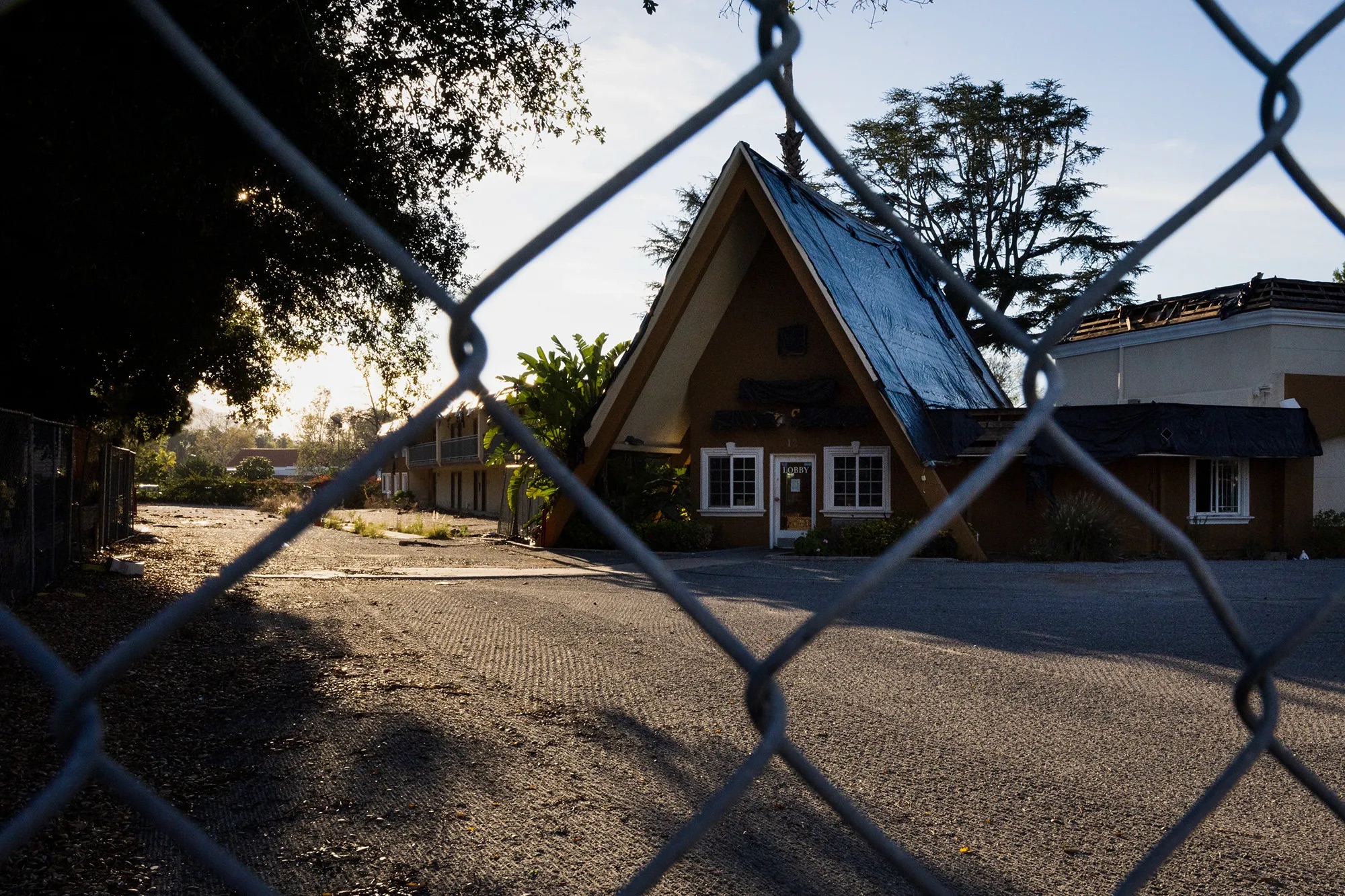
"caption": "The Quality Inn & Suites building along Conejo Boulevard stands vacant in Thousand Oaks on Feb. 26, 2026.",
"credit": "Julie Leopo-Bermudez for CalMatters",
"altTag": null,
"description": null,
"imgSizes": {
"thumbnail": {
"file": "https://cdn.kqed.org/wp-content/uploads/sites/10/2026/05/homekeyhead-160x107.jpeg",
"width": 160,
"height": 107,
"mimeType": "image/jpeg"
},
"1536x1536": {
"file": "https://cdn.kqed.org/wp-content/uploads/sites/10/2026/05/homekeyhead-1536x1024.jpeg",
"width": 1536,
"height": 1024,
"mimeType": "image/jpeg"
},
"post-thumbnail": {
"file": "https://cdn.kqed.org/wp-content/uploads/sites/10/2026/05/homekeyhead-672x372.jpeg",
"width": 672,
"height": 372,
"mimeType": "image/jpeg"
},
"twentyfourteen-full-width": {
"file": "https://cdn.kqed.org/wp-content/uploads/sites/10/2026/05/homekeyhead-1038x576.jpeg",
"width": 1038,
"height": 576,
"mimeType": "image/jpeg"
},
"npr-cds-wide": {
"file": "https://cdn.kqed.org/wp-content/uploads/sites/10/2026/05/homekeyhead-1200x675.jpeg",
"width": 1200,
"height": 675,
"mimeType": "image/jpeg"
},
"npr-cds-square": {
"file": "https://cdn.kqed.org/wp-content/uploads/sites/10/2026/05/homekeyhead-600x600.jpeg",
"width": 600,
"height": 600,
"mimeType": "image/jpeg"
},
"kqedFullSize": {
"file": "https://cdn.kqed.org/wp-content/uploads/sites/10/2026/05/homekeyhead.jpeg",
"width": 2000,
"height": 1333
}
},
"isLoading": false,
"fetchFailed": false
},
"news_12081939": {
"type": "attachments",
"id": "news_12081939",
"meta": {
"index": "attachments_1716263798",
"site": "news",
"id": "12081939",
"found": true
},
"title": "VotingCM",
"publishDate": 1777570480,
"status": "inherit",
"parent": 12081927,
"modified": 1777570517,
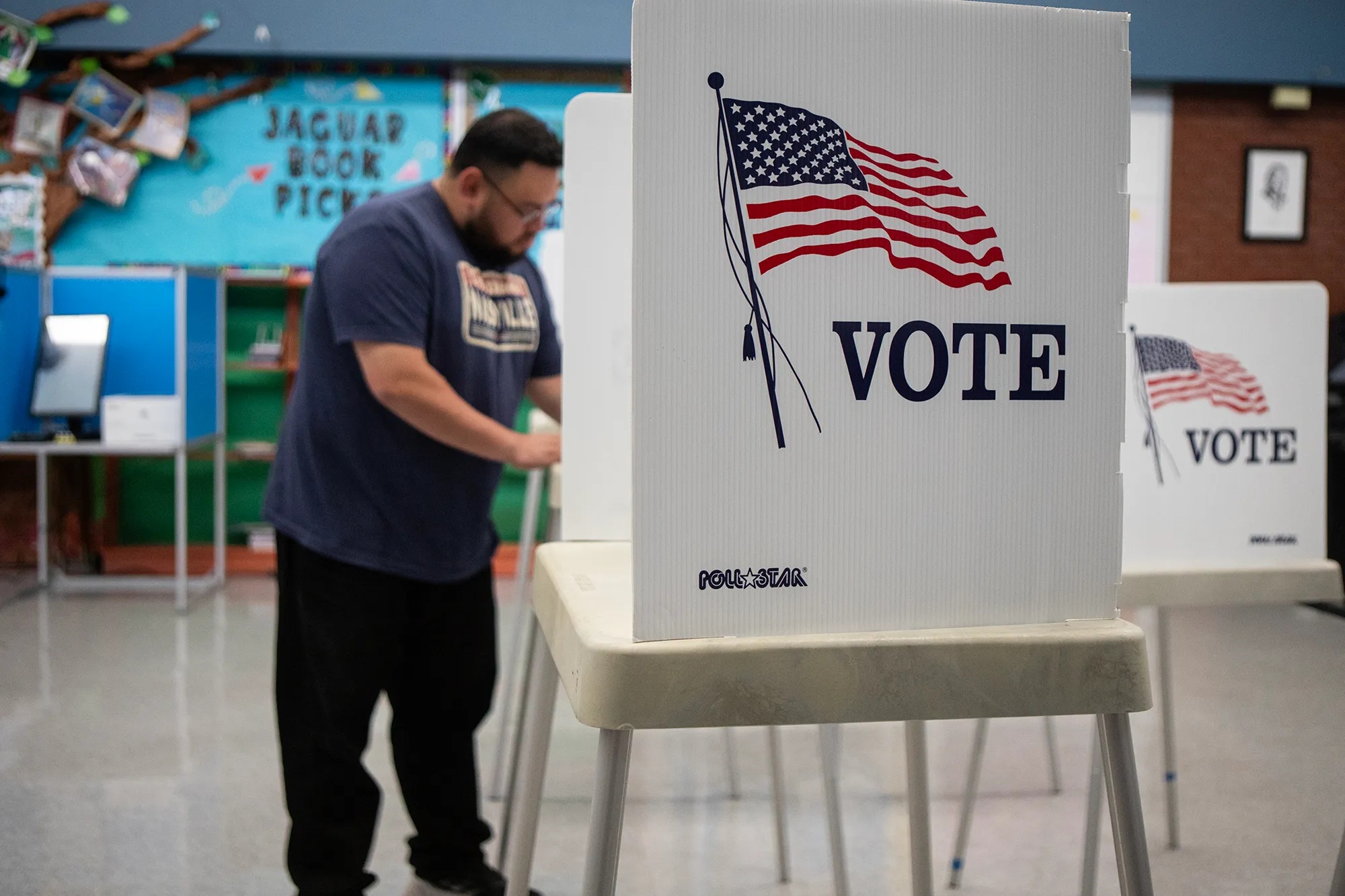
"caption": "A voter fills their ballot at a voting center at Powers-Ginsburg Elementary School in Fresno on March 5, 2024. Residents all over California are participating in the primary elections throughout the state.",
"credit": "Larry Valenzuela/CalMatters via CatchLight Local",
"altTag": null,
"description": null,
"imgSizes": {
"thumbnail": {
"file": "https://cdn.kqed.org/wp-content/uploads/sites/10/2026/04/VotingCM-160x107.jpg",
"width": 160,
"height": 107,
"mimeType": "image/jpeg"
},
"1536x1536": {
"file": "https://cdn.kqed.org/wp-content/uploads/sites/10/2026/04/VotingCM-1536x1024.jpg",
"width": 1536,
"height": 1024,
"mimeType": "image/jpeg"
},
"post-thumbnail": {
"file": "https://cdn.kqed.org/wp-content/uploads/sites/10/2026/04/VotingCM-672x372.jpg",
"width": 672,
"height": 372,
"mimeType": "image/jpeg"
},
"twentyfourteen-full-width": {
"file": "https://cdn.kqed.org/wp-content/uploads/sites/10/2026/04/VotingCM-1038x576.jpg",
"width": 1038,
"height": 576,
"mimeType": "image/jpeg"
},
"npr-cds-wide": {
"file": "https://cdn.kqed.org/wp-content/uploads/sites/10/2026/04/VotingCM-1200x675.jpg",
"width": 1200,
"height": 675,
"mimeType": "image/jpeg"
},
"npr-cds-square": {
"file": "https://cdn.kqed.org/wp-content/uploads/sites/10/2026/04/VotingCM-600x600.jpg",
"width": 600,
"height": 600,
"mimeType": "image/jpeg"
},
"kqedFullSize": {
"file": "https://cdn.kqed.org/wp-content/uploads/sites/10/2026/04/VotingCM.jpg",
"width": 2000,
"height": 1333
}
},
"isLoading": false,
"fetchFailed": false
},
"news_12081739": {
"type": "attachments",
"id": "news_12081739",
"meta": {
"index": "attachments_1716263798",
"site": "news",
"id": "12081739",
"found": true
},
"title": "DMVCM1",
"publishDate": 1777479664,
"status": "inherit",
"parent": 12081737,
"modified": 1777479686,
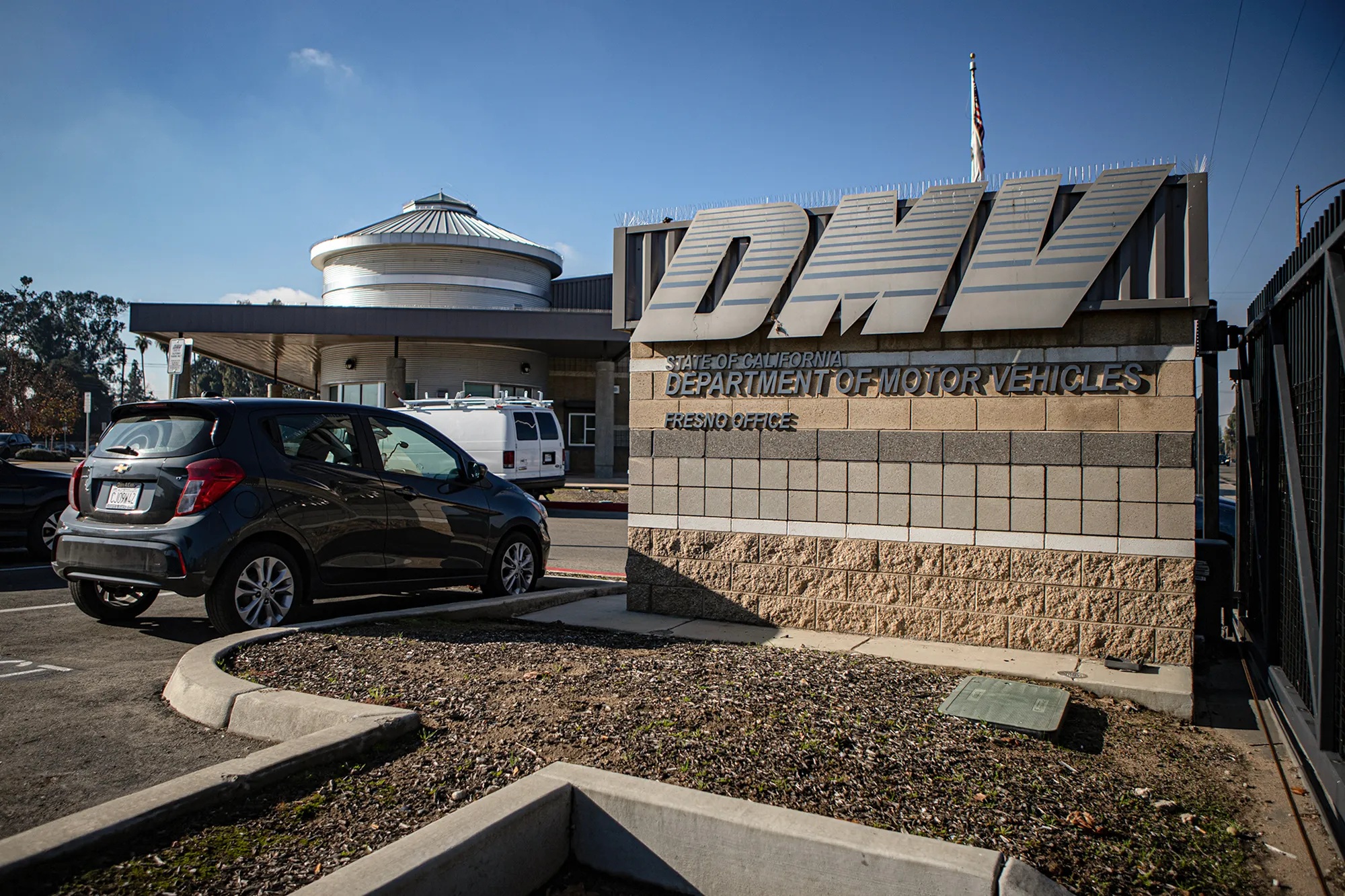
"caption": "The DMV has asked for $55 million to share its driver license data to a national organization. Advocates say the move could endanger unauthorized immigrants. Department of Motor Vehicles parking lot in central Fresno on Dec. 13, 2022. ",
"credit": "Larry Valenzuela for CalMatters",
"altTag": null,
"description": null,
"imgSizes": {
"thumbnail": {
"file": "https://cdn.kqed.org/wp-content/uploads/sites/10/2026/04/DMVCM1-160x107.jpg",
"width": 160,
"height": 107,
"mimeType": "image/jpeg"
},
"1536x1536": {
"file": "https://cdn.kqed.org/wp-content/uploads/sites/10/2026/04/DMVCM1-1536x1024.jpg",
"width": 1536,
"height": 1024,
"mimeType": "image/jpeg"
},
"post-thumbnail": {
"file": "https://cdn.kqed.org/wp-content/uploads/sites/10/2026/04/DMVCM1-672x372.jpg",
"width": 672,
"height": 372,
"mimeType": "image/jpeg"
},
"twentyfourteen-full-width": {
"file": "https://cdn.kqed.org/wp-content/uploads/sites/10/2026/04/DMVCM1-1038x576.jpg",
"width": 1038,
"height": 576,
"mimeType": "image/jpeg"
},
"npr-cds-wide": {
"file": "https://cdn.kqed.org/wp-content/uploads/sites/10/2026/04/DMVCM1-1200x675.jpg",
"width": 1200,
"height": 675,
"mimeType": "image/jpeg"
},
"npr-cds-square": {
"file": "https://cdn.kqed.org/wp-content/uploads/sites/10/2026/04/DMVCM1-600x600.jpg",
"width": 600,
"height": 600,
"mimeType": "image/jpeg"
},
"kqedFullSize": {
"file": "https://cdn.kqed.org/wp-content/uploads/sites/10/2026/04/DMVCM1.jpg",
"width": 2000,
"height": 1333
}
},
"isLoading": false,
"fetchFailed": false
},
"news_12081365": {
"type": "attachments",
"id": "news_12081365",
"meta": {
"index": "attachments_1716263798",
"site": "news",
"id": "12081365",
"found": true
},
"title": "110525-Election-Counting-Fresno-LV-CM-15-1",
"publishDate": 1777068720,
"status": "inherit",
"parent": 12081363,
"modified": 1777068744,
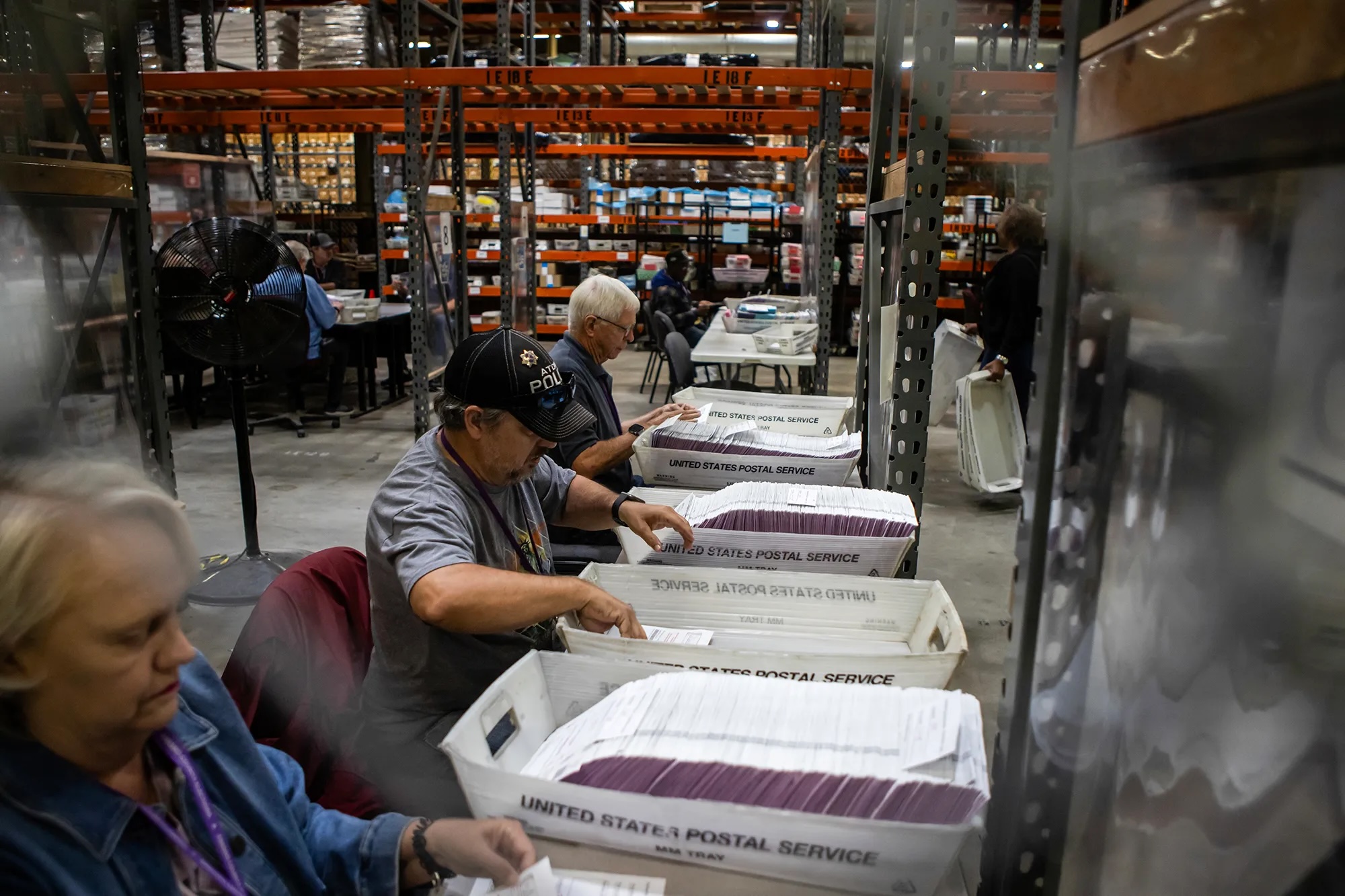
"caption": "Election workers sort ballots at the Fresno County Elections Warehouse in Fresno on Nov. 5, 2025. ",
"credit": "Photo by Larry Valenzuela/CalMatters/CatchLight Local",
"altTag": null,
"description": null,
"imgSizes": {
"thumbnail": {
"file": "https://cdn.kqed.org/wp-content/uploads/sites/10/2026/04/110525-Election-Counting-Fresno-LV-CM-15-1-160x107.jpeg",
"width": 160,
"height": 107,
"mimeType": "image/jpeg"
},
"1536x1536": {
"file": "https://cdn.kqed.org/wp-content/uploads/sites/10/2026/04/110525-Election-Counting-Fresno-LV-CM-15-1-1536x1024.jpeg",
"width": 1536,
"height": 1024,
"mimeType": "image/jpeg"
},
"post-thumbnail": {
"file": "https://cdn.kqed.org/wp-content/uploads/sites/10/2026/04/110525-Election-Counting-Fresno-LV-CM-15-1-672x372.jpeg",
"width": 672,
"height": 372,
"mimeType": "image/jpeg"
},
"twentyfourteen-full-width": {
"file": "https://cdn.kqed.org/wp-content/uploads/sites/10/2026/04/110525-Election-Counting-Fresno-LV-CM-15-1-1038x576.jpeg",
"width": 1038,
"height": 576,
"mimeType": "image/jpeg"
},
"npr-cds-wide": {
"file": "https://cdn.kqed.org/wp-content/uploads/sites/10/2026/04/110525-Election-Counting-Fresno-LV-CM-15-1-1200x675.jpeg",
"width": 1200,
"height": 675,
"mimeType": "image/jpeg"
},
"npr-cds-square": {
"file": "https://cdn.kqed.org/wp-content/uploads/sites/10/2026/04/110525-Election-Counting-Fresno-LV-CM-15-1-600x600.jpeg",
"width": 600,
"height": 600,
"mimeType": "image/jpeg"
},
"kqedFullSize": {
"file": "https://cdn.kqed.org/wp-content/uploads/sites/10/2026/04/110525-Election-Counting-Fresno-LV-CM-15-1.jpeg",
"width": 2000,
"height": 1333
}
},
"isLoading": false,
"fetchFailed": false
},
"news_12081405": {
"type": "attachments",
"id": "news_12081405",
"meta": {
"index": "attachments_1716263798",
"site": "news",
"id": "12081405",
"found": true
},
"title": "110425_OC-Voting_JH_CM_23",
"publishDate": 1777074107,
"status": "inherit",
"parent": 12081404,
"modified": 1777074126,
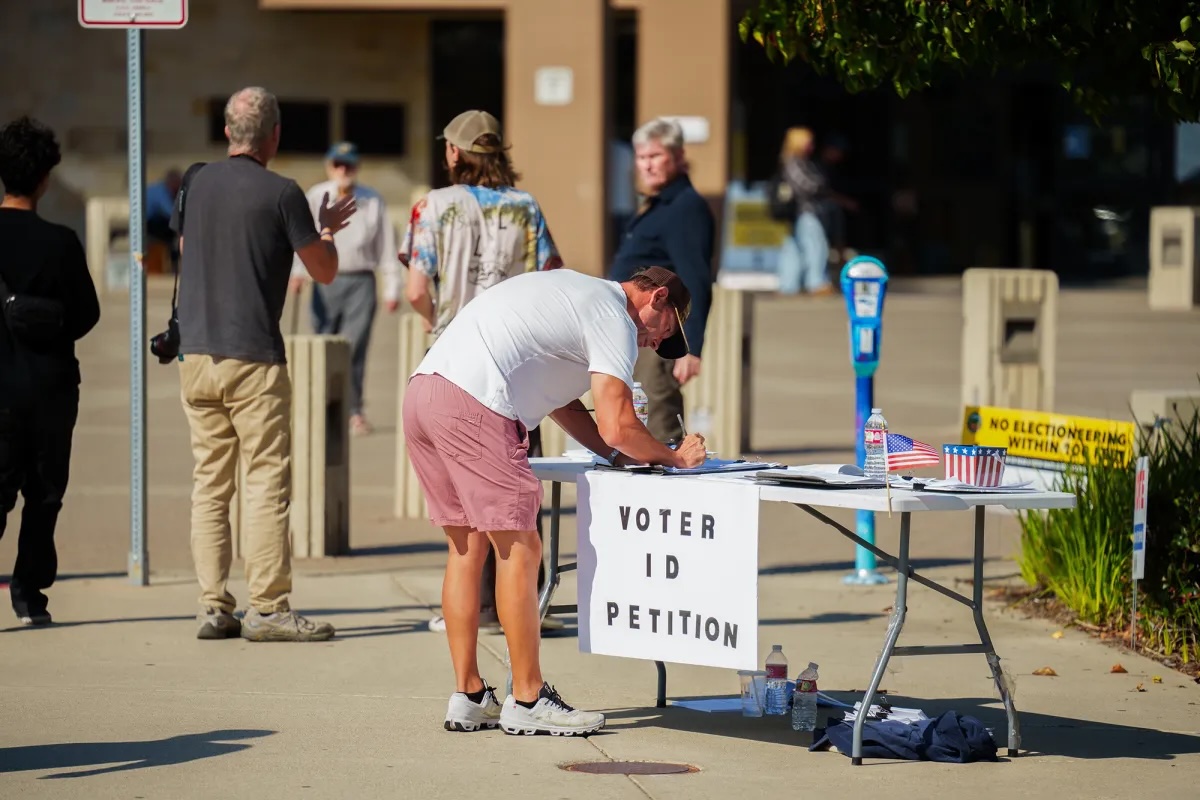
"caption": "A person signs one of several different petitions at a vote center at the Huntington Beach Central Library in Huntington Beach on Nov. 4, 2025. ",
"credit": "Jules Hotz/CalMatters",
"altTag": null,
"description": null,
"imgSizes": {
"thumbnail": {
"file": "https://cdn.kqed.org/wp-content/uploads/sites/10/2026/04/110425_OC-Voting_JH_CM_23-160x107.jpeg",
"width": 160,
"height": 107,
"mimeType": "image/jpeg"
},
"post-thumbnail": {
"file": "https://cdn.kqed.org/wp-content/uploads/sites/10/2026/04/110425_OC-Voting_JH_CM_23-672x372.jpeg",
"width": 672,
"height": 372,
"mimeType": "image/jpeg"
},
"twentyfourteen-full-width": {
"file": "https://cdn.kqed.org/wp-content/uploads/sites/10/2026/04/110425_OC-Voting_JH_CM_23-1038x576.jpeg",
"width": 1038,
"height": 576,
"mimeType": "image/jpeg"
},
"npr-cds-wide": {
"file": "https://cdn.kqed.org/wp-content/uploads/sites/10/2026/04/110425_OC-Voting_JH_CM_23-1200x675.jpeg",
"width": 1200,
"height": 675,
"mimeType": "image/jpeg"
},
"npr-cds-square": {
"file": "https://cdn.kqed.org/wp-content/uploads/sites/10/2026/04/110425_OC-Voting_JH_CM_23-600x600.jpeg",
"width": 600,
"height": 600,
"mimeType": "image/jpeg"
},
"kqedFullSize": {
"file": "https://cdn.kqed.org/wp-content/uploads/sites/10/2026/04/110425_OC-Voting_JH_CM_23.jpeg",
"width": 1200,
"height": 800
}
},
"isLoading": false,
"fetchFailed": false
},
"news_12081287": {
"type": "attachments",
"id": "news_12081287",
"meta": {
"index": "attachments_1716263798",
"site": "news",
"id": "12081287",
"found": true
},
"title": "070824-McFarland-GEO-Facility-LV_09-CM",
"publishDate": 1777050539,
"status": "inherit",
"parent": 12081286,
"modified": 1777050568,
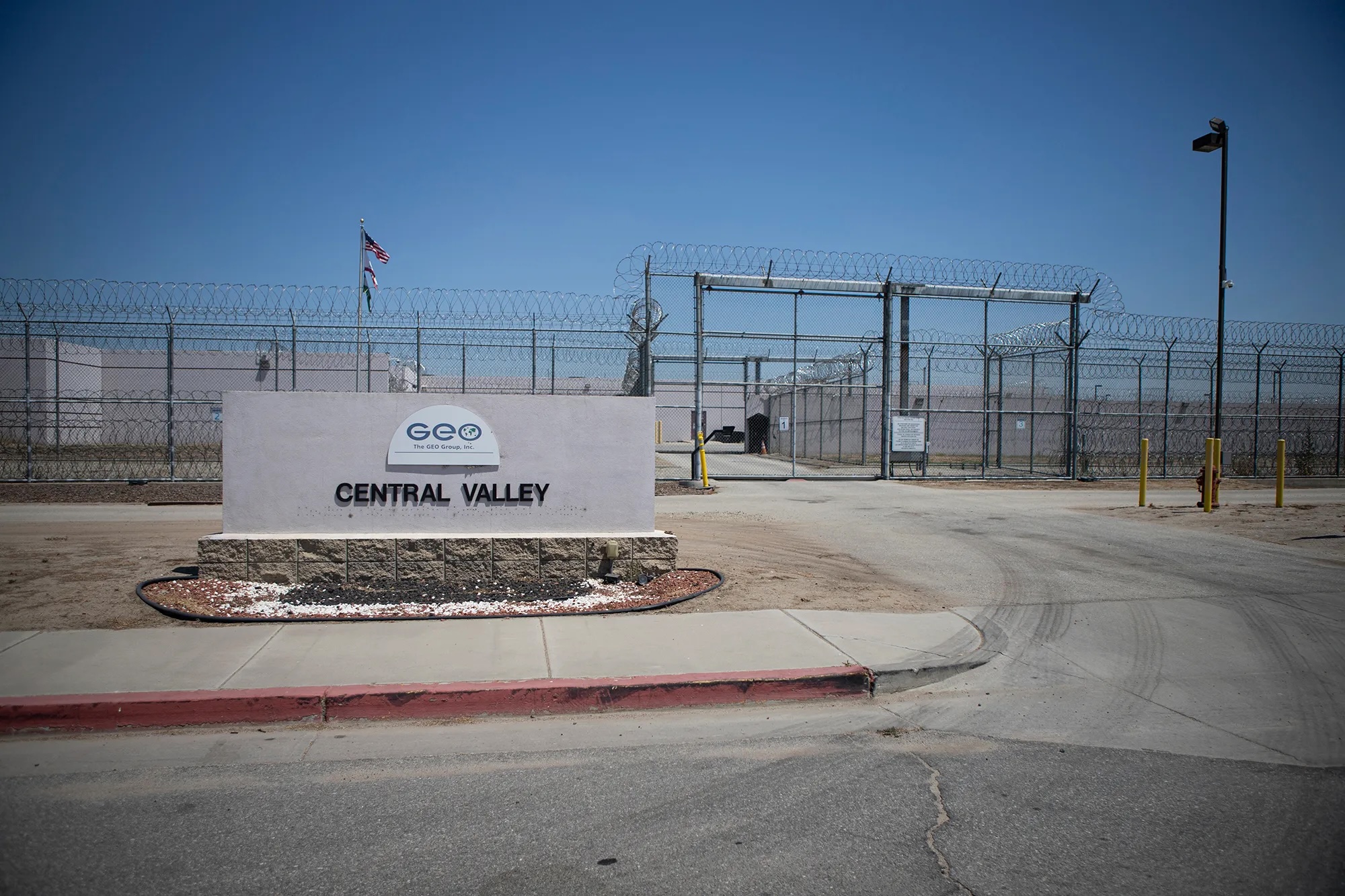
"caption": "The Central Valley Annex in McFarland on July 8, 2024.",
"credit": "Larry Valenzuela/CalMatters/CatchLight Local",
"altTag": null,
"description": null,
"imgSizes": {
"thumbnail": {
"file": "https://cdn.kqed.org/wp-content/uploads/sites/10/2026/04/070824-McFarland-GEO-Facility-LV_09-CM-160x107.jpeg",
"width": 160,
"height": 107,
"mimeType": "image/jpeg"
},
"1536x1536": {
"file": "https://cdn.kqed.org/wp-content/uploads/sites/10/2026/04/070824-McFarland-GEO-Facility-LV_09-CM-1536x1024.jpeg",
"width": 1536,
"height": 1024,
"mimeType": "image/jpeg"
},
"post-thumbnail": {
"file": "https://cdn.kqed.org/wp-content/uploads/sites/10/2026/04/070824-McFarland-GEO-Facility-LV_09-CM-672x372.jpeg",
"width": 672,
"height": 372,
"mimeType": "image/jpeg"
},
"twentyfourteen-full-width": {
"file": "https://cdn.kqed.org/wp-content/uploads/sites/10/2026/04/070824-McFarland-GEO-Facility-LV_09-CM-1038x576.jpeg",
"width": 1038,
"height": 576,
"mimeType": "image/jpeg"
},
"npr-cds-wide": {
"file": "https://cdn.kqed.org/wp-content/uploads/sites/10/2026/04/070824-McFarland-GEO-Facility-LV_09-CM-1200x675.jpeg",
"width": 1200,
"height": 675,
"mimeType": "image/jpeg"
},
"npr-cds-square": {
"file": "https://cdn.kqed.org/wp-content/uploads/sites/10/2026/04/070824-McFarland-GEO-Facility-LV_09-CM-600x600.jpeg",
"width": 600,
"height": 600,
"mimeType": "image/jpeg"
},
"kqedFullSize": {
"file": "https://cdn.kqed.org/wp-content/uploads/sites/10/2026/04/070824-McFarland-GEO-Facility-LV_09-CM.jpeg",
"width": 2000,
"height": 1333
}
},
"isLoading": false,
"fetchFailed": false
},
"news_12080989": {
"type": "attachments",
"id": "news_12080989",
"meta": {
"index": "attachments_1716263798",
"site": "news",
"id": "12080989",
"found": true
},
"title": "070725-MacArthur-Park-Feds-JW-CM-27",
"publishDate": 1776896193,
"status": "inherit",
"parent": 12080962,
"modified": 1776897913,
"caption": "Federal agents descend on MacArthur Park in Los Angeles on July 7, 2025. ",
"credit": "J.W. Hendricks/CalMatters",
"altTag": null,
"description": null,
"imgSizes": {
"thumbnail": {
"file": "https://cdn.kqed.org/wp-content/uploads/sites/10/2026/04/070725-MacArthur-Park-Feds-JW-CM-27-160x107.jpeg",
"width": 160,
"height": 107,
"mimeType": "image/jpeg"
},
"1536x1536": {
"file": "https://cdn.kqed.org/wp-content/uploads/sites/10/2026/04/070725-MacArthur-Park-Feds-JW-CM-27-1536x1025.jpeg",
"width": 1536,
"height": 1025,
"mimeType": "image/jpeg"
},
"post-thumbnail": {
"file": "https://cdn.kqed.org/wp-content/uploads/sites/10/2026/04/070725-MacArthur-Park-Feds-JW-CM-27-672x372.jpeg",
"width": 672,
"height": 372,
"mimeType": "image/jpeg"
},
"twentyfourteen-full-width": {
"file": "https://cdn.kqed.org/wp-content/uploads/sites/10/2026/04/070725-MacArthur-Park-Feds-JW-CM-27-1038x576.jpeg",
"width": 1038,
"height": 576,
"mimeType": "image/jpeg"
},
"npr-cds-wide": {
"file": "https://cdn.kqed.org/wp-content/uploads/sites/10/2026/04/070725-MacArthur-Park-Feds-JW-CM-27-1200x675.jpeg",
"width": 1200,
"height": 675,
"mimeType": "image/jpeg"
},
"npr-cds-square": {
"file": "https://cdn.kqed.org/wp-content/uploads/sites/10/2026/04/070725-MacArthur-Park-Feds-JW-CM-27-600x600.jpeg",
"width": 600,
"height": 600,
"mimeType": "image/jpeg"
},
"kqedFullSize": {
"file": "https://cdn.kqed.org/wp-content/uploads/sites/10/2026/04/070725-MacArthur-Park-Feds-JW-CM-27.jpeg",
"width": 2000,
"height": 1334
}
},
"isLoading": false,
"fetchFailed": false
},
"news_12077855": {
"type": "attachments",
"id": "news_12077855",
"meta": {
"index": "attachments_1716263798",
"site": "news",
"id": "12077855",
"found": true
},
"title": "Gubernatorial Candidate Riverside County Sheriff Chad Bianco Event",
"publishDate": 1774638443,
"status": "inherit",
"parent": 12077846,
"modified": 1775847179,
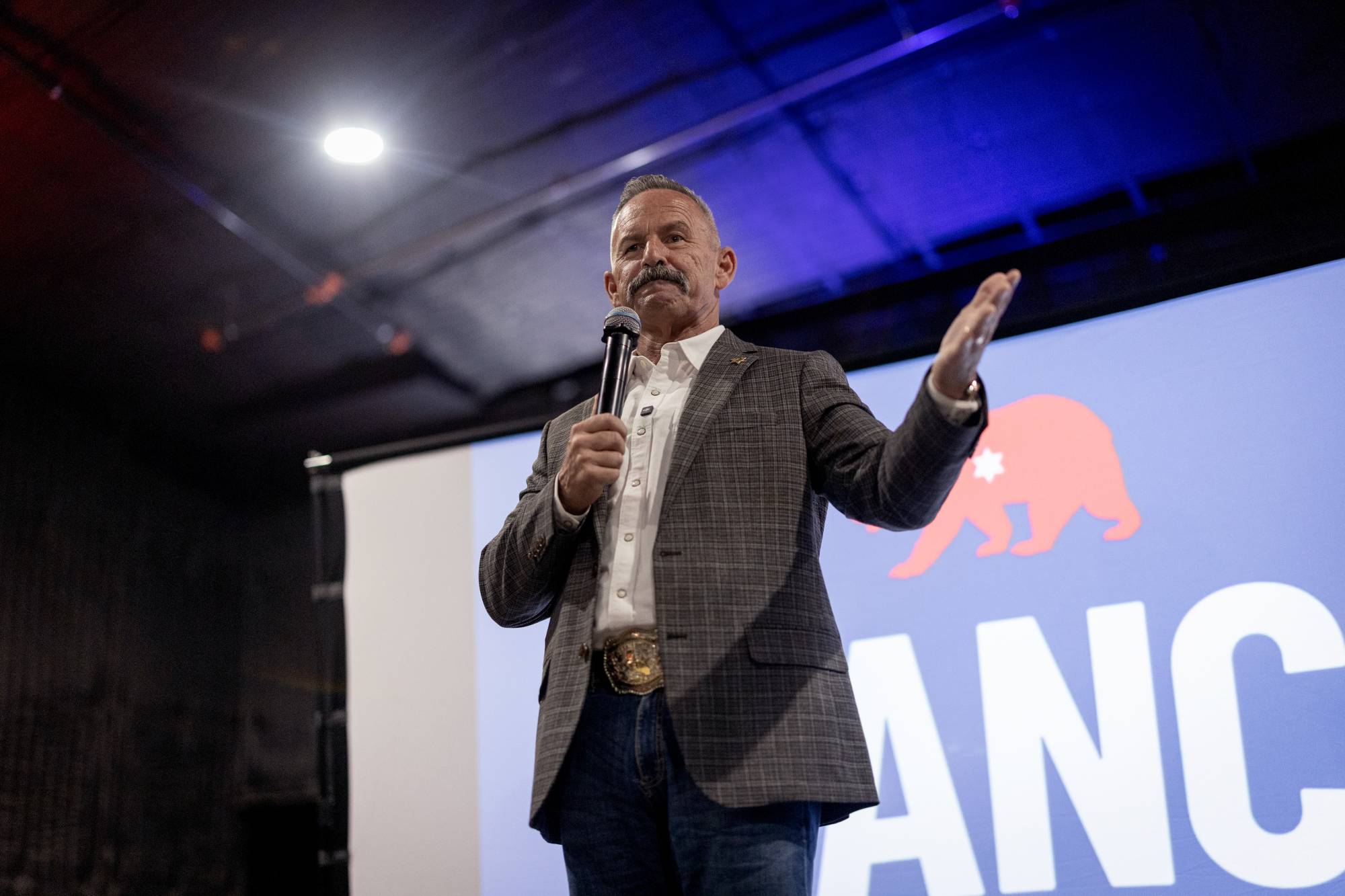
"caption": "Gubernatorial Candidate Riverside County Sheriff Chad Bianco speaks at an event in downtown Los Angeles on March 24, 2026. ",
"credit": "Eric Thayer/Los Angeles Times via Getty Images",
"altTag": null,
"description": null,
"imgSizes": {
"medium": {
"file": "https://cdn.kqed.org/wp-content/uploads/sites/10/2026/03/GettyImages-2267789591-2000x1333.jpg",
"width": 2000,
"height": 1333,
"mimeType": "image/jpeg"
},
"large": {
"file": "https://cdn.kqed.org/wp-content/uploads/sites/10/2026/03/GettyImages-2267789591-2000x1333.jpg",
"width": 2000,
"height": 1333,
"mimeType": "image/jpeg"
},
"thumbnail": {
"file": "https://cdn.kqed.org/wp-content/uploads/sites/10/2026/03/GettyImages-2267789591-160x107.jpg",
"width": 160,
"height": 107,
"mimeType": "image/jpeg"
},
"1536x1536": {
"file": "https://cdn.kqed.org/wp-content/uploads/sites/10/2026/03/GettyImages-2267789591-1536x1024.jpg",
"width": 1536,
"height": 1024,
"mimeType": "image/jpeg"
},
"2048x2048": {
"file": "https://cdn.kqed.org/wp-content/uploads/sites/10/2026/03/GettyImages-2267789591-2048x1365.jpg",
"width": 2048,
"height": 1365,
"mimeType": "image/jpeg"
},
"post-thumbnail": {
"file": "https://cdn.kqed.org/wp-content/uploads/sites/10/2026/03/GettyImages-2267789591-672x372.jpg",
"width": 672,
"height": 372,
"mimeType": "image/jpeg"
},
"twentyfourteen-full-width": {
"file": "https://cdn.kqed.org/wp-content/uploads/sites/10/2026/03/GettyImages-2267789591-1038x576.jpg",
"width": 1038,
"height": 576,
"mimeType": "image/jpeg"
},
"full-width": {
"file": "https://cdn.kqed.org/wp-content/uploads/sites/10/2026/03/GettyImages-2267789591-2000x1333.jpg",
"width": 2000,
"height": 1333,
"mimeType": "image/jpeg"
},
"npr-cds-wide": {
"file": "https://cdn.kqed.org/wp-content/uploads/sites/10/2026/03/GettyImages-2267789591-1200x675.jpg",
"width": 1200,
"height": 675,
"mimeType": "image/jpeg"
},
"npr-cds-square": {
"file": "https://cdn.kqed.org/wp-content/uploads/sites/10/2026/03/GettyImages-2267789591-600x600.jpg",
"width": 600,
"height": 600,
"mimeType": "image/jpeg"
},
"kqedFullSize": {
"file": "https://cdn.kqed.org/wp-content/uploads/sites/10/2026/03/GettyImages-2267789591-scaled-e1775847167430.jpg",
"width": 2000,
"height": 1334
}
},
"isLoading": false,
"fetchFailed": false
},
"news_12079860": {
"type": "attachments",
"id": "news_12079860",
"meta": {
"index": "attachments_1716263798",
"site": "news",
"id": "12079860",
"found": true
},
"title": "US-POLITICS-CONGRESS-SWALWELL",
"publishDate": 1776188754,
"status": "inherit",
"parent": 12079856,
"modified": 1776188835,
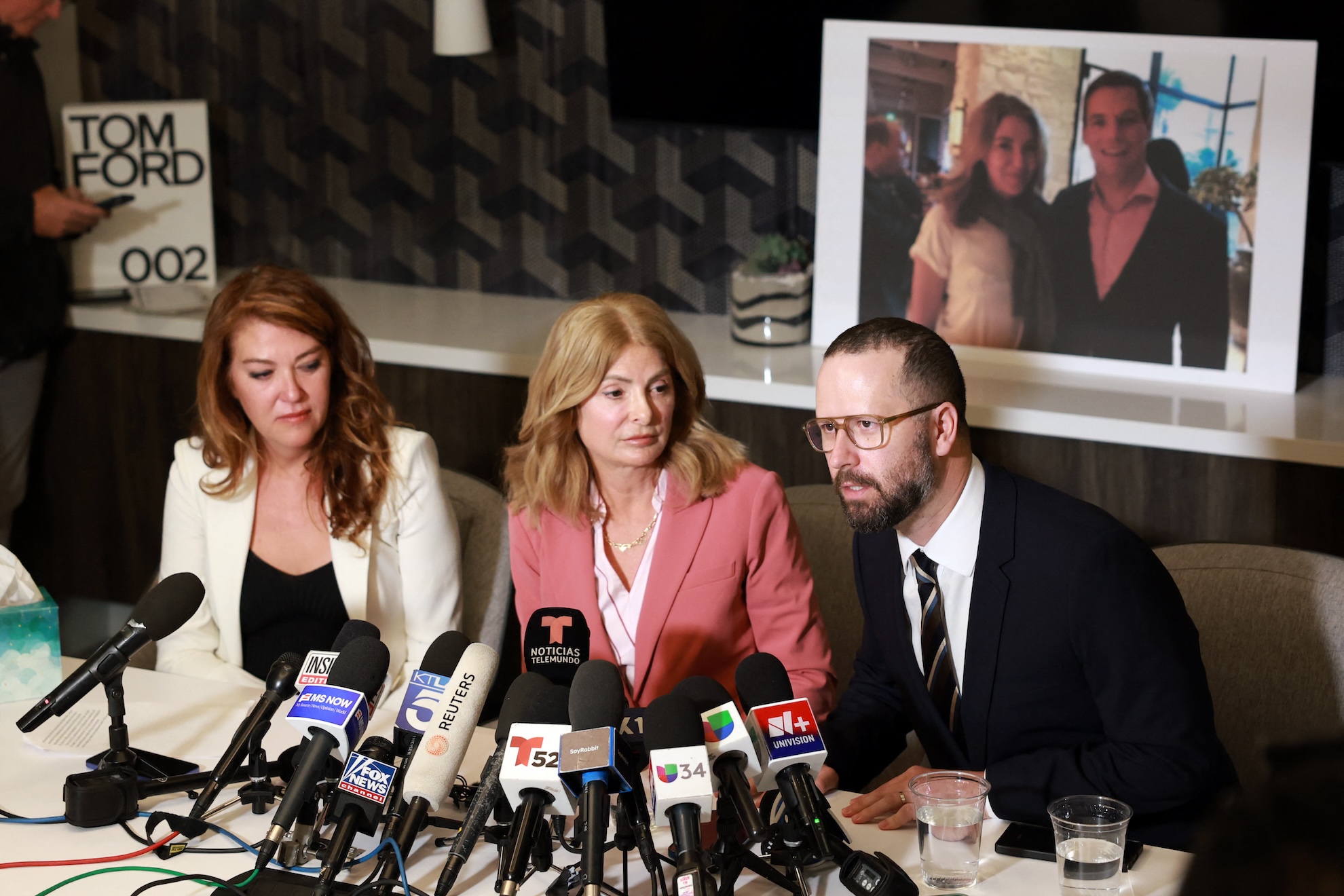
"caption": "Lonna Drewes, left, listens to her lawyers Arick Fudali and Lisa Bloom, during a press conference where she described her claims about sexual misconduct by former US Rep. Eric Swalwell in Beverly Hills, California, on April 14, 2026. ",
"credit": "Patrick T. Fallon/AFP",
"altTag": null,
"description": null,
"imgSizes": {
"thumbnail": {
"file": "https://cdn.kqed.org/wp-content/uploads/sites/10/2026/04/GettyImages-2270844476-160x107.jpg",
"width": 160,
"height": 107,
"mimeType": "image/jpeg"
},
"1536x1536": {
"file": "https://cdn.kqed.org/wp-content/uploads/sites/10/2026/04/GettyImages-2270844476-1536x1024.jpg",
"width": 1536,
"height": 1024,
"mimeType": "image/jpeg"
},
"post-thumbnail": {
"file": "https://cdn.kqed.org/wp-content/uploads/sites/10/2026/04/GettyImages-2270844476-672x372.jpg",
"width": 672,
"height": 372,
"mimeType": "image/jpeg"
},
"twentyfourteen-full-width": {
"file": "https://cdn.kqed.org/wp-content/uploads/sites/10/2026/04/GettyImages-2270844476-1038x576.jpg",
"width": 1038,
"height": 576,
"mimeType": "image/jpeg"
},
"npr-cds-wide": {
"file": "https://cdn.kqed.org/wp-content/uploads/sites/10/2026/04/GettyImages-2270844476-1200x675.jpg",
"width": 1200,
"height": 675,
"mimeType": "image/jpeg"
},
"npr-cds-square": {
"file": "https://cdn.kqed.org/wp-content/uploads/sites/10/2026/04/GettyImages-2270844476-600x600.jpg",
"width": 600,
"height": 600,
"mimeType": "image/jpeg"
},
"kqedFullSize": {
"file": "https://cdn.kqed.org/wp-content/uploads/sites/10/2026/04/GettyImages-2270844476.jpg",
"width": 1980,
"height": 1320
}
},
"isLoading": false,
"fetchFailed": false
},
"news_12078444": {
"type": "attachments",
"id": "news_12078444",
"meta": {
"index": "attachments_1716263798",
"site": "news",
"id": "12078444",
"found": true
},
"title": "Voters wait in line on Election day in Riverside, CA.",
"publishDate": 1775148718,
"status": "inherit",
"parent": 12078441,
"modified": 1775148945,
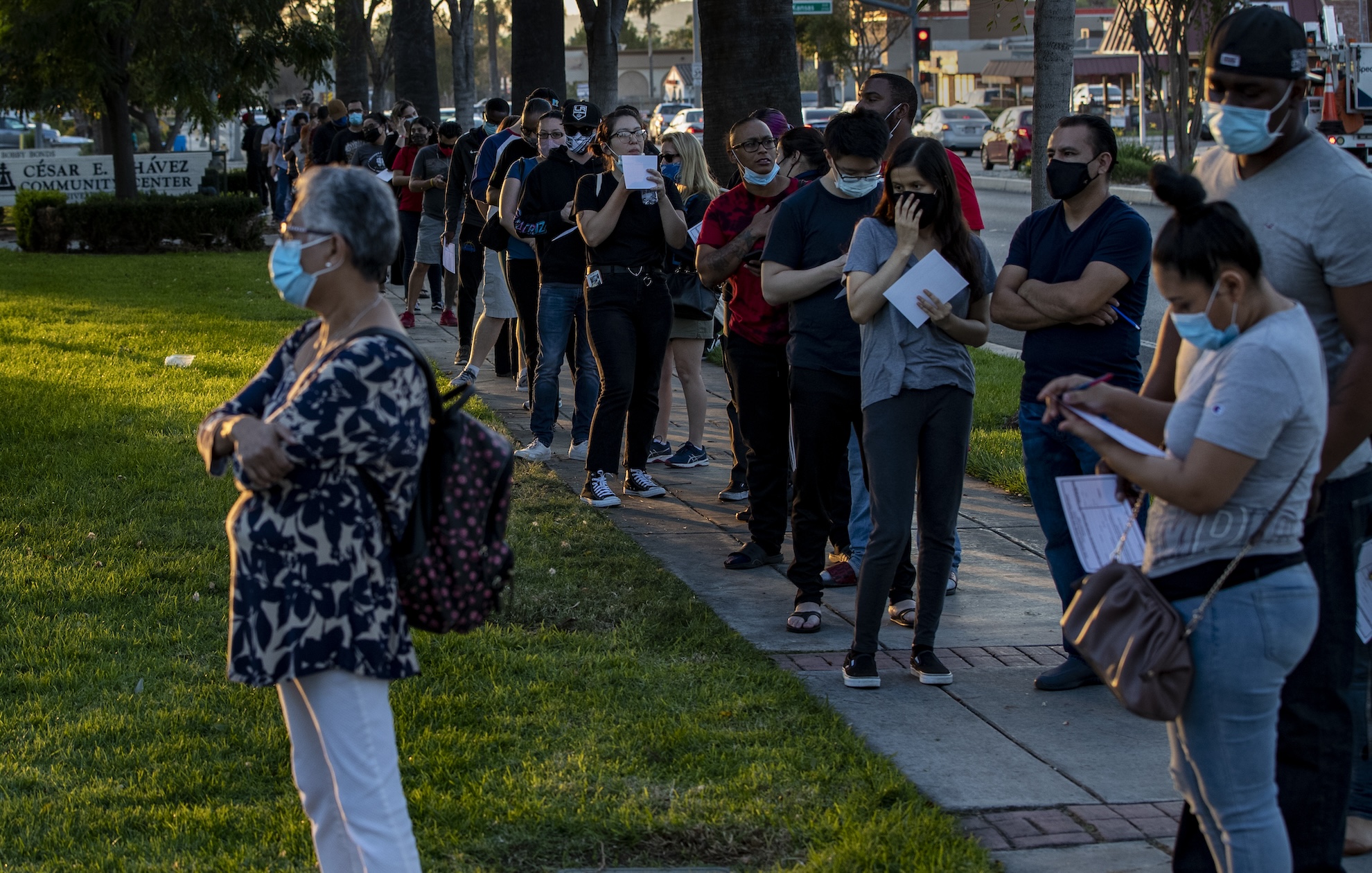
"caption": "The line stretched out to the sidewalk along University Avenue as voters wait for almost 3 hours to cast their ballot on Election Day at the Cesar Chavez Community Center on Nov. 3, 2020 in Riverside, California.",
"credit": "Gina Ferazzi/Los Angeles Times via Getty Images",
"altTag": null,
"description": null,
"imgSizes": {
"thumbnail": {
"file": "https://cdn.kqed.org/wp-content/uploads/sites/10/2026/04/GettyImages-1229447075-160x102.jpg",
"width": 160,
"height": 102,
"mimeType": "image/jpeg"
},
"1536x1536": {
"file": "https://cdn.kqed.org/wp-content/uploads/sites/10/2026/04/GettyImages-1229447075-1536x977.jpg",
"width": 1536,
"height": 977,
"mimeType": "image/jpeg"
},
"post-thumbnail": {
"file": "https://cdn.kqed.org/wp-content/uploads/sites/10/2026/04/GettyImages-1229447075-672x372.jpg",
"width": 672,
"height": 372,
"mimeType": "image/jpeg"
},
"twentyfourteen-full-width": {
"file": "https://cdn.kqed.org/wp-content/uploads/sites/10/2026/04/GettyImages-1229447075-1038x576.jpg",
"width": 1038,
"height": 576,
"mimeType": "image/jpeg"
},
"npr-cds-wide": {
"file": "https://cdn.kqed.org/wp-content/uploads/sites/10/2026/04/GettyImages-1229447075-1200x675.jpg",
"width": 1200,
"height": 675,
"mimeType": "image/jpeg"
},
"npr-cds-square": {
"file": "https://cdn.kqed.org/wp-content/uploads/sites/10/2026/04/GettyImages-1229447075-600x600.jpg",
"width": 600,
"height": 600,
"mimeType": "image/jpeg"
},
"kqedFullSize": {
"file": "https://cdn.kqed.org/wp-content/uploads/sites/10/2026/04/GettyImages-1229447075.jpg",
"width": 1980,
"height": 1260
}
},
"isLoading": false,
"fetchFailed": false
},
"news_12073780": {
"type": "attachments",
"id": "news_12073780",
"meta": {
"index": "attachments_1716263798",
"site": "news",
"id": "12073780",
"found": true
},
"title": "ICE Raid At Southern California Farm Sparks Protests",
"publishDate": 1771461614,
"status": "inherit",
"parent": 12073728,
"modified": 1776964377,
"caption": "Federal agents at an immigration raid near Camarillo in Southern California on July 10, 2025.",
"credit": "Mario Tama/Getty Images",
"altTag": null,
"description": null,
"imgSizes": {
"thumbnail": {
"file": "https://cdn.kqed.org/wp-content/uploads/sites/10/2026/02/GETTYIMAGES-2224603707-KQED-160x108.jpg",
"width": 160,
"height": 108,
"mimeType": "image/jpeg"
},
"1536x1536": {
"file": "https://cdn.kqed.org/wp-content/uploads/sites/10/2026/02/GETTYIMAGES-2224603707-KQED-1536x1038.jpg",
"width": 1536,
"height": 1038,
"mimeType": "image/jpeg"
},
"post-thumbnail": {
"file": "https://cdn.kqed.org/wp-content/uploads/sites/10/2026/02/GETTYIMAGES-2224603707-KQED-672x372.jpg",
"width": 672,
"height": 372,
"mimeType": "image/jpeg"
},
"twentyfourteen-full-width": {
"file": "https://cdn.kqed.org/wp-content/uploads/sites/10/2026/02/GETTYIMAGES-2224603707-KQED-1038x576.jpg",
"width": 1038,
"height": 576,
"mimeType": "image/jpeg"
},
"npr-cds-wide": {
"file": "https://cdn.kqed.org/wp-content/uploads/sites/10/2026/02/GETTYIMAGES-2224603707-KQED-1200x675.jpg",
"width": 1200,
"height": 675,
"mimeType": "image/jpeg"
},
"kqedFullSize": {
"file": "https://cdn.kqed.org/wp-content/uploads/sites/10/2026/02/GETTYIMAGES-2224603707-KQED.jpg",
"width": 2000,
"height": 1351
}
},
"isLoading": false,
"fetchFailed": false
}
},
"audioPlayerReducer": {
"postId": "stream_live",
"isPaused": true,
"isPlaying": false,
"pfsActive": false,
"pledgeModalIsOpen": true,
"playerDrawerIsOpen": false,
"liveAudioPlayStartedAt": 0,
"liveAudioPlayContext": ""
},
"authorsReducer": {
"byline_news_12083633": {
"type": "authors",
"id": "byline_news_12083633",
"meta": {
"override": true
},
"slug": "byline_news_12083633",
"name": "Alejandra Reyes-Velarde, CalMatters",
"isLoading": false
},
"byline_news_12082668": {
"type": "authors",
"id": "byline_news_12082668",
"meta": {
"override": true
},
"slug": "byline_news_12082668",
"name": "Lauren Hepler and Marisa Kendall, CalMatters",
"isLoading": false
},
"byline_news_12081927": {
"type": "authors",
"id": "byline_news_12081927",
"meta": {
"override": true
},
"slug": "byline_news_12081927",
"name": "Nigel Duara and Maya C. Miller, CalMatters",
"isLoading": false
},
"byline_news_12081737": {
"type": "authors",
"id": "byline_news_12081737",
"meta": {
"override": true
},
"slug": "byline_news_12081737",
"name": "Khari Johnson and Wendy Fry, CalMatters",
"isLoading": false
},
"byline_news_12081363": {
"type": "authors",
"id": "byline_news_12081363",
"meta": {
"override": true
},
"slug": "byline_news_12081363",
"name": "\u003ca>Maya C. Miller\u003c/a>, CalMatters",
"isLoading": false
},
"byline_news_12081404": {
"type": "authors",
"id": "byline_news_12081404",
"meta": {
"override": true
},
"slug": "byline_news_12081404",
"name": "\u003ca href=\"https://calmatters.org/author/nadia-lathan/\">Nadia Lathan\u003c/a>, CalMatters",
"isLoading": false
},
"byline_news_12081286": {
"type": "authors",
"id": "byline_news_12081286",
"meta": {
"override": true
},
"slug": "byline_news_12081286",
"name": "\u003ca href=\"https://calmatters.org/author/wendy-fry/\">Wendy Fry\u003c/a>, CalMatters",
"isLoading": false
},
"byline_news_12080962": {
"type": "authors",
"id": "byline_news_12080962",
"meta": {
"override": true
},
"slug": "byline_news_12080962",
"name": "\u003ca href=\"https://calmatters.org/author/nigelduara/\">Nigel Duara\u003c/a>, CalMatters",
"isLoading": false
},
"byline_news_12080702": {
"type": "authors",
"id": "byline_news_12080702",
"meta": {
"override": true
},
"slug": "byline_news_12080702",
"name": "\u003ca href=\"https://calmatters.org/author/anat-rubin/\">Anat Rubin\u003c/a> , \u003ca href=\"https://calmatters.org/author/jessica-pishko/\">Jessica Pishko\u003c/a>, CalMatters",
"isLoading": false
},
"byline_news_12079856": {
"type": "authors",
"id": "byline_news_12079856",
"meta": {
"override": true
},
"slug": "byline_news_12079856",
"name": "Jeanne Kuang, CalMatters",
"isLoading": false
},
"byline_news_12078441": {
"type": "authors",
"id": "byline_news_12078441",
"meta": {
"override": true
},
"slug": "byline_news_12078441",
"name": "Ryan Sabalow and Jeanne Kuang, CalMatters",
"isLoading": false
},
"byline_news_12078084": {
"type": "authors",
"id": "byline_news_12078084",
"meta": {
"override": true
},
"slug": "byline_news_12078084",
"name": "Sergio Olmos, CalMatters",
"isLoading": false
}
},
"pagesReducer": {
"news_affiliate_calmatters": {
"type": "terms",
"id": "news_18481",
"meta": {
"index": "terms_1716263798",
"site": "news",
"id": "18481",
"score": 15.355904
},
"featImg": null,
"name": "CALmatters",
"description": null,
"taxonomy": "affiliate",
"headData": {
"twImgId": null,
"twTitle": null,
"ogTitle": null,
"ogImgId": null,
"twDescription": null,
"description": null,
"title": "CALmatters Archives | KQED Arts",
"ogDescription": null
},
"ttid": 18515,
"slug": "calmatters",
"isLoading": false,
"title": "CALmatters",
"pageMeta": {
"site": "news",
"WpPageTemplate": "page-topic-editorial",
"currentPage": 6
},
"blocks": [
{
"blockName": "kqed/post-list",
"attrs": {
"layout": "cardArticle2",
"query": "posts/news?affiliate=calmatters",
"seeMore": false,
"paginated": true,
"page": 6
}
},
{
"blockName": "kqed/ad"
}
]
}
},
"pfsSessionReducer": {},
"postsReducer": {
"stream_live": {
"type": "live",
"id": "stream_live",
"audioUrl": "https://streams.kqed.org/kqedradio",
"title": "Live Stream",
"excerpt": "Live Stream information currently unavailable.",
"link": "/radio",
"featImg": "",
"label": {
"name": "KQED Live",
"link": "/"
}
},
"stream_kqedNewscast": {
"type": "posts",
"id": "stream_kqedNewscast",
"audioUrl": "https://www.kqed.org/.stream/anon/radio/RDnews/newscast.mp3?_=1",
"title": "KQED Newscast",
"featImg": "",
"label": {
"name": "88.5 FM",
"link": "/"
}
},
"news_12083633": {
"type": "posts",
"id": "news_12083633",
"meta": {
"index": "posts_1716263798",
"site": "news",
"id": "12083633",
"score": null,
"sort": [
1778785254000
]
},
"guestAuthors": [],
"slug": "californias-new-plastic-recycling-rules-spark-fights-from-all-sides",
"title": "California’s New Plastic Recycling Rules Spark Fights From All Sides",
"publishDate": 1778785254,
"format": "standard",
"headTitle": "California’s New Plastic Recycling Rules Spark Fights From All Sides | KQED",
"labelTerm": {},
"content": "\u003cp>\u003c!-- Creative Commons Attribution-NonCommercial-NoDerivatives https://creativecommons.org/licenses/by-nc-nd/4.0/ -->\u003c/p>\n\u003cp>\u003cem>This story was originally published by \u003ca href=\"https://calmatters.org/\">CalMatters\u003c/a>. \u003ca href=\"https://calmatters.org/subscribe-to-calmatters/\">Sign up\u003c/a> for their newsletters.\u003c/em>\u003c/p>\n\u003cp>\u003ca href=\"https://www.kqed.org/news/tag/california\">California\u003c/a> just gave plastic producers until 2032 to make all their packaging recyclable or compostable — the most ambitious deadline in the country. Advocates say it doesn’t go far enough. Producers say it goes too far. At least one of them is threatening to sue.\u003c/p>\n\u003cp>The sweeping regulations, finalized at the start of the month, put producers in a bind that has no obvious solution. Plastic clamshell containers, for instance, protect berries from being crushed and keep them fresher, longer until they reach a refrigerator. Plastic producers say there’s simply no substitute — yet under the new rules, they’ll have to find one.\u003c/p>\n\u003cp>Last week, two environmental groups — the Natural Resources Defense Council and Californians Against Waste — said they plan to take California to court. Their argument: the state’s rules actually break the law by allowing recycling methods that create a lot of toxic waste, and by letting some plastics slip through the rules entirely. On the other side, plastic manufacturers say the rules go too far and will make products more expensive for shoppers.\u003c/p>\n\u003cp>[ad fullwidth]\u003c/p>\n\u003cp>Sen. Ben Allen, a Democrat from coastal Los Angeles County who authored the plastic waste law, said the program still “massively moves the needle on this really major problem” — even if the process was messy. “This was the product of a compromise, and it was not perfect, and everybody walked away from the table, you know, unhappy about various aspects,” Allen said.\u003c/p>\n\u003cp>“California is the United States, but 30 years in the future,” said Joe Árvai, director of the University of Southern California’s Wrigley Institute for Environmental Studies. “What’s happening now is emblematic of trends that we are seeing worldwide … and the U.S. needs to adapt in the way that those countries are adapting in order to remain globally competitive.”\u003c/p>\n\u003ch2>\u003cstrong>Less plastic, more recycling \u003c/strong>\u003c/h2>\n\u003cp>For decades, the burden of reducing, reusing and recycling plastic waste has fallen on consumers. Once a consumer buys a product, they decide what happens to it — whether it ends up in the garbage can or the recycling blue bin — and their tax dollars fund recycling systems we have today.\u003c/p>\n\u003cp>In 2022, California’s landmark \u003ca href=\"https://calmatters.org/environment/2022/06/california-recycling-plastic-trash/\">Senate Bill 54,\u003c/a> the Plastic Pollution Prevention and Packaging Producer Responsibility Act, shifted that responsibility to businesses. The regulations outline what materials are covered by the law and who counts as a “producer” of plastic waste.\u003c/p>\n\u003cfigure id=\"attachment_11745391\" class=\"wp-caption aligncenter\" style=\"max-width: 2000px\">\u003cimg loading=\"lazy\" decoding=\"async\" class=\"size-full wp-image-11745391\" src=\"https://cdn.kqed.org/wp-content/uploads/sites/10/2019/05/Recolgy-1-e1778783682683.jpg\" alt=\"An employee sorts plastics at the Recology recycling plant on Pier 96 in San Francisco.\" width=\"2000\" height=\"1500\">\u003cfigcaption class=\"wp-caption-text\">An employee sorts plastics at the Recology recycling plant on Pier 96 in San Francisco. \u003ccite>(Chloe Veltman/KQED)\u003c/cite>\u003c/figcaption>\u003c/figure>\n\u003cp>The new regulations are a huge milestone, said Anja Brandon, director of U.S. plastics policy for the Ocean Conservancy. “There’s plenty more steps on this journey, but I’m just really excited that we are going to start making real progress,” she said.\u003c/p>\n\u003cp>The law applies to plastic food service ware and almost all single-use packaging — from the plastic wrap around large pallets of products shipped to retailers to a tube of toothpaste and the cardboard box around it.\u003c/p>\n\u003ch2>\u003cstrong>Our broken recycling system\u003c/strong>\u003c/h2>\n\u003cp>Most of the plastic packaging Californians throw away isn’t recycled — and that’s not your fault as a consumer.\u003c/p>\n\u003cp>For decades, the revolving green arrows symbol has urged consumers to do a better job of reducing, reusing and recycling. But the system itself started out broken, and got worse.\u003c/p>\n\u003cp>When people toss items into recycling bins, workers at recycling centers sort through them. Contaminated items — like a peanut butter tub with residue still inside — go straight to the landfill. Manufacturers buy clean, valuable materials like water bottles and detergent tubs and turn them into new products.\u003c/p>\n\u003cp>But a slew of other trash isn’t valuable enough to sell. It ends up in landfills, too.\u003c/p>\n\u003cp>In 2021, the plastic recycling rate was only \u003ca href=\"https://www.beyondplastics.org/publications/us-plastics-recycling-rate\">6% nationwide,\u003c/a> according to a report by the advocacy group Beyond Plastics. That’s down from 8% in 2018, partly because \u003ca href=\"https://e360.yale.edu/features/piling-up-how-chinas-ban-on-importing-waste-has-stalled-global-recycling\">China\u003c/a> and other countries that used to buy our trash have stopped doing so. In California, most plastic packaging types are recycled at strikingly low rates, according to a 2025 CalRecycle report: Even milk jugs and detergent bottles, among the most commonly recycled plastics, reached only 19%, while most others came in at single digits or below.[aside postID=news_12027788 hero='https://cdn.kqed.org/wp-content/uploads/sites/10/2025/02/20250131_RIDWELL_DB_00363-KQED-1020x680.jpg']To carry out the law, the Department of Resources Recycling and Recovery appointed the Circular Action Alliance, a nonprofit that helps states carry out extended producer responsibility mandates, as the organizing body for producers. The alliance is responsible for coming up with a plan to meet the law’s goals.\u003c/p>\n\u003cp>Producers — defined as companies that make more than $1 million in sales and produce products packaged in plastic or own brands under which those products are sold — must join the organization and pay fees to fund waste management. They can meet the law’s requirements by using less plastic, finding alternative materials, or investing in recycling infrastructure.\u003c/p>\n\u003cp>“The biggest challenge is the scale and coordination required to modernize a complex recycling system across a state as large and diverse as California,” said Sheila Estaniel, a spokesperson for the Circular Action Alliance, in an email.\u003c/p>\n\u003cp>California’s requirement that businesses reduce single-use plastic altogether makes it one of the strongest plastic waste laws in the country. It also goes further than other similar laws because it requires plastic producers to pay $5 billion over a decade to address the environmental damage their products have caused to communities — though the state doesn’t expect to start distributing those funds until 2027 at the earliest.\u003c/p>\n\u003ch2>\u003cstrong>Watered down rules\u003c/strong>\u003c/h2>\n\u003cp>The plastic waste rules have had a rocky road to implementation.\u003c/p>\n\u003cp>In 2024, CalRecycle developed a first draft of regulations detailing what plastic the law covers and what producers must do. The draft expired before CalRecycle finalized it. In 2025, Gov. Gavin Newsom directed regulators to rewrite the rules — a move that some advocates say say food and agriculture lobbyists pushed for.\u003c/p>\n\u003cp>The result was a second draft that carved out a broad exclusion for plastics used for food and agriculture purposes, covering products under the jurisdiction of the FDA and USDA, such as packaging for fresh produce and supplements. Advocates said the exclusion gutted the law.\u003c/p>\n\u003cp>“Governor Newsom was clear when he asked CalRecycle to restart these regulations that they should work to minimize costs for small businesses and families — while ensuring California’s bold recycling law can achieve the critical goal of cutting plastic pollution,” said Anthony Martinez, a spokesperson for the governor. “That’s exactly what these draft regulations do.”\u003c/p>\n\u003cp>CalRecycle submitted that draft to the Office of Administrative Law in August 2025, but withdrew it to make changes that narrowed that exclusion. Regulators ultimately excluded only plastic that federal law requires for food safety — walking back a broader carve-out that advocates said would have gutted the law.\u003c/p>\n\u003ch2>\u003cstrong>Advocates gear up to sue \u003c/strong>\u003c/h2>\n\u003cp>Not all plastics follow the same rules — and advocates object to the state’s two-track system.\u003c/p>\n\u003cp>Some materials with unique technical challenges can apply for exemptions, but must meet specific criteria to qualify.\u003c/p>\n\u003cp>Others, like plastic that federal law requires for food safety, escape the rules entirely once producers complete an application to CalRecycle — no timeline, no obligations.\u003c/p>\n\u003cfigure id=\"attachment_12083638\" class=\"wp-caption aligncenter\" style=\"max-width: 1536px\">\u003cimg loading=\"lazy\" decoding=\"async\" class=\"size-full wp-image-12083638\" src=\"https://cdn.kqed.org/wp-content/uploads/sites/10/2026/05/CalMatters_CA-Plastics-2.jpg\" alt=\"\" width=\"1536\" height=\"1024\" srcset=\"https://cdn.kqed.org/wp-content/uploads/sites/10/2026/05/CalMatters_CA-Plastics-2.jpg 1536w, https://cdn.kqed.org/wp-content/uploads/sites/10/2026/05/CalMatters_CA-Plastics-2-160x107.jpg 160w\" sizes=\"auto, (max-width: 1536px) 100vw, 1536px\">\u003cfigcaption class=\"wp-caption-text\">Mirna Hernandez shops at Superior Groceries in Victorville on Aug. 16, 2024. \u003ccite>(Ted Soqui/CalMatters)\u003c/cite>\u003c/figcaption>\u003c/figure>\n\u003cp>“In practice, this allows exclusions to remain in effect … even for notices that ultimately fail — creating strong incentives to submit weak or legally unsupported claims simply to delay (and effectively filibuster) compliance,” wrote Tony Hackett, a policy associate for Californians Against Waste in a public comment letter to the department.\u003c/p>\n\u003cp>Advocates raise a second concern: the regulations allow certain waste polluting technologies — ones the law specifically excluded because they generate significant quantities of hazardous waste — to count as recycling, as long as they have a hazardous waste permit.\u003c/p>\n\u003cp>These technologies include chemical recycling processes that the oil industry has long promoted as a solution to plastic pollution — a claim California’s attorney general says is deliberately misleading. Rob Bonta has \u003ca href=\"https://www.nytimes.com/2025/09/01/climate/exxon-california-plastics-defamation-lawsuit.html\">sued ExxonMobil\u003c/a> alleging the company misled the public about recycling’s potential to address the plastic crisis.\u003c/p>\n\u003cp>“These regulations ignore explicit limits on recycling technologies and create permanent escape hatches the law never authorized,” said Nick Lapis, director of advocacy for Californians Against Waste, in a statement.\u003c/p>\n\u003cp>Rhonalyn Cabello, a CalRecycle spokesperson, said the agency does not comment on pending or potential litigation.\u003c/p>\n\u003cp>Sen. Allen agreed the regulations fall short.\u003c/p>\n\u003cp>“We feel that the regulations as presented don’t maintain some of the core agreements that were made in the passage of the bill,” he said. When there’s too many exclusions, he said, companies are “basically forcing everybody else to pay and getting away scot free.”\u003c/p>\n\u003ch2>\u003cstrong>Set up to fail?\u003c/strong>\u003c/h2>\n\u003cp>Businesses claim they want to reduce plastic waste but feel trapped by conflicting state regulations and a lack of viable packaging alternatives.\u003c/p>\n\u003cp>The tension starts with labeling. The state’s accurate recycling labels law, Senate Bill 343, prohibits businesses from using the chasing arrows symbol to indicate recyclability unless certain criteria are met. Advocates say the restriction is necessary to avoid confusion. But businesses say it means consumers are less likely to recycle products that could be recyclable.\u003c/p>\n\u003cp>“If we lose the right to use (recycling labels on) dairy cartons, our members are going to have to expand their plastic use, because that is the only other packaging type that can take a shelf stable product,” said Katie Davey, executive director of the Dairy Institute of California.\u003c/p>\n\u003cp>As investments from producers flow to cities and counties under the law, Cabello said, more materials may eventually meet the labeling criteria.\u003c/p>\n\u003cp>Beyond labeling, businesses say workable alternatives to plastic simply don’t exist yet — and that getting there will be costly. Investments needed to meet the law’s first goal alone — a 25% reduction in single-use plastic by 2032 — could cost up to $15.4 billion, according to CalRecycle estimates.\u003c/p>\n\u003cp>Kevin Kelly, the chief executive of Emerald Packaging, sells film plastic packaging to farmers, who use the plastic to bag items like salads and baby carrots. Paper packaging that could replicate plastic’s ability to regulate oxygen and carbon dioxide levels — keeping produce fresh — is still in early development, he said, and mass production is decades away.\u003c/p>\n\u003cp>“You have to build tens to hundreds of billions of dollars in infrastructure to actually produce something at the level that would be needed to replace plastics,” Kelly said.\u003c/p>\n\u003cp>Dairy illustrates the same problem. Alternatives to plastic milk packaging include refrigerated gable-top cartons, shelf-stable cartons, and glass. Each comes with tradeoffs. Glass is heavier — meaning fewer units per shipment — and clear glass exposes fresh milk to light that can degrade it. Switching packaging lines entirely would cost producers about $40 million for a single mid-size line, according to the Dairy Institute — a cost they would pass on to consumers.\u003c/p>\n\u003cp>“We’re deeply concerned because we know that food costs are going to increase and products are going to come off the market because there literally is not a packaging solution within the required timeframe,” Davey said.\u003c/p>\n\u003cp>But USC’s Joe Árvai said producer complaints are really about the pace of change, not whether compliant packaging is possible at all.\u003c/p>\n\u003cp>“Whether they like it or not, these changes are coming,” he said. “In the end, there are going to be players in the industry that are going to be better able to respond, and they will be better indemnified against the shocks than their partners and competitors.”\u003c/p>\n\u003ch2>\u003cstrong>What happens next\u003c/strong>\u003c/h2>\n\u003cp>The next major test comes in June, when the Circular Action Alliance must submit its plan to CalRecycle outlining how producers will meet the law’s goals.\u003c/p>\n\u003cp>Oregon, which passed a similar law and is also facing an industry legal challenge, offers a possible model. There, grant funding is already flowing to expand reuse and refill infrastructure — helping businesses and schools replace single-use plastic products and improve recycling access.\u003c/p>\n\u003cfigure id=\"attachment_11901452\" class=\"wp-caption aligncenter\" style=\"max-width: 1920px\">\u003cimg loading=\"lazy\" decoding=\"async\" class=\"wp-image-11901452 size-full\" src=\"https://cdn.kqed.org/wp-content/uploads/sites/10/2022/01/RS52997_DSC_1513_edit-qut.jpeg\" alt=\"scientists sample bay water\" width=\"1920\" height=\"1080\" srcset=\"https://cdn.kqed.org/wp-content/uploads/sites/10/2022/01/RS52997_DSC_1513_edit-qut.jpeg 1920w, https://cdn.kqed.org/wp-content/uploads/sites/10/2022/01/RS52997_DSC_1513_edit-qut-800x450.jpeg 800w, https://cdn.kqed.org/wp-content/uploads/sites/10/2022/01/RS52997_DSC_1513_edit-qut-1020x574.jpeg 1020w, https://cdn.kqed.org/wp-content/uploads/sites/10/2022/01/RS52997_DSC_1513_edit-qut-160x90.jpeg 160w, https://cdn.kqed.org/wp-content/uploads/sites/10/2022/01/RS52997_DSC_1513_edit-qut-1536x864.jpeg 1536w\" sizes=\"auto, (max-width: 1920px) 100vw, 1920px\">\u003cfigcaption class=\"wp-caption-text\">Two environmental scientists strain water collected from the San Francisco Bay through two sieves to sample for microplastics. \u003ccite>(Monica Lam/KQED)\u003c/cite>\u003c/figcaption>\u003c/figure>\n\u003cp>“Despite the fact that there’s a lawsuit in Oregon, money is moving out the door,” said the Ocean Conservancy’s Anja Brandon. She said groups like hers will closely watch the June plan.\u003c/p>\n\u003cp>“We’ll all be waiting with bated breath” to see how producers are interpreting this and what pathways they’re laying out, she said.\u003c/p>\n\u003cp>Meanwhile, advocates will be watching closely as CalRecycle begins to make decisions about who qualifies for exclusions and exemptions. The Natural Resources Defense Council is waiting for CalRecycle to post additional documents before filing its lawsuit.\u003c/p>\n\u003cp>“If we let this thing get derailed and turned into a Swiss cheese of exemptions and non‑compliance, it will really harm our global progress on this issue,” Allen said.\u003c/p>\n\u003cp>\u003cem>This article was \u003ca href=\"https://calmatters.org/environment/2026/05/plastic-recycling-california-sb54-waste/\">originally published on CalMatters\u003c/a> and was republished under the \u003ca href=\"https://creativecommons.org/licenses/by-nc-nd/4.0/\">Creative Commons Attribution-NonCommercial-NoDerivatives\u003c/a> license.\u003c/em>\u003c/p>\n\u003cp>[ad floatright]\u003c/p>\n",
"blocks": [],
"excerpt": "Under new rules, plastic producers have to cut single use plastic, increase recycling rates and pay $5 billion to remedy harms from plastic pollution.",
"status": "publish",
"parent": 0,
"modified": 1778785484,
"stats": {
"hasAudio": false,
"hasVideo": false,
"hasChartOrMap": false,
"iframeSrcs": [],
"hasGoogleForm": false,
"hasGallery": false,
"hasHearkenModule": false,
"hasPolis": false,
"paragraphCount": 54,
"wordCount": 2302
},
"headData": {
"title": "California’s New Plastic Recycling Rules Spark Fights From All Sides | KQED",
"description": "Under new rules, plastic producers have to cut single use plastic, increase recycling rates and pay $5 billion to remedy harms from plastic pollution.",
"ogTitle": "",
"ogDescription": "",
"ogImgId": "",
"twTitle": "",
"twDescription": "",
"twImgId": "",
"schema": {
"@context": "https://schema.org",
"@type": "NewsArticle",
"headline": "California’s New Plastic Recycling Rules Spark Fights From All Sides",
"datePublished": "2026-05-14T12:00:54-07:00",
"dateModified": "2026-05-14T12:04:44-07:00",
"image": "https://cdn.kqed.org/wp-content/uploads/2020/02/KQED-OG-Image@1x.png",
"isAccessibleForFree": "True",
"publisher": {
"@type": "NewsMediaOrganization",
"@id": "https://www.kqed.org/#organization",
"name": "KQED",
"logo": "https://cdn.kqed.org/wp-content/uploads/2020/02/KQED-OG-Image@1x.png",
"url": "https://www.kqed.org",
"sameAs": [
"https://www.facebook.com/KQED",
"https://twitter.com/KQED",
"https://www.instagram.com/kqed/",
"https://www.tiktok.com/@kqedofficial",
"https://www.linkedin.com/company/kqed",
"https://www.youtube.com/channel/UCeC0IOo7i1P_61zVUWbJ4nw"
]
}
}
},
"primaryCategory": {
"termId": 19906,
"slug": "environment",
"name": "Environment"
},
"source": "CalMatters",
"sourceUrl": "https://calmatters.org/",
"sticky": false,
"nprByline": "Alejandra Reyes-Velarde, CalMatters",
"nprStoryId": "kqed-12083633",
"templateType": "standard",
"featuredImageType": "standard",
"excludeFromSiteSearch": "Include",
"showOnAuthorArchivePages": "No",
"articleAge": "0",
"path": "/news/12083633/californias-new-plastic-recycling-rules-spark-fights-from-all-sides",
"audioTrackLength": null,
"parsedContent": [
{
"type": "contentString",
"content": "\u003cdiv class=\"post-body\">\u003cp>\u003cp>\u003c!-- Creative Commons Attribution-NonCommercial-NoDerivatives https://creativecommons.org/licenses/by-nc-nd/4.0/ -->\u003c/p>\n\u003cp>\u003cem>This story was originally published by \u003ca href=\"https://calmatters.org/\">CalMatters\u003c/a>. \u003ca href=\"https://calmatters.org/subscribe-to-calmatters/\">Sign up\u003c/a> for their newsletters.\u003c/em>\u003c/p>\n\u003cp>\u003ca href=\"https://www.kqed.org/news/tag/california\">California\u003c/a> just gave plastic producers until 2032 to make all their packaging recyclable or compostable — the most ambitious deadline in the country. Advocates say it doesn’t go far enough. Producers say it goes too far. At least one of them is threatening to sue.\u003c/p>\n\u003cp>The sweeping regulations, finalized at the start of the month, put producers in a bind that has no obvious solution. Plastic clamshell containers, for instance, protect berries from being crushed and keep them fresher, longer until they reach a refrigerator. Plastic producers say there’s simply no substitute — yet under the new rules, they’ll have to find one.\u003c/p>\n\u003cp>Last week, two environmental groups — the Natural Resources Defense Council and Californians Against Waste — said they plan to take California to court. Their argument: the state’s rules actually break the law by allowing recycling methods that create a lot of toxic waste, and by letting some plastics slip through the rules entirely. On the other side, plastic manufacturers say the rules go too far and will make products more expensive for shoppers.\u003c/p>\n\u003cp>\u003c/p>\u003c/div>",
"attributes": {
"named": {},
"numeric": []
}
},
{
"type": "component",
"content": "",
"name": "ad",
"attributes": {
"named": {
"label": "fullwidth"
},
"numeric": [
"fullwidth"
]
}
},
{
"type": "contentString",
"content": "\u003cdiv class=\"post-body\">\u003cp>\u003c/p>\n\u003cp>Sen. Ben Allen, a Democrat from coastal Los Angeles County who authored the plastic waste law, said the program still “massively moves the needle on this really major problem” — even if the process was messy. “This was the product of a compromise, and it was not perfect, and everybody walked away from the table, you know, unhappy about various aspects,” Allen said.\u003c/p>\n\u003cp>“California is the United States, but 30 years in the future,” said Joe Árvai, director of the University of Southern California’s Wrigley Institute for Environmental Studies. “What’s happening now is emblematic of trends that we are seeing worldwide … and the U.S. needs to adapt in the way that those countries are adapting in order to remain globally competitive.”\u003c/p>\n\u003ch2>\u003cstrong>Less plastic, more recycling \u003c/strong>\u003c/h2>\n\u003cp>For decades, the burden of reducing, reusing and recycling plastic waste has fallen on consumers. Once a consumer buys a product, they decide what happens to it — whether it ends up in the garbage can or the recycling blue bin — and their tax dollars fund recycling systems we have today.\u003c/p>\n\u003cp>In 2022, California’s landmark \u003ca href=\"https://calmatters.org/environment/2022/06/california-recycling-plastic-trash/\">Senate Bill 54,\u003c/a> the Plastic Pollution Prevention and Packaging Producer Responsibility Act, shifted that responsibility to businesses. The regulations outline what materials are covered by the law and who counts as a “producer” of plastic waste.\u003c/p>\n\u003cfigure id=\"attachment_11745391\" class=\"wp-caption aligncenter\" style=\"max-width: 2000px\">\u003cimg loading=\"lazy\" decoding=\"async\" class=\"size-full wp-image-11745391\" src=\"https://cdn.kqed.org/wp-content/uploads/sites/10/2019/05/Recolgy-1-e1778783682683.jpg\" alt=\"An employee sorts plastics at the Recology recycling plant on Pier 96 in San Francisco.\" width=\"2000\" height=\"1500\">\u003cfigcaption class=\"wp-caption-text\">An employee sorts plastics at the Recology recycling plant on Pier 96 in San Francisco. \u003ccite>(Chloe Veltman/KQED)\u003c/cite>\u003c/figcaption>\u003c/figure>\n\u003cp>The new regulations are a huge milestone, said Anja Brandon, director of U.S. plastics policy for the Ocean Conservancy. “There’s plenty more steps on this journey, but I’m just really excited that we are going to start making real progress,” she said.\u003c/p>\n\u003cp>The law applies to plastic food service ware and almost all single-use packaging — from the plastic wrap around large pallets of products shipped to retailers to a tube of toothpaste and the cardboard box around it.\u003c/p>\n\u003ch2>\u003cstrong>Our broken recycling system\u003c/strong>\u003c/h2>\n\u003cp>Most of the plastic packaging Californians throw away isn’t recycled — and that’s not your fault as a consumer.\u003c/p>\n\u003cp>For decades, the revolving green arrows symbol has urged consumers to do a better job of reducing, reusing and recycling. But the system itself started out broken, and got worse.\u003c/p>\n\u003cp>When people toss items into recycling bins, workers at recycling centers sort through them. Contaminated items — like a peanut butter tub with residue still inside — go straight to the landfill. Manufacturers buy clean, valuable materials like water bottles and detergent tubs and turn them into new products.\u003c/p>\n\u003cp>But a slew of other trash isn’t valuable enough to sell. It ends up in landfills, too.\u003c/p>\n\u003cp>In 2021, the plastic recycling rate was only \u003ca href=\"https://www.beyondplastics.org/publications/us-plastics-recycling-rate\">6% nationwide,\u003c/a> according to a report by the advocacy group Beyond Plastics. That’s down from 8% in 2018, partly because \u003ca href=\"https://e360.yale.edu/features/piling-up-how-chinas-ban-on-importing-waste-has-stalled-global-recycling\">China\u003c/a> and other countries that used to buy our trash have stopped doing so. In California, most plastic packaging types are recycled at strikingly low rates, according to a 2025 CalRecycle report: Even milk jugs and detergent bottles, among the most commonly recycled plastics, reached only 19%, while most others came in at single digits or below.\u003c/p>\u003c/div>",
"attributes": {
"named": {},
"numeric": []
}
},
{
"type": "component",
"content": "",
"name": "aside",
"attributes": {
"named": {
"postid": "news_12027788",
"hero": "https://cdn.kqed.org/wp-content/uploads/sites/10/2025/02/20250131_RIDWELL_DB_00363-KQED-1020x680.jpg",
"label": ""
},
"numeric": []
}
},
{
"type": "contentString",
"content": "\u003cdiv class=\"post-body\">\u003cp>To carry out the law, the Department of Resources Recycling and Recovery appointed the Circular Action Alliance, a nonprofit that helps states carry out extended producer responsibility mandates, as the organizing body for producers. The alliance is responsible for coming up with a plan to meet the law’s goals.\u003c/p>\n\u003cp>Producers — defined as companies that make more than $1 million in sales and produce products packaged in plastic or own brands under which those products are sold — must join the organization and pay fees to fund waste management. They can meet the law’s requirements by using less plastic, finding alternative materials, or investing in recycling infrastructure.\u003c/p>\n\u003cp>“The biggest challenge is the scale and coordination required to modernize a complex recycling system across a state as large and diverse as California,” said Sheila Estaniel, a spokesperson for the Circular Action Alliance, in an email.\u003c/p>\n\u003cp>California’s requirement that businesses reduce single-use plastic altogether makes it one of the strongest plastic waste laws in the country. It also goes further than other similar laws because it requires plastic producers to pay $5 billion over a decade to address the environmental damage their products have caused to communities — though the state doesn’t expect to start distributing those funds until 2027 at the earliest.\u003c/p>\n\u003ch2>\u003cstrong>Watered down rules\u003c/strong>\u003c/h2>\n\u003cp>The plastic waste rules have had a rocky road to implementation.\u003c/p>\n\u003cp>In 2024, CalRecycle developed a first draft of regulations detailing what plastic the law covers and what producers must do. The draft expired before CalRecycle finalized it. In 2025, Gov. Gavin Newsom directed regulators to rewrite the rules — a move that some advocates say say food and agriculture lobbyists pushed for.\u003c/p>\n\u003cp>The result was a second draft that carved out a broad exclusion for plastics used for food and agriculture purposes, covering products under the jurisdiction of the FDA and USDA, such as packaging for fresh produce and supplements. Advocates said the exclusion gutted the law.\u003c/p>\n\u003cp>“Governor Newsom was clear when he asked CalRecycle to restart these regulations that they should work to minimize costs for small businesses and families — while ensuring California’s bold recycling law can achieve the critical goal of cutting plastic pollution,” said Anthony Martinez, a spokesperson for the governor. “That’s exactly what these draft regulations do.”\u003c/p>\n\u003cp>CalRecycle submitted that draft to the Office of Administrative Law in August 2025, but withdrew it to make changes that narrowed that exclusion. Regulators ultimately excluded only plastic that federal law requires for food safety — walking back a broader carve-out that advocates said would have gutted the law.\u003c/p>\n\u003ch2>\u003cstrong>Advocates gear up to sue \u003c/strong>\u003c/h2>\n\u003cp>Not all plastics follow the same rules — and advocates object to the state’s two-track system.\u003c/p>\n\u003cp>Some materials with unique technical challenges can apply for exemptions, but must meet specific criteria to qualify.\u003c/p>\n\u003cp>Others, like plastic that federal law requires for food safety, escape the rules entirely once producers complete an application to CalRecycle — no timeline, no obligations.\u003c/p>\n\u003cfigure id=\"attachment_12083638\" class=\"wp-caption aligncenter\" style=\"max-width: 1536px\">\u003cimg loading=\"lazy\" decoding=\"async\" class=\"size-full wp-image-12083638\" src=\"https://cdn.kqed.org/wp-content/uploads/sites/10/2026/05/CalMatters_CA-Plastics-2.jpg\" alt=\"\" width=\"1536\" height=\"1024\" srcset=\"https://cdn.kqed.org/wp-content/uploads/sites/10/2026/05/CalMatters_CA-Plastics-2.jpg 1536w, https://cdn.kqed.org/wp-content/uploads/sites/10/2026/05/CalMatters_CA-Plastics-2-160x107.jpg 160w\" sizes=\"auto, (max-width: 1536px) 100vw, 1536px\">\u003cfigcaption class=\"wp-caption-text\">Mirna Hernandez shops at Superior Groceries in Victorville on Aug. 16, 2024. \u003ccite>(Ted Soqui/CalMatters)\u003c/cite>\u003c/figcaption>\u003c/figure>\n\u003cp>“In practice, this allows exclusions to remain in effect … even for notices that ultimately fail — creating strong incentives to submit weak or legally unsupported claims simply to delay (and effectively filibuster) compliance,” wrote Tony Hackett, a policy associate for Californians Against Waste in a public comment letter to the department.\u003c/p>\n\u003cp>Advocates raise a second concern: the regulations allow certain waste polluting technologies — ones the law specifically excluded because they generate significant quantities of hazardous waste — to count as recycling, as long as they have a hazardous waste permit.\u003c/p>\n\u003cp>These technologies include chemical recycling processes that the oil industry has long promoted as a solution to plastic pollution — a claim California’s attorney general says is deliberately misleading. Rob Bonta has \u003ca href=\"https://www.nytimes.com/2025/09/01/climate/exxon-california-plastics-defamation-lawsuit.html\">sued ExxonMobil\u003c/a> alleging the company misled the public about recycling’s potential to address the plastic crisis.\u003c/p>\n\u003cp>“These regulations ignore explicit limits on recycling technologies and create permanent escape hatches the law never authorized,” said Nick Lapis, director of advocacy for Californians Against Waste, in a statement.\u003c/p>\n\u003cp>Rhonalyn Cabello, a CalRecycle spokesperson, said the agency does not comment on pending or potential litigation.\u003c/p>\n\u003cp>Sen. Allen agreed the regulations fall short.\u003c/p>\n\u003cp>“We feel that the regulations as presented don’t maintain some of the core agreements that were made in the passage of the bill,” he said. When there’s too many exclusions, he said, companies are “basically forcing everybody else to pay and getting away scot free.”\u003c/p>\n\u003ch2>\u003cstrong>Set up to fail?\u003c/strong>\u003c/h2>\n\u003cp>Businesses claim they want to reduce plastic waste but feel trapped by conflicting state regulations and a lack of viable packaging alternatives.\u003c/p>\n\u003cp>The tension starts with labeling. The state’s accurate recycling labels law, Senate Bill 343, prohibits businesses from using the chasing arrows symbol to indicate recyclability unless certain criteria are met. Advocates say the restriction is necessary to avoid confusion. But businesses say it means consumers are less likely to recycle products that could be recyclable.\u003c/p>\n\u003cp>“If we lose the right to use (recycling labels on) dairy cartons, our members are going to have to expand their plastic use, because that is the only other packaging type that can take a shelf stable product,” said Katie Davey, executive director of the Dairy Institute of California.\u003c/p>\n\u003cp>As investments from producers flow to cities and counties under the law, Cabello said, more materials may eventually meet the labeling criteria.\u003c/p>\n\u003cp>Beyond labeling, businesses say workable alternatives to plastic simply don’t exist yet — and that getting there will be costly. Investments needed to meet the law’s first goal alone — a 25% reduction in single-use plastic by 2032 — could cost up to $15.4 billion, according to CalRecycle estimates.\u003c/p>\n\u003cp>Kevin Kelly, the chief executive of Emerald Packaging, sells film plastic packaging to farmers, who use the plastic to bag items like salads and baby carrots. Paper packaging that could replicate plastic’s ability to regulate oxygen and carbon dioxide levels — keeping produce fresh — is still in early development, he said, and mass production is decades away.\u003c/p>\n\u003cp>“You have to build tens to hundreds of billions of dollars in infrastructure to actually produce something at the level that would be needed to replace plastics,” Kelly said.\u003c/p>\n\u003cp>Dairy illustrates the same problem. Alternatives to plastic milk packaging include refrigerated gable-top cartons, shelf-stable cartons, and glass. Each comes with tradeoffs. Glass is heavier — meaning fewer units per shipment — and clear glass exposes fresh milk to light that can degrade it. Switching packaging lines entirely would cost producers about $40 million for a single mid-size line, according to the Dairy Institute — a cost they would pass on to consumers.\u003c/p>\n\u003cp>“We’re deeply concerned because we know that food costs are going to increase and products are going to come off the market because there literally is not a packaging solution within the required timeframe,” Davey said.\u003c/p>\n\u003cp>But USC’s Joe Árvai said producer complaints are really about the pace of change, not whether compliant packaging is possible at all.\u003c/p>\n\u003cp>“Whether they like it or not, these changes are coming,” he said. “In the end, there are going to be players in the industry that are going to be better able to respond, and they will be better indemnified against the shocks than their partners and competitors.”\u003c/p>\n\u003ch2>\u003cstrong>What happens next\u003c/strong>\u003c/h2>\n\u003cp>The next major test comes in June, when the Circular Action Alliance must submit its plan to CalRecycle outlining how producers will meet the law’s goals.\u003c/p>\n\u003cp>Oregon, which passed a similar law and is also facing an industry legal challenge, offers a possible model. There, grant funding is already flowing to expand reuse and refill infrastructure — helping businesses and schools replace single-use plastic products and improve recycling access.\u003c/p>\n\u003cfigure id=\"attachment_11901452\" class=\"wp-caption aligncenter\" style=\"max-width: 1920px\">\u003cimg loading=\"lazy\" decoding=\"async\" class=\"wp-image-11901452 size-full\" src=\"https://cdn.kqed.org/wp-content/uploads/sites/10/2022/01/RS52997_DSC_1513_edit-qut.jpeg\" alt=\"scientists sample bay water\" width=\"1920\" height=\"1080\" srcset=\"https://cdn.kqed.org/wp-content/uploads/sites/10/2022/01/RS52997_DSC_1513_edit-qut.jpeg 1920w, https://cdn.kqed.org/wp-content/uploads/sites/10/2022/01/RS52997_DSC_1513_edit-qut-800x450.jpeg 800w, https://cdn.kqed.org/wp-content/uploads/sites/10/2022/01/RS52997_DSC_1513_edit-qut-1020x574.jpeg 1020w, https://cdn.kqed.org/wp-content/uploads/sites/10/2022/01/RS52997_DSC_1513_edit-qut-160x90.jpeg 160w, https://cdn.kqed.org/wp-content/uploads/sites/10/2022/01/RS52997_DSC_1513_edit-qut-1536x864.jpeg 1536w\" sizes=\"auto, (max-width: 1920px) 100vw, 1920px\">\u003cfigcaption class=\"wp-caption-text\">Two environmental scientists strain water collected from the San Francisco Bay through two sieves to sample for microplastics. \u003ccite>(Monica Lam/KQED)\u003c/cite>\u003c/figcaption>\u003c/figure>\n\u003cp>“Despite the fact that there’s a lawsuit in Oregon, money is moving out the door,” said the Ocean Conservancy’s Anja Brandon. She said groups like hers will closely watch the June plan.\u003c/p>\n\u003cp>“We’ll all be waiting with bated breath” to see how producers are interpreting this and what pathways they’re laying out, she said.\u003c/p>\n\u003cp>Meanwhile, advocates will be watching closely as CalRecycle begins to make decisions about who qualifies for exclusions and exemptions. The Natural Resources Defense Council is waiting for CalRecycle to post additional documents before filing its lawsuit.\u003c/p>\n\u003cp>“If we let this thing get derailed and turned into a Swiss cheese of exemptions and non‑compliance, it will really harm our global progress on this issue,” Allen said.\u003c/p>\n\u003cp>\u003cem>This article was \u003ca href=\"https://calmatters.org/environment/2026/05/plastic-recycling-california-sb54-waste/\">originally published on CalMatters\u003c/a> and was republished under the \u003ca href=\"https://creativecommons.org/licenses/by-nc-nd/4.0/\">Creative Commons Attribution-NonCommercial-NoDerivatives\u003c/a> license.\u003c/em>\u003c/p>\n\u003cp>\u003c/p>\u003c/div>",
"attributes": {
"named": {},
"numeric": []
}
},
{
"type": "component",
"content": "",
"name": "ad",
"attributes": {
"named": {
"label": "floatright"
},
"numeric": [
"floatright"
]
}
},
{
"type": "contentString",
"content": "\u003cdiv class=\"post-body\">\u003cp>\u003c/p>\n\u003c/div>\u003c/p>",
"attributes": {
"named": {},
"numeric": []
}
}
],
"link": "/news/12083633/californias-new-plastic-recycling-rules-spark-fights-from-all-sides",
"authors": [
"byline_news_12083633"
],
"categories": [
"news_31795",
"news_19906",
"news_8"
],
"tags": [
"news_18538",
"news_20023",
"news_35058",
"news_382"
],
"affiliates": [
"news_18481"
],
"featImg": "news_12083635",
"label": "source_news_12083633"
},
"news_12082668": {
"type": "posts",
"id": "news_12082668",
"meta": {
"index": "posts_1716263798",
"site": "news",
"id": "12082668",
"score": null,
"sort": [
1778179058000
]
},
"guestAuthors": [],
"slug": "did-newsoms-3-8-billion-hotels-to-housing-program-pay-off",
"title": "Did Newsom’s $3.8 Billion Hotels-to-Housing Program Pay Off?",
"publishDate": 1778179058,
"format": "standard",
"headTitle": "Did Newsom’s $3.8 Billion Hotels-to-Housing Program Pay Off? | KQED",
"labelTerm": {},
"content": "\u003cp>\u003c!-- Creative Commons Attribution-NonCommercial-NoDerivatives https://creativecommons.org/licenses/by-nc-nd/4.0/ -->\u003c/p>\n\u003cp>\u003cem>This story was originally published by \u003ca href=\"https://calmatters.org/\">CalMatters\u003c/a>. \u003ca href=\"https://calmatters.org/subscribe-to-calmatters/\">Sign up\u003c/a> for their newsletters.\u003c/em>\u003c/p>\n\u003cp>As \u003ca href=\"https://www.kqed.org/news/tag/covid-19\">COVID-19\u003c/a> tore through California, Jennifer Hark Dietz had a decision to make. The state was making perhaps its biggest push ever to get people off the street, offering up billions of dollars for cities and organizations like hers to turn old motels into new homes.\u003c/p>\n\u003cp>It was risky. The Homekey program came with up-front cash and a promise to move fast and cut red tape. But it also meant taking on old buildings with little vetting, which had the potential to put a developer in a deep financial hole.\u003c/p>\n\u003cp>At first, the gamble paid off. In just a few months, Hark Dietz’s nonprofit, People Assisting The Homeless, was housing people in the old 40-room Hollywood Orchid Suites in Los Angeles. She called it a “shining light” for what seemed possible with the radical new program.\u003c/p>\n\u003cp>[ad fullwidth]\u003c/p>\n\u003cp>But then came a pale pink Travelodge in the suburb of Gardena. The city of LA had already bought the motel for $9 million, and Hark Dietz said her team didn’t have a chance to vet or tour the site. They’d only seen online photos and basic inspection reports before they took it over in December 2020. A city consultant estimated that it would take about $50,000 to start moving people into the roadside motel.\u003c/p>\n\u003cp>“Of course,” she said, “we know now that’s not the case.”\u003c/p>\n\u003cp>More than five years and nearly $3 million later, the motel — which turned out to need all new windows, plumbing and electrical, among other issues — was still vacant earlier this year. There was plywood over some of the windows, and someone had graffitied a ghost on one side.\u003c/p>\n\u003cfigure id=\"attachment_12082684\" class=\"wp-caption aligncenter\" style=\"max-width: 2000px\">\u003cimg loading=\"lazy\" decoding=\"async\" class=\"size-full wp-image-12082684\" src=\"https://cdn.kqed.org/wp-content/uploads/sites/10/2026/05/homekey2.jpeg\" alt=\"\" width=\"2000\" height=\"1334\" srcset=\"https://cdn.kqed.org/wp-content/uploads/sites/10/2026/05/homekey2.jpeg 2000w, https://cdn.kqed.org/wp-content/uploads/sites/10/2026/05/homekey2-160x107.jpeg 160w, https://cdn.kqed.org/wp-content/uploads/sites/10/2026/05/homekey2-1536x1025.jpeg 1536w\" sizes=\"auto, (max-width: 2000px) 100vw, 2000px\">\u003cfigcaption class=\"wp-caption-text\">Live Oak Apartments in Ukiah on Feb. 26. Live Oak offers its residents access to common spaces, such as a community garden and meeting rooms for visitors. \u003ccite>(Manuel Orbegozo for CalMatters)\u003c/cite>\u003c/figcaption>\u003c/figure>\n\u003cp>The boom-or-bust results in Los Angeles underscore how little is known publicly about a generational project with a high price tag and even higher stakes. Some projects were huge successes. Others were total failures. Dozens remain stuck in limbo. CalMatters found there’s been little public accountability for any of it.\u003c/p>\n\u003cp>Launched by Gov. Gavin Newsom in the summer of 2020, Homekey awarded more than $3.8 billion to local governments to convert motels and other buildings into homeless housing, thrusting many local governments into a new role running multimillion-dollar real estate projects. Cities and counties could hire outside contractors to help or do the work themselves, skipping some of the usual building process for the sake of speed.\u003c/p>\n\u003cp>It was unlike anything the state had ever done, largely because it sprang from desperation. Homekey launched during peak COVID, five months before vaccines were available, and after cities had already moved thousands of unhoused people into motels through \u003ca href=\"https://calmatters.org/housing/homelessness/2024/05/california-homeless-project-roomkey/\">Project Roomkey\u003c/a>, another Newsom program. But those rooms were temporary, and officials were scrambling to prevent a mass exodus back to the streets.[aside postID=news_12082132 hero='https://cdn.kqed.org/wp-content/uploads/sites/10/2025/04/250218-SFDowntown-12-BL_qed-1020x680.jpg']With Homekey, local officials across the state bought and gutted Motel 6s, Best Westerns and roadside inns. They got more creative as the program evolved: Tiny homes sprouted in Silicon Valley, and Santa Cruz retrofitted an old dentist’s office. In Southern California, housing took shape in a former Tri-Delt sorority house, an earthquake-stricken church and a hostel that once served as a refuge for Japanese Americans returning from World War II internment.\u003c/p>\n\u003cp>“What we’re doing here today is multiples of what any state in American history has committed to address this crisis of homelessness,” Newsom said at a \u003ca href=\"https://calmatters.org/housing/homelessness/2021/05/newsom-end-homelessness-pandemic-lessons/\">2021 press conference\u003c/a> announcing a major Homekey expansion.\u003c/p>\n\u003cp>The program came with little built-in oversight. Earlier this year, state lawmakers killed a bill to audit Homekey. No state agency has publicly analyzed the program in detail to find out what’s working and what’s not.\u003c/p>\n\u003cp>The challenge now: A new and more complex phase is already underway with up to $2 billion from the \u003ca href=\"https://calmatters.org/health/mental-health/2025/06/prop-1-mental-health-awards/\">voter-approved Prop. 1\u003c/a> mental health bond. But no one has publicly accounted for how many of the program’s original projects stalled out and how many succeeded.\u003c/p>\n\u003cp>To find out what happened, CalMatters filed more than 100 public records requests with cities and counties that were awarded Homekey funds. We asked for key details on 250 projects announced through the end of 2024, covering all but a handful of projects for which less public data was available. Those state and local records — along with dozens of visits to Homekey sites, plus interviews with people who built and lived in them — create a first-of-its-kind window into how it all played out.\u003c/p>\n\u003cp>Among our findings:\u003c/p>\n\u003cul>\n\u003cli>\u003cstrong>Homekey made producing housing simpler. But it came at a cost\u003c/strong>. Homekey provided billions of dollars in housing funding up front, allowing some developers to sidestep the usual webs of investors and lenders and finish much faster than normal. But fewer funders also means less oversight. With rushed vetting, some projects got bogged down in delays, blown budgets or worse. At least one Homekey developer was forced out of business by an unwieldy project. Another is facing fraud charges.\u003c/li>\n\u003cli>\u003cstrong>When Homekey worked, those involved stress that it \u003c/strong>\u003cstrong>\u003cem>really\u003c/em>\u003c/strong>\u003cstrong> worked.\u003c/strong> Nearly 13,500 people now live at Homekey sites, according to the state Housing Department. For small and rural communities, such as Glenn County, the program provided crucial cash for their first-ever homeless housing. Officials from Mendocino County to Ventura say they were able to stabilize people longer term by adding stronger ties to public services and extra investment in resources such as counseling.\u003c/li>\n\u003cli>\u003cstrong>Those successes magnify the opportunities squandered. \u003c/strong>Projects involving about 3,000 homes — roughly 1 in 5 promised by the program — weren’t finished as of the end of last year. Another 2,000 units have people living in them on a temporary basis but haven’t been converted into permanent housing, the program’s main goal. In 10 instances involving 500 more units, the state publicized grants that later were canceled or that never materialized because local officials or developers backed out.\u003c/li>\n\u003cli>\u003cstrong>A lack of transparency raises familiar questions about the program’s future\u003c/strong>. State officials stress that they have extended deadlines and improved vetting for the program’s latest bond-funded iteration, Homekey+. But they refused to publicly provide details about that vetting process. And as homeless services providers have long warned, there remains no guaranteed state funding to keep existing or planned Homekey projects going.\u003c/li>\n\u003c/ul>\n\u003cp>Yes, many Homekey projects opened late or over budget. But, officials emphasize, they still opened.\u003c/p>\n\u003cp>Newsom said he considers the program a “phenomenal success.”\u003c/p>\n\u003cfigure id=\"attachment_12076525\" class=\"wp-caption aligncenter\" style=\"max-width: 2000px\">\u003cimg loading=\"lazy\" decoding=\"async\" class=\"size-full wp-image-12076525\" src=\"https://cdn.kqed.org/wp-content/uploads/sites/10/2026/03/260116-NewsomLuriePresser-33-BL_qed.jpg\" alt=\"\" width=\"2000\" height=\"1333\" srcset=\"https://cdn.kqed.org/wp-content/uploads/sites/10/2026/03/260116-NewsomLuriePresser-33-BL_qed.jpg 2000w, https://cdn.kqed.org/wp-content/uploads/sites/10/2026/03/260116-NewsomLuriePresser-33-BL_qed-160x107.jpg 160w, https://cdn.kqed.org/wp-content/uploads/sites/10/2026/03/260116-NewsomLuriePresser-33-BL_qed-1536x1024.jpg 1536w\" sizes=\"auto, (max-width: 2000px) 100vw, 2000px\">\u003cfigcaption class=\"wp-caption-text\">Gov. Gavin Newsom speaks during a press conference at the Friendship House Association of American Indians in San Francisco on Jan. 16, 2026.\u003c/figcaption>\u003c/figure>\n\u003cp>“We’re talking about hundreds and hundreds of projects all across the state of California that they’re trying to manage and organize and operate,” he said when CalMatters asked about it at a recent press conference. “And I imagine each one of them brings its own opportunities and own challenges as we move forward and implement at a scale we’ve never implemented in the state’s history.”\u003c/p>\n\u003cp>Taryn Sandulyak knows that better than most. The Bay Area developer thought Homekey might be her big break, but it ultimately put her out of business. She sees a fundamental mismatch at the heart of the program. It wanted high quality, high speed and low budgets.\u003c/p>\n\u003cp>“You can only have two of those,” Sandulyak said. “You really can’t ever have three. That’s the issue with Homekey, is they give you not quite enough money to do it, and they want you to do it really, really fast and really, really well.”\u003c/p>\n\u003cp>The chasm between Homekey successes and failures isn’t a simple, one-size-fits-all story. But it does provide an outline of what it will take to make good on California’s big effort to finally make a dent in its homelessness crisis.\u003c/p>\n\u003ch2>‘Failing was not an option’\u003c/h2>\n\u003cp>On the west side of Ventura, just as the surf town creeps up into the hills toward Ojai, sits what used to be one of the city’s worst nuisance properties: a nearly 100-year-old apartment building once known, in a nod to local drug slang, as the “Booyah Mansion.”\u003c/p>\n\u003cp>The city’s housing authority, Ventura Housing, cobbled together enough money in 2019 to buy the building. But it didn’t have enough cash to fix all 300-something code violations at the crime-ridden property — until Homekey came along.\u003c/p>\n\u003cp>“We had some scary stuff go on here,” said Karen Flock, Ventura Housing’s real estate development director. “This property failing was not an option.”\u003c/p>\n\u003cfigure id=\"attachment_12082685\" class=\"wp-caption aligncenter\" style=\"max-width: 2000px\">\u003cimg loading=\"lazy\" decoding=\"async\" class=\"size-full wp-image-12082685\" src=\"https://cdn.kqed.org/wp-content/uploads/sites/10/2026/05/homekey3.jpeg\" alt=\"\" width=\"2000\" height=\"1334\" srcset=\"https://cdn.kqed.org/wp-content/uploads/sites/10/2026/05/homekey3.jpeg 2000w, https://cdn.kqed.org/wp-content/uploads/sites/10/2026/05/homekey3-160x107.jpeg 160w, https://cdn.kqed.org/wp-content/uploads/sites/10/2026/05/homekey3-1536x1025.jpeg 1536w\" sizes=\"auto, (max-width: 2000px) 100vw, 2000px\">\u003cfigcaption class=\"wp-caption-text\">Live Oak Apartments in Ukiah on Feb. 26. Live Oak offers its residents access to common spaces, such as a community garden and meeting rooms for visitors. \u003ccite>(Manuel Orbegozo for CalMatters)\u003c/cite>\u003c/figcaption>\u003c/figure>\n\u003cp>Now known as El Portal, the 29-unit apartment complex today serves as a lifeline for a mother with 9-year-old twins, one severely autistic. It’s a refuge for a woman who lived for six years in a city-funded Tuff Shed. Another neighbor still keeps his shopping cart from the street in his apartment as a reminder of what he’s been through, and why he can never go back.\u003c/p>\n\u003cp>Ventura and other cities and counties that were able to pull off Homekey projects relatively on time and on budget credit a variety of factors for their success. Some grantees provided services themselves rather than contracting them out, better integrating public resources. Others raised extra money for on-site social services or worked closely with first responders to head off concerns about crime and stabilize residents.\u003c/p>\n\u003cp>Jeffrey Lambert, CEO of Ventura Housing, said the crucial thing was realizing early that Homekey money alone isn’t nearly enough. Instead, the city combined it with other public and private funding, staffing and resources. Projects that failed or got stuck in limbo often fell apart after they ran out of money.\u003c/p>\n\u003cp>“Homekey works,” Lambert said, “because of all the stuff added on top of it.”\u003c/p>\n\u003cp>\u003c!-- iframe plugin v.4.3 wordpress.org/plugins/iframe/ -->\u003cbr>\n\u003ciframe loading=\"lazy\" title=\"Look up Homekey projects in your city or county\" aria-label=\"Table\" id=\"datawrapper-chart-kiDgD\" src=\"https://datawrapper.dwcdn.net/kiDgD/8/\" scrolling=\"no\" frameborder=\"0\" style=\"width: 0; min-width: 100% !important; border: none;\" height=\"550\" data-external=\"1\" width=\"100%\" class=\"iframe-class\">\u003c/iframe>\u003c/p>\n\u003cp>For housing researchers such as Ryan Finnigan, deputy director of research at UC Berkeley’s Terner Center for Housing Innovation, the real strength of Homekey was not the building minutiae. It was an attempt to challenge the state’s status quo of painstakingly slow housing development while people kept pouring onto the streets.\u003c/p>\n\u003cp>“If we’re not willing to try a new approach,” he said, “then we’re not going to learn as much about how we can be more creative, how we can work with more urgency than the current systems.”\u003c/p>\n\u003cp>As fraught and full of delays as the construction process can be, getting a project completed is often just the first hurdle for Homekey. Once a project opens its doors, it typically needs significant resources in addition to the state funding. Mendocino County credits much of its project’s success to extra services for residents, which aren’t paid for by the state grant, said Megan Van Sant, a senior program manager for the county who oversees the Homekey site.\u003c/p>\n\u003cp>At the former Best Western hotel now known as Live Oak Apartments, there’s a therapist on retainer for tenants, plus a dog trainer paid to work with problem pets. Both try to help residents resolve any issues that come up before they escalate into grounds for an eviction.\u003c/p>\n\u003cp>To provide those extras, the county runs the project itself, rather than contracting with an outside service provider as many Homekey projects do. Two county staffers work full-time inside the building, using their connections to do everything from enrolling residents in Medi-Cal to pairing them with mental health services.\u003c/p>\n\u003cp>All that is expensive.\u003c/p>\n\u003cfigure id=\"attachment_12082686\" class=\"wp-caption aligncenter\" style=\"max-width: 2000px\">\u003cimg loading=\"lazy\" decoding=\"async\" class=\"size-full wp-image-12082686\" src=\"https://cdn.kqed.org/wp-content/uploads/sites/10/2026/05/homekey4.jpeg\" alt=\"\" width=\"2000\" height=\"1334\" srcset=\"https://cdn.kqed.org/wp-content/uploads/sites/10/2026/05/homekey4.jpeg 2000w, https://cdn.kqed.org/wp-content/uploads/sites/10/2026/05/homekey4-160x107.jpeg 160w, https://cdn.kqed.org/wp-content/uploads/sites/10/2026/05/homekey4-1536x1025.jpeg 1536w\" sizes=\"auto, (max-width: 2000px) 100vw, 2000px\">\u003cfigcaption class=\"wp-caption-text\">Resident Sherry Collins inside her room at Live Oak Apartments in Ukiah on Feb. 26. \u003ccite>(Manuel Orbegozo for CalMatters)\u003c/cite>\u003c/figcaption>\u003c/figure>\n\u003cp>“I think the state should continue to support these projects,” Van Sant said. “The state asked communities to do these projects, and they cost more to do well than what you can earn in rent.”\u003c/p>\n\u003cp>Sherry Collins, 66, moved into the project three years ago, at a time when she was terrified of what would come next. Her husband had died, her health was failing, she couldn’t work, and she couldn’t afford to keep living in her cabin in the tiny coastal city of Fort Bragg.\u003c/p>\n\u003cp>Now she feels like she’s home. Collins decorated the window of her room with little red and pink hearts and adopted a kitten with extra toes, whom she named Mr. Handsome.\u003c/p>\n\u003cp>She continues to deal with health challenges after losing a leg to diabetes about a year ago. The building has only four units accessible for people with disabilities, making it a challenge to accommodate everyone, but one recently opened up for Collins, where she can more comfortably shower.\u003c/p>\n\u003cp>“They have been awesome to me,” Collins said. “They’re more like family.”\u003c/p>\n\u003ch2>Never-ending projects\u003c/h2>\n\u003cp>For Sandulyak, Homekey was too good to refuse.\u003c/p>\n\u003cp>Five years earlier she had co-founded Firm Foundation Community Housing, which helped Bay Area churches turn their parking lots and backyards into tiny homes for homeless residents.\u003c/p>\n\u003cp>Homekey was a once-in-a-lifetime opportunity to dramatically scale up that vision by using millions in state funds to house dozens of people in Vallejo. It would be the small nonprofit’s most ambitious project by far.\u003c/p>\n\u003cfigure id=\"attachment_12082687\" class=\"wp-caption aligncenter\" style=\"max-width: 2000px\">\u003cimg loading=\"lazy\" decoding=\"async\" class=\"size-full wp-image-12082687\" src=\"https://cdn.kqed.org/wp-content/uploads/sites/10/2026/05/homekey5.jpeg\" alt=\"\" width=\"2000\" height=\"1333\" srcset=\"https://cdn.kqed.org/wp-content/uploads/sites/10/2026/05/homekey5.jpeg 2000w, https://cdn.kqed.org/wp-content/uploads/sites/10/2026/05/homekey5-160x107.jpeg 160w, https://cdn.kqed.org/wp-content/uploads/sites/10/2026/05/homekey5-1536x1024.jpeg 1536w\" sizes=\"auto, (max-width: 2000px) 100vw, 2000px\">\u003cfigcaption class=\"wp-caption-text\">The official ribbon cutting at the grand opening of Broadway Village in Vallejo on March 5. \u003ccite>(Nathan Weyland for CalMatters)\u003c/cite>\u003c/figcaption>\u003c/figure>\n\u003cp>Sandulyak never suspected that by applying for Homekey, she had doomed her organization.\u003c/p>\n\u003cp>Firm Foundation was awarded $12 million in 2022 to build a 47-unit modular apartment building called the Broadway Project. Over the next four years, nearly everything that could go wrong did.\u003c/p>\n\u003cp>Some problems had nothing to do with Homekey. The general contractor went bankrupt, and the nonprofit tapped to operate the facility squabbled with the city, leaving the project in limbo for a year. The state wouldn’t let Firm Foundation pick a new partner to run the housing, which Sandulyak says further delayed the opening.\u003c/p>\n\u003cp>Other problems were directly related to Homekey. By design, the program forced cities to take a much more hands-on role with housing development than they were used to. Vallejo wasn’t prepared for that responsibility. It fumbled its attempt to get a key federal grant and failed to set up important safeguards that protect affordable housing projects from financial risks.\u003c/p>\n\u003cp>Soon, Sandulyak had $2 million in bills and no way to pay them. With construction three-quarters done, the project ran out of money. Firm Foundation was forced to stop work.\u003c/p>\n\u003cp>It became such a nightmare that the Vallejo City Council asked for an independent audit to find out what went wrong and why. The \u003ca href=\"https://www.documentcloud.org/documents/28094481-vallejo-broadway-affordable-housing-report/\">audit blamed\u003c/a> both the city and Firm Foundation for allowing the project to run out of money before it was finished. Firm Foundation vastly underestimated the project’s cost, and the city bungled efforts to secure additional funds.\u003c/p>\n\u003cp>In some ways, the audit found, the very nature of Homekey helped set the project up for failure.\u003c/p>\n\u003cfigure id=\"attachment_12023514\" class=\"wp-caption aligncenter\" style=\"max-width: 2000px\">\u003cimg loading=\"lazy\" decoding=\"async\" class=\"size-full wp-image-12023514\" src=\"https://cdn.kqed.org/wp-content/uploads/sites/10/2025/01/20250114_Mare-Island_DMB_00333.jpg\" alt=\"\" width=\"2000\" height=\"1333\" srcset=\"https://cdn.kqed.org/wp-content/uploads/sites/10/2025/01/20250114_Mare-Island_DMB_00333.jpg 2000w, https://cdn.kqed.org/wp-content/uploads/sites/10/2025/01/20250114_Mare-Island_DMB_00333-800x533.jpg 800w, https://cdn.kqed.org/wp-content/uploads/sites/10/2025/01/20250114_Mare-Island_DMB_00333-1020x680.jpg 1020w, https://cdn.kqed.org/wp-content/uploads/sites/10/2025/01/20250114_Mare-Island_DMB_00333-160x107.jpg 160w, https://cdn.kqed.org/wp-content/uploads/sites/10/2025/01/20250114_Mare-Island_DMB_00333-1536x1024.jpg 1536w, https://cdn.kqed.org/wp-content/uploads/sites/10/2025/01/20250114_Mare-Island_DMB_00333-1920x1280.jpg 1920w\" sizes=\"auto, (max-width: 2000px) 100vw, 2000px\">\u003cfigcaption class=\"wp-caption-text\">A kayaker floats down the Napa River past the Navy Yard of Mare Island in the city of Vallejo, Tuesday, Jan. 14, 2025. \u003ccite>(David M. Barreda/KQED)\u003c/cite>\u003c/figcaption>\u003c/figure>\n\u003cp>One big problem was the timeline. Homekey required projects to finish construction within one year of their award, and to move people in 90 days after that. To meet those deadlines, Firm Foundation created budgets before the architectural drawings were even done, contributing to serious cost underestimates, the audit found.\u003c/p>\n\u003cp>The audit also found a lack of oversight at the Broadway Project, which it said is typical of Homekey projects. Normally, a single affordable housing project uses funding from multiple sources, including the city, the county, the state, federal funds, tax credits, private banks and more. The more funders and investors, the more eyes watching and holding the developer accountable. With Homekey, the city applying for the grant typically takes on all those risks by itself, the audit found.\u003c/p>\n\u003cp>On a recent Thursday morning, Sandulyak gathered with city officials and her construction partners in front of a crowd to celebrate what they, at times, had thought would be impossible: the Broadway Project was finally open. Behind them rose the terracotta-colored wall of the sleek, new, modular apartment building. A red ribbon waited in front of them.\u003c/p>\n\u003cp>On the count of three, Sandulyak helped Vallejo’s assistant city manager snip the ribbon. The crowd cheered.\u003c/p>\n\u003cp>The project ended up coming in two and a half years late and 70% over budget. Despite those setbacks, the audit found it \u003cem>still \u003c/em>cost less per unit and was built more quickly than the region’s average affordable housing project.\u003c/p>\n\u003cp>But it cost Sandulyak everything. She laid off three of her four employees, and she plans to lay off the last one and dissolve her organization. The nonprofit is still on the hook for more than $1 million in unpaid bills related to the project.\u003c/p>\n\u003cfigure id=\"attachment_12082708\" class=\"wp-caption aligncenter\" style=\"max-width: 1980px\">\u003cimg loading=\"lazy\" decoding=\"async\" class=\"size-full wp-image-12082708\" src=\"https://cdn.kqed.org/wp-content/uploads/sites/10/2026/05/GettyImages-2172244931.jpg\" alt=\"\" width=\"1980\" height=\"1367\" srcset=\"https://cdn.kqed.org/wp-content/uploads/sites/10/2026/05/GettyImages-2172244931.jpg 1980w, https://cdn.kqed.org/wp-content/uploads/sites/10/2026/05/GettyImages-2172244931-160x110.jpg 160w, https://cdn.kqed.org/wp-content/uploads/sites/10/2026/05/GettyImages-2172244931-1536x1060.jpg 1536w\" sizes=\"auto, (max-width: 1980px) 100vw, 1980px\">\u003cfigcaption class=\"wp-caption-text\">Governor Gavin Newsom speaks during a press conference of housing & homelessness with new legislation and funding and bills signing, along with other local, state and federal leaders are gathered in San Francisco, California, United States on Sept. 19, 2024. \u003ccite>(Tayfun Coskun/Anadolu via Getty Images)\u003c/cite>\u003c/figcaption>\u003c/figure>\n\u003cp>Despite her pride in the finished building, Sandulyak wonders how much more housing her nonprofit could have built — if only she’d never applied for Homekey.\u003c/p>\n\u003cp>Still, 52 people now have somewhere to call home.\u003c/p>\n\u003cp>“I’m unshaken in my belief that that is worth it,” Sandulyak said.\u003c/p>\n\u003cp>One of those people is 62-year-old Terrence White, a former refinery worker who was forced into early retirement by an injury and can’t afford market-rate rent. Now, he pays $294 a month and finally has his own place.\u003c/p>\n\u003cp>“It feels wonderful,” he said.\u003c/p>\n\u003ch2>The Homekey gold rush\u003c/h2>\n\u003cp>During the frantic first two years of Homekey, when many experienced affordable housing developers were sitting out the untested new program, an LA company called Shangri-La Industries stepped in to help fill the void. It scored nearly $115 million in contracts to build 500 homes for homeless Californians in cities from Salinas to San Bernardino.\u003c/p>\n\u003cp>But a \u003ca href=\"https://www.documentcloud.org/documents/28097013-holmes-indictment/\">federal indictment\u003c/a> and a separate civil lawsuit allege that millions in state funds instead went to fund a lavish lifestyle for the company’s chief financial officer.\u003c/p>\n\u003cp>Among the charges attributed in \u003ca href=\"https://www.documentcloud.org/documents/28097094-shangri-la-v-holmes/\">court records\u003c/a> to Shangri-La’s former CFO, Cody Holmes: $46,000 in monthly rent for a Beverly Hills house with a pool. Designer gifts for a girlfriend, including a $127,000 diamond necklace and a $111,000 crocodile Birkin bag. A $5,000-a-month lease on a Ferrari Portofino. Another $53,000 for Coachella passes, and $44,000 for flights on private jets.\u003c/p>\n\u003cfigure id=\"attachment_12082689\" class=\"wp-caption aligncenter\" style=\"max-width: 2000px\">\u003cimg loading=\"lazy\" decoding=\"async\" class=\"size-full wp-image-12082689\" src=\"https://cdn.kqed.org/wp-content/uploads/sites/10/2026/05/homekey7.jpeg\" alt=\"\" width=\"2000\" height=\"1333\" srcset=\"https://cdn.kqed.org/wp-content/uploads/sites/10/2026/05/homekey7.jpeg 2000w, https://cdn.kqed.org/wp-content/uploads/sites/10/2026/05/homekey7-160x107.jpeg 160w, https://cdn.kqed.org/wp-content/uploads/sites/10/2026/05/homekey7-1536x1024.jpeg 1536w\" sizes=\"auto, (max-width: 2000px) 100vw, 2000px\">\u003cfigcaption class=\"wp-caption-text\">The Quality Inn & Suites building, a former Shangri-La project, stands vacant in Thousand Oaks on Feb. 26. \u003ccite>(Julie Leopo-Bermudez for CalMatters)\u003c/cite>\u003c/figcaption>\u003c/figure>\n\u003cp>All this while many of the desperately needed motel rooms sat empty.\u003c/p>\n\u003cp>Homekey set a low bar for contractors to qualify: They had to have worked on at least two affordable housing projects that included at least one homeless tenant.\u003c/p>\n\u003cp>Shangri-La easily cleared that hurdle. But had any state or local officials done more digging, they might have seen warning signs.\u003c/p>\n\u003cp>Shangri-La’s construction business was sued twice for breach of contract in \u003ca href=\"https://www.documentcloud.org/documents/28094732-shangri-la-2018-breach-contract-complaint/\">2018\u003c/a> and \u003ca href=\"https://www.documentcloud.org/documents/28094731-shangri-la-2019-contract-fraud-complaint/\">2019\u003c/a>, court records show, after two firms alleged that it failed to pay them. The company was also a contractor on a troubled LA veteran housing project, where records first \u003ca href=\"https://www.kcrw.com/shows/greater-la/stories/30-million-motel-homeless-shelter-prop-hhh-taxpayer-oversight-la\">reported by KCRW\u003c/a> show Shangri-La partners sold the property to themselves, increasing the project’s budget by $8 million.\u003c/p>\n\u003cp>With Homekey, federal \u003ca href=\"https://www.justice.gov/usao-cdca/pr/beverly-hills-man-arrested-brentwood-man-charged-separate-criminal-cases-linked-fraud\">prosecutors allege\u003c/a> that Holmes “knowingly submitted fake bank records” to the state Housing Department to boost Shangri-La’s credentials — financial claims that state officials apparently failed to verify with the banks. Holmes has pleaded not guilty, and an attorney representing him declined to comment.\u003c/p>\n\u003cp>As the company took on the Homekey projects, property records show that entities connected to Shangri-La or its partners paid around $13 million for actress Milla Jovovich’s Beverly Hills mansion, adding to a portfolio that included a $7 million oceanfront home in Long Beach purchased two years earlier.\u003c/p>\n\u003cfigure id=\"attachment_12082690\" class=\"wp-caption aligncenter\" style=\"max-width: 2000px\">\u003cimg loading=\"lazy\" decoding=\"async\" class=\"size-full wp-image-12082690\" src=\"https://cdn.kqed.org/wp-content/uploads/sites/10/2026/05/homekey8.jpeg\" alt=\"\" width=\"2000\" height=\"1334\" srcset=\"https://cdn.kqed.org/wp-content/uploads/sites/10/2026/05/homekey8.jpeg 2000w, https://cdn.kqed.org/wp-content/uploads/sites/10/2026/05/homekey8-160x107.jpeg 160w, https://cdn.kqed.org/wp-content/uploads/sites/10/2026/05/homekey8-1536x1025.jpeg 1536w\" sizes=\"auto, (max-width: 2000px) 100vw, 2000px\">\u003cfigcaption class=\"wp-caption-text\">The Quality Inn & Suites building, a former Shangri-La project, stands vacant in Thousand Oaks on Feb. 26. \u003ccite>(Julie Leopo-Bermudez for CalMatters)\u003c/cite>\u003c/figcaption>\u003c/figure>\n\u003cp>In a separate \u003ca href=\"https://www.documentcloud.org/documents/28093061-hcd-vs-shangri-la-complaint/\">civil fraud case\u003c/a>, state prosecutors allege in court records that Shangri-La went behind the state’s back and took out undisclosed loans on the Homekey buildings, giving up control of the sites and violating their contract with the state. That became a major problem when the company defaulted on the loans.\u003c/p>\n\u003cp>For several of the properties, no one had filed crucial paperwork to ensure that they remained affordable housing. After the buildings ended up in foreclosure, some were scooped up by companies with no commitment to homeless housing.\u003c/p>\n\u003cp>Homekey contracts tasked local officials with vetting projects and reviewing contractors’ organizational documents, budgets and other key details. But records show state officials also reviewed Shangri-La’s financials, and once they paid out the Homekey money, they failed to verify that paperwork was completed to restrict the buildings to affordable housing.[aside postID=news_12068047 hero='https://cdn.kqed.org/wp-content/uploads/sites/10/2025/12/20251211_YOUTHHOMELESSNESS_DECEMBER_GH-5-KQED.jpg']The state Housing Department and several local governments that hired Shangri-La for Homekey projects declined to comment, citing ongoing litigation.\u003c/p>\n\u003cp>Andy Meyers, the former CEO of Shangri-La, acknowledged in an interview that he had “a lack of control” over his company. He has sued Holmes for fraud. He also blamed the local and state officials.\u003c/p>\n\u003cp>“My CFO had a lot of wrongdoing,” he said. “But it was a confluence of events that caused each project to go bad.”\u003c/p>\n\u003cp>Meyers said officials’ failure to file the proper affordable housing restrictions, which were also required by his lender, triggered a financial disaster that led his company to default on some of the properties. On two projects that Shangri-La did open in San Bernardino and Salinas, he estimated that the company incurred around $11 million in unexpected costs.\u003c/p>\n\u003cp>“We have spent so much money following their guidelines and following their timetables,” he said, “and they never followed their guidelines or timetables.”\u003c/p>\n\u003cp>Monterey County Supervisor Chris Lopez rallied support for a Homekey project in his hometown of King City. He thought Shangri-La made sense for four projects in the county, since it had already opened one Homekey site in Salinas.\u003c/p>\n\u003cp>But it didn’t take long for constituents to start asking why rooms were sitting empty behind chain-link fences.\u003c/p>\n\u003cfigure id=\"attachment_12028078\" class=\"wp-caption aligncenter\" style=\"max-width: 1568px\">\u003cimg loading=\"lazy\" decoding=\"async\" class=\"size-full wp-image-12028078\" src=\"https://cdn.kqed.org/wp-content/uploads/sites/10/2025/02/021125-ICE-Schools-Salinas-LV_34-copy.jpg\" alt=\"\" width=\"1568\" height=\"1045\" srcset=\"https://cdn.kqed.org/wp-content/uploads/sites/10/2025/02/021125-ICE-Schools-Salinas-LV_34-copy.jpg 1568w, https://cdn.kqed.org/wp-content/uploads/sites/10/2025/02/021125-ICE-Schools-Salinas-LV_34-copy-800x533.jpg 800w, https://cdn.kqed.org/wp-content/uploads/sites/10/2025/02/021125-ICE-Schools-Salinas-LV_34-copy-1020x680.jpg 1020w, https://cdn.kqed.org/wp-content/uploads/sites/10/2025/02/021125-ICE-Schools-Salinas-LV_34-copy-160x107.jpg 160w, https://cdn.kqed.org/wp-content/uploads/sites/10/2025/02/021125-ICE-Schools-Salinas-LV_34-copy-1536x1024.jpg 1536w\" sizes=\"auto, (max-width: 1568px) 100vw, 1568px\">\u003cfigcaption class=\"wp-caption-text\">A person drives a tractor through a field of crops on farmland near Salinas on Feb. 11, 2025. \u003ccite>(Larry Valenzuela/CalMatters/CatchLight Local)\u003c/cite>\u003c/figcaption>\u003c/figure>\n\u003cp>“The longer it went on without seeing any movement, the flag started to get raised,” Lopez said. “I was starting to hear less and less communication and more sort of finger pointing\u003cem>.”\u003c/em>\u003c/p>\n\u003cp>Local officials like Lopez had to start from scratch, raising millions more dollars to revive the projects as encampments swelled. It took 10 different deals totaling $16 million to open the King City project in March, three years behind schedule.\u003c/p>\n\u003cp>The full trail of Shangri-La’s deceit stretches from the state’s agricultural heartland to the edge of the Southern California desert. A $27 million Thousand Oaks hotel project sits abandoned today, robbing a region of 77 homes while it had a decade-long housing waitlist. Another $16 million project scrapped in Salinas would have provided 58 homes. Officials still plan to salvage 200 homes in other parts of Monterey County. The only two Shangri-La projects that stayed open during the legal battle, two motels in Southern California, were full of people who were plunged into messy foreclosure disputes.\u003c/p>\n\u003cp>Carrie Harmon, San Bernardino County’s director of community development and housing, said in an email that “the county entered into this effort in good faith, relying on representations that later proved to be inaccurate.”[aside postID=news_12082518 hero='https://cdn.kqed.org/wp-content/uploads/sites/10/2026/05/OAKRIDGE_11_qed-1.jpg']Even some of those whose Homekey projects went well say they’re not surprised that things went sideways. In Mendocino County, Van Sant said the state’s oversight was limited to quarterly progress reports. Once the money was spent, the state stopped asking for any information at all.\u003c/p>\n\u003cp>“They gave us a bunch of money, made us do some paperwork, and then they’re out of here,” Van Sant said.\u003c/p>\n\u003cp>For Colleen Robinson, public officials’ failure to see the red flags with Shangri-La was life-changing.\u003c/p>\n\u003cp>Robinson, now 62, survived years on the street after losing her job and fleeing a bad relationship. The All Star Lodge in downtown San Bernardino was her chance to start over. Shangri-La did manage to renovate and open that project in late 2022.\u003c/p>\n\u003cp>Two years later, the bank foreclosed. Because no one had put the affordable housing restriction on the property, the new owner told Robinson and other tenants that it was going to quadruple the rent. She said the new owner neglected the building; weeds and stray cats reclaimed the parking lot, police sirens blared, and neighbors died with little explanation.\u003c/p>\n\u003cp>“This would give hell a run for its money,” Robinson said.\u003c/p>\n\u003cp>Harmon said the county was still trying to buy the building and figure something out, but Robinson didn’t wait around to see how the saga ended. On a Thursday in February, she packed up and boarded a Greyhound bus for Iowa, where one of her children lives.\u003c/p>\n\u003ch2>Homeless veterans still waiting\u003c/h2>\n\u003cp>Some Homekey projects still haven’t opened.\u003c/p>\n\u003cp>Santa Cruz County has three badly delayed Homekey projects, one of which will be more than four years late when it is slated to finally be finished at the end of next year. For that project, the county obtained more than $6 million to convert rustic vacation cabins under a grove of redwood trees into housing for homeless veterans. The state initially set a completion deadline of 2023, but the project ran out of money before it crossed the finish line, forcing construction to stop.\u003c/p>\n\u003cp>There were many reasons why, but one stands out: underestimating the cost, said Robert Ratner, director of Santa Cruz County’s Housing for Health division.\u003c/p>\n\u003cfigure id=\"attachment_12082694\" class=\"wp-caption aligncenter\" style=\"max-width: 2000px\">\u003cimg loading=\"lazy\" decoding=\"async\" class=\"size-full wp-image-12082694\" src=\"https://cdn.kqed.org/wp-content/uploads/sites/10/2026/05/homekey9.jpeg\" alt=\"\" width=\"2000\" height=\"1333\" srcset=\"https://cdn.kqed.org/wp-content/uploads/sites/10/2026/05/homekey9.jpeg 2000w, https://cdn.kqed.org/wp-content/uploads/sites/10/2026/05/homekey9-160x107.jpeg 160w, https://cdn.kqed.org/wp-content/uploads/sites/10/2026/05/homekey9-1536x1024.jpeg 1536w\" sizes=\"auto, (max-width: 2000px) 100vw, 2000px\">\u003cfigcaption class=\"wp-caption-text\">An unfinished motel conversion in the Encino neighborhood of Los Angeles on January 27. The project is expected to finish more than a year after the original deadline, city records show. \u003ccite>(Courtesy of CalMatters)\u003c/cite>\u003c/figcaption>\u003c/figure>\n\u003cp>The developers had never undertaken a project this large, and that inexperience contributed to the budgeting error, Ratner said. But so did the design of Homekey, which capped what the state was willing to pay per unit at about half what it takes to build affordable housing in some parts of California.\u003c/p>\n\u003cp>The idea was that projects would be cheaper because they were converting existing buildings, while also cutting out extra layers of bureaucracy that add time and expense. That led developers to low-ball budgets, which came back to bite them when the savings weren’t as great as anticipated, Ratner said.\u003c/p>\n\u003cp>Once the budgeting error was made, neither the state nor the county caught it, Ratner said. The county assumed that the state would scrutinize all Homekey applications and throw out any that didn’t seem viable, Ratner said. But it appears that in reality, the state was relying on the counties to do that vetting.\u003c/p>\n\u003cp>Santa Cruz County had little experience analyzing whether a construction project was adequately budgeted. Typically, the county relies on other funders, such as construction lenders and tax credit investors, to do that job. But those investors weren’t present here.\u003c/p>\n\u003cp>When asked whether he and his colleagues had done their due diligence to make sure the projects were realistic, Ratner was straightforward.\u003c/p>\n\u003cfigure id=\"attachment_11682474\" class=\"wp-caption aligncenter\" style=\"max-width: 1920px\">\u003cimg loading=\"lazy\" decoding=\"async\" class=\"size-full wp-image-11682474\" src=\"https://cdn.kqed.org/wp-content/uploads/sites/10/2018/07/SantaCruzBeach.jpg\" alt=\"Visitors enjoy the beach below West Cliff Drive in Santa Cruz. Santa Cruz County has the second-highest poverty rate in the state, after Los Angeles.\" width=\"1920\" height=\"1226\" srcset=\"https://cdn.kqed.org/wp-content/uploads/sites/10/2018/07/SantaCruzBeach.jpg 1920w, https://cdn.kqed.org/wp-content/uploads/sites/10/2018/07/SantaCruzBeach-160x102.jpg 160w, https://cdn.kqed.org/wp-content/uploads/sites/10/2018/07/SantaCruzBeach-800x511.jpg 800w, https://cdn.kqed.org/wp-content/uploads/sites/10/2018/07/SantaCruzBeach-1020x651.jpg 1020w, https://cdn.kqed.org/wp-content/uploads/sites/10/2018/07/SantaCruzBeach-1200x766.jpg 1200w, https://cdn.kqed.org/wp-content/uploads/sites/10/2018/07/SantaCruzBeach-1180x753.jpg 1180w, https://cdn.kqed.org/wp-content/uploads/sites/10/2018/07/SantaCruzBeach-960x613.jpg 960w, https://cdn.kqed.org/wp-content/uploads/sites/10/2018/07/SantaCruzBeach-240x153.jpg 240w, https://cdn.kqed.org/wp-content/uploads/sites/10/2018/07/SantaCruzBeach-375x239.jpg 375w, https://cdn.kqed.org/wp-content/uploads/sites/10/2018/07/SantaCruzBeach-520x332.jpg 520w\" sizes=\"auto, (max-width: 1920px) 100vw, 1920px\">\u003cfigcaption class=\"wp-caption-text\">Visitors in Santa Cruz enjoy the beach below West Cliff Drive. Santa Cruz County has the second-highest poverty rate in the state, after Los Angeles. \u003ccite>(Stephen Dunn/Getty Images)\u003c/cite>\u003c/figcaption>\u003c/figure>\n\u003cp>“I would say no,” Ratner said. “I can’t say yes with a straight face at this juncture.”\u003c/p>\n\u003cp>Other projects just never happened.\u003c/p>\n\u003cp>A $14 million Homekey award was supposed to help breathe new life into the Hotel Travelers, a rundown, century-old building in Oakland’s Chinatown, as housing for people returning from incarceration. But once the developer got a look at the building, that plan fell apart. An inspection revealed such severe issues with the building’s construction that the developer determined it would be “morally untenable” to proceed. Oakland returned the grant.\u003c/p>\n\u003cp>In total, CalMatters found at least 10 cases where a Homekey award was announced, only for the grantee to later withdraw their application, return or redirect the money, or have the state claw it back. Some instances had more public explanation than others.\u003c/p>\n\u003cp>City officials in Fresno voted down their own project. Long Beach was unable to come up with a suitable location for $2 million worth of brand-new tiny homes left sitting in storage. Projects in Marin and Mariposa counties evaporated when real estate deals fell through, and the state rescinded its grant for a project in Salinas after a nonprofit partner pulled out.\u003c/p>\n\u003ch2>Newsom’s legacy and a financial cliff\u003c/h2>\n\u003cp>Despite the vastly different outcomes at Homekey projects around the state, there’s no plan for a comprehensive audit to see what worked and what didn’t — a decision that raises the question of whether the state has done enough to grapple with Homekey as it forges ahead with the new version of the program, Homekey+.\u003c/p>\n\u003cp>Earlier this year, lawmakers nixed a public accounting proposed by \u003ca href=\"https://calmatters.digitaldemocracy.org/legislators/leticia-castillo-187479\">Assemblymember Leticia Castillo\u003c/a>, a Republican from Corona.\u003c/p>\n\u003cp>“While the program has expanded housing options, critical questions remain about its long-term impact and cost-effectiveness,” a \u003ca href=\"https://ad58.asmrc.org/wp-content/uploads/2025/02/Homekey-Program-Audit-Fact-Sheet.pdf\">summary\u003c/a> of \u003ca href=\"https://calmatters.digitaldemocracy.org/bills/ca_202520260ab505\">Assembly Bill 505\u003c/a> said. “It is unclear how many Homekey-funded units remain occupied after one year, how many individuals successfully transition to stable, long-term housing, and whether Homekey’s cost per unit is competitive.”\u003c/p>\n\u003cfigure id=\"attachment_12029662\" class=\"wp-caption aligncenter\" style=\"max-width: 2000px\">\u003cimg loading=\"lazy\" decoding=\"async\" class=\"size-full wp-image-12029662\" src=\"https://cdn.kqed.org/wp-content/uploads/sites/10/2025/03/020624_No-Place-Like-Home_CC_CM_12-copy.jpg\" alt=\"\" width=\"2000\" height=\"1333\" srcset=\"https://cdn.kqed.org/wp-content/uploads/sites/10/2025/03/020624_No-Place-Like-Home_CC_CM_12-copy.jpg 2000w, https://cdn.kqed.org/wp-content/uploads/sites/10/2025/03/020624_No-Place-Like-Home_CC_CM_12-copy-800x533.jpg 800w, https://cdn.kqed.org/wp-content/uploads/sites/10/2025/03/020624_No-Place-Like-Home_CC_CM_12-copy-1020x680.jpg 1020w, https://cdn.kqed.org/wp-content/uploads/sites/10/2025/03/020624_No-Place-Like-Home_CC_CM_12-copy-160x107.jpg 160w, https://cdn.kqed.org/wp-content/uploads/sites/10/2025/03/020624_No-Place-Like-Home_CC_CM_12-copy-1536x1024.jpg 1536w, https://cdn.kqed.org/wp-content/uploads/sites/10/2025/03/020624_No-Place-Like-Home_CC_CM_12-copy-1920x1280.jpg 1920w\" sizes=\"auto, (max-width: 2000px) 100vw, 2000px\">\u003cfigcaption class=\"wp-caption-text\">Framers work to build the Ruby Street apartments in Castro Valley on Feb. 6, 2024. The construction project is funded by the No Place Like Home bond, which passed in 2018 to create affordable housing for homeless residents experiencing mental health issues. \u003ccite>(Camille Cohen for CalMatters)\u003c/cite>\u003c/figcaption>\u003c/figure>\n\u003cp>The bill was never publicly debated. It died in January.\u003c/p>\n\u003cp>The state did do one \u003ca href=\"https://calmatters.org/housing/homelessness/2024/04/california-homelessness-spending/\">audit of multiple homeless services programs\u003c/a> in 2024. It didn’t get into Homekey delays or what actually happened to people living in the buildings, but it analyzed the costs of eight projects.\u003c/p>\n\u003cp>Based on that small sample, the auditor concluded that Homekey was “likely” cost-effective, with an average cost of $144,000 per unit, compared to the hundreds of thousands of dollars more it can cost for new construction in California.\u003c/p>\n\u003cp>The challenge is that when Homekey plans fell short of ambitions at job sites around the state, the consequences were often murky. In extreme cases, where cities acknowledged that projects failed to materialize, the state has clawed back grants.\u003c/p>\n\u003cp>But usually, the main penalty for blown deadlines or other missteps is that the state may hold it against a local government or developer the next time it applies for funding — a dynamic that provides no public transparency.\u003c/p>\n\u003cp>What happens next will be left up to a new state housing agency \u003ca href=\"https://www.bcsh.ca.gov/about/reorganization.html\">set to be launched\u003c/a> this summer, the California Housing and Homelessness Agency. That effort is expected to include a new development committee to “provide centralized, coordinated guidance to state housing policy and funding decisions.”\u003c/p>\n\u003cfigure id=\"attachment_11877271\" class=\"wp-caption aligncenter\" style=\"max-width: 1920px\">\u003cimg loading=\"lazy\" decoding=\"async\" class=\"size-full wp-image-11877271\" src=\"https://cdn.kqed.org/wp-content/uploads/sites/10/2021/06/RS49740_009_MountainView_ProjectHomekey_06082021-qut.jpg\" alt=\"\" width=\"1920\" height=\"1278\" srcset=\"https://cdn.kqed.org/wp-content/uploads/sites/10/2021/06/RS49740_009_MountainView_ProjectHomekey_06082021-qut.jpg 1920w, https://cdn.kqed.org/wp-content/uploads/sites/10/2021/06/RS49740_009_MountainView_ProjectHomekey_06082021-qut-800x533.jpg 800w, https://cdn.kqed.org/wp-content/uploads/sites/10/2021/06/RS49740_009_MountainView_ProjectHomekey_06082021-qut-1020x679.jpg 1020w, https://cdn.kqed.org/wp-content/uploads/sites/10/2021/06/RS49740_009_MountainView_ProjectHomekey_06082021-qut-160x107.jpg 160w, https://cdn.kqed.org/wp-content/uploads/sites/10/2021/06/RS49740_009_MountainView_ProjectHomekey_06082021-qut-1536x1022.jpg 1536w\" sizes=\"auto, (max-width: 1920px) 100vw, 1920px\">\u003cfigcaption class=\"wp-caption-text\">Final construction is completed on a row of housing units at LifeMoves Mountain View, a modular housing community, on June 8, 2021. The site, part of California’s Homekey program, provides temporary housing and resources to people in the city who are currently homeless. \u003ccite>(Beth LaBerge/KQED)\u003c/cite>\u003c/figcaption>\u003c/figure>\n\u003cp>For now, the state’s Housing Department maintains that it “monitors each project closely” if issues arise or deadline extensions are granted. Even with widespread delays, the agency maintains that “Homekey has helped build more and faster.”\u003c/p>\n\u003cp>The state said it is learning as it gives out the new Homekey+ funding.\u003c/p>\n\u003cp>After seeing so many projects miss the one-year deadline, the state doubled the timeline for new construction to two years. Homekey+ projects that \u003ca href=\"https://www.hcd.ca.gov/sites/default/files/docs/grants-and-funding/homekey/hk-plus-nofa-amendment.pdf\">serve veterans\u003c/a> now can propose bigger budgets for new builds, potentially addressing the issue of under-budgeted projects running out of money.\u003c/p>\n\u003cp>Officials also said they’re scrutinizing applications more closely now, including looking carefully at whether applicants are budgeting enough funds for their proposed projects, said California Health and Human Services Secretary Kim Johnson.\u003c/p>\n\u003cp>“We are improving our own vetting process, if you will,” she said during a recent news conference, “to ensure these projects are successful in delivering.”\u003c/p>\n\u003cp>The state’s housing department maintains that Homekey accomplished a major feat: building thousands of units despite a global pandemic, labor shortages, supply chain issues and other challenges.\u003c/p>\n\u003cfigure id=\"attachment_12082698\" class=\"wp-caption aligncenter\" style=\"max-width: 2000px\">\u003cimg loading=\"lazy\" decoding=\"async\" class=\"size-full wp-image-12082698\" src=\"https://cdn.kqed.org/wp-content/uploads/sites/10/2026/05/homekey9-1.jpg\" alt=\"\" width=\"2000\" height=\"1333\" srcset=\"https://cdn.kqed.org/wp-content/uploads/sites/10/2026/05/homekey9-1.jpg 2000w, https://cdn.kqed.org/wp-content/uploads/sites/10/2026/05/homekey9-1-160x107.jpg 160w, https://cdn.kqed.org/wp-content/uploads/sites/10/2026/05/homekey9-1-1536x1024.jpg 1536w\" sizes=\"auto, (max-width: 2000px) 100vw, 2000px\">\u003cfigcaption class=\"wp-caption-text\">Gary Wish stands outside El Portal apartments in Ventura on Feb. 26, 2026. \u003ccite>(Julie Leopo-Bermudez for CalMatters)\u003c/cite>\u003c/figcaption>\u003c/figure>\n\u003cp>“It is tremendously rewarding to see so many vulnerable Californians housed so quickly, and to have voters expand the successful Homekey model to house and support veterans and others facing behavioral health challenges,” Assistant Deputy Director Cari Scott said in a statement.\u003c/p>\n\u003cp>As the state’s housing policies shift, there’s one big question left for people like Van Sant in Mendocino: Will there be enough money to keep Homekey projects running?\u003c/p>\n\u003cp>Most of the projects have a pay-as-you-go model, versus standard 10- or 15-year affordable housing financing — a calculation that leaves a financial cliff looming for thousands of Homekey homes.\u003c/p>\n\u003cp>“If [Homekey] is going to be a long-term, permanent, successful program,” Van Sant said, “I think the state’s going to have to find a way to find some ongoing funding for it.”\u003c/p>\n\u003cp>\u003cem>Data reporters\u003c/em> \u003cem>Erica Yee and Kate Li contributed to this story.\u003c/em>\u003c/p>\n\u003cp>\u003cem>This article was \u003ca href=\"https://calmatters.org/housing/2026/05/newsom-homekey-records/\">originally published on CalMatters\u003c/a> and was republished under the \u003ca href=\"https://creativecommons.org/licenses/by-nc-nd/4.0/\">Creative Commons Attribution-NonCommercial-NoDerivatives\u003c/a> license.\u003c/em>\u003c/p>\n\u003cp>[ad floatright]\u003c/p>\n",
"blocks": [],
"excerpt": "The records provide a first-of-its-kind look into how a historical investment in homeless housing played out.",
"status": "publish",
"parent": 0,
"modified": 1778179058,
"stats": {
"hasAudio": false,
"hasVideo": false,
"hasChartOrMap": true,
"iframeSrcs": [
"https://datawrapper.dwcdn.net/kiDgD/8/"
],
"hasGoogleForm": false,
"hasGallery": false,
"hasHearkenModule": false,
"hasPolis": false,
"paragraphCount": 126,
"wordCount": 5959
},
"headData": {
"title": "Did Newsom’s $3.8 Billion Hotels-to-Housing Program Pay Off? | KQED",
"description": "The records provide a first-of-its-kind look into how a historical investment in homeless housing played out.",
"ogTitle": "",
"ogDescription": "",
"ogImgId": "",
"twTitle": "",
"twDescription": "",
"twImgId": "",
"schema": {
"@context": "https://schema.org",
"@type": "NewsArticle",
"headline": "Did Newsom’s $3.8 Billion Hotels-to-Housing Program Pay Off?",
"datePublished": "2026-05-07T11:37:38-07:00",
"dateModified": "2026-05-07T11:37:38-07:00",
"image": "https://cdn.kqed.org/wp-content/uploads/2020/02/KQED-OG-Image@1x.png",
"isAccessibleForFree": "True",
"publisher": {
"@type": "NewsMediaOrganization",
"@id": "https://www.kqed.org/#organization",
"name": "KQED",
"logo": "https://cdn.kqed.org/wp-content/uploads/2020/02/KQED-OG-Image@1x.png",
"url": "https://www.kqed.org",
"sameAs": [
"https://www.facebook.com/KQED",
"https://twitter.com/KQED",
"https://www.instagram.com/kqed/",
"https://www.tiktok.com/@kqedofficial",
"https://www.linkedin.com/company/kqed",
"https://www.youtube.com/channel/UCeC0IOo7i1P_61zVUWbJ4nw"
]
}
}
},
"primaryCategory": {
"termId": 6266,
"slug": "housing",
"name": "Housing"
},
"source": "CalMatters",
"sourceUrl": "https://calmatters.org/",
"sticky": false,
"nprByline": "Lauren Hepler and Marisa Kendall, CalMatters",
"nprStoryId": "kqed-12082668",
"templateType": "standard",
"featuredImageType": "standard",
"excludeFromSiteSearch": "Include",
"showOnAuthorArchivePages": "No",
"articleAge": "0",
"path": "/news/12082668/did-newsoms-3-8-billion-hotels-to-housing-program-pay-off",
"audioTrackLength": null,
"parsedContent": [
{
"type": "contentString",
"content": "\u003cdiv class=\"post-body\">\u003cp>\u003cp>\u003c!-- Creative Commons Attribution-NonCommercial-NoDerivatives https://creativecommons.org/licenses/by-nc-nd/4.0/ -->\u003c/p>\n\u003cp>\u003cem>This story was originally published by \u003ca href=\"https://calmatters.org/\">CalMatters\u003c/a>. \u003ca href=\"https://calmatters.org/subscribe-to-calmatters/\">Sign up\u003c/a> for their newsletters.\u003c/em>\u003c/p>\n\u003cp>As \u003ca href=\"https://www.kqed.org/news/tag/covid-19\">COVID-19\u003c/a> tore through California, Jennifer Hark Dietz had a decision to make. The state was making perhaps its biggest push ever to get people off the street, offering up billions of dollars for cities and organizations like hers to turn old motels into new homes.\u003c/p>\n\u003cp>It was risky. The Homekey program came with up-front cash and a promise to move fast and cut red tape. But it also meant taking on old buildings with little vetting, which had the potential to put a developer in a deep financial hole.\u003c/p>\n\u003cp>At first, the gamble paid off. In just a few months, Hark Dietz’s nonprofit, People Assisting The Homeless, was housing people in the old 40-room Hollywood Orchid Suites in Los Angeles. She called it a “shining light” for what seemed possible with the radical new program.\u003c/p>\n\u003cp>\u003c/p>\u003c/div>",
"attributes": {
"named": {},
"numeric": []
}
},
{
"type": "component",
"content": "",
"name": "ad",
"attributes": {
"named": {
"label": "fullwidth"
},
"numeric": [
"fullwidth"
]
}
},
{
"type": "contentString",
"content": "\u003cdiv class=\"post-body\">\u003cp>\u003c/p>\n\u003cp>But then came a pale pink Travelodge in the suburb of Gardena. The city of LA had already bought the motel for $9 million, and Hark Dietz said her team didn’t have a chance to vet or tour the site. They’d only seen online photos and basic inspection reports before they took it over in December 2020. A city consultant estimated that it would take about $50,000 to start moving people into the roadside motel.\u003c/p>\n\u003cp>“Of course,” she said, “we know now that’s not the case.”\u003c/p>\n\u003cp>More than five years and nearly $3 million later, the motel — which turned out to need all new windows, plumbing and electrical, among other issues — was still vacant earlier this year. There was plywood over some of the windows, and someone had graffitied a ghost on one side.\u003c/p>\n\u003cfigure id=\"attachment_12082684\" class=\"wp-caption aligncenter\" style=\"max-width: 2000px\">\u003cimg loading=\"lazy\" decoding=\"async\" class=\"size-full wp-image-12082684\" src=\"https://cdn.kqed.org/wp-content/uploads/sites/10/2026/05/homekey2.jpeg\" alt=\"\" width=\"2000\" height=\"1334\" srcset=\"https://cdn.kqed.org/wp-content/uploads/sites/10/2026/05/homekey2.jpeg 2000w, https://cdn.kqed.org/wp-content/uploads/sites/10/2026/05/homekey2-160x107.jpeg 160w, https://cdn.kqed.org/wp-content/uploads/sites/10/2026/05/homekey2-1536x1025.jpeg 1536w\" sizes=\"auto, (max-width: 2000px) 100vw, 2000px\">\u003cfigcaption class=\"wp-caption-text\">Live Oak Apartments in Ukiah on Feb. 26. Live Oak offers its residents access to common spaces, such as a community garden and meeting rooms for visitors. \u003ccite>(Manuel Orbegozo for CalMatters)\u003c/cite>\u003c/figcaption>\u003c/figure>\n\u003cp>The boom-or-bust results in Los Angeles underscore how little is known publicly about a generational project with a high price tag and even higher stakes. Some projects were huge successes. Others were total failures. Dozens remain stuck in limbo. CalMatters found there’s been little public accountability for any of it.\u003c/p>\n\u003cp>Launched by Gov. Gavin Newsom in the summer of 2020, Homekey awarded more than $3.8 billion to local governments to convert motels and other buildings into homeless housing, thrusting many local governments into a new role running multimillion-dollar real estate projects. Cities and counties could hire outside contractors to help or do the work themselves, skipping some of the usual building process for the sake of speed.\u003c/p>\n\u003cp>It was unlike anything the state had ever done, largely because it sprang from desperation. Homekey launched during peak COVID, five months before vaccines were available, and after cities had already moved thousands of unhoused people into motels through \u003ca href=\"https://calmatters.org/housing/homelessness/2024/05/california-homeless-project-roomkey/\">Project Roomkey\u003c/a>, another Newsom program. But those rooms were temporary, and officials were scrambling to prevent a mass exodus back to the streets.\u003c/p>\u003c/div>",
"attributes": {
"named": {},
"numeric": []
}
},
{
"type": "component",
"content": "",
"name": "aside",
"attributes": {
"named": {
"postid": "news_12082132",
"hero": "https://cdn.kqed.org/wp-content/uploads/sites/10/2025/04/250218-SFDowntown-12-BL_qed-1020x680.jpg",
"label": ""
},
"numeric": []
}
},
{
"type": "contentString",
"content": "\u003cdiv class=\"post-body\">\u003cp>With Homekey, local officials across the state bought and gutted Motel 6s, Best Westerns and roadside inns. They got more creative as the program evolved: Tiny homes sprouted in Silicon Valley, and Santa Cruz retrofitted an old dentist’s office. In Southern California, housing took shape in a former Tri-Delt sorority house, an earthquake-stricken church and a hostel that once served as a refuge for Japanese Americans returning from World War II internment.\u003c/p>\n\u003cp>“What we’re doing here today is multiples of what any state in American history has committed to address this crisis of homelessness,” Newsom said at a \u003ca href=\"https://calmatters.org/housing/homelessness/2021/05/newsom-end-homelessness-pandemic-lessons/\">2021 press conference\u003c/a> announcing a major Homekey expansion.\u003c/p>\n\u003cp>The program came with little built-in oversight. Earlier this year, state lawmakers killed a bill to audit Homekey. No state agency has publicly analyzed the program in detail to find out what’s working and what’s not.\u003c/p>\n\u003cp>The challenge now: A new and more complex phase is already underway with up to $2 billion from the \u003ca href=\"https://calmatters.org/health/mental-health/2025/06/prop-1-mental-health-awards/\">voter-approved Prop. 1\u003c/a> mental health bond. But no one has publicly accounted for how many of the program’s original projects stalled out and how many succeeded.\u003c/p>\n\u003cp>To find out what happened, CalMatters filed more than 100 public records requests with cities and counties that were awarded Homekey funds. We asked for key details on 250 projects announced through the end of 2024, covering all but a handful of projects for which less public data was available. Those state and local records — along with dozens of visits to Homekey sites, plus interviews with people who built and lived in them — create a first-of-its-kind window into how it all played out.\u003c/p>\n\u003cp>Among our findings:\u003c/p>\n\u003cul>\n\u003cli>\u003cstrong>Homekey made producing housing simpler. But it came at a cost\u003c/strong>. Homekey provided billions of dollars in housing funding up front, allowing some developers to sidestep the usual webs of investors and lenders and finish much faster than normal. But fewer funders also means less oversight. With rushed vetting, some projects got bogged down in delays, blown budgets or worse. At least one Homekey developer was forced out of business by an unwieldy project. Another is facing fraud charges.\u003c/li>\n\u003cli>\u003cstrong>When Homekey worked, those involved stress that it \u003c/strong>\u003cstrong>\u003cem>really\u003c/em>\u003c/strong>\u003cstrong> worked.\u003c/strong> Nearly 13,500 people now live at Homekey sites, according to the state Housing Department. For small and rural communities, such as Glenn County, the program provided crucial cash for their first-ever homeless housing. Officials from Mendocino County to Ventura say they were able to stabilize people longer term by adding stronger ties to public services and extra investment in resources such as counseling.\u003c/li>\n\u003cli>\u003cstrong>Those successes magnify the opportunities squandered. \u003c/strong>Projects involving about 3,000 homes — roughly 1 in 5 promised by the program — weren’t finished as of the end of last year. Another 2,000 units have people living in them on a temporary basis but haven’t been converted into permanent housing, the program’s main goal. In 10 instances involving 500 more units, the state publicized grants that later were canceled or that never materialized because local officials or developers backed out.\u003c/li>\n\u003cli>\u003cstrong>A lack of transparency raises familiar questions about the program’s future\u003c/strong>. State officials stress that they have extended deadlines and improved vetting for the program’s latest bond-funded iteration, Homekey+. But they refused to publicly provide details about that vetting process. And as homeless services providers have long warned, there remains no guaranteed state funding to keep existing or planned Homekey projects going.\u003c/li>\n\u003c/ul>\n\u003cp>Yes, many Homekey projects opened late or over budget. But, officials emphasize, they still opened.\u003c/p>\n\u003cp>Newsom said he considers the program a “phenomenal success.”\u003c/p>\n\u003cfigure id=\"attachment_12076525\" class=\"wp-caption aligncenter\" style=\"max-width: 2000px\">\u003cimg loading=\"lazy\" decoding=\"async\" class=\"size-full wp-image-12076525\" src=\"https://cdn.kqed.org/wp-content/uploads/sites/10/2026/03/260116-NewsomLuriePresser-33-BL_qed.jpg\" alt=\"\" width=\"2000\" height=\"1333\" srcset=\"https://cdn.kqed.org/wp-content/uploads/sites/10/2026/03/260116-NewsomLuriePresser-33-BL_qed.jpg 2000w, https://cdn.kqed.org/wp-content/uploads/sites/10/2026/03/260116-NewsomLuriePresser-33-BL_qed-160x107.jpg 160w, https://cdn.kqed.org/wp-content/uploads/sites/10/2026/03/260116-NewsomLuriePresser-33-BL_qed-1536x1024.jpg 1536w\" sizes=\"auto, (max-width: 2000px) 100vw, 2000px\">\u003cfigcaption class=\"wp-caption-text\">Gov. Gavin Newsom speaks during a press conference at the Friendship House Association of American Indians in San Francisco on Jan. 16, 2026.\u003c/figcaption>\u003c/figure>\n\u003cp>“We’re talking about hundreds and hundreds of projects all across the state of California that they’re trying to manage and organize and operate,” he said when CalMatters asked about it at a recent press conference. “And I imagine each one of them brings its own opportunities and own challenges as we move forward and implement at a scale we’ve never implemented in the state’s history.”\u003c/p>\n\u003cp>Taryn Sandulyak knows that better than most. The Bay Area developer thought Homekey might be her big break, but it ultimately put her out of business. She sees a fundamental mismatch at the heart of the program. It wanted high quality, high speed and low budgets.\u003c/p>\n\u003cp>“You can only have two of those,” Sandulyak said. “You really can’t ever have three. That’s the issue with Homekey, is they give you not quite enough money to do it, and they want you to do it really, really fast and really, really well.”\u003c/p>\n\u003cp>The chasm between Homekey successes and failures isn’t a simple, one-size-fits-all story. But it does provide an outline of what it will take to make good on California’s big effort to finally make a dent in its homelessness crisis.\u003c/p>\n\u003ch2>‘Failing was not an option’\u003c/h2>\n\u003cp>On the west side of Ventura, just as the surf town creeps up into the hills toward Ojai, sits what used to be one of the city’s worst nuisance properties: a nearly 100-year-old apartment building once known, in a nod to local drug slang, as the “Booyah Mansion.”\u003c/p>\n\u003cp>The city’s housing authority, Ventura Housing, cobbled together enough money in 2019 to buy the building. But it didn’t have enough cash to fix all 300-something code violations at the crime-ridden property — until Homekey came along.\u003c/p>\n\u003cp>“We had some scary stuff go on here,” said Karen Flock, Ventura Housing’s real estate development director. “This property failing was not an option.”\u003c/p>\n\u003cfigure id=\"attachment_12082685\" class=\"wp-caption aligncenter\" style=\"max-width: 2000px\">\u003cimg loading=\"lazy\" decoding=\"async\" class=\"size-full wp-image-12082685\" src=\"https://cdn.kqed.org/wp-content/uploads/sites/10/2026/05/homekey3.jpeg\" alt=\"\" width=\"2000\" height=\"1334\" srcset=\"https://cdn.kqed.org/wp-content/uploads/sites/10/2026/05/homekey3.jpeg 2000w, https://cdn.kqed.org/wp-content/uploads/sites/10/2026/05/homekey3-160x107.jpeg 160w, https://cdn.kqed.org/wp-content/uploads/sites/10/2026/05/homekey3-1536x1025.jpeg 1536w\" sizes=\"auto, (max-width: 2000px) 100vw, 2000px\">\u003cfigcaption class=\"wp-caption-text\">Live Oak Apartments in Ukiah on Feb. 26. Live Oak offers its residents access to common spaces, such as a community garden and meeting rooms for visitors. \u003ccite>(Manuel Orbegozo for CalMatters)\u003c/cite>\u003c/figcaption>\u003c/figure>\n\u003cp>Now known as El Portal, the 29-unit apartment complex today serves as a lifeline for a mother with 9-year-old twins, one severely autistic. It’s a refuge for a woman who lived for six years in a city-funded Tuff Shed. Another neighbor still keeps his shopping cart from the street in his apartment as a reminder of what he’s been through, and why he can never go back.\u003c/p>\n\u003cp>Ventura and other cities and counties that were able to pull off Homekey projects relatively on time and on budget credit a variety of factors for their success. Some grantees provided services themselves rather than contracting them out, better integrating public resources. Others raised extra money for on-site social services or worked closely with first responders to head off concerns about crime and stabilize residents.\u003c/p>\n\u003cp>Jeffrey Lambert, CEO of Ventura Housing, said the crucial thing was realizing early that Homekey money alone isn’t nearly enough. Instead, the city combined it with other public and private funding, staffing and resources. Projects that failed or got stuck in limbo often fell apart after they ran out of money.\u003c/p>\n\u003cp>“Homekey works,” Lambert said, “because of all the stuff added on top of it.”\u003c/p>\n\u003cp>\u003c!-- iframe plugin v.4.3 wordpress.org/plugins/iframe/ -->\u003cbr>\n\u003ciframe loading=\"lazy\" title=\"Look up Homekey projects in your city or county\" aria-label=\"Table\" id=\"datawrapper-chart-kiDgD\" src=\"https://datawrapper.dwcdn.net/kiDgD/8/\" scrolling=\"no\" frameborder=\"0\" style=\"width: 0; min-width: 100% !important; border: none;\" height=\"550\" data-external=\"1\" width=\"100%\" class=\"iframe-class\">\u003c/iframe>\u003c/p>\n\u003cp>For housing researchers such as Ryan Finnigan, deputy director of research at UC Berkeley’s Terner Center for Housing Innovation, the real strength of Homekey was not the building minutiae. It was an attempt to challenge the state’s status quo of painstakingly slow housing development while people kept pouring onto the streets.\u003c/p>\n\u003cp>“If we’re not willing to try a new approach,” he said, “then we’re not going to learn as much about how we can be more creative, how we can work with more urgency than the current systems.”\u003c/p>\n\u003cp>As fraught and full of delays as the construction process can be, getting a project completed is often just the first hurdle for Homekey. Once a project opens its doors, it typically needs significant resources in addition to the state funding. Mendocino County credits much of its project’s success to extra services for residents, which aren’t paid for by the state grant, said Megan Van Sant, a senior program manager for the county who oversees the Homekey site.\u003c/p>\n\u003cp>At the former Best Western hotel now known as Live Oak Apartments, there’s a therapist on retainer for tenants, plus a dog trainer paid to work with problem pets. Both try to help residents resolve any issues that come up before they escalate into grounds for an eviction.\u003c/p>\n\u003cp>To provide those extras, the county runs the project itself, rather than contracting with an outside service provider as many Homekey projects do. Two county staffers work full-time inside the building, using their connections to do everything from enrolling residents in Medi-Cal to pairing them with mental health services.\u003c/p>\n\u003cp>All that is expensive.\u003c/p>\n\u003cfigure id=\"attachment_12082686\" class=\"wp-caption aligncenter\" style=\"max-width: 2000px\">\u003cimg loading=\"lazy\" decoding=\"async\" class=\"size-full wp-image-12082686\" src=\"https://cdn.kqed.org/wp-content/uploads/sites/10/2026/05/homekey4.jpeg\" alt=\"\" width=\"2000\" height=\"1334\" srcset=\"https://cdn.kqed.org/wp-content/uploads/sites/10/2026/05/homekey4.jpeg 2000w, https://cdn.kqed.org/wp-content/uploads/sites/10/2026/05/homekey4-160x107.jpeg 160w, https://cdn.kqed.org/wp-content/uploads/sites/10/2026/05/homekey4-1536x1025.jpeg 1536w\" sizes=\"auto, (max-width: 2000px) 100vw, 2000px\">\u003cfigcaption class=\"wp-caption-text\">Resident Sherry Collins inside her room at Live Oak Apartments in Ukiah on Feb. 26. \u003ccite>(Manuel Orbegozo for CalMatters)\u003c/cite>\u003c/figcaption>\u003c/figure>\n\u003cp>“I think the state should continue to support these projects,” Van Sant said. “The state asked communities to do these projects, and they cost more to do well than what you can earn in rent.”\u003c/p>\n\u003cp>Sherry Collins, 66, moved into the project three years ago, at a time when she was terrified of what would come next. Her husband had died, her health was failing, she couldn’t work, and she couldn’t afford to keep living in her cabin in the tiny coastal city of Fort Bragg.\u003c/p>\n\u003cp>Now she feels like she’s home. Collins decorated the window of her room with little red and pink hearts and adopted a kitten with extra toes, whom she named Mr. Handsome.\u003c/p>\n\u003cp>She continues to deal with health challenges after losing a leg to diabetes about a year ago. The building has only four units accessible for people with disabilities, making it a challenge to accommodate everyone, but one recently opened up for Collins, where she can more comfortably shower.\u003c/p>\n\u003cp>“They have been awesome to me,” Collins said. “They’re more like family.”\u003c/p>\n\u003ch2>Never-ending projects\u003c/h2>\n\u003cp>For Sandulyak, Homekey was too good to refuse.\u003c/p>\n\u003cp>Five years earlier she had co-founded Firm Foundation Community Housing, which helped Bay Area churches turn their parking lots and backyards into tiny homes for homeless residents.\u003c/p>\n\u003cp>Homekey was a once-in-a-lifetime opportunity to dramatically scale up that vision by using millions in state funds to house dozens of people in Vallejo. It would be the small nonprofit’s most ambitious project by far.\u003c/p>\n\u003cfigure id=\"attachment_12082687\" class=\"wp-caption aligncenter\" style=\"max-width: 2000px\">\u003cimg loading=\"lazy\" decoding=\"async\" class=\"size-full wp-image-12082687\" src=\"https://cdn.kqed.org/wp-content/uploads/sites/10/2026/05/homekey5.jpeg\" alt=\"\" width=\"2000\" height=\"1333\" srcset=\"https://cdn.kqed.org/wp-content/uploads/sites/10/2026/05/homekey5.jpeg 2000w, https://cdn.kqed.org/wp-content/uploads/sites/10/2026/05/homekey5-160x107.jpeg 160w, https://cdn.kqed.org/wp-content/uploads/sites/10/2026/05/homekey5-1536x1024.jpeg 1536w\" sizes=\"auto, (max-width: 2000px) 100vw, 2000px\">\u003cfigcaption class=\"wp-caption-text\">The official ribbon cutting at the grand opening of Broadway Village in Vallejo on March 5. \u003ccite>(Nathan Weyland for CalMatters)\u003c/cite>\u003c/figcaption>\u003c/figure>\n\u003cp>Sandulyak never suspected that by applying for Homekey, she had doomed her organization.\u003c/p>\n\u003cp>Firm Foundation was awarded $12 million in 2022 to build a 47-unit modular apartment building called the Broadway Project. Over the next four years, nearly everything that could go wrong did.\u003c/p>\n\u003cp>Some problems had nothing to do with Homekey. The general contractor went bankrupt, and the nonprofit tapped to operate the facility squabbled with the city, leaving the project in limbo for a year. The state wouldn’t let Firm Foundation pick a new partner to run the housing, which Sandulyak says further delayed the opening.\u003c/p>\n\u003cp>Other problems were directly related to Homekey. By design, the program forced cities to take a much more hands-on role with housing development than they were used to. Vallejo wasn’t prepared for that responsibility. It fumbled its attempt to get a key federal grant and failed to set up important safeguards that protect affordable housing projects from financial risks.\u003c/p>\n\u003cp>Soon, Sandulyak had $2 million in bills and no way to pay them. With construction three-quarters done, the project ran out of money. Firm Foundation was forced to stop work.\u003c/p>\n\u003cp>It became such a nightmare that the Vallejo City Council asked for an independent audit to find out what went wrong and why. The \u003ca href=\"https://www.documentcloud.org/documents/28094481-vallejo-broadway-affordable-housing-report/\">audit blamed\u003c/a> both the city and Firm Foundation for allowing the project to run out of money before it was finished. Firm Foundation vastly underestimated the project’s cost, and the city bungled efforts to secure additional funds.\u003c/p>\n\u003cp>In some ways, the audit found, the very nature of Homekey helped set the project up for failure.\u003c/p>\n\u003cfigure id=\"attachment_12023514\" class=\"wp-caption aligncenter\" style=\"max-width: 2000px\">\u003cimg loading=\"lazy\" decoding=\"async\" class=\"size-full wp-image-12023514\" src=\"https://cdn.kqed.org/wp-content/uploads/sites/10/2025/01/20250114_Mare-Island_DMB_00333.jpg\" alt=\"\" width=\"2000\" height=\"1333\" srcset=\"https://cdn.kqed.org/wp-content/uploads/sites/10/2025/01/20250114_Mare-Island_DMB_00333.jpg 2000w, https://cdn.kqed.org/wp-content/uploads/sites/10/2025/01/20250114_Mare-Island_DMB_00333-800x533.jpg 800w, https://cdn.kqed.org/wp-content/uploads/sites/10/2025/01/20250114_Mare-Island_DMB_00333-1020x680.jpg 1020w, https://cdn.kqed.org/wp-content/uploads/sites/10/2025/01/20250114_Mare-Island_DMB_00333-160x107.jpg 160w, https://cdn.kqed.org/wp-content/uploads/sites/10/2025/01/20250114_Mare-Island_DMB_00333-1536x1024.jpg 1536w, https://cdn.kqed.org/wp-content/uploads/sites/10/2025/01/20250114_Mare-Island_DMB_00333-1920x1280.jpg 1920w\" sizes=\"auto, (max-width: 2000px) 100vw, 2000px\">\u003cfigcaption class=\"wp-caption-text\">A kayaker floats down the Napa River past the Navy Yard of Mare Island in the city of Vallejo, Tuesday, Jan. 14, 2025. \u003ccite>(David M. Barreda/KQED)\u003c/cite>\u003c/figcaption>\u003c/figure>\n\u003cp>One big problem was the timeline. Homekey required projects to finish construction within one year of their award, and to move people in 90 days after that. To meet those deadlines, Firm Foundation created budgets before the architectural drawings were even done, contributing to serious cost underestimates, the audit found.\u003c/p>\n\u003cp>The audit also found a lack of oversight at the Broadway Project, which it said is typical of Homekey projects. Normally, a single affordable housing project uses funding from multiple sources, including the city, the county, the state, federal funds, tax credits, private banks and more. The more funders and investors, the more eyes watching and holding the developer accountable. With Homekey, the city applying for the grant typically takes on all those risks by itself, the audit found.\u003c/p>\n\u003cp>On a recent Thursday morning, Sandulyak gathered with city officials and her construction partners in front of a crowd to celebrate what they, at times, had thought would be impossible: the Broadway Project was finally open. Behind them rose the terracotta-colored wall of the sleek, new, modular apartment building. A red ribbon waited in front of them.\u003c/p>\n\u003cp>On the count of three, Sandulyak helped Vallejo’s assistant city manager snip the ribbon. The crowd cheered.\u003c/p>\n\u003cp>The project ended up coming in two and a half years late and 70% over budget. Despite those setbacks, the audit found it \u003cem>still \u003c/em>cost less per unit and was built more quickly than the region’s average affordable housing project.\u003c/p>\n\u003cp>But it cost Sandulyak everything. She laid off three of her four employees, and she plans to lay off the last one and dissolve her organization. The nonprofit is still on the hook for more than $1 million in unpaid bills related to the project.\u003c/p>\n\u003cfigure id=\"attachment_12082708\" class=\"wp-caption aligncenter\" style=\"max-width: 1980px\">\u003cimg loading=\"lazy\" decoding=\"async\" class=\"size-full wp-image-12082708\" src=\"https://cdn.kqed.org/wp-content/uploads/sites/10/2026/05/GettyImages-2172244931.jpg\" alt=\"\" width=\"1980\" height=\"1367\" srcset=\"https://cdn.kqed.org/wp-content/uploads/sites/10/2026/05/GettyImages-2172244931.jpg 1980w, https://cdn.kqed.org/wp-content/uploads/sites/10/2026/05/GettyImages-2172244931-160x110.jpg 160w, https://cdn.kqed.org/wp-content/uploads/sites/10/2026/05/GettyImages-2172244931-1536x1060.jpg 1536w\" sizes=\"auto, (max-width: 1980px) 100vw, 1980px\">\u003cfigcaption class=\"wp-caption-text\">Governor Gavin Newsom speaks during a press conference of housing & homelessness with new legislation and funding and bills signing, along with other local, state and federal leaders are gathered in San Francisco, California, United States on Sept. 19, 2024. \u003ccite>(Tayfun Coskun/Anadolu via Getty Images)\u003c/cite>\u003c/figcaption>\u003c/figure>\n\u003cp>Despite her pride in the finished building, Sandulyak wonders how much more housing her nonprofit could have built — if only she’d never applied for Homekey.\u003c/p>\n\u003cp>Still, 52 people now have somewhere to call home.\u003c/p>\n\u003cp>“I’m unshaken in my belief that that is worth it,” Sandulyak said.\u003c/p>\n\u003cp>One of those people is 62-year-old Terrence White, a former refinery worker who was forced into early retirement by an injury and can’t afford market-rate rent. Now, he pays $294 a month and finally has his own place.\u003c/p>\n\u003cp>“It feels wonderful,” he said.\u003c/p>\n\u003ch2>The Homekey gold rush\u003c/h2>\n\u003cp>During the frantic first two years of Homekey, when many experienced affordable housing developers were sitting out the untested new program, an LA company called Shangri-La Industries stepped in to help fill the void. It scored nearly $115 million in contracts to build 500 homes for homeless Californians in cities from Salinas to San Bernardino.\u003c/p>\n\u003cp>But a \u003ca href=\"https://www.documentcloud.org/documents/28097013-holmes-indictment/\">federal indictment\u003c/a> and a separate civil lawsuit allege that millions in state funds instead went to fund a lavish lifestyle for the company’s chief financial officer.\u003c/p>\n\u003cp>Among the charges attributed in \u003ca href=\"https://www.documentcloud.org/documents/28097094-shangri-la-v-holmes/\">court records\u003c/a> to Shangri-La’s former CFO, Cody Holmes: $46,000 in monthly rent for a Beverly Hills house with a pool. Designer gifts for a girlfriend, including a $127,000 diamond necklace and a $111,000 crocodile Birkin bag. A $5,000-a-month lease on a Ferrari Portofino. Another $53,000 for Coachella passes, and $44,000 for flights on private jets.\u003c/p>\n\u003cfigure id=\"attachment_12082689\" class=\"wp-caption aligncenter\" style=\"max-width: 2000px\">\u003cimg loading=\"lazy\" decoding=\"async\" class=\"size-full wp-image-12082689\" src=\"https://cdn.kqed.org/wp-content/uploads/sites/10/2026/05/homekey7.jpeg\" alt=\"\" width=\"2000\" height=\"1333\" srcset=\"https://cdn.kqed.org/wp-content/uploads/sites/10/2026/05/homekey7.jpeg 2000w, https://cdn.kqed.org/wp-content/uploads/sites/10/2026/05/homekey7-160x107.jpeg 160w, https://cdn.kqed.org/wp-content/uploads/sites/10/2026/05/homekey7-1536x1024.jpeg 1536w\" sizes=\"auto, (max-width: 2000px) 100vw, 2000px\">\u003cfigcaption class=\"wp-caption-text\">The Quality Inn & Suites building, a former Shangri-La project, stands vacant in Thousand Oaks on Feb. 26. \u003ccite>(Julie Leopo-Bermudez for CalMatters)\u003c/cite>\u003c/figcaption>\u003c/figure>\n\u003cp>All this while many of the desperately needed motel rooms sat empty.\u003c/p>\n\u003cp>Homekey set a low bar for contractors to qualify: They had to have worked on at least two affordable housing projects that included at least one homeless tenant.\u003c/p>\n\u003cp>Shangri-La easily cleared that hurdle. But had any state or local officials done more digging, they might have seen warning signs.\u003c/p>\n\u003cp>Shangri-La’s construction business was sued twice for breach of contract in \u003ca href=\"https://www.documentcloud.org/documents/28094732-shangri-la-2018-breach-contract-complaint/\">2018\u003c/a> and \u003ca href=\"https://www.documentcloud.org/documents/28094731-shangri-la-2019-contract-fraud-complaint/\">2019\u003c/a>, court records show, after two firms alleged that it failed to pay them. The company was also a contractor on a troubled LA veteran housing project, where records first \u003ca href=\"https://www.kcrw.com/shows/greater-la/stories/30-million-motel-homeless-shelter-prop-hhh-taxpayer-oversight-la\">reported by KCRW\u003c/a> show Shangri-La partners sold the property to themselves, increasing the project’s budget by $8 million.\u003c/p>\n\u003cp>With Homekey, federal \u003ca href=\"https://www.justice.gov/usao-cdca/pr/beverly-hills-man-arrested-brentwood-man-charged-separate-criminal-cases-linked-fraud\">prosecutors allege\u003c/a> that Holmes “knowingly submitted fake bank records” to the state Housing Department to boost Shangri-La’s credentials — financial claims that state officials apparently failed to verify with the banks. Holmes has pleaded not guilty, and an attorney representing him declined to comment.\u003c/p>\n\u003cp>As the company took on the Homekey projects, property records show that entities connected to Shangri-La or its partners paid around $13 million for actress Milla Jovovich’s Beverly Hills mansion, adding to a portfolio that included a $7 million oceanfront home in Long Beach purchased two years earlier.\u003c/p>\n\u003cfigure id=\"attachment_12082690\" class=\"wp-caption aligncenter\" style=\"max-width: 2000px\">\u003cimg loading=\"lazy\" decoding=\"async\" class=\"size-full wp-image-12082690\" src=\"https://cdn.kqed.org/wp-content/uploads/sites/10/2026/05/homekey8.jpeg\" alt=\"\" width=\"2000\" height=\"1334\" srcset=\"https://cdn.kqed.org/wp-content/uploads/sites/10/2026/05/homekey8.jpeg 2000w, https://cdn.kqed.org/wp-content/uploads/sites/10/2026/05/homekey8-160x107.jpeg 160w, https://cdn.kqed.org/wp-content/uploads/sites/10/2026/05/homekey8-1536x1025.jpeg 1536w\" sizes=\"auto, (max-width: 2000px) 100vw, 2000px\">\u003cfigcaption class=\"wp-caption-text\">The Quality Inn & Suites building, a former Shangri-La project, stands vacant in Thousand Oaks on Feb. 26. \u003ccite>(Julie Leopo-Bermudez for CalMatters)\u003c/cite>\u003c/figcaption>\u003c/figure>\n\u003cp>In a separate \u003ca href=\"https://www.documentcloud.org/documents/28093061-hcd-vs-shangri-la-complaint/\">civil fraud case\u003c/a>, state prosecutors allege in court records that Shangri-La went behind the state’s back and took out undisclosed loans on the Homekey buildings, giving up control of the sites and violating their contract with the state. That became a major problem when the company defaulted on the loans.\u003c/p>\n\u003cp>For several of the properties, no one had filed crucial paperwork to ensure that they remained affordable housing. After the buildings ended up in foreclosure, some were scooped up by companies with no commitment to homeless housing.\u003c/p>\n\u003cp>Homekey contracts tasked local officials with vetting projects and reviewing contractors’ organizational documents, budgets and other key details. But records show state officials also reviewed Shangri-La’s financials, and once they paid out the Homekey money, they failed to verify that paperwork was completed to restrict the buildings to affordable housing.\u003c/p>\u003c/div>",
"attributes": {
"named": {},
"numeric": []
}
},
{
"type": "component",
"content": "",
"name": "aside",
"attributes": {
"named": {
"postid": "news_12068047",
"hero": "https://cdn.kqed.org/wp-content/uploads/sites/10/2025/12/20251211_YOUTHHOMELESSNESS_DECEMBER_GH-5-KQED.jpg",
"label": ""
},
"numeric": []
}
},
{
"type": "contentString",
"content": "\u003cdiv class=\"post-body\">\u003cp>The state Housing Department and several local governments that hired Shangri-La for Homekey projects declined to comment, citing ongoing litigation.\u003c/p>\n\u003cp>Andy Meyers, the former CEO of Shangri-La, acknowledged in an interview that he had “a lack of control” over his company. He has sued Holmes for fraud. He also blamed the local and state officials.\u003c/p>\n\u003cp>“My CFO had a lot of wrongdoing,” he said. “But it was a confluence of events that caused each project to go bad.”\u003c/p>\n\u003cp>Meyers said officials’ failure to file the proper affordable housing restrictions, which were also required by his lender, triggered a financial disaster that led his company to default on some of the properties. On two projects that Shangri-La did open in San Bernardino and Salinas, he estimated that the company incurred around $11 million in unexpected costs.\u003c/p>\n\u003cp>“We have spent so much money following their guidelines and following their timetables,” he said, “and they never followed their guidelines or timetables.”\u003c/p>\n\u003cp>Monterey County Supervisor Chris Lopez rallied support for a Homekey project in his hometown of King City. He thought Shangri-La made sense for four projects in the county, since it had already opened one Homekey site in Salinas.\u003c/p>\n\u003cp>But it didn’t take long for constituents to start asking why rooms were sitting empty behind chain-link fences.\u003c/p>\n\u003cfigure id=\"attachment_12028078\" class=\"wp-caption aligncenter\" style=\"max-width: 1568px\">\u003cimg loading=\"lazy\" decoding=\"async\" class=\"size-full wp-image-12028078\" src=\"https://cdn.kqed.org/wp-content/uploads/sites/10/2025/02/021125-ICE-Schools-Salinas-LV_34-copy.jpg\" alt=\"\" width=\"1568\" height=\"1045\" srcset=\"https://cdn.kqed.org/wp-content/uploads/sites/10/2025/02/021125-ICE-Schools-Salinas-LV_34-copy.jpg 1568w, https://cdn.kqed.org/wp-content/uploads/sites/10/2025/02/021125-ICE-Schools-Salinas-LV_34-copy-800x533.jpg 800w, https://cdn.kqed.org/wp-content/uploads/sites/10/2025/02/021125-ICE-Schools-Salinas-LV_34-copy-1020x680.jpg 1020w, https://cdn.kqed.org/wp-content/uploads/sites/10/2025/02/021125-ICE-Schools-Salinas-LV_34-copy-160x107.jpg 160w, https://cdn.kqed.org/wp-content/uploads/sites/10/2025/02/021125-ICE-Schools-Salinas-LV_34-copy-1536x1024.jpg 1536w\" sizes=\"auto, (max-width: 1568px) 100vw, 1568px\">\u003cfigcaption class=\"wp-caption-text\">A person drives a tractor through a field of crops on farmland near Salinas on Feb. 11, 2025. \u003ccite>(Larry Valenzuela/CalMatters/CatchLight Local)\u003c/cite>\u003c/figcaption>\u003c/figure>\n\u003cp>“The longer it went on without seeing any movement, the flag started to get raised,” Lopez said. “I was starting to hear less and less communication and more sort of finger pointing\u003cem>.”\u003c/em>\u003c/p>\n\u003cp>Local officials like Lopez had to start from scratch, raising millions more dollars to revive the projects as encampments swelled. It took 10 different deals totaling $16 million to open the King City project in March, three years behind schedule.\u003c/p>\n\u003cp>The full trail of Shangri-La’s deceit stretches from the state’s agricultural heartland to the edge of the Southern California desert. A $27 million Thousand Oaks hotel project sits abandoned today, robbing a region of 77 homes while it had a decade-long housing waitlist. Another $16 million project scrapped in Salinas would have provided 58 homes. Officials still plan to salvage 200 homes in other parts of Monterey County. The only two Shangri-La projects that stayed open during the legal battle, two motels in Southern California, were full of people who were plunged into messy foreclosure disputes.\u003c/p>\n\u003cp>Carrie Harmon, San Bernardino County’s director of community development and housing, said in an email that “the county entered into this effort in good faith, relying on representations that later proved to be inaccurate.”\u003c/p>\u003c/div>",
"attributes": {
"named": {},
"numeric": []
}
},
{
"type": "component",
"content": "",
"name": "aside",
"attributes": {
"named": {
"postid": "news_12082518",
"hero": "https://cdn.kqed.org/wp-content/uploads/sites/10/2026/05/OAKRIDGE_11_qed-1.jpg",
"label": ""
},
"numeric": []
}
},
{
"type": "contentString",
"content": "\u003cdiv class=\"post-body\">\u003cp>Even some of those whose Homekey projects went well say they’re not surprised that things went sideways. In Mendocino County, Van Sant said the state’s oversight was limited to quarterly progress reports. Once the money was spent, the state stopped asking for any information at all.\u003c/p>\n\u003cp>“They gave us a bunch of money, made us do some paperwork, and then they’re out of here,” Van Sant said.\u003c/p>\n\u003cp>For Colleen Robinson, public officials’ failure to see the red flags with Shangri-La was life-changing.\u003c/p>\n\u003cp>Robinson, now 62, survived years on the street after losing her job and fleeing a bad relationship. The All Star Lodge in downtown San Bernardino was her chance to start over. Shangri-La did manage to renovate and open that project in late 2022.\u003c/p>\n\u003cp>Two years later, the bank foreclosed. Because no one had put the affordable housing restriction on the property, the new owner told Robinson and other tenants that it was going to quadruple the rent. She said the new owner neglected the building; weeds and stray cats reclaimed the parking lot, police sirens blared, and neighbors died with little explanation.\u003c/p>\n\u003cp>“This would give hell a run for its money,” Robinson said.\u003c/p>\n\u003cp>Harmon said the county was still trying to buy the building and figure something out, but Robinson didn’t wait around to see how the saga ended. On a Thursday in February, she packed up and boarded a Greyhound bus for Iowa, where one of her children lives.\u003c/p>\n\u003ch2>Homeless veterans still waiting\u003c/h2>\n\u003cp>Some Homekey projects still haven’t opened.\u003c/p>\n\u003cp>Santa Cruz County has three badly delayed Homekey projects, one of which will be more than four years late when it is slated to finally be finished at the end of next year. For that project, the county obtained more than $6 million to convert rustic vacation cabins under a grove of redwood trees into housing for homeless veterans. The state initially set a completion deadline of 2023, but the project ran out of money before it crossed the finish line, forcing construction to stop.\u003c/p>\n\u003cp>There were many reasons why, but one stands out: underestimating the cost, said Robert Ratner, director of Santa Cruz County’s Housing for Health division.\u003c/p>\n\u003cfigure id=\"attachment_12082694\" class=\"wp-caption aligncenter\" style=\"max-width: 2000px\">\u003cimg loading=\"lazy\" decoding=\"async\" class=\"size-full wp-image-12082694\" src=\"https://cdn.kqed.org/wp-content/uploads/sites/10/2026/05/homekey9.jpeg\" alt=\"\" width=\"2000\" height=\"1333\" srcset=\"https://cdn.kqed.org/wp-content/uploads/sites/10/2026/05/homekey9.jpeg 2000w, https://cdn.kqed.org/wp-content/uploads/sites/10/2026/05/homekey9-160x107.jpeg 160w, https://cdn.kqed.org/wp-content/uploads/sites/10/2026/05/homekey9-1536x1024.jpeg 1536w\" sizes=\"auto, (max-width: 2000px) 100vw, 2000px\">\u003cfigcaption class=\"wp-caption-text\">An unfinished motel conversion in the Encino neighborhood of Los Angeles on January 27. The project is expected to finish more than a year after the original deadline, city records show. \u003ccite>(Courtesy of CalMatters)\u003c/cite>\u003c/figcaption>\u003c/figure>\n\u003cp>The developers had never undertaken a project this large, and that inexperience contributed to the budgeting error, Ratner said. But so did the design of Homekey, which capped what the state was willing to pay per unit at about half what it takes to build affordable housing in some parts of California.\u003c/p>\n\u003cp>The idea was that projects would be cheaper because they were converting existing buildings, while also cutting out extra layers of bureaucracy that add time and expense. That led developers to low-ball budgets, which came back to bite them when the savings weren’t as great as anticipated, Ratner said.\u003c/p>\n\u003cp>Once the budgeting error was made, neither the state nor the county caught it, Ratner said. The county assumed that the state would scrutinize all Homekey applications and throw out any that didn’t seem viable, Ratner said. But it appears that in reality, the state was relying on the counties to do that vetting.\u003c/p>\n\u003cp>Santa Cruz County had little experience analyzing whether a construction project was adequately budgeted. Typically, the county relies on other funders, such as construction lenders and tax credit investors, to do that job. But those investors weren’t present here.\u003c/p>\n\u003cp>When asked whether he and his colleagues had done their due diligence to make sure the projects were realistic, Ratner was straightforward.\u003c/p>\n\u003cfigure id=\"attachment_11682474\" class=\"wp-caption aligncenter\" style=\"max-width: 1920px\">\u003cimg loading=\"lazy\" decoding=\"async\" class=\"size-full wp-image-11682474\" src=\"https://cdn.kqed.org/wp-content/uploads/sites/10/2018/07/SantaCruzBeach.jpg\" alt=\"Visitors enjoy the beach below West Cliff Drive in Santa Cruz. Santa Cruz County has the second-highest poverty rate in the state, after Los Angeles.\" width=\"1920\" height=\"1226\" srcset=\"https://cdn.kqed.org/wp-content/uploads/sites/10/2018/07/SantaCruzBeach.jpg 1920w, https://cdn.kqed.org/wp-content/uploads/sites/10/2018/07/SantaCruzBeach-160x102.jpg 160w, https://cdn.kqed.org/wp-content/uploads/sites/10/2018/07/SantaCruzBeach-800x511.jpg 800w, https://cdn.kqed.org/wp-content/uploads/sites/10/2018/07/SantaCruzBeach-1020x651.jpg 1020w, https://cdn.kqed.org/wp-content/uploads/sites/10/2018/07/SantaCruzBeach-1200x766.jpg 1200w, https://cdn.kqed.org/wp-content/uploads/sites/10/2018/07/SantaCruzBeach-1180x753.jpg 1180w, https://cdn.kqed.org/wp-content/uploads/sites/10/2018/07/SantaCruzBeach-960x613.jpg 960w, https://cdn.kqed.org/wp-content/uploads/sites/10/2018/07/SantaCruzBeach-240x153.jpg 240w, https://cdn.kqed.org/wp-content/uploads/sites/10/2018/07/SantaCruzBeach-375x239.jpg 375w, https://cdn.kqed.org/wp-content/uploads/sites/10/2018/07/SantaCruzBeach-520x332.jpg 520w\" sizes=\"auto, (max-width: 1920px) 100vw, 1920px\">\u003cfigcaption class=\"wp-caption-text\">Visitors in Santa Cruz enjoy the beach below West Cliff Drive. Santa Cruz County has the second-highest poverty rate in the state, after Los Angeles. \u003ccite>(Stephen Dunn/Getty Images)\u003c/cite>\u003c/figcaption>\u003c/figure>\n\u003cp>“I would say no,” Ratner said. “I can’t say yes with a straight face at this juncture.”\u003c/p>\n\u003cp>Other projects just never happened.\u003c/p>\n\u003cp>A $14 million Homekey award was supposed to help breathe new life into the Hotel Travelers, a rundown, century-old building in Oakland’s Chinatown, as housing for people returning from incarceration. But once the developer got a look at the building, that plan fell apart. An inspection revealed such severe issues with the building’s construction that the developer determined it would be “morally untenable” to proceed. Oakland returned the grant.\u003c/p>\n\u003cp>In total, CalMatters found at least 10 cases where a Homekey award was announced, only for the grantee to later withdraw their application, return or redirect the money, or have the state claw it back. Some instances had more public explanation than others.\u003c/p>\n\u003cp>City officials in Fresno voted down their own project. Long Beach was unable to come up with a suitable location for $2 million worth of brand-new tiny homes left sitting in storage. Projects in Marin and Mariposa counties evaporated when real estate deals fell through, and the state rescinded its grant for a project in Salinas after a nonprofit partner pulled out.\u003c/p>\n\u003ch2>Newsom’s legacy and a financial cliff\u003c/h2>\n\u003cp>Despite the vastly different outcomes at Homekey projects around the state, there’s no plan for a comprehensive audit to see what worked and what didn’t — a decision that raises the question of whether the state has done enough to grapple with Homekey as it forges ahead with the new version of the program, Homekey+.\u003c/p>\n\u003cp>Earlier this year, lawmakers nixed a public accounting proposed by \u003ca href=\"https://calmatters.digitaldemocracy.org/legislators/leticia-castillo-187479\">Assemblymember Leticia Castillo\u003c/a>, a Republican from Corona.\u003c/p>\n\u003cp>“While the program has expanded housing options, critical questions remain about its long-term impact and cost-effectiveness,” a \u003ca href=\"https://ad58.asmrc.org/wp-content/uploads/2025/02/Homekey-Program-Audit-Fact-Sheet.pdf\">summary\u003c/a> of \u003ca href=\"https://calmatters.digitaldemocracy.org/bills/ca_202520260ab505\">Assembly Bill 505\u003c/a> said. “It is unclear how many Homekey-funded units remain occupied after one year, how many individuals successfully transition to stable, long-term housing, and whether Homekey’s cost per unit is competitive.”\u003c/p>\n\u003cfigure id=\"attachment_12029662\" class=\"wp-caption aligncenter\" style=\"max-width: 2000px\">\u003cimg loading=\"lazy\" decoding=\"async\" class=\"size-full wp-image-12029662\" src=\"https://cdn.kqed.org/wp-content/uploads/sites/10/2025/03/020624_No-Place-Like-Home_CC_CM_12-copy.jpg\" alt=\"\" width=\"2000\" height=\"1333\" srcset=\"https://cdn.kqed.org/wp-content/uploads/sites/10/2025/03/020624_No-Place-Like-Home_CC_CM_12-copy.jpg 2000w, https://cdn.kqed.org/wp-content/uploads/sites/10/2025/03/020624_No-Place-Like-Home_CC_CM_12-copy-800x533.jpg 800w, https://cdn.kqed.org/wp-content/uploads/sites/10/2025/03/020624_No-Place-Like-Home_CC_CM_12-copy-1020x680.jpg 1020w, https://cdn.kqed.org/wp-content/uploads/sites/10/2025/03/020624_No-Place-Like-Home_CC_CM_12-copy-160x107.jpg 160w, https://cdn.kqed.org/wp-content/uploads/sites/10/2025/03/020624_No-Place-Like-Home_CC_CM_12-copy-1536x1024.jpg 1536w, https://cdn.kqed.org/wp-content/uploads/sites/10/2025/03/020624_No-Place-Like-Home_CC_CM_12-copy-1920x1280.jpg 1920w\" sizes=\"auto, (max-width: 2000px) 100vw, 2000px\">\u003cfigcaption class=\"wp-caption-text\">Framers work to build the Ruby Street apartments in Castro Valley on Feb. 6, 2024. The construction project is funded by the No Place Like Home bond, which passed in 2018 to create affordable housing for homeless residents experiencing mental health issues. \u003ccite>(Camille Cohen for CalMatters)\u003c/cite>\u003c/figcaption>\u003c/figure>\n\u003cp>The bill was never publicly debated. It died in January.\u003c/p>\n\u003cp>The state did do one \u003ca href=\"https://calmatters.org/housing/homelessness/2024/04/california-homelessness-spending/\">audit of multiple homeless services programs\u003c/a> in 2024. It didn’t get into Homekey delays or what actually happened to people living in the buildings, but it analyzed the costs of eight projects.\u003c/p>\n\u003cp>Based on that small sample, the auditor concluded that Homekey was “likely” cost-effective, with an average cost of $144,000 per unit, compared to the hundreds of thousands of dollars more it can cost for new construction in California.\u003c/p>\n\u003cp>The challenge is that when Homekey plans fell short of ambitions at job sites around the state, the consequences were often murky. In extreme cases, where cities acknowledged that projects failed to materialize, the state has clawed back grants.\u003c/p>\n\u003cp>But usually, the main penalty for blown deadlines or other missteps is that the state may hold it against a local government or developer the next time it applies for funding — a dynamic that provides no public transparency.\u003c/p>\n\u003cp>What happens next will be left up to a new state housing agency \u003ca href=\"https://www.bcsh.ca.gov/about/reorganization.html\">set to be launched\u003c/a> this summer, the California Housing and Homelessness Agency. That effort is expected to include a new development committee to “provide centralized, coordinated guidance to state housing policy and funding decisions.”\u003c/p>\n\u003cfigure id=\"attachment_11877271\" class=\"wp-caption aligncenter\" style=\"max-width: 1920px\">\u003cimg loading=\"lazy\" decoding=\"async\" class=\"size-full wp-image-11877271\" src=\"https://cdn.kqed.org/wp-content/uploads/sites/10/2021/06/RS49740_009_MountainView_ProjectHomekey_06082021-qut.jpg\" alt=\"\" width=\"1920\" height=\"1278\" srcset=\"https://cdn.kqed.org/wp-content/uploads/sites/10/2021/06/RS49740_009_MountainView_ProjectHomekey_06082021-qut.jpg 1920w, https://cdn.kqed.org/wp-content/uploads/sites/10/2021/06/RS49740_009_MountainView_ProjectHomekey_06082021-qut-800x533.jpg 800w, https://cdn.kqed.org/wp-content/uploads/sites/10/2021/06/RS49740_009_MountainView_ProjectHomekey_06082021-qut-1020x679.jpg 1020w, https://cdn.kqed.org/wp-content/uploads/sites/10/2021/06/RS49740_009_MountainView_ProjectHomekey_06082021-qut-160x107.jpg 160w, https://cdn.kqed.org/wp-content/uploads/sites/10/2021/06/RS49740_009_MountainView_ProjectHomekey_06082021-qut-1536x1022.jpg 1536w\" sizes=\"auto, (max-width: 1920px) 100vw, 1920px\">\u003cfigcaption class=\"wp-caption-text\">Final construction is completed on a row of housing units at LifeMoves Mountain View, a modular housing community, on June 8, 2021. The site, part of California’s Homekey program, provides temporary housing and resources to people in the city who are currently homeless. \u003ccite>(Beth LaBerge/KQED)\u003c/cite>\u003c/figcaption>\u003c/figure>\n\u003cp>For now, the state’s Housing Department maintains that it “monitors each project closely” if issues arise or deadline extensions are granted. Even with widespread delays, the agency maintains that “Homekey has helped build more and faster.”\u003c/p>\n\u003cp>The state said it is learning as it gives out the new Homekey+ funding.\u003c/p>\n\u003cp>After seeing so many projects miss the one-year deadline, the state doubled the timeline for new construction to two years. Homekey+ projects that \u003ca href=\"https://www.hcd.ca.gov/sites/default/files/docs/grants-and-funding/homekey/hk-plus-nofa-amendment.pdf\">serve veterans\u003c/a> now can propose bigger budgets for new builds, potentially addressing the issue of under-budgeted projects running out of money.\u003c/p>\n\u003cp>Officials also said they’re scrutinizing applications more closely now, including looking carefully at whether applicants are budgeting enough funds for their proposed projects, said California Health and Human Services Secretary Kim Johnson.\u003c/p>\n\u003cp>“We are improving our own vetting process, if you will,” she said during a recent news conference, “to ensure these projects are successful in delivering.”\u003c/p>\n\u003cp>The state’s housing department maintains that Homekey accomplished a major feat: building thousands of units despite a global pandemic, labor shortages, supply chain issues and other challenges.\u003c/p>\n\u003cfigure id=\"attachment_12082698\" class=\"wp-caption aligncenter\" style=\"max-width: 2000px\">\u003cimg loading=\"lazy\" decoding=\"async\" class=\"size-full wp-image-12082698\" src=\"https://cdn.kqed.org/wp-content/uploads/sites/10/2026/05/homekey9-1.jpg\" alt=\"\" width=\"2000\" height=\"1333\" srcset=\"https://cdn.kqed.org/wp-content/uploads/sites/10/2026/05/homekey9-1.jpg 2000w, https://cdn.kqed.org/wp-content/uploads/sites/10/2026/05/homekey9-1-160x107.jpg 160w, https://cdn.kqed.org/wp-content/uploads/sites/10/2026/05/homekey9-1-1536x1024.jpg 1536w\" sizes=\"auto, (max-width: 2000px) 100vw, 2000px\">\u003cfigcaption class=\"wp-caption-text\">Gary Wish stands outside El Portal apartments in Ventura on Feb. 26, 2026. \u003ccite>(Julie Leopo-Bermudez for CalMatters)\u003c/cite>\u003c/figcaption>\u003c/figure>\n\u003cp>“It is tremendously rewarding to see so many vulnerable Californians housed so quickly, and to have voters expand the successful Homekey model to house and support veterans and others facing behavioral health challenges,” Assistant Deputy Director Cari Scott said in a statement.\u003c/p>\n\u003cp>As the state’s housing policies shift, there’s one big question left for people like Van Sant in Mendocino: Will there be enough money to keep Homekey projects running?\u003c/p>\n\u003cp>Most of the projects have a pay-as-you-go model, versus standard 10- or 15-year affordable housing financing — a calculation that leaves a financial cliff looming for thousands of Homekey homes.\u003c/p>\n\u003cp>“If [Homekey] is going to be a long-term, permanent, successful program,” Van Sant said, “I think the state’s going to have to find a way to find some ongoing funding for it.”\u003c/p>\n\u003cp>\u003cem>Data reporters\u003c/em> \u003cem>Erica Yee and Kate Li contributed to this story.\u003c/em>\u003c/p>\n\u003cp>\u003cem>This article was \u003ca href=\"https://calmatters.org/housing/2026/05/newsom-homekey-records/\">originally published on CalMatters\u003c/a> and was republished under the \u003ca href=\"https://creativecommons.org/licenses/by-nc-nd/4.0/\">Creative Commons Attribution-NonCommercial-NoDerivatives\u003c/a> license.\u003c/em>\u003c/p>\n\u003cp>\u003c/p>\u003c/div>",
"attributes": {
"named": {},
"numeric": []
}
},
{
"type": "component",
"content": "",
"name": "ad",
"attributes": {
"named": {
"label": "floatright"
},
"numeric": [
"floatright"
]
}
},
{
"type": "contentString",
"content": "\u003cdiv class=\"post-body\">\u003cp>\u003c/p>\n\u003c/div>\u003c/p>",
"attributes": {
"named": {},
"numeric": []
}
}
],
"link": "/news/12082668/did-newsoms-3-8-billion-hotels-to-housing-program-pay-off",
"authors": [
"byline_news_12082668"
],
"categories": [
"news_6266",
"news_8",
"news_13"
],
"tags": [
"news_16",
"news_18543",
"news_4020",
"news_1775",
"news_17968"
],
"affiliates": [
"news_18481"
],
"featImg": "news_12082676",
"label": "source_news_12082668"
},
"news_12081927": {
"type": "posts",
"id": "news_12081927",
"meta": {
"index": "posts_1716263798",
"site": "news",
"id": "12081927",
"score": null,
"sort": [
1777575638000
]
},
"guestAuthors": [],
"slug": "supreme-court-ruling-on-voting-wont-change-california-districts-but-could-hurt-democrats",
"title": "Supreme Court Ruling on Voting Won’t Change California Districts, but Could Hurt Democrats",
"publishDate": 1777575638,
"format": "standard",
"headTitle": "Supreme Court Ruling on Voting Won’t Change California Districts, but Could Hurt Democrats | KQED",
"labelTerm": {},
"content": "\u003cp>\u003c!-- Creative Commons Attribution-NonCommercial-NoDerivatives https://creativecommons.org/licenses/by-nc-nd/4.0/ -->\u003c/p>\n\u003cp>\u003cem>This story was originally published by \u003ca href=\"https://calmatters.org/\">CalMatters\u003c/a>. \u003ca href=\"https://calmatters.org/subscribe-to-calmatters/\">Sign up\u003c/a> for their newsletters.\u003c/em>\u003c/p>\n\u003cp>Wednesday’s Supreme Court ruling \u003ca href=\"https://www.supremecourt.gov/opinions/25pdf/24-109_21o3.pdf\">narrowing the Voting Rights Act\u003c/a> undermines legal protections that have helped Latinos gain representation in politics, California Democrats and activists say.\u003c/p>\n\u003cp>The case centered on the boundaries of a Louisiana congressional district. The court found by a 6-3 majority that Louisiana had relied too heavily on race to decide the borders.\u003c/p>\n\u003cp>“One may lament partisan gerrymandering, but … partisan gerrymandering claims are not justiciable in federal court,” wrote Justice Samuel Alito for the majority. “And in a racial gerrymandering case like the one before us, race and politics must be disentangled.”\u003c/p>\n\u003cp>[ad fullwidth]\u003c/p>\n\u003cp>The ruling scales back Section 2 of the Voting Rights Act, which prohibits voting practices that discriminate based on race.\u003c/p>\n\u003cp>The ruling will not change California’s congressional districts, which were redrawn to favor Democrats after \u003ca href=\"https://calmatters.org/politics/2025/11/proposition-50-newsom-election-day/\">voters approved Proposition 50\u003c/a> last November. Partisan gerrymanders are permitted under the Constitution, the Supreme Court has previously ruled.\u003c/p>\n\u003cp>The decision also nullifies the California Republican Party’s “Hail Mary” attempts to \u003ca href=\"https://calmatters.org/politics/2025/12/proposition-50-republican-lawsuit-hearing/\">invalidate the state’s new maps\u003c/a>, which the GOP argued were a racial gerrymander to favor Latinos.\u003c/p>\n\u003cfigure id=\"attachment_12062992\" class=\"wp-caption aligncenter\" style=\"max-width: 1999px\">\u003cimg loading=\"lazy\" decoding=\"async\" class=\"size-full wp-image-12062992\" src=\"https://cdn.kqed.org/wp-content/uploads/sites/10/2025/11/GettyImages-2244069197_qed.jpg\" alt=\"\" width=\"1999\" height=\"1333\" srcset=\"https://cdn.kqed.org/wp-content/uploads/sites/10/2025/11/GettyImages-2244069197_qed.jpg 1999w, https://cdn.kqed.org/wp-content/uploads/sites/10/2025/11/GettyImages-2244069197_qed-160x107.jpg 160w, https://cdn.kqed.org/wp-content/uploads/sites/10/2025/11/GettyImages-2244069197_qed-1536x1024.jpg 1536w\" sizes=\"auto, (max-width: 1999px) 100vw, 1999px\">\u003cfigcaption class=\"wp-caption-text\">California Gov. Gavin Newsom speaks at a “Yes On Prop 50” volunteer event at the LA Convention Center on Nov. 1, 2025, in Los Angeles, California. California’s Proposition 50 is on the ballot to either authorize or deny temporary changes to congressional district maps. Election Day is Nov. 4 \u003ccite>(Jill Connelly/Getty Images)\u003c/cite>\u003c/figcaption>\u003c/figure>\n\u003cp>But when it comes to House majority math in the U.S. Congress and which party clinches a majority in the November election, the curtailing of Section 2 could make Democrats’ Proposition 50 gains moot.\u003c/p>\n\u003cp>Gov. Gavin Newsom put forward the measure after Texas Republicans redrew congressional boundaries to favor the GOP. Prop. 50 was meant to help Democrats pick up five additional California seats.\u003c/p>\n\u003cp>After the new ruling, several southern states in particular could redraw their maps to eliminate “majority-minority” districts that were drawn to magnify the power of nonwhite voters. Such a move could oust as many as 12 Democrats, \u003ca href=\"https://www.nytimes.com/2025/10/15/upshot/supreme-court-voting-rights-gerrymander.html\">according to a New York Times analysis\u003c/a>, and shift the long-term balance of power in the House toward Republicans. The GOP could then control Congress’s lower chamber even if the party loses the popular vote by a wide margin.\u003c/p>\n\u003cp>Newsom called the new ruling “outrageous.” Attorney General Rob Bonta, also a Democrat, said in a statement that while it’s unclear what impacts the changes will have on California, the ruling overall endangers minority voters in other states.[aside postID=news_12081502 hero='https://cdn.kqed.org/wp-content/uploads/sites/10/2026/04/BillionaireTaxGetty.jpg']“While the full impact of this ruling is still uncertain, we know from past experience that decisions striking down, or effectively gutting, provisions of the Voting Rights Act are often followed by new state laws that restrict access to the ballot for voters of color,” Bonta said in a statement.\u003c/p>\n\u003cp>Kristin Nimmers, policy and campaigns manager of the Black Power Network, said in a statement that the decision rolls back “generations of progress.”\u003c/p>\n\u003cp>“The ability of voters to challenge discriminatory districts manipulated to drown out people’s voices based on race is a critical safeguard against being silenced,” Nimmers said.\u003c/p>\n\u003cp>In California, Voting Rights Act violations aren’t only a memento of Civil Rights-era discrimination.\u003ca href=\"https://www.nytimes.com/1990/06/05/us/los-angeles-board-is-said-to-exercise-anti-hispanic-bias.html\"> As recently as 1990\u003c/a>, a federal judge cited Section 2 of the Voting Rights Act in declaring the Los Angeles County Board of Supervisors had unconstitutionally gerrymandered their districts to exclude Latino voters.\u003c/p>\n\u003cp>Section 2 required that redrawn district maps must be “equally open to participation” from protected groups — including racial minorities. The Supreme Court decision on Wednesday left Section 2 intact, but significantly curtailed how it could be applied by \u003ca href=\"https://www.scotusblog.com/2026/04/in-major-voting-rights-act-case-supreme-court-strikes-down-redistricting-map-challenged-as-racia/\">raising the bar\u003c/a> for violations to “a strong inference that intentional discrimination occurred.”\u003c/p>\n\u003cp>The high court’s three-justice liberal minority argued that the changes to Section 2 effectively dismantled the Voting Rights Act. The conservative majority on the court \u003ca href=\"https://www.congress.gov/crs-product/LSB11382\">has been narrowing the law since 2013\u003c/a>.\u003c/p>\n\u003cp>Conservatives in California celebrated the ruling.\u003c/p>\n\u003cfigure id=\"attachment_12063066\" class=\"wp-caption aligncenter\" style=\"max-width: 2000px\">\u003cimg loading=\"lazy\" decoding=\"async\" class=\"size-full wp-image-12063066\" src=\"https://cdn.kqed.org/wp-content/uploads/sites/10/2025/11/AP25309664191702-KQED.jpg\" alt=\"\" width=\"2000\" height=\"1334\" srcset=\"https://cdn.kqed.org/wp-content/uploads/sites/10/2025/11/AP25309664191702-KQED.jpg 2000w, https://cdn.kqed.org/wp-content/uploads/sites/10/2025/11/AP25309664191702-KQED-160x107.jpg 160w, https://cdn.kqed.org/wp-content/uploads/sites/10/2025/11/AP25309664191702-KQED-1536x1025.jpg 1536w\" sizes=\"auto, (max-width: 2000px) 100vw, 2000px\">\u003cfigcaption class=\"wp-caption-text\">Republican Assemblymember David Tangipa speaks to reporters during a press conference announcing a federal lawsuit challenging Proposition 50 in Sacramento on Nov. 5, 2025. \u003ccite>(Godofredo A. Vásquez/AP Photo)\u003c/cite>\u003c/figcaption>\u003c/figure>\n\u003cp>Chris Kieser, senior attorney with the Pacific Legal Foundation, said the ruling was a victory long hoped for by California conservatives who had argued that Section 2 of the Voting Rights Act improperly used race in redistricting.\u003c/p>\n\u003cp>“The very idea of a majority-minority district and having a candidate of their choice is kind of antithetical to democracy,” Kieser said. “Voting is an individual right, it’s not a group right.”\u003c/p>\n\u003cp>The Voting Rights Act has been primarily used to help the state’s growing Latino population achieve political representation from the 1960s to the 1990s. Thomas A. Saenz, president and general counsel of the Mexican American Legal Defense and Educational Fund, said the ruling is unlikely to have much immediate impact in California.\u003c/p>\n\u003cp>The ruling won’t affect California’s recent redistricting effort, he said, nor will it affect the independent state redistricting commission’s decisions.\u003c/p>\n\u003cp>“I don’t believe there is any challengeable gerrymandering in this state,” Saenz said.\u003c/p>\n\u003cp>But Rosalind Gold, chief public policy officer of the National Association of Latino Elected and Appointed Officials Educational Fund, said the ruling has dire long-term implications for Latino representation in California.\u003c/p>\n\u003cp>“By eviscerating the Voting Rights Act, this could open the door to counties and localities looking at how they used Section 2 to draw their maps and challenging those maps,” Gold said.\u003c/p>\n\u003cp>\u003cem>This article was \u003ca href=\"https://calmatters.org/politics/2026/04/voting-rights-supreme-court-ruling/\">originally published on CalMatters\u003c/a> and was republished under the \u003ca href=\"https://creativecommons.org/licenses/by-nc-nd/4.0/\">Creative Commons Attribution-NonCommercial-NoDerivatives\u003c/a> license.\u003c/em>\u003c/p>\n\u003cp>\u003c/p>\n",
"blocks": [],
"excerpt": "The U.S. Supreme Court has narrowed the Voting Rights Act over the past decade. The law in California was primarily used to help Latinos gain political representation.",
"status": "publish",
"parent": 0,
"modified": 1777571052,
"stats": {
"hasAudio": false,
"hasVideo": false,
"hasChartOrMap": false,
"iframeSrcs": [],
"hasGoogleForm": false,
"hasGallery": false,
"hasHearkenModule": false,
"hasPolis": false,
"paragraphCount": 28,
"wordCount": 1012
},
"headData": {
"title": "Supreme Court Ruling on Voting Won’t Change California Districts, but Could Hurt Democrats | KQED",
"description": "The U.S. Supreme Court has narrowed the Voting Rights Act over the past decade. The law in California was primarily used to help Latinos gain political representation.",
"ogTitle": "",
"ogDescription": "",
"ogImgId": "",
"twTitle": "",
"twDescription": "",
"twImgId": "",
"schema": {
"@context": "https://schema.org",
"@type": "NewsArticle",
"headline": "Supreme Court Ruling on Voting Won’t Change California Districts, but Could Hurt Democrats",
"datePublished": "2026-04-30T12:00:38-07:00",
"dateModified": "2026-04-30T10:44:12-07:00",
"image": "https://cdn.kqed.org/wp-content/uploads/2020/02/KQED-OG-Image@1x.png",
"isAccessibleForFree": "True",
"publisher": {
"@type": "NewsMediaOrganization",
"@id": "https://www.kqed.org/#organization",
"name": "KQED",
"logo": "https://cdn.kqed.org/wp-content/uploads/2020/02/KQED-OG-Image@1x.png",
"url": "https://www.kqed.org",
"sameAs": [
"https://www.facebook.com/KQED",
"https://twitter.com/KQED",
"https://www.instagram.com/kqed/",
"https://www.tiktok.com/@kqedofficial",
"https://www.linkedin.com/company/kqed",
"https://www.youtube.com/channel/UCeC0IOo7i1P_61zVUWbJ4nw"
]
}
}
},
"primaryCategory": {
"termId": 13,
"slug": "politics",
"name": "Politics"
},
"source": "CalMatters",
"sourceUrl": "https://calmatters.org/",
"sticky": false,
"nprByline": "Nigel Duara and Maya C. Miller, CalMatters",
"templateType": "standard",
"featuredImageType": "standard",
"excludeFromSiteSearch": "Include",
"showOnAuthorArchivePages": "No",
"articleAge": "0",
"path": "/news/12081927/supreme-court-ruling-on-voting-wont-change-california-districts-but-could-hurt-democrats",
"audioTrackLength": null,
"parsedContent": [
{
"type": "contentString",
"content": "\u003cdiv class=\"post-body\">\u003cp>\u003cp>\u003c!-- Creative Commons Attribution-NonCommercial-NoDerivatives https://creativecommons.org/licenses/by-nc-nd/4.0/ -->\u003c/p>\n\u003cp>\u003cem>This story was originally published by \u003ca href=\"https://calmatters.org/\">CalMatters\u003c/a>. \u003ca href=\"https://calmatters.org/subscribe-to-calmatters/\">Sign up\u003c/a> for their newsletters.\u003c/em>\u003c/p>\n\u003cp>Wednesday’s Supreme Court ruling \u003ca href=\"https://www.supremecourt.gov/opinions/25pdf/24-109_21o3.pdf\">narrowing the Voting Rights Act\u003c/a> undermines legal protections that have helped Latinos gain representation in politics, California Democrats and activists say.\u003c/p>\n\u003cp>The case centered on the boundaries of a Louisiana congressional district. The court found by a 6-3 majority that Louisiana had relied too heavily on race to decide the borders.\u003c/p>\n\u003cp>“One may lament partisan gerrymandering, but … partisan gerrymandering claims are not justiciable in federal court,” wrote Justice Samuel Alito for the majority. “And in a racial gerrymandering case like the one before us, race and politics must be disentangled.”\u003c/p>\n\u003cp>\u003c/p>\u003c/div>",
"attributes": {
"named": {},
"numeric": []
}
},
{
"type": "component",
"content": "",
"name": "ad",
"attributes": {
"named": {
"label": "fullwidth"
},
"numeric": [
"fullwidth"
]
}
},
{
"type": "contentString",
"content": "\u003cdiv class=\"post-body\">\u003cp>\u003c/p>\n\u003cp>The ruling scales back Section 2 of the Voting Rights Act, which prohibits voting practices that discriminate based on race.\u003c/p>\n\u003cp>The ruling will not change California’s congressional districts, which were redrawn to favor Democrats after \u003ca href=\"https://calmatters.org/politics/2025/11/proposition-50-newsom-election-day/\">voters approved Proposition 50\u003c/a> last November. Partisan gerrymanders are permitted under the Constitution, the Supreme Court has previously ruled.\u003c/p>\n\u003cp>The decision also nullifies the California Republican Party’s “Hail Mary” attempts to \u003ca href=\"https://calmatters.org/politics/2025/12/proposition-50-republican-lawsuit-hearing/\">invalidate the state’s new maps\u003c/a>, which the GOP argued were a racial gerrymander to favor Latinos.\u003c/p>\n\u003cfigure id=\"attachment_12062992\" class=\"wp-caption aligncenter\" style=\"max-width: 1999px\">\u003cimg loading=\"lazy\" decoding=\"async\" class=\"size-full wp-image-12062992\" src=\"https://cdn.kqed.org/wp-content/uploads/sites/10/2025/11/GettyImages-2244069197_qed.jpg\" alt=\"\" width=\"1999\" height=\"1333\" srcset=\"https://cdn.kqed.org/wp-content/uploads/sites/10/2025/11/GettyImages-2244069197_qed.jpg 1999w, https://cdn.kqed.org/wp-content/uploads/sites/10/2025/11/GettyImages-2244069197_qed-160x107.jpg 160w, https://cdn.kqed.org/wp-content/uploads/sites/10/2025/11/GettyImages-2244069197_qed-1536x1024.jpg 1536w\" sizes=\"auto, (max-width: 1999px) 100vw, 1999px\">\u003cfigcaption class=\"wp-caption-text\">California Gov. Gavin Newsom speaks at a “Yes On Prop 50” volunteer event at the LA Convention Center on Nov. 1, 2025, in Los Angeles, California. California’s Proposition 50 is on the ballot to either authorize or deny temporary changes to congressional district maps. Election Day is Nov. 4 \u003ccite>(Jill Connelly/Getty Images)\u003c/cite>\u003c/figcaption>\u003c/figure>\n\u003cp>But when it comes to House majority math in the U.S. Congress and which party clinches a majority in the November election, the curtailing of Section 2 could make Democrats’ Proposition 50 gains moot.\u003c/p>\n\u003cp>Gov. Gavin Newsom put forward the measure after Texas Republicans redrew congressional boundaries to favor the GOP. Prop. 50 was meant to help Democrats pick up five additional California seats.\u003c/p>\n\u003cp>After the new ruling, several southern states in particular could redraw their maps to eliminate “majority-minority” districts that were drawn to magnify the power of nonwhite voters. Such a move could oust as many as 12 Democrats, \u003ca href=\"https://www.nytimes.com/2025/10/15/upshot/supreme-court-voting-rights-gerrymander.html\">according to a New York Times analysis\u003c/a>, and shift the long-term balance of power in the House toward Republicans. The GOP could then control Congress’s lower chamber even if the party loses the popular vote by a wide margin.\u003c/p>\n\u003cp>Newsom called the new ruling “outrageous.” Attorney General Rob Bonta, also a Democrat, said in a statement that while it’s unclear what impacts the changes will have on California, the ruling overall endangers minority voters in other states.\u003c/p>\u003c/div>",
"attributes": {
"named": {},
"numeric": []
}
},
{
"type": "component",
"content": "",
"name": "aside",
"attributes": {
"named": {
"postid": "news_12081502",
"hero": "https://cdn.kqed.org/wp-content/uploads/sites/10/2026/04/BillionaireTaxGetty.jpg",
"label": ""
},
"numeric": []
}
},
{
"type": "contentString",
"content": "\u003cdiv class=\"post-body\">\u003cp>“While the full impact of this ruling is still uncertain, we know from past experience that decisions striking down, or effectively gutting, provisions of the Voting Rights Act are often followed by new state laws that restrict access to the ballot for voters of color,” Bonta said in a statement.\u003c/p>\n\u003cp>Kristin Nimmers, policy and campaigns manager of the Black Power Network, said in a statement that the decision rolls back “generations of progress.”\u003c/p>\n\u003cp>“The ability of voters to challenge discriminatory districts manipulated to drown out people’s voices based on race is a critical safeguard against being silenced,” Nimmers said.\u003c/p>\n\u003cp>In California, Voting Rights Act violations aren’t only a memento of Civil Rights-era discrimination.\u003ca href=\"https://www.nytimes.com/1990/06/05/us/los-angeles-board-is-said-to-exercise-anti-hispanic-bias.html\"> As recently as 1990\u003c/a>, a federal judge cited Section 2 of the Voting Rights Act in declaring the Los Angeles County Board of Supervisors had unconstitutionally gerrymandered their districts to exclude Latino voters.\u003c/p>\n\u003cp>Section 2 required that redrawn district maps must be “equally open to participation” from protected groups — including racial minorities. The Supreme Court decision on Wednesday left Section 2 intact, but significantly curtailed how it could be applied by \u003ca href=\"https://www.scotusblog.com/2026/04/in-major-voting-rights-act-case-supreme-court-strikes-down-redistricting-map-challenged-as-racia/\">raising the bar\u003c/a> for violations to “a strong inference that intentional discrimination occurred.”\u003c/p>\n\u003cp>The high court’s three-justice liberal minority argued that the changes to Section 2 effectively dismantled the Voting Rights Act. The conservative majority on the court \u003ca href=\"https://www.congress.gov/crs-product/LSB11382\">has been narrowing the law since 2013\u003c/a>.\u003c/p>\n\u003cp>Conservatives in California celebrated the ruling.\u003c/p>\n\u003cfigure id=\"attachment_12063066\" class=\"wp-caption aligncenter\" style=\"max-width: 2000px\">\u003cimg loading=\"lazy\" decoding=\"async\" class=\"size-full wp-image-12063066\" src=\"https://cdn.kqed.org/wp-content/uploads/sites/10/2025/11/AP25309664191702-KQED.jpg\" alt=\"\" width=\"2000\" height=\"1334\" srcset=\"https://cdn.kqed.org/wp-content/uploads/sites/10/2025/11/AP25309664191702-KQED.jpg 2000w, https://cdn.kqed.org/wp-content/uploads/sites/10/2025/11/AP25309664191702-KQED-160x107.jpg 160w, https://cdn.kqed.org/wp-content/uploads/sites/10/2025/11/AP25309664191702-KQED-1536x1025.jpg 1536w\" sizes=\"auto, (max-width: 2000px) 100vw, 2000px\">\u003cfigcaption class=\"wp-caption-text\">Republican Assemblymember David Tangipa speaks to reporters during a press conference announcing a federal lawsuit challenging Proposition 50 in Sacramento on Nov. 5, 2025. \u003ccite>(Godofredo A. Vásquez/AP Photo)\u003c/cite>\u003c/figcaption>\u003c/figure>\n\u003cp>Chris Kieser, senior attorney with the Pacific Legal Foundation, said the ruling was a victory long hoped for by California conservatives who had argued that Section 2 of the Voting Rights Act improperly used race in redistricting.\u003c/p>\n\u003cp>“The very idea of a majority-minority district and having a candidate of their choice is kind of antithetical to democracy,” Kieser said. “Voting is an individual right, it’s not a group right.”\u003c/p>\n\u003cp>The Voting Rights Act has been primarily used to help the state’s growing Latino population achieve political representation from the 1960s to the 1990s. Thomas A. Saenz, president and general counsel of the Mexican American Legal Defense and Educational Fund, said the ruling is unlikely to have much immediate impact in California.\u003c/p>\n\u003cp>The ruling won’t affect California’s recent redistricting effort, he said, nor will it affect the independent state redistricting commission’s decisions.\u003c/p>\n\u003cp>“I don’t believe there is any challengeable gerrymandering in this state,” Saenz said.\u003c/p>\n\u003cp>But Rosalind Gold, chief public policy officer of the National Association of Latino Elected and Appointed Officials Educational Fund, said the ruling has dire long-term implications for Latino representation in California.\u003c/p>\n\u003cp>“By eviscerating the Voting Rights Act, this could open the door to counties and localities looking at how they used Section 2 to draw their maps and challenging those maps,” Gold said.\u003c/p>\n\u003cp>\u003cem>This article was \u003ca href=\"https://calmatters.org/politics/2026/04/voting-rights-supreme-court-ruling/\">originally published on CalMatters\u003c/a> and was republished under the \u003ca href=\"https://creativecommons.org/licenses/by-nc-nd/4.0/\">Creative Commons Attribution-NonCommercial-NoDerivatives\u003c/a> license.\u003c/em>\u003c/p>\n\u003cp>\u003c/p>\n\u003c/div>\u003c/p>",
"attributes": {
"named": {},
"numeric": []
}
}
],
"link": "/news/12081927/supreme-court-ruling-on-voting-wont-change-california-districts-but-could-hurt-democrats",
"authors": [
"byline_news_12081927"
],
"categories": [
"news_31795",
"news_8",
"news_13"
],
"tags": [
"news_18538",
"news_20251",
"news_3976",
"news_1323",
"news_17968",
"news_201",
"news_18037",
"news_1172"
],
"affiliates": [
"news_18481"
],
"featImg": "news_12081939",
"label": "source_news_12081927"
},
"news_12081737": {
"type": "posts",
"id": "news_12081737",
"meta": {
"index": "posts_1716263798",
"site": "news",
"id": "12081737",
"score": null,
"sort": [
1777485603000
]
},
"guestAuthors": [],
"slug": "a-betrayal-california-to-share-data-on-immigrant-drivers-nationally",
"title": "‘A Betrayal’: California to Share Data on Immigrant Drivers Nationally",
"publishDate": 1777485603,
"format": "standard",
"headTitle": "‘A Betrayal’: California to Share Data on Immigrant Drivers Nationally | KQED",
"labelTerm": {},
"content": "\u003cp>\u003c!-- Creative Commons Attribution-NonCommercial-NoDerivatives https://creativecommons.org/licenses/by-nc-nd/4.0/ -->\u003c/p>\n\u003cp>\u003cem>This story was originally published by \u003ca href=\"https://calmatters.org/\">CalMatters\u003c/a>. \u003ca href=\"https://calmatters.org/subscribe-to-calmatters/\">Sign up\u003c/a> for their newsletters.\u003c/em>\u003c/p>\n\u003cp>California is preparing to share with an outside organization detailed information about driver’s license holders, including immigrants who do not have legal authorization to live in the U.S.\u003c/p>\n\u003cp>That breaks a promise the state made a decade ago when it began issuing licenses to unauthorized immigrants, advocates say, and it means more than 1 million people may face higher risk of deportation.\u003c/p>\n\u003cp>But if state officials don’t turn over the data, the Department of Homeland Security may refuse to accept California licenses and IDs at airports, the advocates believe, following a briefing with the California Department of Motor Vehicles and the office of Gov. Gavin Newsom earlier this month. State authorities confirmed they plan to share the data to comply with the Real ID Act of 2005, which set requirements for accepting state identification in federal facilities like airports.\u003c/p>\n\u003cp>[ad fullwidth]\u003c/p>\n\u003cp>Representatives from four advocacy groups who participated in the briefing told CalMatters the shared information will show whether a person has a Social Security number, meaning it could be used to identify people in the country without authorization.\u003c/p>\n\u003cp>The state plans to provide the information to the American Association of Motor Vehicle Administrators, a nonprofit organization whose governing board is made up of DMV officials from across the country.\u003c/p>\n\u003cp>The information given to the association will go into the group’s State-to-State Verification system and its platform, known as SPEXS, which allows DMVs and contractors that work with them to verify if someone has more than one license issued in their name. Sharing that data allows agencies that issue driver’s licenses to verify that a person doesn’t have duplicate licenses in multiple states.\u003c/p>\n\u003cfigure id=\"attachment_11265457\" class=\"wp-caption aligncenter\" style=\"max-width: 1920px\">\u003cimg loading=\"lazy\" decoding=\"async\" class=\"wp-image-11265457 size-full\" src=\"https://cdn.kqed.org/wp-content/uploads/sites/10/2017/01/RS23571_GettyImages-84776559-qut.jpg\" alt=\"\" width=\"1920\" height=\"1278\" srcset=\"https://cdn.kqed.org/wp-content/uploads/sites/10/2017/01/RS23571_GettyImages-84776559-qut.jpg 1920w, https://cdn.kqed.org/wp-content/uploads/sites/10/2017/01/RS23571_GettyImages-84776559-qut-160x107.jpg 160w, https://cdn.kqed.org/wp-content/uploads/sites/10/2017/01/RS23571_GettyImages-84776559-qut-800x533.jpg 800w, https://cdn.kqed.org/wp-content/uploads/sites/10/2017/01/RS23571_GettyImages-84776559-qut-1020x679.jpg 1020w, https://cdn.kqed.org/wp-content/uploads/sites/10/2017/01/RS23571_GettyImages-84776559-qut-1180x785.jpg 1180w, https://cdn.kqed.org/wp-content/uploads/sites/10/2017/01/RS23571_GettyImages-84776559-qut-960x639.jpg 960w, https://cdn.kqed.org/wp-content/uploads/sites/10/2017/01/RS23571_GettyImages-84776559-qut-240x160.jpg 240w, https://cdn.kqed.org/wp-content/uploads/sites/10/2017/01/RS23571_GettyImages-84776559-qut-375x250.jpg 375w, https://cdn.kqed.org/wp-content/uploads/sites/10/2017/01/RS23571_GettyImages-84776559-qut-520x346.jpg 520w\" sizes=\"auto, (max-width: 1920px) 100vw, 1920px\">\u003cfigcaption class=\"wp-caption-text\">Advocates say 1 million unauthorized immigrants with California driver’s licenses are at risk under a state plan to share license information to a national database. \u003ccite>(Robyn Beck/AFP/Getty Images)\u003c/cite>\u003c/figcaption>\u003c/figure>\n\u003cp>In the future, an ID database like the one the association maintains could be used to support \u003ca href=\"https://calmatters.org/economy/technology/2024/09/california-digital-id-in-iphones/\">mobile licenses people can use on their iPhones or online age verification\u003c/a> for access to mature content or chatbots.\u003c/p>\n\u003cp>But advocates fear that federal immigration officials will try to gain bulk access to the data and use the fact that a person doesn’t have a Social Security number as a signal that they’re deportable.\u003c/p>\n\u003cp>The state received assurances from the association that safeguards will be added to prevent bulk searches for unauthorized immigrant license holders in the database and to prevent access by the Border Patrol and Immigration and Customs Enforcement, according to people who joined the briefing with the DMV and the governor’s office. But they remain skeptical.\u003c/p>\n\u003cp>“Once this data is uploaded to AAMVA, it’s out of California’s control, no matter what California wants, no matter what protests we may make,” said Ed Hasbrouck with San Francisco civil liberties group The Identity Project, who was on the briefing call.\u003c/p>\n\u003cp>To carry out the plan to share data with the association, the California Legislature will need to approve $55 million to cover the DMV’s costs. It may also need to amend existing law, which \u003ca href=\"https://leginfo.legislature.ca.gov/faces/codes_displayText.xhtml?lawCode=GOV&division=3.&title=2.&part=2.&chapter=5.&article=2.\">states that a Social Security number\u003c/a> obtained by the DMV cannot be shared for any other purpose than to address unpaid taxes, parking tickets, or child support.\u003c/p>\n\u003cp>A spokesperson for the governor’s office declined to confirm details of the call or respond to specific concerns from advocates.\u003c/p>\n\u003cp>“California continues to lead in supporting immigrant families and protecting personal data from federal overreach,” the spokesperson, Diana Crofts-Pelayo, wrote in an email. “The state has taken the same approach to protect Californians’ data during the Real ID implementation, while maintaining Real ID compliance for the benefit of all Californians.”\u003c/p>\n\u003cp>Ian Grossman, the chief executive of the American Association of Motor Vehicle Administrators, told CalMatters that participation in the verification system is voluntary and that only authorized state employees or contractors have access to the system, that bulk searches of the system are not currently allowed, and all searches must contain specific information about an individual, like their name and date of birth.\u003c/p>\n\u003ch2>Social security number ‘99999’\u003c/h2>\n\u003cp>For more than a decade, California and 18 other states invited undocumented people to obtain driver’s licenses in order to support public safety and the economy. Economists say that such laws \u003ca href=\"https://calmatters.org/california-divide/2023/01/drivers-licenses-undocumented-immigrants/\">improve economic activity\u003c/a>, drive billions of dollars in taxes into state coffers, and benefit public safety because people who lack federal authorization to be in the country can feel more comfortable reporting criminal activity.\u003c/p>\n\u003cp>\u003ca href=\"https://calmatters.org/california-divide/2023/01/drivers-licenses-undocumented-immigrants/\">More than 1 million people have obtained driver’s licenses in California\u003c/a> under \u003ca href=\"https://leginfo.legislature.ca.gov/faces/billNavClient.xhtml?bill_id=201320140AB60\">Assembly Bill 60\u003c/a>, a law passed in 2013. The law prohibits the state from using information obtained in the licensure process to consider an individual’s citizenship.[aside postID=news_12080871 hero='https://cdn.kqed.org/wp-content/uploads/sites/10/2026/04/20251028_Immigrant-Mass-_Hernandez-7_qed.jpg']But the multistate verification system can reveal whether a person is an undocumented immigrant. According to an association manual obtained by CalMatters, the database will include the last five digits of a person’s Social Security number, and if that person has no Social Security number, the association allows states to use the placeholder “99999.”\u003c/p>\n\u003cp>Advocates fear that federal immigration officials could gain access to information in the database, including on undocumented Californians, by asking local officials to make requests on their behalf.\u003c/p>\n\u003cp>That sort of end run would not be without precedent.\u003c/p>\n\u003cp>CalMatters reported on \u003ca href=\"https://calmatters.org/justice/2026/02/alpr-border-patrol-caltrans/\">instances last year and this year\u003c/a> where local law enforcement agencies broke state law and shared information gathered by automated license plate readers with ICE or Border Patrol agents.\u003c/p>\n\u003cp>The DMV and the governor’s office say the association will notify California of requests from any entity other than a participating state, including attempts to subpoena the database for information about California license holders, providing them with the opportunity to challenge subpoenas or intervene in other requests. But if a subpoena is accompanied by a gag order, the association could not deliver any such notification. An agreement between the association and the California DMV obtained by CalMatters states that the association will inform California “if legally permitted” if it receives a subpoena “to release, disclose, discuss, or obtain access to S2S information.”\u003c/p>\n\u003cp>Hasbrouck believes the DMV and governor’s office “must have known” the reassurances they got from the association were “hollow, given the possibility of gag orders.”\u003c/p>\n\u003cp>He also said that, as a private entity, the association has less protection from court orders or subpoenas than a government agency. Its data sharing is also more easily hidden, since the association is not subject to Freedom of Information Act requests or open meeting laws.\u003c/p>\n\u003ch2>Advocates see ‘a direct betrayal’\u003c/h2>\n\u003cp>Advocates who spoke with CalMatters said sharing the driver’s license information with the association sells out immigrant license holders. The law that created the program prohibits the state from using information the program gathers to determine citizenship.\u003c/p>\n\u003cp>“It’s unclear how extreme the danger people are being put into by this decision, but there ’s no doubt we told people with AB 60 licenses this would never happen, but it’s happening, and that’s a direct betrayal,” said Tracy Rosenberg, head of advocacy at Oakland Privacy, who was on the call.\u003c/p>\n\u003cp>Linda Nguy, an associate director at the Western Center on Law and Poverty, compared the disclosure to a \u003ca href=\"https://calmatters.org/health/2025/06/newsom-trump-immigrant-data-deportation-medicaid/\">move last summer\u003c/a> by Health and Human Services Secretary Robert F. Kennedy to share data about millions of non-citizens with federal immigration agencies. That was a violation of federal law, \u003ca href=\"https://apnews.com/article/medicaid-deportation-immigrants-trump-4e0f979e4290a4d10a067da0acca8e22\">department officials concluded, according to a memo obtained by the\u003cem> Associated Press\u003c/em>\u003c/a>.[aside postID=news_12081173 hero='https://cdn.kqed.org/wp-content/uploads/sites/10/2025/10/GettyImages-2216992312-2000x1334.jpg']Pedro Rios, director of the \u003ca href=\"https://afsc.org/programs/us-mexico-border-program\">U.S.-Mexico Border Program\u003c/a> at the American Friends Service Committee, was not on the call, but echoed Rosenberg and Nguy, calling the data sharing plan “a betrayal of California’s commitment to protect and defend all its residents, especially those who have an AB 60 driver’s license.”\u003c/p>\n\u003cp>Becca Cramer, who works with privacy and civil liberties groups, questioned why the governor’s office and DMV are in a rush to comply with the Real ID Act two decades after it passed at a time of increased pressure from the Trump administration.\u003c/p>\n\u003cp>“It just seems like we’re missing the bigger picture of this moment in time,” she said\u003c/p>\n\u003cp>The plan to share license information with the database depends on the state budget process because the DMV is requesting $55 million to move the data over to the association’s systems.\u003c/p>\n\u003cp>At a state \u003ca href=\"https://calmatters.digitaldemocracy.org/hearings/279051#t=54&f=32367a4719ea4fc854c2ee4cbcd3795f\">Senate budget hearing last month\u003c/a> to approve the funding, lawmakers questioned why the state should follow a timeline set by a private organization and share part of Californians’ Social Security numbers. They also asked the DMV to explore the reasoning behind \u003ca href=\"https://oksenate.gov/press-releases/oklahoma-legislators-seek-emergency-court-order-halt-transfer-oklahomans-personal\">a lawsuit filed by Oklahoma lawmakers\u003c/a> in January to block data sharing with the association, in which they argued that sharing personal data collected for driver’s licenses violates state law there.\u003c/p>\n\u003cp>DMV director Steve Gordon told them that California unsuccessfully tried to convince the motor vehicle association to consider a unique identifier other than a social security number, and “anybody who has a social security number that’s sharing information, of course, would have a concern,” but told lawmakers, “we need to go. We need to go now.”\u003c/p>\n\u003cp>DMV spokesperson Jaime Garza said that Californians can submit a request to surrender or cancel a driver’s license, but that driving without a license is illegal.\u003c/p>\n\u003cp>Nick Miller, a spokesperson for Assembly Speaker Robert Rivas, told CalMatters that lawmakers continue to work on the policy issue.\u003c/p>\n\u003cp>“Protecting immigrant communities from the Trump administration’s relentless attacks — and ensuring Californians are empowered and defended — continues to be a top priority for the Speaker,” he said in an email.\u003c/p>\n\u003cp>Rosenberg with Oakland Privacy suggested that the state might be better off opting out of the Real ID system than sharing information about its license holders, noting that \u003ca href=\"https://www.newsweek.com/map-us-states-lowest-number-passport-ownership-2117214\">more than 60 percent of Californians already have\u003c/a> passports.\u003c/p>\n\u003cp>“I just wonder what would happen if the state asked Californians to get a passport in order to fly for a couple of years, in order to protect 1 million Californians with AB 60 licenses. Maybe we should give people that opportunity.”\u003c/p>\n\u003cp>\u003cem>This article was \u003ca href=\"https://calmatters.org/economy/technology/2026/04/california-dmv-shares-immigrant-driver-data/\">originally published on CalMatters\u003c/a> and was republished under the \u003ca href=\"https://creativecommons.org/licenses/by-nc-nd/4.0/\">Creative Commons Attribution-NonCommercial-NoDerivatives\u003c/a> license.\u003c/em>\u003c/p>\n\u003cp>[ad floatright]\u003c/p>\n",
"blocks": [],
"excerpt": "Advocates say 1 million unauthorized immigrants with California driver’s licenses are at risk under a state plan to share license information to a national database.",
"status": "publish",
"parent": 0,
"modified": 1777480671,
"stats": {
"hasAudio": false,
"hasVideo": false,
"hasChartOrMap": false,
"iframeSrcs": [],
"hasGoogleForm": false,
"hasGallery": false,
"hasHearkenModule": false,
"hasPolis": false,
"paragraphCount": 40,
"wordCount": 1830
},
"headData": {
"title": "‘A Betrayal’: California to Share Data on Immigrant Drivers Nationally | KQED",
"description": "Advocates say 1 million unauthorized immigrants with California driver’s licenses are at risk under a state plan to share license information to a national database.",
"ogTitle": "",
"ogDescription": "",
"ogImgId": "",
"twTitle": "",
"twDescription": "",
"twImgId": "",
"schema": {
"@context": "https://schema.org",
"@type": "NewsArticle",
"headline": "‘A Betrayal’: California to Share Data on Immigrant Drivers Nationally",
"datePublished": "2026-04-29T11:00:03-07:00",
"dateModified": "2026-04-29T09:37:51-07:00",
"image": "https://cdn.kqed.org/wp-content/uploads/2020/02/KQED-OG-Image@1x.png",
"isAccessibleForFree": "True",
"publisher": {
"@type": "NewsMediaOrganization",
"@id": "https://www.kqed.org/#organization",
"name": "KQED",
"logo": "https://cdn.kqed.org/wp-content/uploads/2020/02/KQED-OG-Image@1x.png",
"url": "https://www.kqed.org",
"sameAs": [
"https://www.facebook.com/KQED",
"https://twitter.com/KQED",
"https://www.instagram.com/kqed/",
"https://www.tiktok.com/@kqedofficial",
"https://www.linkedin.com/company/kqed",
"https://www.youtube.com/channel/UCeC0IOo7i1P_61zVUWbJ4nw"
]
}
}
},
"primaryCategory": {
"termId": 1169,
"slug": "immigration",
"name": "Immigration"
},
"source": "CalMatters",
"sourceUrl": "https://calmatters.org/",
"sticky": false,
"nprByline": "Khari Johnson and Wendy Fry, CalMatters",
"templateType": "standard",
"featuredImageType": "standard",
"excludeFromSiteSearch": "Include",
"showOnAuthorArchivePages": "No",
"articleAge": "0",
"path": "/news/12081737/a-betrayal-california-to-share-data-on-immigrant-drivers-nationally",
"audioTrackLength": null,
"parsedContent": [
{
"type": "contentString",
"content": "\u003cdiv class=\"post-body\">\u003cp>\u003cp>\u003c!-- Creative Commons Attribution-NonCommercial-NoDerivatives https://creativecommons.org/licenses/by-nc-nd/4.0/ -->\u003c/p>\n\u003cp>\u003cem>This story was originally published by \u003ca href=\"https://calmatters.org/\">CalMatters\u003c/a>. \u003ca href=\"https://calmatters.org/subscribe-to-calmatters/\">Sign up\u003c/a> for their newsletters.\u003c/em>\u003c/p>\n\u003cp>California is preparing to share with an outside organization detailed information about driver’s license holders, including immigrants who do not have legal authorization to live in the U.S.\u003c/p>\n\u003cp>That breaks a promise the state made a decade ago when it began issuing licenses to unauthorized immigrants, advocates say, and it means more than 1 million people may face higher risk of deportation.\u003c/p>\n\u003cp>But if state officials don’t turn over the data, the Department of Homeland Security may refuse to accept California licenses and IDs at airports, the advocates believe, following a briefing with the California Department of Motor Vehicles and the office of Gov. Gavin Newsom earlier this month. State authorities confirmed they plan to share the data to comply with the Real ID Act of 2005, which set requirements for accepting state identification in federal facilities like airports.\u003c/p>\n\u003cp>\u003c/p>\u003c/div>",
"attributes": {
"named": {},
"numeric": []
}
},
{
"type": "component",
"content": "",
"name": "ad",
"attributes": {
"named": {
"label": "fullwidth"
},
"numeric": [
"fullwidth"
]
}
},
{
"type": "contentString",
"content": "\u003cdiv class=\"post-body\">\u003cp>\u003c/p>\n\u003cp>Representatives from four advocacy groups who participated in the briefing told CalMatters the shared information will show whether a person has a Social Security number, meaning it could be used to identify people in the country without authorization.\u003c/p>\n\u003cp>The state plans to provide the information to the American Association of Motor Vehicle Administrators, a nonprofit organization whose governing board is made up of DMV officials from across the country.\u003c/p>\n\u003cp>The information given to the association will go into the group’s State-to-State Verification system and its platform, known as SPEXS, which allows DMVs and contractors that work with them to verify if someone has more than one license issued in their name. Sharing that data allows agencies that issue driver’s licenses to verify that a person doesn’t have duplicate licenses in multiple states.\u003c/p>\n\u003cfigure id=\"attachment_11265457\" class=\"wp-caption aligncenter\" style=\"max-width: 1920px\">\u003cimg loading=\"lazy\" decoding=\"async\" class=\"wp-image-11265457 size-full\" src=\"https://cdn.kqed.org/wp-content/uploads/sites/10/2017/01/RS23571_GettyImages-84776559-qut.jpg\" alt=\"\" width=\"1920\" height=\"1278\" srcset=\"https://cdn.kqed.org/wp-content/uploads/sites/10/2017/01/RS23571_GettyImages-84776559-qut.jpg 1920w, https://cdn.kqed.org/wp-content/uploads/sites/10/2017/01/RS23571_GettyImages-84776559-qut-160x107.jpg 160w, https://cdn.kqed.org/wp-content/uploads/sites/10/2017/01/RS23571_GettyImages-84776559-qut-800x533.jpg 800w, https://cdn.kqed.org/wp-content/uploads/sites/10/2017/01/RS23571_GettyImages-84776559-qut-1020x679.jpg 1020w, https://cdn.kqed.org/wp-content/uploads/sites/10/2017/01/RS23571_GettyImages-84776559-qut-1180x785.jpg 1180w, https://cdn.kqed.org/wp-content/uploads/sites/10/2017/01/RS23571_GettyImages-84776559-qut-960x639.jpg 960w, https://cdn.kqed.org/wp-content/uploads/sites/10/2017/01/RS23571_GettyImages-84776559-qut-240x160.jpg 240w, https://cdn.kqed.org/wp-content/uploads/sites/10/2017/01/RS23571_GettyImages-84776559-qut-375x250.jpg 375w, https://cdn.kqed.org/wp-content/uploads/sites/10/2017/01/RS23571_GettyImages-84776559-qut-520x346.jpg 520w\" sizes=\"auto, (max-width: 1920px) 100vw, 1920px\">\u003cfigcaption class=\"wp-caption-text\">Advocates say 1 million unauthorized immigrants with California driver’s licenses are at risk under a state plan to share license information to a national database. \u003ccite>(Robyn Beck/AFP/Getty Images)\u003c/cite>\u003c/figcaption>\u003c/figure>\n\u003cp>In the future, an ID database like the one the association maintains could be used to support \u003ca href=\"https://calmatters.org/economy/technology/2024/09/california-digital-id-in-iphones/\">mobile licenses people can use on their iPhones or online age verification\u003c/a> for access to mature content or chatbots.\u003c/p>\n\u003cp>But advocates fear that federal immigration officials will try to gain bulk access to the data and use the fact that a person doesn’t have a Social Security number as a signal that they’re deportable.\u003c/p>\n\u003cp>The state received assurances from the association that safeguards will be added to prevent bulk searches for unauthorized immigrant license holders in the database and to prevent access by the Border Patrol and Immigration and Customs Enforcement, according to people who joined the briefing with the DMV and the governor’s office. But they remain skeptical.\u003c/p>\n\u003cp>“Once this data is uploaded to AAMVA, it’s out of California’s control, no matter what California wants, no matter what protests we may make,” said Ed Hasbrouck with San Francisco civil liberties group The Identity Project, who was on the briefing call.\u003c/p>\n\u003cp>To carry out the plan to share data with the association, the California Legislature will need to approve $55 million to cover the DMV’s costs. It may also need to amend existing law, which \u003ca href=\"https://leginfo.legislature.ca.gov/faces/codes_displayText.xhtml?lawCode=GOV&division=3.&title=2.&part=2.&chapter=5.&article=2.\">states that a Social Security number\u003c/a> obtained by the DMV cannot be shared for any other purpose than to address unpaid taxes, parking tickets, or child support.\u003c/p>\n\u003cp>A spokesperson for the governor’s office declined to confirm details of the call or respond to specific concerns from advocates.\u003c/p>\n\u003cp>“California continues to lead in supporting immigrant families and protecting personal data from federal overreach,” the spokesperson, Diana Crofts-Pelayo, wrote in an email. “The state has taken the same approach to protect Californians’ data during the Real ID implementation, while maintaining Real ID compliance for the benefit of all Californians.”\u003c/p>\n\u003cp>Ian Grossman, the chief executive of the American Association of Motor Vehicle Administrators, told CalMatters that participation in the verification system is voluntary and that only authorized state employees or contractors have access to the system, that bulk searches of the system are not currently allowed, and all searches must contain specific information about an individual, like their name and date of birth.\u003c/p>\n\u003ch2>Social security number ‘99999’\u003c/h2>\n\u003cp>For more than a decade, California and 18 other states invited undocumented people to obtain driver’s licenses in order to support public safety and the economy. Economists say that such laws \u003ca href=\"https://calmatters.org/california-divide/2023/01/drivers-licenses-undocumented-immigrants/\">improve economic activity\u003c/a>, drive billions of dollars in taxes into state coffers, and benefit public safety because people who lack federal authorization to be in the country can feel more comfortable reporting criminal activity.\u003c/p>\n\u003cp>\u003ca href=\"https://calmatters.org/california-divide/2023/01/drivers-licenses-undocumented-immigrants/\">More than 1 million people have obtained driver’s licenses in California\u003c/a> under \u003ca href=\"https://leginfo.legislature.ca.gov/faces/billNavClient.xhtml?bill_id=201320140AB60\">Assembly Bill 60\u003c/a>, a law passed in 2013. The law prohibits the state from using information obtained in the licensure process to consider an individual’s citizenship.\u003c/p>\u003c/div>",
"attributes": {
"named": {},
"numeric": []
}
},
{
"type": "component",
"content": "",
"name": "aside",
"attributes": {
"named": {
"postid": "news_12080871",
"hero": "https://cdn.kqed.org/wp-content/uploads/sites/10/2026/04/20251028_Immigrant-Mass-_Hernandez-7_qed.jpg",
"label": ""
},
"numeric": []
}
},
{
"type": "contentString",
"content": "\u003cdiv class=\"post-body\">\u003cp>But the multistate verification system can reveal whether a person is an undocumented immigrant. According to an association manual obtained by CalMatters, the database will include the last five digits of a person’s Social Security number, and if that person has no Social Security number, the association allows states to use the placeholder “99999.”\u003c/p>\n\u003cp>Advocates fear that federal immigration officials could gain access to information in the database, including on undocumented Californians, by asking local officials to make requests on their behalf.\u003c/p>\n\u003cp>That sort of end run would not be without precedent.\u003c/p>\n\u003cp>CalMatters reported on \u003ca href=\"https://calmatters.org/justice/2026/02/alpr-border-patrol-caltrans/\">instances last year and this year\u003c/a> where local law enforcement agencies broke state law and shared information gathered by automated license plate readers with ICE or Border Patrol agents.\u003c/p>\n\u003cp>The DMV and the governor’s office say the association will notify California of requests from any entity other than a participating state, including attempts to subpoena the database for information about California license holders, providing them with the opportunity to challenge subpoenas or intervene in other requests. But if a subpoena is accompanied by a gag order, the association could not deliver any such notification. An agreement between the association and the California DMV obtained by CalMatters states that the association will inform California “if legally permitted” if it receives a subpoena “to release, disclose, discuss, or obtain access to S2S information.”\u003c/p>\n\u003cp>Hasbrouck believes the DMV and governor’s office “must have known” the reassurances they got from the association were “hollow, given the possibility of gag orders.”\u003c/p>\n\u003cp>He also said that, as a private entity, the association has less protection from court orders or subpoenas than a government agency. Its data sharing is also more easily hidden, since the association is not subject to Freedom of Information Act requests or open meeting laws.\u003c/p>\n\u003ch2>Advocates see ‘a direct betrayal’\u003c/h2>\n\u003cp>Advocates who spoke with CalMatters said sharing the driver’s license information with the association sells out immigrant license holders. The law that created the program prohibits the state from using information the program gathers to determine citizenship.\u003c/p>\n\u003cp>“It’s unclear how extreme the danger people are being put into by this decision, but there ’s no doubt we told people with AB 60 licenses this would never happen, but it’s happening, and that’s a direct betrayal,” said Tracy Rosenberg, head of advocacy at Oakland Privacy, who was on the call.\u003c/p>\n\u003cp>Linda Nguy, an associate director at the Western Center on Law and Poverty, compared the disclosure to a \u003ca href=\"https://calmatters.org/health/2025/06/newsom-trump-immigrant-data-deportation-medicaid/\">move last summer\u003c/a> by Health and Human Services Secretary Robert F. Kennedy to share data about millions of non-citizens with federal immigration agencies. That was a violation of federal law, \u003ca href=\"https://apnews.com/article/medicaid-deportation-immigrants-trump-4e0f979e4290a4d10a067da0acca8e22\">department officials concluded, according to a memo obtained by the\u003cem> Associated Press\u003c/em>\u003c/a>.\u003c/p>\u003c/div>",
"attributes": {
"named": {},
"numeric": []
}
},
{
"type": "component",
"content": "",
"name": "aside",
"attributes": {
"named": {
"postid": "news_12081173",
"hero": "https://cdn.kqed.org/wp-content/uploads/sites/10/2025/10/GettyImages-2216992312-2000x1334.jpg",
"label": ""
},
"numeric": []
}
},
{
"type": "contentString",
"content": "\u003cdiv class=\"post-body\">\u003cp>Pedro Rios, director of the \u003ca href=\"https://afsc.org/programs/us-mexico-border-program\">U.S.-Mexico Border Program\u003c/a> at the American Friends Service Committee, was not on the call, but echoed Rosenberg and Nguy, calling the data sharing plan “a betrayal of California’s commitment to protect and defend all its residents, especially those who have an AB 60 driver’s license.”\u003c/p>\n\u003cp>Becca Cramer, who works with privacy and civil liberties groups, questioned why the governor’s office and DMV are in a rush to comply with the Real ID Act two decades after it passed at a time of increased pressure from the Trump administration.\u003c/p>\n\u003cp>“It just seems like we’re missing the bigger picture of this moment in time,” she said\u003c/p>\n\u003cp>The plan to share license information with the database depends on the state budget process because the DMV is requesting $55 million to move the data over to the association’s systems.\u003c/p>\n\u003cp>At a state \u003ca href=\"https://calmatters.digitaldemocracy.org/hearings/279051#t=54&f=32367a4719ea4fc854c2ee4cbcd3795f\">Senate budget hearing last month\u003c/a> to approve the funding, lawmakers questioned why the state should follow a timeline set by a private organization and share part of Californians’ Social Security numbers. They also asked the DMV to explore the reasoning behind \u003ca href=\"https://oksenate.gov/press-releases/oklahoma-legislators-seek-emergency-court-order-halt-transfer-oklahomans-personal\">a lawsuit filed by Oklahoma lawmakers\u003c/a> in January to block data sharing with the association, in which they argued that sharing personal data collected for driver’s licenses violates state law there.\u003c/p>\n\u003cp>DMV director Steve Gordon told them that California unsuccessfully tried to convince the motor vehicle association to consider a unique identifier other than a social security number, and “anybody who has a social security number that’s sharing information, of course, would have a concern,” but told lawmakers, “we need to go. We need to go now.”\u003c/p>\n\u003cp>DMV spokesperson Jaime Garza said that Californians can submit a request to surrender or cancel a driver’s license, but that driving without a license is illegal.\u003c/p>\n\u003cp>Nick Miller, a spokesperson for Assembly Speaker Robert Rivas, told CalMatters that lawmakers continue to work on the policy issue.\u003c/p>\n\u003cp>“Protecting immigrant communities from the Trump administration’s relentless attacks — and ensuring Californians are empowered and defended — continues to be a top priority for the Speaker,” he said in an email.\u003c/p>\n\u003cp>Rosenberg with Oakland Privacy suggested that the state might be better off opting out of the Real ID system than sharing information about its license holders, noting that \u003ca href=\"https://www.newsweek.com/map-us-states-lowest-number-passport-ownership-2117214\">more than 60 percent of Californians already have\u003c/a> passports.\u003c/p>\n\u003cp>“I just wonder what would happen if the state asked Californians to get a passport in order to fly for a couple of years, in order to protect 1 million Californians with AB 60 licenses. Maybe we should give people that opportunity.”\u003c/p>\n\u003cp>\u003cem>This article was \u003ca href=\"https://calmatters.org/economy/technology/2026/04/california-dmv-shares-immigrant-driver-data/\">originally published on CalMatters\u003c/a> and was republished under the \u003ca href=\"https://creativecommons.org/licenses/by-nc-nd/4.0/\">Creative Commons Attribution-NonCommercial-NoDerivatives\u003c/a> license.\u003c/em>\u003c/p>\n\u003cp>\u003c/p>\u003c/div>",
"attributes": {
"named": {},
"numeric": []
}
},
{
"type": "component",
"content": "",
"name": "ad",
"attributes": {
"named": {
"label": "floatright"
},
"numeric": [
"floatright"
]
}
},
{
"type": "contentString",
"content": "\u003cdiv class=\"post-body\">\u003cp>\u003c/p>\n\u003c/div>\u003c/p>",
"attributes": {
"named": {},
"numeric": []
}
}
],
"link": "/news/12081737/a-betrayal-california-to-share-data-on-immigrant-drivers-nationally",
"authors": [
"byline_news_12081737"
],
"categories": [
"news_31795",
"news_1169",
"news_8",
"news_13",
"news_248"
],
"tags": [
"news_18538",
"news_35345",
"news_35344",
"news_22844",
"news_17636",
"news_36371",
"news_17940",
"news_20202",
"news_17968"
],
"affiliates": [
"news_18481"
],
"featImg": "news_12081739",
"label": "source_news_12081737"
},
"news_12081363": {
"type": "posts",
"id": "news_12081363",
"meta": {
"index": "posts_1716263798",
"site": "news",
"id": "12081363",
"score": null,
"sort": [
1777143616000
]
},
"guestAuthors": [],
"slug": "california-election-officials-face-false-choice-count-votes-quickly-or-count-them-right",
"title": "California Election Officials Face False Choice: Count Votes Quickly or Count Them Right",
"publishDate": 1777143616,
"format": "standard",
"headTitle": "California Election Officials Face False Choice: Count Votes Quickly or Count Them Right | KQED",
"labelTerm": {
"term": 18481,
"site": "news"
},
"content": "\u003cp>\u003cem>This story was originally published by \u003ca href=\"https://calmatters.org/\">CalMatters\u003c/a>. \u003ca href=\"https://calmatters.org/subscribe-to-calmatters/\">Sign up\u003c/a> for their newsletters.\u003c/em>\u003c/p>\n\u003cp>Political persecution, threats of violence and the seizure of sensitive documents might sound like a plot line for a heist or thriller movie.\u003c/p>\n\u003cp>For \u003ca href=\"https://www.kqed.org/news/tag/california\">California\u003c/a> election officials tasked with enabling participatory democracy, these are now everyday realities — from Riverside County, where \u003ca href=\"https://www.kqed.org/news/12080702/internal-emails-show-how-fringe-groups-fueled-sheriff-chad-biancos-ballot-seizure\">Sheriff Chad Bianco seized more than 650,000 ballots\u003c/a> from his own county’s registrar of voters, to Shasta County, where threats of violence \u003ca href=\"https://www.kqed.org/news/11931157/yes-threats-against-election-officials-and-voters-are-real-but-the-law-is-fighting-back-says-california-election-expert\">forced the longtime registrar to retire early\u003c/a>.\u003c/p>\n\u003cp>The integrity of the state’s voting systems will be under intense scrutiny this year with control of the U.S. House on the line, as Californians could play a decisive role in which party wins the majority. Yet while timely and decisive results are more crucial than ever, California is famous for its ploddingly slow vote count.\u003c/p>\n\u003cp>[ad fullwidth]\u003c/p>\n\u003cp>That lengthy wait has increasingly sown distrust in the accuracy of California’s results, especially among Republicans, and particularly in races where a candidate leading on election day falls behind as more ballots are processed in subsequent days.\u003c/p>\n\u003cp>“Every day matters,” said Kim Alexander, president of the nonpartisan California Voter Foundation. “Election security is about security in reality and also security in perception, and they’re both equally important.”\u003c/p>\n\u003cfigure id=\"attachment_12011762\" class=\"wp-caption aligncenter\" style=\"max-width: 2000px\">\u003ca href=\"https://cdn.kqed.org/wp-content/uploads/sites/10/2024/10/241004-ShastaCountyElections-86-BL.jpg\">\u003cimg loading=\"lazy\" decoding=\"async\" class=\"size-full wp-image-12011762\" src=\"https://cdn.kqed.org/wp-content/uploads/sites/10/2024/10/241004-ShastaCountyElections-86-BL.jpg\" alt=\"\" width=\"2000\" height=\"1333\" srcset=\"https://cdn.kqed.org/wp-content/uploads/sites/10/2024/10/241004-ShastaCountyElections-86-BL.jpg 2000w, https://cdn.kqed.org/wp-content/uploads/sites/10/2024/10/241004-ShastaCountyElections-86-BL-800x533.jpg 800w, https://cdn.kqed.org/wp-content/uploads/sites/10/2024/10/241004-ShastaCountyElections-86-BL-1020x680.jpg 1020w, https://cdn.kqed.org/wp-content/uploads/sites/10/2024/10/241004-ShastaCountyElections-86-BL-160x107.jpg 160w, https://cdn.kqed.org/wp-content/uploads/sites/10/2024/10/241004-ShastaCountyElections-86-BL-1536x1024.jpg 1536w, https://cdn.kqed.org/wp-content/uploads/sites/10/2024/10/241004-ShastaCountyElections-86-BL-1920x1280.jpg 1920w\" sizes=\"auto, (max-width: 2000px) 100vw, 2000px\">\u003c/a>\u003cfigcaption class=\"wp-caption-text\">Joanna Francescut, assistant registrar of voters, opens a metal doorway at the Shasta County Clerk and Registrar of Voters offices. \u003ccite>(Beth LaBerge/KQED)\u003c/cite>\u003c/figcaption>\u003c/figure>\n\u003cp>During a panel Thursday on election integrity, presented by CalMatters and the UC Student and Policy Center, Alexander argued that election administrators are boxing themselves into a “false choice” if they sacrifice timeliness in the name of accuracy. When winners aren’t decided for days, sometimes weeks, the ensuing uncertainty leaves room for doubt to take root, speculation to grow and misinformation to spread.\u003c/p>\n\u003cp>It took eight days in 2024 for The Associated Press to be able to declare Republicans had won control of the U.S. House, partly because of outstanding votes in California races, Alexander said. Two years earlier, it took nine days. In 2020, it took the AP seven days to determine that Democrats would retain the House, she said. Each time, outcomes in California swing districts played a decisive role.\u003c/p>\n\u003cp>“We’re creating a window of opportunity for people to make these claims,” Alexander said, referring to largely unfounded claims of systemic voter fraud and election rigging. “We have to acknowledge that.”\u003c/p>\n\u003cp>Fellow panelists defended California’s meticulousness as crucial to its election integrity. \u003ca href=\"https://calmatters.digitaldemocracy.org/legislators/gail-pellerin-149519\">Assemblymember Gail Pellerin\u003c/a>, Democratic chair of the Assembly elections committee and former Santa Cruz County registrar of voters, argued that county officials need time to verify voters’ signatures on vote-by-mail envelopes “so people don’t get disenfranchised for penmanship or for failure to sign.”\u003c/p>\n\u003cp>“There’s nothing in law that says, I need to meet your deadline,” Pellerin said of media outlets and journalists who are eager to call races on election night. “What the law says is that I need to count the votes accurately, securely. I need to check them, and double-check them, and audit them, and then I certify them.”\u003c/p>\n\u003cp>Matt Barreto, director of the UCLA Voting Rights Center, noted that counties have 30 days post-election to certify their results and submit them to the secretary of state. That process, he said, should be completed as quickly as possible but “not at the expense of the county registrars doing their job effectively to make sure every vote is counted.”\u003c/p>\n\u003cp>Catharine Baker, head of the UC Center, emphasized — pointedly to Pellerin — that counties need more money to make sure they’re sufficiently staffed and have the equipment they need to count efficiently.\u003c/p>\n\u003cp>They all agreed that voters can do one thing to speed up the count: turn in their mail ballots early so counties can process them before election day.\u003c/p>\n\u003ch2>\u003cstrong>Large partisan divide over election integrity\u003c/strong>\u003c/h2>\n\u003cp>California voters are highly polarized in their views on the status of democracy in their state and country, largely along party lines.\u003c/p>\n\u003cp>A new survey from the UC Berkeley Institute of Governmental Studies found a third of Democrats said they are “extremely satisfied” or “very satisfied” with the way democracy works in California, while only 4% of Republicans said they felt that way. Conversely, more than two-thirds of Republicans are not satisfied at all, compared to 10% of Democrats. [aside postID=news_12079315 hero='https://cdn.kqed.org/wp-content/uploads/sites/10/2026/04/NancyPelosiGetty.jpg'] Those results are practically unchanged from voters’ responses in 2024, despite several major political events, including a presidential election that President Donald Trump won, a new presidential administration and a \u003ca href=\"https://calmatters.org/politics/2025/11/proposition-50-newsom-election-day/\">special election in California\u003c/a> in which voters adopted more partisan gerrymandered congressional districts.\u003c/p>\n\u003cp>“It speaks to the fact that in a lot of ways our democracy is stuck,” said Eric Schickler, a UC Berkeley political science professor and co-director of the institute. “Republicans have one perspective on what’s wrong — they make claims of voter fraud and slow ballot counts,” he said, “and Democrats have another, which is concerns about voter suppression.”\u003c/p>\n\u003cp>The poll also highlighted the partisan divide over a \u003ca href=\"https://calmatters.org/politics/2026/03/california-voter-id-initiative/\">proposed ballot initiative\u003c/a> from \u003ca href=\"https://calmatters.org/politics/2026/03/california-republican-endorsements/\">Republican Assemblymember Carl DeMaio\u003c/a> of San Diego that would require Californians to show photo identification to vote. When asked whether they would support the measure, but without any context about who was for and against it, 56% of survey respondents said they strongly or moderately supported it, while 39% were strongly or moderately opposed.\u003c/p>\n\u003cp>But those shifted the more information voters were given. When told that DeMaio was the main proponent of preventing fraud and that Democrats argue the measure is part of Trump’s agenda to keep people of color from voting, the support flipped, with only 39% supporting the measure and 52% opposed.\u003c/p>\n\u003cp>\u003cem>This article was \u003ca href=\"https://calmatters.org/politics/2026/04/election-integrity-california/\">originally published on CalMatters\u003c/a> and was republished under the \u003ca href=\"https://creativecommons.org/licenses/by-nc-nd/4.0/\">Creative Commons Attribution-NonCommercial-NoDerivatives\u003c/a> license.\u003c/em>\u003c/p>\n\u003cp>\u003c/p>\n",
"blocks": [],
"excerpt": "California is famous for its slow ballot counting. That’s because of the state’s security fixtures and efforts to ensure every vote is counted. Experts don’t agree on a fix.",
"status": "publish",
"parent": 0,
"modified": 1777069379,
"stats": {
"hasAudio": false,
"hasVideo": false,
"hasChartOrMap": false,
"iframeSrcs": [],
"hasGoogleForm": false,
"hasGallery": false,
"hasHearkenModule": false,
"hasPolis": false,
"paragraphCount": 22,
"wordCount": 1028
},
"headData": {
"title": "California Election Officials Face False Choice: Count Votes Quickly or Count Them Right | KQED",
"description": "California is famous for its slow ballot counting. That’s because of the state’s security fixtures and efforts to ensure every vote is counted. Experts don’t agree on a fix.",
"ogTitle": "",
"ogDescription": "",
"ogImgId": "",
"twTitle": "",
"twDescription": "",
"twImgId": "",
"schema": {
"@context": "https://schema.org",
"@type": "NewsArticle",
"headline": "California Election Officials Face False Choice: Count Votes Quickly or Count Them Right",
"datePublished": "2026-04-25T12:00:16-07:00",
"dateModified": "2026-04-24T15:22:59-07:00",
"image": "https://cdn.kqed.org/wp-content/uploads/2020/02/KQED-OG-Image@1x.png",
"isAccessibleForFree": "True",
"publisher": {
"@type": "NewsMediaOrganization",
"@id": "https://www.kqed.org/#organization",
"name": "KQED",
"logo": "https://cdn.kqed.org/wp-content/uploads/2020/02/KQED-OG-Image@1x.png",
"url": "https://www.kqed.org",
"sameAs": [
"https://www.facebook.com/KQED",
"https://twitter.com/KQED",
"https://www.instagram.com/kqed/",
"https://www.tiktok.com/@kqedofficial",
"https://www.linkedin.com/company/kqed",
"https://www.youtube.com/channel/UCeC0IOo7i1P_61zVUWbJ4nw"
]
}
}
},
"primaryCategory": {
"termId": 31795,
"slug": "california",
"name": "California"
},
"sticky": false,
"nprByline": "\u003ca>Maya C. Miller\u003c/a>, CalMatters",
"nprStoryId": "kqed-12081286",
"templateType": "standard",
"featuredImageType": "standard",
"excludeFromSiteSearch": "Include",
"showOnAuthorArchivePages": "No",
"articleAge": "0",
"path": "/news/12081363/california-election-officials-face-false-choice-count-votes-quickly-or-count-them-right",
"audioTrackLength": null,
"parsedContent": [
{
"type": "contentString",
"content": "\u003cdiv class=\"post-body\">\u003cp>\u003cp>\u003cem>This story was originally published by \u003ca href=\"https://calmatters.org/\">CalMatters\u003c/a>. \u003ca href=\"https://calmatters.org/subscribe-to-calmatters/\">Sign up\u003c/a> for their newsletters.\u003c/em>\u003c/p>\n\u003cp>Political persecution, threats of violence and the seizure of sensitive documents might sound like a plot line for a heist or thriller movie.\u003c/p>\n\u003cp>For \u003ca href=\"https://www.kqed.org/news/tag/california\">California\u003c/a> election officials tasked with enabling participatory democracy, these are now everyday realities — from Riverside County, where \u003ca href=\"https://www.kqed.org/news/12080702/internal-emails-show-how-fringe-groups-fueled-sheriff-chad-biancos-ballot-seizure\">Sheriff Chad Bianco seized more than 650,000 ballots\u003c/a> from his own county’s registrar of voters, to Shasta County, where threats of violence \u003ca href=\"https://www.kqed.org/news/11931157/yes-threats-against-election-officials-and-voters-are-real-but-the-law-is-fighting-back-says-california-election-expert\">forced the longtime registrar to retire early\u003c/a>.\u003c/p>\n\u003cp>The integrity of the state’s voting systems will be under intense scrutiny this year with control of the U.S. House on the line, as Californians could play a decisive role in which party wins the majority. Yet while timely and decisive results are more crucial than ever, California is famous for its ploddingly slow vote count.\u003c/p>\n\u003cp>\u003c/p>\u003c/div>",
"attributes": {
"named": {},
"numeric": []
}
},
{
"type": "component",
"content": "",
"name": "ad",
"attributes": {
"named": {
"label": "fullwidth"
},
"numeric": [
"fullwidth"
]
}
},
{
"type": "contentString",
"content": "\u003cdiv class=\"post-body\">\u003cp>\u003c/p>\n\u003cp>That lengthy wait has increasingly sown distrust in the accuracy of California’s results, especially among Republicans, and particularly in races where a candidate leading on election day falls behind as more ballots are processed in subsequent days.\u003c/p>\n\u003cp>“Every day matters,” said Kim Alexander, president of the nonpartisan California Voter Foundation. “Election security is about security in reality and also security in perception, and they’re both equally important.”\u003c/p>\n\u003cfigure id=\"attachment_12011762\" class=\"wp-caption aligncenter\" style=\"max-width: 2000px\">\u003ca href=\"https://cdn.kqed.org/wp-content/uploads/sites/10/2024/10/241004-ShastaCountyElections-86-BL.jpg\">\u003cimg loading=\"lazy\" decoding=\"async\" class=\"size-full wp-image-12011762\" src=\"https://cdn.kqed.org/wp-content/uploads/sites/10/2024/10/241004-ShastaCountyElections-86-BL.jpg\" alt=\"\" width=\"2000\" height=\"1333\" srcset=\"https://cdn.kqed.org/wp-content/uploads/sites/10/2024/10/241004-ShastaCountyElections-86-BL.jpg 2000w, https://cdn.kqed.org/wp-content/uploads/sites/10/2024/10/241004-ShastaCountyElections-86-BL-800x533.jpg 800w, https://cdn.kqed.org/wp-content/uploads/sites/10/2024/10/241004-ShastaCountyElections-86-BL-1020x680.jpg 1020w, https://cdn.kqed.org/wp-content/uploads/sites/10/2024/10/241004-ShastaCountyElections-86-BL-160x107.jpg 160w, https://cdn.kqed.org/wp-content/uploads/sites/10/2024/10/241004-ShastaCountyElections-86-BL-1536x1024.jpg 1536w, https://cdn.kqed.org/wp-content/uploads/sites/10/2024/10/241004-ShastaCountyElections-86-BL-1920x1280.jpg 1920w\" sizes=\"auto, (max-width: 2000px) 100vw, 2000px\">\u003c/a>\u003cfigcaption class=\"wp-caption-text\">Joanna Francescut, assistant registrar of voters, opens a metal doorway at the Shasta County Clerk and Registrar of Voters offices. \u003ccite>(Beth LaBerge/KQED)\u003c/cite>\u003c/figcaption>\u003c/figure>\n\u003cp>During a panel Thursday on election integrity, presented by CalMatters and the UC Student and Policy Center, Alexander argued that election administrators are boxing themselves into a “false choice” if they sacrifice timeliness in the name of accuracy. When winners aren’t decided for days, sometimes weeks, the ensuing uncertainty leaves room for doubt to take root, speculation to grow and misinformation to spread.\u003c/p>\n\u003cp>It took eight days in 2024 for The Associated Press to be able to declare Republicans had won control of the U.S. House, partly because of outstanding votes in California races, Alexander said. Two years earlier, it took nine days. In 2020, it took the AP seven days to determine that Democrats would retain the House, she said. Each time, outcomes in California swing districts played a decisive role.\u003c/p>\n\u003cp>“We’re creating a window of opportunity for people to make these claims,” Alexander said, referring to largely unfounded claims of systemic voter fraud and election rigging. “We have to acknowledge that.”\u003c/p>\n\u003cp>Fellow panelists defended California’s meticulousness as crucial to its election integrity. \u003ca href=\"https://calmatters.digitaldemocracy.org/legislators/gail-pellerin-149519\">Assemblymember Gail Pellerin\u003c/a>, Democratic chair of the Assembly elections committee and former Santa Cruz County registrar of voters, argued that county officials need time to verify voters’ signatures on vote-by-mail envelopes “so people don’t get disenfranchised for penmanship or for failure to sign.”\u003c/p>\n\u003cp>“There’s nothing in law that says, I need to meet your deadline,” Pellerin said of media outlets and journalists who are eager to call races on election night. “What the law says is that I need to count the votes accurately, securely. I need to check them, and double-check them, and audit them, and then I certify them.”\u003c/p>\n\u003cp>Matt Barreto, director of the UCLA Voting Rights Center, noted that counties have 30 days post-election to certify their results and submit them to the secretary of state. That process, he said, should be completed as quickly as possible but “not at the expense of the county registrars doing their job effectively to make sure every vote is counted.”\u003c/p>\n\u003cp>Catharine Baker, head of the UC Center, emphasized — pointedly to Pellerin — that counties need more money to make sure they’re sufficiently staffed and have the equipment they need to count efficiently.\u003c/p>\n\u003cp>They all agreed that voters can do one thing to speed up the count: turn in their mail ballots early so counties can process them before election day.\u003c/p>\n\u003ch2>\u003cstrong>Large partisan divide over election integrity\u003c/strong>\u003c/h2>\n\u003cp>California voters are highly polarized in their views on the status of democracy in their state and country, largely along party lines.\u003c/p>\n\u003cp>A new survey from the UC Berkeley Institute of Governmental Studies found a third of Democrats said they are “extremely satisfied” or “very satisfied” with the way democracy works in California, while only 4% of Republicans said they felt that way. Conversely, more than two-thirds of Republicans are not satisfied at all, compared to 10% of Democrats. \u003c/p>\u003c/div>",
"attributes": {
"named": {},
"numeric": []
}
},
{
"type": "component",
"content": "",
"name": "aside",
"attributes": {
"named": {
"postid": "news_12079315",
"hero": "https://cdn.kqed.org/wp-content/uploads/sites/10/2026/04/NancyPelosiGetty.jpg",
"label": ""
},
"numeric": []
}
},
{
"type": "contentString",
"content": "\u003cdiv class=\"post-body\">\u003cp> Those results are practically unchanged from voters’ responses in 2024, despite several major political events, including a presidential election that President Donald Trump won, a new presidential administration and a \u003ca href=\"https://calmatters.org/politics/2025/11/proposition-50-newsom-election-day/\">special election in California\u003c/a> in which voters adopted more partisan gerrymandered congressional districts.\u003c/p>\n\u003cp>“It speaks to the fact that in a lot of ways our democracy is stuck,” said Eric Schickler, a UC Berkeley political science professor and co-director of the institute. “Republicans have one perspective on what’s wrong — they make claims of voter fraud and slow ballot counts,” he said, “and Democrats have another, which is concerns about voter suppression.”\u003c/p>\n\u003cp>The poll also highlighted the partisan divide over a \u003ca href=\"https://calmatters.org/politics/2026/03/california-voter-id-initiative/\">proposed ballot initiative\u003c/a> from \u003ca href=\"https://calmatters.org/politics/2026/03/california-republican-endorsements/\">Republican Assemblymember Carl DeMaio\u003c/a> of San Diego that would require Californians to show photo identification to vote. When asked whether they would support the measure, but without any context about who was for and against it, 56% of survey respondents said they strongly or moderately supported it, while 39% were strongly or moderately opposed.\u003c/p>\n\u003cp>But those shifted the more information voters were given. When told that DeMaio was the main proponent of preventing fraud and that Democrats argue the measure is part of Trump’s agenda to keep people of color from voting, the support flipped, with only 39% supporting the measure and 52% opposed.\u003c/p>\n\u003cp>\u003cem>This article was \u003ca href=\"https://calmatters.org/politics/2026/04/election-integrity-california/\">originally published on CalMatters\u003c/a> and was republished under the \u003ca href=\"https://creativecommons.org/licenses/by-nc-nd/4.0/\">Creative Commons Attribution-NonCommercial-NoDerivatives\u003c/a> license.\u003c/em>\u003c/p>\n\u003cp>\u003c/p>\n\u003c/div>\u003c/p>",
"attributes": {
"named": {},
"numeric": []
}
}
],
"link": "/news/12081363/california-election-officials-face-false-choice-count-votes-quickly-or-count-them-right",
"authors": [
"byline_news_12081363"
],
"categories": [
"news_31795",
"news_8",
"news_13"
],
"tags": [
"news_35700",
"news_18538",
"news_22772",
"news_23394",
"news_17968"
],
"affiliates": [
"news_18481"
],
"featImg": "news_12081365",
"label": "news_18481"
},
"news_12081404": {
"type": "posts",
"id": "news_12081404",
"meta": {
"index": "posts_1716263798",
"site": "news",
"id": "12081404",
"score": null,
"sort": [
1777074559000
]
},
"guestAuthors": [],
"slug": "voter-id-initiative-qualifies-for-californias-november-election",
"title": "Voter ID Initiative Qualifies for California’s November Election",
"publishDate": 1777074559,
"format": "standard",
"headTitle": "Voter ID Initiative Qualifies for California’s November Election | KQED",
"labelTerm": {
"term": 18481,
"site": "news"
},
"content": "\u003cp>\u003cem>This story was originally published by \u003ca href=\"https://calmatters.org/\">CalMatters\u003c/a>. \u003ca href=\"https://calmatters.org/subscribe-to-calmatters/\">Sign up\u003c/a> for their newsletters.\u003c/em>\u003c/p>\n\u003cp>\u003ca href=\"https://www.kqed.org/news/tag/california\">Californians\u003c/a> this fall will decide whether to require voters to show proof of citizenship before casting ballots.\u003c/p>\n\u003cp>A GOP-backed \u003ca href=\"https://www.kqed.org/forum/2010101913284/should-californians-have-to-show-id-to-vote\">voter ID ballot initiative\u003c/a> on Friday qualified for the Nov. 3 ballot, marking a significant win for San Diego Assemblymember \u003ca href=\"https://calmatters.digitaldemocracy.org/legislators/carl-demaio-161014\">Carl DeMaio\u003c/a>, who led the signature-gathering campaign. DeMaio and other Republican operatives have pushed for tighter voter restrictions in deep-blue California for years.\u003c/p>\n\u003cp>If voters approve it, they would be required to show a government-issued ID each time they go to the polls, while mail-in ballots would need the last-four digits of an ID, such as a driver’s license. The secretary of state and county election offices would also be required to verify voters’ registration each time they vote.\u003c/p>\n\u003cp>[ad fullwidth]\u003c/p>\n\u003cp>Currently, voters only need to provide an ID and Social Security number when they register to vote. Thirty-six states require or recommend voters show some form of identification at the polls, according to a 2025 report by the \u003ca href=\"https://www.ncsl.org/elections-and-campaigns/voter-id\">National Conference of State Legislatures\u003c/a>.\u003c/p>\n\u003cp>“This is an initiative that’s incredibly popular amongst Democrats and Republicans,” GOP state Sen. \u003ca href=\"https://calmatters.digitaldemocracy.org/legislators/tony-strickland-188489\">Tony Strickland\u003c/a> of Huntington Beach told CalMatters. “I think the only way we don’t get this passed is if we get (outspent). So we’re working very hard with an on-the-ground campaign apparatus.”\u003c/p>\n\u003cp>[aside postID=news_12077047 hero='https://cdn.kqed.org/wp-content/uploads/sites/10/2026/03/BillionaireTaxAP.jpg']\u003c/p>\n\u003cp>Strickland and others who have helped lead the campaign attribute the initiative’s rapid certification to Julie Luckey, mother of tech billionaire Palmer Luckey who helped seed the majority of the $10 million the campaign committee has raised in the past year.\u003c/p>\n\u003cp>Voting rights groups say the initiative will suppress turnout among eligible voters who don’t have the documents on hand, many of whom are disproportionately poor and people of color.\u003c/p>\n\u003cp>Opponents, including the state’s most powerful labor unions, plan to campaign heavily against it.\u003c/p>\n\u003cp>Voter fraud is rare in California. However, claims of fraud and concerns about election integrity have risen since President Donald Trump touted false claims that the 2020 election was stolen.\u003c/p>\n\u003cp>Californians broadly support voter identification at the polls but are split along ideological lines when given specific details about the ballot measure, according to a \u003ca href=\"https://escholarship.org/uc/item/2d964377\">2026 poll from the UC Berkeley Institute of Government Studies\u003c/a>. When told the measure is meant to combat voter fraud and that it could suppress eligible votes, support dipped to 37%.\u003c/p>\n\u003cp>\u003cem>This article was \u003ca href=\"https://calmatters.org/politics/2026/04/voter-id-initiative-qualifies/\">originally published on CalMatters\u003c/a> and was republished under the \u003ca href=\"https://creativecommons.org/licenses/by-nc-nd/4.0/\">Creative Commons Attribution-NonCommercial-NoDerivatives\u003c/a> license.\u003c/em>\u003c/p>\n\u003cp>\u003c/p>\n",
"blocks": [],
"excerpt": "California makes it easy to vote, with mail-in ballots and registration at the DMV. An upcoming ballot measure would add new voter ID requirements compelling people to prove their citizenship before they cast a ballot.\r\n",
"status": "publish",
"parent": 0,
"modified": 1777074559,
"stats": {
"hasAudio": false,
"hasVideo": false,
"hasChartOrMap": false,
"iframeSrcs": [],
"hasGoogleForm": false,
"hasGallery": false,
"hasHearkenModule": false,
"hasPolis": false,
"paragraphCount": 15,
"wordCount": 454
},
"headData": {
"title": "Voter ID Initiative Qualifies for California’s November Election | KQED",
"description": "California makes it easy to vote, with mail-in ballots and registration at the DMV. An upcoming ballot measure would add new voter ID requirements compelling people to prove their citizenship before they cast a ballot.\r\n",
"ogTitle": "",
"ogDescription": "",
"ogImgId": "",
"twTitle": "",
"twDescription": "",
"twImgId": "",
"schema": {
"@context": "https://schema.org",
"@type": "NewsArticle",
"headline": "Voter ID Initiative Qualifies for California’s November Election",
"datePublished": "2026-04-24T16:49:19-07:00",
"dateModified": "2026-04-24T16:49:19-07:00",
"image": "https://cdn.kqed.org/wp-content/uploads/2020/02/KQED-OG-Image@1x.png",
"isAccessibleForFree": "True",
"publisher": {
"@type": "NewsMediaOrganization",
"@id": "https://www.kqed.org/#organization",
"name": "KQED",
"logo": "https://cdn.kqed.org/wp-content/uploads/2020/02/KQED-OG-Image@1x.png",
"url": "https://www.kqed.org",
"sameAs": [
"https://www.facebook.com/KQED",
"https://twitter.com/KQED",
"https://www.instagram.com/kqed/",
"https://www.tiktok.com/@kqedofficial",
"https://www.linkedin.com/company/kqed",
"https://www.youtube.com/channel/UCeC0IOo7i1P_61zVUWbJ4nw"
]
}
}
},
"primaryCategory": {
"termId": 31795,
"slug": "california",
"name": "California"
},
"sticky": false,
"nprByline": "\u003ca href=\"https://calmatters.org/author/nadia-lathan/\">Nadia Lathan\u003c/a>, CalMatters",
"nprStoryId": "kqed-12081404",
"templateType": "standard",
"featuredImageType": "standard",
"excludeFromSiteSearch": "Include",
"showOnAuthorArchivePages": "No",
"articleAge": "0",
"path": "/news/12081404/voter-id-initiative-qualifies-for-californias-november-election",
"audioTrackLength": null,
"parsedContent": [
{
"type": "contentString",
"content": "\u003cdiv class=\"post-body\">\u003cp>\u003cp>\u003cem>This story was originally published by \u003ca href=\"https://calmatters.org/\">CalMatters\u003c/a>. \u003ca href=\"https://calmatters.org/subscribe-to-calmatters/\">Sign up\u003c/a> for their newsletters.\u003c/em>\u003c/p>\n\u003cp>\u003ca href=\"https://www.kqed.org/news/tag/california\">Californians\u003c/a> this fall will decide whether to require voters to show proof of citizenship before casting ballots.\u003c/p>\n\u003cp>A GOP-backed \u003ca href=\"https://www.kqed.org/forum/2010101913284/should-californians-have-to-show-id-to-vote\">voter ID ballot initiative\u003c/a> on Friday qualified for the Nov. 3 ballot, marking a significant win for San Diego Assemblymember \u003ca href=\"https://calmatters.digitaldemocracy.org/legislators/carl-demaio-161014\">Carl DeMaio\u003c/a>, who led the signature-gathering campaign. DeMaio and other Republican operatives have pushed for tighter voter restrictions in deep-blue California for years.\u003c/p>\n\u003cp>If voters approve it, they would be required to show a government-issued ID each time they go to the polls, while mail-in ballots would need the last-four digits of an ID, such as a driver’s license. The secretary of state and county election offices would also be required to verify voters’ registration each time they vote.\u003c/p>\n\u003cp>\u003c/p>\u003c/div>",
"attributes": {
"named": {},
"numeric": []
}
},
{
"type": "component",
"content": "",
"name": "ad",
"attributes": {
"named": {
"label": "fullwidth"
},
"numeric": [
"fullwidth"
]
}
},
{
"type": "contentString",
"content": "\u003cdiv class=\"post-body\">\u003cp>\u003c/p>\n\u003cp>Currently, voters only need to provide an ID and Social Security number when they register to vote. Thirty-six states require or recommend voters show some form of identification at the polls, according to a 2025 report by the \u003ca href=\"https://www.ncsl.org/elections-and-campaigns/voter-id\">National Conference of State Legislatures\u003c/a>.\u003c/p>\n\u003cp>“This is an initiative that’s incredibly popular amongst Democrats and Republicans,” GOP state Sen. \u003ca href=\"https://calmatters.digitaldemocracy.org/legislators/tony-strickland-188489\">Tony Strickland\u003c/a> of Huntington Beach told CalMatters. “I think the only way we don’t get this passed is if we get (outspent). So we’re working very hard with an on-the-ground campaign apparatus.”\u003c/p>\n\u003cp>\u003c/p>\u003c/div>",
"attributes": {
"named": {},
"numeric": []
}
},
{
"type": "component",
"content": "",
"name": "aside",
"attributes": {
"named": {
"postid": "news_12077047",
"hero": "https://cdn.kqed.org/wp-content/uploads/sites/10/2026/03/BillionaireTaxAP.jpg",
"label": ""
},
"numeric": []
}
},
{
"type": "contentString",
"content": "\u003cdiv class=\"post-body\">\u003cp>\u003c/p>\n\u003cp>Strickland and others who have helped lead the campaign attribute the initiative’s rapid certification to Julie Luckey, mother of tech billionaire Palmer Luckey who helped seed the majority of the $10 million the campaign committee has raised in the past year.\u003c/p>\n\u003cp>Voting rights groups say the initiative will suppress turnout among eligible voters who don’t have the documents on hand, many of whom are disproportionately poor and people of color.\u003c/p>\n\u003cp>Opponents, including the state’s most powerful labor unions, plan to campaign heavily against it.\u003c/p>\n\u003cp>Voter fraud is rare in California. However, claims of fraud and concerns about election integrity have risen since President Donald Trump touted false claims that the 2020 election was stolen.\u003c/p>\n\u003cp>Californians broadly support voter identification at the polls but are split along ideological lines when given specific details about the ballot measure, according to a \u003ca href=\"https://escholarship.org/uc/item/2d964377\">2026 poll from the UC Berkeley Institute of Government Studies\u003c/a>. When told the measure is meant to combat voter fraud and that it could suppress eligible votes, support dipped to 37%.\u003c/p>\n\u003cp>\u003cem>This article was \u003ca href=\"https://calmatters.org/politics/2026/04/voter-id-initiative-qualifies/\">originally published on CalMatters\u003c/a> and was republished under the \u003ca href=\"https://creativecommons.org/licenses/by-nc-nd/4.0/\">Creative Commons Attribution-NonCommercial-NoDerivatives\u003c/a> license.\u003c/em>\u003c/p>\n\u003cp>\u003c/p>\n\u003c/div>\u003c/p>",
"attributes": {
"named": {},
"numeric": []
}
}
],
"link": "/news/12081404/voter-id-initiative-qualifies-for-californias-november-election",
"authors": [
"byline_news_12081404"
],
"categories": [
"news_31795",
"news_8",
"news_13"
],
"tags": [
"news_18538",
"news_22772",
"news_28843",
"news_23394",
"news_20202",
"news_17968",
"news_2027"
],
"affiliates": [
"news_18481"
],
"featImg": "news_12081405",
"label": "news_18481"
},
"news_12081286": {
"type": "posts",
"id": "news_12081286",
"meta": {
"index": "posts_1716263798",
"site": "news",
"id": "12081286",
"score": null,
"sort": [
1777051336000
]
},
"guestAuthors": [],
"slug": "ice-quietly-opens-another-detention-center-in-a-former-california-prison",
"title": "ICE Quietly Opens Another Detention Center in a Former California Prison",
"publishDate": 1777051336,
"format": "standard",
"headTitle": "ICE Quietly Opens Another Detention Center in a Former California Prison | KQED",
"labelTerm": {
"term": 18481,
"site": "news"
},
"content": "\u003cp>\u003cem>This story was originally published by \u003ca href=\"https://calmatters.org/\">CalMatters\u003c/a>. \u003ca href=\"https://calmatters.org/subscribe-to-calmatters/\">Sign up\u003c/a> for their newsletters.\u003c/em>\u003c/p>\n\u003cp>\u003ca href=\"https://www.kqed.org/news/tag/u-s-immigration-and-customs-enforcement\">Immigration and Customs Enforcement\u003c/a> again has \u003ca href=\"https://www.kqed.org/forum/2010101913163/ice-looks-to-expand-detention-centers-including-in-california\">expanded in California’s Central Valley,\u003c/a> activating a new 700-bed detention facility operated by the for-profit prison company GEO Group.\u003c/p>\n\u003cp>Advocates say the agency began transferring immigrant detainees to the McFarland facility last week.\u003c/p>\n\u003cp>The facility, called \u003ca href=\"https://www.ice.gov/detain/detention-facilities/central-valley-annex\">Central Valley Annex\u003c/a>, brings the total number of active detention centers in California to eight, up from six at the beginning of 2025. They are all operated by private companies and they have a total capacity of nearly 10,000 beds.\u003c/p>\n\u003cp>[ad fullwidth]\u003c/p>\n\u003cp>Both of the detention centers that opened since \u003ca href=\"https://www.kqed.org/news/tag/donald-trump\">President Donald Trump\u003c/a> took office had been used as private prisons until \u003ca href=\"https://www.kqed.org/forum/2010101911292/whats-driving-californias-shrinking-prison-population\">California’s incarcerated population\u003c/a> fell to a level that allowed the Newsom administration to end those contracts.\u003c/p>\n\u003cp>The latest figures show an average of about 5,337 people are being held in California immigration detention facilities, according to \u003ca href=\"http://detentionreports.com\">DetentionReports.com\u003c/a>. That number is up 72% from the average daily population of about 3,104 individuals being held in California in April 2025.\u003c/p>\n\u003cp>This newest facility is part of a \u003ca href=\"https://calmatters.org/justice/2025/10/ice-detention-center-inspections/\">cluster of detention centers in Kern County\u003c/a>, which includes the Golden State Annex in McFarland. It is unclear if GEO obtained conditional use permits or business licenses from the city of McFarland to start detaining immigrants at Central Valley Annex.\u003c/p>\n\u003cfigure id=\"attachment_12038090\" class=\"wp-caption aligncenter\" style=\"max-width: 2000px\">\u003ca href=\"https://cdn.kqed.org/wp-content/uploads/sites/10/2025/04/CMDetentionICE1.jpg\">\u003cimg loading=\"lazy\" decoding=\"async\" class=\"size-full wp-image-12038090\" src=\"https://cdn.kqed.org/wp-content/uploads/sites/10/2025/04/CMDetentionICE1.jpg\" alt=\"\" width=\"2000\" height=\"1333\" srcset=\"https://cdn.kqed.org/wp-content/uploads/sites/10/2025/04/CMDetentionICE1.jpg 2000w, https://cdn.kqed.org/wp-content/uploads/sites/10/2025/04/CMDetentionICE1-800x533.jpg 800w, https://cdn.kqed.org/wp-content/uploads/sites/10/2025/04/CMDetentionICE1-1020x680.jpg 1020w, https://cdn.kqed.org/wp-content/uploads/sites/10/2025/04/CMDetentionICE1-160x107.jpg 160w, https://cdn.kqed.org/wp-content/uploads/sites/10/2025/04/CMDetentionICE1-1536x1024.jpg 1536w, https://cdn.kqed.org/wp-content/uploads/sites/10/2025/04/CMDetentionICE1-1920x1280.jpg 1920w\" sizes=\"auto, (max-width: 2000px) 100vw, 2000px\">\u003c/a>\u003cfigcaption class=\"wp-caption-text\">People detained inside the Golden State Annex, a U.S. Immigration and Customs Enforcement detention facility run by The GEO Group, in McFarland on March 9, 2025. \u003ccite>(Larry Valenzuela/CalMatters/CatchLight Local)\u003c/cite>\u003c/figcaption>\u003c/figure>\n\u003cp>Advocates for detained immigrants said they did not have an opportunity to raise their concerns at public hearings before ICE began using the new site.\u003c/p>\n\u003cp>“We don’t want another ICE detention center in California, or anywhere else for that matter,” said anti-ICE detention advocate Edwin Carmona-Cruz about the new Central Valley Annex.\u003c/p>\n\u003cp>The Central Valley Annex is adjacent to Geo Group’s Golden State Annex, which is holding an average daily population of 565 people.\u003c/p>\n\u003cp>Until 2020, GEO Group operated a cluster of private prisons in McFarland for the California Department of Corrections and Rehabilitation. The writing was on the wall for their closure as private prisons because Gov. Gavin Newsom \u003ca href=\"https://www.cdcr.ca.gov/news/2019/09/27/california-department-of-corrections-and-rehabilitation-ends-contract-with-private-prison/\">had committed to ending those contracts\u003c/a>.\u003c/p>\n\u003cp>California Democrats in 2019 tried to stop GEO Group from turning the sites into immigrant detention facilities by \u003ca href=\"https://www.gov.ca.gov/2019/10/11/governor-newsom-signs-ab-32-to-halt-private-for-profit-prisons-and-immigration-detention-facilities-in-california/\">passing a law to prohibit that use\u003c/a>.\u003c/p>\n\u003cp>ICE signed a 15-year contract worth $1.5 billion with GEO for two McFarland sites and one in Bakersfield just weeks before the law went into effect. In 2023, a federal court found the state law unconstitutional, ruling it infringed on federal authority to enforce immigration law.\u003c/p>\n\u003cp>In 2020, the McFarland mayor resigned because the city’s planning commission deadlocked on GEO’s proposal to convert two of its sites there into immigration detention facilities. Then-Mayor Manuel Cantu Jr. \u003ca href=\"https://www.desertsun.com/story/news/politics/immigration/2020/02/19/mcfarland-denies-geo-plan-convert-prisons-into-immigration-detention-centers/4792122002/\">told the Desert Sun the day after the vote\u003c/a> that the small city relies on the approximately $2 million annually that GEO pays in property taxes and utility fees to provide vital municipal services like water, sewer and public safety. [aside postID=news_12072450 hero='https://cdn.kqed.org/wp-content/uploads/sites/10/2025/09/CoreCivicKernCountyGetty.jpg']The private prison company appealed, though, and eventually was able to move forward in 2020 with opening Golden State Annex for its work with ICE.\u003c/p>\n\u003cp>GEO told the planning commission in 2020 that opening both the Golden State and Central Valley annexes would bring the town $511,000 annually in mitigation payments, along with well-paying jobs.\u003c/p>\n\u003cp>California \u003ca href=\"https://leginfo.legislature.ca.gov/faces/billTextClient.xhtml?bill_id=201720180SB29\">state law requires\u003c/a> a city or county to provide a 180-day notice and hold public hearings before approving or allowing the reuse of a facility for immigration detention.\u003c/p>\n\u003cp>The city clerk and city manager of McFarland, a small agricultural town with a population of about 15,000, did not immediately respond to phone calls and questions from CalMatters.\u003c/p>\n\u003cp>Jason Sweeney, a spokesperson for Immigration and Customs Enforcement, said the facility opened “under an existing intergovernmental services agreement” that “has been in place for several years.” He said the Central Valley Annex began housing detainees within the last two weeks and that the agency would add the new site to its bi-weekly reports.\u003c/p>\n\u003ch2>California’s newest detention centers\u003c/h2>\n\u003cp>Last year, CoreCivic, another private prison operator, opened a 2,560-bed immigrant detention center in California City, in eastern Kern County, on the site of another shuttered state prison. It’s the largest ICE detention center in the state. The company began detaining immigrants there in late August 2025 without acquiring necessary paperwork from California City, contributing to \u003ca href=\"https://calmatters.org/justice/2025/11/ice-california-city-detainee-lawsuit/\">legal and community opposition\u003c/a>.\u003c/p>\n\u003cp>According to GEO Group’s website, the newly activated Central Valley Annex facility is accredited by the American Correctional Association and the National Commission on Correctional Health Care. It previously housed detainees from the U.S. Marshals Service.\u003c/p>\n\u003cp>ICE did not immediately respond to a question about whether the facility is now holding both U.S. Marshal and immigrant detainees.\u003c/p>\n\u003cp>The unprecedented growth in people being held in ICE detention centers nationwide has been fueled by an influx of $45 billion delivered through the spending law Trump signed last year that he referred to as the “One Big Beautiful Bill.” The Trump administration is aiming to hold more than 100,000 immigrant detainees on any given day as part of his massive deportation campaign. When he took office in 2025, ICE was holding an average of about 40,000 people per day.\u003c/p>\n\u003ch2>State oversight of conditions inside\u003c/h2>\n\u003cp>Carmona-Cruz, the co-executive director of the California Collaborative for Immigrant Justice, said people being sent to Central Valley Annex “are at risk of the same terrible abuses and inhumane conditions that people in the ICE detention center next door have faced for years.”\u003c/p>\n\u003cp>For years, detainees at the Mesa Verde and Golden State Annex facilities — the others under the same contract as Central Valley Annex — have alleged abuse and dangerous conditions, including medical neglect, \u003ca href=\"https://calmatters.org/politics/capitol/2024/07/detainees-immigrants-labor-rights/\">being paid only $1 a day for labor\u003c/a>, being held in solitary confinement after reporting sexual abuse and inadequate food.\u003c/p>\n\u003cp>In response to some of those previous allegations, Chris V. Ferreira, the spokesman for GEO Group, has previously told CalMatters that his company “strongly disagrees with these baseless allegations, which are part of a long-standing, politically motivated, and radical campaign to abolish ICE and end federal immigration detention by attacking the federal government’s immigration facility contractors.” He did not immediately respond to a request for comment for this story.\u003c/p>\n\u003cp>“The people being sent there are our community members, neighbors, family members,” Carmona-Cruz said. “ICE and GEO Group are incapable of meeting the human needs of the people they detain. ICE detention is not only unjust and unnecessary — it is deadly. Nearly 50 people have died in ICE detention since Trump took office again, and it’s only getting worse.”\u003c/p>\n\u003cp>Last year, the California Attorney General’s Office \u003ca href=\"https://calmatters.org/justice/2025/04/ice-detention-center-investigation/\">released a report\u003c/a> raising concerns about health care inside ICE facilities. At that time, there were only \u003ca href=\"https://oag.ca.gov/system/files/media/immigration-detention-2025.pdf\">six detention centers operating in the state\u003c/a>.\u003c/p>\n\u003cp>\u003cem>This story was updated on April 24 to include comment from Immigration and Customs Enforcement.\u003c/em>\u003c/p>\n\u003cp>\u003cem>CalMatters reporters Sergio Olmos and Nigel Duara contributed to this report.\u003c/em>\u003c/p>\n\u003cp>\u003cem>This article was \u003ca href=\"https://calmatters.org/justice/2026/04/new-ice-detention-center-mcfarland/\">originally published on CalMatters\u003c/a> and was republished under the \u003ca href=\"https://creativecommons.org/licenses/by-nc-nd/4.0/\">Creative Commons Attribution-NonCommercial-NoDerivatives\u003c/a> license.\u003c/em>\u003c/p>\n\u003cp>[ad floatright]\u003c/p>\n",
"blocks": [],
"excerpt": "California now has eight ICE detention centers. Two opened since President Trump took office in 2025, with both operating in former state prisons.\r\n",
"status": "publish",
"parent": 0,
"modified": 1777051639,
"stats": {
"hasAudio": false,
"hasVideo": false,
"hasChartOrMap": false,
"iframeSrcs": [],
"hasGoogleForm": false,
"hasGallery": false,
"hasHearkenModule": false,
"hasPolis": false,
"paragraphCount": 32,
"wordCount": 1270
},
"headData": {
"title": "ICE Quietly Opens Another Detention Center in a Former California Prison | KQED",
"description": "California now has eight ICE detention centers. Two opened since President Trump took office in 2025, with both operating in former state prisons.\r\n",
"ogTitle": "",
"ogDescription": "",
"ogImgId": "",
"twTitle": "",
"twDescription": "",
"twImgId": "",
"schema": {
"@context": "https://schema.org",
"@type": "NewsArticle",
"headline": "ICE Quietly Opens Another Detention Center in a Former California Prison",
"datePublished": "2026-04-24T10:22:16-07:00",
"dateModified": "2026-04-24T10:27:19-07:00",
"image": "https://cdn.kqed.org/wp-content/uploads/2020/02/KQED-OG-Image@1x.png",
"isAccessibleForFree": "True",
"publisher": {
"@type": "NewsMediaOrganization",
"@id": "https://www.kqed.org/#organization",
"name": "KQED",
"logo": "https://cdn.kqed.org/wp-content/uploads/2020/02/KQED-OG-Image@1x.png",
"url": "https://www.kqed.org",
"sameAs": [
"https://www.facebook.com/KQED",
"https://twitter.com/KQED",
"https://www.instagram.com/kqed/",
"https://www.tiktok.com/@kqedofficial",
"https://www.linkedin.com/company/kqed",
"https://www.youtube.com/channel/UCeC0IOo7i1P_61zVUWbJ4nw"
]
}
}
},
"primaryCategory": {
"termId": 1169,
"slug": "immigration",
"name": "Immigration"
},
"sticky": false,
"nprByline": "\u003ca href=\"https://calmatters.org/author/wendy-fry/\">Wendy Fry\u003c/a>, CalMatters",
"nprStoryId": "kqed-12081286",
"templateType": "standard",
"featuredImageType": "standard",
"excludeFromSiteSearch": "Include",
"showOnAuthorArchivePages": "No",
"articleAge": "0",
"path": "/news/12081286/ice-quietly-opens-another-detention-center-in-a-former-california-prison",
"audioTrackLength": null,
"parsedContent": [
{
"type": "contentString",
"content": "\u003cdiv class=\"post-body\">\u003cp>\u003cp>\u003cem>This story was originally published by \u003ca href=\"https://calmatters.org/\">CalMatters\u003c/a>. \u003ca href=\"https://calmatters.org/subscribe-to-calmatters/\">Sign up\u003c/a> for their newsletters.\u003c/em>\u003c/p>\n\u003cp>\u003ca href=\"https://www.kqed.org/news/tag/u-s-immigration-and-customs-enforcement\">Immigration and Customs Enforcement\u003c/a> again has \u003ca href=\"https://www.kqed.org/forum/2010101913163/ice-looks-to-expand-detention-centers-including-in-california\">expanded in California’s Central Valley,\u003c/a> activating a new 700-bed detention facility operated by the for-profit prison company GEO Group.\u003c/p>\n\u003cp>Advocates say the agency began transferring immigrant detainees to the McFarland facility last week.\u003c/p>\n\u003cp>The facility, called \u003ca href=\"https://www.ice.gov/detain/detention-facilities/central-valley-annex\">Central Valley Annex\u003c/a>, brings the total number of active detention centers in California to eight, up from six at the beginning of 2025. They are all operated by private companies and they have a total capacity of nearly 10,000 beds.\u003c/p>\n\u003cp>\u003c/p>\u003c/div>",
"attributes": {
"named": {},
"numeric": []
}
},
{
"type": "component",
"content": "",
"name": "ad",
"attributes": {
"named": {
"label": "fullwidth"
},
"numeric": [
"fullwidth"
]
}
},
{
"type": "contentString",
"content": "\u003cdiv class=\"post-body\">\u003cp>\u003c/p>\n\u003cp>Both of the detention centers that opened since \u003ca href=\"https://www.kqed.org/news/tag/donald-trump\">President Donald Trump\u003c/a> took office had been used as private prisons until \u003ca href=\"https://www.kqed.org/forum/2010101911292/whats-driving-californias-shrinking-prison-population\">California’s incarcerated population\u003c/a> fell to a level that allowed the Newsom administration to end those contracts.\u003c/p>\n\u003cp>The latest figures show an average of about 5,337 people are being held in California immigration detention facilities, according to \u003ca href=\"http://detentionreports.com\">DetentionReports.com\u003c/a>. That number is up 72% from the average daily population of about 3,104 individuals being held in California in April 2025.\u003c/p>\n\u003cp>This newest facility is part of a \u003ca href=\"https://calmatters.org/justice/2025/10/ice-detention-center-inspections/\">cluster of detention centers in Kern County\u003c/a>, which includes the Golden State Annex in McFarland. It is unclear if GEO obtained conditional use permits or business licenses from the city of McFarland to start detaining immigrants at Central Valley Annex.\u003c/p>\n\u003cfigure id=\"attachment_12038090\" class=\"wp-caption aligncenter\" style=\"max-width: 2000px\">\u003ca href=\"https://cdn.kqed.org/wp-content/uploads/sites/10/2025/04/CMDetentionICE1.jpg\">\u003cimg loading=\"lazy\" decoding=\"async\" class=\"size-full wp-image-12038090\" src=\"https://cdn.kqed.org/wp-content/uploads/sites/10/2025/04/CMDetentionICE1.jpg\" alt=\"\" width=\"2000\" height=\"1333\" srcset=\"https://cdn.kqed.org/wp-content/uploads/sites/10/2025/04/CMDetentionICE1.jpg 2000w, https://cdn.kqed.org/wp-content/uploads/sites/10/2025/04/CMDetentionICE1-800x533.jpg 800w, https://cdn.kqed.org/wp-content/uploads/sites/10/2025/04/CMDetentionICE1-1020x680.jpg 1020w, https://cdn.kqed.org/wp-content/uploads/sites/10/2025/04/CMDetentionICE1-160x107.jpg 160w, https://cdn.kqed.org/wp-content/uploads/sites/10/2025/04/CMDetentionICE1-1536x1024.jpg 1536w, https://cdn.kqed.org/wp-content/uploads/sites/10/2025/04/CMDetentionICE1-1920x1280.jpg 1920w\" sizes=\"auto, (max-width: 2000px) 100vw, 2000px\">\u003c/a>\u003cfigcaption class=\"wp-caption-text\">People detained inside the Golden State Annex, a U.S. Immigration and Customs Enforcement detention facility run by The GEO Group, in McFarland on March 9, 2025. \u003ccite>(Larry Valenzuela/CalMatters/CatchLight Local)\u003c/cite>\u003c/figcaption>\u003c/figure>\n\u003cp>Advocates for detained immigrants said they did not have an opportunity to raise their concerns at public hearings before ICE began using the new site.\u003c/p>\n\u003cp>“We don’t want another ICE detention center in California, or anywhere else for that matter,” said anti-ICE detention advocate Edwin Carmona-Cruz about the new Central Valley Annex.\u003c/p>\n\u003cp>The Central Valley Annex is adjacent to Geo Group’s Golden State Annex, which is holding an average daily population of 565 people.\u003c/p>\n\u003cp>Until 2020, GEO Group operated a cluster of private prisons in McFarland for the California Department of Corrections and Rehabilitation. The writing was on the wall for their closure as private prisons because Gov. Gavin Newsom \u003ca href=\"https://www.cdcr.ca.gov/news/2019/09/27/california-department-of-corrections-and-rehabilitation-ends-contract-with-private-prison/\">had committed to ending those contracts\u003c/a>.\u003c/p>\n\u003cp>California Democrats in 2019 tried to stop GEO Group from turning the sites into immigrant detention facilities by \u003ca href=\"https://www.gov.ca.gov/2019/10/11/governor-newsom-signs-ab-32-to-halt-private-for-profit-prisons-and-immigration-detention-facilities-in-california/\">passing a law to prohibit that use\u003c/a>.\u003c/p>\n\u003cp>ICE signed a 15-year contract worth $1.5 billion with GEO for two McFarland sites and one in Bakersfield just weeks before the law went into effect. In 2023, a federal court found the state law unconstitutional, ruling it infringed on federal authority to enforce immigration law.\u003c/p>\n\u003cp>In 2020, the McFarland mayor resigned because the city’s planning commission deadlocked on GEO’s proposal to convert two of its sites there into immigration detention facilities. Then-Mayor Manuel Cantu Jr. \u003ca href=\"https://www.desertsun.com/story/news/politics/immigration/2020/02/19/mcfarland-denies-geo-plan-convert-prisons-into-immigration-detention-centers/4792122002/\">told the Desert Sun the day after the vote\u003c/a> that the small city relies on the approximately $2 million annually that GEO pays in property taxes and utility fees to provide vital municipal services like water, sewer and public safety. \u003c/p>\u003c/div>",
"attributes": {
"named": {},
"numeric": []
}
},
{
"type": "component",
"content": "",
"name": "aside",
"attributes": {
"named": {
"postid": "news_12072450",
"hero": "https://cdn.kqed.org/wp-content/uploads/sites/10/2025/09/CoreCivicKernCountyGetty.jpg",
"label": ""
},
"numeric": []
}
},
{
"type": "contentString",
"content": "\u003cdiv class=\"post-body\">\u003cp>The private prison company appealed, though, and eventually was able to move forward in 2020 with opening Golden State Annex for its work with ICE.\u003c/p>\n\u003cp>GEO told the planning commission in 2020 that opening both the Golden State and Central Valley annexes would bring the town $511,000 annually in mitigation payments, along with well-paying jobs.\u003c/p>\n\u003cp>California \u003ca href=\"https://leginfo.legislature.ca.gov/faces/billTextClient.xhtml?bill_id=201720180SB29\">state law requires\u003c/a> a city or county to provide a 180-day notice and hold public hearings before approving or allowing the reuse of a facility for immigration detention.\u003c/p>\n\u003cp>The city clerk and city manager of McFarland, a small agricultural town with a population of about 15,000, did not immediately respond to phone calls and questions from CalMatters.\u003c/p>\n\u003cp>Jason Sweeney, a spokesperson for Immigration and Customs Enforcement, said the facility opened “under an existing intergovernmental services agreement” that “has been in place for several years.” He said the Central Valley Annex began housing detainees within the last two weeks and that the agency would add the new site to its bi-weekly reports.\u003c/p>\n\u003ch2>California’s newest detention centers\u003c/h2>\n\u003cp>Last year, CoreCivic, another private prison operator, opened a 2,560-bed immigrant detention center in California City, in eastern Kern County, on the site of another shuttered state prison. It’s the largest ICE detention center in the state. The company began detaining immigrants there in late August 2025 without acquiring necessary paperwork from California City, contributing to \u003ca href=\"https://calmatters.org/justice/2025/11/ice-california-city-detainee-lawsuit/\">legal and community opposition\u003c/a>.\u003c/p>\n\u003cp>According to GEO Group’s website, the newly activated Central Valley Annex facility is accredited by the American Correctional Association and the National Commission on Correctional Health Care. It previously housed detainees from the U.S. Marshals Service.\u003c/p>\n\u003cp>ICE did not immediately respond to a question about whether the facility is now holding both U.S. Marshal and immigrant detainees.\u003c/p>\n\u003cp>The unprecedented growth in people being held in ICE detention centers nationwide has been fueled by an influx of $45 billion delivered through the spending law Trump signed last year that he referred to as the “One Big Beautiful Bill.” The Trump administration is aiming to hold more than 100,000 immigrant detainees on any given day as part of his massive deportation campaign. When he took office in 2025, ICE was holding an average of about 40,000 people per day.\u003c/p>\n\u003ch2>State oversight of conditions inside\u003c/h2>\n\u003cp>Carmona-Cruz, the co-executive director of the California Collaborative for Immigrant Justice, said people being sent to Central Valley Annex “are at risk of the same terrible abuses and inhumane conditions that people in the ICE detention center next door have faced for years.”\u003c/p>\n\u003cp>For years, detainees at the Mesa Verde and Golden State Annex facilities — the others under the same contract as Central Valley Annex — have alleged abuse and dangerous conditions, including medical neglect, \u003ca href=\"https://calmatters.org/politics/capitol/2024/07/detainees-immigrants-labor-rights/\">being paid only $1 a day for labor\u003c/a>, being held in solitary confinement after reporting sexual abuse and inadequate food.\u003c/p>\n\u003cp>In response to some of those previous allegations, Chris V. Ferreira, the spokesman for GEO Group, has previously told CalMatters that his company “strongly disagrees with these baseless allegations, which are part of a long-standing, politically motivated, and radical campaign to abolish ICE and end federal immigration detention by attacking the federal government’s immigration facility contractors.” He did not immediately respond to a request for comment for this story.\u003c/p>\n\u003cp>“The people being sent there are our community members, neighbors, family members,” Carmona-Cruz said. “ICE and GEO Group are incapable of meeting the human needs of the people they detain. ICE detention is not only unjust and unnecessary — it is deadly. Nearly 50 people have died in ICE detention since Trump took office again, and it’s only getting worse.”\u003c/p>\n\u003cp>Last year, the California Attorney General’s Office \u003ca href=\"https://calmatters.org/justice/2025/04/ice-detention-center-investigation/\">released a report\u003c/a> raising concerns about health care inside ICE facilities. At that time, there were only \u003ca href=\"https://oag.ca.gov/system/files/media/immigration-detention-2025.pdf\">six detention centers operating in the state\u003c/a>.\u003c/p>\n\u003cp>\u003cem>This story was updated on April 24 to include comment from Immigration and Customs Enforcement.\u003c/em>\u003c/p>\n\u003cp>\u003cem>CalMatters reporters Sergio Olmos and Nigel Duara contributed to this report.\u003c/em>\u003c/p>\n\u003cp>\u003cem>This article was \u003ca href=\"https://calmatters.org/justice/2026/04/new-ice-detention-center-mcfarland/\">originally published on CalMatters\u003c/a> and was republished under the \u003ca href=\"https://creativecommons.org/licenses/by-nc-nd/4.0/\">Creative Commons Attribution-NonCommercial-NoDerivatives\u003c/a> license.\u003c/em>\u003c/p>\n\u003cp>\u003c/p>\u003c/div>",
"attributes": {
"named": {},
"numeric": []
}
},
{
"type": "component",
"content": "",
"name": "ad",
"attributes": {
"named": {
"label": "floatright"
},
"numeric": [
"floatright"
]
}
},
{
"type": "contentString",
"content": "\u003cdiv class=\"post-body\">\u003cp>\u003c/p>\n\u003c/div>\u003c/p>",
"attributes": {
"named": {},
"numeric": []
}
}
],
"link": "/news/12081286/ice-quietly-opens-another-detention-center-in-a-former-california-prison",
"authors": [
"byline_news_12081286"
],
"categories": [
"news_31795",
"news_1169",
"news_8"
],
"tags": [
"news_18538",
"news_22772",
"news_1323",
"news_24238",
"news_20202",
"news_2728",
"news_20529"
],
"affiliates": [
"news_18481"
],
"featImg": "news_12081287",
"label": "news_18481"
},
"news_12080962": {
"type": "posts",
"id": "news_12080962",
"meta": {
"index": "posts_1716263798",
"site": "news",
"id": "12080962",
"score": null,
"sort": [
1776896531000
]
},
"guestAuthors": [],
"slug": "californias-ban-on-masked-immigration-agents-struck-down-by-federal-appeals-court",
"title": "9th Circuit Blocks California Limits on Anonymous Immigration Agents",
"publishDate": 1776896531,
"format": "standard",
"headTitle": "9th Circuit Blocks California Limits on Anonymous Immigration Agents | KQED",
"labelTerm": {
"term": 18481,
"site": "news"
},
"content": "\u003cp>\u003cem>This story was originally published by \u003ca href=\"https://calmatters.org/\">CalMatters\u003c/a>. \u003ca href=\"https://calmatters.org/subscribe-to-calmatters/\">Sign up\u003c/a> for their newsletters.\u003c/em>\u003c/p>\n\u003cp>A federal appeals court on Wednesday struck down \u003ca href=\"https://www.kqed.org/news/12058936/masking-bill-fuels-california-legal-battle-over-federal-immigration-agents\">California’s requirement that masked federal agents identify themselves\u003c/a>, a blow to the state’s ongoing resistance to the Trump administration’s deportation program.\u003c/p>\n\u003cp>A 9th U.S. Circuit Court of Appeals panel \u003ca href=\"https://cdn.ca9.uscourts.gov/datastore/opinions/2026/04/22/26-926.pdf\">handed down a ruling\u003c/a> prohibiting California from enforcing a section of the 2025 law that mandates federal law enforcement officers visibly display identification while carrying out their duties.\u003c/p>\n\u003cp>The law was \u003ca href=\"https://calmatters.org/justice/2025/12/immigration-mask-ban-new-law/\">destined\u003c/a> to face critical scrutiny from the federal judiciary. An \u003ca href=\"https://www.oyez.org/cases/1850-1900/135us1\">1890 Supreme Court case\u003c/a> provides that a state cannot prosecute federal law enforcement officers acting in the course of their duties.\u003c/p>\n\u003cp>[ad fullwidth]\u003c/p>\n\u003cp>The law also ran headlong into the Supremacy Clause of the Constitution, which holds that states may not regulate the operations of the federal government.\u003c/p>\n\u003cp>Gov. Gavin Newsom signed it in connection with a law that banned federal immigration agents from wearing masks. The \u003ca href=\"https://calmatters.org/tag/donald-trump/\">Trump administration\u003c/a> sued to challenge both of them.\u003c/p>\n\u003cfigure id=\"attachment_12073780\" class=\"wp-caption aligncenter\" style=\"max-width: 2000px\">\u003ca href=\"https://cdn.kqed.org/wp-content/uploads/sites/10/2026/02/GETTYIMAGES-2224603707-KQED.jpg\">\u003cimg loading=\"lazy\" decoding=\"async\" class=\"size-full wp-image-12073780\" src=\"https://cdn.kqed.org/wp-content/uploads/sites/10/2026/02/GETTYIMAGES-2224603707-KQED.jpg\" alt=\"\" width=\"2000\" height=\"1351\" srcset=\"https://cdn.kqed.org/wp-content/uploads/sites/10/2026/02/GETTYIMAGES-2224603707-KQED.jpg 2000w, https://cdn.kqed.org/wp-content/uploads/sites/10/2026/02/GETTYIMAGES-2224603707-KQED-160x108.jpg 160w, https://cdn.kqed.org/wp-content/uploads/sites/10/2026/02/GETTYIMAGES-2224603707-KQED-1536x1038.jpg 1536w\" sizes=\"auto, (max-width: 2000px) 100vw, 2000px\">\u003c/a>\u003cfigcaption class=\"wp-caption-text\">Federal agents at an immigration raid near Camarillo in Southern California on July 10, 2025. \u003ccite>(Mario Tama/Getty Images)\u003c/cite>\u003c/figcaption>\u003c/figure>\n\u003cp>On Feb. 19, a federal judge \u003ca href=\"https://calmatters.org/newsletter/law-enforcement-mask-ruling/\">issued an injunction against the mask law\u003c/a>. The new ruling by a 3-0 decision focuses on the identification requirement.\u003c/p>\n\u003cp>“If a state law directly regulates the conduct of the United States, it is void irrespective of whether the regulated activities are essential to federal functions or operations, and irrespective of the degree to which the state law interferes with federal functions or operations,” wrote judge Mark J. Bennett.\u003c/p>\n\u003cp>California’s lawyers argued that, even if the law does violate the Supremacy Clause, the court should have also considered the state government’s concerns about federal immigration enforcement’s effect on public safety.\u003c/p>\n\u003cp>“We decline to do so,” Bennett wrote. “Because the United States has shown a likelihood that the Act violates the Supremacy Clause, it has also shown that both the public interest and balance of the equities tip ‘decisively in…favor’ of a preliminary injunction.”\u003c/p>\n\u003cp>Democrats passed the law, called the “No Vigilantes Act”, to rein in the federal officers who showed up in masks and without visible identification as they carried out the Trump administration’s immigration crackdown.\u003c/p>\n\u003cp>Lawmakers this year are advancing more bills targeting the administration’s immigration agents, including proposals that \u003ca href=\"https://calmatters.org/newsletter/ban-on-ice-in-california-police/\">would bar them from employment\u003c/a> in California law enforcement agencies and a measure that would make it easier for people to\u003ca href=\"https://calmatters.org/newsletter/wiener-bill-federal-agents-bivens/\"> sue federal agents\u003c/a> over civil rights violations.\u003c/p>\n\u003cp>Acting U.S. Attorney General Todd Blanche crowed about the 9th Circuit ruling on social media.\u003c/p>\n\u003cp>“This Department of Justice stands in unwavering and total support of the brave men and women of ICE who put their lives on the line everyday to enforce our immigration laws and keep American citizens safe,” he wrote. :Today’s legal victory in the 9th Circuit halts enforcement of California’s mask ban for ICE agents and is a big win to protect law enforcement.”\u003c/p>\n\u003cp>\u003cem>This article was \u003ca href=\"https://calmatters.org/justice/2026/04/immigration-mask-ban-9th-circuit/\">originally published on CalMatters\u003c/a> and was republished under the \u003ca href=\"https://creativecommons.org/licenses/by-nc-nd/4.0/\">Creative Commons Attribution-NonCommercial-NoDerivatives\u003c/a> license.\u003c/em>\u003c/p>\n\u003cp>\u003c/p>\n",
"blocks": [],
"excerpt": "The 9th Circuit Court of Appeals sided with the Trump administration in striking down a California law banning immigration agents from wearing masks.",
"status": "publish",
"parent": 0,
"modified": 1776964447,
"stats": {
"hasAudio": false,
"hasVideo": false,
"hasChartOrMap": false,
"iframeSrcs": [],
"hasGoogleForm": false,
"hasGallery": false,
"hasHearkenModule": false,
"hasPolis": false,
"paragraphCount": 17,
"wordCount": 541
},
"headData": {
"title": "9th Circuit Blocks California Limits on Anonymous Immigration Agents | KQED",
"description": "The 9th Circuit Court of Appeals sided with the Trump administration in striking down a California law banning immigration agents from wearing masks.",
"ogTitle": "",
"ogDescription": "",
"ogImgId": "",
"twTitle": "",
"twDescription": "",
"twImgId": "",
"schema": {
"@context": "https://schema.org",
"@type": "NewsArticle",
"headline": "9th Circuit Blocks California Limits on Anonymous Immigration Agents",
"datePublished": "2026-04-22T15:22:11-07:00",
"dateModified": "2026-04-23T10:14:07-07:00",
"image": "https://cdn.kqed.org/wp-content/uploads/2020/02/KQED-OG-Image@1x.png",
"isAccessibleForFree": "True",
"publisher": {
"@type": "NewsMediaOrganization",
"@id": "https://www.kqed.org/#organization",
"name": "KQED",
"logo": "https://cdn.kqed.org/wp-content/uploads/2020/02/KQED-OG-Image@1x.png",
"url": "https://www.kqed.org",
"sameAs": [
"https://www.facebook.com/KQED",
"https://twitter.com/KQED",
"https://www.instagram.com/kqed/",
"https://www.tiktok.com/@kqedofficial",
"https://www.linkedin.com/company/kqed",
"https://www.youtube.com/channel/UCeC0IOo7i1P_61zVUWbJ4nw"
]
}
}
},
"primaryCategory": {
"termId": 1169,
"slug": "immigration",
"name": "Immigration"
},
"sticky": false,
"nprByline": "\u003ca href=\"https://calmatters.org/author/nigelduara/\">Nigel Duara\u003c/a>, CalMatters",
"nprStoryId": "kqed-12080962",
"templateType": "standard",
"featuredImageType": "standard",
"excludeFromSiteSearch": "Include",
"showOnAuthorArchivePages": "No",
"articleAge": "0",
"path": "/news/12080962/californias-ban-on-masked-immigration-agents-struck-down-by-federal-appeals-court",
"audioTrackLength": null,
"parsedContent": [
{
"type": "contentString",
"content": "\u003cdiv class=\"post-body\">\u003cp>\u003cp>\u003cem>This story was originally published by \u003ca href=\"https://calmatters.org/\">CalMatters\u003c/a>. \u003ca href=\"https://calmatters.org/subscribe-to-calmatters/\">Sign up\u003c/a> for their newsletters.\u003c/em>\u003c/p>\n\u003cp>A federal appeals court on Wednesday struck down \u003ca href=\"https://www.kqed.org/news/12058936/masking-bill-fuels-california-legal-battle-over-federal-immigration-agents\">California’s requirement that masked federal agents identify themselves\u003c/a>, a blow to the state’s ongoing resistance to the Trump administration’s deportation program.\u003c/p>\n\u003cp>A 9th U.S. Circuit Court of Appeals panel \u003ca href=\"https://cdn.ca9.uscourts.gov/datastore/opinions/2026/04/22/26-926.pdf\">handed down a ruling\u003c/a> prohibiting California from enforcing a section of the 2025 law that mandates federal law enforcement officers visibly display identification while carrying out their duties.\u003c/p>\n\u003cp>The law was \u003ca href=\"https://calmatters.org/justice/2025/12/immigration-mask-ban-new-law/\">destined\u003c/a> to face critical scrutiny from the federal judiciary. An \u003ca href=\"https://www.oyez.org/cases/1850-1900/135us1\">1890 Supreme Court case\u003c/a> provides that a state cannot prosecute federal law enforcement officers acting in the course of their duties.\u003c/p>\n\u003cp>\u003c/p>\u003c/div>",
"attributes": {
"named": {},
"numeric": []
}
},
{
"type": "component",
"content": "",
"name": "ad",
"attributes": {
"named": {
"label": "fullwidth"
},
"numeric": [
"fullwidth"
]
}
},
{
"type": "contentString",
"content": "\u003cdiv class=\"post-body\">\u003cp>\u003c/p>\n\u003cp>The law also ran headlong into the Supremacy Clause of the Constitution, which holds that states may not regulate the operations of the federal government.\u003c/p>\n\u003cp>Gov. Gavin Newsom signed it in connection with a law that banned federal immigration agents from wearing masks. The \u003ca href=\"https://calmatters.org/tag/donald-trump/\">Trump administration\u003c/a> sued to challenge both of them.\u003c/p>\n\u003cfigure id=\"attachment_12073780\" class=\"wp-caption aligncenter\" style=\"max-width: 2000px\">\u003ca href=\"https://cdn.kqed.org/wp-content/uploads/sites/10/2026/02/GETTYIMAGES-2224603707-KQED.jpg\">\u003cimg loading=\"lazy\" decoding=\"async\" class=\"size-full wp-image-12073780\" src=\"https://cdn.kqed.org/wp-content/uploads/sites/10/2026/02/GETTYIMAGES-2224603707-KQED.jpg\" alt=\"\" width=\"2000\" height=\"1351\" srcset=\"https://cdn.kqed.org/wp-content/uploads/sites/10/2026/02/GETTYIMAGES-2224603707-KQED.jpg 2000w, https://cdn.kqed.org/wp-content/uploads/sites/10/2026/02/GETTYIMAGES-2224603707-KQED-160x108.jpg 160w, https://cdn.kqed.org/wp-content/uploads/sites/10/2026/02/GETTYIMAGES-2224603707-KQED-1536x1038.jpg 1536w\" sizes=\"auto, (max-width: 2000px) 100vw, 2000px\">\u003c/a>\u003cfigcaption class=\"wp-caption-text\">Federal agents at an immigration raid near Camarillo in Southern California on July 10, 2025. \u003ccite>(Mario Tama/Getty Images)\u003c/cite>\u003c/figcaption>\u003c/figure>\n\u003cp>On Feb. 19, a federal judge \u003ca href=\"https://calmatters.org/newsletter/law-enforcement-mask-ruling/\">issued an injunction against the mask law\u003c/a>. The new ruling by a 3-0 decision focuses on the identification requirement.\u003c/p>\n\u003cp>“If a state law directly regulates the conduct of the United States, it is void irrespective of whether the regulated activities are essential to federal functions or operations, and irrespective of the degree to which the state law interferes with federal functions or operations,” wrote judge Mark J. Bennett.\u003c/p>\n\u003cp>California’s lawyers argued that, even if the law does violate the Supremacy Clause, the court should have also considered the state government’s concerns about federal immigration enforcement’s effect on public safety.\u003c/p>\n\u003cp>“We decline to do so,” Bennett wrote. “Because the United States has shown a likelihood that the Act violates the Supremacy Clause, it has also shown that both the public interest and balance of the equities tip ‘decisively in…favor’ of a preliminary injunction.”\u003c/p>\n\u003cp>Democrats passed the law, called the “No Vigilantes Act”, to rein in the federal officers who showed up in masks and without visible identification as they carried out the Trump administration’s immigration crackdown.\u003c/p>\n\u003cp>Lawmakers this year are advancing more bills targeting the administration’s immigration agents, including proposals that \u003ca href=\"https://calmatters.org/newsletter/ban-on-ice-in-california-police/\">would bar them from employment\u003c/a> in California law enforcement agencies and a measure that would make it easier for people to\u003ca href=\"https://calmatters.org/newsletter/wiener-bill-federal-agents-bivens/\"> sue federal agents\u003c/a> over civil rights violations.\u003c/p>\n\u003cp>Acting U.S. Attorney General Todd Blanche crowed about the 9th Circuit ruling on social media.\u003c/p>\n\u003cp>“This Department of Justice stands in unwavering and total support of the brave men and women of ICE who put their lives on the line everyday to enforce our immigration laws and keep American citizens safe,” he wrote. :Today’s legal victory in the 9th Circuit halts enforcement of California’s mask ban for ICE agents and is a big win to protect law enforcement.”\u003c/p>\n\u003cp>\u003cem>This article was \u003ca href=\"https://calmatters.org/justice/2026/04/immigration-mask-ban-9th-circuit/\">originally published on CalMatters\u003c/a> and was republished under the \u003ca href=\"https://creativecommons.org/licenses/by-nc-nd/4.0/\">Creative Commons Attribution-NonCommercial-NoDerivatives\u003c/a> license.\u003c/em>\u003c/p>\n\u003cp>\u003c/p>\n\u003c/div>\u003c/p>",
"attributes": {
"named": {},
"numeric": []
}
}
],
"link": "/news/12080962/californias-ban-on-masked-immigration-agents-struck-down-by-federal-appeals-court",
"authors": [
"byline_news_12080962"
],
"categories": [
"news_31795",
"news_1169",
"news_6188",
"news_8",
"news_13"
],
"tags": [
"news_18538",
"news_3716",
"news_1323",
"news_20202"
],
"affiliates": [
"news_18481"
],
"featImg": "news_12080989",
"label": "news_18481"
},
"news_12080702": {
"type": "posts",
"id": "news_12080702",
"meta": {
"index": "posts_1716263798",
"site": "news",
"id": "12080702",
"score": null,
"sort": [
1776801656000
]
},
"guestAuthors": [],
"slug": "internal-emails-show-how-fringe-groups-fueled-sheriff-chad-biancos-ballot-seizure",
"title": "Internal Emails Show How Fringe Groups Fueled Sheriff Chad Bianco’s Ballot Seizure",
"publishDate": 1776801656,
"format": "image",
"headTitle": "Internal Emails Show How Fringe Groups Fueled Sheriff Chad Bianco’s Ballot Seizure | KQED",
"labelTerm": {
"term": 18481,
"site": "news"
},
"content": "\u003cp>\u003cem>This story was originally published by \u003ca href=\"https://calmatters.org/\">CalMatters\u003c/a>. \u003ca href=\"https://calmatters.org/subscribe-to-calmatters/\">Sign up\u003c/a> for their newsletters.\u003c/em>\u003c/p>\n\u003cp>In the spring of 2022, a woman named Shelby Bunch began appearing at government hearings in \u003ca href=\"https://www.kqed.org/news/tag/riverside-county\">Riverside County\u003c/a>, demanding that officials there address what she believed was an epidemic of fraud in local elections.\u003c/p>\n\u003cp>Bunch often introduced herself as a representative of New California, a secessionist movement that seeks to break away from what it describes as the tyranny of a Democratic-controlled state.\u003c/p>\n\u003cp>She accused Riverside officials of colluding in criminal activity and warned that they would soon “be answering to law enforcement.” She once closed her comments by telling the Riverside County Board of Supervisors to “have a crappy day.”\u003c/p>\n\u003cp>[ad fullwidth]\u003c/p>\n\u003cp>The supervisors didn’t seem to take Bunch seriously, but she found a powerful ally in \u003ca href=\"https://www.kqed.org/news/tag/chad-bianco\">Riverside Sheriff Chad Bianco.\u003c/a>\u003c/p>\n\u003cp>Based on her various claims, including that the county’s electronic voting machines had been remotely manipulated, the sheriff put one of his senior investigators in charge of a criminal probe into the registrar of voters.\u003c/p>\n\u003cfigure id=\"attachment_12080718\" class=\"wp-caption aligncenter\" style=\"max-width: 1536px\">\u003ca href=\"https://cdn.kqed.org/wp-content/uploads/sites/10/2026/04/032026-Chad-Bianco-GETTY-CM.jpeg\">\u003cimg loading=\"lazy\" decoding=\"async\" class=\"size-full wp-image-12080718\" src=\"https://cdn.kqed.org/wp-content/uploads/sites/10/2026/04/032026-Chad-Bianco-GETTY-CM.jpeg\" alt=\"\" width=\"1536\" height=\"1024\" srcset=\"https://cdn.kqed.org/wp-content/uploads/sites/10/2026/04/032026-Chad-Bianco-GETTY-CM.jpeg 1536w, https://cdn.kqed.org/wp-content/uploads/sites/10/2026/04/032026-Chad-Bianco-GETTY-CM-160x107.jpeg 160w\" sizes=\"auto, (max-width: 1536px) 100vw, 1536px\">\u003c/a>\u003cfigcaption class=\"wp-caption-text\">Riverside County Sheriff Chad Bianco speaks during a news conference about his department’s investigation into alleged election fraud in the county on March 20, 2026. \u003ccite>(Anjali Sharif-Paul/The Sun via Getty Images)\u003c/cite>\u003c/figcaption>\u003c/figure>\n\u003cp>The investigator, Christopher Poznanski, quickly came to the conclusion that there was no evidence of a crime. On July 20, 2022, he sent Bunch an email letting her know he was closing the case.\u003c/p>\n\u003cp>“I understand this may not be the desired outcome,” \u003ca href=\"https://www.documentcloud.org/documents/28059055-email-poznanski-on-closing-investigation/#document/p1\">he wrote\u003c/a>. “But know that I did not take this case lightly and considered all of the information.”\u003c/p>\n\u003cp>Bunch was furious. She demanded that Poznanski investigate the “corrupt machines.”\u003c/p>\n\u003cp>But Poznanski was unmoved. “I respect your passion for this cause, but I will conduct no further investigation into the matter,” \u003ca href=\"https://www.documentcloud.org/documents/28059059-emails-bunchpoznanski/#document/p1/a2812000\">he wrote\u003c/a>.\u003c/p>\n\u003cp>Bunch continued to write Bianco directly, urging him to reopen the case. Then, in early September, she got some help.\u003c/p>\n\u003cp>A figure in the “constitutional sheriff” movement, which asserts that elected sheriffs are more powerful than anyone — including the president and the courts — sent Bianco an email. [aside postID=news_12079441 hero='https://cdn.kqed.org/wp-content/uploads/sites/10/2026/04/260226-GovRaceForum-49-BL_qed.jpg'] “I just heard this past week that a group of your constituents requested that you investigate election fraud in Riverside County and that your investigator was unable to find anything and you closed your investigation,” Steve Tuminello \u003ca href=\"https://www.documentcloud.org/documents/28059057-email-from-cspoa-to-bianco/#document/p1/a2811996\">wrote to Bianco\u003c/a>. “I know that as a Constitutional Sheriff you realize how extremely important Election Integrity is, and that you would welcome any assistance in these investigations.”\u003c/p>\n\u003cp>Bianco, whose career has been guided by the movement, wrote back to say he had launched another, more ambitious investigation.\u003c/p>\n\u003cp>Emails obtained by CalMatters trace the development of a years-long case that ultimately led to Bianco’s unprecedented seizure of 650,000 ballots in March. They reveal that his sprawling investigation was based on the thinnest of evidence and raise alarms over how the November elections could be disrupted by the unproven claims of fringe groups and ideologically aligned officials.\u003c/p>\n\u003cp>That scenario is particularly troubling in Riverside County, which is home to one of a few dozen congressional districts in the country that could determine control of the U.S. House of Representatives in the midterm elections.\u003c/p>\n\u003cp>Bianco’s emails with Bunch also show that he doubted some of her group’s allegations.\u003c/p>\n\u003cp>In one exchange in 2023, Bunch suggested the county supervisors were complicit in election fraud and might have ties to drug cartels.\u003c/p>\n\u003cp>“This is absolutely ridiculous,” \u003ca href=\"https://www.documentcloud.org/documents/28059058-email-from-bianco-to-bunch-good-grief/?mode=document#document/p1/a2811992\">Bianco responded\u003c/a>. “Just because ‘someone’ convinced themselves of something doesn’t mean its reality.”\u003c/p>\n\u003cp>Bianco told Bunch her group was “acting stupid.”\u003c/p>\n\u003cp>“I actually cant believe I took the time to respond,” he wrote.\u003c/p>\n\u003cp>Still, he pushed the investigation forward.\u003c/p>\n\u003cp>In a 2024 podcast interview, Bunch said the sheriff had been hamstrung by the courts. She told her host that Bianco had “tried to get a search warrant on the machines … but the judge, he just laughed. He said, ‘I’m not giving you anything.’”\u003c/p>\n\u003cp>Her coalition, she said, needed a judge who was ideologically aligned with Bianco.\u003c/p>\n\u003cp>“If we can get just one judge,” she said, “the whole dam will break.”\u003c/p>\n\u003cp>“Who’s gonna be the one judge that steps up?”\u003c/p>\n\u003cp>In 2026, she would get her answer.\u003c/p>\n\u003ch2>‘Don’t have to ask permission from anybody’\u003c/h2>\n\u003cp>The “constitutional sheriff” movement is rooted in the beliefs of a \u003ca href=\"https://www.nytimes.com/2002/11/17/books/chapters/the-terrorist-next-door.html\">Southern California-based white supremacist\u003c/a> who was active in the 1970s and 1980s and argued that sheriffs were the country’s only legitimate law enforcement officials. Its members cite the 10th Amendment, which says that powers not specifically delegated to the federal government fall to the states. The amendment, however, makes no mention of sheriffs.\u003c/p>\n\u003cp>The main organization behind the movement, the Constitutional Sheriffs and Peace Officers Association, is led by a former sheriff named Richard Mack. [aside postID=news_12080603 hero='https://cdn.kqed.org/wp-content/uploads/sites/10/2026/01/260226-GOVRACEFORUM-67-BL-KQED.jpg'] Since 2020, Mack has held a series of events alongside prominent election conspiracy theorists, encouraging sheriffs to investigate voter fraud in their own counties. Sheriffs, \u003ca href=\"https://www.reuters.com/world/us/right-wing-us-sheriffs-vow-probe-2020-voter-fraud-claims-2022-07-20/\">he said\u003c/a>, “don’t have to ask permission from anybody.” As a result, many conspiracy-minded local groups have flocked to their county sheriffs for support when other officials have rejected their theories of election fraud.\u003c/p>\n\u003cp>Even though claims of widespread voter fraud have been \u003ca href=\"https://www.brennancenter.org/topics/voting-elections/vote-suppression/myth-voter-fraud\">debunked\u003c/a>, these sheriffs have used their discretionary power to open investigations, many of them based on allegations that echo President Donald Trump’s false claims about the 2020 election.\u003c/p>\n\u003cp>Bianco, who could not be reached for comment for this story, describes himself as a constitutional sheriff and agrees with the movement’s core tenets.\u003c/p>\n\u003cp>He has maintained power in Riverside even as the county’s shifting demographics have altered its historically conservative political landscape. Today there are more registered Democrats in Riverside than there are Republicans. But that shift to the left has coincided with a religiously fueled radicalization on the right.\u003c/p>\n\u003cp>One of the key figures of that movement is Tim Thompson, the pastor of a powerful Riverside church and Bianco’s political ally. Thompson has led an effort to stack local school boards with members who have rolled back transgender student rights and rejected textbooks that mention Harvey Milk, one of the nation’s first openly gay elected officials. He recently \u003ca href=\"https://www.kvcrnews.org/local-news/2025-01-27/temecula-church-celebrates-man-pardoned-for-jan-6-crimes\">celebrated a parishioner\u003c/a> who was pardoned by Trump after being convicted for his role in the Jan. 6, 2021, attack on the Capitol.\u003c/p>\n\u003cp>Thompson has also taken an interest in the local judiciary. In 2022, he supported a former prosecutor named Jay Kiel, who was running to fill a seat on Riverside’s Superior Court.\u003c/p>\n\u003cp>When Kiel joined Thompson on his popular podcast, he promised to “bring a little balance back to the bench” to counteract the state’s liberal Legislature. Kiel also praised Bianco and said Riverside needed “judges that are willing to stand up and say, this is the law, and I’m going to follow it.”\u003c/p>\n\u003cp>He won the election.\u003c/p>\n\u003ch2>A new group emerges\u003c/h2>\n\u003cp>By late 2024, a new group had taken control of the effort to prove voter fraud in Riverside County. The Riverside Election Integrity Team included many of the same people who had been working closely with Bunch, but they had very different tactics.\u003c/p>\n\u003cp>The group’s leader, Greg Langworthy, had testified alongside Bunch for years. While he was part of the same Christian conservative circles, he rejected her antagonistic approach. Langworthy is soft-spoken and polite. [aside postID=news_12080415 hero='https://cdn.kqed.org/wp-content/uploads/sites/10/2026/02/CAGovDebateAP1.jpg'] At board hearings, he wears button-down shirts and the occasional pocket protector. If Bunch was the movement’s firebrand, Langworthy is its genial middle school math teacher. He focused his group’s efforts on ballot counting, conducting audits of past elections to prove to local officials that the county’s voting system is rife with error.\u003c/p>\n\u003cp>Langworthy’s group asked the county registrar for records from the November 2025 election for California’s redistricting measure, Proposition 50, which passed with overwhelming support across the state and by a wide margin in Riverside. The measure redrew California’s congressional maps and gave Democrats a chance to pick up several House seats in the midterms.\u003c/p>\n\u003cp>Langworthy said he reviewed the data and found that the registrar’s office had counted 45,896 more ballots than it had received. His group demanded meetings with individual supervisors and asked the district attorney and the sheriff to look into the matter.\u003c/p>\n\u003cp>The alleged discrepancy wasn’t enough to change the election results in Riverside, and Langworthy said he was not interested in overturning the measure. “Prop. 50 just happened to be the next election,” he said.\u003c/p>\n\u003cp>On Feb. 10, the Riverside supervisors held a special hearing on the issue. Langworthy’s group had met with several officials but wanted to present its findings to the full board.\u003c/p>\n\u003cp>Hoping to lay the matter to rest, the board asked the Riverside registrar, Art Tinoco, to show the group that it had misread the data his office had provided. Tinoco said Langworthy and others had relied on raw data that did not include provisional and other ballots. The actual discrepancy between ballots cast and ballots counted, he said, was 103 — a figure independently \u003ca href=\"https://riversiderecord.org/riverside-county-sheriffs-office-investigating-alleged-election-irregularities/\">confirmed by the Riverside Record\u003c/a>.\u003c/p>\n\u003cp>Tinoco spoke for more than an hour, but members of the Riverside Election Integrity Team were not convinced. One by one they approached the podium with prepared statements, laying out their audit.\u003c/p>\n\u003cp>The supervisors struggled to hide their frustration. But Langworthy didn’t need the board; he had Bianco. Just one day before that hearing, an investigator from the sheriff’s office had appeared in court asking for a warrant to take hundreds of thousands of ballots from Tinoco’s office.\u003c/p>\n\u003cp>The judge handling the matter was Jay Kiel.\u003c/p>\n\u003cp>The investigator’s sworn statement, intended to justify the warrant, focused almost entirely on Langworthy’s audit and Bunch’s claims. In three years of investigating the matter, the sheriff’s office had failed to produce any of its own evidence to support a case.\u003c/p>\n\u003cp>Kiel signed off on the warrant and sealed it, preventing the public from seeing the justification for Bianco’s seizure of the ballots.\u003c/p>\n\u003cp>Over the next few weeks, Bianco’s office removed 1,500 boxes of election materials from the registrar’s office. If stacked, they would rise as high as the Empire State Building.\u003c/p>\n\u003cp>It was the first time in the nation’s history that a sheriff took possession of previously cast ballots.\u003c/p>\n\u003ch2>‘You intend to ignore my directives’\u003c/h2>\n\u003cp>The California attorney general, Rob Bonta, appears to have been caught off guard.\u003c/p>\n\u003cp>A day after Bianco seized the first batch of ballots, Bonta sent him a letter asking him to “pause” his investigation. Bonta wrote that he was “concerned” that Bianco had taken the boxes without probable cause that a crime had occurred.\u003c/p>\n\u003cp>Bianco ignored him.\u003c/p>\n\u003cfigure id=\"attachment_12032361\" class=\"wp-caption aligncenter\" style=\"max-width: 1568px\">\u003ca href=\"https://cdn.kqed.org/wp-content/uploads/sites/10/2025/03/020425-Rob-Bonta-Presser-FG-CM-04-copy.jpg\">\u003cimg loading=\"lazy\" decoding=\"async\" class=\"size-full wp-image-12032361\" src=\"https://cdn.kqed.org/wp-content/uploads/sites/10/2025/03/020425-Rob-Bonta-Presser-FG-CM-04-copy.jpg\" alt=\"\" width=\"1568\" height=\"1045\" srcset=\"https://cdn.kqed.org/wp-content/uploads/sites/10/2025/03/020425-Rob-Bonta-Presser-FG-CM-04-copy.jpg 1568w, https://cdn.kqed.org/wp-content/uploads/sites/10/2025/03/020425-Rob-Bonta-Presser-FG-CM-04-copy-800x533.jpg 800w, https://cdn.kqed.org/wp-content/uploads/sites/10/2025/03/020425-Rob-Bonta-Presser-FG-CM-04-copy-1020x680.jpg 1020w, https://cdn.kqed.org/wp-content/uploads/sites/10/2025/03/020425-Rob-Bonta-Presser-FG-CM-04-copy-160x107.jpg 160w, https://cdn.kqed.org/wp-content/uploads/sites/10/2025/03/020425-Rob-Bonta-Presser-FG-CM-04-copy-1536x1024.jpg 1536w\" sizes=\"auto, (max-width: 1568px) 100vw, 1568px\">\u003c/a>\u003cfigcaption class=\"wp-caption-text\">California Attorney General Rob Bonta addresses the media during a press conference at the California Department of Justice in Sacramento on Feb. 4, 2025. \u003ccite>(Fred Greaves/CalMatters)\u003c/cite>\u003c/figcaption>\u003c/figure>\n\u003cp>A few days later Bonta sent another letter. “I learned that you intend to ignore my directives and plan to start counting the seized ballots tomorrow,” Bonta wrote. “Let me be clear: this is unacceptable.”\u003c/p>\n\u003cp>Bianco called a press conference to tell reporters he would continue counting ballots and that the attorney general did not have the authority to stop him. What had been a behind-the-scenes battle immediately became national news.\u003c/p>\n\u003cp>“I will carry out my constitutional duty to pursue justice,” Bianco said. He called the attorney general “an embarrassment to law enforcement.”\u003c/p>\n\u003cp>According to the \u003ca href=\"https://law.justia.com/constitution/california/article-v/section-13/\">California Constitution\u003c/a>, the attorney general has “direct supervision over every district attorney and sheriff … in all matters pertaining to the duties of their respective offices.” There is no California case law directly addressing this provision.\u003c/p>\n\u003cp>Bianco believes he is the final authority on everything that happens in his county. In flouting Bonta’s orders, he has sparked a high-stakes legal showdown testing the constitutional separation of powers. The case is currently in front of the state Supreme Court.\u003c/p>\n\u003cp>Bonta didn’t file a lawsuit to try to stop Bianco until almost a month after he first learned about the ballot seizure, and only after the story exploded in the national press. At that point, according to sworn statements by investigators, Bianco’s office had already begun counting the ballots, opening about 22 boxes.\u003c/p>\n\u003cp>During that same period, Bonta filed at least a dozen lawsuits on other issues, many of them against the Trump administration.\u003c/p>\n\u003cp>A spokesperson for Bonta said the attorney general was trying to “work cooperatively with the sheriff’s office in order to better understand the basis for its investigation,” and that Bonta believed Bianco was complying with his directives.\u003c/p>\n\u003cp>The state’s initially tepid response, and its inability, thus far, to get Bianco to return the ballots raise concerns about how officials here will be able to protect future elections.\u003c/p>\n\u003cp>Bianco has already said he wouldn’t hesitate to \u003ca href=\"https://www.washingtonpost.com/politics/2026/04/07/chad-bianco-riverside-ballot-seizure/\">seize ballots again\u003c/a>, even in the June primary for California governor, when his own name will be on the ballot.\u003c/p>\n\u003cp>And there’s another critical election that Bianco could throw into flux: In the November midterms, the Riverside registrar will be responsible for counting a significant percentage of the ballots in California’s 48th Congressional District. Last year’s redistricting effort made the district competitive for Democrats. Of the 435 House seats nationwide, it’s one of fewer than three dozen that analysts consider too close to call. These races will ultimately determine which party controls the U.S. House of Representatives.\u003c/p>\n\u003cp>If Bianco takes ballots cast in the race for the California 48th, the ensuing chaos could transcend Riverside County.\u003c/p>\n\u003ch2>A broader network\u003c/h2>\n\u003cp>In the months before Bianco’s ballot seizure, the FBI seized reams of paper ballots cast in Fulton County, Georgia, based on debunked claims from citizen election-deniers, and sought electronic voter data from Maricopa County, Arizona, \u003ca href=\"https://www.azcentral.com/story/news/politics/elections/2021/02/23/maricopa-countys-election-audits-show-2020-votes-counted-correctly/4550644001/?gnt-cfr=1&gca-cat=p&gca-uir=false&gca-epti=z1177xxe1177xxv000096&gca-ft=209&gca-ds=sophi\">despite multiple investigations\u003c/a> that have turned up no evidence of fraud.\u003c/p>\n\u003cp>The Justice Department has demanded voter information in dozens of states, leaving many attorneys general to fight those demands in court. In speeches and on social media, Trump has escalated his voter fraud claims. He has said Republicans should “nationalize the voting.”\u003c/p>\n\u003cp>Some of the administration officials pushing these efforts are associated with the Claremont Institute, a conservative think tank that has consistently supported unverified election conspiracy theories. The founding director of the institute’s Center for Constitutional Jurisprudence, John Eastman, was \u003ca href=\"https://apnews.com/article/john-eastman-trump-2020-election-loss-disbarred-abf3b3ab8f83a692992615c59db73c92\">disbarred in California\u003c/a> last week for being one of the legal masterminds behind the attempt to stop the certification of the 2020 presidential election.\u003c/p>\n\u003cp>Several years ago, the Claremont Institute set its sights on sheriffs and began hosting week-long education sessions to provide them with a roadmap for promoting Trump’s brand of conservatism in their counties. Bianco attended the training, and the institute later gave him its “Sheriff of the Year” award — a bust of John Wayne — at a fundraiser in Huntington Beach.\u003c/p>\n\u003cp>Other sheriffs who were trained at the institute have since dedicated the resources of their offices to investigate baseless allegations of election fraud, but all of those efforts have failed.\u003c/p>\n\u003cp>In 2022, when it seemed as though Bianco’s investigation into Bunch’s claims had also reached a dead end, Mack’s constitutional sheriff’s organization offered the services of “an expert in cyber crimes” who could “provide Sheriffs with immutable evidence of election fraud” to help them push their investigations forward.\u003c/p>\n\u003cp>That expert was Gregg Phillips. Before Trump tapped him to lead emergency services at FEMA, he had \u003ca href=\"https://revealnews.org/article/true-the-vote-big-lie-election-fraud/\">a history\u003c/a> of profiting from unfounded allegations of voter fraud, asking donors to fund his pursuit of concrete evidence and pocketing much of the money.\u003c/p>\n\u003cp>Recently, Phillips was back in the news with \u003ca href=\"https://www.nytimes.com/2026/04/03/us/fema-gregg-phillips-waffle-house-teleportation.html\">a different claim\u003c/a>: He said he had been “teleported” against his will to a Waffle House in Rome, Georgia.\u003c/p>\n\u003cp>\u003cem>Jeanne Kuang contributed reporting for this story.\u003c/em>\u003c/p>\n\u003cp>This article was \u003ca href=\"https://calmatters.org/investigation/2026/04/chad-bianco-emails/\">originally published on CalMatters\u003c/a> and was republished under the \u003ca href=\"https://creativecommons.org/licenses/by-nc-nd/4.0/\">Creative Commons Attribution-NonCommercial-NoDerivatives\u003c/a> license.\u003c/p>\n\u003cp>[ad floatright]\u003c/p>\n",
"blocks": [],
"excerpt": "Records reveal that the unprecedented taking of 650,000 ballots was based on the thinnest of evidence, raising alarms over how the November election could be disrupted.\r\n\r\n",
"status": "publish",
"parent": 0,
"modified": 1776799921,
"stats": {
"hasAudio": false,
"hasVideo": false,
"hasChartOrMap": false,
"iframeSrcs": [],
"hasGoogleForm": false,
"hasGallery": false,
"hasHearkenModule": false,
"hasPolis": false,
"paragraphCount": 76,
"wordCount": 2864
},
"headData": {
"title": "Internal Emails Show How Fringe Groups Fueled Sheriff Chad Bianco’s Ballot Seizure | KQED",
"description": "Records reveal that the unprecedented taking of 650,000 ballots was based on the thinnest of evidence, raising alarms over how the November election could be disrupted.\r\n\r\n",
"ogTitle": "",
"ogDescription": "",
"ogImgId": "",
"twTitle": "",
"twDescription": "",
"twImgId": "",
"schema": {
"@context": "https://schema.org",
"@type": "NewsArticle",
"headline": "Internal Emails Show How Fringe Groups Fueled Sheriff Chad Bianco’s Ballot Seizure",
"datePublished": "2026-04-21T13:00:56-07:00",
"dateModified": "2026-04-21T12:32:01-07:00",
"image": "https://cdn.kqed.org/wp-content/uploads/2020/02/KQED-OG-Image@1x.png",
"isAccessibleForFree": "True",
"publisher": {
"@type": "NewsMediaOrganization",
"@id": "https://www.kqed.org/#organization",
"name": "KQED",
"logo": "https://cdn.kqed.org/wp-content/uploads/2020/02/KQED-OG-Image@1x.png",
"url": "https://www.kqed.org",
"sameAs": [
"https://www.facebook.com/KQED",
"https://twitter.com/KQED",
"https://www.instagram.com/kqed/",
"https://www.tiktok.com/@kqedofficial",
"https://www.linkedin.com/company/kqed",
"https://www.youtube.com/channel/UCeC0IOo7i1P_61zVUWbJ4nw"
]
}
}
},
"primaryCategory": {
"termId": 13,
"slug": "politics",
"name": "Politics"
},
"sticky": false,
"nprByline": "\u003ca href=\"https://calmatters.org/author/anat-rubin/\">Anat Rubin\u003c/a> , \u003ca href=\"https://calmatters.org/author/jessica-pishko/\">Jessica Pishko\u003c/a>, CalMatters",
"nprStoryId": "kqed-12077674",
"templateType": "standard",
"featuredImageType": "standard",
"excludeFromSiteSearch": "Include",
"showOnAuthorArchivePages": "No",
"articleAge": "0",
"path": "/news/12080702/internal-emails-show-how-fringe-groups-fueled-sheriff-chad-biancos-ballot-seizure",
"audioTrackLength": null,
"parsedContent": [
{
"type": "contentString",
"content": "\u003cdiv class=\"post-body\">\u003cp>\u003cp>\u003cem>This story was originally published by \u003ca href=\"https://calmatters.org/\">CalMatters\u003c/a>. \u003ca href=\"https://calmatters.org/subscribe-to-calmatters/\">Sign up\u003c/a> for their newsletters.\u003c/em>\u003c/p>\n\u003cp>In the spring of 2022, a woman named Shelby Bunch began appearing at government hearings in \u003ca href=\"https://www.kqed.org/news/tag/riverside-county\">Riverside County\u003c/a>, demanding that officials there address what she believed was an epidemic of fraud in local elections.\u003c/p>\n\u003cp>Bunch often introduced herself as a representative of New California, a secessionist movement that seeks to break away from what it describes as the tyranny of a Democratic-controlled state.\u003c/p>\n\u003cp>She accused Riverside officials of colluding in criminal activity and warned that they would soon “be answering to law enforcement.” She once closed her comments by telling the Riverside County Board of Supervisors to “have a crappy day.”\u003c/p>\n\u003cp>\u003c/p>\u003c/div>",
"attributes": {
"named": {},
"numeric": []
}
},
{
"type": "component",
"content": "",
"name": "ad",
"attributes": {
"named": {
"label": "fullwidth"
},
"numeric": [
"fullwidth"
]
}
},
{
"type": "contentString",
"content": "\u003cdiv class=\"post-body\">\u003cp>\u003c/p>\n\u003cp>The supervisors didn’t seem to take Bunch seriously, but she found a powerful ally in \u003ca href=\"https://www.kqed.org/news/tag/chad-bianco\">Riverside Sheriff Chad Bianco.\u003c/a>\u003c/p>\n\u003cp>Based on her various claims, including that the county’s electronic voting machines had been remotely manipulated, the sheriff put one of his senior investigators in charge of a criminal probe into the registrar of voters.\u003c/p>\n\u003cfigure id=\"attachment_12080718\" class=\"wp-caption aligncenter\" style=\"max-width: 1536px\">\u003ca href=\"https://cdn.kqed.org/wp-content/uploads/sites/10/2026/04/032026-Chad-Bianco-GETTY-CM.jpeg\">\u003cimg loading=\"lazy\" decoding=\"async\" class=\"size-full wp-image-12080718\" src=\"https://cdn.kqed.org/wp-content/uploads/sites/10/2026/04/032026-Chad-Bianco-GETTY-CM.jpeg\" alt=\"\" width=\"1536\" height=\"1024\" srcset=\"https://cdn.kqed.org/wp-content/uploads/sites/10/2026/04/032026-Chad-Bianco-GETTY-CM.jpeg 1536w, https://cdn.kqed.org/wp-content/uploads/sites/10/2026/04/032026-Chad-Bianco-GETTY-CM-160x107.jpeg 160w\" sizes=\"auto, (max-width: 1536px) 100vw, 1536px\">\u003c/a>\u003cfigcaption class=\"wp-caption-text\">Riverside County Sheriff Chad Bianco speaks during a news conference about his department’s investigation into alleged election fraud in the county on March 20, 2026. \u003ccite>(Anjali Sharif-Paul/The Sun via Getty Images)\u003c/cite>\u003c/figcaption>\u003c/figure>\n\u003cp>The investigator, Christopher Poznanski, quickly came to the conclusion that there was no evidence of a crime. On July 20, 2022, he sent Bunch an email letting her know he was closing the case.\u003c/p>\n\u003cp>“I understand this may not be the desired outcome,” \u003ca href=\"https://www.documentcloud.org/documents/28059055-email-poznanski-on-closing-investigation/#document/p1\">he wrote\u003c/a>. “But know that I did not take this case lightly and considered all of the information.”\u003c/p>\n\u003cp>Bunch was furious. She demanded that Poznanski investigate the “corrupt machines.”\u003c/p>\n\u003cp>But Poznanski was unmoved. “I respect your passion for this cause, but I will conduct no further investigation into the matter,” \u003ca href=\"https://www.documentcloud.org/documents/28059059-emails-bunchpoznanski/#document/p1/a2812000\">he wrote\u003c/a>.\u003c/p>\n\u003cp>Bunch continued to write Bianco directly, urging him to reopen the case. Then, in early September, she got some help.\u003c/p>\n\u003cp>A figure in the “constitutional sheriff” movement, which asserts that elected sheriffs are more powerful than anyone — including the president and the courts — sent Bianco an email. \u003c/p>\u003c/div>",
"attributes": {
"named": {},
"numeric": []
}
},
{
"type": "component",
"content": "",
"name": "aside",
"attributes": {
"named": {
"postid": "news_12079441",
"hero": "https://cdn.kqed.org/wp-content/uploads/sites/10/2026/04/260226-GovRaceForum-49-BL_qed.jpg",
"label": ""
},
"numeric": []
}
},
{
"type": "contentString",
"content": "\u003cdiv class=\"post-body\">\u003cp> “I just heard this past week that a group of your constituents requested that you investigate election fraud in Riverside County and that your investigator was unable to find anything and you closed your investigation,” Steve Tuminello \u003ca href=\"https://www.documentcloud.org/documents/28059057-email-from-cspoa-to-bianco/#document/p1/a2811996\">wrote to Bianco\u003c/a>. “I know that as a Constitutional Sheriff you realize how extremely important Election Integrity is, and that you would welcome any assistance in these investigations.”\u003c/p>\n\u003cp>Bianco, whose career has been guided by the movement, wrote back to say he had launched another, more ambitious investigation.\u003c/p>\n\u003cp>Emails obtained by CalMatters trace the development of a years-long case that ultimately led to Bianco’s unprecedented seizure of 650,000 ballots in March. They reveal that his sprawling investigation was based on the thinnest of evidence and raise alarms over how the November elections could be disrupted by the unproven claims of fringe groups and ideologically aligned officials.\u003c/p>\n\u003cp>That scenario is particularly troubling in Riverside County, which is home to one of a few dozen congressional districts in the country that could determine control of the U.S. House of Representatives in the midterm elections.\u003c/p>\n\u003cp>Bianco’s emails with Bunch also show that he doubted some of her group’s allegations.\u003c/p>\n\u003cp>In one exchange in 2023, Bunch suggested the county supervisors were complicit in election fraud and might have ties to drug cartels.\u003c/p>\n\u003cp>“This is absolutely ridiculous,” \u003ca href=\"https://www.documentcloud.org/documents/28059058-email-from-bianco-to-bunch-good-grief/?mode=document#document/p1/a2811992\">Bianco responded\u003c/a>. “Just because ‘someone’ convinced themselves of something doesn’t mean its reality.”\u003c/p>\n\u003cp>Bianco told Bunch her group was “acting stupid.”\u003c/p>\n\u003cp>“I actually cant believe I took the time to respond,” he wrote.\u003c/p>\n\u003cp>Still, he pushed the investigation forward.\u003c/p>\n\u003cp>In a 2024 podcast interview, Bunch said the sheriff had been hamstrung by the courts. She told her host that Bianco had “tried to get a search warrant on the machines … but the judge, he just laughed. He said, ‘I’m not giving you anything.’”\u003c/p>\n\u003cp>Her coalition, she said, needed a judge who was ideologically aligned with Bianco.\u003c/p>\n\u003cp>“If we can get just one judge,” she said, “the whole dam will break.”\u003c/p>\n\u003cp>“Who’s gonna be the one judge that steps up?”\u003c/p>\n\u003cp>In 2026, she would get her answer.\u003c/p>\n\u003ch2>‘Don’t have to ask permission from anybody’\u003c/h2>\n\u003cp>The “constitutional sheriff” movement is rooted in the beliefs of a \u003ca href=\"https://www.nytimes.com/2002/11/17/books/chapters/the-terrorist-next-door.html\">Southern California-based white supremacist\u003c/a> who was active in the 1970s and 1980s and argued that sheriffs were the country’s only legitimate law enforcement officials. Its members cite the 10th Amendment, which says that powers not specifically delegated to the federal government fall to the states. The amendment, however, makes no mention of sheriffs.\u003c/p>\n\u003cp>The main organization behind the movement, the Constitutional Sheriffs and Peace Officers Association, is led by a former sheriff named Richard Mack. \u003c/p>\u003c/div>",
"attributes": {
"named": {},
"numeric": []
}
},
{
"type": "component",
"content": "",
"name": "aside",
"attributes": {
"named": {
"postid": "news_12080603",
"hero": "https://cdn.kqed.org/wp-content/uploads/sites/10/2026/01/260226-GOVRACEFORUM-67-BL-KQED.jpg",
"label": ""
},
"numeric": []
}
},
{
"type": "contentString",
"content": "\u003cdiv class=\"post-body\">\u003cp> Since 2020, Mack has held a series of events alongside prominent election conspiracy theorists, encouraging sheriffs to investigate voter fraud in their own counties. Sheriffs, \u003ca href=\"https://www.reuters.com/world/us/right-wing-us-sheriffs-vow-probe-2020-voter-fraud-claims-2022-07-20/\">he said\u003c/a>, “don’t have to ask permission from anybody.” As a result, many conspiracy-minded local groups have flocked to their county sheriffs for support when other officials have rejected their theories of election fraud.\u003c/p>\n\u003cp>Even though claims of widespread voter fraud have been \u003ca href=\"https://www.brennancenter.org/topics/voting-elections/vote-suppression/myth-voter-fraud\">debunked\u003c/a>, these sheriffs have used their discretionary power to open investigations, many of them based on allegations that echo President Donald Trump’s false claims about the 2020 election.\u003c/p>\n\u003cp>Bianco, who could not be reached for comment for this story, describes himself as a constitutional sheriff and agrees with the movement’s core tenets.\u003c/p>\n\u003cp>He has maintained power in Riverside even as the county’s shifting demographics have altered its historically conservative political landscape. Today there are more registered Democrats in Riverside than there are Republicans. But that shift to the left has coincided with a religiously fueled radicalization on the right.\u003c/p>\n\u003cp>One of the key figures of that movement is Tim Thompson, the pastor of a powerful Riverside church and Bianco’s political ally. Thompson has led an effort to stack local school boards with members who have rolled back transgender student rights and rejected textbooks that mention Harvey Milk, one of the nation’s first openly gay elected officials. He recently \u003ca href=\"https://www.kvcrnews.org/local-news/2025-01-27/temecula-church-celebrates-man-pardoned-for-jan-6-crimes\">celebrated a parishioner\u003c/a> who was pardoned by Trump after being convicted for his role in the Jan. 6, 2021, attack on the Capitol.\u003c/p>\n\u003cp>Thompson has also taken an interest in the local judiciary. In 2022, he supported a former prosecutor named Jay Kiel, who was running to fill a seat on Riverside’s Superior Court.\u003c/p>\n\u003cp>When Kiel joined Thompson on his popular podcast, he promised to “bring a little balance back to the bench” to counteract the state’s liberal Legislature. Kiel also praised Bianco and said Riverside needed “judges that are willing to stand up and say, this is the law, and I’m going to follow it.”\u003c/p>\n\u003cp>He won the election.\u003c/p>\n\u003ch2>A new group emerges\u003c/h2>\n\u003cp>By late 2024, a new group had taken control of the effort to prove voter fraud in Riverside County. The Riverside Election Integrity Team included many of the same people who had been working closely with Bunch, but they had very different tactics.\u003c/p>\n\u003cp>The group’s leader, Greg Langworthy, had testified alongside Bunch for years. While he was part of the same Christian conservative circles, he rejected her antagonistic approach. Langworthy is soft-spoken and polite. \u003c/p>\u003c/div>",
"attributes": {
"named": {},
"numeric": []
}
},
{
"type": "component",
"content": "",
"name": "aside",
"attributes": {
"named": {
"postid": "news_12080415",
"hero": "https://cdn.kqed.org/wp-content/uploads/sites/10/2026/02/CAGovDebateAP1.jpg",
"label": ""
},
"numeric": []
}
},
{
"type": "contentString",
"content": "\u003cdiv class=\"post-body\">\u003cp> At board hearings, he wears button-down shirts and the occasional pocket protector. If Bunch was the movement’s firebrand, Langworthy is its genial middle school math teacher. He focused his group’s efforts on ballot counting, conducting audits of past elections to prove to local officials that the county’s voting system is rife with error.\u003c/p>\n\u003cp>Langworthy’s group asked the county registrar for records from the November 2025 election for California’s redistricting measure, Proposition 50, which passed with overwhelming support across the state and by a wide margin in Riverside. The measure redrew California’s congressional maps and gave Democrats a chance to pick up several House seats in the midterms.\u003c/p>\n\u003cp>Langworthy said he reviewed the data and found that the registrar’s office had counted 45,896 more ballots than it had received. His group demanded meetings with individual supervisors and asked the district attorney and the sheriff to look into the matter.\u003c/p>\n\u003cp>The alleged discrepancy wasn’t enough to change the election results in Riverside, and Langworthy said he was not interested in overturning the measure. “Prop. 50 just happened to be the next election,” he said.\u003c/p>\n\u003cp>On Feb. 10, the Riverside supervisors held a special hearing on the issue. Langworthy’s group had met with several officials but wanted to present its findings to the full board.\u003c/p>\n\u003cp>Hoping to lay the matter to rest, the board asked the Riverside registrar, Art Tinoco, to show the group that it had misread the data his office had provided. Tinoco said Langworthy and others had relied on raw data that did not include provisional and other ballots. The actual discrepancy between ballots cast and ballots counted, he said, was 103 — a figure independently \u003ca href=\"https://riversiderecord.org/riverside-county-sheriffs-office-investigating-alleged-election-irregularities/\">confirmed by the Riverside Record\u003c/a>.\u003c/p>\n\u003cp>Tinoco spoke for more than an hour, but members of the Riverside Election Integrity Team were not convinced. One by one they approached the podium with prepared statements, laying out their audit.\u003c/p>\n\u003cp>The supervisors struggled to hide their frustration. But Langworthy didn’t need the board; he had Bianco. Just one day before that hearing, an investigator from the sheriff’s office had appeared in court asking for a warrant to take hundreds of thousands of ballots from Tinoco’s office.\u003c/p>\n\u003cp>The judge handling the matter was Jay Kiel.\u003c/p>\n\u003cp>The investigator’s sworn statement, intended to justify the warrant, focused almost entirely on Langworthy’s audit and Bunch’s claims. In three years of investigating the matter, the sheriff’s office had failed to produce any of its own evidence to support a case.\u003c/p>\n\u003cp>Kiel signed off on the warrant and sealed it, preventing the public from seeing the justification for Bianco’s seizure of the ballots.\u003c/p>\n\u003cp>Over the next few weeks, Bianco’s office removed 1,500 boxes of election materials from the registrar’s office. If stacked, they would rise as high as the Empire State Building.\u003c/p>\n\u003cp>It was the first time in the nation’s history that a sheriff took possession of previously cast ballots.\u003c/p>\n\u003ch2>‘You intend to ignore my directives’\u003c/h2>\n\u003cp>The California attorney general, Rob Bonta, appears to have been caught off guard.\u003c/p>\n\u003cp>A day after Bianco seized the first batch of ballots, Bonta sent him a letter asking him to “pause” his investigation. Bonta wrote that he was “concerned” that Bianco had taken the boxes without probable cause that a crime had occurred.\u003c/p>\n\u003cp>Bianco ignored him.\u003c/p>\n\u003cfigure id=\"attachment_12032361\" class=\"wp-caption aligncenter\" style=\"max-width: 1568px\">\u003ca href=\"https://cdn.kqed.org/wp-content/uploads/sites/10/2025/03/020425-Rob-Bonta-Presser-FG-CM-04-copy.jpg\">\u003cimg loading=\"lazy\" decoding=\"async\" class=\"size-full wp-image-12032361\" src=\"https://cdn.kqed.org/wp-content/uploads/sites/10/2025/03/020425-Rob-Bonta-Presser-FG-CM-04-copy.jpg\" alt=\"\" width=\"1568\" height=\"1045\" srcset=\"https://cdn.kqed.org/wp-content/uploads/sites/10/2025/03/020425-Rob-Bonta-Presser-FG-CM-04-copy.jpg 1568w, https://cdn.kqed.org/wp-content/uploads/sites/10/2025/03/020425-Rob-Bonta-Presser-FG-CM-04-copy-800x533.jpg 800w, https://cdn.kqed.org/wp-content/uploads/sites/10/2025/03/020425-Rob-Bonta-Presser-FG-CM-04-copy-1020x680.jpg 1020w, https://cdn.kqed.org/wp-content/uploads/sites/10/2025/03/020425-Rob-Bonta-Presser-FG-CM-04-copy-160x107.jpg 160w, https://cdn.kqed.org/wp-content/uploads/sites/10/2025/03/020425-Rob-Bonta-Presser-FG-CM-04-copy-1536x1024.jpg 1536w\" sizes=\"auto, (max-width: 1568px) 100vw, 1568px\">\u003c/a>\u003cfigcaption class=\"wp-caption-text\">California Attorney General Rob Bonta addresses the media during a press conference at the California Department of Justice in Sacramento on Feb. 4, 2025. \u003ccite>(Fred Greaves/CalMatters)\u003c/cite>\u003c/figcaption>\u003c/figure>\n\u003cp>A few days later Bonta sent another letter. “I learned that you intend to ignore my directives and plan to start counting the seized ballots tomorrow,” Bonta wrote. “Let me be clear: this is unacceptable.”\u003c/p>\n\u003cp>Bianco called a press conference to tell reporters he would continue counting ballots and that the attorney general did not have the authority to stop him. What had been a behind-the-scenes battle immediately became national news.\u003c/p>\n\u003cp>“I will carry out my constitutional duty to pursue justice,” Bianco said. He called the attorney general “an embarrassment to law enforcement.”\u003c/p>\n\u003cp>According to the \u003ca href=\"https://law.justia.com/constitution/california/article-v/section-13/\">California Constitution\u003c/a>, the attorney general has “direct supervision over every district attorney and sheriff … in all matters pertaining to the duties of their respective offices.” There is no California case law directly addressing this provision.\u003c/p>\n\u003cp>Bianco believes he is the final authority on everything that happens in his county. In flouting Bonta’s orders, he has sparked a high-stakes legal showdown testing the constitutional separation of powers. The case is currently in front of the state Supreme Court.\u003c/p>\n\u003cp>Bonta didn’t file a lawsuit to try to stop Bianco until almost a month after he first learned about the ballot seizure, and only after the story exploded in the national press. At that point, according to sworn statements by investigators, Bianco’s office had already begun counting the ballots, opening about 22 boxes.\u003c/p>\n\u003cp>During that same period, Bonta filed at least a dozen lawsuits on other issues, many of them against the Trump administration.\u003c/p>\n\u003cp>A spokesperson for Bonta said the attorney general was trying to “work cooperatively with the sheriff’s office in order to better understand the basis for its investigation,” and that Bonta believed Bianco was complying with his directives.\u003c/p>\n\u003cp>The state’s initially tepid response, and its inability, thus far, to get Bianco to return the ballots raise concerns about how officials here will be able to protect future elections.\u003c/p>\n\u003cp>Bianco has already said he wouldn’t hesitate to \u003ca href=\"https://www.washingtonpost.com/politics/2026/04/07/chad-bianco-riverside-ballot-seizure/\">seize ballots again\u003c/a>, even in the June primary for California governor, when his own name will be on the ballot.\u003c/p>\n\u003cp>And there’s another critical election that Bianco could throw into flux: In the November midterms, the Riverside registrar will be responsible for counting a significant percentage of the ballots in California’s 48th Congressional District. Last year’s redistricting effort made the district competitive for Democrats. Of the 435 House seats nationwide, it’s one of fewer than three dozen that analysts consider too close to call. These races will ultimately determine which party controls the U.S. House of Representatives.\u003c/p>\n\u003cp>If Bianco takes ballots cast in the race for the California 48th, the ensuing chaos could transcend Riverside County.\u003c/p>\n\u003ch2>A broader network\u003c/h2>\n\u003cp>In the months before Bianco’s ballot seizure, the FBI seized reams of paper ballots cast in Fulton County, Georgia, based on debunked claims from citizen election-deniers, and sought electronic voter data from Maricopa County, Arizona, \u003ca href=\"https://www.azcentral.com/story/news/politics/elections/2021/02/23/maricopa-countys-election-audits-show-2020-votes-counted-correctly/4550644001/?gnt-cfr=1&gca-cat=p&gca-uir=false&gca-epti=z1177xxe1177xxv000096&gca-ft=209&gca-ds=sophi\">despite multiple investigations\u003c/a> that have turned up no evidence of fraud.\u003c/p>\n\u003cp>The Justice Department has demanded voter information in dozens of states, leaving many attorneys general to fight those demands in court. In speeches and on social media, Trump has escalated his voter fraud claims. He has said Republicans should “nationalize the voting.”\u003c/p>\n\u003cp>Some of the administration officials pushing these efforts are associated with the Claremont Institute, a conservative think tank that has consistently supported unverified election conspiracy theories. The founding director of the institute’s Center for Constitutional Jurisprudence, John Eastman, was \u003ca href=\"https://apnews.com/article/john-eastman-trump-2020-election-loss-disbarred-abf3b3ab8f83a692992615c59db73c92\">disbarred in California\u003c/a> last week for being one of the legal masterminds behind the attempt to stop the certification of the 2020 presidential election.\u003c/p>\n\u003cp>Several years ago, the Claremont Institute set its sights on sheriffs and began hosting week-long education sessions to provide them with a roadmap for promoting Trump’s brand of conservatism in their counties. Bianco attended the training, and the institute later gave him its “Sheriff of the Year” award — a bust of John Wayne — at a fundraiser in Huntington Beach.\u003c/p>\n\u003cp>Other sheriffs who were trained at the institute have since dedicated the resources of their offices to investigate baseless allegations of election fraud, but all of those efforts have failed.\u003c/p>\n\u003cp>In 2022, when it seemed as though Bianco’s investigation into Bunch’s claims had also reached a dead end, Mack’s constitutional sheriff’s organization offered the services of “an expert in cyber crimes” who could “provide Sheriffs with immutable evidence of election fraud” to help them push their investigations forward.\u003c/p>\n\u003cp>That expert was Gregg Phillips. Before Trump tapped him to lead emergency services at FEMA, he had \u003ca href=\"https://revealnews.org/article/true-the-vote-big-lie-election-fraud/\">a history\u003c/a> of profiting from unfounded allegations of voter fraud, asking donors to fund his pursuit of concrete evidence and pocketing much of the money.\u003c/p>\n\u003cp>Recently, Phillips was back in the news with \u003ca href=\"https://www.nytimes.com/2026/04/03/us/fema-gregg-phillips-waffle-house-teleportation.html\">a different claim\u003c/a>: He said he had been “teleported” against his will to a Waffle House in Rome, Georgia.\u003c/p>\n\u003cp>\u003cem>Jeanne Kuang contributed reporting for this story.\u003c/em>\u003c/p>\n\u003cp>This article was \u003ca href=\"https://calmatters.org/investigation/2026/04/chad-bianco-emails/\">originally published on CalMatters\u003c/a> and was republished under the \u003ca href=\"https://creativecommons.org/licenses/by-nc-nd/4.0/\">Creative Commons Attribution-NonCommercial-NoDerivatives\u003c/a> license.\u003c/p>\n\u003cp>\u003c/p>\u003c/div>",
"attributes": {
"named": {},
"numeric": []
}
},
{
"type": "component",
"content": "",
"name": "ad",
"attributes": {
"named": {
"label": "floatright"
},
"numeric": [
"floatright"
]
}
},
{
"type": "contentString",
"content": "\u003cdiv class=\"post-body\">\u003cp>\u003c/p>\n\u003c/div>\u003c/p>",
"attributes": {
"named": {},
"numeric": []
}
}
],
"link": "/news/12080702/internal-emails-show-how-fringe-groups-fueled-sheriff-chad-biancos-ballot-seizure",
"authors": [
"byline_news_12080702"
],
"categories": [
"news_31795",
"news_8",
"news_13"
],
"tags": [
"news_35700",
"news_18538",
"news_22772",
"news_27626",
"news_17968",
"news_20859"
],
"affiliates": [
"news_18481"
],
"featImg": "news_12077855",
"label": "news_18481"
},
"news_12079856": {
"type": "posts",
"id": "news_12079856",
"meta": {
"index": "posts_1716263798",
"site": "news",
"id": "12079856",
"score": null,
"sort": [
1776189097000
]
},
"guestAuthors": [],
"slug": "woman-alleges-violent-sexual-assault-by-eric-swalwell-he-raped-me",
"title": "Woman Alleges Violent Sexual Assault by Eric Swalwell: ‘He Raped Me’",
"publishDate": 1776189097,
"format": "standard",
"headTitle": "Woman Alleges Violent Sexual Assault by Eric Swalwell: ‘He Raped Me’ | KQED",
"labelTerm": {},
"content": "\u003cp>\u003c!-- Creative Commons Attribution-NonCommercial-NoDerivatives https://creativecommons.org/licenses/by-nc-nd/4.0/ -->\u003c/p>\n\u003cp>\u003cem>This story was originally published by \u003ca href=\"https://calmatters.org/\">CalMatters\u003c/a>. \u003ca href=\"https://calmatters.org/subscribe-to-calmatters/\">Sign up\u003c/a> for their newsletters.\u003c/em>\u003c/p>\n\u003cp>A Beverly Hills woman alleged Tuesday that Democratic \u003ca href=\"https://www.kqed.org/news/tag/eric-swalwell\">Rep. Eric Swalwell\u003c/a> sexually assaulted her at a hotel room in 2018, saying she believed she was drugged.\u003c/p>\n\u003cp>“He raped me, and he choked me. And while he was choking me, I lost consciousness. And I thought I died. I did not consent to any sexual activity,” Lonna Drewes told reporters at a press conference at the office of her lawyers in Beverly Hills.\u003c/p>\n\u003cp>[ad fullwidth]\u003c/p>\n\u003cp>Drewes said Swalwell, whom she met through mutual friends, “spoke repeatedly about his ability to make connections” to help with her software company. Drewes said she was also considering a run for Beverly Hills City Council at the time.\u003c/p>\n\u003cp>In a statement posted online, an attorney for Swalwell said he “categorically and unequivocally denies each and every allegation of sexual misconduct and assault that has been leveled against him.”\u003c/p>\n\u003cp>“These accusations are false, fabricated and deeply offensive — a calculated and transparent political hit job designed to destroy the reputation of a man who has spent nearly twenty years in public service,” attorney Sara Azari wrote.\u003c/p>\n\u003cfigure id=\"attachment_12007621\" class=\"wp-caption aligncenter\" style=\"max-width: 2000px\">\u003cimg loading=\"lazy\" decoding=\"async\" class=\"size-full wp-image-12007621\" src=\"https://cdn.kqed.org/wp-content/uploads/sites/10/2024/10/241002-SWALWELL-PRICE-RECALL-BL-02-KQED.jpg\" alt=\"\" width=\"2000\" height=\"1333\" srcset=\"https://cdn.kqed.org/wp-content/uploads/sites/10/2024/10/241002-SWALWELL-PRICE-RECALL-BL-02-KQED.jpg 2000w, https://cdn.kqed.org/wp-content/uploads/sites/10/2024/10/241002-SWALWELL-PRICE-RECALL-BL-02-KQED-800x533.jpg 800w, https://cdn.kqed.org/wp-content/uploads/sites/10/2024/10/241002-SWALWELL-PRICE-RECALL-BL-02-KQED-1020x680.jpg 1020w, https://cdn.kqed.org/wp-content/uploads/sites/10/2024/10/241002-SWALWELL-PRICE-RECALL-BL-02-KQED-160x107.jpg 160w, https://cdn.kqed.org/wp-content/uploads/sites/10/2024/10/241002-SWALWELL-PRICE-RECALL-BL-02-KQED-1536x1024.jpg 1536w, https://cdn.kqed.org/wp-content/uploads/sites/10/2024/10/241002-SWALWELL-PRICE-RECALL-BL-02-KQED-1920x1280.jpg 1920w\" sizes=\"auto, (max-width: 2000px) 100vw, 2000px\">\u003cfigcaption class=\"wp-caption-text\">Rep. Eric Swalwell speaks during a press conference outside of Hayward City Hall in Hayward on Oct. 2, 2024, announcing support for the recall of Alameda County District Attorney Pamela Price. \u003ccite>(Beth LaBerge/KQED)\u003c/cite>\u003c/figcaption>\u003c/figure>\n\u003cp>A week ago, Swalwell was one of three leading Democratic contenders for governor, but his support quickly collapsed soon after \u003ca href=\"https://www.sfchronicle.com/politics/article/eric-swalwell-allegations-22198271.php\">the San Francisco Chronicle\u003c/a> reported last Friday that an unnamed former staff member said Swalwell solicited oral sex from her while she was working for him and twice sexually assaulted her when she was too drunk to consent.\u003c/p>\n\u003cp>CNN \u003ca href=\"https://www.cnn.com/2026/04/10/us/eric-swalwell-sexual-misconduct-allegations-invs\">later Friday\u003c/a> published the same woman’s account, as well as those of three other women, one of whom said he kissed and touched her inappropriately and two of whom alleged he sent unsolicited messages.[aside postID=news_12079795 hero='https://cdn.kqed.org/wp-content/uploads/sites/10/2026/04/GettyImages-2255023262-2000x1334.jpg']Swalwell \u003ca href=\"https://www.kqed.org/news/12079624/eric-swalwell-suspends-ca-gubernatorial-campaign\">suspended\u003c/a> his gubernatorial campaign Sunday night and said Monday that he would resign from Congress.\u003c/p>\n\u003cp>Drewes said she met Swalwell three times in total in 2018 and did not see him again after the third time, when the alleged assault took place.\u003c/p>\n\u003cp>She provided reporters a photo that her attorneys said showed one of their meetings, during an opening of a Beverly Hills restaurant. The restaurant opened in late April 2018, according to news reports.\u003c/p>\n\u003cp>One of her attorneys, Lisa Bloom, said she would be filing a complaint with the Los Angeles County Sheriff’s Office later Tuesday, which will include text messages between the two, journal entries in which Drews said she recorded the incident at the time and information of people whom she told about the alleged assault.\u003c/p>\n\u003cp>Drewes also told reporters she sought therapy afterward at a center for assault survivors in Connecticut.\u003c/p>\n\u003cp>\u003cem>This has been updated with a statement from Swalwell’s attorney.\u003c/em>\u003c/p>\n\u003cp>\u003cem>This article was \u003ca href=\"https://calmatters.org/politics/2026/04/eric-swalwell-sex-assault-allegation/\">originally published on CalMatters\u003c/a> and was republished under the \u003ca href=\"https://creativecommons.org/licenses/by-nc-nd/4.0/\">Creative Commons Attribution-NonCommercial-NoDerivatives\u003c/a> license.\u003c/em>\u003c/p>\n\u003cp>\u003c/p>\n",
"blocks": [],
"excerpt": "A day after Rep. Eric Swallwell said he would resign from Congress, a Beverly Hills woman detailed what she described as a violent sexual encounter with the Democratic lawmaker.",
"status": "publish",
"parent": 0,
"modified": 1776201941,
"stats": {
"hasAudio": false,
"hasVideo": false,
"hasChartOrMap": false,
"iframeSrcs": [],
"hasGoogleForm": false,
"hasGallery": false,
"hasHearkenModule": false,
"hasPolis": false,
"paragraphCount": 17,
"wordCount": 526
},
"headData": {
"title": "Woman Alleges Violent Sexual Assault by Eric Swalwell: ‘He Raped Me’ | KQED",
"description": "A day after Rep. Eric Swallwell said he would resign from Congress, a Beverly Hills woman detailed what she described as a violent sexual encounter with the Democratic lawmaker.",
"ogTitle": "",
"ogDescription": "",
"ogImgId": "",
"twTitle": "",
"twDescription": "",
"twImgId": "",
"schema": {
"@context": "https://schema.org",
"@type": "NewsArticle",
"headline": "Woman Alleges Violent Sexual Assault by Eric Swalwell: ‘He Raped Me’",
"datePublished": "2026-04-14T10:51:37-07:00",
"dateModified": "2026-04-14T14:25:41-07:00",
"image": "https://cdn.kqed.org/wp-content/uploads/2020/02/KQED-OG-Image@1x.png",
"isAccessibleForFree": "True",
"publisher": {
"@type": "NewsMediaOrganization",
"@id": "https://www.kqed.org/#organization",
"name": "KQED",
"logo": "https://cdn.kqed.org/wp-content/uploads/2020/02/KQED-OG-Image@1x.png",
"url": "https://www.kqed.org",
"sameAs": [
"https://www.facebook.com/KQED",
"https://twitter.com/KQED",
"https://www.instagram.com/kqed/",
"https://www.tiktok.com/@kqedofficial",
"https://www.linkedin.com/company/kqed",
"https://www.youtube.com/channel/UCeC0IOo7i1P_61zVUWbJ4nw"
]
}
}
},
"primaryCategory": {
"termId": 13,
"slug": "politics",
"name": "Politics"
},
"source": "CalMatters",
"sourceUrl": "https://calmatters.org/",
"sticky": false,
"nprByline": "Jeanne Kuang, CalMatters",
"nprStoryId": "kqed-12079856",
"templateType": "standard",
"featuredImageType": "standard",
"excludeFromSiteSearch": "Include",
"showOnAuthorArchivePages": "No",
"articleAge": "0",
"path": "/news/12079856/woman-alleges-violent-sexual-assault-by-eric-swalwell-he-raped-me",
"audioTrackLength": null,
"parsedContent": [
{
"type": "contentString",
"content": "\u003cdiv class=\"post-body\">\u003cp>\u003cp>\u003c!-- Creative Commons Attribution-NonCommercial-NoDerivatives https://creativecommons.org/licenses/by-nc-nd/4.0/ -->\u003c/p>\n\u003cp>\u003cem>This story was originally published by \u003ca href=\"https://calmatters.org/\">CalMatters\u003c/a>. \u003ca href=\"https://calmatters.org/subscribe-to-calmatters/\">Sign up\u003c/a> for their newsletters.\u003c/em>\u003c/p>\n\u003cp>A Beverly Hills woman alleged Tuesday that Democratic \u003ca href=\"https://www.kqed.org/news/tag/eric-swalwell\">Rep. Eric Swalwell\u003c/a> sexually assaulted her at a hotel room in 2018, saying she believed she was drugged.\u003c/p>\n\u003cp>“He raped me, and he choked me. And while he was choking me, I lost consciousness. And I thought I died. I did not consent to any sexual activity,” Lonna Drewes told reporters at a press conference at the office of her lawyers in Beverly Hills.\u003c/p>\n\u003cp>\u003c/p>\u003c/div>",
"attributes": {
"named": {},
"numeric": []
}
},
{
"type": "component",
"content": "",
"name": "ad",
"attributes": {
"named": {
"label": "fullwidth"
},
"numeric": [
"fullwidth"
]
}
},
{
"type": "contentString",
"content": "\u003cdiv class=\"post-body\">\u003cp>\u003c/p>\n\u003cp>Drewes said Swalwell, whom she met through mutual friends, “spoke repeatedly about his ability to make connections” to help with her software company. Drewes said she was also considering a run for Beverly Hills City Council at the time.\u003c/p>\n\u003cp>In a statement posted online, an attorney for Swalwell said he “categorically and unequivocally denies each and every allegation of sexual misconduct and assault that has been leveled against him.”\u003c/p>\n\u003cp>“These accusations are false, fabricated and deeply offensive — a calculated and transparent political hit job designed to destroy the reputation of a man who has spent nearly twenty years in public service,” attorney Sara Azari wrote.\u003c/p>\n\u003cfigure id=\"attachment_12007621\" class=\"wp-caption aligncenter\" style=\"max-width: 2000px\">\u003cimg loading=\"lazy\" decoding=\"async\" class=\"size-full wp-image-12007621\" src=\"https://cdn.kqed.org/wp-content/uploads/sites/10/2024/10/241002-SWALWELL-PRICE-RECALL-BL-02-KQED.jpg\" alt=\"\" width=\"2000\" height=\"1333\" srcset=\"https://cdn.kqed.org/wp-content/uploads/sites/10/2024/10/241002-SWALWELL-PRICE-RECALL-BL-02-KQED.jpg 2000w, https://cdn.kqed.org/wp-content/uploads/sites/10/2024/10/241002-SWALWELL-PRICE-RECALL-BL-02-KQED-800x533.jpg 800w, https://cdn.kqed.org/wp-content/uploads/sites/10/2024/10/241002-SWALWELL-PRICE-RECALL-BL-02-KQED-1020x680.jpg 1020w, https://cdn.kqed.org/wp-content/uploads/sites/10/2024/10/241002-SWALWELL-PRICE-RECALL-BL-02-KQED-160x107.jpg 160w, https://cdn.kqed.org/wp-content/uploads/sites/10/2024/10/241002-SWALWELL-PRICE-RECALL-BL-02-KQED-1536x1024.jpg 1536w, https://cdn.kqed.org/wp-content/uploads/sites/10/2024/10/241002-SWALWELL-PRICE-RECALL-BL-02-KQED-1920x1280.jpg 1920w\" sizes=\"auto, (max-width: 2000px) 100vw, 2000px\">\u003cfigcaption class=\"wp-caption-text\">Rep. Eric Swalwell speaks during a press conference outside of Hayward City Hall in Hayward on Oct. 2, 2024, announcing support for the recall of Alameda County District Attorney Pamela Price. \u003ccite>(Beth LaBerge/KQED)\u003c/cite>\u003c/figcaption>\u003c/figure>\n\u003cp>A week ago, Swalwell was one of three leading Democratic contenders for governor, but his support quickly collapsed soon after \u003ca href=\"https://www.sfchronicle.com/politics/article/eric-swalwell-allegations-22198271.php\">the San Francisco Chronicle\u003c/a> reported last Friday that an unnamed former staff member said Swalwell solicited oral sex from her while she was working for him and twice sexually assaulted her when she was too drunk to consent.\u003c/p>\n\u003cp>CNN \u003ca href=\"https://www.cnn.com/2026/04/10/us/eric-swalwell-sexual-misconduct-allegations-invs\">later Friday\u003c/a> published the same woman’s account, as well as those of three other women, one of whom said he kissed and touched her inappropriately and two of whom alleged he sent unsolicited messages.\u003c/p>\u003c/div>",
"attributes": {
"named": {},
"numeric": []
}
},
{
"type": "component",
"content": "",
"name": "aside",
"attributes": {
"named": {
"postid": "news_12079795",
"hero": "https://cdn.kqed.org/wp-content/uploads/sites/10/2026/04/GettyImages-2255023262-2000x1334.jpg",
"label": ""
},
"numeric": []
}
},
{
"type": "contentString",
"content": "\u003cdiv class=\"post-body\">\u003cp>Swalwell \u003ca href=\"https://www.kqed.org/news/12079624/eric-swalwell-suspends-ca-gubernatorial-campaign\">suspended\u003c/a> his gubernatorial campaign Sunday night and said Monday that he would resign from Congress.\u003c/p>\n\u003cp>Drewes said she met Swalwell three times in total in 2018 and did not see him again after the third time, when the alleged assault took place.\u003c/p>\n\u003cp>She provided reporters a photo that her attorneys said showed one of their meetings, during an opening of a Beverly Hills restaurant. The restaurant opened in late April 2018, according to news reports.\u003c/p>\n\u003cp>One of her attorneys, Lisa Bloom, said she would be filing a complaint with the Los Angeles County Sheriff’s Office later Tuesday, which will include text messages between the two, journal entries in which Drews said she recorded the incident at the time and information of people whom she told about the alleged assault.\u003c/p>\n\u003cp>Drewes also told reporters she sought therapy afterward at a center for assault survivors in Connecticut.\u003c/p>\n\u003cp>\u003cem>This has been updated with a statement from Swalwell’s attorney.\u003c/em>\u003c/p>\n\u003cp>\u003cem>This article was \u003ca href=\"https://calmatters.org/politics/2026/04/eric-swalwell-sex-assault-allegation/\">originally published on CalMatters\u003c/a> and was republished under the \u003ca href=\"https://creativecommons.org/licenses/by-nc-nd/4.0/\">Creative Commons Attribution-NonCommercial-NoDerivatives\u003c/a> license.\u003c/em>\u003c/p>\n\u003cp>\u003c/p>\n\u003c/div>\u003c/p>",
"attributes": {
"named": {},
"numeric": []
}
}
],
"link": "/news/12079856/woman-alleges-violent-sexual-assault-by-eric-swalwell-he-raped-me",
"authors": [
"byline_news_12079856"
],
"categories": [
"news_31795",
"news_8",
"news_13"
],
"tags": [
"news_35700",
"news_18538",
"news_20910",
"news_17968",
"news_1527"
],
"affiliates": [
"news_18481"
],
"featImg": "news_12079860",
"label": "source_news_12079856"
},
"news_12078441": {
"type": "posts",
"id": "news_12078441",
"meta": {
"index": "posts_1716263798",
"site": "news",
"id": "12078441",
"score": null,
"sort": [
1775152849000
]
},
"guestAuthors": [],
"slug": "california-media-seek-access-to-secret-warrants-in-sheriffs-ballot-seizure-case",
"title": "California Media Seek Access to Secret Warrants in Sheriff’s Ballot Seizure Case",
"publishDate": 1775152849,
"format": "standard",
"headTitle": "California Media Seek Access to Secret Warrants in Sheriff’s Ballot Seizure Case | KQED",
"labelTerm": {},
"content": "\u003cp>\u003c!-- Creative Commons Attribution-NonCommercial-NoDerivatives https://creativecommons.org/licenses/by-nc-nd/4.0/ -->\u003c/p>\n\u003cp>\u003cem>This story was originally published by \u003ca href=\"https://calmatters.org/\">CalMatters\u003c/a>. \u003ca href=\"https://calmatters.org/subscribe-to-calmatters/\">Sign up\u003c/a> for their newsletters.\u003c/em>\u003c/p>\n\u003cp>CalMatters and a national consortium of news organizations on Wednesday \u003ca href=\"https://www.documentcloud.org/documents/27968649-20260401-bianco-as-filed-motion-to-unseal/\">filed a motion\u003c/a> in Riverside County court seeking public access to the warrants a judge approved \u003ca href=\"https://www.kqed.org/news/12077421/california-asks-court-to-halt-riverside-sheriffs-recount-of-2025-election-ballots\">allowing Sheriff Chad Bianco to seize\u003c/a> hundreds of thousands of ballots for an unprecedented investigation into the outcome of the November 2025 special election.\u003c/p>\n\u003cp>The groups are also filing a separate petition with the California Supreme Court that also seeks to have the records unsealed.\u003c/p>\n\u003cp>[ad fullwidth]\u003c/p>\n\u003cp>A Riverside County judge had ordered the warrants sealed, along with the sworn statements Bianco’s deputies made to a judge justifying their request to seize more than 1,400 boxes of Proposition 50 election materials from the Riverside County Registrar of Voters.\u003c/p>\n\u003cp>Lawyers representing CalMatters along with The New York Times, the Los Angeles Times, The Riverside Record, other newspapers and local television network affiliates filed a motion to unseal the warrants and the sworn statements.\u003c/p>\n\u003cfigure id=\"attachment_12027241\" class=\"wp-caption aligncenter\" style=\"max-width: 2000px\">\u003cimg loading=\"lazy\" decoding=\"async\" class=\"size-full wp-image-12027241\" src=\"https://cdn.kqed.org/wp-content/uploads/sites/10/2025/02/GettyImages-2177538092-scaled-e1772065676173.jpg\" alt=\"\" width=\"2000\" height=\"1229\">\u003cfigcaption class=\"wp-caption-text\">Riverside County Sheriff Chad Bianco addresses supporters of U.S. President and Republican presidential candidate Donald Trump during a rally in Coachella, California, on Oct. 12, 2024. \u003ccite>(Frederic J. Brown/AFP via Getty Images)\u003c/cite>\u003c/figcaption>\u003c/figure>\n\u003cp>The coalition argues that it’s vitally important for the records to be made public, since they’re central to a bitter dispute over election integrity between two powerful state officials: Bianco, who is \u003ca href=\"https://www.kqed.org/news/tag/2026-governors-race\">running for governor\u003c/a> as a Republican, and Attorney General \u003ca href=\"https://www.kqed.org/news/tag/rob-bonta\">Rob Bonta\u003c/a>, a Democrat who is running for re-election.\u003c/p>\n\u003cp>“The public should not be forced to navigate these competing allegations without the facts on which the investigation is based,” Jean-Paul Jassy, attorney for the news outlets, wrote in the motion. “Nor does the law require them to.”[aside postID=news_12077491 hero='https://cdn.kqed.org/wp-content/uploads/sites/10/2026/03/022425-Chad-Bianco-MB-Rueters-01-CM.jpg']Bianco obtained three warrants in February and March from Riverside County Judge Jay Kiel authorizing the sheriff’s office to begin seizing ballots and other election materials from Riverside County elections officials.\u003c/p>\n\u003cp>Kiel, \u003ca href=\"https://calmatters.org/politics/2026/03/chad-bianco-ballots-seized-riverside/\">whom Bianco endorsed\u003c/a> when he ran for the bench in 2022, sealed the warrants at the request of the sheriff’s office.\u003c/p>\n\u003cp>Bianco intended for his deputies to recount the more than 600,000 ballots cast in the county last year as part of an investigation over what a local activist group called discrepancies between the number of ballots cast and number tallied.\u003c/p>\n\u003cp>The county’s top elections official, Art Tinoco, has rejected those claims and explained in February to the county’s Board of Supervisors that they were the result of the activist group using flawed and incomplete data.\u003c/p>\n\u003cp>The investigation and recount are on hold, Bianco said earlier this week, after Bonta and the UCLA Voting Rights Project filed several legal challenges seeking to halt them.\u003c/p>\n\u003cp>Bonta had ordered Bianco to turn over the warrants and supporting statements. He said in his lawsuits that the sheriff had failed to allege a crime or provide enough cause to justify seizing the ballots, and accused Bianco of using the investigation as a campaign stunt.\u003c/p>\n\u003cfigure id=\"attachment_12058864\" class=\"wp-caption aligncenter\" style=\"max-width: 2000px\">\u003cimg loading=\"lazy\" decoding=\"async\" class=\"size-full wp-image-12058864\" src=\"https://cdn.kqed.org/wp-content/uploads/sites/10/2025/10/RobBontaTrumpGetty.jpg\" alt=\"\" width=\"2000\" height=\"1333\" srcset=\"https://cdn.kqed.org/wp-content/uploads/sites/10/2025/10/RobBontaTrumpGetty.jpg 2000w, https://cdn.kqed.org/wp-content/uploads/sites/10/2025/10/RobBontaTrumpGetty-160x107.jpg 160w, https://cdn.kqed.org/wp-content/uploads/sites/10/2025/10/RobBontaTrumpGetty-1536x1024.jpg 1536w\" sizes=\"auto, (max-width: 2000px) 100vw, 2000px\">\u003cfigcaption class=\"wp-caption-text\">California Attorney General Rob Bonta is briefed by members of his Civil Rights Enforcement Section on litigation challenging the Trump administration at his offices in downtown Los Angeles, California, on March 11, 2025. \u003ccite>(Allen J. Schaben/Los Angeles Times via Getty Images)\u003c/cite>\u003c/figcaption>\u003c/figure>\n\u003cp>Bonta’s office has refused to release those documents, citing the judge’s order sealing them.\u003c/p>\n\u003cp>Keeping them under seal has prevented the public from being able to scrutinize both politicians’ statements, in a hyper-partisan dispute ahead of a contentious election.\u003c/p>\n\u003cp>Bianco, in an interview last week, also refused CalMatters’ request for copies of the warrants.\u003c/p>\n\u003cp>“No, you’re not going to,” he said. “When (the investigation’s) over, like every other case that’s sealed, when it’s unsealed, you’ll get to see it. … Don’t you act like this is something out of the ordinary, because it is not.”\u003c/p>\n\u003cp>Under state law, police must execute warrants within 10 days of obtaining them, after which the documents and the police’s supporting statements must be made public. But it is common for law enforcement to ask for them to remain sealed during active criminal investigations.\u003c/p>\n\u003cp>In the ballot case, attorneys for the media outlets argue Bianco himself publicized the investigation during a press conference on March 20. They wrote that even if Bianco’s department had confidential information to protect, that does not justify Kiel’s sealing of all the records.\u003c/p>\n\u003cfigure id=\"attachment_12062153\" class=\"wp-caption aligncenter\" style=\"max-width: 2000px\">\u003cimg loading=\"lazy\" decoding=\"async\" class=\"size-full wp-image-12062153\" src=\"https://cdn.kqed.org/wp-content/uploads/sites/10/2025/10/Prop50APPhoto.jpg\" alt=\"\" width=\"2000\" height=\"1333\" srcset=\"https://cdn.kqed.org/wp-content/uploads/sites/10/2025/10/Prop50APPhoto.jpg 2000w, https://cdn.kqed.org/wp-content/uploads/sites/10/2025/10/Prop50APPhoto-160x107.jpg 160w, https://cdn.kqed.org/wp-content/uploads/sites/10/2025/10/Prop50APPhoto-1536x1024.jpg 1536w\" sizes=\"auto, (max-width: 2000px) 100vw, 2000px\">\u003cfigcaption class=\"wp-caption-text\">Los Angeles County Election officials assist a voter during California’s Proposition 50 election on Wednesday, Oct. 29, 2025, at the Los Angeles County Registrar-Recorder’s headquarters in Norwalk, California. \u003ccite>(Damian Dovarganes/AP Photo)\u003c/cite>\u003c/figcaption>\u003c/figure>\n\u003cp>“It is hard to imagine a stronger public interest,” Jassy wrote, than “access to a proceeding purporting to resolve allegations relating to election integrity — allegations at the heart of our democracy.”\u003c/p>\n\u003cp>The case reached the state Supreme Court after Bonta filed an emergency petition seeking to halt Bianco’s ballot-seizure investigation. \u003ca href=\"https://calmatters.org/politics/2026/03/bonta-chad-bianco-ballots/\">A lower court ruled Bianco’s investigation could proceed\u003c/a>.\u003c/p>\n\u003cp>This article was \u003ca href=\"https://calmatters.org/politics/2026/04/riverside-ballots-seized-lawsuit-transparency/\">originally published on CalMatters\u003c/a> and was republished under the \u003ca href=\"https://creativecommons.org/licenses/by-nc-nd/4.0/\">Creative Commons Attribution-NonCommercial-NoDerivatives\u003c/a> license.\u003c/p>\n\u003cp>\u003c/p>\n",
"blocks": [],
"excerpt": "A judge sealed the warrants allowing a sheriff to seize 600,000 ballots. News organizations say the public has a right to see what’s in them.",
"status": "publish",
"parent": 0,
"modified": 1775175381,
"stats": {
"hasAudio": false,
"hasVideo": false,
"hasChartOrMap": false,
"iframeSrcs": [],
"hasGoogleForm": false,
"hasGallery": false,
"hasHearkenModule": false,
"hasPolis": false,
"paragraphCount": 24,
"wordCount": 906
},
"headData": {
"title": "California Media Seek Access to Secret Warrants in Sheriff’s Ballot Seizure Case | KQED",
"description": "A judge sealed the warrants allowing a sheriff to seize 600,000 ballots. News organizations say the public has a right to see what’s in them.",
"ogTitle": "",
"ogDescription": "",
"ogImgId": "",
"twTitle": "",
"twDescription": "",
"twImgId": "",
"schema": {
"@context": "https://schema.org",
"@type": "NewsArticle",
"headline": "California Media Seek Access to Secret Warrants in Sheriff’s Ballot Seizure Case",
"datePublished": "2026-04-02T11:00:49-07:00",
"dateModified": "2026-04-02T17:16:21-07:00",
"image": "https://cdn.kqed.org/wp-content/uploads/2020/02/KQED-OG-Image@1x.png",
"isAccessibleForFree": "True",
"publisher": {
"@type": "NewsMediaOrganization",
"@id": "https://www.kqed.org/#organization",
"name": "KQED",
"logo": "https://cdn.kqed.org/wp-content/uploads/2020/02/KQED-OG-Image@1x.png",
"url": "https://www.kqed.org",
"sameAs": [
"https://www.facebook.com/KQED",
"https://twitter.com/KQED",
"https://www.instagram.com/kqed/",
"https://www.tiktok.com/@kqedofficial",
"https://www.linkedin.com/company/kqed",
"https://www.youtube.com/channel/UCeC0IOo7i1P_61zVUWbJ4nw"
]
}
}
},
"primaryCategory": {
"termId": 13,
"slug": "politics",
"name": "Politics"
},
"source": "CalMatters",
"sourceUrl": "https://calmatters.org/",
"sticky": false,
"nprByline": "Ryan Sabalow and Jeanne Kuang, CalMatters",
"nprStoryId": "kqed-12078441",
"templateType": "standard",
"featuredImageType": "standard",
"excludeFromSiteSearch": "Include",
"showOnAuthorArchivePages": "No",
"articleAge": "0",
"path": "/news/12078441/california-media-seek-access-to-secret-warrants-in-sheriffs-ballot-seizure-case",
"audioTrackLength": null,
"parsedContent": [
{
"type": "contentString",
"content": "\u003cdiv class=\"post-body\">\u003cp>\u003cp>\u003c!-- Creative Commons Attribution-NonCommercial-NoDerivatives https://creativecommons.org/licenses/by-nc-nd/4.0/ -->\u003c/p>\n\u003cp>\u003cem>This story was originally published by \u003ca href=\"https://calmatters.org/\">CalMatters\u003c/a>. \u003ca href=\"https://calmatters.org/subscribe-to-calmatters/\">Sign up\u003c/a> for their newsletters.\u003c/em>\u003c/p>\n\u003cp>CalMatters and a national consortium of news organizations on Wednesday \u003ca href=\"https://www.documentcloud.org/documents/27968649-20260401-bianco-as-filed-motion-to-unseal/\">filed a motion\u003c/a> in Riverside County court seeking public access to the warrants a judge approved \u003ca href=\"https://www.kqed.org/news/12077421/california-asks-court-to-halt-riverside-sheriffs-recount-of-2025-election-ballots\">allowing Sheriff Chad Bianco to seize\u003c/a> hundreds of thousands of ballots for an unprecedented investigation into the outcome of the November 2025 special election.\u003c/p>\n\u003cp>The groups are also filing a separate petition with the California Supreme Court that also seeks to have the records unsealed.\u003c/p>\n\u003cp>\u003c/p>\u003c/div>",
"attributes": {
"named": {},
"numeric": []
}
},
{
"type": "component",
"content": "",
"name": "ad",
"attributes": {
"named": {
"label": "fullwidth"
},
"numeric": [
"fullwidth"
]
}
},
{
"type": "contentString",
"content": "\u003cdiv class=\"post-body\">\u003cp>\u003c/p>\n\u003cp>A Riverside County judge had ordered the warrants sealed, along with the sworn statements Bianco’s deputies made to a judge justifying their request to seize more than 1,400 boxes of Proposition 50 election materials from the Riverside County Registrar of Voters.\u003c/p>\n\u003cp>Lawyers representing CalMatters along with The New York Times, the Los Angeles Times, The Riverside Record, other newspapers and local television network affiliates filed a motion to unseal the warrants and the sworn statements.\u003c/p>\n\u003cfigure id=\"attachment_12027241\" class=\"wp-caption aligncenter\" style=\"max-width: 2000px\">\u003cimg loading=\"lazy\" decoding=\"async\" class=\"size-full wp-image-12027241\" src=\"https://cdn.kqed.org/wp-content/uploads/sites/10/2025/02/GettyImages-2177538092-scaled-e1772065676173.jpg\" alt=\"\" width=\"2000\" height=\"1229\">\u003cfigcaption class=\"wp-caption-text\">Riverside County Sheriff Chad Bianco addresses supporters of U.S. President and Republican presidential candidate Donald Trump during a rally in Coachella, California, on Oct. 12, 2024. \u003ccite>(Frederic J. Brown/AFP via Getty Images)\u003c/cite>\u003c/figcaption>\u003c/figure>\n\u003cp>The coalition argues that it’s vitally important for the records to be made public, since they’re central to a bitter dispute over election integrity between two powerful state officials: Bianco, who is \u003ca href=\"https://www.kqed.org/news/tag/2026-governors-race\">running for governor\u003c/a> as a Republican, and Attorney General \u003ca href=\"https://www.kqed.org/news/tag/rob-bonta\">Rob Bonta\u003c/a>, a Democrat who is running for re-election.\u003c/p>\n\u003cp>“The public should not be forced to navigate these competing allegations without the facts on which the investigation is based,” Jean-Paul Jassy, attorney for the news outlets, wrote in the motion. “Nor does the law require them to.”\u003c/p>\u003c/div>",
"attributes": {
"named": {},
"numeric": []
}
},
{
"type": "component",
"content": "",
"name": "aside",
"attributes": {
"named": {
"postid": "news_12077491",
"hero": "https://cdn.kqed.org/wp-content/uploads/sites/10/2026/03/022425-Chad-Bianco-MB-Rueters-01-CM.jpg",
"label": ""
},
"numeric": []
}
},
{
"type": "contentString",
"content": "\u003cdiv class=\"post-body\">\u003cp>Bianco obtained three warrants in February and March from Riverside County Judge Jay Kiel authorizing the sheriff’s office to begin seizing ballots and other election materials from Riverside County elections officials.\u003c/p>\n\u003cp>Kiel, \u003ca href=\"https://calmatters.org/politics/2026/03/chad-bianco-ballots-seized-riverside/\">whom Bianco endorsed\u003c/a> when he ran for the bench in 2022, sealed the warrants at the request of the sheriff’s office.\u003c/p>\n\u003cp>Bianco intended for his deputies to recount the more than 600,000 ballots cast in the county last year as part of an investigation over what a local activist group called discrepancies between the number of ballots cast and number tallied.\u003c/p>\n\u003cp>The county’s top elections official, Art Tinoco, has rejected those claims and explained in February to the county’s Board of Supervisors that they were the result of the activist group using flawed and incomplete data.\u003c/p>\n\u003cp>The investigation and recount are on hold, Bianco said earlier this week, after Bonta and the UCLA Voting Rights Project filed several legal challenges seeking to halt them.\u003c/p>\n\u003cp>Bonta had ordered Bianco to turn over the warrants and supporting statements. He said in his lawsuits that the sheriff had failed to allege a crime or provide enough cause to justify seizing the ballots, and accused Bianco of using the investigation as a campaign stunt.\u003c/p>\n\u003cfigure id=\"attachment_12058864\" class=\"wp-caption aligncenter\" style=\"max-width: 2000px\">\u003cimg loading=\"lazy\" decoding=\"async\" class=\"size-full wp-image-12058864\" src=\"https://cdn.kqed.org/wp-content/uploads/sites/10/2025/10/RobBontaTrumpGetty.jpg\" alt=\"\" width=\"2000\" height=\"1333\" srcset=\"https://cdn.kqed.org/wp-content/uploads/sites/10/2025/10/RobBontaTrumpGetty.jpg 2000w, https://cdn.kqed.org/wp-content/uploads/sites/10/2025/10/RobBontaTrumpGetty-160x107.jpg 160w, https://cdn.kqed.org/wp-content/uploads/sites/10/2025/10/RobBontaTrumpGetty-1536x1024.jpg 1536w\" sizes=\"auto, (max-width: 2000px) 100vw, 2000px\">\u003cfigcaption class=\"wp-caption-text\">California Attorney General Rob Bonta is briefed by members of his Civil Rights Enforcement Section on litigation challenging the Trump administration at his offices in downtown Los Angeles, California, on March 11, 2025. \u003ccite>(Allen J. Schaben/Los Angeles Times via Getty Images)\u003c/cite>\u003c/figcaption>\u003c/figure>\n\u003cp>Bonta’s office has refused to release those documents, citing the judge’s order sealing them.\u003c/p>\n\u003cp>Keeping them under seal has prevented the public from being able to scrutinize both politicians’ statements, in a hyper-partisan dispute ahead of a contentious election.\u003c/p>\n\u003cp>Bianco, in an interview last week, also refused CalMatters’ request for copies of the warrants.\u003c/p>\n\u003cp>“No, you’re not going to,” he said. “When (the investigation’s) over, like every other case that’s sealed, when it’s unsealed, you’ll get to see it. … Don’t you act like this is something out of the ordinary, because it is not.”\u003c/p>\n\u003cp>Under state law, police must execute warrants within 10 days of obtaining them, after which the documents and the police’s supporting statements must be made public. But it is common for law enforcement to ask for them to remain sealed during active criminal investigations.\u003c/p>\n\u003cp>In the ballot case, attorneys for the media outlets argue Bianco himself publicized the investigation during a press conference on March 20. They wrote that even if Bianco’s department had confidential information to protect, that does not justify Kiel’s sealing of all the records.\u003c/p>\n\u003cfigure id=\"attachment_12062153\" class=\"wp-caption aligncenter\" style=\"max-width: 2000px\">\u003cimg loading=\"lazy\" decoding=\"async\" class=\"size-full wp-image-12062153\" src=\"https://cdn.kqed.org/wp-content/uploads/sites/10/2025/10/Prop50APPhoto.jpg\" alt=\"\" width=\"2000\" height=\"1333\" srcset=\"https://cdn.kqed.org/wp-content/uploads/sites/10/2025/10/Prop50APPhoto.jpg 2000w, https://cdn.kqed.org/wp-content/uploads/sites/10/2025/10/Prop50APPhoto-160x107.jpg 160w, https://cdn.kqed.org/wp-content/uploads/sites/10/2025/10/Prop50APPhoto-1536x1024.jpg 1536w\" sizes=\"auto, (max-width: 2000px) 100vw, 2000px\">\u003cfigcaption class=\"wp-caption-text\">Los Angeles County Election officials assist a voter during California’s Proposition 50 election on Wednesday, Oct. 29, 2025, at the Los Angeles County Registrar-Recorder’s headquarters in Norwalk, California. \u003ccite>(Damian Dovarganes/AP Photo)\u003c/cite>\u003c/figcaption>\u003c/figure>\n\u003cp>“It is hard to imagine a stronger public interest,” Jassy wrote, than “access to a proceeding purporting to resolve allegations relating to election integrity — allegations at the heart of our democracy.”\u003c/p>\n\u003cp>The case reached the state Supreme Court after Bonta filed an emergency petition seeking to halt Bianco’s ballot-seizure investigation. \u003ca href=\"https://calmatters.org/politics/2026/03/bonta-chad-bianco-ballots/\">A lower court ruled Bianco’s investigation could proceed\u003c/a>.\u003c/p>\n\u003cp>This article was \u003ca href=\"https://calmatters.org/politics/2026/04/riverside-ballots-seized-lawsuit-transparency/\">originally published on CalMatters\u003c/a> and was republished under the \u003ca href=\"https://creativecommons.org/licenses/by-nc-nd/4.0/\">Creative Commons Attribution-NonCommercial-NoDerivatives\u003c/a> license.\u003c/p>\n\u003cp>\u003c/p>\n\u003c/div>\u003c/p>",
"attributes": {
"named": {},
"numeric": []
}
}
],
"link": "/news/12078441/california-media-seek-access-to-secret-warrants-in-sheriffs-ballot-seizure-case",
"authors": [
"byline_news_12078441"
],
"categories": [
"news_6188",
"news_13"
],
"tags": [
"news_35700",
"news_35040",
"news_17968",
"news_35913",
"news_20859",
"news_3674",
"news_20147"
],
"affiliates": [
"news_18481"
],
"featImg": "news_12078444",
"label": "source_news_12078441"
},
"news_12078084": {
"type": "posts",
"id": "news_12078084",
"meta": {
"index": "posts_1716263798",
"site": "news",
"id": "12078084",
"score": null,
"sort": [
1774976457000
]
},
"guestAuthors": [],
"slug": "agents-of-chaos-border-patrols-year-of-unchecked-force",
"title": "Agents of Chaos: Border Patrol’s Year of Unchecked Force",
"publishDate": 1774976457,
"format": "video",
"headTitle": "Agents of Chaos: Border Patrol’s Year of Unchecked Force | KQED",
"labelTerm": {},
"content": "\u003cp>\u003c!-- Creative Commons Attribution-NonCommercial-NoDerivatives https://creativecommons.org/licenses/by-nc-nd/4.0/ -->\u003c/p>\n\u003cp>\u003cem>This story was originally published by \u003ca href=\"https://calmatters.org/\">CalMatters\u003c/a>. \u003ca href=\"https://calmatters.org/subscribe-to-calmatters/\">Sign up\u003c/a> for their newsletters.\u003c/em>\u003c/p>\n\u003cp>Border Patrol agents have been roving from city to city over the last 15 months, far from their home bases in California and elsewhere along the U.S.-Mexico border, engaged in an \u003ca href=\"https://www.kqed.org/news/tag/ice\">unprecedented mass deportation campaign\u003c/a>.\u003c/p>\n\u003cp>A collaboration between CalMatters, \u003ca href=\"https://www.evidentmedia.org/\">Evident Media\u003c/a> and \u003ca href=\"https://www.bellingcat.com/news/2026/03/17/border-patrol-agents-of-chaos/\">Bellingcat\u003c/a> has tracked these agents, documenting their tactics on the ground and through mountains of video footage, since their first proof-of-concept raid in Bakersfield in January 2025.\u003c/p>\n\u003cp>[ad fullwidth]\u003c/p>\n\u003cp>Exactly one year later, an Immigration and Customs Enforcement agent shot and killed Renée Good in Minneapolis, followed weeks later by the killing of Alex Pretti by a Border Patrol agent.\u003c/p>\n\u003cp>Our investigation shows that, beyond those two shootings, immigration agents engaged in a pattern of force and questionable detention, aggressive tactics that courts have said likely violated the constitution, as they moved from Bakersfield to Los Angeles, and then Chicago and Minneapolis.\u003c/p>\n\u003cfigure id=\"attachment_12068316\" class=\"wp-caption aligncenter\" style=\"max-width: 2000px\">\u003cimg loading=\"lazy\" decoding=\"async\" class=\"size-full wp-image-12068316\" src=\"https://cdn.kqed.org/wp-content/uploads/sites/10/2025/12/BorderPatrolAgentsGetty.jpeg\" alt=\"\" width=\"2000\" height=\"1334\" srcset=\"https://cdn.kqed.org/wp-content/uploads/sites/10/2025/12/BorderPatrolAgentsGetty.jpeg 2000w, https://cdn.kqed.org/wp-content/uploads/sites/10/2025/12/BorderPatrolAgentsGetty-160x107.jpeg 160w, https://cdn.kqed.org/wp-content/uploads/sites/10/2025/12/BorderPatrolAgentsGetty-1536x1025.jpeg 1536w\" sizes=\"auto, (max-width: 2000px) 100vw, 2000px\">\u003cfigcaption class=\"wp-caption-text\">Gregory Bovino, Chief Patrol Agent of the El Centro Sector and Commander-Operation At Large CA (center), marches with federal agents to the Edward R. Roybal Federal Building after US Border Patrol agents produced a show of force outside the Japanese American National Museum where Gov. Newsom was holding a redistricting press conference on Thursday, Aug. 14, 2025 in Los Angeles, CA. \u003ccite>(Carlin Stiehl / Los Angeles Times via Getty Images)\u003c/cite>\u003c/figcaption>\u003c/figure>\n\u003cp>In each city, federal courts stepped in to restrain them from violating civil liberties in that jurisdiction. Agents later deployed to another city. The video evidence suggests that agents’ tactics became more brazen with each stop.\u003c/p>\n\u003cp>Under President Donald Trump, immigration agents have operated without typical public accountability. Many agents wear masks. Incident reports are largely hidden from the public.[aside postID=news_12077581 hero='https://cdn.kqed.org/wp-content/uploads/sites/10/2026/03/GettyImages-2267820367-2000x1333.jpg']“We are in a completely uncharted world now with these masked agents,” said John Roth, who served as inspector general of the Department of Homeland Security under Presidents Obama and Trump.\u003c/p>\n\u003cp>“The first thing that you do when you give an agent a gun and a badge and the authority over American people is to make sure that they follow the Constitution, period,” he said.\u003c/p>\n\u003cp>In this new film, we focus on the activity of five agents from the US-Mexico border whose identities we’ve been able to confirm.\u003c/p>\n\u003cp>We are not aware of any disciplinary action taken against these agents. DHS did not respond to requests for comment; the individual agents either declined to comment or didn’t respond to calls or emails.\u003c/p>\n\u003cp>We showed the incidents to Roth and Steve Bunnell, former DHS general counsel.\u003c/p>\n\u003cp>Both have testified before Congress raising the alarm about what they see as a dismantling of the department’s accountability and credibility. Roth called the incidents “difficult to watch.”\u003c/p>\n\u003cfigure id=\"attachment_12077525\" class=\"wp-caption aligncenter\" style=\"max-width: 2000px\">\u003cimg loading=\"lazy\" decoding=\"async\" class=\"size-full wp-image-12077525\" src=\"https://cdn.kqed.org/wp-content/uploads/sites/10/2026/03/GettyImages-2267556279-scaled-e1774466569963.jpg\" alt=\"\" width=\"2000\" height=\"1334\">\u003cfigcaption class=\"wp-caption-text\">Atlanta Police Department officers look on as travelers stand in long lines at Atlanta Hartsfield-Jackson International Airport on March 23, 2026 in Atlanta, Georgia.The travel disruptions continue as hundreds of TSA agents quit or work without pay during a partial government shutdown. U.S. President Donald Trump said ICE agents will be deployed to U.S. airports on Monday, with border czar Tom Homan in charge of the effort. \u003ccite>(Photo by Megan Varner/Getty Images)\u003c/cite>\u003c/figcaption>\u003c/figure>\n\u003cp>“There are sort of two essential components of DHS and law enforcement generally being effective, and that’s trust and credibility,” Bunnell said. “And they have lost those things to the extent they had them.”\u003c/p>\n\u003cp>\u003cem>This article was \u003ca href=\"https://calmatters.org/investigation/2026/03/agents-of-chaos-border-patrol/\">originally published on CalMatters\u003c/a> and was republished under the \u003ca href=\"https://creativecommons.org/licenses/by-nc-nd/4.0/\">Creative Commons Attribution-NonCommercial-NoDerivatives\u003c/a> license.\u003c/em>\u003c/p>\n\u003cp>\u003c/p>\n",
"blocks": [],
"excerpt": "An investigation shows that over the past 15 months, immigration agents engaged in a pattern of force and questionable detention, aggressive tactics that courts have said likely violated the constitution.",
"status": "publish",
"parent": 0,
"modified": 1774908396,
"stats": {
"hasAudio": false,
"hasVideo": false,
"hasChartOrMap": false,
"iframeSrcs": [],
"hasGoogleForm": false,
"hasGallery": false,
"hasHearkenModule": false,
"hasPolis": false,
"paragraphCount": 17,
"wordCount": 623
},
"headData": {
"title": "Agents of Chaos: Border Patrol’s Year of Unchecked Force | KQED",
"description": "An investigation shows that over the past 15 months, immigration agents engaged in a pattern of force and questionable detention, aggressive tactics that courts have said likely violated the constitution.",
"ogTitle": "",
"ogDescription": "",
"ogImgId": "",
"twTitle": "",
"twDescription": "",
"twImgId": "",
"schema": {
"@context": "https://schema.org",
"@type": "NewsArticle",
"headline": "Agents of Chaos: Border Patrol’s Year of Unchecked Force",
"datePublished": "2026-03-31T10:00:57-07:00",
"dateModified": "2026-03-30T15:06:36-07:00",
"image": "https://cdn.kqed.org/wp-content/uploads/2020/02/KQED-OG-Image@1x.png",
"isAccessibleForFree": "True",
"publisher": {
"@type": "NewsMediaOrganization",
"@id": "https://www.kqed.org/#organization",
"name": "KQED",
"logo": "https://cdn.kqed.org/wp-content/uploads/2020/02/KQED-OG-Image@1x.png",
"url": "https://www.kqed.org",
"sameAs": [
"https://www.facebook.com/KQED",
"https://twitter.com/KQED",
"https://www.instagram.com/kqed/",
"https://www.tiktok.com/@kqedofficial",
"https://www.linkedin.com/company/kqed",
"https://www.youtube.com/channel/UCeC0IOo7i1P_61zVUWbJ4nw"
]
}
}
},
"primaryCategory": {
"termId": 1169,
"slug": "immigration",
"name": "Immigration"
},
"videoEmbed": "youtube.com/watch?v=evADOoRYa90&source_ve_path=MjM4NTE&embeds_referring_euri=https%3A%2F%2Fcalmatters.org%2F",
"source": "CalMatters",
"sourceUrl": "https://calmatters.org/",
"sticky": false,
"nprByline": "Sergio Olmos, CalMatters",
"templateType": "standard",
"featuredImageType": "standard",
"excludeFromSiteSearch": "Include",
"showOnAuthorArchivePages": "No",
"articleAge": "0",
"path": "/news/12078084/agents-of-chaos-border-patrols-year-of-unchecked-force",
"audioTrackLength": null,
"parsedContent": [
{
"type": "contentString",
"content": "\u003cdiv class=\"post-body\">\u003cp>\u003cp>\u003c!-- Creative Commons Attribution-NonCommercial-NoDerivatives https://creativecommons.org/licenses/by-nc-nd/4.0/ -->\u003c/p>\n\u003cp>\u003cem>This story was originally published by \u003ca href=\"https://calmatters.org/\">CalMatters\u003c/a>. \u003ca href=\"https://calmatters.org/subscribe-to-calmatters/\">Sign up\u003c/a> for their newsletters.\u003c/em>\u003c/p>\n\u003cp>Border Patrol agents have been roving from city to city over the last 15 months, far from their home bases in California and elsewhere along the U.S.-Mexico border, engaged in an \u003ca href=\"https://www.kqed.org/news/tag/ice\">unprecedented mass deportation campaign\u003c/a>.\u003c/p>\n\u003cp>A collaboration between CalMatters, \u003ca href=\"https://www.evidentmedia.org/\">Evident Media\u003c/a> and \u003ca href=\"https://www.bellingcat.com/news/2026/03/17/border-patrol-agents-of-chaos/\">Bellingcat\u003c/a> has tracked these agents, documenting their tactics on the ground and through mountains of video footage, since their first proof-of-concept raid in Bakersfield in January 2025.\u003c/p>\n\u003cp>\u003c/p>\u003c/div>",
"attributes": {
"named": {},
"numeric": []
}
},
{
"type": "component",
"content": "",
"name": "ad",
"attributes": {
"named": {
"label": "fullwidth"
},
"numeric": [
"fullwidth"
]
}
},
{
"type": "contentString",
"content": "\u003cdiv class=\"post-body\">\u003cp>\u003c/p>\n\u003cp>Exactly one year later, an Immigration and Customs Enforcement agent shot and killed Renée Good in Minneapolis, followed weeks later by the killing of Alex Pretti by a Border Patrol agent.\u003c/p>\n\u003cp>Our investigation shows that, beyond those two shootings, immigration agents engaged in a pattern of force and questionable detention, aggressive tactics that courts have said likely violated the constitution, as they moved from Bakersfield to Los Angeles, and then Chicago and Minneapolis.\u003c/p>\n\u003cfigure id=\"attachment_12068316\" class=\"wp-caption aligncenter\" style=\"max-width: 2000px\">\u003cimg loading=\"lazy\" decoding=\"async\" class=\"size-full wp-image-12068316\" src=\"https://cdn.kqed.org/wp-content/uploads/sites/10/2025/12/BorderPatrolAgentsGetty.jpeg\" alt=\"\" width=\"2000\" height=\"1334\" srcset=\"https://cdn.kqed.org/wp-content/uploads/sites/10/2025/12/BorderPatrolAgentsGetty.jpeg 2000w, https://cdn.kqed.org/wp-content/uploads/sites/10/2025/12/BorderPatrolAgentsGetty-160x107.jpeg 160w, https://cdn.kqed.org/wp-content/uploads/sites/10/2025/12/BorderPatrolAgentsGetty-1536x1025.jpeg 1536w\" sizes=\"auto, (max-width: 2000px) 100vw, 2000px\">\u003cfigcaption class=\"wp-caption-text\">Gregory Bovino, Chief Patrol Agent of the El Centro Sector and Commander-Operation At Large CA (center), marches with federal agents to the Edward R. Roybal Federal Building after US Border Patrol agents produced a show of force outside the Japanese American National Museum where Gov. Newsom was holding a redistricting press conference on Thursday, Aug. 14, 2025 in Los Angeles, CA. \u003ccite>(Carlin Stiehl / Los Angeles Times via Getty Images)\u003c/cite>\u003c/figcaption>\u003c/figure>\n\u003cp>In each city, federal courts stepped in to restrain them from violating civil liberties in that jurisdiction. Agents later deployed to another city. The video evidence suggests that agents’ tactics became more brazen with each stop.\u003c/p>\n\u003cp>Under President Donald Trump, immigration agents have operated without typical public accountability. Many agents wear masks. Incident reports are largely hidden from the public.\u003c/p>\u003c/div>",
"attributes": {
"named": {},
"numeric": []
}
},
{
"type": "component",
"content": "",
"name": "aside",
"attributes": {
"named": {
"postid": "news_12077581",
"hero": "https://cdn.kqed.org/wp-content/uploads/sites/10/2026/03/GettyImages-2267820367-2000x1333.jpg",
"label": ""
},
"numeric": []
}
},
{
"type": "contentString",
"content": "\u003cdiv class=\"post-body\">\u003cp>“We are in a completely uncharted world now with these masked agents,” said John Roth, who served as inspector general of the Department of Homeland Security under Presidents Obama and Trump.\u003c/p>\n\u003cp>“The first thing that you do when you give an agent a gun and a badge and the authority over American people is to make sure that they follow the Constitution, period,” he said.\u003c/p>\n\u003cp>In this new film, we focus on the activity of five agents from the US-Mexico border whose identities we’ve been able to confirm.\u003c/p>\n\u003cp>We are not aware of any disciplinary action taken against these agents. DHS did not respond to requests for comment; the individual agents either declined to comment or didn’t respond to calls or emails.\u003c/p>\n\u003cp>We showed the incidents to Roth and Steve Bunnell, former DHS general counsel.\u003c/p>\n\u003cp>Both have testified before Congress raising the alarm about what they see as a dismantling of the department’s accountability and credibility. Roth called the incidents “difficult to watch.”\u003c/p>\n\u003cfigure id=\"attachment_12077525\" class=\"wp-caption aligncenter\" style=\"max-width: 2000px\">\u003cimg loading=\"lazy\" decoding=\"async\" class=\"size-full wp-image-12077525\" src=\"https://cdn.kqed.org/wp-content/uploads/sites/10/2026/03/GettyImages-2267556279-scaled-e1774466569963.jpg\" alt=\"\" width=\"2000\" height=\"1334\">\u003cfigcaption class=\"wp-caption-text\">Atlanta Police Department officers look on as travelers stand in long lines at Atlanta Hartsfield-Jackson International Airport on March 23, 2026 in Atlanta, Georgia.The travel disruptions continue as hundreds of TSA agents quit or work without pay during a partial government shutdown. U.S. President Donald Trump said ICE agents will be deployed to U.S. airports on Monday, with border czar Tom Homan in charge of the effort. \u003ccite>(Photo by Megan Varner/Getty Images)\u003c/cite>\u003c/figcaption>\u003c/figure>\n\u003cp>“There are sort of two essential components of DHS and law enforcement generally being effective, and that’s trust and credibility,” Bunnell said. “And they have lost those things to the extent they had them.”\u003c/p>\n\u003cp>\u003cem>This article was \u003ca href=\"https://calmatters.org/investigation/2026/03/agents-of-chaos-border-patrol/\">originally published on CalMatters\u003c/a> and was republished under the \u003ca href=\"https://creativecommons.org/licenses/by-nc-nd/4.0/\">Creative Commons Attribution-NonCommercial-NoDerivatives\u003c/a> license.\u003c/em>\u003c/p>\n\u003cp>\u003c/p>\n\u003c/div>\u003c/p>",
"attributes": {
"named": {},
"numeric": []
}
}
],
"link": "/news/12078084/agents-of-chaos-border-patrols-year-of-unchecked-force",
"authors": [
"byline_news_12078084"
],
"categories": [
"news_1169",
"news_6188",
"news_8"
],
"tags": [
"news_18538",
"news_24239",
"news_1323",
"news_20202",
"news_20857",
"news_34468"
],
"affiliates": [
"news_18481"
],
"featImg": "news_12073780",
"label": "source_news_12078084"
}
},
"podcastsReducer": {
"isFetching": false,
"fetchFailed": false,
"hasFetched": false,
"podcasts": {}
},
"radioProgramsReducer": {
"isFetching": false,
"fetchFailed": false,
"hasFetched": false,
"radioPrograms": {}
},
"radioSearchSegmentsReducer": {},
"programsReducer": {
"all-things-considered": {
"id": "all-things-considered",
"title": "All Things Considered",
"info": "Every weekday, \u003cem>All Things Considered\u003c/em> hosts Robert Siegel, Audie Cornish, Ari Shapiro, and Kelly McEvers present the program's trademark mix of news, interviews, commentaries, reviews, and offbeat features. Michel Martin hosts on the weekends.",
"airtime": "MON-FRI 1pm-2pm, 4:30pm-6:30pm\u003cbr />SAT-SUN 5pm-6pm",
"imageSrc": "https://cdn.kqed.org/wp-content/uploads/2024/04/All-Things-Considered-Podcast-Tile-360x360-1.jpg",
"officialWebsiteLink": "https://www.npr.org/programs/all-things-considered/",
"meta": {
"site": "news",
"source": "npr"
},
"link": "/radio/program/all-things-considered"
},
"american-suburb-podcast": {
"id": "american-suburb-podcast",
"title": "American Suburb: The Podcast",
"tagline": "The flip side of gentrification, told through one town",
"info": "Gentrification is changing cities across America, forcing people from neighborhoods they have long called home. Call them the displaced. Now those priced out of the Bay Area are looking for a better life in an unlikely place. American Suburb follows this migration to one California town along the Delta, 45 miles from San Francisco. But is this once sleepy suburb ready for them?",
"imageSrc": "https://cdn.kqed.org/wp-content/uploads/2024/04/American-Suburb-Podcast-Tile-703x703-1.jpg",
"officialWebsiteLink": "/news/series/american-suburb-podcast",
"meta": {
"site": "news",
"source": "kqed",
"order": 19
},
"link": "/news/series/american-suburb-podcast/",
"subscribe": {
"npr": "https://rpb3r.app.goo.gl/RBrW",
"apple": "https://itunes.apple.com/WebObjects/MZStore.woa/wa/viewPodcast?mt=2&id=1287748328",
"tuneIn": "https://tunein.com/radio/American-Suburb-p1086805/",
"rss": "https://ww2.kqed.org/news/series/american-suburb-podcast/feed/podcast",
"google": "https://podcasts.google.com/feed/aHR0cHM6Ly9mZWVkcy5tZWdhcGhvbmUuZm0vS1FJTkMzMDExODgxNjA5"
}
},
"baycurious": {
"id": "baycurious",
"title": "Bay Curious",
"tagline": "Exploring the Bay Area, one question at a time",
"info": "KQED’s new podcast, Bay Curious, gets to the bottom of the mysteries — both profound and peculiar — that give the Bay Area its unique identity. And we’ll do it with your help! You ask the questions. You decide what Bay Curious investigates. And you join us on the journey to find the answers.",
"imageSrc": "https://cdn.kqed.org/wp-content/uploads/2024/04/Bay-Curious-Podcast-Tile-703x703-1.jpg",
"imageAlt": "KQED Bay Curious",
"officialWebsiteLink": "/news/series/baycurious",
"meta": {
"site": "news",
"source": "kqed",
"order": 3
},
"link": "/podcasts/baycurious",
"subscribe": {
"apple": "https://podcasts.apple.com/us/podcast/bay-curious/id1172473406",
"npr": "https://www.npr.org/podcasts/500557090/bay-curious",
"rss": "https://ww2.kqed.org/news/category/bay-curious-podcast/feed/podcast",
"amazon": "https://music.amazon.com/podcasts/9a90d476-aa04-455d-9a4c-0871ed6216d4/bay-curious",
"stitcher": "https://www.stitcher.com/podcast/kqed/bay-curious",
"spotify": "https://open.spotify.com/show/6O76IdmhixfijmhTZLIJ8k"
}
},
"bbc-world-service": {
"id": "bbc-world-service",
"title": "BBC World Service",
"info": "The day's top stories from BBC News compiled twice daily in the week, once at weekends.",
"airtime": "MON-FRI 9pm-10pm, TUE-FRI 1am-2am",
"imageSrc": "https://cdn.kqed.org/wp-content/uploads/2024/04/BBC-World-Service-Podcast-Tile-360x360-1.jpg",
"officialWebsiteLink": "https://www.bbc.co.uk/sounds/play/live:bbc_world_service",
"meta": {
"site": "news",
"source": "BBC World Service"
},
"link": "/radio/program/bbc-world-service",
"subscribe": {
"apple": "https://itunes.apple.com/us/podcast/global-news-podcast/id135067274?mt=2",
"tuneIn": "https://tunein.com/radio/BBC-World-Service-p455581/",
"rss": "https://podcasts.files.bbci.co.uk/p02nq0gn.rss"
}
},
"californiareport": {
"id": "californiareport",
"title": "The California Report",
"tagline": "California, day by day",
"info": "KQED’s statewide radio news program providing daily coverage of issues, trends and public policy decisions.",
"imageSrc": "https://cdn.kqed.org/wp-content/uploads/2024/04/The-California-Report-Podcast-Tile-703x703-1.jpg",
"imageAlt": "KQED The California Report",
"officialWebsiteLink": "/californiareport",
"meta": {
"site": "news",
"source": "kqed",
"order": 8
},
"link": "/californiareport",
"subscribe": {
"apple": "https://podcasts.apple.com/us/podcast/kqeds-the-california-report/id79681292",
"amazon": "https://music.amazon.com/podcasts/26099305-72af-4542-9dde-ac1807fe36d5/kqed-s-the-california-report",
"npr": "https://www.npr.org/podcasts/432285393/the-california-report",
"stitcher": "https://www.stitcher.com/podcast/kqedfm-kqeds-the-california-report-podcast-8838",
"rss": "https://ww2.kqed.org/news/tag/tcram/feed/podcast"
}
},
"californiareportmagazine": {
"id": "californiareportmagazine",
"title": "The California Report Magazine",
"tagline": "Your state, your stories",
"info": "Every week, The California Report Magazine takes you on a road trip for the ears: to visit the places and meet the people who make California unique. The in-depth storytelling podcast from the California Report.",
"airtime": "FRI 4:30pm-5pm, 6:30pm-7pm, 11pm-11:30pm",
"imageSrc": "https://cdn.kqed.org/wp-content/uploads/2024/04/The-California-Report-Magazine-Podcast-Tile-703x703-1.jpg",
"imageAlt": "KQED The California Report Magazine",
"officialWebsiteLink": "/californiareportmagazine",
"meta": {
"site": "news",
"source": "kqed",
"order": 10
},
"link": "/californiareportmagazine",
"subscribe": {
"apple": "https://podcasts.apple.com/us/podcast/the-california-report-magazine/id1314750545",
"google": "https://podcasts.google.com/feed/aHR0cHM6Ly9mZWVkcy5tZWdhcGhvbmUuZm0vS1FJTkM3NjkwNjk1OTAz",
"npr": "https://www.npr.org/podcasts/564733126/the-california-report-magazine",
"stitcher": "https://www.stitcher.com/podcast/kqed/the-california-report-magazine",
"rss": "https://ww2.kqed.org/news/tag/tcrmag/feed/podcast"
}
},
"city-arts": {
"id": "city-arts",
"title": "City Arts & Lectures",
"info": "A one-hour radio program to hear celebrated writers, artists and thinkers address contemporary ideas and values, often discussing the creative process. Please note: tapes or transcripts are not available",
"imageSrc": "https://ww2.kqed.org/radio/wp-content/uploads/sites/50/2018/05/cityartsandlecture-300x300.jpg",
"officialWebsiteLink": "https://www.cityarts.net/",
"airtime": "SUN 1pm-2pm, TUE 10pm, WED 1am",
"meta": {
"site": "news",
"source": "City Arts & Lectures"
},
"link": "https://www.cityarts.net",
"subscribe": {
"tuneIn": "https://tunein.com/radio/City-Arts-and-Lectures-p692/",
"rss": "https://www.cityarts.net/feed/"
}
},
"closealltabs": {
"id": "closealltabs",
"title": "Close All Tabs",
"tagline": "Your irreverent guide to the trends redefining our world",
"info": "Close All Tabs breaks down how digital culture shapes our world through thoughtful insights and irreverent humor.",
"imageSrc": "https://cdn.kqed.org/wp-content/uploads/2025/02/CAT_2_Tile-scaled.jpg",
"imageAlt": "KQED Close All Tabs",
"officialWebsiteLink": "/podcasts/closealltabs",
"meta": {
"site": "news",
"source": "kqed",
"order": 1
},
"link": "/podcasts/closealltabs",
"subscribe": {
"apple": "https://podcasts.apple.com/us/podcast/close-all-tabs/id214663465",
"rss": "https://feeds.megaphone.fm/KQINC6993880386",
"amazon": "https://music.amazon.com/podcasts/92d9d4ac-67a3-4eed-b10a-fb45d45b1ef2/close-all-tabs",
"spotify": "https://open.spotify.com/show/6LAJFHnGK1pYXYzv6SIol6?si=deb0cae19813417c"
}
},
"code-switch-life-kit": {
"id": "code-switch-life-kit",
"title": "Code Switch / Life Kit",
"info": "\u003cem>Code Switch\u003c/em>, which listeners will hear in the first part of the hour, has fearless and much-needed conversations about race. Hosted by journalists of color, the show tackles the subject of race head-on, exploring how it impacts every part of society — from politics and pop culture to history, sports and more.\u003cbr />\u003cbr />\u003cem>Life Kit\u003c/em>, which will be in the second part of the hour, guides you through spaces and feelings no one prepares you for — from finances to mental health, from workplace microaggressions to imposter syndrome, from relationships to parenting. The show features experts with real world experience and shares their knowledge. Because everyone needs a little help being human.\u003cbr />\u003cbr />\u003ca href=\"https://www.npr.org/podcasts/510312/codeswitch\">\u003cem>Code Switch\u003c/em> offical site and podcast\u003c/a>\u003cbr />\u003ca href=\"https://www.npr.org/lifekit\">\u003cem>Life Kit\u003c/em> offical site and podcast\u003c/a>\u003cbr />",
"airtime": "SUN 9pm-10pm",
"imageSrc": "https://cdn.kqed.org/wp-content/uploads/2024/04/Code-Switch-Life-Kit-Podcast-Tile-360x360-1.jpg",
"meta": {
"site": "radio",
"source": "npr"
},
"link": "/radio/program/code-switch-life-kit",
"subscribe": {
"apple": "https://podcasts.apple.com/podcast/1112190608?mt=2&at=11l79Y&ct=nprdirectory",
"google": "https://podcasts.google.com/feed/aHR0cHM6Ly93d3cubnByLm9yZy9yc3MvcG9kY2FzdC5waHA_aWQ9NTEwMzEy",
"spotify": "https://open.spotify.com/show/3bExJ9JQpkwNhoHvaIIuyV",
"rss": "https://feeds.npr.org/510312/podcast.xml"
}
},
"commonwealth-club": {
"id": "commonwealth-club",
"title": "Commonwealth Club of California Podcast",
"info": "The Commonwealth Club of California is the nation's oldest and largest public affairs forum. As a non-partisan forum, The Club brings to the public airwaves diverse viewpoints on important topics. The Club's weekly radio broadcast - the oldest in the U.S., dating back to 1924 - is carried across the nation on public radio stations and is now podcasting. Our website archive features audio of our recent programs, as well as selected speeches from our long and distinguished history. This podcast feed is usually updated twice a week and is always un-edited.",
"airtime": "THU 10pm, FRI 1am",
"imageSrc": "https://cdn.kqed.org/wp-content/uploads/2024/04/Commonwealth-Club-Podcast-Tile-360x360-1.jpg",
"officialWebsiteLink": "https://www.commonwealthclub.org/podcasts",
"meta": {
"site": "news",
"source": "Commonwealth Club of California"
},
"link": "/radio/program/commonwealth-club",
"subscribe": {
"apple": "https://itunes.apple.com/us/podcast/commonwealth-club-of-california-podcast/id976334034?mt=2",
"google": "https://podcasts.google.com/feed/aHR0cDovL3d3dy5jb21tb253ZWFsdGhjbHViLm9yZy9hdWRpby9wb2RjYXN0L3dlZWtseS54bWw",
"tuneIn": "https://tunein.com/radio/Commonwealth-Club-of-California-p1060/"
}
},
"forum": {
"id": "forum",
"title": "Forum",
"tagline": "The conversation starts here",
"info": "KQED’s live call-in program discussing local, state, national and international issues, as well as in-depth interviews.",
"airtime": "MON-FRI 9am-11am, 10pm-11pm",
"imageSrc": "https://cdn.kqed.org/wp-content/uploads/2024/04/Forum-Podcast-Tile-703x703-1.jpg",
"imageAlt": "KQED Forum with Mina Kim and Alexis Madrigal",
"officialWebsiteLink": "/forum",
"meta": {
"site": "news",
"source": "kqed",
"order": 9
},
"link": "/forum",
"subscribe": {
"apple": "https://podcasts.apple.com/us/podcast/kqeds-forum/id73329719",
"google": "https://podcasts.google.com/feed/aHR0cHM6Ly9mZWVkcy5tZWdhcGhvbmUuZm0vS1FJTkM5NTU3MzgxNjMz",
"npr": "https://www.npr.org/podcasts/432307980/forum",
"stitcher": "https://www.stitcher.com/podcast/kqedfm-kqeds-forum-podcast",
"rss": "https://feeds.megaphone.fm/KQINC9557381633"
}
},
"freakonomics-radio": {
"id": "freakonomics-radio",
"title": "Freakonomics Radio",
"info": "Freakonomics Radio is a one-hour award-winning podcast and public-radio project hosted by Stephen Dubner, with co-author Steve Levitt as a regular guest. It is produced in partnership with WNYC.",
"imageSrc": "https://ww2.kqed.org/news/wp-content/uploads/sites/10/2018/05/freakonomicsRadio.png",
"officialWebsiteLink": "http://freakonomics.com/",
"airtime": "SUN 1am-2am, SAT 3pm-4pm",
"meta": {
"site": "radio",
"source": "WNYC"
},
"link": "/radio/program/freakonomics-radio",
"subscribe": {
"npr": "https://rpb3r.app.goo.gl/4s8b",
"apple": "https://itunes.apple.com/us/podcast/freakonomics-radio/id354668519",
"tuneIn": "https://tunein.com/podcasts/WNYC-Podcasts/Freakonomics-Radio-p272293/",
"rss": "https://feeds.feedburner.com/freakonomicsradio"
}
},
"fresh-air": {
"id": "fresh-air",
"title": "Fresh Air",
"info": "Hosted by Terry Gross, \u003cem>Fresh Air from WHYY\u003c/em> is the Peabody Award-winning weekday magazine of contemporary arts and issues. One of public radio's most popular programs, Fresh Air features intimate conversations with today's biggest luminaries.",
"airtime": "MON-FRI 7pm-8pm",
"imageSrc": "https://cdn.kqed.org/wp-content/uploads/2024/04/Fresh-Air-Podcast-Tile-360x360-1.jpg",
"officialWebsiteLink": "https://www.npr.org/programs/fresh-air/",
"meta": {
"site": "radio",
"source": "npr"
},
"link": "/radio/program/fresh-air",
"subscribe": {
"npr": "https://rpb3r.app.goo.gl/4s8b",
"apple": "https://itunes.apple.com/WebObjects/MZStore.woa/wa/viewPodcast?s=143441&mt=2&id=214089682&at=11l79Y&ct=nprdirectory",
"tuneIn": "https://tunein.com/radio/Fresh-Air-p17/",
"rss": "https://feeds.npr.org/381444908/podcast.xml"
}
},
"here-and-now": {
"id": "here-and-now",
"title": "Here & Now",
"info": "A live production of NPR and WBUR Boston, in collaboration with stations across the country, Here & Now reflects the fluid world of news as it's happening in the middle of the day, with timely, in-depth news, interviews and conversation. Hosted by Robin Young, Jeremy Hobson and Tonya Mosley.",
"airtime": "MON-THU 11am-12pm",
"imageSrc": "https://cdn.kqed.org/wp-content/uploads/2024/04/Here-And-Now-Podcast-Tile-360x360-1.jpg",
"officialWebsiteLink": "http://www.wbur.org/hereandnow",
"meta": {
"site": "news",
"source": "npr"
},
"link": "/radio/program/here-and-now",
"subsdcribe": {
"apple": "https://itunes.apple.com/WebObjects/MZStore.woa/wa/viewPodcast?mt=2&id=426698661",
"tuneIn": "https://tunein.com/radio/Here--Now-p211/",
"rss": "https://feeds.npr.org/510051/podcast.xml"
}
},
"hidden-brain": {
"id": "hidden-brain",
"title": "Hidden Brain",
"info": "Shankar Vedantam uses science and storytelling to reveal the unconscious patterns that drive human behavior, shape our choices and direct our relationships.",
"imageSrc": "https://ww2.kqed.org/radio/wp-content/uploads/sites/50/2018/05/hiddenbrain.jpg",
"officialWebsiteLink": "https://www.npr.org/series/423302056/hidden-brain",
"airtime": "SUN 7pm-8pm",
"meta": {
"site": "news",
"source": "NPR"
},
"link": "/radio/program/hidden-brain",
"subscribe": {
"apple": "https://itunes.apple.com/us/podcast/hidden-brain/id1028908750?mt=2",
"tuneIn": "https://tunein.com/podcasts/Science-Podcasts/Hidden-Brain-p787503/",
"rss": "https://feeds.npr.org/510308/podcast.xml"
}
},
"how-i-built-this": {
"id": "how-i-built-this",
"title": "How I Built This with Guy Raz",
"info": "Guy Raz dives into the stories behind some of the world's best known companies. How I Built This weaves a narrative journey about innovators, entrepreneurs and idealists—and the movements they built.",
"imageSrc": "https://ww2.kqed.org/news/wp-content/uploads/sites/10/2018/05/howIBuiltThis.png",
"officialWebsiteLink": "https://www.npr.org/podcasts/510313/how-i-built-this",
"airtime": "SUN 7:30pm-8pm",
"meta": {
"site": "news",
"source": "npr"
},
"link": "/radio/program/how-i-built-this",
"subscribe": {
"npr": "https://rpb3r.app.goo.gl/3zxy",
"apple": "https://itunes.apple.com/us/podcast/how-i-built-this-with-guy-raz/id1150510297?mt=2",
"tuneIn": "https://tunein.com/podcasts/Arts--Culture-Podcasts/How-I-Built-This-p910896/",
"rss": "https://feeds.npr.org/510313/podcast.xml"
}
},
"hyphenacion": {
"id": "hyphenacion",
"title": "Hyphenación",
"tagline": "Where conversation and cultura meet",
"info": "What kind of no sabo word is Hyphenación? For us, it’s about living within a hyphenation. Like being a third-gen Mexican-American from the Texas border now living that Bay Area Chicano life. Like Xorje! Each week we bring together a couple of hyphenated Latinos to talk all about personal life choices: family, careers, relationships, belonging … everything is on the table. ",
"imageSrc": "https://cdn.kqed.org/wp-content/uploads/2025/03/Hyphenacion_FinalAssets_PodcastTile.png",
"imageAlt": "KQED Hyphenación",
"officialWebsiteLink": "/podcasts/hyphenacion",
"meta": {
"site": "news",
"source": "kqed",
"order": 15
},
"link": "/podcasts/hyphenacion",
"subscribe": {
"apple": "https://podcasts.apple.com/us/podcast/hyphenaci%C3%B3n/id1191591838",
"spotify": "https://open.spotify.com/show/2p3Fifq96nw9BPcmFdIq0o?si=39209f7b25774f38",
"youtube": "https://www.youtube.com/c/kqedarts",
"amazon": "https://music.amazon.com/podcasts/6c3dd23c-93fb-4aab-97ba-1725fa6315f1/hyphenaci%C3%B3n",
"rss": "https://feeds.megaphone.fm/KQINC2275451163"
}
},
"jerrybrown": {
"id": "jerrybrown",
"title": "The Political Mind of Jerry Brown",
"tagline": "Lessons from a lifetime in politics",
"info": "The Political Mind of Jerry Brown brings listeners the wisdom of the former Governor, Mayor, and presidential candidate. Scott Shafer interviewed Brown for more than 40 hours, covering the former governor's life and half-century in the political game – and Brown has some lessons he'd like to share. ",
"imageSrc": "https://cdn.kqed.org/wp-content/uploads/2024/04/The-Political-Mind-of-Jerry-Brown-Podcast-Tile-703x703-1.jpg",
"imageAlt": "KQED The Political Mind of Jerry Brown",
"officialWebsiteLink": "/podcasts/jerrybrown",
"meta": {
"site": "news",
"source": "kqed",
"order": 18
},
"link": "/podcasts/jerrybrown",
"subscribe": {
"npr": "https://www.npr.org/podcasts/790253322/the-political-mind-of-jerry-brown",
"apple": "https://itunes.apple.com/us/podcast/id1492194549",
"rss": "https://ww2.kqed.org/news/series/jerrybrown/feed/podcast/",
"tuneIn": "http://tun.in/pjGcK",
"stitcher": "https://www.stitcher.com/podcast/kqed/the-political-mind-of-jerry-brown",
"spotify": "https://open.spotify.com/show/54C1dmuyFyKMFttY6X2j6r?si=K8SgRCoISNK6ZbjpXrX5-w",
"amazon": "https://music.amazon.com/podcasts/44420f75-3b0e-4301-ab3b-16da6b09e543/the-political-mind-of-jerry-brown"
}
},
"latino-usa": {
"id": "latino-usa",
"title": "Latino USA",
"airtime": "MON 1am-2am, SUN 6pm-7pm",
"info": "Latino USA, the radio journal of news and culture, is the only national, English-language radio program produced from a Latino perspective.",
"imageSrc": "https://ww2.kqed.org/radio/wp-content/uploads/sites/50/2018/04/latinoUsa.jpg",
"officialWebsiteLink": "http://latinousa.org/",
"meta": {
"site": "news",
"source": "npr"
},
"link": "/radio/program/latino-usa",
"subscribe": {
"npr": "https://rpb3r.app.goo.gl/xtTd",
"apple": "https://itunes.apple.com/WebObjects/MZStore.woa/wa/viewPodcast?s=143441&mt=2&id=79681317&at=11l79Y&ct=nprdirectory",
"tuneIn": "https://tunein.com/radio/Latino-USA-p621/",
"rss": "https://feeds.npr.org/510016/podcast.xml"
}
},
"marketplace": {
"id": "marketplace",
"title": "Marketplace",
"info": "Our flagship program, helmed by Kai Ryssdal, examines what the day in money delivered, through stories, conversations, newsworthy numbers and more. Updated Monday through Friday at about 3:30 p.m. PT.",
"airtime": "MON-FRI 4pm-4:30pm, MON-WED 6:30pm-7pm",
"imageSrc": "https://cdn.kqed.org/wp-content/uploads/2024/04/Marketplace-Podcast-Tile-360x360-1.jpg",
"officialWebsiteLink": "https://www.marketplace.org/",
"meta": {
"site": "news",
"source": "American Public Media"
},
"link": "/radio/program/marketplace",
"subscribe": {
"apple": "https://itunes.apple.com/WebObjects/MZStore.woa/wa/viewPodcast?s=143441&mt=2&id=201853034&at=11l79Y&ct=nprdirectory",
"tuneIn": "https://tunein.com/radio/APM-Marketplace-p88/",
"rss": "https://feeds.publicradio.org/public_feeds/marketplace-pm/rss/rss"
}
},
"masters-of-scale": {
"id": "masters-of-scale",
"title": "Masters of Scale",
"info": "Masters of Scale is an original podcast in which LinkedIn co-founder and Greylock Partner Reid Hoffman sets out to describe and prove theories that explain how great entrepreneurs take their companies from zero to a gazillion in ingenious fashion.",
"airtime": "Every other Wednesday June 12 through October 16 at 8pm (repeats Thursdays at 2am)",
"imageSrc": "https://cdn.kqed.org/wp-content/uploads/2024/04/Masters-of-Scale-Podcast-Tile-360x360-1.jpg",
"officialWebsiteLink": "https://mastersofscale.com/",
"meta": {
"site": "radio",
"source": "WaitWhat"
},
"link": "/radio/program/masters-of-scale",
"subscribe": {
"apple": "http://mastersofscale.app.link/",
"rss": "https://rss.art19.com/masters-of-scale"
}
},
"mindshift": {
"id": "mindshift",
"title": "MindShift",
"tagline": "A podcast about the future of learning and how we raise our kids",
"info": "The MindShift podcast explores the innovations in education that are shaping how kids learn. Hosts Ki Sung and Katrina Schwartz introduce listeners to educators, researchers, parents and students who are developing effective ways to improve how kids learn. We cover topics like how fed-up administrators are developing surprising tactics to deal with classroom disruptions; how listening to podcasts are helping kids develop reading skills; the consequences of overparenting; and why interdisciplinary learning can engage students on all ends of the traditional achievement spectrum. This podcast is part of the MindShift education site, a division of KQED News. KQED is an NPR/PBS member station based in San Francisco. You can also visit the MindShift website for episodes and supplemental blog posts or tweet us \u003ca href=\"https://twitter.com/MindShiftKQED\">@MindShiftKQED\u003c/a> or visit us at \u003ca href=\"/mindshift\">MindShift.KQED.org\u003c/a>",
"imageSrc": "https://cdn.kqed.org/wp-content/uploads/2024/04/Mindshift-Podcast-Tile-703x703-1.jpg",
"imageAlt": "KQED MindShift: How We Will Learn",
"officialWebsiteLink": "/mindshift/",
"meta": {
"site": "news",
"source": "kqed",
"order": 12
},
"link": "/podcasts/mindshift",
"subscribe": {
"apple": "https://podcasts.apple.com/us/podcast/mindshift-podcast/id1078765985",
"google": "https://podcasts.google.com/feed/aHR0cHM6Ly9mZWVkcy5tZWdhcGhvbmUuZm0vS1FJTkM1NzY0NjAwNDI5",
"npr": "https://www.npr.org/podcasts/464615685/mind-shift-podcast",
"stitcher": "https://www.stitcher.com/podcast/kqed/stories-teachers-share",
"spotify": "https://open.spotify.com/show/0MxSpNYZKNprFLCl7eEtyx"
}
},
"morning-edition": {
"id": "morning-edition",
"title": "Morning Edition",
"info": "\u003cem>Morning Edition\u003c/em> takes listeners around the country and the world with multi-faceted stories and commentaries every weekday. Hosts Steve Inskeep, David Greene and Rachel Martin bring you the latest breaking news and features to prepare you for the day.",
"airtime": "MON-FRI 3am-9am",
"imageSrc": "https://cdn.kqed.org/wp-content/uploads/2024/04/Morning-Edition-Podcast-Tile-360x360-1.jpg",
"officialWebsiteLink": "https://www.npr.org/programs/morning-edition/",
"meta": {
"site": "news",
"source": "npr"
},
"link": "/radio/program/morning-edition"
},
"onourwatch": {
"id": "onourwatch",
"title": "On Our Watch",
"tagline": "Deeply-reported investigative journalism",
"info": "For decades, the process for how police police themselves has been inconsistent – if not opaque. In some states, like California, these proceedings were completely hidden. After a new police transparency law unsealed scores of internal affairs files, our reporters set out to examine these cases and the shadow world of police discipline. On Our Watch brings listeners into the rooms where officers are questioned and witnesses are interrogated to find out who this system is really protecting. Is it the officers, or the public they've sworn to serve?",
"imageSrc": "https://cdn.kqed.org/wp-content/uploads/2024/04/On-Our-Watch-Podcast-Tile-703x703-1.jpg",
"imageAlt": "On Our Watch from NPR and KQED",
"officialWebsiteLink": "/podcasts/onourwatch",
"meta": {
"site": "news",
"source": "kqed",
"order": 11
},
"link": "/podcasts/onourwatch",
"subscribe": {
"apple": "https://podcasts.apple.com/podcast/id1567098962",
"google": "https://podcasts.google.com/feed/aHR0cHM6Ly9mZWVkcy5ucHIub3JnLzUxMDM2MC9wb2RjYXN0LnhtbD9zYz1nb29nbGVwb2RjYXN0cw",
"npr": "https://rpb3r.app.goo.gl/onourwatch",
"spotify": "https://open.spotify.com/show/0OLWoyizopu6tY1XiuX70x",
"tuneIn": "https://tunein.com/radio/On-Our-Watch-p1436229/",
"stitcher": "https://www.stitcher.com/show/on-our-watch",
"rss": "https://feeds.npr.org/510360/podcast.xml"
}
},
"on-the-media": {
"id": "on-the-media",
"title": "On The Media",
"info": "Our weekly podcast explores how the media 'sausage' is made, casts an incisive eye on fluctuations in the marketplace of ideas, and examines threats to the freedom of information and expression in America and abroad. For one hour a week, the show tries to lift the veil from the process of \"making media,\" especially news media, because it's through that lens that we see the world and the world sees us",
"airtime": "SUN 2pm-3pm, MON 12am-1am",
"imageSrc": "https://ww2.kqed.org/radio/wp-content/uploads/sites/50/2018/04/onTheMedia.png",
"officialWebsiteLink": "https://www.wnycstudios.org/shows/otm",
"meta": {
"site": "news",
"source": "wnyc"
},
"link": "/radio/program/on-the-media",
"subscribe": {
"apple": "https://itunes.apple.com/us/podcast/on-the-media/id73330715?mt=2",
"tuneIn": "https://tunein.com/radio/On-the-Media-p69/",
"rss": "http://feeds.wnyc.org/onthemedia"
}
},
"pbs-newshour": {
"id": "pbs-newshour",
"title": "PBS NewsHour",
"info": "Analysis, background reports and updates from the PBS NewsHour putting today's news in context.",
"airtime": "MON-FRI 3pm-4pm",
"imageSrc": "https://cdn.kqed.org/wp-content/uploads/2024/04/PBS-News-Hour-Podcast-Tile-360x360-1.jpg",
"officialWebsiteLink": "https://www.pbs.org/newshour/",
"meta": {
"site": "news",
"source": "pbs"
},
"link": "/radio/program/pbs-newshour",
"subscribe": {
"apple": "https://itunes.apple.com/us/podcast/pbs-newshour-full-show/id394432287?mt=2",
"tuneIn": "https://tunein.com/radio/PBS-NewsHour---Full-Show-p425698/",
"rss": "https://www.pbs.org/newshour/feeds/rss/podcasts/show"
}
},
"perspectives": {
"id": "perspectives",
"title": "Perspectives",
"tagline": "KQED's series of daily listener commentaries since 1991",
"info": "KQED's series of daily listener commentaries since 1991.",
"imageSrc": "https://cdn.kqed.org/wp-content/uploads/2025/01/Perspectives_Tile_Final.jpg",
"imageAlt": "KQED Perspectives",
"officialWebsiteLink": "/perspectives/",
"meta": {
"site": "radio",
"source": "kqed",
"order": 14
},
"link": "/perspectives",
"subscribe": {
"apple": "https://podcasts.apple.com/us/podcast/id73801135",
"npr": "https://www.npr.org/podcasts/432309616/perspectives",
"rss": "https://ww2.kqed.org/perspectives/category/perspectives/feed/",
"google": "https://podcasts.google.com/feed/aHR0cHM6Ly93dzIua3FlZC5vcmcvcGVyc3BlY3RpdmVzL2NhdGVnb3J5L3BlcnNwZWN0aXZlcy9mZWVkLw"
}
},
"planet-money": {
"id": "planet-money",
"title": "Planet Money",
"info": "The economy explained. Imagine you could call up a friend and say, Meet me at the bar and tell me what's going on with the economy. Now imagine that's actually a fun evening.",
"airtime": "SUN 3pm-4pm",
"imageSrc": "https://ww2.kqed.org/radio/wp-content/uploads/sites/50/2018/04/planetmoney.jpg",
"officialWebsiteLink": "https://www.npr.org/sections/money/",
"meta": {
"site": "news",
"source": "npr"
},
"link": "/radio/program/planet-money",
"subscribe": {
"npr": "https://rpb3r.app.goo.gl/M4f5",
"apple": "https://itunes.apple.com/us/podcast/planet-money/id290783428?mt=2",
"tuneIn": "https://tunein.com/podcasts/Business--Economics-Podcasts/Planet-Money-p164680/",
"rss": "https://feeds.npr.org/510289/podcast.xml"
}
},
"politicalbreakdown": {
"id": "politicalbreakdown",
"title": "Political Breakdown",
"tagline": "Politics from a personal perspective",
"info": "Political Breakdown is a new series that explores the political intersection of California and the nation. Each week hosts Scott Shafer and Marisa Lagos are joined with a new special guest to unpack politics -- with personality — and offer an insider’s glimpse at how politics happens.",
"airtime": "THU 6:30pm-7pm",
"imageSrc": "https://cdn.kqed.org/wp-content/uploads/2024/04/Political-Breakdown-2024-Podcast-Tile-703x703-1.jpg",
"imageAlt": "KQED Political Breakdown",
"officialWebsiteLink": "/podcasts/politicalbreakdown",
"meta": {
"site": "radio",
"source": "kqed",
"order": 5
},
"link": "/podcasts/politicalbreakdown",
"subscribe": {
"apple": "https://podcasts.apple.com/us/podcast/political-breakdown/id1327641087",
"amazon": "https://music.amazon.com/podcasts/e0c2d153-ad36-4c8d-901d-f1da6a724824/political-breakdown",
"npr": "https://www.npr.org/podcasts/572155894/political-breakdown",
"stitcher": "https://www.stitcher.com/podcast/kqed/political-breakdown",
"spotify": "https://open.spotify.com/show/07RVyIjIdk2WDuVehvBMoN",
"rss": "https://ww2.kqed.org/news/tag/political-breakdown/feed/podcast"
}
},
"possible": {
"id": "possible",
"title": "Possible",
"info": "Possible is hosted by entrepreneur Reid Hoffman and writer Aria Finger. Together in Possible, Hoffman and Finger lead enlightening discussions about building a brighter collective future. The show features interviews with visionary guests like Trevor Noah, Sam Altman and Janette Sadik-Khan. Possible paints an optimistic portrait of the world we can create through science, policy, business, art and our shared humanity. It asks: What if everything goes right for once? How can we get there? Each episode also includes a short fiction story generated by advanced AI GPT-4, serving as a thought-provoking springboard to speculate how humanity could leverage technology for good.",
"airtime": "SUN 2pm",
"imageSrc": "https://cdn.kqed.org/wp-content/uploads/2024/04/Possible-Podcast-Tile-360x360-1.jpg",
"officialWebsiteLink": "https://www.possible.fm/",
"meta": {
"site": "news",
"source": "Possible"
},
"link": "/radio/program/possible",
"subscribe": {
"apple": "https://podcasts.apple.com/us/podcast/possible/id1677184070",
"spotify": "https://open.spotify.com/show/730YpdUSNlMyPQwNnyjp4k"
}
},
"pri-the-world": {
"id": "pri-the-world",
"title": "PRI's The World: Latest Edition",
"info": "Each weekday, host Marco Werman and his team of producers bring you the world's most interesting stories in an hour of radio that reminds us just how small our planet really is.",
"airtime": "MON-FRI 2pm-3pm",
"imageSrc": "https://cdn.kqed.org/wp-content/uploads/2024/04/The-World-Podcast-Tile-360x360-1.jpg",
"officialWebsiteLink": "https://www.pri.org/programs/the-world",
"meta": {
"site": "news",
"source": "PRI"
},
"link": "/radio/program/pri-the-world",
"subscribe": {
"apple": "https://itunes.apple.com/us/podcast/pris-the-world-latest-edition/id278196007?mt=2",
"tuneIn": "https://tunein.com/podcasts/News--Politics-Podcasts/PRIs-The-World-p24/",
"rss": "http://feeds.feedburner.com/pri/theworld"
}
},
"radiolab": {
"id": "radiolab",
"title": "Radiolab",
"info": "A two-time Peabody Award-winner, Radiolab is an investigation told through sounds and stories, and centered around one big idea. In the Radiolab world, information sounds like music and science and culture collide. Hosted by Jad Abumrad and Robert Krulwich, the show is designed for listeners who demand skepticism, but appreciate wonder. WNYC Studios is the producer of other leading podcasts including Freakonomics Radio, Death, Sex & Money, On the Media and many more.",
"airtime": "SUN 12am-1am, SAT 2pm-3pm",
"imageSrc": "https://ww2.kqed.org/radio/wp-content/uploads/sites/50/2018/04/radiolab1400.png",
"officialWebsiteLink": "https://www.wnycstudios.org/shows/radiolab/",
"meta": {
"site": "science",
"source": "WNYC"
},
"link": "/radio/program/radiolab",
"subscribe": {
"apple": "https://itunes.apple.com/us/podcast/radiolab/id152249110?mt=2",
"tuneIn": "https://tunein.com/radio/RadioLab-p68032/",
"rss": "https://feeds.wnyc.org/radiolab"
}
},
"reveal": {
"id": "reveal",
"title": "Reveal",
"info": "Created by The Center for Investigative Reporting and PRX, Reveal is public radios first one-hour weekly radio show and podcast dedicated to investigative reporting. Credible, fact based and without a partisan agenda, Reveal combines the power and artistry of driveway moment storytelling with data-rich reporting on critically important issues. The result is stories that inform and inspire, arming our listeners with information to right injustices, hold the powerful accountable and improve lives.Reveal is hosted by Al Letson and showcases the award-winning work of CIR and newsrooms large and small across the nation. In a radio and podcast market crowded with choices, Reveal focuses on important and often surprising stories that illuminate the world for our listeners.",
"airtime": "SAT 4pm-5pm",
"imageSrc": "https://ww2.kqed.org/radio/wp-content/uploads/sites/50/2018/04/reveal300px.png",
"officialWebsiteLink": "https://www.revealnews.org/episodes/",
"meta": {
"site": "news",
"source": "npr"
},
"link": "/radio/program/reveal",
"subscribe": {
"apple": "https://itunes.apple.com/us/podcast/reveal/id886009669",
"tuneIn": "https://tunein.com/radio/Reveal-p679597/",
"rss": "http://feeds.revealradio.org/revealpodcast"
}
},
"rightnowish": {
"id": "rightnowish",
"title": "Rightnowish",
"tagline": "Art is where you find it",
"info": "Rightnowish digs into life in the Bay Area right now… ish. Journalist Pendarvis Harshaw takes us to galleries painted on the sides of liquor stores in West Oakland. We'll dance in warehouses in the Bayview, make smoothies with kids in South Berkeley, and listen to classical music in a 1984 Cutlass Supreme in Richmond. Every week, Pen talks to movers and shakers about how the Bay Area shapes what they create, and how they shape the place we call home.",
"imageSrc": "https://cdn.kqed.org/wp-content/uploads/2024/04/Rightnowish-Podcast-Tile-500x500-1.jpg",
"imageAlt": "KQED Rightnowish with Pendarvis Harshaw",
"officialWebsiteLink": "/podcasts/rightnowish",
"meta": {
"site": "arts",
"source": "kqed",
"order": 16
},
"link": "/podcasts/rightnowish",
"subscribe": {
"npr": "https://www.npr.org/podcasts/721590300/rightnowish",
"rss": "https://ww2.kqed.org/arts/programs/rightnowish/feed/podcast",
"apple": "https://podcasts.apple.com/us/podcast/rightnowish/id1482187648",
"stitcher": "https://www.stitcher.com/podcast/kqed/rightnowish",
"google": "https://podcasts.google.com/feed/aHR0cHM6Ly9mZWVkcy5tZWdhcGhvbmUuZm0vS1FJTkMxMjU5MTY3NDc4",
"spotify": "https://open.spotify.com/show/7kEJuafTzTVan7B78ttz1I"
}
},
"science-friday": {
"id": "science-friday",
"title": "Science Friday",
"info": "Science Friday is a weekly science talk show, broadcast live over public radio stations nationwide. Each week, the show focuses on science topics that are in the news and tries to bring an educated, balanced discussion to bear on the scientific issues at hand. Panels of expert guests join host Ira Flatow, a veteran science journalist, to discuss science and to take questions from listeners during the call-in portion of the program.",
"airtime": "FRI 11am-1pm",
"imageSrc": "https://cdn.kqed.org/wp-content/uploads/2024/04/Science-Friday-Podcast-Tile-360x360-1.jpg",
"officialWebsiteLink": "https://www.wnycstudios.org/shows/science-friday",
"meta": {
"site": "news",
"source": "npr"
},
"link": "/radio/program/science-friday",
"subscribe": {
"apple": "https://itunes.apple.com/WebObjects/MZStore.woa/wa/viewPodcast?s=143441&mt=2&id=73329284&at=11l79Y&ct=nprdirectory",
"tuneIn": "https://tunein.com/radio/Science-Friday-p394/",
"rss": "http://feeds.wnyc.org/science-friday"
}
},
"snap-judgment": {
"id": "snap-judgment",
"title": "Snap Judgment",
"tagline": "Real stories with killer beats",
"info": "The Snap Judgment radio show and podcast mixes real stories with killer beats to produce cinematic, dramatic radio. Snap's musical brand of storytelling dares listeners to see the world through the eyes of another. This is storytelling... with a BEAT!! Snap first aired on public radio stations nationwide in July 2010. Today, Snap Judgment airs on over 450 public radio stations and is brought to the airwaves by KQED & PRX.",
"airtime": "SAT 1pm-2pm, 9pm-10pm",
"imageSrc": "https://cdn.kqed.org/wp-content/uploads/2024/05/Snap-Judgment-Podcast-Tile-703x703-1.jpg",
"imageAlt": "KQED Snap Judgment",
"officialWebsiteLink": "https://snapjudgment.org",
"meta": {
"site": "arts",
"source": "kqed",
"order": 4
},
"link": "https://snapjudgment.org",
"subscribe": {
"apple": "https://podcasts.apple.com/us/podcast/snap-judgment/id283657561",
"npr": "https://www.npr.org/podcasts/449018144/snap-judgment",
"stitcher": "https://www.pandora.com/podcast/snap-judgment/PC:241?source=stitcher-sunset",
"spotify": "https://open.spotify.com/show/3Cct7ZWmxHNAtLgBTqjC5v",
"rss": "https://snap.feed.snapjudgment.org/"
}
},
"soldout": {
"id": "soldout",
"title": "SOLD OUT: Rethinking Housing in America",
"tagline": "A new future for housing",
"info": "Sold Out: Rethinking Housing in America",
"imageSrc": "https://cdn.kqed.org/wp-content/uploads/2024/04/Sold-Out-Podcast-Tile-703x703-1.jpg",
"imageAlt": "KQED Sold Out: Rethinking Housing in America",
"officialWebsiteLink": "/podcasts/soldout",
"meta": {
"site": "news",
"source": "kqed",
"order": 13
},
"link": "/podcasts/soldout",
"subscribe": {
"npr": "https://www.npr.org/podcasts/911586047/s-o-l-d-o-u-t-a-new-future-for-housing",
"apple": "https://podcasts.apple.com/us/podcast/introducing-sold-out-rethinking-housing-in-america/id1531354937",
"rss": "https://feeds.megaphone.fm/soldout",
"spotify": "https://open.spotify.com/show/38dTBSk2ISFoPiyYNoKn1X",
"stitcher": "https://www.stitcher.com/podcast/kqed/sold-out-rethinking-housing-in-america",
"tunein": "https://tunein.com/radio/SOLD-OUT-Rethinking-Housing-in-America-p1365871/"
}
},
"spooked": {
"id": "spooked",
"title": "Spooked",
"tagline": "True-life supernatural stories",
"info": "",
"imageSrc": "https://cdn.kqed.org/wp-content/uploads/2024/10/Spooked-Podcast-Tile-703x703-1.jpg",
"imageAlt": "KQED Spooked",
"officialWebsiteLink": "https://spookedpodcast.org/",
"meta": {
"site": "news",
"source": "kqed",
"order": 7
},
"link": "https://spookedpodcast.org/",
"subscribe": {
"apple": "https://podcasts.apple.com/us/podcast/spooked/id1279361017",
"npr": "https://www.npr.org/podcasts/549547848/snap-judgment-presents-spooked",
"spotify": "https://open.spotify.com/show/76571Rfl3m7PLJQZKQIGCT",
"rss": "https://feeds.simplecast.com/TBotaapn"
}
},
"tech-nation": {
"id": "tech-nation",
"title": "Tech Nation Radio Podcast",
"info": "Tech Nation is a weekly public radio program, hosted by Dr. Moira Gunn. Founded in 1993, it has grown from a simple interview show to a multi-faceted production, featuring conversations with noted technology and science leaders, and a weekly science and technology-related commentary.",
"airtime": "FRI 10pm",
"imageSrc": "https://cdn.kqed.org/wp-content/uploads/2024/04/Tech-Nation-Radio-Podcast-Tile-360x360-1.jpg",
"officialWebsiteLink": "http://technation.podomatic.com/",
"meta": {
"site": "science",
"source": "Tech Nation Media"
},
"link": "/radio/program/tech-nation",
"subscribe": {
"rss": "https://technation.podomatic.com/rss2.xml"
}
},
"ted-radio-hour": {
"id": "ted-radio-hour",
"title": "TED Radio Hour",
"info": "The TED Radio Hour is a journey through fascinating ideas, astonishing inventions, fresh approaches to old problems, and new ways to think and create.",
"airtime": "SUN 3pm-4pm, SAT 10pm-11pm",
"imageSrc": "https://ww2.kqed.org/radio/wp-content/uploads/sites/50/2018/04/tedRadioHour.jpg",
"officialWebsiteLink": "https://www.npr.org/programs/ted-radio-hour/?showDate=2018-06-22",
"meta": {
"site": "news",
"source": "npr"
},
"link": "/radio/program/ted-radio-hour",
"subscribe": {
"npr": "https://rpb3r.app.goo.gl/8vsS",
"apple": "https://itunes.apple.com/WebObjects/MZStore.woa/wa/viewPodcast?s=143441&mt=2&id=523121474&at=11l79Y&ct=nprdirectory",
"tuneIn": "https://tunein.com/radio/TED-Radio-Hour-p418021/",
"rss": "https://feeds.npr.org/510298/podcast.xml"
}
},
"thebay": {
"id": "thebay",
"title": "The Bay",
"tagline": "Local news to keep you rooted",
"info": "Host Devin Katayama walks you through the biggest story of the day with reporters and newsmakers.",
"imageSrc": "https://cdn.kqed.org/wp-content/uploads/2024/04/The-Bay-Podcast-Tile-703x703-1.jpg",
"imageAlt": "KQED The Bay",
"officialWebsiteLink": "/podcasts/thebay",
"meta": {
"site": "radio",
"source": "kqed",
"order": 2
},
"link": "/podcasts/thebay",
"subscribe": {
"apple": "https://podcasts.apple.com/us/podcast/the-bay/id1350043452",
"amazon": "https://music.amazon.com/podcasts/d800ea4c-7a2c-42f2-b861-edaf78a5db0b/the-bay",
"npr": "https://www.npr.org/podcasts/586725995/the-bay",
"stitcher": "https://www.stitcher.com/podcast/kqed/the-bay",
"spotify": "https://open.spotify.com/show/4BIKBKIujizLHlIlBNaAqQ",
"rss": "https://feeds.megaphone.fm/KQINC8259786327"
}
},
"thelatest": {
"id": "thelatest",
"title": "The Latest",
"tagline": "Trusted local news in real time",
"info": "",
"imageSrc": "https://cdn.kqed.org/wp-content/uploads/2025/05/The-Latest-2025-Podcast-Tile-703x703-1.jpg",
"imageAlt": "KQED The Latest",
"officialWebsiteLink": "/thelatest",
"meta": {
"site": "news",
"source": "kqed",
"order": 6
},
"link": "/thelatest",
"subscribe": {
"apple": "https://podcasts.apple.com/us/podcast/the-latest-from-kqed/id1197721799",
"npr": "https://www.npr.org/podcasts/1257949365/the-latest-from-k-q-e-d",
"spotify": "https://open.spotify.com/show/5KIIXMgM9GTi5AepwOYvIZ?si=bd3053fec7244dba",
"rss": "https://feeds.megaphone.fm/KQINC9137121918"
}
},
"theleap": {
"id": "theleap",
"title": "The Leap",
"tagline": "What if you closed your eyes, and jumped?",
"info": "Stories about people making dramatic, risky changes, told by award-winning public radio reporter Judy Campbell.",
"imageSrc": "https://cdn.kqed.org/wp-content/uploads/2024/04/The-Leap-Podcast-Tile-703x703-1.jpg",
"imageAlt": "KQED The Leap",
"officialWebsiteLink": "/podcasts/theleap",
"meta": {
"site": "news",
"source": "kqed",
"order": 17
},
"link": "/podcasts/theleap",
"subscribe": {
"apple": "https://podcasts.apple.com/us/podcast/the-leap/id1046668171",
"npr": "https://www.npr.org/podcasts/447248267/the-leap",
"stitcher": "https://www.stitcher.com/podcast/kqed/the-leap",
"spotify": "https://open.spotify.com/show/3sSlVHHzU0ytLwuGs1SD1U",
"rss": "https://ww2.kqed.org/news/programs/the-leap/feed/podcast"
}
},
"the-moth-radio-hour": {
"id": "the-moth-radio-hour",
"title": "The Moth Radio Hour",
"info": "Since its launch in 1997, The Moth has presented thousands of true stories, told live and without notes, to standing-room-only crowds worldwide. Moth storytellers stand alone, under a spotlight, with only a microphone and a roomful of strangers. The storyteller and the audience embark on a high-wire act of shared experience which is both terrifying and exhilarating. Since 2008, The Moth podcast has featured many of our favorite stories told live on Moth stages around the country. For information on all of our programs and live events, visit themoth.org.",
"airtime": "SAT 8pm-9pm and SUN 11am-12pm",
"imageSrc": "https://ww2.kqed.org/radio/wp-content/uploads/sites/50/2018/04/theMoth.jpg",
"officialWebsiteLink": "https://themoth.org/",
"meta": {
"site": "arts",
"source": "prx"
},
"link": "/radio/program/the-moth-radio-hour",
"subscribe": {
"apple": "https://itunes.apple.com/us/podcast/the-moth-podcast/id275699983?mt=2",
"tuneIn": "https://tunein.com/radio/The-Moth-p273888/",
"rss": "http://feeds.themoth.org/themothpodcast"
}
},
"the-new-yorker-radio-hour": {
"id": "the-new-yorker-radio-hour",
"title": "The New Yorker Radio Hour",
"info": "The New Yorker Radio Hour is a weekly program presented by the magazine's editor, David Remnick, and produced by WNYC Studios and The New Yorker. Each episode features a diverse mix of interviews, profiles, storytelling, and an occasional burst of humor inspired by the magazine, and shaped by its writers, artists, and editors. This isn't a radio version of a magazine, but something all its own, reflecting the rich possibilities of audio storytelling and conversation. Theme music for the show was composed and performed by Merrill Garbus of tUnE-YArDs.",
"airtime": "SAT 10am-11am",
"imageSrc": "https://cdn.kqed.org/wp-content/uploads/2024/04/The-New-Yorker-Podcast-Tile-360x360-1.jpg",
"officialWebsiteLink": "https://www.wnycstudios.org/shows/tnyradiohour",
"meta": {
"site": "arts",
"source": "WNYC"
},
"link": "/radio/program/the-new-yorker-radio-hour",
"subscribe": {
"apple": "https://itunes.apple.com/us/podcast/id1050430296",
"tuneIn": "https://tunein.com/podcasts/WNYC-Podcasts/New-Yorker-Radio-Hour-p803804/",
"rss": "https://feeds.feedburner.com/newyorkerradiohour"
}
},
"the-sam-sanders-show": {
"id": "the-sam-sanders-show",
"title": "The Sam Sanders Show",
"info": "One of public radio's most dynamic voices, Sam Sanders helped launch The NPR Politics Podcast and hosted NPR's hit show It's Been A Minute. Now, the award-winning host returns with something brand new, The Sam Sanders Show. Every week, Sam Sanders and friends dig into the culture that shapes our lives: what's driving the biggest trends, how artists really think, and even the memes you can't stop scrolling past. Sam is beloved for his way of unpacking the world and bringing you up close to fresh currents and engaging conversations. The Sam Sanders Show is smart, funny and always a good time.",
"airtime": "FRI 12-1pm AND SAT 11am-12pm",
"imageSrc": "https://cdn.kqed.org/wp-content/uploads/2025/11/The-Sam-Sanders-Show-Podcast-Tile-400x400-1.jpg",
"officialWebsiteLink": "https://www.kcrw.com/shows/the-sam-sanders-show/latest",
"meta": {
"site": "arts",
"source": "KCRW"
},
"link": "https://www.kcrw.com/shows/the-sam-sanders-show/latest",
"subscribe": {
"rss": "https://feed.cdnstream1.com/zjb/feed/download/ac/28/59/ac28594c-e1d0-4231-8728-61865cdc80e8.xml"
}
},
"the-splendid-table": {
"id": "the-splendid-table",
"title": "The Splendid Table",
"info": "\u003cem>The Splendid Table\u003c/em> hosts our nation's conversations about cooking, sustainability and food culture.",
"imageSrc": "https://cdn.kqed.org/wp-content/uploads/2024/04/The-Splendid-Table-Podcast-Tile-360x360-1.jpg",
"officialWebsiteLink": "https://www.splendidtable.org/",
"airtime": "SUN 10-11 pm",
"meta": {
"site": "radio",
"source": "npr"
},
"link": "/radio/program/the-splendid-table"
},
"this-american-life": {
"id": "this-american-life",
"title": "This American Life",
"info": "This American Life is a weekly public radio show, heard by 2.2 million people on more than 500 stations. Another 2.5 million people download the weekly podcast. It is hosted by Ira Glass, produced in collaboration with Chicago Public Media, delivered to stations by PRX The Public Radio Exchange, and has won all of the major broadcasting awards.",
"airtime": "SAT 12pm-1pm, 7pm-8pm",
"imageSrc": "https://ww2.kqed.org/radio/wp-content/uploads/sites/50/2018/04/thisAmericanLife.png",
"officialWebsiteLink": "https://www.thisamericanlife.org/",
"meta": {
"site": "news",
"source": "wbez"
},
"link": "/radio/program/this-american-life",
"subscribe": {
"apple": "https://itunes.apple.com/WebObjects/MZStore.woa/wa/viewPodcast?s=143441&mt=2&id=201671138&at=11l79Y&ct=nprdirectory",
"rss": "https://www.thisamericanlife.org/podcast/rss.xml"
}
},
"tinydeskradio": {
"id": "tinydeskradio",
"title": "Tiny Desk Radio",
"info": "We're bringing the best of Tiny Desk to the airwaves, only on public radio.",
"airtime": "SUN 8pm and SAT 9pm",
"imageSrc": "https://cdn.kqed.org/wp-content/uploads/2025/04/300x300-For-Member-Station-Logo-Tiny-Desk-Radio-@2x.png",
"officialWebsiteLink": "https://www.npr.org/series/g-s1-52030/tiny-desk-radio",
"meta": {
"site": "news",
"source": "npr"
},
"link": "/radio/program/tinydeskradio",
"subscribe": {
"rss": "https://feeds.npr.org/g-s1-52030/rss.xml"
}
},
"wait-wait-dont-tell-me": {
"id": "wait-wait-dont-tell-me",
"title": "Wait Wait... Don't Tell Me!",
"info": "Peter Sagal and Bill Kurtis host the weekly NPR News quiz show alongside some of the best and brightest news and entertainment personalities.",
"airtime": "SUN 10am-11am, SAT 11am-12pm, SAT 6pm-7pm",
"imageSrc": "https://cdn.kqed.org/wp-content/uploads/2024/04/Wait-Wait-Podcast-Tile-300x300-1.jpg",
"officialWebsiteLink": "https://www.npr.org/programs/wait-wait-dont-tell-me/",
"meta": {
"site": "news",
"source": "npr"
},
"link": "/radio/program/wait-wait-dont-tell-me",
"subscribe": {
"npr": "https://rpb3r.app.goo.gl/Xogv",
"apple": "https://itunes.apple.com/WebObjects/MZStore.woa/wa/viewPodcast?s=143441&mt=2&id=121493804&at=11l79Y&ct=nprdirectory",
"tuneIn": "https://tunein.com/radio/Wait-Wait-Dont-Tell-Me-p46/",
"rss": "https://feeds.npr.org/344098539/podcast.xml"
}
},
"weekend-edition-saturday": {
"id": "weekend-edition-saturday",
"title": "Weekend Edition Saturday",
"info": "Weekend Edition Saturday wraps up the week's news and offers a mix of analysis and features on a wide range of topics, including arts, sports, entertainment, and human interest stories. The two-hour program is hosted by NPR's Peabody Award-winning Scott Simon.",
"airtime": "SAT 5am-10am",
"imageSrc": "https://cdn.kqed.org/wp-content/uploads/2024/04/Weekend-Edition-Podcast-Tile-360x360-1.jpg",
"officialWebsiteLink": "https://www.npr.org/programs/weekend-edition-saturday/",
"meta": {
"site": "news",
"source": "npr"
},
"link": "/radio/program/weekend-edition-saturday"
},
"weekend-edition-sunday": {
"id": "weekend-edition-sunday",
"title": "Weekend Edition Sunday",
"info": "Weekend Edition Sunday features interviews with newsmakers, artists, scientists, politicians, musicians, writers, theologians and historians. The program has covered news events from Nelson Mandela's 1990 release from a South African prison to the capture of Saddam Hussein.",
"airtime": "SUN 5am-10am",
"imageSrc": "https://cdn.kqed.org/wp-content/uploads/2024/04/Weekend-Edition-Podcast-Tile-360x360-1.jpg",
"officialWebsiteLink": "https://www.npr.org/programs/weekend-edition-sunday/",
"meta": {
"site": "news",
"source": "npr"
},
"link": "/radio/program/weekend-edition-sunday"
}
},
"racesReducer": {},
"racesGenElectionReducer": {},
"racesGenElection2026Reducer": {},
"racesGenElection2026PresidentialReducer": {},
"radioSchedulesReducer": {},
"listsReducer": {
"posts/news?affiliate=calmatters": {
"isFetching": false,
"latestQuery": {
"from": 60,
"size": 12
},
"vitalsOnly": false,
"totalRequested": 12,
"isLoading": false,
"isLoadingMore": true,
"total": {
"value": 1004,
"relation": "eq"
},
"items": [
"news_12083633",
"news_12082668",
"news_12081927",
"news_12081737",
"news_12081363",
"news_12081404",
"news_12081286",
"news_12080962",
"news_12080702",
"news_12079856",
"news_12078441",
"news_12078084"
],
"complete": true
}
},
"recallGuideReducer": {
"intros": {},
"policy": {},
"candidates": {}
},
"savedArticleReducer": {
"articles": [],
"status": {}
},
"newslettersReducer": {
"isFetching": false,
"fetchFailed": false,
"hasFetched": false,
"newsletters": {},
"isSubscribing": false,
"isUnsubscribing": false,
"subscribedNewsletters": {}
},
"termsReducer": {
"about": {
"name": "About",
"type": "terms",
"id": "about",
"slug": "about",
"link": "/about",
"taxonomy": "site"
},
"arts": {
"name": "Arts & Culture",
"grouping": [
"arts",
"pop",
"trulyca"
],
"description": "KQED Arts provides daily in-depth coverage of the Bay Area's music, art, film, performing arts, literature and arts news, as well as cultural commentary and criticism.",
"type": "terms",
"id": "arts",
"slug": "arts",
"link": "/arts",
"taxonomy": "site"
},
"artschool": {
"name": "Art School",
"parent": "arts",
"type": "terms",
"id": "artschool",
"slug": "artschool",
"link": "/artschool",
"taxonomy": "site"
},
"bayareabites": {
"name": "KQED food",
"grouping": [
"food",
"bayareabites",
"checkplease"
],
"parent": "food",
"type": "terms",
"id": "bayareabites",
"slug": "bayareabites",
"link": "/food",
"taxonomy": "site"
},
"bayareahiphop": {
"name": "Bay Area Hiphop",
"type": "terms",
"id": "bayareahiphop",
"slug": "bayareahiphop",
"link": "/bayareahiphop",
"taxonomy": "site"
},
"campaign21": {
"name": "Campaign 21",
"type": "terms",
"id": "campaign21",
"slug": "campaign21",
"link": "/campaign21",
"taxonomy": "site"
},
"careers": {
"name": "Careers",
"type": "terms",
"id": "careers",
"slug": "careers",
"link": "/careers",
"taxonomy": "site"
},
"checkplease": {
"name": "KQED food",
"grouping": [
"food",
"bayareabites",
"checkplease"
],
"parent": "food",
"type": "terms",
"id": "checkplease",
"slug": "checkplease",
"link": "/food",
"taxonomy": "site"
},
"education": {
"name": "Education",
"grouping": [
"education"
],
"type": "terms",
"id": "education",
"slug": "education",
"link": "/education",
"taxonomy": "site"
},
"elections": {
"name": "Elections",
"type": "terms",
"id": "elections",
"slug": "elections",
"link": "/elections",
"taxonomy": "site"
},
"events": {
"name": "Events",
"type": "terms",
"id": "events",
"slug": "events",
"link": "/events",
"taxonomy": "site"
},
"event": {
"name": "Event",
"alias": "events",
"type": "terms",
"id": "event",
"slug": "event",
"link": "/event",
"taxonomy": "site"
},
"filmschoolshorts": {
"name": "Film School Shorts",
"type": "terms",
"id": "filmschoolshorts",
"slug": "filmschoolshorts",
"link": "/filmschoolshorts",
"taxonomy": "site"
},
"food": {
"name": "KQED food",
"grouping": [
"food",
"bayareabites",
"checkplease"
],
"type": "terms",
"id": "food",
"slug": "food",
"link": "/food",
"taxonomy": "site"
},
"forum": {
"name": "Forum",
"relatedContentQuery": "posts/forum?",
"parent": "news",
"type": "terms",
"id": "forum",
"slug": "forum",
"link": "/forum",
"taxonomy": "site"
},
"futureofyou": {
"name": "Future of You",
"grouping": [
"science",
"futureofyou"
],
"parent": "science",
"type": "terms",
"id": "futureofyou",
"slug": "futureofyou",
"link": "/futureofyou",
"taxonomy": "site"
},
"jpepinheart": {
"name": "KQED food",
"relatedContentQuery": "posts/food,bayareabites,checkplease",
"parent": "food",
"type": "terms",
"id": "jpepinheart",
"slug": "jpepinheart",
"link": "/food",
"taxonomy": "site"
},
"liveblog": {
"name": "Live Blog",
"type": "terms",
"id": "liveblog",
"slug": "liveblog",
"link": "/liveblog",
"taxonomy": "site"
},
"livetv": {
"name": "Live TV",
"parent": "tv",
"type": "terms",
"id": "livetv",
"slug": "livetv",
"link": "/livetv",
"taxonomy": "site"
},
"lowdown": {
"name": "The Lowdown",
"relatedContentQuery": "posts/lowdown?",
"parent": "news",
"type": "terms",
"id": "lowdown",
"slug": "lowdown",
"link": "/lowdown",
"taxonomy": "site"
},
"mindshift": {
"name": "Mindshift",
"parent": "news",
"description": "MindShift explores the future of education by highlighting the innovative – and sometimes counterintuitive – ways educators and parents are helping all children succeed.",
"type": "terms",
"id": "mindshift",
"slug": "mindshift",
"link": "/mindshift",
"taxonomy": "site"
},
"news": {
"name": "News",
"grouping": [
"news",
"forum"
],
"type": "terms",
"id": "news",
"slug": "news",
"link": "/news",
"taxonomy": "site"
},
"newsletters": {
"name": "newsletters",
"type": "terms",
"id": "newsletters",
"slug": "newsletters",
"link": "/newsletters",
"taxonomy": "site"
},
"perspectives": {
"name": "Perspectives",
"parent": "radio",
"type": "terms",
"id": "perspectives",
"slug": "perspectives",
"link": "/perspectives",
"taxonomy": "site"
},
"podcasts": {
"name": "Podcasts",
"type": "terms",
"id": "podcasts",
"slug": "podcasts",
"link": "/podcasts",
"taxonomy": "site"
},
"pop": {
"name": "Pop",
"parent": "arts",
"type": "terms",
"id": "pop",
"slug": "pop",
"link": "/pop",
"taxonomy": "site"
},
"pressroom": {
"name": "Pressroom",
"type": "terms",
"id": "pressroom",
"slug": "pressroom",
"link": "/pressroom",
"taxonomy": "site"
},
"quest": {
"name": "Quest",
"parent": "science",
"type": "terms",
"id": "quest",
"slug": "quest",
"link": "/quest",
"taxonomy": "site"
},
"radio": {
"name": "Radio",
"grouping": [
"forum",
"perspectives"
],
"description": "Listen to KQED Public Radio – home of Forum and The California Report – on 88.5 FM in San Francisco, 89.3 FM in Sacramento, 88.3 FM in Santa Rosa and 88.1 FM in Martinez.",
"type": "terms",
"id": "radio",
"slug": "radio",
"link": "/radio",
"taxonomy": "site"
},
"root": {
"name": "KQED",
"image": "https://ww2.kqed.org/app/uploads/2020/02/KQED-OG-Image@1x.png",
"imageWidth": 1200,
"imageHeight": 630,
"headData": {
"title": "KQED | News, Radio, Podcasts, TV | Public Media for Northern California",
"description": "KQED provides public radio, television, and independent reporting on issues that matter to the Bay Area. We’re the NPR and PBS member station for Northern California."
},
"type": "terms",
"id": "root",
"slug": "root",
"link": "/root",
"taxonomy": "site"
},
"science": {
"name": "Science",
"grouping": [
"science",
"futureofyou"
],
"description": "KQED Science brings you award-winning science and environment coverage from the Bay Area and beyond.",
"type": "terms",
"id": "science",
"slug": "science",
"link": "/science",
"taxonomy": "site"
},
"stateofhealth": {
"name": "State of Health",
"parent": "science",
"type": "terms",
"id": "stateofhealth",
"slug": "stateofhealth",
"link": "/stateofhealth",
"taxonomy": "site"
},
"support": {
"name": "Support",
"type": "terms",
"id": "support",
"slug": "support",
"link": "/support",
"taxonomy": "site"
},
"thedolist": {
"name": "The Do List",
"parent": "arts",
"type": "terms",
"id": "thedolist",
"slug": "thedolist",
"link": "/thedolist",
"taxonomy": "site"
},
"trulyca": {
"name": "Truly CA",
"grouping": [
"arts",
"pop",
"trulyca"
],
"parent": "arts",
"type": "terms",
"id": "trulyca",
"slug": "trulyca",
"link": "/trulyca",
"taxonomy": "site"
},
"tv": {
"name": "TV",
"type": "terms",
"id": "tv",
"slug": "tv",
"link": "/tv",
"taxonomy": "site"
},
"voterguide": {
"name": "Voter Guide",
"parent": "elections",
"alias": "elections",
"type": "terms",
"id": "voterguide",
"slug": "voterguide",
"link": "/voterguide",
"taxonomy": "site"
},
"guiaelectoral": {
"name": "Guia Electoral",
"parent": "elections",
"alias": "elections",
"type": "terms",
"id": "guiaelectoral",
"slug": "guiaelectoral",
"link": "/guiaelectoral",
"taxonomy": "site"
},
"news_affiliate_calmatters": {
"isLoading": true
},
"news_18481": {
"type": "terms",
"id": "news_18481",
"meta": {
"index": "terms_1716263798",
"site": "news",
"id": "18481",
"found": true
},
"relationships": {},
"featImg": null,
"name": "CALmatters",
"description": null,
"taxonomy": "affiliate",
"headData": {
"twImgId": null,
"twTitle": null,
"ogTitle": null,
"ogImgId": null,
"twDescription": null,
"description": null,
"title": "CALmatters Archives | KQED Arts",
"ogDescription": null
},
"ttid": 18515,
"slug": "calmatters",
"isLoading": false,
"link": "/news/affiliate/calmatters"
},
"source_news_12083633": {
"type": "terms",
"id": "source_news_12083633",
"meta": {
"override": true
},
"name": "CalMatters",
"link": "https://calmatters.org/",
"isLoading": false
},
"source_news_12082668": {
"type": "terms",
"id": "source_news_12082668",
"meta": {
"override": true
},
"name": "CalMatters",
"link": "https://calmatters.org/",
"isLoading": false
},
"source_news_12081927": {
"type": "terms",
"id": "source_news_12081927",
"meta": {
"override": true
},
"name": "CalMatters",
"link": "https://calmatters.org/",
"isLoading": false
},
"source_news_12081737": {
"type": "terms",
"id": "source_news_12081737",
"meta": {
"override": true
},
"name": "CalMatters",
"link": "https://calmatters.org/",
"isLoading": false
},
"source_news_12079856": {
"type": "terms",
"id": "source_news_12079856",
"meta": {
"override": true
},
"name": "CalMatters",
"link": "https://calmatters.org/",
"isLoading": false
},
"source_news_12078441": {
"type": "terms",
"id": "source_news_12078441",
"meta": {
"override": true
},
"name": "CalMatters",
"link": "https://calmatters.org/",
"isLoading": false
},
"source_news_12078084": {
"type": "terms",
"id": "source_news_12078084",
"meta": {
"override": true
},
"name": "CalMatters",
"link": "https://calmatters.org/",
"isLoading": false
},
"news_31795": {
"type": "terms",
"id": "news_31795",
"meta": {
"index": "terms_1716263798",
"site": "news",
"id": "31795",
"found": true
},
"relationships": {},
"featImg": null,
"name": "California",
"description": null,
"taxonomy": "category",
"headData": {
"twImgId": null,
"twTitle": null,
"ogTitle": null,
"ogImgId": null,
"twDescription": null,
"description": null,
"title": "California Archives | KQED News",
"ogDescription": null
},
"ttid": 31812,
"slug": "california",
"isLoading": false,
"link": "/news/category/california"
},
"news_19906": {
"type": "terms",
"id": "news_19906",
"meta": {
"index": "terms_1716263798",
"site": "news",
"id": "19906",
"found": true
},
"relationships": {},
"featImg": null,
"name": "Environment",
"description": null,
"taxonomy": "category",
"headData": {
"twImgId": null,
"twTitle": null,
"ogTitle": null,
"ogImgId": null,
"twDescription": null,
"description": null,
"title": "Environment Archives | KQED News",
"ogDescription": null
},
"ttid": 19923,
"slug": "environment",
"isLoading": false,
"link": "/news/category/environment"
},
"news_8": {
"type": "terms",
"id": "news_8",
"meta": {
"index": "terms_1716263798",
"site": "news",
"id": "8",
"found": true
},
"relationships": {},
"featImg": null,
"name": "News",
"description": null,
"taxonomy": "category",
"headData": {
"twImgId": null,
"twTitle": null,
"ogTitle": null,
"ogImgId": null,
"twDescription": null,
"description": null,
"title": "News Archives | KQED News",
"ogDescription": null
},
"ttid": 8,
"slug": "news",
"isLoading": false,
"link": "/news/category/news"
},
"news_18538": {
"type": "terms",
"id": "news_18538",
"meta": {
"index": "terms_1716263798",
"site": "news",
"id": "18538",
"found": true
},
"relationships": {},
"featImg": null,
"name": "California",
"description": null,
"taxonomy": "tag",
"headData": {
"twImgId": null,
"twTitle": null,
"ogTitle": null,
"ogImgId": null,
"twDescription": null,
"description": null,
"title": "California Archives | KQED News",
"ogDescription": null
},
"ttid": 31,
"slug": "california",
"isLoading": false,
"link": "/news/tag/california"
},
"news_20023": {
"type": "terms",
"id": "news_20023",
"meta": {
"index": "terms_1716263798",
"site": "news",
"id": "20023",
"found": true
},
"relationships": {},
"featImg": null,
"name": "environment",
"description": null,
"taxonomy": "tag",
"headData": {
"twImgId": null,
"twTitle": null,
"ogTitle": null,
"ogImgId": null,
"twDescription": null,
"description": null,
"title": "environment Archives | KQED News",
"ogDescription": null
},
"ttid": 20040,
"slug": "environment",
"isLoading": false,
"link": "/news/tag/environment"
},
"news_35058": {
"type": "terms",
"id": "news_35058",
"meta": {
"index": "terms_1716263798",
"site": "news",
"id": "35058",
"found": true
},
"relationships": {},
"name": "plastics",
"slug": "plastics",
"taxonomy": "tag",
"description": null,
"featImg": null,
"headData": {
"title": "plastics | KQED News",
"description": null,
"ogTitle": null,
"ogDescription": null,
"ogImgId": null,
"twTitle": null,
"twDescription": null,
"twImgId": null
},
"ttid": 35075,
"isLoading": false,
"link": "/news/tag/plastics"
},
"news_382": {
"type": "terms",
"id": "news_382",
"meta": {
"index": "terms_1716263798",
"site": "news",
"id": "382",
"found": true
},
"relationships": {},
"featImg": null,
"name": "recycling",
"description": null,
"taxonomy": "tag",
"headData": {
"twImgId": null,
"twTitle": null,
"ogTitle": null,
"ogImgId": null,
"twDescription": null,
"description": null,
"title": "recycling Archives | KQED News",
"ogDescription": null
},
"ttid": 390,
"slug": "recycling",
"isLoading": false,
"link": "/news/tag/recycling"
},
"news_33738": {
"type": "terms",
"id": "news_33738",
"meta": {
"index": "terms_1716263798",
"site": "news",
"id": "33738",
"found": true
},
"relationships": {},
"featImg": null,
"name": "California",
"description": null,
"taxonomy": "interest",
"headData": {
"twImgId": null,
"twTitle": null,
"ogTitle": null,
"ogImgId": null,
"twDescription": null,
"description": null,
"title": "California Archives | KQED News",
"ogDescription": null
},
"ttid": 33755,
"slug": "california",
"isLoading": false,
"link": "/news/interest/california"
},
"news_33747": {
"type": "terms",
"id": "news_33747",
"meta": {
"index": "terms_1716263798",
"site": "news",
"id": "33747",
"found": true
},
"relationships": {},
"featImg": null,
"name": "Health",
"description": null,
"taxonomy": "interest",
"headData": {
"twImgId": null,
"twTitle": null,
"ogTitle": null,
"ogImgId": null,
"twDescription": null,
"description": null,
"title": "Health Archives | KQED News",
"ogDescription": null
},
"ttid": 33764,
"slug": "health",
"isLoading": false,
"link": "/news/interest/health"
},
"news_33733": {
"type": "terms",
"id": "news_33733",
"meta": {
"index": "terms_1716263798",
"site": "news",
"id": "33733",
"found": true
},
"relationships": {},
"featImg": null,
"name": "News",
"description": null,
"taxonomy": "interest",
"headData": {
"twImgId": null,
"twTitle": null,
"ogTitle": null,
"ogImgId": null,
"twDescription": null,
"description": null,
"title": "News Archives | KQED News",
"ogDescription": null
},
"ttid": 33750,
"slug": "news",
"isLoading": false,
"link": "/news/interest/news"
},
"news_6266": {
"type": "terms",
"id": "news_6266",
"meta": {
"index": "terms_1716263798",
"site": "news",
"id": "6266",
"found": true
},
"relationships": {},
"featImg": null,
"name": "Housing",
"description": null,
"taxonomy": "category",
"headData": {
"twImgId": null,
"twTitle": null,
"ogTitle": null,
"ogImgId": null,
"twDescription": null,
"description": null,
"title": "Housing Archives | KQED News",
"ogDescription": null
},
"ttid": 6290,
"slug": "housing",
"isLoading": false,
"link": "/news/category/housing"
},
"news_13": {
"type": "terms",
"id": "news_13",
"meta": {
"index": "terms_1716263798",
"site": "news",
"id": "13",
"found": true
},
"relationships": {},
"name": "Politics",
"slug": "politics",
"taxonomy": "category",
"description": null,
"featImg": null,
"headData": {
"title": "Politics | KQED News",
"description": null,
"ogTitle": null,
"ogDescription": null,
"ogImgId": null,
"twTitle": null,
"twDescription": null,
"twImgId": null
},
"ttid": 13,
"isLoading": false,
"link": "/news/category/politics"
},
"news_16": {
"type": "terms",
"id": "news_16",
"meta": {
"index": "terms_1716263798",
"site": "news",
"id": "16",
"found": true
},
"relationships": {},
"featImg": null,
"name": "Gavin Newsom",
"description": null,
"taxonomy": "tag",
"headData": {
"twImgId": null,
"twTitle": null,
"ogTitle": null,
"ogImgId": null,
"twDescription": null,
"description": null,
"title": "Gavin Newsom Archives | KQED News",
"ogDescription": null
},
"ttid": 16,
"slug": "gavin-newsom",
"isLoading": false,
"link": "/news/tag/gavin-newsom"
},
"news_18543": {
"type": "terms",
"id": "news_18543",
"meta": {
"index": "terms_1716263798",
"site": "news",
"id": "18543",
"found": true
},
"relationships": {},
"featImg": null,
"name": "Health",
"description": null,
"taxonomy": "tag",
"headData": {
"twImgId": null,
"twTitle": null,
"ogTitle": null,
"ogImgId": null,
"twDescription": null,
"description": null,
"title": "Health Archives | KQED News",
"ogDescription": null
},
"ttid": 466,
"slug": "health",
"isLoading": false,
"link": "/news/tag/health"
},
"news_4020": {
"type": "terms",
"id": "news_4020",
"meta": {
"index": "terms_1716263798",
"site": "news",
"id": "4020",
"found": true
},
"relationships": {},
"name": "Homelessness",
"slug": "homelessness",
"taxonomy": "tag",
"description": null,
"featImg": null,
"headData": {
"title": "Homelessness | KQED News",
"description": null,
"ogTitle": null,
"ogDescription": null,
"ogImgId": null,
"twTitle": null,
"twDescription": null,
"twImgId": null,
"metaRobotsNoIndex": "index"
},
"ttid": 4039,
"isLoading": false,
"link": "/news/tag/homelessness"
},
"news_1775": {
"type": "terms",
"id": "news_1775",
"meta": {
"index": "terms_1716263798",
"site": "news",
"id": "1775",
"found": true
},
"relationships": {},
"featImg": null,
"name": "housing",
"description": null,
"taxonomy": "tag",
"headData": {
"twImgId": null,
"twTitle": null,
"ogTitle": null,
"ogImgId": null,
"twDescription": null,
"description": null,
"title": "housing Archives | KQED News",
"ogDescription": null
},
"ttid": 1790,
"slug": "housing",
"isLoading": false,
"link": "/news/tag/housing"
},
"news_17968": {
"type": "terms",
"id": "news_17968",
"meta": {
"index": "terms_1716263798",
"site": "news",
"id": "17968",
"found": true
},
"relationships": {},
"name": "Politics",
"slug": "politics",
"taxonomy": "tag",
"description": null,
"featImg": null,
"headData": {
"title": "Politics | KQED News",
"description": null,
"ogTitle": null,
"ogDescription": null,
"ogImgId": null,
"twTitle": null,
"twDescription": null,
"twImgId": null
},
"ttid": 18002,
"isLoading": false,
"link": "/news/tag/politics"
},
"news_33739": {
"type": "terms",
"id": "news_33739",
"meta": {
"index": "terms_1716263798",
"site": "news",
"id": "33739",
"found": true
},
"relationships": {},
"featImg": null,
"name": "Housing",
"description": null,
"taxonomy": "interest",
"headData": {
"twImgId": null,
"twTitle": null,
"ogTitle": null,
"ogImgId": null,
"twDescription": null,
"description": null,
"title": "Housing Archives | KQED News",
"ogDescription": null
},
"ttid": 33756,
"slug": "housing",
"isLoading": false,
"link": "/news/interest/housing"
},
"news_20251": {
"type": "terms",
"id": "news_20251",
"meta": {
"index": "terms_1716263798",
"site": "news",
"id": "20251",
"found": true
},
"relationships": {},
"featImg": null,
"name": "California Democrats",
"description": null,
"taxonomy": "tag",
"headData": {
"twImgId": null,
"twTitle": null,
"ogTitle": null,
"ogImgId": null,
"twDescription": null,
"description": null,
"title": "California Democrats Archives | KQED News",
"ogDescription": null
},
"ttid": 20268,
"slug": "california-democrats",
"isLoading": false,
"link": "/news/tag/california-democrats"
},
"news_3976": {
"type": "terms",
"id": "news_3976",
"meta": {
"index": "terms_1716263798",
"site": "news",
"id": "3976",
"found": true
},
"relationships": {},
"featImg": null,
"name": "California Republicans",
"description": null,
"taxonomy": "tag",
"headData": {
"twImgId": null,
"twTitle": null,
"ogTitle": null,
"ogImgId": null,
"twDescription": null,
"description": null,
"title": "California Republicans Archives | KQED News",
"ogDescription": null
},
"ttid": 3995,
"slug": "california-republicans",
"isLoading": false,
"link": "/news/tag/california-republicans"
},
"news_1323": {
"type": "terms",
"id": "news_1323",
"meta": {
"index": "terms_1716263798",
"site": "news",
"id": "1323",
"found": true
},
"relationships": {},
"featImg": null,
"name": "Donald Trump",
"description": null,
"taxonomy": "tag",
"headData": {
"twImgId": null,
"twTitle": null,
"ogTitle": null,
"ogImgId": null,
"twDescription": null,
"description": null,
"title": "Donald Trump Archives | KQED News",
"ogDescription": null
},
"ttid": 1335,
"slug": "donald-trump",
"isLoading": false,
"link": "/news/tag/donald-trump"
},
"news_201": {
"type": "terms",
"id": "news_201",
"meta": {
"index": "terms_1716263798",
"site": "news",
"id": "201",
"found": true
},
"relationships": {},
"featImg": null,
"name": "SCOTUS",
"description": null,
"taxonomy": "tag",
"headData": {
"twImgId": null,
"twTitle": null,
"ogTitle": null,
"ogImgId": null,
"twDescription": null,
"description": null,
"title": "SCOTUS Archives | KQED News",
"ogDescription": null
},
"ttid": 209,
"slug": "scotus",
"isLoading": false,
"link": "/news/tag/scotus"
},
"news_18037": {
"type": "terms",
"id": "news_18037",
"meta": {
"index": "terms_1716263798",
"site": "news",
"id": "18037",
"found": true
},
"relationships": {},
"featImg": null,
"name": "Supreme Court of the United States",
"description": null,
"taxonomy": "tag",
"headData": {
"twImgId": null,
"twTitle": null,
"ogTitle": null,
"ogImgId": null,
"twDescription": null,
"description": null,
"title": "Supreme Court of the United States Archives | KQED News",
"ogDescription": null
},
"ttid": 18071,
"slug": "supreme-court-of-the-united-states",
"isLoading": false,
"link": "/news/tag/supreme-court-of-the-united-states"
},
"news_1172": {
"type": "terms",
"id": "news_1172",
"meta": {
"index": "terms_1716263798",
"site": "news",
"id": "1172",
"found": true
},
"relationships": {},
"featImg": null,
"name": "U.S. Supreme Court",
"description": null,
"taxonomy": "tag",
"headData": {
"twImgId": null,
"twTitle": null,
"ogTitle": null,
"ogImgId": null,
"twDescription": null,
"description": null,
"title": "U.S. Supreme Court Archives | KQED News",
"ogDescription": null
},
"ttid": 1183,
"slug": "u-s-supreme-court",
"isLoading": false,
"link": "/news/tag/u-s-supreme-court"
},
"news_33734": {
"type": "terms",
"id": "news_33734",
"meta": {
"index": "terms_1716263798",
"site": "news",
"id": "33734",
"found": true
},
"relationships": {},
"featImg": null,
"name": "Local Politics",
"description": null,
"taxonomy": "interest",
"headData": {
"twImgId": null,
"twTitle": null,
"ogTitle": null,
"ogImgId": null,
"twDescription": null,
"description": null,
"title": "Local Politics Archives | KQED News",
"ogDescription": null
},
"ttid": 33751,
"slug": "local-politics",
"isLoading": false,
"link": "/news/interest/local-politics"
},
"news_1169": {
"type": "terms",
"id": "news_1169",
"meta": {
"index": "terms_1716263798",
"site": "news",
"id": "1169",
"found": true
},
"relationships": {},
"featImg": null,
"name": "Immigration",
"description": null,
"taxonomy": "category",
"headData": {
"twImgId": null,
"twTitle": null,
"ogTitle": null,
"ogImgId": null,
"twDescription": null,
"description": null,
"title": "Immigration Archives | KQED News",
"ogDescription": null
},
"ttid": 1180,
"slug": "immigration",
"isLoading": false,
"link": "/news/category/immigration"
},
"news_248": {
"type": "terms",
"id": "news_248",
"meta": {
"index": "terms_1716263798",
"site": "news",
"id": "248",
"found": true
},
"relationships": {},
"featImg": null,
"name": "Technology",
"description": null,
"taxonomy": "category",
"headData": {
"twImgId": null,
"twTitle": null,
"ogTitle": null,
"ogImgId": null,
"twDescription": null,
"description": null,
"title": "Technology Archives | KQED News",
"ogDescription": null
},
"ttid": 256,
"slug": "technology",
"isLoading": false,
"link": "/news/category/technology"
},
"news_35345": {
"type": "terms",
"id": "news_35345",
"meta": {
"index": "terms_1716263798",
"site": "news",
"id": "35345",
"found": true
},
"relationships": {},
"name": "California Department of Motor Vehicles",
"slug": "california-department-of-motor-vehicles",
"taxonomy": "tag",
"description": null,
"featImg": null,
"headData": {
"title": "California Department of Motor Vehicles | KQED News",
"description": null,
"ogTitle": null,
"ogDescription": null,
"ogImgId": null,
"twTitle": null,
"twDescription": null,
"twImgId": null
},
"ttid": 35362,
"isLoading": false,
"link": "/news/tag/california-department-of-motor-vehicles"
},
"news_35344": {
"type": "terms",
"id": "news_35344",
"meta": {
"index": "terms_1716263798",
"site": "news",
"id": "35344",
"found": true
},
"relationships": {},
"name": "California DMV",
"slug": "california-dmv",
"taxonomy": "tag",
"description": null,
"featImg": null,
"headData": {
"title": "California DMV | KQED News",
"description": null,
"ogTitle": null,
"ogDescription": null,
"ogImgId": null,
"twTitle": null,
"twDescription": null,
"twImgId": null
},
"ttid": 35361,
"isLoading": false,
"link": "/news/tag/california-dmv"
},
"news_22844": {
"type": "terms",
"id": "news_22844",
"meta": {
"index": "terms_1716263798",
"site": "news",
"id": "22844",
"found": true
},
"relationships": {},
"featImg": null,
"name": "Data Privacy",
"description": null,
"taxonomy": "tag",
"headData": {
"twImgId": null,
"twTitle": null,
"ogTitle": null,
"ogImgId": null,
"twDescription": null,
"description": null,
"title": "Data Privacy Archives | KQED News",
"ogDescription": null
},
"ttid": 22861,
"slug": "data-privacy",
"isLoading": false,
"link": "/news/tag/data-privacy"
},
"news_17636": {
"type": "terms",
"id": "news_17636",
"meta": {
"index": "terms_1716263798",
"site": "news",
"id": "17636",
"found": true
},
"relationships": {},
"featImg": null,
"name": "DMV",
"description": null,
"taxonomy": "tag",
"headData": {
"twImgId": null,
"twTitle": null,
"ogTitle": null,
"ogImgId": null,
"twDescription": null,
"description": null,
"title": "DMV Archives | KQED News",
"ogDescription": null
},
"ttid": 17670,
"slug": "dmv",
"isLoading": false,
"link": "/news/tag/dmv"
},
"news_36371": {
"type": "terms",
"id": "news_36371",
"meta": {
"index": "terms_1716263798",
"site": "news",
"id": "36371",
"found": true
},
"relationships": {},
"name": "drivers",
"slug": "drivers",
"taxonomy": "tag",
"description": null,
"featImg": null,
"headData": {
"title": "drivers | KQED News",
"description": null,
"ogTitle": null,
"ogDescription": null,
"ogImgId": null,
"twTitle": null,
"twDescription": null,
"twImgId": null
},
"ttid": 36388,
"isLoading": false,
"link": "/news/tag/drivers"
},
"news_17940": {
"type": "terms",
"id": "news_17940",
"meta": {
"index": "terms_1716263798",
"site": "news",
"id": "17940",
"found": true
},
"relationships": {},
"featImg": null,
"name": "Drivers' Licenses",
"description": null,
"taxonomy": "tag",
"headData": {
"twImgId": null,
"twTitle": null,
"ogTitle": null,
"ogImgId": null,
"twDescription": null,
"description": null,
"title": "Drivers' Licenses Archives | KQED News",
"ogDescription": null
},
"ttid": 17974,
"slug": "drivers-licenses",
"isLoading": false,
"link": "/news/tag/drivers-licenses"
},
"news_20202": {
"type": "terms",
"id": "news_20202",
"meta": {
"index": "terms_1716263798",
"site": "news",
"id": "20202",
"found": true
},
"relationships": {},
"featImg": null,
"name": "immigration",
"description": null,
"taxonomy": "tag",
"headData": {
"twImgId": null,
"twTitle": null,
"ogTitle": null,
"ogImgId": null,
"twDescription": null,
"description": null,
"title": "immigration Archives | KQED News",
"ogDescription": null
},
"ttid": 20219,
"slug": "immigration",
"isLoading": false,
"link": "/news/tag/immigration"
},
"news_33748": {
"type": "terms",
"id": "news_33748",
"meta": {
"index": "terms_1716263798",
"site": "news",
"id": "33748",
"found": true
},
"relationships": {},
"featImg": null,
"name": "Immigration",
"description": null,
"taxonomy": "interest",
"headData": {
"twImgId": null,
"twTitle": null,
"ogTitle": null,
"ogImgId": null,
"twDescription": null,
"description": null,
"title": "Immigration Archives | KQED News",
"ogDescription": null
},
"ttid": 33765,
"slug": "immigration",
"isLoading": false,
"link": "/news/interest/immigration"
},
"news_35700": {
"type": "terms",
"id": "news_35700",
"meta": {
"index": "terms_1716263798",
"site": "news",
"id": "35700",
"found": true
},
"relationships": {},
"name": "2026 governor's race",
"slug": "2026-governors-race",
"taxonomy": "tag",
"description": null,
"featImg": null,
"headData": {
"title": "2026 governor's race | KQED News",
"description": null,
"ogTitle": null,
"ogDescription": null,
"ogImgId": null,
"twTitle": null,
"twDescription": null,
"twImgId": null
},
"ttid": 35717,
"isLoading": false,
"link": "/news/tag/2026-governors-race"
},
"news_22772": {
"type": "terms",
"id": "news_22772",
"meta": {
"index": "terms_1716263798",
"site": "news",
"id": "22772",
"found": true
},
"relationships": {},
"featImg": null,
"name": "CALmatters",
"description": null,
"taxonomy": "tag",
"headData": {
"twImgId": null,
"twTitle": null,
"ogTitle": null,
"ogImgId": null,
"twDescription": null,
"description": null,
"title": "CALmatters Archives | KQED News",
"ogDescription": null
},
"ttid": 22789,
"slug": "calmatters",
"isLoading": false,
"link": "/news/tag/calmatters"
},
"news_23394": {
"type": "terms",
"id": "news_23394",
"meta": {
"index": "terms_1716263798",
"site": "news",
"id": "23394",
"found": true
},
"relationships": {},
"featImg": null,
"name": "elections",
"description": null,
"taxonomy": "tag",
"headData": {
"twImgId": null,
"twTitle": null,
"ogTitle": null,
"ogImgId": null,
"twDescription": null,
"description": null,
"title": "elections Archives | KQED News",
"ogDescription": null
},
"ttid": 23411,
"slug": "elections",
"isLoading": false,
"link": "/news/tag/elections"
},
"news_28843": {
"type": "terms",
"id": "news_28843",
"meta": {
"index": "terms_1716263798",
"site": "news",
"id": "28843",
"found": true
},
"relationships": {},
"featImg": null,
"name": "democracy",
"description": null,
"taxonomy": "tag",
"headData": {
"twImgId": null,
"twTitle": null,
"ogTitle": null,
"ogImgId": null,
"twDescription": null,
"description": null,
"title": "democracy Archives | KQED News",
"ogDescription": null
},
"ttid": 28860,
"slug": "democracy",
"isLoading": false,
"link": "/news/tag/democracy"
},
"news_2027": {
"type": "terms",
"id": "news_2027",
"meta": {
"index": "terms_1716263798",
"site": "news",
"id": "2027",
"found": true
},
"relationships": {},
"featImg": null,
"name": "voting",
"description": null,
"taxonomy": "tag",
"headData": {
"twImgId": null,
"twTitle": null,
"ogTitle": null,
"ogImgId": null,
"twDescription": null,
"description": null,
"title": "voting Archives | KQED News",
"ogDescription": null
},
"ttid": 2042,
"slug": "voting",
"isLoading": false,
"link": "/news/tag/voting"
},
"news_24238": {
"type": "terms",
"id": "news_24238",
"meta": {
"index": "terms_1716263798",
"site": "news",
"id": "24238",
"found": true
},
"relationships": {},
"featImg": null,
"name": "GEO Group",
"description": null,
"taxonomy": "tag",
"headData": {
"twImgId": null,
"twTitle": null,
"ogTitle": null,
"ogImgId": null,
"twDescription": null,
"description": null,
"title": "GEO Group Archives | KQED News",
"ogDescription": null
},
"ttid": 24255,
"slug": "geo-group",
"isLoading": false,
"link": "/news/tag/geo-group"
},
"news_2728": {
"type": "terms",
"id": "news_2728",
"meta": {
"index": "terms_1716263798",
"site": "news",
"id": "2728",
"found": true
},
"relationships": {},
"featImg": null,
"name": "private prisons",
"description": null,
"taxonomy": "tag",
"headData": {
"twImgId": null,
"twTitle": null,
"ogTitle": null,
"ogImgId": null,
"twDescription": null,
"description": null,
"title": "private prisons Archives | KQED News",
"ogDescription": null
},
"ttid": 2746,
"slug": "private-prisons",
"isLoading": false,
"link": "/news/tag/private-prisons"
},
"news_20529": {
"type": "terms",
"id": "news_20529",
"meta": {
"index": "terms_1716263798",
"site": "news",
"id": "20529",
"found": true
},
"relationships": {},
"featImg": null,
"name": "U.S. Immigration and Customs Enforcement",
"description": null,
"taxonomy": "tag",
"headData": {
"twImgId": null,
"twTitle": null,
"ogTitle": null,
"ogImgId": null,
"twDescription": null,
"description": null,
"title": "U.S. Immigration and Customs Enforcement Archives | KQED News",
"ogDescription": null
},
"ttid": 20546,
"slug": "u-s-immigration-and-customs-enforcement",
"isLoading": false,
"link": "/news/tag/u-s-immigration-and-customs-enforcement"
},
"news_6188": {
"type": "terms",
"id": "news_6188",
"meta": {
"index": "terms_1716263798",
"site": "news",
"id": "6188",
"found": true
},
"relationships": {},
"featImg": null,
"name": "Law and Justice",
"description": null,
"taxonomy": "category",
"headData": {
"twImgId": null,
"twTitle": null,
"ogTitle": null,
"ogImgId": null,
"twDescription": null,
"description": null,
"title": "Law and Justice Archives | KQED News",
"ogDescription": null
},
"ttid": 6212,
"slug": "law-and-justice",
"isLoading": false,
"link": "/news/category/law-and-justice"
},
"news_3716": {
"type": "terms",
"id": "news_3716",
"meta": {
"index": "terms_1716263798",
"site": "news",
"id": "3716",
"found": true
},
"relationships": {},
"featImg": null,
"name": "Department of Homeland Security",
"description": null,
"taxonomy": "tag",
"headData": {
"twImgId": null,
"twTitle": null,
"ogTitle": null,
"ogImgId": null,
"twDescription": null,
"description": null,
"title": "Department of Homeland Security Archives | KQED News",
"ogDescription": null
},
"ttid": 3734,
"slug": "department-of-homeland-security",
"isLoading": false,
"link": "/news/tag/department-of-homeland-security"
},
"news_27626": {
"type": "terms",
"id": "news_27626",
"meta": {
"index": "terms_1716263798",
"site": "news",
"id": "27626",
"found": true
},
"relationships": {},
"featImg": null,
"name": "featured-news",
"description": null,
"taxonomy": "tag",
"headData": {
"twImgId": null,
"twTitle": null,
"ogTitle": null,
"ogImgId": null,
"twDescription": null,
"description": null,
"title": "featured-news Archives | KQED News",
"ogDescription": null
},
"ttid": 27643,
"slug": "featured-news",
"isLoading": false,
"link": "/news/tag/featured-news"
},
"news_20859": {
"type": "terms",
"id": "news_20859",
"meta": {
"index": "terms_1716263798",
"site": "news",
"id": "20859",
"found": true
},
"relationships": {},
"featImg": null,
"name": "Riverside County",
"description": null,
"taxonomy": "tag",
"headData": {
"twImgId": null,
"twTitle": null,
"ogTitle": null,
"ogImgId": null,
"twDescription": null,
"description": null,
"title": "Riverside County Archives | KQED News",
"ogDescription": null
},
"ttid": 20876,
"slug": "riverside-county",
"isLoading": false,
"link": "/news/tag/riverside-county"
},
"news_20910": {
"type": "terms",
"id": "news_20910",
"meta": {
"index": "terms_1716263798",
"site": "news",
"id": "20910",
"found": true
},
"relationships": {},
"featImg": null,
"name": "Eric Swalwell",
"description": null,
"taxonomy": "tag",
"headData": {
"twImgId": null,
"twTitle": null,
"ogTitle": null,
"ogImgId": null,
"twDescription": null,
"description": null,
"title": "Eric Swalwell Archives | KQED News",
"ogDescription": null
},
"ttid": 20927,
"slug": "eric-swalwell",
"isLoading": false,
"link": "/news/tag/eric-swalwell"
},
"news_1527": {
"type": "terms",
"id": "news_1527",
"meta": {
"index": "terms_1716263798",
"site": "news",
"id": "1527",
"found": true
},
"relationships": {},
"featImg": null,
"name": "sexual assault",
"description": null,
"taxonomy": "tag",
"headData": {
"twImgId": null,
"twTitle": null,
"ogTitle": null,
"ogImgId": null,
"twDescription": null,
"description": null,
"title": "sexual assault Archives | KQED News",
"ogDescription": null
},
"ttid": 1539,
"slug": "sexual-assault",
"isLoading": false,
"link": "/news/tag/sexual-assault"
},
"news_35040": {
"type": "terms",
"id": "news_35040",
"meta": {
"index": "terms_1716263798",
"site": "news",
"id": "35040",
"found": true
},
"relationships": {},
"name": "chad bianco",
"slug": "chad-bianco",
"taxonomy": "tag",
"description": null,
"featImg": null,
"headData": {
"title": "chad bianco | KQED News",
"description": null,
"ogTitle": null,
"ogDescription": null,
"ogImgId": null,
"twTitle": null,
"twDescription": null,
"twImgId": null
},
"ttid": 35057,
"isLoading": false,
"link": "/news/tag/chad-bianco"
},
"news_35913": {
"type": "terms",
"id": "news_35913",
"meta": {
"index": "terms_1716263798",
"site": "news",
"id": "35913",
"found": true
},
"relationships": {},
"name": "prop 50",
"slug": "prop-50",
"taxonomy": "tag",
"description": null,
"featImg": null,
"headData": {
"title": "prop 50 | KQED News",
"description": null,
"ogTitle": null,
"ogDescription": null,
"ogImgId": null,
"twTitle": null,
"twDescription": null,
"twImgId": null
},
"ttid": 35930,
"isLoading": false,
"link": "/news/tag/prop-50"
},
"news_3674": {
"type": "terms",
"id": "news_3674",
"meta": {
"index": "terms_1716263798",
"site": "news",
"id": "3674",
"found": true
},
"relationships": {},
"featImg": null,
"name": "Rob Bonta",
"description": null,
"taxonomy": "tag",
"headData": {
"twImgId": null,
"twTitle": null,
"ogTitle": null,
"ogImgId": null,
"twDescription": null,
"description": null,
"title": "Rob Bonta Archives | KQED News",
"ogDescription": null
},
"ttid": 3692,
"slug": "rob-bonta",
"isLoading": false,
"link": "/news/tag/rob-bonta"
},
"news_20147": {
"type": "terms",
"id": "news_20147",
"meta": {
"index": "terms_1716263798",
"site": "news",
"id": "20147",
"found": true
},
"relationships": {},
"featImg": null,
"name": "voters",
"description": null,
"taxonomy": "tag",
"headData": {
"twImgId": null,
"twTitle": null,
"ogTitle": null,
"ogImgId": null,
"twDescription": null,
"description": null,
"title": "voters Archives | KQED News",
"ogDescription": null
},
"ttid": 20164,
"slug": "voters",
"isLoading": false,
"link": "/news/tag/voters"
},
"news_24239": {
"type": "terms",
"id": "news_24239",
"meta": {
"index": "terms_1716263798",
"site": "news",
"id": "24239",
"found": true
},
"relationships": {},
"featImg": null,
"name": "DHS",
"description": null,
"taxonomy": "tag",
"headData": {
"twImgId": null,
"twTitle": null,
"ogTitle": null,
"ogImgId": null,
"twDescription": null,
"description": null,
"title": "DHS Archives | KQED News",
"ogDescription": null
},
"ttid": 24256,
"slug": "dhs",
"isLoading": false,
"link": "/news/tag/dhs"
},
"news_20857": {
"type": "terms",
"id": "news_20857",
"meta": {
"index": "terms_1716263798",
"site": "news",
"id": "20857",
"found": true
},
"relationships": {},
"featImg": null,
"name": "Immigration Customs and Enforcement",
"description": null,
"taxonomy": "tag",
"headData": {
"twImgId": null,
"twTitle": null,
"ogTitle": null,
"ogImgId": null,
"twDescription": null,
"description": null,
"title": "Immigration Customs and Enforcement Archives | KQED News",
"ogDescription": null
},
"ttid": 20874,
"slug": "immigration-customs-and-enforcement",
"isLoading": false,
"link": "/news/tag/immigration-customs-and-enforcement"
},
"news_34468": {
"type": "terms",
"id": "news_34468",
"meta": {
"index": "terms_1716263798",
"site": "news",
"id": "34468",
"found": true
},
"relationships": {},
"name": "mass deportations",
"slug": "mass-deportations",
"taxonomy": "tag",
"description": null,
"featImg": null,
"headData": {
"title": "mass deportations | KQED News",
"description": null,
"ogTitle": null,
"ogDescription": null,
"ogImgId": null,
"twTitle": null,
"twDescription": null,
"twImgId": null
},
"ttid": 34485,
"isLoading": false,
"link": "/news/tag/mass-deportations"
}
},
"userPermissionsReducer": {
"wpLoggedIn": false
},
"eventsReducer": {},
"fssReducer": {},
"tvDailyScheduleReducer": {},
"tvWeeklyScheduleReducer": {},
"tvPrimetimeScheduleReducer": {},
"tvMonthlyScheduleReducer": {},
"userAccountReducer": {
"user": {
"email": null,
"emailStatus": "EMAIL_UNVALIDATED",
"loggedStatus": "LOGGED_OUT",
"loggingChecked": false,
"articles": [],
"firstName": null,
"lastName": null,
"phoneNumber": null,
"fetchingMembership": false,
"membershipError": false,
"memberships": [
{
"id": null,
"startDate": null,
"firstName": null,
"lastName": null,
"familyNumber": null,
"memberNumber": null,
"memberSince": null,
"expirationDate": null,
"pfsEligible": false,
"isSustaining": false,
"membershipLevel": "Prospect",
"membershipStatus": "Non Member",
"lastGiftDate": null,
"renewalDate": null,
"lastDonationAmount": null
}
]
},
"authModal": {
"isOpen": false,
"view": "LANDING_VIEW"
},
"error": null
},
"youthMediaReducer": {},
"checkPleaseReducer": {
"filterData": {
"region": {
"key": "Restaurant Region",
"filters": [
"Any Region"
]
},
"cuisine": {
"key": "Restaurant Cuisine",
"filters": [
"Any Cuisine"
]
}
},
"restaurantDataById": {},
"restaurantIdsSorted": [],
"error": null
},
"userAgentReducer": {
"userAgent": "Mozilla/5.0 AppleWebKit/537.36 (KHTML, like Gecko; compatible; ClaudeBot/1.0; +claudebot@anthropic.com)",
"isBot": true
},
"requestOutcomesReducer": {
"notFound": []
}
}