window.__IS_SSR__=true
window.__INITIAL_STATE__={
"attachmentsReducer": {
"audio_0": {
"type": "attachments",
"id": "audio_0",
"imgSizes": {
"kqedFullSize": {
"file": "https://ww2.kqed.org/news/wp-content/themes/KQED-unified/img/audio_bgs/background0.jpg"
}
}
},
"audio_1": {
"type": "attachments",
"id": "audio_1",
"imgSizes": {
"kqedFullSize": {
"file": "https://ww2.kqed.org/news/wp-content/themes/KQED-unified/img/audio_bgs/background1.jpg"
}
}
},
"audio_2": {
"type": "attachments",
"id": "audio_2",
"imgSizes": {
"kqedFullSize": {
"file": "https://ww2.kqed.org/news/wp-content/themes/KQED-unified/img/audio_bgs/background2.jpg"
}
}
},
"audio_3": {
"type": "attachments",
"id": "audio_3",
"imgSizes": {
"kqedFullSize": {
"file": "https://ww2.kqed.org/news/wp-content/themes/KQED-unified/img/audio_bgs/background3.jpg"
}
}
},
"audio_4": {
"type": "attachments",
"id": "audio_4",
"imgSizes": {
"kqedFullSize": {
"file": "https://ww2.kqed.org/news/wp-content/themes/KQED-unified/img/audio_bgs/background4.jpg"
}
}
},
"placeholder": {
"type": "attachments",
"id": "placeholder",
"imgSizes": {
"thumbnail": {
"file": "https://cdn.kqed.org/wp-content/uploads/2024/12/KQED-Default-Image-816638274-2000x1333-1-160x107.jpg",
"width": 160,
"height": 107,
"mimeType": "image/jpeg"
},
"medium": {
"file": "https://cdn.kqed.org/wp-content/uploads/2024/12/KQED-Default-Image-816638274-2000x1333-1-800x533.jpg",
"width": 800,
"height": 533,
"mimeType": "image/jpeg"
},
"medium_large": {
"file": "https://cdn.kqed.org/wp-content/uploads/2024/12/KQED-Default-Image-816638274-2000x1333-1-768x512.jpg",
"width": 768,
"height": 512,
"mimeType": "image/jpeg"
},
"large": {
"file": "https://cdn.kqed.org/wp-content/uploads/2024/12/KQED-Default-Image-816638274-2000x1333-1-1020x680.jpg",
"width": 1020,
"height": 680,
"mimeType": "image/jpeg"
},
"1536x1536": {
"file": "https://cdn.kqed.org/wp-content/uploads/2024/12/KQED-Default-Image-816638274-2000x1333-1-1536x1024.jpg",
"width": 1536,
"height": 1024,
"mimeType": "image/jpeg"
},
"fd-lrg": {
"file": "https://cdn.kqed.org/wp-content/uploads/2024/12/KQED-Default-Image-816638274-2000x1333-1-1536x1024.jpg",
"width": 1536,
"height": 1024,
"mimeType": "image/jpeg"
},
"fd-med": {
"file": "https://cdn.kqed.org/wp-content/uploads/2024/12/KQED-Default-Image-816638274-2000x1333-1-1020x680.jpg",
"width": 1020,
"height": 680,
"mimeType": "image/jpeg"
},
"fd-sm": {
"file": "https://cdn.kqed.org/wp-content/uploads/2024/12/KQED-Default-Image-816638274-2000x1333-1-800x533.jpg",
"width": 800,
"height": 533,
"mimeType": "image/jpeg"
},
"post-thumbnail": {
"file": "https://cdn.kqed.org/wp-content/uploads/2024/12/KQED-Default-Image-816638274-2000x1333-1-672x372.jpg",
"width": 672,
"height": 372,
"mimeType": "image/jpeg"
},
"twentyfourteen-full-width": {
"file": "https://cdn.kqed.org/wp-content/uploads/2024/12/KQED-Default-Image-816638274-2000x1333-1-1038x576.jpg",
"width": 1038,
"height": 576,
"mimeType": "image/jpeg"
},
"xxsmall": {
"file": "https://cdn.kqed.org/wp-content/uploads/2024/12/KQED-Default-Image-816638274-2000x1333-1-160x107.jpg",
"width": 160,
"height": 107,
"mimeType": "image/jpeg"
},
"xsmall": {
"file": "https://cdn.kqed.org/wp-content/uploads/2024/12/KQED-Default-Image-816638274-2000x1333-1-672x372.jpg",
"width": 672,
"height": 372,
"mimeType": "image/jpeg"
},
"small": {
"file": "https://cdn.kqed.org/wp-content/uploads/2024/12/KQED-Default-Image-816638274-2000x1333-1-672x372.jpg",
"width": 672,
"height": 372,
"mimeType": "image/jpeg"
},
"xlarge": {
"file": "https://cdn.kqed.org/wp-content/uploads/2024/12/KQED-Default-Image-816638274-2000x1333-1-1020x680.jpg",
"width": 1020,
"height": 680,
"mimeType": "image/jpeg"
},
"full-width": {
"file": "https://cdn.kqed.org/wp-content/uploads/2024/12/KQED-Default-Image-816638274-2000x1333-1-1920x1280.jpg",
"width": 1920,
"height": 1280,
"mimeType": "image/jpeg"
},
"guest-author-32": {
"file": "https://cdn.kqed.org/wp-content/uploads/2025/01/KQED-Default-Image-816638274-1333x1333-1-160x160.jpg",
"width": 32,
"height": 32,
"mimeType": "image/jpeg"
},
"guest-author-50": {
"file": "https://cdn.kqed.org/wp-content/uploads/2025/01/KQED-Default-Image-816638274-1333x1333-1-160x160.jpg",
"width": 50,
"height": 50,
"mimeType": "image/jpeg"
},
"guest-author-64": {
"file": "https://cdn.kqed.org/wp-content/uploads/2025/01/KQED-Default-Image-816638274-1333x1333-1-160x160.jpg",
"width": 64,
"height": 64,
"mimeType": "image/jpeg"
},
"guest-author-96": {
"file": "https://cdn.kqed.org/wp-content/uploads/2025/01/KQED-Default-Image-816638274-1333x1333-1-160x160.jpg",
"width": 96,
"height": 96,
"mimeType": "image/jpeg"
},
"guest-author-128": {
"file": "https://cdn.kqed.org/wp-content/uploads/2025/01/KQED-Default-Image-816638274-1333x1333-1-160x160.jpg",
"width": 128,
"height": 128,
"mimeType": "image/jpeg"
},
"detail": {
"file": "https://cdn.kqed.org/wp-content/uploads/2025/01/KQED-Default-Image-816638274-1333x1333-1-160x160.jpg",
"width": 160,
"height": 160,
"mimeType": "image/jpeg"
},
"kqedFullSize": {
"file": "https://cdn.kqed.org/wp-content/uploads/2024/12/KQED-Default-Image-816638274-2000x1333-1.jpg",
"width": 2000,
"height": 1333
}
}
},
"news_12033775": {
"type": "attachments",
"id": "news_12033775",
"meta": {
"index": "attachments_1716263798",
"site": "news",
"id": "12033775",
"found": true
},
"title": "021220_WestClimateEmergency_09",
"publishDate": 1743377922,
"status": "inherit",
"parent": 12033771,
"modified": 1743377974,
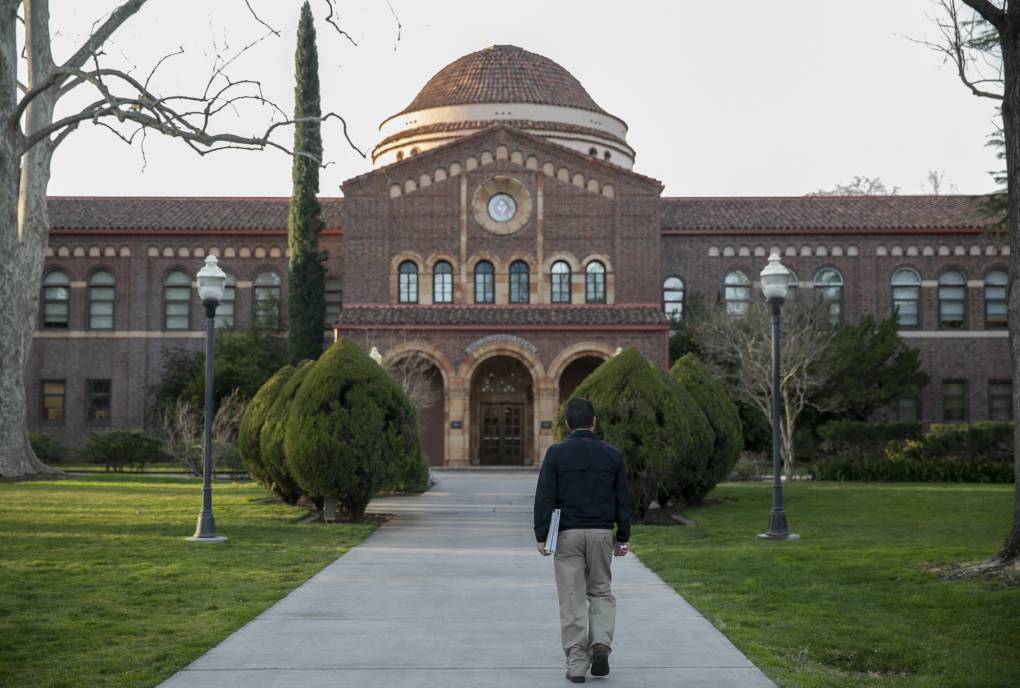
"caption": "A student walks across campus at Chico State University on February 12, 2020. ",
"credit": "Anne Wernikoff/CalMatters",
"altTag": "A person wearing a dark shirt and grey pants walks toward a building on a campus.",
"description": null,
"imgSizes": {
"medium": {
"file": "https://cdn.kqed.org/wp-content/uploads/sites/10/2025/03/021220_WestClimateEmergency_09-800x540.jpg",
"width": 800,
"height": 540,
"mimeType": "image/jpeg"
},
"large": {
"file": "https://cdn.kqed.org/wp-content/uploads/sites/10/2025/03/021220_WestClimateEmergency_09-1020x688.jpg",
"width": 1020,
"height": 688,
"mimeType": "image/jpeg"
},
"thumbnail": {
"file": "https://cdn.kqed.org/wp-content/uploads/sites/10/2025/03/021220_WestClimateEmergency_09-160x108.jpg",
"width": 160,
"height": 108,
"mimeType": "image/jpeg"
},
"1536x1536": {
"file": "https://cdn.kqed.org/wp-content/uploads/sites/10/2025/03/021220_WestClimateEmergency_09-1536x1036.jpg",
"width": 1536,
"height": 1036,
"mimeType": "image/jpeg"
},
"post-thumbnail": {
"file": "https://cdn.kqed.org/wp-content/uploads/sites/10/2025/03/021220_WestClimateEmergency_09-672x372.jpg",
"width": 672,
"height": 372,
"mimeType": "image/jpeg"
},
"twentyfourteen-full-width": {
"file": "https://cdn.kqed.org/wp-content/uploads/sites/10/2025/03/021220_WestClimateEmergency_09-1038x576.jpg",
"width": 1038,
"height": 576,
"mimeType": "image/jpeg"
},
"full-width": {
"file": "https://cdn.kqed.org/wp-content/uploads/sites/10/2025/03/021220_WestClimateEmergency_09-1920x1295.jpg",
"width": 1920,
"height": 1295,
"mimeType": "image/jpeg"
},
"kqedFullSize": {
"file": "https://cdn.kqed.org/wp-content/uploads/sites/10/2025/03/021220_WestClimateEmergency_09.jpg",
"width": 2000,
"height": 1349
}
},
"isLoading": false,
"fetchFailed": false
},
"news_12033194": {
"type": "attachments",
"id": "news_12033194",
"meta": {
"index": "attachments_1716263798",
"site": "news",
"id": "12033194",
"found": true
},
"title": "042224_Inland-Empire-JAH_CM_15 copy",
"publishDate": 1743025021,
"status": "inherit",
"parent": 12033192,
"modified": 1743025040,
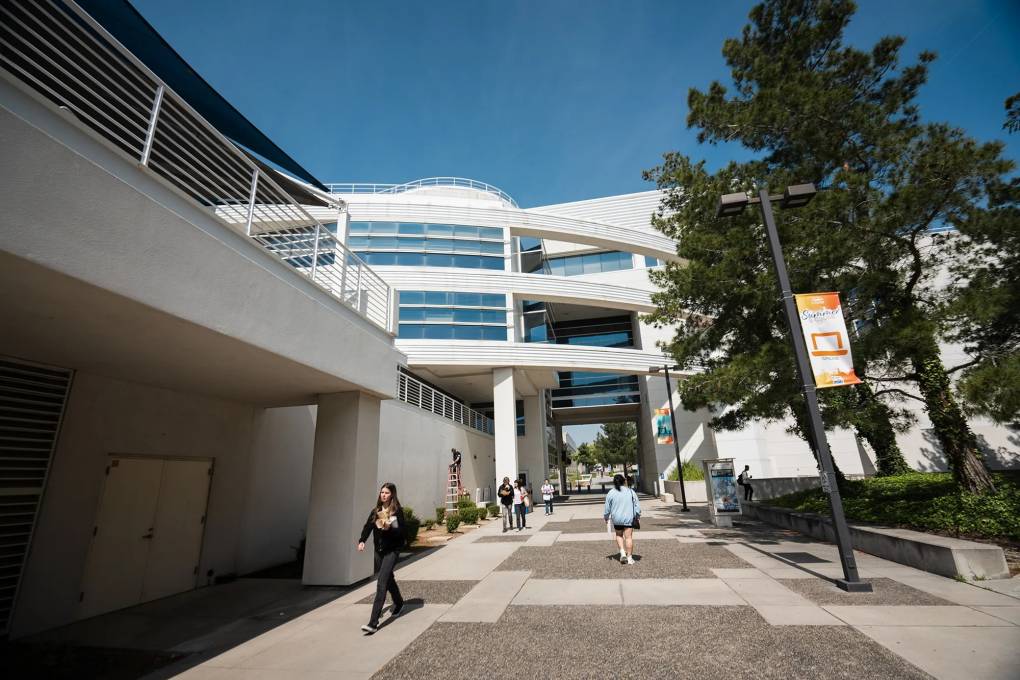
"caption": "The CSU San Bernardino campus on April 22, 2024. \n",
"credit": "Jules Hotz for CalMatters",
"altTag": null,
"description": null,
"imgSizes": {
"medium": {
"file": "https://cdn.kqed.org/wp-content/uploads/sites/10/2025/03/042224_Inland-Empire-JAH_CM_15-copy-800x533.jpg",
"width": 800,
"height": 533,
"mimeType": "image/jpeg"
},
"large": {
"file": "https://cdn.kqed.org/wp-content/uploads/sites/10/2025/03/042224_Inland-Empire-JAH_CM_15-copy-1020x680.jpg",
"width": 1020,
"height": 680,
"mimeType": "image/jpeg"
},
"thumbnail": {
"file": "https://cdn.kqed.org/wp-content/uploads/sites/10/2025/03/042224_Inland-Empire-JAH_CM_15-copy-160x107.jpg",
"width": 160,
"height": 107,
"mimeType": "image/jpeg"
},
"1536x1536": {
"file": "https://cdn.kqed.org/wp-content/uploads/sites/10/2025/03/042224_Inland-Empire-JAH_CM_15-copy-1536x1024.jpg",
"width": 1536,
"height": 1024,
"mimeType": "image/jpeg"
},
"post-thumbnail": {
"file": "https://cdn.kqed.org/wp-content/uploads/sites/10/2025/03/042224_Inland-Empire-JAH_CM_15-copy-672x372.jpg",
"width": 672,
"height": 372,
"mimeType": "image/jpeg"
},
"twentyfourteen-full-width": {
"file": "https://cdn.kqed.org/wp-content/uploads/sites/10/2025/03/042224_Inland-Empire-JAH_CM_15-copy-1038x576.jpg",
"width": 1038,
"height": 576,
"mimeType": "image/jpeg"
},
"full-width": {
"file": "https://cdn.kqed.org/wp-content/uploads/sites/10/2025/03/042224_Inland-Empire-JAH_CM_15-copy-1920x1280.jpg",
"width": 1920,
"height": 1280,
"mimeType": "image/jpeg"
},
"kqedFullSize": {
"file": "https://cdn.kqed.org/wp-content/uploads/sites/10/2025/03/042224_Inland-Empire-JAH_CM_15-copy.jpg",
"width": 2000,
"height": 1333
}
},
"isLoading": false,
"fetchFailed": false
},
"news_12033037": {
"type": "attachments",
"id": "news_12033037",
"meta": {
"index": "attachments_1716263798",
"site": "news",
"id": "12033037",
"found": true
},
"title": "111523-Keyes-School-District-LV_CM_02 copy",
"publishDate": 1742943488,
"status": "inherit",
"parent": 12033035,
"modified": 1742943978,
"caption": "The basketball courts and row of trailers where classes are taught at Barbara Spratling Middle School in Keyes on Nov. 15, 2023. ",
"credit": "Larry Valenzuela/CalMatters/CatchLight Local",
"altTag": null,
"description": null,
"imgSizes": {
"medium": {
"file": "https://cdn.kqed.org/wp-content/uploads/sites/10/2025/03/111523-Keyes-School-District-LV_CM_02-copy-800x533.jpg",
"width": 800,
"height": 533,
"mimeType": "image/jpeg"
},
"large": {
"file": "https://cdn.kqed.org/wp-content/uploads/sites/10/2025/03/111523-Keyes-School-District-LV_CM_02-copy-1020x680.jpg",
"width": 1020,
"height": 680,
"mimeType": "image/jpeg"
},
"thumbnail": {
"file": "https://cdn.kqed.org/wp-content/uploads/sites/10/2025/03/111523-Keyes-School-District-LV_CM_02-copy-160x107.jpg",
"width": 160,
"height": 107,
"mimeType": "image/jpeg"
},
"1536x1536": {
"file": "https://cdn.kqed.org/wp-content/uploads/sites/10/2025/03/111523-Keyes-School-District-LV_CM_02-copy-1536x1024.jpg",
"width": 1536,
"height": 1024,
"mimeType": "image/jpeg"
},
"post-thumbnail": {
"file": "https://cdn.kqed.org/wp-content/uploads/sites/10/2025/03/111523-Keyes-School-District-LV_CM_02-copy-672x372.jpg",
"width": 672,
"height": 372,
"mimeType": "image/jpeg"
},
"twentyfourteen-full-width": {
"file": "https://cdn.kqed.org/wp-content/uploads/sites/10/2025/03/111523-Keyes-School-District-LV_CM_02-copy-1038x576.jpg",
"width": 1038,
"height": 576,
"mimeType": "image/jpeg"
},
"full-width": {
"file": "https://cdn.kqed.org/wp-content/uploads/sites/10/2025/03/111523-Keyes-School-District-LV_CM_02-copy-1920x1280.jpg",
"width": 1920,
"height": 1280,
"mimeType": "image/jpeg"
},
"kqedFullSize": {
"file": "https://cdn.kqed.org/wp-content/uploads/sites/10/2025/03/111523-Keyes-School-District-LV_CM_02-copy.jpg",
"width": 2000,
"height": 1333
}
},
"isLoading": false,
"fetchFailed": false
},
"news_12032921": {
"type": "attachments",
"id": "news_12032921",
"meta": {
"index": "attachments_1716263798",
"site": "news",
"id": "12032921",
"found": true
},
"title": "092024-Salinas-Shelter-MO-CM-36 copy",
"publishDate": 1742925785,
"status": "inherit",
"parent": 12032918,
"modified": 1742925814,
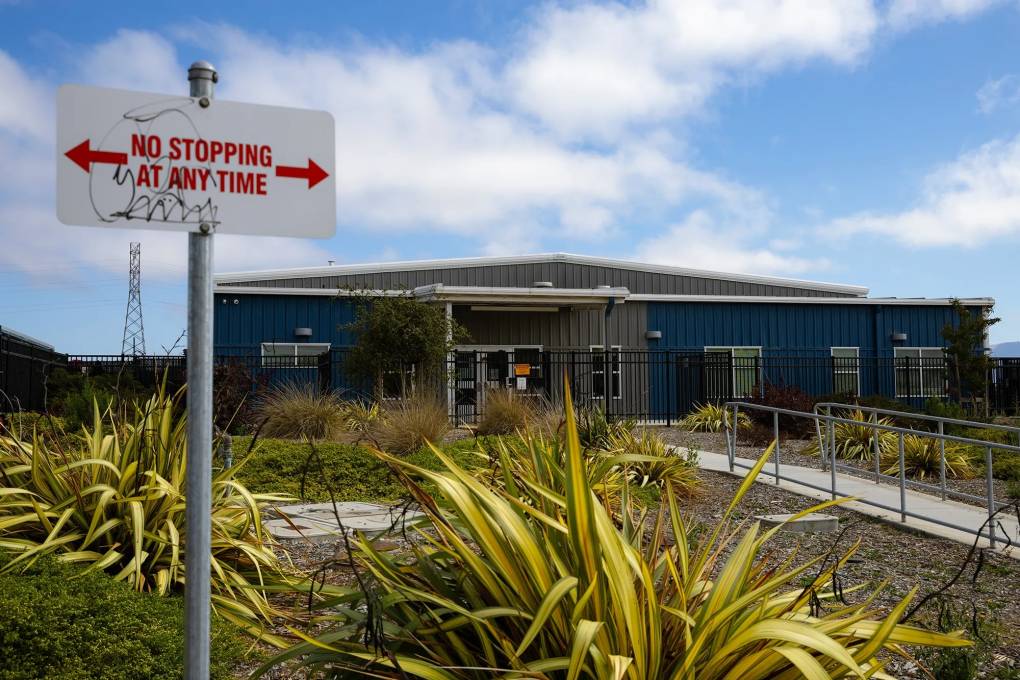
"caption": "The Share Center, a shelter for people experiencing homelessness in Monterey County in Salinas, on Sept. 20, 2024. The center's previous operator faced a long list of allegations, including fraud and inappropriate relationships with clients.",
"credit": "Manuel Obregozo for CalMatters",
"altTag": null,
"description": null,
"imgSizes": {
"medium": {
"file": "https://cdn.kqed.org/wp-content/uploads/sites/10/2025/03/092024-Salinas-Shelter-MO-CM-36-copy-800x533.jpg",
"width": 800,
"height": 533,
"mimeType": "image/jpeg"
},
"large": {
"file": "https://cdn.kqed.org/wp-content/uploads/sites/10/2025/03/092024-Salinas-Shelter-MO-CM-36-copy-1020x680.jpg",
"width": 1020,
"height": 680,
"mimeType": "image/jpeg"
},
"thumbnail": {
"file": "https://cdn.kqed.org/wp-content/uploads/sites/10/2025/03/092024-Salinas-Shelter-MO-CM-36-copy-160x107.jpg",
"width": 160,
"height": 107,
"mimeType": "image/jpeg"
},
"1536x1536": {
"file": "https://cdn.kqed.org/wp-content/uploads/sites/10/2025/03/092024-Salinas-Shelter-MO-CM-36-copy-1536x1024.jpg",
"width": 1536,
"height": 1024,
"mimeType": "image/jpeg"
},
"post-thumbnail": {
"file": "https://cdn.kqed.org/wp-content/uploads/sites/10/2025/03/092024-Salinas-Shelter-MO-CM-36-copy-672x372.jpg",
"width": 672,
"height": 372,
"mimeType": "image/jpeg"
},
"twentyfourteen-full-width": {
"file": "https://cdn.kqed.org/wp-content/uploads/sites/10/2025/03/092024-Salinas-Shelter-MO-CM-36-copy-1038x576.jpg",
"width": 1038,
"height": 576,
"mimeType": "image/jpeg"
},
"full-width": {
"file": "https://cdn.kqed.org/wp-content/uploads/sites/10/2025/03/092024-Salinas-Shelter-MO-CM-36-copy-1920x1280.jpg",
"width": 1920,
"height": 1280,
"mimeType": "image/jpeg"
},
"kqedFullSize": {
"file": "https://cdn.kqed.org/wp-content/uploads/sites/10/2025/03/092024-Salinas-Shelter-MO-CM-36-copy.jpg",
"width": 2000,
"height": 1333
}
},
"isLoading": false,
"fetchFailed": false
},
"news_12032574": {
"type": "attachments",
"id": "news_12032574",
"meta": {
"index": "attachments_1716263798",
"site": "news",
"id": "12032574",
"found": true
},
"title": "092623_Newsom-Gun-Bill-Signing_MG_CM_11 copy",
"publishDate": 1742598456,
"status": "inherit",
"parent": 12032573,
"modified": 1742598480,
"caption": "Gov. Gavin Newsom is seen during a press conference where he signed new gun legislation into law at the Capitol Annex Swing Space in Sacramento on Sept. 26, 2023. ",
"credit": "Miguel Gutierrez Jr./CalMatters",
"altTag": null,
"description": null,
"imgSizes": {
"medium": {
"file": "https://cdn.kqed.org/wp-content/uploads/sites/10/2025/03/092623_Newsom-Gun-Bill-Signing_MG_CM_11-copy-800x533.jpg",
"width": 800,
"height": 533,
"mimeType": "image/jpeg"
},
"large": {
"file": "https://cdn.kqed.org/wp-content/uploads/sites/10/2025/03/092623_Newsom-Gun-Bill-Signing_MG_CM_11-copy-1020x680.jpg",
"width": 1020,
"height": 680,
"mimeType": "image/jpeg"
},
"thumbnail": {
"file": "https://cdn.kqed.org/wp-content/uploads/sites/10/2025/03/092623_Newsom-Gun-Bill-Signing_MG_CM_11-copy-160x107.jpg",
"width": 160,
"height": 107,
"mimeType": "image/jpeg"
},
"1536x1536": {
"file": "https://cdn.kqed.org/wp-content/uploads/sites/10/2025/03/092623_Newsom-Gun-Bill-Signing_MG_CM_11-copy-1536x1024.jpg",
"width": 1536,
"height": 1024,
"mimeType": "image/jpeg"
},
"post-thumbnail": {
"file": "https://cdn.kqed.org/wp-content/uploads/sites/10/2025/03/092623_Newsom-Gun-Bill-Signing_MG_CM_11-copy-672x372.jpg",
"width": 672,
"height": 372,
"mimeType": "image/jpeg"
},
"twentyfourteen-full-width": {
"file": "https://cdn.kqed.org/wp-content/uploads/sites/10/2025/03/092623_Newsom-Gun-Bill-Signing_MG_CM_11-copy-1038x576.jpg",
"width": 1038,
"height": 576,
"mimeType": "image/jpeg"
},
"full-width": {
"file": "https://cdn.kqed.org/wp-content/uploads/sites/10/2025/03/092623_Newsom-Gun-Bill-Signing_MG_CM_11-copy-1920x1280.jpg",
"width": 1920,
"height": 1280,
"mimeType": "image/jpeg"
},
"kqedFullSize": {
"file": "https://cdn.kqed.org/wp-content/uploads/sites/10/2025/03/092623_Newsom-Gun-Bill-Signing_MG_CM_11-copy.jpg",
"width": 2000,
"height": 1333
}
},
"isLoading": false,
"fetchFailed": false
},
"news_12032553": {
"type": "attachments",
"id": "news_12032553",
"meta": {
"index": "attachments_1716263798",
"site": "news",
"id": "12032553",
"found": true
},
"title": "031825-MENTAL-HEALTH-BILLS-GH-CM copy",
"publishDate": 1742596926,
"status": "inherit",
"parent": 12032551,
"modified": 1742596958,
"caption": "California lawmakers are considering several bills that would lead to more oversight of mental health insurance denials. \n",
"credit": "Illustration by Gabriel Hongsdusit/CalMatters",
"altTag": null,
"description": null,
"imgSizes": {
"medium": {
"file": "https://cdn.kqed.org/wp-content/uploads/sites/10/2025/03/031825-MENTAL-HEALTH-BILLS-GH-CM-copy-800x534.jpg",
"width": 800,
"height": 534,
"mimeType": "image/jpeg"
},
"large": {
"file": "https://cdn.kqed.org/wp-content/uploads/sites/10/2025/03/031825-MENTAL-HEALTH-BILLS-GH-CM-copy-1020x680.jpg",
"width": 1020,
"height": 680,
"mimeType": "image/jpeg"
},
"thumbnail": {
"file": "https://cdn.kqed.org/wp-content/uploads/sites/10/2025/03/031825-MENTAL-HEALTH-BILLS-GH-CM-copy-160x107.jpg",
"width": 160,
"height": 107,
"mimeType": "image/jpeg"
},
"1536x1536": {
"file": "https://cdn.kqed.org/wp-content/uploads/sites/10/2025/03/031825-MENTAL-HEALTH-BILLS-GH-CM-copy-1536x1025.jpg",
"width": 1536,
"height": 1025,
"mimeType": "image/jpeg"
},
"post-thumbnail": {
"file": "https://cdn.kqed.org/wp-content/uploads/sites/10/2025/03/031825-MENTAL-HEALTH-BILLS-GH-CM-copy-672x372.jpg",
"width": 672,
"height": 372,
"mimeType": "image/jpeg"
},
"twentyfourteen-full-width": {
"file": "https://cdn.kqed.org/wp-content/uploads/sites/10/2025/03/031825-MENTAL-HEALTH-BILLS-GH-CM-copy-1038x576.jpg",
"width": 1038,
"height": 576,
"mimeType": "image/jpeg"
},
"full-width": {
"file": "https://cdn.kqed.org/wp-content/uploads/sites/10/2025/03/031825-MENTAL-HEALTH-BILLS-GH-CM-copy-1920x1281.jpg",
"width": 1920,
"height": 1281,
"mimeType": "image/jpeg"
},
"kqedFullSize": {
"file": "https://cdn.kqed.org/wp-content/uploads/sites/10/2025/03/031825-MENTAL-HEALTH-BILLS-GH-CM-copy.jpg",
"width": 2000,
"height": 1334
}
},
"isLoading": false,
"fetchFailed": false
},
"news_12032340": {
"type": "attachments",
"id": "news_12032340",
"meta": {
"index": "attachments_1716263798",
"site": "news",
"id": "12032340",
"found": true
},
"title": "Sac_state_protest_2025_02_11_FG_S1A6149 copy",
"publishDate": 1742508793,
"status": "inherit",
"parent": 12032339,
"modified": 1742508822,
"caption": "A student waves a Mexican flag while participating in an anti-deportation protest at Sacramento State University on Feb. 12, 2025.\n",
"credit": "Fred Greaves for CalMatters",
"altTag": null,
"description": null,
"imgSizes": {
"medium": {
"file": "https://cdn.kqed.org/wp-content/uploads/sites/10/2025/03/Sac_state_protest_2025_02_11_FG_S1A6149-copy-800x533.jpg",
"width": 800,
"height": 533,
"mimeType": "image/jpeg"
},
"large": {
"file": "https://cdn.kqed.org/wp-content/uploads/sites/10/2025/03/Sac_state_protest_2025_02_11_FG_S1A6149-copy-1020x680.jpg",
"width": 1020,
"height": 680,
"mimeType": "image/jpeg"
},
"thumbnail": {
"file": "https://cdn.kqed.org/wp-content/uploads/sites/10/2025/03/Sac_state_protest_2025_02_11_FG_S1A6149-copy-160x107.jpg",
"width": 160,
"height": 107,
"mimeType": "image/jpeg"
},
"1536x1536": {
"file": "https://cdn.kqed.org/wp-content/uploads/sites/10/2025/03/Sac_state_protest_2025_02_11_FG_S1A6149-copy-1536x1024.jpg",
"width": 1536,
"height": 1024,
"mimeType": "image/jpeg"
},
"post-thumbnail": {
"file": "https://cdn.kqed.org/wp-content/uploads/sites/10/2025/03/Sac_state_protest_2025_02_11_FG_S1A6149-copy-672x372.jpg",
"width": 672,
"height": 372,
"mimeType": "image/jpeg"
},
"twentyfourteen-full-width": {
"file": "https://cdn.kqed.org/wp-content/uploads/sites/10/2025/03/Sac_state_protest_2025_02_11_FG_S1A6149-copy-1038x576.jpg",
"width": 1038,
"height": 576,
"mimeType": "image/jpeg"
},
"full-width": {
"file": "https://cdn.kqed.org/wp-content/uploads/sites/10/2025/03/Sac_state_protest_2025_02_11_FG_S1A6149-copy-1920x1280.jpg",
"width": 1920,
"height": 1280,
"mimeType": "image/jpeg"
},
"kqedFullSize": {
"file": "https://cdn.kqed.org/wp-content/uploads/sites/10/2025/03/Sac_state_protest_2025_02_11_FG_S1A6149-copy.jpg",
"width": 2000,
"height": 1333
}
},
"isLoading": false,
"fetchFailed": false
},
"news_12032132": {
"type": "attachments",
"id": "news_12032132",
"meta": {
"index": "attachments_1716263798",
"site": "news",
"id": "12032132",
"found": true
},
"title": "111123-Veterans-Day-AP-CM copy",
"publishDate": 1742422828,
"status": "inherit",
"parent": 12032128,
"modified": 1742422851,
"caption": "Army veteran Andy Zoglman, 77, watches an American flag pass by during a Veterans Day parade in Sacramento, on Nov. 11, 2023. \n",
"credit": "Rich Pedroncelli/AP Photo",
"altTag": null,
"description": null,
"imgSizes": {
"medium": {
"file": "https://cdn.kqed.org/wp-content/uploads/sites/10/2025/03/111123-Veterans-Day-AP-CM-copy-800x533.jpg",
"width": 800,
"height": 533,
"mimeType": "image/jpeg"
},
"large": {
"file": "https://cdn.kqed.org/wp-content/uploads/sites/10/2025/03/111123-Veterans-Day-AP-CM-copy-1020x680.jpg",
"width": 1020,
"height": 680,
"mimeType": "image/jpeg"
},
"thumbnail": {
"file": "https://cdn.kqed.org/wp-content/uploads/sites/10/2025/03/111123-Veterans-Day-AP-CM-copy-160x107.jpg",
"width": 160,
"height": 107,
"mimeType": "image/jpeg"
},
"1536x1536": {
"file": "https://cdn.kqed.org/wp-content/uploads/sites/10/2025/03/111123-Veterans-Day-AP-CM-copy-1536x1024.jpg",
"width": 1536,
"height": 1024,
"mimeType": "image/jpeg"
},
"post-thumbnail": {
"file": "https://cdn.kqed.org/wp-content/uploads/sites/10/2025/03/111123-Veterans-Day-AP-CM-copy-672x372.jpg",
"width": 672,
"height": 372,
"mimeType": "image/jpeg"
},
"twentyfourteen-full-width": {
"file": "https://cdn.kqed.org/wp-content/uploads/sites/10/2025/03/111123-Veterans-Day-AP-CM-copy-1038x576.jpg",
"width": 1038,
"height": 576,
"mimeType": "image/jpeg"
},
"full-width": {
"file": "https://cdn.kqed.org/wp-content/uploads/sites/10/2025/03/111123-Veterans-Day-AP-CM-copy-1920x1280.jpg",
"width": 1920,
"height": 1280,
"mimeType": "image/jpeg"
},
"kqedFullSize": {
"file": "https://cdn.kqed.org/wp-content/uploads/sites/10/2025/03/111123-Veterans-Day-AP-CM-copy.jpg",
"width": 2000,
"height": 1333
}
},
"isLoading": false,
"fetchFailed": false
},
"news_12031986": {
"type": "attachments",
"id": "news_12031986",
"meta": {
"index": "attachments_1716263798",
"site": "news",
"id": "12031986",
"found": true
},
"title": "082420_healthcareworkers_AW_sized_04 copy",
"publishDate": 1742345497,
"status": "inherit",
"parent": 12031985,
"modified": 1752270848,
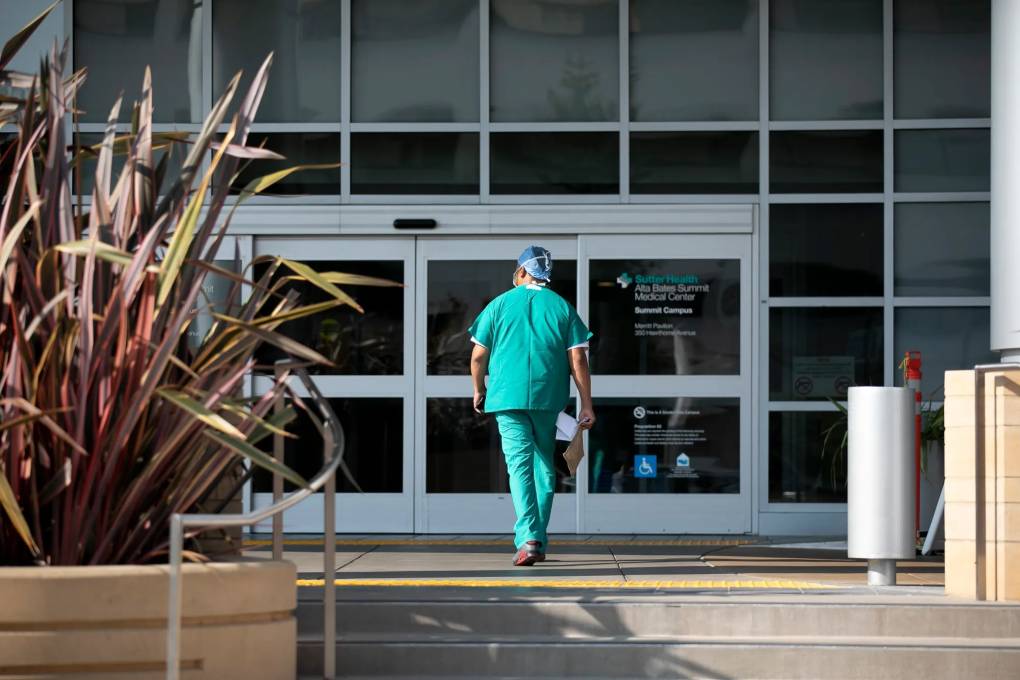
"caption": "A hospital employee enters Alta Bates Summit Medical Center in Oakland on Aug. 24, 2020.",
"credit": "Anne Wernikoff for CalMatters",
"altTag": null,
"description": null,
"imgSizes": {
"medium": {
"file": "https://cdn.kqed.org/wp-content/uploads/sites/10/2025/03/082420_healthcareworkers_AW_sized_04-copy-800x533.jpg",
"width": 800,
"height": 533,
"mimeType": "image/jpeg"
},
"large": {
"file": "https://cdn.kqed.org/wp-content/uploads/sites/10/2025/03/082420_healthcareworkers_AW_sized_04-copy-1020x680.jpg",
"width": 1020,
"height": 680,
"mimeType": "image/jpeg"
},
"thumbnail": {
"file": "https://cdn.kqed.org/wp-content/uploads/sites/10/2025/03/082420_healthcareworkers_AW_sized_04-copy-160x107.jpg",
"width": 160,
"height": 107,
"mimeType": "image/jpeg"
},
"1536x1536": {
"file": "https://cdn.kqed.org/wp-content/uploads/sites/10/2025/03/082420_healthcareworkers_AW_sized_04-copy-1536x1024.jpg",
"width": 1536,
"height": 1024,
"mimeType": "image/jpeg"
},
"post-thumbnail": {
"file": "https://cdn.kqed.org/wp-content/uploads/sites/10/2025/03/082420_healthcareworkers_AW_sized_04-copy-672x372.jpg",
"width": 672,
"height": 372,
"mimeType": "image/jpeg"
},
"twentyfourteen-full-width": {
"file": "https://cdn.kqed.org/wp-content/uploads/sites/10/2025/03/082420_healthcareworkers_AW_sized_04-copy-1038x576.jpg",
"width": 1038,
"height": 576,
"mimeType": "image/jpeg"
},
"full-width": {
"file": "https://cdn.kqed.org/wp-content/uploads/sites/10/2025/03/082420_healthcareworkers_AW_sized_04-copy-1920x1280.jpg",
"width": 1920,
"height": 1280,
"mimeType": "image/jpeg"
},
"kqedFullSize": {
"file": "https://cdn.kqed.org/wp-content/uploads/sites/10/2025/03/082420_healthcareworkers_AW_sized_04-copy.jpg",
"width": 2000,
"height": 1333
}
},
"isLoading": false,
"fetchFailed": false
},
"news_12031545": {
"type": "attachments",
"id": "news_12031545",
"meta": {
"index": "attachments_1716263798",
"site": "news",
"id": "12031545",
"found": true
},
"title": "033023_Hollister-Hospital_LV_CM_21 copy",
"publishDate": 1742067371,
"status": "inherit",
"parent": 12031544,
"modified": 1761002221,
"caption": "Medical personnel work in the emergency room unit at the Hazel Hawkins Memorial Hospital in Hollister, California, on March 30, 2023. ",
"credit": "Larry Valenzuela/CalMatters/CatchLight Local",
"altTag": null,
"description": null,
"imgSizes": {
"medium": {
"file": "https://cdn.kqed.org/wp-content/uploads/sites/10/2025/03/033023_Hollister-Hospital_LV_CM_21-copy-800x533.jpg",
"width": 800,
"height": 533,
"mimeType": "image/jpeg"
},
"large": {
"file": "https://cdn.kqed.org/wp-content/uploads/sites/10/2025/03/033023_Hollister-Hospital_LV_CM_21-copy-1020x680.jpg",
"width": 1020,
"height": 680,
"mimeType": "image/jpeg"
},
"thumbnail": {
"file": "https://cdn.kqed.org/wp-content/uploads/sites/10/2025/03/033023_Hollister-Hospital_LV_CM_21-copy-160x107.jpg",
"width": 160,
"height": 107,
"mimeType": "image/jpeg"
},
"1536x1536": {
"file": "https://cdn.kqed.org/wp-content/uploads/sites/10/2025/03/033023_Hollister-Hospital_LV_CM_21-copy-1536x1024.jpg",
"width": 1536,
"height": 1024,
"mimeType": "image/jpeg"
},
"post-thumbnail": {
"file": "https://cdn.kqed.org/wp-content/uploads/sites/10/2025/03/033023_Hollister-Hospital_LV_CM_21-copy-672x372.jpg",
"width": 672,
"height": 372,
"mimeType": "image/jpeg"
},
"twentyfourteen-full-width": {
"file": "https://cdn.kqed.org/wp-content/uploads/sites/10/2025/03/033023_Hollister-Hospital_LV_CM_21-copy-1038x576.jpg",
"width": 1038,
"height": 576,
"mimeType": "image/jpeg"
},
"full-width": {
"file": "https://cdn.kqed.org/wp-content/uploads/sites/10/2025/03/033023_Hollister-Hospital_LV_CM_21-copy-1920x1280.jpg",
"width": 1920,
"height": 1280,
"mimeType": "image/jpeg"
},
"kqedFullSize": {
"file": "https://cdn.kqed.org/wp-content/uploads/sites/10/2025/03/033023_Hollister-Hospital_LV_CM_21-copy.jpg",
"width": 2000,
"height": 1333
}
},
"isLoading": false,
"fetchFailed": false
},
"news_12031238": {
"type": "attachments",
"id": "news_12031238",
"meta": {
"index": "attachments_1716263798",
"site": "news",
"id": "12031238",
"found": true
},
"title": "030525-CA-AI-LEGISLATION-GH-CM-1 copy",
"publishDate": 1741896140,
"status": "inherit",
"parent": 12031237,
"modified": 1741896186,
"caption": "California lawmakers are proposing regulations to protect people and society from the unintended consequences of artificial intelligence. By contrast, the Trump administration wants to avoid excessive regulation.",
"credit": "Illustration by Gabriel Hongsdusit/CalMatters",
"altTag": null,
"description": null,
"imgSizes": {
"medium": {
"file": "https://cdn.kqed.org/wp-content/uploads/sites/10/2025/03/030525-CA-AI-LEGISLATION-GH-CM-1-copy-800x533.jpg",
"width": 800,
"height": 533,
"mimeType": "image/jpeg"
},
"large": {
"file": "https://cdn.kqed.org/wp-content/uploads/sites/10/2025/03/030525-CA-AI-LEGISLATION-GH-CM-1-copy-1020x680.jpg",
"width": 1020,
"height": 680,
"mimeType": "image/jpeg"
},
"thumbnail": {
"file": "https://cdn.kqed.org/wp-content/uploads/sites/10/2025/03/030525-CA-AI-LEGISLATION-GH-CM-1-copy-160x107.jpg",
"width": 160,
"height": 107,
"mimeType": "image/jpeg"
},
"1536x1536": {
"file": "https://cdn.kqed.org/wp-content/uploads/sites/10/2025/03/030525-CA-AI-LEGISLATION-GH-CM-1-copy-1536x1024.jpg",
"width": 1536,
"height": 1024,
"mimeType": "image/jpeg"
},
"post-thumbnail": {
"file": "https://cdn.kqed.org/wp-content/uploads/sites/10/2025/03/030525-CA-AI-LEGISLATION-GH-CM-1-copy-672x372.jpg",
"width": 672,
"height": 372,
"mimeType": "image/jpeg"
},
"twentyfourteen-full-width": {
"file": "https://cdn.kqed.org/wp-content/uploads/sites/10/2025/03/030525-CA-AI-LEGISLATION-GH-CM-1-copy-1038x576.jpg",
"width": 1038,
"height": 576,
"mimeType": "image/jpeg"
},
"full-width": {
"file": "https://cdn.kqed.org/wp-content/uploads/sites/10/2025/03/030525-CA-AI-LEGISLATION-GH-CM-1-copy-1920x1280.jpg",
"width": 1920,
"height": 1280,
"mimeType": "image/jpeg"
},
"kqedFullSize": {
"file": "https://cdn.kqed.org/wp-content/uploads/sites/10/2025/03/030525-CA-AI-LEGISLATION-GH-CM-1-copy.jpg",
"width": 2000,
"height": 1333
}
},
"isLoading": false,
"fetchFailed": false
},
"news_12031053": {
"type": "attachments",
"id": "news_12031053",
"meta": {
"index": "attachments_1716263798",
"site": "news",
"id": "12031053",
"found": true
},
"title": "031125_Medicaid-Bakersfield_LV_CM_05 copy",
"publishDate": 1741817334,
"status": "inherit",
"parent": 12031052,
"modified": 1741817368,
"caption": "Pharmacy tech Natalie Padilla in front of the SEIU-UHW Union office in Bakersfield on March 11, 2025. Padilla’s family relies on Medicaid, motivating her to travel to Washington, DC, to speak with Rep. David Valadao's staff about the health insurance program.",
"credit": "Larry Valenzuela/CalMatters/CatchLight Local",
"altTag": null,
"description": null,
"imgSizes": {
"medium": {
"file": "https://cdn.kqed.org/wp-content/uploads/sites/10/2025/03/031125_Medicaid-Bakersfield_LV_CM_05-copy-800x533.jpg",
"width": 800,
"height": 533,
"mimeType": "image/jpeg"
},
"large": {
"file": "https://cdn.kqed.org/wp-content/uploads/sites/10/2025/03/031125_Medicaid-Bakersfield_LV_CM_05-copy-1020x680.jpg",
"width": 1020,
"height": 680,
"mimeType": "image/jpeg"
},
"thumbnail": {
"file": "https://cdn.kqed.org/wp-content/uploads/sites/10/2025/03/031125_Medicaid-Bakersfield_LV_CM_05-copy-160x107.jpg",
"width": 160,
"height": 107,
"mimeType": "image/jpeg"
},
"1536x1536": {
"file": "https://cdn.kqed.org/wp-content/uploads/sites/10/2025/03/031125_Medicaid-Bakersfield_LV_CM_05-copy-1536x1024.jpg",
"width": 1536,
"height": 1024,
"mimeType": "image/jpeg"
},
"post-thumbnail": {
"file": "https://cdn.kqed.org/wp-content/uploads/sites/10/2025/03/031125_Medicaid-Bakersfield_LV_CM_05-copy-672x372.jpg",
"width": 672,
"height": 372,
"mimeType": "image/jpeg"
},
"twentyfourteen-full-width": {
"file": "https://cdn.kqed.org/wp-content/uploads/sites/10/2025/03/031125_Medicaid-Bakersfield_LV_CM_05-copy-1038x576.jpg",
"width": 1038,
"height": 576,
"mimeType": "image/jpeg"
},
"full-width": {
"file": "https://cdn.kqed.org/wp-content/uploads/sites/10/2025/03/031125_Medicaid-Bakersfield_LV_CM_05-copy-1920x1280.jpg",
"width": 1920,
"height": 1280,
"mimeType": "image/jpeg"
},
"kqedFullSize": {
"file": "https://cdn.kqed.org/wp-content/uploads/sites/10/2025/03/031125_Medicaid-Bakersfield_LV_CM_05-copy.jpg",
"width": 2000,
"height": 1333
}
},
"isLoading": false,
"fetchFailed": false
}
},
"audioPlayerReducer": {
"postId": "stream_live",
"isPaused": true,
"isPlaying": false,
"pfsActive": false,
"pledgeModalIsOpen": true,
"playerDrawerIsOpen": false,
"liveAudioPlayStartedAt": 0,
"liveAudioPlayContext": ""
},
"authorsReducer": {
"byline_news_12033771": {
"type": "authors",
"id": "byline_news_12033771",
"meta": {
"override": true
},
"slug": "byline_news_12033771",
"name": "\u003ca href=\"https://calmatters.org/author/mikhailzinshteyn\">Mikhail Zinshteyn, \u003c/a>CalMatters",
"isLoading": false
},
"byline_news_12033192": {
"type": "authors",
"id": "byline_news_12033192",
"meta": {
"override": true
},
"slug": "byline_news_12033192",
"name": "\u003ca href=\"https://calmatters.org/author/deborah-brennan/\">Deborah Brennan\u003c/a>, CalMatters",
"isLoading": false
},
"byline_news_12033035": {
"type": "authors",
"id": "byline_news_12033035",
"meta": {
"override": true
},
"slug": "byline_news_12033035",
"name": "\u003ca href=\"https://calmatters.org/author/carolyn-jones/\">Carolyn Jones\u003c/a>, CalMatters",
"isLoading": false
},
"byline_news_12032918": {
"type": "authors",
"id": "byline_news_12032918",
"meta": {
"override": true
},
"slug": "byline_news_12032918",
"name": "\u003ca href=\"https://calmatters.org/author/laurenhepler/\">Lauren Hepler\u003c/a>, CalMatters",
"isLoading": false
},
"byline_news_12032573": {
"type": "authors",
"id": "byline_news_12032573",
"meta": {
"override": true
},
"slug": "byline_news_12032573",
"name": "\u003ca href=\"https://calmatters.org/author/alexei-koseff/\">Alexei Koseff\u003c/a>, CalMatters",
"isLoading": false
},
"byline_news_12032551": {
"type": "authors",
"id": "byline_news_12032551",
"meta": {
"override": true
},
"slug": "byline_news_12032551",
"name": "\u003ca href=\"https://calmatters.org/author/jocelyn-wiener/\">Jocelyn Wiener\u003c/a>, CalMatters",
"isLoading": false
},
"byline_news_12032339": {
"type": "authors",
"id": "byline_news_12032339",
"meta": {
"override": true
},
"slug": "byline_news_12032339",
"name": "\u003ca href=\"https://calmatters.org/author/delilah-brumer/\">Delilah Brumer\u003c/a>, CalMatters",
"isLoading": false
},
"byline_news_12032128": {
"type": "authors",
"id": "byline_news_12032128",
"meta": {
"override": true
},
"slug": "byline_news_12032128",
"name": "\u003ca href=\"https://calmatters.org/author/sameea-kamal/\">Sameea Kamal\u003c/a>, CalMatters",
"isLoading": false
},
"byline_news_12031985": {
"type": "authors",
"id": "byline_news_12031985",
"meta": {
"override": true
},
"slug": "byline_news_12031985",
"name": "\u003ca href=\"https://calmatters.org/author/anaibarra/\">Ana B. Ibarra\u003c/a>, CalMatters",
"isLoading": false
},
"byline_news_12031544": {
"type": "authors",
"id": "byline_news_12031544",
"meta": {
"override": true
},
"slug": "byline_news_12031544",
"name": "\u003ca href=\"https://calmatters.org/author/anaibarra/\">Ana B. Ibarra\u003c/a> and \u003ca href=\"https://calmatters.org/author/kristen-hwang/\">Kristen Hwang\u003c/a>, CalMatters",
"isLoading": false
},
"byline_news_12031237": {
"type": "authors",
"id": "byline_news_12031237",
"meta": {
"override": true
},
"slug": "byline_news_12031237",
"name": "\u003ca href=\"https://calmatters.org/author/khari-johnson/\">Khari Johnson\u003c/a>, CalMatters",
"isLoading": false
},
"byline_news_12031052": {
"type": "authors",
"id": "byline_news_12031052",
"meta": {
"override": true
},
"slug": "byline_news_12031052",
"name": "\u003ca href=\"https://calmatters.org/author/kristen-hwang/\">Kristen Hwang\u003c/a>, CalMatters",
"isLoading": false
}
},
"pagesReducer": {
"news_affiliate_calmatters": {
"type": "terms",
"id": "news_18481",
"meta": {
"index": "terms_1716263798",
"site": "news",
"id": "18481",
"score": 15.355862
},
"featImg": null,
"name": "CALmatters",
"description": null,
"taxonomy": "affiliate",
"headData": {
"twImgId": null,
"twTitle": null,
"ogTitle": null,
"ogImgId": null,
"twDescription": null,
"description": null,
"title": "CALmatters Archives | KQED Arts",
"ogDescription": null
},
"ttid": 18515,
"slug": "calmatters",
"isLoading": false,
"title": "CALmatters",
"pageMeta": {
"site": "news",
"WpPageTemplate": "page-topic-editorial",
"currentPage": 16
},
"blocks": [
{
"blockName": "kqed/post-list",
"attrs": {
"layout": "cardArticle2",
"query": "posts/news?affiliate=calmatters",
"seeMore": false,
"paginated": true,
"page": 16
}
},
{
"blockName": "kqed/ad"
}
]
}
},
"pfsSessionReducer": {},
"postsReducer": {
"stream_live": {
"type": "live",
"id": "stream_live",
"audioUrl": "https://streams.kqed.org/kqedradio",
"title": "Live Stream",
"excerpt": "Live Stream information currently unavailable.",
"link": "/radio",
"featImg": "",
"label": {
"name": "KQED Live",
"link": "/"
}
},
"stream_kqedNewscast": {
"type": "posts",
"id": "stream_kqedNewscast",
"audioUrl": "https://www.kqed.org/.stream/anon/radio/RDnews/newscast.mp3?_=1",
"title": "KQED Newscast",
"featImg": "",
"label": {
"name": "88.5 FM",
"link": "/"
}
},
"news_12033771": {
"type": "posts",
"id": "news_12033771",
"meta": {
"index": "posts_1716263798",
"site": "news",
"id": "12033771",
"score": null,
"sort": [
1743379221000
]
},
"guestAuthors": [],
"slug": "no-need-to-apply-cal-state-is-automatically-admitting-high-school-students-with-good-grades",
"title": "No Need to Apply: Cal State Is Automatically Admitting High School Students With Good Grades",
"publishDate": 1743379221,
"format": "standard",
"headTitle": "No Need to Apply: Cal State Is Automatically Admitting High School Students With Good Grades | KQED",
"labelTerm": {
"term": 18481,
"site": "news"
},
"content": "\u003cp>More than 17,400 high school seniors last fall got the sweetest news any anxious student can get: Congratulations, because of your high school GPA, you’re automatically admitted to one of 10 California State University campuses of your choice — and they’re all relatively affordable.\u003c/p>\n\u003cp>Even with less than a week to go before the campuses wrap their final decisions about whom to admit, \u003ca href=\"https://www.calstate.edu/impact-of-the-csu/community/Pages/riverside-county-office-of-education-partnership.aspx\">a pilot program focusing on Riverside County\u003c/a> is already showing that more students have been admitted from the county than last year, about 10,600 so far in 2025 compared to last year’s roughly 9,800.\u003c/p>\n\u003cp>The pilot builds on Cal State’s efforts to enroll more students and works like this: High school seniors receive a notice in the mail that they’re automatically admitted as long as they maintain their grades, finish the 15 mandatory courses necessary for admission to a Cal State, and complete an admissions form to claim their spot at a campus. Cal State was able to mail the notices because it signed an agreement with the Riverside County Office of Education that gave the university eligible students’ addresses.\u003c/p>\n\u003cp>Now in the program’s first year, Cal State joins other public universities across the country in a growing national movement to \u003ca href=\"https://www.washingtonpost.com/education/2025/03/06/state-colleges-direct-admissions-programs-high-school-students/\">automatically admit eligible students\u003c/a>. From November through January, Cal State informed students they were accepted to the 10 campuses. To claim a spot, students needed to go online and pick at least one campus.\u003c/p>\n\u003cp>If past admissions and enrollment trends hold, Cal State as a system will educate hundreds of more students, all from Riverside, than they would have without the pilot. That’d be a boon for a system that prides itself on its affordability and motto that it’s the people’s university; Cal State admits a far higher percentage of students than the University of California. It also could serve as a much-needed budget boost from the extra tuition revenue those students bring, especially at campuses with sinking enrollment.\u003c/p>\n\u003cp>[ad fullwidth]\u003c/p>\n\u003cp>Eight campuses — Channel Islands, Chico, East Bay, Humboldt, Maritime Academy, Monterey Bay, San Francisco, and Sonoma — are so under-enrolled that Cal State is pulling some of their state revenues to send \u003ca href=\"https://calmatters.org/wp-content/uploads/2025/03/B_2024-02_Final_Budget_Allocations_Attachments.pdf#page=2\">to campuses that are still growing (PDF)\u003c/a>. Cal Maritime is soon merging with another campus \u003ca href=\"https://calmatters.org/education/2024/11/cal-maritime-cal-poly-merger/\">because of its perilous finances\u003c/a>. The pilot also includes the two closest campuses to the county, San Bernardino and San Marcos.\u003c/p>\n\u003cp>The system chose Riverside County because all of its public high school students were already loaded onto a state data platform that \u003ca href=\"https://vimeo.com/902085427\">can directly transmit student grades to Cal State\u003c/a> — a key step in creating automatic admissions. Riverside is also “ethnically and economically representative of the diversity of California — many of the students the CSU is so proud to serve,” a spokesperson for the system, Amy Bentley Smith, wrote in an email.\u003c/p>\n\u003cp>At Heritage High School, a public school in Riverside County, the pilot encouraged students who previously didn’t even consider attending a public four-year university to submit the automatic admission forms to a Cal State.\u003c/p>\n\u003cp>Silvia Morales, a 17-year-old senior at Heritage, got an automatic admissions letter. “I was pretty set on going to community college and then transferring, because I felt like I wasn’t ready for the four-year commitment to a college,” she said.\u003c/p>\n\u003cp>Even with a 3.0 GPA, higher than \u003ca href=\"https://www.calstate.edu/apply/freshman/getting_into_the_csu/pages/admission-requirements.aspx\">the 2.5 GPA Cal State requires for admission\u003c/a>, she nearly didn’t submit the forms to secure her admission until early January. That’s well past the standard Nov. 30 admissions deadline.\u003c/p>\n\u003cp>It wasn’t until her counselor, Chris Tinajero, pulled her into a meeting that she decided to opt into the pilot. “I went through the sales pitch like, ‘Hey, you get this guaranteed admission, you’re an amazing student,’” he recounted. [aside postID=\"news_12012688,news_12033192,news_12033333\" label=\"Related Stories\"]\u003c/p>\n\u003cp>The pitch worked. Though Cal State sent a physical pamphlet and her high school also emailed her about the pilot, “I wasn’t really paying attention,” Morales said. She needed an adult she trusted at the school to persuade her that the applications were worth the effort, she said.\u003c/p>\n\u003cp>Morales applied to three Cal State campuses in the pilot plus two outside the program that were still accepting late applications — Chico, Humboldt, Los Angeles, Northridge and San Bernardino. She got into each one, she said.\u003c/p>\n\u003cp>Her parents are “proud of me because I want to go to college,” Morales said. Neither went to college, she added.\u003c/p>\n\u003cp>Final enrollment figures won’t be tallied until August, including how many of the students admitted through the pilot attended one of the 10 campuses. But the system’s chancellor’s office is already planning to replicate the pilot program in a Northern California county, which will be named sometime in April, Cal State officials said.\u003c/p>\n\u003cp>A \u003ca href=\"https://calmatters.digitaldemocracy.org/bills/ca_202520260sb640\">bill\u003c/a> by Christopher Cabaldon, a state senator and Democrat from Napa, would make automatic enrollment to Cal State for eligible students a state law. The bill hasn’t been heard in a committee yet.\u003c/p>\n\u003ch2>A boost in application numbers\u003c/h2>\n\u003cp>Of the 17,000 students who received an invitation to secure their automatic admissions, about 13,200 submitted the necessary forms. That’s about 3,000 more students who applied from the county than last year.\u003c/p>\n\u003cp>Those who otherwise wouldn’t have applied to a Cal State include students who were eyeing private colleges, said Melina Gonzalez, a counselor at Heritage who typically advises students who are already college-bound.\u003c/p>\n\u003cp>Nearby private colleges offer all students application fee waivers; at Cal State, typically only students with low income receive fee waivers. But the pilot provided each Cal State student one fee waiver worth $70, which was a draw to students and their parents who don’t qualify for the fee waiver but might struggle to pay.\u003c/p>\n\u003cp>Last year, 10 of the 100 senior students Gonzalez counseled didn’t apply to a Cal State. This application season, all her students submitted at least one Cal State application, she said.\u003c/p>\n\u003cp>“It was big, it was really cool, their eyes, they were so excited,” she said of the automatically admitted students. “They would come in and show me their letters.”\u003c/p>\n\u003cp>Parents called her asking if the pamphlet from Cal State was authentic. With guaranteed admission, some parents ultimately decided to pay for additional applications to campuses in the pilot, knowing it wasn’t in vain.\u003c/p>\n\u003cp>At Heritage, high school counselors reviewed Cal State’s provisional list of students eligible for the pilot to add more seniors, such as those who hadn’t yet completed the mandatory courses but were on track to do so.\u003c/p>\n\u003cp>Tinajero was also able to persuade some students who hadn’t completed all the required courses for Cal State entry to take those, including online classes. Still, others with qualifying grades didn’t apply because they weren’t persuaded that a four-year university was for them. Tinajero sees program growth in the coming years, assuming Cal State continues with the pilot. Younger high school students who witnessed the fanfare of automatic admissions may take more seriously the need to pass the 15 required courses to be eligible for a Cal State or University of California campus, he said.\u003c/p>\n\u003cp>That’s part of Cal State’s vision for this pilot, said April Grommo, the system’s assistant vice chancellor of strategic enrollment management: Begin encouraging students to take the required courses in ninth grade so that by 11th and 12th grade they’re more receptive to applying to Cal State.\u003c/p>\n\u003ch2>Pilot leads to more applications\u003c/h2>\n\u003cp>The automatic admissions pilot is likely what explains the jump in overall applicants, said Grommo. “If you look at the historical numbers of Riverside County students that have applied to the CSU, it’s very consistent at 10,000, so there’s no other accelerator or explanation for the significant increase in the applications,” she said.\u003c/p>\n\u003cp>Some campuses in the pilot are probably going to see more students from Riverside County than others. The eight under-enrolled Cal State campuses each enrolled fewer than than 100 Riverside students as freshmen, a CalMatters review of 2024 admissions data show. Two enrolled fewer than 10 Riverside students as freshmen.\u003c/p>\n\u003cp>Cal State isn’t solely relying on past trends to enroll more students. Grommo cited research that suggests direct admissions programs are associated with increases in student enrollment, but not among low-income students, who are less familiar with the college-going process or have additional economic and family demands, like work and child care.\u003c/p>\n\u003cfigure id=\"attachment_12033774\" class=\"wp-caption aligncenter\" style=\"max-width: 2000px\">\u003ca href=\"https://cdn.kqed.org/wp-content/uploads/sites/10/2025/03/070723_San-Francisco-State_SN_CM_02.jpg\">\u003cimg loading=\"lazy\" decoding=\"async\" class=\"size-full wp-image-12033774\" src=\"https://cdn.kqed.org/wp-content/uploads/sites/10/2025/03/070723_San-Francisco-State_SN_CM_02.jpg\" alt=\"People walking around a campus with buildings and trees.\" width=\"2000\" height=\"1333\" srcset=\"https://cdn.kqed.org/wp-content/uploads/sites/10/2025/03/070723_San-Francisco-State_SN_CM_02.jpg 2000w, https://cdn.kqed.org/wp-content/uploads/sites/10/2025/03/070723_San-Francisco-State_SN_CM_02-800x533.jpg 800w, https://cdn.kqed.org/wp-content/uploads/sites/10/2025/03/070723_San-Francisco-State_SN_CM_02-1020x680.jpg 1020w, https://cdn.kqed.org/wp-content/uploads/sites/10/2025/03/070723_San-Francisco-State_SN_CM_02-160x107.jpg 160w, https://cdn.kqed.org/wp-content/uploads/sites/10/2025/03/070723_San-Francisco-State_SN_CM_02-1536x1024.jpg 1536w, https://cdn.kqed.org/wp-content/uploads/sites/10/2025/03/070723_San-Francisco-State_SN_CM_02-1920x1280.jpg 1920w\" sizes=\"auto, (max-width: 2000px) 100vw, 2000px\">\u003c/a>\u003cfigcaption class=\"wp-caption-text\">The quad at San Francisco State University in San Francisco on July 7, 2023. \u003ccite>(Semantha Norris/Calmatters)\u003c/cite>\u003c/figcaption>\u003c/figure>\n\u003cp>Even after students are admitted, some don’t complete key steps in the enrollment process, such as maintaining their grades in the second semester, completing registration forms to enroll, and paying deposits. Others, especially low-income students, have a change of heart over summer about attending college, \u003ca href=\"https://educationnorthwest.org/resources/what-research-says-about-summer-melt\">which scholars call “summer melt\u003c/a>.” Then there are the students who got into typically more selective campuses, such as at elite private schools and the University of California, and choose instead to go to those.\u003c/p>\n\u003cp>To prompt more students to actually enroll, Cal State officials in early March hosted \u003ca href=\"https://app.smartsheet.com/b/form/ab897910675041c2aa0783b4687c3177\">two college fairs\u003c/a> in Riverside County for students admitted through the pilot. About 2,600 students signed up to be bussed from their high schools to large venues, including the Riverside Convention Center, where they met with staff, alumni and current students from all 10 Cal State campuses participating in the program. Those were followed by receptions with students and parents.\u003c/p>\n\u003cp>Grommo said they maxed out capacity at both venues for the student events. While it’s common for individual campuses to host events for admitted students, it was a first for Cal State’s central office.\u003c/p>\n\u003cp>The event costs, physical mailers to students about their admissions guarantee, invitation to the college fairs and another flyer about the relative affordability of a Cal State cost the system’s central office around $300,000, Grommo estimates. But if the event moves the needle on students agreeing to attend a Cal State, the tuition revenue at the largely under-enrolled campuses alone would be a huge return on investment.\u003c/p>\n\u003cp>The effort is a far more targeted approach than another admissions outreach effort Cal State rolled out last fall to inform students who started but didn’t finish their college applications that they’re provisionally accepted, as long as they complete and send their forms. The notification went to 106,000 students and was the result of a \u003ca href=\"https://www.calstate.edu/csu-system/news/Pages/CSU-Named-as-Winner-of-The-Great-Admissions-Redesign-Challenge.aspx\">$750,000 grant Cal State won from the Lumina Foundation\u003c/a>, a major higher education philanthropy. The system will know by fall if this notification resulted in more students attending a Cal State.\u003c/p>\n\u003cp>But that was aimed at students who already applied. The Riverside pilot brings in students, like Morales, who wouldn’t have applied without the mailers and entreaties from counselors. She’s leaning toward picking Cal State San Bernardino for next fall. It’s close to home and an older cousin recently graduated who had a good experience there, she said.\u003c/p>\n\u003cp>Her next task? Working with her parents to complete the federal application for financial aid by April 2, the deadline for guaranteed tuition waivers for low- and middle-income students.\u003c/p>\n\u003cp>[ad floatright]\u003c/p>\n\u003cp>It’s possible that Cal State may take the direct admissions pilot statewide. All counties are required by state law to join the state-funded data system that Riverside is already a part of to electronically transmit students’ high school grades to Cal States and UCs. Doing so removes the need for schools to send campuses paper transcripts. The deadline for all counties to join the state data system is summer of 2026.\u003c/p>\n\n",
"blocks": [],
"excerpt": "Riverside County high school students who meet requirements are guaranteed admission to one of 10 Cal State campuses.",
"status": "publish",
"parent": 0,
"modified": 1743527070,
"stats": {
"hasAudio": false,
"hasVideo": false,
"hasChartOrMap": false,
"iframeSrcs": [],
"hasGoogleForm": false,
"hasGallery": false,
"hasHearkenModule": false,
"hasPolis": false,
"paragraphCount": 38,
"wordCount": 2040
},
"headData": {
"title": "No Need to Apply: Cal State Is Automatically Admitting High School Students With Good Grades | KQED",
"description": "Riverside County high school students who meet requirements are guaranteed admission to one of 10 Cal State campuses.",
"ogTitle": "",
"ogDescription": "",
"ogImgId": "",
"twTitle": "",
"twDescription": "",
"twImgId": "",
"schema": {
"@context": "https://schema.org",
"@type": "NewsArticle",
"headline": "No Need to Apply: Cal State Is Automatically Admitting High School Students With Good Grades",
"datePublished": "2025-03-30T17:00:21-07:00",
"dateModified": "2025-04-01T10:04:30-07:00",
"image": "https://cdn.kqed.org/wp-content/uploads/2020/02/KQED-OG-Image@1x.png",
"isAccessibleForFree": "True",
"publisher": {
"@type": "NewsMediaOrganization",
"@id": "https://www.kqed.org/#organization",
"name": "KQED",
"logo": "https://cdn.kqed.org/wp-content/uploads/2020/02/KQED-OG-Image@1x.png",
"url": "https://www.kqed.org",
"sameAs": [
"https://www.facebook.com/KQED",
"https://twitter.com/KQED",
"https://www.instagram.com/kqed/",
"https://www.tiktok.com/@kqedofficial",
"https://www.linkedin.com/company/kqed",
"https://www.youtube.com/channel/UCeC0IOo7i1P_61zVUWbJ4nw"
]
}
}
},
"sticky": false,
"nprByline": "\u003ca href=\"https://calmatters.org/author/mikhailzinshteyn\">Mikhail Zinshteyn, \u003c/a>CalMatters",
"nprStoryId": "kqed-12033771",
"templateType": "standard",
"featuredImageType": "standard",
"excludeFromSiteSearch": "Include",
"showOnAuthorArchivePages": "No",
"articleAge": "0",
"path": "/news/12033771/no-need-to-apply-cal-state-is-automatically-admitting-high-school-students-with-good-grades",
"audioTrackLength": null,
"parsedContent": [
{
"type": "contentString",
"content": "\u003cdiv class=\"post-body\">\u003cp>\u003cp>More than 17,400 high school seniors last fall got the sweetest news any anxious student can get: Congratulations, because of your high school GPA, you’re automatically admitted to one of 10 California State University campuses of your choice — and they’re all relatively affordable.\u003c/p>\n\u003cp>Even with less than a week to go before the campuses wrap their final decisions about whom to admit, \u003ca href=\"https://www.calstate.edu/impact-of-the-csu/community/Pages/riverside-county-office-of-education-partnership.aspx\">a pilot program focusing on Riverside County\u003c/a> is already showing that more students have been admitted from the county than last year, about 10,600 so far in 2025 compared to last year’s roughly 9,800.\u003c/p>\n\u003cp>The pilot builds on Cal State’s efforts to enroll more students and works like this: High school seniors receive a notice in the mail that they’re automatically admitted as long as they maintain their grades, finish the 15 mandatory courses necessary for admission to a Cal State, and complete an admissions form to claim their spot at a campus. Cal State was able to mail the notices because it signed an agreement with the Riverside County Office of Education that gave the university eligible students’ addresses.\u003c/p>\n\u003cp>Now in the program’s first year, Cal State joins other public universities across the country in a growing national movement to \u003ca href=\"https://www.washingtonpost.com/education/2025/03/06/state-colleges-direct-admissions-programs-high-school-students/\">automatically admit eligible students\u003c/a>. From November through January, Cal State informed students they were accepted to the 10 campuses. To claim a spot, students needed to go online and pick at least one campus.\u003c/p>\n\u003cp>If past admissions and enrollment trends hold, Cal State as a system will educate hundreds of more students, all from Riverside, than they would have without the pilot. That’d be a boon for a system that prides itself on its affordability and motto that it’s the people’s university; Cal State admits a far higher percentage of students than the University of California. It also could serve as a much-needed budget boost from the extra tuition revenue those students bring, especially at campuses with sinking enrollment.\u003c/p>\n\u003cp>\u003c/p>\u003c/div>",
"attributes": {
"named": {},
"numeric": []
}
},
{
"type": "component",
"content": "",
"name": "ad",
"attributes": {
"named": {
"label": "fullwidth"
},
"numeric": [
"fullwidth"
]
}
},
{
"type": "contentString",
"content": "\u003cdiv class=\"post-body\">\u003cp>\u003c/p>\n\u003cp>Eight campuses — Channel Islands, Chico, East Bay, Humboldt, Maritime Academy, Monterey Bay, San Francisco, and Sonoma — are so under-enrolled that Cal State is pulling some of their state revenues to send \u003ca href=\"https://calmatters.org/wp-content/uploads/2025/03/B_2024-02_Final_Budget_Allocations_Attachments.pdf#page=2\">to campuses that are still growing (PDF)\u003c/a>. Cal Maritime is soon merging with another campus \u003ca href=\"https://calmatters.org/education/2024/11/cal-maritime-cal-poly-merger/\">because of its perilous finances\u003c/a>. The pilot also includes the two closest campuses to the county, San Bernardino and San Marcos.\u003c/p>\n\u003cp>The system chose Riverside County because all of its public high school students were already loaded onto a state data platform that \u003ca href=\"https://vimeo.com/902085427\">can directly transmit student grades to Cal State\u003c/a> — a key step in creating automatic admissions. Riverside is also “ethnically and economically representative of the diversity of California — many of the students the CSU is so proud to serve,” a spokesperson for the system, Amy Bentley Smith, wrote in an email.\u003c/p>\n\u003cp>At Heritage High School, a public school in Riverside County, the pilot encouraged students who previously didn’t even consider attending a public four-year university to submit the automatic admission forms to a Cal State.\u003c/p>\n\u003cp>Silvia Morales, a 17-year-old senior at Heritage, got an automatic admissions letter. “I was pretty set on going to community college and then transferring, because I felt like I wasn’t ready for the four-year commitment to a college,” she said.\u003c/p>\n\u003cp>Even with a 3.0 GPA, higher than \u003ca href=\"https://www.calstate.edu/apply/freshman/getting_into_the_csu/pages/admission-requirements.aspx\">the 2.5 GPA Cal State requires for admission\u003c/a>, she nearly didn’t submit the forms to secure her admission until early January. That’s well past the standard Nov. 30 admissions deadline.\u003c/p>\n\u003cp>It wasn’t until her counselor, Chris Tinajero, pulled her into a meeting that she decided to opt into the pilot. “I went through the sales pitch like, ‘Hey, you get this guaranteed admission, you’re an amazing student,’” he recounted. \u003c/p>\u003c/div>",
"attributes": {
"named": {},
"numeric": []
}
},
{
"type": "component",
"content": "",
"name": "aside",
"attributes": {
"named": {
"postid": "news_12012688,news_12033192,news_12033333",
"label": "Related Stories "
},
"numeric": []
}
},
{
"type": "contentString",
"content": "\u003cdiv class=\"post-body\">\u003cp>\u003c/p>\n\u003cp>The pitch worked. Though Cal State sent a physical pamphlet and her high school also emailed her about the pilot, “I wasn’t really paying attention,” Morales said. She needed an adult she trusted at the school to persuade her that the applications were worth the effort, she said.\u003c/p>\n\u003cp>Morales applied to three Cal State campuses in the pilot plus two outside the program that were still accepting late applications — Chico, Humboldt, Los Angeles, Northridge and San Bernardino. She got into each one, she said.\u003c/p>\n\u003cp>Her parents are “proud of me because I want to go to college,” Morales said. Neither went to college, she added.\u003c/p>\n\u003cp>Final enrollment figures won’t be tallied until August, including how many of the students admitted through the pilot attended one of the 10 campuses. But the system’s chancellor’s office is already planning to replicate the pilot program in a Northern California county, which will be named sometime in April, Cal State officials said.\u003c/p>\n\u003cp>A \u003ca href=\"https://calmatters.digitaldemocracy.org/bills/ca_202520260sb640\">bill\u003c/a> by Christopher Cabaldon, a state senator and Democrat from Napa, would make automatic enrollment to Cal State for eligible students a state law. The bill hasn’t been heard in a committee yet.\u003c/p>\n\u003ch2>A boost in application numbers\u003c/h2>\n\u003cp>Of the 17,000 students who received an invitation to secure their automatic admissions, about 13,200 submitted the necessary forms. That’s about 3,000 more students who applied from the county than last year.\u003c/p>\n\u003cp>Those who otherwise wouldn’t have applied to a Cal State include students who were eyeing private colleges, said Melina Gonzalez, a counselor at Heritage who typically advises students who are already college-bound.\u003c/p>\n\u003cp>Nearby private colleges offer all students application fee waivers; at Cal State, typically only students with low income receive fee waivers. But the pilot provided each Cal State student one fee waiver worth $70, which was a draw to students and their parents who don’t qualify for the fee waiver but might struggle to pay.\u003c/p>\n\u003cp>Last year, 10 of the 100 senior students Gonzalez counseled didn’t apply to a Cal State. This application season, all her students submitted at least one Cal State application, she said.\u003c/p>\n\u003cp>“It was big, it was really cool, their eyes, they were so excited,” she said of the automatically admitted students. “They would come in and show me their letters.”\u003c/p>\n\u003cp>Parents called her asking if the pamphlet from Cal State was authentic. With guaranteed admission, some parents ultimately decided to pay for additional applications to campuses in the pilot, knowing it wasn’t in vain.\u003c/p>\n\u003cp>At Heritage, high school counselors reviewed Cal State’s provisional list of students eligible for the pilot to add more seniors, such as those who hadn’t yet completed the mandatory courses but were on track to do so.\u003c/p>\n\u003cp>Tinajero was also able to persuade some students who hadn’t completed all the required courses for Cal State entry to take those, including online classes. Still, others with qualifying grades didn’t apply because they weren’t persuaded that a four-year university was for them. Tinajero sees program growth in the coming years, assuming Cal State continues with the pilot. Younger high school students who witnessed the fanfare of automatic admissions may take more seriously the need to pass the 15 required courses to be eligible for a Cal State or University of California campus, he said.\u003c/p>\n\u003cp>That’s part of Cal State’s vision for this pilot, said April Grommo, the system’s assistant vice chancellor of strategic enrollment management: Begin encouraging students to take the required courses in ninth grade so that by 11th and 12th grade they’re more receptive to applying to Cal State.\u003c/p>\n\u003ch2>Pilot leads to more applications\u003c/h2>\n\u003cp>The automatic admissions pilot is likely what explains the jump in overall applicants, said Grommo. “If you look at the historical numbers of Riverside County students that have applied to the CSU, it’s very consistent at 10,000, so there’s no other accelerator or explanation for the significant increase in the applications,” she said.\u003c/p>\n\u003cp>Some campuses in the pilot are probably going to see more students from Riverside County than others. The eight under-enrolled Cal State campuses each enrolled fewer than than 100 Riverside students as freshmen, a CalMatters review of 2024 admissions data show. Two enrolled fewer than 10 Riverside students as freshmen.\u003c/p>\n\u003cp>Cal State isn’t solely relying on past trends to enroll more students. Grommo cited research that suggests direct admissions programs are associated with increases in student enrollment, but not among low-income students, who are less familiar with the college-going process or have additional economic and family demands, like work and child care.\u003c/p>\n\u003cfigure id=\"attachment_12033774\" class=\"wp-caption aligncenter\" style=\"max-width: 2000px\">\u003ca href=\"https://cdn.kqed.org/wp-content/uploads/sites/10/2025/03/070723_San-Francisco-State_SN_CM_02.jpg\">\u003cimg loading=\"lazy\" decoding=\"async\" class=\"size-full wp-image-12033774\" src=\"https://cdn.kqed.org/wp-content/uploads/sites/10/2025/03/070723_San-Francisco-State_SN_CM_02.jpg\" alt=\"People walking around a campus with buildings and trees.\" width=\"2000\" height=\"1333\" srcset=\"https://cdn.kqed.org/wp-content/uploads/sites/10/2025/03/070723_San-Francisco-State_SN_CM_02.jpg 2000w, https://cdn.kqed.org/wp-content/uploads/sites/10/2025/03/070723_San-Francisco-State_SN_CM_02-800x533.jpg 800w, https://cdn.kqed.org/wp-content/uploads/sites/10/2025/03/070723_San-Francisco-State_SN_CM_02-1020x680.jpg 1020w, https://cdn.kqed.org/wp-content/uploads/sites/10/2025/03/070723_San-Francisco-State_SN_CM_02-160x107.jpg 160w, https://cdn.kqed.org/wp-content/uploads/sites/10/2025/03/070723_San-Francisco-State_SN_CM_02-1536x1024.jpg 1536w, https://cdn.kqed.org/wp-content/uploads/sites/10/2025/03/070723_San-Francisco-State_SN_CM_02-1920x1280.jpg 1920w\" sizes=\"auto, (max-width: 2000px) 100vw, 2000px\">\u003c/a>\u003cfigcaption class=\"wp-caption-text\">The quad at San Francisco State University in San Francisco on July 7, 2023. \u003ccite>(Semantha Norris/Calmatters)\u003c/cite>\u003c/figcaption>\u003c/figure>\n\u003cp>Even after students are admitted, some don’t complete key steps in the enrollment process, such as maintaining their grades in the second semester, completing registration forms to enroll, and paying deposits. Others, especially low-income students, have a change of heart over summer about attending college, \u003ca href=\"https://educationnorthwest.org/resources/what-research-says-about-summer-melt\">which scholars call “summer melt\u003c/a>.” Then there are the students who got into typically more selective campuses, such as at elite private schools and the University of California, and choose instead to go to those.\u003c/p>\n\u003cp>To prompt more students to actually enroll, Cal State officials in early March hosted \u003ca href=\"https://app.smartsheet.com/b/form/ab897910675041c2aa0783b4687c3177\">two college fairs\u003c/a> in Riverside County for students admitted through the pilot. About 2,600 students signed up to be bussed from their high schools to large venues, including the Riverside Convention Center, where they met with staff, alumni and current students from all 10 Cal State campuses participating in the program. Those were followed by receptions with students and parents.\u003c/p>\n\u003cp>Grommo said they maxed out capacity at both venues for the student events. While it’s common for individual campuses to host events for admitted students, it was a first for Cal State’s central office.\u003c/p>\n\u003cp>The event costs, physical mailers to students about their admissions guarantee, invitation to the college fairs and another flyer about the relative affordability of a Cal State cost the system’s central office around $300,000, Grommo estimates. But if the event moves the needle on students agreeing to attend a Cal State, the tuition revenue at the largely under-enrolled campuses alone would be a huge return on investment.\u003c/p>\n\u003cp>The effort is a far more targeted approach than another admissions outreach effort Cal State rolled out last fall to inform students who started but didn’t finish their college applications that they’re provisionally accepted, as long as they complete and send their forms. The notification went to 106,000 students and was the result of a \u003ca href=\"https://www.calstate.edu/csu-system/news/Pages/CSU-Named-as-Winner-of-The-Great-Admissions-Redesign-Challenge.aspx\">$750,000 grant Cal State won from the Lumina Foundation\u003c/a>, a major higher education philanthropy. The system will know by fall if this notification resulted in more students attending a Cal State.\u003c/p>\n\u003cp>But that was aimed at students who already applied. The Riverside pilot brings in students, like Morales, who wouldn’t have applied without the mailers and entreaties from counselors. She’s leaning toward picking Cal State San Bernardino for next fall. It’s close to home and an older cousin recently graduated who had a good experience there, she said.\u003c/p>\n\u003cp>Her next task? Working with her parents to complete the federal application for financial aid by April 2, the deadline for guaranteed tuition waivers for low- and middle-income students.\u003c/p>\n\u003cp>\u003c/p>\u003c/div>",
"attributes": {
"named": {},
"numeric": []
}
},
{
"type": "component",
"content": "",
"name": "ad",
"attributes": {
"named": {
"label": "floatright"
},
"numeric": [
"floatright"
]
}
},
{
"type": "contentString",
"content": "\u003cdiv class=\"post-body\">\u003cp>\u003c/p>\n\u003cp>It’s possible that Cal State may take the direct admissions pilot statewide. All counties are required by state law to join the state-funded data system that Riverside is already a part of to electronically transmit students’ high school grades to Cal States and UCs. Doing so removes the need for schools to send campuses paper transcripts. The deadline for all counties to join the state data system is summer of 2026.\u003c/p>\n\n\u003c/div>\u003c/p>",
"attributes": {
"named": {},
"numeric": []
}
}
],
"link": "/news/12033771/no-need-to-apply-cal-state-is-automatically-admitting-high-school-students-with-good-grades",
"authors": [
"byline_news_12033771"
],
"categories": [
"news_18540",
"news_8"
],
"tags": [
"news_2776",
"news_22809",
"news_20859",
"news_3457"
],
"affiliates": [
"news_18481"
],
"featImg": "news_12033775",
"label": "news_18481"
},
"news_12033192": {
"type": "posts",
"id": "news_12033192",
"meta": {
"index": "posts_1716263798",
"site": "news",
"id": "12033192",
"score": null,
"sort": [
1743030050000
]
},
"guestAuthors": [],
"slug": "the-us-education-department-investigates-cal-state-san-bernardino-as-trump-dismantles-the-agency",
"title": "The US Education Department Investigates Cal State San Bernardino as Trump Dismantles the Agency",
"publishDate": 1743030050,
"format": "standard",
"headTitle": "The US Education Department Investigates Cal State San Bernardino as Trump Dismantles the Agency | KQED",
"labelTerm": {
"term": 18481,
"site": "news"
},
"content": "\u003cp>\u003c!-- Creative Commons Attribution-NonCommercial-NoDerivatives https://creativecommons.org/licenses/by-nc-nd/4.0/ -->\u003cbr>\n\u003cem>This story was originally published by \u003ca href=\"https://calmatters.org/\">CalMatters\u003c/a>. \u003ca href=\"https://calmatters.org/subscribe-to-calmatters/\">Sign up\u003c/a> for their newsletters. \u003c/em>\u003cem>Lea esta historia en \u003ca href=\"https://calmatters.org/calmatters-en-espanol/2025/03/departamento-educacion-investigacion-cal-state-san-bernardino-programa/\">Español.\u003c/a>\u003c/em>\u003c/p>\n\u003cp>Cal State San Bernardino is one of more than 50 universities under investigation by the U.S. Department of Education, even as President Donald Trump \u003ca href=\"https://calmatters.org/education/2025/03/education-department/\">attempts to unravel\u003c/a> the department.\u003c/p>\n\u003cp>A statement from the department’s Office for Civil Rights listed three California campuses — Cal State San Bernardino, Cal Poly Humboldt and UC Berkeley — among universities it says violated Title VI of the education code. That’s the section of the 1964 Civil Rights Act that prohibits organizations that get federal funds from discriminating based on race, color or national origin.\u003c/p>\n\u003cp>The investigations aim to “ensure universities are not discriminating against their students based on race and race stereotypes,” U.S. Secretary of Education Linda McMahon said in the statement.\u003c/p>\n\u003cp>The Cal State University system is reviewing the claim and will cooperate in the investigation, said Amy Bentley-Smith, a Cal State spokesperson said in a statement.\u003c/p>\n\u003cp>[ad fullwidth]\u003c/p>\n\u003cp>“The CSU continues to comply with longstanding applicable federal and state laws and CSU policies and does not discriminate or provide preferences on the basis of race, sex, color, ethnicity or national origin,” she said.\u003c/p>\n\u003cp>A UC Berkeley official said the campus also is responding to the federal investigation.\u003c/p>\n\u003cp>“UC Berkeley has an unwavering commitment to having a campus free of discrimination,” Assistant Vice Chancellor Dan Mogulof said in a statement.\u003c/p>\n\u003cp>The \u003ca href=\"https://www.ed.gov/about/news/press-release/office-civil-rights-initiates-title-vi-investigations-institutions-of-higher-education-0\">\u003cu>Department of Education\u003c/u>\u003c/a> claims the three California universities violated civil rights laws by partnering with The PhD Project, which it describes as “an organization that purports to provide doctoral students with insights into obtaining a Ph.D and networking opportunities, but limits eligibility based on the race of participants.”\u003c/p>\n\u003cp>[aside postID=news_12030322 hero='https://cdn.kqed.org/wp-content/uploads/sites/10/2025/03/20230822-SFSU-45-JY_qed-1020x680.jpg']\u003c/p>\n\u003cp>The PhD Project describes its mission as developing business school faculty and said this year it’s open to all applicants.\u003c/p>\n\u003cp>“Our vision is to create a broader talent pipeline of current and future business leaders who are committed to excellence and to each other, through networking, mentorship, and unique events,” it said in a statement . “This year, we have opened our membership application to anyone who shares that vision.”\u003c/p>\n\u003cp>Ahlam Muhtaseb, a professor of media studies at Cal State San Bernardino, said the federal complaint doesn’t make sense, because the university doesn’t offer a doctorate in business. It does offer a doctorate in educational leadership, and Muhtaseb believes that’s what the Department of Education is targeting.\u003c/p>\n\u003cp>“It’s frivolous because they are saying that we are infringing on the rights of white students because we have admitted 90% students of color,” into the educational leadership program, she said. “That is a ridiculous allegation because we are a \u003ca href=\"https://calmatters.org/education/higher-education/2024/05/hispanic-serving-institutions-programs-funding/\">Hispanic-serving institution\u003c/a>.”\u003c/p>\n\u003cp>About 70% of students at Cal State San Bernardino are Latino, 10% are White, 6% are Asian and 5% are Black.\u003c/p>\n\u003cp>“So this is natural that this is the community that we serve,” Muhtaseb said.\u003c/p>\n\u003cp>The investigation, she said, “has a chilling impact. I see it as an \u003ca href=\"https://calmatters.org/commentary/2025/03/uc-diversity-statement/\">attack on our marginalized communities.\u003c/a>”\u003c/p>\n\u003cp>It’s not clear how the Department of Education will conduct the investigation, however, because the Trump Administration is trying to eliminate the department.[aside postID=news_12031468 hero='https://cdn.kqed.org/wp-content/uploads/sites/10/2025/03/npr.brightspotcdn-copy-2-1020x681.jpg']On March 11, the department announced it was cutting its own staff by half. On March 14 it announced it would investigate the universities for alleged civil rights violations. Last Friday Trump issued an executive order to dismantle the department.\u003c/p>\n\u003cp>The Department of Education did not respond to an email from CalMatters, and the phone line for its press information office had an automated message stating that it was temporarily closed.\u003c/p>\n\u003cp>On Monday, a coalition of advocacy groups and state leaders, including California Attorney General Rob Bonta, sued to block the elimination of the department and the mass firing of its employees, arguing it would impair the administration of student loans, disability services and other functions.\u003c/p>\n\u003cp>They pointed out that Congress created the department and has sole authority to close it.\u003c/p>\n\u003cp>Faculty at campuses targeted by the investigation said it has already lost its original purpose.\u003c/p>\n\u003cp>“The Department of Education has been more or less dismantled in terms of its civil rights and student aid, but has now been turned against the institutions it was designed to support,” said Ryder Dschida, a history professor at Cal Poly Humboldt.\u003c/p>\n\u003cp>\u003cem>This article was \u003ca href=\"https://calmatters.org/education/2025/03/cal-state-san-bernardino-investigation/\">originally published on CalMatters\u003c/a> and was republished under the \u003ca href=\"https://creativecommons.org/licenses/by-nc-nd/4.0/\">Creative Commons Attribution-NonCommercial-NoDerivatives\u003c/a> license.\u003c/em>\u003c/p>\n\u003cp>\u003c/p>\n",
"blocks": [],
"excerpt": "Cal State San Bernardino is among several dozen universities under federal scrutiny for programs that have targeted disadvantaged groups of students.",
"status": "publish",
"parent": 0,
"modified": 1743025723,
"stats": {
"hasAudio": false,
"hasVideo": false,
"hasChartOrMap": false,
"iframeSrcs": [],
"hasGoogleForm": false,
"hasGallery": false,
"hasHearkenModule": false,
"hasPolis": false,
"paragraphCount": 26,
"wordCount": 812
},
"headData": {
"title": "The US Education Department Investigates Cal State San Bernardino as Trump Dismantles the Agency | KQED",
"description": "Cal State San Bernardino is among several dozen universities under federal scrutiny for programs that have targeted disadvantaged groups of students.",
"ogTitle": "",
"ogDescription": "",
"ogImgId": "",
"twTitle": "",
"twDescription": "",
"twImgId": "",
"schema": {
"@context": "https://schema.org",
"@type": "NewsArticle",
"headline": "The US Education Department Investigates Cal State San Bernardino as Trump Dismantles the Agency",
"datePublished": "2025-03-26T16:00:50-07:00",
"dateModified": "2025-03-26T14:48:43-07:00",
"image": "https://cdn.kqed.org/wp-content/uploads/2020/02/KQED-OG-Image@1x.png",
"isAccessibleForFree": "True",
"publisher": {
"@type": "NewsMediaOrganization",
"@id": "https://www.kqed.org/#organization",
"name": "KQED",
"logo": "https://cdn.kqed.org/wp-content/uploads/2020/02/KQED-OG-Image@1x.png",
"url": "https://www.kqed.org",
"sameAs": [
"https://www.facebook.com/KQED",
"https://twitter.com/KQED",
"https://www.instagram.com/kqed/",
"https://www.tiktok.com/@kqedofficial",
"https://www.linkedin.com/company/kqed",
"https://www.youtube.com/channel/UCeC0IOo7i1P_61zVUWbJ4nw"
]
}
}
},
"sticky": false,
"nprByline": "\u003ca href=\"https://calmatters.org/author/deborah-brennan/\">Deborah Brennan\u003c/a>, CalMatters",
"templateType": "standard",
"featuredImageType": "standard",
"excludeFromSiteSearch": "Include",
"showOnAuthorArchivePages": "No",
"articleAge": "0",
"path": "/news/12033192/the-us-education-department-investigates-cal-state-san-bernardino-as-trump-dismantles-the-agency",
"audioTrackLength": null,
"parsedContent": [
{
"type": "contentString",
"content": "\u003cdiv class=\"post-body\">\u003cp>\u003cp>\u003c!-- Creative Commons Attribution-NonCommercial-NoDerivatives https://creativecommons.org/licenses/by-nc-nd/4.0/ -->\u003cbr>\n\u003cem>This story was originally published by \u003ca href=\"https://calmatters.org/\">CalMatters\u003c/a>. \u003ca href=\"https://calmatters.org/subscribe-to-calmatters/\">Sign up\u003c/a> for their newsletters. \u003c/em>\u003cem>Lea esta historia en \u003ca href=\"https://calmatters.org/calmatters-en-espanol/2025/03/departamento-educacion-investigacion-cal-state-san-bernardino-programa/\">Español.\u003c/a>\u003c/em>\u003c/p>\n\u003cp>Cal State San Bernardino is one of more than 50 universities under investigation by the U.S. Department of Education, even as President Donald Trump \u003ca href=\"https://calmatters.org/education/2025/03/education-department/\">attempts to unravel\u003c/a> the department.\u003c/p>\n\u003cp>A statement from the department’s Office for Civil Rights listed three California campuses — Cal State San Bernardino, Cal Poly Humboldt and UC Berkeley — among universities it says violated Title VI of the education code. That’s the section of the 1964 Civil Rights Act that prohibits organizations that get federal funds from discriminating based on race, color or national origin.\u003c/p>\n\u003cp>The investigations aim to “ensure universities are not discriminating against their students based on race and race stereotypes,” U.S. Secretary of Education Linda McMahon said in the statement.\u003c/p>\n\u003cp>The Cal State University system is reviewing the claim and will cooperate in the investigation, said Amy Bentley-Smith, a Cal State spokesperson said in a statement.\u003c/p>\n\u003cp>\u003c/p>\u003c/div>",
"attributes": {
"named": {},
"numeric": []
}
},
{
"type": "component",
"content": "",
"name": "ad",
"attributes": {
"named": {
"label": "fullwidth"
},
"numeric": [
"fullwidth"
]
}
},
{
"type": "contentString",
"content": "\u003cdiv class=\"post-body\">\u003cp>\u003c/p>\n\u003cp>“The CSU continues to comply with longstanding applicable federal and state laws and CSU policies and does not discriminate or provide preferences on the basis of race, sex, color, ethnicity or national origin,” she said.\u003c/p>\n\u003cp>A UC Berkeley official said the campus also is responding to the federal investigation.\u003c/p>\n\u003cp>“UC Berkeley has an unwavering commitment to having a campus free of discrimination,” Assistant Vice Chancellor Dan Mogulof said in a statement.\u003c/p>\n\u003cp>The \u003ca href=\"https://www.ed.gov/about/news/press-release/office-civil-rights-initiates-title-vi-investigations-institutions-of-higher-education-0\">\u003cu>Department of Education\u003c/u>\u003c/a> claims the three California universities violated civil rights laws by partnering with The PhD Project, which it describes as “an organization that purports to provide doctoral students with insights into obtaining a Ph.D and networking opportunities, but limits eligibility based on the race of participants.”\u003c/p>\n\u003cp>\u003c/p>\u003c/div>",
"attributes": {
"named": {},
"numeric": []
}
},
{
"type": "component",
"content": "",
"name": "aside",
"attributes": {
"named": {
"postid": "news_12030322",
"hero": "https://cdn.kqed.org/wp-content/uploads/sites/10/2025/03/20230822-SFSU-45-JY_qed-1020x680.jpg",
"label": ""
},
"numeric": []
}
},
{
"type": "contentString",
"content": "\u003cdiv class=\"post-body\">\u003cp>\u003c/p>\n\u003cp>The PhD Project describes its mission as developing business school faculty and said this year it’s open to all applicants.\u003c/p>\n\u003cp>“Our vision is to create a broader talent pipeline of current and future business leaders who are committed to excellence and to each other, through networking, mentorship, and unique events,” it said in a statement . “This year, we have opened our membership application to anyone who shares that vision.”\u003c/p>\n\u003cp>Ahlam Muhtaseb, a professor of media studies at Cal State San Bernardino, said the federal complaint doesn’t make sense, because the university doesn’t offer a doctorate in business. It does offer a doctorate in educational leadership, and Muhtaseb believes that’s what the Department of Education is targeting.\u003c/p>\n\u003cp>“It’s frivolous because they are saying that we are infringing on the rights of white students because we have admitted 90% students of color,” into the educational leadership program, she said. “That is a ridiculous allegation because we are a \u003ca href=\"https://calmatters.org/education/higher-education/2024/05/hispanic-serving-institutions-programs-funding/\">Hispanic-serving institution\u003c/a>.”\u003c/p>\n\u003cp>About 70% of students at Cal State San Bernardino are Latino, 10% are White, 6% are Asian and 5% are Black.\u003c/p>\n\u003cp>“So this is natural that this is the community that we serve,” Muhtaseb said.\u003c/p>\n\u003cp>The investigation, she said, “has a chilling impact. I see it as an \u003ca href=\"https://calmatters.org/commentary/2025/03/uc-diversity-statement/\">attack on our marginalized communities.\u003c/a>”\u003c/p>\n\u003cp>It’s not clear how the Department of Education will conduct the investigation, however, because the Trump Administration is trying to eliminate the department.\u003c/p>\u003c/div>",
"attributes": {
"named": {},
"numeric": []
}
},
{
"type": "component",
"content": "",
"name": "aside",
"attributes": {
"named": {
"postid": "news_12031468",
"hero": "https://cdn.kqed.org/wp-content/uploads/sites/10/2025/03/npr.brightspotcdn-copy-2-1020x681.jpg",
"label": ""
},
"numeric": []
}
},
{
"type": "contentString",
"content": "\u003cdiv class=\"post-body\">\u003cp>On March 11, the department announced it was cutting its own staff by half. On March 14 it announced it would investigate the universities for alleged civil rights violations. Last Friday Trump issued an executive order to dismantle the department.\u003c/p>\n\u003cp>The Department of Education did not respond to an email from CalMatters, and the phone line for its press information office had an automated message stating that it was temporarily closed.\u003c/p>\n\u003cp>On Monday, a coalition of advocacy groups and state leaders, including California Attorney General Rob Bonta, sued to block the elimination of the department and the mass firing of its employees, arguing it would impair the administration of student loans, disability services and other functions.\u003c/p>\n\u003cp>They pointed out that Congress created the department and has sole authority to close it.\u003c/p>\n\u003cp>Faculty at campuses targeted by the investigation said it has already lost its original purpose.\u003c/p>\n\u003cp>“The Department of Education has been more or less dismantled in terms of its civil rights and student aid, but has now been turned against the institutions it was designed to support,” said Ryder Dschida, a history professor at Cal Poly Humboldt.\u003c/p>\n\u003cp>\u003cem>This article was \u003ca href=\"https://calmatters.org/education/2025/03/cal-state-san-bernardino-investigation/\">originally published on CalMatters\u003c/a> and was republished under the \u003ca href=\"https://creativecommons.org/licenses/by-nc-nd/4.0/\">Creative Commons Attribution-NonCommercial-NoDerivatives\u003c/a> license.\u003c/em>\u003c/p>\n\u003cp>\u003c/p>\n\u003c/div>\u003c/p>",
"attributes": {
"named": {},
"numeric": []
}
}
],
"link": "/news/12033192/the-us-education-department-investigates-cal-state-san-bernardino-as-trump-dismantles-the-agency",
"authors": [
"byline_news_12033192"
],
"categories": [
"news_18540",
"news_8",
"news_13"
],
"tags": [
"news_34271",
"news_31933",
"news_18738",
"news_2717",
"news_21567",
"news_17597"
],
"affiliates": [
"news_18481"
],
"featImg": "news_12033194",
"label": "news_18481"
},
"news_12033035": {
"type": "posts",
"id": "news_12033035",
"meta": {
"index": "posts_1716263798",
"site": "news",
"id": "12033035",
"score": null,
"sort": [
1743001227000
]
},
"guestAuthors": [],
"slug": "rural-california-schools-and-roads-lose-millions-in-federal-funding-after-latest-cuts",
"title": "Rural California Schools and Roads Lose Millions in Federal Funding After Latest Cuts",
"publishDate": 1743001227,
"format": "standard",
"headTitle": "Rural California Schools and Roads Lose Millions in Federal Funding After Latest Cuts | KQED",
"labelTerm": {
"term": 18481,
"site": "news"
},
"content": "\u003cp>\u003c!-- Creative Commons Attribution-NonCommercial-NoDerivatives https://creativecommons.org/licenses/by-nc-nd/4.0/ -->\u003c/p>\n\u003cp>\u003cem>This story was originally published by \u003ca href=\"https://calmatters.org/\">CalMatters\u003c/a>. \u003ca href=\"https://calmatters.org/subscribe-to-calmatters/\">Sign up\u003c/a> for their newsletters.\u003c/em>\u003c/p>\n\u003cp>For more than a century, Congress has given extra money to counties with large tracts of federal land to help pay for schools, roads and other critical services. Now that financial lifeline appears to be dead after Congress didn’t include it in the budget passed this month — a victim of the Trump administration’s cost-cutting measures.\u003c/p>\n\u003cp>The \u003ca href=\"https://www.congress.gov/bill/119th-congress/senate-bill/356/text\">Secure Rural Schools Act\u003c/a> would have brought in at least $33 million to California counties that have land owned by the federal government, such as the U.S. Forest Service. The money is intended to compensate counties for tax revenue they can’t collect on federally-owned land.\u003c/p>\n\u003cp>“This loss (is) nothing short of catastrophic,” Liam Gogan, head of the Trinity County Board of Supervisors, wrote to Congress. “This is not just a funding shortfall; it is an existential crisis. Our schools will suffer irreversible damage, emergency response will be paralyzed, and our economy — already fragile — will be pushed past the point of recovery.”\u003c/p>\n\u003cp>[ad fullwidth]\u003c/p>\n\u003cp>California counties from Imperial to Del Norte use Secure Rural Schools funds for schools and roads, but some money also goes toward emergency services, wildfire safety and other needs. Last year the nationwide total was $253 million, barely a blip in the overall federal budget, but a crucial funding source for rural communities that have limited options for raising revenue.\u003c/p>\n\u003cp>“It’s a nonpartisan issue — we thought it would be a slam-dunk,” said Patricia Gunderson, superintendent of schools for Lassen County. “But it wasn’t a priority for Congress. It’s budget dust, a pebble in the big picture, and it just wasn’t on their radar.”\u003c/p>\n\u003cp>[aside postID=forum_2010101909180 hero='https://cdn.kqed.org/wp-content/uploads/sites/43/2025/03/GettyImages-2203640514-1-1020x574.jpg']\u003c/p>\n\u003cp>In the fall, Secure Rural Schools passed unanimously in the Senate but never received a hearing in the House and was \u003ca href=\"https://calmatters.org/education/k-12-education/2025/01/rural-schools-2/\">not included in the temporary budget\u003c/a> passed in December. Advocates tried again in February, with a new bill they hoped would make it into the most recent budget.\u003c/p>\n\u003cp>But the bill wasn’t included and isn’t likely to pass on its own, as Congress seeks to shrink federal spending amid President Donald Trump’s orders to reduce government bureaucracy. Rep. Doug LaMalfa, a Republican who co-sponsored the bill, is “pursuing every avenue” to get it passed, his staff said. Many of the counties in LaMalfa’s district voted for Trump, but school officials have said they view Secure Rural Schools as a nonpartisan issue.\u003c/p>\n\u003cp>Advocates are also holding out hope, however slim.\u003c/p>\n\u003cp>“We’ll keep pushing, but the time for Congress to do what’s right for rural schools was yesterday,” said Tara Thomas, government affairs manager for the School Superintendents Association, a nationwide professional advocacy group. “It’s such a miniscule program, but it’s a lifeline for districts that rely on this funding.”\u003c/p>\n\u003ch2>Layoffs and cutbacks\u003c/h2>\n\u003cp>Counties’ funding varies depending on how much U.S. Forest Service acreage they have. Siskiyou County, for example, got $4.3 million in 2023. Trinity got $3.5 million. Los Angeles County, home to the Angeles National Forest, got $1.4 million. Counties typically give half the money to schools and half to public works.\u003c/p>\n\u003cp>In many school districts, the loss of funding will mean staff layoffs, cuts to after-school programs, fewer field trips, delayed building repairs and other adjustments. On the public works side, road repairs will take longer and residents will have less assistance making their homes safe from wildfires.\u003c/p>\n\u003cp>In Trinity County, the cuts mean that the county will have fewer crews to repair its 620 miles of roads — 120 of which are gravel. In the rugged, remote mountains west of Mt. Shasta, this will affect residents’ ability to get to work and school, and emergency crews’ ability to reach many parts of the 3,200-square-mile county, said Panos Kokkas, the county’s transportation director.\u003c/p>\n\u003cfigure id=\"attachment_12033040\" class=\"wp-caption aligncenter\" style=\"max-width: 1540px\">\u003cimg loading=\"lazy\" decoding=\"async\" class=\"size-full wp-image-12033040\" src=\"https://cdn.kqed.org/wp-content/uploads/sites/10/2025/03/032425-Trinity-County-Rural-Road-CM-copy-e1742943734589.jpg\" alt=\"\" width=\"1540\" height=\"1066\" srcset=\"https://cdn.kqed.org/wp-content/uploads/sites/10/2025/03/032425-Trinity-County-Rural-Road-CM-copy-e1742943734589.jpg 1540w, https://cdn.kqed.org/wp-content/uploads/sites/10/2025/03/032425-Trinity-County-Rural-Road-CM-copy-e1742943734589-800x554.jpg 800w, https://cdn.kqed.org/wp-content/uploads/sites/10/2025/03/032425-Trinity-County-Rural-Road-CM-copy-e1742943734589-1020x706.jpg 1020w, https://cdn.kqed.org/wp-content/uploads/sites/10/2025/03/032425-Trinity-County-Rural-Road-CM-copy-e1742943734589-160x111.jpg 160w, https://cdn.kqed.org/wp-content/uploads/sites/10/2025/03/032425-Trinity-County-Rural-Road-CM-copy-e1742943734589-1536x1063.jpg 1536w\" sizes=\"auto, (max-width: 1540px) 100vw, 1540px\">\u003cfigcaption class=\"wp-caption-text\">A rural road with debris blocking the road in Trinity County. \u003ccite>(County of Trinity Department of Transportation)\u003c/cite>\u003c/figcaption>\u003c/figure>\n\u003cp>Many of the roads are already in bad shape due to storms, mudslides, wildfires and erosion, he said. In the heavily forested region, it’s not uncommon for fallen trees to block roads or for whole sections of road to wash away.\u003c/p>\n\u003cp>“People potentially could get stranded, or fire and emergency crews won’t be able to get through,” Kokkas said. “It could be a very unsafe situation.”\u003c/p>\n\u003cp>In counties that are already beset by poverty and high unemployment, the cuts may have a ripple effect, especially in light of the Trump administration’s other cuts, said Siskiyou County Supervisor Ed Valenzuela. \u003ca href=\"https://www.nytimes.com/2025/03/13/travel/trump-cuts-national-parks-summer-travel.html\">Reductions at the U.S. Forest Service,\u003c/a> for example, will mean fewer seasonal employees patronizing local businesses and fewer people to maintain Forest Service amenities — a major tourist draw in the summer, he said.\u003c/p>\n\u003cp>Siskiyou and other rural counties have limited options for raising the money elsewhere. Rural school districts are rarely able to pass bonds because voters tend to be more fiscally conservative, retired or low-income. Bonds that do pass don’t raise much money because property values are lower overall.\u003c/p>\n\u003cp>“It’s not like we have the money sitting there in another pot,” Valenzuela said. “When we talk about making cuts … there’s nowhere to cut.”\u003c/p>\n\u003cp>In Alpine County, where 96% of the land is owned by the state and federal government and there’s only 1,100 residents, Secure Rural Schools provides about 20% of the road repair budget and a significant portion of the school funding.\u003c/p>\n\u003cp>“The longer you let the roads go, the worse they get,” said Nichole Williamson, county administrative officer. “Our roads already aren’t in the best condition. We always worry about losing Secure Rural Schools, but still, I was surprised it didn’t pass.”\u003c/p>\n\u003cp>The last Secure Rural Schools payments to counties will be in April.\u003c/p>\n\u003cp>\u003cem>This article was \u003ca href=\"https://calmatters.org/education/k-12-education/2025/03/rural-counties/\">originally published on CalMatters\u003c/a> and was republished under the \u003ca href=\"https://creativecommons.org/licenses/by-nc-nd/4.0/\">Creative Commons Attribution-NonCommercial-NoDerivatives\u003c/a> license.\u003c/em>\u003c/p>\n\u003cp>\u003c/p>\n",
"blocks": [],
"excerpt": "For the last century, the money has gone to counties with large amounts of federal land that can’t be taxed. Congress failed to include it in the upcoming budget.",
"status": "publish",
"parent": 0,
"modified": 1742944984,
"stats": {
"hasAudio": false,
"hasVideo": false,
"hasChartOrMap": false,
"iframeSrcs": [],
"hasGoogleForm": false,
"hasGallery": false,
"hasHearkenModule": false,
"hasPolis": false,
"paragraphCount": 26,
"wordCount": 1071
},
"headData": {
"title": "Rural California Schools and Roads Lose Millions in Federal Funding After Latest Cuts | KQED",
"description": "For the last century, the money has gone to counties with large amounts of federal land that can’t be taxed. Congress failed to include it in the upcoming budget.",
"ogTitle": "",
"ogDescription": "",
"ogImgId": "",
"twTitle": "",
"twDescription": "",
"twImgId": "",
"schema": {
"@context": "https://schema.org",
"@type": "NewsArticle",
"headline": "Rural California Schools and Roads Lose Millions in Federal Funding After Latest Cuts",
"datePublished": "2025-03-26T08:00:27-07:00",
"dateModified": "2025-03-25T16:23:04-07:00",
"image": "https://cdn.kqed.org/wp-content/uploads/2020/02/KQED-OG-Image@1x.png",
"isAccessibleForFree": "True",
"publisher": {
"@type": "NewsMediaOrganization",
"@id": "https://www.kqed.org/#organization",
"name": "KQED",
"logo": "https://cdn.kqed.org/wp-content/uploads/2020/02/KQED-OG-Image@1x.png",
"url": "https://www.kqed.org",
"sameAs": [
"https://www.facebook.com/KQED",
"https://twitter.com/KQED",
"https://www.instagram.com/kqed/",
"https://www.tiktok.com/@kqedofficial",
"https://www.linkedin.com/company/kqed",
"https://www.youtube.com/channel/UCeC0IOo7i1P_61zVUWbJ4nw"
]
}
}
},
"sticky": false,
"nprByline": "\u003ca href=\"https://calmatters.org/author/carolyn-jones/\">Carolyn Jones\u003c/a>, CalMatters",
"templateType": "standard",
"featuredImageType": "standard",
"excludeFromSiteSearch": "Include",
"showOnAuthorArchivePages": "No",
"articleAge": "0",
"path": "/news/12033035/rural-california-schools-and-roads-lose-millions-in-federal-funding-after-latest-cuts",
"audioTrackLength": null,
"parsedContent": [
{
"type": "contentString",
"content": "\u003cdiv class=\"post-body\">\u003cp>\u003cp>\u003c!-- Creative Commons Attribution-NonCommercial-NoDerivatives https://creativecommons.org/licenses/by-nc-nd/4.0/ -->\u003c/p>\n\u003cp>\u003cem>This story was originally published by \u003ca href=\"https://calmatters.org/\">CalMatters\u003c/a>. \u003ca href=\"https://calmatters.org/subscribe-to-calmatters/\">Sign up\u003c/a> for their newsletters.\u003c/em>\u003c/p>\n\u003cp>For more than a century, Congress has given extra money to counties with large tracts of federal land to help pay for schools, roads and other critical services. Now that financial lifeline appears to be dead after Congress didn’t include it in the budget passed this month — a victim of the Trump administration’s cost-cutting measures.\u003c/p>\n\u003cp>The \u003ca href=\"https://www.congress.gov/bill/119th-congress/senate-bill/356/text\">Secure Rural Schools Act\u003c/a> would have brought in at least $33 million to California counties that have land owned by the federal government, such as the U.S. Forest Service. The money is intended to compensate counties for tax revenue they can’t collect on federally-owned land.\u003c/p>\n\u003cp>“This loss (is) nothing short of catastrophic,” Liam Gogan, head of the Trinity County Board of Supervisors, wrote to Congress. “This is not just a funding shortfall; it is an existential crisis. Our schools will suffer irreversible damage, emergency response will be paralyzed, and our economy — already fragile — will be pushed past the point of recovery.”\u003c/p>\n\u003cp>\u003c/p>\u003c/div>",
"attributes": {
"named": {},
"numeric": []
}
},
{
"type": "component",
"content": "",
"name": "ad",
"attributes": {
"named": {
"label": "fullwidth"
},
"numeric": [
"fullwidth"
]
}
},
{
"type": "contentString",
"content": "\u003cdiv class=\"post-body\">\u003cp>\u003c/p>\n\u003cp>California counties from Imperial to Del Norte use Secure Rural Schools funds for schools and roads, but some money also goes toward emergency services, wildfire safety and other needs. Last year the nationwide total was $253 million, barely a blip in the overall federal budget, but a crucial funding source for rural communities that have limited options for raising revenue.\u003c/p>\n\u003cp>“It’s a nonpartisan issue — we thought it would be a slam-dunk,” said Patricia Gunderson, superintendent of schools for Lassen County. “But it wasn’t a priority for Congress. It’s budget dust, a pebble in the big picture, and it just wasn’t on their radar.”\u003c/p>\n\u003cp>\u003c/p>\u003c/div>",
"attributes": {
"named": {},
"numeric": []
}
},
{
"type": "component",
"content": "",
"name": "aside",
"attributes": {
"named": {
"postid": "forum_2010101909180",
"hero": "https://cdn.kqed.org/wp-content/uploads/sites/43/2025/03/GettyImages-2203640514-1-1020x574.jpg",
"label": ""
},
"numeric": []
}
},
{
"type": "contentString",
"content": "\u003cdiv class=\"post-body\">\u003cp>\u003c/p>\n\u003cp>In the fall, Secure Rural Schools passed unanimously in the Senate but never received a hearing in the House and was \u003ca href=\"https://calmatters.org/education/k-12-education/2025/01/rural-schools-2/\">not included in the temporary budget\u003c/a> passed in December. Advocates tried again in February, with a new bill they hoped would make it into the most recent budget.\u003c/p>\n\u003cp>But the bill wasn’t included and isn’t likely to pass on its own, as Congress seeks to shrink federal spending amid President Donald Trump’s orders to reduce government bureaucracy. Rep. Doug LaMalfa, a Republican who co-sponsored the bill, is “pursuing every avenue” to get it passed, his staff said. Many of the counties in LaMalfa’s district voted for Trump, but school officials have said they view Secure Rural Schools as a nonpartisan issue.\u003c/p>\n\u003cp>Advocates are also holding out hope, however slim.\u003c/p>\n\u003cp>“We’ll keep pushing, but the time for Congress to do what’s right for rural schools was yesterday,” said Tara Thomas, government affairs manager for the School Superintendents Association, a nationwide professional advocacy group. “It’s such a miniscule program, but it’s a lifeline for districts that rely on this funding.”\u003c/p>\n\u003ch2>Layoffs and cutbacks\u003c/h2>\n\u003cp>Counties’ funding varies depending on how much U.S. Forest Service acreage they have. Siskiyou County, for example, got $4.3 million in 2023. Trinity got $3.5 million. Los Angeles County, home to the Angeles National Forest, got $1.4 million. Counties typically give half the money to schools and half to public works.\u003c/p>\n\u003cp>In many school districts, the loss of funding will mean staff layoffs, cuts to after-school programs, fewer field trips, delayed building repairs and other adjustments. On the public works side, road repairs will take longer and residents will have less assistance making their homes safe from wildfires.\u003c/p>\n\u003cp>In Trinity County, the cuts mean that the county will have fewer crews to repair its 620 miles of roads — 120 of which are gravel. In the rugged, remote mountains west of Mt. Shasta, this will affect residents’ ability to get to work and school, and emergency crews’ ability to reach many parts of the 3,200-square-mile county, said Panos Kokkas, the county’s transportation director.\u003c/p>\n\u003cfigure id=\"attachment_12033040\" class=\"wp-caption aligncenter\" style=\"max-width: 1540px\">\u003cimg loading=\"lazy\" decoding=\"async\" class=\"size-full wp-image-12033040\" src=\"https://cdn.kqed.org/wp-content/uploads/sites/10/2025/03/032425-Trinity-County-Rural-Road-CM-copy-e1742943734589.jpg\" alt=\"\" width=\"1540\" height=\"1066\" srcset=\"https://cdn.kqed.org/wp-content/uploads/sites/10/2025/03/032425-Trinity-County-Rural-Road-CM-copy-e1742943734589.jpg 1540w, https://cdn.kqed.org/wp-content/uploads/sites/10/2025/03/032425-Trinity-County-Rural-Road-CM-copy-e1742943734589-800x554.jpg 800w, https://cdn.kqed.org/wp-content/uploads/sites/10/2025/03/032425-Trinity-County-Rural-Road-CM-copy-e1742943734589-1020x706.jpg 1020w, https://cdn.kqed.org/wp-content/uploads/sites/10/2025/03/032425-Trinity-County-Rural-Road-CM-copy-e1742943734589-160x111.jpg 160w, https://cdn.kqed.org/wp-content/uploads/sites/10/2025/03/032425-Trinity-County-Rural-Road-CM-copy-e1742943734589-1536x1063.jpg 1536w\" sizes=\"auto, (max-width: 1540px) 100vw, 1540px\">\u003cfigcaption class=\"wp-caption-text\">A rural road with debris blocking the road in Trinity County. \u003ccite>(County of Trinity Department of Transportation)\u003c/cite>\u003c/figcaption>\u003c/figure>\n\u003cp>Many of the roads are already in bad shape due to storms, mudslides, wildfires and erosion, he said. In the heavily forested region, it’s not uncommon for fallen trees to block roads or for whole sections of road to wash away.\u003c/p>\n\u003cp>“People potentially could get stranded, or fire and emergency crews won’t be able to get through,” Kokkas said. “It could be a very unsafe situation.”\u003c/p>\n\u003cp>In counties that are already beset by poverty and high unemployment, the cuts may have a ripple effect, especially in light of the Trump administration’s other cuts, said Siskiyou County Supervisor Ed Valenzuela. \u003ca href=\"https://www.nytimes.com/2025/03/13/travel/trump-cuts-national-parks-summer-travel.html\">Reductions at the U.S. Forest Service,\u003c/a> for example, will mean fewer seasonal employees patronizing local businesses and fewer people to maintain Forest Service amenities — a major tourist draw in the summer, he said.\u003c/p>\n\u003cp>Siskiyou and other rural counties have limited options for raising the money elsewhere. Rural school districts are rarely able to pass bonds because voters tend to be more fiscally conservative, retired or low-income. Bonds that do pass don’t raise much money because property values are lower overall.\u003c/p>\n\u003cp>“It’s not like we have the money sitting there in another pot,” Valenzuela said. “When we talk about making cuts … there’s nowhere to cut.”\u003c/p>\n\u003cp>In Alpine County, where 96% of the land is owned by the state and federal government and there’s only 1,100 residents, Secure Rural Schools provides about 20% of the road repair budget and a significant portion of the school funding.\u003c/p>\n\u003cp>“The longer you let the roads go, the worse they get,” said Nichole Williamson, county administrative officer. “Our roads already aren’t in the best condition. We always worry about losing Secure Rural Schools, but still, I was surprised it didn’t pass.”\u003c/p>\n\u003cp>The last Secure Rural Schools payments to counties will be in April.\u003c/p>\n\u003cp>\u003cem>This article was \u003ca href=\"https://calmatters.org/education/k-12-education/2025/03/rural-counties/\">originally published on CalMatters\u003c/a> and was republished under the \u003ca href=\"https://creativecommons.org/licenses/by-nc-nd/4.0/\">Creative Commons Attribution-NonCommercial-NoDerivatives\u003c/a> license.\u003c/em>\u003c/p>\n\u003cp>\u003c/p>\n\u003c/div>\u003c/p>",
"attributes": {
"named": {},
"numeric": []
}
}
],
"link": "/news/12033035/rural-california-schools-and-roads-lose-millions-in-federal-funding-after-latest-cuts",
"authors": [
"byline_news_12033035"
],
"categories": [
"news_18540",
"news_8",
"news_1397"
],
"tags": [
"news_30911",
"news_1323",
"news_20013",
"news_78",
"news_21603",
"news_20517"
],
"affiliates": [
"news_18481"
],
"featImg": "news_12033037",
"label": "news_18481"
},
"news_12032918": {
"type": "posts",
"id": "news_12032918",
"meta": {
"index": "posts_1716263798",
"site": "news",
"id": "12032918",
"score": null,
"sort": [
1742932810000
]
},
"guestAuthors": [],
"slug": "california-considers-more-homeless-shelter-oversight-after-calmatters-investigation",
"title": "California Considers More Homeless Shelter Oversight After CalMatters Investigation",
"publishDate": 1742932810,
"format": "standard",
"headTitle": "California Considers More Homeless Shelter Oversight After CalMatters Investigation | KQED",
"labelTerm": {
"term": 18481,
"site": "news"
},
"content": "\u003cp>\u003cem>This story was originally published by \u003ca href=\"https://calmatters.org/\">CalMatters\u003c/a>. \u003ca href=\"https://calmatters.org/subscribe-to-calmatters/\">Sign up\u003c/a> for their newsletters.\u003c/em>\u003c/p>\n\u003cp>A new state bill would add more oversight to California homeless shelters after a \u003ca href=\"https://calmatters.org/housing/2025/02/california-homeless-shelters-purgatory/\">CalMatters investigation exposed\u003c/a> that many taxpayer-funded facilities are plagued by violence, mismanagement and low success rates.\u003c/p>\n\u003cp>The bill would build on an existing state law that was supposed to add basic checks on homeless shelter safety and sanitation. Previous \u003ca href=\"https://calmatters.org/housing/homelessness/2024/07/california-homeless-shelters/\">CalMatters reporting found\u003c/a> all but a handful of cities and counties have ignored the law.\u003c/p>\n\u003cp>Under the new proposal, local governments would be required to perform annual inspections of taxpayer-funded shelters, and cities and counties could lose state funding if they fail to correct code violations or keep neglecting to file mandatory reports. Shelter operators would also have to do more to inform residents of their rights to file complaints.\u003c/p>\n\u003cp>[ad fullwidth]\u003c/p>\n\u003cp>The oversight push comes amid a statewide boom in homeless shelters. California governments have spent at least $1 billion to more than double the state’s emergency shelter beds since 2018, \u003ca href=\"https://www.huduser.gov/portal/datasets/ahar/2024-ahar-part-1-pit-estimates-of-homelessness-in-the-us.html\">federal data\u003c/a> shows. The 61,000 beds aren’t nearly enough; the state still has three times as many homeless residents as shelter beds. Many of those who do get in also report serious problems: violence, filth, theft, mismanagement and a nagging lack of real housing to move onto.\u003c/p>\n\u003cp>[aside postID=news_12032734 hero='https://cdn.kqed.org/wp-content/uploads/sites/10/2025/03/005_KQED_WoodStreet_12162022_qed-1020x680.jpg']\u003c/p>\n\u003cp>“We’re really new in this field of operating shelters in California,” said Assemblymember Sharon Quirk-Silva, a Democrat who represents parts of Orange and L.A. counties. She authored both the initial state law and the new proposed changes. “Local municipalities need to be responsible for upholding basic standards of care, ensuring that shelters are safe, well managed and serving their intended purpose.”\u003c/p>\n\u003cp>Quirk-Silva first proposed more state shelter monitoring after \u003ca href=\"https://www.aclusocal.org/en/publications/thisplaceiskillingme#:~:text=A%20year%2Dlong%20investigation%20by,porta%20potties%3B%20showers%20with%20no\">a 2019 ACLU report\u003c/a> revealed maggots, flooding and sexual harassment in Orange County shelters. Over the past year, \u003ca href=\"https://calmatters.org/housing/homelessness/2025/02/california-homeless-shelters-takeaways/\">CalMatters reviewed\u003c/a> thousands of statewide shelter records, complaints, lawsuits and police logs that reveal lasting and more widespread issues, including stabbings, sex crimes, fraud allegations, staff stealing from homeless clients and shelters that kick out far more people than they house.\u003c/p>\n\u003cp>The existing state shelter law is supposed to require cities and counties to perform inspections and report to the state if they receive complaints about shelter conditions. But public records \u003ca href=\"https://calmatters.org/housing/homelessness/2024/07/california-homeless-shelters/\">requested by CalMatters\u003c/a> from the California Department of Housing and Community Development showed that, as of last summer, just nine of California’s more than 500 total cities and counties had filed the required reports.\u003c/p>\n\u003cp>“It was really some of your work that brought this issue of non-reporting to us,” Quirk-Silva said. “The numbers definitely showed that we had very little compliance.”\u003c/p>\n\u003cp>The new shelter bill, \u003ca href=\"https://calmatters.digitaldemocracy.org/bills/ca_202520260ab750\">AB 750\u003c/a>, is expected to be considered by the California State Assembly Committee on Housing and Community Development in the coming weeks. While the housing agency said it is unable to comment on proposed legislation, Quirk-Silva said that more analysis is forthcoming on the resources that could be required to implement the changes.[aside postID=news_12029706 hero='https://cdn.kqed.org/wp-content/uploads/sites/10/2025/03/051424-OC-Shelter-JAH-CM-32-1020x680.jpg']What happens next will be significant for cities across the state, where officials have rushed to open new shelters in recent years as they \u003ca href=\"https://calmatters.org/housing/homelessness/2025/02/california-homeless-encampment-sweeps/\">ramp up street encampment clearings\u003c/a>. Bunk bed-lined group shelters have existed in big cities since the 1980s, but communities across California are now hiring contract shelter operators to demonstrate that they’re offering alternatives to street crackdowns. The shelters are supposed to get people off the street, connect them to social services, then provide a bridge to permanent housing.\u003c/p>\n\u003cp>Still, statewide \u003ca href=\"https://calmatters.org/housing/2025/02/california-homeless-shelters-purgatory/\">data obtained by CalMatters\u003c/a> shows that fewer than 1 in 4 shelter residents move onto permanent housing. The majority keep cycling through tents, jails, hospitals and other short-term programs.\u003c/p>\n\u003cp>Some shelter operators and local governments say that the challenges are no surprise. The facilities are often manned by low-paid frontline workers who struggle to manage shifting budgets, scarce housing options and residents with drastically different needs — sober and addicted, healthy and severely ill, families and individuals, recently paroled and crime survivors, newly evicted and chronically homeless.\u003c/p>\n\u003cp>The new state shelter bill is limited in scope to focus on inspections and complaints related to building standards for public health and sanitation. Advocates say that could limit recourse for broader issues.\u003c/p>\n\u003cp>“This bill definitely does not at all address these other forms of abuse and malfeasance and sometimes crime,” said Eve Garrow, a senior policy analyst and advocate for the ACLU of Southern California who authored the 2019 Orange County shelter report. “We need other forms of accountability. It really is still the Wild West out there.”\u003c/p>\n\u003cp>Some places, including San Francisco and Monterey County, have created systems for outside groups to review shelter complaints after concerns about lacking follow up and residents facing retaliation for speaking up. Homelessness researchers also emphasize the potential of more specialized shelters to help people work through widely varied health, substance use or financial issues.\u003c/p>\n\u003cp>Longer term, housing experts question how the state is balancing immediate offerings like shelters with solutions to deliver lasting homes. Many favor increasing investment in subsidized housing or redirecting funds to rent assistance programs to quickly get people off the street or keep them from becoming homeless in the first place.\u003c/p>\n\u003cp>“We’re trying to make a broken system a little safer and cleaner,” Garrow said. “But we know that what people actually need is safe, permanent housing that they can afford.”\u003c/p>\n\u003cp>\u003cstrong>Need help? \u003c/strong>\u003cem>Read our guide on how to \u003c/em>\u003ca href=\"https://calmatters.org/housing/homelessness/2025/02/how-to-file-a-complaint-against-a-california-homeless-shelter/\">\u003cem>file a shelter complaint\u003c/em>\u003c/a>\u003cem> or find legal resources.\u003c/em>\u003c/p>\n\u003cp>\u003cstrong>Tell us your story.\u003c/strong>\u003cem> Help us continue reporting on shelter conditions by filling out \u003c/em>\u003ca href=\"https://docs.google.com/forms/d/e/1FAIpQLScr6ZjT38VfmAzm5SkEPuNTyj1gYtNKS1vRQGdgw3xndLVXtA/viewform\">\u003cem>our survey\u003c/em>\u003c/a>\u003cem>.\u003c/em>\u003c/p>\n\u003cp>\u003cem>This article was \u003ca href=\"https://calmatters.org/housing/homelessness/2025/03/homeless-shelter-oversight-bill/\">originally published on CalMatters\u003c/a> and was republished under the \u003ca href=\"https://creativecommons.org/licenses/by-nc-nd/4.0/\">Creative Commons Attribution-NonCommercial-NoDerivatives\u003c/a> license.\u003c/em>\u003c/p>\n\u003cp>\u003c/p>\n",
"blocks": [],
"excerpt": "State lawmakers will debate a bill to require annual inspections, new complaint processes and harsher penalties for local governments that don’t file mandatory reports.",
"status": "publish",
"parent": 0,
"modified": 1742929480,
"stats": {
"hasAudio": false,
"hasVideo": false,
"hasChartOrMap": false,
"iframeSrcs": [],
"hasGoogleForm": false,
"hasGallery": false,
"hasHearkenModule": false,
"hasPolis": false,
"paragraphCount": 23,
"wordCount": 1016
},
"headData": {
"title": "California Considers More Homeless Shelter Oversight After CalMatters Investigation | KQED",
"description": "State lawmakers will debate a bill to require annual inspections, new complaint processes and harsher penalties for local governments that don’t file mandatory reports.",
"ogTitle": "",
"ogDescription": "",
"ogImgId": "",
"twTitle": "",
"twDescription": "",
"twImgId": "",
"schema": {
"@context": "https://schema.org",
"@type": "NewsArticle",
"headline": "California Considers More Homeless Shelter Oversight After CalMatters Investigation",
"datePublished": "2025-03-25T13:00:10-07:00",
"dateModified": "2025-03-25T12:04:40-07:00",
"image": "https://cdn.kqed.org/wp-content/uploads/2020/02/KQED-OG-Image@1x.png",
"isAccessibleForFree": "True",
"publisher": {
"@type": "NewsMediaOrganization",
"@id": "https://www.kqed.org/#organization",
"name": "KQED",
"logo": "https://cdn.kqed.org/wp-content/uploads/2020/02/KQED-OG-Image@1x.png",
"url": "https://www.kqed.org",
"sameAs": [
"https://www.facebook.com/KQED",
"https://twitter.com/KQED",
"https://www.instagram.com/kqed/",
"https://www.tiktok.com/@kqedofficial",
"https://www.linkedin.com/company/kqed",
"https://www.youtube.com/channel/UCeC0IOo7i1P_61zVUWbJ4nw"
]
}
}
},
"sticky": false,
"nprByline": "\u003ca href=\"https://calmatters.org/author/laurenhepler/\">Lauren Hepler\u003c/a>, CalMatters",
"templateType": "standard",
"featuredImageType": "standard",
"excludeFromSiteSearch": "Include",
"showOnAuthorArchivePages": "No",
"articleAge": "0",
"path": "/news/12032918/california-considers-more-homeless-shelter-oversight-after-calmatters-investigation",
"audioTrackLength": null,
"parsedContent": [
{
"type": "contentString",
"content": "\u003cdiv class=\"post-body\">\u003cp>\u003cp>\u003cem>This story was originally published by \u003ca href=\"https://calmatters.org/\">CalMatters\u003c/a>. \u003ca href=\"https://calmatters.org/subscribe-to-calmatters/\">Sign up\u003c/a> for their newsletters.\u003c/em>\u003c/p>\n\u003cp>A new state bill would add more oversight to California homeless shelters after a \u003ca href=\"https://calmatters.org/housing/2025/02/california-homeless-shelters-purgatory/\">CalMatters investigation exposed\u003c/a> that many taxpayer-funded facilities are plagued by violence, mismanagement and low success rates.\u003c/p>\n\u003cp>The bill would build on an existing state law that was supposed to add basic checks on homeless shelter safety and sanitation. Previous \u003ca href=\"https://calmatters.org/housing/homelessness/2024/07/california-homeless-shelters/\">CalMatters reporting found\u003c/a> all but a handful of cities and counties have ignored the law.\u003c/p>\n\u003cp>Under the new proposal, local governments would be required to perform annual inspections of taxpayer-funded shelters, and cities and counties could lose state funding if they fail to correct code violations or keep neglecting to file mandatory reports. Shelter operators would also have to do more to inform residents of their rights to file complaints.\u003c/p>\n\u003cp>\u003c/p>\u003c/div>",
"attributes": {
"named": {},
"numeric": []
}
},
{
"type": "component",
"content": "",
"name": "ad",
"attributes": {
"named": {
"label": "fullwidth"
},
"numeric": [
"fullwidth"
]
}
},
{
"type": "contentString",
"content": "\u003cdiv class=\"post-body\">\u003cp>\u003c/p>\n\u003cp>The oversight push comes amid a statewide boom in homeless shelters. California governments have spent at least $1 billion to more than double the state’s emergency shelter beds since 2018, \u003ca href=\"https://www.huduser.gov/portal/datasets/ahar/2024-ahar-part-1-pit-estimates-of-homelessness-in-the-us.html\">federal data\u003c/a> shows. The 61,000 beds aren’t nearly enough; the state still has three times as many homeless residents as shelter beds. Many of those who do get in also report serious problems: violence, filth, theft, mismanagement and a nagging lack of real housing to move onto.\u003c/p>\n\u003cp>\u003c/p>\u003c/div>",
"attributes": {
"named": {},
"numeric": []
}
},
{
"type": "component",
"content": "",
"name": "aside",
"attributes": {
"named": {
"postid": "news_12032734",
"hero": "https://cdn.kqed.org/wp-content/uploads/sites/10/2025/03/005_KQED_WoodStreet_12162022_qed-1020x680.jpg",
"label": ""
},
"numeric": []
}
},
{
"type": "contentString",
"content": "\u003cdiv class=\"post-body\">\u003cp>\u003c/p>\n\u003cp>“We’re really new in this field of operating shelters in California,” said Assemblymember Sharon Quirk-Silva, a Democrat who represents parts of Orange and L.A. counties. She authored both the initial state law and the new proposed changes. “Local municipalities need to be responsible for upholding basic standards of care, ensuring that shelters are safe, well managed and serving their intended purpose.”\u003c/p>\n\u003cp>Quirk-Silva first proposed more state shelter monitoring after \u003ca href=\"https://www.aclusocal.org/en/publications/thisplaceiskillingme#:~:text=A%20year%2Dlong%20investigation%20by,porta%20potties%3B%20showers%20with%20no\">a 2019 ACLU report\u003c/a> revealed maggots, flooding and sexual harassment in Orange County shelters. Over the past year, \u003ca href=\"https://calmatters.org/housing/homelessness/2025/02/california-homeless-shelters-takeaways/\">CalMatters reviewed\u003c/a> thousands of statewide shelter records, complaints, lawsuits and police logs that reveal lasting and more widespread issues, including stabbings, sex crimes, fraud allegations, staff stealing from homeless clients and shelters that kick out far more people than they house.\u003c/p>\n\u003cp>The existing state shelter law is supposed to require cities and counties to perform inspections and report to the state if they receive complaints about shelter conditions. But public records \u003ca href=\"https://calmatters.org/housing/homelessness/2024/07/california-homeless-shelters/\">requested by CalMatters\u003c/a> from the California Department of Housing and Community Development showed that, as of last summer, just nine of California’s more than 500 total cities and counties had filed the required reports.\u003c/p>\n\u003cp>“It was really some of your work that brought this issue of non-reporting to us,” Quirk-Silva said. “The numbers definitely showed that we had very little compliance.”\u003c/p>\n\u003cp>The new shelter bill, \u003ca href=\"https://calmatters.digitaldemocracy.org/bills/ca_202520260ab750\">AB 750\u003c/a>, is expected to be considered by the California State Assembly Committee on Housing and Community Development in the coming weeks. While the housing agency said it is unable to comment on proposed legislation, Quirk-Silva said that more analysis is forthcoming on the resources that could be required to implement the changes.\u003c/p>\u003c/div>",
"attributes": {
"named": {},
"numeric": []
}
},
{
"type": "component",
"content": "",
"name": "aside",
"attributes": {
"named": {
"postid": "news_12029706",
"hero": "https://cdn.kqed.org/wp-content/uploads/sites/10/2025/03/051424-OC-Shelter-JAH-CM-32-1020x680.jpg",
"label": ""
},
"numeric": []
}
},
{
"type": "contentString",
"content": "\u003cdiv class=\"post-body\">\u003cp>What happens next will be significant for cities across the state, where officials have rushed to open new shelters in recent years as they \u003ca href=\"https://calmatters.org/housing/homelessness/2025/02/california-homeless-encampment-sweeps/\">ramp up street encampment clearings\u003c/a>. Bunk bed-lined group shelters have existed in big cities since the 1980s, but communities across California are now hiring contract shelter operators to demonstrate that they’re offering alternatives to street crackdowns. The shelters are supposed to get people off the street, connect them to social services, then provide a bridge to permanent housing.\u003c/p>\n\u003cp>Still, statewide \u003ca href=\"https://calmatters.org/housing/2025/02/california-homeless-shelters-purgatory/\">data obtained by CalMatters\u003c/a> shows that fewer than 1 in 4 shelter residents move onto permanent housing. The majority keep cycling through tents, jails, hospitals and other short-term programs.\u003c/p>\n\u003cp>Some shelter operators and local governments say that the challenges are no surprise. The facilities are often manned by low-paid frontline workers who struggle to manage shifting budgets, scarce housing options and residents with drastically different needs — sober and addicted, healthy and severely ill, families and individuals, recently paroled and crime survivors, newly evicted and chronically homeless.\u003c/p>\n\u003cp>The new state shelter bill is limited in scope to focus on inspections and complaints related to building standards for public health and sanitation. Advocates say that could limit recourse for broader issues.\u003c/p>\n\u003cp>“This bill definitely does not at all address these other forms of abuse and malfeasance and sometimes crime,” said Eve Garrow, a senior policy analyst and advocate for the ACLU of Southern California who authored the 2019 Orange County shelter report. “We need other forms of accountability. It really is still the Wild West out there.”\u003c/p>\n\u003cp>Some places, including San Francisco and Monterey County, have created systems for outside groups to review shelter complaints after concerns about lacking follow up and residents facing retaliation for speaking up. Homelessness researchers also emphasize the potential of more specialized shelters to help people work through widely varied health, substance use or financial issues.\u003c/p>\n\u003cp>Longer term, housing experts question how the state is balancing immediate offerings like shelters with solutions to deliver lasting homes. Many favor increasing investment in subsidized housing or redirecting funds to rent assistance programs to quickly get people off the street or keep them from becoming homeless in the first place.\u003c/p>\n\u003cp>“We’re trying to make a broken system a little safer and cleaner,” Garrow said. “But we know that what people actually need is safe, permanent housing that they can afford.”\u003c/p>\n\u003cp>\u003cstrong>Need help? \u003c/strong>\u003cem>Read our guide on how to \u003c/em>\u003ca href=\"https://calmatters.org/housing/homelessness/2025/02/how-to-file-a-complaint-against-a-california-homeless-shelter/\">\u003cem>file a shelter complaint\u003c/em>\u003c/a>\u003cem> or find legal resources.\u003c/em>\u003c/p>\n\u003cp>\u003cstrong>Tell us your story.\u003c/strong>\u003cem> Help us continue reporting on shelter conditions by filling out \u003c/em>\u003ca href=\"https://docs.google.com/forms/d/e/1FAIpQLScr6ZjT38VfmAzm5SkEPuNTyj1gYtNKS1vRQGdgw3xndLVXtA/viewform\">\u003cem>our survey\u003c/em>\u003c/a>\u003cem>.\u003c/em>\u003c/p>\n\u003cp>\u003cem>This article was \u003ca href=\"https://calmatters.org/housing/homelessness/2025/03/homeless-shelter-oversight-bill/\">originally published on CalMatters\u003c/a> and was republished under the \u003ca href=\"https://creativecommons.org/licenses/by-nc-nd/4.0/\">Creative Commons Attribution-NonCommercial-NoDerivatives\u003c/a> license.\u003c/em>\u003c/p>\n\u003cp>\u003c/p>\n\u003c/div>\u003c/p>",
"attributes": {
"named": {},
"numeric": []
}
}
],
"link": "/news/12032918/california-considers-more-homeless-shelter-oversight-after-calmatters-investigation",
"authors": [
"byline_news_12032918"
],
"categories": [
"news_6266",
"news_8"
],
"tags": [
"news_4020",
"news_1775"
],
"affiliates": [
"news_18481"
],
"featImg": "news_12032921",
"label": "news_18481"
},
"news_12032573": {
"type": "posts",
"id": "news_12032573",
"meta": {
"index": "posts_1716263798",
"site": "news",
"id": "12032573",
"score": null,
"sort": [
1742751044000
]
},
"guestAuthors": [],
"slug": "gavin-newsoms-maga-curious-podcast-mystifies-listeners-and-sets-democratic-lawmakers-on-edge",
"title": "Gavin Newsom’s MAGA-Curious Podcast Mystifies Listeners — and Sets Democratic Lawmakers on Edge",
"publishDate": 1742751044,
"format": "standard",
"headTitle": "Gavin Newsom’s MAGA-Curious Podcast Mystifies Listeners — and Sets Democratic Lawmakers on Edge | KQED",
"labelTerm": {
"term": 18481,
"site": "news"
},
"content": "\u003cp>\u003cem>This story was originally published by \u003ca href=\"https://calmatters.org/\">CalMatters\u003c/a>. \u003ca href=\"https://calmatters.org/subscribe-to-calmatters/\">Sign up\u003c/a> for their newsletters.\u003c/em>\u003c/p>\n\u003cp>When Gov. Gavin Newsom launched his new podcast last month, he \u003ca href=\"https://www.politico.com/news/2025/02/26/gavin-newsom-podcast-maga-00206153\">touted it as an opportunity\u003c/a> to understand the MAGA movement’s motivations and figure out a path forward for Democrats after the party’s bruising losses in the 2024 election.\u003c/p>\n\u003cp>But the early response has predominantly been bewilderment — from supporters, critics and the public alike — as listeners struggle to make sense of Newsom’s intentions, his political evolution and what the show signals for his leadership of California.\u003c/p>\n\u003cp>The governor’s about-face from leading critic of President Donald Trump to MAGA-curious pundit comes at a critical moment for the state, as California \u003ca href=\"https://calmatters.org/politics/2025/01/california-trump-lawsuits/\">launches legal battles against Trump administration policies\u003c/a> and faces potentially hundreds of billions of dollars in federal funding cuts.\u003c/p>\n\u003cp>Republicans have dismissed Newsom’s concerted shift to the center on some issues as disingenuous and \u003ca href=\"https://x.com/AsmRepublicans/status/1902043977819549976\">roasted him\u003c/a> for diverting his attention away from solving the state’s problems. Even many allies who applaud Newsom for reaching across the ideological aisle were troubled by his early guests and how the governor boosted their ultraconservative views.\u003c/p>\n\u003cp>[ad fullwidth]\u003c/p>\n\u003cp>And in Sacramento, legislators and advocates are scratching their heads. If the podcast is, as insiders widely suspect, Newsom’s attempt to redefine himself ahead of a \u003ca href=\"https://calmatters.org/politics/2024/11/gavin-newsom-trump-president/\">long-anticipated presidential bid\u003c/a>, then what does a renewed focus on the national stage mean for the remaining two years of his governorship?\u003c/p>\n\u003cp>“Quite frankly, we’re all asking those questions,” said state Sen. Ben Allen, a Santa Monica Democrat.\u003c/p>\n\u003cp>Allen pushed for a limit on single-use plastics in California that Newsom signed into law in 2022 — before scrapping rules to put the law into effect right before the final deadline this month, citing cost concerns, and telling regulators to start over. Environmentalists fumed that the governor was \u003ca href=\"https://www.latimes.com/environment/story/2025-03-07/newsom-fails-to-greenlight-landmark-plastic-legislation\">bowing to industry pressure\u003c/a> after an election in which affordability was at the forefront of voters’ minds.\u003c/p>\n\u003cp>“I think people are trying to figure out what’s going on,” Allen said.\u003c/p>\n\u003ch2>The governor’s mixed messages\u003c/h2>\n\u003cp>Newsom gave \u003ca href=\"https://calmatters.org/politics/2025/02/gavin-newsom-la-fires-test/\">nearly all his attention\u003c/a> in the first part of the year to the response and recovery from the devastating wildfires that burned through Los Angeles County in early January. Despite initially proclaiming last fall that he would \u003ca href=\"https://calmatters.org/politics/capitol/2024/11/gavin-newsom-special-session-trump-resistance/\">again lead the resistance\u003c/a> to Trump, national politics took a backseat as the governor \u003ca href=\"https://calmatters.org/politics/2025/01/trump-la-fires-newsom/\">navigated their complex relationship\u003c/a> to lobby for federal disaster aid, which California has not yet secured.\u003c/p>\n\u003cp>But Newsom seemed to flip a switch in late February with the podcast launch. Since then, the governor has not held any public events or press conferences, allowing the \u003ca href=\"https://www.iheartmedia.com/press/iheartpodcasts-and-california-governor-gavin-newsom-announce-new-solo-podcast-gavin-newsom\">four episodes of his show\u003c/a> released so far to drive his messaging almost completely, though he has also waded back into denouncing federal Republicans on social media.[aside postID=news_12026230 hero='https://cdn.kqed.org/wp-content/uploads/sites/10/2025/01/102425-Newsom-Trump-LA-Fires-AP-CM-03-copy-1020x681.jpg']That has created a conundrum for those trying to understand how what Newsom says in these casual conversations may translate to his day job running the biggest state in the country. When his remarks generate headlines — as they did during the controversial first episode featuring the Trump-aligned activist Charlie Kirk, where Newsom \u003ca href=\"https://calmatters.org/politics/2025/03/newsom-transgender-athletes/\">called it “deeply unfair”\u003c/a> for transgender athletes to participate in girls’ sports — his office refuses to clarify his positions.\u003c/p>\n\u003cp>Speaking to far-right former Trump adviser Steve Bannon on the third episode last week about the president’s foreign trade strategy, Newsom said he was “not an absolutist as it relates to being against tariffs,” just days after the governor put out a statement that “tariffs are nothing more than a tax on hardworking American families.” Spokesperson Izzy Gardon would not explain when Newsom supported the use of tariffs, directing CalMatters back to his comments on the podcast.\u003c/p>\n\u003cp>Cornered by reporters at the Capitol this week, Newsom \u003ca href=\"https://x.com/ZavalaA/status/1902175222805172244\">dodged questions\u003c/a> about whether he supported Republican-led legislation that would ban transgender women and girls from competitive sports in California. “I haven’t seen any bills,” he repeatedly said.\u003c/p>\n\u003cp>The shifting tone and positions without explanation has undermined Democrats’ trust, said Anthony Rendon, who was Assembly speaker when Newsom took office during Trump’s first term promising to make California a bulwark against the president.\u003c/p>\n\u003cp>Rendon, who termed out of the Legislature last year, said he talks to former colleagues who now wonder whether they should strategically shift their priorities so that they don’t waste time on measures that Newsom will simply veto.\u003c/p>\n\u003cp>“They’re mystified,” he said. “‘WTF’ is the most common text message I get.”\u003c/p>\n\u003ch2>Uncertainty in Sacramento\u003c/h2>\n\u003cp>Many lawmakers, not wanting to damage their relationships with the man who ultimately decides the fate of their agendas, are loath to speak publicly about the governor’s podcast. Those who will can be painstakingly diplomatic, emphasizing that they remain committed to their own work.\u003c/p>\n\u003cp>“We just have to remain focused. The outside noise to me is neither here nor there,” said Sen. Lena Gonzalez, a Long Beach Democrat who serves as the Senate majority leader. “Sometimes words are just words, and I’m hoping that that’s where it stays.”\u003c/p>\n\u003cp>Some of the most progressive lawmakers at the Capitol have spoken out against Newsom’s choice of guests and his comments about transgender athletes, but they have largely separated those complaints from the governor himself, whom they characterize as an ally.\u003c/p>\n\u003cp>Assemblymember Ash Kalra, a San José Democrat, said there is too much focus on what the governor is doing as the Trump administration challenges democracy itself. He said it was not helpful for Democrats to go after each other when they should be fighting the Republicans in Washington, D.C.\u003c/p>\n\u003cp>“I do think that every Democrat right now should be ringing the alarm as to the constitutional crisis that we’re having, and anything that detracts from that I think minimizes the dangerous place we’re in as a nation,” Kalra said.\u003c/p>\n\u003cp>Like many Democrats, Allen complimented Newsom for “talking to people from different perspectives in different parts of the country” as the party tries to make sense of Trump’s victory in November. But Allen said he didn’t want Democrats to take the wrong lessons from the 2024 election and be afraid to assert their values.\u003c/p>\n\u003cp>“I do think that some of the people who have been on his show have been a little fringe,” Allen said. “I worry that they may be anchoring the conversation in a way that’s counterproductive.”\u003c/p>\n\u003cfigure id=\"attachment_12032580\" class=\"wp-caption aligncenter\" style=\"max-width: 1023px\">\u003cimg loading=\"lazy\" decoding=\"async\" class=\"size-full wp-image-12032580\" src=\"https://cdn.kqed.org/wp-content/uploads/sites/10/2025/03/092823-Newsom-Fast-Food-Bill-AJ-CM-29-1024x682-copy.jpg\" alt=\"\" width=\"1023\" height=\"682\" srcset=\"https://cdn.kqed.org/wp-content/uploads/sites/10/2025/03/092823-Newsom-Fast-Food-Bill-AJ-CM-29-1024x682-copy.jpg 1023w, https://cdn.kqed.org/wp-content/uploads/sites/10/2025/03/092823-Newsom-Fast-Food-Bill-AJ-CM-29-1024x682-copy-800x533.jpg 800w, https://cdn.kqed.org/wp-content/uploads/sites/10/2025/03/092823-Newsom-Fast-Food-Bill-AJ-CM-29-1024x682-copy-1020x680.jpg 1020w, https://cdn.kqed.org/wp-content/uploads/sites/10/2025/03/092823-Newsom-Fast-Food-Bill-AJ-CM-29-1024x682-copy-160x107.jpg 160w\" sizes=\"auto, (max-width: 1023px) 100vw, 1023px\">\u003cfigcaption class=\"wp-caption-text\">Gov. Gavin Newsom addresses media after signing legislation in Los Angeles on Sept. 28, 2023. \u003ccite>(Alisha Jucevic for CalMatters)\u003c/cite>\u003c/figcaption>\u003c/figure>\n\u003ch2>Listeners confused and distraught\u003c/h2>\n\u003cp>Listeners have been equally perplexed. Voter data expert Paul Mitchell \u003ca href=\"https://capitolweekly.net/ca-120-gavins-podcast-presidential-run-or-empire-building/\">surveyed 1,000 Californians\u003c/a> before and after the first episode of the podcast dropped and found a tangle of conflicting responses.\u003c/p>\n\u003cp>Asked to watch three snippets of Newsom’s conversation with Kirk, nearly a quarter of respondents said they viewed the governor as more moderate, but twice as many people said the podcast harmed their perception of Newsom as improved it.\u003c/p>\n\u003cp>“In the short-term, wow, Republicans are not convinced and Democrats are not pleased,” Mitchell said, pointing to hundreds of \u003ca href=\"https://www.dropbox.com/scl/fi/1f1d8h51nchuutsnwc87z/Newsom-All-Open-Ended-Comments-on-Podcast-Clips.pdf?rlkey=qdu127y2esukydobenkk1i5ru&e=1&dl=0\">open-ended comments\u003c/a> from the survey in which conservatives largely expressed suspicion of Newsom’s intentions and liberals felt betrayed.\u003c/p>\n\u003cp>Mitchell also tracked a drop in the governor’s approval rating, from 52% to 47%. But since the launch, positive and negative sentiments about the podcast have dropped while neutral sentiment has nearly doubled — with political independents seeming more receptive.\u003c/p>\n\u003cp>“That could be voters kind of cracking the door open,” Mitchell said. “If he’s trying to get away from the Gavin Newsom caricature, then that might be something he’s doing.”\u003c/p>\n\u003cp>Yet a true political reinvention, one that could reshape the arc of his career, is a long-term project, for better or worse.\u003c/p>\n\u003cp>Liberal donors and activists who backed Newsom in the past were shaken by the early episodes, which also saw the governor brush past comments that the 2020 election was stolen from Trump \u003ca href=\"https://x.com/akoseff/status/1899850041977942505\">without any debate\u003c/a> as he cozied up to figures who have been \u003ca href=\"https://www.nytimes.com/2024/07/15/us/politics/charlie-kirk-rnc-antisemitism.html\">accused of antisemitism\u003c/a> and \u003ca href=\"https://apnews.com/article/steve-bannon-cpac-nazi-salute-gesture-wave-43a06de6184fe58940c8ae3d743bc6ba\">doing a Nazi salute\u003c/a>. Movie star Jane Fonda \u003ca href=\"https://www.instagram.com/yasharali/reel/DHMJho5SR3w/\">compared Newsom\u003c/a> to the former UK Prime Minister Neville Chamberlain, known for appeasing Adolf Hitler’s early territorial annexations to avoid war.\u003c/p>\n\u003cp>Ludovic Blain, executive director of the progressive donor network California Donor Table, slammed Newsom for “capitulating to authoritarians,” even as he expressed hope that the governor would grow a stronger backbone and defend civil rights as the podcast continues.\u003c/p>\n\u003cp>“He’s turning the Democratic Party into one that stands for nothing,” Blain said. “We do expect Gavin to be better.”\u003c/p>\n\u003ch2>‘I don’t think this podcast is gonna help him’\u003c/h2>\n\u003cp>And if Newsom is going to persuade the public that he’s got bipartisan appeal and is electable in purple states, that day still looked far away at the recent California Republican Party convention in Sacramento. Attendees — even the young men whose drift to Trump in 2024 has convinced Democrats that podcasts are the future — were not buying the governor’s transformation.\u003c/p>\n\u003cp>“He hasn’t done anything to build any trust. And I don’t think this podcast is gonna help him,” said Topher Hall, a 25-year-old college student from El Dorado County wearing a Make America Great Again \u003cem>Again\u003c/em> sweatshirt.\u003c/p>\n\u003cp>Hall said he had watched clips from the podcast on Kirk’s social media and felt that Newsom was merely trying to use the large established audiences of his conservative guests to build his own platform.\u003c/p>\n\u003cp>After growing up apolitical in the liberal Bay Area, Hall said he was drawn to the Republican Party in recent years by its stances in favor of gun rights and against transgender athletes. But Newsom’s comments about the latter had struck him as opportunistic flip-flopping.\u003c/p>\n\u003cp>“He’s kind of a slick politician. I think he’s like the used car salesman of politics. I think he’s just Hollywood,” Hall said. “He’s just a sellout.”\u003c/p>\n\u003cp>Jessica Rutan, a 60-year-old retired educator from Fullerton, said Newsom lost her completely with his dictatorial lockdowns during the coronavirus pandemic. But she listened to his conversations with Kirk and Bannon, curious what they would say to him — and whether the governor would actually take their advice.\u003c/p>\n\u003cp>She was frustrated that he had not, calling Newsom’s engagement with the conservative activists “so disingenuous” and the “wrong priority” following the Los Angeles fires.\u003c/p>\n\u003cp>“Your place is the governor. You have a job to do and now you just want to sit on a chair and act like you’re buddies with people?” said Rutan, who sported a bedazzled red-white-and-blue elephant pin. “You have people in the state you need to take care of. Why aren’t you doing your job? And that’s what I’m most annoyed with.”\u003c/p>\n\u003cp>\u003cem>This article was \u003ca href=\"https://calmatters.org/politics/2025/03/gavin-newsom-podcast-politics/\">originally published on CalMatters\u003c/a> and was republished under the \u003ca href=\"https://creativecommons.org/licenses/by-nc-nd/4.0/\">Creative Commons Attribution-NonCommercial-NoDerivatives\u003c/a> license.\u003c/em>\u003c/p>\n\u003cp>[ad floatright]\u003c/p>\n",
"blocks": [],
"excerpt": "Gavin Newsom’s podcast launch baffles allies and critics alike as the governor disappears from public events, raising questions about his leadership priorities and political future.",
"status": "publish",
"parent": 0,
"modified": 1742599124,
"stats": {
"hasAudio": false,
"hasVideo": false,
"hasChartOrMap": false,
"iframeSrcs": [],
"hasGoogleForm": false,
"hasGallery": false,
"hasHearkenModule": false,
"hasPolis": false,
"paragraphCount": 43,
"wordCount": 1970
},
"headData": {
"title": "Gavin Newsom’s MAGA-Curious Podcast Mystifies Listeners — and Sets Democratic Lawmakers on Edge | KQED",
"description": "Gavin Newsom’s podcast launch baffles allies and critics alike as the governor disappears from public events, raising questions about his leadership priorities and political future.",
"ogTitle": "",
"ogDescription": "",
"ogImgId": "",
"twTitle": "",
"twDescription": "",
"twImgId": "",
"schema": {
"@context": "https://schema.org",
"@type": "NewsArticle",
"headline": "Gavin Newsom’s MAGA-Curious Podcast Mystifies Listeners — and Sets Democratic Lawmakers on Edge",
"datePublished": "2025-03-23T10:30:44-07:00",
"dateModified": "2025-03-21T16:18:44-07:00",
"image": "https://cdn.kqed.org/wp-content/uploads/2020/02/KQED-OG-Image@1x.png",
"isAccessibleForFree": "True",
"publisher": {
"@type": "NewsMediaOrganization",
"@id": "https://www.kqed.org/#organization",
"name": "KQED",
"logo": "https://cdn.kqed.org/wp-content/uploads/2020/02/KQED-OG-Image@1x.png",
"url": "https://www.kqed.org",
"sameAs": [
"https://www.facebook.com/KQED",
"https://twitter.com/KQED",
"https://www.instagram.com/kqed/",
"https://www.tiktok.com/@kqedofficial",
"https://www.linkedin.com/company/kqed",
"https://www.youtube.com/channel/UCeC0IOo7i1P_61zVUWbJ4nw"
]
}
}
},
"sticky": false,
"nprByline": "\u003ca href=\"https://calmatters.org/author/alexei-koseff/\">Alexei Koseff\u003c/a>, CalMatters",
"templateType": "standard",
"featuredImageType": "standard",
"excludeFromSiteSearch": "Include",
"showOnAuthorArchivePages": "No",
"articleAge": "0",
"path": "/news/12032573/gavin-newsoms-maga-curious-podcast-mystifies-listeners-and-sets-democratic-lawmakers-on-edge",
"audioTrackLength": null,
"parsedContent": [
{
"type": "contentString",
"content": "\u003cdiv class=\"post-body\">\u003cp>\u003cp>\u003cem>This story was originally published by \u003ca href=\"https://calmatters.org/\">CalMatters\u003c/a>. \u003ca href=\"https://calmatters.org/subscribe-to-calmatters/\">Sign up\u003c/a> for their newsletters.\u003c/em>\u003c/p>\n\u003cp>When Gov. Gavin Newsom launched his new podcast last month, he \u003ca href=\"https://www.politico.com/news/2025/02/26/gavin-newsom-podcast-maga-00206153\">touted it as an opportunity\u003c/a> to understand the MAGA movement’s motivations and figure out a path forward for Democrats after the party’s bruising losses in the 2024 election.\u003c/p>\n\u003cp>But the early response has predominantly been bewilderment — from supporters, critics and the public alike — as listeners struggle to make sense of Newsom’s intentions, his political evolution and what the show signals for his leadership of California.\u003c/p>\n\u003cp>The governor’s about-face from leading critic of President Donald Trump to MAGA-curious pundit comes at a critical moment for the state, as California \u003ca href=\"https://calmatters.org/politics/2025/01/california-trump-lawsuits/\">launches legal battles against Trump administration policies\u003c/a> and faces potentially hundreds of billions of dollars in federal funding cuts.\u003c/p>\n\u003cp>Republicans have dismissed Newsom’s concerted shift to the center on some issues as disingenuous and \u003ca href=\"https://x.com/AsmRepublicans/status/1902043977819549976\">roasted him\u003c/a> for diverting his attention away from solving the state’s problems. Even many allies who applaud Newsom for reaching across the ideological aisle were troubled by his early guests and how the governor boosted their ultraconservative views.\u003c/p>\n\u003cp>\u003c/p>\u003c/div>",
"attributes": {
"named": {},
"numeric": []
}
},
{
"type": "component",
"content": "",
"name": "ad",
"attributes": {
"named": {
"label": "fullwidth"
},
"numeric": [
"fullwidth"
]
}
},
{
"type": "contentString",
"content": "\u003cdiv class=\"post-body\">\u003cp>\u003c/p>\n\u003cp>And in Sacramento, legislators and advocates are scratching their heads. If the podcast is, as insiders widely suspect, Newsom’s attempt to redefine himself ahead of a \u003ca href=\"https://calmatters.org/politics/2024/11/gavin-newsom-trump-president/\">long-anticipated presidential bid\u003c/a>, then what does a renewed focus on the national stage mean for the remaining two years of his governorship?\u003c/p>\n\u003cp>“Quite frankly, we’re all asking those questions,” said state Sen. Ben Allen, a Santa Monica Democrat.\u003c/p>\n\u003cp>Allen pushed for a limit on single-use plastics in California that Newsom signed into law in 2022 — before scrapping rules to put the law into effect right before the final deadline this month, citing cost concerns, and telling regulators to start over. Environmentalists fumed that the governor was \u003ca href=\"https://www.latimes.com/environment/story/2025-03-07/newsom-fails-to-greenlight-landmark-plastic-legislation\">bowing to industry pressure\u003c/a> after an election in which affordability was at the forefront of voters’ minds.\u003c/p>\n\u003cp>“I think people are trying to figure out what’s going on,” Allen said.\u003c/p>\n\u003ch2>The governor’s mixed messages\u003c/h2>\n\u003cp>Newsom gave \u003ca href=\"https://calmatters.org/politics/2025/02/gavin-newsom-la-fires-test/\">nearly all his attention\u003c/a> in the first part of the year to the response and recovery from the devastating wildfires that burned through Los Angeles County in early January. Despite initially proclaiming last fall that he would \u003ca href=\"https://calmatters.org/politics/capitol/2024/11/gavin-newsom-special-session-trump-resistance/\">again lead the resistance\u003c/a> to Trump, national politics took a backseat as the governor \u003ca href=\"https://calmatters.org/politics/2025/01/trump-la-fires-newsom/\">navigated their complex relationship\u003c/a> to lobby for federal disaster aid, which California has not yet secured.\u003c/p>\n\u003cp>But Newsom seemed to flip a switch in late February with the podcast launch. Since then, the governor has not held any public events or press conferences, allowing the \u003ca href=\"https://www.iheartmedia.com/press/iheartpodcasts-and-california-governor-gavin-newsom-announce-new-solo-podcast-gavin-newsom\">four episodes of his show\u003c/a> released so far to drive his messaging almost completely, though he has also waded back into denouncing federal Republicans on social media.\u003c/p>\u003c/div>",
"attributes": {
"named": {},
"numeric": []
}
},
{
"type": "component",
"content": "",
"name": "aside",
"attributes": {
"named": {
"postid": "news_12026230",
"hero": "https://cdn.kqed.org/wp-content/uploads/sites/10/2025/01/102425-Newsom-Trump-LA-Fires-AP-CM-03-copy-1020x681.jpg",
"label": ""
},
"numeric": []
}
},
{
"type": "contentString",
"content": "\u003cdiv class=\"post-body\">\u003cp>That has created a conundrum for those trying to understand how what Newsom says in these casual conversations may translate to his day job running the biggest state in the country. When his remarks generate headlines — as they did during the controversial first episode featuring the Trump-aligned activist Charlie Kirk, where Newsom \u003ca href=\"https://calmatters.org/politics/2025/03/newsom-transgender-athletes/\">called it “deeply unfair”\u003c/a> for transgender athletes to participate in girls’ sports — his office refuses to clarify his positions.\u003c/p>\n\u003cp>Speaking to far-right former Trump adviser Steve Bannon on the third episode last week about the president’s foreign trade strategy, Newsom said he was “not an absolutist as it relates to being against tariffs,” just days after the governor put out a statement that “tariffs are nothing more than a tax on hardworking American families.” Spokesperson Izzy Gardon would not explain when Newsom supported the use of tariffs, directing CalMatters back to his comments on the podcast.\u003c/p>\n\u003cp>Cornered by reporters at the Capitol this week, Newsom \u003ca href=\"https://x.com/ZavalaA/status/1902175222805172244\">dodged questions\u003c/a> about whether he supported Republican-led legislation that would ban transgender women and girls from competitive sports in California. “I haven’t seen any bills,” he repeatedly said.\u003c/p>\n\u003cp>The shifting tone and positions without explanation has undermined Democrats’ trust, said Anthony Rendon, who was Assembly speaker when Newsom took office during Trump’s first term promising to make California a bulwark against the president.\u003c/p>\n\u003cp>Rendon, who termed out of the Legislature last year, said he talks to former colleagues who now wonder whether they should strategically shift their priorities so that they don’t waste time on measures that Newsom will simply veto.\u003c/p>\n\u003cp>“They’re mystified,” he said. “‘WTF’ is the most common text message I get.”\u003c/p>\n\u003ch2>Uncertainty in Sacramento\u003c/h2>\n\u003cp>Many lawmakers, not wanting to damage their relationships with the man who ultimately decides the fate of their agendas, are loath to speak publicly about the governor’s podcast. Those who will can be painstakingly diplomatic, emphasizing that they remain committed to their own work.\u003c/p>\n\u003cp>“We just have to remain focused. The outside noise to me is neither here nor there,” said Sen. Lena Gonzalez, a Long Beach Democrat who serves as the Senate majority leader. “Sometimes words are just words, and I’m hoping that that’s where it stays.”\u003c/p>\n\u003cp>Some of the most progressive lawmakers at the Capitol have spoken out against Newsom’s choice of guests and his comments about transgender athletes, but they have largely separated those complaints from the governor himself, whom they characterize as an ally.\u003c/p>\n\u003cp>Assemblymember Ash Kalra, a San José Democrat, said there is too much focus on what the governor is doing as the Trump administration challenges democracy itself. He said it was not helpful for Democrats to go after each other when they should be fighting the Republicans in Washington, D.C.\u003c/p>\n\u003cp>“I do think that every Democrat right now should be ringing the alarm as to the constitutional crisis that we’re having, and anything that detracts from that I think minimizes the dangerous place we’re in as a nation,” Kalra said.\u003c/p>\n\u003cp>Like many Democrats, Allen complimented Newsom for “talking to people from different perspectives in different parts of the country” as the party tries to make sense of Trump’s victory in November. But Allen said he didn’t want Democrats to take the wrong lessons from the 2024 election and be afraid to assert their values.\u003c/p>\n\u003cp>“I do think that some of the people who have been on his show have been a little fringe,” Allen said. “I worry that they may be anchoring the conversation in a way that’s counterproductive.”\u003c/p>\n\u003cfigure id=\"attachment_12032580\" class=\"wp-caption aligncenter\" style=\"max-width: 1023px\">\u003cimg loading=\"lazy\" decoding=\"async\" class=\"size-full wp-image-12032580\" src=\"https://cdn.kqed.org/wp-content/uploads/sites/10/2025/03/092823-Newsom-Fast-Food-Bill-AJ-CM-29-1024x682-copy.jpg\" alt=\"\" width=\"1023\" height=\"682\" srcset=\"https://cdn.kqed.org/wp-content/uploads/sites/10/2025/03/092823-Newsom-Fast-Food-Bill-AJ-CM-29-1024x682-copy.jpg 1023w, https://cdn.kqed.org/wp-content/uploads/sites/10/2025/03/092823-Newsom-Fast-Food-Bill-AJ-CM-29-1024x682-copy-800x533.jpg 800w, https://cdn.kqed.org/wp-content/uploads/sites/10/2025/03/092823-Newsom-Fast-Food-Bill-AJ-CM-29-1024x682-copy-1020x680.jpg 1020w, https://cdn.kqed.org/wp-content/uploads/sites/10/2025/03/092823-Newsom-Fast-Food-Bill-AJ-CM-29-1024x682-copy-160x107.jpg 160w\" sizes=\"auto, (max-width: 1023px) 100vw, 1023px\">\u003cfigcaption class=\"wp-caption-text\">Gov. Gavin Newsom addresses media after signing legislation in Los Angeles on Sept. 28, 2023. \u003ccite>(Alisha Jucevic for CalMatters)\u003c/cite>\u003c/figcaption>\u003c/figure>\n\u003ch2>Listeners confused and distraught\u003c/h2>\n\u003cp>Listeners have been equally perplexed. Voter data expert Paul Mitchell \u003ca href=\"https://capitolweekly.net/ca-120-gavins-podcast-presidential-run-or-empire-building/\">surveyed 1,000 Californians\u003c/a> before and after the first episode of the podcast dropped and found a tangle of conflicting responses.\u003c/p>\n\u003cp>Asked to watch three snippets of Newsom’s conversation with Kirk, nearly a quarter of respondents said they viewed the governor as more moderate, but twice as many people said the podcast harmed their perception of Newsom as improved it.\u003c/p>\n\u003cp>“In the short-term, wow, Republicans are not convinced and Democrats are not pleased,” Mitchell said, pointing to hundreds of \u003ca href=\"https://www.dropbox.com/scl/fi/1f1d8h51nchuutsnwc87z/Newsom-All-Open-Ended-Comments-on-Podcast-Clips.pdf?rlkey=qdu127y2esukydobenkk1i5ru&e=1&dl=0\">open-ended comments\u003c/a> from the survey in which conservatives largely expressed suspicion of Newsom’s intentions and liberals felt betrayed.\u003c/p>\n\u003cp>Mitchell also tracked a drop in the governor’s approval rating, from 52% to 47%. But since the launch, positive and negative sentiments about the podcast have dropped while neutral sentiment has nearly doubled — with political independents seeming more receptive.\u003c/p>\n\u003cp>“That could be voters kind of cracking the door open,” Mitchell said. “If he’s trying to get away from the Gavin Newsom caricature, then that might be something he’s doing.”\u003c/p>\n\u003cp>Yet a true political reinvention, one that could reshape the arc of his career, is a long-term project, for better or worse.\u003c/p>\n\u003cp>Liberal donors and activists who backed Newsom in the past were shaken by the early episodes, which also saw the governor brush past comments that the 2020 election was stolen from Trump \u003ca href=\"https://x.com/akoseff/status/1899850041977942505\">without any debate\u003c/a> as he cozied up to figures who have been \u003ca href=\"https://www.nytimes.com/2024/07/15/us/politics/charlie-kirk-rnc-antisemitism.html\">accused of antisemitism\u003c/a> and \u003ca href=\"https://apnews.com/article/steve-bannon-cpac-nazi-salute-gesture-wave-43a06de6184fe58940c8ae3d743bc6ba\">doing a Nazi salute\u003c/a>. Movie star Jane Fonda \u003ca href=\"https://www.instagram.com/yasharali/reel/DHMJho5SR3w/\">compared Newsom\u003c/a> to the former UK Prime Minister Neville Chamberlain, known for appeasing Adolf Hitler’s early territorial annexations to avoid war.\u003c/p>\n\u003cp>Ludovic Blain, executive director of the progressive donor network California Donor Table, slammed Newsom for “capitulating to authoritarians,” even as he expressed hope that the governor would grow a stronger backbone and defend civil rights as the podcast continues.\u003c/p>\n\u003cp>“He’s turning the Democratic Party into one that stands for nothing,” Blain said. “We do expect Gavin to be better.”\u003c/p>\n\u003ch2>‘I don’t think this podcast is gonna help him’\u003c/h2>\n\u003cp>And if Newsom is going to persuade the public that he’s got bipartisan appeal and is electable in purple states, that day still looked far away at the recent California Republican Party convention in Sacramento. Attendees — even the young men whose drift to Trump in 2024 has convinced Democrats that podcasts are the future — were not buying the governor’s transformation.\u003c/p>\n\u003cp>“He hasn’t done anything to build any trust. And I don’t think this podcast is gonna help him,” said Topher Hall, a 25-year-old college student from El Dorado County wearing a Make America Great Again \u003cem>Again\u003c/em> sweatshirt.\u003c/p>\n\u003cp>Hall said he had watched clips from the podcast on Kirk’s social media and felt that Newsom was merely trying to use the large established audiences of his conservative guests to build his own platform.\u003c/p>\n\u003cp>After growing up apolitical in the liberal Bay Area, Hall said he was drawn to the Republican Party in recent years by its stances in favor of gun rights and against transgender athletes. But Newsom’s comments about the latter had struck him as opportunistic flip-flopping.\u003c/p>\n\u003cp>“He’s kind of a slick politician. I think he’s like the used car salesman of politics. I think he’s just Hollywood,” Hall said. “He’s just a sellout.”\u003c/p>\n\u003cp>Jessica Rutan, a 60-year-old retired educator from Fullerton, said Newsom lost her completely with his dictatorial lockdowns during the coronavirus pandemic. But she listened to his conversations with Kirk and Bannon, curious what they would say to him — and whether the governor would actually take their advice.\u003c/p>\n\u003cp>She was frustrated that he had not, calling Newsom’s engagement with the conservative activists “so disingenuous” and the “wrong priority” following the Los Angeles fires.\u003c/p>\n\u003cp>“Your place is the governor. You have a job to do and now you just want to sit on a chair and act like you’re buddies with people?” said Rutan, who sported a bedazzled red-white-and-blue elephant pin. “You have people in the state you need to take care of. Why aren’t you doing your job? And that’s what I’m most annoyed with.”\u003c/p>\n\u003cp>\u003cem>This article was \u003ca href=\"https://calmatters.org/politics/2025/03/gavin-newsom-podcast-politics/\">originally published on CalMatters\u003c/a> and was republished under the \u003ca href=\"https://creativecommons.org/licenses/by-nc-nd/4.0/\">Creative Commons Attribution-NonCommercial-NoDerivatives\u003c/a> license.\u003c/em>\u003c/p>\n\u003cp>\u003c/p>\u003c/div>",
"attributes": {
"named": {},
"numeric": []
}
},
{
"type": "component",
"content": "",
"name": "ad",
"attributes": {
"named": {
"label": "floatright"
},
"numeric": [
"floatright"
]
}
},
{
"type": "contentString",
"content": "\u003cdiv class=\"post-body\">\u003cp>\u003c/p>\n\u003c/div>\u003c/p>",
"attributes": {
"named": {},
"numeric": []
}
}
],
"link": "/news/12032573/gavin-newsoms-maga-curious-podcast-mystifies-listeners-and-sets-democratic-lawmakers-on-edge",
"authors": [
"byline_news_12032573"
],
"categories": [
"news_8",
"news_33520",
"news_13"
],
"tags": [
"news_1323",
"news_16",
"news_28426"
],
"affiliates": [
"news_18481"
],
"featImg": "news_12032574",
"label": "news_18481"
},
"news_12032551": {
"type": "posts",
"id": "news_12032551",
"meta": {
"index": "posts_1716263798",
"site": "news",
"id": "12032551",
"score": null,
"sort": [
1742670009000
]
},
"guestAuthors": [],
"slug": "insurance-denials-can-devastate-mental-health-patients-california-is-considering-how-to-fix-that",
"title": "Insurance Denials Can Devastate Mental Health Patients. California Is Considering How to Fix That",
"publishDate": 1742670009,
"format": "standard",
"headTitle": "Insurance Denials Can Devastate Mental Health Patients. California Is Considering How to Fix That | KQED",
"labelTerm": {
"term": 18481,
"site": "news"
},
"content": "\u003cp>\u003cem>This story was originally published by \u003ca href=\"https://calmatters.org/\">CalMatters\u003c/a>. \u003ca href=\"https://calmatters.org/subscribe-to-calmatters/\">Sign up\u003c/a> for their newsletters.\u003c/em>\u003c/p>\n\u003cp>Frustrated Californians have long complained that they can’t get their health plans to cover desperately needed mental health treatment.\u003c/p>\n\u003cp>These days, state lawmakers appear to be hearing them — and trying to act.\u003c/p>\n\u003cp>One bill introduced this session would require health plans to cough up more \u003ca href=\"https://calmatters.digitaldemocracy.org/bills/ca_202520260sb363\">data on coverage denials \u003c/a>— and penalize those that wrongfully deny claims most often.\u003c/p>\n\u003cp>Another would require plans to \u003ca href=\"https://calmatters.digitaldemocracy.org/bills/ca_202520260ab669\">wait at least 28 days\u003c/a> after approving a patient to go into a substance use treatment center before they reassess whether the patient can remain there.\u003c/p>\n\u003cp>A third would prohibit health plans from requiring \u003ca href=\"https://calmatters.digitaldemocracy.org/bills/ca_202520260ab384\">prior authorization\u003c/a> for mental health and substance use treatment before and during a patient’s stay in a hospital.\u003c/p>\n\u003cp>The list goes on.\u003c/p>\n\u003cp>[ad fullwidth]\u003c/p>\n\u003cp>Four years after state leaders passed \u003ca href=\"https://calmatters.org/health/2020/08/california-leader-mental-health/\">landmark legislation\u003c/a> to improve mental health and substance use coverage, polls portray a public still deeply unhappy with what they’re getting. One such poll of Californians last year found that more than 80% of respondents wanted the governor and legislature \u003ca href=\"https://www.chcf.org/publication/2024-chcf-california-health-policy-survey/#related-links-and-downloads\">to increase access to mental health treatment\u003c/a>.\u003c/p>\n\u003cp>“Everybody’s been denied some form of care,” said John Drebinger, a senior advocate with the Steinberg Institute, a mental health advocacy organization. “Nobody likes this. If you haven’t been, you know somebody who has.”\u003c/p>\n\u003cp>At a February oversight hearing of the Senate budget and fiscal review committee, \u003ca href=\"https://calmatters.digitaldemocracy.org/legislators/scott-wiener-100936\">Scott Wiener\u003c/a>, the Democratic San Francisco state senator who authored the 2020 coverage law, called the process by which consumers can \u003ca href=\"https://www.dmhc.ca.gov/FileaComplaint.aspx\">appeal denials \u003c/a>to the state’s Department of Managed Health Care “burdensome, opaque and time-consuming.”\u003c/p>\n\u003cp>In light of federal efforts to fire workers and remove data from government websites, he said, “it’s more important than ever for California to lead.”\u003c/p>\n\u003cp>It’s still early enough in the process that any of the proposed legislation could be stymied by a variety of factors, including federal fiscal uncertainty, health plan opposition and disagreement among advocates about the best approach.[aside postID=news_12018653 hero='https://cdn.kqed.org/wp-content/uploads/sites/10/2024/12/AnthemBlueCrossGetty-1020x680.jpg']Last year, a handful of bills designed to hold health plans accountable ended up dying late in the legislative process. Supporters blamed \u003ca href=\"https://calmatters.org/digital-democracy/2024/08/newsom-healthcare-costs-inflated-estimates/\">inflated cost estimates \u003c/a>for their demise.\u003c/p>\n\u003cp>But some of those same lawmakers and advocates say the tenor of the conversation has changed in the months since 26-year-old Luigi Mangione shot and killed Brian Thompson, the chief executive officer of UnitedHealthcare, last December. That killing prompted an outpouring of public frustration and has become a cultural flashpoint.\u003c/p>\n\u003cp>At the February oversight hearing, Mary Watanabe, director of the Department of Managed Health Care, seemed open to requiring plans to provide more information about coverage denials.\u003c/p>\n\u003cp>“We really are seeking to understand the barriers that consumers experience navigating the behavioral health system,” she said.\u003c/p>\n\u003cp>Mary Ellen Grant, spokeswoman for the California Association of Health Plans, said in an email that it was premature to offer comment, given that the industry association has not yet taken a formal position on individual bills. She provided a fact sheet about the importance of prior authorization for “making health care safer, higher quality and more affordable.”\u003c/p>\n\u003cp>Here are some of the top bills attempting to tackle this issue:\u003c/p>\n\u003ch2>More transparency about denials\u003c/h2>\n\u003cp>Wiener would like to see \u003ca href=\"https://calmatters.digitaldemocracy.org/bills/ca_202520260sb363\">much greater transparency\u003c/a> from commercial health plans. His Senate Bill 363 would require plans to report granular data to the state about how often they deny treatment. This bill applies to denials of all types of medical care, not just mental health.\u003c/p>\n\u003cp>The state also has its own appeals process for consumers, known as \u003ca href=\"https://calmatters.org/health/mental-health/2024/10/mental-health-insurance-appeal/\">independent medical review\u003c/a>. Wiener’s bill would also penalize plans if the state overturns their coverage denials more than half the time.\u003c/p>\n\u003cp>Wiener acknowledges that health plans have proven “worthy opponents” to some of his other bills. But he calls the push for greater accountability “long overdue.” Since he introduced the legislation, he said, he’s been struck by how many people have stopped him on the streets of San Francisco to share their personal nightmares about being denied coverage.\u003c/p>\n\u003cp>“This is touching a nerve,” he said.\u003c/p>\n\u003ch2>Protecting the first 28 days\u003c/h2>\n\u003cp>\u003ca href=\"https://calmatters.digitaldemocracy.org/bills/ca_202520260ab669\">Assembly Bill 669 \u003c/a>would keep plans from reviewing a patient’s eligibility for continuing substance use treatment until at least 28 days after they’ve been approved.[aside postID=news_12028048 hero='https://cdn.kqed.org/wp-content/uploads/sites/10/2025/02/GettyImages-1434072256-copy-1020x680.jpg']\u003ca href=\"https://calmatters.digitaldemocracy.org/legislators/matt-haney-165453\">Matt Haney,\u003c/a> a Democratic state Assembly member from San Francisco who authored the bill, says his interest in the bill was inspired by the\u003ca href=\"https://calmatters.org/health/mental-health/2024/10/mental-health-parity-addiction-treatment/\"> story of Ryan Matlock\u003c/a>. Matlock, a young man whose story was featured in CalMatters last fall, died of a fentanyl overdose not long after his health plan decided to stop covering his residential treatment. The plan initially decided Matlock did not need to remain at the treatment facility after he had spent just three days there. Matlock’s mother, Christine Dougherty, is testifying on behalf of the legislation.\u003c/p>\n\u003cp>Haney says 12 other states already have similar laws in place.\u003c/p>\n\u003cp>“It’s infuriating and mind-boggling that an insurer can deny someone care that they say they need and their physician says they need but it’s denied by the insurer’s employed ‘doctor’ who never even spoke to the patient,” he said. “That is dangerous and it’s wrong and it is not how medical decisions that can have such life or death consequences should be determined.”\u003c/p>\n\u003cp>Among the organizations sponsoring the bill are the California Consortium of Addiction Programs and Professionals, the California Behavioral Health Association, the Addiction Treatment Advocacy Coalition, and A New PATH (Parents for Addiction Treatment & Healing).\u003c/p>\n\u003ch2>No prior authorization for inpatient mental health\u003c/h2>\n\u003cp>The sweeping Mental Health Protection Act, AB 384, would prevent health plans from\u003ca href=\"https://calmatters.digitaldemocracy.org/bills/ca_202520260ab384\"> requiring prior authorization\u003c/a> for inpatient care for mental health and substance use treatment. It would also prevent plans from requiring prior authorization for any medical care deemed necessary during the inpatient stay.\u003c/p>\n\u003cp>\u003ca href=\"https://calmatters.digitaldemocracy.org/legislators/damon-connolly-165425\">Damon Connolly\u003c/a>, a Democratic state Assembly member from San Rafael, says he modeled the bill off of similar, successful legislation in Illinois.\u003c/p>\n\u003cp>“Too often prior authorization is creating delays in a situation where every second counts,” he said.\u003c/p>\n\u003cp>The California State Association of Psychiatrists and the California Behavioral Health Association are co-sponsoring the bill.\u003c/p>\n\u003ch2>Defines ‘medically necessary’ care\u003c/h2>\n\u003cp>Health plans are required to cover medically necessary health and mental health care. But what constitutes medical necessity? A bill by Democratic Fresno state Assemblymember \u003ca href=\"https://calmatters.digitaldemocracy.org/legislators/joaquin-arambula-17377\">Joaquin Arambula\u003c/a>, AB 980, would \u003ca href=\"https://calmatters.digitaldemocracy.org/bills/ca_202520260ab980\">define “medically necessary”\u003c/a> to mean legally prescribed medical care that is reasonable and fits with standards set by the medical community. The bill also details the harms that plans may be held liable for if such care is not provided.\u003c/p>\n\u003ch2>Behavioral health visits after a wildfire\u003c/h2>\n\u003cp>With wildfires wiping out entire neighborhoods in the state, it is clear some people in devastated communities will need behavioral health treatment. A bill by Democratic state Assemblymembers \u003ca href=\"https://calmatters.digitaldemocracy.org/legislators/john-harabedian-187422\">John Harabedian\u003c/a> from Pasadena and\u003ca href=\"https://calmatters.digitaldemocracy.org/legislators/robert-rivas-165041\"> Robert Rivas\u003c/a> from Salinas, AB 1032 would require health insurers to reimburse enrollees from a disaster zone for up to \u003ca href=\"https://calmatters.digitaldemocracy.org/bills/ca_202520260ab1032\">12 visits with a licensed behavioral health provider \u003c/a>during the year after a wildfire event.\u003c/p>\n\u003cp>\u003cem>This article was \u003ca href=\"https://calmatters.org/health/mental-health/2025/03/mental-health-insurance-legislation/\">originally published on CalMatters\u003c/a> and was republished under the \u003ca href=\"https://creativecommons.org/licenses/by-nc-nd/4.0/\">Creative Commons Attribution-NonCommercial-NoDerivatives\u003c/a> license.\u003c/em>\u003c/p>\n\u003cp>[ad floatright]\u003c/p>\n",
"blocks": [],
"excerpt": "‘Everybody’s been denied some form of care,’ said one California mental health advocate. Now, lawmakers are advancing new bills on behavioral health coverage.",
"status": "publish",
"parent": 0,
"modified": 1742668265,
"stats": {
"hasAudio": false,
"hasVideo": false,
"hasChartOrMap": false,
"iframeSrcs": [],
"hasGoogleForm": false,
"hasGallery": false,
"hasHearkenModule": false,
"hasPolis": false,
"paragraphCount": 34,
"wordCount": 1284
},
"headData": {
"title": "Insurance Denials Can Devastate Mental Health Patients. California Is Considering How to Fix That | KQED",
"description": "‘Everybody’s been denied some form of care,’ said one California mental health advocate. Now, lawmakers are advancing new bills on behavioral health coverage.",
"ogTitle": "",
"ogDescription": "",
"ogImgId": "",
"twTitle": "",
"twDescription": "",
"twImgId": "",
"schema": {
"@context": "https://schema.org",
"@type": "NewsArticle",
"headline": "Insurance Denials Can Devastate Mental Health Patients. California Is Considering How to Fix That",
"datePublished": "2025-03-22T12:00:09-07:00",
"dateModified": "2025-03-22T11:31:05-07:00",
"image": "https://cdn.kqed.org/wp-content/uploads/2020/02/KQED-OG-Image@1x.png",
"isAccessibleForFree": "True",
"publisher": {
"@type": "NewsMediaOrganization",
"@id": "https://www.kqed.org/#organization",
"name": "KQED",
"logo": "https://cdn.kqed.org/wp-content/uploads/2020/02/KQED-OG-Image@1x.png",
"url": "https://www.kqed.org",
"sameAs": [
"https://www.facebook.com/KQED",
"https://twitter.com/KQED",
"https://www.instagram.com/kqed/",
"https://www.tiktok.com/@kqedofficial",
"https://www.linkedin.com/company/kqed",
"https://www.youtube.com/channel/UCeC0IOo7i1P_61zVUWbJ4nw"
]
}
}
},
"sticky": false,
"nprByline": "\u003ca href=\"https://calmatters.org/author/jocelyn-wiener/\">Jocelyn Wiener\u003c/a>, CalMatters",
"templateType": "standard",
"featuredImageType": "standard",
"excludeFromSiteSearch": "Include",
"showOnAuthorArchivePages": "No",
"articleAge": "0",
"path": "/news/12032551/insurance-denials-can-devastate-mental-health-patients-california-is-considering-how-to-fix-that",
"audioTrackLength": null,
"parsedContent": [
{
"type": "contentString",
"content": "\u003cdiv class=\"post-body\">\u003cp>\u003cp>\u003cem>This story was originally published by \u003ca href=\"https://calmatters.org/\">CalMatters\u003c/a>. \u003ca href=\"https://calmatters.org/subscribe-to-calmatters/\">Sign up\u003c/a> for their newsletters.\u003c/em>\u003c/p>\n\u003cp>Frustrated Californians have long complained that they can’t get their health plans to cover desperately needed mental health treatment.\u003c/p>\n\u003cp>These days, state lawmakers appear to be hearing them — and trying to act.\u003c/p>\n\u003cp>One bill introduced this session would require health plans to cough up more \u003ca href=\"https://calmatters.digitaldemocracy.org/bills/ca_202520260sb363\">data on coverage denials \u003c/a>— and penalize those that wrongfully deny claims most often.\u003c/p>\n\u003cp>Another would require plans to \u003ca href=\"https://calmatters.digitaldemocracy.org/bills/ca_202520260ab669\">wait at least 28 days\u003c/a> after approving a patient to go into a substance use treatment center before they reassess whether the patient can remain there.\u003c/p>\n\u003cp>A third would prohibit health plans from requiring \u003ca href=\"https://calmatters.digitaldemocracy.org/bills/ca_202520260ab384\">prior authorization\u003c/a> for mental health and substance use treatment before and during a patient’s stay in a hospital.\u003c/p>\n\u003cp>The list goes on.\u003c/p>\n\u003cp>\u003c/p>\u003c/div>",
"attributes": {
"named": {},
"numeric": []
}
},
{
"type": "component",
"content": "",
"name": "ad",
"attributes": {
"named": {
"label": "fullwidth"
},
"numeric": [
"fullwidth"
]
}
},
{
"type": "contentString",
"content": "\u003cdiv class=\"post-body\">\u003cp>\u003c/p>\n\u003cp>Four years after state leaders passed \u003ca href=\"https://calmatters.org/health/2020/08/california-leader-mental-health/\">landmark legislation\u003c/a> to improve mental health and substance use coverage, polls portray a public still deeply unhappy with what they’re getting. One such poll of Californians last year found that more than 80% of respondents wanted the governor and legislature \u003ca href=\"https://www.chcf.org/publication/2024-chcf-california-health-policy-survey/#related-links-and-downloads\">to increase access to mental health treatment\u003c/a>.\u003c/p>\n\u003cp>“Everybody’s been denied some form of care,” said John Drebinger, a senior advocate with the Steinberg Institute, a mental health advocacy organization. “Nobody likes this. If you haven’t been, you know somebody who has.”\u003c/p>\n\u003cp>At a February oversight hearing of the Senate budget and fiscal review committee, \u003ca href=\"https://calmatters.digitaldemocracy.org/legislators/scott-wiener-100936\">Scott Wiener\u003c/a>, the Democratic San Francisco state senator who authored the 2020 coverage law, called the process by which consumers can \u003ca href=\"https://www.dmhc.ca.gov/FileaComplaint.aspx\">appeal denials \u003c/a>to the state’s Department of Managed Health Care “burdensome, opaque and time-consuming.”\u003c/p>\n\u003cp>In light of federal efforts to fire workers and remove data from government websites, he said, “it’s more important than ever for California to lead.”\u003c/p>\n\u003cp>It’s still early enough in the process that any of the proposed legislation could be stymied by a variety of factors, including federal fiscal uncertainty, health plan opposition and disagreement among advocates about the best approach.\u003c/p>\u003c/div>",
"attributes": {
"named": {},
"numeric": []
}
},
{
"type": "component",
"content": "",
"name": "aside",
"attributes": {
"named": {
"postid": "news_12018653",
"hero": "https://cdn.kqed.org/wp-content/uploads/sites/10/2024/12/AnthemBlueCrossGetty-1020x680.jpg",
"label": ""
},
"numeric": []
}
},
{
"type": "contentString",
"content": "\u003cdiv class=\"post-body\">\u003cp>Last year, a handful of bills designed to hold health plans accountable ended up dying late in the legislative process. Supporters blamed \u003ca href=\"https://calmatters.org/digital-democracy/2024/08/newsom-healthcare-costs-inflated-estimates/\">inflated cost estimates \u003c/a>for their demise.\u003c/p>\n\u003cp>But some of those same lawmakers and advocates say the tenor of the conversation has changed in the months since 26-year-old Luigi Mangione shot and killed Brian Thompson, the chief executive officer of UnitedHealthcare, last December. That killing prompted an outpouring of public frustration and has become a cultural flashpoint.\u003c/p>\n\u003cp>At the February oversight hearing, Mary Watanabe, director of the Department of Managed Health Care, seemed open to requiring plans to provide more information about coverage denials.\u003c/p>\n\u003cp>“We really are seeking to understand the barriers that consumers experience navigating the behavioral health system,” she said.\u003c/p>\n\u003cp>Mary Ellen Grant, spokeswoman for the California Association of Health Plans, said in an email that it was premature to offer comment, given that the industry association has not yet taken a formal position on individual bills. She provided a fact sheet about the importance of prior authorization for “making health care safer, higher quality and more affordable.”\u003c/p>\n\u003cp>Here are some of the top bills attempting to tackle this issue:\u003c/p>\n\u003ch2>More transparency about denials\u003c/h2>\n\u003cp>Wiener would like to see \u003ca href=\"https://calmatters.digitaldemocracy.org/bills/ca_202520260sb363\">much greater transparency\u003c/a> from commercial health plans. His Senate Bill 363 would require plans to report granular data to the state about how often they deny treatment. This bill applies to denials of all types of medical care, not just mental health.\u003c/p>\n\u003cp>The state also has its own appeals process for consumers, known as \u003ca href=\"https://calmatters.org/health/mental-health/2024/10/mental-health-insurance-appeal/\">independent medical review\u003c/a>. Wiener’s bill would also penalize plans if the state overturns their coverage denials more than half the time.\u003c/p>\n\u003cp>Wiener acknowledges that health plans have proven “worthy opponents” to some of his other bills. But he calls the push for greater accountability “long overdue.” Since he introduced the legislation, he said, he’s been struck by how many people have stopped him on the streets of San Francisco to share their personal nightmares about being denied coverage.\u003c/p>\n\u003cp>“This is touching a nerve,” he said.\u003c/p>\n\u003ch2>Protecting the first 28 days\u003c/h2>\n\u003cp>\u003ca href=\"https://calmatters.digitaldemocracy.org/bills/ca_202520260ab669\">Assembly Bill 669 \u003c/a>would keep plans from reviewing a patient’s eligibility for continuing substance use treatment until at least 28 days after they’ve been approved.\u003c/p>\u003c/div>",
"attributes": {
"named": {},
"numeric": []
}
},
{
"type": "component",
"content": "",
"name": "aside",
"attributes": {
"named": {
"postid": "news_12028048",
"hero": "https://cdn.kqed.org/wp-content/uploads/sites/10/2025/02/GettyImages-1434072256-copy-1020x680.jpg",
"label": ""
},
"numeric": []
}
},
{
"type": "contentString",
"content": "\u003cdiv class=\"post-body\">\u003cp>\u003ca href=\"https://calmatters.digitaldemocracy.org/legislators/matt-haney-165453\">Matt Haney,\u003c/a> a Democratic state Assembly member from San Francisco who authored the bill, says his interest in the bill was inspired by the\u003ca href=\"https://calmatters.org/health/mental-health/2024/10/mental-health-parity-addiction-treatment/\"> story of Ryan Matlock\u003c/a>. Matlock, a young man whose story was featured in CalMatters last fall, died of a fentanyl overdose not long after his health plan decided to stop covering his residential treatment. The plan initially decided Matlock did not need to remain at the treatment facility after he had spent just three days there. Matlock’s mother, Christine Dougherty, is testifying on behalf of the legislation.\u003c/p>\n\u003cp>Haney says 12 other states already have similar laws in place.\u003c/p>\n\u003cp>“It’s infuriating and mind-boggling that an insurer can deny someone care that they say they need and their physician says they need but it’s denied by the insurer’s employed ‘doctor’ who never even spoke to the patient,” he said. “That is dangerous and it’s wrong and it is not how medical decisions that can have such life or death consequences should be determined.”\u003c/p>\n\u003cp>Among the organizations sponsoring the bill are the California Consortium of Addiction Programs and Professionals, the California Behavioral Health Association, the Addiction Treatment Advocacy Coalition, and A New PATH (Parents for Addiction Treatment & Healing).\u003c/p>\n\u003ch2>No prior authorization for inpatient mental health\u003c/h2>\n\u003cp>The sweeping Mental Health Protection Act, AB 384, would prevent health plans from\u003ca href=\"https://calmatters.digitaldemocracy.org/bills/ca_202520260ab384\"> requiring prior authorization\u003c/a> for inpatient care for mental health and substance use treatment. It would also prevent plans from requiring prior authorization for any medical care deemed necessary during the inpatient stay.\u003c/p>\n\u003cp>\u003ca href=\"https://calmatters.digitaldemocracy.org/legislators/damon-connolly-165425\">Damon Connolly\u003c/a>, a Democratic state Assembly member from San Rafael, says he modeled the bill off of similar, successful legislation in Illinois.\u003c/p>\n\u003cp>“Too often prior authorization is creating delays in a situation where every second counts,” he said.\u003c/p>\n\u003cp>The California State Association of Psychiatrists and the California Behavioral Health Association are co-sponsoring the bill.\u003c/p>\n\u003ch2>Defines ‘medically necessary’ care\u003c/h2>\n\u003cp>Health plans are required to cover medically necessary health and mental health care. But what constitutes medical necessity? A bill by Democratic Fresno state Assemblymember \u003ca href=\"https://calmatters.digitaldemocracy.org/legislators/joaquin-arambula-17377\">Joaquin Arambula\u003c/a>, AB 980, would \u003ca href=\"https://calmatters.digitaldemocracy.org/bills/ca_202520260ab980\">define “medically necessary”\u003c/a> to mean legally prescribed medical care that is reasonable and fits with standards set by the medical community. The bill also details the harms that plans may be held liable for if such care is not provided.\u003c/p>\n\u003ch2>Behavioral health visits after a wildfire\u003c/h2>\n\u003cp>With wildfires wiping out entire neighborhoods in the state, it is clear some people in devastated communities will need behavioral health treatment. A bill by Democratic state Assemblymembers \u003ca href=\"https://calmatters.digitaldemocracy.org/legislators/john-harabedian-187422\">John Harabedian\u003c/a> from Pasadena and\u003ca href=\"https://calmatters.digitaldemocracy.org/legislators/robert-rivas-165041\"> Robert Rivas\u003c/a> from Salinas, AB 1032 would require health insurers to reimburse enrollees from a disaster zone for up to \u003ca href=\"https://calmatters.digitaldemocracy.org/bills/ca_202520260ab1032\">12 visits with a licensed behavioral health provider \u003c/a>during the year after a wildfire event.\u003c/p>\n\u003cp>\u003cem>This article was \u003ca href=\"https://calmatters.org/health/mental-health/2025/03/mental-health-insurance-legislation/\">originally published on CalMatters\u003c/a> and was republished under the \u003ca href=\"https://creativecommons.org/licenses/by-nc-nd/4.0/\">Creative Commons Attribution-NonCommercial-NoDerivatives\u003c/a> license.\u003c/em>\u003c/p>\n\u003cp>\u003c/p>\u003c/div>",
"attributes": {
"named": {},
"numeric": []
}
},
{
"type": "component",
"content": "",
"name": "ad",
"attributes": {
"named": {
"label": "floatright"
},
"numeric": [
"floatright"
]
}
},
{
"type": "contentString",
"content": "\u003cdiv class=\"post-body\">\u003cp>\u003c/p>\n\u003c/div>\u003c/p>",
"attributes": {
"named": {},
"numeric": []
}
}
],
"link": "/news/12032551/insurance-denials-can-devastate-mental-health-patients-california-is-considering-how-to-fix-that",
"authors": [
"byline_news_12032551"
],
"categories": [
"news_457",
"news_8",
"news_13"
],
"tags": [
"news_913",
"news_2704",
"news_1054",
"news_2109",
"news_19960"
],
"affiliates": [
"news_18481"
],
"featImg": "news_12032553",
"label": "news_18481"
},
"news_12032339": {
"type": "posts",
"id": "news_12032339",
"meta": {
"index": "posts_1716263798",
"site": "news",
"id": "12032339",
"score": null,
"sort": [
1742655647000
]
},
"guestAuthors": [],
"slug": "students-call-on-california-colleges-to-protect-campuses-from-immigration-enforcement",
"title": "Students Call on California Colleges to Protect Campuses From Immigration Enforcement",
"publishDate": 1742655647,
"format": "standard",
"headTitle": "Students Call on California Colleges to Protect Campuses From Immigration Enforcement | KQED",
"labelTerm": {
"term": 18481,
"site": "news"
},
"content": "\u003cp>\u003cem>This story was originally published by \u003ca href=\"https://calmatters.org/\">CalMatters\u003c/a>. \u003ca href=\"https://calmatters.org/subscribe-to-calmatters/\">Sign up\u003c/a> for their newsletters. \u003c/em>\u003cem>Lea esta historia en \u003ca href=\"https://calmatters.org/calmatters-en-espanol/2025/03/universidades-estudiantes-migrantes-recursos-autoridades-migratorias/\">Español.\u003c/a>\u003c/em>\u003c/p>\n\u003cp>Fearing immigration enforcement on or near college campuses during President Donald Trump’s second term, students across the state have been demanding university officials offer more protections. Students have been protesting against Trump’s pledge of mass deportations at campuses such as UC Berkeley and Sacramento State. Recently, about 300 students at Cal State Northridge gathered on their university’s lawn with signs, flags and megaphones in hand. They chanted “Jobs and education, not mass deportation” and “Say it loud, say it clear, ICE is not welcome here.”\u003c/p>\n\u003cp>At Cal State Northridge, where 71% of students are the first in their family to go to college and 80% are students of color, many protestors said they have peers or family members who could be affected by increased immigration enforcement. An estimated \u003ca href=\"https://www.csac.ca.gov/undocumented-student-affordability-report\">100,000 college students\u003c/a> live in California without permanent legal status, and 3.3 million Californians live in mixed-status households, according to data from Equity Research Institute, a USC research group.\u003c/p>\n\u003cp>In January, the Trump administration \u003ca href=\"https://www.dhs.gov/news/2025/01/21/statement-dhs-spokesperson-directives-expanding-law-enforcement-and-ending-abuse\">scrapped policies\u003c/a> dating back to 2011 that limited immigration agents from arresting people at churches, schools and other areas designated as “sensitive locations.” Despite the change, there have been few, if any, reports of immigration arrests on or near California college campuses — but for students like Karisma Ramos Ayala, who grew up in a mixed-status household, the fear and anger remain.\u003c/p>\n\u003cfigure id=\"attachment_12032360\" class=\"wp-caption aligncenter\" style=\"max-width: 1568px\">\u003cimg loading=\"lazy\" decoding=\"async\" class=\"size-full wp-image-12032360\" src=\"https://cdn.kqed.org/wp-content/uploads/sites/10/2025/03/031725-CalState-Northridge-CM-01-copy.jpg\" alt=\"\" width=\"1568\" height=\"1045\" srcset=\"https://cdn.kqed.org/wp-content/uploads/sites/10/2025/03/031725-CalState-Northridge-CM-01-copy.jpg 1568w, https://cdn.kqed.org/wp-content/uploads/sites/10/2025/03/031725-CalState-Northridge-CM-01-copy-800x533.jpg 800w, https://cdn.kqed.org/wp-content/uploads/sites/10/2025/03/031725-CalState-Northridge-CM-01-copy-1020x680.jpg 1020w, https://cdn.kqed.org/wp-content/uploads/sites/10/2025/03/031725-CalState-Northridge-CM-01-copy-160x107.jpg 160w, https://cdn.kqed.org/wp-content/uploads/sites/10/2025/03/031725-CalState-Northridge-CM-01-copy-1536x1024.jpg 1536w\" sizes=\"auto, (max-width: 1568px) 100vw, 1568px\">\u003cfigcaption class=\"wp-caption-text\">Students and staff protest President Donald Trump’s immigration policies in front of the University Library at Cal State Northridge on Feb. 19, 2025. The demonstrators, led by the group CSUN Students Organizing Against Repression, called on university administration to declare the university a ‘sanctuary campus.’ \u003ccite>(Delilah Brumer/CalMatters)\u003c/cite>\u003c/figcaption>\u003c/figure>\n\u003cp>“I don’t think ICE should be anywhere near schools or colleges or students,” said Ramos Ayala, an undergraduate creative writing major at Cal State Northridge. “It’s really sad and scary at the same time. People are here for education, they’re here for something good, and we can’t let that be taken away.”\u003c/p>\n\u003cp>Many of California’s colleges and universities provide resources for immigrant students and students from mixed-status families, including \u003ca href=\"https://www.ilrc.org/red-cards-tarjetas-rojas\">“Know Your Rights” cards\u003c/a>, on-campus \u003ca href=\"https://calmatters.org/education/higher-education/college-beat/2025/02/dream-centers-legal-services/\">Dream resource centers\u003c/a> and free immigration legal services through partner nonprofits. However, public higher education institutions are limited by federal laws from attempting to prevent immigration enforcement agents from coming onto or near public parts of campus.\u003c/p>\n\u003cp>[ad fullwidth]\u003c/p>\n\u003cp>“The universities couldn’t physically try to stop immigration enforcement from coming on the campuses, but there’s a lot that can be done through legal means and just providing assistance to students that could be important in these times,” said Kevin R. Johnson, an immigration law professor and the former dean of the UC Davis School of Law. “Tensions are high right now, and we’ll have to wait and see what happens.”\u003c/p>\n\u003ch2>\u003cstrong>State and campuses offer guidance\u003c/strong>\u003c/h2>\n\u003cp>State Attorney General Rob Bonta \u003ca href=\"https://oag.ca.gov/sites/all/files/agweb/pdfs/immigration/higher-education-guidance.pdf\">issued guidance\u003c/a> to California’s public colleges and universities, outlining that immigration enforcement agents are able to enter campus areas that are generally open to the public, such as central quads. For private areas, such as campus housing, immigration enforcement officers do not have a right to enter without a judicial warrant, due to the Fourth Amendment of the U.S. Constitution.[aside postID=news_12025647 hero='https://cdn.kqed.org/wp-content/uploads/sites/10/2025/01/GettyImages-1243312873-1020x680.jpg']Policies for where immigration enforcement officers can and cannot enter become murkier when it comes to other campus areas, such as classrooms, student services centers and labs. According to Bonta’s directives, immigration enforcement officers do not have the right to enter campus locations that are “designated for students and staff only.” This varies significantly from campus to campus, because while some colleges and universities designate certain buildings as restricted by posting signage or requiring student IDs, others do not.\u003c/p>\n\u003cp>Each of the state’s three public higher education systems have published guidance on how to respond to immigration enforcement, emphasizing that California campus police departments are prohibited \u003ca href=\"https://calmatters.digitaldemocracy.org/bills/ca_201720180sb54\">by a 2017 state law \u003c/a>from “generally providing personal information … about an individual for immigration enforcement purposes, including, but not limited to, the individual’s home address or work address, unless that information is available to the public.”\u003c/p>\n\u003cp>The California Community Colleges system, which serves the largest share of students in California who lack permanent legal status, \u003ca href=\"https://www.cccco.edu/-/media/CCCCO-Website/docs/legal-advisory/2025-02-27advisory-update-sanctuary-jurisdiction-a11y.pdf?la=en&hash=B2F5B1F5500FFFA9ED94B23E56068828A874CA0D\">issued a directive (PDF) \u003c/a>to its 116 colleges reminding administrators of their obligations “to prevent students, staff, and faculty from participating in federal immigration enforcement efforts unless required by state or federal law.” The California State University and University of California systems have communicated similar information to administrators, faculty and staff, and all three systems offer web pages with system-specific immigration information and resources.\u003c/p>\n\u003cfigure id=\"attachment_12032361\" class=\"wp-caption aligncenter\" style=\"max-width: 1568px\">\u003cimg loading=\"lazy\" decoding=\"async\" class=\"size-full wp-image-12032361\" src=\"https://cdn.kqed.org/wp-content/uploads/sites/10/2025/03/020425-Rob-Bonta-Presser-FG-CM-04-copy.jpg\" alt=\"\" width=\"1568\" height=\"1045\" srcset=\"https://cdn.kqed.org/wp-content/uploads/sites/10/2025/03/020425-Rob-Bonta-Presser-FG-CM-04-copy.jpg 1568w, https://cdn.kqed.org/wp-content/uploads/sites/10/2025/03/020425-Rob-Bonta-Presser-FG-CM-04-copy-800x533.jpg 800w, https://cdn.kqed.org/wp-content/uploads/sites/10/2025/03/020425-Rob-Bonta-Presser-FG-CM-04-copy-1020x680.jpg 1020w, https://cdn.kqed.org/wp-content/uploads/sites/10/2025/03/020425-Rob-Bonta-Presser-FG-CM-04-copy-160x107.jpg 160w, https://cdn.kqed.org/wp-content/uploads/sites/10/2025/03/020425-Rob-Bonta-Presser-FG-CM-04-copy-1536x1024.jpg 1536w\" sizes=\"auto, (max-width: 1568px) 100vw, 1568px\">\u003cfigcaption class=\"wp-caption-text\">California Attorney General Rob Bonta addresses the media during a press conference at the California Department of Justice in Sacramento on Feb. 4, 2025. \u003ccite>(Fred Greaves/CalMatters)\u003c/cite>\u003c/figcaption>\u003c/figure>\n\u003cp>Like many other California colleges and universities, Cal Poly Humboldt outlines \u003ca href=\"https://www.humboldt.edu/immigration#:~:text=Current%20policy%20prevents%20ICE%20agents,are%20available%20to%20assist%20you.\">on its website \u003c/a>that anyone who sees an immigration enforcement officer on campus should immediately call the chief human resources officer or campus police, and should not “voluntarily grant access” to any non-public places, if the officer does not have a judicial warrant. Similarly, \u003ca href=\"https://www.universityofcalifornia.edu/frequently-asked-questions-university-employees-about-possible-federal-immigration-enforcement\">the UC system advises\u003c/a> any university employee who is asked by an immigration enforcement officer to grant access to campus housing to “ask the officer for documentation of their name, identification number, agency affiliation, and business card; ask for a copy of any warrant or subpoena presented, inform the officer that you are not obstructing their process but need to consult with Campus Counsel for assistance, and contact Campus Counsel.”\u003c/p>\n\u003cp>Private university campuses are generally not considered open to the public, meaning immigration enforcement officers would need a judicial warrant to enter. At the University of Southern California, \u003ca href=\"https://generalcounsel.usc.edu/services/subpoenas-summons-and-complaints-2/subpoena/\">a five-step protocol \u003c/a>for staff who are presented with a warrant includes asking for an officer’s credentials and contact information, referring the officer to the university’s office of the general counsel and not attempting to physically block the officer.\u003c/p>\n\u003cp>When the Trump administration threw out the “sensitive locations” policy, \u003ca href=\"https://www.dhs.gov/news/2025/01/21/statement-dhs-spokesperson-directives-expanding-law-enforcement-and-ending-abuse\">a statement\u003c/a> from the Department of Homeland Security said the change was “to empower law enforcement to protect Americans.”\u003c/p>\n\u003cfigure id=\"attachment_12032365\" class=\"wp-caption aligncenter\" style=\"max-width: 1568px\">\u003cimg loading=\"lazy\" decoding=\"async\" class=\"size-full wp-image-12032365\" src=\"https://cdn.kqed.org/wp-content/uploads/sites/10/2025/03/Sac_state_protest_2025_02_11_FG_S1A5984-copy.jpg\" alt=\"\" width=\"1568\" height=\"1045\" srcset=\"https://cdn.kqed.org/wp-content/uploads/sites/10/2025/03/Sac_state_protest_2025_02_11_FG_S1A5984-copy.jpg 1568w, https://cdn.kqed.org/wp-content/uploads/sites/10/2025/03/Sac_state_protest_2025_02_11_FG_S1A5984-copy-800x533.jpg 800w, https://cdn.kqed.org/wp-content/uploads/sites/10/2025/03/Sac_state_protest_2025_02_11_FG_S1A5984-copy-1020x680.jpg 1020w, https://cdn.kqed.org/wp-content/uploads/sites/10/2025/03/Sac_state_protest_2025_02_11_FG_S1A5984-copy-160x107.jpg 160w, https://cdn.kqed.org/wp-content/uploads/sites/10/2025/03/Sac_state_protest_2025_02_11_FG_S1A5984-copy-1536x1024.jpg 1536w\" sizes=\"auto, (max-width: 1568px) 100vw, 1568px\">\u003cfigcaption class=\"wp-caption-text\">Students hold signs while participating in an anti-deportation protest at Sacramento State University on Feb. 12, 2025. \u003ccite>(Fred Greaves for CalMatters)\u003c/cite>\u003c/figcaption>\u003c/figure>\n\u003cp>“Criminals will no longer be able to hide in America’s schools and churches to avoid arrest,” the statement said. “The Trump Administration will not tie the hands of our brave law enforcement, and instead trusts them to use common sense.”\u003c/p>\n\u003cp>Key to California institutions’ strategies for supporting immigrant and mixed-status students are Dream resource centers, which are on-campus spaces that offer assistance with financial aid forms, mental health support, academic resources and referrals to nonprofit immigration law firms. A 2019 \u003ca href=\"https://leginfo.legislature.ca.gov/faces/billTextClient.xhtml?bill_id=201920200AB1645\">state law \u003c/a>first encouraged the designation of Dream center liaisons, and, in the more than five years since, the state has provided $52.2 million to fund the centers and personnel.\u003c/p>\n\u003cp>Alouette Cervantes-Salazar, the Dream Resource Center coordinator at East Los Angeles College, has been hosting check-in chats in the months since the 2024 presidential election, to outline students’ rights and hear their concerns. The chats include information from lawyers at the Central American Resource Center, a nonprofit immigration service provider which partners with 20 colleges and universities across the state.\u003c/p>\n\u003cp>“We focus on what we can do, and what is in our control, and continuing to have a safe place for all students, regardless of their immigration status,” Cervantes-Salazar said. Her center has served students from Costa Rica, England, Nigeria, Mexico, Myanmar and more than 20 other countries.\u003c/p>\n\u003cfigure id=\"attachment_12032364\" class=\"wp-caption aligncenter\" style=\"max-width: 1568px\">\u003cimg loading=\"lazy\" decoding=\"async\" class=\"size-full wp-image-12032364\" src=\"https://cdn.kqed.org/wp-content/uploads/sites/10/2025/03/Sac_state_protest_2025_02_11_FG_FG26318-copy.jpg\" alt=\"\" width=\"1568\" height=\"1045\" srcset=\"https://cdn.kqed.org/wp-content/uploads/sites/10/2025/03/Sac_state_protest_2025_02_11_FG_FG26318-copy.jpg 1568w, https://cdn.kqed.org/wp-content/uploads/sites/10/2025/03/Sac_state_protest_2025_02_11_FG_FG26318-copy-800x533.jpg 800w, https://cdn.kqed.org/wp-content/uploads/sites/10/2025/03/Sac_state_protest_2025_02_11_FG_FG26318-copy-1020x680.jpg 1020w, https://cdn.kqed.org/wp-content/uploads/sites/10/2025/03/Sac_state_protest_2025_02_11_FG_FG26318-copy-160x107.jpg 160w, https://cdn.kqed.org/wp-content/uploads/sites/10/2025/03/Sac_state_protest_2025_02_11_FG_FG26318-copy-1536x1024.jpg 1536w\" sizes=\"auto, (max-width: 1568px) 100vw, 1568px\">\u003cfigcaption class=\"wp-caption-text\">A speaker fires up attendees during an anti-deportation protest at Sacramento State University on Feb. 12, 2025. \u003ccite>(Fred Greaves for CalMatters)\u003c/cite>\u003c/figcaption>\u003c/figure>\n\u003cfigure>\u003c/figure>\n\u003ch2>\u003cstrong>Advocates push for further protections\u003c/strong>\u003c/h2>\n\u003cp>Campus protesters have not only called on Trump to change course on immigration, but also for their universities to do more to support students. At Cal State Northridge, protesters urged university officials to declare the school a “sanctuary campus” and bar any immigration enforcement officers from entering campus. At Sacramento State, students read poems and shared their families’ immigration stories, calling for the campus to unite behind immigrant students.\u003c/p>\n\u003cp>Cal State system spokesperson Amy Bentley-Smith wrote in a statement to CalMatters that the system’s 23 campuses are “deeply committed to ensuring academic opportunities are available to all students, regardless of immigration status.”\u003c/p>\n\u003cp>“Core to the CSU mission is providing a space where all students feel welcomed and safe as they pursue their education,” the statement said. “The CSU will do everything we can to support our undocumented community.”\u003c/p>\n\u003cp>Aditi Hariharan, the president of the UC Student Association and an undergraduate at UC Davis, wants the UC system to dedicate more funding for immigration resources. The organization is also pushing California campuses to notify their communities immediately, through alert systems, if immigration enforcement officials are spotted nearby.\u003c/p>\n\u003cp>Hariharan criticized the UC system for \u003ca href=\"https://calmatters.org/education/higher-education/2024/01/undocumented-students-2/\">rejecting a student-led proposal\u003c/a> last year to allow students who lack permanent legal status to work on-campus jobs. Gov. Gavin Newsom vetoed a similar proposal, \u003ca href=\"https://calmatters.org/education/higher-education/2024/05/undocumented-students-work/\">citing potential liability\u003c/a> for the state if it were to implement the policy.\u003c/p>\n\u003cp>“I think that the fears present on campus currently extrapolate to the whole campus community, and it’s vital for UC to really prove to its undocumented students that it’s in support of them, or else it’s really difficult to cultivate a safe campus environment,” Hariharan said.\u003c/p>\n\u003cp>A UC system statement emphasized \u003ca href=\"https://undoc.universityofcalifornia.edu/\">the resources\u003c/a> they offer to immigrant students, which include help with financial aid forms, mental health counseling and legal advising.\u003c/p>\n\u003cp>“We recognize there is uncertainty among many in the University of California community in light of actions from the federal administration,” the statement said. “The University continues to closely monitor and assess the potential impacts to our communities. We proudly welcome students from all backgrounds, experiences, and perspectives, regardless of immigration status.”\u003c/p>\n\u003cp>Some conservative student groups have mobilized on campuses and on social media to back the Trump administration’s stance that colleges should not be sanctuary locations, including at Cal State Long Beach, where a handful of demonstrators recently held signs that read “We support mass deportations.” As the \u003ca href=\"https://lbcurrent.com/news/2025/02/25/students-debate-pro-mass-deportation-content-creators/\">student newspaper The Long Beach Current \u003c/a>reported, protesters and counter-protesters debated the role of immigration enforcement and the safety of students on campus.\u003c/p>\n\u003cp>Chicano studies professor Rosa Rivera Furumoto spoke at the Cal State Northridge protest to support immigrants, at the invitation of the student organizers. She said she is hopeful as she sees “a youth movement” against Trump’s immigration enforcement policies gain traction across the state.\u003c/p>\n\u003cp>“We’re in a situation that is really scary, and we need to rise up,” Rivera Furumoto said.\u003c/p>\n\u003cp>\u003cem>Delilah Brumer is a fellow with the College Journalism Network, a collaboration between CalMatters and student journalists from across California. CalMatters higher education coverage is supported by a grant from the College Futures Foundation.\u003c/em>\u003c/p>\n\u003cp>\u003cem>This article was \u003ca href=\"https://calmatters.org/education/2025/03/california-colleges-immigration-enforcement/\">originally published on CalMatters\u003c/a> and was republished under the \u003ca href=\"https://creativecommons.org/licenses/by-nc-nd/4.0/\">Creative Commons Attribution-NonCommercial-NoDerivatives\u003c/a> license.\u003c/em>\u003c/p>\n\u003cp>[ad floatright]\u003c/p>\n",
"blocks": [],
"excerpt": "After the Trump administration threw out policies dating back to 2011 limiting immigration arrests at 'sensitive locations,' California colleges and universities are providing resources to support students, but can’t stop immigration enforcement from entering public spaces. Some advocates say more must be done.",
"status": "publish",
"parent": 0,
"modified": 1742594063,
"stats": {
"hasAudio": false,
"hasVideo": false,
"hasChartOrMap": false,
"iframeSrcs": [],
"hasGoogleForm": false,
"hasGallery": false,
"hasHearkenModule": false,
"hasPolis": false,
"paragraphCount": 32,
"wordCount": 1977
},
"headData": {
"title": "Students Call on California Colleges to Protect Campuses From Immigration Enforcement | KQED",
"description": "After the Trump administration threw out policies dating back to 2011 limiting immigration arrests at 'sensitive locations,' California colleges and universities are providing resources to support students, but can’t stop immigration enforcement from entering public spaces. Some advocates say more must be done.",
"ogTitle": "",
"ogDescription": "",
"ogImgId": "",
"twTitle": "",
"twDescription": "",
"twImgId": "",
"schema": {
"@context": "https://schema.org",
"@type": "NewsArticle",
"headline": "Students Call on California Colleges to Protect Campuses From Immigration Enforcement",
"datePublished": "2025-03-22T08:00:47-07:00",
"dateModified": "2025-03-21T14:54:23-07:00",
"image": "https://cdn.kqed.org/wp-content/uploads/2020/02/KQED-OG-Image@1x.png",
"isAccessibleForFree": "True",
"publisher": {
"@type": "NewsMediaOrganization",
"@id": "https://www.kqed.org/#organization",
"name": "KQED",
"logo": "https://cdn.kqed.org/wp-content/uploads/2020/02/KQED-OG-Image@1x.png",
"url": "https://www.kqed.org",
"sameAs": [
"https://www.facebook.com/KQED",
"https://twitter.com/KQED",
"https://www.instagram.com/kqed/",
"https://www.tiktok.com/@kqedofficial",
"https://www.linkedin.com/company/kqed",
"https://www.youtube.com/channel/UCeC0IOo7i1P_61zVUWbJ4nw"
]
}
}
},
"sticky": false,
"nprByline": "\u003ca href=\"https://calmatters.org/author/delilah-brumer/\">Delilah Brumer\u003c/a>, CalMatters",
"templateType": "standard",
"featuredImageType": "standard",
"excludeFromSiteSearch": "Include",
"showOnAuthorArchivePages": "No",
"articleAge": "0",
"path": "/news/12032339/students-call-on-california-colleges-to-protect-campuses-from-immigration-enforcement",
"audioTrackLength": null,
"parsedContent": [
{
"type": "contentString",
"content": "\u003cdiv class=\"post-body\">\u003cp>\u003cp>\u003cem>This story was originally published by \u003ca href=\"https://calmatters.org/\">CalMatters\u003c/a>. \u003ca href=\"https://calmatters.org/subscribe-to-calmatters/\">Sign up\u003c/a> for their newsletters. \u003c/em>\u003cem>Lea esta historia en \u003ca href=\"https://calmatters.org/calmatters-en-espanol/2025/03/universidades-estudiantes-migrantes-recursos-autoridades-migratorias/\">Español.\u003c/a>\u003c/em>\u003c/p>\n\u003cp>Fearing immigration enforcement on or near college campuses during President Donald Trump’s second term, students across the state have been demanding university officials offer more protections. Students have been protesting against Trump’s pledge of mass deportations at campuses such as UC Berkeley and Sacramento State. Recently, about 300 students at Cal State Northridge gathered on their university’s lawn with signs, flags and megaphones in hand. They chanted “Jobs and education, not mass deportation” and “Say it loud, say it clear, ICE is not welcome here.”\u003c/p>\n\u003cp>At Cal State Northridge, where 71% of students are the first in their family to go to college and 80% are students of color, many protestors said they have peers or family members who could be affected by increased immigration enforcement. An estimated \u003ca href=\"https://www.csac.ca.gov/undocumented-student-affordability-report\">100,000 college students\u003c/a> live in California without permanent legal status, and 3.3 million Californians live in mixed-status households, according to data from Equity Research Institute, a USC research group.\u003c/p>\n\u003cp>In January, the Trump administration \u003ca href=\"https://www.dhs.gov/news/2025/01/21/statement-dhs-spokesperson-directives-expanding-law-enforcement-and-ending-abuse\">scrapped policies\u003c/a> dating back to 2011 that limited immigration agents from arresting people at churches, schools and other areas designated as “sensitive locations.” Despite the change, there have been few, if any, reports of immigration arrests on or near California college campuses — but for students like Karisma Ramos Ayala, who grew up in a mixed-status household, the fear and anger remain.\u003c/p>\n\u003cfigure id=\"attachment_12032360\" class=\"wp-caption aligncenter\" style=\"max-width: 1568px\">\u003cimg loading=\"lazy\" decoding=\"async\" class=\"size-full wp-image-12032360\" src=\"https://cdn.kqed.org/wp-content/uploads/sites/10/2025/03/031725-CalState-Northridge-CM-01-copy.jpg\" alt=\"\" width=\"1568\" height=\"1045\" srcset=\"https://cdn.kqed.org/wp-content/uploads/sites/10/2025/03/031725-CalState-Northridge-CM-01-copy.jpg 1568w, https://cdn.kqed.org/wp-content/uploads/sites/10/2025/03/031725-CalState-Northridge-CM-01-copy-800x533.jpg 800w, https://cdn.kqed.org/wp-content/uploads/sites/10/2025/03/031725-CalState-Northridge-CM-01-copy-1020x680.jpg 1020w, https://cdn.kqed.org/wp-content/uploads/sites/10/2025/03/031725-CalState-Northridge-CM-01-copy-160x107.jpg 160w, https://cdn.kqed.org/wp-content/uploads/sites/10/2025/03/031725-CalState-Northridge-CM-01-copy-1536x1024.jpg 1536w\" sizes=\"auto, (max-width: 1568px) 100vw, 1568px\">\u003cfigcaption class=\"wp-caption-text\">Students and staff protest President Donald Trump’s immigration policies in front of the University Library at Cal State Northridge on Feb. 19, 2025. The demonstrators, led by the group CSUN Students Organizing Against Repression, called on university administration to declare the university a ‘sanctuary campus.’ \u003ccite>(Delilah Brumer/CalMatters)\u003c/cite>\u003c/figcaption>\u003c/figure>\n\u003cp>“I don’t think ICE should be anywhere near schools or colleges or students,” said Ramos Ayala, an undergraduate creative writing major at Cal State Northridge. “It’s really sad and scary at the same time. People are here for education, they’re here for something good, and we can’t let that be taken away.”\u003c/p>\n\u003cp>Many of California’s colleges and universities provide resources for immigrant students and students from mixed-status families, including \u003ca href=\"https://www.ilrc.org/red-cards-tarjetas-rojas\">“Know Your Rights” cards\u003c/a>, on-campus \u003ca href=\"https://calmatters.org/education/higher-education/college-beat/2025/02/dream-centers-legal-services/\">Dream resource centers\u003c/a> and free immigration legal services through partner nonprofits. However, public higher education institutions are limited by federal laws from attempting to prevent immigration enforcement agents from coming onto or near public parts of campus.\u003c/p>\n\u003cp>\u003c/p>\u003c/div>",
"attributes": {
"named": {},
"numeric": []
}
},
{
"type": "component",
"content": "",
"name": "ad",
"attributes": {
"named": {
"label": "fullwidth"
},
"numeric": [
"fullwidth"
]
}
},
{
"type": "contentString",
"content": "\u003cdiv class=\"post-body\">\u003cp>\u003c/p>\n\u003cp>“The universities couldn’t physically try to stop immigration enforcement from coming on the campuses, but there’s a lot that can be done through legal means and just providing assistance to students that could be important in these times,” said Kevin R. Johnson, an immigration law professor and the former dean of the UC Davis School of Law. “Tensions are high right now, and we’ll have to wait and see what happens.”\u003c/p>\n\u003ch2>\u003cstrong>State and campuses offer guidance\u003c/strong>\u003c/h2>\n\u003cp>State Attorney General Rob Bonta \u003ca href=\"https://oag.ca.gov/sites/all/files/agweb/pdfs/immigration/higher-education-guidance.pdf\">issued guidance\u003c/a> to California’s public colleges and universities, outlining that immigration enforcement agents are able to enter campus areas that are generally open to the public, such as central quads. For private areas, such as campus housing, immigration enforcement officers do not have a right to enter without a judicial warrant, due to the Fourth Amendment of the U.S. Constitution.\u003c/p>\u003c/div>",
"attributes": {
"named": {},
"numeric": []
}
},
{
"type": "component",
"content": "",
"name": "aside",
"attributes": {
"named": {
"postid": "news_12025647",
"hero": "https://cdn.kqed.org/wp-content/uploads/sites/10/2025/01/GettyImages-1243312873-1020x680.jpg",
"label": ""
},
"numeric": []
}
},
{
"type": "contentString",
"content": "\u003cdiv class=\"post-body\">\u003cp>Policies for where immigration enforcement officers can and cannot enter become murkier when it comes to other campus areas, such as classrooms, student services centers and labs. According to Bonta’s directives, immigration enforcement officers do not have the right to enter campus locations that are “designated for students and staff only.” This varies significantly from campus to campus, because while some colleges and universities designate certain buildings as restricted by posting signage or requiring student IDs, others do not.\u003c/p>\n\u003cp>Each of the state’s three public higher education systems have published guidance on how to respond to immigration enforcement, emphasizing that California campus police departments are prohibited \u003ca href=\"https://calmatters.digitaldemocracy.org/bills/ca_201720180sb54\">by a 2017 state law \u003c/a>from “generally providing personal information … about an individual for immigration enforcement purposes, including, but not limited to, the individual’s home address or work address, unless that information is available to the public.”\u003c/p>\n\u003cp>The California Community Colleges system, which serves the largest share of students in California who lack permanent legal status, \u003ca href=\"https://www.cccco.edu/-/media/CCCCO-Website/docs/legal-advisory/2025-02-27advisory-update-sanctuary-jurisdiction-a11y.pdf?la=en&hash=B2F5B1F5500FFFA9ED94B23E56068828A874CA0D\">issued a directive (PDF) \u003c/a>to its 116 colleges reminding administrators of their obligations “to prevent students, staff, and faculty from participating in federal immigration enforcement efforts unless required by state or federal law.” The California State University and University of California systems have communicated similar information to administrators, faculty and staff, and all three systems offer web pages with system-specific immigration information and resources.\u003c/p>\n\u003cfigure id=\"attachment_12032361\" class=\"wp-caption aligncenter\" style=\"max-width: 1568px\">\u003cimg loading=\"lazy\" decoding=\"async\" class=\"size-full wp-image-12032361\" src=\"https://cdn.kqed.org/wp-content/uploads/sites/10/2025/03/020425-Rob-Bonta-Presser-FG-CM-04-copy.jpg\" alt=\"\" width=\"1568\" height=\"1045\" srcset=\"https://cdn.kqed.org/wp-content/uploads/sites/10/2025/03/020425-Rob-Bonta-Presser-FG-CM-04-copy.jpg 1568w, https://cdn.kqed.org/wp-content/uploads/sites/10/2025/03/020425-Rob-Bonta-Presser-FG-CM-04-copy-800x533.jpg 800w, https://cdn.kqed.org/wp-content/uploads/sites/10/2025/03/020425-Rob-Bonta-Presser-FG-CM-04-copy-1020x680.jpg 1020w, https://cdn.kqed.org/wp-content/uploads/sites/10/2025/03/020425-Rob-Bonta-Presser-FG-CM-04-copy-160x107.jpg 160w, https://cdn.kqed.org/wp-content/uploads/sites/10/2025/03/020425-Rob-Bonta-Presser-FG-CM-04-copy-1536x1024.jpg 1536w\" sizes=\"auto, (max-width: 1568px) 100vw, 1568px\">\u003cfigcaption class=\"wp-caption-text\">California Attorney General Rob Bonta addresses the media during a press conference at the California Department of Justice in Sacramento on Feb. 4, 2025. \u003ccite>(Fred Greaves/CalMatters)\u003c/cite>\u003c/figcaption>\u003c/figure>\n\u003cp>Like many other California colleges and universities, Cal Poly Humboldt outlines \u003ca href=\"https://www.humboldt.edu/immigration#:~:text=Current%20policy%20prevents%20ICE%20agents,are%20available%20to%20assist%20you.\">on its website \u003c/a>that anyone who sees an immigration enforcement officer on campus should immediately call the chief human resources officer or campus police, and should not “voluntarily grant access” to any non-public places, if the officer does not have a judicial warrant. Similarly, \u003ca href=\"https://www.universityofcalifornia.edu/frequently-asked-questions-university-employees-about-possible-federal-immigration-enforcement\">the UC system advises\u003c/a> any university employee who is asked by an immigration enforcement officer to grant access to campus housing to “ask the officer for documentation of their name, identification number, agency affiliation, and business card; ask for a copy of any warrant or subpoena presented, inform the officer that you are not obstructing their process but need to consult with Campus Counsel for assistance, and contact Campus Counsel.”\u003c/p>\n\u003cp>Private university campuses are generally not considered open to the public, meaning immigration enforcement officers would need a judicial warrant to enter. At the University of Southern California, \u003ca href=\"https://generalcounsel.usc.edu/services/subpoenas-summons-and-complaints-2/subpoena/\">a five-step protocol \u003c/a>for staff who are presented with a warrant includes asking for an officer’s credentials and contact information, referring the officer to the university’s office of the general counsel and not attempting to physically block the officer.\u003c/p>\n\u003cp>When the Trump administration threw out the “sensitive locations” policy, \u003ca href=\"https://www.dhs.gov/news/2025/01/21/statement-dhs-spokesperson-directives-expanding-law-enforcement-and-ending-abuse\">a statement\u003c/a> from the Department of Homeland Security said the change was “to empower law enforcement to protect Americans.”\u003c/p>\n\u003cfigure id=\"attachment_12032365\" class=\"wp-caption aligncenter\" style=\"max-width: 1568px\">\u003cimg loading=\"lazy\" decoding=\"async\" class=\"size-full wp-image-12032365\" src=\"https://cdn.kqed.org/wp-content/uploads/sites/10/2025/03/Sac_state_protest_2025_02_11_FG_S1A5984-copy.jpg\" alt=\"\" width=\"1568\" height=\"1045\" srcset=\"https://cdn.kqed.org/wp-content/uploads/sites/10/2025/03/Sac_state_protest_2025_02_11_FG_S1A5984-copy.jpg 1568w, https://cdn.kqed.org/wp-content/uploads/sites/10/2025/03/Sac_state_protest_2025_02_11_FG_S1A5984-copy-800x533.jpg 800w, https://cdn.kqed.org/wp-content/uploads/sites/10/2025/03/Sac_state_protest_2025_02_11_FG_S1A5984-copy-1020x680.jpg 1020w, https://cdn.kqed.org/wp-content/uploads/sites/10/2025/03/Sac_state_protest_2025_02_11_FG_S1A5984-copy-160x107.jpg 160w, https://cdn.kqed.org/wp-content/uploads/sites/10/2025/03/Sac_state_protest_2025_02_11_FG_S1A5984-copy-1536x1024.jpg 1536w\" sizes=\"auto, (max-width: 1568px) 100vw, 1568px\">\u003cfigcaption class=\"wp-caption-text\">Students hold signs while participating in an anti-deportation protest at Sacramento State University on Feb. 12, 2025. \u003ccite>(Fred Greaves for CalMatters)\u003c/cite>\u003c/figcaption>\u003c/figure>\n\u003cp>“Criminals will no longer be able to hide in America’s schools and churches to avoid arrest,” the statement said. “The Trump Administration will not tie the hands of our brave law enforcement, and instead trusts them to use common sense.”\u003c/p>\n\u003cp>Key to California institutions’ strategies for supporting immigrant and mixed-status students are Dream resource centers, which are on-campus spaces that offer assistance with financial aid forms, mental health support, academic resources and referrals to nonprofit immigration law firms. A 2019 \u003ca href=\"https://leginfo.legislature.ca.gov/faces/billTextClient.xhtml?bill_id=201920200AB1645\">state law \u003c/a>first encouraged the designation of Dream center liaisons, and, in the more than five years since, the state has provided $52.2 million to fund the centers and personnel.\u003c/p>\n\u003cp>Alouette Cervantes-Salazar, the Dream Resource Center coordinator at East Los Angeles College, has been hosting check-in chats in the months since the 2024 presidential election, to outline students’ rights and hear their concerns. The chats include information from lawyers at the Central American Resource Center, a nonprofit immigration service provider which partners with 20 colleges and universities across the state.\u003c/p>\n\u003cp>“We focus on what we can do, and what is in our control, and continuing to have a safe place for all students, regardless of their immigration status,” Cervantes-Salazar said. Her center has served students from Costa Rica, England, Nigeria, Mexico, Myanmar and more than 20 other countries.\u003c/p>\n\u003cfigure id=\"attachment_12032364\" class=\"wp-caption aligncenter\" style=\"max-width: 1568px\">\u003cimg loading=\"lazy\" decoding=\"async\" class=\"size-full wp-image-12032364\" src=\"https://cdn.kqed.org/wp-content/uploads/sites/10/2025/03/Sac_state_protest_2025_02_11_FG_FG26318-copy.jpg\" alt=\"\" width=\"1568\" height=\"1045\" srcset=\"https://cdn.kqed.org/wp-content/uploads/sites/10/2025/03/Sac_state_protest_2025_02_11_FG_FG26318-copy.jpg 1568w, https://cdn.kqed.org/wp-content/uploads/sites/10/2025/03/Sac_state_protest_2025_02_11_FG_FG26318-copy-800x533.jpg 800w, https://cdn.kqed.org/wp-content/uploads/sites/10/2025/03/Sac_state_protest_2025_02_11_FG_FG26318-copy-1020x680.jpg 1020w, https://cdn.kqed.org/wp-content/uploads/sites/10/2025/03/Sac_state_protest_2025_02_11_FG_FG26318-copy-160x107.jpg 160w, https://cdn.kqed.org/wp-content/uploads/sites/10/2025/03/Sac_state_protest_2025_02_11_FG_FG26318-copy-1536x1024.jpg 1536w\" sizes=\"auto, (max-width: 1568px) 100vw, 1568px\">\u003cfigcaption class=\"wp-caption-text\">A speaker fires up attendees during an anti-deportation protest at Sacramento State University on Feb. 12, 2025. \u003ccite>(Fred Greaves for CalMatters)\u003c/cite>\u003c/figcaption>\u003c/figure>\n\u003cfigure>\u003c/figure>\n\u003ch2>\u003cstrong>Advocates push for further protections\u003c/strong>\u003c/h2>\n\u003cp>Campus protesters have not only called on Trump to change course on immigration, but also for their universities to do more to support students. At Cal State Northridge, protesters urged university officials to declare the school a “sanctuary campus” and bar any immigration enforcement officers from entering campus. At Sacramento State, students read poems and shared their families’ immigration stories, calling for the campus to unite behind immigrant students.\u003c/p>\n\u003cp>Cal State system spokesperson Amy Bentley-Smith wrote in a statement to CalMatters that the system’s 23 campuses are “deeply committed to ensuring academic opportunities are available to all students, regardless of immigration status.”\u003c/p>\n\u003cp>“Core to the CSU mission is providing a space where all students feel welcomed and safe as they pursue their education,” the statement said. “The CSU will do everything we can to support our undocumented community.”\u003c/p>\n\u003cp>Aditi Hariharan, the president of the UC Student Association and an undergraduate at UC Davis, wants the UC system to dedicate more funding for immigration resources. The organization is also pushing California campuses to notify their communities immediately, through alert systems, if immigration enforcement officials are spotted nearby.\u003c/p>\n\u003cp>Hariharan criticized the UC system for \u003ca href=\"https://calmatters.org/education/higher-education/2024/01/undocumented-students-2/\">rejecting a student-led proposal\u003c/a> last year to allow students who lack permanent legal status to work on-campus jobs. Gov. Gavin Newsom vetoed a similar proposal, \u003ca href=\"https://calmatters.org/education/higher-education/2024/05/undocumented-students-work/\">citing potential liability\u003c/a> for the state if it were to implement the policy.\u003c/p>\n\u003cp>“I think that the fears present on campus currently extrapolate to the whole campus community, and it’s vital for UC to really prove to its undocumented students that it’s in support of them, or else it’s really difficult to cultivate a safe campus environment,” Hariharan said.\u003c/p>\n\u003cp>A UC system statement emphasized \u003ca href=\"https://undoc.universityofcalifornia.edu/\">the resources\u003c/a> they offer to immigrant students, which include help with financial aid forms, mental health counseling and legal advising.\u003c/p>\n\u003cp>“We recognize there is uncertainty among many in the University of California community in light of actions from the federal administration,” the statement said. “The University continues to closely monitor and assess the potential impacts to our communities. We proudly welcome students from all backgrounds, experiences, and perspectives, regardless of immigration status.”\u003c/p>\n\u003cp>Some conservative student groups have mobilized on campuses and on social media to back the Trump administration’s stance that colleges should not be sanctuary locations, including at Cal State Long Beach, where a handful of demonstrators recently held signs that read “We support mass deportations.” As the \u003ca href=\"https://lbcurrent.com/news/2025/02/25/students-debate-pro-mass-deportation-content-creators/\">student newspaper The Long Beach Current \u003c/a>reported, protesters and counter-protesters debated the role of immigration enforcement and the safety of students on campus.\u003c/p>\n\u003cp>Chicano studies professor Rosa Rivera Furumoto spoke at the Cal State Northridge protest to support immigrants, at the invitation of the student organizers. She said she is hopeful as she sees “a youth movement” against Trump’s immigration enforcement policies gain traction across the state.\u003c/p>\n\u003cp>“We’re in a situation that is really scary, and we need to rise up,” Rivera Furumoto said.\u003c/p>\n\u003cp>\u003cem>Delilah Brumer is a fellow with the College Journalism Network, a collaboration between CalMatters and student journalists from across California. CalMatters higher education coverage is supported by a grant from the College Futures Foundation.\u003c/em>\u003c/p>\n\u003cp>\u003cem>This article was \u003ca href=\"https://calmatters.org/education/2025/03/california-colleges-immigration-enforcement/\">originally published on CalMatters\u003c/a> and was republished under the \u003ca href=\"https://creativecommons.org/licenses/by-nc-nd/4.0/\">Creative Commons Attribution-NonCommercial-NoDerivatives\u003c/a> license.\u003c/em>\u003c/p>\n\u003cp>\u003c/p>\u003c/div>",
"attributes": {
"named": {},
"numeric": []
}
},
{
"type": "component",
"content": "",
"name": "ad",
"attributes": {
"named": {
"label": "floatright"
},
"numeric": [
"floatright"
]
}
},
{
"type": "contentString",
"content": "\u003cdiv class=\"post-body\">\u003cp>\u003c/p>\n\u003c/div>\u003c/p>",
"attributes": {
"named": {},
"numeric": []
}
}
],
"link": "/news/12032339/students-call-on-california-colleges-to-protect-campuses-from-immigration-enforcement",
"authors": [
"byline_news_12032339"
],
"categories": [
"news_8"
],
"tags": [
"news_32239",
"news_20013",
"news_20202",
"news_32906",
"news_20529"
],
"affiliates": [
"news_18481"
],
"featImg": "news_12032340",
"label": "news_18481"
},
"news_12032128": {
"type": "posts",
"id": "news_12032128",
"meta": {
"index": "posts_1716263798",
"site": "news",
"id": "12032128",
"score": null,
"sort": [
1742504448000
]
},
"guestAuthors": [],
"slug": "this-could-be-the-year-california-exempts-veterans-retirement-from-taxes",
"title": "California Could Provide Tax Exemptions for Veterans’ Retirement Income This Year",
"publishDate": 1742504448,
"format": "standard",
"headTitle": "California Could Provide Tax Exemptions for Veterans’ Retirement Income This Year | KQED",
"labelTerm": {
"term": 18481,
"site": "news"
},
"content": "\u003cp>After at least \u003ca href=\"https://calmatters.org/wp-content/uploads/2025/03/202520260AB53_Assembly-Revenue-And-Taxation.pdf#page=9\">eight tries\u003c/a> in the Legislature, California may finally join every other state in providing at least some tax exemptions for military retirement income, which supporters argue will help veterans stay in the state and contribute to a skilled workforce.\u003c/p>\n\u003cp>Assemblymember \u003ca href=\"https://calmatters.digitaldemocracy.org/legislators/james-ramos-149649\">James Ramos\u003c/a> has introduced, for the third time, a bill that would \u003ca href=\"https://calmatters.digitaldemocracy.org/bills/ca_202520260ab53\">allow veterans to exempt\u003c/a> up to $20,000 of their federal pensions if they make under $125,000 a year. He narrowed his bill from last year that sought to exempt a veteran’s full retirement income. Sen. \u003ca href=\"https://calmatters.digitaldemocracy.org/legislators/kelly-seyarto-165446\">Kelly Seyarto\u003c/a>, a Republican from Murrieta, introduced a \u003ca href=\"https://calmatters.digitaldemocracy.org/bills/ca_202520260sb1\">similar bill in the Senate\u003c/a>.\u003c/p>\n\u003cp>Overall, about 1.4 million veterans live in California, of whom 141,000 receive military retirement income, according to the latest data available from the U.S. Department of Defense. Another 26,000 Californians receive survivor benefits.\u003c/p>\n\u003cp>Ramos said the state would benefit from keeping veterans in California, where they might work in other industries after retiring from the military and further contribute to the tax base. California is home to the Navy’s Pacific Fleet and tens of thousands of Marines at Camp Pendleton.\u003c/p>\n\u003cp>[ad fullwidth]\u003c/p>\n\u003cp>“They bring tested job expertise to our California workforce, they live in our communities and serve as volunteers and leaders,” said Ramos, a Democrat from San Bernardino. “California can’t afford not to put out the welcome mat for our veterans.”\u003c/p>\n\u003cp>The goal of both bills, the legislators say, is to try to keep more military retirees in California. The state has seen its retired military population decrease due to out-of-state moves and deaths by about 28% from more than 195,000 in \u003ca href=\"https://apps.dtic.mil/sti/tr/pdf/ADA389554.pdf#page=29\">2000\u003c/a> to just over 141,000 in \u003ca href=\"https://apps.dtic.mil/sti/tr/pdf/ADA389554.pdf\">2022 (PDF)\u003c/a>, according to data from the U.S. Department of Defense. California’s rate of decline during that time was second only to the District of Columbia, where it declined by 35%.\u003c/p>\n\u003cp>Data was not available on the employment rate among military retirees — those who served at least 20 years. But among the broader group of veterans aged 35 to 64, about 96% of those still in the labor force in California were employed, according to data from the Bureau of Labor Statistics.\u003c/p>\n\u003ch2>‘The primary factor is cost of living’\u003c/h2>\n\u003cp>Veterans leave the state for many reasons, “but the primary factor is cost of living,” David Boone, president of the San Diego Military Advisory Council, testified at a \u003ca href=\"https://calmatters.digitaldemocracy.org/hearings/258551?t=390&f=7e2700dc04cf95b958401ed59603fbd4\">recent state tax and revenue committee\u003c/a> hearing on Seyarto’s bill.\u003c/p>\n\u003cp>“The states that are gaining veterans have developed strategies to target and attract veterans to their state,” he said.[aside postID=news_11966533 hero='https://ww2.kqed.org/app/uploads/sites/10/2023/11/CM01-1020x680.jpg']Military retirees in California receive \u003ca href=\"https://calmatters.digitaldemocracy.org/hearings/256920?t=1440&f=b692d248c11451c748c08c8c2bd5abdc\">approximately $29,000 each annually\u003c/a> — a total of about $4 billion a year as of 2022, according to the Department of Finance. Surviving relatives of veterans receive a combined $400 million.\u003c/p>\n\u003cp>If the tax break became law, California would lose an average of $600 in income tax revenue from each of the 130,000 eligible veterans, according to the \u003ca href=\"https://lao.ca.gov/LAOEconTax/Article/Detail/820\">Legislative Analyst’s Office\u003c/a>.Gov. Gavin Newsom is proposing a similar idea through his budget proposal. His office estimates it would cost the state about $130 million in the next fiscal year, and $85 million each year after that.\u003c/p>\n\u003cp>But the financial incentive might be too small to convince retirees to stay in California, the Legislative Analyst’s Office noted, doing little to achieve the state’s goal of making the state a more competitive destination.\u003c/p>\n\u003cp>That’s the case for Sue Johnson, a former Californian who retired in Nevada after serving 27 years in the Air Force and the Air National Guard.\u003c/p>\n\u003cp>“Even if it passes, I don’t think at this point that it’s enough,” she said. “Both for my husband and I … We both had nothing and we’ve worked hard our whole lives, but then to get to the point where that is not recognized in the state policies … It’s just too much.”\u003c/p>\n\u003ch2>Teachers, firefighters, police might like a tax break\u003c/h2>\n\u003cp>Staff on the Senate’s \u003ca href=\"https://calmatters.org/wp-content/uploads/2025/03/202520260SB1_Senate-Revenue-And-Taxation-2.pdf\">committee on revenue and taxation (PDF)\u003c/a> also raised a concern that Seyarto’s bill might set a precedent for other professions.\u003c/p>\n\u003cp>“If the Legislature exempts retirement income for one line of work that provides a direct benefit to the public, why should it not extend the same treatment for other commendable professions, such as teachers, firefighters, or police officers? This may lead to a slippery slope where retirement income from other professions is excluded from gross income, thereby eroding the income tax base,” the committee’s consultants wrote.\u003c/p>\n\u003cp>Military retirees and surviving relatives pay state and federal income taxes in California, but receive exemptions on military death benefits paid to qualified survivors, pay for time served in combat zones and partial property tax exemptions.\u003c/p>\n\u003cp>Of the 41 states that have a state income tax, 25 states fully exempt military retirement income, and the rest partially exempt it.\u003c/p>\n\u003cp>The state analyst said California could see a non-monetary value to the proposal, though: It “would no longer be the only state that fully taxes military retirement income. In this sense, although it is a small financial incentive, the proposal may well improve veterans’ perception of California.”\u003c/p>\n\u003cp>\u003c/p>\n",
"blocks": [],
"excerpt": "California is the only state that doesn’t allow any tax exemptions on military retirement income. New bills aim to do that, but analysts say the financial incentive may be too small to get veterans to stay in California.",
"status": "publish",
"parent": 0,
"modified": 1742424048,
"stats": {
"hasAudio": false,
"hasVideo": false,
"hasChartOrMap": false,
"iframeSrcs": [],
"hasGoogleForm": false,
"hasGallery": false,
"hasHearkenModule": false,
"hasPolis": false,
"paragraphCount": 20,
"wordCount": 939
},
"headData": {
"title": "California Could Provide Tax Exemptions for Veterans’ Retirement Income This Year | KQED",
"description": "California is the only state that doesn’t allow any tax exemptions on military retirement income. New bills aim to do that, but analysts say the financial incentive may be too small to get veterans to stay in California.",
"ogTitle": "",
"ogDescription": "",
"ogImgId": "",
"twTitle": "",
"twDescription": "",
"twImgId": "",
"schema": {
"@context": "https://schema.org",
"@type": "NewsArticle",
"headline": "California Could Provide Tax Exemptions for Veterans’ Retirement Income This Year",
"datePublished": "2025-03-20T14:00:48-07:00",
"dateModified": "2025-03-19T15:40:48-07:00",
"image": "https://cdn.kqed.org/wp-content/uploads/2020/02/KQED-OG-Image@1x.png",
"isAccessibleForFree": "True",
"publisher": {
"@type": "NewsMediaOrganization",
"@id": "https://www.kqed.org/#organization",
"name": "KQED",
"logo": "https://cdn.kqed.org/wp-content/uploads/2020/02/KQED-OG-Image@1x.png",
"url": "https://www.kqed.org",
"sameAs": [
"https://www.facebook.com/KQED",
"https://twitter.com/KQED",
"https://www.instagram.com/kqed/",
"https://www.tiktok.com/@kqedofficial",
"https://www.linkedin.com/company/kqed",
"https://www.youtube.com/channel/UCeC0IOo7i1P_61zVUWbJ4nw"
]
}
}
},
"sticky": false,
"nprByline": "\u003ca href=\"https://calmatters.org/author/sameea-kamal/\">Sameea Kamal\u003c/a>, CalMatters",
"templateType": "standard",
"featuredImageType": "standard",
"excludeFromSiteSearch": "Include",
"showOnAuthorArchivePages": "No",
"articleAge": "0",
"path": "/news/12032128/this-could-be-the-year-california-exempts-veterans-retirement-from-taxes",
"audioTrackLength": null,
"parsedContent": [
{
"type": "contentString",
"content": "\u003cdiv class=\"post-body\">\u003cp>\u003cp>After at least \u003ca href=\"https://calmatters.org/wp-content/uploads/2025/03/202520260AB53_Assembly-Revenue-And-Taxation.pdf#page=9\">eight tries\u003c/a> in the Legislature, California may finally join every other state in providing at least some tax exemptions for military retirement income, which supporters argue will help veterans stay in the state and contribute to a skilled workforce.\u003c/p>\n\u003cp>Assemblymember \u003ca href=\"https://calmatters.digitaldemocracy.org/legislators/james-ramos-149649\">James Ramos\u003c/a> has introduced, for the third time, a bill that would \u003ca href=\"https://calmatters.digitaldemocracy.org/bills/ca_202520260ab53\">allow veterans to exempt\u003c/a> up to $20,000 of their federal pensions if they make under $125,000 a year. He narrowed his bill from last year that sought to exempt a veteran’s full retirement income. Sen. \u003ca href=\"https://calmatters.digitaldemocracy.org/legislators/kelly-seyarto-165446\">Kelly Seyarto\u003c/a>, a Republican from Murrieta, introduced a \u003ca href=\"https://calmatters.digitaldemocracy.org/bills/ca_202520260sb1\">similar bill in the Senate\u003c/a>.\u003c/p>\n\u003cp>Overall, about 1.4 million veterans live in California, of whom 141,000 receive military retirement income, according to the latest data available from the U.S. Department of Defense. Another 26,000 Californians receive survivor benefits.\u003c/p>\n\u003cp>Ramos said the state would benefit from keeping veterans in California, where they might work in other industries after retiring from the military and further contribute to the tax base. California is home to the Navy’s Pacific Fleet and tens of thousands of Marines at Camp Pendleton.\u003c/p>\n\u003cp>\u003c/p>\u003c/div>",
"attributes": {
"named": {},
"numeric": []
}
},
{
"type": "component",
"content": "",
"name": "ad",
"attributes": {
"named": {
"label": "fullwidth"
},
"numeric": [
"fullwidth"
]
}
},
{
"type": "contentString",
"content": "\u003cdiv class=\"post-body\">\u003cp>\u003c/p>\n\u003cp>“They bring tested job expertise to our California workforce, they live in our communities and serve as volunteers and leaders,” said Ramos, a Democrat from San Bernardino. “California can’t afford not to put out the welcome mat for our veterans.”\u003c/p>\n\u003cp>The goal of both bills, the legislators say, is to try to keep more military retirees in California. The state has seen its retired military population decrease due to out-of-state moves and deaths by about 28% from more than 195,000 in \u003ca href=\"https://apps.dtic.mil/sti/tr/pdf/ADA389554.pdf#page=29\">2000\u003c/a> to just over 141,000 in \u003ca href=\"https://apps.dtic.mil/sti/tr/pdf/ADA389554.pdf\">2022 (PDF)\u003c/a>, according to data from the U.S. Department of Defense. California’s rate of decline during that time was second only to the District of Columbia, where it declined by 35%.\u003c/p>\n\u003cp>Data was not available on the employment rate among military retirees — those who served at least 20 years. But among the broader group of veterans aged 35 to 64, about 96% of those still in the labor force in California were employed, according to data from the Bureau of Labor Statistics.\u003c/p>\n\u003ch2>‘The primary factor is cost of living’\u003c/h2>\n\u003cp>Veterans leave the state for many reasons, “but the primary factor is cost of living,” David Boone, president of the San Diego Military Advisory Council, testified at a \u003ca href=\"https://calmatters.digitaldemocracy.org/hearings/258551?t=390&f=7e2700dc04cf95b958401ed59603fbd4\">recent state tax and revenue committee\u003c/a> hearing on Seyarto’s bill.\u003c/p>\n\u003cp>“The states that are gaining veterans have developed strategies to target and attract veterans to their state,” he said.\u003c/p>\u003c/div>",
"attributes": {
"named": {},
"numeric": []
}
},
{
"type": "component",
"content": "",
"name": "aside",
"attributes": {
"named": {
"postid": "news_11966533",
"hero": "https://ww2.kqed.org/app/uploads/sites/10/2023/11/CM01-1020x680.jpg",
"label": ""
},
"numeric": []
}
},
{
"type": "contentString",
"content": "\u003cdiv class=\"post-body\">\u003cp>Military retirees in California receive \u003ca href=\"https://calmatters.digitaldemocracy.org/hearings/256920?t=1440&f=b692d248c11451c748c08c8c2bd5abdc\">approximately $29,000 each annually\u003c/a> — a total of about $4 billion a year as of 2022, according to the Department of Finance. Surviving relatives of veterans receive a combined $400 million.\u003c/p>\n\u003cp>If the tax break became law, California would lose an average of $600 in income tax revenue from each of the 130,000 eligible veterans, according to the \u003ca href=\"https://lao.ca.gov/LAOEconTax/Article/Detail/820\">Legislative Analyst’s Office\u003c/a>.Gov. Gavin Newsom is proposing a similar idea through his budget proposal. His office estimates it would cost the state about $130 million in the next fiscal year, and $85 million each year after that.\u003c/p>\n\u003cp>But the financial incentive might be too small to convince retirees to stay in California, the Legislative Analyst’s Office noted, doing little to achieve the state’s goal of making the state a more competitive destination.\u003c/p>\n\u003cp>That’s the case for Sue Johnson, a former Californian who retired in Nevada after serving 27 years in the Air Force and the Air National Guard.\u003c/p>\n\u003cp>“Even if it passes, I don’t think at this point that it’s enough,” she said. “Both for my husband and I … We both had nothing and we’ve worked hard our whole lives, but then to get to the point where that is not recognized in the state policies … It’s just too much.”\u003c/p>\n\u003ch2>Teachers, firefighters, police might like a tax break\u003c/h2>\n\u003cp>Staff on the Senate’s \u003ca href=\"https://calmatters.org/wp-content/uploads/2025/03/202520260SB1_Senate-Revenue-And-Taxation-2.pdf\">committee on revenue and taxation (PDF)\u003c/a> also raised a concern that Seyarto’s bill might set a precedent for other professions.\u003c/p>\n\u003cp>“If the Legislature exempts retirement income for one line of work that provides a direct benefit to the public, why should it not extend the same treatment for other commendable professions, such as teachers, firefighters, or police officers? This may lead to a slippery slope where retirement income from other professions is excluded from gross income, thereby eroding the income tax base,” the committee’s consultants wrote.\u003c/p>\n\u003cp>Military retirees and surviving relatives pay state and federal income taxes in California, but receive exemptions on military death benefits paid to qualified survivors, pay for time served in combat zones and partial property tax exemptions.\u003c/p>\n\u003cp>Of the 41 states that have a state income tax, 25 states fully exempt military retirement income, and the rest partially exempt it.\u003c/p>\n\u003cp>The state analyst said California could see a non-monetary value to the proposal, though: It “would no longer be the only state that fully taxes military retirement income. In this sense, although it is a small financial incentive, the proposal may well improve veterans’ perception of California.”\u003c/p>\n\u003cp>\u003c/p>\n\u003c/div>\u003c/p>",
"attributes": {
"named": {},
"numeric": []
}
}
],
"link": "/news/12032128/this-could-be-the-year-california-exempts-veterans-retirement-from-taxes",
"authors": [
"byline_news_12032128"
],
"categories": [
"news_8",
"news_13"
],
"tags": [
"news_423",
"news_237"
],
"affiliates": [
"news_18481"
],
"featImg": "news_12032132",
"label": "news_18481"
},
"news_12031985": {
"type": "posts",
"id": "news_12031985",
"meta": {
"index": "posts_1716263798",
"site": "news",
"id": "12031985",
"score": null,
"sort": [
1742414456000
]
},
"guestAuthors": [],
"slug": "californias-medi-cal-shortfall-hits-6-2-billion-with-unprecedented-cost-increases",
"title": "California’s Medi-Cal Shortfall Hits $6.2 billion With ‘Unprecedented’ Cost Increases",
"publishDate": 1742414456,
"format": "standard",
"headTitle": "California’s Medi-Cal Shortfall Hits $6.2 billion With ‘Unprecedented’ Cost Increases | KQED",
"labelTerm": {
"term": 18481,
"site": "news"
},
"content": "\u003cp>The hole in California’s \u003ca href=\"https://calmatters.org/tag/medi-cal/\">Medi-Cal\u003c/a> budget seems to be bigger than what state officials reported just last week.\u003c/p>\n\u003cp>California health care officials told the Legislature on Monday that the state will need another $2.8 billion to be able to pay Medi-Cal providers through the end of the fiscal year.\u003c/p>\n\u003cp>That’s on top of a $3.4 billion loan that the administration told lawmakers last week it needed to make \u003ca href=\"https://calmatters.org/health/2025/03/medi-cal-budget-shortfall/\">“critical” payments for Medi-Cal\u003c/a>, the state-federal health insurance program for people with low income.\u003c/p>\n\u003cp>Combined, that’s $6.2 billion in spending above what was projected in the budget Gov. Gavin Newsom signed last summer. Almost 15 million Californians have health care coverage through Medi-Cal, also known as Medicaid.\u003c/p>\n\u003cp>[ad fullwidth]\u003c/p>\n\u003cp>“With the loan and these additional funds, the administration anticipates being able to manage expenditures for the remainder of the current year,” said Michelle Bass, director of the Department of Health Care Services, which oversees Medi-Cal.\u003c/p>\n\u003cp>Bass told legislators in a budget hearing that several factors are contributing to the higher-than-anticipated spending, including an increase in pharmacy costs, but also more growth in enrollment than the state projected. For one, the state underestimated the \u003ca href=\"https://calmatters.org/health/2023/12/undocumented-health-insurance-new-california-laws-2024/\">number of immigrants without legal status\u003c/a> who would sign up to the program in the last year.\u003c/p>\n\u003cp>Bass said the department had about one month of data regarding new policies before it had to make projections for the budget Newsom signed.\u003c/p>\n\u003cp>“These changes were unprecedented, and all happened at once,” Bass said.\u003c/p>\n\u003cp>The developments include:\u003c/p>\n\u003cul class=\"wp-block-list\">\n\u003cli>More immigrants without legal status enrolled in the program than expected. Over the last 10 years, California has \u003ca href=\"https://calmatters.org/explainers/california-health-care-coverage/\">expanded Medi-Cal coverage\u003c/a> to undocumented people in different age groups. The final group, adults ages 26 to 49, were allowed to apply for Medi-Cal starting Jan. 1, 2024. In January, Bass’ department estimated California would be spending \u003ca href=\"https://www.dhcs.ca.gov/Documents/Budget-Highlights/DHCS-FY-2025-26-Governors-Budget-Highlights.pdf\">$2.7 billion beyond what it budgeted (PDF)\u003c/a> due to the cost of covering care and prescriptions for newly enrolled immigrants. According to updated estimates from the administration, it costs the state about $8.5 billion from the general fund to cover immigrants who are in the country without legal authorization.\u003c/li>\n\u003cli>Also starting on Jan. 1, 2024, more seniors were able to sign up for Medi-Cal after the state stopped counting certain assets, such as cars, homes and savings when considering someone’s eligibility. Now, like everyone else, seniors’ eligibility is based on their income.\u003c/li>\n\u003cli>The program has seen higher overall enrollment due to pandemic-related flexibilities. California’s overall Medi-Cal population ballooned during the COVID-19 pandemic when the federal government temporarily suspended income eligibility checks to keep people insured during the national emergency. The number of people who dropped off the program after the pandemic was smaller than the department assumed.\u003c/li>\n\u003c/ul>\n\u003cp>Bass said other states are also going over budget, noting health care spending in general is increasing across the U.S.\u003c/p>\n\u003cp>Going over budget has vexed some state Republicans who say the governor and Democrats over-promised when they decided to expand Medi-Cal services to all immigrants with low income. Democrats have come out in defense of the expansion and the state’s efforts to keep people covered during the pandemic.[aside postID=news_12022068 hero='https://cdn.kqed.org/wp-content/uploads/sites/10/2024/11/GettyImages-536950177-1020x680.jpg']“The things that you’re talking about means that we have been successful,” Assemblymember Pilar Schiavo, a Santa Clarita Democrat, told Bass during Monday’s hearing. “We have been successful about keeping people covered, about making sure that they have access to health care.”\u003c/p>\n\u003cp>Schiavo added that California’s current shortfall is solvable, but less so are the potential cuts to Medicaid that Congress is currently weighing.\u003c/p>\n\u003cp>House Republicans recently voted to advance a proposal that could result in cuts of\u003ca href=\"https://calmatters.org/health/2025/02/medicaid-medi-cal-trump-cuts/\"> $880 billion to a group of programs\u003c/a>, largely Medicaid, over the next 10 years. According to some estimates, that could translate into annual losses of \u003ca href=\"https://calbudgetcenter.org/resources/california-at-risk-proposed-federal-funding-cuts-jeopardize-key-services/\">$10 billion to $20 billion a year\u003c/a> for California, an amount that state officials have said the state would not be able to backfill.\u003c/p>\n\u003cp>\u003cem>Supported by the California Health Care Foundation (CHCF), which works to ensure that people have access to the care they need, when they need it, at a price they can afford. Visit www.chcf.org to learn more.\u003c/em>\u003c/p>\n\u003cp>\u003c/p>\n",
"blocks": [],
"excerpt": "California is spending billions more than planned for Medi-Cal. Some of the cost drivers include higher enrollment among immigrants without legal status as well as pharmacy costs.",
"status": "publish",
"parent": 0,
"modified": 1742414950,
"stats": {
"hasAudio": false,
"hasVideo": false,
"hasChartOrMap": false,
"iframeSrcs": [],
"hasGoogleForm": false,
"hasGallery": false,
"hasHearkenModule": false,
"hasPolis": false,
"paragraphCount": 16,
"wordCount": 764
},
"headData": {
"title": "California’s Medi-Cal Shortfall Hits $6.2 billion With ‘Unprecedented’ Cost Increases | KQED",
"description": "California is spending billions more than planned for Medi-Cal. Some of the cost drivers include higher enrollment among immigrants without legal status as well as pharmacy costs.",
"ogTitle": "",
"ogDescription": "",
"ogImgId": "",
"twTitle": "",
"twDescription": "",
"twImgId": "",
"schema": {
"@context": "https://schema.org",
"@type": "NewsArticle",
"headline": "California’s Medi-Cal Shortfall Hits $6.2 billion With ‘Unprecedented’ Cost Increases",
"datePublished": "2025-03-19T13:00:56-07:00",
"dateModified": "2025-03-19T13:09:10-07:00",
"image": "https://cdn.kqed.org/wp-content/uploads/2020/02/KQED-OG-Image@1x.png",
"isAccessibleForFree": "True",
"publisher": {
"@type": "NewsMediaOrganization",
"@id": "https://www.kqed.org/#organization",
"name": "KQED",
"logo": "https://cdn.kqed.org/wp-content/uploads/2020/02/KQED-OG-Image@1x.png",
"url": "https://www.kqed.org",
"sameAs": [
"https://www.facebook.com/KQED",
"https://twitter.com/KQED",
"https://www.instagram.com/kqed/",
"https://www.tiktok.com/@kqedofficial",
"https://www.linkedin.com/company/kqed",
"https://www.youtube.com/channel/UCeC0IOo7i1P_61zVUWbJ4nw"
]
}
}
},
"sticky": false,
"nprByline": "\u003ca href=\"https://calmatters.org/author/anaibarra/\">Ana B. Ibarra\u003c/a>, CalMatters",
"nprStoryId": "kqed-12031985",
"templateType": "standard",
"featuredImageType": "standard",
"excludeFromSiteSearch": "Include",
"showOnAuthorArchivePages": "No",
"articleAge": "0",
"path": "/news/12031985/californias-medi-cal-shortfall-hits-6-2-billion-with-unprecedented-cost-increases",
"audioTrackLength": null,
"parsedContent": [
{
"type": "contentString",
"content": "\u003cdiv class=\"post-body\">\u003cp>\u003cp>The hole in California’s \u003ca href=\"https://calmatters.org/tag/medi-cal/\">Medi-Cal\u003c/a> budget seems to be bigger than what state officials reported just last week.\u003c/p>\n\u003cp>California health care officials told the Legislature on Monday that the state will need another $2.8 billion to be able to pay Medi-Cal providers through the end of the fiscal year.\u003c/p>\n\u003cp>That’s on top of a $3.4 billion loan that the administration told lawmakers last week it needed to make \u003ca href=\"https://calmatters.org/health/2025/03/medi-cal-budget-shortfall/\">“critical” payments for Medi-Cal\u003c/a>, the state-federal health insurance program for people with low income.\u003c/p>\n\u003cp>Combined, that’s $6.2 billion in spending above what was projected in the budget Gov. Gavin Newsom signed last summer. Almost 15 million Californians have health care coverage through Medi-Cal, also known as Medicaid.\u003c/p>\n\u003cp>\u003c/p>\u003c/div>",
"attributes": {
"named": {},
"numeric": []
}
},
{
"type": "component",
"content": "",
"name": "ad",
"attributes": {
"named": {
"label": "fullwidth"
},
"numeric": [
"fullwidth"
]
}
},
{
"type": "contentString",
"content": "\u003cdiv class=\"post-body\">\u003cp>\u003c/p>\n\u003cp>“With the loan and these additional funds, the administration anticipates being able to manage expenditures for the remainder of the current year,” said Michelle Bass, director of the Department of Health Care Services, which oversees Medi-Cal.\u003c/p>\n\u003cp>Bass told legislators in a budget hearing that several factors are contributing to the higher-than-anticipated spending, including an increase in pharmacy costs, but also more growth in enrollment than the state projected. For one, the state underestimated the \u003ca href=\"https://calmatters.org/health/2023/12/undocumented-health-insurance-new-california-laws-2024/\">number of immigrants without legal status\u003c/a> who would sign up to the program in the last year.\u003c/p>\n\u003cp>Bass said the department had about one month of data regarding new policies before it had to make projections for the budget Newsom signed.\u003c/p>\n\u003cp>“These changes were unprecedented, and all happened at once,” Bass said.\u003c/p>\n\u003cp>The developments include:\u003c/p>\n\u003cul class=\"wp-block-list\">\n\u003cli>More immigrants without legal status enrolled in the program than expected. Over the last 10 years, California has \u003ca href=\"https://calmatters.org/explainers/california-health-care-coverage/\">expanded Medi-Cal coverage\u003c/a> to undocumented people in different age groups. The final group, adults ages 26 to 49, were allowed to apply for Medi-Cal starting Jan. 1, 2024. In January, Bass’ department estimated California would be spending \u003ca href=\"https://www.dhcs.ca.gov/Documents/Budget-Highlights/DHCS-FY-2025-26-Governors-Budget-Highlights.pdf\">$2.7 billion beyond what it budgeted (PDF)\u003c/a> due to the cost of covering care and prescriptions for newly enrolled immigrants. According to updated estimates from the administration, it costs the state about $8.5 billion from the general fund to cover immigrants who are in the country without legal authorization.\u003c/li>\n\u003cli>Also starting on Jan. 1, 2024, more seniors were able to sign up for Medi-Cal after the state stopped counting certain assets, such as cars, homes and savings when considering someone’s eligibility. Now, like everyone else, seniors’ eligibility is based on their income.\u003c/li>\n\u003cli>The program has seen higher overall enrollment due to pandemic-related flexibilities. California’s overall Medi-Cal population ballooned during the COVID-19 pandemic when the federal government temporarily suspended income eligibility checks to keep people insured during the national emergency. The number of people who dropped off the program after the pandemic was smaller than the department assumed.\u003c/li>\n\u003c/ul>\n\u003cp>Bass said other states are also going over budget, noting health care spending in general is increasing across the U.S.\u003c/p>\n\u003cp>Going over budget has vexed some state Republicans who say the governor and Democrats over-promised when they decided to expand Medi-Cal services to all immigrants with low income. Democrats have come out in defense of the expansion and the state’s efforts to keep people covered during the pandemic.\u003c/p>\u003c/div>",
"attributes": {
"named": {},
"numeric": []
}
},
{
"type": "component",
"content": "",
"name": "aside",
"attributes": {
"named": {
"postid": "news_12022068",
"hero": "https://cdn.kqed.org/wp-content/uploads/sites/10/2024/11/GettyImages-536950177-1020x680.jpg",
"label": ""
},
"numeric": []
}
},
{
"type": "contentString",
"content": "\u003cdiv class=\"post-body\">\u003cp>“The things that you’re talking about means that we have been successful,” Assemblymember Pilar Schiavo, a Santa Clarita Democrat, told Bass during Monday’s hearing. “We have been successful about keeping people covered, about making sure that they have access to health care.”\u003c/p>\n\u003cp>Schiavo added that California’s current shortfall is solvable, but less so are the potential cuts to Medicaid that Congress is currently weighing.\u003c/p>\n\u003cp>House Republicans recently voted to advance a proposal that could result in cuts of\u003ca href=\"https://calmatters.org/health/2025/02/medicaid-medi-cal-trump-cuts/\"> $880 billion to a group of programs\u003c/a>, largely Medicaid, over the next 10 years. According to some estimates, that could translate into annual losses of \u003ca href=\"https://calbudgetcenter.org/resources/california-at-risk-proposed-federal-funding-cuts-jeopardize-key-services/\">$10 billion to $20 billion a year\u003c/a> for California, an amount that state officials have said the state would not be able to backfill.\u003c/p>\n\u003cp>\u003cem>Supported by the California Health Care Foundation (CHCF), which works to ensure that people have access to the care they need, when they need it, at a price they can afford. Visit www.chcf.org to learn more.\u003c/em>\u003c/p>\n\u003cp>\u003c/p>\n\u003c/div>\u003c/p>",
"attributes": {
"named": {},
"numeric": []
}
}
],
"link": "/news/12031985/californias-medi-cal-shortfall-hits-6-2-billion-with-unprecedented-cost-increases",
"authors": [
"byline_news_12031985"
],
"categories": [
"news_31795",
"news_457",
"news_8"
],
"tags": [
"news_18538",
"news_402",
"news_16",
"news_35118",
"news_2605",
"news_20666"
],
"affiliates": [
"news_18481"
],
"featImg": "news_12031986",
"label": "news_18481"
},
"news_12031544": {
"type": "posts",
"id": "news_12031544",
"meta": {
"index": "posts_1716263798",
"site": "news",
"id": "12031544",
"score": null,
"sort": [
1742068828000
]
},
"guestAuthors": [],
"slug": "providing-health-care-for-immigrants-is-costing-california-more-than-expected-is-coverage-at-risk",
"title": "Providing Health Care for Immigrants Is Costing California More Than Expected. Is Coverage at Risk?",
"publishDate": 1742068828,
"format": "standard",
"headTitle": "Providing Health Care for Immigrants Is Costing California More Than Expected. Is Coverage at Risk? | KQED",
"labelTerm": {
"term": 18481,
"site": "news"
},
"content": "\u003cp>The California health care program that covers almost 15 million people is costing more money than Gov. Gavin Newsom projected, creating a \u003ca href=\"https://calmatters.org/tag/california-budget/\">new budget problem\u003c/a> in a lean year.\u003c/p>\n\u003cp>Now his administration is borrowing $3.4 billion from the state’s general fund to cover the unexpected cost increase. It’s unclear when the administration plans to restore the money.\u003c/p>\n\u003cp>The administration acknowledged that more people are enrolled in the program than the state anticipated, and that the state is spending $2.7 billion more than it planned on coverage expansions for immigrants without legal status.\u003c/p>\n\u003cp>[ad fullwidth]\u003c/p>\n\u003cp>Roughly 1.6 million immigrants without legal status are enrolled in \u003ca href=\"https://calmatters.org/tag/medi-cal/\">Medi-Cal\u003c/a>, according to state data. The program is a lifeline to people who traditionally have not had access to health insurance, and California is one of six states that \u003ca href=\"https://www.kff.org/racial-equity-and-health-policy/press-release/more-states-are-providing-fully-state-funded-health-coverage-to-some-individuals-regardless-of-immigration-status/\">offer coverage to immigrant adults \u003c/a>regardless of whether they are in the country legally.\u003c/p>\n\u003cp>Senate Minority Leader Brian Jones said Newsom has overpromised and under-delivered on health care at a time when all Californians are struggling to afford the cost of living in the state.\u003c/p>\n\u003cp>“Democrats and the governor are picking priorities, and they’re prioritizing people that have come into our country illegally over people who immigrated here legally, people that are citizens,” Jones said.\u003c/p>\n\u003cp>The state’s Medi-Cal expansion for undocumented immigrants costs about $8.5 billion from the state general fund annually, according to \u003ca href=\"https://calmatters.digitaldemocracy.org/hearings/258448\">a recent budget hearing\u003c/a>.\u003c/p>\n\u003cp>“If we weren’t spending eight-and-a-half billion dollars on illegal immigrants, we wouldn’t need to borrow $3.4 billion to cover the difference,” Jones said.\u003c/p>\n\u003cp>H.D. Palmer, a spokesperson for the state’s finance department, acknowledged that the rise in spending is partially attributable to higher-than-projected costs associated with larger enrollment numbers for California’s undocumented population. In January,\u003cstrong> \u003c/strong>the \u003ca href=\"https://www.dhcs.ca.gov/Documents/Budget-Highlights/DHCS-FY-2025-26-Governors-Budget-Highlights.pdf\">Department of Health Care Services (PDF)\u003c/a>, which oversees Medi-Cal, estimated California is spending $2.7 billion beyond what it budgeted due to the cost of covering care and prescriptions for newly enrolled immigrants.\u003c/p>\n\u003cp>But immigrants aren’t the only population that is using Medi-Cal more than the state expected.\u003c/p>\n\u003cp>California’s Medi-Cal population in general ballooned during the COVID-19 pandemic when the federal government temporarily suspended income eligibility checks to keep people insured during the national emergency. Before the pandemic about 13 million people used Medi-Cal. That number peaked at 15.6 million in 2023 when \u003ca href=\"https://www.chcf.org/collection/medi-cal-end-public-health-emergency/#:~:text=The%20requirement%20ended%20on%20March,Californians%20may%20leave%20the%20program.\">eligibility checks resumed\u003c/a>. Today 14.9 million people are enrolled, according to \u003ca href=\"https://lao.ca.gov/Publications/Report/5010\">state data\u003c/a>.[aside postID=news_12022068 hero='https://cdn.kqed.org/wp-content/uploads/sites/10/2024/11/GettyImages-536950177-1020x680.jpg']The Legislative Analyst’s Office has also noted \u003ca href=\"https://lao.ca.gov/reports/2025/5010/Understanding-Recent-Increases-Medi-Cal-Senior-Caseload-030525.pdf\">a 40% growth over the last four years (PDF)\u003c/a> in the number of seniors enrolled in Medi-Cal. While seniors make up only about 10% of the program’s enrollees, they account for a large part of the program’s spending because benefits such as long-term care are among the most expensive.\u003c/p>\n\u003cp>Medi-Cal spends about $15,000 a year per senior. That compares to the $8,000 a year the program spends on average on other enrollees.\u003c/p>\n\u003cp>Newsom’s office said these issues are neither new nor unique to California. Medi-Cal is California’s version of Medicaid, the federal-state program that provides health coverage nationwide to low-income households.\u003c/p>\n\u003cp>“Rising Medicaid costs are a national challenge, affecting both red and blue states alike,” Elana Ross, a spokesperson for the governor’s office, said in an email.\u003c/p>\n\u003ch2>Democrats pledge to protect immigrant health care\u003c/h2>\n\u003cp>Sen. Roger Niello, a long-time critic of the state’s closed-door budgeting process, which is typically hashed out between Democratic leaders and the governor, acknowledged that other factors like senior enrollment and high drug costs could be contributing to the high expenses. He said Republicans are worried about increasing spending on immigrant health care.\u003c/p>\n\u003cp>The Republican from Roseville criticized the lack of transparency from Newsom’s finance department.\u003c/p>\n\u003cp>“The completely opaque nature of the request, which says nothing about any of that, is entirely inappropriate,” Niello said.\u003c/p>\n\u003cfigure id=\"attachment_12031546\" class=\"wp-caption aligncenter\" style=\"max-width: 1568px\">\u003cimg loading=\"lazy\" decoding=\"async\" class=\"size-full wp-image-12031546\" src=\"https://cdn.kqed.org/wp-content/uploads/sites/10/2025/03/031327_Niello-MediCal_FG_CM_05-copy.jpg\" alt=\"\" width=\"1568\" height=\"1045\" srcset=\"https://cdn.kqed.org/wp-content/uploads/sites/10/2025/03/031327_Niello-MediCal_FG_CM_05-copy.jpg 1568w, https://cdn.kqed.org/wp-content/uploads/sites/10/2025/03/031327_Niello-MediCal_FG_CM_05-copy-800x533.jpg 800w, https://cdn.kqed.org/wp-content/uploads/sites/10/2025/03/031327_Niello-MediCal_FG_CM_05-copy-1020x680.jpg 1020w, https://cdn.kqed.org/wp-content/uploads/sites/10/2025/03/031327_Niello-MediCal_FG_CM_05-copy-160x107.jpg 160w, https://cdn.kqed.org/wp-content/uploads/sites/10/2025/03/031327_Niello-MediCal_FG_CM_05-copy-1536x1024.jpg 1536w\" sizes=\"auto, (max-width: 1568px) 100vw, 1568px\">\u003cfigcaption class=\"wp-caption-text\">State Sen. Roger Niello holds a news conference in the rotunda of the state Capitol in Sacramento on March 13, 2025. Niello requested more transparency from Gov. Newsom as to why the state needs $3.5 billion to keep Medi-Cal solvent. \u003ccite>(Fred Greaves for CalMatters)\u003c/cite>\u003c/figcaption>\u003c/figure>\n\u003cp>Democratic lawmakers said they need more information about what exactly is behind the unexpected spending increases, but pushed back on the idea that the state would need to roll back coverage for its undocumented population.\u003c/p>\n\u003cp>“Immigrant workers and families, who pay billions in taxes, deserve access to care, and I am proud to protect California’s progress expanding Medi-Cal,” Assembly Speaker Robert Rivas said in a statement. “There are tough choices ahead, and Assembly Democrats will closely examine any proposal from the governor. But let’s be clear: We will not roll over and leave our immigrants behind.”[aside postID=news_12029294 hero='https://cdn.kqed.org/wp-content/uploads/sites/10/2025/03/072820-Doctor-Pediatrician-Kid-GETTY-CM-01-copy-1020x680.jpg']Immigrants lacking permanent status contribute approximately \u003ca href=\"https://calbudgetcenter.org/news/new-study-undocumented-immigrants-contribute-8-5-billion-in-california-taxes-a-year/\">$8.5 billion in state and local taxes a year\u003c/a>, according to an analysis by the California Budget and Policy Center, a nonprofit research group. That’s about the same amount it’s costing the state to give them Medi-Cal.\u003c/p>\n\u003cp>State lawmakers first allowed undocumented children to enroll in Medi-Cal in 2016 under Gov. Jerry Brown. Since then Newsom has approved adding young adults up to age 25 in 2020 and older adults and seniors in 2022. Adults ages 26–49 were the final group added in 2024. Throughout those years, even \u003ca href=\"https://calmatters.org/health/2024/01/undocumented-health-care-politics/\">some Republican lawmakers supported covering this population.\u003c/a>\u003c/p>\n\u003cp>“The Republicans need to take a better and keen-eyed look at the timeline associated with those expansions,” said Assemblymember Mia Bonta, an Oakland Democrat who leads the Health Committee. “For them to just try to play the blame game and put it all at the feet of California values to ensure that we have universal health coverage for all with this particular age group being included is just specious.”\u003c/p>\n\u003ch2>Billions more in potential Medicaid cuts\u003c/h2>\n\u003cp>Assemblymember Dawn Addis, who chairs a budget subcommittee on health, said she will be questioning Newsom officials closely about the spending increase in an upcoming hearing.\u003c/p>\n\u003cp>“We really need to understand the details of what the Department of Finance is saying, what the executive is seeing, and how they’re calculating this information,” Addis, a Democrat from San Luis Obispo, said.\u003c/p>\n\u003cp>Addis emphasized that the biggest threat to Medi-Cal right now is coming from the federal government.\u003c/p>\n\u003cp>House Republicans recently voted to advance a proposal that could result in cuts of \u003ca href=\"https://calmatters.org/health/2025/02/medicaid-medi-cal-trump-cuts/\">$880 billion to a group of programs\u003c/a>, largely Medicaid, over the next 10 years. The California Budget and Policy Center has estimated that the proposals currently at play in Congress could translate into annual losses of $10 billion to $20 billion a year for the state.\u003c/p>\n\u003cp>“The reason why it’s so important for us to fight back against cuts at the federal level to Medicaid is because there is no easy or painless solution to fill that budget hole,” said Amanda McAllister-Wallner, interim executive director of Health Access California.\u003c/p>\n\u003cp>Health Access California along with the California Immigrant Policy Center spearheaded the campaign nearly a decade ago to insure all immigrants in the state.\u003c/p>\n\u003cp>McAllister-Wallner said it was unfair and unreasonable to pin the state budget shortfall on the immigrant expansions. Over the same time period, the state has added benefits, such as \u003ca href=\"https://www.chcf.org/wp-content/uploads/2023/08/MediCalExplainedNewServicesGlance20202023.pdf\">doula services and family therapy (PDF)\u003c/a>, and invested heavily in reforming the system through a multibillion-dollar initiative called CalAIM.\u003c/p>\n\u003cp>“Those changes that we’ve made in Medi-Cal made the program stronger (and) have made the state healthier,” McAllister-Wallner said.\u003c/p>\n\u003cp>\u003cem>CalMatters reporter Alexei Koseff contributed to this story.\u003c/em>\u003c/p>\n\u003cp>[ad floatright]\u003c/p>\n",
"blocks": [],
"excerpt": "California is spending more than it expected on Medi-Cal and Republican lawmakers are pointing to coverage expansions that benefited immigrant households.",
"status": "publish",
"parent": 0,
"modified": 1742068512,
"stats": {
"hasAudio": false,
"hasVideo": false,
"hasChartOrMap": false,
"iframeSrcs": [],
"hasGoogleForm": false,
"hasGallery": false,
"hasHearkenModule": false,
"hasPolis": false,
"paragraphCount": 32,
"wordCount": 1392
},
"headData": {
"title": "Providing Health Care for Immigrants Is Costing California More Than Expected. Is Coverage at Risk? | KQED",
"description": "California is spending more than it expected on Medi-Cal and Republican lawmakers are pointing to coverage expansions that benefited immigrant households.",
"ogTitle": "",
"ogDescription": "",
"ogImgId": "",
"twTitle": "",
"twDescription": "",
"twImgId": "",
"schema": {
"@context": "https://schema.org",
"@type": "NewsArticle",
"headline": "Providing Health Care for Immigrants Is Costing California More Than Expected. Is Coverage at Risk?",
"datePublished": "2025-03-15T13:00:28-07:00",
"dateModified": "2025-03-15T12:55:12-07:00",
"image": "https://cdn.kqed.org/wp-content/uploads/2020/02/KQED-OG-Image@1x.png",
"isAccessibleForFree": "True",
"publisher": {
"@type": "NewsMediaOrganization",
"@id": "https://www.kqed.org/#organization",
"name": "KQED",
"logo": "https://cdn.kqed.org/wp-content/uploads/2020/02/KQED-OG-Image@1x.png",
"url": "https://www.kqed.org",
"sameAs": [
"https://www.facebook.com/KQED",
"https://twitter.com/KQED",
"https://www.instagram.com/kqed/",
"https://www.tiktok.com/@kqedofficial",
"https://www.linkedin.com/company/kqed",
"https://www.youtube.com/channel/UCeC0IOo7i1P_61zVUWbJ4nw"
]
}
}
},
"sticky": false,
"nprByline": "\u003ca href=\"https://calmatters.org/author/anaibarra/\">Ana B. Ibarra\u003c/a> and \u003ca href=\"https://calmatters.org/author/kristen-hwang/\">Kristen Hwang\u003c/a>, CalMatters",
"templateType": "standard",
"featuredImageType": "standard",
"excludeFromSiteSearch": "Include",
"showOnAuthorArchivePages": "No",
"articleAge": "0",
"path": "/news/12031544/providing-health-care-for-immigrants-is-costing-california-more-than-expected-is-coverage-at-risk",
"audioTrackLength": null,
"parsedContent": [
{
"type": "contentString",
"content": "\u003cdiv class=\"post-body\">\u003cp>\u003cp>The California health care program that covers almost 15 million people is costing more money than Gov. Gavin Newsom projected, creating a \u003ca href=\"https://calmatters.org/tag/california-budget/\">new budget problem\u003c/a> in a lean year.\u003c/p>\n\u003cp>Now his administration is borrowing $3.4 billion from the state’s general fund to cover the unexpected cost increase. It’s unclear when the administration plans to restore the money.\u003c/p>\n\u003cp>The administration acknowledged that more people are enrolled in the program than the state anticipated, and that the state is spending $2.7 billion more than it planned on coverage expansions for immigrants without legal status.\u003c/p>\n\u003cp>\u003c/p>\u003c/div>",
"attributes": {
"named": {},
"numeric": []
}
},
{
"type": "component",
"content": "",
"name": "ad",
"attributes": {
"named": {
"label": "fullwidth"
},
"numeric": [
"fullwidth"
]
}
},
{
"type": "contentString",
"content": "\u003cdiv class=\"post-body\">\u003cp>\u003c/p>\n\u003cp>Roughly 1.6 million immigrants without legal status are enrolled in \u003ca href=\"https://calmatters.org/tag/medi-cal/\">Medi-Cal\u003c/a>, according to state data. The program is a lifeline to people who traditionally have not had access to health insurance, and California is one of six states that \u003ca href=\"https://www.kff.org/racial-equity-and-health-policy/press-release/more-states-are-providing-fully-state-funded-health-coverage-to-some-individuals-regardless-of-immigration-status/\">offer coverage to immigrant adults \u003c/a>regardless of whether they are in the country legally.\u003c/p>\n\u003cp>Senate Minority Leader Brian Jones said Newsom has overpromised and under-delivered on health care at a time when all Californians are struggling to afford the cost of living in the state.\u003c/p>\n\u003cp>“Democrats and the governor are picking priorities, and they’re prioritizing people that have come into our country illegally over people who immigrated here legally, people that are citizens,” Jones said.\u003c/p>\n\u003cp>The state’s Medi-Cal expansion for undocumented immigrants costs about $8.5 billion from the state general fund annually, according to \u003ca href=\"https://calmatters.digitaldemocracy.org/hearings/258448\">a recent budget hearing\u003c/a>.\u003c/p>\n\u003cp>“If we weren’t spending eight-and-a-half billion dollars on illegal immigrants, we wouldn’t need to borrow $3.4 billion to cover the difference,” Jones said.\u003c/p>\n\u003cp>H.D. Palmer, a spokesperson for the state’s finance department, acknowledged that the rise in spending is partially attributable to higher-than-projected costs associated with larger enrollment numbers for California’s undocumented population. In January,\u003cstrong> \u003c/strong>the \u003ca href=\"https://www.dhcs.ca.gov/Documents/Budget-Highlights/DHCS-FY-2025-26-Governors-Budget-Highlights.pdf\">Department of Health Care Services (PDF)\u003c/a>, which oversees Medi-Cal, estimated California is spending $2.7 billion beyond what it budgeted due to the cost of covering care and prescriptions for newly enrolled immigrants.\u003c/p>\n\u003cp>But immigrants aren’t the only population that is using Medi-Cal more than the state expected.\u003c/p>\n\u003cp>California’s Medi-Cal population in general ballooned during the COVID-19 pandemic when the federal government temporarily suspended income eligibility checks to keep people insured during the national emergency. Before the pandemic about 13 million people used Medi-Cal. That number peaked at 15.6 million in 2023 when \u003ca href=\"https://www.chcf.org/collection/medi-cal-end-public-health-emergency/#:~:text=The%20requirement%20ended%20on%20March,Californians%20may%20leave%20the%20program.\">eligibility checks resumed\u003c/a>. Today 14.9 million people are enrolled, according to \u003ca href=\"https://lao.ca.gov/Publications/Report/5010\">state data\u003c/a>.\u003c/p>\u003c/div>",
"attributes": {
"named": {},
"numeric": []
}
},
{
"type": "component",
"content": "",
"name": "aside",
"attributes": {
"named": {
"postid": "news_12022068",
"hero": "https://cdn.kqed.org/wp-content/uploads/sites/10/2024/11/GettyImages-536950177-1020x680.jpg",
"label": ""
},
"numeric": []
}
},
{
"type": "contentString",
"content": "\u003cdiv class=\"post-body\">\u003cp>The Legislative Analyst’s Office has also noted \u003ca href=\"https://lao.ca.gov/reports/2025/5010/Understanding-Recent-Increases-Medi-Cal-Senior-Caseload-030525.pdf\">a 40% growth over the last four years (PDF)\u003c/a> in the number of seniors enrolled in Medi-Cal. While seniors make up only about 10% of the program’s enrollees, they account for a large part of the program’s spending because benefits such as long-term care are among the most expensive.\u003c/p>\n\u003cp>Medi-Cal spends about $15,000 a year per senior. That compares to the $8,000 a year the program spends on average on other enrollees.\u003c/p>\n\u003cp>Newsom’s office said these issues are neither new nor unique to California. Medi-Cal is California’s version of Medicaid, the federal-state program that provides health coverage nationwide to low-income households.\u003c/p>\n\u003cp>“Rising Medicaid costs are a national challenge, affecting both red and blue states alike,” Elana Ross, a spokesperson for the governor’s office, said in an email.\u003c/p>\n\u003ch2>Democrats pledge to protect immigrant health care\u003c/h2>\n\u003cp>Sen. Roger Niello, a long-time critic of the state’s closed-door budgeting process, which is typically hashed out between Democratic leaders and the governor, acknowledged that other factors like senior enrollment and high drug costs could be contributing to the high expenses. He said Republicans are worried about increasing spending on immigrant health care.\u003c/p>\n\u003cp>The Republican from Roseville criticized the lack of transparency from Newsom’s finance department.\u003c/p>\n\u003cp>“The completely opaque nature of the request, which says nothing about any of that, is entirely inappropriate,” Niello said.\u003c/p>\n\u003cfigure id=\"attachment_12031546\" class=\"wp-caption aligncenter\" style=\"max-width: 1568px\">\u003cimg loading=\"lazy\" decoding=\"async\" class=\"size-full wp-image-12031546\" src=\"https://cdn.kqed.org/wp-content/uploads/sites/10/2025/03/031327_Niello-MediCal_FG_CM_05-copy.jpg\" alt=\"\" width=\"1568\" height=\"1045\" srcset=\"https://cdn.kqed.org/wp-content/uploads/sites/10/2025/03/031327_Niello-MediCal_FG_CM_05-copy.jpg 1568w, https://cdn.kqed.org/wp-content/uploads/sites/10/2025/03/031327_Niello-MediCal_FG_CM_05-copy-800x533.jpg 800w, https://cdn.kqed.org/wp-content/uploads/sites/10/2025/03/031327_Niello-MediCal_FG_CM_05-copy-1020x680.jpg 1020w, https://cdn.kqed.org/wp-content/uploads/sites/10/2025/03/031327_Niello-MediCal_FG_CM_05-copy-160x107.jpg 160w, https://cdn.kqed.org/wp-content/uploads/sites/10/2025/03/031327_Niello-MediCal_FG_CM_05-copy-1536x1024.jpg 1536w\" sizes=\"auto, (max-width: 1568px) 100vw, 1568px\">\u003cfigcaption class=\"wp-caption-text\">State Sen. Roger Niello holds a news conference in the rotunda of the state Capitol in Sacramento on March 13, 2025. Niello requested more transparency from Gov. Newsom as to why the state needs $3.5 billion to keep Medi-Cal solvent. \u003ccite>(Fred Greaves for CalMatters)\u003c/cite>\u003c/figcaption>\u003c/figure>\n\u003cp>Democratic lawmakers said they need more information about what exactly is behind the unexpected spending increases, but pushed back on the idea that the state would need to roll back coverage for its undocumented population.\u003c/p>\n\u003cp>“Immigrant workers and families, who pay billions in taxes, deserve access to care, and I am proud to protect California’s progress expanding Medi-Cal,” Assembly Speaker Robert Rivas said in a statement. “There are tough choices ahead, and Assembly Democrats will closely examine any proposal from the governor. But let’s be clear: We will not roll over and leave our immigrants behind.”\u003c/p>\u003c/div>",
"attributes": {
"named": {},
"numeric": []
}
},
{
"type": "component",
"content": "",
"name": "aside",
"attributes": {
"named": {
"postid": "news_12029294",
"hero": "https://cdn.kqed.org/wp-content/uploads/sites/10/2025/03/072820-Doctor-Pediatrician-Kid-GETTY-CM-01-copy-1020x680.jpg",
"label": ""
},
"numeric": []
}
},
{
"type": "contentString",
"content": "\u003cdiv class=\"post-body\">\u003cp>Immigrants lacking permanent status contribute approximately \u003ca href=\"https://calbudgetcenter.org/news/new-study-undocumented-immigrants-contribute-8-5-billion-in-california-taxes-a-year/\">$8.5 billion in state and local taxes a year\u003c/a>, according to an analysis by the California Budget and Policy Center, a nonprofit research group. That’s about the same amount it’s costing the state to give them Medi-Cal.\u003c/p>\n\u003cp>State lawmakers first allowed undocumented children to enroll in Medi-Cal in 2016 under Gov. Jerry Brown. Since then Newsom has approved adding young adults up to age 25 in 2020 and older adults and seniors in 2022. Adults ages 26–49 were the final group added in 2024. Throughout those years, even \u003ca href=\"https://calmatters.org/health/2024/01/undocumented-health-care-politics/\">some Republican lawmakers supported covering this population.\u003c/a>\u003c/p>\n\u003cp>“The Republicans need to take a better and keen-eyed look at the timeline associated with those expansions,” said Assemblymember Mia Bonta, an Oakland Democrat who leads the Health Committee. “For them to just try to play the blame game and put it all at the feet of California values to ensure that we have universal health coverage for all with this particular age group being included is just specious.”\u003c/p>\n\u003ch2>Billions more in potential Medicaid cuts\u003c/h2>\n\u003cp>Assemblymember Dawn Addis, who chairs a budget subcommittee on health, said she will be questioning Newsom officials closely about the spending increase in an upcoming hearing.\u003c/p>\n\u003cp>“We really need to understand the details of what the Department of Finance is saying, what the executive is seeing, and how they’re calculating this information,” Addis, a Democrat from San Luis Obispo, said.\u003c/p>\n\u003cp>Addis emphasized that the biggest threat to Medi-Cal right now is coming from the federal government.\u003c/p>\n\u003cp>House Republicans recently voted to advance a proposal that could result in cuts of \u003ca href=\"https://calmatters.org/health/2025/02/medicaid-medi-cal-trump-cuts/\">$880 billion to a group of programs\u003c/a>, largely Medicaid, over the next 10 years. The California Budget and Policy Center has estimated that the proposals currently at play in Congress could translate into annual losses of $10 billion to $20 billion a year for the state.\u003c/p>\n\u003cp>“The reason why it’s so important for us to fight back against cuts at the federal level to Medicaid is because there is no easy or painless solution to fill that budget hole,” said Amanda McAllister-Wallner, interim executive director of Health Access California.\u003c/p>\n\u003cp>Health Access California along with the California Immigrant Policy Center spearheaded the campaign nearly a decade ago to insure all immigrants in the state.\u003c/p>\n\u003cp>McAllister-Wallner said it was unfair and unreasonable to pin the state budget shortfall on the immigrant expansions. Over the same time period, the state has added benefits, such as \u003ca href=\"https://www.chcf.org/wp-content/uploads/2023/08/MediCalExplainedNewServicesGlance20202023.pdf\">doula services and family therapy (PDF)\u003c/a>, and invested heavily in reforming the system through a multibillion-dollar initiative called CalAIM.\u003c/p>\n\u003cp>“Those changes that we’ve made in Medi-Cal made the program stronger (and) have made the state healthier,” McAllister-Wallner said.\u003c/p>\n\u003cp>\u003cem>CalMatters reporter Alexei Koseff contributed to this story.\u003c/em>\u003c/p>\n\u003cp>\u003c/p>\u003c/div>",
"attributes": {
"named": {},
"numeric": []
}
},
{
"type": "component",
"content": "",
"name": "ad",
"attributes": {
"named": {
"label": "floatright"
},
"numeric": [
"floatright"
]
}
},
{
"type": "contentString",
"content": "\u003cdiv class=\"post-body\">\u003cp>\u003c/p>\n\u003c/div>\u003c/p>",
"attributes": {
"named": {},
"numeric": []
}
}
],
"link": "/news/12031544/providing-health-care-for-immigrants-is-costing-california-more-than-expected-is-coverage-at-risk",
"authors": [
"byline_news_12031544"
],
"categories": [
"news_31795",
"news_457",
"news_1169",
"news_8"
],
"tags": [
"news_402",
"news_16",
"news_18543",
"news_1054",
"news_20202",
"news_2605",
"news_30761",
"news_20666",
"news_26763"
],
"affiliates": [
"news_18481"
],
"featImg": "news_12031545",
"label": "news_18481"
},
"news_12031237": {
"type": "posts",
"id": "news_12031237",
"meta": {
"index": "posts_1716263798",
"site": "news",
"id": "12031237",
"score": null,
"sort": [
1741968034000
]
},
"guestAuthors": [],
"slug": "california-has-30-new-proposals-to-rein-in-ai-trump-could-complicate-them",
"title": "California Has 30 New Proposals to Rein in AI. Trump Could Complicate Them",
"publishDate": 1741968034,
"format": "standard",
"headTitle": "California Has 30 New Proposals to Rein in AI. Trump Could Complicate Them | KQED",
"labelTerm": {
"term": 18481,
"site": "news"
},
"content": "\u003cp>AI can get rid of \u003ca href=\"https://www.kqed.org/news/12009822/stanford-ai-model-helps-locate-racist-deeds-in-santa-clara-county\">racist restrictions in housing covenants\u003c/a> and \u003ca href=\"https://lhc.ca.gov/wp-content/uploads/Report285-Final.pdf\">help people access government benefits (PDF)\u003c/a>, or it can \u003ca href=\"https://www.statnews.com/2025/02/13/lawsuit-unitedhealth-artificial-intelligence-care-denials-medicare-advantage-moves-forward/\">deny people health care\u003c/a> or \u003ca href=\"https://themarkup.org/denied/2021/08/25/dozens-of-mortgage-lenders-showed-significant-disparities-here-are-the-worst\">a mortgage because of their race\u003c/a>. That’s why, last month, for the third year in a row, Democratic Assemblymember \u003ca href=\"https://calmatters.digitaldemocracy.org/legislators/rebecca-bauer-kahan-165035\">Rebecca Bauer-Kahan\u003c/a> of San Ramon \u003ca href=\"https://calmatters.digitaldemocracy.org/bills/ca_202520260ab1018\">proposed a bill\u003c/a> to protect people from automated discrimination and AI that makes consequential decisions with the power to change a person’s life.\u003c/p>\n\u003cp>If passed, Assembly Bill 1018 will require the makers of AI to evaluate how the tech performs before it’s used and to notify people before AI makes decisions about employment, education, housing, health care, finance, criminal sentencing, and access to government services. It would also give people the right to opt-out of AI use and appeal a decision made by an AI model.\u003c/p>\n\u003cp>This year, California lawmakers like Bauer-Kahan are surging forward with 30 bills to regulate how AI impacts individuals and society, and some of the most high profile efforts are ones that the lawmakers attempted last year only to see them vetoed by Gov. Gavin Newsom or fail to pass.\u003c/p>\n\u003cp>[ad fullwidth]\u003c/p>\n\u003cp>In addition to the bill that guards against automated discrimination, lawmakers will again consider other legislation to protect society from AI, including a bill that requires a human driver in commercial vehicles and a new version of a measure to previously intended compel companies to better examine whether AI can cause harm.\u003c/p>\n\u003cp>The new wave of proposals follows a batch of \u003ca href=\"https://calmatters.org/economy/technology/2024/09/california-ai-safety-regulations-bills/\">more than 20 AI laws Newsom signed last year\u003c/a>, but they are moving forward in a very different political environment.\u003c/p>\n\u003cp>Last year, the Biden administration supported measures to protect people from bias and discrimination and \u003ca href=\"https://calmatters.org/economy/technology/2024/08/ai-safety-bill-california-legislature/\">major companies signed pledges to responsibly develop AI\u003c/a>, but today the White House under President Donald Trump opposes regulation and companies including Google are \u003ca href=\"https://blog.google/technology/ai/responsible-ai-2024-report-ongoing-work/\">rolling back their own responsible AI rules\u003c/a>. On his first day in office, Trump rescinded a \u003ca href=\"https://www.wired.com/story/joe-bidens-executive-order-ai-us-government-chatgpt/\">Biden executive order\u003c/a> intended to protect people and society from AI.\u003c/p>\n\u003cp>That dissonance could ultimately help the California lawmakers who want more AI protections. In a world of rapid-fire White House executive orders and chaotic, AI-driven decision-making by DOGE, there’s going to be more appetite for state lawmakers to regulate AI, said Stephan Aguilar, associate director of the Center for Generative AI and Society at the University of Southern California.[aside postID=news_12007087 hero='https://cdn.kqed.org/wp-content/uploads/sites/10/2024/09/GettyImages-2171266139-1020x680.jpg']“I think California in particular is in position to say, ‘Okay we need mitigants [\u003cem>sic\u003c/em>] in place now that folks are coming in with a wrecking ball,’” he said.\u003c/p>\n\u003cp>Bills will need to get through Newsom, who last year vetoed bills intended to protect people from \u003ca href=\"https://www.theverge.com/2024/9/30/24258349/california-governor-signs-veto-autonomous-vehicle-law\">self-driving trucks\u003c/a> and \u003ca href=\"https://calmatters.digitaldemocracy.org/bills/ca_202320240ab2681\">weaponized robots\u003c/a> and \u003ca href=\"https://calmatters.digitaldemocracy.org/bills/ca_202320240sb892\">set standards for AI contracts signed by state agencies\u003c/a>. Most notably, Newsom vetoed what was billed as the single-most comprehensive effort to regulate AI by compelling \u003ca href=\"https://calmatters.org/economy/technology/2024/08/ai-regulation-showdown/\">testing of AI models\u003c/a> to determine whether they would likely lead to mass death, endanger public infrastructure, or enable severe cyberattacks.\u003c/p>\n\u003cp>Newsom vetoed the self-driving trucks and AI testing bills in part on the grounds that the bills could hinder innovation. He then created an AI working group to balance innovation with guardrails. That group should \u003ca href=\"https://hai.stanford.edu/news/update-from-the-co-leads-of-the-joint-california-policy-working-group-on-ai-frontier-models\">release recommendations\u003c/a> about how to strike that balance in the coming weeks.\u003c/p>\n\u003cp>Democratic Sen. Scott Wiener of San Francisco, who carried the prominent AI bill, \u003ca href=\"https://calmatters.digitaldemocracy.org/bills/ca_202520260sb53\">reintroduced a version of that proposal last month\u003c/a>. Compared to last year, the bill is scaled back to protections for AI whistleblowers and establishment of a state cloud to enable research in the public interest. A \u003ca href=\"https://calmatters.org/economy/technology/2024/08/ai-regulation-showdown/\">former OpenAI employee who witnessed violation of internal safety policy told CalMatters\u003c/a> that whistleblower protections are needed to keep society safe.\u003c/p>\n\u003cfigure id=\"attachment_12031241\" class=\"wp-caption aligncenter\" style=\"max-width: 1568px\">\u003cimg loading=\"lazy\" decoding=\"async\" class=\"size-full wp-image-12031241\" src=\"https://cdn.kqed.org/wp-content/uploads/sites/10/2025/03/042924-State-Capitol-Session-MG-CM-19-copy.jpg\" alt=\"\" width=\"1568\" height=\"1045\" srcset=\"https://cdn.kqed.org/wp-content/uploads/sites/10/2025/03/042924-State-Capitol-Session-MG-CM-19-copy.jpg 1568w, https://cdn.kqed.org/wp-content/uploads/sites/10/2025/03/042924-State-Capitol-Session-MG-CM-19-copy-800x533.jpg 800w, https://cdn.kqed.org/wp-content/uploads/sites/10/2025/03/042924-State-Capitol-Session-MG-CM-19-copy-1020x680.jpg 1020w, https://cdn.kqed.org/wp-content/uploads/sites/10/2025/03/042924-State-Capitol-Session-MG-CM-19-copy-160x107.jpg 160w, https://cdn.kqed.org/wp-content/uploads/sites/10/2025/03/042924-State-Capitol-Session-MG-CM-19-copy-1536x1024.jpg 1536w\" sizes=\"auto, (max-width: 1568px) 100vw, 1568px\">\u003cfigcaption class=\"wp-caption-text\">Assemblymember Rebecca Bauer-Kahan speaks in support of SCR 135, which would designate May 6, 2024 as California Holocaust Memorial Day on the Assembly floor at the state Capitol in Sacramento on April 29, 2024. \u003ccite>(Miguel Gutierrez Jr./CalMatters)\u003c/cite>\u003c/figcaption>\u003c/figure>\n\u003cp>Bauer-Kahan was the first state lawmaker to propose legislation that contains the \u003ca href=\"https://bidenwhitehouse.archives.gov/ostp/ai-bill-of-rights/\">AI Bill of Rights,\u003c/a> a set of principles that the Biden administration and tech justice researchers called foundational to protecting people’s rights in the age of AI including the right to live free from discrimination, the right to know when AI makes important decisions about your life, and the right to know when an automated system is being used.\u003cstrong> \u003c/strong>It didn’t become law, but roughly a dozen states have passed or are considering similar bills, according to Consumer Reports.\u003c/p>\n\u003cp>In a press conference to reintroduce her bill, Bauer-Kahan said the Trump administration’s stance on AI regulation changes “the dynamic for the states.”\u003c/p>\n\u003cp>“It is on us more,” she said, pointing to his repeal of \u003ca href=\"https://www.reuters.com/technology/artificial-intelligence/trump-revokes-biden-executive-order-addressing-ai-risks-2025-01-21/\">an executive order\u003c/a> influenced by the AI Bill of Rights and the stall of the AI Civil Rights Act in Congress.\u003c/p>\n\u003ch2>The tale of two administrations in Paris\u003c/h2>\n\u003cp>Dueling perspectives on how the U.S and the rest of the world should regulate AI were on display earlier this month in Paris at a summit attended by CEOs and heads of state.\u003c/p>\n\u003cp>In comments at a private “working dinner” hosted by President Emmanuel Macron at the Elysee Palace, alongside people like OpenAI CEO Sam Altman and German Chancellor Olaf Scholz, AI Bill of Rights author and former director of the Office of Science and Technology Policy Alondra \u003ca href=\"https://www.techpolicy.press/three-fallacies-alondra-nelsons-remarks-at-elyse-palace-on-the-occasion-of-the-ai-action-summit/\">Nelson urged business and government leaders\u003c/a> to discard misconceptions about AI like that its purpose is scale and efficiency. AI can accelerate growth, but its purpose is to serve humanity.\u003c/p>\n\u003cp>“It is not inevitable that AI will lead to great public benefits,” she said in remarks at the event. “We can create systems that expand opportunity rather than concentrate power. We can build technology that strengthens democracy rather than undermines it.”\u003c/p>\n\u003cfigure id=\"attachment_12031242\" class=\"wp-caption aligncenter\" style=\"max-width: 1568px\">\u003cimg loading=\"lazy\" decoding=\"async\" class=\"size-full wp-image-12031242\" src=\"https://cdn.kqed.org/wp-content/uploads/sites/10/2025/03/062923_Artificial_Intelligence_AI_REUTERS_CM_02-copy.jpg\" alt=\"\" width=\"1568\" height=\"1045\" srcset=\"https://cdn.kqed.org/wp-content/uploads/sites/10/2025/03/062923_Artificial_Intelligence_AI_REUTERS_CM_02-copy.jpg 1568w, https://cdn.kqed.org/wp-content/uploads/sites/10/2025/03/062923_Artificial_Intelligence_AI_REUTERS_CM_02-copy-800x533.jpg 800w, https://cdn.kqed.org/wp-content/uploads/sites/10/2025/03/062923_Artificial_Intelligence_AI_REUTERS_CM_02-copy-1020x680.jpg 1020w, https://cdn.kqed.org/wp-content/uploads/sites/10/2025/03/062923_Artificial_Intelligence_AI_REUTERS_CM_02-copy-160x107.jpg 160w, https://cdn.kqed.org/wp-content/uploads/sites/10/2025/03/062923_Artificial_Intelligence_AI_REUTERS_CM_02-copy-1536x1024.jpg 1536w\" sizes=\"auto, (max-width: 1568px) 100vw, 1568px\">\u003cfigcaption class=\"wp-caption-text\">Technology leaders attend a generative artificial intelligence meeting in San Francisco on June 29, 2023. \u003ccite>(Carlos Barria/Reuters)\u003c/cite>\u003c/figcaption>\u003c/figure>\n\u003cp>By contrast, Vice President J.D. Vance at the same event said the United States will fight \u003ca href=\"https://apnews.com/article/paris-ai-summit-vance-1d7826affdcdb76c580c0558af8d68d2\">what he called excessive AI regulation\u003c/a>. The U.S. refused to sign an international declaration to “ensure AI is open, inclusive, transparent, ethical, safe, secure, and trustworthy.”\u003c/p>\n\u003cp>The Trump administration’s position that regulation is a threat to AI innovation mirrors the talking points of major companies such as\u003ca href=\"https://calmatters.org/economy/technology/2024/08/ai-regulation-showdown/\"> Google, Meta, and OpenAI\u003c/a> that lobbied against regulation last year.\u003c/p>\n\u003cp>Debate about whether to regulate AI comes at a time when Elon Musk, President Trump, and a small group of technologists seek to build and use AI within numerous federal agencies to improve efficiency and save money.[aside postID=news_11947039 hero='https://cdn.kqed.org/wp-content/uploads/sites/10/2025/02/SurveillancePricingBillsgGetty.jpg']Those efforts risk cutting benefits to people who depend on them. A report released in late 2024 by California-based nonprofit TechTonic Justice found that AI influences government services \u003ca href=\"https://www.techtonicjustice.org/reports/inescapable-ai\">for tens of millions of lower-income Americans\u003c/a>, often cutting benefits they’re entitled to and making opportunities harder to access.\u003c/p>\n\u003cp>The majority of global venture capital investment and lots of talent and major companies are in the Bay Area, so California has more to gain or lose in regulatory debates than anywhere else in the world, said Matt Regan, a vice president for Bay Area Council, an advocacy group for more than 300 companies including tech giants Amazon, Apple, Google, Meta, and Microsoft. The Bay Area Council hasn’t taken a position on bills proposed in this session, but last year opposed Wiener’s AI testing proposal and the anti-discrimination bill proposed by Bauer-Kahan.\u003c/p>\n\u003cp>Regan said California regulators have proposed “over engineered protections and audits” that make the technology functionally useless and hamper businesses. The business group Chamber of Progress estimates that compliance with anti-discrimination bills in California, Colorado, and Virginia, could cost businesses hundreds of millions of dollars.\u003c/p>\n\u003cp>The political landscape has moved toward the center since California lawmakers proposed AI bills a year ago, which is why he thinks Assembly Speaker Robert Rivas urged his colleagues to \u003ca href=\"https://calmatters.org/politics/2025/02/california-affordability-housing-costs-legislation/\">focus on pocketbook issues\u003c/a>. Due to those shifts, he thinks that in order for bills to avoid a veto like the kind that killed Wiener’s measure, Regan said lawmakers must draft bills that reach a “goldilocks zone,” balancing consumer protections with buy-in from business leaders. The forthcoming report from the working group convened by Gov. Newsom may offer tips on how to reach a goldilocks zone between making AI useful and punishing bad actors for abusing the technology.\u003c/p>\n\u003ch2>AI regulation with teeth\u003c/h2>\n\u003cp>A 2024 \u003ca href=\"https://carnegieendowment.org/research/2024/10/2024-carnegie-california-global-affairs-survey?lang=en\">Carnegie California report\u003c/a> found that a majority of Californians support an international agreement on AI standards as a way to protect human rights. But virtually every international agreement signed by tech companies is voluntary or has no legally-binding bite, said David Evan Harris in a presentation at an\u003ca href=\"https://www.law.berkeley.edu/research/bclt/bcltevents/btlj-bclt-spring2025/\"> AI governance symposium held by UC Berkeley\u003c/a> earlier this month.\u003c/p>\n\u003cp>That’s why he encourages civil society groups who want to make change to speak with California lawmakers. Harris is on the advisory board member at the California Initiative for Technology and Democracy, a group that\u003ca href=\"https://calmatters.org/economy/technology/2024/09/california-ai-safety-regulations-bills/\"> cosponsored laws to protect people from deepfakes\u003c/a> that is getting\u003ca href=\"https://fortune.com/2024/09/19/california-deepfake-laws-challenged-court-creator-kamala-harris-parody-videos/\"> challenged in court\u003c/a> by Elon Musk’s company X, formerly Twitter. Previously he was part of responsible AI and civic integrity teams at Meta.[aside postID=news_12020857 hero='https://cdn.kqed.org/wp-content/uploads/sites/10/2024/10/241021-SFUSD-BREED-STATE-PRESSER-MD-09-KQED-1020x680.jpg']Last year he testified about AI 11 times in the California Legislature, and while he describes California as among the only places in the world where AI regulation is legally binding, he saw a frustrating pattern repeat itself: Lawmakers introduce AI bills, they get assigned to committees, and then “the bills get revised and completely rewritten by the tech companies.”\u003c/p>\n\u003cp>A prime example of this, he said, comes from a bill that attempted to fine social media companies for harming children. When it was introduced it had bipartisan support, but tech companies opposed the bill, and it \u003ca href=\"https://www.politico.com/news/2024/08/30/california-bill-penalizing-social-media-harms-to-kids-is-shelved-00176892\">got weakened then shelved\u003c/a> in a committee hearing.\u003c/p>\n\u003cp>“The tech companies depend on nobody watching that happen,” he said.\u003c/p>\n\u003cp>Lili Gangas is chief technology community officer at the Kapor Center, a nonprofit organization based in Oakland that focuses on issues at the intersection of equity and technology, and follows policy developments in California and Congress. Given our current political environment and the elimination of AI protections by the White House, Gangas thinks there may be more support for passage of anti-discrimination bills in California and public support for such protections may be on the rise. Still, she worries that it may be difficult to pass AI regulation because of stepped-up lobbying in Sacramento by tech companies that \u003ca href=\"https://calmatters.org/politics/2024/02/california-lobbying-state-government/\">set a record last year\u003c/a>.\u003c/p>\n\u003cp>She also questions whether \u003ca href=\"https://www.politico.com/news/2024/06/03/scott-wiener-pelosi-elections-california-00161159\">politicians with ambitions for higher office\u003c/a> will put implementation ahead of drafting legislation that’s intended to bolster their careers. If lawmakers can overcome those challenges and keep costs low, she believes California can lead the way despite failures to do so by Congress and the Trump administration.\u003c/p>\n\u003cp>“I think that [rescinded executive order and failure to pass a law in Congress] makes it even more important now at the California level,” she said. “We can hold the line, center civil rights protections, and give the attorney general and individuals the opportunity to take action.”\u003c/p>\n\u003cfigure id=\"attachment_12031243\" class=\"wp-caption aligncenter\" style=\"max-width: 1568px\">\u003cimg loading=\"lazy\" decoding=\"async\" class=\"size-full wp-image-12031243\" src=\"https://cdn.kqed.org/wp-content/uploads/sites/10/2025/03/041922-ATTORNEY-GENERAL-OFFICE-MHN-03-CM-copy.jpg\" alt=\"\" width=\"1568\" height=\"1045\" srcset=\"https://cdn.kqed.org/wp-content/uploads/sites/10/2025/03/041922-ATTORNEY-GENERAL-OFFICE-MHN-03-CM-copy.jpg 1568w, https://cdn.kqed.org/wp-content/uploads/sites/10/2025/03/041922-ATTORNEY-GENERAL-OFFICE-MHN-03-CM-copy-800x533.jpg 800w, https://cdn.kqed.org/wp-content/uploads/sites/10/2025/03/041922-ATTORNEY-GENERAL-OFFICE-MHN-03-CM-copy-1020x680.jpg 1020w, https://cdn.kqed.org/wp-content/uploads/sites/10/2025/03/041922-ATTORNEY-GENERAL-OFFICE-MHN-03-CM-copy-160x107.jpg 160w, https://cdn.kqed.org/wp-content/uploads/sites/10/2025/03/041922-ATTORNEY-GENERAL-OFFICE-MHN-03-CM-copy-1536x1024.jpg 1536w\" sizes=\"auto, (max-width: 1568px) 100vw, 1568px\">\u003cfigcaption class=\"wp-caption-text\">The seal above the offices of the California Department of Justice in Sacramento on April 19, 2022. \u003ccite>(Martin do Nascimento/CalMatters)\u003c/cite>\u003c/figcaption>\u003c/figure>\n\u003cp>States often pressure the federal government to protect people and their civil rights from emerging technology, said Alex Ault, policy counsel for the Lawyers Committee for Civil Rights Under Law. The racial justice nonprofit endorsed the Eliminating Bias in Algorithmic Systems Act in 2023 and AI Civil Rights Act in 2024 in Congress, two bills with similar principles to the Blueprint for an AI Bill of Rights and the anti-discrimination bill proposed in California.\u003c/p>\n\u003cp>A \u003ca href=\"https://carnegieendowment.org/research/2024/10/2024-carnegie-california-global-affairs-survey?lang=en\">Carnegie California poll\u003c/a> of 1,500 people released last fall named \u003ca href=\"https://calmatters.org/tag/artificial-intelligence/\">artificial intelligence\u003c/a> one of six major issues facing Californians alongside climate change and infectious disease. Half of respondents said they’re worried or pessimistic about AI and 35% percent say they’re optimistic or excited.\u003c/p>\n\u003cp>“It would behoove state legislatures who are looking at what’s happening federally to say ‘Okay, what do we have control over?” Ault said. “How do we protect people’s rights?’”\u003c/p>\n\u003cp>Unlike Wiener, Bauer-Kahan did not water down her vision for AI regulation. As chair of the consumer privacy and protection committee, she’s one of the most powerful regulators of technology in the California Legislature, but last year the bill faced opposition by tech companies like Google, Meta, and OpenAI as well as business interests in other industries like hospital administrators, real estate agents, and hotel owners. After getting amended to focus on employment only, Bauer-Kahan chose to hold the bill.\u003c/p>\n\u003cp>“While we had the votes for passage, getting the policy right is priority one,” she said in a statement last year. “This remains a critical issue and one I refuse to let California get wrong.”\u003c/p>\n\u003cp>[ad floatright]\u003c/p>\n",
"blocks": [],
"excerpt": "President Trump is taking a very different approach to AI than the Biden administration, and it could affect how California regulates artificial intelligence.",
"status": "publish",
"parent": 0,
"modified": 1741995201,
"stats": {
"hasAudio": false,
"hasVideo": false,
"hasChartOrMap": false,
"iframeSrcs": [],
"hasGoogleForm": false,
"hasGallery": false,
"hasHearkenModule": false,
"hasPolis": false,
"paragraphCount": 36,
"wordCount": 2323
},
"headData": {
"title": "California Has 30 New Proposals to Rein in AI. Trump Could Complicate Them | KQED",
"description": "President Trump is taking a very different approach to AI than the Biden administration, and it could affect how California regulates artificial intelligence.",
"ogTitle": "",
"ogDescription": "",
"ogImgId": "",
"twTitle": "",
"twDescription": "",
"twImgId": "",
"schema": {
"@context": "https://schema.org",
"@type": "NewsArticle",
"headline": "California Has 30 New Proposals to Rein in AI. Trump Could Complicate Them",
"datePublished": "2025-03-14T09:00:34-07:00",
"dateModified": "2025-03-14T16:33:21-07:00",
"image": "https://cdn.kqed.org/wp-content/uploads/2020/02/KQED-OG-Image@1x.png",
"isAccessibleForFree": "True",
"publisher": {
"@type": "NewsMediaOrganization",
"@id": "https://www.kqed.org/#organization",
"name": "KQED",
"logo": "https://cdn.kqed.org/wp-content/uploads/2020/02/KQED-OG-Image@1x.png",
"url": "https://www.kqed.org",
"sameAs": [
"https://www.facebook.com/KQED",
"https://twitter.com/KQED",
"https://www.instagram.com/kqed/",
"https://www.tiktok.com/@kqedofficial",
"https://www.linkedin.com/company/kqed",
"https://www.youtube.com/channel/UCeC0IOo7i1P_61zVUWbJ4nw"
]
}
}
},
"sticky": false,
"nprByline": "\u003ca href=\"https://calmatters.org/author/khari-johnson/\">Khari Johnson\u003c/a>, CalMatters",
"nprStoryId": "kqed-12031237",
"templateType": "standard",
"featuredImageType": "standard",
"excludeFromSiteSearch": "Include",
"showOnAuthorArchivePages": "No",
"articleAge": "0",
"path": "/news/12031237/california-has-30-new-proposals-to-rein-in-ai-trump-could-complicate-them",
"audioTrackLength": null,
"parsedContent": [
{
"type": "contentString",
"content": "\u003cdiv class=\"post-body\">\u003cp>\u003cp>AI can get rid of \u003ca href=\"https://www.kqed.org/news/12009822/stanford-ai-model-helps-locate-racist-deeds-in-santa-clara-county\">racist restrictions in housing covenants\u003c/a> and \u003ca href=\"https://lhc.ca.gov/wp-content/uploads/Report285-Final.pdf\">help people access government benefits (PDF)\u003c/a>, or it can \u003ca href=\"https://www.statnews.com/2025/02/13/lawsuit-unitedhealth-artificial-intelligence-care-denials-medicare-advantage-moves-forward/\">deny people health care\u003c/a> or \u003ca href=\"https://themarkup.org/denied/2021/08/25/dozens-of-mortgage-lenders-showed-significant-disparities-here-are-the-worst\">a mortgage because of their race\u003c/a>. That’s why, last month, for the third year in a row, Democratic Assemblymember \u003ca href=\"https://calmatters.digitaldemocracy.org/legislators/rebecca-bauer-kahan-165035\">Rebecca Bauer-Kahan\u003c/a> of San Ramon \u003ca href=\"https://calmatters.digitaldemocracy.org/bills/ca_202520260ab1018\">proposed a bill\u003c/a> to protect people from automated discrimination and AI that makes consequential decisions with the power to change a person’s life.\u003c/p>\n\u003cp>If passed, Assembly Bill 1018 will require the makers of AI to evaluate how the tech performs before it’s used and to notify people before AI makes decisions about employment, education, housing, health care, finance, criminal sentencing, and access to government services. It would also give people the right to opt-out of AI use and appeal a decision made by an AI model.\u003c/p>\n\u003cp>This year, California lawmakers like Bauer-Kahan are surging forward with 30 bills to regulate how AI impacts individuals and society, and some of the most high profile efforts are ones that the lawmakers attempted last year only to see them vetoed by Gov. Gavin Newsom or fail to pass.\u003c/p>\n\u003cp>\u003c/p>\u003c/div>",
"attributes": {
"named": {},
"numeric": []
}
},
{
"type": "component",
"content": "",
"name": "ad",
"attributes": {
"named": {
"label": "fullwidth"
},
"numeric": [
"fullwidth"
]
}
},
{
"type": "contentString",
"content": "\u003cdiv class=\"post-body\">\u003cp>\u003c/p>\n\u003cp>In addition to the bill that guards against automated discrimination, lawmakers will again consider other legislation to protect society from AI, including a bill that requires a human driver in commercial vehicles and a new version of a measure to previously intended compel companies to better examine whether AI can cause harm.\u003c/p>\n\u003cp>The new wave of proposals follows a batch of \u003ca href=\"https://calmatters.org/economy/technology/2024/09/california-ai-safety-regulations-bills/\">more than 20 AI laws Newsom signed last year\u003c/a>, but they are moving forward in a very different political environment.\u003c/p>\n\u003cp>Last year, the Biden administration supported measures to protect people from bias and discrimination and \u003ca href=\"https://calmatters.org/economy/technology/2024/08/ai-safety-bill-california-legislature/\">major companies signed pledges to responsibly develop AI\u003c/a>, but today the White House under President Donald Trump opposes regulation and companies including Google are \u003ca href=\"https://blog.google/technology/ai/responsible-ai-2024-report-ongoing-work/\">rolling back their own responsible AI rules\u003c/a>. On his first day in office, Trump rescinded a \u003ca href=\"https://www.wired.com/story/joe-bidens-executive-order-ai-us-government-chatgpt/\">Biden executive order\u003c/a> intended to protect people and society from AI.\u003c/p>\n\u003cp>That dissonance could ultimately help the California lawmakers who want more AI protections. In a world of rapid-fire White House executive orders and chaotic, AI-driven decision-making by DOGE, there’s going to be more appetite for state lawmakers to regulate AI, said Stephan Aguilar, associate director of the Center for Generative AI and Society at the University of Southern California.\u003c/p>\u003c/div>",
"attributes": {
"named": {},
"numeric": []
}
},
{
"type": "component",
"content": "",
"name": "aside",
"attributes": {
"named": {
"postid": "news_12007087",
"hero": "https://cdn.kqed.org/wp-content/uploads/sites/10/2024/09/GettyImages-2171266139-1020x680.jpg",
"label": ""
},
"numeric": []
}
},
{
"type": "contentString",
"content": "\u003cdiv class=\"post-body\">\u003cp>“I think California in particular is in position to say, ‘Okay we need mitigants [\u003cem>sic\u003c/em>] in place now that folks are coming in with a wrecking ball,’” he said.\u003c/p>\n\u003cp>Bills will need to get through Newsom, who last year vetoed bills intended to protect people from \u003ca href=\"https://www.theverge.com/2024/9/30/24258349/california-governor-signs-veto-autonomous-vehicle-law\">self-driving trucks\u003c/a> and \u003ca href=\"https://calmatters.digitaldemocracy.org/bills/ca_202320240ab2681\">weaponized robots\u003c/a> and \u003ca href=\"https://calmatters.digitaldemocracy.org/bills/ca_202320240sb892\">set standards for AI contracts signed by state agencies\u003c/a>. Most notably, Newsom vetoed what was billed as the single-most comprehensive effort to regulate AI by compelling \u003ca href=\"https://calmatters.org/economy/technology/2024/08/ai-regulation-showdown/\">testing of AI models\u003c/a> to determine whether they would likely lead to mass death, endanger public infrastructure, or enable severe cyberattacks.\u003c/p>\n\u003cp>Newsom vetoed the self-driving trucks and AI testing bills in part on the grounds that the bills could hinder innovation. He then created an AI working group to balance innovation with guardrails. That group should \u003ca href=\"https://hai.stanford.edu/news/update-from-the-co-leads-of-the-joint-california-policy-working-group-on-ai-frontier-models\">release recommendations\u003c/a> about how to strike that balance in the coming weeks.\u003c/p>\n\u003cp>Democratic Sen. Scott Wiener of San Francisco, who carried the prominent AI bill, \u003ca href=\"https://calmatters.digitaldemocracy.org/bills/ca_202520260sb53\">reintroduced a version of that proposal last month\u003c/a>. Compared to last year, the bill is scaled back to protections for AI whistleblowers and establishment of a state cloud to enable research in the public interest. A \u003ca href=\"https://calmatters.org/economy/technology/2024/08/ai-regulation-showdown/\">former OpenAI employee who witnessed violation of internal safety policy told CalMatters\u003c/a> that whistleblower protections are needed to keep society safe.\u003c/p>\n\u003cfigure id=\"attachment_12031241\" class=\"wp-caption aligncenter\" style=\"max-width: 1568px\">\u003cimg loading=\"lazy\" decoding=\"async\" class=\"size-full wp-image-12031241\" src=\"https://cdn.kqed.org/wp-content/uploads/sites/10/2025/03/042924-State-Capitol-Session-MG-CM-19-copy.jpg\" alt=\"\" width=\"1568\" height=\"1045\" srcset=\"https://cdn.kqed.org/wp-content/uploads/sites/10/2025/03/042924-State-Capitol-Session-MG-CM-19-copy.jpg 1568w, https://cdn.kqed.org/wp-content/uploads/sites/10/2025/03/042924-State-Capitol-Session-MG-CM-19-copy-800x533.jpg 800w, https://cdn.kqed.org/wp-content/uploads/sites/10/2025/03/042924-State-Capitol-Session-MG-CM-19-copy-1020x680.jpg 1020w, https://cdn.kqed.org/wp-content/uploads/sites/10/2025/03/042924-State-Capitol-Session-MG-CM-19-copy-160x107.jpg 160w, https://cdn.kqed.org/wp-content/uploads/sites/10/2025/03/042924-State-Capitol-Session-MG-CM-19-copy-1536x1024.jpg 1536w\" sizes=\"auto, (max-width: 1568px) 100vw, 1568px\">\u003cfigcaption class=\"wp-caption-text\">Assemblymember Rebecca Bauer-Kahan speaks in support of SCR 135, which would designate May 6, 2024 as California Holocaust Memorial Day on the Assembly floor at the state Capitol in Sacramento on April 29, 2024. \u003ccite>(Miguel Gutierrez Jr./CalMatters)\u003c/cite>\u003c/figcaption>\u003c/figure>\n\u003cp>Bauer-Kahan was the first state lawmaker to propose legislation that contains the \u003ca href=\"https://bidenwhitehouse.archives.gov/ostp/ai-bill-of-rights/\">AI Bill of Rights,\u003c/a> a set of principles that the Biden administration and tech justice researchers called foundational to protecting people’s rights in the age of AI including the right to live free from discrimination, the right to know when AI makes important decisions about your life, and the right to know when an automated system is being used.\u003cstrong> \u003c/strong>It didn’t become law, but roughly a dozen states have passed or are considering similar bills, according to Consumer Reports.\u003c/p>\n\u003cp>In a press conference to reintroduce her bill, Bauer-Kahan said the Trump administration’s stance on AI regulation changes “the dynamic for the states.”\u003c/p>\n\u003cp>“It is on us more,” she said, pointing to his repeal of \u003ca href=\"https://www.reuters.com/technology/artificial-intelligence/trump-revokes-biden-executive-order-addressing-ai-risks-2025-01-21/\">an executive order\u003c/a> influenced by the AI Bill of Rights and the stall of the AI Civil Rights Act in Congress.\u003c/p>\n\u003ch2>The tale of two administrations in Paris\u003c/h2>\n\u003cp>Dueling perspectives on how the U.S and the rest of the world should regulate AI were on display earlier this month in Paris at a summit attended by CEOs and heads of state.\u003c/p>\n\u003cp>In comments at a private “working dinner” hosted by President Emmanuel Macron at the Elysee Palace, alongside people like OpenAI CEO Sam Altman and German Chancellor Olaf Scholz, AI Bill of Rights author and former director of the Office of Science and Technology Policy Alondra \u003ca href=\"https://www.techpolicy.press/three-fallacies-alondra-nelsons-remarks-at-elyse-palace-on-the-occasion-of-the-ai-action-summit/\">Nelson urged business and government leaders\u003c/a> to discard misconceptions about AI like that its purpose is scale and efficiency. AI can accelerate growth, but its purpose is to serve humanity.\u003c/p>\n\u003cp>“It is not inevitable that AI will lead to great public benefits,” she said in remarks at the event. “We can create systems that expand opportunity rather than concentrate power. We can build technology that strengthens democracy rather than undermines it.”\u003c/p>\n\u003cfigure id=\"attachment_12031242\" class=\"wp-caption aligncenter\" style=\"max-width: 1568px\">\u003cimg loading=\"lazy\" decoding=\"async\" class=\"size-full wp-image-12031242\" src=\"https://cdn.kqed.org/wp-content/uploads/sites/10/2025/03/062923_Artificial_Intelligence_AI_REUTERS_CM_02-copy.jpg\" alt=\"\" width=\"1568\" height=\"1045\" srcset=\"https://cdn.kqed.org/wp-content/uploads/sites/10/2025/03/062923_Artificial_Intelligence_AI_REUTERS_CM_02-copy.jpg 1568w, https://cdn.kqed.org/wp-content/uploads/sites/10/2025/03/062923_Artificial_Intelligence_AI_REUTERS_CM_02-copy-800x533.jpg 800w, https://cdn.kqed.org/wp-content/uploads/sites/10/2025/03/062923_Artificial_Intelligence_AI_REUTERS_CM_02-copy-1020x680.jpg 1020w, https://cdn.kqed.org/wp-content/uploads/sites/10/2025/03/062923_Artificial_Intelligence_AI_REUTERS_CM_02-copy-160x107.jpg 160w, https://cdn.kqed.org/wp-content/uploads/sites/10/2025/03/062923_Artificial_Intelligence_AI_REUTERS_CM_02-copy-1536x1024.jpg 1536w\" sizes=\"auto, (max-width: 1568px) 100vw, 1568px\">\u003cfigcaption class=\"wp-caption-text\">Technology leaders attend a generative artificial intelligence meeting in San Francisco on June 29, 2023. \u003ccite>(Carlos Barria/Reuters)\u003c/cite>\u003c/figcaption>\u003c/figure>\n\u003cp>By contrast, Vice President J.D. Vance at the same event said the United States will fight \u003ca href=\"https://apnews.com/article/paris-ai-summit-vance-1d7826affdcdb76c580c0558af8d68d2\">what he called excessive AI regulation\u003c/a>. The U.S. refused to sign an international declaration to “ensure AI is open, inclusive, transparent, ethical, safe, secure, and trustworthy.”\u003c/p>\n\u003cp>The Trump administration’s position that regulation is a threat to AI innovation mirrors the talking points of major companies such as\u003ca href=\"https://calmatters.org/economy/technology/2024/08/ai-regulation-showdown/\"> Google, Meta, and OpenAI\u003c/a> that lobbied against regulation last year.\u003c/p>\n\u003cp>Debate about whether to regulate AI comes at a time when Elon Musk, President Trump, and a small group of technologists seek to build and use AI within numerous federal agencies to improve efficiency and save money.\u003c/p>\u003c/div>",
"attributes": {
"named": {},
"numeric": []
}
},
{
"type": "component",
"content": "",
"name": "aside",
"attributes": {
"named": {
"postid": "news_11947039",
"hero": "https://cdn.kqed.org/wp-content/uploads/sites/10/2025/02/SurveillancePricingBillsgGetty.jpg",
"label": ""
},
"numeric": []
}
},
{
"type": "contentString",
"content": "\u003cdiv class=\"post-body\">\u003cp>Those efforts risk cutting benefits to people who depend on them. A report released in late 2024 by California-based nonprofit TechTonic Justice found that AI influences government services \u003ca href=\"https://www.techtonicjustice.org/reports/inescapable-ai\">for tens of millions of lower-income Americans\u003c/a>, often cutting benefits they’re entitled to and making opportunities harder to access.\u003c/p>\n\u003cp>The majority of global venture capital investment and lots of talent and major companies are in the Bay Area, so California has more to gain or lose in regulatory debates than anywhere else in the world, said Matt Regan, a vice president for Bay Area Council, an advocacy group for more than 300 companies including tech giants Amazon, Apple, Google, Meta, and Microsoft. The Bay Area Council hasn’t taken a position on bills proposed in this session, but last year opposed Wiener’s AI testing proposal and the anti-discrimination bill proposed by Bauer-Kahan.\u003c/p>\n\u003cp>Regan said California regulators have proposed “over engineered protections and audits” that make the technology functionally useless and hamper businesses. The business group Chamber of Progress estimates that compliance with anti-discrimination bills in California, Colorado, and Virginia, could cost businesses hundreds of millions of dollars.\u003c/p>\n\u003cp>The political landscape has moved toward the center since California lawmakers proposed AI bills a year ago, which is why he thinks Assembly Speaker Robert Rivas urged his colleagues to \u003ca href=\"https://calmatters.org/politics/2025/02/california-affordability-housing-costs-legislation/\">focus on pocketbook issues\u003c/a>. Due to those shifts, he thinks that in order for bills to avoid a veto like the kind that killed Wiener’s measure, Regan said lawmakers must draft bills that reach a “goldilocks zone,” balancing consumer protections with buy-in from business leaders. The forthcoming report from the working group convened by Gov. Newsom may offer tips on how to reach a goldilocks zone between making AI useful and punishing bad actors for abusing the technology.\u003c/p>\n\u003ch2>AI regulation with teeth\u003c/h2>\n\u003cp>A 2024 \u003ca href=\"https://carnegieendowment.org/research/2024/10/2024-carnegie-california-global-affairs-survey?lang=en\">Carnegie California report\u003c/a> found that a majority of Californians support an international agreement on AI standards as a way to protect human rights. But virtually every international agreement signed by tech companies is voluntary or has no legally-binding bite, said David Evan Harris in a presentation at an\u003ca href=\"https://www.law.berkeley.edu/research/bclt/bcltevents/btlj-bclt-spring2025/\"> AI governance symposium held by UC Berkeley\u003c/a> earlier this month.\u003c/p>\n\u003cp>That’s why he encourages civil society groups who want to make change to speak with California lawmakers. Harris is on the advisory board member at the California Initiative for Technology and Democracy, a group that\u003ca href=\"https://calmatters.org/economy/technology/2024/09/california-ai-safety-regulations-bills/\"> cosponsored laws to protect people from deepfakes\u003c/a> that is getting\u003ca href=\"https://fortune.com/2024/09/19/california-deepfake-laws-challenged-court-creator-kamala-harris-parody-videos/\"> challenged in court\u003c/a> by Elon Musk’s company X, formerly Twitter. Previously he was part of responsible AI and civic integrity teams at Meta.\u003c/p>\u003c/div>",
"attributes": {
"named": {},
"numeric": []
}
},
{
"type": "component",
"content": "",
"name": "aside",
"attributes": {
"named": {
"postid": "news_12020857",
"hero": "https://cdn.kqed.org/wp-content/uploads/sites/10/2024/10/241021-SFUSD-BREED-STATE-PRESSER-MD-09-KQED-1020x680.jpg",
"label": ""
},
"numeric": []
}
},
{
"type": "contentString",
"content": "\u003cdiv class=\"post-body\">\u003cp>Last year he testified about AI 11 times in the California Legislature, and while he describes California as among the only places in the world where AI regulation is legally binding, he saw a frustrating pattern repeat itself: Lawmakers introduce AI bills, they get assigned to committees, and then “the bills get revised and completely rewritten by the tech companies.”\u003c/p>\n\u003cp>A prime example of this, he said, comes from a bill that attempted to fine social media companies for harming children. When it was introduced it had bipartisan support, but tech companies opposed the bill, and it \u003ca href=\"https://www.politico.com/news/2024/08/30/california-bill-penalizing-social-media-harms-to-kids-is-shelved-00176892\">got weakened then shelved\u003c/a> in a committee hearing.\u003c/p>\n\u003cp>“The tech companies depend on nobody watching that happen,” he said.\u003c/p>\n\u003cp>Lili Gangas is chief technology community officer at the Kapor Center, a nonprofit organization based in Oakland that focuses on issues at the intersection of equity and technology, and follows policy developments in California and Congress. Given our current political environment and the elimination of AI protections by the White House, Gangas thinks there may be more support for passage of anti-discrimination bills in California and public support for such protections may be on the rise. Still, she worries that it may be difficult to pass AI regulation because of stepped-up lobbying in Sacramento by tech companies that \u003ca href=\"https://calmatters.org/politics/2024/02/california-lobbying-state-government/\">set a record last year\u003c/a>.\u003c/p>\n\u003cp>She also questions whether \u003ca href=\"https://www.politico.com/news/2024/06/03/scott-wiener-pelosi-elections-california-00161159\">politicians with ambitions for higher office\u003c/a> will put implementation ahead of drafting legislation that’s intended to bolster their careers. If lawmakers can overcome those challenges and keep costs low, she believes California can lead the way despite failures to do so by Congress and the Trump administration.\u003c/p>\n\u003cp>“I think that [rescinded executive order and failure to pass a law in Congress] makes it even more important now at the California level,” she said. “We can hold the line, center civil rights protections, and give the attorney general and individuals the opportunity to take action.”\u003c/p>\n\u003cfigure id=\"attachment_12031243\" class=\"wp-caption aligncenter\" style=\"max-width: 1568px\">\u003cimg loading=\"lazy\" decoding=\"async\" class=\"size-full wp-image-12031243\" src=\"https://cdn.kqed.org/wp-content/uploads/sites/10/2025/03/041922-ATTORNEY-GENERAL-OFFICE-MHN-03-CM-copy.jpg\" alt=\"\" width=\"1568\" height=\"1045\" srcset=\"https://cdn.kqed.org/wp-content/uploads/sites/10/2025/03/041922-ATTORNEY-GENERAL-OFFICE-MHN-03-CM-copy.jpg 1568w, https://cdn.kqed.org/wp-content/uploads/sites/10/2025/03/041922-ATTORNEY-GENERAL-OFFICE-MHN-03-CM-copy-800x533.jpg 800w, https://cdn.kqed.org/wp-content/uploads/sites/10/2025/03/041922-ATTORNEY-GENERAL-OFFICE-MHN-03-CM-copy-1020x680.jpg 1020w, https://cdn.kqed.org/wp-content/uploads/sites/10/2025/03/041922-ATTORNEY-GENERAL-OFFICE-MHN-03-CM-copy-160x107.jpg 160w, https://cdn.kqed.org/wp-content/uploads/sites/10/2025/03/041922-ATTORNEY-GENERAL-OFFICE-MHN-03-CM-copy-1536x1024.jpg 1536w\" sizes=\"auto, (max-width: 1568px) 100vw, 1568px\">\u003cfigcaption class=\"wp-caption-text\">The seal above the offices of the California Department of Justice in Sacramento on April 19, 2022. \u003ccite>(Martin do Nascimento/CalMatters)\u003c/cite>\u003c/figcaption>\u003c/figure>\n\u003cp>States often pressure the federal government to protect people and their civil rights from emerging technology, said Alex Ault, policy counsel for the Lawyers Committee for Civil Rights Under Law. The racial justice nonprofit endorsed the Eliminating Bias in Algorithmic Systems Act in 2023 and AI Civil Rights Act in 2024 in Congress, two bills with similar principles to the Blueprint for an AI Bill of Rights and the anti-discrimination bill proposed in California.\u003c/p>\n\u003cp>A \u003ca href=\"https://carnegieendowment.org/research/2024/10/2024-carnegie-california-global-affairs-survey?lang=en\">Carnegie California poll\u003c/a> of 1,500 people released last fall named \u003ca href=\"https://calmatters.org/tag/artificial-intelligence/\">artificial intelligence\u003c/a> one of six major issues facing Californians alongside climate change and infectious disease. Half of respondents said they’re worried or pessimistic about AI and 35% percent say they’re optimistic or excited.\u003c/p>\n\u003cp>“It would behoove state legislatures who are looking at what’s happening federally to say ‘Okay, what do we have control over?” Ault said. “How do we protect people’s rights?’”\u003c/p>\n\u003cp>Unlike Wiener, Bauer-Kahan did not water down her vision for AI regulation. As chair of the consumer privacy and protection committee, she’s one of the most powerful regulators of technology in the California Legislature, but last year the bill faced opposition by tech companies like Google, Meta, and OpenAI as well as business interests in other industries like hospital administrators, real estate agents, and hotel owners. After getting amended to focus on employment only, Bauer-Kahan chose to hold the bill.\u003c/p>\n\u003cp>“While we had the votes for passage, getting the policy right is priority one,” she said in a statement last year. “This remains a critical issue and one I refuse to let California get wrong.”\u003c/p>\n\u003cp>\u003c/p>\u003c/div>",
"attributes": {
"named": {},
"numeric": []
}
},
{
"type": "component",
"content": "",
"name": "ad",
"attributes": {
"named": {
"label": "floatright"
},
"numeric": [
"floatright"
]
}
},
{
"type": "contentString",
"content": "\u003cdiv class=\"post-body\">\u003cp>\u003c/p>\n\u003c/div>\u003c/p>",
"attributes": {
"named": {},
"numeric": []
}
}
],
"link": "/news/12031237/california-has-30-new-proposals-to-rein-in-ai-trump-could-complicate-them",
"authors": [
"byline_news_12031237"
],
"categories": [
"news_8",
"news_13",
"news_248"
],
"tags": [
"news_25184",
"news_34755",
"news_2704",
"news_34975",
"news_1323",
"news_3897"
],
"affiliates": [
"news_18481"
],
"featImg": "news_12031238",
"label": "news_18481"
},
"news_12031052": {
"type": "posts",
"id": "news_12031052",
"meta": {
"index": "posts_1716263798",
"site": "news",
"id": "12031052",
"score": null,
"sort": [
1741885251000
]
},
"guestAuthors": [],
"slug": "californians-in-republican-districts-feel-betrayed-by-looming-health-care-cuts",
"title": "Californians in Republican Districts Feel Betrayed by Looming Health Care Cuts",
"publishDate": 1741885251,
"format": "standard",
"headTitle": "Californians in Republican Districts Feel Betrayed by Looming Health Care Cuts | KQED",
"labelTerm": {
"term": 18481,
"site": "news"
},
"content": "\u003cp>Natalie Padilla signed up for Medicaid 17 years ago. She had just given birth and needed insurance to bring her son to the doctor. The Bakersfield resident was still in school, and her husband’s work didn’t offer insurance. She was on the program for six months.\u003c/p>\n\u003cp>About an hour north of Bakersfield, Rodolfo Morales-Ayon, a 21-year-old community college student, relies on Medicaid today. He’s studying political science and wants to go to law school. Morales-Ayon grew up in Pixley, a small Central Valley town where air quality is poor and asthma and respiratory infections are common.\u003c/p>\n\u003cp>Farther south in Orange County, Josephine Rios’ 7-year-old grandson has cerebral palsy and needs Medicaid to pay for his medication and specialized wheelchair, which cost $22,000. Elijah is a lively boy, Rios said, but his disability means he’ll likely need Medicaid for his entire life.\u003c/p>\n\u003cp>[ad fullwidth]\u003c/p>\n\u003cp>All three live in areas of California where their Republican representatives recently voted on a federal budget bill that would all but guarantee cuts to the Medicaid insurance program, which is known in California as \u003ca href=\"https://calmatters.org/tag/medi-cal/\">Medi-Cal\u003c/a>.\u003c/p>\n\u003cp>Although the details will take months to iron out, the nonpartisan \u003ca href=\"https://www.cbo.gov/system/files/2025-03/61235-Boyle-Pallone.pdf\">Congressional Budget Office released a report (PDF)\u003c/a> last week indicating that it was impossible for House Republicans to meet their \u003ca href=\"https://www.washingtonpost.com/business/2025/03/05/gop-budget-medicaid-cuts/\">goal of eliminating $880 billion in spending\u003c/a> over the next 10 years from the committee that oversees Medicaid and Medicare without cutting from either of the social safety net programs. Medicaid provides health insurance for people with disabilities and low income. Medicare insures seniors over 65.\u003c/p>\n\u003cp>The Senate voted on a narrower budget bill that is less likely to hit Medicaid, but the chamber will have to come to an agreement with the House later in the year. President Donald Trump has praised both budget bills, while at the same time indicating he doesn’t want to cut safety net programs for the poor. Congress is also rushing to \u003ca href=\"https://www.usnews.com/news/national-news/articles/2025-03-10/are-we-headed-for-a-government-shutdown-3-things-to-watch\">avert a government shutdown Friday with a separate budget bill\u003c/a>.\u003c/p>\n\u003cp>“Medicare, Medicaid — none of that stuff is going to be touched,” Trump said in a February \u003ca href=\"https://fox59.com/hill-politics/trumps-vow-to-preserve-medicaid-collides-with-house-gop-plan-for-tax-cuts/\">interview with Sean Hannity on Fox News\u003c/a>.\u003c/p>\n\u003cp>But Republican lawmakers want a deal that would offset the cost of extending Trump’s first-term tax cuts that are set to expire at the end of this year, and \u003ca href=\"https://rollcall.com/2025/02/13/medicaid-overhaul-proves-to-be-politically-perilous-proposition/\">Medicaid represents the largest share of federal funding\u003c/a> to states.\u003c/p>\n\u003cp>California’s behemoth Medicaid program insures 14.9 million people, more than one-third of the state’s population. Republicans hold nine House seats in California and represent 2.5 million Medicaid enrollees. All nine voted to approve the House GOP budget bill at the end of February.[aside postID=news_12028454 hero='https://cdn.kqed.org/wp-content/uploads/sites/10/2025/02/GettyImages-2177324845-1020x680.jpg']Some of the state’s most conservative areas benefit disproportionately from Medicaid, including Rep. Jay Obernolte’s district in San Bernardino County’s high desert and Rep. Doug LaMalfa’s district in the far northern counties, where 48% and 43% of the population have Medicaid respectively.\u003c/p>\n\u003cp>Other Republicans represent swing districts where \u003ca href=\"https://apnews.com/article/medicaid-cuts-budget-republicans-health-care-4a13fc3528d7bf20ea52db4a5551c8bf\">voting against Medicaid \u003c/a>could be risky politically. Rep. \u003ca href=\"https://www.politico.com/newsletters/california-playbook-pm/2024/11/13/valadao-house-win-00189478\">David Valadao\u003c/a> in the San Joaquin Valley represents the greatest share of Medicaid enrollees in the state at 67%. He voted to advance the House bill. Six years ago, his \u003ca href=\"https://www.politico.com/news/2025/02/20/david-valadao-medicaid-cuts-congress-00205072\">vote to eliminate the Affordable Care Act\u003c/a> likely cost his reelection for a term.\u003c/p>\n\u003cp>In contrast, California’s Democratic state lawmakers have taken every opportunity to \u003ca href=\"https://calmatters.org/explainers/california-health-care-coverage/\">expand the Medicaid program\u003c/a>, which grants full-scope health coverage to people with low income (for instance: an individual making less than $20,783 or a family of four making less than $43,056 annually).\u003c/p>\n\u003cp>The number of people with Medicaid in California has increased 31% since 2014 when the Affordable Care Act allowed states to enroll people who made slightly more than the federal poverty threshold. California has also expanded in other categories, using about $8 billion annually of state \u003ca href=\"https://calmatters.org/health/2023/12/undocumented-health-insurance-new-california-laws-2024/\">money to insure undocumented immigrants\u003c/a>.\u003c/p>\n\u003cp>Today, the state spends \u003ca href=\"https://ebudget.ca.gov/2024-25/pdf/Enacted/BudgetSummary/HealthandHumanServices.pdf\">$161 billion on Medicaid (PDF)\u003c/a>, the \u003ca href=\"https://calbudgetcenter.org/resources/federal-funds-drive-one-third-of-californias-state-budget/\">majority of which comes from the federal government\u003c/a>.\u003c/p>\n\u003cp>Republicans have focused talks on \u003ca href=\"https://www.statnews.com/2025/03/03/medicaid-cuts-republicans-paragon-say-to-focus-on-waste-fraud-and-abuse/\">rooting out “waste” and “fraud”\u003c/a> in federal programs, but \u003ca href=\"https://www.nytimes.com/interactive/2025/01/23/us/politics/republican-tax-spending-cuts-options.html\">early proposals\u003c/a> appear to aim at the fundamental payment structure of Medicaid. Experts say those types of cuts may require states to pay more for the programs, putting the political and financial onus on state lawmakers.\u003c/p>\n\u003cp>“Many of these proposals are about having states be left holding the bag,” said Edwin Park, a public policy research professor at Georgetown University. “If states have less funding available, then it’s impossible for them to sustain their current levels of spending.”\u003c/p>\n\u003cp>‘Some people will die without it’In a \u003ca href=\"https://www.youtube.com/watch?v=sKZxE-aaRoU\">statement on the House floor\u003c/a> following the initial budget vote, Valadao said extending Trump’s 2017 tax cuts would make a real difference for “working families, farmers, and small business owners” but acknowledged that many of his constituents need Medicaid.\u003cbr>\n“I’ve heard from countless constituents who tell me the only way they can afford health care is through programs like Medicaid,” Valadao said that day, indicating he could vote differently later in the year on a final proposal. “And I will not support a final reconciliation bill that risks leaving them behind.”\u003c/p>\n\u003cp>But some California voters still feel like their representatives have failed them by advancing a bill that will likely lead to Medicaid cuts.\u003c/p>\n\u003cfigure id=\"attachment_12031054\" class=\"wp-caption aligncenter\" style=\"max-width: 1568px\">\u003cimg loading=\"lazy\" decoding=\"async\" class=\"size-full wp-image-12031054\" src=\"https://cdn.kqed.org/wp-content/uploads/sites/10/2025/03/030425_Medicaid-Pixley_LV_CM_06-copy.jpg\" alt=\"\" width=\"1568\" height=\"1045\" srcset=\"https://cdn.kqed.org/wp-content/uploads/sites/10/2025/03/030425_Medicaid-Pixley_LV_CM_06-copy.jpg 1568w, https://cdn.kqed.org/wp-content/uploads/sites/10/2025/03/030425_Medicaid-Pixley_LV_CM_06-copy-800x533.jpg 800w, https://cdn.kqed.org/wp-content/uploads/sites/10/2025/03/030425_Medicaid-Pixley_LV_CM_06-copy-1020x680.jpg 1020w, https://cdn.kqed.org/wp-content/uploads/sites/10/2025/03/030425_Medicaid-Pixley_LV_CM_06-copy-160x107.jpg 160w, https://cdn.kqed.org/wp-content/uploads/sites/10/2025/03/030425_Medicaid-Pixley_LV_CM_06-copy-1536x1024.jpg 1536w\" sizes=\"auto, (max-width: 1568px) 100vw, 1568px\">\u003cfigcaption class=\"wp-caption-text\">Rudolpho Morales-Ayon, a community college student, in Pixley Park in Pixley on March 4, 2025. Morales enrolled in Medicaid as a child and continues the health insurance program. \u003ccite>(Larry Valenzuela/CalMatters/CatchLight Local)\u003c/cite>\u003c/figcaption>\u003c/figure>\n\u003cp>“For our representative David Valadao, this is a betrayal. It’s nothing less than that,” Morales-Ayon, a district voter, said. Morales-Ayon voted for Valadao’s Democratic opponent last fall.\u003c/p>\n\u003cp>Morales-Ayon had Medicaid as a child because his parents’ jobs didn’t provide insurance. Per capita earnings in Valadao’s district are about half as much as statewide earnings, according to census data.\u003c/p>\n\u003cp>“People need these resources to manage their day-to-day lives,” Morales-Ayon said.\u003c/p>\n\u003cp>Padilla, who also lives in Valadao’s district, now works as a pharmacy technician at Mercy Hospital Southwest in Bakersfield. She traveled with her union to Washington, D.C. several weeks ago to try and make an appeal to Valadao not to vote for any Medicaid cuts. Staff told the group that he was too busy to see them, Padilla said.\u003c/p>\n\u003cp>Padilla grew up in the district and said multiple family members, including cousins and her 84-year-old grandmother, have Medicaid. Her family who rely on Medicaid have low-paying or part time jobs that don’t offer health insurance. Any reductions in coverage would be “devastating,” she said.\u003c/p>\n\u003cp>“This is the raw, honest truth of hardworking people,” Padilla said.\u003c/p>\n\u003cp>In Orange County, Rios, a certified nursing assistant for Kaiser Permanente, voted and rallied for Republican Rep. Young Kim, but these days she’s consumed by the thought of what will happen if Medicaid is cut. She’s worried that she’ll lose her job and that patients will lose access to health care.\u003c/p>\n\u003cp>Most importantly to her, Rios said, her grandson Elijah with cerebral palsy might lose insurance. Elijah’s cerebral palsy medication costs $5,000 each month, she said.\u003c/p>\n\u003cp>“It’s not a Republican thing. It’s not a Democratic thing. Forget the political BS, this is a human thing,” Rios said. “Some people will die without it. Some people’s lives like my grandson’s are at risk without it.”\u003c/p>\n\u003cfigure id=\"attachment_12031061\" class=\"wp-caption aligncenter\" style=\"max-width: 1333px\">\u003cimg loading=\"lazy\" decoding=\"async\" class=\"size-full wp-image-12031061\" src=\"https://cdn.kqed.org/wp-content/uploads/sites/10/2025/03/Elijah_CM_01-copy-e1741817598485.jpg\" alt=\"\" width=\"1333\" height=\"1020\" srcset=\"https://cdn.kqed.org/wp-content/uploads/sites/10/2025/03/Elijah_CM_01-copy-e1741817598485.jpg 1333w, https://cdn.kqed.org/wp-content/uploads/sites/10/2025/03/Elijah_CM_01-copy-e1741817598485-800x612.jpg 800w, https://cdn.kqed.org/wp-content/uploads/sites/10/2025/03/Elijah_CM_01-copy-e1741817598485-1020x780.jpg 1020w, https://cdn.kqed.org/wp-content/uploads/sites/10/2025/03/Elijah_CM_01-copy-e1741817598485-160x122.jpg 160w\" sizes=\"auto, (max-width: 1333px) 100vw, 1333px\">\u003cfigcaption class=\"wp-caption-text\">Josephine Rios’ 7-year-old grandson, Elijah, needs Medicaid to manage his cerebral palsy, the certified nursing assistant from Orange County said. \u003ccite>(Photo courtesy of Josephine Rios)\u003c/cite>\u003c/figcaption>\u003c/figure>\n\u003cp>Rios, who has worked in health care for more than two decades, said she voted for Kim because Kim spoke compassionately about her constituents during her election campaign and also supported health care workers. But the budget vote was a “slap in the face.”\u003c/p>\n\u003cp>“I’m very disappointed and very frustrated that she voted and she didn’t fight harder to keep Medi-Cal uncapped not only for her constituents like myself but for the young children who need it,” Rios said. “She needs to remember why we elected her into office.”\u003c/p>\n\u003cp>In a \u003ca href=\"https://youngkim.house.gov/2025/02/26/rep-young-kim-statement-on-h-con-res-14/\">statement\u003c/a> on her website, Kim joined other Congressional Republicans in emphasizing that the bill passed was procedural and \u003ca href=\"https://calvert.house.gov/media/press-releases/rep-calvert-votes-advance-budget-resolution-protect-taxpayers-massive-tax\">didn’t make cuts to any specific programs\u003c/a>. The vote simply allowed the GOP to “move the ball forward,” Kim said in the statement.\u003c/p>\n\u003cp>“As this process moves forward, I will continue to make clear that a budget that does not protect vital Medicaid services for the most vulnerable, provide tax relief for small businesses, and address the cap on state and local tax (SALT) deductions will not receive my vote,” Kim said in the statement.\u003c/p>\n\u003cp>In her district, which covers portions of Orange County and the Inland Empire, 21% of people use Medicaid.\u003c/p>\n\u003ch2>An ‘existential threat’ to health clinics\u003c/h2>\n\u003cp>But some health care providers say even the procedural vote was “too risky” for their liking.\u003c/p>\n\u003cp>“It is an existential threat from our perspective,” said Francisco Silva, chief executive of the California Primary Care Association, which represents more than 1,200 community health centers in California.\u003c/p>\n\u003cp>Community health centers, also known as federally qualified health centers, predominantly serve communities with low income. In some areas of the state, Medicaid is the only reason why health centers and hospitals can piece together enough revenue to stay open, Silva said.\u003c/p>\n\u003cp>Marisol De La Vega Cardoso said any Medicaid cuts risk destabilizing community health centers at a time when poverty is increasing. De La Vega Cardoso is a senior vice president at Family HealthCare Network, the second-largest community health center network in the country.\u003c/p>\n\u003cp>“Unfortunately we might be forced to cut back on services that are so needed,” De La Vega Cardoso said.\u003c/p>\n\u003cp>Dr. Richard Thorp, a longtime internal medicine specialist in Paradise, is very concerned about how Medicaid cuts may destabilize the workforce in an area that already struggles to recruit doctors. Republican LaMalfa has represented the district that includes Paradise since 2013.\u003c/p>\n\u003cp>The once idyllic town in the Sierra Nevada foothills outside of Chico was the site of California’s deadliest wildfire in 2018, which also destroyed the local hospital. More than 80% of the population never returned to live in Paradise, and Thorp’s medical group dropped from 15 primary care doctors to one full-time doctor supported by four advanced practice staff.\u003c/p>\n\u003cp>“We have significant manpower and pipeline issues,” Thorp said. “As you make these cuts it makes it less and less feasible to practice in Butte county.”\u003c/p>\n\u003cp>LaMalfa said in a statement online that the House budget bill was a first step in “reining in Washington’s out-of-control spending” and that a “typical family in NorCal” would see taxes go up without the federal government cutting spending. The statement made no mention of Medicaid.\u003c/p>\n\u003cp>“It’s time to prioritize policies that grow the economy, cut waste, and ensure a stronger financial future for the American people.”\u003c/p>\n\u003cp>\u003cem>Supported by the California Health Care Foundation (CHCF).\u003c/em>\u003c/p>\n\u003cp>[ad floatright]\u003c/p>\n",
"blocks": [],
"excerpt": "Several California Republicans represent communities that rely on Medicaid for health care coverage. Their recent budget-cutting votes angered some constituents.",
"status": "publish",
"parent": 0,
"modified": 1741995283,
"stats": {
"hasAudio": false,
"hasVideo": false,
"hasChartOrMap": false,
"iframeSrcs": [],
"hasGoogleForm": false,
"hasGallery": false,
"hasHearkenModule": false,
"hasPolis": false,
"paragraphCount": 44,
"wordCount": 1991
},
"headData": {
"title": "Californians in Republican Districts Feel Betrayed by Looming Health Care Cuts | KQED",
"description": "Several California Republicans represent communities that rely on Medicaid for health care coverage. Their recent budget-cutting votes angered some constituents.",
"ogTitle": "",
"ogDescription": "",
"ogImgId": "",
"twTitle": "",
"twDescription": "",
"twImgId": "",
"schema": {
"@context": "https://schema.org",
"@type": "NewsArticle",
"headline": "Californians in Republican Districts Feel Betrayed by Looming Health Care Cuts",
"datePublished": "2025-03-13T10:00:51-07:00",
"dateModified": "2025-03-14T16:34:43-07:00",
"image": "https://cdn.kqed.org/wp-content/uploads/2020/02/KQED-OG-Image@1x.png",
"isAccessibleForFree": "True",
"publisher": {
"@type": "NewsMediaOrganization",
"@id": "https://www.kqed.org/#organization",
"name": "KQED",
"logo": "https://cdn.kqed.org/wp-content/uploads/2020/02/KQED-OG-Image@1x.png",
"url": "https://www.kqed.org",
"sameAs": [
"https://www.facebook.com/KQED",
"https://twitter.com/KQED",
"https://www.instagram.com/kqed/",
"https://www.tiktok.com/@kqedofficial",
"https://www.linkedin.com/company/kqed",
"https://www.youtube.com/channel/UCeC0IOo7i1P_61zVUWbJ4nw"
]
}
}
},
"sticky": false,
"nprByline": "\u003ca href=\"https://calmatters.org/author/kristen-hwang/\">Kristen Hwang\u003c/a>, CalMatters",
"nprStoryId": "kqed-12031052",
"templateType": "standard",
"featuredImageType": "standard",
"excludeFromSiteSearch": "Include",
"showOnAuthorArchivePages": "No",
"articleAge": "0",
"path": "/news/12031052/californians-in-republican-districts-feel-betrayed-by-looming-health-care-cuts",
"audioTrackLength": null,
"parsedContent": [
{
"type": "contentString",
"content": "\u003cdiv class=\"post-body\">\u003cp>\u003cp>Natalie Padilla signed up for Medicaid 17 years ago. She had just given birth and needed insurance to bring her son to the doctor. The Bakersfield resident was still in school, and her husband’s work didn’t offer insurance. She was on the program for six months.\u003c/p>\n\u003cp>About an hour north of Bakersfield, Rodolfo Morales-Ayon, a 21-year-old community college student, relies on Medicaid today. He’s studying political science and wants to go to law school. Morales-Ayon grew up in Pixley, a small Central Valley town where air quality is poor and asthma and respiratory infections are common.\u003c/p>\n\u003cp>Farther south in Orange County, Josephine Rios’ 7-year-old grandson has cerebral palsy and needs Medicaid to pay for his medication and specialized wheelchair, which cost $22,000. Elijah is a lively boy, Rios said, but his disability means he’ll likely need Medicaid for his entire life.\u003c/p>\n\u003cp>\u003c/p>\u003c/div>",
"attributes": {
"named": {},
"numeric": []
}
},
{
"type": "component",
"content": "",
"name": "ad",
"attributes": {
"named": {
"label": "fullwidth"
},
"numeric": [
"fullwidth"
]
}
},
{
"type": "contentString",
"content": "\u003cdiv class=\"post-body\">\u003cp>\u003c/p>\n\u003cp>All three live in areas of California where their Republican representatives recently voted on a federal budget bill that would all but guarantee cuts to the Medicaid insurance program, which is known in California as \u003ca href=\"https://calmatters.org/tag/medi-cal/\">Medi-Cal\u003c/a>.\u003c/p>\n\u003cp>Although the details will take months to iron out, the nonpartisan \u003ca href=\"https://www.cbo.gov/system/files/2025-03/61235-Boyle-Pallone.pdf\">Congressional Budget Office released a report (PDF)\u003c/a> last week indicating that it was impossible for House Republicans to meet their \u003ca href=\"https://www.washingtonpost.com/business/2025/03/05/gop-budget-medicaid-cuts/\">goal of eliminating $880 billion in spending\u003c/a> over the next 10 years from the committee that oversees Medicaid and Medicare without cutting from either of the social safety net programs. Medicaid provides health insurance for people with disabilities and low income. Medicare insures seniors over 65.\u003c/p>\n\u003cp>The Senate voted on a narrower budget bill that is less likely to hit Medicaid, but the chamber will have to come to an agreement with the House later in the year. President Donald Trump has praised both budget bills, while at the same time indicating he doesn’t want to cut safety net programs for the poor. Congress is also rushing to \u003ca href=\"https://www.usnews.com/news/national-news/articles/2025-03-10/are-we-headed-for-a-government-shutdown-3-things-to-watch\">avert a government shutdown Friday with a separate budget bill\u003c/a>.\u003c/p>\n\u003cp>“Medicare, Medicaid — none of that stuff is going to be touched,” Trump said in a February \u003ca href=\"https://fox59.com/hill-politics/trumps-vow-to-preserve-medicaid-collides-with-house-gop-plan-for-tax-cuts/\">interview with Sean Hannity on Fox News\u003c/a>.\u003c/p>\n\u003cp>But Republican lawmakers want a deal that would offset the cost of extending Trump’s first-term tax cuts that are set to expire at the end of this year, and \u003ca href=\"https://rollcall.com/2025/02/13/medicaid-overhaul-proves-to-be-politically-perilous-proposition/\">Medicaid represents the largest share of federal funding\u003c/a> to states.\u003c/p>\n\u003cp>California’s behemoth Medicaid program insures 14.9 million people, more than one-third of the state’s population. Republicans hold nine House seats in California and represent 2.5 million Medicaid enrollees. All nine voted to approve the House GOP budget bill at the end of February.\u003c/p>\u003c/div>",
"attributes": {
"named": {},
"numeric": []
}
},
{
"type": "component",
"content": "",
"name": "aside",
"attributes": {
"named": {
"postid": "news_12028454",
"hero": "https://cdn.kqed.org/wp-content/uploads/sites/10/2025/02/GettyImages-2177324845-1020x680.jpg",
"label": ""
},
"numeric": []
}
},
{
"type": "contentString",
"content": "\u003cdiv class=\"post-body\">\u003cp>Some of the state’s most conservative areas benefit disproportionately from Medicaid, including Rep. Jay Obernolte’s district in San Bernardino County’s high desert and Rep. Doug LaMalfa’s district in the far northern counties, where 48% and 43% of the population have Medicaid respectively.\u003c/p>\n\u003cp>Other Republicans represent swing districts where \u003ca href=\"https://apnews.com/article/medicaid-cuts-budget-republicans-health-care-4a13fc3528d7bf20ea52db4a5551c8bf\">voting against Medicaid \u003c/a>could be risky politically. Rep. \u003ca href=\"https://www.politico.com/newsletters/california-playbook-pm/2024/11/13/valadao-house-win-00189478\">David Valadao\u003c/a> in the San Joaquin Valley represents the greatest share of Medicaid enrollees in the state at 67%. He voted to advance the House bill. Six years ago, his \u003ca href=\"https://www.politico.com/news/2025/02/20/david-valadao-medicaid-cuts-congress-00205072\">vote to eliminate the Affordable Care Act\u003c/a> likely cost his reelection for a term.\u003c/p>\n\u003cp>In contrast, California’s Democratic state lawmakers have taken every opportunity to \u003ca href=\"https://calmatters.org/explainers/california-health-care-coverage/\">expand the Medicaid program\u003c/a>, which grants full-scope health coverage to people with low income (for instance: an individual making less than $20,783 or a family of four making less than $43,056 annually).\u003c/p>\n\u003cp>The number of people with Medicaid in California has increased 31% since 2014 when the Affordable Care Act allowed states to enroll people who made slightly more than the federal poverty threshold. California has also expanded in other categories, using about $8 billion annually of state \u003ca href=\"https://calmatters.org/health/2023/12/undocumented-health-insurance-new-california-laws-2024/\">money to insure undocumented immigrants\u003c/a>.\u003c/p>\n\u003cp>Today, the state spends \u003ca href=\"https://ebudget.ca.gov/2024-25/pdf/Enacted/BudgetSummary/HealthandHumanServices.pdf\">$161 billion on Medicaid (PDF)\u003c/a>, the \u003ca href=\"https://calbudgetcenter.org/resources/federal-funds-drive-one-third-of-californias-state-budget/\">majority of which comes from the federal government\u003c/a>.\u003c/p>\n\u003cp>Republicans have focused talks on \u003ca href=\"https://www.statnews.com/2025/03/03/medicaid-cuts-republicans-paragon-say-to-focus-on-waste-fraud-and-abuse/\">rooting out “waste” and “fraud”\u003c/a> in federal programs, but \u003ca href=\"https://www.nytimes.com/interactive/2025/01/23/us/politics/republican-tax-spending-cuts-options.html\">early proposals\u003c/a> appear to aim at the fundamental payment structure of Medicaid. Experts say those types of cuts may require states to pay more for the programs, putting the political and financial onus on state lawmakers.\u003c/p>\n\u003cp>“Many of these proposals are about having states be left holding the bag,” said Edwin Park, a public policy research professor at Georgetown University. “If states have less funding available, then it’s impossible for them to sustain their current levels of spending.”\u003c/p>\n\u003cp>‘Some people will die without it’In a \u003ca href=\"https://www.youtube.com/watch?v=sKZxE-aaRoU\">statement on the House floor\u003c/a> following the initial budget vote, Valadao said extending Trump’s 2017 tax cuts would make a real difference for “working families, farmers, and small business owners” but acknowledged that many of his constituents need Medicaid.\u003cbr>\n“I’ve heard from countless constituents who tell me the only way they can afford health care is through programs like Medicaid,” Valadao said that day, indicating he could vote differently later in the year on a final proposal. “And I will not support a final reconciliation bill that risks leaving them behind.”\u003c/p>\n\u003cp>But some California voters still feel like their representatives have failed them by advancing a bill that will likely lead to Medicaid cuts.\u003c/p>\n\u003cfigure id=\"attachment_12031054\" class=\"wp-caption aligncenter\" style=\"max-width: 1568px\">\u003cimg loading=\"lazy\" decoding=\"async\" class=\"size-full wp-image-12031054\" src=\"https://cdn.kqed.org/wp-content/uploads/sites/10/2025/03/030425_Medicaid-Pixley_LV_CM_06-copy.jpg\" alt=\"\" width=\"1568\" height=\"1045\" srcset=\"https://cdn.kqed.org/wp-content/uploads/sites/10/2025/03/030425_Medicaid-Pixley_LV_CM_06-copy.jpg 1568w, https://cdn.kqed.org/wp-content/uploads/sites/10/2025/03/030425_Medicaid-Pixley_LV_CM_06-copy-800x533.jpg 800w, https://cdn.kqed.org/wp-content/uploads/sites/10/2025/03/030425_Medicaid-Pixley_LV_CM_06-copy-1020x680.jpg 1020w, https://cdn.kqed.org/wp-content/uploads/sites/10/2025/03/030425_Medicaid-Pixley_LV_CM_06-copy-160x107.jpg 160w, https://cdn.kqed.org/wp-content/uploads/sites/10/2025/03/030425_Medicaid-Pixley_LV_CM_06-copy-1536x1024.jpg 1536w\" sizes=\"auto, (max-width: 1568px) 100vw, 1568px\">\u003cfigcaption class=\"wp-caption-text\">Rudolpho Morales-Ayon, a community college student, in Pixley Park in Pixley on March 4, 2025. Morales enrolled in Medicaid as a child and continues the health insurance program. \u003ccite>(Larry Valenzuela/CalMatters/CatchLight Local)\u003c/cite>\u003c/figcaption>\u003c/figure>\n\u003cp>“For our representative David Valadao, this is a betrayal. It’s nothing less than that,” Morales-Ayon, a district voter, said. Morales-Ayon voted for Valadao’s Democratic opponent last fall.\u003c/p>\n\u003cp>Morales-Ayon had Medicaid as a child because his parents’ jobs didn’t provide insurance. Per capita earnings in Valadao’s district are about half as much as statewide earnings, according to census data.\u003c/p>\n\u003cp>“People need these resources to manage their day-to-day lives,” Morales-Ayon said.\u003c/p>\n\u003cp>Padilla, who also lives in Valadao’s district, now works as a pharmacy technician at Mercy Hospital Southwest in Bakersfield. She traveled with her union to Washington, D.C. several weeks ago to try and make an appeal to Valadao not to vote for any Medicaid cuts. Staff told the group that he was too busy to see them, Padilla said.\u003c/p>\n\u003cp>Padilla grew up in the district and said multiple family members, including cousins and her 84-year-old grandmother, have Medicaid. Her family who rely on Medicaid have low-paying or part time jobs that don’t offer health insurance. Any reductions in coverage would be “devastating,” she said.\u003c/p>\n\u003cp>“This is the raw, honest truth of hardworking people,” Padilla said.\u003c/p>\n\u003cp>In Orange County, Rios, a certified nursing assistant for Kaiser Permanente, voted and rallied for Republican Rep. Young Kim, but these days she’s consumed by the thought of what will happen if Medicaid is cut. She’s worried that she’ll lose her job and that patients will lose access to health care.\u003c/p>\n\u003cp>Most importantly to her, Rios said, her grandson Elijah with cerebral palsy might lose insurance. Elijah’s cerebral palsy medication costs $5,000 each month, she said.\u003c/p>\n\u003cp>“It’s not a Republican thing. It’s not a Democratic thing. Forget the political BS, this is a human thing,” Rios said. “Some people will die without it. Some people’s lives like my grandson’s are at risk without it.”\u003c/p>\n\u003cfigure id=\"attachment_12031061\" class=\"wp-caption aligncenter\" style=\"max-width: 1333px\">\u003cimg loading=\"lazy\" decoding=\"async\" class=\"size-full wp-image-12031061\" src=\"https://cdn.kqed.org/wp-content/uploads/sites/10/2025/03/Elijah_CM_01-copy-e1741817598485.jpg\" alt=\"\" width=\"1333\" height=\"1020\" srcset=\"https://cdn.kqed.org/wp-content/uploads/sites/10/2025/03/Elijah_CM_01-copy-e1741817598485.jpg 1333w, https://cdn.kqed.org/wp-content/uploads/sites/10/2025/03/Elijah_CM_01-copy-e1741817598485-800x612.jpg 800w, https://cdn.kqed.org/wp-content/uploads/sites/10/2025/03/Elijah_CM_01-copy-e1741817598485-1020x780.jpg 1020w, https://cdn.kqed.org/wp-content/uploads/sites/10/2025/03/Elijah_CM_01-copy-e1741817598485-160x122.jpg 160w\" sizes=\"auto, (max-width: 1333px) 100vw, 1333px\">\u003cfigcaption class=\"wp-caption-text\">Josephine Rios’ 7-year-old grandson, Elijah, needs Medicaid to manage his cerebral palsy, the certified nursing assistant from Orange County said. \u003ccite>(Photo courtesy of Josephine Rios)\u003c/cite>\u003c/figcaption>\u003c/figure>\n\u003cp>Rios, who has worked in health care for more than two decades, said she voted for Kim because Kim spoke compassionately about her constituents during her election campaign and also supported health care workers. But the budget vote was a “slap in the face.”\u003c/p>\n\u003cp>“I’m very disappointed and very frustrated that she voted and she didn’t fight harder to keep Medi-Cal uncapped not only for her constituents like myself but for the young children who need it,” Rios said. “She needs to remember why we elected her into office.”\u003c/p>\n\u003cp>In a \u003ca href=\"https://youngkim.house.gov/2025/02/26/rep-young-kim-statement-on-h-con-res-14/\">statement\u003c/a> on her website, Kim joined other Congressional Republicans in emphasizing that the bill passed was procedural and \u003ca href=\"https://calvert.house.gov/media/press-releases/rep-calvert-votes-advance-budget-resolution-protect-taxpayers-massive-tax\">didn’t make cuts to any specific programs\u003c/a>. The vote simply allowed the GOP to “move the ball forward,” Kim said in the statement.\u003c/p>\n\u003cp>“As this process moves forward, I will continue to make clear that a budget that does not protect vital Medicaid services for the most vulnerable, provide tax relief for small businesses, and address the cap on state and local tax (SALT) deductions will not receive my vote,” Kim said in the statement.\u003c/p>\n\u003cp>In her district, which covers portions of Orange County and the Inland Empire, 21% of people use Medicaid.\u003c/p>\n\u003ch2>An ‘existential threat’ to health clinics\u003c/h2>\n\u003cp>But some health care providers say even the procedural vote was “too risky” for their liking.\u003c/p>\n\u003cp>“It is an existential threat from our perspective,” said Francisco Silva, chief executive of the California Primary Care Association, which represents more than 1,200 community health centers in California.\u003c/p>\n\u003cp>Community health centers, also known as federally qualified health centers, predominantly serve communities with low income. In some areas of the state, Medicaid is the only reason why health centers and hospitals can piece together enough revenue to stay open, Silva said.\u003c/p>\n\u003cp>Marisol De La Vega Cardoso said any Medicaid cuts risk destabilizing community health centers at a time when poverty is increasing. De La Vega Cardoso is a senior vice president at Family HealthCare Network, the second-largest community health center network in the country.\u003c/p>\n\u003cp>“Unfortunately we might be forced to cut back on services that are so needed,” De La Vega Cardoso said.\u003c/p>\n\u003cp>Dr. Richard Thorp, a longtime internal medicine specialist in Paradise, is very concerned about how Medicaid cuts may destabilize the workforce in an area that already struggles to recruit doctors. Republican LaMalfa has represented the district that includes Paradise since 2013.\u003c/p>\n\u003cp>The once idyllic town in the Sierra Nevada foothills outside of Chico was the site of California’s deadliest wildfire in 2018, which also destroyed the local hospital. More than 80% of the population never returned to live in Paradise, and Thorp’s medical group dropped from 15 primary care doctors to one full-time doctor supported by four advanced practice staff.\u003c/p>\n\u003cp>“We have significant manpower and pipeline issues,” Thorp said. “As you make these cuts it makes it less and less feasible to practice in Butte county.”\u003c/p>\n\u003cp>LaMalfa said in a statement online that the House budget bill was a first step in “reining in Washington’s out-of-control spending” and that a “typical family in NorCal” would see taxes go up without the federal government cutting spending. The statement made no mention of Medicaid.\u003c/p>\n\u003cp>“It’s time to prioritize policies that grow the economy, cut waste, and ensure a stronger financial future for the American people.”\u003c/p>\n\u003cp>\u003cem>Supported by the California Health Care Foundation (CHCF).\u003c/em>\u003c/p>\n\u003cp>\u003c/p>\u003c/div>",
"attributes": {
"named": {},
"numeric": []
}
},
{
"type": "component",
"content": "",
"name": "ad",
"attributes": {
"named": {
"label": "floatright"
},
"numeric": [
"floatright"
]
}
},
{
"type": "contentString",
"content": "\u003cdiv class=\"post-body\">\u003cp>\u003c/p>\n\u003c/div>\u003c/p>",
"attributes": {
"named": {},
"numeric": []
}
}
],
"link": "/news/12031052/californians-in-republican-districts-feel-betrayed-by-looming-health-care-cuts",
"authors": [
"byline_news_12031052"
],
"categories": [
"news_457",
"news_8",
"news_13"
],
"tags": [
"news_3976",
"news_2605",
"news_20666",
"news_26763",
"news_22685"
],
"affiliates": [
"news_18481"
],
"featImg": "news_12031053",
"label": "news_18481"
}
},
"podcastsReducer": {
"isFetching": false,
"fetchFailed": false,
"hasFetched": false,
"podcasts": {}
},
"radioProgramsReducer": {
"isFetching": false,
"fetchFailed": false,
"hasFetched": false,
"radioPrograms": {}
},
"radioSearchSegmentsReducer": {},
"programsReducer": {
"all-things-considered": {
"id": "all-things-considered",
"title": "All Things Considered",
"info": "Every weekday, \u003cem>All Things Considered\u003c/em> hosts Robert Siegel, Audie Cornish, Ari Shapiro, and Kelly McEvers present the program's trademark mix of news, interviews, commentaries, reviews, and offbeat features. Michel Martin hosts on the weekends.",
"airtime": "MON-FRI 1pm-2pm, 4:30pm-6:30pm\u003cbr />SAT-SUN 5pm-6pm",
"imageSrc": "https://cdn.kqed.org/wp-content/uploads/2024/04/All-Things-Considered-Podcast-Tile-360x360-1.jpg",
"officialWebsiteLink": "https://www.npr.org/programs/all-things-considered/",
"meta": {
"site": "news",
"source": "npr"
},
"link": "/radio/program/all-things-considered"
},
"american-suburb-podcast": {
"id": "american-suburb-podcast",
"title": "American Suburb: The Podcast",
"tagline": "The flip side of gentrification, told through one town",
"info": "Gentrification is changing cities across America, forcing people from neighborhoods they have long called home. Call them the displaced. Now those priced out of the Bay Area are looking for a better life in an unlikely place. American Suburb follows this migration to one California town along the Delta, 45 miles from San Francisco. But is this once sleepy suburb ready for them?",
"imageSrc": "https://cdn.kqed.org/wp-content/uploads/2024/04/American-Suburb-Podcast-Tile-703x703-1.jpg",
"officialWebsiteLink": "/news/series/american-suburb-podcast",
"meta": {
"site": "news",
"source": "kqed",
"order": 19
},
"link": "/news/series/american-suburb-podcast/",
"subscribe": {
"npr": "https://rpb3r.app.goo.gl/RBrW",
"apple": "https://itunes.apple.com/WebObjects/MZStore.woa/wa/viewPodcast?mt=2&id=1287748328",
"tuneIn": "https://tunein.com/radio/American-Suburb-p1086805/",
"rss": "https://ww2.kqed.org/news/series/american-suburb-podcast/feed/podcast",
"google": "https://podcasts.google.com/feed/aHR0cHM6Ly9mZWVkcy5tZWdhcGhvbmUuZm0vS1FJTkMzMDExODgxNjA5"
}
},
"baycurious": {
"id": "baycurious",
"title": "Bay Curious",
"tagline": "Exploring the Bay Area, one question at a time",
"info": "KQED’s new podcast, Bay Curious, gets to the bottom of the mysteries — both profound and peculiar — that give the Bay Area its unique identity. And we’ll do it with your help! You ask the questions. You decide what Bay Curious investigates. And you join us on the journey to find the answers.",
"imageSrc": "https://cdn.kqed.org/wp-content/uploads/2024/04/Bay-Curious-Podcast-Tile-703x703-1.jpg",
"imageAlt": "KQED Bay Curious",
"officialWebsiteLink": "/news/series/baycurious",
"meta": {
"site": "news",
"source": "kqed",
"order": 3
},
"link": "/podcasts/baycurious",
"subscribe": {
"apple": "https://podcasts.apple.com/us/podcast/bay-curious/id1172473406",
"npr": "https://www.npr.org/podcasts/500557090/bay-curious",
"rss": "https://ww2.kqed.org/news/category/bay-curious-podcast/feed/podcast",
"amazon": "https://music.amazon.com/podcasts/9a90d476-aa04-455d-9a4c-0871ed6216d4/bay-curious",
"stitcher": "https://www.stitcher.com/podcast/kqed/bay-curious",
"spotify": "https://open.spotify.com/show/6O76IdmhixfijmhTZLIJ8k"
}
},
"bbc-world-service": {
"id": "bbc-world-service",
"title": "BBC World Service",
"info": "The day's top stories from BBC News compiled twice daily in the week, once at weekends.",
"airtime": "MON-FRI 9pm-10pm, TUE-FRI 1am-2am",
"imageSrc": "https://cdn.kqed.org/wp-content/uploads/2024/04/BBC-World-Service-Podcast-Tile-360x360-1.jpg",
"officialWebsiteLink": "https://www.bbc.co.uk/sounds/play/live:bbc_world_service",
"meta": {
"site": "news",
"source": "BBC World Service"
},
"link": "/radio/program/bbc-world-service",
"subscribe": {
"apple": "https://itunes.apple.com/us/podcast/global-news-podcast/id135067274?mt=2",
"tuneIn": "https://tunein.com/radio/BBC-World-Service-p455581/",
"rss": "https://podcasts.files.bbci.co.uk/p02nq0gn.rss"
}
},
"californiareport": {
"id": "californiareport",
"title": "The California Report",
"tagline": "California, day by day",
"info": "KQED’s statewide radio news program providing daily coverage of issues, trends and public policy decisions.",
"imageSrc": "https://cdn.kqed.org/wp-content/uploads/2024/04/The-California-Report-Podcast-Tile-703x703-1.jpg",
"imageAlt": "KQED The California Report",
"officialWebsiteLink": "/californiareport",
"meta": {
"site": "news",
"source": "kqed",
"order": 8
},
"link": "/californiareport",
"subscribe": {
"apple": "https://podcasts.apple.com/us/podcast/kqeds-the-california-report/id79681292",
"amazon": "https://music.amazon.com/podcasts/26099305-72af-4542-9dde-ac1807fe36d5/kqed-s-the-california-report",
"npr": "https://www.npr.org/podcasts/432285393/the-california-report",
"stitcher": "https://www.stitcher.com/podcast/kqedfm-kqeds-the-california-report-podcast-8838",
"rss": "https://ww2.kqed.org/news/tag/tcram/feed/podcast"
}
},
"californiareportmagazine": {
"id": "californiareportmagazine",
"title": "The California Report Magazine",
"tagline": "Your state, your stories",
"info": "Every week, The California Report Magazine takes you on a road trip for the ears: to visit the places and meet the people who make California unique. The in-depth storytelling podcast from the California Report.",
"airtime": "FRI 4:30pm-5pm, 6:30pm-7pm, 11pm-11:30pm",
"imageSrc": "https://cdn.kqed.org/wp-content/uploads/2024/04/The-California-Report-Magazine-Podcast-Tile-703x703-1.jpg",
"imageAlt": "KQED The California Report Magazine",
"officialWebsiteLink": "/californiareportmagazine",
"meta": {
"site": "news",
"source": "kqed",
"order": 10
},
"link": "/californiareportmagazine",
"subscribe": {
"apple": "https://podcasts.apple.com/us/podcast/the-california-report-magazine/id1314750545",
"google": "https://podcasts.google.com/feed/aHR0cHM6Ly9mZWVkcy5tZWdhcGhvbmUuZm0vS1FJTkM3NjkwNjk1OTAz",
"npr": "https://www.npr.org/podcasts/564733126/the-california-report-magazine",
"stitcher": "https://www.stitcher.com/podcast/kqed/the-california-report-magazine",
"rss": "https://ww2.kqed.org/news/tag/tcrmag/feed/podcast"
}
},
"city-arts": {
"id": "city-arts",
"title": "City Arts & Lectures",
"info": "A one-hour radio program to hear celebrated writers, artists and thinkers address contemporary ideas and values, often discussing the creative process. Please note: tapes or transcripts are not available",
"imageSrc": "https://ww2.kqed.org/radio/wp-content/uploads/sites/50/2018/05/cityartsandlecture-300x300.jpg",
"officialWebsiteLink": "https://www.cityarts.net/",
"airtime": "SUN 1pm-2pm, TUE 10pm, WED 1am",
"meta": {
"site": "news",
"source": "City Arts & Lectures"
},
"link": "https://www.cityarts.net",
"subscribe": {
"tuneIn": "https://tunein.com/radio/City-Arts-and-Lectures-p692/",
"rss": "https://www.cityarts.net/feed/"
}
},
"closealltabs": {
"id": "closealltabs",
"title": "Close All Tabs",
"tagline": "Your irreverent guide to the trends redefining our world",
"info": "Close All Tabs breaks down how digital culture shapes our world through thoughtful insights and irreverent humor.",
"imageSrc": "https://cdn.kqed.org/wp-content/uploads/2025/02/CAT_2_Tile-scaled.jpg",
"imageAlt": "KQED Close All Tabs",
"officialWebsiteLink": "/podcasts/closealltabs",
"meta": {
"site": "news",
"source": "kqed",
"order": 1
},
"link": "/podcasts/closealltabs",
"subscribe": {
"apple": "https://podcasts.apple.com/us/podcast/close-all-tabs/id214663465",
"rss": "https://feeds.megaphone.fm/KQINC6993880386",
"amazon": "https://music.amazon.com/podcasts/92d9d4ac-67a3-4eed-b10a-fb45d45b1ef2/close-all-tabs",
"spotify": "https://open.spotify.com/show/6LAJFHnGK1pYXYzv6SIol6?si=deb0cae19813417c"
}
},
"code-switch-life-kit": {
"id": "code-switch-life-kit",
"title": "Code Switch / Life Kit",
"info": "\u003cem>Code Switch\u003c/em>, which listeners will hear in the first part of the hour, has fearless and much-needed conversations about race. Hosted by journalists of color, the show tackles the subject of race head-on, exploring how it impacts every part of society — from politics and pop culture to history, sports and more.\u003cbr />\u003cbr />\u003cem>Life Kit\u003c/em>, which will be in the second part of the hour, guides you through spaces and feelings no one prepares you for — from finances to mental health, from workplace microaggressions to imposter syndrome, from relationships to parenting. The show features experts with real world experience and shares their knowledge. Because everyone needs a little help being human.\u003cbr />\u003cbr />\u003ca href=\"https://www.npr.org/podcasts/510312/codeswitch\">\u003cem>Code Switch\u003c/em> offical site and podcast\u003c/a>\u003cbr />\u003ca href=\"https://www.npr.org/lifekit\">\u003cem>Life Kit\u003c/em> offical site and podcast\u003c/a>\u003cbr />",
"airtime": "SUN 9pm-10pm",
"imageSrc": "https://cdn.kqed.org/wp-content/uploads/2024/04/Code-Switch-Life-Kit-Podcast-Tile-360x360-1.jpg",
"meta": {
"site": "radio",
"source": "npr"
},
"link": "/radio/program/code-switch-life-kit",
"subscribe": {
"apple": "https://podcasts.apple.com/podcast/1112190608?mt=2&at=11l79Y&ct=nprdirectory",
"google": "https://podcasts.google.com/feed/aHR0cHM6Ly93d3cubnByLm9yZy9yc3MvcG9kY2FzdC5waHA_aWQ9NTEwMzEy",
"spotify": "https://open.spotify.com/show/3bExJ9JQpkwNhoHvaIIuyV",
"rss": "https://feeds.npr.org/510312/podcast.xml"
}
},
"commonwealth-club": {
"id": "commonwealth-club",
"title": "Commonwealth Club of California Podcast",
"info": "The Commonwealth Club of California is the nation's oldest and largest public affairs forum. As a non-partisan forum, The Club brings to the public airwaves diverse viewpoints on important topics. The Club's weekly radio broadcast - the oldest in the U.S., dating back to 1924 - is carried across the nation on public radio stations and is now podcasting. Our website archive features audio of our recent programs, as well as selected speeches from our long and distinguished history. This podcast feed is usually updated twice a week and is always un-edited.",
"airtime": "THU 10pm, FRI 1am",
"imageSrc": "https://cdn.kqed.org/wp-content/uploads/2024/04/Commonwealth-Club-Podcast-Tile-360x360-1.jpg",
"officialWebsiteLink": "https://www.commonwealthclub.org/podcasts",
"meta": {
"site": "news",
"source": "Commonwealth Club of California"
},
"link": "/radio/program/commonwealth-club",
"subscribe": {
"apple": "https://itunes.apple.com/us/podcast/commonwealth-club-of-california-podcast/id976334034?mt=2",
"google": "https://podcasts.google.com/feed/aHR0cDovL3d3dy5jb21tb253ZWFsdGhjbHViLm9yZy9hdWRpby9wb2RjYXN0L3dlZWtseS54bWw",
"tuneIn": "https://tunein.com/radio/Commonwealth-Club-of-California-p1060/"
}
},
"forum": {
"id": "forum",
"title": "Forum",
"tagline": "The conversation starts here",
"info": "KQED’s live call-in program discussing local, state, national and international issues, as well as in-depth interviews.",
"airtime": "MON-FRI 9am-11am, 10pm-11pm",
"imageSrc": "https://cdn.kqed.org/wp-content/uploads/2024/04/Forum-Podcast-Tile-703x703-1.jpg",
"imageAlt": "KQED Forum with Mina Kim and Alexis Madrigal",
"officialWebsiteLink": "/forum",
"meta": {
"site": "news",
"source": "kqed",
"order": 9
},
"link": "/forum",
"subscribe": {
"apple": "https://podcasts.apple.com/us/podcast/kqeds-forum/id73329719",
"google": "https://podcasts.google.com/feed/aHR0cHM6Ly9mZWVkcy5tZWdhcGhvbmUuZm0vS1FJTkM5NTU3MzgxNjMz",
"npr": "https://www.npr.org/podcasts/432307980/forum",
"stitcher": "https://www.stitcher.com/podcast/kqedfm-kqeds-forum-podcast",
"rss": "https://feeds.megaphone.fm/KQINC9557381633"
}
},
"freakonomics-radio": {
"id": "freakonomics-radio",
"title": "Freakonomics Radio",
"info": "Freakonomics Radio is a one-hour award-winning podcast and public-radio project hosted by Stephen Dubner, with co-author Steve Levitt as a regular guest. It is produced in partnership with WNYC.",
"imageSrc": "https://ww2.kqed.org/news/wp-content/uploads/sites/10/2018/05/freakonomicsRadio.png",
"officialWebsiteLink": "http://freakonomics.com/",
"airtime": "SUN 1am-2am, SAT 3pm-4pm",
"meta": {
"site": "radio",
"source": "WNYC"
},
"link": "/radio/program/freakonomics-radio",
"subscribe": {
"npr": "https://rpb3r.app.goo.gl/4s8b",
"apple": "https://itunes.apple.com/us/podcast/freakonomics-radio/id354668519",
"tuneIn": "https://tunein.com/podcasts/WNYC-Podcasts/Freakonomics-Radio-p272293/",
"rss": "https://feeds.feedburner.com/freakonomicsradio"
}
},
"fresh-air": {
"id": "fresh-air",
"title": "Fresh Air",
"info": "Hosted by Terry Gross, \u003cem>Fresh Air from WHYY\u003c/em> is the Peabody Award-winning weekday magazine of contemporary arts and issues. One of public radio's most popular programs, Fresh Air features intimate conversations with today's biggest luminaries.",
"airtime": "MON-FRI 7pm-8pm",
"imageSrc": "https://cdn.kqed.org/wp-content/uploads/2024/04/Fresh-Air-Podcast-Tile-360x360-1.jpg",
"officialWebsiteLink": "https://www.npr.org/programs/fresh-air/",
"meta": {
"site": "radio",
"source": "npr"
},
"link": "/radio/program/fresh-air",
"subscribe": {
"npr": "https://rpb3r.app.goo.gl/4s8b",
"apple": "https://itunes.apple.com/WebObjects/MZStore.woa/wa/viewPodcast?s=143441&mt=2&id=214089682&at=11l79Y&ct=nprdirectory",
"tuneIn": "https://tunein.com/radio/Fresh-Air-p17/",
"rss": "https://feeds.npr.org/381444908/podcast.xml"
}
},
"here-and-now": {
"id": "here-and-now",
"title": "Here & Now",
"info": "A live production of NPR and WBUR Boston, in collaboration with stations across the country, Here & Now reflects the fluid world of news as it's happening in the middle of the day, with timely, in-depth news, interviews and conversation. Hosted by Robin Young, Jeremy Hobson and Tonya Mosley.",
"airtime": "MON-THU 11am-12pm",
"imageSrc": "https://cdn.kqed.org/wp-content/uploads/2024/04/Here-And-Now-Podcast-Tile-360x360-1.jpg",
"officialWebsiteLink": "http://www.wbur.org/hereandnow",
"meta": {
"site": "news",
"source": "npr"
},
"link": "/radio/program/here-and-now",
"subsdcribe": {
"apple": "https://itunes.apple.com/WebObjects/MZStore.woa/wa/viewPodcast?mt=2&id=426698661",
"tuneIn": "https://tunein.com/radio/Here--Now-p211/",
"rss": "https://feeds.npr.org/510051/podcast.xml"
}
},
"hidden-brain": {
"id": "hidden-brain",
"title": "Hidden Brain",
"info": "Shankar Vedantam uses science and storytelling to reveal the unconscious patterns that drive human behavior, shape our choices and direct our relationships.",
"imageSrc": "https://ww2.kqed.org/radio/wp-content/uploads/sites/50/2018/05/hiddenbrain.jpg",
"officialWebsiteLink": "https://www.npr.org/series/423302056/hidden-brain",
"airtime": "SUN 7pm-8pm",
"meta": {
"site": "news",
"source": "NPR"
},
"link": "/radio/program/hidden-brain",
"subscribe": {
"apple": "https://itunes.apple.com/us/podcast/hidden-brain/id1028908750?mt=2",
"tuneIn": "https://tunein.com/podcasts/Science-Podcasts/Hidden-Brain-p787503/",
"rss": "https://feeds.npr.org/510308/podcast.xml"
}
},
"how-i-built-this": {
"id": "how-i-built-this",
"title": "How I Built This with Guy Raz",
"info": "Guy Raz dives into the stories behind some of the world's best known companies. How I Built This weaves a narrative journey about innovators, entrepreneurs and idealists—and the movements they built.",
"imageSrc": "https://ww2.kqed.org/news/wp-content/uploads/sites/10/2018/05/howIBuiltThis.png",
"officialWebsiteLink": "https://www.npr.org/podcasts/510313/how-i-built-this",
"airtime": "SUN 7:30pm-8pm",
"meta": {
"site": "news",
"source": "npr"
},
"link": "/radio/program/how-i-built-this",
"subscribe": {
"npr": "https://rpb3r.app.goo.gl/3zxy",
"apple": "https://itunes.apple.com/us/podcast/how-i-built-this-with-guy-raz/id1150510297?mt=2",
"tuneIn": "https://tunein.com/podcasts/Arts--Culture-Podcasts/How-I-Built-This-p910896/",
"rss": "https://feeds.npr.org/510313/podcast.xml"
}
},
"hyphenacion": {
"id": "hyphenacion",
"title": "Hyphenación",
"tagline": "Where conversation and cultura meet",
"info": "What kind of no sabo word is Hyphenación? For us, it’s about living within a hyphenation. Like being a third-gen Mexican-American from the Texas border now living that Bay Area Chicano life. Like Xorje! Each week we bring together a couple of hyphenated Latinos to talk all about personal life choices: family, careers, relationships, belonging … everything is on the table. ",
"imageSrc": "https://cdn.kqed.org/wp-content/uploads/2025/03/Hyphenacion_FinalAssets_PodcastTile.png",
"imageAlt": "KQED Hyphenación",
"officialWebsiteLink": "/podcasts/hyphenacion",
"meta": {
"site": "news",
"source": "kqed",
"order": 15
},
"link": "/podcasts/hyphenacion",
"subscribe": {
"apple": "https://podcasts.apple.com/us/podcast/hyphenaci%C3%B3n/id1191591838",
"spotify": "https://open.spotify.com/show/2p3Fifq96nw9BPcmFdIq0o?si=39209f7b25774f38",
"youtube": "https://www.youtube.com/c/kqedarts",
"amazon": "https://music.amazon.com/podcasts/6c3dd23c-93fb-4aab-97ba-1725fa6315f1/hyphenaci%C3%B3n",
"rss": "https://feeds.megaphone.fm/KQINC2275451163"
}
},
"jerrybrown": {
"id": "jerrybrown",
"title": "The Political Mind of Jerry Brown",
"tagline": "Lessons from a lifetime in politics",
"info": "The Political Mind of Jerry Brown brings listeners the wisdom of the former Governor, Mayor, and presidential candidate. Scott Shafer interviewed Brown for more than 40 hours, covering the former governor's life and half-century in the political game – and Brown has some lessons he'd like to share. ",
"imageSrc": "https://cdn.kqed.org/wp-content/uploads/2024/04/The-Political-Mind-of-Jerry-Brown-Podcast-Tile-703x703-1.jpg",
"imageAlt": "KQED The Political Mind of Jerry Brown",
"officialWebsiteLink": "/podcasts/jerrybrown",
"meta": {
"site": "news",
"source": "kqed",
"order": 18
},
"link": "/podcasts/jerrybrown",
"subscribe": {
"npr": "https://www.npr.org/podcasts/790253322/the-political-mind-of-jerry-brown",
"apple": "https://itunes.apple.com/us/podcast/id1492194549",
"rss": "https://ww2.kqed.org/news/series/jerrybrown/feed/podcast/",
"tuneIn": "http://tun.in/pjGcK",
"stitcher": "https://www.stitcher.com/podcast/kqed/the-political-mind-of-jerry-brown",
"spotify": "https://open.spotify.com/show/54C1dmuyFyKMFttY6X2j6r?si=K8SgRCoISNK6ZbjpXrX5-w",
"amazon": "https://music.amazon.com/podcasts/44420f75-3b0e-4301-ab3b-16da6b09e543/the-political-mind-of-jerry-brown"
}
},
"latino-usa": {
"id": "latino-usa",
"title": "Latino USA",
"airtime": "MON 1am-2am, SUN 6pm-7pm",
"info": "Latino USA, the radio journal of news and culture, is the only national, English-language radio program produced from a Latino perspective.",
"imageSrc": "https://ww2.kqed.org/radio/wp-content/uploads/sites/50/2018/04/latinoUsa.jpg",
"officialWebsiteLink": "http://latinousa.org/",
"meta": {
"site": "news",
"source": "npr"
},
"link": "/radio/program/latino-usa",
"subscribe": {
"npr": "https://rpb3r.app.goo.gl/xtTd",
"apple": "https://itunes.apple.com/WebObjects/MZStore.woa/wa/viewPodcast?s=143441&mt=2&id=79681317&at=11l79Y&ct=nprdirectory",
"tuneIn": "https://tunein.com/radio/Latino-USA-p621/",
"rss": "https://feeds.npr.org/510016/podcast.xml"
}
},
"marketplace": {
"id": "marketplace",
"title": "Marketplace",
"info": "Our flagship program, helmed by Kai Ryssdal, examines what the day in money delivered, through stories, conversations, newsworthy numbers and more. Updated Monday through Friday at about 3:30 p.m. PT.",
"airtime": "MON-FRI 4pm-4:30pm, MON-WED 6:30pm-7pm",
"imageSrc": "https://cdn.kqed.org/wp-content/uploads/2024/04/Marketplace-Podcast-Tile-360x360-1.jpg",
"officialWebsiteLink": "https://www.marketplace.org/",
"meta": {
"site": "news",
"source": "American Public Media"
},
"link": "/radio/program/marketplace",
"subscribe": {
"apple": "https://itunes.apple.com/WebObjects/MZStore.woa/wa/viewPodcast?s=143441&mt=2&id=201853034&at=11l79Y&ct=nprdirectory",
"tuneIn": "https://tunein.com/radio/APM-Marketplace-p88/",
"rss": "https://feeds.publicradio.org/public_feeds/marketplace-pm/rss/rss"
}
},
"masters-of-scale": {
"id": "masters-of-scale",
"title": "Masters of Scale",
"info": "Masters of Scale is an original podcast in which LinkedIn co-founder and Greylock Partner Reid Hoffman sets out to describe and prove theories that explain how great entrepreneurs take their companies from zero to a gazillion in ingenious fashion.",
"airtime": "Every other Wednesday June 12 through October 16 at 8pm (repeats Thursdays at 2am)",
"imageSrc": "https://cdn.kqed.org/wp-content/uploads/2024/04/Masters-of-Scale-Podcast-Tile-360x360-1.jpg",
"officialWebsiteLink": "https://mastersofscale.com/",
"meta": {
"site": "radio",
"source": "WaitWhat"
},
"link": "/radio/program/masters-of-scale",
"subscribe": {
"apple": "http://mastersofscale.app.link/",
"rss": "https://rss.art19.com/masters-of-scale"
}
},
"mindshift": {
"id": "mindshift",
"title": "MindShift",
"tagline": "A podcast about the future of learning and how we raise our kids",
"info": "The MindShift podcast explores the innovations in education that are shaping how kids learn. Hosts Ki Sung and Katrina Schwartz introduce listeners to educators, researchers, parents and students who are developing effective ways to improve how kids learn. We cover topics like how fed-up administrators are developing surprising tactics to deal with classroom disruptions; how listening to podcasts are helping kids develop reading skills; the consequences of overparenting; and why interdisciplinary learning can engage students on all ends of the traditional achievement spectrum. This podcast is part of the MindShift education site, a division of KQED News. KQED is an NPR/PBS member station based in San Francisco. You can also visit the MindShift website for episodes and supplemental blog posts or tweet us \u003ca href=\"https://twitter.com/MindShiftKQED\">@MindShiftKQED\u003c/a> or visit us at \u003ca href=\"/mindshift\">MindShift.KQED.org\u003c/a>",
"imageSrc": "https://cdn.kqed.org/wp-content/uploads/2024/04/Mindshift-Podcast-Tile-703x703-1.jpg",
"imageAlt": "KQED MindShift: How We Will Learn",
"officialWebsiteLink": "/mindshift/",
"meta": {
"site": "news",
"source": "kqed",
"order": 12
},
"link": "/podcasts/mindshift",
"subscribe": {
"apple": "https://podcasts.apple.com/us/podcast/mindshift-podcast/id1078765985",
"google": "https://podcasts.google.com/feed/aHR0cHM6Ly9mZWVkcy5tZWdhcGhvbmUuZm0vS1FJTkM1NzY0NjAwNDI5",
"npr": "https://www.npr.org/podcasts/464615685/mind-shift-podcast",
"stitcher": "https://www.stitcher.com/podcast/kqed/stories-teachers-share",
"spotify": "https://open.spotify.com/show/0MxSpNYZKNprFLCl7eEtyx"
}
},
"morning-edition": {
"id": "morning-edition",
"title": "Morning Edition",
"info": "\u003cem>Morning Edition\u003c/em> takes listeners around the country and the world with multi-faceted stories and commentaries every weekday. Hosts Steve Inskeep, David Greene and Rachel Martin bring you the latest breaking news and features to prepare you for the day.",
"airtime": "MON-FRI 3am-9am",
"imageSrc": "https://cdn.kqed.org/wp-content/uploads/2024/04/Morning-Edition-Podcast-Tile-360x360-1.jpg",
"officialWebsiteLink": "https://www.npr.org/programs/morning-edition/",
"meta": {
"site": "news",
"source": "npr"
},
"link": "/radio/program/morning-edition"
},
"onourwatch": {
"id": "onourwatch",
"title": "On Our Watch",
"tagline": "Deeply-reported investigative journalism",
"info": "For decades, the process for how police police themselves has been inconsistent – if not opaque. In some states, like California, these proceedings were completely hidden. After a new police transparency law unsealed scores of internal affairs files, our reporters set out to examine these cases and the shadow world of police discipline. On Our Watch brings listeners into the rooms where officers are questioned and witnesses are interrogated to find out who this system is really protecting. Is it the officers, or the public they've sworn to serve?",
"imageSrc": "https://cdn.kqed.org/wp-content/uploads/2024/04/On-Our-Watch-Podcast-Tile-703x703-1.jpg",
"imageAlt": "On Our Watch from NPR and KQED",
"officialWebsiteLink": "/podcasts/onourwatch",
"meta": {
"site": "news",
"source": "kqed",
"order": 11
},
"link": "/podcasts/onourwatch",
"subscribe": {
"apple": "https://podcasts.apple.com/podcast/id1567098962",
"google": "https://podcasts.google.com/feed/aHR0cHM6Ly9mZWVkcy5ucHIub3JnLzUxMDM2MC9wb2RjYXN0LnhtbD9zYz1nb29nbGVwb2RjYXN0cw",
"npr": "https://rpb3r.app.goo.gl/onourwatch",
"spotify": "https://open.spotify.com/show/0OLWoyizopu6tY1XiuX70x",
"tuneIn": "https://tunein.com/radio/On-Our-Watch-p1436229/",
"stitcher": "https://www.stitcher.com/show/on-our-watch",
"rss": "https://feeds.npr.org/510360/podcast.xml"
}
},
"on-the-media": {
"id": "on-the-media",
"title": "On The Media",
"info": "Our weekly podcast explores how the media 'sausage' is made, casts an incisive eye on fluctuations in the marketplace of ideas, and examines threats to the freedom of information and expression in America and abroad. For one hour a week, the show tries to lift the veil from the process of \"making media,\" especially news media, because it's through that lens that we see the world and the world sees us",
"airtime": "SUN 2pm-3pm, MON 12am-1am",
"imageSrc": "https://ww2.kqed.org/radio/wp-content/uploads/sites/50/2018/04/onTheMedia.png",
"officialWebsiteLink": "https://www.wnycstudios.org/shows/otm",
"meta": {
"site": "news",
"source": "wnyc"
},
"link": "/radio/program/on-the-media",
"subscribe": {
"apple": "https://itunes.apple.com/us/podcast/on-the-media/id73330715?mt=2",
"tuneIn": "https://tunein.com/radio/On-the-Media-p69/",
"rss": "http://feeds.wnyc.org/onthemedia"
}
},
"pbs-newshour": {
"id": "pbs-newshour",
"title": "PBS NewsHour",
"info": "Analysis, background reports and updates from the PBS NewsHour putting today's news in context.",
"airtime": "MON-FRI 3pm-4pm",
"imageSrc": "https://cdn.kqed.org/wp-content/uploads/2024/04/PBS-News-Hour-Podcast-Tile-360x360-1.jpg",
"officialWebsiteLink": "https://www.pbs.org/newshour/",
"meta": {
"site": "news",
"source": "pbs"
},
"link": "/radio/program/pbs-newshour",
"subscribe": {
"apple": "https://itunes.apple.com/us/podcast/pbs-newshour-full-show/id394432287?mt=2",
"tuneIn": "https://tunein.com/radio/PBS-NewsHour---Full-Show-p425698/",
"rss": "https://www.pbs.org/newshour/feeds/rss/podcasts/show"
}
},
"perspectives": {
"id": "perspectives",
"title": "Perspectives",
"tagline": "KQED's series of daily listener commentaries since 1991",
"info": "KQED's series of daily listener commentaries since 1991.",
"imageSrc": "https://cdn.kqed.org/wp-content/uploads/2025/01/Perspectives_Tile_Final.jpg",
"imageAlt": "KQED Perspectives",
"officialWebsiteLink": "/perspectives/",
"meta": {
"site": "radio",
"source": "kqed",
"order": 14
},
"link": "/perspectives",
"subscribe": {
"apple": "https://podcasts.apple.com/us/podcast/id73801135",
"npr": "https://www.npr.org/podcasts/432309616/perspectives",
"rss": "https://ww2.kqed.org/perspectives/category/perspectives/feed/",
"google": "https://podcasts.google.com/feed/aHR0cHM6Ly93dzIua3FlZC5vcmcvcGVyc3BlY3RpdmVzL2NhdGVnb3J5L3BlcnNwZWN0aXZlcy9mZWVkLw"
}
},
"planet-money": {
"id": "planet-money",
"title": "Planet Money",
"info": "The economy explained. Imagine you could call up a friend and say, Meet me at the bar and tell me what's going on with the economy. Now imagine that's actually a fun evening.",
"airtime": "SUN 3pm-4pm",
"imageSrc": "https://ww2.kqed.org/radio/wp-content/uploads/sites/50/2018/04/planetmoney.jpg",
"officialWebsiteLink": "https://www.npr.org/sections/money/",
"meta": {
"site": "news",
"source": "npr"
},
"link": "/radio/program/planet-money",
"subscribe": {
"npr": "https://rpb3r.app.goo.gl/M4f5",
"apple": "https://itunes.apple.com/us/podcast/planet-money/id290783428?mt=2",
"tuneIn": "https://tunein.com/podcasts/Business--Economics-Podcasts/Planet-Money-p164680/",
"rss": "https://feeds.npr.org/510289/podcast.xml"
}
},
"politicalbreakdown": {
"id": "politicalbreakdown",
"title": "Political Breakdown",
"tagline": "Politics from a personal perspective",
"info": "Political Breakdown is a new series that explores the political intersection of California and the nation. Each week hosts Scott Shafer and Marisa Lagos are joined with a new special guest to unpack politics -- with personality — and offer an insider’s glimpse at how politics happens.",
"airtime": "THU 6:30pm-7pm",
"imageSrc": "https://cdn.kqed.org/wp-content/uploads/2024/04/Political-Breakdown-2024-Podcast-Tile-703x703-1.jpg",
"imageAlt": "KQED Political Breakdown",
"officialWebsiteLink": "/podcasts/politicalbreakdown",
"meta": {
"site": "radio",
"source": "kqed",
"order": 5
},
"link": "/podcasts/politicalbreakdown",
"subscribe": {
"apple": "https://podcasts.apple.com/us/podcast/political-breakdown/id1327641087",
"amazon": "https://music.amazon.com/podcasts/e0c2d153-ad36-4c8d-901d-f1da6a724824/political-breakdown",
"npr": "https://www.npr.org/podcasts/572155894/political-breakdown",
"stitcher": "https://www.stitcher.com/podcast/kqed/political-breakdown",
"spotify": "https://open.spotify.com/show/07RVyIjIdk2WDuVehvBMoN",
"rss": "https://ww2.kqed.org/news/tag/political-breakdown/feed/podcast"
}
},
"possible": {
"id": "possible",
"title": "Possible",
"info": "Possible is hosted by entrepreneur Reid Hoffman and writer Aria Finger. Together in Possible, Hoffman and Finger lead enlightening discussions about building a brighter collective future. The show features interviews with visionary guests like Trevor Noah, Sam Altman and Janette Sadik-Khan. Possible paints an optimistic portrait of the world we can create through science, policy, business, art and our shared humanity. It asks: What if everything goes right for once? How can we get there? Each episode also includes a short fiction story generated by advanced AI GPT-4, serving as a thought-provoking springboard to speculate how humanity could leverage technology for good.",
"airtime": "SUN 2pm",
"imageSrc": "https://cdn.kqed.org/wp-content/uploads/2024/04/Possible-Podcast-Tile-360x360-1.jpg",
"officialWebsiteLink": "https://www.possible.fm/",
"meta": {
"site": "news",
"source": "Possible"
},
"link": "/radio/program/possible",
"subscribe": {
"apple": "https://podcasts.apple.com/us/podcast/possible/id1677184070",
"spotify": "https://open.spotify.com/show/730YpdUSNlMyPQwNnyjp4k"
}
},
"pri-the-world": {
"id": "pri-the-world",
"title": "PRI's The World: Latest Edition",
"info": "Each weekday, host Marco Werman and his team of producers bring you the world's most interesting stories in an hour of radio that reminds us just how small our planet really is.",
"airtime": "MON-FRI 2pm-3pm",
"imageSrc": "https://cdn.kqed.org/wp-content/uploads/2024/04/The-World-Podcast-Tile-360x360-1.jpg",
"officialWebsiteLink": "https://www.pri.org/programs/the-world",
"meta": {
"site": "news",
"source": "PRI"
},
"link": "/radio/program/pri-the-world",
"subscribe": {
"apple": "https://itunes.apple.com/us/podcast/pris-the-world-latest-edition/id278196007?mt=2",
"tuneIn": "https://tunein.com/podcasts/News--Politics-Podcasts/PRIs-The-World-p24/",
"rss": "http://feeds.feedburner.com/pri/theworld"
}
},
"radiolab": {
"id": "radiolab",
"title": "Radiolab",
"info": "A two-time Peabody Award-winner, Radiolab is an investigation told through sounds and stories, and centered around one big idea. In the Radiolab world, information sounds like music and science and culture collide. Hosted by Jad Abumrad and Robert Krulwich, the show is designed for listeners who demand skepticism, but appreciate wonder. WNYC Studios is the producer of other leading podcasts including Freakonomics Radio, Death, Sex & Money, On the Media and many more.",
"airtime": "SUN 12am-1am, SAT 2pm-3pm",
"imageSrc": "https://ww2.kqed.org/radio/wp-content/uploads/sites/50/2018/04/radiolab1400.png",
"officialWebsiteLink": "https://www.wnycstudios.org/shows/radiolab/",
"meta": {
"site": "science",
"source": "WNYC"
},
"link": "/radio/program/radiolab",
"subscribe": {
"apple": "https://itunes.apple.com/us/podcast/radiolab/id152249110?mt=2",
"tuneIn": "https://tunein.com/radio/RadioLab-p68032/",
"rss": "https://feeds.wnyc.org/radiolab"
}
},
"reveal": {
"id": "reveal",
"title": "Reveal",
"info": "Created by The Center for Investigative Reporting and PRX, Reveal is public radios first one-hour weekly radio show and podcast dedicated to investigative reporting. Credible, fact based and without a partisan agenda, Reveal combines the power and artistry of driveway moment storytelling with data-rich reporting on critically important issues. The result is stories that inform and inspire, arming our listeners with information to right injustices, hold the powerful accountable and improve lives.Reveal is hosted by Al Letson and showcases the award-winning work of CIR and newsrooms large and small across the nation. In a radio and podcast market crowded with choices, Reveal focuses on important and often surprising stories that illuminate the world for our listeners.",
"airtime": "SAT 4pm-5pm",
"imageSrc": "https://ww2.kqed.org/radio/wp-content/uploads/sites/50/2018/04/reveal300px.png",
"officialWebsiteLink": "https://www.revealnews.org/episodes/",
"meta": {
"site": "news",
"source": "npr"
},
"link": "/radio/program/reveal",
"subscribe": {
"apple": "https://itunes.apple.com/us/podcast/reveal/id886009669",
"tuneIn": "https://tunein.com/radio/Reveal-p679597/",
"rss": "http://feeds.revealradio.org/revealpodcast"
}
},
"rightnowish": {
"id": "rightnowish",
"title": "Rightnowish",
"tagline": "Art is where you find it",
"info": "Rightnowish digs into life in the Bay Area right now… ish. Journalist Pendarvis Harshaw takes us to galleries painted on the sides of liquor stores in West Oakland. We'll dance in warehouses in the Bayview, make smoothies with kids in South Berkeley, and listen to classical music in a 1984 Cutlass Supreme in Richmond. Every week, Pen talks to movers and shakers about how the Bay Area shapes what they create, and how they shape the place we call home.",
"imageSrc": "https://cdn.kqed.org/wp-content/uploads/2024/04/Rightnowish-Podcast-Tile-500x500-1.jpg",
"imageAlt": "KQED Rightnowish with Pendarvis Harshaw",
"officialWebsiteLink": "/podcasts/rightnowish",
"meta": {
"site": "arts",
"source": "kqed",
"order": 16
},
"link": "/podcasts/rightnowish",
"subscribe": {
"npr": "https://www.npr.org/podcasts/721590300/rightnowish",
"rss": "https://ww2.kqed.org/arts/programs/rightnowish/feed/podcast",
"apple": "https://podcasts.apple.com/us/podcast/rightnowish/id1482187648",
"stitcher": "https://www.stitcher.com/podcast/kqed/rightnowish",
"google": "https://podcasts.google.com/feed/aHR0cHM6Ly9mZWVkcy5tZWdhcGhvbmUuZm0vS1FJTkMxMjU5MTY3NDc4",
"spotify": "https://open.spotify.com/show/7kEJuafTzTVan7B78ttz1I"
}
},
"science-friday": {
"id": "science-friday",
"title": "Science Friday",
"info": "Science Friday is a weekly science talk show, broadcast live over public radio stations nationwide. Each week, the show focuses on science topics that are in the news and tries to bring an educated, balanced discussion to bear on the scientific issues at hand. Panels of expert guests join host Ira Flatow, a veteran science journalist, to discuss science and to take questions from listeners during the call-in portion of the program.",
"airtime": "FRI 11am-1pm",
"imageSrc": "https://cdn.kqed.org/wp-content/uploads/2024/04/Science-Friday-Podcast-Tile-360x360-1.jpg",
"officialWebsiteLink": "https://www.wnycstudios.org/shows/science-friday",
"meta": {
"site": "news",
"source": "npr"
},
"link": "/radio/program/science-friday",
"subscribe": {
"apple": "https://itunes.apple.com/WebObjects/MZStore.woa/wa/viewPodcast?s=143441&mt=2&id=73329284&at=11l79Y&ct=nprdirectory",
"tuneIn": "https://tunein.com/radio/Science-Friday-p394/",
"rss": "http://feeds.wnyc.org/science-friday"
}
},
"snap-judgment": {
"id": "snap-judgment",
"title": "Snap Judgment",
"tagline": "Real stories with killer beats",
"info": "The Snap Judgment radio show and podcast mixes real stories with killer beats to produce cinematic, dramatic radio. Snap's musical brand of storytelling dares listeners to see the world through the eyes of another. This is storytelling... with a BEAT!! Snap first aired on public radio stations nationwide in July 2010. Today, Snap Judgment airs on over 450 public radio stations and is brought to the airwaves by KQED & PRX.",
"airtime": "SAT 1pm-2pm, 9pm-10pm",
"imageSrc": "https://cdn.kqed.org/wp-content/uploads/2024/05/Snap-Judgment-Podcast-Tile-703x703-1.jpg",
"imageAlt": "KQED Snap Judgment",
"officialWebsiteLink": "https://snapjudgment.org",
"meta": {
"site": "arts",
"source": "kqed",
"order": 4
},
"link": "https://snapjudgment.org",
"subscribe": {
"apple": "https://podcasts.apple.com/us/podcast/snap-judgment/id283657561",
"npr": "https://www.npr.org/podcasts/449018144/snap-judgment",
"stitcher": "https://www.pandora.com/podcast/snap-judgment/PC:241?source=stitcher-sunset",
"spotify": "https://open.spotify.com/show/3Cct7ZWmxHNAtLgBTqjC5v",
"rss": "https://snap.feed.snapjudgment.org/"
}
},
"soldout": {
"id": "soldout",
"title": "SOLD OUT: Rethinking Housing in America",
"tagline": "A new future for housing",
"info": "Sold Out: Rethinking Housing in America",
"imageSrc": "https://cdn.kqed.org/wp-content/uploads/2024/04/Sold-Out-Podcast-Tile-703x703-1.jpg",
"imageAlt": "KQED Sold Out: Rethinking Housing in America",
"officialWebsiteLink": "/podcasts/soldout",
"meta": {
"site": "news",
"source": "kqed",
"order": 13
},
"link": "/podcasts/soldout",
"subscribe": {
"npr": "https://www.npr.org/podcasts/911586047/s-o-l-d-o-u-t-a-new-future-for-housing",
"apple": "https://podcasts.apple.com/us/podcast/introducing-sold-out-rethinking-housing-in-america/id1531354937",
"rss": "https://feeds.megaphone.fm/soldout",
"spotify": "https://open.spotify.com/show/38dTBSk2ISFoPiyYNoKn1X",
"stitcher": "https://www.stitcher.com/podcast/kqed/sold-out-rethinking-housing-in-america",
"tunein": "https://tunein.com/radio/SOLD-OUT-Rethinking-Housing-in-America-p1365871/"
}
},
"spooked": {
"id": "spooked",
"title": "Spooked",
"tagline": "True-life supernatural stories",
"info": "",
"imageSrc": "https://cdn.kqed.org/wp-content/uploads/2024/10/Spooked-Podcast-Tile-703x703-1.jpg",
"imageAlt": "KQED Spooked",
"officialWebsiteLink": "https://spookedpodcast.org/",
"meta": {
"site": "news",
"source": "kqed",
"order": 7
},
"link": "https://spookedpodcast.org/",
"subscribe": {
"apple": "https://podcasts.apple.com/us/podcast/spooked/id1279361017",
"npr": "https://www.npr.org/podcasts/549547848/snap-judgment-presents-spooked",
"spotify": "https://open.spotify.com/show/76571Rfl3m7PLJQZKQIGCT",
"rss": "https://feeds.simplecast.com/TBotaapn"
}
},
"tech-nation": {
"id": "tech-nation",
"title": "Tech Nation Radio Podcast",
"info": "Tech Nation is a weekly public radio program, hosted by Dr. Moira Gunn. Founded in 1993, it has grown from a simple interview show to a multi-faceted production, featuring conversations with noted technology and science leaders, and a weekly science and technology-related commentary.",
"airtime": "FRI 10pm",
"imageSrc": "https://cdn.kqed.org/wp-content/uploads/2024/04/Tech-Nation-Radio-Podcast-Tile-360x360-1.jpg",
"officialWebsiteLink": "http://technation.podomatic.com/",
"meta": {
"site": "science",
"source": "Tech Nation Media"
},
"link": "/radio/program/tech-nation",
"subscribe": {
"rss": "https://technation.podomatic.com/rss2.xml"
}
},
"ted-radio-hour": {
"id": "ted-radio-hour",
"title": "TED Radio Hour",
"info": "The TED Radio Hour is a journey through fascinating ideas, astonishing inventions, fresh approaches to old problems, and new ways to think and create.",
"airtime": "SUN 3pm-4pm, SAT 10pm-11pm",
"imageSrc": "https://ww2.kqed.org/radio/wp-content/uploads/sites/50/2018/04/tedRadioHour.jpg",
"officialWebsiteLink": "https://www.npr.org/programs/ted-radio-hour/?showDate=2018-06-22",
"meta": {
"site": "news",
"source": "npr"
},
"link": "/radio/program/ted-radio-hour",
"subscribe": {
"npr": "https://rpb3r.app.goo.gl/8vsS",
"apple": "https://itunes.apple.com/WebObjects/MZStore.woa/wa/viewPodcast?s=143441&mt=2&id=523121474&at=11l79Y&ct=nprdirectory",
"tuneIn": "https://tunein.com/radio/TED-Radio-Hour-p418021/",
"rss": "https://feeds.npr.org/510298/podcast.xml"
}
},
"thebay": {
"id": "thebay",
"title": "The Bay",
"tagline": "Local news to keep you rooted",
"info": "Host Devin Katayama walks you through the biggest story of the day with reporters and newsmakers.",
"imageSrc": "https://cdn.kqed.org/wp-content/uploads/2024/04/The-Bay-Podcast-Tile-703x703-1.jpg",
"imageAlt": "KQED The Bay",
"officialWebsiteLink": "/podcasts/thebay",
"meta": {
"site": "radio",
"source": "kqed",
"order": 2
},
"link": "/podcasts/thebay",
"subscribe": {
"apple": "https://podcasts.apple.com/us/podcast/the-bay/id1350043452",
"amazon": "https://music.amazon.com/podcasts/d800ea4c-7a2c-42f2-b861-edaf78a5db0b/the-bay",
"npr": "https://www.npr.org/podcasts/586725995/the-bay",
"stitcher": "https://www.stitcher.com/podcast/kqed/the-bay",
"spotify": "https://open.spotify.com/show/4BIKBKIujizLHlIlBNaAqQ",
"rss": "https://feeds.megaphone.fm/KQINC8259786327"
}
},
"thelatest": {
"id": "thelatest",
"title": "The Latest",
"tagline": "Trusted local news in real time",
"info": "",
"imageSrc": "https://cdn.kqed.org/wp-content/uploads/2025/05/The-Latest-2025-Podcast-Tile-703x703-1.jpg",
"imageAlt": "KQED The Latest",
"officialWebsiteLink": "/thelatest",
"meta": {
"site": "news",
"source": "kqed",
"order": 6
},
"link": "/thelatest",
"subscribe": {
"apple": "https://podcasts.apple.com/us/podcast/the-latest-from-kqed/id1197721799",
"npr": "https://www.npr.org/podcasts/1257949365/the-latest-from-k-q-e-d",
"spotify": "https://open.spotify.com/show/5KIIXMgM9GTi5AepwOYvIZ?si=bd3053fec7244dba",
"rss": "https://feeds.megaphone.fm/KQINC9137121918"
}
},
"theleap": {
"id": "theleap",
"title": "The Leap",
"tagline": "What if you closed your eyes, and jumped?",
"info": "Stories about people making dramatic, risky changes, told by award-winning public radio reporter Judy Campbell.",
"imageSrc": "https://cdn.kqed.org/wp-content/uploads/2024/04/The-Leap-Podcast-Tile-703x703-1.jpg",
"imageAlt": "KQED The Leap",
"officialWebsiteLink": "/podcasts/theleap",
"meta": {
"site": "news",
"source": "kqed",
"order": 17
},
"link": "/podcasts/theleap",
"subscribe": {
"apple": "https://podcasts.apple.com/us/podcast/the-leap/id1046668171",
"npr": "https://www.npr.org/podcasts/447248267/the-leap",
"stitcher": "https://www.stitcher.com/podcast/kqed/the-leap",
"spotify": "https://open.spotify.com/show/3sSlVHHzU0ytLwuGs1SD1U",
"rss": "https://ww2.kqed.org/news/programs/the-leap/feed/podcast"
}
},
"the-moth-radio-hour": {
"id": "the-moth-radio-hour",
"title": "The Moth Radio Hour",
"info": "Since its launch in 1997, The Moth has presented thousands of true stories, told live and without notes, to standing-room-only crowds worldwide. Moth storytellers stand alone, under a spotlight, with only a microphone and a roomful of strangers. The storyteller and the audience embark on a high-wire act of shared experience which is both terrifying and exhilarating. Since 2008, The Moth podcast has featured many of our favorite stories told live on Moth stages around the country. For information on all of our programs and live events, visit themoth.org.",
"airtime": "SAT 8pm-9pm and SUN 11am-12pm",
"imageSrc": "https://ww2.kqed.org/radio/wp-content/uploads/sites/50/2018/04/theMoth.jpg",
"officialWebsiteLink": "https://themoth.org/",
"meta": {
"site": "arts",
"source": "prx"
},
"link": "/radio/program/the-moth-radio-hour",
"subscribe": {
"apple": "https://itunes.apple.com/us/podcast/the-moth-podcast/id275699983?mt=2",
"tuneIn": "https://tunein.com/radio/The-Moth-p273888/",
"rss": "http://feeds.themoth.org/themothpodcast"
}
},
"the-new-yorker-radio-hour": {
"id": "the-new-yorker-radio-hour",
"title": "The New Yorker Radio Hour",
"info": "The New Yorker Radio Hour is a weekly program presented by the magazine's editor, David Remnick, and produced by WNYC Studios and The New Yorker. Each episode features a diverse mix of interviews, profiles, storytelling, and an occasional burst of humor inspired by the magazine, and shaped by its writers, artists, and editors. This isn't a radio version of a magazine, but something all its own, reflecting the rich possibilities of audio storytelling and conversation. Theme music for the show was composed and performed by Merrill Garbus of tUnE-YArDs.",
"airtime": "SAT 10am-11am",
"imageSrc": "https://cdn.kqed.org/wp-content/uploads/2024/04/The-New-Yorker-Podcast-Tile-360x360-1.jpg",
"officialWebsiteLink": "https://www.wnycstudios.org/shows/tnyradiohour",
"meta": {
"site": "arts",
"source": "WNYC"
},
"link": "/radio/program/the-new-yorker-radio-hour",
"subscribe": {
"apple": "https://itunes.apple.com/us/podcast/id1050430296",
"tuneIn": "https://tunein.com/podcasts/WNYC-Podcasts/New-Yorker-Radio-Hour-p803804/",
"rss": "https://feeds.feedburner.com/newyorkerradiohour"
}
},
"the-sam-sanders-show": {
"id": "the-sam-sanders-show",
"title": "The Sam Sanders Show",
"info": "One of public radio's most dynamic voices, Sam Sanders helped launch The NPR Politics Podcast and hosted NPR's hit show It's Been A Minute. Now, the award-winning host returns with something brand new, The Sam Sanders Show. Every week, Sam Sanders and friends dig into the culture that shapes our lives: what's driving the biggest trends, how artists really think, and even the memes you can't stop scrolling past. Sam is beloved for his way of unpacking the world and bringing you up close to fresh currents and engaging conversations. The Sam Sanders Show is smart, funny and always a good time.",
"airtime": "FRI 12-1pm AND SAT 11am-12pm",
"imageSrc": "https://cdn.kqed.org/wp-content/uploads/2025/11/The-Sam-Sanders-Show-Podcast-Tile-400x400-1.jpg",
"officialWebsiteLink": "https://www.kcrw.com/shows/the-sam-sanders-show/latest",
"meta": {
"site": "arts",
"source": "KCRW"
},
"link": "https://www.kcrw.com/shows/the-sam-sanders-show/latest",
"subscribe": {
"rss": "https://feed.cdnstream1.com/zjb/feed/download/ac/28/59/ac28594c-e1d0-4231-8728-61865cdc80e8.xml"
}
},
"the-splendid-table": {
"id": "the-splendid-table",
"title": "The Splendid Table",
"info": "\u003cem>The Splendid Table\u003c/em> hosts our nation's conversations about cooking, sustainability and food culture.",
"imageSrc": "https://cdn.kqed.org/wp-content/uploads/2024/04/The-Splendid-Table-Podcast-Tile-360x360-1.jpg",
"officialWebsiteLink": "https://www.splendidtable.org/",
"airtime": "SUN 10-11 pm",
"meta": {
"site": "radio",
"source": "npr"
},
"link": "/radio/program/the-splendid-table"
},
"this-american-life": {
"id": "this-american-life",
"title": "This American Life",
"info": "This American Life is a weekly public radio show, heard by 2.2 million people on more than 500 stations. Another 2.5 million people download the weekly podcast. It is hosted by Ira Glass, produced in collaboration with Chicago Public Media, delivered to stations by PRX The Public Radio Exchange, and has won all of the major broadcasting awards.",
"airtime": "SAT 12pm-1pm, 7pm-8pm",
"imageSrc": "https://ww2.kqed.org/radio/wp-content/uploads/sites/50/2018/04/thisAmericanLife.png",
"officialWebsiteLink": "https://www.thisamericanlife.org/",
"meta": {
"site": "news",
"source": "wbez"
},
"link": "/radio/program/this-american-life",
"subscribe": {
"apple": "https://itunes.apple.com/WebObjects/MZStore.woa/wa/viewPodcast?s=143441&mt=2&id=201671138&at=11l79Y&ct=nprdirectory",
"rss": "https://www.thisamericanlife.org/podcast/rss.xml"
}
},
"tinydeskradio": {
"id": "tinydeskradio",
"title": "Tiny Desk Radio",
"info": "We're bringing the best of Tiny Desk to the airwaves, only on public radio.",
"airtime": "SUN 8pm and SAT 9pm",
"imageSrc": "https://cdn.kqed.org/wp-content/uploads/2025/04/300x300-For-Member-Station-Logo-Tiny-Desk-Radio-@2x.png",
"officialWebsiteLink": "https://www.npr.org/series/g-s1-52030/tiny-desk-radio",
"meta": {
"site": "news",
"source": "npr"
},
"link": "/radio/program/tinydeskradio",
"subscribe": {
"rss": "https://feeds.npr.org/g-s1-52030/rss.xml"
}
},
"wait-wait-dont-tell-me": {
"id": "wait-wait-dont-tell-me",
"title": "Wait Wait... Don't Tell Me!",
"info": "Peter Sagal and Bill Kurtis host the weekly NPR News quiz show alongside some of the best and brightest news and entertainment personalities.",
"airtime": "SUN 10am-11am, SAT 11am-12pm, SAT 6pm-7pm",
"imageSrc": "https://cdn.kqed.org/wp-content/uploads/2024/04/Wait-Wait-Podcast-Tile-300x300-1.jpg",
"officialWebsiteLink": "https://www.npr.org/programs/wait-wait-dont-tell-me/",
"meta": {
"site": "news",
"source": "npr"
},
"link": "/radio/program/wait-wait-dont-tell-me",
"subscribe": {
"npr": "https://rpb3r.app.goo.gl/Xogv",
"apple": "https://itunes.apple.com/WebObjects/MZStore.woa/wa/viewPodcast?s=143441&mt=2&id=121493804&at=11l79Y&ct=nprdirectory",
"tuneIn": "https://tunein.com/radio/Wait-Wait-Dont-Tell-Me-p46/",
"rss": "https://feeds.npr.org/344098539/podcast.xml"
}
},
"weekend-edition-saturday": {
"id": "weekend-edition-saturday",
"title": "Weekend Edition Saturday",
"info": "Weekend Edition Saturday wraps up the week's news and offers a mix of analysis and features on a wide range of topics, including arts, sports, entertainment, and human interest stories. The two-hour program is hosted by NPR's Peabody Award-winning Scott Simon.",
"airtime": "SAT 5am-10am",
"imageSrc": "https://cdn.kqed.org/wp-content/uploads/2024/04/Weekend-Edition-Podcast-Tile-360x360-1.jpg",
"officialWebsiteLink": "https://www.npr.org/programs/weekend-edition-saturday/",
"meta": {
"site": "news",
"source": "npr"
},
"link": "/radio/program/weekend-edition-saturday"
},
"weekend-edition-sunday": {
"id": "weekend-edition-sunday",
"title": "Weekend Edition Sunday",
"info": "Weekend Edition Sunday features interviews with newsmakers, artists, scientists, politicians, musicians, writers, theologians and historians. The program has covered news events from Nelson Mandela's 1990 release from a South African prison to the capture of Saddam Hussein.",
"airtime": "SUN 5am-10am",
"imageSrc": "https://cdn.kqed.org/wp-content/uploads/2024/04/Weekend-Edition-Podcast-Tile-360x360-1.jpg",
"officialWebsiteLink": "https://www.npr.org/programs/weekend-edition-sunday/",
"meta": {
"site": "news",
"source": "npr"
},
"link": "/radio/program/weekend-edition-sunday"
}
},
"racesReducer": {},
"racesGenElectionReducer": {},
"racesGenElection2026Reducer": {},
"racesGenElection2026PresidentialReducer": {},
"radioSchedulesReducer": {},
"listsReducer": {
"posts/news?affiliate=calmatters": {
"isFetching": false,
"latestQuery": {
"from": 180,
"size": 12
},
"vitalsOnly": false,
"totalRequested": 12,
"isLoading": false,
"isLoadingMore": true,
"total": {
"value": 1005,
"relation": "eq"
},
"items": [
"news_12033771",
"news_12033192",
"news_12033035",
"news_12032918",
"news_12032573",
"news_12032551",
"news_12032339",
"news_12032128",
"news_12031985",
"news_12031544",
"news_12031237",
"news_12031052"
],
"complete": true
}
},
"recallGuideReducer": {
"intros": {},
"policy": {},
"candidates": {}
},
"savedArticleReducer": {
"articles": [],
"status": {}
},
"newslettersReducer": {
"isFetching": false,
"fetchFailed": false,
"hasFetched": false,
"newsletters": {},
"isSubscribing": false,
"isUnsubscribing": false,
"subscribedNewsletters": {}
},
"termsReducer": {
"about": {
"name": "About",
"type": "terms",
"id": "about",
"slug": "about",
"link": "/about",
"taxonomy": "site"
},
"arts": {
"name": "Arts & Culture",
"grouping": [
"arts",
"pop",
"trulyca"
],
"description": "KQED Arts provides daily in-depth coverage of the Bay Area's music, art, film, performing arts, literature and arts news, as well as cultural commentary and criticism.",
"type": "terms",
"id": "arts",
"slug": "arts",
"link": "/arts",
"taxonomy": "site"
},
"artschool": {
"name": "Art School",
"parent": "arts",
"type": "terms",
"id": "artschool",
"slug": "artschool",
"link": "/artschool",
"taxonomy": "site"
},
"bayareabites": {
"name": "KQED food",
"grouping": [
"food",
"bayareabites",
"checkplease"
],
"parent": "food",
"type": "terms",
"id": "bayareabites",
"slug": "bayareabites",
"link": "/food",
"taxonomy": "site"
},
"bayareahiphop": {
"name": "Bay Area Hiphop",
"type": "terms",
"id": "bayareahiphop",
"slug": "bayareahiphop",
"link": "/bayareahiphop",
"taxonomy": "site"
},
"campaign21": {
"name": "Campaign 21",
"type": "terms",
"id": "campaign21",
"slug": "campaign21",
"link": "/campaign21",
"taxonomy": "site"
},
"careers": {
"name": "Careers",
"type": "terms",
"id": "careers",
"slug": "careers",
"link": "/careers",
"taxonomy": "site"
},
"checkplease": {
"name": "KQED food",
"grouping": [
"food",
"bayareabites",
"checkplease"
],
"parent": "food",
"type": "terms",
"id": "checkplease",
"slug": "checkplease",
"link": "/food",
"taxonomy": "site"
},
"education": {
"name": "Education",
"grouping": [
"education"
],
"type": "terms",
"id": "education",
"slug": "education",
"link": "/education",
"taxonomy": "site"
},
"elections": {
"name": "Elections",
"type": "terms",
"id": "elections",
"slug": "elections",
"link": "/elections",
"taxonomy": "site"
},
"events": {
"name": "Events",
"type": "terms",
"id": "events",
"slug": "events",
"link": "/events",
"taxonomy": "site"
},
"event": {
"name": "Event",
"alias": "events",
"type": "terms",
"id": "event",
"slug": "event",
"link": "/event",
"taxonomy": "site"
},
"filmschoolshorts": {
"name": "Film School Shorts",
"type": "terms",
"id": "filmschoolshorts",
"slug": "filmschoolshorts",
"link": "/filmschoolshorts",
"taxonomy": "site"
},
"food": {
"name": "KQED food",
"grouping": [
"food",
"bayareabites",
"checkplease"
],
"type": "terms",
"id": "food",
"slug": "food",
"link": "/food",
"taxonomy": "site"
},
"forum": {
"name": "Forum",
"relatedContentQuery": "posts/forum?",
"parent": "news",
"type": "terms",
"id": "forum",
"slug": "forum",
"link": "/forum",
"taxonomy": "site"
},
"futureofyou": {
"name": "Future of You",
"grouping": [
"science",
"futureofyou"
],
"parent": "science",
"type": "terms",
"id": "futureofyou",
"slug": "futureofyou",
"link": "/futureofyou",
"taxonomy": "site"
},
"jpepinheart": {
"name": "KQED food",
"relatedContentQuery": "posts/food,bayareabites,checkplease",
"parent": "food",
"type": "terms",
"id": "jpepinheart",
"slug": "jpepinheart",
"link": "/food",
"taxonomy": "site"
},
"liveblog": {
"name": "Live Blog",
"type": "terms",
"id": "liveblog",
"slug": "liveblog",
"link": "/liveblog",
"taxonomy": "site"
},
"livetv": {
"name": "Live TV",
"parent": "tv",
"type": "terms",
"id": "livetv",
"slug": "livetv",
"link": "/livetv",
"taxonomy": "site"
},
"lowdown": {
"name": "The Lowdown",
"relatedContentQuery": "posts/lowdown?",
"parent": "news",
"type": "terms",
"id": "lowdown",
"slug": "lowdown",
"link": "/lowdown",
"taxonomy": "site"
},
"mindshift": {
"name": "Mindshift",
"parent": "news",
"description": "MindShift explores the future of education by highlighting the innovative – and sometimes counterintuitive – ways educators and parents are helping all children succeed.",
"type": "terms",
"id": "mindshift",
"slug": "mindshift",
"link": "/mindshift",
"taxonomy": "site"
},
"news": {
"name": "News",
"grouping": [
"news",
"forum"
],
"type": "terms",
"id": "news",
"slug": "news",
"link": "/news",
"taxonomy": "site"
},
"newsletters": {
"name": "newsletters",
"type": "terms",
"id": "newsletters",
"slug": "newsletters",
"link": "/newsletters",
"taxonomy": "site"
},
"perspectives": {
"name": "Perspectives",
"parent": "radio",
"type": "terms",
"id": "perspectives",
"slug": "perspectives",
"link": "/perspectives",
"taxonomy": "site"
},
"podcasts": {
"name": "Podcasts",
"type": "terms",
"id": "podcasts",
"slug": "podcasts",
"link": "/podcasts",
"taxonomy": "site"
},
"pop": {
"name": "Pop",
"parent": "arts",
"type": "terms",
"id": "pop",
"slug": "pop",
"link": "/pop",
"taxonomy": "site"
},
"pressroom": {
"name": "Pressroom",
"type": "terms",
"id": "pressroom",
"slug": "pressroom",
"link": "/pressroom",
"taxonomy": "site"
},
"quest": {
"name": "Quest",
"parent": "science",
"type": "terms",
"id": "quest",
"slug": "quest",
"link": "/quest",
"taxonomy": "site"
},
"radio": {
"name": "Radio",
"grouping": [
"forum",
"perspectives"
],
"description": "Listen to KQED Public Radio – home of Forum and The California Report – on 88.5 FM in San Francisco, 89.3 FM in Sacramento, 88.3 FM in Santa Rosa and 88.1 FM in Martinez.",
"type": "terms",
"id": "radio",
"slug": "radio",
"link": "/radio",
"taxonomy": "site"
},
"root": {
"name": "KQED",
"image": "https://ww2.kqed.org/app/uploads/2020/02/KQED-OG-Image@1x.png",
"imageWidth": 1200,
"imageHeight": 630,
"headData": {
"title": "KQED | News, Radio, Podcasts, TV | Public Media for Northern California",
"description": "KQED provides public radio, television, and independent reporting on issues that matter to the Bay Area. We’re the NPR and PBS member station for Northern California."
},
"type": "terms",
"id": "root",
"slug": "root",
"link": "/root",
"taxonomy": "site"
},
"science": {
"name": "Science",
"grouping": [
"science",
"futureofyou"
],
"description": "KQED Science brings you award-winning science and environment coverage from the Bay Area and beyond.",
"type": "terms",
"id": "science",
"slug": "science",
"link": "/science",
"taxonomy": "site"
},
"stateofhealth": {
"name": "State of Health",
"parent": "science",
"type": "terms",
"id": "stateofhealth",
"slug": "stateofhealth",
"link": "/stateofhealth",
"taxonomy": "site"
},
"support": {
"name": "Support",
"type": "terms",
"id": "support",
"slug": "support",
"link": "/support",
"taxonomy": "site"
},
"thedolist": {
"name": "The Do List",
"parent": "arts",
"type": "terms",
"id": "thedolist",
"slug": "thedolist",
"link": "/thedolist",
"taxonomy": "site"
},
"trulyca": {
"name": "Truly CA",
"grouping": [
"arts",
"pop",
"trulyca"
],
"parent": "arts",
"type": "terms",
"id": "trulyca",
"slug": "trulyca",
"link": "/trulyca",
"taxonomy": "site"
},
"tv": {
"name": "TV",
"type": "terms",
"id": "tv",
"slug": "tv",
"link": "/tv",
"taxonomy": "site"
},
"voterguide": {
"name": "Voter Guide",
"parent": "elections",
"alias": "elections",
"type": "terms",
"id": "voterguide",
"slug": "voterguide",
"link": "/voterguide",
"taxonomy": "site"
},
"guiaelectoral": {
"name": "Guia Electoral",
"parent": "elections",
"alias": "elections",
"type": "terms",
"id": "guiaelectoral",
"slug": "guiaelectoral",
"link": "/guiaelectoral",
"taxonomy": "site"
},
"news_affiliate_calmatters": {
"isLoading": true
},
"news_18481": {
"type": "terms",
"id": "news_18481",
"meta": {
"index": "terms_1716263798",
"site": "news",
"id": "18481",
"found": true
},
"relationships": {},
"featImg": null,
"name": "CALmatters",
"description": null,
"taxonomy": "affiliate",
"headData": {
"twImgId": null,
"twTitle": null,
"ogTitle": null,
"ogImgId": null,
"twDescription": null,
"description": null,
"title": "CALmatters Archives | KQED Arts",
"ogDescription": null
},
"ttid": 18515,
"slug": "calmatters",
"isLoading": false,
"link": "/news/affiliate/calmatters"
},
"news_18540": {
"type": "terms",
"id": "news_18540",
"meta": {
"index": "terms_1716263798",
"site": "news",
"id": "18540",
"found": true
},
"relationships": {},
"featImg": null,
"name": "Education",
"description": null,
"taxonomy": "category",
"headData": {
"twImgId": null,
"twTitle": null,
"ogTitle": null,
"ogImgId": null,
"twDescription": null,
"description": null,
"title": "Education Archives | KQED News",
"ogDescription": null
},
"ttid": 2595,
"slug": "education",
"isLoading": false,
"link": "/news/category/education"
},
"news_8": {
"type": "terms",
"id": "news_8",
"meta": {
"index": "terms_1716263798",
"site": "news",
"id": "8",
"found": true
},
"relationships": {},
"featImg": null,
"name": "News",
"description": null,
"taxonomy": "category",
"headData": {
"twImgId": null,
"twTitle": null,
"ogTitle": null,
"ogImgId": null,
"twDescription": null,
"description": null,
"title": "News Archives | KQED News",
"ogDescription": null
},
"ttid": 8,
"slug": "news",
"isLoading": false,
"link": "/news/category/news"
},
"news_2776": {
"type": "terms",
"id": "news_2776",
"meta": {
"index": "terms_1716263798",
"site": "news",
"id": "2776",
"found": true
},
"relationships": {},
"featImg": null,
"name": "Cal State",
"description": null,
"taxonomy": "tag",
"headData": {
"twImgId": null,
"twTitle": null,
"ogTitle": null,
"ogImgId": null,
"twDescription": null,
"description": null,
"title": "Cal State Archives | KQED News",
"ogDescription": null
},
"ttid": 2794,
"slug": "cal-state",
"isLoading": false,
"link": "/news/tag/cal-state"
},
"news_22809": {
"type": "terms",
"id": "news_22809",
"meta": {
"index": "terms_1716263798",
"site": "news",
"id": "22809",
"found": true
},
"relationships": {},
"featImg": null,
"name": "college admissions",
"description": null,
"taxonomy": "tag",
"headData": {
"twImgId": null,
"twTitle": null,
"ogTitle": null,
"ogImgId": null,
"twDescription": null,
"description": null,
"title": "college admissions Archives | KQED News",
"ogDescription": null
},
"ttid": 22826,
"slug": "college-admissions",
"isLoading": false,
"link": "/news/tag/college-admissions"
},
"news_20859": {
"type": "terms",
"id": "news_20859",
"meta": {
"index": "terms_1716263798",
"site": "news",
"id": "20859",
"found": true
},
"relationships": {},
"featImg": null,
"name": "Riverside County",
"description": null,
"taxonomy": "tag",
"headData": {
"twImgId": null,
"twTitle": null,
"ogTitle": null,
"ogImgId": null,
"twDescription": null,
"description": null,
"title": "Riverside County Archives | KQED News",
"ogDescription": null
},
"ttid": 20876,
"slug": "riverside-county",
"isLoading": false,
"link": "/news/tag/riverside-county"
},
"news_3457": {
"type": "terms",
"id": "news_3457",
"meta": {
"index": "terms_1716263798",
"site": "news",
"id": "3457",
"found": true
},
"relationships": {},
"name": "Students",
"slug": "students",
"taxonomy": "tag",
"description": null,
"featImg": null,
"headData": {
"title": "Students | KQED News",
"description": null,
"ogTitle": null,
"ogDescription": null,
"ogImgId": null,
"twTitle": null,
"twDescription": null,
"twImgId": null
},
"ttid": 3475,
"isLoading": false,
"link": "/news/tag/students"
},
"news_33746": {
"type": "terms",
"id": "news_33746",
"meta": {
"index": "terms_1716263798",
"site": "news",
"id": "33746",
"found": true
},
"relationships": {},
"featImg": null,
"name": "Education",
"description": null,
"taxonomy": "interest",
"headData": {
"twImgId": null,
"twTitle": null,
"ogTitle": null,
"ogImgId": null,
"twDescription": null,
"description": null,
"title": "Education Archives | KQED News",
"ogDescription": null
},
"ttid": 33763,
"slug": "education",
"isLoading": false,
"link": "/news/interest/education"
},
"news_33733": {
"type": "terms",
"id": "news_33733",
"meta": {
"index": "terms_1716263798",
"site": "news",
"id": "33733",
"found": true
},
"relationships": {},
"featImg": null,
"name": "News",
"description": null,
"taxonomy": "interest",
"headData": {
"twImgId": null,
"twTitle": null,
"ogTitle": null,
"ogImgId": null,
"twDescription": null,
"description": null,
"title": "News Archives | KQED News",
"ogDescription": null
},
"ttid": 33750,
"slug": "news",
"isLoading": false,
"link": "/news/interest/news"
},
"news_13": {
"type": "terms",
"id": "news_13",
"meta": {
"index": "terms_1716263798",
"site": "news",
"id": "13",
"found": true
},
"relationships": {},
"name": "Politics",
"slug": "politics",
"taxonomy": "category",
"description": null,
"featImg": null,
"headData": {
"title": "Politics | KQED News",
"description": null,
"ogTitle": null,
"ogDescription": null,
"ogImgId": null,
"twTitle": null,
"twDescription": null,
"twImgId": null
},
"ttid": 13,
"isLoading": false,
"link": "/news/category/politics"
},
"news_34271": {
"type": "terms",
"id": "news_34271",
"meta": {
"index": "terms_1716263798",
"site": "news",
"id": "34271",
"found": true
},
"relationships": {},
"name": "Cal Poly Humboldt",
"slug": "cal-poly-humboldt",
"taxonomy": "tag",
"description": null,
"featImg": null,
"headData": {
"title": "Cal Poly Humboldt Archives | KQED News",
"description": null,
"ogTitle": null,
"ogDescription": null,
"ogImgId": null,
"twTitle": null,
"twDescription": null,
"twImgId": null
},
"ttid": 34288,
"isLoading": false,
"link": "/news/tag/cal-poly-humboldt"
},
"news_31933": {
"type": "terms",
"id": "news_31933",
"meta": {
"index": "terms_1716263798",
"site": "news",
"id": "31933",
"found": true
},
"relationships": {},
"featImg": null,
"name": "California education",
"description": null,
"taxonomy": "tag",
"headData": {
"twImgId": null,
"twTitle": null,
"ogTitle": null,
"ogImgId": null,
"twDescription": null,
"description": null,
"title": "California education Archives | KQED News",
"ogDescription": null
},
"ttid": 31950,
"slug": "california-education",
"isLoading": false,
"link": "/news/tag/california-education"
},
"news_18738": {
"type": "terms",
"id": "news_18738",
"meta": {
"index": "terms_1716263798",
"site": "news",
"id": "18738",
"found": true
},
"relationships": {},
"featImg": null,
"name": "CSU",
"description": null,
"taxonomy": "tag",
"headData": {
"twImgId": null,
"twTitle": null,
"ogTitle": null,
"ogImgId": null,
"twDescription": null,
"description": null,
"title": "CSU Archives | KQED News",
"ogDescription": null
},
"ttid": 18755,
"slug": "csu",
"isLoading": false,
"link": "/news/tag/csu"
},
"news_2717": {
"type": "terms",
"id": "news_2717",
"meta": {
"index": "terms_1716263798",
"site": "news",
"id": "2717",
"found": true
},
"relationships": {},
"featImg": null,
"name": "San Bernardino",
"description": null,
"taxonomy": "tag",
"headData": {
"twImgId": null,
"twTitle": null,
"ogTitle": null,
"ogImgId": null,
"twDescription": null,
"description": null,
"title": "San Bernardino Archives | KQED News",
"ogDescription": null
},
"ttid": 2735,
"slug": "san-bernardino",
"isLoading": false,
"link": "/news/tag/san-bernardino"
},
"news_21567": {
"type": "terms",
"id": "news_21567",
"meta": {
"index": "terms_1716263798",
"site": "news",
"id": "21567",
"found": true
},
"relationships": {},
"featImg": null,
"name": "U.S. Department of Education",
"description": null,
"taxonomy": "tag",
"headData": {
"twImgId": null,
"twTitle": null,
"ogTitle": null,
"ogImgId": null,
"twDescription": null,
"description": null,
"title": "U.S. Department of Education Archives | KQED News",
"ogDescription": null
},
"ttid": 21584,
"slug": "u-s-department-of-education",
"isLoading": false,
"link": "/news/tag/u-s-department-of-education"
},
"news_17597": {
"type": "terms",
"id": "news_17597",
"meta": {
"index": "terms_1716263798",
"site": "news",
"id": "17597",
"found": true
},
"relationships": {},
"featImg": null,
"name": "UC Berkeley",
"description": null,
"taxonomy": "tag",
"headData": {
"twImgId": null,
"twTitle": null,
"ogTitle": null,
"ogImgId": null,
"twDescription": null,
"description": null,
"title": "UC Berkeley Archives | KQED News",
"ogDescription": null
},
"ttid": 17631,
"slug": "uc-berkeley",
"isLoading": false,
"link": "/news/tag/uc-berkeley"
},
"news_1397": {
"type": "terms",
"id": "news_1397",
"meta": {
"index": "terms_1716263798",
"site": "news",
"id": "1397",
"found": true
},
"relationships": {},
"featImg": null,
"name": "Transportation",
"description": null,
"taxonomy": "category",
"headData": {
"twImgId": null,
"twTitle": null,
"ogTitle": null,
"ogImgId": null,
"twDescription": null,
"description": null,
"title": "Transportation Archives | KQED News",
"ogDescription": null
},
"ttid": 1409,
"slug": "transportation",
"isLoading": false,
"link": "/news/category/transportation"
},
"news_30911": {
"type": "terms",
"id": "news_30911",
"meta": {
"index": "terms_1716263798",
"site": "news",
"id": "30911",
"found": true
},
"relationships": {},
"featImg": null,
"name": "california schools",
"description": null,
"taxonomy": "tag",
"headData": {
"twImgId": null,
"twTitle": null,
"ogTitle": null,
"ogImgId": null,
"twDescription": null,
"description": null,
"title": "california schools Archives | KQED News",
"ogDescription": null
},
"ttid": 30928,
"slug": "california-schools",
"isLoading": false,
"link": "/news/tag/california-schools"
},
"news_1323": {
"type": "terms",
"id": "news_1323",
"meta": {
"index": "terms_1716263798",
"site": "news",
"id": "1323",
"found": true
},
"relationships": {},
"featImg": null,
"name": "Donald Trump",
"description": null,
"taxonomy": "tag",
"headData": {
"twImgId": null,
"twTitle": null,
"ogTitle": null,
"ogImgId": null,
"twDescription": null,
"description": null,
"title": "Donald Trump Archives | KQED News",
"ogDescription": null
},
"ttid": 1335,
"slug": "donald-trump",
"isLoading": false,
"link": "/news/tag/donald-trump"
},
"news_20013": {
"type": "terms",
"id": "news_20013",
"meta": {
"index": "terms_1716263798",
"site": "news",
"id": "20013",
"found": true
},
"relationships": {},
"featImg": null,
"name": "education",
"description": null,
"taxonomy": "tag",
"headData": {
"twImgId": null,
"twTitle": null,
"ogTitle": null,
"ogImgId": null,
"twDescription": null,
"description": null,
"title": "education Archives | KQED News",
"ogDescription": null
},
"ttid": 20030,
"slug": "education",
"isLoading": false,
"link": "/news/tag/education"
},
"news_78": {
"type": "terms",
"id": "news_78",
"meta": {
"index": "terms_1716263798",
"site": "news",
"id": "78",
"found": true
},
"relationships": {},
"featImg": null,
"name": "roads",
"description": null,
"taxonomy": "tag",
"headData": {
"twImgId": null,
"twTitle": null,
"ogTitle": null,
"ogImgId": null,
"twDescription": null,
"description": null,
"title": "roads Archives | KQED News",
"ogDescription": null
},
"ttid": 79,
"slug": "roads",
"isLoading": false,
"link": "/news/tag/roads"
},
"news_21603": {
"type": "terms",
"id": "news_21603",
"meta": {
"index": "terms_1716263798",
"site": "news",
"id": "21603",
"found": true
},
"relationships": {},
"featImg": null,
"name": "rural California",
"description": null,
"taxonomy": "tag",
"headData": {
"twImgId": null,
"twTitle": null,
"ogTitle": null,
"ogImgId": null,
"twDescription": null,
"description": null,
"title": "rural California Archives | KQED News",
"ogDescription": null
},
"ttid": 21620,
"slug": "rural-california",
"isLoading": false,
"link": "/news/tag/rural-california"
},
"news_20517": {
"type": "terms",
"id": "news_20517",
"meta": {
"index": "terms_1716263798",
"site": "news",
"id": "20517",
"found": true
},
"relationships": {},
"featImg": null,
"name": "transportation",
"description": null,
"taxonomy": "tag",
"headData": {
"twImgId": null,
"twTitle": null,
"ogTitle": null,
"ogImgId": null,
"twDescription": null,
"description": null,
"title": "transportation Archives | KQED News",
"ogDescription": null
},
"ttid": 20534,
"slug": "transportation",
"isLoading": false,
"link": "/news/tag/transportation"
},
"news_33738": {
"type": "terms",
"id": "news_33738",
"meta": {
"index": "terms_1716263798",
"site": "news",
"id": "33738",
"found": true
},
"relationships": {},
"featImg": null,
"name": "California",
"description": null,
"taxonomy": "interest",
"headData": {
"twImgId": null,
"twTitle": null,
"ogTitle": null,
"ogImgId": null,
"twDescription": null,
"description": null,
"title": "California Archives | KQED News",
"ogDescription": null
},
"ttid": 33755,
"slug": "california",
"isLoading": false,
"link": "/news/interest/california"
},
"news_6266": {
"type": "terms",
"id": "news_6266",
"meta": {
"index": "terms_1716263798",
"site": "news",
"id": "6266",
"found": true
},
"relationships": {},
"featImg": null,
"name": "Housing",
"description": null,
"taxonomy": "category",
"headData": {
"twImgId": null,
"twTitle": null,
"ogTitle": null,
"ogImgId": null,
"twDescription": null,
"description": null,
"title": "Housing Archives | KQED News",
"ogDescription": null
},
"ttid": 6290,
"slug": "housing",
"isLoading": false,
"link": "/news/category/housing"
},
"news_4020": {
"type": "terms",
"id": "news_4020",
"meta": {
"index": "terms_1716263798",
"site": "news",
"id": "4020",
"found": true
},
"relationships": {},
"name": "Homelessness",
"slug": "homelessness",
"taxonomy": "tag",
"description": null,
"featImg": null,
"headData": {
"title": "Homelessness | KQED News",
"description": null,
"ogTitle": null,
"ogDescription": null,
"ogImgId": null,
"twTitle": null,
"twDescription": null,
"twImgId": null,
"metaRobotsNoIndex": "index"
},
"ttid": 4039,
"isLoading": false,
"link": "/news/tag/homelessness"
},
"news_1775": {
"type": "terms",
"id": "news_1775",
"meta": {
"index": "terms_1716263798",
"site": "news",
"id": "1775",
"found": true
},
"relationships": {},
"featImg": null,
"name": "housing",
"description": null,
"taxonomy": "tag",
"headData": {
"twImgId": null,
"twTitle": null,
"ogTitle": null,
"ogImgId": null,
"twDescription": null,
"description": null,
"title": "housing Archives | KQED News",
"ogDescription": null
},
"ttid": 1790,
"slug": "housing",
"isLoading": false,
"link": "/news/tag/housing"
},
"news_33739": {
"type": "terms",
"id": "news_33739",
"meta": {
"index": "terms_1716263798",
"site": "news",
"id": "33739",
"found": true
},
"relationships": {},
"featImg": null,
"name": "Housing",
"description": null,
"taxonomy": "interest",
"headData": {
"twImgId": null,
"twTitle": null,
"ogTitle": null,
"ogImgId": null,
"twDescription": null,
"description": null,
"title": "Housing Archives | KQED News",
"ogDescription": null
},
"ttid": 33756,
"slug": "housing",
"isLoading": false,
"link": "/news/interest/housing"
},
"news_33520": {
"type": "terms",
"id": "news_33520",
"meta": {
"index": "terms_1716263798",
"site": "news",
"id": "33520",
"found": true
},
"relationships": {},
"featImg": null,
"name": "Podcast",
"description": null,
"taxonomy": "category",
"headData": {
"twImgId": null,
"twTitle": null,
"ogTitle": null,
"ogImgId": null,
"twDescription": null,
"description": null,
"title": "Podcast Archives | KQED News",
"ogDescription": null
},
"ttid": 33537,
"slug": "podcast",
"isLoading": false,
"link": "/news/category/podcast"
},
"news_16": {
"type": "terms",
"id": "news_16",
"meta": {
"index": "terms_1716263798",
"site": "news",
"id": "16",
"found": true
},
"relationships": {},
"featImg": null,
"name": "Gavin Newsom",
"description": null,
"taxonomy": "tag",
"headData": {
"twImgId": null,
"twTitle": null,
"ogTitle": null,
"ogImgId": null,
"twDescription": null,
"description": null,
"title": "Gavin Newsom Archives | KQED News",
"ogDescription": null
},
"ttid": 16,
"slug": "gavin-newsom",
"isLoading": false,
"link": "/news/tag/gavin-newsom"
},
"news_28426": {
"type": "terms",
"id": "news_28426",
"meta": {
"index": "terms_1716263798",
"site": "news",
"id": "28426",
"found": true
},
"relationships": {},
"featImg": null,
"name": "podcast",
"description": null,
"taxonomy": "tag",
"headData": {
"twImgId": null,
"twTitle": null,
"ogTitle": null,
"ogImgId": null,
"twDescription": null,
"description": null,
"title": "podcast Archives | KQED News",
"ogDescription": null
},
"ttid": 28443,
"slug": "podcast",
"isLoading": false,
"link": "/news/tag/podcast"
},
"news_457": {
"type": "terms",
"id": "news_457",
"meta": {
"index": "terms_1716263798",
"site": "news",
"id": "457",
"found": true
},
"relationships": {},
"featImg": null,
"name": "Health",
"description": null,
"taxonomy": "category",
"headData": {
"twImgId": null,
"twTitle": null,
"ogTitle": null,
"ogImgId": null,
"twDescription": null,
"description": null,
"title": "Health Archives | KQED News",
"ogDescription": null
},
"ttid": 16998,
"slug": "health",
"isLoading": false,
"link": "/news/category/health"
},
"news_913": {
"type": "terms",
"id": "news_913",
"meta": {
"index": "terms_1716263798",
"site": "news",
"id": "913",
"found": true
},
"relationships": {},
"featImg": null,
"name": "California Assembly",
"description": null,
"taxonomy": "tag",
"headData": {
"twImgId": null,
"twTitle": null,
"ogTitle": null,
"ogImgId": null,
"twDescription": null,
"description": null,
"title": "California Assembly Archives | KQED News",
"ogDescription": null
},
"ttid": 923,
"slug": "california-assembly",
"isLoading": false,
"link": "/news/tag/california-assembly"
},
"news_2704": {
"type": "terms",
"id": "news_2704",
"meta": {
"index": "terms_1716263798",
"site": "news",
"id": "2704",
"found": true
},
"relationships": {},
"featImg": null,
"name": "California Legislature",
"description": null,
"taxonomy": "tag",
"headData": {
"twImgId": null,
"twTitle": null,
"ogTitle": null,
"ogImgId": null,
"twDescription": null,
"description": null,
"title": "California Legislature Archives | KQED News",
"ogDescription": null
},
"ttid": 2722,
"slug": "california-legislature",
"isLoading": false,
"link": "/news/tag/california-legislature"
},
"news_1054": {
"type": "terms",
"id": "news_1054",
"meta": {
"index": "terms_1716263798",
"site": "news",
"id": "1054",
"found": true
},
"relationships": {},
"featImg": null,
"name": "health insurance",
"description": null,
"taxonomy": "tag",
"headData": {
"twImgId": null,
"twTitle": null,
"ogTitle": null,
"ogImgId": null,
"twDescription": null,
"description": null,
"title": "health insurance Archives | KQED News",
"ogDescription": null
},
"ttid": 1065,
"slug": "health-insurance",
"isLoading": false,
"link": "/news/tag/health-insurance"
},
"news_2109": {
"type": "terms",
"id": "news_2109",
"meta": {
"index": "terms_1716263798",
"site": "news",
"id": "2109",
"found": true
},
"relationships": {},
"featImg": null,
"name": "mental health",
"description": null,
"taxonomy": "tag",
"headData": {
"twImgId": null,
"twTitle": null,
"ogTitle": null,
"ogImgId": null,
"twDescription": null,
"description": null,
"title": "mental health Archives | KQED News",
"ogDescription": null
},
"ttid": 2124,
"slug": "mental-health",
"isLoading": false,
"link": "/news/tag/mental-health"
},
"news_19960": {
"type": "terms",
"id": "news_19960",
"meta": {
"index": "terms_1716263798",
"site": "news",
"id": "19960",
"found": true
},
"relationships": {},
"featImg": null,
"name": "public health",
"description": null,
"taxonomy": "tag",
"headData": {
"twImgId": null,
"twTitle": null,
"ogTitle": null,
"ogImgId": null,
"twDescription": null,
"description": null,
"title": "public health Archives | KQED News",
"ogDescription": null
},
"ttid": 19977,
"slug": "public-health",
"isLoading": false,
"link": "/news/tag/public-health"
},
"news_33747": {
"type": "terms",
"id": "news_33747",
"meta": {
"index": "terms_1716263798",
"site": "news",
"id": "33747",
"found": true
},
"relationships": {},
"featImg": null,
"name": "Health",
"description": null,
"taxonomy": "interest",
"headData": {
"twImgId": null,
"twTitle": null,
"ogTitle": null,
"ogImgId": null,
"twDescription": null,
"description": null,
"title": "Health Archives | KQED News",
"ogDescription": null
},
"ttid": 33764,
"slug": "health",
"isLoading": false,
"link": "/news/interest/health"
},
"news_32239": {
"type": "terms",
"id": "news_32239",
"meta": {
"index": "terms_1716263798",
"site": "news",
"id": "32239",
"found": true
},
"relationships": {},
"featImg": null,
"name": "colleges",
"description": null,
"taxonomy": "tag",
"headData": {
"twImgId": null,
"twTitle": null,
"ogTitle": null,
"ogImgId": null,
"twDescription": null,
"description": null,
"title": "colleges Archives | KQED News",
"ogDescription": null
},
"ttid": 32256,
"slug": "colleges",
"isLoading": false,
"link": "/news/tag/colleges"
},
"news_20202": {
"type": "terms",
"id": "news_20202",
"meta": {
"index": "terms_1716263798",
"site": "news",
"id": "20202",
"found": true
},
"relationships": {},
"featImg": null,
"name": "immigration",
"description": null,
"taxonomy": "tag",
"headData": {
"twImgId": null,
"twTitle": null,
"ogTitle": null,
"ogImgId": null,
"twDescription": null,
"description": null,
"title": "immigration Archives | KQED News",
"ogDescription": null
},
"ttid": 20219,
"slug": "immigration",
"isLoading": false,
"link": "/news/tag/immigration"
},
"news_32906": {
"type": "terms",
"id": "news_32906",
"meta": {
"index": "terms_1716263798",
"site": "news",
"id": "32906",
"found": true
},
"relationships": {},
"featImg": null,
"name": "mass arrests",
"description": null,
"taxonomy": "tag",
"headData": {
"twImgId": null,
"twTitle": null,
"ogTitle": null,
"ogImgId": null,
"twDescription": null,
"description": null,
"title": "mass arrests Archives | KQED News",
"ogDescription": null
},
"ttid": 32923,
"slug": "mass-arrests",
"isLoading": false,
"link": "/news/tag/mass-arrests"
},
"news_20529": {
"type": "terms",
"id": "news_20529",
"meta": {
"index": "terms_1716263798",
"site": "news",
"id": "20529",
"found": true
},
"relationships": {},
"featImg": null,
"name": "U.S. Immigration and Customs Enforcement",
"description": null,
"taxonomy": "tag",
"headData": {
"twImgId": null,
"twTitle": null,
"ogTitle": null,
"ogImgId": null,
"twDescription": null,
"description": null,
"title": "U.S. Immigration and Customs Enforcement Archives | KQED News",
"ogDescription": null
},
"ttid": 20546,
"slug": "u-s-immigration-and-customs-enforcement",
"isLoading": false,
"link": "/news/tag/u-s-immigration-and-customs-enforcement"
},
"news_423": {
"type": "terms",
"id": "news_423",
"meta": {
"index": "terms_1716263798",
"site": "news",
"id": "423",
"found": true
},
"relationships": {},
"featImg": null,
"name": "taxes",
"description": null,
"taxonomy": "tag",
"headData": {
"twImgId": null,
"twTitle": null,
"ogTitle": null,
"ogImgId": null,
"twDescription": null,
"description": null,
"title": "taxes Archives | KQED News",
"ogDescription": null
},
"ttid": 432,
"slug": "taxes",
"isLoading": false,
"link": "/news/tag/taxes"
},
"news_237": {
"type": "terms",
"id": "news_237",
"meta": {
"index": "terms_1716263798",
"site": "news",
"id": "237",
"found": true
},
"relationships": {},
"featImg": null,
"name": "veterans",
"description": null,
"taxonomy": "tag",
"headData": {
"twImgId": null,
"twTitle": null,
"ogTitle": null,
"ogImgId": null,
"twDescription": null,
"description": null,
"title": "veterans Archives | KQED News",
"ogDescription": null
},
"ttid": 245,
"slug": "veterans",
"isLoading": false,
"link": "/news/tag/veterans"
},
"news_31795": {
"type": "terms",
"id": "news_31795",
"meta": {
"index": "terms_1716263798",
"site": "news",
"id": "31795",
"found": true
},
"relationships": {},
"featImg": null,
"name": "California",
"description": null,
"taxonomy": "category",
"headData": {
"twImgId": null,
"twTitle": null,
"ogTitle": null,
"ogImgId": null,
"twDescription": null,
"description": null,
"title": "California Archives | KQED News",
"ogDescription": null
},
"ttid": 31812,
"slug": "california",
"isLoading": false,
"link": "/news/category/california"
},
"news_18538": {
"type": "terms",
"id": "news_18538",
"meta": {
"index": "terms_1716263798",
"site": "news",
"id": "18538",
"found": true
},
"relationships": {},
"featImg": null,
"name": "California",
"description": null,
"taxonomy": "tag",
"headData": {
"twImgId": null,
"twTitle": null,
"ogTitle": null,
"ogImgId": null,
"twDescription": null,
"description": null,
"title": "California Archives | KQED News",
"ogDescription": null
},
"ttid": 31,
"slug": "california",
"isLoading": false,
"link": "/news/tag/california"
},
"news_402": {
"type": "terms",
"id": "news_402",
"meta": {
"index": "terms_1716263798",
"site": "news",
"id": "402",
"found": true
},
"relationships": {},
"featImg": null,
"name": "California budget",
"description": null,
"taxonomy": "tag",
"headData": {
"twImgId": null,
"twTitle": null,
"ogTitle": null,
"ogImgId": null,
"twDescription": null,
"description": null,
"title": "California budget Archives | KQED News",
"ogDescription": null
},
"ttid": 410,
"slug": "california-budget",
"isLoading": false,
"link": "/news/tag/california-budget"
},
"news_35118": {
"type": "terms",
"id": "news_35118",
"meta": {
"index": "terms_1716263798",
"site": "news",
"id": "35118",
"found": true
},
"relationships": {},
"name": "health care",
"slug": "health-care",
"taxonomy": "tag",
"description": null,
"featImg": null,
"headData": {
"title": "health care | KQED News",
"description": null,
"ogTitle": null,
"ogDescription": null,
"ogImgId": null,
"twTitle": null,
"twDescription": null,
"twImgId": null
},
"ttid": 35135,
"isLoading": false,
"link": "/news/tag/health-care"
},
"news_2605": {
"type": "terms",
"id": "news_2605",
"meta": {
"index": "terms_1716263798",
"site": "news",
"id": "2605",
"found": true
},
"relationships": {},
"featImg": null,
"name": "Medi-Cal",
"description": null,
"taxonomy": "tag",
"headData": {
"twImgId": null,
"twTitle": null,
"ogTitle": null,
"ogImgId": null,
"twDescription": null,
"description": null,
"title": "Medi-Cal Archives | KQED News",
"ogDescription": null
},
"ttid": 2621,
"slug": "medi-cal",
"isLoading": false,
"link": "/news/tag/medi-cal"
},
"news_20666": {
"type": "terms",
"id": "news_20666",
"meta": {
"index": "terms_1716263798",
"site": "news",
"id": "20666",
"found": true
},
"relationships": {},
"featImg": null,
"name": "Medicaid",
"description": null,
"taxonomy": "tag",
"headData": {
"twImgId": null,
"twTitle": null,
"ogTitle": null,
"ogImgId": null,
"twDescription": null,
"description": null,
"title": "Medicaid Archives | KQED News",
"ogDescription": null
},
"ttid": 20683,
"slug": "medicaid",
"isLoading": false,
"link": "/news/tag/medicaid"
},
"news_1169": {
"type": "terms",
"id": "news_1169",
"meta": {
"index": "terms_1716263798",
"site": "news",
"id": "1169",
"found": true
},
"relationships": {},
"featImg": null,
"name": "Immigration",
"description": null,
"taxonomy": "category",
"headData": {
"twImgId": null,
"twTitle": null,
"ogTitle": null,
"ogImgId": null,
"twDescription": null,
"description": null,
"title": "Immigration Archives | KQED News",
"ogDescription": null
},
"ttid": 1180,
"slug": "immigration",
"isLoading": false,
"link": "/news/category/immigration"
},
"news_18543": {
"type": "terms",
"id": "news_18543",
"meta": {
"index": "terms_1716263798",
"site": "news",
"id": "18543",
"found": true
},
"relationships": {},
"featImg": null,
"name": "Health",
"description": null,
"taxonomy": "tag",
"headData": {
"twImgId": null,
"twTitle": null,
"ogTitle": null,
"ogImgId": null,
"twDescription": null,
"description": null,
"title": "Health Archives | KQED News",
"ogDescription": null
},
"ttid": 466,
"slug": "health",
"isLoading": false,
"link": "/news/tag/health"
},
"news_30761": {
"type": "terms",
"id": "news_30761",
"meta": {
"index": "terms_1716263798",
"site": "news",
"id": "30761",
"found": true
},
"relationships": {},
"featImg": null,
"name": "Medi-Cal coverage",
"description": null,
"taxonomy": "tag",
"headData": {
"twImgId": null,
"twTitle": null,
"ogTitle": null,
"ogImgId": null,
"twDescription": null,
"description": null,
"title": "Medi-Cal coverage Archives | KQED News",
"ogDescription": null
},
"ttid": 30778,
"slug": "medi-cal-coverage",
"isLoading": false,
"link": "/news/tag/medi-cal-coverage"
},
"news_26763": {
"type": "terms",
"id": "news_26763",
"meta": {
"index": "terms_1716263798",
"site": "news",
"id": "26763",
"found": true
},
"relationships": {},
"featImg": null,
"name": "Medicare",
"description": null,
"taxonomy": "tag",
"headData": {
"twImgId": null,
"twTitle": null,
"ogTitle": null,
"ogImgId": null,
"twDescription": null,
"description": null,
"title": "Medicare Archives | KQED News",
"ogDescription": null
},
"ttid": 26780,
"slug": "medicare",
"isLoading": false,
"link": "/news/tag/medicare"
},
"news_33748": {
"type": "terms",
"id": "news_33748",
"meta": {
"index": "terms_1716263798",
"site": "news",
"id": "33748",
"found": true
},
"relationships": {},
"featImg": null,
"name": "Immigration",
"description": null,
"taxonomy": "interest",
"headData": {
"twImgId": null,
"twTitle": null,
"ogTitle": null,
"ogImgId": null,
"twDescription": null,
"description": null,
"title": "Immigration Archives | KQED News",
"ogDescription": null
},
"ttid": 33765,
"slug": "immigration",
"isLoading": false,
"link": "/news/interest/immigration"
},
"news_248": {
"type": "terms",
"id": "news_248",
"meta": {
"index": "terms_1716263798",
"site": "news",
"id": "248",
"found": true
},
"relationships": {},
"featImg": null,
"name": "Technology",
"description": null,
"taxonomy": "category",
"headData": {
"twImgId": null,
"twTitle": null,
"ogTitle": null,
"ogImgId": null,
"twDescription": null,
"description": null,
"title": "Technology Archives | KQED News",
"ogDescription": null
},
"ttid": 256,
"slug": "technology",
"isLoading": false,
"link": "/news/category/technology"
},
"news_25184": {
"type": "terms",
"id": "news_25184",
"meta": {
"index": "terms_1716263798",
"site": "news",
"id": "25184",
"found": true
},
"relationships": {},
"featImg": null,
"name": "AI",
"description": null,
"taxonomy": "tag",
"headData": {
"twImgId": null,
"twTitle": null,
"ogTitle": null,
"ogImgId": null,
"twDescription": null,
"description": null,
"title": "AI Archives | KQED News",
"ogDescription": null
},
"ttid": 25201,
"slug": "ai",
"isLoading": false,
"link": "/news/tag/ai"
},
"news_34755": {
"type": "terms",
"id": "news_34755",
"meta": {
"index": "terms_1716263798",
"site": "news",
"id": "34755",
"found": true
},
"relationships": {},
"name": "artificial intelligence",
"slug": "artificial-intelligence",
"taxonomy": "tag",
"description": null,
"featImg": null,
"headData": {
"title": "artificial intelligence | KQED News",
"description": null,
"ogTitle": null,
"ogDescription": null,
"ogImgId": null,
"twTitle": null,
"twDescription": null,
"twImgId": null
},
"ttid": 34772,
"isLoading": false,
"link": "/news/tag/artificial-intelligence"
},
"news_34975": {
"type": "terms",
"id": "news_34975",
"meta": {
"index": "terms_1716263798",
"site": "news",
"id": "34975",
"found": true
},
"relationships": {},
"name": "doge",
"slug": "doge",
"taxonomy": "tag",
"description": null,
"featImg": null,
"headData": {
"title": "doge | KQED News",
"description": null,
"ogTitle": null,
"ogDescription": null,
"ogImgId": null,
"twTitle": null,
"twDescription": null,
"twImgId": null
},
"ttid": 34992,
"isLoading": false,
"link": "/news/tag/doge"
},
"news_3897": {
"type": "terms",
"id": "news_3897",
"meta": {
"index": "terms_1716263798",
"site": "news",
"id": "3897",
"found": true
},
"relationships": {},
"featImg": null,
"name": "Elon Musk",
"description": null,
"taxonomy": "tag",
"headData": {
"twImgId": null,
"twTitle": null,
"ogTitle": null,
"ogImgId": null,
"twDescription": null,
"description": null,
"title": "Elon Musk Archives | KQED News",
"ogDescription": null
},
"ttid": 3916,
"slug": "elon-musk",
"isLoading": false,
"link": "/news/tag/elon-musk"
},
"news_33732": {
"type": "terms",
"id": "news_33732",
"meta": {
"index": "terms_1716263798",
"site": "news",
"id": "33732",
"found": true
},
"relationships": {},
"featImg": null,
"name": "Technology",
"description": null,
"taxonomy": "interest",
"headData": {
"twImgId": null,
"twTitle": null,
"ogTitle": null,
"ogImgId": null,
"twDescription": null,
"description": null,
"title": "Technology Archives | KQED News",
"ogDescription": null
},
"ttid": 33749,
"slug": "technology",
"isLoading": false,
"link": "/news/interest/technology"
},
"news_3976": {
"type": "terms",
"id": "news_3976",
"meta": {
"index": "terms_1716263798",
"site": "news",
"id": "3976",
"found": true
},
"relationships": {},
"featImg": null,
"name": "California Republicans",
"description": null,
"taxonomy": "tag",
"headData": {
"twImgId": null,
"twTitle": null,
"ogTitle": null,
"ogImgId": null,
"twDescription": null,
"description": null,
"title": "California Republicans Archives | KQED News",
"ogDescription": null
},
"ttid": 3995,
"slug": "california-republicans",
"isLoading": false,
"link": "/news/tag/california-republicans"
},
"news_22685": {
"type": "terms",
"id": "news_22685",
"meta": {
"index": "terms_1716263798",
"site": "news",
"id": "22685",
"found": true
},
"relationships": {},
"featImg": null,
"name": "Social Security",
"description": null,
"taxonomy": "tag",
"headData": {
"twImgId": null,
"twTitle": null,
"ogTitle": null,
"ogImgId": null,
"twDescription": null,
"description": null,
"title": "Social Security Archives | KQED News",
"ogDescription": null
},
"ttid": 22702,
"slug": "social-security",
"isLoading": false,
"link": "/news/tag/social-security"
},
"news_33734": {
"type": "terms",
"id": "news_33734",
"meta": {
"index": "terms_1716263798",
"site": "news",
"id": "33734",
"found": true
},
"relationships": {},
"featImg": null,
"name": "Local Politics",
"description": null,
"taxonomy": "interest",
"headData": {
"twImgId": null,
"twTitle": null,
"ogTitle": null,
"ogImgId": null,
"twDescription": null,
"description": null,
"title": "Local Politics Archives | KQED News",
"ogDescription": null
},
"ttid": 33751,
"slug": "local-politics",
"isLoading": false,
"link": "/news/interest/local-politics"
}
},
"userPermissionsReducer": {
"wpLoggedIn": false
},
"eventsReducer": {},
"fssReducer": {},
"tvDailyScheduleReducer": {},
"tvWeeklyScheduleReducer": {},
"tvPrimetimeScheduleReducer": {},
"tvMonthlyScheduleReducer": {},
"userAccountReducer": {
"user": {
"email": null,
"emailStatus": "EMAIL_UNVALIDATED",
"loggedStatus": "LOGGED_OUT",
"loggingChecked": false,
"articles": [],
"firstName": null,
"lastName": null,
"phoneNumber": null,
"fetchingMembership": false,
"membershipError": false,
"memberships": [
{
"id": null,
"startDate": null,
"firstName": null,
"lastName": null,
"familyNumber": null,
"memberNumber": null,
"memberSince": null,
"expirationDate": null,
"pfsEligible": false,
"isSustaining": false,
"membershipLevel": "Prospect",
"membershipStatus": "Non Member",
"lastGiftDate": null,
"renewalDate": null,
"lastDonationAmount": null
}
]
},
"authModal": {
"isOpen": false,
"view": "LANDING_VIEW"
},
"error": null
},
"youthMediaReducer": {},
"checkPleaseReducer": {
"filterData": {
"region": {
"key": "Restaurant Region",
"filters": [
"Any Region"
]
},
"cuisine": {
"key": "Restaurant Cuisine",
"filters": [
"Any Cuisine"
]
}
},
"restaurantDataById": {},
"restaurantIdsSorted": [],
"error": null
},
"userAgentReducer": {
"userAgent": "Mozilla/5.0 AppleWebKit/537.36 (KHTML, like Gecko; compatible; ClaudeBot/1.0; +claudebot@anthropic.com)",
"isBot": true
},
"requestOutcomesReducer": {
"notFound": []
}
}