window.__IS_SSR__=true
window.__INITIAL_STATE__={
"attachmentsReducer": {
"audio_0": {
"type": "attachments",
"id": "audio_0",
"imgSizes": {
"kqedFullSize": {
"file": "https://ww2.kqed.org/news/wp-content/themes/KQED-unified/img/audio_bgs/background0.jpg"
}
}
},
"audio_1": {
"type": "attachments",
"id": "audio_1",
"imgSizes": {
"kqedFullSize": {
"file": "https://ww2.kqed.org/news/wp-content/themes/KQED-unified/img/audio_bgs/background1.jpg"
}
}
},
"audio_2": {
"type": "attachments",
"id": "audio_2",
"imgSizes": {
"kqedFullSize": {
"file": "https://ww2.kqed.org/news/wp-content/themes/KQED-unified/img/audio_bgs/background2.jpg"
}
}
},
"audio_3": {
"type": "attachments",
"id": "audio_3",
"imgSizes": {
"kqedFullSize": {
"file": "https://ww2.kqed.org/news/wp-content/themes/KQED-unified/img/audio_bgs/background3.jpg"
}
}
},
"audio_4": {
"type": "attachments",
"id": "audio_4",
"imgSizes": {
"kqedFullSize": {
"file": "https://ww2.kqed.org/news/wp-content/themes/KQED-unified/img/audio_bgs/background4.jpg"
}
}
},
"placeholder": {
"type": "attachments",
"id": "placeholder",
"imgSizes": {
"thumbnail": {
"file": "https://cdn.kqed.org/wp-content/uploads/2024/12/KQED-Default-Image-816638274-2000x1333-1-160x107.jpg",
"width": 160,
"height": 107,
"mimeType": "image/jpeg"
},
"medium": {
"file": "https://cdn.kqed.org/wp-content/uploads/2024/12/KQED-Default-Image-816638274-2000x1333-1-800x533.jpg",
"width": 800,
"height": 533,
"mimeType": "image/jpeg"
},
"medium_large": {
"file": "https://cdn.kqed.org/wp-content/uploads/2024/12/KQED-Default-Image-816638274-2000x1333-1-768x512.jpg",
"width": 768,
"height": 512,
"mimeType": "image/jpeg"
},
"large": {
"file": "https://cdn.kqed.org/wp-content/uploads/2024/12/KQED-Default-Image-816638274-2000x1333-1-1020x680.jpg",
"width": 1020,
"height": 680,
"mimeType": "image/jpeg"
},
"1536x1536": {
"file": "https://cdn.kqed.org/wp-content/uploads/2024/12/KQED-Default-Image-816638274-2000x1333-1-1536x1024.jpg",
"width": 1536,
"height": 1024,
"mimeType": "image/jpeg"
},
"fd-lrg": {
"file": "https://cdn.kqed.org/wp-content/uploads/2024/12/KQED-Default-Image-816638274-2000x1333-1-1536x1024.jpg",
"width": 1536,
"height": 1024,
"mimeType": "image/jpeg"
},
"fd-med": {
"file": "https://cdn.kqed.org/wp-content/uploads/2024/12/KQED-Default-Image-816638274-2000x1333-1-1020x680.jpg",
"width": 1020,
"height": 680,
"mimeType": "image/jpeg"
},
"fd-sm": {
"file": "https://cdn.kqed.org/wp-content/uploads/2024/12/KQED-Default-Image-816638274-2000x1333-1-800x533.jpg",
"width": 800,
"height": 533,
"mimeType": "image/jpeg"
},
"post-thumbnail": {
"file": "https://cdn.kqed.org/wp-content/uploads/2024/12/KQED-Default-Image-816638274-2000x1333-1-672x372.jpg",
"width": 672,
"height": 372,
"mimeType": "image/jpeg"
},
"twentyfourteen-full-width": {
"file": "https://cdn.kqed.org/wp-content/uploads/2024/12/KQED-Default-Image-816638274-2000x1333-1-1038x576.jpg",
"width": 1038,
"height": 576,
"mimeType": "image/jpeg"
},
"xxsmall": {
"file": "https://cdn.kqed.org/wp-content/uploads/2024/12/KQED-Default-Image-816638274-2000x1333-1-160x107.jpg",
"width": 160,
"height": 107,
"mimeType": "image/jpeg"
},
"xsmall": {
"file": "https://cdn.kqed.org/wp-content/uploads/2024/12/KQED-Default-Image-816638274-2000x1333-1-672x372.jpg",
"width": 672,
"height": 372,
"mimeType": "image/jpeg"
},
"small": {
"file": "https://cdn.kqed.org/wp-content/uploads/2024/12/KQED-Default-Image-816638274-2000x1333-1-672x372.jpg",
"width": 672,
"height": 372,
"mimeType": "image/jpeg"
},
"xlarge": {
"file": "https://cdn.kqed.org/wp-content/uploads/2024/12/KQED-Default-Image-816638274-2000x1333-1-1020x680.jpg",
"width": 1020,
"height": 680,
"mimeType": "image/jpeg"
},
"full-width": {
"file": "https://cdn.kqed.org/wp-content/uploads/2024/12/KQED-Default-Image-816638274-2000x1333-1-1920x1280.jpg",
"width": 1920,
"height": 1280,
"mimeType": "image/jpeg"
},
"guest-author-32": {
"file": "https://cdn.kqed.org/wp-content/uploads/2025/01/KQED-Default-Image-816638274-1333x1333-1-160x160.jpg",
"width": 32,
"height": 32,
"mimeType": "image/jpeg"
},
"guest-author-50": {
"file": "https://cdn.kqed.org/wp-content/uploads/2025/01/KQED-Default-Image-816638274-1333x1333-1-160x160.jpg",
"width": 50,
"height": 50,
"mimeType": "image/jpeg"
},
"guest-author-64": {
"file": "https://cdn.kqed.org/wp-content/uploads/2025/01/KQED-Default-Image-816638274-1333x1333-1-160x160.jpg",
"width": 64,
"height": 64,
"mimeType": "image/jpeg"
},
"guest-author-96": {
"file": "https://cdn.kqed.org/wp-content/uploads/2025/01/KQED-Default-Image-816638274-1333x1333-1-160x160.jpg",
"width": 96,
"height": 96,
"mimeType": "image/jpeg"
},
"guest-author-128": {
"file": "https://cdn.kqed.org/wp-content/uploads/2025/01/KQED-Default-Image-816638274-1333x1333-1-160x160.jpg",
"width": 128,
"height": 128,
"mimeType": "image/jpeg"
},
"detail": {
"file": "https://cdn.kqed.org/wp-content/uploads/2025/01/KQED-Default-Image-816638274-1333x1333-1-160x160.jpg",
"width": 160,
"height": 160,
"mimeType": "image/jpeg"
},
"kqedFullSize": {
"file": "https://cdn.kqed.org/wp-content/uploads/2024/12/KQED-Default-Image-816638274-2000x1333-1.jpg",
"width": 2000,
"height": 1333
}
}
},
"news_12051641": {
"type": "attachments",
"id": "news_12051641",
"meta": {
"index": "attachments_1716263798",
"site": "news",
"id": "12051641",
"found": true
},
"title": "061225_Intl-Students_LB_CM_21 copy",
"publishDate": 1754754801,
"status": "inherit",
"parent": 12051638,
"modified": 1754754828,
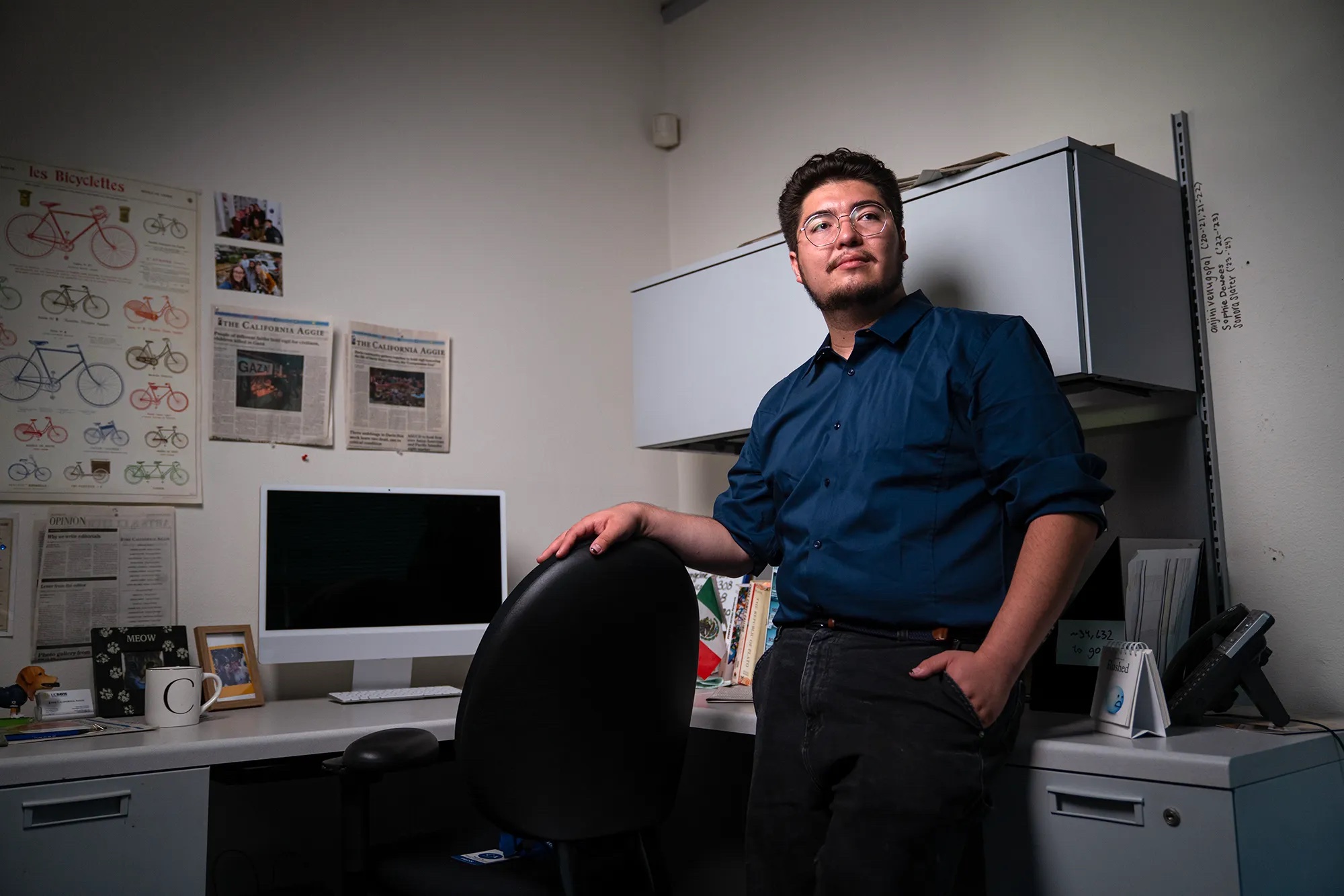
"caption": "Chris Ponce, former editor-in-chief of The California Aggie, in the UC Davis newsroom at UC Davis, on June 12, 2025. Fear of immigration consequences has shifted how international students engage with speech and activism across UC campuses. ",
"credit": "Louis Bryant III for CalMatters",
"altTag": null,
"description": null,
"imgSizes": {
"thumbnail": {
"file": "https://cdn.kqed.org/wp-content/uploads/sites/10/2025/08/061225_Intl-Students_LB_CM_21-copy-160x107.jpg",
"width": 160,
"height": 107,
"mimeType": "image/jpeg"
},
"1536x1536": {
"file": "https://cdn.kqed.org/wp-content/uploads/sites/10/2025/08/061225_Intl-Students_LB_CM_21-copy-1536x1025.jpg",
"width": 1536,
"height": 1025,
"mimeType": "image/jpeg"
},
"post-thumbnail": {
"file": "https://cdn.kqed.org/wp-content/uploads/sites/10/2025/08/061225_Intl-Students_LB_CM_21-copy-672x372.jpg",
"width": 672,
"height": 372,
"mimeType": "image/jpeg"
},
"twentyfourteen-full-width": {
"file": "https://cdn.kqed.org/wp-content/uploads/sites/10/2025/08/061225_Intl-Students_LB_CM_21-copy-1038x576.jpg",
"width": 1038,
"height": 576,
"mimeType": "image/jpeg"
},
"kqedFullSize": {
"file": "https://cdn.kqed.org/wp-content/uploads/sites/10/2025/08/061225_Intl-Students_LB_CM_21-copy.jpg",
"width": 2000,
"height": 1334
}
},
"isLoading": false,
"fetchFailed": false
},
"news_12051307": {
"type": "attachments",
"id": "news_12051307",
"meta": {
"index": "attachments_1716263798",
"site": "news",
"id": "12051307",
"found": true
},
"title": "021820_Solar-Panels_AW_CM_03",
"publishDate": 1754595347,
"status": "inherit",
"parent": 12051305,
"modified": 1754595362,
"caption": "Rooftop solar panels on a home in the Rockridge neighborhood of Oakland, on Feb. 18, 2020. ",
"credit": "Photo by Anne Wernikoff for CalMatters",
"altTag": null,
"description": null,
"imgSizes": {
"thumbnail": {
"file": "https://cdn.kqed.org/wp-content/uploads/sites/10/2025/08/021820_Solar-Panels_AW_CM_03-160x107.jpg",
"width": 160,
"height": 107,
"mimeType": "image/jpeg"
},
"1536x1536": {
"file": "https://cdn.kqed.org/wp-content/uploads/sites/10/2025/08/021820_Solar-Panels_AW_CM_03-1536x1024.jpg",
"width": 1536,
"height": 1024,
"mimeType": "image/jpeg"
},
"post-thumbnail": {
"file": "https://cdn.kqed.org/wp-content/uploads/sites/10/2025/08/021820_Solar-Panels_AW_CM_03-672x372.jpg",
"width": 672,
"height": 372,
"mimeType": "image/jpeg"
},
"twentyfourteen-full-width": {
"file": "https://cdn.kqed.org/wp-content/uploads/sites/10/2025/08/021820_Solar-Panels_AW_CM_03-1038x576.jpg",
"width": 1038,
"height": 576,
"mimeType": "image/jpeg"
},
"kqedFullSize": {
"file": "https://cdn.kqed.org/wp-content/uploads/sites/10/2025/08/021820_Solar-Panels_AW_CM_03.jpg",
"width": 2000,
"height": 1333
}
},
"isLoading": false,
"fetchFailed": false
},
"news_12050791": {
"type": "attachments",
"id": "news_12050791",
"meta": {
"index": "attachments_1716263798",
"site": "news",
"id": "12050791",
"found": true
},
"title": "012425-Affordable-Housing-DD-AP-01-CM copy",
"publishDate": 1754151382,
"status": "inherit",
"parent": 12050790,
"modified": 1754151407,
"caption": "Construction workers finish the exterior of an apartment building in downtown Los Angeles on June 18, 2021.\n",
"credit": "Damian Dovarganes/AP Photo",
"altTag": null,
"description": null,
"imgSizes": {
"thumbnail": {
"file": "https://cdn.kqed.org/wp-content/uploads/sites/10/2025/08/012425-Affordable-Housing-DD-AP-01-CM-copy-160x107.jpg",
"width": 160,
"height": 107,
"mimeType": "image/jpeg"
},
"1536x1536": {
"file": "https://cdn.kqed.org/wp-content/uploads/sites/10/2025/08/012425-Affordable-Housing-DD-AP-01-CM-copy-1536x1024.jpg",
"width": 1536,
"height": 1024,
"mimeType": "image/jpeg"
},
"post-thumbnail": {
"file": "https://cdn.kqed.org/wp-content/uploads/sites/10/2025/08/012425-Affordable-Housing-DD-AP-01-CM-copy-672x372.jpg",
"width": 672,
"height": 372,
"mimeType": "image/jpeg"
},
"twentyfourteen-full-width": {
"file": "https://cdn.kqed.org/wp-content/uploads/sites/10/2025/08/012425-Affordable-Housing-DD-AP-01-CM-copy-1038x576.jpg",
"width": 1038,
"height": 576,
"mimeType": "image/jpeg"
},
"kqedFullSize": {
"file": "https://cdn.kqed.org/wp-content/uploads/sites/10/2025/08/012425-Affordable-Housing-DD-AP-01-CM-copy.jpg",
"width": 2000,
"height": 1333
}
},
"isLoading": false,
"fetchFailed": false
},
"news_12050678": {
"type": "attachments",
"id": "news_12050678",
"meta": {
"index": "attachments_1716263798",
"site": "news",
"id": "12050678",
"found": true
},
"title": "041421-Handgun-Gun-Store-REUTERS-CM-01",
"publishDate": 1754075660,
"status": "inherit",
"parent": 12050674,
"modified": 1754075722,
"caption": "Glock semi-automatic pistols for sale at a gun store in Oceanside on April 12, 2021. A pending California bill would prohibit selling new Glocks and their various off-brand imitators.",
"credit": "Photo by Bing Guan, Reuters",
"altTag": null,
"description": null,
"imgSizes": {
"thumbnail": {
"file": "https://cdn.kqed.org/wp-content/uploads/sites/10/2025/08/041421-Handgun-Gun-Store-REUTERS-CM-01-160x107.jpg",
"width": 160,
"height": 107,
"mimeType": "image/jpeg"
},
"1536x1536": {
"file": "https://cdn.kqed.org/wp-content/uploads/sites/10/2025/08/041421-Handgun-Gun-Store-REUTERS-CM-01-1536x1025.jpg",
"width": 1536,
"height": 1025,
"mimeType": "image/jpeg"
},
"post-thumbnail": {
"file": "https://cdn.kqed.org/wp-content/uploads/sites/10/2025/08/041421-Handgun-Gun-Store-REUTERS-CM-01-672x372.jpg",
"width": 672,
"height": 372,
"mimeType": "image/jpeg"
},
"twentyfourteen-full-width": {
"file": "https://cdn.kqed.org/wp-content/uploads/sites/10/2025/08/041421-Handgun-Gun-Store-REUTERS-CM-01-1038x576.jpg",
"width": 1038,
"height": 576,
"mimeType": "image/jpeg"
},
"kqedFullSize": {
"file": "https://cdn.kqed.org/wp-content/uploads/sites/10/2025/08/041421-Handgun-Gun-Store-REUTERS-CM-01.jpg",
"width": 2000,
"height": 1334
}
},
"isLoading": false,
"fetchFailed": false
},
"news_12041588": {
"type": "attachments",
"id": "news_12041588",
"meta": {
"index": "attachments_1716263798",
"site": "news",
"id": "12041588",
"found": true
},
"title": "080822-LA-Planned-Parenthood-RN-CM-05 copy",
"publishDate": 1748043623,
"status": "inherit",
"parent": 12041584,
"modified": 1748043649,
"caption": "The Planned Parenthood-East Los Angeles Health Center in East Los Angeles on Aug. 8th, 2022.\n",
"credit": "Raquel Natalicchio for CalMatters",
"altTag": null,
"description": null,
"imgSizes": {
"medium": {
"file": "https://cdn.kqed.org/wp-content/uploads/sites/10/2025/05/080822-LA-Planned-Parenthood-RN-CM-05-copy-800x532.jpg",
"width": 800,
"height": 532,
"mimeType": "image/jpeg"
},
"large": {
"file": "https://cdn.kqed.org/wp-content/uploads/sites/10/2025/05/080822-LA-Planned-Parenthood-RN-CM-05-copy-1020x679.jpg",
"width": 1020,
"height": 679,
"mimeType": "image/jpeg"
},
"thumbnail": {
"file": "https://cdn.kqed.org/wp-content/uploads/sites/10/2025/05/080822-LA-Planned-Parenthood-RN-CM-05-copy-160x106.jpg",
"width": 160,
"height": 106,
"mimeType": "image/jpeg"
},
"1536x1536": {
"file": "https://cdn.kqed.org/wp-content/uploads/sites/10/2025/05/080822-LA-Planned-Parenthood-RN-CM-05-copy-1536x1022.jpg",
"width": 1536,
"height": 1022,
"mimeType": "image/jpeg"
},
"post-thumbnail": {
"file": "https://cdn.kqed.org/wp-content/uploads/sites/10/2025/05/080822-LA-Planned-Parenthood-RN-CM-05-copy-672x372.jpg",
"width": 672,
"height": 372,
"mimeType": "image/jpeg"
},
"twentyfourteen-full-width": {
"file": "https://cdn.kqed.org/wp-content/uploads/sites/10/2025/05/080822-LA-Planned-Parenthood-RN-CM-05-copy-1038x576.jpg",
"width": 1038,
"height": 576,
"mimeType": "image/jpeg"
},
"full-width": {
"file": "https://cdn.kqed.org/wp-content/uploads/sites/10/2025/05/080822-LA-Planned-Parenthood-RN-CM-05-copy-1920x1278.jpg",
"width": 1920,
"height": 1278,
"mimeType": "image/jpeg"
},
"kqedFullSize": {
"file": "https://cdn.kqed.org/wp-content/uploads/sites/10/2025/05/080822-LA-Planned-Parenthood-RN-CM-05-copy.jpg",
"width": 2000,
"height": 1331
}
},
"isLoading": false,
"fetchFailed": false
},
"news_12050072": {
"type": "attachments",
"id": "news_12050072",
"meta": {
"index": "attachments_1716263798",
"site": "news",
"id": "12050072",
"found": true
},
"title": "CMTrumpEducation",
"publishDate": 1753745330,
"status": "inherit",
"parent": 12050070,
"modified": 1753745361,
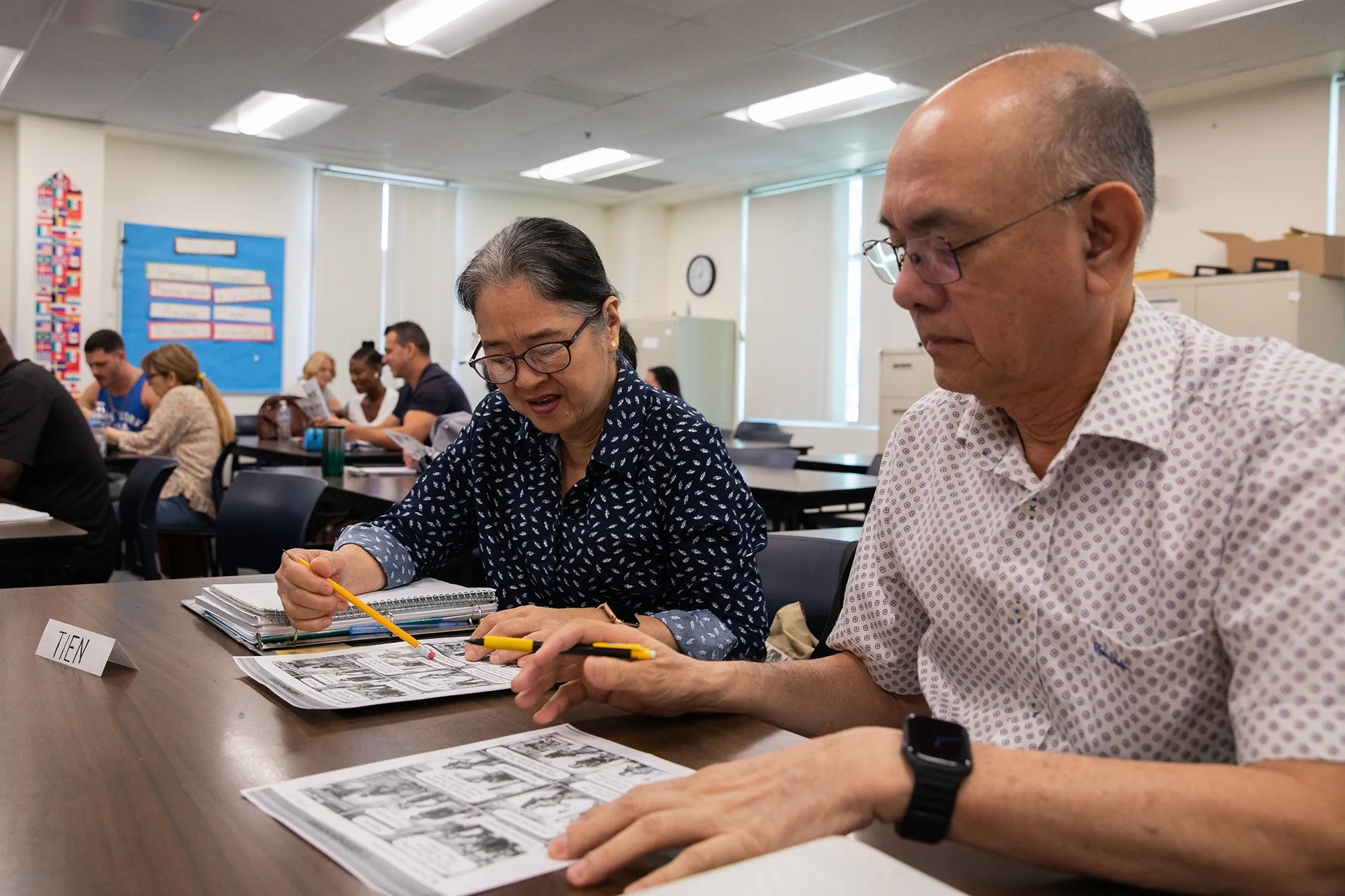
"caption": "Students work on an assignment during an English as a second language class at the San Diego Continuing Education Mid-City campus in San Diego on Oct. 6, 2023. \n",
"credit": "Adriana Heldiz/CalMatters",
"altTag": null,
"description": null,
"imgSizes": {
"thumbnail": {
"file": "https://cdn.kqed.org/wp-content/uploads/sites/10/2025/07/CMTrumpEducation-160x107.jpg",
"width": 160,
"height": 107,
"mimeType": "image/jpeg"
},
"1536x1536": {
"file": "https://cdn.kqed.org/wp-content/uploads/sites/10/2025/07/CMTrumpEducation-1536x1024.jpg",
"width": 1536,
"height": 1024,
"mimeType": "image/jpeg"
},
"post-thumbnail": {
"file": "https://cdn.kqed.org/wp-content/uploads/sites/10/2025/07/CMTrumpEducation-672x372.jpg",
"width": 672,
"height": 372,
"mimeType": "image/jpeg"
},
"twentyfourteen-full-width": {
"file": "https://cdn.kqed.org/wp-content/uploads/sites/10/2025/07/CMTrumpEducation-1038x576.jpg",
"width": 1038,
"height": 576,
"mimeType": "image/jpeg"
},
"kqedFullSize": {
"file": "https://cdn.kqed.org/wp-content/uploads/sites/10/2025/07/CMTrumpEducation.jpg",
"width": 2000,
"height": 1333
}
},
"isLoading": false,
"fetchFailed": false
},
"news_12050034": {
"type": "attachments",
"id": "news_12050034",
"meta": {
"index": "attachments_1716263798",
"site": "news",
"id": "12050034",
"found": true
},
"title": "CalFreshCM1",
"publishDate": 1753736489,
"status": "inherit",
"parent": 12050032,
"modified": 1783017028,
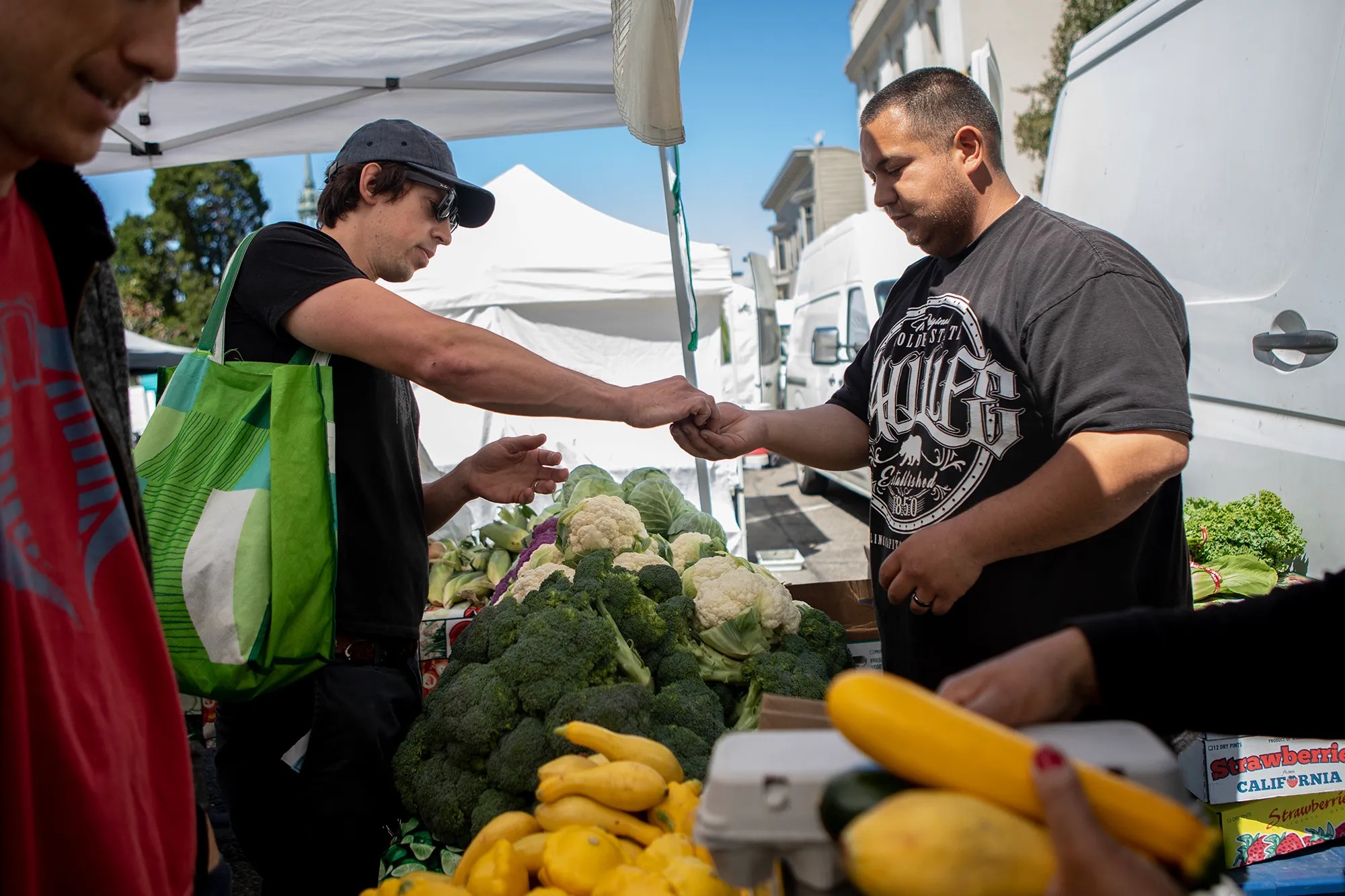
"caption": "The Ecology Center farmers' market in downtown Berkeley on July 13, 2019. CalFresh participants can purchase tokens at the market using their benefits card and can receive up to $10 in additional tokens specifically for fruits and vegetables.",
"credit": "Anne Wernikoff/CalMatters",
"altTag": null,
"description": null,
"imgSizes": {
"thumbnail": {
"file": "https://cdn.kqed.org/wp-content/uploads/sites/10/2025/07/CalFreshCM1-160x107.jpg",
"width": 160,
"height": 107,
"mimeType": "image/jpeg"
},
"1536x1536": {
"file": "https://cdn.kqed.org/wp-content/uploads/sites/10/2025/07/CalFreshCM1-1536x1024.jpg",
"width": 1536,
"height": 1024,
"mimeType": "image/jpeg"
},
"post-thumbnail": {
"file": "https://cdn.kqed.org/wp-content/uploads/sites/10/2025/07/CalFreshCM1-672x372.jpg",
"width": 672,
"height": 372,
"mimeType": "image/jpeg"
},
"twentyfourteen-full-width": {
"file": "https://cdn.kqed.org/wp-content/uploads/sites/10/2025/07/CalFreshCM1-1038x576.jpg",
"width": 1038,
"height": 576,
"mimeType": "image/jpeg"
},
"kqedFullSize": {
"file": "https://cdn.kqed.org/wp-content/uploads/sites/10/2025/07/CalFreshCM1.jpg",
"width": 2000,
"height": 1333
}
},
"isLoading": false,
"fetchFailed": false
},
"news_12049917": {
"type": "attachments",
"id": "news_12049917",
"meta": {
"index": "attachments_1716263798",
"site": "news",
"id": "12049917",
"found": true
},
"title": "072525-Gavin-Newsom-Presser-AP-CM-01",
"publishDate": 1753491904,
"status": "inherit",
"parent": 12049912,
"modified": 1757024501,
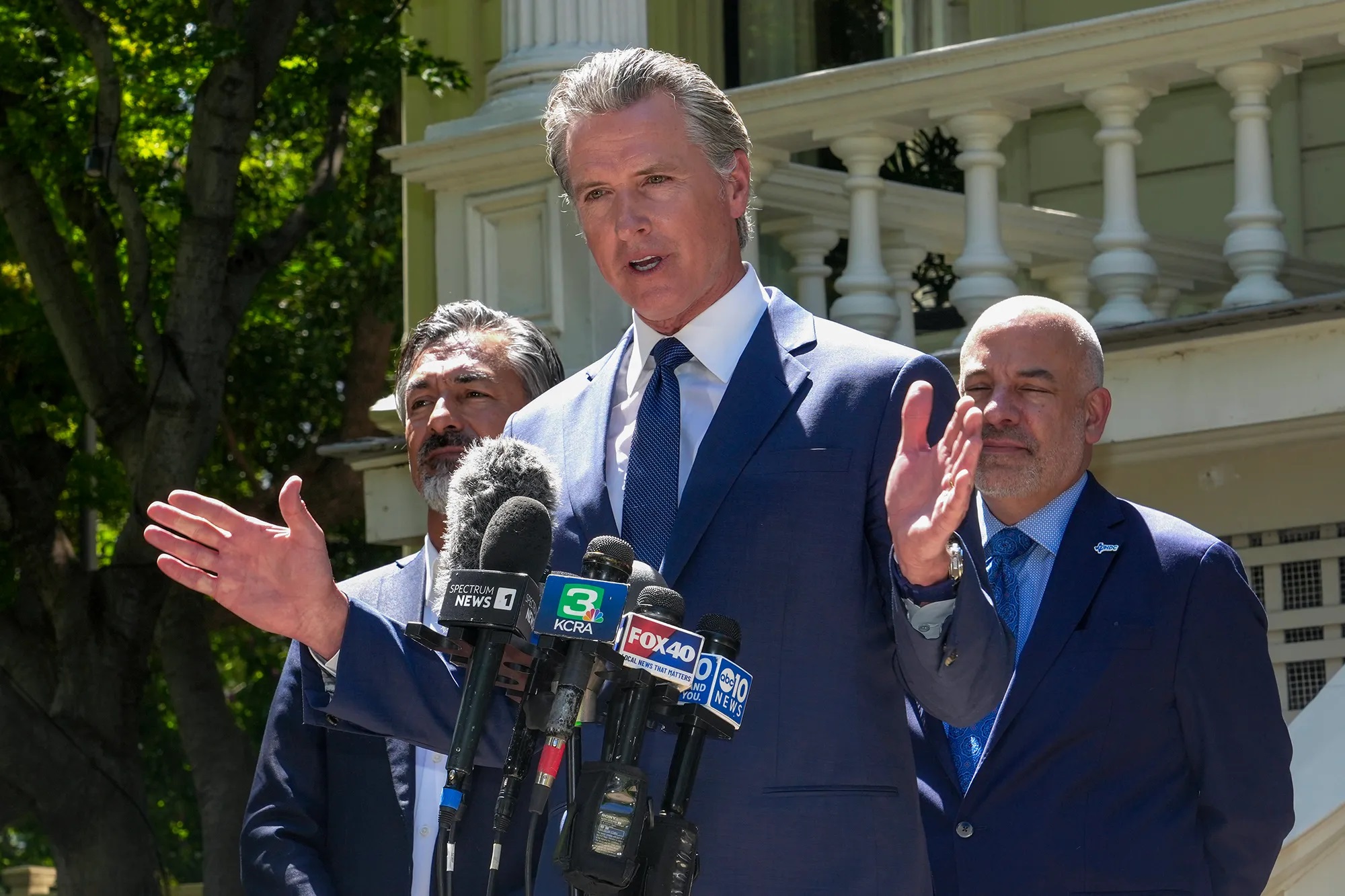
"caption": "Gov. Gavin Newsom calls for a new way for California to redraw its congressional district maps during a news conference in Sacramento on July 25, 2025. \n",
"credit": "Rich Pedroncelli/AP Photo",
"altTag": null,
"description": null,
"imgSizes": {
"thumbnail": {
"file": "https://cdn.kqed.org/wp-content/uploads/sites/10/2025/07/072525-Gavin-Newsom-Presser-AP-CM-01-160x107.jpg",
"width": 160,
"height": 107,
"mimeType": "image/jpeg"
},
"1536x1536": {
"file": "https://cdn.kqed.org/wp-content/uploads/sites/10/2025/07/072525-Gavin-Newsom-Presser-AP-CM-01-1536x1024.jpg",
"width": 1536,
"height": 1024,
"mimeType": "image/jpeg"
},
"post-thumbnail": {
"file": "https://cdn.kqed.org/wp-content/uploads/sites/10/2025/07/072525-Gavin-Newsom-Presser-AP-CM-01-672x372.jpg",
"width": 672,
"height": 372,
"mimeType": "image/jpeg"
},
"twentyfourteen-full-width": {
"file": "https://cdn.kqed.org/wp-content/uploads/sites/10/2025/07/072525-Gavin-Newsom-Presser-AP-CM-01-1038x576.jpg",
"width": 1038,
"height": 576,
"mimeType": "image/jpeg"
},
"kqedFullSize": {
"file": "https://cdn.kqed.org/wp-content/uploads/sites/10/2025/07/072525-Gavin-Newsom-Presser-AP-CM-01.jpg",
"width": 2000,
"height": 1333
}
},
"isLoading": false,
"fetchFailed": false
},
"news_12049847": {
"type": "attachments",
"id": "news_12049847",
"meta": {
"index": "attachments_1716263798",
"site": "news",
"id": "12049847",
"found": true
},
"title": "100818-KQED-Radio-AP-CM-01",
"publishDate": 1753479972,
"status": "inherit",
"parent": 12049836,
"modified": 1753485773,
"caption": "Radio host Scott Shafer (left) moderates a California gubernatorial debate between Republican candidate John Cox (center) and Democratic candidate Gavin Newsom at KQED Public Radio Studio in San Francisco, on Oct. 8, 2018. The NPR station is among many in California hit by Republican congressional cuts to the Corporation for Public Broadcasting. ",
"credit": "Jeff Chiu/AP Photo Pool",
"altTag": null,
"description": null,
"imgSizes": {
"thumbnail": {
"file": "https://cdn.kqed.org/wp-content/uploads/sites/10/2025/07/100818-KQED-Radio-AP-CM-01-160x108.jpg",
"width": 160,
"height": 108,
"mimeType": "image/jpeg"
},
"1536x1536": {
"file": "https://cdn.kqed.org/wp-content/uploads/sites/10/2025/07/100818-KQED-Radio-AP-CM-01-1536x1036.jpg",
"width": 1536,
"height": 1036,
"mimeType": "image/jpeg"
},
"post-thumbnail": {
"file": "https://cdn.kqed.org/wp-content/uploads/sites/10/2025/07/100818-KQED-Radio-AP-CM-01-672x372.jpg",
"width": 672,
"height": 372,
"mimeType": "image/jpeg"
},
"twentyfourteen-full-width": {
"file": "https://cdn.kqed.org/wp-content/uploads/sites/10/2025/07/100818-KQED-Radio-AP-CM-01-1038x576.jpg",
"width": 1038,
"height": 576,
"mimeType": "image/jpeg"
},
"kqedFullSize": {
"file": "https://cdn.kqed.org/wp-content/uploads/sites/10/2025/07/100818-KQED-Radio-AP-CM-01.jpg",
"width": 2000,
"height": 1349
}
},
"isLoading": false,
"fetchFailed": false
},
"news_12049680": {
"type": "attachments",
"id": "news_12049680",
"meta": {
"index": "attachments_1716263798",
"site": "news",
"id": "12049680",
"found": true
},
"title": "033023-Hollister-Hospital-LV_CM_06",
"publishDate": 1753395671,
"status": "inherit",
"parent": 12049673,
"modified": 1759436131,
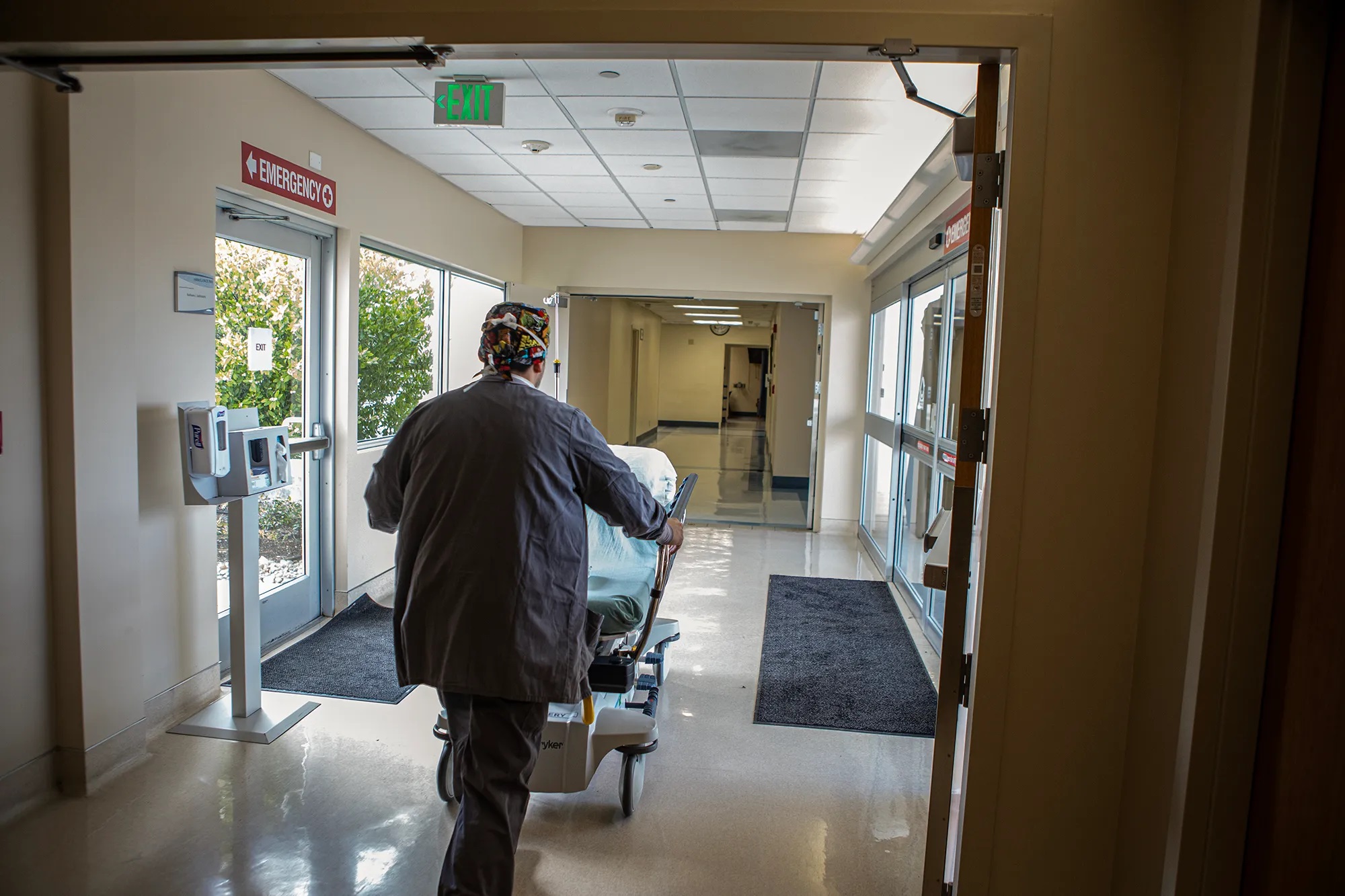
"caption": "A medical worker pushing a bed through the corridors of Hazel Hawkins Memorial Hospital in Hollister on March 30, 2023.",
"credit": "Larry Valenzuela, CalMatters/CatchLight Local",
"altTag": null,
"description": null,
"imgSizes": {
"thumbnail": {
"file": "https://cdn.kqed.org/wp-content/uploads/sites/10/2025/07/033023-Hollister-Hospital-LV_CM_06-160x107.jpg",
"width": 160,
"height": 107,
"mimeType": "image/jpeg"
},
"1536x1536": {
"file": "https://cdn.kqed.org/wp-content/uploads/sites/10/2025/07/033023-Hollister-Hospital-LV_CM_06-1536x1024.jpg",
"width": 1536,
"height": 1024,
"mimeType": "image/jpeg"
},
"post-thumbnail": {
"file": "https://cdn.kqed.org/wp-content/uploads/sites/10/2025/07/033023-Hollister-Hospital-LV_CM_06-672x372.jpg",
"width": 672,
"height": 372,
"mimeType": "image/jpeg"
},
"twentyfourteen-full-width": {
"file": "https://cdn.kqed.org/wp-content/uploads/sites/10/2025/07/033023-Hollister-Hospital-LV_CM_06-1038x576.jpg",
"width": 1038,
"height": 576,
"mimeType": "image/jpeg"
},
"kqedFullSize": {
"file": "https://cdn.kqed.org/wp-content/uploads/sites/10/2025/07/033023-Hollister-Hospital-LV_CM_06.jpg",
"width": 2000,
"height": 1333
}
},
"isLoading": false,
"fetchFailed": false
},
"news_12049369": {
"type": "attachments",
"id": "news_12049369",
"meta": {
"index": "attachments_1716263798",
"site": "news",
"id": "12049369",
"found": true
},
"title": "070125_Migrant-Outdoor-Ed_LV_20 (1)",
"publishDate": 1753298664,
"status": "inherit",
"parent": 12049366,
"modified": 1753298739,
"caption": "Students of the Migrant Outdoor Education Program canoe along the San Joaquin River near the Scout Island Education Center in Fresno on July 11, 2025.",
"credit": "Photo by Larry Valenzuela, CalMatters/CatchLight Local",
"altTag": null,
"description": null,
"imgSizes": {
"thumbnail": {
"file": "https://cdn.kqed.org/wp-content/uploads/sites/10/2025/07/070125_Migrant-Outdoor-Ed_LV_20-1-160x107.jpg",
"width": 160,
"height": 107,
"mimeType": "image/jpeg"
},
"1536x1536": {
"file": "https://cdn.kqed.org/wp-content/uploads/sites/10/2025/07/070125_Migrant-Outdoor-Ed_LV_20-1-1536x1024.jpg",
"width": 1536,
"height": 1024,
"mimeType": "image/jpeg"
},
"post-thumbnail": {
"file": "https://cdn.kqed.org/wp-content/uploads/sites/10/2025/07/070125_Migrant-Outdoor-Ed_LV_20-1-672x372.jpg",
"width": 672,
"height": 372,
"mimeType": "image/jpeg"
},
"twentyfourteen-full-width": {
"file": "https://cdn.kqed.org/wp-content/uploads/sites/10/2025/07/070125_Migrant-Outdoor-Ed_LV_20-1-1038x576.jpg",
"width": 1038,
"height": 576,
"mimeType": "image/jpeg"
},
"kqedFullSize": {
"file": "https://cdn.kqed.org/wp-content/uploads/sites/10/2025/07/070125_Migrant-Outdoor-Ed_LV_20-1.jpg",
"width": 2000,
"height": 1333
}
},
"isLoading": false,
"fetchFailed": false
},
"news_12049112": {
"type": "attachments",
"id": "news_12049112",
"meta": {
"index": "attachments_1716263798",
"site": "news",
"id": "12049112",
"found": true
},
"title": "101423_Collge-Info-Berkeley_JY-CM-20 copy",
"publishDate": 1753142650,
"status": "inherit",
"parent": 12049109,
"modified": 1753142671,
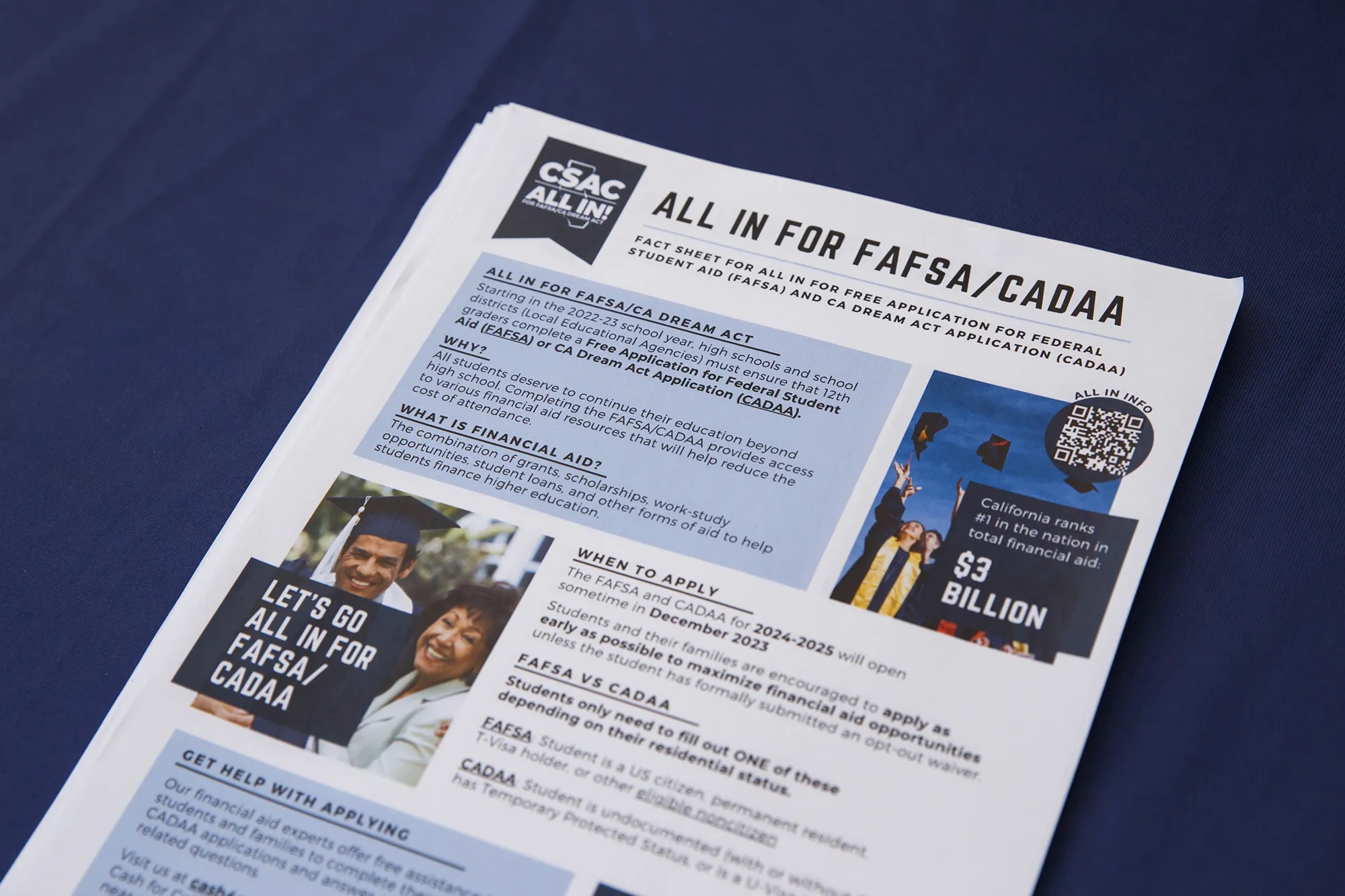
"caption": "FAFSA fact sheets at College Information Day at UC Berkeley in Berkeley on Oct. 14, 2023. \n",
"credit": "Juliana Yamada for CalMatters",
"altTag": null,
"description": null,
"imgSizes": {
"thumbnail": {
"file": "https://cdn.kqed.org/wp-content/uploads/sites/10/2025/07/101423_Collge-Info-Berkeley_JY-CM-20-copy-160x107.jpg",
"width": 160,
"height": 107,
"mimeType": "image/jpeg"
},
"1536x1536": {
"file": "https://cdn.kqed.org/wp-content/uploads/sites/10/2025/07/101423_Collge-Info-Berkeley_JY-CM-20-copy-1536x1024.jpg",
"width": 1536,
"height": 1024,
"mimeType": "image/jpeg"
},
"post-thumbnail": {
"file": "https://cdn.kqed.org/wp-content/uploads/sites/10/2025/07/101423_Collge-Info-Berkeley_JY-CM-20-copy-672x372.jpg",
"width": 672,
"height": 372,
"mimeType": "image/jpeg"
},
"twentyfourteen-full-width": {
"file": "https://cdn.kqed.org/wp-content/uploads/sites/10/2025/07/101423_Collge-Info-Berkeley_JY-CM-20-copy-1038x576.jpg",
"width": 1038,
"height": 576,
"mimeType": "image/jpeg"
},
"kqedFullSize": {
"file": "https://cdn.kqed.org/wp-content/uploads/sites/10/2025/07/101423_Collge-Info-Berkeley_JY-CM-20-copy.jpg",
"width": 2000,
"height": 1333
}
},
"isLoading": false,
"fetchFailed": false
}
},
"audioPlayerReducer": {
"postId": "stream_live",
"isPaused": true,
"isPlaying": false,
"pfsActive": false,
"pledgeModalIsOpen": true,
"playerDrawerIsOpen": false,
"liveAudioPlayStartedAt": 0,
"liveAudioPlayContext": ""
},
"authorsReducer": {
"byline_news_12051638": {
"type": "authors",
"id": "byline_news_12051638",
"meta": {
"override": true
},
"slug": "byline_news_12051638",
"name": "Emewodesh Eshete, CalMatters",
"isLoading": false
},
"byline_news_12051305": {
"type": "authors",
"id": "byline_news_12051305",
"meta": {
"override": true
},
"slug": "byline_news_12051305",
"name": "Malena Carollo, CalMatters",
"isLoading": false
},
"byline_news_12050790": {
"type": "authors",
"id": "byline_news_12050790",
"meta": {
"override": true
},
"slug": "byline_news_12050790",
"name": "Ben Christopher, CalMatters",
"isLoading": false
},
"byline_news_12050674": {
"type": "authors",
"id": "byline_news_12050674",
"meta": {
"override": true
},
"slug": "byline_news_12050674",
"name": "Ryan Sabalow, CalMatters",
"isLoading": false
},
"byline_news_12050169": {
"type": "authors",
"id": "byline_news_12050169",
"meta": {
"override": true
},
"slug": "byline_news_12050169",
"name": "Kristen Hwang, CalMatters",
"isLoading": false
},
"byline_news_12050070": {
"type": "authors",
"id": "byline_news_12050070",
"meta": {
"override": true
},
"slug": "byline_news_12050070",
"name": "Adam Echelman, CalMatters",
"isLoading": false
},
"byline_news_12050032": {
"type": "authors",
"id": "byline_news_12050032",
"meta": {
"override": true
},
"slug": "byline_news_12050032",
"name": "Wendy Fry and Mikhail Zinshteyn, CalMatters",
"isLoading": false
},
"byline_news_12049912": {
"type": "authors",
"id": "byline_news_12049912",
"meta": {
"override": true
},
"slug": "byline_news_12049912",
"name": "Alexei Koseff, CalMatters",
"isLoading": false
},
"byline_news_12049836": {
"type": "authors",
"id": "byline_news_12049836",
"meta": {
"override": true
},
"slug": "byline_news_12049836",
"name": "Maya C. Miller and Cayla Mihalovich, CalMatters",
"isLoading": false
},
"byline_news_12049673": {
"type": "authors",
"id": "byline_news_12049673",
"meta": {
"override": true
},
"slug": "byline_news_12049673",
"name": "Ana B. Ibarra and Kristen Hwang, CalMatters",
"isLoading": false
},
"byline_news_12049366": {
"type": "authors",
"id": "byline_news_12049366",
"meta": {
"override": true
},
"slug": "byline_news_12049366",
"name": "Carolyn Jones, CalMatters",
"isLoading": false
},
"byline_news_12049109": {
"type": "authors",
"id": "byline_news_12049109",
"meta": {
"override": true
},
"slug": "byline_news_12049109",
"name": "Mercy Sosa, CalMatters",
"isLoading": false
}
},
"pagesReducer": {
"news_affiliate_calmatters": {
"type": "terms",
"id": "news_18481",
"meta": {
"index": "terms_1716263798",
"site": "news",
"id": "18481",
"score": 15.355862
},
"featImg": null,
"name": "CALmatters",
"description": null,
"taxonomy": "affiliate",
"headData": {
"twImgId": null,
"twTitle": null,
"ogTitle": null,
"ogImgId": null,
"twDescription": null,
"description": null,
"title": "CALmatters Archives | KQED Arts",
"ogDescription": null
},
"ttid": 18515,
"slug": "calmatters",
"isLoading": false,
"title": "CALmatters",
"pageMeta": {
"site": "news",
"WpPageTemplate": "page-topic-editorial",
"currentPage": 11
},
"blocks": [
{
"blockName": "kqed/post-list",
"attrs": {
"layout": "cardArticle2",
"query": "posts/news?affiliate=calmatters",
"seeMore": false,
"paginated": true,
"page": 11
}
},
{
"blockName": "kqed/ad"
}
]
}
},
"pfsSessionReducer": {},
"postsReducer": {
"stream_live": {
"type": "live",
"id": "stream_live",
"audioUrl": "https://streams.kqed.org/kqedradio",
"title": "Live Stream",
"excerpt": "Live Stream information currently unavailable.",
"link": "/radio",
"featImg": "",
"label": {
"name": "KQED Live",
"link": "/"
}
},
"stream_kqedNewscast": {
"type": "posts",
"id": "stream_kqedNewscast",
"audioUrl": "https://www.kqed.org/.stream/anon/radio/RDnews/newscast.mp3?_=1",
"title": "KQED Newscast",
"featImg": "",
"label": {
"name": "88.5 FM",
"link": "/"
}
},
"news_12051638": {
"type": "posts",
"id": "news_12051638",
"meta": {
"index": "posts_1716263798",
"site": "news",
"id": "12051638",
"score": null,
"sort": [
1754758842000
]
},
"guestAuthors": [],
"slug": "fearing-deportation-international-students-go-silent-at-californias-universities",
"title": "Fearing Deportation, International Students Go Silent at California’s Universities",
"publishDate": 1754758842,
"format": "standard",
"headTitle": "Fearing Deportation, International Students Go Silent at California’s Universities | KQED",
"labelTerm": {
"term": 18481,
"site": "news"
},
"content": "\u003cp>\u003c!-- Creative Commons Attribution-NonCommercial-NoDerivatives https://creativecommons.org/licenses/by-nc-nd/4.0/ -->\u003c/p>\n\u003cp>\u003cem>This story was originally published by \u003ca href=\"https://calmatters.org/\">CalMatters\u003c/a>. \u003ca href=\"https://calmatters.org/subscribe-to-calmatters/\">Sign up\u003c/a> for their newsletters.\u003c/em>\u003c/p>\n\u003cp>International college students are learning that speech isn’t as free as they thought in the United States. After President Donald Trump began his second term, hundreds of international students lost their student status as part of an executive order cracking down on immigration and alleged antisemitism.\u003c/p>\n\u003cp>While lawsuits resulted in many of those students having their status reinstated since April, the uncertainty of it happening again has created fear among international students, particularly within the University of California system, where international students make up 13.6% of student enrollment as of Fall 2024.\u003c/p>\n\u003cp>Some international students told CalMatters they have changed their involvement in campus activities, from the routes they take on campus to avoid free speech areas, to the topics they include in their research projects, to scrubbing their social media posts and limiting their political activism.\u003c/p>\n\u003cp>[ad fullwidth]\u003c/p>\n\u003cp>The fear began spreading in late January, when the White House \u003ca href=\"https://www.whitehouse.gov/fact-sheets/2025/01/fact-sheet-president-donald-j-trump-takes-forceful-and-unprecedented-steps-to-combat-anti-semitism/\">released a fact sheet\u003c/a> about Trump’s \u003ca href=\"https://www.federalregister.gov/documents/2025/02/03/2025-02230/additional-measures-to-combat-anti-semitism\">Executive Order 14188\u003c/a>, “Additional Measures to Combat Anti-Semitism,” stating, “resident aliens who joined in the pro-jihadist protests, we put you on notice: come 2025, we will find you, and we will deport you.” Additionally, it mentioned cancelling visas of “Hamas sympathizers” on college campuses.\u003c/p>\n\u003cp>Since then, there have been a few high-profile arrests of international students, including Mahmoud Khalil at Columbia University, a legal permanent resident who was involved in leading pro-Palestinian protests, and Rümeysa Öztürk at Tufts University, a Turkish national who co-wrote an op-ed asking her university to divest. \u003ca href=\"https://www.npr.org/2025/06/23/nx-s1-5441691/mahmoud-khalil-interview\">Khalil\u003c/a> has since been released on bail and \u003ca href=\"https://www.npr.org/2025/05/09/nx-s1-5393055/tufts-student-rumeysa-ozturk-ordered-freed-from-immigration-detention\">Öztürk\u003c/a> was released by order of a federal judge. Still, these detentions have triggered concerns among international students about how their actions could be used against them.\u003c/p>\n\u003cp>[aside postID=news_12051521 hero='https://cdn.kqed.org/wp-content/uploads/sites/10/2025/08/UCLAAP.jpg']\u003c/p>\n\u003cp>Additionally, U.S. Secretary of State Marco Rubio recently \u003ca href=\"https://calmatters.org/education/higher-education/2025/05/chinese-student-visas-california-trump/\">announced\u003c/a> the U.S. would start “aggressively” revoking Chinese student visas, more specifically, those with ties to the Chinese Communist Party or studying in fields that are considered “critical.”\u003c/p>\n\u003cp>Federal officials haven’t released any information about how many international students had their status revoked, or which campuses they attend. However, \u003ca href=\"https://www.insidehighered.com/news/global/international-students-us/2025/04/07/where-students-have-had-their-visas-revoked\">Inside Higher Ed\u003c/a> compiled news reports of more than 1,800 students nationwide, including over 200 in California, whose status were revoked in the spring.\u003c/p>\n\u003cp>CalMatters reached out to all 10 UC campuses inquiring about the number of international students who have had their statuses reinstated, but only two responded. As of April 28, UC San Diego’s 35 terminated student visas had been reactivated, and one student was deported. At UC Santa Barbara, 11 of the 12 visas had been reinstated, though the “situation remains fluid,” said Media Relations Manager Kiki Reyes.\u003c/p>\n\u003ch2>\u003cstrong>International students are chilling their speech\u003c/strong>\u003c/h2>\n\u003cp>None of the international students interviewed for this story wanted their names or areas of study published due to fears of being identified and having their status revoked for speaking publicly.[aside postID=forum_2010101909645 hero='https://cdn.kqed.org/wp-content/uploads/sites/43/2025/04/GettyImages-2205113389-1-1020x574.jpg']At UC Berkeley, a sophomore told CalMatters that she was involved in campus activism for about a year and a half until about March, when she saw international students losing their visas and heard rumors of immigration enforcement agents on campus. Her thoughts on protesting have changed drastically. “Everything I say can be used against me,” she said. She has been coming up with creative ways to be involved while trying to keep herself and other international students safe. For example, she participates in student club meetings, where she feels she can speak more privately.\u003c/p>\n\u003cp>“I came to the United States because those are things that I wasn’t comfortable doing in my country,” the sophomore said. “I wasn’t comfortable speaking out. It was like a dictatorship, and that’s why I came to America, which is, like, where the freedom is supposed to be. And then I got met with this. It’s really, really disappointing.”\u003c/p>\n\u003cp>Also at UC Berkeley, a junior from the UK said that last year she felt much freer. During the campus pro-Palestinian protests last year, she wanted to participate but was too busy. Her regret has now turned into relief because if anyone had taken a picture of her near a protest, she believes she would have suffered consequences.\u003c/p>\n\u003cp>“Under a Biden administration, I would have felt like I was free to criticize the administration. I was free to take part in protests,” she said. “Because of Trump’s recent decision — especially with the students at Columbia — I feel like I can’t be anywhere near a protest.”\u003c/p>\n\u003cfigure>\u003cimg decoding=\"async\" src=\"https://calmatters.org/wp-content/uploads/2025/08/042324_Berkeley-Gaza_MO_CM_10-1024x682.jpg\" alt='Protesters hold signs reading \"Healthcare Workers Demand: Stop Bombing Hospitals\" during a demonstration. The signs are white with green and red text and feature an image of a hand with a stethoscope. Some protesters wear keffiyehs and face masks, and the background shows an urban street scene with other participants.'>\u003cfigcaption>Health Care Workers for Gaza participate in the “Free Palestine Camp” demonstration outside of Sproul Hall at UC Berkeley on April 23, 2024. \u003cem>Manuel Orbegozo for CalMatters\u003c/em>\u003c/figcaption>\u003c/figure>\n\u003cp>An international graduate student at another UC — he does not want to name his campus in fear of not passing his dissertation — is working on a research project about the interplay of international politics and media. His research paper includes a section on human rights violations and genocide. Initially, he included coverage of the Israel-Hamas war. Faculty advised him to remove the parts about Israel from his final project, he said.\u003c/p>\n\u003cp>“It does not have that big an impact on the entire project … but personally I’m just disappointed that I could not talk about it in my final events,” the graduate student said. “I will be presenting this to a set of faculty from my department, and they will be grading that, determining whether I can graduate or not based on the paper. It impacts a little bit on my department, and regarding freedom of speech.”\u003c/p>\n\u003ch2>\u003cstrong>Balancing the support of Jewish students and due process \u003c/strong>\u003c/h2>\n\u003cp>In his executive order, Trump promises to protect the civil rights of Jewish citizens, who have faced harassment, physical threats and assault on college campuses.\u003c/p>\n\u003cp>UC Irvine Jewish student Shir — who requested not to use her full name because she fears discrimination – believes if a student on a visa is “celebrating terror explicitly,” their student status should be evaluated. However, she notes the importance of drawing the line at terror and hate and not overstepping legal boundaries.\u003c/p>\n\u003cp>“Skipping [due] process doesn’t protect [against] antisemitism, it only creates more hate in the system,” Shir said in an email. “We are all humans first and should be treated as such.”\u003c/p>\n\u003cp>While she supports students’ right to protest, Shir wrote “there have been students repeating and glorifying slogans and ideas used by Hamas, a terrorist organization. This is where action is needed. I and many other Jewish students have been confronted at these protests and on campus, told I am a terrorist, that my family in Israel deserves to die, and had protesters outright justify Hamas’ actions to me.”\u003c/p>\n\u003cfigure>\u003cimg decoding=\"async\" src=\"https://calmatters.org/wp-content/uploads/2023/12/110723_UCLA-Israel-Rally_LJ_CM_02-1024x682.jpg\" alt='A person holds a sign reading \"No Hostage Left Behind\" during a rally, with Israeli flags visible in the crowd. The sign is in focus, while people and flags in the foreground are blurred. The event appears to be outdoors, with trees in the background.'>\u003cfigcaption>Hillel, a campus religious group, hosts a rally calling for the release of kidnapped Israelis at UCLA’s Wilson Plaza on Nov. 7, 2023 in Los Angeles. \u003cem>Lauren Justice for CalMatters\u003c/em>\u003c/figcaption>\u003c/figure>\n\u003cp>Raquel Aldana, a law professor at UC Davis, said the language being used by the Trump administration about antisemitism is extremely broad and could be read to include anything that is anti-Israel.\u003c/p>\n\u003cp>“One of the areas they’re going to be watching is how these institutions of higher learning respond to allegations of antisemitism, which could end up targeting foreign students,” Aldana said.\u003c/p>\n\u003cp>The Trump administration’s antisemitism task force is investigating allegations of antisemitic incidents at \u003ca href=\"https://www.justice.gov/opa/pr/federal-task-force-combat-antisemitism-announces-visits-10-college-campuses-experienced\">at least 10 college campuses \u003c/a>across the country, including UCLA, UC Berkeley and the University of Southern California.\u003c/p>\n\u003cp>Aldana said she didn’t understand what problems the investigations are meant to address — adding that it “feels like a political move and not a true concern.”\u003c/p>\n\u003ch2>\u003cstrong>International students limited on travel options\u003c/strong>\u003c/h2>\n\u003cp>Three UC campuses that responded to CalMatters said they’ve sent communications to international students to use caution if they plan to travel outside the country.[aside postID=news_12036406 hero='https://cdn.kqed.org/wp-content/uploads/sites/10/2025/04/250417-HIGHEREDPROTESTS-08-BL-KQED-1020x680.jpg']Right before spring break, international students said they received travel warning emails from their international student offices about the risks of leaving the country. At UC Berkeley, the sophomore student said an \u003ca href=\"https://mailchi.mp/berkeley/spring-break-2025-travel-reminders-students\">email from the Berkeley International Office\u003c/a> said the office could not guarantee international students’ ability to return to the U.S. if they left the country, even though the \u003ca href=\"https://travel.state.gov/content/travel/en/us-visas/study/student-visa.html#:~:text=Continuing%20Students%C2%A0%2D%C2%A0Student%20(F%20and%20M)%20visas%20for%20continuing%20students%20may%20be%20issued%20at%20any%20time%2C%20as%20long%20as%20the%20student%20is%20currently%20enrolled%20at%20a%20SEVP%2Dapproved%20school%20or%20institution%20and%20in%20SEVIS.%20%C2%A0Continuing%20students%20may%20enter%20the%20United%20States%20at%20any%20time%20before%20classes%20start.\">U.S. State Department’s website\u003c/a> states continuing students may enter the country at any time.\u003c/p>\n\u003cp>“We had to spend our spring break in the U.S., [when] people want to go home,” the UC Berkeley sophomore said. “Not having that option is really disappointing, the fact that no one at the university can advocate for the small percentage of [international] students they have, … is insane to me.”\u003c/p>\n\u003cp>For the summer break, UC Berkeley’s International Office sent another email in May that \u003ca href=\"https://mailchi.mp/berkeley/temporary-delay-for-scheduling-of-visa-appointments-for-f-and-j-applicants-9013441\">urged “caution”\u003c/a> for continuing international students who planned to travel out of the country. On June 4, the White House released a \u003ca href=\"https://www.whitehouse.gov/presidential-actions/2025/06/restricting-the-entry-of-foreign-nationals-to-protect-the-united-states-from-foreign-terrorists-and-other-national-security-and-public-safety-threats/\">Presidential Proclamation\u003c/a> announcing restrictions from 19 designated countries to enter the U.S. As a result, UC Davis and UC Irvine recommended that international students from those 19 countries not leave the U.S. because the travel ban may prevent them from re-entering.\u003c/p>\n\u003ch2>\u003cstrong>Student newspapers face ethical dilemmas \u003c/strong>\u003c/h2>\n\u003cp>Öztürk, the Tufts university student arrested after criticizing her university’s response to the Israel-Hamas war, \u003ca href=\"https://www.nytimes.com/2025/05/10/us/tufts-rumeysa-ozturk-release.html\">returned to Massachusetts\u003c/a> after a judge ordered her release from a detention facility in Louisiana in May. Her arrest spurred college publications to take extra precautions.\u003c/p>\n\u003cp>Adalia Luo, editor-in-chief of UC San Diego’s student news organization \u003ca href=\"https://ucsdguardian.org/policies/\">The Guardian\u003c/a>, and Chris Ponce, editor-in-chief of \u003ca href=\"https://theaggie.org/the-california-aggie-code-of-ethics/\">The California Aggie \u003c/a>at UC Davis, said their opinion departments have been making changes. Luo said her organization has removed names from articles by international student writers upon request. Luo added that the priority is protecting the students even though removing a byline weakens a story’s credibility.\u003c/p>\n\u003cp>UC Davis’ student news staff has discussed a similar issue. Ponce said they’re not simply granting anonymity for anyone who asks. However, they are “now more than ever” open to removing whole articles if it means protecting the status of international students, which they are doing on a case-by-case basis.\u003c/p>\n\u003cfigure>\u003cimg decoding=\"async\" src=\"https://calmatters.org/wp-content/uploads/2025/08/061225_Intl-Students_LB_CM_26-1024x683.jpg\" alt=\"A person wearing glasses and a dark blue shirt smiles while holding up a copy of The California Aggie newspaper. The issue’s illustrated cover reads “Best of 2025” and features drawings of local landmarks and scenery. A dartboard is visible in the background on the wall.\">\u003cfigcaption>Chris Ponce, former editor-in-chief of The California Aggie, holds up a copy of the “Best of Davis 2025” on his last day of school at UC Davis, on June 12, 2025. \u003cem>Louis Bryant III for CalMatters\u003c/em>\u003c/figcaption>\u003c/figure>\n\u003cp>One student newspaper is challenging the Trump administration’s policies regarding noncitizen students. The Stanford Daily, represented by the \u003ca href=\"https://www.thefire.org/news/lawsuit-fire-challenges-unconstitutional-provisions-rubio-uses-crusade-deport-legal-immigrants\">Foundation for Individual Rights and Expression\u003c/a>, or FIRE, is suing Secretary of State Marco Rubio and Secretary of Homeland Security Kristi Noem over immigration laws that allow the revocation of student visas for protected speech.\u003c/p>\n\u003cp>According to a \u003ca href=\"https://stanforddaily.com/2025/08/07/letter-from-the-editors-on-the-dailys-lawsuit-with-fire/\">letter from the editors\u003c/a>, far fewer international students are willing to speak to The Daily, and those who do request anonymity. “Several international members of our own staff even left their positions at The Daily. Many of those who stayed requested to stop writing news articles related to protests or political events on campus and asked that their previous articles be taken off our website,” the letter states.\u003c/p>\n\u003cp>The junior at UC Berkeley said she writes for a campus political magazine. Once the Trump administration started targeting international students, she asked for the articles to be taken down, and the magazine obliged.\u003c/p>\n\u003cp>“I didn’t want my name affiliated with criticisms of the administration, as that would either risk me getting deported or a future visa being rejected. I believe the articles are still inaccessible, and my goal is that they remain so for the rest of Trump’s term,” the junior said.\u003c/p>\n\u003cp>Despite fears about sharing their viewpoints publicly, international students say it’s important to be advocates for themselves and each other.\u003c/p>\n\u003cp>The UC Berkeley sophomore said international students should continue to consider their safety as well as their rights.\u003c/p>\n\u003cp>“You should be taking precautions to keep your status and to keep yourself safe, but to also know that if we back down, change will never happen,” the sophomore said.\u003c/p>\n\u003cp>\u003cem>Mercy Sosa contributed to this story. Emewodesh Eshete and Mercy Sosa are contributors with the College Journalism Network, a collaboration between CalMatters and student journalists from across California. CalMatters higher education coverage is supported by a grant from the College Futures Foundation.\u003c/em>\u003c/p>\n\u003cp>\u003cem>This article was \u003ca href=\"https://calmatters.org/education/2025/08/international-students-california-universities/\">originally published on CalMatters\u003c/a> and was republished under the \u003ca href=\"https://creativecommons.org/licenses/by-nc-nd/4.0/\">Creative Commons Attribution-NonCommercial-NoDerivatives\u003c/a> license.\u003c/em>\u003c/p>\n\u003cp>[ad floatright]\u003c/p>\n",
"blocks": [],
"excerpt": "After hundreds of international students lost their status this spring, then regained it following lawsuits, the uncertainty of it happening again has created fear.",
"status": "publish",
"parent": 0,
"modified": 1754761002,
"stats": {
"hasAudio": false,
"hasVideo": false,
"hasChartOrMap": false,
"iframeSrcs": [],
"hasGoogleForm": false,
"hasGallery": false,
"hasHearkenModule": false,
"hasPolis": false,
"paragraphCount": 42,
"wordCount": 2234
},
"headData": {
"title": "Fearing Deportation, International Students Go Silent at California’s Universities | KQED",
"description": "After hundreds of international students lost their status this spring, then regained it following lawsuits, the uncertainty of it happening again has created fear.",
"ogTitle": "",
"ogDescription": "",
"ogImgId": "",
"twTitle": "",
"twDescription": "",
"twImgId": "",
"schema": {
"@context": "https://schema.org",
"@type": "NewsArticle",
"headline": "Fearing Deportation, International Students Go Silent at California’s Universities",
"datePublished": "2025-08-09T10:00:42-07:00",
"dateModified": "2025-08-09T10:36:42-07:00",
"image": "https://cdn.kqed.org/wp-content/uploads/2020/02/KQED-OG-Image@1x.png",
"isAccessibleForFree": "True",
"publisher": {
"@type": "NewsMediaOrganization",
"@id": "https://www.kqed.org/#organization",
"name": "KQED",
"logo": "https://cdn.kqed.org/wp-content/uploads/2020/02/KQED-OG-Image@1x.png",
"url": "https://www.kqed.org",
"sameAs": [
"https://www.facebook.com/KQED",
"https://twitter.com/KQED",
"https://www.instagram.com/kqed/",
"https://www.tiktok.com/@kqedofficial",
"https://www.linkedin.com/company/kqed",
"https://www.youtube.com/channel/UCeC0IOo7i1P_61zVUWbJ4nw"
]
}
}
},
"primaryCategory": {
"termId": 8,
"slug": "news",
"name": "News"
},
"sticky": false,
"nprByline": "Emewodesh Eshete, CalMatters",
"nprStoryId": "kqed-12051638",
"templateType": "standard",
"featuredImageType": "standard",
"excludeFromSiteSearch": "Include",
"showOnAuthorArchivePages": "No",
"articleAge": "0",
"path": "/news/12051638/fearing-deportation-international-students-go-silent-at-californias-universities",
"audioTrackLength": null,
"parsedContent": [
{
"type": "contentString",
"content": "\u003cdiv class=\"post-body\">\u003cp>\u003cp>\u003c!-- Creative Commons Attribution-NonCommercial-NoDerivatives https://creativecommons.org/licenses/by-nc-nd/4.0/ -->\u003c/p>\n\u003cp>\u003cem>This story was originally published by \u003ca href=\"https://calmatters.org/\">CalMatters\u003c/a>. \u003ca href=\"https://calmatters.org/subscribe-to-calmatters/\">Sign up\u003c/a> for their newsletters.\u003c/em>\u003c/p>\n\u003cp>International college students are learning that speech isn’t as free as they thought in the United States. After President Donald Trump began his second term, hundreds of international students lost their student status as part of an executive order cracking down on immigration and alleged antisemitism.\u003c/p>\n\u003cp>While lawsuits resulted in many of those students having their status reinstated since April, the uncertainty of it happening again has created fear among international students, particularly within the University of California system, where international students make up 13.6% of student enrollment as of Fall 2024.\u003c/p>\n\u003cp>Some international students told CalMatters they have changed their involvement in campus activities, from the routes they take on campus to avoid free speech areas, to the topics they include in their research projects, to scrubbing their social media posts and limiting their political activism.\u003c/p>\n\u003cp>\u003c/p>\u003c/div>",
"attributes": {
"named": {},
"numeric": []
}
},
{
"type": "component",
"content": "",
"name": "ad",
"attributes": {
"named": {
"label": "fullwidth"
},
"numeric": [
"fullwidth"
]
}
},
{
"type": "contentString",
"content": "\u003cdiv class=\"post-body\">\u003cp>\u003c/p>\n\u003cp>The fear began spreading in late January, when the White House \u003ca href=\"https://www.whitehouse.gov/fact-sheets/2025/01/fact-sheet-president-donald-j-trump-takes-forceful-and-unprecedented-steps-to-combat-anti-semitism/\">released a fact sheet\u003c/a> about Trump’s \u003ca href=\"https://www.federalregister.gov/documents/2025/02/03/2025-02230/additional-measures-to-combat-anti-semitism\">Executive Order 14188\u003c/a>, “Additional Measures to Combat Anti-Semitism,” stating, “resident aliens who joined in the pro-jihadist protests, we put you on notice: come 2025, we will find you, and we will deport you.” Additionally, it mentioned cancelling visas of “Hamas sympathizers” on college campuses.\u003c/p>\n\u003cp>Since then, there have been a few high-profile arrests of international students, including Mahmoud Khalil at Columbia University, a legal permanent resident who was involved in leading pro-Palestinian protests, and Rümeysa Öztürk at Tufts University, a Turkish national who co-wrote an op-ed asking her university to divest. \u003ca href=\"https://www.npr.org/2025/06/23/nx-s1-5441691/mahmoud-khalil-interview\">Khalil\u003c/a> has since been released on bail and \u003ca href=\"https://www.npr.org/2025/05/09/nx-s1-5393055/tufts-student-rumeysa-ozturk-ordered-freed-from-immigration-detention\">Öztürk\u003c/a> was released by order of a federal judge. Still, these detentions have triggered concerns among international students about how their actions could be used against them.\u003c/p>\n\u003cp>\u003c/p>\u003c/div>",
"attributes": {
"named": {},
"numeric": []
}
},
{
"type": "component",
"content": "",
"name": "aside",
"attributes": {
"named": {
"postid": "news_12051521",
"hero": "https://cdn.kqed.org/wp-content/uploads/sites/10/2025/08/UCLAAP.jpg",
"label": ""
},
"numeric": []
}
},
{
"type": "contentString",
"content": "\u003cdiv class=\"post-body\">\u003cp>\u003c/p>\n\u003cp>Additionally, U.S. Secretary of State Marco Rubio recently \u003ca href=\"https://calmatters.org/education/higher-education/2025/05/chinese-student-visas-california-trump/\">announced\u003c/a> the U.S. would start “aggressively” revoking Chinese student visas, more specifically, those with ties to the Chinese Communist Party or studying in fields that are considered “critical.”\u003c/p>\n\u003cp>Federal officials haven’t released any information about how many international students had their status revoked, or which campuses they attend. However, \u003ca href=\"https://www.insidehighered.com/news/global/international-students-us/2025/04/07/where-students-have-had-their-visas-revoked\">Inside Higher Ed\u003c/a> compiled news reports of more than 1,800 students nationwide, including over 200 in California, whose status were revoked in the spring.\u003c/p>\n\u003cp>CalMatters reached out to all 10 UC campuses inquiring about the number of international students who have had their statuses reinstated, but only two responded. As of April 28, UC San Diego’s 35 terminated student visas had been reactivated, and one student was deported. At UC Santa Barbara, 11 of the 12 visas had been reinstated, though the “situation remains fluid,” said Media Relations Manager Kiki Reyes.\u003c/p>\n\u003ch2>\u003cstrong>International students are chilling their speech\u003c/strong>\u003c/h2>\n\u003cp>None of the international students interviewed for this story wanted their names or areas of study published due to fears of being identified and having their status revoked for speaking publicly.\u003c/p>\u003c/div>",
"attributes": {
"named": {},
"numeric": []
}
},
{
"type": "component",
"content": "",
"name": "aside",
"attributes": {
"named": {
"postid": "forum_2010101909645",
"hero": "https://cdn.kqed.org/wp-content/uploads/sites/43/2025/04/GettyImages-2205113389-1-1020x574.jpg",
"label": ""
},
"numeric": []
}
},
{
"type": "contentString",
"content": "\u003cdiv class=\"post-body\">\u003cp>At UC Berkeley, a sophomore told CalMatters that she was involved in campus activism for about a year and a half until about March, when she saw international students losing their visas and heard rumors of immigration enforcement agents on campus. Her thoughts on protesting have changed drastically. “Everything I say can be used against me,” she said. She has been coming up with creative ways to be involved while trying to keep herself and other international students safe. For example, she participates in student club meetings, where she feels she can speak more privately.\u003c/p>\n\u003cp>“I came to the United States because those are things that I wasn’t comfortable doing in my country,” the sophomore said. “I wasn’t comfortable speaking out. It was like a dictatorship, and that’s why I came to America, which is, like, where the freedom is supposed to be. And then I got met with this. It’s really, really disappointing.”\u003c/p>\n\u003cp>Also at UC Berkeley, a junior from the UK said that last year she felt much freer. During the campus pro-Palestinian protests last year, she wanted to participate but was too busy. Her regret has now turned into relief because if anyone had taken a picture of her near a protest, she believes she would have suffered consequences.\u003c/p>\n\u003cp>“Under a Biden administration, I would have felt like I was free to criticize the administration. I was free to take part in protests,” she said. “Because of Trump’s recent decision — especially with the students at Columbia — I feel like I can’t be anywhere near a protest.”\u003c/p>\n\u003cfigure>\u003cimg decoding=\"async\" src=\"https://calmatters.org/wp-content/uploads/2025/08/042324_Berkeley-Gaza_MO_CM_10-1024x682.jpg\" alt='Protesters hold signs reading \"Healthcare Workers Demand: Stop Bombing Hospitals\" during a demonstration. The signs are white with green and red text and feature an image of a hand with a stethoscope. Some protesters wear keffiyehs and face masks, and the background shows an urban street scene with other participants.'>\u003cfigcaption>Health Care Workers for Gaza participate in the “Free Palestine Camp” demonstration outside of Sproul Hall at UC Berkeley on April 23, 2024. \u003cem>Manuel Orbegozo for CalMatters\u003c/em>\u003c/figcaption>\u003c/figure>\n\u003cp>An international graduate student at another UC — he does not want to name his campus in fear of not passing his dissertation — is working on a research project about the interplay of international politics and media. His research paper includes a section on human rights violations and genocide. Initially, he included coverage of the Israel-Hamas war. Faculty advised him to remove the parts about Israel from his final project, he said.\u003c/p>\n\u003cp>“It does not have that big an impact on the entire project … but personally I’m just disappointed that I could not talk about it in my final events,” the graduate student said. “I will be presenting this to a set of faculty from my department, and they will be grading that, determining whether I can graduate or not based on the paper. It impacts a little bit on my department, and regarding freedom of speech.”\u003c/p>\n\u003ch2>\u003cstrong>Balancing the support of Jewish students and due process \u003c/strong>\u003c/h2>\n\u003cp>In his executive order, Trump promises to protect the civil rights of Jewish citizens, who have faced harassment, physical threats and assault on college campuses.\u003c/p>\n\u003cp>UC Irvine Jewish student Shir — who requested not to use her full name because she fears discrimination – believes if a student on a visa is “celebrating terror explicitly,” their student status should be evaluated. However, she notes the importance of drawing the line at terror and hate and not overstepping legal boundaries.\u003c/p>\n\u003cp>“Skipping [due] process doesn’t protect [against] antisemitism, it only creates more hate in the system,” Shir said in an email. “We are all humans first and should be treated as such.”\u003c/p>\n\u003cp>While she supports students’ right to protest, Shir wrote “there have been students repeating and glorifying slogans and ideas used by Hamas, a terrorist organization. This is where action is needed. I and many other Jewish students have been confronted at these protests and on campus, told I am a terrorist, that my family in Israel deserves to die, and had protesters outright justify Hamas’ actions to me.”\u003c/p>\n\u003cfigure>\u003cimg decoding=\"async\" src=\"https://calmatters.org/wp-content/uploads/2023/12/110723_UCLA-Israel-Rally_LJ_CM_02-1024x682.jpg\" alt='A person holds a sign reading \"No Hostage Left Behind\" during a rally, with Israeli flags visible in the crowd. The sign is in focus, while people and flags in the foreground are blurred. The event appears to be outdoors, with trees in the background.'>\u003cfigcaption>Hillel, a campus religious group, hosts a rally calling for the release of kidnapped Israelis at UCLA’s Wilson Plaza on Nov. 7, 2023 in Los Angeles. \u003cem>Lauren Justice for CalMatters\u003c/em>\u003c/figcaption>\u003c/figure>\n\u003cp>Raquel Aldana, a law professor at UC Davis, said the language being used by the Trump administration about antisemitism is extremely broad and could be read to include anything that is anti-Israel.\u003c/p>\n\u003cp>“One of the areas they’re going to be watching is how these institutions of higher learning respond to allegations of antisemitism, which could end up targeting foreign students,” Aldana said.\u003c/p>\n\u003cp>The Trump administration’s antisemitism task force is investigating allegations of antisemitic incidents at \u003ca href=\"https://www.justice.gov/opa/pr/federal-task-force-combat-antisemitism-announces-visits-10-college-campuses-experienced\">at least 10 college campuses \u003c/a>across the country, including UCLA, UC Berkeley and the University of Southern California.\u003c/p>\n\u003cp>Aldana said she didn’t understand what problems the investigations are meant to address — adding that it “feels like a political move and not a true concern.”\u003c/p>\n\u003ch2>\u003cstrong>International students limited on travel options\u003c/strong>\u003c/h2>\n\u003cp>Three UC campuses that responded to CalMatters said they’ve sent communications to international students to use caution if they plan to travel outside the country.\u003c/p>\u003c/div>",
"attributes": {
"named": {},
"numeric": []
}
},
{
"type": "component",
"content": "",
"name": "aside",
"attributes": {
"named": {
"postid": "news_12036406",
"hero": "https://cdn.kqed.org/wp-content/uploads/sites/10/2025/04/250417-HIGHEREDPROTESTS-08-BL-KQED-1020x680.jpg",
"label": ""
},
"numeric": []
}
},
{
"type": "contentString",
"content": "\u003cdiv class=\"post-body\">\u003cp>Right before spring break, international students said they received travel warning emails from their international student offices about the risks of leaving the country. At UC Berkeley, the sophomore student said an \u003ca href=\"https://mailchi.mp/berkeley/spring-break-2025-travel-reminders-students\">email from the Berkeley International Office\u003c/a> said the office could not guarantee international students’ ability to return to the U.S. if they left the country, even though the \u003ca href=\"https://travel.state.gov/content/travel/en/us-visas/study/student-visa.html#:~:text=Continuing%20Students%C2%A0%2D%C2%A0Student%20(F%20and%20M)%20visas%20for%20continuing%20students%20may%20be%20issued%20at%20any%20time%2C%20as%20long%20as%20the%20student%20is%20currently%20enrolled%20at%20a%20SEVP%2Dapproved%20school%20or%20institution%20and%20in%20SEVIS.%20%C2%A0Continuing%20students%20may%20enter%20the%20United%20States%20at%20any%20time%20before%20classes%20start.\">U.S. State Department’s website\u003c/a> states continuing students may enter the country at any time.\u003c/p>\n\u003cp>“We had to spend our spring break in the U.S., [when] people want to go home,” the UC Berkeley sophomore said. “Not having that option is really disappointing, the fact that no one at the university can advocate for the small percentage of [international] students they have, … is insane to me.”\u003c/p>\n\u003cp>For the summer break, UC Berkeley’s International Office sent another email in May that \u003ca href=\"https://mailchi.mp/berkeley/temporary-delay-for-scheduling-of-visa-appointments-for-f-and-j-applicants-9013441\">urged “caution”\u003c/a> for continuing international students who planned to travel out of the country. On June 4, the White House released a \u003ca href=\"https://www.whitehouse.gov/presidential-actions/2025/06/restricting-the-entry-of-foreign-nationals-to-protect-the-united-states-from-foreign-terrorists-and-other-national-security-and-public-safety-threats/\">Presidential Proclamation\u003c/a> announcing restrictions from 19 designated countries to enter the U.S. As a result, UC Davis and UC Irvine recommended that international students from those 19 countries not leave the U.S. because the travel ban may prevent them from re-entering.\u003c/p>\n\u003ch2>\u003cstrong>Student newspapers face ethical dilemmas \u003c/strong>\u003c/h2>\n\u003cp>Öztürk, the Tufts university student arrested after criticizing her university’s response to the Israel-Hamas war, \u003ca href=\"https://www.nytimes.com/2025/05/10/us/tufts-rumeysa-ozturk-release.html\">returned to Massachusetts\u003c/a> after a judge ordered her release from a detention facility in Louisiana in May. Her arrest spurred college publications to take extra precautions.\u003c/p>\n\u003cp>Adalia Luo, editor-in-chief of UC San Diego’s student news organization \u003ca href=\"https://ucsdguardian.org/policies/\">The Guardian\u003c/a>, and Chris Ponce, editor-in-chief of \u003ca href=\"https://theaggie.org/the-california-aggie-code-of-ethics/\">The California Aggie \u003c/a>at UC Davis, said their opinion departments have been making changes. Luo said her organization has removed names from articles by international student writers upon request. Luo added that the priority is protecting the students even though removing a byline weakens a story’s credibility.\u003c/p>\n\u003cp>UC Davis’ student news staff has discussed a similar issue. Ponce said they’re not simply granting anonymity for anyone who asks. However, they are “now more than ever” open to removing whole articles if it means protecting the status of international students, which they are doing on a case-by-case basis.\u003c/p>\n\u003cfigure>\u003cimg decoding=\"async\" src=\"https://calmatters.org/wp-content/uploads/2025/08/061225_Intl-Students_LB_CM_26-1024x683.jpg\" alt=\"A person wearing glasses and a dark blue shirt smiles while holding up a copy of The California Aggie newspaper. The issue’s illustrated cover reads “Best of 2025” and features drawings of local landmarks and scenery. A dartboard is visible in the background on the wall.\">\u003cfigcaption>Chris Ponce, former editor-in-chief of The California Aggie, holds up a copy of the “Best of Davis 2025” on his last day of school at UC Davis, on June 12, 2025. \u003cem>Louis Bryant III for CalMatters\u003c/em>\u003c/figcaption>\u003c/figure>\n\u003cp>One student newspaper is challenging the Trump administration’s policies regarding noncitizen students. The Stanford Daily, represented by the \u003ca href=\"https://www.thefire.org/news/lawsuit-fire-challenges-unconstitutional-provisions-rubio-uses-crusade-deport-legal-immigrants\">Foundation for Individual Rights and Expression\u003c/a>, or FIRE, is suing Secretary of State Marco Rubio and Secretary of Homeland Security Kristi Noem over immigration laws that allow the revocation of student visas for protected speech.\u003c/p>\n\u003cp>According to a \u003ca href=\"https://stanforddaily.com/2025/08/07/letter-from-the-editors-on-the-dailys-lawsuit-with-fire/\">letter from the editors\u003c/a>, far fewer international students are willing to speak to The Daily, and those who do request anonymity. “Several international members of our own staff even left their positions at The Daily. Many of those who stayed requested to stop writing news articles related to protests or political events on campus and asked that their previous articles be taken off our website,” the letter states.\u003c/p>\n\u003cp>The junior at UC Berkeley said she writes for a campus political magazine. Once the Trump administration started targeting international students, she asked for the articles to be taken down, and the magazine obliged.\u003c/p>\n\u003cp>“I didn’t want my name affiliated with criticisms of the administration, as that would either risk me getting deported or a future visa being rejected. I believe the articles are still inaccessible, and my goal is that they remain so for the rest of Trump’s term,” the junior said.\u003c/p>\n\u003cp>Despite fears about sharing their viewpoints publicly, international students say it’s important to be advocates for themselves and each other.\u003c/p>\n\u003cp>The UC Berkeley sophomore said international students should continue to consider their safety as well as their rights.\u003c/p>\n\u003cp>“You should be taking precautions to keep your status and to keep yourself safe, but to also know that if we back down, change will never happen,” the sophomore said.\u003c/p>\n\u003cp>\u003cem>Mercy Sosa contributed to this story. Emewodesh Eshete and Mercy Sosa are contributors with the College Journalism Network, a collaboration between CalMatters and student journalists from across California. CalMatters higher education coverage is supported by a grant from the College Futures Foundation.\u003c/em>\u003c/p>\n\u003cp>\u003cem>This article was \u003ca href=\"https://calmatters.org/education/2025/08/international-students-california-universities/\">originally published on CalMatters\u003c/a> and was republished under the \u003ca href=\"https://creativecommons.org/licenses/by-nc-nd/4.0/\">Creative Commons Attribution-NonCommercial-NoDerivatives\u003c/a> license.\u003c/em>\u003c/p>\n\u003cp>\u003c/p>\u003c/div>",
"attributes": {
"named": {},
"numeric": []
}
},
{
"type": "component",
"content": "",
"name": "ad",
"attributes": {
"named": {
"label": "floatright"
},
"numeric": [
"floatright"
]
}
},
{
"type": "contentString",
"content": "\u003cdiv class=\"post-body\">\u003cp>\u003c/p>\n\u003c/div>\u003c/p>",
"attributes": {
"named": {},
"numeric": []
}
}
],
"link": "/news/12051638/fearing-deportation-international-students-go-silent-at-californias-universities",
"authors": [
"byline_news_12051638"
],
"categories": [
"news_31795",
"news_18540",
"news_1169",
"news_8",
"news_13"
],
"tags": [
"news_31933",
"news_35247",
"news_20202",
"news_35257",
"news_33765"
],
"affiliates": [
"news_18481"
],
"featImg": "news_12051641",
"label": "news_18481"
},
"news_12051305": {
"type": "posts",
"id": "news_12051305",
"meta": {
"index": "posts_1716263798",
"site": "news",
"id": "12051305",
"score": null,
"sort": [
1754595852000
]
},
"guestAuthors": [],
"slug": "california-supreme-court-hands-victory-to-rooftop-solar-panel-owners",
"title": "California Supreme Court Hands Victory to Rooftop Solar Panel Owners",
"publishDate": 1754595852,
"format": "standard",
"headTitle": "California Supreme Court Hands Victory to Rooftop Solar Panel Owners | KQED",
"labelTerm": {},
"content": "\u003cp>\u003cem>This story was originally published by \u003ca href=\"https://calmatters.org/\">CalMatters\u003c/a>. \u003ca href=\"https://calmatters.org/subscribe-to-calmatters/\">Sign up\u003c/a> for their newsletters.\u003c/em>\u003c/p>\n\u003cp>The California Supreme Court today sided with environmental groups in a case seen as pivotal for the proliferation of rooftop solar power in California.\u003c/p>\n\u003cp>In a unanimous vote, justices told a lower court to revisit a ruling that upheld reduced payments to solar panel owners for selling excess power back to utility companies. Justices did not rule on whether the changes to the solar program were legal, requiring the court of appeals to determine this.\u003c/p>\n\u003cp>“They basically said the lower court kind of punted on the whole substance of the [solar payments] decision,” Bernadette Del Chiaro, vice president for California at the Environmental Working Group, said. “I do think they’re clearly stating this needs to be reviewed.”\u003c/p>\n\u003cp>[ad fullwidth]\u003cbr>\nAt issue is a 2022 decision by state regulators to reduce by about 75% payments to solar panel owners for excess power. The change was intended to help make bills affordable for all customers while still encouraging the adoption of renewable energy sources. Three environmental groups that brought the lawsuit — the Center for Biological Diversity, The Protect our Communities Foundation, and the Environmental Working Group — argued in the case that the state utility commission’s decision left out crucial considerations around benefits to customers and disadvantaged communities.\u003cbr>\u003cstrong>\u003cbr>\u003c/strong>“We don’t need [to be in] an affordability crisis if we have more local generation,” Roger Lin, senior attorney fro the Center for Biological Diversity, said.\u003c/p>\n\u003cfigure id=\"attachment_11998389\" class=\"wp-caption aligncenter\" style=\"max-width: 2560px\">\u003ca href=\"https://cdn.kqed.org/wp-content/uploads/sites/10/2024/08/gettyimages-1747758424-scaled.jpeg\">\u003cimg loading=\"lazy\" decoding=\"async\" src=\"https://cdn.kqed.org/wp-content/uploads/sites/10/2024/08/gettyimages-1747758424-scaled.jpeg\" alt=\"Two workers wearing hard hats carry a solar panel onto a rooftop.\" width=\"2560\" height=\"1760\" class=\"size-full wp-image-11998389\" srcset=\"https://cdn.kqed.org/wp-content/uploads/sites/10/2024/08/gettyimages-1747758424-scaled.jpeg 2560w, https://cdn.kqed.org/wp-content/uploads/sites/10/2024/08/gettyimages-1747758424-800x550.jpeg 800w, https://cdn.kqed.org/wp-content/uploads/sites/10/2024/08/gettyimages-1747758424-1020x701.jpeg 1020w, https://cdn.kqed.org/wp-content/uploads/sites/10/2024/08/gettyimages-1747758424-160x110.jpeg 160w, https://cdn.kqed.org/wp-content/uploads/sites/10/2024/08/gettyimages-1747758424-1536x1056.jpeg 1536w, https://cdn.kqed.org/wp-content/uploads/sites/10/2024/08/gettyimages-1747758424-2048x1408.jpeg 2048w, https://cdn.kqed.org/wp-content/uploads/sites/10/2024/08/gettyimages-1747758424-1920x1320.jpeg 1920w\" sizes=\"auto, (max-width: 2560px) 100vw, 2560px\">\u003c/a>\u003cfigcaption class=\"wp-caption-text\">GRID Alternatives employees Sal Miranda, center, and Tony Chang, left, install no-cost solar panels on the rooftop of a low-income household on Oct. 19, 2023, in Pomona, California. \u003ccite>(Mario Tama/Getty Images)\u003c/cite>\u003c/figcaption>\u003c/figure>\n\u003cp>Utilities pay solar panel owners for their excess power under a program known as “net energy metering.” In previous iterations of the program – “NEM 1.0” and “NEM 2.0” – utilities paid solar customers a retail rate for their extra energy, which is the same price the utilities charge other customers when they resell that energy. This was changed under the current iteration of the program – “NEM 3.0” – which instead gives customers the “avoided cost,” which is how much utilities save by not buying that power on the wholesale market. \u003c/p>\n\u003cp>Customers who joined the program after mid-April 2023 receive the new rate, while customers under the prior two versions will continue to receive the old rate for the duration of their contracts, which is typically about 20 years.\u003c/p>\n\u003cp>Utility commissioners ruled in favor of power companies, which argued that older versions of the program created an unfair cost burden on customers. Those without rooftop solar, utilities said, have to pay more than their peers for routine maintenance to the grid. The groups bringing the lawsuit said this idea is overblown.[aside postID=science_1997918 hero='https://cdn.kqed.org/wp-content/uploads/sites/35/2025/05/250523-SOLAR-BALCONY-MD-01-KQED-1020x680.jpg']A court of appeals decision upheld regulators’ decision, relying on a legal standard that gives significant deference to decisions made by the California Public Utilities Commission.\u003c/p>\n\u003cp>Thursday’s decision said the court of appeals “erred” by using this standard. \u003c/p>\n\u003cp>Whether or not the change in how solar panel owners are paid is legal will be left to the lower courts. But the decision this week could have farther-reaching implications for state utility regulators.\u003c/p>\n\u003cp>Advocates said the decision reinforces that the utilities’ commission must ensure that its decisions fit squarely within the law. \u003c/p>\n\u003cp>“For too long, they really have operated in a black box behind a shroud of complexity,” Del Chiaro said. “Consumers and the planet have consistently lost out as a result of that.”\u003c/p>\n\u003cp>The fallout from the utility commission’s 2022 net metering decision included an 82% drop in customers requesting connections for rooftop solar installations, and industry groups expected a loss of about 17,000 jobs during the first year of the change.\u003c/p>\n\u003cp>\u003cem>This is a developing story.\u003c/em>\u003c/p>\n\u003cp>\u003cem>\u003c/em>\u003c/p>\n\u003cp>This article was \u003ca href=\"https://calmatters.org/economy/2025/08/california-supreme-court-rules-on-net-metering-cuts/\">originally published on CalMatters\u003c/a> and was republished under the \u003ca href=\"https://creativecommons.org/licenses/by-nc-nd/4.0/\">Creative Commons Attribution-NonCommercial-NoDerivatives\u003c/a> license.\u003c/p>\n\u003cp>\u003c/p>\n\u003cp>\u003c/p>\n",
"blocks": [],
"excerpt": "Justices told a lower court to revisit their decision to uphold cuts of 75 percent to payments for solar panel owners.",
"status": "publish",
"parent": 0,
"modified": 1754595902,
"stats": {
"hasAudio": false,
"hasVideo": false,
"hasChartOrMap": false,
"iframeSrcs": [],
"hasGoogleForm": false,
"hasGallery": false,
"hasHearkenModule": false,
"hasPolis": false,
"paragraphCount": 18,
"wordCount": 707
},
"headData": {
"title": "California Supreme Court Hands Victory to Rooftop Solar Panel Owners | KQED",
"description": "Justices told a lower court to revisit their decision to uphold cuts of 75 percent to payments for solar panel owners.",
"ogTitle": "",
"ogDescription": "",
"ogImgId": "",
"twTitle": "",
"twDescription": "",
"twImgId": "",
"schema": {
"@context": "https://schema.org",
"@type": "NewsArticle",
"headline": "California Supreme Court Hands Victory to Rooftop Solar Panel Owners",
"datePublished": "2025-08-07T12:44:12-07:00",
"dateModified": "2025-08-07T12:45:02-07:00",
"image": "https://cdn.kqed.org/wp-content/uploads/2020/02/KQED-OG-Image@1x.png",
"isAccessibleForFree": "True",
"publisher": {
"@type": "NewsMediaOrganization",
"@id": "https://www.kqed.org/#organization",
"name": "KQED",
"logo": "https://cdn.kqed.org/wp-content/uploads/2020/02/KQED-OG-Image@1x.png",
"url": "https://www.kqed.org",
"sameAs": [
"https://www.facebook.com/KQED",
"https://twitter.com/KQED",
"https://www.instagram.com/kqed/",
"https://www.tiktok.com/@kqedofficial",
"https://www.linkedin.com/company/kqed",
"https://www.youtube.com/channel/UCeC0IOo7i1P_61zVUWbJ4nw"
]
}
}
},
"primaryCategory": {
"termId": 8,
"slug": "news",
"name": "News"
},
"source": "Calmatters",
"sourceUrl": "https://calmatters.org/",
"sticky": false,
"nprByline": "Malena Carollo, CalMatters",
"nprStoryId": "kqed-12051305",
"templateType": "standard",
"featuredImageType": "standard",
"excludeFromSiteSearch": "Include",
"showOnAuthorArchivePages": "No",
"articleAge": "0",
"path": "/news/12051305/california-supreme-court-hands-victory-to-rooftop-solar-panel-owners",
"audioTrackLength": null,
"parsedContent": [
{
"type": "contentString",
"content": "\u003cdiv class=\"post-body\">\u003cp>\u003cp>\u003cem>This story was originally published by \u003ca href=\"https://calmatters.org/\">CalMatters\u003c/a>. \u003ca href=\"https://calmatters.org/subscribe-to-calmatters/\">Sign up\u003c/a> for their newsletters.\u003c/em>\u003c/p>\n\u003cp>The California Supreme Court today sided with environmental groups in a case seen as pivotal for the proliferation of rooftop solar power in California.\u003c/p>\n\u003cp>In a unanimous vote, justices told a lower court to revisit a ruling that upheld reduced payments to solar panel owners for selling excess power back to utility companies. Justices did not rule on whether the changes to the solar program were legal, requiring the court of appeals to determine this.\u003c/p>\n\u003cp>“They basically said the lower court kind of punted on the whole substance of the [solar payments] decision,” Bernadette Del Chiaro, vice president for California at the Environmental Working Group, said. “I do think they’re clearly stating this needs to be reviewed.”\u003c/p>\n\u003cp>\u003c/p>\u003c/div>",
"attributes": {
"named": {},
"numeric": []
}
},
{
"type": "component",
"content": "",
"name": "ad",
"attributes": {
"named": {
"label": "fullwidth"
},
"numeric": [
"fullwidth"
]
}
},
{
"type": "contentString",
"content": "\u003cdiv class=\"post-body\">\u003cp>\u003cbr>\nAt issue is a 2022 decision by state regulators to reduce by about 75% payments to solar panel owners for excess power. The change was intended to help make bills affordable for all customers while still encouraging the adoption of renewable energy sources. Three environmental groups that brought the lawsuit — the Center for Biological Diversity, The Protect our Communities Foundation, and the Environmental Working Group — argued in the case that the state utility commission’s decision left out crucial considerations around benefits to customers and disadvantaged communities.\u003cbr>\u003cstrong>\u003cbr>\u003c/strong>“We don’t need [to be in] an affordability crisis if we have more local generation,” Roger Lin, senior attorney fro the Center for Biological Diversity, said.\u003c/p>\n\u003cfigure id=\"attachment_11998389\" class=\"wp-caption aligncenter\" style=\"max-width: 2560px\">\u003ca href=\"https://cdn.kqed.org/wp-content/uploads/sites/10/2024/08/gettyimages-1747758424-scaled.jpeg\">\u003cimg loading=\"lazy\" decoding=\"async\" src=\"https://cdn.kqed.org/wp-content/uploads/sites/10/2024/08/gettyimages-1747758424-scaled.jpeg\" alt=\"Two workers wearing hard hats carry a solar panel onto a rooftop.\" width=\"2560\" height=\"1760\" class=\"size-full wp-image-11998389\" srcset=\"https://cdn.kqed.org/wp-content/uploads/sites/10/2024/08/gettyimages-1747758424-scaled.jpeg 2560w, https://cdn.kqed.org/wp-content/uploads/sites/10/2024/08/gettyimages-1747758424-800x550.jpeg 800w, https://cdn.kqed.org/wp-content/uploads/sites/10/2024/08/gettyimages-1747758424-1020x701.jpeg 1020w, https://cdn.kqed.org/wp-content/uploads/sites/10/2024/08/gettyimages-1747758424-160x110.jpeg 160w, https://cdn.kqed.org/wp-content/uploads/sites/10/2024/08/gettyimages-1747758424-1536x1056.jpeg 1536w, https://cdn.kqed.org/wp-content/uploads/sites/10/2024/08/gettyimages-1747758424-2048x1408.jpeg 2048w, https://cdn.kqed.org/wp-content/uploads/sites/10/2024/08/gettyimages-1747758424-1920x1320.jpeg 1920w\" sizes=\"auto, (max-width: 2560px) 100vw, 2560px\">\u003c/a>\u003cfigcaption class=\"wp-caption-text\">GRID Alternatives employees Sal Miranda, center, and Tony Chang, left, install no-cost solar panels on the rooftop of a low-income household on Oct. 19, 2023, in Pomona, California. \u003ccite>(Mario Tama/Getty Images)\u003c/cite>\u003c/figcaption>\u003c/figure>\n\u003cp>Utilities pay solar panel owners for their excess power under a program known as “net energy metering.” In previous iterations of the program – “NEM 1.0” and “NEM 2.0” – utilities paid solar customers a retail rate for their extra energy, which is the same price the utilities charge other customers when they resell that energy. This was changed under the current iteration of the program – “NEM 3.0” – which instead gives customers the “avoided cost,” which is how much utilities save by not buying that power on the wholesale market. \u003c/p>\n\u003cp>Customers who joined the program after mid-April 2023 receive the new rate, while customers under the prior two versions will continue to receive the old rate for the duration of their contracts, which is typically about 20 years.\u003c/p>\n\u003cp>Utility commissioners ruled in favor of power companies, which argued that older versions of the program created an unfair cost burden on customers. Those without rooftop solar, utilities said, have to pay more than their peers for routine maintenance to the grid. The groups bringing the lawsuit said this idea is overblown.\u003c/p>\u003c/div>",
"attributes": {
"named": {},
"numeric": []
}
},
{
"type": "component",
"content": "",
"name": "aside",
"attributes": {
"named": {
"postid": "science_1997918",
"hero": "https://cdn.kqed.org/wp-content/uploads/sites/35/2025/05/250523-SOLAR-BALCONY-MD-01-KQED-1020x680.jpg",
"label": ""
},
"numeric": []
}
},
{
"type": "contentString",
"content": "\u003cdiv class=\"post-body\">\u003cp>A court of appeals decision upheld regulators’ decision, relying on a legal standard that gives significant deference to decisions made by the California Public Utilities Commission.\u003c/p>\n\u003cp>Thursday’s decision said the court of appeals “erred” by using this standard. \u003c/p>\n\u003cp>Whether or not the change in how solar panel owners are paid is legal will be left to the lower courts. But the decision this week could have farther-reaching implications for state utility regulators.\u003c/p>\n\u003cp>Advocates said the decision reinforces that the utilities’ commission must ensure that its decisions fit squarely within the law. \u003c/p>\n\u003cp>“For too long, they really have operated in a black box behind a shroud of complexity,” Del Chiaro said. “Consumers and the planet have consistently lost out as a result of that.”\u003c/p>\n\u003cp>The fallout from the utility commission’s 2022 net metering decision included an 82% drop in customers requesting connections for rooftop solar installations, and industry groups expected a loss of about 17,000 jobs during the first year of the change.\u003c/p>\n\u003cp>\u003cem>This is a developing story.\u003c/em>\u003c/p>\n\u003cp>\u003cem>\u003c/em>\u003c/p>\n\u003cp>This article was \u003ca href=\"https://calmatters.org/economy/2025/08/california-supreme-court-rules-on-net-metering-cuts/\">originally published on CalMatters\u003c/a> and was republished under the \u003ca href=\"https://creativecommons.org/licenses/by-nc-nd/4.0/\">Creative Commons Attribution-NonCommercial-NoDerivatives\u003c/a> license.\u003c/p>\n\u003cp>\u003c/p>\n\u003cp>\u003c/p>\n\u003c/div>\u003c/p>",
"attributes": {
"named": {},
"numeric": []
}
}
],
"link": "/news/12051305/california-supreme-court-hands-victory-to-rooftop-solar-panel-owners",
"authors": [
"byline_news_12051305"
],
"categories": [
"news_31795",
"news_34165",
"news_19906",
"news_8"
],
"tags": [
"news_18538",
"news_548",
"news_19204",
"news_20023",
"news_31972",
"news_394"
],
"affiliates": [
"news_18481"
],
"featImg": "news_12051307",
"label": "source_news_12051305"
},
"news_12050790": {
"type": "posts",
"id": "news_12050790",
"meta": {
"index": "posts_1716263798",
"site": "news",
"id": "12050790",
"score": null,
"sort": [
1754154053000
]
},
"guestAuthors": [],
"slug": "california-affordable-housing-programs-are-on-the-chopping-block-after-supreme-court-ruling",
"title": "California Affordable Housing Programs Are on the Chopping Block After Supreme Court Ruling",
"publishDate": 1754154053,
"format": "standard",
"headTitle": "California Affordable Housing Programs Are on the Chopping Block After Supreme Court Ruling | KQED",
"labelTerm": {
"term": 18481,
"site": "news"
},
"content": "\u003cp>\u003c!-- Creative Commons Attribution-NonCommercial-NoDerivatives https://creativecommons.org/licenses/by-nc-nd/4.0/ -->\u003c/p>\n\u003cp>\u003cem>This story was originally published by \u003ca href=\"https://calmatters.org/\">CalMatters\u003c/a>. \u003ca href=\"https://calmatters.org/subscribe-to-calmatters/\">Sign up\u003c/a> for their newsletters.\u003c/em>\u003c/p>\n\u003cp>East Palo Alto, like cities across California, has a law on the books that forces developers of new housing projects to foot the bill for the state’s shortage of affordable homes.\u003c/p>\n\u003cp>New residential projects need to set aside a share of the units they plan to build for lower-income renters and homeowners under the terms of the city’s “inclusionary zoning” ordinance. Builders who refuse have to instead pay a fee, ranging from the tens of thousands to hundreds of thousands of dollars.\u003c/p>\n\u003cp>An East Palo Alto homeowner filed a \u003ca href=\"https://pacificlegal.org/wp-content/uploads/2025/07/Wesley-Yu-v.-City-of-East-Palo-Alto-California_-Complaint_7.31.25.pdf\" target=\"_blank\" rel=\"noopener\">lawsuit in federal court\u003c/a> on Thursday challenging the constitutionality of that law, likening it to “extortion” — and he had a little help from the U.S. Supreme Court.\u003c/p>\n\u003cp>[ad fullwidth]\u003c/p>\n\u003cp>The implications of the lawsuit range far beyond the Bay Area. A \u003ca href=\"https://www.lincolninst.edu/app/uploads/legacy-files/pubfiles/thaden_wp17et1_0.pdf\" target=\"_blank\" rel=\"noopener\">2017 report\u003c/a> estimated that 149 cities and counties across California have some form of inclusionary zoning rule, though the specific terms vary. That makes it one of the most commonly used \u003ca href=\"https://calmatters.org/tag/affordable-housing/\">affordable housing\u003c/a> programs both in California and \u003ca href=\"https://www.nytimes.com/2023/08/25/business/affordable-housing-montgomery-county.html\">in the country\u003c/a>.\u003c/p>\n\u003cp>Now all that may be on the constitutional chopping block.\u003c/p>\n\u003cp>The case was filed in federal court in San Francisco by Wesley Yu, a husband and father between jobs, who was planning to build a home and backyard guest cottage for himself and his extended family on a neighboring parcel.\u003c/p>\n\u003cp>Because Yu was planning to construct two new structures, the city’s inclusionary zoning rules kicked in, requiring him to either sell or rent out one of the units at “affordable” rates or to pay a one-time fee of $54,891 to be deposited in the city’s affordable housing subsidy fund.\u003c/p>\n\u003cp>[aside postID=news_12046558 hero='https://cdn.kqed.org/wp-content/uploads/sites/10/2025/06/GavinNewsomAP3.jpg']\u003c/p>\n\u003cp>The core of Yu’s lawsuit, which was filed by the libertarian-oriented \u003ca href=\"https://pacificlegal.org/case/east-palo-alto-inclusionary-zoning/\">Pacific Legal Foundation\u003c/a>, draws on a U.S. Supreme Court ruling from last year that also emerged from a heated California housing dispute.\u003c/p>\n\u003cp>That case was brought by Placerville septuagenarian, George Sheetz, who contested that the government of El Dorado County had not done enough to justify the \u003ca href=\"https://calmatters.org/housing/2024/01/impact-fees-supreme-court/?utm_medium=email&utm_campaign=WhatMatters&utm_source=31&utm_source=ActiveCampaign&utm_medium=email&utm_content=Trump%20immigration%20crackdown%20undermines%20CA%20tenant%20protections&utm_campaign=WhatMatters\">$23,420 traffic fee\u003c/a> it placed on his home construction project.\u003c/p>\n\u003cp>\u003ca href=\"https://calmatters.org/housing/2025/07/homebuilding-development-fees/\">Sheetz’s case\u003c/a> drew on the U.S. Constitution’s Fifth Amendment, which puts limits on when the government can take private property. Decades of court rulings have said that if a local government wants to base approval of a construction permit on certain conditions, those conditions have to \u003ca href=\"https://supreme.justia.com/cases/federal/us/483/825/\">directly relate\u003c/a> to the costs associated with the development. A city, for example, might be able to hold off on approving a new dump until a developer pays an environmental clean up fee, but not a fee to fund local arts and recreation.\u003c/p>\n\u003cp>Courts have also ruled that such “exactions” on private development should be “roughly proportionate” to their cost. That is, the $23,420 that El Dorado County wanted to impose on Sheetz should match the cost of fixing the wear and tear his new home would leave on local roads.\u003c/p>\n\u003cp>The Supreme Court \u003ca href=\"https://calmatters.org/newsletter/maternal-health-california-tortillas/?utm_medium=email&utm_campaign=WhatMatters&utm_source=31&utm_source=ActiveCampaign&utm_medium=email&utm_content=Trump%20immigration%20crackdown%20undermines%20CA%20tenant%20protections&utm_campaign=WhatMatters#wm-story-1\">agreed\u003c/a> that these standards ought to apply to the impact fee.\u003c/p>\n\u003cp>Now Yu and his legal team are asking a federal judge to apply that same rule to inclusionary zoning. For East Palo Alto’s program to pass constitutional muster, the city would have to show that the $54,891 fee or the requirement to set aside new units at a discount relates to and matches the cost that Yu’s development would impose upon the city.\u003c/p>\n\u003cp>The city won’t be able to show that, said David Deerson, the lead lawyer representing Yu.\u003c/p>\n\u003cp>“New residential development doesn’t have a negative impact on housing affordability. If anything, it has a positive impact,” he said.\u003c/p>\n\u003cp>A \u003ca href=\"https://www.pew.org/en/research-and-analysis/articles/2025/07/31/new-housing-slows-rent-growth-most-for-older-more-affordable-units\">growing\u003c/a> \u003ca href=\"https://academic.oup.com/joeg/article-abstract/22/6/1309/6362685\">body\u003c/a> \u003ca href=\"https://direct.mit.edu/rest/article-abstract/105/2/359/100977/Local-Effects-of-Large-New-Apartment-Buildings-in?redirectedFrom=fulltext\">of\u003c/a> \u003ca href=\"https://papers.ssrn.com/sol3/papers.cfm?abstract_id=4906689\">economic\u003c/a> \u003ca href=\"https://vrollet.github.io/files/city_structure.pdf\">research\u003c/a> has indeed found that local market-rate development puts downward pressure on neighborhood and city-wide rents.\u003c/p>\n\u003ch2>Affordable housing in California zoning\u003c/h2>\n\u003cp>In the past, California courts have ruled that the high constitutional bar set by the Fifth Amendment \u003ca href=\"https://www.kqed.org/news/10564227/california-supreme-court-upholds-san-joses-affordable-housing-rules\">doesn’t apply\u003c/a> to inclusionary zoning programs like the one in East Palo Alto. Requiring private developers to toss in some added affordable housing isn’t an “exaction,” the courts have found, but a standard land-use restriction akin to any other zoning rule.[aside postID=news_12044014 hero='https://cdn.kqed.org/wp-content/uploads/sites/10/2025/04/024_SanFrancisco_Housing_07292021_qed-1020x680.jpg']Whether a city decides it needs more schools, apartment buildings, businesses or, in the case of inclusionary zoning, affordable housing, it has broad power under the constitution to “decide, for the good of the general welfare, that we’re going to require this,” said Mike Rawson, director of litigation at the Public Interest Law Project.\u003c/p>\n\u003cp>The state Supreme Court ruled as such most recently in 2015. The U.S. Supreme Court declined to weigh in, a tacit approval.\u003c/p>\n\u003cp>“They can always change their mind,” said Rawson. “I don’t see a basis for it, though obviously that doesn’t necessarily stop them.”\u003c/p>\n\u003cp>The composition of the court has changed since 2015, veering sharply to the right. The Sheetz decision from last year has offered new fodder for legal challenges to inclusionary zoning.\u003c/p>\n\u003cp>“Sheetz really helps out here a lot” in that campaign, said Deerson. He pointed to other challenges in \u003ca href=\"https://pacificlegal.org/wp-content/uploads/2025/05/redT-Homes-v.-City-and-County-of-Denver-Colorado_PLF-Complaint_5.29.25.pdf\" target=\"_blank\" rel=\"noopener\">Denver\u003c/a> and \u003ca href=\"https://www.wyomingnews.com/family-sues-teton-county-over-affordable-and-workforce-housing-fees/article_d7f305f2-c841-47d9-8693-1f11b3f9bf24.html\">Teton County, Wyoming\u003c/a>. “I would expect them to keep coming.”\u003c/p>\n\u003ch2>Tradeoffs in housing policy\u003c/h2>\n\u003cp>If and when the nation’s highest court takes up the issue of inclusionary zoning, it will be wading into one of the more politically charged debates in housing policy.\u003c/p>\n\u003cp>Evidence on the impact of these laws is \u003ca href=\"https://www.urban.org/sites/default/files/publication/99647/inclusionary_zoning._what_does_the_research_tell_us_about_the_effectiveness_of_local_action_2.pdf\" target=\"_blank\" rel=\"noopener\">mixed\u003c/a>. Requiring private developers to build affordable units can and regularly does result in more local housing options for lower-income tenants at no additional cost to taxpayers. By putting affordable and market-rate units side-by-side, they also promote economic and racial integration, supporters argue.\u003c/p>\n\u003cp>But inclusionary requirements can also make any given housing project less profitable, meaning that fewer units get built, leading to \u003ca href=\"https://journals.sagepub.com/doi/abs/10.1177/0042098009360683?casa_token=smwsJ6eKiBcAAAAA:LVzyoPqfS51YAopYzDnv3ASz4njmVFT0qKagHKHRoMQGIBNLE3kF1VTzrKn2fnNoIlFVffF0ZhVgTD0\">higher prices and rents overall\u003c/a>. In housing markets, like California’s, that see relatively little new development, the rate at which these programs add designated affordable units to the housing stock is also quite slow.\u003c/p>\n\u003cp>That policy debate isn’t relevant to the legal case, which will be fought and won over abstract constitutional principles. But for libertarian-leaning groups like the Pacific Legal Foundation, building industry groups and many “Yes In My Backyard” housing development advocates, an end to inclusionary zoning would be a win on both fronts.\u003c/p>\n\u003cp>“In addition to being illegal, I think that these inclusionary zoning policies are also frankly stupid,” said Deerson.\u003c/p>\n\u003cp>\u003cem>This article was \u003ca href=\"https://calmatters.org/housing/2025/08/affordable-housing-developer-fees/\">originally published on CalMatters\u003c/a> and was republished under the \u003ca href=\"https://creativecommons.org/licenses/by-nc-nd/4.0/\">Creative Commons Attribution-NonCommercial-NoDerivatives\u003c/a> license.\u003c/em>\u003c/p>\n\u003cp>[ad floatright]\u003c/p>\n",
"blocks": [],
"excerpt": "Many California cities require homebuilders to create affordable housing or pay fees to support construction of those units. A new lawsuit contends those fees are unconstitutional.",
"status": "publish",
"parent": 0,
"modified": 1754154298,
"stats": {
"hasAudio": false,
"hasVideo": false,
"hasChartOrMap": false,
"iframeSrcs": [],
"hasGoogleForm": false,
"hasGallery": false,
"hasHearkenModule": false,
"hasPolis": false,
"paragraphCount": 32,
"wordCount": 1191
},
"headData": {
"title": "California Affordable Housing Programs Are on the Chopping Block After Supreme Court Ruling | KQED",
"description": "Many California cities require homebuilders to create affordable housing or pay fees to support construction of those units. A new lawsuit contends those fees are unconstitutional.",
"ogTitle": "",
"ogDescription": "",
"ogImgId": "",
"twTitle": "",
"twDescription": "",
"twImgId": "",
"schema": {
"@context": "https://schema.org",
"@type": "NewsArticle",
"headline": "California Affordable Housing Programs Are on the Chopping Block After Supreme Court Ruling",
"datePublished": "2025-08-02T10:00:53-07:00",
"dateModified": "2025-08-02T10:04:58-07:00",
"image": "https://cdn.kqed.org/wp-content/uploads/2020/02/KQED-OG-Image@1x.png",
"isAccessibleForFree": "True",
"publisher": {
"@type": "NewsMediaOrganization",
"@id": "https://www.kqed.org/#organization",
"name": "KQED",
"logo": "https://cdn.kqed.org/wp-content/uploads/2020/02/KQED-OG-Image@1x.png",
"url": "https://www.kqed.org",
"sameAs": [
"https://www.facebook.com/KQED",
"https://twitter.com/KQED",
"https://www.instagram.com/kqed/",
"https://www.tiktok.com/@kqedofficial",
"https://www.linkedin.com/company/kqed",
"https://www.youtube.com/channel/UCeC0IOo7i1P_61zVUWbJ4nw"
]
}
}
},
"primaryCategory": {
"termId": 8,
"slug": "news",
"name": "News"
},
"sticky": false,
"nprByline": "Ben Christopher, CalMatters",
"nprStoryId": "kqed-12050790",
"templateType": "standard",
"featuredImageType": "standard",
"excludeFromSiteSearch": "Include",
"showOnAuthorArchivePages": "No",
"articleAge": "0",
"path": "/news/12050790/california-affordable-housing-programs-are-on-the-chopping-block-after-supreme-court-ruling",
"audioTrackLength": null,
"parsedContent": [
{
"type": "contentString",
"content": "\u003cdiv class=\"post-body\">\u003cp>\u003cp>\u003c!-- Creative Commons Attribution-NonCommercial-NoDerivatives https://creativecommons.org/licenses/by-nc-nd/4.0/ -->\u003c/p>\n\u003cp>\u003cem>This story was originally published by \u003ca href=\"https://calmatters.org/\">CalMatters\u003c/a>. \u003ca href=\"https://calmatters.org/subscribe-to-calmatters/\">Sign up\u003c/a> for their newsletters.\u003c/em>\u003c/p>\n\u003cp>East Palo Alto, like cities across California, has a law on the books that forces developers of new housing projects to foot the bill for the state’s shortage of affordable homes.\u003c/p>\n\u003cp>New residential projects need to set aside a share of the units they plan to build for lower-income renters and homeowners under the terms of the city’s “inclusionary zoning” ordinance. Builders who refuse have to instead pay a fee, ranging from the tens of thousands to hundreds of thousands of dollars.\u003c/p>\n\u003cp>An East Palo Alto homeowner filed a \u003ca href=\"https://pacificlegal.org/wp-content/uploads/2025/07/Wesley-Yu-v.-City-of-East-Palo-Alto-California_-Complaint_7.31.25.pdf\" target=\"_blank\" rel=\"noopener\">lawsuit in federal court\u003c/a> on Thursday challenging the constitutionality of that law, likening it to “extortion” — and he had a little help from the U.S. Supreme Court.\u003c/p>\n\u003cp>\u003c/p>\u003c/div>",
"attributes": {
"named": {},
"numeric": []
}
},
{
"type": "component",
"content": "",
"name": "ad",
"attributes": {
"named": {
"label": "fullwidth"
},
"numeric": [
"fullwidth"
]
}
},
{
"type": "contentString",
"content": "\u003cdiv class=\"post-body\">\u003cp>\u003c/p>\n\u003cp>The implications of the lawsuit range far beyond the Bay Area. A \u003ca href=\"https://www.lincolninst.edu/app/uploads/legacy-files/pubfiles/thaden_wp17et1_0.pdf\" target=\"_blank\" rel=\"noopener\">2017 report\u003c/a> estimated that 149 cities and counties across California have some form of inclusionary zoning rule, though the specific terms vary. That makes it one of the most commonly used \u003ca href=\"https://calmatters.org/tag/affordable-housing/\">affordable housing\u003c/a> programs both in California and \u003ca href=\"https://www.nytimes.com/2023/08/25/business/affordable-housing-montgomery-county.html\">in the country\u003c/a>.\u003c/p>\n\u003cp>Now all that may be on the constitutional chopping block.\u003c/p>\n\u003cp>The case was filed in federal court in San Francisco by Wesley Yu, a husband and father between jobs, who was planning to build a home and backyard guest cottage for himself and his extended family on a neighboring parcel.\u003c/p>\n\u003cp>Because Yu was planning to construct two new structures, the city’s inclusionary zoning rules kicked in, requiring him to either sell or rent out one of the units at “affordable” rates or to pay a one-time fee of $54,891 to be deposited in the city’s affordable housing subsidy fund.\u003c/p>\n\u003cp>\u003c/p>\u003c/div>",
"attributes": {
"named": {},
"numeric": []
}
},
{
"type": "component",
"content": "",
"name": "aside",
"attributes": {
"named": {
"postid": "news_12046558",
"hero": "https://cdn.kqed.org/wp-content/uploads/sites/10/2025/06/GavinNewsomAP3.jpg",
"label": ""
},
"numeric": []
}
},
{
"type": "contentString",
"content": "\u003cdiv class=\"post-body\">\u003cp>\u003c/p>\n\u003cp>The core of Yu’s lawsuit, which was filed by the libertarian-oriented \u003ca href=\"https://pacificlegal.org/case/east-palo-alto-inclusionary-zoning/\">Pacific Legal Foundation\u003c/a>, draws on a U.S. Supreme Court ruling from last year that also emerged from a heated California housing dispute.\u003c/p>\n\u003cp>That case was brought by Placerville septuagenarian, George Sheetz, who contested that the government of El Dorado County had not done enough to justify the \u003ca href=\"https://calmatters.org/housing/2024/01/impact-fees-supreme-court/?utm_medium=email&utm_campaign=WhatMatters&utm_source=31&utm_source=ActiveCampaign&utm_medium=email&utm_content=Trump%20immigration%20crackdown%20undermines%20CA%20tenant%20protections&utm_campaign=WhatMatters\">$23,420 traffic fee\u003c/a> it placed on his home construction project.\u003c/p>\n\u003cp>\u003ca href=\"https://calmatters.org/housing/2025/07/homebuilding-development-fees/\">Sheetz’s case\u003c/a> drew on the U.S. Constitution’s Fifth Amendment, which puts limits on when the government can take private property. Decades of court rulings have said that if a local government wants to base approval of a construction permit on certain conditions, those conditions have to \u003ca href=\"https://supreme.justia.com/cases/federal/us/483/825/\">directly relate\u003c/a> to the costs associated with the development. A city, for example, might be able to hold off on approving a new dump until a developer pays an environmental clean up fee, but not a fee to fund local arts and recreation.\u003c/p>\n\u003cp>Courts have also ruled that such “exactions” on private development should be “roughly proportionate” to their cost. That is, the $23,420 that El Dorado County wanted to impose on Sheetz should match the cost of fixing the wear and tear his new home would leave on local roads.\u003c/p>\n\u003cp>The Supreme Court \u003ca href=\"https://calmatters.org/newsletter/maternal-health-california-tortillas/?utm_medium=email&utm_campaign=WhatMatters&utm_source=31&utm_source=ActiveCampaign&utm_medium=email&utm_content=Trump%20immigration%20crackdown%20undermines%20CA%20tenant%20protections&utm_campaign=WhatMatters#wm-story-1\">agreed\u003c/a> that these standards ought to apply to the impact fee.\u003c/p>\n\u003cp>Now Yu and his legal team are asking a federal judge to apply that same rule to inclusionary zoning. For East Palo Alto’s program to pass constitutional muster, the city would have to show that the $54,891 fee or the requirement to set aside new units at a discount relates to and matches the cost that Yu’s development would impose upon the city.\u003c/p>\n\u003cp>The city won’t be able to show that, said David Deerson, the lead lawyer representing Yu.\u003c/p>\n\u003cp>“New residential development doesn’t have a negative impact on housing affordability. If anything, it has a positive impact,” he said.\u003c/p>\n\u003cp>A \u003ca href=\"https://www.pew.org/en/research-and-analysis/articles/2025/07/31/new-housing-slows-rent-growth-most-for-older-more-affordable-units\">growing\u003c/a> \u003ca href=\"https://academic.oup.com/joeg/article-abstract/22/6/1309/6362685\">body\u003c/a> \u003ca href=\"https://direct.mit.edu/rest/article-abstract/105/2/359/100977/Local-Effects-of-Large-New-Apartment-Buildings-in?redirectedFrom=fulltext\">of\u003c/a> \u003ca href=\"https://papers.ssrn.com/sol3/papers.cfm?abstract_id=4906689\">economic\u003c/a> \u003ca href=\"https://vrollet.github.io/files/city_structure.pdf\">research\u003c/a> has indeed found that local market-rate development puts downward pressure on neighborhood and city-wide rents.\u003c/p>\n\u003ch2>Affordable housing in California zoning\u003c/h2>\n\u003cp>In the past, California courts have ruled that the high constitutional bar set by the Fifth Amendment \u003ca href=\"https://www.kqed.org/news/10564227/california-supreme-court-upholds-san-joses-affordable-housing-rules\">doesn’t apply\u003c/a> to inclusionary zoning programs like the one in East Palo Alto. Requiring private developers to toss in some added affordable housing isn’t an “exaction,” the courts have found, but a standard land-use restriction akin to any other zoning rule.\u003c/p>\u003c/div>",
"attributes": {
"named": {},
"numeric": []
}
},
{
"type": "component",
"content": "",
"name": "aside",
"attributes": {
"named": {
"postid": "news_12044014",
"hero": "https://cdn.kqed.org/wp-content/uploads/sites/10/2025/04/024_SanFrancisco_Housing_07292021_qed-1020x680.jpg",
"label": ""
},
"numeric": []
}
},
{
"type": "contentString",
"content": "\u003cdiv class=\"post-body\">\u003cp>Whether a city decides it needs more schools, apartment buildings, businesses or, in the case of inclusionary zoning, affordable housing, it has broad power under the constitution to “decide, for the good of the general welfare, that we’re going to require this,” said Mike Rawson, director of litigation at the Public Interest Law Project.\u003c/p>\n\u003cp>The state Supreme Court ruled as such most recently in 2015. The U.S. Supreme Court declined to weigh in, a tacit approval.\u003c/p>\n\u003cp>“They can always change their mind,” said Rawson. “I don’t see a basis for it, though obviously that doesn’t necessarily stop them.”\u003c/p>\n\u003cp>The composition of the court has changed since 2015, veering sharply to the right. The Sheetz decision from last year has offered new fodder for legal challenges to inclusionary zoning.\u003c/p>\n\u003cp>“Sheetz really helps out here a lot” in that campaign, said Deerson. He pointed to other challenges in \u003ca href=\"https://pacificlegal.org/wp-content/uploads/2025/05/redT-Homes-v.-City-and-County-of-Denver-Colorado_PLF-Complaint_5.29.25.pdf\" target=\"_blank\" rel=\"noopener\">Denver\u003c/a> and \u003ca href=\"https://www.wyomingnews.com/family-sues-teton-county-over-affordable-and-workforce-housing-fees/article_d7f305f2-c841-47d9-8693-1f11b3f9bf24.html\">Teton County, Wyoming\u003c/a>. “I would expect them to keep coming.”\u003c/p>\n\u003ch2>Tradeoffs in housing policy\u003c/h2>\n\u003cp>If and when the nation’s highest court takes up the issue of inclusionary zoning, it will be wading into one of the more politically charged debates in housing policy.\u003c/p>\n\u003cp>Evidence on the impact of these laws is \u003ca href=\"https://www.urban.org/sites/default/files/publication/99647/inclusionary_zoning._what_does_the_research_tell_us_about_the_effectiveness_of_local_action_2.pdf\" target=\"_blank\" rel=\"noopener\">mixed\u003c/a>. Requiring private developers to build affordable units can and regularly does result in more local housing options for lower-income tenants at no additional cost to taxpayers. By putting affordable and market-rate units side-by-side, they also promote economic and racial integration, supporters argue.\u003c/p>\n\u003cp>But inclusionary requirements can also make any given housing project less profitable, meaning that fewer units get built, leading to \u003ca href=\"https://journals.sagepub.com/doi/abs/10.1177/0042098009360683?casa_token=smwsJ6eKiBcAAAAA:LVzyoPqfS51YAopYzDnv3ASz4njmVFT0qKagHKHRoMQGIBNLE3kF1VTzrKn2fnNoIlFVffF0ZhVgTD0\">higher prices and rents overall\u003c/a>. In housing markets, like California’s, that see relatively little new development, the rate at which these programs add designated affordable units to the housing stock is also quite slow.\u003c/p>\n\u003cp>That policy debate isn’t relevant to the legal case, which will be fought and won over abstract constitutional principles. But for libertarian-leaning groups like the Pacific Legal Foundation, building industry groups and many “Yes In My Backyard” housing development advocates, an end to inclusionary zoning would be a win on both fronts.\u003c/p>\n\u003cp>“In addition to being illegal, I think that these inclusionary zoning policies are also frankly stupid,” said Deerson.\u003c/p>\n\u003cp>\u003cem>This article was \u003ca href=\"https://calmatters.org/housing/2025/08/affordable-housing-developer-fees/\">originally published on CalMatters\u003c/a> and was republished under the \u003ca href=\"https://creativecommons.org/licenses/by-nc-nd/4.0/\">Creative Commons Attribution-NonCommercial-NoDerivatives\u003c/a> license.\u003c/em>\u003c/p>\n\u003cp>\u003c/p>\u003c/div>",
"attributes": {
"named": {},
"numeric": []
}
},
{
"type": "component",
"content": "",
"name": "ad",
"attributes": {
"named": {
"label": "floatright"
},
"numeric": [
"floatright"
]
}
},
{
"type": "contentString",
"content": "\u003cdiv class=\"post-body\">\u003cp>\u003c/p>\n\u003c/div>\u003c/p>",
"attributes": {
"named": {},
"numeric": []
}
}
],
"link": "/news/12050790/california-affordable-housing-programs-are-on-the-chopping-block-after-supreme-court-ruling",
"authors": [
"byline_news_12050790"
],
"categories": [
"news_31795",
"news_6266",
"news_6188",
"news_8"
],
"tags": [
"news_3921",
"news_24805",
"news_20472",
"news_30069",
"news_1775",
"news_19954",
"news_1172"
],
"affiliates": [
"news_18481"
],
"featImg": "news_12050791",
"label": "news_18481"
},
"news_12050674": {
"type": "posts",
"id": "news_12050674",
"meta": {
"index": "posts_1716263798",
"site": "news",
"id": "12050674",
"score": null,
"sort": [
1754077499000
]
},
"guestAuthors": [],
"slug": "california-democrats-could-ban-sale-of-new-glocks-one-of-the-most-popular-handguns",
"title": "California Democrats Could Ban Sale of New Glocks, One of the Most Popular Handguns",
"publishDate": 1754077499,
"format": "standard",
"headTitle": "California Democrats Could Ban Sale of New Glocks, One of the Most Popular Handguns | KQED",
"labelTerm": {},
"content": "\u003cp>\u003cem>This story was originally published by \u003ca href=\"https://calmatters.org/\">CalMatters\u003c/a>. \u003ca href=\"https://calmatters.org/subscribe-to-calmatters/\">Sign up\u003c/a> for their newsletters.\u003c/em>\u003c/p>\n\u003cp>The Democrats who control \u003ca href=\"https://www.kqed.org/lowdown/category/gun-violence\">California’s Legislature are poised to ban\u003c/a> the sale of one of the most popular types of handguns, like the one owned by arguably the state’s most recognizable Democrat, Kamala Harris.\u003c/p>\n\u003cp>\u003ca href=\"https://calmatters.digitaldemocracy.org/bills/ca_202520260ab1127\">Assembly Bill 1127\u003c/a> aims to prohibit gun shops from selling new Glock-brand handguns and various off-brand imitators, because the guns can become fully automatic if a criminal inserts a converter, commonly known as a “Glock switch,” into the weapon. The switches can be made illegally on a 3D printer.\u003c/p>\n\u003cp>Supporters say the bill targets only a narrow category of guns that are increasingly used in violent crimes. But critics argue the proposal opens the door to broader restrictions on all semi-automatic handguns. That, they say, potentially includes other popular models like the one Gov. Gavin Newsom \u003ca href=\"https://www.kcra.com/article/gavin-newsom-first-gun-shawn-ryan-podcast/65417617\">recently got as a gift\u003c/a> from a conservative podcaster. Newsom hasn’t indicated whether he’ll sign the measure.\u003c/p>\n\u003cp>[ad fullwidth]\u003c/p>\n\u003cp>Semi-automatic handguns require a shooter to pull the trigger to fire each round. Fully automatic weapons, sometimes called machine guns, will keep firing as long as the trigger is depressed. Automatic weapons are already illegal under state and federal laws for everyone except special permit holders.\u003c/p>\n\u003cp>Illegally modified, fully-automatic Glock-style handguns have been used in several high-profile shootings, including a \u003ca href=\"https://en.wikipedia.org/wiki/2022_Sacramento_shooting\">2022 gang gunfight \u003c/a>outside a Sacramento nightclub a few blocks from the Capitol. The shooting killed six people and wounded another 12.\u003c/p>\n\u003cfigure id=\"attachment_12032574\" class=\"wp-caption aligncenter\" style=\"max-width: 2000px\">\u003ca href=\"https://cdn.kqed.org/wp-content/uploads/sites/10/2025/03/092623_Newsom-Gun-Bill-Signing_MG_CM_11-copy.jpg\">\u003cimg loading=\"lazy\" decoding=\"async\" class=\"size-full wp-image-12032574\" src=\"https://cdn.kqed.org/wp-content/uploads/sites/10/2025/03/092623_Newsom-Gun-Bill-Signing_MG_CM_11-copy.jpg\" alt=\"\" width=\"2000\" height=\"1333\" srcset=\"https://cdn.kqed.org/wp-content/uploads/sites/10/2025/03/092623_Newsom-Gun-Bill-Signing_MG_CM_11-copy.jpg 2000w, https://cdn.kqed.org/wp-content/uploads/sites/10/2025/03/092623_Newsom-Gun-Bill-Signing_MG_CM_11-copy-800x533.jpg 800w, https://cdn.kqed.org/wp-content/uploads/sites/10/2025/03/092623_Newsom-Gun-Bill-Signing_MG_CM_11-copy-1020x680.jpg 1020w, https://cdn.kqed.org/wp-content/uploads/sites/10/2025/03/092623_Newsom-Gun-Bill-Signing_MG_CM_11-copy-160x107.jpg 160w, https://cdn.kqed.org/wp-content/uploads/sites/10/2025/03/092623_Newsom-Gun-Bill-Signing_MG_CM_11-copy-1536x1024.jpg 1536w, https://cdn.kqed.org/wp-content/uploads/sites/10/2025/03/092623_Newsom-Gun-Bill-Signing_MG_CM_11-copy-1920x1280.jpg 1920w\" sizes=\"auto, (max-width: 2000px) 100vw, 2000px\">\u003c/a>\u003cfigcaption class=\"wp-caption-text\">Gov. Gavin Newsom is seen during a press conference where he signed new gun legislation into law at the Capitol Annex Swing Space in Sacramento on Sept. 26, 2023. \u003ccite>(Miguel Gutierrez Jr./CalMatters)\u003c/cite>\u003c/figcaption>\u003c/figure>\n\u003cp>But Glocks also are among the most popular handguns sold in California. Gun rights advocates say there are already more than 1 million in circulation in California – and only a tiny fraction of them have been illegally modified. As an example of how popular Glocks are, Harris, while she was running for president, told “\u003ca href=\"https://x.com/KamalaHarris/status/1843450339774574637?lang=en\">60 Minutes\u003c/a>” last year that she owned a Glock and that she had shot it. A Harris spokesperson didn’t respond to interview requests or to a question about whether she still owns the gun.\u003c/p>\n\u003cp>The pending proposal would not prohibit Harris or others who already own Glocks from keeping theirs. They could also sell used ones to others in private-party transactions. Californians just couldn’t buy a new one. It’s unclear how many Glocks are sold in California each year since regulators and gun manufacturers don’t publicly report statewide sales numbers.\u003c/p>\n\u003cp>Police widely carry Glocks in California, but they would be exempt from the restrictions.\u003c/p>\n\u003ch2>What about Gavin Newsom’s new gun?\u003c/h2>\n\u003cp>The measure’s lead author, Assemblymember \u003ca href=\"https://calmatters.digitaldemocracy.org/legislators/jesse-gabriel-160858\">Jesse Gabriel\u003c/a>, a Democrat representing the Encino area, told the Senate Judiciary Committee this month that if gun manufacturers don’t like the ban, they can redesign their weapons to make them less easy to convert to machine guns.\u003c/p>\n\u003cp>“Most handgun designs don’t have this issue, and this legislation is narrowly focused on a limited number of designs that are exceptionally easy to modify,” \u003ca href=\"https://calmatters.digitaldemocracy.org/hearings/259600?t=741&f=c1e987ca3b48e651d52170abc5ee7c70\">he said\u003c/a>. “Sadly, certain actors in the gun industry have known about this issue for decades and have refused to do anything meaningful to address it.”[aside postID=news_12049635 hero='https://cdn.kqed.org/wp-content/uploads/sites/10/2025/07/CaliforniaAmmoAP.jpg']\u003c/p>\n\u003cp>Gun rights advocates say Glock has already redesigned new models to be incompatible with the switches, but the California Department of Justice hasn’t included those weapons \u003ca href=\"https://oag.ca.gov/firearms/certified-handguns/search\">on its list of handguns\u003c/a> that can be purchased in the state.\u003c/p>\n\u003cp>\u003ca href=\"https://stateline.org/2025/04/23/states-move-to-outlaw-popular-glock-switches-that-make-some-guns-fully-automatic/\">More than two dozen states\u003c/a>, including California, have already banned Glock switches, but California would be the first state to ban the gun. \u003ca href=\"https://www.nysenate.gov/legislation/bills/2025/S399/amendment/A\">A similar bill introduced\u003c/a> in New York has stalled in the state’s Senate.\u003c/p>\n\u003cp>The California bill, which has 12 Democratic co-authors and co-sponsors, has already passed the Assembly with only Republicans voting against it. It’s poised to do the same in the Senate, putting it on a path next month to go to the desk of the state’s newest high-profile handgun owner, Newsom.\u003c/p>\n\u003cp>This month, conservative podcaster Shawn Ryan gave Newsom a Sig Sauer P365-Xmacro handgun while the two recorded an hourslong podcast in Tennessee.\u003c/p>\n\u003cp>The handgun wouldn’t fall under the provisions of AB 1127. The weapon’s mechanisms are designed differently than a Glock’s and switches made for Glocks don’t work.\u003c/p>\n\u003cp>But Sam Paredes, the executive director of Gun Owners of California, which opposes the bill, said it’s possible someone could design an illegal converter for Newsom’s gun some day. Plus, many semi-automatic handguns can be converted to fully automatic with the right tools and know-how, if someone wants to risk a felony charge.\u003c/p>\n\u003cfigure id=\"attachment_12050684\" class=\"wp-caption aligncenter\" style=\"max-width: 1536px\">\u003ca href=\"https://cdn.kqed.org/wp-content/uploads/sites/10/2025/08/020123-Bonta-Newsom-Portantino-Gun-Laws-MG-10-CM.jpg\">\u003cimg loading=\"lazy\" decoding=\"async\" class=\"size-full wp-image-12050684\" src=\"https://cdn.kqed.org/wp-content/uploads/sites/10/2025/08/020123-Bonta-Newsom-Portantino-Gun-Laws-MG-10-CM.jpg\" alt=\"\" width=\"1536\" height=\"1024\" srcset=\"https://cdn.kqed.org/wp-content/uploads/sites/10/2025/08/020123-Bonta-Newsom-Portantino-Gun-Laws-MG-10-CM.jpg 1536w, https://cdn.kqed.org/wp-content/uploads/sites/10/2025/08/020123-Bonta-Newsom-Portantino-Gun-Laws-MG-10-CM-160x107.jpg 160w\" sizes=\"auto, (max-width: 1536px) 100vw, 1536px\">\u003c/a>\u003cfigcaption class=\"wp-caption-text\">Gov. Gavin Newsom addresses the media during a press conference announcing new gun legislation targeting the state’s public carry laws on Feb. 1, 2023. \u003ccite>(Photo by Miguel Gutierrez Jr., CalMatters)\u003c/cite>\u003c/figcaption>\u003c/figure>\n\u003cp>He said it will be up to the office of Attorney General Rob Bonta to decide what handguns to ban for sale in California, should Newsom sign Gabriel’s bill into law. Bonta supports the proposal. Bonta’s office didn’t return a message, but in a letter in support of the bill he wrote that “California has one of the lowest rates of firearms deaths in the nation and that is due to our strong common sense gun safety laws.”\u003c/p>\n\u003cp>“These laws are effective and save lives,” Bonta wrote. “Prohibiting this dangerous design flaw is an integral step in keeping automatic weapons off our streets.”\u003c/p>\n\u003ch2>Gun advocates don’t like Newsom\u003c/h2>\n\u003cp>Asked if he will sign the ban on new Glocks, Newsom’s press office said that his office doesn’t usually comment on pending legislation.\u003c/p>\n\u003cp>“The governor left the firearm in Tennessee in Shawn’s possession,” said Newsom spokesperson Izzy Gardon. “He is working to ensure it is properly transferred in accordance with California law and will take possession once that process is complete.”[aside postID=news_12050410 hero='https://cdn.kqed.org/wp-content/uploads/sites/10/2024/12/GavinNewsomGetty-1020x707.jpg']It would be the first firearm registered under Newsom’s name, according to \u003ca href=\"https://sfstandard.com/2025/07/18/newsom-gun-gift-shawn-ryan-california-laws/\">The San Francisco Standard\u003c/a>.\u003c/p>\n\u003cp>If Newsom wants to legally keep the Sig Sauer, he’d have to ship it from a Tennessee gun dealer to a registered firearms dealer in California.\u003c/p>\n\u003cp>Once the gun arrives, Newsom would have to pass a background check, provide his fingerprints, take a handgun safety test, sign affidavits, provide a driver’s license and documents that contain his name and address, such as a current utility bill. He’d need to undergo a 10-day waiting period. Paredes said Newsom would also have to pay around $300 in fees and taxes on the $700 gun.\u003c/p>\n\u003cp>He’d have to do everything himself, as gun owners need to appear in person to do the paperwork.\u003c/p>\n\u003cp>Paredes said he doesn’t expect Newsom to get a warm welcome if he goes to any California gun shop to make the transfer. Newsom is one of the nation’s most \u003ca href=\"https://calmatters.org/politics/2024/06/gavin-newsom-guns-constitutional-amendment/\">ardent advocates of firearms ownership restrictions\u003c/a>, and he’s backed some of the laws that make acquiring his gun – \u003ca href=\"https://calmatters.org/justice/2025/07/gun-law-ammunition-background-check/\">and any ammunition he’d want to shoot \u003c/a>– so challenging and costly.\u003c/p>\n\u003cp>“I’ll bet you there’ll be 10,000 people (protesting) at that gun store the day he comes in to do that,” Paredes said.\u003c/p>\n\u003cfigure id=\"attachment_11917667\" class=\"wp-caption aligncenter\" style=\"max-width: 1920px\">\u003ca href=\"https://cdn.kqed.org/wp-content/uploads/sites/10/2022/06/RS56738_GettyImages-1321843001-qut.jpg\">\u003cimg loading=\"lazy\" decoding=\"async\" src=\"https://cdn.kqed.org/wp-content/uploads/sites/10/2022/06/RS56738_GettyImages-1321843001-qut.jpg\" alt=\"hand holds small gun above glass case containing two other small handguns\" width=\"1920\" height=\"1333\" class=\"size-full wp-image-11917667\" srcset=\"https://cdn.kqed.org/wp-content/uploads/sites/10/2022/06/RS56738_GettyImages-1321843001-qut.jpg 1920w, https://cdn.kqed.org/wp-content/uploads/sites/10/2022/06/RS56738_GettyImages-1321843001-qut-800x555.jpg 800w, https://cdn.kqed.org/wp-content/uploads/sites/10/2022/06/RS56738_GettyImages-1321843001-qut-1020x708.jpg 1020w, https://cdn.kqed.org/wp-content/uploads/sites/10/2022/06/RS56738_GettyImages-1321843001-qut-160x111.jpg 160w, https://cdn.kqed.org/wp-content/uploads/sites/10/2022/06/RS56738_GettyImages-1321843001-qut-1536x1066.jpg 1536w\" sizes=\"auto, (max-width: 1920px) 100vw, 1920px\">\u003c/a>\u003cfigcaption class=\"wp-caption-text\">A gun shop clerk displays a small handgun in San Francisco. \u003ccite>(Michael Macor/San Francisco Chronicle via Getty Images)\u003c/cite>\u003c/figcaption>\u003c/figure>\n\u003cp>When Ryan gave Newsom the Sig Sauer, Newsom told the podcaster that though he continues to support gun regulations that he said have made the state safer, he’s “not anti-gun at all.”\u003c/p>\n\u003cp>“The last thing people would expect is that I respect this gift,” he said, according to The San Francisco Standard.\u003c/p>\n\u003cp>At least one gun shop employee isn’t buying it.\u003c/p>\n\u003cp>Cassidy Maznio, assistant manager at Sacramento Black Rifle, a firearms dealer, said Newsom is welcome to come to the shop to process his gun transaction.\u003c/p>\n\u003cp>“Obviously, we’d talk trash to him the whole time,” Maznio said.\u003c/p>\n\u003cp>This article was \u003ca href=\"https://calmatters.org/politics/2025/07/california-glock-ban-kamala-harris-newsom/\">originally published on CalMatters\u003c/a> and was republished under the \u003ca href=\"https://creativecommons.org/licenses/by-nc-nd/4.0/\">Creative Commons Attribution-NonCommercial-NoDerivatives\u003c/a> license.\u003c/p>\n\u003cp>[ad floatright]\u003c/p>\n",
"blocks": [],
"excerpt": "The Democrats who control California’s Legislature are poised to ban the sale of one of the most popular types of handguns, like the one owned by arguably the state’s most recognizable Democrat, Kamala Harris.",
"status": "publish",
"parent": 0,
"modified": 1754077499,
"stats": {
"hasAudio": false,
"hasVideo": false,
"hasChartOrMap": false,
"iframeSrcs": [],
"hasGoogleForm": false,
"hasGallery": false,
"hasHearkenModule": false,
"hasPolis": false,
"paragraphCount": 34,
"wordCount": 1470
},
"headData": {
"title": "California Democrats Could Ban Sale of New Glocks, One of the Most Popular Handguns | KQED",
"description": "The Democrats who control California’s Legislature are poised to ban the sale of one of the most popular types of handguns, like the one owned by arguably the state’s most recognizable Democrat, Kamala Harris.",
"ogTitle": "",
"ogDescription": "",
"ogImgId": "",
"twTitle": "",
"twDescription": "",
"twImgId": "",
"schema": {
"@context": "https://schema.org",
"@type": "NewsArticle",
"headline": "California Democrats Could Ban Sale of New Glocks, One of the Most Popular Handguns",
"datePublished": "2025-08-01T12:44:59-07:00",
"dateModified": "2025-08-01T12:44:59-07:00",
"image": "https://cdn.kqed.org/wp-content/uploads/2020/02/KQED-OG-Image@1x.png",
"isAccessibleForFree": "True",
"publisher": {
"@type": "NewsMediaOrganization",
"@id": "https://www.kqed.org/#organization",
"name": "KQED",
"logo": "https://cdn.kqed.org/wp-content/uploads/2020/02/KQED-OG-Image@1x.png",
"url": "https://www.kqed.org",
"sameAs": [
"https://www.facebook.com/KQED",
"https://twitter.com/KQED",
"https://www.instagram.com/kqed/",
"https://www.tiktok.com/@kqedofficial",
"https://www.linkedin.com/company/kqed",
"https://www.youtube.com/channel/UCeC0IOo7i1P_61zVUWbJ4nw"
]
}
}
},
"primaryCategory": {
"termId": 8,
"slug": "news",
"name": "News"
},
"source": "CalMatters",
"sourceUrl": "https://calmatters.org/",
"sticky": false,
"nprByline": "Ryan Sabalow, CalMatters",
"nprStoryId": "kqed-12050674",
"templateType": "standard",
"featuredImageType": "standard",
"excludeFromSiteSearch": "Include",
"showOnAuthorArchivePages": "No",
"articleAge": "0",
"path": "/news/12050674/california-democrats-could-ban-sale-of-new-glocks-one-of-the-most-popular-handguns",
"audioTrackLength": null,
"parsedContent": [
{
"type": "contentString",
"content": "\u003cdiv class=\"post-body\">\u003cp>\u003cp>\u003cem>This story was originally published by \u003ca href=\"https://calmatters.org/\">CalMatters\u003c/a>. \u003ca href=\"https://calmatters.org/subscribe-to-calmatters/\">Sign up\u003c/a> for their newsletters.\u003c/em>\u003c/p>\n\u003cp>The Democrats who control \u003ca href=\"https://www.kqed.org/lowdown/category/gun-violence\">California’s Legislature are poised to ban\u003c/a> the sale of one of the most popular types of handguns, like the one owned by arguably the state’s most recognizable Democrat, Kamala Harris.\u003c/p>\n\u003cp>\u003ca href=\"https://calmatters.digitaldemocracy.org/bills/ca_202520260ab1127\">Assembly Bill 1127\u003c/a> aims to prohibit gun shops from selling new Glock-brand handguns and various off-brand imitators, because the guns can become fully automatic if a criminal inserts a converter, commonly known as a “Glock switch,” into the weapon. The switches can be made illegally on a 3D printer.\u003c/p>\n\u003cp>Supporters say the bill targets only a narrow category of guns that are increasingly used in violent crimes. But critics argue the proposal opens the door to broader restrictions on all semi-automatic handguns. That, they say, potentially includes other popular models like the one Gov. Gavin Newsom \u003ca href=\"https://www.kcra.com/article/gavin-newsom-first-gun-shawn-ryan-podcast/65417617\">recently got as a gift\u003c/a> from a conservative podcaster. Newsom hasn’t indicated whether he’ll sign the measure.\u003c/p>\n\u003cp>\u003c/p>\u003c/div>",
"attributes": {
"named": {},
"numeric": []
}
},
{
"type": "component",
"content": "",
"name": "ad",
"attributes": {
"named": {
"label": "fullwidth"
},
"numeric": [
"fullwidth"
]
}
},
{
"type": "contentString",
"content": "\u003cdiv class=\"post-body\">\u003cp>\u003c/p>\n\u003cp>Semi-automatic handguns require a shooter to pull the trigger to fire each round. Fully automatic weapons, sometimes called machine guns, will keep firing as long as the trigger is depressed. Automatic weapons are already illegal under state and federal laws for everyone except special permit holders.\u003c/p>\n\u003cp>Illegally modified, fully-automatic Glock-style handguns have been used in several high-profile shootings, including a \u003ca href=\"https://en.wikipedia.org/wiki/2022_Sacramento_shooting\">2022 gang gunfight \u003c/a>outside a Sacramento nightclub a few blocks from the Capitol. The shooting killed six people and wounded another 12.\u003c/p>\n\u003cfigure id=\"attachment_12032574\" class=\"wp-caption aligncenter\" style=\"max-width: 2000px\">\u003ca href=\"https://cdn.kqed.org/wp-content/uploads/sites/10/2025/03/092623_Newsom-Gun-Bill-Signing_MG_CM_11-copy.jpg\">\u003cimg loading=\"lazy\" decoding=\"async\" class=\"size-full wp-image-12032574\" src=\"https://cdn.kqed.org/wp-content/uploads/sites/10/2025/03/092623_Newsom-Gun-Bill-Signing_MG_CM_11-copy.jpg\" alt=\"\" width=\"2000\" height=\"1333\" srcset=\"https://cdn.kqed.org/wp-content/uploads/sites/10/2025/03/092623_Newsom-Gun-Bill-Signing_MG_CM_11-copy.jpg 2000w, https://cdn.kqed.org/wp-content/uploads/sites/10/2025/03/092623_Newsom-Gun-Bill-Signing_MG_CM_11-copy-800x533.jpg 800w, https://cdn.kqed.org/wp-content/uploads/sites/10/2025/03/092623_Newsom-Gun-Bill-Signing_MG_CM_11-copy-1020x680.jpg 1020w, https://cdn.kqed.org/wp-content/uploads/sites/10/2025/03/092623_Newsom-Gun-Bill-Signing_MG_CM_11-copy-160x107.jpg 160w, https://cdn.kqed.org/wp-content/uploads/sites/10/2025/03/092623_Newsom-Gun-Bill-Signing_MG_CM_11-copy-1536x1024.jpg 1536w, https://cdn.kqed.org/wp-content/uploads/sites/10/2025/03/092623_Newsom-Gun-Bill-Signing_MG_CM_11-copy-1920x1280.jpg 1920w\" sizes=\"auto, (max-width: 2000px) 100vw, 2000px\">\u003c/a>\u003cfigcaption class=\"wp-caption-text\">Gov. Gavin Newsom is seen during a press conference where he signed new gun legislation into law at the Capitol Annex Swing Space in Sacramento on Sept. 26, 2023. \u003ccite>(Miguel Gutierrez Jr./CalMatters)\u003c/cite>\u003c/figcaption>\u003c/figure>\n\u003cp>But Glocks also are among the most popular handguns sold in California. Gun rights advocates say there are already more than 1 million in circulation in California – and only a tiny fraction of them have been illegally modified. As an example of how popular Glocks are, Harris, while she was running for president, told “\u003ca href=\"https://x.com/KamalaHarris/status/1843450339774574637?lang=en\">60 Minutes\u003c/a>” last year that she owned a Glock and that she had shot it. A Harris spokesperson didn’t respond to interview requests or to a question about whether she still owns the gun.\u003c/p>\n\u003cp>The pending proposal would not prohibit Harris or others who already own Glocks from keeping theirs. They could also sell used ones to others in private-party transactions. Californians just couldn’t buy a new one. It’s unclear how many Glocks are sold in California each year since regulators and gun manufacturers don’t publicly report statewide sales numbers.\u003c/p>\n\u003cp>Police widely carry Glocks in California, but they would be exempt from the restrictions.\u003c/p>\n\u003ch2>What about Gavin Newsom’s new gun?\u003c/h2>\n\u003cp>The measure’s lead author, Assemblymember \u003ca href=\"https://calmatters.digitaldemocracy.org/legislators/jesse-gabriel-160858\">Jesse Gabriel\u003c/a>, a Democrat representing the Encino area, told the Senate Judiciary Committee this month that if gun manufacturers don’t like the ban, they can redesign their weapons to make them less easy to convert to machine guns.\u003c/p>\n\u003cp>“Most handgun designs don’t have this issue, and this legislation is narrowly focused on a limited number of designs that are exceptionally easy to modify,” \u003ca href=\"https://calmatters.digitaldemocracy.org/hearings/259600?t=741&f=c1e987ca3b48e651d52170abc5ee7c70\">he said\u003c/a>. “Sadly, certain actors in the gun industry have known about this issue for decades and have refused to do anything meaningful to address it.”\u003c/p>\u003c/div>",
"attributes": {
"named": {},
"numeric": []
}
},
{
"type": "component",
"content": "",
"name": "aside",
"attributes": {
"named": {
"postid": "news_12049635",
"hero": "https://cdn.kqed.org/wp-content/uploads/sites/10/2025/07/CaliforniaAmmoAP.jpg",
"label": ""
},
"numeric": []
}
},
{
"type": "contentString",
"content": "\u003cdiv class=\"post-body\">\u003cp>\u003c/p>\n\u003cp>Gun rights advocates say Glock has already redesigned new models to be incompatible with the switches, but the California Department of Justice hasn’t included those weapons \u003ca href=\"https://oag.ca.gov/firearms/certified-handguns/search\">on its list of handguns\u003c/a> that can be purchased in the state.\u003c/p>\n\u003cp>\u003ca href=\"https://stateline.org/2025/04/23/states-move-to-outlaw-popular-glock-switches-that-make-some-guns-fully-automatic/\">More than two dozen states\u003c/a>, including California, have already banned Glock switches, but California would be the first state to ban the gun. \u003ca href=\"https://www.nysenate.gov/legislation/bills/2025/S399/amendment/A\">A similar bill introduced\u003c/a> in New York has stalled in the state’s Senate.\u003c/p>\n\u003cp>The California bill, which has 12 Democratic co-authors and co-sponsors, has already passed the Assembly with only Republicans voting against it. It’s poised to do the same in the Senate, putting it on a path next month to go to the desk of the state’s newest high-profile handgun owner, Newsom.\u003c/p>\n\u003cp>This month, conservative podcaster Shawn Ryan gave Newsom a Sig Sauer P365-Xmacro handgun while the two recorded an hourslong podcast in Tennessee.\u003c/p>\n\u003cp>The handgun wouldn’t fall under the provisions of AB 1127. The weapon’s mechanisms are designed differently than a Glock’s and switches made for Glocks don’t work.\u003c/p>\n\u003cp>But Sam Paredes, the executive director of Gun Owners of California, which opposes the bill, said it’s possible someone could design an illegal converter for Newsom’s gun some day. Plus, many semi-automatic handguns can be converted to fully automatic with the right tools and know-how, if someone wants to risk a felony charge.\u003c/p>\n\u003cfigure id=\"attachment_12050684\" class=\"wp-caption aligncenter\" style=\"max-width: 1536px\">\u003ca href=\"https://cdn.kqed.org/wp-content/uploads/sites/10/2025/08/020123-Bonta-Newsom-Portantino-Gun-Laws-MG-10-CM.jpg\">\u003cimg loading=\"lazy\" decoding=\"async\" class=\"size-full wp-image-12050684\" src=\"https://cdn.kqed.org/wp-content/uploads/sites/10/2025/08/020123-Bonta-Newsom-Portantino-Gun-Laws-MG-10-CM.jpg\" alt=\"\" width=\"1536\" height=\"1024\" srcset=\"https://cdn.kqed.org/wp-content/uploads/sites/10/2025/08/020123-Bonta-Newsom-Portantino-Gun-Laws-MG-10-CM.jpg 1536w, https://cdn.kqed.org/wp-content/uploads/sites/10/2025/08/020123-Bonta-Newsom-Portantino-Gun-Laws-MG-10-CM-160x107.jpg 160w\" sizes=\"auto, (max-width: 1536px) 100vw, 1536px\">\u003c/a>\u003cfigcaption class=\"wp-caption-text\">Gov. Gavin Newsom addresses the media during a press conference announcing new gun legislation targeting the state’s public carry laws on Feb. 1, 2023. \u003ccite>(Photo by Miguel Gutierrez Jr., CalMatters)\u003c/cite>\u003c/figcaption>\u003c/figure>\n\u003cp>He said it will be up to the office of Attorney General Rob Bonta to decide what handguns to ban for sale in California, should Newsom sign Gabriel’s bill into law. Bonta supports the proposal. Bonta’s office didn’t return a message, but in a letter in support of the bill he wrote that “California has one of the lowest rates of firearms deaths in the nation and that is due to our strong common sense gun safety laws.”\u003c/p>\n\u003cp>“These laws are effective and save lives,” Bonta wrote. “Prohibiting this dangerous design flaw is an integral step in keeping automatic weapons off our streets.”\u003c/p>\n\u003ch2>Gun advocates don’t like Newsom\u003c/h2>\n\u003cp>Asked if he will sign the ban on new Glocks, Newsom’s press office said that his office doesn’t usually comment on pending legislation.\u003c/p>\n\u003cp>“The governor left the firearm in Tennessee in Shawn’s possession,” said Newsom spokesperson Izzy Gardon. “He is working to ensure it is properly transferred in accordance with California law and will take possession once that process is complete.”\u003c/p>\u003c/div>",
"attributes": {
"named": {},
"numeric": []
}
},
{
"type": "component",
"content": "",
"name": "aside",
"attributes": {
"named": {
"postid": "news_12050410",
"hero": "https://cdn.kqed.org/wp-content/uploads/sites/10/2024/12/GavinNewsomGetty-1020x707.jpg",
"label": ""
},
"numeric": []
}
},
{
"type": "contentString",
"content": "\u003cdiv class=\"post-body\">\u003cp>It would be the first firearm registered under Newsom’s name, according to \u003ca href=\"https://sfstandard.com/2025/07/18/newsom-gun-gift-shawn-ryan-california-laws/\">The San Francisco Standard\u003c/a>.\u003c/p>\n\u003cp>If Newsom wants to legally keep the Sig Sauer, he’d have to ship it from a Tennessee gun dealer to a registered firearms dealer in California.\u003c/p>\n\u003cp>Once the gun arrives, Newsom would have to pass a background check, provide his fingerprints, take a handgun safety test, sign affidavits, provide a driver’s license and documents that contain his name and address, such as a current utility bill. He’d need to undergo a 10-day waiting period. Paredes said Newsom would also have to pay around $300 in fees and taxes on the $700 gun.\u003c/p>\n\u003cp>He’d have to do everything himself, as gun owners need to appear in person to do the paperwork.\u003c/p>\n\u003cp>Paredes said he doesn’t expect Newsom to get a warm welcome if he goes to any California gun shop to make the transfer. Newsom is one of the nation’s most \u003ca href=\"https://calmatters.org/politics/2024/06/gavin-newsom-guns-constitutional-amendment/\">ardent advocates of firearms ownership restrictions\u003c/a>, and he’s backed some of the laws that make acquiring his gun – \u003ca href=\"https://calmatters.org/justice/2025/07/gun-law-ammunition-background-check/\">and any ammunition he’d want to shoot \u003c/a>– so challenging and costly.\u003c/p>\n\u003cp>“I’ll bet you there’ll be 10,000 people (protesting) at that gun store the day he comes in to do that,” Paredes said.\u003c/p>\n\u003cfigure id=\"attachment_11917667\" class=\"wp-caption aligncenter\" style=\"max-width: 1920px\">\u003ca href=\"https://cdn.kqed.org/wp-content/uploads/sites/10/2022/06/RS56738_GettyImages-1321843001-qut.jpg\">\u003cimg loading=\"lazy\" decoding=\"async\" src=\"https://cdn.kqed.org/wp-content/uploads/sites/10/2022/06/RS56738_GettyImages-1321843001-qut.jpg\" alt=\"hand holds small gun above glass case containing two other small handguns\" width=\"1920\" height=\"1333\" class=\"size-full wp-image-11917667\" srcset=\"https://cdn.kqed.org/wp-content/uploads/sites/10/2022/06/RS56738_GettyImages-1321843001-qut.jpg 1920w, https://cdn.kqed.org/wp-content/uploads/sites/10/2022/06/RS56738_GettyImages-1321843001-qut-800x555.jpg 800w, https://cdn.kqed.org/wp-content/uploads/sites/10/2022/06/RS56738_GettyImages-1321843001-qut-1020x708.jpg 1020w, https://cdn.kqed.org/wp-content/uploads/sites/10/2022/06/RS56738_GettyImages-1321843001-qut-160x111.jpg 160w, https://cdn.kqed.org/wp-content/uploads/sites/10/2022/06/RS56738_GettyImages-1321843001-qut-1536x1066.jpg 1536w\" sizes=\"auto, (max-width: 1920px) 100vw, 1920px\">\u003c/a>\u003cfigcaption class=\"wp-caption-text\">A gun shop clerk displays a small handgun in San Francisco. \u003ccite>(Michael Macor/San Francisco Chronicle via Getty Images)\u003c/cite>\u003c/figcaption>\u003c/figure>\n\u003cp>When Ryan gave Newsom the Sig Sauer, Newsom told the podcaster that though he continues to support gun regulations that he said have made the state safer, he’s “not anti-gun at all.”\u003c/p>\n\u003cp>“The last thing people would expect is that I respect this gift,” he said, according to The San Francisco Standard.\u003c/p>\n\u003cp>At least one gun shop employee isn’t buying it.\u003c/p>\n\u003cp>Cassidy Maznio, assistant manager at Sacramento Black Rifle, a firearms dealer, said Newsom is welcome to come to the shop to process his gun transaction.\u003c/p>\n\u003cp>“Obviously, we’d talk trash to him the whole time,” Maznio said.\u003c/p>\n\u003cp>This article was \u003ca href=\"https://calmatters.org/politics/2025/07/california-glock-ban-kamala-harris-newsom/\">originally published on CalMatters\u003c/a> and was republished under the \u003ca href=\"https://creativecommons.org/licenses/by-nc-nd/4.0/\">Creative Commons Attribution-NonCommercial-NoDerivatives\u003c/a> license.\u003c/p>\n\u003cp>\u003c/p>\u003c/div>",
"attributes": {
"named": {},
"numeric": []
}
},
{
"type": "component",
"content": "",
"name": "ad",
"attributes": {
"named": {
"label": "floatright"
},
"numeric": [
"floatright"
]
}
},
{
"type": "contentString",
"content": "\u003cdiv class=\"post-body\">\u003cp>\u003c/p>\n\u003c/div>\u003c/p>",
"attributes": {
"named": {},
"numeric": []
}
}
],
"link": "/news/12050674/california-democrats-could-ban-sale-of-new-glocks-one-of-the-most-popular-handguns",
"authors": [
"byline_news_12050674"
],
"categories": [
"news_31795",
"news_457",
"news_8",
"news_13"
],
"tags": [
"news_18538",
"news_16",
"news_2795",
"news_1103",
"news_61"
],
"affiliates": [
"news_18481"
],
"featImg": "news_12050678",
"label": "source_news_12050674"
},
"news_12050169": {
"type": "posts",
"id": "news_12050169",
"meta": {
"index": "posts_1716263798",
"site": "news",
"id": "12050169",
"score": null,
"sort": [
1753884026000
]
},
"guestAuthors": [],
"slug": "bonta-sues-trump-administration-over-planned-parenthood-cuts",
"title": "Bonta Sues Trump Administration Over Planned Parenthood Cuts",
"publishDate": 1753884026,
"format": "standard",
"headTitle": "Bonta Sues Trump Administration Over Planned Parenthood Cuts | KQED",
"labelTerm": {},
"content": "\u003cp>\u003cem>This story was originally published by \u003ca href=\"https://calmatters.org/\">CalMatters\u003c/a>. \u003ca href=\"https://calmatters.org/subscribe-to-calmatters/\">Sign up\u003c/a> for their newsletters.\u003c/em>\u003c/p>\n\u003cp>The Trump administration exceeded its authority and violated constitutional protections in attempting \u003ca href=\"https://www.kqed.org/news/12049790/planned-parenthood-shutters-5-norcal-clinics-after-trump-slashes-funding\">to defund Planned Parenthood\u003c/a>, according to a \u003ca href=\"https://oag.ca.gov/news/press-releases/fighting-stop-congress%E2%80%99-and-trump-administration%E2%80%99s-illegal-crusade-against\">lawsuit filed today by \u003c/a>\u003ca href=\"https://www.kqed.org/news/tag/rob-bonta\">California Attorney General Rob Bonta\u003c/a> along with 22 other states and the District of Columbia.\u003c/p>\n\u003cp>The suit, filed in the U.S. District Court in Massachusetts against the U.S. Department of Health and Human Services, is \u003ca href=\"https://calmatters.org/politics/2025/01/california-trump-lawsuits/\">Bonta’s 36th lawsuit against the Trump administration\u003c/a>.\u003c/p>\n\u003cp>It contends that Trump’s signature tax law — the “One Big Beautiful Bill Act” — passed earlier this month is unconstitutionally vague and requires states to violate Planned Parenthood’s First Amendment rights.\u003c/p>\n\u003cp>[ad fullwidth]\u003c/p>\n\u003cp>The law, which went into effect July 4, prohibits Medicaid reimbursements for any health services conducted at large nonprofit health clinics that “primarily” provide abortions.\u003c/p>\n\u003cp>“We won’t sit back while Congress and this federal administration tries to roll back our progress, silence their opposition and ignore the rule of law,” Bonta said.\u003c/p>\n\u003cfigure id=\"attachment_12017252\" class=\"wp-caption aligncenter\" style=\"max-width: 2000px\">\u003ca href=\"https://cdn.kqed.org/wp-content/uploads/sites/10/2024/12/RobBontaSFAP.jpg\">\u003cimg loading=\"lazy\" decoding=\"async\" class=\"size-full wp-image-12017252\" src=\"https://cdn.kqed.org/wp-content/uploads/sites/10/2024/12/RobBontaSFAP.jpg\" alt=\"\" width=\"2000\" height=\"1333\" srcset=\"https://cdn.kqed.org/wp-content/uploads/sites/10/2024/12/RobBontaSFAP.jpg 2000w, https://cdn.kqed.org/wp-content/uploads/sites/10/2024/12/RobBontaSFAP-800x533.jpg 800w, https://cdn.kqed.org/wp-content/uploads/sites/10/2024/12/RobBontaSFAP-1020x680.jpg 1020w, https://cdn.kqed.org/wp-content/uploads/sites/10/2024/12/RobBontaSFAP-160x107.jpg 160w, https://cdn.kqed.org/wp-content/uploads/sites/10/2024/12/RobBontaSFAP-1536x1024.jpg 1536w, https://cdn.kqed.org/wp-content/uploads/sites/10/2024/12/RobBontaSFAP-1920x1280.jpg 1920w\" sizes=\"auto, (max-width: 2000px) 100vw, 2000px\">\u003c/a>\u003cfigcaption class=\"wp-caption-text\">California Attorney General Rob Bonta speaks at a news conference in front of the Golden Gate Bridge in San Francisco on Thursday, Nov. 7, 2024. \u003ccite>(Terry Chea/AP Photo)\u003c/cite>\u003c/figcaption>\u003c/figure>\n\u003cp>The complaint also argues the law violates federal rules requiring the government to give states “clear notice” of major Medicaid funding restrictions. It also argues the law requires states to enforce provisions that violate Planned Parenthood’s constitutionally protected freedoms of speech and assembly.\u003c/p>\n\u003cp>HHS did not immediately respond to a request for comment, nor had it filed a legal response at the time of publication.\u003c/p>\n\u003ch2>Five California clinics have closed\u003c/h2>\n\u003cp>Critics of the law have characterized it as a “backdoor abortion ban” designed to target Planned Parenthood in states where abortion is legal. Already, five Planned Parenthood clinics in California have closed, citing the loss of $100 million in Medicaid payments.\u003c/p>\n\u003cp>Federal law already prohibits the use of federal funds to pay for abortions except in extremely limited circumstances, but nearly 80% of Planned Parenthood patients in California use Medicaid, also known as Medi-Cal, the federal health insurance program for low-income people and those with disabilities.[aside postID=news_12047147 hero='https://cdn.kqed.org/wp-content/uploads/sites/10/2025/07/PPNorcal.jpg']“To be clear, this isn’t even federal funding that goes toward abortions,” Bonta said.\u003c/p>\n\u003cp>According to the complaint, Congress has never before restricted Medicaid spending based on health care provided outside of the Medicaid program.\u003c/p>\n\u003cp>Planned Parenthood Federation of America earlier filed a separate lawsuit challenging the law. U.S. District Judge Indira Talwani in Boston on Monday reversed a ruling from last week that had effectively \u003ca href=\"https://calmatters.org/health/2025/07/planned-parenthood-california-defunded/\">cut Medicaid reimbursements for all but a few Planned Parenthood operations\u003c/a> around the nation.\u003c/p>\n\u003cp>Despite the new ruling, five Planned Parenthood centers in California will remain closed, according to Andrew Adams, chief of staff for Planned Parenthood Mar Monte, which oversees 30 health centers in Northern and Central California and Nevada. Adams said the court order was a “key victory” in the fight to preserve reproductive health access, but the network needs to preserve its financial stability.\u003c/p>\n\u003cp>Monday’s order reestablishes funding for California clinics while legal action is pending. Bonta is also asking the court to prevent the implementation of the law. Bonta said that because the state’s Medicaid program is harmed by the law, it was appropriate for the state to pursue separate legal action, and that the complaints challenge different constitutional protections.\u003c/p>\n\u003ch2>‘We strongly disagree’\u003c/h2>\n\u003cp>In a statement, a spokesperson for the U.S. Department of Health and Human Services said, “We strongly disagree with the court’s decision” and reiterated an argument from last week that states should not have to reimburse organizations that have “chosen political advocacy over patient care.”\u003c/p>\n\u003cp>Medicaid is jointly administered by states and the federal government, with each generally paying for 50% of the cost of health services.\u003c/p>\n\u003cp>In its lawsuit, Planned Parenthood Federation of America argues, in part, that by withholding funding, the law violates its First Amendment rights. It also asserts that the tax law violates the Due Process Clause of the Fifth Amendment.[aside postID=news_12049605 hero='https://cdn.kqed.org/wp-content/uploads/sites/10/2025/07/240202-FixitClinic-KSM-07_qed.jpg']HHS had not filed an appeal as of Tuesday morning.\u003c/p>\n\u003cp>Adams said in an email to CalMatters that Planned Parenthood Mar Monte will continue to fight any attempt to restrict abortion and reproductive health care access.\u003c/p>\n\u003cp>“We will not back down, but we must have the resources to continue this fight while keeping as many doors open to patient care as possible,” Adams said.\u003c/p>\n\u003cp>In her order, Talwani reasoned that disruptions to patient care are likely to result in “adverse health consequences,” including an increase in unintended pregnancies, pregnancy complications and undiagnosed cancers and sexually transmitted infections.\u003c/p>\n\u003cp>“Restricting access to [Planned Parenthood] healthcare clinics will negatively affect more than just reproductive health; [Planned Parenthood clinics] often serve as a source of primary care for patients,” Talwani wrote.\u003c/p>\n\u003cp>Talwani also wrote that the order does not require the federal government to pay for abortions, and that Planned Parenthood shows a “substantial likelihood” of winning the lawsuit.\u003c/p>\n\u003cp>Abortions account for less than 10% of services provided through California Planned Parenthood, according to the organization. The majority of patient visits are for primary care, birth control, sexually transmitted infection testing and treatment, and cancer screenings.\u003c/p>\n\u003cp>The clinics that closed last week are located in South San Francisco, San Mateo, Gilroy, Santa Cruz and Madera. Together they served 22,000 patients, according to Planned Parenthood Mar Monte. The organization also ended primary care, behavioral health and prenatal care services as a result of the federal budget cuts. Those cuts total roughly $100 million for the Mar Monte clinics, according to a news release.\u003c/p>\n\u003cp>Leaders for Planned Parenthood Affiliates of California, which represents more than 100 clinics throughout the state, including the Mar Monte clinics, said Trump’s tax law will cost the system about $300 million in Medicaid reimbursements.\u003c/p>\n\u003cp>Jodi Hicks, president and chief executive of Planned Parenthood Affiliates of California, said the “economic sanctions” imposed by the Trump administration have “jeopardized access for countless Californians” to critical health care services. Still, the organization remains committed to continuing to provide patient care, Hicks said.\u003c/p>\n\u003cp>“Planned Parenthood will not go away quietly. We are fighting back with every tool that we have,” Hicks said.\u003c/p>\n\u003cp>\u003cem>\u003cem>Supported by the California Health Care Foundation (CHCF), which works to ensure that people have access to the care they need, when they need it, at a price they can afford. Visit \u003ca href=\"http://www.chcf.org/\">www.chcf.org\u003c/a> to learn more.\u003c/em>\u003c/em>\u003c/p>\n\u003cp>\u003cem>This article was \u003ca href=\"https://calmatters.org/health/2025/07/planned-parenthood-funding-lawsuit/\">originally published on CalMatters\u003c/a> and was republished under the \u003ca href=\"https://creativecommons.org/licenses/by-nc-nd/4.0/\">Creative Commons Attribution-NonCommercial-NoDerivatives\u003c/a> license.\u003c/em>\u003c/p>\n\u003cp>[ad floatright]\u003c/p>\n",
"blocks": [],
"excerpt": "California’s suit contends that Trump’s signature tax law is unconstitutionally vague and requires states to violate Planned Parenthood’s First Amendment rights.",
"status": "publish",
"parent": 0,
"modified": 1753835297,
"stats": {
"hasAudio": false,
"hasVideo": false,
"hasChartOrMap": false,
"iframeSrcs": [],
"hasGoogleForm": false,
"hasGallery": false,
"hasHearkenModule": false,
"hasPolis": false,
"paragraphCount": 31,
"wordCount": 1172
},
"headData": {
"title": "Bonta Sues Trump Administration Over Planned Parenthood Cuts | KQED",
"description": "California’s suit contends that Trump’s signature tax law is unconstitutionally vague and requires states to violate Planned Parenthood’s First Amendment rights.",
"ogTitle": "",
"ogDescription": "",
"ogImgId": "",
"twTitle": "",
"twDescription": "",
"twImgId": "",
"schema": {
"@context": "https://schema.org",
"@type": "NewsArticle",
"headline": "Bonta Sues Trump Administration Over Planned Parenthood Cuts",
"datePublished": "2025-07-30T07:00:26-07:00",
"dateModified": "2025-07-29T17:28:17-07:00",
"image": "https://cdn.kqed.org/wp-content/uploads/2020/02/KQED-OG-Image@1x.png",
"isAccessibleForFree": "True",
"publisher": {
"@type": "NewsMediaOrganization",
"@id": "https://www.kqed.org/#organization",
"name": "KQED",
"logo": "https://cdn.kqed.org/wp-content/uploads/2020/02/KQED-OG-Image@1x.png",
"url": "https://www.kqed.org",
"sameAs": [
"https://www.facebook.com/KQED",
"https://twitter.com/KQED",
"https://www.instagram.com/kqed/",
"https://www.tiktok.com/@kqedofficial",
"https://www.linkedin.com/company/kqed",
"https://www.youtube.com/channel/UCeC0IOo7i1P_61zVUWbJ4nw"
]
}
}
},
"primaryCategory": {
"termId": 8,
"slug": "news",
"name": "News"
},
"source": "CalMatters",
"sourceUrl": "https://calmatters.org/",
"sticky": false,
"nprByline": "Kristen Hwang, CalMatters",
"nprStoryId": "kqed-12050032",
"templateType": "standard",
"featuredImageType": "standard",
"excludeFromSiteSearch": "Include",
"showOnAuthorArchivePages": "No",
"articleAge": "0",
"path": "/news/12050169/bonta-sues-trump-administration-over-planned-parenthood-cuts",
"audioTrackLength": null,
"parsedContent": [
{
"type": "contentString",
"content": "\u003cdiv class=\"post-body\">\u003cp>\u003cp>\u003cem>This story was originally published by \u003ca href=\"https://calmatters.org/\">CalMatters\u003c/a>. \u003ca href=\"https://calmatters.org/subscribe-to-calmatters/\">Sign up\u003c/a> for their newsletters.\u003c/em>\u003c/p>\n\u003cp>The Trump administration exceeded its authority and violated constitutional protections in attempting \u003ca href=\"https://www.kqed.org/news/12049790/planned-parenthood-shutters-5-norcal-clinics-after-trump-slashes-funding\">to defund Planned Parenthood\u003c/a>, according to a \u003ca href=\"https://oag.ca.gov/news/press-releases/fighting-stop-congress%E2%80%99-and-trump-administration%E2%80%99s-illegal-crusade-against\">lawsuit filed today by \u003c/a>\u003ca href=\"https://www.kqed.org/news/tag/rob-bonta\">California Attorney General Rob Bonta\u003c/a> along with 22 other states and the District of Columbia.\u003c/p>\n\u003cp>The suit, filed in the U.S. District Court in Massachusetts against the U.S. Department of Health and Human Services, is \u003ca href=\"https://calmatters.org/politics/2025/01/california-trump-lawsuits/\">Bonta’s 36th lawsuit against the Trump administration\u003c/a>.\u003c/p>\n\u003cp>It contends that Trump’s signature tax law — the “One Big Beautiful Bill Act” — passed earlier this month is unconstitutionally vague and requires states to violate Planned Parenthood’s First Amendment rights.\u003c/p>\n\u003cp>\u003c/p>\u003c/div>",
"attributes": {
"named": {},
"numeric": []
}
},
{
"type": "component",
"content": "",
"name": "ad",
"attributes": {
"named": {
"label": "fullwidth"
},
"numeric": [
"fullwidth"
]
}
},
{
"type": "contentString",
"content": "\u003cdiv class=\"post-body\">\u003cp>\u003c/p>\n\u003cp>The law, which went into effect July 4, prohibits Medicaid reimbursements for any health services conducted at large nonprofit health clinics that “primarily” provide abortions.\u003c/p>\n\u003cp>“We won’t sit back while Congress and this federal administration tries to roll back our progress, silence their opposition and ignore the rule of law,” Bonta said.\u003c/p>\n\u003cfigure id=\"attachment_12017252\" class=\"wp-caption aligncenter\" style=\"max-width: 2000px\">\u003ca href=\"https://cdn.kqed.org/wp-content/uploads/sites/10/2024/12/RobBontaSFAP.jpg\">\u003cimg loading=\"lazy\" decoding=\"async\" class=\"size-full wp-image-12017252\" src=\"https://cdn.kqed.org/wp-content/uploads/sites/10/2024/12/RobBontaSFAP.jpg\" alt=\"\" width=\"2000\" height=\"1333\" srcset=\"https://cdn.kqed.org/wp-content/uploads/sites/10/2024/12/RobBontaSFAP.jpg 2000w, https://cdn.kqed.org/wp-content/uploads/sites/10/2024/12/RobBontaSFAP-800x533.jpg 800w, https://cdn.kqed.org/wp-content/uploads/sites/10/2024/12/RobBontaSFAP-1020x680.jpg 1020w, https://cdn.kqed.org/wp-content/uploads/sites/10/2024/12/RobBontaSFAP-160x107.jpg 160w, https://cdn.kqed.org/wp-content/uploads/sites/10/2024/12/RobBontaSFAP-1536x1024.jpg 1536w, https://cdn.kqed.org/wp-content/uploads/sites/10/2024/12/RobBontaSFAP-1920x1280.jpg 1920w\" sizes=\"auto, (max-width: 2000px) 100vw, 2000px\">\u003c/a>\u003cfigcaption class=\"wp-caption-text\">California Attorney General Rob Bonta speaks at a news conference in front of the Golden Gate Bridge in San Francisco on Thursday, Nov. 7, 2024. \u003ccite>(Terry Chea/AP Photo)\u003c/cite>\u003c/figcaption>\u003c/figure>\n\u003cp>The complaint also argues the law violates federal rules requiring the government to give states “clear notice” of major Medicaid funding restrictions. It also argues the law requires states to enforce provisions that violate Planned Parenthood’s constitutionally protected freedoms of speech and assembly.\u003c/p>\n\u003cp>HHS did not immediately respond to a request for comment, nor had it filed a legal response at the time of publication.\u003c/p>\n\u003ch2>Five California clinics have closed\u003c/h2>\n\u003cp>Critics of the law have characterized it as a “backdoor abortion ban” designed to target Planned Parenthood in states where abortion is legal. Already, five Planned Parenthood clinics in California have closed, citing the loss of $100 million in Medicaid payments.\u003c/p>\n\u003cp>Federal law already prohibits the use of federal funds to pay for abortions except in extremely limited circumstances, but nearly 80% of Planned Parenthood patients in California use Medicaid, also known as Medi-Cal, the federal health insurance program for low-income people and those with disabilities.\u003c/p>\u003c/div>",
"attributes": {
"named": {},
"numeric": []
}
},
{
"type": "component",
"content": "",
"name": "aside",
"attributes": {
"named": {
"postid": "news_12047147",
"hero": "https://cdn.kqed.org/wp-content/uploads/sites/10/2025/07/PPNorcal.jpg",
"label": ""
},
"numeric": []
}
},
{
"type": "contentString",
"content": "\u003cdiv class=\"post-body\">\u003cp>“To be clear, this isn’t even federal funding that goes toward abortions,” Bonta said.\u003c/p>\n\u003cp>According to the complaint, Congress has never before restricted Medicaid spending based on health care provided outside of the Medicaid program.\u003c/p>\n\u003cp>Planned Parenthood Federation of America earlier filed a separate lawsuit challenging the law. U.S. District Judge Indira Talwani in Boston on Monday reversed a ruling from last week that had effectively \u003ca href=\"https://calmatters.org/health/2025/07/planned-parenthood-california-defunded/\">cut Medicaid reimbursements for all but a few Planned Parenthood operations\u003c/a> around the nation.\u003c/p>\n\u003cp>Despite the new ruling, five Planned Parenthood centers in California will remain closed, according to Andrew Adams, chief of staff for Planned Parenthood Mar Monte, which oversees 30 health centers in Northern and Central California and Nevada. Adams said the court order was a “key victory” in the fight to preserve reproductive health access, but the network needs to preserve its financial stability.\u003c/p>\n\u003cp>Monday’s order reestablishes funding for California clinics while legal action is pending. Bonta is also asking the court to prevent the implementation of the law. Bonta said that because the state’s Medicaid program is harmed by the law, it was appropriate for the state to pursue separate legal action, and that the complaints challenge different constitutional protections.\u003c/p>\n\u003ch2>‘We strongly disagree’\u003c/h2>\n\u003cp>In a statement, a spokesperson for the U.S. Department of Health and Human Services said, “We strongly disagree with the court’s decision” and reiterated an argument from last week that states should not have to reimburse organizations that have “chosen political advocacy over patient care.”\u003c/p>\n\u003cp>Medicaid is jointly administered by states and the federal government, with each generally paying for 50% of the cost of health services.\u003c/p>\n\u003cp>In its lawsuit, Planned Parenthood Federation of America argues, in part, that by withholding funding, the law violates its First Amendment rights. It also asserts that the tax law violates the Due Process Clause of the Fifth Amendment.\u003c/p>\u003c/div>",
"attributes": {
"named": {},
"numeric": []
}
},
{
"type": "component",
"content": "",
"name": "aside",
"attributes": {
"named": {
"postid": "news_12049605",
"hero": "https://cdn.kqed.org/wp-content/uploads/sites/10/2025/07/240202-FixitClinic-KSM-07_qed.jpg",
"label": ""
},
"numeric": []
}
},
{
"type": "contentString",
"content": "\u003cdiv class=\"post-body\">\u003cp>HHS had not filed an appeal as of Tuesday morning.\u003c/p>\n\u003cp>Adams said in an email to CalMatters that Planned Parenthood Mar Monte will continue to fight any attempt to restrict abortion and reproductive health care access.\u003c/p>\n\u003cp>“We will not back down, but we must have the resources to continue this fight while keeping as many doors open to patient care as possible,” Adams said.\u003c/p>\n\u003cp>In her order, Talwani reasoned that disruptions to patient care are likely to result in “adverse health consequences,” including an increase in unintended pregnancies, pregnancy complications and undiagnosed cancers and sexually transmitted infections.\u003c/p>\n\u003cp>“Restricting access to [Planned Parenthood] healthcare clinics will negatively affect more than just reproductive health; [Planned Parenthood clinics] often serve as a source of primary care for patients,” Talwani wrote.\u003c/p>\n\u003cp>Talwani also wrote that the order does not require the federal government to pay for abortions, and that Planned Parenthood shows a “substantial likelihood” of winning the lawsuit.\u003c/p>\n\u003cp>Abortions account for less than 10% of services provided through California Planned Parenthood, according to the organization. The majority of patient visits are for primary care, birth control, sexually transmitted infection testing and treatment, and cancer screenings.\u003c/p>\n\u003cp>The clinics that closed last week are located in South San Francisco, San Mateo, Gilroy, Santa Cruz and Madera. Together they served 22,000 patients, according to Planned Parenthood Mar Monte. The organization also ended primary care, behavioral health and prenatal care services as a result of the federal budget cuts. Those cuts total roughly $100 million for the Mar Monte clinics, according to a news release.\u003c/p>\n\u003cp>Leaders for Planned Parenthood Affiliates of California, which represents more than 100 clinics throughout the state, including the Mar Monte clinics, said Trump’s tax law will cost the system about $300 million in Medicaid reimbursements.\u003c/p>\n\u003cp>Jodi Hicks, president and chief executive of Planned Parenthood Affiliates of California, said the “economic sanctions” imposed by the Trump administration have “jeopardized access for countless Californians” to critical health care services. Still, the organization remains committed to continuing to provide patient care, Hicks said.\u003c/p>\n\u003cp>“Planned Parenthood will not go away quietly. We are fighting back with every tool that we have,” Hicks said.\u003c/p>\n\u003cp>\u003cem>\u003cem>Supported by the California Health Care Foundation (CHCF), which works to ensure that people have access to the care they need, when they need it, at a price they can afford. Visit \u003ca href=\"http://www.chcf.org/\">www.chcf.org\u003c/a> to learn more.\u003c/em>\u003c/em>\u003c/p>\n\u003cp>\u003cem>This article was \u003ca href=\"https://calmatters.org/health/2025/07/planned-parenthood-funding-lawsuit/\">originally published on CalMatters\u003c/a> and was republished under the \u003ca href=\"https://creativecommons.org/licenses/by-nc-nd/4.0/\">Creative Commons Attribution-NonCommercial-NoDerivatives\u003c/a> license.\u003c/em>\u003c/p>\n\u003cp>\u003c/p>\u003c/div>",
"attributes": {
"named": {},
"numeric": []
}
},
{
"type": "component",
"content": "",
"name": "ad",
"attributes": {
"named": {
"label": "floatright"
},
"numeric": [
"floatright"
]
}
},
{
"type": "contentString",
"content": "\u003cdiv class=\"post-body\">\u003cp>\u003c/p>\n\u003c/div>\u003c/p>",
"attributes": {
"named": {},
"numeric": []
}
}
],
"link": "/news/12050169/bonta-sues-trump-administration-over-planned-parenthood-cuts",
"authors": [
"byline_news_12050169"
],
"categories": [
"news_31795",
"news_457",
"news_8",
"news_13"
],
"tags": [
"news_866",
"news_30251",
"news_16",
"news_18543",
"news_20296",
"news_35337",
"news_3674"
],
"affiliates": [
"news_18481"
],
"featImg": "news_12041588",
"label": "source_news_12050169"
},
"news_12050070": {
"type": "posts",
"id": "news_12050070",
"meta": {
"index": "posts_1716263798",
"site": "news",
"id": "12050070",
"score": null,
"sort": [
1753786806000
]
},
"guestAuthors": [],
"slug": "why-a-new-trump-policy-could-expel-thousands-of-adult-students-from-classes",
"title": "Why a New Trump Policy Could Expel Thousands of Adult Students From Classes",
"publishDate": 1753786806,
"format": "standard",
"headTitle": "Why a New Trump Policy Could Expel Thousands of Adult Students From Classes | KQED",
"labelTerm": {},
"content": "\u003cp>\u003c!-- Creative Commons Attribution-NonCommercial-NoDerivatives https://creativecommons.org/licenses/by-nc-nd/4.0/ -->\u003c/p>\n\u003cp>\u003cem>This story was originally published by \u003ca href=\"https://calmatters.org/\">CalMatters\u003c/a>. \u003ca href=\"https://calmatters.org/subscribe-to-calmatters/\">Sign up\u003c/a> for their newsletters.\u003c/em>\u003c/p>\n\u003cp>As President \u003ca href=\"https://www.kqed.org/news/tag/donald-trump\">Donald Trump\u003c/a> ramps up immigration enforcement, targeting immigrants at workplaces and street corners across California, his administration is turning its attention to adult students.\u003c/p>\n\u003cp>In a \u003ca href=\"https://www.federalregister.gov/documents/2025/07/11/2025-12925/clarification-of-federal-public-benefits-under-the-personal-responsibility-and-work-opportunity\">memo\u003c/a> earlier this month, the U.S. Department of Education said adult students without legal status must be banned from federally funded career technical education classes, English-language programs and high school equivalency courses.\u003c/p>\n\u003cp>Adult schools offer these courses to anyone over 18 years old, including immigrants, and many school leaders say the new policy could lead to enrollment declines. California’s K-12 districts may also need to adapt since they use federal funding to offer numerous career technical education classes that teach skills such as welding and farming.\u003c/p>\n\u003cp>[ad fullwidth]\u003c/p>\n\u003cp>The new policy poses administrative challenges for these schools, which don’t require students to prove their legal status. Many students, including U.S. citizens, lack the proper verification documents.\u003c/p>\n\u003cp>“It’s going to perpetuate this atmosphere of fear,” said Randy Tillery, the director of economic mobility for the nonprofit WestEd, which helps collect data on behalf of the state.\u003c/p>\n\u003cp>Last week, California Attorney General Rob Bonta said the state is \u003ca href=\"https://oag.ca.gov/news/press-releases/attorney-general-bonta-sues-trump-administration-over-cruel-directive-unlawfully?print=true\">suing over the new policy\u003c/a>.\u003c/p>\n\u003cfigure id=\"attachment_12032361\" class=\"wp-caption aligncenter\" style=\"max-width: 1568px\">\u003cimg loading=\"lazy\" decoding=\"async\" class=\"size-full wp-image-12032361\" src=\"https://cdn.kqed.org/wp-content/uploads/sites/10/2025/03/020425-Rob-Bonta-Presser-FG-CM-04-copy.jpg\" alt=\"\" width=\"1568\" height=\"1045\" srcset=\"https://cdn.kqed.org/wp-content/uploads/sites/10/2025/03/020425-Rob-Bonta-Presser-FG-CM-04-copy.jpg 1568w, https://cdn.kqed.org/wp-content/uploads/sites/10/2025/03/020425-Rob-Bonta-Presser-FG-CM-04-copy-800x533.jpg 800w, https://cdn.kqed.org/wp-content/uploads/sites/10/2025/03/020425-Rob-Bonta-Presser-FG-CM-04-copy-1020x680.jpg 1020w, https://cdn.kqed.org/wp-content/uploads/sites/10/2025/03/020425-Rob-Bonta-Presser-FG-CM-04-copy-160x107.jpg 160w, https://cdn.kqed.org/wp-content/uploads/sites/10/2025/03/020425-Rob-Bonta-Presser-FG-CM-04-copy-1536x1024.jpg 1536w\" sizes=\"auto, (max-width: 1568px) 100vw, 1568px\">\u003cfigcaption class=\"wp-caption-text\">California Attorney General Rob Bonta addresses the media during a press conference at the California Department of Justice in Sacramento on Feb. 4, 2025. \u003ccite>(Fred Greaves/CalMatters)\u003c/cite>\u003c/figcaption>\u003c/figure>\n\u003cp>The U.S. Education Department refused to comment on the new policy. In a \u003ca href=\"https://www.ed.gov/about/news/press-release/us-department-of-education-ends-taxpayer-subsidization-of-postsecondary-education-illegal-aliens\">press release\u003c/a>, the department said it will enforce it starting Aug. 9.\u003c/p>\n\u003cp>Adult schools ask students to voluntarily share their Social Security numbers, which are only available for those with a legal right to work in the U.S. Of the more than 500,000 adult learners taking classes in California, about 10% voluntarily share their numbers with their schools, Tillery said.\u003c/p>\n\u003cp>Schools across the state say that they are waiting for more guidance from state and federal agencies before barring students from any classes.\u003c/p>\n\u003ch2>‘What if you don’t return?’\u003c/h2>\n\u003cp>V., a student at Huntington Beach Adult School, has been taking a beginner-level English-language class for the past two years, in person, Monday through Thursday, for two and a half hours a day. V. agreed to be interviewed on the condition that CalMatters not identify her because she doesn’t have legal status and fears deportation.\u003c/p>\n\u003cp>Her three children, who are U.S. citizens, couldn’t stand the idea of their mom going to school this summer as the threat of \u003ca href=\"https://calmatters.org/justice/2025/07/la-immigration-raids-lawsuit/\">immigration raids loomed\u003c/a>. “When I grabbed my backpack to go to school, my kids said, ‘Don’t go, Mom. What if you don’t return?’” she told CalMatters in Spanish, her voice shaky, on the verge of tears.\u003c/p>\n\u003cp>Last month, she sent a note to her teacher, saying that, because of “uncontrollable anxiety,” she needed to take the class online. “I was, I am and I continue to be terrified to leave (my house),” she said later.[aside postID=news_12049389 hero='https://cdn.kqed.org/wp-content/uploads/sites/10/2025/07/250723-WEST-CO-CO-ICE-MD-02-KQED.jpg']Normally, her class has about 40 students, but this summer, it’s down to 24, according to her teacher. The class is livestreamed, and an increasing number of students are opting to take the course online, the teacher said. CalMatters is withholding the teacher’s name to ensure V.’s anonymity.\u003c/p>\n\u003cp>It was harder to focus while taking online classes, V. said — her kids often interrupted the livestream or something on the computer distracted her. After about two weeks of online school, V. returned to class in person, despite her kids’ fears.\u003c/p>\n\u003cp>Steve Curiel, the principal, said the school is allowing students without legal status to attend, at least for now, until the education department provides more guidance about its new policy.\u003c/p>\n\u003cp>For a month now, adult schools have been managing uncertainty over federal policy and funding. Federal funding for adult schools typically comes through on a yearly basis, with the fiscal year beginning July 1, and it provides as much as 30% of a school’s budget. The education department \u003ca href=\"https://calmatters.org/education/k-12-education/2025/07/education-funding-california/\">withheld the money\u003c/a> for a month, leading California Attorney General Rob Bonta to \u003ca href=\"https://calmatters.org/politics/2025/01/california-trump-lawsuits/\">sue\u003c/a> Education Secretary Linda McMahon. On Friday, the department said it would begin \u003ca href=\"https://calmatters.org/education/2025/07/education-department-3/\">releasing the money this week\u003c/a>, but the lawsuit is still ongoing, according to Elissa Perez, a spokesperson for Bonta’s office.\u003c/p>\n\u003cp>“We’re feeling optimistic, but we’re still holding our breath a little bit because we want to see the actual release of the funds,” said Curiel. He was about to begin making cuts on Friday to contracts at Huntington Adult School, but said he will now hold off.\u003c/p>\n\u003cp>Many states rely entirely on the federal government to fund English-language learning and high school equivalency programs for adults, whereas California has a financial cushion: The state provides over $650 million each year specifically for adult education, representing the bulk of funding for California’s adult schools.\u003c/p>\n\u003ch2>Turning teens away from classes\u003c/h2>\n\u003cp>The education department’s new policy on adults without legal status could also affect high school students. Although much of the federal funding in question supports adults taking English classes and high school equivalency courses, career technical education is part of a separate pot of money, known as Perkins funds, and includes hundreds of high schools across the state. The education department memo says that funding for those programs should be restricted to students who are legal residents or citizens.\u003c/p>\n\u003cp>An estimated \u003ca href=\"https://www.migrationpolicy.org/data/unauthorized-immigrant-population/state/CA\">150,000 children\u003c/a> between the ages of 3 and 17 live in California but lack legal status, according to the Migration Policy Institute. The vast majority are enrolled in school.\u003c/p>\n\u003cfigure id=\"attachment_12026832\" class=\"wp-caption aligncenter\" style=\"max-width: 2000px\">\u003cimg loading=\"lazy\" decoding=\"async\" class=\"size-full wp-image-12026832\" src=\"https://cdn.kqed.org/wp-content/uploads/sites/10/2025/02/GettyImages-2197914000-scaled-e1740613370625.jpg\" alt=\"\" width=\"2000\" height=\"1334\">\u003cfigcaption class=\"wp-caption-text\">A protester waves the national flags of Mexico during a demonstration for immigrants’ rights outside of Los Angeles City Hall on Feb. 5, 2025. \u003ccite>(Qian Weizhong/VCG via Getty Images)\u003c/cite>\u003c/figcaption>\u003c/figure>\n\u003cp>The U.S. Supreme Court case Plyer v. Doe requires K-12 school districts to provide all students, regardless of their legal status, with “a basic public education,” but in the memo, the U.S. education department said that career technical classes are no longer considered part of a “basic” education. The memo also says that children without legal status are now prohibited from taking college-level courses in high school.\u003c/p>\n\u003cp>To implement the education department’s new policy, public K-12 schools would need to tell certain students that they can’t take specific classes because of their legal status. It would create “an enormous problem for schools,” said Tillery, since schools don’t ask students about their legal status. Public schools would need to gather data about who is a legal resident and who isn’t, he said, which could deter some students from attending school at all.\u003c/p>\n\u003cp>The U.S. Education Department did not respond to CalMatters’ questions asking how schools should respond or what enforcement might look like. The Los Angeles Unified School District said it was “awaiting further guidance” from the state’s education department, which also declined to comment.\u003c/p>\n\u003cp>For V., the English classes are about her family more than anything, she said repeatedly. Her daughter is about to be 11 years old and prefers to speak English over Spanish, though she has a speech impediment and struggles to communicate in either language. V. said she wants to be able to speak more English with her daughter, hoping it might help, despite the risks of going to class.\u003c/p>\n\u003cp>“We’re not living our own lives,” said V. “We’re living for our children.”\u003c/p>\n\u003cp>\u003cem>This article was \u003ca href=\"https://calmatters.org/education/higher-education/2025/07/adult-school-california/\">originally published on CalMatters\u003c/a> and was republished under the \u003ca href=\"https://creativecommons.org/licenses/by-nc-nd/4.0/\">Creative Commons Attribution-NonCommercial-NoDerivatives\u003c/a> license.\u003c/em>\u003c/p>\n\u003cp>[ad floatright]\u003c/p>\n",
"blocks": [],
"excerpt": "The U.S. Department of Education says adult students without legal status are now banned from certain courses. Teens at public K-12 districts could see changes too.",
"status": "publish",
"parent": 0,
"modified": 1753746193,
"stats": {
"hasAudio": false,
"hasVideo": false,
"hasChartOrMap": false,
"iframeSrcs": [],
"hasGoogleForm": false,
"hasGallery": false,
"hasHearkenModule": false,
"hasPolis": false,
"paragraphCount": 29,
"wordCount": 1339
},
"headData": {
"title": "Why a New Trump Policy Could Expel Thousands of Adult Students From Classes | KQED",
"description": "The U.S. Department of Education says adult students without legal status are now banned from certain courses. Teens at public K-12 districts could see changes too.",
"ogTitle": "",
"ogDescription": "",
"ogImgId": "",
"twTitle": "",
"twDescription": "",
"twImgId": "",
"schema": {
"@context": "https://schema.org",
"@type": "NewsArticle",
"headline": "Why a New Trump Policy Could Expel Thousands of Adult Students From Classes",
"datePublished": "2025-07-29T04:00:06-07:00",
"dateModified": "2025-07-28T16:43:13-07:00",
"image": "https://cdn.kqed.org/wp-content/uploads/2020/02/KQED-OG-Image@1x.png",
"isAccessibleForFree": "True",
"publisher": {
"@type": "NewsMediaOrganization",
"@id": "https://www.kqed.org/#organization",
"name": "KQED",
"logo": "https://cdn.kqed.org/wp-content/uploads/2020/02/KQED-OG-Image@1x.png",
"url": "https://www.kqed.org",
"sameAs": [
"https://www.facebook.com/KQED",
"https://twitter.com/KQED",
"https://www.instagram.com/kqed/",
"https://www.tiktok.com/@kqedofficial",
"https://www.linkedin.com/company/kqed",
"https://www.youtube.com/channel/UCeC0IOo7i1P_61zVUWbJ4nw"
]
}
}
},
"primaryCategory": {
"termId": 8,
"slug": "news",
"name": "News"
},
"source": "CalMatters",
"sourceUrl": "https://calmatters.org/",
"sticky": false,
"nprByline": "Adam Echelman, CalMatters",
"templateType": "standard",
"featuredImageType": "standard",
"excludeFromSiteSearch": "Include",
"showOnAuthorArchivePages": "No",
"articleAge": "0",
"path": "/news/12050070/why-a-new-trump-policy-could-expel-thousands-of-adult-students-from-classes",
"audioTrackLength": null,
"parsedContent": [
{
"type": "contentString",
"content": "\u003cdiv class=\"post-body\">\u003cp>\u003cp>\u003c!-- Creative Commons Attribution-NonCommercial-NoDerivatives https://creativecommons.org/licenses/by-nc-nd/4.0/ -->\u003c/p>\n\u003cp>\u003cem>This story was originally published by \u003ca href=\"https://calmatters.org/\">CalMatters\u003c/a>. \u003ca href=\"https://calmatters.org/subscribe-to-calmatters/\">Sign up\u003c/a> for their newsletters.\u003c/em>\u003c/p>\n\u003cp>As President \u003ca href=\"https://www.kqed.org/news/tag/donald-trump\">Donald Trump\u003c/a> ramps up immigration enforcement, targeting immigrants at workplaces and street corners across California, his administration is turning its attention to adult students.\u003c/p>\n\u003cp>In a \u003ca href=\"https://www.federalregister.gov/documents/2025/07/11/2025-12925/clarification-of-federal-public-benefits-under-the-personal-responsibility-and-work-opportunity\">memo\u003c/a> earlier this month, the U.S. Department of Education said adult students without legal status must be banned from federally funded career technical education classes, English-language programs and high school equivalency courses.\u003c/p>\n\u003cp>Adult schools offer these courses to anyone over 18 years old, including immigrants, and many school leaders say the new policy could lead to enrollment declines. California’s K-12 districts may also need to adapt since they use federal funding to offer numerous career technical education classes that teach skills such as welding and farming.\u003c/p>\n\u003cp>\u003c/p>\u003c/div>",
"attributes": {
"named": {},
"numeric": []
}
},
{
"type": "component",
"content": "",
"name": "ad",
"attributes": {
"named": {
"label": "fullwidth"
},
"numeric": [
"fullwidth"
]
}
},
{
"type": "contentString",
"content": "\u003cdiv class=\"post-body\">\u003cp>\u003c/p>\n\u003cp>The new policy poses administrative challenges for these schools, which don’t require students to prove their legal status. Many students, including U.S. citizens, lack the proper verification documents.\u003c/p>\n\u003cp>“It’s going to perpetuate this atmosphere of fear,” said Randy Tillery, the director of economic mobility for the nonprofit WestEd, which helps collect data on behalf of the state.\u003c/p>\n\u003cp>Last week, California Attorney General Rob Bonta said the state is \u003ca href=\"https://oag.ca.gov/news/press-releases/attorney-general-bonta-sues-trump-administration-over-cruel-directive-unlawfully?print=true\">suing over the new policy\u003c/a>.\u003c/p>\n\u003cfigure id=\"attachment_12032361\" class=\"wp-caption aligncenter\" style=\"max-width: 1568px\">\u003cimg loading=\"lazy\" decoding=\"async\" class=\"size-full wp-image-12032361\" src=\"https://cdn.kqed.org/wp-content/uploads/sites/10/2025/03/020425-Rob-Bonta-Presser-FG-CM-04-copy.jpg\" alt=\"\" width=\"1568\" height=\"1045\" srcset=\"https://cdn.kqed.org/wp-content/uploads/sites/10/2025/03/020425-Rob-Bonta-Presser-FG-CM-04-copy.jpg 1568w, https://cdn.kqed.org/wp-content/uploads/sites/10/2025/03/020425-Rob-Bonta-Presser-FG-CM-04-copy-800x533.jpg 800w, https://cdn.kqed.org/wp-content/uploads/sites/10/2025/03/020425-Rob-Bonta-Presser-FG-CM-04-copy-1020x680.jpg 1020w, https://cdn.kqed.org/wp-content/uploads/sites/10/2025/03/020425-Rob-Bonta-Presser-FG-CM-04-copy-160x107.jpg 160w, https://cdn.kqed.org/wp-content/uploads/sites/10/2025/03/020425-Rob-Bonta-Presser-FG-CM-04-copy-1536x1024.jpg 1536w\" sizes=\"auto, (max-width: 1568px) 100vw, 1568px\">\u003cfigcaption class=\"wp-caption-text\">California Attorney General Rob Bonta addresses the media during a press conference at the California Department of Justice in Sacramento on Feb. 4, 2025. \u003ccite>(Fred Greaves/CalMatters)\u003c/cite>\u003c/figcaption>\u003c/figure>\n\u003cp>The U.S. Education Department refused to comment on the new policy. In a \u003ca href=\"https://www.ed.gov/about/news/press-release/us-department-of-education-ends-taxpayer-subsidization-of-postsecondary-education-illegal-aliens\">press release\u003c/a>, the department said it will enforce it starting Aug. 9.\u003c/p>\n\u003cp>Adult schools ask students to voluntarily share their Social Security numbers, which are only available for those with a legal right to work in the U.S. Of the more than 500,000 adult learners taking classes in California, about 10% voluntarily share their numbers with their schools, Tillery said.\u003c/p>\n\u003cp>Schools across the state say that they are waiting for more guidance from state and federal agencies before barring students from any classes.\u003c/p>\n\u003ch2>‘What if you don’t return?’\u003c/h2>\n\u003cp>V., a student at Huntington Beach Adult School, has been taking a beginner-level English-language class for the past two years, in person, Monday through Thursday, for two and a half hours a day. V. agreed to be interviewed on the condition that CalMatters not identify her because she doesn’t have legal status and fears deportation.\u003c/p>\n\u003cp>Her three children, who are U.S. citizens, couldn’t stand the idea of their mom going to school this summer as the threat of \u003ca href=\"https://calmatters.org/justice/2025/07/la-immigration-raids-lawsuit/\">immigration raids loomed\u003c/a>. “When I grabbed my backpack to go to school, my kids said, ‘Don’t go, Mom. What if you don’t return?’” she told CalMatters in Spanish, her voice shaky, on the verge of tears.\u003c/p>\n\u003cp>Last month, she sent a note to her teacher, saying that, because of “uncontrollable anxiety,” she needed to take the class online. “I was, I am and I continue to be terrified to leave (my house),” she said later.\u003c/p>\u003c/div>",
"attributes": {
"named": {},
"numeric": []
}
},
{
"type": "component",
"content": "",
"name": "aside",
"attributes": {
"named": {
"postid": "news_12049389",
"hero": "https://cdn.kqed.org/wp-content/uploads/sites/10/2025/07/250723-WEST-CO-CO-ICE-MD-02-KQED.jpg",
"label": ""
},
"numeric": []
}
},
{
"type": "contentString",
"content": "\u003cdiv class=\"post-body\">\u003cp>Normally, her class has about 40 students, but this summer, it’s down to 24, according to her teacher. The class is livestreamed, and an increasing number of students are opting to take the course online, the teacher said. CalMatters is withholding the teacher’s name to ensure V.’s anonymity.\u003c/p>\n\u003cp>It was harder to focus while taking online classes, V. said — her kids often interrupted the livestream or something on the computer distracted her. After about two weeks of online school, V. returned to class in person, despite her kids’ fears.\u003c/p>\n\u003cp>Steve Curiel, the principal, said the school is allowing students without legal status to attend, at least for now, until the education department provides more guidance about its new policy.\u003c/p>\n\u003cp>For a month now, adult schools have been managing uncertainty over federal policy and funding. Federal funding for adult schools typically comes through on a yearly basis, with the fiscal year beginning July 1, and it provides as much as 30% of a school’s budget. The education department \u003ca href=\"https://calmatters.org/education/k-12-education/2025/07/education-funding-california/\">withheld the money\u003c/a> for a month, leading California Attorney General Rob Bonta to \u003ca href=\"https://calmatters.org/politics/2025/01/california-trump-lawsuits/\">sue\u003c/a> Education Secretary Linda McMahon. On Friday, the department said it would begin \u003ca href=\"https://calmatters.org/education/2025/07/education-department-3/\">releasing the money this week\u003c/a>, but the lawsuit is still ongoing, according to Elissa Perez, a spokesperson for Bonta’s office.\u003c/p>\n\u003cp>“We’re feeling optimistic, but we’re still holding our breath a little bit because we want to see the actual release of the funds,” said Curiel. He was about to begin making cuts on Friday to contracts at Huntington Adult School, but said he will now hold off.\u003c/p>\n\u003cp>Many states rely entirely on the federal government to fund English-language learning and high school equivalency programs for adults, whereas California has a financial cushion: The state provides over $650 million each year specifically for adult education, representing the bulk of funding for California’s adult schools.\u003c/p>\n\u003ch2>Turning teens away from classes\u003c/h2>\n\u003cp>The education department’s new policy on adults without legal status could also affect high school students. Although much of the federal funding in question supports adults taking English classes and high school equivalency courses, career technical education is part of a separate pot of money, known as Perkins funds, and includes hundreds of high schools across the state. The education department memo says that funding for those programs should be restricted to students who are legal residents or citizens.\u003c/p>\n\u003cp>An estimated \u003ca href=\"https://www.migrationpolicy.org/data/unauthorized-immigrant-population/state/CA\">150,000 children\u003c/a> between the ages of 3 and 17 live in California but lack legal status, according to the Migration Policy Institute. The vast majority are enrolled in school.\u003c/p>\n\u003cfigure id=\"attachment_12026832\" class=\"wp-caption aligncenter\" style=\"max-width: 2000px\">\u003cimg loading=\"lazy\" decoding=\"async\" class=\"size-full wp-image-12026832\" src=\"https://cdn.kqed.org/wp-content/uploads/sites/10/2025/02/GettyImages-2197914000-scaled-e1740613370625.jpg\" alt=\"\" width=\"2000\" height=\"1334\">\u003cfigcaption class=\"wp-caption-text\">A protester waves the national flags of Mexico during a demonstration for immigrants’ rights outside of Los Angeles City Hall on Feb. 5, 2025. \u003ccite>(Qian Weizhong/VCG via Getty Images)\u003c/cite>\u003c/figcaption>\u003c/figure>\n\u003cp>The U.S. Supreme Court case Plyer v. Doe requires K-12 school districts to provide all students, regardless of their legal status, with “a basic public education,” but in the memo, the U.S. education department said that career technical classes are no longer considered part of a “basic” education. The memo also says that children without legal status are now prohibited from taking college-level courses in high school.\u003c/p>\n\u003cp>To implement the education department’s new policy, public K-12 schools would need to tell certain students that they can’t take specific classes because of their legal status. It would create “an enormous problem for schools,” said Tillery, since schools don’t ask students about their legal status. Public schools would need to gather data about who is a legal resident and who isn’t, he said, which could deter some students from attending school at all.\u003c/p>\n\u003cp>The U.S. Education Department did not respond to CalMatters’ questions asking how schools should respond or what enforcement might look like. The Los Angeles Unified School District said it was “awaiting further guidance” from the state’s education department, which also declined to comment.\u003c/p>\n\u003cp>For V., the English classes are about her family more than anything, she said repeatedly. Her daughter is about to be 11 years old and prefers to speak English over Spanish, though she has a speech impediment and struggles to communicate in either language. V. said she wants to be able to speak more English with her daughter, hoping it might help, despite the risks of going to class.\u003c/p>\n\u003cp>“We’re not living our own lives,” said V. “We’re living for our children.”\u003c/p>\n\u003cp>\u003cem>This article was \u003ca href=\"https://calmatters.org/education/higher-education/2025/07/adult-school-california/\">originally published on CalMatters\u003c/a> and was republished under the \u003ca href=\"https://creativecommons.org/licenses/by-nc-nd/4.0/\">Creative Commons Attribution-NonCommercial-NoDerivatives\u003c/a> license.\u003c/em>\u003c/p>\n\u003cp>\u003c/p>\u003c/div>",
"attributes": {
"named": {},
"numeric": []
}
},
{
"type": "component",
"content": "",
"name": "ad",
"attributes": {
"named": {
"label": "floatright"
},
"numeric": [
"floatright"
]
}
},
{
"type": "contentString",
"content": "\u003cdiv class=\"post-body\">\u003cp>\u003c/p>\n\u003c/div>\u003c/p>",
"attributes": {
"named": {},
"numeric": []
}
}
],
"link": "/news/12050070/why-a-new-trump-policy-could-expel-thousands-of-adult-students-from-classes",
"authors": [
"byline_news_12050070"
],
"categories": [
"news_31795",
"news_18540",
"news_8",
"news_13"
],
"tags": [
"news_18538",
"news_1323",
"news_20013",
"news_27924",
"news_17708",
"news_17968"
],
"affiliates": [
"news_18481"
],
"featImg": "news_12050072",
"label": "source_news_12050070"
},
"news_12050032": {
"type": "posts",
"id": "news_12050032",
"meta": {
"index": "posts_1716263798",
"site": "news",
"id": "12050032",
"score": null,
"sort": [
1753737860000
]
},
"guestAuthors": [],
"slug": "california-sues-after-trump-demands-access-to-sensitive-data-about-food-stamp-recipients",
"title": "California Sues After Trump Demands Access to Sensitive Data About Food Stamp Recipients",
"publishDate": 1753737860,
"format": "standard",
"headTitle": "California Sues After Trump Demands Access to Sensitive Data About Food Stamp Recipients | KQED",
"labelTerm": {},
"content": "\u003cp>\u003c!-- Creative Commons Attribution-NonCommercial-NoDerivatives https://creativecommons.org/licenses/by-nc-nd/4.0/ -->\u003c/p>\n\u003cp>\u003cem>This story was originally published by \u003ca href=\"https://calmatters.org/\">CalMatters\u003c/a>. \u003ca href=\"https://calmatters.org/subscribe-to-calmatters/\">Sign up\u003c/a> for their newsletters.\u003c/em>\u003c/p>\n\u003cp>California, 18 other Democrat-led states and Washington, D.C., are \u003ca href=\"https://www.kqed.org/news/12048504/bonta-announces-33rd-trump-lawsuit-on-kqed-this-one-targets-health-care-cuts\">suing the Trump administration\u003c/a> to halt the U.S. Department of Agriculture from collecting sensitive information about people who receive federal food vouchers, known as SNAP.\u003c/p>\n\u003cp>The Trump administration told states to provide the data by July 30 or risk losing federal funding to administer the program. California receives $1.3 billion annually to distribute about $12 billion a year to 5 million residents who rely on the food vouchers, called CalFresh in California. About \u003ca href=\"https://www.ers.usda.gov/data-products/chart-gallery/chart-detail?chartId=55416\">13% of the state’s population receives the aid\u003c/a>.\u003c/p>\n\u003cp>“The purpose of what the Trump administration is doing here is to target immigrant communities,” said Michigan’s Attorney General Dana Nessel, during a press conference today. She said Trump’s actions “send a chilling effect to American citizens, and to tell them that if they apply for programs that they are perfectly entitled to under law, their most personal and sensitive data is going to be shared with all kinds of people, and it’s going to have the impact, and I think it already is, of scaring people away from seeking these increased incredibly important programs.”\u003c/p>\n\u003cp>[ad fullwidth]\u003c/p>\n\u003cp>Residents without lawful legal status in the U.S. are not eligible for \u003ca href=\"https://www.kqed.org/news/11951830/california-braces-for-food-stamp-restrictions-under-debt-ceiling-deal\">SNAP benefits\u003c/a>. However, during Trump’s first term, he proposed eliminating benefits even for “mixed-status” families where at least one person in a household lacks legal status.\u003c/p>\n\u003cp>In another example of policies that put California at odds with the Trump administration’s effort to crack down on immigrants living in the U.S., the state has tried to expand \u003ca href=\"https://www.kqed.org/news/12044713/food-stamps-at-risk-in-trump-budget-bill-bay-area-food-banks-warn\">food benefits\u003c/a> to some immigrants without legal status.\u003c/p>\n\u003cfigure id=\"attachment_11792620\" class=\"wp-caption aligncenter\" style=\"max-width: 1920px\">\u003cimg loading=\"lazy\" decoding=\"async\" class=\"size-full wp-image-11792620\" src=\"https://cdn.kqed.org/wp-content/uploads/sites/10/2019/12/ap_17271692702067-ea1b97e98e157d598fa245d9c752f917e6c25c57-e1576950264238.jpg\" alt=\"\" width=\"1920\" height=\"1440\">\u003cfigcaption class=\"wp-caption-text\">The new Trump administration rule makes it harder for states to waive the requirement that adults work at least 20 hours a week in order to receive their Supplemental Nutrition Assistance Program — or SNAP — benefits. Some low-income college students could be affected. \u003ccite>(Danny Moloshok/AP)\u003c/cite>\u003c/figcaption>\u003c/figure>\n\u003cp>In 2022, California became the first state in the nation to offer about $165 a month in \u003ca href=\"https://nourishca.org/wp-content/uploads/2025/03/3.3-2025-Budget-Sign-on-Food4All.pdf\">food benefits to about 35,000 immigrants, mostly to recent green card holders\u003c/a>. That expansion was part of the California Food Assistance Program, or CFAP, a state-funded version of food stamps.\u003c/p>\n\u003cp>Advocates for that effort argued that many farmworkers toil in fields for decades at low wages, providing food to the rest of the nation, and then are unable to buy enough to eat, especially when they become senior citizens.\u003c/p>\n\u003ch2>Why states are suing\u003c/h2>\n\u003cp>Attorneys general who are filing the suit argue that the Trump administration’s policy is “arbitrary and capricious,” violates the 10th Amendment that protects states’ rights as well as various privacy laws.\u003c/p>\n\u003cp>“We’re seeing a number of different cases recently where there’s this Spending Clause violation, where new conditions that Congress never put on the funding are being added by the executive branch after the fact,” said California Attorney General Rob Bonta. “They can’t do that.”\u003c/p>\n\u003cfigure id=\"attachment_11959336\" class=\"wp-caption aligncenter\" style=\"max-width: 2000px\">\u003cimg loading=\"lazy\" decoding=\"async\" class=\"size-full wp-image-11959336\" src=\"https://cdn.kqed.org/wp-content/uploads/sites/10/2023/08/230828-ROB-BONTA-AP-MJS-KQED.jpg\" alt=\"A man wearing a navy blue suit, white shirt and blue foulard tie speaks into a microphone.\" width=\"2000\" height=\"1333\" srcset=\"https://cdn.kqed.org/wp-content/uploads/sites/10/2023/08/230828-ROB-BONTA-AP-MJS-KQED.jpg 2000w, https://cdn.kqed.org/wp-content/uploads/sites/10/2023/08/230828-ROB-BONTA-AP-MJS-KQED-800x533.jpg 800w, https://cdn.kqed.org/wp-content/uploads/sites/10/2023/08/230828-ROB-BONTA-AP-MJS-KQED-1020x680.jpg 1020w, https://cdn.kqed.org/wp-content/uploads/sites/10/2023/08/230828-ROB-BONTA-AP-MJS-KQED-160x107.jpg 160w, https://cdn.kqed.org/wp-content/uploads/sites/10/2023/08/230828-ROB-BONTA-AP-MJS-KQED-1536x1024.jpg 1536w, https://cdn.kqed.org/wp-content/uploads/sites/10/2023/08/230828-ROB-BONTA-AP-MJS-KQED-1920x1280.jpg 1920w\" sizes=\"auto, (max-width: 2000px) 100vw, 2000px\">\u003cfigcaption class=\"wp-caption-text\">California Attorney General Rob Bonta fields questions during a press conference on Monday, Aug. 28, 2023, in Los Angeles. \u003ccite>(Marcio Jose Sanchez/AP Photo)\u003c/cite>\u003c/figcaption>\u003c/figure>\n\u003cp>The suit will be filed today in the federal Northern District of California. It is the 35th time in 27 weeks that California has sued the Trump administration.\u003c/p>\n\u003cp>“SNAP applicants provide their private information on the understanding, backed by long-standing state and federal laws, that their information will not be used for unrelated purposes,” Bonta said.\u003c/p>\n\u003cp>The Trump administration has tried to tap several state databases to \u003ca href=\"https://www.migrationpolicy.org/article/trump-ice-data-surveillance\">quickly amass troves of sensitive personal information\u003c/a> about hundreds of millions of people. Using that information is part of Trump’s effort to fulfill his campaign promise of carrying out the largest mass deportation effort in U.S. history.\u003c/p>\n\u003cp>His administration says collecting the data is aimed at preventing waste and fraud. Trump issued an executive order \u003ca href=\"https://www.fns.usda.gov/snap/data-sharing-guidance\">in March\u003c/a> that ordered his administration to have “unfettered access to comprehensive data from all state programs that receive federal funding.” In May, \u003ca href=\"https://www.npr.org/2025/05/09/nx-s1-5389952/usda-snap-doge-data-immigration\">NPR reported\u003c/a> that the administration sought Social Security numbers, addresses and, for one state, citizenship data, for SNAP recipients. The orders came from the U.S. Department of Agriculture and DOGE, the previously Elon Musk-led White House office that sought to slash government spending and was met with numerous lawsuits.[aside postID=news_12049973 hero='https://cdn.kqed.org/wp-content/uploads/sites/10/2025/07/GavinNewsomAPJuly2025.jpg']Bonta said the Department of Agriculture “has never once asked states to turn over private and sensitive data on such a massive scale.” Now, it seeks five years of data about recipients, according to the attorneys general.\u003c/p>\n\u003cp>California \u003ca href=\"https://oag.ca.gov/news/press-releases/attorney-general-bonta-sues-trump-administration-illegally-sharing-californians%E2%80%99\">has already sued\u003c/a> Trump for his administration’s efforts to collect personal data from people who rely on government services. The Department of Homeland Security, which oversees immigration enforcement, obtained access to people’s data held by the Internal Revenue Service and the U.S. Health and Human Services Agency, including private medical information and other personal details about Medicaid recipients.\u003c/p>\n\u003cp>Nessel added that California and New York, the states leading the suit, contribute more in taxes to the federal government than they receive in federal services.\u003c/p>\n\u003cp>“That’s our money,” Nessel said. “We paid tax dollars to the federal government, then the federal government, you know, routes that money back to us in the form of these essential programs.”\u003c/p>\n\u003cp>She added: “And so when you cut off programming like SNAP, it just goes into the pockets of Trump’s friends and billionaires, but we already paid for this stuff.”\u003c/p>\n\u003cp>\u003cem>This article was \u003ca href=\"https://calmatters.org/economy/2025/07/food-program-california/\">originally published on CalMatters\u003c/a> and was republished under the \u003ca href=\"https://creativecommons.org/licenses/by-nc-nd/4.0/\">Creative Commons Attribution-NonCommercial-NoDerivatives\u003c/a> license.\u003c/em>\u003c/p>\n\u003cp>\u003c/p>\n",
"blocks": [],
"excerpt": "The Trump administration told states to provide the data by July 30 or risk losing federal funding to administer the program. This is California’s 35th suit against the Trump administration.",
"status": "publish",
"parent": 0,
"modified": 1753828263,
"stats": {
"hasAudio": false,
"hasVideo": false,
"hasChartOrMap": false,
"iframeSrcs": [],
"hasGoogleForm": false,
"hasGallery": false,
"hasHearkenModule": false,
"hasPolis": false,
"paragraphCount": 22,
"wordCount": 993
},
"headData": {
"title": "California Sues After Trump Demands Access to Sensitive Data About Food Stamp Recipients | KQED",
"description": "The Trump administration told states to provide the data by July 30 or risk losing federal funding to administer the program. This is California’s 35th suit against the Trump administration.",
"ogTitle": "",
"ogDescription": "",
"ogImgId": "",
"twTitle": "",
"twDescription": "",
"twImgId": "",
"schema": {
"@context": "https://schema.org",
"@type": "NewsArticle",
"headline": "California Sues After Trump Demands Access to Sensitive Data About Food Stamp Recipients",
"datePublished": "2025-07-28T14:24:20-07:00",
"dateModified": "2025-07-29T15:31:03-07:00",
"image": "https://cdn.kqed.org/wp-content/uploads/2020/02/KQED-OG-Image@1x.png",
"isAccessibleForFree": "True",
"publisher": {
"@type": "NewsMediaOrganization",
"@id": "https://www.kqed.org/#organization",
"name": "KQED",
"logo": "https://cdn.kqed.org/wp-content/uploads/2020/02/KQED-OG-Image@1x.png",
"url": "https://www.kqed.org",
"sameAs": [
"https://www.facebook.com/KQED",
"https://twitter.com/KQED",
"https://www.instagram.com/kqed/",
"https://www.tiktok.com/@kqedofficial",
"https://www.linkedin.com/company/kqed",
"https://www.youtube.com/channel/UCeC0IOo7i1P_61zVUWbJ4nw"
]
}
}
},
"primaryCategory": {
"termId": 8,
"slug": "news",
"name": "News"
},
"source": "CalMatters",
"sourceUrl": "https://calmatters.org/",
"sticky": false,
"nprByline": "Wendy Fry and Mikhail Zinshteyn, CalMatters",
"nprStoryId": "kqed-12050032",
"templateType": "standard",
"featuredImageType": "standard",
"excludeFromSiteSearch": "Include",
"showOnAuthorArchivePages": "No",
"articleAge": "0",
"path": "/news/12050032/california-sues-after-trump-demands-access-to-sensitive-data-about-food-stamp-recipients",
"audioTrackLength": null,
"parsedContent": [
{
"type": "contentString",
"content": "\u003cdiv class=\"post-body\">\u003cp>\u003cp>\u003c!-- Creative Commons Attribution-NonCommercial-NoDerivatives https://creativecommons.org/licenses/by-nc-nd/4.0/ -->\u003c/p>\n\u003cp>\u003cem>This story was originally published by \u003ca href=\"https://calmatters.org/\">CalMatters\u003c/a>. \u003ca href=\"https://calmatters.org/subscribe-to-calmatters/\">Sign up\u003c/a> for their newsletters.\u003c/em>\u003c/p>\n\u003cp>California, 18 other Democrat-led states and Washington, D.C., are \u003ca href=\"https://www.kqed.org/news/12048504/bonta-announces-33rd-trump-lawsuit-on-kqed-this-one-targets-health-care-cuts\">suing the Trump administration\u003c/a> to halt the U.S. Department of Agriculture from collecting sensitive information about people who receive federal food vouchers, known as SNAP.\u003c/p>\n\u003cp>The Trump administration told states to provide the data by July 30 or risk losing federal funding to administer the program. California receives $1.3 billion annually to distribute about $12 billion a year to 5 million residents who rely on the food vouchers, called CalFresh in California. About \u003ca href=\"https://www.ers.usda.gov/data-products/chart-gallery/chart-detail?chartId=55416\">13% of the state’s population receives the aid\u003c/a>.\u003c/p>\n\u003cp>“The purpose of what the Trump administration is doing here is to target immigrant communities,” said Michigan’s Attorney General Dana Nessel, during a press conference today. She said Trump’s actions “send a chilling effect to American citizens, and to tell them that if they apply for programs that they are perfectly entitled to under law, their most personal and sensitive data is going to be shared with all kinds of people, and it’s going to have the impact, and I think it already is, of scaring people away from seeking these increased incredibly important programs.”\u003c/p>\n\u003cp>\u003c/p>\u003c/div>",
"attributes": {
"named": {},
"numeric": []
}
},
{
"type": "component",
"content": "",
"name": "ad",
"attributes": {
"named": {
"label": "fullwidth"
},
"numeric": [
"fullwidth"
]
}
},
{
"type": "contentString",
"content": "\u003cdiv class=\"post-body\">\u003cp>\u003c/p>\n\u003cp>Residents without lawful legal status in the U.S. are not eligible for \u003ca href=\"https://www.kqed.org/news/11951830/california-braces-for-food-stamp-restrictions-under-debt-ceiling-deal\">SNAP benefits\u003c/a>. However, during Trump’s first term, he proposed eliminating benefits even for “mixed-status” families where at least one person in a household lacks legal status.\u003c/p>\n\u003cp>In another example of policies that put California at odds with the Trump administration’s effort to crack down on immigrants living in the U.S., the state has tried to expand \u003ca href=\"https://www.kqed.org/news/12044713/food-stamps-at-risk-in-trump-budget-bill-bay-area-food-banks-warn\">food benefits\u003c/a> to some immigrants without legal status.\u003c/p>\n\u003cfigure id=\"attachment_11792620\" class=\"wp-caption aligncenter\" style=\"max-width: 1920px\">\u003cimg loading=\"lazy\" decoding=\"async\" class=\"size-full wp-image-11792620\" src=\"https://cdn.kqed.org/wp-content/uploads/sites/10/2019/12/ap_17271692702067-ea1b97e98e157d598fa245d9c752f917e6c25c57-e1576950264238.jpg\" alt=\"\" width=\"1920\" height=\"1440\">\u003cfigcaption class=\"wp-caption-text\">The new Trump administration rule makes it harder for states to waive the requirement that adults work at least 20 hours a week in order to receive their Supplemental Nutrition Assistance Program — or SNAP — benefits. Some low-income college students could be affected. \u003ccite>(Danny Moloshok/AP)\u003c/cite>\u003c/figcaption>\u003c/figure>\n\u003cp>In 2022, California became the first state in the nation to offer about $165 a month in \u003ca href=\"https://nourishca.org/wp-content/uploads/2025/03/3.3-2025-Budget-Sign-on-Food4All.pdf\">food benefits to about 35,000 immigrants, mostly to recent green card holders\u003c/a>. That expansion was part of the California Food Assistance Program, or CFAP, a state-funded version of food stamps.\u003c/p>\n\u003cp>Advocates for that effort argued that many farmworkers toil in fields for decades at low wages, providing food to the rest of the nation, and then are unable to buy enough to eat, especially when they become senior citizens.\u003c/p>\n\u003ch2>Why states are suing\u003c/h2>\n\u003cp>Attorneys general who are filing the suit argue that the Trump administration’s policy is “arbitrary and capricious,” violates the 10th Amendment that protects states’ rights as well as various privacy laws.\u003c/p>\n\u003cp>“We’re seeing a number of different cases recently where there’s this Spending Clause violation, where new conditions that Congress never put on the funding are being added by the executive branch after the fact,” said California Attorney General Rob Bonta. “They can’t do that.”\u003c/p>\n\u003cfigure id=\"attachment_11959336\" class=\"wp-caption aligncenter\" style=\"max-width: 2000px\">\u003cimg loading=\"lazy\" decoding=\"async\" class=\"size-full wp-image-11959336\" src=\"https://cdn.kqed.org/wp-content/uploads/sites/10/2023/08/230828-ROB-BONTA-AP-MJS-KQED.jpg\" alt=\"A man wearing a navy blue suit, white shirt and blue foulard tie speaks into a microphone.\" width=\"2000\" height=\"1333\" srcset=\"https://cdn.kqed.org/wp-content/uploads/sites/10/2023/08/230828-ROB-BONTA-AP-MJS-KQED.jpg 2000w, https://cdn.kqed.org/wp-content/uploads/sites/10/2023/08/230828-ROB-BONTA-AP-MJS-KQED-800x533.jpg 800w, https://cdn.kqed.org/wp-content/uploads/sites/10/2023/08/230828-ROB-BONTA-AP-MJS-KQED-1020x680.jpg 1020w, https://cdn.kqed.org/wp-content/uploads/sites/10/2023/08/230828-ROB-BONTA-AP-MJS-KQED-160x107.jpg 160w, https://cdn.kqed.org/wp-content/uploads/sites/10/2023/08/230828-ROB-BONTA-AP-MJS-KQED-1536x1024.jpg 1536w, https://cdn.kqed.org/wp-content/uploads/sites/10/2023/08/230828-ROB-BONTA-AP-MJS-KQED-1920x1280.jpg 1920w\" sizes=\"auto, (max-width: 2000px) 100vw, 2000px\">\u003cfigcaption class=\"wp-caption-text\">California Attorney General Rob Bonta fields questions during a press conference on Monday, Aug. 28, 2023, in Los Angeles. \u003ccite>(Marcio Jose Sanchez/AP Photo)\u003c/cite>\u003c/figcaption>\u003c/figure>\n\u003cp>The suit will be filed today in the federal Northern District of California. It is the 35th time in 27 weeks that California has sued the Trump administration.\u003c/p>\n\u003cp>“SNAP applicants provide their private information on the understanding, backed by long-standing state and federal laws, that their information will not be used for unrelated purposes,” Bonta said.\u003c/p>\n\u003cp>The Trump administration has tried to tap several state databases to \u003ca href=\"https://www.migrationpolicy.org/article/trump-ice-data-surveillance\">quickly amass troves of sensitive personal information\u003c/a> about hundreds of millions of people. Using that information is part of Trump’s effort to fulfill his campaign promise of carrying out the largest mass deportation effort in U.S. history.\u003c/p>\n\u003cp>His administration says collecting the data is aimed at preventing waste and fraud. Trump issued an executive order \u003ca href=\"https://www.fns.usda.gov/snap/data-sharing-guidance\">in March\u003c/a> that ordered his administration to have “unfettered access to comprehensive data from all state programs that receive federal funding.” In May, \u003ca href=\"https://www.npr.org/2025/05/09/nx-s1-5389952/usda-snap-doge-data-immigration\">NPR reported\u003c/a> that the administration sought Social Security numbers, addresses and, for one state, citizenship data, for SNAP recipients. The orders came from the U.S. Department of Agriculture and DOGE, the previously Elon Musk-led White House office that sought to slash government spending and was met with numerous lawsuits.\u003c/p>\u003c/div>",
"attributes": {
"named": {},
"numeric": []
}
},
{
"type": "component",
"content": "",
"name": "aside",
"attributes": {
"named": {
"postid": "news_12049973",
"hero": "https://cdn.kqed.org/wp-content/uploads/sites/10/2025/07/GavinNewsomAPJuly2025.jpg",
"label": ""
},
"numeric": []
}
},
{
"type": "contentString",
"content": "\u003cdiv class=\"post-body\">\u003cp>Bonta said the Department of Agriculture “has never once asked states to turn over private and sensitive data on such a massive scale.” Now, it seeks five years of data about recipients, according to the attorneys general.\u003c/p>\n\u003cp>California \u003ca href=\"https://oag.ca.gov/news/press-releases/attorney-general-bonta-sues-trump-administration-illegally-sharing-californians%E2%80%99\">has already sued\u003c/a> Trump for his administration’s efforts to collect personal data from people who rely on government services. The Department of Homeland Security, which oversees immigration enforcement, obtained access to people’s data held by the Internal Revenue Service and the U.S. Health and Human Services Agency, including private medical information and other personal details about Medicaid recipients.\u003c/p>\n\u003cp>Nessel added that California and New York, the states leading the suit, contribute more in taxes to the federal government than they receive in federal services.\u003c/p>\n\u003cp>“That’s our money,” Nessel said. “We paid tax dollars to the federal government, then the federal government, you know, routes that money back to us in the form of these essential programs.”\u003c/p>\n\u003cp>She added: “And so when you cut off programming like SNAP, it just goes into the pockets of Trump’s friends and billionaires, but we already paid for this stuff.”\u003c/p>\n\u003cp>\u003cem>This article was \u003ca href=\"https://calmatters.org/economy/2025/07/food-program-california/\">originally published on CalMatters\u003c/a> and was republished under the \u003ca href=\"https://creativecommons.org/licenses/by-nc-nd/4.0/\">Creative Commons Attribution-NonCommercial-NoDerivatives\u003c/a> license.\u003c/em>\u003c/p>\n\u003cp>\u003c/p>\n\u003c/div>\u003c/p>",
"attributes": {
"named": {},
"numeric": []
}
}
],
"link": "/news/12050032/california-sues-after-trump-demands-access-to-sensitive-data-about-food-stamp-recipients",
"authors": [
"byline_news_12050032"
],
"categories": [
"news_31795",
"news_457",
"news_8",
"news_13"
],
"tags": [
"news_31080",
"news_22578",
"news_18538",
"news_23122",
"news_20337",
"news_19994",
"news_16",
"news_18543",
"news_3674",
"news_22992",
"news_18176"
],
"affiliates": [
"news_18481"
],
"featImg": "news_12050034",
"label": "source_news_12050032"
},
"news_12049912": {
"type": "posts",
"id": "news_12049912",
"meta": {
"index": "posts_1716263798",
"site": "news",
"id": "12049912",
"score": null,
"sort": [
1753628404000
]
},
"guestAuthors": [],
"slug": "newsom-ramps-up-california-redistricting-threat-as-texas-weighs-new-republican-maps",
"title": "Newsom Ramps Up California Redistricting Threat as Texas Weighs New Republican Maps",
"publishDate": 1753628404,
"format": "standard",
"headTitle": "Newsom Ramps Up California Redistricting Threat as Texas Weighs New Republican Maps | KQED",
"labelTerm": {
"term": 18481,
"site": "news"
},
"content": "\u003cp>\u003cem>This story was originally published by \u003ca href=\"https://calmatters.org/\">CalMatters\u003c/a>. \u003ca href=\"https://calmatters.org/subscribe-to-calmatters/\">Sign up\u003c/a> for their newsletters.\u003c/em>\u003c/p>\n\u003cp>What seemed a few weeks ago like a far-fetched political fantasy ahead of the 2026 midterms has quickly evolved into a \u003ca href=\"https://www.kqed.org/news/12043766/newsom-tries-to-find-political-footing-in-clash-with-trump\">high-stakes showdown\u003c/a> enveloping states across the country.\u003c/p>\n\u003cp>As Texas this week \u003ca href=\"https://www.washingtonpost.com/politics/2025/07/25/texas-redistricting-midterm-elections-trump/\">began an off-cycle redistricting process\u003c/a> meant to shore up Republicans’ slim House majority, \u003ca href=\"https://www.kqed.org/news/tag/gavin-newsom\">Gov. Gavin Newsom\u003c/a> appeared Friday with a group of Democratic legislators from that state, reaffirming his intention for California to respond with new maps of its own that would benefit Democrats.\u003c/p>\n\u003cp>Following a meeting with the Texas lawmakers at the historic governor’s mansion in downtown Sacramento, Newsom told reporters that “everything is at stake if we’re not successful next year in taking back the House of Representatives” — not only blunting President \u003ca href=\"https://calmatters.org/tag/donald-trump/\">Donald Trump\u003c/a>’s agenda, but protecting American democracy.\u003c/p>\n\u003cp>[ad fullwidth]\u003c/p>\n\u003cp>“If we don’t put a stake into the heart of this administration, there may not be an election in 2028,” he said. “They’re not screwing around. We can’t afford to screw around either. We have got to fight fire with fire.”\u003c/p>\n\u003cp>There’s one major obstacle to the governor’s ambitions, however: While the Legislature draws district lines in Texas, California relies on a bipartisan citizen redistricting commission protected by the state Constitution.\u003c/p>\n\u003cfigure id=\"attachment_11961353\" class=\"wp-caption aligncenter\" style=\"max-width: 2560px\">\u003ca href=\"https://cdn.kqed.org/wp-content/uploads/sites/10/2023/09/GettyImages-524576215-scaled.jpg\">\u003cimg loading=\"lazy\" decoding=\"async\" class=\"size-full wp-image-11961353\" src=\"https://cdn.kqed.org/wp-content/uploads/sites/10/2023/09/GettyImages-524576215-scaled.jpg\" alt=\"The Sacramento Capitol building lit up at night\" width=\"2560\" height=\"1696\" srcset=\"https://cdn.kqed.org/wp-content/uploads/sites/10/2023/09/GettyImages-524576215-scaled.jpg 2560w, https://cdn.kqed.org/wp-content/uploads/sites/10/2023/09/GettyImages-524576215-800x530.jpg 800w, https://cdn.kqed.org/wp-content/uploads/sites/10/2023/09/GettyImages-524576215-1020x676.jpg 1020w, https://cdn.kqed.org/wp-content/uploads/sites/10/2023/09/GettyImages-524576215-160x106.jpg 160w, https://cdn.kqed.org/wp-content/uploads/sites/10/2023/09/GettyImages-524576215-1536x1017.jpg 1536w, https://cdn.kqed.org/wp-content/uploads/sites/10/2023/09/GettyImages-524576215-2048x1356.jpg 2048w, https://cdn.kqed.org/wp-content/uploads/sites/10/2023/09/GettyImages-524576215-1920x1272.jpg 1920w\" sizes=\"auto, (max-width: 2560px) 100vw, 2560px\">\u003c/a>\u003cfigcaption class=\"wp-caption-text\">The Capitol building in Sacramento. As Texas moves forward with an off-cycle redistricting to shore up Republicans’ narrow House majority, Gov. Gavin Newsom is plotting a Democratic response in California. But the state’s independent redistricting commission is a major obstacle. \u003ccite>(Getty Images)\u003c/cite>\u003c/figcaption>\u003c/figure>\n\u003cp>In 2008, voters narrowly approved an amendment removing California legislators’ power to draw their own seats. Two years later, voters overwhelmingly passed another amendment expanding the commission’s authority to congressional maps.\u003c/p>\n\u003cp>The independent commission in California became a national model for advocates who hoped to end the partisan gerrymandering that has contributed to a \u003ca href=\"https://www.brennancenter.org/our-work/analysis-opinion/gerrymandering-competitive-districts-near-extinction\">decline in competitive House seats\u003c/a> and the country’s fractious, sectarian politics.\u003c/p>\n\u003cp>Now Newsom, who said he otherwise supports independent redistricting, is exploring multiple options for working around the commission to squeeze more Democratic districts out of California, if Texas follows through on its plan.\u003c/p>\n\u003cp>That would probably involve calling a special election, Newsom said, though he is still discussing with the Legislature what sort of proposal they might present to voters. Would it include a new map to approve or create another process to draw on? Would the commission be temporarily or permanently repealed?\u003c/p>\n\u003cp>“This is a fluid conversation,” he said. “We’re gaming all those things out.”\u003c/p>\n\u003ch2>Trump turns up the heat in Texas\u003c/h2>\n\u003cp>States typically redraw their congressional seats once per decade, after the census, to ensure the districts are all roughly equal in population. The most recent maps were drawn after the 2020 election and took effect in 2022.\u003c/p>\n\u003cp>But last month, Trump’s political team began \u003ca href=\"https://www.nytimes.com/2025/06/09/us/politics/trump-texas-redistricting.html\">pressuring Republican leaders in Texas\u003c/a> to revisit the state’s district lines and create additional GOP seats. The party won a five-seat majority in the House last November, the narrowest in nearly a century, leaving little room for error as Trump tries to enact his legislative agenda, putting control of the chamber at risk if next year’s midterm is a wave election \u003ca href=\"https://news.gallup.com/poll/692879/independents-drive-trump-approval-second-term-low.aspx\">against the unpopular president\u003c/a>.[aside postID=news_12049817 hero='https://cdn.kqed.org/wp-content/uploads/sites/10/2023/08/230817-PETALUMA-VINEYARD-FARMWORKERS-AP-ER-KQED-1020x680.jpg']Despite opposition from Republicans in the Texas congressional delegation — who worried that diluting their conservative voter bases in redistricting could inadvertently make their seats vulnerable — Gov. Greg Abbott earlier this month \u003ca href=\"https://www.houstonchronicle.com/politics/texas/article/greg-abbott-redistricting-floods-thc-20762733.php\">called a special session\u003c/a> of the Legislature to redraw the maps. He is targeting four Democratic seats in the Dallas and Houston areas that the Trump administration has deemed “unconstitutional racial gerrymanders” because they have high numbers of Black and Latino voters. The \u003ca href=\"https://www.texastribune.org/2025/07/24/texas-redistricting-hearing-house-legislature-congress/\">first public hearing took place on Thursday\u003c/a>, with Texas Democratic lawmakers slamming the move as a “power grab.”\u003c/p>\n\u003cp>The boldly political maneuver \u003ca href=\"https://punchbowl.news/article/campaigns/gop-redistricting-next/\">juiced similar efforts\u003c/a> in other Republican states, including Ohio and Missouri, that could further pad a GOP majority, while setting off alarm bells among Democrats nationally.\u003c/p>\n\u003cp>But even as party leaders voice their outrage, they have \u003ca href=\"https://www.nytimes.com/2025/07/24/us/politics/texas-redistricting-republicans-democrats.html\">fewer options to fight back\u003c/a>, because congressional districts in many of the largest Democratic states, such as California, New York and New Jersey, are drawn by independent commissions.\u003c/p>\n\u003cp>No one has been more outspoken than Newsom, who weeks ago began publicly floating the idea of sidestepping California’s commission to redraw more congressional districts in Democrats’ favor if Texas moves forward with its plan.\u003c/p>\n\u003ch2>But it’s no sure thing in California\u003c/h2>\n\u003cp>It’s a legally dubious and politically fraught endeavor. Even some of Newsom’s fellow Democrats have expressed skepticism because of the precedent it would set, \u003ca href=\"https://x.com/alex_lee/status/1945273178680328487\">including \u003c/a>\u003ca href=\"https://www.politico.com/news/2025/07/16/newsom-jolts-california-house-maps-texas-00458927\">Assemblymember Alex Lee of Milpitas\u003c/a>, whose vote may be needed to place a measure on the ballot. Common Cause California, a nonprofit that advocates for government in the public interest and backed the formation of the independent commission, \u003ca href=\"https://www.commoncause.org/california/press/dangerous-wrong-experts-warn-against-mid-decade-redistricting/\">blasted it as a “dangerous move”\u003c/a> that would “put our state’s democracy on the line during a time of national instability.”\u003c/p>\n\u003cp>Meanwhile, Republican gubernatorial candidate Steve Hilton is already \u003ca href=\"https://x.com/SteveHiltonx/status/1948791520330743964\">threatening to sue to stop a new map\u003c/a> and has added to his platform a plan to require the redistricting commission to include more GOP seats.[aside postID=news_12049734 hero='https://cdn.kqed.org/wp-content/uploads/sites/10/2025/07/241203-FresnoCampingBan-25-BL_qed.jpg']Because of the legal risks in having the Legislature simply draw new congressional districts, the most likely route is a special election asking voters to overturn the independent commission, said Paul Mitchell, a Democratic redistricting consultant.\u003c/p>\n\u003cp>The problem is that the commission remains highly popular with voters in polling, Mitchell said. To get around that, Newsom may need to make concessions, like a temporary pause that resumes the independent redistricting process in 2031, after the next census.\u003c/p>\n\u003cp>“It’s ‘in emergency, break glass,’ not ‘let’s burn down the whole building,’” Mitchell said.\u003c/p>\n\u003cp>Even then, he said, Democrats would need to maintain the drumbeat of frustration over how the party is being harmed in Texas for months to turn out a motivated electorate in an unusual special election.\u003c/p>\n\u003cp>“It’s like lightning in a bottle right now,” Mitchell said. “Are they going to be able to keep this a front-burner issue for people?”\u003c/p>\n\u003cp>\u003cem>This article was \u003ca href=\"https://calmatters.org/politics/2025/07/gavin-newsom-redistricting/\">originally published on CalMatters\u003c/a> and was republished under the \u003ca href=\"https://creativecommons.org/licenses/by-nc-nd/4.0/\">Creative Commons Attribution-NonCommercial-NoDerivatives\u003c/a> license.\u003c/em>\u003c/p>\n\u003cp>[ad floatright]\u003c/p>\n",
"blocks": [],
"excerpt": "As Texas moves forward with an off-cycle redistricting to shore up Republicans’ narrow House majority, Gov. Gavin Newsom is plotting a Democratic response in California. But the state’s independent redistricting commission is a major obstacle.",
"status": "publish",
"parent": 0,
"modified": 1753493559,
"stats": {
"hasAudio": false,
"hasVideo": false,
"hasChartOrMap": false,
"iframeSrcs": [],
"hasGoogleForm": false,
"hasGallery": false,
"hasHearkenModule": false,
"hasPolis": false,
"paragraphCount": 25,
"wordCount": 1148
},
"headData": {
"title": "Newsom Ramps Up California Redistricting Threat as Texas Weighs New Republican Maps | KQED",
"description": "As Texas moves forward with an off-cycle redistricting to shore up Republicans’ narrow House majority, Gov. Gavin Newsom is plotting a Democratic response in California. But the state’s independent redistricting commission is a major obstacle.",
"ogTitle": "",
"ogDescription": "",
"ogImgId": "",
"twTitle": "",
"twDescription": "",
"twImgId": "",
"schema": {
"@context": "https://schema.org",
"@type": "NewsArticle",
"headline": "Newsom Ramps Up California Redistricting Threat as Texas Weighs New Republican Maps",
"datePublished": "2025-07-27T08:00:04-07:00",
"dateModified": "2025-07-25T18:32:39-07:00",
"image": "https://cdn.kqed.org/wp-content/uploads/2020/02/KQED-OG-Image@1x.png",
"isAccessibleForFree": "True",
"publisher": {
"@type": "NewsMediaOrganization",
"@id": "https://www.kqed.org/#organization",
"name": "KQED",
"logo": "https://cdn.kqed.org/wp-content/uploads/2020/02/KQED-OG-Image@1x.png",
"url": "https://www.kqed.org",
"sameAs": [
"https://www.facebook.com/KQED",
"https://twitter.com/KQED",
"https://www.instagram.com/kqed/",
"https://www.tiktok.com/@kqedofficial",
"https://www.linkedin.com/company/kqed",
"https://www.youtube.com/channel/UCeC0IOo7i1P_61zVUWbJ4nw"
]
}
}
},
"primaryCategory": {
"termId": 8,
"slug": "news",
"name": "News"
},
"sticky": false,
"nprByline": "Alexei Koseff, CalMatters",
"templateType": "standard",
"featuredImageType": "standard",
"excludeFromSiteSearch": "Include",
"showOnAuthorArchivePages": "No",
"articleAge": "0",
"path": "/news/12049912/newsom-ramps-up-california-redistricting-threat-as-texas-weighs-new-republican-maps",
"audioTrackLength": null,
"parsedContent": [
{
"type": "contentString",
"content": "\u003cdiv class=\"post-body\">\u003cp>\u003cp>\u003cem>This story was originally published by \u003ca href=\"https://calmatters.org/\">CalMatters\u003c/a>. \u003ca href=\"https://calmatters.org/subscribe-to-calmatters/\">Sign up\u003c/a> for their newsletters.\u003c/em>\u003c/p>\n\u003cp>What seemed a few weeks ago like a far-fetched political fantasy ahead of the 2026 midterms has quickly evolved into a \u003ca href=\"https://www.kqed.org/news/12043766/newsom-tries-to-find-political-footing-in-clash-with-trump\">high-stakes showdown\u003c/a> enveloping states across the country.\u003c/p>\n\u003cp>As Texas this week \u003ca href=\"https://www.washingtonpost.com/politics/2025/07/25/texas-redistricting-midterm-elections-trump/\">began an off-cycle redistricting process\u003c/a> meant to shore up Republicans’ slim House majority, \u003ca href=\"https://www.kqed.org/news/tag/gavin-newsom\">Gov. Gavin Newsom\u003c/a> appeared Friday with a group of Democratic legislators from that state, reaffirming his intention for California to respond with new maps of its own that would benefit Democrats.\u003c/p>\n\u003cp>Following a meeting with the Texas lawmakers at the historic governor’s mansion in downtown Sacramento, Newsom told reporters that “everything is at stake if we’re not successful next year in taking back the House of Representatives” — not only blunting President \u003ca href=\"https://calmatters.org/tag/donald-trump/\">Donald Trump\u003c/a>’s agenda, but protecting American democracy.\u003c/p>\n\u003cp>\u003c/p>\u003c/div>",
"attributes": {
"named": {},
"numeric": []
}
},
{
"type": "component",
"content": "",
"name": "ad",
"attributes": {
"named": {
"label": "fullwidth"
},
"numeric": [
"fullwidth"
]
}
},
{
"type": "contentString",
"content": "\u003cdiv class=\"post-body\">\u003cp>\u003c/p>\n\u003cp>“If we don’t put a stake into the heart of this administration, there may not be an election in 2028,” he said. “They’re not screwing around. We can’t afford to screw around either. We have got to fight fire with fire.”\u003c/p>\n\u003cp>There’s one major obstacle to the governor’s ambitions, however: While the Legislature draws district lines in Texas, California relies on a bipartisan citizen redistricting commission protected by the state Constitution.\u003c/p>\n\u003cfigure id=\"attachment_11961353\" class=\"wp-caption aligncenter\" style=\"max-width: 2560px\">\u003ca href=\"https://cdn.kqed.org/wp-content/uploads/sites/10/2023/09/GettyImages-524576215-scaled.jpg\">\u003cimg loading=\"lazy\" decoding=\"async\" class=\"size-full wp-image-11961353\" src=\"https://cdn.kqed.org/wp-content/uploads/sites/10/2023/09/GettyImages-524576215-scaled.jpg\" alt=\"The Sacramento Capitol building lit up at night\" width=\"2560\" height=\"1696\" srcset=\"https://cdn.kqed.org/wp-content/uploads/sites/10/2023/09/GettyImages-524576215-scaled.jpg 2560w, https://cdn.kqed.org/wp-content/uploads/sites/10/2023/09/GettyImages-524576215-800x530.jpg 800w, https://cdn.kqed.org/wp-content/uploads/sites/10/2023/09/GettyImages-524576215-1020x676.jpg 1020w, https://cdn.kqed.org/wp-content/uploads/sites/10/2023/09/GettyImages-524576215-160x106.jpg 160w, https://cdn.kqed.org/wp-content/uploads/sites/10/2023/09/GettyImages-524576215-1536x1017.jpg 1536w, https://cdn.kqed.org/wp-content/uploads/sites/10/2023/09/GettyImages-524576215-2048x1356.jpg 2048w, https://cdn.kqed.org/wp-content/uploads/sites/10/2023/09/GettyImages-524576215-1920x1272.jpg 1920w\" sizes=\"auto, (max-width: 2560px) 100vw, 2560px\">\u003c/a>\u003cfigcaption class=\"wp-caption-text\">The Capitol building in Sacramento. As Texas moves forward with an off-cycle redistricting to shore up Republicans’ narrow House majority, Gov. Gavin Newsom is plotting a Democratic response in California. But the state’s independent redistricting commission is a major obstacle. \u003ccite>(Getty Images)\u003c/cite>\u003c/figcaption>\u003c/figure>\n\u003cp>In 2008, voters narrowly approved an amendment removing California legislators’ power to draw their own seats. Two years later, voters overwhelmingly passed another amendment expanding the commission’s authority to congressional maps.\u003c/p>\n\u003cp>The independent commission in California became a national model for advocates who hoped to end the partisan gerrymandering that has contributed to a \u003ca href=\"https://www.brennancenter.org/our-work/analysis-opinion/gerrymandering-competitive-districts-near-extinction\">decline in competitive House seats\u003c/a> and the country’s fractious, sectarian politics.\u003c/p>\n\u003cp>Now Newsom, who said he otherwise supports independent redistricting, is exploring multiple options for working around the commission to squeeze more Democratic districts out of California, if Texas follows through on its plan.\u003c/p>\n\u003cp>That would probably involve calling a special election, Newsom said, though he is still discussing with the Legislature what sort of proposal they might present to voters. Would it include a new map to approve or create another process to draw on? Would the commission be temporarily or permanently repealed?\u003c/p>\n\u003cp>“This is a fluid conversation,” he said. “We’re gaming all those things out.”\u003c/p>\n\u003ch2>Trump turns up the heat in Texas\u003c/h2>\n\u003cp>States typically redraw their congressional seats once per decade, after the census, to ensure the districts are all roughly equal in population. The most recent maps were drawn after the 2020 election and took effect in 2022.\u003c/p>\n\u003cp>But last month, Trump’s political team began \u003ca href=\"https://www.nytimes.com/2025/06/09/us/politics/trump-texas-redistricting.html\">pressuring Republican leaders in Texas\u003c/a> to revisit the state’s district lines and create additional GOP seats. The party won a five-seat majority in the House last November, the narrowest in nearly a century, leaving little room for error as Trump tries to enact his legislative agenda, putting control of the chamber at risk if next year’s midterm is a wave election \u003ca href=\"https://news.gallup.com/poll/692879/independents-drive-trump-approval-second-term-low.aspx\">against the unpopular president\u003c/a>.\u003c/p>\u003c/div>",
"attributes": {
"named": {},
"numeric": []
}
},
{
"type": "component",
"content": "",
"name": "aside",
"attributes": {
"named": {
"postid": "news_12049817",
"hero": "https://cdn.kqed.org/wp-content/uploads/sites/10/2023/08/230817-PETALUMA-VINEYARD-FARMWORKERS-AP-ER-KQED-1020x680.jpg",
"label": ""
},
"numeric": []
}
},
{
"type": "contentString",
"content": "\u003cdiv class=\"post-body\">\u003cp>Despite opposition from Republicans in the Texas congressional delegation — who worried that diluting their conservative voter bases in redistricting could inadvertently make their seats vulnerable — Gov. Greg Abbott earlier this month \u003ca href=\"https://www.houstonchronicle.com/politics/texas/article/greg-abbott-redistricting-floods-thc-20762733.php\">called a special session\u003c/a> of the Legislature to redraw the maps. He is targeting four Democratic seats in the Dallas and Houston areas that the Trump administration has deemed “unconstitutional racial gerrymanders” because they have high numbers of Black and Latino voters. The \u003ca href=\"https://www.texastribune.org/2025/07/24/texas-redistricting-hearing-house-legislature-congress/\">first public hearing took place on Thursday\u003c/a>, with Texas Democratic lawmakers slamming the move as a “power grab.”\u003c/p>\n\u003cp>The boldly political maneuver \u003ca href=\"https://punchbowl.news/article/campaigns/gop-redistricting-next/\">juiced similar efforts\u003c/a> in other Republican states, including Ohio and Missouri, that could further pad a GOP majority, while setting off alarm bells among Democrats nationally.\u003c/p>\n\u003cp>But even as party leaders voice their outrage, they have \u003ca href=\"https://www.nytimes.com/2025/07/24/us/politics/texas-redistricting-republicans-democrats.html\">fewer options to fight back\u003c/a>, because congressional districts in many of the largest Democratic states, such as California, New York and New Jersey, are drawn by independent commissions.\u003c/p>\n\u003cp>No one has been more outspoken than Newsom, who weeks ago began publicly floating the idea of sidestepping California’s commission to redraw more congressional districts in Democrats’ favor if Texas moves forward with its plan.\u003c/p>\n\u003ch2>But it’s no sure thing in California\u003c/h2>\n\u003cp>It’s a legally dubious and politically fraught endeavor. Even some of Newsom’s fellow Democrats have expressed skepticism because of the precedent it would set, \u003ca href=\"https://x.com/alex_lee/status/1945273178680328487\">including \u003c/a>\u003ca href=\"https://www.politico.com/news/2025/07/16/newsom-jolts-california-house-maps-texas-00458927\">Assemblymember Alex Lee of Milpitas\u003c/a>, whose vote may be needed to place a measure on the ballot. Common Cause California, a nonprofit that advocates for government in the public interest and backed the formation of the independent commission, \u003ca href=\"https://www.commoncause.org/california/press/dangerous-wrong-experts-warn-against-mid-decade-redistricting/\">blasted it as a “dangerous move”\u003c/a> that would “put our state’s democracy on the line during a time of national instability.”\u003c/p>\n\u003cp>Meanwhile, Republican gubernatorial candidate Steve Hilton is already \u003ca href=\"https://x.com/SteveHiltonx/status/1948791520330743964\">threatening to sue to stop a new map\u003c/a> and has added to his platform a plan to require the redistricting commission to include more GOP seats.\u003c/p>\u003c/div>",
"attributes": {
"named": {},
"numeric": []
}
},
{
"type": "component",
"content": "",
"name": "aside",
"attributes": {
"named": {
"postid": "news_12049734",
"hero": "https://cdn.kqed.org/wp-content/uploads/sites/10/2025/07/241203-FresnoCampingBan-25-BL_qed.jpg",
"label": ""
},
"numeric": []
}
},
{
"type": "contentString",
"content": "\u003cdiv class=\"post-body\">\u003cp>Because of the legal risks in having the Legislature simply draw new congressional districts, the most likely route is a special election asking voters to overturn the independent commission, said Paul Mitchell, a Democratic redistricting consultant.\u003c/p>\n\u003cp>The problem is that the commission remains highly popular with voters in polling, Mitchell said. To get around that, Newsom may need to make concessions, like a temporary pause that resumes the independent redistricting process in 2031, after the next census.\u003c/p>\n\u003cp>“It’s ‘in emergency, break glass,’ not ‘let’s burn down the whole building,’” Mitchell said.\u003c/p>\n\u003cp>Even then, he said, Democrats would need to maintain the drumbeat of frustration over how the party is being harmed in Texas for months to turn out a motivated electorate in an unusual special election.\u003c/p>\n\u003cp>“It’s like lightning in a bottle right now,” Mitchell said. “Are they going to be able to keep this a front-burner issue for people?”\u003c/p>\n\u003cp>\u003cem>This article was \u003ca href=\"https://calmatters.org/politics/2025/07/gavin-newsom-redistricting/\">originally published on CalMatters\u003c/a> and was republished under the \u003ca href=\"https://creativecommons.org/licenses/by-nc-nd/4.0/\">Creative Commons Attribution-NonCommercial-NoDerivatives\u003c/a> license.\u003c/em>\u003c/p>\n\u003cp>\u003c/p>\u003c/div>",
"attributes": {
"named": {},
"numeric": []
}
},
{
"type": "component",
"content": "",
"name": "ad",
"attributes": {
"named": {
"label": "floatright"
},
"numeric": [
"floatright"
]
}
},
{
"type": "contentString",
"content": "\u003cdiv class=\"post-body\">\u003cp>\u003c/p>\n\u003c/div>\u003c/p>",
"attributes": {
"named": {},
"numeric": []
}
}
],
"link": "/news/12049912/newsom-ramps-up-california-redistricting-threat-as-texas-weighs-new-republican-maps",
"authors": [
"byline_news_12049912"
],
"categories": [
"news_31795",
"news_8",
"news_13"
],
"tags": [
"news_29954",
"news_20251",
"news_1871",
"news_20149",
"news_23728",
"news_16",
"news_282",
"news_21540",
"news_35256",
"news_387"
],
"affiliates": [
"news_18481"
],
"featImg": "news_12049917",
"label": "news_18481"
},
"news_12049836": {
"type": "posts",
"id": "news_12049836",
"meta": {
"index": "posts_1716263798",
"site": "news",
"id": "12049836",
"score": null,
"sort": [
1753527652000
]
},
"guestAuthors": [],
"slug": "californias-npr-and-pbs-stations-will-cut-staff-and-programs-after-funding-slashed",
"title": "California’s NPR and PBS Stations Will Cut Staff and Programs After Funding Slashed",
"publishDate": 1753527652,
"format": "standard",
"headTitle": "California’s NPR and PBS Stations Will Cut Staff and Programs After Funding Slashed | KQED",
"labelTerm": {
"term": 18481,
"site": "news"
},
"content": "\u003cp>\u003cem>This story was originally published by \u003ca href=\"https://calmatters.org/\">CalMatters\u003c/a>. \u003ca href=\"https://calmatters.org/subscribe-to-calmatters/\">Sign up\u003c/a> for their newsletters.\u003c/em>\u003c/p>\n\u003cp>Dozens of California public broadcasting stations will lose millions of dollars in funding after \u003ca href=\"https://www.kqed.org/forum/2010101910095/how-trumps-massive-wide-ranging-budget-bill-could-affect-you\">Republicans in Congress voted\u003c/a> to strip them of federal funding, cutting off a vital lifeline in rural communities and limiting access to local news programming in an era of hyperpartisan national media.\u003c/p>\n\u003cp>While California broadcasters are assuring audiences that they plan to keep their signals running, they also warn that cost-saving changes are inevitable.\u003c/p>\n\u003cp>[ad fullwidth]\u003c/p>\n\u003cp>Radio and television stations of all \u003ca href=\"https://www.kqed.org/news/12038576/trump-targets-npr-pbs-funding-small-local-stations-brace-fallout\">sizes across the Golden State\u003c/a> say that to survive, they’ll likely be forced to \u003ca href=\"https://www.kqed.org/news/12048660/no-one-in-public-media-is-safe-kqed-layoffs-underscore-peril-of-federal-defunding\">lay off staff and cut programming\u003c/a> unless they’re able to make up the losses through fundraising. Their leaders warn that the cuts will disproportionately harm locally produced programs — the most expensive to create but among their most popular content — that inform millions of listeners and viewers.\u003c/p>\n\u003cp>Republicans have long wanted to cut funding for public broadcasting, arguing such services should be funded by private donors, not taxpayers. Their efforts prevailed when Congress last week finalized President Donald Trump’s request to rescind $1.1 billion from the Corporation for Public Broadcasting, which provides grants to National Public Radio, the Public Broadcasting Service, their affiliates and other independent public media creators. All nine of California’s Republican members of Congress \u003ca href=\"https://clerk.house.gov/Votes/2025203?Page=2\">voted in favor\u003c/a> of the funding cuts.\u003c/p>\n\u003cfigure id=\"attachment_10952138\" class=\"wp-caption aligncenter\" style=\"max-width: 700px\">\u003ca href=\"https://cdn.kqed.org/wp-content/uploads/sites/10/2016/05/259A0551_t700-1.jpg\">\u003cimg loading=\"lazy\" decoding=\"async\" class=\"size-full wp-image-10952138\" src=\"https://cdn.kqed.org/wp-content/uploads/sites/10/2016/05/259A0551_t700-1.jpg\" alt=\"From left to right: Duf Sundheim, Kamala Harris, Loretta Sanchez, Ron Unz, Tom Del Beccaro at a debate at KPBS in San Diego, May 10, 2016.\" width=\"700\" height=\"466\" srcset=\"https://cdn.kqed.org/wp-content/uploads/sites/10/2016/05/259A0551_t700-1.jpg 700w, https://cdn.kqed.org/wp-content/uploads/sites/10/2016/05/259A0551_t700-1-400x266.jpg 400w\" sizes=\"auto, (max-width: 700px) 100vw, 700px\">\u003c/a>\u003cfigcaption class=\"wp-caption-text\">From left to right: Duf Sundheim, Kamala Harris, Loretta Sanchez, Ron Unz and Tom Del Beccaro at a debate at KPBS in San Diego, May 10, 2016. \u003ccite>(Milan Kovacevic/KPBS)\u003c/cite>\u003c/figcaption>\u003c/figure>\n\u003cp>Now, \u003ca href=\"https://cpb.org/aboutcpb/financials/funding/2024/ca\">roughly 35 stations\u003c/a> from San Diego to Hoopa in Humboldt County have lost critical funding.\u003c/p>\n\u003cp>While many public broadcasters remain hopeful that they’ll find ways to endure, all agree the rescission undermines the egalitarian mission of public media — to create a nationwide network that provides access to quality information, stories and music for local communities.\u003c/p>\n\u003cp>“That has been our superpower,” said Joe Moore, president and general manager of KVPR Valley Public Radio in Fresno. His station lost about 7% of its budget — or $175,000 — from the CPB.[aside postID=news_12038576 hero='https://cdn.kqed.org/wp-content/uploads/sites/10/2025/05/GettyImages-2206434879-1020x680.jpg']“\u003cem>The New York Times\u003c/em> doesn’t have the type of investment in Alaska or in North Dakota — or on tribal reservations, bringing local news from these communities — that public radio does.”\u003c/p>\n\u003cp>Smaller stations whose budgets relied heavily on federal dollars to make ends meet are the most at risk of closure. In Eureka, the community-owned PBS affiliate KEET-TV stands to lose $847,000 — nearly half of its operating budget — due to the defunding of CPB. To survive, all of its funding will need to come from community support, since the station has no institutional backer such as a local college or school district.\u003c/p>\n\u003cp>David Gordon, KEET’s general manager and executive director, says that as much as he hopes the station will stay afloat even at reduced capacity, he won’t make the same bold proclamation that, “We’re not going anywhere,” like some stations have.\u003c/p>\n\u003cp>“I can’t guarantee that KEET will be here once the dust settles from this defunding move,” Gordon said. He emphasized that he was speaking for himself and not on behalf of his station.\u003c/p>\n\u003cp>“I hope it is, and I think there’s a good chance that it’ll survive in some form. But absolutely will it? I don’t know if I can say that.”\u003c/p>\n\u003cp>Nearby, Mendocino-based NPR member station KZYX was forced to lay off its news director after losing 25% of its operating budget — or $174,000 — from the CPB. That means news will include fewer in-depth stories, such as interviews with city council members or county supervisors, said Andre de Channes, KZYX’s general manager and director of operations.\u003c/p>\n\u003cp>“There isn’t the time to source out those kinds of things,” he said. “So the news gets more like a headline news.”[aside postID=news_12048660 hero='https://cdn.kqed.org/wp-content/uploads/sites/10/2024/05/240522-KQEDheadquarters-10-BL_qut-1020x680.jpg']The station serves roughly 130,000 listeners, including in Mendocino County and part of Lake County. When de Channes first learned about the CPB cuts, he immediately worried about fire safety, since listeners who live in off-the-grid rural areas without access to internet or cell service rely on KZYX for emergency information.\u003c/p>\n\u003cp>Those potentially lifesaving emergency alerts became a rallying cry for public media providers and their allies as they begged Congress to preserve funding for their stations, especially those in remote, rural areas that also tend to be Republican. Frank Lanzone, the longtime general manager of the NPR-affiliated KCBX in San Luis Obispo, said his station has sometimes been the only on-air source providing emergency information during severe weather events.\u003c/p>\n\u003cp>“There’s been several times in very bad storms when we’re the only station on the air in our area because of either power outages or people’s generators ran out of propane,” said Lanzone, who has worked in public radio for more than 50 years.\u003c/p>\n\u003cp>KCBX, which serves about 45,000 listeners from Santa Barbara to Monterey, will lose $240,000 in funding from CPB, about 13% of its operating budget.\u003c/p>\n\u003cp>“It’s going to hurt the stations and the people that listen to them who need it the most,” Lanzone said. “The most vulnerable, the ones out in the middle of nowhere.”\u003c/p>\n\u003ch2>Local programs are most at risk\u003c/h2>\n\u003cp>Both radio and television station leaders emphasized that local programming — shows that are created and produced in-house rather than purchased from another producer — will be first on the chopping block. To produce locally focused public television programming, stations must invest additional time, money and work on top of the membership dues they pay to be affiliated with PBS, which unlocks a large catalogue of programming that they can air at no additional cost.\u003c/p>\n\u003cp>For PBS viewers in the Inland Empire, that likely means the loss of popular local programs such as \u003cem>Inland Edition\u003c/em>, an Emmy-winning weekly half-hour public affairs show, and \u003cem>Learn With Me\u003c/em>, an award-winning bilingual English-Spanish children’s show, both of which are produced in house by affiliate KVCR.\u003cbr>\n[aside postID=news_12038583 hero='https://cdn.kqed.org/wp-content/uploads/sites/10/2025/05/20240411_PressDemocratFile_GC-4_qed-1020x680.jpg']“The local stuff that’s so important to people is probably the stuff that’ll go away,” said Connie Leyva, executive director of KVCR and a former Democratic state senator. The station stands to lose about $550,000 in annual CPB funding, about 6% of its budget.\u003c/p>\n\u003cp>She emphasized that the station also wanted to preserve its journalism staff — two full-time reporters and one part-time — who have recently focused on federal immigration raids taking place across the region.\u003c/p>\n\u003cp>“If we’re not here, the Inland Empire is just hearing about what’s happening in Los Angeles,” Leyva said. “We want to know what’s happening in our backyard, what’s happening at the schools around us, what’s happening at the Home Depots around us.”\u003c/p>\n\u003ch2>Large stations and independents suffer too\u003c/h2>\n\u003cp>While larger radio stations such as KQED in San Francisco are better equipped than their smaller counterparts to withstand the blow to their budgets, they too will lose massive chunks of funding that currently fund journalist positions and popular shows. Tony Marcano, who runs a statewide partnership network of 14 public radio stations and CalMatters known as the California Newsroom, said the loss of public funding will require even more collaboration.\u003c/p>\n\u003cp>“Smaller stations are likely to be more affected, but that doesn’t mean that the large stations are out of the woods,” Marcano said. “There’ll be pain.”\u003c/p>\n\u003cp>KQED, one of the country’s most listened-to public radio stations and the largest in California, laid off 45 employees earlier this month and lost 10 more from early retirement offers. The \u003ca href=\"https://www.kqed.org/news/12048122/kqed-to-slash-workforce-by-15-cutting-dozens-of-jobs-in-latest-round-of-layoffs\">15% reduction\u003c/a> came on the eve of Congress passing the budget cuts and is KQED’s third round of layoffs in just five years. Though the station stressed that the cuts were due to longstanding financial challenges, KQED now stands to lose close to $8 million, or about 8% of its revenue.\u003c/p>\n\u003cp>LAist, the Los Angeles area’s largest NPR affiliate, \u003ca href=\"https://laist.com/news/laist-cuts-staff-by-5-percent\">laid off eight people\u003c/a> earlier this year and has slashed 61 positions since 2023. It will lose $1.7 million in federal funding, about 4% of its budget.[aside postID=news_12048504 hero='https://cdn.kqed.org/wp-content/uploads/sites/10/2025/07/250717-BontaForum-04-BL_qed.jpg']The consequences go beyond newsroom staff and programming. The federal government funds repairs to transmission infrastructure and played a role in helping negotiate artist royalty fees on behalf of local stations.\u003c/p>\n\u003cp>Radio Bilingüe, a Central Valley-based organization that is one of the largest Spanish-language radio outlets and broadcasts throughout the U.S. and Mexico, was in the final stages of negotiations for a $1.1 million grant from the CPB to improve its transmission equipment, which hasn’t been updated since the 1980s. But the funding rollback means it will have to find the money elsewhere, said Hugo Morales, the group’s co-executive director and founder.\u003c/p>\n\u003cp>“You’re talking about transmitters that are 40 years old,” Morales said. “At some point, it’s going to give out, and we’re going to have to find somewhere else to raise the money for that.”\u003c/p>\n\u003cp>Morales also made the difficult decision earlier this year to cancel the construction of three additional stations across Arizona and New Mexico that would have primarily served rural communities and farm workers who don’t have access to broadband. The organization and its stations will lose $300,000 in annual CPB grants, roughly 7.5% of its yearly budget.\u003c/p>\n\u003cp>During the COVID-19 pandemic, Radio Bilingüe shared vital information about testing centers, vaccine availability and how to sign up for social services in Spanish and Indigenous languages such as Mixteco and Triqui.[aside postID=forum_2010101910095 hero='https://cdn.kqed.org/wp-content/uploads/sites/43/2025/05/GettyImages-2216492432-big-beautiful-bill-1020x574.jpg']The loss of CPB funding will also jeopardize independent documentary filmmakers supported by the San Francisco-based ITVS, which Congress created in 1990 as an independent service with a mandate to increase diversity and innovation in public media. It received roughly 86% of its budget, $19 million, from federal grants.\u003c/p>\n\u003cp>ITVS leaders say the group has partnered with hundreds of independent filmmakers to co-produce more than 900 feature documentaries distributed to PBS stations nationwide.\u003c/p>\n\u003cp>“Public media is a space for all Americans,” said Carrie Lozano, the organization’s president and CEO. “These films are not partisan. They are, generally speaking, films that touch everybody’s lives. They are there in service of the public.”\u003c/p>\n\u003cp>In anticipation of the cuts, the organization laid off 13 employees in June, or roughly 20% of its staff. Lozano expects roughly 10 films to lose out on funding this year — a big cut from the 20 to 40 feature and short documentaries that ITVS typically funds every year. While the organization is determined to stay afloat, Lozano worries the loss of federal investment will prevent important stories from being told and create a domino effect on the rest of the ecosystem.\u003c/p>\n\u003cp>“There’s no question that this is a huge blow to the field,” Lozano said, “and to everything that surrounds it.”\u003c/p>\n\u003cp>\u003cem>This article was \u003ca href=\"https://calmatters.org/politics/2025/07/pbs-npr-budget-cuts/\">originally published on CalMatters\u003c/a> and was republished under the \u003ca href=\"https://creativecommons.org/licenses/by-nc-nd/4.0/\">Creative Commons Attribution-NonCommercial-NoDerivatives\u003c/a> license.\u003c/em>\u003c/p>\n\u003cp>[ad floatright]\u003c/p>\n",
"blocks": [],
"excerpt": "Small NPR and PBS stations in California are teetering after Congress pulled funding from public broadcasting. Even big stations are bracing for cuts.",
"status": "publish",
"parent": 0,
"modified": 1753485777,
"stats": {
"hasAudio": false,
"hasVideo": false,
"hasChartOrMap": false,
"iframeSrcs": [],
"hasGoogleForm": false,
"hasGallery": false,
"hasHearkenModule": false,
"hasPolis": false,
"paragraphCount": 37,
"wordCount": 2043
},
"headData": {
"title": "California’s NPR and PBS Stations Will Cut Staff and Programs After Funding Slashed | KQED",
"description": "Small NPR and PBS stations in California are teetering after Congress pulled funding from public broadcasting. Even big stations are bracing for cuts.",
"ogTitle": "",
"ogDescription": "",
"ogImgId": "",
"twTitle": "",
"twDescription": "",
"twImgId": "",
"schema": {
"@context": "https://schema.org",
"@type": "NewsArticle",
"headline": "California’s NPR and PBS Stations Will Cut Staff and Programs After Funding Slashed",
"datePublished": "2025-07-26T04:00:52-07:00",
"dateModified": "2025-07-25T16:22:57-07:00",
"image": "https://cdn.kqed.org/wp-content/uploads/2020/02/KQED-OG-Image@1x.png",
"isAccessibleForFree": "True",
"publisher": {
"@type": "NewsMediaOrganization",
"@id": "https://www.kqed.org/#organization",
"name": "KQED",
"logo": "https://cdn.kqed.org/wp-content/uploads/2020/02/KQED-OG-Image@1x.png",
"url": "https://www.kqed.org",
"sameAs": [
"https://www.facebook.com/KQED",
"https://twitter.com/KQED",
"https://www.instagram.com/kqed/",
"https://www.tiktok.com/@kqedofficial",
"https://www.linkedin.com/company/kqed",
"https://www.youtube.com/channel/UCeC0IOo7i1P_61zVUWbJ4nw"
]
}
}
},
"primaryCategory": {
"termId": 8,
"slug": "news",
"name": "News"
},
"sticky": false,
"nprByline": "Maya C. Miller and Cayla Mihalovich, CalMatters",
"templateType": "standard",
"featuredImageType": "standard",
"excludeFromSiteSearch": "Include",
"showOnAuthorArchivePages": "No",
"articleAge": "0",
"path": "/news/12049836/californias-npr-and-pbs-stations-will-cut-staff-and-programs-after-funding-slashed",
"audioTrackLength": null,
"parsedContent": [
{
"type": "contentString",
"content": "\u003cdiv class=\"post-body\">\u003cp>\u003cp>\u003cem>This story was originally published by \u003ca href=\"https://calmatters.org/\">CalMatters\u003c/a>. \u003ca href=\"https://calmatters.org/subscribe-to-calmatters/\">Sign up\u003c/a> for their newsletters.\u003c/em>\u003c/p>\n\u003cp>Dozens of California public broadcasting stations will lose millions of dollars in funding after \u003ca href=\"https://www.kqed.org/forum/2010101910095/how-trumps-massive-wide-ranging-budget-bill-could-affect-you\">Republicans in Congress voted\u003c/a> to strip them of federal funding, cutting off a vital lifeline in rural communities and limiting access to local news programming in an era of hyperpartisan national media.\u003c/p>\n\u003cp>While California broadcasters are assuring audiences that they plan to keep their signals running, they also warn that cost-saving changes are inevitable.\u003c/p>\n\u003cp>\u003c/p>\u003c/div>",
"attributes": {
"named": {},
"numeric": []
}
},
{
"type": "component",
"content": "",
"name": "ad",
"attributes": {
"named": {
"label": "fullwidth"
},
"numeric": [
"fullwidth"
]
}
},
{
"type": "contentString",
"content": "\u003cdiv class=\"post-body\">\u003cp>\u003c/p>\n\u003cp>Radio and television stations of all \u003ca href=\"https://www.kqed.org/news/12038576/trump-targets-npr-pbs-funding-small-local-stations-brace-fallout\">sizes across the Golden State\u003c/a> say that to survive, they’ll likely be forced to \u003ca href=\"https://www.kqed.org/news/12048660/no-one-in-public-media-is-safe-kqed-layoffs-underscore-peril-of-federal-defunding\">lay off staff and cut programming\u003c/a> unless they’re able to make up the losses through fundraising. Their leaders warn that the cuts will disproportionately harm locally produced programs — the most expensive to create but among their most popular content — that inform millions of listeners and viewers.\u003c/p>\n\u003cp>Republicans have long wanted to cut funding for public broadcasting, arguing such services should be funded by private donors, not taxpayers. Their efforts prevailed when Congress last week finalized President Donald Trump’s request to rescind $1.1 billion from the Corporation for Public Broadcasting, which provides grants to National Public Radio, the Public Broadcasting Service, their affiliates and other independent public media creators. All nine of California’s Republican members of Congress \u003ca href=\"https://clerk.house.gov/Votes/2025203?Page=2\">voted in favor\u003c/a> of the funding cuts.\u003c/p>\n\u003cfigure id=\"attachment_10952138\" class=\"wp-caption aligncenter\" style=\"max-width: 700px\">\u003ca href=\"https://cdn.kqed.org/wp-content/uploads/sites/10/2016/05/259A0551_t700-1.jpg\">\u003cimg loading=\"lazy\" decoding=\"async\" class=\"size-full wp-image-10952138\" src=\"https://cdn.kqed.org/wp-content/uploads/sites/10/2016/05/259A0551_t700-1.jpg\" alt=\"From left to right: Duf Sundheim, Kamala Harris, Loretta Sanchez, Ron Unz, Tom Del Beccaro at a debate at KPBS in San Diego, May 10, 2016.\" width=\"700\" height=\"466\" srcset=\"https://cdn.kqed.org/wp-content/uploads/sites/10/2016/05/259A0551_t700-1.jpg 700w, https://cdn.kqed.org/wp-content/uploads/sites/10/2016/05/259A0551_t700-1-400x266.jpg 400w\" sizes=\"auto, (max-width: 700px) 100vw, 700px\">\u003c/a>\u003cfigcaption class=\"wp-caption-text\">From left to right: Duf Sundheim, Kamala Harris, Loretta Sanchez, Ron Unz and Tom Del Beccaro at a debate at KPBS in San Diego, May 10, 2016. \u003ccite>(Milan Kovacevic/KPBS)\u003c/cite>\u003c/figcaption>\u003c/figure>\n\u003cp>Now, \u003ca href=\"https://cpb.org/aboutcpb/financials/funding/2024/ca\">roughly 35 stations\u003c/a> from San Diego to Hoopa in Humboldt County have lost critical funding.\u003c/p>\n\u003cp>While many public broadcasters remain hopeful that they’ll find ways to endure, all agree the rescission undermines the egalitarian mission of public media — to create a nationwide network that provides access to quality information, stories and music for local communities.\u003c/p>\n\u003cp>“That has been our superpower,” said Joe Moore, president and general manager of KVPR Valley Public Radio in Fresno. His station lost about 7% of its budget — or $175,000 — from the CPB.\u003c/p>\u003c/div>",
"attributes": {
"named": {},
"numeric": []
}
},
{
"type": "component",
"content": "",
"name": "aside",
"attributes": {
"named": {
"postid": "news_12038576",
"hero": "https://cdn.kqed.org/wp-content/uploads/sites/10/2025/05/GettyImages-2206434879-1020x680.jpg",
"label": ""
},
"numeric": []
}
},
{
"type": "contentString",
"content": "\u003cdiv class=\"post-body\">\u003cp>“\u003cem>The New York Times\u003c/em> doesn’t have the type of investment in Alaska or in North Dakota — or on tribal reservations, bringing local news from these communities — that public radio does.”\u003c/p>\n\u003cp>Smaller stations whose budgets relied heavily on federal dollars to make ends meet are the most at risk of closure. In Eureka, the community-owned PBS affiliate KEET-TV stands to lose $847,000 — nearly half of its operating budget — due to the defunding of CPB. To survive, all of its funding will need to come from community support, since the station has no institutional backer such as a local college or school district.\u003c/p>\n\u003cp>David Gordon, KEET’s general manager and executive director, says that as much as he hopes the station will stay afloat even at reduced capacity, he won’t make the same bold proclamation that, “We’re not going anywhere,” like some stations have.\u003c/p>\n\u003cp>“I can’t guarantee that KEET will be here once the dust settles from this defunding move,” Gordon said. He emphasized that he was speaking for himself and not on behalf of his station.\u003c/p>\n\u003cp>“I hope it is, and I think there’s a good chance that it’ll survive in some form. But absolutely will it? I don’t know if I can say that.”\u003c/p>\n\u003cp>Nearby, Mendocino-based NPR member station KZYX was forced to lay off its news director after losing 25% of its operating budget — or $174,000 — from the CPB. That means news will include fewer in-depth stories, such as interviews with city council members or county supervisors, said Andre de Channes, KZYX’s general manager and director of operations.\u003c/p>\n\u003cp>“There isn’t the time to source out those kinds of things,” he said. “So the news gets more like a headline news.”\u003c/p>\u003c/div>",
"attributes": {
"named": {},
"numeric": []
}
},
{
"type": "component",
"content": "",
"name": "aside",
"attributes": {
"named": {
"postid": "news_12048660",
"hero": "https://cdn.kqed.org/wp-content/uploads/sites/10/2024/05/240522-KQEDheadquarters-10-BL_qut-1020x680.jpg",
"label": ""
},
"numeric": []
}
},
{
"type": "contentString",
"content": "\u003cdiv class=\"post-body\">\u003cp>The station serves roughly 130,000 listeners, including in Mendocino County and part of Lake County. When de Channes first learned about the CPB cuts, he immediately worried about fire safety, since listeners who live in off-the-grid rural areas without access to internet or cell service rely on KZYX for emergency information.\u003c/p>\n\u003cp>Those potentially lifesaving emergency alerts became a rallying cry for public media providers and their allies as they begged Congress to preserve funding for their stations, especially those in remote, rural areas that also tend to be Republican. Frank Lanzone, the longtime general manager of the NPR-affiliated KCBX in San Luis Obispo, said his station has sometimes been the only on-air source providing emergency information during severe weather events.\u003c/p>\n\u003cp>“There’s been several times in very bad storms when we’re the only station on the air in our area because of either power outages or people’s generators ran out of propane,” said Lanzone, who has worked in public radio for more than 50 years.\u003c/p>\n\u003cp>KCBX, which serves about 45,000 listeners from Santa Barbara to Monterey, will lose $240,000 in funding from CPB, about 13% of its operating budget.\u003c/p>\n\u003cp>“It’s going to hurt the stations and the people that listen to them who need it the most,” Lanzone said. “The most vulnerable, the ones out in the middle of nowhere.”\u003c/p>\n\u003ch2>Local programs are most at risk\u003c/h2>\n\u003cp>Both radio and television station leaders emphasized that local programming — shows that are created and produced in-house rather than purchased from another producer — will be first on the chopping block. To produce locally focused public television programming, stations must invest additional time, money and work on top of the membership dues they pay to be affiliated with PBS, which unlocks a large catalogue of programming that they can air at no additional cost.\u003c/p>\n\u003cp>For PBS viewers in the Inland Empire, that likely means the loss of popular local programs such as \u003cem>Inland Edition\u003c/em>, an Emmy-winning weekly half-hour public affairs show, and \u003cem>Learn With Me\u003c/em>, an award-winning bilingual English-Spanish children’s show, both of which are produced in house by affiliate KVCR.\u003cbr>\n\u003c/p>\u003c/div>",
"attributes": {
"named": {},
"numeric": []
}
},
{
"type": "component",
"content": "",
"name": "aside",
"attributes": {
"named": {
"postid": "news_12038583",
"hero": "https://cdn.kqed.org/wp-content/uploads/sites/10/2025/05/20240411_PressDemocratFile_GC-4_qed-1020x680.jpg",
"label": ""
},
"numeric": []
}
},
{
"type": "contentString",
"content": "\u003cdiv class=\"post-body\">\u003cp>“The local stuff that’s so important to people is probably the stuff that’ll go away,” said Connie Leyva, executive director of KVCR and a former Democratic state senator. The station stands to lose about $550,000 in annual CPB funding, about 6% of its budget.\u003c/p>\n\u003cp>She emphasized that the station also wanted to preserve its journalism staff — two full-time reporters and one part-time — who have recently focused on federal immigration raids taking place across the region.\u003c/p>\n\u003cp>“If we’re not here, the Inland Empire is just hearing about what’s happening in Los Angeles,” Leyva said. “We want to know what’s happening in our backyard, what’s happening at the schools around us, what’s happening at the Home Depots around us.”\u003c/p>\n\u003ch2>Large stations and independents suffer too\u003c/h2>\n\u003cp>While larger radio stations such as KQED in San Francisco are better equipped than their smaller counterparts to withstand the blow to their budgets, they too will lose massive chunks of funding that currently fund journalist positions and popular shows. Tony Marcano, who runs a statewide partnership network of 14 public radio stations and CalMatters known as the California Newsroom, said the loss of public funding will require even more collaboration.\u003c/p>\n\u003cp>“Smaller stations are likely to be more affected, but that doesn’t mean that the large stations are out of the woods,” Marcano said. “There’ll be pain.”\u003c/p>\n\u003cp>KQED, one of the country’s most listened-to public radio stations and the largest in California, laid off 45 employees earlier this month and lost 10 more from early retirement offers. The \u003ca href=\"https://www.kqed.org/news/12048122/kqed-to-slash-workforce-by-15-cutting-dozens-of-jobs-in-latest-round-of-layoffs\">15% reduction\u003c/a> came on the eve of Congress passing the budget cuts and is KQED’s third round of layoffs in just five years. Though the station stressed that the cuts were due to longstanding financial challenges, KQED now stands to lose close to $8 million, or about 8% of its revenue.\u003c/p>\n\u003cp>LAist, the Los Angeles area’s largest NPR affiliate, \u003ca href=\"https://laist.com/news/laist-cuts-staff-by-5-percent\">laid off eight people\u003c/a> earlier this year and has slashed 61 positions since 2023. It will lose $1.7 million in federal funding, about 4% of its budget.\u003c/p>\u003c/div>",
"attributes": {
"named": {},
"numeric": []
}
},
{
"type": "component",
"content": "",
"name": "aside",
"attributes": {
"named": {
"postid": "news_12048504",
"hero": "https://cdn.kqed.org/wp-content/uploads/sites/10/2025/07/250717-BontaForum-04-BL_qed.jpg",
"label": ""
},
"numeric": []
}
},
{
"type": "contentString",
"content": "\u003cdiv class=\"post-body\">\u003cp>The consequences go beyond newsroom staff and programming. The federal government funds repairs to transmission infrastructure and played a role in helping negotiate artist royalty fees on behalf of local stations.\u003c/p>\n\u003cp>Radio Bilingüe, a Central Valley-based organization that is one of the largest Spanish-language radio outlets and broadcasts throughout the U.S. and Mexico, was in the final stages of negotiations for a $1.1 million grant from the CPB to improve its transmission equipment, which hasn’t been updated since the 1980s. But the funding rollback means it will have to find the money elsewhere, said Hugo Morales, the group’s co-executive director and founder.\u003c/p>\n\u003cp>“You’re talking about transmitters that are 40 years old,” Morales said. “At some point, it’s going to give out, and we’re going to have to find somewhere else to raise the money for that.”\u003c/p>\n\u003cp>Morales also made the difficult decision earlier this year to cancel the construction of three additional stations across Arizona and New Mexico that would have primarily served rural communities and farm workers who don’t have access to broadband. The organization and its stations will lose $300,000 in annual CPB grants, roughly 7.5% of its yearly budget.\u003c/p>\n\u003cp>During the COVID-19 pandemic, Radio Bilingüe shared vital information about testing centers, vaccine availability and how to sign up for social services in Spanish and Indigenous languages such as Mixteco and Triqui.\u003c/p>\u003c/div>",
"attributes": {
"named": {},
"numeric": []
}
},
{
"type": "component",
"content": "",
"name": "aside",
"attributes": {
"named": {
"postid": "forum_2010101910095",
"hero": "https://cdn.kqed.org/wp-content/uploads/sites/43/2025/05/GettyImages-2216492432-big-beautiful-bill-1020x574.jpg",
"label": ""
},
"numeric": []
}
},
{
"type": "contentString",
"content": "\u003cdiv class=\"post-body\">\u003cp>The loss of CPB funding will also jeopardize independent documentary filmmakers supported by the San Francisco-based ITVS, which Congress created in 1990 as an independent service with a mandate to increase diversity and innovation in public media. It received roughly 86% of its budget, $19 million, from federal grants.\u003c/p>\n\u003cp>ITVS leaders say the group has partnered with hundreds of independent filmmakers to co-produce more than 900 feature documentaries distributed to PBS stations nationwide.\u003c/p>\n\u003cp>“Public media is a space for all Americans,” said Carrie Lozano, the organization’s president and CEO. “These films are not partisan. They are, generally speaking, films that touch everybody’s lives. They are there in service of the public.”\u003c/p>\n\u003cp>In anticipation of the cuts, the organization laid off 13 employees in June, or roughly 20% of its staff. Lozano expects roughly 10 films to lose out on funding this year — a big cut from the 20 to 40 feature and short documentaries that ITVS typically funds every year. While the organization is determined to stay afloat, Lozano worries the loss of federal investment will prevent important stories from being told and create a domino effect on the rest of the ecosystem.\u003c/p>\n\u003cp>“There’s no question that this is a huge blow to the field,” Lozano said, “and to everything that surrounds it.”\u003c/p>\n\u003cp>\u003cem>This article was \u003ca href=\"https://calmatters.org/politics/2025/07/pbs-npr-budget-cuts/\">originally published on CalMatters\u003c/a> and was republished under the \u003ca href=\"https://creativecommons.org/licenses/by-nc-nd/4.0/\">Creative Commons Attribution-NonCommercial-NoDerivatives\u003c/a> license.\u003c/em>\u003c/p>\n\u003cp>\u003c/p>\u003c/div>",
"attributes": {
"named": {},
"numeric": []
}
},
{
"type": "component",
"content": "",
"name": "ad",
"attributes": {
"named": {
"label": "floatright"
},
"numeric": [
"floatright"
]
}
},
{
"type": "contentString",
"content": "\u003cdiv class=\"post-body\">\u003cp>\u003c/p>\n\u003c/div>\u003c/p>",
"attributes": {
"named": {},
"numeric": []
}
}
],
"link": "/news/12049836/californias-npr-and-pbs-stations-will-cut-staff-and-programs-after-funding-slashed",
"authors": [
"byline_news_12049836"
],
"categories": [
"news_31795",
"news_8"
],
"tags": [
"news_18538",
"news_35204",
"news_9",
"news_18542",
"news_1400",
"news_35337",
"news_1401"
],
"affiliates": [
"news_18481"
],
"featImg": "news_12049847",
"label": "news_18481"
},
"news_12049673": {
"type": "posts",
"id": "news_12049673",
"meta": {
"index": "posts_1716263798",
"site": "news",
"id": "12049673",
"score": null,
"sort": [
1753396625000
]
},
"guestAuthors": [],
"slug": "get-insurance-on-covered-california-what-you-need-to-know-about-cost-increases",
"title": "Get Insurance on Covered California? What You Need to Know About Cost Increases",
"publishDate": 1753396625,
"format": "standard",
"headTitle": "Get Insurance on Covered California? What You Need to Know About Cost Increases | KQED",
"labelTerm": {
"term": 18481,
"site": "news"
},
"content": "\u003cp>\u003cem>This story was originally published by \u003ca href=\"https://calmatters.org/\">CalMatters\u003c/a>. \u003ca href=\"https://calmatters.org/subscribe-to-calmatters/\">Sign up\u003c/a> for their newsletters.\u003c/em>\u003c/p>\n\u003cp>The new federal budget signed into law by \u003ca href=\"https://www.kqed.org/news/tag/donald-trump\">President Donald Trump\u003c/a> is expected to raise some health care insurance premiums and force millions off coverage, reverberating the most in\u003ca href=\"https://www.kqed.org/news/12047647/trumps-health-law-spurs-big-medi-cal-changes-what-californians-need-to-know\"> lower-income families and communities\u003c/a> that are already struggling.\u003c/p>\n\u003cp>Trump’s new budget reduces spending for Medicaid — \u003ca href=\"https://www.kqed.org/news/12047635\">called Medi-Cal in California\u003c/a> — by $1 trillion over the next 10 years. These savings would happen in part because new requirements will result in people falling off coverage.\u003c/p>\n\u003cp>In addition, some people enrolled in Covered California, the state’s marketplace for subsidized health plans, can expect new rules and higher costs, which means more people will be unable to afford the insurance.\u003c/p>\n\u003cp>[ad fullwidth]\u003c/p>\n\u003cp>Over the next 10 years, the federal changes are estimated to cost the state $28.4 billion and result in 3.4 million Californians losing coverage, according to an estimate from Gov. Gavin Newsom and state health officials.\u003c/p>\n\u003cp>Less federal funding for Medi-Cal means California will have to make decisions on who is covered and which services are offered. That loss of coverage could be a big blow to California, where lawmakers like to boast about having one of the nation’s lowest uninsured rates.\u003c/p>\n\u003cfigure id=\"attachment_12031545\" class=\"wp-caption aligncenter\" style=\"max-width: 2000px\">\u003ca href=\"https://cdn.kqed.org/wp-content/uploads/sites/10/2025/03/033023_Hollister-Hospital_LV_CM_21-copy.jpg\">\u003cimg loading=\"lazy\" decoding=\"async\" class=\"size-full wp-image-12031545\" src=\"https://cdn.kqed.org/wp-content/uploads/sites/10/2025/03/033023_Hollister-Hospital_LV_CM_21-copy.jpg\" alt=\"\" width=\"2000\" height=\"1333\" srcset=\"https://cdn.kqed.org/wp-content/uploads/sites/10/2025/03/033023_Hollister-Hospital_LV_CM_21-copy.jpg 2000w, https://cdn.kqed.org/wp-content/uploads/sites/10/2025/03/033023_Hollister-Hospital_LV_CM_21-copy-800x533.jpg 800w, https://cdn.kqed.org/wp-content/uploads/sites/10/2025/03/033023_Hollister-Hospital_LV_CM_21-copy-1020x680.jpg 1020w, https://cdn.kqed.org/wp-content/uploads/sites/10/2025/03/033023_Hollister-Hospital_LV_CM_21-copy-160x107.jpg 160w, https://cdn.kqed.org/wp-content/uploads/sites/10/2025/03/033023_Hollister-Hospital_LV_CM_21-copy-1536x1024.jpg 1536w, https://cdn.kqed.org/wp-content/uploads/sites/10/2025/03/033023_Hollister-Hospital_LV_CM_21-copy-1920x1280.jpg 1920w\" sizes=\"auto, (max-width: 2000px) 100vw, 2000px\">\u003c/a>\u003cfigcaption class=\"wp-caption-text\">More Californians are using Medi-Cal for health care coverage than state officials expected, and the Newsom administration is moving money from the general fund to cover increased costs. Here, Medical personnel work in the emergency room unit at the Hazel Hawkins Memorial Hospital in Hollister on March 30, 2023. \u003ccite>(Larry Valenzuela/CalMatters/CatchLight Local)\u003c/cite>\u003c/figcaption>\u003c/figure>\n\u003cp>Alex Rossel, CEO of the community clinic Families Together of Orange County, says as people lose coverage, they’ll get sicker and be left in debt. “All that hard work that clinics have been doing to help people manage their chronic illnesses… is going to be in jeopardy,” he said.\u003c/p>\n\u003cp>And the effects of these changes could be felt beyond people enrolled in Medi-Cal and Covered California as clinics and hospitals warn that their financial challenges are likely to be exacerbated. Some may have to reduce services or close their doors.\u003c/p>\n\u003cp>Here are five things to know about how the new federal budget will affect Californians:\u003c/p>\n\u003ch2>\u003cstrong>Some Medi-Cal enrollees will have work requirements and co-pays \u003c/strong>\u003c/h2>\n\u003cp>Most notably, the new law requires adults ages 19 to 64 to report at least 80 hours a month of “community engagement,” which could be employment, school or volunteer work.\u003c/p>\n\u003cp>People who fail to do so will no longer qualify for Medi-Cal. Parents of children 13 and under and people with mental and physical disabilities will be exempt from the work requirements. The new requirement takes effect Dec. 31, 2026, although states could choose to start sooner.[aside postID=news_12047647 hero='https://ww2.kqed.org/app/uploads/sites/10/2017/03/hospital-1180x787.jpg']The Urban Institute estimates that this rule alone could force \u003ca href=\"https://calmatters.org/health/2025/05/medicaid-work-requirement-california-congress/\">up to 1.4 million Californians\u003c/a> off their Medi-Cal insurance in the first year of implementation — not necessarily because they don’t work, but because filing paperwork is likely to pose a challenge for many enrollees. Enrollment counselors say some workers, such as housekeepers and gardeners, don’t have regular paychecks or documentation to prove their employment.\u003c/p>\n\u003cp>This same group of adults will have to reapply for coverage every six months, instead of once a year. And those who earn more than $15,060 a year, starting in October 2028, may have a co-pay of up to $35 per visit — although the exact amount will be up to states. Some visits will be exempt, such as prenatal and primary care, pediatric care and emergency room visits. (A single adult qualifies for Medi-Cal with an annual income of up to $21,597.)\u003c/p>\n\u003ch2>\u003cstrong>Higher premiums for Covered California\u003c/strong>\u003c/h2>\n\u003cp>One of the most significant changes is by omission: The Republican-led Congress opted to not renew some Affordable Care Act subsidies that will expire at the end of this year.\u003c/p>\n\u003cp>Nearly 90% of Californians who purchase insurance through Covered California, the state’s Affordable Care Act insurance exchange, receive financial assistance from federal subsidies that help lower monthly premiums.[aside postID=news_12039102 hero='https://cdn.kqed.org/wp-content/uploads/sites/10/2025/03/072820-Doctor-Pediatrician-Kid-GETTY-CM-01-copy-1020x680.jpg']On average, for all enrollees, premiums are expected to increase by 66%, or $101, per month starting next year. Lower-income people will see the biggest premium increase because they receive more subsidies, said Covered California Executive Director Jessica Altman.\u003c/p>\n\u003cp>Those making less than 400% of the federal poverty level (about $60,240 per year for an individual) are \u003ca href=\"https://hbex.coveredca.com/data-research/library/Brief%201%20IRA%20ACA%20Premium%20Impacts%202025.pdf\">projected to pay an average of $191 more monthly\u003c/a>, according to Covered California data.\u003c/p>\n\u003cp>More than 170,000 middle-income enrollees will lose financial assistance entirely.\u003c/p>\n\u003cp>Other changes made in Trump’s sweeping budget and policy bill include the elimination of automatic renewal, more income verification requirements and limiting special enrollment periods. The groups most likely to forego coverage because of administrative barriers are those who are young and healthy, Altman said.\u003c/p>\n\u003cp>Combined, the added enrollment complexities, along with higher out-of-pocket costs, are expected to drive nearly 600,000 Californians off of coverage, according to Covered California projections.\u003c/p>\n\u003ch2>\u003cstrong>Hospital cuts could impact everyone\u003c/strong>\u003c/h2>\n\u003cp>When people lose coverage, they are likely to skip routine care; they wait until they are very sick and then visit an emergency room. And without insurance, most people cannot afford to pay their hospital bills.\u003c/p>\n\u003cp>For hospitals, more uninsured patients means less compensation.\u003c/p>\n\u003cfigure id=\"attachment_11944683\" class=\"wp-caption aligncenter\" style=\"max-width: 1920px\">\u003ca href=\"https://cdn.kqed.org/wp-content/uploads/sites/10/2023/03/pexels-thirdman-5327584.jpg\">\u003cimg loading=\"lazy\" decoding=\"async\" src=\"https://cdn.kqed.org/wp-content/uploads/sites/10/2023/03/pexels-thirdman-5327584.jpg\" alt=\"A photograph of a person with lighter skin in medical uniform wearing a stethoscope, attending to another person whose face we can't see, wearing a beige shirt.\" width=\"1920\" height=\"1280\" class=\"size-full wp-image-11944683\" srcset=\"https://cdn.kqed.org/wp-content/uploads/sites/10/2023/03/pexels-thirdman-5327584.jpg 1920w, https://cdn.kqed.org/wp-content/uploads/sites/10/2023/03/pexels-thirdman-5327584-800x533.jpg 800w, https://cdn.kqed.org/wp-content/uploads/sites/10/2023/03/pexels-thirdman-5327584-1020x680.jpg 1020w, https://cdn.kqed.org/wp-content/uploads/sites/10/2023/03/pexels-thirdman-5327584-160x107.jpg 160w, https://cdn.kqed.org/wp-content/uploads/sites/10/2023/03/pexels-thirdman-5327584-1536x1024.jpg 1536w\" sizes=\"auto, (max-width: 1920px) 100vw, 1920px\">\u003c/a>\u003cfigcaption class=\"wp-caption-text\">Medi-Cal eligibility changes mean you’ll need to take action to keep your coverage, starting April. \u003ccite>(Thirdman/Pexels)\u003c/cite>\u003c/figcaption>\u003c/figure>\n\u003cp>The law also adds new restrictions on provider taxes that states levy on hospitals and insurers to draw down matching federal funds to help pay for Medi-Cal. Hospitals receive payments from the revenue generated by these taxes that help them fill the gaps from traditional reimbursement.\u003c/p>\n\u003cp>Rural and community hospitals that care for a large share of low-income patients enrolled in Medi-Cal may have an especially difficult time absorbing the losses, so they may have to \u003ca href=\"https://www.aha.org/press-releases/2025-07-01-aha-statement-senate-passage-one-big-beautiful-bill-act\">cut services, reduce staff or close\u003c/a>, hospital leaders say.\u003c/p>\n\u003cp>“Hospitals will be forced to make difficult decisions, and access to vital health care services will be jeopardized for all Californians — not just those who rely on Medi-Cal for their health care coverage,” Carmela Coyle, the president of the California Hospital Association said in a statement.\u003c/p>\n\u003cp>In a recent press briefing, Newsom noted that a number of hospitals in California have been struggling for some time. In 2023, California \u003ca href=\"https://calmatters.org/health/2023/08/california-hospitals-bailout-loans/\">rolled out $300 million in interest-free loans\u003c/a> to bail out 17 distressed hospitals. The state, currently dealing with a budget deficit, would have a harder time helping hospitals again.\u003c/p>\n\u003cp>“Those distressed hospital loans came at a time of abundance. Those distressed hospital loans came at a time when we had much more stability with state funds and federal funds, and they were 3x the request for support,” Newsom said.\u003c/p>\n\u003ch2>\u003cstrong>A funding ban for Planned Parenthood\u003c/strong>\u003c/h2>\n\u003cp>Effective immediately after Trump signed the bill, Planned Parenthood clinics were banned from receiving federal Medi-Cal payments. Three days later, a federal judge \u003ca href=\"https://www.nytimes.com/2025/07/07/us/planned-parenthood-medicaid-funding.html\">temporarily blocked the funding cut\u003c/a> after Planned Parenthood sued.\u003c/p>\n\u003cp>But as the litigation plays out, advocates say the move could be financially devastating to clinics across the country. In California, a million people use Planned Parenthood clinics each year, and Medi-Cal makes up 80% of its patients.[aside postID=news_12048636 hero='https://cdn.kqed.org/wp-content/uploads/sites/10/2025/05/npr.brightspotcdn-1020x680.jpg']Federal law already prohibits the use of federal dollars to pay for abortions except in\u003ca href=\"https://www.kff.org/womens-health-policy/issue-brief/the-hyde-amendment-and-coverage-for-abortion-services-under-medicaid-in-the-post-roe-era/\"> extremely limited instances\u003c/a>. But Planned Parenthood does much more than that for patients. While it’s the largest abortion provider in the state, abortions account for less than 10% of its services. Contraceptives, sexually transmitted infection testing and treatment and check ups account for the vast majority of patient visits.\u003c/p>\n\u003cp>California Planned Parenthood clinics stand to lose more than $300 million, jeopardizing their ability to remain open. The national Planned Parenthood association estimates that 200 clinics across two dozen states are at risk of closure.\u003c/p>\n\u003cp>All clinics are open and taking patients, said Jodi Hicks, affiliate CEO and president. But the funding cuts could amount to a de facto abortion ban because in many California communities, Planned Parenthood is the only provider that performs abortions.\u003c/p>\n\u003cp>“People should be angry,” Hicks said. “We will fight back with every tool that we have to ensure that patients are able to be seen at our health centers, but the damage of defunding an entity that has such a large footprint in California is deep.”\u003c/p>\n\u003ch2>\u003cstrong>Some kids will lose health care and food stamps \u003c/strong>\u003c/h2>\n\u003cp>The vast majority of health and social services cuts in the federal budget are aimed at adults, but experts say \u003ca href=\"https://assets-us-01.kc-usercontent.com/9fd8e81d-74db-00ef-d0b1-5d17c12fdda9/2c986338-438c-491e-9420-e07c99ead14d/No%20Place%20to%20Hide%20-%20Children%20Will%20Be%20Hurt%20by%20Medicaid%20Cuts%20-%20Brief%20FINAL%2005%2006%202025.pdf\">kids will suffer as well\u003c/a>. That’s because many of the changes implemented for adults, like work requirements and more frequent income eligibility checks can impact the eligibility of the entire family.\u003c/p>\n\u003cp>“There are a lot of ways that kids can fall through the cracks,” said Mike Odeh, senior health policy director for Children Now.\u003c/p>\n\u003cp>About 5.5 million children in California, half of the state’s youths, use Medi-Cal. The state insurance program also pays for some school-based health services, such as counseling and speech therapy.[aside postID=news_12021287 hero='https://cdn.kqed.org/wp-content/uploads/sites/10/2024/11/20241112_TRADITIONALHEALING_GC-15-KQED-1020x680.jpg']One of the biggest health cuts targeting children specifically restricts eligibility for the Children’s Health Insurance Program to legal permanent residents, meaning other immigrant children with temporary legal status such as visas or refugee status could not qualify. California already provides health care for all children regardless of immigration status, but the federal prohibition means the state will have to pay more if it wants to continue covering them.\u003c/p>\n\u003cp>On top of the Medi-Cal cuts, the budget bill makes significant changes to the Supplemental Nutrition Assistance Program, often referred to as food stamps. It institutes stricter work requirements for many adults including veterans and parents of teenagers, ties future spending to inflation and shifts more of the cost-sharing onto states. Similar to the immigration requirement for children’s Medi-Cal, food stamp eligibility will also be restricted to legal permanent residents.\u003c/p>\n\u003cp>Newsom’s office estimates that 735,000 people will lose food stamps. Early estimates from the \u003ca href=\"https://www.urban.org/research/publication/how-senate-budget-reconciliation-snap-proposals-will-affect-families-every-us\">Urban Institute\u003c/a> project that 3.1 million California families will lose at least some of their food assistance. About a third of all newborns in California are enrolled in food stamp programs, according to the \u003ca href=\"https://www.ppic.org/publication/policy-brief-tracking-calfresh-participation-among-young-children/\">Public Policy Institute of California.\u003c/a>\u003c/p>\n\u003cp>\u003cem>Supported by the California Health Care Foundation (CHCF), which works to ensure that people have access to the care they need, when they need it, at a price they can afford. Visit \u003ca href=\"http://www.chcf.org/\">www.chcf.org\u003c/a> to learn more.\u003c/em>\u003c/p>\n\u003cp>This article was \u003ca href=\"https://calmatters.org/health/2025/07/federal-budget-health-care-medicaid-medi-cal/\">originally published on CalMatters\u003c/a> and was republished under the \u003ca href=\"https://creativecommons.org/licenses/by-nc-nd/4.0/\">Creative Commons Attribution-NonCommercial-NoDerivatives\u003c/a> license.\u003c/p>\n\u003cp>[ad floatright]\u003c/p>\n",
"blocks": [],
"excerpt": "Lower-income people will be the hardest hit. Over the next 10 years, 3.4 million Californians could lose coverage.",
"status": "publish",
"parent": 0,
"modified": 1753396625,
"stats": {
"hasAudio": false,
"hasVideo": false,
"hasChartOrMap": false,
"iframeSrcs": [],
"hasGoogleForm": false,
"hasGallery": false,
"hasHearkenModule": false,
"hasPolis": false,
"paragraphCount": 39,
"wordCount": 1895
},
"headData": {
"title": "Get Insurance on Covered California? What You Need to Know About Cost Increases | KQED",
"description": "Lower-income people will be the hardest hit. Over the next 10 years, 3.4 million Californians could lose coverage.",
"ogTitle": "",
"ogDescription": "",
"ogImgId": "",
"twTitle": "",
"twDescription": "",
"twImgId": "",
"schema": {
"@context": "https://schema.org",
"@type": "NewsArticle",
"headline": "Get Insurance on Covered California? What You Need to Know About Cost Increases",
"datePublished": "2025-07-24T15:37:05-07:00",
"dateModified": "2025-07-24T15:37:05-07:00",
"image": "https://cdn.kqed.org/wp-content/uploads/2020/02/KQED-OG-Image@1x.png",
"isAccessibleForFree": "True",
"publisher": {
"@type": "NewsMediaOrganization",
"@id": "https://www.kqed.org/#organization",
"name": "KQED",
"logo": "https://cdn.kqed.org/wp-content/uploads/2020/02/KQED-OG-Image@1x.png",
"url": "https://www.kqed.org",
"sameAs": [
"https://www.facebook.com/KQED",
"https://twitter.com/KQED",
"https://www.instagram.com/kqed/",
"https://www.tiktok.com/@kqedofficial",
"https://www.linkedin.com/company/kqed",
"https://www.youtube.com/channel/UCeC0IOo7i1P_61zVUWbJ4nw"
]
}
}
},
"primaryCategory": {
"termId": 8,
"slug": "news",
"name": "News"
},
"sticky": false,
"nprByline": "Ana B. Ibarra and Kristen Hwang, CalMatters",
"nprStoryId": "kqed-12049673",
"templateType": "standard",
"featuredImageType": "standard",
"excludeFromSiteSearch": "Include",
"showOnAuthorArchivePages": "No",
"articleAge": "0",
"path": "/news/12049673/get-insurance-on-covered-california-what-you-need-to-know-about-cost-increases",
"audioTrackLength": null,
"parsedContent": [
{
"type": "contentString",
"content": "\u003cdiv class=\"post-body\">\u003cp>\u003cp>\u003cem>This story was originally published by \u003ca href=\"https://calmatters.org/\">CalMatters\u003c/a>. \u003ca href=\"https://calmatters.org/subscribe-to-calmatters/\">Sign up\u003c/a> for their newsletters.\u003c/em>\u003c/p>\n\u003cp>The new federal budget signed into law by \u003ca href=\"https://www.kqed.org/news/tag/donald-trump\">President Donald Trump\u003c/a> is expected to raise some health care insurance premiums and force millions off coverage, reverberating the most in\u003ca href=\"https://www.kqed.org/news/12047647/trumps-health-law-spurs-big-medi-cal-changes-what-californians-need-to-know\"> lower-income families and communities\u003c/a> that are already struggling.\u003c/p>\n\u003cp>Trump’s new budget reduces spending for Medicaid — \u003ca href=\"https://www.kqed.org/news/12047635\">called Medi-Cal in California\u003c/a> — by $1 trillion over the next 10 years. These savings would happen in part because new requirements will result in people falling off coverage.\u003c/p>\n\u003cp>In addition, some people enrolled in Covered California, the state’s marketplace for subsidized health plans, can expect new rules and higher costs, which means more people will be unable to afford the insurance.\u003c/p>\n\u003cp>\u003c/p>\u003c/div>",
"attributes": {
"named": {},
"numeric": []
}
},
{
"type": "component",
"content": "",
"name": "ad",
"attributes": {
"named": {
"label": "fullwidth"
},
"numeric": [
"fullwidth"
]
}
},
{
"type": "contentString",
"content": "\u003cdiv class=\"post-body\">\u003cp>\u003c/p>\n\u003cp>Over the next 10 years, the federal changes are estimated to cost the state $28.4 billion and result in 3.4 million Californians losing coverage, according to an estimate from Gov. Gavin Newsom and state health officials.\u003c/p>\n\u003cp>Less federal funding for Medi-Cal means California will have to make decisions on who is covered and which services are offered. That loss of coverage could be a big blow to California, where lawmakers like to boast about having one of the nation’s lowest uninsured rates.\u003c/p>\n\u003cfigure id=\"attachment_12031545\" class=\"wp-caption aligncenter\" style=\"max-width: 2000px\">\u003ca href=\"https://cdn.kqed.org/wp-content/uploads/sites/10/2025/03/033023_Hollister-Hospital_LV_CM_21-copy.jpg\">\u003cimg loading=\"lazy\" decoding=\"async\" class=\"size-full wp-image-12031545\" src=\"https://cdn.kqed.org/wp-content/uploads/sites/10/2025/03/033023_Hollister-Hospital_LV_CM_21-copy.jpg\" alt=\"\" width=\"2000\" height=\"1333\" srcset=\"https://cdn.kqed.org/wp-content/uploads/sites/10/2025/03/033023_Hollister-Hospital_LV_CM_21-copy.jpg 2000w, https://cdn.kqed.org/wp-content/uploads/sites/10/2025/03/033023_Hollister-Hospital_LV_CM_21-copy-800x533.jpg 800w, https://cdn.kqed.org/wp-content/uploads/sites/10/2025/03/033023_Hollister-Hospital_LV_CM_21-copy-1020x680.jpg 1020w, https://cdn.kqed.org/wp-content/uploads/sites/10/2025/03/033023_Hollister-Hospital_LV_CM_21-copy-160x107.jpg 160w, https://cdn.kqed.org/wp-content/uploads/sites/10/2025/03/033023_Hollister-Hospital_LV_CM_21-copy-1536x1024.jpg 1536w, https://cdn.kqed.org/wp-content/uploads/sites/10/2025/03/033023_Hollister-Hospital_LV_CM_21-copy-1920x1280.jpg 1920w\" sizes=\"auto, (max-width: 2000px) 100vw, 2000px\">\u003c/a>\u003cfigcaption class=\"wp-caption-text\">More Californians are using Medi-Cal for health care coverage than state officials expected, and the Newsom administration is moving money from the general fund to cover increased costs. Here, Medical personnel work in the emergency room unit at the Hazel Hawkins Memorial Hospital in Hollister on March 30, 2023. \u003ccite>(Larry Valenzuela/CalMatters/CatchLight Local)\u003c/cite>\u003c/figcaption>\u003c/figure>\n\u003cp>Alex Rossel, CEO of the community clinic Families Together of Orange County, says as people lose coverage, they’ll get sicker and be left in debt. “All that hard work that clinics have been doing to help people manage their chronic illnesses… is going to be in jeopardy,” he said.\u003c/p>\n\u003cp>And the effects of these changes could be felt beyond people enrolled in Medi-Cal and Covered California as clinics and hospitals warn that their financial challenges are likely to be exacerbated. Some may have to reduce services or close their doors.\u003c/p>\n\u003cp>Here are five things to know about how the new federal budget will affect Californians:\u003c/p>\n\u003ch2>\u003cstrong>Some Medi-Cal enrollees will have work requirements and co-pays \u003c/strong>\u003c/h2>\n\u003cp>Most notably, the new law requires adults ages 19 to 64 to report at least 80 hours a month of “community engagement,” which could be employment, school or volunteer work.\u003c/p>\n\u003cp>People who fail to do so will no longer qualify for Medi-Cal. Parents of children 13 and under and people with mental and physical disabilities will be exempt from the work requirements. The new requirement takes effect Dec. 31, 2026, although states could choose to start sooner.\u003c/p>\u003c/div>",
"attributes": {
"named": {},
"numeric": []
}
},
{
"type": "component",
"content": "",
"name": "aside",
"attributes": {
"named": {
"postid": "news_12047647",
"hero": "https://ww2.kqed.org/app/uploads/sites/10/2017/03/hospital-1180x787.jpg",
"label": ""
},
"numeric": []
}
},
{
"type": "contentString",
"content": "\u003cdiv class=\"post-body\">\u003cp>The Urban Institute estimates that this rule alone could force \u003ca href=\"https://calmatters.org/health/2025/05/medicaid-work-requirement-california-congress/\">up to 1.4 million Californians\u003c/a> off their Medi-Cal insurance in the first year of implementation — not necessarily because they don’t work, but because filing paperwork is likely to pose a challenge for many enrollees. Enrollment counselors say some workers, such as housekeepers and gardeners, don’t have regular paychecks or documentation to prove their employment.\u003c/p>\n\u003cp>This same group of adults will have to reapply for coverage every six months, instead of once a year. And those who earn more than $15,060 a year, starting in October 2028, may have a co-pay of up to $35 per visit — although the exact amount will be up to states. Some visits will be exempt, such as prenatal and primary care, pediatric care and emergency room visits. (A single adult qualifies for Medi-Cal with an annual income of up to $21,597.)\u003c/p>\n\u003ch2>\u003cstrong>Higher premiums for Covered California\u003c/strong>\u003c/h2>\n\u003cp>One of the most significant changes is by omission: The Republican-led Congress opted to not renew some Affordable Care Act subsidies that will expire at the end of this year.\u003c/p>\n\u003cp>Nearly 90% of Californians who purchase insurance through Covered California, the state’s Affordable Care Act insurance exchange, receive financial assistance from federal subsidies that help lower monthly premiums.\u003c/p>\u003c/div>",
"attributes": {
"named": {},
"numeric": []
}
},
{
"type": "component",
"content": "",
"name": "aside",
"attributes": {
"named": {
"postid": "news_12039102",
"hero": "https://cdn.kqed.org/wp-content/uploads/sites/10/2025/03/072820-Doctor-Pediatrician-Kid-GETTY-CM-01-copy-1020x680.jpg",
"label": ""
},
"numeric": []
}
},
{
"type": "contentString",
"content": "\u003cdiv class=\"post-body\">\u003cp>On average, for all enrollees, premiums are expected to increase by 66%, or $101, per month starting next year. Lower-income people will see the biggest premium increase because they receive more subsidies, said Covered California Executive Director Jessica Altman.\u003c/p>\n\u003cp>Those making less than 400% of the federal poverty level (about $60,240 per year for an individual) are \u003ca href=\"https://hbex.coveredca.com/data-research/library/Brief%201%20IRA%20ACA%20Premium%20Impacts%202025.pdf\">projected to pay an average of $191 more monthly\u003c/a>, according to Covered California data.\u003c/p>\n\u003cp>More than 170,000 middle-income enrollees will lose financial assistance entirely.\u003c/p>\n\u003cp>Other changes made in Trump’s sweeping budget and policy bill include the elimination of automatic renewal, more income verification requirements and limiting special enrollment periods. The groups most likely to forego coverage because of administrative barriers are those who are young and healthy, Altman said.\u003c/p>\n\u003cp>Combined, the added enrollment complexities, along with higher out-of-pocket costs, are expected to drive nearly 600,000 Californians off of coverage, according to Covered California projections.\u003c/p>\n\u003ch2>\u003cstrong>Hospital cuts could impact everyone\u003c/strong>\u003c/h2>\n\u003cp>When people lose coverage, they are likely to skip routine care; they wait until they are very sick and then visit an emergency room. And without insurance, most people cannot afford to pay their hospital bills.\u003c/p>\n\u003cp>For hospitals, more uninsured patients means less compensation.\u003c/p>\n\u003cfigure id=\"attachment_11944683\" class=\"wp-caption aligncenter\" style=\"max-width: 1920px\">\u003ca href=\"https://cdn.kqed.org/wp-content/uploads/sites/10/2023/03/pexels-thirdman-5327584.jpg\">\u003cimg loading=\"lazy\" decoding=\"async\" src=\"https://cdn.kqed.org/wp-content/uploads/sites/10/2023/03/pexels-thirdman-5327584.jpg\" alt=\"A photograph of a person with lighter skin in medical uniform wearing a stethoscope, attending to another person whose face we can't see, wearing a beige shirt.\" width=\"1920\" height=\"1280\" class=\"size-full wp-image-11944683\" srcset=\"https://cdn.kqed.org/wp-content/uploads/sites/10/2023/03/pexels-thirdman-5327584.jpg 1920w, https://cdn.kqed.org/wp-content/uploads/sites/10/2023/03/pexels-thirdman-5327584-800x533.jpg 800w, https://cdn.kqed.org/wp-content/uploads/sites/10/2023/03/pexels-thirdman-5327584-1020x680.jpg 1020w, https://cdn.kqed.org/wp-content/uploads/sites/10/2023/03/pexels-thirdman-5327584-160x107.jpg 160w, https://cdn.kqed.org/wp-content/uploads/sites/10/2023/03/pexels-thirdman-5327584-1536x1024.jpg 1536w\" sizes=\"auto, (max-width: 1920px) 100vw, 1920px\">\u003c/a>\u003cfigcaption class=\"wp-caption-text\">Medi-Cal eligibility changes mean you’ll need to take action to keep your coverage, starting April. \u003ccite>(Thirdman/Pexels)\u003c/cite>\u003c/figcaption>\u003c/figure>\n\u003cp>The law also adds new restrictions on provider taxes that states levy on hospitals and insurers to draw down matching federal funds to help pay for Medi-Cal. Hospitals receive payments from the revenue generated by these taxes that help them fill the gaps from traditional reimbursement.\u003c/p>\n\u003cp>Rural and community hospitals that care for a large share of low-income patients enrolled in Medi-Cal may have an especially difficult time absorbing the losses, so they may have to \u003ca href=\"https://www.aha.org/press-releases/2025-07-01-aha-statement-senate-passage-one-big-beautiful-bill-act\">cut services, reduce staff or close\u003c/a>, hospital leaders say.\u003c/p>\n\u003cp>“Hospitals will be forced to make difficult decisions, and access to vital health care services will be jeopardized for all Californians — not just those who rely on Medi-Cal for their health care coverage,” Carmela Coyle, the president of the California Hospital Association said in a statement.\u003c/p>\n\u003cp>In a recent press briefing, Newsom noted that a number of hospitals in California have been struggling for some time. In 2023, California \u003ca href=\"https://calmatters.org/health/2023/08/california-hospitals-bailout-loans/\">rolled out $300 million in interest-free loans\u003c/a> to bail out 17 distressed hospitals. The state, currently dealing with a budget deficit, would have a harder time helping hospitals again.\u003c/p>\n\u003cp>“Those distressed hospital loans came at a time of abundance. Those distressed hospital loans came at a time when we had much more stability with state funds and federal funds, and they were 3x the request for support,” Newsom said.\u003c/p>\n\u003ch2>\u003cstrong>A funding ban for Planned Parenthood\u003c/strong>\u003c/h2>\n\u003cp>Effective immediately after Trump signed the bill, Planned Parenthood clinics were banned from receiving federal Medi-Cal payments. Three days later, a federal judge \u003ca href=\"https://www.nytimes.com/2025/07/07/us/planned-parenthood-medicaid-funding.html\">temporarily blocked the funding cut\u003c/a> after Planned Parenthood sued.\u003c/p>\n\u003cp>But as the litigation plays out, advocates say the move could be financially devastating to clinics across the country. In California, a million people use Planned Parenthood clinics each year, and Medi-Cal makes up 80% of its patients.\u003c/p>\u003c/div>",
"attributes": {
"named": {},
"numeric": []
}
},
{
"type": "component",
"content": "",
"name": "aside",
"attributes": {
"named": {
"postid": "news_12048636",
"hero": "https://cdn.kqed.org/wp-content/uploads/sites/10/2025/05/npr.brightspotcdn-1020x680.jpg",
"label": ""
},
"numeric": []
}
},
{
"type": "contentString",
"content": "\u003cdiv class=\"post-body\">\u003cp>Federal law already prohibits the use of federal dollars to pay for abortions except in\u003ca href=\"https://www.kff.org/womens-health-policy/issue-brief/the-hyde-amendment-and-coverage-for-abortion-services-under-medicaid-in-the-post-roe-era/\"> extremely limited instances\u003c/a>. But Planned Parenthood does much more than that for patients. While it’s the largest abortion provider in the state, abortions account for less than 10% of its services. Contraceptives, sexually transmitted infection testing and treatment and check ups account for the vast majority of patient visits.\u003c/p>\n\u003cp>California Planned Parenthood clinics stand to lose more than $300 million, jeopardizing their ability to remain open. The national Planned Parenthood association estimates that 200 clinics across two dozen states are at risk of closure.\u003c/p>\n\u003cp>All clinics are open and taking patients, said Jodi Hicks, affiliate CEO and president. But the funding cuts could amount to a de facto abortion ban because in many California communities, Planned Parenthood is the only provider that performs abortions.\u003c/p>\n\u003cp>“People should be angry,” Hicks said. “We will fight back with every tool that we have to ensure that patients are able to be seen at our health centers, but the damage of defunding an entity that has such a large footprint in California is deep.”\u003c/p>\n\u003ch2>\u003cstrong>Some kids will lose health care and food stamps \u003c/strong>\u003c/h2>\n\u003cp>The vast majority of health and social services cuts in the federal budget are aimed at adults, but experts say \u003ca href=\"https://assets-us-01.kc-usercontent.com/9fd8e81d-74db-00ef-d0b1-5d17c12fdda9/2c986338-438c-491e-9420-e07c99ead14d/No%20Place%20to%20Hide%20-%20Children%20Will%20Be%20Hurt%20by%20Medicaid%20Cuts%20-%20Brief%20FINAL%2005%2006%202025.pdf\">kids will suffer as well\u003c/a>. That’s because many of the changes implemented for adults, like work requirements and more frequent income eligibility checks can impact the eligibility of the entire family.\u003c/p>\n\u003cp>“There are a lot of ways that kids can fall through the cracks,” said Mike Odeh, senior health policy director for Children Now.\u003c/p>\n\u003cp>About 5.5 million children in California, half of the state’s youths, use Medi-Cal. The state insurance program also pays for some school-based health services, such as counseling and speech therapy.\u003c/p>\u003c/div>",
"attributes": {
"named": {},
"numeric": []
}
},
{
"type": "component",
"content": "",
"name": "aside",
"attributes": {
"named": {
"postid": "news_12021287",
"hero": "https://cdn.kqed.org/wp-content/uploads/sites/10/2024/11/20241112_TRADITIONALHEALING_GC-15-KQED-1020x680.jpg",
"label": ""
},
"numeric": []
}
},
{
"type": "contentString",
"content": "\u003cdiv class=\"post-body\">\u003cp>One of the biggest health cuts targeting children specifically restricts eligibility for the Children’s Health Insurance Program to legal permanent residents, meaning other immigrant children with temporary legal status such as visas or refugee status could not qualify. California already provides health care for all children regardless of immigration status, but the federal prohibition means the state will have to pay more if it wants to continue covering them.\u003c/p>\n\u003cp>On top of the Medi-Cal cuts, the budget bill makes significant changes to the Supplemental Nutrition Assistance Program, often referred to as food stamps. It institutes stricter work requirements for many adults including veterans and parents of teenagers, ties future spending to inflation and shifts more of the cost-sharing onto states. Similar to the immigration requirement for children’s Medi-Cal, food stamp eligibility will also be restricted to legal permanent residents.\u003c/p>\n\u003cp>Newsom’s office estimates that 735,000 people will lose food stamps. Early estimates from the \u003ca href=\"https://www.urban.org/research/publication/how-senate-budget-reconciliation-snap-proposals-will-affect-families-every-us\">Urban Institute\u003c/a> project that 3.1 million California families will lose at least some of their food assistance. About a third of all newborns in California are enrolled in food stamp programs, according to the \u003ca href=\"https://www.ppic.org/publication/policy-brief-tracking-calfresh-participation-among-young-children/\">Public Policy Institute of California.\u003c/a>\u003c/p>\n\u003cp>\u003cem>Supported by the California Health Care Foundation (CHCF), which works to ensure that people have access to the care they need, when they need it, at a price they can afford. Visit \u003ca href=\"http://www.chcf.org/\">www.chcf.org\u003c/a> to learn more.\u003c/em>\u003c/p>\n\u003cp>This article was \u003ca href=\"https://calmatters.org/health/2025/07/federal-budget-health-care-medicaid-medi-cal/\">originally published on CalMatters\u003c/a> and was republished under the \u003ca href=\"https://creativecommons.org/licenses/by-nc-nd/4.0/\">Creative Commons Attribution-NonCommercial-NoDerivatives\u003c/a> license.\u003c/p>\n\u003cp>\u003c/p>\u003c/div>",
"attributes": {
"named": {},
"numeric": []
}
},
{
"type": "component",
"content": "",
"name": "ad",
"attributes": {
"named": {
"label": "floatright"
},
"numeric": [
"floatright"
]
}
},
{
"type": "contentString",
"content": "\u003cdiv class=\"post-body\">\u003cp>\u003c/p>\n\u003c/div>\u003c/p>",
"attributes": {
"named": {},
"numeric": []
}
}
],
"link": "/news/12049673/get-insurance-on-covered-california-what-you-need-to-know-about-cost-increases",
"authors": [
"byline_news_12049673"
],
"categories": [
"news_31795",
"news_457",
"news_8"
],
"tags": [
"news_18538",
"news_5164",
"news_35258",
"news_2605",
"news_26763",
"news_35337"
],
"affiliates": [
"news_18481"
],
"featImg": "news_12049680",
"label": "news_18481"
},
"news_12049366": {
"type": "posts",
"id": "news_12049366",
"meta": {
"index": "posts_1716263798",
"site": "news",
"id": "12049366",
"score": null,
"sort": [
1753311618000
]
},
"guestAuthors": [],
"slug": "their-families-keep-california-farms-running-trump-cuts-just-stripped-a-lifeline-from-them",
"title": "Their Families Keep California Farms Running. Trump Cuts Just Stripped a Lifeline From Them",
"publishDate": 1753311618,
"format": "standard",
"headTitle": "Their Families Keep California Farms Running. Trump Cuts Just Stripped a Lifeline From Them | KQED",
"labelTerm": {
"term": 18481,
"site": "news"
},
"content": "\u003cp>When Yvette Medina was growing up in the labor camps of \u003ca href=\"https://www.kqed.org/news/tag/central-valley\">California’s Central Valley\u003c/a>, she’d often accompany her father to the bank to cash checks.\u003c/p>\n\u003cp>“He’d tell me, ‘You should be a bank teller. You’re inside all day, out of the sun,’” Medina recalled. “For me, growing up, there weren’t a lot of options or things to aspire to. My parents just didn’t know what was out there.”\u003c/p>\n\u003cp>A program called Mini-Corps changed all that.\u003c/p>\n\u003cp>[ad fullwidth]\u003c/p>\n\u003cp>Mini-Corps, part of the state’s Migrant Education program, sends bilingual tutors to schools and labor camps to help children whose parents work in California’s agricultural fields, dairies, fisheries and timberlands. Medina credits Mini-Corps tutors with getting her through high school and helping her enroll in college, where she ultimately earned a teaching credential.\u003c/p>\n\u003cp>But now the Migrant Education program is defunded, at least temporarily, after President Donald Trump withheld its grant money on July 1. \u003ca href=\"https://calmatters.org/education/k-12-education/2025/07/education-funding-california/\">Several other education programs\u003c/a> were also halted, including after-school centers, English learner programs and professional development for teachers. In California, the cuts totaled more than $810 million.\u003c/p>\n\u003cfigure id=\"attachment_12049506\" class=\"wp-caption aligncenter\" style=\"max-width: 1536px\">\u003ca href=\"https://cdn.kqed.org/wp-content/uploads/sites/10/2025/07/070125_Migrant-Outdoor-Ed_LV_04-1.jpg\">\u003cimg loading=\"lazy\" decoding=\"async\" src=\"https://cdn.kqed.org/wp-content/uploads/sites/10/2025/07/070125_Migrant-Outdoor-Ed_LV_04-1.jpg\" alt=\"\" width=\"1536\" height=\"1024\" class=\"size-full wp-image-12049506\" srcset=\"https://cdn.kqed.org/wp-content/uploads/sites/10/2025/07/070125_Migrant-Outdoor-Ed_LV_04-1.jpg 1536w, https://cdn.kqed.org/wp-content/uploads/sites/10/2025/07/070125_Migrant-Outdoor-Ed_LV_04-1-160x107.jpg 160w\" sizes=\"auto, (max-width: 1536px) 100vw, 1536px\">\u003c/a>\u003cfigcaption class=\"wp-caption-text\">Students of the Migrant Outdoor Education Program canoe along the San Joaquin River near the Scout Island Education Center in Fresno on July 11, 2025. \u003ccite>(Larry Valenzuela, CalMatters/CatchLight Local)\u003c/cite>\u003c/figcaption>\u003c/figure>\n\u003cp>The U.S. Department of Education said it would not release the money until it completed a review of the programs to ensure “taxpayer resources are spent in accordance with the President’s priorities and the Department’s statutory responsibilities.” Last week it \u003ca href=\"https://calmatters.org/education/2025/07/after-school-california/\">released the after-school grants\u003c/a>, but nothing else.\u003c/p>\n\u003cp>The department didn’t say when that review would happen. Meanwhile, California and 23 other states have \u003ca href=\"https://oag.ca.gov/news/press-releases/attorney-general-bonta-sues-trump-administration-freezing-billions-education\">sued\u003c/a>, saying that Trump had no right to withhold the money because it had already been appropriated by Congress.\u003c/p>\n\u003cp>Almost every county in California has Migrant Education programs. Kern has the largest number of migrant students — nearly 5,000 — but even urban counties like San Francisco have at least a few dozen.[aside postID=news_12047875 hero='https://cdn.kqed.org/wp-content/uploads/sites/10/2025/07/250715-ImmigrationCourtProtests-13-BL_qed.jpg']Now, programs for those students have been put on hold or cut back. Some school districts scraped together money to keep the programs running through summer, but others canceled programs altogether and laid off staff.\u003c/p>\n\u003cp>The Butte County Office of Education, which oversees the Mini-Corps program for the state, laid off more than 400 employees as a result of the cuts. The Santa Clara County Office of Education laid off 22 staff and shuttered many services for migrant students, including college visits, a math and science program, a debate tournament and summer programs.\u003c/p>\n\u003cp>“Our hope is that we find some other finding source,” said Tad Alexander, deputy superintendent of the Butte County Office of Education. “But right now it feels like they’re trying to bleed it out.”\u003c/p>\n\u003ch2>On the move with the harvest\u003c/h2>\n\u003cp>Nearly 80,000 students in California are migrants, moving every few months with their parents for work, according to a \u003ca href=\"https://mephelpcenter.wested.org/hc/en-us/articles/34555377299988-2023-24-Migrant-Re-interview-Report\">recent report by West Ed\u003c/a>, an educational research and development organization. \u003c/p>\n\u003cp>That could mean winter in Porterville for the orange harvest, spring in Salinas for strawberries, summer in Madera for peaches, fall in Oroville for almonds. Some families even venture to Washington for cherry season, or to Mexico between harvests. The majority of migrant farm workers are legally authorized to live and work in the U.S., according to WestEd.\u003c/p>\n\u003cfigure id=\"attachment_12049507\" class=\"wp-caption aligncenter\" style=\"max-width: 1536px\">\u003ca href=\"https://cdn.kqed.org/wp-content/uploads/sites/10/2025/07/070125_Migrant-Outdoor-Ed_LV_23.jpg\">\u003cimg loading=\"lazy\" decoding=\"async\" src=\"https://cdn.kqed.org/wp-content/uploads/sites/10/2025/07/070125_Migrant-Outdoor-Ed_LV_23.jpg\" alt=\"\" width=\"1536\" height=\"1024\" class=\"size-full wp-image-12049507\" srcset=\"https://cdn.kqed.org/wp-content/uploads/sites/10/2025/07/070125_Migrant-Outdoor-Ed_LV_23.jpg 1536w, https://cdn.kqed.org/wp-content/uploads/sites/10/2025/07/070125_Migrant-Outdoor-Ed_LV_23-160x107.jpg 160w\" sizes=\"auto, (max-width: 1536px) 100vw, 1536px\">\u003c/a>\u003cfigcaption class=\"wp-caption-text\">Students of the Migrant Outdoor Education Program canoe along the San Joaquin River near the Scout Island Education Center in Fresno on July 11, 2025. \u003ccite>(Photos by Larry Valenzuela, CalMatters/CatchLight Local)\u003c/cite>\u003c/figcaption>\u003c/figure>\n\u003cp>Although most migrant students are in school at least part of the time, some aren’t enrolled in school at all. They’re either working in the fields themselves, caring for younger siblings or otherwise helping their families.\u003c/p>\n\u003cp>But migrant students had relatively high graduation and college-going rates – primarily community college – in part thanks to the Migrant Education program. Students can get help with reading, math, science, English language skills, one-on-one tutoring, health and social-emotional support, and help enrolling in college and navigating life after high school.\u003c/p>\n\u003cp>For nearly a century, the U.S. has offered services and protections to farm laborers from other countries. The Bracero program, an agreement between the U.S. and Mexico starting in 1942, allowed Mexican laborers to legally work in U.S. agricultural fields.\u003c/p>\n\u003cp>That program ended in 1964, but President Lyndon Johnson stepped in to enact a host of other programs that benefitted migrant laborers, including the landmark \u003ca href=\"https://www.lbjlibrary.org/news-and-press/media-kits/immigration-and-nationality-act\">Immigration and Nationality Act \u003c/a>and the Migrant Education program.\u003c/p>\n\u003cp>Early in his career, Johnson had worked as a teacher at a school along the Texas-Mexico border where most of his students were the children of immigrants. He helped teach them English, started sports and literary clubs and drove them to nearby towns for athletic and speech competitions. He used his first paycheck to buy playground equipment.\u003c/p>\n\u003cp>That experience was the inspiration for the Migrant Education program as well as Johnson’s other anti-poverty programs from that era, according to the National Archives.\u003c/p>\n\u003cp>The Migrant Education program served about 270,000 students nationwide last year, and is among the smallest of the federal education grants. Of all the programs Trump defunded on July 1, Migrant Education has the lowest price tag: $121 million for California, $375 million nationwide.\u003c/p>\n\u003ch2>‘Dark times’\u003c/h2>\n\u003cp>De-funding the program has had a chilling effect on migrant families everywhere, said Debra Benitez, director of migrant education services for WestEd. Most migrant families deeply value education, she said, and are willing to make extraordinary sacrifices for their children to go to school.\u003c/p>\n\u003cp>The Migrant Education program allows that to happen, she said.[aside postID=news_12049156 hero='https://cdn.kqed.org/wp-content/uploads/sites/10/2025/07/250722-SUPERVISORBILALMAHMOODPB-11-BL-KQED.jpg']“This is a population of individuals who’ve dedicated their lives to agricultural labor, very difficult work which we know historically no one else is willing to do,” said Benitez, whose grandparents were migrant laborers in the San Joaquin Valley.\u003c/p>\n\u003cp>“All they want is for their children to be educated.”\u003c/p>\n\u003cp>She believes that defunding Migrant Education will ultimately hurt the economy because immigrants play such a crucial role in farming, dairy, fishing and other industries.\u003c/p>\n\u003cp>“These families who have historically worked as migratory farm laborers, their plight has long been hard and arduous. But they’re proud to contribute to California’s economy,” Benitez said. “And then there’s the human side of it. It’s painful. These feel like dark times.”\u003c/p>\n\u003ch2>Bilingual teacher pipeline\u003c/h2>\n\u003cp>Mini-Corps works with 28 colleges and universities in the state to train tutors to work in schools and camps. Tutors earn $17.25 an hour and gain classroom experience that can give them a leg up for a teaching career. Most are bilingual Spanish speakers, but some speak Punjabi, Chinese, Hmong and other languages of California migrants.\u003c/p>\n\u003cp>The idea is to help migrant children while also creating a pipeline of bilingual teachers.\u003c/p>\n\u003cfigure id=\"attachment_12049511\" class=\"wp-caption aligncenter\" style=\"max-width: 1536px\">\u003ca href=\"https://cdn.kqed.org/wp-content/uploads/sites/10/2025/07/070125_Migrant-Outdoor-Ed_LV_23-1.jpg\">\u003cimg loading=\"lazy\" decoding=\"async\" src=\"https://cdn.kqed.org/wp-content/uploads/sites/10/2025/07/070125_Migrant-Outdoor-Ed_LV_23-1.jpg\" alt=\"\" width=\"1536\" height=\"1024\" class=\"size-full wp-image-12049511\" srcset=\"https://cdn.kqed.org/wp-content/uploads/sites/10/2025/07/070125_Migrant-Outdoor-Ed_LV_23-1.jpg 1536w, https://cdn.kqed.org/wp-content/uploads/sites/10/2025/07/070125_Migrant-Outdoor-Ed_LV_23-1-160x107.jpg 160w\" sizes=\"auto, (max-width: 1536px) 100vw, 1536px\">\u003c/a>\u003cfigcaption class=\"wp-caption-text\">Students of the Migrant Outdoor Education Program canoe along the San Joaquin River near the Scout Island Education Center in Fresno on July 11, 2025. \u003ccite>( Photo by Larry Valenzuela, CalMatters/CatchLight Local)\u003c/cite>\u003c/figcaption>\u003c/figure>\n\u003cp>Daniel Martinez-Osornio worked as a Mini-Corps tutor for migrant children when he was a student at Cal State San Marcos. He spent his time at schools in Vista and San Marcos, helping students with classwork but also “building connections, helping kids so they didn’t feel called out or uncomfortable,” he said.\u003c/p>\n\u003cp>Having grown up in Salinas, Martinez-Osornio understood the challenges that migrant students faced. Although his family didn’t move frequently for work, many of his cousins and friends did. With more than 4,300 migrant students, Monterey County has one of the highest percentages of migrant students in the state.\u003c/p>\n\u003cp>“I know it’s tough. The parents are working all day, and kids have to be home to take care of their siblings — or be taken care of by siblings,” he said. “The kids just want someone to talk to about their day, what’s going on, express their feelings. They just want to have some happiness.”\u003c/p>\n\u003cp>Martinez-Osornio was so inspired by his work in the Mini-Corps program that he decided to become a teacher. He recently earned his credential at Stanford and hopes to be a bilingual elementary teacher in Salinas.\u003c/p>\n\u003cp>He was shocked when he heard that the federal government stopped funding the program.\u003c/p>\n\u003cp>“It breaks my heart,” he said. “I just couldn’t believe it, considering the impact it has on kids and families. It’s generational impact.”\u003c/p>\n\u003ch2>Waiting and hoping\u003c/h2>\n\u003cp>Some counties have been able to salvage their summer migrant programs without laying off staff, at least for now. The Fresno County Office of Education, which has the state’s third-largest migrant program with 6,300 students, has converted half of its summer programming to a hybrid virtual format.\u003c/p>\n\u003cp>Instead of two weeks at an outdoor education camp called Scout Island, students will spend one week there and one week on other activities, including online learning.[aside postID=news_12049124 hero='https://cdn.kqed.org/wp-content/uploads/sites/10/2025/07/Out-of-ICE-SF-sign.jpg']Fresno County Superintendent of Schools Michele Cantwell-Copher said her office would continue to help migrant students as best it can, but it will likely have to make deep program cuts.\u003c/p>\n\u003cp>“(This program) is a lifeline for thousands of students in Fresno County,” she said. “The students who are impacted by cuts to migrant services are the same students whose families put food on our tables. We will continue to advocate fiercely to ensure these young people get the support they deserve.”\u003c/p>\n\u003cp>Imperial County, which has 3,543 migrant students, received nearly $5 million last year for its migrant education program. Nonetheless, the county doesn’t plan any layoffs or program cuts, in part because County Superintendent of Schools Todd Finnell said he’s confident that the federal money will come through eventually. Also, the program is worth keeping even without the federal resources, he said.\u003c/p>\n\u003cp>“Our students and families benefit significantly from the program and any reduction or elimination would certainly be a loss in our mission to improve the quality of life in Imperial County,” Finnell said.\u003c/p>\n\u003ch2>‘Hope that you didn’t have before’\u003c/h2>\n\u003cp>Yvette Medina, whose parents are laborers from Mexico, moved every few months as a child. Her parents picked cherries, tomatoes, watermelon, asparagus and apricots, sometimes working in packing plants in Stockton or Tracy. Medina didn’t spend an entire year at one school until her senior year in high school, when she stayed with an aunt in Manteca.\u003c/p>\n\u003cp>Mentors in the Migrant Education program helped her enroll at Sacramento State, and inspired her to become a Mini-Corps tutor herself.\u003c/p>\n\u003cfigure>\u003cimg decoding=\"async\" src=\"https://calmatters.org/wp-content/uploads/2025/07/070125_Migrant-Outdoor-Ed_LV_28-1024x682.jpg\" alt=\"A group of three children with towels, swim gear, and backpacks walk along a dirt path in a forest area near a river.\">\u003cfigcaption>Students of the Migrant Outdoor Education Program walk along a path near the San Joaquin River at the Scout Island Education Center in Fresno on July 11, 2025. Photo by Larry Valenzuela, CalMatters/CatchLight Local\u003c/figcaption>\u003c/figure>\n\u003cp>“In a world where you feel lost, it’s another person who speaks your language, reflects your culture,” Medina said. “They’re in college, they’re role models. You think, oh my gosh, I want to be like that too.”\u003c/p>\n\u003cp>Medina worked as an elementary school teacher for several years after graduating, and now runs the Mini-Corps program at the Butte County Office of Education. In addition to running that program, the office oversees Migrant Education for 22 counties between Sacramento and the Oregon border.\u003c/p>\n\u003cp>“Mini-Corps changed my life, it changed my family’s life,” Medina said. “It introduced me to a profession where I’d have access to a salary, benefits, networks. It gives you hope that you didn’t have before.”\u003c/p>\n\u003cp>This article was \u003ca href=\"https://calmatters.org/education/k-12-education/2025/07/migrant-california/\">originally published on CalMatters\u003c/a> and was republished under the \u003ca href=\"https://creativecommons.org/licenses/by-nc-nd/4.0/\">Creative Commons Attribution-NonCommercial-NoDerivatives\u003c/a> license.\u003c/p>\n\u003cp>[ad floatright]\u003c/p>\n",
"blocks": [],
"excerpt": "Migrant Education programs that serve students whose parents work in California’s agricultural fields, dairies, fisheries and timberlands are now under threat from the Trump administration.",
"status": "publish",
"parent": 0,
"modified": 1753316406,
"stats": {
"hasAudio": false,
"hasVideo": false,
"hasChartOrMap": false,
"iframeSrcs": [],
"hasGoogleForm": false,
"hasGallery": false,
"hasHearkenModule": false,
"hasPolis": false,
"paragraphCount": 45,
"wordCount": 2100
},
"headData": {
"title": "Their Families Keep California Farms Running. Trump Cuts Just Stripped a Lifeline From Them | KQED",
"description": "Migrant Education programs that serve students whose parents work in California’s agricultural fields, dairies, fisheries and timberlands are now under threat from the Trump administration.",
"ogTitle": "",
"ogDescription": "",
"ogImgId": "",
"twTitle": "",
"twDescription": "",
"twImgId": "",
"schema": {
"@context": "https://schema.org",
"@type": "NewsArticle",
"headline": "Their Families Keep California Farms Running. Trump Cuts Just Stripped a Lifeline From Them",
"datePublished": "2025-07-23T16:00:18-07:00",
"dateModified": "2025-07-23T17:20:06-07:00",
"image": "https://cdn.kqed.org/wp-content/uploads/2020/02/KQED-OG-Image@1x.png",
"isAccessibleForFree": "True",
"publisher": {
"@type": "NewsMediaOrganization",
"@id": "https://www.kqed.org/#organization",
"name": "KQED",
"logo": "https://cdn.kqed.org/wp-content/uploads/2020/02/KQED-OG-Image@1x.png",
"url": "https://www.kqed.org",
"sameAs": [
"https://www.facebook.com/KQED",
"https://twitter.com/KQED",
"https://www.instagram.com/kqed/",
"https://www.tiktok.com/@kqedofficial",
"https://www.linkedin.com/company/kqed",
"https://www.youtube.com/channel/UCeC0IOo7i1P_61zVUWbJ4nw"
]
}
}
},
"primaryCategory": {
"termId": 8,
"slug": "news",
"name": "News"
},
"sticky": false,
"nprByline": "Carolyn Jones, CalMatters",
"nprStoryId": "kqed-12049366",
"templateType": "standard",
"featuredImageType": "standard",
"excludeFromSiteSearch": "Include",
"showOnAuthorArchivePages": "No",
"articleAge": "0",
"path": "/news/12049366/their-families-keep-california-farms-running-trump-cuts-just-stripped-a-lifeline-from-them",
"audioTrackLength": null,
"parsedContent": [
{
"type": "contentString",
"content": "\u003cdiv class=\"post-body\">\u003cp>\u003cp>When Yvette Medina was growing up in the labor camps of \u003ca href=\"https://www.kqed.org/news/tag/central-valley\">California’s Central Valley\u003c/a>, she’d often accompany her father to the bank to cash checks.\u003c/p>\n\u003cp>“He’d tell me, ‘You should be a bank teller. You’re inside all day, out of the sun,’” Medina recalled. “For me, growing up, there weren’t a lot of options or things to aspire to. My parents just didn’t know what was out there.”\u003c/p>\n\u003cp>A program called Mini-Corps changed all that.\u003c/p>\n\u003cp>\u003c/p>\u003c/div>",
"attributes": {
"named": {},
"numeric": []
}
},
{
"type": "component",
"content": "",
"name": "ad",
"attributes": {
"named": {
"label": "fullwidth"
},
"numeric": [
"fullwidth"
]
}
},
{
"type": "contentString",
"content": "\u003cdiv class=\"post-body\">\u003cp>\u003c/p>\n\u003cp>Mini-Corps, part of the state’s Migrant Education program, sends bilingual tutors to schools and labor camps to help children whose parents work in California’s agricultural fields, dairies, fisheries and timberlands. Medina credits Mini-Corps tutors with getting her through high school and helping her enroll in college, where she ultimately earned a teaching credential.\u003c/p>\n\u003cp>But now the Migrant Education program is defunded, at least temporarily, after President Donald Trump withheld its grant money on July 1. \u003ca href=\"https://calmatters.org/education/k-12-education/2025/07/education-funding-california/\">Several other education programs\u003c/a> were also halted, including after-school centers, English learner programs and professional development for teachers. In California, the cuts totaled more than $810 million.\u003c/p>\n\u003cfigure id=\"attachment_12049506\" class=\"wp-caption aligncenter\" style=\"max-width: 1536px\">\u003ca href=\"https://cdn.kqed.org/wp-content/uploads/sites/10/2025/07/070125_Migrant-Outdoor-Ed_LV_04-1.jpg\">\u003cimg loading=\"lazy\" decoding=\"async\" src=\"https://cdn.kqed.org/wp-content/uploads/sites/10/2025/07/070125_Migrant-Outdoor-Ed_LV_04-1.jpg\" alt=\"\" width=\"1536\" height=\"1024\" class=\"size-full wp-image-12049506\" srcset=\"https://cdn.kqed.org/wp-content/uploads/sites/10/2025/07/070125_Migrant-Outdoor-Ed_LV_04-1.jpg 1536w, https://cdn.kqed.org/wp-content/uploads/sites/10/2025/07/070125_Migrant-Outdoor-Ed_LV_04-1-160x107.jpg 160w\" sizes=\"auto, (max-width: 1536px) 100vw, 1536px\">\u003c/a>\u003cfigcaption class=\"wp-caption-text\">Students of the Migrant Outdoor Education Program canoe along the San Joaquin River near the Scout Island Education Center in Fresno on July 11, 2025. \u003ccite>(Larry Valenzuela, CalMatters/CatchLight Local)\u003c/cite>\u003c/figcaption>\u003c/figure>\n\u003cp>The U.S. Department of Education said it would not release the money until it completed a review of the programs to ensure “taxpayer resources are spent in accordance with the President’s priorities and the Department’s statutory responsibilities.” Last week it \u003ca href=\"https://calmatters.org/education/2025/07/after-school-california/\">released the after-school grants\u003c/a>, but nothing else.\u003c/p>\n\u003cp>The department didn’t say when that review would happen. Meanwhile, California and 23 other states have \u003ca href=\"https://oag.ca.gov/news/press-releases/attorney-general-bonta-sues-trump-administration-freezing-billions-education\">sued\u003c/a>, saying that Trump had no right to withhold the money because it had already been appropriated by Congress.\u003c/p>\n\u003cp>Almost every county in California has Migrant Education programs. Kern has the largest number of migrant students — nearly 5,000 — but even urban counties like San Francisco have at least a few dozen.\u003c/p>\u003c/div>",
"attributes": {
"named": {},
"numeric": []
}
},
{
"type": "component",
"content": "",
"name": "aside",
"attributes": {
"named": {
"postid": "news_12047875",
"hero": "https://cdn.kqed.org/wp-content/uploads/sites/10/2025/07/250715-ImmigrationCourtProtests-13-BL_qed.jpg",
"label": ""
},
"numeric": []
}
},
{
"type": "contentString",
"content": "\u003cdiv class=\"post-body\">\u003cp>Now, programs for those students have been put on hold or cut back. Some school districts scraped together money to keep the programs running through summer, but others canceled programs altogether and laid off staff.\u003c/p>\n\u003cp>The Butte County Office of Education, which oversees the Mini-Corps program for the state, laid off more than 400 employees as a result of the cuts. The Santa Clara County Office of Education laid off 22 staff and shuttered many services for migrant students, including college visits, a math and science program, a debate tournament and summer programs.\u003c/p>\n\u003cp>“Our hope is that we find some other finding source,” said Tad Alexander, deputy superintendent of the Butte County Office of Education. “But right now it feels like they’re trying to bleed it out.”\u003c/p>\n\u003ch2>On the move with the harvest\u003c/h2>\n\u003cp>Nearly 80,000 students in California are migrants, moving every few months with their parents for work, according to a \u003ca href=\"https://mephelpcenter.wested.org/hc/en-us/articles/34555377299988-2023-24-Migrant-Re-interview-Report\">recent report by West Ed\u003c/a>, an educational research and development organization. \u003c/p>\n\u003cp>That could mean winter in Porterville for the orange harvest, spring in Salinas for strawberries, summer in Madera for peaches, fall in Oroville for almonds. Some families even venture to Washington for cherry season, or to Mexico between harvests. The majority of migrant farm workers are legally authorized to live and work in the U.S., according to WestEd.\u003c/p>\n\u003cfigure id=\"attachment_12049507\" class=\"wp-caption aligncenter\" style=\"max-width: 1536px\">\u003ca href=\"https://cdn.kqed.org/wp-content/uploads/sites/10/2025/07/070125_Migrant-Outdoor-Ed_LV_23.jpg\">\u003cimg loading=\"lazy\" decoding=\"async\" src=\"https://cdn.kqed.org/wp-content/uploads/sites/10/2025/07/070125_Migrant-Outdoor-Ed_LV_23.jpg\" alt=\"\" width=\"1536\" height=\"1024\" class=\"size-full wp-image-12049507\" srcset=\"https://cdn.kqed.org/wp-content/uploads/sites/10/2025/07/070125_Migrant-Outdoor-Ed_LV_23.jpg 1536w, https://cdn.kqed.org/wp-content/uploads/sites/10/2025/07/070125_Migrant-Outdoor-Ed_LV_23-160x107.jpg 160w\" sizes=\"auto, (max-width: 1536px) 100vw, 1536px\">\u003c/a>\u003cfigcaption class=\"wp-caption-text\">Students of the Migrant Outdoor Education Program canoe along the San Joaquin River near the Scout Island Education Center in Fresno on July 11, 2025. \u003ccite>(Photos by Larry Valenzuela, CalMatters/CatchLight Local)\u003c/cite>\u003c/figcaption>\u003c/figure>\n\u003cp>Although most migrant students are in school at least part of the time, some aren’t enrolled in school at all. They’re either working in the fields themselves, caring for younger siblings or otherwise helping their families.\u003c/p>\n\u003cp>But migrant students had relatively high graduation and college-going rates – primarily community college – in part thanks to the Migrant Education program. Students can get help with reading, math, science, English language skills, one-on-one tutoring, health and social-emotional support, and help enrolling in college and navigating life after high school.\u003c/p>\n\u003cp>For nearly a century, the U.S. has offered services and protections to farm laborers from other countries. The Bracero program, an agreement between the U.S. and Mexico starting in 1942, allowed Mexican laborers to legally work in U.S. agricultural fields.\u003c/p>\n\u003cp>That program ended in 1964, but President Lyndon Johnson stepped in to enact a host of other programs that benefitted migrant laborers, including the landmark \u003ca href=\"https://www.lbjlibrary.org/news-and-press/media-kits/immigration-and-nationality-act\">Immigration and Nationality Act \u003c/a>and the Migrant Education program.\u003c/p>\n\u003cp>Early in his career, Johnson had worked as a teacher at a school along the Texas-Mexico border where most of his students were the children of immigrants. He helped teach them English, started sports and literary clubs and drove them to nearby towns for athletic and speech competitions. He used his first paycheck to buy playground equipment.\u003c/p>\n\u003cp>That experience was the inspiration for the Migrant Education program as well as Johnson’s other anti-poverty programs from that era, according to the National Archives.\u003c/p>\n\u003cp>The Migrant Education program served about 270,000 students nationwide last year, and is among the smallest of the federal education grants. Of all the programs Trump defunded on July 1, Migrant Education has the lowest price tag: $121 million for California, $375 million nationwide.\u003c/p>\n\u003ch2>‘Dark times’\u003c/h2>\n\u003cp>De-funding the program has had a chilling effect on migrant families everywhere, said Debra Benitez, director of migrant education services for WestEd. Most migrant families deeply value education, she said, and are willing to make extraordinary sacrifices for their children to go to school.\u003c/p>\n\u003cp>The Migrant Education program allows that to happen, she said.\u003c/p>\u003c/div>",
"attributes": {
"named": {},
"numeric": []
}
},
{
"type": "component",
"content": "",
"name": "aside",
"attributes": {
"named": {
"postid": "news_12049156",
"hero": "https://cdn.kqed.org/wp-content/uploads/sites/10/2025/07/250722-SUPERVISORBILALMAHMOODPB-11-BL-KQED.jpg",
"label": ""
},
"numeric": []
}
},
{
"type": "contentString",
"content": "\u003cdiv class=\"post-body\">\u003cp>“This is a population of individuals who’ve dedicated their lives to agricultural labor, very difficult work which we know historically no one else is willing to do,” said Benitez, whose grandparents were migrant laborers in the San Joaquin Valley.\u003c/p>\n\u003cp>“All they want is for their children to be educated.”\u003c/p>\n\u003cp>She believes that defunding Migrant Education will ultimately hurt the economy because immigrants play such a crucial role in farming, dairy, fishing and other industries.\u003c/p>\n\u003cp>“These families who have historically worked as migratory farm laborers, their plight has long been hard and arduous. But they’re proud to contribute to California’s economy,” Benitez said. “And then there’s the human side of it. It’s painful. These feel like dark times.”\u003c/p>\n\u003ch2>Bilingual teacher pipeline\u003c/h2>\n\u003cp>Mini-Corps works with 28 colleges and universities in the state to train tutors to work in schools and camps. Tutors earn $17.25 an hour and gain classroom experience that can give them a leg up for a teaching career. Most are bilingual Spanish speakers, but some speak Punjabi, Chinese, Hmong and other languages of California migrants.\u003c/p>\n\u003cp>The idea is to help migrant children while also creating a pipeline of bilingual teachers.\u003c/p>\n\u003cfigure id=\"attachment_12049511\" class=\"wp-caption aligncenter\" style=\"max-width: 1536px\">\u003ca href=\"https://cdn.kqed.org/wp-content/uploads/sites/10/2025/07/070125_Migrant-Outdoor-Ed_LV_23-1.jpg\">\u003cimg loading=\"lazy\" decoding=\"async\" src=\"https://cdn.kqed.org/wp-content/uploads/sites/10/2025/07/070125_Migrant-Outdoor-Ed_LV_23-1.jpg\" alt=\"\" width=\"1536\" height=\"1024\" class=\"size-full wp-image-12049511\" srcset=\"https://cdn.kqed.org/wp-content/uploads/sites/10/2025/07/070125_Migrant-Outdoor-Ed_LV_23-1.jpg 1536w, https://cdn.kqed.org/wp-content/uploads/sites/10/2025/07/070125_Migrant-Outdoor-Ed_LV_23-1-160x107.jpg 160w\" sizes=\"auto, (max-width: 1536px) 100vw, 1536px\">\u003c/a>\u003cfigcaption class=\"wp-caption-text\">Students of the Migrant Outdoor Education Program canoe along the San Joaquin River near the Scout Island Education Center in Fresno on July 11, 2025. \u003ccite>( Photo by Larry Valenzuela, CalMatters/CatchLight Local)\u003c/cite>\u003c/figcaption>\u003c/figure>\n\u003cp>Daniel Martinez-Osornio worked as a Mini-Corps tutor for migrant children when he was a student at Cal State San Marcos. He spent his time at schools in Vista and San Marcos, helping students with classwork but also “building connections, helping kids so they didn’t feel called out or uncomfortable,” he said.\u003c/p>\n\u003cp>Having grown up in Salinas, Martinez-Osornio understood the challenges that migrant students faced. Although his family didn’t move frequently for work, many of his cousins and friends did. With more than 4,300 migrant students, Monterey County has one of the highest percentages of migrant students in the state.\u003c/p>\n\u003cp>“I know it’s tough. The parents are working all day, and kids have to be home to take care of their siblings — or be taken care of by siblings,” he said. “The kids just want someone to talk to about their day, what’s going on, express their feelings. They just want to have some happiness.”\u003c/p>\n\u003cp>Martinez-Osornio was so inspired by his work in the Mini-Corps program that he decided to become a teacher. He recently earned his credential at Stanford and hopes to be a bilingual elementary teacher in Salinas.\u003c/p>\n\u003cp>He was shocked when he heard that the federal government stopped funding the program.\u003c/p>\n\u003cp>“It breaks my heart,” he said. “I just couldn’t believe it, considering the impact it has on kids and families. It’s generational impact.”\u003c/p>\n\u003ch2>Waiting and hoping\u003c/h2>\n\u003cp>Some counties have been able to salvage their summer migrant programs without laying off staff, at least for now. The Fresno County Office of Education, which has the state’s third-largest migrant program with 6,300 students, has converted half of its summer programming to a hybrid virtual format.\u003c/p>\n\u003cp>Instead of two weeks at an outdoor education camp called Scout Island, students will spend one week there and one week on other activities, including online learning.\u003c/p>\u003c/div>",
"attributes": {
"named": {},
"numeric": []
}
},
{
"type": "component",
"content": "",
"name": "aside",
"attributes": {
"named": {
"postid": "news_12049124",
"hero": "https://cdn.kqed.org/wp-content/uploads/sites/10/2025/07/Out-of-ICE-SF-sign.jpg",
"label": ""
},
"numeric": []
}
},
{
"type": "contentString",
"content": "\u003cdiv class=\"post-body\">\u003cp>Fresno County Superintendent of Schools Michele Cantwell-Copher said her office would continue to help migrant students as best it can, but it will likely have to make deep program cuts.\u003c/p>\n\u003cp>“(This program) is a lifeline for thousands of students in Fresno County,” she said. “The students who are impacted by cuts to migrant services are the same students whose families put food on our tables. We will continue to advocate fiercely to ensure these young people get the support they deserve.”\u003c/p>\n\u003cp>Imperial County, which has 3,543 migrant students, received nearly $5 million last year for its migrant education program. Nonetheless, the county doesn’t plan any layoffs or program cuts, in part because County Superintendent of Schools Todd Finnell said he’s confident that the federal money will come through eventually. Also, the program is worth keeping even without the federal resources, he said.\u003c/p>\n\u003cp>“Our students and families benefit significantly from the program and any reduction or elimination would certainly be a loss in our mission to improve the quality of life in Imperial County,” Finnell said.\u003c/p>\n\u003ch2>‘Hope that you didn’t have before’\u003c/h2>\n\u003cp>Yvette Medina, whose parents are laborers from Mexico, moved every few months as a child. Her parents picked cherries, tomatoes, watermelon, asparagus and apricots, sometimes working in packing plants in Stockton or Tracy. Medina didn’t spend an entire year at one school until her senior year in high school, when she stayed with an aunt in Manteca.\u003c/p>\n\u003cp>Mentors in the Migrant Education program helped her enroll at Sacramento State, and inspired her to become a Mini-Corps tutor herself.\u003c/p>\n\u003cfigure>\u003cimg decoding=\"async\" src=\"https://calmatters.org/wp-content/uploads/2025/07/070125_Migrant-Outdoor-Ed_LV_28-1024x682.jpg\" alt=\"A group of three children with towels, swim gear, and backpacks walk along a dirt path in a forest area near a river.\">\u003cfigcaption>Students of the Migrant Outdoor Education Program walk along a path near the San Joaquin River at the Scout Island Education Center in Fresno on July 11, 2025. Photo by Larry Valenzuela, CalMatters/CatchLight Local\u003c/figcaption>\u003c/figure>\n\u003cp>“In a world where you feel lost, it’s another person who speaks your language, reflects your culture,” Medina said. “They’re in college, they’re role models. You think, oh my gosh, I want to be like that too.”\u003c/p>\n\u003cp>Medina worked as an elementary school teacher for several years after graduating, and now runs the Mini-Corps program at the Butte County Office of Education. In addition to running that program, the office oversees Migrant Education for 22 counties between Sacramento and the Oregon border.\u003c/p>\n\u003cp>“Mini-Corps changed my life, it changed my family’s life,” Medina said. “It introduced me to a profession where I’d have access to a salary, benefits, networks. It gives you hope that you didn’t have before.”\u003c/p>\n\u003cp>This article was \u003ca href=\"https://calmatters.org/education/k-12-education/2025/07/migrant-california/\">originally published on CalMatters\u003c/a> and was republished under the \u003ca href=\"https://creativecommons.org/licenses/by-nc-nd/4.0/\">Creative Commons Attribution-NonCommercial-NoDerivatives\u003c/a> license.\u003c/p>\n\u003cp>\u003c/p>\u003c/div>",
"attributes": {
"named": {},
"numeric": []
}
},
{
"type": "component",
"content": "",
"name": "ad",
"attributes": {
"named": {
"label": "floatright"
},
"numeric": [
"floatright"
]
}
},
{
"type": "contentString",
"content": "\u003cdiv class=\"post-body\">\u003cp>\u003c/p>\n\u003c/div>\u003c/p>",
"attributes": {
"named": {},
"numeric": []
}
}
],
"link": "/news/12049366/their-families-keep-california-farms-running-trump-cuts-just-stripped-a-lifeline-from-them",
"authors": [
"byline_news_12049366"
],
"categories": [
"news_18540",
"news_1169",
"news_8"
],
"tags": [
"news_18538",
"news_26800",
"news_20202",
"news_35337",
"news_20529"
],
"affiliates": [
"news_18481"
],
"featImg": "news_12049369",
"label": "news_18481"
},
"news_12049109": {
"type": "posts",
"id": "news_12049109",
"meta": {
"index": "posts_1716263798",
"site": "news",
"id": "12049109",
"score": null,
"sort": [
1753214435000
]
},
"guestAuthors": [],
"slug": "california-students-with-immigrant-parents-seek-financial-aid-despite-deportation-risks",
"title": "California Students With Immigrant Parents Seek Financial Aid Despite Deportation Risks",
"publishDate": 1753214435,
"format": "standard",
"headTitle": "California Students With Immigrant Parents Seek Financial Aid Despite Deportation Risks | KQED",
"labelTerm": {
"term": 18481,
"site": "news"
},
"content": "\u003cp>\u003c!-- Creative Commons Attribution-NonCommercial-NoDerivatives https://creativecommons.org/licenses/by-nc-nd/4.0/ -->\u003c/p>\n\u003cp>\u003cem>This story was originally published by \u003ca href=\"https://calmatters.org/\">CalMatters\u003c/a>. \u003ca href=\"https://calmatters.org/subscribe-to-calmatters/\">Sign up\u003c/a> for their newsletters.\u003c/em>\u003c/p>\n\u003cp>While witnessing a rise in deportations across the country, college-bound high school seniors with immigrant parents in California had to decide this spring whether to submit a federal financial aid application. Their fear: The federal government will use sensitive personal information from the application to identify people in the country who lack legal status. \u003ca href=\"https://www.npr.org/2025/04/08/g-s1-59056/irs-dhs-information-sharing-deal-immigrants-tax-records\">An agreement\u003c/a> between the IRS and U.S. Immigration and Customs Enforcement to share tax information is already in motion.\u003c/p>\n\u003cp>However, the latest data available from the California Student Aid Commission shows that the number of high school senior applicants from mixed-status families has not decreased as much as \u003ca href=\"https://calmatters.org/education/higher-education/2025/02/financial-aid-2/\">some financial aid advocates feared\u003c/a> it would. In fact, the number of high school senior applicants with at least one parent lacking legal status has nearly rebounded to the 2023 number after the revised financial aid form last year kept them from being able to apply without parental Social Security numbers for several months.\u003c/p>\n\u003cp>[ad fullwidth]\u003c/p>\n\u003cp>Despite the risk of exposing their parents to a deportation dragnet, 35% more college-bound high school seniors from mixed-status families have submitted a Free Application for Federal Student Aid as of the May 2 deadline compared to applications submitted by the same date last year. However, 9% fewer high school seniors from mixed-status families submitted their FAFSA compared to the same date two years ago. Community college students are notably excluded from these numbers as they have a separate deadline of Sept. 2.\u003c/p>\n\u003cp>Students who choose not to submit a financial aid application lose potential federal aid through grants, work study and loans. While the federal deadline is not until the end of the academic year for which a student applies, California sets its own early deadline for the FAFSA to determine state aid such as Cal Grants.\u003c/p>\n\u003cp>[aside postID=forum_2010101909645 hero='https://cdn.kqed.org/wp-content/uploads/sites/43/2025/04/GettyImages-2205113389-1-1020x574.jpg']\u003c/p>\n\u003cp>California officials gave students a one-month extension from April 2 to May 2 to submit the FAFSA after the U.S. Department of Education opened the application in December 2024 rather than the usual launch of October.\u003c/p>\n\u003cp>The \u003ca href=\"https://www.csac.ca.gov/about\">California Student Aid Commission\u003c/a> administers financial aid programs for students in California and helps organizations that counsel students on their financial aid applications. The commission’s spokesperson, Shelveen Ratnam, said the federal student aid application should have been a little easier for mixed-status families this time around.\u003c/p>\n\u003cp>“Now the concern this year has kind of been the federal landscape, the federal administration, given… all the increased immigration enforcement (and) the unprecedented data sharing between federal agencies,” Ratnam said.\u003c/p>\n\u003cp>In the federal financial aid application, parents must submit personal details such as their Social Security numbers. If parents do not have them due to their legal status, they need to click a box that says “I do not have a SSN.” Although Ratnam and fellow staff at the commission are not currently aware of any efforts by immigration enforcement to access the personal information of FAFSA applicants, some students said they are concerned about the possibility that the personal details of their parents might be used to deport them.\u003c/p>\n\u003ch2>\u003cstrong>Students and parents face a tough choice\u003c/strong>\u003c/h2>\n\u003cp>College-bound high school seniors in California who spoke to CalMatters for this story say the importance of going to college outweighs fears of their parents being deported.\u003c/p>\n\u003cp>A graduate of Hawthorne High School in Los Angeles, Janet said she and her parents were antsy as they filled out the application together for the first time. Due to her family’s mixed legal status, she asked to go by her first name only. Janet recalls the concern from one of her parents who lacks permanent legal status that by submitting the application to the federal government they would be exposing themselves to immigration enforcement. However, her parents decided it was more important that their daughter receive financial aid for college.\u003c/p>\n\u003cp>“When we submitted the application together, they said to me, ‘This is for you Janet. This is for the future generations and I hope we stay together,’” she said.\u003c/p>\n\u003cfigure>\u003cimg decoding=\"async\" src=\"https://calmatters.org/wp-content/uploads/2025/07/032725_CJN-FAFSA_AJ_05-1024x682.jpg\" alt=\"\">\u003cfigcaption>Janet, a high school senior, outside of Hawthorne High School in Los Angeles on March 27, 2025. Janet is hoping to study theatre in college. \u003cem>(Alisha Jucevic for CalMatters)\u003c/em>\u003c/figcaption>\u003c/figure>\n\u003cp>Alondra, a graduate of University High School Charter in Los Angeles, says she feels stress because most of her family does not have permanent legal status. Alondra also requested to use only her first name to protect her family from potential deportation. Alondra said it surprised her family when she informed them of the possible risk if they apply. However, a counselor in the One Voice Scholars Program, which works with low-income, first-generation students, pointed out that Alondra’s parents already share their personal information with the federal government when they file taxes.\u003c/p>\n\u003cp>“So, it’s like we already know that my parents are already in the system, so we just kind of hope that me submitting my FAFSA isn’t adding on to that risk,” Alondra said.\u003c/p>\n\u003cp>Some students from mixed-status families who have older siblings may already have shared their data with the U.S. Department of Education, according to Alison De Lucca, executive director of the Southern California College Access Network. She said each family has to determine the pros and cons of the implications when applying for financial aid. Mixed-status families are also likely sharing their data with the state and federal government when they file taxes, get a driver’s license, or adjust their immigration status.[aside postID=news_12024593 hero='https://cdn.kqed.org/wp-content/uploads/sites/10/2025/01/20250129_UcBerkeleyRally_GC-1-1020x680.jpg']Angela, a graduate of the Los Angeles County High School of the Arts who also requested to use her first name only due to her family’s mixed legal status, said she started grappling with the decision of whether to apply for federal student aid during her sophomore year. At the time, her parents were still in the process of obtaining their citizenship and did not know if they would receive it in time for Angela’s financial aid application.\u003c/p>\n\u003cp>“They just really wanted me to be able to go (to college) for as cheap as possible,” Angela said.\u003c/p>\n\u003cp>Angela’s parents were able to obtain citizenship recently. However, she feels some of her college options are “off the table,” including Cornell University, which had offered her a scholarship that would have funded her first year at the university. Angela grew concerned about attending universities in New York after hearing reports of Immigration and Customs Enforcement “targeting” students that led pro-Palestinian protests, such as \u003ca href=\"https://www.nbcnews.com/news/us-news/mahmoud-khalil-columbia-ice-deportation-rcna199814\">Mahmoud Khalil\u003c/a> at Columbia and \u003ca href=\"https://www.nbcnews.com/news/us-news/momodou-taal-cornell-student-activist-surrender-ice-rcna197604\">Momodou Taal\u003c/a> at Cornell.\u003c/p>\n\u003cp>She also feels guilt as some of her extended family and friends who are applying for financial aid do not have parents with permanent legal status in the U.S.\u003c/p>\n\u003cp>“I’m happy for myself but that feels selfish,” Angela said. “I know that I can help my family in that sense, but it’s really upsetting. You worry for your friends that might not be able to do it, might not be able to get that future that they really dream of.”\u003c/p>\n\u003ch2>\u003cstrong>Federal financial aid application faces new problems\u003c/strong>\u003c/h2>\n\u003cp>Following President Donald Trump’s \u003ca href=\"https://www.whitehouse.gov/presidential-actions/2025/03/improving-education-outcomes-by-empowering-parents-states-and-communities/\">executive order \u003c/a>to dismantle the U.S. Department of Education, the department’s spokesperson James Bergeron wrote \u003ca href=\"https://fsapartners.ed.gov/knowledge-center/library/electronic-announcements/2025-03-17/acting-under-secretary-james-bergeron-letter-education-stakeholders-march-14-2025\">in a letter on March 14\u003c/a> that those working directly with the federal financial aid application or student loan servicing were not affected by the staff reductions.\u003c/p>\n\u003cp>Although Bergeron’s letter addressed the department’s staff reduction, De Lucca said that she and fellow staff at the College Access Network are concerned that layoffs at the department could lead to less support available for students and families when they call for assistance with their financial aid applications.\u003c/p>\n\u003cfigure>\u003cimg decoding=\"async\" src=\"https://calmatters.org/wp-content/uploads/2024/05/101423_Collge-Info-Berkeley_JY_CM_22-1024x682.jpg\" alt=\"\">\u003cfigcaption>FAFSA fact sheets are displayed at College Information Day at UC Berkeley in Berkeley on Oct. 14, 2023. \u003cem>(Juliana Yamada for CalMatters)\u003c/em>\u003c/figcaption>\u003c/figure>\n\u003cp>“There’s less staff at the Department of Education to consult with community-based organizations like SoCal CAN (College Access Network) and our members,” De Lucca said. “So for us, it’s been more difficult to reach folks at the department when we do have questions.”\u003c/p>\n\u003cp>\u003ca href=\"https://www.insidehighered.com/news/government/student-aid-policy/2025/03/27/how-education-department-cuts-could-jeopardize-fafsa\">Inside Higher Ed reported\u003c/a> in March that the staff reductions in the Office of Federal Student Aid would impact the staff’s ability to fix technical issues with the form, which were prevalent last year. Additional cuts were made to the FAFSA call center and training for financial aid practitioners, according to the same story by Inside Higher Ed.\u003c/p>\n\u003cp>A \u003ca href=\"https://www.politico.com/news/2025/05/22/education-department-court-ruling-firings-00365170\">federal judge blocked Trump’s executive order\u003c/a> that led to the massive staff reduction at the education department in May. However, on July 14 \u003ca href=\"https://apnews.com/article/supreme-court-trump-education-layoffs-9370415531185092341b16a6bfea9344\">the U.S. Supreme Court allowed for the president’s plan to continue\u003c/a>.\u003c/p>\n\u003cp>The education department’s press office did not respond to repeated requests from CalMatters about the number of staff cuts at the Office of Federal Student Aid.\u003c/p>\n\u003cp>During last year’s updated FAFSA rollout, students faced technical issues with the application’s overhaul, \u003ca href=\"https://www.gao.gov/blog/botched-fafsa-rollout-leaves-uncertainty-students-seeking-financial-aid-college\">prompting a review by the U.S. Government Accountability Office\u003c/a>. Revisions to the application included reducing the number of questions by pulling students’ and parents’ financial information straight from the IRS. If parents were missing Social Security numbers then students could not submit a financial aid application.\u003c/p>\n\u003cp>Students had to wait until March 12, 2024 for the glitch on the website to be fixed before completing their submission, still ahead of the state’s extended deadline of May 2. The issues with the application last year resulted in 9,642 fewer federal financial aid applications submitted by May 2 from students in mixed-status families in the state compared to this year, according to the California Student Aid Commission.\u003c/p>\n\u003cp>Sacramento State senior Fernanda Arteaga spent four months trying to submit a FAFSA last year due to her parents not having Social Security numbers.\u003c/p>\n\u003cp>Arteaga tried calling the office about six times to ensure that her application had the necessary information to be submitted, but each time she had to wait for assistance, leading her to hang up and try again at another time. Finally, Arteaga was able to reach a staff member and submit her application. Experts from the federal \u003ca href=\"https://www.gao.gov/blog/botched-fafsa-rollout-leaves-uncertainty-students-seeking-financial-aid-college\">Governmental Accountability Office\u003c/a> testified before Congress in the fall of 2024 that 74% of the calls to the department’s call center went unanswered due to understaffing.\u003c/p>\n\u003cfigure>\u003cimg decoding=\"async\" src=\"https://calmatters.org/wp-content/uploads/2025/03/032025-Fernanda-FAFSA-CM-01-1024x682.jpg\" alt=\"A person with dark hair pulled back by a headband stands in front of a colorful mural featuring Indigenous and cultural motifs. They wear a floral-patterned dress with a square neckline and gold hoop earrings. Their expression is calm and confident, with soft lighting highlighting their face. Lush greenery surrounds the scene, and a modern glass building is visible in the background.\">\u003cfigcaption>Cal State Sacramento senior Fernanda Arteaga stands by Lassen Hall, where students can access assistance with their financial aid and scholarships, on Jan. 16, 2025. Arteaga, who comes from a mixed-status family, faced difficulties when applying for federal financial aid last year due to glitches on the site. \u003cem>(Mercy Sosa/CalMatters)\u003c/em>\u003c/figcaption>\u003c/figure>\n\u003cp>“I would mainly say that I just overcame those obstacles by just constantly checking in with the (Office of Federal Student Aid) and making sure that everything I could do on my end was done, and that everything I had was there,” Arteaga said. She finally received her financial aid a month into the fall 2024 semester and was granted an extension to pay for her tuition by the university while the funds were disbursed.\u003c/p>\n\u003cp>With this year’s federal financial aid application, Arteaga did not encounter any website glitches, and had an easier process applying. Instead, Arteaga was concerned about the implications of applying for federal student aid given the political climate. Arteaga and her parents accepted the risk of immigration enforcement accessing their personal information through the application and ultimately applied.\u003c/p>\n\u003cp>“Obviously it is a federal organization,” Arteaga said. “So we were concerned that … our information wasn’t going to be protected. But my parents, since we’ve already done applications … in the past, they were like just do it. We really need the money, and we want to get you to finish your last year in college.”\u003c/p>\n\u003ch2>\u003cstrong>California offers alternative financial aid application\u003c/strong>\u003c/h2>\n\u003cp>Students who lack permanent legal status themselves are not eligible for federal financial aid. However, since 2013, the state has administered the California Dream Act Application, also known as CADAA, for those students to apply for state and campus-based aid. When students from mixed-status families were unable to submit a federal application in 2024, California opened its financial aid application temporarily to those students so they could at least apply for state aid.\u003c/p>\n\u003cp>The California Student Aid Commission again opened the Dream Act application to \u003ca href=\"https://www.csac.ca.gov/cadaa-msf\">students from mixed-status families\u003c/a> this year to provide them a state-protected way to apply for financial aid. California \u003ca href=\"https://leginfo.legislature.ca.gov/faces/codes_displaySection.xhtml?lawCode=GOV§ionNum=7284.8.\">state law\u003c/a> protects students and families by not sharing their personal information with immigration officials.\u003c/p>\n\u003cp>Now a state senator is proposing to open the financial aid application permanently to students from mixed-status families. State Sen. Sasha Renée Pérez, a Democrat from Pasadena, proposed \u003ca href=\"https://calmatters.digitaldemocracy.org/bills/ca_202520260sb323\">Senate Bill 323\u003c/a>, which would require the California Student Aid Commission to ensure that the state application can be used by “any student eligible for state financial aid programs,” according to the bill text.\u003c/p>\n\u003cp>“It is crucial we provide California college bound students with a stable, safe, and alternative state-based financial aid application to feel safe in applying for financial aid and choosing to go to college,” \u003ca href=\"https://calmatters.digitaldemocracy.org/hearings/259431?t=1593&f=ac41f44fc0a8b5d4e237cc540187d245\">Pérez said on the Senate floor June 2\u003c/a>.\u003c/p>\n\u003cp>Emmanuel Rodriguez, senior director of policy and advocacy at The Institute for College Access and Success, said California’s Dream Act application adds a level of security for applicants as the information they receive is only shared with the campuses listed on a student’s application to determine whether the student is eligible for financial aid.\u003c/p>\n\u003cp>Financial aid advocates say that each family applying for financial aid must make a decision based on their specific situation and whether they should submit the federal application, the state Dream Act application, or both.\u003c/p>\n\u003cp>\u003cem>Samantha Yee contributed to this story. Mercy Sosa is a fellow with the College Journalism Network, a collaboration between CalMatters and student journalists from across California. CalMatters higher education coverage is supported by a grant from the College Futures Foundation.\u003c/em>\u003c/p>\n\u003cp>\u003cem>This article was \u003ca href=\"https://calmatters.org/education/2025/07/financial-aid-immigration-deportation-fears/\">originally published on CalMatters\u003c/a> and was republished under the \u003ca href=\"https://creativecommons.org/licenses/by-nc-nd/4.0/\">Creative Commons Attribution-NonCommercial-NoDerivatives\u003c/a> license.\u003c/em>\u003c/p>\n\u003cp>[ad floatright]\u003c/p>\n",
"blocks": [],
"excerpt": "Despite fears the federal government will use personal information from financial aid applications to identify immigrant parents who lack legal status, the number of high school senior applicants from mixed-status families has not decreased as much as some thought it would, according to the California Student Aid Commission.",
"status": "publish",
"parent": 0,
"modified": 1753143716,
"stats": {
"hasAudio": false,
"hasVideo": false,
"hasChartOrMap": false,
"iframeSrcs": [],
"hasGoogleForm": false,
"hasGallery": false,
"hasHearkenModule": false,
"hasPolis": false,
"paragraphCount": 44,
"wordCount": 2461
},
"headData": {
"title": "California Students With Immigrant Parents Seek Financial Aid Despite Deportation Risks | KQED",
"description": "Despite fears the federal government will use personal information from financial aid applications to identify immigrant parents who lack legal status, the number of high school senior applicants from mixed-status families has not decreased as much as some thought it would, according to the California Student Aid Commission.",
"ogTitle": "",
"ogDescription": "",
"ogImgId": "",
"twTitle": "",
"twDescription": "",
"twImgId": "",
"schema": {
"@context": "https://schema.org",
"@type": "NewsArticle",
"headline": "California Students With Immigrant Parents Seek Financial Aid Despite Deportation Risks",
"datePublished": "2025-07-22T13:00:35-07:00",
"dateModified": "2025-07-21T17:21:56-07:00",
"image": "https://cdn.kqed.org/wp-content/uploads/2020/02/KQED-OG-Image@1x.png",
"isAccessibleForFree": "True",
"publisher": {
"@type": "NewsMediaOrganization",
"@id": "https://www.kqed.org/#organization",
"name": "KQED",
"logo": "https://cdn.kqed.org/wp-content/uploads/2020/02/KQED-OG-Image@1x.png",
"url": "https://www.kqed.org",
"sameAs": [
"https://www.facebook.com/KQED",
"https://twitter.com/KQED",
"https://www.instagram.com/kqed/",
"https://www.tiktok.com/@kqedofficial",
"https://www.linkedin.com/company/kqed",
"https://www.youtube.com/channel/UCeC0IOo7i1P_61zVUWbJ4nw"
]
}
}
},
"primaryCategory": {
"termId": 8,
"slug": "news",
"name": "News"
},
"sticky": false,
"nprByline": "Mercy Sosa, CalMatters",
"templateType": "standard",
"featuredImageType": "standard",
"excludeFromSiteSearch": "Include",
"showOnAuthorArchivePages": "No",
"articleAge": "0",
"path": "/news/12049109/california-students-with-immigrant-parents-seek-financial-aid-despite-deportation-risks",
"audioTrackLength": null,
"parsedContent": [
{
"type": "contentString",
"content": "\u003cdiv class=\"post-body\">\u003cp>\u003cp>\u003c!-- Creative Commons Attribution-NonCommercial-NoDerivatives https://creativecommons.org/licenses/by-nc-nd/4.0/ -->\u003c/p>\n\u003cp>\u003cem>This story was originally published by \u003ca href=\"https://calmatters.org/\">CalMatters\u003c/a>. \u003ca href=\"https://calmatters.org/subscribe-to-calmatters/\">Sign up\u003c/a> for their newsletters.\u003c/em>\u003c/p>\n\u003cp>While witnessing a rise in deportations across the country, college-bound high school seniors with immigrant parents in California had to decide this spring whether to submit a federal financial aid application. Their fear: The federal government will use sensitive personal information from the application to identify people in the country who lack legal status. \u003ca href=\"https://www.npr.org/2025/04/08/g-s1-59056/irs-dhs-information-sharing-deal-immigrants-tax-records\">An agreement\u003c/a> between the IRS and U.S. Immigration and Customs Enforcement to share tax information is already in motion.\u003c/p>\n\u003cp>However, the latest data available from the California Student Aid Commission shows that the number of high school senior applicants from mixed-status families has not decreased as much as \u003ca href=\"https://calmatters.org/education/higher-education/2025/02/financial-aid-2/\">some financial aid advocates feared\u003c/a> it would. In fact, the number of high school senior applicants with at least one parent lacking legal status has nearly rebounded to the 2023 number after the revised financial aid form last year kept them from being able to apply without parental Social Security numbers for several months.\u003c/p>\n\u003cp>\u003c/p>\u003c/div>",
"attributes": {
"named": {},
"numeric": []
}
},
{
"type": "component",
"content": "",
"name": "ad",
"attributes": {
"named": {
"label": "fullwidth"
},
"numeric": [
"fullwidth"
]
}
},
{
"type": "contentString",
"content": "\u003cdiv class=\"post-body\">\u003cp>\u003c/p>\n\u003cp>Despite the risk of exposing their parents to a deportation dragnet, 35% more college-bound high school seniors from mixed-status families have submitted a Free Application for Federal Student Aid as of the May 2 deadline compared to applications submitted by the same date last year. However, 9% fewer high school seniors from mixed-status families submitted their FAFSA compared to the same date two years ago. Community college students are notably excluded from these numbers as they have a separate deadline of Sept. 2.\u003c/p>\n\u003cp>Students who choose not to submit a financial aid application lose potential federal aid through grants, work study and loans. While the federal deadline is not until the end of the academic year for which a student applies, California sets its own early deadline for the FAFSA to determine state aid such as Cal Grants.\u003c/p>\n\u003cp>\u003c/p>\u003c/div>",
"attributes": {
"named": {},
"numeric": []
}
},
{
"type": "component",
"content": "",
"name": "aside",
"attributes": {
"named": {
"postid": "forum_2010101909645",
"hero": "https://cdn.kqed.org/wp-content/uploads/sites/43/2025/04/GettyImages-2205113389-1-1020x574.jpg",
"label": ""
},
"numeric": []
}
},
{
"type": "contentString",
"content": "\u003cdiv class=\"post-body\">\u003cp>\u003c/p>\n\u003cp>California officials gave students a one-month extension from April 2 to May 2 to submit the FAFSA after the U.S. Department of Education opened the application in December 2024 rather than the usual launch of October.\u003c/p>\n\u003cp>The \u003ca href=\"https://www.csac.ca.gov/about\">California Student Aid Commission\u003c/a> administers financial aid programs for students in California and helps organizations that counsel students on their financial aid applications. The commission’s spokesperson, Shelveen Ratnam, said the federal student aid application should have been a little easier for mixed-status families this time around.\u003c/p>\n\u003cp>“Now the concern this year has kind of been the federal landscape, the federal administration, given… all the increased immigration enforcement (and) the unprecedented data sharing between federal agencies,” Ratnam said.\u003c/p>\n\u003cp>In the federal financial aid application, parents must submit personal details such as their Social Security numbers. If parents do not have them due to their legal status, they need to click a box that says “I do not have a SSN.” Although Ratnam and fellow staff at the commission are not currently aware of any efforts by immigration enforcement to access the personal information of FAFSA applicants, some students said they are concerned about the possibility that the personal details of their parents might be used to deport them.\u003c/p>\n\u003ch2>\u003cstrong>Students and parents face a tough choice\u003c/strong>\u003c/h2>\n\u003cp>College-bound high school seniors in California who spoke to CalMatters for this story say the importance of going to college outweighs fears of their parents being deported.\u003c/p>\n\u003cp>A graduate of Hawthorne High School in Los Angeles, Janet said she and her parents were antsy as they filled out the application together for the first time. Due to her family’s mixed legal status, she asked to go by her first name only. Janet recalls the concern from one of her parents who lacks permanent legal status that by submitting the application to the federal government they would be exposing themselves to immigration enforcement. However, her parents decided it was more important that their daughter receive financial aid for college.\u003c/p>\n\u003cp>“When we submitted the application together, they said to me, ‘This is for you Janet. This is for the future generations and I hope we stay together,’” she said.\u003c/p>\n\u003cfigure>\u003cimg decoding=\"async\" src=\"https://calmatters.org/wp-content/uploads/2025/07/032725_CJN-FAFSA_AJ_05-1024x682.jpg\" alt=\"\">\u003cfigcaption>Janet, a high school senior, outside of Hawthorne High School in Los Angeles on March 27, 2025. Janet is hoping to study theatre in college. \u003cem>(Alisha Jucevic for CalMatters)\u003c/em>\u003c/figcaption>\u003c/figure>\n\u003cp>Alondra, a graduate of University High School Charter in Los Angeles, says she feels stress because most of her family does not have permanent legal status. Alondra also requested to use only her first name to protect her family from potential deportation. Alondra said it surprised her family when she informed them of the possible risk if they apply. However, a counselor in the One Voice Scholars Program, which works with low-income, first-generation students, pointed out that Alondra’s parents already share their personal information with the federal government when they file taxes.\u003c/p>\n\u003cp>“So, it’s like we already know that my parents are already in the system, so we just kind of hope that me submitting my FAFSA isn’t adding on to that risk,” Alondra said.\u003c/p>\n\u003cp>Some students from mixed-status families who have older siblings may already have shared their data with the U.S. Department of Education, according to Alison De Lucca, executive director of the Southern California College Access Network. She said each family has to determine the pros and cons of the implications when applying for financial aid. Mixed-status families are also likely sharing their data with the state and federal government when they file taxes, get a driver’s license, or adjust their immigration status.\u003c/p>\u003c/div>",
"attributes": {
"named": {},
"numeric": []
}
},
{
"type": "component",
"content": "",
"name": "aside",
"attributes": {
"named": {
"postid": "news_12024593",
"hero": "https://cdn.kqed.org/wp-content/uploads/sites/10/2025/01/20250129_UcBerkeleyRally_GC-1-1020x680.jpg",
"label": ""
},
"numeric": []
}
},
{
"type": "contentString",
"content": "\u003cdiv class=\"post-body\">\u003cp>Angela, a graduate of the Los Angeles County High School of the Arts who also requested to use her first name only due to her family’s mixed legal status, said she started grappling with the decision of whether to apply for federal student aid during her sophomore year. At the time, her parents were still in the process of obtaining their citizenship and did not know if they would receive it in time for Angela’s financial aid application.\u003c/p>\n\u003cp>“They just really wanted me to be able to go (to college) for as cheap as possible,” Angela said.\u003c/p>\n\u003cp>Angela’s parents were able to obtain citizenship recently. However, she feels some of her college options are “off the table,” including Cornell University, which had offered her a scholarship that would have funded her first year at the university. Angela grew concerned about attending universities in New York after hearing reports of Immigration and Customs Enforcement “targeting” students that led pro-Palestinian protests, such as \u003ca href=\"https://www.nbcnews.com/news/us-news/mahmoud-khalil-columbia-ice-deportation-rcna199814\">Mahmoud Khalil\u003c/a> at Columbia and \u003ca href=\"https://www.nbcnews.com/news/us-news/momodou-taal-cornell-student-activist-surrender-ice-rcna197604\">Momodou Taal\u003c/a> at Cornell.\u003c/p>\n\u003cp>She also feels guilt as some of her extended family and friends who are applying for financial aid do not have parents with permanent legal status in the U.S.\u003c/p>\n\u003cp>“I’m happy for myself but that feels selfish,” Angela said. “I know that I can help my family in that sense, but it’s really upsetting. You worry for your friends that might not be able to do it, might not be able to get that future that they really dream of.”\u003c/p>\n\u003ch2>\u003cstrong>Federal financial aid application faces new problems\u003c/strong>\u003c/h2>\n\u003cp>Following President Donald Trump’s \u003ca href=\"https://www.whitehouse.gov/presidential-actions/2025/03/improving-education-outcomes-by-empowering-parents-states-and-communities/\">executive order \u003c/a>to dismantle the U.S. Department of Education, the department’s spokesperson James Bergeron wrote \u003ca href=\"https://fsapartners.ed.gov/knowledge-center/library/electronic-announcements/2025-03-17/acting-under-secretary-james-bergeron-letter-education-stakeholders-march-14-2025\">in a letter on March 14\u003c/a> that those working directly with the federal financial aid application or student loan servicing were not affected by the staff reductions.\u003c/p>\n\u003cp>Although Bergeron’s letter addressed the department’s staff reduction, De Lucca said that she and fellow staff at the College Access Network are concerned that layoffs at the department could lead to less support available for students and families when they call for assistance with their financial aid applications.\u003c/p>\n\u003cfigure>\u003cimg decoding=\"async\" src=\"https://calmatters.org/wp-content/uploads/2024/05/101423_Collge-Info-Berkeley_JY_CM_22-1024x682.jpg\" alt=\"\">\u003cfigcaption>FAFSA fact sheets are displayed at College Information Day at UC Berkeley in Berkeley on Oct. 14, 2023. \u003cem>(Juliana Yamada for CalMatters)\u003c/em>\u003c/figcaption>\u003c/figure>\n\u003cp>“There’s less staff at the Department of Education to consult with community-based organizations like SoCal CAN (College Access Network) and our members,” De Lucca said. “So for us, it’s been more difficult to reach folks at the department when we do have questions.”\u003c/p>\n\u003cp>\u003ca href=\"https://www.insidehighered.com/news/government/student-aid-policy/2025/03/27/how-education-department-cuts-could-jeopardize-fafsa\">Inside Higher Ed reported\u003c/a> in March that the staff reductions in the Office of Federal Student Aid would impact the staff’s ability to fix technical issues with the form, which were prevalent last year. Additional cuts were made to the FAFSA call center and training for financial aid practitioners, according to the same story by Inside Higher Ed.\u003c/p>\n\u003cp>A \u003ca href=\"https://www.politico.com/news/2025/05/22/education-department-court-ruling-firings-00365170\">federal judge blocked Trump’s executive order\u003c/a> that led to the massive staff reduction at the education department in May. However, on July 14 \u003ca href=\"https://apnews.com/article/supreme-court-trump-education-layoffs-9370415531185092341b16a6bfea9344\">the U.S. Supreme Court allowed for the president’s plan to continue\u003c/a>.\u003c/p>\n\u003cp>The education department’s press office did not respond to repeated requests from CalMatters about the number of staff cuts at the Office of Federal Student Aid.\u003c/p>\n\u003cp>During last year’s updated FAFSA rollout, students faced technical issues with the application’s overhaul, \u003ca href=\"https://www.gao.gov/blog/botched-fafsa-rollout-leaves-uncertainty-students-seeking-financial-aid-college\">prompting a review by the U.S. Government Accountability Office\u003c/a>. Revisions to the application included reducing the number of questions by pulling students’ and parents’ financial information straight from the IRS. If parents were missing Social Security numbers then students could not submit a financial aid application.\u003c/p>\n\u003cp>Students had to wait until March 12, 2024 for the glitch on the website to be fixed before completing their submission, still ahead of the state’s extended deadline of May 2. The issues with the application last year resulted in 9,642 fewer federal financial aid applications submitted by May 2 from students in mixed-status families in the state compared to this year, according to the California Student Aid Commission.\u003c/p>\n\u003cp>Sacramento State senior Fernanda Arteaga spent four months trying to submit a FAFSA last year due to her parents not having Social Security numbers.\u003c/p>\n\u003cp>Arteaga tried calling the office about six times to ensure that her application had the necessary information to be submitted, but each time she had to wait for assistance, leading her to hang up and try again at another time. Finally, Arteaga was able to reach a staff member and submit her application. Experts from the federal \u003ca href=\"https://www.gao.gov/blog/botched-fafsa-rollout-leaves-uncertainty-students-seeking-financial-aid-college\">Governmental Accountability Office\u003c/a> testified before Congress in the fall of 2024 that 74% of the calls to the department’s call center went unanswered due to understaffing.\u003c/p>\n\u003cfigure>\u003cimg decoding=\"async\" src=\"https://calmatters.org/wp-content/uploads/2025/03/032025-Fernanda-FAFSA-CM-01-1024x682.jpg\" alt=\"A person with dark hair pulled back by a headband stands in front of a colorful mural featuring Indigenous and cultural motifs. They wear a floral-patterned dress with a square neckline and gold hoop earrings. Their expression is calm and confident, with soft lighting highlighting their face. Lush greenery surrounds the scene, and a modern glass building is visible in the background.\">\u003cfigcaption>Cal State Sacramento senior Fernanda Arteaga stands by Lassen Hall, where students can access assistance with their financial aid and scholarships, on Jan. 16, 2025. Arteaga, who comes from a mixed-status family, faced difficulties when applying for federal financial aid last year due to glitches on the site. \u003cem>(Mercy Sosa/CalMatters)\u003c/em>\u003c/figcaption>\u003c/figure>\n\u003cp>“I would mainly say that I just overcame those obstacles by just constantly checking in with the (Office of Federal Student Aid) and making sure that everything I could do on my end was done, and that everything I had was there,” Arteaga said. She finally received her financial aid a month into the fall 2024 semester and was granted an extension to pay for her tuition by the university while the funds were disbursed.\u003c/p>\n\u003cp>With this year’s federal financial aid application, Arteaga did not encounter any website glitches, and had an easier process applying. Instead, Arteaga was concerned about the implications of applying for federal student aid given the political climate. Arteaga and her parents accepted the risk of immigration enforcement accessing their personal information through the application and ultimately applied.\u003c/p>\n\u003cp>“Obviously it is a federal organization,” Arteaga said. “So we were concerned that … our information wasn’t going to be protected. But my parents, since we’ve already done applications … in the past, they were like just do it. We really need the money, and we want to get you to finish your last year in college.”\u003c/p>\n\u003ch2>\u003cstrong>California offers alternative financial aid application\u003c/strong>\u003c/h2>\n\u003cp>Students who lack permanent legal status themselves are not eligible for federal financial aid. However, since 2013, the state has administered the California Dream Act Application, also known as CADAA, for those students to apply for state and campus-based aid. When students from mixed-status families were unable to submit a federal application in 2024, California opened its financial aid application temporarily to those students so they could at least apply for state aid.\u003c/p>\n\u003cp>The California Student Aid Commission again opened the Dream Act application to \u003ca href=\"https://www.csac.ca.gov/cadaa-msf\">students from mixed-status families\u003c/a> this year to provide them a state-protected way to apply for financial aid. California \u003ca href=\"https://leginfo.legislature.ca.gov/faces/codes_displaySection.xhtml?lawCode=GOV§ionNum=7284.8.\">state law\u003c/a> protects students and families by not sharing their personal information with immigration officials.\u003c/p>\n\u003cp>Now a state senator is proposing to open the financial aid application permanently to students from mixed-status families. State Sen. Sasha Renée Pérez, a Democrat from Pasadena, proposed \u003ca href=\"https://calmatters.digitaldemocracy.org/bills/ca_202520260sb323\">Senate Bill 323\u003c/a>, which would require the California Student Aid Commission to ensure that the state application can be used by “any student eligible for state financial aid programs,” according to the bill text.\u003c/p>\n\u003cp>“It is crucial we provide California college bound students with a stable, safe, and alternative state-based financial aid application to feel safe in applying for financial aid and choosing to go to college,” \u003ca href=\"https://calmatters.digitaldemocracy.org/hearings/259431?t=1593&f=ac41f44fc0a8b5d4e237cc540187d245\">Pérez said on the Senate floor June 2\u003c/a>.\u003c/p>\n\u003cp>Emmanuel Rodriguez, senior director of policy and advocacy at The Institute for College Access and Success, said California’s Dream Act application adds a level of security for applicants as the information they receive is only shared with the campuses listed on a student’s application to determine whether the student is eligible for financial aid.\u003c/p>\n\u003cp>Financial aid advocates say that each family applying for financial aid must make a decision based on their specific situation and whether they should submit the federal application, the state Dream Act application, or both.\u003c/p>\n\u003cp>\u003cem>Samantha Yee contributed to this story. Mercy Sosa is a fellow with the College Journalism Network, a collaboration between CalMatters and student journalists from across California. CalMatters higher education coverage is supported by a grant from the College Futures Foundation.\u003c/em>\u003c/p>\n\u003cp>\u003cem>This article was \u003ca href=\"https://calmatters.org/education/2025/07/financial-aid-immigration-deportation-fears/\">originally published on CalMatters\u003c/a> and was republished under the \u003ca href=\"https://creativecommons.org/licenses/by-nc-nd/4.0/\">Creative Commons Attribution-NonCommercial-NoDerivatives\u003c/a> license.\u003c/em>\u003c/p>\n\u003cp>\u003c/p>\u003c/div>",
"attributes": {
"named": {},
"numeric": []
}
},
{
"type": "component",
"content": "",
"name": "ad",
"attributes": {
"named": {
"label": "floatright"
},
"numeric": [
"floatright"
]
}
},
{
"type": "contentString",
"content": "\u003cdiv class=\"post-body\">\u003cp>\u003c/p>\n\u003c/div>\u003c/p>",
"attributes": {
"named": {},
"numeric": []
}
}
],
"link": "/news/12049109/california-students-with-immigrant-parents-seek-financial-aid-despite-deportation-risks",
"authors": [
"byline_news_12049109"
],
"categories": [
"news_31795",
"news_18540",
"news_1169",
"news_8",
"news_13"
],
"tags": [
"news_30911",
"news_31715",
"news_27924",
"news_20202",
"news_17968",
"news_3457",
"news_35256",
"news_35285"
],
"affiliates": [
"news_18481"
],
"featImg": "news_12049112",
"label": "news_18481"
}
},
"podcastsReducer": {
"isFetching": false,
"fetchFailed": false,
"hasFetched": false,
"podcasts": {}
},
"radioProgramsReducer": {
"isFetching": false,
"fetchFailed": false,
"hasFetched": false,
"radioPrograms": {}
},
"radioSearchSegmentsReducer": {},
"programsReducer": {
"all-things-considered": {
"id": "all-things-considered",
"title": "All Things Considered",
"info": "Every weekday, \u003cem>All Things Considered\u003c/em> hosts Robert Siegel, Audie Cornish, Ari Shapiro, and Kelly McEvers present the program's trademark mix of news, interviews, commentaries, reviews, and offbeat features. Michel Martin hosts on the weekends.",
"airtime": "MON-FRI 1pm-2pm, 4:30pm-6:30pm\u003cbr />SAT-SUN 5pm-6pm",
"imageSrc": "https://cdn.kqed.org/wp-content/uploads/2024/04/All-Things-Considered-Podcast-Tile-360x360-1.jpg",
"officialWebsiteLink": "https://www.npr.org/programs/all-things-considered/",
"meta": {
"site": "news",
"source": "npr"
},
"link": "/radio/program/all-things-considered"
},
"american-suburb-podcast": {
"id": "american-suburb-podcast",
"title": "American Suburb: The Podcast",
"tagline": "The flip side of gentrification, told through one town",
"info": "Gentrification is changing cities across America, forcing people from neighborhoods they have long called home. Call them the displaced. Now those priced out of the Bay Area are looking for a better life in an unlikely place. American Suburb follows this migration to one California town along the Delta, 45 miles from San Francisco. But is this once sleepy suburb ready for them?",
"imageSrc": "https://cdn.kqed.org/wp-content/uploads/2024/04/American-Suburb-Podcast-Tile-703x703-1.jpg",
"officialWebsiteLink": "/news/series/american-suburb-podcast",
"meta": {
"site": "news",
"source": "kqed",
"order": 19
},
"link": "/news/series/american-suburb-podcast/",
"subscribe": {
"npr": "https://rpb3r.app.goo.gl/RBrW",
"apple": "https://itunes.apple.com/WebObjects/MZStore.woa/wa/viewPodcast?mt=2&id=1287748328",
"tuneIn": "https://tunein.com/radio/American-Suburb-p1086805/",
"rss": "https://ww2.kqed.org/news/series/american-suburb-podcast/feed/podcast",
"google": "https://podcasts.google.com/feed/aHR0cHM6Ly9mZWVkcy5tZWdhcGhvbmUuZm0vS1FJTkMzMDExODgxNjA5"
}
},
"baycurious": {
"id": "baycurious",
"title": "Bay Curious",
"tagline": "Exploring the Bay Area, one question at a time",
"info": "KQED’s new podcast, Bay Curious, gets to the bottom of the mysteries — both profound and peculiar — that give the Bay Area its unique identity. And we’ll do it with your help! You ask the questions. You decide what Bay Curious investigates. And you join us on the journey to find the answers.",
"imageSrc": "https://cdn.kqed.org/wp-content/uploads/2024/04/Bay-Curious-Podcast-Tile-703x703-1.jpg",
"imageAlt": "KQED Bay Curious",
"officialWebsiteLink": "/news/series/baycurious",
"meta": {
"site": "news",
"source": "kqed",
"order": 3
},
"link": "/podcasts/baycurious",
"subscribe": {
"apple": "https://podcasts.apple.com/us/podcast/bay-curious/id1172473406",
"npr": "https://www.npr.org/podcasts/500557090/bay-curious",
"rss": "https://ww2.kqed.org/news/category/bay-curious-podcast/feed/podcast",
"amazon": "https://music.amazon.com/podcasts/9a90d476-aa04-455d-9a4c-0871ed6216d4/bay-curious",
"stitcher": "https://www.stitcher.com/podcast/kqed/bay-curious",
"spotify": "https://open.spotify.com/show/6O76IdmhixfijmhTZLIJ8k"
}
},
"bbc-world-service": {
"id": "bbc-world-service",
"title": "BBC World Service",
"info": "The day's top stories from BBC News compiled twice daily in the week, once at weekends.",
"airtime": "MON-FRI 9pm-10pm, TUE-FRI 1am-2am",
"imageSrc": "https://cdn.kqed.org/wp-content/uploads/2024/04/BBC-World-Service-Podcast-Tile-360x360-1.jpg",
"officialWebsiteLink": "https://www.bbc.co.uk/sounds/play/live:bbc_world_service",
"meta": {
"site": "news",
"source": "BBC World Service"
},
"link": "/radio/program/bbc-world-service",
"subscribe": {
"apple": "https://itunes.apple.com/us/podcast/global-news-podcast/id135067274?mt=2",
"tuneIn": "https://tunein.com/radio/BBC-World-Service-p455581/",
"rss": "https://podcasts.files.bbci.co.uk/p02nq0gn.rss"
}
},
"californiareport": {
"id": "californiareport",
"title": "The California Report",
"tagline": "California, day by day",
"info": "KQED’s statewide radio news program providing daily coverage of issues, trends and public policy decisions.",
"imageSrc": "https://cdn.kqed.org/wp-content/uploads/2024/04/The-California-Report-Podcast-Tile-703x703-1.jpg",
"imageAlt": "KQED The California Report",
"officialWebsiteLink": "/californiareport",
"meta": {
"site": "news",
"source": "kqed",
"order": 8
},
"link": "/californiareport",
"subscribe": {
"apple": "https://podcasts.apple.com/us/podcast/kqeds-the-california-report/id79681292",
"amazon": "https://music.amazon.com/podcasts/26099305-72af-4542-9dde-ac1807fe36d5/kqed-s-the-california-report",
"npr": "https://www.npr.org/podcasts/432285393/the-california-report",
"stitcher": "https://www.stitcher.com/podcast/kqedfm-kqeds-the-california-report-podcast-8838",
"rss": "https://ww2.kqed.org/news/tag/tcram/feed/podcast"
}
},
"californiareportmagazine": {
"id": "californiareportmagazine",
"title": "The California Report Magazine",
"tagline": "Your state, your stories",
"info": "Every week, The California Report Magazine takes you on a road trip for the ears: to visit the places and meet the people who make California unique. The in-depth storytelling podcast from the California Report.",
"airtime": "FRI 4:30pm-5pm, 6:30pm-7pm, 11pm-11:30pm",
"imageSrc": "https://cdn.kqed.org/wp-content/uploads/2024/04/The-California-Report-Magazine-Podcast-Tile-703x703-1.jpg",
"imageAlt": "KQED The California Report Magazine",
"officialWebsiteLink": "/californiareportmagazine",
"meta": {
"site": "news",
"source": "kqed",
"order": 10
},
"link": "/californiareportmagazine",
"subscribe": {
"apple": "https://podcasts.apple.com/us/podcast/the-california-report-magazine/id1314750545",
"google": "https://podcasts.google.com/feed/aHR0cHM6Ly9mZWVkcy5tZWdhcGhvbmUuZm0vS1FJTkM3NjkwNjk1OTAz",
"npr": "https://www.npr.org/podcasts/564733126/the-california-report-magazine",
"stitcher": "https://www.stitcher.com/podcast/kqed/the-california-report-magazine",
"rss": "https://ww2.kqed.org/news/tag/tcrmag/feed/podcast"
}
},
"city-arts": {
"id": "city-arts",
"title": "City Arts & Lectures",
"info": "A one-hour radio program to hear celebrated writers, artists and thinkers address contemporary ideas and values, often discussing the creative process. Please note: tapes or transcripts are not available",
"imageSrc": "https://ww2.kqed.org/radio/wp-content/uploads/sites/50/2018/05/cityartsandlecture-300x300.jpg",
"officialWebsiteLink": "https://www.cityarts.net/",
"airtime": "SUN 1pm-2pm, TUE 10pm, WED 1am",
"meta": {
"site": "news",
"source": "City Arts & Lectures"
},
"link": "https://www.cityarts.net",
"subscribe": {
"tuneIn": "https://tunein.com/radio/City-Arts-and-Lectures-p692/",
"rss": "https://www.cityarts.net/feed/"
}
},
"closealltabs": {
"id": "closealltabs",
"title": "Close All Tabs",
"tagline": "Your irreverent guide to the trends redefining our world",
"info": "Close All Tabs breaks down how digital culture shapes our world through thoughtful insights and irreverent humor.",
"imageSrc": "https://cdn.kqed.org/wp-content/uploads/2025/02/CAT_2_Tile-scaled.jpg",
"imageAlt": "KQED Close All Tabs",
"officialWebsiteLink": "/podcasts/closealltabs",
"meta": {
"site": "news",
"source": "kqed",
"order": 1
},
"link": "/podcasts/closealltabs",
"subscribe": {
"apple": "https://podcasts.apple.com/us/podcast/close-all-tabs/id214663465",
"rss": "https://feeds.megaphone.fm/KQINC6993880386",
"amazon": "https://music.amazon.com/podcasts/92d9d4ac-67a3-4eed-b10a-fb45d45b1ef2/close-all-tabs",
"spotify": "https://open.spotify.com/show/6LAJFHnGK1pYXYzv6SIol6?si=deb0cae19813417c"
}
},
"code-switch-life-kit": {
"id": "code-switch-life-kit",
"title": "Code Switch / Life Kit",
"info": "\u003cem>Code Switch\u003c/em>, which listeners will hear in the first part of the hour, has fearless and much-needed conversations about race. Hosted by journalists of color, the show tackles the subject of race head-on, exploring how it impacts every part of society — from politics and pop culture to history, sports and more.\u003cbr />\u003cbr />\u003cem>Life Kit\u003c/em>, which will be in the second part of the hour, guides you through spaces and feelings no one prepares you for — from finances to mental health, from workplace microaggressions to imposter syndrome, from relationships to parenting. The show features experts with real world experience and shares their knowledge. Because everyone needs a little help being human.\u003cbr />\u003cbr />\u003ca href=\"https://www.npr.org/podcasts/510312/codeswitch\">\u003cem>Code Switch\u003c/em> offical site and podcast\u003c/a>\u003cbr />\u003ca href=\"https://www.npr.org/lifekit\">\u003cem>Life Kit\u003c/em> offical site and podcast\u003c/a>\u003cbr />",
"airtime": "SUN 9pm-10pm",
"imageSrc": "https://cdn.kqed.org/wp-content/uploads/2024/04/Code-Switch-Life-Kit-Podcast-Tile-360x360-1.jpg",
"meta": {
"site": "radio",
"source": "npr"
},
"link": "/radio/program/code-switch-life-kit",
"subscribe": {
"apple": "https://podcasts.apple.com/podcast/1112190608?mt=2&at=11l79Y&ct=nprdirectory",
"google": "https://podcasts.google.com/feed/aHR0cHM6Ly93d3cubnByLm9yZy9yc3MvcG9kY2FzdC5waHA_aWQ9NTEwMzEy",
"spotify": "https://open.spotify.com/show/3bExJ9JQpkwNhoHvaIIuyV",
"rss": "https://feeds.npr.org/510312/podcast.xml"
}
},
"commonwealth-club": {
"id": "commonwealth-club",
"title": "Commonwealth Club of California Podcast",
"info": "The Commonwealth Club of California is the nation's oldest and largest public affairs forum. As a non-partisan forum, The Club brings to the public airwaves diverse viewpoints on important topics. The Club's weekly radio broadcast - the oldest in the U.S., dating back to 1924 - is carried across the nation on public radio stations and is now podcasting. Our website archive features audio of our recent programs, as well as selected speeches from our long and distinguished history. This podcast feed is usually updated twice a week and is always un-edited.",
"airtime": "THU 10pm, FRI 1am",
"imageSrc": "https://cdn.kqed.org/wp-content/uploads/2024/04/Commonwealth-Club-Podcast-Tile-360x360-1.jpg",
"officialWebsiteLink": "https://www.commonwealthclub.org/podcasts",
"meta": {
"site": "news",
"source": "Commonwealth Club of California"
},
"link": "/radio/program/commonwealth-club",
"subscribe": {
"apple": "https://itunes.apple.com/us/podcast/commonwealth-club-of-california-podcast/id976334034?mt=2",
"google": "https://podcasts.google.com/feed/aHR0cDovL3d3dy5jb21tb253ZWFsdGhjbHViLm9yZy9hdWRpby9wb2RjYXN0L3dlZWtseS54bWw",
"tuneIn": "https://tunein.com/radio/Commonwealth-Club-of-California-p1060/"
}
},
"forum": {
"id": "forum",
"title": "Forum",
"tagline": "The conversation starts here",
"info": "KQED’s live call-in program discussing local, state, national and international issues, as well as in-depth interviews.",
"airtime": "MON-FRI 9am-11am, 10pm-11pm",
"imageSrc": "https://cdn.kqed.org/wp-content/uploads/2024/04/Forum-Podcast-Tile-703x703-1.jpg",
"imageAlt": "KQED Forum with Mina Kim and Alexis Madrigal",
"officialWebsiteLink": "/forum",
"meta": {
"site": "news",
"source": "kqed",
"order": 9
},
"link": "/forum",
"subscribe": {
"apple": "https://podcasts.apple.com/us/podcast/kqeds-forum/id73329719",
"google": "https://podcasts.google.com/feed/aHR0cHM6Ly9mZWVkcy5tZWdhcGhvbmUuZm0vS1FJTkM5NTU3MzgxNjMz",
"npr": "https://www.npr.org/podcasts/432307980/forum",
"stitcher": "https://www.stitcher.com/podcast/kqedfm-kqeds-forum-podcast",
"rss": "https://feeds.megaphone.fm/KQINC9557381633"
}
},
"freakonomics-radio": {
"id": "freakonomics-radio",
"title": "Freakonomics Radio",
"info": "Freakonomics Radio is a one-hour award-winning podcast and public-radio project hosted by Stephen Dubner, with co-author Steve Levitt as a regular guest. It is produced in partnership with WNYC.",
"imageSrc": "https://ww2.kqed.org/news/wp-content/uploads/sites/10/2018/05/freakonomicsRadio.png",
"officialWebsiteLink": "http://freakonomics.com/",
"airtime": "SUN 1am-2am, SAT 3pm-4pm",
"meta": {
"site": "radio",
"source": "WNYC"
},
"link": "/radio/program/freakonomics-radio",
"subscribe": {
"npr": "https://rpb3r.app.goo.gl/4s8b",
"apple": "https://itunes.apple.com/us/podcast/freakonomics-radio/id354668519",
"tuneIn": "https://tunein.com/podcasts/WNYC-Podcasts/Freakonomics-Radio-p272293/",
"rss": "https://feeds.feedburner.com/freakonomicsradio"
}
},
"fresh-air": {
"id": "fresh-air",
"title": "Fresh Air",
"info": "Hosted by Terry Gross, \u003cem>Fresh Air from WHYY\u003c/em> is the Peabody Award-winning weekday magazine of contemporary arts and issues. One of public radio's most popular programs, Fresh Air features intimate conversations with today's biggest luminaries.",
"airtime": "MON-FRI 7pm-8pm",
"imageSrc": "https://cdn.kqed.org/wp-content/uploads/2024/04/Fresh-Air-Podcast-Tile-360x360-1.jpg",
"officialWebsiteLink": "https://www.npr.org/programs/fresh-air/",
"meta": {
"site": "radio",
"source": "npr"
},
"link": "/radio/program/fresh-air",
"subscribe": {
"npr": "https://rpb3r.app.goo.gl/4s8b",
"apple": "https://itunes.apple.com/WebObjects/MZStore.woa/wa/viewPodcast?s=143441&mt=2&id=214089682&at=11l79Y&ct=nprdirectory",
"tuneIn": "https://tunein.com/radio/Fresh-Air-p17/",
"rss": "https://feeds.npr.org/381444908/podcast.xml"
}
},
"here-and-now": {
"id": "here-and-now",
"title": "Here & Now",
"info": "A live production of NPR and WBUR Boston, in collaboration with stations across the country, Here & Now reflects the fluid world of news as it's happening in the middle of the day, with timely, in-depth news, interviews and conversation. Hosted by Robin Young, Jeremy Hobson and Tonya Mosley.",
"airtime": "MON-THU 11am-12pm",
"imageSrc": "https://cdn.kqed.org/wp-content/uploads/2024/04/Here-And-Now-Podcast-Tile-360x360-1.jpg",
"officialWebsiteLink": "http://www.wbur.org/hereandnow",
"meta": {
"site": "news",
"source": "npr"
},
"link": "/radio/program/here-and-now",
"subsdcribe": {
"apple": "https://itunes.apple.com/WebObjects/MZStore.woa/wa/viewPodcast?mt=2&id=426698661",
"tuneIn": "https://tunein.com/radio/Here--Now-p211/",
"rss": "https://feeds.npr.org/510051/podcast.xml"
}
},
"hidden-brain": {
"id": "hidden-brain",
"title": "Hidden Brain",
"info": "Shankar Vedantam uses science and storytelling to reveal the unconscious patterns that drive human behavior, shape our choices and direct our relationships.",
"imageSrc": "https://ww2.kqed.org/radio/wp-content/uploads/sites/50/2018/05/hiddenbrain.jpg",
"officialWebsiteLink": "https://www.npr.org/series/423302056/hidden-brain",
"airtime": "SUN 7pm-8pm",
"meta": {
"site": "news",
"source": "NPR"
},
"link": "/radio/program/hidden-brain",
"subscribe": {
"apple": "https://itunes.apple.com/us/podcast/hidden-brain/id1028908750?mt=2",
"tuneIn": "https://tunein.com/podcasts/Science-Podcasts/Hidden-Brain-p787503/",
"rss": "https://feeds.npr.org/510308/podcast.xml"
}
},
"how-i-built-this": {
"id": "how-i-built-this",
"title": "How I Built This with Guy Raz",
"info": "Guy Raz dives into the stories behind some of the world's best known companies. How I Built This weaves a narrative journey about innovators, entrepreneurs and idealists—and the movements they built.",
"imageSrc": "https://ww2.kqed.org/news/wp-content/uploads/sites/10/2018/05/howIBuiltThis.png",
"officialWebsiteLink": "https://www.npr.org/podcasts/510313/how-i-built-this",
"airtime": "SUN 7:30pm-8pm",
"meta": {
"site": "news",
"source": "npr"
},
"link": "/radio/program/how-i-built-this",
"subscribe": {
"npr": "https://rpb3r.app.goo.gl/3zxy",
"apple": "https://itunes.apple.com/us/podcast/how-i-built-this-with-guy-raz/id1150510297?mt=2",
"tuneIn": "https://tunein.com/podcasts/Arts--Culture-Podcasts/How-I-Built-This-p910896/",
"rss": "https://feeds.npr.org/510313/podcast.xml"
}
},
"hyphenacion": {
"id": "hyphenacion",
"title": "Hyphenación",
"tagline": "Where conversation and cultura meet",
"info": "What kind of no sabo word is Hyphenación? For us, it’s about living within a hyphenation. Like being a third-gen Mexican-American from the Texas border now living that Bay Area Chicano life. Like Xorje! Each week we bring together a couple of hyphenated Latinos to talk all about personal life choices: family, careers, relationships, belonging … everything is on the table. ",
"imageSrc": "https://cdn.kqed.org/wp-content/uploads/2025/03/Hyphenacion_FinalAssets_PodcastTile.png",
"imageAlt": "KQED Hyphenación",
"officialWebsiteLink": "/podcasts/hyphenacion",
"meta": {
"site": "news",
"source": "kqed",
"order": 15
},
"link": "/podcasts/hyphenacion",
"subscribe": {
"apple": "https://podcasts.apple.com/us/podcast/hyphenaci%C3%B3n/id1191591838",
"spotify": "https://open.spotify.com/show/2p3Fifq96nw9BPcmFdIq0o?si=39209f7b25774f38",
"youtube": "https://www.youtube.com/c/kqedarts",
"amazon": "https://music.amazon.com/podcasts/6c3dd23c-93fb-4aab-97ba-1725fa6315f1/hyphenaci%C3%B3n",
"rss": "https://feeds.megaphone.fm/KQINC2275451163"
}
},
"jerrybrown": {
"id": "jerrybrown",
"title": "The Political Mind of Jerry Brown",
"tagline": "Lessons from a lifetime in politics",
"info": "The Political Mind of Jerry Brown brings listeners the wisdom of the former Governor, Mayor, and presidential candidate. Scott Shafer interviewed Brown for more than 40 hours, covering the former governor's life and half-century in the political game – and Brown has some lessons he'd like to share. ",
"imageSrc": "https://cdn.kqed.org/wp-content/uploads/2024/04/The-Political-Mind-of-Jerry-Brown-Podcast-Tile-703x703-1.jpg",
"imageAlt": "KQED The Political Mind of Jerry Brown",
"officialWebsiteLink": "/podcasts/jerrybrown",
"meta": {
"site": "news",
"source": "kqed",
"order": 18
},
"link": "/podcasts/jerrybrown",
"subscribe": {
"npr": "https://www.npr.org/podcasts/790253322/the-political-mind-of-jerry-brown",
"apple": "https://itunes.apple.com/us/podcast/id1492194549",
"rss": "https://ww2.kqed.org/news/series/jerrybrown/feed/podcast/",
"tuneIn": "http://tun.in/pjGcK",
"stitcher": "https://www.stitcher.com/podcast/kqed/the-political-mind-of-jerry-brown",
"spotify": "https://open.spotify.com/show/54C1dmuyFyKMFttY6X2j6r?si=K8SgRCoISNK6ZbjpXrX5-w",
"amazon": "https://music.amazon.com/podcasts/44420f75-3b0e-4301-ab3b-16da6b09e543/the-political-mind-of-jerry-brown"
}
},
"latino-usa": {
"id": "latino-usa",
"title": "Latino USA",
"airtime": "MON 1am-2am, SUN 6pm-7pm",
"info": "Latino USA, the radio journal of news and culture, is the only national, English-language radio program produced from a Latino perspective.",
"imageSrc": "https://ww2.kqed.org/radio/wp-content/uploads/sites/50/2018/04/latinoUsa.jpg",
"officialWebsiteLink": "http://latinousa.org/",
"meta": {
"site": "news",
"source": "npr"
},
"link": "/radio/program/latino-usa",
"subscribe": {
"npr": "https://rpb3r.app.goo.gl/xtTd",
"apple": "https://itunes.apple.com/WebObjects/MZStore.woa/wa/viewPodcast?s=143441&mt=2&id=79681317&at=11l79Y&ct=nprdirectory",
"tuneIn": "https://tunein.com/radio/Latino-USA-p621/",
"rss": "https://feeds.npr.org/510016/podcast.xml"
}
},
"marketplace": {
"id": "marketplace",
"title": "Marketplace",
"info": "Our flagship program, helmed by Kai Ryssdal, examines what the day in money delivered, through stories, conversations, newsworthy numbers and more. Updated Monday through Friday at about 3:30 p.m. PT.",
"airtime": "MON-FRI 4pm-4:30pm, MON-WED 6:30pm-7pm",
"imageSrc": "https://cdn.kqed.org/wp-content/uploads/2024/04/Marketplace-Podcast-Tile-360x360-1.jpg",
"officialWebsiteLink": "https://www.marketplace.org/",
"meta": {
"site": "news",
"source": "American Public Media"
},
"link": "/radio/program/marketplace",
"subscribe": {
"apple": "https://itunes.apple.com/WebObjects/MZStore.woa/wa/viewPodcast?s=143441&mt=2&id=201853034&at=11l79Y&ct=nprdirectory",
"tuneIn": "https://tunein.com/radio/APM-Marketplace-p88/",
"rss": "https://feeds.publicradio.org/public_feeds/marketplace-pm/rss/rss"
}
},
"masters-of-scale": {
"id": "masters-of-scale",
"title": "Masters of Scale",
"info": "Masters of Scale is an original podcast in which LinkedIn co-founder and Greylock Partner Reid Hoffman sets out to describe and prove theories that explain how great entrepreneurs take their companies from zero to a gazillion in ingenious fashion.",
"airtime": "Every other Wednesday June 12 through October 16 at 8pm (repeats Thursdays at 2am)",
"imageSrc": "https://cdn.kqed.org/wp-content/uploads/2024/04/Masters-of-Scale-Podcast-Tile-360x360-1.jpg",
"officialWebsiteLink": "https://mastersofscale.com/",
"meta": {
"site": "radio",
"source": "WaitWhat"
},
"link": "/radio/program/masters-of-scale",
"subscribe": {
"apple": "http://mastersofscale.app.link/",
"rss": "https://rss.art19.com/masters-of-scale"
}
},
"mindshift": {
"id": "mindshift",
"title": "MindShift",
"tagline": "A podcast about the future of learning and how we raise our kids",
"info": "The MindShift podcast explores the innovations in education that are shaping how kids learn. Hosts Ki Sung and Katrina Schwartz introduce listeners to educators, researchers, parents and students who are developing effective ways to improve how kids learn. We cover topics like how fed-up administrators are developing surprising tactics to deal with classroom disruptions; how listening to podcasts are helping kids develop reading skills; the consequences of overparenting; and why interdisciplinary learning can engage students on all ends of the traditional achievement spectrum. This podcast is part of the MindShift education site, a division of KQED News. KQED is an NPR/PBS member station based in San Francisco. You can also visit the MindShift website for episodes and supplemental blog posts or tweet us \u003ca href=\"https://twitter.com/MindShiftKQED\">@MindShiftKQED\u003c/a> or visit us at \u003ca href=\"/mindshift\">MindShift.KQED.org\u003c/a>",
"imageSrc": "https://cdn.kqed.org/wp-content/uploads/2024/04/Mindshift-Podcast-Tile-703x703-1.jpg",
"imageAlt": "KQED MindShift: How We Will Learn",
"officialWebsiteLink": "/mindshift/",
"meta": {
"site": "news",
"source": "kqed",
"order": 12
},
"link": "/podcasts/mindshift",
"subscribe": {
"apple": "https://podcasts.apple.com/us/podcast/mindshift-podcast/id1078765985",
"google": "https://podcasts.google.com/feed/aHR0cHM6Ly9mZWVkcy5tZWdhcGhvbmUuZm0vS1FJTkM1NzY0NjAwNDI5",
"npr": "https://www.npr.org/podcasts/464615685/mind-shift-podcast",
"stitcher": "https://www.stitcher.com/podcast/kqed/stories-teachers-share",
"spotify": "https://open.spotify.com/show/0MxSpNYZKNprFLCl7eEtyx"
}
},
"morning-edition": {
"id": "morning-edition",
"title": "Morning Edition",
"info": "\u003cem>Morning Edition\u003c/em> takes listeners around the country and the world with multi-faceted stories and commentaries every weekday. Hosts Steve Inskeep, David Greene and Rachel Martin bring you the latest breaking news and features to prepare you for the day.",
"airtime": "MON-FRI 3am-9am",
"imageSrc": "https://cdn.kqed.org/wp-content/uploads/2024/04/Morning-Edition-Podcast-Tile-360x360-1.jpg",
"officialWebsiteLink": "https://www.npr.org/programs/morning-edition/",
"meta": {
"site": "news",
"source": "npr"
},
"link": "/radio/program/morning-edition"
},
"onourwatch": {
"id": "onourwatch",
"title": "On Our Watch",
"tagline": "Deeply-reported investigative journalism",
"info": "For decades, the process for how police police themselves has been inconsistent – if not opaque. In some states, like California, these proceedings were completely hidden. After a new police transparency law unsealed scores of internal affairs files, our reporters set out to examine these cases and the shadow world of police discipline. On Our Watch brings listeners into the rooms where officers are questioned and witnesses are interrogated to find out who this system is really protecting. Is it the officers, or the public they've sworn to serve?",
"imageSrc": "https://cdn.kqed.org/wp-content/uploads/2024/04/On-Our-Watch-Podcast-Tile-703x703-1.jpg",
"imageAlt": "On Our Watch from NPR and KQED",
"officialWebsiteLink": "/podcasts/onourwatch",
"meta": {
"site": "news",
"source": "kqed",
"order": 11
},
"link": "/podcasts/onourwatch",
"subscribe": {
"apple": "https://podcasts.apple.com/podcast/id1567098962",
"google": "https://podcasts.google.com/feed/aHR0cHM6Ly9mZWVkcy5ucHIub3JnLzUxMDM2MC9wb2RjYXN0LnhtbD9zYz1nb29nbGVwb2RjYXN0cw",
"npr": "https://rpb3r.app.goo.gl/onourwatch",
"spotify": "https://open.spotify.com/show/0OLWoyizopu6tY1XiuX70x",
"tuneIn": "https://tunein.com/radio/On-Our-Watch-p1436229/",
"stitcher": "https://www.stitcher.com/show/on-our-watch",
"rss": "https://feeds.npr.org/510360/podcast.xml"
}
},
"on-the-media": {
"id": "on-the-media",
"title": "On The Media",
"info": "Our weekly podcast explores how the media 'sausage' is made, casts an incisive eye on fluctuations in the marketplace of ideas, and examines threats to the freedom of information and expression in America and abroad. For one hour a week, the show tries to lift the veil from the process of \"making media,\" especially news media, because it's through that lens that we see the world and the world sees us",
"airtime": "SUN 2pm-3pm, MON 12am-1am",
"imageSrc": "https://ww2.kqed.org/radio/wp-content/uploads/sites/50/2018/04/onTheMedia.png",
"officialWebsiteLink": "https://www.wnycstudios.org/shows/otm",
"meta": {
"site": "news",
"source": "wnyc"
},
"link": "/radio/program/on-the-media",
"subscribe": {
"apple": "https://itunes.apple.com/us/podcast/on-the-media/id73330715?mt=2",
"tuneIn": "https://tunein.com/radio/On-the-Media-p69/",
"rss": "http://feeds.wnyc.org/onthemedia"
}
},
"pbs-newshour": {
"id": "pbs-newshour",
"title": "PBS NewsHour",
"info": "Analysis, background reports and updates from the PBS NewsHour putting today's news in context.",
"airtime": "MON-FRI 3pm-4pm",
"imageSrc": "https://cdn.kqed.org/wp-content/uploads/2024/04/PBS-News-Hour-Podcast-Tile-360x360-1.jpg",
"officialWebsiteLink": "https://www.pbs.org/newshour/",
"meta": {
"site": "news",
"source": "pbs"
},
"link": "/radio/program/pbs-newshour",
"subscribe": {
"apple": "https://itunes.apple.com/us/podcast/pbs-newshour-full-show/id394432287?mt=2",
"tuneIn": "https://tunein.com/radio/PBS-NewsHour---Full-Show-p425698/",
"rss": "https://www.pbs.org/newshour/feeds/rss/podcasts/show"
}
},
"perspectives": {
"id": "perspectives",
"title": "Perspectives",
"tagline": "KQED's series of daily listener commentaries since 1991",
"info": "KQED's series of daily listener commentaries since 1991.",
"imageSrc": "https://cdn.kqed.org/wp-content/uploads/2025/01/Perspectives_Tile_Final.jpg",
"imageAlt": "KQED Perspectives",
"officialWebsiteLink": "/perspectives/",
"meta": {
"site": "radio",
"source": "kqed",
"order": 14
},
"link": "/perspectives",
"subscribe": {
"apple": "https://podcasts.apple.com/us/podcast/id73801135",
"npr": "https://www.npr.org/podcasts/432309616/perspectives",
"rss": "https://ww2.kqed.org/perspectives/category/perspectives/feed/",
"google": "https://podcasts.google.com/feed/aHR0cHM6Ly93dzIua3FlZC5vcmcvcGVyc3BlY3RpdmVzL2NhdGVnb3J5L3BlcnNwZWN0aXZlcy9mZWVkLw"
}
},
"planet-money": {
"id": "planet-money",
"title": "Planet Money",
"info": "The economy explained. Imagine you could call up a friend and say, Meet me at the bar and tell me what's going on with the economy. Now imagine that's actually a fun evening.",
"airtime": "SUN 3pm-4pm",
"imageSrc": "https://ww2.kqed.org/radio/wp-content/uploads/sites/50/2018/04/planetmoney.jpg",
"officialWebsiteLink": "https://www.npr.org/sections/money/",
"meta": {
"site": "news",
"source": "npr"
},
"link": "/radio/program/planet-money",
"subscribe": {
"npr": "https://rpb3r.app.goo.gl/M4f5",
"apple": "https://itunes.apple.com/us/podcast/planet-money/id290783428?mt=2",
"tuneIn": "https://tunein.com/podcasts/Business--Economics-Podcasts/Planet-Money-p164680/",
"rss": "https://feeds.npr.org/510289/podcast.xml"
}
},
"politicalbreakdown": {
"id": "politicalbreakdown",
"title": "Political Breakdown",
"tagline": "Politics from a personal perspective",
"info": "Political Breakdown is a new series that explores the political intersection of California and the nation. Each week hosts Scott Shafer and Marisa Lagos are joined with a new special guest to unpack politics -- with personality — and offer an insider’s glimpse at how politics happens.",
"airtime": "THU 6:30pm-7pm",
"imageSrc": "https://cdn.kqed.org/wp-content/uploads/2024/04/Political-Breakdown-2024-Podcast-Tile-703x703-1.jpg",
"imageAlt": "KQED Political Breakdown",
"officialWebsiteLink": "/podcasts/politicalbreakdown",
"meta": {
"site": "radio",
"source": "kqed",
"order": 5
},
"link": "/podcasts/politicalbreakdown",
"subscribe": {
"apple": "https://podcasts.apple.com/us/podcast/political-breakdown/id1327641087",
"amazon": "https://music.amazon.com/podcasts/e0c2d153-ad36-4c8d-901d-f1da6a724824/political-breakdown",
"npr": "https://www.npr.org/podcasts/572155894/political-breakdown",
"stitcher": "https://www.stitcher.com/podcast/kqed/political-breakdown",
"spotify": "https://open.spotify.com/show/07RVyIjIdk2WDuVehvBMoN",
"rss": "https://ww2.kqed.org/news/tag/political-breakdown/feed/podcast"
}
},
"possible": {
"id": "possible",
"title": "Possible",
"info": "Possible is hosted by entrepreneur Reid Hoffman and writer Aria Finger. Together in Possible, Hoffman and Finger lead enlightening discussions about building a brighter collective future. The show features interviews with visionary guests like Trevor Noah, Sam Altman and Janette Sadik-Khan. Possible paints an optimistic portrait of the world we can create through science, policy, business, art and our shared humanity. It asks: What if everything goes right for once? How can we get there? Each episode also includes a short fiction story generated by advanced AI GPT-4, serving as a thought-provoking springboard to speculate how humanity could leverage technology for good.",
"airtime": "SUN 2pm",
"imageSrc": "https://cdn.kqed.org/wp-content/uploads/2024/04/Possible-Podcast-Tile-360x360-1.jpg",
"officialWebsiteLink": "https://www.possible.fm/",
"meta": {
"site": "news",
"source": "Possible"
},
"link": "/radio/program/possible",
"subscribe": {
"apple": "https://podcasts.apple.com/us/podcast/possible/id1677184070",
"spotify": "https://open.spotify.com/show/730YpdUSNlMyPQwNnyjp4k"
}
},
"pri-the-world": {
"id": "pri-the-world",
"title": "PRI's The World: Latest Edition",
"info": "Each weekday, host Marco Werman and his team of producers bring you the world's most interesting stories in an hour of radio that reminds us just how small our planet really is.",
"airtime": "MON-FRI 2pm-3pm",
"imageSrc": "https://cdn.kqed.org/wp-content/uploads/2024/04/The-World-Podcast-Tile-360x360-1.jpg",
"officialWebsiteLink": "https://www.pri.org/programs/the-world",
"meta": {
"site": "news",
"source": "PRI"
},
"link": "/radio/program/pri-the-world",
"subscribe": {
"apple": "https://itunes.apple.com/us/podcast/pris-the-world-latest-edition/id278196007?mt=2",
"tuneIn": "https://tunein.com/podcasts/News--Politics-Podcasts/PRIs-The-World-p24/",
"rss": "http://feeds.feedburner.com/pri/theworld"
}
},
"radiolab": {
"id": "radiolab",
"title": "Radiolab",
"info": "A two-time Peabody Award-winner, Radiolab is an investigation told through sounds and stories, and centered around one big idea. In the Radiolab world, information sounds like music and science and culture collide. Hosted by Jad Abumrad and Robert Krulwich, the show is designed for listeners who demand skepticism, but appreciate wonder. WNYC Studios is the producer of other leading podcasts including Freakonomics Radio, Death, Sex & Money, On the Media and many more.",
"airtime": "SUN 12am-1am, SAT 2pm-3pm",
"imageSrc": "https://ww2.kqed.org/radio/wp-content/uploads/sites/50/2018/04/radiolab1400.png",
"officialWebsiteLink": "https://www.wnycstudios.org/shows/radiolab/",
"meta": {
"site": "science",
"source": "WNYC"
},
"link": "/radio/program/radiolab",
"subscribe": {
"apple": "https://itunes.apple.com/us/podcast/radiolab/id152249110?mt=2",
"tuneIn": "https://tunein.com/radio/RadioLab-p68032/",
"rss": "https://feeds.wnyc.org/radiolab"
}
},
"reveal": {
"id": "reveal",
"title": "Reveal",
"info": "Created by The Center for Investigative Reporting and PRX, Reveal is public radios first one-hour weekly radio show and podcast dedicated to investigative reporting. Credible, fact based and without a partisan agenda, Reveal combines the power and artistry of driveway moment storytelling with data-rich reporting on critically important issues. The result is stories that inform and inspire, arming our listeners with information to right injustices, hold the powerful accountable and improve lives.Reveal is hosted by Al Letson and showcases the award-winning work of CIR and newsrooms large and small across the nation. In a radio and podcast market crowded with choices, Reveal focuses on important and often surprising stories that illuminate the world for our listeners.",
"airtime": "SAT 4pm-5pm",
"imageSrc": "https://ww2.kqed.org/radio/wp-content/uploads/sites/50/2018/04/reveal300px.png",
"officialWebsiteLink": "https://www.revealnews.org/episodes/",
"meta": {
"site": "news",
"source": "npr"
},
"link": "/radio/program/reveal",
"subscribe": {
"apple": "https://itunes.apple.com/us/podcast/reveal/id886009669",
"tuneIn": "https://tunein.com/radio/Reveal-p679597/",
"rss": "http://feeds.revealradio.org/revealpodcast"
}
},
"rightnowish": {
"id": "rightnowish",
"title": "Rightnowish",
"tagline": "Art is where you find it",
"info": "Rightnowish digs into life in the Bay Area right now… ish. Journalist Pendarvis Harshaw takes us to galleries painted on the sides of liquor stores in West Oakland. We'll dance in warehouses in the Bayview, make smoothies with kids in South Berkeley, and listen to classical music in a 1984 Cutlass Supreme in Richmond. Every week, Pen talks to movers and shakers about how the Bay Area shapes what they create, and how they shape the place we call home.",
"imageSrc": "https://cdn.kqed.org/wp-content/uploads/2024/04/Rightnowish-Podcast-Tile-500x500-1.jpg",
"imageAlt": "KQED Rightnowish with Pendarvis Harshaw",
"officialWebsiteLink": "/podcasts/rightnowish",
"meta": {
"site": "arts",
"source": "kqed",
"order": 16
},
"link": "/podcasts/rightnowish",
"subscribe": {
"npr": "https://www.npr.org/podcasts/721590300/rightnowish",
"rss": "https://ww2.kqed.org/arts/programs/rightnowish/feed/podcast",
"apple": "https://podcasts.apple.com/us/podcast/rightnowish/id1482187648",
"stitcher": "https://www.stitcher.com/podcast/kqed/rightnowish",
"google": "https://podcasts.google.com/feed/aHR0cHM6Ly9mZWVkcy5tZWdhcGhvbmUuZm0vS1FJTkMxMjU5MTY3NDc4",
"spotify": "https://open.spotify.com/show/7kEJuafTzTVan7B78ttz1I"
}
},
"science-friday": {
"id": "science-friday",
"title": "Science Friday",
"info": "Science Friday is a weekly science talk show, broadcast live over public radio stations nationwide. Each week, the show focuses on science topics that are in the news and tries to bring an educated, balanced discussion to bear on the scientific issues at hand. Panels of expert guests join host Ira Flatow, a veteran science journalist, to discuss science and to take questions from listeners during the call-in portion of the program.",
"airtime": "FRI 11am-1pm",
"imageSrc": "https://cdn.kqed.org/wp-content/uploads/2024/04/Science-Friday-Podcast-Tile-360x360-1.jpg",
"officialWebsiteLink": "https://www.wnycstudios.org/shows/science-friday",
"meta": {
"site": "news",
"source": "npr"
},
"link": "/radio/program/science-friday",
"subscribe": {
"apple": "https://itunes.apple.com/WebObjects/MZStore.woa/wa/viewPodcast?s=143441&mt=2&id=73329284&at=11l79Y&ct=nprdirectory",
"tuneIn": "https://tunein.com/radio/Science-Friday-p394/",
"rss": "http://feeds.wnyc.org/science-friday"
}
},
"snap-judgment": {
"id": "snap-judgment",
"title": "Snap Judgment",
"tagline": "Real stories with killer beats",
"info": "The Snap Judgment radio show and podcast mixes real stories with killer beats to produce cinematic, dramatic radio. Snap's musical brand of storytelling dares listeners to see the world through the eyes of another. This is storytelling... with a BEAT!! Snap first aired on public radio stations nationwide in July 2010. Today, Snap Judgment airs on over 450 public radio stations and is brought to the airwaves by KQED & PRX.",
"airtime": "SAT 1pm-2pm, 9pm-10pm",
"imageSrc": "https://cdn.kqed.org/wp-content/uploads/2024/05/Snap-Judgment-Podcast-Tile-703x703-1.jpg",
"imageAlt": "KQED Snap Judgment",
"officialWebsiteLink": "https://snapjudgment.org",
"meta": {
"site": "arts",
"source": "kqed",
"order": 4
},
"link": "https://snapjudgment.org",
"subscribe": {
"apple": "https://podcasts.apple.com/us/podcast/snap-judgment/id283657561",
"npr": "https://www.npr.org/podcasts/449018144/snap-judgment",
"stitcher": "https://www.pandora.com/podcast/snap-judgment/PC:241?source=stitcher-sunset",
"spotify": "https://open.spotify.com/show/3Cct7ZWmxHNAtLgBTqjC5v",
"rss": "https://snap.feed.snapjudgment.org/"
}
},
"soldout": {
"id": "soldout",
"title": "SOLD OUT: Rethinking Housing in America",
"tagline": "A new future for housing",
"info": "Sold Out: Rethinking Housing in America",
"imageSrc": "https://cdn.kqed.org/wp-content/uploads/2024/04/Sold-Out-Podcast-Tile-703x703-1.jpg",
"imageAlt": "KQED Sold Out: Rethinking Housing in America",
"officialWebsiteLink": "/podcasts/soldout",
"meta": {
"site": "news",
"source": "kqed",
"order": 13
},
"link": "/podcasts/soldout",
"subscribe": {
"npr": "https://www.npr.org/podcasts/911586047/s-o-l-d-o-u-t-a-new-future-for-housing",
"apple": "https://podcasts.apple.com/us/podcast/introducing-sold-out-rethinking-housing-in-america/id1531354937",
"rss": "https://feeds.megaphone.fm/soldout",
"spotify": "https://open.spotify.com/show/38dTBSk2ISFoPiyYNoKn1X",
"stitcher": "https://www.stitcher.com/podcast/kqed/sold-out-rethinking-housing-in-america",
"tunein": "https://tunein.com/radio/SOLD-OUT-Rethinking-Housing-in-America-p1365871/"
}
},
"spooked": {
"id": "spooked",
"title": "Spooked",
"tagline": "True-life supernatural stories",
"info": "",
"imageSrc": "https://cdn.kqed.org/wp-content/uploads/2024/10/Spooked-Podcast-Tile-703x703-1.jpg",
"imageAlt": "KQED Spooked",
"officialWebsiteLink": "https://spookedpodcast.org/",
"meta": {
"site": "news",
"source": "kqed",
"order": 7
},
"link": "https://spookedpodcast.org/",
"subscribe": {
"apple": "https://podcasts.apple.com/us/podcast/spooked/id1279361017",
"npr": "https://www.npr.org/podcasts/549547848/snap-judgment-presents-spooked",
"spotify": "https://open.spotify.com/show/76571Rfl3m7PLJQZKQIGCT",
"rss": "https://feeds.simplecast.com/TBotaapn"
}
},
"tech-nation": {
"id": "tech-nation",
"title": "Tech Nation Radio Podcast",
"info": "Tech Nation is a weekly public radio program, hosted by Dr. Moira Gunn. Founded in 1993, it has grown from a simple interview show to a multi-faceted production, featuring conversations with noted technology and science leaders, and a weekly science and technology-related commentary.",
"airtime": "FRI 10pm",
"imageSrc": "https://cdn.kqed.org/wp-content/uploads/2024/04/Tech-Nation-Radio-Podcast-Tile-360x360-1.jpg",
"officialWebsiteLink": "http://technation.podomatic.com/",
"meta": {
"site": "science",
"source": "Tech Nation Media"
},
"link": "/radio/program/tech-nation",
"subscribe": {
"rss": "https://technation.podomatic.com/rss2.xml"
}
},
"ted-radio-hour": {
"id": "ted-radio-hour",
"title": "TED Radio Hour",
"info": "The TED Radio Hour is a journey through fascinating ideas, astonishing inventions, fresh approaches to old problems, and new ways to think and create.",
"airtime": "SUN 3pm-4pm, SAT 10pm-11pm",
"imageSrc": "https://ww2.kqed.org/radio/wp-content/uploads/sites/50/2018/04/tedRadioHour.jpg",
"officialWebsiteLink": "https://www.npr.org/programs/ted-radio-hour/?showDate=2018-06-22",
"meta": {
"site": "news",
"source": "npr"
},
"link": "/radio/program/ted-radio-hour",
"subscribe": {
"npr": "https://rpb3r.app.goo.gl/8vsS",
"apple": "https://itunes.apple.com/WebObjects/MZStore.woa/wa/viewPodcast?s=143441&mt=2&id=523121474&at=11l79Y&ct=nprdirectory",
"tuneIn": "https://tunein.com/radio/TED-Radio-Hour-p418021/",
"rss": "https://feeds.npr.org/510298/podcast.xml"
}
},
"thebay": {
"id": "thebay",
"title": "The Bay",
"tagline": "Local news to keep you rooted",
"info": "Host Devin Katayama walks you through the biggest story of the day with reporters and newsmakers.",
"imageSrc": "https://cdn.kqed.org/wp-content/uploads/2024/04/The-Bay-Podcast-Tile-703x703-1.jpg",
"imageAlt": "KQED The Bay",
"officialWebsiteLink": "/podcasts/thebay",
"meta": {
"site": "radio",
"source": "kqed",
"order": 2
},
"link": "/podcasts/thebay",
"subscribe": {
"apple": "https://podcasts.apple.com/us/podcast/the-bay/id1350043452",
"amazon": "https://music.amazon.com/podcasts/d800ea4c-7a2c-42f2-b861-edaf78a5db0b/the-bay",
"npr": "https://www.npr.org/podcasts/586725995/the-bay",
"stitcher": "https://www.stitcher.com/podcast/kqed/the-bay",
"spotify": "https://open.spotify.com/show/4BIKBKIujizLHlIlBNaAqQ",
"rss": "https://feeds.megaphone.fm/KQINC8259786327"
}
},
"thelatest": {
"id": "thelatest",
"title": "The Latest",
"tagline": "Trusted local news in real time",
"info": "",
"imageSrc": "https://cdn.kqed.org/wp-content/uploads/2025/05/The-Latest-2025-Podcast-Tile-703x703-1.jpg",
"imageAlt": "KQED The Latest",
"officialWebsiteLink": "/thelatest",
"meta": {
"site": "news",
"source": "kqed",
"order": 6
},
"link": "/thelatest",
"subscribe": {
"apple": "https://podcasts.apple.com/us/podcast/the-latest-from-kqed/id1197721799",
"npr": "https://www.npr.org/podcasts/1257949365/the-latest-from-k-q-e-d",
"spotify": "https://open.spotify.com/show/5KIIXMgM9GTi5AepwOYvIZ?si=bd3053fec7244dba",
"rss": "https://feeds.megaphone.fm/KQINC9137121918"
}
},
"theleap": {
"id": "theleap",
"title": "The Leap",
"tagline": "What if you closed your eyes, and jumped?",
"info": "Stories about people making dramatic, risky changes, told by award-winning public radio reporter Judy Campbell.",
"imageSrc": "https://cdn.kqed.org/wp-content/uploads/2024/04/The-Leap-Podcast-Tile-703x703-1.jpg",
"imageAlt": "KQED The Leap",
"officialWebsiteLink": "/podcasts/theleap",
"meta": {
"site": "news",
"source": "kqed",
"order": 17
},
"link": "/podcasts/theleap",
"subscribe": {
"apple": "https://podcasts.apple.com/us/podcast/the-leap/id1046668171",
"npr": "https://www.npr.org/podcasts/447248267/the-leap",
"stitcher": "https://www.stitcher.com/podcast/kqed/the-leap",
"spotify": "https://open.spotify.com/show/3sSlVHHzU0ytLwuGs1SD1U",
"rss": "https://ww2.kqed.org/news/programs/the-leap/feed/podcast"
}
},
"the-moth-radio-hour": {
"id": "the-moth-radio-hour",
"title": "The Moth Radio Hour",
"info": "Since its launch in 1997, The Moth has presented thousands of true stories, told live and without notes, to standing-room-only crowds worldwide. Moth storytellers stand alone, under a spotlight, with only a microphone and a roomful of strangers. The storyteller and the audience embark on a high-wire act of shared experience which is both terrifying and exhilarating. Since 2008, The Moth podcast has featured many of our favorite stories told live on Moth stages around the country. For information on all of our programs and live events, visit themoth.org.",
"airtime": "SAT 8pm-9pm and SUN 11am-12pm",
"imageSrc": "https://ww2.kqed.org/radio/wp-content/uploads/sites/50/2018/04/theMoth.jpg",
"officialWebsiteLink": "https://themoth.org/",
"meta": {
"site": "arts",
"source": "prx"
},
"link": "/radio/program/the-moth-radio-hour",
"subscribe": {
"apple": "https://itunes.apple.com/us/podcast/the-moth-podcast/id275699983?mt=2",
"tuneIn": "https://tunein.com/radio/The-Moth-p273888/",
"rss": "http://feeds.themoth.org/themothpodcast"
}
},
"the-new-yorker-radio-hour": {
"id": "the-new-yorker-radio-hour",
"title": "The New Yorker Radio Hour",
"info": "The New Yorker Radio Hour is a weekly program presented by the magazine's editor, David Remnick, and produced by WNYC Studios and The New Yorker. Each episode features a diverse mix of interviews, profiles, storytelling, and an occasional burst of humor inspired by the magazine, and shaped by its writers, artists, and editors. This isn't a radio version of a magazine, but something all its own, reflecting the rich possibilities of audio storytelling and conversation. Theme music for the show was composed and performed by Merrill Garbus of tUnE-YArDs.",
"airtime": "SAT 10am-11am",
"imageSrc": "https://cdn.kqed.org/wp-content/uploads/2024/04/The-New-Yorker-Podcast-Tile-360x360-1.jpg",
"officialWebsiteLink": "https://www.wnycstudios.org/shows/tnyradiohour",
"meta": {
"site": "arts",
"source": "WNYC"
},
"link": "/radio/program/the-new-yorker-radio-hour",
"subscribe": {
"apple": "https://itunes.apple.com/us/podcast/id1050430296",
"tuneIn": "https://tunein.com/podcasts/WNYC-Podcasts/New-Yorker-Radio-Hour-p803804/",
"rss": "https://feeds.feedburner.com/newyorkerradiohour"
}
},
"the-sam-sanders-show": {
"id": "the-sam-sanders-show",
"title": "The Sam Sanders Show",
"info": "One of public radio's most dynamic voices, Sam Sanders helped launch The NPR Politics Podcast and hosted NPR's hit show It's Been A Minute. Now, the award-winning host returns with something brand new, The Sam Sanders Show. Every week, Sam Sanders and friends dig into the culture that shapes our lives: what's driving the biggest trends, how artists really think, and even the memes you can't stop scrolling past. Sam is beloved for his way of unpacking the world and bringing you up close to fresh currents and engaging conversations. The Sam Sanders Show is smart, funny and always a good time.",
"airtime": "FRI 12-1pm AND SAT 11am-12pm",
"imageSrc": "https://cdn.kqed.org/wp-content/uploads/2025/11/The-Sam-Sanders-Show-Podcast-Tile-400x400-1.jpg",
"officialWebsiteLink": "https://www.kcrw.com/shows/the-sam-sanders-show/latest",
"meta": {
"site": "arts",
"source": "KCRW"
},
"link": "https://www.kcrw.com/shows/the-sam-sanders-show/latest",
"subscribe": {
"rss": "https://feed.cdnstream1.com/zjb/feed/download/ac/28/59/ac28594c-e1d0-4231-8728-61865cdc80e8.xml"
}
},
"the-splendid-table": {
"id": "the-splendid-table",
"title": "The Splendid Table",
"info": "\u003cem>The Splendid Table\u003c/em> hosts our nation's conversations about cooking, sustainability and food culture.",
"imageSrc": "https://cdn.kqed.org/wp-content/uploads/2024/04/The-Splendid-Table-Podcast-Tile-360x360-1.jpg",
"officialWebsiteLink": "https://www.splendidtable.org/",
"airtime": "SUN 10-11 pm",
"meta": {
"site": "radio",
"source": "npr"
},
"link": "/radio/program/the-splendid-table"
},
"this-american-life": {
"id": "this-american-life",
"title": "This American Life",
"info": "This American Life is a weekly public radio show, heard by 2.2 million people on more than 500 stations. Another 2.5 million people download the weekly podcast. It is hosted by Ira Glass, produced in collaboration with Chicago Public Media, delivered to stations by PRX The Public Radio Exchange, and has won all of the major broadcasting awards.",
"airtime": "SAT 12pm-1pm, 7pm-8pm",
"imageSrc": "https://ww2.kqed.org/radio/wp-content/uploads/sites/50/2018/04/thisAmericanLife.png",
"officialWebsiteLink": "https://www.thisamericanlife.org/",
"meta": {
"site": "news",
"source": "wbez"
},
"link": "/radio/program/this-american-life",
"subscribe": {
"apple": "https://itunes.apple.com/WebObjects/MZStore.woa/wa/viewPodcast?s=143441&mt=2&id=201671138&at=11l79Y&ct=nprdirectory",
"rss": "https://www.thisamericanlife.org/podcast/rss.xml"
}
},
"tinydeskradio": {
"id": "tinydeskradio",
"title": "Tiny Desk Radio",
"info": "We're bringing the best of Tiny Desk to the airwaves, only on public radio.",
"airtime": "SUN 8pm and SAT 9pm",
"imageSrc": "https://cdn.kqed.org/wp-content/uploads/2025/04/300x300-For-Member-Station-Logo-Tiny-Desk-Radio-@2x.png",
"officialWebsiteLink": "https://www.npr.org/series/g-s1-52030/tiny-desk-radio",
"meta": {
"site": "news",
"source": "npr"
},
"link": "/radio/program/tinydeskradio",
"subscribe": {
"rss": "https://feeds.npr.org/g-s1-52030/rss.xml"
}
},
"wait-wait-dont-tell-me": {
"id": "wait-wait-dont-tell-me",
"title": "Wait Wait... Don't Tell Me!",
"info": "Peter Sagal and Bill Kurtis host the weekly NPR News quiz show alongside some of the best and brightest news and entertainment personalities.",
"airtime": "SUN 10am-11am, SAT 11am-12pm, SAT 6pm-7pm",
"imageSrc": "https://cdn.kqed.org/wp-content/uploads/2024/04/Wait-Wait-Podcast-Tile-300x300-1.jpg",
"officialWebsiteLink": "https://www.npr.org/programs/wait-wait-dont-tell-me/",
"meta": {
"site": "news",
"source": "npr"
},
"link": "/radio/program/wait-wait-dont-tell-me",
"subscribe": {
"npr": "https://rpb3r.app.goo.gl/Xogv",
"apple": "https://itunes.apple.com/WebObjects/MZStore.woa/wa/viewPodcast?s=143441&mt=2&id=121493804&at=11l79Y&ct=nprdirectory",
"tuneIn": "https://tunein.com/radio/Wait-Wait-Dont-Tell-Me-p46/",
"rss": "https://feeds.npr.org/344098539/podcast.xml"
}
},
"weekend-edition-saturday": {
"id": "weekend-edition-saturday",
"title": "Weekend Edition Saturday",
"info": "Weekend Edition Saturday wraps up the week's news and offers a mix of analysis and features on a wide range of topics, including arts, sports, entertainment, and human interest stories. The two-hour program is hosted by NPR's Peabody Award-winning Scott Simon.",
"airtime": "SAT 5am-10am",
"imageSrc": "https://cdn.kqed.org/wp-content/uploads/2024/04/Weekend-Edition-Podcast-Tile-360x360-1.jpg",
"officialWebsiteLink": "https://www.npr.org/programs/weekend-edition-saturday/",
"meta": {
"site": "news",
"source": "npr"
},
"link": "/radio/program/weekend-edition-saturday"
},
"weekend-edition-sunday": {
"id": "weekend-edition-sunday",
"title": "Weekend Edition Sunday",
"info": "Weekend Edition Sunday features interviews with newsmakers, artists, scientists, politicians, musicians, writers, theologians and historians. The program has covered news events from Nelson Mandela's 1990 release from a South African prison to the capture of Saddam Hussein.",
"airtime": "SUN 5am-10am",
"imageSrc": "https://cdn.kqed.org/wp-content/uploads/2024/04/Weekend-Edition-Podcast-Tile-360x360-1.jpg",
"officialWebsiteLink": "https://www.npr.org/programs/weekend-edition-sunday/",
"meta": {
"site": "news",
"source": "npr"
},
"link": "/radio/program/weekend-edition-sunday"
}
},
"racesReducer": {},
"racesGenElectionReducer": {},
"racesGenElection2026Reducer": {},
"racesGenElection2026PresidentialReducer": {},
"radioSchedulesReducer": {},
"listsReducer": {
"posts/news?affiliate=calmatters": {
"isFetching": false,
"latestQuery": {
"from": 120,
"size": 12
},
"vitalsOnly": false,
"totalRequested": 12,
"isLoading": false,
"isLoadingMore": true,
"total": {
"value": 1004,
"relation": "eq"
},
"items": [
"news_12051638",
"news_12051305",
"news_12050790",
"news_12050674",
"news_12050169",
"news_12050070",
"news_12050032",
"news_12049912",
"news_12049836",
"news_12049673",
"news_12049366",
"news_12049109"
],
"complete": true
}
},
"recallGuideReducer": {
"intros": {},
"policy": {},
"candidates": {}
},
"savedArticleReducer": {
"articles": [],
"status": {}
},
"newslettersReducer": {
"isFetching": false,
"fetchFailed": false,
"hasFetched": false,
"newsletters": {},
"isSubscribing": false,
"isUnsubscribing": false,
"subscribedNewsletters": {}
},
"termsReducer": {
"about": {
"name": "About",
"type": "terms",
"id": "about",
"slug": "about",
"link": "/about",
"taxonomy": "site"
},
"arts": {
"name": "Arts & Culture",
"grouping": [
"arts",
"pop",
"trulyca"
],
"description": "KQED Arts provides daily in-depth coverage of the Bay Area's music, art, film, performing arts, literature and arts news, as well as cultural commentary and criticism.",
"type": "terms",
"id": "arts",
"slug": "arts",
"link": "/arts",
"taxonomy": "site"
},
"artschool": {
"name": "Art School",
"parent": "arts",
"type": "terms",
"id": "artschool",
"slug": "artschool",
"link": "/artschool",
"taxonomy": "site"
},
"bayareabites": {
"name": "KQED food",
"grouping": [
"food",
"bayareabites",
"checkplease"
],
"parent": "food",
"type": "terms",
"id": "bayareabites",
"slug": "bayareabites",
"link": "/food",
"taxonomy": "site"
},
"bayareahiphop": {
"name": "Bay Area Hiphop",
"type": "terms",
"id": "bayareahiphop",
"slug": "bayareahiphop",
"link": "/bayareahiphop",
"taxonomy": "site"
},
"campaign21": {
"name": "Campaign 21",
"type": "terms",
"id": "campaign21",
"slug": "campaign21",
"link": "/campaign21",
"taxonomy": "site"
},
"careers": {
"name": "Careers",
"type": "terms",
"id": "careers",
"slug": "careers",
"link": "/careers",
"taxonomy": "site"
},
"checkplease": {
"name": "KQED food",
"grouping": [
"food",
"bayareabites",
"checkplease"
],
"parent": "food",
"type": "terms",
"id": "checkplease",
"slug": "checkplease",
"link": "/food",
"taxonomy": "site"
},
"education": {
"name": "Education",
"grouping": [
"education"
],
"type": "terms",
"id": "education",
"slug": "education",
"link": "/education",
"taxonomy": "site"
},
"elections": {
"name": "Elections",
"type": "terms",
"id": "elections",
"slug": "elections",
"link": "/elections",
"taxonomy": "site"
},
"events": {
"name": "Events",
"type": "terms",
"id": "events",
"slug": "events",
"link": "/events",
"taxonomy": "site"
},
"event": {
"name": "Event",
"alias": "events",
"type": "terms",
"id": "event",
"slug": "event",
"link": "/event",
"taxonomy": "site"
},
"filmschoolshorts": {
"name": "Film School Shorts",
"type": "terms",
"id": "filmschoolshorts",
"slug": "filmschoolshorts",
"link": "/filmschoolshorts",
"taxonomy": "site"
},
"food": {
"name": "KQED food",
"grouping": [
"food",
"bayareabites",
"checkplease"
],
"type": "terms",
"id": "food",
"slug": "food",
"link": "/food",
"taxonomy": "site"
},
"forum": {
"name": "Forum",
"relatedContentQuery": "posts/forum?",
"parent": "news",
"type": "terms",
"id": "forum",
"slug": "forum",
"link": "/forum",
"taxonomy": "site"
},
"futureofyou": {
"name": "Future of You",
"grouping": [
"science",
"futureofyou"
],
"parent": "science",
"type": "terms",
"id": "futureofyou",
"slug": "futureofyou",
"link": "/futureofyou",
"taxonomy": "site"
},
"jpepinheart": {
"name": "KQED food",
"relatedContentQuery": "posts/food,bayareabites,checkplease",
"parent": "food",
"type": "terms",
"id": "jpepinheart",
"slug": "jpepinheart",
"link": "/food",
"taxonomy": "site"
},
"liveblog": {
"name": "Live Blog",
"type": "terms",
"id": "liveblog",
"slug": "liveblog",
"link": "/liveblog",
"taxonomy": "site"
},
"livetv": {
"name": "Live TV",
"parent": "tv",
"type": "terms",
"id": "livetv",
"slug": "livetv",
"link": "/livetv",
"taxonomy": "site"
},
"lowdown": {
"name": "The Lowdown",
"relatedContentQuery": "posts/lowdown?",
"parent": "news",
"type": "terms",
"id": "lowdown",
"slug": "lowdown",
"link": "/lowdown",
"taxonomy": "site"
},
"mindshift": {
"name": "Mindshift",
"parent": "news",
"description": "MindShift explores the future of education by highlighting the innovative – and sometimes counterintuitive – ways educators and parents are helping all children succeed.",
"type": "terms",
"id": "mindshift",
"slug": "mindshift",
"link": "/mindshift",
"taxonomy": "site"
},
"news": {
"name": "News",
"grouping": [
"news",
"forum"
],
"type": "terms",
"id": "news",
"slug": "news",
"link": "/news",
"taxonomy": "site"
},
"newsletters": {
"name": "newsletters",
"type": "terms",
"id": "newsletters",
"slug": "newsletters",
"link": "/newsletters",
"taxonomy": "site"
},
"perspectives": {
"name": "Perspectives",
"parent": "radio",
"type": "terms",
"id": "perspectives",
"slug": "perspectives",
"link": "/perspectives",
"taxonomy": "site"
},
"podcasts": {
"name": "Podcasts",
"type": "terms",
"id": "podcasts",
"slug": "podcasts",
"link": "/podcasts",
"taxonomy": "site"
},
"pop": {
"name": "Pop",
"parent": "arts",
"type": "terms",
"id": "pop",
"slug": "pop",
"link": "/pop",
"taxonomy": "site"
},
"pressroom": {
"name": "Pressroom",
"type": "terms",
"id": "pressroom",
"slug": "pressroom",
"link": "/pressroom",
"taxonomy": "site"
},
"quest": {
"name": "Quest",
"parent": "science",
"type": "terms",
"id": "quest",
"slug": "quest",
"link": "/quest",
"taxonomy": "site"
},
"radio": {
"name": "Radio",
"grouping": [
"forum",
"perspectives"
],
"description": "Listen to KQED Public Radio – home of Forum and The California Report – on 88.5 FM in San Francisco, 89.3 FM in Sacramento, 88.3 FM in Santa Rosa and 88.1 FM in Martinez.",
"type": "terms",
"id": "radio",
"slug": "radio",
"link": "/radio",
"taxonomy": "site"
},
"root": {
"name": "KQED",
"image": "https://ww2.kqed.org/app/uploads/2020/02/KQED-OG-Image@1x.png",
"imageWidth": 1200,
"imageHeight": 630,
"headData": {
"title": "KQED | News, Radio, Podcasts, TV | Public Media for Northern California",
"description": "KQED provides public radio, television, and independent reporting on issues that matter to the Bay Area. We’re the NPR and PBS member station for Northern California."
},
"type": "terms",
"id": "root",
"slug": "root",
"link": "/root",
"taxonomy": "site"
},
"science": {
"name": "Science",
"grouping": [
"science",
"futureofyou"
],
"description": "KQED Science brings you award-winning science and environment coverage from the Bay Area and beyond.",
"type": "terms",
"id": "science",
"slug": "science",
"link": "/science",
"taxonomy": "site"
},
"stateofhealth": {
"name": "State of Health",
"parent": "science",
"type": "terms",
"id": "stateofhealth",
"slug": "stateofhealth",
"link": "/stateofhealth",
"taxonomy": "site"
},
"support": {
"name": "Support",
"type": "terms",
"id": "support",
"slug": "support",
"link": "/support",
"taxonomy": "site"
},
"thedolist": {
"name": "The Do List",
"parent": "arts",
"type": "terms",
"id": "thedolist",
"slug": "thedolist",
"link": "/thedolist",
"taxonomy": "site"
},
"trulyca": {
"name": "Truly CA",
"grouping": [
"arts",
"pop",
"trulyca"
],
"parent": "arts",
"type": "terms",
"id": "trulyca",
"slug": "trulyca",
"link": "/trulyca",
"taxonomy": "site"
},
"tv": {
"name": "TV",
"type": "terms",
"id": "tv",
"slug": "tv",
"link": "/tv",
"taxonomy": "site"
},
"voterguide": {
"name": "Voter Guide",
"parent": "elections",
"alias": "elections",
"type": "terms",
"id": "voterguide",
"slug": "voterguide",
"link": "/voterguide",
"taxonomy": "site"
},
"guiaelectoral": {
"name": "Guia Electoral",
"parent": "elections",
"alias": "elections",
"type": "terms",
"id": "guiaelectoral",
"slug": "guiaelectoral",
"link": "/guiaelectoral",
"taxonomy": "site"
},
"news_affiliate_calmatters": {
"isLoading": true
},
"news_18481": {
"type": "terms",
"id": "news_18481",
"meta": {
"index": "terms_1716263798",
"site": "news",
"id": "18481",
"found": true
},
"relationships": {},
"featImg": null,
"name": "CALmatters",
"description": null,
"taxonomy": "affiliate",
"headData": {
"twImgId": null,
"twTitle": null,
"ogTitle": null,
"ogImgId": null,
"twDescription": null,
"description": null,
"title": "CALmatters Archives | KQED Arts",
"ogDescription": null
},
"ttid": 18515,
"slug": "calmatters",
"isLoading": false,
"link": "/news/affiliate/calmatters"
},
"source_news_12051305": {
"type": "terms",
"id": "source_news_12051305",
"meta": {
"override": true
},
"name": "Calmatters",
"link": "https://calmatters.org/",
"isLoading": false
},
"source_news_12050674": {
"type": "terms",
"id": "source_news_12050674",
"meta": {
"override": true
},
"name": "CalMatters",
"link": "https://calmatters.org/",
"isLoading": false
},
"source_news_12050169": {
"type": "terms",
"id": "source_news_12050169",
"meta": {
"override": true
},
"name": "CalMatters",
"link": "https://calmatters.org/",
"isLoading": false
},
"source_news_12050070": {
"type": "terms",
"id": "source_news_12050070",
"meta": {
"override": true
},
"name": "CalMatters",
"link": "https://calmatters.org/",
"isLoading": false
},
"source_news_12050032": {
"type": "terms",
"id": "source_news_12050032",
"meta": {
"override": true
},
"name": "CalMatters",
"link": "https://calmatters.org/",
"isLoading": false
},
"news_31795": {
"type": "terms",
"id": "news_31795",
"meta": {
"index": "terms_1716263798",
"site": "news",
"id": "31795",
"found": true
},
"relationships": {},
"featImg": null,
"name": "California",
"description": null,
"taxonomy": "category",
"headData": {
"twImgId": null,
"twTitle": null,
"ogTitle": null,
"ogImgId": null,
"twDescription": null,
"description": null,
"title": "California Archives | KQED News",
"ogDescription": null
},
"ttid": 31812,
"slug": "california",
"isLoading": false,
"link": "/news/category/california"
},
"news_18540": {
"type": "terms",
"id": "news_18540",
"meta": {
"index": "terms_1716263798",
"site": "news",
"id": "18540",
"found": true
},
"relationships": {},
"featImg": null,
"name": "Education",
"description": null,
"taxonomy": "category",
"headData": {
"twImgId": null,
"twTitle": null,
"ogTitle": null,
"ogImgId": null,
"twDescription": null,
"description": null,
"title": "Education Archives | KQED News",
"ogDescription": null
},
"ttid": 2595,
"slug": "education",
"isLoading": false,
"link": "/news/category/education"
},
"news_1169": {
"type": "terms",
"id": "news_1169",
"meta": {
"index": "terms_1716263798",
"site": "news",
"id": "1169",
"found": true
},
"relationships": {},
"featImg": null,
"name": "Immigration",
"description": null,
"taxonomy": "category",
"headData": {
"twImgId": null,
"twTitle": null,
"ogTitle": null,
"ogImgId": null,
"twDescription": null,
"description": null,
"title": "Immigration Archives | KQED News",
"ogDescription": null
},
"ttid": 1180,
"slug": "immigration",
"isLoading": false,
"link": "/news/category/immigration"
},
"news_8": {
"type": "terms",
"id": "news_8",
"meta": {
"index": "terms_1716263798",
"site": "news",
"id": "8",
"found": true
},
"relationships": {},
"featImg": null,
"name": "News",
"description": null,
"taxonomy": "category",
"headData": {
"twImgId": null,
"twTitle": null,
"ogTitle": null,
"ogImgId": null,
"twDescription": null,
"description": null,
"title": "News Archives | KQED News",
"ogDescription": null
},
"ttid": 8,
"slug": "news",
"isLoading": false,
"link": "/news/category/news"
},
"news_13": {
"type": "terms",
"id": "news_13",
"meta": {
"index": "terms_1716263798",
"site": "news",
"id": "13",
"found": true
},
"relationships": {},
"name": "Politics",
"slug": "politics",
"taxonomy": "category",
"description": null,
"featImg": null,
"headData": {
"title": "Politics | KQED News",
"description": null,
"ogTitle": null,
"ogDescription": null,
"ogImgId": null,
"twTitle": null,
"twDescription": null,
"twImgId": null
},
"ttid": 13,
"isLoading": false,
"link": "/news/category/politics"
},
"news_31933": {
"type": "terms",
"id": "news_31933",
"meta": {
"index": "terms_1716263798",
"site": "news",
"id": "31933",
"found": true
},
"relationships": {},
"featImg": null,
"name": "California education",
"description": null,
"taxonomy": "tag",
"headData": {
"twImgId": null,
"twTitle": null,
"ogTitle": null,
"ogImgId": null,
"twDescription": null,
"description": null,
"title": "California education Archives | KQED News",
"ogDescription": null
},
"ttid": 31950,
"slug": "california-education",
"isLoading": false,
"link": "/news/tag/california-education"
},
"news_35247": {
"type": "terms",
"id": "news_35247",
"meta": {
"index": "terms_1716263798",
"site": "news",
"id": "35247",
"found": true
},
"relationships": {},
"name": "foreign students",
"slug": "foreign-students",
"taxonomy": "tag",
"description": null,
"featImg": null,
"headData": {
"title": "foreign students | KQED News",
"description": null,
"ogTitle": null,
"ogDescription": null,
"ogImgId": null,
"twTitle": null,
"twDescription": null,
"twImgId": null
},
"ttid": 35264,
"isLoading": false,
"link": "/news/tag/foreign-students"
},
"news_20202": {
"type": "terms",
"id": "news_20202",
"meta": {
"index": "terms_1716263798",
"site": "news",
"id": "20202",
"found": true
},
"relationships": {},
"featImg": null,
"name": "immigration",
"description": null,
"taxonomy": "tag",
"headData": {
"twImgId": null,
"twTitle": null,
"ogTitle": null,
"ogImgId": null,
"twDescription": null,
"description": null,
"title": "immigration Archives | KQED News",
"ogDescription": null
},
"ttid": 20219,
"slug": "immigration",
"isLoading": false,
"link": "/news/tag/immigration"
},
"news_35257": {
"type": "terms",
"id": "news_35257",
"meta": {
"index": "terms_1716263798",
"site": "news",
"id": "35257",
"found": true
},
"relationships": {},
"name": "student visas",
"slug": "student-visas",
"taxonomy": "tag",
"description": null,
"featImg": null,
"headData": {
"title": "student visas | KQED News",
"description": null,
"ogTitle": null,
"ogDescription": null,
"ogImgId": null,
"twTitle": null,
"twDescription": null,
"twImgId": null
},
"ttid": 35274,
"isLoading": false,
"link": "/news/tag/student-visas"
},
"news_33765": {
"type": "terms",
"id": "news_33765",
"meta": {
"index": "terms_1716263798",
"site": "news",
"id": "33765",
"found": true
},
"relationships": {},
"featImg": null,
"name": "universities",
"description": null,
"taxonomy": "tag",
"headData": {
"twImgId": null,
"twTitle": null,
"ogTitle": null,
"ogImgId": null,
"twDescription": null,
"description": null,
"title": "universities Archives | KQED News",
"ogDescription": null
},
"ttid": 33782,
"slug": "universities",
"isLoading": false,
"link": "/news/tag/universities"
},
"news_33738": {
"type": "terms",
"id": "news_33738",
"meta": {
"index": "terms_1716263798",
"site": "news",
"id": "33738",
"found": true
},
"relationships": {},
"featImg": null,
"name": "California",
"description": null,
"taxonomy": "interest",
"headData": {
"twImgId": null,
"twTitle": null,
"ogTitle": null,
"ogImgId": null,
"twDescription": null,
"description": null,
"title": "California Archives | KQED News",
"ogDescription": null
},
"ttid": 33755,
"slug": "california",
"isLoading": false,
"link": "/news/interest/california"
},
"news_33746": {
"type": "terms",
"id": "news_33746",
"meta": {
"index": "terms_1716263798",
"site": "news",
"id": "33746",
"found": true
},
"relationships": {},
"featImg": null,
"name": "Education",
"description": null,
"taxonomy": "interest",
"headData": {
"twImgId": null,
"twTitle": null,
"ogTitle": null,
"ogImgId": null,
"twDescription": null,
"description": null,
"title": "Education Archives | KQED News",
"ogDescription": null
},
"ttid": 33763,
"slug": "education",
"isLoading": false,
"link": "/news/interest/education"
},
"news_33748": {
"type": "terms",
"id": "news_33748",
"meta": {
"index": "terms_1716263798",
"site": "news",
"id": "33748",
"found": true
},
"relationships": {},
"featImg": null,
"name": "Immigration",
"description": null,
"taxonomy": "interest",
"headData": {
"twImgId": null,
"twTitle": null,
"ogTitle": null,
"ogImgId": null,
"twDescription": null,
"description": null,
"title": "Immigration Archives | KQED News",
"ogDescription": null
},
"ttid": 33765,
"slug": "immigration",
"isLoading": false,
"link": "/news/interest/immigration"
},
"news_33733": {
"type": "terms",
"id": "news_33733",
"meta": {
"index": "terms_1716263798",
"site": "news",
"id": "33733",
"found": true
},
"relationships": {},
"featImg": null,
"name": "News",
"description": null,
"taxonomy": "interest",
"headData": {
"twImgId": null,
"twTitle": null,
"ogTitle": null,
"ogImgId": null,
"twDescription": null,
"description": null,
"title": "News Archives | KQED News",
"ogDescription": null
},
"ttid": 33750,
"slug": "news",
"isLoading": false,
"link": "/news/interest/news"
},
"news_34165": {
"type": "terms",
"id": "news_34165",
"meta": {
"index": "terms_1716263798",
"site": "news",
"id": "34165",
"found": true
},
"relationships": {},
"name": "Climate",
"slug": "climate",
"taxonomy": "category",
"description": null,
"featImg": null,
"headData": {
"title": "Climate Archives | KQED News",
"description": null,
"ogTitle": null,
"ogDescription": null,
"ogImgId": null,
"twTitle": null,
"twDescription": null,
"twImgId": null
},
"ttid": 34182,
"isLoading": false,
"link": "/news/category/climate"
},
"news_19906": {
"type": "terms",
"id": "news_19906",
"meta": {
"index": "terms_1716263798",
"site": "news",
"id": "19906",
"found": true
},
"relationships": {},
"featImg": null,
"name": "Environment",
"description": null,
"taxonomy": "category",
"headData": {
"twImgId": null,
"twTitle": null,
"ogTitle": null,
"ogImgId": null,
"twDescription": null,
"description": null,
"title": "Environment Archives | KQED News",
"ogDescription": null
},
"ttid": 19923,
"slug": "environment",
"isLoading": false,
"link": "/news/category/environment"
},
"news_18538": {
"type": "terms",
"id": "news_18538",
"meta": {
"index": "terms_1716263798",
"site": "news",
"id": "18538",
"found": true
},
"relationships": {},
"featImg": null,
"name": "California",
"description": null,
"taxonomy": "tag",
"headData": {
"twImgId": null,
"twTitle": null,
"ogTitle": null,
"ogImgId": null,
"twDescription": null,
"description": null,
"title": "California Archives | KQED News",
"ogDescription": null
},
"ttid": 31,
"slug": "california",
"isLoading": false,
"link": "/news/tag/california"
},
"news_548": {
"type": "terms",
"id": "news_548",
"meta": {
"index": "terms_1716263798",
"site": "news",
"id": "548",
"found": true
},
"relationships": {},
"featImg": null,
"name": "California Supreme Court",
"description": null,
"taxonomy": "tag",
"headData": {
"twImgId": null,
"twTitle": null,
"ogTitle": null,
"ogImgId": null,
"twDescription": null,
"description": null,
"title": "California Supreme Court Archives | KQED News",
"ogDescription": null
},
"ttid": 557,
"slug": "california-supreme-court",
"isLoading": false,
"link": "/news/tag/california-supreme-court"
},
"news_19204": {
"type": "terms",
"id": "news_19204",
"meta": {
"index": "terms_1716263798",
"site": "news",
"id": "19204",
"found": true
},
"relationships": {},
"featImg": null,
"name": "climate",
"description": null,
"taxonomy": "tag",
"headData": {
"twImgId": null,
"twTitle": null,
"ogTitle": null,
"ogImgId": null,
"twDescription": null,
"description": null,
"title": "climate Archives | KQED News",
"ogDescription": null
},
"ttid": 19221,
"slug": "climate",
"isLoading": false,
"link": "/news/tag/climate"
},
"news_20023": {
"type": "terms",
"id": "news_20023",
"meta": {
"index": "terms_1716263798",
"site": "news",
"id": "20023",
"found": true
},
"relationships": {},
"featImg": null,
"name": "environment",
"description": null,
"taxonomy": "tag",
"headData": {
"twImgId": null,
"twTitle": null,
"ogTitle": null,
"ogImgId": null,
"twDescription": null,
"description": null,
"title": "environment Archives | KQED News",
"ogDescription": null
},
"ttid": 20040,
"slug": "environment",
"isLoading": false,
"link": "/news/tag/environment"
},
"news_31972": {
"type": "terms",
"id": "news_31972",
"meta": {
"index": "terms_1716263798",
"site": "news",
"id": "31972",
"found": true
},
"relationships": {},
"name": "rooftop solar",
"slug": "rooftop-solar",
"taxonomy": "tag",
"description": null,
"featImg": null,
"headData": {
"title": "rooftop solar | KQED News",
"description": null,
"ogTitle": null,
"ogDescription": null,
"ogImgId": null,
"twTitle": null,
"twDescription": null,
"twImgId": null,
"metaRobotsNoIndex": "noindex"
},
"ttid": 31989,
"isLoading": false,
"link": "/news/tag/rooftop-solar"
},
"news_394": {
"type": "terms",
"id": "news_394",
"meta": {
"index": "terms_1716263798",
"site": "news",
"id": "394",
"found": true
},
"relationships": {},
"featImg": null,
"name": "solar power",
"description": null,
"taxonomy": "tag",
"headData": {
"twImgId": null,
"twTitle": null,
"ogTitle": null,
"ogImgId": null,
"twDescription": null,
"description": null,
"title": "solar power Archives | KQED News",
"ogDescription": null
},
"ttid": 402,
"slug": "solar-power",
"isLoading": false,
"link": "/news/tag/solar-power"
},
"news_33750": {
"type": "terms",
"id": "news_33750",
"meta": {
"index": "terms_1716263798",
"site": "news",
"id": "33750",
"found": true
},
"relationships": {},
"featImg": null,
"name": "Climate",
"description": null,
"taxonomy": "interest",
"headData": {
"twImgId": null,
"twTitle": null,
"ogTitle": null,
"ogImgId": null,
"twDescription": null,
"description": null,
"title": "Climate Archives | KQED News",
"ogDescription": null
},
"ttid": 33767,
"slug": "climate",
"isLoading": false,
"link": "/news/interest/climate"
},
"news_6266": {
"type": "terms",
"id": "news_6266",
"meta": {
"index": "terms_1716263798",
"site": "news",
"id": "6266",
"found": true
},
"relationships": {},
"featImg": null,
"name": "Housing",
"description": null,
"taxonomy": "category",
"headData": {
"twImgId": null,
"twTitle": null,
"ogTitle": null,
"ogImgId": null,
"twDescription": null,
"description": null,
"title": "Housing Archives | KQED News",
"ogDescription": null
},
"ttid": 6290,
"slug": "housing",
"isLoading": false,
"link": "/news/category/housing"
},
"news_6188": {
"type": "terms",
"id": "news_6188",
"meta": {
"index": "terms_1716263798",
"site": "news",
"id": "6188",
"found": true
},
"relationships": {},
"featImg": null,
"name": "Law and Justice",
"description": null,
"taxonomy": "category",
"headData": {
"twImgId": null,
"twTitle": null,
"ogTitle": null,
"ogImgId": null,
"twDescription": null,
"description": null,
"title": "Law and Justice Archives | KQED News",
"ogDescription": null
},
"ttid": 6212,
"slug": "law-and-justice",
"isLoading": false,
"link": "/news/category/law-and-justice"
},
"news_3921": {
"type": "terms",
"id": "news_3921",
"meta": {
"index": "terms_1716263798",
"site": "news",
"id": "3921",
"found": true
},
"relationships": {},
"featImg": null,
"name": "affordable housing",
"description": null,
"taxonomy": "tag",
"headData": {
"twImgId": null,
"twTitle": null,
"ogTitle": null,
"ogImgId": null,
"twDescription": null,
"description": null,
"title": "affordable housing Archives | KQED News",
"ogDescription": null
},
"ttid": 3940,
"slug": "affordable-housing",
"isLoading": false,
"link": "/news/tag/affordable-housing"
},
"news_24805": {
"type": "terms",
"id": "news_24805",
"meta": {
"index": "terms_1716263798",
"site": "news",
"id": "24805",
"found": true
},
"relationships": {},
"featImg": null,
"name": "affordable housing crisis",
"description": null,
"taxonomy": "tag",
"headData": {
"twImgId": null,
"twTitle": null,
"ogTitle": null,
"ogImgId": null,
"twDescription": null,
"description": null,
"title": "affordable housing crisis Archives | KQED News",
"ogDescription": null
},
"ttid": 24822,
"slug": "affordable-housing-crisis",
"isLoading": false,
"link": "/news/tag/affordable-housing-crisis"
},
"news_20472": {
"type": "terms",
"id": "news_20472",
"meta": {
"index": "terms_1716263798",
"site": "news",
"id": "20472",
"found": true
},
"relationships": {},
"featImg": null,
"name": "california housing",
"description": null,
"taxonomy": "tag",
"headData": {
"twImgId": null,
"twTitle": null,
"ogTitle": null,
"ogImgId": null,
"twDescription": null,
"description": null,
"title": "california housing Archives | KQED News",
"ogDescription": null
},
"ttid": 20489,
"slug": "california-housing",
"isLoading": false,
"link": "/news/tag/california-housing"
},
"news_30069": {
"type": "terms",
"id": "news_30069",
"meta": {
"index": "terms_1716263798",
"site": "news",
"id": "30069",
"found": true
},
"relationships": {},
"featImg": null,
"name": "california law",
"description": null,
"taxonomy": "tag",
"headData": {
"twImgId": null,
"twTitle": null,
"ogTitle": null,
"ogImgId": null,
"twDescription": null,
"description": null,
"title": "california law Archives | KQED News",
"ogDescription": null
},
"ttid": 30086,
"slug": "california-law",
"isLoading": false,
"link": "/news/tag/california-law"
},
"news_1775": {
"type": "terms",
"id": "news_1775",
"meta": {
"index": "terms_1716263798",
"site": "news",
"id": "1775",
"found": true
},
"relationships": {},
"featImg": null,
"name": "housing",
"description": null,
"taxonomy": "tag",
"headData": {
"twImgId": null,
"twTitle": null,
"ogTitle": null,
"ogImgId": null,
"twDescription": null,
"description": null,
"title": "housing Archives | KQED News",
"ogDescription": null
},
"ttid": 1790,
"slug": "housing",
"isLoading": false,
"link": "/news/tag/housing"
},
"news_19954": {
"type": "terms",
"id": "news_19954",
"meta": {
"index": "terms_1716263798",
"site": "news",
"id": "19954",
"found": true
},
"relationships": {},
"featImg": null,
"name": "Law and Justice",
"description": null,
"taxonomy": "tag",
"headData": {
"twImgId": null,
"twTitle": null,
"ogTitle": null,
"ogImgId": null,
"twDescription": null,
"description": null,
"title": "Law and Justice Archives | KQED News",
"ogDescription": null
},
"ttid": 19971,
"slug": "law-and-justice",
"isLoading": false,
"link": "/news/tag/law-and-justice"
},
"news_1172": {
"type": "terms",
"id": "news_1172",
"meta": {
"index": "terms_1716263798",
"site": "news",
"id": "1172",
"found": true
},
"relationships": {},
"featImg": null,
"name": "U.S. Supreme Court",
"description": null,
"taxonomy": "tag",
"headData": {
"twImgId": null,
"twTitle": null,
"ogTitle": null,
"ogImgId": null,
"twDescription": null,
"description": null,
"title": "U.S. Supreme Court Archives | KQED News",
"ogDescription": null
},
"ttid": 1183,
"slug": "u-s-supreme-court",
"isLoading": false,
"link": "/news/tag/u-s-supreme-court"
},
"news_33739": {
"type": "terms",
"id": "news_33739",
"meta": {
"index": "terms_1716263798",
"site": "news",
"id": "33739",
"found": true
},
"relationships": {},
"featImg": null,
"name": "Housing",
"description": null,
"taxonomy": "interest",
"headData": {
"twImgId": null,
"twTitle": null,
"ogTitle": null,
"ogImgId": null,
"twDescription": null,
"description": null,
"title": "Housing Archives | KQED News",
"ogDescription": null
},
"ttid": 33756,
"slug": "housing",
"isLoading": false,
"link": "/news/interest/housing"
},
"news_457": {
"type": "terms",
"id": "news_457",
"meta": {
"index": "terms_1716263798",
"site": "news",
"id": "457",
"found": true
},
"relationships": {},
"featImg": null,
"name": "Health",
"description": null,
"taxonomy": "category",
"headData": {
"twImgId": null,
"twTitle": null,
"ogTitle": null,
"ogImgId": null,
"twDescription": null,
"description": null,
"title": "Health Archives | KQED News",
"ogDescription": null
},
"ttid": 16998,
"slug": "health",
"isLoading": false,
"link": "/news/category/health"
},
"news_16": {
"type": "terms",
"id": "news_16",
"meta": {
"index": "terms_1716263798",
"site": "news",
"id": "16",
"found": true
},
"relationships": {},
"featImg": null,
"name": "Gavin Newsom",
"description": null,
"taxonomy": "tag",
"headData": {
"twImgId": null,
"twTitle": null,
"ogTitle": null,
"ogImgId": null,
"twDescription": null,
"description": null,
"title": "Gavin Newsom Archives | KQED News",
"ogDescription": null
},
"ttid": 16,
"slug": "gavin-newsom",
"isLoading": false,
"link": "/news/tag/gavin-newsom"
},
"news_2795": {
"type": "terms",
"id": "news_2795",
"meta": {
"index": "terms_1716263798",
"site": "news",
"id": "2795",
"found": true
},
"relationships": {},
"featImg": null,
"name": "gun control",
"description": null,
"taxonomy": "tag",
"headData": {
"twImgId": null,
"twTitle": null,
"ogTitle": null,
"ogImgId": null,
"twDescription": null,
"description": null,
"title": "gun control Archives | KQED News",
"ogDescription": null
},
"ttid": 2813,
"slug": "gun-control",
"isLoading": false,
"link": "/news/tag/gun-control"
},
"news_1103": {
"type": "terms",
"id": "news_1103",
"meta": {
"index": "terms_1716263798",
"site": "news",
"id": "1103",
"found": true
},
"relationships": {},
"featImg": null,
"name": "guns",
"description": null,
"taxonomy": "tag",
"headData": {
"twImgId": null,
"twTitle": null,
"ogTitle": null,
"ogImgId": null,
"twDescription": null,
"description": null,
"title": "guns Archives | KQED News",
"ogDescription": null
},
"ttid": 1114,
"slug": "guns",
"isLoading": false,
"link": "/news/tag/guns"
},
"news_61": {
"type": "terms",
"id": "news_61",
"meta": {
"index": "terms_1716263798",
"site": "news",
"id": "61",
"found": true
},
"relationships": {},
"name": "Kamala Harris",
"slug": "kamala-harris",
"taxonomy": "tag",
"description": "Browse all our stories on Vice President Kamala Harris, including archive coverage of her accomplishments — and controversies — during her time in Bay Area and California politics before 2020.\r\n\r\nThe Oakland-born, Berkeley-raised Harris was San Francisco district attorney from 2004–10, California attorney general from 2011–17 and United States senator for California from 2017–21. In 2020, she became the first woman, the first Black woman and the first South Asian woman to be elected to vice president.",
"featImg": null,
"headData": {
"title": "Kamala Harris Archives | KQED News",
"description": "Browse all our stories on Vice President Kamala Harris, including archive coverage of her accomplishments — and controversies — during her time in Bay Area and California politics before 2020. The Oakland-born, Berkeley-raised Harris was San Francisco district attorney from 2004–10, California attorney general from 2011–17 and United States senator for California from 2017–21. In 2020, she became the first woman, the first Black woman and the first South Asian woman to be elected to vice president.",
"ogTitle": null,
"ogDescription": null,
"ogImgId": null,
"twTitle": null,
"twDescription": null,
"twImgId": null
},
"ttid": 62,
"isLoading": false,
"link": "/news/tag/kamala-harris"
},
"news_33734": {
"type": "terms",
"id": "news_33734",
"meta": {
"index": "terms_1716263798",
"site": "news",
"id": "33734",
"found": true
},
"relationships": {},
"featImg": null,
"name": "Local Politics",
"description": null,
"taxonomy": "interest",
"headData": {
"twImgId": null,
"twTitle": null,
"ogTitle": null,
"ogImgId": null,
"twDescription": null,
"description": null,
"title": "Local Politics Archives | KQED News",
"ogDescription": null
},
"ttid": 33751,
"slug": "local-politics",
"isLoading": false,
"link": "/news/interest/local-politics"
},
"news_866": {
"type": "terms",
"id": "news_866",
"meta": {
"index": "terms_1716263798",
"site": "news",
"id": "866",
"found": true
},
"relationships": {},
"featImg": null,
"name": "abortion",
"description": null,
"taxonomy": "tag",
"headData": {
"twImgId": null,
"twTitle": null,
"ogTitle": null,
"ogImgId": null,
"twDescription": null,
"description": null,
"title": "abortion Archives | KQED News",
"ogDescription": null
},
"ttid": 876,
"slug": "abortion",
"isLoading": false,
"link": "/news/tag/abortion"
},
"news_30251": {
"type": "terms",
"id": "news_30251",
"meta": {
"index": "terms_1716263798",
"site": "news",
"id": "30251",
"found": true
},
"relationships": {},
"featImg": null,
"name": "abortion access",
"description": null,
"taxonomy": "tag",
"headData": {
"twImgId": null,
"twTitle": null,
"ogTitle": null,
"ogImgId": null,
"twDescription": null,
"description": null,
"title": "abortion access Archives | KQED News",
"ogDescription": null
},
"ttid": 30268,
"slug": "abortion-access",
"isLoading": false,
"link": "/news/tag/abortion-access"
},
"news_18543": {
"type": "terms",
"id": "news_18543",
"meta": {
"index": "terms_1716263798",
"site": "news",
"id": "18543",
"found": true
},
"relationships": {},
"featImg": null,
"name": "Health",
"description": null,
"taxonomy": "tag",
"headData": {
"twImgId": null,
"twTitle": null,
"ogTitle": null,
"ogImgId": null,
"twDescription": null,
"description": null,
"title": "Health Archives | KQED News",
"ogDescription": null
},
"ttid": 466,
"slug": "health",
"isLoading": false,
"link": "/news/tag/health"
},
"news_20296": {
"type": "terms",
"id": "news_20296",
"meta": {
"index": "terms_1716263798",
"site": "news",
"id": "20296",
"found": true
},
"relationships": {},
"featImg": null,
"name": "planned parenthood",
"description": null,
"taxonomy": "tag",
"headData": {
"twImgId": null,
"twTitle": null,
"ogTitle": null,
"ogImgId": null,
"twDescription": null,
"description": null,
"title": "planned parenthood Archives | KQED News",
"ogDescription": null
},
"ttid": 20313,
"slug": "planned-parenthood",
"isLoading": false,
"link": "/news/tag/planned-parenthood"
},
"news_35337": {
"type": "terms",
"id": "news_35337",
"meta": {
"index": "terms_1716263798",
"site": "news",
"id": "35337",
"found": true
},
"relationships": {},
"name": "President Donald Trump",
"slug": "president-donald-trump",
"taxonomy": "tag",
"description": null,
"featImg": null,
"headData": {
"title": "President Donald Trump | KQED News",
"description": null,
"ogTitle": null,
"ogDescription": null,
"ogImgId": null,
"twTitle": null,
"twDescription": null,
"twImgId": null
},
"ttid": 35354,
"isLoading": false,
"link": "/news/tag/president-donald-trump"
},
"news_3674": {
"type": "terms",
"id": "news_3674",
"meta": {
"index": "terms_1716263798",
"site": "news",
"id": "3674",
"found": true
},
"relationships": {},
"featImg": null,
"name": "Rob Bonta",
"description": null,
"taxonomy": "tag",
"headData": {
"twImgId": null,
"twTitle": null,
"ogTitle": null,
"ogImgId": null,
"twDescription": null,
"description": null,
"title": "Rob Bonta Archives | KQED News",
"ogDescription": null
},
"ttid": 3692,
"slug": "rob-bonta",
"isLoading": false,
"link": "/news/tag/rob-bonta"
},
"news_1323": {
"type": "terms",
"id": "news_1323",
"meta": {
"index": "terms_1716263798",
"site": "news",
"id": "1323",
"found": true
},
"relationships": {},
"featImg": null,
"name": "Donald Trump",
"description": null,
"taxonomy": "tag",
"headData": {
"twImgId": null,
"twTitle": null,
"ogTitle": null,
"ogImgId": null,
"twDescription": null,
"description": null,
"title": "Donald Trump Archives | KQED News",
"ogDescription": null
},
"ttid": 1335,
"slug": "donald-trump",
"isLoading": false,
"link": "/news/tag/donald-trump"
},
"news_20013": {
"type": "terms",
"id": "news_20013",
"meta": {
"index": "terms_1716263798",
"site": "news",
"id": "20013",
"found": true
},
"relationships": {},
"featImg": null,
"name": "education",
"description": null,
"taxonomy": "tag",
"headData": {
"twImgId": null,
"twTitle": null,
"ogTitle": null,
"ogImgId": null,
"twDescription": null,
"description": null,
"title": "education Archives | KQED News",
"ogDescription": null
},
"ttid": 20030,
"slug": "education",
"isLoading": false,
"link": "/news/tag/education"
},
"news_27924": {
"type": "terms",
"id": "news_27924",
"meta": {
"index": "terms_1716263798",
"site": "news",
"id": "27924",
"found": true
},
"relationships": {},
"featImg": null,
"name": "immigrant students",
"description": null,
"taxonomy": "tag",
"headData": {
"twImgId": null,
"twTitle": null,
"ogTitle": null,
"ogImgId": null,
"twDescription": null,
"description": null,
"title": "immigrant students Archives | KQED News",
"ogDescription": null
},
"ttid": 27941,
"slug": "immigrant-students",
"isLoading": false,
"link": "/news/tag/immigrant-students"
},
"news_17708": {
"type": "terms",
"id": "news_17708",
"meta": {
"index": "terms_1716263798",
"site": "news",
"id": "17708",
"found": true
},
"relationships": {},
"featImg": null,
"name": "immigrants",
"description": null,
"taxonomy": "tag",
"headData": {
"twImgId": null,
"twTitle": null,
"ogTitle": null,
"ogImgId": null,
"twDescription": null,
"description": null,
"title": "immigrants Archives | KQED News",
"ogDescription": null
},
"ttid": 17742,
"slug": "immigrants",
"isLoading": false,
"link": "/news/tag/immigrants"
},
"news_17968": {
"type": "terms",
"id": "news_17968",
"meta": {
"index": "terms_1716263798",
"site": "news",
"id": "17968",
"found": true
},
"relationships": {},
"name": "Politics",
"slug": "politics",
"taxonomy": "tag",
"description": null,
"featImg": null,
"headData": {
"title": "Politics | KQED News",
"description": null,
"ogTitle": null,
"ogDescription": null,
"ogImgId": null,
"twTitle": null,
"twDescription": null,
"twImgId": null
},
"ttid": 18002,
"isLoading": false,
"link": "/news/tag/politics"
},
"news_31080": {
"type": "terms",
"id": "news_31080",
"meta": {
"index": "terms_1716263798",
"site": "news",
"id": "31080",
"found": true
},
"relationships": {},
"featImg": null,
"name": "benefits",
"description": null,
"taxonomy": "tag",
"headData": {
"twImgId": null,
"twTitle": null,
"ogTitle": null,
"ogImgId": null,
"twDescription": null,
"description": null,
"title": "benefits Archives | KQED News",
"ogDescription": null
},
"ttid": 31097,
"slug": "benefits",
"isLoading": false,
"link": "/news/tag/benefits"
},
"news_22578": {
"type": "terms",
"id": "news_22578",
"meta": {
"index": "terms_1716263798",
"site": "news",
"id": "22578",
"found": true
},
"relationships": {},
"featImg": null,
"name": "CalFresh",
"description": null,
"taxonomy": "tag",
"headData": {
"twImgId": null,
"twTitle": null,
"ogTitle": null,
"ogImgId": null,
"twDescription": null,
"description": null,
"title": "CalFresh Archives | KQED News",
"ogDescription": null
},
"ttid": 22595,
"slug": "calfresh",
"isLoading": false,
"link": "/news/tag/calfresh"
},
"news_23122": {
"type": "terms",
"id": "news_23122",
"meta": {
"index": "terms_1716263798",
"site": "news",
"id": "23122",
"found": true
},
"relationships": {},
"featImg": null,
"name": "food assistance",
"description": null,
"taxonomy": "tag",
"headData": {
"twImgId": null,
"twTitle": null,
"ogTitle": null,
"ogImgId": null,
"twDescription": null,
"description": null,
"title": "food assistance Archives | KQED News",
"ogDescription": null
},
"ttid": 23139,
"slug": "food-assistance",
"isLoading": false,
"link": "/news/tag/food-assistance"
},
"news_20337": {
"type": "terms",
"id": "news_20337",
"meta": {
"index": "terms_1716263798",
"site": "news",
"id": "20337",
"found": true
},
"relationships": {},
"featImg": null,
"name": "food banks",
"description": null,
"taxonomy": "tag",
"headData": {
"twImgId": null,
"twTitle": null,
"ogTitle": null,
"ogImgId": null,
"twDescription": null,
"description": null,
"title": "food banks Archives | KQED News",
"ogDescription": null
},
"ttid": 20354,
"slug": "food-banks",
"isLoading": false,
"link": "/news/tag/food-banks"
},
"news_19994": {
"type": "terms",
"id": "news_19994",
"meta": {
"index": "terms_1716263798",
"site": "news",
"id": "19994",
"found": true
},
"relationships": {},
"featImg": null,
"name": "food stamps",
"description": null,
"taxonomy": "tag",
"headData": {
"twImgId": null,
"twTitle": null,
"ogTitle": null,
"ogImgId": null,
"twDescription": null,
"description": null,
"title": "food stamps Archives | KQED News",
"ogDescription": null
},
"ttid": 20011,
"slug": "food-stamps",
"isLoading": false,
"link": "/news/tag/food-stamps"
},
"news_22992": {
"type": "terms",
"id": "news_22992",
"meta": {
"index": "terms_1716263798",
"site": "news",
"id": "22992",
"found": true
},
"relationships": {},
"featImg": null,
"name": "snap",
"description": null,
"taxonomy": "tag",
"headData": {
"twImgId": null,
"twTitle": null,
"ogTitle": null,
"ogImgId": null,
"twDescription": null,
"description": null,
"title": "snap Archives | KQED News",
"ogDescription": null
},
"ttid": 23009,
"slug": "snap",
"isLoading": false,
"link": "/news/tag/snap"
},
"news_18176": {
"type": "terms",
"id": "news_18176",
"meta": {
"index": "terms_1716263798",
"site": "news",
"id": "18176",
"found": true
},
"relationships": {},
"featImg": null,
"name": "welfare",
"description": null,
"taxonomy": "tag",
"headData": {
"twImgId": null,
"twTitle": null,
"ogTitle": null,
"ogImgId": null,
"twDescription": null,
"description": null,
"title": "welfare Archives | KQED News",
"ogDescription": null
},
"ttid": 18210,
"slug": "welfare",
"isLoading": false,
"link": "/news/tag/welfare"
},
"news_29954": {
"type": "terms",
"id": "news_29954",
"meta": {
"index": "terms_1716263798",
"site": "news",
"id": "29954",
"found": true
},
"relationships": {},
"featImg": null,
"name": "California Citizens Redistricting Commission",
"description": null,
"taxonomy": "tag",
"headData": {
"twImgId": null,
"twTitle": null,
"ogTitle": null,
"ogImgId": null,
"twDescription": null,
"description": null,
"title": "California Citizens Redistricting Commission Archives | KQED News",
"ogDescription": null
},
"ttid": 29971,
"slug": "california-citizens-redistricting-commission",
"isLoading": false,
"link": "/news/tag/california-citizens-redistricting-commission"
},
"news_20251": {
"type": "terms",
"id": "news_20251",
"meta": {
"index": "terms_1716263798",
"site": "news",
"id": "20251",
"found": true
},
"relationships": {},
"featImg": null,
"name": "California Democrats",
"description": null,
"taxonomy": "tag",
"headData": {
"twImgId": null,
"twTitle": null,
"ogTitle": null,
"ogImgId": null,
"twDescription": null,
"description": null,
"title": "California Democrats Archives | KQED News",
"ogDescription": null
},
"ttid": 20268,
"slug": "california-democrats",
"isLoading": false,
"link": "/news/tag/california-democrats"
},
"news_1871": {
"type": "terms",
"id": "news_1871",
"meta": {
"index": "terms_1716263798",
"site": "news",
"id": "1871",
"found": true
},
"relationships": {},
"featImg": null,
"name": "California GOP",
"description": null,
"taxonomy": "tag",
"headData": {
"twImgId": null,
"twTitle": null,
"ogTitle": null,
"ogImgId": null,
"twDescription": null,
"description": null,
"title": "California GOP Archives | KQED News",
"ogDescription": null
},
"ttid": 1886,
"slug": "california-gop",
"isLoading": false,
"link": "/news/tag/california-gop"
},
"news_20149": {
"type": "terms",
"id": "news_20149",
"meta": {
"index": "terms_1716263798",
"site": "news",
"id": "20149",
"found": true
},
"relationships": {},
"featImg": null,
"name": "Congress",
"description": null,
"taxonomy": "tag",
"headData": {
"twImgId": null,
"twTitle": null,
"ogTitle": null,
"ogImgId": null,
"twDescription": null,
"description": null,
"title": "Congress Archives | KQED News",
"ogDescription": null
},
"ttid": 20166,
"slug": "congress",
"isLoading": false,
"link": "/news/tag/congress"
},
"news_23728": {
"type": "terms",
"id": "news_23728",
"meta": {
"index": "terms_1716263798",
"site": "news",
"id": "23728",
"found": true
},
"relationships": {},
"featImg": null,
"name": "Congressional races",
"description": null,
"taxonomy": "tag",
"headData": {
"twImgId": null,
"twTitle": null,
"ogTitle": null,
"ogImgId": null,
"twDescription": null,
"description": null,
"title": "Congressional races Archives | KQED News",
"ogDescription": null
},
"ttid": 23745,
"slug": "congressional-races",
"isLoading": false,
"link": "/news/tag/congressional-races"
},
"news_282": {
"type": "terms",
"id": "news_282",
"meta": {
"index": "terms_1716263798",
"site": "news",
"id": "282",
"found": true
},
"relationships": {},
"featImg": null,
"name": "redistricting",
"description": null,
"taxonomy": "tag",
"headData": {
"twImgId": null,
"twTitle": null,
"ogTitle": null,
"ogImgId": null,
"twDescription": null,
"description": null,
"title": "redistricting Archives | KQED News",
"ogDescription": null
},
"ttid": 290,
"slug": "redistricting",
"isLoading": false,
"link": "/news/tag/redistricting"
},
"news_21540": {
"type": "terms",
"id": "news_21540",
"meta": {
"index": "terms_1716263798",
"site": "news",
"id": "21540",
"found": true
},
"relationships": {},
"featImg": null,
"name": "Texas",
"description": null,
"taxonomy": "tag",
"headData": {
"twImgId": null,
"twTitle": null,
"ogTitle": null,
"ogImgId": null,
"twDescription": null,
"description": null,
"title": "Texas Archives | KQED News",
"ogDescription": null
},
"ttid": 21557,
"slug": "texas",
"isLoading": false,
"link": "/news/tag/texas"
},
"news_35256": {
"type": "terms",
"id": "news_35256",
"meta": {
"index": "terms_1716263798",
"site": "news",
"id": "35256",
"found": true
},
"relationships": {},
"name": "Trump Administration",
"slug": "trump-administration",
"taxonomy": "tag",
"description": null,
"featImg": null,
"headData": {
"title": "Trump Administration | KQED News",
"description": null,
"ogTitle": null,
"ogDescription": null,
"ogImgId": null,
"twTitle": null,
"twDescription": null,
"twImgId": null
},
"ttid": 35273,
"isLoading": false,
"link": "/news/tag/trump-administration"
},
"news_387": {
"type": "terms",
"id": "news_387",
"meta": {
"index": "terms_1716263798",
"site": "news",
"id": "387",
"found": true
},
"relationships": {},
"featImg": null,
"name": "U.S. House of Representatives",
"description": null,
"taxonomy": "tag",
"headData": {
"twImgId": null,
"twTitle": null,
"ogTitle": null,
"ogImgId": null,
"twDescription": null,
"description": null,
"title": "U.S. House of Representatives Archives | KQED News",
"ogDescription": null
},
"ttid": 395,
"slug": "u-s-house-of-representatives",
"isLoading": false,
"link": "/news/tag/u-s-house-of-representatives"
},
"news_35204": {
"type": "terms",
"id": "news_35204",
"meta": {
"index": "terms_1716263798",
"site": "news",
"id": "35204",
"found": true
},
"relationships": {},
"name": "CPB",
"slug": "cpb",
"taxonomy": "tag",
"description": null,
"featImg": null,
"headData": {
"title": "CPB | KQED News",
"description": null,
"ogTitle": null,
"ogDescription": null,
"ogImgId": null,
"twTitle": null,
"twDescription": null,
"twImgId": null
},
"ttid": 35221,
"isLoading": false,
"link": "/news/tag/cpb"
},
"news_9": {
"type": "terms",
"id": "news_9",
"meta": {
"index": "terms_1716263798",
"site": "news",
"id": "9",
"found": true
},
"relationships": {},
"featImg": null,
"name": "KQED",
"description": null,
"taxonomy": "tag",
"headData": {
"twImgId": null,
"twTitle": null,
"ogTitle": null,
"ogImgId": null,
"twDescription": null,
"description": null,
"title": "KQED Archives | KQED News",
"ogDescription": null
},
"ttid": 150,
"slug": "kqed",
"isLoading": false,
"link": "/news/tag/kqed"
},
"news_18542": {
"type": "terms",
"id": "news_18542",
"meta": {
"index": "terms_1716263798",
"site": "news",
"id": "18542",
"found": true
},
"relationships": {},
"featImg": null,
"name": "NPR",
"description": null,
"taxonomy": "tag",
"headData": {
"twImgId": null,
"twTitle": null,
"ogTitle": null,
"ogImgId": null,
"twDescription": null,
"description": null,
"title": "NPR Archives | KQED News",
"ogDescription": null
},
"ttid": 261,
"slug": "npr",
"isLoading": false,
"link": "/news/tag/npr"
},
"news_1400": {
"type": "terms",
"id": "news_1400",
"meta": {
"index": "terms_1716263798",
"site": "news",
"id": "1400",
"found": true
},
"relationships": {},
"featImg": null,
"name": "pbs",
"description": null,
"taxonomy": "tag",
"headData": {
"twImgId": null,
"twTitle": null,
"ogTitle": null,
"ogImgId": null,
"twDescription": null,
"description": null,
"title": "pbs Archives | KQED News",
"ogDescription": null
},
"ttid": 1412,
"slug": "pbs",
"isLoading": false,
"link": "/news/tag/pbs"
},
"news_1401": {
"type": "terms",
"id": "news_1401",
"meta": {
"index": "terms_1716263798",
"site": "news",
"id": "1401",
"found": true
},
"relationships": {},
"featImg": null,
"name": "public media",
"description": null,
"taxonomy": "tag",
"headData": {
"twImgId": null,
"twTitle": null,
"ogTitle": null,
"ogImgId": null,
"twDescription": null,
"description": null,
"title": "public media Archives | KQED News",
"ogDescription": null
},
"ttid": 1413,
"slug": "public-media",
"isLoading": false,
"link": "/news/tag/public-media"
},
"news_5164": {
"type": "terms",
"id": "news_5164",
"meta": {
"index": "terms_1716263798",
"site": "news",
"id": "5164",
"found": true
},
"relationships": {},
"featImg": null,
"name": "Covered California",
"description": null,
"taxonomy": "tag",
"headData": {
"twImgId": null,
"twTitle": null,
"ogTitle": null,
"ogImgId": null,
"twDescription": null,
"description": null,
"title": "Covered California Archives | KQED News",
"ogDescription": null
},
"ttid": 5185,
"slug": "covered-california",
"isLoading": false,
"link": "/news/tag/covered-california"
},
"news_35258": {
"type": "terms",
"id": "news_35258",
"meta": {
"index": "terms_1716263798",
"site": "news",
"id": "35258",
"found": true
},
"relationships": {},
"name": "healthcare",
"slug": "healthcare",
"taxonomy": "tag",
"description": null,
"featImg": null,
"headData": {
"title": "healthcare | KQED News",
"description": null,
"ogTitle": null,
"ogDescription": null,
"ogImgId": null,
"twTitle": null,
"twDescription": null,
"twImgId": null
},
"ttid": 35275,
"isLoading": false,
"link": "/news/tag/healthcare"
},
"news_2605": {
"type": "terms",
"id": "news_2605",
"meta": {
"index": "terms_1716263798",
"site": "news",
"id": "2605",
"found": true
},
"relationships": {},
"featImg": null,
"name": "Medi-Cal",
"description": null,
"taxonomy": "tag",
"headData": {
"twImgId": null,
"twTitle": null,
"ogTitle": null,
"ogImgId": null,
"twDescription": null,
"description": null,
"title": "Medi-Cal Archives | KQED News",
"ogDescription": null
},
"ttid": 2621,
"slug": "medi-cal",
"isLoading": false,
"link": "/news/tag/medi-cal"
},
"news_26763": {
"type": "terms",
"id": "news_26763",
"meta": {
"index": "terms_1716263798",
"site": "news",
"id": "26763",
"found": true
},
"relationships": {},
"featImg": null,
"name": "Medicare",
"description": null,
"taxonomy": "tag",
"headData": {
"twImgId": null,
"twTitle": null,
"ogTitle": null,
"ogImgId": null,
"twDescription": null,
"description": null,
"title": "Medicare Archives | KQED News",
"ogDescription": null
},
"ttid": 26780,
"slug": "medicare",
"isLoading": false,
"link": "/news/tag/medicare"
},
"news_33747": {
"type": "terms",
"id": "news_33747",
"meta": {
"index": "terms_1716263798",
"site": "news",
"id": "33747",
"found": true
},
"relationships": {},
"featImg": null,
"name": "Health",
"description": null,
"taxonomy": "interest",
"headData": {
"twImgId": null,
"twTitle": null,
"ogTitle": null,
"ogImgId": null,
"twDescription": null,
"description": null,
"title": "Health Archives | KQED News",
"ogDescription": null
},
"ttid": 33764,
"slug": "health",
"isLoading": false,
"link": "/news/interest/health"
},
"news_26800": {
"type": "terms",
"id": "news_26800",
"meta": {
"index": "terms_1716263798",
"site": "news",
"id": "26800",
"found": true
},
"relationships": {},
"featImg": null,
"name": "farm workers",
"description": null,
"taxonomy": "tag",
"headData": {
"twImgId": null,
"twTitle": null,
"ogTitle": null,
"ogImgId": null,
"twDescription": null,
"description": null,
"title": "farm workers Archives | KQED News",
"ogDescription": null
},
"ttid": 26817,
"slug": "farm-workers",
"isLoading": false,
"link": "/news/tag/farm-workers"
},
"news_20529": {
"type": "terms",
"id": "news_20529",
"meta": {
"index": "terms_1716263798",
"site": "news",
"id": "20529",
"found": true
},
"relationships": {},
"featImg": null,
"name": "U.S. Immigration and Customs Enforcement",
"description": null,
"taxonomy": "tag",
"headData": {
"twImgId": null,
"twTitle": null,
"ogTitle": null,
"ogImgId": null,
"twDescription": null,
"description": null,
"title": "U.S. Immigration and Customs Enforcement Archives | KQED News",
"ogDescription": null
},
"ttid": 20546,
"slug": "u-s-immigration-and-customs-enforcement",
"isLoading": false,
"link": "/news/tag/u-s-immigration-and-customs-enforcement"
},
"news_30911": {
"type": "terms",
"id": "news_30911",
"meta": {
"index": "terms_1716263798",
"site": "news",
"id": "30911",
"found": true
},
"relationships": {},
"featImg": null,
"name": "california schools",
"description": null,
"taxonomy": "tag",
"headData": {
"twImgId": null,
"twTitle": null,
"ogTitle": null,
"ogImgId": null,
"twDescription": null,
"description": null,
"title": "california schools Archives | KQED News",
"ogDescription": null
},
"ttid": 30928,
"slug": "california-schools",
"isLoading": false,
"link": "/news/tag/california-schools"
},
"news_31715": {
"type": "terms",
"id": "news_31715",
"meta": {
"index": "terms_1716263798",
"site": "news",
"id": "31715",
"found": true
},
"relationships": {},
"featImg": null,
"name": "FAFSA",
"description": null,
"taxonomy": "tag",
"headData": {
"twImgId": null,
"twTitle": null,
"ogTitle": null,
"ogImgId": null,
"twDescription": null,
"description": null,
"title": "FAFSA Archives | KQED News",
"ogDescription": null
},
"ttid": 31732,
"slug": "fafsa",
"isLoading": false,
"link": "/news/tag/fafsa"
},
"news_3457": {
"type": "terms",
"id": "news_3457",
"meta": {
"index": "terms_1716263798",
"site": "news",
"id": "3457",
"found": true
},
"relationships": {},
"name": "Students",
"slug": "students",
"taxonomy": "tag",
"description": null,
"featImg": null,
"headData": {
"title": "Students | KQED News",
"description": null,
"ogTitle": null,
"ogDescription": null,
"ogImgId": null,
"twTitle": null,
"twDescription": null,
"twImgId": null
},
"ttid": 3475,
"isLoading": false,
"link": "/news/tag/students"
},
"news_35285": {
"type": "terms",
"id": "news_35285",
"meta": {
"index": "terms_1716263798",
"site": "news",
"id": "35285",
"found": true
},
"relationships": {},
"name": "undocumented students",
"slug": "undocumented-students",
"taxonomy": "tag",
"description": null,
"featImg": null,
"headData": {
"title": "undocumented students | KQED News",
"description": null,
"ogTitle": null,
"ogDescription": null,
"ogImgId": null,
"twTitle": null,
"twDescription": null,
"twImgId": null
},
"ttid": 35302,
"isLoading": false,
"link": "/news/tag/undocumented-students"
}
},
"userPermissionsReducer": {
"wpLoggedIn": false
},
"eventsReducer": {},
"fssReducer": {},
"tvDailyScheduleReducer": {},
"tvWeeklyScheduleReducer": {},
"tvPrimetimeScheduleReducer": {},
"tvMonthlyScheduleReducer": {},
"userAccountReducer": {
"user": {
"email": null,
"emailStatus": "EMAIL_UNVALIDATED",
"loggedStatus": "LOGGED_OUT",
"loggingChecked": false,
"articles": [],
"firstName": null,
"lastName": null,
"phoneNumber": null,
"fetchingMembership": false,
"membershipError": false,
"memberships": [
{
"id": null,
"startDate": null,
"firstName": null,
"lastName": null,
"familyNumber": null,
"memberNumber": null,
"memberSince": null,
"expirationDate": null,
"pfsEligible": false,
"isSustaining": false,
"membershipLevel": "Prospect",
"membershipStatus": "Non Member",
"lastGiftDate": null,
"renewalDate": null,
"lastDonationAmount": null
}
]
},
"authModal": {
"isOpen": false,
"view": "LANDING_VIEW"
},
"error": null
},
"youthMediaReducer": {},
"checkPleaseReducer": {
"filterData": {
"region": {
"key": "Restaurant Region",
"filters": [
"Any Region"
]
},
"cuisine": {
"key": "Restaurant Cuisine",
"filters": [
"Any Cuisine"
]
}
},
"restaurantDataById": {},
"restaurantIdsSorted": [],
"error": null
},
"userAgentReducer": {
"userAgent": "Mozilla/5.0 AppleWebKit/537.36 (KHTML, like Gecko; compatible; ClaudeBot/1.0; +claudebot@anthropic.com)",
"isBot": true
},
"requestOutcomesReducer": {
"notFound": []
}
}