California Universities Ramp Up Response to Immigration Arrests
Here are the morning’s top stories on Wednesday, November 18, 2026
- Santa Ana is the latest city to pull the plug on its automated license plate readers. The city council voted unanimously Tuesday to end its contracts with Flock and Motorola Solutions, shutting down about four dozen cameras. The vote followed concerns from some residents about how the cameras could be used to track people’s movements.
- San Jose has halted approval of data centers until the city council votes on new regulations next month.
- Dozens of California district attorneys filed a lawsuit this week to halt Governor Gavin Newsom’s efforts to clear the state’s death row.
- As immigration enforcement ramps up in the San Francisco Bay Area, the high-profile arrests of two women tied to local universities have tested campus administrations.
The San Jose city council is considering new data center standards including rules on water use, and limits on how long operators can run backup generators.
The moratorium — approved unanimously Tuesday — means San Jose will pause all land use approvals for data centers as well as other large energy use projects, including the 12 proposed projects under review with the city. It will last until councilmembers finalize the regulatory package for data centers, intended to set minimum benchmarks for things such as energy and water use, air pollution and noise.
Councilmember Peter Ortiz was part of a unanimous vote to block data center approvals until the standards are in place:
“We owe it to our residents to ensure that new projects that are approved before this council have adopted the standards we’ve developed,” said Ortiz.
The temporary pause is a response to concern from residents that some pending data center projects might make it through the city’s approval process before the safeguards are in place.
Jose Villa is from the Alviso neighborhood, where Google and Microsoft are planning data center buildouts.
“We tell you over and over again, we don’t want data centers, we want a pause on data centers.”
The new standards are expected to be taken up by the council on December 8th.
Governor Gavin Newsom’s has said he wants to commute the sentences of all 548 of California’s condemned prisoners’ before he leaves office.
When condemned prisoners apply for a commutation, California governors have to notify officials in the county where the crime took place.
The petition says Governor Newsom’s proposed commutations are illegal because he didn’t follow that process, but Newsom said that law only applies when the governor considers individual appeals – not a blanket commutation.
And these commutations won’t be automatic. Of the sentences Newsom has proposed commuting, about 400 of them still need Supreme Court approval.
People on death row whose sentences do get commuted will instead serve life without parole.
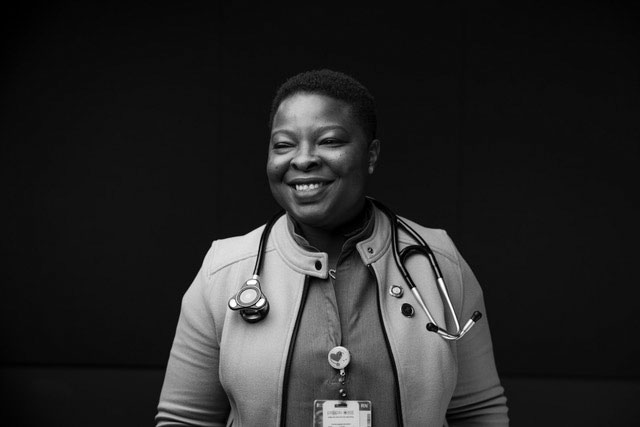
In September, a University of San Francisco nursing professor was arrested at her home in Lodi by U.S. Immigration and Customs Enforcement agents. Then, in late October, a UC Berkeley business student was detained at San Francisco International Airport.
Within hours of the arrests, leaders at the universities mobilized to connect the women with lawyers and rally support for their release.
Deep Gulasekaram, an immigration law professor at the University of Colorado, said it may be a sign universities are more willing to stand up to the Trump administration, which has canceled foreign student visas and slashed research funding.
“I think most universities have been profiles in cowardice…. trying to stay underneath the radar so that they don’t put into jeopardy the hundreds of millions of dollars they get in federal grants,” said Gulasekaram. “Perhaps this is an indication that universities have realized that they have some ability to push back.”
When UC Berkeley student Paula Albornoz Hernández was arrested at SFO, the Berkeley chancellor’s office swiftly activated a protocol developed a decade ago.
Attorney Nikolas De Bremaeker with Centro Legal de la Raza said he was able to focus on court filings… while the chancellor’s office got elected officials involved.
“The university was just so supportive in that process,” he said.
After nine days, a federal judge ordered ICE to release Albornoz Hernández, who’s an asylum seeker from Colombia.
The university protocols were stress-tested, and they worked, De Bremaeker said.
“It would be good for other institutions to look into these protocols that UC Berkeley has established.”
When University of San Francisco Professor Ann Lawani was arrested, she managed to text her boss. Nursing School Dean Eileen Fry-Bowers quickly got in touch with the provost and the law school to get legal aid to Lawani’s family and engage members of Congress.
Fry-Bowers said Lawani’s a top-notch professor who trains hundreds of nurses a year, and that her absence leaves a huge hole.
“It’s like a crater,” said Fry-Bowers. “It’s like a bomb went off.”
Two months on, Lawani is still locked in an immigration jail in Louisiana.
She has a form of protection that provides a work permit and bars deportation to her native Nigeria, but ICE is trying to deport her to some other country.
As they face those tough odds, Fry-Bowers is aware that Lawani has the kind of support that many others in detention don’t.
“Whether it’s Anne’s case or many of the thousands of people who don’t have somebody fighting for them, they’ve been made invisible and locked away,” said Fry-Bowers. “I don’t know that there’s a greater injustice. My priority right now is Anne, but this is so much larger than Anne.”
She is waiting for a judge to decide if Lawani can go free.
Reported by: Tyche Hendricks, KQED