As Immigration Arrests Rise, Local Universities Ramp Up Response
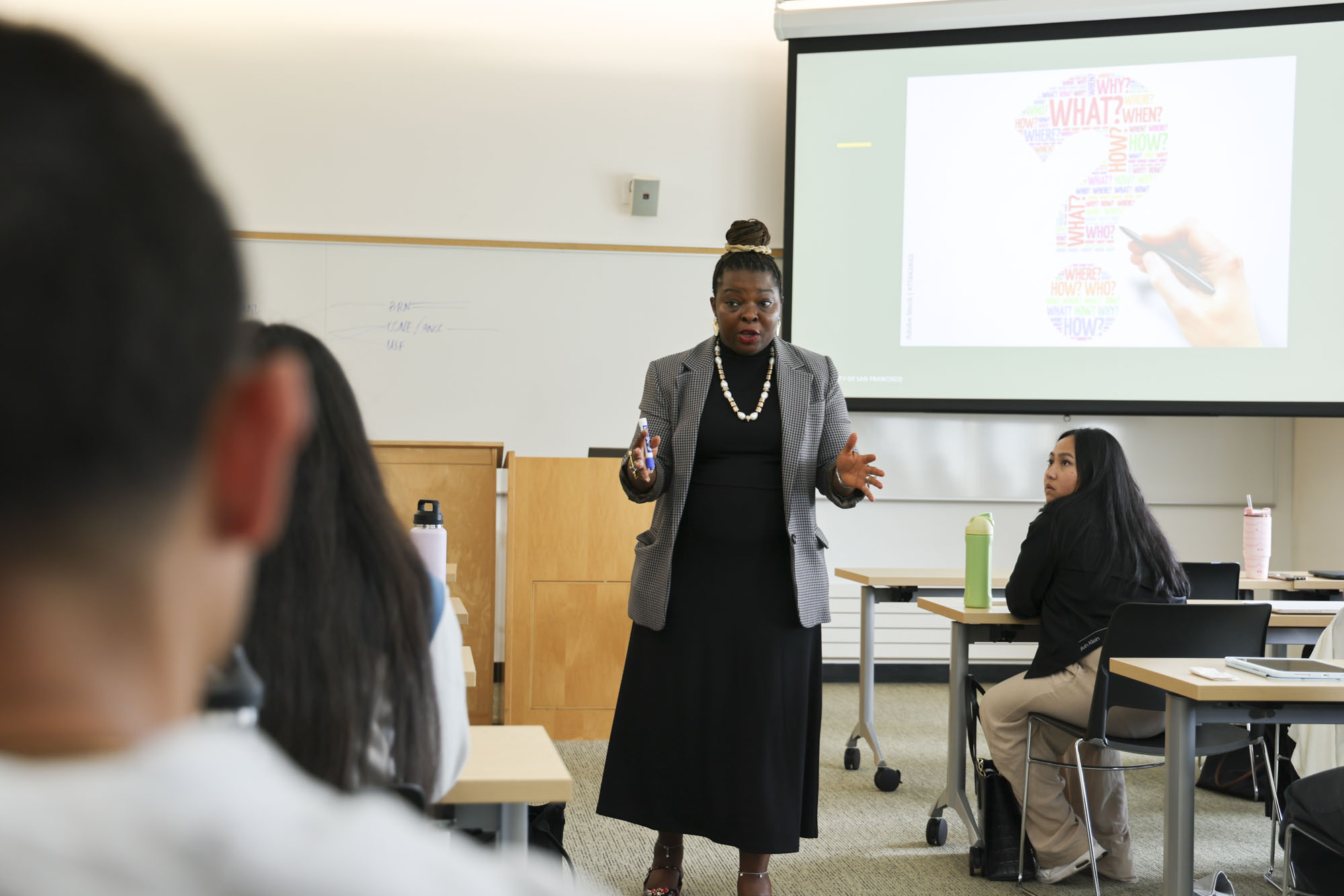
As immigration enforcement increases across the Bay Area, the high-profile arrests of two women tied to local universities have tested campus administrations. Observers say their responses could offer a model for how such institutions can stand by people facing detention and the risk of deportation.
When a University of San Francisco nursing professor was arrested by U.S. Immigration and Customs Enforcement agents at her home in Lodi in September and a UC Berkeley business student was detained in late October at San Francisco International Airport, leaders at both universities mobilized within hours to connect the women with legal aid and rally support for their release.
One legal analyst says it could signal an increase in universities’ willingness to stand up to the Trump administration, which has canceled international student visas, attacked diversity policies, slashed research funding and accused campuses of tolerating antisemitism.
“I think most universities have been profiles in cowardice up until now, on this matter and others, trying to stay underneath the radar so that they don’t put in jeopardy the hundreds of millions of dollars they get in federal grants,” said Deep Gulasekaram, an expert in immigration and constitutional law at the University of Colorado Law School. “Perhaps this is an indication that universities have realized that they have some ability to push back.”
When UC Berkeley student Paula Albornoz Hernández, 23, was arrested by ICE at San Francisco International Airport on Oct. 30 as she was heading to Oregon for a weekend getaway, the chancellor’s office sprang into action within hours, according to the lawyer who petitioned a federal judge for her release from detention.
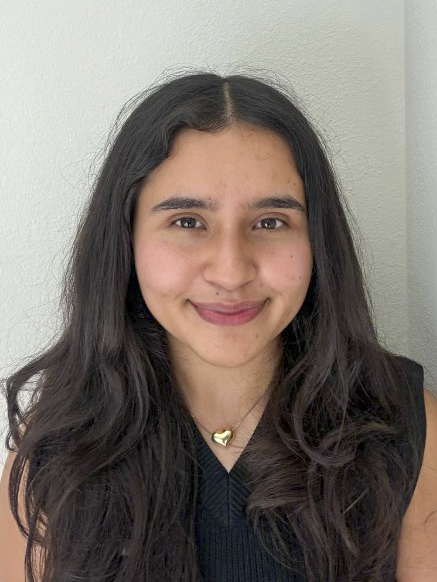
Albornoz Hernández, who came from Colombia on a tourist visa in 2022 and applied for asylum, was detained first at an ICE facility in Stockton and then sent to the California City Detention Facility.
As Nikolas De Bremaeker, a managing attorney at Centro Legal de la Raza in Oakland, scrambled to prepare what’s known as a habeas corpus petition challenging her detention, he said top school administrators spent the weekend contacting members of Congress, writing letters of support and ensuring Albornoz Hernández would not suffer academically.
“We were very, very impressed with how fast they came into the case,” he said. “It’s an ideal scenario to be able to work with such a partner so that we were able to focus on her court strategy and unload some of that other work on a partner that really knows what they’re doing.”
Gina Daly, UC Berkeley’s associate vice chancellor in charge of governmental relations, said the university developed protocols a decade ago for what to do if a student or staff member were arrested by ICE.
“The good news is those protocols worked,” she said. “We were able to mobilize very, very quickly and get her the support she needed. And within a very short amount of time, we were able to get her released so that she could continue her studies.”
U.S. District Judge Dena Coggins ordered ICE to release Albornoz Hernández and, after nine days of detention, she went home. But De Bremaeker told KQED his client is still struggling with trauma and health issues from the time she was locked up. And her pending asylum claim must now be made in immigration court, where ICE will argue for her deportation, instead of in a non-adversarial interview with an asylum officer.
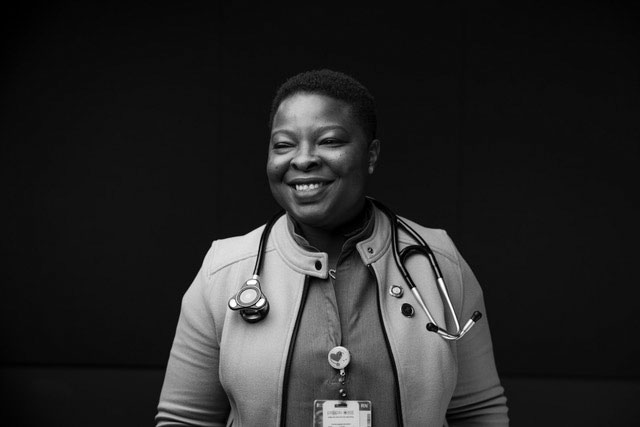
USF nursing professor Ann Lawani’s struggle began on the morning of Sept. 16, when ICE agents arrived at her home and arrested her in her pajamas. Lawani, 39, came from Nigeria on a visitor visa nearly two decades ago, applied for asylum and, in 2013, was instead granted withholding of removal, a protection that bars the government from returning her to Nigeria because it’s likely she would face persecution there.
Shortly after her arrest that morning, Lawani texted Eileen Fry-Bowers, the dean of the nursing school, who had mentored her in graduate school and recruited her to USF in 2023.
“She said, ‘Eileen, it’s Ann Lawani. I’ve been detained by immigration. I don’t know why. I haven’t seen a warrant.’ It was just this confused kind of message,” she said.
Fry-Bowers was on vacation but immediately reached out to the campus provost’s office. By the end of the day, the USF law school had connected Lawani’s family with an attorney and, soon after, the university enlisted the help of her U.S. representative, Josh Harder, and other members of the California Congressional delegation.
But Lawani, the director of a master’s program with 230 students and who Fry-Bowers described as a “phenomenal colleague” and beloved professor, could not be found in ICE’s online detainee locator for three days — during which she was moved repeatedly from state to state. She was eventually able to phone a relative from the South Louisiana ICE Processing Center, where she has now been detained for two months.
Her absence has left an enormous hole in the USF nursing school, Fry-Bowers said.
“It’s a crater like a bomb went off,” she said. “We already are strapped. I mean, there’s a nursing faculty shortage … So to take somebody who has leadership responsibilities to the extent that Ann has out of the school suddenly? It’s been a nightmare.”
Attorney Natalia Vieira Santanna noted that Lawani has a valid work permit and “has always functioned inside of the law.” She said the university has aided Lawani’s case by providing evidence showing the harm her detention is causing the community.
“It’s the first time that one of my clients gets such an outpouring of support and a lot of it is thanks to the University of San Francisco,” Vieira said. “They are doing a lot of the outreach to make the public aware of what’s happening.”
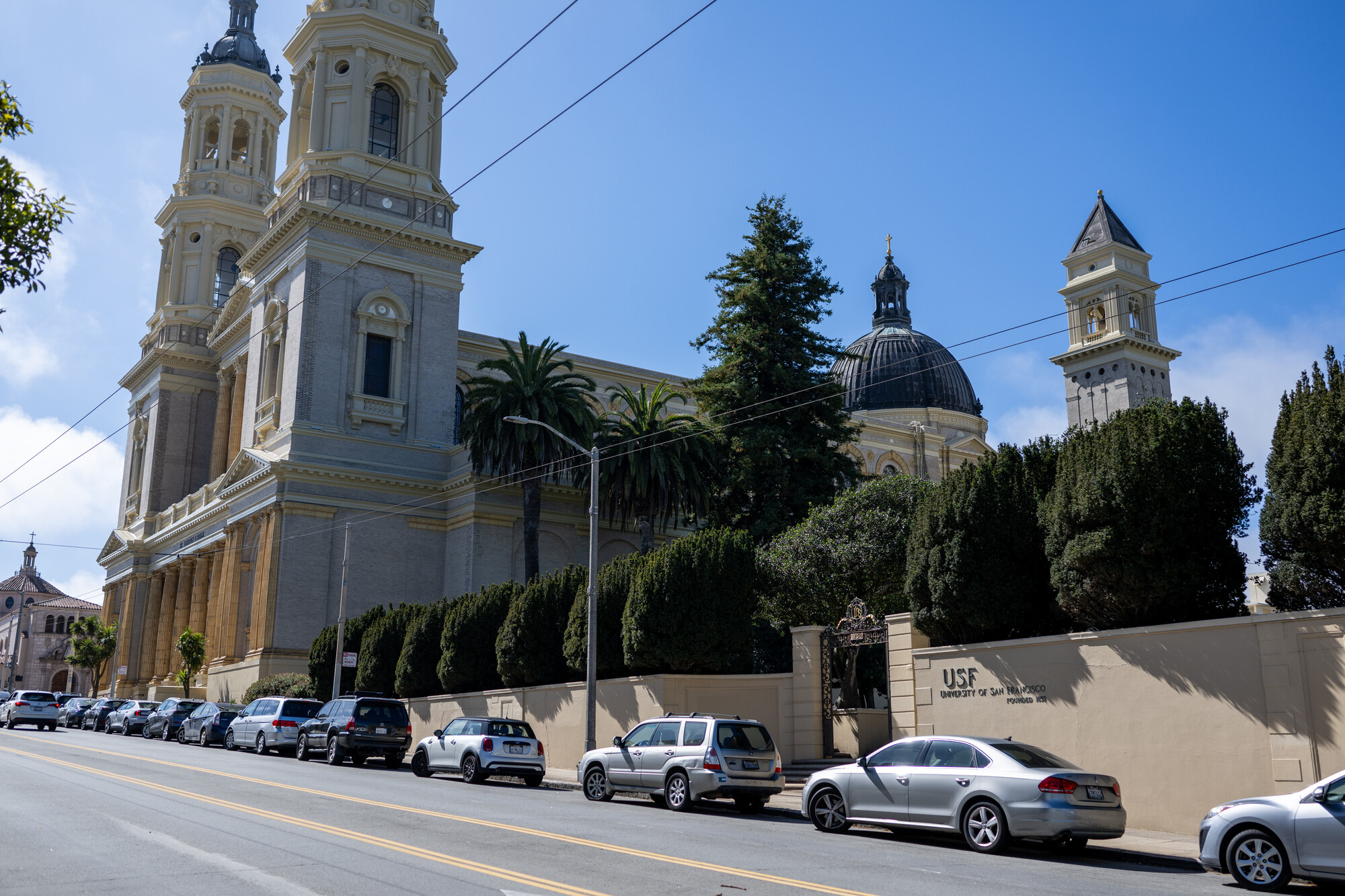
USF, a Jesuit school, has planned vigils to pray for Lawani on Wednesday morning at both its San Francisco and Orange County campuses. Meanwhile, a petition to ICE for her release has garnered nearly 43,000 signatures and a Go Fund Me campaign has so far raised nearly $110,000 for her legal and family expenses. Last week USF President Salvador Aceves sent a letter to the university community describing the administration’s work “behind the scenes” to push for Lawani’s release.
However, with the federal courts swamped by thousands of habeas petitions from the growing ranks of detained immigrants, a judge has yet to rule on whether Lawani must be released.
Even if she is, Lawani still faces a real risk of deportation. Though the government is barred from sending her to Nigeria, it could try to deport her to a different country. Such “third-country removals” were extremely rare in the past, but since President Donald Trump returned to the White House in January 2025, more than 25,000 people have been sent to countries where they may have no ties or legal standing. The U.S. Supreme Court is set to hear arguments next month as to whether such removals are legal.
In a statement to KQED, the Department of Homeland Security called both women “illegal aliens,” citing the fact that each overstayed her initial visa “in defiance of our laws.” However neither woman appears to be unlawfully present in the U.S. Albornoz Hernández has a pending asylum application and Lawani has lawful presence under the grant of withholding of removal. Both have valid work permits issued by the government.

“The United States is offering illegal aliens $3,000 and a free flight to self-deport now,” the DHS statement went on. “We encourage every person here illegally to take advantage of this offer and reserve the chance to come back to the U.S. the right legal way to live the American dream. If not, you will be arrested and deported without a chance to return.”
Many California universities have policies for how to respond if immigration agents attempt to come onto a campus or access university records, in line with guidance from the California attorney general’s office. But fewer appear to have plans in place for how to respond if a student or staff member is detained, whether on or off campus.
The University of California provides free legal aid to students through its Immigrant Legal Services Center, as well as academic and personal counseling on its 10 campuses. In a statement, a spokesperson for the UC Office of the President said, “UC is committed to supporting our entire community, including undocumented students… and the university will continue to provide the permissible protections, resources and support services to ensure their academic success.”
Daly, in the UC Berkeley chancellor’s office, said when her campus developed its protocols, they shared them with other UC campuses.
“Whenever something like this happens, we are always sharing best practices,” she said.
De Bremaeker, the attorney who won Albornoz Hernández’s release and who helps lead the Alameda County Immigration Legal and Education Partnership rapid response network, said he suggested to a county-wide network of community leaders that other institutions look into UC Berkeley’s approach.

“I also mentioned that it would be good to look into those protocols because unfortunately they have now been really stress tested, and that I was impressed with the level of support and cooperation,” he said.
In addition to having the resources to provide legal aid and the institutional heft to mobilize support from elected officials, Gulasekaram said universities have another advantage: a public platform to speak up on behalf of people like Lawani and Albornoz Hernández who’ve been arrested by ICE.
“[Trump administration officials] like Stephen Miller would have you believe that these removals are all directed at dangerous criminals. But these two cases are exactly the opposite: one’s a nursing professor, the other’s a student at UC Berkeley,” he said. “They’re significant contributors to American civic and economic life. And one of the things that universities can do is really showcase that.”
Most of the thousands of California immigrants arrested by ICE do not have access to the kind of resources that large institutions can bring to bear. That’s been on the mind of Fry-Bowers, who said her ethical training as a nurse and a dean at a Jesuit institution is rooted in the values of justice and human worth.
“My priority right now is Ann, but this is so much larger than Ann,” she said. “Whether it’s Ann’s case or the thousands of other cases that don’t have somebody fighting for them, they’ve been made invisible and locked away. I don’t know that there’s a greater injustice and a greater infraction toward human dignity.”