Supervisors Propose Transitional Housing at Alamo Square as SF Looks to Spread Out Shelters

A year after San Francisco launched a concerted effort to spread shelters and behavioral health facilities across the city, supporters say new homelessness services in previously underserved areas are finally coming online. One proposed site would offer transitional housing for people exiting drug treatment at Casa Loma, a hotel near Alamo Square Park, a staple for tourists snapping photos of the iconic Painted Ladies.
The new site would be modeled after a program that’s seen some success at the Marina Inn, a two-year recovery housing program along a wealthy enclave on the northern edge of the city. That 68-bed facility, run by the Salvation Army, is designed for people who have completed drug treatment and includes case management and other on-site services to help people transition to permanent housing.
But several homeless shelters have also closed across the city, painting a complicated picture of the first 12 months of a local ordinance that aims to spread shelters and treatment options more evenly around San Francisco.
“The purpose of the geographic equity ordinance was to ensure that every neighborhood is doing more of its fair share to address homelessness, as it is a neighborhood-by-neighborhood issue,” said Supervisor Bilal Mahmood, who represents the Tenderloin, where many of the city’s low-income housing options and homeless shelters are located.

Last year, San Francisco leaders voted to prohibit the city from adding new, city-funded homeless shelters or behavioral health and treatment facilities in neighborhoods that have a higher concentration of services than residents who need them.
Since it passed, the city has opened a handful of facilities aimed at providing drug treatment for people experiencing homelessness and addiction.
Casa Loma, located at 610 Fillmore St., would add 60 beds for people exiting drug treatment to more independent living for around 18 to 24 months. The city hopes to open it by July, pending approvals from the Board of Supervisors. It comes as the city has expanded similar services, including a more-than-120-unit behavioral health facility on Treasure Island with 44 beds in a new residential treatment program and 84 new recovery-housing beds.
In addition to adjusting where shelter beds are located, the city is also aiming to address the various needs people seeking shelter might have. Six months into his term, San Francisco Mayor Daniel Lurie pivoted from a campaign promise to build 1,500 shelter beds, saying there should be more focus on building more appropriate types of beds.
“If we don’t invest in a sustainable place for folks to continue to build on the gains that they’ve made after they’ve graduated from treatment, you end up just repeating the cycle over and over,” San Francisco Public Health Director Dan Tsai said. “It’s why we think this is a really valuable and important piece.”
One current proposal aims to open additional transitional housing beds for domestic violence survivors in a Tenderloin building that currently offers permanent supportive housing.
But the changes have not addressed the fact that demand still outpaces supply. San Francisco’s online waitlist for shelter had 393 people on it as of Monday.
And the city has not added any new traditional homeless shelters in the last year, city officials said. Several existing homeless shelters have shuttered, including the Andante and Monarch in the Tenderloin, two hotels that converted into shelters during the COVID-19 pandemic, and others, like a 280-bed shelter at 711 Post St., are slated to shut down next year.
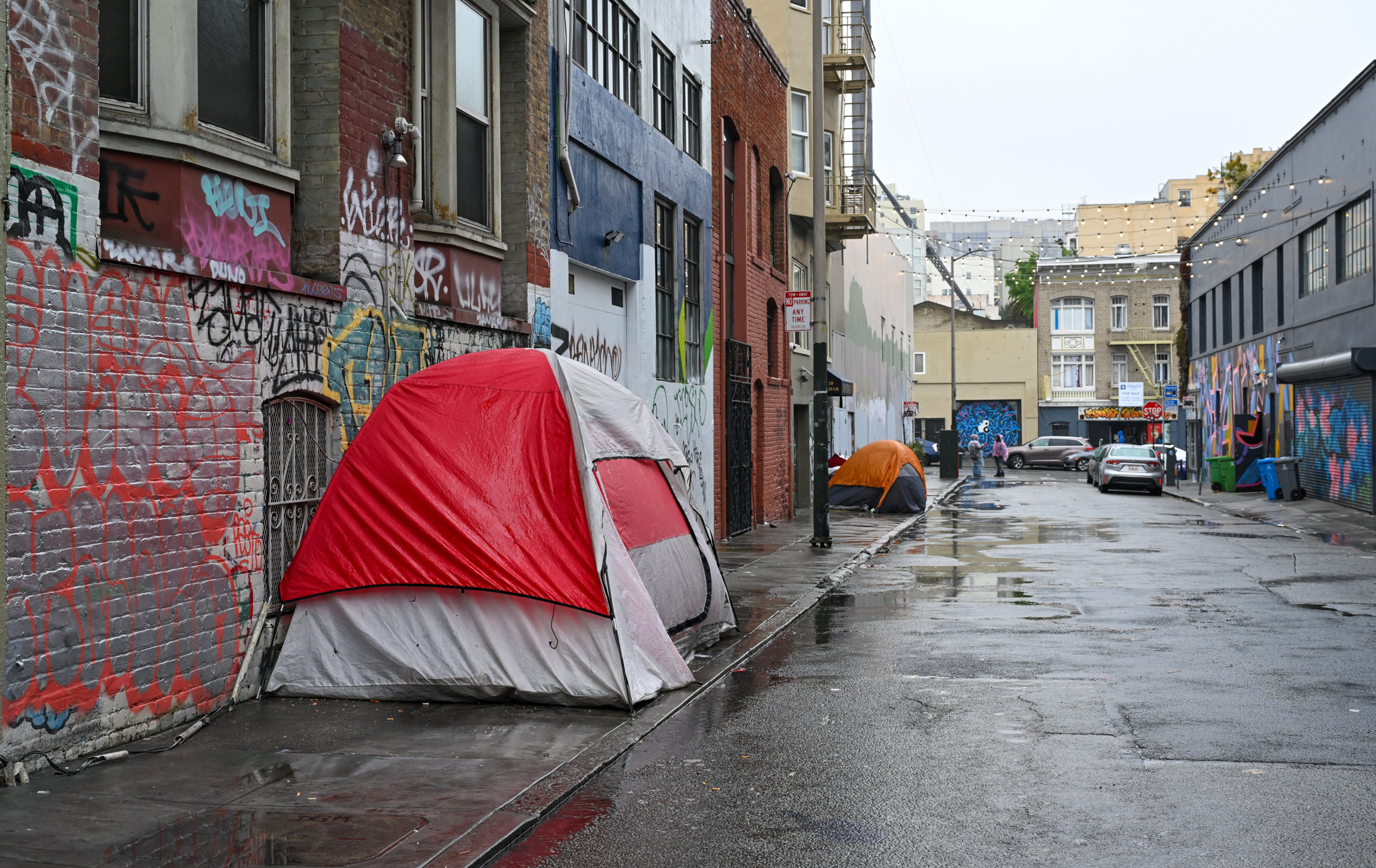
A handful of other shelters shortly before the new rule went into effect, like Jerrold Commons in the Bayview and an abstinence-based shelter called Hope House.
Homelessness services advocates applaud additional support facilities for domestic violence survivors or new step-down housing like Casa Loma. But some have raised concerns that the city is losing shelter beds while not investing enough in supportive housing that people can transition out to permanently.
“We’re seeing over 200 shelter beds close without replacement, and most of that type of shelter is for single adults,” said Lukas Illa, policy director at the San Francisco-based nonprofit Coalition on Homelessness. “That is severely devastating for the population of folks on the street.”
The debate over where to add new shelter and drug treatment services comes after a Supreme Court ruling in 2024, The City of Grants Pass v. Johnson, that now allows cities to force unhoused people to move off sidewalks, regardless of whether shelter is available. It also comes as Lurie has prioritized expanding drug treatment beds and as the overall number of homeless shelter beds has fluctuated.

Supporters of the geographic equity ordinance, like Mahmood, say it’s starting to show some impact with sites like Casa Loma, spreading access to homelessness and behavioral health services to other parts of the city, while alleviating strain on neighborhoods that have historically had more shelters, such as the Tenderloin, Bayview and Mission District.
The Tenderloin is home to many of the city’s existing homeless shelters, and the geographic equity ordinance makes it so that new shelter beds can only be added there if the need increases or if other services are replaced.
“No new shelter can be automatically added into the neighborhood, but if it goes in, it has to swap with something that already exists there,” Mahmood said. “We are making sure that we are replacing the things that are less needed with things that the neighborhood needs.”
Other changes have focused on renovating the offerings that are currently available. On Treasure Island, a new facility slated to open in 2028 includes 172 existing recovery-housing beds that will move from a former U.S. Navy housing into the new building.
“In striving for geographic equity, we should not be supplanting cuts elsewhere to our homeless response system,” Illa said. “We are a very rich city. We need to meet the moment of our behavioral health and affordability crisis that plague our streets. And there is no excuse for shrinking the pot of resources and available shelter units, available housing units.”