Scientists Race to Protect Endangered Species Against 'Super' El Niño Marine Heat Wave
Here are the morning’s top stories on Monday, November 16, 2026
- The late labor and civil rights leader Dolores Huerta will lie in honor Monday at the State Capitol in Sacramento.
- A pregnant U.S. citizen was pepper-sprayed, forced to the ground and arrested by federal immigration agents in Modesto yesterday, according to her attorney.
- Election Day came and went this year without extra support that the state had promised for Native American voters.
- For months, scientists have warned that a record-breaking “super” El Niño is likely to wreak havoc along the California Coast this winter. The natural climate phenomenon is pushing warm water up the coast, endangering ecosystems and species, like red abalone, that rely on cold Pacific Ocean waters. KQED reports on an effort to save an already imperiled species.
When a young Huerta began lobbying for bilingual voter access in Sacramento in the 1950s, there were no Latinos in the state legislature.
Now, Huerta will make history as the first non-elected person — and first woman — to lie in honor at the Capitol.
Governor Gavin Newsom also directed flags to be flown at half-staff on Monday.
Daughter Camila Chávez directs the Dolores Huerta Foundation. She says the honor is fitting.
“The way California has changed since Dolores first started organizing is actually a testament to her life’s work, to organizing, to all of the civic participation, the countless campaigns that she worked on.”
The public can pay their respects at the capitol until this evening. Later this week, a public vigil and memorial service are planned in Bakersfield, where Huerta lived.
Melanie Henshaw covers Indigenous Affairs for our partner, CalMatters. She says the changes were supposed to come from a state-backed committee.
“This committee was supposed to be formed as part of a law that passed in 2020. The committee was supposed to provide guidance to the Secretary of State on how to improve known difficulties that Native Americans are facing when exercising their right to vote. We’re looking at insufficient polling locations and folks having difficulty accessing election materials. The Secretary of State didn’t offer an explanation as to why nothing has taken place in the six years since the law passed, but did say that they were going to recruit members going forward.”
Arella Larose and Dan Swezey are on a mission. They’re dipping spatulas into a tide pool off the coast of Sea Ranch in Sonoma County. They slip the spatula’s flat edge between the red abalone’s fleshy foot.
“Ooh, beautiful. That was clean. That was huge. That was a good one.”
The shelled marine animal pops off the rock and Larose places it in a mesh bag.
“We are going to be harvesting 10 abalone,” said Larose. “And these abalone will never come back to the ocean.”
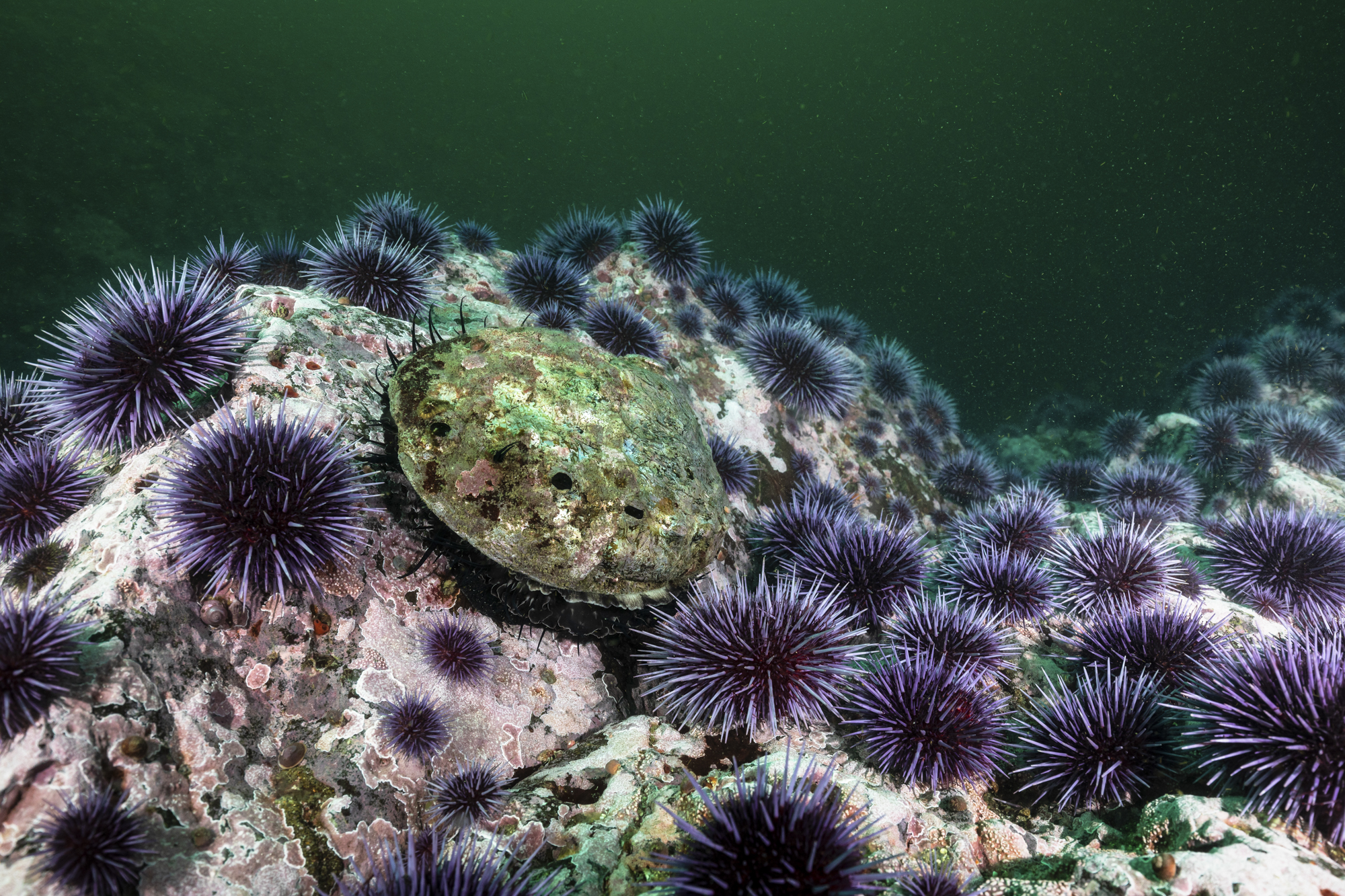
The two are with the Kashia Band of Pomo Indians. They’re collecting the plant-eating marine snails because they’re nervous the warming ocean from El Niño could kill off the species. The ocean warmed up about a decade ago during another El Niño, prompting purple urchins to voraciously eat the kelp both species love to munch.
“You can see them all over here,” said Swezey, “and they’ve eaten all the kelp where the abalone used to be.”
There were so many that it was hard to take a step in the tide pool without crushing one.
Red abalone populations decreased by up to 90%, and now the warm-up is happening again. Ocean temps are nearly 10 degrees above average here. Daniel Okamoto is a UC Berkeley professor helping lead the effort to save the species.
“It’s mildly terrifying,” said Okamoto, “and it’s overwhelming.”
The tribe is partnering with Okamoto and two marine centers to collect and house 80 red abalone from off the Sonoma and Mendocino coastlines. They plan to breed them in the lab.
Okamoto says the abalone are a bellwether for how other marine species will be impacted by El Niño and the effects of human-caused climate change on the Pacific Ocean, like kelp and the critters that rely on them.
“This could be a really strong kind of double whammy, so to speak, for this species and these ecosystems.”
Okamoto says temperatures along the North Coast, near Sea Ranch, are similar to a super El Niño a decade ago. And they’re already seeing evidence of abalone die-offs.
“And it is that tipping point difference between where we start to see things like increased appetite by urchins, abalone.”
Water temperatures are heating up across the coast. In Monterey Bay, temperatures are roughly 64 degrees Fahrenheit. Water off the coast of San Diego is still in the mid-70s even this late in fall.
Climate scientist Daniel Swain, with UC Agriculture and Natural Resources, is astonished by the ocean temperatures.
“It is so extraordinary that we do actually now have a double-digit Fahrenheit marine heat wave along almost the entire California coast,” said Swain. “These are record-shattering temperatures for the cool season.”
After collecting the abalone, Swezey and Larose relocated them to the UC Davis Bodega Marine Laboratory in Sonoma County.
Swezey says reproduction takes a few years.
“We want to see how we’ve come out of the El Niño this year and if things were as bad as we are thinking.”
For Larose, making sure red abalone prevail is cultural. Her tribe has helped care for the mollusks for millennia. They served as a traditional food source and are tied to spiritual rituals. Her earrings are even made out of them.
“I just hope that they understand what’s going on,” she says, “and that I didn’t hurt any of them and that they weren’t too uncomfortable on the drive here.”
Staring through the glass, Larose says she hopes the effort to breed the abalone works, so an important link to her culture isn’t lost in the warming sea.