California Leaders Mourn, Celebrate Dolores Huerta and Her Legacy
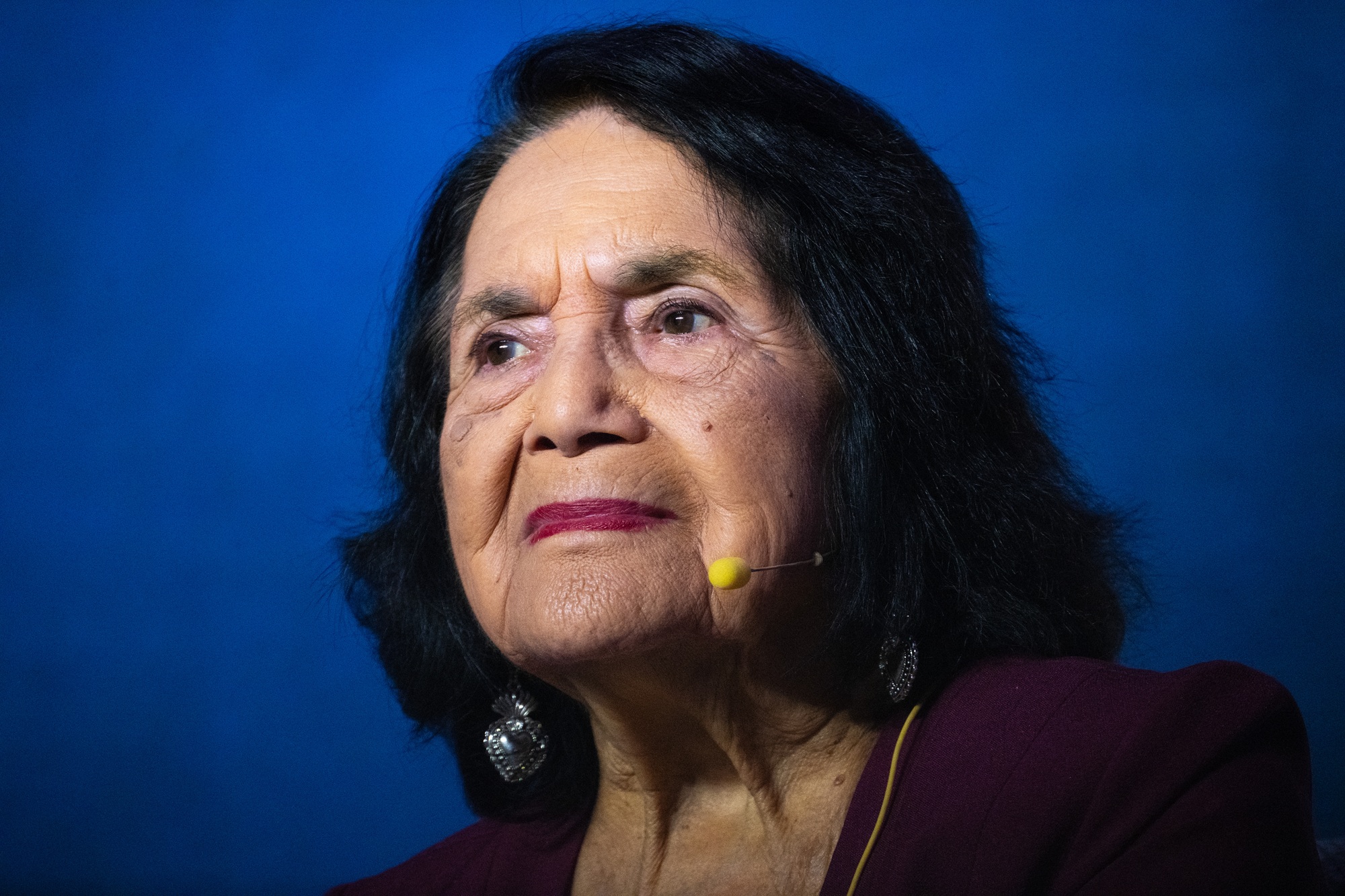
California leaders mourned Dolores Huerta, the indefatigable civil rights champion and farmworker advocate, praising her as a hero, giant and legend after her death on Wednesday at age 96. Her family said in a statement that she died from cancer at home in Bakersfield.
Huerta, who co-founded one of the world’s most renowned agricultural worker labor movements, spent most of her life pushing for economic justice and a voice for the dispossessed.
Even at her advanced age, she continued to participate in marches and protests, and encouraged Latino citizens to vote, including just days ago, said Angelica Salas, who directs the Los Angeles-based nonprofit Coalition for Humane Immigrant Rights, and called Huerta “a mentor to thousands.”
“She felt in her core that injustice had to be fought 24/7,” said Salas, adding that Huerta was a friend who supported her personally and professionally for decades. “The United States of America has lost a hero today.”

A fierce labor negotiator in a field dominated by men, Huerta helped lead large strikes and boycotts in the 1960s and 1970s with the union that became the United Farm Workers. Her labor organizing changed state laws and produced some of the nation’s first contracts to secure drinking water, sanitary toilets and other basic rights for thousands of farmworkers.
Huerta lobbied for California to become the first state to give agricultural workers the legal right to organize and join unions in 1975, decades after the passage of a federal law that protected collective bargaining for other private-sector employees.
“During that period of time, we had so much hope, and our message was out there saying to the world that we’re here and we exist and you can’t ignore us,” Huerta told KQED in 2012.
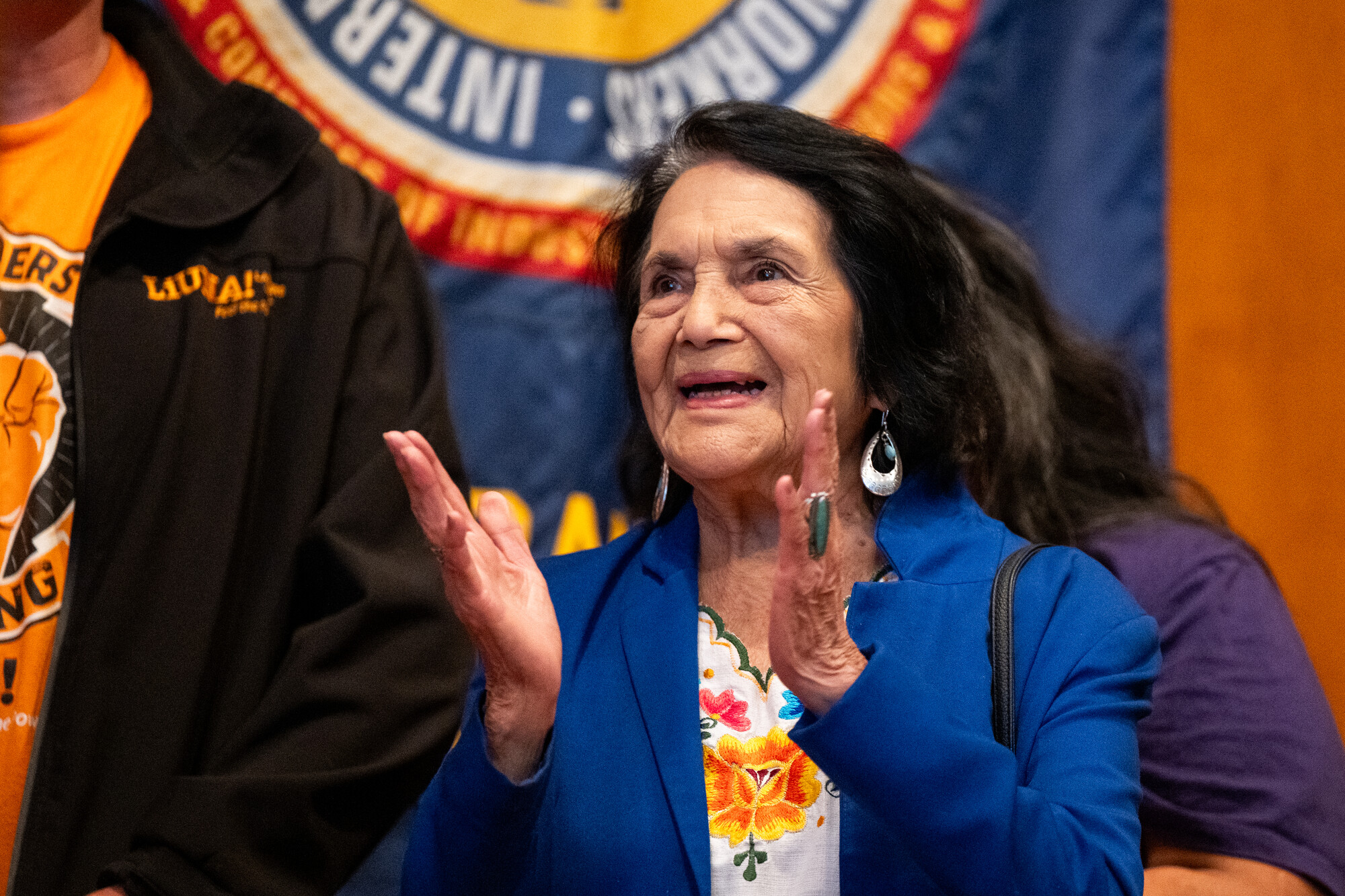
“I really do believe that the only way that we can keep our democracy, the only way that we can get justice is by having people have a sense of their power,” she said. “This is the only way we can really achieve the goals that we need to make sure that we have a society that is equal.”
Huerta, who had 11 children, coined the social-justice rallying cry “Sí se puede,” translated as “Yes we can.” Former President Barack Obama, who coalesced millions of voters under the phrase during a historic 2008 presidential campaign, awarded Huerta the Presidential Medal of Freedom in 2012, praising her determination and courage.
Julián Castro, who leads the San Francisco-based Latino Community Foundation, said Huerta was an American icon who changed the course of history for good through her contributions to the labor movement, inspiring young women and men to work for social change.
“Dolores, for me and I know for a lot of people, has been a role model of how you can dedicate your life to serving others, to making other people’s lives better,” Castro, a former U.S. housing secretary and San Antonio mayor who ran for president in 2020, told KQED.
“As heavy as our hearts are today with her passing, I believe that Dolores would want us to embrace her legacy by doing what she did, by organizing, by mobilizing, by helping to make sure that as many people, especially from the Latino community, get out and exercise their right to vote,” he said, adding that he believes Latino voters will participate in record numbers in the upcoming midterm elections on Nov. 3.
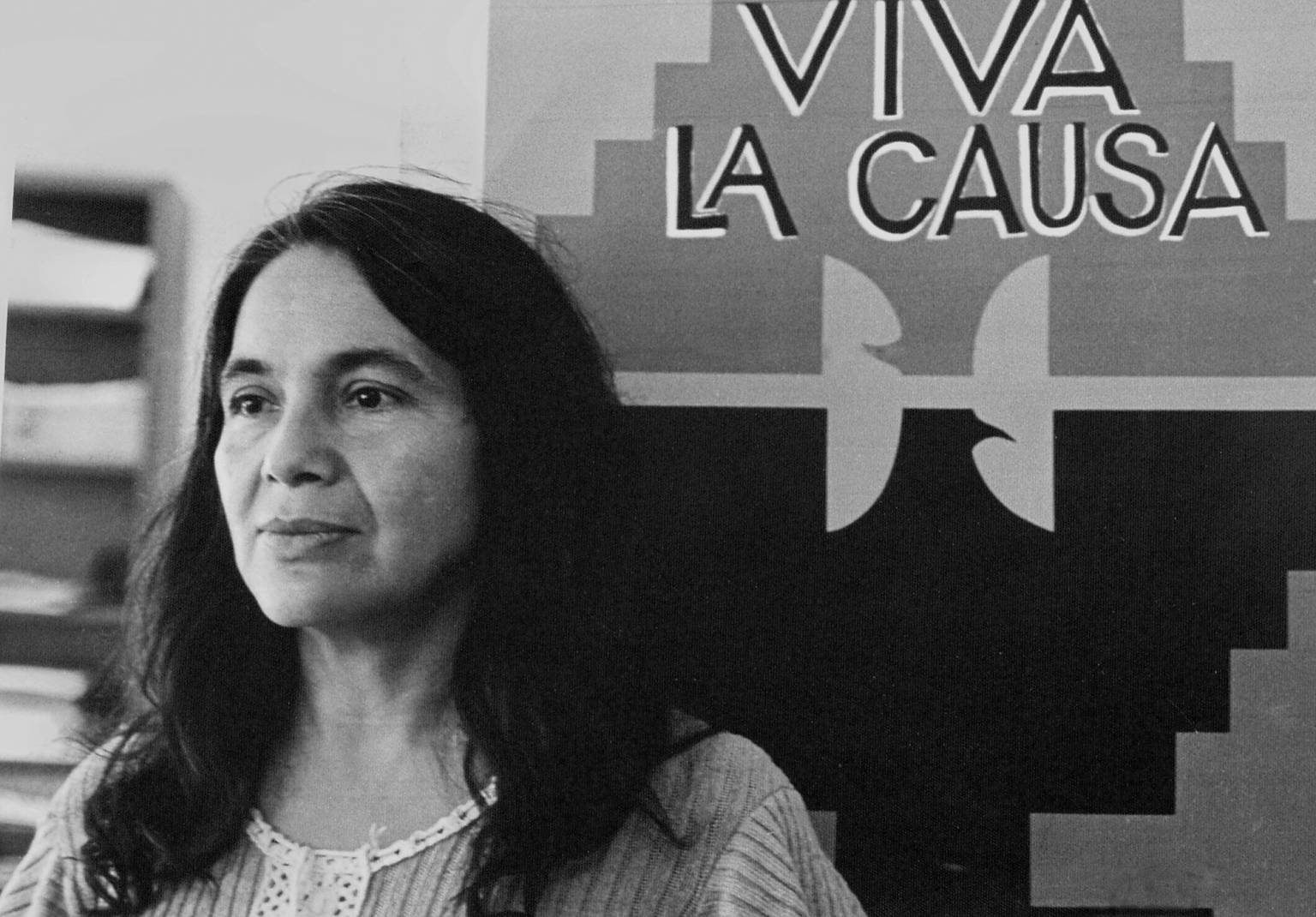
Huerta spoke out against the rampant sexual abuse of farmworker women in the fields in a 2013 film and radio series that KQED collaborated on with Frontline, CIR, IRP and Univision.
“I believe that the employers are in total denial, and they will often take the word of the foreman or the manager against the woman if she does come forward,” Huerta said in the documentary. “And women know this. They know that they’re not going to be heard. They know that nobody’s going to be there to support them or protect them.”
She stunned many by revealing at age 95 that she herself was manipulated into sex and raped in the 1960s by the late union leader Cesar Chávez. Huerta came forward in a The New York Times investigation that uncovered disturbing accusations that Chávez sexually abused young girls and women for years. Huerta told the newspaper that she chose not to report the abuse partly because she feared that no one within the union would believe her.
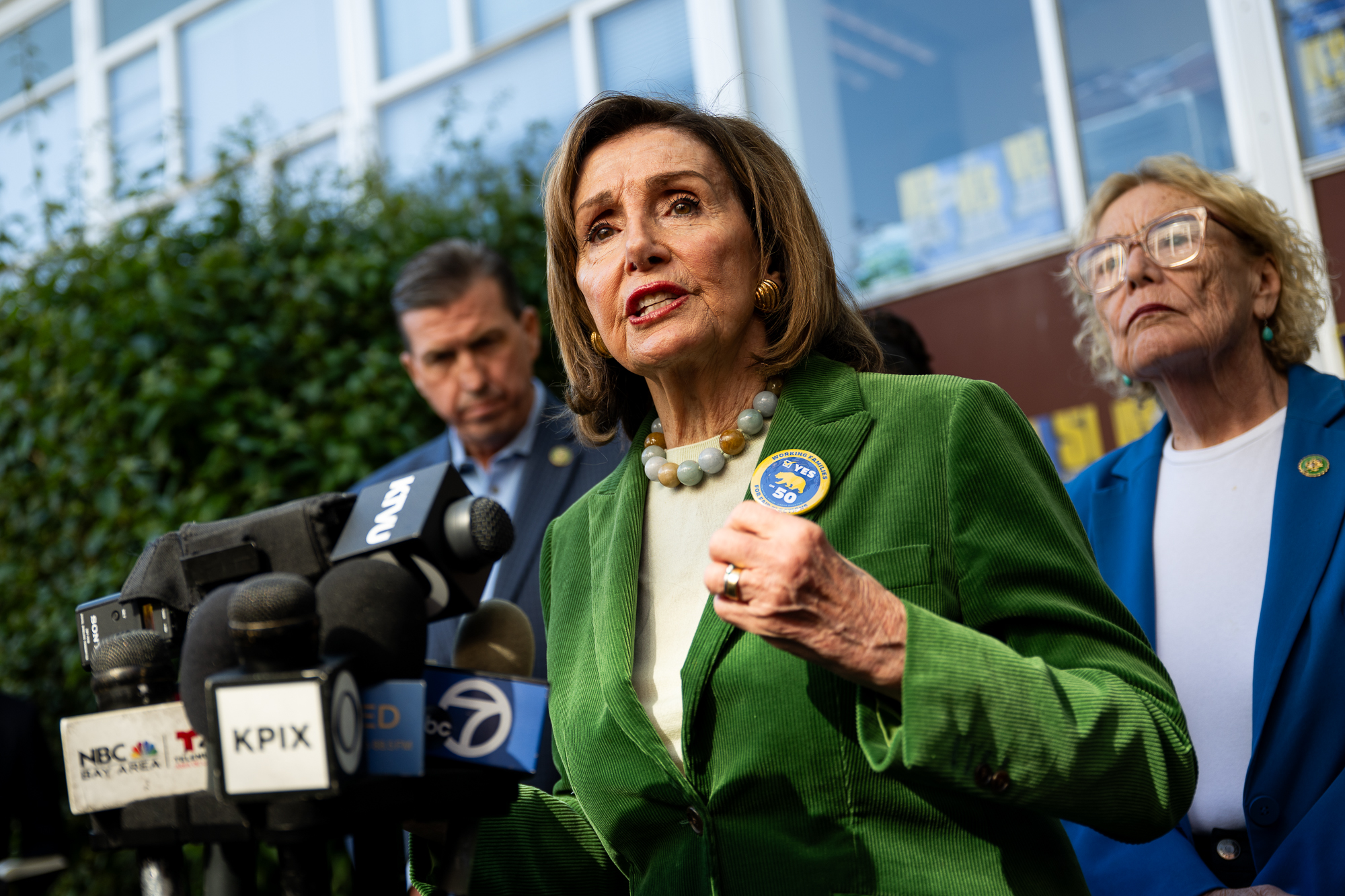
“Today, we sadly mourn the loss of Dolores Huerta, a leader in the American labor movement and a champion for civil rights who led with courage and determination,” Speaker Emerita Nancy Pelosi, who hosted Huerta for her 90th birthday in the U.S. Capitol, said in a statement. “Dolores was a dear friend, and we all responded to her rallying cry, ‘Sí se puede,’ which inspired generations of Americans to believe in the power of collective action.”
Born Dolores Clara Fernández on April 10, 1930, to Juan Fernández and Alicia Chavez Fernández, in a small mining town in northern New Mexico, Huerta moved with her mother and brothers to Stockton during the Great Depression after her parents divorced. Her mother worked two jobs, bought a boarding house and taught her daughter that she had an obligation to help others — lessons Huerta later said shaped her feminism and commitment to service. Her father was a miner, farmworker and union activist who became a state lawmaker.
Huerta, who acquired her last name through a marriage, said her mother’s independence inspired her to become a feminist. Huerta defied teachers who questioned her achievements in school because of her skin color, and men who said she should stay home and take care of children because of her gender.
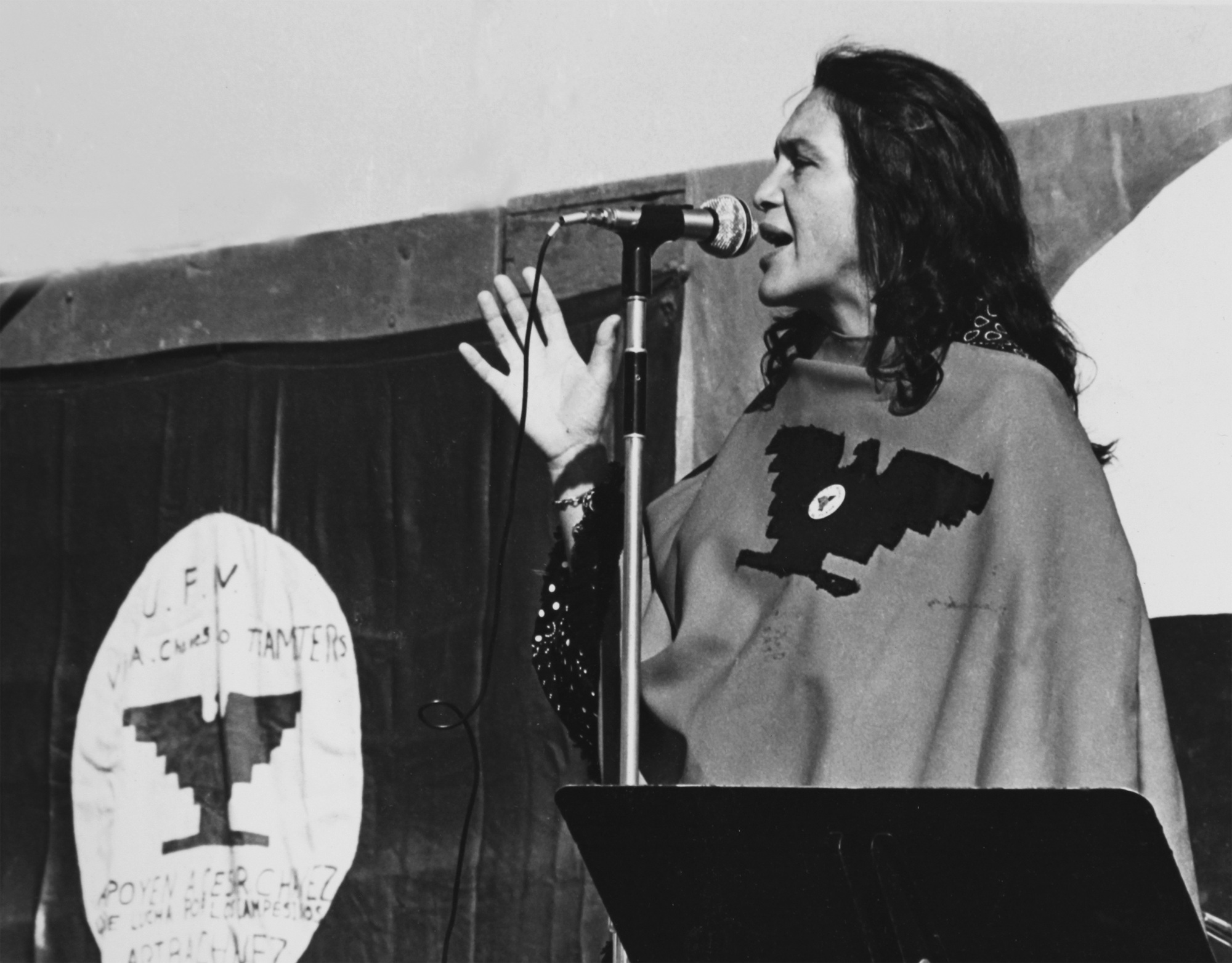
In 1962, Huerta and Chávez co-founded the National Farmworkers Association, which would later be known as the United Farm Workers. Huerta, who served as UFW vice president until 1999, became a central strategist for the union, which thrust deplorable farm labor conditions — low pay, lack of toilets and drinking water, exposure to pesticides — into the national spotlight.
At about 5 feet tall, Huerta did not shy away from conflict. She was arrested dozens of times by police during protests. At a 1988 rally seeking to curb growers’ use of toxic pesticides, club-wielding San Francisco officers sent the then-58-year-old grandmother to the hospital with broken ribs and a ruptured spleen. After public outcry, including from San Francisco Mayor Art Agnos, who visited Huerta at the hospital, the city settled for $825,000 over the incident and changed its crowd control policies.
“Think of yourselves as the gardeners who are going to go out and sow the seeds of justice,” Huerta told hundreds of people at San Joaquin Delta College in 2018, where she earned a provisional teaching credential as a young high school graduate, when the college was known as University of the Pacific’s Stockton College. “And those seeds are going to flower, and the spring is going to come back. But we know we have to go out there and do all the work.”

Gov. Gavin Newsom ordered flags flown at half-staff in honor of Huerta. The governor and First Partner Jennifer Siebel Newsom said the California Hall of Fame member “fought for gender equity, workers’ rights and civil rights, paving the way for generations to come, and teaching people what was possible with determination and heart.”
“Dolores represented the best of us,” they said in a statement. “California — and the United States — would not be what we are today without her resolute spirit, her passion for justice and fairness, and her commitment to those overlooked and forgotten.”
Erik Olvera, a spokesperson for Huerta’s family, said they plan to announce a public memorial in the coming days.
KQED’s Sasha Khokha contributed to this report.