Fall Weekend Itinerary: An Atmospheric Overnighter Outdoors on the Sonoma Coast
With the arrival of several feet of snow in the Sierra Nevada last week, camping season in the mountains is officially over for the year.
But don’t put your tent away entirely yet. Autumn is when the Northern California coast comes alive, with fogless days still as high as the 70s and nighttime lows in the 50s, extending your outdoor recreation options … but with a fall twist.
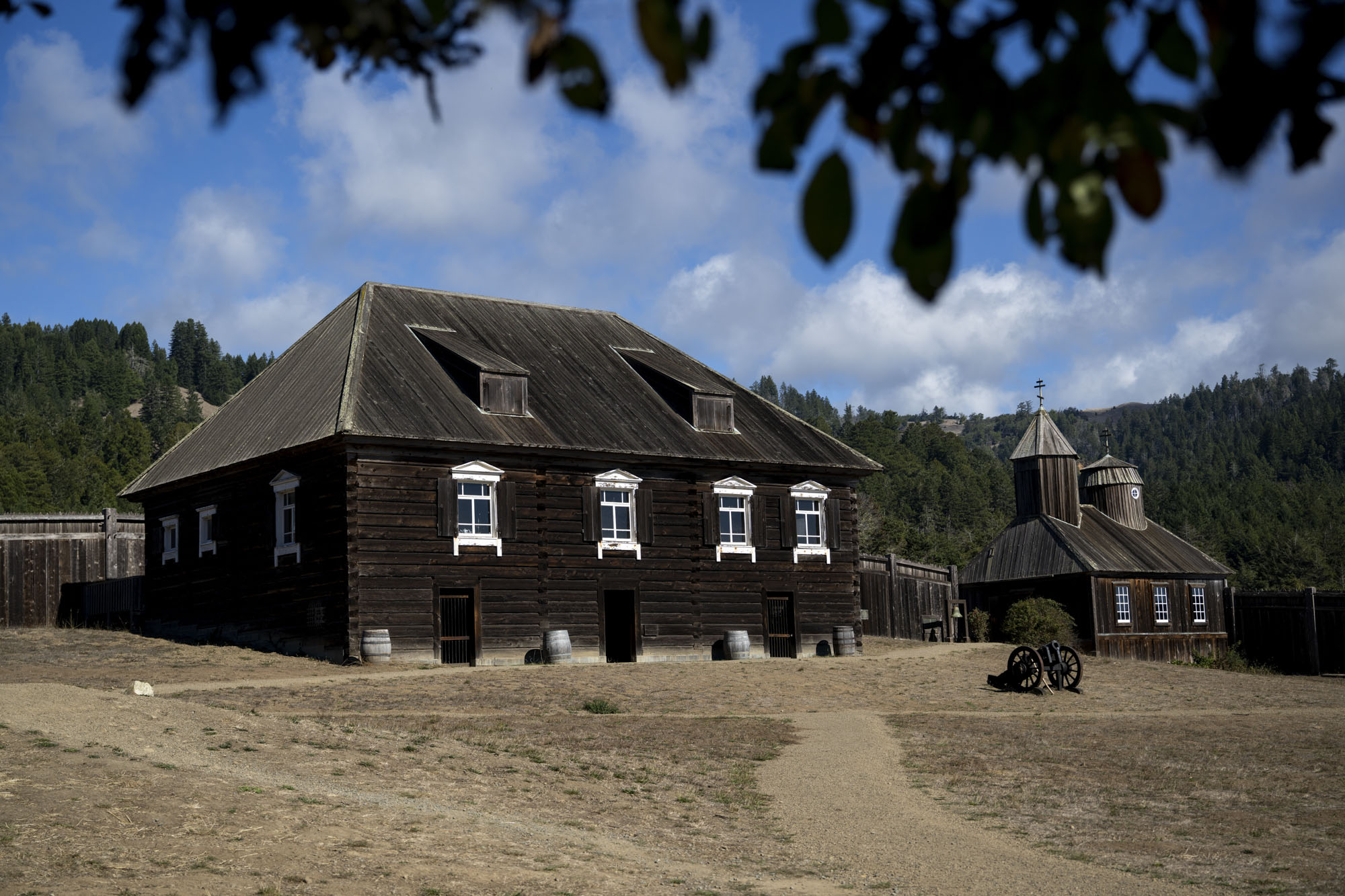
For an easy atmospheric overnight adventure this month, I suggest you head to Fort Ross State Historic Park, on the North Bay coast, just north of Jenner.
Known to many as the location of a short-lived Russian colony in the 19th century, this place is particularly stunning in the fall, said Chris Kimsey, district archeologist and tribal liaison for the Sonoma State Coast District.
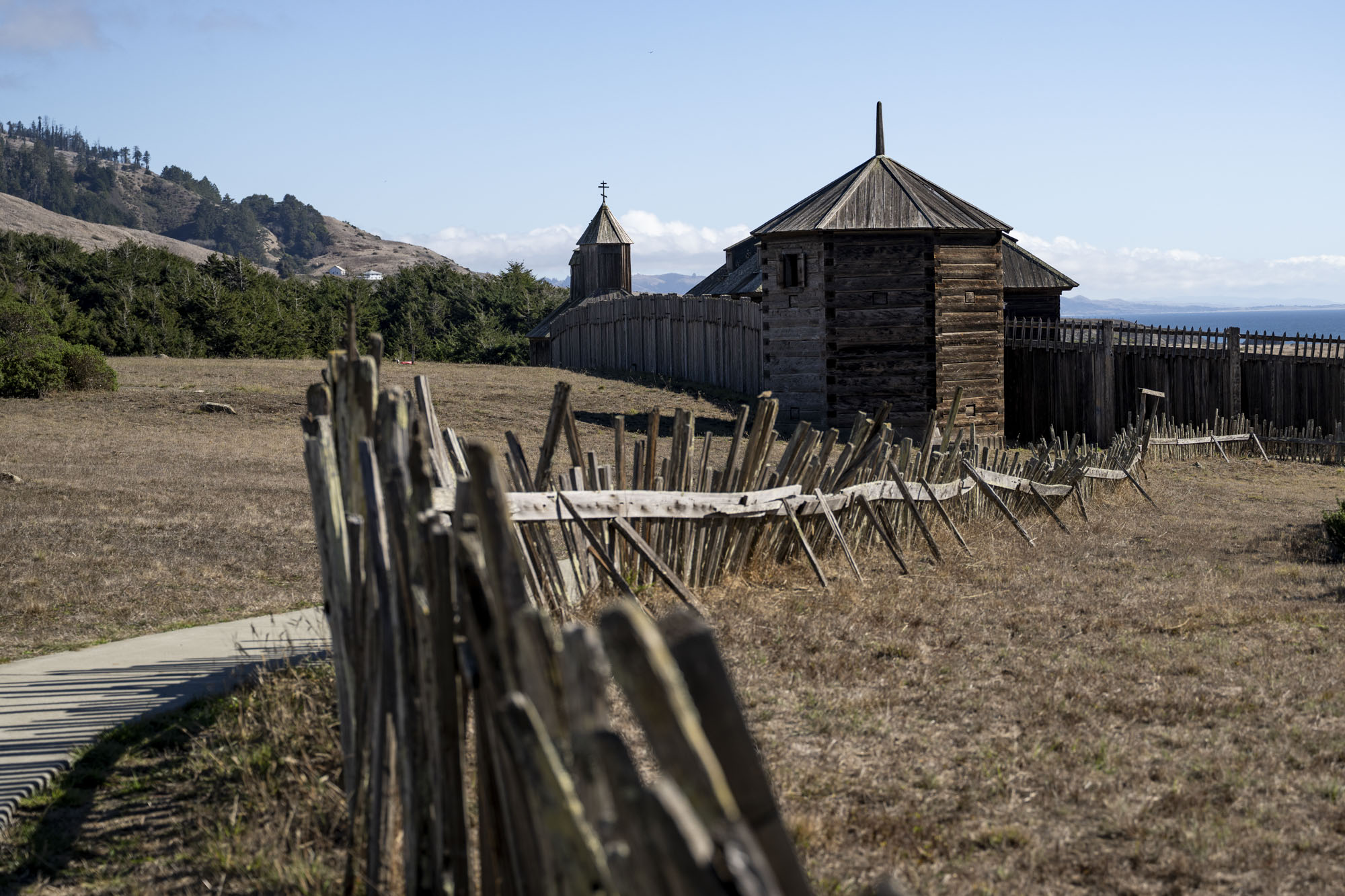
These months are “ almost like the best time to be out here,” he said. “It’s usually kind of warm. … You get the vistas this time of year.”
I got lucky with sunny weather on my recent visit, but don’t worry: If you do get some gloomy skies, the seaside landscape is all the better for it, Kimsey said.
Plus, in November you might get to see migrating gray whales making their journey south (or even black bears, which are starting to reemerge on the North Coast).
But be quick this month: The Reef Campground, which I suggest staying at below, closes for the year around Dec. 1. There are several other campgrounds nearby, but given their popularity, there’s no guarantee they’ll be available.
The Reef Campground, on the other hand, is the only campground nearby that does not require reservations, so you’ll find basing yourself here to be a little easier on the logistics side if you’re attempting a last-minute falltime trip.
Read on to steal my itinerary to get the most out of a quick overnight trip this fall before the winter really starts to set in.
Jump straight to: Where to camp at Fort Ross (with no reservation required)
Take the long way up and stop for coffee or food on the way
Given Fort Ross’s location on the Sonoma Coast, there are a number of scenic routes you could take to get there, depending on where in the Bay Area you’re driving from. If you’re on your way from the North Bay, you may come up Highway 116 past Guerneville and the scenic Russian River. Otherwise, try to take the coastal Hwy 1 past Tomales Bay and Bodega Bay.
No matter your route, be sure to go slow on these winding coastal roads and take in the scenery — both of these highways are world-known for their scenic beauty and quaint towns dotting the roadside.

Along 116 is the town of Monte Rio, where you can pull off the highway for hidden gem Lightwave Coffee & Kitchen, to grab a drink or dig into its famed shakshuka.
Just off Highway 1 before Bodega Bay is the town of Bodega, famed for its appearance in Alfred Hitchcock’s “The Birds,” where you can take in the iconic steeple of the town’s white church and grab a bite at Colleen’s Coffee Shop (the breakfast burrito is among the most tempting items).
If neither of those stops strike your fancy, don’t worry: Regardless of what route you take to get there, you’ll probably join Highway 1 around Jenner, where the idyllic Cafe Aquatica awaits.
Located right on the shore of the Russian River as it meets the Pacific Ocean, the cafe has ample outdoor seating — and often, live music — to fully soak in the calm of the coast. Relax there as long as you’d like, knowing your destination is under half an hour away.
That is, unless you decide to stop at any of the many vista points and beaches along your way. My advice? Take the drive slowly and be ready to pull over again and again, as the views will only get better from here.
Claim your spot at the Reef Campground and set up camp first
Camping after daylight saving time in the fall is always a bit of a gamble — after all, the sun sets at around 5 p.m. That’s why it might be a good idea to check in to your campsite and set up before you get to exploring the area.
The Reef Campground is first-come, first-served. But don’t turn immediately into the campground parking lot — you have to register and pay for your campsite up at the Fort Ross entrance first.
The $40 overnight fee covers your night of camping and your entry fee to the state historic park. (If you’re not staying overnight, it may be worth it to snag a $50 Historian Passport, which is good for the entire year at many historic parks across the state.)
My advice: Turn around right after you pay and go set up your tent and sleeping bag to claim your spot — just be sure not to leave any food unattended that critters (or even bears) might steal. Check-in here starts at 1 p.m.
I stayed in site #4, which had gorgeous redwood trees and ample space to spread out. If you like a more secluded vibe, try the spots farther down the road, like sites 16-19.
Be warned: Site #20 is a walk-in site, meaning you’ll have to park your car with the rest of the campsites and walk a few minutes down a dirt road with all of your stuff. While it doesn’t lead to any ocean views, the trek ends with a very secluded campsite that’s much closer to the beach, so you might consider this spot worth the extra effort.
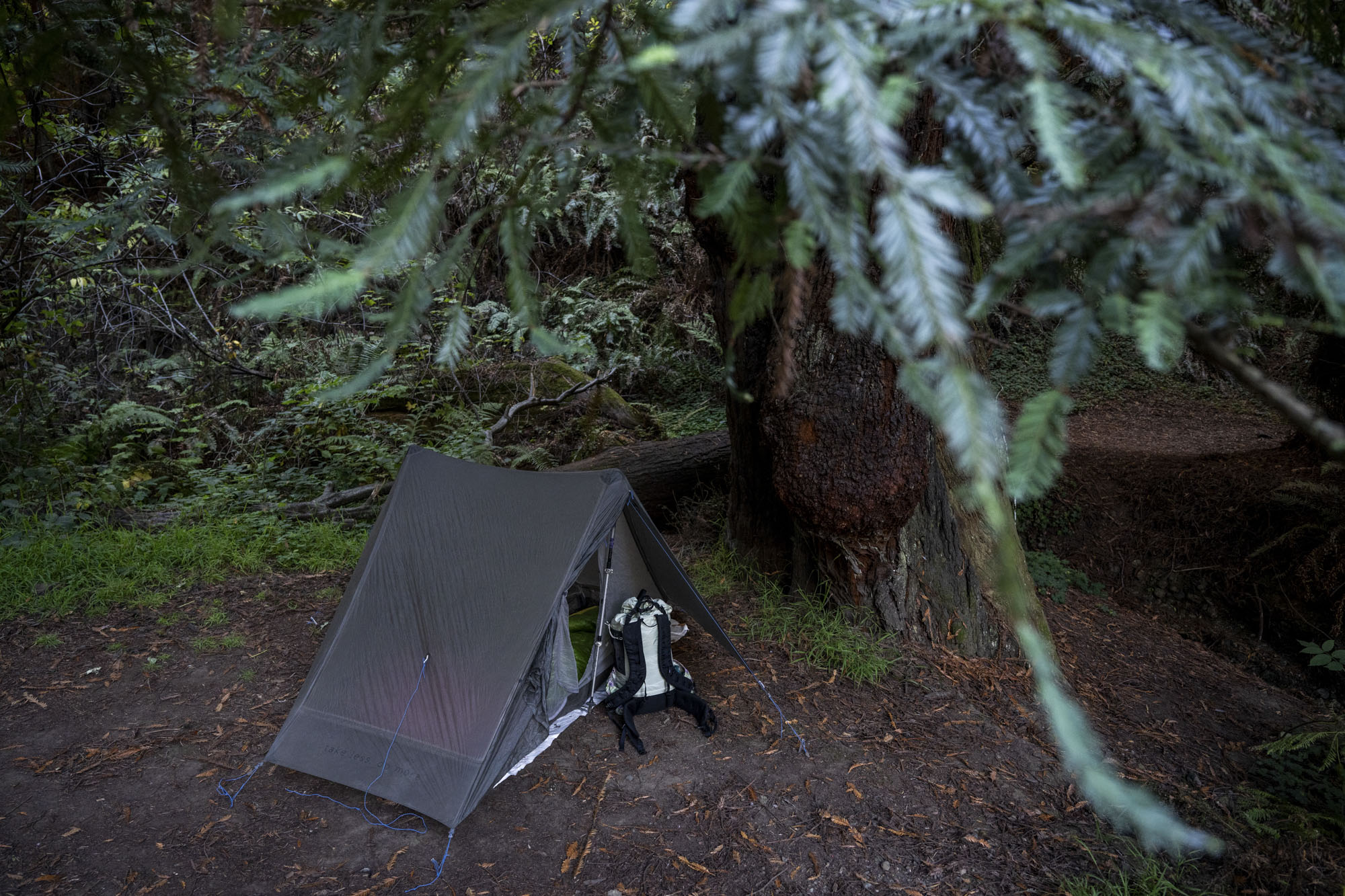
Dogs are allowed at this campground but not at the state park. They must be leashed and attended at all times and must stay in a tent (or car) at night. Be aware that there is poison oak at the campground.
(Need a camping checklist for trips like this one? We’ve got you covered.)
Visit the fort for your history fix
Once your tent is all set up, head back over to the main entrance at Fort Ross. To put everything you’re about to see in context, start with a gander through the Visitor Center’s small but charming museum, where you can take your own journey through the history of the park.
Kimsey met me from the Sonoma State Coast District, who told me the park’s story himself.
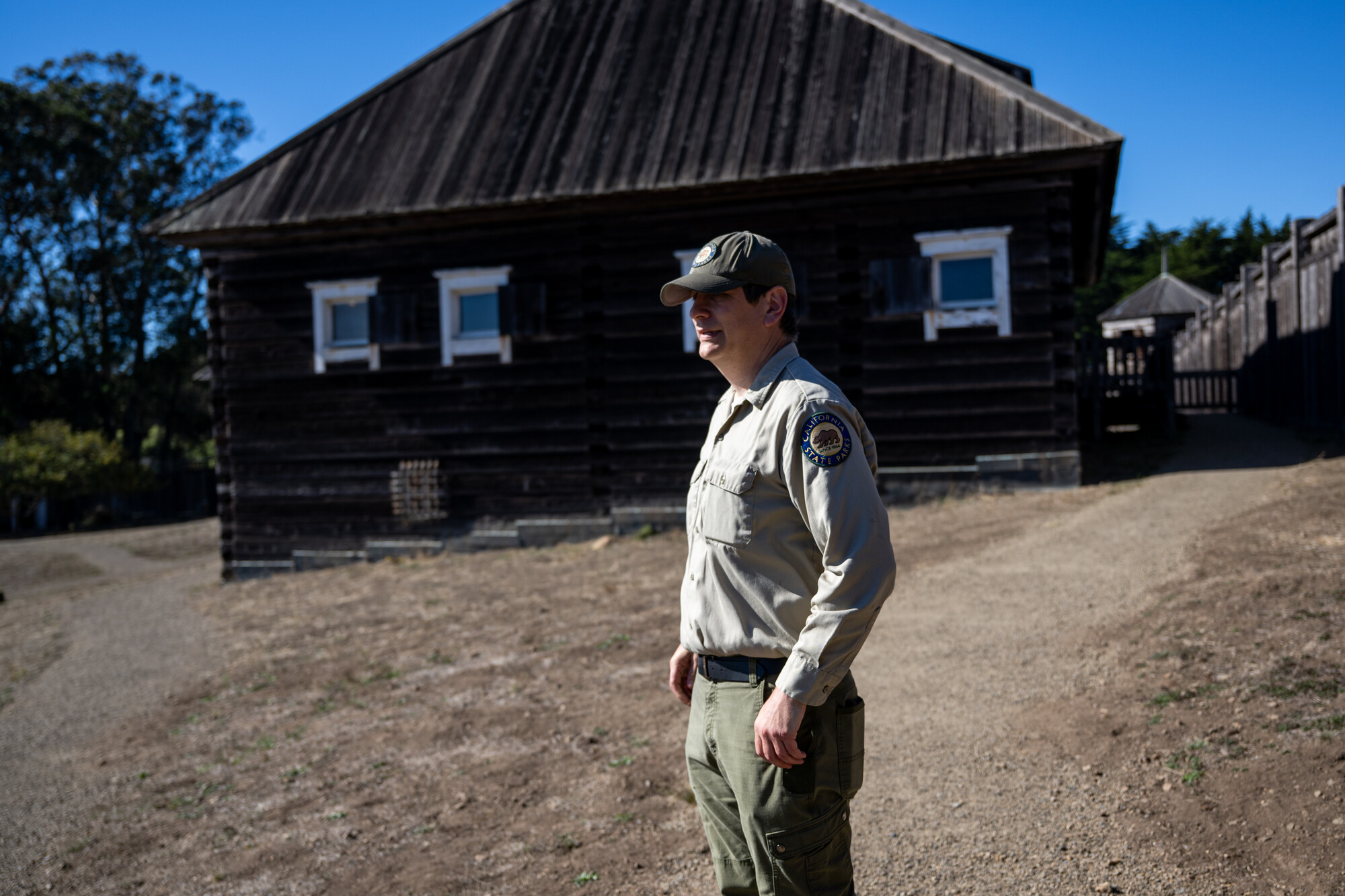
As we walked from the visitor center down to the fort, he explained that this area is the ancestral homeland of the Kashia Band of Pomo Indians, who called it Metini, and who are still actively involved in the park’s management. That includes current efforts to redo the park’s interpretive signs to better represent its indigenous history.
The fort, he said, was originally built in 1812, when Russian colonists came down from Alaska in search of a place to farm and to continue their sea otter pelt trade with China. The hunters supporting the trade were Native Alaskans from the Aleutian Islands and the Kodiak area, Kimsey said, who still celebrate Native Alaskan Day at the park each year.
The Russians built he fort here defensively, in case of any conflict with the Spanish colonies just down the coast in San Francisco. But Kimsey said there was never actually any fighting at or near the fort — mostly because it was too remote to be threatening to any empires to the south.
“Famously, the cannons were never fired in anger,” Kimsey said.

But the otters were hunted out quickly, and the land turned out to be not so profitable. So after three decades, the Russians gave up the fort in 1841, selling it to John Sutter of Sutter’s Fort. They were followed by a series of ranching families who occupied the land with varying economic success.
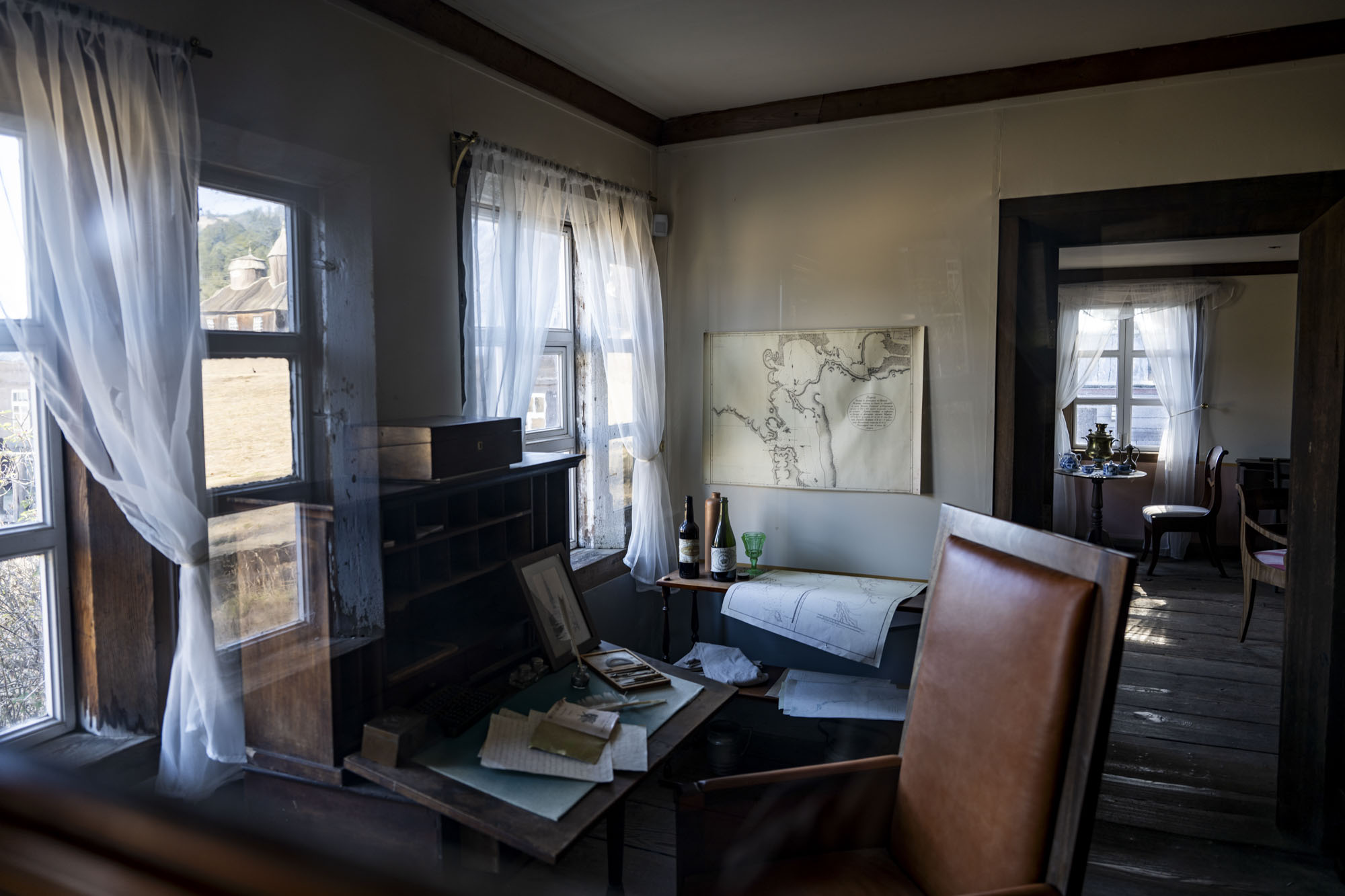
Today’s fort is actually a reconstruction of the original — every building except for the Rotchev House, which was built in 1836. After state parks took over the site in the early 1900s, the buildings have slowly been reconstructed, most recently in 2006. A great amount of time and research went into attempting to accurately recreate the original fort, Kimsey said, so visitors can imagine what it was like to live among the colonists here.
Fort Ross is also the site of California’s earliest shipbuilding — and its first windmill. You can see a full-scale replica of the latter in the park today, made of Russian pine, even as it struggles to hold up to the seaside air.
If you’re hungry for even more history, you can plan to come for a weekend ranger tour of the park, offered most weekends year-round.
Don’t miss the fort’s chapel
Today, the chapel is one of the highlights of the park. Its all-redwood interior is a faithful recreation of the original, harvested from trees nearby.
This chapel has been used for Russian Orthodox services since it was built, even amid its repeated destruction and reconstruction, Kimsey said. Outside of the church is a bell, which visitors can — and often do — ring as they pass by.
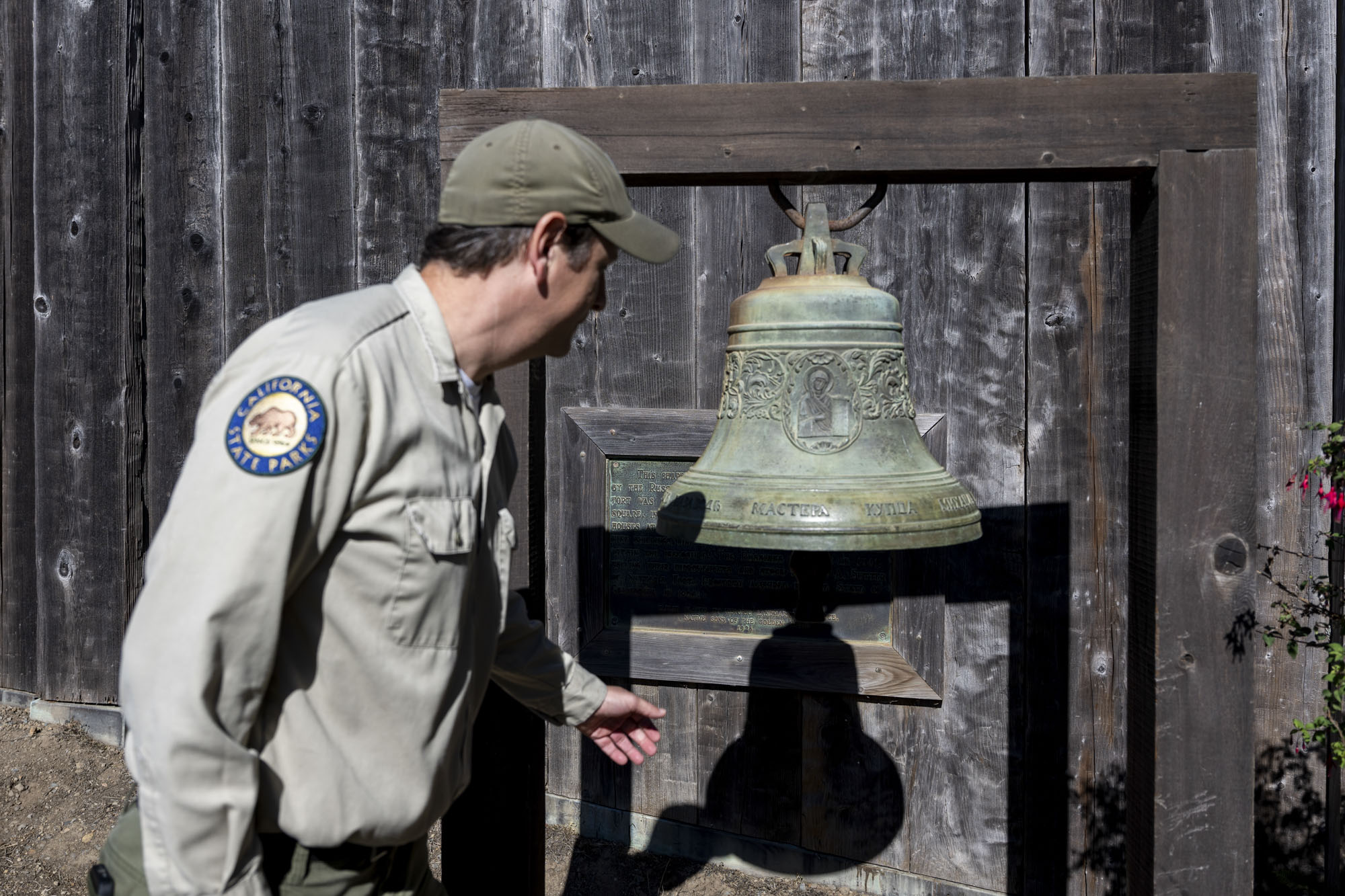
Take a quiet minute in the chapel to enjoy the quiet simplicity of the elegant construction and minimal interior.
Hike down to the cove …
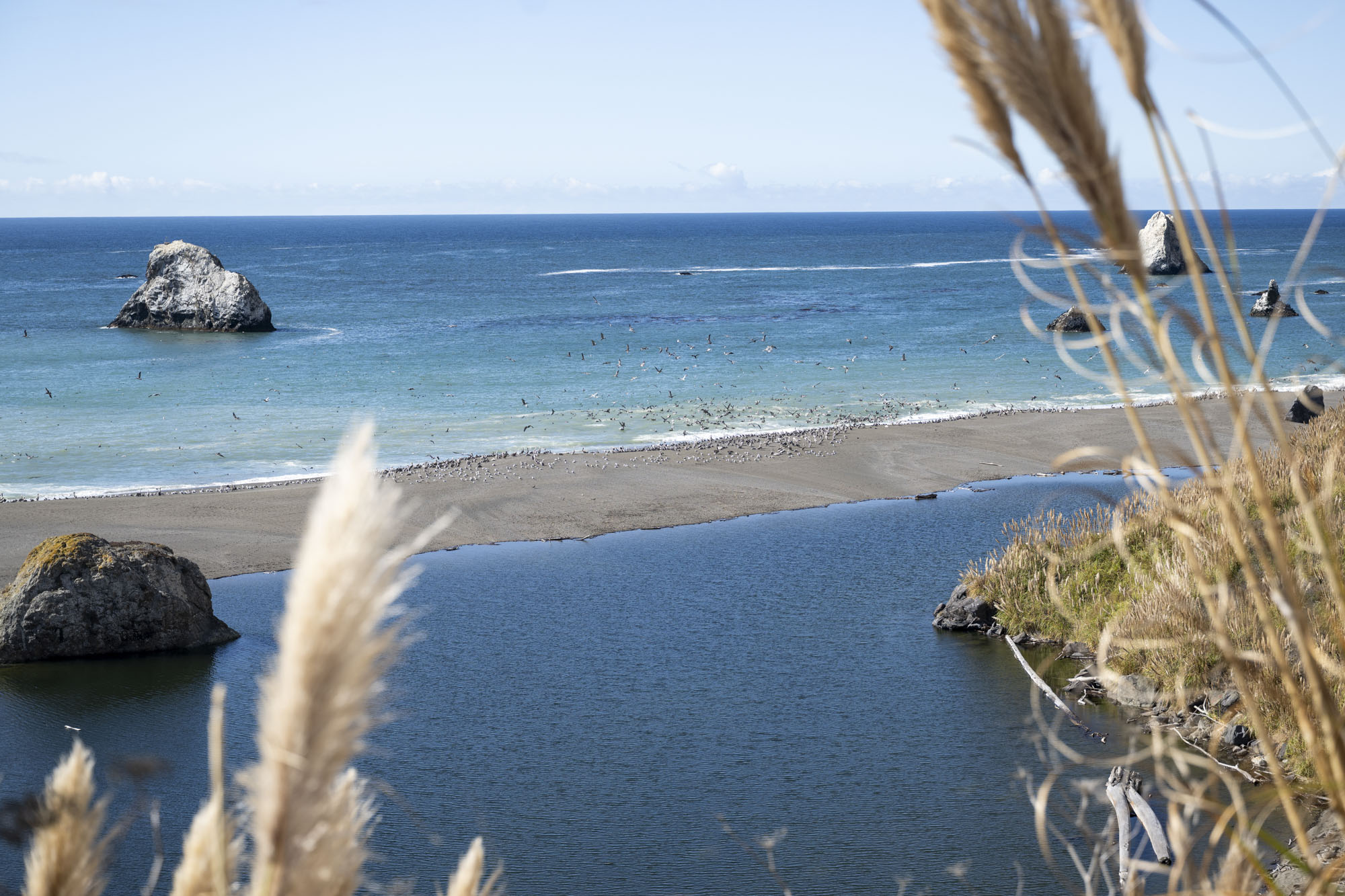
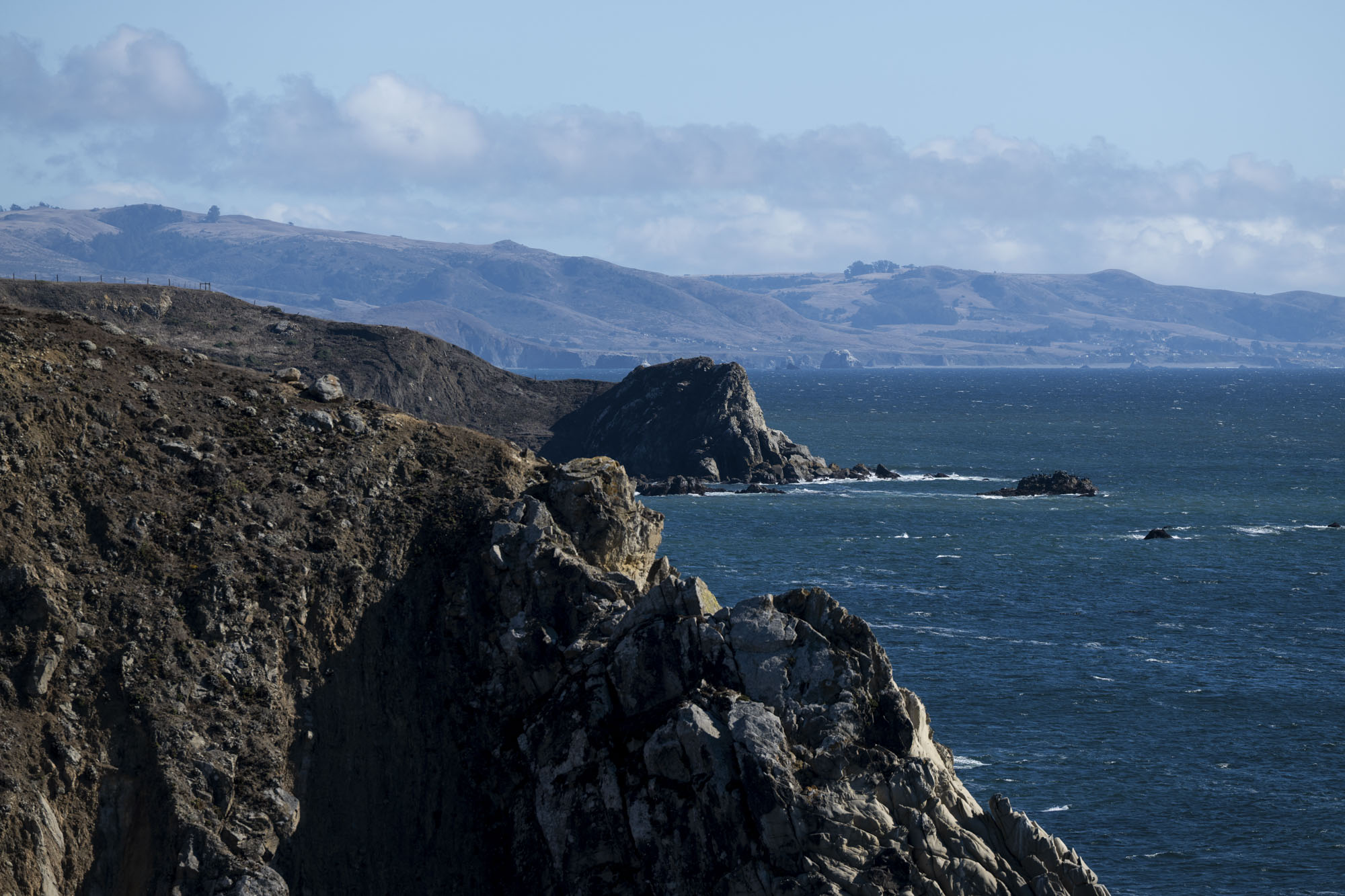
Just outside the fort is Fort Ross Cove, one of the few protected beaches in the area, given that the Sonoma Coast is quite dangerous to swim in.
A gravel road takes hikers down to the cove, where several people — and seals — enjoy the relatively calm weather. Even so, swimming there is not recommended due to dangerous rip currents.
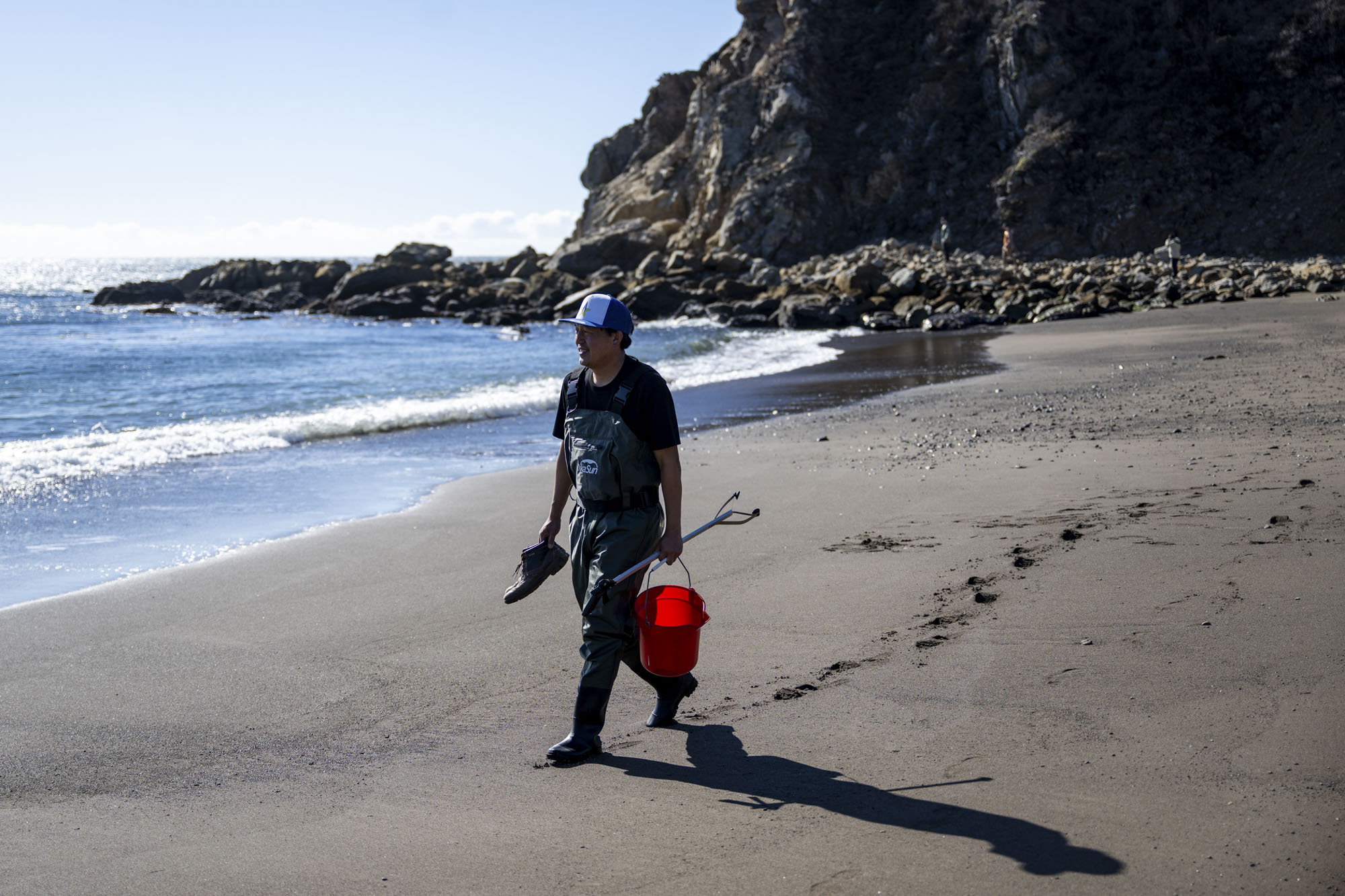
If you happen to be there when a high tide is receding, check out the North Cove for tide pooling. Just be careful: The cove is very rocky and can be downright unsafe at high tide.
On the beach, I encountered San Francisco resident Brian Quan, who was there on the beach foraging for sea urchins.
Quan was out there for the day, saying he’ll often come out during the low time of King tides. This time, he was searching for spots other than the increasingly popular Shell Beach to the north.
“I’m kind of exploring, looking for sea urchin and just prospecting before I head to one spot that I know will have some,” he said.
Not only does he eat what he catches, but Quan said he is also helping thin out the sea urchin population, whose booming numbers are contributing to coastal kelp loss and ecosystem crash.
He said at spots like Fort Ross, the uni are very noticeable in the tide pools when the tide is low enough.
… and up to the cemetery
Once you’ve gotten your fill enjoying the sea life and crashing waves in the cove, take the Cemetery Trail across the creek for around a mile until you find the Russian cemetery.
There, Russians, Europeans, Alaska Natives and California Native Americans who lived at Fort Ross during the Russian colony are buried.
The original cemetery is not as it appears today — rather, the uniform crosses were placed in 1994 to mark the graves of Christians buried there. Today, people still come to the cemetery for memorial services and to honor those buried there.
Then, catch the early sunset from the park
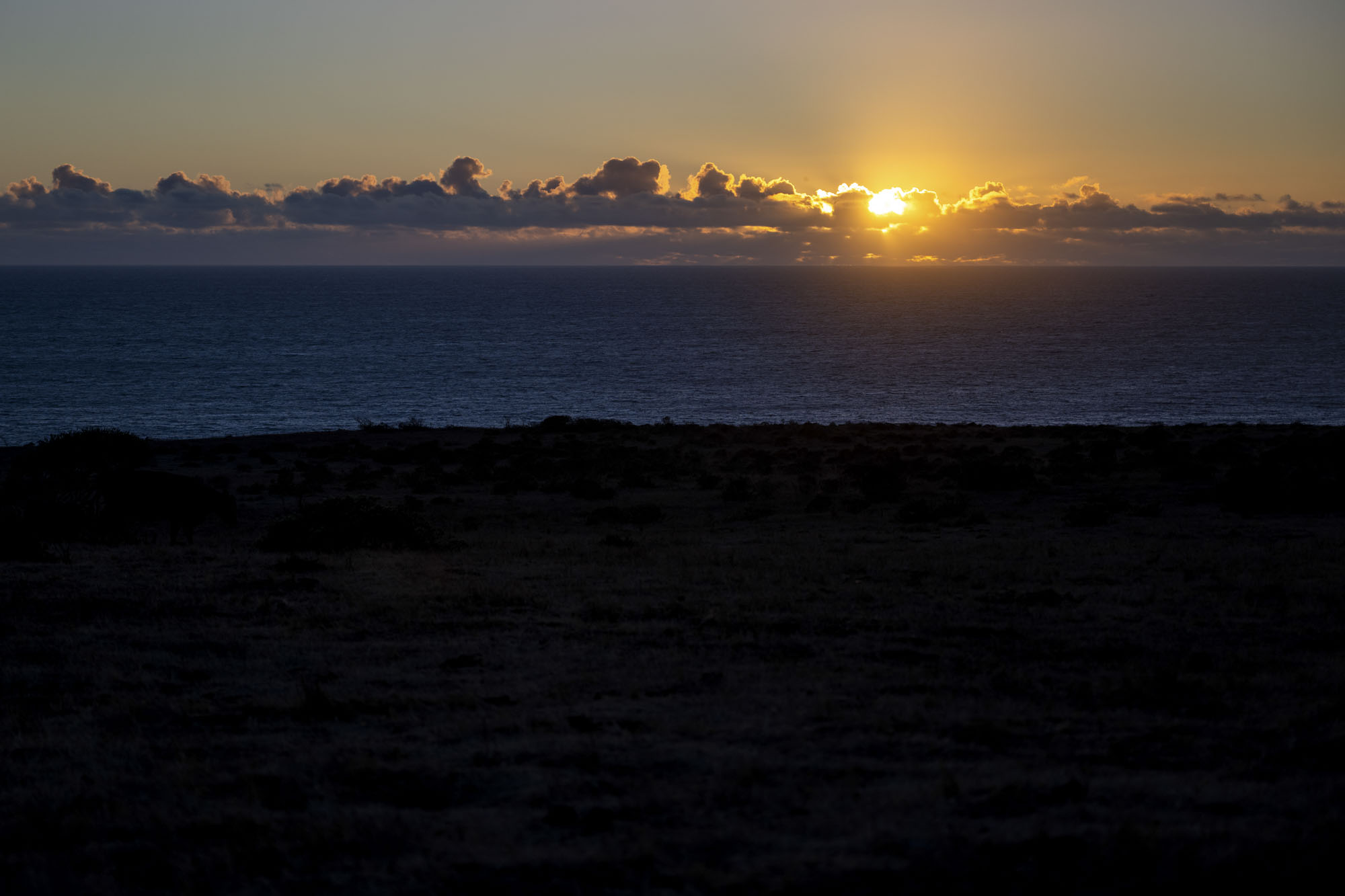
As the sun starts to set, hang out at the park or any of the nearby bluffs or beaches and wander the sandstone boulders. Look out for migrating gray whales, humpbacks, seals and sea lions and the many shorebirds who call the Sonoma coast home.
The day we visited, the gray whales were out in droves. You’ll know by their signature mist clouds that look more like puffs than streams of water, said one of the people I met at the visitor center, Carrie Watson.
Watson lives nearby in Cazadero, on the Russian River, and comes to the park often — rain or shine. But this was the first time this dedicated park visitor had seen whales at Fort Ross.
“I saw the little puffs of steam coming out, and then I saw a couple of them breach out there,” she said. “I am so excited about it every single time; it just never loses its luster for me.”
If you didn’t bring any firewood, it’s worth stopping by the Fort Ross Store before it gets dark and before heading to your campsite — to grab any last-minute essentials you might have forgotten.
Get cozy at camp
Now that it’s dark, returning to your already set-up campsite is going to feel extremely luxurious. And now is the time to start a campfire and get cooking.
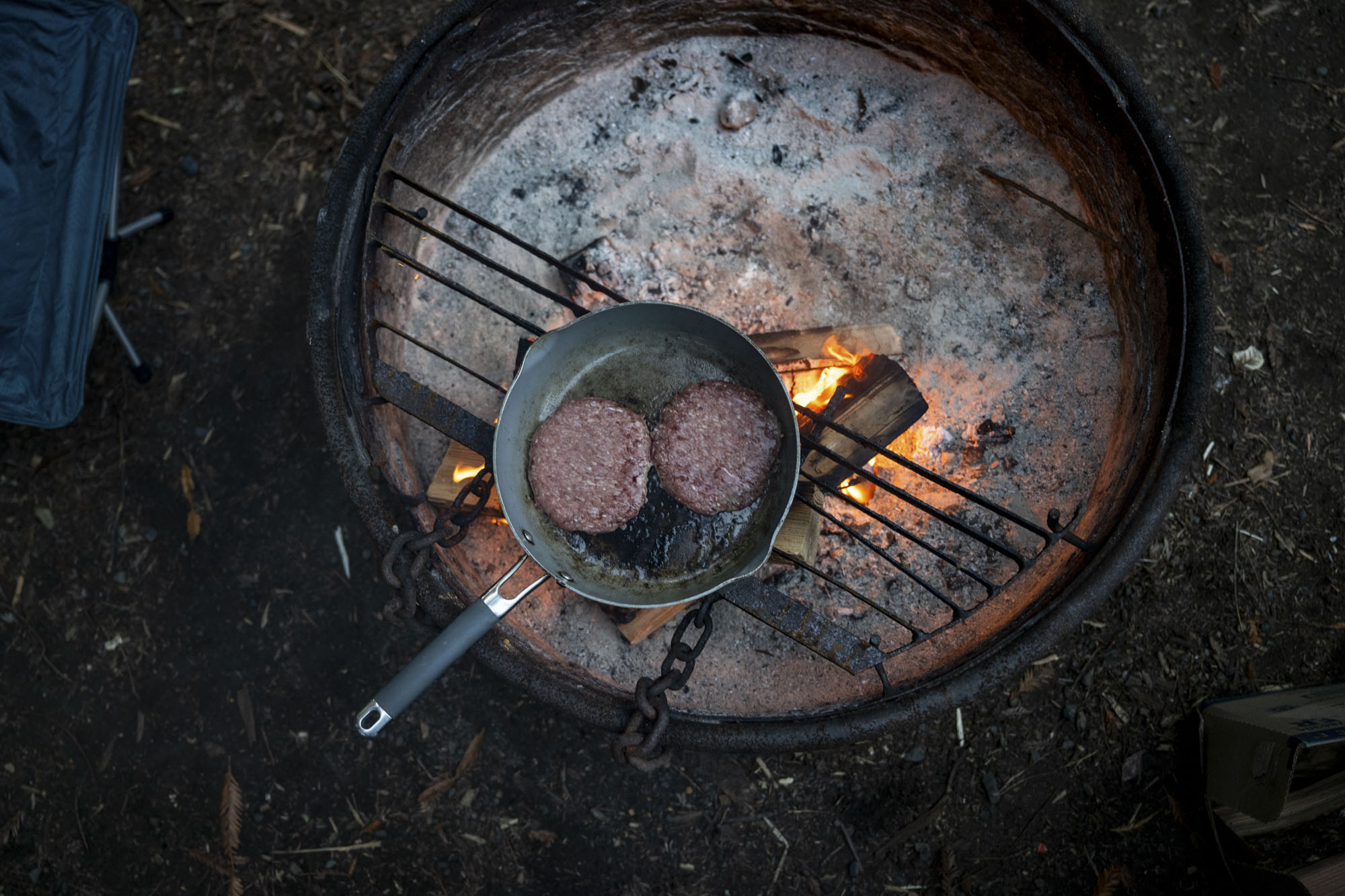
The fire pits here were helpfully equipped with a grill top, so cooking burgers on a pan sitting over the fire was no problem. If you bring aluminum foil, it would be easy to cook a small amount of food straight on the fire.
While this isn’t the most scenic campground I’veever stayed in (despite its proximity to the beach, there are no ocean views to be found), it was incredibly cozy. Pretty much every site is well-shaded by trees and bushes, so no matter which one you choose, you’ll be protected from any wind or too much sun exposure.
So enjoy your fire — maybe even roast up a few marshmallows — and settle in for the night. And before you go to sleep, make sure to put away all your food and coolers in your car so animals like raccoons can’t get into it.
Wake up early for the orchard
With the time change in full swing and the sun rising as early as 6:30 a.m., you’ll probably wake up in your tent nice and early. All the better for enjoying a serene morning at your campsite or for taking an early-morning beach walk before you pack up and head out.
But don’t leave the area until you’ve had a chance to explore the historic orchard. It’s just across Highway 1 about three-quarters of a mile east from the park up Fort Ross Road. Pull over when you see a gate on your right.
Behind the gate (feel free to open it if it’s closed; it’s allowed!) are several groves of fruit trees, including pears, cherries, olives and the famous local varietal, the Gravenstein apple, which may even trace its origins to the Russians who settled at Fort Ross.
When the Russians sold the fort in 1841, it had 264 trees of all kinds. But just four of those trees survive today: Three cherry trees and one apple tree.
In the late 19th century, more trees — mostly apple — were added to the orchard by its owner William Benitz, who made a profit shipping them to Sonoma. That business was continued by its subsequent owner George Call and his family, adding olives and plums.
But the orchard is situated directly on the San Andreas Fault, so the 1906 earthquake badly damaged it, and it went into disrepair under the Calls. Just 199 trees made it to 1976, and are preserved and protected today.
Today, the orchard is a serene spot to take in the sweeping ocean views: “one of the best views in the park,” Kimsey said. A number of tables are situated such that picnickers can take in the Sonoma Coast underneath the shade of a fruit-bearing tree.
Picking the fruit is allowed but only in small quantities and for personal use. State parks ask visitors not to climb, shake or strike the trees to get the fruit. The apples and pears are ripe between August and November.
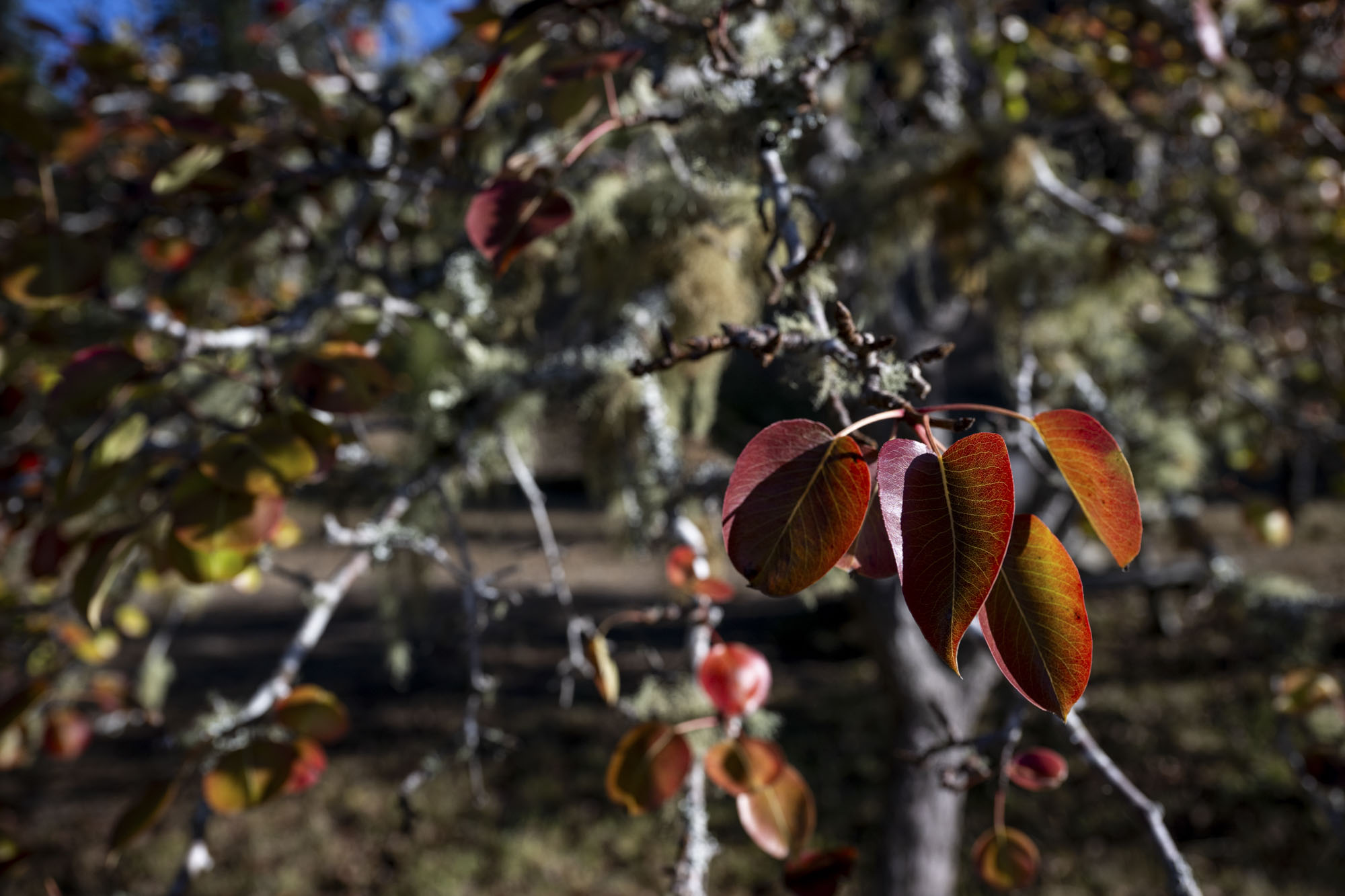
When I visited, I saw ample pears and apples hanging from the highest branches, but no ripe fruit was within picking distance — so don’t get your hopes up, as you may not be able to taste the fruit.
Before you leave, be sure to check out the red line demarcating the San Andreas Fault. Follow a short trail into the nearby Stanley Spyra Memorial Grove, where you can see how the movements in the fault have changed the growth paths of certain redwood trees.
And if you still have time, make the trek to Salt Point
The scenes along the drive and attractions of the fort itself should be enough to fill your weekend. But if you find yourself with some extra time or simply want to extend your Sonoma Coast adventure, Salt Point State Park is just 15 minutes up Hwy 1 and has more than 20 miles of hiking trails to explore, from ridges to forests to seaside walking.
“You can piece together some nice long hikes there,” Kimsey said. Just know this: Part of the park burned during the recent Woodside Fire, and the area around the Woodside Campground remains closed.
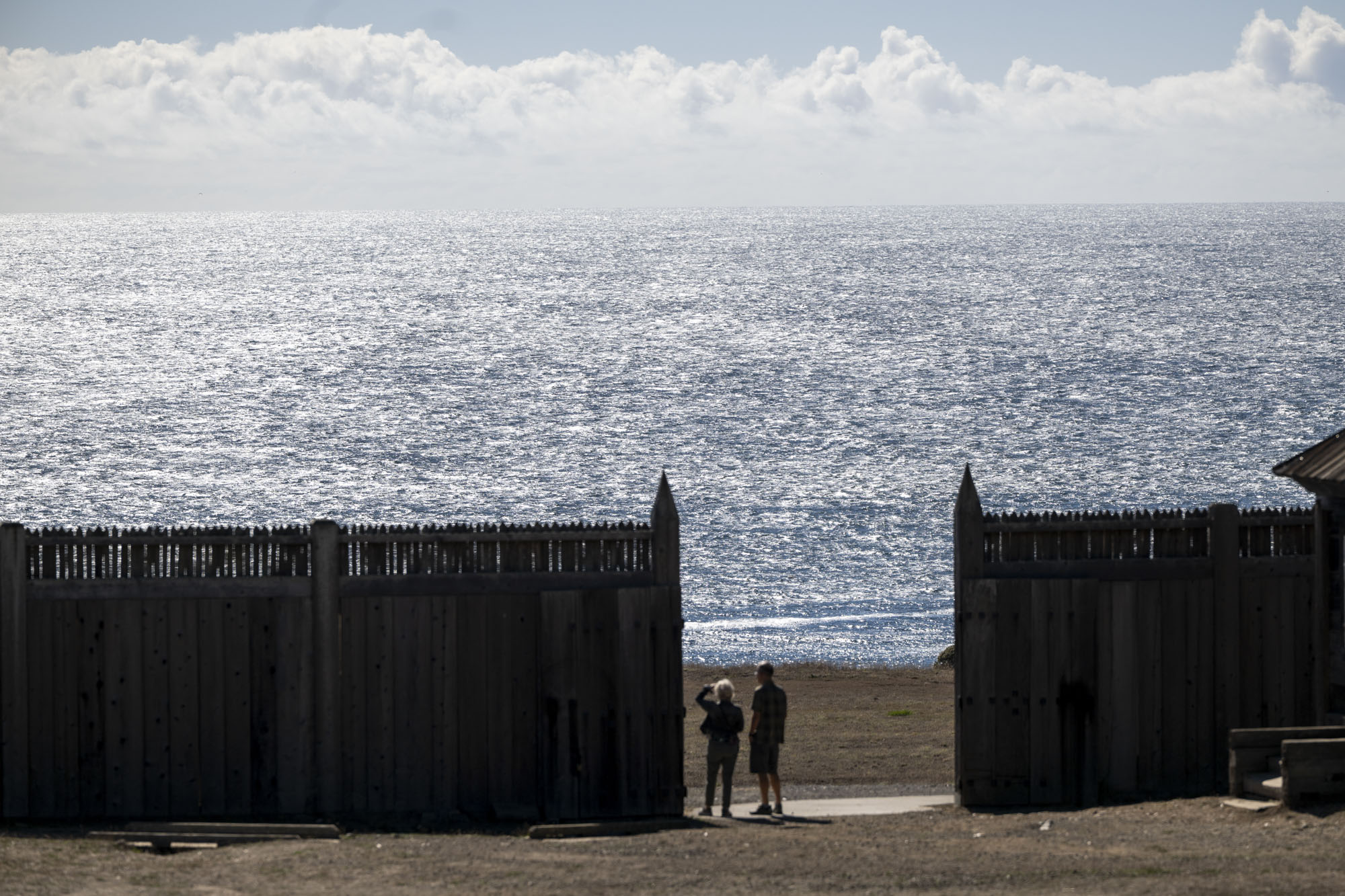
Even if you don’t have time to stop, the drive north from here is worth doing until it’s time to turn around.
Mike Joy, from Placerville, was visiting the area the same day we were. He was blown away by the Fort Ross area, calling it “spectacular.”
“The California coast is amazing,” he said. “From Santa Barbara all the way up to Oregon and Washington, this is an amazing coastline. And it just gets the further north you go, the better it gets.”
Need-to-know info before your visit to Fort Ross
The Reef Campground is first-come, first-served, so if you’re planning on going during a weekend or holiday, you might want to check into your campsite before exploring the fort so you can snag a primo spot. (Remember: if you do this, you’ll have to check in at the Fort Ross entrance, not the campground entrance itself).
Make absolutely sure that you’ve brought along ample drinking water (I bought two 3-gallon jugs) because the Reef Campground doesn’t have any running water.
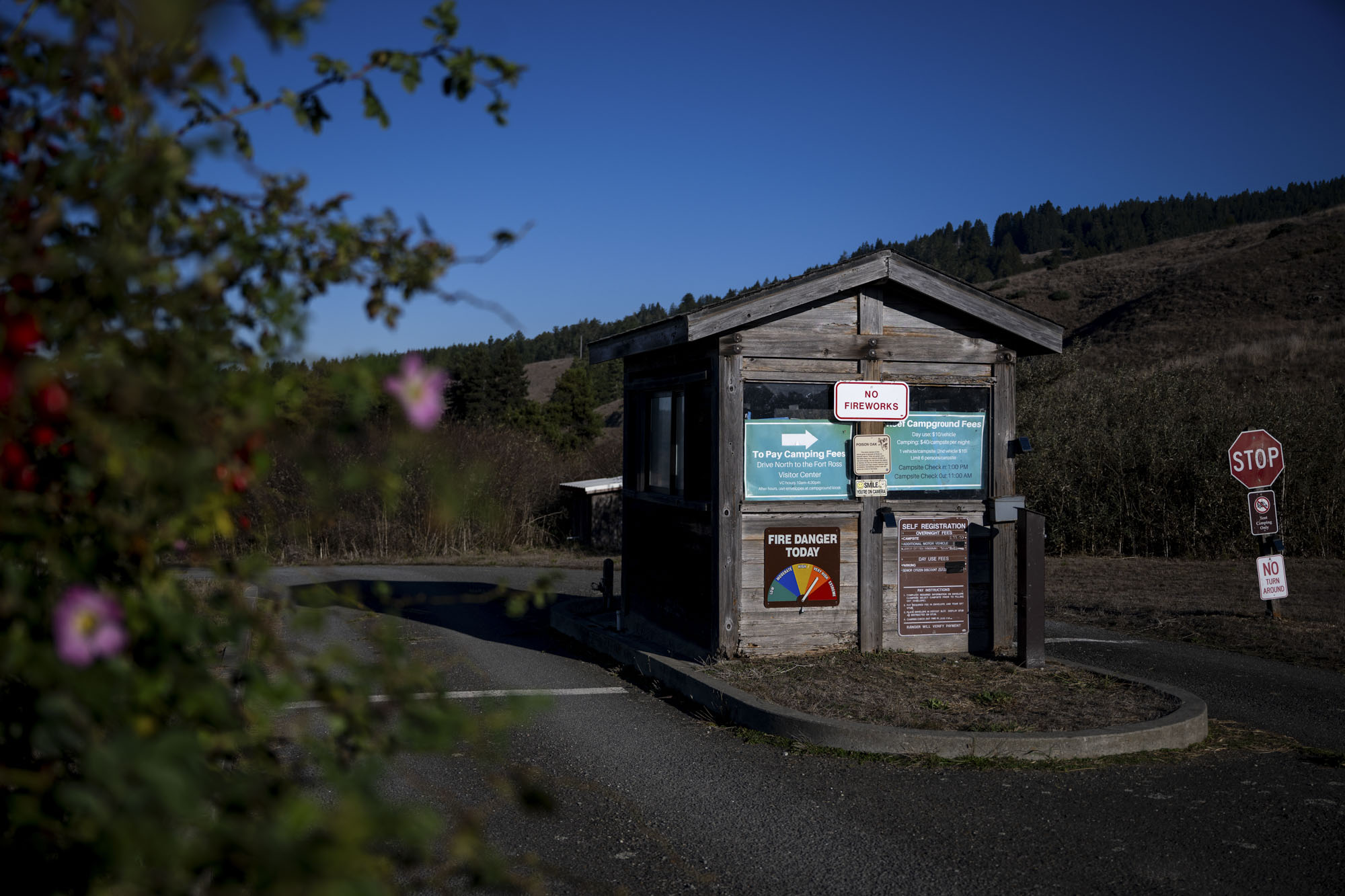
While there are lots of porta-potties at the campsite for your use, you’ll still need to bring your own water for drinking, cooking, cleaning and, most of all, fully putting out your campfire at the end of the night.
Speaking of which: There is no firewood for sale at the Reef Campground. Instead, drive north a few minutes to the Fort Ross Store. Bundles of firewood are available there for $10 each, plus you can stock up on any provisions you forgot. They also have ice to replenish your cooler and a deli if you’re hungry.
The Reef Campground is for tent camping only. No RVs, trailers or campers can be accommodated.