As Bay Area Cities Break Up With Flock, Pushback to Surveillance Mounts in SF

As Bay Area cities set stricter guardrails or break up entirely with automated license plate reader tools like Flock in the face of intense criticism from constituents, many elected officials in San Francisco are doubling down on their support for the surveillance technology.
From Mayor Daniel Lurie to supervisors like Matt Dorsey and other local Democratic Party leaders, they say the cameras have aided law enforcement and reduced crime. Critics say they are a gross invasion of privacy.
Tensions over the city’s use of Flock have fueled protests and fiery public comment as San Francisco prepares to reconsider its contract with the controversial Atlanta-based company next February and as the election next month spurs widespread debate about artificial intelligence and surveillance technology.
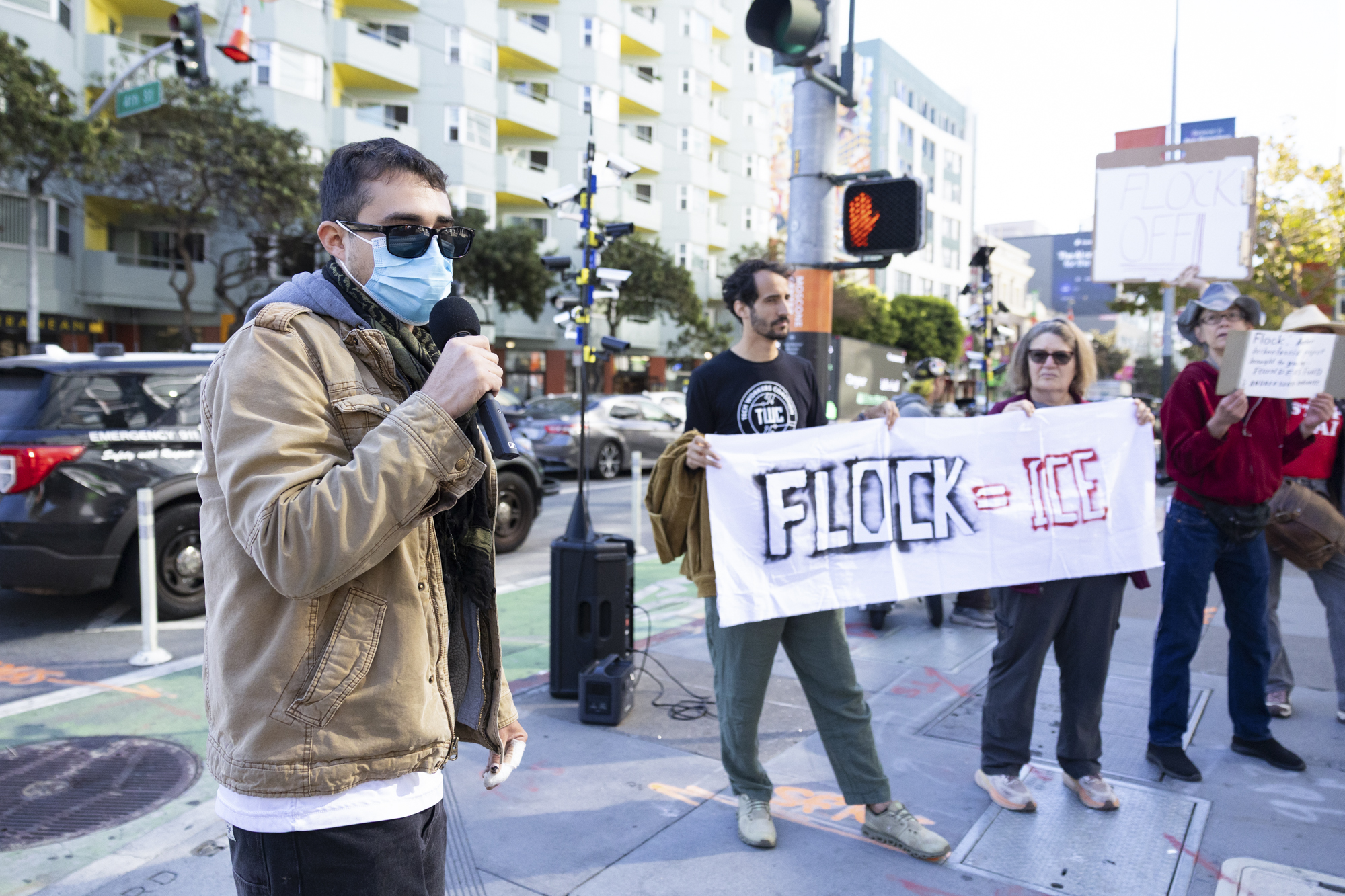
“I don’t feel safe being watched. There’s definitely nothing related to surveillance that is going to help me feel safer,” said Zachary Schwartz, a 16-year-old junior at Lowell High School, who started the local DeFlock SF chapter to organize against what he said is increasing mass surveillance in the city where he’s growing up.
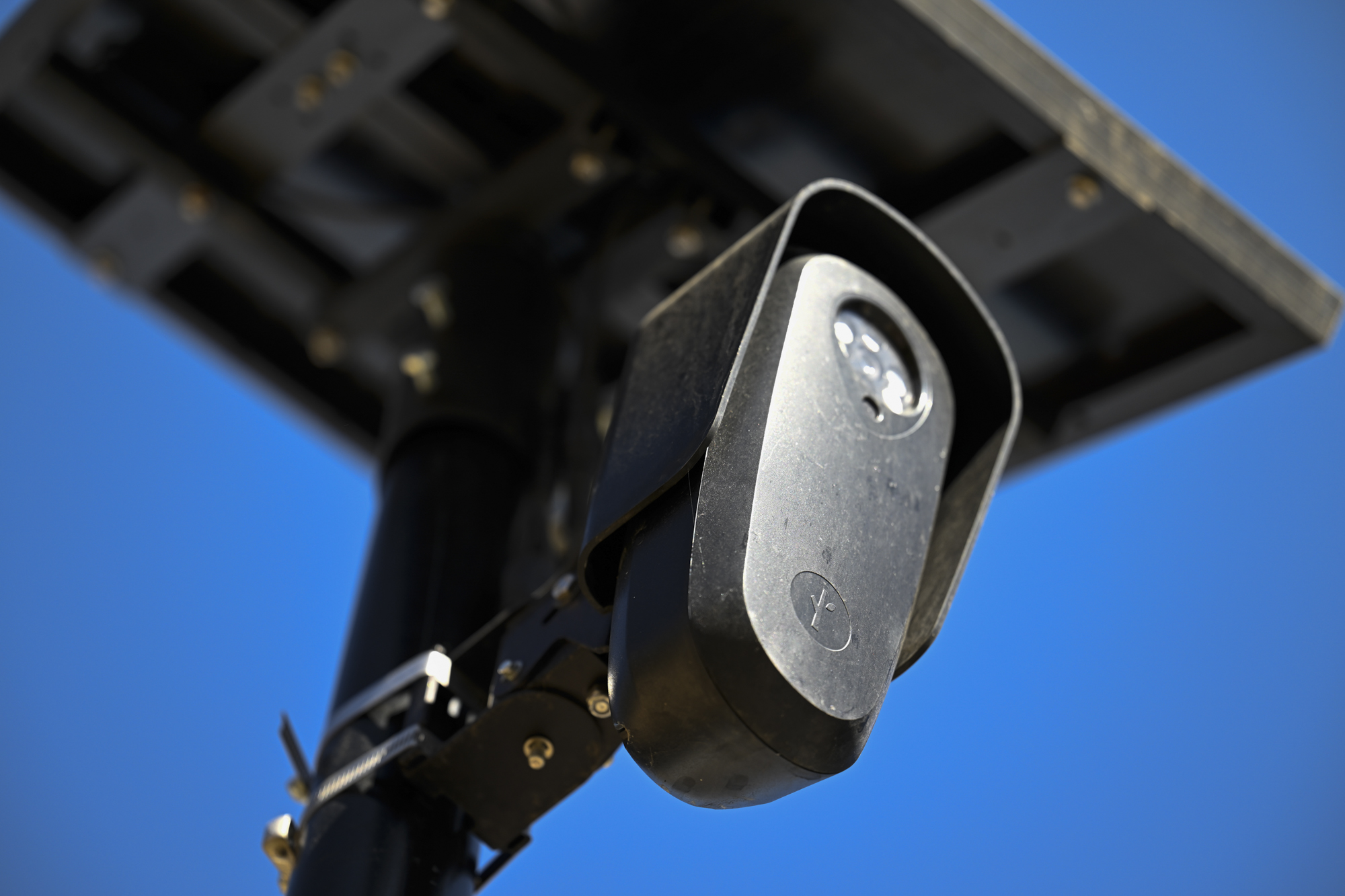
San Francisco announced in 2024 that it would begin rolling out a network of about 400 cameras mounted on streetlights around the city. Today, San Francisco ranks toward the top of U.S. cities when it comes to the number of cameras per road mile, according to geographic data from DeFlock, a national organization seeking to remove automated license plate reader technology from cities.
Supporters say the license plate reader technology can quickly help solve crimes, like smash-and-grab car burglaries, which have plummeted in the city since 2023. By mapping out images collected by the cameras, police officers can reconstruct a vehicle’s route and location.
“This technology helps us keep workers, small business owners and families safe, because we will not go back to a time when people could break into cars, rob businesses or commit serious crime without consequences,” Lurie said at a recent press conference.
But critics say automated license plate readers, drones and other mounted cameras have created mass surveillance systems that operate with no opportunity to opt out.
“This type of technology is still being used in unconstitutional ways to watch all of our movements all the time,” said Matthew Guariglia, a senior policy analyst at the Electronic Frontier Foundation, a nonprofit organization focused on civil liberties in the digital age.
In the roughly two years since San Francisco began mounting hundreds of cameras, stories of data misuse and concerns around mass surveillance have taken off around the country, setting off new pressure to take the technology down.

“We kept hearing from our community members about their fears of constantly being on camera and what can happen if their data gets in the wrong hands,” said Kimberly Woo, a Bay Area-based community organizer for the Services Immigrant Rights and Education Network, which works with immigrant and refugee communities.
In June, SFPD announced that its Flock data had been inappropriately searched hundreds of times by federal and other out-of-state agencies. The San Francisco Human Rights Commission found that the improper searches did not violate the city’s sanctuary policy, but called for new guardrails to protect people from future mishandling of data.
Even as they’ve insisted the technology is worthwhile, local officials have made some changes in response to reports of misuse and pushback.
Following public protests by residents concerned about the way Flock data is collected and shared with police, Lurie announced last month that the city would restrict the number of days that San Francisco Police officers can access license plate reader data from one year to 30 days after it is captured.
“The public should never be expected to sacrifice privacy for safety, and the SFPD has always used technology like ALPR for law enforcement purposes only,” SFPD Chief Derrick Lew said.
The announcement brought San Francisco in line with many other metro areas. But the city is still not meeting Flock’s own privacy recommendations for how long the data should be retained, which it recently brought down to just seven days.
“Abuse of Flock technology, at any level, is unacceptable,” Flock CEO Garrett Langley said in an announcement of the company’s standards change and other new privacy features. “These changes reflect years of work and deliberation. They are not the end of that work, but simply the continuation of our commitment to both safety and privacy.”
Still, Lurie, who made increasing public safety a cornerstone of his campaign for mayor, touted the city’s move to the 30-day retention policy, saying it was in the interest of both protecting privacy and allowing police to use what they deem an essential tool for quickly responding to crimes.
“San Franciscans expect us to keep them safe and protect their privacy,” he said. “Today, we are putting tighter limits on the data collected by public safety cameras — strengthening the trust between law enforcement and communities that has been critical to our city’s public safety progress.”
Nationwide, opinions on Flock skew negative. A September 2026 poll from Reuters found that 47% of American adults do not want the cameras in their communities, while 38% support them. Younger Americans were more likely to oppose Flock cameras compared to older adults, and Republicans were also more likely to support the technology than Democrats.
Public opinion is more mixed in San Francisco. A poll by GrowSF, a tech-backed political group, found that 64% of poll responders said they support allowing police to monitor live footage from cameras, specifically in areas like the Tenderloin and the Mission, to deter crime.
“This technology has been a game changer in strengthening our ability to hold people who commit crimes in our city accountable,” said District Attorney Brooke Jenkins, who also supports a state legislative proposal to increase penalties for people who misuse license plate reader data. “We cannot allow concerns about misuse to prevent us from using the tools we need to protect our communities.”

In 2024, San Francisco voters approved Proposition E, which allowed police to use drones for active investigations.
In the two years since then, many Bay Area cities have scaled back their relationships with Flock.
Richmond, Santa Cruz, El Cerrito and Los Altos Hills have all pulled back or canceled their Flock contracts over concerns about privacy and data-sharing, as have several cities in Santa Clara County. Some cities that have broken up with Flock have turned to other automated license plate reader vendors. Mountain View, a wealthy suburb in the South Bay, ended use of automatic license plate technology entirely, a move that Woo of SIREN called a “north star victory.”
Earlier this year in San José, another major metro area that embraced the technology, a police officer used the technology to find the vehicle of a woman who accused his cousin of domestic violence. Woo’s organization, SIREN, sued the city of San José over its Flock camera use.
San José Mayor Matt Mahan later called for stronger safeguards against misuse of the technology. The city still has nearly 500 cameras.
Berkeley voted to continue its relationship with Flock, but did not pass a proposed expansion of the technology. In Oakland, the City Council voted in December to renew and expand its Flock network.
Meanwhile, in San Francisco, several politicians who have publicly supported the city’s Flock program have faced criticism over conflicts of interest and funding.
The San Francisco Democratic County Central Committee, for example, has two members who are employed by Flock. This fall, when committee member Gordon Mar attempted to pass a resolution calling for stricter guardrails for the technology, the proposal was met with opposition and a competing resolution reaffirming the party’s support for the technology. Mar’s resolution failed to pass.
“It reinforced my concern about the level of influence that wealthy tech interests, including those that have been championing AI-enabled mass surveillance technologies like Flock, have over our Democratic Party and the political establishment in San Francisco currently,” Mar told KQED. He later resigned from the committee, citing disappointment in the party’s direction and leadership under Chair Nancy Tung, who attended a Flock conference weeks before the vote, the San Francisco Standard reported.
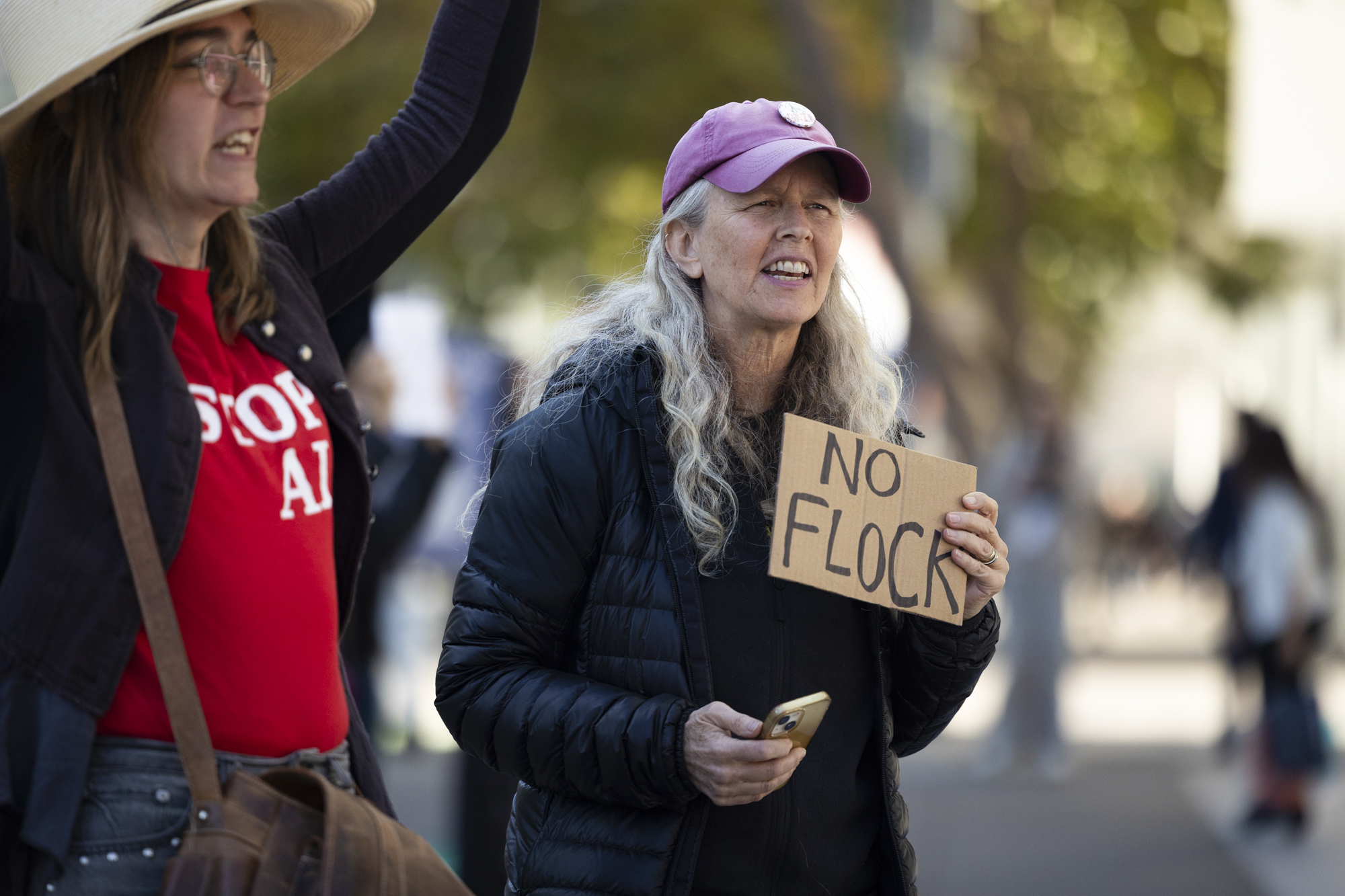
At the same meeting, a group of protesters staged a demonstration calling out the party for its ties to Flock. Schwartz of DeFlock SF was among them. He said the city’s recent policy change for its Flock data is welcome, but he’d like the city to move away from the technology entirely, including other companies that offer the same service.

In late August, activists protested outside of cryptocurrency billionaire Chris Larsen’s San Francisco mansion, turning out immigrant rights advocates, climate activists and other groups opposing the technology.
Larsen, a major political donor in San Francisco politics and public safety efforts, has contributed millions of dollars to create the city’s Real Time Investigation Center, a facility that uses drones and surveillance cameras to respond to crime reports and to the expansion of license plate reader technology.
But Larsen now shares some of his critics’ concerns, which he recently told KQED’s Political Breakdown are “legitimate.”
“They’re right to be protesting because of what’s going on kind of nationally,” he said, noting that public distrust in government and technology is high, especially due to federal immigration enforcement and AI safety risks. “It’s a shame because at the same time, these tools, if they’re targeted and very, very focused like they are in San Francisco, they’re incredibly effective.”
In today’s digital age, devices capture data constantly. But Woo said that ALPR technology is particularly concerning, compared to social media, for example, because there isn’t an ability to opt out or avoid the cameras, and the government immediately has access to that personal data.
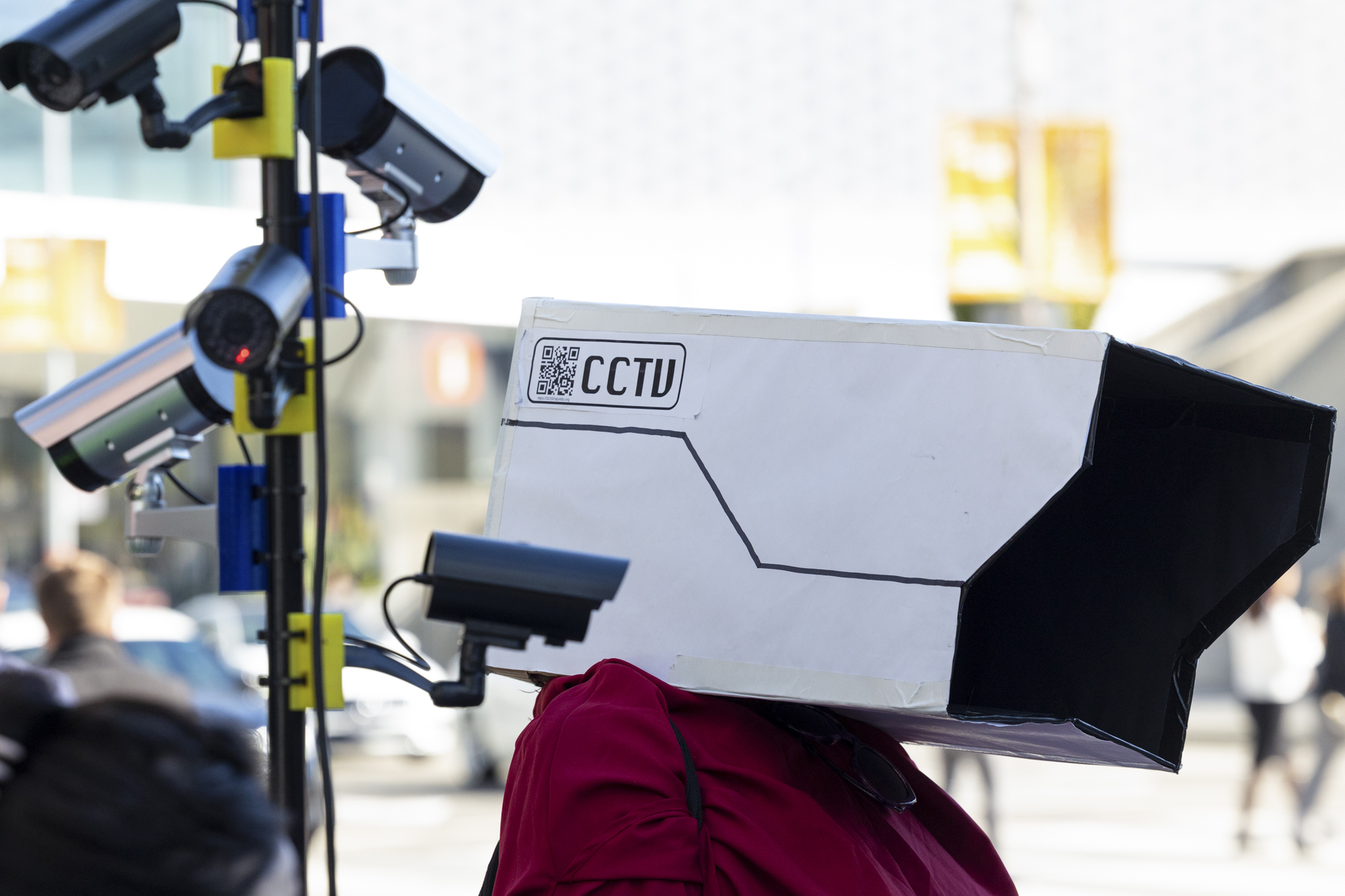
“We have phones in our hands, but in order for the government to access that data, that requires a valid judicial warrant,” Woo said. “With these ALPR cameras, however, these are tracking anyone who gets within their purview without a warrant and without a consent on a mass dragnet scale.”
Schwartz said he’d rather have the city he was raised in invest resources toward reducing poverty and improving access to education, to address crime. Even though the city has responded to pushback by curtailing its Flock data somewhat, he and other concerned residents aren’t satisfied.
Protests have not slowed down after Lurie’s announcement that the city would restrict data retention. Last week, a group of anti-surveillance protesters gathered outside the TechCrunch conference at San Francisco’s Moscone Center, calling for an end to the technology across the country.
San Francisco will consider renewing its contract with Flock in February 2027.
“These policies are a step in the right direction, but they’re not a solution to the problem,” Schwartz said. “We’re still going to keep fighting this.”