San Francisco Keeps Its Flock Cameras, With New Restrictions

As public scrutiny over Flock Safety cameras mounts, San Francisco officials announced new restrictions and increased oversight on Tuesday for the city’s use of license plate readers.
San Francisco Mayor Daniel Lurie joined District Attorney Brooke Jenkins, Police Chief Derrick Lew and Assemblymember Matt Haney to share a raft of new policies intended to strengthen privacy protections — while doubling down on the city’s Flock contract.
“This technology keeps San Franciscans safe,” Lurie said, “and we will not go back to a time where people can break into cars, rob businesses or commit serious crime and expect to get away with it.”
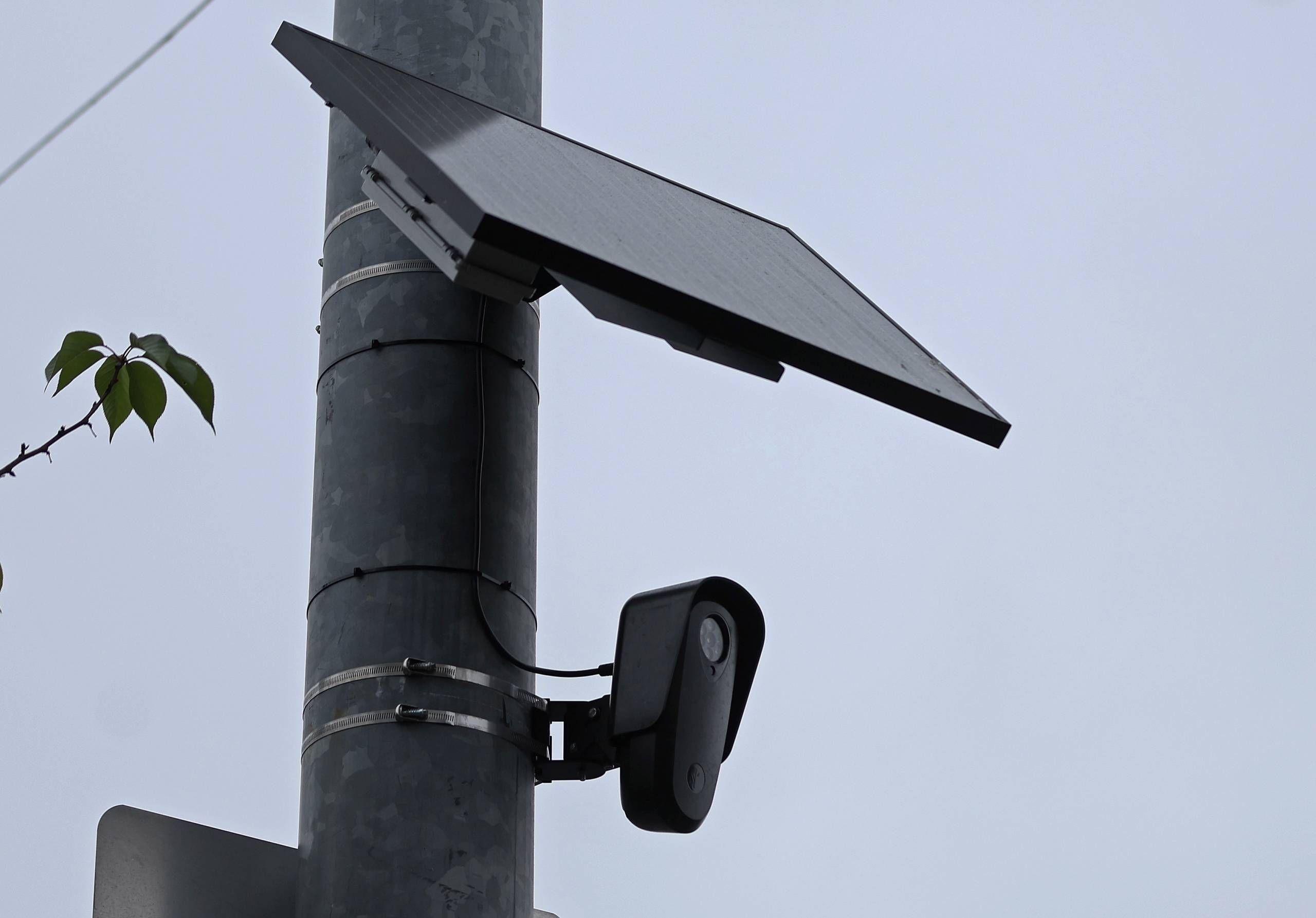
Standing underneath a Flock license plate reader on Mission Street, the mayor credited the cameras with reduced crime and improved public safety, while acknowledging residents “also have a right to expect strong protections about how information is accessed.”
Under the new rules, San Francisco Police Department personnel will lose access to license plate data after 30 days, and officers’ use of the technology must be justified and reported.
“Every active search will have to be connected to a specific incident number,” Lurie said. “The officer will have to state the reason for the search and the system will record who conducted it.”
Used by thousands of law enforcement agencies throughout the country, the technology has raised alarms over the potential for misuse and unauthorized sharing of information.
In June, the SFPD revealed that their Automated License Plate Reader, or ALPR, data had been improperly accessed hundreds of times by out-of-state and federal agencies.
Lurie emphasized on Tuesday that the city doesn’t willingly share ALPR data with federal agencies.
Lurie and Haney said in the announcement that they would also work together to pursue state legislation strengthening penalties for police officers or any public safety personnel who misuse ALPR data or disclose it without authorization.
That’s after a San José police officer was fired in April for using the technology to track a civilian who accused his family member of domestic violence. There’s currently no state law preventing officers from misusing or sharing ALPR data without authorization.
Assemblymember Matt Haney said the system is broken and that the San José police officer should be criminally charged.
“You don’t get to use that information to track someone for personal reasons, share it with a friend or family member,” Haney said. “Or use it for anything unrelated to your job. If you abuse that access, there should be criminal consequences — and you should be prosecuted.”
Both Lurie and Jenkins said they’re not aware of any instances of police officers in San Francisco misusing Flock cameras. The district attorney called for the city to get ahead of any potential violation to maintain public trust.
“Our job isn’t to react after something bad happens,” Jenkins said.
In a press release, the mayor said SFPD will conduct monthly reviews for potential violations. And the Department of Police Accountability will conduct regular independent audits of the department’s use of the technology.
Training will be required for personnel with access to ALPR systems. Officers who violate the new policy face department discipline or termination, the release said.