San Francisco Mayor Lurie Infuses $30 Million in Reforms to Tackle ‘Rent Emergency’

Blasting the “rent emergency” driving up evictions across San Francisco, Mayor Daniel Lurie announced a $30 million package of reforms on Thursday morning to keep families in their homes.
“Today, most San Franciscans feel our city is finally moving in the right direction, but many are also asking whether they can still afford to live here,” Lurie said in a statement memorializing the speech he gave this morning in the city’s Alamo Square Park.
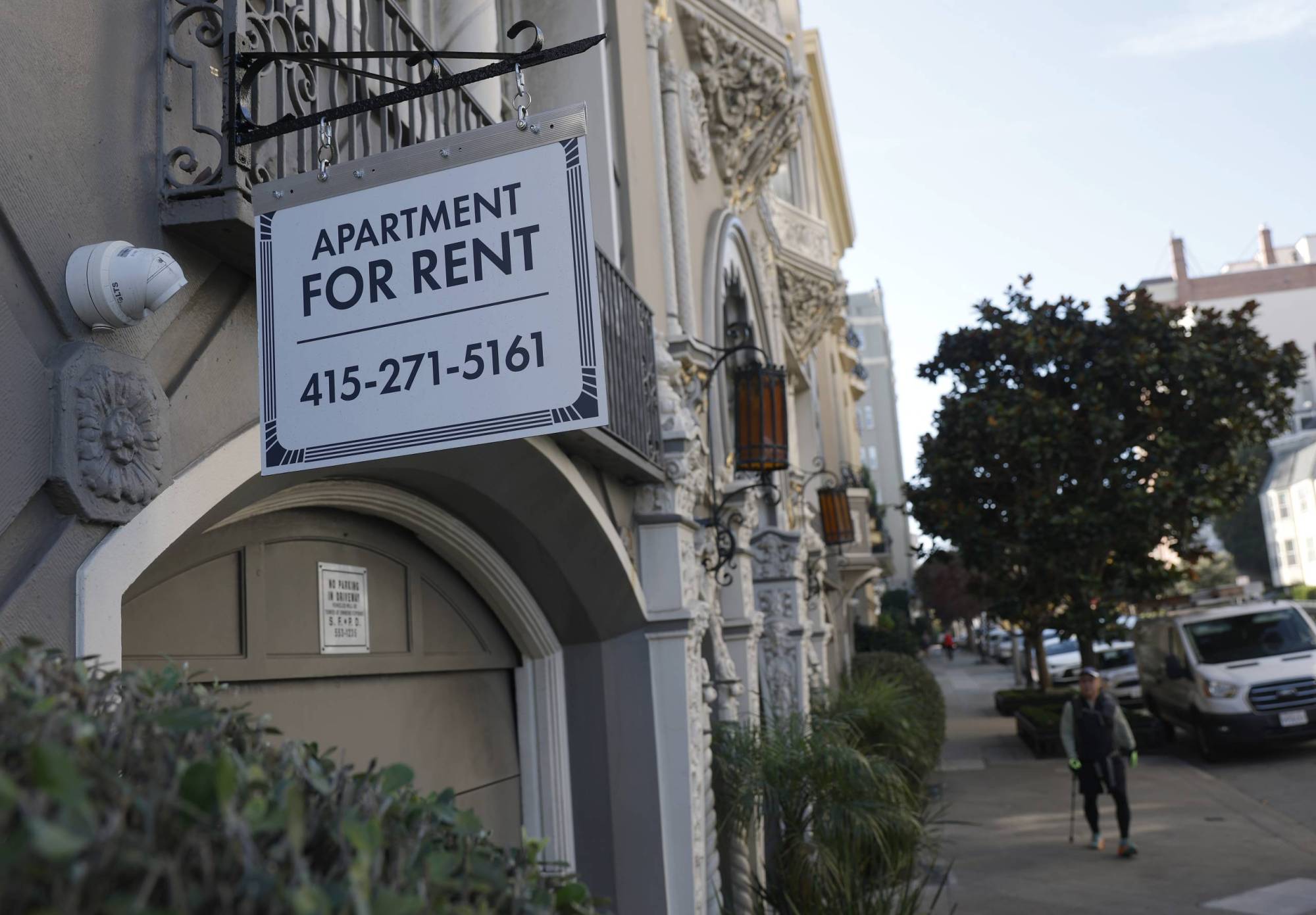
Signs of the affordability crisis in San Francisco are everywhere. According to new data from online rental service Apartment List, the city led the nation in “fastest year-over-year rent growth,” at 11%. San José, it should be noted, is in second place at 7.9% growth.
Citing the wave of high-paying tech jobs and ensuing housing frenzy sparked by the AI boom, the company said that San Francisco rents are up a staggering 25.6% in just the last year — numbers that it said are “far outpacing all other markets in the country.”
“It is absolutely an emergency,” Meg Heisler, policy director San Francisco Anti-Displacement Coalition, said in an interview Thursday with KQED, underscoring the need for “enforcement that reflects the gravity of the crisis we’re in.”
“But we also know that most tenants are forced out before they ever get to court,” Heisler said, pointing to harassment, eviction threats and illegal rent increases.
“That is a whole universe of things that we think need to be addressed in addition to any proposals put forward today,” she added.
San Francisco already provides an attorney to all tenants facing eviction, but the reform package that Lurie announced on Thursday earmarks $3 million to expand the right to counsel for 400 San Francisco households who previously would have received only partial representation, according to the city’s announcement.
Compared with those who receive “limited-scope representation,” Lurie’s office said tenants who receive “full-scope legal representation were 39% more likely to remain in their homes.”
Another tack of the new reforms addresses discriminatory or other illegal renting practices, something City Attorney David Chiu laid out at the press conference with the mayor.

“Everyday San Franciscans cannot afford to live here, and even those paying astronomical rents are getting evicted,” Chiu said in a statement. “This is not sustainable, and renters need help. Our renter protection laws can only help if tenants know about them and they are enforced. My office is bringing a renewed focus on weeding out systemic bad behavior that forces people out of their homes.”
To drive awareness for both tenants and owners of what housing laws mandate, primarily about evictions, the Mayor’s Office of Housing and Community Development is launching a $1 million education campaign.
District 9 Supervisor Jackie Fielder is behind a new reform aimed at stopping evictions for renters who have fallen only a bit behind on rent. Unless the tenant is one month late or more, the new law would bar their eviction on the basis of nonpayment.
Another prong of the reform package gives a 25% bump to payouts for displaced tenants under the Ellis Act, amounting to nearly $3,000 per person.
For tenant advocates at the San Francisco Anti-Displacement Coalition, however, they want to see the Ellis Act fully repealed, along with Costa Hawkins.
Speaking on KQED’s Forum this week, eviction defense lawyer Tuesday Thornton said that the Ellis Act “incentivizes landlords to empty out buildings and essentially convert rent-controlled units to housing for the rich.”

“If tenants organize, they can fight,” she said. “They can stay housed for longer, but the Ellis Act does need to be repealed or reformed to stop incentivizing these kinds of evictions.”
Lurie billed the tenant-protection package on Thursday as a component of his Family Opportunity Agenda, the two pillars of which are childcare assistance and affordable housing.
Most of the $30 million infusion from the city will go toward filling the gap of expiring federal vouchers that have been a lifeline to more than 900 people in San Francisco since the start of the COVID-19 pandemic. President Donald Trump and his U.S. Department of Housing and Urban Development announced that the $5 billion voucher program would expire at the end of 2026, four years earlier than originally envisioned.
Lurie said Thursday that some 650 “extremely low-income households” will benefit now from the $27 million being unlocked by the city’s Department of Homelessness and Supportive Housing.
The San Francisco Apartment Association, which advocates for landlords, said it has fought with the city in the past over reforms that encroach illegally on state law, and may do so again here.

“SFAA has been in conversation with members of the Board of Supervisors on many aspects of the legislative package, and remains committed to striking the right balance between offering reasonable tenant protections and enhancing awareness about existing laws,” Charley Goss, the group’s government affairs spokesperson, said in a statement. “The city should do so without inappropriately punishing rental property owners for an issue beyond their control — that San Francisco’s housing shortage has created high asking rents.”
Landlords frame the lack of housing in the city as the root of the crisis, with San Francisco delivering just 2,000 to 3,000 new units a year, inching toward its goal of 82,000 new homes by 2031.
“The city has not been building enough housing that it needs to meet the growing demand,” Joshua Howard, executive vice president of the California Apartment Association, told Forum.
Meanwhile, costs from regulatory compliance, rent control, maintenance, insurance and construction “are rising at more than 1.6%, which is the annual allowable rent increase from the Rent Board,” Howard said.

Thornton, the tenant advocate, balked at the claim of landlords not being able to keep up with costs.
“Rent-controlled units that are subject to the Rent Board’s jurisdiction in San Francisco — owners of those units are able to pass on operation and maintenance costs to their tenants, but they have to prove that their costs actually exceed the amount of allowable rent increase that year,” she said. “Landlords are able to capture those amounts.”
Howard, speaking for the landlord group, meanwhile put an asterisk on that $4,000 monthly rent figure for a one-bedroom apartment.
Noting that such averages are skewed by the “larger, newer Class A properties,” Howard quoted U.S. Census Bureau figures that show median rent in San Francisco is about $2,476 a month.
“Census Bureau data tells us that, on average, the San Francisco renter household is spending 24% to 25% of its income on rent,” Howard said. “That is far below the HUD standard of 30% and the national average of 30%. So we can talk about affordability. Let’s talk about the data, but let’s also recognize that San Francisco renters, on average, spend a smaller share of their household income on rent than renters nationally.”
Thornton said, on the other hand, that those figures underscore the difficulty that service workers and public sector employees face in a city where average incomes are so high.
“If you need $160,000 to live in a one-bedroom, who are we building a city for?” she said. “I don’t think that that’s something to celebrate. I think that’s telling a really horrifying story of displacement. And I want to live in a city where everyone can thrive. I don’t think it’s a functional society if people are terrified of losing their housing at any moment.”