Pro-Palestinian Protesters Get Jail Time for Golden Gate Bridge Shutdown
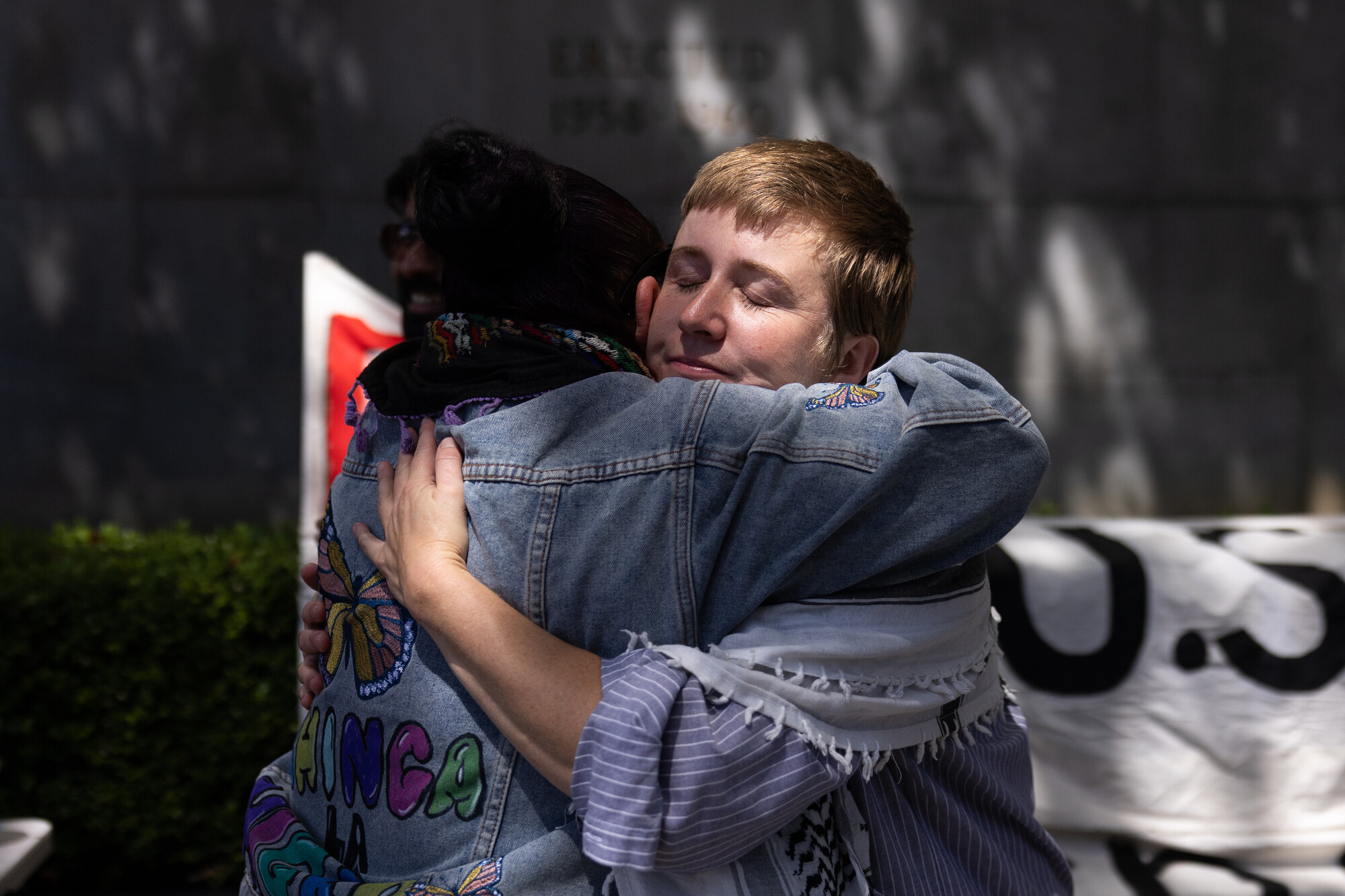
A San Francisco judge sentenced seven pro-Palestinian activists to 30 days in county jail and six months of probation on Friday for their roles in a 2024 protest that stopped traffic on the Golden Gate Bridge for roughly four hours.
The San Francisco District Attorney’s Office also dismissed multiple outstanding charges, including the most serious for felony conspiracy, that the jury failed to reach a consensus on in July.
“Throughout history, civil disobedience has mostly involved accepting legal consequences,” Superior Court Judge Teresa Caffese said before handing down the sentences. “In that spirit, those who blocked the bridge and disrupted the lives of hundreds of commuters should be treated respectfully, but should also be prepared to accept the consequences of their actions.”
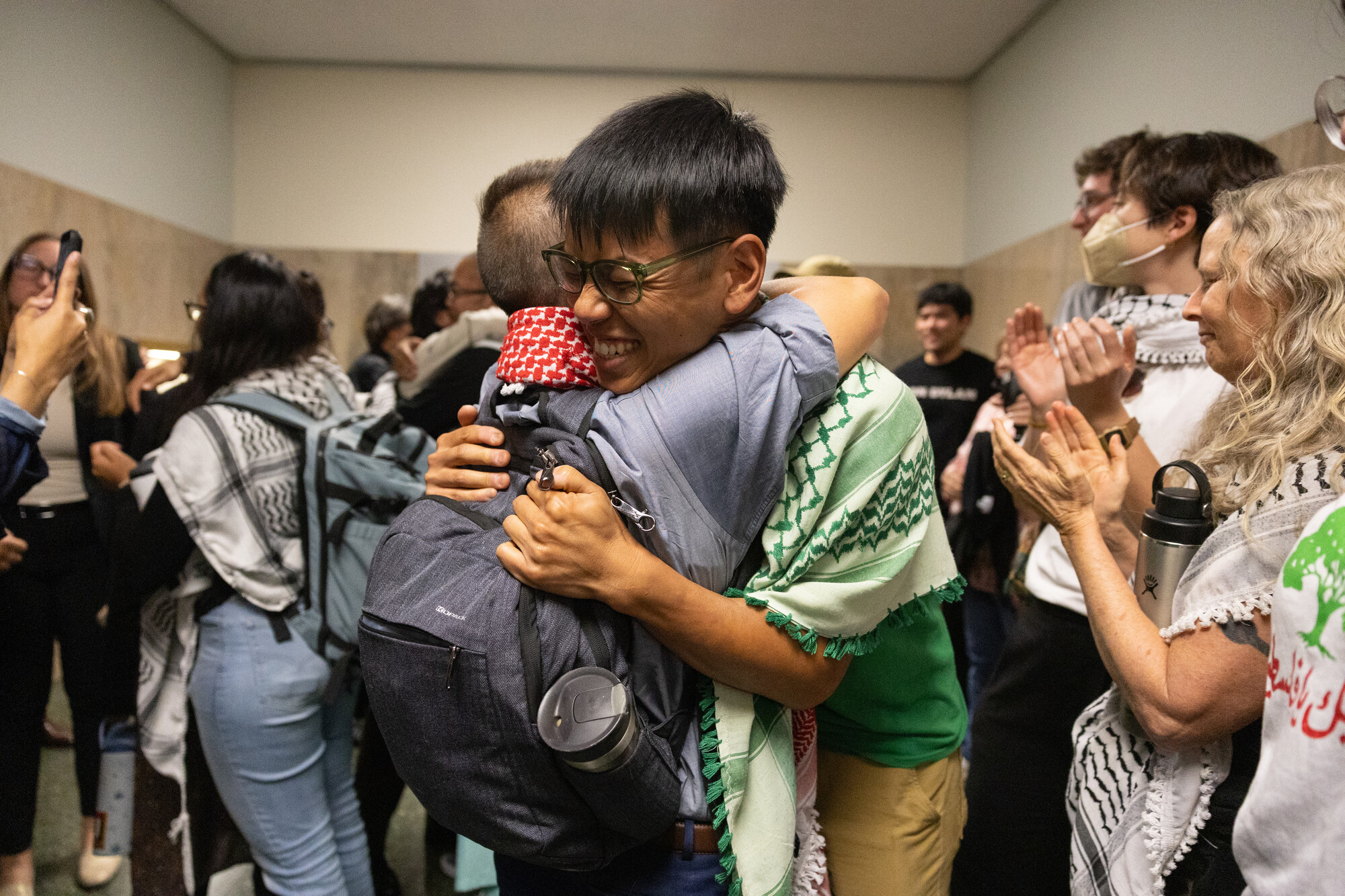
Law enforcement had originally arrested more than two dozen people for the Tax Day demonstration, which was organized in opposition to U.S. support for Israel amid ongoing military strikes on Gaza. The seven who went to trial included six who used lockboxes to chain themselves to cars blocking southbound lanes on the bridge, complicating removal efforts. The seventh had served as a liaison between activists and law enforcement.
The sentences are significantly lighter than the 14-to-15-year maximum terms that the seven Bay Area residents — Bhavika Anandpura, River Allen, Sara Cantor, Rocky Chau, Conrad de Jesus, Sarah Ferrell and Em Tillotson — faced at the start of the trial.
A jury last month convicted all seven defendants of several misdemeanors, including unlawful assembly, obstructing a thoroughfare and multiple counts of false imprisonment. But they failed to reach a consensus on felony conspiracy, which carried the most significant maximum sentence.
Following Friday’s sentencing, the DA’s office moved to dismiss the conspiracy and outstanding trespassing charge, saying the protesters had been held accountable, and that they were cognizant of the public resources a retrial would require.
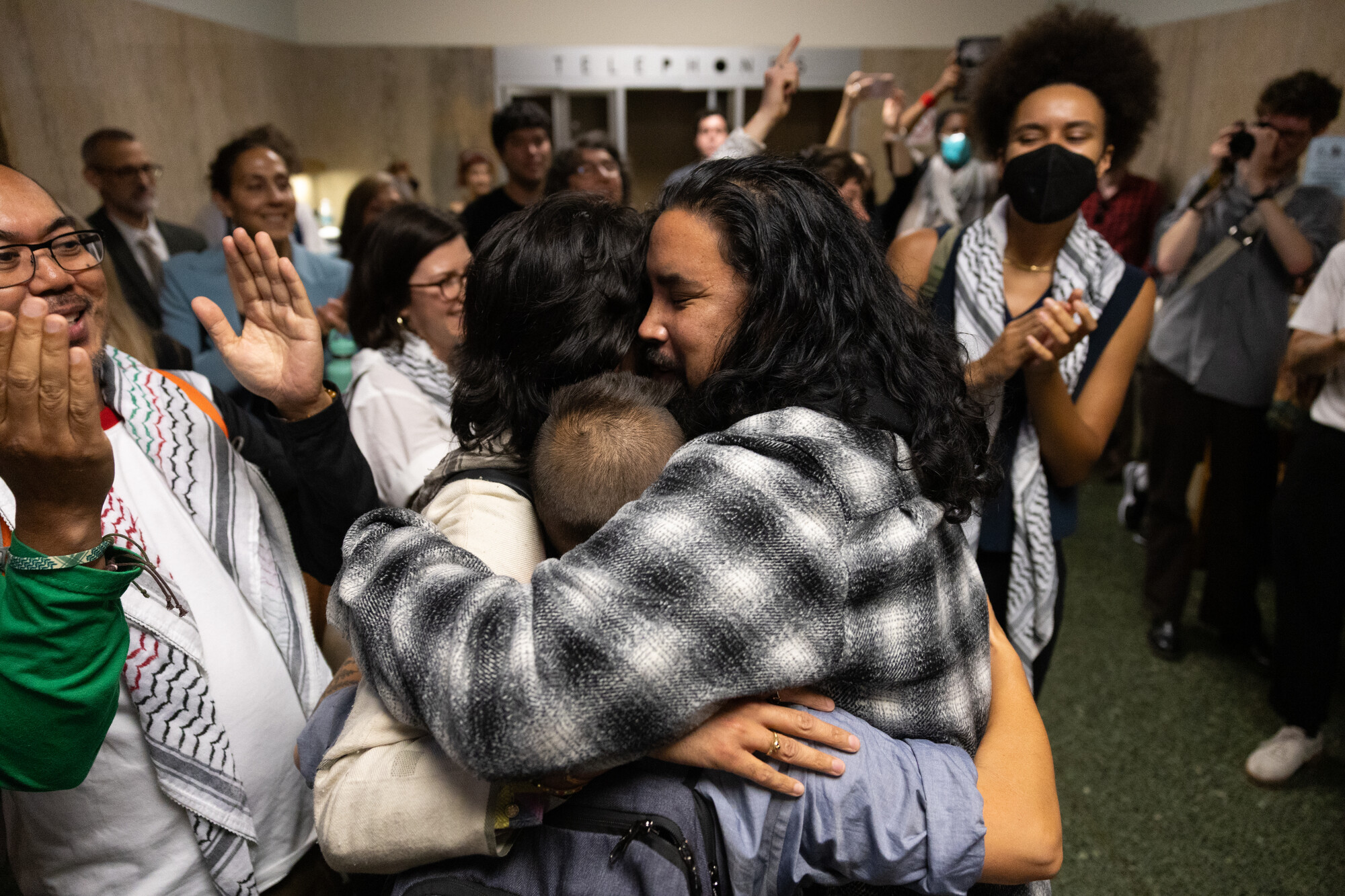
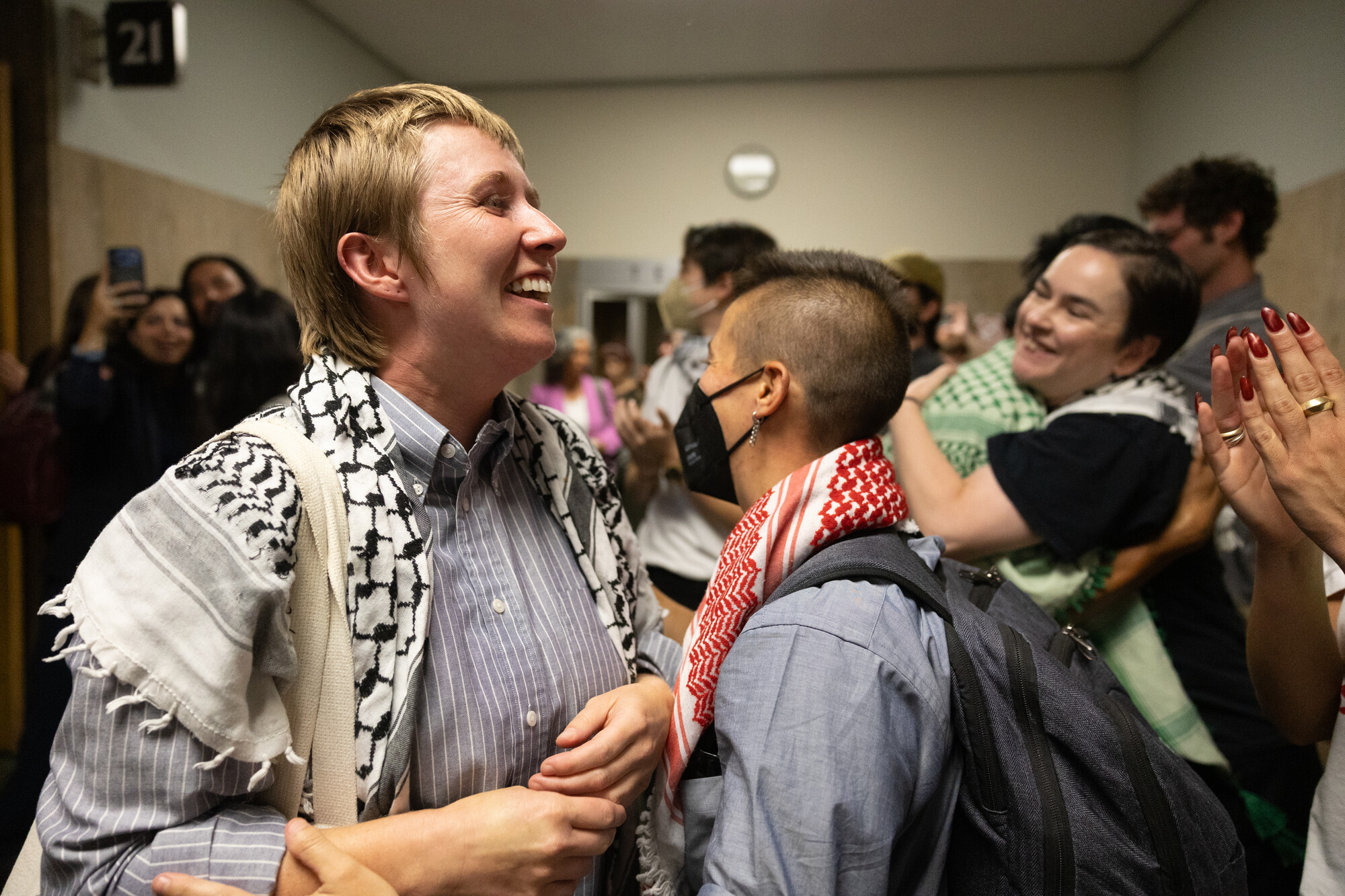
The decision was met with loud cheers outside the courtroom from the protesters’ supporters. The activists and their lawyers have argued for over two years that the felony charges were politically motivated and a disproportionate response to a protest on the Golden Gate Bridge, a historically common site for acts of civil disobedience.
“Ultimately, the government has overcharged this case,” defense attorney Shaffy Moeel told KQED in an April interview before the start of trial.
“Felony charges should be reserved for the most serious and egregious charges that we can commit against one another, and blocking a bridge in order to prevent mass atrocities happening with our money doesn’t seem like the kind of felonious charge that any legislature intended,” Moeel said.
“We have never seen a felony conspiracy charge for a protest,” Deputy Public Defender Anthony Gedeon said. “There is no rationale besides a political motivation.”
Defense attorneys believe their clients’ sentences, which require 15 days in county jail, while the other 15 can be served through the city’s Sheriff’s Work Alternative Program, will ultimately amount to just five days in jail and six in the work program. The jail sentence will be stayed pending appeal, Caffese said Friday.
Each defendant was also given six months of probation and multiple fines and restitution amounting to over $1,300.
The courtroom was quiet as Caffese delivered the sentences, but defense attorneys pushed back on the jail time, requesting an explanation and home detention for their clients, citing various personal reasons.
Caffese denied most of those requests, but she granted Cantor, who has a disability that requires her to use a cane, home detention for half of her sentence.
After the hearing, the protesters’ supporters rallied outside the court.
De Jesus thanked his co-defendants.
“In them, I have found love and support and a community that I care deeply for,” he said.
“Two years of fighting the DA has taken a toll on us mentally and physically,” de Jesus continued. “However, it only takes a moment to reflect on what Palestinians in Gaza are going through to make us fight even harder for a free Palestine.”
Prosecutors argued in court that the action was a premeditated effort to break the law and trap commuters on the Golden Gate Bridge, both inconveniencing and risking the safety of residents driving into the city.
“People missed doctors’ appointments, nurses were missing from their jobs, children were forced to defecate in bags, people had little to no water,” Assistant District Attorney Angela Roze said during the trial’s opening statements in May. “Because these seven individuals decided that their cause, their message, was more important.”
Defense attorneys argued during the trial that the defendants sincerely believed that by engaging in the April 15 protest, they could prevent the loss of Palestinian lives.
The bridge shutdown was just one of a number of actions across the country meant to disrupt economic activity and pressure the U.S. government to end its material support for Israel.
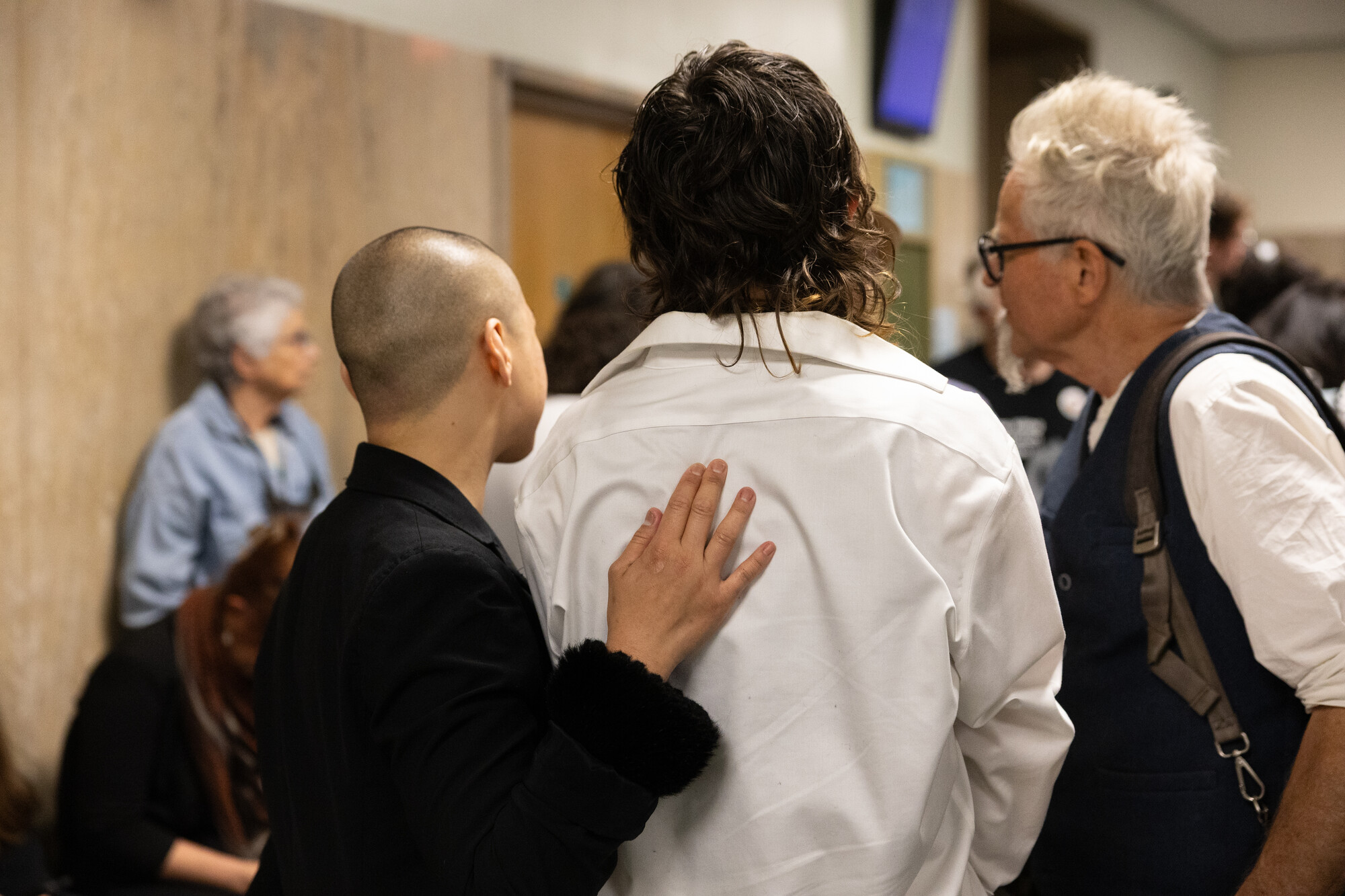
The Golden Gate Bridge, Highway and Transportation District filed but ultimately dropped a restitution claim against the protesters, arguing that the protest cost it $163,000 in lost bridge tolls. The defendants did pay $5,300 to a group of residents who said they suffered economic losses due to the shutdown, mostly through lost wages for the day.
Caffese addressed the defendants individually, saying that letters of support submitted on their behalf showed that they had backgrounds in community activism and service, and care about laudable causes.
“You are not being sentenced for your beliefs,” Caffese told the group.
“You, the defendants, are not new to civil disobedience,” she said. “Each of you knew you were violating the law.”