Going to the Beach? Beware of Sneaker Waves
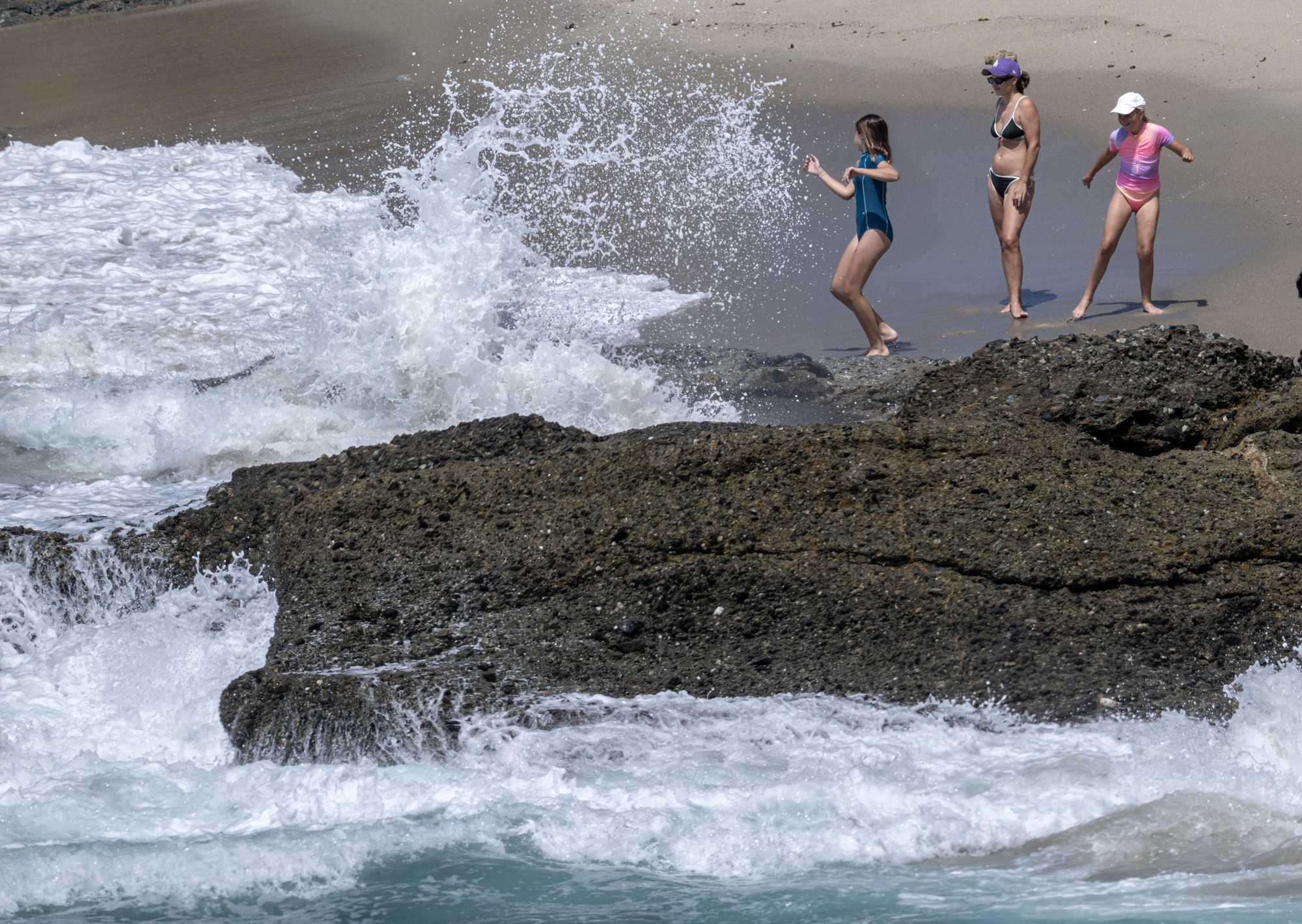
Headed to the beach? Keep a watchful eye on the ocean for sneaker waves. They’re sudden, far-reaching waves that are notorious for catching beachgoers off-guard. Videos of Californians being swept away have gone viral, including a recent incident in Santa Cruz where a lifeguard saved a 10-year old from drowning.
KQED’s Sarah Wright explains what sneaker waves are, why they’re dangerous, and how to stay safe while still enjoying the ocean.
Some members of the KQED podcast team are represented by The Screen Actors Guild, American Federation of Television and Radio Artists, San Francisco-Northern California Local.
Episode transcript
This transcript is computer-generated. While our team has reviewed it, there may be errors.
Ericka Cruz Guevarra: I’m Ericka Cruz Guevarra and welcome to The Bay, local news to keep you rooted. Lilia Cadotte’s relationship with the ocean began when she was just a baby.
Lilia Cadotte: My father, he threw me in the water when I was nine months old and he said she’s gonna swim. Wow. And um, I was just swimming since then.
Ericka Cruz Guevarra: Cadotte grew up in Pacifica. Her large Filipino family would go fishing and crabbing almost every day. And today, fishing in the Bay is still part of her everyday life. And it was her elders who taught her about the water.
Lilia Cadotte: And they always told me, remain calm. If you ever get stuck in the water, don’t fight the waves. Be like a turtle. Just swim with the current.
Ericka Cruz Guevarra: Back in June, Cadotte was fishing at Sharp Park in Pacifica, a place she knows well, when suddenly she was consumed by a sneaker wave and then got caught in a dangerous riptide. Video footage shows Cadotte being hit by the wave before vanishing into the water.
Lilia Cadotte: When I saw it come towards me in a matter of feet, I knew that that was a strong wave and it was gonna take me. And that’s what it did. It took me like I was a fly getting sucked in by a frog’s tongue. And all I know is that the wave grabbed me. I fell on my back. I was now facing the sky. And then the wave just slurped me in and then it felt like I was in a washing machine. I prayed to God and I said, God, if this is your will, I understand, but please do not let me leave my son without a mother.
Ericka Cruz Guevarra: Cadotte disappeared for four minutes. Once it was safe, a friend went into the water to retrieve her, but when she was submerged, it was Cadotte’s understanding of the ocean, a lifetime of education from her elders that saved her life.
Lilia Cadotte: Everything that my father and my grandfather taught me about the water just kicked in. Don’t fight the rip current. Don’t fight the waves. Try to stay, you know, clear-minded. I have a lot more respect for the ocean. I, you know, when I was released out of the hospital, I went back to the ocean and I thanked her. I thanked for letting me live because not a lot of people are able to live from that experience. And I really wish that people, especially parents, educate themselves and visitors, educate themselves on rip currents. And you know the water looks beautiful, but do not underestimate its strength.
Ericka Cruz Guevarra: The National Weather Service has been issuing hazard warnings at beaches across the Bay Area coastline this summer because of the threat of these so-called sneaker waves. On social media, videos of people being pulled in by sneaker wave have gone viral, with some people living to tell the tale and some completely disappearing into the ocean. Today, living with sneaker waves in the Bay Area, and how to stay safe. All right, Sarah, well, just to dive in, my first question for you is, first of all, what is a sneaker wave and why is it called that?
Sarah Wright: So sneaker waves are these sort of unpredictable, long period waves that come in with a little more power than you might be expecting.
Ericka Cruz Guevarra: Sarah Wright covers the outdoors for KQED.
Sarah Wright: So you might be at the beach the tide is crashing at a predictable rhythm and place and then all of a sudden, you know one in every thousand waves kind of sneaks up on you and is twice as long, twice as big, twice as powerful and can really catch you off guard That’s why they’re called sneaker waves because you probably won’t see it coming. And if you’re anywhere near the shore, you might even get caught in it
Ericka Cruz Guevarra: They’re also kind of hard to predict as well, is that right?
Sarah Wright: Yeah, so I talked to an expert, Dylan Flynn, he’s a meteorologist at the National Weather Service Bay Area office, and he said that
Dylan Flynn: You wouldn’t be able to look a mile offshore and see a sneaker wave, it would look like every other wave.
Sarah Wright: You can’t predict any given sneaker wave, like there’s no way to know which wave is going to be a sneaker way.
Dylan Flynn: Like if you’re on a boat, you might not even notice them, but when they hit the beach, they have a long time to build up and then they take a long time to go back out and that can kind of create hazardous conditions on the beach.
Sarah Wright: They’re caused by these what are called long period swells. So these are bigger waves forming way out in the middle of the ocean that are just longer and bigger than others. The technology that the Weather Service has to monitor swells in general can pick up when there’s a higher danger of these, but it can’t pick up particular waves. So you can’t know like, oh, in five minutes there’s going to be a sneaker wave. So that’s what makes it so tricky for beachgoers because uou might know there’s an elevated danger, but you’re not gonna know exactly when that’ll happen.
Ericka Cruz Guevarra: My mom actually is like the queen of sending me videos on Instagram of, I mean, people getting caught up in these sneaker waves. It’s like one of her greatest fears, honestly. And I feel like, I feel like I’m seeing more and more of these videos but how common is this like actually?
Sarah Wright: Yeah, so it is real, like in the summer, right now, there have been lots of sneaker wave incidents. Up here in San Francisco, you know, Baker Beach, we’ve had a couple of incidents, a fisherman was swept out, and a mother and a young daughter who were walking out near the rocks at Baker Beach also ended up in the hospital. Scariest one that I saw this summer so far was in Santa Cruz two young women were on a beach down there and they were swept into the ocean and they did die. You know there was really recently a 10 year old who was drowning caught in a rip current and lifeguards saved them and that video, you know, it’s just really heart-wrenching.
Scott Vander Dussen: You know, when it first happened, it absolutely cleared out the water as if someone yelled shark.
Sarah Wright: Our colleague, Gabriela Glueck, actually spoke to Scott Vander Dussen. He happened to be on the shore taking photos and he caught a video of the incident.
Scott Vander Dussen: The time was compressed but with the intensity of what we are witnessing combined with the swing of emotions, it really felt like an eternity.
Ericka Cruz Guevarra: And perhaps we’re seeing more of them because there are just, it is the summertime and more people are at the beach.
Sarah Wright: Yeah, it’s been beautiful weather here, tis the season to be out on the beach. And I think in some ways, you know, people don’t necessarily know the dangers or they think that, you now, if they’re paying enough attention, this won’t happen to them. But the reality is that sneaker waves can sneak up on you no matter what.
Ericka Cruz Guevarra: And I mean, I feel like it’s not just these videos that seem to be especially prolific right now, but it seems like there have been many more beach hazard warnings this year.
Sarah Wright: Yes, so the beach hazard warning in June was one of the longest running that Dylan Flynn:, the meteorologist I spoke to, said that he’s ever seen.
Dylan Flynn: Typically a beach hazard statement goes out for like 2-3 days, so this is out of the ordinary.
Sarah Wright: Since then, they’ve been kind of on and off. The NWS issues them when there’s a high risk of sneaker waves and under toes and rip currents. And so this has been a sort of remarkably long stretch of beach hazards. And, you know, when I was kind of looking into this, what I found was that all of the danger kind of originates down in the tropics. Hurricane Genevieve is forming during this El Nino cycle. These weather events that are typical for the summer are gonna send our way, these long period swells that are gonna cause sneaker waves and rip currents as well are gonna be more common. And the combination of the two can be super dangerous. So that’s how these beach hazard statements are issued is by monitoring whether that’s happened, you know, four days ago, and that might be affecting us up here today.
Ericka Cruz Guevarra: And are these beach hazard warnings more common in the summer versus the winter?
Sarah Wright: Yeah, so what NWS meteorologists told me is that in the summer, they’re much more common for these south-facing beaches. So when the tropics are getting bad weather, like, you know, right now, that will hit Southern California especially hard, but it will also travel up here into Northern California. And so what catches people off guard is being on a south-facing beach. The Santa Cruz area is really a high risk area because it has so many south-facing beaches. And then if you look at the map at places like Half Moon Bay, Surfers Beach is south-facing. It’s in a protected sort of cove area, but many of these coves face south here in the Bay Area. That’s true also for areas of Point Reyes up north. Limantour beach is a great example of that. A south-facing beach that’s pretty exposed as well. So if you get pulled out, you are getting pulled out to the ocean. In the winter, the hazard is actually the north-facing beaches, because if you can imagine, you know, the weather forming up north in sort of those colder seas is also going to affect us here in California. So there’s different hazards in the winter. In the wind, the waves are much bigger. We get this bigger oscillation. And so going to the beach in general during high tide can be quite dangerous.
Ericka Cruz Guevarra: And as I understand it, like one of the main dangers of these sneaker waves too is that they often happen in conjunction with riptides. Can you explain just like how these two forces sort of work together and why they happen at the same time?
Sarah Wright: So they are both caused by this weather that’s forming by these long period swells that are basically gaining power and gaining steam as they’re moving across the ocean for days on end. And so basically, you know in a worst case scenario what could happen is there’s a riptide present on a beach you’re at, and then a sneaker wave comes and pulls you into that rip tide. You never would have been in the riptide in the first place. You’re beach combing, you’re spending time with your family on the beach. But you get in the water by accident because of the sneakerwave, and all of a sudden you find yourself kind of what feels like you’re really being pulled out or even just stuck in a part of the shore. And that makes it really hard to get back to land. The water is very cold. You’re probably panicking. It’s a really scary, scary moment and kind of a very quick, dangerous situation that can devolve very quickly.
Ericka Cruz Guevarra: So it sounds like it’s the sneaker wave that really pulls you into the ocean, and then it’s this riptide that really keeps you from actually getting out. So what should I do if I get caught by these two forces?
Sarah Wright: What happens to people often is they try to swim back to shore. But in reality, riptides are, you know, going to kind of keep you from being able to do that. So what you can do is, I know it sounds hard, but you can try to relax your body. You can try float. And once you’re ready to swim, try not to swim against the current straight back to the shore. Try to swim parallel to the beach. That will get you out of this narrow current that you’ve been caught in into the calmer part of the ocean and then you’ll be able to swim back to shore. And so I know that sounds scary, but hopefully there are also people on the shore who’ve seen what has happened and who are calling emergency responders.
Ericka Cruz Guevarra: And what if I witnessed someone getting pulled in by a sneaker wave and then caught up in a riptide? What should I do then?
Sarah Wright: Do not try to swim out there to help them. It’s extremely dangerous. You’re very likely to also put yourself in danger.
Dylan Flynn: We often see somebody get pulled into the water, we just end up with several people drowning.
Sarah Wright: And when I talked to National Weather Service meteorologist Dylan Flynn, he had some advice of his own.
Dylan Flynn: But it’s really, really dangerous to put more people in the water when this is happening. The best thing to do is just tell them to remain calm and swim perpendicular to the current.
Sarah Wright: What you can do is you can call emergency responders and you can also try to talk the person through what’s happening if you’re within earshot and help them swim parallel and find an out basically.
Ericka Cruz Guevarra: And I mean, it sounds like just by virtue of like living here in the Bay Area, we have all these beautiful beaches that we all want to be able to enjoy and that we’ll have access to, but there seems to be this level of like, you know, needing to really understand the ocean and learn how to really live with it in an educated way. And it seems like one way is by being aware of some of these danger warnings from the National Weather Service. I mean, do you have any tips on how to just like interpret those and really use those as like a lay person who is just trying to enjoy a summer day at the beach?
Sarah Wright: Yeah, absolutely. I mean, if you just go onto the National Weather Service website and put in your location, like right now, for me, the first thing that pops up is this beach hazard statement. So they do a really good job of giving you the most dangerous warnings first. You can click on them, you can read through it, it’ll tell you when it expires. You know, it will even tell you what to do. Like, never turn your back on the ocean, you know, remain out of the water. Um, stay off of piers and rocks, you know, that is just really good advice in general.
Dylan Flynn: I would say to just observe the water for five minutes or so before you commit to a spot to set up and see where the waves are breaking. But even if you do that, just know you can always get a sneaker wave that goes twice as high up the beach as everything else was. So always keep that threat in mind.
Sarah Wright: I wouldn’t say that the beach is 100% dangerous right now, or we’re in some sort of anomaly, but sneaker waves are prevalent every year and all year round, and it is definitely on the top of my mind as I go to the beach this summer as well. You know, what’s great is we also have Bayside beaches. And so if you’re just not feeling it that day and you’re worried about the power of the ocean, there are some really calm, beautiful beaches on the Bayside that are just as cold and offer that beautiful plunge if you want it, but typically without quite as much danger as the ocean side.
Ericka Cruz Guevarra: Thank you so much, Sarah, for chatting with me about this, I appreciate it.
Sarah Wright: No problem. Thanks for your interest in getting the word out about about dangers.
Ericka Cruz Guevarra: That was Sarah Wright:, an outdoors reporter for KQED. This episode was produced by me, senior editor, Alan Montecillo, and someone I’m super excited to introduce you to for the first time on this show. Gabriela Glueck is our new producer on The Bay. Welcome, Gabi.
Gabriela Glueck: Thank you, I’m so excited.
Ericka Cruz Guevarra: We’re so excited to have you with us. For those who don’t know who you are, Tell us a little bit about yourself.
Gabriela Glueck: Yeah, so I’ve actually been behind the scenes a little bit at KQED for about two years working on different podcasts, like Bay Curious, Close All Tabs, and filling in on The Bay. I’m from Maryland originally, moved to California, I guess two years ago now, and I’m having a lot of fun living in a beautiful place with a lot sun, with a lot of water.
Ericka Cruz Guevarra: Gabi, where in the Bay Area do you live and what’s it like livin’ out there?
Gabriela Glueck: The Peninsula! I like it, especially because even when you come to San Francisco and it’s foggy, like when I go home, it is sunny. And that’s kind of what I feel like I was promised when I moved to California. So I feel very satisfied by that.
Ericka Cruz Guevarra: A sunny warm beach, a sunny, warm beach allegedly. So Gabi, you’ve been covering the Bay area for a bit now before joining The Bay. What are some stories that you’ve covered about this region that you’re feeling proud of?
Gabriela Glueck: I did one about the Nimitz House, which is kind of a historic house under the Bay Bridge. It’s kind of connected to Yerba Buena Island’s Navy history. I also did a story about the Taco Bell in Pacifica, which I’ve gotten a lot of fun crowd feedback from just because so many people like to go there. So it was a little bit about the history of that Taco Bell, why you don’t see so many restaurants directly on the beach. So it was interesting to learn more about why this Taco Bell is so unique and then also what might happen to it in the future.
Ericka Cruz Guevarra: What’s your boba order?
Gabriela Glueck: I just got a new one because I was doing like basic milk tea for a long time, but then at the boba place near me, they have a special which is like green tea, passion fruit with peach cubes at the bottom, so it’s like sweet and then there’s passion fruit little things in it. So they like crackle too.
Ericka Cruz Guevarra: We’re super excited to work with you, Gabi, and our listeners will be hearing much more from you in the coming weeks, so thank you.
Gabriela Glueck: Cool.
Ericka Cruz Guevarra: If you want to get in touch with us here at The Bay, feel free to send us an email. We’re at [email protected]. The Bay is a production of listener-supported KQED public media. You can help power our show by becoming a KQED member at donate.kqed.org/podcasts. Support for The Bay’s provided in part by the Osher Production Fund. Some members of the KQED podcast team are represented by the Screen Actors Guild, American Federation of Television and Radio Artists, San Francisco, Northern California Local. And I’m Ericka Cruz Guevarra, thank you so much for listening. It’s great to be back.