Welcome to Anchorage 9: The Giant Ship Parking Lot You Pass Every Day
View the full episode transcript.
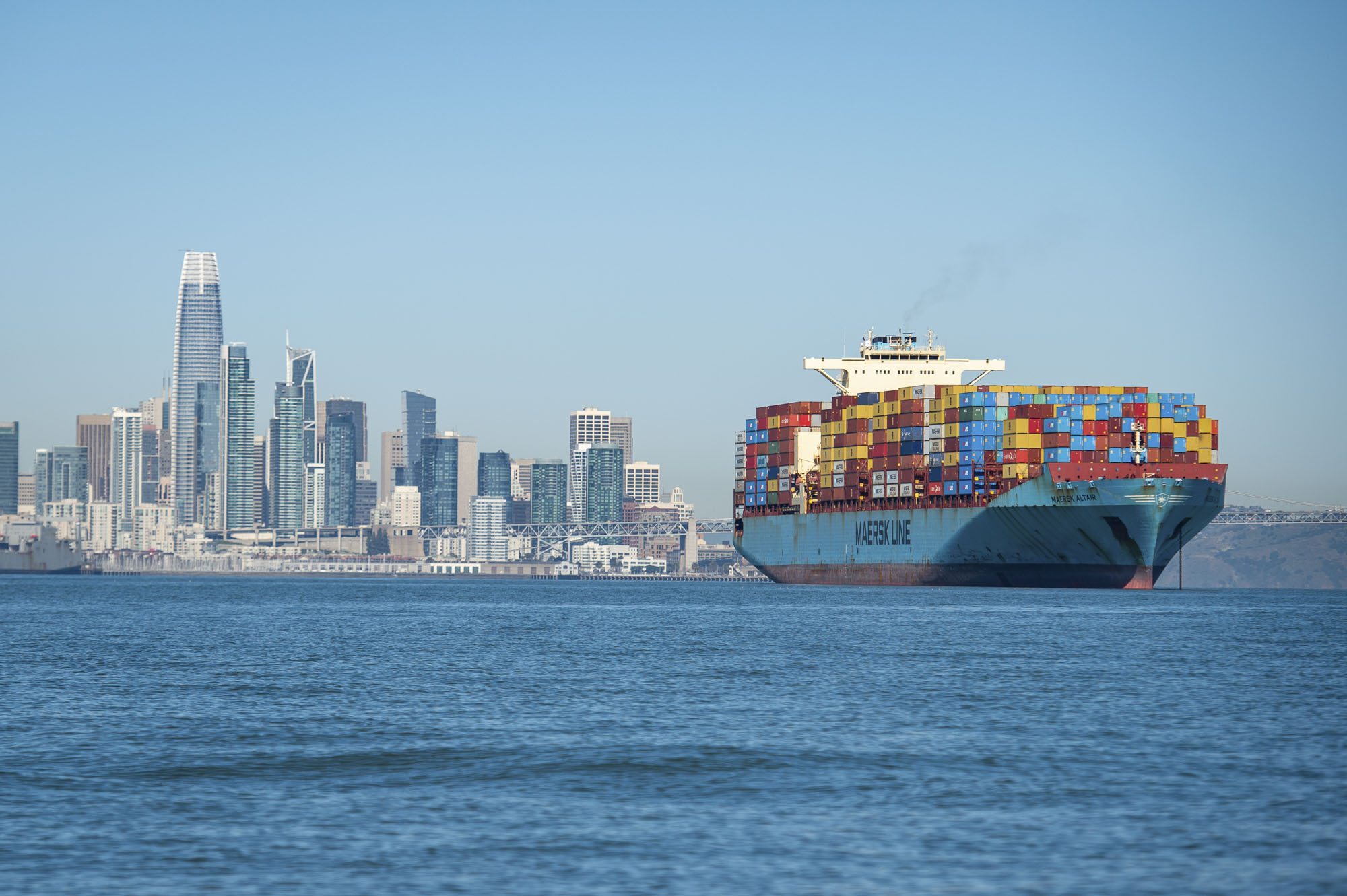
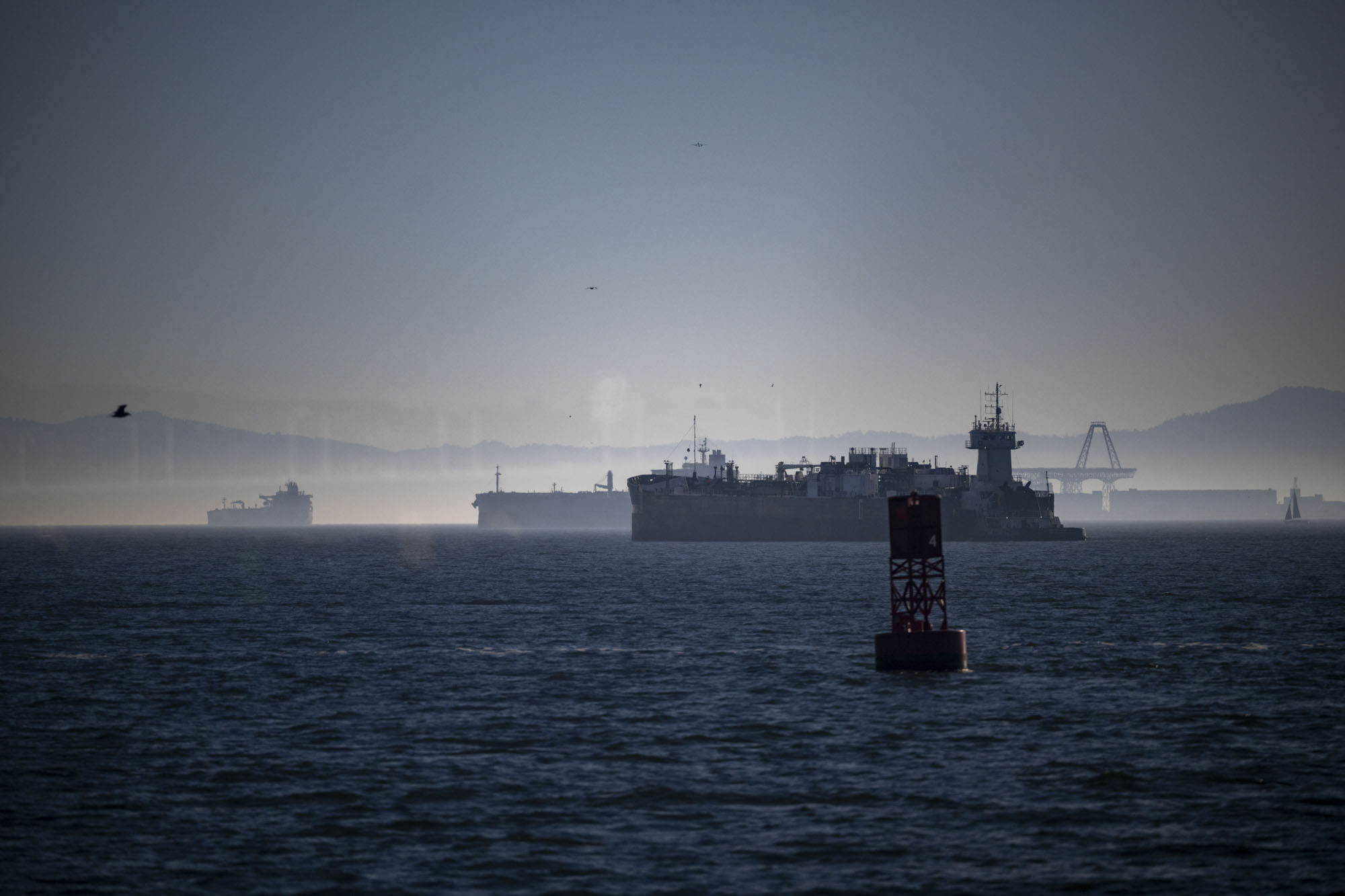
Look out over the San Francisco Bay on any given day, and you may see a collection of giant container ships anchored offshore.
Bay Curious listener Stephanie Rohlfs has seen them countless times on her runs, and the same question always pops into her mind: “How do the cargo ships know where to park? Is there an invisible parking lot or some other system?”
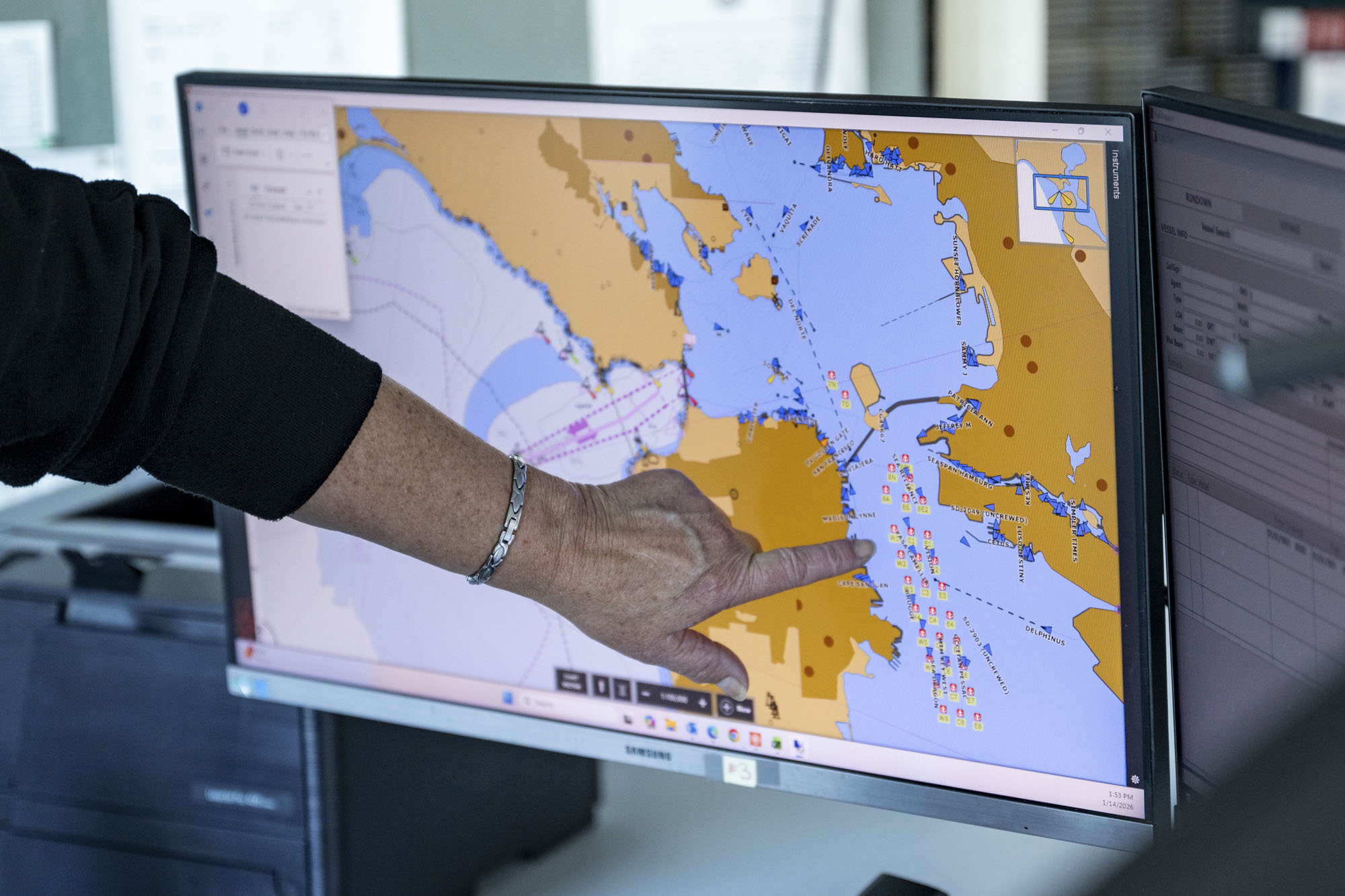
The short answer is: yes, there is a parking lot, although mariners call them anchorages. The largest ship parking lot in the bay is called Anchorage 9, just south of the Bay Bridge and north of the San Mateo Bridge.
In that area, there are 24 designated “anchor buckets” where ships can drop anchor and be confident that even if they are buffeted by wind and current, there’s no danger they will swing into another ship. They are arrayed in three rows of eight going north-south.
The answer may seem simple, but the journey to arrive at this system is both tragic and riveting.
Standard Oil collision
In the early morning hours of Jan. 19, 1971, two big oil tankers operated by Standard Oil were on the move. The Oregon was leaving Richmond headed towards the open ocean. The Arizona was heading into the bay.
Both ships contacted the Coast Guard for weather updates and information on other boat traffic initially, but as they neared the Golden Gate Strait, they stopped communicating. It was a night of thick fog. At around 1:45 a.m., disaster struck. A quarter mile west of the Golden Gate Bridge, the two ships collided.
“800,000 gallons of petroleum spilled in the bay,” said Gary Reed, Director of Vessel Traffic Service San Francisco.
Reed said back then the Coast Guard had two employees watching the radar at Fort Mason Center along the San Francisco waterfront. They could see the two ships moving on their display, but had no way of radioing them. Ships only checked in when they wanted to.
“The two operators were trying to call the ships and trying to call the ships. They were just watching this slow train wreck about to happen,” Reed said.
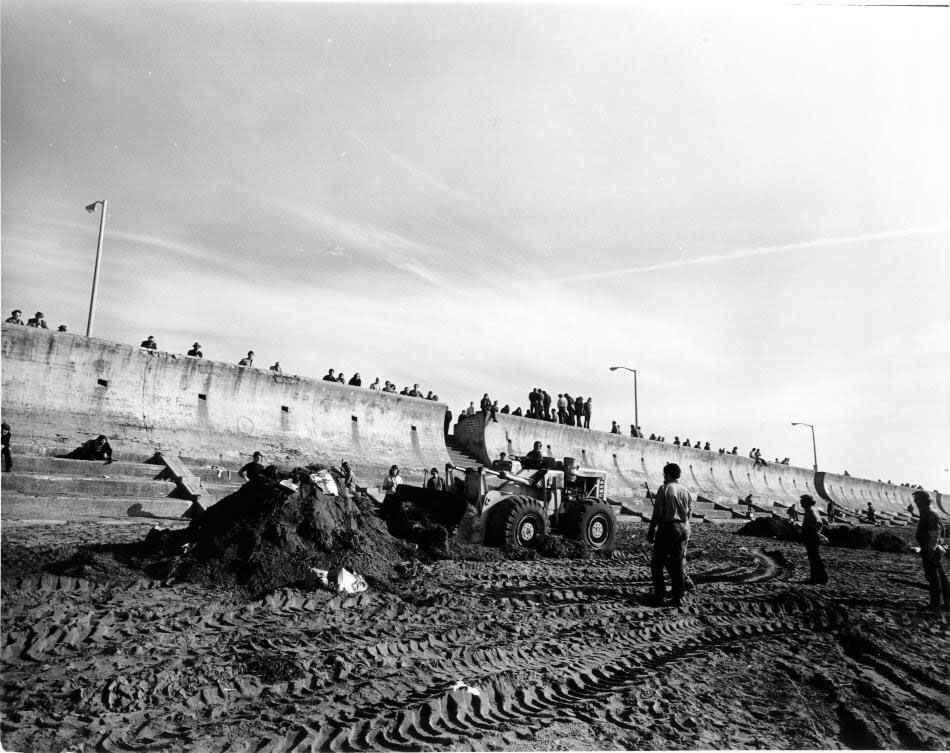
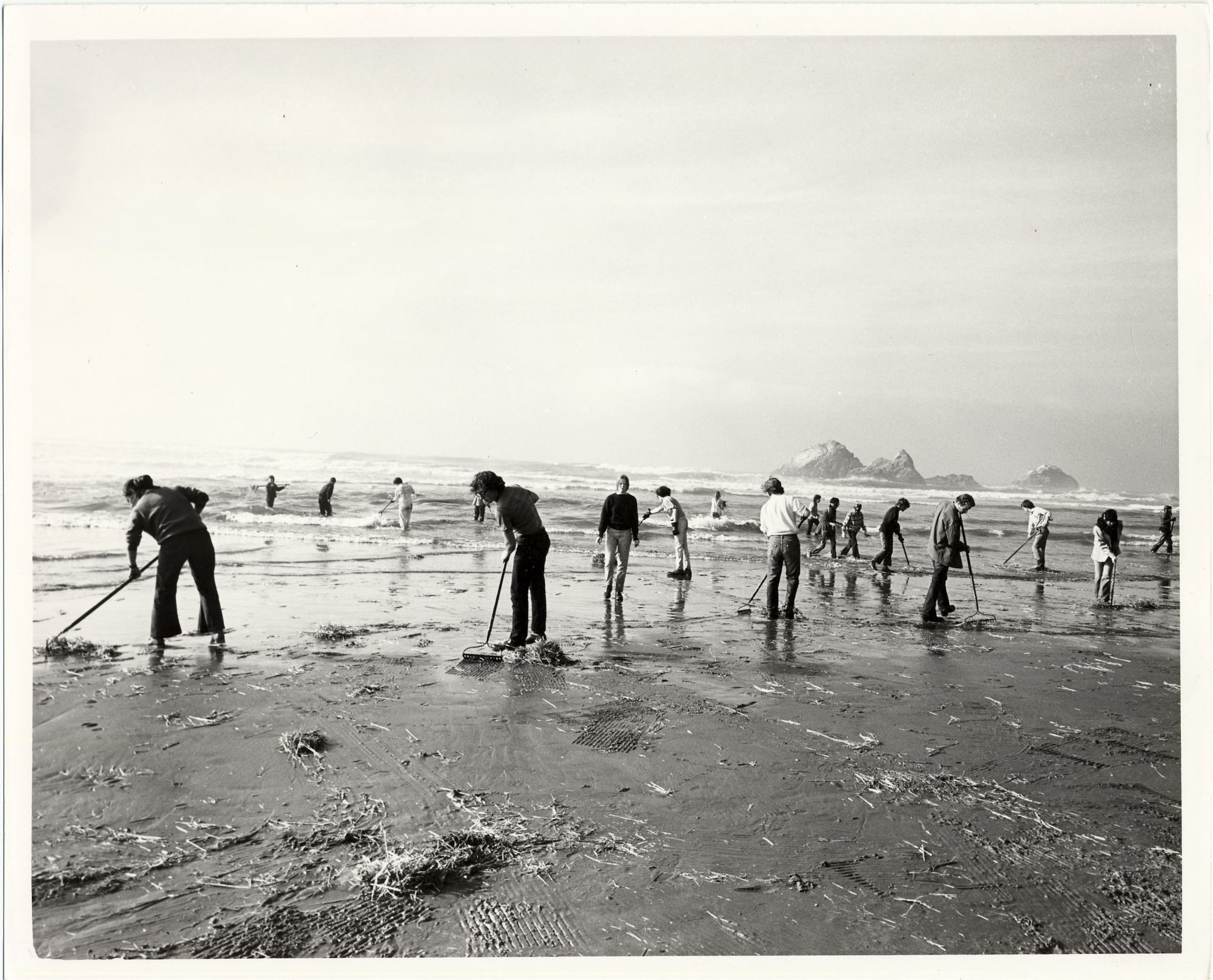
Bay Area residents woke the next morning to oil on their beaches. Birds covered in oil were washing up on shore, unable to move. Standard Oil paid workmen to help clean up the beaches, but volunteers also came out in droves to help.
The incident caught the attention of legislators in Washington, D.C. They passed the Ports and Waterways Safety Act, which created Vessel Traffic Services.
It’s a bit like air traffic control in aviation — responsible for knowing where ships are in the bay and communicating with them as they enter and exit.
The new law also made participation in shore monitoring mandatory for all ships entering U.S. ports.
“They made it mandatory for you to listen to a particular channel on the radio and follow the direction of the Vessel Traffic Service,” Reed said. “So that’s what gave us our authority. And in 1972, VTS San Francisco became the very first VTS in the United States.”
The VTS is in charge of communicating with ships as they enter and exit the bay, and they manage the anchorages where ships can “park.” They work closely with the San Francisco Bar Pilots, local mariners with expert knowledge of the waterways and conditions, to assign ships to specific spots.
“They have a little bit more in-depth knowledge of where the ship is going, when it needs to be there, how deep is its draft and what is it carrying,” Reed said.
Other prominent anchorages
In addition to Anchorage 9 in the main part of the bay, Bay Area residents have likely also seen ship action at Anchorage 5, just south of the Richmond-San Rafael bridge and near the Richmond oil terminals. Often tugboats and barges are anchored there waiting to assist oil tankers as they come into the bay to load and unload.
Another eye-catching location is Anchorage 7, just west of Treasure Island. Reed said this is a temporary anchorage meant for short-term use. Most frequently, ships will stop and anchor here if they’ve been sitting at anchor for weeks and are finally headed to their next destination, but need to resupply before doing so.
Anchorage 7 is also used in emergencies. If a ship is coming into the bay and has an engine problem, VTS does not want that ship traveling under the Bay Bridge. They’ll ask the ship to wait at Anchorage 7 until its engine is repaired.
“It piques my attention when I see someone anchored there because it is very visible and it’s highly susceptible to winds and currents,” Reed said.
Constant dredging
To keep Bay Area ports operating, the Army Corps of Engineers dredges the shipping channels on an ongoing basis.
Some of the container ships that call at the Port of Oakland are longer than the Salesforce Tower is high. And when a ship that big is loaded up with cargo, it has a deep draft — meaning it sticks way down into the water and needs a deep channel.
The stuff the Corps dredges up from the bottom of the bay is called “spoils” and is most often dumped offshore in the Pacific Ocean. Reed said the Army Corps of Engineers knows which parts of the bay are likely to have toxic or harmful materials and they test the spoils before deciding where to dump it.
But ultimately, the material has to go somewhere, so even stuff dredged up near former military sites does get dumped about 50 miles offshore.
The rules governing the bay and the vessels on it often feel totally separate from Bay Area life lived on shore. For many, the complex work of the maritime industry is just a picturesque backdrop to the daily commute, a necessary but mysterious business. But knowing a bit more about how it all works might mean the next time you look out over the water you’ll be able to say: “Anchorage 9 is looking pretty full today.”
Episode transcript
Olivia Allen-Price: I’m Olivia Allen-Price. This is Bay Curious – the show that answers listener questions about the San Francisco Bay Area.
Now, if you look out over that bay on any given day, and you’ll see a lot of boat traffic. Ferries chugging along their routes, massive cargo ships headed to port, oil tankers on their way to Richmond, cruise ships unload passengers.
And then weaving between those larger ships are sailboats tacking back and forth, Coast Guard boats patrolling the shoreline, kayakers, even swimmers! To an untrained eye, it can seem like absolute chaos.
Stephanie Rohlfs has spent a lot of time looking at the ships on the bay.
Stephane Rohlfs: I used to live in West Oakland, and during the pandemic, when we were all desperate to go outside, I started doing a little bit of jogging at Middle Harbor.
Olivia Allen-Price: Right near the Port of Oakland.
Stephane Rohlfs: Involved a lot of staring at container ships going by.
Olivia Allen-Price: She also noticed the cargo ships further out, parked in the middle of the bay. And started wondering…
Stephane Rohlfs: How do the cargo ships know where to park? And is there an invisible parking lot or some other system?
Olivia Allen-Price: Stephanie is not the only one curious about how it all works out there. Her question won a Bay Curious voting round, so there are a lot of you with the same question. Here to answer Stephanie is Bay Curious editor and Producer Katrina Schwartz. Hey, Katrina!
Katrina Schwartz: Hi, Olivia.
Olivia Allen-Price: You’ve become quite the maritime expert over the last few months.
Katrina Schwartz: I know, I got to dig into how the bar pilots work and shadow one of them on a job for an episode that aired a few weeks ago.
Olivia Allen-Price: If you’re interested in that episode, by the way, we’ll put a link in our show notes. But right now, let’s get into Stephanie’s question.
Katrina Schwartz: Well, before we get into where and how cargo ships park, I first need to tell you a little story that sets up how we got to the system we have today
Olivia Allen-Price: OK, I’m listening.
Katrina Schwartz: Allow me to set the scene…
Dramatic music
Katrina Schwartz: It was a cold, foggy night in 1971…the kind where you’d be happy to be snuggled up at home. But a disaster was quietly unfolding in the bay, right under the Golden Gate Bridge. Two big oil tankers were heading in opposite directions…
Archival tape: The Oregon was moving out of the Gate and the Arizona was moving toward the Gate to come inside the bay. Both ships had been in touch with the Coast Guard for information on weather conditions and locations of ships.
Katrina Schwartz: But back then, there weren’t as many safety protocols in place. So after checking in with the Coast Guard, both ships stopped communicating.
Archival tape: At about 1:45 Monday morning, the incoming Arizona rammed the Oregon port side, about a quarter mile west of the Golden Gate just opposite the center span. The two ships locked together with oil gushing from the gaping hole and drifted towards the south end of Angel Island.
Gary Reed: So 800,000 gallons of petroleum spilled in the bay.
Katrina Schwartz: That’s Gary Reed. He works for the Coast Guard, managing Vessel Traffic Services in San Francisco. He knows this history intimately.
Gary Reed: Now the two operators were trying to call the ships and trying to call the ships; they were just watching this slow train wreck about to happen.
Katrina Schwartz: Gary told me that since ships only checked in when they wanted to…there was no way to alert the two ships they were on a path to collision, even though the Coast Guard could see it all on the radar.
San Franciscans woke up that Monday morning to oil on their beaches.
Archival tape: I went down to the beach, down to Ocean Beach, Monday afternoon at about 2 o’clock. I swim in the ocean every day. And I go down there and see all this oil. It’s just sick.
Katrina Schwartz: There was a huge outpouring of volunteers over the following days and weeks to not only help clean up oil, but to also try and save the birds that were so covered in oil they could barely move.
Archival tape: In addition to the 150 or so paid workmen, there were at least that many volunteers along the marina today. Most of them young, and many of them there to save the birds, which came floating in soaked in oil.
Olivia Allen-Price: Even though this is pretty recent history – 1971 – I haven’t heard about it before.
Katrina Schwartz: That’s so often true of things that happened after the “past” we learn about in high school history class, right?
Olivia Allen-Price: Yeah.
Katrina Schwartz: Well, I’m telling you this story because it was a wake-up call for everyone around the country. Even Congress — all the way in D.C. — paid attention and eventually passed a law that created the Vessel Traffic Services or VTS. They made it mandatory for ships in every port throughout the country to participate in shore monitoring and to have the necessary radio equipment to communicate with VTS.
Gary Reed: So they made it mandatory for you to listen to a particular channel on the radio and follow the direction of the vessel traffic service. And in 1972, VTS San Francisco became the very first VTS in the United States.
Olivia Allen-Price: The very first VTS! That’s kind of a claim to fame. Um, what does VTS do exactly?
Katrina Schwartz: Well, they are basically air traffic control for ships. And they’re important to Stephanie’s question about parking in the bay because they communicate with ships coming in from the open sea, and manage the areas where they can park.
Olivia Allen-Price: So there IS a parking lot!
Katrina Schwartz: There is, although in maritime lingo they call parking lots “anchorages.” There are 30 anchorages, or zones, in total. Most are in the main bay, and then others are scattered throughout the region’s waterways.
Gary Reed: I would say technically you are not allowed to anchor anywhere outside of those anchorages.
Katrina Schwartz: And this is for big ships – recreational vessels like sailboats or yachts are another story.
Olivia Allen-Price: Tell me about a few of the most prominent anchorages we might see from shore.
Katrina Schwartz: OK, so, one of them is called Anchorage 5. It’s just south of the Richmond Bridge. You’ll often see tugboats parked there because when an oil tanker ship comes in, the tugboats are waiting to push it up alongside the oil terminals there in Richmond.
Gary Reed: Just west of Treasure Island, we have Anchorage 7. And that’s the one that I think a lot of people, well, it piques my attention when I see someone anchored there because it is very visible and it’s highly susceptible to winds and currents and all the weather aspects you can get outta that.
Katrina Schwartz: Gary says that one is temporary and is most often used by ships that are only going to be there a few hours while they bring on supplies. You won’t see ships there all the time. But the area south of the Bay Bridge and north of the San Mateo Bridge is what most people see.
Gary Reed: And then the biggest one I think most people see when you’re driving across the Bay Bridge, and you’re looking south, you’ll see what we call Anchorage 9, that is our parking lot. That’s where the large ships go to await birth or make repairs or refuel. But that’s our big one down there. That’s our major parking lot.
Katrina Schwartz: Anchorage nine gets a lot of use by really large ships, so there are designated “buckets” or spots where ships drop their anchors. And that’s because if the weather is really bad and a ship is getting buffeted by the wind and is out at the end of its anchor chain that it’s not going to hit anything nearby. All told, there are 24 of those “anchor buckets” in Anchorage 9.
Olivia Allen-Price: Tell me a little more about how this whole parking lot system works. Is there a parking meter? A valet? Are we talking parallel parking or pull-in?
Katrina Schwartz: Gary said in this system the bar pilots are your very expert valets. They’re those local mariners who specialize in this region. And they decide who parks where.
Gary Reed: They have a little bit more in-depth knowledge of where the ship is going, when does it need to be there, how deep is its draft and what is it carrying. I kind of think of it like the matrix. They’re looking at all the windows. They know what’s coming next and who’s leaving next.
Katrina Schwartz: My first question was how much it costs to park at one of these anchorages, but Gary said the fee structure doesn’t work the same way as a parking lot. Instead, the shipping companies pay the bar pilots a fee that’s based on tonnage. They don’t pay the Coast Guard anything for the actual harbor spot. But most ships don’t want to sit around long in the harbor because that’s money lost.
Olivia Allen-Price: We need to take a quick break, but when we come back we’ll learn what makes this region so tricky to manage. Stay with us.
Sponsor Break
Olivia Allen-Price: KQED is member-supported media. That means we don’t have any shareholders to please or business conflicts that could affect our reporting. It’s you we’re serving – plain and simple. If that type of journalism sounds like your jam, consider becoming a member at donate.kqed.org/podcasts.
OK, now back to talking about all the boat traffic we see in the Bay with Bay Curious editor and producer Katrina Schwartz. So, we’ve established that there IS a parking lot for the ships in the bay and that it’s highly regulated because when ships collide, it can be catastrophic, as we saw in 1971. What makes this area so tricky for mariners?.
Katrina Schwartz: I’m going to let Gary Reed, head of VTS, answer that.
Gary Reed: It is tricky because of the weather, and it’s tricky, tricky, it’s unique because of the different kinds of waters that we have. We have offshore, we have a bay, we have estuary, we have delta. I mean rivers that go all the way up to Sacramento and Stockton.
Katrina Schwartz: Gary compared it to the port in Long Beach, which actually does a lot more shipping than any of our ports, but is also simpler.
Gary Reed: Their area is very limited. They have about a 25-mile area that they monitor and manage. And we have 5,000 square miles that we monitor and manage.
Olivia Allen-Price: Wow, that’s a huge difference.
Katrina Schwartz: Yes, and the waterways themselves in the Bay Area are complicated, with bridges, rivers, shallow areas, etc. It’s part of the reason we have the bar pilots…mariners with local knowledge who board every ship over a certain size and navigate it in and out of the bay. And many local disasters have happened in the fog. Like in 2007…the Costco-Busan incident when an oil tanker clipped the Bay Bridge. So, Gary says now ships don’t go under the bridge or leave anchor if visibility is less than half a nautical mile.
Gary Reed: One of our particular cameras is on Yerba Buena Island, and we can look out and see the Oakland Bay Bridge. And we know that if we can’t see the Oakland Bay Bridge from our camera, then the visibility is such that people can’t move.
Olivia Allen-Price: While we’re talking about the bay, I want to ask another question that we get a lot from audience members. Many know that on average, the bay is actually pretty shallow, especially down in the South Bay. It can be only 12 feet deep or so. So some of our waterways are dredged. Explain what that is, who does it and how often?
Katrina Schwartz: Dredging is the process of excavating the bay floor to make deeper shipping channels. The Army Corps of Engineers is responsible for dredging…and they do it on an ongoing basis. Remember, many of these cargo ships are truly huge, like skyscrapers on their sides moving through the water. And they’re carrying a lot of weight, which means they also stick down into the water pretty far too…that’s called the ship’s draft. Dredging shipping lanes that are deeper than the natural bay floor is the only way that these big container ships can continue to work here.
And I did ask Gary where the Army Corps of Engineers dump the stuff they’ve dredged up.
Gary Reed: [00:40:46] There is a spot off a Pacific beach that they can dump their spoils because what they’re dredging is non-toxic. They’re just putting dirt on dirt.
Katrina Schwartz: He also said if they’re worried about toxins in dredged spoils, they’ll test it first to make sure it won’t damage the environment where they dump it.
Olivia Allen-Price: Alright, any last thoughts since you’ve been immersed in the maritime world?
Katrina Schwartz: One of the interesting things I learned that’s a bit of a side note to the question is that the crews on foreign ships are not allowed off the vessel when they are at anchor or unloading because they are considered foreign nationals. But sometimes ships do sit at anchor for months at a time, which is obviously a tough situation for the folks on board. So, there’s an organization… Seafarer’s Ministry of the Golden Gate… whose mission is to check up on those folks, on the mental and physical well-being of crew members.
Olivia Allen-Price: I can’t imagine being on a ship for weeks and weeks and then getting near land and having to look at it and not get off the ship.
Katrina Schwartz: I know. And these people actually go onboard, they bring care packages and offer to listen or counsel crew members in their own languages. I’m sure it’s not enough, but at least it’s something.
Olivia Allen-Price: Yeah, sounds like a really interesting job. Well, Katrina, thanks for your reporting.
Katrina Schwartz: My pleasure. These maritime jobs are really interesting. A totally different lifestyle than what a lot of us landlubbers are used to.
Olivia Allen-Price: That was Bay Curious editor and producer, Katrina Schwartz.
This question was selected by you in a voting round on BayCurious.org. Be sure you never miss a voting round by subscribing to the Bay Curious newsletter.
Bay Curious is made at member-supported KQED in San Francisco. Our show is produced by Katrina Schwartz, Christopher Beale, and me, Olivia Allen-Price. With extra support from Maha Sanad, Katie Sprenger, Jen Chien, Ethan Toven-Lindsey and everyone on team KQED.
I’m Olivia Allen-Price. Have a great week.