window.__IS_SSR__=true
window.__INITIAL_STATE__={
"attachmentsReducer": {
"audio_0": {
"type": "attachments",
"id": "audio_0",
"imgSizes": {
"kqedFullSize": {
"file": "https://ww2.kqed.org/news/wp-content/themes/KQED-unified/img/audio_bgs/background0.jpg"
}
}
},
"audio_1": {
"type": "attachments",
"id": "audio_1",
"imgSizes": {
"kqedFullSize": {
"file": "https://ww2.kqed.org/news/wp-content/themes/KQED-unified/img/audio_bgs/background1.jpg"
}
}
},
"audio_2": {
"type": "attachments",
"id": "audio_2",
"imgSizes": {
"kqedFullSize": {
"file": "https://ww2.kqed.org/news/wp-content/themes/KQED-unified/img/audio_bgs/background2.jpg"
}
}
},
"audio_3": {
"type": "attachments",
"id": "audio_3",
"imgSizes": {
"kqedFullSize": {
"file": "https://ww2.kqed.org/news/wp-content/themes/KQED-unified/img/audio_bgs/background3.jpg"
}
}
},
"audio_4": {
"type": "attachments",
"id": "audio_4",
"imgSizes": {
"kqedFullSize": {
"file": "https://ww2.kqed.org/news/wp-content/themes/KQED-unified/img/audio_bgs/background4.jpg"
}
}
},
"placeholder": {
"type": "attachments",
"id": "placeholder",
"imgSizes": {
"thumbnail": {
"file": "https://cdn.kqed.org/wp-content/uploads/2024/12/KQED-Default-Image-816638274-2000x1333-1-160x107.jpg",
"width": 160,
"height": 107,
"mimeType": "image/jpeg"
},
"medium": {
"file": "https://cdn.kqed.org/wp-content/uploads/2024/12/KQED-Default-Image-816638274-2000x1333-1-800x533.jpg",
"width": 800,
"height": 533,
"mimeType": "image/jpeg"
},
"medium_large": {
"file": "https://cdn.kqed.org/wp-content/uploads/2024/12/KQED-Default-Image-816638274-2000x1333-1-768x512.jpg",
"width": 768,
"height": 512,
"mimeType": "image/jpeg"
},
"large": {
"file": "https://cdn.kqed.org/wp-content/uploads/2024/12/KQED-Default-Image-816638274-2000x1333-1-1020x680.jpg",
"width": 1020,
"height": 680,
"mimeType": "image/jpeg"
},
"1536x1536": {
"file": "https://cdn.kqed.org/wp-content/uploads/2024/12/KQED-Default-Image-816638274-2000x1333-1-1536x1024.jpg",
"width": 1536,
"height": 1024,
"mimeType": "image/jpeg"
},
"fd-lrg": {
"file": "https://cdn.kqed.org/wp-content/uploads/2024/12/KQED-Default-Image-816638274-2000x1333-1-1536x1024.jpg",
"width": 1536,
"height": 1024,
"mimeType": "image/jpeg"
},
"fd-med": {
"file": "https://cdn.kqed.org/wp-content/uploads/2024/12/KQED-Default-Image-816638274-2000x1333-1-1020x680.jpg",
"width": 1020,
"height": 680,
"mimeType": "image/jpeg"
},
"fd-sm": {
"file": "https://cdn.kqed.org/wp-content/uploads/2024/12/KQED-Default-Image-816638274-2000x1333-1-800x533.jpg",
"width": 800,
"height": 533,
"mimeType": "image/jpeg"
},
"post-thumbnail": {
"file": "https://cdn.kqed.org/wp-content/uploads/2024/12/KQED-Default-Image-816638274-2000x1333-1-672x372.jpg",
"width": 672,
"height": 372,
"mimeType": "image/jpeg"
},
"twentyfourteen-full-width": {
"file": "https://cdn.kqed.org/wp-content/uploads/2024/12/KQED-Default-Image-816638274-2000x1333-1-1038x576.jpg",
"width": 1038,
"height": 576,
"mimeType": "image/jpeg"
},
"xxsmall": {
"file": "https://cdn.kqed.org/wp-content/uploads/2024/12/KQED-Default-Image-816638274-2000x1333-1-160x107.jpg",
"width": 160,
"height": 107,
"mimeType": "image/jpeg"
},
"xsmall": {
"file": "https://cdn.kqed.org/wp-content/uploads/2024/12/KQED-Default-Image-816638274-2000x1333-1-672x372.jpg",
"width": 672,
"height": 372,
"mimeType": "image/jpeg"
},
"small": {
"file": "https://cdn.kqed.org/wp-content/uploads/2024/12/KQED-Default-Image-816638274-2000x1333-1-672x372.jpg",
"width": 672,
"height": 372,
"mimeType": "image/jpeg"
},
"xlarge": {
"file": "https://cdn.kqed.org/wp-content/uploads/2024/12/KQED-Default-Image-816638274-2000x1333-1-1020x680.jpg",
"width": 1020,
"height": 680,
"mimeType": "image/jpeg"
},
"full-width": {
"file": "https://cdn.kqed.org/wp-content/uploads/2024/12/KQED-Default-Image-816638274-2000x1333-1-1920x1280.jpg",
"width": 1920,
"height": 1280,
"mimeType": "image/jpeg"
},
"guest-author-32": {
"file": "https://cdn.kqed.org/wp-content/uploads/2025/01/KQED-Default-Image-816638274-1333x1333-1-160x160.jpg",
"width": 32,
"height": 32,
"mimeType": "image/jpeg"
},
"guest-author-50": {
"file": "https://cdn.kqed.org/wp-content/uploads/2025/01/KQED-Default-Image-816638274-1333x1333-1-160x160.jpg",
"width": 50,
"height": 50,
"mimeType": "image/jpeg"
},
"guest-author-64": {
"file": "https://cdn.kqed.org/wp-content/uploads/2025/01/KQED-Default-Image-816638274-1333x1333-1-160x160.jpg",
"width": 64,
"height": 64,
"mimeType": "image/jpeg"
},
"guest-author-96": {
"file": "https://cdn.kqed.org/wp-content/uploads/2025/01/KQED-Default-Image-816638274-1333x1333-1-160x160.jpg",
"width": 96,
"height": 96,
"mimeType": "image/jpeg"
},
"guest-author-128": {
"file": "https://cdn.kqed.org/wp-content/uploads/2025/01/KQED-Default-Image-816638274-1333x1333-1-160x160.jpg",
"width": 128,
"height": 128,
"mimeType": "image/jpeg"
},
"detail": {
"file": "https://cdn.kqed.org/wp-content/uploads/2025/01/KQED-Default-Image-816638274-1333x1333-1-160x160.jpg",
"width": 160,
"height": 160,
"mimeType": "image/jpeg"
},
"kqedFullSize": {
"file": "https://cdn.kqed.org/wp-content/uploads/2024/12/KQED-Default-Image-816638274-2000x1333-1.jpg",
"width": 2000,
"height": 1333
}
}
},
"mindshift_50902": {
"type": "attachments",
"id": "mindshift_50902",
"meta": {
"index": "attachments_1716263798",
"site": "mindshift",
"id": "50902",
"found": true
},
"parent": 0,
"imgSizes": {
"small": {
"file": "https://ww2.kqed.org/app/uploads/sites/23/2018/03/d7a1893_slide-cb90aef39082dbb59723ec706020cfc954d09278-1-520x347.jpg",
"width": 520,
"mimeType": "image/jpeg",
"height": 347
},
"twentyfourteen-full-width": {
"file": "https://ww2.kqed.org/app/uploads/sites/23/2018/03/d7a1893_slide-cb90aef39082dbb59723ec706020cfc954d09278-1-1038x576.jpg",
"width": 1038,
"mimeType": "image/jpeg",
"height": 576
},
"thumbnail": {
"file": "https://ww2.kqed.org/app/uploads/sites/23/2018/03/d7a1893_slide-cb90aef39082dbb59723ec706020cfc954d09278-1-160x107.jpg",
"width": 160,
"mimeType": "image/jpeg",
"height": 107
},
"fd-sm": {
"file": "https://ww2.kqed.org/app/uploads/sites/23/2018/03/d7a1893_slide-cb90aef39082dbb59723ec706020cfc954d09278-1-960x640.jpg",
"width": 960,
"mimeType": "image/jpeg",
"height": 640
},
"post-thumbnail": {
"file": "https://ww2.kqed.org/app/uploads/sites/23/2018/03/d7a1893_slide-cb90aef39082dbb59723ec706020cfc954d09278-1-672x372.jpg",
"width": 672,
"mimeType": "image/jpeg",
"height": 372
},
"xsmall": {
"file": "https://ww2.kqed.org/app/uploads/sites/23/2018/03/d7a1893_slide-cb90aef39082dbb59723ec706020cfc954d09278-1-375x250.jpg",
"width": 375,
"mimeType": "image/jpeg",
"height": 250
},
"kqedFullSize": {
"file": "https://ww2.kqed.org/app/uploads/sites/23/2018/03/d7a1893_slide-cb90aef39082dbb59723ec706020cfc954d09278-1-e1522702367992.jpg",
"width": 1920,
"height": 1280
},
"large": {
"file": "https://ww2.kqed.org/app/uploads/sites/23/2018/03/d7a1893_slide-cb90aef39082dbb59723ec706020cfc954d09278-1-1020x680.jpg",
"width": 1020,
"mimeType": "image/jpeg",
"height": 680
},
"xlarge": {
"file": "https://ww2.kqed.org/app/uploads/sites/23/2018/03/d7a1893_slide-cb90aef39082dbb59723ec706020cfc954d09278-1-1180x787.jpg",
"width": 1180,
"mimeType": "image/jpeg",
"height": 787
},
"guest-author-50": {
"file": "https://ww2.kqed.org/app/uploads/sites/23/2018/03/d7a1893_slide-cb90aef39082dbb59723ec706020cfc954d09278-1-50x50.jpg",
"width": 50,
"mimeType": "image/jpeg",
"height": 50
},
"guest-author-96": {
"file": "https://ww2.kqed.org/app/uploads/sites/23/2018/03/d7a1893_slide-cb90aef39082dbb59723ec706020cfc954d09278-1-96x96.jpg",
"width": 96,
"mimeType": "image/jpeg",
"height": 96
},
"medium": {
"file": "https://ww2.kqed.org/app/uploads/sites/23/2018/03/d7a1893_slide-cb90aef39082dbb59723ec706020cfc954d09278-1-800x533.jpg",
"width": 800,
"mimeType": "image/jpeg",
"height": 533
},
"guest-author-64": {
"file": "https://ww2.kqed.org/app/uploads/sites/23/2018/03/d7a1893_slide-cb90aef39082dbb59723ec706020cfc954d09278-1-64x64.jpg",
"width": 64,
"mimeType": "image/jpeg",
"height": 64
},
"guest-author-32": {
"file": "https://ww2.kqed.org/app/uploads/sites/23/2018/03/d7a1893_slide-cb90aef39082dbb59723ec706020cfc954d09278-1-32x32.jpg",
"width": 32,
"mimeType": "image/jpeg",
"height": 32
},
"fd-lrg": {
"file": "https://ww2.kqed.org/app/uploads/sites/23/2018/03/d7a1893_slide-cb90aef39082dbb59723ec706020cfc954d09278-1-1920x1280.jpg",
"width": 1920,
"mimeType": "image/jpeg",
"height": 1280
},
"fd-med": {
"file": "https://ww2.kqed.org/app/uploads/sites/23/2018/03/d7a1893_slide-cb90aef39082dbb59723ec706020cfc954d09278-1-1180x787.jpg",
"width": 1180,
"mimeType": "image/jpeg",
"height": 787
},
"full-width": {
"file": "https://ww2.kqed.org/app/uploads/sites/23/2018/03/d7a1893_slide-cb90aef39082dbb59723ec706020cfc954d09278-1-1920x1280.jpg",
"width": 1920,
"mimeType": "image/jpeg",
"height": 1280
},
"detail": {
"file": "https://ww2.kqed.org/app/uploads/sites/23/2018/03/d7a1893_slide-cb90aef39082dbb59723ec706020cfc954d09278-1-150x150.jpg",
"width": 150,
"mimeType": "image/jpeg",
"height": 150
},
"medium_large": {
"file": "https://ww2.kqed.org/app/uploads/sites/23/2018/03/d7a1893_slide-cb90aef39082dbb59723ec706020cfc954d09278-1-768x512.jpg",
"width": 768,
"mimeType": "image/jpeg",
"height": 512
},
"guest-author-128": {
"file": "https://ww2.kqed.org/app/uploads/sites/23/2018/03/d7a1893_slide-cb90aef39082dbb59723ec706020cfc954d09278-1-128x128.jpg",
"width": 128,
"mimeType": "image/jpeg",
"height": 128
},
"xxsmall": {
"file": "https://ww2.kqed.org/app/uploads/sites/23/2018/03/d7a1893_slide-cb90aef39082dbb59723ec706020cfc954d09278-1-240x160.jpg",
"width": 240,
"mimeType": "image/jpeg",
"height": 160
}
},
"publishDate": 1522701353,
"modified": 1522702383,
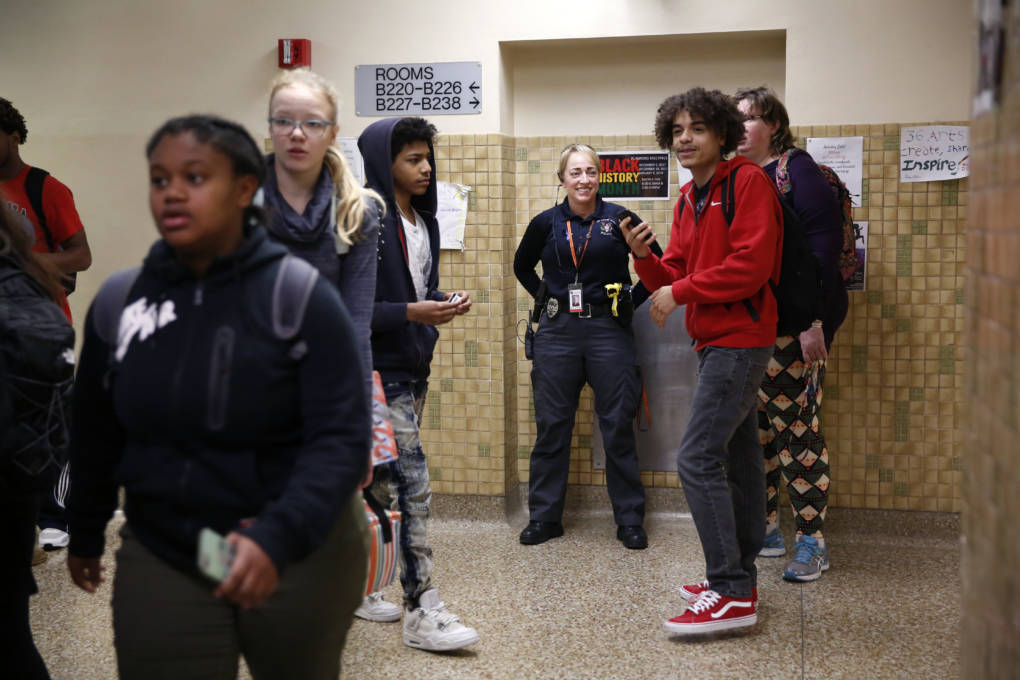
"caption": "In between classes, the police officer assigned to the school, Pam Gronski, jokes with students.",
"description": null,
"title": "In between classes, the police officer assigned to the school, Pam Gronski, jokes with students.",
"credit": "Elissa Nadworny/NPR",
"status": "inherit",
"isLoading": false,
"fetchFailed": false
},
"mindshift_50868": {
"type": "attachments",
"id": "mindshift_50868",
"meta": {
"index": "attachments_1716263798",
"site": "mindshift",
"id": "50868",
"found": true
},
"parent": 50867,
"imgSizes": {
"small": {
"file": "https://ww2.kqed.org/app/uploads/sites/23/2018/03/nhammer-irby11_slide-d94cd39f17df1d3fcf467563bb12a2b895d21e94-520x346.jpg",
"width": 520,
"mimeType": "image/jpeg",
"height": 346
},
"twentyfourteen-full-width": {
"file": "https://ww2.kqed.org/app/uploads/sites/23/2018/03/nhammer-irby11_slide-d94cd39f17df1d3fcf467563bb12a2b895d21e94-1038x576.jpg",
"width": 1038,
"mimeType": "image/jpeg",
"height": 576
},
"thumbnail": {
"file": "https://ww2.kqed.org/app/uploads/sites/23/2018/03/nhammer-irby11_slide-d94cd39f17df1d3fcf467563bb12a2b895d21e94-160x107.jpg",
"width": 160,
"mimeType": "image/jpeg",
"height": 107
},
"fd-sm": {
"file": "https://ww2.kqed.org/app/uploads/sites/23/2018/03/nhammer-irby11_slide-d94cd39f17df1d3fcf467563bb12a2b895d21e94-960x640.jpg",
"width": 960,
"mimeType": "image/jpeg",
"height": 640
},
"post-thumbnail": {
"file": "https://ww2.kqed.org/app/uploads/sites/23/2018/03/nhammer-irby11_slide-d94cd39f17df1d3fcf467563bb12a2b895d21e94-672x372.jpg",
"width": 672,
"mimeType": "image/jpeg",
"height": 372
},
"xsmall": {
"file": "https://ww2.kqed.org/app/uploads/sites/23/2018/03/nhammer-irby11_slide-d94cd39f17df1d3fcf467563bb12a2b895d21e94-375x250.jpg",
"width": 375,
"mimeType": "image/jpeg",
"height": 250
},
"kqedFullSize": {
"file": "https://ww2.kqed.org/app/uploads/sites/23/2018/03/nhammer-irby11_slide-d94cd39f17df1d3fcf467563bb12a2b895d21e94-e1522391393123.jpg",
"width": 1920,
"height": 1279
},
"large": {
"file": "https://ww2.kqed.org/app/uploads/sites/23/2018/03/nhammer-irby11_slide-d94cd39f17df1d3fcf467563bb12a2b895d21e94-1020x680.jpg",
"width": 1020,
"mimeType": "image/jpeg",
"height": 680
},
"xlarge": {
"file": "https://ww2.kqed.org/app/uploads/sites/23/2018/03/nhammer-irby11_slide-d94cd39f17df1d3fcf467563bb12a2b895d21e94-1180x786.jpg",
"width": 1180,
"mimeType": "image/jpeg",
"height": 786
},
"guest-author-50": {
"file": "https://ww2.kqed.org/app/uploads/sites/23/2018/03/nhammer-irby11_slide-d94cd39f17df1d3fcf467563bb12a2b895d21e94-50x50.jpg",
"width": 50,
"mimeType": "image/jpeg",
"height": 50
},
"guest-author-96": {
"file": "https://ww2.kqed.org/app/uploads/sites/23/2018/03/nhammer-irby11_slide-d94cd39f17df1d3fcf467563bb12a2b895d21e94-96x96.jpg",
"width": 96,
"mimeType": "image/jpeg",
"height": 96
},
"medium": {
"file": "https://ww2.kqed.org/app/uploads/sites/23/2018/03/nhammer-irby11_slide-d94cd39f17df1d3fcf467563bb12a2b895d21e94-800x533.jpg",
"width": 800,
"mimeType": "image/jpeg",
"height": 533
},
"guest-author-64": {
"file": "https://ww2.kqed.org/app/uploads/sites/23/2018/03/nhammer-irby11_slide-d94cd39f17df1d3fcf467563bb12a2b895d21e94-64x64.jpg",
"width": 64,
"mimeType": "image/jpeg",
"height": 64
},
"guest-author-32": {
"file": "https://ww2.kqed.org/app/uploads/sites/23/2018/03/nhammer-irby11_slide-d94cd39f17df1d3fcf467563bb12a2b895d21e94-32x32.jpg",
"width": 32,
"mimeType": "image/jpeg",
"height": 32
},
"fd-lrg": {
"file": "https://ww2.kqed.org/app/uploads/sites/23/2018/03/nhammer-irby11_slide-d94cd39f17df1d3fcf467563bb12a2b895d21e94-1920x1279.jpg",
"width": 1920,
"mimeType": "image/jpeg",
"height": 1279
},
"fd-med": {
"file": "https://ww2.kqed.org/app/uploads/sites/23/2018/03/nhammer-irby11_slide-d94cd39f17df1d3fcf467563bb12a2b895d21e94-1180x786.jpg",
"width": 1180,
"mimeType": "image/jpeg",
"height": 786
},
"full-width": {
"file": "https://ww2.kqed.org/app/uploads/sites/23/2018/03/nhammer-irby11_slide-d94cd39f17df1d3fcf467563bb12a2b895d21e94-1920x1279.jpg",
"width": 1920,
"mimeType": "image/jpeg",
"height": 1279
},
"detail": {
"file": "https://ww2.kqed.org/app/uploads/sites/23/2018/03/nhammer-irby11_slide-d94cd39f17df1d3fcf467563bb12a2b895d21e94-150x150.jpg",
"width": 150,
"mimeType": "image/jpeg",
"height": 150
},
"medium_large": {
"file": "https://ww2.kqed.org/app/uploads/sites/23/2018/03/nhammer-irby11_slide-d94cd39f17df1d3fcf467563bb12a2b895d21e94-768x512.jpg",
"width": 768,
"mimeType": "image/jpeg",
"height": 512
},
"guest-author-128": {
"file": "https://ww2.kqed.org/app/uploads/sites/23/2018/03/nhammer-irby11_slide-d94cd39f17df1d3fcf467563bb12a2b895d21e94-128x128.jpg",
"width": 128,
"mimeType": "image/jpeg",
"height": 128
},
"xxsmall": {
"file": "https://ww2.kqed.org/app/uploads/sites/23/2018/03/nhammer-irby11_slide-d94cd39f17df1d3fcf467563bb12a2b895d21e94-240x160.jpg",
"width": 240,
"mimeType": "image/jpeg",
"height": 160
}
},
"publishDate": 1522390606,
"modified": 1522391411,
"caption": "Alvin Irby, founder of Barbershop Books, is on a mission to get kids reading in the barbershop.",
"description": "Alvin Irby, founder of Barbershop Books, is on a mission to get kids reading in the barbershop.",
"title": "Alvin Irby, founder of Barbershop Books, is on a mission to get kids reading in the barbershop.",
"credit": "Nickolai Hammer/NPR",
"status": "inherit",
"isLoading": false,
"fetchFailed": false
},
"mindshift_50856": {
"type": "attachments",
"id": "mindshift_50856",
"meta": {
"index": "attachments_1716263798",
"site": "mindshift",
"id": "50856",
"found": true
},
"parent": 50855,
"imgSizes": {
"small": {
"file": "https://ww2.kqed.org/app/uploads/sites/23/2018/03/marcus-college-prodding-1-520x347.jpg",
"width": 520,
"mimeType": "image/jpeg",
"height": 347
},
"twentyfourteen-full-width": {
"file": "https://ww2.kqed.org/app/uploads/sites/23/2018/03/marcus-college-prodding-1-1038x576.jpg",
"width": 1038,
"mimeType": "image/jpeg",
"height": 576
},
"thumbnail": {
"file": "https://ww2.kqed.org/app/uploads/sites/23/2018/03/marcus-college-prodding-1-160x107.jpg",
"width": 160,
"mimeType": "image/jpeg",
"height": 107
},
"fd-sm": {
"file": "https://ww2.kqed.org/app/uploads/sites/23/2018/03/marcus-college-prodding-1-960x640.jpg",
"width": 960,
"mimeType": "image/jpeg",
"height": 640
},
"post-thumbnail": {
"file": "https://ww2.kqed.org/app/uploads/sites/23/2018/03/marcus-college-prodding-1-672x372.jpg",
"width": 672,
"mimeType": "image/jpeg",
"height": 372
},
"xsmall": {
"file": "https://ww2.kqed.org/app/uploads/sites/23/2018/03/marcus-college-prodding-1-375x250.jpg",
"width": 375,
"mimeType": "image/jpeg",
"height": 250
},
"kqedFullSize": {
"file": "https://ww2.kqed.org/app/uploads/sites/23/2018/03/marcus-college-prodding-1-e1522271425530.jpg",
"width": 1920,
"height": 1280
},
"large": {
"file": "https://ww2.kqed.org/app/uploads/sites/23/2018/03/marcus-college-prodding-1-1020x680.jpg",
"width": 1020,
"mimeType": "image/jpeg",
"height": 680
},
"xlarge": {
"file": "https://ww2.kqed.org/app/uploads/sites/23/2018/03/marcus-college-prodding-1-1180x787.jpg",
"width": 1180,
"mimeType": "image/jpeg",
"height": 787
},
"guest-author-50": {
"file": "https://ww2.kqed.org/app/uploads/sites/23/2018/03/marcus-college-prodding-1-50x50.jpg",
"width": 50,
"mimeType": "image/jpeg",
"height": 50
},
"guest-author-96": {
"file": "https://ww2.kqed.org/app/uploads/sites/23/2018/03/marcus-college-prodding-1-96x96.jpg",
"width": 96,
"mimeType": "image/jpeg",
"height": 96
},
"medium": {
"file": "https://ww2.kqed.org/app/uploads/sites/23/2018/03/marcus-college-prodding-1-800x533.jpg",
"width": 800,
"mimeType": "image/jpeg",
"height": 533
},
"guest-author-64": {
"file": "https://ww2.kqed.org/app/uploads/sites/23/2018/03/marcus-college-prodding-1-64x64.jpg",
"width": 64,
"mimeType": "image/jpeg",
"height": 64
},
"guest-author-32": {
"file": "https://ww2.kqed.org/app/uploads/sites/23/2018/03/marcus-college-prodding-1-32x32.jpg",
"width": 32,
"mimeType": "image/jpeg",
"height": 32
},
"fd-lrg": {
"file": "https://ww2.kqed.org/app/uploads/sites/23/2018/03/marcus-college-prodding-1-1920x1280.jpg",
"width": 1920,
"mimeType": "image/jpeg",
"height": 1280
},
"fd-med": {
"file": "https://ww2.kqed.org/app/uploads/sites/23/2018/03/marcus-college-prodding-1-1180x787.jpg",
"width": 1180,
"mimeType": "image/jpeg",
"height": 787
},
"full-width": {
"file": "https://ww2.kqed.org/app/uploads/sites/23/2018/03/marcus-college-prodding-1-1920x1280.jpg",
"width": 1920,
"mimeType": "image/jpeg",
"height": 1280
},
"detail": {
"file": "https://ww2.kqed.org/app/uploads/sites/23/2018/03/marcus-college-prodding-1-150x150.jpg",
"width": 150,
"mimeType": "image/jpeg",
"height": 150
},
"medium_large": {
"file": "https://ww2.kqed.org/app/uploads/sites/23/2018/03/marcus-college-prodding-1-768x512.jpg",
"width": 768,
"mimeType": "image/jpeg",
"height": 512
},
"guest-author-128": {
"file": "https://ww2.kqed.org/app/uploads/sites/23/2018/03/marcus-college-prodding-1-128x128.jpg",
"width": 128,
"mimeType": "image/jpeg",
"height": 128
},
"xxsmall": {
"file": "https://ww2.kqed.org/app/uploads/sites/23/2018/03/marcus-college-prodding-1-240x160.jpg",
"width": 240,
"mimeType": "image/jpeg",
"height": 160
}
},
"publishDate": 1522271073,
"modified": 1522271418,
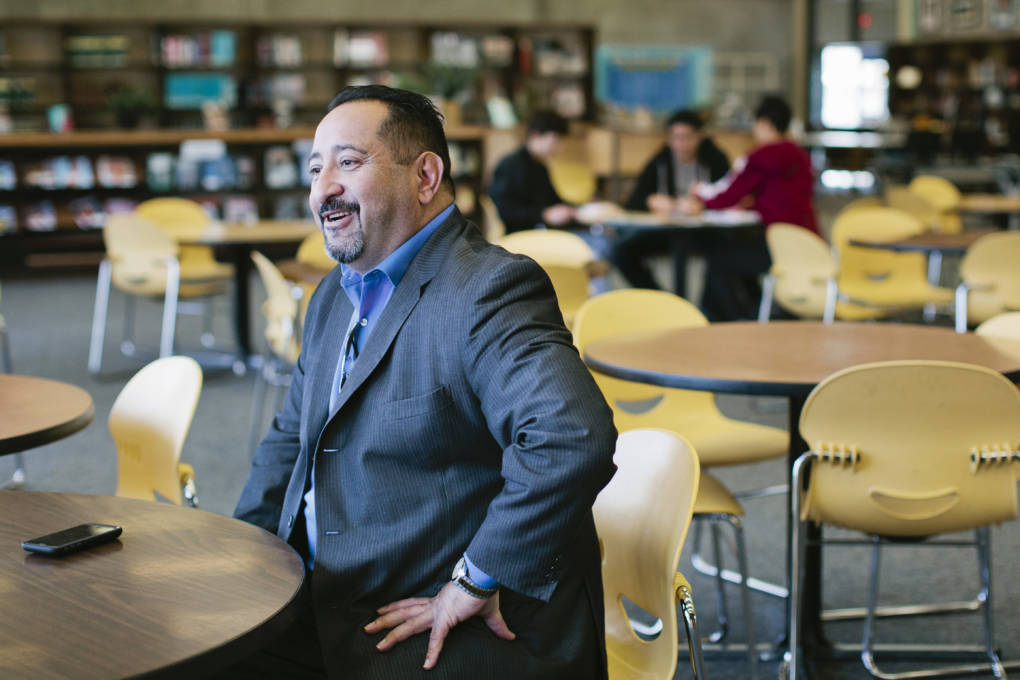
"caption": "Newark Unified School District Superintendent Patrick Sanchez visits Newark Memorial High School in Newark, Calif., Wednesday, February 14, 2018.\n",
"description": null,
"title": "marcus-college-prodding-1",
"credit": "Alison Yin for The Hechinger Report",
"status": "inherit",
"isLoading": false,
"fetchFailed": false
},
"mindshift_50851": {
"type": "attachments",
"id": "mindshift_50851",
"meta": {
"index": "attachments_1716263798",
"site": "mindshift",
"id": "50851",
"found": true
},
"parent": 50849,
"imgSizes": {
"small": {
"file": "https://ww2.kqed.org/app/uploads/sites/23/2018/03/iStock-471301626-520x520.jpg",
"width": 520,
"mimeType": "image/jpeg",
"height": 520
},
"twentyfourteen-full-width": {
"file": "https://ww2.kqed.org/app/uploads/sites/23/2018/03/iStock-471301626-1038x576.jpg",
"width": 1038,
"mimeType": "image/jpeg",
"height": 576
},
"thumbnail": {
"file": "https://ww2.kqed.org/app/uploads/sites/23/2018/03/iStock-471301626-160x160.jpg",
"width": 160,
"mimeType": "image/jpeg",
"height": 160
},
"fd-sm": {
"file": "https://ww2.kqed.org/app/uploads/sites/23/2018/03/iStock-471301626-960x960.jpg",
"width": 960,
"mimeType": "image/jpeg",
"height": 960
},
"post-thumbnail": {
"file": "https://ww2.kqed.org/app/uploads/sites/23/2018/03/iStock-471301626-672x372.jpg",
"width": 672,
"mimeType": "image/jpeg",
"height": 372
},
"xsmall": {
"file": "https://ww2.kqed.org/app/uploads/sites/23/2018/03/iStock-471301626-375x375.jpg",
"width": 375,
"mimeType": "image/jpeg",
"height": 375
},
"kqedFullSize": {
"file": "https://ww2.kqed.org/app/uploads/sites/23/2018/03/iStock-471301626.jpg",
"width": 1732,
"height": 1732
},
"large": {
"file": "https://ww2.kqed.org/app/uploads/sites/23/2018/03/iStock-471301626-1020x1020.jpg",
"width": 1020,
"mimeType": "image/jpeg",
"height": 1020
},
"xlarge": {
"file": "https://ww2.kqed.org/app/uploads/sites/23/2018/03/iStock-471301626-1180x1180.jpg",
"width": 1180,
"mimeType": "image/jpeg",
"height": 1180
},
"guest-author-50": {
"file": "https://ww2.kqed.org/app/uploads/sites/23/2018/03/iStock-471301626-50x50.jpg",
"width": 50,
"mimeType": "image/jpeg",
"height": 50
},
"guest-author-96": {
"file": "https://ww2.kqed.org/app/uploads/sites/23/2018/03/iStock-471301626-96x96.jpg",
"width": 96,
"mimeType": "image/jpeg",
"height": 96
},
"medium": {
"file": "https://ww2.kqed.org/app/uploads/sites/23/2018/03/iStock-471301626-800x800.jpg",
"width": 800,
"mimeType": "image/jpeg",
"height": 800
},
"guest-author-64": {
"file": "https://ww2.kqed.org/app/uploads/sites/23/2018/03/iStock-471301626-64x64.jpg",
"width": 64,
"mimeType": "image/jpeg",
"height": 64
},
"guest-author-32": {
"file": "https://ww2.kqed.org/app/uploads/sites/23/2018/03/iStock-471301626-32x32.jpg",
"width": 32,
"mimeType": "image/jpeg",
"height": 32
},
"fd-med": {
"file": "https://ww2.kqed.org/app/uploads/sites/23/2018/03/iStock-471301626-1180x1180.jpg",
"width": 1180,
"mimeType": "image/jpeg",
"height": 1180
},
"detail": {
"file": "https://ww2.kqed.org/app/uploads/sites/23/2018/03/iStock-471301626-150x150.jpg",
"width": 150,
"mimeType": "image/jpeg",
"height": 150
},
"medium_large": {
"file": "https://ww2.kqed.org/app/uploads/sites/23/2018/03/iStock-471301626-768x768.jpg",
"width": 768,
"mimeType": "image/jpeg",
"height": 768
},
"guest-author-128": {
"file": "https://ww2.kqed.org/app/uploads/sites/23/2018/03/iStock-471301626-128x128.jpg",
"width": 128,
"mimeType": "image/jpeg",
"height": 128
},
"xxsmall": {
"file": "https://ww2.kqed.org/app/uploads/sites/23/2018/03/iStock-471301626-240x240.jpg",
"width": 240,
"mimeType": "image/jpeg",
"height": 240
}
},
"publishDate": 1522192283,
"modified": 1522192301,
"caption": null,
"description": null,
"title": null,
"credit": "iStock/nokhookdesign",
"status": "inherit",
"isLoading": false,
"fetchFailed": false
},
"mindshift_50808": {
"type": "attachments",
"id": "mindshift_50808",
"meta": {
"index": "attachments_1716263798",
"site": "mindshift",
"id": "50808",
"found": true
},
"parent": 50540,
"imgSizes": {
"small": {
"file": "https://ww2.kqed.org/app/uploads/sites/23/2018/03/iStock-147764489-520x416.jpg",
"width": 520,
"mimeType": "image/jpeg",
"height": 416
},
"twentyfourteen-full-width": {
"file": "https://ww2.kqed.org/app/uploads/sites/23/2018/03/iStock-147764489-1038x576.jpg",
"width": 1038,
"mimeType": "image/jpeg",
"height": 576
},
"thumbnail": {
"file": "https://ww2.kqed.org/app/uploads/sites/23/2018/03/iStock-147764489-160x128.jpg",
"width": 160,
"mimeType": "image/jpeg",
"height": 128
},
"fd-sm": {
"file": "https://ww2.kqed.org/app/uploads/sites/23/2018/03/iStock-147764489-960x768.jpg",
"width": 960,
"mimeType": "image/jpeg",
"height": 768
},
"post-thumbnail": {
"file": "https://ww2.kqed.org/app/uploads/sites/23/2018/03/iStock-147764489-672x372.jpg",
"width": 672,
"mimeType": "image/jpeg",
"height": 372
},
"xsmall": {
"file": "https://ww2.kqed.org/app/uploads/sites/23/2018/03/iStock-147764489-375x300.jpg",
"width": 375,
"mimeType": "image/jpeg",
"height": 300
},
"kqedFullSize": {
"file": "https://ww2.kqed.org/app/uploads/sites/23/2018/03/iStock-147764489.jpg",
"width": 1936,
"height": 1549
},
"large": {
"file": "https://ww2.kqed.org/app/uploads/sites/23/2018/03/iStock-147764489-1020x816.jpg",
"width": 1020,
"mimeType": "image/jpeg",
"height": 816
},
"xlarge": {
"file": "https://ww2.kqed.org/app/uploads/sites/23/2018/03/iStock-147764489-1180x944.jpg",
"width": 1180,
"mimeType": "image/jpeg",
"height": 944
},
"guest-author-50": {
"file": "https://ww2.kqed.org/app/uploads/sites/23/2018/03/iStock-147764489-50x50.jpg",
"width": 50,
"mimeType": "image/jpeg",
"height": 50
},
"guest-author-96": {
"file": "https://ww2.kqed.org/app/uploads/sites/23/2018/03/iStock-147764489-96x96.jpg",
"width": 96,
"mimeType": "image/jpeg",
"height": 96
},
"medium": {
"file": "https://ww2.kqed.org/app/uploads/sites/23/2018/03/iStock-147764489-800x640.jpg",
"width": 800,
"mimeType": "image/jpeg",
"height": 640
},
"guest-author-64": {
"file": "https://ww2.kqed.org/app/uploads/sites/23/2018/03/iStock-147764489-64x64.jpg",
"width": 64,
"mimeType": "image/jpeg",
"height": 64
},
"guest-author-32": {
"file": "https://ww2.kqed.org/app/uploads/sites/23/2018/03/iStock-147764489-32x32.jpg",
"width": 32,
"mimeType": "image/jpeg",
"height": 32
},
"fd-lrg": {
"file": "https://ww2.kqed.org/app/uploads/sites/23/2018/03/iStock-147764489-1920x1536.jpg",
"width": 1920,
"mimeType": "image/jpeg",
"height": 1536
},
"fd-med": {
"file": "https://ww2.kqed.org/app/uploads/sites/23/2018/03/iStock-147764489-1180x944.jpg",
"width": 1180,
"mimeType": "image/jpeg",
"height": 944
},
"full-width": {
"file": "https://ww2.kqed.org/app/uploads/sites/23/2018/03/iStock-147764489-1920x1536.jpg",
"width": 1920,
"mimeType": "image/jpeg",
"height": 1536
},
"detail": {
"file": "https://ww2.kqed.org/app/uploads/sites/23/2018/03/iStock-147764489-150x150.jpg",
"width": 150,
"mimeType": "image/jpeg",
"height": 150
},
"medium_large": {
"file": "https://ww2.kqed.org/app/uploads/sites/23/2018/03/iStock-147764489-768x614.jpg",
"width": 768,
"mimeType": "image/jpeg",
"height": 614
},
"guest-author-128": {
"file": "https://ww2.kqed.org/app/uploads/sites/23/2018/03/iStock-147764489-128x128.jpg",
"width": 128,
"mimeType": "image/jpeg",
"height": 128
},
"xxsmall": {
"file": "https://ww2.kqed.org/app/uploads/sites/23/2018/03/iStock-147764489-240x192.jpg",
"width": 240,
"mimeType": "image/jpeg",
"height": 192
}
},
"publishDate": 1521491585,
"modified": 1521491605,
"caption": null,
"description": null,
"title": "Birds sharing and tweeting / Social media dialog",
"credit": "iStock/CurvaBezier",
"status": "inherit",
"isLoading": false,
"fetchFailed": false
},
"mindshift_50830": {
"type": "attachments",
"id": "mindshift_50830",
"meta": {
"index": "attachments_1716263798",
"site": "mindshift",
"id": "50830",
"found": true
},
"parent": 50829,
"imgSizes": {
"small": {
"file": "https://ww2.kqed.org/app/uploads/sites/23/2018/03/screen-shot-2018-03-21-at-12.28.43-pm_wide-c11a8597b45396526fbbec28d7de8bf5fb6db184-520x293.png",
"width": 520,
"mimeType": "image/png",
"height": 293
},
"twentyfourteen-full-width": {
"file": "https://ww2.kqed.org/app/uploads/sites/23/2018/03/screen-shot-2018-03-21-at-12.28.43-pm_wide-c11a8597b45396526fbbec28d7de8bf5fb6db184-1038x576.png",
"width": 1038,
"mimeType": "image/png",
"height": 576
},
"thumbnail": {
"file": "https://ww2.kqed.org/app/uploads/sites/23/2018/03/screen-shot-2018-03-21-at-12.28.43-pm_wide-c11a8597b45396526fbbec28d7de8bf5fb6db184-160x90.png",
"width": 160,
"mimeType": "image/png",
"height": 90
},
"fd-sm": {
"file": "https://ww2.kqed.org/app/uploads/sites/23/2018/03/screen-shot-2018-03-21-at-12.28.43-pm_wide-c11a8597b45396526fbbec28d7de8bf5fb6db184-960x540.png",
"width": 960,
"mimeType": "image/png",
"height": 540
},
"post-thumbnail": {
"file": "https://ww2.kqed.org/app/uploads/sites/23/2018/03/screen-shot-2018-03-21-at-12.28.43-pm_wide-c11a8597b45396526fbbec28d7de8bf5fb6db184-672x372.png",
"width": 672,
"mimeType": "image/png",
"height": 372
},
"xsmall": {
"file": "https://ww2.kqed.org/app/uploads/sites/23/2018/03/screen-shot-2018-03-21-at-12.28.43-pm_wide-c11a8597b45396526fbbec28d7de8bf5fb6db184-375x211.png",
"width": 375,
"mimeType": "image/png",
"height": 211
},
"kqedFullSize": {
"file": "https://ww2.kqed.org/app/uploads/sites/23/2018/03/screen-shot-2018-03-21-at-12.28.43-pm_wide-c11a8597b45396526fbbec28d7de8bf5fb6db184.png",
"width": 1280,
"height": 720
},
"large": {
"file": "https://ww2.kqed.org/app/uploads/sites/23/2018/03/screen-shot-2018-03-21-at-12.28.43-pm_wide-c11a8597b45396526fbbec28d7de8bf5fb6db184-1020x574.png",
"width": 1020,
"mimeType": "image/png",
"height": 574
},
"xlarge": {
"file": "https://ww2.kqed.org/app/uploads/sites/23/2018/03/screen-shot-2018-03-21-at-12.28.43-pm_wide-c11a8597b45396526fbbec28d7de8bf5fb6db184-1180x664.png",
"width": 1180,
"mimeType": "image/png",
"height": 664
},
"guest-author-50": {
"file": "https://ww2.kqed.org/app/uploads/sites/23/2018/03/screen-shot-2018-03-21-at-12.28.43-pm_wide-c11a8597b45396526fbbec28d7de8bf5fb6db184-50x50.png",
"width": 50,
"mimeType": "image/png",
"height": 50
},
"guest-author-96": {
"file": "https://ww2.kqed.org/app/uploads/sites/23/2018/03/screen-shot-2018-03-21-at-12.28.43-pm_wide-c11a8597b45396526fbbec28d7de8bf5fb6db184-96x96.png",
"width": 96,
"mimeType": "image/png",
"height": 96
},
"medium": {
"file": "https://ww2.kqed.org/app/uploads/sites/23/2018/03/screen-shot-2018-03-21-at-12.28.43-pm_wide-c11a8597b45396526fbbec28d7de8bf5fb6db184-800x450.png",
"width": 800,
"mimeType": "image/png",
"height": 450
},
"guest-author-64": {
"file": "https://ww2.kqed.org/app/uploads/sites/23/2018/03/screen-shot-2018-03-21-at-12.28.43-pm_wide-c11a8597b45396526fbbec28d7de8bf5fb6db184-64x64.png",
"width": 64,
"mimeType": "image/png",
"height": 64
},
"guest-author-32": {
"file": "https://ww2.kqed.org/app/uploads/sites/23/2018/03/screen-shot-2018-03-21-at-12.28.43-pm_wide-c11a8597b45396526fbbec28d7de8bf5fb6db184-32x32.png",
"width": 32,
"mimeType": "image/png",
"height": 32
},
"fd-med": {
"file": "https://ww2.kqed.org/app/uploads/sites/23/2018/03/screen-shot-2018-03-21-at-12.28.43-pm_wide-c11a8597b45396526fbbec28d7de8bf5fb6db184-1180x664.png",
"width": 1180,
"mimeType": "image/png",
"height": 664
},
"detail": {
"file": "https://ww2.kqed.org/app/uploads/sites/23/2018/03/screen-shot-2018-03-21-at-12.28.43-pm_wide-c11a8597b45396526fbbec28d7de8bf5fb6db184-150x150.png",
"width": 150,
"mimeType": "image/png",
"height": 150
},
"medium_large": {
"file": "https://ww2.kqed.org/app/uploads/sites/23/2018/03/screen-shot-2018-03-21-at-12.28.43-pm_wide-c11a8597b45396526fbbec28d7de8bf5fb6db184-768x432.png",
"width": 768,
"mimeType": "image/png",
"height": 432
},
"guest-author-128": {
"file": "https://ww2.kqed.org/app/uploads/sites/23/2018/03/screen-shot-2018-03-21-at-12.28.43-pm_wide-c11a8597b45396526fbbec28d7de8bf5fb6db184-128x128.png",
"width": 128,
"mimeType": "image/png",
"height": 128
},
"xxsmall": {
"file": "https://ww2.kqed.org/app/uploads/sites/23/2018/03/screen-shot-2018-03-21-at-12.28.43-pm_wide-c11a8597b45396526fbbec28d7de8bf5fb6db184-240x135.png",
"width": 240,
"mimeType": "image/png",
"height": 135
}
},
"publishDate": 1521788354,
"modified": 1521788484,
"caption": "Teachers are using OK Go videos — like This Too Shall Pass — to teach students about science and math concepts.",
"description": null,
"title": "Teachers are using OK Go videos — like This Too Shall Pass — to teach students about science and math concepts.",
"credit": "YouTube/OKGo",
"status": "inherit",
"isLoading": false,
"fetchFailed": false
},
"mindshift_50824": {
"type": "attachments",
"id": "mindshift_50824",
"meta": {
"index": "attachments_1716263798",
"site": "mindshift",
"id": "50824",
"found": true
},
"parent": 50486,
"imgSizes": {
"small": {
"file": "https://ww2.kqed.org/app/uploads/sites/23/2018/03/iStock-467251930-520x347.jpg",
"width": 520,
"mimeType": "image/jpeg",
"height": 347
},
"twentyfourteen-full-width": {
"file": "https://ww2.kqed.org/app/uploads/sites/23/2018/03/iStock-467251930-1038x576.jpg",
"width": 1038,
"mimeType": "image/jpeg",
"height": 576
},
"thumbnail": {
"file": "https://ww2.kqed.org/app/uploads/sites/23/2018/03/iStock-467251930-160x107.jpg",
"width": 160,
"mimeType": "image/jpeg",
"height": 107
},
"fd-sm": {
"file": "https://ww2.kqed.org/app/uploads/sites/23/2018/03/iStock-467251930-960x640.jpg",
"width": 960,
"mimeType": "image/jpeg",
"height": 640
},
"post-thumbnail": {
"file": "https://ww2.kqed.org/app/uploads/sites/23/2018/03/iStock-467251930-672x372.jpg",
"width": 672,
"mimeType": "image/jpeg",
"height": 372
},
"xsmall": {
"file": "https://ww2.kqed.org/app/uploads/sites/23/2018/03/iStock-467251930-375x250.jpg",
"width": 375,
"mimeType": "image/jpeg",
"height": 250
},
"kqedFullSize": {
"file": "https://ww2.kqed.org/app/uploads/sites/23/2018/03/iStock-467251930-e1521741456170.jpg",
"width": 1920,
"height": 1280
},
"large": {
"file": "https://ww2.kqed.org/app/uploads/sites/23/2018/03/iStock-467251930-1020x680.jpg",
"width": 1020,
"mimeType": "image/jpeg",
"height": 680
},
"xlarge": {
"file": "https://ww2.kqed.org/app/uploads/sites/23/2018/03/iStock-467251930-1180x787.jpg",
"width": 1180,
"mimeType": "image/jpeg",
"height": 787
},
"guest-author-50": {
"file": "https://ww2.kqed.org/app/uploads/sites/23/2018/03/iStock-467251930-50x50.jpg",
"width": 50,
"mimeType": "image/jpeg",
"height": 50
},
"guest-author-96": {
"file": "https://ww2.kqed.org/app/uploads/sites/23/2018/03/iStock-467251930-96x96.jpg",
"width": 96,
"mimeType": "image/jpeg",
"height": 96
},
"medium": {
"file": "https://ww2.kqed.org/app/uploads/sites/23/2018/03/iStock-467251930-800x533.jpg",
"width": 800,
"mimeType": "image/jpeg",
"height": 533
},
"guest-author-64": {
"file": "https://ww2.kqed.org/app/uploads/sites/23/2018/03/iStock-467251930-64x64.jpg",
"width": 64,
"mimeType": "image/jpeg",
"height": 64
},
"guest-author-32": {
"file": "https://ww2.kqed.org/app/uploads/sites/23/2018/03/iStock-467251930-32x32.jpg",
"width": 32,
"mimeType": "image/jpeg",
"height": 32
},
"fd-lrg": {
"file": "https://ww2.kqed.org/app/uploads/sites/23/2018/03/iStock-467251930-1920x1280.jpg",
"width": 1920,
"mimeType": "image/jpeg",
"height": 1280
},
"fd-med": {
"file": "https://ww2.kqed.org/app/uploads/sites/23/2018/03/iStock-467251930-1180x787.jpg",
"width": 1180,
"mimeType": "image/jpeg",
"height": 787
},
"full-width": {
"file": "https://ww2.kqed.org/app/uploads/sites/23/2018/03/iStock-467251930-1920x1280.jpg",
"width": 1920,
"mimeType": "image/jpeg",
"height": 1280
},
"detail": {
"file": "https://ww2.kqed.org/app/uploads/sites/23/2018/03/iStock-467251930-150x150.jpg",
"width": 150,
"mimeType": "image/jpeg",
"height": 150
},
"medium_large": {
"file": "https://ww2.kqed.org/app/uploads/sites/23/2018/03/iStock-467251930-768x512.jpg",
"width": 768,
"mimeType": "image/jpeg",
"height": 512
},
"guest-author-128": {
"file": "https://ww2.kqed.org/app/uploads/sites/23/2018/03/iStock-467251930-128x128.jpg",
"width": 128,
"mimeType": "image/jpeg",
"height": 128
},
"xxsmall": {
"file": "https://ww2.kqed.org/app/uploads/sites/23/2018/03/iStock-467251930-240x160.jpg",
"width": 240,
"mimeType": "image/jpeg",
"height": 160
}
},
"publishDate": 1521741428,
"modified": 1521741449,
"caption": null,
"description": null,
"title": "Pointing at sky",
"credit": "iStock/KatarzynaBialasiewicz",
"status": "inherit",
"isLoading": false,
"fetchFailed": false
},
"mindshift_50815": {
"type": "attachments",
"id": "mindshift_50815",
"meta": {
"index": "attachments_1716263798",
"site": "mindshift",
"id": "50815",
"found": true
},
"parent": 50781,
"imgSizes": {
"small": {
"file": "https://ww2.kqed.org/app/uploads/sites/23/2018/03/iStock-160481055-520x347.jpg",
"width": 520,
"mimeType": "image/jpeg",
"height": 347
},
"twentyfourteen-full-width": {
"file": "https://ww2.kqed.org/app/uploads/sites/23/2018/03/iStock-160481055-1038x576.jpg",
"width": 1038,
"mimeType": "image/jpeg",
"height": 576
},
"thumbnail": {
"file": "https://ww2.kqed.org/app/uploads/sites/23/2018/03/iStock-160481055-160x107.jpg",
"width": 160,
"mimeType": "image/jpeg",
"height": 107
},
"fd-sm": {
"file": "https://ww2.kqed.org/app/uploads/sites/23/2018/03/iStock-160481055-960x640.jpg",
"width": 960,
"mimeType": "image/jpeg",
"height": 640
},
"post-thumbnail": {
"file": "https://ww2.kqed.org/app/uploads/sites/23/2018/03/iStock-160481055-672x372.jpg",
"width": 672,
"mimeType": "image/jpeg",
"height": 372
},
"xsmall": {
"file": "https://ww2.kqed.org/app/uploads/sites/23/2018/03/iStock-160481055-375x250.jpg",
"width": 375,
"mimeType": "image/jpeg",
"height": 250
},
"kqedFullSize": {
"file": "https://ww2.kqed.org/app/uploads/sites/23/2018/03/iStock-160481055-e1521614443194.jpg",
"width": 1920,
"height": 1280
},
"large": {
"file": "https://ww2.kqed.org/app/uploads/sites/23/2018/03/iStock-160481055-1020x680.jpg",
"width": 1020,
"mimeType": "image/jpeg",
"height": 680
},
"xlarge": {
"file": "https://ww2.kqed.org/app/uploads/sites/23/2018/03/iStock-160481055-1180x787.jpg",
"width": 1180,
"mimeType": "image/jpeg",
"height": 787
},
"guest-author-50": {
"file": "https://ww2.kqed.org/app/uploads/sites/23/2018/03/iStock-160481055-50x50.jpg",
"width": 50,
"mimeType": "image/jpeg",
"height": 50
},
"guest-author-96": {
"file": "https://ww2.kqed.org/app/uploads/sites/23/2018/03/iStock-160481055-96x96.jpg",
"width": 96,
"mimeType": "image/jpeg",
"height": 96
},
"medium": {
"file": "https://ww2.kqed.org/app/uploads/sites/23/2018/03/iStock-160481055-800x533.jpg",
"width": 800,
"mimeType": "image/jpeg",
"height": 533
},
"guest-author-64": {
"file": "https://ww2.kqed.org/app/uploads/sites/23/2018/03/iStock-160481055-64x64.jpg",
"width": 64,
"mimeType": "image/jpeg",
"height": 64
},
"guest-author-32": {
"file": "https://ww2.kqed.org/app/uploads/sites/23/2018/03/iStock-160481055-32x32.jpg",
"width": 32,
"mimeType": "image/jpeg",
"height": 32
},
"fd-lrg": {
"file": "https://ww2.kqed.org/app/uploads/sites/23/2018/03/iStock-160481055-1920x1280.jpg",
"width": 1920,
"mimeType": "image/jpeg",
"height": 1280
},
"fd-med": {
"file": "https://ww2.kqed.org/app/uploads/sites/23/2018/03/iStock-160481055-1180x787.jpg",
"width": 1180,
"mimeType": "image/jpeg",
"height": 787
},
"full-width": {
"file": "https://ww2.kqed.org/app/uploads/sites/23/2018/03/iStock-160481055-1920x1280.jpg",
"width": 1920,
"mimeType": "image/jpeg",
"height": 1280
},
"detail": {
"file": "https://ww2.kqed.org/app/uploads/sites/23/2018/03/iStock-160481055-150x150.jpg",
"width": 150,
"mimeType": "image/jpeg",
"height": 150
},
"medium_large": {
"file": "https://ww2.kqed.org/app/uploads/sites/23/2018/03/iStock-160481055-768x512.jpg",
"width": 768,
"mimeType": "image/jpeg",
"height": 512
},
"guest-author-128": {
"file": "https://ww2.kqed.org/app/uploads/sites/23/2018/03/iStock-160481055-128x128.jpg",
"width": 128,
"mimeType": "image/jpeg",
"height": 128
},
"xxsmall": {
"file": "https://ww2.kqed.org/app/uploads/sites/23/2018/03/iStock-160481055-240x160.jpg",
"width": 240,
"mimeType": "image/jpeg",
"height": 160
}
},
"publishDate": 1521614425,
"modified": 1521614457,
"caption": null,
"description": null,
"title": "Trying to hear",
"credit": "iStock/sergey02",
"status": "inherit",
"isLoading": false,
"fetchFailed": false
},
"mindshift_50785": {
"type": "attachments",
"id": "mindshift_50785",
"meta": {
"index": "attachments_1716263798",
"site": "mindshift",
"id": "50785",
"found": true
},
"parent": 50640,
"imgSizes": {
"small": {
"file": "https://ww2.kqed.org/app/uploads/sites/23/2018/03/Curious-1-520x398.png",
"width": 520,
"mimeType": "image/png",
"height": 398
},
"twentyfourteen-full-width": {
"file": "https://ww2.kqed.org/app/uploads/sites/23/2018/03/Curious-1-1038x576.png",
"width": 1038,
"mimeType": "image/png",
"height": 576
},
"thumbnail": {
"file": "https://ww2.kqed.org/app/uploads/sites/23/2018/03/Curious-1-160x122.png",
"width": 160,
"mimeType": "image/png",
"height": 122
},
"fd-sm": {
"file": "https://ww2.kqed.org/app/uploads/sites/23/2018/03/Curious-1-960x734.png",
"width": 960,
"mimeType": "image/png",
"height": 734
},
"post-thumbnail": {
"file": "https://ww2.kqed.org/app/uploads/sites/23/2018/03/Curious-1-672x372.png",
"width": 672,
"mimeType": "image/png",
"height": 372
},
"xsmall": {
"file": "https://ww2.kqed.org/app/uploads/sites/23/2018/03/Curious-1-375x287.png",
"width": 375,
"mimeType": "image/png",
"height": 287
},
"kqedFullSize": {
"file": "https://ww2.kqed.org/app/uploads/sites/23/2018/03/Curious-1.png",
"width": 1920,
"height": 1468
},
"large": {
"file": "https://ww2.kqed.org/app/uploads/sites/23/2018/03/Curious-1-1020x780.png",
"width": 1020,
"mimeType": "image/png",
"height": 780
},
"xlarge": {
"file": "https://ww2.kqed.org/app/uploads/sites/23/2018/03/Curious-1-1180x902.png",
"width": 1180,
"mimeType": "image/png",
"height": 902
},
"guest-author-50": {
"file": "https://ww2.kqed.org/app/uploads/sites/23/2018/03/Curious-1-50x50.png",
"width": 50,
"mimeType": "image/png",
"height": 50
},
"guest-author-96": {
"file": "https://ww2.kqed.org/app/uploads/sites/23/2018/03/Curious-1-96x96.png",
"width": 96,
"mimeType": "image/png",
"height": 96
},
"medium": {
"file": "https://ww2.kqed.org/app/uploads/sites/23/2018/03/Curious-1-800x612.png",
"width": 800,
"mimeType": "image/png",
"height": 612
},
"guest-author-64": {
"file": "https://ww2.kqed.org/app/uploads/sites/23/2018/03/Curious-1-64x64.png",
"width": 64,
"mimeType": "image/png",
"height": 64
},
"guest-author-32": {
"file": "https://ww2.kqed.org/app/uploads/sites/23/2018/03/Curious-1-32x32.png",
"width": 32,
"mimeType": "image/png",
"height": 32
},
"fd-lrg": {
"file": "https://ww2.kqed.org/app/uploads/sites/23/2018/03/Curious-1-1920x1468.png",
"width": 1920,
"mimeType": "image/png",
"height": 1468
},
"fd-med": {
"file": "https://ww2.kqed.org/app/uploads/sites/23/2018/03/Curious-1-1180x902.png",
"width": 1180,
"mimeType": "image/png",
"height": 902
},
"full-width": {
"file": "https://ww2.kqed.org/app/uploads/sites/23/2018/03/Curious-1-1920x1468.png",
"width": 1920,
"mimeType": "image/png",
"height": 1468
},
"detail": {
"file": "https://ww2.kqed.org/app/uploads/sites/23/2018/03/Curious-1-150x150.png",
"width": 150,
"mimeType": "image/png",
"height": 150
},
"medium_large": {
"file": "https://ww2.kqed.org/app/uploads/sites/23/2018/03/Curious-1-768x587.png",
"width": 768,
"mimeType": "image/png",
"height": 587
},
"guest-author-128": {
"file": "https://ww2.kqed.org/app/uploads/sites/23/2018/03/Curious-1-128x128.png",
"width": 128,
"mimeType": "image/png",
"height": 128
},
"xxsmall": {
"file": "https://ww2.kqed.org/app/uploads/sites/23/2018/03/Curious-1-240x184.png",
"width": 240,
"mimeType": "image/png",
"height": 184
}
},
"publishDate": 1521059559,
"modified": 1521059622,
"caption": null,
"description": null,
"title": "Curious",
"credit": "Courtesy of Joel Bezaire",
"status": "inherit",
"isLoading": false,
"fetchFailed": false
},
"mindshift_50778": {
"type": "attachments",
"id": "mindshift_50778",
"meta": {
"index": "attachments_1716263798",
"site": "mindshift",
"id": "50778",
"found": true
},
"parent": 50777,
"imgSizes": {
"small": {
"file": "https://ww2.kqed.org/app/uploads/sites/23/2018/03/navigating-public-school-for-creativity_slide-1c13e7cd9067d550921287d4d2f5f0c26475577a-520x347.jpg",
"width": 520,
"mimeType": "image/jpeg",
"height": 347
},
"twentyfourteen-full-width": {
"file": "https://ww2.kqed.org/app/uploads/sites/23/2018/03/navigating-public-school-for-creativity_slide-1c13e7cd9067d550921287d4d2f5f0c26475577a-1038x576.jpg",
"width": 1038,
"mimeType": "image/jpeg",
"height": 576
},
"thumbnail": {
"file": "https://ww2.kqed.org/app/uploads/sites/23/2018/03/navigating-public-school-for-creativity_slide-1c13e7cd9067d550921287d4d2f5f0c26475577a-160x107.jpg",
"width": 160,
"mimeType": "image/jpeg",
"height": 107
},
"fd-sm": {
"file": "https://ww2.kqed.org/app/uploads/sites/23/2018/03/navigating-public-school-for-creativity_slide-1c13e7cd9067d550921287d4d2f5f0c26475577a-960x640.jpg",
"width": 960,
"mimeType": "image/jpeg",
"height": 640
},
"post-thumbnail": {
"file": "https://ww2.kqed.org/app/uploads/sites/23/2018/03/navigating-public-school-for-creativity_slide-1c13e7cd9067d550921287d4d2f5f0c26475577a-672x372.jpg",
"width": 672,
"mimeType": "image/jpeg",
"height": 372
},
"xsmall": {
"file": "https://ww2.kqed.org/app/uploads/sites/23/2018/03/navigating-public-school-for-creativity_slide-1c13e7cd9067d550921287d4d2f5f0c26475577a-375x250.jpg",
"width": 375,
"mimeType": "image/jpeg",
"height": 250
},
"kqedFullSize": {
"file": "https://ww2.kqed.org/app/uploads/sites/23/2018/03/navigating-public-school-for-creativity_slide-1c13e7cd9067d550921287d4d2f5f0c26475577a-e1521057001359.jpg",
"width": 1920,
"height": 1280
},
"large": {
"file": "https://ww2.kqed.org/app/uploads/sites/23/2018/03/navigating-public-school-for-creativity_slide-1c13e7cd9067d550921287d4d2f5f0c26475577a-1020x680.jpg",
"width": 1020,
"mimeType": "image/jpeg",
"height": 680
},
"xlarge": {
"file": "https://ww2.kqed.org/app/uploads/sites/23/2018/03/navigating-public-school-for-creativity_slide-1c13e7cd9067d550921287d4d2f5f0c26475577a-1180x787.jpg",
"width": 1180,
"mimeType": "image/jpeg",
"height": 787
},
"guest-author-50": {
"file": "https://ww2.kqed.org/app/uploads/sites/23/2018/03/navigating-public-school-for-creativity_slide-1c13e7cd9067d550921287d4d2f5f0c26475577a-50x50.jpg",
"width": 50,
"mimeType": "image/jpeg",
"height": 50
},
"guest-author-96": {
"file": "https://ww2.kqed.org/app/uploads/sites/23/2018/03/navigating-public-school-for-creativity_slide-1c13e7cd9067d550921287d4d2f5f0c26475577a-96x96.jpg",
"width": 96,
"mimeType": "image/jpeg",
"height": 96
},
"medium": {
"file": "https://ww2.kqed.org/app/uploads/sites/23/2018/03/navigating-public-school-for-creativity_slide-1c13e7cd9067d550921287d4d2f5f0c26475577a-800x533.jpg",
"width": 800,
"mimeType": "image/jpeg",
"height": 533
},
"guest-author-64": {
"file": "https://ww2.kqed.org/app/uploads/sites/23/2018/03/navigating-public-school-for-creativity_slide-1c13e7cd9067d550921287d4d2f5f0c26475577a-64x64.jpg",
"width": 64,
"mimeType": "image/jpeg",
"height": 64
},
"guest-author-32": {
"file": "https://ww2.kqed.org/app/uploads/sites/23/2018/03/navigating-public-school-for-creativity_slide-1c13e7cd9067d550921287d4d2f5f0c26475577a-32x32.jpg",
"width": 32,
"mimeType": "image/jpeg",
"height": 32
},
"fd-lrg": {
"file": "https://ww2.kqed.org/app/uploads/sites/23/2018/03/navigating-public-school-for-creativity_slide-1c13e7cd9067d550921287d4d2f5f0c26475577a-1920x1280.jpg",
"width": 1920,
"mimeType": "image/jpeg",
"height": 1280
},
"fd-med": {
"file": "https://ww2.kqed.org/app/uploads/sites/23/2018/03/navigating-public-school-for-creativity_slide-1c13e7cd9067d550921287d4d2f5f0c26475577a-1180x787.jpg",
"width": 1180,
"mimeType": "image/jpeg",
"height": 787
},
"full-width": {
"file": "https://ww2.kqed.org/app/uploads/sites/23/2018/03/navigating-public-school-for-creativity_slide-1c13e7cd9067d550921287d4d2f5f0c26475577a-1920x1280.jpg",
"width": 1920,
"mimeType": "image/jpeg",
"height": 1280
},
"detail": {
"file": "https://ww2.kqed.org/app/uploads/sites/23/2018/03/navigating-public-school-for-creativity_slide-1c13e7cd9067d550921287d4d2f5f0c26475577a-150x150.jpg",
"width": 150,
"mimeType": "image/jpeg",
"height": 150
},
"medium_large": {
"file": "https://ww2.kqed.org/app/uploads/sites/23/2018/03/navigating-public-school-for-creativity_slide-1c13e7cd9067d550921287d4d2f5f0c26475577a-768x512.jpg",
"width": 768,
"mimeType": "image/jpeg",
"height": 512
},
"guest-author-128": {
"file": "https://ww2.kqed.org/app/uploads/sites/23/2018/03/navigating-public-school-for-creativity_slide-1c13e7cd9067d550921287d4d2f5f0c26475577a-128x128.jpg",
"width": 128,
"mimeType": "image/jpeg",
"height": 128
},
"xxsmall": {
"file": "https://ww2.kqed.org/app/uploads/sites/23/2018/03/navigating-public-school-for-creativity_slide-1c13e7cd9067d550921287d4d2f5f0c26475577a-240x160.jpg",
"width": 240,
"mimeType": "image/jpeg",
"height": 160
}
},
"publishDate": 1521048352,
"modified": 1521056995,
"caption": null,
"description": "Well-balanced education",
"title": "Well-balanced education",
"credit": "LA Johnson/NPR",
"status": "inherit",
"isLoading": false,
"fetchFailed": false
},
"mindshift_50767": {
"type": "attachments",
"id": "mindshift_50767",
"meta": {
"index": "attachments_1716263798",
"site": "mindshift",
"id": "50767",
"found": true
},
"parent": 50766,
"imgSizes": {
"small": {
"file": "https://ww2.kqed.org/app/uploads/sites/23/2018/03/gettyimages-475158341-ca0ee7b813ba504cb3aeb840e564518991deddf9-520x390.jpg",
"width": 520,
"mimeType": "image/jpeg",
"height": 390
},
"twentyfourteen-full-width": {
"file": "https://ww2.kqed.org/app/uploads/sites/23/2018/03/gettyimages-475158341-ca0ee7b813ba504cb3aeb840e564518991deddf9-1038x576.jpg",
"width": 1038,
"mimeType": "image/jpeg",
"height": 576
},
"thumbnail": {
"file": "https://ww2.kqed.org/app/uploads/sites/23/2018/03/gettyimages-475158341-ca0ee7b813ba504cb3aeb840e564518991deddf9-160x120.jpg",
"width": 160,
"mimeType": "image/jpeg",
"height": 120
},
"fd-sm": {
"file": "https://ww2.kqed.org/app/uploads/sites/23/2018/03/gettyimages-475158341-ca0ee7b813ba504cb3aeb840e564518991deddf9-960x720.jpg",
"width": 960,
"mimeType": "image/jpeg",
"height": 720
},
"post-thumbnail": {
"file": "https://ww2.kqed.org/app/uploads/sites/23/2018/03/gettyimages-475158341-ca0ee7b813ba504cb3aeb840e564518991deddf9-672x372.jpg",
"width": 672,
"mimeType": "image/jpeg",
"height": 372
},
"xsmall": {
"file": "https://ww2.kqed.org/app/uploads/sites/23/2018/03/gettyimages-475158341-ca0ee7b813ba504cb3aeb840e564518991deddf9-375x281.jpg",
"width": 375,
"mimeType": "image/jpeg",
"height": 281
},
"kqedFullSize": {
"file": "https://ww2.kqed.org/app/uploads/sites/23/2018/03/gettyimages-475158341-ca0ee7b813ba504cb3aeb840e564518991deddf9-e1520923672512.jpg",
"width": 1920,
"height": 1440
},
"large": {
"file": "https://ww2.kqed.org/app/uploads/sites/23/2018/03/gettyimages-475158341-ca0ee7b813ba504cb3aeb840e564518991deddf9-1020x765.jpg",
"width": 1020,
"mimeType": "image/jpeg",
"height": 765
},
"xlarge": {
"file": "https://ww2.kqed.org/app/uploads/sites/23/2018/03/gettyimages-475158341-ca0ee7b813ba504cb3aeb840e564518991deddf9-1180x885.jpg",
"width": 1180,
"mimeType": "image/jpeg",
"height": 885
},
"guest-author-50": {
"file": "https://ww2.kqed.org/app/uploads/sites/23/2018/03/gettyimages-475158341-ca0ee7b813ba504cb3aeb840e564518991deddf9-50x50.jpg",
"width": 50,
"mimeType": "image/jpeg",
"height": 50
},
"guest-author-96": {
"file": "https://ww2.kqed.org/app/uploads/sites/23/2018/03/gettyimages-475158341-ca0ee7b813ba504cb3aeb840e564518991deddf9-96x96.jpg",
"width": 96,
"mimeType": "image/jpeg",
"height": 96
},
"medium": {
"file": "https://ww2.kqed.org/app/uploads/sites/23/2018/03/gettyimages-475158341-ca0ee7b813ba504cb3aeb840e564518991deddf9-800x600.jpg",
"width": 800,
"mimeType": "image/jpeg",
"height": 600
},
"guest-author-64": {
"file": "https://ww2.kqed.org/app/uploads/sites/23/2018/03/gettyimages-475158341-ca0ee7b813ba504cb3aeb840e564518991deddf9-64x64.jpg",
"width": 64,
"mimeType": "image/jpeg",
"height": 64
},
"guest-author-32": {
"file": "https://ww2.kqed.org/app/uploads/sites/23/2018/03/gettyimages-475158341-ca0ee7b813ba504cb3aeb840e564518991deddf9-32x32.jpg",
"width": 32,
"mimeType": "image/jpeg",
"height": 32
},
"fd-lrg": {
"file": "https://ww2.kqed.org/app/uploads/sites/23/2018/03/gettyimages-475158341-ca0ee7b813ba504cb3aeb840e564518991deddf9-1920x1440.jpg",
"width": 1920,
"mimeType": "image/jpeg",
"height": 1440
},
"fd-med": {
"file": "https://ww2.kqed.org/app/uploads/sites/23/2018/03/gettyimages-475158341-ca0ee7b813ba504cb3aeb840e564518991deddf9-1180x885.jpg",
"width": 1180,
"mimeType": "image/jpeg",
"height": 885
},
"full-width": {
"file": "https://ww2.kqed.org/app/uploads/sites/23/2018/03/gettyimages-475158341-ca0ee7b813ba504cb3aeb840e564518991deddf9-1920x1440.jpg",
"width": 1920,
"mimeType": "image/jpeg",
"height": 1440
},
"detail": {
"file": "https://ww2.kqed.org/app/uploads/sites/23/2018/03/gettyimages-475158341-ca0ee7b813ba504cb3aeb840e564518991deddf9-150x150.jpg",
"width": 150,
"mimeType": "image/jpeg",
"height": 150
},
"medium_large": {
"file": "https://ww2.kqed.org/app/uploads/sites/23/2018/03/gettyimages-475158341-ca0ee7b813ba504cb3aeb840e564518991deddf9-768x576.jpg",
"width": 768,
"mimeType": "image/jpeg",
"height": 576
},
"guest-author-128": {
"file": "https://ww2.kqed.org/app/uploads/sites/23/2018/03/gettyimages-475158341-ca0ee7b813ba504cb3aeb840e564518991deddf9-128x128.jpg",
"width": 128,
"mimeType": "image/jpeg",
"height": 128
},
"xxsmall": {
"file": "https://ww2.kqed.org/app/uploads/sites/23/2018/03/gettyimages-475158341-ca0ee7b813ba504cb3aeb840e564518991deddf9-240x180.jpg",
"width": 240,
"mimeType": "image/jpeg",
"height": 180
}
},
"publishDate": 1520923573,
"modified": 1520923690,
"caption": null,
"description": "Girl looking at alphabet blocks",
"title": "Girl looking at alphabet blocks",
"credit": "Trina Dalziel/Getty Images/Ikon Images",
"status": "inherit",
"isLoading": false,
"fetchFailed": false
},
"mindshift_50731": {
"type": "attachments",
"id": "mindshift_50731",
"meta": {
"index": "attachments_1716263798",
"site": "mindshift",
"id": "50731",
"found": true
},
"parent": 49558,
"imgSizes": {
"small": {
"file": "https://ww2.kqed.org/app/uploads/sites/23/2018/02/Essien-9-1-520x347.jpg",
"width": 520,
"mimeType": "image/jpeg",
"height": 347
},
"twentyfourteen-full-width": {
"file": "https://ww2.kqed.org/app/uploads/sites/23/2018/02/Essien-9-1-1038x576.jpg",
"width": 1038,
"mimeType": "image/jpeg",
"height": 576
},
"thumbnail": {
"file": "https://ww2.kqed.org/app/uploads/sites/23/2018/02/Essien-9-1-160x107.jpg",
"width": 160,
"mimeType": "image/jpeg",
"height": 107
},
"fd-sm": {
"file": "https://ww2.kqed.org/app/uploads/sites/23/2018/02/Essien-9-1-960x640.jpg",
"width": 960,
"mimeType": "image/jpeg",
"height": 640
},
"post-thumbnail": {
"file": "https://ww2.kqed.org/app/uploads/sites/23/2018/02/Essien-9-1-672x372.jpg",
"width": 672,
"mimeType": "image/jpeg",
"height": 372
},
"xsmall": {
"file": "https://ww2.kqed.org/app/uploads/sites/23/2018/02/Essien-9-1-375x250.jpg",
"width": 375,
"mimeType": "image/jpeg",
"height": 250
},
"kqedFullSize": {
"file": "https://ww2.kqed.org/app/uploads/sites/23/2018/02/Essien-9-1-e1520545659287.jpg",
"width": 1920,
"height": 1280
},
"large": {
"file": "https://ww2.kqed.org/app/uploads/sites/23/2018/02/Essien-9-1-1020x680.jpg",
"width": 1020,
"mimeType": "image/jpeg",
"height": 680
},
"xlarge": {
"file": "https://ww2.kqed.org/app/uploads/sites/23/2018/02/Essien-9-1-1180x787.jpg",
"width": 1180,
"mimeType": "image/jpeg",
"height": 787
},
"guest-author-50": {
"file": "https://ww2.kqed.org/app/uploads/sites/23/2018/02/Essien-9-1-50x50.jpg",
"width": 50,
"mimeType": "image/jpeg",
"height": 50
},
"guest-author-96": {
"file": "https://ww2.kqed.org/app/uploads/sites/23/2018/02/Essien-9-1-96x96.jpg",
"width": 96,
"mimeType": "image/jpeg",
"height": 96
},
"medium": {
"file": "https://ww2.kqed.org/app/uploads/sites/23/2018/02/Essien-9-1-800x533.jpg",
"width": 800,
"mimeType": "image/jpeg",
"height": 533
},
"guest-author-64": {
"file": "https://ww2.kqed.org/app/uploads/sites/23/2018/02/Essien-9-1-64x64.jpg",
"width": 64,
"mimeType": "image/jpeg",
"height": 64
},
"guest-author-32": {
"file": "https://ww2.kqed.org/app/uploads/sites/23/2018/02/Essien-9-1-32x32.jpg",
"width": 32,
"mimeType": "image/jpeg",
"height": 32
},
"fd-lrg": {
"file": "https://ww2.kqed.org/app/uploads/sites/23/2018/02/Essien-9-1-1920x1280.jpg",
"width": 1920,
"mimeType": "image/jpeg",
"height": 1280
},
"fd-med": {
"file": "https://ww2.kqed.org/app/uploads/sites/23/2018/02/Essien-9-1-1180x787.jpg",
"width": 1180,
"mimeType": "image/jpeg",
"height": 787
},
"full-width": {
"file": "https://ww2.kqed.org/app/uploads/sites/23/2018/02/Essien-9-1-1920x1280.jpg",
"width": 1920,
"mimeType": "image/jpeg",
"height": 1280
},
"detail": {
"file": "https://ww2.kqed.org/app/uploads/sites/23/2018/02/Essien-9-1-150x150.jpg",
"width": 150,
"mimeType": "image/jpeg",
"height": 150
},
"medium_large": {
"file": "https://ww2.kqed.org/app/uploads/sites/23/2018/02/Essien-9-1-768x512.jpg",
"width": 768,
"mimeType": "image/jpeg",
"height": 512
},
"guest-author-128": {
"file": "https://ww2.kqed.org/app/uploads/sites/23/2018/02/Essien-9-1-128x128.jpg",
"width": 128,
"mimeType": "image/jpeg",
"height": 128
},
"xxsmall": {
"file": "https://ww2.kqed.org/app/uploads/sites/23/2018/02/Essien-9-1-240x160.jpg",
"width": 240,
"mimeType": "image/jpeg",
"height": 160
}
},
"publishDate": 1520544013,
"modified": 1520544044,
"caption": "Principal Michael Essien helps ensure a smooth passing period at Martin Luther King Jr. Academic Middle School, which included temporarily confiscating a ball from a student. ",
"description": null,
"title": "Essien-9",
"credit": "Samantha Shanahan/KQED",
"status": "inherit",
"isLoading": false,
"fetchFailed": false
}
},
"audioPlayerReducer": {
"postId": "stream_live",
"isPaused": true,
"isPlaying": false,
"pfsActive": false,
"pledgeModalIsOpen": true,
"playerDrawerIsOpen": false,
"liveAudioPlayStartedAt": 0,
"liveAudioPlayContext": ""
},
"authorsReducer": {
"byline_mindshift_50889": {
"type": "authors",
"id": "byline_mindshift_50889",
"meta": {
"override": true
},
"slug": "byline_mindshift_50889",
"name": "Anya Kamenetz",
"isLoading": false
},
"byline_mindshift_50867": {
"type": "authors",
"id": "byline_mindshift_50867",
"meta": {
"override": true
},
"slug": "byline_mindshift_50867",
"name": "Cory Turner",
"isLoading": false
},
"byline_mindshift_50855": {
"type": "authors",
"id": "byline_mindshift_50855",
"meta": {
"override": true
},
"slug": "byline_mindshift_50855",
"name": "\u003ca href=\"http://hechingerreport.org/\">Jon Marcus, The Hechinger Report\u003c/a>",
"isLoading": false
},
"byline_mindshift_50849": {
"type": "authors",
"id": "byline_mindshift_50849",
"meta": {
"override": true
},
"slug": "byline_mindshift_50849",
"name": "\u003ca href=\"http://hechingerreport.org/\">Daisy Yuhas, The Hechinger Report\u003c/a>",
"isLoading": false
},
"byline_mindshift_50540": {
"type": "authors",
"id": "byline_mindshift_50540",
"meta": {
"override": true
},
"slug": "byline_mindshift_50540",
"name": "\u003ca href=\"https://twitter.com/kristenlepore\">Kristen Rae Lepore\u003c/a>",
"isLoading": false
},
"byline_mindshift_50829": {
"type": "authors",
"id": "byline_mindshift_50829",
"meta": {
"override": true
},
"slug": "byline_mindshift_50829",
"name": "Elissa Nadworny",
"isLoading": false
},
"byline_mindshift_50486": {
"type": "authors",
"id": "byline_mindshift_50486",
"meta": {
"override": true
},
"slug": "byline_mindshift_50486",
"name": "\u003ca href=\"https://www.commonsense.org/education/\">Danny Wagner, Common Sense Education\u003c/a>",
"isLoading": false
},
"byline_mindshift_50781": {
"type": "authors",
"id": "byline_mindshift_50781",
"meta": {
"override": true
},
"slug": "byline_mindshift_50781",
"name": "Suzanne Bouffard",
"isLoading": false
},
"byline_mindshift_50777": {
"type": "authors",
"id": "byline_mindshift_50777",
"meta": {
"override": true
},
"slug": "byline_mindshift_50777",
"name": "Elissa Nadworny",
"isLoading": false
},
"byline_mindshift_50766": {
"type": "authors",
"id": "byline_mindshift_50766",
"meta": {
"override": true
},
"slug": "byline_mindshift_50766",
"name": "\u003ca href=\"https://www.apmreports.org/\">Emily Hanford\u003c/a>",
"isLoading": false
},
"katrinaschwartz": {
"type": "authors",
"id": "234",
"meta": {
"index": "authors_1716337520",
"id": "234",
"found": true
},
"name": "Katrina Schwartz",
"firstName": "Katrina",
"lastName": "Schwartz",
"slug": "katrinaschwartz",
"email": "kschwartz@kqed.org",
"display_author_email": false,
"staff_mastheads": [
"news"
],
"title": "Producer",
"bio": "Katrina Schwartz is a journalist based in San Francisco. She's worked at KPCC public radio in LA and has reported on air and online for KQED since 2010. She covered how teaching and learning is changing for MindShift between 2012 and 2020. She is the co-host of the MindShift podcast and now produces KQED's Bay Curious podcast.",
"avatar": "https://secure.gravatar.com/avatar/edb4ee79070447a018538c9aae6eeecf28786515b8a0c30e43b6b7dce5aa44c8?s=600&d=blank&r=g",
"twitter": "kschwart",
"bluesky": null,
"facebook": null,
"instagram": null,
"linkedin": null,
"sites": [
{
"site": "",
"roles": [
"editor"
]
},
{
"site": "news",
"roles": [
"editor"
]
},
{
"site": "mindshift",
"roles": [
"administrator"
]
},
{
"site": "stateofhealth",
"roles": [
"author"
]
},
{
"site": "science",
"roles": [
"editor"
]
}
],
"headData": {
"title": "Katrina Schwartz | KQED",
"description": "Producer",
"ogImgSrc": "https://secure.gravatar.com/avatar/edb4ee79070447a018538c9aae6eeecf28786515b8a0c30e43b6b7dce5aa44c8?s=600&d=blank&r=g",
"twImgSrc": "https://secure.gravatar.com/avatar/edb4ee79070447a018538c9aae6eeecf28786515b8a0c30e43b6b7dce5aa44c8?s=600&d=blank&r=g"
},
"isLoading": false,
"link": "/author/katrinaschwartz"
},
"kdnewhouse": {
"type": "authors",
"id": "11487",
"meta": {
"index": "authors_1716337520",
"id": "11487",
"found": true
},
"name": "Kara Newhouse",
"firstName": "Kara",
"lastName": "Newhouse",
"slug": "kdnewhouse",
"email": "knewhouse@kqed.org",
"display_author_email": false,
"staff_mastheads": [],
"title": "MindShift Editor",
"bio": null,
"avatar": "https://secure.gravatar.com/avatar/3dceed6fb271527113abfa9a8e9df34e?s=600&d=blank&r=g",
"twitter": null,
"facebook": null,
"instagram": null,
"linkedin": null,
"sites": [
{
"site": "",
"roles": [
"editor"
]
},
{
"site": "mindshift",
"roles": []
}
],
"headData": {
"title": "Kara Newhouse | KQED",
"description": "MindShift Editor",
"ogImgSrc": "https://secure.gravatar.com/avatar/3dceed6fb271527113abfa9a8e9df34e?s=600&d=blank&r=g",
"twImgSrc": "https://secure.gravatar.com/avatar/3dceed6fb271527113abfa9a8e9df34e?s=600&d=blank&r=g"
},
"isLoading": false,
"link": "/author/kdnewhouse"
}
},
"pagesReducer": {
"mindshift_tag_featured": {
"type": "terms",
"id": "mindshift_20784",
"meta": {
"index": "terms_1716263798",
"site": "mindshift",
"id": "20784",
"score": 7.6563687
},
"featImg": null,
"name": "featured",
"description": null,
"taxonomy": "tag",
"headData": {
"twImgId": null,
"twTitle": null,
"ogTitle": null,
"ogImgId": null,
"twDescription": null,
"description": null,
"title": "featured Archives | KQED Mindshift",
"ogDescription": null
},
"ttid": 20061,
"slug": "featured",
"isLoading": false,
"title": "featured",
"pageMeta": {
"site": "mindshift",
"WpPageTemplate": "page-topic-editorial",
"currentPage": 34
},
"blocks": [
{
"blockName": "kqed/post-list",
"attrs": {
"layout": "cardArticle2",
"query": "posts/mindshift?tag=featured",
"seeMore": false,
"paginated": true,
"page": 34
}
},
{
"blockName": "kqed/ad"
}
]
}
},
"pfsSessionReducer": {},
"postsReducer": {
"stream_live": {
"type": "live",
"id": "stream_live",
"audioUrl": "https://hls.kqed.org/hls/kqed_app/playlist.m3u8",
"title": "Live Stream",
"excerpt": "Live Stream information currently unavailable.",
"link": "/radio",
"featImg": "",
"label": {
"name": "KQED Live",
"link": "/"
}
},
"stream_kqedNewscast": {
"type": "posts",
"id": "stream_kqedNewscast",
"audioUrl": "https://www.kqed.org/.stream/anon/radio/RDnews/newscast.mp3?_=1",
"title": "KQED Newscast",
"featImg": "",
"label": {
"name": "88.5 FM",
"link": "/"
}
},
"mindshift_50889": {
"type": "posts",
"id": "mindshift_50889",
"meta": {
"index": "posts_1716263798",
"site": "mindshift",
"id": "50889",
"score": null,
"sort": [
1522529836000
]
},
"parent": 0,
"labelTerm": {
"site": "mindshift"
},
"blocks": [],
"publishDate": 1522529836,
"format": "standard",
"disqusTitle": "How Deeper Understanding of a Student’s Life Helps with Plans for Success",
"title": "How Deeper Understanding of a Student’s Life Helps with Plans for Success",
"headTitle": "MindShift | KQED News",
"content": "\u003cp>The week before winter break, snow is piled up around St. Louis Park High School, a low-slung, rambling brick complex in suburban Minneapolis. And more snow is falling.\u003c/p>\n\u003cp>This is a big, diverse school with proud roots. Alumni include Joel and Ethan Coen, who shot their semiautobiographical 2009 drama, \u003cem>A Serious Man\u003c/em>, in this area, once a Jewish enclave, which today has immigrants from all over the world.\u003c/p>\n\u003cp>But in 1998, when Angela Jerabek was a school counselor for freshmen here, she was \"discouraged.\" For five years running, about half the ninth-grade students had been failing at least one course.\u003c/p>\n\u003cp>\"I went to the principal to say, 'I don't think I'm doing this job well and I feel like I should resign.' \" Her principal had a different idea.\u003c/p>\n\u003cp>\"He said [the problem] wasn't just with me or just with our high school. That this really was an issue that was occurring in high schools across the country, and that we really needed to look at a new solution.\"\u003c/p>\n\u003cp>[ad fullwidth]\u003c/p>\n\u003cp>And he challenged her to come up with one.\u003c/p>\n\u003cfigure id=\"attachment_50905\" class=\"wp-caption alignnone\" style=\"max-width: 1920px\">\u003cimg class=\"size-full wp-image-50905\" src=\"https://ww2.kqed.org/mindshift/wp-content/uploads/sites/23/2018/03/d7a1514_custom-a9bf80b805a71bbebbc2161f8531de939481349b-1-e1522702535970.jpg\" alt=\"\" width=\"1920\" height=\"1178\">\u003cfigcaption class=\"wp-caption-text\">Teachers Sarah Lindenberg and Kara Cisco chat with Kelly Brown, the BARR coordinator at St. Louis Park. \u003ccite>(Elissa Nadworny/NPR)\u003c/cite>\u003c/figcaption>\u003c/figure>\n\u003cp>One of the biggest questions in education is whether it's even possible to turn around a low-performing school. The Obama administration spent $7 billion on school turnarounds, and \u003ca href=\"https://ies.ed.gov/ncee/pubs/20174013/pdf/20174013.pdf\">their final verdict\u003c/a> was that nothing really worked.\u003c/p>\n\u003cp>The solution Jerabek developed is called the BARR method, for Building Assets, Reducing Risks. And, she has an unusual amount of evidence. Out of 172 projects in a \u003ca href=\"https://www2.ed.gov/programs/innovation/awards.html\">big federal innovation grant program\u003c/a>, BARR is the only one that progressed through randomized controlled trials to win grants at all three levels: innovation, development and scale-up.\u003c/p>\n\u003cp>\u003cstrong>The ninth-grade shock\u003c/strong>\u003c/p>\n\u003cp>BARR doesn't require changing the teachers or the students in a school. It doesn't overhaul the curriculum or discipline. It doesn't require flashy technology. It's based on something simple, and decidedly unsexy: meetings.\u003c/p>\n\u003cp>Jerabek decided to focus her efforts on freshman year. Many students stumble in the transition to high school — more than any other year of school. A failing grade in that first year significantly raises your risk of dropping out. And that, in turn, can shadow your entire life. Just from one F grade. Researchers call this the \u003ca href=\"https://www.ncbi.nlm.nih.gov/pmc/articles/PMC3461187/\">\"ninth-grade shock.\"\u003c/a>\u003c/p>\n\u003cp>So, Jerabek figured out a way that all the adults in a school building could come together to try to cushion that shock.\u003c/p>\n\u003cfigure id=\"attachment_50892\" class=\"wp-caption alignnone\" style=\"max-width: 1920px\">\u003cimg class=\"size-full wp-image-50892\" src=\"https://ww2.kqed.org/mindshift/wp-content/uploads/sites/23/2018/03/d7a1155_slide-7709c764a42158a31750c2fe0b9735edf6dcd24c-e1522702436215.jpg\" alt=\"\" width=\"1920\" height=\"1280\">\u003cfigcaption class=\"wp-caption-text\">Brown chats with Tony between classes \u003ccite>(Elissa Nadworny/NPR)\u003c/cite>\u003c/figcaption>\u003c/figure>\n\u003cp>Up on the third floor here at St. Louis Park, there's a room with no windows, but inspirational posters and free candy on the table. We're here for the weekly block meeting. Here, teachers who share the same group of students sit down over a shared Google doc with the school support staff: the social worker, the counselor, sometimes even the police officer assigned to the school.\u003c/p>\n\u003cp>The core of the BARR method is these meetings, where educators talk about three things. First, the data — on attendance, behavior and grades. Alex Polk, a science teacher, observes of one student: \"She's been late at least 19 times and is late with the same group of people each time.\"\u003c/p>\n\u003cp>Second, the big picture of the students' lives. Daniel Perez, the school social worker, shares his notes from meetings with students: \"He and his mom don't get along, he feels ignored by her, Dad is not in the picture, he does not have friends here at Park and he is not interested in making friends.\"\u003c/p>\n\u003cp>Finally, they come up with a personalized plan for what to do to help each student, like signing them up for tutoring, calling home or holding a mediation.\u003c/p>\n\u003cp>Tjessa Arradando, a sophomore who loves chemistry and writes for the school paper, explains how BARR worked for her.\u003c/p>\n\u003cp>\"I have anxiety, so if I was stressed I'd go down to the counselor's office and they would kind of talk to me, come up with a plan on how to, you know, adjust at certain times.\" She had a pass to get out of class; the counselors let the teachers know about her needs, so Arradando felt like all the adults were on her side. This year, she says, she's managing much better.\u003c/p>\n\u003cfigure id=\"attachment_50898\" class=\"wp-caption alignnone\" style=\"max-width: 5442px\">\u003cimg class=\"wp-image-50898 size-full\" src=\"https://ww2.kqed.org/mindshift/wp-content/uploads/sites/23/2018/03/d7a2864_slide-469a9c99e4d34eba4e1a882346cdee3a44eab8f8-1.jpg\" alt=\"\" width=\"5442\" height=\"3628\">\u003cfigcaption class=\"wp-caption-text\">Tjessa Arradando in her advanced English class. \u003ccite>(Elissa Nadworny/NPR)\u003c/cite>\u003c/figcaption>\u003c/figure>\n\u003cp>\u003cstrong>Building a fuller picture of a student\u003c/strong>\u003c/p>\n\u003cp>In most schools, teachers meet regularly to talk about subject areas or administrative duties. In BARR schools, the point of block meetings is to pool knowledge on students. Most teachers only see a student for no more than 45 minutes a day, Jerabek points out. They may not have the background knowledge to understand what is really going on when a student is acting out.\u003c/p>\n\u003cp>Sometimes, piecing together information creates a startling picture.\u003c/p>\n\u003cp>At a BARR school in California, one teacher raised a concern about a specific group of 14-year-old girls that tended to sit with older boys rather than other freshmen at lunch. A second teacher noticed that the same girls were missing class on Mondays and Fridays. A third teacher was concerned about dress code violations. No one was particularly alarmed, but when they cross-referenced the information and followed up, Jerabek says, they discovered that the girls were being trafficked for sex.\u003c/p>\n\u003cp>There's a second BARR meeting each week called Risk Review, about the kids in the toughest situations. Just on one Thursday, we hear about drug issues, fears of deportation, chronic illness, eating disorders and a student who may not have a place to sleep.\u003c/p>\n\u003cp>Even though BARR, by definition, focuses on students with problems, it also highlights strengths. Kelly Brown, the BARR coordinator at St. Louis Park, probes teachers again and again to name what's going right: like a student with a good sense of humor, say, or a supportive parent.\u003c/p>\n\u003cp>This is deliberate, says Jerabek: \"To be able to identify the strengths does require that you've actually built a relationship with a student.\"\u003c/p>\n\u003cp>There's a classroom component to the BARR method as well, a social and emotional curriculum called iTime. It allows students and teachers to get to know each other better and, again, build positive relationships.\u003c/p>\n\u003cp>For example, in Kara Cisco's civics class on the day we visit, students are giving each other awards based on the Preamble to the Constitution. \"Promote the general welfare\" might be a student who shares their snacks.\u003c/p>\n\u003cp>This combination of hard data and soft skills has paid off. In the first year of BARR here at St. Louis Park, the failure rate for freshmen was cut in half, from 50 percent to 25 percent, and those results stuck.\u003c/p>\n\u003cp>\u003cstrong>Gold-standard evidence\u003c/strong>\u003c/p>\n\u003cp>As BARR spread, researchers tested the model by the gold standard: randomized controlled trials. And they found over and over again, it raises test scores and pass rates, reduces absences and suspensions, and students feel more engaged and challenged at school. The effects are particularly large for students of color, male students and students from low-income families.\u003c/p>\n\u003cp>Across big-city schools like St. Louis Park, there's a 40 percent drop in failure rates from BARR, and in small rural schools it's 29 percent on average.\u003c/p>\n\u003cp>The principal here, Scott Meyers says the BARR model does cost some money, because of the adjustment in teacher schedules. And it may be harder to put in place in districts that are really hurting for support staff like counselors. But, Jerabek likes to point out, BARR shows you can make big changes without changing the students or the teachers in a school, just by focusing on relationships.\u003c/p>\n\u003cp>\"Many students, they just work harder when they know that the adults care about them.\"\u003c/p>\n\u003cp>[ad floatright]\u003c/p>\n\u003cp>These days, Angela Jerabek spends her time flying from Maine to California. BARR is now in 80 schools in 13 states and Washington, D.C. Over the next five years, Jerabek says, that will triple.\u003c/p>\n\u003cdiv class=\"fullattribution\">Copyright 2018 NPR. To see more, visit http://www.npr.org/.\u003cimg src=\"https://www.google-analytics.com/__utm.gif?utmac=UA-5828686-4&utmdt=How+More+Meetings+Might+Be+The+Secret+To+Fixing+High+School&utme=8(APIKey)9(MDAxOTAwOTE4MDEyMTkxMDAzNjczZDljZA004)\">\u003c/div>\n\n",
"disqusIdentifier": "50889 https://ww2.kqed.org/mindshift/?p=50889",
"disqusUrl": "https://ww2.kqed.org/mindshift/2018/03/31/how-deeper-understanding-of-a-students-life-helps-with-plans-for-success/",
"stats": {
"hasVideo": false,
"hasChartOrMap": false,
"hasAudio": false,
"hasPolis": false,
"wordCount": 1361,
"hasGoogleForm": false,
"hasGallery": false,
"hasHearkenModule": false,
"iframeSrcs": [],
"paragraphCount": 36
},
"modified": 1522780492,
"excerpt": "The BARR model, for \"Building Assets, Reducing Risks,\" has serious evidence backing it up as a solution for real improvements in student success.",
"headData": {
"twImgId": "",
"twTitle": "",
"ogTitle": "",
"ogImgId": "",
"twDescription": "",
"description": "The BARR model, for "Building Assets, Reducing Risks," has serious evidence backing it up as a solution for real improvements in student success.",
"title": "How Deeper Understanding of a Student’s Life Helps with Plans for Success | KQED",
"ogDescription": "",
"schema": {
"@context": "https://schema.org",
"@type": "Article",
"headline": "How Deeper Understanding of a Student’s Life Helps with Plans for Success",
"datePublished": "2018-03-31T13:57:16-07:00",
"dateModified": "2018-04-03T11:34:52-07:00",
"image": "https://cdn.kqed.org/wp-content/uploads/2020/02/KQED-OG-Image@1x.png"
}
},
"guestAuthors": [],
"slug": "how-deeper-understanding-of-a-students-life-helps-with-plans-for-success",
"status": "publish",
"nprApiLink": "http://api.npr.org/query?id=596054250&apiKey=MDAxOTAwOTE4MDEyMTkxMDAzNjczZDljZA004",
"nprByline": "Anya Kamenetz",
"nprStoryDate": "Sat, 31 Mar 2018 06:08:00 -0400",
"nprLastModifiedDate": "Mon, 02 Apr 2018 09:17:44 -0400",
"nprHtmlLink": "https://www.npr.org/sections/ed/2018/03/31/596054250/how-more-meetings-might-be-the-secret-to-fixing-high-school?ft=nprml&f=596054250",
"nprAudio": "https://ondemand.npr.org/anon.npr-mp3/npr/atc/2018/04/20180401_atc_how_more_meetings_might_be_the_secret_to_fixing_high_school.mp3?orgId=1&topicId=1013&aggIds=130593764&d=247&p=2&story=596054250&ft=nprml&f=596054250",
"nprImageAgency": "NPR",
"nprImageCredit": "Elissa Nadworny",
"nprAudioM3u": "http://api.npr.org/m3u/1598695859-7e3967.m3u?orgId=1&topicId=1013&aggIds=130593764&d=247&p=2&story=596054250&ft=nprml&f=596054250",
"nprStoryId": "596054250",
"nprRetrievedStory": "1",
"nprPubDate": "Mon, 02 Apr 2018 09:17:00 -0400",
"path": "/mindshift/50889/how-deeper-understanding-of-a-students-life-helps-with-plans-for-success",
"audioUrl": "https://ondemand.npr.org/anon.npr-mp3/npr/atc/2018/04/20180401_atc_how_more_meetings_might_be_the_secret_to_fixing_high_school.mp3?orgId=1&topicId=1013&aggIds=130593764&d=247&p=2&story=596054250&ft=nprml&f=596054250",
"audioTrackLength": null,
"parsedContent": [
{
"type": "contentString",
"content": "\u003cdiv class=\"post-body\">\u003cp>\u003cp>The week before winter break, snow is piled up around St. Louis Park High School, a low-slung, rambling brick complex in suburban Minneapolis. And more snow is falling.\u003c/p>\n\u003cp>This is a big, diverse school with proud roots. Alumni include Joel and Ethan Coen, who shot their semiautobiographical 2009 drama, \u003cem>A Serious Man\u003c/em>, in this area, once a Jewish enclave, which today has immigrants from all over the world.\u003c/p>\n\u003cp>But in 1998, when Angela Jerabek was a school counselor for freshmen here, she was \"discouraged.\" For five years running, about half the ninth-grade students had been failing at least one course.\u003c/p>\n\u003cp>\"I went to the principal to say, 'I don't think I'm doing this job well and I feel like I should resign.' \" Her principal had a different idea.\u003c/p>\n\u003cp>\"He said [the problem] wasn't just with me or just with our high school. That this really was an issue that was occurring in high schools across the country, and that we really needed to look at a new solution.\"\u003c/p>\n\u003cp>\u003c/p>\u003c/div>",
"attributes": {
"named": {},
"numeric": []
}
},
{
"type": "component",
"content": "",
"name": "ad",
"attributes": {
"named": {
"label": "fullwidth"
},
"numeric": [
"fullwidth"
]
}
},
{
"type": "contentString",
"content": "\u003cdiv class=\"post-body\">\u003cp>\u003c/p>\n\u003cp>And he challenged her to come up with one.\u003c/p>\n\u003cfigure id=\"attachment_50905\" class=\"wp-caption alignnone\" style=\"max-width: 1920px\">\u003cimg class=\"size-full wp-image-50905\" src=\"https://ww2.kqed.org/mindshift/wp-content/uploads/sites/23/2018/03/d7a1514_custom-a9bf80b805a71bbebbc2161f8531de939481349b-1-e1522702535970.jpg\" alt=\"\" width=\"1920\" height=\"1178\">\u003cfigcaption class=\"wp-caption-text\">Teachers Sarah Lindenberg and Kara Cisco chat with Kelly Brown, the BARR coordinator at St. Louis Park. \u003ccite>(Elissa Nadworny/NPR)\u003c/cite>\u003c/figcaption>\u003c/figure>\n\u003cp>One of the biggest questions in education is whether it's even possible to turn around a low-performing school. The Obama administration spent $7 billion on school turnarounds, and \u003ca href=\"https://ies.ed.gov/ncee/pubs/20174013/pdf/20174013.pdf\">their final verdict\u003c/a> was that nothing really worked.\u003c/p>\n\u003cp>The solution Jerabek developed is called the BARR method, for Building Assets, Reducing Risks. And, she has an unusual amount of evidence. Out of 172 projects in a \u003ca href=\"https://www2.ed.gov/programs/innovation/awards.html\">big federal innovation grant program\u003c/a>, BARR is the only one that progressed through randomized controlled trials to win grants at all three levels: innovation, development and scale-up.\u003c/p>\n\u003cp>\u003cstrong>The ninth-grade shock\u003c/strong>\u003c/p>\n\u003cp>BARR doesn't require changing the teachers or the students in a school. It doesn't overhaul the curriculum or discipline. It doesn't require flashy technology. It's based on something simple, and decidedly unsexy: meetings.\u003c/p>\n\u003cp>Jerabek decided to focus her efforts on freshman year. Many students stumble in the transition to high school — more than any other year of school. A failing grade in that first year significantly raises your risk of dropping out. And that, in turn, can shadow your entire life. Just from one F grade. Researchers call this the \u003ca href=\"https://www.ncbi.nlm.nih.gov/pmc/articles/PMC3461187/\">\"ninth-grade shock.\"\u003c/a>\u003c/p>\n\u003cp>So, Jerabek figured out a way that all the adults in a school building could come together to try to cushion that shock.\u003c/p>\n\u003cfigure id=\"attachment_50892\" class=\"wp-caption alignnone\" style=\"max-width: 1920px\">\u003cimg class=\"size-full wp-image-50892\" src=\"https://ww2.kqed.org/mindshift/wp-content/uploads/sites/23/2018/03/d7a1155_slide-7709c764a42158a31750c2fe0b9735edf6dcd24c-e1522702436215.jpg\" alt=\"\" width=\"1920\" height=\"1280\">\u003cfigcaption class=\"wp-caption-text\">Brown chats with Tony between classes \u003ccite>(Elissa Nadworny/NPR)\u003c/cite>\u003c/figcaption>\u003c/figure>\n\u003cp>Up on the third floor here at St. Louis Park, there's a room with no windows, but inspirational posters and free candy on the table. We're here for the weekly block meeting. Here, teachers who share the same group of students sit down over a shared Google doc with the school support staff: the social worker, the counselor, sometimes even the police officer assigned to the school.\u003c/p>\n\u003cp>The core of the BARR method is these meetings, where educators talk about three things. First, the data — on attendance, behavior and grades. Alex Polk, a science teacher, observes of one student: \"She's been late at least 19 times and is late with the same group of people each time.\"\u003c/p>\n\u003cp>Second, the big picture of the students' lives. Daniel Perez, the school social worker, shares his notes from meetings with students: \"He and his mom don't get along, he feels ignored by her, Dad is not in the picture, he does not have friends here at Park and he is not interested in making friends.\"\u003c/p>\n\u003cp>Finally, they come up with a personalized plan for what to do to help each student, like signing them up for tutoring, calling home or holding a mediation.\u003c/p>\n\u003cp>Tjessa Arradando, a sophomore who loves chemistry and writes for the school paper, explains how BARR worked for her.\u003c/p>\n\u003cp>\"I have anxiety, so if I was stressed I'd go down to the counselor's office and they would kind of talk to me, come up with a plan on how to, you know, adjust at certain times.\" She had a pass to get out of class; the counselors let the teachers know about her needs, so Arradando felt like all the adults were on her side. This year, she says, she's managing much better.\u003c/p>\n\u003cfigure id=\"attachment_50898\" class=\"wp-caption alignnone\" style=\"max-width: 5442px\">\u003cimg class=\"wp-image-50898 size-full\" src=\"https://ww2.kqed.org/mindshift/wp-content/uploads/sites/23/2018/03/d7a2864_slide-469a9c99e4d34eba4e1a882346cdee3a44eab8f8-1.jpg\" alt=\"\" width=\"5442\" height=\"3628\">\u003cfigcaption class=\"wp-caption-text\">Tjessa Arradando in her advanced English class. \u003ccite>(Elissa Nadworny/NPR)\u003c/cite>\u003c/figcaption>\u003c/figure>\n\u003cp>\u003cstrong>Building a fuller picture of a student\u003c/strong>\u003c/p>\n\u003cp>In most schools, teachers meet regularly to talk about subject areas or administrative duties. In BARR schools, the point of block meetings is to pool knowledge on students. Most teachers only see a student for no more than 45 minutes a day, Jerabek points out. They may not have the background knowledge to understand what is really going on when a student is acting out.\u003c/p>\n\u003cp>Sometimes, piecing together information creates a startling picture.\u003c/p>\n\u003cp>At a BARR school in California, one teacher raised a concern about a specific group of 14-year-old girls that tended to sit with older boys rather than other freshmen at lunch. A second teacher noticed that the same girls were missing class on Mondays and Fridays. A third teacher was concerned about dress code violations. No one was particularly alarmed, but when they cross-referenced the information and followed up, Jerabek says, they discovered that the girls were being trafficked for sex.\u003c/p>\n\u003cp>There's a second BARR meeting each week called Risk Review, about the kids in the toughest situations. Just on one Thursday, we hear about drug issues, fears of deportation, chronic illness, eating disorders and a student who may not have a place to sleep.\u003c/p>\n\u003cp>Even though BARR, by definition, focuses on students with problems, it also highlights strengths. Kelly Brown, the BARR coordinator at St. Louis Park, probes teachers again and again to name what's going right: like a student with a good sense of humor, say, or a supportive parent.\u003c/p>\n\u003cp>This is deliberate, says Jerabek: \"To be able to identify the strengths does require that you've actually built a relationship with a student.\"\u003c/p>\n\u003cp>There's a classroom component to the BARR method as well, a social and emotional curriculum called iTime. It allows students and teachers to get to know each other better and, again, build positive relationships.\u003c/p>\n\u003cp>For example, in Kara Cisco's civics class on the day we visit, students are giving each other awards based on the Preamble to the Constitution. \"Promote the general welfare\" might be a student who shares their snacks.\u003c/p>\n\u003cp>This combination of hard data and soft skills has paid off. In the first year of BARR here at St. Louis Park, the failure rate for freshmen was cut in half, from 50 percent to 25 percent, and those results stuck.\u003c/p>\n\u003cp>\u003cstrong>Gold-standard evidence\u003c/strong>\u003c/p>\n\u003cp>As BARR spread, researchers tested the model by the gold standard: randomized controlled trials. And they found over and over again, it raises test scores and pass rates, reduces absences and suspensions, and students feel more engaged and challenged at school. The effects are particularly large for students of color, male students and students from low-income families.\u003c/p>\n\u003cp>Across big-city schools like St. Louis Park, there's a 40 percent drop in failure rates from BARR, and in small rural schools it's 29 percent on average.\u003c/p>\n\u003cp>The principal here, Scott Meyers says the BARR model does cost some money, because of the adjustment in teacher schedules. And it may be harder to put in place in districts that are really hurting for support staff like counselors. But, Jerabek likes to point out, BARR shows you can make big changes without changing the students or the teachers in a school, just by focusing on relationships.\u003c/p>\n\u003cp>\"Many students, they just work harder when they know that the adults care about them.\"\u003c/p>\n\u003cp>\u003c/p>\u003c/div>",
"attributes": {
"named": {},
"numeric": []
}
},
{
"type": "component",
"content": "",
"name": "ad",
"attributes": {
"named": {
"label": "floatright"
},
"numeric": [
"floatright"
]
}
},
{
"type": "contentString",
"content": "\u003cdiv class=\"post-body\">\u003cp>\u003c/p>\n\u003cp>These days, Angela Jerabek spends her time flying from Maine to California. BARR is now in 80 schools in 13 states and Washington, D.C. Over the next five years, Jerabek says, that will triple.\u003c/p>\n\u003cdiv class=\"fullattribution\">Copyright 2018 NPR. To see more, visit http://www.npr.org/.\u003cimg src=\"https://www.google-analytics.com/__utm.gif?utmac=UA-5828686-4&utmdt=How+More+Meetings+Might+Be+The+Secret+To+Fixing+High+School&utme=8(APIKey)9(MDAxOTAwOTE4MDEyMTkxMDAzNjczZDljZA004)\">\u003c/div>\n\n\u003c/div>\u003c/p>",
"attributes": {
"named": {},
"numeric": []
}
}
],
"link": "/mindshift/50889/how-deeper-understanding-of-a-students-life-helps-with-plans-for-success",
"authors": [
"byline_mindshift_50889"
],
"categories": [
"mindshift_192"
],
"tags": [
"mindshift_21183",
"mindshift_20784",
"mindshift_1040",
"mindshift_20877"
],
"featImg": "mindshift_50902",
"label": "mindshift"
},
"mindshift_50867": {
"type": "posts",
"id": "mindshift_50867",
"meta": {
"index": "posts_1716263798",
"site": "mindshift",
"id": "50867",
"score": null,
"sort": [
1522391482000
]
},
"parent": 0,
"labelTerm": {
"site": "mindshift"
},
"blocks": [],
"publishDate": 1522391482,
"format": "standard",
"disqusTitle": "Turning Kids Into Readers, One Barbershop At A Time",
"title": "Turning Kids Into Readers, One Barbershop At A Time",
"headTitle": "MindShift | KQED News",
"content": "\u003cp>\u003cem>Our series Take A Number is exploring problems around the world — and the people who are trying to solve them — through the lens of a single number.\u003c/em>\u003c/p>\n\u003cp>The solution first: 15. More precisely, \u003cem>15 books\u003c/em>.\u003c/p>\n\u003cp>That's Alvin Irby's answer to a problem he knows all too well as a former kindergarten teacher: How to get children of color excited about reading if they don't have much experience with books or reading outside of school, and the books they see inside of school don't speak to them.\u003c/p>\n\u003cp>One day in March, Irby emerges from the subway in Harlem grateful for the grey hooded sweatshirt under his heavy winter parka. The snow falls in crystals the size of cornflakes. He wears glasses with translucent frames, a touch of cool for a man whose backpack is full of kids' books. When he enters Levels Barbershop, on Lexington Avenue, the place thrums with electric razors, conversation and a movie on the flatscreen.\u003c/p>\n\u003cp>One whole wall is a varied patchwork of exposed brick and mirrors. Overlooking the proceedings is a painting of the patron-saint of movie barbers: Eddie Murphy's foul-mouthed coiffeur from \"Coming To America.\"\u003c/p>\n\u003cp>[ad fullwidth]\u003c/p>\n\u003cp>It's mid-afternoon when Irby walks in, a man on a mission. He needs a trim from his go-to barber, Kenny, but he also wants to check in on his 15 books.\u003c/p>\n\u003cp>\"So the bookshelf is back underneath the coat shelf,\" he says, shedding his layers and pointing to a little book case made of wood and red canvas along the back wall. Emblazoned on the canvas is the name, \"Barbershop Books.\" The small shelves brim with children's books with titles like \u003cem>Not Norman\u003c/em> and \u003cem>Chicka Chicka Boom Boom\u003c/em>. But there are only 12.\u003c/p>\n\u003cp>A few titles have disappeared, as they do, so Irby's here to replace them. Before he gets to the shelf, though, he freezes alongside the black vinyl bench that splits the shop in half and cracks a triumphal smile.\u003c/p>\n\u003cp>\"This is evidence that it's being used!\" he says, pointing to two books for beginning readers that have been left on the bench. He picks one up.\u003c/p>\n\u003cp>\"We have \u003cem>Ninjago\u003c/em>, which is one of the books that often gets permanently borrowed. It's about little LEGO characters who are ninjas.\"\u003c/p>\n\u003cp>Irby lovingly carries the books back to the book case and adds another favorite from his backpack: \u003cem>Diary of a Wimpy Kid\u003c/em>. And then this man on a mission drops his mission statement:\u003c/p>\n\u003cp>\"Now, this is the thing: Would these be used for instructional purposes in the classroom?\"\u003c/p>\n\u003cp>It's a rhetorical question. The answer, too often, is No.\u003c/p>\n\u003cp>\"But they should be!\" Irby yells.\u003c/p>\n\u003cfigure id=\"attachment_50869\" class=\"wp-caption alignnone\" style=\"max-width: 640px\">\u003cimg class=\"size-large wp-image-50869\" src=\"https://ww2.kqed.org/mindshift/wp-content/uploads/sites/23/2018/03/nhammer-books_slide-ddabfca28c6ac7107eeaa42b5d0b069c155e5bdd-1020x679.jpg\" alt=\"\" width=\"640\" height=\"426\">\u003cfigcaption class=\"wp-caption-text\">Last year, Barbershop Books won a $10,000 Innovations in Reading Prize from the \u003ca href=\"//www.nationalbook.org/innovations_in_reading_2017.html\">National Book Foundation.\u003c/a> \u003ccite>(Nickolai Hammer/NPR)\u003c/cite>\u003c/figcaption>\u003c/figure>\n\u003cp>\u003cstrong>Slavery, civil rights, slavery, civil rights ...\u003c/strong>\u003c/p>\n\u003cp>Alvin Irby wears many hats. He is a stand-up comedian, a children's book author, a former kindergarten teacher, the founder of Barbershop Books and, above all, a dynamo.\u003c/p>\n\u003cp>He speaks loudly, even when answering questions in a quiet office that's been emptied by the snow. His nonprofit has put a curated list of 15 books — all picked \u003cem>by kids\u003c/em> — in \u003ca href=\"https://barbershopbooks.org/barbershops/\" target=\"_blank\" rel=\"noopener\">dozens of barbershops\u003c/a>, in predominantly black neighborhoods, across the country. And that's not counting the many barbers who have heard his story and done \u003ca href=\"https://www.npr.org/sections/ed/2016/10/12/496553810/choose-a-book-and-read-to-your-barber-hell-take-a-little-money-off-the-top\" target=\"_blank\" rel=\"noopener\">something similar\u003c/a> on their own.\u003c/p>\n\u003cp>Irby, who just turned 33, says he's hoping to help children of color identify as readers. That means, first and foremost, that reading should be fun. It also means kids need to see their lives and interests reflected in the stories they read.\u003c/p>\n\u003cp>But, Irby says, the publishing industry has a long way to go. When he went to a big book convention recently, few of the kids' titles on display had diverse characters. And those that did felt both foreign and not remotely fun.\u003c/p>\n\u003cp>\"Slavery, civil rights, slavery, civil rights,\" Irby says, rattling through the books' subjects. \"Biography, slavery, civil rights, old dead black person.\"\u003c/p>\n\u003cp>While he was there, Irby also asked the librarians he met if they could name two laugh-out-loud picture books with a black protagonist?\u003c/p>\n\u003cp>\"Crickets!\"\u003c/p>\n\u003cp>Irby's not simply complaining about a problem. He's written his own solution — a children's book, called \u003cem>Gross Greg\u003c/em>, which he self-published because traditional publishers showed little interest.\u003c/p>\n\u003cp>\"It's about a little black boy who loves to eat his boogers,\" Irby says. \"You call them boogers. Greg calls them delicious little sugars.\"\u003c/p>\n\u003cp>The boogers here aren't a frivolous distraction. They're the point. Books about slavery and civil rights have their place, Irby believes, but little black boys and girls deserve books that allow them to be children. And to laugh like children.\u003c/p>\n\u003cp>\u003cstrong>Telling bar jokes in church\u003c/strong>\u003c/p>\n\u003cp>Too many children of color, Irby says, are coming into kindergarten without much exposure to books or reading. While they may lack reading skills, their books — and their schools — often lack what Irby calls cultural competency. By that he means the ability to translate what they want kids to know or do into reading experiences that children find relevant and engaging. In a recent \u003ca href=\"https://www.ted.com/talks/alvin_irby_how_to_inspire_every_child_to_be_a_lifelong_reader\" target=\"_blank\" rel=\"noopener\">TED Talk\u003c/a>, Irby explained, using a metaphor from stand-up comedy.\u003c/p>\n\u003cp>\"Before going onstage, I assess an audience. Are they white? Are they Latino? Are they old, young, professional, conservative?\" Irby says to the small TED audience. \"While performing in a church, I could tell bar jokes, but that might not result in laughter.\"\u003c/p>\n\u003cp>Teachers, schools, and book publishers, he says, need to think of kids the same way. \"As a society, we're creating reading experiences for children that are the equivalent of telling bar jokes in a church, and then we wonder why so many children don't read.\"\u003c/p>\n\u003cp>Irby says, schools need to focus less on leveled, out-of-touch books and reading tests that leave kids feeling defeated and try listening more. Ask students, What are your strengths, your experiences, your interests?\u003c/p>\n\u003cp>\"Once you figure out how students identify,\" Irby says, \"then you can begin to craft [reading] experiences that are customized to who they are and what's most important to them.\"\u003c/p>\n\u003cp>Back in Levels Barbershop, what's most important to Vincent, a sixth-grader and son of a barber, is \u003cem>Diary of a Wimpy Kid, \u003c/em>the book Irby just replaced. Because the hero's story feels real — and really funny.\u003c/p>\n\u003cp>\"Everything goes wrong when he thinks that it's gonna go right,\" Vincent says. \"Or, when something good's about to happen, it just gets ruined by his brother, Roderick.\"\u003c/p>\n\u003cp>Vincent's enthusiasm — he says he's read every last one of the shop's 15 books — is all the motivation Alvin Irby needs to keep growing Barbershop Books. And it is growing.\u003c/p>\n\u003cp>Last year, the program won a $10,000 Innovations in Reading Prize from the \u003ca href=\"http://www.nationalbook.org/innovations_in_reading_2017.html#.WrkbvGrwaUk\" target=\"_blank\" rel=\"noopener\">National Book Foundation\u003c/a>. And next month, Irby will host a New York City fundraiser ...\u003c/p>\n\u003cp>[ad floatright]\u003c/p>\n\u003cp>In a comedy club.\u003c/p>\n\u003cdiv class=\"fullattribution\">Copyright 2018 NPR. To see more, visit http://www.npr.org/.\u003cimg src=\"https://www.google-analytics.com/__utm.gif?utmac=UA-5828686-4&utmdt=Turning+Kids+Into+Readers%2C+One+Barbershop+At+A+Time+&utme=8(APIKey)9(MDAxOTAwOTE4MDEyMTkxMDAzNjczZDljZA004)\">\u003c/div>\n\n",
"disqusIdentifier": "50867 https://ww2.kqed.org/mindshift/?p=50867",
"disqusUrl": "https://ww2.kqed.org/mindshift/2018/03/29/turning-kids-into-readers-one-barbershop-at-a-time/",
"stats": {
"hasVideo": false,
"hasChartOrMap": false,
"hasAudio": false,
"hasPolis": false,
"wordCount": 1195,
"hasGoogleForm": false,
"hasGallery": false,
"hasHearkenModule": false,
"iframeSrcs": [],
"paragraphCount": 38
},
"modified": 1522391482,
"excerpt": "Alvin Irby is on a mission to get kids reading in the barbershop. And he wants to make sure kids understand that books are fun.",
"headData": {
"twImgId": "",
"twTitle": "",
"ogTitle": "",
"ogImgId": "",
"twDescription": "",
"description": "Alvin Irby is on a mission to get kids reading in the barbershop. And he wants to make sure kids understand that books are fun.",
"title": "Turning Kids Into Readers, One Barbershop At A Time | KQED",
"ogDescription": "",
"schema": {
"@context": "https://schema.org",
"@type": "Article",
"headline": "Turning Kids Into Readers, One Barbershop At A Time",
"datePublished": "2018-03-29T23:31:22-07:00",
"dateModified": "2018-03-29T23:31:22-07:00",
"image": "https://cdn.kqed.org/wp-content/uploads/2020/02/KQED-OG-Image@1x.png"
}
},
"guestAuthors": [],
"slug": "turning-kids-into-readers-one-barbershop-at-a-time",
"status": "publish",
"nprApiLink": "http://api.npr.org/query?id=595180210&apiKey=MDAxOTAwOTE4MDEyMTkxMDAzNjczZDljZA004",
"nprByline": "Cory Turner",
"nprStoryDate": "Thu, 29 Mar 2018 19:35:00 -0400",
"nprLastModifiedDate": "Thu, 29 Mar 2018 21:21:43 -0400",
"nprHtmlLink": "https://www.npr.org/sections/ed/2018/03/29/595180210/turning-kids-into-readers-one-barbershop-at-a-time?ft=nprml&f=595180210",
"nprAudio": "https://ondemand.npr.org/anon.npr-mp3/npr/atc/2018/03/20180329_atc_turning_kids_into_readers_one_barbershop_at_a_time_.mp3?orgId=1&topicId=1013&aggIds=572289240&d=265&p=2&story=595180210&ft=nprml&f=595180210",
"nprImageAgency": "NPR",
"nprImageCredit": "Nickolai Hammer",
"nprAudioM3u": "http://api.npr.org/m3u/1598053673-4a1f59.m3u?orgId=1&topicId=1013&aggIds=572289240&d=265&p=2&story=595180210&ft=nprml&f=595180210",
"nprStoryId": "595180210",
"nprRetrievedStory": "1",
"nprPubDate": "Fri, 30 Mar 2018 00:32:00 -0400",
"path": "/mindshift/50867/turning-kids-into-readers-one-barbershop-at-a-time",
"audioUrl": "https://ondemand.npr.org/anon.npr-mp3/npr/atc/2018/03/20180329_atc_turning_kids_into_readers_one_barbershop_at_a_time_.mp3?orgId=1&topicId=1013&aggIds=572289240&d=265&p=2&story=595180210&ft=nprml&f=595180210",
"audioTrackLength": null,
"parsedContent": [
{
"type": "contentString",
"content": "\u003cdiv class=\"post-body\">\u003cp>\u003cp>\u003cem>Our series Take A Number is exploring problems around the world — and the people who are trying to solve them — through the lens of a single number.\u003c/em>\u003c/p>\n\u003cp>The solution first: 15. More precisely, \u003cem>15 books\u003c/em>.\u003c/p>\n\u003cp>That's Alvin Irby's answer to a problem he knows all too well as a former kindergarten teacher: How to get children of color excited about reading if they don't have much experience with books or reading outside of school, and the books they see inside of school don't speak to them.\u003c/p>\n\u003cp>One day in March, Irby emerges from the subway in Harlem grateful for the grey hooded sweatshirt under his heavy winter parka. The snow falls in crystals the size of cornflakes. He wears glasses with translucent frames, a touch of cool for a man whose backpack is full of kids' books. When he enters Levels Barbershop, on Lexington Avenue, the place thrums with electric razors, conversation and a movie on the flatscreen.\u003c/p>\n\u003cp>One whole wall is a varied patchwork of exposed brick and mirrors. Overlooking the proceedings is a painting of the patron-saint of movie barbers: Eddie Murphy's foul-mouthed coiffeur from \"Coming To America.\"\u003c/p>\n\u003cp>\u003c/p>\u003c/div>",
"attributes": {
"named": {},
"numeric": []
}
},
{
"type": "component",
"content": "",
"name": "ad",
"attributes": {
"named": {
"label": "fullwidth"
},
"numeric": [
"fullwidth"
]
}
},
{
"type": "contentString",
"content": "\u003cdiv class=\"post-body\">\u003cp>\u003c/p>\n\u003cp>It's mid-afternoon when Irby walks in, a man on a mission. He needs a trim from his go-to barber, Kenny, but he also wants to check in on his 15 books.\u003c/p>\n\u003cp>\"So the bookshelf is back underneath the coat shelf,\" he says, shedding his layers and pointing to a little book case made of wood and red canvas along the back wall. Emblazoned on the canvas is the name, \"Barbershop Books.\" The small shelves brim with children's books with titles like \u003cem>Not Norman\u003c/em> and \u003cem>Chicka Chicka Boom Boom\u003c/em>. But there are only 12.\u003c/p>\n\u003cp>A few titles have disappeared, as they do, so Irby's here to replace them. Before he gets to the shelf, though, he freezes alongside the black vinyl bench that splits the shop in half and cracks a triumphal smile.\u003c/p>\n\u003cp>\"This is evidence that it's being used!\" he says, pointing to two books for beginning readers that have been left on the bench. He picks one up.\u003c/p>\n\u003cp>\"We have \u003cem>Ninjago\u003c/em>, which is one of the books that often gets permanently borrowed. It's about little LEGO characters who are ninjas.\"\u003c/p>\n\u003cp>Irby lovingly carries the books back to the book case and adds another favorite from his backpack: \u003cem>Diary of a Wimpy Kid\u003c/em>. And then this man on a mission drops his mission statement:\u003c/p>\n\u003cp>\"Now, this is the thing: Would these be used for instructional purposes in the classroom?\"\u003c/p>\n\u003cp>It's a rhetorical question. The answer, too often, is No.\u003c/p>\n\u003cp>\"But they should be!\" Irby yells.\u003c/p>\n\u003cfigure id=\"attachment_50869\" class=\"wp-caption alignnone\" style=\"max-width: 640px\">\u003cimg class=\"size-large wp-image-50869\" src=\"https://ww2.kqed.org/mindshift/wp-content/uploads/sites/23/2018/03/nhammer-books_slide-ddabfca28c6ac7107eeaa42b5d0b069c155e5bdd-1020x679.jpg\" alt=\"\" width=\"640\" height=\"426\">\u003cfigcaption class=\"wp-caption-text\">Last year, Barbershop Books won a $10,000 Innovations in Reading Prize from the \u003ca href=\"//www.nationalbook.org/innovations_in_reading_2017.html\">National Book Foundation.\u003c/a> \u003ccite>(Nickolai Hammer/NPR)\u003c/cite>\u003c/figcaption>\u003c/figure>\n\u003cp>\u003cstrong>Slavery, civil rights, slavery, civil rights ...\u003c/strong>\u003c/p>\n\u003cp>Alvin Irby wears many hats. He is a stand-up comedian, a children's book author, a former kindergarten teacher, the founder of Barbershop Books and, above all, a dynamo.\u003c/p>\n\u003cp>He speaks loudly, even when answering questions in a quiet office that's been emptied by the snow. His nonprofit has put a curated list of 15 books — all picked \u003cem>by kids\u003c/em> — in \u003ca href=\"https://barbershopbooks.org/barbershops/\" target=\"_blank\" rel=\"noopener\">dozens of barbershops\u003c/a>, in predominantly black neighborhoods, across the country. And that's not counting the many barbers who have heard his story and done \u003ca href=\"https://www.npr.org/sections/ed/2016/10/12/496553810/choose-a-book-and-read-to-your-barber-hell-take-a-little-money-off-the-top\" target=\"_blank\" rel=\"noopener\">something similar\u003c/a> on their own.\u003c/p>\n\u003cp>Irby, who just turned 33, says he's hoping to help children of color identify as readers. That means, first and foremost, that reading should be fun. It also means kids need to see their lives and interests reflected in the stories they read.\u003c/p>\n\u003cp>But, Irby says, the publishing industry has a long way to go. When he went to a big book convention recently, few of the kids' titles on display had diverse characters. And those that did felt both foreign and not remotely fun.\u003c/p>\n\u003cp>\"Slavery, civil rights, slavery, civil rights,\" Irby says, rattling through the books' subjects. \"Biography, slavery, civil rights, old dead black person.\"\u003c/p>\n\u003cp>While he was there, Irby also asked the librarians he met if they could name two laugh-out-loud picture books with a black protagonist?\u003c/p>\n\u003cp>\"Crickets!\"\u003c/p>\n\u003cp>Irby's not simply complaining about a problem. He's written his own solution — a children's book, called \u003cem>Gross Greg\u003c/em>, which he self-published because traditional publishers showed little interest.\u003c/p>\n\u003cp>\"It's about a little black boy who loves to eat his boogers,\" Irby says. \"You call them boogers. Greg calls them delicious little sugars.\"\u003c/p>\n\u003cp>The boogers here aren't a frivolous distraction. They're the point. Books about slavery and civil rights have their place, Irby believes, but little black boys and girls deserve books that allow them to be children. And to laugh like children.\u003c/p>\n\u003cp>\u003cstrong>Telling bar jokes in church\u003c/strong>\u003c/p>\n\u003cp>Too many children of color, Irby says, are coming into kindergarten without much exposure to books or reading. While they may lack reading skills, their books — and their schools — often lack what Irby calls cultural competency. By that he means the ability to translate what they want kids to know or do into reading experiences that children find relevant and engaging. In a recent \u003ca href=\"https://www.ted.com/talks/alvin_irby_how_to_inspire_every_child_to_be_a_lifelong_reader\" target=\"_blank\" rel=\"noopener\">TED Talk\u003c/a>, Irby explained, using a metaphor from stand-up comedy.\u003c/p>\n\u003cp>\"Before going onstage, I assess an audience. Are they white? Are they Latino? Are they old, young, professional, conservative?\" Irby says to the small TED audience. \"While performing in a church, I could tell bar jokes, but that might not result in laughter.\"\u003c/p>\n\u003cp>Teachers, schools, and book publishers, he says, need to think of kids the same way. \"As a society, we're creating reading experiences for children that are the equivalent of telling bar jokes in a church, and then we wonder why so many children don't read.\"\u003c/p>\n\u003cp>Irby says, schools need to focus less on leveled, out-of-touch books and reading tests that leave kids feeling defeated and try listening more. Ask students, What are your strengths, your experiences, your interests?\u003c/p>\n\u003cp>\"Once you figure out how students identify,\" Irby says, \"then you can begin to craft [reading] experiences that are customized to who they are and what's most important to them.\"\u003c/p>\n\u003cp>Back in Levels Barbershop, what's most important to Vincent, a sixth-grader and son of a barber, is \u003cem>Diary of a Wimpy Kid, \u003c/em>the book Irby just replaced. Because the hero's story feels real — and really funny.\u003c/p>\n\u003cp>\"Everything goes wrong when he thinks that it's gonna go right,\" Vincent says. \"Or, when something good's about to happen, it just gets ruined by his brother, Roderick.\"\u003c/p>\n\u003cp>Vincent's enthusiasm — he says he's read every last one of the shop's 15 books — is all the motivation Alvin Irby needs to keep growing Barbershop Books. And it is growing.\u003c/p>\n\u003cp>Last year, the program won a $10,000 Innovations in Reading Prize from the \u003ca href=\"http://www.nationalbook.org/innovations_in_reading_2017.html#.WrkbvGrwaUk\" target=\"_blank\" rel=\"noopener\">National Book Foundation\u003c/a>. And next month, Irby will host a New York City fundraiser ...\u003c/p>\n\u003cp>\u003c/p>\u003c/div>",
"attributes": {
"named": {},
"numeric": []
}
},
{
"type": "component",
"content": "",
"name": "ad",
"attributes": {
"named": {
"label": "floatright"
},
"numeric": [
"floatright"
]
}
},
{
"type": "contentString",
"content": "\u003cdiv class=\"post-body\">\u003cp>\u003c/p>\n\u003cp>In a comedy club.\u003c/p>\n\u003cdiv class=\"fullattribution\">Copyright 2018 NPR. To see more, visit http://www.npr.org/.\u003cimg src=\"https://www.google-analytics.com/__utm.gif?utmac=UA-5828686-4&utmdt=Turning+Kids+Into+Readers%2C+One+Barbershop+At+A+Time+&utme=8(APIKey)9(MDAxOTAwOTE4MDEyMTkxMDAzNjczZDljZA004)\">\u003c/div>\n\n\u003c/div>\u003c/p>",
"attributes": {
"named": {},
"numeric": []
}
}
],
"link": "/mindshift/50867/turning-kids-into-readers-one-barbershop-at-a-time",
"authors": [
"byline_mindshift_50867"
],
"categories": [
"mindshift_192"
],
"tags": [
"mindshift_20720",
"mindshift_20784",
"mindshift_1040",
"mindshift_550"
],
"featImg": "mindshift_50868",
"label": "mindshift"
},
"mindshift_50855": {
"type": "posts",
"id": "mindshift_50855",
"meta": {
"index": "posts_1716263798",
"site": "mindshift",
"id": "50855",
"score": null,
"sort": [
1522358991000
]
},
"parent": 0,
"labelTerm": {
"site": "mindshift"
},
"blocks": [],
"publishDate": 1522358991,
"format": "standard",
"disqusTitle": "Can the Right Nudge Help Low-income Kids Go Beyond High School?",
"title": "Can the Right Nudge Help Low-income Kids Go Beyond High School?",
"headTitle": "MindShift | KQED News",
"content": "\u003cp>\u003cem>This story was produced by \u003c/em>\u003ca href=\"http://hechingerreport.org/content/common-core-can-help-english-learners-california-new-study-says_17439/hechingerreport.org\">The Hechinger Report\u003c/a>\u003cem>, a nonprofit, independent news organization focused on inequality and innovation in education. \u003c/em>\u003cem>Sign up \u003c/em>\u003ca href=\"http://eepurl.com/c36ixT\">\u003cem>here\u003c/em>\u003c/a>\u003cem> for our higher-education newsletter.\u003c/em>\u003c/p>\n\u003cp>NEWARK, Calif. — It's a few months before she'll graduate from Newark Memorial High School and Allison Dinsmore doesn't have a plan for what will happen after that.\u003c/p>\n\u003cp>Unlike students in the far wealthier cities and towns surrounding hers, she wasn't prodded since birth by her parents to prepare for college. No one in her family has ever gotten a degree. She never took the ACT or SAT.\u003c/p>\n\u003cp>\"Last year I thought about it a lot because as a junior you start to realize how fast things are going,\" she said in the library, otherwise empty but for students playing cards. \"I didn't know better, and it was too late. I feel like I'm not prepared.\"\u003c/p>\n\u003cp>It's largely the same story among Dinsmore's friends, with whom she hangs out most days around a blue metal picnic table in the high school's asphalt courtyard. \u003ca href=\"http://nmhs.schoolloop.com/file/1346927686470/1440916971118/5912293350730709421.pdf\">Just under half the students here are considered poor\u003c/a>, \u003ca href=\"http://www.newarkunified.org/departments/educational-services/lcap/nusd-demographics/\">more than half are Hispanic\u003c/a> and few of their parents have degrees.\u003c/p>\n\u003cp>[ad fullwidth]\u003c/p>\n\u003cp>Those are exactly the characteristics of the high school students least likely to go to college. It's not that they have less potential than their counterparts in predominantly white, more affluent communities. What they lack is college-educated relatives, counselors, role models or mentors to make sure they take the courses and meet the deadlines they need to, or who encourage them to think about their further educations.\u003c/p>\n\u003cp>\"This is self-perpetuating,\" said the superintendent, Patrick Sánchez, who is trying to change that culture and hangs out with students as a mentor and a coach. \"These are smart kids, but they're not seeing themselves in college, and they're not hearing enough that they can. And kids will act the way you treat them.\"\u003c/p>\n\u003cp>Meanwhile, Sánchez said, \"If you look at a wealthy or predominantly Anglo high school, from the time those kids walk in the door they are continually told they're highly intelligent, that they're all going to succeed.\"\u003c/p>\n\u003cfigure id=\"attachment_50858\" class=\"wp-caption alignnone\" style=\"max-width: 640px\">\u003cimg class=\"size-large wp-image-50858\" src=\"https://ww2.kqed.org/mindshift/wp-content/uploads/sites/23/2018/03/marcus-college-prodding-3-1020x680.jpg\" alt=\"\" width=\"640\" height=\"427\">\u003cfigcaption class=\"wp-caption-text\">Newark Unified School District Superintendent Patrick Sanchez, right, visits with high school seniors at Newark Memorial High School in Newark, Calif., Wednesday, February 14, 2018. \u003ccite>(Alison Yin for The Hechinger Report)\u003c/cite>\u003c/figcaption>\u003c/figure>\n\u003cp>Newark Memorial does have one thing most high schools don't: Silicon Valley. And some local entrepreneurs, backed by advisors from nearby Stanford University and elsewhere, think technology can help to solve this problem.\u003c/p>\n\u003cp>Those entrepreneurs have created a platform, and company, called Siembra — a Spanish word for sowing seeds — that reaches out to low-income, first-generation and racial and ethnic minority high school students on their ever-present smartphones, nagging them to stay on track the same way college-educated parents of wealthier kids do.\u003c/p>\n\u003cp>\"Where do you want to go to college?\" asks the very first text, sent to ninth graders.\u003c/p>\n\u003cp>\"No one has ever asked them that,\" said Julio Garcia, a consulting senior research psychologist at Stanford who studies how assumptions people make about them — largely based on stereotypes — have as much of an impact on the success of students as their aptitude and preparation. \"Many kids have no expectations that they should go to college. They’re below the radar, for all kinds of reasons\u003c/p>\n\u003cp>He experienced that himself, Garcia said, when he was growing up, near Sacramento.\u003c/p>\n\u003cp>\"Occasionally somebody would ask me about going to college. But nobody asked my classmates. It was not considered a viable option, so why waste your time asking the question?\"\u003c/p>\n\u003cp>Sánchez, too, said he was \"low-tracked\" in high school. He went to community college to study automotive and diesel repair. Only later did he become an educator. The first in his own family to go to college, \"I was a statistical anomaly,\" the superintendent said.\u003c/p>\n\u003cp>He's right. Far fewer children of parents who did not finish college — so-called first-generation students — go on to higher educations, \u003ca href=\"https://nces.ed.gov/pubs2018/2018421.pdf\"> a study released in February by the U.S. Department of Education\u003c/a> confirmed: 72 percent, compared to 93 percent of those whose parents have bachelor's degrees and 84 percent whose parents have any postsecondary education.\u003c/p>\n\u003cfigure id=\"attachment_50859\" class=\"wp-caption alignnone\" style=\"max-width: 640px\">\u003cimg class=\"size-large wp-image-50859\" src=\"https://ww2.kqed.org/mindshift/wp-content/uploads/sites/23/2018/03/marcus-college-prodding-5-1020x680.jpg\" alt=\"\" width=\"640\" height=\"427\">\u003cfigcaption class=\"wp-caption-text\">Allison Dinsmore and her boyfriend, Grant Montgomery, students at California’s Newark Memorial High School. Montgomery says college recruiters seldom come to their school. \u003ccite>(Alison Yin for The Hechinger Report)\u003c/cite>\u003c/figcaption>\u003c/figure>\n\u003cp>Nearly half of first-generation students who did continue went to community colleges, which \u003ca href=\"https://www.luminafoundation.org/files/publications/issue_papers/College_Costs_and_Prices.pdf\">spend less per student\u003c/a> than many public \u003ca href=\"https://nces.ed.gov/fastfacts/display.asp?id=66\">primary and secondary schools\u003c/a>, and where the odds of ever graduating are also comparatively low. That's twice the proportion of students whose parents have bachelor's degrees.\u003c/p>\n\u003cp>\"There's a really tremendous gulf,\" said Katie Berger, senior policy analyst for higher education at the nonprofit advocacy organization The Education Trust. \"The scope of this problem is huge.\"\u003c/p>\n\u003cp>It's not because first-generation, low-income and racial and ethnic minority students are less smart than higher-income whites; the lowest-income students with the highest scores on eighth-grade standardized tests are still less likely to go to selective colleges than the highest-income students with the lowest test scores, \u003ca href=\"https://edtrust.org/resource/falling-out-of-the-lead-following-high-achievers-through-high-school-and-beyond/\">according to The Education Trust\u003c/a>.\u003c/p>\n\u003cp>But compared to the children of parents with bachelor's degrees who can help them navigate the complex college application process, far fewer first-generation students take courses in high school such as trigonometry or statistics, often required for college, the Education Department found; only a third as many take calculus and fewer than half as many enroll in Advanced Placement classes.\u003c/p>\n\u003cp>The high schools they attend are also much less likely to have many college counselors. The average public school counselor in the United States is responsible for 483 students, \u003ca href=\"https://www.schoolcounselor.org/asca/media/asca/Publications/ratioreport.pdf\">according to the American School Counselor Association and National Association of College Admissions Counselors\u003c/a>, nearly twice the caseload the association recommends. In California, it's one counselor to 760 students.\u003c/p>\n\u003cp>The result is that fewer than one in five children in the U.S. of parents without higher educations end up getting degrees themselves, \u003ca href=\"http://www.oecd-ilibrary.org/docserver/download/9617041ec072.pdf?expires=1519166176&id=id&accname=guest&checksum=0642899123AE319921D20E4339C0B8CB\">the Organization for Economic Development and Cooperation reports\u003c/a>. That helps contribute to the fact that students from high-income families are nearly five times more likely to get bachelor’s degrees by the time they’re 24 than those from low-income families, \u003ca href=\"http://pellinstitute.org/downloads/publications-Indicators_of_Higher_Education_Equity_in_the_US_2017_Historical_Trend_Report.pdf\">according to the Pell Institute for the Study of Opportunity in Higher Education\u003c/a>.\u003c/p>\n\u003cp>Siembra, a for-profit company that's paid by participating school districts and colleges, has only early results to share. It says students are reading their college reminder texts about 80 percent of the time, and 10 percent respond with follow-up questions for their counselors. In an unrelated project, \u003ca href=\"http://curry.virginia.edu/uploads/resourceLibrary/9_Castleman_SummerTextMessages.pdf\">researchers at the universities of Virginia and Pittsburgh\u003c/a> found that text messages sent during the summer after high school graduation improved the likelihood that high school students would follow through on plans to go to college by up to 7 percentage points.\u003c/p>\n\u003cp>Still, there are inherent shortcomings, Berger said. For example, she said, \"It's not going to help a student to text them to take AP algebra if their high school doesn't offer it.\"\u003c/p>\n\u003cp>Constant reminders are among the many ways Hispanic young people are being pushed to go to college by a charter school called Luis Valdez Leadership Academy, spread among some prefabricated buildings in San Jose's low-income east side. College banners plaster the walls, the teachers double as college counselors and the sponsoring foundation raises money to take students on campus tours. Angela Rascon, a senior here and part of the first class, which will graduate this spring, enthusiastically describes her plans to head for college next year. But when she went to take the SAT at a private school in a wealthier town, Rascon said, she realized that \"I was the only Latina in the room.\"\u003c/p>\n\u003cp>That's more than just a sad statistic. With one-third of college-age students now coming from first-generation backgrounds, it's a big problem for places starved for educated workers — including Silicon Valley, where three-quarters of math and computer workers aged 25 to 44 had to be imported from abroad, according to the 2016 Silicon Valley Index.\u003c/p>\n\u003cp>In Newark, the water heater and Peterbilt truck factories have closed or moved away and most of the largest employers now are small tech companies that are starting to arrive. Yet \u003ca href=\"http://nmhs.schoolloop.com/file/1346927686470/1440916971118/5912293350730709421.pdf\">only about 30 percent\u003c/a> of Newark Memorial graduates meet the requirements for admission to the public University of California system\u003c/p>\n\u003cfigure id=\"attachment_50857\" class=\"wp-caption alignnone\" style=\"max-width: 640px\">\u003cimg class=\"size-large wp-image-50857\" src=\"https://ww2.kqed.org/mindshift/wp-content/uploads/sites/23/2018/03/marcus-college-prodding-7-1020x680.jpg\" alt=\"\" width=\"640\" height=\"427\">\u003cfigcaption class=\"wp-caption-text\">Students at the Luis Valdez Leadership Academy, a charter school on San Jose's low-income east side. Students here are strongly encouraged to go to college. \u003ccite>(Alison Yin for The Hechinger Report )\u003c/cite>\u003c/figcaption>\u003c/figure>\n\u003cp>\"There is increasing recognition that there's an economic imperative to increasing college attainment,\" Berger said.\u003c/p>\n\u003cp>It's also increasingly a concern for colleges and universities that need to fill seats.\u003c/p>\n\u003cp>\"This problem has been around for a while, but it's becoming more urgent,\" said Garcia. \"Because the demographics are changing so rapidly, if your system excludes this group of people, you are condemning your system to mediocrity.\"\u003c/p>\n\u003cp>Siembra sifts through data from its partner schools and districts — seven so far, it says — and unearths good prospects for its handful of client colleges and universities seeking out, say, female Hispanic sophomores who are good at math and science. Some of the students who might otherwise have never gone to college boast grade-point averages as high as 4.2, said founder Timothy Michael Kral, a former corporate finance director at software companies whose own Mexican-American daughter asked him to help the classmates she saw getting little college-going help.\u003c/p>\n\u003cp>\"These students are invisible to the [college] recruiters,\" Kral said. \"No one is telling them how valuable they are.\"\u003c/p>\n\u003cp>It's true, said Grant Montgomery, Dinsmore's boyfriend and fellow senior, back at Newark Memorial High School. \"No one comes and looks at Newark.\"\u003c/p>\n\u003cp>A running back for the Cougars (2-8 this season) Montgomery wears a knee brace from a football injury. He's thinking about going to community college to become a firefighter or electrician. When the team played wealthier schools, he said, he saw students who were bound for four-year-colleges and universities, and bachelor's degrees.\u003c/p>\n\u003cp>\"Their school gives them the pride,\" Montgomery said. \"It's more money over there, and that's the difference.\"\u003c/p>\n\u003cp>[ad floatright]\u003c/p>\n\u003cp>\u003cem>This story was produced by \u003c/em>\u003ca href=\"http://hechingerreport.org/content/common-core-can-help-english-learners-california-new-study-says_17439/hechingerreport.org\">The Hechinger Report\u003c/a>\u003cem>, a nonprofit, independent news organization focused on inequality and innovation in education. \u003c/em>\u003cem>Sign up \u003c/em>\u003ca href=\"http://eepurl.com/c36ixT\">\u003cem>here\u003c/em>\u003c/a>\u003cem> for our higher-education newsletter.\u003c/em>\u003c/p>\n\n",
"disqusIdentifier": "50855 https://ww2.kqed.org/mindshift/?p=50855",
"disqusUrl": "https://ww2.kqed.org/mindshift/2018/03/29/can-the-right-nudge-help-low-income-kids-go-beyond-high-school/",
"stats": {
"hasVideo": false,
"hasChartOrMap": false,
"hasAudio": false,
"hasPolis": false,
"wordCount": 1804,
"hasGoogleForm": false,
"hasGallery": false,
"hasHearkenModule": false,
"iframeSrcs": [],
"paragraphCount": 38
},
"modified": 1522391580,
"excerpt": "A new platform gives some students a message they rarely hear: They can go to college.\r\n\r\n",
"headData": {
"twImgId": "",
"twTitle": "",
"ogTitle": "",
"ogImgId": "",
"twDescription": "",
"description": "A new platform gives some students a message they rarely hear: They can go to college.\r\n\r\n",
"title": "Can the Right Nudge Help Low-income Kids Go Beyond High School? | KQED",
"ogDescription": "",
"schema": {
"@context": "https://schema.org",
"@type": "Article",
"headline": "Can the Right Nudge Help Low-income Kids Go Beyond High School?",
"datePublished": "2018-03-29T14:29:51-07:00",
"dateModified": "2018-03-29T23:33:00-07:00",
"image": "https://cdn.kqed.org/wp-content/uploads/2020/02/KQED-OG-Image@1x.png"
}
},
"guestAuthors": [],
"slug": "can-the-right-nudge-help-low-income-kids-go-beyond-high-school",
"status": "publish",
"nprByline": "\u003ca href=\"http://hechingerreport.org/\">Jon Marcus, The Hechinger Report\u003c/a>",
"path": "/mindshift/50855/can-the-right-nudge-help-low-income-kids-go-beyond-high-school",
"audioTrackLength": null,
"parsedContent": [
{
"type": "contentString",
"content": "\u003cdiv class=\"post-body\">\u003cp>\u003cp>\u003cem>This story was produced by \u003c/em>\u003ca href=\"http://hechingerreport.org/content/common-core-can-help-english-learners-california-new-study-says_17439/hechingerreport.org\">The Hechinger Report\u003c/a>\u003cem>, a nonprofit, independent news organization focused on inequality and innovation in education. \u003c/em>\u003cem>Sign up \u003c/em>\u003ca href=\"http://eepurl.com/c36ixT\">\u003cem>here\u003c/em>\u003c/a>\u003cem> for our higher-education newsletter.\u003c/em>\u003c/p>\n\u003cp>NEWARK, Calif. — It's a few months before she'll graduate from Newark Memorial High School and Allison Dinsmore doesn't have a plan for what will happen after that.\u003c/p>\n\u003cp>Unlike students in the far wealthier cities and towns surrounding hers, she wasn't prodded since birth by her parents to prepare for college. No one in her family has ever gotten a degree. She never took the ACT or SAT.\u003c/p>\n\u003cp>\"Last year I thought about it a lot because as a junior you start to realize how fast things are going,\" she said in the library, otherwise empty but for students playing cards. \"I didn't know better, and it was too late. I feel like I'm not prepared.\"\u003c/p>\n\u003cp>It's largely the same story among Dinsmore's friends, with whom she hangs out most days around a blue metal picnic table in the high school's asphalt courtyard. \u003ca href=\"http://nmhs.schoolloop.com/file/1346927686470/1440916971118/5912293350730709421.pdf\">Just under half the students here are considered poor\u003c/a>, \u003ca href=\"http://www.newarkunified.org/departments/educational-services/lcap/nusd-demographics/\">more than half are Hispanic\u003c/a> and few of their parents have degrees.\u003c/p>\n\u003cp>\u003c/p>\u003c/div>",
"attributes": {
"named": {},
"numeric": []
}
},
{
"type": "component",
"content": "",
"name": "ad",
"attributes": {
"named": {
"label": "fullwidth"
},
"numeric": [
"fullwidth"
]
}
},
{
"type": "contentString",
"content": "\u003cdiv class=\"post-body\">\u003cp>\u003c/p>\n\u003cp>Those are exactly the characteristics of the high school students least likely to go to college. It's not that they have less potential than their counterparts in predominantly white, more affluent communities. What they lack is college-educated relatives, counselors, role models or mentors to make sure they take the courses and meet the deadlines they need to, or who encourage them to think about their further educations.\u003c/p>\n\u003cp>\"This is self-perpetuating,\" said the superintendent, Patrick Sánchez, who is trying to change that culture and hangs out with students as a mentor and a coach. \"These are smart kids, but they're not seeing themselves in college, and they're not hearing enough that they can. And kids will act the way you treat them.\"\u003c/p>\n\u003cp>Meanwhile, Sánchez said, \"If you look at a wealthy or predominantly Anglo high school, from the time those kids walk in the door they are continually told they're highly intelligent, that they're all going to succeed.\"\u003c/p>\n\u003cfigure id=\"attachment_50858\" class=\"wp-caption alignnone\" style=\"max-width: 640px\">\u003cimg class=\"size-large wp-image-50858\" src=\"https://ww2.kqed.org/mindshift/wp-content/uploads/sites/23/2018/03/marcus-college-prodding-3-1020x680.jpg\" alt=\"\" width=\"640\" height=\"427\">\u003cfigcaption class=\"wp-caption-text\">Newark Unified School District Superintendent Patrick Sanchez, right, visits with high school seniors at Newark Memorial High School in Newark, Calif., Wednesday, February 14, 2018. \u003ccite>(Alison Yin for The Hechinger Report)\u003c/cite>\u003c/figcaption>\u003c/figure>\n\u003cp>Newark Memorial does have one thing most high schools don't: Silicon Valley. And some local entrepreneurs, backed by advisors from nearby Stanford University and elsewhere, think technology can help to solve this problem.\u003c/p>\n\u003cp>Those entrepreneurs have created a platform, and company, called Siembra — a Spanish word for sowing seeds — that reaches out to low-income, first-generation and racial and ethnic minority high school students on their ever-present smartphones, nagging them to stay on track the same way college-educated parents of wealthier kids do.\u003c/p>\n\u003cp>\"Where do you want to go to college?\" asks the very first text, sent to ninth graders.\u003c/p>\n\u003cp>\"No one has ever asked them that,\" said Julio Garcia, a consulting senior research psychologist at Stanford who studies how assumptions people make about them — largely based on stereotypes — have as much of an impact on the success of students as their aptitude and preparation. \"Many kids have no expectations that they should go to college. They’re below the radar, for all kinds of reasons\u003c/p>\n\u003cp>He experienced that himself, Garcia said, when he was growing up, near Sacramento.\u003c/p>\n\u003cp>\"Occasionally somebody would ask me about going to college. But nobody asked my classmates. It was not considered a viable option, so why waste your time asking the question?\"\u003c/p>\n\u003cp>Sánchez, too, said he was \"low-tracked\" in high school. He went to community college to study automotive and diesel repair. Only later did he become an educator. The first in his own family to go to college, \"I was a statistical anomaly,\" the superintendent said.\u003c/p>\n\u003cp>He's right. Far fewer children of parents who did not finish college — so-called first-generation students — go on to higher educations, \u003ca href=\"https://nces.ed.gov/pubs2018/2018421.pdf\"> a study released in February by the U.S. Department of Education\u003c/a> confirmed: 72 percent, compared to 93 percent of those whose parents have bachelor's degrees and 84 percent whose parents have any postsecondary education.\u003c/p>\n\u003cfigure id=\"attachment_50859\" class=\"wp-caption alignnone\" style=\"max-width: 640px\">\u003cimg class=\"size-large wp-image-50859\" src=\"https://ww2.kqed.org/mindshift/wp-content/uploads/sites/23/2018/03/marcus-college-prodding-5-1020x680.jpg\" alt=\"\" width=\"640\" height=\"427\">\u003cfigcaption class=\"wp-caption-text\">Allison Dinsmore and her boyfriend, Grant Montgomery, students at California’s Newark Memorial High School. Montgomery says college recruiters seldom come to their school. \u003ccite>(Alison Yin for The Hechinger Report)\u003c/cite>\u003c/figcaption>\u003c/figure>\n\u003cp>Nearly half of first-generation students who did continue went to community colleges, which \u003ca href=\"https://www.luminafoundation.org/files/publications/issue_papers/College_Costs_and_Prices.pdf\">spend less per student\u003c/a> than many public \u003ca href=\"https://nces.ed.gov/fastfacts/display.asp?id=66\">primary and secondary schools\u003c/a>, and where the odds of ever graduating are also comparatively low. That's twice the proportion of students whose parents have bachelor's degrees.\u003c/p>\n\u003cp>\"There's a really tremendous gulf,\" said Katie Berger, senior policy analyst for higher education at the nonprofit advocacy organization The Education Trust. \"The scope of this problem is huge.\"\u003c/p>\n\u003cp>It's not because first-generation, low-income and racial and ethnic minority students are less smart than higher-income whites; the lowest-income students with the highest scores on eighth-grade standardized tests are still less likely to go to selective colleges than the highest-income students with the lowest test scores, \u003ca href=\"https://edtrust.org/resource/falling-out-of-the-lead-following-high-achievers-through-high-school-and-beyond/\">according to The Education Trust\u003c/a>.\u003c/p>\n\u003cp>But compared to the children of parents with bachelor's degrees who can help them navigate the complex college application process, far fewer first-generation students take courses in high school such as trigonometry or statistics, often required for college, the Education Department found; only a third as many take calculus and fewer than half as many enroll in Advanced Placement classes.\u003c/p>\n\u003cp>The high schools they attend are also much less likely to have many college counselors. The average public school counselor in the United States is responsible for 483 students, \u003ca href=\"https://www.schoolcounselor.org/asca/media/asca/Publications/ratioreport.pdf\">according to the American School Counselor Association and National Association of College Admissions Counselors\u003c/a>, nearly twice the caseload the association recommends. In California, it's one counselor to 760 students.\u003c/p>\n\u003cp>The result is that fewer than one in five children in the U.S. of parents without higher educations end up getting degrees themselves, \u003ca href=\"http://www.oecd-ilibrary.org/docserver/download/9617041ec072.pdf?expires=1519166176&id=id&accname=guest&checksum=0642899123AE319921D20E4339C0B8CB\">the Organization for Economic Development and Cooperation reports\u003c/a>. That helps contribute to the fact that students from high-income families are nearly five times more likely to get bachelor’s degrees by the time they’re 24 than those from low-income families, \u003ca href=\"http://pellinstitute.org/downloads/publications-Indicators_of_Higher_Education_Equity_in_the_US_2017_Historical_Trend_Report.pdf\">according to the Pell Institute for the Study of Opportunity in Higher Education\u003c/a>.\u003c/p>\n\u003cp>Siembra, a for-profit company that's paid by participating school districts and colleges, has only early results to share. It says students are reading their college reminder texts about 80 percent of the time, and 10 percent respond with follow-up questions for their counselors. In an unrelated project, \u003ca href=\"http://curry.virginia.edu/uploads/resourceLibrary/9_Castleman_SummerTextMessages.pdf\">researchers at the universities of Virginia and Pittsburgh\u003c/a> found that text messages sent during the summer after high school graduation improved the likelihood that high school students would follow through on plans to go to college by up to 7 percentage points.\u003c/p>\n\u003cp>Still, there are inherent shortcomings, Berger said. For example, she said, \"It's not going to help a student to text them to take AP algebra if their high school doesn't offer it.\"\u003c/p>\n\u003cp>Constant reminders are among the many ways Hispanic young people are being pushed to go to college by a charter school called Luis Valdez Leadership Academy, spread among some prefabricated buildings in San Jose's low-income east side. College banners plaster the walls, the teachers double as college counselors and the sponsoring foundation raises money to take students on campus tours. Angela Rascon, a senior here and part of the first class, which will graduate this spring, enthusiastically describes her plans to head for college next year. But when she went to take the SAT at a private school in a wealthier town, Rascon said, she realized that \"I was the only Latina in the room.\"\u003c/p>\n\u003cp>That's more than just a sad statistic. With one-third of college-age students now coming from first-generation backgrounds, it's a big problem for places starved for educated workers — including Silicon Valley, where three-quarters of math and computer workers aged 25 to 44 had to be imported from abroad, according to the 2016 Silicon Valley Index.\u003c/p>\n\u003cp>In Newark, the water heater and Peterbilt truck factories have closed or moved away and most of the largest employers now are small tech companies that are starting to arrive. Yet \u003ca href=\"http://nmhs.schoolloop.com/file/1346927686470/1440916971118/5912293350730709421.pdf\">only about 30 percent\u003c/a> of Newark Memorial graduates meet the requirements for admission to the public University of California system\u003c/p>\n\u003cfigure id=\"attachment_50857\" class=\"wp-caption alignnone\" style=\"max-width: 640px\">\u003cimg class=\"size-large wp-image-50857\" src=\"https://ww2.kqed.org/mindshift/wp-content/uploads/sites/23/2018/03/marcus-college-prodding-7-1020x680.jpg\" alt=\"\" width=\"640\" height=\"427\">\u003cfigcaption class=\"wp-caption-text\">Students at the Luis Valdez Leadership Academy, a charter school on San Jose's low-income east side. Students here are strongly encouraged to go to college. \u003ccite>(Alison Yin for The Hechinger Report )\u003c/cite>\u003c/figcaption>\u003c/figure>\n\u003cp>\"There is increasing recognition that there's an economic imperative to increasing college attainment,\" Berger said.\u003c/p>\n\u003cp>It's also increasingly a concern for colleges and universities that need to fill seats.\u003c/p>\n\u003cp>\"This problem has been around for a while, but it's becoming more urgent,\" said Garcia. \"Because the demographics are changing so rapidly, if your system excludes this group of people, you are condemning your system to mediocrity.\"\u003c/p>\n\u003cp>Siembra sifts through data from its partner schools and districts — seven so far, it says — and unearths good prospects for its handful of client colleges and universities seeking out, say, female Hispanic sophomores who are good at math and science. Some of the students who might otherwise have never gone to college boast grade-point averages as high as 4.2, said founder Timothy Michael Kral, a former corporate finance director at software companies whose own Mexican-American daughter asked him to help the classmates she saw getting little college-going help.\u003c/p>\n\u003cp>\"These students are invisible to the [college] recruiters,\" Kral said. \"No one is telling them how valuable they are.\"\u003c/p>\n\u003cp>It's true, said Grant Montgomery, Dinsmore's boyfriend and fellow senior, back at Newark Memorial High School. \"No one comes and looks at Newark.\"\u003c/p>\n\u003cp>A running back for the Cougars (2-8 this season) Montgomery wears a knee brace from a football injury. He's thinking about going to community college to become a firefighter or electrician. When the team played wealthier schools, he said, he saw students who were bound for four-year-colleges and universities, and bachelor's degrees.\u003c/p>\n\u003cp>\"Their school gives them the pride,\" Montgomery said. \"It's more money over there, and that's the difference.\"\u003c/p>\n\u003cp>\u003c/p>\u003c/div>",
"attributes": {
"named": {},
"numeric": []
}
},
{
"type": "component",
"content": "",
"name": "ad",
"attributes": {
"named": {
"label": "floatright"
},
"numeric": [
"floatright"
]
}
},
{
"type": "contentString",
"content": "\u003cdiv class=\"post-body\">\u003cp>\u003c/p>\n\u003cp>\u003cem>This story was produced by \u003c/em>\u003ca href=\"http://hechingerreport.org/content/common-core-can-help-english-learners-california-new-study-says_17439/hechingerreport.org\">The Hechinger Report\u003c/a>\u003cem>, a nonprofit, independent news organization focused on inequality and innovation in education. \u003c/em>\u003cem>Sign up \u003c/em>\u003ca href=\"http://eepurl.com/c36ixT\">\u003cem>here\u003c/em>\u003c/a>\u003cem> for our higher-education newsletter.\u003c/em>\u003c/p>\n\n\u003c/div>\u003c/p>",
"attributes": {
"named": {},
"numeric": []
}
}
],
"link": "/mindshift/50855/can-the-right-nudge-help-low-income-kids-go-beyond-high-school",
"authors": [
"byline_mindshift_50855"
],
"categories": [
"mindshift_192"
],
"tags": [
"mindshift_962",
"mindshift_20701",
"mindshift_20784",
"mindshift_1040",
"mindshift_21163"
],
"featImg": "mindshift_50856",
"label": "mindshift"
},
"mindshift_50849": {
"type": "posts",
"id": "mindshift_50849",
"meta": {
"index": "posts_1716263798",
"site": "mindshift",
"id": "50849",
"score": null,
"sort": [
1522220738000
]
},
"parent": 0,
"labelTerm": {
"site": "mindshift"
},
"blocks": [],
"publishDate": 1522220738,
"format": "standard",
"disqusTitle": "Why It's Time to Rethink School Science Fairs",
"title": "Why It's Time to Rethink School Science Fairs",
"headTitle": "MindShift | KQED News",
"content": "\u003cp>Springtime is science fair season. Thousands of kids across the country, from elementary through high school, spend weeks or months coaxing seedlings to grow, building devices to harness solar energy and carefully mixing acids and bases.\u003c/p>\n\u003cp>Often, as was certainly the case for me as an eighth grader in suburban Pennsylvania, the result is an all-hands-on-deck enterprise. Parents regularly join in the effort, helping students design their experiments and test their results — not to mention ferrying them back and forth from stores to pick up supplies.\u003c/p>\n\u003cp>For many, the task is stressful, but also formative. My science fair project, which involved investigating how compressing insulation affects its ability to block heat, was hardly glamorous but it was far and away the most memorable experiment of my first 13 years of school.\u003c/p>\n\u003cp>As educational opportunities, science fairs let students tackle the scientific method hands on. Classically \u003ca href=\"https://www.sciencebuddies.org/science-fair-projects/science-fair/steps-of-the-scientific-method\">that process begins\u003c/a> with identifying a question, developing a hypothesis to answer it and then devising an experiment to test that hunch. In principle, kids who participate will not only learn about science but may be inspired to join the next generation of scientists and engineers. But the fairs also have problems.\u003c/p>\n\u003cp>For starters, there’s a growing sense among some scientists and educators that many science fairs aren’t actually very good at teaching kids about, well, science. The field of science is ever changing and advancing, but the fair sticks to fairly rigid, traditional rules. Real scientific research can be observational, collaborative and creative — approaches that are sometimes verboten to science fair participants. For example, students often have to design experiments that involve manipulating a situation in some way, whereas many actual scientists, such as primatologists and astronomers, simply study their subjects over time, looking for patterns in that data.\u003c/p>\n\u003cp>[ad fullwidth]\u003c/p>\n\u003cp>“Jane Goodall would not have had her science fair project accepted,” said William McComas, a professor of science education at the University of Arkansas, at the February meeting of the American Association for the Advancement of Science. “There’s a sort of archaic notion about how science works that’s embedded into a lot of the judging.”\u003c/p>\n\u003cp>And too often the fair is a burden on families and teachers. Jackie DeLisi, a research scientist at the Education Development Center, a Massachusetts nonprofit, \u003ca href=\"http://sciencefairstudy.edc.org/\">has found that\u003c/a> schools and families invest a lot of time and money in these fairs; teachers may spend as much as six weeks of class time preparing for them. Furthermore, if the fair becomes a contest between kids with financial resources and plenty of parental help, and students without access to fancy supplies or a grown-up’s guidance, it’s worth asking whether science fairs are fair.\u003c/p>\n\u003cp>The good news is that some schools are conducting truly radical experiments on the science fair itself. Among the most intriguing: taking the competition out of science fairs. Under this model, students are evaluated based on their mastery of the scientific method rather than being pitted against one another.\u003c/p>\n\u003cp>It’s a solution that could certainly reduce stress for parents. Susan Messina is a mother in Washington, D.C., whose parody science fair poster, entitled ‘How much turmoil does the science project cause families?’ went viral a few years ago. As she wrote in a \u003ca href=\"https://www.huffingtonpost.com/susan-messina/that-fake-science-fair-poster-that-went-viral-i-made-it-heres-why_b_5053008.html\">\u003cem>Huffington Post\u003c/em> article\u003c/a>: “[B]y getting rid of the stupid competition aspect, we wouldn’t have kids (or, let’s be clear, parents) competing to see who does the coolest project.”\u003c/p>\n\u003cp>And, argues bioethicist Frederick Grinnell of the University of Texas Southwestern Medical Center, the shift might enhance a student’s mastery and enjoyment of science. In a study published last year, Grinnell \u003ca href=\"http://journals.plos.org/plosone/article?id=10.1371/journal.pone.0174252\">surveyed 302 students\u003c/a> (from high school through graduate school) about their experience with science fairs. As part of his analysis, he uncovered that while the students generally enjoyed participating in science fairs, they didn’t care for the competition. “None of the kids like requiring the competitive science fair,” he said.\u003c/p>\n\u003cp>Grinnell even suspects that competitive science fairs might hinder learning — and there’s some research to back him up. For three decades, researchers have been scrutinizing how \u003ca href=\"http://sohs.pbs.uam.es/webjesus/motiv_ev_autorr/lects%20extranjeras/anual%20review%202006.pdf\">competition motivates student behavior\u003c/a>. Experiments by Carol Dweck in 2003, then a professor of psychology at Columbia University, suggest that students who are driven to learn for its own sake or for personal growth tend to \u003ca href=\"https://www.ncbi.nlm.nih.gov/pubmed/14498789\">stick to their studies longer\u003c/a> than their highly competitive peers. People who want to outperform others, it turns out, get an emotional boost when they succeed, but any negative feedback stymies their interest in a subject. Individuals who value learning seem to be more resilient, persisting despite failures.\u003c/p>\n\u003cp>Another downside to competition? It’s distracting. In a pair of studies from 2015 and 2016, Rutgers University psychologists found that competition can \u003ca href=\"https://www.ncbi.nlm.nih.gov/pmc/articles/PMC4554955/\">harm how well our memories perform\u003c/a>. Using neuroimaging, the researchers discovered that when people in the study were told how they were doing on memory exercises relative to other participants, \u003ca href=\"https://onlinelibrary.wiley.com/doi/abs/10.1002/hbm.23396\">areas of the brain\u003c/a> typically associated with how we think about ourselves fired up while actual memory performance weakened. “Participants are so worried about focusing on how the other person is doing they’re not adequately learning,” said Brynne DiMenichi, a research fellow and an author of both papers.\u003c/p>\n\u003cp>Yet competition has its uses. It is a powerful motivator, one that many people enjoy, and, as Dweck, now at Stanford University, points out, learning how to win or lose is valuable. “It’s too extreme to say competition is never good because it also could imply we shouldn’t hold children to standards,” she said.\u003c/p>\n\u003cp>The best approach, argues Dweck, foregrounds the goals of learning and mastery. To do that, she says, science fair judges would evaluate student projects based on the scientific process behind them rather than the flashy final product or spectacular results. Careful interviews with each child, she says, would push students to reflect on scientific inquiry itself. By this logic, a very simple study or an experiment with negative results could still be a winner.\u003c/p>\n\u003cp>The model she describes resembles the “\u003ca href=\"https://eric.ed.gov/?id=EJ921134\">Standards-Based Science Fair\u003c/a>,” developed by Peter Rillero, a professor of science education at Arizona State University in Phoenix. Judges evaluate budding scientists not against each other but based on their performance in certain categories: how well they form a hypothesis, for example, or analyze their data. Grinnell says this approach is now used by many schools that forgo competitive science fairs. Students who do want to push onward to district- or state-level competitions could still “opt in” to that experience, he notes.\u003c/p>\n\u003cp>Making science fairs noncompetitive is just one possible tweak on the classic model, but it’s a reminder that the science fair needs to be flexible to serve diverse communities. In one school DeLisi studied, for example, instructors decided to make the fair an entirely in-class project, thereby leveling the playing field for students from families with limited means. Other schools de-emphasize the scientific method entirely. They may instead prioritize students’ project management skills or focus on making science more interesting to kids by, for instance, inviting scientists discuss their work.\u003c/p>\n\u003cp>“Ultimately the schools need to figure out what they want their students to get out of the experience and how to structure the fair and invest resources to achieve those goals,” DeLisi said. That process may take some trial and error — but that, too, is in the spirit of the scientific method.\u003c/p>\n\u003cp>\u003cem>This story was produced by \u003c/em>\u003ca href=\"http://hechingerreport.org/\">\u003cem>The Hechinger Report\u003c/em>\u003c/a>\u003cem>, a nonprofit, independent news organization focused on inequality and innovation in education. Sign up for \u003c/em>\u003cem>our newsletter\u003c/em>\u003cem>.\u003c/em>\u003c/p>\n\u003cp>[ad floatright]\u003c/p>\n\u003cp> \u003c/p>\n\n",
"disqusIdentifier": "50849 https://ww2.kqed.org/mindshift/?p=50849",
"disqusUrl": "https://ww2.kqed.org/mindshift/2018/03/28/why-its-time-to-rethink-school-science-fairs/",
"stats": {
"hasVideo": false,
"hasChartOrMap": false,
"hasAudio": false,
"hasPolis": false,
"wordCount": 1310,
"hasGoogleForm": false,
"hasGallery": false,
"hasHearkenModule": false,
"iframeSrcs": [],
"paragraphCount": 20
},
"modified": 1522220738,
"excerpt": "Long an educational rite of passage, science fairs are being revamped to make them more effective — and equitable — learning opportunities",
"headData": {
"twImgId": "",
"twTitle": "",
"ogTitle": "",
"ogImgId": "",
"twDescription": "",
"description": "Long an educational rite of passage, science fairs are being revamped to make them more effective — and equitable — learning opportunities",
"title": "Why It's Time to Rethink School Science Fairs | KQED",
"ogDescription": "",
"schema": {
"@context": "https://schema.org",
"@type": "Article",
"headline": "Why It's Time to Rethink School Science Fairs",
"datePublished": "2018-03-28T00:05:38-07:00",
"dateModified": "2018-03-28T00:05:38-07:00",
"image": "https://cdn.kqed.org/wp-content/uploads/2020/02/KQED-OG-Image@1x.png"
}
},
"guestAuthors": [],
"slug": "why-its-time-to-rethink-school-science-fairs",
"status": "publish",
"nprByline": "\u003ca href=\"http://hechingerreport.org/\">Daisy Yuhas, The Hechinger Report\u003c/a>",
"path": "/mindshift/50849/why-its-time-to-rethink-school-science-fairs",
"audioTrackLength": null,
"parsedContent": [
{
"type": "contentString",
"content": "\u003cdiv class=\"post-body\">\u003cp>\u003cp>Springtime is science fair season. Thousands of kids across the country, from elementary through high school, spend weeks or months coaxing seedlings to grow, building devices to harness solar energy and carefully mixing acids and bases.\u003c/p>\n\u003cp>Often, as was certainly the case for me as an eighth grader in suburban Pennsylvania, the result is an all-hands-on-deck enterprise. Parents regularly join in the effort, helping students design their experiments and test their results — not to mention ferrying them back and forth from stores to pick up supplies.\u003c/p>\n\u003cp>For many, the task is stressful, but also formative. My science fair project, which involved investigating how compressing insulation affects its ability to block heat, was hardly glamorous but it was far and away the most memorable experiment of my first 13 years of school.\u003c/p>\n\u003cp>As educational opportunities, science fairs let students tackle the scientific method hands on. Classically \u003ca href=\"https://www.sciencebuddies.org/science-fair-projects/science-fair/steps-of-the-scientific-method\">that process begins\u003c/a> with identifying a question, developing a hypothesis to answer it and then devising an experiment to test that hunch. In principle, kids who participate will not only learn about science but may be inspired to join the next generation of scientists and engineers. But the fairs also have problems.\u003c/p>\n\u003cp>For starters, there’s a growing sense among some scientists and educators that many science fairs aren’t actually very good at teaching kids about, well, science. The field of science is ever changing and advancing, but the fair sticks to fairly rigid, traditional rules. Real scientific research can be observational, collaborative and creative — approaches that are sometimes verboten to science fair participants. For example, students often have to design experiments that involve manipulating a situation in some way, whereas many actual scientists, such as primatologists and astronomers, simply study their subjects over time, looking for patterns in that data.\u003c/p>\n\u003cp>\u003c/p>\u003c/div>",
"attributes": {
"named": {},
"numeric": []
}
},
{
"type": "component",
"content": "",
"name": "ad",
"attributes": {
"named": {
"label": "fullwidth"
},
"numeric": [
"fullwidth"
]
}
},
{
"type": "contentString",
"content": "\u003cdiv class=\"post-body\">\u003cp>\u003c/p>\n\u003cp>“Jane Goodall would not have had her science fair project accepted,” said William McComas, a professor of science education at the University of Arkansas, at the February meeting of the American Association for the Advancement of Science. “There’s a sort of archaic notion about how science works that’s embedded into a lot of the judging.”\u003c/p>\n\u003cp>And too often the fair is a burden on families and teachers. Jackie DeLisi, a research scientist at the Education Development Center, a Massachusetts nonprofit, \u003ca href=\"http://sciencefairstudy.edc.org/\">has found that\u003c/a> schools and families invest a lot of time and money in these fairs; teachers may spend as much as six weeks of class time preparing for them. Furthermore, if the fair becomes a contest between kids with financial resources and plenty of parental help, and students without access to fancy supplies or a grown-up’s guidance, it’s worth asking whether science fairs are fair.\u003c/p>\n\u003cp>The good news is that some schools are conducting truly radical experiments on the science fair itself. Among the most intriguing: taking the competition out of science fairs. Under this model, students are evaluated based on their mastery of the scientific method rather than being pitted against one another.\u003c/p>\n\u003cp>It’s a solution that could certainly reduce stress for parents. Susan Messina is a mother in Washington, D.C., whose parody science fair poster, entitled ‘How much turmoil does the science project cause families?’ went viral a few years ago. As she wrote in a \u003ca href=\"https://www.huffingtonpost.com/susan-messina/that-fake-science-fair-poster-that-went-viral-i-made-it-heres-why_b_5053008.html\">\u003cem>Huffington Post\u003c/em> article\u003c/a>: “[B]y getting rid of the stupid competition aspect, we wouldn’t have kids (or, let’s be clear, parents) competing to see who does the coolest project.”\u003c/p>\n\u003cp>And, argues bioethicist Frederick Grinnell of the University of Texas Southwestern Medical Center, the shift might enhance a student’s mastery and enjoyment of science. In a study published last year, Grinnell \u003ca href=\"http://journals.plos.org/plosone/article?id=10.1371/journal.pone.0174252\">surveyed 302 students\u003c/a> (from high school through graduate school) about their experience with science fairs. As part of his analysis, he uncovered that while the students generally enjoyed participating in science fairs, they didn’t care for the competition. “None of the kids like requiring the competitive science fair,” he said.\u003c/p>\n\u003cp>Grinnell even suspects that competitive science fairs might hinder learning — and there’s some research to back him up. For three decades, researchers have been scrutinizing how \u003ca href=\"http://sohs.pbs.uam.es/webjesus/motiv_ev_autorr/lects%20extranjeras/anual%20review%202006.pdf\">competition motivates student behavior\u003c/a>. Experiments by Carol Dweck in 2003, then a professor of psychology at Columbia University, suggest that students who are driven to learn for its own sake or for personal growth tend to \u003ca href=\"https://www.ncbi.nlm.nih.gov/pubmed/14498789\">stick to their studies longer\u003c/a> than their highly competitive peers. People who want to outperform others, it turns out, get an emotional boost when they succeed, but any negative feedback stymies their interest in a subject. Individuals who value learning seem to be more resilient, persisting despite failures.\u003c/p>\n\u003cp>Another downside to competition? It’s distracting. In a pair of studies from 2015 and 2016, Rutgers University psychologists found that competition can \u003ca href=\"https://www.ncbi.nlm.nih.gov/pmc/articles/PMC4554955/\">harm how well our memories perform\u003c/a>. Using neuroimaging, the researchers discovered that when people in the study were told how they were doing on memory exercises relative to other participants, \u003ca href=\"https://onlinelibrary.wiley.com/doi/abs/10.1002/hbm.23396\">areas of the brain\u003c/a> typically associated with how we think about ourselves fired up while actual memory performance weakened. “Participants are so worried about focusing on how the other person is doing they’re not adequately learning,” said Brynne DiMenichi, a research fellow and an author of both papers.\u003c/p>\n\u003cp>Yet competition has its uses. It is a powerful motivator, one that many people enjoy, and, as Dweck, now at Stanford University, points out, learning how to win or lose is valuable. “It’s too extreme to say competition is never good because it also could imply we shouldn’t hold children to standards,” she said.\u003c/p>\n\u003cp>The best approach, argues Dweck, foregrounds the goals of learning and mastery. To do that, she says, science fair judges would evaluate student projects based on the scientific process behind them rather than the flashy final product or spectacular results. Careful interviews with each child, she says, would push students to reflect on scientific inquiry itself. By this logic, a very simple study or an experiment with negative results could still be a winner.\u003c/p>\n\u003cp>The model she describes resembles the “\u003ca href=\"https://eric.ed.gov/?id=EJ921134\">Standards-Based Science Fair\u003c/a>,” developed by Peter Rillero, a professor of science education at Arizona State University in Phoenix. Judges evaluate budding scientists not against each other but based on their performance in certain categories: how well they form a hypothesis, for example, or analyze their data. Grinnell says this approach is now used by many schools that forgo competitive science fairs. Students who do want to push onward to district- or state-level competitions could still “opt in” to that experience, he notes.\u003c/p>\n\u003cp>Making science fairs noncompetitive is just one possible tweak on the classic model, but it’s a reminder that the science fair needs to be flexible to serve diverse communities. In one school DeLisi studied, for example, instructors decided to make the fair an entirely in-class project, thereby leveling the playing field for students from families with limited means. Other schools de-emphasize the scientific method entirely. They may instead prioritize students’ project management skills or focus on making science more interesting to kids by, for instance, inviting scientists discuss their work.\u003c/p>\n\u003cp>“Ultimately the schools need to figure out what they want their students to get out of the experience and how to structure the fair and invest resources to achieve those goals,” DeLisi said. That process may take some trial and error — but that, too, is in the spirit of the scientific method.\u003c/p>\n\u003cp>\u003cem>This story was produced by \u003c/em>\u003ca href=\"http://hechingerreport.org/\">\u003cem>The Hechinger Report\u003c/em>\u003c/a>\u003cem>, a nonprofit, independent news organization focused on inequality and innovation in education. Sign up for \u003c/em>\u003cem>our newsletter\u003c/em>\u003cem>.\u003c/em>\u003c/p>\n\u003cp>\u003c/p>\u003c/div>",
"attributes": {
"named": {},
"numeric": []
}
},
{
"type": "component",
"content": "",
"name": "ad",
"attributes": {
"named": {
"label": "floatright"
},
"numeric": [
"floatright"
]
}
},
{
"type": "contentString",
"content": "\u003cdiv class=\"post-body\">\u003cp>\u003c/p>\n\u003cp> \u003c/p>\n\n\u003c/div>\u003c/p>",
"attributes": {
"named": {},
"numeric": []
}
}
],
"link": "/mindshift/50849/why-its-time-to-rethink-school-science-fairs",
"authors": [
"byline_mindshift_50849"
],
"categories": [
"mindshift_192"
],
"tags": [
"mindshift_20701",
"mindshift_20784",
"mindshift_1040",
"mindshift_20512",
"mindshift_1022",
"mindshift_391"
],
"featImg": "mindshift_50851",
"label": "mindshift"
},
"mindshift_50540": {
"type": "posts",
"id": "mindshift_50540",
"meta": {
"index": "posts_1716263798",
"site": "mindshift",
"id": "50540",
"score": null,
"sort": [
1522045247000
]
},
"parent": 0,
"labelTerm": {
"site": "mindshift"
},
"blocks": [],
"publishDate": 1522045247,
"format": "standard",
"disqusTitle": "When Pushing Boundaries in Math Education, Where Can Teachers Turn For Help and Camaraderie?",
"title": "When Pushing Boundaries in Math Education, Where Can Teachers Turn For Help and Camaraderie?",
"headTitle": "MindShift | KQED News",
"content": "\u003cp>\u003cspan style=\"font-weight: 400\">Earlier this year, math educator and Desmos executive \u003c/span>\u003ca href=\"http://blog.mrmeyer.com\">\u003cspan style=\"font-weight: 400\">Dan Meyer\u003c/span>\u003c/a>\u003cspan style=\"font-weight: 400\"> published a piece entitled \u003c/span>\u003ca href=\"http://blog.mrmeyer.com/2018/lonely-math-teachers/\">\u003cspan style=\"font-weight: 400\">“Lonely Math Teachers”\u003c/span>\u003c/a>\u003cspan style=\"font-weight: 400\"> in which he raised the shortcomings of social media and the need for innovative math teachers to connect online. In his post, he made the case for Twitter. At its best, he argues, Twitter can be an invaluable tool for professional development among educators. \u003c/span>\u003c/p>\n\u003cp>\u003cspan style=\"font-weight: 400\">He writes: \u003c/span>\u003c/p>\n\u003cblockquote>\u003cp>\u003cspan style=\"font-weight: 400\">For the right teacher, Twitter is the best ambient, low-intensity professional development and community you’ll find. Maybe Twitter isn’t as good for development or community as a high-intensity, three-year program located at your school site. But if you want to get your brain spinning on an interesting problem of practice in the amount of time it takes you to tap an app, \u003c/span>\u003ci>\u003cspan style=\"font-weight: 400\">Twitter is the only game in town\u003c/span>\u003c/i>\u003cspan style=\"font-weight: 400\">.\u003c/span>\u003c/p>\u003c/blockquote>\n\u003cp>\u003cspan style=\"font-weight: 400\">But here’s the problem: It’s takes a lot of courage to put yourself out there, to broadcast your opinions and to ask for input. And just because you put yourself out there, it doesn’t always mean you’ll get a response. Hence Meyer’s new website: \u003c/span>\u003ca href=\"http://www.lonelymathteachers.com\">\u003cspan style=\"font-weight: 400\">Lonely Math Teachers\u003c/span>\u003c/a>\u003cspan style=\"font-weight: 400\">, in which he curates those lonely tweets that have gone unanswered. \u003c/span>\u003c/p>\n\u003cp>https://twitter.com/DavidKButlerUoA/status/891362801041723392?ref_src=twsrc%5Etfw&ref_url=http%3A%2F%2Fblog.mrmeyer.com%2F2018%2Flonely-math-teachers%2F\u003c/p>\n\u003cp>\u003cspan style=\"font-weight: 400\">This conundrum brings us to an important question: As an educator, how do you overcome the shortcomings of social media and network with other innovative teachers beyond the Internet?\u003c/span>\u003c/p>\n\u003cp>[ad fullwidth]\u003c/p>\n\u003cp>\u003cspan style=\"font-weight: 400\"> For answers, \u003c/span>\u003cspan style=\"font-weight: 400\">we turned to various educators, who shared tips on building camaraderie and tapping into existing math communities. These tips and strategies include both online and offline approaches, many of which can be applied to any subject, not just math. \u003c/span>\u003c/p>\n\u003cp>\u003cb>Find mentors and collaborators in your own school\u003c/b>\u003c/p>\n\u003cp>\u003cspan style=\"font-weight: 400\">\"Does your school allow for teachers to build communities ad hoc?\" That’s the first question you should ask yourself, said \u003c/span>\u003ca href=\"http://thejosevilson.com\">\u003cspan style=\"font-weight: 400\">José Luis Vilson\u003c/span>\u003c/a>\u003cspan style=\"font-weight: 400\">, a math teacher and author of \u003c/span>\u003ca href=\"https://www.amazon.com/This-Not-Test-Narrative-Education/dp/1608463702\">\u003ci>\u003cspan style=\"font-weight: 400\">This Is Not A Test: A New Narrative on Race, Class, and Education\u003c/span>\u003c/i>\u003c/a>\u003ci>\u003cspan style=\"font-weight: 400\">.\u003c/span>\u003c/i> \u003cspan style=\"font-weight: 400\">\"Generally, high performing countries spend way more time planning that they do actually working in the classrooms,” he said. \u003c/span>\u003c/p>\n\u003cp>\u003cspan style=\"font-weight: 400\">When Vilson was just starting out as a classroom teacher, he turned to his peers to build upon his own skills and create camaraderie. \u003c/span>\u003cspan style=\"font-weight: 400\">\"I leaned heavily on \u003ca href=\"https://www.kqed.org/mindshift/33897\">visiting all of my colleagues\u003c/a> two to three times a week,” he said. He would spend time observing and then ask follow-up questions in free periods: “'\u003c/span>\u003cspan style=\"font-weight: 400\">How did you do that?' 'What did you do?' 'Can I take notes on that?' \u003c/span>\u003cspan style=\"font-weight: 400\">I started becoming a conglomerate of all the teachers I've seen,\" he said.\u003c/span>\u003c/p>\n\u003cp>\u003cspan style=\"font-weight: 400\">Ultimately, educators don’t all have to teach the same way but those classroom experiences can help you innovate and tailor your curriculum in a way that makes sense for you and your students. \u003c/span>\u003c/p>\n\u003cp>\u003cspan style=\"font-weight: 400\">“Obviously you hear what to do and what not to do—but mainly it’s about what actually fits into your teacher persona,” he said. “We don't all have to do the same thing. We are going to teach in a way that is responsive to the students but also what's responsive to what we envision as a teacher.”\u003c/span>\u003c/p>\n\u003cp>https://www.youtube.com/watch?v=spAErEfmexA&\u003c/p>\n\u003cp>\u003cb>Curate a Twitter feed filled with diverse voices to broaden perspective \u003c/b>\u003c/p>\n\u003cp>\u003ca href=\"https://twitter.com/lybryakebreab\">\u003cspan style=\"font-weight: 400\">Lybrya Kebreab\u003c/span>\u003c/a>\u003cspan style=\"font-weight: 400\"> is a math coach at Westlake Middle School in Oakland, California. She says Twitter is where she found her people. \u003c/span>\u003cspan style=\"font-weight: 400\">\"It was good to see [through Twitter] I wasn't the only person to see the potential of education, and specifically math, to empower students and teachers.\"\u003c/span>\u003c/p>\n\u003cp>\u003cspan style=\"font-weight: 400\">But it took her awhile to actually join in on the conversation. At first, she just observed. \u003c/span>\u003cspan style=\"font-weight: 400\">\"You don't have to say anything to anyone but at least get on and watch and listen to other perspectives for as long as you need to. The whole point is to keep growing.\" \u003c/span>\u003c/p>\n\u003cp>\u003cspan style=\"font-weight: 400\">That being said, it’s easy for social media platforms to become an echo chamber filled with similar voices. Kebreab‘s advice is to\u003c/span>\u003cspan style=\"font-weight: 400\"> curate a diverse feed filled with educators from different backgrounds and expertise. \"People who have done different jobs have a much wider and broader sense of the big picture [of educational systems]. But then people who have only been in one place have a very deep knowledge base—so both of those perspectives are needed,” she said. \"Our upbringing and experiences have a huge impact on how we see things.\"\u003c/span>\u003c/p>\n\u003cp>\u003cspan style=\"font-weight: 400\">Kebreab spent many years as a classroom teacher, and she said Twitter helped her expand her craft. She used the platform as a way to gather new ideas and inspiration around math curriculum. \u003c/span>\u003c/p>\n\u003cp>\u003cspan style=\"font-weight: 400\">\"Anytime I did a math lesson that I really wanted to go well and I wanted different perspectives on, I would just put the idea on Twitter and people would give feedback and specific ideas on how to make it better,” said \u003c/span>\u003cspan style=\"font-weight: 400\">Kebreab. “\u003c/span>\u003cspan style=\"font-weight: 400\">Every time I did that, they saw the lesson from a perspective I didn't see.” She recalls a time when she heard feedback from a teacher in the Midwest: \"That perspective the teacher in Nebraska gave me from Twitter might be similar to the perspective of a kid sitting in my room. But I can't see it with my California perspective—so I am able to reach more children with more eyes on the lesson.\"\u003c/span>\u003c/p>\n\u003cp>\u003cb>Share your point of view, and encourage your peers to do the same \u003c/b>\u003c/p>\n\u003cp>\u003cspan style=\"font-weight: 400\">If you feel comfortable on Twitter, one way to build upon those relationships is to share your experiences on a personal blog. Just last month, Kebreab started a WordPress \u003ca href=\"https://lybryaslogoflearning.wordpress.com/\">blog\u003c/a>. And in her \u003ca href=\"https://lybryaslogoflearning.wordpress.com/2018/01/16/play-full-math/\">first post,\u003c/a> she wrote about why play has become so important to her while teaching math: “I’m obsessed with creating joy, laughter and warm memories of in-depth explorations with equations, shapes, patterns, graphs, conjectures, arguments and counterarguments, and most importantly, connections, in the rooms for which I have been blessed with stewardship,” she writes. \u003c/span>\u003c/p>\n\u003cp>\u003cspan style=\"font-weight: 400\">She kicked off her blog with a topic she’s been exploring for some time and she says that’s a key part of building a community and generating conversation: having a niche. \u003c/span>\u003cb>\"\u003c/b>\u003cspan style=\"font-weight: 400\">I've been incessantly encouraged to start blogging by my Twitter friends and by my friends in my immediate math circle. They said I should write, so I wrote,”\u003c/span>\u003cspan style=\"font-weight: 400\"> she said. “I wanted to write something I was passionate about. And I'm passionate about kids being kids and analyzing consequences for the way adults impose their adult worries onto kids in this culture of high testing.\"\u003c/span>\u003c/p>\n\u003cp>\u003cspan style=\"font-weight: 400\">Thus far, \u003c/span>\u003cspan style=\"font-weight: 400\">Kebreab\u003c/span>\u003cspan style=\"font-weight: 400\"> says all conversations have been respectful, even when there are disagreements or “Twitter fights” as she calls them. “We have to engage the other side or else we aren't really pushing ourselves as much as we could,” she said. Ultimately, she said, the more you talk about what you care about, the more people will come to you for information and support on that specific topic. \"You start to be known for whatever your pocket is, and the more you expose yourself to the people on Twitter, the more people want to interact with you,\" she said. \"The more you put yourself out there, the more people come to support you.\"\u003c/span>\u003c/p>\n\u003cp>https://twitter.com/LybryaKebreab/status/969611633092907008\u003c/p>\n\u003cp>\u003cb>Tap into existing math networks online and in person\u003c/b>\u003c/p>\n\u003cp>\u003cspan style=\"font-weight: 400\">There are collaborators who have been working to \u003c/span>\u003cspan style=\"font-weight: 400\">create and cultivate online and in-person spaces for math educators. \u003c/span>\u003ca href=\"http://tjzager.com\">\u003cspan style=\"font-weight: 400\">Tracy Zager \u003c/span>\u003c/a>\u003cspan style=\"font-weight: 400\">is one of those people. She’s a longtime math coach and author of the book \u003c/span>\u003ca href=\"https://www.stenhouse.com/content/becoming-math-teacher-you-wish-youd-had\">\u003ci>\u003cspan style=\"font-weight: 400\">Becoming the Math Teacher You Wish You Had.\u003c/span>\u003c/i>\u003c/a>\u003c/p>\n\u003cp>\u003cspan style=\"font-weight: 400\">She encourages math educators to use hashtags on social media like #iteachmath, #mtbos, #elemmathchat, #msmathchat, and #swdmathchat. This helps raise the visibility of posts, and it also provides relevant streams of conversation that you can follow. \u003c/span>\u003cb> \u003c/b>\u003cspan style=\"font-weight: 400\">She says to look for \"little teeny moments to send something out.\" For example: \"If I am in a classroom and a kid says or does something interesting, I will take a picture of their work or jot down their thinking, and then tweet with a math teacher twitter hashtag like #mtbos, #iteachmath, or #elemmathchat and ask, \u003c/span>\u003ci>\u003cspan style=\"font-weight: 400\">What would you ask this student? \u003c/span>\u003c/i>\u003cspan style=\"font-weight: 400\">or \u003c/span>\u003ci>\u003cspan style=\"font-weight: 400\">What problem should we pose next? \u003c/span>\u003c/i>\u003cspan style=\"font-weight: 400\">Within a couple hours, the teacher and I will have new ideas to think through together,\" Zager said. \"I can pull all these colleagues into my classrooms with me. I find reaching out to teachers online enriches my conversations and relationships with teachers in person.\"\u003c/span>\u003c/p>\n\u003cp>https://twitter.com/TracyZager/status/956615162349457409\u003c/p>\n\u003cp>\u003cspan style=\"font-weight: 400\">For additional experiences outside of social media, Zager points to teacher organized opportunities like the \u003c/span>\u003ca href=\"https://www.bigmarker.com/communities/GlobalMathDept/conferences\">\u003cspan style=\"font-weight: 400\">Global Math Department\u003c/span>\u003c/a>\u003cspan style=\"font-weight: 400\">’s free weekly webinar, as well as the in-person conference, \u003c/span>\u003ca href=\"http://tmathc.com\">\u003cspan style=\"font-weight: 400\">Twitter Math Camp\u003c/span>\u003c/a>\u003cspan style=\"font-weight: 400\">. \u003c/span>\u003c/p>\n\u003cp>\u003cspan style=\"font-weight: 400\">And then there’s the annual game night for math teachers that \u003c/span>\u003cspan style=\"font-weight: 400\">Zager\u003c/span>\u003cspan style=\"font-weight: 400\"> and a few of her friends dreamt up. The last one took place in San Antonio and was sponsored by the \u003c/span>\u003ca href=\"https://www.nctm.org\">\u003cspan style=\"font-weight: 400\">National Council of of Teachers of Mathematics\u003c/span>\u003c/a>\u003cspan style=\"font-weight: 400\">. (You can follow the tweets at \u003c/span>\u003ca href=\"http://tjzager.com/2017/04/15/ncsmnctm-my-favorite/\">\u003cspan style=\"font-weight: 400\">#MTBoSGameNight.\u003c/span>\u003c/a>\u003cspan style=\"font-weight: 400\">) She says those in person events can deepen \u003c/span>\u003cspan style=\"font-weight: 400\">relationships and foster emotional connections with other math innovators. And oftentimes, those relationships will sustain over time, not only in person but also online. \u003c/span>\u003c/p>\n\u003cp>[ad floatright]\u003c/p>\n\u003cp>\u003cspan style=\"font-weight: 400\">“\u003c/span>\u003cspan style=\"font-weight: 400\">The internet is awash with stuff. There's so much out there and much of it is terrible, so I think that is part of the reason to find a community,” she said. “It helps us find the good stuff more quickly because there is just too much to sift through alone. We can help each other develop good taste in what choices to make and what resources to use in thoughtful ways.”\u003c/span>\u003c/p>\n\n",
"disqusIdentifier": "50540 https://ww2.kqed.org/mindshift/?p=50540",
"disqusUrl": "https://ww2.kqed.org/mindshift/2018/03/25/when-pushing-boundaries-in-math-education-where-can-teachers-turn-for-help-and-camaraderie/",
"stats": {
"hasVideo": true,
"hasChartOrMap": false,
"hasAudio": false,
"hasPolis": false,
"wordCount": 1684,
"hasGoogleForm": false,
"hasGallery": false,
"hasHearkenModule": false,
"iframeSrcs": [],
"paragraphCount": 29
},
"modified": 1522082163,
"excerpt": "When tweets for help go unnoticed, what can educators do? Several experienced math educators share their best resources for connecting online and in person to help improve how they teach. ",
"headData": {
"twImgId": "",
"twTitle": "",
"ogTitle": "",
"ogImgId": "",
"twDescription": "",
"description": "When tweets for help go unnoticed, what can educators do? Several experienced math educators share their best resources for connecting online and in person to help improve how they teach. ",
"title": "When Pushing Boundaries in Math Education, Where Can Teachers Turn For Help and Camaraderie? | KQED",
"ogDescription": "",
"schema": {
"@context": "https://schema.org",
"@type": "Article",
"headline": "When Pushing Boundaries in Math Education, Where Can Teachers Turn For Help and Camaraderie?",
"datePublished": "2018-03-25T23:20:47-07:00",
"dateModified": "2018-03-26T09:36:03-07:00",
"image": "https://cdn.kqed.org/wp-content/uploads/2020/02/KQED-OG-Image@1x.png"
}
},
"guestAuthors": [],
"slug": "when-pushing-boundaries-in-math-education-where-can-teachers-turn-for-help-and-camaraderie",
"status": "publish",
"nprByline": "\u003ca href=\"https://twitter.com/kristenlepore\">Kristen Rae Lepore\u003c/a>",
"path": "/mindshift/50540/when-pushing-boundaries-in-math-education-where-can-teachers-turn-for-help-and-camaraderie",
"audioTrackLength": null,
"parsedContent": [
{
"type": "contentString",
"content": "\u003cdiv class=\"post-body\">\u003cp>\u003cp>\u003cspan style=\"font-weight: 400\">Earlier this year, math educator and Desmos executive \u003c/span>\u003ca href=\"http://blog.mrmeyer.com\">\u003cspan style=\"font-weight: 400\">Dan Meyer\u003c/span>\u003c/a>\u003cspan style=\"font-weight: 400\"> published a piece entitled \u003c/span>\u003ca href=\"http://blog.mrmeyer.com/2018/lonely-math-teachers/\">\u003cspan style=\"font-weight: 400\">“Lonely Math Teachers”\u003c/span>\u003c/a>\u003cspan style=\"font-weight: 400\"> in which he raised the shortcomings of social media and the need for innovative math teachers to connect online. In his post, he made the case for Twitter. At its best, he argues, Twitter can be an invaluable tool for professional development among educators. \u003c/span>\u003c/p>\n\u003cp>\u003cspan style=\"font-weight: 400\">He writes: \u003c/span>\u003c/p>\n\u003cblockquote>\u003cp>\u003cspan style=\"font-weight: 400\">For the right teacher, Twitter is the best ambient, low-intensity professional development and community you’ll find. Maybe Twitter isn’t as good for development or community as a high-intensity, three-year program located at your school site. But if you want to get your brain spinning on an interesting problem of practice in the amount of time it takes you to tap an app, \u003c/span>\u003ci>\u003cspan style=\"font-weight: 400\">Twitter is the only game in town\u003c/span>\u003c/i>\u003cspan style=\"font-weight: 400\">.\u003c/span>\u003c/p>\u003c/blockquote>\n\u003cp>\u003cspan style=\"font-weight: 400\">But here’s the problem: It’s takes a lot of courage to put yourself out there, to broadcast your opinions and to ask for input. And just because you put yourself out there, it doesn’t always mean you’ll get a response. Hence Meyer’s new website: \u003c/span>\u003ca href=\"http://www.lonelymathteachers.com\">\u003cspan style=\"font-weight: 400\">Lonely Math Teachers\u003c/span>\u003c/a>\u003cspan style=\"font-weight: 400\">, in which he curates those lonely tweets that have gone unanswered. \u003c/span>\u003c/p>\u003c/p>\u003c/div>",
"attributes": {
"named": {},
"numeric": []
}
},
{
"type": "component",
"content": "",
"name": "singleTwitterStatus",
"attributes": {
"named": {
"id": "891362801041723392"
},
"numeric": []
}
},
{
"type": "contentString",
"content": "\u003cdiv class=\"post-body\">\u003cp>\n\u003cp>\u003cspan style=\"font-weight: 400\">This conundrum brings us to an important question: As an educator, how do you overcome the shortcomings of social media and network with other innovative teachers beyond the Internet?\u003c/span>\u003c/p>\n\u003cp>\u003c/p>\u003c/div>",
"attributes": {
"named": {},
"numeric": []
}
},
{
"type": "component",
"content": "",
"name": "ad",
"attributes": {
"named": {
"label": "fullwidth"
},
"numeric": [
"fullwidth"
]
}
},
{
"type": "contentString",
"content": "\u003cdiv class=\"post-body\">\u003cp>\u003c/p>\n\u003cp>\u003cspan style=\"font-weight: 400\"> For answers, \u003c/span>\u003cspan style=\"font-weight: 400\">we turned to various educators, who shared tips on building camaraderie and tapping into existing math communities. These tips and strategies include both online and offline approaches, many of which can be applied to any subject, not just math. \u003c/span>\u003c/p>\n\u003cp>\u003cb>Find mentors and collaborators in your own school\u003c/b>\u003c/p>\n\u003cp>\u003cspan style=\"font-weight: 400\">\"Does your school allow for teachers to build communities ad hoc?\" That’s the first question you should ask yourself, said \u003c/span>\u003ca href=\"http://thejosevilson.com\">\u003cspan style=\"font-weight: 400\">José Luis Vilson\u003c/span>\u003c/a>\u003cspan style=\"font-weight: 400\">, a math teacher and author of \u003c/span>\u003ca href=\"https://www.amazon.com/This-Not-Test-Narrative-Education/dp/1608463702\">\u003ci>\u003cspan style=\"font-weight: 400\">This Is Not A Test: A New Narrative on Race, Class, and Education\u003c/span>\u003c/i>\u003c/a>\u003ci>\u003cspan style=\"font-weight: 400\">.\u003c/span>\u003c/i> \u003cspan style=\"font-weight: 400\">\"Generally, high performing countries spend way more time planning that they do actually working in the classrooms,” he said. \u003c/span>\u003c/p>\n\u003cp>\u003cspan style=\"font-weight: 400\">When Vilson was just starting out as a classroom teacher, he turned to his peers to build upon his own skills and create camaraderie. \u003c/span>\u003cspan style=\"font-weight: 400\">\"I leaned heavily on \u003ca href=\"https://www.kqed.org/mindshift/33897\">visiting all of my colleagues\u003c/a> two to three times a week,” he said. He would spend time observing and then ask follow-up questions in free periods: “'\u003c/span>\u003cspan style=\"font-weight: 400\">How did you do that?' 'What did you do?' 'Can I take notes on that?' \u003c/span>\u003cspan style=\"font-weight: 400\">I started becoming a conglomerate of all the teachers I've seen,\" he said.\u003c/span>\u003c/p>\n\u003cp>\u003cspan style=\"font-weight: 400\">Ultimately, educators don’t all have to teach the same way but those classroom experiences can help you innovate and tailor your curriculum in a way that makes sense for you and your students. \u003c/span>\u003c/p>\n\u003cp>\u003cspan style=\"font-weight: 400\">“Obviously you hear what to do and what not to do—but mainly it’s about what actually fits into your teacher persona,” he said. “We don't all have to do the same thing. We are going to teach in a way that is responsive to the students but also what's responsive to what we envision as a teacher.”\u003c/span>\u003c/p>\u003c/p>\u003cp>\u003cspan class='utils-parseShortcode-shortcodes-__youtubeShortcode__embedYoutube'>\n \u003cspan class='utils-parseShortcode-shortcodes-__youtubeShortcode__embedYoutubeInside'>\n \u003ciframe\n loading='lazy'\n class='utils-parseShortcode-shortcodes-__youtubeShortcode__youtubePlayer'\n type='text/html'\n src='//www.youtube.com/embed/spAErEfmexA'\n title='//www.youtube.com/embed/spAErEfmexA'\n allowfullscreen='true'\n style='border:0;'>\u003c/iframe>\n \u003c/span>\n \u003c/span>\u003c/p>\u003cp>\u003cp>\u003cb>Curate a Twitter feed filled with diverse voices to broaden perspective \u003c/b>\u003c/p>\n\u003cp>\u003ca href=\"https://twitter.com/lybryakebreab\">\u003cspan style=\"font-weight: 400\">Lybrya Kebreab\u003c/span>\u003c/a>\u003cspan style=\"font-weight: 400\"> is a math coach at Westlake Middle School in Oakland, California. She says Twitter is where she found her people. \u003c/span>\u003cspan style=\"font-weight: 400\">\"It was good to see [through Twitter] I wasn't the only person to see the potential of education, and specifically math, to empower students and teachers.\"\u003c/span>\u003c/p>\n\u003cp>\u003cspan style=\"font-weight: 400\">But it took her awhile to actually join in on the conversation. At first, she just observed. \u003c/span>\u003cspan style=\"font-weight: 400\">\"You don't have to say anything to anyone but at least get on and watch and listen to other perspectives for as long as you need to. The whole point is to keep growing.\" \u003c/span>\u003c/p>\n\u003cp>\u003cspan style=\"font-weight: 400\">That being said, it’s easy for social media platforms to become an echo chamber filled with similar voices. Kebreab‘s advice is to\u003c/span>\u003cspan style=\"font-weight: 400\"> curate a diverse feed filled with educators from different backgrounds and expertise. \"People who have done different jobs have a much wider and broader sense of the big picture [of educational systems]. But then people who have only been in one place have a very deep knowledge base—so both of those perspectives are needed,” she said. \"Our upbringing and experiences have a huge impact on how we see things.\"\u003c/span>\u003c/p>\n\u003cp>\u003cspan style=\"font-weight: 400\">Kebreab spent many years as a classroom teacher, and she said Twitter helped her expand her craft. She used the platform as a way to gather new ideas and inspiration around math curriculum. \u003c/span>\u003c/p>\n\u003cp>\u003cspan style=\"font-weight: 400\">\"Anytime I did a math lesson that I really wanted to go well and I wanted different perspectives on, I would just put the idea on Twitter and people would give feedback and specific ideas on how to make it better,” said \u003c/span>\u003cspan style=\"font-weight: 400\">Kebreab. “\u003c/span>\u003cspan style=\"font-weight: 400\">Every time I did that, they saw the lesson from a perspective I didn't see.” She recalls a time when she heard feedback from a teacher in the Midwest: \"That perspective the teacher in Nebraska gave me from Twitter might be similar to the perspective of a kid sitting in my room. But I can't see it with my California perspective—so I am able to reach more children with more eyes on the lesson.\"\u003c/span>\u003c/p>\n\u003cp>\u003cb>Share your point of view, and encourage your peers to do the same \u003c/b>\u003c/p>\n\u003cp>\u003cspan style=\"font-weight: 400\">If you feel comfortable on Twitter, one way to build upon those relationships is to share your experiences on a personal blog. Just last month, Kebreab started a WordPress \u003ca href=\"https://lybryaslogoflearning.wordpress.com/\">blog\u003c/a>. And in her \u003ca href=\"https://lybryaslogoflearning.wordpress.com/2018/01/16/play-full-math/\">first post,\u003c/a> she wrote about why play has become so important to her while teaching math: “I’m obsessed with creating joy, laughter and warm memories of in-depth explorations with equations, shapes, patterns, graphs, conjectures, arguments and counterarguments, and most importantly, connections, in the rooms for which I have been blessed with stewardship,” she writes. \u003c/span>\u003c/p>\n\u003cp>\u003cspan style=\"font-weight: 400\">She kicked off her blog with a topic she’s been exploring for some time and she says that’s a key part of building a community and generating conversation: having a niche. \u003c/span>\u003cb>\"\u003c/b>\u003cspan style=\"font-weight: 400\">I've been incessantly encouraged to start blogging by my Twitter friends and by my friends in my immediate math circle. They said I should write, so I wrote,”\u003c/span>\u003cspan style=\"font-weight: 400\"> she said. “I wanted to write something I was passionate about. And I'm passionate about kids being kids and analyzing consequences for the way adults impose their adult worries onto kids in this culture of high testing.\"\u003c/span>\u003c/p>\n\u003cp>\u003cspan style=\"font-weight: 400\">Thus far, \u003c/span>\u003cspan style=\"font-weight: 400\">Kebreab\u003c/span>\u003cspan style=\"font-weight: 400\"> says all conversations have been respectful, even when there are disagreements or “Twitter fights” as she calls them. “We have to engage the other side or else we aren't really pushing ourselves as much as we could,” she said. Ultimately, she said, the more you talk about what you care about, the more people will come to you for information and support on that specific topic. \"You start to be known for whatever your pocket is, and the more you expose yourself to the people on Twitter, the more people want to interact with you,\" she said. \"The more you put yourself out there, the more people come to support you.\"\u003c/span>\u003c/p>\u003c/p>\u003c/div>",
"attributes": {
"named": {},
"numeric": []
}
},
{
"type": "component",
"content": "",
"name": "singleTwitterStatus",
"attributes": {
"named": {
"id": "969611633092907008"
},
"numeric": []
}
},
{
"type": "contentString",
"content": "\u003cdiv class=\"post-body\">\u003cp>\n\u003cp>\u003cb>Tap into existing math networks online and in person\u003c/b>\u003c/p>\n\u003cp>\u003cspan style=\"font-weight: 400\">There are collaborators who have been working to \u003c/span>\u003cspan style=\"font-weight: 400\">create and cultivate online and in-person spaces for math educators. \u003c/span>\u003ca href=\"http://tjzager.com\">\u003cspan style=\"font-weight: 400\">Tracy Zager \u003c/span>\u003c/a>\u003cspan style=\"font-weight: 400\">is one of those people. She’s a longtime math coach and author of the book \u003c/span>\u003ca href=\"https://www.stenhouse.com/content/becoming-math-teacher-you-wish-youd-had\">\u003ci>\u003cspan style=\"font-weight: 400\">Becoming the Math Teacher You Wish You Had.\u003c/span>\u003c/i>\u003c/a>\u003c/p>\n\u003cp>\u003cspan style=\"font-weight: 400\">She encourages math educators to use hashtags on social media like #iteachmath, #mtbos, #elemmathchat, #msmathchat, and #swdmathchat. This helps raise the visibility of posts, and it also provides relevant streams of conversation that you can follow. \u003c/span>\u003cb> \u003c/b>\u003cspan style=\"font-weight: 400\">She says to look for \"little teeny moments to send something out.\" For example: \"If I am in a classroom and a kid says or does something interesting, I will take a picture of their work or jot down their thinking, and then tweet with a math teacher twitter hashtag like #mtbos, #iteachmath, or #elemmathchat and ask, \u003c/span>\u003ci>\u003cspan style=\"font-weight: 400\">What would you ask this student? \u003c/span>\u003c/i>\u003cspan style=\"font-weight: 400\">or \u003c/span>\u003ci>\u003cspan style=\"font-weight: 400\">What problem should we pose next? \u003c/span>\u003c/i>\u003cspan style=\"font-weight: 400\">Within a couple hours, the teacher and I will have new ideas to think through together,\" Zager said. \"I can pull all these colleagues into my classrooms with me. I find reaching out to teachers online enriches my conversations and relationships with teachers in person.\"\u003c/span>\u003c/p>\u003c/p>\u003c/div>",
"attributes": {
"named": {},
"numeric": []
}
},
{
"type": "component",
"content": "",
"name": "singleTwitterStatus",
"attributes": {
"named": {
"id": "956615162349457409"
},
"numeric": []
}
},
{
"type": "contentString",
"content": "\u003cdiv class=\"post-body\">\u003cp>\n\u003cp>\u003cspan style=\"font-weight: 400\">For additional experiences outside of social media, Zager points to teacher organized opportunities like the \u003c/span>\u003ca href=\"https://www.bigmarker.com/communities/GlobalMathDept/conferences\">\u003cspan style=\"font-weight: 400\">Global Math Department\u003c/span>\u003c/a>\u003cspan style=\"font-weight: 400\">’s free weekly webinar, as well as the in-person conference, \u003c/span>\u003ca href=\"http://tmathc.com\">\u003cspan style=\"font-weight: 400\">Twitter Math Camp\u003c/span>\u003c/a>\u003cspan style=\"font-weight: 400\">. \u003c/span>\u003c/p>\n\u003cp>\u003cspan style=\"font-weight: 400\">And then there’s the annual game night for math teachers that \u003c/span>\u003cspan style=\"font-weight: 400\">Zager\u003c/span>\u003cspan style=\"font-weight: 400\"> and a few of her friends dreamt up. The last one took place in San Antonio and was sponsored by the \u003c/span>\u003ca href=\"https://www.nctm.org\">\u003cspan style=\"font-weight: 400\">National Council of of Teachers of Mathematics\u003c/span>\u003c/a>\u003cspan style=\"font-weight: 400\">. (You can follow the tweets at \u003c/span>\u003ca href=\"http://tjzager.com/2017/04/15/ncsmnctm-my-favorite/\">\u003cspan style=\"font-weight: 400\">#MTBoSGameNight.\u003c/span>\u003c/a>\u003cspan style=\"font-weight: 400\">) She says those in person events can deepen \u003c/span>\u003cspan style=\"font-weight: 400\">relationships and foster emotional connections with other math innovators. And oftentimes, those relationships will sustain over time, not only in person but also online. \u003c/span>\u003c/p>\n\u003cp>\u003c/p>\u003c/div>",
"attributes": {
"named": {},
"numeric": []
}
},
{
"type": "component",
"content": "",
"name": "ad",
"attributes": {
"named": {
"label": "floatright"
},
"numeric": [
"floatright"
]
}
},
{
"type": "contentString",
"content": "\u003cdiv class=\"post-body\">\u003cp>\u003c/p>\n\u003cp>\u003cspan style=\"font-weight: 400\">“\u003c/span>\u003cspan style=\"font-weight: 400\">The internet is awash with stuff. There's so much out there and much of it is terrible, so I think that is part of the reason to find a community,” she said. “It helps us find the good stuff more quickly because there is just too much to sift through alone. We can help each other develop good taste in what choices to make and what resources to use in thoughtful ways.”\u003c/span>\u003c/p>\n\n\u003c/div>\u003c/p>",
"attributes": {
"named": {},
"numeric": []
}
}
],
"link": "/mindshift/50540/when-pushing-boundaries-in-math-education-where-can-teachers-turn-for-help-and-camaraderie",
"authors": [
"byline_mindshift_50540"
],
"categories": [
"mindshift_192",
"mindshift_195"
],
"tags": [
"mindshift_20784",
"mindshift_1040",
"mindshift_392",
"mindshift_507",
"mindshift_96"
],
"featImg": "mindshift_50808",
"label": "mindshift"
},
"mindshift_50829": {
"type": "posts",
"id": "mindshift_50829",
"meta": {
"index": "posts_1716263798",
"site": "mindshift",
"id": "50829",
"score": null,
"sort": [
1521788122000
]
},
"parent": 0,
"labelTerm": {
"site": "mindshift"
},
"blocks": [],
"publishDate": 1521788122,
"format": "standard",
"disqusTitle": "Why Teachers Love Using Those Magical OK Go Videos in Class",
"title": "Why Teachers Love Using Those Magical OK Go Videos in Class",
"headTitle": "MindShift | KQED News",
"content": "\u003cp>If you've ever gone down the rabbit hole that is OK Go's \u003ca href=\"https://www.youtube.com/okgo\">YouTube channel\u003c/a>, then you know how insanely cool the band's music videos are.\u003c/p>\n\u003cp>Sure, OK Go is a rock band. Their songs get on the radio, they've played sold-out shows, but the group is far better known for their really complex and elaborate videos.\u003c/p>\n\u003cp>There's the one (viewed 41 million times) where they're all dancing on treadmills, jumping back and forth in time to the music. Another (12 million views) where the band is flying — and singing and dancing — in an anti-gravity plane; they open a box of balls and the little spheres just float through space, suspended in air.\u003c/p>\n\u003cp>All those millions of viewers? It turns out many of them are teachers and their students.\u003c/p>\n\u003cp>\"I subliminally brainwashed my kids into being OK Go fans,\" jokes Jennie Magiera, who taught in Chicago's public schools for 10 years. \"The music videos are viral, and you watch them and you're like, 'How did they do that?' \"\u003c/p>\n\u003cp>[ad fullwidth]\u003c/p>\n\u003cp>And, as any teacher knows, when kids are curious, it makes them eager to learn.\u003c/p>\n\u003cp>Magiera points to the video for \"\u003ca href=\"https://www.youtube.com/watch?v=dTAAsCNK7RA\">Here It Goes Again\u003c/a>\" — the one with the treadmills. It became a staple in her middle school math classes.\u003c/p>\n\u003cp>\"A treadmill is a great way to teach rate,\" she explains, \"because if you're at 3.8 speed, that's a rate. If you're at 6.2 speed, that's a rate.\" The video introduces questions and concepts, like: \"How many miles per hour is that? How fast are you going? How much harder is your heart beating?\"\u003c/p>\n\u003cp>The band — and its publicist — have been fielding requests for years from teachers who want use their videos in their classrooms.\u003c/p>\n\u003cp>\"I think every band is kind of surprised to find who their audience turns out to be,\" says Damian Kulash, OK Go's lead singer. \"Definitely not how you start out a rock band, going, 'Let's teach!' \"\u003c/p>\n\u003cp>And yet, backstage at concerts, he and the other band members are constantly meeting and hearing from these teacher fans, and their students. Kulash says he's met kindergarten teachers and college professors using the same videos, for very different ages.\u003c/p>\n\u003cp>Teachers I talked with say they weave the band's videos into lessons about science, math and art — introducing concepts like gravity, transfer of motion, perspective, quadratic equations, parabolas and the importance of failure and persistence.\u003c/p>\n\u003cp>And, says Janet Moore, it puts a cork in that perennial question math teachers get: When am I ever going to use this? Moore is a professor at the University of Illinois, and gets that question a lot. She teaches math for non-math majors.\u003c/p>\n\u003cp>She also leads professional development workshops for other teachers, outlining how they, too, can use OK Go in their classrooms.\u003c/p>\n\u003cp>The one that really gets them excited, she says, is the video set to the song \"\u003ca href=\"https://www.youtube.com/watch?v=qybUFnY7Y8w\">This Too Shall Pass\u003c/a>\u003cem>.\" \u003c/em>\u003c/p>\n\u003cp>https://www.youtube.com/watch?v=qybUFnY7Y8w\u003c/p>\n\u003cp>Any teacher watching this incredible 4-minute Rube Goldberg machine can find lessons in there. There are cascading dominos, rolling marbles building momentum, a tire flips electrical circuits, which turns on lamps, a guitar with spoons plays notes on water glasses, perfectly timed to the instrumental break. A piano smashes to the ground, a TV gets destroyed — and that destructive force eventually results in the band members getting splattered with paint.\u003c/p>\n\u003cp>\"It's a great introduction to energy concepts,\" says Moore. \"It sparks inquiry, it sparks curiosity.\"\u003c/p>\n\u003cp>As science standards shift away from \"downloading information to students brains,\" she adds, towards understanding concepts, these videos can have lasting resonance with students.\u003c/p>\n\u003cp>\"Anyone can understand math and science concepts,\" she says, \"and when you understand them, you can see the world around you differently.\"\u003c/p>\n\u003cp>The band, lead singer Kulash admits, are \"nerds themselves.\" And eventually, they saw a way to turn all this interest into an opportunity: \"Is there some way that we can make that journey easier for them?\"\u003c/p>\n\u003cp>That question led the band to partner with the \u003ca href=\"https://playfullearninglab.org/\">Playful Learning Lab\u003c/a> at the University of St. Thomas in Minnesota.\u003c/p>\n\u003cp>\"Sometimes folks who don't have experience in education have a great idea, but it doesn't really translate to what it's like to be in a room with 27 8-year-olds,\" explains AnnMarie Thomas, the lab's founder and director. It was her team's job to merge the band enthusiasm with pedagogical, research-based ideas.\u003c/p>\n\u003cp>\"You're not gonna send your second-grade class up in zero-gravity, or put them in a stunt car to drive around making a giant instrument,\" Thomas explains. So the question becomes, \"How can we take these messy, really expensive concepts and give an authentic engaging experience for kids?\"\u003c/p>\n\u003cp>She started by surveying more than 600 teachers. Educators told them they wanted three main things from such a collaboration: classroom materials, challenges and assignments, and access to the band.\u003c/p>\n\u003cp>What they came up with? It's called \u003ca href=\"https://okgosandbox.org/\">OK Go Sandbox\u003c/a>, a free website with educator guides that include material lists, assignments and suggested vocabulary words. There are videos that go behind the scenes with the band members to explain the concepts. One of them challenges students to use a compass on a smartphone to make music.\u003c/p>\n\u003cp>https://www.youtube.com/watch?v=_4IaQ5NGLXA\u003c/p>\n\u003cp>The new resources are mapped to science standards, like the \u003ca href=\"https://www.npr.org/2013/12/17/251675532/to-make-science-real-kids-want-more-fun-and-fewer-facts\">Next Generation Science Standards\u003c/a> — a multi-state initiative — so teachers have an easier sell when adding it to their existing curriculum.\u003c/p>\n\u003cp>\u003c/p>\n\u003cp>\"The universal thing we're trying to get at is just curiosity and wonder,\" says Damian Kulash. \"That excitement about the world, where you want to uncover something magical.\"\u003c/p>\n\u003cdiv class=\"fullattribution\">Copyright 2018 NPR. To see more, visit http://www.npr.org/.\u003cimg src=\"https://www.google-analytics.com/__utm.gif?utmac=UA-5828686-4&utmdt=Teachers+And+Those+Magical+OK+Go+Videos%3A+A+Match+Made+In+Science%3F+&utme=8(APIKey)9(MDAxOTAwOTE4MDEyMTkxMDAzNjczZDljZA004)\">\u003c/div>\n\n",
"disqusIdentifier": "50829 https://ww2.kqed.org/mindshift/?p=50829",
"disqusUrl": "https://ww2.kqed.org/mindshift/2018/03/22/why-teachers-love-using-those-magical-ok-go-videos-in-class/",
"stats": {
"hasVideo": true,
"hasChartOrMap": false,
"hasAudio": false,
"hasPolis": false,
"wordCount": 979,
"hasGoogleForm": false,
"hasGallery": false,
"hasHearkenModule": false,
"iframeSrcs": [],
"paragraphCount": 29
},
"modified": 1521788817,
"excerpt": "If you're a rock band, and thousands of teachers and students are using your hugely popular music videos in the classroom, why not help them out?",
"headData": {
"twImgId": "",
"twTitle": "",
"ogTitle": "",
"ogImgId": "",
"twDescription": "",
"description": "If you're a rock band, and thousands of teachers and students are using your hugely popular music videos in the classroom, why not help them out?",
"title": "Why Teachers Love Using Those Magical OK Go Videos in Class | KQED",
"ogDescription": "",
"schema": {
"@context": "https://schema.org",
"@type": "Article",
"headline": "Why Teachers Love Using Those Magical OK Go Videos in Class",
"datePublished": "2018-03-22T23:55:22-07:00",
"dateModified": "2018-03-23T00:06:57-07:00",
"image": "https://cdn.kqed.org/wp-content/uploads/2020/02/KQED-OG-Image@1x.png"
}
},
"guestAuthors": [],
"slug": "why-teachers-love-using-those-magical-ok-go-videos-in-class",
"status": "publish",
"nprApiLink": "http://api.npr.org/query?id=591691009&apiKey=MDAxOTAwOTE4MDEyMTkxMDAzNjczZDljZA004",
"nprByline": "Elissa Nadworny",
"nprStoryDate": "Wed, 21 Mar 2018 12:40:00 -0400",
"nprLastModifiedDate": "Thu, 22 Mar 2018 17:49:43 -0400",
"nprHtmlLink": "https://www.npr.org/sections/ed/2018/03/21/591691009/teachers-and-those-magical-ok-go-videos-a-match-made-in-science?ft=nprml&f=591691009",
"nprAudio": "https://ondemand.npr.org/anon.npr-mp3/npr/atc/2018/03/20180322_atc_teachers_and_those_magical_ok_go_videos_a_match_made_in_science_.mp3?orgId=1&topicId=1013&d=236&p=2&story=591691009&ft=nprml&f=591691009",
"nprImageAgency": "YouTube/OKGo",
"nprAudioM3u": "http://api.npr.org/m3u/1596180120-e4a223.m3u?orgId=1&topicId=1013&d=236&p=2&story=591691009&ft=nprml&f=591691009",
"nprStoryId": "591691009",
"nprRetrievedStory": "1",
"nprPubDate": "Thu, 22 Mar 2018 20:47:00 -0400",
"path": "/mindshift/50829/why-teachers-love-using-those-magical-ok-go-videos-in-class",
"audioUrl": "https://ondemand.npr.org/anon.npr-mp3/npr/atc/2018/03/20180322_atc_teachers_and_those_magical_ok_go_videos_a_match_made_in_science_.mp3?orgId=1&topicId=1013&d=236&p=2&story=591691009&ft=nprml&f=591691009",
"audioTrackLength": null,
"parsedContent": [
{
"type": "contentString",
"content": "\u003cdiv class=\"post-body\">\u003cp>\u003cp>If you've ever gone down the rabbit hole that is OK Go's \u003ca href=\"https://www.youtube.com/okgo\">YouTube channel\u003c/a>, then you know how insanely cool the band's music videos are.\u003c/p>\n\u003cp>Sure, OK Go is a rock band. Their songs get on the radio, they've played sold-out shows, but the group is far better known for their really complex and elaborate videos.\u003c/p>\n\u003cp>There's the one (viewed 41 million times) where they're all dancing on treadmills, jumping back and forth in time to the music. Another (12 million views) where the band is flying — and singing and dancing — in an anti-gravity plane; they open a box of balls and the little spheres just float through space, suspended in air.\u003c/p>\n\u003cp>All those millions of viewers? It turns out many of them are teachers and their students.\u003c/p>\n\u003cp>\"I subliminally brainwashed my kids into being OK Go fans,\" jokes Jennie Magiera, who taught in Chicago's public schools for 10 years. \"The music videos are viral, and you watch them and you're like, 'How did they do that?' \"\u003c/p>\n\u003cp>\u003c/p>\u003c/div>",
"attributes": {
"named": {},
"numeric": []
}
},
{
"type": "component",
"content": "",
"name": "ad",
"attributes": {
"named": {
"label": "fullwidth"
},
"numeric": [
"fullwidth"
]
}
},
{
"type": "contentString",
"content": "\u003cdiv class=\"post-body\">\u003cp>\u003c/p>\n\u003cp>And, as any teacher knows, when kids are curious, it makes them eager to learn.\u003c/p>\n\u003cp>Magiera points to the video for \"\u003ca href=\"https://www.youtube.com/watch?v=dTAAsCNK7RA\">Here It Goes Again\u003c/a>\" — the one with the treadmills. It became a staple in her middle school math classes.\u003c/p>\n\u003cp>\"A treadmill is a great way to teach rate,\" she explains, \"because if you're at 3.8 speed, that's a rate. If you're at 6.2 speed, that's a rate.\" The video introduces questions and concepts, like: \"How many miles per hour is that? How fast are you going? How much harder is your heart beating?\"\u003c/p>\n\u003cp>The band — and its publicist — have been fielding requests for years from teachers who want use their videos in their classrooms.\u003c/p>\n\u003cp>\"I think every band is kind of surprised to find who their audience turns out to be,\" says Damian Kulash, OK Go's lead singer. \"Definitely not how you start out a rock band, going, 'Let's teach!' \"\u003c/p>\n\u003cp>And yet, backstage at concerts, he and the other band members are constantly meeting and hearing from these teacher fans, and their students. Kulash says he's met kindergarten teachers and college professors using the same videos, for very different ages.\u003c/p>\n\u003cp>Teachers I talked with say they weave the band's videos into lessons about science, math and art — introducing concepts like gravity, transfer of motion, perspective, quadratic equations, parabolas and the importance of failure and persistence.\u003c/p>\n\u003cp>And, says Janet Moore, it puts a cork in that perennial question math teachers get: When am I ever going to use this? Moore is a professor at the University of Illinois, and gets that question a lot. She teaches math for non-math majors.\u003c/p>\n\u003cp>She also leads professional development workshops for other teachers, outlining how they, too, can use OK Go in their classrooms.\u003c/p>\n\u003cp>The one that really gets them excited, she says, is the video set to the song \"\u003ca href=\"https://www.youtube.com/watch?v=qybUFnY7Y8w\">This Too Shall Pass\u003c/a>\u003cem>.\" \u003c/em>\u003c/p>\u003c/p>\u003cp>\u003cspan class='utils-parseShortcode-shortcodes-__youtubeShortcode__embedYoutube'>\n \u003cspan class='utils-parseShortcode-shortcodes-__youtubeShortcode__embedYoutubeInside'>\n \u003ciframe\n loading='lazy'\n class='utils-parseShortcode-shortcodes-__youtubeShortcode__youtubePlayer'\n type='text/html'\n src='//www.youtube.com/embed/qybUFnY7Y8w'\n title='//www.youtube.com/embed/qybUFnY7Y8w'\n allowfullscreen='true'\n style='border:0;'>\u003c/iframe>\n \u003c/span>\n \u003c/span>\u003c/p>\u003cp>\u003cp>Any teacher watching this incredible 4-minute Rube Goldberg machine can find lessons in there. There are cascading dominos, rolling marbles building momentum, a tire flips electrical circuits, which turns on lamps, a guitar with spoons plays notes on water glasses, perfectly timed to the instrumental break. A piano smashes to the ground, a TV gets destroyed — and that destructive force eventually results in the band members getting splattered with paint.\u003c/p>\n\u003cp>\"It's a great introduction to energy concepts,\" says Moore. \"It sparks inquiry, it sparks curiosity.\"\u003c/p>\n\u003cp>As science standards shift away from \"downloading information to students brains,\" she adds, towards understanding concepts, these videos can have lasting resonance with students.\u003c/p>\n\u003cp>\"Anyone can understand math and science concepts,\" she says, \"and when you understand them, you can see the world around you differently.\"\u003c/p>\n\u003cp>The band, lead singer Kulash admits, are \"nerds themselves.\" And eventually, they saw a way to turn all this interest into an opportunity: \"Is there some way that we can make that journey easier for them?\"\u003c/p>\n\u003cp>That question led the band to partner with the \u003ca href=\"https://playfullearninglab.org/\">Playful Learning Lab\u003c/a> at the University of St. Thomas in Minnesota.\u003c/p>\n\u003cp>\"Sometimes folks who don't have experience in education have a great idea, but it doesn't really translate to what it's like to be in a room with 27 8-year-olds,\" explains AnnMarie Thomas, the lab's founder and director. It was her team's job to merge the band enthusiasm with pedagogical, research-based ideas.\u003c/p>\n\u003cp>\"You're not gonna send your second-grade class up in zero-gravity, or put them in a stunt car to drive around making a giant instrument,\" Thomas explains. So the question becomes, \"How can we take these messy, really expensive concepts and give an authentic engaging experience for kids?\"\u003c/p>\n\u003cp>She started by surveying more than 600 teachers. Educators told them they wanted three main things from such a collaboration: classroom materials, challenges and assignments, and access to the band.\u003c/p>\n\u003cp>What they came up with? It's called \u003ca href=\"https://okgosandbox.org/\">OK Go Sandbox\u003c/a>, a free website with educator guides that include material lists, assignments and suggested vocabulary words. There are videos that go behind the scenes with the band members to explain the concepts. One of them challenges students to use a compass on a smartphone to make music.\u003c/p>\u003c/p>\u003cp>\u003cspan class='utils-parseShortcode-shortcodes-__youtubeShortcode__embedYoutube'>\n \u003cspan class='utils-parseShortcode-shortcodes-__youtubeShortcode__embedYoutubeInside'>\n \u003ciframe\n loading='lazy'\n class='utils-parseShortcode-shortcodes-__youtubeShortcode__youtubePlayer'\n type='text/html'\n src='//www.youtube.com/embed/_4IaQ5NGLXA'\n title='//www.youtube.com/embed/_4IaQ5NGLXA'\n allowfullscreen='true'\n style='border:0;'>\u003c/iframe>\n \u003c/span>\n \u003c/span>\u003c/p>\u003cp>\u003cp>The new resources are mapped to science standards, like the \u003ca href=\"https://www.npr.org/2013/12/17/251675532/to-make-science-real-kids-want-more-fun-and-fewer-facts\">Next Generation Science Standards\u003c/a> — a multi-state initiative — so teachers have an easier sell when adding it to their existing curriculum.\u003c/p>\n\u003cp>\u003c/p>\n\u003cp>\"The universal thing we're trying to get at is just curiosity and wonder,\" says Damian Kulash. \"That excitement about the world, where you want to uncover something magical.\"\u003c/p>\n\u003cdiv class=\"fullattribution\">Copyright 2018 NPR. To see more, visit http://www.npr.org/.\u003cimg src=\"https://www.google-analytics.com/__utm.gif?utmac=UA-5828686-4&utmdt=Teachers+And+Those+Magical+OK+Go+Videos%3A+A+Match+Made+In+Science%3F+&utme=8(APIKey)9(MDAxOTAwOTE4MDEyMTkxMDAzNjczZDljZA004)\">\u003c/div>\n\n\u003c/div>\u003c/p>",
"attributes": {
"named": {},
"numeric": []
}
}
],
"link": "/mindshift/50829/why-teachers-love-using-those-magical-ok-go-videos-in-class",
"authors": [
"byline_mindshift_50829"
],
"categories": [
"mindshift_193"
],
"tags": [
"mindshift_20784",
"mindshift_1040",
"mindshift_20946",
"mindshift_20540",
"mindshift_498",
"mindshift_551",
"mindshift_391"
],
"featImg": "mindshift_50830",
"label": "mindshift"
},
"mindshift_50486": {
"type": "posts",
"id": "mindshift_50486",
"meta": {
"index": "posts_1716263798",
"site": "mindshift",
"id": "50486",
"score": null,
"sort": [
1521742978000
]
},
"parent": 0,
"labelTerm": {
"site": "mindshift"
},
"blocks": [],
"publishDate": 1521742978,
"format": "standard",
"disqusTitle": "4 STEM Tools That Turn Students’ Curiosity Into Real Learning",
"title": "4 STEM Tools That Turn Students’ Curiosity Into Real Learning",
"headTitle": "MindShift | KQED News",
"content": "\u003cp>\u003cspan style=\"font-weight: 400\">To some, curiosity suggests actively seeking out challenges and new experiences. While that's partly true, studies suggest that curiosity has a deeper impact on learning. Scientists at the University of California, Davis found that \u003c/span>\u003ca href=\"https://www.scientificamerican.com/article/curiosity-prepares-the-brain-for-better-learning/\">\u003cspan style=\"font-weight: 400\">brain activity increased\u003c/span>\u003c/a>\u003cspan style=\"font-weight: 400\"> when participants were more curious about certain questions, resulting in greater quick recall as well as long-term memory. For teachers, this means students' curiosity might be harnessed to promote more meaningful learning. \u003c/span>\u003c/p>\n\u003cp>\u003cspan style=\"font-weight: 400\">What's most meaningful about curious exploration is the path, not the destination; STEM educators in particular have long valued inquiry- and project-based approaches that support this. But it's up to teachers to help students realize that while technology can make the discovery process easy, finding an answer from an internet search tends to be much less satisfying than the struggle it took to get there. The good news is that student curiosity isn't in short supply, and while some students seek understanding more than others, all have the ability to push the limits of what is known. \u003c/span>\u003c/p>\n\u003cp>\u003cspan style=\"font-weight: 400\">Check out these picks to get students exploring the big and small with virtual reality and augmented reality, making and coding their own inventions, and collecting real-time data from household objects to help channel kids’ curiosity for the world into deep learning.\u003c/span>\u003c/p>\n\u003cp>\u003ca href=\"https://www.commonsense.org/education/app/lifeliqe\">\u003cimg class=\"alignleft wp-image-50487\" src=\"https://ww2.kqed.org/mindshift/wp-content/uploads/sites/23/2018/02/lifeliqe-1.png\" alt=\"\" width=\"250\" height=\"250\" srcset=\"https://ww2.kqed.org/app/uploads/sites/23/2018/02/lifeliqe-1.png 400w, https://ww2.kqed.org/app/uploads/sites/23/2018/02/lifeliqe-1-160x160.png 160w, https://ww2.kqed.org/app/uploads/sites/23/2018/02/lifeliqe-1-240x240.png 240w, https://ww2.kqed.org/app/uploads/sites/23/2018/02/lifeliqe-1-375x375.png 375w, https://ww2.kqed.org/app/uploads/sites/23/2018/02/lifeliqe-1-32x32.png 32w, https://ww2.kqed.org/app/uploads/sites/23/2018/02/lifeliqe-1-50x50.png 50w, https://ww2.kqed.org/app/uploads/sites/23/2018/02/lifeliqe-1-64x64.png 64w, https://ww2.kqed.org/app/uploads/sites/23/2018/02/lifeliqe-1-96x96.png 96w, https://ww2.kqed.org/app/uploads/sites/23/2018/02/lifeliqe-1-128x128.png 128w, https://ww2.kqed.org/app/uploads/sites/23/2018/02/lifeliqe-1-150x150.png 150w\" sizes=\"(max-width: 250px) 100vw, 250px\">\u003c/a>\u003ca href=\"https://www.commonsense.org/education/app/lifeliqe\">\u003cb>Lifeliqe\u003c/b>\u003c/a>\u003c/p>\n\u003cp>\u003cspan style=\"font-weight: 400\">There’s so much to explore with this tool that contains tons of interactive 3D models. Students will find models spanning a variety of subjects and topics, including prehistoric mammals (science), a dodecahedron (geometry), or Stonehenge (culture). Besides letting students rotate or zoom in on models that peak their interest, teachers can guide students to use the augmented reality feature to take pictures of the models with real-life or student-constructed backgrounds. \u003c/span>\u003c/p>\n\u003cp>[ad fullwidth]\u003c/p>\n\u003cp>\u003ca href=\"https://www.commonsense.org/education/app/the-pocketlab\">\u003cimg class=\"alignleft wp-image-50488\" src=\"https://ww2.kqed.org/mindshift/wp-content/uploads/sites/23/2018/02/pocketlab.png\" alt=\"\" width=\"250\" height=\"250\" srcset=\"https://ww2.kqed.org/app/uploads/sites/23/2018/02/pocketlab.png 400w, https://ww2.kqed.org/app/uploads/sites/23/2018/02/pocketlab-160x160.png 160w, https://ww2.kqed.org/app/uploads/sites/23/2018/02/pocketlab-240x240.png 240w, https://ww2.kqed.org/app/uploads/sites/23/2018/02/pocketlab-375x375.png 375w, https://ww2.kqed.org/app/uploads/sites/23/2018/02/pocketlab-32x32.png 32w, https://ww2.kqed.org/app/uploads/sites/23/2018/02/pocketlab-50x50.png 50w, https://ww2.kqed.org/app/uploads/sites/23/2018/02/pocketlab-64x64.png 64w, https://ww2.kqed.org/app/uploads/sites/23/2018/02/pocketlab-96x96.png 96w, https://ww2.kqed.org/app/uploads/sites/23/2018/02/pocketlab-128x128.png 128w, https://ww2.kqed.org/app/uploads/sites/23/2018/02/pocketlab-150x150.png 150w\" sizes=\"(max-width: 250px) 100vw, 250px\">\u003c/a>\u003cbr>\n\u003ca href=\"https://www.commonsense.org/education/app/pocketlab\">\u003cb>PocketLab\u003c/b>\u003cspan style=\"font-weight: 400\">\u003cbr>\n\u003c/span>\u003c/a>\u003cspan style=\"font-weight: 400\">With PocketLab, \u003c/span>\u003cspan style=\"font-weight: 400\">a small wireless sensor pairs with your device to collect data such as acceleration, pressure, magnetic field, and temperature in real time. While there are lesson plans on the site that introduce students to engineering and other STEM topics, let kids come up with a question they want to answer. They can strap the sensor to the leg of a gymnast, place it inside a soccer ball, or attach it to a bicycle wheel, \u003c/span>\u003ca href=\"http://support.thepocketlab.com/blog/newton-s-first-and-second-laws-of-motion-with-rockets\">\u003cspan style=\"font-weight: 400\">rocket\u003c/span>\u003c/a>\u003cspan style=\"font-weight: 400\">, or \u003c/span>\u003ca href=\"http://support.thepocketlab.com/blog/experiment-17-ceiling-fan-in-winter\">\u003cspan style=\"font-weight: 400\">ceiling fan\u003c/span>\u003c/a>\u003cspan style=\"font-weight: 400\"> blade. Then, watch the student-driven learning happen.\u003c/span>\u003c/p>\n\u003cp>\u003ca href=\"https://www.commonsense.org/education/app/sam-edu\">\u003cimg class=\"alignleft wp-image-50489\" src=\"https://ww2.kqed.org/mindshift/wp-content/uploads/sites/23/2018/02/sam_labs_icon.jpg\" alt=\"\" width=\"250\" height=\"250\" srcset=\"https://ww2.kqed.org/app/uploads/sites/23/2018/02/sam_labs_icon.jpg 400w, https://ww2.kqed.org/app/uploads/sites/23/2018/02/sam_labs_icon-160x160.jpg 160w, https://ww2.kqed.org/app/uploads/sites/23/2018/02/sam_labs_icon-240x240.jpg 240w, https://ww2.kqed.org/app/uploads/sites/23/2018/02/sam_labs_icon-375x375.jpg 375w, https://ww2.kqed.org/app/uploads/sites/23/2018/02/sam_labs_icon-32x32.jpg 32w, https://ww2.kqed.org/app/uploads/sites/23/2018/02/sam_labs_icon-50x50.jpg 50w, https://ww2.kqed.org/app/uploads/sites/23/2018/02/sam_labs_icon-64x64.jpg 64w, https://ww2.kqed.org/app/uploads/sites/23/2018/02/sam_labs_icon-96x96.jpg 96w, https://ww2.kqed.org/app/uploads/sites/23/2018/02/sam_labs_icon-128x128.jpg 128w, https://ww2.kqed.org/app/uploads/sites/23/2018/02/sam_labs_icon-150x150.jpg 150w\" sizes=\"(max-width: 250px) 100vw, 250px\">\u003c/a>\u003ca href=\"https://www.commonsense.org/education/app/sam-edu\">\u003cb>SAM Edu\u003c/b>\u003c/a>\u003c/p>\n\u003cp>\u003cspan style=\"font-weight: 400\">SAM blocks include buttons, dc motors, LED lights, and more that can be programmed with drag-and-drop commands for sound, color, behavior, etc. Students will be designing and building things, practicing engineering skills, and engaging in imaginative play. Some students will relish the chance to create at their whim. However, teachers can create more meaningful experiential learning tasks by having students design a product that solves a problem at home, at school, or in the community.\u003c/span>\u003c/p>\n\u003cp>\u003ca href=\"https://www.commonsense.org/education/app/expeditions\">\u003cimg class=\"wp-image-50490 alignleft\" src=\"https://ww2.kqed.org/mindshift/wp-content/uploads/sites/23/2018/02/expeditions_0.png\" alt=\"\" width=\"250\" height=\"250\" srcset=\"https://ww2.kqed.org/app/uploads/sites/23/2018/02/expeditions_0.png 300w, https://ww2.kqed.org/app/uploads/sites/23/2018/02/expeditions_0-160x160.png 160w, https://ww2.kqed.org/app/uploads/sites/23/2018/02/expeditions_0-240x240.png 240w, https://ww2.kqed.org/app/uploads/sites/23/2018/02/expeditions_0-32x32.png 32w, https://ww2.kqed.org/app/uploads/sites/23/2018/02/expeditions_0-50x50.png 50w, https://ww2.kqed.org/app/uploads/sites/23/2018/02/expeditions_0-64x64.png 64w, https://ww2.kqed.org/app/uploads/sites/23/2018/02/expeditions_0-96x96.png 96w, https://ww2.kqed.org/app/uploads/sites/23/2018/02/expeditions_0-128x128.png 128w, https://ww2.kqed.org/app/uploads/sites/23/2018/02/expeditions_0-150x150.png 150w\" sizes=\"(max-width: 250px) 100vw, 250px\">\u003c/a>\u003ca href=\"https://www.commonsense.org/education/app/expeditions\">\u003cb>Expeditions\u003c/b>\u003c/a>\u003c/p>\n\u003cp>\u003cspan style=\"font-weight: 400\">Students will get lost in these virtual reality field trips. Each expedition is made up of various scenes that include 360-degree panoramas and 3D images, and take students from under the sea to outer space. Handy travel guides and Google Cardboard viewers make students feel like real explorers and provide needed context. Once kids have spent time investigating on their own, have them work together to create their own AR or VR experience with tools like \u003c/span>\u003ca href=\"https://www.commonsense.org/education/website/cospaces-edu\">\u003cspan style=\"font-weight: 400\">CoSpaces Edu\u003c/span>\u003c/a>\u003cspan style=\"font-weight: 400\"> or \u003c/span>\u003ca href=\"https://www.commonsense.org/education/website/metaverse\">\u003cspan style=\"font-weight: 400\">Metaverse\u003c/span>\u003c/a>\u003cspan style=\"font-weight: 400\">. \u003c/span>\u003c/p>\n\u003cp>\u003c/p>\n\u003cp>\u003cem>\u003cspan style=\"font-weight: 400\">This article’s content is an extension of the \u003c/span>\u003ca href=\"https://www.commonsense.org/education/blog/we-all-teach-sel-inspiring-activities-for-every-classroom\">\u003cspan style=\"font-weight: 400\">We All Teach SEL\u003c/span>\u003c/a>\u003cspan style=\"font-weight: 400\"> blog series from Common Sense Education. Check it out for a complete look at social and emotional learning in the classroom.\u003c/span>\u003c/em>\u003c/p>\n\n",
"disqusIdentifier": "50486 https://ww2.kqed.org/mindshift/?p=50486",
"disqusUrl": "https://ww2.kqed.org/mindshift/2018/03/22/4-stem-tools-that-turn-students-curiosity-into-real-learning/",
"stats": {
"hasVideo": false,
"hasChartOrMap": false,
"hasAudio": false,
"hasPolis": false,
"wordCount": 578,
"hasGoogleForm": false,
"hasGallery": false,
"hasHearkenModule": false,
"iframeSrcs": [],
"paragraphCount": 13
},
"modified": 1521742978,
"excerpt": "Tools like Expeditions, SAM and Lifeliqe connect kids to the greater world using augmented and virtual reality, while PocketLabs allows students to collect data for scientific experiments. ",
"headData": {
"twImgId": "",
"twTitle": "",
"ogTitle": "",
"ogImgId": "",
"twDescription": "",
"description": "Tools like Expeditions, SAM and Lifeliqe connect kids to the greater world using augmented and virtual reality, while PocketLabs allows students to collect data for scientific experiments. ",
"title": "4 STEM Tools That Turn Students’ Curiosity Into Real Learning | KQED",
"ogDescription": "",
"schema": {
"@context": "https://schema.org",
"@type": "Article",
"headline": "4 STEM Tools That Turn Students’ Curiosity Into Real Learning",
"datePublished": "2018-03-22T11:22:58-07:00",
"dateModified": "2018-03-22T11:22:58-07:00",
"image": "https://cdn.kqed.org/wp-content/uploads/2020/02/KQED-OG-Image@1x.png"
}
},
"guestAuthors": [],
"slug": "4-stem-tools-that-turn-students-curiosity-into-real-learning",
"status": "publish",
"nprByline": "\u003ca href=\"https://www.commonsense.org/education/\">Danny Wagner, Common Sense Education\u003c/a>",
"path": "/mindshift/50486/4-stem-tools-that-turn-students-curiosity-into-real-learning",
"audioTrackLength": null,
"parsedContent": [
{
"type": "contentString",
"content": "\u003cdiv class=\"post-body\">\u003cp>\u003cp>\u003cspan style=\"font-weight: 400\">To some, curiosity suggests actively seeking out challenges and new experiences. While that's partly true, studies suggest that curiosity has a deeper impact on learning. Scientists at the University of California, Davis found that \u003c/span>\u003ca href=\"https://www.scientificamerican.com/article/curiosity-prepares-the-brain-for-better-learning/\">\u003cspan style=\"font-weight: 400\">brain activity increased\u003c/span>\u003c/a>\u003cspan style=\"font-weight: 400\"> when participants were more curious about certain questions, resulting in greater quick recall as well as long-term memory. For teachers, this means students' curiosity might be harnessed to promote more meaningful learning. \u003c/span>\u003c/p>\n\u003cp>\u003cspan style=\"font-weight: 400\">What's most meaningful about curious exploration is the path, not the destination; STEM educators in particular have long valued inquiry- and project-based approaches that support this. But it's up to teachers to help students realize that while technology can make the discovery process easy, finding an answer from an internet search tends to be much less satisfying than the struggle it took to get there. The good news is that student curiosity isn't in short supply, and while some students seek understanding more than others, all have the ability to push the limits of what is known. \u003c/span>\u003c/p>\n\u003cp>\u003cspan style=\"font-weight: 400\">Check out these picks to get students exploring the big and small with virtual reality and augmented reality, making and coding their own inventions, and collecting real-time data from household objects to help channel kids’ curiosity for the world into deep learning.\u003c/span>\u003c/p>\n\u003cp>\u003ca href=\"https://www.commonsense.org/education/app/lifeliqe\">\u003cimg class=\"alignleft wp-image-50487\" src=\"https://ww2.kqed.org/mindshift/wp-content/uploads/sites/23/2018/02/lifeliqe-1.png\" alt=\"\" width=\"250\" height=\"250\" srcset=\"https://ww2.kqed.org/app/uploads/sites/23/2018/02/lifeliqe-1.png 400w, https://ww2.kqed.org/app/uploads/sites/23/2018/02/lifeliqe-1-160x160.png 160w, https://ww2.kqed.org/app/uploads/sites/23/2018/02/lifeliqe-1-240x240.png 240w, https://ww2.kqed.org/app/uploads/sites/23/2018/02/lifeliqe-1-375x375.png 375w, https://ww2.kqed.org/app/uploads/sites/23/2018/02/lifeliqe-1-32x32.png 32w, https://ww2.kqed.org/app/uploads/sites/23/2018/02/lifeliqe-1-50x50.png 50w, https://ww2.kqed.org/app/uploads/sites/23/2018/02/lifeliqe-1-64x64.png 64w, https://ww2.kqed.org/app/uploads/sites/23/2018/02/lifeliqe-1-96x96.png 96w, https://ww2.kqed.org/app/uploads/sites/23/2018/02/lifeliqe-1-128x128.png 128w, https://ww2.kqed.org/app/uploads/sites/23/2018/02/lifeliqe-1-150x150.png 150w\" sizes=\"(max-width: 250px) 100vw, 250px\">\u003c/a>\u003ca href=\"https://www.commonsense.org/education/app/lifeliqe\">\u003cb>Lifeliqe\u003c/b>\u003c/a>\u003c/p>\n\u003cp>\u003cspan style=\"font-weight: 400\">There’s so much to explore with this tool that contains tons of interactive 3D models. Students will find models spanning a variety of subjects and topics, including prehistoric mammals (science), a dodecahedron (geometry), or Stonehenge (culture). Besides letting students rotate or zoom in on models that peak their interest, teachers can guide students to use the augmented reality feature to take pictures of the models with real-life or student-constructed backgrounds. \u003c/span>\u003c/p>\n\u003cp>\u003c/p>\u003c/div>",
"attributes": {
"named": {},
"numeric": []
}
},
{
"type": "component",
"content": "",
"name": "ad",
"attributes": {
"named": {
"label": "fullwidth"
},
"numeric": [
"fullwidth"
]
}
},
{
"type": "contentString",
"content": "\u003cdiv class=\"post-body\">\u003cp>\u003c/p>\n\u003cp>\u003ca href=\"https://www.commonsense.org/education/app/the-pocketlab\">\u003cimg class=\"alignleft wp-image-50488\" src=\"https://ww2.kqed.org/mindshift/wp-content/uploads/sites/23/2018/02/pocketlab.png\" alt=\"\" width=\"250\" height=\"250\" srcset=\"https://ww2.kqed.org/app/uploads/sites/23/2018/02/pocketlab.png 400w, https://ww2.kqed.org/app/uploads/sites/23/2018/02/pocketlab-160x160.png 160w, https://ww2.kqed.org/app/uploads/sites/23/2018/02/pocketlab-240x240.png 240w, https://ww2.kqed.org/app/uploads/sites/23/2018/02/pocketlab-375x375.png 375w, https://ww2.kqed.org/app/uploads/sites/23/2018/02/pocketlab-32x32.png 32w, https://ww2.kqed.org/app/uploads/sites/23/2018/02/pocketlab-50x50.png 50w, https://ww2.kqed.org/app/uploads/sites/23/2018/02/pocketlab-64x64.png 64w, https://ww2.kqed.org/app/uploads/sites/23/2018/02/pocketlab-96x96.png 96w, https://ww2.kqed.org/app/uploads/sites/23/2018/02/pocketlab-128x128.png 128w, https://ww2.kqed.org/app/uploads/sites/23/2018/02/pocketlab-150x150.png 150w\" sizes=\"(max-width: 250px) 100vw, 250px\">\u003c/a>\u003cbr>\n\u003ca href=\"https://www.commonsense.org/education/app/pocketlab\">\u003cb>PocketLab\u003c/b>\u003cspan style=\"font-weight: 400\">\u003cbr>\n\u003c/span>\u003c/a>\u003cspan style=\"font-weight: 400\">With PocketLab, \u003c/span>\u003cspan style=\"font-weight: 400\">a small wireless sensor pairs with your device to collect data such as acceleration, pressure, magnetic field, and temperature in real time. While there are lesson plans on the site that introduce students to engineering and other STEM topics, let kids come up with a question they want to answer. They can strap the sensor to the leg of a gymnast, place it inside a soccer ball, or attach it to a bicycle wheel, \u003c/span>\u003ca href=\"http://support.thepocketlab.com/blog/newton-s-first-and-second-laws-of-motion-with-rockets\">\u003cspan style=\"font-weight: 400\">rocket\u003c/span>\u003c/a>\u003cspan style=\"font-weight: 400\">, or \u003c/span>\u003ca href=\"http://support.thepocketlab.com/blog/experiment-17-ceiling-fan-in-winter\">\u003cspan style=\"font-weight: 400\">ceiling fan\u003c/span>\u003c/a>\u003cspan style=\"font-weight: 400\"> blade. Then, watch the student-driven learning happen.\u003c/span>\u003c/p>\n\u003cp>\u003ca href=\"https://www.commonsense.org/education/app/sam-edu\">\u003cimg class=\"alignleft wp-image-50489\" src=\"https://ww2.kqed.org/mindshift/wp-content/uploads/sites/23/2018/02/sam_labs_icon.jpg\" alt=\"\" width=\"250\" height=\"250\" srcset=\"https://ww2.kqed.org/app/uploads/sites/23/2018/02/sam_labs_icon.jpg 400w, https://ww2.kqed.org/app/uploads/sites/23/2018/02/sam_labs_icon-160x160.jpg 160w, https://ww2.kqed.org/app/uploads/sites/23/2018/02/sam_labs_icon-240x240.jpg 240w, https://ww2.kqed.org/app/uploads/sites/23/2018/02/sam_labs_icon-375x375.jpg 375w, https://ww2.kqed.org/app/uploads/sites/23/2018/02/sam_labs_icon-32x32.jpg 32w, https://ww2.kqed.org/app/uploads/sites/23/2018/02/sam_labs_icon-50x50.jpg 50w, https://ww2.kqed.org/app/uploads/sites/23/2018/02/sam_labs_icon-64x64.jpg 64w, https://ww2.kqed.org/app/uploads/sites/23/2018/02/sam_labs_icon-96x96.jpg 96w, https://ww2.kqed.org/app/uploads/sites/23/2018/02/sam_labs_icon-128x128.jpg 128w, https://ww2.kqed.org/app/uploads/sites/23/2018/02/sam_labs_icon-150x150.jpg 150w\" sizes=\"(max-width: 250px) 100vw, 250px\">\u003c/a>\u003ca href=\"https://www.commonsense.org/education/app/sam-edu\">\u003cb>SAM Edu\u003c/b>\u003c/a>\u003c/p>\n\u003cp>\u003cspan style=\"font-weight: 400\">SAM blocks include buttons, dc motors, LED lights, and more that can be programmed with drag-and-drop commands for sound, color, behavior, etc. Students will be designing and building things, practicing engineering skills, and engaging in imaginative play. Some students will relish the chance to create at their whim. However, teachers can create more meaningful experiential learning tasks by having students design a product that solves a problem at home, at school, or in the community.\u003c/span>\u003c/p>\n\u003cp>\u003ca href=\"https://www.commonsense.org/education/app/expeditions\">\u003cimg class=\"wp-image-50490 alignleft\" src=\"https://ww2.kqed.org/mindshift/wp-content/uploads/sites/23/2018/02/expeditions_0.png\" alt=\"\" width=\"250\" height=\"250\" srcset=\"https://ww2.kqed.org/app/uploads/sites/23/2018/02/expeditions_0.png 300w, https://ww2.kqed.org/app/uploads/sites/23/2018/02/expeditions_0-160x160.png 160w, https://ww2.kqed.org/app/uploads/sites/23/2018/02/expeditions_0-240x240.png 240w, https://ww2.kqed.org/app/uploads/sites/23/2018/02/expeditions_0-32x32.png 32w, https://ww2.kqed.org/app/uploads/sites/23/2018/02/expeditions_0-50x50.png 50w, https://ww2.kqed.org/app/uploads/sites/23/2018/02/expeditions_0-64x64.png 64w, https://ww2.kqed.org/app/uploads/sites/23/2018/02/expeditions_0-96x96.png 96w, https://ww2.kqed.org/app/uploads/sites/23/2018/02/expeditions_0-128x128.png 128w, https://ww2.kqed.org/app/uploads/sites/23/2018/02/expeditions_0-150x150.png 150w\" sizes=\"(max-width: 250px) 100vw, 250px\">\u003c/a>\u003ca href=\"https://www.commonsense.org/education/app/expeditions\">\u003cb>Expeditions\u003c/b>\u003c/a>\u003c/p>\n\u003cp>\u003cspan style=\"font-weight: 400\">Students will get lost in these virtual reality field trips. Each expedition is made up of various scenes that include 360-degree panoramas and 3D images, and take students from under the sea to outer space. Handy travel guides and Google Cardboard viewers make students feel like real explorers and provide needed context. Once kids have spent time investigating on their own, have them work together to create their own AR or VR experience with tools like \u003c/span>\u003ca href=\"https://www.commonsense.org/education/website/cospaces-edu\">\u003cspan style=\"font-weight: 400\">CoSpaces Edu\u003c/span>\u003c/a>\u003cspan style=\"font-weight: 400\"> or \u003c/span>\u003ca href=\"https://www.commonsense.org/education/website/metaverse\">\u003cspan style=\"font-weight: 400\">Metaverse\u003c/span>\u003c/a>\u003cspan style=\"font-weight: 400\">. \u003c/span>\u003c/p>\n\u003cp>\u003c/p>\n\u003cp>\u003cem>\u003cspan style=\"font-weight: 400\">This article’s content is an extension of the \u003c/span>\u003ca href=\"https://www.commonsense.org/education/blog/we-all-teach-sel-inspiring-activities-for-every-classroom\">\u003cspan style=\"font-weight: 400\">We All Teach SEL\u003c/span>\u003c/a>\u003cspan style=\"font-weight: 400\"> blog series from Common Sense Education. Check it out for a complete look at social and emotional learning in the classroom.\u003c/span>\u003c/em>\u003c/p>\n\n\u003c/div>\u003c/p>",
"attributes": {
"named": {},
"numeric": []
}
}
],
"link": "/mindshift/50486/4-stem-tools-that-turn-students-curiosity-into-real-learning",
"authors": [
"byline_mindshift_50486"
],
"categories": [
"mindshift_195"
],
"tags": [
"mindshift_335",
"mindshift_20912",
"mindshift_20784",
"mindshift_1040",
"mindshift_47",
"mindshift_21004"
],
"featImg": "mindshift_50824",
"label": "mindshift"
},
"mindshift_50781": {
"type": "posts",
"id": "mindshift_50781",
"meta": {
"index": "posts_1716263798",
"site": "mindshift",
"id": "50781",
"score": null,
"sort": [
1521616259000
]
},
"parent": 0,
"labelTerm": {
"site": "mindshift"
},
"blocks": [],
"publishDate": 1521616259,
"format": "standard",
"disqusTitle": "Hey, Alexa, What Are You Teaching Our Kids?",
"title": "Hey, Alexa, What Are You Teaching Our Kids?",
"headTitle": "MindShift | KQED News",
"content": "\u003cp>“Alexa, tell me a story.” “Siri, what is 32 divided by 3?” “Google, why does it snow?”\u003c/p>\n\u003cp>\u003ca href=\"https://www.nationalpublicmedia.com/smart-audio-report/\">One in six\u003c/a> Americans now owns a smart speaker like Amazon’s Alexa or Google Home, and \u003ca href=\"https://www.voicebot.ai/2017/04/14/gartner-predicts-75-us-households-will-smart-speakers-2020/\">75 percent of homes\u003c/a> are likely to have one by 2020. That means information and learning opportunities are more accessible to children than ever before, but it also raises unsettling questions for educators and parents. How do children know whether to trust information from these devices’ disembodied voices? Will kids miss opportunities for rich conversation when they ask Alexa a question instead of mom or dad?\u003c/p>\n\u003cp>Smart speakers are so new that we don’t yet know for sure how they are impacting learning and development. But it’s a question of great interest to many media and child development experts as they, like the rest of us, try to keep up with the ever-evolving technology around us.\u003c/p>\n\u003cp>\u003cstrong>Lots of talk but little conversation \u003c/strong>\u003c/p>\n\u003cp>It’s no surprise that children delight in the ease and speed of information provided by smart speakers, given their endless curiosity and appetite for instant gratification. But it takes more than information to learn. Another key ingredient for learning, especially in young children, is conversation. \u003ca href=\"https://www.gse.harvard.edu/news/uk/18/02/brain-changing-power-conversation\">Mounting evidence\u003c/a> shows that children develop better language, literacy and social skills when they are engaged in lots of \u003ca href=\"https://developingchild.harvard.edu/science/key-concepts/serve-and-return/\">“serve-and-return,”\u003c/a> or back-and-forth, dialogue with adults. (They don’t learn as much from \u003ca href=\"https://www.tandfonline.com/doi/abs/10.1080/15475441.2011.579839\">hearing adults talk\u003c/a> around them.) The most beneficial conversations involve \u003ca href=\"http://onlinelibrary.wiley.com/doi/10.1111/cogs.12349/full\">“wh-“ questions\u003c/a>, like why and where, and involve lots of turn-taking.\u003c/p>\n\u003cp>[ad fullwidth]\u003c/p>\n\u003cp>An interaction with a smart speaker is not a conversation — at least not yet — and that concerns some experts. “I’m worried about parents handing off the responsibility for serve-and-return conversations to the device because they’re tired,” says Chip Donohue, director of the \u003ca href=\"http://teccenter.erikson.edu/\">Technology in Early Childhood Center\u003c/a> at the Erikson Institute. We adults do have some bad habits around technology, studies find; for example, \u003ca href=\"https://jamanetwork.com/journals/jamapediatrics/fullarticle/2478386\">parents tend to talk less\u003c/a> with their children in the presence of an electronic toy than a traditional one.\u003c/p>\n\u003cp>Does that mean young children shouldn’t use smart speakers? Not necessarily. The key is to be thoughtful about \u003cem>how\u003c/em> they are using them, advise Donohue and other child development experts. Adults should make sure children are still getting plenty of rich conversation, and they can do that in combination with the devices. For example, if a child asks Alexa, “What’s the weather?,” a parent can turn that into a learning opportunity by asking him a follow-up question like, “Alexa told us it’s raining, so what do you think we should wear?”\u003c/p>\n\u003cp>Parents should also monitor how the child feels about interacting with the device. Children could become frustrated if the devices don’t understand them. On the other hand, some speech therapists suggest the devices could actually motivate children to practice their articulation. It likely depends on the child, and the issue may soon become moot; engineers are \u003ca href=\"https://www.frontiersin.org/articles/10.3389/fnhum.2017.00073/full\">tackling the challenge\u003c/a> of developing \u003ca href=\"https://www.nytimes.com/2014/10/20/business/media/sesame-workshop-to-tackle-preschool-literacy-with-technology.html\">robots attuned to children’s speech patterns\u003c/a>.\u003c/p>\n\u003cp>\u003cstrong>Smart speakers as storytellers\u003c/strong>\u003c/p>\n\u003cp>Children of all ages love stories, so they are likely to be attracted to smart speakers’ storytelling and audiobook functions. Parents can ask, “Alexa, read a bedtime story to Allie,” Amazon suggests on its \u003ca href=\"https://www.amazon.com/gp/browse.html?node=15144553011&tag=googhydr-20&hvadid=245714959094&hvpos=1t1&hvexid=&hvnetw=g&hvrand=15721243467772355848&hvpone=&hvptwo=&hvqmt=b&hvdev=c&ref=pd_sl_4rd22a8txv_e&hvtargid=kwd-319065120890\">website\u003c/a>. Many parents and teachers cringe at the notion of delegating that most classic of bonding moments to a robot. But when an adult isn’t available, children probably do benefit from asking the device for a story. \u003ca href=\"https://www.kqed.org/mindshift/46824/what-types-of-sound-experiences-enable-children-to-learn-best\">Listening to audiobooks and podcasts\u003c/a> can be helpful for reading development, at least \u003ca href=\"https://www.washingtonpost.com/news/answer-sheet/wp/2016/07/31/is-listening-to-a-book-a-cheating/?utm_term=.59f3e0fef718\">for comprehension and vocabulary, although not for decoding\u003c/a>. And listening to audio narration while following along with text \u003ca href=\"https://www.slj.com/2011/06/sljarchives/are-ebooks-any-good/\">helps struggling readers\u003c/a>.\u003c/p>\n\u003cp>Lisa Guernsey, deputy director of the \u003ca href=\"https://www.newamerica.org/education-policy/\">Education Policy\u003c/a> program and director of the \u003ca href=\"https://www.newamerica.org/education-policy/learning-technologies-project/\">Learning Technologies\u003c/a> project at New America, recommends that educators and parents should take a “both-and” approach to printed books and newer media, including smart speakers. Different media offer different benefits. For example, Guernsey points out that audiobooks allow children to engage their imaginations. On the other hand, printed books make it easier to do \u003ca href=\"https://ies.ed.gov/ncee/wwc/Docs/InterventionReports/WWC_Dialogic_Reading_020807.pdf\">dialogic reading\u003c/a>, a highly effective strategy where an adult pauses while reading to ask questions that require thought and analysis. In addition, children’s needs vary. For instance, \u003ca href=\"http://psycnet.apa.org/record/2004-15619-003\">English language learners\u003c/a> and children with \u003ca href=\"https://www.sciencedaily.com/releases/2016/12/161206111709.htm\">below-average vocabulary\u003c/a> levels tend to comprehend less with audio narration than when hearing a present adult read the story.\u003c/p>\n\u003cp>\u003cstrong>Expanding notions of literacy \u003c/strong>\u003c/p>\n\u003cp>Guernsey points out that getting information from smart speakers isn’t all that different from hearing the news in our cars or relying on smartphones — but in all cases, young people are failing to evaluate the information source. According to a \u003ca href=\"https://ed.stanford.edu/news/stanford-researchers-find-students-have-trouble-judging-credibility-information-online\">Stanford study\u003c/a>, 80 percent of middle schoolers thought “sponsored content” on a news website was a real story, and three-quarters of high schoolers couldn’t tell the difference between a real news website and a fake one. Media literacy education is lacking in most schools, according to Sherri Hope Culver, who directs the \u003ca href=\"https://centermil.org/\">Center for Media and Information Literacy\u003c/a> at Temple University, and smart speakers only heighten the urgency of filling that gap.\u003c/p>\n\u003cp>The \u003ca href=\"https://namle.net/\">National Association for Media Literacy Education (NAMLE)\u003c/a> provides helpful resources with questions young people should ask about the content they are consuming, including who created the message, its purpose, and the values that are included and omitted. That is a complex process that requires adult scaffolding, especially when a disembodied voice provides information with no visible cues such as \u003ca href=\"https://www.iste.org/explore/articleDetail?articleid=2093&category=Digital-and-media-literacy&article=Today%27s+news%3a+Real+or+fake%3f+%5bInfographic%5d\">a website’s url, byline and links to credible sources. \u003c/a>“The earlier we start those conversations, the better,” counsels Culver.\u003c/p>\n\u003cp>Smart speakers aren’t inherently beneficial or harmful — it’s the way we use them that determines whether children will gain or lose learning opportunities. As they become increasingly present in our lives, it is important for educators and parents to help children understand the devices’ functions and limitations. \u003ca href=\"https://drive.google.com/file/d/0B552cSaArazGUGpma2RKWDFTYUU/view\">A recent MIT study\u003c/a> found that young children viewed smart speakers as having thoughts and feelings like a human, and Culver thinks the line between technology and humans is likely to get blurrier as devices look and sound more human.\u003c/p>\n\u003cp>[ad floatright]\u003c/p>\n\u003cp>“This is the first moment when we are having that interaction [with robots] on a large scale,” she points out. “It’s fascinating, cool and scary.”\u003c/p>\n\n",
"disqusIdentifier": "50781 https://ww2.kqed.org/mindshift/?p=50781",
"disqusUrl": "https://ww2.kqed.org/mindshift/2018/03/21/hey-alexa-what-are-you-teaching-our-kids/",
"stats": {
"hasVideo": false,
"hasChartOrMap": false,
"hasAudio": false,
"hasPolis": false,
"wordCount": 1119,
"hasGoogleForm": false,
"hasGallery": false,
"hasHearkenModule": false,
"iframeSrcs": [],
"paragraphCount": 18
},
"modified": 1521616259,
"excerpt": "As smart speakers proliferate in homes, childhood development experts are monitoring how kids interact with devices and make informed choices about what they hear. ",
"headData": {
"twImgId": "",
"twTitle": "",
"ogTitle": "",
"ogImgId": "",
"twDescription": "",
"description": "As smart speakers proliferate in homes, childhood development experts are monitoring how kids interact with devices and make informed choices about what they hear. ",
"title": "Hey, Alexa, What Are You Teaching Our Kids? | KQED",
"ogDescription": "",
"schema": {
"@context": "https://schema.org",
"@type": "Article",
"headline": "Hey, Alexa, What Are You Teaching Our Kids?",
"datePublished": "2018-03-21T00:10:59-07:00",
"dateModified": "2018-03-21T00:10:59-07:00",
"image": "https://cdn.kqed.org/wp-content/uploads/2020/02/KQED-OG-Image@1x.png"
}
},
"guestAuthors": [],
"slug": "hey-alexa-what-are-you-teaching-our-kids",
"status": "publish",
"nprByline": "Suzanne Bouffard",
"path": "/mindshift/50781/hey-alexa-what-are-you-teaching-our-kids",
"audioTrackLength": null,
"parsedContent": [
{
"type": "contentString",
"content": "\u003cdiv class=\"post-body\">\u003cp>\u003cp>“Alexa, tell me a story.” “Siri, what is 32 divided by 3?” “Google, why does it snow?”\u003c/p>\n\u003cp>\u003ca href=\"https://www.nationalpublicmedia.com/smart-audio-report/\">One in six\u003c/a> Americans now owns a smart speaker like Amazon’s Alexa or Google Home, and \u003ca href=\"https://www.voicebot.ai/2017/04/14/gartner-predicts-75-us-households-will-smart-speakers-2020/\">75 percent of homes\u003c/a> are likely to have one by 2020. That means information and learning opportunities are more accessible to children than ever before, but it also raises unsettling questions for educators and parents. How do children know whether to trust information from these devices’ disembodied voices? Will kids miss opportunities for rich conversation when they ask Alexa a question instead of mom or dad?\u003c/p>\n\u003cp>Smart speakers are so new that we don’t yet know for sure how they are impacting learning and development. But it’s a question of great interest to many media and child development experts as they, like the rest of us, try to keep up with the ever-evolving technology around us.\u003c/p>\n\u003cp>\u003cstrong>Lots of talk but little conversation \u003c/strong>\u003c/p>\n\u003cp>It’s no surprise that children delight in the ease and speed of information provided by smart speakers, given their endless curiosity and appetite for instant gratification. But it takes more than information to learn. Another key ingredient for learning, especially in young children, is conversation. \u003ca href=\"https://www.gse.harvard.edu/news/uk/18/02/brain-changing-power-conversation\">Mounting evidence\u003c/a> shows that children develop better language, literacy and social skills when they are engaged in lots of \u003ca href=\"https://developingchild.harvard.edu/science/key-concepts/serve-and-return/\">“serve-and-return,”\u003c/a> or back-and-forth, dialogue with adults. (They don’t learn as much from \u003ca href=\"https://www.tandfonline.com/doi/abs/10.1080/15475441.2011.579839\">hearing adults talk\u003c/a> around them.) The most beneficial conversations involve \u003ca href=\"http://onlinelibrary.wiley.com/doi/10.1111/cogs.12349/full\">“wh-“ questions\u003c/a>, like why and where, and involve lots of turn-taking.\u003c/p>\n\u003cp>\u003c/p>\u003c/div>",
"attributes": {
"named": {},
"numeric": []
}
},
{
"type": "component",
"content": "",
"name": "ad",
"attributes": {
"named": {
"label": "fullwidth"
},
"numeric": [
"fullwidth"
]
}
},
{
"type": "contentString",
"content": "\u003cdiv class=\"post-body\">\u003cp>\u003c/p>\n\u003cp>An interaction with a smart speaker is not a conversation — at least not yet — and that concerns some experts. “I’m worried about parents handing off the responsibility for serve-and-return conversations to the device because they’re tired,” says Chip Donohue, director of the \u003ca href=\"http://teccenter.erikson.edu/\">Technology in Early Childhood Center\u003c/a> at the Erikson Institute. We adults do have some bad habits around technology, studies find; for example, \u003ca href=\"https://jamanetwork.com/journals/jamapediatrics/fullarticle/2478386\">parents tend to talk less\u003c/a> with their children in the presence of an electronic toy than a traditional one.\u003c/p>\n\u003cp>Does that mean young children shouldn’t use smart speakers? Not necessarily. The key is to be thoughtful about \u003cem>how\u003c/em> they are using them, advise Donohue and other child development experts. Adults should make sure children are still getting plenty of rich conversation, and they can do that in combination with the devices. For example, if a child asks Alexa, “What’s the weather?,” a parent can turn that into a learning opportunity by asking him a follow-up question like, “Alexa told us it’s raining, so what do you think we should wear?”\u003c/p>\n\u003cp>Parents should also monitor how the child feels about interacting with the device. Children could become frustrated if the devices don’t understand them. On the other hand, some speech therapists suggest the devices could actually motivate children to practice their articulation. It likely depends on the child, and the issue may soon become moot; engineers are \u003ca href=\"https://www.frontiersin.org/articles/10.3389/fnhum.2017.00073/full\">tackling the challenge\u003c/a> of developing \u003ca href=\"https://www.nytimes.com/2014/10/20/business/media/sesame-workshop-to-tackle-preschool-literacy-with-technology.html\">robots attuned to children’s speech patterns\u003c/a>.\u003c/p>\n\u003cp>\u003cstrong>Smart speakers as storytellers\u003c/strong>\u003c/p>\n\u003cp>Children of all ages love stories, so they are likely to be attracted to smart speakers’ storytelling and audiobook functions. Parents can ask, “Alexa, read a bedtime story to Allie,” Amazon suggests on its \u003ca href=\"https://www.amazon.com/gp/browse.html?node=15144553011&tag=googhydr-20&hvadid=245714959094&hvpos=1t1&hvexid=&hvnetw=g&hvrand=15721243467772355848&hvpone=&hvptwo=&hvqmt=b&hvdev=c&ref=pd_sl_4rd22a8txv_e&hvtargid=kwd-319065120890\">website\u003c/a>. Many parents and teachers cringe at the notion of delegating that most classic of bonding moments to a robot. But when an adult isn’t available, children probably do benefit from asking the device for a story. \u003ca href=\"https://www.kqed.org/mindshift/46824/what-types-of-sound-experiences-enable-children-to-learn-best\">Listening to audiobooks and podcasts\u003c/a> can be helpful for reading development, at least \u003ca href=\"https://www.washingtonpost.com/news/answer-sheet/wp/2016/07/31/is-listening-to-a-book-a-cheating/?utm_term=.59f3e0fef718\">for comprehension and vocabulary, although not for decoding\u003c/a>. And listening to audio narration while following along with text \u003ca href=\"https://www.slj.com/2011/06/sljarchives/are-ebooks-any-good/\">helps struggling readers\u003c/a>.\u003c/p>\n\u003cp>Lisa Guernsey, deputy director of the \u003ca href=\"https://www.newamerica.org/education-policy/\">Education Policy\u003c/a> program and director of the \u003ca href=\"https://www.newamerica.org/education-policy/learning-technologies-project/\">Learning Technologies\u003c/a> project at New America, recommends that educators and parents should take a “both-and” approach to printed books and newer media, including smart speakers. Different media offer different benefits. For example, Guernsey points out that audiobooks allow children to engage their imaginations. On the other hand, printed books make it easier to do \u003ca href=\"https://ies.ed.gov/ncee/wwc/Docs/InterventionReports/WWC_Dialogic_Reading_020807.pdf\">dialogic reading\u003c/a>, a highly effective strategy where an adult pauses while reading to ask questions that require thought and analysis. In addition, children’s needs vary. For instance, \u003ca href=\"http://psycnet.apa.org/record/2004-15619-003\">English language learners\u003c/a> and children with \u003ca href=\"https://www.sciencedaily.com/releases/2016/12/161206111709.htm\">below-average vocabulary\u003c/a> levels tend to comprehend less with audio narration than when hearing a present adult read the story.\u003c/p>\n\u003cp>\u003cstrong>Expanding notions of literacy \u003c/strong>\u003c/p>\n\u003cp>Guernsey points out that getting information from smart speakers isn’t all that different from hearing the news in our cars or relying on smartphones — but in all cases, young people are failing to evaluate the information source. According to a \u003ca href=\"https://ed.stanford.edu/news/stanford-researchers-find-students-have-trouble-judging-credibility-information-online\">Stanford study\u003c/a>, 80 percent of middle schoolers thought “sponsored content” on a news website was a real story, and three-quarters of high schoolers couldn’t tell the difference between a real news website and a fake one. Media literacy education is lacking in most schools, according to Sherri Hope Culver, who directs the \u003ca href=\"https://centermil.org/\">Center for Media and Information Literacy\u003c/a> at Temple University, and smart speakers only heighten the urgency of filling that gap.\u003c/p>\n\u003cp>The \u003ca href=\"https://namle.net/\">National Association for Media Literacy Education (NAMLE)\u003c/a> provides helpful resources with questions young people should ask about the content they are consuming, including who created the message, its purpose, and the values that are included and omitted. That is a complex process that requires adult scaffolding, especially when a disembodied voice provides information with no visible cues such as \u003ca href=\"https://www.iste.org/explore/articleDetail?articleid=2093&category=Digital-and-media-literacy&article=Today%27s+news%3a+Real+or+fake%3f+%5bInfographic%5d\">a website’s url, byline and links to credible sources. \u003c/a>“The earlier we start those conversations, the better,” counsels Culver.\u003c/p>\n\u003cp>Smart speakers aren’t inherently beneficial or harmful — it’s the way we use them that determines whether children will gain or lose learning opportunities. As they become increasingly present in our lives, it is important for educators and parents to help children understand the devices’ functions and limitations. \u003ca href=\"https://drive.google.com/file/d/0B552cSaArazGUGpma2RKWDFTYUU/view\">A recent MIT study\u003c/a> found that young children viewed smart speakers as having thoughts and feelings like a human, and Culver thinks the line between technology and humans is likely to get blurrier as devices look and sound more human.\u003c/p>\n\u003cp>\u003c/p>\u003c/div>",
"attributes": {
"named": {},
"numeric": []
}
},
{
"type": "component",
"content": "",
"name": "ad",
"attributes": {
"named": {
"label": "floatright"
},
"numeric": [
"floatright"
]
}
},
{
"type": "contentString",
"content": "\u003cdiv class=\"post-body\">\u003cp>\u003c/p>\n\u003cp>“This is the first moment when we are having that interaction [with robots] on a large scale,” she points out. “It’s fascinating, cool and scary.”\u003c/p>\n\n\u003c/div>\u003c/p>",
"attributes": {
"named": {},
"numeric": []
}
}
],
"link": "/mindshift/50781/hey-alexa-what-are-you-teaching-our-kids",
"authors": [
"byline_mindshift_50781"
],
"categories": [
"mindshift_192",
"mindshift_195"
],
"tags": [
"mindshift_21052",
"mindshift_20565",
"mindshift_20720",
"mindshift_20784",
"mindshift_1040",
"mindshift_21067",
"mindshift_74",
"mindshift_21182"
],
"featImg": "mindshift_50815",
"label": "mindshift"
},
"mindshift_50640": {
"type": "posts",
"id": "mindshift_50640",
"meta": {
"index": "posts_1716263798",
"site": "mindshift",
"id": "50640",
"score": null,
"sort": [
1521440920000
]
},
"parent": 0,
"labelTerm": {
"site": "mindshift"
},
"blocks": [],
"publishDate": 1521440920,
"format": "standard",
"disqusTitle": "How Reading Novels in Math Class Can Strengthen Student Engagement",
"title": "How Reading Novels in Math Class Can Strengthen Student Engagement",
"headTitle": "MindShift | KQED News",
"content": "\u003cp>\u003cspan style=\"font-weight: 400\">Every January, Nashville teacher \u003ca href=\"https://twitter.com/joelbezaire\">Joel\u003c/a>\u003c/span>\u003cspan style=\"font-weight: 400\"> \u003ca href=\"https://twitter.com/joelbezaire\">Bezaire\u003c/a>\u003c/span>\u003cspan style=\"font-weight: 400\"> reads \u003c/span>\u003ca href=\"https://ww2.kqed.org/mindshift/2016/09/09/books-teachers-share-jose-luis-vilson-and-the-curious-incident-of-the-dog-in-the-night-time/\">\u003ci>\u003cspan style=\"font-weight: 400\">The Curious Incident of the Dog in the Night-Time\u003c/span>\u003c/i>\u003c/a> \u003cspan style=\"font-weight: 400\">aloud to his students. Sounds pretty standard, right? It would be — for an English class. But Bezaire teaches math. The novel is part of a unit on number sense.\u003c/span>\u003c/p>\n\u003cp>\u003cspan style=\"font-weight: 400\">While it’s easy to envision using math picture books in elementary school classrooms, literature for older grades poses a bigger challenge. Can reading fit into the curriculum as the books get longer and the math gets more complex? \u003c/span>\u003c/p>\n\u003cp>\u003cspan style=\"font-weight: 400\">Bezaire thinks it can, and so does another teacher, \u003c/span>\u003ca href=\"http://samjshahresume.weebly.com/\">\u003cspan style=\"font-weight: 400\">Sam Shah\u003c/span>\u003c/a>\u003cspan style=\"font-weight: 400\">, of Brooklyn. The two occupy opposite ends of the secondary math spectrum — seventh-grade pre-algebra and 12th-grade calculus, respectively — and both have found ways to strengthen student engagement through reading.\u003c/span>\u003c/p>\n\u003cfigure id=\"attachment_50798\" class=\"wp-caption alignnone\" style=\"max-width: 656px\">\u003cimg class=\"size-full wp-image-50798\" src=\"https://ww2.kqed.org/mindshift/wp-content/uploads/sites/23/2018/03/Joel-Bezaire2.png\" alt=\"\" width=\"656\" height=\"662\" srcset=\"https://ww2.kqed.org/app/uploads/sites/23/2018/03/Joel-Bezaire2.png 656w, https://ww2.kqed.org/app/uploads/sites/23/2018/03/Joel-Bezaire2-160x161.png 160w, https://ww2.kqed.org/app/uploads/sites/23/2018/03/Joel-Bezaire2-240x242.png 240w, https://ww2.kqed.org/app/uploads/sites/23/2018/03/Joel-Bezaire2-375x378.png 375w, https://ww2.kqed.org/app/uploads/sites/23/2018/03/Joel-Bezaire2-520x525.png 520w, https://ww2.kqed.org/app/uploads/sites/23/2018/03/Joel-Bezaire2-32x32.png 32w, https://ww2.kqed.org/app/uploads/sites/23/2018/03/Joel-Bezaire2-50x50.png 50w, https://ww2.kqed.org/app/uploads/sites/23/2018/03/Joel-Bezaire2-64x64.png 64w, https://ww2.kqed.org/app/uploads/sites/23/2018/03/Joel-Bezaire2-96x96.png 96w, https://ww2.kqed.org/app/uploads/sites/23/2018/03/Joel-Bezaire2-128x128.png 128w, https://ww2.kqed.org/app/uploads/sites/23/2018/03/Joel-Bezaire2-150x150.png 150w\" sizes=\"(max-width: 656px) 100vw, 656px\">\u003cfigcaption class=\"wp-caption-text\">Joel Bezaire and class read The Curious Incident of the Dog in the Night-Time. \u003ccite>(Courtesy of Joel Bezaire)\u003c/cite>\u003c/figcaption>\u003c/figure>\n\u003cp>\u003cb>Novel study in pre-algebra\u003c/b>\u003c/p>\n\u003cp>\u003cspan style=\"font-weight: 400\">During Bezaire’s \u003c/span>\u003ci>\u003cspan style=\"font-weight: 400\">Curious Incident \u003c/span>\u003c/i>\u003cspan style=\"font-weight: 400\">unit, each period begins with a typical 20-minute math lesson, followed by a 15-minute discussion of the previous day’s reading. For the rest of the 55-minute period, he reads a new chapter aloud. As he reads, Bezaire often pauses to dig deeper into the story’s math. Sometimes, the concepts align directly with the day’s pre-algebra lesson. For example, on the day when they learn about prime numbers, the class also reads why the main character, Christopher, chose primes as his system for labeling chapters.\u003c/span>\u003c/p>\n\u003cp>[ad fullwidth]\u003c/p>\n\u003cp>\u003cspan style=\"font-weight: 400\">“The literary hook for this lesson is strong, and kids are really into learning more about primes thanks to the context of the story,” said Bezaire. “The lessons don't always line up this nicely, but so much of what Christopher writes about regarding mathematics is about flexibility with numbers that it's a really nice match.”\u003c/span>\u003c/p>\n\u003cp>\u003cspan style=\"font-weight: 400\">\u003cimg class=\"alignright size-full wp-image-50801\" src=\"https://ww2.kqed.org/mindshift/wp-content/uploads/sites/23/2018/03/Joel-Bezaire1.jpg\" alt=\"\" width=\"200\" height=\"200\" srcset=\"https://ww2.kqed.org/app/uploads/sites/23/2018/03/Joel-Bezaire1.jpg 200w, https://ww2.kqed.org/app/uploads/sites/23/2018/03/Joel-Bezaire1-160x160.jpg 160w, https://ww2.kqed.org/app/uploads/sites/23/2018/03/Joel-Bezaire1-32x32.jpg 32w, https://ww2.kqed.org/app/uploads/sites/23/2018/03/Joel-Bezaire1-50x50.jpg 50w, https://ww2.kqed.org/app/uploads/sites/23/2018/03/Joel-Bezaire1-64x64.jpg 64w, https://ww2.kqed.org/app/uploads/sites/23/2018/03/Joel-Bezaire1-96x96.jpg 96w, https://ww2.kqed.org/app/uploads/sites/23/2018/03/Joel-Bezaire1-128x128.jpg 128w, https://ww2.kqed.org/app/uploads/sites/23/2018/03/Joel-Bezaire1-150x150.jpg 150w\" sizes=\"(max-width: 200px) 100vw, 200px\">After class students complete written reflections about the book, with different types of questions serving multiple pedagogical goals.\u003c/span>\u003c/p>\n\u003cp>\u003cspan style=\"font-weight: 400\">Mathematical questions, which often relate to puzzling out the novel’s two mysteries, allow students to practice problem-solving strategies in a context with more buy-in than the usual practice worksheets. They also encourage deeper thinking about the reasoning behind a math strategy. For example, after students test Christopher’s method for mental math with large multiplication, they are asked how easy or hard it was and when it might be most useful.\u003c/span>\u003c/p>\n\u003cp>\u003cspan style=\"font-weight: 400\">Questions related to plot and language, Bezaire said, help his less confident math students. “Students who more easily self-identify as ‘English types’ immediately get a little more comfortable in math class if they experience those types of (literary) questions regularly.”\u003c/span>\u003c/p>\n\u003cp>\u003cspan style=\"font-weight: 400\">Others questions invite students to connect personally with the text. For instance, one question asks students to share the meaning of their name. Another asks them to consider how it might affect their interactions if they could not read facial expressions, like Christopher, who has autism. These questions allow Bezaire to learn about his students in ways that equations cannot. They also improve students’ patience and understanding with each other, he said.\u003c/span>\u003c/p>\n\u003cp>https://twitter.com/joelbezaire/status/950720362031042560\u003c/p>\n\u003cp>\u003cspan style=\"font-weight: 400\">“Context and prior knowledge are critical components in fostering comprehension, regardless of the topic,” according to Faith Wallace, co-author of \u003cem>\u003ca href=\"https://www.abc-clio.com/LibrariesUnlimited/product.aspx?pc=A2453P\">Teaching Math Through Reading\u003c/a>\u003c/em>. \u003c/span>\u003ca href=\"https://www.kqed.org/mindshift/50593/10-books-to-spark-a-love-of-math-in-kids-of-all-ages\">\u003cspan style=\"font-weight: 400\">Reading literature\u003c/span>\u003c/a>\u003cspan style=\"font-weight: 400\"> is one of several ways to build that context and background knowledge. “When math is integral to the story students can learn the concepts in a natural way, become inquisitive, engage in thoughtful conversation, and more,” said Wallace.\u003c/span>\u003c/p>\n\u003cp>\u003cspan style=\"font-weight: 400\">The combination of mathematical, literary and personal reflection, along with students’ genuine interest in the story, leads to higher student engagement, Bezaire said. Year after year, his students who previously kept quiet raised their hands during discussions of \u003c/span>\u003ci>\u003cspan style=\"font-weight: 400\">The Curious Incident\u003c/span>\u003c/i>\u003cspan style=\"font-weight: 400\">. “Very often, this continues into the rest of the year after our novel study is done,” he said. “Often when middle school students get momentum in a certain class, they are hardy enough to allow it to continue even when the unit of study changes.”\u003c/span>\u003c/p>\n\u003cp>\u003cb>Calculus Book Club\u003c/b>\u003c/p>\n\u003cp>\u003cspan style=\"font-weight: 400\">Two years ago, when a schedule change created extra periods in Sam Shah’s multivariable calculus course, he instituted a class book club. The students started with the satirical science fiction novel \u003c/span>\u003ca href=\"https://www.goodreads.com/book/show/433567.Flatland?from_search=true\">\u003ci>\u003cspan style=\"font-weight: 400\">Flatland\u003c/span>\u003c/i>\u003c/a> \u003cspan style=\"font-weight: 400\">by Edwin Abbott and later read several nonfiction texts about mathematicians and mathematical ideas. Book club meetings took place during a block of 30 to 40 minutes a few times per month, with a rotating pair of students leading each discussion.\u003c/span>\u003c/p>\n\u003cp>\u003cspan style=\"font-weight: 400\">In the first year, Shah said, his biggest challenge was deciding how much to chime into the discussions. It’s as important to create a relaxed atmosphere for the meetings as it is to keep students focused on the text, he said.\u003c/span>\u003c/p>\n\u003cp>\u003cspan style=\"font-weight: 400\">\u003cimg class=\"alignright wp-image-50799 size-full\" src=\"https://ww2.kqed.org/mindshift/wp-content/uploads/sites/23/2018/03/Sam-Shah3-e1521228844641.jpg\" alt=\"\" width=\"250\" height=\"377\">During the second year of book club, he made an effort to intervene less often. “When I reflected upon what my goal was ... it wasn't to teach kids how to do close readings and feel like drudgery. The readings were picked to inspire kids to think, to have strong feelings about, to be curious about something mathematical that showed up, to see and think about math differently.”\u003c/span>\u003c/p>\n\u003cp>\u003cspan style=\"font-weight: 400\">That’s what the readings did.\u003c/span>\u003c/p>\n\u003cp>\u003cspan style=\"font-weight: 400\">“What I appreciated most is how humanizing our conversations were of mathematics — in terms of who was doing it — and how much curiosity students brought to the mathematical ideas they were exposed to.”\u003c/span>\u003c/p>\n\u003cp>\u003cspan style=\"font-weight: 400\">One student, for example, used \u003c/span>\u003ca href=\"https://www.goodreads.com/book/show/6017518-the-calculus-of-friendship?ac=1&from_search=true\">\u003ci>\u003cspan style=\"font-weight: 400\">The Calculus of Friendship\u003c/span>\u003c/i>\u003c/a> \u003cspan style=\"font-weight: 400\">by Steven Strogatz as the model for \u003c/span>\u003cspan style=\"font-weight: 400\">her final course project\u003c/span>\u003cspan style=\"font-weight: 400\">, in which she explored her identity and mathematical experiences using calculus concepts.\u003c/span>\u003c/p>\n\u003cp>\u003cspan style=\"font-weight: 400\">Although another schedule change this year forced Shah to drop book club from calculus, he has continued the club outside class with interested students.\u003c/span>\u003c/p>\n\u003cp>\u003cspan style=\"font-weight: 400\">“If you have the time, it's a magical way to get kids to see mathematics through a number of different lenses,” he said.\u003c/span>\u003c/p>\n\u003cp>\u003cimg class=\"alignnone size-full wp-image-50800\" src=\"https://ww2.kqed.org/mindshift/wp-content/uploads/sites/23/2018/03/Discussion-Questions.png\" alt=\"\" width=\"772\" height=\"422\" srcset=\"https://ww2.kqed.org/app/uploads/sites/23/2018/03/Discussion-Questions.png 772w, https://ww2.kqed.org/app/uploads/sites/23/2018/03/Discussion-Questions-160x87.png 160w, https://ww2.kqed.org/app/uploads/sites/23/2018/03/Discussion-Questions-768x420.png 768w, https://ww2.kqed.org/app/uploads/sites/23/2018/03/Discussion-Questions-240x131.png 240w, https://ww2.kqed.org/app/uploads/sites/23/2018/03/Discussion-Questions-375x205.png 375w, https://ww2.kqed.org/app/uploads/sites/23/2018/03/Discussion-Questions-520x284.png 520w\" sizes=\"(max-width: 772px) 100vw, 772px\">\u003c/p>\n\u003cp>\u003cspan style=\"font-weight: 400\">Shah created a \u003c/span>\u003ca href=\"https://docs.google.com/document/d/11SBRGwo8bj1uPYKeezNia8FOST1MZbBRK8dtp3ONwFU/edit?usp=sharing\">\u003cspan style=\"font-weight: 400\">list of titles\u003c/span>\u003c/a>\u003cspan style=\"font-weight: 400\"> that would work well in a math book club, and \u003c/span>\u003cspan style=\"font-weight: 400\">Bezaire’s curriculum for \u003c/span>\u003ci>\u003cspan style=\"font-weight: 400\">The Curious Incident of the Dog in the Night-Time \u003c/span>\u003c/i>\u003cspan style=\"font-weight: 400\">is \u003c/span>\u003ca href=\"https://prealgebraone.wordpress.com/novel-studies/\">\u003cspan style=\"font-weight: 400\">available on his website\u003c/span>\u003c/a>\u003cspan style=\"font-weight: 400\">. MindShift asked the two teachers to share their advice for educators who want to try incorporating literature into their own math classrooms.\u003c/span>\u003c/p>\n\u003cp>\u003cb>Tips for \u003c/b>\u003cb>\u003ci>Curious Incident\u003c/i>\u003c/b>\u003c/p>\n\u003cul>\n\u003cli style=\"font-weight: 400\">\u003cspan style=\"font-weight: 400\">Lay the groundwork for the unit by communicating with parents, other teachers, administrators, students before diving in. There may be resistance: the book has been \u003c/span>\u003ca href=\"http://www.marshall.edu/library/bannedbooks/books/curiousincident.asp\">\u003cspan style=\"font-weight: 400\">removed from some schools\u003c/span>\u003c/a>\u003cspan style=\"font-weight: 400\"> because of profanity.\u003c/span>\u003c/li>\n\u003cli style=\"font-weight: 400\">\u003cspan style=\"font-weight: 400\">Stock up on throat lozenges or tea with honey. “I speak out loud in front of classes for a living, and it's still a stretch for me to read the book out loud four times per day,” Bezaire said.\u003c/span>\u003c/li>\n\u003cli style=\"font-weight: 400\">\u003cspan style=\"font-weight: 400\">Pre-read each day's reading passage to find teachable moments: clues, red herrings and math worth expanding on. Make notes in your copy of the novel to make things easier the second year.\u003c/span>\u003c/li>\n\u003c/ul>\n\u003cp>[ad floatright]\u003c/p>\n\u003cp>\u003cb>Tips for math book club\u003c/b>\u003c/p>\n\u003cul>\n\u003cli style=\"font-weight: 400\">\u003cspan style=\"font-weight: 400\">Bring snacks and drinks. Make the class feel like it is embarking upon something special and different.\u003c/span>\u003c/li>\n\u003cli style=\"font-weight: 400\">\u003cspan style=\"font-weight: 400\">Don't grade anything. Let it be fun and non-stressful.\u003c/span>\u003c/li>\n\u003cli style=\"font-weight: 400\">\u003cspan style=\"font-weight: 400\">Don't talk too much.\u003c/span>\u003c/li>\n\u003cli style=\"font-weight: 400\">\u003cspan style=\"font-weight: 400\">Have all kids come with two to four discussion points to share at the start of each book club. This allows everyone to know what others found interesting and see if there were any topics that the discussion leaders should definitely address.\u003c/span>\u003c/li>\n\u003cli style=\"font-weight: 400\">\u003cspan style=\"font-weight: 400\">Plan and lead the first book club to set an example of the structure and style.\u003c/span>\u003c/li>\n\u003c/ul>\n\n",
"disqusIdentifier": "50640 https://ww2.kqed.org/mindshift/?p=50640",
"disqusUrl": "https://ww2.kqed.org/mindshift/2018/03/18/how-reading-novels-in-math-class-can-strengthen-student-engagement/",
"stats": {
"hasVideo": false,
"hasChartOrMap": false,
"hasAudio": false,
"hasPolis": false,
"wordCount": 1285,
"hasGoogleForm": false,
"hasGallery": false,
"hasHearkenModule": false,
"iframeSrcs": [],
"paragraphCount": 27
},
"modified": 1521440920,
"excerpt": "Integrating stories with math class in middle and high school can help students see the relevance and excitement of problem-solving. ",
"headData": {
"twImgId": "",
"twTitle": "",
"ogTitle": "",
"ogImgId": "",
"twDescription": "",
"description": "Integrating stories with math class in middle and high school can help students see the relevance and excitement of problem-solving. ",
"title": "How Reading Novels in Math Class Can Strengthen Student Engagement | KQED",
"ogDescription": "",
"schema": {
"@context": "https://schema.org",
"@type": "Article",
"headline": "How Reading Novels in Math Class Can Strengthen Student Engagement",
"datePublished": "2018-03-18T23:28:40-07:00",
"dateModified": "2018-03-18T23:28:40-07:00",
"image": "https://cdn.kqed.org/wp-content/uploads/2020/02/KQED-OG-Image@1x.png"
}
},
"guestAuthors": [],
"slug": "how-reading-novels-in-math-class-can-strengthen-student-engagement",
"status": "publish",
"path": "/mindshift/50640/how-reading-novels-in-math-class-can-strengthen-student-engagement",
"audioTrackLength": null,
"parsedContent": [
{
"type": "contentString",
"content": "\u003cdiv class=\"post-body\">\u003cp>\u003cp>\u003cspan style=\"font-weight: 400\">Every January, Nashville teacher \u003ca href=\"https://twitter.com/joelbezaire\">Joel\u003c/a>\u003c/span>\u003cspan style=\"font-weight: 400\"> \u003ca href=\"https://twitter.com/joelbezaire\">Bezaire\u003c/a>\u003c/span>\u003cspan style=\"font-weight: 400\"> reads \u003c/span>\u003ca href=\"https://ww2.kqed.org/mindshift/2016/09/09/books-teachers-share-jose-luis-vilson-and-the-curious-incident-of-the-dog-in-the-night-time/\">\u003ci>\u003cspan style=\"font-weight: 400\">The Curious Incident of the Dog in the Night-Time\u003c/span>\u003c/i>\u003c/a> \u003cspan style=\"font-weight: 400\">aloud to his students. Sounds pretty standard, right? It would be — for an English class. But Bezaire teaches math. The novel is part of a unit on number sense.\u003c/span>\u003c/p>\n\u003cp>\u003cspan style=\"font-weight: 400\">While it’s easy to envision using math picture books in elementary school classrooms, literature for older grades poses a bigger challenge. Can reading fit into the curriculum as the books get longer and the math gets more complex? \u003c/span>\u003c/p>\n\u003cp>\u003cspan style=\"font-weight: 400\">Bezaire thinks it can, and so does another teacher, \u003c/span>\u003ca href=\"http://samjshahresume.weebly.com/\">\u003cspan style=\"font-weight: 400\">Sam Shah\u003c/span>\u003c/a>\u003cspan style=\"font-weight: 400\">, of Brooklyn. The two occupy opposite ends of the secondary math spectrum — seventh-grade pre-algebra and 12th-grade calculus, respectively — and both have found ways to strengthen student engagement through reading.\u003c/span>\u003c/p>\n\u003cfigure id=\"attachment_50798\" class=\"wp-caption alignnone\" style=\"max-width: 656px\">\u003cimg class=\"size-full wp-image-50798\" src=\"https://ww2.kqed.org/mindshift/wp-content/uploads/sites/23/2018/03/Joel-Bezaire2.png\" alt=\"\" width=\"656\" height=\"662\" srcset=\"https://ww2.kqed.org/app/uploads/sites/23/2018/03/Joel-Bezaire2.png 656w, https://ww2.kqed.org/app/uploads/sites/23/2018/03/Joel-Bezaire2-160x161.png 160w, https://ww2.kqed.org/app/uploads/sites/23/2018/03/Joel-Bezaire2-240x242.png 240w, https://ww2.kqed.org/app/uploads/sites/23/2018/03/Joel-Bezaire2-375x378.png 375w, https://ww2.kqed.org/app/uploads/sites/23/2018/03/Joel-Bezaire2-520x525.png 520w, https://ww2.kqed.org/app/uploads/sites/23/2018/03/Joel-Bezaire2-32x32.png 32w, https://ww2.kqed.org/app/uploads/sites/23/2018/03/Joel-Bezaire2-50x50.png 50w, https://ww2.kqed.org/app/uploads/sites/23/2018/03/Joel-Bezaire2-64x64.png 64w, https://ww2.kqed.org/app/uploads/sites/23/2018/03/Joel-Bezaire2-96x96.png 96w, https://ww2.kqed.org/app/uploads/sites/23/2018/03/Joel-Bezaire2-128x128.png 128w, https://ww2.kqed.org/app/uploads/sites/23/2018/03/Joel-Bezaire2-150x150.png 150w\" sizes=\"(max-width: 656px) 100vw, 656px\">\u003cfigcaption class=\"wp-caption-text\">Joel Bezaire and class read The Curious Incident of the Dog in the Night-Time. \u003ccite>(Courtesy of Joel Bezaire)\u003c/cite>\u003c/figcaption>\u003c/figure>\n\u003cp>\u003cb>Novel study in pre-algebra\u003c/b>\u003c/p>\n\u003cp>\u003cspan style=\"font-weight: 400\">During Bezaire’s \u003c/span>\u003ci>\u003cspan style=\"font-weight: 400\">Curious Incident \u003c/span>\u003c/i>\u003cspan style=\"font-weight: 400\">unit, each period begins with a typical 20-minute math lesson, followed by a 15-minute discussion of the previous day’s reading. For the rest of the 55-minute period, he reads a new chapter aloud. As he reads, Bezaire often pauses to dig deeper into the story’s math. Sometimes, the concepts align directly with the day’s pre-algebra lesson. For example, on the day when they learn about prime numbers, the class also reads why the main character, Christopher, chose primes as his system for labeling chapters.\u003c/span>\u003c/p>\n\u003cp>\u003c/p>\u003c/div>",
"attributes": {
"named": {},
"numeric": []
}
},
{
"type": "component",
"content": "",
"name": "ad",
"attributes": {
"named": {
"label": "fullwidth"
},
"numeric": [
"fullwidth"
]
}
},
{
"type": "contentString",
"content": "\u003cdiv class=\"post-body\">\u003cp>\u003c/p>\n\u003cp>\u003cspan style=\"font-weight: 400\">“The literary hook for this lesson is strong, and kids are really into learning more about primes thanks to the context of the story,” said Bezaire. “The lessons don't always line up this nicely, but so much of what Christopher writes about regarding mathematics is about flexibility with numbers that it's a really nice match.”\u003c/span>\u003c/p>\n\u003cp>\u003cspan style=\"font-weight: 400\">\u003cimg class=\"alignright size-full wp-image-50801\" src=\"https://ww2.kqed.org/mindshift/wp-content/uploads/sites/23/2018/03/Joel-Bezaire1.jpg\" alt=\"\" width=\"200\" height=\"200\" srcset=\"https://ww2.kqed.org/app/uploads/sites/23/2018/03/Joel-Bezaire1.jpg 200w, https://ww2.kqed.org/app/uploads/sites/23/2018/03/Joel-Bezaire1-160x160.jpg 160w, https://ww2.kqed.org/app/uploads/sites/23/2018/03/Joel-Bezaire1-32x32.jpg 32w, https://ww2.kqed.org/app/uploads/sites/23/2018/03/Joel-Bezaire1-50x50.jpg 50w, https://ww2.kqed.org/app/uploads/sites/23/2018/03/Joel-Bezaire1-64x64.jpg 64w, https://ww2.kqed.org/app/uploads/sites/23/2018/03/Joel-Bezaire1-96x96.jpg 96w, https://ww2.kqed.org/app/uploads/sites/23/2018/03/Joel-Bezaire1-128x128.jpg 128w, https://ww2.kqed.org/app/uploads/sites/23/2018/03/Joel-Bezaire1-150x150.jpg 150w\" sizes=\"(max-width: 200px) 100vw, 200px\">After class students complete written reflections about the book, with different types of questions serving multiple pedagogical goals.\u003c/span>\u003c/p>\n\u003cp>\u003cspan style=\"font-weight: 400\">Mathematical questions, which often relate to puzzling out the novel’s two mysteries, allow students to practice problem-solving strategies in a context with more buy-in than the usual practice worksheets. They also encourage deeper thinking about the reasoning behind a math strategy. For example, after students test Christopher’s method for mental math with large multiplication, they are asked how easy or hard it was and when it might be most useful.\u003c/span>\u003c/p>\n\u003cp>\u003cspan style=\"font-weight: 400\">Questions related to plot and language, Bezaire said, help his less confident math students. “Students who more easily self-identify as ‘English types’ immediately get a little more comfortable in math class if they experience those types of (literary) questions regularly.”\u003c/span>\u003c/p>\n\u003cp>\u003cspan style=\"font-weight: 400\">Others questions invite students to connect personally with the text. For instance, one question asks students to share the meaning of their name. Another asks them to consider how it might affect their interactions if they could not read facial expressions, like Christopher, who has autism. These questions allow Bezaire to learn about his students in ways that equations cannot. They also improve students’ patience and understanding with each other, he said.\u003c/span>\u003c/p>\u003c/p>\u003c/div>",
"attributes": {
"named": {},
"numeric": []
}
},
{
"type": "component",
"content": "",
"name": "singleTwitterStatus",
"attributes": {
"named": {
"id": "950720362031042560"
},
"numeric": []
}
},
{
"type": "contentString",
"content": "\u003cdiv class=\"post-body\">\u003cp>\n\u003cp>\u003cspan style=\"font-weight: 400\">“Context and prior knowledge are critical components in fostering comprehension, regardless of the topic,” according to Faith Wallace, co-author of \u003cem>\u003ca href=\"https://www.abc-clio.com/LibrariesUnlimited/product.aspx?pc=A2453P\">Teaching Math Through Reading\u003c/a>\u003c/em>. \u003c/span>\u003ca href=\"https://www.kqed.org/mindshift/50593/10-books-to-spark-a-love-of-math-in-kids-of-all-ages\">\u003cspan style=\"font-weight: 400\">Reading literature\u003c/span>\u003c/a>\u003cspan style=\"font-weight: 400\"> is one of several ways to build that context and background knowledge. “When math is integral to the story students can learn the concepts in a natural way, become inquisitive, engage in thoughtful conversation, and more,” said Wallace.\u003c/span>\u003c/p>\n\u003cp>\u003cspan style=\"font-weight: 400\">The combination of mathematical, literary and personal reflection, along with students’ genuine interest in the story, leads to higher student engagement, Bezaire said. Year after year, his students who previously kept quiet raised their hands during discussions of \u003c/span>\u003ci>\u003cspan style=\"font-weight: 400\">The Curious Incident\u003c/span>\u003c/i>\u003cspan style=\"font-weight: 400\">. “Very often, this continues into the rest of the year after our novel study is done,” he said. “Often when middle school students get momentum in a certain class, they are hardy enough to allow it to continue even when the unit of study changes.”\u003c/span>\u003c/p>\n\u003cp>\u003cb>Calculus Book Club\u003c/b>\u003c/p>\n\u003cp>\u003cspan style=\"font-weight: 400\">Two years ago, when a schedule change created extra periods in Sam Shah’s multivariable calculus course, he instituted a class book club. The students started with the satirical science fiction novel \u003c/span>\u003ca href=\"https://www.goodreads.com/book/show/433567.Flatland?from_search=true\">\u003ci>\u003cspan style=\"font-weight: 400\">Flatland\u003c/span>\u003c/i>\u003c/a> \u003cspan style=\"font-weight: 400\">by Edwin Abbott and later read several nonfiction texts about mathematicians and mathematical ideas. Book club meetings took place during a block of 30 to 40 minutes a few times per month, with a rotating pair of students leading each discussion.\u003c/span>\u003c/p>\n\u003cp>\u003cspan style=\"font-weight: 400\">In the first year, Shah said, his biggest challenge was deciding how much to chime into the discussions. It’s as important to create a relaxed atmosphere for the meetings as it is to keep students focused on the text, he said.\u003c/span>\u003c/p>\n\u003cp>\u003cspan style=\"font-weight: 400\">\u003cimg class=\"alignright wp-image-50799 size-full\" src=\"https://ww2.kqed.org/mindshift/wp-content/uploads/sites/23/2018/03/Sam-Shah3-e1521228844641.jpg\" alt=\"\" width=\"250\" height=\"377\">During the second year of book club, he made an effort to intervene less often. “When I reflected upon what my goal was ... it wasn't to teach kids how to do close readings and feel like drudgery. The readings were picked to inspire kids to think, to have strong feelings about, to be curious about something mathematical that showed up, to see and think about math differently.”\u003c/span>\u003c/p>\n\u003cp>\u003cspan style=\"font-weight: 400\">That’s what the readings did.\u003c/span>\u003c/p>\n\u003cp>\u003cspan style=\"font-weight: 400\">“What I appreciated most is how humanizing our conversations were of mathematics — in terms of who was doing it — and how much curiosity students brought to the mathematical ideas they were exposed to.”\u003c/span>\u003c/p>\n\u003cp>\u003cspan style=\"font-weight: 400\">One student, for example, used \u003c/span>\u003ca href=\"https://www.goodreads.com/book/show/6017518-the-calculus-of-friendship?ac=1&from_search=true\">\u003ci>\u003cspan style=\"font-weight: 400\">The Calculus of Friendship\u003c/span>\u003c/i>\u003c/a> \u003cspan style=\"font-weight: 400\">by Steven Strogatz as the model for \u003c/span>\u003cspan style=\"font-weight: 400\">her final course project\u003c/span>\u003cspan style=\"font-weight: 400\">, in which she explored her identity and mathematical experiences using calculus concepts.\u003c/span>\u003c/p>\n\u003cp>\u003cspan style=\"font-weight: 400\">Although another schedule change this year forced Shah to drop book club from calculus, he has continued the club outside class with interested students.\u003c/span>\u003c/p>\n\u003cp>\u003cspan style=\"font-weight: 400\">“If you have the time, it's a magical way to get kids to see mathematics through a number of different lenses,” he said.\u003c/span>\u003c/p>\n\u003cp>\u003cimg class=\"alignnone size-full wp-image-50800\" src=\"https://ww2.kqed.org/mindshift/wp-content/uploads/sites/23/2018/03/Discussion-Questions.png\" alt=\"\" width=\"772\" height=\"422\" srcset=\"https://ww2.kqed.org/app/uploads/sites/23/2018/03/Discussion-Questions.png 772w, https://ww2.kqed.org/app/uploads/sites/23/2018/03/Discussion-Questions-160x87.png 160w, https://ww2.kqed.org/app/uploads/sites/23/2018/03/Discussion-Questions-768x420.png 768w, https://ww2.kqed.org/app/uploads/sites/23/2018/03/Discussion-Questions-240x131.png 240w, https://ww2.kqed.org/app/uploads/sites/23/2018/03/Discussion-Questions-375x205.png 375w, https://ww2.kqed.org/app/uploads/sites/23/2018/03/Discussion-Questions-520x284.png 520w\" sizes=\"(max-width: 772px) 100vw, 772px\">\u003c/p>\n\u003cp>\u003cspan style=\"font-weight: 400\">Shah created a \u003c/span>\u003ca href=\"https://docs.google.com/document/d/11SBRGwo8bj1uPYKeezNia8FOST1MZbBRK8dtp3ONwFU/edit?usp=sharing\">\u003cspan style=\"font-weight: 400\">list of titles\u003c/span>\u003c/a>\u003cspan style=\"font-weight: 400\"> that would work well in a math book club, and \u003c/span>\u003cspan style=\"font-weight: 400\">Bezaire’s curriculum for \u003c/span>\u003ci>\u003cspan style=\"font-weight: 400\">The Curious Incident of the Dog in the Night-Time \u003c/span>\u003c/i>\u003cspan style=\"font-weight: 400\">is \u003c/span>\u003ca href=\"https://prealgebraone.wordpress.com/novel-studies/\">\u003cspan style=\"font-weight: 400\">available on his website\u003c/span>\u003c/a>\u003cspan style=\"font-weight: 400\">. MindShift asked the two teachers to share their advice for educators who want to try incorporating literature into their own math classrooms.\u003c/span>\u003c/p>\n\u003cp>\u003cb>Tips for \u003c/b>\u003cb>\u003ci>Curious Incident\u003c/i>\u003c/b>\u003c/p>\n\u003cul>\n\u003cli style=\"font-weight: 400\">\u003cspan style=\"font-weight: 400\">Lay the groundwork for the unit by communicating with parents, other teachers, administrators, students before diving in. There may be resistance: the book has been \u003c/span>\u003ca href=\"http://www.marshall.edu/library/bannedbooks/books/curiousincident.asp\">\u003cspan style=\"font-weight: 400\">removed from some schools\u003c/span>\u003c/a>\u003cspan style=\"font-weight: 400\"> because of profanity.\u003c/span>\u003c/li>\n\u003cli style=\"font-weight: 400\">\u003cspan style=\"font-weight: 400\">Stock up on throat lozenges or tea with honey. “I speak out loud in front of classes for a living, and it's still a stretch for me to read the book out loud four times per day,” Bezaire said.\u003c/span>\u003c/li>\n\u003cli style=\"font-weight: 400\">\u003cspan style=\"font-weight: 400\">Pre-read each day's reading passage to find teachable moments: clues, red herrings and math worth expanding on. Make notes in your copy of the novel to make things easier the second year.\u003c/span>\u003c/li>\n\u003c/ul>\n\u003cp>\u003c/p>\u003c/div>",
"attributes": {
"named": {},
"numeric": []
}
},
{
"type": "component",
"content": "",
"name": "ad",
"attributes": {
"named": {
"label": "floatright"
},
"numeric": [
"floatright"
]
}
},
{
"type": "contentString",
"content": "\u003cdiv class=\"post-body\">\u003cp>\u003c/p>\n\u003cp>\u003cb>Tips for math book club\u003c/b>\u003c/p>\n\u003cul>\n\u003cli style=\"font-weight: 400\">\u003cspan style=\"font-weight: 400\">Bring snacks and drinks. Make the class feel like it is embarking upon something special and different.\u003c/span>\u003c/li>\n\u003cli style=\"font-weight: 400\">\u003cspan style=\"font-weight: 400\">Don't grade anything. Let it be fun and non-stressful.\u003c/span>\u003c/li>\n\u003cli style=\"font-weight: 400\">\u003cspan style=\"font-weight: 400\">Don't talk too much.\u003c/span>\u003c/li>\n\u003cli style=\"font-weight: 400\">\u003cspan style=\"font-weight: 400\">Have all kids come with two to four discussion points to share at the start of each book club. This allows everyone to know what others found interesting and see if there were any topics that the discussion leaders should definitely address.\u003c/span>\u003c/li>\n\u003cli style=\"font-weight: 400\">\u003cspan style=\"font-weight: 400\">Plan and lead the first book club to set an example of the structure and style.\u003c/span>\u003c/li>\n\u003c/ul>\n\n\u003c/div>\u003c/p>",
"attributes": {
"named": {},
"numeric": []
}
}
],
"link": "/mindshift/50640/how-reading-novels-in-math-class-can-strengthen-student-engagement",
"authors": [
"11487"
],
"categories": [
"mindshift_193"
],
"tags": [
"mindshift_20784",
"mindshift_1040",
"mindshift_21088",
"mindshift_20564",
"mindshift_392"
],
"featImg": "mindshift_50785",
"label": "mindshift"
},
"mindshift_50777": {
"type": "posts",
"id": "mindshift_50777",
"meta": {
"index": "posts_1716263798",
"site": "mindshift",
"id": "50777",
"score": null,
"sort": [
1521091337000
]
},
"parent": 0,
"labelTerm": {
"site": "mindshift"
},
"blocks": [],
"publishDate": 1521091337,
"format": "standard",
"disqusTitle": "How To Find A School Your Kids Will Love (And That You Will, Too)",
"title": "How To Find A School Your Kids Will Love (And That You Will, Too)",
"headTitle": "MindShift | KQED News",
"content": "\u003cp>\"Creativity now is as important in education as literacy, and we should treat it with the same status.\" That's one of the many quotes that has made Sir Ken Robinson's 2006 lecture on rethinking the nation's schools become one of the most popular TED talks — with more than 50 million views.\u003c/p>\n\u003cp>Over the past two decades, Robinson, an author, consultant and former education professor, has argued, among other things, that dance might be more important than math (though, he admits, both are important). And that our system of education is more like a fast food chain — robotic, formalized and industrial.\u003c/p>\n\u003cp>In his new book, \u003cem>You, Your Child, and School: Navigate Your Way to the Best Education,\u003c/em> Robinson takes his ideas about what a school should be and translates them into specific things parents can look for. Our conversation has been edited for length and clarity.\u003c/p>\n\u003chr>\n\u003ch3>Interview Highlights\u003c/h3>\n\u003cp>\u003cstrong>It can be hard to connect these big ideas — like how schools should be more creative — to when you, as a parent, go on a school visit. What are a couple of the things parents should keep an eye out for when they are in a new school? \u003c/strong>\u003c/p>\n\u003cp>There's so much pressure for them to believe that a good school is defined by high test scores and high rates of entrance to college and university, but there's a lot more to education than that.\u003c/p>\n\u003cp>[ad fullwidth]\u003c/p>\n\u003cp>\u003ca href=\"https://www.npr.org/books/titles/593291564/you-your-child-and-school-navigate-your-way-to-the-best-education\">\u003cimg class=\"alignright size-full wp-image-50791\" src=\"https://ww2.kqed.org/mindshift/wp-content/uploads/sites/23/2018/03/Ken-Robinson-e1521091053125.jpg\" alt=\"\" width=\"250\" height=\"378\">\u003c/a>One of the things to look at is the balance of the curriculum — which in shorthand is what it is we want kids to learn, and learn from. You want to make sure that there is a real balance and dynamism in the school curriculum. Testing tends to focus schools, for understandable reasons, on the areas on which they themselves are going to be judged politically. So there's been a narrowing of the curriculum in many areas. We've seen a reduction in things like arts programs, in recess, in practical vocational programs, because they're not subject to these tests. The emphasis on STEM — science technology engineering and math — they're very important. But the arts, the humanities, physical education, are just as important. So that's the first thing. I always encourage parents to take a look at the curriculum.\u003c/p>\n\u003cp>Also look at the quality of teaching, that's the next thing. Assessment is important, it's a vital part of education and testing can have some constructive and important roles in it. It's about the balance. It's about asking what assessment's for, and it should ideally be there to support, encourage and inform children's development and achievement.\u003c/p>\n\u003cp>And then the other is the physical environment of the school. Look at what's on the walls. Is there kids' work on the walls? Exhibitions? That also taps into the overall culture — you know, what sort of values are school promoting and how closely does it work with parents and the broader community? I think these are all reasonable criteria for the health and vitality of a school.\u003c/p>\n\u003cp>\u003cstrong>When looking at a school culture, there are two themes that stick out in your talks and your books. 1: Not being afraid of mistakes. 2: Experimentation to find your passion, to play around and to try new things.\u003c/strong>\u003c/p>\n\u003cp>Trial and error, making mistakes, not getting it, is a natural part of learning and living. And it's a great tragedy I think that the pressure of testing and certain teaching patterns makes children afraid to make mistakes. They become embarrassed if they, say, make a mistake in front of their classmates or if they get a lower grade. They think that they're stupid or dumb for having done it. And it can be something that lives with you for a long time.\u003c/p>\n\u003cp>We're all of us a unique amalgam of our genetic inheritance and the experiences that we have along the way that our dispositions encourage us to have. And part of the role of parents is to understand and not be fearful of that diversity and to try and provide for it differently insofar as you can. And that's something I'm encouraging schools to do as well.\u003c/p>\n\u003cp>It seems to be such an obvious thing to do, that human life is as diverse and as marked by variety as the natural world around us. And if we try to homogenize our kids by offering them a single measured form of education, inevitably we're going to marginalize the talents of most of them.\u003c/p>\n\u003cp>\u003cstrong>The more you understand your own child, the more you can see what they need and then look for that in schools. \u003c/strong>\u003c/p>\n\u003cp>That's really what it is. And for parents, there's nothing more important than their relationship with their children and vice versa. School is a major influence that can enhance it or come between them. And I think if parents can be better informed, encouraged, be given a sense of their options and choices, and also understand more about what their kids are going through — both in school and on the way to it and on the way back from it and be encouraged to think differently about that, then hopefully they'll be able to come to a clearer understanding of the best way of handling it and in the case of their own family.\u003c/p>\n\u003cp>\u003cstrong>I read this book almost as a little bit of a love letter to public schools. Am I off there?\u003c/strong>\u003c/p>\n\u003cp>I think that we should be defending our public schools.\u003c/p>\n\u003cp>Public systems of education have been deeply influential and for many people liberating experiences. I owe everything I do to having gone through the public system of education in the U.K.\u003c/p>\n\u003cp>For the vast majority of kids — I mean the overwhelming majority of kids in Europe, the U.K., here — public education, as I say, isn't their best shot, it's their only shot. Many parents simply can't afford to go private and it's very unlikely anytime soon they would be able to. And there's no reason why a well-funded, well-supported, properly understood system of public education shouldn't meet all the needs that we have in mind.\u003c/p>\n\u003cp>There's an assumption out there that somehow charter schools are inherently better or independent schools are inherently better than well-supported public schools and they're not. I mean there are plenty of really wonderful public schools and plenty of really rather dreary charter schools and uninspiring independent schools too.\u003c/p>\n\u003cp>You know, there are better ways of encouraging, supporting and enabling a healthy system of public education than the ones we've had. All the money that gets spent on testing will be much better invested in the professional development of teachers. A lot of it would be much better invested in improving facilities at schools. A lot of it would be much better invested in creating partnerships with cultural and business organizations in local areas.\u003c/p>\n\u003cp>\u003cstrong>Do you think we've seen the error of our ways? Do you feel that there is some peel-back on testing?\u003c/strong>\u003c/p>\n\u003cp>I think yes, there are changes happening. One of the reasons that testing is being rolled back in some areas is partly because parents have organized and said that we've had this. And teachers, too. And that's also part of what I'm saying about schools, is that there is more room for change in the system than people realize. It isn't a question of lobbying Congress and not doing anything until they pass new legislation. There's an awful lot you can get on and be doing in the interstices of the current system. A lot of things that go on in schools are not a matter of a legal requirement, they're just habits that we fall into and they can be shifted. It's why there are so many good schools out there already doing it.\u003c/p>\n\u003cp>[ad floatright]\u003c/p>\n\u003cp>As a parent, you have an interest, and you have a role, and you have some influence and power. And like all the influence and power you need to understand what is and to use it responsibly.\u003c/p>\n\u003cdiv class=\"fullattribution\">Copyright 2018 NPR. To see more, visit http://www.npr.org/.\u003cimg src=\"https://www.google-analytics.com/__utm.gif?utmac=UA-5828686-4&utmdt=How+To+Find+A+School+Your+Kids+Will+Love+%28And+That+You+Will%2C+Too%29&utme=8(APIKey)9(MDAxOTAwOTE4MDEyMTkxMDAzNjczZDljZA004)\">\u003c/div>\n\n",
"disqusIdentifier": "50777 https://ww2.kqed.org/mindshift/?p=50777",
"disqusUrl": "https://ww2.kqed.org/mindshift/2018/03/14/how-to-find-a-school-your-kids-will-love-and-that-you-will-too/",
"stats": {
"hasVideo": false,
"hasChartOrMap": false,
"hasAudio": false,
"hasPolis": false,
"wordCount": 1397,
"hasGoogleForm": false,
"hasGallery": false,
"hasHearkenModule": false,
"iframeSrcs": [],
"paragraphCount": 25
},
"modified": 1521091337,
"excerpt": "As a parent, how can you tell if a school is good? An education expert, known for his wildly popular TED talk, is out with a new book that helps parents navigate the choices.",
"headData": {
"twImgId": "",
"twTitle": "",
"ogTitle": "",
"ogImgId": "",
"twDescription": "",
"description": "As a parent, how can you tell if a school is good? An education expert, known for his wildly popular TED talk, is out with a new book that helps parents navigate the choices.",
"title": "How To Find A School Your Kids Will Love (And That You Will, Too) | KQED",
"ogDescription": "",
"schema": {
"@context": "https://schema.org",
"@type": "Article",
"headline": "How To Find A School Your Kids Will Love (And That You Will, Too)",
"datePublished": "2018-03-14T22:22:17-07:00",
"dateModified": "2018-03-14T22:22:17-07:00",
"image": "https://cdn.kqed.org/wp-content/uploads/2020/02/KQED-OG-Image@1x.png"
}
},
"guestAuthors": [],
"slug": "how-to-find-a-school-your-kids-will-love-and-that-you-will-too",
"status": "publish",
"nprApiLink": "http://api.npr.org/query?id=592860859&apiKey=MDAxOTAwOTE4MDEyMTkxMDAzNjczZDljZA004",
"nprByline": "Elissa Nadworny",
"nprStoryDate": "Wed, 14 Mar 2018 06:02:12 -0400",
"nprLastModifiedDate": "Wed, 14 Mar 2018 11:31:53 -0400",
"nprHtmlLink": "https://www.npr.org/sections/ed/2018/03/14/592860859/how-to-find-a-school-your-kids-will-love-and-that-you-will-too?ft=nprml&f=592860859",
"nprImageAgency": "NPR",
"nprImageCredit": "LA Johnson",
"nprStoryId": "592860859",
"nprRetrievedStory": "1",
"nprPubDate": "Wed, 14 Mar 2018 11:31:00 -0400",
"path": "/mindshift/50777/how-to-find-a-school-your-kids-will-love-and-that-you-will-too",
"audioTrackLength": null,
"parsedContent": [
{
"type": "contentString",
"content": "\u003cdiv class=\"post-body\">\u003cp>\u003cp>\"Creativity now is as important in education as literacy, and we should treat it with the same status.\" That's one of the many quotes that has made Sir Ken Robinson's 2006 lecture on rethinking the nation's schools become one of the most popular TED talks — with more than 50 million views.\u003c/p>\n\u003cp>Over the past two decades, Robinson, an author, consultant and former education professor, has argued, among other things, that dance might be more important than math (though, he admits, both are important). And that our system of education is more like a fast food chain — robotic, formalized and industrial.\u003c/p>\n\u003cp>In his new book, \u003cem>You, Your Child, and School: Navigate Your Way to the Best Education,\u003c/em> Robinson takes his ideas about what a school should be and translates them into specific things parents can look for. Our conversation has been edited for length and clarity.\u003c/p>\n\u003chr>\n\u003ch3>Interview Highlights\u003c/h3>\n\u003cp>\u003cstrong>It can be hard to connect these big ideas — like how schools should be more creative — to when you, as a parent, go on a school visit. What are a couple of the things parents should keep an eye out for when they are in a new school? \u003c/strong>\u003c/p>\n\u003cp>There's so much pressure for them to believe that a good school is defined by high test scores and high rates of entrance to college and university, but there's a lot more to education than that.\u003c/p>\n\u003cp>\u003c/p>\u003c/div>",
"attributes": {
"named": {},
"numeric": []
}
},
{
"type": "component",
"content": "",
"name": "ad",
"attributes": {
"named": {
"label": "fullwidth"
},
"numeric": [
"fullwidth"
]
}
},
{
"type": "contentString",
"content": "\u003cdiv class=\"post-body\">\u003cp>\u003c/p>\n\u003cp>\u003ca href=\"https://www.npr.org/books/titles/593291564/you-your-child-and-school-navigate-your-way-to-the-best-education\">\u003cimg class=\"alignright size-full wp-image-50791\" src=\"https://ww2.kqed.org/mindshift/wp-content/uploads/sites/23/2018/03/Ken-Robinson-e1521091053125.jpg\" alt=\"\" width=\"250\" height=\"378\">\u003c/a>One of the things to look at is the balance of the curriculum — which in shorthand is what it is we want kids to learn, and learn from. You want to make sure that there is a real balance and dynamism in the school curriculum. Testing tends to focus schools, for understandable reasons, on the areas on which they themselves are going to be judged politically. So there's been a narrowing of the curriculum in many areas. We've seen a reduction in things like arts programs, in recess, in practical vocational programs, because they're not subject to these tests. The emphasis on STEM — science technology engineering and math — they're very important. But the arts, the humanities, physical education, are just as important. So that's the first thing. I always encourage parents to take a look at the curriculum.\u003c/p>\n\u003cp>Also look at the quality of teaching, that's the next thing. Assessment is important, it's a vital part of education and testing can have some constructive and important roles in it. It's about the balance. It's about asking what assessment's for, and it should ideally be there to support, encourage and inform children's development and achievement.\u003c/p>\n\u003cp>And then the other is the physical environment of the school. Look at what's on the walls. Is there kids' work on the walls? Exhibitions? That also taps into the overall culture — you know, what sort of values are school promoting and how closely does it work with parents and the broader community? I think these are all reasonable criteria for the health and vitality of a school.\u003c/p>\n\u003cp>\u003cstrong>When looking at a school culture, there are two themes that stick out in your talks and your books. 1: Not being afraid of mistakes. 2: Experimentation to find your passion, to play around and to try new things.\u003c/strong>\u003c/p>\n\u003cp>Trial and error, making mistakes, not getting it, is a natural part of learning and living. And it's a great tragedy I think that the pressure of testing and certain teaching patterns makes children afraid to make mistakes. They become embarrassed if they, say, make a mistake in front of their classmates or if they get a lower grade. They think that they're stupid or dumb for having done it. And it can be something that lives with you for a long time.\u003c/p>\n\u003cp>We're all of us a unique amalgam of our genetic inheritance and the experiences that we have along the way that our dispositions encourage us to have. And part of the role of parents is to understand and not be fearful of that diversity and to try and provide for it differently insofar as you can. And that's something I'm encouraging schools to do as well.\u003c/p>\n\u003cp>It seems to be such an obvious thing to do, that human life is as diverse and as marked by variety as the natural world around us. And if we try to homogenize our kids by offering them a single measured form of education, inevitably we're going to marginalize the talents of most of them.\u003c/p>\n\u003cp>\u003cstrong>The more you understand your own child, the more you can see what they need and then look for that in schools. \u003c/strong>\u003c/p>\n\u003cp>That's really what it is. And for parents, there's nothing more important than their relationship with their children and vice versa. School is a major influence that can enhance it or come between them. And I think if parents can be better informed, encouraged, be given a sense of their options and choices, and also understand more about what their kids are going through — both in school and on the way to it and on the way back from it and be encouraged to think differently about that, then hopefully they'll be able to come to a clearer understanding of the best way of handling it and in the case of their own family.\u003c/p>\n\u003cp>\u003cstrong>I read this book almost as a little bit of a love letter to public schools. Am I off there?\u003c/strong>\u003c/p>\n\u003cp>I think that we should be defending our public schools.\u003c/p>\n\u003cp>Public systems of education have been deeply influential and for many people liberating experiences. I owe everything I do to having gone through the public system of education in the U.K.\u003c/p>\n\u003cp>For the vast majority of kids — I mean the overwhelming majority of kids in Europe, the U.K., here — public education, as I say, isn't their best shot, it's their only shot. Many parents simply can't afford to go private and it's very unlikely anytime soon they would be able to. And there's no reason why a well-funded, well-supported, properly understood system of public education shouldn't meet all the needs that we have in mind.\u003c/p>\n\u003cp>There's an assumption out there that somehow charter schools are inherently better or independent schools are inherently better than well-supported public schools and they're not. I mean there are plenty of really wonderful public schools and plenty of really rather dreary charter schools and uninspiring independent schools too.\u003c/p>\n\u003cp>You know, there are better ways of encouraging, supporting and enabling a healthy system of public education than the ones we've had. All the money that gets spent on testing will be much better invested in the professional development of teachers. A lot of it would be much better invested in improving facilities at schools. A lot of it would be much better invested in creating partnerships with cultural and business organizations in local areas.\u003c/p>\n\u003cp>\u003cstrong>Do you think we've seen the error of our ways? Do you feel that there is some peel-back on testing?\u003c/strong>\u003c/p>\n\u003cp>I think yes, there are changes happening. One of the reasons that testing is being rolled back in some areas is partly because parents have organized and said that we've had this. And teachers, too. And that's also part of what I'm saying about schools, is that there is more room for change in the system than people realize. It isn't a question of lobbying Congress and not doing anything until they pass new legislation. There's an awful lot you can get on and be doing in the interstices of the current system. A lot of things that go on in schools are not a matter of a legal requirement, they're just habits that we fall into and they can be shifted. It's why there are so many good schools out there already doing it.\u003c/p>\n\u003cp>\u003c/p>\u003c/div>",
"attributes": {
"named": {},
"numeric": []
}
},
{
"type": "component",
"content": "",
"name": "ad",
"attributes": {
"named": {
"label": "floatright"
},
"numeric": [
"floatright"
]
}
},
{
"type": "contentString",
"content": "\u003cdiv class=\"post-body\">\u003cp>\u003c/p>\n\u003cp>As a parent, you have an interest, and you have a role, and you have some influence and power. And like all the influence and power you need to understand what is and to use it responsibly.\u003c/p>\n\u003cdiv class=\"fullattribution\">Copyright 2018 NPR. To see more, visit http://www.npr.org/.\u003cimg src=\"https://www.google-analytics.com/__utm.gif?utmac=UA-5828686-4&utmdt=How+To+Find+A+School+Your+Kids+Will+Love+%28And+That+You+Will%2C+Too%29&utme=8(APIKey)9(MDAxOTAwOTE4MDEyMTkxMDAzNjczZDljZA004)\">\u003c/div>\n\n\u003c/div>\u003c/p>",
"attributes": {
"named": {},
"numeric": []
}
}
],
"link": "/mindshift/50777/how-to-find-a-school-your-kids-will-love-and-that-you-will-too",
"authors": [
"byline_mindshift_50777"
],
"categories": [
"mindshift_192"
],
"tags": [
"mindshift_108",
"mindshift_862",
"mindshift_20784",
"mindshift_1040",
"mindshift_21049",
"mindshift_238",
"mindshift_883"
],
"featImg": "mindshift_50778",
"label": "mindshift"
},
"mindshift_50766": {
"type": "posts",
"id": "mindshift_50766",
"meta": {
"index": "posts_1716263798",
"site": "mindshift",
"id": "50766",
"score": null,
"sort": [
1520923760000
]
},
"parent": 0,
"labelTerm": {
"site": "mindshift"
},
"blocks": [],
"publishDate": 1520923760,
"format": "standard",
"disqusTitle": "Rethinking How Students With Dyslexia Are Taught To Read",
"title": "Rethinking How Students With Dyslexia Are Taught To Read",
"headTitle": "MindShift | KQED News",
"content": "\u003cp>Dyslexia is the most common learning disability, affecting tens of millions of people in the United States. But getting help for children who have it in public school can be a nightmare.\u003c/p>\n\u003cp>\"They wouldn't acknowledge that he had a problem,\" says Christine Beattie about her son Neil. \"They wouldn't say the word 'dyslexia.' \"\u003c/p>\n\u003cp>Other parents, she says, in the Upper Arlington, Ohio, schools were having the same problem. The district in a suburb of Columbus wasn't identifying their children's dyslexia or giving them appropriate help.\u003c/p>\n\u003cp>So, in 2011, the parents pooled their resources and hired a lawyer.\u003c/p>\n\u003cp>\"I was not surprised there was a group of students with dyslexia who were not getting the kind of instruction that they really needed,\" says Kerry Agins, an Ohio special education attorney who represented the Upper Arlington parents. She says the issue of public schools failing to address the needs of students with dyslexia is widespread, in Ohio and across the country.\u003c/p>\n\u003cp>[ad fullwidth]\u003c/p>\n\u003cp>Agins advised the parents to file a group complaint against the district.\u003c/p>\n\u003cp>Parents typically fight special education cases alone, seeking remedies one by one. But a group complaint, Agins told them, could force the school system to make broader change.\u003c/p>\n\u003cp>Nineteen people signed the complaint, including parents, students and graduates of the Upper Arlington public schools.\u003c/p>\n\u003cp>In August 2011, the Ohio Department of Education found the Upper Arlington Schools in violation of the law when it came to promptly and properly identifying students with learning disabilities and finding them eligible for special education services.\u003c/p>\n\u003cp>\"We felt vindicated,\" Christine Beattie recalls. \"Like, we aren't crazy. We know what we're talking about.\"\u003c/p>\n\u003cp>In its decision, the state ordered the Upper Arlington Schools to train teachers and staff on how to identify and evaluate students with learning disabilities.\u003c/p>\n\u003cp>But the parents said this was more than a special ed problem. They say it was a problem with the way kids were being taught to read.\u003c/p>\n\u003cfigure id=\"attachment_50768\" class=\"wp-caption alignright\" style=\"max-width: 200px\">\u003cimg class=\"size-full wp-image-50768\" src=\"https://ww2.kqed.org/mindshift/wp-content/uploads/sites/23/2018/03/ehanford-dyslexia_custom-85f07c25d65fbc1a55d544e19b668219d28b22da.jpg\" alt=\"\" width=\"200\" height=\"143\" srcset=\"https://ww2.kqed.org/app/uploads/sites/23/2018/03/ehanford-dyslexia_custom-85f07c25d65fbc1a55d544e19b668219d28b22da.jpg 200w, https://ww2.kqed.org/app/uploads/sites/23/2018/03/ehanford-dyslexia_custom-85f07c25d65fbc1a55d544e19b668219d28b22da-160x114.jpg 160w\" sizes=\"(max-width: 200px) 100vw, 200px\">\u003cfigcaption class=\"wp-caption-text\">In response to a formal complaint filed by parents, children in Upper Arlington, Ohio, are now taught to read using a phonics-based approach. \u003ccite>(Emily Hanford/APM)\u003c/cite>\u003c/figcaption>\u003c/figure>\n\u003cp>\u003cstrong>How kids learn to read\u003c/strong>\u003c/p>\n\u003cp>The Upper Arlington Schools were using what's referred to as a \"whole language\" approach to reading instruction. It's an approach that became popular in the 1980s and continues to guide reading instruction in many public schools today.\u003c/p>\n\u003cp>Whole language holds that learning to read is a natural process. Children don't need much direct instruction. Instead, surround them with books, and they will become readers.\u003c/p>\n\u003cp>But decades of research shows that reading is not a natural skill. Unlike speaking, which humans learn automatically by being surrounded with speech, we have to be taught to read.\u003c/p>\n\u003cp>People with dyslexia have an especially hard time learning to read because their brains are wired in a way that makes understanding the relationship between sounds and letters difficult.\u003c/p>\n\u003cp>Research shows that they learn to read better when they are explicitly taught the ways that sounds and letters correspond. And research shows that even students without dyslexia learn better this way.\u003c/p>\n\u003cp>Upper Arlington had to retrain its teachers, who had, for the most part, learned whole language-based methods in their teacher-preparation programs.\u003c/p>\n\u003cp>Now, students in Upper Arlington are taught to read using a phonics-based approach that explicitly and systematically teaches them how letters represent sounds to form words on the page.\u003c/p>\n\u003cp>\"O Octopus ah!\" the kids yell in a first- and second-grade classroom at Barrington Elementary School in Upper Arlington.\u003c/p>\n\u003cp>Their teacher, Ashley Stechschulte, is holding up a series of cards with words on them, and the children repeat after her as she sounds out the first letter sound.\u003c/p>\n\u003cp>Then they move to more complex letter-sound combinations. They discuss the word \"sock.\" Stechshulte asks what the letter combination \"ck\" is called.\u003c/p>\n\u003cp>\"A digraph,\" answers a student. A digraph is one sound created when two letters appear together.\u003c/p>\n\u003cp>Stechshulte then asks the class to consider the difference between the digraph \"ck\" and the digraph \"wh,\" as in the word \"whistle.\"\u003c/p>\n\u003cp>\"Who can tell me what's the big difference between these two digraphs?\" Stechshulte asks.\u003c/p>\n\u003cp>A little hand shoots up. It's a boy named Jacob.\u003c/p>\n\u003cp>\"The 'ck' can only go at the end (of a word) and the 'wh' can only go at the beginning,\" says Jacob.\u003c/p>\n\u003cp>The teacher was using \"Fundations,\" a program based on the Wilson Reading System, a structured, phonics-based approach. Fundations is typically used with children who are struggling to learn to read but it can also be used for whole class instruction.\u003c/p>\n\u003cp>For students in Upper Arlington who show signs of dyslexia on a screening test, there is more intensive, one-on-one tutoring available.\u003c/p>\n\u003cp>Brett Tingley, one of the Upper Arlington parents who signed the group complaint, says if all kids get effective reading instruction, fewer children should need special ed services.\u003c/p>\n\u003cp>\"I have started to call it not dyslexia but 'dysteachia,'\" Tingley says. \"It's the teachers who are not giving the right kind of instruction.\"\u003c/p>\n\u003cp>\u003c/p>\n\u003cp>\u003cem>Emily Hanford is senior education correspondent for \u003ca href=\"https://www.apmreports.org/story/2017/09/11/hard-to-read\">APM Reports\u003c/a>.\u003c/em>\u003c/p>\n\u003cdiv class=\"fullattribution\">Copyright 2018 NPR. To see more, visit http://www.npr.org/.\u003cimg src=\"https://www.google-analytics.com/__utm.gif?utmac=UA-5828686-4&utmdt=Rethinking+How+Students+With+Dyslexia+Are+Taught+To+Read&utme=8(APIKey)9(MDAxOTAwOTE4MDEyMTkxMDAzNjczZDljZA004)\">\u003c/div>\n\n",
"disqusIdentifier": "50766 https://ww2.kqed.org/mindshift/?p=50766",
"disqusUrl": "https://ww2.kqed.org/mindshift/2018/03/12/rethinking-how-students-with-dyslexia-are-taught-to-read/",
"stats": {
"hasVideo": false,
"hasChartOrMap": false,
"hasAudio": false,
"hasPolis": false,
"wordCount": 867,
"hasGoogleForm": false,
"hasGallery": false,
"hasHearkenModule": false,
"iframeSrcs": [],
"paragraphCount": 35
},
"modified": 1521742547,
"excerpt": "Dyslexia is the most common learning disability in this country. But it is widely misunderstood, and schools often do a poor job of helping students learn to read.",
"headData": {
"twImgId": "",
"twTitle": "",
"ogTitle": "",
"ogImgId": "",
"twDescription": "",
"description": "Dyslexia is the most common learning disability in this country. But it is widely misunderstood, and schools often do a poor job of helping students learn to read.",
"title": "Rethinking How Students With Dyslexia Are Taught To Read | KQED",
"ogDescription": "",
"schema": {
"@context": "https://schema.org",
"@type": "Article",
"headline": "Rethinking How Students With Dyslexia Are Taught To Read",
"datePublished": "2018-03-12T23:49:20-07:00",
"dateModified": "2018-03-22T11:15:47-07:00",
"image": "https://cdn.kqed.org/wp-content/uploads/2020/02/KQED-OG-Image@1x.png"
}
},
"guestAuthors": [],
"slug": "rethinking-how-students-with-dyslexia-are-taught-to-read",
"status": "publish",
"nprApiLink": "http://api.npr.org/query?id=591504959&apiKey=MDAxOTAwOTE4MDEyMTkxMDAzNjczZDljZA004",
"nprByline": "\u003ca href=\"https://www.apmreports.org/\">Emily Hanford\u003c/a>",
"nprStoryDate": "Sun, 11 Mar 2018 06:00:06 -0400",
"nprLastModifiedDate": "Sun, 11 Mar 2018 06:00:06 -0400",
"nprHtmlLink": "https://www.npr.org/sections/ed/2018/03/11/591504959/rethinking-how-students-with-dyslexia-are-taught-to-read?ft=nprml&f=591504959",
"nprImageAgency": "Getty Images/Ikon Images",
"nprImageCredit": "Trina Dalziel",
"nprStoryId": "591504959",
"nprRetrievedStory": "1",
"nprPubDate": "Sun, 11 Mar 2018 06:00:00 -0400",
"path": "/mindshift/50766/rethinking-how-students-with-dyslexia-are-taught-to-read",
"audioTrackLength": null,
"parsedContent": [
{
"type": "contentString",
"content": "\u003cdiv class=\"post-body\">\u003cp>\u003cp>Dyslexia is the most common learning disability, affecting tens of millions of people in the United States. But getting help for children who have it in public school can be a nightmare.\u003c/p>\n\u003cp>\"They wouldn't acknowledge that he had a problem,\" says Christine Beattie about her son Neil. \"They wouldn't say the word 'dyslexia.' \"\u003c/p>\n\u003cp>Other parents, she says, in the Upper Arlington, Ohio, schools were having the same problem. The district in a suburb of Columbus wasn't identifying their children's dyslexia or giving them appropriate help.\u003c/p>\n\u003cp>So, in 2011, the parents pooled their resources and hired a lawyer.\u003c/p>\n\u003cp>\"I was not surprised there was a group of students with dyslexia who were not getting the kind of instruction that they really needed,\" says Kerry Agins, an Ohio special education attorney who represented the Upper Arlington parents. She says the issue of public schools failing to address the needs of students with dyslexia is widespread, in Ohio and across the country.\u003c/p>\n\u003cp>\u003c/p>\u003c/div>",
"attributes": {
"named": {},
"numeric": []
}
},
{
"type": "component",
"content": "",
"name": "ad",
"attributes": {
"named": {
"label": "fullwidth"
},
"numeric": [
"fullwidth"
]
}
},
{
"type": "contentString",
"content": "\u003cdiv class=\"post-body\">\u003cp>\u003c/p>\n\u003cp>Agins advised the parents to file a group complaint against the district.\u003c/p>\n\u003cp>Parents typically fight special education cases alone, seeking remedies one by one. But a group complaint, Agins told them, could force the school system to make broader change.\u003c/p>\n\u003cp>Nineteen people signed the complaint, including parents, students and graduates of the Upper Arlington public schools.\u003c/p>\n\u003cp>In August 2011, the Ohio Department of Education found the Upper Arlington Schools in violation of the law when it came to promptly and properly identifying students with learning disabilities and finding them eligible for special education services.\u003c/p>\n\u003cp>\"We felt vindicated,\" Christine Beattie recalls. \"Like, we aren't crazy. We know what we're talking about.\"\u003c/p>\n\u003cp>In its decision, the state ordered the Upper Arlington Schools to train teachers and staff on how to identify and evaluate students with learning disabilities.\u003c/p>\n\u003cp>But the parents said this was more than a special ed problem. They say it was a problem with the way kids were being taught to read.\u003c/p>\n\u003cfigure id=\"attachment_50768\" class=\"wp-caption alignright\" style=\"max-width: 200px\">\u003cimg class=\"size-full wp-image-50768\" src=\"https://ww2.kqed.org/mindshift/wp-content/uploads/sites/23/2018/03/ehanford-dyslexia_custom-85f07c25d65fbc1a55d544e19b668219d28b22da.jpg\" alt=\"\" width=\"200\" height=\"143\" srcset=\"https://ww2.kqed.org/app/uploads/sites/23/2018/03/ehanford-dyslexia_custom-85f07c25d65fbc1a55d544e19b668219d28b22da.jpg 200w, https://ww2.kqed.org/app/uploads/sites/23/2018/03/ehanford-dyslexia_custom-85f07c25d65fbc1a55d544e19b668219d28b22da-160x114.jpg 160w\" sizes=\"(max-width: 200px) 100vw, 200px\">\u003cfigcaption class=\"wp-caption-text\">In response to a formal complaint filed by parents, children in Upper Arlington, Ohio, are now taught to read using a phonics-based approach. \u003ccite>(Emily Hanford/APM)\u003c/cite>\u003c/figcaption>\u003c/figure>\n\u003cp>\u003cstrong>How kids learn to read\u003c/strong>\u003c/p>\n\u003cp>The Upper Arlington Schools were using what's referred to as a \"whole language\" approach to reading instruction. It's an approach that became popular in the 1980s and continues to guide reading instruction in many public schools today.\u003c/p>\n\u003cp>Whole language holds that learning to read is a natural process. Children don't need much direct instruction. Instead, surround them with books, and they will become readers.\u003c/p>\n\u003cp>But decades of research shows that reading is not a natural skill. Unlike speaking, which humans learn automatically by being surrounded with speech, we have to be taught to read.\u003c/p>\n\u003cp>People with dyslexia have an especially hard time learning to read because their brains are wired in a way that makes understanding the relationship between sounds and letters difficult.\u003c/p>\n\u003cp>Research shows that they learn to read better when they are explicitly taught the ways that sounds and letters correspond. And research shows that even students without dyslexia learn better this way.\u003c/p>\n\u003cp>Upper Arlington had to retrain its teachers, who had, for the most part, learned whole language-based methods in their teacher-preparation programs.\u003c/p>\n\u003cp>Now, students in Upper Arlington are taught to read using a phonics-based approach that explicitly and systematically teaches them how letters represent sounds to form words on the page.\u003c/p>\n\u003cp>\"O Octopus ah!\" the kids yell in a first- and second-grade classroom at Barrington Elementary School in Upper Arlington.\u003c/p>\n\u003cp>Their teacher, Ashley Stechschulte, is holding up a series of cards with words on them, and the children repeat after her as she sounds out the first letter sound.\u003c/p>\n\u003cp>Then they move to more complex letter-sound combinations. They discuss the word \"sock.\" Stechshulte asks what the letter combination \"ck\" is called.\u003c/p>\n\u003cp>\"A digraph,\" answers a student. A digraph is one sound created when two letters appear together.\u003c/p>\n\u003cp>Stechshulte then asks the class to consider the difference between the digraph \"ck\" and the digraph \"wh,\" as in the word \"whistle.\"\u003c/p>\n\u003cp>\"Who can tell me what's the big difference between these two digraphs?\" Stechshulte asks.\u003c/p>\n\u003cp>A little hand shoots up. It's a boy named Jacob.\u003c/p>\n\u003cp>\"The 'ck' can only go at the end (of a word) and the 'wh' can only go at the beginning,\" says Jacob.\u003c/p>\n\u003cp>The teacher was using \"Fundations,\" a program based on the Wilson Reading System, a structured, phonics-based approach. Fundations is typically used with children who are struggling to learn to read but it can also be used for whole class instruction.\u003c/p>\n\u003cp>For students in Upper Arlington who show signs of dyslexia on a screening test, there is more intensive, one-on-one tutoring available.\u003c/p>\n\u003cp>Brett Tingley, one of the Upper Arlington parents who signed the group complaint, says if all kids get effective reading instruction, fewer children should need special ed services.\u003c/p>\n\u003cp>\"I have started to call it not dyslexia but 'dysteachia,'\" Tingley says. \"It's the teachers who are not giving the right kind of instruction.\"\u003c/p>\n\u003cp>\u003c/p>\n\u003cp>\u003cem>Emily Hanford is senior education correspondent for \u003ca href=\"https://www.apmreports.org/story/2017/09/11/hard-to-read\">APM Reports\u003c/a>.\u003c/em>\u003c/p>\n\u003cdiv class=\"fullattribution\">Copyright 2018 NPR. To see more, visit http://www.npr.org/.\u003cimg src=\"https://www.google-analytics.com/__utm.gif?utmac=UA-5828686-4&utmdt=Rethinking+How+Students+With+Dyslexia+Are+Taught+To+Read&utme=8(APIKey)9(MDAxOTAwOTE4MDEyMTkxMDAzNjczZDljZA004)\">\u003c/div>\n\n\u003c/div>\u003c/p>",
"attributes": {
"named": {},
"numeric": []
}
}
],
"link": "/mindshift/50766/rethinking-how-students-with-dyslexia-are-taught-to-read",
"authors": [
"byline_mindshift_50766"
],
"categories": [
"mindshift_192"
],
"tags": [
"mindshift_160",
"mindshift_20784",
"mindshift_1040",
"mindshift_550"
],
"featImg": "mindshift_50767",
"label": "mindshift"
},
"mindshift_49558": {
"type": "posts",
"id": "mindshift_49558",
"meta": {
"index": "posts_1716263798",
"site": "mindshift",
"id": "49558",
"score": null,
"sort": [
1520839981000
]
},
"parent": 0,
"labelTerm": {
"site": "mindshift"
},
"blocks": [],
"publishDate": 1520839981,
"format": "standard",
"disqusTitle": "A Deeper Look at the Whole School Approach to Behavior",
"title": "A Deeper Look at the Whole School Approach to Behavior",
"headTitle": "MindShift | KQED News",
"content": "\u003cp>\u003cem>To hear a podcast version of this story, check out the \u003ca href=\"https://www.kqed.org/mindshift/category/mindshiftpodcast\">MindShift Podcast\u003c/a> on \u003ca href=\"https://itunes.apple.com/us/podcast/stories-teachers-share-mindshift/id1078765985\">Apple Podcasts\u003c/a>, \u003ca href=\"https://one.npr.org/?sharedMediaId=546984001:546984003\">NPR One\u003c/a>, \u003ca href=\"https://play.google.com/music/m/Drlb2qbaj3fmll7zlzpciyxf2ou?t=A_Whole_School_Approach_to_Behavior_Issues-MindShift_Podcast\">Google Play\u003c/a> or wherever you get your podcasts. \u003c/em>\u003c/p>\n\u003cp>Classroom management is an essential tool for an effective teacher, but it’s not always easy to do well. Without an orderly classroom it’s hard for teachers with upward of 25 kids in their classrooms to lead effective lessons, help students who are struggling, and perhaps most important, to trust students. That’s why getting behavior under control was Michael Essien’s number one goal when he started as the assistant principal at Dr. Martin Luther King Jr. Academic Middle School (MLK) in San Francisco.\u003c/p>\n\u003cp>Essien became an administrator after more than 20 years in Oakland classrooms, where he taught math and special education. He saw firsthand how students responded to project-based learning that was connected to the real world when he became an instructor with the \u003ca href=\"https://mesa.ucop.edu/\" target=\"_blank\" rel=\"noopener noreferrer\">University of California Mathematics, Engineering, Science Achievement (MESA) program\u003c/a>. The program supports students from low-performing or poorly resourced schools in STEM fields through hands-on competitions, summer learning and academic mentoring at school sites throughout the year.\u003c/p>\n\u003cp>“I saw that kids who are in public school, if they were exposed to certain pedagogy and had certain content, that they can learn regardless of situation,” Essien said. The program doesn’t use lectures. Instead, instructors try to hook kids by posing inquiry-based questions and empowering students to find answers for themselves.\u003c/p>\n\u003cp>“Kids had a great time, especially since in the project-based learning they had to produce something in the end,” Essien said. “So we had kids doing things like building prosthetic arms -- like literally building,” or figuring out how to measure the height of the Campanile on UC Berkeley’s campus. Essien was blown away by what kids could do. But even better, he saw those students return to school with more confidence, succeeding even when the pedagogy of their classrooms wasn’t as dynamic.\u003c/p>\n\u003cblockquote class=\"twitter-tweet\">\n\u003cp dir=\"ltr\" lang=\"en\">MLK and Vis Valley students at Oregon St. vs Cal Football game. Producing life long memories \u003ca href=\"https://twitter.com/SFUnified?ref_src=twsrc%5Etfw\">@SFUnified\u003c/a> \u003ca href=\"https://twitter.com/SFUSD_Supe?ref_src=twsrc%5Etfw\">@SFUSD_Supe\u003c/a> \u003ca href=\"https://twitter.com/pliucb?ref_src=twsrc%5Etfw\">@pliucb\u003c/a> \u003ca href=\"https://twitter.com/VVMSFalcons?ref_src=twsrc%5Etfw\">@VVMSFalcons\u003c/a> \u003ca href=\"https://t.co/uDFkbAez4Z\">pic.twitter.com/uDFkbAez4Z\u003c/a>\u003c/p>\n\u003cp>— MLK Middle (@mlk_ms) \u003ca href=\"https://twitter.com/mlk_ms/status/926985955872874496?ref_src=twsrc%5Etfw\">November 5, 2017\u003c/a>\u003c/p>\u003c/blockquote>\n\u003cp>“The students actually developed skills around agency that it didn't make a difference where they went and or who was teaching; kids began to excel in classes,” Essien said.\u003c/p>\n\u003cp>[ad fullwidth]\u003c/p>\n\u003cp>These experiences made him want to lead similar changes on a larger scale, which brought him to MLK Middle. But teachers there were drowning in behavior issues and burning out along the way. Essien knew he needed to help them manage that before he could convince them to take a plunge into new teaching techniques.\u003c/p>\n\u003cp>“We were surviving,” Essien said honestly of the tone at MLK when he started four years ago. “Students weren't learning because students were having challenges in the classroom with their own academic abilities and or behaviors. Teachers who were trying to teach were having a difficult time getting into lessons because they were dealing with behaviors. It was challenging to hold collaborative conversations among the teachers because all teachers could deal with in any setting was the overwhelming behavior.”\u003c/p>\n\u003cp>MLK serves many students who live in poverty, for whom English is not their first language, and who have been poorly served by the education system for a long time. So it’s no surprise that some students are academically behind and struggle to access grade-level content. When Essien started at MLK, teachers dealt with behavior disruptions by sending students out of class to a room where they waited for the deans in charge of discipline to write them up. While that may have calmed down the classroom, kids soon learned that if the day’s lesson was challenging they could make a disturbance and get sent to a room where many of their friends had also been sent.\u003c/p>\n\u003cfigure id=\"attachment_50733\" class=\"wp-caption alignnone\" style=\"max-width: 1920px\">\u003cimg class=\"size-full wp-image-50733\" src=\"https://ww2.kqed.org/mindshift/wp-content/uploads/sites/23/2018/02/Essien-8-e1520544205430.jpg\" alt=\"\" width=\"1920\" height=\"1280\">\u003cfigcaption class=\"wp-caption-text\">Michael Essien greets students warmly during a passing period. \u003ccite>(Samantha Shanahan/KQED)\u003c/cite>\u003c/figcaption>\u003c/figure>\n\u003cp>Eighth-grade English and history teacher Jennifer Founds’ classroom was right next door to this holding room. “You would just hear through the walls sort of like screams and loud music and cursing as the one person supervising this room of 10 kids who've been kicked out of class is trying to keep things under control,” Founds said. Worse, kids wanted to go there precisely because it was chaotic and out of control. “Especially if a kid has no idea how to do the work for the day, or has a bad relationship with the teacher, or doesn't think the teacher believes in them, then they're like, 'I'm out of here,' \" Founds said.\u003c/p>\n\u003cp>Everyone at the school knew something needed to change, but figuring out what would work better was an iterative process. First, Essien thought he could “cocoon” the chronically difficult kids during transition periods, but that didn’t help the classroom dynamic. Then he and the counseling staff tried talking with kids who were sent out of class about what was going on in their lives. They hoped they could leverage the strong relationships they had with kids to get at the underlying problems. They found out that often kids were hungry and \u003ca href=\"https://ww2.kqed.org/mindshift/2017/06/01/when-schools-meet-trauma-with-understanding-not-discipline/\" target=\"_blank\" rel=\"noopener noreferrer\">traumatized\u003c/a>, but that didn’t ultimately solve the classroom behavior issues either.\u003c/p>\n\u003cp>“At the end of the first year it struck me that we were saying we were holding \u003ca href=\"https://ww2.kqed.org/mindshift/2014/12/17/alternative-to-school-suspension-explored-with-restorative-justice/\" target=\"_blank\" rel=\"noopener noreferrer\">restorative conversations, \u003c/a>but they could not be restorative conversations because the kids didn't do anything to us,” Essien said. “What needed to be restored was actually in the classroom between the teacher and the classroom where the disruptive behavior occurred.”\u003c/p>\n\u003cblockquote class=\"twitter-tweet\">\n\u003cp dir=\"ltr\" lang=\"en\">A full day of school-wide behavior expectations for students, with passport accountability and fun BINGO. And still we rise!!!! \u003ca href=\"https://twitter.com/hashtag/MLKstrong?src=hash&ref_src=twsrc%5Etfw\">#MLKstrong\u003c/a> \u003ca href=\"https://t.co/V6QWKaI1ME\">pic.twitter.com/V6QWKaI1ME\u003c/a>\u003c/p>\n\u003cp>— MLK Middle (@mlk_ms) \u003ca href=\"https://twitter.com/mlk_ms/status/900835994609504258?ref_src=twsrc%5Etfw\">August 24, 2017\u003c/a>\u003c/p>\u003c/blockquote>\n\u003cp>So, Essien started trying to support teachers to have restorative conversations in the classroom, at the moment when a disruption occurred. This sounds like a good idea, but in an environment like MLK disruptive behavior was constant, and teachers didn’t always have strong relationships with their students, which are the foundation of effective restorative practices. Restorative practices are still central to the school's approach, but the burden isn't all on teachers now.\u003c/p>\n\u003cp>“We were asking teachers to do too many things,” Essien realized. “They need to be rigorous in their instruction; they need to be big brother/big sister; they need to be counselors; they need to be therapists. And how are teachers supposed to do all of that and still deliver a quality lesson? There was just too much.” He needed to figure out how to remove something from teachers’ plates, not add another big mandate that they felt unprepared to carry out.\u003c/p>\n\u003cp>That’s when Essien hit on the idea of sending support staff -- adults who don’t have teaching roles, like the social worker, deans, academic adviser -- into the classroom to help when a situation arose. He calls it “push-in” and his staff started implementing it at the start of Essien’s third year at MLK, but his first year as principal. They had no information about whether it would work or not because they hadn’t been able to run an accurate trial at the end of the previous year. All they knew was that something had to change.\u003c/p>\n\u003cfigure id=\"attachment_50738\" class=\"wp-caption alignnone\" style=\"max-width: 1920px\">\u003cimg class=\"size-full wp-image-50738\" src=\"https://ww2.kqed.org/mindshift/wp-content/uploads/sites/23/2018/02/Essien-7-e1520545531570.jpg\" alt=\"\" width=\"1920\" height=\"1280\">\u003cfigcaption class=\"wp-caption-text\">Counselor Clifton Szeto returns from helping a teacher and student with a push-in call. \u003ccite>(Samantha Shanahan/KQED)\u003c/cite>\u003c/figcaption>\u003c/figure>\n\u003cp>Here’s how it works: First, Essien got all his teachers trained in de-escalation tactics. They learned about how nonverbal communication, tone, volume, cadence, word choice and proximity work to either escalate or de-escalate a situation. Now, when a teacher sees that a student has become escalated, rather than engaging with her and potentially worsening the situation, teachers pick up the phone, call the office for a push-in, and go back to teaching. The support staff all carry walkie-talkies where they receive the call and they respond on a rotation.\u003c/p>\n\u003cp>“The idea of going to the room and the push-in is to help the teacher repair the damage, the harm that has been done, the disturbance, whatever you want to call it, in the class,” said Antoinette Marracq, who was head counselor at MLK during this transition. When support staff show up in class they can either take over supervising the lesson so the teacher can step out into the hallway and resolve the issue with the student, or intervene themselves. The hope is to help de-escalate the situation and get the student back into class and learning.\u003c/p>\n\u003cp>“Students ended up learning that, when a teacher calls for a push-in that they were never getting out of class, that somebody was coming,” Essien said. Once students got used to the new system, he said, their behavior started to change. Even the threat of a push-in is enough sometimes to convince a student to get back on task. And in some cases the relationships between teachers and students started to improve as teachers were freed up to talk things out with students.\u003c/p>\n\u003cp>“I think it communicates this idea that we're here to learn and our interest, all of our interests, are for students to be in the class and learning and engaged and to feel supported,” Founds said. She says she doesn’t often have to call for push-ins anymore. When the classroom is calmer overall most kids will stay on task and that has allowed her to feel more comfortable giving students more choice and freedom over their assignments.\u003c/p>\n\u003cblockquote class=\"twitter-tweet\">\n\u003cp dir=\"ltr\" lang=\"en\">HONORED for Team \u003ca href=\"https://twitter.com/sfusdCEC?ref_src=twsrc%5Etfw\">@sfusdCEC\u003c/a> to catch a photo with \u003ca href=\"https://twitter.com/SFUSD_Supe?ref_src=twsrc%5Etfw\">@SFUSD_Supe\u003c/a>, Principal \u003ca href=\"https://twitter.com/EssienPmessien?ref_src=twsrc%5Etfw\">@EssienPmessien\u003c/a>, & the amazing \u003ca href=\"https://twitter.com/mlk_ms?ref_src=twsrc%5Etfw\">@mlk_ms\u003c/a> Team! \u003ca href=\"https://twitter.com/hashtag/SFUSDEnrollmentFair17?src=hash&ref_src=twsrc%5Etfw\">#SFUSDEnrollmentFair17\u003c/a> \u003ca href=\"https://t.co/BzV9dqkhSO\">pic.twitter.com/BzV9dqkhSO\u003c/a>\u003c/p>\n\u003cp>— Victor Tam (@PrincipalTam) \u003ca href=\"https://twitter.com/PrincipalTam/status/919321605079044096?ref_src=twsrc%5Etfw\">October 14, 2017\u003c/a>\u003c/p>\u003c/blockquote>\n\u003cp>Eighth-grade students who have experienced these changes agreed that the school culture has improved at MLK. On the whole, they said they felt safer and more supported, although they acknowledged discipline felt stricter. Some students weren’t so sure that the push-in process had improved their relationships with teachers, though. They like teachers who demonstrate some understanding and give them chances to improve before getting upset. It was clear, however, that they like and respect the support staff, even saying they feel bad when a teacher calls for a push-in because it means a support person would have to come to the room.\u003c/p>\n\u003cp>There are still students who want to get out of class and run around the hallways, but they are the exception now. And, when a serious issue does come up, support staff are more available to streamline support systems, make a phone call home, or suspend a student if warranted.\u003c/p>\n\u003cp>The push-in system isn’t easy for the support staff, who all have other jobs like coordinating social services for students, conducting counseling sessions, communicating with parents and taking care of the paperwork that accompanies any kind of disciplinary action.\u003c/p>\n\u003cp>“Push-in is a priority because the student is escalated,” said Clifton Szeto, a dean who handles much of the discipline. “So sometimes we have to drop what we’re doing and go for a push-in, and it makes it hard to get your other things done.” All of the seven support staff have these feelings at times, but they also say the culture and climate of the school has improved dramatically because of the push-in system.\u003c/p>\n\u003cp>Overall, the disruptions feel worth it. Even better, by working more directly alongside teachers, support staff are sharing some of their knowledge about how to form deep relationships with students. Some teachers even ask for feedback on how they handled different situations, looking for guidance on how to improve.\u003c/p>\n\u003cp>\u003cstrong>SHIFTING TEACHING PRACTICES\u003c/strong>\u003c/p>\n\u003cp>As an instructional leader Essien has credibility because he spent so long in the classroom, but when he started at MLK teachers were wary of him. He knew he needed to show them he could teach, so they’d trust him as a thought partner on how teaching practices could change. He remembers leading a three-day inquiry with an algebra class that got students making predictions, talking to the adults in their lives about algebraic concepts, and \u003ca href=\"https://ww2.kqed.org/mindshift/2017/03/27/how-kids-benefit-from-learning-to-explain-math-thinking/\" target=\"_blank\" rel=\"noopener noreferrer\">debating mathematical ideas\u003c/a>. When the lesson was over, the teacher had a new appreciation for what might be possible in his classroom.\u003c/p>\n\u003cblockquote class=\"twitter-tweet\">\n\u003cp dir=\"ltr\" lang=\"en\">Students exploring actual data around diversity of children's books. I love my AMAZING staff \u003ca href=\"https://twitter.com/SFUSD_Supe?ref_src=twsrc%5Etfw\">@SFUSD_Supe\u003c/a> \u003ca href=\"https://twitter.com/SFUnified?ref_src=twsrc%5Etfw\">@SFUnified\u003c/a> \u003ca href=\"https://twitter.com/pliucb?ref_src=twsrc%5Etfw\">@pliucb\u003c/a> \u003ca href=\"https://twitter.com/hashtag/MLKstrong?src=hash&ref_src=twsrc%5Etfw\">#MLKstrong\u003c/a> \u003ca href=\"https://t.co/0XH7Ziw12r\">pic.twitter.com/0XH7Ziw12r\u003c/a>\u003c/p>\n\u003cp>— MLK Middle (@mlk_ms) \u003ca href=\"https://twitter.com/mlk_ms/status/920719246094565376?ref_src=twsrc%5Etfw\">October 18, 2017\u003c/a>\u003c/p>\u003c/blockquote>\n\u003cp>Essien calls this “cognitive disequilibrium,” an experience that displaces teachers from some of their previously held beliefs. With behavior issues causing less stress, teachers are experimenting with project-based learning. MLK held a STEAM night where students displayed their work to the community. Essien said it was a wonderful event, but he noticed that teachers did all the talking. He waited a week so he wouldn’t seem too critical, but then convened teachers to think about how the following year they could get students speaking more. And when the second annual STEAM event rolled around, he said teachers agreed it was even better.\u003c/p>\n\u003cp>“So what made it better? Teachers still did the same work in terms of working with kids and projects, but the students presented.” Now he’s thinking about how he can make sure every kid presents, and how the school could do themed nights in every subject.\u003c/p>\n\u003cfigure id=\"attachment_50740\" class=\"wp-caption alignnone\" style=\"max-width: 1920px\">\u003cimg class=\"size-full wp-image-50740\" src=\"https://ww2.kqed.org/mindshift/wp-content/uploads/sites/23/2018/03/Essien-11-e1520545799781.jpg\" alt=\"\" width=\"1920\" height=\"1280\">\u003cfigcaption class=\"wp-caption-text\">Principal Michael Essien in his office. \u003ccite>(Samantha Shanahan/KQED)\u003c/cite>\u003c/figcaption>\u003c/figure>\n\u003cp>“I’m the guy who is always thinking about how can we drill deeper. How can we make something better,” Essien said. “So although I feel good that we're making these changes, I'm thinking still: How can I support teachers in increasing their capacity.” This quality might also be why Essien has been successful at MLK, something he attributes to his special education training. He’s used to making a plan, evaluating if it’s working, and changing course if goals aren’t being met.\u003c/p>\n\u003cp>MLK still deals with some behavior issues; it hasn’t completely transformed. But there’s a feeling that all the adults in the building are working toward the same goal and they’ve got a leader who has articulated a clear vision -- make MLK Middle the best school in San Francisco. Essien knows his students deserve that.\u003c/p>\n\u003cp>[ad floatright]\u003c/p>\n\u003cp>\u003cem>To hear a podcast version of this story, check out the \u003ca href=\"https://www.kqed.org/mindshift/category/mindshiftpodcast\">MindShift Podcast\u003c/a> on \u003ca href=\"https://itunes.apple.com/us/podcast/stories-teachers-share-mindshift/id1078765985\">Apple Podcasts\u003c/a>, \u003ca href=\"https://one.npr.org/?sharedMediaId=546984001:546984003\">NPR One\u003c/a>, \u003ca href=\"https://play.google.com/music/m/Drlb2qbaj3fmll7zlzpciyxf2ou?t=A_Whole_School_Approach_to_Behavior_Issues-MindShift_Podcast\">Google Play\u003c/a> or wherever you get your podcasts. \u003c/em>\u003c/p>\n\n",
"disqusIdentifier": "49558 https://ww2.kqed.org/mindshift/?p=49558",
"disqusUrl": "https://ww2.kqed.org/mindshift/2018/03/12/a-deeper-look-at-the-whole-school-approach-to-behavior/",
"stats": {
"hasVideo": false,
"hasChartOrMap": false,
"hasAudio": false,
"hasPolis": false,
"wordCount": 2511,
"hasGoogleForm": false,
"hasGallery": false,
"hasHearkenModule": false,
"iframeSrcs": [],
"paragraphCount": 37
},
"modified": 1602948058,
"excerpt": "Before helping kids better engage with learning, teachers at one middle school needed a lot of help managing student behavior. Principal Michael Essien found a solution in the \"push-in\" method, which kept students in class while counselors worked through disruptive behaviors on the spot. ",
"headData": {
"twImgId": "",
"twTitle": "",
"ogTitle": "",
"ogImgId": "",
"twDescription": "",
"description": "Before helping kids better engage with learning, teachers at one middle school needed a lot of help managing student behavior. Principal Michael Essien found a solution in the "push-in" method, which kept students in class while counselors worked through disruptive behaviors on the spot. ",
"title": "A Deeper Look at the Whole School Approach to Behavior - MindShift",
"ogDescription": "",
"schema": {
"@context": "https://schema.org",
"@type": "Article",
"headline": "A Deeper Look at the Whole School Approach to Behavior",
"datePublished": "2018-03-12T00:33:01-07:00",
"dateModified": "2020-10-17T08:20:58-07:00",
"image": "https://cdn.kqed.org/wp-content/uploads/2020/02/KQED-OG-Image@1x.png"
}
},
"guestAuthors": [],
"slug": "a-deeper-look-at-the-whole-school-approach-to-behavior",
"status": "publish",
"path": "/mindshift/49558/a-deeper-look-at-the-whole-school-approach-to-behavior",
"audioTrackLength": null,
"parsedContent": [
{
"type": "contentString",
"content": "\u003cdiv class=\"post-body\">\u003cp>\u003cp>\u003cem>To hear a podcast version of this story, check out the \u003ca href=\"https://www.kqed.org/mindshift/category/mindshiftpodcast\">MindShift Podcast\u003c/a> on \u003ca href=\"https://itunes.apple.com/us/podcast/stories-teachers-share-mindshift/id1078765985\">Apple Podcasts\u003c/a>, \u003ca href=\"https://one.npr.org/?sharedMediaId=546984001:546984003\">NPR One\u003c/a>, \u003ca href=\"https://play.google.com/music/m/Drlb2qbaj3fmll7zlzpciyxf2ou?t=A_Whole_School_Approach_to_Behavior_Issues-MindShift_Podcast\">Google Play\u003c/a> or wherever you get your podcasts. \u003c/em>\u003c/p>\n\u003cp>Classroom management is an essential tool for an effective teacher, but it’s not always easy to do well. Without an orderly classroom it’s hard for teachers with upward of 25 kids in their classrooms to lead effective lessons, help students who are struggling, and perhaps most important, to trust students. That’s why getting behavior under control was Michael Essien’s number one goal when he started as the assistant principal at Dr. Martin Luther King Jr. Academic Middle School (MLK) in San Francisco.\u003c/p>\n\u003cp>Essien became an administrator after more than 20 years in Oakland classrooms, where he taught math and special education. He saw firsthand how students responded to project-based learning that was connected to the real world when he became an instructor with the \u003ca href=\"https://mesa.ucop.edu/\" target=\"_blank\" rel=\"noopener noreferrer\">University of California Mathematics, Engineering, Science Achievement (MESA) program\u003c/a>. The program supports students from low-performing or poorly resourced schools in STEM fields through hands-on competitions, summer learning and academic mentoring at school sites throughout the year.\u003c/p>\n\u003cp>“I saw that kids who are in public school, if they were exposed to certain pedagogy and had certain content, that they can learn regardless of situation,” Essien said. The program doesn’t use lectures. Instead, instructors try to hook kids by posing inquiry-based questions and empowering students to find answers for themselves.\u003c/p>\n\u003cp>“Kids had a great time, especially since in the project-based learning they had to produce something in the end,” Essien said. “So we had kids doing things like building prosthetic arms -- like literally building,” or figuring out how to measure the height of the Campanile on UC Berkeley’s campus. Essien was blown away by what kids could do. But even better, he saw those students return to school with more confidence, succeeding even when the pedagogy of their classrooms wasn’t as dynamic.\u003c/p>\n\u003cblockquote class=\"twitter-tweet\">\n\u003cp dir=\"ltr\" lang=\"en\">MLK and Vis Valley students at Oregon St. vs Cal Football game. Producing life long memories \u003ca href=\"https://twitter.com/SFUnified?ref_src=twsrc%5Etfw\">@SFUnified\u003c/a> \u003ca href=\"https://twitter.com/SFUSD_Supe?ref_src=twsrc%5Etfw\">@SFUSD_Supe\u003c/a> \u003ca href=\"https://twitter.com/pliucb?ref_src=twsrc%5Etfw\">@pliucb\u003c/a> \u003ca href=\"https://twitter.com/VVMSFalcons?ref_src=twsrc%5Etfw\">@VVMSFalcons\u003c/a> \u003ca href=\"https://t.co/uDFkbAez4Z\">pic.twitter.com/uDFkbAez4Z\u003c/a>\u003c/p>\n\u003cp>— MLK Middle (@mlk_ms) \u003ca href=\"https://twitter.com/mlk_ms/status/926985955872874496?ref_src=twsrc%5Etfw\">November 5, 2017\u003c/a>\u003c/p>\u003c/blockquote>\n\u003cp>“The students actually developed skills around agency that it didn't make a difference where they went and or who was teaching; kids began to excel in classes,” Essien said.\u003c/p>\n\u003cp>\u003c/p>\u003c/div>",
"attributes": {
"named": {},
"numeric": []
}
},
{
"type": "component",
"content": "",
"name": "ad",
"attributes": {
"named": {
"label": "fullwidth"
},
"numeric": [
"fullwidth"
]
}
},
{
"type": "contentString",
"content": "\u003cdiv class=\"post-body\">\u003cp>\u003c/p>\n\u003cp>These experiences made him want to lead similar changes on a larger scale, which brought him to MLK Middle. But teachers there were drowning in behavior issues and burning out along the way. Essien knew he needed to help them manage that before he could convince them to take a plunge into new teaching techniques.\u003c/p>\n\u003cp>“We were surviving,” Essien said honestly of the tone at MLK when he started four years ago. “Students weren't learning because students were having challenges in the classroom with their own academic abilities and or behaviors. Teachers who were trying to teach were having a difficult time getting into lessons because they were dealing with behaviors. It was challenging to hold collaborative conversations among the teachers because all teachers could deal with in any setting was the overwhelming behavior.”\u003c/p>\n\u003cp>MLK serves many students who live in poverty, for whom English is not their first language, and who have been poorly served by the education system for a long time. So it’s no surprise that some students are academically behind and struggle to access grade-level content. When Essien started at MLK, teachers dealt with behavior disruptions by sending students out of class to a room where they waited for the deans in charge of discipline to write them up. While that may have calmed down the classroom, kids soon learned that if the day’s lesson was challenging they could make a disturbance and get sent to a room where many of their friends had also been sent.\u003c/p>\n\u003cfigure id=\"attachment_50733\" class=\"wp-caption alignnone\" style=\"max-width: 1920px\">\u003cimg class=\"size-full wp-image-50733\" src=\"https://ww2.kqed.org/mindshift/wp-content/uploads/sites/23/2018/02/Essien-8-e1520544205430.jpg\" alt=\"\" width=\"1920\" height=\"1280\">\u003cfigcaption class=\"wp-caption-text\">Michael Essien greets students warmly during a passing period. \u003ccite>(Samantha Shanahan/KQED)\u003c/cite>\u003c/figcaption>\u003c/figure>\n\u003cp>Eighth-grade English and history teacher Jennifer Founds’ classroom was right next door to this holding room. “You would just hear through the walls sort of like screams and loud music and cursing as the one person supervising this room of 10 kids who've been kicked out of class is trying to keep things under control,” Founds said. Worse, kids wanted to go there precisely because it was chaotic and out of control. “Especially if a kid has no idea how to do the work for the day, or has a bad relationship with the teacher, or doesn't think the teacher believes in them, then they're like, 'I'm out of here,' \" Founds said.\u003c/p>\n\u003cp>Everyone at the school knew something needed to change, but figuring out what would work better was an iterative process. First, Essien thought he could “cocoon” the chronically difficult kids during transition periods, but that didn’t help the classroom dynamic. Then he and the counseling staff tried talking with kids who were sent out of class about what was going on in their lives. They hoped they could leverage the strong relationships they had with kids to get at the underlying problems. They found out that often kids were hungry and \u003ca href=\"https://ww2.kqed.org/mindshift/2017/06/01/when-schools-meet-trauma-with-understanding-not-discipline/\" target=\"_blank\" rel=\"noopener noreferrer\">traumatized\u003c/a>, but that didn’t ultimately solve the classroom behavior issues either.\u003c/p>\n\u003cp>“At the end of the first year it struck me that we were saying we were holding \u003ca href=\"https://ww2.kqed.org/mindshift/2014/12/17/alternative-to-school-suspension-explored-with-restorative-justice/\" target=\"_blank\" rel=\"noopener noreferrer\">restorative conversations, \u003c/a>but they could not be restorative conversations because the kids didn't do anything to us,” Essien said. “What needed to be restored was actually in the classroom between the teacher and the classroom where the disruptive behavior occurred.”\u003c/p>\n\u003cblockquote class=\"twitter-tweet\">\n\u003cp dir=\"ltr\" lang=\"en\">A full day of school-wide behavior expectations for students, with passport accountability and fun BINGO. And still we rise!!!! \u003ca href=\"https://twitter.com/hashtag/MLKstrong?src=hash&ref_src=twsrc%5Etfw\">#MLKstrong\u003c/a> \u003ca href=\"https://t.co/V6QWKaI1ME\">pic.twitter.com/V6QWKaI1ME\u003c/a>\u003c/p>\n\u003cp>— MLK Middle (@mlk_ms) \u003ca href=\"https://twitter.com/mlk_ms/status/900835994609504258?ref_src=twsrc%5Etfw\">August 24, 2017\u003c/a>\u003c/p>\u003c/blockquote>\n\u003cp>So, Essien started trying to support teachers to have restorative conversations in the classroom, at the moment when a disruption occurred. This sounds like a good idea, but in an environment like MLK disruptive behavior was constant, and teachers didn’t always have strong relationships with their students, which are the foundation of effective restorative practices. Restorative practices are still central to the school's approach, but the burden isn't all on teachers now.\u003c/p>\n\u003cp>“We were asking teachers to do too many things,” Essien realized. “They need to be rigorous in their instruction; they need to be big brother/big sister; they need to be counselors; they need to be therapists. And how are teachers supposed to do all of that and still deliver a quality lesson? There was just too much.” He needed to figure out how to remove something from teachers’ plates, not add another big mandate that they felt unprepared to carry out.\u003c/p>\n\u003cp>That’s when Essien hit on the idea of sending support staff -- adults who don’t have teaching roles, like the social worker, deans, academic adviser -- into the classroom to help when a situation arose. He calls it “push-in” and his staff started implementing it at the start of Essien’s third year at MLK, but his first year as principal. They had no information about whether it would work or not because they hadn’t been able to run an accurate trial at the end of the previous year. All they knew was that something had to change.\u003c/p>\n\u003cfigure id=\"attachment_50738\" class=\"wp-caption alignnone\" style=\"max-width: 1920px\">\u003cimg class=\"size-full wp-image-50738\" src=\"https://ww2.kqed.org/mindshift/wp-content/uploads/sites/23/2018/02/Essien-7-e1520545531570.jpg\" alt=\"\" width=\"1920\" height=\"1280\">\u003cfigcaption class=\"wp-caption-text\">Counselor Clifton Szeto returns from helping a teacher and student with a push-in call. \u003ccite>(Samantha Shanahan/KQED)\u003c/cite>\u003c/figcaption>\u003c/figure>\n\u003cp>Here’s how it works: First, Essien got all his teachers trained in de-escalation tactics. They learned about how nonverbal communication, tone, volume, cadence, word choice and proximity work to either escalate or de-escalate a situation. Now, when a teacher sees that a student has become escalated, rather than engaging with her and potentially worsening the situation, teachers pick up the phone, call the office for a push-in, and go back to teaching. The support staff all carry walkie-talkies where they receive the call and they respond on a rotation.\u003c/p>\n\u003cp>“The idea of going to the room and the push-in is to help the teacher repair the damage, the harm that has been done, the disturbance, whatever you want to call it, in the class,” said Antoinette Marracq, who was head counselor at MLK during this transition. When support staff show up in class they can either take over supervising the lesson so the teacher can step out into the hallway and resolve the issue with the student, or intervene themselves. The hope is to help de-escalate the situation and get the student back into class and learning.\u003c/p>\n\u003cp>“Students ended up learning that, when a teacher calls for a push-in that they were never getting out of class, that somebody was coming,” Essien said. Once students got used to the new system, he said, their behavior started to change. Even the threat of a push-in is enough sometimes to convince a student to get back on task. And in some cases the relationships between teachers and students started to improve as teachers were freed up to talk things out with students.\u003c/p>\n\u003cp>“I think it communicates this idea that we're here to learn and our interest, all of our interests, are for students to be in the class and learning and engaged and to feel supported,” Founds said. She says she doesn’t often have to call for push-ins anymore. When the classroom is calmer overall most kids will stay on task and that has allowed her to feel more comfortable giving students more choice and freedom over their assignments.\u003c/p>\n\u003cblockquote class=\"twitter-tweet\">\n\u003cp dir=\"ltr\" lang=\"en\">HONORED for Team \u003ca href=\"https://twitter.com/sfusdCEC?ref_src=twsrc%5Etfw\">@sfusdCEC\u003c/a> to catch a photo with \u003ca href=\"https://twitter.com/SFUSD_Supe?ref_src=twsrc%5Etfw\">@SFUSD_Supe\u003c/a>, Principal \u003ca href=\"https://twitter.com/EssienPmessien?ref_src=twsrc%5Etfw\">@EssienPmessien\u003c/a>, & the amazing \u003ca href=\"https://twitter.com/mlk_ms?ref_src=twsrc%5Etfw\">@mlk_ms\u003c/a> Team! \u003ca href=\"https://twitter.com/hashtag/SFUSDEnrollmentFair17?src=hash&ref_src=twsrc%5Etfw\">#SFUSDEnrollmentFair17\u003c/a> \u003ca href=\"https://t.co/BzV9dqkhSO\">pic.twitter.com/BzV9dqkhSO\u003c/a>\u003c/p>\n\u003cp>— Victor Tam (@PrincipalTam) \u003ca href=\"https://twitter.com/PrincipalTam/status/919321605079044096?ref_src=twsrc%5Etfw\">October 14, 2017\u003c/a>\u003c/p>\u003c/blockquote>\n\u003cp>Eighth-grade students who have experienced these changes agreed that the school culture has improved at MLK. On the whole, they said they felt safer and more supported, although they acknowledged discipline felt stricter. Some students weren’t so sure that the push-in process had improved their relationships with teachers, though. They like teachers who demonstrate some understanding and give them chances to improve before getting upset. It was clear, however, that they like and respect the support staff, even saying they feel bad when a teacher calls for a push-in because it means a support person would have to come to the room.\u003c/p>\n\u003cp>There are still students who want to get out of class and run around the hallways, but they are the exception now. And, when a serious issue does come up, support staff are more available to streamline support systems, make a phone call home, or suspend a student if warranted.\u003c/p>\n\u003cp>The push-in system isn’t easy for the support staff, who all have other jobs like coordinating social services for students, conducting counseling sessions, communicating with parents and taking care of the paperwork that accompanies any kind of disciplinary action.\u003c/p>\n\u003cp>“Push-in is a priority because the student is escalated,” said Clifton Szeto, a dean who handles much of the discipline. “So sometimes we have to drop what we’re doing and go for a push-in, and it makes it hard to get your other things done.” All of the seven support staff have these feelings at times, but they also say the culture and climate of the school has improved dramatically because of the push-in system.\u003c/p>\n\u003cp>Overall, the disruptions feel worth it. Even better, by working more directly alongside teachers, support staff are sharing some of their knowledge about how to form deep relationships with students. Some teachers even ask for feedback on how they handled different situations, looking for guidance on how to improve.\u003c/p>\n\u003cp>\u003cstrong>SHIFTING TEACHING PRACTICES\u003c/strong>\u003c/p>\n\u003cp>As an instructional leader Essien has credibility because he spent so long in the classroom, but when he started at MLK teachers were wary of him. He knew he needed to show them he could teach, so they’d trust him as a thought partner on how teaching practices could change. He remembers leading a three-day inquiry with an algebra class that got students making predictions, talking to the adults in their lives about algebraic concepts, and \u003ca href=\"https://ww2.kqed.org/mindshift/2017/03/27/how-kids-benefit-from-learning-to-explain-math-thinking/\" target=\"_blank\" rel=\"noopener noreferrer\">debating mathematical ideas\u003c/a>. When the lesson was over, the teacher had a new appreciation for what might be possible in his classroom.\u003c/p>\n\u003cblockquote class=\"twitter-tweet\">\n\u003cp dir=\"ltr\" lang=\"en\">Students exploring actual data around diversity of children's books. I love my AMAZING staff \u003ca href=\"https://twitter.com/SFUSD_Supe?ref_src=twsrc%5Etfw\">@SFUSD_Supe\u003c/a> \u003ca href=\"https://twitter.com/SFUnified?ref_src=twsrc%5Etfw\">@SFUnified\u003c/a> \u003ca href=\"https://twitter.com/pliucb?ref_src=twsrc%5Etfw\">@pliucb\u003c/a> \u003ca href=\"https://twitter.com/hashtag/MLKstrong?src=hash&ref_src=twsrc%5Etfw\">#MLKstrong\u003c/a> \u003ca href=\"https://t.co/0XH7Ziw12r\">pic.twitter.com/0XH7Ziw12r\u003c/a>\u003c/p>\n\u003cp>— MLK Middle (@mlk_ms) \u003ca href=\"https://twitter.com/mlk_ms/status/920719246094565376?ref_src=twsrc%5Etfw\">October 18, 2017\u003c/a>\u003c/p>\u003c/blockquote>\n\u003cp>Essien calls this “cognitive disequilibrium,” an experience that displaces teachers from some of their previously held beliefs. With behavior issues causing less stress, teachers are experimenting with project-based learning. MLK held a STEAM night where students displayed their work to the community. Essien said it was a wonderful event, but he noticed that teachers did all the talking. He waited a week so he wouldn’t seem too critical, but then convened teachers to think about how the following year they could get students speaking more. And when the second annual STEAM event rolled around, he said teachers agreed it was even better.\u003c/p>\n\u003cp>“So what made it better? Teachers still did the same work in terms of working with kids and projects, but the students presented.” Now he’s thinking about how he can make sure every kid presents, and how the school could do themed nights in every subject.\u003c/p>\n\u003cfigure id=\"attachment_50740\" class=\"wp-caption alignnone\" style=\"max-width: 1920px\">\u003cimg class=\"size-full wp-image-50740\" src=\"https://ww2.kqed.org/mindshift/wp-content/uploads/sites/23/2018/03/Essien-11-e1520545799781.jpg\" alt=\"\" width=\"1920\" height=\"1280\">\u003cfigcaption class=\"wp-caption-text\">Principal Michael Essien in his office. \u003ccite>(Samantha Shanahan/KQED)\u003c/cite>\u003c/figcaption>\u003c/figure>\n\u003cp>“I’m the guy who is always thinking about how can we drill deeper. How can we make something better,” Essien said. “So although I feel good that we're making these changes, I'm thinking still: How can I support teachers in increasing their capacity.” This quality might also be why Essien has been successful at MLK, something he attributes to his special education training. He’s used to making a plan, evaluating if it’s working, and changing course if goals aren’t being met.\u003c/p>\n\u003cp>MLK still deals with some behavior issues; it hasn’t completely transformed. But there’s a feeling that all the adults in the building are working toward the same goal and they’ve got a leader who has articulated a clear vision -- make MLK Middle the best school in San Francisco. Essien knows his students deserve that.\u003c/p>\n\u003cp>\u003c/p>\u003c/div>",
"attributes": {
"named": {},
"numeric": []
}
},
{
"type": "component",
"content": "",
"name": "ad",
"attributes": {
"named": {
"label": "floatright"
},
"numeric": [
"floatright"
]
}
},
{
"type": "contentString",
"content": "\u003cdiv class=\"post-body\">\u003cp>\u003c/p>\n\u003cp>\u003cem>To hear a podcast version of this story, check out the \u003ca href=\"https://www.kqed.org/mindshift/category/mindshiftpodcast\">MindShift Podcast\u003c/a> on \u003ca href=\"https://itunes.apple.com/us/podcast/stories-teachers-share-mindshift/id1078765985\">Apple Podcasts\u003c/a>, \u003ca href=\"https://one.npr.org/?sharedMediaId=546984001:546984003\">NPR One\u003c/a>, \u003ca href=\"https://play.google.com/music/m/Drlb2qbaj3fmll7zlzpciyxf2ou?t=A_Whole_School_Approach_to_Behavior_Issues-MindShift_Podcast\">Google Play\u003c/a> or wherever you get your podcasts. \u003c/em>\u003c/p>\n\n\u003c/div>\u003c/p>",
"attributes": {
"named": {},
"numeric": []
}
}
],
"link": "/mindshift/49558/a-deeper-look-at-the-whole-school-approach-to-behavior",
"authors": [
"234"
],
"categories": [
"mindshift_192",
"mindshift_193"
],
"tags": [
"mindshift_20794",
"mindshift_20784",
"mindshift_1040",
"mindshift_1041",
"mindshift_20952",
"mindshift_256",
"mindshift_20793",
"mindshift_20795"
],
"featImg": "mindshift_50731",
"label": "mindshift"
}
},
"podcastsReducer": {
"isFetching": false,
"fetchFailed": false,
"hasFetched": false,
"podcasts": {}
},
"radioProgramsReducer": {
"isFetching": false,
"fetchFailed": false,
"hasFetched": false,
"radioPrograms": {}
},
"radioSearchSegmentsReducer": {},
"programsReducer": {
"all-things-considered": {
"id": "all-things-considered",
"title": "All Things Considered",
"info": "Every weekday, \u003cem>All Things Considered\u003c/em> hosts Robert Siegel, Audie Cornish, Ari Shapiro, and Kelly McEvers present the program's trademark mix of news, interviews, commentaries, reviews, and offbeat features. Michel Martin hosts on the weekends.",
"airtime": "MON-FRI 1pm-2pm, 4:30pm-6:30pm\u003cbr />SAT-SUN 5pm-6pm",
"imageSrc": "https://cdn.kqed.org/wp-content/uploads/2024/04/All-Things-Considered-Podcast-Tile-360x360-1.jpg",
"officialWebsiteLink": "https://www.npr.org/programs/all-things-considered/",
"meta": {
"site": "news",
"source": "npr"
},
"link": "/radio/program/all-things-considered"
},
"american-suburb-podcast": {
"id": "american-suburb-podcast",
"title": "American Suburb: The Podcast",
"tagline": "The flip side of gentrification, told through one town",
"info": "Gentrification is changing cities across America, forcing people from neighborhoods they have long called home. Call them the displaced. Now those priced out of the Bay Area are looking for a better life in an unlikely place. American Suburb follows this migration to one California town along the Delta, 45 miles from San Francisco. But is this once sleepy suburb ready for them?",
"imageSrc": "https://cdn.kqed.org/wp-content/uploads/2024/04/American-Suburb-Podcast-Tile-703x703-1.jpg",
"officialWebsiteLink": "/news/series/american-suburb-podcast",
"meta": {
"site": "news",
"source": "kqed",
"order": 19
},
"link": "/news/series/american-suburb-podcast/",
"subscribe": {
"npr": "https://rpb3r.app.goo.gl/RBrW",
"apple": "https://itunes.apple.com/WebObjects/MZStore.woa/wa/viewPodcast?mt=2&id=1287748328",
"tuneIn": "https://tunein.com/radio/American-Suburb-p1086805/",
"rss": "https://ww2.kqed.org/news/series/american-suburb-podcast/feed/podcast",
"google": "https://podcasts.google.com/feed/aHR0cHM6Ly9mZWVkcy5tZWdhcGhvbmUuZm0vS1FJTkMzMDExODgxNjA5"
}
},
"baycurious": {
"id": "baycurious",
"title": "Bay Curious",
"tagline": "Exploring the Bay Area, one question at a time",
"info": "KQED’s new podcast, Bay Curious, gets to the bottom of the mysteries — both profound and peculiar — that give the Bay Area its unique identity. And we’ll do it with your help! You ask the questions. You decide what Bay Curious investigates. And you join us on the journey to find the answers.",
"imageSrc": "https://cdn.kqed.org/wp-content/uploads/2024/04/Bay-Curious-Podcast-Tile-703x703-1.jpg",
"imageAlt": "KQED Bay Curious",
"officialWebsiteLink": "/news/series/baycurious",
"meta": {
"site": "news",
"source": "kqed",
"order": 3
},
"link": "/podcasts/baycurious",
"subscribe": {
"apple": "https://podcasts.apple.com/us/podcast/bay-curious/id1172473406",
"npr": "https://www.npr.org/podcasts/500557090/bay-curious",
"rss": "https://ww2.kqed.org/news/category/bay-curious-podcast/feed/podcast",
"amazon": "https://music.amazon.com/podcasts/9a90d476-aa04-455d-9a4c-0871ed6216d4/bay-curious",
"stitcher": "https://www.stitcher.com/podcast/kqed/bay-curious",
"spotify": "https://open.spotify.com/show/6O76IdmhixfijmhTZLIJ8k"
}
},
"bbc-world-service": {
"id": "bbc-world-service",
"title": "BBC World Service",
"info": "The day's top stories from BBC News compiled twice daily in the week, once at weekends.",
"airtime": "MON-FRI 9pm-10pm, TUE-FRI 1am-2am",
"imageSrc": "https://cdn.kqed.org/wp-content/uploads/2024/04/BBC-World-Service-Podcast-Tile-360x360-1.jpg",
"officialWebsiteLink": "https://www.bbc.co.uk/sounds/play/live:bbc_world_service",
"meta": {
"site": "news",
"source": "BBC World Service"
},
"link": "/radio/program/bbc-world-service",
"subscribe": {
"apple": "https://itunes.apple.com/us/podcast/global-news-podcast/id135067274?mt=2",
"tuneIn": "https://tunein.com/radio/BBC-World-Service-p455581/",
"rss": "https://podcasts.files.bbci.co.uk/p02nq0gn.rss"
}
},
"californiareport": {
"id": "californiareport",
"title": "The California Report",
"tagline": "California, day by day",
"info": "KQED’s statewide radio news program providing daily coverage of issues, trends and public policy decisions.",
"imageSrc": "https://cdn.kqed.org/wp-content/uploads/2024/04/The-California-Report-Podcast-Tile-703x703-1.jpg",
"imageAlt": "KQED The California Report",
"officialWebsiteLink": "/californiareport",
"meta": {
"site": "news",
"source": "kqed",
"order": 8
},
"link": "/californiareport",
"subscribe": {
"apple": "https://podcasts.apple.com/us/podcast/kqeds-the-california-report/id79681292",
"amazon": "https://music.amazon.com/podcasts/26099305-72af-4542-9dde-ac1807fe36d5/kqed-s-the-california-report",
"npr": "https://www.npr.org/podcasts/432285393/the-california-report",
"stitcher": "https://www.stitcher.com/podcast/kqedfm-kqeds-the-california-report-podcast-8838",
"rss": "https://ww2.kqed.org/news/tag/tcram/feed/podcast"
}
},
"californiareportmagazine": {
"id": "californiareportmagazine",
"title": "The California Report Magazine",
"tagline": "Your state, your stories",
"info": "Every week, The California Report Magazine takes you on a road trip for the ears: to visit the places and meet the people who make California unique. The in-depth storytelling podcast from the California Report.",
"airtime": "FRI 4:30pm-5pm, 6:30pm-7pm, 11pm-11:30pm",
"imageSrc": "https://cdn.kqed.org/wp-content/uploads/2024/04/The-California-Report-Magazine-Podcast-Tile-703x703-1.jpg",
"imageAlt": "KQED The California Report Magazine",
"officialWebsiteLink": "/californiareportmagazine",
"meta": {
"site": "news",
"source": "kqed",
"order": 10
},
"link": "/californiareportmagazine",
"subscribe": {
"apple": "https://podcasts.apple.com/us/podcast/the-california-report-magazine/id1314750545",
"google": "https://podcasts.google.com/feed/aHR0cHM6Ly9mZWVkcy5tZWdhcGhvbmUuZm0vS1FJTkM3NjkwNjk1OTAz",
"npr": "https://www.npr.org/podcasts/564733126/the-california-report-magazine",
"stitcher": "https://www.stitcher.com/podcast/kqed/the-california-report-magazine",
"rss": "https://ww2.kqed.org/news/tag/tcrmag/feed/podcast"
}
},
"city-arts": {
"id": "city-arts",
"title": "City Arts & Lectures",
"info": "A one-hour radio program to hear celebrated writers, artists and thinkers address contemporary ideas and values, often discussing the creative process. Please note: tapes or transcripts are not available",
"imageSrc": "https://ww2.kqed.org/radio/wp-content/uploads/sites/50/2018/05/cityartsandlecture-300x300.jpg",
"officialWebsiteLink": "https://www.cityarts.net/",
"airtime": "SUN 1pm-2pm, TUE 10pm, WED 1am",
"meta": {
"site": "news",
"source": "City Arts & Lectures"
},
"link": "https://www.cityarts.net",
"subscribe": {
"tuneIn": "https://tunein.com/radio/City-Arts-and-Lectures-p692/",
"rss": "https://www.cityarts.net/feed/"
}
},
"closealltabs": {
"id": "closealltabs",
"title": "Close All Tabs",
"tagline": "Your irreverent guide to the trends redefining our world",
"info": "Close All Tabs breaks down how digital culture shapes our world through thoughtful insights and irreverent humor.",
"imageSrc": "https://cdn.kqed.org/wp-content/uploads/2025/02/CAT_2_Tile-scaled.jpg",
"imageAlt": "KQED Close All Tabs",
"officialWebsiteLink": "/podcasts/closealltabs",
"meta": {
"site": "news",
"source": "kqed",
"order": 1
},
"link": "/podcasts/closealltabs",
"subscribe": {
"apple": "https://podcasts.apple.com/us/podcast/close-all-tabs/id214663465",
"rss": "https://feeds.megaphone.fm/KQINC6993880386",
"amazon": "https://music.amazon.com/podcasts/92d9d4ac-67a3-4eed-b10a-fb45d45b1ef2/close-all-tabs",
"spotify": "https://open.spotify.com/show/6LAJFHnGK1pYXYzv6SIol6?si=deb0cae19813417c"
}
},
"code-switch-life-kit": {
"id": "code-switch-life-kit",
"title": "Code Switch / Life Kit",
"info": "\u003cem>Code Switch\u003c/em>, which listeners will hear in the first part of the hour, has fearless and much-needed conversations about race. Hosted by journalists of color, the show tackles the subject of race head-on, exploring how it impacts every part of society — from politics and pop culture to history, sports and more.\u003cbr />\u003cbr />\u003cem>Life Kit\u003c/em>, which will be in the second part of the hour, guides you through spaces and feelings no one prepares you for — from finances to mental health, from workplace microaggressions to imposter syndrome, from relationships to parenting. The show features experts with real world experience and shares their knowledge. Because everyone needs a little help being human.\u003cbr />\u003cbr />\u003ca href=\"https://www.npr.org/podcasts/510312/codeswitch\">\u003cem>Code Switch\u003c/em> offical site and podcast\u003c/a>\u003cbr />\u003ca href=\"https://www.npr.org/lifekit\">\u003cem>Life Kit\u003c/em> offical site and podcast\u003c/a>\u003cbr />",
"airtime": "SUN 9pm-10pm",
"imageSrc": "https://cdn.kqed.org/wp-content/uploads/2024/04/Code-Switch-Life-Kit-Podcast-Tile-360x360-1.jpg",
"meta": {
"site": "radio",
"source": "npr"
},
"link": "/radio/program/code-switch-life-kit",
"subscribe": {
"apple": "https://podcasts.apple.com/podcast/1112190608?mt=2&at=11l79Y&ct=nprdirectory",
"google": "https://podcasts.google.com/feed/aHR0cHM6Ly93d3cubnByLm9yZy9yc3MvcG9kY2FzdC5waHA_aWQ9NTEwMzEy",
"spotify": "https://open.spotify.com/show/3bExJ9JQpkwNhoHvaIIuyV",
"rss": "https://feeds.npr.org/510312/podcast.xml"
}
},
"commonwealth-club": {
"id": "commonwealth-club",
"title": "Commonwealth Club of California Podcast",
"info": "The Commonwealth Club of California is the nation's oldest and largest public affairs forum. As a non-partisan forum, The Club brings to the public airwaves diverse viewpoints on important topics. The Club's weekly radio broadcast - the oldest in the U.S., dating back to 1924 - is carried across the nation on public radio stations and is now podcasting. Our website archive features audio of our recent programs, as well as selected speeches from our long and distinguished history. This podcast feed is usually updated twice a week and is always un-edited.",
"airtime": "THU 10pm, FRI 1am",
"imageSrc": "https://cdn.kqed.org/wp-content/uploads/2024/04/Commonwealth-Club-Podcast-Tile-360x360-1.jpg",
"officialWebsiteLink": "https://www.commonwealthclub.org/podcasts",
"meta": {
"site": "news",
"source": "Commonwealth Club of California"
},
"link": "/radio/program/commonwealth-club",
"subscribe": {
"apple": "https://itunes.apple.com/us/podcast/commonwealth-club-of-california-podcast/id976334034?mt=2",
"google": "https://podcasts.google.com/feed/aHR0cDovL3d3dy5jb21tb253ZWFsdGhjbHViLm9yZy9hdWRpby9wb2RjYXN0L3dlZWtseS54bWw",
"tuneIn": "https://tunein.com/radio/Commonwealth-Club-of-California-p1060/"
}
},
"forum": {
"id": "forum",
"title": "Forum",
"tagline": "The conversation starts here",
"info": "KQED’s live call-in program discussing local, state, national and international issues, as well as in-depth interviews.",
"airtime": "MON-FRI 9am-11am, 10pm-11pm",
"imageSrc": "https://cdn.kqed.org/wp-content/uploads/2024/04/Forum-Podcast-Tile-703x703-1.jpg",
"imageAlt": "KQED Forum with Mina Kim and Alexis Madrigal",
"officialWebsiteLink": "/forum",
"meta": {
"site": "news",
"source": "kqed",
"order": 9
},
"link": "/forum",
"subscribe": {
"apple": "https://podcasts.apple.com/us/podcast/kqeds-forum/id73329719",
"google": "https://podcasts.google.com/feed/aHR0cHM6Ly9mZWVkcy5tZWdhcGhvbmUuZm0vS1FJTkM5NTU3MzgxNjMz",
"npr": "https://www.npr.org/podcasts/432307980/forum",
"stitcher": "https://www.stitcher.com/podcast/kqedfm-kqeds-forum-podcast",
"rss": "https://feeds.megaphone.fm/KQINC9557381633"
}
},
"freakonomics-radio": {
"id": "freakonomics-radio",
"title": "Freakonomics Radio",
"info": "Freakonomics Radio is a one-hour award-winning podcast and public-radio project hosted by Stephen Dubner, with co-author Steve Levitt as a regular guest. It is produced in partnership with WNYC.",
"imageSrc": "https://ww2.kqed.org/news/wp-content/uploads/sites/10/2018/05/freakonomicsRadio.png",
"officialWebsiteLink": "http://freakonomics.com/",
"airtime": "SUN 1am-2am, SAT 3pm-4pm",
"meta": {
"site": "radio",
"source": "WNYC"
},
"link": "/radio/program/freakonomics-radio",
"subscribe": {
"npr": "https://rpb3r.app.goo.gl/4s8b",
"apple": "https://itunes.apple.com/us/podcast/freakonomics-radio/id354668519",
"tuneIn": "https://tunein.com/podcasts/WNYC-Podcasts/Freakonomics-Radio-p272293/",
"rss": "https://feeds.feedburner.com/freakonomicsradio"
}
},
"fresh-air": {
"id": "fresh-air",
"title": "Fresh Air",
"info": "Hosted by Terry Gross, \u003cem>Fresh Air from WHYY\u003c/em> is the Peabody Award-winning weekday magazine of contemporary arts and issues. One of public radio's most popular programs, Fresh Air features intimate conversations with today's biggest luminaries.",
"airtime": "MON-FRI 7pm-8pm",
"imageSrc": "https://cdn.kqed.org/wp-content/uploads/2024/04/Fresh-Air-Podcast-Tile-360x360-1.jpg",
"officialWebsiteLink": "https://www.npr.org/programs/fresh-air/",
"meta": {
"site": "radio",
"source": "npr"
},
"link": "/radio/program/fresh-air",
"subscribe": {
"npr": "https://rpb3r.app.goo.gl/4s8b",
"apple": "https://itunes.apple.com/WebObjects/MZStore.woa/wa/viewPodcast?s=143441&mt=2&id=214089682&at=11l79Y&ct=nprdirectory",
"tuneIn": "https://tunein.com/radio/Fresh-Air-p17/",
"rss": "https://feeds.npr.org/381444908/podcast.xml"
}
},
"here-and-now": {
"id": "here-and-now",
"title": "Here & Now",
"info": "A live production of NPR and WBUR Boston, in collaboration with stations across the country, Here & Now reflects the fluid world of news as it's happening in the middle of the day, with timely, in-depth news, interviews and conversation. Hosted by Robin Young, Jeremy Hobson and Tonya Mosley.",
"airtime": "MON-THU 11am-12pm",
"imageSrc": "https://cdn.kqed.org/wp-content/uploads/2024/04/Here-And-Now-Podcast-Tile-360x360-1.jpg",
"officialWebsiteLink": "http://www.wbur.org/hereandnow",
"meta": {
"site": "news",
"source": "npr"
},
"link": "/radio/program/here-and-now",
"subsdcribe": {
"apple": "https://itunes.apple.com/WebObjects/MZStore.woa/wa/viewPodcast?mt=2&id=426698661",
"tuneIn": "https://tunein.com/radio/Here--Now-p211/",
"rss": "https://feeds.npr.org/510051/podcast.xml"
}
},
"hidden-brain": {
"id": "hidden-brain",
"title": "Hidden Brain",
"info": "Shankar Vedantam uses science and storytelling to reveal the unconscious patterns that drive human behavior, shape our choices and direct our relationships.",
"imageSrc": "https://ww2.kqed.org/radio/wp-content/uploads/sites/50/2018/05/hiddenbrain.jpg",
"officialWebsiteLink": "https://www.npr.org/series/423302056/hidden-brain",
"airtime": "SUN 7pm-8pm",
"meta": {
"site": "news",
"source": "NPR"
},
"link": "/radio/program/hidden-brain",
"subscribe": {
"apple": "https://itunes.apple.com/us/podcast/hidden-brain/id1028908750?mt=2",
"tuneIn": "https://tunein.com/podcasts/Science-Podcasts/Hidden-Brain-p787503/",
"rss": "https://feeds.npr.org/510308/podcast.xml"
}
},
"how-i-built-this": {
"id": "how-i-built-this",
"title": "How I Built This with Guy Raz",
"info": "Guy Raz dives into the stories behind some of the world's best known companies. How I Built This weaves a narrative journey about innovators, entrepreneurs and idealists—and the movements they built.",
"imageSrc": "https://ww2.kqed.org/news/wp-content/uploads/sites/10/2018/05/howIBuiltThis.png",
"officialWebsiteLink": "https://www.npr.org/podcasts/510313/how-i-built-this",
"airtime": "SUN 7:30pm-8pm",
"meta": {
"site": "news",
"source": "npr"
},
"link": "/radio/program/how-i-built-this",
"subscribe": {
"npr": "https://rpb3r.app.goo.gl/3zxy",
"apple": "https://itunes.apple.com/us/podcast/how-i-built-this-with-guy-raz/id1150510297?mt=2",
"tuneIn": "https://tunein.com/podcasts/Arts--Culture-Podcasts/How-I-Built-This-p910896/",
"rss": "https://feeds.npr.org/510313/podcast.xml"
}
},
"hyphenacion": {
"id": "hyphenacion",
"title": "Hyphenación",
"tagline": "Where conversation and cultura meet",
"info": "What kind of no sabo word is Hyphenación? For us, it’s about living within a hyphenation. Like being a third-gen Mexican-American from the Texas border now living that Bay Area Chicano life. Like Xorje! Each week we bring together a couple of hyphenated Latinos to talk all about personal life choices: family, careers, relationships, belonging … everything is on the table. ",
"imageSrc": "https://cdn.kqed.org/wp-content/uploads/2025/03/Hyphenacion_FinalAssets_PodcastTile.png",
"imageAlt": "KQED Hyphenación",
"officialWebsiteLink": "/podcasts/hyphenacion",
"meta": {
"site": "news",
"source": "kqed",
"order": 15
},
"link": "/podcasts/hyphenacion",
"subscribe": {
"apple": "https://podcasts.apple.com/us/podcast/hyphenaci%C3%B3n/id1191591838",
"spotify": "https://open.spotify.com/show/2p3Fifq96nw9BPcmFdIq0o?si=39209f7b25774f38",
"youtube": "https://www.youtube.com/c/kqedarts",
"amazon": "https://music.amazon.com/podcasts/6c3dd23c-93fb-4aab-97ba-1725fa6315f1/hyphenaci%C3%B3n",
"rss": "https://feeds.megaphone.fm/KQINC2275451163"
}
},
"jerrybrown": {
"id": "jerrybrown",
"title": "The Political Mind of Jerry Brown",
"tagline": "Lessons from a lifetime in politics",
"info": "The Political Mind of Jerry Brown brings listeners the wisdom of the former Governor, Mayor, and presidential candidate. Scott Shafer interviewed Brown for more than 40 hours, covering the former governor's life and half-century in the political game – and Brown has some lessons he'd like to share. ",
"imageSrc": "https://cdn.kqed.org/wp-content/uploads/2024/04/The-Political-Mind-of-Jerry-Brown-Podcast-Tile-703x703-1.jpg",
"imageAlt": "KQED The Political Mind of Jerry Brown",
"officialWebsiteLink": "/podcasts/jerrybrown",
"meta": {
"site": "news",
"source": "kqed",
"order": 18
},
"link": "/podcasts/jerrybrown",
"subscribe": {
"npr": "https://www.npr.org/podcasts/790253322/the-political-mind-of-jerry-brown",
"apple": "https://itunes.apple.com/us/podcast/id1492194549",
"rss": "https://ww2.kqed.org/news/series/jerrybrown/feed/podcast/",
"tuneIn": "http://tun.in/pjGcK",
"stitcher": "https://www.stitcher.com/podcast/kqed/the-political-mind-of-jerry-brown",
"spotify": "https://open.spotify.com/show/54C1dmuyFyKMFttY6X2j6r?si=K8SgRCoISNK6ZbjpXrX5-w",
"amazon": "https://music.amazon.com/podcasts/44420f75-3b0e-4301-ab3b-16da6b09e543/the-political-mind-of-jerry-brown"
}
},
"latino-usa": {
"id": "latino-usa",
"title": "Latino USA",
"airtime": "MON 1am-2am, SUN 6pm-7pm",
"info": "Latino USA, the radio journal of news and culture, is the only national, English-language radio program produced from a Latino perspective.",
"imageSrc": "https://ww2.kqed.org/radio/wp-content/uploads/sites/50/2018/04/latinoUsa.jpg",
"officialWebsiteLink": "http://latinousa.org/",
"meta": {
"site": "news",
"source": "npr"
},
"link": "/radio/program/latino-usa",
"subscribe": {
"npr": "https://rpb3r.app.goo.gl/xtTd",
"apple": "https://itunes.apple.com/WebObjects/MZStore.woa/wa/viewPodcast?s=143441&mt=2&id=79681317&at=11l79Y&ct=nprdirectory",
"tuneIn": "https://tunein.com/radio/Latino-USA-p621/",
"rss": "https://feeds.npr.org/510016/podcast.xml"
}
},
"marketplace": {
"id": "marketplace",
"title": "Marketplace",
"info": "Our flagship program, helmed by Kai Ryssdal, examines what the day in money delivered, through stories, conversations, newsworthy numbers and more. Updated Monday through Friday at about 3:30 p.m. PT.",
"airtime": "MON-FRI 4pm-4:30pm, MON-WED 6:30pm-7pm",
"imageSrc": "https://cdn.kqed.org/wp-content/uploads/2024/04/Marketplace-Podcast-Tile-360x360-1.jpg",
"officialWebsiteLink": "https://www.marketplace.org/",
"meta": {
"site": "news",
"source": "American Public Media"
},
"link": "/radio/program/marketplace",
"subscribe": {
"apple": "https://itunes.apple.com/WebObjects/MZStore.woa/wa/viewPodcast?s=143441&mt=2&id=201853034&at=11l79Y&ct=nprdirectory",
"tuneIn": "https://tunein.com/radio/APM-Marketplace-p88/",
"rss": "https://feeds.publicradio.org/public_feeds/marketplace-pm/rss/rss"
}
},
"masters-of-scale": {
"id": "masters-of-scale",
"title": "Masters of Scale",
"info": "Masters of Scale is an original podcast in which LinkedIn co-founder and Greylock Partner Reid Hoffman sets out to describe and prove theories that explain how great entrepreneurs take their companies from zero to a gazillion in ingenious fashion.",
"airtime": "Every other Wednesday June 12 through October 16 at 8pm (repeats Thursdays at 2am)",
"imageSrc": "https://cdn.kqed.org/wp-content/uploads/2024/04/Masters-of-Scale-Podcast-Tile-360x360-1.jpg",
"officialWebsiteLink": "https://mastersofscale.com/",
"meta": {
"site": "radio",
"source": "WaitWhat"
},
"link": "/radio/program/masters-of-scale",
"subscribe": {
"apple": "http://mastersofscale.app.link/",
"rss": "https://rss.art19.com/masters-of-scale"
}
},
"mindshift": {
"id": "mindshift",
"title": "MindShift",
"tagline": "A podcast about the future of learning and how we raise our kids",
"info": "The MindShift podcast explores the innovations in education that are shaping how kids learn. Hosts Ki Sung and Katrina Schwartz introduce listeners to educators, researchers, parents and students who are developing effective ways to improve how kids learn. We cover topics like how fed-up administrators are developing surprising tactics to deal with classroom disruptions; how listening to podcasts are helping kids develop reading skills; the consequences of overparenting; and why interdisciplinary learning can engage students on all ends of the traditional achievement spectrum. This podcast is part of the MindShift education site, a division of KQED News. KQED is an NPR/PBS member station based in San Francisco. You can also visit the MindShift website for episodes and supplemental blog posts or tweet us \u003ca href=\"https://twitter.com/MindShiftKQED\">@MindShiftKQED\u003c/a> or visit us at \u003ca href=\"/mindshift\">MindShift.KQED.org\u003c/a>",
"imageSrc": "https://cdn.kqed.org/wp-content/uploads/2024/04/Mindshift-Podcast-Tile-703x703-1.jpg",
"imageAlt": "KQED MindShift: How We Will Learn",
"officialWebsiteLink": "/mindshift/",
"meta": {
"site": "news",
"source": "kqed",
"order": 12
},
"link": "/podcasts/mindshift",
"subscribe": {
"apple": "https://podcasts.apple.com/us/podcast/mindshift-podcast/id1078765985",
"google": "https://podcasts.google.com/feed/aHR0cHM6Ly9mZWVkcy5tZWdhcGhvbmUuZm0vS1FJTkM1NzY0NjAwNDI5",
"npr": "https://www.npr.org/podcasts/464615685/mind-shift-podcast",
"stitcher": "https://www.stitcher.com/podcast/kqed/stories-teachers-share",
"spotify": "https://open.spotify.com/show/0MxSpNYZKNprFLCl7eEtyx"
}
},
"morning-edition": {
"id": "morning-edition",
"title": "Morning Edition",
"info": "\u003cem>Morning Edition\u003c/em> takes listeners around the country and the world with multi-faceted stories and commentaries every weekday. Hosts Steve Inskeep, David Greene and Rachel Martin bring you the latest breaking news and features to prepare you for the day.",
"airtime": "MON-FRI 3am-9am",
"imageSrc": "https://cdn.kqed.org/wp-content/uploads/2024/04/Morning-Edition-Podcast-Tile-360x360-1.jpg",
"officialWebsiteLink": "https://www.npr.org/programs/morning-edition/",
"meta": {
"site": "news",
"source": "npr"
},
"link": "/radio/program/morning-edition"
},
"onourwatch": {
"id": "onourwatch",
"title": "On Our Watch",
"tagline": "Deeply-reported investigative journalism",
"info": "For decades, the process for how police police themselves has been inconsistent – if not opaque. In some states, like California, these proceedings were completely hidden. After a new police transparency law unsealed scores of internal affairs files, our reporters set out to examine these cases and the shadow world of police discipline. On Our Watch brings listeners into the rooms where officers are questioned and witnesses are interrogated to find out who this system is really protecting. Is it the officers, or the public they've sworn to serve?",
"imageSrc": "https://cdn.kqed.org/wp-content/uploads/2024/04/On-Our-Watch-Podcast-Tile-703x703-1.jpg",
"imageAlt": "On Our Watch from NPR and KQED",
"officialWebsiteLink": "/podcasts/onourwatch",
"meta": {
"site": "news",
"source": "kqed",
"order": 11
},
"link": "/podcasts/onourwatch",
"subscribe": {
"apple": "https://podcasts.apple.com/podcast/id1567098962",
"google": "https://podcasts.google.com/feed/aHR0cHM6Ly9mZWVkcy5ucHIub3JnLzUxMDM2MC9wb2RjYXN0LnhtbD9zYz1nb29nbGVwb2RjYXN0cw",
"npr": "https://rpb3r.app.goo.gl/onourwatch",
"spotify": "https://open.spotify.com/show/0OLWoyizopu6tY1XiuX70x",
"tuneIn": "https://tunein.com/radio/On-Our-Watch-p1436229/",
"stitcher": "https://www.stitcher.com/show/on-our-watch",
"rss": "https://feeds.npr.org/510360/podcast.xml"
}
},
"on-the-media": {
"id": "on-the-media",
"title": "On The Media",
"info": "Our weekly podcast explores how the media 'sausage' is made, casts an incisive eye on fluctuations in the marketplace of ideas, and examines threats to the freedom of information and expression in America and abroad. For one hour a week, the show tries to lift the veil from the process of \"making media,\" especially news media, because it's through that lens that we see the world and the world sees us",
"airtime": "SUN 2pm-3pm, MON 12am-1am",
"imageSrc": "https://ww2.kqed.org/radio/wp-content/uploads/sites/50/2018/04/onTheMedia.png",
"officialWebsiteLink": "https://www.wnycstudios.org/shows/otm",
"meta": {
"site": "news",
"source": "wnyc"
},
"link": "/radio/program/on-the-media",
"subscribe": {
"apple": "https://itunes.apple.com/us/podcast/on-the-media/id73330715?mt=2",
"tuneIn": "https://tunein.com/radio/On-the-Media-p69/",
"rss": "http://feeds.wnyc.org/onthemedia"
}
},
"pbs-newshour": {
"id": "pbs-newshour",
"title": "PBS NewsHour",
"info": "Analysis, background reports and updates from the PBS NewsHour putting today's news in context.",
"airtime": "MON-FRI 3pm-4pm",
"imageSrc": "https://cdn.kqed.org/wp-content/uploads/2024/04/PBS-News-Hour-Podcast-Tile-360x360-1.jpg",
"officialWebsiteLink": "https://www.pbs.org/newshour/",
"meta": {
"site": "news",
"source": "pbs"
},
"link": "/radio/program/pbs-newshour",
"subscribe": {
"apple": "https://itunes.apple.com/us/podcast/pbs-newshour-full-show/id394432287?mt=2",
"tuneIn": "https://tunein.com/radio/PBS-NewsHour---Full-Show-p425698/",
"rss": "https://www.pbs.org/newshour/feeds/rss/podcasts/show"
}
},
"perspectives": {
"id": "perspectives",
"title": "Perspectives",
"tagline": "KQED's series of daily listener commentaries since 1991",
"info": "KQED's series of daily listener commentaries since 1991.",
"imageSrc": "https://cdn.kqed.org/wp-content/uploads/2025/01/Perspectives_Tile_Final.jpg",
"imageAlt": "KQED Perspectives",
"officialWebsiteLink": "/perspectives/",
"meta": {
"site": "radio",
"source": "kqed",
"order": 14
},
"link": "/perspectives",
"subscribe": {
"apple": "https://podcasts.apple.com/us/podcast/id73801135",
"npr": "https://www.npr.org/podcasts/432309616/perspectives",
"rss": "https://ww2.kqed.org/perspectives/category/perspectives/feed/",
"google": "https://podcasts.google.com/feed/aHR0cHM6Ly93dzIua3FlZC5vcmcvcGVyc3BlY3RpdmVzL2NhdGVnb3J5L3BlcnNwZWN0aXZlcy9mZWVkLw"
}
},
"planet-money": {
"id": "planet-money",
"title": "Planet Money",
"info": "The economy explained. Imagine you could call up a friend and say, Meet me at the bar and tell me what's going on with the economy. Now imagine that's actually a fun evening.",
"airtime": "SUN 3pm-4pm",
"imageSrc": "https://ww2.kqed.org/radio/wp-content/uploads/sites/50/2018/04/planetmoney.jpg",
"officialWebsiteLink": "https://www.npr.org/sections/money/",
"meta": {
"site": "news",
"source": "npr"
},
"link": "/radio/program/planet-money",
"subscribe": {
"npr": "https://rpb3r.app.goo.gl/M4f5",
"apple": "https://itunes.apple.com/us/podcast/planet-money/id290783428?mt=2",
"tuneIn": "https://tunein.com/podcasts/Business--Economics-Podcasts/Planet-Money-p164680/",
"rss": "https://feeds.npr.org/510289/podcast.xml"
}
},
"politicalbreakdown": {
"id": "politicalbreakdown",
"title": "Political Breakdown",
"tagline": "Politics from a personal perspective",
"info": "Political Breakdown is a new series that explores the political intersection of California and the nation. Each week hosts Scott Shafer and Marisa Lagos are joined with a new special guest to unpack politics -- with personality — and offer an insider’s glimpse at how politics happens.",
"airtime": "THU 6:30pm-7pm",
"imageSrc": "https://cdn.kqed.org/wp-content/uploads/2024/04/Political-Breakdown-2024-Podcast-Tile-703x703-1.jpg",
"imageAlt": "KQED Political Breakdown",
"officialWebsiteLink": "/podcasts/politicalbreakdown",
"meta": {
"site": "radio",
"source": "kqed",
"order": 5
},
"link": "/podcasts/politicalbreakdown",
"subscribe": {
"apple": "https://podcasts.apple.com/us/podcast/political-breakdown/id1327641087",
"amazon": "https://music.amazon.com/podcasts/e0c2d153-ad36-4c8d-901d-f1da6a724824/political-breakdown",
"npr": "https://www.npr.org/podcasts/572155894/political-breakdown",
"stitcher": "https://www.stitcher.com/podcast/kqed/political-breakdown",
"spotify": "https://open.spotify.com/show/07RVyIjIdk2WDuVehvBMoN",
"rss": "https://ww2.kqed.org/news/tag/political-breakdown/feed/podcast"
}
},
"possible": {
"id": "possible",
"title": "Possible",
"info": "Possible is hosted by entrepreneur Reid Hoffman and writer Aria Finger. Together in Possible, Hoffman and Finger lead enlightening discussions about building a brighter collective future. The show features interviews with visionary guests like Trevor Noah, Sam Altman and Janette Sadik-Khan. Possible paints an optimistic portrait of the world we can create through science, policy, business, art and our shared humanity. It asks: What if everything goes right for once? How can we get there? Each episode also includes a short fiction story generated by advanced AI GPT-4, serving as a thought-provoking springboard to speculate how humanity could leverage technology for good.",
"airtime": "SUN 2pm",
"imageSrc": "https://cdn.kqed.org/wp-content/uploads/2024/04/Possible-Podcast-Tile-360x360-1.jpg",
"officialWebsiteLink": "https://www.possible.fm/",
"meta": {
"site": "news",
"source": "Possible"
},
"link": "/radio/program/possible",
"subscribe": {
"apple": "https://podcasts.apple.com/us/podcast/possible/id1677184070",
"spotify": "https://open.spotify.com/show/730YpdUSNlMyPQwNnyjp4k"
}
},
"pri-the-world": {
"id": "pri-the-world",
"title": "PRI's The World: Latest Edition",
"info": "Each weekday, host Marco Werman and his team of producers bring you the world's most interesting stories in an hour of radio that reminds us just how small our planet really is.",
"airtime": "MON-FRI 2pm-3pm",
"imageSrc": "https://cdn.kqed.org/wp-content/uploads/2024/04/The-World-Podcast-Tile-360x360-1.jpg",
"officialWebsiteLink": "https://www.pri.org/programs/the-world",
"meta": {
"site": "news",
"source": "PRI"
},
"link": "/radio/program/pri-the-world",
"subscribe": {
"apple": "https://itunes.apple.com/us/podcast/pris-the-world-latest-edition/id278196007?mt=2",
"tuneIn": "https://tunein.com/podcasts/News--Politics-Podcasts/PRIs-The-World-p24/",
"rss": "http://feeds.feedburner.com/pri/theworld"
}
},
"radiolab": {
"id": "radiolab",
"title": "Radiolab",
"info": "A two-time Peabody Award-winner, Radiolab is an investigation told through sounds and stories, and centered around one big idea. In the Radiolab world, information sounds like music and science and culture collide. Hosted by Jad Abumrad and Robert Krulwich, the show is designed for listeners who demand skepticism, but appreciate wonder. WNYC Studios is the producer of other leading podcasts including Freakonomics Radio, Death, Sex & Money, On the Media and many more.",
"airtime": "SUN 12am-1am, SAT 2pm-3pm",
"imageSrc": "https://ww2.kqed.org/radio/wp-content/uploads/sites/50/2018/04/radiolab1400.png",
"officialWebsiteLink": "https://www.wnycstudios.org/shows/radiolab/",
"meta": {
"site": "science",
"source": "WNYC"
},
"link": "/radio/program/radiolab",
"subscribe": {
"apple": "https://itunes.apple.com/us/podcast/radiolab/id152249110?mt=2",
"tuneIn": "https://tunein.com/radio/RadioLab-p68032/",
"rss": "https://feeds.wnyc.org/radiolab"
}
},
"reveal": {
"id": "reveal",
"title": "Reveal",
"info": "Created by The Center for Investigative Reporting and PRX, Reveal is public radios first one-hour weekly radio show and podcast dedicated to investigative reporting. Credible, fact based and without a partisan agenda, Reveal combines the power and artistry of driveway moment storytelling with data-rich reporting on critically important issues. The result is stories that inform and inspire, arming our listeners with information to right injustices, hold the powerful accountable and improve lives.Reveal is hosted by Al Letson and showcases the award-winning work of CIR and newsrooms large and small across the nation. In a radio and podcast market crowded with choices, Reveal focuses on important and often surprising stories that illuminate the world for our listeners.",
"airtime": "SAT 4pm-5pm",
"imageSrc": "https://ww2.kqed.org/radio/wp-content/uploads/sites/50/2018/04/reveal300px.png",
"officialWebsiteLink": "https://www.revealnews.org/episodes/",
"meta": {
"site": "news",
"source": "npr"
},
"link": "/radio/program/reveal",
"subscribe": {
"apple": "https://itunes.apple.com/us/podcast/reveal/id886009669",
"tuneIn": "https://tunein.com/radio/Reveal-p679597/",
"rss": "http://feeds.revealradio.org/revealpodcast"
}
},
"rightnowish": {
"id": "rightnowish",
"title": "Rightnowish",
"tagline": "Art is where you find it",
"info": "Rightnowish digs into life in the Bay Area right now… ish. Journalist Pendarvis Harshaw takes us to galleries painted on the sides of liquor stores in West Oakland. We'll dance in warehouses in the Bayview, make smoothies with kids in South Berkeley, and listen to classical music in a 1984 Cutlass Supreme in Richmond. Every week, Pen talks to movers and shakers about how the Bay Area shapes what they create, and how they shape the place we call home.",
"imageSrc": "https://cdn.kqed.org/wp-content/uploads/2024/04/Rightnowish-Podcast-Tile-500x500-1.jpg",
"imageAlt": "KQED Rightnowish with Pendarvis Harshaw",
"officialWebsiteLink": "/podcasts/rightnowish",
"meta": {
"site": "arts",
"source": "kqed",
"order": 16
},
"link": "/podcasts/rightnowish",
"subscribe": {
"npr": "https://www.npr.org/podcasts/721590300/rightnowish",
"rss": "https://ww2.kqed.org/arts/programs/rightnowish/feed/podcast",
"apple": "https://podcasts.apple.com/us/podcast/rightnowish/id1482187648",
"stitcher": "https://www.stitcher.com/podcast/kqed/rightnowish",
"google": "https://podcasts.google.com/feed/aHR0cHM6Ly9mZWVkcy5tZWdhcGhvbmUuZm0vS1FJTkMxMjU5MTY3NDc4",
"spotify": "https://open.spotify.com/show/7kEJuafTzTVan7B78ttz1I"
}
},
"science-friday": {
"id": "science-friday",
"title": "Science Friday",
"info": "Science Friday is a weekly science talk show, broadcast live over public radio stations nationwide. Each week, the show focuses on science topics that are in the news and tries to bring an educated, balanced discussion to bear on the scientific issues at hand. Panels of expert guests join host Ira Flatow, a veteran science journalist, to discuss science and to take questions from listeners during the call-in portion of the program.",
"airtime": "FRI 11am-1pm",
"imageSrc": "https://cdn.kqed.org/wp-content/uploads/2024/04/Science-Friday-Podcast-Tile-360x360-1.jpg",
"officialWebsiteLink": "https://www.wnycstudios.org/shows/science-friday",
"meta": {
"site": "news",
"source": "npr"
},
"link": "/radio/program/science-friday",
"subscribe": {
"apple": "https://itunes.apple.com/WebObjects/MZStore.woa/wa/viewPodcast?s=143441&mt=2&id=73329284&at=11l79Y&ct=nprdirectory",
"tuneIn": "https://tunein.com/radio/Science-Friday-p394/",
"rss": "http://feeds.wnyc.org/science-friday"
}
},
"snap-judgment": {
"id": "snap-judgment",
"title": "Snap Judgment",
"tagline": "Real stories with killer beats",
"info": "The Snap Judgment radio show and podcast mixes real stories with killer beats to produce cinematic, dramatic radio. Snap's musical brand of storytelling dares listeners to see the world through the eyes of another. This is storytelling... with a BEAT!! Snap first aired on public radio stations nationwide in July 2010. Today, Snap Judgment airs on over 450 public radio stations and is brought to the airwaves by KQED & PRX.",
"airtime": "SAT 1pm-2pm, 9pm-10pm",
"imageSrc": "https://cdn.kqed.org/wp-content/uploads/2024/05/Snap-Judgment-Podcast-Tile-703x703-1.jpg",
"imageAlt": "KQED Snap Judgment",
"officialWebsiteLink": "https://snapjudgment.org",
"meta": {
"site": "arts",
"source": "kqed",
"order": 4
},
"link": "https://snapjudgment.org",
"subscribe": {
"apple": "https://podcasts.apple.com/us/podcast/snap-judgment/id283657561",
"npr": "https://www.npr.org/podcasts/449018144/snap-judgment",
"stitcher": "https://www.pandora.com/podcast/snap-judgment/PC:241?source=stitcher-sunset",
"spotify": "https://open.spotify.com/show/3Cct7ZWmxHNAtLgBTqjC5v",
"rss": "https://snap.feed.snapjudgment.org/"
}
},
"soldout": {
"id": "soldout",
"title": "SOLD OUT: Rethinking Housing in America",
"tagline": "A new future for housing",
"info": "Sold Out: Rethinking Housing in America",
"imageSrc": "https://cdn.kqed.org/wp-content/uploads/2024/04/Sold-Out-Podcast-Tile-703x703-1.jpg",
"imageAlt": "KQED Sold Out: Rethinking Housing in America",
"officialWebsiteLink": "/podcasts/soldout",
"meta": {
"site": "news",
"source": "kqed",
"order": 13
},
"link": "/podcasts/soldout",
"subscribe": {
"npr": "https://www.npr.org/podcasts/911586047/s-o-l-d-o-u-t-a-new-future-for-housing",
"apple": "https://podcasts.apple.com/us/podcast/introducing-sold-out-rethinking-housing-in-america/id1531354937",
"rss": "https://feeds.megaphone.fm/soldout",
"spotify": "https://open.spotify.com/show/38dTBSk2ISFoPiyYNoKn1X",
"stitcher": "https://www.stitcher.com/podcast/kqed/sold-out-rethinking-housing-in-america",
"tunein": "https://tunein.com/radio/SOLD-OUT-Rethinking-Housing-in-America-p1365871/"
}
},
"spooked": {
"id": "spooked",
"title": "Spooked",
"tagline": "True-life supernatural stories",
"info": "",
"imageSrc": "https://cdn.kqed.org/wp-content/uploads/2024/10/Spooked-Podcast-Tile-703x703-1.jpg",
"imageAlt": "KQED Spooked",
"officialWebsiteLink": "https://spookedpodcast.org/",
"meta": {
"site": "news",
"source": "kqed",
"order": 7
},
"link": "https://spookedpodcast.org/",
"subscribe": {
"apple": "https://podcasts.apple.com/us/podcast/spooked/id1279361017",
"npr": "https://www.npr.org/podcasts/549547848/snap-judgment-presents-spooked",
"spotify": "https://open.spotify.com/show/76571Rfl3m7PLJQZKQIGCT",
"rss": "https://feeds.simplecast.com/TBotaapn"
}
},
"tech-nation": {
"id": "tech-nation",
"title": "Tech Nation Radio Podcast",
"info": "Tech Nation is a weekly public radio program, hosted by Dr. Moira Gunn. Founded in 1993, it has grown from a simple interview show to a multi-faceted production, featuring conversations with noted technology and science leaders, and a weekly science and technology-related commentary.",
"airtime": "FRI 10pm",
"imageSrc": "https://cdn.kqed.org/wp-content/uploads/2024/04/Tech-Nation-Radio-Podcast-Tile-360x360-1.jpg",
"officialWebsiteLink": "http://technation.podomatic.com/",
"meta": {
"site": "science",
"source": "Tech Nation Media"
},
"link": "/radio/program/tech-nation",
"subscribe": {
"rss": "https://technation.podomatic.com/rss2.xml"
}
},
"ted-radio-hour": {
"id": "ted-radio-hour",
"title": "TED Radio Hour",
"info": "The TED Radio Hour is a journey through fascinating ideas, astonishing inventions, fresh approaches to old problems, and new ways to think and create.",
"airtime": "SUN 3pm-4pm, SAT 10pm-11pm",
"imageSrc": "https://ww2.kqed.org/radio/wp-content/uploads/sites/50/2018/04/tedRadioHour.jpg",
"officialWebsiteLink": "https://www.npr.org/programs/ted-radio-hour/?showDate=2018-06-22",
"meta": {
"site": "news",
"source": "npr"
},
"link": "/radio/program/ted-radio-hour",
"subscribe": {
"npr": "https://rpb3r.app.goo.gl/8vsS",
"apple": "https://itunes.apple.com/WebObjects/MZStore.woa/wa/viewPodcast?s=143441&mt=2&id=523121474&at=11l79Y&ct=nprdirectory",
"tuneIn": "https://tunein.com/radio/TED-Radio-Hour-p418021/",
"rss": "https://feeds.npr.org/510298/podcast.xml"
}
},
"thebay": {
"id": "thebay",
"title": "The Bay",
"tagline": "Local news to keep you rooted",
"info": "Host Devin Katayama walks you through the biggest story of the day with reporters and newsmakers.",
"imageSrc": "https://cdn.kqed.org/wp-content/uploads/2024/04/The-Bay-Podcast-Tile-703x703-1.jpg",
"imageAlt": "KQED The Bay",
"officialWebsiteLink": "/podcasts/thebay",
"meta": {
"site": "radio",
"source": "kqed",
"order": 2
},
"link": "/podcasts/thebay",
"subscribe": {
"apple": "https://podcasts.apple.com/us/podcast/the-bay/id1350043452",
"amazon": "https://music.amazon.com/podcasts/d800ea4c-7a2c-42f2-b861-edaf78a5db0b/the-bay",
"npr": "https://www.npr.org/podcasts/586725995/the-bay",
"stitcher": "https://www.stitcher.com/podcast/kqed/the-bay",
"spotify": "https://open.spotify.com/show/4BIKBKIujizLHlIlBNaAqQ",
"rss": "https://feeds.megaphone.fm/KQINC8259786327"
}
},
"thelatest": {
"id": "thelatest",
"title": "The Latest",
"tagline": "Trusted local news in real time",
"info": "",
"imageSrc": "https://cdn.kqed.org/wp-content/uploads/2025/05/The-Latest-2025-Podcast-Tile-703x703-1.jpg",
"imageAlt": "KQED The Latest",
"officialWebsiteLink": "/thelatest",
"meta": {
"site": "news",
"source": "kqed",
"order": 6
},
"link": "/thelatest",
"subscribe": {
"apple": "https://podcasts.apple.com/us/podcast/the-latest-from-kqed/id1197721799",
"npr": "https://www.npr.org/podcasts/1257949365/the-latest-from-k-q-e-d",
"spotify": "https://open.spotify.com/show/5KIIXMgM9GTi5AepwOYvIZ?si=bd3053fec7244dba",
"rss": "https://feeds.megaphone.fm/KQINC9137121918"
}
},
"theleap": {
"id": "theleap",
"title": "The Leap",
"tagline": "What if you closed your eyes, and jumped?",
"info": "Stories about people making dramatic, risky changes, told by award-winning public radio reporter Judy Campbell.",
"imageSrc": "https://cdn.kqed.org/wp-content/uploads/2024/04/The-Leap-Podcast-Tile-703x703-1.jpg",
"imageAlt": "KQED The Leap",
"officialWebsiteLink": "/podcasts/theleap",
"meta": {
"site": "news",
"source": "kqed",
"order": 17
},
"link": "/podcasts/theleap",
"subscribe": {
"apple": "https://podcasts.apple.com/us/podcast/the-leap/id1046668171",
"npr": "https://www.npr.org/podcasts/447248267/the-leap",
"stitcher": "https://www.stitcher.com/podcast/kqed/the-leap",
"spotify": "https://open.spotify.com/show/3sSlVHHzU0ytLwuGs1SD1U",
"rss": "https://ww2.kqed.org/news/programs/the-leap/feed/podcast"
}
},
"the-moth-radio-hour": {
"id": "the-moth-radio-hour",
"title": "The Moth Radio Hour",
"info": "Since its launch in 1997, The Moth has presented thousands of true stories, told live and without notes, to standing-room-only crowds worldwide. Moth storytellers stand alone, under a spotlight, with only a microphone and a roomful of strangers. The storyteller and the audience embark on a high-wire act of shared experience which is both terrifying and exhilarating. Since 2008, The Moth podcast has featured many of our favorite stories told live on Moth stages around the country. For information on all of our programs and live events, visit themoth.org.",
"airtime": "SAT 8pm-9pm and SUN 11am-12pm",
"imageSrc": "https://ww2.kqed.org/radio/wp-content/uploads/sites/50/2018/04/theMoth.jpg",
"officialWebsiteLink": "https://themoth.org/",
"meta": {
"site": "arts",
"source": "prx"
},
"link": "/radio/program/the-moth-radio-hour",
"subscribe": {
"apple": "https://itunes.apple.com/us/podcast/the-moth-podcast/id275699983?mt=2",
"tuneIn": "https://tunein.com/radio/The-Moth-p273888/",
"rss": "http://feeds.themoth.org/themothpodcast"
}
},
"the-new-yorker-radio-hour": {
"id": "the-new-yorker-radio-hour",
"title": "The New Yorker Radio Hour",
"info": "The New Yorker Radio Hour is a weekly program presented by the magazine's editor, David Remnick, and produced by WNYC Studios and The New Yorker. Each episode features a diverse mix of interviews, profiles, storytelling, and an occasional burst of humor inspired by the magazine, and shaped by its writers, artists, and editors. This isn't a radio version of a magazine, but something all its own, reflecting the rich possibilities of audio storytelling and conversation. Theme music for the show was composed and performed by Merrill Garbus of tUnE-YArDs.",
"airtime": "SAT 10am-11am",
"imageSrc": "https://cdn.kqed.org/wp-content/uploads/2024/04/The-New-Yorker-Podcast-Tile-360x360-1.jpg",
"officialWebsiteLink": "https://www.wnycstudios.org/shows/tnyradiohour",
"meta": {
"site": "arts",
"source": "WNYC"
},
"link": "/radio/program/the-new-yorker-radio-hour",
"subscribe": {
"apple": "https://itunes.apple.com/us/podcast/id1050430296",
"tuneIn": "https://tunein.com/podcasts/WNYC-Podcasts/New-Yorker-Radio-Hour-p803804/",
"rss": "https://feeds.feedburner.com/newyorkerradiohour"
}
},
"the-sam-sanders-show": {
"id": "the-sam-sanders-show",
"title": "The Sam Sanders Show",
"info": "One of public radio's most dynamic voices, Sam Sanders helped launch The NPR Politics Podcast and hosted NPR's hit show It's Been A Minute. Now, the award-winning host returns with something brand new, The Sam Sanders Show. Every week, Sam Sanders and friends dig into the culture that shapes our lives: what's driving the biggest trends, how artists really think, and even the memes you can't stop scrolling past. Sam is beloved for his way of unpacking the world and bringing you up close to fresh currents and engaging conversations. The Sam Sanders Show is smart, funny and always a good time.",
"airtime": "FRI 12-1pm AND SAT 11am-12pm",
"imageSrc": "https://cdn.kqed.org/wp-content/uploads/2025/11/The-Sam-Sanders-Show-Podcast-Tile-400x400-1.jpg",
"officialWebsiteLink": "https://www.kcrw.com/shows/the-sam-sanders-show/latest",
"meta": {
"site": "arts",
"source": "KCRW"
},
"link": "https://www.kcrw.com/shows/the-sam-sanders-show/latest",
"subscribe": {
"rss": "https://feed.cdnstream1.com/zjb/feed/download/ac/28/59/ac28594c-e1d0-4231-8728-61865cdc80e8.xml"
}
},
"the-splendid-table": {
"id": "the-splendid-table",
"title": "The Splendid Table",
"info": "\u003cem>The Splendid Table\u003c/em> hosts our nation's conversations about cooking, sustainability and food culture.",
"imageSrc": "https://cdn.kqed.org/wp-content/uploads/2024/04/The-Splendid-Table-Podcast-Tile-360x360-1.jpg",
"officialWebsiteLink": "https://www.splendidtable.org/",
"airtime": "SUN 10-11 pm",
"meta": {
"site": "radio",
"source": "npr"
},
"link": "/radio/program/the-splendid-table"
},
"this-american-life": {
"id": "this-american-life",
"title": "This American Life",
"info": "This American Life is a weekly public radio show, heard by 2.2 million people on more than 500 stations. Another 2.5 million people download the weekly podcast. It is hosted by Ira Glass, produced in collaboration with Chicago Public Media, delivered to stations by PRX The Public Radio Exchange, and has won all of the major broadcasting awards.",
"airtime": "SAT 12pm-1pm, 7pm-8pm",
"imageSrc": "https://ww2.kqed.org/radio/wp-content/uploads/sites/50/2018/04/thisAmericanLife.png",
"officialWebsiteLink": "https://www.thisamericanlife.org/",
"meta": {
"site": "news",
"source": "wbez"
},
"link": "/radio/program/this-american-life",
"subscribe": {
"apple": "https://itunes.apple.com/WebObjects/MZStore.woa/wa/viewPodcast?s=143441&mt=2&id=201671138&at=11l79Y&ct=nprdirectory",
"rss": "https://www.thisamericanlife.org/podcast/rss.xml"
}
},
"tinydeskradio": {
"id": "tinydeskradio",
"title": "Tiny Desk Radio",
"info": "We're bringing the best of Tiny Desk to the airwaves, only on public radio.",
"airtime": "SUN 8pm and SAT 9pm",
"imageSrc": "https://cdn.kqed.org/wp-content/uploads/2025/04/300x300-For-Member-Station-Logo-Tiny-Desk-Radio-@2x.png",
"officialWebsiteLink": "https://www.npr.org/series/g-s1-52030/tiny-desk-radio",
"meta": {
"site": "news",
"source": "npr"
},
"link": "/radio/program/tinydeskradio",
"subscribe": {
"rss": "https://feeds.npr.org/g-s1-52030/rss.xml"
}
},
"wait-wait-dont-tell-me": {
"id": "wait-wait-dont-tell-me",
"title": "Wait Wait... Don't Tell Me!",
"info": "Peter Sagal and Bill Kurtis host the weekly NPR News quiz show alongside some of the best and brightest news and entertainment personalities.",
"airtime": "SUN 10am-11am, SAT 11am-12pm, SAT 6pm-7pm",
"imageSrc": "https://cdn.kqed.org/wp-content/uploads/2024/04/Wait-Wait-Podcast-Tile-300x300-1.jpg",
"officialWebsiteLink": "https://www.npr.org/programs/wait-wait-dont-tell-me/",
"meta": {
"site": "news",
"source": "npr"
},
"link": "/radio/program/wait-wait-dont-tell-me",
"subscribe": {
"npr": "https://rpb3r.app.goo.gl/Xogv",
"apple": "https://itunes.apple.com/WebObjects/MZStore.woa/wa/viewPodcast?s=143441&mt=2&id=121493804&at=11l79Y&ct=nprdirectory",
"tuneIn": "https://tunein.com/radio/Wait-Wait-Dont-Tell-Me-p46/",
"rss": "https://feeds.npr.org/344098539/podcast.xml"
}
},
"weekend-edition-saturday": {
"id": "weekend-edition-saturday",
"title": "Weekend Edition Saturday",
"info": "Weekend Edition Saturday wraps up the week's news and offers a mix of analysis and features on a wide range of topics, including arts, sports, entertainment, and human interest stories. The two-hour program is hosted by NPR's Peabody Award-winning Scott Simon.",
"airtime": "SAT 5am-10am",
"imageSrc": "https://cdn.kqed.org/wp-content/uploads/2024/04/Weekend-Edition-Podcast-Tile-360x360-1.jpg",
"officialWebsiteLink": "https://www.npr.org/programs/weekend-edition-saturday/",
"meta": {
"site": "news",
"source": "npr"
},
"link": "/radio/program/weekend-edition-saturday"
},
"weekend-edition-sunday": {
"id": "weekend-edition-sunday",
"title": "Weekend Edition Sunday",
"info": "Weekend Edition Sunday features interviews with newsmakers, artists, scientists, politicians, musicians, writers, theologians and historians. The program has covered news events from Nelson Mandela's 1990 release from a South African prison to the capture of Saddam Hussein.",
"airtime": "SUN 5am-10am",
"imageSrc": "https://cdn.kqed.org/wp-content/uploads/2024/04/Weekend-Edition-Podcast-Tile-360x360-1.jpg",
"officialWebsiteLink": "https://www.npr.org/programs/weekend-edition-sunday/",
"meta": {
"site": "news",
"source": "npr"
},
"link": "/radio/program/weekend-edition-sunday"
}
},
"racesReducer": {},
"racesGenElectionReducer": {},
"racesGenElection2026Reducer": {},
"racesGeneralEl2026Reducer": {},
"radioSchedulesReducer": {},
"listsReducer": {
"posts/mindshift?tag=featured": {
"isFetching": false,
"latestQuery": {
"from": 396,
"size": 12
},
"vitalsOnly": false,
"totalRequested": 12,
"isLoading": false,
"isLoadingMore": true,
"total": {
"value": 1082,
"relation": "eq"
},
"items": [
"mindshift_50889",
"mindshift_50867",
"mindshift_50855",
"mindshift_50849",
"mindshift_50540",
"mindshift_50829",
"mindshift_50486",
"mindshift_50781",
"mindshift_50640",
"mindshift_50777",
"mindshift_50766",
"mindshift_49558"
],
"complete": true
}
},
"recallGuideReducer": {
"intros": {},
"policy": {},
"candidates": {}
},
"savedArticleReducer": {
"articles": [],
"status": {}
},
"newslettersReducer": {
"isFetching": false,
"fetchFailed": false,
"hasFetched": false,
"newsletters": {},
"isSubscribing": false,
"isUnsubscribing": false,
"subscribedNewsletters": {}
},
"termsReducer": {
"about": {
"name": "About",
"type": "terms",
"id": "about",
"slug": "about",
"link": "/about",
"taxonomy": "site"
},
"arts": {
"name": "Arts & Culture",
"grouping": [
"arts",
"pop",
"trulyca"
],
"description": "KQED Arts provides daily in-depth coverage of the Bay Area's music, art, film, performing arts, literature and arts news, as well as cultural commentary and criticism.",
"type": "terms",
"id": "arts",
"slug": "arts",
"link": "/arts",
"taxonomy": "site"
},
"artschool": {
"name": "Art School",
"parent": "arts",
"type": "terms",
"id": "artschool",
"slug": "artschool",
"link": "/artschool",
"taxonomy": "site"
},
"bayareabites": {
"name": "KQED food",
"grouping": [
"food",
"bayareabites",
"checkplease"
],
"parent": "food",
"type": "terms",
"id": "bayareabites",
"slug": "bayareabites",
"link": "/food",
"taxonomy": "site"
},
"bayareahiphop": {
"name": "Bay Area Hiphop",
"type": "terms",
"id": "bayareahiphop",
"slug": "bayareahiphop",
"link": "/bayareahiphop",
"taxonomy": "site"
},
"campaign21": {
"name": "Campaign 21",
"type": "terms",
"id": "campaign21",
"slug": "campaign21",
"link": "/campaign21",
"taxonomy": "site"
},
"careers": {
"name": "Careers",
"type": "terms",
"id": "careers",
"slug": "careers",
"link": "/careers",
"taxonomy": "site"
},
"checkplease": {
"name": "KQED food",
"grouping": [
"food",
"bayareabites",
"checkplease"
],
"parent": "food",
"type": "terms",
"id": "checkplease",
"slug": "checkplease",
"link": "/food",
"taxonomy": "site"
},
"education": {
"name": "Education",
"grouping": [
"education"
],
"type": "terms",
"id": "education",
"slug": "education",
"link": "/education",
"taxonomy": "site"
},
"elections": {
"name": "Elections",
"type": "terms",
"id": "elections",
"slug": "elections",
"link": "/elections",
"taxonomy": "site"
},
"events": {
"name": "Events",
"type": "terms",
"id": "events",
"slug": "events",
"link": "/events",
"taxonomy": "site"
},
"event": {
"name": "Event",
"alias": "events",
"type": "terms",
"id": "event",
"slug": "event",
"link": "/event",
"taxonomy": "site"
},
"filmschoolshorts": {
"name": "Film School Shorts",
"type": "terms",
"id": "filmschoolshorts",
"slug": "filmschoolshorts",
"link": "/filmschoolshorts",
"taxonomy": "site"
},
"food": {
"name": "KQED food",
"grouping": [
"food",
"bayareabites",
"checkplease"
],
"type": "terms",
"id": "food",
"slug": "food",
"link": "/food",
"taxonomy": "site"
},
"forum": {
"name": "Forum",
"relatedContentQuery": "posts/forum?",
"parent": "news",
"type": "terms",
"id": "forum",
"slug": "forum",
"link": "/forum",
"taxonomy": "site"
},
"futureofyou": {
"name": "Future of You",
"grouping": [
"science",
"futureofyou"
],
"parent": "science",
"type": "terms",
"id": "futureofyou",
"slug": "futureofyou",
"link": "/futureofyou",
"taxonomy": "site"
},
"jpepinheart": {
"name": "KQED food",
"relatedContentQuery": "posts/food,bayareabites,checkplease",
"parent": "food",
"type": "terms",
"id": "jpepinheart",
"slug": "jpepinheart",
"link": "/food",
"taxonomy": "site"
},
"liveblog": {
"name": "Live Blog",
"type": "terms",
"id": "liveblog",
"slug": "liveblog",
"link": "/liveblog",
"taxonomy": "site"
},
"livetv": {
"name": "Live TV",
"parent": "tv",
"type": "terms",
"id": "livetv",
"slug": "livetv",
"link": "/livetv",
"taxonomy": "site"
},
"lowdown": {
"name": "The Lowdown",
"relatedContentQuery": "posts/lowdown?",
"parent": "news",
"type": "terms",
"id": "lowdown",
"slug": "lowdown",
"link": "/lowdown",
"taxonomy": "site"
},
"mindshift": {
"name": "Mindshift",
"parent": "news",
"description": "MindShift explores the future of education by highlighting the innovative – and sometimes counterintuitive – ways educators and parents are helping all children succeed.",
"type": "terms",
"id": "mindshift",
"slug": "mindshift",
"link": "/mindshift",
"taxonomy": "site"
},
"news": {
"name": "News",
"grouping": [
"news",
"forum"
],
"type": "terms",
"id": "news",
"slug": "news",
"link": "/news",
"taxonomy": "site"
},
"newsletters": {
"name": "newsletters",
"type": "terms",
"id": "newsletters",
"slug": "newsletters",
"link": "/newsletters",
"taxonomy": "site"
},
"perspectives": {
"name": "Perspectives",
"parent": "radio",
"type": "terms",
"id": "perspectives",
"slug": "perspectives",
"link": "/perspectives",
"taxonomy": "site"
},
"podcasts": {
"name": "Podcasts",
"type": "terms",
"id": "podcasts",
"slug": "podcasts",
"link": "/podcasts",
"taxonomy": "site"
},
"pop": {
"name": "Pop",
"parent": "arts",
"type": "terms",
"id": "pop",
"slug": "pop",
"link": "/pop",
"taxonomy": "site"
},
"pressroom": {
"name": "Pressroom",
"type": "terms",
"id": "pressroom",
"slug": "pressroom",
"link": "/pressroom",
"taxonomy": "site"
},
"quest": {
"name": "Quest",
"parent": "science",
"type": "terms",
"id": "quest",
"slug": "quest",
"link": "/quest",
"taxonomy": "site"
},
"radio": {
"name": "Radio",
"grouping": [
"forum",
"perspectives"
],
"description": "Listen to KQED Public Radio – home of Forum and The California Report – on 88.5 FM in San Francisco, 89.3 FM in Sacramento, 88.3 FM in Santa Rosa and 88.1 FM in Martinez.",
"type": "terms",
"id": "radio",
"slug": "radio",
"link": "/radio",
"taxonomy": "site"
},
"root": {
"name": "KQED",
"image": "https://ww2.kqed.org/app/uploads/2020/02/KQED-OG-Image@1x.png",
"imageWidth": 1200,
"imageHeight": 630,
"headData": {
"title": "KQED | News, Radio, Podcasts, TV | Public Media for Northern California",
"description": "KQED provides public radio, television, and independent reporting on issues that matter to the Bay Area. We’re the NPR and PBS member station for Northern California."
},
"type": "terms",
"id": "root",
"slug": "root",
"link": "/root",
"taxonomy": "site"
},
"science": {
"name": "Science",
"grouping": [
"science",
"futureofyou"
],
"description": "KQED Science brings you award-winning science and environment coverage from the Bay Area and beyond.",
"type": "terms",
"id": "science",
"slug": "science",
"link": "/science",
"taxonomy": "site"
},
"stateofhealth": {
"name": "State of Health",
"parent": "science",
"type": "terms",
"id": "stateofhealth",
"slug": "stateofhealth",
"link": "/stateofhealth",
"taxonomy": "site"
},
"support": {
"name": "Support",
"type": "terms",
"id": "support",
"slug": "support",
"link": "/support",
"taxonomy": "site"
},
"thedolist": {
"name": "The Do List",
"parent": "arts",
"type": "terms",
"id": "thedolist",
"slug": "thedolist",
"link": "/thedolist",
"taxonomy": "site"
},
"trulyca": {
"name": "Truly CA",
"grouping": [
"arts",
"pop",
"trulyca"
],
"parent": "arts",
"type": "terms",
"id": "trulyca",
"slug": "trulyca",
"link": "/trulyca",
"taxonomy": "site"
},
"tv": {
"name": "TV",
"type": "terms",
"id": "tv",
"slug": "tv",
"link": "/tv",
"taxonomy": "site"
},
"voterguide": {
"name": "Voter Guide",
"parent": "elections",
"alias": "elections",
"type": "terms",
"id": "voterguide",
"slug": "voterguide",
"link": "/voterguide",
"taxonomy": "site"
},
"guiaelectoral": {
"name": "Guia Electoral",
"parent": "elections",
"alias": "elections",
"type": "terms",
"id": "guiaelectoral",
"slug": "guiaelectoral",
"link": "/guiaelectoral",
"taxonomy": "site"
},
"mindshift_tag_featured": {
"isLoading": true
},
"mindshift_20784": {
"type": "terms",
"id": "mindshift_20784",
"meta": {
"index": "terms_1716263798",
"site": "mindshift",
"id": "20784",
"found": true
},
"relationships": {},
"featImg": null,
"name": "featured",
"description": null,
"taxonomy": "tag",
"headData": {
"twImgId": null,
"twTitle": null,
"ogTitle": null,
"ogImgId": null,
"twDescription": null,
"description": null,
"title": "featured Archives | KQED Mindshift",
"ogDescription": null
},
"ttid": 20061,
"slug": "featured",
"isLoading": false,
"link": "/mindshift/tag/featured"
},
"mindshift_192": {
"type": "terms",
"id": "mindshift_192",
"meta": {
"index": "terms_1716263798",
"site": "mindshift",
"id": "192",
"found": true
},
"relationships": {},
"featImg": null,
"name": "Big Ideas",
"description": "The latest findings from experts in the field related to the future of learning.",
"taxonomy": "category",
"headData": {
"twImgId": null,
"twTitle": null,
"ogTitle": null,
"ogImgId": null,
"twDescription": null,
"description": "The latest findings from experts in the field related to the future of learning.",
"title": "Big Ideas Archives | KQED Mindshift",
"ogDescription": null
},
"ttid": 192,
"slug": "big-ideas",
"isLoading": false,
"link": "/mindshift/category/big-ideas"
},
"mindshift_21183": {
"type": "terms",
"id": "mindshift_21183",
"meta": {
"index": "terms_1716263798",
"site": "mindshift",
"id": "21183",
"found": true
},
"relationships": {},
"featImg": null,
"name": "BARR",
"description": null,
"taxonomy": "tag",
"headData": {
"twImgId": null,
"twTitle": null,
"ogTitle": null,
"ogImgId": null,
"twDescription": null,
"description": null,
"title": "BARR Archives | KQED Mindshift",
"ogDescription": null
},
"ttid": 20455,
"slug": "barr",
"isLoading": false,
"link": "/mindshift/tag/barr"
},
"mindshift_1040": {
"type": "terms",
"id": "mindshift_1040",
"meta": {
"index": "terms_1716263798",
"site": "mindshift",
"id": "1040",
"found": true
},
"relationships": {},
"featImg": null,
"name": "full-image",
"description": null,
"taxonomy": "tag",
"headData": {
"twImgId": null,
"twTitle": null,
"ogTitle": null,
"ogImgId": null,
"twDescription": null,
"description": null,
"title": "full-image Archives | KQED Mindshift",
"ogDescription": null
},
"ttid": 1045,
"slug": "full-image",
"isLoading": false,
"link": "/mindshift/tag/full-image"
},
"mindshift_20877": {
"type": "terms",
"id": "mindshift_20877",
"meta": {
"index": "terms_1716263798",
"site": "mindshift",
"id": "20877",
"found": true
},
"relationships": {},
"featImg": null,
"name": "Ninth Grade",
"description": null,
"taxonomy": "tag",
"headData": {
"twImgId": null,
"twTitle": null,
"ogTitle": null,
"ogImgId": null,
"twDescription": null,
"description": null,
"title": "Ninth Grade Archives | KQED Mindshift",
"ogDescription": null
},
"ttid": 20155,
"slug": "ninth-grade",
"isLoading": false,
"link": "/mindshift/tag/ninth-grade"
},
"mindshift_20720": {
"type": "terms",
"id": "mindshift_20720",
"meta": {
"index": "terms_1716263798",
"site": "mindshift",
"id": "20720",
"found": true
},
"relationships": {},
"featImg": null,
"name": "early childhood education",
"description": null,
"taxonomy": "tag",
"headData": {
"twImgId": null,
"twTitle": null,
"ogTitle": null,
"ogImgId": null,
"twDescription": null,
"description": null,
"title": "early childhood education Archives | KQED Mindshift",
"ogDescription": null
},
"ttid": 19997,
"slug": "early-childhood-education",
"isLoading": false,
"link": "/mindshift/tag/early-childhood-education"
},
"mindshift_550": {
"type": "terms",
"id": "mindshift_550",
"meta": {
"index": "terms_1716263798",
"site": "mindshift",
"id": "550",
"found": true
},
"relationships": {},
"featImg": null,
"name": "Reading",
"description": null,
"taxonomy": "tag",
"headData": {
"twImgId": null,
"twTitle": null,
"ogTitle": null,
"ogImgId": null,
"twDescription": null,
"description": null,
"title": "Reading Archives | KQED Mindshift",
"ogDescription": null
},
"ttid": 553,
"slug": "reading",
"isLoading": false,
"link": "/mindshift/tag/reading"
},
"mindshift_962": {
"type": "terms",
"id": "mindshift_962",
"meta": {
"index": "terms_1716263798",
"site": "mindshift",
"id": "962",
"found": true
},
"relationships": {},
"featImg": null,
"name": "ed tech",
"description": null,
"taxonomy": "tag",
"headData": {
"twImgId": null,
"twTitle": null,
"ogTitle": null,
"ogImgId": null,
"twDescription": null,
"description": null,
"title": "ed tech Archives | KQED Mindshift",
"ogDescription": null
},
"ttid": 967,
"slug": "ed-tech",
"isLoading": false,
"link": "/mindshift/tag/ed-tech"
},
"mindshift_20701": {
"type": "terms",
"id": "mindshift_20701",
"meta": {
"index": "terms_1716263798",
"site": "mindshift",
"id": "20701",
"found": true
},
"relationships": {},
"featImg": null,
"name": "equity",
"description": null,
"taxonomy": "tag",
"headData": {
"twImgId": null,
"twTitle": null,
"ogTitle": null,
"ogImgId": null,
"twDescription": null,
"description": null,
"title": "equity Archives - KQED Mindshift",
"ogDescription": null
},
"ttid": 19978,
"slug": "equity",
"isLoading": false,
"link": "/mindshift/tag/equity"
},
"mindshift_21163": {
"type": "terms",
"id": "mindshift_21163",
"meta": {
"index": "terms_1716263798",
"site": "mindshift",
"id": "21163",
"found": true
},
"relationships": {},
"featImg": null,
"name": "nudge",
"description": null,
"taxonomy": "tag",
"headData": {
"twImgId": null,
"twTitle": null,
"ogTitle": null,
"ogImgId": null,
"twDescription": null,
"description": null,
"title": "nudge Archives | KQED Mindshift",
"ogDescription": null
},
"ttid": 20435,
"slug": "nudge",
"isLoading": false,
"link": "/mindshift/tag/nudge"
},
"mindshift_20512": {
"type": "terms",
"id": "mindshift_20512",
"meta": {
"index": "terms_1716263798",
"site": "mindshift",
"id": "20512",
"found": true
},
"relationships": {},
"featImg": null,
"name": "growth mindset",
"description": null,
"taxonomy": "tag",
"headData": {
"twImgId": null,
"twTitle": null,
"ogTitle": null,
"ogImgId": null,
"twDescription": null,
"description": null,
"title": "growth mindset Archives - KQED Mindshift",
"ogDescription": null
},
"ttid": 19789,
"slug": "growth-mindset",
"isLoading": false,
"link": "/mindshift/tag/growth-mindset"
},
"mindshift_1022": {
"type": "terms",
"id": "mindshift_1022",
"meta": {
"index": "terms_1716263798",
"site": "mindshift",
"id": "1022",
"found": true
},
"relationships": {},
"featImg": null,
"name": "science standards",
"description": null,
"taxonomy": "tag",
"headData": {
"twImgId": null,
"twTitle": null,
"ogTitle": null,
"ogImgId": null,
"twDescription": null,
"description": null,
"title": "science standards Archives | KQED Mindshift",
"ogDescription": null
},
"ttid": 1027,
"slug": "science-standards",
"isLoading": false,
"link": "/mindshift/tag/science-standards"
},
"mindshift_391": {
"type": "terms",
"id": "mindshift_391",
"meta": {
"index": "terms_1716263798",
"site": "mindshift",
"id": "391",
"found": true
},
"relationships": {},
"featImg": null,
"name": "STEM education",
"description": null,
"taxonomy": "tag",
"headData": {
"twImgId": null,
"twTitle": null,
"ogTitle": null,
"ogImgId": null,
"twDescription": null,
"description": null,
"title": "STEM education Archives | KQED Mindshift",
"ogDescription": null
},
"ttid": 392,
"slug": "stem-education",
"isLoading": false,
"link": "/mindshift/tag/stem-education"
},
"mindshift_195": {
"type": "terms",
"id": "mindshift_195",
"meta": {
"index": "terms_1716263798",
"site": "mindshift",
"id": "195",
"found": true
},
"relationships": {},
"featImg": null,
"name": "Digital Tools",
"description": "How devices, software, and the Internet are changing the classroom dynamic.",
"taxonomy": "category",
"headData": {
"twImgId": null,
"twTitle": null,
"ogTitle": null,
"ogImgId": null,
"twDescription": null,
"description": "How devices, software, and the Internet are changing the classroom dynamic.",
"title": "Digital Tools Archives | KQED Mindshift",
"ogDescription": null
},
"ttid": 195,
"slug": "digital-tools",
"isLoading": false,
"link": "/mindshift/category/digital-tools"
},
"mindshift_392": {
"type": "terms",
"id": "mindshift_392",
"meta": {
"index": "terms_1716263798",
"site": "mindshift",
"id": "392",
"found": true
},
"relationships": {},
"featImg": null,
"name": "math",
"description": null,
"taxonomy": "tag",
"headData": {
"twImgId": null,
"twTitle": null,
"ogTitle": null,
"ogImgId": null,
"twDescription": null,
"description": null,
"title": "math Archives - KQED Mindshift",
"ogDescription": null
},
"ttid": 393,
"slug": "math",
"isLoading": false,
"link": "/mindshift/tag/math"
},
"mindshift_507": {
"type": "terms",
"id": "mindshift_507",
"meta": {
"index": "terms_1716263798",
"site": "mindshift",
"id": "507",
"found": true
},
"relationships": {},
"featImg": null,
"name": "PLN",
"description": null,
"taxonomy": "tag",
"headData": {
"twImgId": null,
"twTitle": null,
"ogTitle": null,
"ogImgId": null,
"twDescription": null,
"description": null,
"title": "PLN Archives | KQED Mindshift",
"ogDescription": null
},
"ttid": 510,
"slug": "pln",
"isLoading": false,
"link": "/mindshift/tag/pln"
},
"mindshift_96": {
"type": "terms",
"id": "mindshift_96",
"meta": {
"index": "terms_1716263798",
"site": "mindshift",
"id": "96",
"found": true
},
"relationships": {},
"featImg": null,
"name": "professional development",
"description": null,
"taxonomy": "tag",
"headData": {
"twImgId": null,
"twTitle": null,
"ogTitle": null,
"ogImgId": null,
"twDescription": null,
"description": null,
"title": "professional development Archives | KQED Mindshift",
"ogDescription": null
},
"ttid": 96,
"slug": "professional-development",
"isLoading": false,
"link": "/mindshift/tag/professional-development"
},
"mindshift_193": {
"type": "terms",
"id": "mindshift_193",
"meta": {
"index": "terms_1716263798",
"site": "mindshift",
"id": "193",
"found": true
},
"relationships": {},
"featImg": null,
"name": "Teaching Strategies",
"description": "Innovative ideas - projects, processes, curricula, and more - that are transforming how we teach and learn.",
"taxonomy": "category",
"headData": {
"twImgId": null,
"twTitle": null,
"ogTitle": null,
"ogImgId": null,
"twDescription": null,
"description": "Innovative ideas - projects, processes, curricula, and more - that are transforming how we teach and learn.",
"title": "Teaching Strategies Archives | KQED Mindshift",
"ogDescription": null
},
"ttid": 193,
"slug": "teaching-strategies",
"isLoading": false,
"link": "/mindshift/category/teaching-strategies"
},
"mindshift_20946": {
"type": "terms",
"id": "mindshift_20946",
"meta": {
"index": "terms_1716263798",
"site": "mindshift",
"id": "20946",
"found": true
},
"relationships": {},
"featImg": null,
"name": "Next Generation Science Standards",
"description": null,
"taxonomy": "tag",
"headData": {
"twImgId": null,
"twTitle": null,
"ogTitle": null,
"ogImgId": null,
"twDescription": null,
"description": null,
"title": "Next Generation Science Standards Archives | KQED Mindshift",
"ogDescription": null
},
"ttid": 20218,
"slug": "next-generation-science-standards",
"isLoading": false,
"link": "/mindshift/tag/next-generation-science-standards"
},
"mindshift_20540": {
"type": "terms",
"id": "mindshift_20540",
"meta": {
"index": "terms_1716263798",
"site": "mindshift",
"id": "20540",
"found": true
},
"relationships": {},
"featImg": null,
"name": "physics",
"description": null,
"taxonomy": "tag",
"headData": {
"twImgId": null,
"twTitle": null,
"ogTitle": null,
"ogImgId": null,
"twDescription": null,
"description": null,
"title": "physics Archives | KQED Mindshift",
"ogDescription": null
},
"ttid": 19817,
"slug": "physics",
"isLoading": false,
"link": "/mindshift/tag/physics"
},
"mindshift_498": {
"type": "terms",
"id": "mindshift_498",
"meta": {
"index": "terms_1716263798",
"site": "mindshift",
"id": "498",
"found": true
},
"relationships": {},
"featImg": null,
"name": "play",
"description": null,
"taxonomy": "tag",
"headData": {
"twImgId": null,
"twTitle": null,
"ogTitle": null,
"ogImgId": null,
"twDescription": null,
"description": null,
"title": "play Archives | KQED Mindshift",
"ogDescription": null
},
"ttid": 501,
"slug": "play",
"isLoading": false,
"link": "/mindshift/tag/play"
},
"mindshift_551": {
"type": "terms",
"id": "mindshift_551",
"meta": {
"index": "terms_1716263798",
"site": "mindshift",
"id": "551",
"found": true
},
"relationships": {},
"featImg": null,
"name": "science",
"description": null,
"taxonomy": "tag",
"headData": {
"twImgId": null,
"twTitle": null,
"ogTitle": null,
"ogImgId": null,
"twDescription": null,
"description": null,
"title": "science Archives | KQED Mindshift",
"ogDescription": null
},
"ttid": 554,
"slug": "science",
"isLoading": false,
"link": "/mindshift/tag/science"
},
"mindshift_335": {
"type": "terms",
"id": "mindshift_335",
"meta": {
"index": "terms_1716263798",
"site": "mindshift",
"id": "335",
"found": true
},
"relationships": {},
"featImg": null,
"name": "Augmented Reality",
"description": null,
"taxonomy": "tag",
"headData": {
"twImgId": null,
"twTitle": null,
"ogTitle": null,
"ogImgId": null,
"twDescription": null,
"description": null,
"title": "Augmented Reality Archives | KQED Mindshift",
"ogDescription": null
},
"ttid": 336,
"slug": "augmented-reality",
"isLoading": false,
"link": "/mindshift/tag/augmented-reality"
},
"mindshift_20912": {
"type": "terms",
"id": "mindshift_20912",
"meta": {
"index": "terms_1716263798",
"site": "mindshift",
"id": "20912",
"found": true
},
"relationships": {},
"featImg": null,
"name": "Common Sense",
"description": null,
"taxonomy": "tag",
"headData": {
"twImgId": null,
"twTitle": null,
"ogTitle": null,
"ogImgId": null,
"twDescription": null,
"description": null,
"title": "Common Sense Archives | KQED Mindshift",
"ogDescription": null
},
"ttid": 20184,
"slug": "common-sense",
"isLoading": false,
"link": "/mindshift/tag/common-sense"
},
"mindshift_47": {
"type": "terms",
"id": "mindshift_47",
"meta": {
"index": "terms_1716263798",
"site": "mindshift",
"id": "47",
"found": true
},
"relationships": {},
"featImg": null,
"name": "STEM",
"description": null,
"taxonomy": "tag",
"headData": {
"twImgId": null,
"twTitle": null,
"ogTitle": null,
"ogImgId": null,
"twDescription": null,
"description": null,
"title": "STEM Archives - KQED Mindshift",
"ogDescription": null
},
"ttid": 47,
"slug": "stem",
"isLoading": false,
"link": "/mindshift/tag/stem"
},
"mindshift_21004": {
"type": "terms",
"id": "mindshift_21004",
"meta": {
"index": "terms_1716263798",
"site": "mindshift",
"id": "21004",
"found": true
},
"relationships": {},
"featImg": null,
"name": "virtual reality",
"description": null,
"taxonomy": "tag",
"headData": {
"twImgId": null,
"twTitle": null,
"ogTitle": null,
"ogImgId": null,
"twDescription": null,
"description": null,
"title": "virtual reality Archives | KQED Mindshift",
"ogDescription": null
},
"ttid": 20276,
"slug": "virtual-reality",
"isLoading": false,
"link": "/mindshift/tag/virtual-reality"
},
"mindshift_21052": {
"type": "terms",
"id": "mindshift_21052",
"meta": {
"index": "terms_1716263798",
"site": "mindshift",
"id": "21052",
"found": true
},
"relationships": {},
"featImg": null,
"name": "auditory learning",
"description": null,
"taxonomy": "tag",
"headData": {
"twImgId": null,
"twTitle": null,
"ogTitle": null,
"ogImgId": null,
"twDescription": null,
"description": null,
"title": "auditory learning Archives | KQED Mindshift",
"ogDescription": null
},
"ttid": 20324,
"slug": "auditory-learning",
"isLoading": false,
"link": "/mindshift/tag/auditory-learning"
},
"mindshift_20565": {
"type": "terms",
"id": "mindshift_20565",
"meta": {
"index": "terms_1716263798",
"site": "mindshift",
"id": "20565",
"found": true
},
"relationships": {},
"featImg": null,
"name": "children and media",
"description": null,
"taxonomy": "tag",
"headData": {
"twImgId": null,
"twTitle": null,
"ogTitle": null,
"ogImgId": null,
"twDescription": null,
"description": null,
"title": "children and media Archives | KQED Mindshift",
"ogDescription": null
},
"ttid": 19842,
"slug": "children-and-media",
"isLoading": false,
"link": "/mindshift/tag/children-and-media"
},
"mindshift_21067": {
"type": "terms",
"id": "mindshift_21067",
"meta": {
"index": "terms_1716263798",
"site": "mindshift",
"id": "21067",
"found": true
},
"relationships": {},
"featImg": null,
"name": "media literacy",
"description": null,
"taxonomy": "tag",
"headData": {
"twImgId": null,
"twTitle": null,
"ogTitle": null,
"ogImgId": null,
"twDescription": null,
"description": null,
"title": "media literacy Archives | KQED Mindshift",
"ogDescription": null
},
"ttid": 20339,
"slug": "media-literacy",
"isLoading": false,
"link": "/mindshift/tag/media-literacy"
},
"mindshift_74": {
"type": "terms",
"id": "mindshift_74",
"meta": {
"index": "terms_1716263798",
"site": "mindshift",
"id": "74",
"found": true
},
"relationships": {},
"featImg": null,
"name": "Podcasts",
"description": null,
"taxonomy": "tag",
"headData": {
"twImgId": null,
"twTitle": null,
"ogTitle": null,
"ogImgId": null,
"twDescription": null,
"description": null,
"title": "Podcasts Archives | KQED Mindshift",
"ogDescription": null
},
"ttid": 74,
"slug": "podcasts",
"isLoading": false,
"link": "/mindshift/tag/podcasts"
},
"mindshift_21182": {
"type": "terms",
"id": "mindshift_21182",
"meta": {
"index": "terms_1716263798",
"site": "mindshift",
"id": "21182",
"found": true
},
"relationships": {},
"featImg": null,
"name": "smart speakers",
"description": null,
"taxonomy": "tag",
"headData": {
"twImgId": null,
"twTitle": null,
"ogTitle": null,
"ogImgId": null,
"twDescription": null,
"description": null,
"title": "smart speakers Archives | KQED Mindshift",
"ogDescription": null
},
"ttid": 20454,
"slug": "smart-speakers",
"isLoading": false,
"link": "/mindshift/tag/smart-speakers"
},
"mindshift_21088": {
"type": "terms",
"id": "mindshift_21088",
"meta": {
"index": "terms_1716263798",
"site": "mindshift",
"id": "21088",
"found": true
},
"relationships": {},
"featImg": null,
"name": "interdisciplinary",
"description": null,
"taxonomy": "tag",
"headData": {
"twImgId": null,
"twTitle": null,
"ogTitle": null,
"ogImgId": null,
"twDescription": null,
"description": null,
"title": "interdisciplinary Archives | KQED Mindshift",
"ogDescription": null
},
"ttid": 20360,
"slug": "interdisciplinary",
"isLoading": false,
"link": "/mindshift/tag/interdisciplinary"
},
"mindshift_20564": {
"type": "terms",
"id": "mindshift_20564",
"meta": {
"index": "terms_1716263798",
"site": "mindshift",
"id": "20564",
"found": true
},
"relationships": {},
"featImg": null,
"name": "literature",
"description": null,
"taxonomy": "tag",
"headData": {
"twImgId": null,
"twTitle": null,
"ogTitle": null,
"ogImgId": null,
"twDescription": null,
"description": null,
"title": "literature Archives | KQED Mindshift",
"ogDescription": null
},
"ttid": 19841,
"slug": "literature",
"isLoading": false,
"link": "/mindshift/tag/literature"
},
"mindshift_108": {
"type": "terms",
"id": "mindshift_108",
"meta": {
"index": "terms_1716263798",
"site": "mindshift",
"id": "108",
"found": true
},
"relationships": {},
"featImg": null,
"name": "assessment",
"description": null,
"taxonomy": "tag",
"headData": {
"twImgId": null,
"twTitle": null,
"ogTitle": null,
"ogImgId": null,
"twDescription": null,
"description": null,
"title": "assessment Archives | KQED Mindshift",
"ogDescription": null
},
"ttid": 108,
"slug": "assessments",
"isLoading": false,
"link": "/mindshift/tag/assessments"
},
"mindshift_862": {
"type": "terms",
"id": "mindshift_862",
"meta": {
"index": "terms_1716263798",
"site": "mindshift",
"id": "862",
"found": true
},
"relationships": {},
"featImg": null,
"name": "creativity",
"description": null,
"taxonomy": "tag",
"headData": {
"twImgId": null,
"twTitle": null,
"ogTitle": null,
"ogImgId": null,
"twDescription": null,
"description": null,
"title": "creativity Archives | KQED Mindshift",
"ogDescription": null
},
"ttid": 865,
"slug": "creativity",
"isLoading": false,
"link": "/mindshift/tag/creativity"
},
"mindshift_21049": {
"type": "terms",
"id": "mindshift_21049",
"meta": {
"index": "terms_1716263798",
"site": "mindshift",
"id": "21049",
"found": true
},
"relationships": {},
"featImg": null,
"name": "school climate",
"description": null,
"taxonomy": "tag",
"headData": {
"twImgId": null,
"twTitle": null,
"ogTitle": null,
"ogImgId": null,
"twDescription": null,
"description": null,
"title": "school climate Archives | KQED Mindshift",
"ogDescription": null
},
"ttid": 20321,
"slug": "school-climate",
"isLoading": false,
"link": "/mindshift/tag/school-climate"
},
"mindshift_238": {
"type": "terms",
"id": "mindshift_238",
"meta": {
"index": "terms_1716263798",
"site": "mindshift",
"id": "238",
"found": true
},
"relationships": {},
"featImg": null,
"name": "Sir Ken Robinson",
"description": null,
"taxonomy": "tag",
"headData": {
"twImgId": null,
"twTitle": null,
"ogTitle": null,
"ogImgId": null,
"twDescription": null,
"description": null,
"title": "Sir Ken Robinson Archives | KQED Mindshift",
"ogDescription": null
},
"ttid": 238,
"slug": "sir-ken-robinson",
"isLoading": false,
"link": "/mindshift/tag/sir-ken-robinson"
},
"mindshift_883": {
"type": "terms",
"id": "mindshift_883",
"meta": {
"index": "terms_1716263798",
"site": "mindshift",
"id": "883",
"found": true
},
"relationships": {},
"featImg": null,
"name": "standardized tests",
"description": null,
"taxonomy": "tag",
"headData": {
"twImgId": null,
"twTitle": null,
"ogTitle": null,
"ogImgId": null,
"twDescription": null,
"description": null,
"title": "standardized tests Archives | KQED Mindshift",
"ogDescription": null
},
"ttid": 886,
"slug": "standardized-tests",
"isLoading": false,
"link": "/mindshift/tag/standardized-tests"
},
"mindshift_160": {
"type": "terms",
"id": "mindshift_160",
"meta": {
"index": "terms_1716263798",
"site": "mindshift",
"id": "160",
"found": true
},
"relationships": {},
"featImg": null,
"name": "dyslexia",
"description": null,
"taxonomy": "tag",
"headData": {
"twImgId": null,
"twTitle": null,
"ogTitle": null,
"ogImgId": null,
"twDescription": null,
"description": null,
"title": "dyslexia Archives | KQED Mindshift",
"ogDescription": null
},
"ttid": 160,
"slug": "dyslexia",
"isLoading": false,
"link": "/mindshift/tag/dyslexia"
},
"mindshift_20794": {
"type": "terms",
"id": "mindshift_20794",
"meta": {
"index": "terms_1716263798",
"site": "mindshift",
"id": "20794",
"found": true
},
"relationships": {},
"featImg": null,
"name": "discipline",
"description": null,
"taxonomy": "tag",
"headData": {
"twImgId": null,
"twTitle": null,
"ogTitle": null,
"ogImgId": null,
"twDescription": null,
"description": null,
"title": "discipline Archives | KQED Mindshift",
"ogDescription": null
},
"ttid": 20071,
"slug": "discipline",
"isLoading": false,
"link": "/mindshift/tag/discipline"
},
"mindshift_1041": {
"type": "terms",
"id": "mindshift_1041",
"meta": {
"index": "terms_1716263798",
"site": "mindshift",
"id": "1041",
"found": true
},
"relationships": {},
"featImg": null,
"name": "leadership",
"description": null,
"taxonomy": "tag",
"headData": {
"twImgId": null,
"twTitle": null,
"ogTitle": null,
"ogImgId": null,
"twDescription": null,
"description": null,
"title": "leadership Archives | KQED Mindshift",
"ogDescription": null
},
"ttid": 1046,
"slug": "leadership",
"isLoading": false,
"link": "/mindshift/tag/leadership"
},
"mindshift_20952": {
"type": "terms",
"id": "mindshift_20952",
"meta": {
"index": "terms_1716263798",
"site": "mindshift",
"id": "20952",
"found": true
},
"relationships": {},
"featImg": null,
"name": "mental health. behavior",
"description": null,
"taxonomy": "tag",
"headData": {
"twImgId": null,
"twTitle": null,
"ogTitle": null,
"ogImgId": null,
"twDescription": null,
"description": null,
"title": "mental health. behavior Archives | KQED Mindshift",
"ogDescription": null
},
"ttid": 20224,
"slug": "mental-health-behavior",
"isLoading": false,
"link": "/mindshift/tag/mental-health-behavior"
},
"mindshift_256": {
"type": "terms",
"id": "mindshift_256",
"meta": {
"index": "terms_1716263798",
"site": "mindshift",
"id": "256",
"found": true
},
"relationships": {},
"featImg": null,
"name": "Project Based Learning",
"description": "Educators use Project Based Learning to allow students to make projects as they learn certain subjects.",
"taxonomy": "tag",
"headData": {
"twImgId": null,
"twTitle": null,
"ogTitle": null,
"ogImgId": null,
"twDescription": null,
"description": "Educators use Project Based Learning to allow students to make projects as they learn certain subjects.",
"title": "Project Based Learning Archives - KQED Mindshift",
"ogDescription": null
},
"ttid": 256,
"slug": "project-based-learning",
"isLoading": false,
"link": "/mindshift/tag/project-based-learning"
},
"mindshift_20793": {
"type": "terms",
"id": "mindshift_20793",
"meta": {
"index": "terms_1716263798",
"site": "mindshift",
"id": "20793",
"found": true
},
"relationships": {},
"featImg": null,
"name": "restorative justice",
"description": null,
"taxonomy": "tag",
"headData": {
"twImgId": null,
"twTitle": null,
"ogTitle": null,
"ogImgId": null,
"twDescription": null,
"description": null,
"title": "restorative justice Archives | KQED Mindshift",
"ogDescription": null
},
"ttid": 20070,
"slug": "restorative-justice",
"isLoading": false,
"link": "/mindshift/tag/restorative-justice"
},
"mindshift_20795": {
"type": "terms",
"id": "mindshift_20795",
"meta": {
"index": "terms_1716263798",
"site": "mindshift",
"id": "20795",
"found": true
},
"relationships": {},
"featImg": null,
"name": "suspension",
"description": null,
"taxonomy": "tag",
"headData": {
"twImgId": null,
"twTitle": null,
"ogTitle": null,
"ogImgId": null,
"twDescription": null,
"description": null,
"title": "suspension Archives | KQED Mindshift",
"ogDescription": null
},
"ttid": 20072,
"slug": "suspension",
"isLoading": false,
"link": "/mindshift/tag/suspension"
}
},
"userPermissionsReducer": {
"wpLoggedIn": false
},
"eventsReducer": {},
"fssReducer": {},
"tvDailyScheduleReducer": {},
"tvWeeklyScheduleReducer": {},
"tvPrimetimeScheduleReducer": {},
"tvMonthlyScheduleReducer": {},
"userAccountReducer": {
"user": {
"email": null,
"emailStatus": "EMAIL_UNVALIDATED",
"loggedStatus": "LOGGED_OUT",
"loggingChecked": false,
"articles": [],
"firstName": null,
"lastName": null,
"phoneNumber": null,
"fetchingMembership": false,
"membershipError": false,
"memberships": [
{
"id": null,
"startDate": null,
"firstName": null,
"lastName": null,
"familyNumber": null,
"memberNumber": null,
"memberSince": null,
"expirationDate": null,
"pfsEligible": false,
"isSustaining": false,
"membershipLevel": "Prospect",
"membershipStatus": "Non Member",
"lastGiftDate": null,
"renewalDate": null,
"lastDonationAmount": null
}
]
},
"authModal": {
"isOpen": false,
"view": "LANDING_VIEW"
},
"error": null
},
"youthMediaReducer": {},
"checkPleaseReducer": {
"filterData": {
"region": {
"key": "Restaurant Region",
"filters": [
"Any Region"
]
},
"cuisine": {
"key": "Restaurant Cuisine",
"filters": [
"Any Cuisine"
]
}
},
"restaurantDataById": {},
"restaurantIdsSorted": [],
"error": null
},
"userAgentReducer": {
"userAgent": "Mozilla/5.0 AppleWebKit/537.36 (KHTML, like Gecko; compatible; ClaudeBot/1.0; +claudebot@anthropic.com)",
"isBot": true
},
"requestOutcomesReducer": {
"notFound": []
},
"navPromosReducer": {
"isFetching": false,
"fetchFailed": false,
"hasFetched": true,
"promos": {
"news": {},
"podcasts-radio": {},
"video-tv": {},
"events": {},
"support": {
"name": "Shop exclusive Bay Area offers",
"link": "https://shop.kqed.org/",
"imageURL": "https://cdn.kqed.org/wp-content/uploads/2026/11/Nav-Support-KQED-Marketplace@2x-e29b8111.png",
"description": "100% of net proceeds go to support KQED’s mission."
}
}
}
}