window.__IS_SSR__=true
window.__INITIAL_STATE__={
"attachmentsReducer": {
"audio_0": {
"type": "attachments",
"id": "audio_0",
"imgSizes": {
"kqedFullSize": {
"file": "https://ww2.kqed.org/news/wp-content/themes/KQED-unified/img/audio_bgs/background0.jpg"
}
}
},
"audio_1": {
"type": "attachments",
"id": "audio_1",
"imgSizes": {
"kqedFullSize": {
"file": "https://ww2.kqed.org/news/wp-content/themes/KQED-unified/img/audio_bgs/background1.jpg"
}
}
},
"audio_2": {
"type": "attachments",
"id": "audio_2",
"imgSizes": {
"kqedFullSize": {
"file": "https://ww2.kqed.org/news/wp-content/themes/KQED-unified/img/audio_bgs/background2.jpg"
}
}
},
"audio_3": {
"type": "attachments",
"id": "audio_3",
"imgSizes": {
"kqedFullSize": {
"file": "https://ww2.kqed.org/news/wp-content/themes/KQED-unified/img/audio_bgs/background3.jpg"
}
}
},
"audio_4": {
"type": "attachments",
"id": "audio_4",
"imgSizes": {
"kqedFullSize": {
"file": "https://ww2.kqed.org/news/wp-content/themes/KQED-unified/img/audio_bgs/background4.jpg"
}
}
},
"placeholder": {
"type": "attachments",
"id": "placeholder",
"imgSizes": {
"thumbnail": {
"file": "https://cdn.kqed.org/wp-content/uploads/2024/12/KQED-Default-Image-816638274-2000x1333-1-160x107.jpg",
"width": 160,
"height": 107,
"mimeType": "image/jpeg"
},
"medium": {
"file": "https://cdn.kqed.org/wp-content/uploads/2024/12/KQED-Default-Image-816638274-2000x1333-1-800x533.jpg",
"width": 800,
"height": 533,
"mimeType": "image/jpeg"
},
"medium_large": {
"file": "https://cdn.kqed.org/wp-content/uploads/2024/12/KQED-Default-Image-816638274-2000x1333-1-768x512.jpg",
"width": 768,
"height": 512,
"mimeType": "image/jpeg"
},
"large": {
"file": "https://cdn.kqed.org/wp-content/uploads/2024/12/KQED-Default-Image-816638274-2000x1333-1-1020x680.jpg",
"width": 1020,
"height": 680,
"mimeType": "image/jpeg"
},
"1536x1536": {
"file": "https://cdn.kqed.org/wp-content/uploads/2024/12/KQED-Default-Image-816638274-2000x1333-1-1536x1024.jpg",
"width": 1536,
"height": 1024,
"mimeType": "image/jpeg"
},
"fd-lrg": {
"file": "https://cdn.kqed.org/wp-content/uploads/2024/12/KQED-Default-Image-816638274-2000x1333-1-1536x1024.jpg",
"width": 1536,
"height": 1024,
"mimeType": "image/jpeg"
},
"fd-med": {
"file": "https://cdn.kqed.org/wp-content/uploads/2024/12/KQED-Default-Image-816638274-2000x1333-1-1020x680.jpg",
"width": 1020,
"height": 680,
"mimeType": "image/jpeg"
},
"fd-sm": {
"file": "https://cdn.kqed.org/wp-content/uploads/2024/12/KQED-Default-Image-816638274-2000x1333-1-800x533.jpg",
"width": 800,
"height": 533,
"mimeType": "image/jpeg"
},
"post-thumbnail": {
"file": "https://cdn.kqed.org/wp-content/uploads/2024/12/KQED-Default-Image-816638274-2000x1333-1-672x372.jpg",
"width": 672,
"height": 372,
"mimeType": "image/jpeg"
},
"twentyfourteen-full-width": {
"file": "https://cdn.kqed.org/wp-content/uploads/2024/12/KQED-Default-Image-816638274-2000x1333-1-1038x576.jpg",
"width": 1038,
"height": 576,
"mimeType": "image/jpeg"
},
"xxsmall": {
"file": "https://cdn.kqed.org/wp-content/uploads/2024/12/KQED-Default-Image-816638274-2000x1333-1-160x107.jpg",
"width": 160,
"height": 107,
"mimeType": "image/jpeg"
},
"xsmall": {
"file": "https://cdn.kqed.org/wp-content/uploads/2024/12/KQED-Default-Image-816638274-2000x1333-1-672x372.jpg",
"width": 672,
"height": 372,
"mimeType": "image/jpeg"
},
"small": {
"file": "https://cdn.kqed.org/wp-content/uploads/2024/12/KQED-Default-Image-816638274-2000x1333-1-672x372.jpg",
"width": 672,
"height": 372,
"mimeType": "image/jpeg"
},
"xlarge": {
"file": "https://cdn.kqed.org/wp-content/uploads/2024/12/KQED-Default-Image-816638274-2000x1333-1-1020x680.jpg",
"width": 1020,
"height": 680,
"mimeType": "image/jpeg"
},
"full-width": {
"file": "https://cdn.kqed.org/wp-content/uploads/2024/12/KQED-Default-Image-816638274-2000x1333-1-1920x1280.jpg",
"width": 1920,
"height": 1280,
"mimeType": "image/jpeg"
},
"guest-author-32": {
"file": "https://cdn.kqed.org/wp-content/uploads/2025/01/KQED-Default-Image-816638274-1333x1333-1-160x160.jpg",
"width": 32,
"height": 32,
"mimeType": "image/jpeg"
},
"guest-author-50": {
"file": "https://cdn.kqed.org/wp-content/uploads/2025/01/KQED-Default-Image-816638274-1333x1333-1-160x160.jpg",
"width": 50,
"height": 50,
"mimeType": "image/jpeg"
},
"guest-author-64": {
"file": "https://cdn.kqed.org/wp-content/uploads/2025/01/KQED-Default-Image-816638274-1333x1333-1-160x160.jpg",
"width": 64,
"height": 64,
"mimeType": "image/jpeg"
},
"guest-author-96": {
"file": "https://cdn.kqed.org/wp-content/uploads/2025/01/KQED-Default-Image-816638274-1333x1333-1-160x160.jpg",
"width": 96,
"height": 96,
"mimeType": "image/jpeg"
},
"guest-author-128": {
"file": "https://cdn.kqed.org/wp-content/uploads/2025/01/KQED-Default-Image-816638274-1333x1333-1-160x160.jpg",
"width": 128,
"height": 128,
"mimeType": "image/jpeg"
},
"detail": {
"file": "https://cdn.kqed.org/wp-content/uploads/2025/01/KQED-Default-Image-816638274-1333x1333-1-160x160.jpg",
"width": 160,
"height": 160,
"mimeType": "image/jpeg"
},
"kqedFullSize": {
"file": "https://cdn.kqed.org/wp-content/uploads/2024/12/KQED-Default-Image-816638274-2000x1333-1.jpg",
"width": 2000,
"height": 1333
}
}
},
"mindshift_55874": {
"type": "attachments",
"id": "mindshift_55874",
"meta": {
"index": "attachments_1716263798",
"site": "mindshift",
"id": "55874",
"found": true
},
"parent": 55873,
"imgSizes": {
"twentyfourteen-full-width": {
"file": "https://ww2.kqed.org/app/uploads/sites/23/2020/05/ljohnson-onlineextracurriculars_custom-967b1be542c7af1aedb7a7d4e67bf73786cd4044-1038x576.jpg",
"width": 1038,
"mimeType": "image/jpeg",
"height": 576
},
"thumbnail": {
"file": "https://ww2.kqed.org/app/uploads/sites/23/2020/05/ljohnson-onlineextracurriculars_custom-967b1be542c7af1aedb7a7d4e67bf73786cd4044-160x100.jpg",
"width": 160,
"mimeType": "image/jpeg",
"height": 100
},
"post-thumbnail": {
"file": "https://ww2.kqed.org/app/uploads/sites/23/2020/05/ljohnson-onlineextracurriculars_custom-967b1be542c7af1aedb7a7d4e67bf73786cd4044-672x372.jpg",
"width": 672,
"mimeType": "image/jpeg",
"height": 372
},
"kqedFullSize": {
"file": "https://ww2.kqed.org/app/uploads/sites/23/2020/05/ljohnson-onlineextracurriculars_custom-967b1be542c7af1aedb7a7d4e67bf73786cd4044-e1588829177140.jpg",
"width": 1920,
"height": 1198
},
"large": {
"file": "https://ww2.kqed.org/app/uploads/sites/23/2020/05/ljohnson-onlineextracurriculars_custom-967b1be542c7af1aedb7a7d4e67bf73786cd4044-1020x637.jpg",
"width": 1020,
"mimeType": "image/jpeg",
"height": 637
},
"full-width": {
"file": "https://ww2.kqed.org/app/uploads/sites/23/2020/05/ljohnson-onlineextracurriculars_custom-967b1be542c7af1aedb7a7d4e67bf73786cd4044-1920x1198.jpg",
"width": 1920,
"mimeType": "image/jpeg",
"height": 1198
},
"medium": {
"file": "https://ww2.kqed.org/app/uploads/sites/23/2020/05/ljohnson-onlineextracurriculars_custom-967b1be542c7af1aedb7a7d4e67bf73786cd4044-800x499.jpg",
"width": 800,
"mimeType": "image/jpeg",
"height": 499
},
"medium_large": {
"file": "https://ww2.kqed.org/app/uploads/sites/23/2020/05/ljohnson-onlineextracurriculars_custom-967b1be542c7af1aedb7a7d4e67bf73786cd4044-768x479.jpg",
"width": 768,
"mimeType": "image/jpeg",
"height": 479
}
},
"publishDate": 1588829142,
"modified": 1588829185,
"caption": null,
"description": "Online extracurriculars",
"title": "Online extracurriculars",
"credit": "LA Johnson/NPR",
"status": "inherit",
"isLoading": false,
"fetchFailed": false
},
"mindshift_55869": {
"type": "attachments",
"id": "mindshift_55869",
"meta": {
"index": "attachments_1716263798",
"site": "mindshift",
"id": "55869",
"found": true
},
"parent": 55868,
"imgSizes": {
"twentyfourteen-full-width": {
"file": "https://ww2.kqed.org/app/uploads/sites/23/2020/05/hbarczyk_npr_onlineschool_final_custom-ead87b3b362e385a8e6c1088bbbc7bb902945cfc-1038x576.jpg",
"width": 1038,
"mimeType": "image/jpeg",
"height": 576
},
"thumbnail": {
"file": "https://ww2.kqed.org/app/uploads/sites/23/2020/05/hbarczyk_npr_onlineschool_final_custom-ead87b3b362e385a8e6c1088bbbc7bb902945cfc-160x100.jpg",
"width": 160,
"mimeType": "image/jpeg",
"height": 100
},
"post-thumbnail": {
"file": "https://ww2.kqed.org/app/uploads/sites/23/2020/05/hbarczyk_npr_onlineschool_final_custom-ead87b3b362e385a8e6c1088bbbc7bb902945cfc-672x372.jpg",
"width": 672,
"mimeType": "image/jpeg",
"height": 372
},
"kqedFullSize": {
"file": "https://ww2.kqed.org/app/uploads/sites/23/2020/05/hbarczyk_npr_onlineschool_final_custom-ead87b3b362e385a8e6c1088bbbc7bb902945cfc-e1588750643158.jpg",
"width": 1920,
"height": 1198
},
"large": {
"file": "https://ww2.kqed.org/app/uploads/sites/23/2020/05/hbarczyk_npr_onlineschool_final_custom-ead87b3b362e385a8e6c1088bbbc7bb902945cfc-1020x637.jpg",
"width": 1020,
"mimeType": "image/jpeg",
"height": 637
},
"full-width": {
"file": "https://ww2.kqed.org/app/uploads/sites/23/2020/05/hbarczyk_npr_onlineschool_final_custom-ead87b3b362e385a8e6c1088bbbc7bb902945cfc-1920x1198.jpg",
"width": 1920,
"mimeType": "image/jpeg",
"height": 1198
},
"medium": {
"file": "https://ww2.kqed.org/app/uploads/sites/23/2020/05/hbarczyk_npr_onlineschool_final_custom-ead87b3b362e385a8e6c1088bbbc7bb902945cfc-800x499.jpg",
"width": 800,
"mimeType": "image/jpeg",
"height": 499
},
"medium_large": {
"file": "https://ww2.kqed.org/app/uploads/sites/23/2020/05/hbarczyk_npr_onlineschool_final_custom-ead87b3b362e385a8e6c1088bbbc7bb902945cfc-768x479.jpg",
"width": 768,
"mimeType": "image/jpeg",
"height": 479
}
},
"publishDate": 1588750623,
"modified": 1588750655,
"caption": null,
"description": "Online vs. in-person college.",
"title": "Online vs. in-person college.",
"credit": "Hanna Barczyk for NPR",
"status": "inherit",
"isLoading": false,
"fetchFailed": false
},
"mindshift_55862": {
"type": "attachments",
"id": "mindshift_55862",
"meta": {
"index": "attachments_1716263798",
"site": "mindshift",
"id": "55862",
"found": true
},
"parent": 55858,
"imgSizes": {
"twentyfourteen-full-width": {
"file": "https://ww2.kqed.org/app/uploads/sites/23/2020/05/iStock-1202082947-1038x576.jpg",
"width": 1038,
"mimeType": "image/jpeg",
"height": 576
},
"thumbnail": {
"file": "https://ww2.kqed.org/app/uploads/sites/23/2020/05/iStock-1202082947-160x105.jpg",
"width": 160,
"mimeType": "image/jpeg",
"height": 105
},
"post-thumbnail": {
"file": "https://ww2.kqed.org/app/uploads/sites/23/2020/05/iStock-1202082947-672x372.jpg",
"width": 672,
"mimeType": "image/jpeg",
"height": 372
},
"kqedFullSize": {
"file": "https://ww2.kqed.org/app/uploads/sites/23/2020/05/iStock-1202082947-e1588613372571.jpg",
"width": 1920,
"height": 1261
},
"large": {
"file": "https://ww2.kqed.org/app/uploads/sites/23/2020/05/iStock-1202082947-1020x670.jpg",
"width": 1020,
"mimeType": "image/jpeg",
"height": 670
},
"full-width": {
"file": "https://ww2.kqed.org/app/uploads/sites/23/2020/05/iStock-1202082947-1920x1261.jpg",
"width": 1920,
"mimeType": "image/jpeg",
"height": 1261
},
"medium": {
"file": "https://ww2.kqed.org/app/uploads/sites/23/2020/05/iStock-1202082947-800x525.jpg",
"width": 800,
"mimeType": "image/jpeg",
"height": 525
},
"medium_large": {
"file": "https://ww2.kqed.org/app/uploads/sites/23/2020/05/iStock-1202082947-768x504.jpg",
"width": 768,
"mimeType": "image/jpeg",
"height": 504
}
},
"publishDate": 1588613345,
"modified": 1588613364,
"caption": null,
"description": null,
"title": null,
"credit": "Halfpoint/iStock",
"status": "inherit",
"isLoading": false,
"fetchFailed": false
},
"mindshift_55856": {
"type": "attachments",
"id": "mindshift_55856",
"meta": {
"index": "attachments_1716263798",
"site": "mindshift",
"id": "55856",
"found": true
},
"parent": 55838,
"imgSizes": {
"twentyfourteen-full-width": {
"file": "https://ww2.kqed.org/app/uploads/sites/23/2020/05/iStock-1159559400-1038x576.jpg",
"width": 1038,
"mimeType": "image/jpeg",
"height": 576
},
"thumbnail": {
"file": "https://ww2.kqed.org/app/uploads/sites/23/2020/05/iStock-1159559400-160x107.jpg",
"width": 160,
"mimeType": "image/jpeg",
"height": 107
},
"post-thumbnail": {
"file": "https://ww2.kqed.org/app/uploads/sites/23/2020/05/iStock-1159559400-672x372.jpg",
"width": 672,
"mimeType": "image/jpeg",
"height": 372
},
"kqedFullSize": {
"file": "https://ww2.kqed.org/app/uploads/sites/23/2020/05/iStock-1159559400-e1588577856945.jpg",
"width": 1920,
"height": 1280
},
"large": {
"file": "https://ww2.kqed.org/app/uploads/sites/23/2020/05/iStock-1159559400-1020x680.jpg",
"width": 1020,
"mimeType": "image/jpeg",
"height": 680
},
"full-width": {
"file": "https://ww2.kqed.org/app/uploads/sites/23/2020/05/iStock-1159559400-1920x1280.jpg",
"width": 1920,
"mimeType": "image/jpeg",
"height": 1280
},
"medium": {
"file": "https://ww2.kqed.org/app/uploads/sites/23/2020/05/iStock-1159559400-800x533.jpg",
"width": 800,
"mimeType": "image/jpeg",
"height": 533
},
"medium_large": {
"file": "https://ww2.kqed.org/app/uploads/sites/23/2020/05/iStock-1159559400-768x512.jpg",
"width": 768,
"mimeType": "image/jpeg",
"height": 512
}
},
"publishDate": 1588577840,
"modified": 1589300100,
"caption": null,
"description": null,
"title": "Boy using laptop while drawing a sketch on book at home",
"credit": "Wavebreakmedia/iStock",
"status": "inherit",
"isLoading": false,
"fetchFailed": false
},
"mindshift_55828": {
"type": "attachments",
"id": "mindshift_55828",
"meta": {
"index": "attachments_1716263798",
"site": "mindshift",
"id": "55828",
"found": true
},
"parent": 55799,
"imgSizes": {
"twentyfourteen-full-width": {
"file": "https://ww2.kqed.org/app/uploads/sites/23/2020/05/iStock-462375303-1038x576.png",
"width": 1038,
"mimeType": "image/png",
"height": 576
},
"thumbnail": {
"file": "https://ww2.kqed.org/app/uploads/sites/23/2020/05/iStock-462375303-160x113.png",
"width": 160,
"mimeType": "image/png",
"height": 113
},
"post-thumbnail": {
"file": "https://ww2.kqed.org/app/uploads/sites/23/2020/05/iStock-462375303-672x372.png",
"width": 672,
"mimeType": "image/png",
"height": 372
},
"kqedFullSize": {
"file": "https://ww2.kqed.org/app/uploads/sites/23/2020/05/iStock-462375303.png",
"width": 1920,
"height": 1358
},
"large": {
"file": "https://ww2.kqed.org/app/uploads/sites/23/2020/05/iStock-462375303-1020x721.png",
"width": 1020,
"mimeType": "image/png",
"height": 721
},
"full-width": {
"file": "https://ww2.kqed.org/app/uploads/sites/23/2020/05/iStock-462375303-1920x1358.png",
"width": 1920,
"mimeType": "image/png",
"height": 1358
},
"medium": {
"file": "https://ww2.kqed.org/app/uploads/sites/23/2020/05/iStock-462375303-800x566.png",
"width": 800,
"mimeType": "image/png",
"height": 566
},
"medium_large": {
"file": "https://ww2.kqed.org/app/uploads/sites/23/2020/05/iStock-462375303-768x543.png",
"width": 768,
"mimeType": "image/png",
"height": 543
}
},
"publishDate": 1588342021,
"modified": 1588342042,
"caption": null,
"description": null,
"title": "iStock-462375303",
"credit": "draganajokmanovic/iStock",
"status": "inherit",
"isLoading": false,
"fetchFailed": false
},
"mindshift_55791": {
"type": "attachments",
"id": "mindshift_55791",
"meta": {
"index": "attachments_1716263798",
"site": "mindshift",
"id": "55791",
"found": true
},
"parent": 55790,
"imgSizes": {
"twentyfourteen-full-width": {
"file": "https://ww2.kqed.org/app/uploads/sites/23/2020/04/gettyimages-1209972908_slide-e66d48f25eb93420b7f647268e759d44c6085569-1038x576.jpg",
"width": 1038,
"mimeType": "image/jpeg",
"height": 576
},
"thumbnail": {
"file": "https://ww2.kqed.org/app/uploads/sites/23/2020/04/gettyimages-1209972908_slide-e66d48f25eb93420b7f647268e759d44c6085569-160x107.jpg",
"width": 160,
"mimeType": "image/jpeg",
"height": 107
},
"post-thumbnail": {
"file": "https://ww2.kqed.org/app/uploads/sites/23/2020/04/gettyimages-1209972908_slide-e66d48f25eb93420b7f647268e759d44c6085569-672x372.jpg",
"width": 672,
"mimeType": "image/jpeg",
"height": 372
},
"kqedFullSize": {
"file": "https://ww2.kqed.org/app/uploads/sites/23/2020/04/gettyimages-1209972908_slide-e66d48f25eb93420b7f647268e759d44c6085569-e1587989335498.jpg",
"width": 1920,
"height": 1280
},
"large": {
"file": "https://ww2.kqed.org/app/uploads/sites/23/2020/04/gettyimages-1209972908_slide-e66d48f25eb93420b7f647268e759d44c6085569-1020x680.jpg",
"width": 1020,
"mimeType": "image/jpeg",
"height": 680
},
"full-width": {
"file": "https://ww2.kqed.org/app/uploads/sites/23/2020/04/gettyimages-1209972908_slide-e66d48f25eb93420b7f647268e759d44c6085569-1920x1280.jpg",
"width": 1920,
"mimeType": "image/jpeg",
"height": 1280
},
"medium": {
"file": "https://ww2.kqed.org/app/uploads/sites/23/2020/04/gettyimages-1209972908_slide-e66d48f25eb93420b7f647268e759d44c6085569-800x533.jpg",
"width": 800,
"mimeType": "image/jpeg",
"height": 533
},
"medium_large": {
"file": "https://ww2.kqed.org/app/uploads/sites/23/2020/04/gettyimages-1209972908_slide-e66d48f25eb93420b7f647268e759d44c6085569-768x512.jpg",
"width": 768,
"mimeType": "image/jpeg",
"height": 512
}
},
"publishDate": 1587989124,
"modified": 1587989365,
"caption": "Parents and their children stand in line waiting to get inside Stengaard School north of Copenhagen, Denmark.\n",
"description": "Parents and their children stand in line waiting to get inside Stengaard School north of Copenhagen, Denmark.",
"title": "Parents and their children stand in line waiting to get inside Stengaard School north of Copenhagen, Denmark.",
"credit": "Olafur Steinar Gestsson/Ritzau Scanpix/AFP via Getty Images",
"status": "inherit",
"isLoading": false,
"fetchFailed": false
},
"mindshift_55785": {
"type": "attachments",
"id": "mindshift_55785",
"meta": {
"index": "attachments_1716263798",
"site": "mindshift",
"id": "55785",
"found": true
},
"parent": 55783,
"imgSizes": {
"thumbnail": {
"file": "https://ww2.kqed.org/app/uploads/sites/23/2020/04/img_20200326_163918-b2335ffc03616f6503fb7833a1aed4aa99f9eb1e-s700-c85-160x120.jpg",
"width": 160,
"mimeType": "image/jpeg",
"height": 120
},
"post-thumbnail": {
"file": "https://ww2.kqed.org/app/uploads/sites/23/2020/04/img_20200326_163918-b2335ffc03616f6503fb7833a1aed4aa99f9eb1e-s700-c85-672x372.jpg",
"width": 672,
"mimeType": "image/jpeg",
"height": 372
},
"kqedFullSize": {
"file": "https://ww2.kqed.org/app/uploads/sites/23/2020/04/img_20200326_163918-b2335ffc03616f6503fb7833a1aed4aa99f9eb1e-s700-c85.jpg",
"width": 700,
"height": 525
}
},
"publishDate": 1587710351,
"modified": 1587710380,
"caption": "Mariana Aceves, 8, does her homework on her bed. She lives with her mother, Lorena Aceves, in a one-room \"tiny house,\" part of Seattle's transitional housing for homeless families.\n",
"description": null,
"title": "img_20200326_163918-b2335ffc03616f6503fb7833a1aed4aa99f9eb1e-s700-c85",
"credit": "Courtesy of Lorena Aceves",
"status": "inherit",
"isLoading": false,
"fetchFailed": false
},
"mindshift_55774": {
"type": "attachments",
"id": "mindshift_55774",
"meta": {
"index": "attachments_1716263798",
"site": "mindshift",
"id": "55774",
"found": true
},
"parent": 55771,
"imgSizes": {
"twentyfourteen-full-width": {
"file": "https://ww2.kqed.org/app/uploads/sites/23/2020/04/Comfort-Games-2-1038x576.png",
"width": 1038,
"mimeType": "image/png",
"height": 576
},
"thumbnail": {
"file": "https://ww2.kqed.org/app/uploads/sites/23/2020/04/Comfort-Games-2-160x135.png",
"width": 160,
"mimeType": "image/png",
"height": 135
},
"post-thumbnail": {
"file": "https://ww2.kqed.org/app/uploads/sites/23/2020/04/Comfort-Games-2-672x372.png",
"width": 672,
"mimeType": "image/png",
"height": 372
},
"kqedFullSize": {
"file": "https://ww2.kqed.org/app/uploads/sites/23/2020/04/Comfort-Games-2.png",
"width": 1920,
"height": 1615
},
"large": {
"file": "https://ww2.kqed.org/app/uploads/sites/23/2020/04/Comfort-Games-2-1020x858.png",
"width": 1020,
"mimeType": "image/png",
"height": 858
},
"full-width": {
"file": "https://ww2.kqed.org/app/uploads/sites/23/2020/04/Comfort-Games-2-1920x1615.png",
"width": 1920,
"mimeType": "image/png",
"height": 1615
},
"medium": {
"file": "https://ww2.kqed.org/app/uploads/sites/23/2020/04/Comfort-Games-2-800x673.png",
"width": 800,
"mimeType": "image/png",
"height": 673
},
"medium_large": {
"file": "https://ww2.kqed.org/app/uploads/sites/23/2020/04/Comfort-Games-2-768x646.png",
"width": 768,
"mimeType": "image/png",
"height": 646
}
},
"publishDate": 1587541649,
"modified": 1587541695,
"caption": "Clockwise: Stardew Valley, Animal Crossing, Just Dance, Journey",
"description": null,
"title": "Comfort-Games-2",
"credit": "Youtube",
"status": "inherit",
"isLoading": false,
"fetchFailed": false
},
"mindshift_55768": {
"type": "attachments",
"id": "mindshift_55768",
"meta": {
"index": "attachments_1716263798",
"site": "mindshift",
"id": "55768",
"found": true
},
"parent": 55767,
"imgSizes": {
"twentyfourteen-full-width": {
"file": "https://ww2.kqed.org/app/uploads/sites/23/2020/04/jchang_nprfinal_01_custom-ae8681047e936d89e533a9f4a11b360e8712fed8-1038x576.jpg",
"width": 1038,
"mimeType": "image/jpeg",
"height": 576
},
"thumbnail": {
"file": "https://ww2.kqed.org/app/uploads/sites/23/2020/04/jchang_nprfinal_01_custom-ae8681047e936d89e533a9f4a11b360e8712fed8-160x100.jpg",
"width": 160,
"mimeType": "image/jpeg",
"height": 100
},
"post-thumbnail": {
"file": "https://ww2.kqed.org/app/uploads/sites/23/2020/04/jchang_nprfinal_01_custom-ae8681047e936d89e533a9f4a11b360e8712fed8-672x372.jpg",
"width": 672,
"mimeType": "image/jpeg",
"height": 372
},
"kqedFullSize": {
"file": "https://ww2.kqed.org/app/uploads/sites/23/2020/04/jchang_nprfinal_01_custom-ae8681047e936d89e533a9f4a11b360e8712fed8-e1587454539292.jpg",
"width": 1920,
"height": 1198
},
"large": {
"file": "https://ww2.kqed.org/app/uploads/sites/23/2020/04/jchang_nprfinal_01_custom-ae8681047e936d89e533a9f4a11b360e8712fed8-1020x637.jpg",
"width": 1020,
"mimeType": "image/jpeg",
"height": 637
},
"full-width": {
"file": "https://ww2.kqed.org/app/uploads/sites/23/2020/04/jchang_nprfinal_01_custom-ae8681047e936d89e533a9f4a11b360e8712fed8-1920x1198.jpg",
"width": 1920,
"mimeType": "image/jpeg",
"height": 1198
},
"medium": {
"file": "https://ww2.kqed.org/app/uploads/sites/23/2020/04/jchang_nprfinal_01_custom-ae8681047e936d89e533a9f4a11b360e8712fed8-800x499.jpg",
"width": 800,
"mimeType": "image/jpeg",
"height": 499
},
"medium_large": {
"file": "https://ww2.kqed.org/app/uploads/sites/23/2020/04/jchang_nprfinal_01_custom-ae8681047e936d89e533a9f4a11b360e8712fed8-768x479.jpg",
"width": 768,
"mimeType": "image/jpeg",
"height": 479
}
},
"publishDate": 1587454398,
"modified": 1587454550,
"caption": "School counselors go online",
"description": "School counselors go online",
"title": "School counselors go online",
"credit": "Janice Chang for NPR",
"status": "inherit",
"isLoading": false,
"fetchFailed": false
},
"mindshift_55758": {
"type": "attachments",
"id": "mindshift_55758",
"meta": {
"index": "attachments_1716263798",
"site": "mindshift",
"id": "55758",
"found": true
},
"parent": 55752,
"imgSizes": {
"twentyfourteen-full-width": {
"file": "https://ww2.kqed.org/app/uploads/sites/23/2020/04/DJ-Cashmere-WaltonAve8-1038x576.png",
"width": 1038,
"mimeType": "image/png",
"height": 576
},
"thumbnail": {
"file": "https://ww2.kqed.org/app/uploads/sites/23/2020/04/DJ-Cashmere-WaltonAve8-160x107.png",
"width": 160,
"mimeType": "image/png",
"height": 107
},
"post-thumbnail": {
"file": "https://ww2.kqed.org/app/uploads/sites/23/2020/04/DJ-Cashmere-WaltonAve8-672x372.png",
"width": 672,
"mimeType": "image/png",
"height": 372
},
"kqedFullSize": {
"file": "https://ww2.kqed.org/app/uploads/sites/23/2020/04/DJ-Cashmere-WaltonAve8.png",
"width": 1920,
"height": 1280
},
"large": {
"file": "https://ww2.kqed.org/app/uploads/sites/23/2020/04/DJ-Cashmere-WaltonAve8-1020x680.png",
"width": 1020,
"mimeType": "image/png",
"height": 680
},
"full-width": {
"file": "https://ww2.kqed.org/app/uploads/sites/23/2020/04/DJ-Cashmere-WaltonAve8-1920x1280.png",
"width": 1920,
"mimeType": "image/png",
"height": 1280
},
"medium": {
"file": "https://ww2.kqed.org/app/uploads/sites/23/2020/04/DJ-Cashmere-WaltonAve8-800x533.png",
"width": 800,
"mimeType": "image/png",
"height": 533
},
"medium_large": {
"file": "https://ww2.kqed.org/app/uploads/sites/23/2020/04/DJ-Cashmere-WaltonAve8-768x512.png",
"width": 768,
"mimeType": "image/png",
"height": 512
}
},
"publishDate": 1587364398,
"modified": 1587365757,
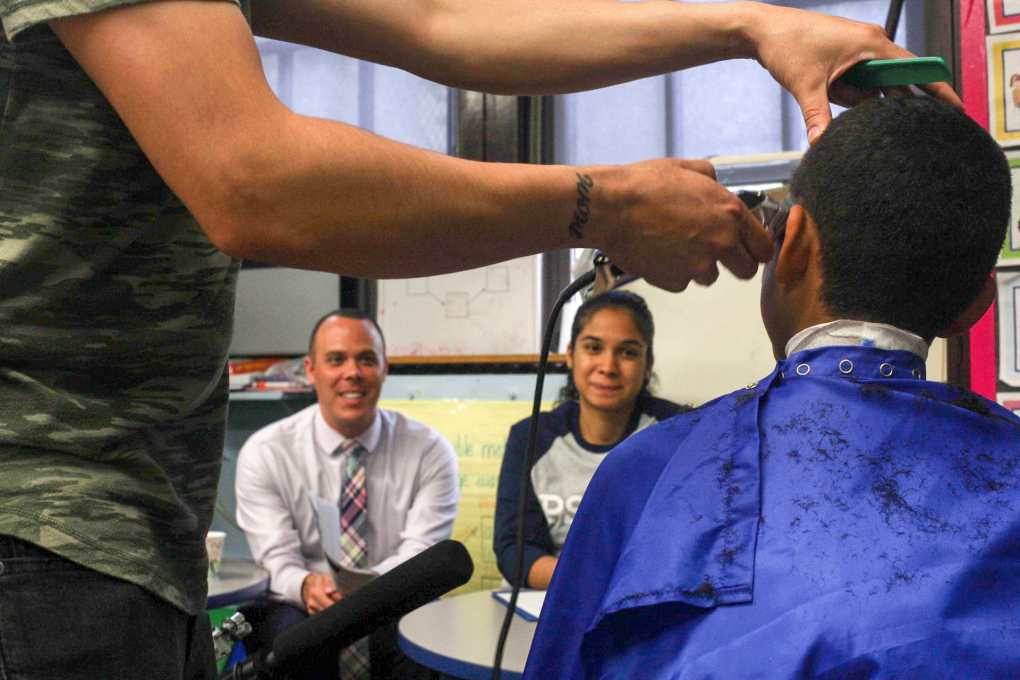
"caption": "Principal Daniel Russo and social worker Maria Morales look on as a fifth grade student receives a free haircut in preparation for graduation from the Walton Avenue School. ",
"description": null,
"title": "DJ-Cashmere---WaltonAve8",
"credit": "Neel Dhanesha for The Hechinger Report",
"status": "inherit",
"isLoading": false,
"fetchFailed": false
},
"mindshift_55749": {
"type": "attachments",
"id": "mindshift_55749",
"meta": {
"index": "attachments_1716263798",
"site": "mindshift",
"id": "55749",
"found": true
},
"parent": 55748,
"imgSizes": {
"twentyfourteen-full-width": {
"file": "https://ww2.kqed.org/app/uploads/sites/23/2020/04/young-people-left-out_enl-ea9cc3bf4d52dfc93da1e59f94cfe6fc04b19e53-1038x576.jpg",
"width": 1038,
"mimeType": "image/jpeg",
"height": 576
},
"thumbnail": {
"file": "https://ww2.kqed.org/app/uploads/sites/23/2020/04/young-people-left-out_enl-ea9cc3bf4d52dfc93da1e59f94cfe6fc04b19e53-160x90.jpg",
"width": 160,
"mimeType": "image/jpeg",
"height": 90
},
"post-thumbnail": {
"file": "https://ww2.kqed.org/app/uploads/sites/23/2020/04/young-people-left-out_enl-ea9cc3bf4d52dfc93da1e59f94cfe6fc04b19e53-672x372.jpg",
"width": 672,
"mimeType": "image/jpeg",
"height": 372
},
"kqedFullSize": {
"file": "https://ww2.kqed.org/app/uploads/sites/23/2020/04/young-people-left-out_enl-ea9cc3bf4d52dfc93da1e59f94cfe6fc04b19e53-e1587363559221.jpg",
"width": 1920,
"height": 1082
},
"large": {
"file": "https://ww2.kqed.org/app/uploads/sites/23/2020/04/young-people-left-out_enl-ea9cc3bf4d52dfc93da1e59f94cfe6fc04b19e53-1020x575.jpg",
"width": 1020,
"mimeType": "image/jpeg",
"height": 575
},
"full-width": {
"file": "https://ww2.kqed.org/app/uploads/sites/23/2020/04/young-people-left-out_enl-ea9cc3bf4d52dfc93da1e59f94cfe6fc04b19e53-1920x1082.jpg",
"width": 1920,
"mimeType": "image/jpeg",
"height": 1082
},
"medium": {
"file": "https://ww2.kqed.org/app/uploads/sites/23/2020/04/young-people-left-out_enl-ea9cc3bf4d52dfc93da1e59f94cfe6fc04b19e53-800x451.jpg",
"width": 800,
"mimeType": "image/jpeg",
"height": 451
},
"medium_large": {
"file": "https://ww2.kqed.org/app/uploads/sites/23/2020/04/young-people-left-out_enl-ea9cc3bf4d52dfc93da1e59f94cfe6fc04b19e53-768x433.jpg",
"width": 768,
"mimeType": "image/jpeg",
"height": 433
}
},
"publishDate": 1587363528,
"modified": 1587363574,
"caption": "Teens feel lost during the coronavirus pandemic.",
"description": "Teens feel lost during the coronavirus pandemic.",
"title": "Teens feel lost during the coronavirus pandemic.",
"credit": "Mikyung Lee for NPR",
"status": "inherit",
"isLoading": false,
"fetchFailed": false
},
"mindshift_55744": {
"type": "attachments",
"id": "mindshift_55744",
"meta": {
"index": "attachments_1716263798",
"site": "mindshift",
"id": "55744",
"found": true
},
"parent": 55743,
"imgSizes": {
"twentyfourteen-full-width": {
"file": "https://ww2.kqed.org/app/uploads/sites/23/2020/04/ljohnson-teachers-call-students_custom-9cd0789c26dc745a5e649c1917569fd6c6c22d58-1038x576.jpg",
"width": 1038,
"mimeType": "image/jpeg",
"height": 576
},
"thumbnail": {
"file": "https://ww2.kqed.org/app/uploads/sites/23/2020/04/ljohnson-teachers-call-students_custom-9cd0789c26dc745a5e649c1917569fd6c6c22d58-160x100.jpg",
"width": 160,
"mimeType": "image/jpeg",
"height": 100
},
"post-thumbnail": {
"file": "https://ww2.kqed.org/app/uploads/sites/23/2020/04/ljohnson-teachers-call-students_custom-9cd0789c26dc745a5e649c1917569fd6c6c22d58-672x372.jpg",
"width": 672,
"mimeType": "image/jpeg",
"height": 372
},
"kqedFullSize": {
"file": "https://ww2.kqed.org/app/uploads/sites/23/2020/04/ljohnson-teachers-call-students_custom-9cd0789c26dc745a5e649c1917569fd6c6c22d58-e1587103120894.jpg",
"width": 1920,
"height": 1198
},
"large": {
"file": "https://ww2.kqed.org/app/uploads/sites/23/2020/04/ljohnson-teachers-call-students_custom-9cd0789c26dc745a5e649c1917569fd6c6c22d58-1020x637.jpg",
"width": 1020,
"mimeType": "image/jpeg",
"height": 637
},
"full-width": {
"file": "https://ww2.kqed.org/app/uploads/sites/23/2020/04/ljohnson-teachers-call-students_custom-9cd0789c26dc745a5e649c1917569fd6c6c22d58-1920x1198.jpg",
"width": 1920,
"mimeType": "image/jpeg",
"height": 1198
},
"medium": {
"file": "https://ww2.kqed.org/app/uploads/sites/23/2020/04/ljohnson-teachers-call-students_custom-9cd0789c26dc745a5e649c1917569fd6c6c22d58-800x499.jpg",
"width": 800,
"mimeType": "image/jpeg",
"height": 499
},
"medium_large": {
"file": "https://ww2.kqed.org/app/uploads/sites/23/2020/04/ljohnson-teachers-call-students_custom-9cd0789c26dc745a5e649c1917569fd6c6c22d58-768x479.jpg",
"width": 768,
"mimeType": "image/jpeg",
"height": 479
}
},
"publishDate": 1587102913,
"modified": 1587103131,
"caption": "Teachers resort to analog measures to contact hard-to-reach students.",
"description": "Teachers resort to analog measures to contact hard-to-reach students.",
"title": "Teachers resort to analog measures to contact hard-to-reach students.",
"credit": "LA Johnson/NPR",
"status": "inherit",
"isLoading": false,
"fetchFailed": false
}
},
"audioPlayerReducer": {
"postId": "stream_live",
"isPaused": true,
"isPlaying": false,
"pfsActive": false,
"pledgeModalIsOpen": true,
"playerDrawerIsOpen": false,
"liveAudioPlayStartedAt": 0,
"liveAudioPlayContext": ""
},
"authorsReducer": {
"byline_mindshift_55873": {
"type": "authors",
"id": "byline_mindshift_55873",
"meta": {
"override": true
},
"slug": "byline_mindshift_55873",
"name": "Kavitha Cardoza",
"isLoading": false
},
"byline_mindshift_55868": {
"type": "authors",
"id": "byline_mindshift_55868",
"meta": {
"override": true
},
"slug": "byline_mindshift_55868",
"name": "Elissa Nadworny ",
"isLoading": false
},
"byline_mindshift_55790": {
"type": "authors",
"id": "byline_mindshift_55790",
"meta": {
"override": true
},
"slug": "byline_mindshift_55790",
"name": "Anya Kamenetz",
"isLoading": false
},
"byline_mindshift_55783": {
"type": "authors",
"id": "byline_mindshift_55783",
"meta": {
"override": true
},
"slug": "byline_mindshift_55783",
"name": "Eilís O'Neill",
"isLoading": false
},
"byline_mindshift_55767": {
"type": "authors",
"id": "byline_mindshift_55767",
"meta": {
"override": true
},
"slug": "byline_mindshift_55767",
"name": "Cory Turner",
"isLoading": false
},
"byline_mindshift_55752": {
"type": "authors",
"id": "byline_mindshift_55752",
"meta": {
"override": true
},
"slug": "byline_mindshift_55752",
"name": "\u003ca href=\"https://hechingerreport.org/\">DJ Cashmere, The Hechinger Report\u003c/a>",
"isLoading": false
},
"byline_mindshift_55748": {
"type": "authors",
"id": "byline_mindshift_55748",
"meta": {
"override": true
},
"slug": "byline_mindshift_55748",
"name": "Patti Neighmond",
"isLoading": false
},
"byline_mindshift_55743": {
"type": "authors",
"id": "byline_mindshift_55743",
"meta": {
"override": true
},
"slug": "byline_mindshift_55743",
"name": "Elissa Nadworny ",
"isLoading": false
},
"ksung": {
"type": "authors",
"id": "4596",
"meta": {
"index": "authors_1716337520",
"id": "4596",
"found": true
},
"name": "Ki Sung",
"firstName": "Ki",
"lastName": "Sung",
"slug": "ksung",
"email": "ksung@kqed.org",
"display_author_email": false,
"staff_mastheads": [
"news"
],
"title": "KQED Contributor",
"bio": "Ki Sung is Managing Editor of Digital News at KQED. She is former Senior Editor of MindShift and worked at NPR before joining KQED in 2014.",
"avatar": "https://secure.gravatar.com/avatar/64271e01dc95486c133be56937739045b7c00c990525bf9add12d3dd4f0433c9?s=600&d=blank&r=g",
"twitter": null,
"bluesky": null,
"facebook": null,
"instagram": null,
"linkedin": null,
"sites": [
{
"site": "arts",
"roles": [
"administrator"
]
},
{
"site": "news",
"roles": [
"administrator"
]
},
{
"site": "mindshift",
"roles": [
"administrator"
]
},
{
"site": "science",
"roles": [
"administrator"
]
},
{
"site": "forum",
"roles": [
"administrator"
]
},
{
"site": "perspectives",
"roles": [
"administrator"
]
},
{
"site": "elections",
"roles": [
"administrator"
]
}
],
"headData": {
"title": "Ki Sung | KQED",
"description": "KQED Contributor",
"ogImgSrc": "https://secure.gravatar.com/avatar/64271e01dc95486c133be56937739045b7c00c990525bf9add12d3dd4f0433c9?s=600&d=blank&r=g",
"twImgSrc": "https://secure.gravatar.com/avatar/64271e01dc95486c133be56937739045b7c00c990525bf9add12d3dd4f0433c9?s=600&d=blank&r=g"
},
"isLoading": false,
"link": "/author/ksung"
},
"lindaflan": {
"type": "authors",
"id": "4613",
"meta": {
"index": "authors_1716337520",
"id": "4613",
"found": true
},
"name": "Linda Flanagan",
"firstName": "Linda",
"lastName": "Flanagan",
"slug": "lindaflan",
"email": "lindaflan@comcast.net",
"display_author_email": false,
"staff_mastheads": [],
"title": null,
"bio": "Linda Flanagan is a freelance writer, researcher, and editor. Her work has appeared in The Atlantic, The Wall St. Journal, Newsweek, Running Times, and Mind/Shift, and she blogs regularly for the Huffington Post. Linda writes about education, culture, athletics, youth sports, mental health, politics, college admissions, and other curiosities. She also reviews books and conducts interviews.",
"avatar": "https://secure.gravatar.com/avatar/6bca04c0736bf5eaea80654019de688f?s=600&d=blank&r=g",
"twitter": "LindaFlanagan2",
"facebook": null,
"instagram": null,
"linkedin": null,
"sites": [
{
"site": "mindshift",
"roles": [
"contributor"
]
}
],
"headData": {
"title": "Linda Flanagan | KQED",
"description": null,
"ogImgSrc": "https://secure.gravatar.com/avatar/6bca04c0736bf5eaea80654019de688f?s=600&d=blank&r=g",
"twImgSrc": "https://secure.gravatar.com/avatar/6bca04c0736bf5eaea80654019de688f?s=600&d=blank&r=g"
},
"isLoading": false,
"link": "/author/lindaflan"
},
"pauldarvasi": {
"type": "authors",
"id": "11107",
"meta": {
"index": "authors_1716337520",
"id": "11107",
"found": true
},
"name": "Paul Darvasi",
"firstName": "Paul",
"lastName": "Darvasi",
"slug": "pauldarvasi",
"email": "pauldarvasi@gmail.com",
"display_author_email": false,
"staff_mastheads": [],
"title": null,
"bio": "Paul Darvasi is an experienced educator whose research, speaking and writing explore the intersections of learning, technology, narrative and games. You can follow him on Twitter:\u003ca href=\"https://twitter.com/PaulDarvasi\"> @pauldarvasi\u003c/a>",
"avatar": "https://secure.gravatar.com/avatar/df387897a1bf0cd4b720b8175112731a?s=600&d=blank&r=g",
"twitter": "pauldarvasi",
"facebook": null,
"instagram": null,
"linkedin": null,
"sites": [
{
"site": "mindshift",
"roles": [
"contributor"
]
}
],
"headData": {
"title": "Paul Darvasi | KQED",
"description": null,
"ogImgSrc": "https://secure.gravatar.com/avatar/df387897a1bf0cd4b720b8175112731a?s=600&d=blank&r=g",
"twImgSrc": "https://secure.gravatar.com/avatar/df387897a1bf0cd4b720b8175112731a?s=600&d=blank&r=g"
},
"isLoading": false,
"link": "/author/pauldarvasi"
}
},
"pagesReducer": {
"mindshift_tag_covid-19": {
"type": "terms",
"id": "mindshift_21343",
"meta": {
"index": "terms_1716263798",
"site": "mindshift",
"id": "21343",
"score": 8.558781
},
"featImg": null,
"name": "COVID-19",
"description": null,
"taxonomy": "tag",
"headData": {
"twImgId": null,
"twTitle": null,
"ogTitle": null,
"ogImgId": null,
"twDescription": null,
"description": null,
"title": "COVID-19 Archives - KQED Mindshift",
"ogDescription": null
},
"ttid": 20615,
"slug": "covid-19",
"isLoading": false,
"title": "COVID-19",
"pageMeta": {
"site": "mindshift",
"WpPageTemplate": "page-topic-editorial",
"currentPage": 19
},
"blocks": [
{
"blockName": "kqed/post-list",
"attrs": {
"layout": "cardArticle2",
"query": "posts/mindshift?tag=covid-19",
"seeMore": false,
"paginated": true,
"page": 19
}
},
{
"blockName": "kqed/ad"
}
]
}
},
"pfsSessionReducer": {},
"postsReducer": {
"stream_live": {
"type": "live",
"id": "stream_live",
"audioUrl": "https://streams.kqed.org/kqedradio",
"title": "Live Stream",
"excerpt": "Live Stream information currently unavailable.",
"link": "/radio",
"featImg": "",
"label": {
"name": "KQED Live",
"link": "/"
}
},
"stream_kqedNewscast": {
"type": "posts",
"id": "stream_kqedNewscast",
"audioUrl": "https://www.kqed.org/.stream/anon/radio/RDnews/newscast.mp3?_=1",
"title": "KQED Newscast",
"featImg": "",
"label": {
"name": "88.5 FM",
"link": "/"
}
},
"mindshift_55873": {
"type": "posts",
"id": "mindshift_55873",
"meta": {
"index": "posts_1716263798",
"site": "mindshift",
"id": "55873",
"score": null,
"sort": [
1588829239000
]
},
"parent": 0,
"labelTerm": {
"site": "mindshift"
},
"blocks": [],
"publishDate": 1588829239,
"format": "standard",
"disqusTitle": "Taking Dance, Soccer and Other After School Activities Online",
"title": "Taking Dance, Soccer and Other After School Activities Online",
"headTitle": "MindShift | KQED News",
"content": "\u003cp>When Jessyka Bagdon set out to move her tap dancing classes online, big questions started popping up right away: What about kids who don't own their own tap shoes? How to tap dance at home without ruining the floor?\u003c/p>\n\u003cp>And then came the really big challenge: Online programs like Zoom are designed for meetings, not dance classes. \"They're made to pick up voices,\" she explains, not the clickety clack of tap-dancing shoes. \"So how do we make the system not filter out our tap sounds as background noise?\"\u003c/p>\n\u003cp>So Blagdon, an instructor at 'Knock on Wood Tap Studio' in Washington, D.C., set about problem-solving. No tap shoes? Turns out Mary Jane flats work well. Saving the floor? A piece of plywood does the trick. And that muffled sound over Zoom? Blagdon says fiddling around with some computer settings can help.\u003c/p>\n\u003cp>In the nation's capital, like the rest of the country, kids cooped up at home for weeks now are craving both physical activity and the mental and creative challenges that extracurricular activities bring. And ballet instructors, soccer coaches and piano teachers — just to name a few — are finding the shutdown every bit as complicated as schools moving academic lessons online.\u003c/p>\n\u003cp>As their counterparts in schools are finding every day, it's really difficult to explain — watching on a screen — to children in a painting class exactly how to hold the brush to get the right effect. Or to align a young karate student's body just so, for a proper sidekick.\u003c/p>\n\u003cp>[ad fullwidth]\u003c/p>\n\u003cp>Nevertheless, coaches and instructors are finding creative ways of keeping children active and engaged.\u003c/p>\n\u003cp>Weeks in, Bagdon says she still has the occasional bump but not always because of technology.\u003c/p>\n\u003cp>\"Emmy, how come you're not dancing with us, my friend?\" she asks one 5-year-old who has wandered off screen during class. Her student Emeline has a perfectly valid response, \"Sometimes I go to drink a glass of milk!\"\u003c/p>\n\u003cp>For student athletes looking ahead to a summer of meets, games and matches, and the companionship of their friends and teammates, the shutdown is frustrating.\u003c/p>\n\u003cp>Ava Morales, 16, of Bethesda, Md., was excited about showing off her skills this month in front of hundreds of college recruiters. But instead of being in Arizona, she's stuck at home and can't even see her teammates.\u003c/p>\n\u003cp>\"We're all best friends,\" she says. \"So it's heartbreaking we can't spend time together and that our season is basically cancelled.\" The online activities are comforting, she says, because it helps keep all her team motivated.\u003c/p>\n\u003cp>In the Washington area, 60 local soccer clubs have joined together in a new group called DMV United. And they've made a pledge that, during the shutdown, coaches won't engage in recruiting activities.\u003c/p>\n\u003cp>Tommy Park, with the Alexandria Soccer Association in Virginia, says coaches have shared different online workouts as well as apps that focus on specific soccer skills.\u003c/p>\n\u003cp>\"The apps allow you to log how many juggles you have on the ball in a row and then log that,\" Park explains. \"Maybe you can only get five the first time and then you see your teammates at eight. So try to get nine and you see all of your teammates progress.\"\u003c/p>\n\u003cp>Some players are reviewing championship games on video, or making Instagram videos of soccer tricks; others are reading about sports psychology.\u003c/p>\n\u003cp>But Matt Libber with the Maryland SoccerPlex is clear, this can never replace the adrenaline rush of actually being on the field.\u003c/p>\n\u003cp>And he worries about some of those bigger lessons kids are missing out on, like the importance of losing sometimes.\u003c/p>\n\u003cp>\u003c/p>\n\u003cp>\"Competing online or through Instagram, yeah, you're losing but you're not losing,\" he says. A big part of what he and other coaches teach, he says, are \"some of those life lessons that, you know, if you learn them as a kid, it makes being an adult so much easier.\"\u003c/p>\n\u003cdiv class=\"fullattribution\">Copyright 2020 KQAC-FM. To see more, visit \u003ca>KQAC-FM\u003c/a>.\u003cimg src=\"https://www.google-analytics.com/__utm.gif?utmac=UA-5828686-4&utmdt=When+After-School+Is+Shut+Down%2C+Too&utme=8(APIKey)9(MDAxOTAwOTE4MDEyMTkxMDAzNjczZDljZA004)\">\u003c/div>\n\n",
"disqusIdentifier": "55873 https://ww2.kqed.org/mindshift/?p=55873",
"disqusUrl": "https://ww2.kqed.org/mindshift/2020/05/06/taking-dance-soccer-and-other-after-school-activities-online/",
"stats": {
"hasVideo": false,
"hasChartOrMap": false,
"hasAudio": false,
"hasPolis": false,
"wordCount": 677,
"hasGoogleForm": false,
"hasGallery": false,
"hasHearkenModule": false,
"iframeSrcs": [],
"paragraphCount": 20
},
"modified": 1588829299,
"excerpt": "With schools moved online and kids cooped up at home, soccer coaches, dance instructors and other leaders of extracurricular activites are finding creative ways of keeping kids active and engaged.",
"headData": {
"twImgId": "",
"twTitle": "",
"ogTitle": "",
"ogImgId": "",
"twDescription": "",
"description": "With schools moved online and kids cooped up at home, soccer coaches, dance instructors and other leaders of extracurricular activites are finding creative ways of keeping kids active and engaged.",
"title": "Taking Dance, Soccer and Other After School Activities Online | KQED",
"ogDescription": "",
"schema": {
"@context": "https://schema.org",
"@type": "Article",
"headline": "Taking Dance, Soccer and Other After School Activities Online",
"datePublished": "2020-05-06T22:27:19-07:00",
"dateModified": "2020-05-06T22:28:19-07:00",
"image": "https://cdn.kqed.org/wp-content/uploads/2020/02/KQED-OG-Image@1x.png"
}
},
"guestAuthors": [],
"slug": "taking-dance-soccer-and-other-after-school-activities-online",
"status": "publish",
"nprApiLink": "http://api.npr.org/query?id=846958017&apiKey=MDAxOTAwOTE4MDEyMTkxMDAzNjczZDljZA004",
"nprByline": "Kavitha Cardoza",
"nprStoryDate": "Wed, 06 May 2020 06:57:38 -0400",
"nprLastModifiedDate": "Wed, 06 May 2020 06:57:38 -0400",
"nprHtmlLink": "https://www.npr.org/2020/05/06/846958017/when-after-school-is-shut-down-too?ft=nprml&f=846958017",
"nprImageAgency": "NPR",
"nprImageCredit": "LA Johnson",
"nprStoryId": "846958017",
"nprRetrievedStory": "1",
"nprPubDate": "Wed, 06 May 2020 06:57:00 -0400",
"path": "/mindshift/55873/taking-dance-soccer-and-other-after-school-activities-online",
"audioTrackLength": null,
"parsedContent": [
{
"type": "contentString",
"content": "\u003cdiv class=\"post-body\">\u003cp>\u003cp>When Jessyka Bagdon set out to move her tap dancing classes online, big questions started popping up right away: What about kids who don't own their own tap shoes? How to tap dance at home without ruining the floor?\u003c/p>\n\u003cp>And then came the really big challenge: Online programs like Zoom are designed for meetings, not dance classes. \"They're made to pick up voices,\" she explains, not the clickety clack of tap-dancing shoes. \"So how do we make the system not filter out our tap sounds as background noise?\"\u003c/p>\n\u003cp>So Blagdon, an instructor at 'Knock on Wood Tap Studio' in Washington, D.C., set about problem-solving. No tap shoes? Turns out Mary Jane flats work well. Saving the floor? A piece of plywood does the trick. And that muffled sound over Zoom? Blagdon says fiddling around with some computer settings can help.\u003c/p>\n\u003cp>In the nation's capital, like the rest of the country, kids cooped up at home for weeks now are craving both physical activity and the mental and creative challenges that extracurricular activities bring. And ballet instructors, soccer coaches and piano teachers — just to name a few — are finding the shutdown every bit as complicated as schools moving academic lessons online.\u003c/p>\n\u003cp>As their counterparts in schools are finding every day, it's really difficult to explain — watching on a screen — to children in a painting class exactly how to hold the brush to get the right effect. Or to align a young karate student's body just so, for a proper sidekick.\u003c/p>\n\u003cp>\u003c/p>\u003c/div>",
"attributes": {
"named": {},
"numeric": []
}
},
{
"type": "component",
"content": "",
"name": "ad",
"attributes": {
"named": {
"label": "fullwidth"
},
"numeric": [
"fullwidth"
]
}
},
{
"type": "contentString",
"content": "\u003cdiv class=\"post-body\">\u003cp>\u003c/p>\n\u003cp>Nevertheless, coaches and instructors are finding creative ways of keeping children active and engaged.\u003c/p>\n\u003cp>Weeks in, Bagdon says she still has the occasional bump but not always because of technology.\u003c/p>\n\u003cp>\"Emmy, how come you're not dancing with us, my friend?\" she asks one 5-year-old who has wandered off screen during class. Her student Emeline has a perfectly valid response, \"Sometimes I go to drink a glass of milk!\"\u003c/p>\n\u003cp>For student athletes looking ahead to a summer of meets, games and matches, and the companionship of their friends and teammates, the shutdown is frustrating.\u003c/p>\n\u003cp>Ava Morales, 16, of Bethesda, Md., was excited about showing off her skills this month in front of hundreds of college recruiters. But instead of being in Arizona, she's stuck at home and can't even see her teammates.\u003c/p>\n\u003cp>\"We're all best friends,\" she says. \"So it's heartbreaking we can't spend time together and that our season is basically cancelled.\" The online activities are comforting, she says, because it helps keep all her team motivated.\u003c/p>\n\u003cp>In the Washington area, 60 local soccer clubs have joined together in a new group called DMV United. And they've made a pledge that, during the shutdown, coaches won't engage in recruiting activities.\u003c/p>\n\u003cp>Tommy Park, with the Alexandria Soccer Association in Virginia, says coaches have shared different online workouts as well as apps that focus on specific soccer skills.\u003c/p>\n\u003cp>\"The apps allow you to log how many juggles you have on the ball in a row and then log that,\" Park explains. \"Maybe you can only get five the first time and then you see your teammates at eight. So try to get nine and you see all of your teammates progress.\"\u003c/p>\n\u003cp>Some players are reviewing championship games on video, or making Instagram videos of soccer tricks; others are reading about sports psychology.\u003c/p>\n\u003cp>But Matt Libber with the Maryland SoccerPlex is clear, this can never replace the adrenaline rush of actually being on the field.\u003c/p>\n\u003cp>And he worries about some of those bigger lessons kids are missing out on, like the importance of losing sometimes.\u003c/p>\n\u003cp>\u003c/p>\n\u003cp>\"Competing online or through Instagram, yeah, you're losing but you're not losing,\" he says. A big part of what he and other coaches teach, he says, are \"some of those life lessons that, you know, if you learn them as a kid, it makes being an adult so much easier.\"\u003c/p>\n\u003cdiv class=\"fullattribution\">Copyright 2020 KQAC-FM. To see more, visit \u003ca>KQAC-FM\u003c/a>.\u003cimg src=\"https://www.google-analytics.com/__utm.gif?utmac=UA-5828686-4&utmdt=When+After-School+Is+Shut+Down%2C+Too&utme=8(APIKey)9(MDAxOTAwOTE4MDEyMTkxMDAzNjczZDljZA004)\">\u003c/div>\n\n\u003c/div>\u003c/p>",
"attributes": {
"named": {},
"numeric": []
}
}
],
"link": "/mindshift/55873/taking-dance-soccer-and-other-after-school-activities-online",
"authors": [
"byline_mindshift_55873"
],
"categories": [
"mindshift_21345"
],
"tags": [
"mindshift_21344",
"mindshift_21343",
"mindshift_358",
"mindshift_20784",
"mindshift_1040",
"mindshift_384",
"mindshift_21057"
],
"featImg": "mindshift_55874",
"label": "mindshift"
},
"mindshift_55868": {
"type": "posts",
"id": "mindshift_55868",
"meta": {
"index": "posts_1716263798",
"site": "mindshift",
"id": "55868",
"score": null,
"sort": [
1588750898000
]
},
"parent": 0,
"labelTerm": {
"site": "mindshift"
},
"blocks": [],
"publishDate": 1588750898,
"format": "standard",
"disqusTitle": "6 Ways College Might Look Different In The Fall",
"title": "6 Ways College Might Look Different In The Fall",
"headTitle": "MindShift | KQED News",
"content": "\u003cp>What will happen on college campuses in the fall? It's a big question for families, students and the schools themselves.\u003c/p>\n\u003cp>A lot of what happens depends on factors outside the control of individual schools: Will there be more testing? Contact tracing? Enough physical space for distancing? Will the coronavirus have a second wave? Will any given state allow campuses to reopen?\u003c/p>\n\u003cp>For all of these questions, it's really too early to know the answers. But one thing is clear: Life, and learning for the nation's 20 million students in higher education, will be different.\u003c/p>\n\u003cp>\"I don't think there's any scenario under which it's business as usual on American college campuses in the fall,\" says Nicholas Christakis, a sociologist and physician at Yale University.\u003c/p>\n\u003cp>So why are so many colleges \u003ca href=\"https://www.chronicle.com/article/Here-s-a-List-of-Colleges-/248626/#.XrFupw8b0Ws.twitter\">announcing they will be back on campus\u003c/a> in the fall?\u003c/p>\n\u003cp>[ad fullwidth]\u003c/p>\n\u003cp>In many cases, it's because they're still trying to woo students. A survey of college presidents found their \u003ca href=\"https://www.acenet.edu/Research-Insights/Pages/Senior-Leaders/College-and-University-Presidents-Respond-to-COVID-19-April-2020.aspx\">most pressing concern right now \u003c/a>is summer and fall enrollment. Even elite schools, typically more stable when it comes to enrollment, have reportedly been \u003ca href=\"https://www.nytimes.com/2020/05/01/us/coronavirus-college-enrollment.html\">tapping their waitlists\u003c/a>.\u003c/p>\n\u003cp>In the midst of all this uncertainty, it's worth looking at some of the ideas out there. With the help of Joshua Kim and Edward J. Maloney, professors and authors of the book \u003cem>Learning Innovation and the Future of Higher Education, \u003c/em>here are some potential scenarios for reopening colleges and universities:\u003c/p>\n\u003cp>\u003cstrong>All virtual\u003c/strong>\u003c/p>\n\u003cp>Perhaps the most obvious option for the fall is to continue doing what they've been doing this spring. Colleges have signaled that they're planning for this option — even if it's a last resort. California State University, Fullerton, was one of the first to announce publicly it was planning for a fall semester online.\u003c/p>\n\u003cp>\"Obviously we want to resume in-person teaching as soon as possible, but we also need to make sure that we're safe,\" says Ellen Treanor, who helps lead strategic communication at the school. Treanor says it made a lot of sense to assume the school would start online. \"What would be the easier way to transition? It would be easier to transition beginning virtually and then transitioning in person,\" she said. \"The faculty [needs] to be prepared.\"\u003c/p>\n\u003cp>With virtual classes, students can remain at home, although some colleges are exploring bringing them back to campus, where they could use the school's Wi-Fi to take online classes.\u003c/p>\n\u003cp>\u003cstrong>Delayed start\u003c/strong>\u003c/p>\n\u003cp>A delay in the semester would allow a school to wait it out until it was safer to reopen. One option is to push back a month or two, starting in October or November. Another idea is to push a normal start to January. In that case, the spring semester would become the fall semester, and potentially students could stay on campus through next summer to make up the spring semester. \u003ca href=\"http://www.bu.edu/articles/2020/covid-19-recovery-plan/\">Boston University floated a version \u003c/a>of this January start date when it announced a number of plans it was exploring.\u003c/p>\n\u003cp>One downside to a late start is what students will do in the meantime, especially those who don't have financial stability and rely on campus or the university to be a safe and stable home.\u003c/p>\n\u003cp>\u003cstrong>Some online, some face-to-face\u003c/strong>\u003c/p>\n\u003cp>This would be a hybrid model, with a combination of virtual and in-person classes. It may be a good choice for campuses that don't have enough classrooms to allow adjusting face-to-face teaching to the requirements of social distancing.\u003c/p>\n\u003cp>\"You might have some of the larger classes being taught online simply because it's harder to imagine a 150- or 350-person classroom,\" says Maloney, who leads the Center for New Designs in Learning and Scholarship at Georgetown University. \"So you might see that class split up into multiple sections.\" For large, entry-level classes, colleges may have a lecture component online and then meet in smaller groups in person.\u003c/p>\n\u003cp>\"The hybrid model doesn't have to just be about modality,\" Maloney says. \"It can be, but it could also be about fundamentally rethinking what the core structure has been for those large classes.\"\u003c/p>\n\u003cp>Of course, shifting larger classes online may not be enough, by itself, to alleviate the health concerns of having students on campus. \u003ca href=\"https://www.chronicle.com/article/a-very-small-world-how/248556?key=wD5N8zUKkQDLHNwlH_yTVj-uA1zVrKPWroGDfuRN-ZQuFzXOyqTdmRrRygeinPP-cHZXc3BSTmNheFl1M1RCT016N1c4X0J6dW1namJMeWtyOFdHZmxEQ1JrUQ\">Early research from Cornell University \u003c/a>found that eliminating very large classes still left the small world network of the campus intact.\u003c/p>\n\u003cp>\u003cstrong>Shortened blocks\u003c/strong>\u003c/p>\n\u003cp>In block scheduling, students take just one course at a time for a shorter duration, typically three or four weeks. Colorado College, a liberal arts school south of Denver, has been using this model for 50 years. The college adopted this style of classes because \"it allows [students] to take a deep dive and really focus in unique ways on the single subject,\" says Alan Townsend, the provost there. In a typical year, the school offers eight blocks.\u003c/p>\n\u003cp>In addition to its intensity, block scheduling is attractive right now because it allows flexibility. Colleges that use it have the opportunity to change the way classes look every three weeks — since there are multiple start and stop points. (With a semester, you have only a single start and then, often 16 weeks later, an end.)\u003c/p>\n\u003cp>\"It's easier for us to now think creatively for next year,\" Townsend says. \"Different students can make different choices. That's really hard to do with a semester-based system, but the blocks allow us to do that a little bit more flexibly.\"\u003c/p>\n\u003cp>The school is also entertaining the idea of sending faculty abroad to teach a block for international students who might not be able to enter the U.S, or adding summer blocks to give students even more opportunities to take classes.\u003c/p>\n\u003cp>\u003cstrong>Only some on campus\u003c/strong>\u003c/p>\n\u003cp>Some colleges have suggested bringing only freshmen back to campus and having upperclassmen either delay their start, or be online and remote.\u003c/p>\n\u003cp>The idea centers on research that shows just how important a student's first year of college is as a predictor of graduation. Adapting to campus can be a challenge, so this would allow first-year students to get comfortable and have extra support on campus.\u003c/p>\n\u003cp>Since upperclassmen are already familiar with how campus and classes work, the theory goes, they can more easily adapt to an online environment. Other versions of this approach would have students who have housing needs come back to campus first, and then, over time, phase in other groups of students.\u003c/p>\n\u003cp>All these options seek to keep the population density of the campus lower while still maintaining some face-to-face interactions.\u003c/p>\n\u003cp>\u003cstrong>On campus, with some changes\u003c/strong>\u003c/p>\n\u003cp>Social distancing, improved testing and contact tracing could help colleges reopen their campuses.\u003c/p>\n\u003cp>\"Every school is trying to figure out a way to have students come back and do whatever we can while also protecting public health,\" says \u003cem>Learning Innovation\u003c/em> co-author Joshua Kim, director of online programs and strategy at Dartmouth College.\u003c/p>\n\u003cp>\"At the same time, we know that, however that works, things will be different. It's probably unlikely that we'll be able to cram students together in large, packed lecture halls or put doubles and triples in residence halls or have big events.\"\u003c/p>\n\u003cp>To follow social distancing, professors are measuring their classrooms, calculating how many students could fit in the space if they were 6 feet apart. Deans are planning out how students could enter and exit the classrooms safely.\u003c/p>\n\u003cp>But it's not just the classrooms that pose a challenge. For residential colleges, it's the dorms.\u003c/p>\n\u003cp>\"Whether or not students are actually learning in the classroom, it's incredibly important for them to have an on-campus experience,\" Maloney says. So schools are thinking about how they can spread their students out, putting them in places where they normally wouldn't go.\u003c/p>\n\u003cp>Some ideas include housing students in offices that aren't being used, local hotel rooms or off-campus housing. Institutions are also reimagining campus events, like freshman orientation, since it's unlikely hundreds of students will be in a packed auditorium.\u003c/p>\n\u003cp>[ad floatright]\u003c/p>\n\u003cp>\"Rethinking how we do everything we do at a university is part of the process,\" Maloney says.\u003c/p>\n\u003cdiv class=\"fullattribution\">Copyright 2020 NPR. To see more, visit https://www.npr.org.\u003cimg src=\"https://www.google-analytics.com/__utm.gif?utmac=UA-5828686-4&utmdt=6+Ways+College+Might+Look+Different+In+The+Fall&utme=8(APIKey)9(MDAxOTAwOTE4MDEyMTkxMDAzNjczZDljZA004)\">\u003c/div>\n\n",
"disqusIdentifier": "55868 https://ww2.kqed.org/mindshift/?p=55868",
"disqusUrl": "https://ww2.kqed.org/mindshift/2020/05/06/6-ways-college-might-look-different-in-the-fall/",
"stats": {
"hasVideo": false,
"hasChartOrMap": false,
"hasAudio": false,
"hasPolis": false,
"wordCount": 1378,
"hasGoogleForm": false,
"hasGallery": false,
"hasHearkenModule": false,
"iframeSrcs": [],
"paragraphCount": 40
},
"modified": 1588750922,
"excerpt": "Colleges have been careful to leave the door open on their plans for the fall semester. Most experts say it will be anything but normal. Here's a sampling of how it could look.",
"headData": {
"twImgId": "",
"twTitle": "",
"ogTitle": "",
"ogImgId": "",
"twDescription": "",
"description": "Colleges have been careful to leave the door open on their plans for the fall semester. Most experts say it will be anything but normal. Here's a sampling of how it could look.",
"title": "6 Ways College Might Look Different In The Fall | KQED",
"ogDescription": "",
"schema": {
"@context": "https://schema.org",
"@type": "Article",
"headline": "6 Ways College Might Look Different In The Fall",
"datePublished": "2020-05-06T00:41:38-07:00",
"dateModified": "2020-05-06T00:42:02-07:00",
"image": "https://cdn.kqed.org/wp-content/uploads/2020/02/KQED-OG-Image@1x.png"
}
},
"guestAuthors": [],
"slug": "6-ways-college-might-look-different-in-the-fall",
"status": "publish",
"nprApiLink": "http://api.npr.org/query?id=848033805&apiKey=MDAxOTAwOTE4MDEyMTkxMDAzNjczZDljZA004",
"nprByline": "Elissa Nadworny ",
"nprStoryDate": "Tue, 05 May 2020 07:11:00 -0400",
"nprLastModifiedDate": "Tue, 05 May 2020 16:59:53 -0400",
"nprHtmlLink": "https://www.npr.org/2020/05/05/848033805/6-ways-college-might-look-different-in-the-fall?ft=nprml&f=848033805",
"nprAudio": "https://ondemand.npr.org/anon.npr-mp3/npr/atc/2020/05/20200505_atc_6_ways_college_might_look_different_in_the_fall.mp3?orgId=1&topicId=1013&aggIds=812054919&d=212&p=2&story=848033805&ft=nprml&f=848033805",
"nprImageAgency": "Hanna Barczyk for NPR",
"nprAudioM3u": "http://api.npr.org/m3u/1850964129-2f9ff2.m3u?orgId=1&topicId=1013&aggIds=812054919&d=212&p=2&story=848033805&ft=nprml&f=848033805",
"nprStoryId": "848033805",
"nprRetrievedStory": "1",
"nprPubDate": "Tue, 05 May 2020 20:04:00 -0400",
"path": "/mindshift/55868/6-ways-college-might-look-different-in-the-fall",
"audioUrl": "https://ondemand.npr.org/anon.npr-mp3/npr/atc/2020/05/20200505_atc_6_ways_college_might_look_different_in_the_fall.mp3?orgId=1&topicId=1013&aggIds=812054919&d=212&p=2&story=848033805&ft=nprml&f=848033805",
"audioTrackLength": null,
"parsedContent": [
{
"type": "contentString",
"content": "\u003cdiv class=\"post-body\">\u003cp>\u003cp>What will happen on college campuses in the fall? It's a big question for families, students and the schools themselves.\u003c/p>\n\u003cp>A lot of what happens depends on factors outside the control of individual schools: Will there be more testing? Contact tracing? Enough physical space for distancing? Will the coronavirus have a second wave? Will any given state allow campuses to reopen?\u003c/p>\n\u003cp>For all of these questions, it's really too early to know the answers. But one thing is clear: Life, and learning for the nation's 20 million students in higher education, will be different.\u003c/p>\n\u003cp>\"I don't think there's any scenario under which it's business as usual on American college campuses in the fall,\" says Nicholas Christakis, a sociologist and physician at Yale University.\u003c/p>\n\u003cp>So why are so many colleges \u003ca href=\"https://www.chronicle.com/article/Here-s-a-List-of-Colleges-/248626/#.XrFupw8b0Ws.twitter\">announcing they will be back on campus\u003c/a> in the fall?\u003c/p>\n\u003cp>\u003c/p>\u003c/div>",
"attributes": {
"named": {},
"numeric": []
}
},
{
"type": "component",
"content": "",
"name": "ad",
"attributes": {
"named": {
"label": "fullwidth"
},
"numeric": [
"fullwidth"
]
}
},
{
"type": "contentString",
"content": "\u003cdiv class=\"post-body\">\u003cp>\u003c/p>\n\u003cp>In many cases, it's because they're still trying to woo students. A survey of college presidents found their \u003ca href=\"https://www.acenet.edu/Research-Insights/Pages/Senior-Leaders/College-and-University-Presidents-Respond-to-COVID-19-April-2020.aspx\">most pressing concern right now \u003c/a>is summer and fall enrollment. Even elite schools, typically more stable when it comes to enrollment, have reportedly been \u003ca href=\"https://www.nytimes.com/2020/05/01/us/coronavirus-college-enrollment.html\">tapping their waitlists\u003c/a>.\u003c/p>\n\u003cp>In the midst of all this uncertainty, it's worth looking at some of the ideas out there. With the help of Joshua Kim and Edward J. Maloney, professors and authors of the book \u003cem>Learning Innovation and the Future of Higher Education, \u003c/em>here are some potential scenarios for reopening colleges and universities:\u003c/p>\n\u003cp>\u003cstrong>All virtual\u003c/strong>\u003c/p>\n\u003cp>Perhaps the most obvious option for the fall is to continue doing what they've been doing this spring. Colleges have signaled that they're planning for this option — even if it's a last resort. California State University, Fullerton, was one of the first to announce publicly it was planning for a fall semester online.\u003c/p>\n\u003cp>\"Obviously we want to resume in-person teaching as soon as possible, but we also need to make sure that we're safe,\" says Ellen Treanor, who helps lead strategic communication at the school. Treanor says it made a lot of sense to assume the school would start online. \"What would be the easier way to transition? It would be easier to transition beginning virtually and then transitioning in person,\" she said. \"The faculty [needs] to be prepared.\"\u003c/p>\n\u003cp>With virtual classes, students can remain at home, although some colleges are exploring bringing them back to campus, where they could use the school's Wi-Fi to take online classes.\u003c/p>\n\u003cp>\u003cstrong>Delayed start\u003c/strong>\u003c/p>\n\u003cp>A delay in the semester would allow a school to wait it out until it was safer to reopen. One option is to push back a month or two, starting in October or November. Another idea is to push a normal start to January. In that case, the spring semester would become the fall semester, and potentially students could stay on campus through next summer to make up the spring semester. \u003ca href=\"http://www.bu.edu/articles/2020/covid-19-recovery-plan/\">Boston University floated a version \u003c/a>of this January start date when it announced a number of plans it was exploring.\u003c/p>\n\u003cp>One downside to a late start is what students will do in the meantime, especially those who don't have financial stability and rely on campus or the university to be a safe and stable home.\u003c/p>\n\u003cp>\u003cstrong>Some online, some face-to-face\u003c/strong>\u003c/p>\n\u003cp>This would be a hybrid model, with a combination of virtual and in-person classes. It may be a good choice for campuses that don't have enough classrooms to allow adjusting face-to-face teaching to the requirements of social distancing.\u003c/p>\n\u003cp>\"You might have some of the larger classes being taught online simply because it's harder to imagine a 150- or 350-person classroom,\" says Maloney, who leads the Center for New Designs in Learning and Scholarship at Georgetown University. \"So you might see that class split up into multiple sections.\" For large, entry-level classes, colleges may have a lecture component online and then meet in smaller groups in person.\u003c/p>\n\u003cp>\"The hybrid model doesn't have to just be about modality,\" Maloney says. \"It can be, but it could also be about fundamentally rethinking what the core structure has been for those large classes.\"\u003c/p>\n\u003cp>Of course, shifting larger classes online may not be enough, by itself, to alleviate the health concerns of having students on campus. \u003ca href=\"https://www.chronicle.com/article/a-very-small-world-how/248556?key=wD5N8zUKkQDLHNwlH_yTVj-uA1zVrKPWroGDfuRN-ZQuFzXOyqTdmRrRygeinPP-cHZXc3BSTmNheFl1M1RCT016N1c4X0J6dW1namJMeWtyOFdHZmxEQ1JrUQ\">Early research from Cornell University \u003c/a>found that eliminating very large classes still left the small world network of the campus intact.\u003c/p>\n\u003cp>\u003cstrong>Shortened blocks\u003c/strong>\u003c/p>\n\u003cp>In block scheduling, students take just one course at a time for a shorter duration, typically three or four weeks. Colorado College, a liberal arts school south of Denver, has been using this model for 50 years. The college adopted this style of classes because \"it allows [students] to take a deep dive and really focus in unique ways on the single subject,\" says Alan Townsend, the provost there. In a typical year, the school offers eight blocks.\u003c/p>\n\u003cp>In addition to its intensity, block scheduling is attractive right now because it allows flexibility. Colleges that use it have the opportunity to change the way classes look every three weeks — since there are multiple start and stop points. (With a semester, you have only a single start and then, often 16 weeks later, an end.)\u003c/p>\n\u003cp>\"It's easier for us to now think creatively for next year,\" Townsend says. \"Different students can make different choices. That's really hard to do with a semester-based system, but the blocks allow us to do that a little bit more flexibly.\"\u003c/p>\n\u003cp>The school is also entertaining the idea of sending faculty abroad to teach a block for international students who might not be able to enter the U.S, or adding summer blocks to give students even more opportunities to take classes.\u003c/p>\n\u003cp>\u003cstrong>Only some on campus\u003c/strong>\u003c/p>\n\u003cp>Some colleges have suggested bringing only freshmen back to campus and having upperclassmen either delay their start, or be online and remote.\u003c/p>\n\u003cp>The idea centers on research that shows just how important a student's first year of college is as a predictor of graduation. Adapting to campus can be a challenge, so this would allow first-year students to get comfortable and have extra support on campus.\u003c/p>\n\u003cp>Since upperclassmen are already familiar with how campus and classes work, the theory goes, they can more easily adapt to an online environment. Other versions of this approach would have students who have housing needs come back to campus first, and then, over time, phase in other groups of students.\u003c/p>\n\u003cp>All these options seek to keep the population density of the campus lower while still maintaining some face-to-face interactions.\u003c/p>\n\u003cp>\u003cstrong>On campus, with some changes\u003c/strong>\u003c/p>\n\u003cp>Social distancing, improved testing and contact tracing could help colleges reopen their campuses.\u003c/p>\n\u003cp>\"Every school is trying to figure out a way to have students come back and do whatever we can while also protecting public health,\" says \u003cem>Learning Innovation\u003c/em> co-author Joshua Kim, director of online programs and strategy at Dartmouth College.\u003c/p>\n\u003cp>\"At the same time, we know that, however that works, things will be different. It's probably unlikely that we'll be able to cram students together in large, packed lecture halls or put doubles and triples in residence halls or have big events.\"\u003c/p>\n\u003cp>To follow social distancing, professors are measuring their classrooms, calculating how many students could fit in the space if they were 6 feet apart. Deans are planning out how students could enter and exit the classrooms safely.\u003c/p>\n\u003cp>But it's not just the classrooms that pose a challenge. For residential colleges, it's the dorms.\u003c/p>\n\u003cp>\"Whether or not students are actually learning in the classroom, it's incredibly important for them to have an on-campus experience,\" Maloney says. So schools are thinking about how they can spread their students out, putting them in places where they normally wouldn't go.\u003c/p>\n\u003cp>Some ideas include housing students in offices that aren't being used, local hotel rooms or off-campus housing. Institutions are also reimagining campus events, like freshman orientation, since it's unlikely hundreds of students will be in a packed auditorium.\u003c/p>\n\u003cp>\u003c/p>\u003c/div>",
"attributes": {
"named": {},
"numeric": []
}
},
{
"type": "component",
"content": "",
"name": "ad",
"attributes": {
"named": {
"label": "floatright"
},
"numeric": [
"floatright"
]
}
},
{
"type": "contentString",
"content": "\u003cdiv class=\"post-body\">\u003cp>\u003c/p>\n\u003cp>\"Rethinking how we do everything we do at a university is part of the process,\" Maloney says.\u003c/p>\n\u003cdiv class=\"fullattribution\">Copyright 2020 NPR. To see more, visit https://www.npr.org.\u003cimg src=\"https://www.google-analytics.com/__utm.gif?utmac=UA-5828686-4&utmdt=6+Ways+College+Might+Look+Different+In+The+Fall&utme=8(APIKey)9(MDAxOTAwOTE4MDEyMTkxMDAzNjczZDljZA004)\">\u003c/div>\n\n\u003c/div>\u003c/p>",
"attributes": {
"named": {},
"numeric": []
}
}
],
"link": "/mindshift/55868/6-ways-college-might-look-different-in-the-fall",
"authors": [
"byline_mindshift_55868"
],
"categories": [
"mindshift_21345"
],
"tags": [
"mindshift_21261",
"mindshift_21344",
"mindshift_21343",
"mindshift_358",
"mindshift_20784",
"mindshift_1040",
"mindshift_122"
],
"featImg": "mindshift_55869",
"label": "mindshift"
},
"mindshift_55858": {
"type": "posts",
"id": "mindshift_55858",
"meta": {
"index": "posts_1716263798",
"site": "mindshift",
"id": "55858",
"score": null,
"sort": [
1588661674000
]
},
"parent": 0,
"labelTerm": {
"site": "mindshift"
},
"blocks": [],
"publishDate": 1588661674,
"format": "standard",
"disqusTitle": "How Parents Can Coexist with Disappointed and Restless College Students",
"title": "How Parents Can Coexist with Disappointed and Restless College Students",
"headTitle": "MindShift | KQED News",
"content": "\u003cp>Like many college seniors, Maggie Lynch is grieving. “The hardest part has been the overwhelming feeling of loss,” she said about her disrupted final semester stemming from the COVID-19 pandemic. Lynch is hunkering down in Princeton, NJ, with her brother, sister, and parents, and struggles not to dwell on all she’s missing. Her friend Melissa MacKenzie echoed those sentiments and added her own. “The hardest thing is the uncertainty,” said MacKenzie, who lives in Peabody, MA. Though she has a job that’s set to begin in the summer, she finds the inability to plan, and the unknowability of what’s ahead, deeply troubling. Both admit to some petulance at home, especially earlier in the quarantine. “I’m sure my Mom would report that I’ve been complaining extra because of this,” MacKenzie said. During her first week home, Lynch added, she made sure her family members appreciated that her suffering trumped everyone else’s. “Ha!” Lynch said. She’s gotten past the early victimization.\u003c/p>\n\u003cp>Parents of college seniors also are struggling, not only over how to see beyond the miasma of national gloom, but also how to steer their young adult children effectively. The mother of a college senior who asked to remain anonymous to avoid embarrassing her son, explained how exasperating it is to live with a miserable young adult who can’t wait to escape the family home. “He continues to mope around as if he’s the only one suffering, and I’m trying not to minimize his loss,” she said. Because the boy’s classes are mandatory pass/fail, he’s free not to devote himself to his studies, allowing more time for sulking, complaining, and lobbying to go back to his off-campus apartment, which has put him at cross-purposes with his father. “It’s a daily barrage of hearing how unhappy he is,” she said.\u003c/p>\n\u003cp>\u003ca href=\"https://www.julielythcotthaims.com/\">Julie Lythcott-Haims\u003c/a>, once the dean of freshmen at Stanford, now a guru on overparenting, has some advice for parents of disgruntled and restless college seniors. Lythcott-Haims is writing a sequel to her manifesto, \u003ca href=\"https://www.julielythcotthaims.com/how-to-raise-an-adult\">\u003cem>How to Raise an Adult\u003c/em>\u003c/a>, this time for young adults themselves. She has much to offer the beleaguered among us:\u003c/p>\n\u003cp>\u003cstrong>Summon your empathy, parents\u003c/strong>. “These kids are legitimately grieving,” she said. Many students in their final year have been on track for college since they were eight years old, striving inside the classroom and out to maximize their college options. “We’ve raised them to believe that college is the be-all and end-all of their lives,” Lythcott-Haims told me. For seniors especially, the final semester is supposed to be the culmination of all that labor; its sudden derailment must be bewildering. “The rituals of completion and departure may seem trivial to parents, but these things really do matter,” she added. Some seniors wonder if the promise of a college degree delivering the big job and in turn the right life holds up amid COVID-19. “It’s the fantasy of the right life that’s in jeopardy,” she said. This is everything to college kids, and parents needs to dig deep and empathize.\u003c/p>\n\u003cfigure id=\"attachment_40770\" class=\"wp-caption alignright\" style=\"max-width: 300px\">\u003cimg class=\"size-full wp-image-40770\" src=\"https://ww2.kqed.org/app/uploads/sites/23/2015/06/Julie-Lythcott-Haims_Author-photo-for-publicity-and-marketing_Credit-to-Kristina-Vetter-e1433852809685.jpg\" alt=\"\" width=\"300\" height=\"450\">\u003cfigcaption class=\"wp-caption-text\">Author Julie Lythcott-Haims \u003ccite>(Kristina Vetter)\u003c/cite>\u003c/figcaption>\u003c/figure>\n\u003cp>\u003cstrong>Be tough about enforcing the quarantine. \u003c/strong>College seniors are adults who need to behave just as responsibly as the rest of society. It’s not appropriate to go back and forth between houses, or to break through their “germ circle” and risk sickening others. At the same time, for their own mental health, they—and we—need to see other people. “They just have to adhere to the letter and the spirit of the rules,” she said. That means staying out of other people’s houses and cars, but allows for occasional outdoor visits or walks, provided everyone remains six feet apart.\u003c/p>\n\u003cp>[ad fullwidth]\u003c/p>\n\u003cp>\u003cstrong>But that doesn’t mean they have to live with their parents\u003c/strong>. For college seniors, “home” might mean an apartment in their college town or the city where they hope to land their first job. And that home might include a handful of close friends where they all can continue to be autonomous adults. “More power to them,” Lythcott-Haims said, “I love the fact that they want to be responsible for everything.” To do this correctly, of course, young adults would have to isolate themselves in their new location before convening as a group, and commit to upholding the social distance measures imposed in their area.\u003c/p>\n\u003cp>\u003cstrong>Keep quiet about their college assignments.\u003c/strong> “Do you want your kids to say, ‘how was your meeting? Did you do better this time?’” she asked. “No, no, no—do not ask about their schoolwork.” College seniors should not be micro-managed, and lots of prying questions from Mom and Dad send the message that parents have no confidence in their abilities. “It’s an assault to their psyches,” she said. For parents who begrudgingly gave up their hovering ways when their children went to college, be sure not to revert to old patterns. For mothers and fathers who \u003cem>still\u003c/em> weigh in on their adult children’s college papers and assignments, give it up now—“the sooner the better,” she said. Be interested and supportive, but don’t nag.\u003c/p>\n\u003cp>\u003cstrong>Be aware that how parents and kids handle this period will shape the young adults’ path to adulthood. “\u003c/strong>How they’re behaving in the house is going to determine if they’ll thrive or wither upon exiting it,” Lythcott-Haims said. “If you treat them like children, you will have undone some of the growing up they’ve done outside the house,” she added. A good start would be to think of them as “adult offspring” rather than “children,” which can be infantilizing. Most important, she said, invite them into a family conversation about how they will join in the running of the household—not as punishment, but as an invitation to contribute. Encourage them to reorient their mindsets, and to ask themselves, “what do I need to do to make this place run?” Remind them that soon they’ll be out on their own, and that adopting a pitch-in attitude will prepare them for that next stage. Let them know how supported you feel, as their parent, when they step up and assume more responsibility.\u003c/p>\n\u003cp>\u003cstrong>Encourage adult offspring to adapt to the new economic environment. \u003c/strong>College seniors without jobs should approach this period as they would have before the pandemic: by looking for work \u003cem>now\u003c/em>. “Don’t wait for a job in your field,” Lythcott-Haims advised them. Locate the companies that are hiring, modify your resume to suit the openings, and claim that first job—even if it’s not your dream job. Parents, urge them to adapt and move forward, so that when the internships reappear, and the economy comes back to life, they’ll be poised for the next step.\u003c/p>\n\u003cp>\u003cstrong>In the meantime, cheer further learning. \u003c/strong>While society remains shut, and to the extent that time allows, college seniors would do well to identify and fill some holes in their knowledge or skill set. What have they always wanted to understand, but haven’t found the time to learn? These goals needn’t be highfalutin, like reading all of Shakespeare or mastering Latin. Developing practical skills that will suit them when they’re on their own—like mastering ten recipes or assembling a tool kit and learning how to execute basic repairs—will pay dividends later. College seniors should let their future selves inform them, Lythcott-Haims said. In a year from now, what knowledge or skills would they be most pleased about having acquired?\u003c/p>\n\u003cp>[ad floatright]\u003c/p>\n\u003cp>The mother of an 18- and 20-year-old, Lythcott-Haims recognizes that prodding the overparented college senior into full adulthood is no linear venture. “This will happen in fits and starts in every household,” she said. Some seniors will be more prepared than others, depending on personality, mental health, and the extent of prior coddling. Keep at it, she advised. “We don’t want to contribute to their withering,” she said, “we want to contribute to their growth.”\u003c/p>\n\n",
"disqusIdentifier": "55858 https://ww2.kqed.org/mindshift/?p=55858",
"disqusUrl": "https://ww2.kqed.org/mindshift/2020/05/04/how-parents-can-coexist-with-disappointed-and-restless-college-students/",
"stats": {
"hasVideo": false,
"hasChartOrMap": false,
"hasAudio": false,
"hasPolis": false,
"wordCount": 1452,
"hasGoogleForm": false,
"hasGallery": false,
"hasHearkenModule": false,
"iframeSrcs": [],
"paragraphCount": 13
},
"modified": 1588946686,
"excerpt": "With college students back home during shelter-in-place, it can be difficult for parents and young adults to know how to relate to one another, especially right before graduation. Former Stanford dean of freshmen Julie Lythcott-Haims has advice. ",
"headData": {
"twImgId": "",
"twTitle": "",
"ogTitle": "",
"ogImgId": "",
"twDescription": "",
"description": "With college students back home during shelter-in-place, it can be difficult for parents and young adults to know how to relate to one another, especially right before graduation. Former Stanford dean of freshmen Julie Lythcott-Haims has advice. ",
"title": "How Parents Can Coexist with Disappointed and Restless College Students | KQED",
"ogDescription": "",
"schema": {
"@context": "https://schema.org",
"@type": "Article",
"headline": "How Parents Can Coexist with Disappointed and Restless College Students",
"datePublished": "2020-05-04T23:54:34-07:00",
"dateModified": "2020-05-08T07:04:46-07:00",
"image": "https://cdn.kqed.org/wp-content/uploads/2020/02/KQED-OG-Image@1x.png"
}
},
"guestAuthors": [],
"slug": "how-parents-can-coexist-with-disappointed-and-restless-college-students",
"status": "publish",
"path": "/mindshift/55858/how-parents-can-coexist-with-disappointed-and-restless-college-students",
"audioTrackLength": null,
"parsedContent": [
{
"type": "contentString",
"content": "\u003cdiv class=\"post-body\">\u003cp>\u003cp>Like many college seniors, Maggie Lynch is grieving. “The hardest part has been the overwhelming feeling of loss,” she said about her disrupted final semester stemming from the COVID-19 pandemic. Lynch is hunkering down in Princeton, NJ, with her brother, sister, and parents, and struggles not to dwell on all she’s missing. Her friend Melissa MacKenzie echoed those sentiments and added her own. “The hardest thing is the uncertainty,” said MacKenzie, who lives in Peabody, MA. Though she has a job that’s set to begin in the summer, she finds the inability to plan, and the unknowability of what’s ahead, deeply troubling. Both admit to some petulance at home, especially earlier in the quarantine. “I’m sure my Mom would report that I’ve been complaining extra because of this,” MacKenzie said. During her first week home, Lynch added, she made sure her family members appreciated that her suffering trumped everyone else’s. “Ha!” Lynch said. She’s gotten past the early victimization.\u003c/p>\n\u003cp>Parents of college seniors also are struggling, not only over how to see beyond the miasma of national gloom, but also how to steer their young adult children effectively. The mother of a college senior who asked to remain anonymous to avoid embarrassing her son, explained how exasperating it is to live with a miserable young adult who can’t wait to escape the family home. “He continues to mope around as if he’s the only one suffering, and I’m trying not to minimize his loss,” she said. Because the boy’s classes are mandatory pass/fail, he’s free not to devote himself to his studies, allowing more time for sulking, complaining, and lobbying to go back to his off-campus apartment, which has put him at cross-purposes with his father. “It’s a daily barrage of hearing how unhappy he is,” she said.\u003c/p>\n\u003cp>\u003ca href=\"https://www.julielythcotthaims.com/\">Julie Lythcott-Haims\u003c/a>, once the dean of freshmen at Stanford, now a guru on overparenting, has some advice for parents of disgruntled and restless college seniors. Lythcott-Haims is writing a sequel to her manifesto, \u003ca href=\"https://www.julielythcotthaims.com/how-to-raise-an-adult\">\u003cem>How to Raise an Adult\u003c/em>\u003c/a>, this time for young adults themselves. She has much to offer the beleaguered among us:\u003c/p>\n\u003cp>\u003cstrong>Summon your empathy, parents\u003c/strong>. “These kids are legitimately grieving,” she said. Many students in their final year have been on track for college since they were eight years old, striving inside the classroom and out to maximize their college options. “We’ve raised them to believe that college is the be-all and end-all of their lives,” Lythcott-Haims told me. For seniors especially, the final semester is supposed to be the culmination of all that labor; its sudden derailment must be bewildering. “The rituals of completion and departure may seem trivial to parents, but these things really do matter,” she added. Some seniors wonder if the promise of a college degree delivering the big job and in turn the right life holds up amid COVID-19. “It’s the fantasy of the right life that’s in jeopardy,” she said. This is everything to college kids, and parents needs to dig deep and empathize.\u003c/p>\n\u003cfigure id=\"attachment_40770\" class=\"wp-caption alignright\" style=\"max-width: 300px\">\u003cimg class=\"size-full wp-image-40770\" src=\"https://ww2.kqed.org/app/uploads/sites/23/2015/06/Julie-Lythcott-Haims_Author-photo-for-publicity-and-marketing_Credit-to-Kristina-Vetter-e1433852809685.jpg\" alt=\"\" width=\"300\" height=\"450\">\u003cfigcaption class=\"wp-caption-text\">Author Julie Lythcott-Haims \u003ccite>(Kristina Vetter)\u003c/cite>\u003c/figcaption>\u003c/figure>\n\u003cp>\u003cstrong>Be tough about enforcing the quarantine. \u003c/strong>College seniors are adults who need to behave just as responsibly as the rest of society. It’s not appropriate to go back and forth between houses, or to break through their “germ circle” and risk sickening others. At the same time, for their own mental health, they—and we—need to see other people. “They just have to adhere to the letter and the spirit of the rules,” she said. That means staying out of other people’s houses and cars, but allows for occasional outdoor visits or walks, provided everyone remains six feet apart.\u003c/p>\n\u003cp>\u003c/p>\u003c/div>",
"attributes": {
"named": {},
"numeric": []
}
},
{
"type": "component",
"content": "",
"name": "ad",
"attributes": {
"named": {
"label": "fullwidth"
},
"numeric": [
"fullwidth"
]
}
},
{
"type": "contentString",
"content": "\u003cdiv class=\"post-body\">\u003cp>\u003c/p>\n\u003cp>\u003cstrong>But that doesn’t mean they have to live with their parents\u003c/strong>. For college seniors, “home” might mean an apartment in their college town or the city where they hope to land their first job. And that home might include a handful of close friends where they all can continue to be autonomous adults. “More power to them,” Lythcott-Haims said, “I love the fact that they want to be responsible for everything.” To do this correctly, of course, young adults would have to isolate themselves in their new location before convening as a group, and commit to upholding the social distance measures imposed in their area.\u003c/p>\n\u003cp>\u003cstrong>Keep quiet about their college assignments.\u003c/strong> “Do you want your kids to say, ‘how was your meeting? Did you do better this time?’” she asked. “No, no, no—do not ask about their schoolwork.” College seniors should not be micro-managed, and lots of prying questions from Mom and Dad send the message that parents have no confidence in their abilities. “It’s an assault to their psyches,” she said. For parents who begrudgingly gave up their hovering ways when their children went to college, be sure not to revert to old patterns. For mothers and fathers who \u003cem>still\u003c/em> weigh in on their adult children’s college papers and assignments, give it up now—“the sooner the better,” she said. Be interested and supportive, but don’t nag.\u003c/p>\n\u003cp>\u003cstrong>Be aware that how parents and kids handle this period will shape the young adults’ path to adulthood. “\u003c/strong>How they’re behaving in the house is going to determine if they’ll thrive or wither upon exiting it,” Lythcott-Haims said. “If you treat them like children, you will have undone some of the growing up they’ve done outside the house,” she added. A good start would be to think of them as “adult offspring” rather than “children,” which can be infantilizing. Most important, she said, invite them into a family conversation about how they will join in the running of the household—not as punishment, but as an invitation to contribute. Encourage them to reorient their mindsets, and to ask themselves, “what do I need to do to make this place run?” Remind them that soon they’ll be out on their own, and that adopting a pitch-in attitude will prepare them for that next stage. Let them know how supported you feel, as their parent, when they step up and assume more responsibility.\u003c/p>\n\u003cp>\u003cstrong>Encourage adult offspring to adapt to the new economic environment. \u003c/strong>College seniors without jobs should approach this period as they would have before the pandemic: by looking for work \u003cem>now\u003c/em>. “Don’t wait for a job in your field,” Lythcott-Haims advised them. Locate the companies that are hiring, modify your resume to suit the openings, and claim that first job—even if it’s not your dream job. Parents, urge them to adapt and move forward, so that when the internships reappear, and the economy comes back to life, they’ll be poised for the next step.\u003c/p>\n\u003cp>\u003cstrong>In the meantime, cheer further learning. \u003c/strong>While society remains shut, and to the extent that time allows, college seniors would do well to identify and fill some holes in their knowledge or skill set. What have they always wanted to understand, but haven’t found the time to learn? These goals needn’t be highfalutin, like reading all of Shakespeare or mastering Latin. Developing practical skills that will suit them when they’re on their own—like mastering ten recipes or assembling a tool kit and learning how to execute basic repairs—will pay dividends later. College seniors should let their future selves inform them, Lythcott-Haims said. In a year from now, what knowledge or skills would they be most pleased about having acquired?\u003c/p>\n\u003cp>\u003c/p>\u003c/div>",
"attributes": {
"named": {},
"numeric": []
}
},
{
"type": "component",
"content": "",
"name": "ad",
"attributes": {
"named": {
"label": "floatright"
},
"numeric": [
"floatright"
]
}
},
{
"type": "contentString",
"content": "\u003cdiv class=\"post-body\">\u003cp>\u003c/p>\n\u003cp>The mother of an 18- and 20-year-old, Lythcott-Haims recognizes that prodding the overparented college senior into full adulthood is no linear venture. “This will happen in fits and starts in every household,” she said. Some seniors will be more prepared than others, depending on personality, mental health, and the extent of prior coddling. Keep at it, she advised. “We don’t want to contribute to their withering,” she said, “we want to contribute to their growth.”\u003c/p>\n\n\u003c/div>\u003c/p>",
"attributes": {
"named": {},
"numeric": []
}
}
],
"link": "/mindshift/55858/how-parents-can-coexist-with-disappointed-and-restless-college-students",
"authors": [
"4613"
],
"categories": [
"mindshift_21345"
],
"tags": [
"mindshift_21261",
"mindshift_21344",
"mindshift_21343",
"mindshift_20784",
"mindshift_1040",
"mindshift_21351",
"mindshift_20870",
"mindshift_20568"
],
"featImg": "mindshift_55862",
"label": "mindshift"
},
"mindshift_55838": {
"type": "posts",
"id": "mindshift_55838",
"meta": {
"index": "posts_1716263798",
"site": "mindshift",
"id": "55838",
"score": null,
"sort": [
1588577972000
]
},
"parent": 0,
"labelTerm": {
"site": "mindshift"
},
"blocks": [],
"publishDate": 1588577972,
"format": "standard",
"disqusTitle": "Seven Distance Learning Priorities to Consider Before Reopening Schools",
"title": "Seven Distance Learning Priorities to Consider Before Reopening Schools",
"headTitle": "MindShift | KQED News",
"content": "\u003cp>\u003cspan style=\"font-weight: 400\">When U.S. schools initially closed in March, distance learning emerged as a way to keep kids learning. Classroom teachers scrambled to learn how to put lessons online and tens of thousands of\u003c/span>\u003ca href=\"https://www.edweek.org/ew/articles/2020/04/01/coronavirus-squeezes-supply-of-chromebooks-ipads-and.html\"> \u003cspan style=\"font-weight: 400\">Chromebooks\u003c/span>\u003c/a>\u003cspan style=\"font-weight: 400\"> and other devices were distributed in a matter of weeks in large school districts. The kind of change that typically takes years to implement in school systems happened practically overnight.\u003c/span>\u003c/p>\n\u003cp>\u003cspan style=\"font-weight: 400\">School leaders are now weighing how and if to reopen schools in the fall or sooner; and if they reopen, how to prepare for closing schools again when \u003ca href=\"https://www.kqed.org/mindshift/tag/covid-19\">COVID-19\u003c/a> outbreaks recur. \u003c/span>\u003c/p>\n\u003cp>\u003cspan style=\"font-weight: 400\">Diana Laufenberg wants decision-makers to make sure they’re asking the right questions while developing their plans. She is the executive director of \u003c/span>\u003ca href=\"https://www.inquiryschools.org/\">\u003cspan style=\"font-weight: 400\">Inquiry Schools\u003c/span>\u003c/a>\u003cspan style=\"font-weight: 400\"> and previously taught at the \u003ca href=\"https://scienceleadership.org/\">Science Leadership Academy\u003c/a> in Philadelphia. She speaks regularly at SLA’s \u003ca href=\"https://www.kqed.org/mindshift/tag/educon\">EduCon\u003c/a> conference about \u003ca href=\"https://www.kqed.org/mindshift/50675/five-ways-to-sustain-school-change-through-pushback-struggle-and-fatigue\">how to change schools\u003c/a> to meet students’ needs. \u003c/span>\u003c/p>\n\u003cp>\u003cspan style=\"font-weight: 400\">She was also in her tenth week working as a long-term substitute teacher in her rural Wisconsin community when shelter-in-place orders went into effect and her history lessons for 115 students in grades 7 - 12 had to be transformed to distance teaching. \u003c/span>\u003c/p>\n\u003cp>\u003cspan style=\"font-weight: 400\">“Tech is not an issue for me, and I'm still telling you this is \u003c/span>\u003ci>\u003cspan style=\"font-weight: 400\">really\u003c/span>\u003c/i>\u003cspan style=\"font-weight: 400\"> hard,” said Laufenberg of distance teaching. \u003c/span>\u003c/p>\n\u003cp>[ad fullwidth]\u003c/p>\n\u003cp>\u003cspan style=\"font-weight: 400\">She said we’re still struggling to process the ripple effects of school closures amid this pandemic because schools play such a fundamental role in society. \u003c/span>\u003c/p>\n\u003cp>\u003cspan class=\"s1\">[aside postID=\"mindshift_55679\" label=\"Understanding Trauma During Distance Learning\" hero=\"https://cdn.kqed.org/wp-content/uploads/sites/23/2020/04/iStock-1073164374-1020x1020.jpg\"]\u003c/span>\u003c/p>\n\u003cp>\u003cspan style=\"font-weight: 400\">“It's trying to rethink a base societal structure that has been serving communities for a hundred years, and then we just stopped and tried to send a version of that into their homes,” said Laufenberg.\u003c/span>\u003c/p>\n\u003cp>\u003cspan style=\"font-weight: 400\">Schools provide education, medical care, counseling services, technology, transportation, physical activity, meals and a place for kids to be. Without schools, parents can’t work; and businesses can’t function without its workforce. Children miss out on developmental needs they typically get at school. \u003c/span>\u003c/p>\n\u003cp>\u003cspan style=\"font-weight: 400\">“Schools are kind of complicated, but they've been functioning in society for so long that we almost don't think of them as complex societal structures,” she said. “We're currently finding just how both necessary and core to the function of how we do life that schools have been.” \u003c/span>\u003c/p>\n\u003cp>\u003cspan style=\"font-weight: 400\">Right now, school closures are \u003ca href=\"https://www.vox.com/2020/4/9/21200159/coronavirus-school-digital-low-income-students-covid-new-york\">exacerbating\u003c/a> inequities among the most vulnerable, who are already bearing a greater brunt of the financial, physical and mental harm caused by COVID-19. Students are \u003ca href=\"https://www.latimes.com/california/story/2020-03-30/coronavirus-los-angeles-schools-15000-high-school-students-absent\">not showing up\u003c/a> for distance learning. Many don’t have internet access and some students are \u003ca href=\"https://twitter.com/larryferlazzo/status/1250765098349588481?s=12\">taking jobs\u003c/a> as essential workers to make up for financial losses in their family or taking care of siblings while parents work. \u003c/span>\u003c/p>\n\u003cp>\u003cspan style=\"font-weight: 400\">So as school leaders are thinking about reopening schools, how can they improve upon what they’ve done so far and better serve student needs? Laufenberg says it’s imperative that educators take a moment to pause and reflect by asking these questions: \u003c/span>\u003c/p>\n\u003cp>\u003cstrong>-What did we do?\u003cbr>\n-What worked? Why did it work?\u003c/strong>\u003cbr>\n\u003cstrong>-What didn't work? Why didn't it work?\u003c/strong>\u003c/p>\n\u003cp>\u003cspan style=\"font-weight: 400\">She offers questions to educators because the answers will differ for each community. She says you then have to think about what people are doing right now to make distance learning as good as it can be. What she sees that falls into that category is “light academics and mostly trying to support kids to not fall apart in the midst of some really, really challenging times.” \u003c/span>\u003c/p>\n\u003cp>https://twitter.com/dlaufenberg/status/1250086339061657601?s=12\u003c/p>\n\u003cp>\u003cspan style=\"font-weight: 400\">There are, however, specific issues to address in order to improve learning for students when the next disruption strikes, according to Laufenberg. \u003c/span>\u003c/p>\n\u003ch2>\u003cb>1. Ensure students have devices and internet connectivity.\u003c/b>\u003c/h2>\n\u003cp>\u003cspan style=\"font-weight: 400\">Schools distributed WiFi hotspots, Chromebooks and other devices when shelter-in-place orders began. Educators have also helped families sign up for the internet at home, but there are still significant obstacles to making sure students have the connection they need to learn. Internet service providers still have more work to do to provide connections to students in need. When schools first closed, broadband companies offered free or discounted internet for low-income families of students, but restrictions — such as no overdue bills in the past or residential documentation — are still getting in the way of helping kids get the internet they need to learn. Some school districts have suggested sending students to\u003c/span>\u003ca href=\"https://billypenn.com/2020/04/23/philly-students-without-internet-can-do-remote-learning-in-parking-lots-district-says/\"> \u003cspan style=\"font-weight: 400\">parking lots\u003c/span>\u003c/a>\u003cspan style=\"font-weight: 400\"> with their devices so they can access the Internet in order to do distance learning. (It turns out, teachers have been resorting to parking lots to do the\u003c/span>\u003ca href=\"https://www.edweek.org/ew/articles/2020/04/29/teachers-without-internet-work-in-parking-lots.html\"> \u003cspan style=\"font-weight: 400\">teaching\u003c/span>\u003c/a>\u003cspan style=\"font-weight: 400\">.) And some of the data packages offered to low-income families can’t support multiple family members online at the same time. \u003c/span>\u003c/p>\n\u003cp>https://twitter.com/MechanteAnemone/status/1244691223991865344\u003c/p>\n\u003cp>\u003cb style=\"font-size: 24px\">2. Know when to pause. \u003c/b>\u003c/p>\n\u003cp>\u003cspan style=\"font-weight: 400\">At many schools, teachers jumped online with incredible speed in order to maintain a sense of normalcy and routine. But taking some time off could have served everyone better in the long run.\u003c/span>\u003c/p>\n\u003cp>\u003cspan style=\"font-weight: 400\">“It was kind of amazing how fast the teachers made that turn,” said Laufenberg. “But in retrospect, as I talked with our principal, we both kind of chuckled and agreed that we should have taken a couple of days off from instruction to retool and to pause and to breathe and to just enter that space with a little less frenzy.” \u003c/span>\u003c/p>\n\u003cp>\u003cb style=\"font-size: 24px\">3. Examine what kind of skills would be helpful for students who struggled. \u003c/b>\u003c/p>\n\u003cp>\u003cspan style=\"font-weight: 400\">A lot of students are missing out on distance learning, but some are\u003c/span>\u003ca href=\"https://www.edutopia.org/article/why-are-some-kids-thriving-during-remote-learning\"> \u003cspan style=\"font-weight: 400\">thriving\u003c/span>\u003c/a>\u003cspan style=\"font-weight: 400\"> at home. Laufenberg says \u003c/span>\u003cspan style=\"font-weight: 400\">there's an opportunity to teach kids the skills they need to be more self-reliant, which would help with distance learning\u003c/span>\u003cspan style=\"font-weight: 400\">. For example, when a child’s school schedule is planned to the minute, it might be more difficult for them to learn at home in a situation that requires more self-motivation and self-regulation. This might mean teaching students about time management or how to advocate for yourself when they’re struggling. Some students know how to ask for help online, but for others, it’s too overwhelming. \u003c/span>\u003c/p>\n\u003cp>\u003cspan style=\"font-weight: 400\">“They're not sure of themselves. There's not that feedback loop that you can get in person,” said Laufenberg. Students are missing out on the reassurances that keep them plugging away at their work. “So kids question whether or not they're doing it, ‘right’ or ‘right enough’ and get a little anxious about that.” \u003c/span>\u003c/p>\n\u003ch2>\u003cb>4. Understand how people self-motivate. \u003c/b>\u003c/h2>\n\u003cp>\u003cspan style=\"font-weight: 400\">There are a lot of feelings to work through right now for teachers and students. People are \u003ca href=\"https://hbr.org/2020/03/that-discomfort-youre-feeling-is-grief\">grieving over the way things used to be.\u003c/a> It’s important to figure out how to be productive while scaling back expectations of teachers and students. \u003c/span>\u003c/p>\n\u003cp>\u003cspan style=\"font-weight: 400\">“Just the social and emotional side of what's going on is so overwhelming that a lot of folks kind of start beating themselves up that they're not doing better at it or being efficient enough or effective enough,” said Laufenberg.\u003c/span>\u003c/p>\n\u003cp>\u003cspan style=\"font-weight: 400\">She advises teachers that the kind of emergency distance learning few had adequate time to prepare for “is not going to be as good as your classroom. Ever. Breathe that truth in and then let it go. Grieve the loss of that because it hurts. It's not going to be as good; that's a fact. You will make it as good as it possibly can be under the circumstances, under what we are functioning under. But it will not be as effective as what we were doing in school.” \u003c/span>\u003c/p>\n\u003ch2>\u003cb>5. Understand that emergency remote distance learning has a shelf life.\u003c/b>\u003c/h2>\n\u003cp>\u003cspan style=\"font-weight: 400\">Laufenberg said there’s nothing wrong with well-crafted distance learning done by educators who know the pedagogy that goes into online learning. \u003c/span>\u003c/p>\n\u003cp>\u003cspan style=\"font-weight: 400\">Many schools are trying to figure out how to make up for lost learning and are looking to extend the current school year into summer break or starting the next school year as early as July. The school district where Laufenberg teaches did the opposite and will end new instruction for middle and high school students three weeks early. She said people understood that the kind of distance learning they were improvising couldn’t continue. \u003c/span>\u003c/p>\n\u003cp>\u003cspan style=\"font-weight: 400\">“The general feeling is we can’t keep this thing on the rails and feel good about what we're doing,” she said. “The challenge of trying to meet everybody where they are in all of these very unique scenarios inside their homes — it’s almost impossible for teachers to strike that balance and to meet the needs of everybody.” \u003c/span>\u003c/p>\n\u003ch2>\u003cb>6. Starting the school year with testing won’t help.\u003c/b>\u003c/h2>\n\u003cp>\u003cspan style=\"font-weight: 400\">Schools that assess learning at the beginning of the school year to look for “gaps” in learning will feel brutally unfair and inequitable. \u003c/span>\u003c/p>\n\u003cp>\u003cspan style=\"font-weight: 400\">“I would just caution any system that thinks August is for benchmarking their kids to see what they did get. We know what they didn't get,” said Laufenberg. “It really can wait until we get students back into feeling safe and supported at school so that they can learn instead of just fast tracking them back into this track of producing scores.” \u003c/span>\u003c/p>\n\u003ch2>\u003cb>7. Get past “falling behind.” \u003c/b>\u003c/h2>\n\u003cp>\u003cspan style=\"font-weight: 400\">The disruption caused by COVID-19 has many people trying to get back to where they were pre-pandemic. Students and parents are looking for the same schoolwork, grades or experiences needed to keep them “on track,” especially for college admissions, despite the fact that colleges are adjusting their admissions requirements. Laufenberg worries about administrators who pressure teachers to catch students up to a standard that doesn’t take into account the harmful effects of the pandemic and what that could do to kids. \u003c/span>\u003c/p>\n\u003cp>\u003cspan style=\"font-weight: 400\">Laufenberg says there are valuable insights to be gained from the scramble to do distance learning. There is time to do things differently next time and better serve students’ needs. The crisis created an opportunity to prove how quickly schools can implement change. Her hope is that schools use this moment to constantly improve and figure out how to do better next time.\u003c/span>\u003c/p>\n\u003cp>[ad floatright]\u003c/p>\n\u003cp>\u003cspan style=\"font-weight: 400\">“There is forward and there is through on this thing. There is no going back. We will be a different kind of system out the other side of this.” \u003c/span>\u003c/p>\n\n",
"disqusIdentifier": "55838 https://ww2.kqed.org/mindshift/?p=55838",
"disqusUrl": "https://ww2.kqed.org/mindshift/2020/05/04/seven-distance-learning-priorities-to-consider-before-reopening-schools/",
"stats": {
"hasVideo": false,
"hasChartOrMap": false,
"hasAudio": false,
"hasPolis": false,
"wordCount": 1806,
"hasGoogleForm": false,
"hasGallery": false,
"hasHearkenModule": false,
"iframeSrcs": [],
"paragraphCount": 35
},
"modified": 1589300103,
"excerpt": "Schools went online at a rapid pace because of COVID-19 social distancing measures. As school leaders decide how to reopen schools, here's a list of seven priorities to consider first.",
"headData": {
"twImgId": "",
"twTitle": "",
"ogTitle": "",
"ogImgId": "",
"twDescription": "",
"description": "Schools went online at a rapid pace because of COVID-19 social distancing measures. As school leaders decide how to reopen schools, here's a list of seven priorities to consider first.",
"title": "Seven Distance Learning Priorities to Consider Before Reopening Schools | KQED",
"ogDescription": "",
"schema": {
"@context": "https://schema.org",
"@type": "Article",
"headline": "Seven Distance Learning Priorities to Consider Before Reopening Schools",
"datePublished": "2020-05-04T00:39:32-07:00",
"dateModified": "2020-05-12T09:15:03-07:00",
"image": "https://cdn.kqed.org/wp-content/uploads/2020/02/KQED-OG-Image@1x.png"
}
},
"guestAuthors": [],
"slug": "seven-distance-learning-priorities-to-consider-before-reopening-schools",
"status": "publish",
"path": "/mindshift/55838/seven-distance-learning-priorities-to-consider-before-reopening-schools",
"audioTrackLength": null,
"parsedContent": [
{
"type": "contentString",
"content": "\u003cdiv class=\"post-body\">\u003cp>\u003cp>\u003cspan style=\"font-weight: 400\">When U.S. schools initially closed in March, distance learning emerged as a way to keep kids learning. Classroom teachers scrambled to learn how to put lessons online and tens of thousands of\u003c/span>\u003ca href=\"https://www.edweek.org/ew/articles/2020/04/01/coronavirus-squeezes-supply-of-chromebooks-ipads-and.html\"> \u003cspan style=\"font-weight: 400\">Chromebooks\u003c/span>\u003c/a>\u003cspan style=\"font-weight: 400\"> and other devices were distributed in a matter of weeks in large school districts. The kind of change that typically takes years to implement in school systems happened practically overnight.\u003c/span>\u003c/p>\n\u003cp>\u003cspan style=\"font-weight: 400\">School leaders are now weighing how and if to reopen schools in the fall or sooner; and if they reopen, how to prepare for closing schools again when \u003ca href=\"https://www.kqed.org/mindshift/tag/covid-19\">COVID-19\u003c/a> outbreaks recur. \u003c/span>\u003c/p>\n\u003cp>\u003cspan style=\"font-weight: 400\">Diana Laufenberg wants decision-makers to make sure they’re asking the right questions while developing their plans. She is the executive director of \u003c/span>\u003ca href=\"https://www.inquiryschools.org/\">\u003cspan style=\"font-weight: 400\">Inquiry Schools\u003c/span>\u003c/a>\u003cspan style=\"font-weight: 400\"> and previously taught at the \u003ca href=\"https://scienceleadership.org/\">Science Leadership Academy\u003c/a> in Philadelphia. She speaks regularly at SLA’s \u003ca href=\"https://www.kqed.org/mindshift/tag/educon\">EduCon\u003c/a> conference about \u003ca href=\"https://www.kqed.org/mindshift/50675/five-ways-to-sustain-school-change-through-pushback-struggle-and-fatigue\">how to change schools\u003c/a> to meet students’ needs. \u003c/span>\u003c/p>\n\u003cp>\u003cspan style=\"font-weight: 400\">She was also in her tenth week working as a long-term substitute teacher in her rural Wisconsin community when shelter-in-place orders went into effect and her history lessons for 115 students in grades 7 - 12 had to be transformed to distance teaching. \u003c/span>\u003c/p>\n\u003cp>\u003cspan style=\"font-weight: 400\">“Tech is not an issue for me, and I'm still telling you this is \u003c/span>\u003ci>\u003cspan style=\"font-weight: 400\">really\u003c/span>\u003c/i>\u003cspan style=\"font-weight: 400\"> hard,” said Laufenberg of distance teaching. \u003c/span>\u003c/p>\n\u003cp>\u003c/p>\u003c/div>",
"attributes": {
"named": {},
"numeric": []
}
},
{
"type": "component",
"content": "",
"name": "ad",
"attributes": {
"named": {
"label": "fullwidth"
},
"numeric": [
"fullwidth"
]
}
},
{
"type": "contentString",
"content": "\u003cdiv class=\"post-body\">\u003cp>\u003c/p>\n\u003cp>\u003cspan style=\"font-weight: 400\">She said we’re still struggling to process the ripple effects of school closures amid this pandemic because schools play such a fundamental role in society. \u003c/span>\u003c/p>\n\u003cp>\u003cspan class=\"s1\">\u003c/p>\u003c/div>",
"attributes": {
"named": {},
"numeric": []
}
},
{
"type": "component",
"content": "",
"name": "aside",
"attributes": {
"named": {
"postid": "mindshift_55679",
"label": "Understanding Trauma During Distance Learning ",
"hero": "https://cdn.kqed.org/wp-content/uploads/sites/23/2020/04/iStock-1073164374-1020x1020.jpg"
},
"numeric": []
}
},
{
"type": "contentString",
"content": "\u003cdiv class=\"post-body\">\u003cp>\u003c/span>\u003c/p>\n\u003cp>\u003cspan style=\"font-weight: 400\">“It's trying to rethink a base societal structure that has been serving communities for a hundred years, and then we just stopped and tried to send a version of that into their homes,” said Laufenberg.\u003c/span>\u003c/p>\n\u003cp>\u003cspan style=\"font-weight: 400\">Schools provide education, medical care, counseling services, technology, transportation, physical activity, meals and a place for kids to be. Without schools, parents can’t work; and businesses can’t function without its workforce. Children miss out on developmental needs they typically get at school. \u003c/span>\u003c/p>\n\u003cp>\u003cspan style=\"font-weight: 400\">“Schools are kind of complicated, but they've been functioning in society for so long that we almost don't think of them as complex societal structures,” she said. “We're currently finding just how both necessary and core to the function of how we do life that schools have been.” \u003c/span>\u003c/p>\n\u003cp>\u003cspan style=\"font-weight: 400\">Right now, school closures are \u003ca href=\"https://www.vox.com/2020/4/9/21200159/coronavirus-school-digital-low-income-students-covid-new-york\">exacerbating\u003c/a> inequities among the most vulnerable, who are already bearing a greater brunt of the financial, physical and mental harm caused by COVID-19. Students are \u003ca href=\"https://www.latimes.com/california/story/2020-03-30/coronavirus-los-angeles-schools-15000-high-school-students-absent\">not showing up\u003c/a> for distance learning. Many don’t have internet access and some students are \u003ca href=\"https://twitter.com/larryferlazzo/status/1250765098349588481?s=12\">taking jobs\u003c/a> as essential workers to make up for financial losses in their family or taking care of siblings while parents work. \u003c/span>\u003c/p>\n\u003cp>\u003cspan style=\"font-weight: 400\">So as school leaders are thinking about reopening schools, how can they improve upon what they’ve done so far and better serve student needs? Laufenberg says it’s imperative that educators take a moment to pause and reflect by asking these questions: \u003c/span>\u003c/p>\n\u003cp>\u003cstrong>-What did we do?\u003cbr>\n-What worked? Why did it work?\u003c/strong>\u003cbr>\n\u003cstrong>-What didn't work? Why didn't it work?\u003c/strong>\u003c/p>\n\u003cp>\u003cspan style=\"font-weight: 400\">She offers questions to educators because the answers will differ for each community. She says you then have to think about what people are doing right now to make distance learning as good as it can be. What she sees that falls into that category is “light academics and mostly trying to support kids to not fall apart in the midst of some really, really challenging times.” \u003c/span>\u003c/p>\u003c/p>\u003c/div>",
"attributes": {
"named": {},
"numeric": []
}
},
{
"type": "component",
"content": "",
"name": "singleTwitterStatus",
"attributes": {
"named": {
"id": "1250086339061657601"
},
"numeric": []
}
},
{
"type": "contentString",
"content": "\u003cdiv class=\"post-body\">\u003cp>\n\u003cp>\u003cspan style=\"font-weight: 400\">There are, however, specific issues to address in order to improve learning for students when the next disruption strikes, according to Laufenberg. \u003c/span>\u003c/p>\n\u003ch2>\u003cb>1. Ensure students have devices and internet connectivity.\u003c/b>\u003c/h2>\n\u003cp>\u003cspan style=\"font-weight: 400\">Schools distributed WiFi hotspots, Chromebooks and other devices when shelter-in-place orders began. Educators have also helped families sign up for the internet at home, but there are still significant obstacles to making sure students have the connection they need to learn. Internet service providers still have more work to do to provide connections to students in need. When schools first closed, broadband companies offered free or discounted internet for low-income families of students, but restrictions — such as no overdue bills in the past or residential documentation — are still getting in the way of helping kids get the internet they need to learn. Some school districts have suggested sending students to\u003c/span>\u003ca href=\"https://billypenn.com/2020/04/23/philly-students-without-internet-can-do-remote-learning-in-parking-lots-district-says/\"> \u003cspan style=\"font-weight: 400\">parking lots\u003c/span>\u003c/a>\u003cspan style=\"font-weight: 400\"> with their devices so they can access the Internet in order to do distance learning. (It turns out, teachers have been resorting to parking lots to do the\u003c/span>\u003ca href=\"https://www.edweek.org/ew/articles/2020/04/29/teachers-without-internet-work-in-parking-lots.html\"> \u003cspan style=\"font-weight: 400\">teaching\u003c/span>\u003c/a>\u003cspan style=\"font-weight: 400\">.) And some of the data packages offered to low-income families can’t support multiple family members online at the same time. \u003c/span>\u003c/p>\u003c/p>\u003c/div>",
"attributes": {
"named": {},
"numeric": []
}
},
{
"type": "component",
"content": "",
"name": "singleTwitterStatus",
"attributes": {
"named": {
"id": "1244691223991865344"
},
"numeric": []
}
},
{
"type": "contentString",
"content": "\u003cdiv class=\"post-body\">\u003cp>\n\u003cp>\u003cb style=\"font-size: 24px\">2. Know when to pause. \u003c/b>\u003c/p>\n\u003cp>\u003cspan style=\"font-weight: 400\">At many schools, teachers jumped online with incredible speed in order to maintain a sense of normalcy and routine. But taking some time off could have served everyone better in the long run.\u003c/span>\u003c/p>\n\u003cp>\u003cspan style=\"font-weight: 400\">“It was kind of amazing how fast the teachers made that turn,” said Laufenberg. “But in retrospect, as I talked with our principal, we both kind of chuckled and agreed that we should have taken a couple of days off from instruction to retool and to pause and to breathe and to just enter that space with a little less frenzy.” \u003c/span>\u003c/p>\n\u003cp>\u003cb style=\"font-size: 24px\">3. Examine what kind of skills would be helpful for students who struggled. \u003c/b>\u003c/p>\n\u003cp>\u003cspan style=\"font-weight: 400\">A lot of students are missing out on distance learning, but some are\u003c/span>\u003ca href=\"https://www.edutopia.org/article/why-are-some-kids-thriving-during-remote-learning\"> \u003cspan style=\"font-weight: 400\">thriving\u003c/span>\u003c/a>\u003cspan style=\"font-weight: 400\"> at home. Laufenberg says \u003c/span>\u003cspan style=\"font-weight: 400\">there's an opportunity to teach kids the skills they need to be more self-reliant, which would help with distance learning\u003c/span>\u003cspan style=\"font-weight: 400\">. For example, when a child’s school schedule is planned to the minute, it might be more difficult for them to learn at home in a situation that requires more self-motivation and self-regulation. This might mean teaching students about time management or how to advocate for yourself when they’re struggling. Some students know how to ask for help online, but for others, it’s too overwhelming. \u003c/span>\u003c/p>\n\u003cp>\u003cspan style=\"font-weight: 400\">“They're not sure of themselves. There's not that feedback loop that you can get in person,” said Laufenberg. Students are missing out on the reassurances that keep them plugging away at their work. “So kids question whether or not they're doing it, ‘right’ or ‘right enough’ and get a little anxious about that.” \u003c/span>\u003c/p>\n\u003ch2>\u003cb>4. Understand how people self-motivate. \u003c/b>\u003c/h2>\n\u003cp>\u003cspan style=\"font-weight: 400\">There are a lot of feelings to work through right now for teachers and students. People are \u003ca href=\"https://hbr.org/2020/03/that-discomfort-youre-feeling-is-grief\">grieving over the way things used to be.\u003c/a> It’s important to figure out how to be productive while scaling back expectations of teachers and students. \u003c/span>\u003c/p>\n\u003cp>\u003cspan style=\"font-weight: 400\">“Just the social and emotional side of what's going on is so overwhelming that a lot of folks kind of start beating themselves up that they're not doing better at it or being efficient enough or effective enough,” said Laufenberg.\u003c/span>\u003c/p>\n\u003cp>\u003cspan style=\"font-weight: 400\">She advises teachers that the kind of emergency distance learning few had adequate time to prepare for “is not going to be as good as your classroom. Ever. Breathe that truth in and then let it go. Grieve the loss of that because it hurts. It's not going to be as good; that's a fact. You will make it as good as it possibly can be under the circumstances, under what we are functioning under. But it will not be as effective as what we were doing in school.” \u003c/span>\u003c/p>\n\u003ch2>\u003cb>5. Understand that emergency remote distance learning has a shelf life.\u003c/b>\u003c/h2>\n\u003cp>\u003cspan style=\"font-weight: 400\">Laufenberg said there’s nothing wrong with well-crafted distance learning done by educators who know the pedagogy that goes into online learning. \u003c/span>\u003c/p>\n\u003cp>\u003cspan style=\"font-weight: 400\">Many schools are trying to figure out how to make up for lost learning and are looking to extend the current school year into summer break or starting the next school year as early as July. The school district where Laufenberg teaches did the opposite and will end new instruction for middle and high school students three weeks early. She said people understood that the kind of distance learning they were improvising couldn’t continue. \u003c/span>\u003c/p>\n\u003cp>\u003cspan style=\"font-weight: 400\">“The general feeling is we can’t keep this thing on the rails and feel good about what we're doing,” she said. “The challenge of trying to meet everybody where they are in all of these very unique scenarios inside their homes — it’s almost impossible for teachers to strike that balance and to meet the needs of everybody.” \u003c/span>\u003c/p>\n\u003ch2>\u003cb>6. Starting the school year with testing won’t help.\u003c/b>\u003c/h2>\n\u003cp>\u003cspan style=\"font-weight: 400\">Schools that assess learning at the beginning of the school year to look for “gaps” in learning will feel brutally unfair and inequitable. \u003c/span>\u003c/p>\n\u003cp>\u003cspan style=\"font-weight: 400\">“I would just caution any system that thinks August is for benchmarking their kids to see what they did get. We know what they didn't get,” said Laufenberg. “It really can wait until we get students back into feeling safe and supported at school so that they can learn instead of just fast tracking them back into this track of producing scores.” \u003c/span>\u003c/p>\n\u003ch2>\u003cb>7. Get past “falling behind.” \u003c/b>\u003c/h2>\n\u003cp>\u003cspan style=\"font-weight: 400\">The disruption caused by COVID-19 has many people trying to get back to where they were pre-pandemic. Students and parents are looking for the same schoolwork, grades or experiences needed to keep them “on track,” especially for college admissions, despite the fact that colleges are adjusting their admissions requirements. Laufenberg worries about administrators who pressure teachers to catch students up to a standard that doesn’t take into account the harmful effects of the pandemic and what that could do to kids. \u003c/span>\u003c/p>\n\u003cp>\u003cspan style=\"font-weight: 400\">Laufenberg says there are valuable insights to be gained from the scramble to do distance learning. There is time to do things differently next time and better serve students’ needs. The crisis created an opportunity to prove how quickly schools can implement change. Her hope is that schools use this moment to constantly improve and figure out how to do better next time.\u003c/span>\u003c/p>\n\u003cp>\u003c/p>\u003c/div>",
"attributes": {
"named": {},
"numeric": []
}
},
{
"type": "component",
"content": "",
"name": "ad",
"attributes": {
"named": {
"label": "floatright"
},
"numeric": [
"floatright"
]
}
},
{
"type": "contentString",
"content": "\u003cdiv class=\"post-body\">\u003cp>\u003c/p>\n\u003cp>\u003cspan style=\"font-weight: 400\">“There is forward and there is through on this thing. There is no going back. We will be a different kind of system out the other side of this.” \u003c/span>\u003c/p>\n\n\u003c/div>\u003c/p>",
"attributes": {
"named": {},
"numeric": []
}
}
],
"link": "/mindshift/55838/seven-distance-learning-priorities-to-consider-before-reopening-schools",
"authors": [
"4596"
],
"categories": [
"mindshift_21345"
],
"tags": [
"mindshift_21178",
"mindshift_21344",
"mindshift_21343",
"mindshift_358",
"mindshift_20784",
"mindshift_1040",
"mindshift_797",
"mindshift_21350"
],
"featImg": "mindshift_55856",
"label": "mindshift"
},
"mindshift_55799": {
"type": "posts",
"id": "mindshift_55799",
"meta": {
"index": "posts_1716263798",
"site": "mindshift",
"id": "55799",
"score": null,
"sort": [
1588342537000
]
},
"parent": 0,
"labelTerm": {
"site": "mindshift"
},
"blocks": [],
"publishDate": 1588342537,
"format": "standard",
"disqusTitle": "Teacher Appreciation Week: What Teachers Would Like to Have During Distance Learning",
"title": "Teacher Appreciation Week: What Teachers Would Like to Have During Distance Learning",
"headTitle": "MindShift | KQED News",
"content": "\u003cp class=\"p9\">There’s no doubt that COVID-19 distance learning makes this academic school year unlike any other. \u003ca href=\"https://www.pta.org/home/events/PTA-Teacher-Appreciation-Week\">Teacher Appreciation Week\u003c/a> begins on May 4th and it offers an opportunity to take a moment and express our gratitude to teachers.\u003c/p>\n\u003cp class=\"p9\">MindShift \u003ca href=\"https://www.facebook.com/MindShift.KQED/photos/a.285520908150502/2858458750856692/?type=3&theater\">asked educators\u003c/a> on \u003ca href=\"https://www.facebook.com/MindShift.KQED/photos/a.285520908150502/2858458750856692/?type=3&theater\">Facebook\u003c/a> and \u003ca href=\"https://twitter.com/MindShiftKQED/status/1255319674692218883\">Twitter\u003c/a> what would help them feel appreciated, especially during this time of emergency distance learning. And what many educators requested was a note of appreciation.\u003c/p>\n\u003cp class=\"p10\">\u003cem>\u003cspan class=\"s6\">Notes from my students would be amazing.... and also probably break me. Which is also okay in my book. All the feels! \u003c/span>\u003cspan class=\"s7\">❤️\u003cbr>\n\u003c/span>\u003c/em>\u003ca href=\"https://www.facebook.com/MindShift.KQED/photos/a.285520908150502/2858458750856692/?type=3&theater\">\u003cem>-Juliana Freed\u003c/em>\u003c/a>\u003c/p>\n\u003cp class=\"p12\">The need for communication feels especially urgent because it’s hard to tell what’s happening on the other side of a Zoom call or Google Meet once the student logs on – if they are able to log on at all. Seeing someone in person every day can give you a better sense of how they’re feeling. But distance learning has cut off families who don’t have access to the internet; and the hardships brought on by COVID-19 have kept students from being in touch with their teachers.\u003c/p>\n\u003cp>https://twitter.com/Larryferlazzo/status/1254101216457441281\u003c/p>\n\u003cp>[ad fullwidth]\u003c/p>\n\u003cp class=\"p10\">\u003cem>\u003cspan class=\"s6\">I'm a high school teacher. I really just want kids and families to check in via email and let me know they're okay.\u003cbr>\n\u003c/span>\u003c/em>\u003cem>\u003ca href=\"https://www.facebook.com/MindShift.KQED/photos/a.285520908150502/2858458750856692/?type=3&theater\">-Sara Simpson\u003c/a>\u003c/em>\u003c/p>\n\u003cp class=\"p15\">Communication would also help teachers improve upon what they’re teaching online. Many were thrust into the role of distance learning teachers within a matter of days and weeks. Student feedback can let them know what’s working well and what could use improvement.\u003c/p>\n\u003cp class=\"p16\">\u003cem>\u003cspan class=\"s11\">A note of appreciation is honestly #1 for me. We all like to hear what we've done well / what's working.\u003cbr>\n\u003c/span>\u003ca href=\"https://www.facebook.com/MindShift.KQED/photos/a.285520908150502/2858458750856692/?type=3&theater\">-Sharon Nieve\u003c/a>\u003c/em>\u003c/p>\n\u003cp>https://twitter.com/KathyHeinrich1/status/1255450800693878785\u003c/p>\n\u003cp class=\"p12\">So many teachers have gone out of their way \u003ca href=\"https://www.kqed.org/mindshift/55743/phone-calls-become-crucial-tools-for-teachers-to-stay-in-touch-with-students\">to reach out\u003c/a> to students and families. But teachers need support, too. After all, they ramped up crisis distance teaching in record time while checking in on their students and managing the pandemic \u003ca href=\"https://www.kqed.org/mindshift/55710/teaching-without-schools-grief-then-a-free-for-all\">in their own lives\u003c/a>.\u003c/p>\n\u003cp class=\"p10\">\u003cem>\u003cspan class=\"s6\">I would have felt appreciated if, during the 2 weeks between when school let out and distance learning began, if even one student, or parent, or former student or parent had sent a simple email checking in on me and my family---just asking if we were ok.\u003c/span>\u003c/em>\u003c/p>\n\u003cp class=\"p10\">\u003cem>\u003cspan class=\"s6\">I've asked many teacher friends far and wide. All say they sent emails like that or made phone calls to their students, but none of them received a message from a student or parent.\u003c/span>\u003c/em>\u003c/p>\n\u003cp class=\"p16\">\u003cem>\u003cspan class=\"s11\">While we've been doing distance learning for a while now, I would still appreciate a little email of conc\u003c/span>\u003cspan class=\"s11\">ern. Just ask to make sure all in my family are well, ask if the oil prices have affected my family members' jobs. Show some care.\u003c/span>\u003cspan class=\"s11\">\u003cbr>\n\u003c/span>\u003ca href=\"https://www.facebook.com/MindShift.KQED/photos/a.285520908150502/2858458750856692/?type=3&theater\">-PJ McIntire Williams\u003c/a>\u003c/em>\u003c/p>\n\u003cp class=\"p15\">And with so much of the teaching responsibilities now on the shoulders of \u003ca href=\"https://www.kqed.org/mindshift/55621/how-parents-can-help-their-kids-while-managing-distance-learning\">parents and caregivers\u003c/a> at home, Shannon O’Brien suggested recognizing parents, too, with appreciation.\u003c/p>\n\u003cp class=\"p10\">\u003cem>\u003cspan class=\"s6\">As a teacher and a mom I think we should be including parents in appreciation week. They are suddenly homeschooling.\u003cbr>\n\u003ca href=\"https://www.facebook.com/MindShift.KQED/photos/a.285520908150502/2858458750856692/?type=3&theater\">-Shannon O'Brien\u003c/a>\u003c/span>\u003c/em>\u003c/p>\n\u003cp class=\"p15\">But there’s no denying the overwhelm people are feeling, especially for those who are dealing with COVID19 infections and economic hardship. \u003cspan class=\"Apple-converted-space\"> \u003c/span>\u003c/p>\n\u003cp class=\"p10\">\u003cem>\u003cspan class=\"s6\">I have student families dealing with covid illness. Last thing on my mind is being appreciated.\u003cbr>\n\u003c/span>\u003ca href=\"https://www.facebook.com/MindShift.KQED/photos/a.285520908150502/2858458750856692/?type=3&theater\">-Ariana Vilcins\u003c/a>\u003c/em>\u003c/p>\n\u003cp>\u003c/p>\n\u003cp class=\"p30\">See what others had to say about Teacher Appreciation Week on \u003ca href=\"https://www.facebook.com/MindShift.KQED/photos/a.285520908150502/2858458750856692/?type=3&theater\">Facebook\u003c/a> and \u003ca href=\"https://twitter.com/MindShiftKQED/status/1255319674692218883\">Twitter\u003c/a>, including many calls for more funding for public education.\u003c/p>\n\n",
"disqusIdentifier": "55799 https://ww2.kqed.org/mindshift/?p=55799",
"disqusUrl": "https://ww2.kqed.org/mindshift/2020/05/01/teacher-appreciation-week-what-teachers-would-like-to-have-during-distance-learning/",
"stats": {
"hasVideo": false,
"hasChartOrMap": false,
"hasAudio": false,
"hasPolis": false,
"wordCount": 599,
"hasGoogleForm": false,
"hasGallery": false,
"hasHearkenModule": false,
"iframeSrcs": [],
"paragraphCount": 2
},
"modified": 1588363918,
"excerpt": "Distance learning has given Teacher Appreciation Week and the power of communication greater meaning. ",
"headData": {
"twImgId": "",
"twTitle": "",
"ogTitle": "",
"ogImgId": "",
"twDescription": "",
"description": "Distance learning has given Teacher Appreciation Week and the power of communication greater meaning. ",
"title": "Teacher Appreciation Week: What Teachers Would Like to Have During Distance Learning | KQED",
"ogDescription": "",
"schema": {
"@context": "https://schema.org",
"@type": "Article",
"headline": "Teacher Appreciation Week: What Teachers Would Like to Have During Distance Learning",
"datePublished": "2020-05-01T07:15:37-07:00",
"dateModified": "2020-05-01T13:11:58-07:00",
"image": "https://cdn.kqed.org/wp-content/uploads/2020/02/KQED-OG-Image@1x.png"
}
},
"guestAuthors": [],
"slug": "teacher-appreciation-week-what-teachers-would-like-to-have-during-distance-learning",
"status": "publish",
"path": "/mindshift/55799/teacher-appreciation-week-what-teachers-would-like-to-have-during-distance-learning",
"audioTrackLength": null,
"parsedContent": [
{
"type": "contentString",
"content": "\u003cdiv class=\"post-body\">\u003cp>\u003cp class=\"p9\">There’s no doubt that COVID-19 distance learning makes this academic school year unlike any other. \u003ca href=\"https://www.pta.org/home/events/PTA-Teacher-Appreciation-Week\">Teacher Appreciation Week\u003c/a> begins on May 4th and it offers an opportunity to take a moment and express our gratitude to teachers.\u003c/p>\n\u003cp class=\"p9\">MindShift \u003ca href=\"https://www.facebook.com/MindShift.KQED/photos/a.285520908150502/2858458750856692/?type=3&theater\">asked educators\u003c/a> on \u003ca href=\"https://www.facebook.com/MindShift.KQED/photos/a.285520908150502/2858458750856692/?type=3&theater\">Facebook\u003c/a> and \u003ca href=\"https://twitter.com/MindShiftKQED/status/1255319674692218883\">Twitter\u003c/a> what would help them feel appreciated, especially during this time of emergency distance learning. And what many educators requested was a note of appreciation.\u003c/p>\n\u003cp class=\"p10\">\u003cem>\u003cspan class=\"s6\">Notes from my students would be amazing.... and also probably break me. Which is also okay in my book. All the feels! \u003c/span>\u003cspan class=\"s7\">❤️\u003cbr>\n\u003c/span>\u003c/em>\u003ca href=\"https://www.facebook.com/MindShift.KQED/photos/a.285520908150502/2858458750856692/?type=3&theater\">\u003cem>-Juliana Freed\u003c/em>\u003c/a>\u003c/p>\n\u003cp class=\"p12\">The need for communication feels especially urgent because it’s hard to tell what’s happening on the other side of a Zoom call or Google Meet once the student logs on – if they are able to log on at all. Seeing someone in person every day can give you a better sense of how they’re feeling. But distance learning has cut off families who don’t have access to the internet; and the hardships brought on by COVID-19 have kept students from being in touch with their teachers.\u003c/p>\u003c/p>\u003c/div>",
"attributes": {
"named": {},
"numeric": []
}
},
{
"type": "component",
"content": "",
"name": "singleTwitterStatus",
"attributes": {
"named": {
"id": "1254101216457441281"
},
"numeric": []
}
},
{
"type": "contentString",
"content": "\u003cdiv class=\"post-body\">\u003cp>\n\u003cp>\u003c/p>\u003c/div>",
"attributes": {
"named": {},
"numeric": []
}
},
{
"type": "component",
"content": "",
"name": "ad",
"attributes": {
"named": {
"label": "fullwidth"
},
"numeric": [
"fullwidth"
]
}
},
{
"type": "contentString",
"content": "\u003cdiv class=\"post-body\">\u003cp>\u003c/p>\n\u003cp class=\"p10\">\u003cem>\u003cspan class=\"s6\">I'm a high school teacher. I really just want kids and families to check in via email and let me know they're okay.\u003cbr>\n\u003c/span>\u003c/em>\u003cem>\u003ca href=\"https://www.facebook.com/MindShift.KQED/photos/a.285520908150502/2858458750856692/?type=3&theater\">-Sara Simpson\u003c/a>\u003c/em>\u003c/p>\n\u003cp class=\"p15\">Communication would also help teachers improve upon what they’re teaching online. Many were thrust into the role of distance learning teachers within a matter of days and weeks. Student feedback can let them know what’s working well and what could use improvement.\u003c/p>\n\u003cp class=\"p16\">\u003cem>\u003cspan class=\"s11\">A note of appreciation is honestly #1 for me. We all like to hear what we've done well / what's working.\u003cbr>\n\u003c/span>\u003ca href=\"https://www.facebook.com/MindShift.KQED/photos/a.285520908150502/2858458750856692/?type=3&theater\">-Sharon Nieve\u003c/a>\u003c/em>\u003c/p>\u003c/p>\u003c/div>",
"attributes": {
"named": {},
"numeric": []
}
},
{
"type": "component",
"content": "",
"name": "singleTwitterStatus",
"attributes": {
"named": {
"id": "1255450800693878785"
},
"numeric": []
}
},
{
"type": "contentString",
"content": "\u003cdiv class=\"post-body\">\u003cp>\n\u003cp class=\"p12\">So many teachers have gone out of their way \u003ca href=\"https://www.kqed.org/mindshift/55743/phone-calls-become-crucial-tools-for-teachers-to-stay-in-touch-with-students\">to reach out\u003c/a> to students and families. But teachers need support, too. After all, they ramped up crisis distance teaching in record time while checking in on their students and managing the pandemic \u003ca href=\"https://www.kqed.org/mindshift/55710/teaching-without-schools-grief-then-a-free-for-all\">in their own lives\u003c/a>.\u003c/p>\n\u003cp class=\"p10\">\u003cem>\u003cspan class=\"s6\">I would have felt appreciated if, during the 2 weeks between when school let out and distance learning began, if even one student, or parent, or former student or parent had sent a simple email checking in on me and my family---just asking if we were ok.\u003c/span>\u003c/em>\u003c/p>\n\u003cp class=\"p10\">\u003cem>\u003cspan class=\"s6\">I've asked many teacher friends far and wide. All say they sent emails like that or made phone calls to their students, but none of them received a message from a student or parent.\u003c/span>\u003c/em>\u003c/p>\n\u003cp class=\"p16\">\u003cem>\u003cspan class=\"s11\">While we've been doing distance learning for a while now, I would still appreciate a little email of conc\u003c/span>\u003cspan class=\"s11\">ern. Just ask to make sure all in my family are well, ask if the oil prices have affected my family members' jobs. Show some care.\u003c/span>\u003cspan class=\"s11\">\u003cbr>\n\u003c/span>\u003ca href=\"https://www.facebook.com/MindShift.KQED/photos/a.285520908150502/2858458750856692/?type=3&theater\">-PJ McIntire Williams\u003c/a>\u003c/em>\u003c/p>\n\u003cp class=\"p15\">And with so much of the teaching responsibilities now on the shoulders of \u003ca href=\"https://www.kqed.org/mindshift/55621/how-parents-can-help-their-kids-while-managing-distance-learning\">parents and caregivers\u003c/a> at home, Shannon O’Brien suggested recognizing parents, too, with appreciation.\u003c/p>\n\u003cp class=\"p10\">\u003cem>\u003cspan class=\"s6\">As a teacher and a mom I think we should be including parents in appreciation week. They are suddenly homeschooling.\u003cbr>\n\u003ca href=\"https://www.facebook.com/MindShift.KQED/photos/a.285520908150502/2858458750856692/?type=3&theater\">-Shannon O'Brien\u003c/a>\u003c/span>\u003c/em>\u003c/p>\n\u003cp class=\"p15\">But there’s no denying the overwhelm people are feeling, especially for those who are dealing with COVID19 infections and economic hardship. \u003cspan class=\"Apple-converted-space\"> \u003c/span>\u003c/p>\n\u003cp class=\"p10\">\u003cem>\u003cspan class=\"s6\">I have student families dealing with covid illness. Last thing on my mind is being appreciated.\u003cbr>\n\u003c/span>\u003ca href=\"https://www.facebook.com/MindShift.KQED/photos/a.285520908150502/2858458750856692/?type=3&theater\">-Ariana Vilcins\u003c/a>\u003c/em>\u003c/p>\n\u003cp>\u003c/p>\n\u003cp class=\"p30\">See what others had to say about Teacher Appreciation Week on \u003ca href=\"https://www.facebook.com/MindShift.KQED/photos/a.285520908150502/2858458750856692/?type=3&theater\">Facebook\u003c/a> and \u003ca href=\"https://twitter.com/MindShiftKQED/status/1255319674692218883\">Twitter\u003c/a>, including many calls for more funding for public education.\u003c/p>\n\n\u003c/div>\u003c/p>",
"attributes": {
"named": {},
"numeric": []
}
}
],
"link": "/mindshift/55799/teacher-appreciation-week-what-teachers-would-like-to-have-during-distance-learning",
"authors": [
"4596"
],
"categories": [
"mindshift_21345"
],
"tags": [
"mindshift_21344",
"mindshift_21343",
"mindshift_358",
"mindshift_20784",
"mindshift_1040",
"mindshift_21213",
"mindshift_21239",
"mindshift_20675"
],
"featImg": "mindshift_55828",
"label": "mindshift"
},
"mindshift_55790": {
"type": "posts",
"id": "mindshift_55790",
"meta": {
"index": "posts_1716263798",
"site": "mindshift",
"id": "55790",
"score": null,
"sort": [
1587794764000
]
},
"parent": 0,
"labelTerm": {
"site": "mindshift"
},
"blocks": [],
"publishDate": 1587794764,
"format": "standard",
"disqusTitle": "What It Might Look Like to Safely Reopen Schools",
"title": "What It Might Look Like to Safely Reopen Schools",
"headTitle": "MindShift | KQED News",
"content": "\u003cp>Three-quarters of U.S. states have now officially closed their schools for the rest of the academic year. While remote learning continues, summer is a question mark, and attention is already starting to turn to next fall.\u003c/p>\n\u003cp>Recently, governors including California's Gavin Newsom and New York's Andrew Cuomo have started to talk about what school reopening might look like. And a federal government plan for reopening, according to \u003cem>The Washington Post\u003c/em>, says that getting kids back in classrooms or other group care is the first priority for getting back to normal.\u003c/p>\n\u003cp>But there are still many more unknowns than guarantees. Among the biggest, says Lily Eskelsen Garcia, president of the National Education Association, the nation's largest teachers union, is this: \"Is it safe and healthy for my kids to pack them into that classroom?\"\u003c/p>\n\u003cp>Here are nine key ideas — drawn from interviews with public health experts, education officials and educators around the country — for what reopening might look like.\u003c/p>\n\u003cp>\u003cstrong>1. Stepped-up health and hygiene measures\u003c/strong>\u003c/p>\n\u003cfigure id=\"attachment_55792\" class=\"wp-caption alignnone\" style=\"max-width: 1920px\">\u003cimg class=\"size-full wp-image-55792\" src=\"https://ww2.kqed.org/app/uploads/sites/23/2020/04/gettyimages-1210034623_slide-c0df2ee60e01f98d1ee3838e9076697d9f980b60-e1587989384176.jpg\" alt=\"\" width=\"1920\" height=\"1280\">\u003cfigcaption class=\"wp-caption-text\">A student practices safe hand-washing at the Korshoejskolen Public school. \u003ccite>(Bo Amstrup/Ritzau Scanpix/AFP via Getty Images)\u003c/cite>\u003c/figcaption>\u003c/figure>\n\u003cp>\"A school building is not what you would call an ideal place in the middle of a pandemic,\" says Michael Mulgrew, the head of the New York City teachers union, the United Federation of Teachers. So the first order of business, he says, is \"How do you make sure there's a plan in place to make sure the people walking in are not spreading anything?\"\u003c/p>\n\u003cp>[ad fullwidth]\u003c/p>\n\u003cp>Ideally, he says, this is accomplished by widespread and frequent testing for the coronavirus. But Mulgrew also points to the safety measures being taken right now at the city's 100 \"regional enrichment centers\" that provide child care for front-line workers. These include wearing masks, temperature checks, hand-washing, frequent sanitization and social distancing rules enforced even for very small children.\u003c/p>\n\u003cp>Other countries that are already moving to reopen schools may offer lessons for U.S. educators.\u003c/p>\n\u003cp>Denmark reopened schools, for lower grades only\u003ca href=\"https://www.businessinsider.com/photos-denmark-children-returning-to-school-amid-coronavirus-lockdown-2020\">, on April 15 \u003c/a>after a four-week shutdown. At the Copenhagen International School, children line up in the morning next to traffic cones spaced 6 feet apart. There are only 10 students to a classroom, with just one teacher. Specialists, such as the art teacher, offer their lessons remotely via video chat. And just five children are allowed on the playground at a time. Ida Storm Jansen, the school's communications director, says they have made up a new game called shadow tag to play while staying 6 feet apart — \"tagging each other's shadow so they're not touching.\"\u003c/p>\n\u003cp>Kids are creative, she says: \"They figure out ways to do things.\"\u003c/p>\n\u003cp>\u003cstrong>2. Class sizes of 12 or fewer\u003c/strong>\u003c/p>\n\u003cfigure id=\"attachment_55793\" class=\"wp-caption alignnone\" style=\"max-width: 1920px\">\u003cimg class=\"size-full wp-image-55793\" src=\"https://ww2.kqed.org/app/uploads/sites/23/2020/04/gettyimages-1210034619_slide-adff93055917aebc5ed6b88550f6327099963c34-e1587989435407.jpg\" alt=\"\" width=\"1920\" height=\"1280\">\u003cfigcaption class=\"wp-caption-text\">Schoolchildren have lunch at the Korshoejskolen Public school in Randers, Denmark. Denmark began reopening schools on April 15. \u003ccite>(Bo Amstrup/Ritzau Scanpix/AFP via Getty Images)\u003c/cite>\u003c/figcaption>\u003c/figure>\n\u003cp>Maria Litvinova, a researcher at the Institute for Scientific Interchange in Turin, Italy, has modeled how school closures reduce the spread of illness. She argues that without treatments or a vaccine, \"there is no such thing as 'safe' reopening.\"\u003c/p>\n\u003cp>Still, in an attempt to balance safety with the impact on families and the economy, she also recommends reducing social contact by putting children in the smallest groups possible. Assuming there is sufficient testing and contact tracing to reduce the spread of infection, \"it's better if that student's been in contact with one group of 15 students versus 100 students.\"\u003c/p>\n\u003cp>Based on the typical size of a classroom in New York City, 12 would be the most children you could accommodate while maintaining social distancing, says the UFT's Mulgrew. At the International School in Denmark, they are grouping kids in classes of 10.\u003c/p>\n\u003cp>Lily Eskelsen Garcia points out that her membership has been asking for smaller classes for a long time. \"The doctors say 39 sweaty bodies in a classroom is not healthy and safe — by the way, it never was. But in this case, it might spread an infection that kills people.\"\u003c/p>\n\u003cp>Serious cases of coronavirus among children are rare. Eskelsen Garcia says she's concerned not only for the health of children, but also for the health of her members, which include teachers, custodians, food service workers and school support staff. In New York City alone more than 60 educators have reportedly died from the coronavirus, and \u003ca href=\"https://www.npr.org/sections/coronavirus-live-updates/2020/04/14/834355560/new-york-city-reports-50-educators-lost-to-coronavirus\">NPR has found \u003c/a>accounts of educator deaths in 13 other states.\u003c/p>\n\u003cp>\u003cstrong>3. Staggered schedules\u003c/strong>\u003c/p>\n\u003cp>Reducing class size this drastically would probably mean staggering schedules. By way of example, Mulgrew suggests that one group of kids might attend school on Monday, Wednesday and Friday one week, then Tuesday and Thursday the following week. \u003ca href=\"https://www.washingtonpost.com/local/education/dc-area-schools-plan-their-returns-but-health-officials-and-teachers-unions-will-have-their-say/2020/04/16/b944dff8-7f13-11ea-9040-68981f488eed_story.html\">Others have discussed morning and afternoon shifts\u003c/a>.\u003c/p>\n\u003cp>\u003cstrong>4. Younger kids first?\u003c/strong>\u003c/p>\n\u003cp>Denmark reopened its day cares and primary schools first. Norway started with kindergartens, and Israel with special education kindergartens. Mulgrew says opening New York City's elementary schools first might make sense, because they are more likely to be within walking distance for families, and because those students are normally with one main classroom teacher, meaning fewer changes to existing scheduling and staffing. On the other hand, the researcher, Litvinova, points out that the younger children are more likely to be \"putting their hands and their mouths on their face\" and, therefore, potentially spreading infection.\u003c/p>\n\u003cp>\u003cstrong>5. New calendars\u003c/strong>\u003c/p>\n\u003cfigure id=\"attachment_55794\" class=\"wp-caption alignnone\" style=\"max-width: 5625px\">\u003cimg class=\"size-full wp-image-55794\" src=\"https://ww2.kqed.org/app/uploads/sites/23/2020/04/gettyimages-1209814291_slide-8e9074d3648eadddd4a18bc384097a9e21762d25.jpg\" alt=\"\" width=\"5625\" height=\"3747\" srcset=\"https://ww2.kqed.org/app/uploads/sites/23/2020/04/gettyimages-1209814291_slide-8e9074d3648eadddd4a18bc384097a9e21762d25.jpg 5625w, https://ww2.kqed.org/app/uploads/sites/23/2020/04/gettyimages-1209814291_slide-8e9074d3648eadddd4a18bc384097a9e21762d25-160x107.jpg 160w, https://ww2.kqed.org/app/uploads/sites/23/2020/04/gettyimages-1209814291_slide-8e9074d3648eadddd4a18bc384097a9e21762d25-800x533.jpg 800w, https://ww2.kqed.org/app/uploads/sites/23/2020/04/gettyimages-1209814291_slide-8e9074d3648eadddd4a18bc384097a9e21762d25-768x512.jpg 768w, https://ww2.kqed.org/app/uploads/sites/23/2020/04/gettyimages-1209814291_slide-8e9074d3648eadddd4a18bc384097a9e21762d25-1020x679.jpg 1020w\" sizes=\"(max-width: 5625px) 100vw, 5625px\">\u003cfigcaption class=\"wp-caption-text\">Coronavirus precautions at Stengaard School in Gladsaxe, Denmark. \u003ccite>(Liselotte Sabroe/Ritzau Scanpix/AFP via Getty Image)\u003c/cite>\u003c/figcaption>\u003c/figure>\n\u003cp>To make up for the learning lost while schools are closed, there have been suggestions of starting school sooner, or continuing through next summer, or both.\u003c/p>\n\u003cp>\"This situation is going to be like what is often called the summer slide, but on steroids,\" Virginia's superintendent of public instruction, James Lane, told NPR. \"I think there will be opportunities for us to discuss different ways to approach calendars.\" This means, among other things, renegotiating union contracts. And while districts are rewriting calendars, Litvinova says, they should probably prepare for having to close schools again when and if outbreaks recur, until \u003ca href=\"https://www.npr.org/2020/04/17/836719889/scientists-try-to-speed-covid-19-vaccine-development\">there is a vaccine\u003c/a>.\u003c/p>\n\u003cp>\u003cstrong>6. Different attendance policies\u003c/strong>\u003c/p>\n\u003cp>Schools can open up, but some parents might still choose to keep their children at home. In Denmark, a Facebook group called \"my kid is not going to be a guinea pig\" \u003ca href=\"https://www.aljazeera.com/news/2020/04/kids-aren-guinea-pigs-danish-mums-rebel-schools-open-200415135210432.html\">reportedly has 40,000 members\u003c/a>.\u003c/p>\n\u003cp>Melissa Thomasson, a health care economist at the Farmer School of Business at Miami University in Oxford, Ohio, recently published a paper on the educational effects of the 1916 polio epidemic in New York City. The start of school was delayed by weeks to slow the spread of what was called \"infantile paralysis.\" According to Thomasson's research, even when schools did reopen, about 200,000 of the city's 829,000 registered students stayed home out of fear of spreading the disease. And the city announced a policy of \"leniency\" for absences during this time.\u003c/p>\n\u003cp>\u003cstrong>7. No assemblies, sports games or parent-teacher conferences\u003c/strong>\u003c/p>\n\u003cp>Students can't mix in large groups, and parents probably won't be allowed in school buildings either.\u003c/p>\n\u003cp>\u003cstrong>8. Remote learning continues\u003c/strong>\u003c/p>\n\u003cp>Every expert NPR spoke with predicted that the need for remote learning would continue because of staggered schedules, schools prepared to close again for future waves of infection, and many students needing remediation. And that means training and support for teachers, and equipment for children.\u003c/p>\n\u003cp>Eskelsen Garcia of the NEA says the equity issue is acute: \"What we've been telling [political leaders] for years is the digital divide is hurting children. It's hurting entire communities. To have broadband, a tablet or a laptop is not to play video games. It is as essential as indoor plumbing. It is what you need to succeed. And now it's been laid bare.\"\u003c/p>\n\u003cp>\u003cstrong>9. Social, emotional and practical help for kids\u003c/strong>\u003c/p>\n\u003cp>\u003ca href=\"https://www.npr.org/2020/04/20/828026185/school-counselors-have-a-message-for-kids-it-s-ok-to-not-be-ok\">Developmental experts say\u003c/a> disruption from the pandemic constitutes an \"adverse childhood experience\" for every American child. When schools reopen, says Virginia's James Lane, ameliorating this trauma will be at the core of their mission.\u003c/p>\n\u003cp>[ad floatright]\u003c/p>\n\u003cp>\"I also think that there is a need for us to focus on social and emotional learning for students,\" Lane says, \"and not only how we can provide the academic support, but how can we provide the mental health support and the wraparound supports for students when they come back, to help them recover and bring back that safety net of schools.\"\u003c/p>\n\u003cdiv class=\"fullattribution\">Copyright 2020 NPR. To see more, visit https://www.npr.org.\u003cimg src=\"https://www.google-analytics.com/__utm.gif?utmac=UA-5828686-4&utmdt=9+Ways+Schools+Will+Look+Different+When+%28And+If%29+They+Reopen&utme=8(APIKey)9(MDAxOTAwOTE4MDEyMTkxMDAzNjczZDljZA004)\">\u003c/div>\n\n",
"disqusIdentifier": "55790 https://ww2.kqed.org/mindshift/?p=55790",
"disqusUrl": "https://ww2.kqed.org/mindshift/2020/04/24/what-it-might-look-like-to-safely-reopen-schools/",
"stats": {
"hasVideo": false,
"hasChartOrMap": false,
"hasAudio": false,
"hasPolis": false,
"wordCount": 1421,
"hasGoogleForm": false,
"hasGallery": false,
"hasHearkenModule": false,
"iframeSrcs": [],
"paragraphCount": 36
},
"modified": 1587989554,
"excerpt": "From shorter days to smaller classes, school will likely look radically different in the fall.",
"headData": {
"twImgId": "",
"twTitle": "",
"ogTitle": "",
"ogImgId": "",
"twDescription": "",
"description": "From shorter days to smaller classes, school will likely look radically different in the fall.",
"title": "What It Might Look Like to Safely Reopen Schools | KQED",
"ogDescription": "",
"schema": {
"@context": "https://schema.org",
"@type": "Article",
"headline": "What It Might Look Like to Safely Reopen Schools",
"datePublished": "2020-04-24T23:06:04-07:00",
"dateModified": "2020-04-27T05:12:34-07:00",
"image": "https://cdn.kqed.org/wp-content/uploads/2020/02/KQED-OG-Image@1x.png"
}
},
"guestAuthors": [],
"slug": "what-it-might-look-like-to-safely-reopen-schools",
"status": "publish",
"nprApiLink": "http://api.npr.org/query?id=842528906&apiKey=MDAxOTAwOTE4MDEyMTkxMDAzNjczZDljZA004",
"nprByline": "Anya Kamenetz",
"nprStoryDate": "Fri, 24 Apr 2020 07:04:00 -0400",
"nprLastModifiedDate": "Fri, 24 Apr 2020 17:25:51 -0400",
"nprHtmlLink": "https://www.npr.org/2020/04/24/842528906/what-it-might-look-like-to-safely-reopen-schools?ft=nprml&f=842528906",
"nprAudio": "https://ondemand.npr.org/anon.npr-mp3/npr/atc/2020/04/20200424_atc_9_ways_schools_will_look_different_when_and_if_they_reopen.mp3?orgId=1&topicId=1013&aggIds=812054919&d=209&p=2&story=842528906&ft=nprml&f=842528906",
"nprImageAgency": "Ritzau Scanpix/AFP via Getty Images",
"nprImageCredit": "Olafur Steinar Gestsson",
"nprAudioM3u": "http://api.npr.org/m3u/1844563020-e00d19.m3u?orgId=1&topicId=1013&aggIds=812054919&d=209&p=2&story=842528906&ft=nprml&f=842528906",
"nprStoryId": "842528906",
"nprRetrievedStory": "1",
"nprPubDate": "Fri, 24 Apr 2020 20:03:00 -0400",
"path": "/mindshift/55790/what-it-might-look-like-to-safely-reopen-schools",
"audioUrl": "https://ondemand.npr.org/anon.npr-mp3/npr/atc/2020/04/20200424_atc_9_ways_schools_will_look_different_when_and_if_they_reopen.mp3?orgId=1&topicId=1013&aggIds=812054919&d=209&p=2&story=842528906&ft=nprml&f=842528906",
"audioTrackLength": null,
"parsedContent": [
{
"type": "contentString",
"content": "\u003cdiv class=\"post-body\">\u003cp>\u003cp>Three-quarters of U.S. states have now officially closed their schools for the rest of the academic year. While remote learning continues, summer is a question mark, and attention is already starting to turn to next fall.\u003c/p>\n\u003cp>Recently, governors including California's Gavin Newsom and New York's Andrew Cuomo have started to talk about what school reopening might look like. And a federal government plan for reopening, according to \u003cem>The Washington Post\u003c/em>, says that getting kids back in classrooms or other group care is the first priority for getting back to normal.\u003c/p>\n\u003cp>But there are still many more unknowns than guarantees. Among the biggest, says Lily Eskelsen Garcia, president of the National Education Association, the nation's largest teachers union, is this: \"Is it safe and healthy for my kids to pack them into that classroom?\"\u003c/p>\n\u003cp>Here are nine key ideas — drawn from interviews with public health experts, education officials and educators around the country — for what reopening might look like.\u003c/p>\n\u003cp>\u003cstrong>1. Stepped-up health and hygiene measures\u003c/strong>\u003c/p>\n\u003cfigure id=\"attachment_55792\" class=\"wp-caption alignnone\" style=\"max-width: 1920px\">\u003cimg class=\"size-full wp-image-55792\" src=\"https://ww2.kqed.org/app/uploads/sites/23/2020/04/gettyimages-1210034623_slide-c0df2ee60e01f98d1ee3838e9076697d9f980b60-e1587989384176.jpg\" alt=\"\" width=\"1920\" height=\"1280\">\u003cfigcaption class=\"wp-caption-text\">A student practices safe hand-washing at the Korshoejskolen Public school. \u003ccite>(Bo Amstrup/Ritzau Scanpix/AFP via Getty Images)\u003c/cite>\u003c/figcaption>\u003c/figure>\n\u003cp>\"A school building is not what you would call an ideal place in the middle of a pandemic,\" says Michael Mulgrew, the head of the New York City teachers union, the United Federation of Teachers. So the first order of business, he says, is \"How do you make sure there's a plan in place to make sure the people walking in are not spreading anything?\"\u003c/p>\n\u003cp>\u003c/p>\u003c/div>",
"attributes": {
"named": {},
"numeric": []
}
},
{
"type": "component",
"content": "",
"name": "ad",
"attributes": {
"named": {
"label": "fullwidth"
},
"numeric": [
"fullwidth"
]
}
},
{
"type": "contentString",
"content": "\u003cdiv class=\"post-body\">\u003cp>\u003c/p>\n\u003cp>Ideally, he says, this is accomplished by widespread and frequent testing for the coronavirus. But Mulgrew also points to the safety measures being taken right now at the city's 100 \"regional enrichment centers\" that provide child care for front-line workers. These include wearing masks, temperature checks, hand-washing, frequent sanitization and social distancing rules enforced even for very small children.\u003c/p>\n\u003cp>Other countries that are already moving to reopen schools may offer lessons for U.S. educators.\u003c/p>\n\u003cp>Denmark reopened schools, for lower grades only\u003ca href=\"https://www.businessinsider.com/photos-denmark-children-returning-to-school-amid-coronavirus-lockdown-2020\">, on April 15 \u003c/a>after a four-week shutdown. At the Copenhagen International School, children line up in the morning next to traffic cones spaced 6 feet apart. There are only 10 students to a classroom, with just one teacher. Specialists, such as the art teacher, offer their lessons remotely via video chat. And just five children are allowed on the playground at a time. Ida Storm Jansen, the school's communications director, says they have made up a new game called shadow tag to play while staying 6 feet apart — \"tagging each other's shadow so they're not touching.\"\u003c/p>\n\u003cp>Kids are creative, she says: \"They figure out ways to do things.\"\u003c/p>\n\u003cp>\u003cstrong>2. Class sizes of 12 or fewer\u003c/strong>\u003c/p>\n\u003cfigure id=\"attachment_55793\" class=\"wp-caption alignnone\" style=\"max-width: 1920px\">\u003cimg class=\"size-full wp-image-55793\" src=\"https://ww2.kqed.org/app/uploads/sites/23/2020/04/gettyimages-1210034619_slide-adff93055917aebc5ed6b88550f6327099963c34-e1587989435407.jpg\" alt=\"\" width=\"1920\" height=\"1280\">\u003cfigcaption class=\"wp-caption-text\">Schoolchildren have lunch at the Korshoejskolen Public school in Randers, Denmark. Denmark began reopening schools on April 15. \u003ccite>(Bo Amstrup/Ritzau Scanpix/AFP via Getty Images)\u003c/cite>\u003c/figcaption>\u003c/figure>\n\u003cp>Maria Litvinova, a researcher at the Institute for Scientific Interchange in Turin, Italy, has modeled how school closures reduce the spread of illness. She argues that without treatments or a vaccine, \"there is no such thing as 'safe' reopening.\"\u003c/p>\n\u003cp>Still, in an attempt to balance safety with the impact on families and the economy, she also recommends reducing social contact by putting children in the smallest groups possible. Assuming there is sufficient testing and contact tracing to reduce the spread of infection, \"it's better if that student's been in contact with one group of 15 students versus 100 students.\"\u003c/p>\n\u003cp>Based on the typical size of a classroom in New York City, 12 would be the most children you could accommodate while maintaining social distancing, says the UFT's Mulgrew. At the International School in Denmark, they are grouping kids in classes of 10.\u003c/p>\n\u003cp>Lily Eskelsen Garcia points out that her membership has been asking for smaller classes for a long time. \"The doctors say 39 sweaty bodies in a classroom is not healthy and safe — by the way, it never was. But in this case, it might spread an infection that kills people.\"\u003c/p>\n\u003cp>Serious cases of coronavirus among children are rare. Eskelsen Garcia says she's concerned not only for the health of children, but also for the health of her members, which include teachers, custodians, food service workers and school support staff. In New York City alone more than 60 educators have reportedly died from the coronavirus, and \u003ca href=\"https://www.npr.org/sections/coronavirus-live-updates/2020/04/14/834355560/new-york-city-reports-50-educators-lost-to-coronavirus\">NPR has found \u003c/a>accounts of educator deaths in 13 other states.\u003c/p>\n\u003cp>\u003cstrong>3. Staggered schedules\u003c/strong>\u003c/p>\n\u003cp>Reducing class size this drastically would probably mean staggering schedules. By way of example, Mulgrew suggests that one group of kids might attend school on Monday, Wednesday and Friday one week, then Tuesday and Thursday the following week. \u003ca href=\"https://www.washingtonpost.com/local/education/dc-area-schools-plan-their-returns-but-health-officials-and-teachers-unions-will-have-their-say/2020/04/16/b944dff8-7f13-11ea-9040-68981f488eed_story.html\">Others have discussed morning and afternoon shifts\u003c/a>.\u003c/p>\n\u003cp>\u003cstrong>4. Younger kids first?\u003c/strong>\u003c/p>\n\u003cp>Denmark reopened its day cares and primary schools first. Norway started with kindergartens, and Israel with special education kindergartens. Mulgrew says opening New York City's elementary schools first might make sense, because they are more likely to be within walking distance for families, and because those students are normally with one main classroom teacher, meaning fewer changes to existing scheduling and staffing. On the other hand, the researcher, Litvinova, points out that the younger children are more likely to be \"putting their hands and their mouths on their face\" and, therefore, potentially spreading infection.\u003c/p>\n\u003cp>\u003cstrong>5. New calendars\u003c/strong>\u003c/p>\n\u003cfigure id=\"attachment_55794\" class=\"wp-caption alignnone\" style=\"max-width: 5625px\">\u003cimg class=\"size-full wp-image-55794\" src=\"https://ww2.kqed.org/app/uploads/sites/23/2020/04/gettyimages-1209814291_slide-8e9074d3648eadddd4a18bc384097a9e21762d25.jpg\" alt=\"\" width=\"5625\" height=\"3747\" srcset=\"https://ww2.kqed.org/app/uploads/sites/23/2020/04/gettyimages-1209814291_slide-8e9074d3648eadddd4a18bc384097a9e21762d25.jpg 5625w, https://ww2.kqed.org/app/uploads/sites/23/2020/04/gettyimages-1209814291_slide-8e9074d3648eadddd4a18bc384097a9e21762d25-160x107.jpg 160w, https://ww2.kqed.org/app/uploads/sites/23/2020/04/gettyimages-1209814291_slide-8e9074d3648eadddd4a18bc384097a9e21762d25-800x533.jpg 800w, https://ww2.kqed.org/app/uploads/sites/23/2020/04/gettyimages-1209814291_slide-8e9074d3648eadddd4a18bc384097a9e21762d25-768x512.jpg 768w, https://ww2.kqed.org/app/uploads/sites/23/2020/04/gettyimages-1209814291_slide-8e9074d3648eadddd4a18bc384097a9e21762d25-1020x679.jpg 1020w\" sizes=\"(max-width: 5625px) 100vw, 5625px\">\u003cfigcaption class=\"wp-caption-text\">Coronavirus precautions at Stengaard School in Gladsaxe, Denmark. \u003ccite>(Liselotte Sabroe/Ritzau Scanpix/AFP via Getty Image)\u003c/cite>\u003c/figcaption>\u003c/figure>\n\u003cp>To make up for the learning lost while schools are closed, there have been suggestions of starting school sooner, or continuing through next summer, or both.\u003c/p>\n\u003cp>\"This situation is going to be like what is often called the summer slide, but on steroids,\" Virginia's superintendent of public instruction, James Lane, told NPR. \"I think there will be opportunities for us to discuss different ways to approach calendars.\" This means, among other things, renegotiating union contracts. And while districts are rewriting calendars, Litvinova says, they should probably prepare for having to close schools again when and if outbreaks recur, until \u003ca href=\"https://www.npr.org/2020/04/17/836719889/scientists-try-to-speed-covid-19-vaccine-development\">there is a vaccine\u003c/a>.\u003c/p>\n\u003cp>\u003cstrong>6. Different attendance policies\u003c/strong>\u003c/p>\n\u003cp>Schools can open up, but some parents might still choose to keep their children at home. In Denmark, a Facebook group called \"my kid is not going to be a guinea pig\" \u003ca href=\"https://www.aljazeera.com/news/2020/04/kids-aren-guinea-pigs-danish-mums-rebel-schools-open-200415135210432.html\">reportedly has 40,000 members\u003c/a>.\u003c/p>\n\u003cp>Melissa Thomasson, a health care economist at the Farmer School of Business at Miami University in Oxford, Ohio, recently published a paper on the educational effects of the 1916 polio epidemic in New York City. The start of school was delayed by weeks to slow the spread of what was called \"infantile paralysis.\" According to Thomasson's research, even when schools did reopen, about 200,000 of the city's 829,000 registered students stayed home out of fear of spreading the disease. And the city announced a policy of \"leniency\" for absences during this time.\u003c/p>\n\u003cp>\u003cstrong>7. No assemblies, sports games or parent-teacher conferences\u003c/strong>\u003c/p>\n\u003cp>Students can't mix in large groups, and parents probably won't be allowed in school buildings either.\u003c/p>\n\u003cp>\u003cstrong>8. Remote learning continues\u003c/strong>\u003c/p>\n\u003cp>Every expert NPR spoke with predicted that the need for remote learning would continue because of staggered schedules, schools prepared to close again for future waves of infection, and many students needing remediation. And that means training and support for teachers, and equipment for children.\u003c/p>\n\u003cp>Eskelsen Garcia of the NEA says the equity issue is acute: \"What we've been telling [political leaders] for years is the digital divide is hurting children. It's hurting entire communities. To have broadband, a tablet or a laptop is not to play video games. It is as essential as indoor plumbing. It is what you need to succeed. And now it's been laid bare.\"\u003c/p>\n\u003cp>\u003cstrong>9. Social, emotional and practical help for kids\u003c/strong>\u003c/p>\n\u003cp>\u003ca href=\"https://www.npr.org/2020/04/20/828026185/school-counselors-have-a-message-for-kids-it-s-ok-to-not-be-ok\">Developmental experts say\u003c/a> disruption from the pandemic constitutes an \"adverse childhood experience\" for every American child. When schools reopen, says Virginia's James Lane, ameliorating this trauma will be at the core of their mission.\u003c/p>\n\u003cp>\u003c/p>\u003c/div>",
"attributes": {
"named": {},
"numeric": []
}
},
{
"type": "component",
"content": "",
"name": "ad",
"attributes": {
"named": {
"label": "floatright"
},
"numeric": [
"floatright"
]
}
},
{
"type": "contentString",
"content": "\u003cdiv class=\"post-body\">\u003cp>\u003c/p>\n\u003cp>\"I also think that there is a need for us to focus on social and emotional learning for students,\" Lane says, \"and not only how we can provide the academic support, but how can we provide the mental health support and the wraparound supports for students when they come back, to help them recover and bring back that safety net of schools.\"\u003c/p>\n\u003cdiv class=\"fullattribution\">Copyright 2020 NPR. To see more, visit https://www.npr.org.\u003cimg src=\"https://www.google-analytics.com/__utm.gif?utmac=UA-5828686-4&utmdt=9+Ways+Schools+Will+Look+Different+When+%28And+If%29+They+Reopen&utme=8(APIKey)9(MDAxOTAwOTE4MDEyMTkxMDAzNjczZDljZA004)\">\u003c/div>\n\n\u003c/div>\u003c/p>",
"attributes": {
"named": {},
"numeric": []
}
}
],
"link": "/mindshift/55790/what-it-might-look-like-to-safely-reopen-schools",
"authors": [
"byline_mindshift_55790"
],
"categories": [
"mindshift_20729",
"mindshift_21345"
],
"tags": [
"mindshift_21344",
"mindshift_21343",
"mindshift_20784",
"mindshift_1040"
],
"featImg": "mindshift_55791",
"label": "mindshift"
},
"mindshift_55783": {
"type": "posts",
"id": "mindshift_55783",
"meta": {
"index": "posts_1716263798",
"site": "mindshift",
"id": "55783",
"score": null,
"sort": [
1587710518000
]
},
"parent": 0,
"labelTerm": {
"site": "mindshift"
},
"blocks": [],
"publishDate": 1587710518,
"format": "standard",
"disqusTitle": "Homeless Families Face High Hurdles Home-Schooling Their Kids",
"title": "Homeless Families Face High Hurdles Home-Schooling Their Kids",
"headTitle": "MindShift | KQED News",
"content": "\u003cp>Eight-year-old Mariana Aceves is doing her math homework — subtraction by counting backward — while sitting on the bed she shares with her mom, Lorena Aceves.\u003c/p>\n\u003cp>They're sitting on the bed because they have nowhere else to go. They live in an 8-foot-by-12-foot room called a tiny house. It's part of Seattle's transitional housing, where people experiencing homelessness can live until they find a job and a place of their own.\u003c/p>\n\u003cp>There's room for the bed they share, a TV shelf and \"a little tiny plastic dresser.\"\u003c/p>\n\u003cp>\"And then all of our clothing and our food goes underneath our bed,\" Lorena Aceves says.\u003c/p>\n\u003cp>Tens of millions of kids are taking classes online at home right now because of the coronavirus pandemic. That's hard enough for most families. But if you're homeless and have no computer, sketchy Wi-Fi and no quiet place to study, it's even more difficult. That's the case for the \u003ca href=\"https://nche.ed.gov/wp-content/uploads/2020/01/Federal-Data-Summary-SY-15.16-to-17.18-Published-1.30.2020.pdf\">1.5 million schoolchildren\u003c/a> currently experiencing homelessness across the United States.\u003c/p>\n\u003cp>[ad fullwidth]\u003c/p>\n\u003cp>When Seattle's schools closed in March, Aceves had to quit her new job because she couldn't find child care. She and her daughter have been holed up in their tiny house ever since.\u003c/p>\n\u003cp>\"It's the boredom,\" Aceves says, \"and me trying to reach out and find resources — work, a car, things like that — while also making sure that she's entertained.\"\u003c/p>\n\u003cp>Aceves and her daughter have a tiny amount of private space. Other homeless families have no privacy at all.\u003c/p>\n\u003cfigure id=\"attachment_55786\" class=\"wp-caption alignnone\" style=\"max-width: 700px\">\u003cimg class=\"size-full wp-image-55786\" src=\"https://ww2.kqed.org/app/uploads/sites/23/2020/04/capelle_sq-e5ca50bde0e3c76cf1be9ad731c0604b82946a94-s700-c85.jpg\" alt=\"\" width=\"700\" height=\"700\" srcset=\"https://ww2.kqed.org/app/uploads/sites/23/2020/04/capelle_sq-e5ca50bde0e3c76cf1be9ad731c0604b82946a94-s700-c85.jpg 700w, https://ww2.kqed.org/app/uploads/sites/23/2020/04/capelle_sq-e5ca50bde0e3c76cf1be9ad731c0604b82946a94-s700-c85-160x160.jpg 160w\" sizes=\"(max-width: 700px) 100vw, 700px\">\u003cfigcaption class=\"wp-caption-text\">Capelle Belij, 16, lives with his parents at a Seattle-area shelter run by the nonprofit Mary's Place. They share a room with three other families, divided by curtains. \u003ccite>(Courtesy of Caleb Casto)\u003c/cite>\u003c/figcaption>\u003c/figure>\n\u003cp>Sixteen-year-old Capelle Belij is living with his parents at a shelter, part of a network of family shelters in the Seattle area run by the nonprofit Mary's Place.\u003c/p>\n\u003cp>The Belijes share a room with two other families, divided only by curtains.\u003c/p>\n\u003cp>\"My friends, like, come up to my bed space and ask if I want to play or something,\" Belij says. \"If we had our own place, I could learn better.\"\u003c/p>\n\u003cp>Three-quarters of children and youth considered homeless live doubled-up with another family. That's the situation for the family of 17-year-old Michelle Aguilar. She's part of KUOW's youth reporting program called RadioActive.\u003c/p>\n\u003cp>\"I can't really find a specific space where it's, like, quiet and calm and I can actually have Wi-Fi,\" Aguilar says.\u003c/p>\n\u003cp>Since Aguilar's shared bedroom doesn't have Wi-Fi, she ends up in the living room or kitchen with the rest of her family.\u003c/p>\n\u003cp>\"And they just, like, continue their chaotic life of yelling and screaming and, like, playing music and listening to the TV and cooking,\" she says.\u003c/p>\n\u003cp>\"Whenever I'm, like, in the environment of it being really loud,\" Aguilar says, \"I tend to, like, read over and over and over and over the assignment.\"\u003c/p>\n\u003cp>\"We're definitely very concerned with there being an achievement gap during this time,\" says Tisha Tallman, executive director of the National Center for the Education of Homeless Children and Youth. \"The longer this goes, the more likely our children are to fall behind.\"\u003c/p>\n\u003cp>And, Tallman adds, schools provide much more than an education. Many homeless kids get two meals per day there, and they rely on it as a safe and stable place to be.\u003c/p>\n\u003cp>Back in her tiny house, Lorena Aceves is trying to keep her daughter's education on track with a strict schedule of math, reading and typing.\u003c/p>\n\u003cp>\"Even though this is frustrating,\" Aceves says, \"we are having this time together, and that's something typically that we don't have.\"\u003c/p>\n\u003cp>\u003c/p>\n\u003cp>Aceves says it's good to feel close to her daughter during a time that she has to stay far away from nearly everyone else.\u003c/p>\n\u003cdiv class=\"fullattribution\">Copyright 2020 KUOW. To see more, visit \u003ca href=\"https://www.kuow.org\">KUOW\u003c/a>.\u003cimg src=\"https://www.google-analytics.com/__utm.gif?utmac=UA-5828686-4&utmdt=Homeless+Families+Face+High+Hurdles+Home-Schooling+Their+Kids+&utme=8(APIKey)9(MDAxOTAwOTE4MDEyMTkxMDAzNjczZDljZA004)\">\u003c/div>\n\n",
"disqusIdentifier": "55783 https://ww2.kqed.org/mindshift/?p=55783",
"disqusUrl": "https://ww2.kqed.org/mindshift/2020/04/23/homeless-families-face-high-hurdles-home-schooling-their-kids/",
"stats": {
"hasVideo": false,
"hasChartOrMap": false,
"hasAudio": false,
"hasPolis": false,
"wordCount": 671,
"hasGoogleForm": false,
"hasGallery": false,
"hasHearkenModule": false,
"iframeSrcs": [],
"paragraphCount": 23
},
"modified": 1596148873,
"excerpt": "Millions of children are taking classes online because of the coronavirus pandemic. But for families who live in homeless shelters, it's more than just inconvenient. It's overwhelming.",
"headData": {
"twImgId": "",
"twTitle": "",
"ogTitle": "",
"ogImgId": "",
"twDescription": "",
"description": "Millions of children are taking classes online because of the coronavirus pandemic. But for families who live in homeless shelters, it's more than just inconvenient. It's overwhelming.",
"title": "Homeless Families Face High Hurdles Home-Schooling Their Kids - MindShift",
"ogDescription": "",
"schema": {
"@context": "https://schema.org",
"@type": "Article",
"headline": "Homeless Families Face High Hurdles Home-Schooling Their Kids",
"datePublished": "2020-04-23T23:41:58-07:00",
"dateModified": "2020-07-30T15:41:13-07:00",
"image": "https://cdn.kqed.org/wp-content/uploads/2020/02/KQED-OG-Image@1x.png"
}
},
"guestAuthors": [],
"slug": "homeless-families-face-high-hurdles-home-schooling-their-kids",
"status": "publish",
"nprApiLink": "http://api.npr.org/query?id=840276403&apiKey=MDAxOTAwOTE4MDEyMTkxMDAzNjczZDljZA004",
"nprByline": "Eilís O'Neill",
"nprStoryDate": "Wed, 22 Apr 2020 05:00:34 -0400",
"nprLastModifiedDate": "Wed, 22 Apr 2020 09:32:37 -0400",
"nprHtmlLink": "https://www.npr.org/2020/04/22/840276403/homeless-families-face-high-hurdles-homeschooling-their-kids?ft=nprml&f=840276403",
"nprStoryId": "840276403",
"nprRetrievedStory": "1",
"nprPubDate": "Wed, 22 Apr 2020 09:32:00 -0400",
"path": "/mindshift/55783/homeless-families-face-high-hurdles-home-schooling-their-kids",
"audioTrackLength": null,
"parsedContent": [
{
"type": "contentString",
"content": "\u003cdiv class=\"post-body\">\u003cp>\u003cp>Eight-year-old Mariana Aceves is doing her math homework — subtraction by counting backward — while sitting on the bed she shares with her mom, Lorena Aceves.\u003c/p>\n\u003cp>They're sitting on the bed because they have nowhere else to go. They live in an 8-foot-by-12-foot room called a tiny house. It's part of Seattle's transitional housing, where people experiencing homelessness can live until they find a job and a place of their own.\u003c/p>\n\u003cp>There's room for the bed they share, a TV shelf and \"a little tiny plastic dresser.\"\u003c/p>\n\u003cp>\"And then all of our clothing and our food goes underneath our bed,\" Lorena Aceves says.\u003c/p>\n\u003cp>Tens of millions of kids are taking classes online at home right now because of the coronavirus pandemic. That's hard enough for most families. But if you're homeless and have no computer, sketchy Wi-Fi and no quiet place to study, it's even more difficult. That's the case for the \u003ca href=\"https://nche.ed.gov/wp-content/uploads/2020/01/Federal-Data-Summary-SY-15.16-to-17.18-Published-1.30.2020.pdf\">1.5 million schoolchildren\u003c/a> currently experiencing homelessness across the United States.\u003c/p>\n\u003cp>\u003c/p>\u003c/div>",
"attributes": {
"named": {},
"numeric": []
}
},
{
"type": "component",
"content": "",
"name": "ad",
"attributes": {
"named": {
"label": "fullwidth"
},
"numeric": [
"fullwidth"
]
}
},
{
"type": "contentString",
"content": "\u003cdiv class=\"post-body\">\u003cp>\u003c/p>\n\u003cp>When Seattle's schools closed in March, Aceves had to quit her new job because she couldn't find child care. She and her daughter have been holed up in their tiny house ever since.\u003c/p>\n\u003cp>\"It's the boredom,\" Aceves says, \"and me trying to reach out and find resources — work, a car, things like that — while also making sure that she's entertained.\"\u003c/p>\n\u003cp>Aceves and her daughter have a tiny amount of private space. Other homeless families have no privacy at all.\u003c/p>\n\u003cfigure id=\"attachment_55786\" class=\"wp-caption alignnone\" style=\"max-width: 700px\">\u003cimg class=\"size-full wp-image-55786\" src=\"https://ww2.kqed.org/app/uploads/sites/23/2020/04/capelle_sq-e5ca50bde0e3c76cf1be9ad731c0604b82946a94-s700-c85.jpg\" alt=\"\" width=\"700\" height=\"700\" srcset=\"https://ww2.kqed.org/app/uploads/sites/23/2020/04/capelle_sq-e5ca50bde0e3c76cf1be9ad731c0604b82946a94-s700-c85.jpg 700w, https://ww2.kqed.org/app/uploads/sites/23/2020/04/capelle_sq-e5ca50bde0e3c76cf1be9ad731c0604b82946a94-s700-c85-160x160.jpg 160w\" sizes=\"(max-width: 700px) 100vw, 700px\">\u003cfigcaption class=\"wp-caption-text\">Capelle Belij, 16, lives with his parents at a Seattle-area shelter run by the nonprofit Mary's Place. They share a room with three other families, divided by curtains. \u003ccite>(Courtesy of Caleb Casto)\u003c/cite>\u003c/figcaption>\u003c/figure>\n\u003cp>Sixteen-year-old Capelle Belij is living with his parents at a shelter, part of a network of family shelters in the Seattle area run by the nonprofit Mary's Place.\u003c/p>\n\u003cp>The Belijes share a room with two other families, divided only by curtains.\u003c/p>\n\u003cp>\"My friends, like, come up to my bed space and ask if I want to play or something,\" Belij says. \"If we had our own place, I could learn better.\"\u003c/p>\n\u003cp>Three-quarters of children and youth considered homeless live doubled-up with another family. That's the situation for the family of 17-year-old Michelle Aguilar. She's part of KUOW's youth reporting program called RadioActive.\u003c/p>\n\u003cp>\"I can't really find a specific space where it's, like, quiet and calm and I can actually have Wi-Fi,\" Aguilar says.\u003c/p>\n\u003cp>Since Aguilar's shared bedroom doesn't have Wi-Fi, she ends up in the living room or kitchen with the rest of her family.\u003c/p>\n\u003cp>\"And they just, like, continue their chaotic life of yelling and screaming and, like, playing music and listening to the TV and cooking,\" she says.\u003c/p>\n\u003cp>\"Whenever I'm, like, in the environment of it being really loud,\" Aguilar says, \"I tend to, like, read over and over and over and over the assignment.\"\u003c/p>\n\u003cp>\"We're definitely very concerned with there being an achievement gap during this time,\" says Tisha Tallman, executive director of the National Center for the Education of Homeless Children and Youth. \"The longer this goes, the more likely our children are to fall behind.\"\u003c/p>\n\u003cp>And, Tallman adds, schools provide much more than an education. Many homeless kids get two meals per day there, and they rely on it as a safe and stable place to be.\u003c/p>\n\u003cp>Back in her tiny house, Lorena Aceves is trying to keep her daughter's education on track with a strict schedule of math, reading and typing.\u003c/p>\n\u003cp>\"Even though this is frustrating,\" Aceves says, \"we are having this time together, and that's something typically that we don't have.\"\u003c/p>\n\u003cp>\u003c/p>\n\u003cp>Aceves says it's good to feel close to her daughter during a time that she has to stay far away from nearly everyone else.\u003c/p>\n\u003cdiv class=\"fullattribution\">Copyright 2020 KUOW. To see more, visit \u003ca href=\"https://www.kuow.org\">KUOW\u003c/a>.\u003cimg src=\"https://www.google-analytics.com/__utm.gif?utmac=UA-5828686-4&utmdt=Homeless+Families+Face+High+Hurdles+Home-Schooling+Their+Kids+&utme=8(APIKey)9(MDAxOTAwOTE4MDEyMTkxMDAzNjczZDljZA004)\">\u003c/div>\n\n\u003c/div>\u003c/p>",
"attributes": {
"named": {},
"numeric": []
}
}
],
"link": "/mindshift/55783/homeless-families-face-high-hurdles-home-schooling-their-kids",
"authors": [
"byline_mindshift_55783"
],
"categories": [
"mindshift_21345"
],
"tags": [
"mindshift_21344",
"mindshift_21343",
"mindshift_358",
"mindshift_20701",
"mindshift_20784",
"mindshift_1040",
"mindshift_21228"
],
"featImg": "mindshift_55785",
"label": "mindshift"
},
"mindshift_55771": {
"type": "posts",
"id": "mindshift_55771",
"meta": {
"index": "posts_1716263798",
"site": "mindshift",
"id": "55771",
"score": null,
"sort": [
1587546142000
]
},
"parent": 0,
"labelTerm": {
"site": "mindshift"
},
"blocks": [],
"publishDate": 1587546142,
"format": "standard",
"disqusTitle": "10 Comfort Games That Encourage Kindness, Community and Well-Being",
"title": "10 Comfort Games That Encourage Kindness, Community and Well-Being",
"headTitle": "MindShift | KQED News",
"content": "\u003cp>\u003cspan style=\"font-weight: 400\">In the world’s first history book, Herodotus recounts how the ancient Lydians faced a prolonged period of food scarcity. Months passed without relief and despair set in, spurring the desperate Lydians to implement an unusual solution. Life was organized according to a two-day schedule, where they fasted on the first day and played games to distract from hunger, while on the second day they ate and abstained from play. Herodotus writes that the people lived according to this pattern for eighteen years, survived the famine, and invented some of the games that we enjoy today.\u003c/span>\u003c/p>\n\u003cp>\u003cspan style=\"font-weight: 400\">Three thousand years later, we stand to learn much from the Lydians. Games might be a timely balm as we grapple with our own social crisis. French philosopher David Émile Durkeim believed that games are a cornerstone of human bonding, while their power to absorb and distract helps ease our thoughts from the troubles at hand. Also, digital games can simulate vast navigable virtual spaces, an attractive commodity when access to real world space is restricted. But, unlike the Lydians, we already have tens of thousands of games ready to go, many of which have been designed to dissolve physical distance.\u003c/span>\u003c/p>\n\u003cp>\u003cspan style=\"font-weight: 400\">As we adjust to a prolonged sojourn in the great indoors, the games included here may help ease the burden of confinement. Players can draw comfort from bridging distance through online collaboration, traveling the virtual world, sharing struggles, or getting a daily fitness fix, all without having to step outside.\u003c/span>\u003c/p>\n\u003ch2>\u003cb>Kind Words\u003c/b>\u003c/h2>\n\u003cp>\u003ca href=\"http://popcannibal.com/kindwords/\">\u003ci>\u003cspan style=\"font-weight: 400\">Kind Words\u003c/span>\u003c/i>\u003c/a>\u003cspan style=\"font-weight: 400\">’ core mechanic is meaningful human contact. Players can anonymously write short letters to share their struggles or respond to others with supportive words. After the tutorial, all letters and responses are produced by real people. This little game with a big heart seems ideally suited to our current circumstances as it transcends space with its anonymous virtual network that encourages positive interactions, mutual comfort and support. It’s also a fun way for kids to exercise reading, writing and \u003ca href=\"https://www.kqed.org/mindshift/54853/why-its-imperative-we-all-learn-to-be-emotion-scientists\">emotional intelligence\u003c/a> through empathetic engagements. Not surprisingly, many recent letters address social distancing issues which grant ample opportunity to connect on the foundation of shared experience.\u003c/span>\u003c/p>\n\u003cp>https://www.youtube.com/watch?v=wnJ2sRTkZo8\u003c/p>\n\u003ch2>\u003cb>Journey\u003c/b>\u003c/h2>\n\u003cp>\u003cspan style=\"font-weight: 400\">Doesn’t it feel like a good time for a mystical pilgrimage across the desert? \u003c/span>\u003ca href=\"https://thatgamecompany.com/journey/\">\u003ci>\u003cspan style=\"font-weight: 400\">Journey\u003c/span>\u003c/i>\u003c/a>\u003cspan style=\"font-weight: 400\"> is a striking work of video game art where a player traverses a surreal desert landscape as they make their way to a distant mountain. The soothing soundtrack, austere expanses and calming rhythm of play are a powerful antidote to the doldrums of social isolation. The best part is that you are not alone. At every level, one might encounter another anonymous player with whom they can exchange magic scarves and form a temporary alliance. Communication is limited to avatar motion and nonverbal chimes or “pings.” Strangely, these \u003c/span>\u003ca href=\"https://www.eurogamer.net/articles/2018-07-08-how-journey-only-truly-made-sense-when-almost-everything-had-been-cut\">\u003cspan style=\"font-weight: 400\">constraints deepen the emotional connection\u003c/span>\u003c/a>\u003cspan style=\"font-weight: 400\"> between players as it impedes potentially toxic behavior. \u003c/span>\u003ci>\u003cspan style=\"font-weight: 400\">Journey\u003c/span>\u003c/i>\u003cspan style=\"font-weight: 400\"> is a powerful metaphor that binds inward and outward voyages, but perhaps the most relevant message it delivers is its persistent reminder that less is more.\u003c/span>\u003c/p>\n\u003cp>[ad fullwidth]\u003c/p>\n\u003cp>https://www.youtube.com/watch?v=bkL94nKSd2M\u003c/p>\n\u003ch2>\u003cb>Stardew Valley \u003c/b>\u003c/h2>\n\u003cp>\u003cspan style=\"font-weight: 400\">The pastoral life calls in \u003c/span>\u003ca href=\"https://www.stardewvalley.net/\">\u003ci>\u003cspan style=\"font-weight: 400\">Stardew Valley\u003c/span>\u003c/i>\u003c/a>\u003cspan style=\"font-weight: 400\">, where you’re an urban office worker who inherits an abandoned plot of land from your grandfather. Fed-up with the city grind, you decide to take the plunge and start a new life in Pelican Town, an idyllic 16-bit farming community. Soon, you’re clearing land, managing crops, monitoring your sleep cycles, visiting the general store, socializing with the townsfolk and exploring the surrounding countryside. The surprise hit of 2016 is a refreshing tend-and-befriend game with throwback graphics and diverse tasks that will keep you blissfully occupied for hours. You can also farm with friends: there’s a \u003c/span>\u003ca href=\"https://www.gamesradar.com/stardew-valley-co-op-multiplayer-how-to/\">\u003cspan style=\"font-weight: 400\">multiplayer co-op\u003c/span>\u003c/a>\u003cspan style=\"font-weight: 400\"> version that lets up to four players work together, share an income and even tie the knot. \u003c/span>\u003c/p>\n\u003cp>https://www.youtube.com/watch?v=ot7uXNQskhs\u003c/p>\n\u003ch2>\u003cb>Animal Crossing: New Horizon\u003c/b>\u003c/h2>\n\u003cp>\u003cspan style=\"font-weight: 400\">Fresh off the press, \u003c/span>\u003ca href=\"https://www.nintendo.com/games/detail/animal-crossing-new-horizons-switch/\">\u003cspan style=\"font-weight: 400\">\u003cem>Animal Crossing: New Horizons\u003c/em>\u003c/span>\u003c/a>\u003cspan style=\"font-weight: 400\"> is the latest installment of the enduring life simulation franchise where players explore a cartoony paradiscal island and build a thriving community of cutesy animal citizens. The open-ended sim is a highly customizable sandbox where players build, collect, craft, grow, fish, trade, play and socialize. Time on the island is tied to the real world clock, the weather is in flux and the flora and fauna change according to the seasons. Four can collaborate on the same system and up to eight online players can meet to work and play on the island.\u003c/span>\u003c/p>\n\u003cp>https://www.youtube.com/watch?v=_3YNL0OWio0\u003c/p>\n\u003ch2>\u003cb>GeoGuessr\u003c/b>\u003c/h2>\n\u003cp>\u003cspan style=\"font-weight: 400\">While we await regularly scheduled flights to resume, \u003c/span>\u003ca href=\"https://www.geoguessr.com/\">\u003ci>\u003cspan style=\"font-weight: 400\">GeoGuessr\u003c/span>\u003c/i>\u003c/a>\u003cspan style=\"font-weight: 400\"> lets us explore the world from the comfort of home. It leverages Google Maps and Street View technology to drop you somewhere on the globe to wander around searching for clues to determine your location. Street signs, landscapes, flora, fauna, company logos, store signs and architecture all provide clues to help you figure out whether you’ve been beamed to the heart of Mongolia or deposited in downtown Nairobi. There are diverse challenges available and those who aren’t ready to go global can choose to materialize at landmarks, specific countries, or U.S. capitals. Once you’ve satisfied your wanderlust, hand it over to the kids for an entertaining boost to their geographic knowledge and critical thinking skills.\u003c/span>\u003c/p>\n\u003ch2>\u003cb>The Outer Wilds\u003c/b>\u003c/h2>\n\u003cp>\u003cspan style=\"font-weight: 400\">After you’ve exhausted your virtual tour of the world, you might consider heading off planet to the \u003c/span>\u003ca href=\"https://www.mobiusdigitalgames.com/outer-wilds.html\">\u003ci>\u003cspan style=\"font-weight: 400\">Outer Wilds\u003c/span>\u003c/i>\u003c/a>\u003cspan style=\"font-weight: 400\">. The recent winner of BAFTA’s Best Game of 2020 award is sci-fi on the surface, but \u003c/span>\u003ci>\u003cspan style=\"font-weight: 400\">Outer Wilds\u003c/span>\u003c/i>\u003cspan style=\"font-weight: 400\"> is a gentle, carefully crafted masterpiece that rewards careful exploration. This time, you’re a rookie alien astronaut caught in a 22-minute time loop that always ends with a massive supernova, blackout and you wake up at the campfire starting position again. Rinse, but not quite repeat, as every churn of the \u003c/span>\u003ca href=\"https://www.imdb.com/title/tt0107048/\">\u003ci>\u003cspan style=\"font-weight: 400\">Groundhog Day\u003c/span>\u003c/i>\u003c/a>\u003cspan style=\"font-weight: 400\"> cycle reveals a new piece of the puzzle as you learn why you are trapped in the loop. It is ultimately a story about community and connection that caused \u003c/span>\u003ca href=\"https://www.polygon.com/2019/12/13/21011871/outer-wilds-goty-best-games-of-the-year\">\u003cspan style=\"font-weight: 400\">one reviewer\u003c/span>\u003c/a>\u003cspan style=\"font-weight: 400\"> to confess that \u003c/span>\u003ci>\u003cspan style=\"font-weight: 400\">“Outer Wilds\u003c/span>\u003c/i>\u003cspan style=\"font-weight: 400\">’\u003c/span> \u003cspan style=\"font-weight: 400\">final revelations left a mark that will be on my soul...one that pulls at me every time I hear its simple, enthralling theme music.” \u003c/span>\u003c/p>\n\u003cp>https://www.youtube.com/watch?v=d6LGnVCL1_A\u003c/p>\n\u003ch2>\u003cb>Dungeons & Dragons\u003c/b>\u003c/h2>\n\u003cp>\u003cspan style=\"font-weight: 400\">In case you didn’t notice, \u003c/span>\u003ci>\u003cspan style=\"font-weight: 400\">Dungeons & Dragons\u003c/span>\u003c/i>\u003cspan style=\"font-weight: 400\"> is back and bigger than ever. The iconic sword and sorcery tabletop role-playing game (RPG) with the eccentric dice has enjoyed a massive resurgence as an embodied alternative to online socialization. Besides its mainstream popularity, educators, therapists and parents have leveraged \u003c/span>\u003ci>\u003cspan style=\"font-weight: 400\">D&D\u003c/span>\u003c/i>\u003cspan style=\"font-weight: 400\"> to encourage \u003c/span>\u003ca href=\"https://www.kqed.org/mindshift/51787/leveraging-the-lore-of-dungeons-and-dragons-to-motivate-students-to-read-and-write\">\u003cspan style=\"font-weight: 400\">literacy\u003c/span>\u003c/a>\u003cspan style=\"font-weight: 400\">, \u003c/span>\u003ca href=\"https://www.kqed.org/mindshift/51790/how-dungeons-dragons-primes-students-for-interdisciplinary-learning-including-stem\">\u003cspan style=\"font-weight: 400\">STEM\u003c/span>\u003c/a>\u003cspan style=\"font-weight: 400\"> and \u003c/span>\u003ca href=\"https://www.kqed.org/mindshift/51784/how-dungeons-dragons-can-help-kids-develop-social-emotional-learning-skills\">\u003cspan style=\"font-weight: 400\">social and emotional wellbeing\u003c/span>\u003c/a>\u003cspan style=\"font-weight: 400\">. The pen-and-paper game was designed to be played around a table; however, it takes more than a lockdown to subdue. Wizards of the Coast curates a wealth of \u003c/span>\u003ca href=\"https://dnd.wizards.com/articles/remote\">\u003cspan style=\"font-weight: 400\">free tools and resources\u003c/span>\u003c/a>\u003cspan style=\"font-weight: 400\"> to help transition your \u003c/span>\u003ci>\u003cspan style=\"font-weight: 400\">D&D\u003c/span>\u003c/i>\u003cspan style=\"font-weight: 400\"> campaign online, and Polygon offers \u003c/span>\u003ca href=\"https://www.polygon.com/2020/3/17/21182538/how-to-play-dungeons-dragons-pen-and-paper-games-online-virtual-tabletop-coronavirus\">\u003cspan style=\"font-weight: 400\">a guide\u003c/span>\u003c/a>\u003cspan style=\"font-weight: 400\"> to help make the shift with other RPGs. Roleplay is cathartic, and tabletop RPGs are ultimately collaborative storytelling experiences, a fundamental human impulse to strengthen social cohesion.\u003c/span>\u003c/p>\n\u003cp>https://youtu.be/2PEt5RdNHNw\u003c/p>\n\u003ch2>\u003cb>Minecraft\u003c/b>\u003c/h2>\n\u003cp>\u003ca href=\"https://www.minecraft.net/en-us/\">\u003ci>\u003cspan style=\"font-weight: 400\">Minecraft\u003c/span>\u003c/i>\u003c/a>\u003cspan style=\"font-weight: 400\"> is in a category all its own, and a mainstay of every video game list ever. It’s the second best selling title of all time, the commercial video game most widely used \u003c/span>\u003ca href=\"https://education.minecraft.net/\">\u003cspan style=\"font-weight: 400\">in education\u003c/span>\u003c/a>\u003cspan style=\"font-weight: 400\"> and it remains enormously popular with players of all ages. Blockish avatars explore, mine and build structures ranging from simple homes to sophisticated circuits. Geographically distanced friends can collaborate on projects, and it’s even possible \u003c/span>\u003ca href=\"https://www.businessinsider.com/virtual-computers-built-inside-minecraft-2015-2\">\u003cspan style=\"font-weight: 400\">to build a computer\u003c/span>\u003c/a>\u003cspan style=\"font-weight: 400\"> or \u003c/span>\u003ca href=\"https://blog.connectedcamps.com/creative-minecraft-theater/\">\u003cspan style=\"font-weight: 400\">stage a live performance\u003c/span>\u003c/a>\u003cspan style=\"font-weight: 400\"> in the virtual world. For tens of millions of youth (and adults) around the world, \u003c/span>\u003ci>\u003cspan style=\"font-weight: 400\">Minecraft\u003c/span>\u003c/i>\u003cspan style=\"font-weight: 400\"> is a safe and familiar place to converse, compete, collaborate and, best of all, create.\u003c/span>\u003c/p>\n\u003ch2>\u003cb>Ring Fit Adventure and Just Dance\u003c/b>\u003c/h2>\n\u003cp>\u003cspan style=\"font-weight: 400\">Finally, physical exercise is a cornerstone of wellbeing, and games can help with that too. There is no end to online fitness videos but, let’s face it, sometimes the motivation just isn’t there. Some may be more willing to build up a sweat if they have to battle monsters and clear obstacles in a dungeon. Nintendo’s \u003c/span>\u003ca href=\"https://www.nintendo.com/games/detail/ring-fit-adventure-switch/\">\u003ci>\u003cspan style=\"font-weight: 400\">Ring Fit Adventure\u003c/span>\u003c/i>\u003c/a>\u003cspan style=\"font-weight: 400\">, the spiritual successor to \u003c/span>\u003ca href=\"https://en.wikipedia.org/wiki/Wii_Sports\">\u003cspan style=\"font-weight: 400\">Wii Sports\u003c/span>\u003c/a>\u003cspan style=\"font-weight: 400\">, uses motion sensors, a plastic ring peripheral and an RPG narrative to incentivize a workout. It also includes more traditional guided exercise routines. If you prefer to boogie, \u003c/span>\u003ca href=\"https://www.ubisoft.com/en-ca/game/just-dance-2020/\">\u003ci>\u003cspan style=\"font-weight: 400\">Just Dance\u003c/span>\u003c/i>\u003c/a>\u003cspan style=\"font-weight: 400\"> curates classic and contemporary dance hits and scores players on how well they can execute the guided moves, while co-op mode allows for dance offs and collaborative routines.\u003c/span>\u003c/p>\n\u003cp>https://www.youtube.com/watch?v=ClIanDEQSyk\u003c/p>\n\u003cp>[ad floatright]\u003c/p>\n\u003cp>\u003cspan style=\"font-weight: 400\">Dutch historian John Huizinga believed that games are magic circles whose self-contained rules and protocols separate them apart from the real word. Today, it might be more applicable to think of games as magic networks rather than circles, meaningfully connecting people far and wide through designed experiences, and offering a refuge from our refuge. A wayward Danish prince who was also trapped at home once said, “I could be bounded in a nutshell, and count myself a king of infinite space.” With a little help from modern technology, so can we.\u003c/span>\u003c/p>\n\n",
"disqusIdentifier": "55771 https://ww2.kqed.org/mindshift/?p=55771",
"disqusUrl": "https://ww2.kqed.org/mindshift/2020/04/22/10-comfort-games-that-encourage-kindness-community-and-well-being/",
"stats": {
"hasVideo": true,
"hasChartOrMap": false,
"hasAudio": false,
"hasPolis": false,
"wordCount": 1587,
"hasGoogleForm": false,
"hasGallery": false,
"hasHearkenModule": false,
"iframeSrcs": [],
"paragraphCount": 15
},
"modified": 1587741499,
"excerpt": "Players of these games can draw comfort from bridging distance through online collaboration, traveling the virtual world, sharing struggles, or getting a daily fitness fix, all without having to step outside.",
"headData": {
"twImgId": "",
"twTitle": "",
"ogTitle": "",
"ogImgId": "",
"twDescription": "",
"description": "Players of these games can draw comfort from bridging distance through online collaboration, traveling the virtual world, sharing struggles, or getting a daily fitness fix, all without having to step outside.",
"title": "10 Comfort Games That Encourage Kindness, Community and Well-Being | KQED",
"ogDescription": "",
"schema": {
"@context": "https://schema.org",
"@type": "Article",
"headline": "10 Comfort Games That Encourage Kindness, Community and Well-Being",
"datePublished": "2020-04-22T02:02:22-07:00",
"dateModified": "2020-04-24T08:18:19-07:00",
"image": "https://cdn.kqed.org/wp-content/uploads/2020/02/KQED-OG-Image@1x.png"
}
},
"guestAuthors": [],
"slug": "10-comfort-games-that-encourage-kindness-community-and-well-being",
"status": "publish",
"path": "/mindshift/55771/10-comfort-games-that-encourage-kindness-community-and-well-being",
"audioTrackLength": null,
"parsedContent": [
{
"type": "contentString",
"content": "\u003cdiv class=\"post-body\">\u003cp>\u003cp>\u003cspan style=\"font-weight: 400\">In the world’s first history book, Herodotus recounts how the ancient Lydians faced a prolonged period of food scarcity. Months passed without relief and despair set in, spurring the desperate Lydians to implement an unusual solution. Life was organized according to a two-day schedule, where they fasted on the first day and played games to distract from hunger, while on the second day they ate and abstained from play. Herodotus writes that the people lived according to this pattern for eighteen years, survived the famine, and invented some of the games that we enjoy today.\u003c/span>\u003c/p>\n\u003cp>\u003cspan style=\"font-weight: 400\">Three thousand years later, we stand to learn much from the Lydians. Games might be a timely balm as we grapple with our own social crisis. French philosopher David Émile Durkeim believed that games are a cornerstone of human bonding, while their power to absorb and distract helps ease our thoughts from the troubles at hand. Also, digital games can simulate vast navigable virtual spaces, an attractive commodity when access to real world space is restricted. But, unlike the Lydians, we already have tens of thousands of games ready to go, many of which have been designed to dissolve physical distance.\u003c/span>\u003c/p>\n\u003cp>\u003cspan style=\"font-weight: 400\">As we adjust to a prolonged sojourn in the great indoors, the games included here may help ease the burden of confinement. Players can draw comfort from bridging distance through online collaboration, traveling the virtual world, sharing struggles, or getting a daily fitness fix, all without having to step outside.\u003c/span>\u003c/p>\n\u003ch2>\u003cb>Kind Words\u003c/b>\u003c/h2>\n\u003cp>\u003ca href=\"http://popcannibal.com/kindwords/\">\u003ci>\u003cspan style=\"font-weight: 400\">Kind Words\u003c/span>\u003c/i>\u003c/a>\u003cspan style=\"font-weight: 400\">’ core mechanic is meaningful human contact. Players can anonymously write short letters to share their struggles or respond to others with supportive words. After the tutorial, all letters and responses are produced by real people. This little game with a big heart seems ideally suited to our current circumstances as it transcends space with its anonymous virtual network that encourages positive interactions, mutual comfort and support. It’s also a fun way for kids to exercise reading, writing and \u003ca href=\"https://www.kqed.org/mindshift/54853/why-its-imperative-we-all-learn-to-be-emotion-scientists\">emotional intelligence\u003c/a> through empathetic engagements. Not surprisingly, many recent letters address social distancing issues which grant ample opportunity to connect on the foundation of shared experience.\u003c/span>\u003c/p>\u003c/p>\u003cp>\u003cspan class='utils-parseShortcode-shortcodes-__youtubeShortcode__embedYoutube'>\n \u003cspan class='utils-parseShortcode-shortcodes-__youtubeShortcode__embedYoutubeInside'>\n \u003ciframe\n loading='lazy'\n class='utils-parseShortcode-shortcodes-__youtubeShortcode__youtubePlayer'\n type='text/html'\n src='//www.youtube.com/embed/wnJ2sRTkZo8'\n title='//www.youtube.com/embed/wnJ2sRTkZo8'\n allowfullscreen='true'\n style='border:0;'>\u003c/iframe>\n \u003c/span>\n \u003c/span>\u003c/p>\u003cp>\u003ch2>\u003cb>Journey\u003c/b>\u003c/h2>\n\u003cp>\u003cspan style=\"font-weight: 400\">Doesn’t it feel like a good time for a mystical pilgrimage across the desert? \u003c/span>\u003ca href=\"https://thatgamecompany.com/journey/\">\u003ci>\u003cspan style=\"font-weight: 400\">Journey\u003c/span>\u003c/i>\u003c/a>\u003cspan style=\"font-weight: 400\"> is a striking work of video game art where a player traverses a surreal desert landscape as they make their way to a distant mountain. The soothing soundtrack, austere expanses and calming rhythm of play are a powerful antidote to the doldrums of social isolation. The best part is that you are not alone. At every level, one might encounter another anonymous player with whom they can exchange magic scarves and form a temporary alliance. Communication is limited to avatar motion and nonverbal chimes or “pings.” Strangely, these \u003c/span>\u003ca href=\"https://www.eurogamer.net/articles/2018-07-08-how-journey-only-truly-made-sense-when-almost-everything-had-been-cut\">\u003cspan style=\"font-weight: 400\">constraints deepen the emotional connection\u003c/span>\u003c/a>\u003cspan style=\"font-weight: 400\"> between players as it impedes potentially toxic behavior. \u003c/span>\u003ci>\u003cspan style=\"font-weight: 400\">Journey\u003c/span>\u003c/i>\u003cspan style=\"font-weight: 400\"> is a powerful metaphor that binds inward and outward voyages, but perhaps the most relevant message it delivers is its persistent reminder that less is more.\u003c/span>\u003c/p>\n\u003cp>\u003c/p>\u003c/div>",
"attributes": {
"named": {},
"numeric": []
}
},
{
"type": "component",
"content": "",
"name": "ad",
"attributes": {
"named": {
"label": "fullwidth"
},
"numeric": [
"fullwidth"
]
}
},
{
"type": "contentString",
"content": "\u003cdiv class=\"post-body\">\u003cp>\u003c/p>\u003c/p>\u003cp>\u003cspan class='utils-parseShortcode-shortcodes-__youtubeShortcode__embedYoutube'>\n \u003cspan class='utils-parseShortcode-shortcodes-__youtubeShortcode__embedYoutubeInside'>\n \u003ciframe\n loading='lazy'\n class='utils-parseShortcode-shortcodes-__youtubeShortcode__youtubePlayer'\n type='text/html'\n src='//www.youtube.com/embed/bkL94nKSd2M'\n title='//www.youtube.com/embed/bkL94nKSd2M'\n allowfullscreen='true'\n style='border:0;'>\u003c/iframe>\n \u003c/span>\n \u003c/span>\u003c/p>\u003cp>\u003ch2>\u003cb>Stardew Valley \u003c/b>\u003c/h2>\n\u003cp>\u003cspan style=\"font-weight: 400\">The pastoral life calls in \u003c/span>\u003ca href=\"https://www.stardewvalley.net/\">\u003ci>\u003cspan style=\"font-weight: 400\">Stardew Valley\u003c/span>\u003c/i>\u003c/a>\u003cspan style=\"font-weight: 400\">, where you’re an urban office worker who inherits an abandoned plot of land from your grandfather. Fed-up with the city grind, you decide to take the plunge and start a new life in Pelican Town, an idyllic 16-bit farming community. Soon, you’re clearing land, managing crops, monitoring your sleep cycles, visiting the general store, socializing with the townsfolk and exploring the surrounding countryside. The surprise hit of 2016 is a refreshing tend-and-befriend game with throwback graphics and diverse tasks that will keep you blissfully occupied for hours. You can also farm with friends: there’s a \u003c/span>\u003ca href=\"https://www.gamesradar.com/stardew-valley-co-op-multiplayer-how-to/\">\u003cspan style=\"font-weight: 400\">multiplayer co-op\u003c/span>\u003c/a>\u003cspan style=\"font-weight: 400\"> version that lets up to four players work together, share an income and even tie the knot. \u003c/span>\u003c/p>\u003c/p>\u003cp>\u003cspan class='utils-parseShortcode-shortcodes-__youtubeShortcode__embedYoutube'>\n \u003cspan class='utils-parseShortcode-shortcodes-__youtubeShortcode__embedYoutubeInside'>\n \u003ciframe\n loading='lazy'\n class='utils-parseShortcode-shortcodes-__youtubeShortcode__youtubePlayer'\n type='text/html'\n src='//www.youtube.com/embed/ot7uXNQskhs'\n title='//www.youtube.com/embed/ot7uXNQskhs'\n allowfullscreen='true'\n style='border:0;'>\u003c/iframe>\n \u003c/span>\n \u003c/span>\u003c/p>\u003cp>\u003ch2>\u003cb>Animal Crossing: New Horizon\u003c/b>\u003c/h2>\n\u003cp>\u003cspan style=\"font-weight: 400\">Fresh off the press, \u003c/span>\u003ca href=\"https://www.nintendo.com/games/detail/animal-crossing-new-horizons-switch/\">\u003cspan style=\"font-weight: 400\">\u003cem>Animal Crossing: New Horizons\u003c/em>\u003c/span>\u003c/a>\u003cspan style=\"font-weight: 400\"> is the latest installment of the enduring life simulation franchise where players explore a cartoony paradiscal island and build a thriving community of cutesy animal citizens. The open-ended sim is a highly customizable sandbox where players build, collect, craft, grow, fish, trade, play and socialize. Time on the island is tied to the real world clock, the weather is in flux and the flora and fauna change according to the seasons. Four can collaborate on the same system and up to eight online players can meet to work and play on the island.\u003c/span>\u003c/p>\u003c/p>\u003cp>\u003cspan class='utils-parseShortcode-shortcodes-__youtubeShortcode__embedYoutube'>\n \u003cspan class='utils-parseShortcode-shortcodes-__youtubeShortcode__embedYoutubeInside'>\n \u003ciframe\n loading='lazy'\n class='utils-parseShortcode-shortcodes-__youtubeShortcode__youtubePlayer'\n type='text/html'\n src='//www.youtube.com/embed/_3YNL0OWio0'\n title='//www.youtube.com/embed/_3YNL0OWio0'\n allowfullscreen='true'\n style='border:0;'>\u003c/iframe>\n \u003c/span>\n \u003c/span>\u003c/p>\u003cp>\u003ch2>\u003cb>GeoGuessr\u003c/b>\u003c/h2>\n\u003cp>\u003cspan style=\"font-weight: 400\">While we await regularly scheduled flights to resume, \u003c/span>\u003ca href=\"https://www.geoguessr.com/\">\u003ci>\u003cspan style=\"font-weight: 400\">GeoGuessr\u003c/span>\u003c/i>\u003c/a>\u003cspan style=\"font-weight: 400\"> lets us explore the world from the comfort of home. It leverages Google Maps and Street View technology to drop you somewhere on the globe to wander around searching for clues to determine your location. Street signs, landscapes, flora, fauna, company logos, store signs and architecture all provide clues to help you figure out whether you’ve been beamed to the heart of Mongolia or deposited in downtown Nairobi. There are diverse challenges available and those who aren’t ready to go global can choose to materialize at landmarks, specific countries, or U.S. capitals. Once you’ve satisfied your wanderlust, hand it over to the kids for an entertaining boost to their geographic knowledge and critical thinking skills.\u003c/span>\u003c/p>\n\u003ch2>\u003cb>The Outer Wilds\u003c/b>\u003c/h2>\n\u003cp>\u003cspan style=\"font-weight: 400\">After you’ve exhausted your virtual tour of the world, you might consider heading off planet to the \u003c/span>\u003ca href=\"https://www.mobiusdigitalgames.com/outer-wilds.html\">\u003ci>\u003cspan style=\"font-weight: 400\">Outer Wilds\u003c/span>\u003c/i>\u003c/a>\u003cspan style=\"font-weight: 400\">. The recent winner of BAFTA’s Best Game of 2020 award is sci-fi on the surface, but \u003c/span>\u003ci>\u003cspan style=\"font-weight: 400\">Outer Wilds\u003c/span>\u003c/i>\u003cspan style=\"font-weight: 400\"> is a gentle, carefully crafted masterpiece that rewards careful exploration. This time, you’re a rookie alien astronaut caught in a 22-minute time loop that always ends with a massive supernova, blackout and you wake up at the campfire starting position again. Rinse, but not quite repeat, as every churn of the \u003c/span>\u003ca href=\"https://www.imdb.com/title/tt0107048/\">\u003ci>\u003cspan style=\"font-weight: 400\">Groundhog Day\u003c/span>\u003c/i>\u003c/a>\u003cspan style=\"font-weight: 400\"> cycle reveals a new piece of the puzzle as you learn why you are trapped in the loop. It is ultimately a story about community and connection that caused \u003c/span>\u003ca href=\"https://www.polygon.com/2019/12/13/21011871/outer-wilds-goty-best-games-of-the-year\">\u003cspan style=\"font-weight: 400\">one reviewer\u003c/span>\u003c/a>\u003cspan style=\"font-weight: 400\"> to confess that \u003c/span>\u003ci>\u003cspan style=\"font-weight: 400\">“Outer Wilds\u003c/span>\u003c/i>\u003cspan style=\"font-weight: 400\">’\u003c/span> \u003cspan style=\"font-weight: 400\">final revelations left a mark that will be on my soul...one that pulls at me every time I hear its simple, enthralling theme music.” \u003c/span>\u003c/p>\u003c/p>\u003cp>\u003cspan class='utils-parseShortcode-shortcodes-__youtubeShortcode__embedYoutube'>\n \u003cspan class='utils-parseShortcode-shortcodes-__youtubeShortcode__embedYoutubeInside'>\n \u003ciframe\n loading='lazy'\n class='utils-parseShortcode-shortcodes-__youtubeShortcode__youtubePlayer'\n type='text/html'\n src='//www.youtube.com/embed/d6LGnVCL1_A'\n title='//www.youtube.com/embed/d6LGnVCL1_A'\n allowfullscreen='true'\n style='border:0;'>\u003c/iframe>\n \u003c/span>\n \u003c/span>\u003c/p>\u003cp>\u003ch2>\u003cb>Dungeons & Dragons\u003c/b>\u003c/h2>\n\u003cp>\u003cspan style=\"font-weight: 400\">In case you didn’t notice, \u003c/span>\u003ci>\u003cspan style=\"font-weight: 400\">Dungeons & Dragons\u003c/span>\u003c/i>\u003cspan style=\"font-weight: 400\"> is back and bigger than ever. The iconic sword and sorcery tabletop role-playing game (RPG) with the eccentric dice has enjoyed a massive resurgence as an embodied alternative to online socialization. Besides its mainstream popularity, educators, therapists and parents have leveraged \u003c/span>\u003ci>\u003cspan style=\"font-weight: 400\">D&D\u003c/span>\u003c/i>\u003cspan style=\"font-weight: 400\"> to encourage \u003c/span>\u003ca href=\"https://www.kqed.org/mindshift/51787/leveraging-the-lore-of-dungeons-and-dragons-to-motivate-students-to-read-and-write\">\u003cspan style=\"font-weight: 400\">literacy\u003c/span>\u003c/a>\u003cspan style=\"font-weight: 400\">, \u003c/span>\u003ca href=\"https://www.kqed.org/mindshift/51790/how-dungeons-dragons-primes-students-for-interdisciplinary-learning-including-stem\">\u003cspan style=\"font-weight: 400\">STEM\u003c/span>\u003c/a>\u003cspan style=\"font-weight: 400\"> and \u003c/span>\u003ca href=\"https://www.kqed.org/mindshift/51784/how-dungeons-dragons-can-help-kids-develop-social-emotional-learning-skills\">\u003cspan style=\"font-weight: 400\">social and emotional wellbeing\u003c/span>\u003c/a>\u003cspan style=\"font-weight: 400\">. The pen-and-paper game was designed to be played around a table; however, it takes more than a lockdown to subdue. Wizards of the Coast curates a wealth of \u003c/span>\u003ca href=\"https://dnd.wizards.com/articles/remote\">\u003cspan style=\"font-weight: 400\">free tools and resources\u003c/span>\u003c/a>\u003cspan style=\"font-weight: 400\"> to help transition your \u003c/span>\u003ci>\u003cspan style=\"font-weight: 400\">D&D\u003c/span>\u003c/i>\u003cspan style=\"font-weight: 400\"> campaign online, and Polygon offers \u003c/span>\u003ca href=\"https://www.polygon.com/2020/3/17/21182538/how-to-play-dungeons-dragons-pen-and-paper-games-online-virtual-tabletop-coronavirus\">\u003cspan style=\"font-weight: 400\">a guide\u003c/span>\u003c/a>\u003cspan style=\"font-weight: 400\"> to help make the shift with other RPGs. Roleplay is cathartic, and tabletop RPGs are ultimately collaborative storytelling experiences, a fundamental human impulse to strengthen social cohesion.\u003c/span>\u003c/p>\u003c/p>\u003cp>\u003cspan class='utils-parseShortcode-shortcodes-__youtubeShortcode__embedYoutube'>\n \u003cspan class='utils-parseShortcode-shortcodes-__youtubeShortcode__embedYoutubeInside'>\n \u003ciframe\n loading='lazy'\n class='utils-parseShortcode-shortcodes-__youtubeShortcode__youtubePlayer'\n type='text/html'\n src='//www.youtube.com/embed/2PEt5RdNHNw'\n title='//www.youtube.com/embed/2PEt5RdNHNw'\n allowfullscreen='true'\n style='border:0;'>\u003c/iframe>\n \u003c/span>\n \u003c/span>\u003c/p>\u003cp>\u003ch2>\u003cb>Minecraft\u003c/b>\u003c/h2>\n\u003cp>\u003ca href=\"https://www.minecraft.net/en-us/\">\u003ci>\u003cspan style=\"font-weight: 400\">Minecraft\u003c/span>\u003c/i>\u003c/a>\u003cspan style=\"font-weight: 400\"> is in a category all its own, and a mainstay of every video game list ever. It’s the second best selling title of all time, the commercial video game most widely used \u003c/span>\u003ca href=\"https://education.minecraft.net/\">\u003cspan style=\"font-weight: 400\">in education\u003c/span>\u003c/a>\u003cspan style=\"font-weight: 400\"> and it remains enormously popular with players of all ages. Blockish avatars explore, mine and build structures ranging from simple homes to sophisticated circuits. Geographically distanced friends can collaborate on projects, and it’s even possible \u003c/span>\u003ca href=\"https://www.businessinsider.com/virtual-computers-built-inside-minecraft-2015-2\">\u003cspan style=\"font-weight: 400\">to build a computer\u003c/span>\u003c/a>\u003cspan style=\"font-weight: 400\"> or \u003c/span>\u003ca href=\"https://blog.connectedcamps.com/creative-minecraft-theater/\">\u003cspan style=\"font-weight: 400\">stage a live performance\u003c/span>\u003c/a>\u003cspan style=\"font-weight: 400\"> in the virtual world. For tens of millions of youth (and adults) around the world, \u003c/span>\u003ci>\u003cspan style=\"font-weight: 400\">Minecraft\u003c/span>\u003c/i>\u003cspan style=\"font-weight: 400\"> is a safe and familiar place to converse, compete, collaborate and, best of all, create.\u003c/span>\u003c/p>\n\u003ch2>\u003cb>Ring Fit Adventure and Just Dance\u003c/b>\u003c/h2>\n\u003cp>\u003cspan style=\"font-weight: 400\">Finally, physical exercise is a cornerstone of wellbeing, and games can help with that too. There is no end to online fitness videos but, let’s face it, sometimes the motivation just isn’t there. Some may be more willing to build up a sweat if they have to battle monsters and clear obstacles in a dungeon. Nintendo’s \u003c/span>\u003ca href=\"https://www.nintendo.com/games/detail/ring-fit-adventure-switch/\">\u003ci>\u003cspan style=\"font-weight: 400\">Ring Fit Adventure\u003c/span>\u003c/i>\u003c/a>\u003cspan style=\"font-weight: 400\">, the spiritual successor to \u003c/span>\u003ca href=\"https://en.wikipedia.org/wiki/Wii_Sports\">\u003cspan style=\"font-weight: 400\">Wii Sports\u003c/span>\u003c/a>\u003cspan style=\"font-weight: 400\">, uses motion sensors, a plastic ring peripheral and an RPG narrative to incentivize a workout. It also includes more traditional guided exercise routines. If you prefer to boogie, \u003c/span>\u003ca href=\"https://www.ubisoft.com/en-ca/game/just-dance-2020/\">\u003ci>\u003cspan style=\"font-weight: 400\">Just Dance\u003c/span>\u003c/i>\u003c/a>\u003cspan style=\"font-weight: 400\"> curates classic and contemporary dance hits and scores players on how well they can execute the guided moves, while co-op mode allows for dance offs and collaborative routines.\u003c/span>\u003c/p>\u003c/p>\u003cp>\u003cspan class='utils-parseShortcode-shortcodes-__youtubeShortcode__embedYoutube'>\n \u003cspan class='utils-parseShortcode-shortcodes-__youtubeShortcode__embedYoutubeInside'>\n \u003ciframe\n loading='lazy'\n class='utils-parseShortcode-shortcodes-__youtubeShortcode__youtubePlayer'\n type='text/html'\n src='//www.youtube.com/embed/ClIanDEQSyk'\n title='//www.youtube.com/embed/ClIanDEQSyk'\n allowfullscreen='true'\n style='border:0;'>\u003c/iframe>\n \u003c/span>\n \u003c/span>\u003c/p>\u003cp>\u003cp>\u003c/p>\u003c/div>",
"attributes": {
"named": {},
"numeric": []
}
},
{
"type": "component",
"content": "",
"name": "ad",
"attributes": {
"named": {
"label": "floatright"
},
"numeric": [
"floatright"
]
}
},
{
"type": "contentString",
"content": "\u003cdiv class=\"post-body\">\u003cp>\u003c/p>\n\u003cp>\u003cspan style=\"font-weight: 400\">Dutch historian John Huizinga believed that games are magic circles whose self-contained rules and protocols separate them apart from the real word. Today, it might be more applicable to think of games as magic networks rather than circles, meaningfully connecting people far and wide through designed experiences, and offering a refuge from our refuge. A wayward Danish prince who was also trapped at home once said, “I could be bounded in a nutshell, and count myself a king of infinite space.” With a little help from modern technology, so can we.\u003c/span>\u003c/p>\n\n\u003c/div>\u003c/p>",
"attributes": {
"named": {},
"numeric": []
}
}
],
"link": "/mindshift/55771/10-comfort-games-that-encourage-kindness-community-and-well-being",
"authors": [
"11107"
],
"categories": [
"mindshift_21345",
"mindshift_21280"
],
"tags": [
"mindshift_21344",
"mindshift_21343",
"mindshift_20784",
"mindshift_1040",
"mindshift_548",
"mindshift_20655",
"mindshift_21106",
"mindshift_20865",
"mindshift_20661",
"mindshift_20774",
"mindshift_943",
"mindshift_419"
],
"featImg": "mindshift_55774",
"label": "mindshift"
},
"mindshift_55767": {
"type": "posts",
"id": "mindshift_55767",
"meta": {
"index": "posts_1716263798",
"site": "mindshift",
"id": "55767",
"score": null,
"sort": [
1587454630000
]
},
"parent": 0,
"labelTerm": {
"site": "mindshift"
},
"blocks": [],
"publishDate": 1587454630,
"format": "standard",
"disqusTitle": "How Closed Schools Are Creating More Trauma For Students",
"title": "How Closed Schools Are Creating More Trauma For Students",
"headTitle": "MindShift | KQED News",
"content": "\u003cp>The high school senior sitting across from Franciene Sabens was in tears over the abrupt amputation of her social life and turmoil at home. Because of the coronavirus, there will be no prom, no traditional send-off or ceremony for the graduates of Carbondale Community High School in Carbondale, Ill. And Sabens, one of the school's counselors, could not give the girl the one thing Sabens' gut told her the teen needed most.\u003c/p>\n\u003cp>\"I want to hug them all, but I really wanted to hug that one,\" Sabens remembers.\u003c/p>\n\u003cp>Instead of a desk between counselor and student, there were miles of Internet cable and a computer screen. No hug. No private office. This is Sabens' new normal.\u003c/p>\n\u003cp>\"Zoom is just not gonna ever bridge that gap,\" she says. \"That one was pretty rough.\"\u003c/p>\n\u003cp>The job of the school counselor has evolved over the years, from academic guide to something deeper: the adult in a school tasked with fostering students' social and emotional growth, a mental health first responder and a confidant for kids, especially teens, who often need a closed door and a sympathetic ear. But the closure of nearly all U.S. schools has forced counselors like Sabens to reimagine how they can do their jobs. And the stakes have never been higher.\u003c/p>\n\u003cp>[ad fullwidth]\u003c/p>\n\u003cp>\u003cstrong>Why students need counselors now more than ever\u003c/strong>\u003c/p>\n\u003cp>Between closed schools, social isolation, food scarcity and parental unemployment, the coronavirus pandemic has so destabilized kids' support systems that the result, counselors say, is genuinely traumatic.\u003c/p>\n\u003cp>Sarah Kirk, an elementary school counselor in Tulsa, Okla., is especially worried about her students who were already at-risk, whose families \"really struggle day to day in their homes with how they're going to pay the next bill and how they're going to get food on the table. Being home for this extended period of time is definitely a trauma for them.\"\u003c/p>\n\u003cp>For so many children, Kirk says, \"school is their safe place. They look forward to coming. They don't want to leave when the day is over. And to take that away from them, I do worry about the traumatic experience that will cause for many of our students.\"\u003c/p>\n\u003cp>Counselors say part of the trauma comes from students being isolated from each other.\u003c/p>\n\u003cp>\"In a middle school, that social piece is so important,\" says Laura Ross, a middle school counselor in Lawrenceville, Ga. Yes, they do a lot of connecting via social media, and that's still happening, \"but that face-to-face and being with their friends... they're missing that.\"\u003c/p>\n\u003cp>Students are also experiencing a kind of grief \"over what they've lost,\" Sabens says, especially seniors. \"Losing out on the end of their senior years — something that they've dreamed about their whole life... has really been overwhelming for them. So there have been a lot of tears. There have been a lot of questions... 'What did we ever do to deserve this?'\"\u003c/p>\n\u003cp>Unfortunately, there are no easy answers. Instead, Sabens says, she tries to let students know \"that it's OK to not be OK. I mean, most of the world is not OK right now... It's OK to grieve about what you're losing because it\u003cem> is\u003c/em> tragic.\"\u003c/p>\n\u003cp>Brian Coleman, a high school counselor in Chicago, says trauma is nothing new to many of his students, but he hopes awareness of the potentially traumatic effects of school closures means \"trauma-informed care is going to really, really explode in ideally healthy, meaningful ways.\"\u003c/p>\n\u003cp>That means school leaders should right now be planning for the future, asking how they can best support students when they come back to school, Ross says, \"making sure that we're prepared to deal with some of those feelings that are going to increase — of anxiousness, of grief, of that disconnect that they had for so long.\"\u003c/p>\n\u003cp>\u003cstrong>Broken connections\u003c/strong>\u003c/p>\n\u003cp>Not only are many students grieving and struggling with new trauma, it's also harder now for school counselors to help them. That's because counselors have lost one of the most powerful tools they had before schools closed: access. Before, counselors could speak to entire classrooms about bullying and how to manage their feelings, plus they enjoyed office space where students could drop in for a quick visit or schedule a tough conversation.\u003c/p>\n\u003cp>\"I think about my eighth graders,\" says Laura Ross in Lawrenceville. \"My office is in their hallway. I mean, they just stop by to say hello. They stop by when they're upset, just to come in and talk and, you know, figure out their feelings.\"\u003c/p>\n\u003cp>But all of that has changed. Today, a face-to-face video meeting is the closest a counselor can get to the old ideal. Before that can happen, though, Sabens says she has to \u003cem>find\u003c/em> her students.\u003c/p>\n\u003cp>\"Email, email, email, email — lots of emails,\" she says, calling it her \"primary mode of communication with the students.\"\u003c/p>\n\u003cp>Connecting is even more complicated for elementary school counselors whose students generally don't have cell phones or email addresses. In Tulsa, Sarah Kirk says this inability to speak directly with children is \"exactly what keeps me up at night.\"\u003c/p>\n\u003cp>So far, Kirk has mostly been in contact with parents and caregivers. \"That's whose [phone] number I have... But it's really up to the parent if they want to hand the phone over [to the student].\" She worries that, if a child is not OK at home and needs help, she won't know.\u003c/p>\n\u003cp>Kirk's focus on these calls has also shifted away from academics toward \"the basic needs of our kids... making sure they have enough food. We're making sure they're safe.\"\u003c/p>\n\u003cp>Evelyn Ramirez, a first-year middle school counselor in rural Redwood Valley, Calif., agrees: \"Our main priority right now is just to check the welfare of each student.\"\u003c/p>\n\u003cp>Ramirez, a first-generation Mexican-American, says online learning can put additional strain on immigrant and low-income families. \"I feel for the students whose parents don't know English or don't really know how to help their students.\"\u003c/p>\n\u003cp>\u003cstrong>\"It's no longer private\"\u003c/strong>\u003c/p>\n\u003cp>NPR spoke with counselors across the country, from California to Georgia, Oklahoma to Ohio, and nearly all said they worry about even the best-case scenario — when they're able to connect with a student face-to-face using video chat technology. Their fear: privacy.\u003c/p>\n\u003cp>At school, \"we have some sort of office space... where students can feel like they're having a private conversation with counselors,\" says Coleman in Chicago. \"Now we're asking them to be vulnerable in some capacity at home. And for so many students, home is a space where they're \u003cem>triggered\u003c/em> or they don't feel comfortable sharing ... because it's no longer private.\"\u003c/p>\n\u003cp>Yes, the student's bedroom door may be closed, says Ramirez in Redwood Valley, but \"at any given point, someone can walk in or, you know, mom's down in the living room. She can probably hear [our] conversation.\" And that might keep students from really opening up about things like basic stress or even abuse.\u003c/p>\n\u003cp>The same holds true for many elementary school counselors.\u003c/p>\n\u003cp>\"We do small group counseling for kids [who] are adjusting to a variety of changes, and there's an element of confidentiality that's built into that group,\" says Marie Weller, an elementary school counselor in Delaware, Ohio. \"So I can't do a group online. I can't use Canvas or Zoom or Google Hangouts for a group because I can't get the confidentiality. So [I'm] trying to figure out, how \u003cem>can\u003c/em> I check in?\"\u003c/p>\n\u003cp>\u003cstrong>Getting creative\u003c/strong>\u003c/p>\n\u003cp>In Lawrenceville, Laura Ross admits: These have been trying times. But there's also a surprising upside, she says. The distance from students has forced her to get creative about how she uses technology to build a bridge back to them.\u003c/p>\n\u003cp>Before the outbreak, Ross helped create an after-school club for students who identify as LGBTQ+. When school closed, Ross set up a Google Classroom and asked if the club's members wanted to continue to meet virtually. \"They definitely did. And the reactions were just a relief that they were still going to have the support of that club... the place that they could truly be themselves.\"\u003c/p>\n\u003cp>Ross says they even meet at the same time each week, just on Zoom.\u003c/p>\n\u003cp>On her last day in the office, before Ohio closed its schools, Marie Weller remembers starting to leave — then hesitating beside the childlike puppets she sometimes uses in her classroom counseling presentations. \"Huh,\" she thought. \"Maybe I'll be able to use these.\"\u003c/p>\n\u003cp>Weller and her fellow elementary school counselors say one important part of their job is making sure \u003cem>all\u003c/em> students have the social-emotional skills and coping strategies they'll need to navigate a complex world. How can they do that now, from home?\u003c/p>\n\u003cp>Weller improvised.\u003c/p>\n\u003cp>She set up a smartphone camera in her house, surrounded by those puppets — a kind of surrogate classroom audience — and set about recording mini counseling lessons from her kitchen. Instead of the chime she normally uses to begin a lesson, she rings a mixing bowl with a red spatula. To teach kids about how and why they should filter what they say, leaving hurtful thoughts unspoken, she opens the coffee maker to show them how a real, paper filter works.\u003c/p>\n\u003cp>Weller does her own editing and even got permission from folk music favorites The Irish Rovers to use their song \"What's Cooking In The Kitchen\" as her opening theme. The \u003ca href=\"https://www.youtube.com/channel/UCBw4sDEb3GAcXIxdrr4GzeA\">resulting videos\u003c/a> are brief, rich and charming, with lines like, \"Your brain's amygdala acts like a guard dog.\"\u003c/p>\n\u003cp>And in Tulsa, Sarah Kirk is doing something similar, posting videos where she's sitting on the floor of her house, surrounded by colorful pennants and stuffed animals. Her dog, Crew, a cuddly 80-pound sheepadoodle (nearly as big as Kirk), even makes a \u003ca href=\"https://youtu.be/d-gTApwQ1gs?t=594\">camera-blocking cameo\u003c/a>.\u003c/p>\n\u003cp>[ad floatright]\u003c/p>\n\u003cp>In her first episode, Kirk read a story meant to reassure children she can no longer hug. It's about how we all have an invisible string that connects us, even when we're far apart.\u003c/p>\n\u003cdiv class=\"fullattribution\">Copyright 2020 NPR. To see more, visit https://www.npr.org.\u003cimg src=\"https://www.google-analytics.com/__utm.gif?utmac=UA-5828686-4&utmdt=Closed+Schools+Are+Creating+More+Trauma+For+Students&utme=8(APIKey)9(MDAxOTAwOTE4MDEyMTkxMDAzNjczZDljZA004)\">\u003c/div>\n\n",
"disqusIdentifier": "55767 https://ww2.kqed.org/mindshift/?p=55767",
"disqusUrl": "https://ww2.kqed.org/mindshift/2020/04/21/how-closed-schools-are-creating-more-trauma-for-students/",
"stats": {
"hasVideo": false,
"hasChartOrMap": false,
"hasAudio": false,
"hasPolis": false,
"wordCount": 1722,
"hasGoogleForm": false,
"hasGallery": false,
"hasHearkenModule": false,
"iframeSrcs": [],
"paragraphCount": 44
},
"modified": 1587454820,
"excerpt": "School counselors say the coronavirus pandemic has so destabilized kids' lives that the result is genuinely traumatic. And closed schools make it harder for counselors to help. ",
"headData": {
"twImgId": "",
"twTitle": "",
"ogTitle": "",
"ogImgId": "",
"twDescription": "",
"description": "School counselors say the coronavirus pandemic has so destabilized kids' lives that the result is genuinely traumatic. And closed schools make it harder for counselors to help. ",
"title": "How Closed Schools Are Creating More Trauma For Students | KQED",
"ogDescription": "",
"schema": {
"@context": "https://schema.org",
"@type": "Article",
"headline": "How Closed Schools Are Creating More Trauma For Students",
"datePublished": "2020-04-21T00:37:10-07:00",
"dateModified": "2020-04-21T00:40:20-07:00",
"image": "https://cdn.kqed.org/wp-content/uploads/2020/02/KQED-OG-Image@1x.png"
}
},
"guestAuthors": [],
"slug": "how-closed-schools-are-creating-more-trauma-for-students",
"status": "publish",
"nprApiLink": "http://api.npr.org/query?id=828026185&apiKey=MDAxOTAwOTE4MDEyMTkxMDAzNjczZDljZA004",
"nprByline": "Cory Turner",
"nprStoryDate": "Mon, 20 Apr 2020 07:00:29 -0400",
"nprLastModifiedDate": "Mon, 20 Apr 2020 12:58:34 -0400",
"nprHtmlLink": "https://www.npr.org/2020/04/20/828026185/school-counselors-have-a-message-for-kids-it-s-ok-to-not-be-ok?ft=nprml&f=828026185",
"nprImageAgency": "Janice Chang for NPR",
"nprStoryId": "828026185",
"nprRetrievedStory": "1",
"nprPubDate": "Mon, 20 Apr 2020 12:58:00 -0400",
"path": "/mindshift/55767/how-closed-schools-are-creating-more-trauma-for-students",
"audioTrackLength": null,
"parsedContent": [
{
"type": "contentString",
"content": "\u003cdiv class=\"post-body\">\u003cp>\u003cp>The high school senior sitting across from Franciene Sabens was in tears over the abrupt amputation of her social life and turmoil at home. Because of the coronavirus, there will be no prom, no traditional send-off or ceremony for the graduates of Carbondale Community High School in Carbondale, Ill. And Sabens, one of the school's counselors, could not give the girl the one thing Sabens' gut told her the teen needed most.\u003c/p>\n\u003cp>\"I want to hug them all, but I really wanted to hug that one,\" Sabens remembers.\u003c/p>\n\u003cp>Instead of a desk between counselor and student, there were miles of Internet cable and a computer screen. No hug. No private office. This is Sabens' new normal.\u003c/p>\n\u003cp>\"Zoom is just not gonna ever bridge that gap,\" she says. \"That one was pretty rough.\"\u003c/p>\n\u003cp>The job of the school counselor has evolved over the years, from academic guide to something deeper: the adult in a school tasked with fostering students' social and emotional growth, a mental health first responder and a confidant for kids, especially teens, who often need a closed door and a sympathetic ear. But the closure of nearly all U.S. schools has forced counselors like Sabens to reimagine how they can do their jobs. And the stakes have never been higher.\u003c/p>\n\u003cp>\u003c/p>\u003c/div>",
"attributes": {
"named": {},
"numeric": []
}
},
{
"type": "component",
"content": "",
"name": "ad",
"attributes": {
"named": {
"label": "fullwidth"
},
"numeric": [
"fullwidth"
]
}
},
{
"type": "contentString",
"content": "\u003cdiv class=\"post-body\">\u003cp>\u003c/p>\n\u003cp>\u003cstrong>Why students need counselors now more than ever\u003c/strong>\u003c/p>\n\u003cp>Between closed schools, social isolation, food scarcity and parental unemployment, the coronavirus pandemic has so destabilized kids' support systems that the result, counselors say, is genuinely traumatic.\u003c/p>\n\u003cp>Sarah Kirk, an elementary school counselor in Tulsa, Okla., is especially worried about her students who were already at-risk, whose families \"really struggle day to day in their homes with how they're going to pay the next bill and how they're going to get food on the table. Being home for this extended period of time is definitely a trauma for them.\"\u003c/p>\n\u003cp>For so many children, Kirk says, \"school is their safe place. They look forward to coming. They don't want to leave when the day is over. And to take that away from them, I do worry about the traumatic experience that will cause for many of our students.\"\u003c/p>\n\u003cp>Counselors say part of the trauma comes from students being isolated from each other.\u003c/p>\n\u003cp>\"In a middle school, that social piece is so important,\" says Laura Ross, a middle school counselor in Lawrenceville, Ga. Yes, they do a lot of connecting via social media, and that's still happening, \"but that face-to-face and being with their friends... they're missing that.\"\u003c/p>\n\u003cp>Students are also experiencing a kind of grief \"over what they've lost,\" Sabens says, especially seniors. \"Losing out on the end of their senior years — something that they've dreamed about their whole life... has really been overwhelming for them. So there have been a lot of tears. There have been a lot of questions... 'What did we ever do to deserve this?'\"\u003c/p>\n\u003cp>Unfortunately, there are no easy answers. Instead, Sabens says, she tries to let students know \"that it's OK to not be OK. I mean, most of the world is not OK right now... It's OK to grieve about what you're losing because it\u003cem> is\u003c/em> tragic.\"\u003c/p>\n\u003cp>Brian Coleman, a high school counselor in Chicago, says trauma is nothing new to many of his students, but he hopes awareness of the potentially traumatic effects of school closures means \"trauma-informed care is going to really, really explode in ideally healthy, meaningful ways.\"\u003c/p>\n\u003cp>That means school leaders should right now be planning for the future, asking how they can best support students when they come back to school, Ross says, \"making sure that we're prepared to deal with some of those feelings that are going to increase — of anxiousness, of grief, of that disconnect that they had for so long.\"\u003c/p>\n\u003cp>\u003cstrong>Broken connections\u003c/strong>\u003c/p>\n\u003cp>Not only are many students grieving and struggling with new trauma, it's also harder now for school counselors to help them. That's because counselors have lost one of the most powerful tools they had before schools closed: access. Before, counselors could speak to entire classrooms about bullying and how to manage their feelings, plus they enjoyed office space where students could drop in for a quick visit or schedule a tough conversation.\u003c/p>\n\u003cp>\"I think about my eighth graders,\" says Laura Ross in Lawrenceville. \"My office is in their hallway. I mean, they just stop by to say hello. They stop by when they're upset, just to come in and talk and, you know, figure out their feelings.\"\u003c/p>\n\u003cp>But all of that has changed. Today, a face-to-face video meeting is the closest a counselor can get to the old ideal. Before that can happen, though, Sabens says she has to \u003cem>find\u003c/em> her students.\u003c/p>\n\u003cp>\"Email, email, email, email — lots of emails,\" she says, calling it her \"primary mode of communication with the students.\"\u003c/p>\n\u003cp>Connecting is even more complicated for elementary school counselors whose students generally don't have cell phones or email addresses. In Tulsa, Sarah Kirk says this inability to speak directly with children is \"exactly what keeps me up at night.\"\u003c/p>\n\u003cp>So far, Kirk has mostly been in contact with parents and caregivers. \"That's whose [phone] number I have... But it's really up to the parent if they want to hand the phone over [to the student].\" She worries that, if a child is not OK at home and needs help, she won't know.\u003c/p>\n\u003cp>Kirk's focus on these calls has also shifted away from academics toward \"the basic needs of our kids... making sure they have enough food. We're making sure they're safe.\"\u003c/p>\n\u003cp>Evelyn Ramirez, a first-year middle school counselor in rural Redwood Valley, Calif., agrees: \"Our main priority right now is just to check the welfare of each student.\"\u003c/p>\n\u003cp>Ramirez, a first-generation Mexican-American, says online learning can put additional strain on immigrant and low-income families. \"I feel for the students whose parents don't know English or don't really know how to help their students.\"\u003c/p>\n\u003cp>\u003cstrong>\"It's no longer private\"\u003c/strong>\u003c/p>\n\u003cp>NPR spoke with counselors across the country, from California to Georgia, Oklahoma to Ohio, and nearly all said they worry about even the best-case scenario — when they're able to connect with a student face-to-face using video chat technology. Their fear: privacy.\u003c/p>\n\u003cp>At school, \"we have some sort of office space... where students can feel like they're having a private conversation with counselors,\" says Coleman in Chicago. \"Now we're asking them to be vulnerable in some capacity at home. And for so many students, home is a space where they're \u003cem>triggered\u003c/em> or they don't feel comfortable sharing ... because it's no longer private.\"\u003c/p>\n\u003cp>Yes, the student's bedroom door may be closed, says Ramirez in Redwood Valley, but \"at any given point, someone can walk in or, you know, mom's down in the living room. She can probably hear [our] conversation.\" And that might keep students from really opening up about things like basic stress or even abuse.\u003c/p>\n\u003cp>The same holds true for many elementary school counselors.\u003c/p>\n\u003cp>\"We do small group counseling for kids [who] are adjusting to a variety of changes, and there's an element of confidentiality that's built into that group,\" says Marie Weller, an elementary school counselor in Delaware, Ohio. \"So I can't do a group online. I can't use Canvas or Zoom or Google Hangouts for a group because I can't get the confidentiality. So [I'm] trying to figure out, how \u003cem>can\u003c/em> I check in?\"\u003c/p>\n\u003cp>\u003cstrong>Getting creative\u003c/strong>\u003c/p>\n\u003cp>In Lawrenceville, Laura Ross admits: These have been trying times. But there's also a surprising upside, she says. The distance from students has forced her to get creative about how she uses technology to build a bridge back to them.\u003c/p>\n\u003cp>Before the outbreak, Ross helped create an after-school club for students who identify as LGBTQ+. When school closed, Ross set up a Google Classroom and asked if the club's members wanted to continue to meet virtually. \"They definitely did. And the reactions were just a relief that they were still going to have the support of that club... the place that they could truly be themselves.\"\u003c/p>\n\u003cp>Ross says they even meet at the same time each week, just on Zoom.\u003c/p>\n\u003cp>On her last day in the office, before Ohio closed its schools, Marie Weller remembers starting to leave — then hesitating beside the childlike puppets she sometimes uses in her classroom counseling presentations. \"Huh,\" she thought. \"Maybe I'll be able to use these.\"\u003c/p>\n\u003cp>Weller and her fellow elementary school counselors say one important part of their job is making sure \u003cem>all\u003c/em> students have the social-emotional skills and coping strategies they'll need to navigate a complex world. How can they do that now, from home?\u003c/p>\n\u003cp>Weller improvised.\u003c/p>\n\u003cp>She set up a smartphone camera in her house, surrounded by those puppets — a kind of surrogate classroom audience — and set about recording mini counseling lessons from her kitchen. Instead of the chime she normally uses to begin a lesson, she rings a mixing bowl with a red spatula. To teach kids about how and why they should filter what they say, leaving hurtful thoughts unspoken, she opens the coffee maker to show them how a real, paper filter works.\u003c/p>\n\u003cp>Weller does her own editing and even got permission from folk music favorites The Irish Rovers to use their song \"What's Cooking In The Kitchen\" as her opening theme. The \u003ca href=\"https://www.youtube.com/channel/UCBw4sDEb3GAcXIxdrr4GzeA\">resulting videos\u003c/a> are brief, rich and charming, with lines like, \"Your brain's amygdala acts like a guard dog.\"\u003c/p>\n\u003cp>And in Tulsa, Sarah Kirk is doing something similar, posting videos where she's sitting on the floor of her house, surrounded by colorful pennants and stuffed animals. Her dog, Crew, a cuddly 80-pound sheepadoodle (nearly as big as Kirk), even makes a \u003ca href=\"https://youtu.be/d-gTApwQ1gs?t=594\">camera-blocking cameo\u003c/a>.\u003c/p>\n\u003cp>\u003c/p>\u003c/div>",
"attributes": {
"named": {},
"numeric": []
}
},
{
"type": "component",
"content": "",
"name": "ad",
"attributes": {
"named": {
"label": "floatright"
},
"numeric": [
"floatright"
]
}
},
{
"type": "contentString",
"content": "\u003cdiv class=\"post-body\">\u003cp>\u003c/p>\n\u003cp>In her first episode, Kirk read a story meant to reassure children she can no longer hug. It's about how we all have an invisible string that connects us, even when we're far apart.\u003c/p>\n\u003cdiv class=\"fullattribution\">Copyright 2020 NPR. To see more, visit https://www.npr.org.\u003cimg src=\"https://www.google-analytics.com/__utm.gif?utmac=UA-5828686-4&utmdt=Closed+Schools+Are+Creating+More+Trauma+For+Students&utme=8(APIKey)9(MDAxOTAwOTE4MDEyMTkxMDAzNjczZDljZA004)\">\u003c/div>\n\n\u003c/div>\u003c/p>",
"attributes": {
"named": {},
"numeric": []
}
}
],
"link": "/mindshift/55767/how-closed-schools-are-creating-more-trauma-for-students",
"authors": [
"byline_mindshift_55767"
],
"categories": [
"mindshift_21345"
],
"tags": [
"mindshift_21344",
"mindshift_21343",
"mindshift_20784",
"mindshift_1040",
"mindshift_20865",
"mindshift_21337",
"mindshift_21105",
"mindshift_20999"
],
"featImg": "mindshift_55768",
"label": "mindshift"
},
"mindshift_55752": {
"type": "posts",
"id": "mindshift_55752",
"meta": {
"index": "posts_1716263798",
"site": "mindshift",
"id": "55752",
"score": null,
"sort": [
1587368535000
]
},
"parent": 0,
"labelTerm": {
"site": "mindshift"
},
"blocks": [],
"publishDate": 1587368535,
"format": "standard",
"disqusTitle": "A School Transformed From One of NYC's Worst to One of Its Best; Then Coronavirus Happened",
"title": "A School Transformed From One of NYC's Worst to One of Its Best; Then Coronavirus Happened",
"headTitle": "MindShift | KQED News",
"content": "\u003cp>\u003cem>This story about the \u003c/em>\u003ca href=\"https://hechingerreport.org/everything-they-need-the-six-elements-that-transformed-a-school-from-one-of-new-york-citys-worst-to-one-of-its-best/\">\u003cem>Framework for Great Schools\u003c/em>\u003c/a>\u003cem> was produced by \u003c/em>\u003cem>\u003cu>The Hechinger Report\u003c/u>\u003c/em>\u003cem>, a nonprofit, independent news organization focused on inequality and innovation in education. Sign up for \u003c/em>\u003ca href=\"http://eepurl.com/c36ixT\">\u003cem>Hechinger’s newsletter\u003c/em>\u003c/a>\u003cem>.\u003c/em>\u003c/p>\n\u003cp>NEW YORK — When the mayor ordered New York City public schools to close in March to slow the spread of the coronavirus, Daniel Russo broke into tears. Ninety-six percent of children at the Walton Avenue School, a K-5 school in the Bronx he’d founded in 2013, face economic hardship, and about a third are homeless. Recently, Russo had seen a little boy wrapping up some of his school lunch. The boy explained he was taking the rest home for his father.\u003c/p>\n\u003cp>The closure meant kids would be out of class and have to survive for weeks on bagged lunches. But it was more than that. “I’m thinking about the kids who are at the door at 6:45 every morning,” he said, “looking for an adult who cares about them.”\u003c/p>\n\u003cp>Walton Avenue is what’s known as a “community school,” where educators believe that meeting students’ basic needs is as much of a necessity as teaching them to read — that, in fact, the former is a prerequisite for the latter. As districts across the country shut down in response to the coronavirus pandemic, students at community schools are losing a lot more than their classes.\u003c/p>\n\u003cp>Community schools are based on research showing that what happens in children’s out-of-school lives can impact their education as much as or even more than what happens in school. Their premise is simple: By partnering with families and community-based organizations, community schools tackle challenges like hunger and homelessness and seek to support students’ mental and physical health. This, they hope, will let kids focus and excel in the classroom.\u003c/p>\n\u003cp>[ad fullwidth]\u003c/p>\n\u003cp>There are now more than 5,000 community schools nationwide, according to a recent RAND Corporation report. The largest cohort is in New York City, where more than 250 have been launched since Mayor Bill de Blasio took office.\u003c/p>\n\u003cp>But outcomes for these schools \u003ca href=\"https://www.rand.org/pubs/research_reports/RR3245.html\">have been mixed\u003c/a>: New York’s community schools have shown improvement in attendance, grade progression and graduation rates, but limited growth in math, marginal improvement in school climate and culture and no statistically significant growth in reading, according to the RAND study of 113 of the city’s community schools. And, while other researchers have \u003ca href=\"https://learningpolicyinstitute.org/sites/default/files/product-files/Community_Schools_Effective_REPORT.pdf\">concluded\u003c/a> that “well-implemented” community schools can improve student outcomes, the model is not always implemented well.\u003c/p>\n\u003cp>The Walton Avenue School is among a few that have thrived across the board. Though the school has \u003ca href=\"https://tools.nycenet.edu/dashboard/#dbn=09X294&report_type=EMS&view=City\">higher percentages\u003c/a> of students with disabilities and English Language Learners than city averages, it has transformed one of the worst-performing campuses in the city into \u003ca href=\"https://www.wsj.com/articles/how-one-new-york-city-principal-is-trying-to-transform-a-school-1525262401\">one of its highest-impact public school\u003c/a>s, according to \u003ca href=\"https://tools.nycenet.edu/dashboard/#dbn=09X294&report_type=EMS&view=City\">city data\u003c/a> that compares the academic results of similar students at other schools.\u003c/p>\n\u003cp>Russo attributes the success to a simple checklist: The New York City Department of Education’s Framework for Great Schools. Posters listing its \u003ca href=\"https://www.schools.nyc.gov/about-us/vision-and-mission/framework-for-great-schools\">six elements\u003c/a>, which are \u003ca href=\"https://consortium.uchicago.edu/sites/default/files/2018-10/9954essentialsupports_onepager_final-2.pdf\">derived from\u003c/a> research by the University of Chicago Consortium on School Research, are ubiquitous on the campus. Three of the elements are ideas that community schools embrace by design: “strong family-community ties,” “trust,” and a “supportive environment.” Two are ideas that many in education have adopted as common sense: “rigorous instruction” and “collaborative teaching.”\u003c/p>\n\u003cp>Russo himself has embodied the sixth: “effective school leadership.” Research has long confirmed that a talented principal is critical for \u003ca href=\"https://www.naesp.org/sites/default/files/LeadershipMatters.pdf\">improving student achievement\u003c/a>. It isn’t always easy to find someone who is both a visionary and stubbornly attuned to the nitty-gritty details, including what kids eat for lunch. But it also isn’t clear that a relentless style like Russo’s is sustainable.\u003c/p>\n\u003cp>His husband told me he worried about Russo’s high blood pressure. Russo rarely sits or stands still. He doesn’t eat or drink much. He wakes up early and works late. Last year, when the Board of Elections switched its usual polling place for an upcoming local race from the Walton Avenue School’s gym to its cafeteria, Russo worked the phones for days to get the election site moved back to the gym. If students weren’t allowed in the cafeteria, they wouldn’t have access to the school’s freshly cooked free lunches. They would receive cold, bagged lunches instead.\u003c/p>\n\u003cp>“My parent community can and will mobilize around things that are important to them,” he said. “This is important to them. And it’s important to me.”\u003c/p>\n\u003cp>Now, with students out of class indefinitely, the school’s healthy hot meals are just one of many supports kids will have to do without.\u003c/p>\n\u003cfigure id=\"attachment_55755\" class=\"wp-caption alignnone\" style=\"max-width: 1920px\">\u003cimg class=\"size-full wp-image-55755\" src=\"https://ww2.kqed.org/app/uploads/sites/23/2020/04/DJ-Cashmere-WaltonAve1.png\" alt=\"\" width=\"1920\" height=\"1440\" srcset=\"https://ww2.kqed.org/app/uploads/sites/23/2020/04/DJ-Cashmere-WaltonAve1.png 1920w, https://ww2.kqed.org/app/uploads/sites/23/2020/04/DJ-Cashmere-WaltonAve1-160x120.png 160w, https://ww2.kqed.org/app/uploads/sites/23/2020/04/DJ-Cashmere-WaltonAve1-800x600.png 800w, https://ww2.kqed.org/app/uploads/sites/23/2020/04/DJ-Cashmere-WaltonAve1-768x576.png 768w, https://ww2.kqed.org/app/uploads/sites/23/2020/04/DJ-Cashmere-WaltonAve1-1020x765.png 1020w\" sizes=\"(max-width: 1920px) 100vw, 1920px\">\u003cfigcaption class=\"wp-caption-text\">Delis DeLeon teaches fourth grade math at the Walton Avenue School. \u003ccite>(DJ Cashmere for The Hechinger Report)\u003c/cite>\u003c/figcaption>\u003c/figure>\n\u003cp>Before Principal Russo opened the Walton Avenue School, its predecessor, P.S. 64, served the predominantly black and Latinx Mount Eden neighborhood, which begins a few blocks northeast of Yankee Stadium in the Bronx. In the 1980s, district school board members were accused of holding cocaine-fueled parties at the school on Friday nights. In the ’90s, the principal got into a fistfight with one of his own teachers during the school day.\u003c/p>\n\u003cp>Parents in the surrounding New Settlement Apartments \u003ca href=\"https://www.bing.com/videos/search?q=parent+power+video&view=detail&mid=450523F71F0F09BA93D1450523F71F0F09BA93D1&FORM=VIRE\">began organizing to improve the school in 1996\u003c/a>. They formed the New Settlement Parent Action Committee (PAC) and confronted New York City’s schools chancellor with dead flowers meant to symbolize their poorly educated children. They showed up outside his successor’s office with hundreds of brightly colored balloons, drawing the attention of the press and forcing a meeting. They donned jailhouse-inspired jumpsuits in an allusion to the school-to-prison pipeline. They even dressed as aliens in order to ask why they weren’t being treated as human.\u003c/p>\n\u003cp>Meanwhile, inside the school building, chaos reigned, according to interviews with former P.S. 64 parents and staff members. “The fifth graders would roam the halls and destroy everything in their path, opening doors, yelling into classrooms, cursing out the little ones,” said Taisha Rodriguez, who taught at P.S. 64 for seven years. “It was almost an atmosphere of fear.”\u003c/p>\n\u003cp>By the early 2010s, only one in four teachers believed that “discipline and order” were properly maintained at P.S. 64. Math and English test scores were among the bottom 1 percent citywide.\u003c/p>\n\u003cp>In 2013, the administration of former mayor Michael Bloomberg began phasing out the school. Two new schools would take over the building.\u003c/p>\n\u003cp>At the time, Daniel Russo was a 27-year-old fifth grade teacher in the Bronx’s District 11. He had recently applied to be a founding principal via Bloomberg’s Office of New Schools. Once selected, he insisted that he wanted to keep working in the Bronx. He was assigned to the P.S. 64 campus and \u003ca href=\"https://www.democratandchronicle.com/story/local/communities/time-to-educate/stories/2018/08/09/walton-avenue-school-ps-294-bronx-64-principal-daniel-russo-transform-rcsd-rochester-kodak-park-41/825859002/\">the Walton Avenue School was born\u003c/a>.\u003c/p>\n\u003cfigure id=\"attachment_55757\" class=\"wp-caption alignnone\" style=\"max-width: 1920px\">\u003cimg class=\"size-full wp-image-55757\" src=\"https://ww2.kqed.org/app/uploads/sites/23/2020/04/DJ-Cashmere-WaltonAve4.png\" alt=\"\" width=\"1920\" height=\"1440\" srcset=\"https://ww2.kqed.org/app/uploads/sites/23/2020/04/DJ-Cashmere-WaltonAve4.png 1920w, https://ww2.kqed.org/app/uploads/sites/23/2020/04/DJ-Cashmere-WaltonAve4-160x120.png 160w, https://ww2.kqed.org/app/uploads/sites/23/2020/04/DJ-Cashmere-WaltonAve4-800x600.png 800w, https://ww2.kqed.org/app/uploads/sites/23/2020/04/DJ-Cashmere-WaltonAve4-768x576.png 768w, https://ww2.kqed.org/app/uploads/sites/23/2020/04/DJ-Cashmere-WaltonAve4-1020x765.png 1020w\" sizes=\"(max-width: 1920px) 100vw, 1920px\">\u003cfigcaption class=\"wp-caption-text\">Students in Delis DeLeon's math class at the Walton Avenue School. \u003ccite>(DJ Cashmere for The Hechinger Report)\u003c/cite>\u003c/figcaption>\u003c/figure>\n\u003cp>Principal Russo stood before his new team in the late summer of 2013, a couple of weeks before the first day of school in what he says was “a terrible, run-down, deplorable space.” Plaster hung from the walls. Decades-old furniture was covered in spray paint. “How the hell am I going to inspire people to start fresh and anew in this kind of space?” he wondered.\u003c/p>\n\u003cp>The teachers gathered in front of him included not only new recruits, but also skeptical veterans brought back from P.S. 64. Taisha Rodriguez was one of them. “I was like, ‘Hey, he’s gonna try. Good luck for him,’ ” she said. “I did not think he was going to be successful whatsoever.”\u003c/p>\n\u003cp>Russo gave a rousing speech about moving on from the campus’s troubled past. “Either you’re with us or you’re with us. There’s no against us. You have to be all-in,” he told the staff.\u003c/p>\n\u003cp>His insistence on a fresh start captivated Rodriguez, who’d been miserable for years. “Sign me up,” she recalled thinking. “Burn it to the ground! Let’s start new.”\u003c/p>\n\u003cp>Russo tried to focus his staff on early wins, no matter how small: a day without fights, a day without a screaming match at dismissal, a day on which student reading levels inched up from abysmal to bad. “We tried to recognize them and celebrate them until they multiplied and grew,” he said. Gradually, he added, “what was considered an early win became the norm.”\u003c/p>\n\u003cp>He’d initially intended to tackle the school’s many challenges by focusing on curriculum, instruction and professional development. But as he got to know the community, he started to more fully understand “the barriers that were keeping so many students from reaching their potential.” They needed to be warm, to feel safe, to have full stomachs. He developed a more fundamental operating philosophy: “Everybody gets everything they need every day in order to succeed.”\u003c/p>\n\u003cp>Russo said he began his tenure with an expanded budget, including a federal School Improvement Grant of roughly $750,000. He dedicated about half of it to a partnership with Counseling in Schools, which provided three social workers to support students’ mental and emotional health. The rest paid for teachers’ extra collaborative curriculum planning as well as for professional development consultants and new furniture and technology.\u003c/p>\n\u003cp>In a turn of luck just as Russo was getting the school up and running, newly elected Mayor Bill de Blasio launched his Community Schools Strategic Plan. The plan allocated $52 million to open 45 community schools. (By the 2018-19 school year, the program had expanded to $195 million for 258 schools.)\u003c/p>\n\u003cp>The leaders of the New Settlement PAC successfully lobbied for the P.S. 64 campus to be included in the new program, securing $600,000 in annual Community Schools funding. Walton Avenue shared the money with the school that was in the process of closing and with Lucero Elementary School, the second new school opening at the P.S. 64 campus.\u003c/p>\n\u003cp>Russo used the funds to start a partnership with the nonprofit Abbott House, which supplied three full-time staff members: a community school director, a clinical social worker and a community health educator. The extra staff began providing services the preexisting teachers and staff could never have managed on their own, turning the school into “a one-stop shop for as many things as possible for families,” said Jason Estevez, the community school director.\u003c/p>\n\u003cp>They supported efforts to boost attendance, tracking down truant students and urging them to come to school with kid-friendly incentives like pizza parties. They maintained a caseload of children who needed regular counseling services. They were on-hand for crisis intervention. And they set aside part of their budget to pay for New Settlement’s long-running and popular after-school program, which also ran during the summer.\u003c/p>\n\u003cp>Estevez and his staff also coordinated with Warby Parker to provide free vision screenings and eyeglasses for students. With help from the Office of Community Schools, they partnered with Smile New York Outreach to provide free dental checkups and cleanings. They brought in La Canasta, a food service which delivered fresh and affordable produce for families.\u003c/p>\n\u003cp>Working with the Floating Hospital, the community school staff hosted parent workshops on topics such as child sleep routines, asthma, self-esteem and body image. The Floating Hospital also provided door-to-door medical services: they would pick up students and families living in temporary housing, bring them to a medical facility to receive vaccinations and other necessary care, then drop them back at home.\u003c/p>\n\u003cp>North Shore Animal League brought in therapy puppies to spend time with some of Russo’s highest-need students. And Russo partnered with the Food Bank for New York City, which operated out of the cafeteria on Thursdays and was regularly attended by about 100 families.\u003c/p>\n\u003cp>“The idea is that these comprehensive services are meant to tackle some of the consequences of living in under-resourced and high-poverty neighborhoods that get in the way of learning,” explained Dr. William R. Johnston, the lead author of the recent RAND report. The model’s supports are “meant to be in the service of learning.”\u003c/p>\n\u003cp>The array of supports added up to major changes in the school’s climate, and nearly every teacher and staff member at the school was won over to Russo’s “everything they need” philosophy. “We’re here to teach them,” said Taisha Rodriguez. “But we can’t expect them to be successful at learning if everything else is chaos. If their life is in chaos, then obviously, when they’re here, they’re still in chaos.” What Walton Avenue was doing, she said, was minimizing that chaos, “so that when that child is in your room, that child has nothing else that they need to worry about except learning what you’re teaching.”\u003c/p>\n\u003cp>The approach worked because the pressure to work hard to meet kids’ needs wasn’t just coming from Russo, she said. “It’s coming from your colleagues, it’s coming from your coaches, it’s coming from your supervisors. There’s always that push from everyone.”\u003c/p>\n\u003cp>Eventually, though, the School Improvement Grant ran out for Walton Avenue — and other \u003ca href=\"https://hechingerreport.org/trying-to-turn-around-schools-while-slashing-budgets/\">schools across the country\u003c/a>. Russo could no longer afford the three social workers from Counseling in Schools.\u003c/p>\n\u003cfigure id=\"attachment_55756\" class=\"wp-caption alignnone\" style=\"max-width: 1920px\">\u003cimg class=\"size-full wp-image-55756\" src=\"https://ww2.kqed.org/app/uploads/sites/23/2020/04/DJ-Cashmere-WaltonAve3.png\" alt=\"\" width=\"1920\" height=\"1440\" srcset=\"https://ww2.kqed.org/app/uploads/sites/23/2020/04/DJ-Cashmere-WaltonAve3.png 1920w, https://ww2.kqed.org/app/uploads/sites/23/2020/04/DJ-Cashmere-WaltonAve3-160x120.png 160w, https://ww2.kqed.org/app/uploads/sites/23/2020/04/DJ-Cashmere-WaltonAve3-800x600.png 800w, https://ww2.kqed.org/app/uploads/sites/23/2020/04/DJ-Cashmere-WaltonAve3-768x576.png 768w, https://ww2.kqed.org/app/uploads/sites/23/2020/04/DJ-Cashmere-WaltonAve3-1020x765.png 1020w\" sizes=\"(max-width: 1920px) 100vw, 1920px\">\u003cfigcaption class=\"wp-caption-text\">Students perform at a Friday Parent Workshop at the Walton Avenue School. \u003ccite>(DJ Cashmere for The Hechinger Report)\u003c/cite>\u003c/figcaption>\u003c/figure>\n\u003cp>By necessity, Russo was quickly becoming a skilled fundraiser, building relationships in the worlds of politics and private philanthropy. When the federal grant expired, he secured a $100,000 grant from Deutsche Bank, but it was only enough to pay for one Counseling in Schools social worker, and only for two more years. When the Deutsche Bank money ran out, he went through his school budget, shaving money line-by-line until he had enough to hire the social worker onto his own staff.\u003c/p>\n\u003cp>Russo would have loved to give every student a laptop or to build a state-of-the-art science lab. But as he saw it, such luxuries were not as central to his mission as collaborative teaching and rigorous instruction. So he dedicated as much of his budget as he could to professional development. (This included money he was now saving because the Community Schools funds were paying for the after-school program.)\u003c/p>\n\u003cp>He organized teachers \u003ca href=\"https://chalkbeat.org/posts/ny/2017/03/30/its-not-just-about-getting-the-right-answer-how-a-fifth-grade-teacher-pushes-her-students-in-math-class/\">into departments\u003c/a>, a model common in the upper grades but rarer in elementary schools. He encouraged the new math department to adopt \u003ca href=\"https://www.nctm.org/Store/Products/5-Practices-for-Orchestrating-Productive-Mathematics-Discussion,-2nd-Edition/\">a discussion-based instruction model\u003c/a> and provided training that \u003ca href=\"https://www.ckinged.com/company\">expanded the teachers’ content knowledge\u003c/a>. The newly formed English department adopted \u003ca href=\"https://www.thinkingmaps.com/why-thinking-maps-2/\">graphic organizers intended to boost critical thinking and creativity\u003c/a>. Staff \u003ca href=\"https://rccp.cornell.edu/tci/tci-1_system.html\">learned about the trauma\u003c/a> that many of their students dealt with outside of school and how to design intervention and discipline systems around it. He encouraged his team to take ownership over bringing these tools into their classrooms in ways that worked for their students.\u003c/p>\n\u003cp>“They have this culture that’s really powerful, which is that the teachers feel that they are leading it, but they also feel like they can be vulnerable enough to learn,” explained Lisette Nieves, director of Educational Leadership and a professor of Educational Leadership and Policy Studies at NYU’s Steinhardt School.\u003c/p>\n\u003cp>She was struck by the teachers’ ability to articulate that “they had power in their classroom, and that they had to give up power to have student voice” in the school’s increasingly student-led classrooms. (Russo has since enrolled in Nieves’ Ph.D. program.)\u003c/p>\n\u003cp>“Part of what’s innovative is that, at the Walton Avenue School, they see the children in the full richness of their humanity,” said Milo Novelo, who worked with Walton Avenue in his capacity as senior director of the NYC Department of Education’s now-defunct Showcase Schools Program.\u003c/p>\n\u003cp>Novelo said that, too often, schools approach students from low-income communities with rigidity. But at Walton Avenue, “they don’t dehumanize them by overly proscribing and being overly directive.”\u003c/p>\n\u003cfigure id=\"attachment_55759\" class=\"wp-caption alignnone\" style=\"max-width: 1920px\">\u003cimg class=\"size-full wp-image-55759\" src=\"https://ww2.kqed.org/app/uploads/sites/23/2020/04/DJ-Cashmere-WaltonAve9.png\" alt=\"\" width=\"1920\" height=\"1280\" srcset=\"https://ww2.kqed.org/app/uploads/sites/23/2020/04/DJ-Cashmere-WaltonAve9.png 1920w, https://ww2.kqed.org/app/uploads/sites/23/2020/04/DJ-Cashmere-WaltonAve9-160x107.png 160w, https://ww2.kqed.org/app/uploads/sites/23/2020/04/DJ-Cashmere-WaltonAve9-800x533.png 800w, https://ww2.kqed.org/app/uploads/sites/23/2020/04/DJ-Cashmere-WaltonAve9-768x512.png 768w, https://ww2.kqed.org/app/uploads/sites/23/2020/04/DJ-Cashmere-WaltonAve9-1020x680.png 1020w\" sizes=\"(max-width: 1920px) 100vw, 1920px\">\u003cfigcaption class=\"wp-caption-text\">1425 Walton Avenue, once home to P.S. 64, now houses the Walton Avenue School and Lucero Elementary School. \u003ccite>(DJ Cashmere for The Hechinger Report)\u003c/cite>\u003c/figcaption>\u003c/figure>\n\u003cp>Russo had been instrumental in making all those improvements, but the stress had worn on him. So he picked another strong leader to help him. Assistant Principal Nicole Perkins had taught alongside him during his classroom days and was just as hard-working and passionate. Even though she had more experience and was certified to become an administrator, she’d never found the right fit — until Russo asked her to join him at Walton Avenue. “I wouldn’t have done it alongside any other person,” she said, “because he had that patience to help me and show me what I needed to know.”\u003c/p>\n\u003cp>Perkins was born and raised in the Bronx. As a woman of color and a new leader, she said she had to work extra hard to prove herself and learn to get people to buy in to her leadership. For example, when she first started in the assistant principal role, she wouldn’t have been able to solve a problem like elections being held in the cafeteria. “They would have said, ‘Well, who is she? No, it is going to happen, there’s no other way you could do it.’ ” But now, she said, “I would know who to call and who to speak to, because I’ve had Dan as my mentor, and I’ve watched him do it.”\u003c/p>\n\u003cp>When Walton Avenue’s test scores came in last summer, they supplied further evidence that Russo’s devotion to the Framework for Great Schools was raising student achievement. Students reached the 88th percentile in English and the 96th in math in the city. (Although, in another sign of the community’s high level of engagement, parents opted their students out of the tests at a rate of about 46 percent and 38 percent, respectively.) The school had become a top choice for local parents and a source of pride in the community. The classrooms were abuzz with smiles and energy. Students said they loved coming to school.\u003c/p>\n\u003cp>Then, a few days before Valentine’s Day this year, Russo called together the school community to deliver some news that left many in tears: He had accepted a new job as deputy superintendent in the Bronx’s District 11, where he’d first started his teaching career.\u003c/p>\n\u003cp>But “there’s somebody so beautiful, and so deserving, and so capable and ready to help you,” Russo said, indicating Nicole Perkins. “She will lead this school to new heights, and I’ll be in the background cheering you on.” The staff broke into applause.\u003c/p>\n\u003cp>The next month, the Walton Avenue School was shut down because of the coronavirus.\u003c/p>\n\u003cp>Perkins was now in charge, and she and the staff sprang into action. They recorded a message explaining that breakfast and lunch were, for now, available for daily pickup. Like other public school staff across the city, they called every single student’s family to get their most up-to-date contact information and to find out who did and did not have access to a smartphone, laptop or tablet at home. Then, beginning with the fifth graders and working their way down, they invited students to come to the school to pick up devices to take home — though Perkins said they were likely to run out before every kid who needed one got one. They assigned each student an email address. They did a staff training on how to set up Google Classroom. The therapists, too, prepared to work with their students remotely.\u003c/p>\n\u003cp>Over the last few weeks, the administrators have been driving around the neighborhood handing out iPads to the school’s kids from the trunks of their cars, according to Russo. Children and adults have come by the school now that the city is offering meals to anyone who needs them.\u003c/p>\n\u003cp>No one was “ready for this type of remote learning and their kids not coming to school,” Perkins said. She was sad not to be seeing her kids. Still, she and her staff knew they remained accountable to their mission. “No matter what, we’re going to make this work.”\u003c/p>\n\u003cp>“Our goal is to be there for our families and students,” Perkins said. “We’re going to provide all the support they need. Whatever they need.”\u003cstrong>\u003cem>\u003cu> \u003c/u>\u003c/em>\u003c/strong>\u003c/p>\n\u003cp>\u003cem>This story about the \u003c/em>\u003ca href=\"https://hechingerreport.org/everything-they-need-the-six-elements-that-transformed-a-school-from-one-of-new-york-citys-worst-to-one-of-its-best/\">\u003cem>Framework for Great Schools\u003c/em>\u003c/a>\u003cem> was produced by \u003c/em>\u003cem>\u003cu>The Hechinger Report\u003c/u>\u003c/em>\u003cem>, a nonprofit, independent news organization focused on inequality and innovation in education. Sign up for \u003c/em>\u003ca href=\"http://eepurl.com/c36ixT\">\u003cem>Hechinger’s newsletter\u003c/em>\u003c/a>\u003cem>.\u003c/em>\u003c/p>\n\u003cp>[ad floatright]\u003c/p>\n\u003cp>\u003cem> \u003c/em>\u003c/p>\n\n",
"disqusIdentifier": "55752 https://ww2.kqed.org/mindshift/?p=55752",
"disqusUrl": "https://ww2.kqed.org/mindshift/2020/04/20/a-school-transformed-from-one-of-nycs-worst-to-one-of-its-best-then-coronavirus-happened/",
"stats": {
"hasVideo": false,
"hasChartOrMap": false,
"hasAudio": false,
"hasPolis": false,
"wordCount": 3646,
"hasGoogleForm": false,
"hasGallery": false,
"hasHearkenModule": false,
"iframeSrcs": [],
"paragraphCount": 57
},
"modified": 1587368596,
"excerpt": "A first-time principal in the South Bronx paired wraparound services with academic rigor to create a thriving community school. Educators now worry what will happen to its students, some of the neediest in the city.",
"headData": {
"twImgId": "",
"twTitle": "",
"ogTitle": "",
"ogImgId": "",
"twDescription": "",
"description": "A first-time principal in the South Bronx paired wraparound services with academic rigor to create a thriving community school. Educators now worry what will happen to its students, some of the neediest in the city.",
"title": "A School Transformed From One of NYC's Worst to One of Its Best; Then Coronavirus Happened | KQED",
"ogDescription": "",
"schema": {
"@context": "https://schema.org",
"@type": "Article",
"headline": "A School Transformed From One of NYC's Worst to One of Its Best; Then Coronavirus Happened",
"datePublished": "2020-04-20T00:42:15-07:00",
"dateModified": "2020-04-20T00:43:16-07:00",
"image": "https://cdn.kqed.org/wp-content/uploads/2020/02/KQED-OG-Image@1x.png"
}
},
"guestAuthors": [],
"slug": "a-school-transformed-from-one-of-nycs-worst-to-one-of-its-best-then-coronavirus-happened",
"status": "publish",
"nprByline": "\u003ca href=\"https://hechingerreport.org/\">DJ Cashmere, The Hechinger Report\u003c/a>",
"path": "/mindshift/55752/a-school-transformed-from-one-of-nycs-worst-to-one-of-its-best-then-coronavirus-happened",
"audioTrackLength": null,
"parsedContent": [
{
"type": "contentString",
"content": "\u003cdiv class=\"post-body\">\u003cp>\u003cp>\u003cem>This story about the \u003c/em>\u003ca href=\"https://hechingerreport.org/everything-they-need-the-six-elements-that-transformed-a-school-from-one-of-new-york-citys-worst-to-one-of-its-best/\">\u003cem>Framework for Great Schools\u003c/em>\u003c/a>\u003cem> was produced by \u003c/em>\u003cem>\u003cu>The Hechinger Report\u003c/u>\u003c/em>\u003cem>, a nonprofit, independent news organization focused on inequality and innovation in education. Sign up for \u003c/em>\u003ca href=\"http://eepurl.com/c36ixT\">\u003cem>Hechinger’s newsletter\u003c/em>\u003c/a>\u003cem>.\u003c/em>\u003c/p>\n\u003cp>NEW YORK — When the mayor ordered New York City public schools to close in March to slow the spread of the coronavirus, Daniel Russo broke into tears. Ninety-six percent of children at the Walton Avenue School, a K-5 school in the Bronx he’d founded in 2013, face economic hardship, and about a third are homeless. Recently, Russo had seen a little boy wrapping up some of his school lunch. The boy explained he was taking the rest home for his father.\u003c/p>\n\u003cp>The closure meant kids would be out of class and have to survive for weeks on bagged lunches. But it was more than that. “I’m thinking about the kids who are at the door at 6:45 every morning,” he said, “looking for an adult who cares about them.”\u003c/p>\n\u003cp>Walton Avenue is what’s known as a “community school,” where educators believe that meeting students’ basic needs is as much of a necessity as teaching them to read — that, in fact, the former is a prerequisite for the latter. As districts across the country shut down in response to the coronavirus pandemic, students at community schools are losing a lot more than their classes.\u003c/p>\n\u003cp>Community schools are based on research showing that what happens in children’s out-of-school lives can impact their education as much as or even more than what happens in school. Their premise is simple: By partnering with families and community-based organizations, community schools tackle challenges like hunger and homelessness and seek to support students’ mental and physical health. This, they hope, will let kids focus and excel in the classroom.\u003c/p>\n\u003cp>\u003c/p>\u003c/div>",
"attributes": {
"named": {},
"numeric": []
}
},
{
"type": "component",
"content": "",
"name": "ad",
"attributes": {
"named": {
"label": "fullwidth"
},
"numeric": [
"fullwidth"
]
}
},
{
"type": "contentString",
"content": "\u003cdiv class=\"post-body\">\u003cp>\u003c/p>\n\u003cp>There are now more than 5,000 community schools nationwide, according to a recent RAND Corporation report. The largest cohort is in New York City, where more than 250 have been launched since Mayor Bill de Blasio took office.\u003c/p>\n\u003cp>But outcomes for these schools \u003ca href=\"https://www.rand.org/pubs/research_reports/RR3245.html\">have been mixed\u003c/a>: New York’s community schools have shown improvement in attendance, grade progression and graduation rates, but limited growth in math, marginal improvement in school climate and culture and no statistically significant growth in reading, according to the RAND study of 113 of the city’s community schools. And, while other researchers have \u003ca href=\"https://learningpolicyinstitute.org/sites/default/files/product-files/Community_Schools_Effective_REPORT.pdf\">concluded\u003c/a> that “well-implemented” community schools can improve student outcomes, the model is not always implemented well.\u003c/p>\n\u003cp>The Walton Avenue School is among a few that have thrived across the board. Though the school has \u003ca href=\"https://tools.nycenet.edu/dashboard/#dbn=09X294&report_type=EMS&view=City\">higher percentages\u003c/a> of students with disabilities and English Language Learners than city averages, it has transformed one of the worst-performing campuses in the city into \u003ca href=\"https://www.wsj.com/articles/how-one-new-york-city-principal-is-trying-to-transform-a-school-1525262401\">one of its highest-impact public school\u003c/a>s, according to \u003ca href=\"https://tools.nycenet.edu/dashboard/#dbn=09X294&report_type=EMS&view=City\">city data\u003c/a> that compares the academic results of similar students at other schools.\u003c/p>\n\u003cp>Russo attributes the success to a simple checklist: The New York City Department of Education’s Framework for Great Schools. Posters listing its \u003ca href=\"https://www.schools.nyc.gov/about-us/vision-and-mission/framework-for-great-schools\">six elements\u003c/a>, which are \u003ca href=\"https://consortium.uchicago.edu/sites/default/files/2018-10/9954essentialsupports_onepager_final-2.pdf\">derived from\u003c/a> research by the University of Chicago Consortium on School Research, are ubiquitous on the campus. Three of the elements are ideas that community schools embrace by design: “strong family-community ties,” “trust,” and a “supportive environment.” Two are ideas that many in education have adopted as common sense: “rigorous instruction” and “collaborative teaching.”\u003c/p>\n\u003cp>Russo himself has embodied the sixth: “effective school leadership.” Research has long confirmed that a talented principal is critical for \u003ca href=\"https://www.naesp.org/sites/default/files/LeadershipMatters.pdf\">improving student achievement\u003c/a>. It isn’t always easy to find someone who is both a visionary and stubbornly attuned to the nitty-gritty details, including what kids eat for lunch. But it also isn’t clear that a relentless style like Russo’s is sustainable.\u003c/p>\n\u003cp>His husband told me he worried about Russo’s high blood pressure. Russo rarely sits or stands still. He doesn’t eat or drink much. He wakes up early and works late. Last year, when the Board of Elections switched its usual polling place for an upcoming local race from the Walton Avenue School’s gym to its cafeteria, Russo worked the phones for days to get the election site moved back to the gym. If students weren’t allowed in the cafeteria, they wouldn’t have access to the school’s freshly cooked free lunches. They would receive cold, bagged lunches instead.\u003c/p>\n\u003cp>“My parent community can and will mobilize around things that are important to them,” he said. “This is important to them. And it’s important to me.”\u003c/p>\n\u003cp>Now, with students out of class indefinitely, the school’s healthy hot meals are just one of many supports kids will have to do without.\u003c/p>\n\u003cfigure id=\"attachment_55755\" class=\"wp-caption alignnone\" style=\"max-width: 1920px\">\u003cimg class=\"size-full wp-image-55755\" src=\"https://ww2.kqed.org/app/uploads/sites/23/2020/04/DJ-Cashmere-WaltonAve1.png\" alt=\"\" width=\"1920\" height=\"1440\" srcset=\"https://ww2.kqed.org/app/uploads/sites/23/2020/04/DJ-Cashmere-WaltonAve1.png 1920w, https://ww2.kqed.org/app/uploads/sites/23/2020/04/DJ-Cashmere-WaltonAve1-160x120.png 160w, https://ww2.kqed.org/app/uploads/sites/23/2020/04/DJ-Cashmere-WaltonAve1-800x600.png 800w, https://ww2.kqed.org/app/uploads/sites/23/2020/04/DJ-Cashmere-WaltonAve1-768x576.png 768w, https://ww2.kqed.org/app/uploads/sites/23/2020/04/DJ-Cashmere-WaltonAve1-1020x765.png 1020w\" sizes=\"(max-width: 1920px) 100vw, 1920px\">\u003cfigcaption class=\"wp-caption-text\">Delis DeLeon teaches fourth grade math at the Walton Avenue School. \u003ccite>(DJ Cashmere for The Hechinger Report)\u003c/cite>\u003c/figcaption>\u003c/figure>\n\u003cp>Before Principal Russo opened the Walton Avenue School, its predecessor, P.S. 64, served the predominantly black and Latinx Mount Eden neighborhood, which begins a few blocks northeast of Yankee Stadium in the Bronx. In the 1980s, district school board members were accused of holding cocaine-fueled parties at the school on Friday nights. In the ’90s, the principal got into a fistfight with one of his own teachers during the school day.\u003c/p>\n\u003cp>Parents in the surrounding New Settlement Apartments \u003ca href=\"https://www.bing.com/videos/search?q=parent+power+video&view=detail&mid=450523F71F0F09BA93D1450523F71F0F09BA93D1&FORM=VIRE\">began organizing to improve the school in 1996\u003c/a>. They formed the New Settlement Parent Action Committee (PAC) and confronted New York City’s schools chancellor with dead flowers meant to symbolize their poorly educated children. They showed up outside his successor’s office with hundreds of brightly colored balloons, drawing the attention of the press and forcing a meeting. They donned jailhouse-inspired jumpsuits in an allusion to the school-to-prison pipeline. They even dressed as aliens in order to ask why they weren’t being treated as human.\u003c/p>\n\u003cp>Meanwhile, inside the school building, chaos reigned, according to interviews with former P.S. 64 parents and staff members. “The fifth graders would roam the halls and destroy everything in their path, opening doors, yelling into classrooms, cursing out the little ones,” said Taisha Rodriguez, who taught at P.S. 64 for seven years. “It was almost an atmosphere of fear.”\u003c/p>\n\u003cp>By the early 2010s, only one in four teachers believed that “discipline and order” were properly maintained at P.S. 64. Math and English test scores were among the bottom 1 percent citywide.\u003c/p>\n\u003cp>In 2013, the administration of former mayor Michael Bloomberg began phasing out the school. Two new schools would take over the building.\u003c/p>\n\u003cp>At the time, Daniel Russo was a 27-year-old fifth grade teacher in the Bronx’s District 11. He had recently applied to be a founding principal via Bloomberg’s Office of New Schools. Once selected, he insisted that he wanted to keep working in the Bronx. He was assigned to the P.S. 64 campus and \u003ca href=\"https://www.democratandchronicle.com/story/local/communities/time-to-educate/stories/2018/08/09/walton-avenue-school-ps-294-bronx-64-principal-daniel-russo-transform-rcsd-rochester-kodak-park-41/825859002/\">the Walton Avenue School was born\u003c/a>.\u003c/p>\n\u003cfigure id=\"attachment_55757\" class=\"wp-caption alignnone\" style=\"max-width: 1920px\">\u003cimg class=\"size-full wp-image-55757\" src=\"https://ww2.kqed.org/app/uploads/sites/23/2020/04/DJ-Cashmere-WaltonAve4.png\" alt=\"\" width=\"1920\" height=\"1440\" srcset=\"https://ww2.kqed.org/app/uploads/sites/23/2020/04/DJ-Cashmere-WaltonAve4.png 1920w, https://ww2.kqed.org/app/uploads/sites/23/2020/04/DJ-Cashmere-WaltonAve4-160x120.png 160w, https://ww2.kqed.org/app/uploads/sites/23/2020/04/DJ-Cashmere-WaltonAve4-800x600.png 800w, https://ww2.kqed.org/app/uploads/sites/23/2020/04/DJ-Cashmere-WaltonAve4-768x576.png 768w, https://ww2.kqed.org/app/uploads/sites/23/2020/04/DJ-Cashmere-WaltonAve4-1020x765.png 1020w\" sizes=\"(max-width: 1920px) 100vw, 1920px\">\u003cfigcaption class=\"wp-caption-text\">Students in Delis DeLeon's math class at the Walton Avenue School. \u003ccite>(DJ Cashmere for The Hechinger Report)\u003c/cite>\u003c/figcaption>\u003c/figure>\n\u003cp>Principal Russo stood before his new team in the late summer of 2013, a couple of weeks before the first day of school in what he says was “a terrible, run-down, deplorable space.” Plaster hung from the walls. Decades-old furniture was covered in spray paint. “How the hell am I going to inspire people to start fresh and anew in this kind of space?” he wondered.\u003c/p>\n\u003cp>The teachers gathered in front of him included not only new recruits, but also skeptical veterans brought back from P.S. 64. Taisha Rodriguez was one of them. “I was like, ‘Hey, he’s gonna try. Good luck for him,’ ” she said. “I did not think he was going to be successful whatsoever.”\u003c/p>\n\u003cp>Russo gave a rousing speech about moving on from the campus’s troubled past. “Either you’re with us or you’re with us. There’s no against us. You have to be all-in,” he told the staff.\u003c/p>\n\u003cp>His insistence on a fresh start captivated Rodriguez, who’d been miserable for years. “Sign me up,” she recalled thinking. “Burn it to the ground! Let’s start new.”\u003c/p>\n\u003cp>Russo tried to focus his staff on early wins, no matter how small: a day without fights, a day without a screaming match at dismissal, a day on which student reading levels inched up from abysmal to bad. “We tried to recognize them and celebrate them until they multiplied and grew,” he said. Gradually, he added, “what was considered an early win became the norm.”\u003c/p>\n\u003cp>He’d initially intended to tackle the school’s many challenges by focusing on curriculum, instruction and professional development. But as he got to know the community, he started to more fully understand “the barriers that were keeping so many students from reaching their potential.” They needed to be warm, to feel safe, to have full stomachs. He developed a more fundamental operating philosophy: “Everybody gets everything they need every day in order to succeed.”\u003c/p>\n\u003cp>Russo said he began his tenure with an expanded budget, including a federal School Improvement Grant of roughly $750,000. He dedicated about half of it to a partnership with Counseling in Schools, which provided three social workers to support students’ mental and emotional health. The rest paid for teachers’ extra collaborative curriculum planning as well as for professional development consultants and new furniture and technology.\u003c/p>\n\u003cp>In a turn of luck just as Russo was getting the school up and running, newly elected Mayor Bill de Blasio launched his Community Schools Strategic Plan. The plan allocated $52 million to open 45 community schools. (By the 2018-19 school year, the program had expanded to $195 million for 258 schools.)\u003c/p>\n\u003cp>The leaders of the New Settlement PAC successfully lobbied for the P.S. 64 campus to be included in the new program, securing $600,000 in annual Community Schools funding. Walton Avenue shared the money with the school that was in the process of closing and with Lucero Elementary School, the second new school opening at the P.S. 64 campus.\u003c/p>\n\u003cp>Russo used the funds to start a partnership with the nonprofit Abbott House, which supplied three full-time staff members: a community school director, a clinical social worker and a community health educator. The extra staff began providing services the preexisting teachers and staff could never have managed on their own, turning the school into “a one-stop shop for as many things as possible for families,” said Jason Estevez, the community school director.\u003c/p>\n\u003cp>They supported efforts to boost attendance, tracking down truant students and urging them to come to school with kid-friendly incentives like pizza parties. They maintained a caseload of children who needed regular counseling services. They were on-hand for crisis intervention. And they set aside part of their budget to pay for New Settlement’s long-running and popular after-school program, which also ran during the summer.\u003c/p>\n\u003cp>Estevez and his staff also coordinated with Warby Parker to provide free vision screenings and eyeglasses for students. With help from the Office of Community Schools, they partnered with Smile New York Outreach to provide free dental checkups and cleanings. They brought in La Canasta, a food service which delivered fresh and affordable produce for families.\u003c/p>\n\u003cp>Working with the Floating Hospital, the community school staff hosted parent workshops on topics such as child sleep routines, asthma, self-esteem and body image. The Floating Hospital also provided door-to-door medical services: they would pick up students and families living in temporary housing, bring them to a medical facility to receive vaccinations and other necessary care, then drop them back at home.\u003c/p>\n\u003cp>North Shore Animal League brought in therapy puppies to spend time with some of Russo’s highest-need students. And Russo partnered with the Food Bank for New York City, which operated out of the cafeteria on Thursdays and was regularly attended by about 100 families.\u003c/p>\n\u003cp>“The idea is that these comprehensive services are meant to tackle some of the consequences of living in under-resourced and high-poverty neighborhoods that get in the way of learning,” explained Dr. William R. Johnston, the lead author of the recent RAND report. The model’s supports are “meant to be in the service of learning.”\u003c/p>\n\u003cp>The array of supports added up to major changes in the school’s climate, and nearly every teacher and staff member at the school was won over to Russo’s “everything they need” philosophy. “We’re here to teach them,” said Taisha Rodriguez. “But we can’t expect them to be successful at learning if everything else is chaos. If their life is in chaos, then obviously, when they’re here, they’re still in chaos.” What Walton Avenue was doing, she said, was minimizing that chaos, “so that when that child is in your room, that child has nothing else that they need to worry about except learning what you’re teaching.”\u003c/p>\n\u003cp>The approach worked because the pressure to work hard to meet kids’ needs wasn’t just coming from Russo, she said. “It’s coming from your colleagues, it’s coming from your coaches, it’s coming from your supervisors. There’s always that push from everyone.”\u003c/p>\n\u003cp>Eventually, though, the School Improvement Grant ran out for Walton Avenue — and other \u003ca href=\"https://hechingerreport.org/trying-to-turn-around-schools-while-slashing-budgets/\">schools across the country\u003c/a>. Russo could no longer afford the three social workers from Counseling in Schools.\u003c/p>\n\u003cfigure id=\"attachment_55756\" class=\"wp-caption alignnone\" style=\"max-width: 1920px\">\u003cimg class=\"size-full wp-image-55756\" src=\"https://ww2.kqed.org/app/uploads/sites/23/2020/04/DJ-Cashmere-WaltonAve3.png\" alt=\"\" width=\"1920\" height=\"1440\" srcset=\"https://ww2.kqed.org/app/uploads/sites/23/2020/04/DJ-Cashmere-WaltonAve3.png 1920w, https://ww2.kqed.org/app/uploads/sites/23/2020/04/DJ-Cashmere-WaltonAve3-160x120.png 160w, https://ww2.kqed.org/app/uploads/sites/23/2020/04/DJ-Cashmere-WaltonAve3-800x600.png 800w, https://ww2.kqed.org/app/uploads/sites/23/2020/04/DJ-Cashmere-WaltonAve3-768x576.png 768w, https://ww2.kqed.org/app/uploads/sites/23/2020/04/DJ-Cashmere-WaltonAve3-1020x765.png 1020w\" sizes=\"(max-width: 1920px) 100vw, 1920px\">\u003cfigcaption class=\"wp-caption-text\">Students perform at a Friday Parent Workshop at the Walton Avenue School. \u003ccite>(DJ Cashmere for The Hechinger Report)\u003c/cite>\u003c/figcaption>\u003c/figure>\n\u003cp>By necessity, Russo was quickly becoming a skilled fundraiser, building relationships in the worlds of politics and private philanthropy. When the federal grant expired, he secured a $100,000 grant from Deutsche Bank, but it was only enough to pay for one Counseling in Schools social worker, and only for two more years. When the Deutsche Bank money ran out, he went through his school budget, shaving money line-by-line until he had enough to hire the social worker onto his own staff.\u003c/p>\n\u003cp>Russo would have loved to give every student a laptop or to build a state-of-the-art science lab. But as he saw it, such luxuries were not as central to his mission as collaborative teaching and rigorous instruction. So he dedicated as much of his budget as he could to professional development. (This included money he was now saving because the Community Schools funds were paying for the after-school program.)\u003c/p>\n\u003cp>He organized teachers \u003ca href=\"https://chalkbeat.org/posts/ny/2017/03/30/its-not-just-about-getting-the-right-answer-how-a-fifth-grade-teacher-pushes-her-students-in-math-class/\">into departments\u003c/a>, a model common in the upper grades but rarer in elementary schools. He encouraged the new math department to adopt \u003ca href=\"https://www.nctm.org/Store/Products/5-Practices-for-Orchestrating-Productive-Mathematics-Discussion,-2nd-Edition/\">a discussion-based instruction model\u003c/a> and provided training that \u003ca href=\"https://www.ckinged.com/company\">expanded the teachers’ content knowledge\u003c/a>. The newly formed English department adopted \u003ca href=\"https://www.thinkingmaps.com/why-thinking-maps-2/\">graphic organizers intended to boost critical thinking and creativity\u003c/a>. Staff \u003ca href=\"https://rccp.cornell.edu/tci/tci-1_system.html\">learned about the trauma\u003c/a> that many of their students dealt with outside of school and how to design intervention and discipline systems around it. He encouraged his team to take ownership over bringing these tools into their classrooms in ways that worked for their students.\u003c/p>\n\u003cp>“They have this culture that’s really powerful, which is that the teachers feel that they are leading it, but they also feel like they can be vulnerable enough to learn,” explained Lisette Nieves, director of Educational Leadership and a professor of Educational Leadership and Policy Studies at NYU’s Steinhardt School.\u003c/p>\n\u003cp>She was struck by the teachers’ ability to articulate that “they had power in their classroom, and that they had to give up power to have student voice” in the school’s increasingly student-led classrooms. (Russo has since enrolled in Nieves’ Ph.D. program.)\u003c/p>\n\u003cp>“Part of what’s innovative is that, at the Walton Avenue School, they see the children in the full richness of their humanity,” said Milo Novelo, who worked with Walton Avenue in his capacity as senior director of the NYC Department of Education’s now-defunct Showcase Schools Program.\u003c/p>\n\u003cp>Novelo said that, too often, schools approach students from low-income communities with rigidity. But at Walton Avenue, “they don’t dehumanize them by overly proscribing and being overly directive.”\u003c/p>\n\u003cfigure id=\"attachment_55759\" class=\"wp-caption alignnone\" style=\"max-width: 1920px\">\u003cimg class=\"size-full wp-image-55759\" src=\"https://ww2.kqed.org/app/uploads/sites/23/2020/04/DJ-Cashmere-WaltonAve9.png\" alt=\"\" width=\"1920\" height=\"1280\" srcset=\"https://ww2.kqed.org/app/uploads/sites/23/2020/04/DJ-Cashmere-WaltonAve9.png 1920w, https://ww2.kqed.org/app/uploads/sites/23/2020/04/DJ-Cashmere-WaltonAve9-160x107.png 160w, https://ww2.kqed.org/app/uploads/sites/23/2020/04/DJ-Cashmere-WaltonAve9-800x533.png 800w, https://ww2.kqed.org/app/uploads/sites/23/2020/04/DJ-Cashmere-WaltonAve9-768x512.png 768w, https://ww2.kqed.org/app/uploads/sites/23/2020/04/DJ-Cashmere-WaltonAve9-1020x680.png 1020w\" sizes=\"(max-width: 1920px) 100vw, 1920px\">\u003cfigcaption class=\"wp-caption-text\">1425 Walton Avenue, once home to P.S. 64, now houses the Walton Avenue School and Lucero Elementary School. \u003ccite>(DJ Cashmere for The Hechinger Report)\u003c/cite>\u003c/figcaption>\u003c/figure>\n\u003cp>Russo had been instrumental in making all those improvements, but the stress had worn on him. So he picked another strong leader to help him. Assistant Principal Nicole Perkins had taught alongside him during his classroom days and was just as hard-working and passionate. Even though she had more experience and was certified to become an administrator, she’d never found the right fit — until Russo asked her to join him at Walton Avenue. “I wouldn’t have done it alongside any other person,” she said, “because he had that patience to help me and show me what I needed to know.”\u003c/p>\n\u003cp>Perkins was born and raised in the Bronx. As a woman of color and a new leader, she said she had to work extra hard to prove herself and learn to get people to buy in to her leadership. For example, when she first started in the assistant principal role, she wouldn’t have been able to solve a problem like elections being held in the cafeteria. “They would have said, ‘Well, who is she? No, it is going to happen, there’s no other way you could do it.’ ” But now, she said, “I would know who to call and who to speak to, because I’ve had Dan as my mentor, and I’ve watched him do it.”\u003c/p>\n\u003cp>When Walton Avenue’s test scores came in last summer, they supplied further evidence that Russo’s devotion to the Framework for Great Schools was raising student achievement. Students reached the 88th percentile in English and the 96th in math in the city. (Although, in another sign of the community’s high level of engagement, parents opted their students out of the tests at a rate of about 46 percent and 38 percent, respectively.) The school had become a top choice for local parents and a source of pride in the community. The classrooms were abuzz with smiles and energy. Students said they loved coming to school.\u003c/p>\n\u003cp>Then, a few days before Valentine’s Day this year, Russo called together the school community to deliver some news that left many in tears: He had accepted a new job as deputy superintendent in the Bronx’s District 11, where he’d first started his teaching career.\u003c/p>\n\u003cp>But “there’s somebody so beautiful, and so deserving, and so capable and ready to help you,” Russo said, indicating Nicole Perkins. “She will lead this school to new heights, and I’ll be in the background cheering you on.” The staff broke into applause.\u003c/p>\n\u003cp>The next month, the Walton Avenue School was shut down because of the coronavirus.\u003c/p>\n\u003cp>Perkins was now in charge, and she and the staff sprang into action. They recorded a message explaining that breakfast and lunch were, for now, available for daily pickup. Like other public school staff across the city, they called every single student’s family to get their most up-to-date contact information and to find out who did and did not have access to a smartphone, laptop or tablet at home. Then, beginning with the fifth graders and working their way down, they invited students to come to the school to pick up devices to take home — though Perkins said they were likely to run out before every kid who needed one got one. They assigned each student an email address. They did a staff training on how to set up Google Classroom. The therapists, too, prepared to work with their students remotely.\u003c/p>\n\u003cp>Over the last few weeks, the administrators have been driving around the neighborhood handing out iPads to the school’s kids from the trunks of their cars, according to Russo. Children and adults have come by the school now that the city is offering meals to anyone who needs them.\u003c/p>\n\u003cp>No one was “ready for this type of remote learning and their kids not coming to school,” Perkins said. She was sad not to be seeing her kids. Still, she and her staff knew they remained accountable to their mission. “No matter what, we’re going to make this work.”\u003c/p>\n\u003cp>“Our goal is to be there for our families and students,” Perkins said. “We’re going to provide all the support they need. Whatever they need.”\u003cstrong>\u003cem>\u003cu> \u003c/u>\u003c/em>\u003c/strong>\u003c/p>\n\u003cp>\u003cem>This story about the \u003c/em>\u003ca href=\"https://hechingerreport.org/everything-they-need-the-six-elements-that-transformed-a-school-from-one-of-new-york-citys-worst-to-one-of-its-best/\">\u003cem>Framework for Great Schools\u003c/em>\u003c/a>\u003cem> was produced by \u003c/em>\u003cem>\u003cu>The Hechinger Report\u003c/u>\u003c/em>\u003cem>, a nonprofit, independent news organization focused on inequality and innovation in education. Sign up for \u003c/em>\u003ca href=\"http://eepurl.com/c36ixT\">\u003cem>Hechinger’s newsletter\u003c/em>\u003c/a>\u003cem>.\u003c/em>\u003c/p>\n\u003cp>\u003c/p>\u003c/div>",
"attributes": {
"named": {},
"numeric": []
}
},
{
"type": "component",
"content": "",
"name": "ad",
"attributes": {
"named": {
"label": "floatright"
},
"numeric": [
"floatright"
]
}
},
{
"type": "contentString",
"content": "\u003cdiv class=\"post-body\">\u003cp>\u003c/p>\n\u003cp>\u003cem> \u003c/em>\u003c/p>\n\n\u003c/div>\u003c/p>",
"attributes": {
"named": {},
"numeric": []
}
}
],
"link": "/mindshift/55752/a-school-transformed-from-one-of-nycs-worst-to-one-of-its-best-then-coronavirus-happened",
"authors": [
"byline_mindshift_55752"
],
"categories": [
"mindshift_21345"
],
"tags": [
"mindshift_20806",
"mindshift_21344",
"mindshift_21343",
"mindshift_20701",
"mindshift_20875"
],
"featImg": "mindshift_55758",
"label": "mindshift"
},
"mindshift_55748": {
"type": "posts",
"id": "mindshift_55748",
"meta": {
"index": "posts_1716263798",
"site": "mindshift",
"id": "55748",
"score": null,
"sort": [
1587363836000
]
},
"parent": 0,
"labelTerm": {
"site": "mindshift"
},
"blocks": [],
"publishDate": 1587363836,
"format": "standard",
"disqusTitle": "With Senior Year In Disarray, Teens And Young Adults Feel Lost. Here's How To Help",
"title": "With Senior Year In Disarray, Teens And Young Adults Feel Lost. Here's How To Help",
"headTitle": "MindShift | KQED News",
"content": "\u003cp>For many young people sheltering at home means missing milestones and public recognition of their achievements. This is especially true for seniors graduating from high school and college.\u003c/p>\n\u003cp>Kendall Smith, a high school senior who lives in Tallahassee, Fla., says her school has many traditions leading up to graduation. But this year things are very different.\u003c/p>\n\u003cp>One of the most eagerly anticipated events is \"Grad Bash,\" a rite of passage when all graduating seniors head off to Disney World. \"It's something we've looked forward to since we were freshmen,\" says Smith. \"And I remember hearing about all the memories and seeing them on Snapchat and Instagram, and being so excited about going with my friends.\"\u003c/p>\n\u003cp>So it was understandably disappointing when this highly anticipated event was cancelled.\u003c/p>\n\u003cp>Smith, who plays flag football, says a big celebration for senior athletes was also canceled. \"It's this huge event where people walk through the middle of the field with their parents and their family and they have flowers and you just really feel special that night,\" she says.\u003c/p>\n\u003cp>[ad fullwidth]\u003c/p>\n\u003cp>Teens are suffering from missing out on these experiences and the opportunity for connecting with their peers at critical transitions into adulthood, says \u003ca href=\"https://public.med.fsu.edu/com/directory/Details/18174\">Dr. Ludmila De faria\u003c/a>, a psychiatrist with Florida State University.\u003c/p>\n\u003cp>She says they're \"mourning the loss of important developmental milestones they were supposed to be doing at this time in their lives.\"\u003c/p>\n\u003cp>And experts advise parents to take these issues seriously and try to help kids process them.\u003c/p>\n\u003cp>These losses are also experienced by college students.\u003c/p>\n\u003cp>Waverly Hart is 21 and a senior at the College of Wooster in Ohio. One of the most memorable graduation events is \"I.S. Monday,\" short for Independent Study Monday, when seniors celebrate finishing their theses. Hart says it typically occurs on the first Monday after spring break.\u003c/p>\n\u003cp>\"All the seniors skip classes, and there's a huge parade. And everybody on campus cheers us on and that's something that we've been looking forward to since we were admitted to Wooster. And now we won't get to experience that ... ever,\" says Hart.\u003c/p>\n\u003cp>As a competitive cross-country runner, Hart was looking forward to taking part in the last season of her high school career but that was canceled as well. \"And it's really heartbreaking to know that the last race I competed in was indeed my last race ever. And I won't get another chance to compete in the black and gold Wooster uniform.\"\u003c/p>\n\u003cp>Graduation itself has been \"postponed\" she says, although she expects it will be officially canceled sometime soon.\u003c/p>\n\u003cp>As a freshman at the University of Michigan, 19-year-old Sophie Busch never expected to end up home before finishing her first year. She's proud of her freshman research project on childhood obesity and disappointed she won't be presenting her findings at a large research symposium at the end of April. (It was canceled.)\u003c/p>\n\u003cp>\"I was looking forward to presenting my research with the other freshmen in my lab, and I was just excited to show it to my other friends — and my parents and grandma were also going to come.\"\u003c/p>\n\u003cp>De faria, who works with student mental health, says when young people miss kinds of momentous events, \"it's almost like they are forced to regress a little bit or at least not progress as expected on their developmental milestone.\"\u003c/p>\n\u003cp>And she says, college students in particular are losing their support group during an important developmental phase. They had moved away from their families of origin, which is part of a process called individuating.\u003c/p>\n\u003cp>\"They're finding their people, their identities and developing their ability to take care of themselves,\" she says. \"The people they live with, their roommates in college become their primary source of support. They lost that suddenly.\"\u003c/p>\n\u003cp>This can be traumatic for a generation that \"already suffers high levels of anxiety,\" she says. It puts them at greater risk of developing clinical anxiety and depression. Students like this may require some sort of therapeutic help from home, she says.\u003c/p>\n\u003cp>Many parents may be at a loss for how to reassure their children during a time of such great uncertainty, which could make things even harder on teens and young adults.\u003c/p>\n\u003cp>\"It's unprecedented for all of us, but it's completely new for teens and young adults — and they don't have the wealth of experiences that older individuals have with transitions,\" says psychologist \u003ca href=\"https://www.apa.org/research/action/speaking-of-psychology/stress-discrimination\">Lynn Bufka\u003c/a>, spokesperson for the American Psychological Association. \"They're trying to figure out how to do transitions and manage change within an environment where everything seems upside-down for them.\"\u003c/p>\n\u003cp>Bufka says she's hearing from young people that the situation is \"very new and very different and very hard for them,\" she says.\u003c/p>\n\u003cp>\"That need for strong peer relationships, coupled with less experience dealing with and adapting to adversity, means you have a generation that is going to struggle more,\" she says.\u003c/p>\n\u003cp>But there are ways to help them cope. Here are a few things parents can try.\u003c/p>\n\u003cp>\u003cstrong>Acknowledge their feelings\u003c/strong>\u003c/p>\n\u003cp>Bufka says an important way for parents to help high school and college students by simply acknowledging their feelings — the sadness and disappointment they feel about the loss of prom, celebrations and graduation.\u003c/p>\n\u003cp>Parents should recognize that for many young people, \"this is the biggest thing they've experienced in their lives,\" she says. \"They're too young to remember 9-11. Collectively as a generation, this is a really big experience for them.\"\u003c/p>\n\u003cp>When you're young, understanding that life is just not as predictable as they might have thought can be scary, she says. Parents can help by letting them talk about it.\u003c/p>\n\u003cp>\u003cstrong>Encourage them to stay connected\u003c/strong>\u003c/p>\n\u003cp>Young people need to establish a cushion of social connection they can lean on through these times.\u003c/p>\n\u003cp>Bufka says staying socially connected, even virtually, can be helpful. In fact she prefers to describe distance precautions as \"physical distancing,\" not social distancing. \"It's important to maintain social connection and intimacy even if this is not in person,\" she says.\u003c/p>\n\u003cp>And, she encourages young people to take advantage of the many ways to socially connect, with all kinds of shared online activities, including group chats, dinners, TV and even movie watching.\u003c/p>\n\u003cp>\u003cstrong>Shift focus to what they can control\u003c/strong>\u003c/p>\n\u003cp>Bufka recommends talking to your teen or college-aged child about the things they do have some control over\u003c/p>\n\u003cp>Graduation may be postponed or cancelled but young people can plan special events for after the pandemic has ended. Perhaps a trip with best friends or a post graduation party. Focus on the positive events that can occur at the end of this crisis. Envision how you can celebrate and maybe even start making plans now.\u003c/p>\n\u003cp>\u003cstrong>Emphasize the greater good\u003c/strong>\u003c/p>\n\u003cp>It can help to point out to young people that they are making sacrifices right now not just for their own health and safety, but for the greater good. She points to a \u003ca href=\"https://www.thelancet.com/journals/lancet/article/PIIS0140-6736(20)30460-8/fulltext\">study\u003c/a> which looked at previous infectious disease crises, including the 2003 SARS and the 2014 Ebola outbreak in West Africa. People are able to cope better, she says, when they \"think about the altruistic reason they're doing this.\"\u003c/p>\n\u003cp>Changes in everyday life to limit the spread of disease may be hard, but \"we're in it together and we're in it to benefit the larger community and to have a good impact on overall health and well-being.\"\u003c/p>\n\u003cp>Florida high schooler Smith says she and her peers understand this well.\u003c/p>\n\u003cp>\"As disappointed as we all are that we're missing out on these important milestones in our life we do understand that this virus is killing people, and that if we don't sacrifice these things that we might contribute to the problem.\"\u003c/p>\n\u003cp>She adds they wouldn't want to be \"the reason that a student takes home that virus to their family, maybe a grandparent that can't fight that off, or maybe somebody with asthma that doesn't have the lungs to be able to deal with coronavirus.\"\u003c/p>\n\u003cp>\"We understand these sacrifices need to be made and we know that we are doing our part in this, doing what we can for society,\" she says.\u003c/p>\n\u003cp>In the end, Bufka says once young people get through this crisis, they will realize they can handle tough situations and get to the other side.\u003c/p>\n\u003cp>[ad floatright]\u003c/p>\n\u003cp>\"It will make us stronger — sometimes we surprise ourselves.\"\u003c/p>\n\u003cdiv class=\"fullattribution\">Copyright 2020 NPR. To see more, visit https://www.npr.org.\u003cimg src=\"https://www.google-analytics.com/__utm.gif?utmac=UA-5828686-4&utmdt=With+Senior+Year+In+Disarray%2C+Teens+And+Young+Adults+Feel+Lost.+Here%27s+How+To+Help&utme=8(APIKey)9(MDAxOTAwOTE4MDEyMTkxMDAzNjczZDljZA004)\">\u003c/div>\n\n",
"disqusIdentifier": "55748 https://ww2.kqed.org/mindshift/?p=55748",
"disqusUrl": "https://ww2.kqed.org/mindshift/2020/04/19/with-senior-year-in-disarray-teens-and-young-adults-feel-lost-heres-how-to-help/",
"stats": {
"hasVideo": false,
"hasChartOrMap": false,
"hasAudio": false,
"hasPolis": false,
"wordCount": 1431,
"hasGoogleForm": false,
"hasGallery": false,
"hasHearkenModule": false,
"iframeSrcs": [],
"paragraphCount": 46
},
"modified": 1587364028,
"excerpt": "Stuck at home, with graduations and celebrations canceled, young people are feeling disconnected. Here's how to help them through.",
"headData": {
"twImgId": "",
"twTitle": "",
"ogTitle": "",
"ogImgId": "",
"twDescription": "",
"description": "Stuck at home, with graduations and celebrations canceled, young people are feeling disconnected. Here's how to help them through.",
"title": "With Senior Year In Disarray, Teens And Young Adults Feel Lost. Here's How To Help | KQED",
"ogDescription": "",
"schema": {
"@context": "https://schema.org",
"@type": "Article",
"headline": "With Senior Year In Disarray, Teens And Young Adults Feel Lost. Here's How To Help",
"datePublished": "2020-04-19T23:23:56-07:00",
"dateModified": "2020-04-19T23:27:08-07:00",
"image": "https://cdn.kqed.org/wp-content/uploads/2020/02/KQED-OG-Image@1x.png"
}
},
"guestAuthors": [],
"slug": "with-senior-year-in-disarray-teens-and-young-adults-feel-lost-heres-how-to-help",
"status": "publish",
"nprApiLink": "http://api.npr.org/query?id=837077850&apiKey=MDAxOTAwOTE4MDEyMTkxMDAzNjczZDljZA004",
"nprByline": "Patti Neighmond",
"nprStoryDate": "Sun, 19 Apr 2020 07:01:02 -0400",
"nprLastModifiedDate": "Sun, 19 Apr 2020 07:01:02 -0400",
"nprHtmlLink": "https://www.npr.org/sections/health-shots/2020/04/19/837077850/with-senior-year-in-disarray-teens-and-young-adults-feel-lost-heres-how-to-help?ft=nprml&f=837077850",
"nprImageAgency": "Mikyung Lee for NPR",
"nprStoryId": "837077850",
"nprRetrievedStory": "1",
"nprPubDate": "Sun, 19 Apr 2020 07:01:00 -0400",
"path": "/mindshift/55748/with-senior-year-in-disarray-teens-and-young-adults-feel-lost-heres-how-to-help",
"audioTrackLength": null,
"parsedContent": [
{
"type": "contentString",
"content": "\u003cdiv class=\"post-body\">\u003cp>\u003cp>For many young people sheltering at home means missing milestones and public recognition of their achievements. This is especially true for seniors graduating from high school and college.\u003c/p>\n\u003cp>Kendall Smith, a high school senior who lives in Tallahassee, Fla., says her school has many traditions leading up to graduation. But this year things are very different.\u003c/p>\n\u003cp>One of the most eagerly anticipated events is \"Grad Bash,\" a rite of passage when all graduating seniors head off to Disney World. \"It's something we've looked forward to since we were freshmen,\" says Smith. \"And I remember hearing about all the memories and seeing them on Snapchat and Instagram, and being so excited about going with my friends.\"\u003c/p>\n\u003cp>So it was understandably disappointing when this highly anticipated event was cancelled.\u003c/p>\n\u003cp>Smith, who plays flag football, says a big celebration for senior athletes was also canceled. \"It's this huge event where people walk through the middle of the field with their parents and their family and they have flowers and you just really feel special that night,\" she says.\u003c/p>\n\u003cp>\u003c/p>\u003c/div>",
"attributes": {
"named": {},
"numeric": []
}
},
{
"type": "component",
"content": "",
"name": "ad",
"attributes": {
"named": {
"label": "fullwidth"
},
"numeric": [
"fullwidth"
]
}
},
{
"type": "contentString",
"content": "\u003cdiv class=\"post-body\">\u003cp>\u003c/p>\n\u003cp>Teens are suffering from missing out on these experiences and the opportunity for connecting with their peers at critical transitions into adulthood, says \u003ca href=\"https://public.med.fsu.edu/com/directory/Details/18174\">Dr. Ludmila De faria\u003c/a>, a psychiatrist with Florida State University.\u003c/p>\n\u003cp>She says they're \"mourning the loss of important developmental milestones they were supposed to be doing at this time in their lives.\"\u003c/p>\n\u003cp>And experts advise parents to take these issues seriously and try to help kids process them.\u003c/p>\n\u003cp>These losses are also experienced by college students.\u003c/p>\n\u003cp>Waverly Hart is 21 and a senior at the College of Wooster in Ohio. One of the most memorable graduation events is \"I.S. Monday,\" short for Independent Study Monday, when seniors celebrate finishing their theses. Hart says it typically occurs on the first Monday after spring break.\u003c/p>\n\u003cp>\"All the seniors skip classes, and there's a huge parade. And everybody on campus cheers us on and that's something that we've been looking forward to since we were admitted to Wooster. And now we won't get to experience that ... ever,\" says Hart.\u003c/p>\n\u003cp>As a competitive cross-country runner, Hart was looking forward to taking part in the last season of her high school career but that was canceled as well. \"And it's really heartbreaking to know that the last race I competed in was indeed my last race ever. And I won't get another chance to compete in the black and gold Wooster uniform.\"\u003c/p>\n\u003cp>Graduation itself has been \"postponed\" she says, although she expects it will be officially canceled sometime soon.\u003c/p>\n\u003cp>As a freshman at the University of Michigan, 19-year-old Sophie Busch never expected to end up home before finishing her first year. She's proud of her freshman research project on childhood obesity and disappointed she won't be presenting her findings at a large research symposium at the end of April. (It was canceled.)\u003c/p>\n\u003cp>\"I was looking forward to presenting my research with the other freshmen in my lab, and I was just excited to show it to my other friends — and my parents and grandma were also going to come.\"\u003c/p>\n\u003cp>De faria, who works with student mental health, says when young people miss kinds of momentous events, \"it's almost like they are forced to regress a little bit or at least not progress as expected on their developmental milestone.\"\u003c/p>\n\u003cp>And she says, college students in particular are losing their support group during an important developmental phase. They had moved away from their families of origin, which is part of a process called individuating.\u003c/p>\n\u003cp>\"They're finding their people, their identities and developing their ability to take care of themselves,\" she says. \"The people they live with, their roommates in college become their primary source of support. They lost that suddenly.\"\u003c/p>\n\u003cp>This can be traumatic for a generation that \"already suffers high levels of anxiety,\" she says. It puts them at greater risk of developing clinical anxiety and depression. Students like this may require some sort of therapeutic help from home, she says.\u003c/p>\n\u003cp>Many parents may be at a loss for how to reassure their children during a time of such great uncertainty, which could make things even harder on teens and young adults.\u003c/p>\n\u003cp>\"It's unprecedented for all of us, but it's completely new for teens and young adults — and they don't have the wealth of experiences that older individuals have with transitions,\" says psychologist \u003ca href=\"https://www.apa.org/research/action/speaking-of-psychology/stress-discrimination\">Lynn Bufka\u003c/a>, spokesperson for the American Psychological Association. \"They're trying to figure out how to do transitions and manage change within an environment where everything seems upside-down for them.\"\u003c/p>\n\u003cp>Bufka says she's hearing from young people that the situation is \"very new and very different and very hard for them,\" she says.\u003c/p>\n\u003cp>\"That need for strong peer relationships, coupled with less experience dealing with and adapting to adversity, means you have a generation that is going to struggle more,\" she says.\u003c/p>\n\u003cp>But there are ways to help them cope. Here are a few things parents can try.\u003c/p>\n\u003cp>\u003cstrong>Acknowledge their feelings\u003c/strong>\u003c/p>\n\u003cp>Bufka says an important way for parents to help high school and college students by simply acknowledging their feelings — the sadness and disappointment they feel about the loss of prom, celebrations and graduation.\u003c/p>\n\u003cp>Parents should recognize that for many young people, \"this is the biggest thing they've experienced in their lives,\" she says. \"They're too young to remember 9-11. Collectively as a generation, this is a really big experience for them.\"\u003c/p>\n\u003cp>When you're young, understanding that life is just not as predictable as they might have thought can be scary, she says. Parents can help by letting them talk about it.\u003c/p>\n\u003cp>\u003cstrong>Encourage them to stay connected\u003c/strong>\u003c/p>\n\u003cp>Young people need to establish a cushion of social connection they can lean on through these times.\u003c/p>\n\u003cp>Bufka says staying socially connected, even virtually, can be helpful. In fact she prefers to describe distance precautions as \"physical distancing,\" not social distancing. \"It's important to maintain social connection and intimacy even if this is not in person,\" she says.\u003c/p>\n\u003cp>And, she encourages young people to take advantage of the many ways to socially connect, with all kinds of shared online activities, including group chats, dinners, TV and even movie watching.\u003c/p>\n\u003cp>\u003cstrong>Shift focus to what they can control\u003c/strong>\u003c/p>\n\u003cp>Bufka recommends talking to your teen or college-aged child about the things they do have some control over\u003c/p>\n\u003cp>Graduation may be postponed or cancelled but young people can plan special events for after the pandemic has ended. Perhaps a trip with best friends or a post graduation party. Focus on the positive events that can occur at the end of this crisis. Envision how you can celebrate and maybe even start making plans now.\u003c/p>\n\u003cp>\u003cstrong>Emphasize the greater good\u003c/strong>\u003c/p>\n\u003cp>It can help to point out to young people that they are making sacrifices right now not just for their own health and safety, but for the greater good. She points to a \u003ca href=\"https://www.thelancet.com/journals/lancet/article/PIIS0140-6736(20)30460-8/fulltext\">study\u003c/a> which looked at previous infectious disease crises, including the 2003 SARS and the 2014 Ebola outbreak in West Africa. People are able to cope better, she says, when they \"think about the altruistic reason they're doing this.\"\u003c/p>\n\u003cp>Changes in everyday life to limit the spread of disease may be hard, but \"we're in it together and we're in it to benefit the larger community and to have a good impact on overall health and well-being.\"\u003c/p>\n\u003cp>Florida high schooler Smith says she and her peers understand this well.\u003c/p>\n\u003cp>\"As disappointed as we all are that we're missing out on these important milestones in our life we do understand that this virus is killing people, and that if we don't sacrifice these things that we might contribute to the problem.\"\u003c/p>\n\u003cp>She adds they wouldn't want to be \"the reason that a student takes home that virus to their family, maybe a grandparent that can't fight that off, or maybe somebody with asthma that doesn't have the lungs to be able to deal with coronavirus.\"\u003c/p>\n\u003cp>\"We understand these sacrifices need to be made and we know that we are doing our part in this, doing what we can for society,\" she says.\u003c/p>\n\u003cp>In the end, Bufka says once young people get through this crisis, they will realize they can handle tough situations and get to the other side.\u003c/p>\n\u003cp>\u003c/p>\u003c/div>",
"attributes": {
"named": {},
"numeric": []
}
},
{
"type": "component",
"content": "",
"name": "ad",
"attributes": {
"named": {
"label": "floatright"
},
"numeric": [
"floatright"
]
}
},
{
"type": "contentString",
"content": "\u003cdiv class=\"post-body\">\u003cp>\u003c/p>\n\u003cp>\"It will make us stronger — sometimes we surprise ourselves.\"\u003c/p>\n\u003cdiv class=\"fullattribution\">Copyright 2020 NPR. To see more, visit https://www.npr.org.\u003cimg src=\"https://www.google-analytics.com/__utm.gif?utmac=UA-5828686-4&utmdt=With+Senior+Year+In+Disarray%2C+Teens+And+Young+Adults+Feel+Lost.+Here%27s+How+To+Help&utme=8(APIKey)9(MDAxOTAwOTE4MDEyMTkxMDAzNjczZDljZA004)\">\u003c/div>\n\n\u003c/div>\u003c/p>",
"attributes": {
"named": {},
"numeric": []
}
}
],
"link": "/mindshift/55748/with-senior-year-in-disarray-teens-and-young-adults-feel-lost-heres-how-to-help",
"authors": [
"byline_mindshift_55748"
],
"categories": [
"mindshift_21345",
"mindshift_20874"
],
"tags": [
"mindshift_21344",
"mindshift_21343",
"mindshift_20784",
"mindshift_1040",
"mindshift_20865",
"mindshift_1038"
],
"featImg": "mindshift_55749",
"label": "mindshift"
},
"mindshift_55743": {
"type": "posts",
"id": "mindshift_55743",
"meta": {
"index": "posts_1716263798",
"site": "mindshift",
"id": "55743",
"score": null,
"sort": [
1587103232000
]
},
"parent": 0,
"labelTerm": {
"site": "mindshift"
},
"blocks": [],
"publishDate": 1587103232,
"format": "standard",
"disqusTitle": "Phone Calls Become Crucial Tools for Teachers to Stay in Touch with Students",
"title": "Phone Calls Become Crucial Tools for Teachers to Stay in Touch with Students",
"headTitle": "MindShift | KQED News",
"content": "\u003cp>When schools closed in Fall Creek, Wis., because of the coronavirus, the district staff got an unusual message. Don't worry for now about assignments or quizzes, Superintendent Joe Sanfelippo told them. Instead, \"I want you to call people. And I want you to ask them two questions: How are you doing? And do you need anything?\"\u003c/p>\n\u003cp>The district had also ordered Chromebooks and Wi-Fi hot spots to help connect families in this small, rural community. But the hotspots were delayed, and many families live in areas with poor signal strength.\u003c/p>\n\u003cp>Plus, Sanfelippo was after a different connection: \"We're not even talking about Internet connection,\" he says. \"We're talking about connection to an adult in the building.\"\u003c/p>\n\u003cp>For Sanfelippo and many educators around the country, the biggest fear with schools shut down isn't lost learning, it's losing contact with their students. So they're going back to an old-fashioned communication tool: the telephone.\u003c/p>\n\u003cp>\"It's kind of an analog approach to connecting with students, but it works,\" says Michael Magee, the CEO of Chiefs for Change, an organization that works with school superintendents across the country. \"The greatest danger to both learning and the health and well-being of their communities is not having a line of sight on every single child.\"\u003c/p>\n\u003cp>[ad fullwidth]\u003c/p>\n\u003cp>Schools are often the most trusted places in communities. Families turn to them for information, resources, food and a link to other social services. \"It's a teacher or a principal or someone in the school community who families are most likely to trust,\" says Magee, \"and so they play a critical role at this moment that goes well beyond the role they play in learning and academic achievement.\"\u003c/p>\n\u003cp>Chad Gestson, superintendent of the Phoenix Union High School District, agrees. \"There's magic in phone calls,\" he says. \"Magic and personal touch.\"\u003c/p>\n\u003cp>In Arizona's capital, the digital divide is stark, despite a massive effort to get families connected to the Internet. So Gestson and his team created an initiative called Every Student, Every Day: They pledged to call every student — there are about 28,000 of them — every day.\u003c/p>\n\u003cp>\"We certainly haven't abandoned the importance of the Internet and laptops and devices and online learning,\" Gestson explains. \"We continue to push that. But we serve a large population of youth who don't have devices or connectivity in the house. If we want to connect to 100% of our youth, most of that will have to happen over the phone.\"\u003c/p>\n\u003cp>Every adult who works for the district — bus drivers, teachers, coaches, support staff — even the superintendent — was assigned a list of students to call.\u003c/p>\n\u003cp>And while they ask questions about academics and connectivity, that's not the main reason they call, Gestson says. Instead, it's: How are you doing today? How's your family doing today? Do you still live in your current residence? Are you worried about rent? Do you have food on your table and in your cupboards? Is your electricity still on? Is anyone sick in your house?\u003c/p>\n\u003cp>The district staff have been at this for a little more than a week. They've heard stories of successes — that students are filling out their financial aid forms for college, or they're working on projects and assignments. But they're also hearing from families who've lost their incomes and are on the brink of homelessness, who need food and other social services.\u003c/p>\n\u003cp>And while they estimate they've talked to most of the district's students, there are still about 5,000 they haven't reached.\u003c/p>\n\u003cp>\"That's a scary number,\" says Gestson. \"We're trying every day. Numbers are disconnected, and youth aren't answering phone calls. We don't know if that means they're homeless or if they've moved. We don't know if that just means they no longer have a phone or electricity.\"\u003c/p>\n\u003cp>\u003c/p>\n\u003cp>Gestson says he and his staff aren't giving up. They're doing home visits now, too. While maintaining a safe social distance, he says, educators are out there, knocking on doors. They're letting students and families know that even though school buildings are closed, the teachers and staff are still there, with open arms.\u003c/p>\n\u003cdiv class=\"fullattribution\">Copyright 2020 NPR. To see more, visit https://www.npr.org.\u003cimg src=\"https://www.google-analytics.com/__utm.gif?utmac=UA-5828686-4&utmdt=To+Stay+In+Touch+With+Students%2C+Teachers+Bypass+Computers%2C+Pick+Up+Phones&utme=8(APIKey)9(MDAxOTAwOTE4MDEyMTkxMDAzNjczZDljZA004)\">\u003c/div>\n\n",
"disqusIdentifier": "55743 https://ww2.kqed.org/mindshift/?p=55743",
"disqusUrl": "https://ww2.kqed.org/mindshift/2020/04/16/phone-calls-become-crucial-tools-for-teachers-to-stay-in-touch-with-students/",
"stats": {
"hasVideo": false,
"hasChartOrMap": false,
"hasAudio": false,
"hasPolis": false,
"wordCount": 729,
"hasGoogleForm": false,
"hasGallery": false,
"hasHearkenModule": false,
"iframeSrcs": [],
"paragraphCount": 17
},
"modified": 1587103232,
"excerpt": "School districts are going to great lengths to keep students and families engaged and connected. But when it's not possible to get all online, they're turning back to an earlier device: the telephone.",
"headData": {
"twImgId": "",
"twTitle": "",
"ogTitle": "",
"ogImgId": "",
"twDescription": "",
"description": "School districts are going to great lengths to keep students and families engaged and connected. But when it's not possible to get all online, they're turning back to an earlier device: the telephone.",
"title": "Phone Calls Become Crucial Tools for Teachers to Stay in Touch with Students | KQED",
"ogDescription": "",
"schema": {
"@context": "https://schema.org",
"@type": "Article",
"headline": "Phone Calls Become Crucial Tools for Teachers to Stay in Touch with Students",
"datePublished": "2020-04-16T23:00:32-07:00",
"dateModified": "2020-04-16T23:00:32-07:00",
"image": "https://cdn.kqed.org/wp-content/uploads/2020/02/KQED-OG-Image@1x.png"
}
},
"guestAuthors": [],
"slug": "phone-calls-become-crucial-tools-for-teachers-to-stay-in-touch-with-students",
"status": "publish",
"nprApiLink": "http://api.npr.org/query?id=833099546&apiKey=MDAxOTAwOTE4MDEyMTkxMDAzNjczZDljZA004",
"nprByline": "Elissa Nadworny ",
"nprStoryDate": "Thu, 16 Apr 2020 12:02:15 -0400",
"nprLastModifiedDate": "Thu, 16 Apr 2020 23:19:56 -0400",
"nprHtmlLink": "https://www.npr.org/2020/04/16/833099546/to-stay-in-touch-with-students-teachers-bypass-computers-pick-up-phones?ft=nprml&f=833099546",
"nprImageAgency": "NPR",
"nprImageCredit": "LA Johnson",
"nprStoryId": "833099546",
"nprRetrievedStory": "1",
"nprPubDate": "Thu, 16 Apr 2020 23:19:00 -0400",
"path": "/mindshift/55743/phone-calls-become-crucial-tools-for-teachers-to-stay-in-touch-with-students",
"audioTrackLength": null,
"parsedContent": [
{
"type": "contentString",
"content": "\u003cdiv class=\"post-body\">\u003cp>\u003cp>When schools closed in Fall Creek, Wis., because of the coronavirus, the district staff got an unusual message. Don't worry for now about assignments or quizzes, Superintendent Joe Sanfelippo told them. Instead, \"I want you to call people. And I want you to ask them two questions: How are you doing? And do you need anything?\"\u003c/p>\n\u003cp>The district had also ordered Chromebooks and Wi-Fi hot spots to help connect families in this small, rural community. But the hotspots were delayed, and many families live in areas with poor signal strength.\u003c/p>\n\u003cp>Plus, Sanfelippo was after a different connection: \"We're not even talking about Internet connection,\" he says. \"We're talking about connection to an adult in the building.\"\u003c/p>\n\u003cp>For Sanfelippo and many educators around the country, the biggest fear with schools shut down isn't lost learning, it's losing contact with their students. So they're going back to an old-fashioned communication tool: the telephone.\u003c/p>\n\u003cp>\"It's kind of an analog approach to connecting with students, but it works,\" says Michael Magee, the CEO of Chiefs for Change, an organization that works with school superintendents across the country. \"The greatest danger to both learning and the health and well-being of their communities is not having a line of sight on every single child.\"\u003c/p>\n\u003cp>\u003c/p>\u003c/div>",
"attributes": {
"named": {},
"numeric": []
}
},
{
"type": "component",
"content": "",
"name": "ad",
"attributes": {
"named": {
"label": "fullwidth"
},
"numeric": [
"fullwidth"
]
}
},
{
"type": "contentString",
"content": "\u003cdiv class=\"post-body\">\u003cp>\u003c/p>\n\u003cp>Schools are often the most trusted places in communities. Families turn to them for information, resources, food and a link to other social services. \"It's a teacher or a principal or someone in the school community who families are most likely to trust,\" says Magee, \"and so they play a critical role at this moment that goes well beyond the role they play in learning and academic achievement.\"\u003c/p>\n\u003cp>Chad Gestson, superintendent of the Phoenix Union High School District, agrees. \"There's magic in phone calls,\" he says. \"Magic and personal touch.\"\u003c/p>\n\u003cp>In Arizona's capital, the digital divide is stark, despite a massive effort to get families connected to the Internet. So Gestson and his team created an initiative called Every Student, Every Day: They pledged to call every student — there are about 28,000 of them — every day.\u003c/p>\n\u003cp>\"We certainly haven't abandoned the importance of the Internet and laptops and devices and online learning,\" Gestson explains. \"We continue to push that. But we serve a large population of youth who don't have devices or connectivity in the house. If we want to connect to 100% of our youth, most of that will have to happen over the phone.\"\u003c/p>\n\u003cp>Every adult who works for the district — bus drivers, teachers, coaches, support staff — even the superintendent — was assigned a list of students to call.\u003c/p>\n\u003cp>And while they ask questions about academics and connectivity, that's not the main reason they call, Gestson says. Instead, it's: How are you doing today? How's your family doing today? Do you still live in your current residence? Are you worried about rent? Do you have food on your table and in your cupboards? Is your electricity still on? Is anyone sick in your house?\u003c/p>\n\u003cp>The district staff have been at this for a little more than a week. They've heard stories of successes — that students are filling out their financial aid forms for college, or they're working on projects and assignments. But they're also hearing from families who've lost their incomes and are on the brink of homelessness, who need food and other social services.\u003c/p>\n\u003cp>And while they estimate they've talked to most of the district's students, there are still about 5,000 they haven't reached.\u003c/p>\n\u003cp>\"That's a scary number,\" says Gestson. \"We're trying every day. Numbers are disconnected, and youth aren't answering phone calls. We don't know if that means they're homeless or if they've moved. We don't know if that just means they no longer have a phone or electricity.\"\u003c/p>\n\u003cp>\u003c/p>\n\u003cp>Gestson says he and his staff aren't giving up. They're doing home visits now, too. While maintaining a safe social distance, he says, educators are out there, knocking on doors. They're letting students and families know that even though school buildings are closed, the teachers and staff are still there, with open arms.\u003c/p>\n\u003cdiv class=\"fullattribution\">Copyright 2020 NPR. To see more, visit https://www.npr.org.\u003cimg src=\"https://www.google-analytics.com/__utm.gif?utmac=UA-5828686-4&utmdt=To+Stay+In+Touch+With+Students%2C+Teachers+Bypass+Computers%2C+Pick+Up+Phones&utme=8(APIKey)9(MDAxOTAwOTE4MDEyMTkxMDAzNjczZDljZA004)\">\u003c/div>\n\n\u003c/div>\u003c/p>",
"attributes": {
"named": {},
"numeric": []
}
}
],
"link": "/mindshift/55743/phone-calls-become-crucial-tools-for-teachers-to-stay-in-touch-with-students",
"authors": [
"byline_mindshift_55743"
],
"categories": [
"mindshift_192"
],
"tags": [
"mindshift_21344",
"mindshift_21343",
"mindshift_358",
"mindshift_20784",
"mindshift_1040",
"mindshift_21213"
],
"featImg": "mindshift_55744",
"label": "mindshift"
}
},
"podcastsReducer": {
"isFetching": false,
"fetchFailed": false,
"hasFetched": false,
"podcasts": {}
},
"radioProgramsReducer": {
"isFetching": false,
"fetchFailed": false,
"hasFetched": false,
"radioPrograms": {}
},
"radioSearchSegmentsReducer": {},
"programsReducer": {
"all-things-considered": {
"id": "all-things-considered",
"title": "All Things Considered",
"info": "Every weekday, \u003cem>All Things Considered\u003c/em> hosts Robert Siegel, Audie Cornish, Ari Shapiro, and Kelly McEvers present the program's trademark mix of news, interviews, commentaries, reviews, and offbeat features. Michel Martin hosts on the weekends.",
"airtime": "MON-FRI 1pm-2pm, 4:30pm-6:30pm\u003cbr />SAT-SUN 5pm-6pm",
"imageSrc": "https://cdn.kqed.org/wp-content/uploads/2024/04/All-Things-Considered-Podcast-Tile-360x360-1.jpg",
"officialWebsiteLink": "https://www.npr.org/programs/all-things-considered/",
"meta": {
"site": "news",
"source": "npr"
},
"link": "/radio/program/all-things-considered"
},
"american-suburb-podcast": {
"id": "american-suburb-podcast",
"title": "American Suburb: The Podcast",
"tagline": "The flip side of gentrification, told through one town",
"info": "Gentrification is changing cities across America, forcing people from neighborhoods they have long called home. Call them the displaced. Now those priced out of the Bay Area are looking for a better life in an unlikely place. American Suburb follows this migration to one California town along the Delta, 45 miles from San Francisco. But is this once sleepy suburb ready for them?",
"imageSrc": "https://cdn.kqed.org/wp-content/uploads/2024/04/American-Suburb-Podcast-Tile-703x703-1.jpg",
"officialWebsiteLink": "/news/series/american-suburb-podcast",
"meta": {
"site": "news",
"source": "kqed",
"order": 19
},
"link": "/news/series/american-suburb-podcast/",
"subscribe": {
"npr": "https://rpb3r.app.goo.gl/RBrW",
"apple": "https://itunes.apple.com/WebObjects/MZStore.woa/wa/viewPodcast?mt=2&id=1287748328",
"tuneIn": "https://tunein.com/radio/American-Suburb-p1086805/",
"rss": "https://ww2.kqed.org/news/series/american-suburb-podcast/feed/podcast",
"google": "https://podcasts.google.com/feed/aHR0cHM6Ly9mZWVkcy5tZWdhcGhvbmUuZm0vS1FJTkMzMDExODgxNjA5"
}
},
"baycurious": {
"id": "baycurious",
"title": "Bay Curious",
"tagline": "Exploring the Bay Area, one question at a time",
"info": "KQED’s new podcast, Bay Curious, gets to the bottom of the mysteries — both profound and peculiar — that give the Bay Area its unique identity. And we’ll do it with your help! You ask the questions. You decide what Bay Curious investigates. And you join us on the journey to find the answers.",
"imageSrc": "https://cdn.kqed.org/wp-content/uploads/2024/04/Bay-Curious-Podcast-Tile-703x703-1.jpg",
"imageAlt": "KQED Bay Curious",
"officialWebsiteLink": "/news/series/baycurious",
"meta": {
"site": "news",
"source": "kqed",
"order": 3
},
"link": "/podcasts/baycurious",
"subscribe": {
"apple": "https://podcasts.apple.com/us/podcast/bay-curious/id1172473406",
"npr": "https://www.npr.org/podcasts/500557090/bay-curious",
"rss": "https://ww2.kqed.org/news/category/bay-curious-podcast/feed/podcast",
"amazon": "https://music.amazon.com/podcasts/9a90d476-aa04-455d-9a4c-0871ed6216d4/bay-curious",
"stitcher": "https://www.stitcher.com/podcast/kqed/bay-curious",
"spotify": "https://open.spotify.com/show/6O76IdmhixfijmhTZLIJ8k"
}
},
"bbc-world-service": {
"id": "bbc-world-service",
"title": "BBC World Service",
"info": "The day's top stories from BBC News compiled twice daily in the week, once at weekends.",
"airtime": "MON-FRI 9pm-10pm, TUE-FRI 1am-2am",
"imageSrc": "https://cdn.kqed.org/wp-content/uploads/2024/04/BBC-World-Service-Podcast-Tile-360x360-1.jpg",
"officialWebsiteLink": "https://www.bbc.co.uk/sounds/play/live:bbc_world_service",
"meta": {
"site": "news",
"source": "BBC World Service"
},
"link": "/radio/program/bbc-world-service",
"subscribe": {
"apple": "https://itunes.apple.com/us/podcast/global-news-podcast/id135067274?mt=2",
"tuneIn": "https://tunein.com/radio/BBC-World-Service-p455581/",
"rss": "https://podcasts.files.bbci.co.uk/p02nq0gn.rss"
}
},
"californiareport": {
"id": "californiareport",
"title": "The California Report",
"tagline": "California, day by day",
"info": "KQED’s statewide radio news program providing daily coverage of issues, trends and public policy decisions.",
"imageSrc": "https://cdn.kqed.org/wp-content/uploads/2024/04/The-California-Report-Podcast-Tile-703x703-1.jpg",
"imageAlt": "KQED The California Report",
"officialWebsiteLink": "/californiareport",
"meta": {
"site": "news",
"source": "kqed",
"order": 8
},
"link": "/californiareport",
"subscribe": {
"apple": "https://podcasts.apple.com/us/podcast/kqeds-the-california-report/id79681292",
"amazon": "https://music.amazon.com/podcasts/26099305-72af-4542-9dde-ac1807fe36d5/kqed-s-the-california-report",
"npr": "https://www.npr.org/podcasts/432285393/the-california-report",
"stitcher": "https://www.stitcher.com/podcast/kqedfm-kqeds-the-california-report-podcast-8838",
"rss": "https://ww2.kqed.org/news/tag/tcram/feed/podcast"
}
},
"californiareportmagazine": {
"id": "californiareportmagazine",
"title": "The California Report Magazine",
"tagline": "Your state, your stories",
"info": "Every week, The California Report Magazine takes you on a road trip for the ears: to visit the places and meet the people who make California unique. The in-depth storytelling podcast from the California Report.",
"airtime": "FRI 4:30pm-5pm, 6:30pm-7pm, 11pm-11:30pm",
"imageSrc": "https://cdn.kqed.org/wp-content/uploads/2024/04/The-California-Report-Magazine-Podcast-Tile-703x703-1.jpg",
"imageAlt": "KQED The California Report Magazine",
"officialWebsiteLink": "/californiareportmagazine",
"meta": {
"site": "news",
"source": "kqed",
"order": 10
},
"link": "/californiareportmagazine",
"subscribe": {
"apple": "https://podcasts.apple.com/us/podcast/the-california-report-magazine/id1314750545",
"google": "https://podcasts.google.com/feed/aHR0cHM6Ly9mZWVkcy5tZWdhcGhvbmUuZm0vS1FJTkM3NjkwNjk1OTAz",
"npr": "https://www.npr.org/podcasts/564733126/the-california-report-magazine",
"stitcher": "https://www.stitcher.com/podcast/kqed/the-california-report-magazine",
"rss": "https://ww2.kqed.org/news/tag/tcrmag/feed/podcast"
}
},
"city-arts": {
"id": "city-arts",
"title": "City Arts & Lectures",
"info": "A one-hour radio program to hear celebrated writers, artists and thinkers address contemporary ideas and values, often discussing the creative process. Please note: tapes or transcripts are not available",
"imageSrc": "https://ww2.kqed.org/radio/wp-content/uploads/sites/50/2018/05/cityartsandlecture-300x300.jpg",
"officialWebsiteLink": "https://www.cityarts.net/",
"airtime": "SUN 1pm-2pm, TUE 10pm, WED 1am",
"meta": {
"site": "news",
"source": "City Arts & Lectures"
},
"link": "https://www.cityarts.net",
"subscribe": {
"tuneIn": "https://tunein.com/radio/City-Arts-and-Lectures-p692/",
"rss": "https://www.cityarts.net/feed/"
}
},
"closealltabs": {
"id": "closealltabs",
"title": "Close All Tabs",
"tagline": "Your irreverent guide to the trends redefining our world",
"info": "Close All Tabs breaks down how digital culture shapes our world through thoughtful insights and irreverent humor.",
"imageSrc": "https://cdn.kqed.org/wp-content/uploads/2025/02/CAT_2_Tile-scaled.jpg",
"imageAlt": "KQED Close All Tabs",
"officialWebsiteLink": "/podcasts/closealltabs",
"meta": {
"site": "news",
"source": "kqed",
"order": 1
},
"link": "/podcasts/closealltabs",
"subscribe": {
"apple": "https://podcasts.apple.com/us/podcast/close-all-tabs/id214663465",
"rss": "https://feeds.megaphone.fm/KQINC6993880386",
"amazon": "https://music.amazon.com/podcasts/92d9d4ac-67a3-4eed-b10a-fb45d45b1ef2/close-all-tabs",
"spotify": "https://open.spotify.com/show/6LAJFHnGK1pYXYzv6SIol6?si=deb0cae19813417c"
}
},
"code-switch-life-kit": {
"id": "code-switch-life-kit",
"title": "Code Switch / Life Kit",
"info": "\u003cem>Code Switch\u003c/em>, which listeners will hear in the first part of the hour, has fearless and much-needed conversations about race. Hosted by journalists of color, the show tackles the subject of race head-on, exploring how it impacts every part of society — from politics and pop culture to history, sports and more.\u003cbr />\u003cbr />\u003cem>Life Kit\u003c/em>, which will be in the second part of the hour, guides you through spaces and feelings no one prepares you for — from finances to mental health, from workplace microaggressions to imposter syndrome, from relationships to parenting. The show features experts with real world experience and shares their knowledge. Because everyone needs a little help being human.\u003cbr />\u003cbr />\u003ca href=\"https://www.npr.org/podcasts/510312/codeswitch\">\u003cem>Code Switch\u003c/em> offical site and podcast\u003c/a>\u003cbr />\u003ca href=\"https://www.npr.org/lifekit\">\u003cem>Life Kit\u003c/em> offical site and podcast\u003c/a>\u003cbr />",
"airtime": "SUN 9pm-10pm",
"imageSrc": "https://cdn.kqed.org/wp-content/uploads/2024/04/Code-Switch-Life-Kit-Podcast-Tile-360x360-1.jpg",
"meta": {
"site": "radio",
"source": "npr"
},
"link": "/radio/program/code-switch-life-kit",
"subscribe": {
"apple": "https://podcasts.apple.com/podcast/1112190608?mt=2&at=11l79Y&ct=nprdirectory",
"google": "https://podcasts.google.com/feed/aHR0cHM6Ly93d3cubnByLm9yZy9yc3MvcG9kY2FzdC5waHA_aWQ9NTEwMzEy",
"spotify": "https://open.spotify.com/show/3bExJ9JQpkwNhoHvaIIuyV",
"rss": "https://feeds.npr.org/510312/podcast.xml"
}
},
"commonwealth-club": {
"id": "commonwealth-club",
"title": "Commonwealth Club of California Podcast",
"info": "The Commonwealth Club of California is the nation's oldest and largest public affairs forum. As a non-partisan forum, The Club brings to the public airwaves diverse viewpoints on important topics. The Club's weekly radio broadcast - the oldest in the U.S., dating back to 1924 - is carried across the nation on public radio stations and is now podcasting. Our website archive features audio of our recent programs, as well as selected speeches from our long and distinguished history. This podcast feed is usually updated twice a week and is always un-edited.",
"airtime": "THU 10pm, FRI 1am",
"imageSrc": "https://cdn.kqed.org/wp-content/uploads/2024/04/Commonwealth-Club-Podcast-Tile-360x360-1.jpg",
"officialWebsiteLink": "https://www.commonwealthclub.org/podcasts",
"meta": {
"site": "news",
"source": "Commonwealth Club of California"
},
"link": "/radio/program/commonwealth-club",
"subscribe": {
"apple": "https://itunes.apple.com/us/podcast/commonwealth-club-of-california-podcast/id976334034?mt=2",
"google": "https://podcasts.google.com/feed/aHR0cDovL3d3dy5jb21tb253ZWFsdGhjbHViLm9yZy9hdWRpby9wb2RjYXN0L3dlZWtseS54bWw",
"tuneIn": "https://tunein.com/radio/Commonwealth-Club-of-California-p1060/"
}
},
"forum": {
"id": "forum",
"title": "Forum",
"tagline": "The conversation starts here",
"info": "KQED’s live call-in program discussing local, state, national and international issues, as well as in-depth interviews.",
"airtime": "MON-FRI 9am-11am, 10pm-11pm",
"imageSrc": "https://cdn.kqed.org/wp-content/uploads/2024/04/Forum-Podcast-Tile-703x703-1.jpg",
"imageAlt": "KQED Forum with Mina Kim and Alexis Madrigal",
"officialWebsiteLink": "/forum",
"meta": {
"site": "news",
"source": "kqed",
"order": 9
},
"link": "/forum",
"subscribe": {
"apple": "https://podcasts.apple.com/us/podcast/kqeds-forum/id73329719",
"google": "https://podcasts.google.com/feed/aHR0cHM6Ly9mZWVkcy5tZWdhcGhvbmUuZm0vS1FJTkM5NTU3MzgxNjMz",
"npr": "https://www.npr.org/podcasts/432307980/forum",
"stitcher": "https://www.stitcher.com/podcast/kqedfm-kqeds-forum-podcast",
"rss": "https://feeds.megaphone.fm/KQINC9557381633"
}
},
"freakonomics-radio": {
"id": "freakonomics-radio",
"title": "Freakonomics Radio",
"info": "Freakonomics Radio is a one-hour award-winning podcast and public-radio project hosted by Stephen Dubner, with co-author Steve Levitt as a regular guest. It is produced in partnership with WNYC.",
"imageSrc": "https://ww2.kqed.org/news/wp-content/uploads/sites/10/2018/05/freakonomicsRadio.png",
"officialWebsiteLink": "http://freakonomics.com/",
"airtime": "SUN 1am-2am, SAT 3pm-4pm",
"meta": {
"site": "radio",
"source": "WNYC"
},
"link": "/radio/program/freakonomics-radio",
"subscribe": {
"npr": "https://rpb3r.app.goo.gl/4s8b",
"apple": "https://itunes.apple.com/us/podcast/freakonomics-radio/id354668519",
"tuneIn": "https://tunein.com/podcasts/WNYC-Podcasts/Freakonomics-Radio-p272293/",
"rss": "https://feeds.feedburner.com/freakonomicsradio"
}
},
"fresh-air": {
"id": "fresh-air",
"title": "Fresh Air",
"info": "Hosted by Terry Gross, \u003cem>Fresh Air from WHYY\u003c/em> is the Peabody Award-winning weekday magazine of contemporary arts and issues. One of public radio's most popular programs, Fresh Air features intimate conversations with today's biggest luminaries.",
"airtime": "MON-FRI 7pm-8pm",
"imageSrc": "https://cdn.kqed.org/wp-content/uploads/2024/04/Fresh-Air-Podcast-Tile-360x360-1.jpg",
"officialWebsiteLink": "https://www.npr.org/programs/fresh-air/",
"meta": {
"site": "radio",
"source": "npr"
},
"link": "/radio/program/fresh-air",
"subscribe": {
"npr": "https://rpb3r.app.goo.gl/4s8b",
"apple": "https://itunes.apple.com/WebObjects/MZStore.woa/wa/viewPodcast?s=143441&mt=2&id=214089682&at=11l79Y&ct=nprdirectory",
"tuneIn": "https://tunein.com/radio/Fresh-Air-p17/",
"rss": "https://feeds.npr.org/381444908/podcast.xml"
}
},
"here-and-now": {
"id": "here-and-now",
"title": "Here & Now",
"info": "A live production of NPR and WBUR Boston, in collaboration with stations across the country, Here & Now reflects the fluid world of news as it's happening in the middle of the day, with timely, in-depth news, interviews and conversation. Hosted by Robin Young, Jeremy Hobson and Tonya Mosley.",
"airtime": "MON-THU 11am-12pm",
"imageSrc": "https://cdn.kqed.org/wp-content/uploads/2024/04/Here-And-Now-Podcast-Tile-360x360-1.jpg",
"officialWebsiteLink": "http://www.wbur.org/hereandnow",
"meta": {
"site": "news",
"source": "npr"
},
"link": "/radio/program/here-and-now",
"subsdcribe": {
"apple": "https://itunes.apple.com/WebObjects/MZStore.woa/wa/viewPodcast?mt=2&id=426698661",
"tuneIn": "https://tunein.com/radio/Here--Now-p211/",
"rss": "https://feeds.npr.org/510051/podcast.xml"
}
},
"hidden-brain": {
"id": "hidden-brain",
"title": "Hidden Brain",
"info": "Shankar Vedantam uses science and storytelling to reveal the unconscious patterns that drive human behavior, shape our choices and direct our relationships.",
"imageSrc": "https://ww2.kqed.org/radio/wp-content/uploads/sites/50/2018/05/hiddenbrain.jpg",
"officialWebsiteLink": "https://www.npr.org/series/423302056/hidden-brain",
"airtime": "SUN 7pm-8pm",
"meta": {
"site": "news",
"source": "NPR"
},
"link": "/radio/program/hidden-brain",
"subscribe": {
"apple": "https://itunes.apple.com/us/podcast/hidden-brain/id1028908750?mt=2",
"tuneIn": "https://tunein.com/podcasts/Science-Podcasts/Hidden-Brain-p787503/",
"rss": "https://feeds.npr.org/510308/podcast.xml"
}
},
"how-i-built-this": {
"id": "how-i-built-this",
"title": "How I Built This with Guy Raz",
"info": "Guy Raz dives into the stories behind some of the world's best known companies. How I Built This weaves a narrative journey about innovators, entrepreneurs and idealists—and the movements they built.",
"imageSrc": "https://ww2.kqed.org/news/wp-content/uploads/sites/10/2018/05/howIBuiltThis.png",
"officialWebsiteLink": "https://www.npr.org/podcasts/510313/how-i-built-this",
"airtime": "SUN 7:30pm-8pm",
"meta": {
"site": "news",
"source": "npr"
},
"link": "/radio/program/how-i-built-this",
"subscribe": {
"npr": "https://rpb3r.app.goo.gl/3zxy",
"apple": "https://itunes.apple.com/us/podcast/how-i-built-this-with-guy-raz/id1150510297?mt=2",
"tuneIn": "https://tunein.com/podcasts/Arts--Culture-Podcasts/How-I-Built-This-p910896/",
"rss": "https://feeds.npr.org/510313/podcast.xml"
}
},
"hyphenacion": {
"id": "hyphenacion",
"title": "Hyphenación",
"tagline": "Where conversation and cultura meet",
"info": "What kind of no sabo word is Hyphenación? For us, it’s about living within a hyphenation. Like being a third-gen Mexican-American from the Texas border now living that Bay Area Chicano life. Like Xorje! Each week we bring together a couple of hyphenated Latinos to talk all about personal life choices: family, careers, relationships, belonging … everything is on the table. ",
"imageSrc": "https://cdn.kqed.org/wp-content/uploads/2025/03/Hyphenacion_FinalAssets_PodcastTile.png",
"imageAlt": "KQED Hyphenación",
"officialWebsiteLink": "/podcasts/hyphenacion",
"meta": {
"site": "news",
"source": "kqed",
"order": 15
},
"link": "/podcasts/hyphenacion",
"subscribe": {
"apple": "https://podcasts.apple.com/us/podcast/hyphenaci%C3%B3n/id1191591838",
"spotify": "https://open.spotify.com/show/2p3Fifq96nw9BPcmFdIq0o?si=39209f7b25774f38",
"youtube": "https://www.youtube.com/c/kqedarts",
"amazon": "https://music.amazon.com/podcasts/6c3dd23c-93fb-4aab-97ba-1725fa6315f1/hyphenaci%C3%B3n",
"rss": "https://feeds.megaphone.fm/KQINC2275451163"
}
},
"jerrybrown": {
"id": "jerrybrown",
"title": "The Political Mind of Jerry Brown",
"tagline": "Lessons from a lifetime in politics",
"info": "The Political Mind of Jerry Brown brings listeners the wisdom of the former Governor, Mayor, and presidential candidate. Scott Shafer interviewed Brown for more than 40 hours, covering the former governor's life and half-century in the political game – and Brown has some lessons he'd like to share. ",
"imageSrc": "https://cdn.kqed.org/wp-content/uploads/2024/04/The-Political-Mind-of-Jerry-Brown-Podcast-Tile-703x703-1.jpg",
"imageAlt": "KQED The Political Mind of Jerry Brown",
"officialWebsiteLink": "/podcasts/jerrybrown",
"meta": {
"site": "news",
"source": "kqed",
"order": 18
},
"link": "/podcasts/jerrybrown",
"subscribe": {
"npr": "https://www.npr.org/podcasts/790253322/the-political-mind-of-jerry-brown",
"apple": "https://itunes.apple.com/us/podcast/id1492194549",
"rss": "https://ww2.kqed.org/news/series/jerrybrown/feed/podcast/",
"tuneIn": "http://tun.in/pjGcK",
"stitcher": "https://www.stitcher.com/podcast/kqed/the-political-mind-of-jerry-brown",
"spotify": "https://open.spotify.com/show/54C1dmuyFyKMFttY6X2j6r?si=K8SgRCoISNK6ZbjpXrX5-w",
"amazon": "https://music.amazon.com/podcasts/44420f75-3b0e-4301-ab3b-16da6b09e543/the-political-mind-of-jerry-brown"
}
},
"latino-usa": {
"id": "latino-usa",
"title": "Latino USA",
"airtime": "MON 1am-2am, SUN 6pm-7pm",
"info": "Latino USA, the radio journal of news and culture, is the only national, English-language radio program produced from a Latino perspective.",
"imageSrc": "https://ww2.kqed.org/radio/wp-content/uploads/sites/50/2018/04/latinoUsa.jpg",
"officialWebsiteLink": "http://latinousa.org/",
"meta": {
"site": "news",
"source": "npr"
},
"link": "/radio/program/latino-usa",
"subscribe": {
"npr": "https://rpb3r.app.goo.gl/xtTd",
"apple": "https://itunes.apple.com/WebObjects/MZStore.woa/wa/viewPodcast?s=143441&mt=2&id=79681317&at=11l79Y&ct=nprdirectory",
"tuneIn": "https://tunein.com/radio/Latino-USA-p621/",
"rss": "https://feeds.npr.org/510016/podcast.xml"
}
},
"marketplace": {
"id": "marketplace",
"title": "Marketplace",
"info": "Our flagship program, helmed by Kai Ryssdal, examines what the day in money delivered, through stories, conversations, newsworthy numbers and more. Updated Monday through Friday at about 3:30 p.m. PT.",
"airtime": "MON-FRI 4pm-4:30pm, MON-WED 6:30pm-7pm",
"imageSrc": "https://cdn.kqed.org/wp-content/uploads/2024/04/Marketplace-Podcast-Tile-360x360-1.jpg",
"officialWebsiteLink": "https://www.marketplace.org/",
"meta": {
"site": "news",
"source": "American Public Media"
},
"link": "/radio/program/marketplace",
"subscribe": {
"apple": "https://itunes.apple.com/WebObjects/MZStore.woa/wa/viewPodcast?s=143441&mt=2&id=201853034&at=11l79Y&ct=nprdirectory",
"tuneIn": "https://tunein.com/radio/APM-Marketplace-p88/",
"rss": "https://feeds.publicradio.org/public_feeds/marketplace-pm/rss/rss"
}
},
"masters-of-scale": {
"id": "masters-of-scale",
"title": "Masters of Scale",
"info": "Masters of Scale is an original podcast in which LinkedIn co-founder and Greylock Partner Reid Hoffman sets out to describe and prove theories that explain how great entrepreneurs take their companies from zero to a gazillion in ingenious fashion.",
"airtime": "Every other Wednesday June 12 through October 16 at 8pm (repeats Thursdays at 2am)",
"imageSrc": "https://cdn.kqed.org/wp-content/uploads/2024/04/Masters-of-Scale-Podcast-Tile-360x360-1.jpg",
"officialWebsiteLink": "https://mastersofscale.com/",
"meta": {
"site": "radio",
"source": "WaitWhat"
},
"link": "/radio/program/masters-of-scale",
"subscribe": {
"apple": "http://mastersofscale.app.link/",
"rss": "https://rss.art19.com/masters-of-scale"
}
},
"mindshift": {
"id": "mindshift",
"title": "MindShift",
"tagline": "A podcast about the future of learning and how we raise our kids",
"info": "The MindShift podcast explores the innovations in education that are shaping how kids learn. Hosts Ki Sung and Katrina Schwartz introduce listeners to educators, researchers, parents and students who are developing effective ways to improve how kids learn. We cover topics like how fed-up administrators are developing surprising tactics to deal with classroom disruptions; how listening to podcasts are helping kids develop reading skills; the consequences of overparenting; and why interdisciplinary learning can engage students on all ends of the traditional achievement spectrum. This podcast is part of the MindShift education site, a division of KQED News. KQED is an NPR/PBS member station based in San Francisco. You can also visit the MindShift website for episodes and supplemental blog posts or tweet us \u003ca href=\"https://twitter.com/MindShiftKQED\">@MindShiftKQED\u003c/a> or visit us at \u003ca href=\"/mindshift\">MindShift.KQED.org\u003c/a>",
"imageSrc": "https://cdn.kqed.org/wp-content/uploads/2024/04/Mindshift-Podcast-Tile-703x703-1.jpg",
"imageAlt": "KQED MindShift: How We Will Learn",
"officialWebsiteLink": "/mindshift/",
"meta": {
"site": "news",
"source": "kqed",
"order": 12
},
"link": "/podcasts/mindshift",
"subscribe": {
"apple": "https://podcasts.apple.com/us/podcast/mindshift-podcast/id1078765985",
"google": "https://podcasts.google.com/feed/aHR0cHM6Ly9mZWVkcy5tZWdhcGhvbmUuZm0vS1FJTkM1NzY0NjAwNDI5",
"npr": "https://www.npr.org/podcasts/464615685/mind-shift-podcast",
"stitcher": "https://www.stitcher.com/podcast/kqed/stories-teachers-share",
"spotify": "https://open.spotify.com/show/0MxSpNYZKNprFLCl7eEtyx"
}
},
"morning-edition": {
"id": "morning-edition",
"title": "Morning Edition",
"info": "\u003cem>Morning Edition\u003c/em> takes listeners around the country and the world with multi-faceted stories and commentaries every weekday. Hosts Steve Inskeep, David Greene and Rachel Martin bring you the latest breaking news and features to prepare you for the day.",
"airtime": "MON-FRI 3am-9am",
"imageSrc": "https://cdn.kqed.org/wp-content/uploads/2024/04/Morning-Edition-Podcast-Tile-360x360-1.jpg",
"officialWebsiteLink": "https://www.npr.org/programs/morning-edition/",
"meta": {
"site": "news",
"source": "npr"
},
"link": "/radio/program/morning-edition"
},
"onourwatch": {
"id": "onourwatch",
"title": "On Our Watch",
"tagline": "Deeply-reported investigative journalism",
"info": "For decades, the process for how police police themselves has been inconsistent – if not opaque. In some states, like California, these proceedings were completely hidden. After a new police transparency law unsealed scores of internal affairs files, our reporters set out to examine these cases and the shadow world of police discipline. On Our Watch brings listeners into the rooms where officers are questioned and witnesses are interrogated to find out who this system is really protecting. Is it the officers, or the public they've sworn to serve?",
"imageSrc": "https://cdn.kqed.org/wp-content/uploads/2024/04/On-Our-Watch-Podcast-Tile-703x703-1.jpg",
"imageAlt": "On Our Watch from NPR and KQED",
"officialWebsiteLink": "/podcasts/onourwatch",
"meta": {
"site": "news",
"source": "kqed",
"order": 11
},
"link": "/podcasts/onourwatch",
"subscribe": {
"apple": "https://podcasts.apple.com/podcast/id1567098962",
"google": "https://podcasts.google.com/feed/aHR0cHM6Ly9mZWVkcy5ucHIub3JnLzUxMDM2MC9wb2RjYXN0LnhtbD9zYz1nb29nbGVwb2RjYXN0cw",
"npr": "https://rpb3r.app.goo.gl/onourwatch",
"spotify": "https://open.spotify.com/show/0OLWoyizopu6tY1XiuX70x",
"tuneIn": "https://tunein.com/radio/On-Our-Watch-p1436229/",
"stitcher": "https://www.stitcher.com/show/on-our-watch",
"rss": "https://feeds.npr.org/510360/podcast.xml"
}
},
"on-the-media": {
"id": "on-the-media",
"title": "On The Media",
"info": "Our weekly podcast explores how the media 'sausage' is made, casts an incisive eye on fluctuations in the marketplace of ideas, and examines threats to the freedom of information and expression in America and abroad. For one hour a week, the show tries to lift the veil from the process of \"making media,\" especially news media, because it's through that lens that we see the world and the world sees us",
"airtime": "SUN 2pm-3pm, MON 12am-1am",
"imageSrc": "https://ww2.kqed.org/radio/wp-content/uploads/sites/50/2018/04/onTheMedia.png",
"officialWebsiteLink": "https://www.wnycstudios.org/shows/otm",
"meta": {
"site": "news",
"source": "wnyc"
},
"link": "/radio/program/on-the-media",
"subscribe": {
"apple": "https://itunes.apple.com/us/podcast/on-the-media/id73330715?mt=2",
"tuneIn": "https://tunein.com/radio/On-the-Media-p69/",
"rss": "http://feeds.wnyc.org/onthemedia"
}
},
"pbs-newshour": {
"id": "pbs-newshour",
"title": "PBS NewsHour",
"info": "Analysis, background reports and updates from the PBS NewsHour putting today's news in context.",
"airtime": "MON-FRI 3pm-4pm",
"imageSrc": "https://cdn.kqed.org/wp-content/uploads/2024/04/PBS-News-Hour-Podcast-Tile-360x360-1.jpg",
"officialWebsiteLink": "https://www.pbs.org/newshour/",
"meta": {
"site": "news",
"source": "pbs"
},
"link": "/radio/program/pbs-newshour",
"subscribe": {
"apple": "https://itunes.apple.com/us/podcast/pbs-newshour-full-show/id394432287?mt=2",
"tuneIn": "https://tunein.com/radio/PBS-NewsHour---Full-Show-p425698/",
"rss": "https://www.pbs.org/newshour/feeds/rss/podcasts/show"
}
},
"perspectives": {
"id": "perspectives",
"title": "Perspectives",
"tagline": "KQED's series of daily listener commentaries since 1991",
"info": "KQED's series of daily listener commentaries since 1991.",
"imageSrc": "https://cdn.kqed.org/wp-content/uploads/2025/01/Perspectives_Tile_Final.jpg",
"imageAlt": "KQED Perspectives",
"officialWebsiteLink": "/perspectives/",
"meta": {
"site": "radio",
"source": "kqed",
"order": 14
},
"link": "/perspectives",
"subscribe": {
"apple": "https://podcasts.apple.com/us/podcast/id73801135",
"npr": "https://www.npr.org/podcasts/432309616/perspectives",
"rss": "https://ww2.kqed.org/perspectives/category/perspectives/feed/",
"google": "https://podcasts.google.com/feed/aHR0cHM6Ly93dzIua3FlZC5vcmcvcGVyc3BlY3RpdmVzL2NhdGVnb3J5L3BlcnNwZWN0aXZlcy9mZWVkLw"
}
},
"planet-money": {
"id": "planet-money",
"title": "Planet Money",
"info": "The economy explained. Imagine you could call up a friend and say, Meet me at the bar and tell me what's going on with the economy. Now imagine that's actually a fun evening.",
"airtime": "SUN 3pm-4pm",
"imageSrc": "https://ww2.kqed.org/radio/wp-content/uploads/sites/50/2018/04/planetmoney.jpg",
"officialWebsiteLink": "https://www.npr.org/sections/money/",
"meta": {
"site": "news",
"source": "npr"
},
"link": "/radio/program/planet-money",
"subscribe": {
"npr": "https://rpb3r.app.goo.gl/M4f5",
"apple": "https://itunes.apple.com/us/podcast/planet-money/id290783428?mt=2",
"tuneIn": "https://tunein.com/podcasts/Business--Economics-Podcasts/Planet-Money-p164680/",
"rss": "https://feeds.npr.org/510289/podcast.xml"
}
},
"politicalbreakdown": {
"id": "politicalbreakdown",
"title": "Political Breakdown",
"tagline": "Politics from a personal perspective",
"info": "Political Breakdown is a new series that explores the political intersection of California and the nation. Each week hosts Scott Shafer and Marisa Lagos are joined with a new special guest to unpack politics -- with personality — and offer an insider’s glimpse at how politics happens.",
"airtime": "THU 6:30pm-7pm",
"imageSrc": "https://cdn.kqed.org/wp-content/uploads/2024/04/Political-Breakdown-2024-Podcast-Tile-703x703-1.jpg",
"imageAlt": "KQED Political Breakdown",
"officialWebsiteLink": "/podcasts/politicalbreakdown",
"meta": {
"site": "radio",
"source": "kqed",
"order": 5
},
"link": "/podcasts/politicalbreakdown",
"subscribe": {
"apple": "https://podcasts.apple.com/us/podcast/political-breakdown/id1327641087",
"amazon": "https://music.amazon.com/podcasts/e0c2d153-ad36-4c8d-901d-f1da6a724824/political-breakdown",
"npr": "https://www.npr.org/podcasts/572155894/political-breakdown",
"stitcher": "https://www.stitcher.com/podcast/kqed/political-breakdown",
"spotify": "https://open.spotify.com/show/07RVyIjIdk2WDuVehvBMoN",
"rss": "https://ww2.kqed.org/news/tag/political-breakdown/feed/podcast"
}
},
"possible": {
"id": "possible",
"title": "Possible",
"info": "Possible is hosted by entrepreneur Reid Hoffman and writer Aria Finger. Together in Possible, Hoffman and Finger lead enlightening discussions about building a brighter collective future. The show features interviews with visionary guests like Trevor Noah, Sam Altman and Janette Sadik-Khan. Possible paints an optimistic portrait of the world we can create through science, policy, business, art and our shared humanity. It asks: What if everything goes right for once? How can we get there? Each episode also includes a short fiction story generated by advanced AI GPT-4, serving as a thought-provoking springboard to speculate how humanity could leverage technology for good.",
"airtime": "SUN 2pm",
"imageSrc": "https://cdn.kqed.org/wp-content/uploads/2024/04/Possible-Podcast-Tile-360x360-1.jpg",
"officialWebsiteLink": "https://www.possible.fm/",
"meta": {
"site": "news",
"source": "Possible"
},
"link": "/radio/program/possible",
"subscribe": {
"apple": "https://podcasts.apple.com/us/podcast/possible/id1677184070",
"spotify": "https://open.spotify.com/show/730YpdUSNlMyPQwNnyjp4k"
}
},
"pri-the-world": {
"id": "pri-the-world",
"title": "PRI's The World: Latest Edition",
"info": "Each weekday, host Marco Werman and his team of producers bring you the world's most interesting stories in an hour of radio that reminds us just how small our planet really is.",
"airtime": "MON-FRI 2pm-3pm",
"imageSrc": "https://cdn.kqed.org/wp-content/uploads/2024/04/The-World-Podcast-Tile-360x360-1.jpg",
"officialWebsiteLink": "https://www.pri.org/programs/the-world",
"meta": {
"site": "news",
"source": "PRI"
},
"link": "/radio/program/pri-the-world",
"subscribe": {
"apple": "https://itunes.apple.com/us/podcast/pris-the-world-latest-edition/id278196007?mt=2",
"tuneIn": "https://tunein.com/podcasts/News--Politics-Podcasts/PRIs-The-World-p24/",
"rss": "http://feeds.feedburner.com/pri/theworld"
}
},
"radiolab": {
"id": "radiolab",
"title": "Radiolab",
"info": "A two-time Peabody Award-winner, Radiolab is an investigation told through sounds and stories, and centered around one big idea. In the Radiolab world, information sounds like music and science and culture collide. Hosted by Jad Abumrad and Robert Krulwich, the show is designed for listeners who demand skepticism, but appreciate wonder. WNYC Studios is the producer of other leading podcasts including Freakonomics Radio, Death, Sex & Money, On the Media and many more.",
"airtime": "SUN 12am-1am, SAT 2pm-3pm",
"imageSrc": "https://ww2.kqed.org/radio/wp-content/uploads/sites/50/2018/04/radiolab1400.png",
"officialWebsiteLink": "https://www.wnycstudios.org/shows/radiolab/",
"meta": {
"site": "science",
"source": "WNYC"
},
"link": "/radio/program/radiolab",
"subscribe": {
"apple": "https://itunes.apple.com/us/podcast/radiolab/id152249110?mt=2",
"tuneIn": "https://tunein.com/radio/RadioLab-p68032/",
"rss": "https://feeds.wnyc.org/radiolab"
}
},
"reveal": {
"id": "reveal",
"title": "Reveal",
"info": "Created by The Center for Investigative Reporting and PRX, Reveal is public radios first one-hour weekly radio show and podcast dedicated to investigative reporting. Credible, fact based and without a partisan agenda, Reveal combines the power and artistry of driveway moment storytelling with data-rich reporting on critically important issues. The result is stories that inform and inspire, arming our listeners with information to right injustices, hold the powerful accountable and improve lives.Reveal is hosted by Al Letson and showcases the award-winning work of CIR and newsrooms large and small across the nation. In a radio and podcast market crowded with choices, Reveal focuses on important and often surprising stories that illuminate the world for our listeners.",
"airtime": "SAT 4pm-5pm",
"imageSrc": "https://ww2.kqed.org/radio/wp-content/uploads/sites/50/2018/04/reveal300px.png",
"officialWebsiteLink": "https://www.revealnews.org/episodes/",
"meta": {
"site": "news",
"source": "npr"
},
"link": "/radio/program/reveal",
"subscribe": {
"apple": "https://itunes.apple.com/us/podcast/reveal/id886009669",
"tuneIn": "https://tunein.com/radio/Reveal-p679597/",
"rss": "http://feeds.revealradio.org/revealpodcast"
}
},
"rightnowish": {
"id": "rightnowish",
"title": "Rightnowish",
"tagline": "Art is where you find it",
"info": "Rightnowish digs into life in the Bay Area right now… ish. Journalist Pendarvis Harshaw takes us to galleries painted on the sides of liquor stores in West Oakland. We'll dance in warehouses in the Bayview, make smoothies with kids in South Berkeley, and listen to classical music in a 1984 Cutlass Supreme in Richmond. Every week, Pen talks to movers and shakers about how the Bay Area shapes what they create, and how they shape the place we call home.",
"imageSrc": "https://cdn.kqed.org/wp-content/uploads/2024/04/Rightnowish-Podcast-Tile-500x500-1.jpg",
"imageAlt": "KQED Rightnowish with Pendarvis Harshaw",
"officialWebsiteLink": "/podcasts/rightnowish",
"meta": {
"site": "arts",
"source": "kqed",
"order": 16
},
"link": "/podcasts/rightnowish",
"subscribe": {
"npr": "https://www.npr.org/podcasts/721590300/rightnowish",
"rss": "https://ww2.kqed.org/arts/programs/rightnowish/feed/podcast",
"apple": "https://podcasts.apple.com/us/podcast/rightnowish/id1482187648",
"stitcher": "https://www.stitcher.com/podcast/kqed/rightnowish",
"google": "https://podcasts.google.com/feed/aHR0cHM6Ly9mZWVkcy5tZWdhcGhvbmUuZm0vS1FJTkMxMjU5MTY3NDc4",
"spotify": "https://open.spotify.com/show/7kEJuafTzTVan7B78ttz1I"
}
},
"science-friday": {
"id": "science-friday",
"title": "Science Friday",
"info": "Science Friday is a weekly science talk show, broadcast live over public radio stations nationwide. Each week, the show focuses on science topics that are in the news and tries to bring an educated, balanced discussion to bear on the scientific issues at hand. Panels of expert guests join host Ira Flatow, a veteran science journalist, to discuss science and to take questions from listeners during the call-in portion of the program.",
"airtime": "FRI 11am-1pm",
"imageSrc": "https://cdn.kqed.org/wp-content/uploads/2024/04/Science-Friday-Podcast-Tile-360x360-1.jpg",
"officialWebsiteLink": "https://www.wnycstudios.org/shows/science-friday",
"meta": {
"site": "news",
"source": "npr"
},
"link": "/radio/program/science-friday",
"subscribe": {
"apple": "https://itunes.apple.com/WebObjects/MZStore.woa/wa/viewPodcast?s=143441&mt=2&id=73329284&at=11l79Y&ct=nprdirectory",
"tuneIn": "https://tunein.com/radio/Science-Friday-p394/",
"rss": "http://feeds.wnyc.org/science-friday"
}
},
"snap-judgment": {
"id": "snap-judgment",
"title": "Snap Judgment",
"tagline": "Real stories with killer beats",
"info": "The Snap Judgment radio show and podcast mixes real stories with killer beats to produce cinematic, dramatic radio. Snap's musical brand of storytelling dares listeners to see the world through the eyes of another. This is storytelling... with a BEAT!! Snap first aired on public radio stations nationwide in July 2010. Today, Snap Judgment airs on over 450 public radio stations and is brought to the airwaves by KQED & PRX.",
"airtime": "SAT 1pm-2pm, 9pm-10pm",
"imageSrc": "https://cdn.kqed.org/wp-content/uploads/2024/05/Snap-Judgment-Podcast-Tile-703x703-1.jpg",
"imageAlt": "KQED Snap Judgment",
"officialWebsiteLink": "https://snapjudgment.org",
"meta": {
"site": "arts",
"source": "kqed",
"order": 4
},
"link": "https://snapjudgment.org",
"subscribe": {
"apple": "https://podcasts.apple.com/us/podcast/snap-judgment/id283657561",
"npr": "https://www.npr.org/podcasts/449018144/snap-judgment",
"stitcher": "https://www.pandora.com/podcast/snap-judgment/PC:241?source=stitcher-sunset",
"spotify": "https://open.spotify.com/show/3Cct7ZWmxHNAtLgBTqjC5v",
"rss": "https://snap.feed.snapjudgment.org/"
}
},
"soldout": {
"id": "soldout",
"title": "SOLD OUT: Rethinking Housing in America",
"tagline": "A new future for housing",
"info": "Sold Out: Rethinking Housing in America",
"imageSrc": "https://cdn.kqed.org/wp-content/uploads/2024/04/Sold-Out-Podcast-Tile-703x703-1.jpg",
"imageAlt": "KQED Sold Out: Rethinking Housing in America",
"officialWebsiteLink": "/podcasts/soldout",
"meta": {
"site": "news",
"source": "kqed",
"order": 13
},
"link": "/podcasts/soldout",
"subscribe": {
"npr": "https://www.npr.org/podcasts/911586047/s-o-l-d-o-u-t-a-new-future-for-housing",
"apple": "https://podcasts.apple.com/us/podcast/introducing-sold-out-rethinking-housing-in-america/id1531354937",
"rss": "https://feeds.megaphone.fm/soldout",
"spotify": "https://open.spotify.com/show/38dTBSk2ISFoPiyYNoKn1X",
"stitcher": "https://www.stitcher.com/podcast/kqed/sold-out-rethinking-housing-in-america",
"tunein": "https://tunein.com/radio/SOLD-OUT-Rethinking-Housing-in-America-p1365871/"
}
},
"spooked": {
"id": "spooked",
"title": "Spooked",
"tagline": "True-life supernatural stories",
"info": "",
"imageSrc": "https://cdn.kqed.org/wp-content/uploads/2024/10/Spooked-Podcast-Tile-703x703-1.jpg",
"imageAlt": "KQED Spooked",
"officialWebsiteLink": "https://spookedpodcast.org/",
"meta": {
"site": "news",
"source": "kqed",
"order": 7
},
"link": "https://spookedpodcast.org/",
"subscribe": {
"apple": "https://podcasts.apple.com/us/podcast/spooked/id1279361017",
"npr": "https://www.npr.org/podcasts/549547848/snap-judgment-presents-spooked",
"spotify": "https://open.spotify.com/show/76571Rfl3m7PLJQZKQIGCT",
"rss": "https://feeds.simplecast.com/TBotaapn"
}
},
"tech-nation": {
"id": "tech-nation",
"title": "Tech Nation Radio Podcast",
"info": "Tech Nation is a weekly public radio program, hosted by Dr. Moira Gunn. Founded in 1993, it has grown from a simple interview show to a multi-faceted production, featuring conversations with noted technology and science leaders, and a weekly science and technology-related commentary.",
"airtime": "FRI 10pm",
"imageSrc": "https://cdn.kqed.org/wp-content/uploads/2024/04/Tech-Nation-Radio-Podcast-Tile-360x360-1.jpg",
"officialWebsiteLink": "http://technation.podomatic.com/",
"meta": {
"site": "science",
"source": "Tech Nation Media"
},
"link": "/radio/program/tech-nation",
"subscribe": {
"rss": "https://technation.podomatic.com/rss2.xml"
}
},
"ted-radio-hour": {
"id": "ted-radio-hour",
"title": "TED Radio Hour",
"info": "The TED Radio Hour is a journey through fascinating ideas, astonishing inventions, fresh approaches to old problems, and new ways to think and create.",
"airtime": "SUN 3pm-4pm, SAT 10pm-11pm",
"imageSrc": "https://ww2.kqed.org/radio/wp-content/uploads/sites/50/2018/04/tedRadioHour.jpg",
"officialWebsiteLink": "https://www.npr.org/programs/ted-radio-hour/?showDate=2018-06-22",
"meta": {
"site": "news",
"source": "npr"
},
"link": "/radio/program/ted-radio-hour",
"subscribe": {
"npr": "https://rpb3r.app.goo.gl/8vsS",
"apple": "https://itunes.apple.com/WebObjects/MZStore.woa/wa/viewPodcast?s=143441&mt=2&id=523121474&at=11l79Y&ct=nprdirectory",
"tuneIn": "https://tunein.com/radio/TED-Radio-Hour-p418021/",
"rss": "https://feeds.npr.org/510298/podcast.xml"
}
},
"thebay": {
"id": "thebay",
"title": "The Bay",
"tagline": "Local news to keep you rooted",
"info": "Host Devin Katayama walks you through the biggest story of the day with reporters and newsmakers.",
"imageSrc": "https://cdn.kqed.org/wp-content/uploads/2024/04/The-Bay-Podcast-Tile-703x703-1.jpg",
"imageAlt": "KQED The Bay",
"officialWebsiteLink": "/podcasts/thebay",
"meta": {
"site": "radio",
"source": "kqed",
"order": 2
},
"link": "/podcasts/thebay",
"subscribe": {
"apple": "https://podcasts.apple.com/us/podcast/the-bay/id1350043452",
"amazon": "https://music.amazon.com/podcasts/d800ea4c-7a2c-42f2-b861-edaf78a5db0b/the-bay",
"npr": "https://www.npr.org/podcasts/586725995/the-bay",
"stitcher": "https://www.stitcher.com/podcast/kqed/the-bay",
"spotify": "https://open.spotify.com/show/4BIKBKIujizLHlIlBNaAqQ",
"rss": "https://feeds.megaphone.fm/KQINC8259786327"
}
},
"thelatest": {
"id": "thelatest",
"title": "The Latest",
"tagline": "Trusted local news in real time",
"info": "",
"imageSrc": "https://cdn.kqed.org/wp-content/uploads/2025/05/The-Latest-2025-Podcast-Tile-703x703-1.jpg",
"imageAlt": "KQED The Latest",
"officialWebsiteLink": "/thelatest",
"meta": {
"site": "news",
"source": "kqed",
"order": 6
},
"link": "/thelatest",
"subscribe": {
"apple": "https://podcasts.apple.com/us/podcast/the-latest-from-kqed/id1197721799",
"npr": "https://www.npr.org/podcasts/1257949365/the-latest-from-k-q-e-d",
"spotify": "https://open.spotify.com/show/5KIIXMgM9GTi5AepwOYvIZ?si=bd3053fec7244dba",
"rss": "https://feeds.megaphone.fm/KQINC9137121918"
}
},
"theleap": {
"id": "theleap",
"title": "The Leap",
"tagline": "What if you closed your eyes, and jumped?",
"info": "Stories about people making dramatic, risky changes, told by award-winning public radio reporter Judy Campbell.",
"imageSrc": "https://cdn.kqed.org/wp-content/uploads/2024/04/The-Leap-Podcast-Tile-703x703-1.jpg",
"imageAlt": "KQED The Leap",
"officialWebsiteLink": "/podcasts/theleap",
"meta": {
"site": "news",
"source": "kqed",
"order": 17
},
"link": "/podcasts/theleap",
"subscribe": {
"apple": "https://podcasts.apple.com/us/podcast/the-leap/id1046668171",
"npr": "https://www.npr.org/podcasts/447248267/the-leap",
"stitcher": "https://www.stitcher.com/podcast/kqed/the-leap",
"spotify": "https://open.spotify.com/show/3sSlVHHzU0ytLwuGs1SD1U",
"rss": "https://ww2.kqed.org/news/programs/the-leap/feed/podcast"
}
},
"the-moth-radio-hour": {
"id": "the-moth-radio-hour",
"title": "The Moth Radio Hour",
"info": "Since its launch in 1997, The Moth has presented thousands of true stories, told live and without notes, to standing-room-only crowds worldwide. Moth storytellers stand alone, under a spotlight, with only a microphone and a roomful of strangers. The storyteller and the audience embark on a high-wire act of shared experience which is both terrifying and exhilarating. Since 2008, The Moth podcast has featured many of our favorite stories told live on Moth stages around the country. For information on all of our programs and live events, visit themoth.org.",
"airtime": "SAT 8pm-9pm and SUN 11am-12pm",
"imageSrc": "https://ww2.kqed.org/radio/wp-content/uploads/sites/50/2018/04/theMoth.jpg",
"officialWebsiteLink": "https://themoth.org/",
"meta": {
"site": "arts",
"source": "prx"
},
"link": "/radio/program/the-moth-radio-hour",
"subscribe": {
"apple": "https://itunes.apple.com/us/podcast/the-moth-podcast/id275699983?mt=2",
"tuneIn": "https://tunein.com/radio/The-Moth-p273888/",
"rss": "http://feeds.themoth.org/themothpodcast"
}
},
"the-new-yorker-radio-hour": {
"id": "the-new-yorker-radio-hour",
"title": "The New Yorker Radio Hour",
"info": "The New Yorker Radio Hour is a weekly program presented by the magazine's editor, David Remnick, and produced by WNYC Studios and The New Yorker. Each episode features a diverse mix of interviews, profiles, storytelling, and an occasional burst of humor inspired by the magazine, and shaped by its writers, artists, and editors. This isn't a radio version of a magazine, but something all its own, reflecting the rich possibilities of audio storytelling and conversation. Theme music for the show was composed and performed by Merrill Garbus of tUnE-YArDs.",
"airtime": "SAT 10am-11am",
"imageSrc": "https://cdn.kqed.org/wp-content/uploads/2024/04/The-New-Yorker-Podcast-Tile-360x360-1.jpg",
"officialWebsiteLink": "https://www.wnycstudios.org/shows/tnyradiohour",
"meta": {
"site": "arts",
"source": "WNYC"
},
"link": "/radio/program/the-new-yorker-radio-hour",
"subscribe": {
"apple": "https://itunes.apple.com/us/podcast/id1050430296",
"tuneIn": "https://tunein.com/podcasts/WNYC-Podcasts/New-Yorker-Radio-Hour-p803804/",
"rss": "https://feeds.feedburner.com/newyorkerradiohour"
}
},
"the-sam-sanders-show": {
"id": "the-sam-sanders-show",
"title": "The Sam Sanders Show",
"info": "One of public radio's most dynamic voices, Sam Sanders helped launch The NPR Politics Podcast and hosted NPR's hit show It's Been A Minute. Now, the award-winning host returns with something brand new, The Sam Sanders Show. Every week, Sam Sanders and friends dig into the culture that shapes our lives: what's driving the biggest trends, how artists really think, and even the memes you can't stop scrolling past. Sam is beloved for his way of unpacking the world and bringing you up close to fresh currents and engaging conversations. The Sam Sanders Show is smart, funny and always a good time.",
"airtime": "FRI 12-1pm AND SAT 11am-12pm",
"imageSrc": "https://cdn.kqed.org/wp-content/uploads/2025/11/The-Sam-Sanders-Show-Podcast-Tile-400x400-1.jpg",
"officialWebsiteLink": "https://www.kcrw.com/shows/the-sam-sanders-show/latest",
"meta": {
"site": "arts",
"source": "KCRW"
},
"link": "https://www.kcrw.com/shows/the-sam-sanders-show/latest",
"subscribe": {
"rss": "https://feed.cdnstream1.com/zjb/feed/download/ac/28/59/ac28594c-e1d0-4231-8728-61865cdc80e8.xml"
}
},
"the-splendid-table": {
"id": "the-splendid-table",
"title": "The Splendid Table",
"info": "\u003cem>The Splendid Table\u003c/em> hosts our nation's conversations about cooking, sustainability and food culture.",
"imageSrc": "https://cdn.kqed.org/wp-content/uploads/2024/04/The-Splendid-Table-Podcast-Tile-360x360-1.jpg",
"officialWebsiteLink": "https://www.splendidtable.org/",
"airtime": "SUN 10-11 pm",
"meta": {
"site": "radio",
"source": "npr"
},
"link": "/radio/program/the-splendid-table"
},
"this-american-life": {
"id": "this-american-life",
"title": "This American Life",
"info": "This American Life is a weekly public radio show, heard by 2.2 million people on more than 500 stations. Another 2.5 million people download the weekly podcast. It is hosted by Ira Glass, produced in collaboration with Chicago Public Media, delivered to stations by PRX The Public Radio Exchange, and has won all of the major broadcasting awards.",
"airtime": "SAT 12pm-1pm, 7pm-8pm",
"imageSrc": "https://ww2.kqed.org/radio/wp-content/uploads/sites/50/2018/04/thisAmericanLife.png",
"officialWebsiteLink": "https://www.thisamericanlife.org/",
"meta": {
"site": "news",
"source": "wbez"
},
"link": "/radio/program/this-american-life",
"subscribe": {
"apple": "https://itunes.apple.com/WebObjects/MZStore.woa/wa/viewPodcast?s=143441&mt=2&id=201671138&at=11l79Y&ct=nprdirectory",
"rss": "https://www.thisamericanlife.org/podcast/rss.xml"
}
},
"tinydeskradio": {
"id": "tinydeskradio",
"title": "Tiny Desk Radio",
"info": "We're bringing the best of Tiny Desk to the airwaves, only on public radio.",
"airtime": "SUN 8pm and SAT 9pm",
"imageSrc": "https://cdn.kqed.org/wp-content/uploads/2025/04/300x300-For-Member-Station-Logo-Tiny-Desk-Radio-@2x.png",
"officialWebsiteLink": "https://www.npr.org/series/g-s1-52030/tiny-desk-radio",
"meta": {
"site": "news",
"source": "npr"
},
"link": "/radio/program/tinydeskradio",
"subscribe": {
"rss": "https://feeds.npr.org/g-s1-52030/rss.xml"
}
},
"wait-wait-dont-tell-me": {
"id": "wait-wait-dont-tell-me",
"title": "Wait Wait... Don't Tell Me!",
"info": "Peter Sagal and Bill Kurtis host the weekly NPR News quiz show alongside some of the best and brightest news and entertainment personalities.",
"airtime": "SUN 10am-11am, SAT 11am-12pm, SAT 6pm-7pm",
"imageSrc": "https://cdn.kqed.org/wp-content/uploads/2024/04/Wait-Wait-Podcast-Tile-300x300-1.jpg",
"officialWebsiteLink": "https://www.npr.org/programs/wait-wait-dont-tell-me/",
"meta": {
"site": "news",
"source": "npr"
},
"link": "/radio/program/wait-wait-dont-tell-me",
"subscribe": {
"npr": "https://rpb3r.app.goo.gl/Xogv",
"apple": "https://itunes.apple.com/WebObjects/MZStore.woa/wa/viewPodcast?s=143441&mt=2&id=121493804&at=11l79Y&ct=nprdirectory",
"tuneIn": "https://tunein.com/radio/Wait-Wait-Dont-Tell-Me-p46/",
"rss": "https://feeds.npr.org/344098539/podcast.xml"
}
},
"weekend-edition-saturday": {
"id": "weekend-edition-saturday",
"title": "Weekend Edition Saturday",
"info": "Weekend Edition Saturday wraps up the week's news and offers a mix of analysis and features on a wide range of topics, including arts, sports, entertainment, and human interest stories. The two-hour program is hosted by NPR's Peabody Award-winning Scott Simon.",
"airtime": "SAT 5am-10am",
"imageSrc": "https://cdn.kqed.org/wp-content/uploads/2024/04/Weekend-Edition-Podcast-Tile-360x360-1.jpg",
"officialWebsiteLink": "https://www.npr.org/programs/weekend-edition-saturday/",
"meta": {
"site": "news",
"source": "npr"
},
"link": "/radio/program/weekend-edition-saturday"
},
"weekend-edition-sunday": {
"id": "weekend-edition-sunday",
"title": "Weekend Edition Sunday",
"info": "Weekend Edition Sunday features interviews with newsmakers, artists, scientists, politicians, musicians, writers, theologians and historians. The program has covered news events from Nelson Mandela's 1990 release from a South African prison to the capture of Saddam Hussein.",
"airtime": "SUN 5am-10am",
"imageSrc": "https://cdn.kqed.org/wp-content/uploads/2024/04/Weekend-Edition-Podcast-Tile-360x360-1.jpg",
"officialWebsiteLink": "https://www.npr.org/programs/weekend-edition-sunday/",
"meta": {
"site": "news",
"source": "npr"
},
"link": "/radio/program/weekend-edition-sunday"
}
},
"racesReducer": {},
"racesGenElectionReducer": {},
"racesGenElection2026Reducer": {},
"racesGenElection2026PresidentialReducer": {},
"radioSchedulesReducer": {},
"listsReducer": {
"posts/mindshift?tag=covid-19": {
"isFetching": false,
"latestQuery": {
"from": 216,
"size": 12
},
"vitalsOnly": false,
"totalRequested": 12,
"isLoading": false,
"isLoadingMore": true,
"total": {
"value": 255,
"relation": "eq"
},
"items": [
"mindshift_55873",
"mindshift_55868",
"mindshift_55858",
"mindshift_55838",
"mindshift_55799",
"mindshift_55790",
"mindshift_55783",
"mindshift_55771",
"mindshift_55767",
"mindshift_55752",
"mindshift_55748",
"mindshift_55743"
],
"complete": true
}
},
"recallGuideReducer": {
"intros": {},
"policy": {},
"candidates": {}
},
"savedArticleReducer": {
"articles": [],
"status": {}
},
"newslettersReducer": {
"isFetching": false,
"fetchFailed": false,
"hasFetched": false,
"newsletters": {},
"isSubscribing": false,
"isUnsubscribing": false,
"subscribedNewsletters": {}
},
"termsReducer": {
"about": {
"name": "About",
"type": "terms",
"id": "about",
"slug": "about",
"link": "/about",
"taxonomy": "site"
},
"arts": {
"name": "Arts & Culture",
"grouping": [
"arts",
"pop",
"trulyca"
],
"description": "KQED Arts provides daily in-depth coverage of the Bay Area's music, art, film, performing arts, literature and arts news, as well as cultural commentary and criticism.",
"type": "terms",
"id": "arts",
"slug": "arts",
"link": "/arts",
"taxonomy": "site"
},
"artschool": {
"name": "Art School",
"parent": "arts",
"type": "terms",
"id": "artschool",
"slug": "artschool",
"link": "/artschool",
"taxonomy": "site"
},
"bayareabites": {
"name": "KQED food",
"grouping": [
"food",
"bayareabites",
"checkplease"
],
"parent": "food",
"type": "terms",
"id": "bayareabites",
"slug": "bayareabites",
"link": "/food",
"taxonomy": "site"
},
"bayareahiphop": {
"name": "Bay Area Hiphop",
"type": "terms",
"id": "bayareahiphop",
"slug": "bayareahiphop",
"link": "/bayareahiphop",
"taxonomy": "site"
},
"campaign21": {
"name": "Campaign 21",
"type": "terms",
"id": "campaign21",
"slug": "campaign21",
"link": "/campaign21",
"taxonomy": "site"
},
"careers": {
"name": "Careers",
"type": "terms",
"id": "careers",
"slug": "careers",
"link": "/careers",
"taxonomy": "site"
},
"checkplease": {
"name": "KQED food",
"grouping": [
"food",
"bayareabites",
"checkplease"
],
"parent": "food",
"type": "terms",
"id": "checkplease",
"slug": "checkplease",
"link": "/food",
"taxonomy": "site"
},
"education": {
"name": "Education",
"grouping": [
"education"
],
"type": "terms",
"id": "education",
"slug": "education",
"link": "/education",
"taxonomy": "site"
},
"elections": {
"name": "Elections",
"type": "terms",
"id": "elections",
"slug": "elections",
"link": "/elections",
"taxonomy": "site"
},
"events": {
"name": "Events",
"type": "terms",
"id": "events",
"slug": "events",
"link": "/events",
"taxonomy": "site"
},
"event": {
"name": "Event",
"alias": "events",
"type": "terms",
"id": "event",
"slug": "event",
"link": "/event",
"taxonomy": "site"
},
"filmschoolshorts": {
"name": "Film School Shorts",
"type": "terms",
"id": "filmschoolshorts",
"slug": "filmschoolshorts",
"link": "/filmschoolshorts",
"taxonomy": "site"
},
"food": {
"name": "KQED food",
"grouping": [
"food",
"bayareabites",
"checkplease"
],
"type": "terms",
"id": "food",
"slug": "food",
"link": "/food",
"taxonomy": "site"
},
"forum": {
"name": "Forum",
"relatedContentQuery": "posts/forum?",
"parent": "news",
"type": "terms",
"id": "forum",
"slug": "forum",
"link": "/forum",
"taxonomy": "site"
},
"futureofyou": {
"name": "Future of You",
"grouping": [
"science",
"futureofyou"
],
"parent": "science",
"type": "terms",
"id": "futureofyou",
"slug": "futureofyou",
"link": "/futureofyou",
"taxonomy": "site"
},
"jpepinheart": {
"name": "KQED food",
"relatedContentQuery": "posts/food,bayareabites,checkplease",
"parent": "food",
"type": "terms",
"id": "jpepinheart",
"slug": "jpepinheart",
"link": "/food",
"taxonomy": "site"
},
"liveblog": {
"name": "Live Blog",
"type": "terms",
"id": "liveblog",
"slug": "liveblog",
"link": "/liveblog",
"taxonomy": "site"
},
"livetv": {
"name": "Live TV",
"parent": "tv",
"type": "terms",
"id": "livetv",
"slug": "livetv",
"link": "/livetv",
"taxonomy": "site"
},
"lowdown": {
"name": "The Lowdown",
"relatedContentQuery": "posts/lowdown?",
"parent": "news",
"type": "terms",
"id": "lowdown",
"slug": "lowdown",
"link": "/lowdown",
"taxonomy": "site"
},
"mindshift": {
"name": "Mindshift",
"parent": "news",
"description": "MindShift explores the future of education by highlighting the innovative – and sometimes counterintuitive – ways educators and parents are helping all children succeed.",
"type": "terms",
"id": "mindshift",
"slug": "mindshift",
"link": "/mindshift",
"taxonomy": "site"
},
"news": {
"name": "News",
"grouping": [
"news",
"forum"
],
"type": "terms",
"id": "news",
"slug": "news",
"link": "/news",
"taxonomy": "site"
},
"newsletters": {
"name": "newsletters",
"type": "terms",
"id": "newsletters",
"slug": "newsletters",
"link": "/newsletters",
"taxonomy": "site"
},
"perspectives": {
"name": "Perspectives",
"parent": "radio",
"type": "terms",
"id": "perspectives",
"slug": "perspectives",
"link": "/perspectives",
"taxonomy": "site"
},
"podcasts": {
"name": "Podcasts",
"type": "terms",
"id": "podcasts",
"slug": "podcasts",
"link": "/podcasts",
"taxonomy": "site"
},
"pop": {
"name": "Pop",
"parent": "arts",
"type": "terms",
"id": "pop",
"slug": "pop",
"link": "/pop",
"taxonomy": "site"
},
"pressroom": {
"name": "Pressroom",
"type": "terms",
"id": "pressroom",
"slug": "pressroom",
"link": "/pressroom",
"taxonomy": "site"
},
"quest": {
"name": "Quest",
"parent": "science",
"type": "terms",
"id": "quest",
"slug": "quest",
"link": "/quest",
"taxonomy": "site"
},
"radio": {
"name": "Radio",
"grouping": [
"forum",
"perspectives"
],
"description": "Listen to KQED Public Radio – home of Forum and The California Report – on 88.5 FM in San Francisco, 89.3 FM in Sacramento, 88.3 FM in Santa Rosa and 88.1 FM in Martinez.",
"type": "terms",
"id": "radio",
"slug": "radio",
"link": "/radio",
"taxonomy": "site"
},
"root": {
"name": "KQED",
"image": "https://ww2.kqed.org/app/uploads/2020/02/KQED-OG-Image@1x.png",
"imageWidth": 1200,
"imageHeight": 630,
"headData": {
"title": "KQED | News, Radio, Podcasts, TV | Public Media for Northern California",
"description": "KQED provides public radio, television, and independent reporting on issues that matter to the Bay Area. We’re the NPR and PBS member station for Northern California."
},
"type": "terms",
"id": "root",
"slug": "root",
"link": "/root",
"taxonomy": "site"
},
"science": {
"name": "Science",
"grouping": [
"science",
"futureofyou"
],
"description": "KQED Science brings you award-winning science and environment coverage from the Bay Area and beyond.",
"type": "terms",
"id": "science",
"slug": "science",
"link": "/science",
"taxonomy": "site"
},
"stateofhealth": {
"name": "State of Health",
"parent": "science",
"type": "terms",
"id": "stateofhealth",
"slug": "stateofhealth",
"link": "/stateofhealth",
"taxonomy": "site"
},
"support": {
"name": "Support",
"type": "terms",
"id": "support",
"slug": "support",
"link": "/support",
"taxonomy": "site"
},
"thedolist": {
"name": "The Do List",
"parent": "arts",
"type": "terms",
"id": "thedolist",
"slug": "thedolist",
"link": "/thedolist",
"taxonomy": "site"
},
"trulyca": {
"name": "Truly CA",
"grouping": [
"arts",
"pop",
"trulyca"
],
"parent": "arts",
"type": "terms",
"id": "trulyca",
"slug": "trulyca",
"link": "/trulyca",
"taxonomy": "site"
},
"tv": {
"name": "TV",
"type": "terms",
"id": "tv",
"slug": "tv",
"link": "/tv",
"taxonomy": "site"
},
"voterguide": {
"name": "Voter Guide",
"parent": "elections",
"alias": "elections",
"type": "terms",
"id": "voterguide",
"slug": "voterguide",
"link": "/voterguide",
"taxonomy": "site"
},
"guiaelectoral": {
"name": "Guia Electoral",
"parent": "elections",
"alias": "elections",
"type": "terms",
"id": "guiaelectoral",
"slug": "guiaelectoral",
"link": "/guiaelectoral",
"taxonomy": "site"
},
"mindshift_tag_covid-19": {
"isLoading": true
},
"mindshift_21343": {
"type": "terms",
"id": "mindshift_21343",
"meta": {
"index": "terms_1716263798",
"site": "mindshift",
"id": "21343",
"found": true
},
"relationships": {},
"featImg": null,
"name": "COVID-19",
"description": null,
"taxonomy": "tag",
"headData": {
"twImgId": null,
"twTitle": null,
"ogTitle": null,
"ogImgId": null,
"twDescription": null,
"description": null,
"title": "COVID-19 Archives - KQED Mindshift",
"ogDescription": null
},
"ttid": 20615,
"slug": "covid-19",
"isLoading": false,
"link": "/mindshift/tag/covid-19"
},
"mindshift_21345": {
"type": "terms",
"id": "mindshift_21345",
"meta": {
"index": "terms_1716263798",
"site": "mindshift",
"id": "21345",
"found": true
},
"relationships": {},
"featImg": null,
"name": "COVID-19",
"description": null,
"taxonomy": "category",
"headData": {
"twImgId": null,
"twTitle": null,
"ogTitle": null,
"ogImgId": null,
"twDescription": null,
"description": null,
"title": "COVID-19 Archives | KQED Mindshift",
"ogDescription": null
},
"ttid": 20617,
"slug": "covid-19",
"isLoading": false,
"link": "/mindshift/category/covid-19"
},
"mindshift_21344": {
"type": "terms",
"id": "mindshift_21344",
"meta": {
"index": "terms_1716263798",
"site": "mindshift",
"id": "21344",
"found": true
},
"relationships": {},
"featImg": null,
"name": "coronavirus",
"description": null,
"taxonomy": "tag",
"headData": {
"twImgId": null,
"twTitle": null,
"ogTitle": null,
"ogImgId": null,
"twDescription": null,
"description": null,
"title": "coronavirus Archives | KQED Mindshift",
"ogDescription": null
},
"ttid": 20616,
"slug": "coronavirus",
"isLoading": false,
"link": "/mindshift/tag/coronavirus"
},
"mindshift_358": {
"type": "terms",
"id": "mindshift_358",
"meta": {
"index": "terms_1716263798",
"site": "mindshift",
"id": "358",
"found": true
},
"relationships": {},
"featImg": null,
"name": "distance learning",
"description": null,
"taxonomy": "tag",
"headData": {
"twImgId": null,
"twTitle": null,
"ogTitle": null,
"ogImgId": null,
"twDescription": null,
"description": null,
"title": "distance learning Archives - KQED Mindshift",
"ogDescription": null
},
"ttid": 359,
"slug": "distance-learning",
"isLoading": false,
"link": "/mindshift/tag/distance-learning"
},
"mindshift_20784": {
"type": "terms",
"id": "mindshift_20784",
"meta": {
"index": "terms_1716263798",
"site": "mindshift",
"id": "20784",
"found": true
},
"relationships": {},
"featImg": null,
"name": "featured",
"description": null,
"taxonomy": "tag",
"headData": {
"twImgId": null,
"twTitle": null,
"ogTitle": null,
"ogImgId": null,
"twDescription": null,
"description": null,
"title": "featured Archives | KQED Mindshift",
"ogDescription": null
},
"ttid": 20061,
"slug": "featured",
"isLoading": false,
"link": "/mindshift/tag/featured"
},
"mindshift_1040": {
"type": "terms",
"id": "mindshift_1040",
"meta": {
"index": "terms_1716263798",
"site": "mindshift",
"id": "1040",
"found": true
},
"relationships": {},
"featImg": null,
"name": "full-image",
"description": null,
"taxonomy": "tag",
"headData": {
"twImgId": null,
"twTitle": null,
"ogTitle": null,
"ogImgId": null,
"twDescription": null,
"description": null,
"title": "full-image Archives | KQED Mindshift",
"ogDescription": null
},
"ttid": 1045,
"slug": "full-image",
"isLoading": false,
"link": "/mindshift/tag/full-image"
},
"mindshift_384": {
"type": "terms",
"id": "mindshift_384",
"meta": {
"index": "terms_1716263798",
"site": "mindshift",
"id": "384",
"found": true
},
"relationships": {},
"featImg": null,
"name": "online education",
"description": null,
"taxonomy": "tag",
"headData": {
"twImgId": null,
"twTitle": null,
"ogTitle": null,
"ogImgId": null,
"twDescription": null,
"description": null,
"title": "online education Archives | KQED Mindshift",
"ogDescription": null
},
"ttid": 385,
"slug": "online-education",
"isLoading": false,
"link": "/mindshift/tag/online-education"
},
"mindshift_21057": {
"type": "terms",
"id": "mindshift_21057",
"meta": {
"index": "terms_1716263798",
"site": "mindshift",
"id": "21057",
"found": true
},
"relationships": {},
"featImg": null,
"name": "physical education",
"description": null,
"taxonomy": "tag",
"headData": {
"twImgId": null,
"twTitle": null,
"ogTitle": null,
"ogImgId": null,
"twDescription": null,
"description": null,
"title": "physical education Archives | KQED Mindshift",
"ogDescription": null
},
"ttid": 20329,
"slug": "physical-education",
"isLoading": false,
"link": "/mindshift/tag/physical-education"
},
"mindshift_21261": {
"type": "terms",
"id": "mindshift_21261",
"meta": {
"index": "terms_1716263798",
"site": "mindshift",
"id": "21261",
"found": true
},
"relationships": {},
"featImg": null,
"name": "college",
"description": null,
"taxonomy": "tag",
"headData": {
"twImgId": null,
"twTitle": null,
"ogTitle": null,
"ogImgId": null,
"twDescription": null,
"description": null,
"title": "college Archives | KQED Mindshift",
"ogDescription": null
},
"ttid": 20533,
"slug": "college",
"isLoading": false,
"link": "/mindshift/tag/college"
},
"mindshift_122": {
"type": "terms",
"id": "mindshift_122",
"meta": {
"index": "terms_1716263798",
"site": "mindshift",
"id": "122",
"found": true
},
"relationships": {},
"featImg": null,
"name": "online learning",
"description": null,
"taxonomy": "tag",
"headData": {
"twImgId": null,
"twTitle": null,
"ogTitle": null,
"ogImgId": null,
"twDescription": null,
"description": null,
"title": "online learning Archives | KQED Mindshift",
"ogDescription": null
},
"ttid": 122,
"slug": "online-learning",
"isLoading": false,
"link": "/mindshift/tag/online-learning"
},
"mindshift_21351": {
"type": "terms",
"id": "mindshift_21351",
"meta": {
"index": "terms_1716263798",
"site": "mindshift",
"id": "21351",
"found": true
},
"relationships": {},
"featImg": null,
"name": "Julie Lythcott-Haims",
"description": null,
"taxonomy": "tag",
"headData": {
"twImgId": null,
"twTitle": null,
"ogTitle": null,
"ogImgId": null,
"twDescription": null,
"description": null,
"title": "Julie Lythcott-Haims Archives | KQED Mindshift",
"ogDescription": null
},
"ttid": 20623,
"slug": "julie-lythcott-haims",
"isLoading": false,
"link": "/mindshift/tag/julie-lythcott-haims"
},
"mindshift_20870": {
"type": "terms",
"id": "mindshift_20870",
"meta": {
"index": "terms_1716263798",
"site": "mindshift",
"id": "20870",
"found": true
},
"relationships": {},
"featImg": null,
"name": "overparenting",
"description": null,
"taxonomy": "tag",
"headData": {
"twImgId": null,
"twTitle": null,
"ogTitle": null,
"ogImgId": null,
"twDescription": null,
"description": null,
"title": "overparenting Archives | KQED Mindshift",
"ogDescription": null
},
"ttid": 20148,
"slug": "overparenting",
"isLoading": false,
"link": "/mindshift/tag/overparenting"
},
"mindshift_20568": {
"type": "terms",
"id": "mindshift_20568",
"meta": {
"index": "terms_1716263798",
"site": "mindshift",
"id": "20568",
"found": true
},
"relationships": {},
"featImg": null,
"name": "parenting",
"description": null,
"taxonomy": "tag",
"headData": {
"twImgId": null,
"twTitle": null,
"ogTitle": null,
"ogImgId": null,
"twDescription": null,
"description": null,
"title": "parenting Archives - KQED Mindshift",
"ogDescription": null
},
"ttid": 19845,
"slug": "parenting",
"isLoading": false,
"link": "/mindshift/tag/parenting"
},
"mindshift_21178": {
"type": "terms",
"id": "mindshift_21178",
"meta": {
"index": "terms_1716263798",
"site": "mindshift",
"id": "21178",
"found": true
},
"relationships": {},
"featImg": null,
"name": "change",
"description": null,
"taxonomy": "tag",
"headData": {
"twImgId": null,
"twTitle": null,
"ogTitle": null,
"ogImgId": null,
"twDescription": null,
"description": null,
"title": "change Archives | KQED Mindshift",
"ogDescription": null
},
"ttid": 20450,
"slug": "change",
"isLoading": false,
"link": "/mindshift/tag/change"
},
"mindshift_797": {
"type": "terms",
"id": "mindshift_797",
"meta": {
"index": "terms_1716263798",
"site": "mindshift",
"id": "797",
"found": true
},
"relationships": {},
"featImg": null,
"name": "inquiry learning",
"description": null,
"taxonomy": "tag",
"headData": {
"twImgId": null,
"twTitle": null,
"ogTitle": null,
"ogImgId": null,
"twDescription": null,
"description": null,
"title": "inquiry learning Archives - KQED Mindshift",
"ogDescription": null
},
"ttid": 800,
"slug": "inquiry-learning",
"isLoading": false,
"link": "/mindshift/tag/inquiry-learning"
},
"mindshift_21350": {
"type": "terms",
"id": "mindshift_21350",
"meta": {
"index": "terms_1716263798",
"site": "mindshift",
"id": "21350",
"found": true
},
"relationships": {},
"featImg": null,
"name": "Organizational Change",
"description": null,
"taxonomy": "tag",
"headData": {
"twImgId": null,
"twTitle": null,
"ogTitle": null,
"ogImgId": null,
"twDescription": null,
"description": null,
"title": "Organizational Change Archives | KQED Mindshift",
"ogDescription": null
},
"ttid": 20622,
"slug": "organizational-change",
"isLoading": false,
"link": "/mindshift/tag/organizational-change"
},
"mindshift_21213": {
"type": "terms",
"id": "mindshift_21213",
"meta": {
"index": "terms_1716263798",
"site": "mindshift",
"id": "21213",
"found": true
},
"relationships": {},
"featImg": null,
"name": "relationships",
"description": null,
"taxonomy": "tag",
"headData": {
"twImgId": null,
"twTitle": null,
"ogTitle": null,
"ogImgId": null,
"twDescription": null,
"description": null,
"title": "relationships Archives - KQED Mindshift",
"ogDescription": null
},
"ttid": 20485,
"slug": "relationships",
"isLoading": false,
"link": "/mindshift/tag/relationships"
},
"mindshift_21239": {
"type": "terms",
"id": "mindshift_21239",
"meta": {
"index": "terms_1716263798",
"site": "mindshift",
"id": "21239",
"found": true
},
"relationships": {},
"featImg": null,
"name": "teacher appreciation",
"description": null,
"taxonomy": "tag",
"headData": {
"twImgId": null,
"twTitle": null,
"ogTitle": null,
"ogImgId": null,
"twDescription": null,
"description": null,
"title": "teacher appreciation Archives | KQED Mindshift",
"ogDescription": null
},
"ttid": 20511,
"slug": "teacher-appreciation",
"isLoading": false,
"link": "/mindshift/tag/teacher-appreciation"
},
"mindshift_20675": {
"type": "terms",
"id": "mindshift_20675",
"meta": {
"index": "terms_1716263798",
"site": "mindshift",
"id": "20675",
"found": true
},
"relationships": {},
"featImg": null,
"name": "Teacher Appreciation Week",
"description": null,
"taxonomy": "tag",
"headData": {
"twImgId": null,
"twTitle": null,
"ogTitle": null,
"ogImgId": null,
"twDescription": null,
"description": null,
"title": "Teacher Appreciation Week Archives | KQED Mindshift",
"ogDescription": null
},
"ttid": 19952,
"slug": "teacher-appreciation-week",
"isLoading": false,
"link": "/mindshift/tag/teacher-appreciation-week"
},
"mindshift_20729": {
"type": "terms",
"id": "mindshift_20729",
"meta": {
"index": "terms_1716263798",
"site": "mindshift",
"id": "20729",
"found": true
},
"relationships": {},
"featImg": null,
"name": "BACK TO SCHOOL",
"description": null,
"taxonomy": "category",
"headData": {
"twImgId": null,
"twTitle": null,
"ogTitle": null,
"ogImgId": null,
"twDescription": null,
"description": null,
"title": "BACK TO SCHOOL Archives | KQED Mindshift",
"ogDescription": null
},
"ttid": 20006,
"slug": "back-to-school",
"isLoading": false,
"link": "/mindshift/category/back-to-school"
},
"mindshift_20701": {
"type": "terms",
"id": "mindshift_20701",
"meta": {
"index": "terms_1716263798",
"site": "mindshift",
"id": "20701",
"found": true
},
"relationships": {},
"featImg": null,
"name": "equity",
"description": null,
"taxonomy": "tag",
"headData": {
"twImgId": null,
"twTitle": null,
"ogTitle": null,
"ogImgId": null,
"twDescription": null,
"description": null,
"title": "equity Archives - KQED Mindshift",
"ogDescription": null
},
"ttid": 19978,
"slug": "equity",
"isLoading": false,
"link": "/mindshift/tag/equity"
},
"mindshift_21228": {
"type": "terms",
"id": "mindshift_21228",
"meta": {
"index": "terms_1716263798",
"site": "mindshift",
"id": "21228",
"found": true
},
"relationships": {},
"featImg": null,
"name": "homelessness",
"description": null,
"taxonomy": "tag",
"headData": {
"twImgId": null,
"twTitle": null,
"ogTitle": null,
"ogImgId": null,
"twDescription": null,
"description": null,
"title": "homelessness Archives | KQED Mindshift",
"ogDescription": null
},
"ttid": 20500,
"slug": "homelessness",
"isLoading": false,
"link": "/mindshift/tag/homelessness"
},
"mindshift_21280": {
"type": "terms",
"id": "mindshift_21280",
"meta": {
"index": "terms_1716263798",
"site": "mindshift",
"id": "21280",
"found": true
},
"relationships": {},
"featImg": null,
"name": "Mental Health",
"description": null,
"taxonomy": "category",
"headData": {
"twImgId": null,
"twTitle": null,
"ogTitle": null,
"ogImgId": null,
"twDescription": null,
"description": null,
"title": "Mental Health Archives | KQED Mindshift",
"ogDescription": null
},
"ttid": 20552,
"slug": "mental-health",
"isLoading": false,
"link": "/mindshift/category/mental-health"
},
"mindshift_548": {
"type": "terms",
"id": "mindshift_548",
"meta": {
"index": "terms_1716263798",
"site": "mindshift",
"id": "548",
"found": true
},
"relationships": {},
"featImg": null,
"name": "game-based learning",
"description": null,
"taxonomy": "tag",
"headData": {
"twImgId": null,
"twTitle": null,
"ogTitle": null,
"ogImgId": null,
"twDescription": null,
"description": null,
"title": "game-based learning Archives | KQED Mindshift",
"ogDescription": null
},
"ttid": 551,
"slug": "game-based-learning",
"isLoading": false,
"link": "/mindshift/tag/game-based-learning"
},
"mindshift_20655": {
"type": "terms",
"id": "mindshift_20655",
"meta": {
"index": "terms_1716263798",
"site": "mindshift",
"id": "20655",
"found": true
},
"relationships": {},
"featImg": null,
"name": "Games and learning",
"description": null,
"taxonomy": "tag",
"headData": {
"twImgId": null,
"twTitle": null,
"ogTitle": null,
"ogImgId": null,
"twDescription": null,
"description": null,
"title": "Games and learning Archives | KQED Mindshift",
"ogDescription": null
},
"ttid": 19932,
"slug": "games-and-learning",
"isLoading": false,
"link": "/mindshift/tag/games-and-learning"
},
"mindshift_21106": {
"type": "terms",
"id": "mindshift_21106",
"meta": {
"index": "terms_1716263798",
"site": "mindshift",
"id": "21106",
"found": true
},
"relationships": {},
"featImg": null,
"name": "kindness",
"description": null,
"taxonomy": "tag",
"headData": {
"twImgId": null,
"twTitle": null,
"ogTitle": null,
"ogImgId": null,
"twDescription": null,
"description": null,
"title": "kindness Archives | KQED Mindshift",
"ogDescription": null
},
"ttid": 20378,
"slug": "kindness",
"isLoading": false,
"link": "/mindshift/tag/kindness"
},
"mindshift_20865": {
"type": "terms",
"id": "mindshift_20865",
"meta": {
"index": "terms_1716263798",
"site": "mindshift",
"id": "20865",
"found": true
},
"relationships": {},
"featImg": null,
"name": "mental health",
"description": null,
"taxonomy": "tag",
"headData": {
"twImgId": null,
"twTitle": null,
"ogTitle": null,
"ogImgId": null,
"twDescription": null,
"description": null,
"title": "mental health Archives - KQED Mindshift",
"ogDescription": null
},
"ttid": 20143,
"slug": "mental-health",
"isLoading": false,
"link": "/mindshift/tag/mental-health"
},
"mindshift_20661": {
"type": "terms",
"id": "mindshift_20661",
"meta": {
"index": "terms_1716263798",
"site": "mindshift",
"id": "20661",
"found": true
},
"relationships": {},
"featImg": null,
"name": "online games",
"description": null,
"taxonomy": "tag",
"headData": {
"twImgId": null,
"twTitle": null,
"ogTitle": null,
"ogImgId": null,
"twDescription": null,
"description": null,
"title": "online games Archives | KQED Mindshift",
"ogDescription": null
},
"ttid": 19938,
"slug": "online-games",
"isLoading": false,
"link": "/mindshift/tag/online-games"
},
"mindshift_20774": {
"type": "terms",
"id": "mindshift_20774",
"meta": {
"index": "terms_1716263798",
"site": "mindshift",
"id": "20774",
"found": true
},
"relationships": {},
"featImg": null,
"name": "role-playing games",
"description": null,
"taxonomy": "tag",
"headData": {
"twImgId": null,
"twTitle": null,
"ogTitle": null,
"ogImgId": null,
"twDescription": null,
"description": null,
"title": "role-playing games Archives | KQED Mindshift",
"ogDescription": null
},
"ttid": 20051,
"slug": "role-playing-games",
"isLoading": false,
"link": "/mindshift/tag/role-playing-games"
},
"mindshift_943": {
"type": "terms",
"id": "mindshift_943",
"meta": {
"index": "terms_1716263798",
"site": "mindshift",
"id": "943",
"found": true
},
"relationships": {},
"featImg": null,
"name": "social emotional learning",
"description": null,
"taxonomy": "tag",
"headData": {
"twImgId": null,
"twTitle": null,
"ogTitle": null,
"ogImgId": null,
"twDescription": null,
"description": null,
"title": "social emotional learning Archives - KQED Mindshift",
"ogDescription": null
},
"ttid": 948,
"slug": "social-emotional-learning",
"isLoading": false,
"link": "/mindshift/tag/social-emotional-learning"
},
"mindshift_419": {
"type": "terms",
"id": "mindshift_419",
"meta": {
"index": "terms_1716263798",
"site": "mindshift",
"id": "419",
"found": true
},
"relationships": {},
"featImg": null,
"name": "social learning",
"description": null,
"taxonomy": "tag",
"headData": {
"twImgId": null,
"twTitle": null,
"ogTitle": null,
"ogImgId": null,
"twDescription": null,
"description": null,
"title": "social learning Archives | KQED Mindshift",
"ogDescription": null
},
"ttid": 420,
"slug": "social-learning",
"isLoading": false,
"link": "/mindshift/tag/social-learning"
},
"mindshift_21337": {
"type": "terms",
"id": "mindshift_21337",
"meta": {
"index": "terms_1716263798",
"site": "mindshift",
"id": "21337",
"found": true
},
"relationships": {},
"featImg": null,
"name": "school counselors",
"description": null,
"taxonomy": "tag",
"headData": {
"twImgId": null,
"twTitle": null,
"ogTitle": null,
"ogImgId": null,
"twDescription": null,
"description": null,
"title": "school counselors Archives | KQED Mindshift",
"ogDescription": null
},
"ttid": 20609,
"slug": "school-counselors",
"isLoading": false,
"link": "/mindshift/tag/school-counselors"
},
"mindshift_21105": {
"type": "terms",
"id": "mindshift_21105",
"meta": {
"index": "terms_1716263798",
"site": "mindshift",
"id": "21105",
"found": true
},
"relationships": {},
"featImg": null,
"name": "trauma",
"description": null,
"taxonomy": "tag",
"headData": {
"twImgId": null,
"twTitle": null,
"ogTitle": null,
"ogImgId": null,
"twDescription": null,
"description": null,
"title": "trauma Archives | KQED Mindshift",
"ogDescription": null
},
"ttid": 20377,
"slug": "trauma",
"isLoading": false,
"link": "/mindshift/tag/trauma"
},
"mindshift_20999": {
"type": "terms",
"id": "mindshift_20999",
"meta": {
"index": "terms_1716263798",
"site": "mindshift",
"id": "20999",
"found": true
},
"relationships": {},
"featImg": null,
"name": "trauma-informed teaching",
"description": null,
"taxonomy": "tag",
"headData": {
"twImgId": null,
"twTitle": null,
"ogTitle": null,
"ogImgId": null,
"twDescription": null,
"description": null,
"title": "trauma-informed teaching Archives | KQED Mindshift",
"ogDescription": null
},
"ttid": 20271,
"slug": "trauma-informed-teaching",
"isLoading": false,
"link": "/mindshift/tag/trauma-informed-teaching"
},
"mindshift_20806": {
"type": "terms",
"id": "mindshift_20806",
"meta": {
"index": "terms_1716263798",
"site": "mindshift",
"id": "20806",
"found": true
},
"relationships": {},
"featImg": null,
"name": "community school",
"description": null,
"taxonomy": "tag",
"headData": {
"twImgId": null,
"twTitle": null,
"ogTitle": null,
"ogImgId": null,
"twDescription": null,
"description": null,
"title": "community school Archives | KQED Mindshift",
"ogDescription": null
},
"ttid": 20083,
"slug": "community-school",
"isLoading": false,
"link": "/mindshift/tag/community-school"
},
"mindshift_20875": {
"type": "terms",
"id": "mindshift_20875",
"meta": {
"index": "terms_1716263798",
"site": "mindshift",
"id": "20875",
"found": true
},
"relationships": {},
"featImg": null,
"name": "University of Chicago",
"description": null,
"taxonomy": "tag",
"headData": {
"twImgId": null,
"twTitle": null,
"ogTitle": null,
"ogImgId": null,
"twDescription": null,
"description": null,
"title": "University of Chicago Archives | KQED Mindshift",
"ogDescription": null
},
"ttid": 20153,
"slug": "university-of-chicago",
"isLoading": false,
"link": "/mindshift/tag/university-of-chicago"
},
"mindshift_20874": {
"type": "terms",
"id": "mindshift_20874",
"meta": {
"index": "terms_1716263798",
"site": "mindshift",
"id": "20874",
"found": true
},
"relationships": {},
"featImg": null,
"name": "Teenage Years",
"description": null,
"taxonomy": "category",
"headData": {
"twImgId": null,
"twTitle": null,
"ogTitle": null,
"ogImgId": null,
"twDescription": null,
"description": null,
"title": "Teenage Years Archives | KQED Mindshift",
"ogDescription": null
},
"ttid": 20152,
"slug": "teenage-years",
"isLoading": false,
"link": "/mindshift/category/teenage-years"
},
"mindshift_1038": {
"type": "terms",
"id": "mindshift_1038",
"meta": {
"index": "terms_1716263798",
"site": "mindshift",
"id": "1038",
"found": true
},
"relationships": {},
"featImg": null,
"name": "teens",
"description": null,
"taxonomy": "tag",
"headData": {
"twImgId": null,
"twTitle": null,
"ogTitle": null,
"ogImgId": null,
"twDescription": null,
"description": null,
"title": "teens Archives | KQED Mindshift",
"ogDescription": null
},
"ttid": 1043,
"slug": "teens",
"isLoading": false,
"link": "/mindshift/tag/teens"
},
"mindshift_192": {
"type": "terms",
"id": "mindshift_192",
"meta": {
"index": "terms_1716263798",
"site": "mindshift",
"id": "192",
"found": true
},
"relationships": {},
"featImg": null,
"name": "Big Ideas",
"description": "The latest findings from experts in the field related to the future of learning.",
"taxonomy": "category",
"headData": {
"twImgId": null,
"twTitle": null,
"ogTitle": null,
"ogImgId": null,
"twDescription": null,
"description": "The latest findings from experts in the field related to the future of learning.",
"title": "Big Ideas Archives | KQED Mindshift",
"ogDescription": null
},
"ttid": 192,
"slug": "big-ideas",
"isLoading": false,
"link": "/mindshift/category/big-ideas"
}
},
"userPermissionsReducer": {
"wpLoggedIn": false
},
"eventsReducer": {},
"fssReducer": {},
"tvDailyScheduleReducer": {},
"tvWeeklyScheduleReducer": {},
"tvPrimetimeScheduleReducer": {},
"tvMonthlyScheduleReducer": {},
"userAccountReducer": {
"user": {
"email": null,
"emailStatus": "EMAIL_UNVALIDATED",
"loggedStatus": "LOGGED_OUT",
"loggingChecked": false,
"articles": [],
"firstName": null,
"lastName": null,
"phoneNumber": null,
"fetchingMembership": false,
"membershipError": false,
"memberships": [
{
"id": null,
"startDate": null,
"firstName": null,
"lastName": null,
"familyNumber": null,
"memberNumber": null,
"memberSince": null,
"expirationDate": null,
"pfsEligible": false,
"isSustaining": false,
"membershipLevel": "Prospect",
"membershipStatus": "Non Member",
"lastGiftDate": null,
"renewalDate": null,
"lastDonationAmount": null
}
]
},
"authModal": {
"isOpen": false,
"view": "LANDING_VIEW"
},
"error": null
},
"youthMediaReducer": {},
"checkPleaseReducer": {
"filterData": {
"region": {
"key": "Restaurant Region",
"filters": [
"Any Region"
]
},
"cuisine": {
"key": "Restaurant Cuisine",
"filters": [
"Any Cuisine"
]
}
},
"restaurantDataById": {},
"restaurantIdsSorted": [],
"error": null
},
"userAgentReducer": {
"userAgent": "Mozilla/5.0 AppleWebKit/537.36 (KHTML, like Gecko; compatible; ClaudeBot/1.0; +claudebot@anthropic.com)",
"isBot": true
},
"requestOutcomesReducer": {
"notFound": []
}
}