window.__IS_SSR__=true
window.__INITIAL_STATE__={
"attachmentsReducer": {
"audio_0": {
"type": "attachments",
"id": "audio_0",
"imgSizes": {
"kqedFullSize": {
"file": "https://ww2.kqed.org/news/wp-content/themes/KQED-unified/img/audio_bgs/background0.jpg"
}
}
},
"audio_1": {
"type": "attachments",
"id": "audio_1",
"imgSizes": {
"kqedFullSize": {
"file": "https://ww2.kqed.org/news/wp-content/themes/KQED-unified/img/audio_bgs/background1.jpg"
}
}
},
"audio_2": {
"type": "attachments",
"id": "audio_2",
"imgSizes": {
"kqedFullSize": {
"file": "https://ww2.kqed.org/news/wp-content/themes/KQED-unified/img/audio_bgs/background2.jpg"
}
}
},
"audio_3": {
"type": "attachments",
"id": "audio_3",
"imgSizes": {
"kqedFullSize": {
"file": "https://ww2.kqed.org/news/wp-content/themes/KQED-unified/img/audio_bgs/background3.jpg"
}
}
},
"audio_4": {
"type": "attachments",
"id": "audio_4",
"imgSizes": {
"kqedFullSize": {
"file": "https://ww2.kqed.org/news/wp-content/themes/KQED-unified/img/audio_bgs/background4.jpg"
}
}
},
"placeholder": {
"type": "attachments",
"id": "placeholder",
"imgSizes": {
"thumbnail": {
"file": "https://cdn.kqed.org/wp-content/uploads/2024/12/KQED-Default-Image-816638274-2000x1333-1-160x107.jpg",
"width": 160,
"height": 107,
"mimeType": "image/jpeg"
},
"medium": {
"file": "https://cdn.kqed.org/wp-content/uploads/2024/12/KQED-Default-Image-816638274-2000x1333-1-800x533.jpg",
"width": 800,
"height": 533,
"mimeType": "image/jpeg"
},
"medium_large": {
"file": "https://cdn.kqed.org/wp-content/uploads/2024/12/KQED-Default-Image-816638274-2000x1333-1-768x512.jpg",
"width": 768,
"height": 512,
"mimeType": "image/jpeg"
},
"large": {
"file": "https://cdn.kqed.org/wp-content/uploads/2024/12/KQED-Default-Image-816638274-2000x1333-1-1020x680.jpg",
"width": 1020,
"height": 680,
"mimeType": "image/jpeg"
},
"1536x1536": {
"file": "https://cdn.kqed.org/wp-content/uploads/2024/12/KQED-Default-Image-816638274-2000x1333-1-1536x1024.jpg",
"width": 1536,
"height": 1024,
"mimeType": "image/jpeg"
},
"fd-lrg": {
"file": "https://cdn.kqed.org/wp-content/uploads/2024/12/KQED-Default-Image-816638274-2000x1333-1-1536x1024.jpg",
"width": 1536,
"height": 1024,
"mimeType": "image/jpeg"
},
"fd-med": {
"file": "https://cdn.kqed.org/wp-content/uploads/2024/12/KQED-Default-Image-816638274-2000x1333-1-1020x680.jpg",
"width": 1020,
"height": 680,
"mimeType": "image/jpeg"
},
"fd-sm": {
"file": "https://cdn.kqed.org/wp-content/uploads/2024/12/KQED-Default-Image-816638274-2000x1333-1-800x533.jpg",
"width": 800,
"height": 533,
"mimeType": "image/jpeg"
},
"post-thumbnail": {
"file": "https://cdn.kqed.org/wp-content/uploads/2024/12/KQED-Default-Image-816638274-2000x1333-1-672x372.jpg",
"width": 672,
"height": 372,
"mimeType": "image/jpeg"
},
"twentyfourteen-full-width": {
"file": "https://cdn.kqed.org/wp-content/uploads/2024/12/KQED-Default-Image-816638274-2000x1333-1-1038x576.jpg",
"width": 1038,
"height": 576,
"mimeType": "image/jpeg"
},
"xxsmall": {
"file": "https://cdn.kqed.org/wp-content/uploads/2024/12/KQED-Default-Image-816638274-2000x1333-1-160x107.jpg",
"width": 160,
"height": 107,
"mimeType": "image/jpeg"
},
"xsmall": {
"file": "https://cdn.kqed.org/wp-content/uploads/2024/12/KQED-Default-Image-816638274-2000x1333-1-672x372.jpg",
"width": 672,
"height": 372,
"mimeType": "image/jpeg"
},
"small": {
"file": "https://cdn.kqed.org/wp-content/uploads/2024/12/KQED-Default-Image-816638274-2000x1333-1-672x372.jpg",
"width": 672,
"height": 372,
"mimeType": "image/jpeg"
},
"xlarge": {
"file": "https://cdn.kqed.org/wp-content/uploads/2024/12/KQED-Default-Image-816638274-2000x1333-1-1020x680.jpg",
"width": 1020,
"height": 680,
"mimeType": "image/jpeg"
},
"full-width": {
"file": "https://cdn.kqed.org/wp-content/uploads/2024/12/KQED-Default-Image-816638274-2000x1333-1-1920x1280.jpg",
"width": 1920,
"height": 1280,
"mimeType": "image/jpeg"
},
"guest-author-32": {
"file": "https://cdn.kqed.org/wp-content/uploads/2025/01/KQED-Default-Image-816638274-1333x1333-1-160x160.jpg",
"width": 32,
"height": 32,
"mimeType": "image/jpeg"
},
"guest-author-50": {
"file": "https://cdn.kqed.org/wp-content/uploads/2025/01/KQED-Default-Image-816638274-1333x1333-1-160x160.jpg",
"width": 50,
"height": 50,
"mimeType": "image/jpeg"
},
"guest-author-64": {
"file": "https://cdn.kqed.org/wp-content/uploads/2025/01/KQED-Default-Image-816638274-1333x1333-1-160x160.jpg",
"width": 64,
"height": 64,
"mimeType": "image/jpeg"
},
"guest-author-96": {
"file": "https://cdn.kqed.org/wp-content/uploads/2025/01/KQED-Default-Image-816638274-1333x1333-1-160x160.jpg",
"width": 96,
"height": 96,
"mimeType": "image/jpeg"
},
"guest-author-128": {
"file": "https://cdn.kqed.org/wp-content/uploads/2025/01/KQED-Default-Image-816638274-1333x1333-1-160x160.jpg",
"width": 128,
"height": 128,
"mimeType": "image/jpeg"
},
"detail": {
"file": "https://cdn.kqed.org/wp-content/uploads/2025/01/KQED-Default-Image-816638274-1333x1333-1-160x160.jpg",
"width": 160,
"height": 160,
"mimeType": "image/jpeg"
},
"kqedFullSize": {
"file": "https://cdn.kqed.org/wp-content/uploads/2024/12/KQED-Default-Image-816638274-2000x1333-1.jpg",
"width": 2000,
"height": 1333
}
}
},
"mindshift_56032": {
"type": "attachments",
"id": "mindshift_56032",
"meta": {
"index": "attachments_1716263798",
"site": "mindshift",
"id": "56032",
"found": true
},
"parent": 56028,
"imgSizes": {
"twentyfourteen-full-width": {
"file": "https://ww2.kqed.org/app/uploads/sites/23/2020/06/amadou-diallo-Diallo_38-1038x576.jpg",
"width": 1038,
"mimeType": "image/jpeg",
"height": 576
},
"thumbnail": {
"file": "https://ww2.kqed.org/app/uploads/sites/23/2020/06/amadou-diallo-Diallo_38-160x120.jpg",
"width": 160,
"mimeType": "image/jpeg",
"height": 120
},
"post-thumbnail": {
"file": "https://ww2.kqed.org/app/uploads/sites/23/2020/06/amadou-diallo-Diallo_38-672x372.jpg",
"width": 672,
"mimeType": "image/jpeg",
"height": 372
},
"kqedFullSize": {
"file": "https://ww2.kqed.org/app/uploads/sites/23/2020/06/amadou-diallo-Diallo_38.jpg",
"width": 1600,
"height": 1200
},
"large": {
"file": "https://ww2.kqed.org/app/uploads/sites/23/2020/06/amadou-diallo-Diallo_38-1020x765.jpg",
"width": 1020,
"mimeType": "image/jpeg",
"height": 765
},
"medium": {
"file": "https://ww2.kqed.org/app/uploads/sites/23/2020/06/amadou-diallo-Diallo_38-800x600.jpg",
"width": 800,
"mimeType": "image/jpeg",
"height": 600
},
"medium_large": {
"file": "https://ww2.kqed.org/app/uploads/sites/23/2020/06/amadou-diallo-Diallo_38-768x576.jpg",
"width": 768,
"mimeType": "image/jpeg",
"height": 576
}
},
"publishDate": 1590995371,
"modified": 1590995626,
"caption": "A sixth grader completes a math assignment at John Q. Adams Middle School. Many of the school’s students are transient and miss months of school. ",
"description": null,
"title": null,
"credit": "Amadou Diallo/The Hechinger Report",
"status": "inherit",
"isLoading": false,
"fetchFailed": false
},
"mindshift_55977": {
"type": "attachments",
"id": "mindshift_55977",
"meta": {
"index": "attachments_1716263798",
"site": "mindshift",
"id": "55977",
"found": true
},
"parent": 55976,
"imgSizes": {
"twentyfourteen-full-width": {
"file": "https://ww2.kqed.org/app/uploads/sites/23/2020/05/parentstogether-graph-promo-b234e7f990f6184528b55702e8e9684384a7aa6e-1038x576.jpg",
"width": 1038,
"mimeType": "image/jpeg",
"height": 576
},
"thumbnail": {
"file": "https://ww2.kqed.org/app/uploads/sites/23/2020/05/parentstogether-graph-promo-b234e7f990f6184528b55702e8e9684384a7aa6e-160x120.jpg",
"width": 160,
"mimeType": "image/jpeg",
"height": 120
},
"post-thumbnail": {
"file": "https://ww2.kqed.org/app/uploads/sites/23/2020/05/parentstogether-graph-promo-b234e7f990f6184528b55702e8e9684384a7aa6e-672x372.jpg",
"width": 672,
"mimeType": "image/jpeg",
"height": 372
},
"kqedFullSize": {
"file": "https://ww2.kqed.org/app/uploads/sites/23/2020/05/parentstogether-graph-promo-b234e7f990f6184528b55702e8e9684384a7aa6e-e1590648315295.jpg",
"width": 1920,
"height": 1440
},
"large": {
"file": "https://ww2.kqed.org/app/uploads/sites/23/2020/05/parentstogether-graph-promo-b234e7f990f6184528b55702e8e9684384a7aa6e-1020x765.jpg",
"width": 1020,
"mimeType": "image/jpeg",
"height": 765
},
"full-width": {
"file": "https://ww2.kqed.org/app/uploads/sites/23/2020/05/parentstogether-graph-promo-b234e7f990f6184528b55702e8e9684384a7aa6e-1920x1440.jpg",
"width": 1920,
"mimeType": "image/jpeg",
"height": 1440
},
"medium": {
"file": "https://ww2.kqed.org/app/uploads/sites/23/2020/05/parentstogether-graph-promo-b234e7f990f6184528b55702e8e9684384a7aa6e-800x600.jpg",
"width": 800,
"mimeType": "image/jpeg",
"height": 600
},
"medium_large": {
"file": "https://ww2.kqed.org/app/uploads/sites/23/2020/05/parentstogether-graph-promo-b234e7f990f6184528b55702e8e9684384a7aa6e-768x576.jpg",
"width": 768,
"mimeType": "image/jpeg",
"height": 576
}
},
"publishDate": 1590648248,
"modified": 1590648332,
"caption": "Kids from low-income homes are three times more likely not to have consistent access to a device.\n",
"description": "In a survey of parents nationwide from ParentsTogether, parents from low-income homes are ten times more likely to say their kids are doing little or no remote learning.",
"title": "In a survey of parents nationwide from ParentsTogether, parents from low-income homes are ten times more likely to say their kids are doing little or no remote learning.",
"credit": "Courtesy of ParentsTogether via SurveyMonkey",
"status": "inherit",
"isLoading": false,
"fetchFailed": false
},
"mindshift_55965": {
"type": "attachments",
"id": "mindshift_55965",
"meta": {
"index": "attachments_1716263798",
"site": "mindshift",
"id": "55965",
"found": true
},
"parent": 55961,
"imgSizes": {
"twentyfourteen-full-width": {
"file": "https://ww2.kqed.org/app/uploads/sites/23/2020/05/traciteacher2-1038x576.png",
"width": 1038,
"mimeType": "image/png",
"height": 576
},
"thumbnail": {
"file": "https://ww2.kqed.org/app/uploads/sites/23/2020/05/traciteacher2-160x107.png",
"width": 160,
"mimeType": "image/png",
"height": 107
},
"post-thumbnail": {
"file": "https://ww2.kqed.org/app/uploads/sites/23/2020/05/traciteacher2-672x372.png",
"width": 672,
"mimeType": "image/png",
"height": 372
},
"kqedFullSize": {
"file": "https://ww2.kqed.org/app/uploads/sites/23/2020/05/traciteacher2.png",
"width": 1800,
"height": 1200
},
"large": {
"file": "https://ww2.kqed.org/app/uploads/sites/23/2020/05/traciteacher2-1020x680.png",
"width": 1020,
"mimeType": "image/png",
"height": 680
},
"medium": {
"file": "https://ww2.kqed.org/app/uploads/sites/23/2020/05/traciteacher2-800x533.png",
"width": 800,
"mimeType": "image/png",
"height": 533
},
"medium_large": {
"file": "https://ww2.kqed.org/app/uploads/sites/23/2020/05/traciteacher2-768x512.png",
"width": 768,
"mimeType": "image/png",
"height": 512
}
},
"publishDate": 1590440623,
"modified": 1590440623,
"caption": null,
"description": null,
"title": "traciteacher2",
"credit": null,
"status": "inherit",
"isLoading": false,
"fetchFailed": false
},
"mindshift_56021": {
"type": "attachments",
"id": "mindshift_56021",
"meta": {
"index": "attachments_1716263798",
"site": "mindshift",
"id": "56021",
"found": true
},
"parent": 56012,
"imgSizes": {
"thumbnail": {
"file": "https://ww2.kqed.org/app/uploads/sites/23/2020/05/Katherine-Nagasawa-160x90.jpg",
"width": 160,
"mimeType": "image/jpeg",
"height": 90
},
"post-thumbnail": {
"file": "https://ww2.kqed.org/app/uploads/sites/23/2020/05/Katherine-Nagasawa-672x372.jpg",
"width": 672,
"mimeType": "image/jpeg",
"height": 372
},
"kqedFullSize": {
"file": "https://ww2.kqed.org/app/uploads/sites/23/2020/05/Katherine-Nagasawa.jpg",
"width": 700,
"height": 393
}
},
"publishDate": 1590733032,
"modified": 1590733046,
"caption": null,
"description": null,
"title": "Katherine Nagasawa",
"credit": " (Katherine Nagasawa/WBEZ)",
"status": "inherit",
"isLoading": false,
"fetchFailed": false
},
"mindshift_55967": {
"type": "attachments",
"id": "mindshift_55967",
"meta": {
"index": "attachments_1716263798",
"site": "mindshift",
"id": "55967",
"found": true
},
"parent": 55966,
"imgSizes": {
"twentyfourteen-full-width": {
"file": "https://ww2.kqed.org/app/uploads/sites/23/2020/05/Liz-Willen-Kaplan-CoronaTeachingGig-photo1-1038x576.png",
"width": 1038,
"mimeType": "image/png",
"height": 576
},
"thumbnail": {
"file": "https://ww2.kqed.org/app/uploads/sites/23/2020/05/Liz-Willen-Kaplan-CoronaTeachingGig-photo1-160x91.png",
"width": 160,
"mimeType": "image/png",
"height": 91
},
"post-thumbnail": {
"file": "https://ww2.kqed.org/app/uploads/sites/23/2020/05/Liz-Willen-Kaplan-CoronaTeachingGig-photo1-672x372.png",
"width": 672,
"mimeType": "image/png",
"height": 372
},
"kqedFullSize": {
"file": "https://ww2.kqed.org/app/uploads/sites/23/2020/05/Liz-Willen-Kaplan-CoronaTeachingGig-photo1.png",
"width": 1397,
"height": 791
},
"large": {
"file": "https://ww2.kqed.org/app/uploads/sites/23/2020/05/Liz-Willen-Kaplan-CoronaTeachingGig-photo1-1020x578.png",
"width": 1020,
"mimeType": "image/png",
"height": 578
},
"medium": {
"file": "https://ww2.kqed.org/app/uploads/sites/23/2020/05/Liz-Willen-Kaplan-CoronaTeachingGig-photo1-800x453.png",
"width": 800,
"mimeType": "image/png",
"height": 453
},
"medium_large": {
"file": "https://ww2.kqed.org/app/uploads/sites/23/2020/05/Liz-Willen-Kaplan-CoronaTeachingGig-photo1-768x435.png",
"width": 768,
"mimeType": "image/png",
"height": 435
}
},
"publishDate": 1590475729,
"modified": 1590475777,
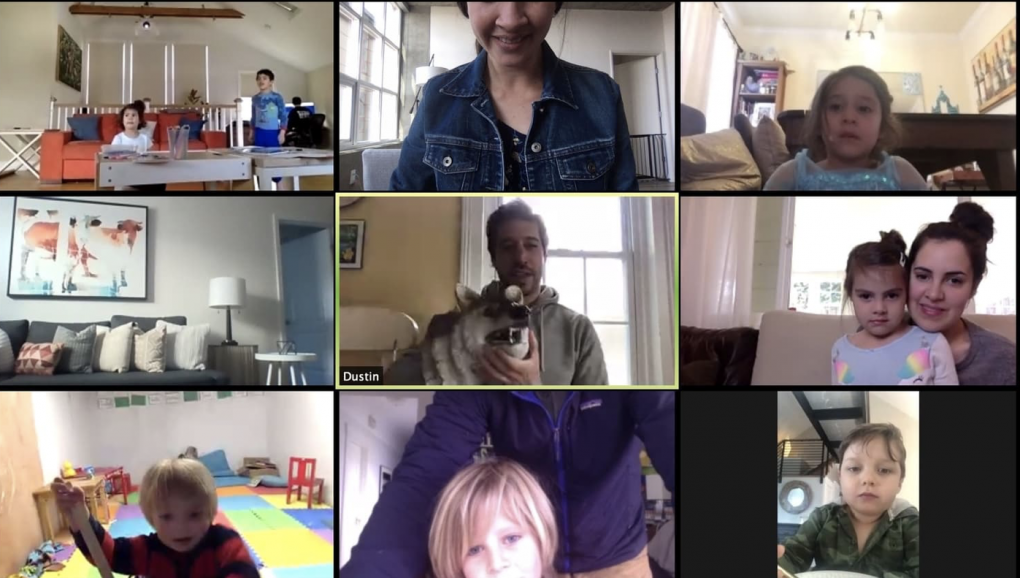
"caption": "Melody Serra (top row, center), a former kindergarten teacher, teaches a class to young children over Zoom. ",
"description": null,
"title": "Kaplan-CoronaTeachingGig-photo1",
"credit": "Emily Kaplan for The Hechinger Report",
"status": "inherit",
"isLoading": false,
"fetchFailed": false
},
"mindshift_55958": {
"type": "attachments",
"id": "mindshift_55958",
"meta": {
"index": "attachments_1716263798",
"site": "mindshift",
"id": "55958",
"found": true
},
"parent": 55882,
"imgSizes": {
"twentyfourteen-full-width": {
"file": "https://ww2.kqed.org/app/uploads/sites/23/2020/05/iStock-1126176726-1-e1590042644241-1038x576.jpg",
"width": 1038,
"mimeType": "image/jpeg",
"height": 576
},
"thumbnail": {
"file": "https://ww2.kqed.org/app/uploads/sites/23/2020/05/iStock-1126176726-1-e1590042644241-160x112.jpg",
"width": 160,
"mimeType": "image/jpeg",
"height": 112
},
"post-thumbnail": {
"file": "https://ww2.kqed.org/app/uploads/sites/23/2020/05/iStock-1126176726-1-e1590042644241-672x372.jpg",
"width": 672,
"mimeType": "image/jpeg",
"height": 372
},
"kqedFullSize": {
"file": "https://ww2.kqed.org/app/uploads/sites/23/2020/05/iStock-1126176726-1-e1590042644241.jpg",
"width": 1871,
"height": 1304
},
"large": {
"file": "https://ww2.kqed.org/app/uploads/sites/23/2020/05/iStock-1126176726-1-e1590042644241-1020x711.jpg",
"width": 1020,
"mimeType": "image/jpeg",
"height": 711
},
"full-width": {
"file": "https://ww2.kqed.org/app/uploads/sites/23/2020/05/iStock-1126176726-1-1920x1280.jpg",
"width": 1920,
"mimeType": "image/jpeg",
"height": 1280
},
"medium": {
"file": "https://ww2.kqed.org/app/uploads/sites/23/2020/05/iStock-1126176726-1-e1590042644241-800x558.jpg",
"width": 800,
"mimeType": "image/jpeg",
"height": 558
},
"medium_large": {
"file": "https://ww2.kqed.org/app/uploads/sites/23/2020/05/iStock-1126176726-1-e1590042644241-768x535.jpg",
"width": 768,
"mimeType": "image/jpeg",
"height": 535
}
},
"publishDate": 1590042601,
"modified": 1590042667,
"caption": null,
"description": null,
"title": "iStock-1126176726-1",
"credit": "monkeybusinessimages/iStock",
"status": "inherit",
"isLoading": false,
"fetchFailed": false
},
"mindshift_55946": {
"type": "attachments",
"id": "mindshift_55946",
"meta": {
"index": "attachments_1716263798",
"site": "mindshift",
"id": "55946",
"found": true
},
"parent": 55941,
"imgSizes": {
"twentyfourteen-full-width": {
"file": "https://ww2.kqed.org/app/uploads/sites/23/2020/05/iStock-1180818006-1038x576.jpg",
"width": 1038,
"mimeType": "image/jpeg",
"height": 576
},
"thumbnail": {
"file": "https://ww2.kqed.org/app/uploads/sites/23/2020/05/iStock-1180818006-160x137.jpg",
"width": 160,
"mimeType": "image/jpeg",
"height": 137
},
"post-thumbnail": {
"file": "https://ww2.kqed.org/app/uploads/sites/23/2020/05/iStock-1180818006-672x372.jpg",
"width": 672,
"mimeType": "image/jpeg",
"height": 372
},
"kqedFullSize": {
"file": "https://ww2.kqed.org/app/uploads/sites/23/2020/05/iStock-1180818006.jpg",
"width": 1870,
"height": 1603
},
"large": {
"file": "https://ww2.kqed.org/app/uploads/sites/23/2020/05/iStock-1180818006-1020x874.jpg",
"width": 1020,
"mimeType": "image/jpeg",
"height": 874
},
"medium": {
"file": "https://ww2.kqed.org/app/uploads/sites/23/2020/05/iStock-1180818006-800x686.jpg",
"width": 800,
"mimeType": "image/jpeg",
"height": 686
},
"medium_large": {
"file": "https://ww2.kqed.org/app/uploads/sites/23/2020/05/iStock-1180818006-768x658.jpg",
"width": 768,
"mimeType": "image/jpeg",
"height": 658
}
},
"publishDate": 1589959253,
"modified": 1589959272,
"caption": null,
"description": null,
"title": "iStock-1180818006",
"credit": "Oleksandr Khoma/iStock",
"status": "inherit",
"isLoading": false,
"fetchFailed": false
},
"mindshift_55937": {
"type": "attachments",
"id": "mindshift_55937",
"meta": {
"index": "attachments_1716263798",
"site": "mindshift",
"id": "55937",
"found": true
},
"parent": 55936,
"imgSizes": {
"twentyfourteen-full-width": {
"file": "https://ww2.kqed.org/app/uploads/sites/23/2020/05/gettyimages-953586866_slide-09d9107c292019019f6a5a68b4ee5944c42fdf81-1038x576.jpg",
"width": 1038,
"mimeType": "image/jpeg",
"height": 576
},
"thumbnail": {
"file": "https://ww2.kqed.org/app/uploads/sites/23/2020/05/gettyimages-953586866_slide-09d9107c292019019f6a5a68b4ee5944c42fdf81-160x107.jpg",
"width": 160,
"mimeType": "image/jpeg",
"height": 107
},
"post-thumbnail": {
"file": "https://ww2.kqed.org/app/uploads/sites/23/2020/05/gettyimages-953586866_slide-09d9107c292019019f6a5a68b4ee5944c42fdf81-672x372.jpg",
"width": 672,
"mimeType": "image/jpeg",
"height": 372
},
"kqedFullSize": {
"file": "https://ww2.kqed.org/app/uploads/sites/23/2020/05/gettyimages-953586866_slide-09d9107c292019019f6a5a68b4ee5944c42fdf81-e1589902262903.jpg",
"width": 1920,
"height": 1280
},
"large": {
"file": "https://ww2.kqed.org/app/uploads/sites/23/2020/05/gettyimages-953586866_slide-09d9107c292019019f6a5a68b4ee5944c42fdf81-1020x680.jpg",
"width": 1020,
"mimeType": "image/jpeg",
"height": 680
},
"full-width": {
"file": "https://ww2.kqed.org/app/uploads/sites/23/2020/05/gettyimages-953586866_slide-09d9107c292019019f6a5a68b4ee5944c42fdf81-1920x1280.jpg",
"width": 1920,
"mimeType": "image/jpeg",
"height": 1280
},
"medium": {
"file": "https://ww2.kqed.org/app/uploads/sites/23/2020/05/gettyimages-953586866_slide-09d9107c292019019f6a5a68b4ee5944c42fdf81-800x533.jpg",
"width": 800,
"mimeType": "image/jpeg",
"height": 533
},
"medium_large": {
"file": "https://ww2.kqed.org/app/uploads/sites/23/2020/05/gettyimages-953586866_slide-09d9107c292019019f6a5a68b4ee5944c42fdf81-768x512.jpg",
"width": 768,
"mimeType": "image/jpeg",
"height": 512
}
},
"publishDate": 1589902196,
"modified": 1589902284,
"caption": "Cooking s'mores around a campfire.",
"description": "Cooking s'mores around a campfire.",
"title": "Cooking s'mores around a campfire.",
"credit": "Getty Images",
"status": "inherit",
"isLoading": false,
"fetchFailed": false
},
"mindshift_55913": {
"type": "attachments",
"id": "mindshift_55913",
"meta": {
"index": "attachments_1716263798",
"site": "mindshift",
"id": "55913",
"found": true
},
"parent": 55912,
"imgSizes": {
"twentyfourteen-full-width": {
"file": "https://ww2.kqed.org/app/uploads/sites/23/2020/05/undefined_custom-1f2a0f3affa265355b9cd310643daa933006cf61-1038x576.jpg",
"width": 1038,
"mimeType": "image/jpeg",
"height": 576
},
"thumbnail": {
"file": "https://ww2.kqed.org/app/uploads/sites/23/2020/05/undefined_custom-1f2a0f3affa265355b9cd310643daa933006cf61-160x100.jpg",
"width": 160,
"mimeType": "image/jpeg",
"height": 100
},
"post-thumbnail": {
"file": "https://ww2.kqed.org/app/uploads/sites/23/2020/05/undefined_custom-1f2a0f3affa265355b9cd310643daa933006cf61-672x372.jpg",
"width": 672,
"mimeType": "image/jpeg",
"height": 372
},
"kqedFullSize": {
"file": "https://ww2.kqed.org/app/uploads/sites/23/2020/05/undefined_custom-1f2a0f3affa265355b9cd310643daa933006cf61-e1589467552164.jpg",
"width": 1920,
"height": 1195
},
"large": {
"file": "https://ww2.kqed.org/app/uploads/sites/23/2020/05/undefined_custom-1f2a0f3affa265355b9cd310643daa933006cf61-1020x635.jpg",
"width": 1020,
"mimeType": "image/jpeg",
"height": 635
},
"full-width": {
"file": "https://ww2.kqed.org/app/uploads/sites/23/2020/05/undefined_custom-1f2a0f3affa265355b9cd310643daa933006cf61-1920x1195.jpg",
"width": 1920,
"mimeType": "image/jpeg",
"height": 1195
},
"medium": {
"file": "https://ww2.kqed.org/app/uploads/sites/23/2020/05/undefined_custom-1f2a0f3affa265355b9cd310643daa933006cf61-800x498.jpg",
"width": 800,
"mimeType": "image/jpeg",
"height": 498
},
"medium_large": {
"file": "https://ww2.kqed.org/app/uploads/sites/23/2020/05/undefined_custom-1f2a0f3affa265355b9cd310643daa933006cf61-768x478.jpg",
"width": 768,
"mimeType": "image/jpeg",
"height": 478
}
},
"publishDate": 1589467165,
"modified": 1589467582,
"caption": "Children in isolation are developing mental health issues.",
"description": "Children in isolation are developing mental health issues.",
"title": "Children in isolation are developing mental health issues.",
"credit": "LA Johnson/NPR",
"status": "inherit",
"isLoading": false,
"fetchFailed": false
},
"mindshift_55904": {
"type": "attachments",
"id": "mindshift_55904",
"meta": {
"index": "attachments_1716263798",
"site": "mindshift",
"id": "55904",
"found": true
},
"parent": 55903,
"imgSizes": {
"twentyfourteen-full-width": {
"file": "https://ww2.kqed.org/app/uploads/sites/23/2020/05/npr_mentalhealth_custom-0f6ad06eb87e22d39b2eda08ca207e39d7d84965-1038x576.jpg",
"width": 1038,
"mimeType": "image/jpeg",
"height": 576
},
"thumbnail": {
"file": "https://ww2.kqed.org/app/uploads/sites/23/2020/05/npr_mentalhealth_custom-0f6ad06eb87e22d39b2eda08ca207e39d7d84965-160x90.jpg",
"width": 160,
"mimeType": "image/jpeg",
"height": 90
},
"post-thumbnail": {
"file": "https://ww2.kqed.org/app/uploads/sites/23/2020/05/npr_mentalhealth_custom-0f6ad06eb87e22d39b2eda08ca207e39d7d84965-672x372.jpg",
"width": 672,
"mimeType": "image/jpeg",
"height": 372
},
"kqedFullSize": {
"file": "https://ww2.kqed.org/app/uploads/sites/23/2020/05/npr_mentalhealth_custom-0f6ad06eb87e22d39b2eda08ca207e39d7d84965-e1589269945412.jpg",
"width": 1920,
"height": 1082
},
"large": {
"file": "https://ww2.kqed.org/app/uploads/sites/23/2020/05/npr_mentalhealth_custom-0f6ad06eb87e22d39b2eda08ca207e39d7d84965-1020x575.jpg",
"width": 1020,
"mimeType": "image/jpeg",
"height": 575
},
"full-width": {
"file": "https://ww2.kqed.org/app/uploads/sites/23/2020/05/npr_mentalhealth_custom-0f6ad06eb87e22d39b2eda08ca207e39d7d84965-1920x1082.jpg",
"width": 1920,
"mimeType": "image/jpeg",
"height": 1082
},
"medium": {
"file": "https://ww2.kqed.org/app/uploads/sites/23/2020/05/npr_mentalhealth_custom-0f6ad06eb87e22d39b2eda08ca207e39d7d84965-800x451.jpg",
"width": 800,
"mimeType": "image/jpeg",
"height": 451
},
"medium_large": {
"file": "https://ww2.kqed.org/app/uploads/sites/23/2020/05/npr_mentalhealth_custom-0f6ad06eb87e22d39b2eda08ca207e39d7d84965-768x433.jpg",
"width": 768,
"mimeType": "image/jpeg",
"height": 433
}
},
"publishDate": 1589269839,
"modified": 1589270608,
"caption": "Loneliness can affect not just your mental health but also your physical health.",
"description": "Loneliness can affect not just your mental health but also your physical health.",
"title": "Loneliness can affect not just your mental health but also your physical health.",
"credit": "Tracy Lee for NPR",
"status": "inherit",
"isLoading": false,
"fetchFailed": false
},
"mindshift_55897": {
"type": "attachments",
"id": "mindshift_55897",
"meta": {
"index": "attachments_1716263798",
"site": "mindshift",
"id": "55897",
"found": true
},
"parent": 55889,
"imgSizes": {
"twentyfourteen-full-width": {
"file": "https://ww2.kqed.org/app/uploads/sites/23/2020/05/iStock-899890574-1038x576.png",
"width": 1038,
"mimeType": "image/png",
"height": 576
},
"thumbnail": {
"file": "https://ww2.kqed.org/app/uploads/sites/23/2020/05/iStock-899890574-160x90.png",
"width": 160,
"mimeType": "image/png",
"height": 90
},
"post-thumbnail": {
"file": "https://ww2.kqed.org/app/uploads/sites/23/2020/05/iStock-899890574-672x372.png",
"width": 672,
"mimeType": "image/png",
"height": 372
},
"kqedFullSize": {
"file": "https://ww2.kqed.org/app/uploads/sites/23/2020/05/iStock-899890574.png",
"width": 1920,
"height": 1080
},
"large": {
"file": "https://ww2.kqed.org/app/uploads/sites/23/2020/05/iStock-899890574-1020x574.png",
"width": 1020,
"mimeType": "image/png",
"height": 574
},
"full-width": {
"file": "https://ww2.kqed.org/app/uploads/sites/23/2020/05/iStock-899890574-1920x1080.png",
"width": 1920,
"mimeType": "image/png",
"height": 1080
},
"medium": {
"file": "https://ww2.kqed.org/app/uploads/sites/23/2020/05/iStock-899890574-800x450.png",
"width": 800,
"mimeType": "image/png",
"height": 450
},
"medium_large": {
"file": "https://ww2.kqed.org/app/uploads/sites/23/2020/05/iStock-899890574-768x432.png",
"width": 768,
"mimeType": "image/png",
"height": 432
}
},
"publishDate": 1589175897,
"modified": 1589175914,
"caption": null,
"description": null,
"title": "iStock-899890574",
"credit": "Chinnapong/iStock",
"status": "inherit",
"isLoading": false,
"fetchFailed": false
},
"mindshift_55879": {
"type": "attachments",
"id": "mindshift_55879",
"meta": {
"index": "attachments_1716263798",
"site": "mindshift",
"id": "55879",
"found": true
},
"parent": 55878,
"imgSizes": {
"twentyfourteen-full-width": {
"file": "https://ww2.kqed.org/app/uploads/sites/23/2020/05/ap_20118711464747_wide-06500b877d457e4f50fd8c2735919331198d862d-1038x576.jpg",
"width": 1038,
"mimeType": "image/jpeg",
"height": 576
},
"thumbnail": {
"file": "https://ww2.kqed.org/app/uploads/sites/23/2020/05/ap_20118711464747_wide-06500b877d457e4f50fd8c2735919331198d862d-160x90.jpg",
"width": 160,
"mimeType": "image/jpeg",
"height": 90
},
"post-thumbnail": {
"file": "https://ww2.kqed.org/app/uploads/sites/23/2020/05/ap_20118711464747_wide-06500b877d457e4f50fd8c2735919331198d862d-672x372.jpg",
"width": 672,
"mimeType": "image/jpeg",
"height": 372
},
"kqedFullSize": {
"file": "https://ww2.kqed.org/app/uploads/sites/23/2020/05/ap_20118711464747_wide-06500b877d457e4f50fd8c2735919331198d862d-e1588868679729.jpg",
"width": 1920,
"height": 1080
},
"large": {
"file": "https://ww2.kqed.org/app/uploads/sites/23/2020/05/ap_20118711464747_wide-06500b877d457e4f50fd8c2735919331198d862d-1020x574.jpg",
"width": 1020,
"mimeType": "image/jpeg",
"height": 574
},
"full-width": {
"file": "https://ww2.kqed.org/app/uploads/sites/23/2020/05/ap_20118711464747_wide-06500b877d457e4f50fd8c2735919331198d862d-1920x1080.jpg",
"width": 1920,
"mimeType": "image/jpeg",
"height": 1080
},
"medium": {
"file": "https://ww2.kqed.org/app/uploads/sites/23/2020/05/ap_20118711464747_wide-06500b877d457e4f50fd8c2735919331198d862d-800x450.jpg",
"width": 800,
"mimeType": "image/jpeg",
"height": 450
},
"medium_large": {
"file": "https://ww2.kqed.org/app/uploads/sites/23/2020/05/ap_20118711464747_wide-06500b877d457e4f50fd8c2735919331198d862d-768x432.jpg",
"width": 768,
"mimeType": "image/jpeg",
"height": 432
}
},
"publishDate": 1588868457,
"modified": 1588868690,
"caption": "A worker passes public school buses parked at a depot in Manchester, N.H., last month. The state's public school buildings are closed to students through the end of the academic year.\n",
"description": "A worker passes public school buses parked at a depot in Manchester, N.H., last month. The state's public school buildings are closed to students through the end of the academic year.",
"title": "A worker passes public school buses parked at a depot in Manchester, N.H., last month. The state's public school buildings are closed to students through the end of the academic year.",
"credit": "Charles Krupa/AP",
"status": "inherit",
"isLoading": false,
"fetchFailed": false
}
},
"audioPlayerReducer": {
"postId": "stream_live",
"isPaused": true,
"isPlaying": false,
"pfsActive": false,
"pledgeModalIsOpen": true,
"playerDrawerIsOpen": false,
"liveAudioPlayStartedAt": 0,
"liveAudioPlayContext": ""
},
"authorsReducer": {
"byline_mindshift_56028": {
"type": "authors",
"id": "byline_mindshift_56028",
"meta": {
"override": true
},
"slug": "byline_mindshift_56028",
"name": "\u003ca href=\"https://hechingerreport.org/\">Amadou Diallo, The Hechinger Report\u003c/a>",
"isLoading": false
},
"byline_mindshift_55976": {
"type": "authors",
"id": "byline_mindshift_55976",
"meta": {
"override": true
},
"slug": "byline_mindshift_55976",
"name": "Anya Kamenetz",
"isLoading": false
},
"byline_mindshift_56012": {
"type": "authors",
"id": "byline_mindshift_56012",
"meta": {
"override": true
},
"slug": "byline_mindshift_56012",
"name": "Katherine Nagasawa, WBEZ",
"isLoading": false
},
"byline_mindshift_55966": {
"type": "authors",
"id": "byline_mindshift_55966",
"meta": {
"override": true
},
"slug": "byline_mindshift_55966",
"name": "\u003ca href=\"https://hechingerreport.org/\">Emily Kaplan, The Hechinger Report\u003c/a>",
"isLoading": false
},
"byline_mindshift_55941": {
"type": "authors",
"id": "byline_mindshift_55941",
"meta": {
"override": true
},
"slug": "byline_mindshift_55941",
"name": "Amielle Major",
"isLoading": false
},
"byline_mindshift_55936": {
"type": "authors",
"id": "byline_mindshift_55936",
"meta": {
"override": true
},
"slug": "byline_mindshift_55936",
"name": "Anya Kamenetz",
"isLoading": false
},
"byline_mindshift_55912": {
"type": "authors",
"id": "byline_mindshift_55912",
"meta": {
"override": true
},
"slug": "byline_mindshift_55912",
"name": "Anya Kamenetz",
"isLoading": false
},
"byline_mindshift_55903": {
"type": "authors",
"id": "byline_mindshift_55903",
"meta": {
"override": true
},
"slug": "byline_mindshift_55903",
"name": "Allison Aubrey",
"isLoading": false
},
"byline_mindshift_55878": {
"type": "authors",
"id": "byline_mindshift_55878",
"meta": {
"override": true
},
"slug": "byline_mindshift_55878",
"name": "Anya Kamenetz",
"isLoading": false
},
"kdnewhouse": {
"type": "authors",
"id": "11487",
"meta": {
"index": "authors_1716337520",
"id": "11487",
"found": true
},
"name": "Kara Newhouse",
"firstName": "Kara",
"lastName": "Newhouse",
"slug": "kdnewhouse",
"email": "knewhouse@kqed.org",
"display_author_email": false,
"staff_mastheads": [],
"title": "MindShift Editor",
"bio": null,
"avatar": "https://secure.gravatar.com/avatar/3dceed6fb271527113abfa9a8e9df34e?s=600&d=blank&r=g",
"twitter": null,
"facebook": null,
"instagram": null,
"linkedin": null,
"sites": [
{
"site": "",
"roles": [
"editor"
]
},
{
"site": "mindshift",
"roles": []
}
],
"headData": {
"title": "Kara Newhouse | KQED",
"description": "MindShift Editor",
"ogImgSrc": "https://secure.gravatar.com/avatar/3dceed6fb271527113abfa9a8e9df34e?s=600&d=blank&r=g",
"twImgSrc": "https://secure.gravatar.com/avatar/3dceed6fb271527113abfa9a8e9df34e?s=600&d=blank&r=g"
},
"isLoading": false,
"link": "/author/kdnewhouse"
}
},
"pagesReducer": {
"mindshift_tag_covid-19": {
"type": "terms",
"id": "mindshift_21343",
"meta": {
"index": "terms_1716263798",
"site": "mindshift",
"id": "21343",
"score": 8.558781
},
"featImg": null,
"name": "COVID-19",
"description": null,
"taxonomy": "tag",
"headData": {
"twImgId": null,
"twTitle": null,
"ogTitle": null,
"ogImgId": null,
"twDescription": null,
"description": null,
"title": "COVID-19 Archives - KQED Mindshift",
"ogDescription": null
},
"ttid": 20615,
"slug": "covid-19",
"isLoading": false,
"title": "COVID-19",
"pageMeta": {
"site": "mindshift",
"WpPageTemplate": "page-topic-editorial",
"currentPage": 18
},
"blocks": [
{
"blockName": "kqed/post-list",
"attrs": {
"layout": "cardArticle2",
"query": "posts/mindshift?tag=covid-19",
"seeMore": false,
"paginated": true,
"page": 18
}
},
{
"blockName": "kqed/ad"
}
]
}
},
"pfsSessionReducer": {},
"postsReducer": {
"stream_live": {
"type": "live",
"id": "stream_live",
"audioUrl": "https://streams.kqed.org/kqedradio",
"title": "Live Stream",
"excerpt": "Live Stream information currently unavailable.",
"link": "/radio",
"featImg": "",
"label": {
"name": "KQED Live",
"link": "/"
}
},
"stream_kqedNewscast": {
"type": "posts",
"id": "stream_kqedNewscast",
"audioUrl": "https://www.kqed.org/.stream/anon/radio/RDnews/newscast.mp3?_=1",
"title": "KQED Newscast",
"featImg": "",
"label": {
"name": "88.5 FM",
"link": "/"
}
},
"mindshift_56028": {
"type": "posts",
"id": "mindshift_56028",
"meta": {
"index": "posts_1716263798",
"site": "mindshift",
"id": "56028",
"score": null,
"sort": [
1590995929000
]
},
"parent": 0,
"labelTerm": {
"site": "mindshift"
},
"blocks": [],
"publishDate": 1590995929,
"format": "standard",
"disqusTitle": "A School on the Rise Sees Progress Halted by the Pandemic",
"title": "A School on the Rise Sees Progress Halted by the Pandemic",
"headTitle": "MindShift | KQED News",
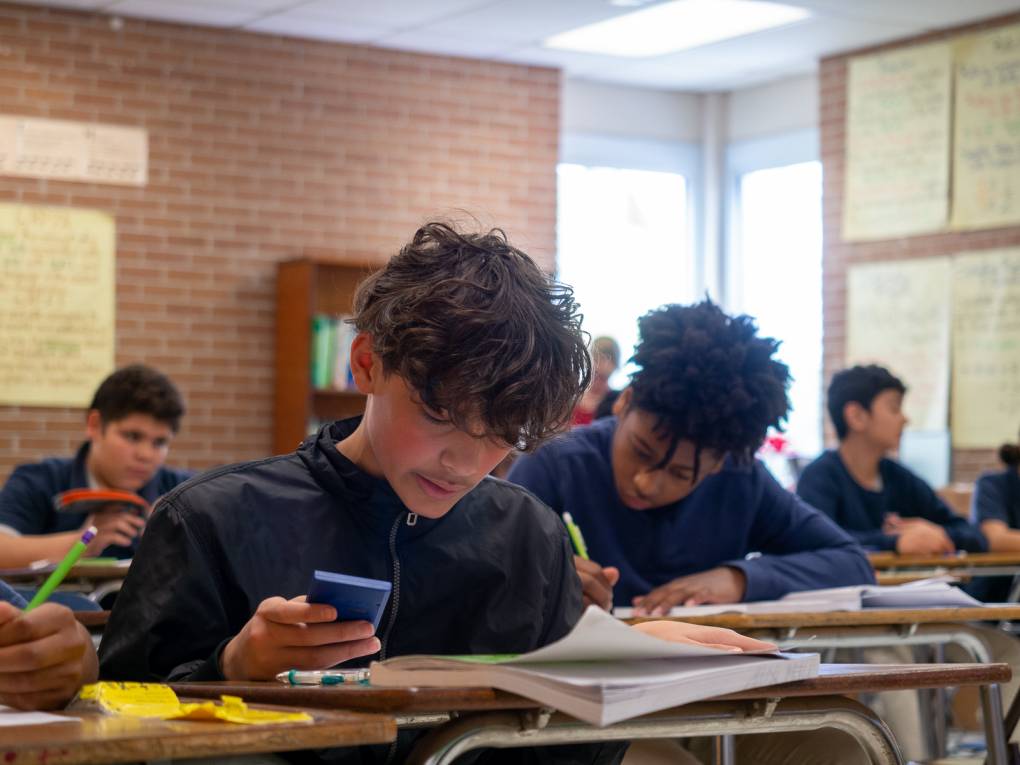
"content": "\u003cp>\u003cem>This story on \u003c/em>\u003ca href=\"https://hechingerreport.org/this-school-was-on-its-way-to-a-turnaround-until-the-coronavirus-struck/\">\u003cem>school turnaround during a pandemic\u003c/em>\u003c/a>\u003cem> was produced by \u003c/em>\u003ca href=\"https://hechingerreport.org/special-reports/higher-education/\">The Hechinger Report\u003c/a>\u003cem>, a nonprofit, independent news organization focused on inequality and innovation in education. Sign up for \u003c/em>\u003ca href=\"http://eepurl.com/c36ixT\">\u003cem>Hechinger’s newsletter\u003c/em>\u003c/a>\u003cem>.\u003c/em>\u003c/p>\n\u003cp>METAIRIE, La. — When it was time for Kelly Ragas to choose a middle school for her son three years ago, John Q. Adams was certainly the most convenient option: She worked as its school secretary and already had a child there. But she had doubts. The school was rated a C by the state, and while Ragas was comfortable with its increasing diversity, she knew other longtime residents felt differently.\u003c/p>\n\u003cp>“Some people from years ago, they look at the school and say, ‘It’s so different now,’ ” said Ragas. Three-quarters of the school’s students are non-white and more than a dozen languages, including Arabic and Urdu, are spoken.\u003c/p>\n\u003cp>By the end of her son’s first year, the school’s rating had dropped even further, to a D. But then the Jefferson Parish district hired Jason Beber to take over as principal in fall 2018 with a mandate to get Adams back on a path to academic success.\u003c/p>\n\u003cp>“They knew I had been a turnaround guy,” said Beber, who had taken a school in a neighboring district from its lowest performing to one of its highest. “My vision was I want Adams to start with an A.”\u003c/p>\n\u003cp>[ad fullwidth]\u003c/p>\n\u003cp>Early signs were promising. In Beber’s first year, 2018-19, the school’s rating improved to a C, and teachers and staff reported that student behavior and teacher morale improved too. But the coronavirus pandemic has threatened that academic progress.\u003c/p>\n\u003cp>Louisiana schools are closed through the end of the school year, if not longer. While districts elsewhere in the country have switched to online education, Jefferson Parish, where Adams is located, chose not to move its curriculum online amid concerns that \u003ca href=\"https://www.nola.com/news/coronavirus/article_f6576f98-6535-11ea-aa05-e3379b367b76.html\">many students lacked home internet access\u003c/a>. The district has made printed instructional packets available at meal pickup locations for students who cannot get online, and teachers are free to provide digital-based lessons. But all of the work that teachers assign is optional: Students aren’t receiving grades.\u003c/p>\n\u003cfigure id=\"attachment_56030\" class=\"wp-caption alignnone\" style=\"max-width: 1600px\">\u003cimg class=\"size-full wp-image-56030\" src=\"https://ww2.kqed.org/app/uploads/sites/23/2020/06/amadou-diallo-Diallo_09.jpg\" alt=\"\" width=\"1600\" height=\"1200\" srcset=\"https://ww2.kqed.org/app/uploads/sites/23/2020/06/amadou-diallo-Diallo_09.jpg 1600w, https://ww2.kqed.org/app/uploads/sites/23/2020/06/amadou-diallo-Diallo_09-160x120.jpg 160w, https://ww2.kqed.org/app/uploads/sites/23/2020/06/amadou-diallo-Diallo_09-800x600.jpg 800w, https://ww2.kqed.org/app/uploads/sites/23/2020/06/amadou-diallo-Diallo_09-768x576.jpg 768w, https://ww2.kqed.org/app/uploads/sites/23/2020/06/amadou-diallo-Diallo_09-1020x765.jpg 1020w\" sizes=\"(max-width: 1600px) 100vw, 1600px\">\u003cfigcaption class=\"wp-caption-text\">Seventh grade algebra students at John Q. Adams Middle School. The coronavirus shutdown has put the school’s fragile academic gains at risk. \u003ccite>(Amadou Diallo for The Hechinger Report)\u003c/cite>\u003c/figcaption>\u003c/figure>\n\u003cp>At Adams, teachers and staff are doing what they can to stay connected with their students. The school’s Facebook page has become a popular resource, offering access to school counselors as well as a \u003ca href=\"https://docs.google.com/forms/d/e/1FAIpQLSdG-c4UIOzT2xspFWBp3kfJYmsulSmxr4VBl7nS2Y_wWhP7rQ/viewform\">virtual talent show\u003c/a>. Teachers have been reaching out to students over their own social media accounts. But, Beber acknowledges, for students who lack online access, these are not options.\u003c/p>\n\u003cp>“Some of [my teachers] have only been able to contact 10 to 15 of their students and they have 100-plus students,” Beber said. “Some of our kids are reaching out through their friends via cell phone or word of mouth, asking, ‘Can you get ahold of so-and-so? We don’t have Internet.’”\u003c/p>\n\u003cp>The issue goes beyond remote learning. “We have newcomer families from other countries who need outside services: housing, food, things like that,” said Beber. The school uses an automated translation tool to text families in multiple languages about food distribution centers and city-wide relief programs. Beber and his staff are also keeping a list of all the students teachers have not been able to reach.\u003c/p>\n\u003cfigure id=\"attachment_56033\" class=\"wp-caption alignnone\" style=\"max-width: 1600px\">\u003cimg class=\"size-full wp-image-56033\" src=\"https://ww2.kqed.org/app/uploads/sites/23/2020/06/amadou-diallo-Diallo_40.jpg\" alt=\"\" width=\"1600\" height=\"1200\" srcset=\"https://ww2.kqed.org/app/uploads/sites/23/2020/06/amadou-diallo-Diallo_40.jpg 1600w, https://ww2.kqed.org/app/uploads/sites/23/2020/06/amadou-diallo-Diallo_40-160x120.jpg 160w, https://ww2.kqed.org/app/uploads/sites/23/2020/06/amadou-diallo-Diallo_40-800x600.jpg 800w, https://ww2.kqed.org/app/uploads/sites/23/2020/06/amadou-diallo-Diallo_40-768x576.jpg 768w, https://ww2.kqed.org/app/uploads/sites/23/2020/06/amadou-diallo-Diallo_40-1020x765.jpg 1020w\" sizes=\"(max-width: 1600px) 100vw, 1600px\">\u003cfigcaption class=\"wp-caption-text\">Sixth graders work out a math problem at John Q. Adams Middle School. \u003ccite>(Amadou Diallo/The Hechinger Report)\u003c/cite>\u003c/figcaption>\u003c/figure>\n\u003cp>As recently as mid-February, Beber’s day-to-day concerns revolved around student engagement, teacher development and upcoming state evaluations. Adams is located in a predominantly white, middle-class neighborhood, but it draws many of its students from nearby communities with large immigrant and lower-income populations. One of the school’s greatest challenges, Beber said, is that many families work seasonal jobs in tourism and other industries, moving between the U.S. and their home countries multiple times a year. It’s common for a student to attend Adams for a few months, then return with their parents to Ecuador, for example, he said, only to reappear at Adams a few months later not having attended school in the interim.\u003c/p>\n\u003cp>On top of that, many students struggle with the stresses of poverty. Some \u003ca href=\"https://louisianaschools.com/schools/26001/academic-performance#breakdown_student_groups\">90 percent\u003c/a> of students live in households that qualify for government assistance.\u003c/p>\n\u003cp>In spite of the challenges, Beber and his staff were confident that their students were better prepared than ever for state assessments. But the tests, scheduled for April, were cancelled because of the pandemic.\u003c/p>\n\u003cp>“We’re actually upset about not taking the state tests this year,” he said. He and his staff were looking forward to showing another year of academic gains after a bump in reading and math scores in 2018. It would be further validation of a shift in both school culture and expectations that many say was long overdue.\u003c/p>\n\u003cfigure id=\"attachment_56034\" class=\"wp-caption alignnone\" style=\"max-width: 1600px\">\u003cimg class=\"size-full wp-image-56034\" src=\"https://ww2.kqed.org/app/uploads/sites/23/2020/06/amadou-diallo-Diallo_80.jpg\" alt=\"\" width=\"1600\" height=\"1200\" srcset=\"https://ww2.kqed.org/app/uploads/sites/23/2020/06/amadou-diallo-Diallo_80.jpg 1600w, https://ww2.kqed.org/app/uploads/sites/23/2020/06/amadou-diallo-Diallo_80-160x120.jpg 160w, https://ww2.kqed.org/app/uploads/sites/23/2020/06/amadou-diallo-Diallo_80-800x600.jpg 800w, https://ww2.kqed.org/app/uploads/sites/23/2020/06/amadou-diallo-Diallo_80-768x576.jpg 768w, https://ww2.kqed.org/app/uploads/sites/23/2020/06/amadou-diallo-Diallo_80-1020x765.jpg 1020w\" sizes=\"(max-width: 1600px) 100vw, 1600px\">\u003cfigcaption class=\"wp-caption-text\">John Q. Adams Principal Jason Beber speaks with students in an ESL class designed for students who’ve just arrived in the U.S. Immigrants make up a large share of the school’s student body. \u003ccite>(Amadou Diallo/The Hechinger Report)\u003c/cite>\u003c/figcaption>\u003c/figure>\n\u003cp>“There were several of us who felt like we weren’t being pushed the way that we needed to be pushed, not the students, not the teachers,” said Danita Brown, an algebra teacher in her 14th year at Adams. “We weren’t performing at the level we knew we could.”\u003c/p>\n\u003cp>While bringing in a new principal may seem like an easy and obvious solution, \u003ca href=\"https://edworkingpapers.com/ai19-95\">research shows\u003c/a> that the disruptions caused by changes in leadership can actually reduce student performance, at least in the short term.\u003c/p>\n\u003cp>At Adams, however, the turnaround has been swift. That’s not to say that there weren’t concerns at the beginning of Beber’s tenure.\u003c/p>\n\u003cp>“The staff attitude was mixed,” said Joan Growl, who has been at Adams for the last nine years of her three-decade teaching career. “When a new principal arrives the first thing for the teachers is sort of an anxiety that [the principal] will assume that the teachers … haven’t been doing their job or doing what they needed to do.” Whatever new goals or strategies a principal wants to put into place, she said, should begin with listening to teachers and valuing their input. “Mr. Beber did do that,” she said.\u003c/p>\n\u003cp>Teachers said those efforts began before the school year started. In July, Beber began to schedule individual meetings with every adult in the building, from teachers to custodial staff. He recalls that in these meetings, he did very little of the talking.\u003c/p>\n\u003cp>“People gave me an earful, what they’d like to see change, who’s doing what, who’s not doing what,” he said. “They got to be heard. That was a big thing. I listened.”\u003c/p>\n\u003cp>This was an important step, agrees assistant principal Laura Leinhardt, who has worked at Adams under two previous principals. “That kind of one-on-one doesn’t always happen,” she said. But listening is one thing, getting teachers and staff on board with your plans is another.\u003c/p>\n\u003cfigure id=\"attachment_56031\" class=\"wp-caption alignnone\" style=\"max-width: 1600px\">\u003cimg class=\"size-full wp-image-56031\" src=\"https://ww2.kqed.org/app/uploads/sites/23/2020/06/amadou-diallo-Diallo_36.jpg\" alt=\"\" width=\"1600\" height=\"1200\" srcset=\"https://ww2.kqed.org/app/uploads/sites/23/2020/06/amadou-diallo-Diallo_36.jpg 1600w, https://ww2.kqed.org/app/uploads/sites/23/2020/06/amadou-diallo-Diallo_36-160x120.jpg 160w, https://ww2.kqed.org/app/uploads/sites/23/2020/06/amadou-diallo-Diallo_36-800x600.jpg 800w, https://ww2.kqed.org/app/uploads/sites/23/2020/06/amadou-diallo-Diallo_36-768x576.jpg 768w, https://ww2.kqed.org/app/uploads/sites/23/2020/06/amadou-diallo-Diallo_36-1020x765.jpg 1020w\" sizes=\"(max-width: 1600px) 100vw, 1600px\">\u003cfigcaption class=\"wp-caption-text\">Kimberly Joinelle helps a student in her sixth-grade math class. Teachers like Joinelle say the school’s new principal, Jason Beber, has valued their input. \u003ccite>(Amadou Diallo for The Hechinger Report)\u003c/cite>\u003c/figcaption>\u003c/figure>\n\u003cp>“The best and quickest way of getting people to buy in is to show them some quick results,” said Leinhardt. “People had complained about student behavior. Well, with a noticeable shift in student behavior, that’s going to get some of those people who are naysayers to say, ‘Wait, he might know what he’s talking about.’”\u003c/p>\n\u003cp>Some students said they can see the difference. “Compared to sixth grade, school safety has gotten better,” said Savannah Williams, an eighth grader whose mother teaches at the school. “There’s less fighting and less conflicts. In classes, it’s just more relaxed.”\u003c/p>\n\u003cp>Improving student behavior began with changing expectations of everything about Adams, Beber said, even the physical building. The district has a campus of the month award to celebrate clean and tidy facilities. Beber was dismayed to learn that Adams had never won. He found that school maintenance requests had been allowed to languish, without response.\u003c/p>\n\u003cp>“How hard can it be to get campus of the month?” he asked. He had the maintenance team clean up the schoolyard, removing graffiti and paint stains. In February 2019, the school won the honor.\u003c/p>\n\u003cp>Beber also opted for a more proactive approach to school discipline, seeking to identify kids who were struggling before they got into more trouble. One result was the Adams Man Club, which he initially created for male students who’d had at least three suspensions. “The idea was, we’re going to tell them how awesome they are,” Beber said. The group meets weekly so members can discuss issues they are having both inside and outside of school. They wear bow ties on Mondays to set an example for the rest of the school, and they’ve gone on college tours and recently led a school-wide canned food drive.\u003c/p>\n\u003cp>Beber said that in-school suspensions have dropped for club members and across the board. Some Man Club members are now on the honor roll. “We didn’t give them any extra tutoring,” he said. “We invested in culture, relationships.”\u003c/p>\n\u003cp>Beber said he has seen the dividends of the improved school culture during the school closure. Teacher attendance in voluntary weekly Zoom meetings is 100 percent, he said. And some students are asking for and completing assignments, even though the work is optional. But there’s no denying the shutdown’s toll on kids and their families.\u003c/p>\n\u003cfigure id=\"attachment_56035\" class=\"wp-caption alignnone\" style=\"max-width: 1600px\">\u003cimg class=\"size-full wp-image-56035\" src=\"https://ww2.kqed.org/app/uploads/sites/23/2020/06/amadou-diallo-Diallo_97.jpg\" alt=\"\" width=\"1600\" height=\"1200\" srcset=\"https://ww2.kqed.org/app/uploads/sites/23/2020/06/amadou-diallo-Diallo_97.jpg 1600w, https://ww2.kqed.org/app/uploads/sites/23/2020/06/amadou-diallo-Diallo_97-160x120.jpg 160w, https://ww2.kqed.org/app/uploads/sites/23/2020/06/amadou-diallo-Diallo_97-800x600.jpg 800w, https://ww2.kqed.org/app/uploads/sites/23/2020/06/amadou-diallo-Diallo_97-768x576.jpg 768w, https://ww2.kqed.org/app/uploads/sites/23/2020/06/amadou-diallo-Diallo_97-1020x765.jpg 1020w\" sizes=\"(max-width: 1600px) 100vw, 1600px\">\u003cfigcaption class=\"wp-caption-text\">Danita Brown teaches her seventh grade algebra class at John Q. Adams Middle School. \u003ccite>(Amadou Diallo for The Hechinger Report )\u003c/cite>\u003c/figcaption>\u003c/figure>\n\u003cp>Ragas, the school secretary, said her son, Mario, now an eighth grader, isn’t motivated to do the optional schoolwork. She worries about what will happen to him next fall.\u003c/p>\n\u003cp>“I’m concerned because he’s making that transition to high school and it could be more than two months’ worth of work that he’s missing,” she said. “Even if he does some at home, it’s still different than being in class every day. He might be a little behind.”\u003c/p>\n\u003cp>For students and families the school has yet to make contact with, the situation could be even more dire. “We’re losing time with our most vulnerable kids,” Beber said. “That’s the harsh reality.”\u003c/p>\n\u003cp>Despite the challenges of getting kids back on track when they return to school, Beber sees some reasons for hope.\u003c/p>\n\u003cp>“I think Adams will be a little better prepared because we’re always filling gaps. We have kids who leave and then weeks or months later, they’re back with us,” he said, referring to the school’s transient students. “My teachers have done a good job of saying, ‘They’re back, let’s pick up where we left off … let’s make a plan, so that we can give them the best education possible.’\u003c/p>\n\u003cp>It’s what we do.”\u003c/p>\n\u003cp>[ad floatright]\u003c/p>\n\u003cp>\u003cem>This story on \u003c/em>\u003ca href=\"https://hechingerreport.org/this-school-was-on-its-way-to-a-turnaround-until-the-coronavirus-struck/\">\u003cem>school turnaround during a pandemic\u003c/em>\u003c/a>\u003cem> was produced by \u003c/em>\u003ca href=\"https://hechingerreport.org/special-reports/higher-education/\">The Hechinger Report\u003c/a>\u003cem>, a nonprofit, independent news organization focused on inequality and innovation in education. Sign up for \u003c/em>\u003ca href=\"http://eepurl.com/c36ixT\">\u003cem>Hechinger’s newsletter\u003c/em>\u003c/a>\u003cem>.\u003c/em>\u003c/p>\n\n",
"disqusIdentifier": "56028 https://ww2.kqed.org/mindshift/?p=56028",
"disqusUrl": "https://ww2.kqed.org/mindshift/2020/06/01/a-school-on-the-rise-sees-progress-halted-by-the-pandemic/",
"stats": {
"hasVideo": false,
"hasChartOrMap": false,
"hasAudio": false,
"hasPolis": false,
"wordCount": 2028,
"hasGoogleForm": false,
"hasGallery": false,
"hasHearkenModule": false,
"iframeSrcs": [],
"paragraphCount": 37
},
"modified": 1590995929,
"excerpt": "Jason Beber joined John Q. Adams Middle School as its principal in fall 2018, with a mandate to turn around the struggling school. In his first year, the school’s rating improved to a C, and student behavior and teacher morale improved too. But with the coronavirus pandemic, that academic progress is threatened.",
"headData": {
"twImgId": "",
"twTitle": "",
"ogTitle": "",
"ogImgId": "",
"twDescription": "",
"description": "Jason Beber joined John Q. Adams Middle School as its principal in fall 2018, with a mandate to turn around the struggling school. In his first year, the school’s rating improved to a C, and student behavior and teacher morale improved too. But with the coronavirus pandemic, that academic progress is threatened.",
"title": "A School on the Rise Sees Progress Halted by the Pandemic | KQED",
"ogDescription": "",
"schema": {
"@context": "https://schema.org",
"@type": "Article",
"headline": "A School on the Rise Sees Progress Halted by the Pandemic",
"datePublished": "2020-06-01T00:18:49-07:00",
"dateModified": "2020-06-01T00:18:49-07:00",
"image": "https://cdn.kqed.org/wp-content/uploads/2020/02/KQED-OG-Image@1x.png"
}
},
"guestAuthors": [],
"slug": "a-school-on-the-rise-sees-progress-halted-by-the-pandemic",
"status": "publish",
"nprByline": "\u003ca href=\"https://hechingerreport.org/\">Amadou Diallo, The Hechinger Report\u003c/a>",
"path": "/mindshift/56028/a-school-on-the-rise-sees-progress-halted-by-the-pandemic",
"audioTrackLength": null,
"parsedContent": [
{
"type": "contentString",
"content": "\u003cdiv class=\"post-body\">\u003cp>\u003cp>\u003cem>This story on \u003c/em>\u003ca href=\"https://hechingerreport.org/this-school-was-on-its-way-to-a-turnaround-until-the-coronavirus-struck/\">\u003cem>school turnaround during a pandemic\u003c/em>\u003c/a>\u003cem> was produced by \u003c/em>\u003ca href=\"https://hechingerreport.org/special-reports/higher-education/\">The Hechinger Report\u003c/a>\u003cem>, a nonprofit, independent news organization focused on inequality and innovation in education. Sign up for \u003c/em>\u003ca href=\"http://eepurl.com/c36ixT\">\u003cem>Hechinger’s newsletter\u003c/em>\u003c/a>\u003cem>.\u003c/em>\u003c/p>\n\u003cp>METAIRIE, La. — When it was time for Kelly Ragas to choose a middle school for her son three years ago, John Q. Adams was certainly the most convenient option: She worked as its school secretary and already had a child there. But she had doubts. The school was rated a C by the state, and while Ragas was comfortable with its increasing diversity, she knew other longtime residents felt differently.\u003c/p>\n\u003cp>“Some people from years ago, they look at the school and say, ‘It’s so different now,’ ” said Ragas. Three-quarters of the school’s students are non-white and more than a dozen languages, including Arabic and Urdu, are spoken.\u003c/p>\n\u003cp>By the end of her son’s first year, the school’s rating had dropped even further, to a D. But then the Jefferson Parish district hired Jason Beber to take over as principal in fall 2018 with a mandate to get Adams back on a path to academic success.\u003c/p>\n\u003cp>“They knew I had been a turnaround guy,” said Beber, who had taken a school in a neighboring district from its lowest performing to one of its highest. “My vision was I want Adams to start with an A.”\u003c/p>\n\u003cp>\u003c/p>\u003c/div>",
"attributes": {
"named": {},
"numeric": []
}
},
{
"type": "component",
"content": "",
"name": "ad",
"attributes": {
"named": {
"label": "fullwidth"
},
"numeric": [
"fullwidth"
]
}
},
{
"type": "contentString",
"content": "\u003cdiv class=\"post-body\">\u003cp>\u003c/p>\n\u003cp>Early signs were promising. In Beber’s first year, 2018-19, the school’s rating improved to a C, and teachers and staff reported that student behavior and teacher morale improved too. But the coronavirus pandemic has threatened that academic progress.\u003c/p>\n\u003cp>Louisiana schools are closed through the end of the school year, if not longer. While districts elsewhere in the country have switched to online education, Jefferson Parish, where Adams is located, chose not to move its curriculum online amid concerns that \u003ca href=\"https://www.nola.com/news/coronavirus/article_f6576f98-6535-11ea-aa05-e3379b367b76.html\">many students lacked home internet access\u003c/a>. The district has made printed instructional packets available at meal pickup locations for students who cannot get online, and teachers are free to provide digital-based lessons. But all of the work that teachers assign is optional: Students aren’t receiving grades.\u003c/p>\n\u003cfigure id=\"attachment_56030\" class=\"wp-caption alignnone\" style=\"max-width: 1600px\">\u003cimg class=\"size-full wp-image-56030\" src=\"https://ww2.kqed.org/app/uploads/sites/23/2020/06/amadou-diallo-Diallo_09.jpg\" alt=\"\" width=\"1600\" height=\"1200\" srcset=\"https://ww2.kqed.org/app/uploads/sites/23/2020/06/amadou-diallo-Diallo_09.jpg 1600w, https://ww2.kqed.org/app/uploads/sites/23/2020/06/amadou-diallo-Diallo_09-160x120.jpg 160w, https://ww2.kqed.org/app/uploads/sites/23/2020/06/amadou-diallo-Diallo_09-800x600.jpg 800w, https://ww2.kqed.org/app/uploads/sites/23/2020/06/amadou-diallo-Diallo_09-768x576.jpg 768w, https://ww2.kqed.org/app/uploads/sites/23/2020/06/amadou-diallo-Diallo_09-1020x765.jpg 1020w\" sizes=\"(max-width: 1600px) 100vw, 1600px\">\u003cfigcaption class=\"wp-caption-text\">Seventh grade algebra students at John Q. Adams Middle School. The coronavirus shutdown has put the school’s fragile academic gains at risk. \u003ccite>(Amadou Diallo for The Hechinger Report)\u003c/cite>\u003c/figcaption>\u003c/figure>\n\u003cp>At Adams, teachers and staff are doing what they can to stay connected with their students. The school’s Facebook page has become a popular resource, offering access to school counselors as well as a \u003ca href=\"https://docs.google.com/forms/d/e/1FAIpQLSdG-c4UIOzT2xspFWBp3kfJYmsulSmxr4VBl7nS2Y_wWhP7rQ/viewform\">virtual talent show\u003c/a>. Teachers have been reaching out to students over their own social media accounts. But, Beber acknowledges, for students who lack online access, these are not options.\u003c/p>\n\u003cp>“Some of [my teachers] have only been able to contact 10 to 15 of their students and they have 100-plus students,” Beber said. “Some of our kids are reaching out through their friends via cell phone or word of mouth, asking, ‘Can you get ahold of so-and-so? We don’t have Internet.’”\u003c/p>\n\u003cp>The issue goes beyond remote learning. “We have newcomer families from other countries who need outside services: housing, food, things like that,” said Beber. The school uses an automated translation tool to text families in multiple languages about food distribution centers and city-wide relief programs. Beber and his staff are also keeping a list of all the students teachers have not been able to reach.\u003c/p>\n\u003cfigure id=\"attachment_56033\" class=\"wp-caption alignnone\" style=\"max-width: 1600px\">\u003cimg class=\"size-full wp-image-56033\" src=\"https://ww2.kqed.org/app/uploads/sites/23/2020/06/amadou-diallo-Diallo_40.jpg\" alt=\"\" width=\"1600\" height=\"1200\" srcset=\"https://ww2.kqed.org/app/uploads/sites/23/2020/06/amadou-diallo-Diallo_40.jpg 1600w, https://ww2.kqed.org/app/uploads/sites/23/2020/06/amadou-diallo-Diallo_40-160x120.jpg 160w, https://ww2.kqed.org/app/uploads/sites/23/2020/06/amadou-diallo-Diallo_40-800x600.jpg 800w, https://ww2.kqed.org/app/uploads/sites/23/2020/06/amadou-diallo-Diallo_40-768x576.jpg 768w, https://ww2.kqed.org/app/uploads/sites/23/2020/06/amadou-diallo-Diallo_40-1020x765.jpg 1020w\" sizes=\"(max-width: 1600px) 100vw, 1600px\">\u003cfigcaption class=\"wp-caption-text\">Sixth graders work out a math problem at John Q. Adams Middle School. \u003ccite>(Amadou Diallo/The Hechinger Report)\u003c/cite>\u003c/figcaption>\u003c/figure>\n\u003cp>As recently as mid-February, Beber’s day-to-day concerns revolved around student engagement, teacher development and upcoming state evaluations. Adams is located in a predominantly white, middle-class neighborhood, but it draws many of its students from nearby communities with large immigrant and lower-income populations. One of the school’s greatest challenges, Beber said, is that many families work seasonal jobs in tourism and other industries, moving between the U.S. and their home countries multiple times a year. It’s common for a student to attend Adams for a few months, then return with their parents to Ecuador, for example, he said, only to reappear at Adams a few months later not having attended school in the interim.\u003c/p>\n\u003cp>On top of that, many students struggle with the stresses of poverty. Some \u003ca href=\"https://louisianaschools.com/schools/26001/academic-performance#breakdown_student_groups\">90 percent\u003c/a> of students live in households that qualify for government assistance.\u003c/p>\n\u003cp>In spite of the challenges, Beber and his staff were confident that their students were better prepared than ever for state assessments. But the tests, scheduled for April, were cancelled because of the pandemic.\u003c/p>\n\u003cp>“We’re actually upset about not taking the state tests this year,” he said. He and his staff were looking forward to showing another year of academic gains after a bump in reading and math scores in 2018. It would be further validation of a shift in both school culture and expectations that many say was long overdue.\u003c/p>\n\u003cfigure id=\"attachment_56034\" class=\"wp-caption alignnone\" style=\"max-width: 1600px\">\u003cimg class=\"size-full wp-image-56034\" src=\"https://ww2.kqed.org/app/uploads/sites/23/2020/06/amadou-diallo-Diallo_80.jpg\" alt=\"\" width=\"1600\" height=\"1200\" srcset=\"https://ww2.kqed.org/app/uploads/sites/23/2020/06/amadou-diallo-Diallo_80.jpg 1600w, https://ww2.kqed.org/app/uploads/sites/23/2020/06/amadou-diallo-Diallo_80-160x120.jpg 160w, https://ww2.kqed.org/app/uploads/sites/23/2020/06/amadou-diallo-Diallo_80-800x600.jpg 800w, https://ww2.kqed.org/app/uploads/sites/23/2020/06/amadou-diallo-Diallo_80-768x576.jpg 768w, https://ww2.kqed.org/app/uploads/sites/23/2020/06/amadou-diallo-Diallo_80-1020x765.jpg 1020w\" sizes=\"(max-width: 1600px) 100vw, 1600px\">\u003cfigcaption class=\"wp-caption-text\">John Q. Adams Principal Jason Beber speaks with students in an ESL class designed for students who’ve just arrived in the U.S. Immigrants make up a large share of the school’s student body. \u003ccite>(Amadou Diallo/The Hechinger Report)\u003c/cite>\u003c/figcaption>\u003c/figure>\n\u003cp>“There were several of us who felt like we weren’t being pushed the way that we needed to be pushed, not the students, not the teachers,” said Danita Brown, an algebra teacher in her 14th year at Adams. “We weren’t performing at the level we knew we could.”\u003c/p>\n\u003cp>While bringing in a new principal may seem like an easy and obvious solution, \u003ca href=\"https://edworkingpapers.com/ai19-95\">research shows\u003c/a> that the disruptions caused by changes in leadership can actually reduce student performance, at least in the short term.\u003c/p>\n\u003cp>At Adams, however, the turnaround has been swift. That’s not to say that there weren’t concerns at the beginning of Beber’s tenure.\u003c/p>\n\u003cp>“The staff attitude was mixed,” said Joan Growl, who has been at Adams for the last nine years of her three-decade teaching career. “When a new principal arrives the first thing for the teachers is sort of an anxiety that [the principal] will assume that the teachers … haven’t been doing their job or doing what they needed to do.” Whatever new goals or strategies a principal wants to put into place, she said, should begin with listening to teachers and valuing their input. “Mr. Beber did do that,” she said.\u003c/p>\n\u003cp>Teachers said those efforts began before the school year started. In July, Beber began to schedule individual meetings with every adult in the building, from teachers to custodial staff. He recalls that in these meetings, he did very little of the talking.\u003c/p>\n\u003cp>“People gave me an earful, what they’d like to see change, who’s doing what, who’s not doing what,” he said. “They got to be heard. That was a big thing. I listened.”\u003c/p>\n\u003cp>This was an important step, agrees assistant principal Laura Leinhardt, who has worked at Adams under two previous principals. “That kind of one-on-one doesn’t always happen,” she said. But listening is one thing, getting teachers and staff on board with your plans is another.\u003c/p>\n\u003cfigure id=\"attachment_56031\" class=\"wp-caption alignnone\" style=\"max-width: 1600px\">\u003cimg class=\"size-full wp-image-56031\" src=\"https://ww2.kqed.org/app/uploads/sites/23/2020/06/amadou-diallo-Diallo_36.jpg\" alt=\"\" width=\"1600\" height=\"1200\" srcset=\"https://ww2.kqed.org/app/uploads/sites/23/2020/06/amadou-diallo-Diallo_36.jpg 1600w, https://ww2.kqed.org/app/uploads/sites/23/2020/06/amadou-diallo-Diallo_36-160x120.jpg 160w, https://ww2.kqed.org/app/uploads/sites/23/2020/06/amadou-diallo-Diallo_36-800x600.jpg 800w, https://ww2.kqed.org/app/uploads/sites/23/2020/06/amadou-diallo-Diallo_36-768x576.jpg 768w, https://ww2.kqed.org/app/uploads/sites/23/2020/06/amadou-diallo-Diallo_36-1020x765.jpg 1020w\" sizes=\"(max-width: 1600px) 100vw, 1600px\">\u003cfigcaption class=\"wp-caption-text\">Kimberly Joinelle helps a student in her sixth-grade math class. Teachers like Joinelle say the school’s new principal, Jason Beber, has valued their input. \u003ccite>(Amadou Diallo for The Hechinger Report)\u003c/cite>\u003c/figcaption>\u003c/figure>\n\u003cp>“The best and quickest way of getting people to buy in is to show them some quick results,” said Leinhardt. “People had complained about student behavior. Well, with a noticeable shift in student behavior, that’s going to get some of those people who are naysayers to say, ‘Wait, he might know what he’s talking about.’”\u003c/p>\n\u003cp>Some students said they can see the difference. “Compared to sixth grade, school safety has gotten better,” said Savannah Williams, an eighth grader whose mother teaches at the school. “There’s less fighting and less conflicts. In classes, it’s just more relaxed.”\u003c/p>\n\u003cp>Improving student behavior began with changing expectations of everything about Adams, Beber said, even the physical building. The district has a campus of the month award to celebrate clean and tidy facilities. Beber was dismayed to learn that Adams had never won. He found that school maintenance requests had been allowed to languish, without response.\u003c/p>\n\u003cp>“How hard can it be to get campus of the month?” he asked. He had the maintenance team clean up the schoolyard, removing graffiti and paint stains. In February 2019, the school won the honor.\u003c/p>\n\u003cp>Beber also opted for a more proactive approach to school discipline, seeking to identify kids who were struggling before they got into more trouble. One result was the Adams Man Club, which he initially created for male students who’d had at least three suspensions. “The idea was, we’re going to tell them how awesome they are,” Beber said. The group meets weekly so members can discuss issues they are having both inside and outside of school. They wear bow ties on Mondays to set an example for the rest of the school, and they’ve gone on college tours and recently led a school-wide canned food drive.\u003c/p>\n\u003cp>Beber said that in-school suspensions have dropped for club members and across the board. Some Man Club members are now on the honor roll. “We didn’t give them any extra tutoring,” he said. “We invested in culture, relationships.”\u003c/p>\n\u003cp>Beber said he has seen the dividends of the improved school culture during the school closure. Teacher attendance in voluntary weekly Zoom meetings is 100 percent, he said. And some students are asking for and completing assignments, even though the work is optional. But there’s no denying the shutdown’s toll on kids and their families.\u003c/p>\n\u003cfigure id=\"attachment_56035\" class=\"wp-caption alignnone\" style=\"max-width: 1600px\">\u003cimg class=\"size-full wp-image-56035\" src=\"https://ww2.kqed.org/app/uploads/sites/23/2020/06/amadou-diallo-Diallo_97.jpg\" alt=\"\" width=\"1600\" height=\"1200\" srcset=\"https://ww2.kqed.org/app/uploads/sites/23/2020/06/amadou-diallo-Diallo_97.jpg 1600w, https://ww2.kqed.org/app/uploads/sites/23/2020/06/amadou-diallo-Diallo_97-160x120.jpg 160w, https://ww2.kqed.org/app/uploads/sites/23/2020/06/amadou-diallo-Diallo_97-800x600.jpg 800w, https://ww2.kqed.org/app/uploads/sites/23/2020/06/amadou-diallo-Diallo_97-768x576.jpg 768w, https://ww2.kqed.org/app/uploads/sites/23/2020/06/amadou-diallo-Diallo_97-1020x765.jpg 1020w\" sizes=\"(max-width: 1600px) 100vw, 1600px\">\u003cfigcaption class=\"wp-caption-text\">Danita Brown teaches her seventh grade algebra class at John Q. Adams Middle School. \u003ccite>(Amadou Diallo for The Hechinger Report )\u003c/cite>\u003c/figcaption>\u003c/figure>\n\u003cp>Ragas, the school secretary, said her son, Mario, now an eighth grader, isn’t motivated to do the optional schoolwork. She worries about what will happen to him next fall.\u003c/p>\n\u003cp>“I’m concerned because he’s making that transition to high school and it could be more than two months’ worth of work that he’s missing,” she said. “Even if he does some at home, it’s still different than being in class every day. He might be a little behind.”\u003c/p>\n\u003cp>For students and families the school has yet to make contact with, the situation could be even more dire. “We’re losing time with our most vulnerable kids,” Beber said. “That’s the harsh reality.”\u003c/p>\n\u003cp>Despite the challenges of getting kids back on track when they return to school, Beber sees some reasons for hope.\u003c/p>\n\u003cp>“I think Adams will be a little better prepared because we’re always filling gaps. We have kids who leave and then weeks or months later, they’re back with us,” he said, referring to the school’s transient students. “My teachers have done a good job of saying, ‘They’re back, let’s pick up where we left off … let’s make a plan, so that we can give them the best education possible.’\u003c/p>\n\u003cp>It’s what we do.”\u003c/p>\n\u003cp>\u003c/p>\u003c/div>",
"attributes": {
"named": {},
"numeric": []
}
},
{
"type": "component",
"content": "",
"name": "ad",
"attributes": {
"named": {
"label": "floatright"
},
"numeric": [
"floatright"
]
}
},
{
"type": "contentString",
"content": "\u003cdiv class=\"post-body\">\u003cp>\u003c/p>\n\u003cp>\u003cem>This story on \u003c/em>\u003ca href=\"https://hechingerreport.org/this-school-was-on-its-way-to-a-turnaround-until-the-coronavirus-struck/\">\u003cem>school turnaround during a pandemic\u003c/em>\u003c/a>\u003cem> was produced by \u003c/em>\u003ca href=\"https://hechingerreport.org/special-reports/higher-education/\">The Hechinger Report\u003c/a>\u003cem>, a nonprofit, independent news organization focused on inequality and innovation in education. Sign up for \u003c/em>\u003ca href=\"http://eepurl.com/c36ixT\">\u003cem>Hechinger’s newsletter\u003c/em>\u003c/a>\u003cem>.\u003c/em>\u003c/p>\n\n\u003c/div>\u003c/p>",
"attributes": {
"named": {},
"numeric": []
}
}
],
"link": "/mindshift/56028/a-school-on-the-rise-sees-progress-halted-by-the-pandemic",
"authors": [
"byline_mindshift_56028"
],
"categories": [
"mindshift_1"
],
"tags": [
"mindshift_21344",
"mindshift_21343",
"mindshift_358",
"mindshift_20701",
"mindshift_20784",
"mindshift_20801"
],
"featImg": "mindshift_56032",
"label": "mindshift"
},
"mindshift_55976": {
"type": "posts",
"id": "mindshift_55976",
"meta": {
"index": "posts_1716263798",
"site": "mindshift",
"id": "55976",
"score": null,
"sort": [
1590649891000
]
},
"parent": 0,
"labelTerm": {
"site": "mindshift"
},
"blocks": [],
"publishDate": 1590649891,
"format": "standard",
"disqusTitle": "Survey Shows Big Remote Learning Gaps For Low-Income And Special Needs Children",
"title": "Survey Shows Big Remote Learning Gaps For Low-Income And Special Needs Children",
"headTitle": "MindShift | KQED News",
"content": "\u003cp>Four out of 10 of the poorest U.S. students are accessing remote learning as little as once a week or less, according to a new survey from ParentsTogether, an advocacy group. By contrast, for families making more than $100,000 a year, 83% of kids are doing distance learning every day, with the majority engaged over two hours a day, the survey found.\u003c/p>\n\u003cp>The nation's schools shut down in-person learning in mid-March, and only a few states, including \u003ca href=\"https://co.chalkbeat.org/2020/4/22/21232151/colorado-coronavirus-school-closure-classsroom-instruction\">Colorado,\u003c/a> \u003ca href=\"https://www.npr.org/2020/05/07/851447550/a-few-schools-reopen-but-remote-learning-could-go-on-for-years-in-u-s\">Montana\u003c/a> and \u003ca href=\"https://www.the74million.org/article/as-covid-keeps-most-schools-shuttered-for-the-rest-of-the-year-a-growing-number-in-wyoming-and-montana-partially-reopen/\">Wyoming,\u003c/a> have experimented with opening classroom doors since then. From the beginning, experts in distance learning \u003ca href=\"https://www.npr.org/2020/03/23/820228206/6-tips-for-homeschooling-during-coronavirus\">warned \u003c/a>that it can magnify inequities, with the most able and highly advantaged learners humming along while learners who need more support fall far behind.\u003c/p>\n\u003cfigure id=\"attachment_55977\" class=\"wp-caption alignnone\" style=\"max-width: 1920px\">\u003cimg class=\"size-full wp-image-55977\" src=\"https://ww2.kqed.org/app/uploads/sites/23/2020/05/parentstogether-graph-promo-b234e7f990f6184528b55702e8e9684384a7aa6e-e1590648315295.jpg\" alt=\"\" width=\"1920\" height=\"1440\">\u003cfigcaption class=\"wp-caption-text\">Kids from low-income homes are three times more likely not to have consistent access to a device. \u003ccite>(Courtesy of ParentsTogether via SurveyMonkey)\u003c/cite>\u003c/figcaption>\u003c/figure>\n\u003cp>ParentsTogether, in its survey of 1,500 of its members across the country, discovered big gaps — both by income levels and between families with and without children in special education. The online survey wasn't a scientifically weighted sample, but it was geographically, racially and socioeconomically diverse.\u003c/p>\n\u003cp>Similar to what other surveys have found, the lowest-income parents, making less than $25,000 a year were 10 times more likely than families making six figures and above to say their kids are doing little or no remote learning (38% vs. 3.7%).\u003c/p>\n\u003cp>Some other survey items give clues as to why that might be true.\u003c/p>\n\u003cul>\n\u003cli>32% of the lowest-income families say their students either don't have a device or have to share it with others such as siblings.\u003c/li>\n\u003cli>11% said their schools didn't offer any distance learning materials. That compares with only 2% of the highest-income households who said the same.\u003c/li>\n\u003c/ul>\n\u003cp>Perhaps not surprisingly, parents from low-income homes, whose children are mostly attending public schools, give remote learning low marks.\u003c/p>\n\u003cul>\n\u003cli> They are twice as likely to say remote learning is going poorly or very poorly (36% vs. 18%).\u003c/li>\n\u003cli>They are much more likely to say their kid's work is mostly or entirely busywork (35% vs. 19%).\u003c/li>\n\u003c/ul>\n\u003cfigure id=\"attachment_55984\" class=\"wp-caption alignnone\" style=\"max-width: 700px\">\u003cimg class=\"size-full wp-image-55984\" src=\"https://ww2.kqed.org/app/uploads/sites/23/2020/05/screen-shot-2020-05-26-at-4.47.04-pm_custom-d6624cf95010f1de8a747c9e9631957dd3c761db-s700-c85.png\" alt=\"\" width=\"700\" height=\"630\" srcset=\"https://ww2.kqed.org/app/uploads/sites/23/2020/05/screen-shot-2020-05-26-at-4.47.04-pm_custom-d6624cf95010f1de8a747c9e9631957dd3c761db-s700-c85.png 700w, https://ww2.kqed.org/app/uploads/sites/23/2020/05/screen-shot-2020-05-26-at-4.47.04-pm_custom-d6624cf95010f1de8a747c9e9631957dd3c761db-s700-c85-160x144.png 160w\" sizes=\"(max-width: 700px) 100vw, 700px\">\u003cfigcaption class=\"wp-caption-text\">Parents from low-income homes are 10 times more likely to say their kids are doing little or no remote learning. \u003ccite>(Courtesy of ParentsTogether via SurveyMonkey)\u003c/cite>\u003c/figcaption>\u003c/figure>\n\u003cp>[aside postID=\"mindshift_55608\" hero=\"https://cdn.kqed.org/wp-content/uploads/sites/23/2020/03/iStock-1084854150-1020x680.jpg\"]\u003c/p>\n\u003cp>And they're worried about their children's futures.\u003c/p>\n\u003cul>\n\u003cli>One in 3 is \"very concerned\" about children falling behind in learning.\u003c/li>\n\u003cli>Only 1 in 5 of the wealthiest parents are \"very concerned\" and 60% aren't concerned at all.\u003c/li>\n\u003c/ul>\n\u003cfigure id=\"attachment_55985\" class=\"wp-caption alignnone\" style=\"max-width: 700px\">\u003cimg class=\"size-full wp-image-55985\" src=\"https://ww2.kqed.org/app/uploads/sites/23/2020/05/screen-shot-2020-05-26-at-4.48.08-pm_custom-1be4a297c464bfcd44f84455c52fff473a72d4a3-s700-c85.png\" alt=\"\" width=\"700\" height=\"600\" srcset=\"https://ww2.kqed.org/app/uploads/sites/23/2020/05/screen-shot-2020-05-26-at-4.48.08-pm_custom-1be4a297c464bfcd44f84455c52fff473a72d4a3-s700-c85.png 700w, https://ww2.kqed.org/app/uploads/sites/23/2020/05/screen-shot-2020-05-26-at-4.48.08-pm_custom-1be4a297c464bfcd44f84455c52fff473a72d4a3-s700-c85-160x137.png 160w\" sizes=\"(max-width: 700px) 100vw, 700px\">\u003cfigcaption class=\"wp-caption-text\">Parents from low-income homes are twice as likely to say remote learning is going poorly or very poorly. \u003ccite>(Courtesy of ParentsTogether via SurveyMonkey)\u003c/cite>\u003c/figcaption>\u003c/figure>\n\u003cp>The survey also found big gaps reported by families whose children are in special education.\u003c/p>\n\u003cul>\n\u003cli>Four in 10 say they are not receiving any support at all.\u003c/li>\n\u003cli>Just 1 in 5 report that they are receiving all the services their children are entitled to.\u003c/li>\n\u003c/ul>\n\u003cul>\n\u003cli>35% report that their children are doing little to no remote learning, compared with 17% of their general education peers.\u003c/li>\n\u003cli>And, 40% of parents of special needs children are concerned about their children's mental health, compared with 23% of parents of other children.\u003cbr>\n\u003cfigure id=\"attachment_55986\" class=\"wp-caption alignnone\" style=\"max-width: 700px\">\u003cimg class=\"size-full wp-image-55986\" src=\"https://ww2.kqed.org/app/uploads/sites/23/2020/05/screen-shot-2020-05-26-at-4.48.51-pm_custom-bb4d27aee5ab31162d14bfa255315c587b254788-s700-c85.png\" alt=\"\" width=\"700\" height=\"635\" srcset=\"https://ww2.kqed.org/app/uploads/sites/23/2020/05/screen-shot-2020-05-26-at-4.48.51-pm_custom-bb4d27aee5ab31162d14bfa255315c587b254788-s700-c85.png 700w, https://ww2.kqed.org/app/uploads/sites/23/2020/05/screen-shot-2020-05-26-at-4.48.51-pm_custom-bb4d27aee5ab31162d14bfa255315c587b254788-s700-c85-160x145.png 160w\" sizes=\"(max-width: 700px) 100vw, 700px\">\u003cfigcaption class=\"wp-caption-text\">39% of parents of kids with IEPs say they are not receiving any support at all. \u003ccite>(Courtesy of ParentsTogether via SurveyMonkey)\u003c/cite>\u003c/figcaption>\u003c/figure>\n\u003c/li>\n\u003c/ul>\n\u003cdiv class=\"fullattribution\">Copyright 2020 NPR. To see more, visit https://www.npr.org.\u003cimg src=\"https://www.google-analytics.com/__utm.gif?utmac=UA-5828686-4&utmdt=Survey+Shows+Big+Remote+Learning+Gaps+For+Low-Income+And+Special+Needs+Children&utme=8(APIKey)9(MDAxOTAwOTE4MDEyMTkxMDAzNjczZDljZA004)\">\u003c/div>\n\u003cp>[ad fullwidth]\u003c/p>\u003cp>\u003c/p>\n",
"disqusIdentifier": "55976 https://ww2.kqed.org/mindshift/?p=55976",
"disqusUrl": "https://ww2.kqed.org/mindshift/2020/05/28/survey-shows-big-remote-learning-gaps-for-low-income-and-special-needs-children/",
"stats": {
"hasVideo": false,
"hasChartOrMap": false,
"hasAudio": false,
"hasPolis": false,
"wordCount": 593,
"hasGoogleForm": false,
"hasGallery": false,
"hasHearkenModule": false,
"iframeSrcs": [],
"paragraphCount": 11
},
"modified": 1590649891,
"excerpt": "Parents from low-income homes are twice as likely to say remote learning is going poorly or very poorly, and 1 in 3 of all parents say they are \"very concerned\" about children falling behind. ",
"headData": {
"twImgId": "",
"twTitle": "",
"ogTitle": "",
"ogImgId": "",
"twDescription": "",
"description": "Parents from low-income homes are twice as likely to say remote learning is going poorly or very poorly, and 1 in 3 of all parents say they are "very concerned" about children falling behind. ",
"title": "Survey Shows Big Remote Learning Gaps For Low-Income And Special Needs Children | KQED",
"ogDescription": "",
"schema": {
"@context": "https://schema.org",
"@type": "Article",
"headline": "Survey Shows Big Remote Learning Gaps For Low-Income And Special Needs Children",
"datePublished": "2020-05-28T00:11:31-07:00",
"dateModified": "2020-05-28T00:11:31-07:00",
"image": "https://cdn.kqed.org/wp-content/uploads/2020/02/KQED-OG-Image@1x.png"
}
},
"guestAuthors": [],
"slug": "survey-shows-big-remote-learning-gaps-for-low-income-and-special-needs-children",
"status": "publish",
"nprApiLink": "http://api.npr.org/query?id=862705225&apiKey=MDAxOTAwOTE4MDEyMTkxMDAzNjczZDljZA004",
"nprByline": "Anya Kamenetz",
"nprStoryDate": "Wed, 27 May 2020 12:03:01 -0400",
"nprLastModifiedDate": "Wed, 27 May 2020 13:37:59 -0400",
"nprHtmlLink": "https://www.npr.org/sections/coronavirus-live-updates/2020/05/27/862705225/survey-shows-big-remote-learning-gaps-for-low-income-and-special-needs-children?ft=nprml&f=862705225",
"nprImageAgency": "Courtesy of ParentsTogether via SurveyMonkey",
"nprStoryId": "862705225",
"nprRetrievedStory": "1",
"nprPubDate": "Wed, 27 May 2020 13:37:00 -0400",
"path": "/mindshift/55976/survey-shows-big-remote-learning-gaps-for-low-income-and-special-needs-children",
"audioTrackLength": null,
"parsedContent": [
{
"type": "contentString",
"content": "\u003cdiv class=\"post-body\">\u003cp>\u003cp>Four out of 10 of the poorest U.S. students are accessing remote learning as little as once a week or less, according to a new survey from ParentsTogether, an advocacy group. By contrast, for families making more than $100,000 a year, 83% of kids are doing distance learning every day, with the majority engaged over two hours a day, the survey found.\u003c/p>\n\u003cp>The nation's schools shut down in-person learning in mid-March, and only a few states, including \u003ca href=\"https://co.chalkbeat.org/2020/4/22/21232151/colorado-coronavirus-school-closure-classsroom-instruction\">Colorado,\u003c/a> \u003ca href=\"https://www.npr.org/2020/05/07/851447550/a-few-schools-reopen-but-remote-learning-could-go-on-for-years-in-u-s\">Montana\u003c/a> and \u003ca href=\"https://www.the74million.org/article/as-covid-keeps-most-schools-shuttered-for-the-rest-of-the-year-a-growing-number-in-wyoming-and-montana-partially-reopen/\">Wyoming,\u003c/a> have experimented with opening classroom doors since then. From the beginning, experts in distance learning \u003ca href=\"https://www.npr.org/2020/03/23/820228206/6-tips-for-homeschooling-during-coronavirus\">warned \u003c/a>that it can magnify inequities, with the most able and highly advantaged learners humming along while learners who need more support fall far behind.\u003c/p>\n\u003cfigure id=\"attachment_55977\" class=\"wp-caption alignnone\" style=\"max-width: 1920px\">\u003cimg class=\"size-full wp-image-55977\" src=\"https://ww2.kqed.org/app/uploads/sites/23/2020/05/parentstogether-graph-promo-b234e7f990f6184528b55702e8e9684384a7aa6e-e1590648315295.jpg\" alt=\"\" width=\"1920\" height=\"1440\">\u003cfigcaption class=\"wp-caption-text\">Kids from low-income homes are three times more likely not to have consistent access to a device. \u003ccite>(Courtesy of ParentsTogether via SurveyMonkey)\u003c/cite>\u003c/figcaption>\u003c/figure>\n\u003cp>ParentsTogether, in its survey of 1,500 of its members across the country, discovered big gaps — both by income levels and between families with and without children in special education. The online survey wasn't a scientifically weighted sample, but it was geographically, racially and socioeconomically diverse.\u003c/p>\n\u003cp>Similar to what other surveys have found, the lowest-income parents, making less than $25,000 a year were 10 times more likely than families making six figures and above to say their kids are doing little or no remote learning (38% vs. 3.7%).\u003c/p>\n\u003cp>Some other survey items give clues as to why that might be true.\u003c/p>\n\u003cul>\n\u003cli>32% of the lowest-income families say their students either don't have a device or have to share it with others such as siblings.\u003c/li>\n\u003cli>11% said their schools didn't offer any distance learning materials. That compares with only 2% of the highest-income households who said the same.\u003c/li>\n\u003c/ul>\n\u003cp>Perhaps not surprisingly, parents from low-income homes, whose children are mostly attending public schools, give remote learning low marks.\u003c/p>\n\u003cul>\n\u003cli> They are twice as likely to say remote learning is going poorly or very poorly (36% vs. 18%).\u003c/li>\n\u003cli>They are much more likely to say their kid's work is mostly or entirely busywork (35% vs. 19%).\u003c/li>\n\u003c/ul>\n\u003cfigure id=\"attachment_55984\" class=\"wp-caption alignnone\" style=\"max-width: 700px\">\u003cimg class=\"size-full wp-image-55984\" src=\"https://ww2.kqed.org/app/uploads/sites/23/2020/05/screen-shot-2020-05-26-at-4.47.04-pm_custom-d6624cf95010f1de8a747c9e9631957dd3c761db-s700-c85.png\" alt=\"\" width=\"700\" height=\"630\" srcset=\"https://ww2.kqed.org/app/uploads/sites/23/2020/05/screen-shot-2020-05-26-at-4.47.04-pm_custom-d6624cf95010f1de8a747c9e9631957dd3c761db-s700-c85.png 700w, https://ww2.kqed.org/app/uploads/sites/23/2020/05/screen-shot-2020-05-26-at-4.47.04-pm_custom-d6624cf95010f1de8a747c9e9631957dd3c761db-s700-c85-160x144.png 160w\" sizes=\"(max-width: 700px) 100vw, 700px\">\u003cfigcaption class=\"wp-caption-text\">Parents from low-income homes are 10 times more likely to say their kids are doing little or no remote learning. \u003ccite>(Courtesy of ParentsTogether via SurveyMonkey)\u003c/cite>\u003c/figcaption>\u003c/figure>\n\u003cp>\u003c/p>\u003c/div>",
"attributes": {
"named": {},
"numeric": []
}
},
{
"type": "component",
"content": "",
"name": "aside",
"attributes": {
"named": {
"postid": "mindshift_55608",
"hero": "https://cdn.kqed.org/wp-content/uploads/sites/23/2020/03/iStock-1084854150-1020x680.jpg",
"label": ""
},
"numeric": []
}
},
{
"type": "contentString",
"content": "\u003cdiv class=\"post-body\">\u003cp>\u003c/p>\n\u003cp>And they're worried about their children's futures.\u003c/p>\n\u003cul>\n\u003cli>One in 3 is \"very concerned\" about children falling behind in learning.\u003c/li>\n\u003cli>Only 1 in 5 of the wealthiest parents are \"very concerned\" and 60% aren't concerned at all.\u003c/li>\n\u003c/ul>\n\u003cfigure id=\"attachment_55985\" class=\"wp-caption alignnone\" style=\"max-width: 700px\">\u003cimg class=\"size-full wp-image-55985\" src=\"https://ww2.kqed.org/app/uploads/sites/23/2020/05/screen-shot-2020-05-26-at-4.48.08-pm_custom-1be4a297c464bfcd44f84455c52fff473a72d4a3-s700-c85.png\" alt=\"\" width=\"700\" height=\"600\" srcset=\"https://ww2.kqed.org/app/uploads/sites/23/2020/05/screen-shot-2020-05-26-at-4.48.08-pm_custom-1be4a297c464bfcd44f84455c52fff473a72d4a3-s700-c85.png 700w, https://ww2.kqed.org/app/uploads/sites/23/2020/05/screen-shot-2020-05-26-at-4.48.08-pm_custom-1be4a297c464bfcd44f84455c52fff473a72d4a3-s700-c85-160x137.png 160w\" sizes=\"(max-width: 700px) 100vw, 700px\">\u003cfigcaption class=\"wp-caption-text\">Parents from low-income homes are twice as likely to say remote learning is going poorly or very poorly. \u003ccite>(Courtesy of ParentsTogether via SurveyMonkey)\u003c/cite>\u003c/figcaption>\u003c/figure>\n\u003cp>The survey also found big gaps reported by families whose children are in special education.\u003c/p>\n\u003cul>\n\u003cli>Four in 10 say they are not receiving any support at all.\u003c/li>\n\u003cli>Just 1 in 5 report that they are receiving all the services their children are entitled to.\u003c/li>\n\u003c/ul>\n\u003cul>\n\u003cli>35% report that their children are doing little to no remote learning, compared with 17% of their general education peers.\u003c/li>\n\u003cli>And, 40% of parents of special needs children are concerned about their children's mental health, compared with 23% of parents of other children.\u003cbr>\n\u003cfigure id=\"attachment_55986\" class=\"wp-caption alignnone\" style=\"max-width: 700px\">\u003cimg class=\"size-full wp-image-55986\" src=\"https://ww2.kqed.org/app/uploads/sites/23/2020/05/screen-shot-2020-05-26-at-4.48.51-pm_custom-bb4d27aee5ab31162d14bfa255315c587b254788-s700-c85.png\" alt=\"\" width=\"700\" height=\"635\" srcset=\"https://ww2.kqed.org/app/uploads/sites/23/2020/05/screen-shot-2020-05-26-at-4.48.51-pm_custom-bb4d27aee5ab31162d14bfa255315c587b254788-s700-c85.png 700w, https://ww2.kqed.org/app/uploads/sites/23/2020/05/screen-shot-2020-05-26-at-4.48.51-pm_custom-bb4d27aee5ab31162d14bfa255315c587b254788-s700-c85-160x145.png 160w\" sizes=\"(max-width: 700px) 100vw, 700px\">\u003cfigcaption class=\"wp-caption-text\">39% of parents of kids with IEPs say they are not receiving any support at all. \u003ccite>(Courtesy of ParentsTogether via SurveyMonkey)\u003c/cite>\u003c/figcaption>\u003c/figure>\n\u003c/li>\n\u003c/ul>\n\u003cdiv class=\"fullattribution\">Copyright 2020 NPR. To see more, visit https://www.npr.org.\u003cimg src=\"https://www.google-analytics.com/__utm.gif?utmac=UA-5828686-4&utmdt=Survey+Shows+Big+Remote+Learning+Gaps+For+Low-Income+And+Special+Needs+Children&utme=8(APIKey)9(MDAxOTAwOTE4MDEyMTkxMDAzNjczZDljZA004)\">\u003c/div>\n\u003cp>\u003c/p>\u003c/div>",
"attributes": {
"named": {},
"numeric": []
}
},
{
"type": "component",
"content": "",
"name": "ad",
"attributes": {
"named": {
"label": "fullwidth"
},
"numeric": [
"fullwidth"
]
}
},
{
"type": "contentString",
"content": "\u003cdiv class=\"post-body\">\u003cp>\u003c/p>\u003cp>\u003c/p>\n\u003c/div>\u003c/p>",
"attributes": {
"named": {},
"numeric": []
}
}
],
"link": "/mindshift/55976/survey-shows-big-remote-learning-gaps-for-low-income-and-special-needs-children",
"authors": [
"byline_mindshift_55976"
],
"categories": [
"mindshift_21345"
],
"tags": [
"mindshift_21344",
"mindshift_21343",
"mindshift_358",
"mindshift_20701"
],
"featImg": "mindshift_55977",
"label": "mindshift"
},
"mindshift_55961": {
"type": "posts",
"id": "mindshift_55961",
"meta": {
"index": "posts_1716263798",
"site": "mindshift",
"id": "55961",
"score": null,
"sort": [
1590562358000
]
},
"parent": 0,
"labelTerm": {
"site": "mindshift"
},
"blocks": [],
"publishDate": 1590562358,
"format": "standard",
"disqusTitle": "How Sidewalk Math Cultivates a Playful, Curious Attitude Towards Math",
"title": "How Sidewalk Math Cultivates a Playful, Curious Attitude Towards Math",
"headTitle": "MindShift | KQED News",
"content": "\u003cp>\u003cspan style=\"font-weight: 400\">At first, the provenance of the math problems was a mystery. The chalky, pastel words, numbers and symbols appeared on sidewalks near a small park in San Diego not long after the COVID-19 shutdown began. Families taking walks paused to ponder the patterns. They discussed possible solutions. They took photos to share with others. Within a few days, teacher \u003c/span>\u003ca href=\"https://twitter.com/traciteacher\">\u003cspan style=\"font-weight: 400\">Traci Jackson\u003c/span>\u003c/a>\u003cspan style=\"font-weight: 400\">, who lives a few blocks away, started receiving messages from friends and neighbors. “Is that you leaving math everywhere?” they asked. Jackson’s secret was out, but her \u003c/span>\u003ca href=\"https://www.public-math.org/\">\u003cspan style=\"font-weight: 400\">public math\u003c/span>\u003c/a>\u003cspan style=\"font-weight: 400\"> mission wasn’t over.\u003c/span>\u003c/p>\n\u003cp>\u003cspan style=\"font-weight: 400\">Changing the environment of math changes how people respond to it, said Jackson. She first observed this shift a few years ago when, \u003c/span>\u003ca href=\"https://www.saravanderwerf.com/even-if-they-say-they-dont-like-doing-math-they-secretly-do-an-experiment-you-should-try/\">\u003cspan style=\"font-weight: 400\">inspired by teacher and blogger Sara Van Der Werf\u003c/span>\u003c/a>\u003cspan style=\"font-weight: 400\">, she posted a math problem in the hallway at her school in Poway Unified School District. Jackson watched with delight as not only students but colleagues and parents lingered by the problem, their curiosity piqued. Instead of feeling pressured to get the right answer quickly, passersby were willing to think about the problem for a bit or get it wrong and \u003c/span>\u003ca href=\"https://www.kqed.org/mindshift/53524/how-revising-math-exams-turns-students-into-learners-not-processors\">\u003cspan style=\"font-weight: 400\">revise their thinking\u003c/span>\u003c/a>\u003cspan style=\"font-weight: 400\">. Now, with schools closed, Jackson is replicating that magic by decorating her neighborhood with \u003c/span>\u003ca href=\"https://sites.google.com/powayusd.com/math-walks/home\">\u003cspan style=\"font-weight: 400\">sidewalk math problems\u003c/span>\u003c/a>\u003cspan style=\"font-weight: 400\">. \u003c/span>\u003c/p>\n\u003cp>https://twitter.com/traciteacher/status/1257406939585064960\u003c/p>\n\u003cp>\u003cspan style=\"font-weight: 400\">Conscious of the “negative vibes” that \u003c/span>\u003ca href=\"https://www.kqed.org/mindshift/54389/3-ways-to-shape-math-into-a-positive-experience\">\u003cspan style=\"font-weight: 400\">often surround math\u003c/span>\u003c/a>\u003cspan style=\"font-weight: 400\">, Jackson said she loves seeing people in her neighborhood and \u003c/span>\u003ca href=\"https://twitter.com/mmelynnwallace/status/1259626356398272512\">\u003cspan style=\"font-weight: 400\">around the world\u003c/span>\u003c/a>\u003cspan style=\"font-weight: 400\"> experience the subject \u003c/span>\u003ca href=\"https://www.kqed.org/mindshift/54980/why-teachers-want-math-with-more-human-ties\">\u003cspan style=\"font-weight: 400\">in a curious and playful way\u003c/span>\u003c/a>\u003cspan style=\"font-weight: 400\">. One child in her neighborhood \u003c/span>\u003ca href=\"https://www.youtube.com/watch?v=PCqRpA9nUfk&t=1s\">\u003cspan style=\"font-weight: 400\">wrote code for drawing a square fractal\u003c/span>\u003c/a>\u003cspan style=\"font-weight: 400\"> based on one of the problems. Another neighbor shared the problems with her 83-year-old father-in-law, who has enjoyed the digital versions from afar. “I am glad she is not on my walking route. I might never get home,” he joked.\u003c/span>\u003c/p>\n\u003cp>\u003cspan style=\"font-weight: 400\">“The perception of math is a set of sterile problems but in reality it describes all the patterns of our world. … [Sidewalk math] opens the conversation to what math is. It engages \u003c/span>\u003ca href=\"https://www.kqed.org/mindshift/42825/not-a-math-person-how-to-remove-obstacles-to-learning-math\">\u003cspan style=\"font-weight: 400\">people who wouldn’t do math ordinarily\u003c/span>\u003c/a>\u003cspan style=\"font-weight: 400\">,” Jackson said. She believes that the visual element plays a role in that engagement. Stanford professor \u003c/span>\u003ca href=\"https://twitter.com/joboaler\">\u003cspan style=\"font-weight: 400\">Jo Boaler\u003c/span>\u003c/a>\u003cspan style=\"font-weight: 400\"> has advocated for the \u003c/span>\u003ca href=\"https://www.youcubed.org/resources/visual-math-improves-math-performance/\">\u003cspan style=\"font-weight: 400\">learning benefits of visual math\u003c/span>\u003c/a>\u003cspan style=\"font-weight: 400\"> for years, but Jackson said it remains an under-explored dimension of math instruction. Though we often think of math as numbers and letters, Jackson sees it as a way of viewing the world, and using images can unlock new connections.\u003c/span>\u003c/p>\n\u003cp>[ad fullwidth]\u003c/p>\n\u003cp>https://twitter.com/ilana_horn/status/1256325041135837184\u003c/p>\n\u003cp>\u003cspan style=\"font-weight: 400\">For her creations, Jackson uses problems from a range of resources collected over her years as an educator. Some focus on patterns, others cultivate number sense and some involve algebra. Sometimes the problems \u003c/span>\u003ca href=\"https://www.kqed.org/mindshift/53767/getting-physical-how-the-flagway-game-sparks-learning-and-love-of-math\">\u003cspan style=\"font-weight: 400\">incorporate movement\u003c/span>\u003c/a>\u003cspan style=\"font-weight: 400\">. Jackson aims to make sidewalk math accessible to a wide age range. For example, in a \u003c/span>\u003ca href=\"https://wodb.ca/\">\u003cspan style=\"font-weight: 400\">“Which One Doesn’t Belong” problem\u003c/span>\u003c/a>\u003cspan style=\"font-weight: 400\"> featuring the numbers 9, 16, 25 and 43, a younger child might notice that 9 is the only single-digit number while a teenager might recognize that all the numbers except 43 are perfect squares.\u003c/span>\u003c/p>\n\u003cp>https://twitter.com/traciteacher/status/1257035391913177088\u003c/p>\n\u003cp>\u003cspan style=\"font-weight: 400\">Though her \u003c/span>\u003ca href=\"https://twitter.com/search?q=%23sidewalkmath&src=typed_query&f=live\">\u003cspan style=\"font-weight: 400\">tweets\u003c/span>\u003c/a>\u003cspan style=\"font-weight: 400\"> and \u003c/span>\u003ca href=\"https://twitter.com/search?q=%23sidewalkmath&src=typed_query&f=live\">\u003cspan style=\"font-weight: 400\">blog\u003c/span>\u003c/a>\u003cspan style=\"font-weight: 400\"> have helped popularize sidewalk math during coronavirus, Jackson is not the first one to do it. In 2018 and 2019, \u003c/span>\u003ca href=\"https://twitter.com/_b_p\">\u003cspan style=\"font-weight: 400\">Brian Palacios\u003c/span>\u003c/a>\u003cspan style=\"font-weight: 400\">, a public school teacher in the Bronx, shared the idea at several teacher conferences in New York City and Boston. At some of those events, educators put the idea into practice \u003c/span>\u003ca href=\"https://twitter.com/MilnamowJami/status/1177603024329596929\">\u003cspan style=\"font-weight: 400\">immediately\u003c/span>\u003c/a>\u003cspan style=\"font-weight: 400\">. Others brought it back to their schools to do \u003c/span>\u003ca href=\"https://www.hewittschool.org/about/news/story/~board/articles/post/math-needs-you-posing-problems-with-sidewalk-math\">\u003cspan style=\"font-weight: 400\">with students\u003c/span>\u003c/a>\u003cspan style=\"font-weight: 400\">. “It’s not going to change the world, but it could help move the needle a tad bit towards spreading math and including more people in conversations about math,” Palacios wrote in \u003c/span>\u003ca href=\"https://lazyocho.com/2019/10/10/a-five-minute-conversation-sparked-so-much-sidewalk-math/\">\u003cspan style=\"font-weight: 400\">a blog post\u003c/span>\u003c/a>\u003cspan style=\"font-weight: 400\">.\u003c/span>\u003c/p>\n\u003cp>https://twitter.com/Dinhclass/status/1258079244489338882\u003c/p>\n\u003cp>\u003c/p>\n\u003cp>\u003cspan style=\"font-weight: 400\">Jackson echoed that sentiment when discussing her pursuit. “I feel like I’m giving math, and that makes me happy,” she said. For others interested in creating sidewalk math in their neighborhoods, she recommended starting with problems others have used and then getting creative. With \u003c/span>\u003ca href=\"https://www.npr.org/sections/coronavirus-live-updates/2020/04/13/833346707/with-people-stuck-at-home-jigsaw-puzzle-sales-soar\">\u003cspan style=\"font-weight: 400\">high demand for low-tech entertainment\u003c/span>\u003c/a>\u003cspan style=\"font-weight: 400\"> during coronavirus, the hardest part may be finding chalk.\u003c/span>\u003c/p>\n\n",
"disqusIdentifier": "55961 https://ww2.kqed.org/mindshift/?p=55961",
"disqusUrl": "https://ww2.kqed.org/mindshift/2020/05/26/how-sidewalk-math-cultivates-a-playful-curious-attitude-towards-math/",
"stats": {
"hasVideo": false,
"hasChartOrMap": false,
"hasAudio": false,
"hasPolis": false,
"wordCount": 708,
"hasGoogleForm": false,
"hasGallery": false,
"hasHearkenModule": false,
"iframeSrcs": [],
"paragraphCount": 9
},
"modified": 1590562358,
"excerpt": "The sidewalk has become a place for solving math problems using visual thinking and play. ",
"headData": {
"twImgId": "",
"twTitle": "",
"ogTitle": "",
"ogImgId": "",
"twDescription": "",
"description": "The sidewalk has become a place for solving math problems using visual thinking and play. ",
"title": "How Sidewalk Math Cultivates a Playful, Curious Attitude Towards Math | KQED",
"ogDescription": "",
"schema": {
"@context": "https://schema.org",
"@type": "Article",
"headline": "How Sidewalk Math Cultivates a Playful, Curious Attitude Towards Math",
"datePublished": "2020-05-26T23:52:38-07:00",
"dateModified": "2020-05-26T23:52:38-07:00",
"image": "https://cdn.kqed.org/wp-content/uploads/2020/02/KQED-OG-Image@1x.png"
}
},
"guestAuthors": [],
"slug": "how-sidewalk-math-cultivates-a-playful-curious-attitude-towards-math",
"status": "publish",
"path": "/mindshift/55961/how-sidewalk-math-cultivates-a-playful-curious-attitude-towards-math",
"audioTrackLength": null,
"parsedContent": [
{
"type": "contentString",
"content": "\u003cdiv class=\"post-body\">\u003cp>\u003cp>\u003cspan style=\"font-weight: 400\">At first, the provenance of the math problems was a mystery. The chalky, pastel words, numbers and symbols appeared on sidewalks near a small park in San Diego not long after the COVID-19 shutdown began. Families taking walks paused to ponder the patterns. They discussed possible solutions. They took photos to share with others. Within a few days, teacher \u003c/span>\u003ca href=\"https://twitter.com/traciteacher\">\u003cspan style=\"font-weight: 400\">Traci Jackson\u003c/span>\u003c/a>\u003cspan style=\"font-weight: 400\">, who lives a few blocks away, started receiving messages from friends and neighbors. “Is that you leaving math everywhere?” they asked. Jackson’s secret was out, but her \u003c/span>\u003ca href=\"https://www.public-math.org/\">\u003cspan style=\"font-weight: 400\">public math\u003c/span>\u003c/a>\u003cspan style=\"font-weight: 400\"> mission wasn’t over.\u003c/span>\u003c/p>\n\u003cp>\u003cspan style=\"font-weight: 400\">Changing the environment of math changes how people respond to it, said Jackson. She first observed this shift a few years ago when, \u003c/span>\u003ca href=\"https://www.saravanderwerf.com/even-if-they-say-they-dont-like-doing-math-they-secretly-do-an-experiment-you-should-try/\">\u003cspan style=\"font-weight: 400\">inspired by teacher and blogger Sara Van Der Werf\u003c/span>\u003c/a>\u003cspan style=\"font-weight: 400\">, she posted a math problem in the hallway at her school in Poway Unified School District. Jackson watched with delight as not only students but colleagues and parents lingered by the problem, their curiosity piqued. Instead of feeling pressured to get the right answer quickly, passersby were willing to think about the problem for a bit or get it wrong and \u003c/span>\u003ca href=\"https://www.kqed.org/mindshift/53524/how-revising-math-exams-turns-students-into-learners-not-processors\">\u003cspan style=\"font-weight: 400\">revise their thinking\u003c/span>\u003c/a>\u003cspan style=\"font-weight: 400\">. Now, with schools closed, Jackson is replicating that magic by decorating her neighborhood with \u003c/span>\u003ca href=\"https://sites.google.com/powayusd.com/math-walks/home\">\u003cspan style=\"font-weight: 400\">sidewalk math problems\u003c/span>\u003c/a>\u003cspan style=\"font-weight: 400\">. \u003c/span>\u003c/p>\u003c/p>\u003c/div>",
"attributes": {
"named": {},
"numeric": []
}
},
{
"type": "component",
"content": "",
"name": "singleTwitterStatus",
"attributes": {
"named": {
"id": "1257406939585064960"
},
"numeric": []
}
},
{
"type": "contentString",
"content": "\u003cdiv class=\"post-body\">\u003cp>\n\u003cp>\u003cspan style=\"font-weight: 400\">Conscious of the “negative vibes” that \u003c/span>\u003ca href=\"https://www.kqed.org/mindshift/54389/3-ways-to-shape-math-into-a-positive-experience\">\u003cspan style=\"font-weight: 400\">often surround math\u003c/span>\u003c/a>\u003cspan style=\"font-weight: 400\">, Jackson said she loves seeing people in her neighborhood and \u003c/span>\u003ca href=\"https://twitter.com/mmelynnwallace/status/1259626356398272512\">\u003cspan style=\"font-weight: 400\">around the world\u003c/span>\u003c/a>\u003cspan style=\"font-weight: 400\"> experience the subject \u003c/span>\u003ca href=\"https://www.kqed.org/mindshift/54980/why-teachers-want-math-with-more-human-ties\">\u003cspan style=\"font-weight: 400\">in a curious and playful way\u003c/span>\u003c/a>\u003cspan style=\"font-weight: 400\">. One child in her neighborhood \u003c/span>\u003ca href=\"https://www.youtube.com/watch?v=PCqRpA9nUfk&t=1s\">\u003cspan style=\"font-weight: 400\">wrote code for drawing a square fractal\u003c/span>\u003c/a>\u003cspan style=\"font-weight: 400\"> based on one of the problems. Another neighbor shared the problems with her 83-year-old father-in-law, who has enjoyed the digital versions from afar. “I am glad she is not on my walking route. I might never get home,” he joked.\u003c/span>\u003c/p>\n\u003cp>\u003cspan style=\"font-weight: 400\">“The perception of math is a set of sterile problems but in reality it describes all the patterns of our world. … [Sidewalk math] opens the conversation to what math is. It engages \u003c/span>\u003ca href=\"https://www.kqed.org/mindshift/42825/not-a-math-person-how-to-remove-obstacles-to-learning-math\">\u003cspan style=\"font-weight: 400\">people who wouldn’t do math ordinarily\u003c/span>\u003c/a>\u003cspan style=\"font-weight: 400\">,” Jackson said. She believes that the visual element plays a role in that engagement. Stanford professor \u003c/span>\u003ca href=\"https://twitter.com/joboaler\">\u003cspan style=\"font-weight: 400\">Jo Boaler\u003c/span>\u003c/a>\u003cspan style=\"font-weight: 400\"> has advocated for the \u003c/span>\u003ca href=\"https://www.youcubed.org/resources/visual-math-improves-math-performance/\">\u003cspan style=\"font-weight: 400\">learning benefits of visual math\u003c/span>\u003c/a>\u003cspan style=\"font-weight: 400\"> for years, but Jackson said it remains an under-explored dimension of math instruction. Though we often think of math as numbers and letters, Jackson sees it as a way of viewing the world, and using images can unlock new connections.\u003c/span>\u003c/p>\n\u003cp>\u003c/p>\u003c/div>",
"attributes": {
"named": {},
"numeric": []
}
},
{
"type": "component",
"content": "",
"name": "ad",
"attributes": {
"named": {
"label": "fullwidth"
},
"numeric": [
"fullwidth"
]
}
},
{
"type": "contentString",
"content": "\u003cdiv class=\"post-body\">\u003cp>\u003c/p>\u003c/p>\u003c/div>",
"attributes": {
"named": {},
"numeric": []
}
},
{
"type": "component",
"content": "",
"name": "singleTwitterStatus",
"attributes": {
"named": {
"id": "1256325041135837184"
},
"numeric": []
}
},
{
"type": "contentString",
"content": "\u003cdiv class=\"post-body\">\u003cp>\n\u003cp>\u003cspan style=\"font-weight: 400\">For her creations, Jackson uses problems from a range of resources collected over her years as an educator. Some focus on patterns, others cultivate number sense and some involve algebra. Sometimes the problems \u003c/span>\u003ca href=\"https://www.kqed.org/mindshift/53767/getting-physical-how-the-flagway-game-sparks-learning-and-love-of-math\">\u003cspan style=\"font-weight: 400\">incorporate movement\u003c/span>\u003c/a>\u003cspan style=\"font-weight: 400\">. Jackson aims to make sidewalk math accessible to a wide age range. For example, in a \u003c/span>\u003ca href=\"https://wodb.ca/\">\u003cspan style=\"font-weight: 400\">“Which One Doesn’t Belong” problem\u003c/span>\u003c/a>\u003cspan style=\"font-weight: 400\"> featuring the numbers 9, 16, 25 and 43, a younger child might notice that 9 is the only single-digit number while a teenager might recognize that all the numbers except 43 are perfect squares.\u003c/span>\u003c/p>\u003c/p>\u003c/div>",
"attributes": {
"named": {},
"numeric": []
}
},
{
"type": "component",
"content": "",
"name": "singleTwitterStatus",
"attributes": {
"named": {
"id": "1257035391913177088"
},
"numeric": []
}
},
{
"type": "contentString",
"content": "\u003cdiv class=\"post-body\">\u003cp>\n\u003cp>\u003cspan style=\"font-weight: 400\">Though her \u003c/span>\u003ca href=\"https://twitter.com/search?q=%23sidewalkmath&src=typed_query&f=live\">\u003cspan style=\"font-weight: 400\">tweets\u003c/span>\u003c/a>\u003cspan style=\"font-weight: 400\"> and \u003c/span>\u003ca href=\"https://twitter.com/search?q=%23sidewalkmath&src=typed_query&f=live\">\u003cspan style=\"font-weight: 400\">blog\u003c/span>\u003c/a>\u003cspan style=\"font-weight: 400\"> have helped popularize sidewalk math during coronavirus, Jackson is not the first one to do it. In 2018 and 2019, \u003c/span>\u003ca href=\"https://twitter.com/_b_p\">\u003cspan style=\"font-weight: 400\">Brian Palacios\u003c/span>\u003c/a>\u003cspan style=\"font-weight: 400\">, a public school teacher in the Bronx, shared the idea at several teacher conferences in New York City and Boston. At some of those events, educators put the idea into practice \u003c/span>\u003ca href=\"https://twitter.com/MilnamowJami/status/1177603024329596929\">\u003cspan style=\"font-weight: 400\">immediately\u003c/span>\u003c/a>\u003cspan style=\"font-weight: 400\">. Others brought it back to their schools to do \u003c/span>\u003ca href=\"https://www.hewittschool.org/about/news/story/~board/articles/post/math-needs-you-posing-problems-with-sidewalk-math\">\u003cspan style=\"font-weight: 400\">with students\u003c/span>\u003c/a>\u003cspan style=\"font-weight: 400\">. “It’s not going to change the world, but it could help move the needle a tad bit towards spreading math and including more people in conversations about math,” Palacios wrote in \u003c/span>\u003ca href=\"https://lazyocho.com/2019/10/10/a-five-minute-conversation-sparked-so-much-sidewalk-math/\">\u003cspan style=\"font-weight: 400\">a blog post\u003c/span>\u003c/a>\u003cspan style=\"font-weight: 400\">.\u003c/span>\u003c/p>\u003c/p>\u003c/div>",
"attributes": {
"named": {},
"numeric": []
}
},
{
"type": "component",
"content": "",
"name": "singleTwitterStatus",
"attributes": {
"named": {
"id": "1258079244489338882"
},
"numeric": []
}
},
{
"type": "contentString",
"content": "\u003cdiv class=\"post-body\">\u003cp>\n\u003cp>\u003c/p>\n\u003cp>\u003cspan style=\"font-weight: 400\">Jackson echoed that sentiment when discussing her pursuit. “I feel like I’m giving math, and that makes me happy,” she said. For others interested in creating sidewalk math in their neighborhoods, she recommended starting with problems others have used and then getting creative. With \u003c/span>\u003ca href=\"https://www.npr.org/sections/coronavirus-live-updates/2020/04/13/833346707/with-people-stuck-at-home-jigsaw-puzzle-sales-soar\">\u003cspan style=\"font-weight: 400\">high demand for low-tech entertainment\u003c/span>\u003c/a>\u003cspan style=\"font-weight: 400\"> during coronavirus, the hardest part may be finding chalk.\u003c/span>\u003c/p>\n\n\u003c/div>\u003c/p>",
"attributes": {
"named": {},
"numeric": []
}
}
],
"link": "/mindshift/55961/how-sidewalk-math-cultivates-a-playful-curious-attitude-towards-math",
"authors": [
"11487"
],
"categories": [
"mindshift_193"
],
"tags": [
"mindshift_21316",
"mindshift_21344",
"mindshift_21343",
"mindshift_358",
"mindshift_20784",
"mindshift_1040",
"mindshift_21341",
"mindshift_392",
"mindshift_20893"
],
"featImg": "mindshift_55965",
"label": "mindshift"
},
"mindshift_56012": {
"type": "posts",
"id": "mindshift_56012",
"meta": {
"index": "posts_1716263798",
"site": "mindshift",
"id": "56012",
"score": null,
"sort": [
1590553134000
]
},
"parent": 0,
"labelTerm": {
"site": "mindshift"
},
"blocks": [],
"publishDate": 1590553134,
"format": "standard",
"disqusTitle": "Senior's Cancelled Art Show Transformed Into a Front Yard Art Gallery",
"title": "Senior's Cancelled Art Show Transformed Into a Front Yard Art Gallery",
"headTitle": "MindShift | KQED News",
"content": "\u003cp>For months, Marla Callistein had been planning to drive to the University of Missouri to attend her son Dylan's senior art show. Dylan is a graphic design major, and the art show represented the culmination of his past four years of work.\u003c/p>\n\u003cp>\"I would honestly put it right up next to graduation in terms of how much I was looking forward to it,\" he said.\u003c/p>\n\u003cp>But, due to the coronavirus pandemic, the show was canceled, classes were moved online and Dylan drove back to join his family in Deerfield, Ill., and finish out the semester at home.\u003c/p>\n\u003cp>Marla said she knew how much that art show meant to her son. She wanted to do something to surprise her son, to help make up for the anti-climactic end to his senior year.\u003c/p>\n\u003cp>\"I was just thinking, what can we do to raise this kid's spirits?\" she said.\u003c/p>\n\u003cp>[ad fullwidth]\u003c/p>\n\u003cp>So Marla, along with her husband and daughter, devised a plan to transform their front yard into an art gallery of Dylan's work.\u003c/p>\n\u003ch3>\u003cstrong>A front yard becomes an art gallery\u003c/strong>\u003c/h3>\n\u003cp>On Saturday, April 18 — the day the art show had been scheduled for — Marla asked one of Dylan's friends to invite him on a morning walk so the family could assemble the gallery.\u003c/p>\n\u003cp>\"People around town had loaned me easels ... some people even gave me frames\" she said. \"And I got my hands on as much of his artwork as I could without him knowing.\"\u003c/p>\n\u003cp>When Dylan returned from his walk, he said it looked like the front yard was set up for some sort of yard sale — but as he got closer, he realized it was his own artwork.\u003c/p>\n\u003cp>\"It really came as a shock for me,\" he said. \"I was super caught off guard, but it was a really warm and bubbly feeling realizing this all came together for me in lieu of the anticipated senior show.\"\u003c/p>\n\u003cfigure id=\"attachment_56014\" class=\"wp-caption alignnone\" style=\"max-width: 1440px\">\u003cimg class=\"size-full wp-image-56014\" src=\"https://ww2.kqed.org/app/uploads/sites/23/2020/05/342852a322c523468fbea423cc7e5f0a-552839c7f55a0bcb1bfa27c412eef71f987e9e5d.png\" alt=\"\" width=\"1440\" height=\"1080\" srcset=\"https://ww2.kqed.org/app/uploads/sites/23/2020/05/342852a322c523468fbea423cc7e5f0a-552839c7f55a0bcb1bfa27c412eef71f987e9e5d.png 1440w, https://ww2.kqed.org/app/uploads/sites/23/2020/05/342852a322c523468fbea423cc7e5f0a-552839c7f55a0bcb1bfa27c412eef71f987e9e5d-160x120.png 160w, https://ww2.kqed.org/app/uploads/sites/23/2020/05/342852a322c523468fbea423cc7e5f0a-552839c7f55a0bcb1bfa27c412eef71f987e9e5d-800x600.png 800w, https://ww2.kqed.org/app/uploads/sites/23/2020/05/342852a322c523468fbea423cc7e5f0a-552839c7f55a0bcb1bfa27c412eef71f987e9e5d-768x576.png 768w, https://ww2.kqed.org/app/uploads/sites/23/2020/05/342852a322c523468fbea423cc7e5f0a-552839c7f55a0bcb1bfa27c412eef71f987e9e5d-1020x765.png 1020w\" sizes=\"(max-width: 1440px) 100vw, 1440px\">\u003cfigcaption class=\"wp-caption-text\">On the day of what would have been Dylan's senior art show, the Callistein family decorated their yard with Dylan's artwork and signs announcing his graduation. \u003ccite>(Provided photo/Marla Callistein)\u003c/cite>\u003c/figcaption>\u003c/figure>\n\u003cp>Marla said around 75 people ended up walking through the gallery that day, and another 30 or so people drove by in cars. Some of the people who attended were close family friends; others stumbled upon the gallery by chance, like a neighbor who saw the show from his window. Marla said the neighbors' mom thanked her after her son ended up spending time outside chatting with Dylan and others for nearly an hour.\u003c/p>\n\u003cp>\"She said, 'I haven't been able to get my son out of the house in a month.'\"\u003c/p>\n\u003cfigure id=\"attachment_56019\" class=\"wp-caption alignnone\" style=\"max-width: 700px\">\u003cimg class=\"size-full wp-image-56019\" src=\"https://ww2.kqed.org/app/uploads/sites/23/2020/05/Dylan-Callistein.jpg\" alt=\"\" width=\"700\" height=\"394\" srcset=\"https://ww2.kqed.org/app/uploads/sites/23/2020/05/Dylan-Callistein.jpg 700w, https://ww2.kqed.org/app/uploads/sites/23/2020/05/Dylan-Callistein-160x90.jpg 160w\" sizes=\"(max-width: 700px) 100vw, 700px\">\u003cfigcaption class=\"wp-caption-text\">Dylan describes his artistic style as \"a lot of flat colors, bold lines and organic shapes.\" \u003ccite>(Provided photo/ Dylan Callistein)\u003c/cite>\u003c/figcaption>\u003c/figure>\n\u003ch3>\u003cstrong>Art creates community connection\u003c/strong>\u003c/h3>\n\u003cp>Dylan said the front yard art gallery evolved into something beyond just giving him closure for his senior year. It also became a way for his neighborhood community to connect during a time of social isolation.\u003c/p>\n\u003cp>\"The fact that people were able to get genuinely excited and wanted to get outside to be a part of this shows that it was bigger than just me.\"\u003c/p>\n\u003cp>Marla said finding these new ways to connect with people in her life has helped her regain a sense of purpose during unpredictable times.\u003c/p>\n\u003cp>\"It feels like my purpose has been shaken a little bit,\" she said. \"This was my effort to make my son feel happy. And in turn, it made other people feel good. And that's kind of what it's all about.\"\u003c/p>\n\u003cp>And while Dylan had a very different kind of senior art show than he'd expected, he said the pandemic has helped him think differently about his art.\u003c/p>\n\u003cp>\"Two months ago, everything I was making was a portfolio piece ... now knowing that there's no expectations, I've been able to break past that type of work and really work on the things I'm passionate about, knowing that in one way or another, it's leading to my artistic growth even if it's not going to be the piece that gets me a job offer,\" he said.\u003c/p>\n\u003cfigure id=\"attachment_56016\" class=\"wp-caption alignnone\" style=\"max-width: 1920px\">\u003cimg class=\"size-full wp-image-56016\" src=\"https://ww2.kqed.org/app/uploads/sites/23/2020/05/42c1cdb01e3f56ba76c61b5bea7d8b83-594b70d76a8c4720b9a6b856d258fad34aac4811-e1590732908977.png\" alt=\"\" width=\"1920\" height=\"1440\">\u003cfigcaption class=\"wp-caption-text\">Dylan Callistein says he's spending the next couple of months experimenting with his art, and is open to hosting another front yard gallery this summer. \u003ccite>(Provided photo/Marla Callistein)\u003c/cite>\u003c/figcaption>\u003c/figure>\n\u003cp>\u003c/p>\n\u003cp>\u003cem>Katherine Nagasawa is WBEZ's audience engagement producer. Follow her \u003c/em>\u003ca href=\"https://twitter.com/Kat_Nagasawa\">\u003cem>@Kat_Nagasawa\u003c/em>\u003c/a>\u003cem>.\u003c/em>\u003c/p>\n\u003cdiv class=\"fullattribution\">Copyright 2020 WBEZ Chicago. To see more, visit \u003ca href=\"https://www.wbez.org\">WBEZ Chicago\u003c/a>.\u003cimg src=\"https://www.google-analytics.com/__utm.gif?utmac=UA-5828686-4&utmdt=My+Son+Missed+His+Senior+Art+Show%2C+So+I+Transformed+My+Yard+Into+A+Gallery&utme=8(APIKey)9(MDAxOTAwOTE4MDEyMTkxMDAzNjczZDljZA004)\">\u003c/div>\n\n",
"disqusIdentifier": "56012 https://ww2.kqed.org/mindshift/?p=56012",
"disqusUrl": "https://ww2.kqed.org/mindshift/2020/05/26/cancelled-seniors-art-show-transformed-into-a-front-yard-gallery/",
"stats": {
"hasVideo": false,
"hasChartOrMap": false,
"hasAudio": false,
"hasPolis": false,
"wordCount": 754,
"hasGoogleForm": false,
"hasGallery": false,
"hasHearkenModule": false,
"iframeSrcs": [],
"paragraphCount": 21
},
"modified": 1590792920,
"excerpt": "Marla Callistein's front yard became a place for neighbors to see her son's art and to connect during a time of social isolation.",
"headData": {
"twImgId": "",
"twTitle": "",
"ogTitle": "",
"ogImgId": "",
"twDescription": "",
"description": "Marla Callistein's front yard became a place for neighbors to see her son's art and to connect during a time of social isolation.",
"title": "Senior's Cancelled Art Show Transformed Into a Front Yard Art Gallery | KQED",
"ogDescription": "",
"schema": {
"@context": "https://schema.org",
"@type": "Article",
"headline": "Senior's Cancelled Art Show Transformed Into a Front Yard Art Gallery",
"datePublished": "2020-05-26T21:18:54-07:00",
"dateModified": "2020-05-29T15:55:20-07:00",
"image": "https://cdn.kqed.org/wp-content/uploads/2020/02/KQED-OG-Image@1x.png"
}
},
"guestAuthors": [],
"slug": "cancelled-seniors-art-show-transformed-into-a-front-yard-gallery",
"status": "publish",
"nprApiLink": "http://api.npr.org/query?id=862233528&apiKey=MDAxOTAwOTE4MDEyMTkxMDAzNjczZDljZA004",
"nprByline": "Katherine Nagasawa, WBEZ",
"nprStoryDate": "Tue, 26 May 2020 11:25:55 -0400",
"nprLastModifiedDate": "Wed, 27 May 2020 12:00:08 -0400",
"nprHtmlLink": "https://www.npr.org/local/2020/05/26/862233528/my-son-missed-his-senior-art-show-so-i-transformed-my-yard-into-a-gallery?ft=nprml&f=862233528",
"nprStoryId": "862233528",
"nprRetrievedStory": "1",
"nprPubDate": "Wed, 27 May 2020 12:00:00 -0400",
"path": "/mindshift/56012/cancelled-seniors-art-show-transformed-into-a-front-yard-gallery",
"audioTrackLength": null,
"parsedContent": [
{
"type": "contentString",
"content": "\u003cdiv class=\"post-body\">\u003cp>\u003cp>For months, Marla Callistein had been planning to drive to the University of Missouri to attend her son Dylan's senior art show. Dylan is a graphic design major, and the art show represented the culmination of his past four years of work.\u003c/p>\n\u003cp>\"I would honestly put it right up next to graduation in terms of how much I was looking forward to it,\" he said.\u003c/p>\n\u003cp>But, due to the coronavirus pandemic, the show was canceled, classes were moved online and Dylan drove back to join his family in Deerfield, Ill., and finish out the semester at home.\u003c/p>\n\u003cp>Marla said she knew how much that art show meant to her son. She wanted to do something to surprise her son, to help make up for the anti-climactic end to his senior year.\u003c/p>\n\u003cp>\"I was just thinking, what can we do to raise this kid's spirits?\" she said.\u003c/p>\n\u003cp>\u003c/p>\u003c/div>",
"attributes": {
"named": {},
"numeric": []
}
},
{
"type": "component",
"content": "",
"name": "ad",
"attributes": {
"named": {
"label": "fullwidth"
},
"numeric": [
"fullwidth"
]
}
},
{
"type": "contentString",
"content": "\u003cdiv class=\"post-body\">\u003cp>\u003c/p>\n\u003cp>So Marla, along with her husband and daughter, devised a plan to transform their front yard into an art gallery of Dylan's work.\u003c/p>\n\u003ch3>\u003cstrong>A front yard becomes an art gallery\u003c/strong>\u003c/h3>\n\u003cp>On Saturday, April 18 — the day the art show had been scheduled for — Marla asked one of Dylan's friends to invite him on a morning walk so the family could assemble the gallery.\u003c/p>\n\u003cp>\"People around town had loaned me easels ... some people even gave me frames\" she said. \"And I got my hands on as much of his artwork as I could without him knowing.\"\u003c/p>\n\u003cp>When Dylan returned from his walk, he said it looked like the front yard was set up for some sort of yard sale — but as he got closer, he realized it was his own artwork.\u003c/p>\n\u003cp>\"It really came as a shock for me,\" he said. \"I was super caught off guard, but it was a really warm and bubbly feeling realizing this all came together for me in lieu of the anticipated senior show.\"\u003c/p>\n\u003cfigure id=\"attachment_56014\" class=\"wp-caption alignnone\" style=\"max-width: 1440px\">\u003cimg class=\"size-full wp-image-56014\" src=\"https://ww2.kqed.org/app/uploads/sites/23/2020/05/342852a322c523468fbea423cc7e5f0a-552839c7f55a0bcb1bfa27c412eef71f987e9e5d.png\" alt=\"\" width=\"1440\" height=\"1080\" srcset=\"https://ww2.kqed.org/app/uploads/sites/23/2020/05/342852a322c523468fbea423cc7e5f0a-552839c7f55a0bcb1bfa27c412eef71f987e9e5d.png 1440w, https://ww2.kqed.org/app/uploads/sites/23/2020/05/342852a322c523468fbea423cc7e5f0a-552839c7f55a0bcb1bfa27c412eef71f987e9e5d-160x120.png 160w, https://ww2.kqed.org/app/uploads/sites/23/2020/05/342852a322c523468fbea423cc7e5f0a-552839c7f55a0bcb1bfa27c412eef71f987e9e5d-800x600.png 800w, https://ww2.kqed.org/app/uploads/sites/23/2020/05/342852a322c523468fbea423cc7e5f0a-552839c7f55a0bcb1bfa27c412eef71f987e9e5d-768x576.png 768w, https://ww2.kqed.org/app/uploads/sites/23/2020/05/342852a322c523468fbea423cc7e5f0a-552839c7f55a0bcb1bfa27c412eef71f987e9e5d-1020x765.png 1020w\" sizes=\"(max-width: 1440px) 100vw, 1440px\">\u003cfigcaption class=\"wp-caption-text\">On the day of what would have been Dylan's senior art show, the Callistein family decorated their yard with Dylan's artwork and signs announcing his graduation. \u003ccite>(Provided photo/Marla Callistein)\u003c/cite>\u003c/figcaption>\u003c/figure>\n\u003cp>Marla said around 75 people ended up walking through the gallery that day, and another 30 or so people drove by in cars. Some of the people who attended were close family friends; others stumbled upon the gallery by chance, like a neighbor who saw the show from his window. Marla said the neighbors' mom thanked her after her son ended up spending time outside chatting with Dylan and others for nearly an hour.\u003c/p>\n\u003cp>\"She said, 'I haven't been able to get my son out of the house in a month.'\"\u003c/p>\n\u003cfigure id=\"attachment_56019\" class=\"wp-caption alignnone\" style=\"max-width: 700px\">\u003cimg class=\"size-full wp-image-56019\" src=\"https://ww2.kqed.org/app/uploads/sites/23/2020/05/Dylan-Callistein.jpg\" alt=\"\" width=\"700\" height=\"394\" srcset=\"https://ww2.kqed.org/app/uploads/sites/23/2020/05/Dylan-Callistein.jpg 700w, https://ww2.kqed.org/app/uploads/sites/23/2020/05/Dylan-Callistein-160x90.jpg 160w\" sizes=\"(max-width: 700px) 100vw, 700px\">\u003cfigcaption class=\"wp-caption-text\">Dylan describes his artistic style as \"a lot of flat colors, bold lines and organic shapes.\" \u003ccite>(Provided photo/ Dylan Callistein)\u003c/cite>\u003c/figcaption>\u003c/figure>\n\u003ch3>\u003cstrong>Art creates community connection\u003c/strong>\u003c/h3>\n\u003cp>Dylan said the front yard art gallery evolved into something beyond just giving him closure for his senior year. It also became a way for his neighborhood community to connect during a time of social isolation.\u003c/p>\n\u003cp>\"The fact that people were able to get genuinely excited and wanted to get outside to be a part of this shows that it was bigger than just me.\"\u003c/p>\n\u003cp>Marla said finding these new ways to connect with people in her life has helped her regain a sense of purpose during unpredictable times.\u003c/p>\n\u003cp>\"It feels like my purpose has been shaken a little bit,\" she said. \"This was my effort to make my son feel happy. And in turn, it made other people feel good. And that's kind of what it's all about.\"\u003c/p>\n\u003cp>And while Dylan had a very different kind of senior art show than he'd expected, he said the pandemic has helped him think differently about his art.\u003c/p>\n\u003cp>\"Two months ago, everything I was making was a portfolio piece ... now knowing that there's no expectations, I've been able to break past that type of work and really work on the things I'm passionate about, knowing that in one way or another, it's leading to my artistic growth even if it's not going to be the piece that gets me a job offer,\" he said.\u003c/p>\n\u003cfigure id=\"attachment_56016\" class=\"wp-caption alignnone\" style=\"max-width: 1920px\">\u003cimg class=\"size-full wp-image-56016\" src=\"https://ww2.kqed.org/app/uploads/sites/23/2020/05/42c1cdb01e3f56ba76c61b5bea7d8b83-594b70d76a8c4720b9a6b856d258fad34aac4811-e1590732908977.png\" alt=\"\" width=\"1920\" height=\"1440\">\u003cfigcaption class=\"wp-caption-text\">Dylan Callistein says he's spending the next couple of months experimenting with his art, and is open to hosting another front yard gallery this summer. \u003ccite>(Provided photo/Marla Callistein)\u003c/cite>\u003c/figcaption>\u003c/figure>\n\u003cp>\u003c/p>\n\u003cp>\u003cem>Katherine Nagasawa is WBEZ's audience engagement producer. Follow her \u003c/em>\u003ca href=\"https://twitter.com/Kat_Nagasawa\">\u003cem>@Kat_Nagasawa\u003c/em>\u003c/a>\u003cem>.\u003c/em>\u003c/p>\n\u003cdiv class=\"fullattribution\">Copyright 2020 WBEZ Chicago. To see more, visit \u003ca href=\"https://www.wbez.org\">WBEZ Chicago\u003c/a>.\u003cimg src=\"https://www.google-analytics.com/__utm.gif?utmac=UA-5828686-4&utmdt=My+Son+Missed+His+Senior+Art+Show%2C+So+I+Transformed+My+Yard+Into+A+Gallery&utme=8(APIKey)9(MDAxOTAwOTE4MDEyMTkxMDAzNjczZDljZA004)\">\u003c/div>\n\n\u003c/div>\u003c/p>",
"attributes": {
"named": {},
"numeric": []
}
}
],
"link": "/mindshift/56012/cancelled-seniors-art-show-transformed-into-a-front-yard-gallery",
"authors": [
"byline_mindshift_56012"
],
"categories": [
"mindshift_21345"
],
"tags": [
"mindshift_1036",
"mindshift_20854",
"mindshift_21344",
"mindshift_21343",
"mindshift_358"
],
"featImg": "mindshift_56021",
"label": "mindshift"
},
"mindshift_55966": {
"type": "posts",
"id": "mindshift_55966",
"meta": {
"index": "posts_1716263798",
"site": "mindshift",
"id": "55966",
"score": null,
"sort": [
1590476711000
]
},
"parent": 0,
"labelTerm": {
"site": "mindshift"
},
"blocks": [],
"publishDate": 1590476711,
"format": "standard",
"disqusTitle": "How Tutors are Teaching Kids Online and Helping Overwhelmed Parents",
"title": "How Tutors are Teaching Kids Online and Helping Overwhelmed Parents",
"headTitle": "MindShift | KQED News",
"content": "\u003cp>\u003cem>This story about volunteer teachers was produced by \u003c/em>\u003ca href=\"http://hechingerreport.org/\">The Hechinger Report\u003c/a>\u003cem>, a nonprofit, independent news organization focused on inequality and innovation in education. Sign up for the \u003c/em>\u003ca href=\"http://hechingerreport.us2.list-manage1.com/subscribe?u=66c306eebb323868c3ce353c1&id=d3ee4c3e04\">\u003cem>Hechinger newsletter\u003c/em>\u003c/a>\u003cem>.\u003c/em>\u003c/p>\n\u003cp>\u003cstrong> \u003c/strong>BROOKLYN, N.Y. — Before I became a journalist, my life was structured according to school bells: I woke up at 6 a.m., drove to school, and spent my days in my second grade classroom, attending to the needs of 7- and 8-year-olds.\u003c/p>\n\u003cp>After becoming a freelance journalist, my daily life looked much different: I woke up when I wanted, except when I was traveling on assignment. I talked to dozens of people per day, or to no one at all. I stopped thinking about methods for keeping track of pencils and haven’t thought about spelling rules in years.\u003c/p>\n\u003cp>Until the coronavirus happened.\u003c/p>\n\u003cp>Now, I find myself dusting off old strategies and using out-of-shape teaching muscles. And while the in-person nature of my situation may be unique — I’m quarantining with the family who lives upstairs, \u003ca href=\"https://www.guernicamag.com/pretend-nobody-died/\">spending time with the children while their parents work\u003c/a> — I’ve discovered that I’m part of a group of former teachers returning to education during the pandemic to help educate the \u003ca href=\"https://www.edweek.org/ew/section/multimedia/map-coronavirus-and-school-closures.html\">55.1 million public and private school students\u003c/a> stuck at home.\u003c/p>\n\u003cp>[ad fullwidth]\u003c/p>\n\u003cp>Motivated by a desire to contribute, former educators around the country are returning to the classroom, virtually. Many are volunteers who are eager to help bored kids and overwhelmed parents, while others are using teaching to pay the bills while their professional lives are uncertain.\u003c/p>\n\u003cp>Melody Serra is a 33-year-old former kindergarten teacher living in San Francisco. After making a career switch, she now teaches software engineering to low-income college students, some of whom have children.\u003c/p>\n\u003cp>When schools began to close in the Bay Area, Serra said several of the parents in her classes were anxious about how they would get their work done with children at home. “I realized that this was something that everyone was worried about,” she said.\u003c/p>\n\u003cp>Serra decided to put together a virtual class for her students’ children and opened them to any child who might want to join. Now, she offers a free hour-long class over Zoom, a video conferencing program, three times a week.\u003c/p>\n\u003cp>Every class covers a broad theme, such as outer space, octopuses, or Antarctica. Her students range in age from 4 to 10, and while most are located in the Bay Area, she said she’s had children drop in from as far away as the United Kingdom.\u003c/p>\n\u003cp>On the other side of the country, the coronavirus has put medical student Melissa Robinson, 24, on hold, waiting to finish her third year at the Donald and Barbara Zucker School of Medicine at Hofstra/Northwell on Long Island. Finding herself with more time on her hands since clinical rotations have been suspended, Robinson organized a group of her classmates into a tutoring corps that provides online help to students in four high-poverty neighborhoods near campus.\u003c/p>\n\u003cp>“Some parents are asking us just to read to their children because they don’t have time to do that anymore,” she said.\u003c/p>\n\u003cfigure id=\"attachment_55968\" class=\"wp-caption alignright\" style=\"max-width: 250px\">\u003cimg class=\"wp-image-55968\" src=\"https://ww2.kqed.org/app/uploads/sites/23/2020/05/Liz-Willen-Kaplan-CoronaTeachingGig-photo2.png\" alt=\"\" width=\"250\" height=\"337\" srcset=\"https://ww2.kqed.org/app/uploads/sites/23/2020/05/Liz-Willen-Kaplan-CoronaTeachingGig-photo2.png 366w, https://ww2.kqed.org/app/uploads/sites/23/2020/05/Liz-Willen-Kaplan-CoronaTeachingGig-photo2-160x216.png 160w\" sizes=\"(max-width: 250px) 100vw, 250px\">\u003cfigcaption class=\"wp-caption-text\">Danielle Soberman, a medical student at the Donald and Barbara Zucker School of Medicine, tutors a ninth grader in physics. \u003ccite>(Courtesy of Danielle Soberman)\u003c/cite>\u003c/figcaption>\u003c/figure>\n\u003cp>And while Serra and the Hofstra medical students provide instruction for free, some educators are taking paid virtual teaching jobs with existing online education outlets.\u003c/p>\n\u003cp>Andrew Geant, the co-founder and CEO of Wyzant, a website that connects tutors to students, said his company has seen tutoring applications increase by 75 percent since stay-at-home orders began to take effect in March. The new applicants represent a 40 percent increase in applications from licensed teachers.\u003c/p>\n\u003cp>Brian Galvin is the Chief Academic Officer of Varsity Tutors, a company whose focus, pre-coronavirus, was helping students prepare for standardized tests. In recent weeks, the company has focused on developing a program called Virtual School Day, which offers 100 live classes and guarantees at least 30 hours of video instruction for every grade level, every week. From his home in Ventura, California, Galvin told me that many of the people the company has hired to create this curriculum are former teachers or teachers at independent schools that have not shifted to online instruction.\u003c/p>\n\u003cp>Galvin says he’s been impressed by their expertise.\u003c/p>\n\u003cp>“They know the standards, they know the techniques, and they know where kids will need to be when school does reopen,” he said.\u003c/p>\n\u003cp>At least here in New York City, no one knows quite when that will be — and the kids I’m spending my days with aren’t holding their breath. The third grader in my charge said that though she wishes she were back with her friends, she’s become accustomed to staying at home.\u003c/p>\n\u003cp>“It feels normal but abnormal. Like, now it feels normal but it \u003cem>isn’t\u003c/em> normal.”\u003c/p>\n\u003cp>\u003c/p>\n\u003cp>\u003cem>This story about volunteer teachers was produced by \u003c/em>\u003ca href=\"http://hechingerreport.org/\">The Hechinger Report\u003c/a>\u003cem>, a nonprofit, independent news organization focused on inequality and innovation in education. Sign up for the \u003c/em>\u003ca href=\"http://hechingerreport.us2.list-manage1.com/subscribe?u=66c306eebb323868c3ce353c1&id=d3ee4c3e04\">\u003cem>Hechinger newsletter\u003c/em>\u003c/a>\u003cem>.\u003c/em>\u003c/p>\n\n",
"disqusIdentifier": "55966 https://ww2.kqed.org/mindshift/?p=55966",
"disqusUrl": "https://ww2.kqed.org/mindshift/2020/05/26/how-tutors-are-teaching-kids-online-and-helping-overwhelmed-parents/",
"stats": {
"hasVideo": false,
"hasChartOrMap": false,
"hasAudio": false,
"hasPolis": false,
"wordCount": 878,
"hasGoogleForm": false,
"hasGallery": false,
"hasHearkenModule": false,
"iframeSrcs": [],
"paragraphCount": 21
},
"modified": 1590476803,
"excerpt": "Former educators, current educators and college students become volunteer teachers (or paid ones) in an effort to occupy bored kids and help overwhelmed parents.",
"headData": {
"twImgId": "",
"twTitle": "",
"ogTitle": "",
"ogImgId": "",
"twDescription": "",
"description": "Former educators, current educators and college students become volunteer teachers (or paid ones) in an effort to occupy bored kids and help overwhelmed parents.",
"title": "How Tutors are Teaching Kids Online and Helping Overwhelmed Parents | KQED",
"ogDescription": "",
"schema": {
"@context": "https://schema.org",
"@type": "Article",
"headline": "How Tutors are Teaching Kids Online and Helping Overwhelmed Parents",
"datePublished": "2020-05-26T00:05:11-07:00",
"dateModified": "2020-05-26T00:06:43-07:00",
"image": "https://cdn.kqed.org/wp-content/uploads/2020/02/KQED-OG-Image@1x.png"
}
},
"guestAuthors": [],
"slug": "how-tutors-are-teaching-kids-online-and-helping-overwhelmed-parents",
"status": "publish",
"nprByline": "\u003ca href=\"https://hechingerreport.org/\">Emily Kaplan, The Hechinger Report\u003c/a>",
"path": "/mindshift/55966/how-tutors-are-teaching-kids-online-and-helping-overwhelmed-parents",
"audioTrackLength": null,
"parsedContent": [
{
"type": "contentString",
"content": "\u003cdiv class=\"post-body\">\u003cp>\u003cp>\u003cem>This story about volunteer teachers was produced by \u003c/em>\u003ca href=\"http://hechingerreport.org/\">The Hechinger Report\u003c/a>\u003cem>, a nonprofit, independent news organization focused on inequality and innovation in education. Sign up for the \u003c/em>\u003ca href=\"http://hechingerreport.us2.list-manage1.com/subscribe?u=66c306eebb323868c3ce353c1&id=d3ee4c3e04\">\u003cem>Hechinger newsletter\u003c/em>\u003c/a>\u003cem>.\u003c/em>\u003c/p>\n\u003cp>\u003cstrong> \u003c/strong>BROOKLYN, N.Y. — Before I became a journalist, my life was structured according to school bells: I woke up at 6 a.m., drove to school, and spent my days in my second grade classroom, attending to the needs of 7- and 8-year-olds.\u003c/p>\n\u003cp>After becoming a freelance journalist, my daily life looked much different: I woke up when I wanted, except when I was traveling on assignment. I talked to dozens of people per day, or to no one at all. I stopped thinking about methods for keeping track of pencils and haven’t thought about spelling rules in years.\u003c/p>\n\u003cp>Until the coronavirus happened.\u003c/p>\n\u003cp>Now, I find myself dusting off old strategies and using out-of-shape teaching muscles. And while the in-person nature of my situation may be unique — I’m quarantining with the family who lives upstairs, \u003ca href=\"https://www.guernicamag.com/pretend-nobody-died/\">spending time with the children while their parents work\u003c/a> — I’ve discovered that I’m part of a group of former teachers returning to education during the pandemic to help educate the \u003ca href=\"https://www.edweek.org/ew/section/multimedia/map-coronavirus-and-school-closures.html\">55.1 million public and private school students\u003c/a> stuck at home.\u003c/p>\n\u003cp>\u003c/p>\u003c/div>",
"attributes": {
"named": {},
"numeric": []
}
},
{
"type": "component",
"content": "",
"name": "ad",
"attributes": {
"named": {
"label": "fullwidth"
},
"numeric": [
"fullwidth"
]
}
},
{
"type": "contentString",
"content": "\u003cdiv class=\"post-body\">\u003cp>\u003c/p>\n\u003cp>Motivated by a desire to contribute, former educators around the country are returning to the classroom, virtually. Many are volunteers who are eager to help bored kids and overwhelmed parents, while others are using teaching to pay the bills while their professional lives are uncertain.\u003c/p>\n\u003cp>Melody Serra is a 33-year-old former kindergarten teacher living in San Francisco. After making a career switch, she now teaches software engineering to low-income college students, some of whom have children.\u003c/p>\n\u003cp>When schools began to close in the Bay Area, Serra said several of the parents in her classes were anxious about how they would get their work done with children at home. “I realized that this was something that everyone was worried about,” she said.\u003c/p>\n\u003cp>Serra decided to put together a virtual class for her students’ children and opened them to any child who might want to join. Now, she offers a free hour-long class over Zoom, a video conferencing program, three times a week.\u003c/p>\n\u003cp>Every class covers a broad theme, such as outer space, octopuses, or Antarctica. Her students range in age from 4 to 10, and while most are located in the Bay Area, she said she’s had children drop in from as far away as the United Kingdom.\u003c/p>\n\u003cp>On the other side of the country, the coronavirus has put medical student Melissa Robinson, 24, on hold, waiting to finish her third year at the Donald and Barbara Zucker School of Medicine at Hofstra/Northwell on Long Island. Finding herself with more time on her hands since clinical rotations have been suspended, Robinson organized a group of her classmates into a tutoring corps that provides online help to students in four high-poverty neighborhoods near campus.\u003c/p>\n\u003cp>“Some parents are asking us just to read to their children because they don’t have time to do that anymore,” she said.\u003c/p>\n\u003cfigure id=\"attachment_55968\" class=\"wp-caption alignright\" style=\"max-width: 250px\">\u003cimg class=\"wp-image-55968\" src=\"https://ww2.kqed.org/app/uploads/sites/23/2020/05/Liz-Willen-Kaplan-CoronaTeachingGig-photo2.png\" alt=\"\" width=\"250\" height=\"337\" srcset=\"https://ww2.kqed.org/app/uploads/sites/23/2020/05/Liz-Willen-Kaplan-CoronaTeachingGig-photo2.png 366w, https://ww2.kqed.org/app/uploads/sites/23/2020/05/Liz-Willen-Kaplan-CoronaTeachingGig-photo2-160x216.png 160w\" sizes=\"(max-width: 250px) 100vw, 250px\">\u003cfigcaption class=\"wp-caption-text\">Danielle Soberman, a medical student at the Donald and Barbara Zucker School of Medicine, tutors a ninth grader in physics. \u003ccite>(Courtesy of Danielle Soberman)\u003c/cite>\u003c/figcaption>\u003c/figure>\n\u003cp>And while Serra and the Hofstra medical students provide instruction for free, some educators are taking paid virtual teaching jobs with existing online education outlets.\u003c/p>\n\u003cp>Andrew Geant, the co-founder and CEO of Wyzant, a website that connects tutors to students, said his company has seen tutoring applications increase by 75 percent since stay-at-home orders began to take effect in March. The new applicants represent a 40 percent increase in applications from licensed teachers.\u003c/p>\n\u003cp>Brian Galvin is the Chief Academic Officer of Varsity Tutors, a company whose focus, pre-coronavirus, was helping students prepare for standardized tests. In recent weeks, the company has focused on developing a program called Virtual School Day, which offers 100 live classes and guarantees at least 30 hours of video instruction for every grade level, every week. From his home in Ventura, California, Galvin told me that many of the people the company has hired to create this curriculum are former teachers or teachers at independent schools that have not shifted to online instruction.\u003c/p>\n\u003cp>Galvin says he’s been impressed by their expertise.\u003c/p>\n\u003cp>“They know the standards, they know the techniques, and they know where kids will need to be when school does reopen,” he said.\u003c/p>\n\u003cp>At least here in New York City, no one knows quite when that will be — and the kids I’m spending my days with aren’t holding their breath. The third grader in my charge said that though she wishes she were back with her friends, she’s become accustomed to staying at home.\u003c/p>\n\u003cp>“It feels normal but abnormal. Like, now it feels normal but it \u003cem>isn’t\u003c/em> normal.”\u003c/p>\n\u003cp>\u003c/p>\n\u003cp>\u003cem>This story about volunteer teachers was produced by \u003c/em>\u003ca href=\"http://hechingerreport.org/\">The Hechinger Report\u003c/a>\u003cem>, a nonprofit, independent news organization focused on inequality and innovation in education. Sign up for the \u003c/em>\u003ca href=\"http://hechingerreport.us2.list-manage1.com/subscribe?u=66c306eebb323868c3ce353c1&id=d3ee4c3e04\">\u003cem>Hechinger newsletter\u003c/em>\u003c/a>\u003cem>.\u003c/em>\u003c/p>\n\n\u003c/div>\u003c/p>",
"attributes": {
"named": {},
"numeric": []
}
}
],
"link": "/mindshift/55966/how-tutors-are-teaching-kids-online-and-helping-overwhelmed-parents",
"authors": [
"byline_mindshift_55966"
],
"categories": [
"mindshift_21345"
],
"tags": [
"mindshift_21344",
"mindshift_21343",
"mindshift_358",
"mindshift_20784",
"mindshift_1040",
"mindshift_287"
],
"featImg": "mindshift_55967",
"label": "mindshift"
},
"mindshift_55882": {
"type": "posts",
"id": "mindshift_55882",
"meta": {
"index": "posts_1716263798",
"site": "mindshift",
"id": "55882",
"score": null,
"sort": [
1590042821000
]
},
"parent": 0,
"labelTerm": {
"site": "mindshift"
},
"blocks": [],
"publishDate": 1590042821,
"format": "standard",
"disqusTitle": "How Keeping a Pandemic Journal Builds Students’ Historical Thinking Skills and Helps Them Cope",
"title": "How Keeping a Pandemic Journal Builds Students’ Historical Thinking Skills and Helps Them Cope",
"headTitle": "MindShift | KQED News",
"content": "\u003cp>\u003cspan style=\"font-weight: 400\">Bryan Shaw does not teach history the way he was taught. The wars, the presidencies, the social movements — memorizing those details is not the end goal. Instead, learning about historical people and events is a pathway for students to develop \u003c/span>\u003ca href=\"https://www.historians.org/teaching-and-learning/teaching-resources-for-historians/teaching-and-learning-in-the-digital-age/the-history-of-the-americas/the-conquest-of-mexico/for-teachers/setting-up-the-project/historical-thinking-skills\">\u003cspan style=\"font-weight: 400\">historical thinking skills\u003c/span>\u003c/a>\u003cspan style=\"font-weight: 400\">, such as looking for commonalities, identifying causes and consequences, and distinguishing progress and decline over time. When his school \u003c/span>\u003ca href=\"https://www.kqed.org/mindshift/tag/coronavirus\">\u003cspan style=\"font-weight: 400\">closed because of COVID-19\u003c/span>\u003c/a>\u003cspan style=\"font-weight: 400\">, Shaw wanted to continue that work. He also knew that standard history content would feel even more distant to teenagers facing a global pandemic.\u003c/span>\u003c/p>\n\u003cp>\u003cspan style=\"font-weight: 400\">“So many of our students are \u003c/span>\u003ca href=\"https://www.kqed.org/mindshift/55767/how-closed-schools-are-creating-more-trauma-for-students\">\u003cspan style=\"font-weight: 400\">worried about survival\u003c/span>\u003c/a>\u003cspan style=\"font-weight: 400\"> right now. They don’t care about the Cold War,” said Shaw, who teaches at \u003c/span>\u003ca href=\"https://yvhs.mdusd.org/\">\u003cspan style=\"font-weight: 400\">Ygnacio Valley High School\u003c/span>\u003c/a>\u003cspan style=\"font-weight: 400\"> in Concord, California. So he created an assignment in which students themselves would be the historical actors: \u003c/span>\u003ca href=\"https://docs.google.com/document/d/116FGQA0w7uAbu1vJLAx2jnHeWljyrM0GvH4h1tRH7uA/edit\">\u003cspan style=\"font-weight: 400\">keeping a pandemic journal\u003c/span>\u003c/a>\u003cspan style=\"font-weight: 400\">. He instructed students to observe changes in the community, country and world in response to the spread of coronavirus. He provided questions as jumping-off points and encouraged students to to chronicle their experiences using poetry, sketches, videos or other mediums along with traditional diary entries. \u003c/span>\u003c/p>\n\u003cp>\u003cspan style=\"font-weight: 400\">Once per week, Shaw’s students email him pictures from their journals. At first, students focused on the pandemic’s immediate effects on their lives. Seniors, for example, wondered, “Am I gonna come back to school? Am I gonna graduate?” As weeks passed, entries reflected students’ growing recognition that they were part of a bigger story. That’s where those historical thinking skills started to appear. They pondered causes and consequences of politicians’ decisions and analyzed their personal experiences as part of socio-political systems. “The students are thinking about their day-to-day in the larger context of the world, which is pretty cool to watch,” Shaw said.\u003c/span>\u003c/p>\n\u003cfigure id=\"attachment_55951\" class=\"wp-caption alignnone\" style=\"max-width: 1532px\">\u003cimg class=\"size-full wp-image-55951\" src=\"https://ww2.kqed.org/app/uploads/sites/23/2020/05/Shaw-student-journal1-1.png\" alt=\"\" width=\"1532\" height=\"370\" srcset=\"https://ww2.kqed.org/app/uploads/sites/23/2020/05/Shaw-student-journal1-1.png 1532w, https://ww2.kqed.org/app/uploads/sites/23/2020/05/Shaw-student-journal1-1-160x39.png 160w, https://ww2.kqed.org/app/uploads/sites/23/2020/05/Shaw-student-journal1-1-800x193.png 800w, https://ww2.kqed.org/app/uploads/sites/23/2020/05/Shaw-student-journal1-1-768x185.png 768w, https://ww2.kqed.org/app/uploads/sites/23/2020/05/Shaw-student-journal1-1-1020x246.png 1020w\" sizes=\"(max-width: 1532px) 100vw, 1532px\">\u003cfigcaption class=\"wp-caption-text\">Journal entry by an Ygnacio Valley High School student during COVID-19 school closures. \u003ccite>(via Bryan Shaw)\u003c/cite>\u003c/figcaption>\u003c/figure>\n\u003ch1>\u003cb>A viral assignment\u003c/b>\u003c/h1>\n\u003cp>\u003cspan style=\"font-weight: 400\">After developing the journal assignment, Shaw shared it with the University of California Berkeley’s \u003c/span>\u003ca href=\"https://ucbhssp.berkeley.edu/\">\u003cspan style=\"font-weight: 400\">History-Social Science Project\u003c/span>\u003c/a>\u003cspan style=\"font-weight: 400\">. The project’s director, Rachel Reinhard, distributed the lesson through a statewide network, and it quickly spread quickly beyond California. The original lesson has been \u003c/span>\u003ca href=\"https://docs.google.com/document/d/1KB9gTEuLxc2YfxOsdSpqoRa76cZOadcDf2dGwCZgaJo/edit\">\u003cspan style=\"font-weight: 400\">adapted into multiple languages and modified for different grade levels and specific fields of history\u003c/span>\u003c/a>\u003cspan style=\"font-weight: 400\">.\u003c/span>\u003c/p>\n\u003cp>\u003cspan style=\"font-weight: 400\">Chelsea Prehn, a seventh-grade teacher at the \u003c/span>\u003ca href=\"https://osc.lk/\">\u003cspan style=\"font-weight: 400\">Overseas School of Colombo\u003c/span>\u003c/a>\u003cspan style=\"font-weight: 400\"> in Sri Lanka, is one of the teachers who spotted Shaw’s idea and ran with it. Rather than individual journals, she asked her students to chronicle their experiences on \u003c/span>\u003ca href=\"https://padlet.com/cprehn/2020onpause?fbclid=IwAR0z0NsXj8SPe7TM-A4vvxVxPjLr9Inrq5XiAdZ08cPJY34y_NNry0YagFI\">\u003cspan style=\"font-weight: 400\">an interactive timeline\u003c/span>\u003c/a>\u003cspan style=\"font-weight: 400\"> she created in collaboration with other international educators. Entries show the pandemic and its effects hitting countries and states at different times, but common threads, such as boredom, appear. “Reading that another kid on the other side of the world is facing the exact same situation and feelings about that situation as \u003c/span>\u003cspan style=\"font-weight: 400\">you are can be a very powerfully uniting experience,” said Prehn. \u003c/span>\u003c/p>\n\u003cfigure id=\"attachment_55954\" class=\"wp-caption alignnone\" style=\"max-width: 612px\">\u003cimg class=\"size-full wp-image-55954\" src=\"https://ww2.kqed.org/app/uploads/sites/23/2020/05/Global-youth-timeline12.jpg\" alt=\"\" width=\"612\" height=\"284\" srcset=\"https://ww2.kqed.org/app/uploads/sites/23/2020/05/Global-youth-timeline12.jpg 612w, https://ww2.kqed.org/app/uploads/sites/23/2020/05/Global-youth-timeline12-160x74.jpg 160w\" sizes=\"(max-width: 612px) 100vw, 612px\">\u003cfigcaption class=\"wp-caption-text\">Journal entry from the “2020 On Pause - Global Youth Timeline.”\u003c/figcaption>\u003c/figure>\n\u003cp class=\"p1\">\u003cspan class=\"s1\">By contrast, young people’s absence from primary source documents can make it hard for kids to feel connected to historical events, \u003c/span>\u003cspan class=\"s2\">said Shane Carter, program coordinator for UC Berkeley’s Office of Resources for International and Area Studies.* Carter and Reinhard are \u003ca href=\"https://protect-us.mimecast.com/s/vgLCCrkYKnfAPLG1F7z03g?domain=docs.google.com\">\u003cspan class=\"s3\">collecting coronavirus journal entries\u003c/span>\u003c/a> and assessing the best way to archive them. \u003c/span>\u003cspan style=\"font-weight: 400\">Their goal is to make them available and searchable for future historians and students to help make sense of what happened during this global event.\u003c/span>\u003c/p>\n\u003cp>[ad fullwidth]\u003c/p>\n\u003cp>\u003cspan style=\"font-weight: 400\">Shaw said the possibility of future generations reading their journals has motivated his students and opened their eyes to their own place in history. “Now they see themselves in this lineage with people in the past,” he said.\u003c/span>\u003c/p>\n\u003ch1>\u003cb>Beyond history\u003c/b>\u003c/h1>\n\u003cp>\u003cspan style=\"font-weight: 400\">Pandemic journals can also have social-emotional benefits and be useful in subjects beyond history. Prehn said that seeing other kids in the same boat helped her students move from complaining about boredom to a problem-solving mindset. In class discussions, they’ve begun brainstorming ways to combat boredom that they can use to inspire other students. Shaw said that for some of his students, who are worried about elderly relatives, parent job losses, their \u003c/span>\u003ca href=\"https://www.npr.org/2020/04/21/839547087/trump-says-hell-temporarily-suspend-immigration-over-coronavirus-fears\">\u003cspan style=\"font-weight: 400\">immigration status\u003c/span>\u003c/a>\u003cspan style=\"font-weight: 400\"> or all of the above, the journals have doubled as a mental health check-in. \u003c/span>\u003c/p>\n\u003cfigure id=\"attachment_55885\" class=\"wp-caption alignnone\" style=\"max-width: 740px\">\u003cimg class=\"size-full wp-image-55885\" src=\"https://ww2.kqed.org/app/uploads/sites/23/2020/05/Shaw-student-journal4.jpg\" alt=\"\" width=\"740\" height=\"547\" srcset=\"https://ww2.kqed.org/app/uploads/sites/23/2020/05/Shaw-student-journal4.jpg 740w, https://ww2.kqed.org/app/uploads/sites/23/2020/05/Shaw-student-journal4-160x118.jpg 160w\" sizes=\"(max-width: 740px) 100vw, 740px\">\u003cfigcaption class=\"wp-caption-text\">\u003ci>\u003cspan style=\"font-weight: 400\">Painting created by an Ygnacio Valley High School student during COVID-19 school closures.\u003c/span>\u003c/i>\u003c/figcaption>\u003c/figure>\n\u003cp>\u003cspan style=\"font-weight: 400\">Given what students are living through, educator and author Kelly Gallagher, who created \u003c/span>\u003ca href=\"https://www.kellygallagher.org/instructional-materials\">\u003cspan style=\"font-weight: 400\">a coronavirus journal assignment for English language arts\u003c/span>\u003c/a>\u003cspan style=\"font-weight: 400\">, said that journaling is a more meaningful exercise than “task-oriented reading and writing.” Journaling is generative — rather than demanding specific answers, it draws out students’ ideas. “Kids have stories to tell only they can tell,” Gallagher said. “This is an opportunity for them to be able to tell this pandemic’s effects on their grandmother, or on their father’s job or on the neighborhood.”\u003c/span>\u003c/p>\n\u003cp>\u003c/p>\n\u003cp>\u003cem>*An earlier version of this article misidentified Shane Carter's position at UC Berkeley. We regret this error. \u003c/em>\u003c/p>\n\n",
"disqusIdentifier": "55882 https://ww2.kqed.org/mindshift/?p=55882",
"disqusUrl": "https://ww2.kqed.org/mindshift/2020/05/20/how-keeping-a-pandemic-journal-builds-students-historical-thinking-skills-and-helps-them-cope/",
"stats": {
"hasVideo": false,
"hasChartOrMap": false,
"hasAudio": false,
"hasPolis": false,
"wordCount": 865,
"hasGoogleForm": false,
"hasGallery": false,
"hasHearkenModule": false,
"iframeSrcs": [],
"paragraphCount": 11
},
"modified": 1590090321,
"excerpt": "Students around the world are keeping pandemic journals as part of school assignments and as vehicles for processing mental health. ",
"headData": {
"twImgId": "",
"twTitle": "",
"ogTitle": "",
"ogImgId": "",
"twDescription": "",
"description": "Students around the world are keeping pandemic journals as part of school assignments and as vehicles for processing mental health. ",
"title": "How Keeping a Pandemic Journal Builds Students’ Historical Thinking Skills and Helps Them Cope | KQED",
"ogDescription": "",
"schema": {
"@context": "https://schema.org",
"@type": "Article",
"headline": "How Keeping a Pandemic Journal Builds Students’ Historical Thinking Skills and Helps Them Cope",
"datePublished": "2020-05-20T23:33:41-07:00",
"dateModified": "2020-05-21T12:45:21-07:00",
"image": "https://cdn.kqed.org/wp-content/uploads/2020/02/KQED-OG-Image@1x.png"
}
},
"guestAuthors": [],
"slug": "how-keeping-a-pandemic-journal-builds-students-historical-thinking-skills-and-helps-them-cope",
"status": "publish",
"path": "/mindshift/55882/how-keeping-a-pandemic-journal-builds-students-historical-thinking-skills-and-helps-them-cope",
"audioTrackLength": null,
"parsedContent": [
{
"type": "contentString",
"content": "\u003cdiv class=\"post-body\">\u003cp>\u003cp>\u003cspan style=\"font-weight: 400\">Bryan Shaw does not teach history the way he was taught. The wars, the presidencies, the social movements — memorizing those details is not the end goal. Instead, learning about historical people and events is a pathway for students to develop \u003c/span>\u003ca href=\"https://www.historians.org/teaching-and-learning/teaching-resources-for-historians/teaching-and-learning-in-the-digital-age/the-history-of-the-americas/the-conquest-of-mexico/for-teachers/setting-up-the-project/historical-thinking-skills\">\u003cspan style=\"font-weight: 400\">historical thinking skills\u003c/span>\u003c/a>\u003cspan style=\"font-weight: 400\">, such as looking for commonalities, identifying causes and consequences, and distinguishing progress and decline over time. When his school \u003c/span>\u003ca href=\"https://www.kqed.org/mindshift/tag/coronavirus\">\u003cspan style=\"font-weight: 400\">closed because of COVID-19\u003c/span>\u003c/a>\u003cspan style=\"font-weight: 400\">, Shaw wanted to continue that work. He also knew that standard history content would feel even more distant to teenagers facing a global pandemic.\u003c/span>\u003c/p>\n\u003cp>\u003cspan style=\"font-weight: 400\">“So many of our students are \u003c/span>\u003ca href=\"https://www.kqed.org/mindshift/55767/how-closed-schools-are-creating-more-trauma-for-students\">\u003cspan style=\"font-weight: 400\">worried about survival\u003c/span>\u003c/a>\u003cspan style=\"font-weight: 400\"> right now. They don’t care about the Cold War,” said Shaw, who teaches at \u003c/span>\u003ca href=\"https://yvhs.mdusd.org/\">\u003cspan style=\"font-weight: 400\">Ygnacio Valley High School\u003c/span>\u003c/a>\u003cspan style=\"font-weight: 400\"> in Concord, California. So he created an assignment in which students themselves would be the historical actors: \u003c/span>\u003ca href=\"https://docs.google.com/document/d/116FGQA0w7uAbu1vJLAx2jnHeWljyrM0GvH4h1tRH7uA/edit\">\u003cspan style=\"font-weight: 400\">keeping a pandemic journal\u003c/span>\u003c/a>\u003cspan style=\"font-weight: 400\">. He instructed students to observe changes in the community, country and world in response to the spread of coronavirus. He provided questions as jumping-off points and encouraged students to to chronicle their experiences using poetry, sketches, videos or other mediums along with traditional diary entries. \u003c/span>\u003c/p>\n\u003cp>\u003cspan style=\"font-weight: 400\">Once per week, Shaw’s students email him pictures from their journals. At first, students focused on the pandemic’s immediate effects on their lives. Seniors, for example, wondered, “Am I gonna come back to school? Am I gonna graduate?” As weeks passed, entries reflected students’ growing recognition that they were part of a bigger story. That’s where those historical thinking skills started to appear. They pondered causes and consequences of politicians’ decisions and analyzed their personal experiences as part of socio-political systems. “The students are thinking about their day-to-day in the larger context of the world, which is pretty cool to watch,” Shaw said.\u003c/span>\u003c/p>\n\u003cfigure id=\"attachment_55951\" class=\"wp-caption alignnone\" style=\"max-width: 1532px\">\u003cimg class=\"size-full wp-image-55951\" src=\"https://ww2.kqed.org/app/uploads/sites/23/2020/05/Shaw-student-journal1-1.png\" alt=\"\" width=\"1532\" height=\"370\" srcset=\"https://ww2.kqed.org/app/uploads/sites/23/2020/05/Shaw-student-journal1-1.png 1532w, https://ww2.kqed.org/app/uploads/sites/23/2020/05/Shaw-student-journal1-1-160x39.png 160w, https://ww2.kqed.org/app/uploads/sites/23/2020/05/Shaw-student-journal1-1-800x193.png 800w, https://ww2.kqed.org/app/uploads/sites/23/2020/05/Shaw-student-journal1-1-768x185.png 768w, https://ww2.kqed.org/app/uploads/sites/23/2020/05/Shaw-student-journal1-1-1020x246.png 1020w\" sizes=\"(max-width: 1532px) 100vw, 1532px\">\u003cfigcaption class=\"wp-caption-text\">Journal entry by an Ygnacio Valley High School student during COVID-19 school closures. \u003ccite>(via Bryan Shaw)\u003c/cite>\u003c/figcaption>\u003c/figure>\n\u003ch1>\u003cb>A viral assignment\u003c/b>\u003c/h1>\n\u003cp>\u003cspan style=\"font-weight: 400\">After developing the journal assignment, Shaw shared it with the University of California Berkeley’s \u003c/span>\u003ca href=\"https://ucbhssp.berkeley.edu/\">\u003cspan style=\"font-weight: 400\">History-Social Science Project\u003c/span>\u003c/a>\u003cspan style=\"font-weight: 400\">. The project’s director, Rachel Reinhard, distributed the lesson through a statewide network, and it quickly spread quickly beyond California. The original lesson has been \u003c/span>\u003ca href=\"https://docs.google.com/document/d/1KB9gTEuLxc2YfxOsdSpqoRa76cZOadcDf2dGwCZgaJo/edit\">\u003cspan style=\"font-weight: 400\">adapted into multiple languages and modified for different grade levels and specific fields of history\u003c/span>\u003c/a>\u003cspan style=\"font-weight: 400\">.\u003c/span>\u003c/p>\n\u003cp>\u003cspan style=\"font-weight: 400\">Chelsea Prehn, a seventh-grade teacher at the \u003c/span>\u003ca href=\"https://osc.lk/\">\u003cspan style=\"font-weight: 400\">Overseas School of Colombo\u003c/span>\u003c/a>\u003cspan style=\"font-weight: 400\"> in Sri Lanka, is one of the teachers who spotted Shaw’s idea and ran with it. Rather than individual journals, she asked her students to chronicle their experiences on \u003c/span>\u003ca href=\"https://padlet.com/cprehn/2020onpause?fbclid=IwAR0z0NsXj8SPe7TM-A4vvxVxPjLr9Inrq5XiAdZ08cPJY34y_NNry0YagFI\">\u003cspan style=\"font-weight: 400\">an interactive timeline\u003c/span>\u003c/a>\u003cspan style=\"font-weight: 400\"> she created in collaboration with other international educators. Entries show the pandemic and its effects hitting countries and states at different times, but common threads, such as boredom, appear. “Reading that another kid on the other side of the world is facing the exact same situation and feelings about that situation as \u003c/span>\u003cspan style=\"font-weight: 400\">you are can be a very powerfully uniting experience,” said Prehn. \u003c/span>\u003c/p>\n\u003cfigure id=\"attachment_55954\" class=\"wp-caption alignnone\" style=\"max-width: 612px\">\u003cimg class=\"size-full wp-image-55954\" src=\"https://ww2.kqed.org/app/uploads/sites/23/2020/05/Global-youth-timeline12.jpg\" alt=\"\" width=\"612\" height=\"284\" srcset=\"https://ww2.kqed.org/app/uploads/sites/23/2020/05/Global-youth-timeline12.jpg 612w, https://ww2.kqed.org/app/uploads/sites/23/2020/05/Global-youth-timeline12-160x74.jpg 160w\" sizes=\"(max-width: 612px) 100vw, 612px\">\u003cfigcaption class=\"wp-caption-text\">Journal entry from the “2020 On Pause - Global Youth Timeline.”\u003c/figcaption>\u003c/figure>\n\u003cp class=\"p1\">\u003cspan class=\"s1\">By contrast, young people’s absence from primary source documents can make it hard for kids to feel connected to historical events, \u003c/span>\u003cspan class=\"s2\">said Shane Carter, program coordinator for UC Berkeley’s Office of Resources for International and Area Studies.* Carter and Reinhard are \u003ca href=\"https://protect-us.mimecast.com/s/vgLCCrkYKnfAPLG1F7z03g?domain=docs.google.com\">\u003cspan class=\"s3\">collecting coronavirus journal entries\u003c/span>\u003c/a> and assessing the best way to archive them. \u003c/span>\u003cspan style=\"font-weight: 400\">Their goal is to make them available and searchable for future historians and students to help make sense of what happened during this global event.\u003c/span>\u003c/p>\n\u003cp>\u003c/p>\u003c/div>",
"attributes": {
"named": {},
"numeric": []
}
},
{
"type": "component",
"content": "",
"name": "ad",
"attributes": {
"named": {
"label": "fullwidth"
},
"numeric": [
"fullwidth"
]
}
},
{
"type": "contentString",
"content": "\u003cdiv class=\"post-body\">\u003cp>\u003c/p>\n\u003cp>\u003cspan style=\"font-weight: 400\">Shaw said the possibility of future generations reading their journals has motivated his students and opened their eyes to their own place in history. “Now they see themselves in this lineage with people in the past,” he said.\u003c/span>\u003c/p>\n\u003ch1>\u003cb>Beyond history\u003c/b>\u003c/h1>\n\u003cp>\u003cspan style=\"font-weight: 400\">Pandemic journals can also have social-emotional benefits and be useful in subjects beyond history. Prehn said that seeing other kids in the same boat helped her students move from complaining about boredom to a problem-solving mindset. In class discussions, they’ve begun brainstorming ways to combat boredom that they can use to inspire other students. Shaw said that for some of his students, who are worried about elderly relatives, parent job losses, their \u003c/span>\u003ca href=\"https://www.npr.org/2020/04/21/839547087/trump-says-hell-temporarily-suspend-immigration-over-coronavirus-fears\">\u003cspan style=\"font-weight: 400\">immigration status\u003c/span>\u003c/a>\u003cspan style=\"font-weight: 400\"> or all of the above, the journals have doubled as a mental health check-in. \u003c/span>\u003c/p>\n\u003cfigure id=\"attachment_55885\" class=\"wp-caption alignnone\" style=\"max-width: 740px\">\u003cimg class=\"size-full wp-image-55885\" src=\"https://ww2.kqed.org/app/uploads/sites/23/2020/05/Shaw-student-journal4.jpg\" alt=\"\" width=\"740\" height=\"547\" srcset=\"https://ww2.kqed.org/app/uploads/sites/23/2020/05/Shaw-student-journal4.jpg 740w, https://ww2.kqed.org/app/uploads/sites/23/2020/05/Shaw-student-journal4-160x118.jpg 160w\" sizes=\"(max-width: 740px) 100vw, 740px\">\u003cfigcaption class=\"wp-caption-text\">\u003ci>\u003cspan style=\"font-weight: 400\">Painting created by an Ygnacio Valley High School student during COVID-19 school closures.\u003c/span>\u003c/i>\u003c/figcaption>\u003c/figure>\n\u003cp>\u003cspan style=\"font-weight: 400\">Given what students are living through, educator and author Kelly Gallagher, who created \u003c/span>\u003ca href=\"https://www.kellygallagher.org/instructional-materials\">\u003cspan style=\"font-weight: 400\">a coronavirus journal assignment for English language arts\u003c/span>\u003c/a>\u003cspan style=\"font-weight: 400\">, said that journaling is a more meaningful exercise than “task-oriented reading and writing.” Journaling is generative — rather than demanding specific answers, it draws out students’ ideas. “Kids have stories to tell only they can tell,” Gallagher said. “This is an opportunity for them to be able to tell this pandemic’s effects on their grandmother, or on their father’s job or on the neighborhood.”\u003c/span>\u003c/p>\n\u003cp>\u003c/p>\n\u003cp>\u003cem>*An earlier version of this article misidentified Shane Carter's position at UC Berkeley. We regret this error. \u003c/em>\u003c/p>\n\n\u003c/div>\u003c/p>",
"attributes": {
"named": {},
"numeric": []
}
}
],
"link": "/mindshift/55882/how-keeping-a-pandemic-journal-builds-students-historical-thinking-skills-and-helps-them-cope",
"authors": [
"11487"
],
"categories": [
"mindshift_21345",
"mindshift_193"
],
"tags": [
"mindshift_20533",
"mindshift_21344",
"mindshift_21343",
"mindshift_20784",
"mindshift_1040",
"mindshift_21181",
"mindshift_20865",
"mindshift_20615",
"mindshift_21353"
],
"featImg": "mindshift_55958",
"label": "mindshift"
},
"mindshift_55941": {
"type": "posts",
"id": "mindshift_55941",
"meta": {
"index": "posts_1716263798",
"site": "mindshift",
"id": "55941",
"score": null,
"sort": [
1589960612000
]
},
"parent": 0,
"labelTerm": {
"site": "mindshift"
},
"blocks": [],
"publishDate": 1589960612,
"format": "standard",
"disqusTitle": "How to Develop Culturally Responsive Teaching for Distance Learning",
"title": "How to Develop Culturally Responsive Teaching for Distance Learning",
"headTitle": "MindShift | KQED News",
"content": "\u003cp>\u003cspan style=\"font-weight: 400\">The coronavirus pandemic and school closures across the nation have exposed deep inequities within education: technology access, challenges with communication, lack of support for special education students, to name just a few. During this crisis, there are still opportunities to provide students with tools to help them be independent learners, according to \u003ca href=\"https://crtandthebrain.com/about/\">Zaretta Hammond\u003c/a>, author of \"\u003ca href=\"https://crtandthebrain.com/about/\">Culturally Responsive Teaching and the Brain\u003c/a>.\u003cem>\"\u003c/em>\u003c/span>\u003c/p>\n\u003cp>\u003cspan style=\"font-weight: 400\">The classroom is where so much of the focus on learning has been placed, but there are opportunities to develop learning routines at home. This won’t mean sending home the same materials a student would have in class, but thinking about what a student needs in order to have agency over their learning in any situation. \u003c/span>\u003c/p>\n\u003cp>\u003cspan style=\"font-weight: 400\">Hammond shared three design principles of culturally responsive instruction that can be used to support students’ cognitive development from afar in her webinar, “\u003ca href=\"https://crtandthebrain.com/covid19-webinars/\">Moving Beyond the Packet: Creating More Culturally Responsive Distance Learning Experiences.\u003c/a>” She said it’s important to stay focused on the student and offer small but high-leverage\u003c/span> \u003cspan style=\"font-weight: 400\">practices\u003c/span> \u003cspan style=\"font-weight: 400\">that maintain student progress and increase intellectual capacity during this time. She said these tips and activities also work for students without reliable access to technology and the internet.\u003c/span>\u003c/p>\n\u003ch2>\u003cb>First, what is culturally responsive instruction?\u003c/b>\u003c/h2>\n\u003cp>\u003cspan style=\"font-weight: 400\">Shared language matters and there’s a lot of confusion about culturally responsive teaching. At its core, culturally responsive instruction is about helping students become independent learners. Culturally responsive instruction should: \u003c/span>\u003cspan style=\"font-weight: 400\">\u003cbr>\n\u003c/span>\u003c/p>\n\u003cul>\n\u003cli style=\"font-weight: 400\">\u003cspan style=\"font-weight: 400\">Focus on improving the learning capacity of students who have been marginalized educationally because of historical inequities in our school systems.\u003c/span>\u003c/li>\n\u003cli style=\"font-weight: 400\">\u003cspan style=\"font-weight: 400\">Center around both the affective and cognitive aspects of teaching and learning. \u003c/span>\u003c/li>\n\u003cli style=\"font-weight: 400\">\u003cspan style=\"font-weight: 400\">Build cognitive capacity and academic mindset by pushing back on dominant narratives about people of color.\u003c/span>\u003c/li>\n\u003c/ul>\n\u003cp>\u003cspan style=\"font-weight: 400\">“Culturally responsive instruction doesn't mean you're only mentioning issues of race and implicit bias,\" she said. \"It means that you’re also focused on building brainpower by helping students leverage and grow their existing funds of knowledge.” \u003c/span>\u003c/p>\n\u003cp>[ad fullwidth]\u003c/p>\n\u003cp>\u003cspan style=\"font-weight: 400\">Hammond distinguishes the differences between culturally responsive education, multicultural education and social justice education. Each is important, but without a focus on building students’ brain power, they will experience learning loss. \u003c/span>\u003c/p>\n\u003cfigure id=\"attachment_55942\" class=\"wp-caption alignnone\" style=\"max-width: 1920px\">\u003cimg class=\"size-full wp-image-55942\" src=\"https://ww2.kqed.org/app/uploads/sites/23/2020/05/Distinctions-of-Equity_2020_color-e1589955039436.jpg\" alt=\"\" width=\"1920\" height=\"1484\">\u003cfigcaption class=\"wp-caption-text\">Courtesy of Zaretta Hammond \u003ccite>(Courtesy of Zaretta Hammond)\u003c/cite>\u003c/figcaption>\u003c/figure>\n\u003cp>\u003cspan style=\"font-weight: 400\">When it comes to distance learning, applying culturally responsive teaching requires “remixing” education by borrowing from the best practices in how kids learn (Montessori, project-based learning, etc.) in a way that repositions the student as the leader of his own learning. By giving students more agency, the idea is to disrupt old routines around teaching and learning that make the student dependent on the teacher for receiving knowledge. \u003c/span>\u003c/p>\n\u003cp>\u003cspan style=\"font-weight: 400\">“It’s going to stretch us a little out of our own comfort zones, but it’s worth it in the long run if we can get students to continue to do that thinking,” said Hammond. \u003c/span>\u003c/p>\n\u003cp>\u003cspan style=\"font-weight: 400\">She advises three strategies to help students gain that independence:\u003c/span>\u003c/p>\n\u003ch2>\u003cb>1. Deepen background knowledge\u003c/b>\u003c/h2>\n\u003cp>\u003cspan style=\"font-weight: 400\">Many educators are understandably wondering whether they should teach new content or review familiar material. Hammond encourages educators to do the latter because cognitively dependent learners often have \u003c/span>\u003ca href=\"https://www.kqed.org/mindshift/54452/why-deeply-diving-into-content-could-be-the-key-to-reading-comprehension\">\u003cspan style=\"font-weight: 400\">gaps in their background knowledge\u003c/span>\u003c/a>\u003cspan style=\"font-weight: 400\">. “A lot of our students are compliant learners,” she said. “They’re having a hard time shifting right now [because] they’re used to the worksheet, but that doesn’t mean they’re always processing information.” \u003c/span>\u003c/p>\n\u003cp>\u003cspan style=\"font-weight: 400\">She advises teachers to help students connect new things they're learning to their brain’s existing schema – also known as background knowledge – that comes from home, their community, their interests. Teachers can then give them authentic tasks that help them make meaning and connections. This helps turn new inert information into usable knowledge. “You cannot give another person background knowledge,” she explained. “They have to acquire it, but as teachers we can help guide the process.” This can be done by building upon student interest. \u003c/span>\u003c/p>\n\u003cp>\u003cspan style=\"font-weight: 400\">“Survey your students if you don’t know what they like,” said Hammond. Ask them what books they enjoy reading or what topics get them super excited. She said It doesn’t matter if their interests are broad or narrow; it’s important to learn what interests them so that you can use that information to: \u003c/span>\u003c/p>\n\u003cul>\n\u003cli style=\"font-weight: 400\">\u003cspan style=\"font-weight: 400\">Assign non-fiction books that build on student interests.\u003c/span>\u003c/li>\n\u003cli style=\"font-weight: 400\">\u003cspan style=\"font-weight: 400\">Create a “Netflix” playlist of documentaries, nature shows, historical events, etc. \u003c/span>\u003c/li>\n\u003cli style=\"font-weight: 400\">\u003cspan style=\"font-weight: 400\">Encourage kids and parents to do a walk-about, if that's possible in their community, following social distancing guidelines. Encourage parents and students to seek out community curiosities (landmarks or interesting sights) relevant to students’ interest.\u003c/span>\u003c/li>\n\u003c/ul>\n\u003cp>\u003cspan style=\"font-weight: 400\">With each of these activities, it’s important to give the students direction so they know what to look out for. “You have to tell the brain what to pay attention to,” Hammond explains. She suggested questions like, “What was your biggest surprise from this book/show?” or thinking routine sentences like “I Used to Think ___. But, now I think ____.” \u003c/span>\u003c/p>\n\u003cp>\u003cspan style=\"font-weight: 400\">She said to always make sure that students do something with the knowledge as well. She suggested having them share interesting facts they learned either during video conferences or via an audio/video clip. For those students with limited internet access, encourage them to share what they learned with their parents. \u003c/span>\u003c/p>\n\u003ch2>\u003cb>2. Cultivate cognitive routines \u003c/b>\u003c/h2>\n\u003cp>\u003cspan style=\"font-weight: 400\">Growing students’ brain power during distance learning starts with building cognitive routines. These routines are essential to processing and hardwiring information in the brain. \u003c/span>\u003c/p>\n\u003cp>\u003cspan style=\"font-weight: 400\">“Be the personal trainer of their cognitive development,” Hammond said. To do this, she suggested having a routine set of prompts in each packet that become a regular part of the way students think. That way, students begin to think that way even when you’re not in the classroom to reinforce that way of thinking. \u003c/span>\u003c/p>\n\u003cp>\u003cspan style=\"font-weight: 400\">One example is to ask students to connect the “unknown to the known” or across concepts by asking questions like, \"\u003c/span>\u003cspan style=\"font-weight: 400\">What’s the relationship or connection between these things?” or “How does this part fit into the whole? What are the parts of this whole?” \u003c/span>\u003cspan style=\"font-weight: 400\">These may seem simple, but these questions are critical when it comes to processing information so that students internalize these prompts until they become almost instinctual. \u003c/span>\u003c/p>\n\u003cp>\u003cspan style=\"font-weight: 400\">She said students should also be encouraged to sketchnote or \u003ca href=\"https://www.kqed.org/mindshift/39941/making-learning-visible-doodling-helps-memories-stick\">doodle\u003c/a> to actively process what they’re learning as an alternative to note-taking. \u003ca href=\"https://www.kqed.org/mindshift/54655/why-teachers-are-so-excited-about-the-power-of-sketchnoting\">Sketchnoting\u003c/a> can encourage people to make deeper connections to what they’re hearing. \u003c/span>\u003c/p>\n\u003ch2>\u003cb>3. Build word wealth \u003c/b>\u003c/h2>\n\u003cp>\u003cspan style=\"font-weight: 400\">Building a student’s vocabulary is a key tool in equity strategies for schools. “Kids have different interests in words so find out where their energy is. You can have a differentiated assignment around word collecting, but the idea is to get them actively involved in word consciousness,” said Hammond. She said there are many small but high-leverage ways to do this, such as introducing robust word study. A teacher can help students engage in wordplay, word consciousness and word knowledge. This should not happen through a worksheet assignment, but rather begin with building word consciousness of words in their community, home and home language. \u003c/span>\u003c/p>\n\u003cp>\u003cspan style=\"font-weight: 400\">Word games like Scrabble, Heads Up, Taboo or even word searches are small familiar but high-leverage activities because they’re fun but also require a high cognitive load. You can create your own versions of these games and have students do this in any language. Students can also do word collecting activities like scavenger hunts, or make poetry using magnetic poetry. Students can also do a contrastive analysis, by comparing words they might find in Urban Dictionary to those they might find in a standard dictionary.\u003c/span>\u003c/p>\n\u003cp>[ad floatright]\u003c/p>\n\u003cp>\u003cspan style=\"font-weight: 400\">She said it’s important to make sure that culturally responsive distance learning doesn’t turn into one-off strategies, like a single activity. She said practices must become routine by practicing over and over. She also said that by encouraging students to lean into their own productive struggle, they’ll know more about themselves as learners. “They've got to muck around a little bit and they've got to feel like it's OK,” said Hammond. \u003c/span>\u003cspan style=\"font-weight: 400\"> \u003c/span>\u003c/p>\n\n",
"disqusIdentifier": "55941 https://ww2.kqed.org/mindshift/?p=55941",
"disqusUrl": "https://ww2.kqed.org/mindshift/2020/05/20/how-to-develop-culturally-responsive-teaching-for-distance-learning/",
"stats": {
"hasVideo": false,
"hasChartOrMap": false,
"hasAudio": false,
"hasPolis": false,
"wordCount": 1440,
"hasGoogleForm": false,
"hasGallery": false,
"hasHearkenModule": false,
"iframeSrcs": [],
"paragraphCount": 23
},
"modified": 1589960664,
"excerpt": "Culturally responsive teaching is a powerful way to help students become independent learners, and it can be especially valuable during distance learning. ",
"headData": {
"twImgId": "",
"twTitle": "",
"ogTitle": "",
"ogImgId": "",
"twDescription": "",
"description": "Culturally responsive teaching is a powerful way to help students become independent learners, and it can be especially valuable during distance learning. ",
"title": "How to Develop Culturally Responsive Teaching for Distance Learning | KQED",
"ogDescription": "",
"schema": {
"@context": "https://schema.org",
"@type": "Article",
"headline": "How to Develop Culturally Responsive Teaching for Distance Learning",
"datePublished": "2020-05-20T00:43:32-07:00",
"dateModified": "2020-05-20T00:44:24-07:00",
"image": "https://cdn.kqed.org/wp-content/uploads/2020/02/KQED-OG-Image@1x.png"
}
},
"guestAuthors": [],
"slug": "how-to-develop-culturally-responsive-teaching-for-distance-learning",
"status": "publish",
"nprByline": "Amielle Major",
"path": "/mindshift/55941/how-to-develop-culturally-responsive-teaching-for-distance-learning",
"audioTrackLength": null,
"parsedContent": [
{
"type": "contentString",
"content": "\u003cdiv class=\"post-body\">\u003cp>\u003cp>\u003cspan style=\"font-weight: 400\">The coronavirus pandemic and school closures across the nation have exposed deep inequities within education: technology access, challenges with communication, lack of support for special education students, to name just a few. During this crisis, there are still opportunities to provide students with tools to help them be independent learners, according to \u003ca href=\"https://crtandthebrain.com/about/\">Zaretta Hammond\u003c/a>, author of \"\u003ca href=\"https://crtandthebrain.com/about/\">Culturally Responsive Teaching and the Brain\u003c/a>.\u003cem>\"\u003c/em>\u003c/span>\u003c/p>\n\u003cp>\u003cspan style=\"font-weight: 400\">The classroom is where so much of the focus on learning has been placed, but there are opportunities to develop learning routines at home. This won’t mean sending home the same materials a student would have in class, but thinking about what a student needs in order to have agency over their learning in any situation. \u003c/span>\u003c/p>\n\u003cp>\u003cspan style=\"font-weight: 400\">Hammond shared three design principles of culturally responsive instruction that can be used to support students’ cognitive development from afar in her webinar, “\u003ca href=\"https://crtandthebrain.com/covid19-webinars/\">Moving Beyond the Packet: Creating More Culturally Responsive Distance Learning Experiences.\u003c/a>” She said it’s important to stay focused on the student and offer small but high-leverage\u003c/span> \u003cspan style=\"font-weight: 400\">practices\u003c/span> \u003cspan style=\"font-weight: 400\">that maintain student progress and increase intellectual capacity during this time. She said these tips and activities also work for students without reliable access to technology and the internet.\u003c/span>\u003c/p>\n\u003ch2>\u003cb>First, what is culturally responsive instruction?\u003c/b>\u003c/h2>\n\u003cp>\u003cspan style=\"font-weight: 400\">Shared language matters and there’s a lot of confusion about culturally responsive teaching. At its core, culturally responsive instruction is about helping students become independent learners. Culturally responsive instruction should: \u003c/span>\u003cspan style=\"font-weight: 400\">\u003cbr>\n\u003c/span>\u003c/p>\n\u003cul>\n\u003cli style=\"font-weight: 400\">\u003cspan style=\"font-weight: 400\">Focus on improving the learning capacity of students who have been marginalized educationally because of historical inequities in our school systems.\u003c/span>\u003c/li>\n\u003cli style=\"font-weight: 400\">\u003cspan style=\"font-weight: 400\">Center around both the affective and cognitive aspects of teaching and learning. \u003c/span>\u003c/li>\n\u003cli style=\"font-weight: 400\">\u003cspan style=\"font-weight: 400\">Build cognitive capacity and academic mindset by pushing back on dominant narratives about people of color.\u003c/span>\u003c/li>\n\u003c/ul>\n\u003cp>\u003cspan style=\"font-weight: 400\">“Culturally responsive instruction doesn't mean you're only mentioning issues of race and implicit bias,\" she said. \"It means that you’re also focused on building brainpower by helping students leverage and grow their existing funds of knowledge.” \u003c/span>\u003c/p>\n\u003cp>\u003c/p>\u003c/div>",
"attributes": {
"named": {},
"numeric": []
}
},
{
"type": "component",
"content": "",
"name": "ad",
"attributes": {
"named": {
"label": "fullwidth"
},
"numeric": [
"fullwidth"
]
}
},
{
"type": "contentString",
"content": "\u003cdiv class=\"post-body\">\u003cp>\u003c/p>\n\u003cp>\u003cspan style=\"font-weight: 400\">Hammond distinguishes the differences between culturally responsive education, multicultural education and social justice education. Each is important, but without a focus on building students’ brain power, they will experience learning loss. \u003c/span>\u003c/p>\n\u003cfigure id=\"attachment_55942\" class=\"wp-caption alignnone\" style=\"max-width: 1920px\">\u003cimg class=\"size-full wp-image-55942\" src=\"https://ww2.kqed.org/app/uploads/sites/23/2020/05/Distinctions-of-Equity_2020_color-e1589955039436.jpg\" alt=\"\" width=\"1920\" height=\"1484\">\u003cfigcaption class=\"wp-caption-text\">Courtesy of Zaretta Hammond \u003ccite>(Courtesy of Zaretta Hammond)\u003c/cite>\u003c/figcaption>\u003c/figure>\n\u003cp>\u003cspan style=\"font-weight: 400\">When it comes to distance learning, applying culturally responsive teaching requires “remixing” education by borrowing from the best practices in how kids learn (Montessori, project-based learning, etc.) in a way that repositions the student as the leader of his own learning. By giving students more agency, the idea is to disrupt old routines around teaching and learning that make the student dependent on the teacher for receiving knowledge. \u003c/span>\u003c/p>\n\u003cp>\u003cspan style=\"font-weight: 400\">“It’s going to stretch us a little out of our own comfort zones, but it’s worth it in the long run if we can get students to continue to do that thinking,” said Hammond. \u003c/span>\u003c/p>\n\u003cp>\u003cspan style=\"font-weight: 400\">She advises three strategies to help students gain that independence:\u003c/span>\u003c/p>\n\u003ch2>\u003cb>1. Deepen background knowledge\u003c/b>\u003c/h2>\n\u003cp>\u003cspan style=\"font-weight: 400\">Many educators are understandably wondering whether they should teach new content or review familiar material. Hammond encourages educators to do the latter because cognitively dependent learners often have \u003c/span>\u003ca href=\"https://www.kqed.org/mindshift/54452/why-deeply-diving-into-content-could-be-the-key-to-reading-comprehension\">\u003cspan style=\"font-weight: 400\">gaps in their background knowledge\u003c/span>\u003c/a>\u003cspan style=\"font-weight: 400\">. “A lot of our students are compliant learners,” she said. “They’re having a hard time shifting right now [because] they’re used to the worksheet, but that doesn’t mean they’re always processing information.” \u003c/span>\u003c/p>\n\u003cp>\u003cspan style=\"font-weight: 400\">She advises teachers to help students connect new things they're learning to their brain’s existing schema – also known as background knowledge – that comes from home, their community, their interests. Teachers can then give them authentic tasks that help them make meaning and connections. This helps turn new inert information into usable knowledge. “You cannot give another person background knowledge,” she explained. “They have to acquire it, but as teachers we can help guide the process.” This can be done by building upon student interest. \u003c/span>\u003c/p>\n\u003cp>\u003cspan style=\"font-weight: 400\">“Survey your students if you don’t know what they like,” said Hammond. Ask them what books they enjoy reading or what topics get them super excited. She said It doesn’t matter if their interests are broad or narrow; it’s important to learn what interests them so that you can use that information to: \u003c/span>\u003c/p>\n\u003cul>\n\u003cli style=\"font-weight: 400\">\u003cspan style=\"font-weight: 400\">Assign non-fiction books that build on student interests.\u003c/span>\u003c/li>\n\u003cli style=\"font-weight: 400\">\u003cspan style=\"font-weight: 400\">Create a “Netflix” playlist of documentaries, nature shows, historical events, etc. \u003c/span>\u003c/li>\n\u003cli style=\"font-weight: 400\">\u003cspan style=\"font-weight: 400\">Encourage kids and parents to do a walk-about, if that's possible in their community, following social distancing guidelines. Encourage parents and students to seek out community curiosities (landmarks or interesting sights) relevant to students’ interest.\u003c/span>\u003c/li>\n\u003c/ul>\n\u003cp>\u003cspan style=\"font-weight: 400\">With each of these activities, it’s important to give the students direction so they know what to look out for. “You have to tell the brain what to pay attention to,” Hammond explains. She suggested questions like, “What was your biggest surprise from this book/show?” or thinking routine sentences like “I Used to Think ___. But, now I think ____.” \u003c/span>\u003c/p>\n\u003cp>\u003cspan style=\"font-weight: 400\">She said to always make sure that students do something with the knowledge as well. She suggested having them share interesting facts they learned either during video conferences or via an audio/video clip. For those students with limited internet access, encourage them to share what they learned with their parents. \u003c/span>\u003c/p>\n\u003ch2>\u003cb>2. Cultivate cognitive routines \u003c/b>\u003c/h2>\n\u003cp>\u003cspan style=\"font-weight: 400\">Growing students’ brain power during distance learning starts with building cognitive routines. These routines are essential to processing and hardwiring information in the brain. \u003c/span>\u003c/p>\n\u003cp>\u003cspan style=\"font-weight: 400\">“Be the personal trainer of their cognitive development,” Hammond said. To do this, she suggested having a routine set of prompts in each packet that become a regular part of the way students think. That way, students begin to think that way even when you’re not in the classroom to reinforce that way of thinking. \u003c/span>\u003c/p>\n\u003cp>\u003cspan style=\"font-weight: 400\">One example is to ask students to connect the “unknown to the known” or across concepts by asking questions like, \"\u003c/span>\u003cspan style=\"font-weight: 400\">What’s the relationship or connection between these things?” or “How does this part fit into the whole? What are the parts of this whole?” \u003c/span>\u003cspan style=\"font-weight: 400\">These may seem simple, but these questions are critical when it comes to processing information so that students internalize these prompts until they become almost instinctual. \u003c/span>\u003c/p>\n\u003cp>\u003cspan style=\"font-weight: 400\">She said students should also be encouraged to sketchnote or \u003ca href=\"https://www.kqed.org/mindshift/39941/making-learning-visible-doodling-helps-memories-stick\">doodle\u003c/a> to actively process what they’re learning as an alternative to note-taking. \u003ca href=\"https://www.kqed.org/mindshift/54655/why-teachers-are-so-excited-about-the-power-of-sketchnoting\">Sketchnoting\u003c/a> can encourage people to make deeper connections to what they’re hearing. \u003c/span>\u003c/p>\n\u003ch2>\u003cb>3. Build word wealth \u003c/b>\u003c/h2>\n\u003cp>\u003cspan style=\"font-weight: 400\">Building a student’s vocabulary is a key tool in equity strategies for schools. “Kids have different interests in words so find out where their energy is. You can have a differentiated assignment around word collecting, but the idea is to get them actively involved in word consciousness,” said Hammond. She said there are many small but high-leverage ways to do this, such as introducing robust word study. A teacher can help students engage in wordplay, word consciousness and word knowledge. This should not happen through a worksheet assignment, but rather begin with building word consciousness of words in their community, home and home language. \u003c/span>\u003c/p>\n\u003cp>\u003cspan style=\"font-weight: 400\">Word games like Scrabble, Heads Up, Taboo or even word searches are small familiar but high-leverage activities because they’re fun but also require a high cognitive load. You can create your own versions of these games and have students do this in any language. Students can also do word collecting activities like scavenger hunts, or make poetry using magnetic poetry. Students can also do a contrastive analysis, by comparing words they might find in Urban Dictionary to those they might find in a standard dictionary.\u003c/span>\u003c/p>\n\u003cp>\u003c/p>\u003c/div>",
"attributes": {
"named": {},
"numeric": []
}
},
{
"type": "component",
"content": "",
"name": "ad",
"attributes": {
"named": {
"label": "floatright"
},
"numeric": [
"floatright"
]
}
},
{
"type": "contentString",
"content": "\u003cdiv class=\"post-body\">\u003cp>\u003c/p>\n\u003cp>\u003cspan style=\"font-weight: 400\">She said it’s important to make sure that culturally responsive distance learning doesn’t turn into one-off strategies, like a single activity. She said practices must become routine by practicing over and over. She also said that by encouraging students to lean into their own productive struggle, they’ll know more about themselves as learners. “They've got to muck around a little bit and they've got to feel like it's OK,” said Hammond. \u003c/span>\u003cspan style=\"font-weight: 400\"> \u003c/span>\u003c/p>\n\n\u003c/div>\u003c/p>",
"attributes": {
"named": {},
"numeric": []
}
}
],
"link": "/mindshift/55941/how-to-develop-culturally-responsive-teaching-for-distance-learning",
"authors": [
"byline_mindshift_55941"
],
"categories": [
"mindshift_21345",
"mindshift_193"
],
"tags": [
"mindshift_20984",
"mindshift_21344",
"mindshift_21343",
"mindshift_21126",
"mindshift_358",
"mindshift_20701",
"mindshift_20784",
"mindshift_1040",
"mindshift_20867",
"mindshift_21254",
"mindshift_20837"
],
"featImg": "mindshift_55946",
"label": "mindshift"
},
"mindshift_55936": {
"type": "posts",
"id": "mindshift_55936",
"meta": {
"index": "posts_1716263798",
"site": "mindshift",
"id": "55936",
"score": null,
"sort": [
1589902304000
]
},
"parent": 0,
"labelTerm": {
"site": "mindshift"
},
"blocks": [],
"publishDate": 1589902304,
"format": "standard",
"disqusTitle": "YMCA, American Camp Association Release Guide For Opening Summer Camps",
"title": "YMCA, American Camp Association Release Guide For Opening Summer Camps",
"headTitle": "MindShift | KQED News",
"content": "\u003cp>In a typical summer, more than 14 million campers and staff attend overnight and day camps in the United States. But summer 2020 will be far from typical. To prepare for that, the nation's largest summer camp associations, the American Camp Association and the YMCA of the USA, have released a \"field guide\" for how summer and day camps can operate more safely during the coronavirus pandemic.\u003c/p>\n\u003cp>The\u003ca href=\"https://acacamps.app.box.com/s/7gkh9buu3ntssx2v38gajg4z94631lag\"> 82-page guide\u003c/a>, prepared by a private consulting firm, offers best practices on everything from swimming to arts and crafts. The document is far more detailed than the Centers for Disease Control and Prevention's official guidance for summer camps, which \u003ca href=\"https://www.cdc.gov/coronavirus/2019-ncov/community/schools-childcare/Camps-Decision-Tree.pdf\">fits on a single page flow chart.\u003c/a>\u003c/p>\n\u003cp>The field guide emphasizes that camps should open only where state and local authorities permit it, and in locations that have met the criteria for \"Phase 2\" and \"Phase 3\" reopening as designated by the \u003ca href=\"https://www.whitehouse.gov/openingamerica/\">Trump administration\u003c/a> — which generally translates to ample room in hospitals plus more than two weeks' decline in symptoms, cases and the ratio of positive tests.\u003c/p>\n\u003cp>The camp associations' safety plan starts with screening all campers and staff for symptoms. Camps may ask campers and staff to take their temperatures daily for up to two weeks before arriving, and to self-report COVID-19 symptoms, such as a sore throat or loss of taste or smell. After campers and staff arrive, camps may continue to screen as often as daily, isolating or sending home anyone with symptoms. (The guide links to a summary of the\u003ca href=\"https://dontforgetthebubbles.com/wp-content/uploads/2020/05/COVID-data-8th-May.pdf\"> latest scientific evidence\u003c/a> indicating low case numbers among children, and the limited role children play in spreading the coronavirus, although a few cases of a \u003ca href=\"https://www.npr.org/sections/health-shots/2020/05/07/851725443/mystery-inflammatory-syndrome-in-kids-and-teens-likely-linked-to-covid-19\">serious inflammatory syndrome\u003c/a> in children have been worrisome.)\u003c/p>\n\u003cp>The guide doesn't assume that all campers and staff will have access to coronavirus testing. But if enough tests are available, it suggests overnight camps could consider operating as a single \"bubble,\" admitting only campers and staff who test negative, and \"shelter in place\" for the duration of the camp session.\u003c/p>\n\u003cp>[ad fullwidth]\u003c/p>\n\u003cp>Another key concept is \"cohorts,\" or \"households.\" The field guide suggests grouping campers and counselors in as small a group as possible for all daily activities involving close contact. Some \u003ca href=\"https://www.courant.com/coronavirus/hc-news-coronavirus-summer-camps-20200429-tc6xt545ffe4fjabifj53hqe3i-story.html\">state guidelines\u003c/a> set this maximum at 10 campers. The idea is not only to limit spread, but also, should a case be identified, to be able to quickly trace that person's contacts.\u003c/p>\n\u003cp>Many of the document's recommendations would make it much more expensive to operate a camp. (Think: smaller groups, more frequent cleaning, providing enough equipment like life preservers so that campers don't have to share.) Paul McEntire, chief operations officer of the YMCA, tells NPR, \"I am aware of some Y camps that have made basically a business decision that it's better to forego this summer, cut expenses way back and be prepared for next year.\"\u003c/p>\n\u003cp>On the other hand, Gregg Hunter, president and CEO of the Christian Camp and Conference Association, says some camp directors are determined to open. \"They've told me, 'If they say we can open for 10 kids, we will have 10 kids,' because they know kids need camp and they want to provide that service for them.\"\u003c/p>\n\u003cp>Many summer camps, including day camps run by the YMCA, are hoping to reopen, even if on a delayed schedule. A partial list includes camps in \u003ca href=\"https://www.azcentral.com/story/travel/arizona/2020/05/13/arizona-sleep-away-camps-and-coronavirus-what-open-summer-2020/3097178001/\">Arizona,\u003c/a> \u003ca href=\"https://www.nbcconnecticut.com/news/local/several-summer-camps-announce-cancellations/2271522/\">Connecticut,\u003c/a> \u003ca href=\"https://tylerpaper.com/covid-19/some-east-texas-summer-camps-are-canceled-while-others-will-go-on-with-restrictions/article_9924e300-95f5-11ea-9148-9f4472ac6d25.html\">Texas, \u003c/a>\u003ca href=\"https://www.ktvq.com/news/coronavirus/billings-ymca-will-proceed-with-youth-summer-camps\">Montana\u003c/a>, \u003ca href=\"https://www.coloradodaily.com/2020/05/14/avid4-adventure-will-conduct-summer-camps-for-kids/\">Colorado,\u003c/a> \u003ca href=\"https://ymcanyc.org/programs/camp\">New York,\u003c/a> \u003ca href=\"https://www.burlingtonfreepress.com/story/news/2020/05/08/vermont-summer-camp-child-care-facilities-guidelines/3096241001/\">Vermont\u003c/a>. Other camps have \u003ca href=\"https://www.npr.org/2020/05/17/856767177/coronavirus-may-mean-lights-out-for-summer-camps-this-year\">cancelled summer programs\u003c/a> all together.\u003c/p>\n\u003cp>\u003c/p>\n\u003cp>With tens of millions of Americans \u003ca href=\"https://www.npr.org/sections/coronavirus-live-updates/2020/05/14/855755518/36-5-million-have-filed-for-unemployment-in-8-weeks\">out of work\u003c/a>, many families can no longer afford summer camp. And even for those who can, it's unclear whether parents will feel comfortable sending kids to camp. An \u003ca href=\"https://slate.com/human-interest/2020/05/coronavirus-restarting-business-child-care-travel-restaurants.html\">unscientific poll\u003c/a> by Slate found 83% of respondents would not feel comfortable sending their child to sleepaway camp, and 66% said no to day camp.\u003c/p>\n\u003cdiv class=\"fullattribution\">Copyright 2020 NPR. To see more, visit https://www.npr.org.\u003cimg src=\"https://www.google-analytics.com/__utm.gif?utmac=UA-5828686-4&utmdt=YMCA%2C+American+Camp+Association+Release+Guide+For+Opening+Summer+Camps&utme=8(APIKey)9(MDAxOTAwOTE4MDEyMTkxMDAzNjczZDljZA004)\">\u003c/div>\n\n",
"disqusIdentifier": "55936 https://ww2.kqed.org/mindshift/?p=55936",
"disqusUrl": "https://ww2.kqed.org/mindshift/2020/05/19/ymca-american-camp-association-release-guide-for-opening-summer-camps/",
"stats": {
"hasVideo": false,
"hasChartOrMap": false,
"hasAudio": false,
"hasPolis": false,
"wordCount": 656,
"hasGoogleForm": false,
"hasGallery": false,
"hasHearkenModule": false,
"iframeSrcs": [],
"paragraphCount": 12
},
"modified": 1589902508,
"excerpt": "The YMCA and the American Camp Association recommend grouping campers into small \"cohorts,\" and operating overnight camps as a \"bubble,\" admitting only those who test negative for the coronavirus.",
"headData": {
"twImgId": "",
"twTitle": "",
"ogTitle": "",
"ogImgId": "",
"twDescription": "",
"description": "The YMCA and the American Camp Association recommend grouping campers into small "cohorts," and operating overnight camps as a "bubble," admitting only those who test negative for the coronavirus.",
"title": "YMCA, American Camp Association Release Guide For Opening Summer Camps | KQED",
"ogDescription": "",
"schema": {
"@context": "https://schema.org",
"@type": "Article",
"headline": "YMCA, American Camp Association Release Guide For Opening Summer Camps",
"datePublished": "2020-05-19T08:31:44-07:00",
"dateModified": "2020-05-19T08:35:08-07:00",
"image": "https://cdn.kqed.org/wp-content/uploads/2020/02/KQED-OG-Image@1x.png"
}
},
"guestAuthors": [],
"slug": "ymca-american-camp-association-release-guide-for-opening-summer-camps",
"status": "publish",
"nprApiLink": "http://api.npr.org/query?id=857862937&apiKey=MDAxOTAwOTE4MDEyMTkxMDAzNjczZDljZA004",
"nprByline": "Anya Kamenetz",
"nprStoryDate": "Mon, 18 May 2020 15:53:00 -0400",
"nprLastModifiedDate": "Mon, 18 May 2020 20:22:22 -0400",
"nprHtmlLink": "https://www.npr.org/sections/coronavirus-live-updates/2020/05/18/857862937/summer-camp-associations-release-detailed-field-guide-for-opening-safely?ft=nprml&f=857862937",
"nprAudio": "https://ondemand.npr.org/anon.npr-mp3/npr/atc/2020/05/20200518_atc_summer_camp_associations_release_detailed_field_guide_for_opening_safely_.mp3?orgId=1&topicId=1013&aggIds=812054919&d=233&p=2&story=857862937&ft=nprml&f=857862937",
"nprImageAgency": "Getty Images",
"nprAudioM3u": "http://api.npr.org/m3u/1858236671-38341e.m3u?orgId=1&topicId=1013&aggIds=812054919&d=233&p=2&story=857862937&ft=nprml&f=857862937",
"nprStoryId": "857862937",
"nprRetrievedStory": "1",
"nprPubDate": "Mon, 18 May 2020 20:28:00 -0400",
"path": "/mindshift/55936/ymca-american-camp-association-release-guide-for-opening-summer-camps",
"audioUrl": "https://ondemand.npr.org/anon.npr-mp3/npr/atc/2020/05/20200518_atc_summer_camp_associations_release_detailed_field_guide_for_opening_safely_.mp3?orgId=1&topicId=1013&aggIds=812054919&d=233&p=2&story=857862937&ft=nprml&f=857862937",
"audioTrackLength": null,
"parsedContent": [
{
"type": "contentString",
"content": "\u003cdiv class=\"post-body\">\u003cp>\u003cp>In a typical summer, more than 14 million campers and staff attend overnight and day camps in the United States. But summer 2020 will be far from typical. To prepare for that, the nation's largest summer camp associations, the American Camp Association and the YMCA of the USA, have released a \"field guide\" for how summer and day camps can operate more safely during the coronavirus pandemic.\u003c/p>\n\u003cp>The\u003ca href=\"https://acacamps.app.box.com/s/7gkh9buu3ntssx2v38gajg4z94631lag\"> 82-page guide\u003c/a>, prepared by a private consulting firm, offers best practices on everything from swimming to arts and crafts. The document is far more detailed than the Centers for Disease Control and Prevention's official guidance for summer camps, which \u003ca href=\"https://www.cdc.gov/coronavirus/2019-ncov/community/schools-childcare/Camps-Decision-Tree.pdf\">fits on a single page flow chart.\u003c/a>\u003c/p>\n\u003cp>The field guide emphasizes that camps should open only where state and local authorities permit it, and in locations that have met the criteria for \"Phase 2\" and \"Phase 3\" reopening as designated by the \u003ca href=\"https://www.whitehouse.gov/openingamerica/\">Trump administration\u003c/a> — which generally translates to ample room in hospitals plus more than two weeks' decline in symptoms, cases and the ratio of positive tests.\u003c/p>\n\u003cp>The camp associations' safety plan starts with screening all campers and staff for symptoms. Camps may ask campers and staff to take their temperatures daily for up to two weeks before arriving, and to self-report COVID-19 symptoms, such as a sore throat or loss of taste or smell. After campers and staff arrive, camps may continue to screen as often as daily, isolating or sending home anyone with symptoms. (The guide links to a summary of the\u003ca href=\"https://dontforgetthebubbles.com/wp-content/uploads/2020/05/COVID-data-8th-May.pdf\"> latest scientific evidence\u003c/a> indicating low case numbers among children, and the limited role children play in spreading the coronavirus, although a few cases of a \u003ca href=\"https://www.npr.org/sections/health-shots/2020/05/07/851725443/mystery-inflammatory-syndrome-in-kids-and-teens-likely-linked-to-covid-19\">serious inflammatory syndrome\u003c/a> in children have been worrisome.)\u003c/p>\n\u003cp>The guide doesn't assume that all campers and staff will have access to coronavirus testing. But if enough tests are available, it suggests overnight camps could consider operating as a single \"bubble,\" admitting only campers and staff who test negative, and \"shelter in place\" for the duration of the camp session.\u003c/p>\n\u003cp>\u003c/p>\u003c/div>",
"attributes": {
"named": {},
"numeric": []
}
},
{
"type": "component",
"content": "",
"name": "ad",
"attributes": {
"named": {
"label": "fullwidth"
},
"numeric": [
"fullwidth"
]
}
},
{
"type": "contentString",
"content": "\u003cdiv class=\"post-body\">\u003cp>\u003c/p>\n\u003cp>Another key concept is \"cohorts,\" or \"households.\" The field guide suggests grouping campers and counselors in as small a group as possible for all daily activities involving close contact. Some \u003ca href=\"https://www.courant.com/coronavirus/hc-news-coronavirus-summer-camps-20200429-tc6xt545ffe4fjabifj53hqe3i-story.html\">state guidelines\u003c/a> set this maximum at 10 campers. The idea is not only to limit spread, but also, should a case be identified, to be able to quickly trace that person's contacts.\u003c/p>\n\u003cp>Many of the document's recommendations would make it much more expensive to operate a camp. (Think: smaller groups, more frequent cleaning, providing enough equipment like life preservers so that campers don't have to share.) Paul McEntire, chief operations officer of the YMCA, tells NPR, \"I am aware of some Y camps that have made basically a business decision that it's better to forego this summer, cut expenses way back and be prepared for next year.\"\u003c/p>\n\u003cp>On the other hand, Gregg Hunter, president and CEO of the Christian Camp and Conference Association, says some camp directors are determined to open. \"They've told me, 'If they say we can open for 10 kids, we will have 10 kids,' because they know kids need camp and they want to provide that service for them.\"\u003c/p>\n\u003cp>Many summer camps, including day camps run by the YMCA, are hoping to reopen, even if on a delayed schedule. A partial list includes camps in \u003ca href=\"https://www.azcentral.com/story/travel/arizona/2020/05/13/arizona-sleep-away-camps-and-coronavirus-what-open-summer-2020/3097178001/\">Arizona,\u003c/a> \u003ca href=\"https://www.nbcconnecticut.com/news/local/several-summer-camps-announce-cancellations/2271522/\">Connecticut,\u003c/a> \u003ca href=\"https://tylerpaper.com/covid-19/some-east-texas-summer-camps-are-canceled-while-others-will-go-on-with-restrictions/article_9924e300-95f5-11ea-9148-9f4472ac6d25.html\">Texas, \u003c/a>\u003ca href=\"https://www.ktvq.com/news/coronavirus/billings-ymca-will-proceed-with-youth-summer-camps\">Montana\u003c/a>, \u003ca href=\"https://www.coloradodaily.com/2020/05/14/avid4-adventure-will-conduct-summer-camps-for-kids/\">Colorado,\u003c/a> \u003ca href=\"https://ymcanyc.org/programs/camp\">New York,\u003c/a> \u003ca href=\"https://www.burlingtonfreepress.com/story/news/2020/05/08/vermont-summer-camp-child-care-facilities-guidelines/3096241001/\">Vermont\u003c/a>. Other camps have \u003ca href=\"https://www.npr.org/2020/05/17/856767177/coronavirus-may-mean-lights-out-for-summer-camps-this-year\">cancelled summer programs\u003c/a> all together.\u003c/p>\n\u003cp>\u003c/p>\n\u003cp>With tens of millions of Americans \u003ca href=\"https://www.npr.org/sections/coronavirus-live-updates/2020/05/14/855755518/36-5-million-have-filed-for-unemployment-in-8-weeks\">out of work\u003c/a>, many families can no longer afford summer camp. And even for those who can, it's unclear whether parents will feel comfortable sending kids to camp. An \u003ca href=\"https://slate.com/human-interest/2020/05/coronavirus-restarting-business-child-care-travel-restaurants.html\">unscientific poll\u003c/a> by Slate found 83% of respondents would not feel comfortable sending their child to sleepaway camp, and 66% said no to day camp.\u003c/p>\n\u003cdiv class=\"fullattribution\">Copyright 2020 NPR. To see more, visit https://www.npr.org.\u003cimg src=\"https://www.google-analytics.com/__utm.gif?utmac=UA-5828686-4&utmdt=YMCA%2C+American+Camp+Association+Release+Guide+For+Opening+Summer+Camps&utme=8(APIKey)9(MDAxOTAwOTE4MDEyMTkxMDAzNjczZDljZA004)\">\u003c/div>\n\n\u003c/div>\u003c/p>",
"attributes": {
"named": {},
"numeric": []
}
}
],
"link": "/mindshift/55936/ymca-american-camp-association-release-guide-for-opening-summer-camps",
"authors": [
"byline_mindshift_55936"
],
"categories": [
"mindshift_21345"
],
"tags": [
"mindshift_21344",
"mindshift_21343",
"mindshift_20784",
"mindshift_1040",
"mindshift_21083"
],
"featImg": "mindshift_55937",
"label": "mindshift"
},
"mindshift_55912": {
"type": "posts",
"id": "mindshift_55912",
"meta": {
"index": "posts_1716263798",
"site": "mindshift",
"id": "55912",
"score": null,
"sort": [
1589467628000
]
},
"parent": 0,
"labelTerm": {
"site": "mindshift"
},
"blocks": [],
"publishDate": 1589467628,
"format": "standard",
"disqusTitle": "With School Buildings Closed, Children's Mental Health Is Suffering",
"title": "With School Buildings Closed, Children's Mental Health Is Suffering",
"headTitle": "MindShift | KQED News",
"content": "\u003cp>Nightmares. Tantrums. Regressions. Grief. Violent outbursts. Exaggerated fear of strangers. Even suicidal thoughts. In response to a call on social media, parents across the country shared with NPR that the mental health of their young children appears to be suffering as the weeks of lockdown drag on.\u003c/p>\n\u003cp>Most U.S. states have canceled in-person classes for the rest of the academic year. This week in \u003ca href=\"https://www.npr.org/2020/05/12/853142098/trump-testing-asymptomatic-spread-could-be-flashpoints-in-key-senate-hearing\">Senate testimony\u003c/a>, Dr. Anthony Fauci, the director of the National Institute of Allergy and Infectious Diseases, sounded a cautionary note on the prospect of reopening school buildings nationwide, even in the fall.\u003c/p>\n\u003cp>He pointed to the emergence of serious inflammatory illness in a handful of children. \"We don't know everything about this virus, and we really better be very careful, particularly when it comes to children,\" Fauci said. He was responding to this comment by Sen. Rand Paul, Republican of Kentucky: \"I think it's a huge mistake not sending our kids back to school.\"\u003c/p>\n\u003cp>Dr. Dimitri Christakis, one of the nation's most prominent pediatricians, agrees with Paul, who is a physician by training. Christakis, who directs the Center for Child Health, Behavior and Development at Seattle Children's Hospital, is the editor-in-chief of the journal \u003cem>JAMA Pediatrics\u003c/em>. And in a\u003ca href=\"https://jamanetwork.com/journals/jamapediatrics/fullarticle/2766113\"> new piece\u003c/a> published in the journal, he argues that the risks to children's learning, social-emotional development and mental health need to be better balanced with the risks of spreading the coronavirus.\u003c/p>\n\u003cp>\u003cstrong>\"I don't care if I die\"\u003c/strong>\u003c/p>\n\u003cp>[ad fullwidth]\u003c/p>\n\u003cp>Sarah, a mom in Northern California, is one of many parents who responded to our query about how their children are handling the shutdown. She and her husband work in the tech industry and have two daughters. Their older daughter, Phoebe, turned 5 just as their area's stay-at-home orders went into effect. Her birthday party had to be postponed.\u003c/p>\n\u003cp>\"She has happy moments and laughs about things and plays and gets excited,\" says Sarah (we're not using her last name to protect her daughter's privacy). But, she adds, Phoebe has also \"started saying some things that were really freaking me out.\"\u003c/p>\n\u003cp>[aside postID=\"mindshift_55377\" hero=\"https://cdn.kqed.org/wp-content/uploads/sites/23/2020/02/iStock-489269709-1020x680.jpg\"]\u003c/p>\n\u003cp>One day, Sarah says, she asked her daughter to be more careful on the stairs in their house. \"And she got indignant and she was like, 'Why? It's my choice if I fall and kill myself.' \"\u003c/p>\n\u003cp>Another day, Phoebe asked to join her mother on a trip to the post office. \"I told her no. And she's like, 'Why? I don't care if I die.' \"\u003c/p>\n\u003cp>Sarah asked, \" 'Can you tell me more about that, please?' And she's like, 'Well, you have an extra kid [her baby sister, Hannah], and Hannah's a good kid and I'm a bad kid.' \"\u003c/p>\n\u003cp>Sarah says she's lucky that she has been able to take administrative leave from her job to be with her daughters full time during the lockdown and that they have mental health coverage. But it has been difficult finding a therapist who can treat a young child over video chat.\u003c/p>\n\u003cp>\u003cstrong>\"An imperative\"\u003c/strong>\u003c/p>\n\u003cp>Christakis says the serious effects of this crisis on children like Phoebe have been overlooked.\u003c/p>\n\u003cp>\"The decision to close schools initially, and now to potentially keep them closed, isn't, I think, taking the full measure of the impact this is going to have on children,\" he told NPR. \"Not just the short term, but the long term.\"\u003c/p>\n\u003cp>The problem, Christakis says, isn't just learning loss, which is expected to fall particularly hard on low-income children with unequal access to distance learning. Recent research from a large testing association on the \"\u003ca href=\"https://www.nwea.org/content/uploads/2020/05/Collaborative-Brief_Covid19-Slide-APR20.pdf\">COVID-19 slide\u003c/a>\" suggests children may return in the fall having made almost a third less progress in reading, and half as much progress in math, compared with what they would have in a typical school year.\u003c/p>\n\u003cp>[aside postID=\"mindshift_55533\" hero=\"https://cdn.kqed.org/wp-content/uploads/sites/23/2020/03/GoNoodlePopSeeKo-1020x500.png\"]\u003c/p>\n\u003cp>Mental health and social-emotional development, Christakis argues, have been less discussed: \"The social-emotional needs of children to connect with other children in real time and space, whether it's for physical activity, unstructured play or structured play, this is immensely important for young children in particular.\" A new study in \u003cem>JAMA Pediatrics\u003c/em>, he says, documents \u003ca href=\"https://jamanetwork.com/journals/jamapediatrics/fullarticle/2765196\">elevated depression and anxiety\u003c/a> among children under lockdown in China.\u003c/p>\n\u003cp>A third major risk, says Christakis, is child abuse. With schools closed and activities canceled, adults who are mandatory reporters, such as teachers, are less likely to catch wind of abuse or neglect. \u003ca href=\"https://www.usatoday.com/story/news/nation/2020/05/13/hospitals-seeing-more-severe-child-abuse-injuries-during-coronavirus/3116395001/\">Hospitals \u003c/a>around the \u003ca href=\"https://www.washingtonpost.com/education/2020/04/30/child-abuse-reports-coronavirus/\">country \u003c/a>are reporting a rise in admissions for severe child abuse injuries and \u003ca href=\"https://dfw.cbslocal.com/2020/04/14/texas-hospital-easter-sunday-death-child-abuse-cases-rise/\">even deaths\u003c/a> — a rise that coincides with lockdown orders. And a sex-abuse hotline \u003ca href=\"https://www.npr.org/sections/coronavirus-live-updates/2020/04/28/847251985/child-sexual-abuse-reports-are-on-the-rise-amid-lockdown-orders\">operated by\u003c/a> the Rape, Abuse & Incest National Network reported that half its calls in March came from minors, for the first time in its history.\u003c/p>\n\u003cp>In his editorial, Christakis calls for a panel made up of interdisciplinary experts to make school reopening a priority in the United States. \"I think we should sort of reason backwards from the expectation that children do start school, that that's an imperative. And then how do we make that happen safely?\"\u003c/p>\n\u003cp>Safety, of course, is the reason schools closed around the world in the first place. It's still considered very rare for children to become seriously ill from the coronavirus, but recently a handful of children have died from an inflammatory illness related to COVID-19, the disease caused by the coronavirus.\u003c/p>\n\u003cp>The science on children's role in spreading the virus is also a moving target. A new \u003ca href=\"https://science.sciencemag.org/content/early/2020/05/04/science.abb8001.full\">analysis of Chinese contact-tracing data\u003c/a> in the journal \u003cem>Science, \u003c/em>co-authored by Maria Litvinova, suggests that children are in fact less susceptible to coronavirus infections. But because they have so much close contact at school, canceling in-person classes plays a key role in flattening the curve of an outbreak.\u003c/p>\n\u003cp>Litvinova says she is doubtful that schools, especially in big cities, can reliably enforce social distancing to reduce the number of contacts. \"It's very difficult to explain to children that they shouldn't stay with their friends or talk with them or be close to each other.\"\u003c/p>\n\u003cp>[ad floatright]\u003c/p>\n\u003cp>Christakis is himself an epidemiologist by training. But he says these concerns are exactly why experts from different backgrounds need to be consulted, so that the risks of reopening schools can be properly balanced with the risks of keeping them closed. \"If we declared the meat supply a national emergency, we should do the same with the brain supply.\"\u003c/p>\n\u003cdiv class=\"fullattribution\">Copyright 2020 NPR. To see more, visit https://www.npr.org.\u003cimg src=\"https://www.google-analytics.com/__utm.gif?utmac=UA-5828686-4&utmdt=With+School+Buildings+Closed%2C+Children%27s+Mental+Health+Is+Suffering&utme=8(APIKey)9(MDAxOTAwOTE4MDEyMTkxMDAzNjczZDljZA004)\">\u003c/div>\n\n",
"disqusIdentifier": "55912 https://ww2.kqed.org/mindshift/?p=55912",
"disqusUrl": "https://ww2.kqed.org/mindshift/2020/05/14/with-school-buildings-closed-childrens-mental-health-is-suffering/",
"stats": {
"hasVideo": false,
"hasChartOrMap": false,
"hasAudio": false,
"hasPolis": false,
"wordCount": 1133,
"hasGoogleForm": false,
"hasGallery": false,
"hasHearkenModule": false,
"iframeSrcs": [],
"paragraphCount": 26
},
"modified": 1589467628,
"excerpt": "A top pediatrician calls for reopening schools as soon as possible because of the negative impact the shutdown is having on students' learning and mental health.",
"headData": {
"twImgId": "",
"twTitle": "",
"ogTitle": "",
"ogImgId": "",
"twDescription": "",
"description": "A top pediatrician calls for reopening schools as soon as possible because of the negative impact the shutdown is having on students' learning and mental health.",
"title": "With School Buildings Closed, Children's Mental Health Is Suffering | KQED",
"ogDescription": "",
"schema": {
"@context": "https://schema.org",
"@type": "Article",
"headline": "With School Buildings Closed, Children's Mental Health Is Suffering",
"datePublished": "2020-05-14T07:47:08-07:00",
"dateModified": "2020-05-14T07:47:08-07:00",
"image": "https://cdn.kqed.org/wp-content/uploads/2020/02/KQED-OG-Image@1x.png"
}
},
"guestAuthors": [],
"slug": "with-school-buildings-closed-childrens-mental-health-is-suffering",
"status": "publish",
"nprApiLink": "http://api.npr.org/query?id=855641420&apiKey=MDAxOTAwOTE4MDEyMTkxMDAzNjczZDljZA004",
"nprByline": "Anya Kamenetz",
"nprStoryDate": "Thu, 14 May 2020 05:05:00 -0400",
"nprLastModifiedDate": "Thu, 14 May 2020 06:27:34 -0400",
"nprHtmlLink": "https://www.npr.org/2020/05/14/855641420/with-school-buildings-closed-children-s-mental-health-is-suffering?ft=nprml&f=855641420",
"nprAudio": "https://ondemand.npr.org/anon.npr-mp3/npr/me/2020/05/20200514_me_with_school_buildings_closed_childrens_mental_health_is_suffering.mp3?orgId=1&topicId=1013&aggIds=812054919&d=221&p=3&story=855641420&ft=nprml&f=855641420",
"nprImageAgency": "NPR",
"nprImageCredit": "LA Johnson",
"nprAudioM3u": "http://api.npr.org/m3u/1855855777-81ed8d.m3u?orgId=1&topicId=1013&aggIds=812054919&d=221&p=3&story=855641420&ft=nprml&f=855641420",
"nprStoryId": "855641420",
"nprRetrievedStory": "1",
"nprPubDate": "Thu, 14 May 2020 07:29:00 -0400",
"path": "/mindshift/55912/with-school-buildings-closed-childrens-mental-health-is-suffering",
"audioUrl": "https://ondemand.npr.org/anon.npr-mp3/npr/me/2020/05/20200514_me_with_school_buildings_closed_childrens_mental_health_is_suffering.mp3?orgId=1&topicId=1013&aggIds=812054919&d=221&p=3&story=855641420&ft=nprml&f=855641420",
"audioTrackLength": null,
"parsedContent": [
{
"type": "contentString",
"content": "\u003cdiv class=\"post-body\">\u003cp>\u003cp>Nightmares. Tantrums. Regressions. Grief. Violent outbursts. Exaggerated fear of strangers. Even suicidal thoughts. In response to a call on social media, parents across the country shared with NPR that the mental health of their young children appears to be suffering as the weeks of lockdown drag on.\u003c/p>\n\u003cp>Most U.S. states have canceled in-person classes for the rest of the academic year. This week in \u003ca href=\"https://www.npr.org/2020/05/12/853142098/trump-testing-asymptomatic-spread-could-be-flashpoints-in-key-senate-hearing\">Senate testimony\u003c/a>, Dr. Anthony Fauci, the director of the National Institute of Allergy and Infectious Diseases, sounded a cautionary note on the prospect of reopening school buildings nationwide, even in the fall.\u003c/p>\n\u003cp>He pointed to the emergence of serious inflammatory illness in a handful of children. \"We don't know everything about this virus, and we really better be very careful, particularly when it comes to children,\" Fauci said. He was responding to this comment by Sen. Rand Paul, Republican of Kentucky: \"I think it's a huge mistake not sending our kids back to school.\"\u003c/p>\n\u003cp>Dr. Dimitri Christakis, one of the nation's most prominent pediatricians, agrees with Paul, who is a physician by training. Christakis, who directs the Center for Child Health, Behavior and Development at Seattle Children's Hospital, is the editor-in-chief of the journal \u003cem>JAMA Pediatrics\u003c/em>. And in a\u003ca href=\"https://jamanetwork.com/journals/jamapediatrics/fullarticle/2766113\"> new piece\u003c/a> published in the journal, he argues that the risks to children's learning, social-emotional development and mental health need to be better balanced with the risks of spreading the coronavirus.\u003c/p>\n\u003cp>\u003cstrong>\"I don't care if I die\"\u003c/strong>\u003c/p>\n\u003cp>\u003c/p>\u003c/div>",
"attributes": {
"named": {},
"numeric": []
}
},
{
"type": "component",
"content": "",
"name": "ad",
"attributes": {
"named": {
"label": "fullwidth"
},
"numeric": [
"fullwidth"
]
}
},
{
"type": "contentString",
"content": "\u003cdiv class=\"post-body\">\u003cp>\u003c/p>\n\u003cp>Sarah, a mom in Northern California, is one of many parents who responded to our query about how their children are handling the shutdown. She and her husband work in the tech industry and have two daughters. Their older daughter, Phoebe, turned 5 just as their area's stay-at-home orders went into effect. Her birthday party had to be postponed.\u003c/p>\n\u003cp>\"She has happy moments and laughs about things and plays and gets excited,\" says Sarah (we're not using her last name to protect her daughter's privacy). But, she adds, Phoebe has also \"started saying some things that were really freaking me out.\"\u003c/p>\n\u003cp>\u003c/p>\u003c/div>",
"attributes": {
"named": {},
"numeric": []
}
},
{
"type": "component",
"content": "",
"name": "aside",
"attributes": {
"named": {
"postid": "mindshift_55377",
"hero": "https://cdn.kqed.org/wp-content/uploads/sites/23/2020/02/iStock-489269709-1020x680.jpg",
"label": ""
},
"numeric": []
}
},
{
"type": "contentString",
"content": "\u003cdiv class=\"post-body\">\u003cp>\u003c/p>\n\u003cp>One day, Sarah says, she asked her daughter to be more careful on the stairs in their house. \"And she got indignant and she was like, 'Why? It's my choice if I fall and kill myself.' \"\u003c/p>\n\u003cp>Another day, Phoebe asked to join her mother on a trip to the post office. \"I told her no. And she's like, 'Why? I don't care if I die.' \"\u003c/p>\n\u003cp>Sarah asked, \" 'Can you tell me more about that, please?' And she's like, 'Well, you have an extra kid [her baby sister, Hannah], and Hannah's a good kid and I'm a bad kid.' \"\u003c/p>\n\u003cp>Sarah says she's lucky that she has been able to take administrative leave from her job to be with her daughters full time during the lockdown and that they have mental health coverage. But it has been difficult finding a therapist who can treat a young child over video chat.\u003c/p>\n\u003cp>\u003cstrong>\"An imperative\"\u003c/strong>\u003c/p>\n\u003cp>Christakis says the serious effects of this crisis on children like Phoebe have been overlooked.\u003c/p>\n\u003cp>\"The decision to close schools initially, and now to potentially keep them closed, isn't, I think, taking the full measure of the impact this is going to have on children,\" he told NPR. \"Not just the short term, but the long term.\"\u003c/p>\n\u003cp>The problem, Christakis says, isn't just learning loss, which is expected to fall particularly hard on low-income children with unequal access to distance learning. Recent research from a large testing association on the \"\u003ca href=\"https://www.nwea.org/content/uploads/2020/05/Collaborative-Brief_Covid19-Slide-APR20.pdf\">COVID-19 slide\u003c/a>\" suggests children may return in the fall having made almost a third less progress in reading, and half as much progress in math, compared with what they would have in a typical school year.\u003c/p>\n\u003cp>\u003c/p>\u003c/div>",
"attributes": {
"named": {},
"numeric": []
}
},
{
"type": "component",
"content": "",
"name": "aside",
"attributes": {
"named": {
"postid": "mindshift_55533",
"hero": "https://cdn.kqed.org/wp-content/uploads/sites/23/2020/03/GoNoodlePopSeeKo-1020x500.png",
"label": ""
},
"numeric": []
}
},
{
"type": "contentString",
"content": "\u003cdiv class=\"post-body\">\u003cp>\u003c/p>\n\u003cp>Mental health and social-emotional development, Christakis argues, have been less discussed: \"The social-emotional needs of children to connect with other children in real time and space, whether it's for physical activity, unstructured play or structured play, this is immensely important for young children in particular.\" A new study in \u003cem>JAMA Pediatrics\u003c/em>, he says, documents \u003ca href=\"https://jamanetwork.com/journals/jamapediatrics/fullarticle/2765196\">elevated depression and anxiety\u003c/a> among children under lockdown in China.\u003c/p>\n\u003cp>A third major risk, says Christakis, is child abuse. With schools closed and activities canceled, adults who are mandatory reporters, such as teachers, are less likely to catch wind of abuse or neglect. \u003ca href=\"https://www.usatoday.com/story/news/nation/2020/05/13/hospitals-seeing-more-severe-child-abuse-injuries-during-coronavirus/3116395001/\">Hospitals \u003c/a>around the \u003ca href=\"https://www.washingtonpost.com/education/2020/04/30/child-abuse-reports-coronavirus/\">country \u003c/a>are reporting a rise in admissions for severe child abuse injuries and \u003ca href=\"https://dfw.cbslocal.com/2020/04/14/texas-hospital-easter-sunday-death-child-abuse-cases-rise/\">even deaths\u003c/a> — a rise that coincides with lockdown orders. And a sex-abuse hotline \u003ca href=\"https://www.npr.org/sections/coronavirus-live-updates/2020/04/28/847251985/child-sexual-abuse-reports-are-on-the-rise-amid-lockdown-orders\">operated by\u003c/a> the Rape, Abuse & Incest National Network reported that half its calls in March came from minors, for the first time in its history.\u003c/p>\n\u003cp>In his editorial, Christakis calls for a panel made up of interdisciplinary experts to make school reopening a priority in the United States. \"I think we should sort of reason backwards from the expectation that children do start school, that that's an imperative. And then how do we make that happen safely?\"\u003c/p>\n\u003cp>Safety, of course, is the reason schools closed around the world in the first place. It's still considered very rare for children to become seriously ill from the coronavirus, but recently a handful of children have died from an inflammatory illness related to COVID-19, the disease caused by the coronavirus.\u003c/p>\n\u003cp>The science on children's role in spreading the virus is also a moving target. A new \u003ca href=\"https://science.sciencemag.org/content/early/2020/05/04/science.abb8001.full\">analysis of Chinese contact-tracing data\u003c/a> in the journal \u003cem>Science, \u003c/em>co-authored by Maria Litvinova, suggests that children are in fact less susceptible to coronavirus infections. But because they have so much close contact at school, canceling in-person classes plays a key role in flattening the curve of an outbreak.\u003c/p>\n\u003cp>Litvinova says she is doubtful that schools, especially in big cities, can reliably enforce social distancing to reduce the number of contacts. \"It's very difficult to explain to children that they shouldn't stay with their friends or talk with them or be close to each other.\"\u003c/p>\n\u003cp>\u003c/p>\u003c/div>",
"attributes": {
"named": {},
"numeric": []
}
},
{
"type": "component",
"content": "",
"name": "ad",
"attributes": {
"named": {
"label": "floatright"
},
"numeric": [
"floatright"
]
}
},
{
"type": "contentString",
"content": "\u003cdiv class=\"post-body\">\u003cp>\u003c/p>\n\u003cp>Christakis is himself an epidemiologist by training. But he says these concerns are exactly why experts from different backgrounds need to be consulted, so that the risks of reopening schools can be properly balanced with the risks of keeping them closed. \"If we declared the meat supply a national emergency, we should do the same with the brain supply.\"\u003c/p>\n\u003cdiv class=\"fullattribution\">Copyright 2020 NPR. To see more, visit https://www.npr.org.\u003cimg src=\"https://www.google-analytics.com/__utm.gif?utmac=UA-5828686-4&utmdt=With+School+Buildings+Closed%2C+Children%27s+Mental+Health+Is+Suffering&utme=8(APIKey)9(MDAxOTAwOTE4MDEyMTkxMDAzNjczZDljZA004)\">\u003c/div>\n\n\u003c/div>\u003c/p>",
"attributes": {
"named": {},
"numeric": []
}
}
],
"link": "/mindshift/55912/with-school-buildings-closed-childrens-mental-health-is-suffering",
"authors": [
"byline_mindshift_55912"
],
"categories": [
"mindshift_21345"
],
"tags": [
"mindshift_21344",
"mindshift_21343",
"mindshift_20784",
"mindshift_1040",
"mindshift_20865",
"mindshift_943"
],
"featImg": "mindshift_55913",
"label": "mindshift"
},
"mindshift_55903": {
"type": "posts",
"id": "mindshift_55903",
"meta": {
"index": "posts_1716263798",
"site": "mindshift",
"id": "55903",
"score": null,
"sort": [
1589183446000
]
},
"parent": 0,
"labelTerm": {
"site": "mindshift"
},
"blocks": [],
"publishDate": 1589183446,
"format": "standard",
"disqusTitle": "Too Much Alone Time? Tips To Connect And Find Joy While Social Distancing",
"title": "Too Much Alone Time? Tips To Connect And Find Joy While Social Distancing",
"headTitle": "MindShift | KQED News",
"content": "\u003cp>We are social creatures. So it's no surprise that quarantine fatigue has begun to set in.\u003c/p>\n\u003cp>\"Humans are wired to come together physically,\" says psychologist \u003ca href=\"https://www.feinberg.northwestern.edu/faculty-profiles/az/profile.html?xid=30504\"> Judith Moskowitz\u003c/a> of Northwestern University. But, \u003ca href=\"https://www.npr.org/sections/health-shots/2018/05/01/606588504/americans-are-a-lonely-lot-and-young-people-bear-the-heaviest-burden\">loneliness \u003c/a>has become widespread in modern life. And, social distancing has just exacerbated the problem,\" Moskowitz says.\u003c/p>\n\u003cp>Finding ways to connect is essential to our well-being, since prolonged isolation can increase the risk of depression and anxiety, says \u003ca href=\"https://www.bu.edu/sph/profile/sandro-galea/\">Dr. Sandro Galea\u003c/a> of Boston University's School of Public Health. \"We know from other events, the longer the isolation, the more risk,\" Galea says.\u003c/p>\n\u003cp>Social distancing recommendations will remain in place for months to come, and until there's a vaccine, limits on big gatherings will likely continue. For the elderly or those who live alone, the isolation can be particularly grueling. But, people are finding new ways to interact with each other, even under extraordinary circumstances. Here are some strategies to connect with others.\u003c/p>\n\u003cp>Note: If you're feeling persistent sadness or anxiety that interferes with day-to-day life, consider seeing a therapist \u003ca href=\"https://www.npr.org/2020/04/03/826726628/how-to-get-therapy-when-you-cant-leave-the-house\">(which you can do online, too).\u003c/a>\u003c/p>\n\u003ch2>\u003cstrong>1. Don't scroll, but do connect online, with real-time activities\u003c/strong>\u003c/h2>\n\u003cp>When it comes to our emotional health, social media platforms can be a double-edged sword. Simply scrolling through a Facebook, TikTok or Instagram feed may not help you connect with other people in a meaningful way.\u003c/p>\n\u003cp>[ad fullwidth]\u003c/p>\n\u003cp>So instead of cultivating that empty FOMO (fear of missing out) feeling, use the power of virtual platforms to connect more intentionally, more deeply.\u003c/p>\n\u003cp>Start by asking yourself: What matters to you? Do you have a hobby you'd like to resurrect, or take up for the first time? A whole world of online, live-streamed classes has opened up, from ceramics to languages to bread-making. Always wanted to play the banjo? \"Find a banjo class,\" says \u003ca href=\"https://www.feinberg.northwestern.edu/faculty-profiles/az/profile.html?xid=30504\">Judith Moskowitz\u003c/a>, a psychologists at Northwestern University.\u003c/p>\n\u003cp>The face-to-face, real time connections allow us to pick up on facial expressions and body language to better simulate real-world gatherings. A live, synchronous class, Moskowitz says, \"is one way to get to know people and to broaden your social network.\"\u003c/p>\n\u003cp>Outside of classes, if you use social media to stay in touch with friends, instead of just commenting on posts, make the effort to interact one-on-one, says Joe Walther, who directs the Center for Information Technology & Society at the University of California Santa Barbara. \"It's the intimacy of the messages, and the depth of the interactive conversation that will sustain us,\" he says.\u003c/p>\n\u003ch2>\u003cstrong>2. Making art is a social act: Express yourself and share.\u003c/strong>\u003c/h2>\n\u003cp>Looking for a place to connect with others who use art to express themselves? The \u003ca href=\"https://artandhealing.org/\">UnLonely Project\u003c/a> has created a community through its Stuck At Home Together initiative. You can \u003ca href=\"https://artandhealing.org/filmfest3/\">watch a short film\u003c/a>, then participate in an online conversation. You can view others' art or \u003ca href=\"https://artandhealing.org/stuck-at-home-story-share/\">share \u003c/a>your own. And for motivation to get started, the group has designed \u003ca href=\"https://artandhealing.org/stuck-at-home-challenges/\">creative challenges,\u003c/a> like crafting a self-portrait from objects around the house.\u003c/p>\n\u003cp>The group behind these initiatives includes physicians and researchers who document how the creative processes can help people maintain good health and fend off disease. \"When you make art, you are in the moment — you are with [your] thoughts and feelings,\" says \u003ca href=\"https://artandhealing.org/our-founder/\">Jeremy Nobel\u003c/a>, who founded the program and is also on the faculty at Harvard Medical School.\u003c/p>\n\u003cp>[aside postID=\"mindshift_55169\" hero=\"https://cdn.kqed.org/wp-content/uploads/sites/23/2020/01/make-art-still_wide-d70306f780183e78e1f0fa29f03a50edd0dc1575-3-1020x574.jpg\"]\u003c/p>\n\u003cp>And by sharing what you create, it's as if you're sharing a \"representation of your thoughts and feelings, whether it's a painting, a poem, a baked good, or a garden,\" Nobel says.\u003c/p>\n\u003cp>He says loneliness isn't just about lacking companionship. \"Often loneliness starts with a sense of estrangement or disconnection from who you are. How do you fit into the world?\" Nobel says.\u003c/p>\n\u003cp>Art can be very powerful for centering and positioning — a way to explore your own identity. \"And I actually believe for many people, that's an essential first step to connecting with other people in an authentic way,\" Nobel says.\u003c/p>\n\u003ch2>\u003cstrong>3. Reach out to the elderly \u003c/strong>\u003c/h2>\n\u003cp>For many elderly people, social distancing has brought layers of challenges. \"It's not just the lack of contact with others,\" says physician \u003ca href=\"https://www.floridablue.com/blog-author-list/kelli-tice-wells-md-0\">Kelli Tice Wells\u003c/a> who is a senior medical director at health insurer Florida Blue. It's also \"not being able to navigate things that can be critical to your life\" such as on-line grocery shopping or getting prescriptions, Wells says.\u003c/p>\n\u003cp>Florida Blue now offers virtual companionship and assistance to seniors through a program called \u003ca href=\"https://www.joinpapa.com/\">Papa Pals\u003c/a>, which matches elderly adults with younger people, who are \u003ca href=\"https://www.joinpapa.com/papa-pal-qualified-application\">paid \u003c/a>to provide assistance.\u003c/p>\n\u003cp>Miriam Membreno, of Miami, Fla., who is trained as a social worker, recently started working as a Papa Pal, after her hours at her regular job were cut short. She meets with a few elderly people virtually.\u003c/p>\n\u003cp>\"I do feel like I'm helping them be less lonely,\" Membreno says. She says sometimes they just want to share stories, and she likes to listen. Other times, during a virtual visit, she says, they share worries that they have bottled up. \"Just having those stress and concerns released,\" is worthwhile, she says.\u003c/p>\n\u003cp>Another program for seniors, \u003ca href=\"https://www.tribute.co/live-a-dream/?utm_source=hs_email&utm_medium=email&_hsenc=p2ANqtz-895HLqinex1Un34fI7ge-rbMZRTm6zANXmiqiGEo1cg41rkYLOw-hYG7l8vigp9_NUTVQ_\">Live a Dream,\u003c/a> collects video montages to brighten a senior's day. Young people can submit a short video to share. You can tell a joke, play an instrument, or just give some encouraging words.\u003c/p>\n\u003cp>There are numerous efforts to connect elderly people in senior living facilities with younger people around the country. Check with local groups to find one where you live.\u003c/p>\n\u003ch2>\u003cstrong>4. Become a citizen-scholar, a online tutor, or assistant to the visually impaired: Find \u003c/strong>\u003cem>\u003cstrong>your\u003c/strong>\u003c/em>\u003cstrong> way to volunteer, virtually\u003c/strong>\u003c/h2>\n\u003cp>As many community organizations struggle to keep up with rising needs and shrinking budgets, volunteer options — even contactless ones — abound.\u003c/p>\n\u003cp>[aside postID=\"mindshift_53780\" hero=\"https://cdn.kqed.org/wp-content/uploads/sites/23/2019/06/iStock-1076193752-1020x680.jpg\"]\u003c/p>\n\u003cp>Does the idea of becoming a citizen scholar sound intriguing? The Smithsonian has\u003ca href=\"https://www.si.edu/volunteer/DigitalVolunteers\"> digital volunteer opportunities\u003c/a>. For instance, \"citizen scholars are invited to transcribe historic documents including diaries and working papers of prominent Americans,\" according to the Smithsonian website. To get involved, you can check out the \u003ca href=\"http://transcription.si.edu/\">Smithsonian Transcription Center\u003c/a>.\u003c/p>\n\u003cp>Or, you could help people with low-vision, a program called \u003ca href=\"https://www.bemyeyes.com/\">Be My Eyes\u003c/a>, is an app that connects people who are blind or have low-vision with volunteers who offer virtual assistance.\u003c/p>\n\u003cp>VolunteerMatch, a database of volunteer opportunities has a searchable site for \u003ca href=\"https://www.volunteermatch.org/virtual-volunteering\">virtual volunteering\u003c/a>, with thousands of postings around the country, calling for all kinds of skills from tutoring kids to making face masks. Find more options on \u003ca href=\"https://www.idealist.org/en/volunteer?actionType=VOLOP&isVirtual=YES&q=&searchMode=true\">Idealist.org\u003c/a>.\u003c/p>\n\u003ch2>\u003cstrong>5. Keep friendships alive, with small acts of kindness \u003c/strong>\u003c/h2>\n\u003cp>Sometimes, a small gesture can help you reconnect. Even though we can't bake together, think about dropping off some cookies to a friend. Ask your neighbor if you can pick up some grocery items for them on your next trip. Organize a puzzle or game swap.\u003c/p>\n\u003cp>During these strange and difficult times, \"you can feel like you're really depleted and you have nothing to give,\" says Judith Moskowitz. \"But just a simple act of helping someone else out comes back and bolsters you as well,\" she says. An act of kindness can lift our spirits. \"And that really feels good.\"\u003c/p>\n\u003cp>Look for creative ways to nourish your friendships, like working through a cookbook together, or watching movies together, suggests \u003ca href=\"https://lydiadenworth.com/bio/\">Lydia Denworth\u003c/a>, author of \u003cem>Friendship: The Evolution, Biology, and Extraordinary Power of Life's Fundamental Bond. \u003c/em>And don't miss the opportunity for small touch points throughout the day: Even sharing a joke over text can make you feel less alone, she says.\u003c/p>\n\u003cp>\"Friendship is critical in times of stress — that's what friendship is for,\" Denworth says.\u003c/p>\n\u003cp>[ad floatright]\u003c/p>\n\u003cp>\u003cem>Elena Renken contributed to this report.\u003c/em>\u003c/p>\n\u003cdiv class=\"fullattribution\">Copyright 2020 NPR. To see more, visit https://www.npr.org.\u003cimg src=\"https://www.google-analytics.com/__utm.gif?utmac=UA-5828686-4&utmdt=Too+Much+Alone+Time%3F+Tips+To+Connect+And+Find+Joy+While+Social+Distancing&utme=8(APIKey)9(MDAxOTAwOTE4MDEyMTkxMDAzNjczZDljZA004)\">\u003c/div>\n\n",
"disqusIdentifier": "55903 https://ww2.kqed.org/mindshift/?p=55903",
"disqusUrl": "https://ww2.kqed.org/mindshift/2020/05/11/too-much-alone-time-tips-to-connect-and-find-joy-while-social-distancing/",
"stats": {
"hasVideo": false,
"hasChartOrMap": false,
"hasAudio": false,
"hasPolis": false,
"wordCount": 1349,
"hasGoogleForm": false,
"hasGallery": false,
"hasHearkenModule": false,
"iframeSrcs": [],
"paragraphCount": 34
},
"modified": 1591733913,
"excerpt": "The isolation that comes with social distancing carries serious physical and mental health risks. Here's how to forge new connections and nurture friendships, without leaving home.",
"headData": {
"twImgId": "",
"twTitle": "",
"ogTitle": "",
"ogImgId": "",
"twDescription": "",
"description": "The isolation that comes with social distancing carries serious physical and mental health risks. Here's how to forge new connections and nurture friendships, without leaving home.",
"title": "Too Much Alone Time? Tips To Connect And Find Joy While Social Distancing - MindShift",
"ogDescription": "",
"schema": {
"@context": "https://schema.org",
"@type": "Article",
"headline": "Too Much Alone Time? Tips To Connect And Find Joy While Social Distancing",
"datePublished": "2020-05-11T00:50:46-07:00",
"dateModified": "2020-06-09T13:18:33-07:00",
"image": "https://cdn.kqed.org/wp-content/uploads/2020/02/KQED-OG-Image@1x.png"
}
},
"guestAuthors": [],
"slug": "too-much-alone-time-tips-to-connect-and-find-joy-while-social-distancing",
"status": "publish",
"nprApiLink": "http://api.npr.org/query?id=849164258&apiKey=MDAxOTAwOTE4MDEyMTkxMDAzNjczZDljZA004",
"nprByline": "Allison Aubrey",
"nprStoryDate": "Sun, 10 May 2020 10:21:50 -0400",
"nprLastModifiedDate": "Sun, 10 May 2020 10:21:57 -0400",
"nprHtmlLink": "https://www.npr.org/sections/health-shots/2020/05/10/849164258/too-much-alone-time-tips-to-connect-and-find-joy-while-social-distancing?ft=nprml&f=849164258",
"nprImageAgency": "Tracy Lee for NPR",
"nprStoryId": "849164258",
"nprRetrievedStory": "1",
"nprPubDate": "Sun, 10 May 2020 10:21:00 -0400",
"path": "/mindshift/55903/too-much-alone-time-tips-to-connect-and-find-joy-while-social-distancing",
"audioTrackLength": null,
"parsedContent": [
{
"type": "contentString",
"content": "\u003cdiv class=\"post-body\">\u003cp>\u003cp>We are social creatures. So it's no surprise that quarantine fatigue has begun to set in.\u003c/p>\n\u003cp>\"Humans are wired to come together physically,\" says psychologist \u003ca href=\"https://www.feinberg.northwestern.edu/faculty-profiles/az/profile.html?xid=30504\"> Judith Moskowitz\u003c/a> of Northwestern University. But, \u003ca href=\"https://www.npr.org/sections/health-shots/2018/05/01/606588504/americans-are-a-lonely-lot-and-young-people-bear-the-heaviest-burden\">loneliness \u003c/a>has become widespread in modern life. And, social distancing has just exacerbated the problem,\" Moskowitz says.\u003c/p>\n\u003cp>Finding ways to connect is essential to our well-being, since prolonged isolation can increase the risk of depression and anxiety, says \u003ca href=\"https://www.bu.edu/sph/profile/sandro-galea/\">Dr. Sandro Galea\u003c/a> of Boston University's School of Public Health. \"We know from other events, the longer the isolation, the more risk,\" Galea says.\u003c/p>\n\u003cp>Social distancing recommendations will remain in place for months to come, and until there's a vaccine, limits on big gatherings will likely continue. For the elderly or those who live alone, the isolation can be particularly grueling. But, people are finding new ways to interact with each other, even under extraordinary circumstances. Here are some strategies to connect with others.\u003c/p>\n\u003cp>Note: If you're feeling persistent sadness or anxiety that interferes with day-to-day life, consider seeing a therapist \u003ca href=\"https://www.npr.org/2020/04/03/826726628/how-to-get-therapy-when-you-cant-leave-the-house\">(which you can do online, too).\u003c/a>\u003c/p>\n\u003ch2>\u003cstrong>1. Don't scroll, but do connect online, with real-time activities\u003c/strong>\u003c/h2>\n\u003cp>When it comes to our emotional health, social media platforms can be a double-edged sword. Simply scrolling through a Facebook, TikTok or Instagram feed may not help you connect with other people in a meaningful way.\u003c/p>\n\u003cp>\u003c/p>\u003c/div>",
"attributes": {
"named": {},
"numeric": []
}
},
{
"type": "component",
"content": "",
"name": "ad",
"attributes": {
"named": {
"label": "fullwidth"
},
"numeric": [
"fullwidth"
]
}
},
{
"type": "contentString",
"content": "\u003cdiv class=\"post-body\">\u003cp>\u003c/p>\n\u003cp>So instead of cultivating that empty FOMO (fear of missing out) feeling, use the power of virtual platforms to connect more intentionally, more deeply.\u003c/p>\n\u003cp>Start by asking yourself: What matters to you? Do you have a hobby you'd like to resurrect, or take up for the first time? A whole world of online, live-streamed classes has opened up, from ceramics to languages to bread-making. Always wanted to play the banjo? \"Find a banjo class,\" says \u003ca href=\"https://www.feinberg.northwestern.edu/faculty-profiles/az/profile.html?xid=30504\">Judith Moskowitz\u003c/a>, a psychologists at Northwestern University.\u003c/p>\n\u003cp>The face-to-face, real time connections allow us to pick up on facial expressions and body language to better simulate real-world gatherings. A live, synchronous class, Moskowitz says, \"is one way to get to know people and to broaden your social network.\"\u003c/p>\n\u003cp>Outside of classes, if you use social media to stay in touch with friends, instead of just commenting on posts, make the effort to interact one-on-one, says Joe Walther, who directs the Center for Information Technology & Society at the University of California Santa Barbara. \"It's the intimacy of the messages, and the depth of the interactive conversation that will sustain us,\" he says.\u003c/p>\n\u003ch2>\u003cstrong>2. Making art is a social act: Express yourself and share.\u003c/strong>\u003c/h2>\n\u003cp>Looking for a place to connect with others who use art to express themselves? The \u003ca href=\"https://artandhealing.org/\">UnLonely Project\u003c/a> has created a community through its Stuck At Home Together initiative. You can \u003ca href=\"https://artandhealing.org/filmfest3/\">watch a short film\u003c/a>, then participate in an online conversation. You can view others' art or \u003ca href=\"https://artandhealing.org/stuck-at-home-story-share/\">share \u003c/a>your own. And for motivation to get started, the group has designed \u003ca href=\"https://artandhealing.org/stuck-at-home-challenges/\">creative challenges,\u003c/a> like crafting a self-portrait from objects around the house.\u003c/p>\n\u003cp>The group behind these initiatives includes physicians and researchers who document how the creative processes can help people maintain good health and fend off disease. \"When you make art, you are in the moment — you are with [your] thoughts and feelings,\" says \u003ca href=\"https://artandhealing.org/our-founder/\">Jeremy Nobel\u003c/a>, who founded the program and is also on the faculty at Harvard Medical School.\u003c/p>\n\u003cp>\u003c/p>\u003c/div>",
"attributes": {
"named": {},
"numeric": []
}
},
{
"type": "component",
"content": "",
"name": "aside",
"attributes": {
"named": {
"postid": "mindshift_55169",
"hero": "https://cdn.kqed.org/wp-content/uploads/sites/23/2020/01/make-art-still_wide-d70306f780183e78e1f0fa29f03a50edd0dc1575-3-1020x574.jpg",
"label": ""
},
"numeric": []
}
},
{
"type": "contentString",
"content": "\u003cdiv class=\"post-body\">\u003cp>\u003c/p>\n\u003cp>And by sharing what you create, it's as if you're sharing a \"representation of your thoughts and feelings, whether it's a painting, a poem, a baked good, or a garden,\" Nobel says.\u003c/p>\n\u003cp>He says loneliness isn't just about lacking companionship. \"Often loneliness starts with a sense of estrangement or disconnection from who you are. How do you fit into the world?\" Nobel says.\u003c/p>\n\u003cp>Art can be very powerful for centering and positioning — a way to explore your own identity. \"And I actually believe for many people, that's an essential first step to connecting with other people in an authentic way,\" Nobel says.\u003c/p>\n\u003ch2>\u003cstrong>3. Reach out to the elderly \u003c/strong>\u003c/h2>\n\u003cp>For many elderly people, social distancing has brought layers of challenges. \"It's not just the lack of contact with others,\" says physician \u003ca href=\"https://www.floridablue.com/blog-author-list/kelli-tice-wells-md-0\">Kelli Tice Wells\u003c/a> who is a senior medical director at health insurer Florida Blue. It's also \"not being able to navigate things that can be critical to your life\" such as on-line grocery shopping or getting prescriptions, Wells says.\u003c/p>\n\u003cp>Florida Blue now offers virtual companionship and assistance to seniors through a program called \u003ca href=\"https://www.joinpapa.com/\">Papa Pals\u003c/a>, which matches elderly adults with younger people, who are \u003ca href=\"https://www.joinpapa.com/papa-pal-qualified-application\">paid \u003c/a>to provide assistance.\u003c/p>\n\u003cp>Miriam Membreno, of Miami, Fla., who is trained as a social worker, recently started working as a Papa Pal, after her hours at her regular job were cut short. She meets with a few elderly people virtually.\u003c/p>\n\u003cp>\"I do feel like I'm helping them be less lonely,\" Membreno says. She says sometimes they just want to share stories, and she likes to listen. Other times, during a virtual visit, she says, they share worries that they have bottled up. \"Just having those stress and concerns released,\" is worthwhile, she says.\u003c/p>\n\u003cp>Another program for seniors, \u003ca href=\"https://www.tribute.co/live-a-dream/?utm_source=hs_email&utm_medium=email&_hsenc=p2ANqtz-895HLqinex1Un34fI7ge-rbMZRTm6zANXmiqiGEo1cg41rkYLOw-hYG7l8vigp9_NUTVQ_\">Live a Dream,\u003c/a> collects video montages to brighten a senior's day. Young people can submit a short video to share. You can tell a joke, play an instrument, or just give some encouraging words.\u003c/p>\n\u003cp>There are numerous efforts to connect elderly people in senior living facilities with younger people around the country. Check with local groups to find one where you live.\u003c/p>\n\u003ch2>\u003cstrong>4. Become a citizen-scholar, a online tutor, or assistant to the visually impaired: Find \u003c/strong>\u003cem>\u003cstrong>your\u003c/strong>\u003c/em>\u003cstrong> way to volunteer, virtually\u003c/strong>\u003c/h2>\n\u003cp>As many community organizations struggle to keep up with rising needs and shrinking budgets, volunteer options — even contactless ones — abound.\u003c/p>\n\u003cp>\u003c/p>\u003c/div>",
"attributes": {
"named": {},
"numeric": []
}
},
{
"type": "component",
"content": "",
"name": "aside",
"attributes": {
"named": {
"postid": "mindshift_53780",
"hero": "https://cdn.kqed.org/wp-content/uploads/sites/23/2019/06/iStock-1076193752-1020x680.jpg",
"label": ""
},
"numeric": []
}
},
{
"type": "contentString",
"content": "\u003cdiv class=\"post-body\">\u003cp>\u003c/p>\n\u003cp>Does the idea of becoming a citizen scholar sound intriguing? The Smithsonian has\u003ca href=\"https://www.si.edu/volunteer/DigitalVolunteers\"> digital volunteer opportunities\u003c/a>. For instance, \"citizen scholars are invited to transcribe historic documents including diaries and working papers of prominent Americans,\" according to the Smithsonian website. To get involved, you can check out the \u003ca href=\"http://transcription.si.edu/\">Smithsonian Transcription Center\u003c/a>.\u003c/p>\n\u003cp>Or, you could help people with low-vision, a program called \u003ca href=\"https://www.bemyeyes.com/\">Be My Eyes\u003c/a>, is an app that connects people who are blind or have low-vision with volunteers who offer virtual assistance.\u003c/p>\n\u003cp>VolunteerMatch, a database of volunteer opportunities has a searchable site for \u003ca href=\"https://www.volunteermatch.org/virtual-volunteering\">virtual volunteering\u003c/a>, with thousands of postings around the country, calling for all kinds of skills from tutoring kids to making face masks. Find more options on \u003ca href=\"https://www.idealist.org/en/volunteer?actionType=VOLOP&isVirtual=YES&q=&searchMode=true\">Idealist.org\u003c/a>.\u003c/p>\n\u003ch2>\u003cstrong>5. Keep friendships alive, with small acts of kindness \u003c/strong>\u003c/h2>\n\u003cp>Sometimes, a small gesture can help you reconnect. Even though we can't bake together, think about dropping off some cookies to a friend. Ask your neighbor if you can pick up some grocery items for them on your next trip. Organize a puzzle or game swap.\u003c/p>\n\u003cp>During these strange and difficult times, \"you can feel like you're really depleted and you have nothing to give,\" says Judith Moskowitz. \"But just a simple act of helping someone else out comes back and bolsters you as well,\" she says. An act of kindness can lift our spirits. \"And that really feels good.\"\u003c/p>\n\u003cp>Look for creative ways to nourish your friendships, like working through a cookbook together, or watching movies together, suggests \u003ca href=\"https://lydiadenworth.com/bio/\">Lydia Denworth\u003c/a>, author of \u003cem>Friendship: The Evolution, Biology, and Extraordinary Power of Life's Fundamental Bond. \u003c/em>And don't miss the opportunity for small touch points throughout the day: Even sharing a joke over text can make you feel less alone, she says.\u003c/p>\n\u003cp>\"Friendship is critical in times of stress — that's what friendship is for,\" Denworth says.\u003c/p>\n\u003cp>\u003c/p>\u003c/div>",
"attributes": {
"named": {},
"numeric": []
}
},
{
"type": "component",
"content": "",
"name": "ad",
"attributes": {
"named": {
"label": "floatright"
},
"numeric": [
"floatright"
]
}
},
{
"type": "contentString",
"content": "\u003cdiv class=\"post-body\">\u003cp>\u003c/p>\n\u003cp>\u003cem>Elena Renken contributed to this report.\u003c/em>\u003c/p>\n\u003cdiv class=\"fullattribution\">Copyright 2020 NPR. To see more, visit https://www.npr.org.\u003cimg src=\"https://www.google-analytics.com/__utm.gif?utmac=UA-5828686-4&utmdt=Too+Much+Alone+Time%3F+Tips+To+Connect+And+Find+Joy+While+Social+Distancing&utme=8(APIKey)9(MDAxOTAwOTE4MDEyMTkxMDAzNjczZDljZA004)\">\u003c/div>\n\n\u003c/div>\u003c/p>",
"attributes": {
"named": {},
"numeric": []
}
}
],
"link": "/mindshift/55903/too-much-alone-time-tips-to-connect-and-find-joy-while-social-distancing",
"authors": [
"byline_mindshift_55903"
],
"categories": [
"mindshift_21345",
"mindshift_21280"
],
"tags": [
"mindshift_21344",
"mindshift_21343",
"mindshift_20784",
"mindshift_1040",
"mindshift_21349",
"mindshift_20865"
],
"featImg": "mindshift_55904",
"label": "mindshift"
},
"mindshift_55889": {
"type": "posts",
"id": "mindshift_55889",
"meta": {
"index": "posts_1716263798",
"site": "mindshift",
"id": "55889",
"score": null,
"sort": [
1589180715000
]
},
"parent": 0,
"labelTerm": {
"site": "mindshift"
},
"blocks": [],
"publishDate": 1589180715,
"format": "standard",
"disqusTitle": "Why Grading Policies For Equity Matter More Than Ever",
"title": "Why Grading Policies For Equity Matter More Than Ever",
"headTitle": "MindShift | KQED News",
"content": "\u003cp>\u003cspan style=\"font-weight: 400\">Every other day, a \u003c/span>\u003ca href=\"https://nche.ed.gov/mckinney-vento/\">\u003cspan style=\"font-weight: 400\">McKinney-Vento\u003c/span>\u003c/a>\u003cspan style=\"font-weight: 400\"> program coordinator with San Leandro Unified School District travels to the marina on the district’s eastern boundary. There, she drops off meals, hygiene kits and school supplies to families who are sheltering in their cars. She also provides information such as where to access public WiFi so students can keep up with classes.\u003c/span>\u003c/p>\n\u003cp>\u003ca href=\"https://www.kqed.org/mindshift/55783/homeless-families-face-high-hurdles-home-schooling-their-kids\">\u003cspan style=\"font-weight: 400\">Reaching homeless students\u003c/span>\u003c/a>\u003cspan style=\"font-weight: 400\"> is just one of the \u003c/span>\u003ca href=\"https://www.npr.org/2020/04/11/830856140/teaching-without-schools-grief-then-a-free-for-all\">\u003cspan style=\"font-weight: 400\">many challenges\u003c/span>\u003c/a>\u003cspan style=\"font-weight: 400\"> educators are tackling during COVID-19 school closures. While some students are learning in homes with abundant resources and parental support, others are sharing devices or bandwidth, taking care of siblings, or \u003c/span>\u003ca href=\"https://www.idahoednews.org/news/children-take-to-the-fields-following-school-closures/\">\u003cspan style=\"font-weight: 400\">fitting school work around jobs\u003c/span>\u003c/a>\u003cspan style=\"font-weight: 400\">. Such varied learning conditions raise a question: how can schools grade fairly during a pandemic?\u003c/span>\u003c/p>\n\u003cp>\u003cspan style=\"font-weight: 400\">For some educators, the answer is simple: they can’t. “If we’re grading right now, we’re grading privilege,” said school equity consultant \u003c/span>\u003ca href=\"https://twitter.com/sheldoneakins\">\u003cspan style=\"font-weight: 400\">Sheldon L. Eakins\u003c/span>\u003c/a>\u003cspan style=\"font-weight: 400\"> during a recent professional development session. In an interview with MindShift, Eakins gave an example using his own family. In the past month, his son, who is in elementary school, has been assigned multiple worksheets per day. “I have a home office with ink, paper, and I’m an educator to help him one-on-one,” Eakins said, but many other kids in rural Idaho don’t have those advantages.\u003c/span>\u003c/p>\n\u003cp>https://twitter.com/Christo61244724/status/1254858119718400000\u003c/p>\n\u003cp>\u003ca href=\"https://twitter.com/JoeCFeldman\">\u003cspan style=\"font-weight: 400\">Joe Feldman\u003c/span>\u003c/a>\u003cspan style=\"font-weight: 400\">, an educator who has led schools across the country in \u003c/span>\u003ca href=\"https://www.kqed.org/mindshift/52813/how-teachers-are-changing-grading-practices-with-an-eye-on-equity\">\u003cspan style=\"font-weight: 400\">transforming their grading practices\u003c/span>\u003c/a>\u003cspan style=\"font-weight: 400\">, said that resource disparities are one of several reasons that grades cannot accurately represent student learning right now. Other factors include the enormous stress families are experiencing, which can impede cognition and lower student performance, and the reality that teachers have rapidly shifted to online instruction with little training. At San Leandro Unified, leaders took all of those factors into consideration when devising a \u003c/span>\u003ca href=\"https://www.sanleandro.k12.ca.us/Page/11810\">\u003cspan style=\"font-weight: 400\">plan for grading during COVID-19\u003c/span>\u003c/a>\u003cspan style=\"font-weight: 400\">. According to Assistant Superintendent Sonal Patel, her team moved forward with the goal of continuing to make learning meaningful while emphasizing equity. Their solutions included switching to a pass/incomplete system at secondary schools and focusing on narrative feedback at elementary schools.\u003c/span>\u003c/p>\n\u003cp>[ad fullwidth]\u003c/p>\n\u003cp>[aside postID=\"mindshift_52813\" hero=\"https://cdn.kqed.org/wp-content/uploads/sites/23/2019/01/iStock-871060516-1180x812.jpg\"]\u003c/p>\n\u003ch2>\u003cb>Switching to Pass/Incomplete\u003c/b>\u003c/h2>\n\u003cp>\u003cspan style=\"font-weight: 400\">For the fourth quarter, San Leandro’s secondary students will receive a “pass” or “incomplete” instead of a letter grade. In his \u003c/span>\u003ca href=\"https://drive.google.com/file/d/1nJm0GR8VXZptUOmCP3WFRj1LJrqj61HC/view?fbclid=IwAR03fIX7s60Ht7EWtZ3HbXucZg6eI2egN8KzkHLRaJ0rcIIEN5121Mggg5I\">\u003cspan style=\"font-weight: 400\">guidance for grading during COVID-19 closures\u003c/span>\u003c/a>\u003cspan style=\"font-weight: 400\">, Feldman recommended this model for schools that cannot drop grades entirely. It differs from the more familiar pass/fail model \u003c/span>\u003ca href=\"https://www.npr.org/2020/04/10/830622398/how-colleges-are-grading-students-during-coronavirus\">\u003cspan style=\"font-weight: 400\">available in some colleges\u003c/span>\u003c/a>\u003cspan style=\"font-weight: 400\">, because it does not punish students who cannot keep up during school closures. At San Leandro, students who receive an incomplete can finish their work during the summer or within six weeks of schools reopening. After that, the mark would become a “no pass.”\u003c/span>\u003c/p>\n\u003cp>\u003cspan style=\"font-weight: 400\">Patel noted that some districts have decided to let third quarter grades stand in for the final grade, but she said that’s a disservice to students who were not passing at the time that school buildings closed. In contrast, San Leandro will convert third quarter scores to a pass/no pass to be combined with the fourth quarter pass/incomplete for the overall semester grades of high schoolers. This approach gives students the opportunity to raise their grade either during distance learning or within six weeks of schools reopening.\u003c/span>\u003c/p>\n\u003cp>\u003cspan style=\"font-weight: 400\">Feldman said that educators may be tempted to add a “pass+” option to recognize high-achievers, but he advised against it, saying that “the only students who can take advantage of that are the ones who have supports.\" And Eakins noted that asking students to choose between a letter grade or a pass/incomplete option similarly replicates disadvantage.\u003c/span>\u003c/p>\n\u003ch2>\u003cb>Multiple Forms of Feedback\u003c/b>\u003c/h2>\n\u003cp>\u003cspan style=\"font-weight: 400\">At San Leandro’s elementary schools, instead of grades, teachers will issue third trimester report cards with only narrative comments. They also will hold phone or video conferences with parents to discuss how a student is doing, next steps for the summer and what support might be needed in the fall. At all grade levels, high-quality feedback makes a difference in student learning. Continuing to give that feedback is one of Feldman’s recommendations for grading during COVID-19. Focusing on that, rather than on the pressure that is often associated with grades, he said, sends the message that teachers care about what’s happening in students’ lives.\u003c/span>\u003c/p>\n\u003cp>\u003cspan style=\"font-weight: 400\">Patel said that figuring out how to maintain the loop of teacher feedback and student growth during distance learning is as important as deciding whether to assign letter grades. She noted that while educators already knew that \u003c/span>\u003ca href=\"https://www.kqed.org/mindshift/55595/staying-in-touch-why-kids-need-teachers-during-coronavirus-school-closings\">\u003cspan style=\"font-weight: 400\">relationships matter\u003c/span>\u003c/a>\u003cspan style=\"font-weight: 400\">, “Right now it’s just an absolute gatekeeper. If kids don’t want to open up that Chromebook to get in a Zoom with us … they can completely shut down.” San Leandro’s \u003c/span>\u003ca href=\"https://www.sanleandro.k12.ca.us/Page/11779\">\u003cspan style=\"font-weight: 400\">emergency distance learning plan\u003c/span>\u003c/a>\u003cspan style=\"font-weight: 400\"> asks teachers to \u003c/span>\u003ca href=\"https://www.sanleandro.k12.ca.us/Page/11781\">\u003cspan style=\"font-weight: 400\">check in with students\u003c/span>\u003c/a>\u003cspan style=\"font-weight: 400\"> twice per week. \u003c/span>\u003c/p>\n\u003ch2>\u003cb>An opportunity to rethink grading\u003c/b>\u003c/h2>\n\u003cp>\u003cspan style=\"font-weight: 400\">For the past three years, San Leandro’s administrators and teachers have worked with Feldman to \u003c/span>\u003ca href=\"https://www.kqed.org/mindshift/52813/how-teachers-are-changing-grading-practices-with-an-eye-on-equity\">\u003cspan style=\"font-weight: 400\">adopt equitable grading practices\u003c/span>\u003c/a>\u003cspan style=\"font-weight: 400\">. That work put them in a good position to think critically about grading during a pandemic. For others, coronavirus is shining a new spotlight on disparities that affect student outcomes. Eakins and Feldman hope that spotlight will stay on \u003c/span>\u003ca href=\"https://www.kqed.org/mindshift/55838/seven-distance-learning-priorities-to-consider-before-reopening-schools\">\u003cspan style=\"font-weight: 400\">when schools reopen\u003c/span>\u003c/a>\u003cspan style=\"font-weight: 400\">. Many districts have distributed laptops and \u003c/span>\u003ca href=\"https://www.npr.org/2020/04/22/839948923/navajo-families-without-internet-struggle-to-homeschool-during-covid-19-pandemic\">\u003cspan style=\"font-weight: 400\">wireless hot spots to families without Internet\u003c/span>\u003c/a>\u003cspan style=\"font-weight: 400\">, for instance. Will those supports continue to be available after coronavirus? “We could easily go back to business as usual, ” Eakins said. “This is a time for us to create a new normal and plan ahead. We can really start challenging the inequities that have been around pre-COVID-19 and move forward.”\u003c/span>\u003c/p>\n\u003cp>\u003cspan style=\"font-weight: 400\">Feldman hopes that this crisis will prompt educators to reflect on the purpose of grades. Behavioral metrics, such as homework completion and class participation — what he referred to as “all that bean counting that teachers normally spend a lot of time on” — do not assess what students actually know, he said. They also make grades susceptible to implicit bias. With some of those metrics gone during distance learning, will teachers consider eliminating them altogether?\u003c/span>\u003c/p>\n\u003cp>\u003cspan style=\"font-weight: 400\">From his research all over the country, Feldman knows that even talking about \u003c/span>\u003ca href=\"https://www.kqed.org/mindshift/52679/why-its-crucial-and-really-hard-to-talk-about-more-equitable-grading\">\u003cspan style=\"font-weight: 400\">changing grading practices can be contentious\u003c/span>\u003c/a>\u003cspan style=\"font-weight: 400\">. But Patel, whose district has done it, considered the process worthwhile. “That work wasn’t just about being intellectually interested in grading,” she said. “It came from a lived teacher and family experience of wanting to make sure that grades are authentic.”\u003c/span>\u003c/p>\n\u003cp>[ad floatright]\u003c/p>\n\u003cp>\u003cspan style=\"font-weight: 400\">Now, amid coronavirus, that work continues.\u003c/span>\u003c/p>\n\n",
"disqusIdentifier": "55889 https://ww2.kqed.org/mindshift/?p=55889",
"disqusUrl": "https://ww2.kqed.org/mindshift/2020/05/11/why-grading-policies-for-equity-matter-more-than-ever/",
"stats": {
"hasVideo": false,
"hasChartOrMap": false,
"hasAudio": false,
"hasPolis": false,
"wordCount": 1144,
"hasGoogleForm": false,
"hasGallery": false,
"hasHearkenModule": false,
"iframeSrcs": [],
"paragraphCount": 16
},
"modified": 1589422521,
"excerpt": "COVID19 highlighted just how much grades depend on access to some of the most basic resources that are out of reach for many families right now. Joe Feldman provides some insights into how to make grading equitable. ",
"headData": {
"twImgId": "",
"twTitle": "",
"ogTitle": "",
"ogImgId": "",
"twDescription": "",
"description": "COVID19 highlighted just how much grades depend on access to some of the most basic resources that are out of reach for many families right now. Joe Feldman provides some insights into how to make grading equitable. ",
"title": "Why Grading Policies For Equity Matter More Than Ever | KQED",
"ogDescription": "",
"schema": {
"@context": "https://schema.org",
"@type": "Article",
"headline": "Why Grading Policies For Equity Matter More Than Ever",
"datePublished": "2020-05-11T00:05:15-07:00",
"dateModified": "2020-05-13T19:15:21-07:00",
"image": "https://cdn.kqed.org/wp-content/uploads/2020/02/KQED-OG-Image@1x.png"
}
},
"guestAuthors": [],
"slug": "why-grading-policies-for-equity-matter-more-than-ever",
"status": "publish",
"path": "/mindshift/55889/why-grading-policies-for-equity-matter-more-than-ever",
"audioTrackLength": null,
"parsedContent": [
{
"type": "contentString",
"content": "\u003cdiv class=\"post-body\">\u003cp>\u003cp>\u003cspan style=\"font-weight: 400\">Every other day, a \u003c/span>\u003ca href=\"https://nche.ed.gov/mckinney-vento/\">\u003cspan style=\"font-weight: 400\">McKinney-Vento\u003c/span>\u003c/a>\u003cspan style=\"font-weight: 400\"> program coordinator with San Leandro Unified School District travels to the marina on the district’s eastern boundary. There, she drops off meals, hygiene kits and school supplies to families who are sheltering in their cars. She also provides information such as where to access public WiFi so students can keep up with classes.\u003c/span>\u003c/p>\n\u003cp>\u003ca href=\"https://www.kqed.org/mindshift/55783/homeless-families-face-high-hurdles-home-schooling-their-kids\">\u003cspan style=\"font-weight: 400\">Reaching homeless students\u003c/span>\u003c/a>\u003cspan style=\"font-weight: 400\"> is just one of the \u003c/span>\u003ca href=\"https://www.npr.org/2020/04/11/830856140/teaching-without-schools-grief-then-a-free-for-all\">\u003cspan style=\"font-weight: 400\">many challenges\u003c/span>\u003c/a>\u003cspan style=\"font-weight: 400\"> educators are tackling during COVID-19 school closures. While some students are learning in homes with abundant resources and parental support, others are sharing devices or bandwidth, taking care of siblings, or \u003c/span>\u003ca href=\"https://www.idahoednews.org/news/children-take-to-the-fields-following-school-closures/\">\u003cspan style=\"font-weight: 400\">fitting school work around jobs\u003c/span>\u003c/a>\u003cspan style=\"font-weight: 400\">. Such varied learning conditions raise a question: how can schools grade fairly during a pandemic?\u003c/span>\u003c/p>\n\u003cp>\u003cspan style=\"font-weight: 400\">For some educators, the answer is simple: they can’t. “If we’re grading right now, we’re grading privilege,” said school equity consultant \u003c/span>\u003ca href=\"https://twitter.com/sheldoneakins\">\u003cspan style=\"font-weight: 400\">Sheldon L. Eakins\u003c/span>\u003c/a>\u003cspan style=\"font-weight: 400\"> during a recent professional development session. In an interview with MindShift, Eakins gave an example using his own family. In the past month, his son, who is in elementary school, has been assigned multiple worksheets per day. “I have a home office with ink, paper, and I’m an educator to help him one-on-one,” Eakins said, but many other kids in rural Idaho don’t have those advantages.\u003c/span>\u003c/p>\u003c/p>\u003c/div>",
"attributes": {
"named": {},
"numeric": []
}
},
{
"type": "component",
"content": "",
"name": "singleTwitterStatus",
"attributes": {
"named": {
"id": "1254858119718400000"
},
"numeric": []
}
},
{
"type": "contentString",
"content": "\u003cdiv class=\"post-body\">\u003cp>\n\u003cp>\u003ca href=\"https://twitter.com/JoeCFeldman\">\u003cspan style=\"font-weight: 400\">Joe Feldman\u003c/span>\u003c/a>\u003cspan style=\"font-weight: 400\">, an educator who has led schools across the country in \u003c/span>\u003ca href=\"https://www.kqed.org/mindshift/52813/how-teachers-are-changing-grading-practices-with-an-eye-on-equity\">\u003cspan style=\"font-weight: 400\">transforming their grading practices\u003c/span>\u003c/a>\u003cspan style=\"font-weight: 400\">, said that resource disparities are one of several reasons that grades cannot accurately represent student learning right now. Other factors include the enormous stress families are experiencing, which can impede cognition and lower student performance, and the reality that teachers have rapidly shifted to online instruction with little training. At San Leandro Unified, leaders took all of those factors into consideration when devising a \u003c/span>\u003ca href=\"https://www.sanleandro.k12.ca.us/Page/11810\">\u003cspan style=\"font-weight: 400\">plan for grading during COVID-19\u003c/span>\u003c/a>\u003cspan style=\"font-weight: 400\">. According to Assistant Superintendent Sonal Patel, her team moved forward with the goal of continuing to make learning meaningful while emphasizing equity. Their solutions included switching to a pass/incomplete system at secondary schools and focusing on narrative feedback at elementary schools.\u003c/span>\u003c/p>\n\u003cp>\u003c/p>\u003c/div>",
"attributes": {
"named": {},
"numeric": []
}
},
{
"type": "component",
"content": "",
"name": "ad",
"attributes": {
"named": {
"label": "fullwidth"
},
"numeric": [
"fullwidth"
]
}
},
{
"type": "contentString",
"content": "\u003cdiv class=\"post-body\">\u003cp>\u003c/p>\n\u003cp>\u003c/p>\u003c/div>",
"attributes": {
"named": {},
"numeric": []
}
},
{
"type": "component",
"content": "",
"name": "aside",
"attributes": {
"named": {
"postid": "mindshift_52813",
"hero": "https://cdn.kqed.org/wp-content/uploads/sites/23/2019/01/iStock-871060516-1180x812.jpg",
"label": ""
},
"numeric": []
}
},
{
"type": "contentString",
"content": "\u003cdiv class=\"post-body\">\u003cp>\u003c/p>\n\u003ch2>\u003cb>Switching to Pass/Incomplete\u003c/b>\u003c/h2>\n\u003cp>\u003cspan style=\"font-weight: 400\">For the fourth quarter, San Leandro’s secondary students will receive a “pass” or “incomplete” instead of a letter grade. In his \u003c/span>\u003ca href=\"https://drive.google.com/file/d/1nJm0GR8VXZptUOmCP3WFRj1LJrqj61HC/view?fbclid=IwAR03fIX7s60Ht7EWtZ3HbXucZg6eI2egN8KzkHLRaJ0rcIIEN5121Mggg5I\">\u003cspan style=\"font-weight: 400\">guidance for grading during COVID-19 closures\u003c/span>\u003c/a>\u003cspan style=\"font-weight: 400\">, Feldman recommended this model for schools that cannot drop grades entirely. It differs from the more familiar pass/fail model \u003c/span>\u003ca href=\"https://www.npr.org/2020/04/10/830622398/how-colleges-are-grading-students-during-coronavirus\">\u003cspan style=\"font-weight: 400\">available in some colleges\u003c/span>\u003c/a>\u003cspan style=\"font-weight: 400\">, because it does not punish students who cannot keep up during school closures. At San Leandro, students who receive an incomplete can finish their work during the summer or within six weeks of schools reopening. After that, the mark would become a “no pass.”\u003c/span>\u003c/p>\n\u003cp>\u003cspan style=\"font-weight: 400\">Patel noted that some districts have decided to let third quarter grades stand in for the final grade, but she said that’s a disservice to students who were not passing at the time that school buildings closed. In contrast, San Leandro will convert third quarter scores to a pass/no pass to be combined with the fourth quarter pass/incomplete for the overall semester grades of high schoolers. This approach gives students the opportunity to raise their grade either during distance learning or within six weeks of schools reopening.\u003c/span>\u003c/p>\n\u003cp>\u003cspan style=\"font-weight: 400\">Feldman said that educators may be tempted to add a “pass+” option to recognize high-achievers, but he advised against it, saying that “the only students who can take advantage of that are the ones who have supports.\" And Eakins noted that asking students to choose between a letter grade or a pass/incomplete option similarly replicates disadvantage.\u003c/span>\u003c/p>\n\u003ch2>\u003cb>Multiple Forms of Feedback\u003c/b>\u003c/h2>\n\u003cp>\u003cspan style=\"font-weight: 400\">At San Leandro’s elementary schools, instead of grades, teachers will issue third trimester report cards with only narrative comments. They also will hold phone or video conferences with parents to discuss how a student is doing, next steps for the summer and what support might be needed in the fall. At all grade levels, high-quality feedback makes a difference in student learning. Continuing to give that feedback is one of Feldman’s recommendations for grading during COVID-19. Focusing on that, rather than on the pressure that is often associated with grades, he said, sends the message that teachers care about what’s happening in students’ lives.\u003c/span>\u003c/p>\n\u003cp>\u003cspan style=\"font-weight: 400\">Patel said that figuring out how to maintain the loop of teacher feedback and student growth during distance learning is as important as deciding whether to assign letter grades. She noted that while educators already knew that \u003c/span>\u003ca href=\"https://www.kqed.org/mindshift/55595/staying-in-touch-why-kids-need-teachers-during-coronavirus-school-closings\">\u003cspan style=\"font-weight: 400\">relationships matter\u003c/span>\u003c/a>\u003cspan style=\"font-weight: 400\">, “Right now it’s just an absolute gatekeeper. If kids don’t want to open up that Chromebook to get in a Zoom with us … they can completely shut down.” San Leandro’s \u003c/span>\u003ca href=\"https://www.sanleandro.k12.ca.us/Page/11779\">\u003cspan style=\"font-weight: 400\">emergency distance learning plan\u003c/span>\u003c/a>\u003cspan style=\"font-weight: 400\"> asks teachers to \u003c/span>\u003ca href=\"https://www.sanleandro.k12.ca.us/Page/11781\">\u003cspan style=\"font-weight: 400\">check in with students\u003c/span>\u003c/a>\u003cspan style=\"font-weight: 400\"> twice per week. \u003c/span>\u003c/p>\n\u003ch2>\u003cb>An opportunity to rethink grading\u003c/b>\u003c/h2>\n\u003cp>\u003cspan style=\"font-weight: 400\">For the past three years, San Leandro’s administrators and teachers have worked with Feldman to \u003c/span>\u003ca href=\"https://www.kqed.org/mindshift/52813/how-teachers-are-changing-grading-practices-with-an-eye-on-equity\">\u003cspan style=\"font-weight: 400\">adopt equitable grading practices\u003c/span>\u003c/a>\u003cspan style=\"font-weight: 400\">. That work put them in a good position to think critically about grading during a pandemic. For others, coronavirus is shining a new spotlight on disparities that affect student outcomes. Eakins and Feldman hope that spotlight will stay on \u003c/span>\u003ca href=\"https://www.kqed.org/mindshift/55838/seven-distance-learning-priorities-to-consider-before-reopening-schools\">\u003cspan style=\"font-weight: 400\">when schools reopen\u003c/span>\u003c/a>\u003cspan style=\"font-weight: 400\">. Many districts have distributed laptops and \u003c/span>\u003ca href=\"https://www.npr.org/2020/04/22/839948923/navajo-families-without-internet-struggle-to-homeschool-during-covid-19-pandemic\">\u003cspan style=\"font-weight: 400\">wireless hot spots to families without Internet\u003c/span>\u003c/a>\u003cspan style=\"font-weight: 400\">, for instance. Will those supports continue to be available after coronavirus? “We could easily go back to business as usual, ” Eakins said. “This is a time for us to create a new normal and plan ahead. We can really start challenging the inequities that have been around pre-COVID-19 and move forward.”\u003c/span>\u003c/p>\n\u003cp>\u003cspan style=\"font-weight: 400\">Feldman hopes that this crisis will prompt educators to reflect on the purpose of grades. Behavioral metrics, such as homework completion and class participation — what he referred to as “all that bean counting that teachers normally spend a lot of time on” — do not assess what students actually know, he said. They also make grades susceptible to implicit bias. With some of those metrics gone during distance learning, will teachers consider eliminating them altogether?\u003c/span>\u003c/p>\n\u003cp>\u003cspan style=\"font-weight: 400\">From his research all over the country, Feldman knows that even talking about \u003c/span>\u003ca href=\"https://www.kqed.org/mindshift/52679/why-its-crucial-and-really-hard-to-talk-about-more-equitable-grading\">\u003cspan style=\"font-weight: 400\">changing grading practices can be contentious\u003c/span>\u003c/a>\u003cspan style=\"font-weight: 400\">. But Patel, whose district has done it, considered the process worthwhile. “That work wasn’t just about being intellectually interested in grading,” she said. “It came from a lived teacher and family experience of wanting to make sure that grades are authentic.”\u003c/span>\u003c/p>\n\u003cp>\u003c/p>\u003c/div>",
"attributes": {
"named": {},
"numeric": []
}
},
{
"type": "component",
"content": "",
"name": "ad",
"attributes": {
"named": {
"label": "floatright"
},
"numeric": [
"floatright"
]
}
},
{
"type": "contentString",
"content": "\u003cdiv class=\"post-body\">\u003cp>\u003c/p>\n\u003cp>\u003cspan style=\"font-weight: 400\">Now, amid coronavirus, that work continues.\u003c/span>\u003c/p>\n\n\u003c/div>\u003c/p>",
"attributes": {
"named": {},
"numeric": []
}
}
],
"link": "/mindshift/55889/why-grading-policies-for-equity-matter-more-than-ever",
"authors": [
"11487"
],
"categories": [
"mindshift_21345"
],
"tags": [
"mindshift_108",
"mindshift_21344",
"mindshift_21343",
"mindshift_20701",
"mindshift_20784",
"mindshift_1040",
"mindshift_21111",
"mindshift_21110",
"mindshift_21107"
],
"featImg": "mindshift_55897",
"label": "mindshift"
},
"mindshift_55878": {
"type": "posts",
"id": "mindshift_55878",
"meta": {
"index": "posts_1716263798",
"site": "mindshift",
"id": "55878",
"score": null,
"sort": [
1588868751000
]
},
"parent": 0,
"labelTerm": {
"site": "mindshift"
},
"blocks": [],
"publishDate": 1588868751,
"format": "standard",
"disqusTitle": "A Few Schools Reopen, But Remote Learning Could Go On For Years In U.S.",
"title": "A Few Schools Reopen, But Remote Learning Could Go On For Years In U.S.",
"headTitle": "MindShift | KQED News",
"content": "\u003cp>May 7 is the date that Montana Gov. Steve Bullock, a Democrat, declared it was safe to open up schools. The state has had fewer than 500 reported cases of the coronavirus as of this week.\u003c/p>\n\u003cp>But according to the state's Office of Public Instruction, just a few school districts in small towns have taken the governor up on the offer. That gap — between a state executive proclaiming schools OK to open and the reality of tiny groups of students gathering in just a few schools — shows the logistical challenges educators and state officials around the country face in any decision to reopen.\u003c/p>\n\u003cp>Willow Creek School in Three Forks, Mont., is\u003ca href=\"https://www.greatfallstribune.com/story/news/2020/05/05/tiny-willow-creek-montana-school-among-first-us-reopen/3084566001/\"> opening its doors\u003c/a> and expects a few dozen of its 56 students to show up. Troy, a northwestern Montana town, is holding limited and voluntary \"study hall\" visits, focusing on special education students, as well as some outdoor activities. The town of Glasgow says it will open its schools on a limited basis to students without devices.\u003c/p>\n\u003cp>Libby, a town of fewer than 3,000 people, is allowing students to come back to the single middle/high school to meet face to face with teachers, for what amounts to targeted tutoring sessions. They can sign up for an appointment to get help in a subject they're struggling with.\u003c/p>\n\u003cp>Craig Barringer, the superintendent of Libby's schools, said that educators made this decision based on surveying parents. When it came to elementary school students, \"The parents felt they were more able to handle them and/or more able to help them.\"\u003c/p>\n\u003cp>[ad fullwidth]\u003c/p>\n\u003cp>Not so at more advanced academic levels. \"When you get into even seventh-grade math, parents can't give the assistance that they need if they really get stuck.\"\u003c/p>\n\u003cp>There's a long list of precautions being taken, Barringer says.\u003c/p>\n\u003cp>Students will be greeted at the door. They'll be encouraged to wear masks. They've put up hand-sanitizing stations. \"We have breaks in between scheduled appointments so we can clean and air out the smell of cleaner.\"\u003c/p>\n\u003cp>Public schools play a range of roles in society beyond education. As child care for millions of working parents, they are a cornerstone of any attempt to reopen the economy. They are hubs for community relationships and distribution points for essential social services.\u003c/p>\n\u003cp>But, before any of that, they must be safe places for children. With those various functions in mind, education leaders are putting out plans that forecast some very big changes to what public school might look like in the coming months and even years.\u003c/p>\n\u003cp>The complications are leading to a patchwork effect and a disconnect between levels of government in many places.\u003c/p>\n\u003cp>In California, Gov. Gavin Newsom, a Democrat, talked about trying to open up for summer school \u003ca href=\"https://www.latimes.com/california/story/2020-04-28/coronavirus-schools-opening-july\">as soon as July\u003c/a>. But school leaders in Palo Alto and Sacramento \u003ca href=\"https://www.google.com/url?q=https://edsource.org/2020/can-california-schools-put-safety-measures-in-place-in-time-to-open-early-many-district-leaders-skeptical/630741&sa=D&ust=1588790343269000&usg=AFQjCNHTuXV2a-Gbvv5RMngppAURoIno_w\">countered that\u003c/a> it would be more likely that they'd have to push the start of the school year later by a few weeks because of all the planning necessary to open up safely.\u003c/p>\n\u003cp>In \u003ca href=\"https://www.google.com/url?q=https://www.ajc.com/news/state--regional-education/two-georgia-school-districts-end-year-early-others-considering/fpwvQsruQ1CmVXH2JiBSSO/&sa=D&ust=1588790343270000&usg=AFQjCNEu6yvo4u_6kn7ugB6qP_K1wxtTyw\">Georgia\u003c/a>, even as Gov. Brian Kemp, a Republican, has been out ahead of the rest of the country on opening up some businesses, there are a few districts that chose to end the school year early, putting an end to their efforts with remote learning.\u003c/p>\n\u003cp>And Washington, D.C., public schools have also decided to \u003ca href=\"https://dcist.com/story/20/04/17/d-c-public-schools-ending-semester-three-weeks-early-will-remain-entirely-remote/\">end the school year early\u003c/a>, pledging to tack those weeks back on by starting earlier in August. In Washington state and in Chicago, leaders have acknowledged that some form of remote learning might continue off and on through the 2020-2021 school year or even beyond.\u003c/p>\n\u003cp>In the past few days, the American Federation of Teachers, the nation's second-largest teachers union, put out \u003ca href=\"https://www.google.com/url?q=https://www.aft.org/press-release/aft-launches-landmark-plan-safely-reopen-americas-schools-and-communities&sa=D&ust=1588790343272000&usg=AFQjCNGyxx5itZ7PE-zKgtwWqqBWMtbcWA\">a detailed blueprint \u003c/a>for reopening. And so did the \u003ca href=\"https://www.aei.org/research-products/report/a-blueprint-for-back-to-school/\">American Enterprise Institute\u003c/a>, the conservative think tank, which asked retired state superintendents, city chancellors and other school leaders to weigh in.\u003c/p>\n\u003cp>These two plans have a lot in common as far as basic medical recommendations: the need for rapid and repeated coronavirus testing of students and staff, contact tracing, stepped-up hygiene and cleaning, and reducing class sizes to allow for social distancing.\u003c/p>\n\u003cp>Here are four tough problems that are on experts' minds:\u003c/p>\n\u003cp>\u003cstrong>Running remote and in-person learning in parallel \u003c/strong>\u003c/p>\n\u003cp>New York Gov. Andrew Cuomo, a Democrat, this week \u003ca href=\"https://www.google.com/url?q=https://www.usnews.com/news/education-news/articles/2020-05-05/gov-andrew-cuomo-taps-gates-foundation-to-help-new-york-revolutionize-education-after-coronavirus&sa=D&ust=1588790343264000&usg=AFQjCNFrq6lYxHpsH5ohc9JuEtlxuXCb-Q\">announced that the state will be working with\u003c/a> the Bill & Melinda Gates Foundation (which is a supporter of NPR) to \"reimagine schools.\" The foundation has backed a range of technological innovations in education, from AI to \u003ca href=\"https://www.google.com/url?q=https://www.npr.org/2018/11/16/657895964/the-future-of-learning-well-it-s-personal&sa=D&ust=1588790343265000&usg=AFQjCNGxOVr7WnguP0dNG5niSgSjbGJGOw\">\"personalized learning,\"\u003c/a> sometimes generating controversy.\u003c/p>\n\u003cp>Regardless of the particular path any district takes, the pandemic is likely to be a turning point as far as the role of technology in public, K-12 education.\u003c/p>\n\u003cp>The AFT and AEI blueprints both say remote learning should continue while schools are doing staggered schedules, so that all the kids can keep up. Both plans also foresee further waves of the virus leading to future school shutdowns, another reason to keep remote learning plans in place just as school districts have done for years in the case of snow days or tornadoes.\u003c/p>\n\u003cp>The plans envision schools running in parallel, both online and in-person. That requires huge investments going forward in materials, equipment and training for teachers, and equipment and connectivity for families.\u003c/p>\n\u003cp>\u003cstrong>Serving the neediest and traumatized kids \u003c/strong>\u003c/p>\n\u003cp>Beyond the risk of spreading the virus, there's a laundry list of other concerns to consider, both the AFT and AEI plans say. Learning loss. Missed socialization. A probable increase in \u003ca href=\"https://www.google.com/url?q=https://www.npr.org/sections/coronavirus-live-updates/2020/04/28/847251985/child-sexual-abuse-reports-are-on-the-rise-amid-lockdown-orders&sa=D&ust=1588790343268000&usg=AFQjCNH5wPDlJDcAWCpEJ8lFqcG1TwG6qQ\">child abuse \u003c/a>and domestic violence while students have been home. Lost family members. Many, many families out of work.\u003c/p>\n\u003cp>To meet all of these needs, the American Federation of Teachers plan recommends an idea that's been around for a while: \"\u003ca href=\"https://stateimpact.npr.org/florida/2015/08/11/why-community-schools-are-taking-root-in-florida/\">community schools\u003c/a>.\" Public schools across the country right now are being used for food distribution. Clearly, that's become their essential, non-duplicated function in an emergency. Could more schools, then, add housing, mental health or health care services on top of that?\u003c/p>\n\u003cp>A related idea is to bring the kids with likely higher needs back to campus early, or keep them there longer, such as for summer school. As Troy, Mont., and schools in other countries like Israel have done, should educators focus on bringing back special education services first?\u003c/p>\n\u003cp>\"I think it mitigates inequalities if you start the most vulnerable kids first,\" says Randi Weingarten, the head of the AFT.\u003c/p>\n\u003cp>\u003cstrong>Privacy\u003c/strong>\u003c/p>\n\u003cp>The AEI plan points out that there are privacy problems both with online learning and with the kind of public health surveillance required to control a pandemic in person.\u003c/p>\n\u003cp>\"What data is it OK to share?\" asks Rick Hess at AEI, who co-authored the report. \"If we're talking about tracking and tracing, we're getting very invasive.\"\u003c/p>\n\u003cp>And then, with remote learning, Hess adds, \"a lot of school districts are relying upon products that were never designed to be used with tens of millions of children at home.\" He points to incidents of \"\u003ca href=\"https://www.npr.org/sections/coronavirus-live-updates/2020/04/06/828087551/schools-ditch-zoom-amid-concerns-over-online-learning-security\">Zoombombing\u003c/a>,\" online harassment and pranks that led many large school districts to abandon the videoconferencing service.\u003c/p>\n\u003cp>\u003cstrong>Transportation\u003c/strong>\u003c/p>\n\u003cp>A seemingly minor issue that illustrates how complicated it can really be to open schools is transportation. As the AEI plan points out: How can you do social distancing on the school bus? Do you run three times as many school buses so each kid gets their own row? Do you do that at the same time as you're still using buses to run food to students, as many districts in rural areas are doing?\u003c/p>\n\u003cp>The more you dig into the details, the more you realize how staggering of an effort this will be.\u003c/p>\n\u003cp>[ad floatright]\u003c/p>\n\u003cp>\"It's going to be a scheduling nightmare, a logistical nightmare,\" Weingarten sums up. \"And God forbid a kid or a teacher gets sick. The knives are going to come out that the school is responsible for it.\"\u003c/p>\n\u003cdiv class=\"fullattribution\">Copyright 2020 NPR. To see more, visit https://www.npr.org.\u003cimg src=\"https://www.google-analytics.com/__utm.gif?utmac=UA-5828686-4&utmdt=A+Few+Schools+Reopen%2C+But+Remote+Learning+Could+Go+On+For+Years+In+U.S.&utme=8(APIKey)9(MDAxOTAwOTE4MDEyMTkxMDAzNjczZDljZA004)\">\u003c/div>\n\n",
"disqusIdentifier": "55878 https://ww2.kqed.org/mindshift/?p=55878",
"disqusUrl": "https://ww2.kqed.org/mindshift/2020/05/07/a-few-schools-reopen-but-remote-learning-could-go-on-for-years-in-u-s/",
"stats": {
"hasVideo": false,
"hasChartOrMap": false,
"hasAudio": false,
"hasPolis": false,
"wordCount": 1349,
"hasGoogleForm": false,
"hasGallery": false,
"hasHearkenModule": false,
"iframeSrcs": [],
"paragraphCount": 37
},
"modified": 1588868751,
"excerpt": "Governors are starting to float ideas for reopening schools. But there are many concerns about what education will look like when that happens.",
"headData": {
"twImgId": "",
"twTitle": "",
"ogTitle": "",
"ogImgId": "",
"twDescription": "",
"description": "Governors are starting to float ideas for reopening schools. But there are many concerns about what education will look like when that happens.",
"title": "A Few Schools Reopen, But Remote Learning Could Go On For Years In U.S. | KQED",
"ogDescription": "",
"schema": {
"@context": "https://schema.org",
"@type": "Article",
"headline": "A Few Schools Reopen, But Remote Learning Could Go On For Years In U.S.",
"datePublished": "2020-05-07T09:25:51-07:00",
"dateModified": "2020-05-07T09:25:51-07:00",
"image": "https://cdn.kqed.org/wp-content/uploads/2020/02/KQED-OG-Image@1x.png"
}
},
"guestAuthors": [],
"slug": "a-few-schools-reopen-but-remote-learning-could-go-on-for-years-in-u-s",
"status": "publish",
"nprApiLink": "http://api.npr.org/query?id=851447550&apiKey=MDAxOTAwOTE4MDEyMTkxMDAzNjczZDljZA004",
"nprByline": "Anya Kamenetz",
"nprStoryDate": "Thu, 07 May 2020 05:00:00 -0400",
"nprLastModifiedDate": "Thu, 07 May 2020 10:44:47 -0400",
"nprHtmlLink": "https://www.npr.org/2020/05/07/851447550/a-few-schools-reopen-but-remote-learning-could-go-on-for-years-in-u-s?ft=nprml&f=851447550",
"nprAudio": "https://ondemand.npr.org/anon.npr-mp3/npr/me/2020/05/20200507_me_a_few_schools_reopen_but_remote_learning_could_go_on_for_years_in_us.mp3?orgId=1&topicId=1013&aggIds=812054919&d=309&p=3&story=851447550&ft=nprml&f=851447550",
"nprImageAgency": "AP",
"nprImageCredit": "Charles Krupa",
"nprAudioM3u": "http://api.npr.org/m3u/1851826622-959c85.m3u?orgId=1&topicId=1013&aggIds=812054919&d=309&p=3&story=851447550&ft=nprml&f=851447550",
"nprStoryId": "851447550",
"nprRetrievedStory": "1",
"nprPubDate": "Thu, 07 May 2020 10:44:00 -0400",
"path": "/mindshift/55878/a-few-schools-reopen-but-remote-learning-could-go-on-for-years-in-u-s",
"audioUrl": "https://ondemand.npr.org/anon.npr-mp3/npr/me/2020/05/20200507_me_a_few_schools_reopen_but_remote_learning_could_go_on_for_years_in_us.mp3?orgId=1&topicId=1013&aggIds=812054919&d=309&p=3&story=851447550&ft=nprml&f=851447550",
"audioTrackLength": null,
"parsedContent": [
{
"type": "contentString",
"content": "\u003cdiv class=\"post-body\">\u003cp>\u003cp>May 7 is the date that Montana Gov. Steve Bullock, a Democrat, declared it was safe to open up schools. The state has had fewer than 500 reported cases of the coronavirus as of this week.\u003c/p>\n\u003cp>But according to the state's Office of Public Instruction, just a few school districts in small towns have taken the governor up on the offer. That gap — between a state executive proclaiming schools OK to open and the reality of tiny groups of students gathering in just a few schools — shows the logistical challenges educators and state officials around the country face in any decision to reopen.\u003c/p>\n\u003cp>Willow Creek School in Three Forks, Mont., is\u003ca href=\"https://www.greatfallstribune.com/story/news/2020/05/05/tiny-willow-creek-montana-school-among-first-us-reopen/3084566001/\"> opening its doors\u003c/a> and expects a few dozen of its 56 students to show up. Troy, a northwestern Montana town, is holding limited and voluntary \"study hall\" visits, focusing on special education students, as well as some outdoor activities. The town of Glasgow says it will open its schools on a limited basis to students without devices.\u003c/p>\n\u003cp>Libby, a town of fewer than 3,000 people, is allowing students to come back to the single middle/high school to meet face to face with teachers, for what amounts to targeted tutoring sessions. They can sign up for an appointment to get help in a subject they're struggling with.\u003c/p>\n\u003cp>Craig Barringer, the superintendent of Libby's schools, said that educators made this decision based on surveying parents. When it came to elementary school students, \"The parents felt they were more able to handle them and/or more able to help them.\"\u003c/p>\n\u003cp>\u003c/p>\u003c/div>",
"attributes": {
"named": {},
"numeric": []
}
},
{
"type": "component",
"content": "",
"name": "ad",
"attributes": {
"named": {
"label": "fullwidth"
},
"numeric": [
"fullwidth"
]
}
},
{
"type": "contentString",
"content": "\u003cdiv class=\"post-body\">\u003cp>\u003c/p>\n\u003cp>Not so at more advanced academic levels. \"When you get into even seventh-grade math, parents can't give the assistance that they need if they really get stuck.\"\u003c/p>\n\u003cp>There's a long list of precautions being taken, Barringer says.\u003c/p>\n\u003cp>Students will be greeted at the door. They'll be encouraged to wear masks. They've put up hand-sanitizing stations. \"We have breaks in between scheduled appointments so we can clean and air out the smell of cleaner.\"\u003c/p>\n\u003cp>Public schools play a range of roles in society beyond education. As child care for millions of working parents, they are a cornerstone of any attempt to reopen the economy. They are hubs for community relationships and distribution points for essential social services.\u003c/p>\n\u003cp>But, before any of that, they must be safe places for children. With those various functions in mind, education leaders are putting out plans that forecast some very big changes to what public school might look like in the coming months and even years.\u003c/p>\n\u003cp>The complications are leading to a patchwork effect and a disconnect between levels of government in many places.\u003c/p>\n\u003cp>In California, Gov. Gavin Newsom, a Democrat, talked about trying to open up for summer school \u003ca href=\"https://www.latimes.com/california/story/2020-04-28/coronavirus-schools-opening-july\">as soon as July\u003c/a>. But school leaders in Palo Alto and Sacramento \u003ca href=\"https://www.google.com/url?q=https://edsource.org/2020/can-california-schools-put-safety-measures-in-place-in-time-to-open-early-many-district-leaders-skeptical/630741&sa=D&ust=1588790343269000&usg=AFQjCNHTuXV2a-Gbvv5RMngppAURoIno_w\">countered that\u003c/a> it would be more likely that they'd have to push the start of the school year later by a few weeks because of all the planning necessary to open up safely.\u003c/p>\n\u003cp>In \u003ca href=\"https://www.google.com/url?q=https://www.ajc.com/news/state--regional-education/two-georgia-school-districts-end-year-early-others-considering/fpwvQsruQ1CmVXH2JiBSSO/&sa=D&ust=1588790343270000&usg=AFQjCNEu6yvo4u_6kn7ugB6qP_K1wxtTyw\">Georgia\u003c/a>, even as Gov. Brian Kemp, a Republican, has been out ahead of the rest of the country on opening up some businesses, there are a few districts that chose to end the school year early, putting an end to their efforts with remote learning.\u003c/p>\n\u003cp>And Washington, D.C., public schools have also decided to \u003ca href=\"https://dcist.com/story/20/04/17/d-c-public-schools-ending-semester-three-weeks-early-will-remain-entirely-remote/\">end the school year early\u003c/a>, pledging to tack those weeks back on by starting earlier in August. In Washington state and in Chicago, leaders have acknowledged that some form of remote learning might continue off and on through the 2020-2021 school year or even beyond.\u003c/p>\n\u003cp>In the past few days, the American Federation of Teachers, the nation's second-largest teachers union, put out \u003ca href=\"https://www.google.com/url?q=https://www.aft.org/press-release/aft-launches-landmark-plan-safely-reopen-americas-schools-and-communities&sa=D&ust=1588790343272000&usg=AFQjCNGyxx5itZ7PE-zKgtwWqqBWMtbcWA\">a detailed blueprint \u003c/a>for reopening. And so did the \u003ca href=\"https://www.aei.org/research-products/report/a-blueprint-for-back-to-school/\">American Enterprise Institute\u003c/a>, the conservative think tank, which asked retired state superintendents, city chancellors and other school leaders to weigh in.\u003c/p>\n\u003cp>These two plans have a lot in common as far as basic medical recommendations: the need for rapid and repeated coronavirus testing of students and staff, contact tracing, stepped-up hygiene and cleaning, and reducing class sizes to allow for social distancing.\u003c/p>\n\u003cp>Here are four tough problems that are on experts' minds:\u003c/p>\n\u003cp>\u003cstrong>Running remote and in-person learning in parallel \u003c/strong>\u003c/p>\n\u003cp>New York Gov. Andrew Cuomo, a Democrat, this week \u003ca href=\"https://www.google.com/url?q=https://www.usnews.com/news/education-news/articles/2020-05-05/gov-andrew-cuomo-taps-gates-foundation-to-help-new-york-revolutionize-education-after-coronavirus&sa=D&ust=1588790343264000&usg=AFQjCNFrq6lYxHpsH5ohc9JuEtlxuXCb-Q\">announced that the state will be working with\u003c/a> the Bill & Melinda Gates Foundation (which is a supporter of NPR) to \"reimagine schools.\" The foundation has backed a range of technological innovations in education, from AI to \u003ca href=\"https://www.google.com/url?q=https://www.npr.org/2018/11/16/657895964/the-future-of-learning-well-it-s-personal&sa=D&ust=1588790343265000&usg=AFQjCNGxOVr7WnguP0dNG5niSgSjbGJGOw\">\"personalized learning,\"\u003c/a> sometimes generating controversy.\u003c/p>\n\u003cp>Regardless of the particular path any district takes, the pandemic is likely to be a turning point as far as the role of technology in public, K-12 education.\u003c/p>\n\u003cp>The AFT and AEI blueprints both say remote learning should continue while schools are doing staggered schedules, so that all the kids can keep up. Both plans also foresee further waves of the virus leading to future school shutdowns, another reason to keep remote learning plans in place just as school districts have done for years in the case of snow days or tornadoes.\u003c/p>\n\u003cp>The plans envision schools running in parallel, both online and in-person. That requires huge investments going forward in materials, equipment and training for teachers, and equipment and connectivity for families.\u003c/p>\n\u003cp>\u003cstrong>Serving the neediest and traumatized kids \u003c/strong>\u003c/p>\n\u003cp>Beyond the risk of spreading the virus, there's a laundry list of other concerns to consider, both the AFT and AEI plans say. Learning loss. Missed socialization. A probable increase in \u003ca href=\"https://www.google.com/url?q=https://www.npr.org/sections/coronavirus-live-updates/2020/04/28/847251985/child-sexual-abuse-reports-are-on-the-rise-amid-lockdown-orders&sa=D&ust=1588790343268000&usg=AFQjCNH5wPDlJDcAWCpEJ8lFqcG1TwG6qQ\">child abuse \u003c/a>and domestic violence while students have been home. Lost family members. Many, many families out of work.\u003c/p>\n\u003cp>To meet all of these needs, the American Federation of Teachers plan recommends an idea that's been around for a while: \"\u003ca href=\"https://stateimpact.npr.org/florida/2015/08/11/why-community-schools-are-taking-root-in-florida/\">community schools\u003c/a>.\" Public schools across the country right now are being used for food distribution. Clearly, that's become their essential, non-duplicated function in an emergency. Could more schools, then, add housing, mental health or health care services on top of that?\u003c/p>\n\u003cp>A related idea is to bring the kids with likely higher needs back to campus early, or keep them there longer, such as for summer school. As Troy, Mont., and schools in other countries like Israel have done, should educators focus on bringing back special education services first?\u003c/p>\n\u003cp>\"I think it mitigates inequalities if you start the most vulnerable kids first,\" says Randi Weingarten, the head of the AFT.\u003c/p>\n\u003cp>\u003cstrong>Privacy\u003c/strong>\u003c/p>\n\u003cp>The AEI plan points out that there are privacy problems both with online learning and with the kind of public health surveillance required to control a pandemic in person.\u003c/p>\n\u003cp>\"What data is it OK to share?\" asks Rick Hess at AEI, who co-authored the report. \"If we're talking about tracking and tracing, we're getting very invasive.\"\u003c/p>\n\u003cp>And then, with remote learning, Hess adds, \"a lot of school districts are relying upon products that were never designed to be used with tens of millions of children at home.\" He points to incidents of \"\u003ca href=\"https://www.npr.org/sections/coronavirus-live-updates/2020/04/06/828087551/schools-ditch-zoom-amid-concerns-over-online-learning-security\">Zoombombing\u003c/a>,\" online harassment and pranks that led many large school districts to abandon the videoconferencing service.\u003c/p>\n\u003cp>\u003cstrong>Transportation\u003c/strong>\u003c/p>\n\u003cp>A seemingly minor issue that illustrates how complicated it can really be to open schools is transportation. As the AEI plan points out: How can you do social distancing on the school bus? Do you run three times as many school buses so each kid gets their own row? Do you do that at the same time as you're still using buses to run food to students, as many districts in rural areas are doing?\u003c/p>\n\u003cp>The more you dig into the details, the more you realize how staggering of an effort this will be.\u003c/p>\n\u003cp>\u003c/p>\u003c/div>",
"attributes": {
"named": {},
"numeric": []
}
},
{
"type": "component",
"content": "",
"name": "ad",
"attributes": {
"named": {
"label": "floatright"
},
"numeric": [
"floatright"
]
}
},
{
"type": "contentString",
"content": "\u003cdiv class=\"post-body\">\u003cp>\u003c/p>\n\u003cp>\"It's going to be a scheduling nightmare, a logistical nightmare,\" Weingarten sums up. \"And God forbid a kid or a teacher gets sick. The knives are going to come out that the school is responsible for it.\"\u003c/p>\n\u003cdiv class=\"fullattribution\">Copyright 2020 NPR. To see more, visit https://www.npr.org.\u003cimg src=\"https://www.google-analytics.com/__utm.gif?utmac=UA-5828686-4&utmdt=A+Few+Schools+Reopen%2C+But+Remote+Learning+Could+Go+On+For+Years+In+U.S.&utme=8(APIKey)9(MDAxOTAwOTE4MDEyMTkxMDAzNjczZDljZA004)\">\u003c/div>\n\n\u003c/div>\u003c/p>",
"attributes": {
"named": {},
"numeric": []
}
}
],
"link": "/mindshift/55878/a-few-schools-reopen-but-remote-learning-could-go-on-for-years-in-u-s",
"authors": [
"byline_mindshift_55878"
],
"categories": [
"mindshift_21345"
],
"tags": [
"mindshift_21344",
"mindshift_21343",
"mindshift_358",
"mindshift_20934"
],
"featImg": "mindshift_55879",
"label": "mindshift"
}
},
"podcastsReducer": {
"isFetching": false,
"fetchFailed": false,
"hasFetched": false,
"podcasts": {}
},
"radioProgramsReducer": {
"isFetching": false,
"fetchFailed": false,
"hasFetched": false,
"radioPrograms": {}
},
"radioSearchSegmentsReducer": {},
"programsReducer": {
"all-things-considered": {
"id": "all-things-considered",
"title": "All Things Considered",
"info": "Every weekday, \u003cem>All Things Considered\u003c/em> hosts Robert Siegel, Audie Cornish, Ari Shapiro, and Kelly McEvers present the program's trademark mix of news, interviews, commentaries, reviews, and offbeat features. Michel Martin hosts on the weekends.",
"airtime": "MON-FRI 1pm-2pm, 4:30pm-6:30pm\u003cbr />SAT-SUN 5pm-6pm",
"imageSrc": "https://cdn.kqed.org/wp-content/uploads/2024/04/All-Things-Considered-Podcast-Tile-360x360-1.jpg",
"officialWebsiteLink": "https://www.npr.org/programs/all-things-considered/",
"meta": {
"site": "news",
"source": "npr"
},
"link": "/radio/program/all-things-considered"
},
"american-suburb-podcast": {
"id": "american-suburb-podcast",
"title": "American Suburb: The Podcast",
"tagline": "The flip side of gentrification, told through one town",
"info": "Gentrification is changing cities across America, forcing people from neighborhoods they have long called home. Call them the displaced. Now those priced out of the Bay Area are looking for a better life in an unlikely place. American Suburb follows this migration to one California town along the Delta, 45 miles from San Francisco. But is this once sleepy suburb ready for them?",
"imageSrc": "https://cdn.kqed.org/wp-content/uploads/2024/04/American-Suburb-Podcast-Tile-703x703-1.jpg",
"officialWebsiteLink": "/news/series/american-suburb-podcast",
"meta": {
"site": "news",
"source": "kqed",
"order": 19
},
"link": "/news/series/american-suburb-podcast/",
"subscribe": {
"npr": "https://rpb3r.app.goo.gl/RBrW",
"apple": "https://itunes.apple.com/WebObjects/MZStore.woa/wa/viewPodcast?mt=2&id=1287748328",
"tuneIn": "https://tunein.com/radio/American-Suburb-p1086805/",
"rss": "https://ww2.kqed.org/news/series/american-suburb-podcast/feed/podcast",
"google": "https://podcasts.google.com/feed/aHR0cHM6Ly9mZWVkcy5tZWdhcGhvbmUuZm0vS1FJTkMzMDExODgxNjA5"
}
},
"baycurious": {
"id": "baycurious",
"title": "Bay Curious",
"tagline": "Exploring the Bay Area, one question at a time",
"info": "KQED’s new podcast, Bay Curious, gets to the bottom of the mysteries — both profound and peculiar — that give the Bay Area its unique identity. And we’ll do it with your help! You ask the questions. You decide what Bay Curious investigates. And you join us on the journey to find the answers.",
"imageSrc": "https://cdn.kqed.org/wp-content/uploads/2024/04/Bay-Curious-Podcast-Tile-703x703-1.jpg",
"imageAlt": "KQED Bay Curious",
"officialWebsiteLink": "/news/series/baycurious",
"meta": {
"site": "news",
"source": "kqed",
"order": 3
},
"link": "/podcasts/baycurious",
"subscribe": {
"apple": "https://podcasts.apple.com/us/podcast/bay-curious/id1172473406",
"npr": "https://www.npr.org/podcasts/500557090/bay-curious",
"rss": "https://ww2.kqed.org/news/category/bay-curious-podcast/feed/podcast",
"amazon": "https://music.amazon.com/podcasts/9a90d476-aa04-455d-9a4c-0871ed6216d4/bay-curious",
"stitcher": "https://www.stitcher.com/podcast/kqed/bay-curious",
"spotify": "https://open.spotify.com/show/6O76IdmhixfijmhTZLIJ8k"
}
},
"bbc-world-service": {
"id": "bbc-world-service",
"title": "BBC World Service",
"info": "The day's top stories from BBC News compiled twice daily in the week, once at weekends.",
"airtime": "MON-FRI 9pm-10pm, TUE-FRI 1am-2am",
"imageSrc": "https://cdn.kqed.org/wp-content/uploads/2024/04/BBC-World-Service-Podcast-Tile-360x360-1.jpg",
"officialWebsiteLink": "https://www.bbc.co.uk/sounds/play/live:bbc_world_service",
"meta": {
"site": "news",
"source": "BBC World Service"
},
"link": "/radio/program/bbc-world-service",
"subscribe": {
"apple": "https://itunes.apple.com/us/podcast/global-news-podcast/id135067274?mt=2",
"tuneIn": "https://tunein.com/radio/BBC-World-Service-p455581/",
"rss": "https://podcasts.files.bbci.co.uk/p02nq0gn.rss"
}
},
"californiareport": {
"id": "californiareport",
"title": "The California Report",
"tagline": "California, day by day",
"info": "KQED’s statewide radio news program providing daily coverage of issues, trends and public policy decisions.",
"imageSrc": "https://cdn.kqed.org/wp-content/uploads/2024/04/The-California-Report-Podcast-Tile-703x703-1.jpg",
"imageAlt": "KQED The California Report",
"officialWebsiteLink": "/californiareport",
"meta": {
"site": "news",
"source": "kqed",
"order": 8
},
"link": "/californiareport",
"subscribe": {
"apple": "https://podcasts.apple.com/us/podcast/kqeds-the-california-report/id79681292",
"amazon": "https://music.amazon.com/podcasts/26099305-72af-4542-9dde-ac1807fe36d5/kqed-s-the-california-report",
"npr": "https://www.npr.org/podcasts/432285393/the-california-report",
"stitcher": "https://www.stitcher.com/podcast/kqedfm-kqeds-the-california-report-podcast-8838",
"rss": "https://ww2.kqed.org/news/tag/tcram/feed/podcast"
}
},
"californiareportmagazine": {
"id": "californiareportmagazine",
"title": "The California Report Magazine",
"tagline": "Your state, your stories",
"info": "Every week, The California Report Magazine takes you on a road trip for the ears: to visit the places and meet the people who make California unique. The in-depth storytelling podcast from the California Report.",
"airtime": "FRI 4:30pm-5pm, 6:30pm-7pm, 11pm-11:30pm",
"imageSrc": "https://cdn.kqed.org/wp-content/uploads/2024/04/The-California-Report-Magazine-Podcast-Tile-703x703-1.jpg",
"imageAlt": "KQED The California Report Magazine",
"officialWebsiteLink": "/californiareportmagazine",
"meta": {
"site": "news",
"source": "kqed",
"order": 10
},
"link": "/californiareportmagazine",
"subscribe": {
"apple": "https://podcasts.apple.com/us/podcast/the-california-report-magazine/id1314750545",
"google": "https://podcasts.google.com/feed/aHR0cHM6Ly9mZWVkcy5tZWdhcGhvbmUuZm0vS1FJTkM3NjkwNjk1OTAz",
"npr": "https://www.npr.org/podcasts/564733126/the-california-report-magazine",
"stitcher": "https://www.stitcher.com/podcast/kqed/the-california-report-magazine",
"rss": "https://ww2.kqed.org/news/tag/tcrmag/feed/podcast"
}
},
"city-arts": {
"id": "city-arts",
"title": "City Arts & Lectures",
"info": "A one-hour radio program to hear celebrated writers, artists and thinkers address contemporary ideas and values, often discussing the creative process. Please note: tapes or transcripts are not available",
"imageSrc": "https://ww2.kqed.org/radio/wp-content/uploads/sites/50/2018/05/cityartsandlecture-300x300.jpg",
"officialWebsiteLink": "https://www.cityarts.net/",
"airtime": "SUN 1pm-2pm, TUE 10pm, WED 1am",
"meta": {
"site": "news",
"source": "City Arts & Lectures"
},
"link": "https://www.cityarts.net",
"subscribe": {
"tuneIn": "https://tunein.com/radio/City-Arts-and-Lectures-p692/",
"rss": "https://www.cityarts.net/feed/"
}
},
"closealltabs": {
"id": "closealltabs",
"title": "Close All Tabs",
"tagline": "Your irreverent guide to the trends redefining our world",
"info": "Close All Tabs breaks down how digital culture shapes our world through thoughtful insights and irreverent humor.",
"imageSrc": "https://cdn.kqed.org/wp-content/uploads/2025/02/CAT_2_Tile-scaled.jpg",
"imageAlt": "KQED Close All Tabs",
"officialWebsiteLink": "/podcasts/closealltabs",
"meta": {
"site": "news",
"source": "kqed",
"order": 1
},
"link": "/podcasts/closealltabs",
"subscribe": {
"apple": "https://podcasts.apple.com/us/podcast/close-all-tabs/id214663465",
"rss": "https://feeds.megaphone.fm/KQINC6993880386",
"amazon": "https://music.amazon.com/podcasts/92d9d4ac-67a3-4eed-b10a-fb45d45b1ef2/close-all-tabs",
"spotify": "https://open.spotify.com/show/6LAJFHnGK1pYXYzv6SIol6?si=deb0cae19813417c"
}
},
"code-switch-life-kit": {
"id": "code-switch-life-kit",
"title": "Code Switch / Life Kit",
"info": "\u003cem>Code Switch\u003c/em>, which listeners will hear in the first part of the hour, has fearless and much-needed conversations about race. Hosted by journalists of color, the show tackles the subject of race head-on, exploring how it impacts every part of society — from politics and pop culture to history, sports and more.\u003cbr />\u003cbr />\u003cem>Life Kit\u003c/em>, which will be in the second part of the hour, guides you through spaces and feelings no one prepares you for — from finances to mental health, from workplace microaggressions to imposter syndrome, from relationships to parenting. The show features experts with real world experience and shares their knowledge. Because everyone needs a little help being human.\u003cbr />\u003cbr />\u003ca href=\"https://www.npr.org/podcasts/510312/codeswitch\">\u003cem>Code Switch\u003c/em> offical site and podcast\u003c/a>\u003cbr />\u003ca href=\"https://www.npr.org/lifekit\">\u003cem>Life Kit\u003c/em> offical site and podcast\u003c/a>\u003cbr />",
"airtime": "SUN 9pm-10pm",
"imageSrc": "https://cdn.kqed.org/wp-content/uploads/2024/04/Code-Switch-Life-Kit-Podcast-Tile-360x360-1.jpg",
"meta": {
"site": "radio",
"source": "npr"
},
"link": "/radio/program/code-switch-life-kit",
"subscribe": {
"apple": "https://podcasts.apple.com/podcast/1112190608?mt=2&at=11l79Y&ct=nprdirectory",
"google": "https://podcasts.google.com/feed/aHR0cHM6Ly93d3cubnByLm9yZy9yc3MvcG9kY2FzdC5waHA_aWQ9NTEwMzEy",
"spotify": "https://open.spotify.com/show/3bExJ9JQpkwNhoHvaIIuyV",
"rss": "https://feeds.npr.org/510312/podcast.xml"
}
},
"commonwealth-club": {
"id": "commonwealth-club",
"title": "Commonwealth Club of California Podcast",
"info": "The Commonwealth Club of California is the nation's oldest and largest public affairs forum. As a non-partisan forum, The Club brings to the public airwaves diverse viewpoints on important topics. The Club's weekly radio broadcast - the oldest in the U.S., dating back to 1924 - is carried across the nation on public radio stations and is now podcasting. Our website archive features audio of our recent programs, as well as selected speeches from our long and distinguished history. This podcast feed is usually updated twice a week and is always un-edited.",
"airtime": "THU 10pm, FRI 1am",
"imageSrc": "https://cdn.kqed.org/wp-content/uploads/2024/04/Commonwealth-Club-Podcast-Tile-360x360-1.jpg",
"officialWebsiteLink": "https://www.commonwealthclub.org/podcasts",
"meta": {
"site": "news",
"source": "Commonwealth Club of California"
},
"link": "/radio/program/commonwealth-club",
"subscribe": {
"apple": "https://itunes.apple.com/us/podcast/commonwealth-club-of-california-podcast/id976334034?mt=2",
"google": "https://podcasts.google.com/feed/aHR0cDovL3d3dy5jb21tb253ZWFsdGhjbHViLm9yZy9hdWRpby9wb2RjYXN0L3dlZWtseS54bWw",
"tuneIn": "https://tunein.com/radio/Commonwealth-Club-of-California-p1060/"
}
},
"forum": {
"id": "forum",
"title": "Forum",
"tagline": "The conversation starts here",
"info": "KQED’s live call-in program discussing local, state, national and international issues, as well as in-depth interviews.",
"airtime": "MON-FRI 9am-11am, 10pm-11pm",
"imageSrc": "https://cdn.kqed.org/wp-content/uploads/2024/04/Forum-Podcast-Tile-703x703-1.jpg",
"imageAlt": "KQED Forum with Mina Kim and Alexis Madrigal",
"officialWebsiteLink": "/forum",
"meta": {
"site": "news",
"source": "kqed",
"order": 9
},
"link": "/forum",
"subscribe": {
"apple": "https://podcasts.apple.com/us/podcast/kqeds-forum/id73329719",
"google": "https://podcasts.google.com/feed/aHR0cHM6Ly9mZWVkcy5tZWdhcGhvbmUuZm0vS1FJTkM5NTU3MzgxNjMz",
"npr": "https://www.npr.org/podcasts/432307980/forum",
"stitcher": "https://www.stitcher.com/podcast/kqedfm-kqeds-forum-podcast",
"rss": "https://feeds.megaphone.fm/KQINC9557381633"
}
},
"freakonomics-radio": {
"id": "freakonomics-radio",
"title": "Freakonomics Radio",
"info": "Freakonomics Radio is a one-hour award-winning podcast and public-radio project hosted by Stephen Dubner, with co-author Steve Levitt as a regular guest. It is produced in partnership with WNYC.",
"imageSrc": "https://ww2.kqed.org/news/wp-content/uploads/sites/10/2018/05/freakonomicsRadio.png",
"officialWebsiteLink": "http://freakonomics.com/",
"airtime": "SUN 1am-2am, SAT 3pm-4pm",
"meta": {
"site": "radio",
"source": "WNYC"
},
"link": "/radio/program/freakonomics-radio",
"subscribe": {
"npr": "https://rpb3r.app.goo.gl/4s8b",
"apple": "https://itunes.apple.com/us/podcast/freakonomics-radio/id354668519",
"tuneIn": "https://tunein.com/podcasts/WNYC-Podcasts/Freakonomics-Radio-p272293/",
"rss": "https://feeds.feedburner.com/freakonomicsradio"
}
},
"fresh-air": {
"id": "fresh-air",
"title": "Fresh Air",
"info": "Hosted by Terry Gross, \u003cem>Fresh Air from WHYY\u003c/em> is the Peabody Award-winning weekday magazine of contemporary arts and issues. One of public radio's most popular programs, Fresh Air features intimate conversations with today's biggest luminaries.",
"airtime": "MON-FRI 7pm-8pm",
"imageSrc": "https://cdn.kqed.org/wp-content/uploads/2024/04/Fresh-Air-Podcast-Tile-360x360-1.jpg",
"officialWebsiteLink": "https://www.npr.org/programs/fresh-air/",
"meta": {
"site": "radio",
"source": "npr"
},
"link": "/radio/program/fresh-air",
"subscribe": {
"npr": "https://rpb3r.app.goo.gl/4s8b",
"apple": "https://itunes.apple.com/WebObjects/MZStore.woa/wa/viewPodcast?s=143441&mt=2&id=214089682&at=11l79Y&ct=nprdirectory",
"tuneIn": "https://tunein.com/radio/Fresh-Air-p17/",
"rss": "https://feeds.npr.org/381444908/podcast.xml"
}
},
"here-and-now": {
"id": "here-and-now",
"title": "Here & Now",
"info": "A live production of NPR and WBUR Boston, in collaboration with stations across the country, Here & Now reflects the fluid world of news as it's happening in the middle of the day, with timely, in-depth news, interviews and conversation. Hosted by Robin Young, Jeremy Hobson and Tonya Mosley.",
"airtime": "MON-THU 11am-12pm",
"imageSrc": "https://cdn.kqed.org/wp-content/uploads/2024/04/Here-And-Now-Podcast-Tile-360x360-1.jpg",
"officialWebsiteLink": "http://www.wbur.org/hereandnow",
"meta": {
"site": "news",
"source": "npr"
},
"link": "/radio/program/here-and-now",
"subsdcribe": {
"apple": "https://itunes.apple.com/WebObjects/MZStore.woa/wa/viewPodcast?mt=2&id=426698661",
"tuneIn": "https://tunein.com/radio/Here--Now-p211/",
"rss": "https://feeds.npr.org/510051/podcast.xml"
}
},
"hidden-brain": {
"id": "hidden-brain",
"title": "Hidden Brain",
"info": "Shankar Vedantam uses science and storytelling to reveal the unconscious patterns that drive human behavior, shape our choices and direct our relationships.",
"imageSrc": "https://ww2.kqed.org/radio/wp-content/uploads/sites/50/2018/05/hiddenbrain.jpg",
"officialWebsiteLink": "https://www.npr.org/series/423302056/hidden-brain",
"airtime": "SUN 7pm-8pm",
"meta": {
"site": "news",
"source": "NPR"
},
"link": "/radio/program/hidden-brain",
"subscribe": {
"apple": "https://itunes.apple.com/us/podcast/hidden-brain/id1028908750?mt=2",
"tuneIn": "https://tunein.com/podcasts/Science-Podcasts/Hidden-Brain-p787503/",
"rss": "https://feeds.npr.org/510308/podcast.xml"
}
},
"how-i-built-this": {
"id": "how-i-built-this",
"title": "How I Built This with Guy Raz",
"info": "Guy Raz dives into the stories behind some of the world's best known companies. How I Built This weaves a narrative journey about innovators, entrepreneurs and idealists—and the movements they built.",
"imageSrc": "https://ww2.kqed.org/news/wp-content/uploads/sites/10/2018/05/howIBuiltThis.png",
"officialWebsiteLink": "https://www.npr.org/podcasts/510313/how-i-built-this",
"airtime": "SUN 7:30pm-8pm",
"meta": {
"site": "news",
"source": "npr"
},
"link": "/radio/program/how-i-built-this",
"subscribe": {
"npr": "https://rpb3r.app.goo.gl/3zxy",
"apple": "https://itunes.apple.com/us/podcast/how-i-built-this-with-guy-raz/id1150510297?mt=2",
"tuneIn": "https://tunein.com/podcasts/Arts--Culture-Podcasts/How-I-Built-This-p910896/",
"rss": "https://feeds.npr.org/510313/podcast.xml"
}
},
"hyphenacion": {
"id": "hyphenacion",
"title": "Hyphenación",
"tagline": "Where conversation and cultura meet",
"info": "What kind of no sabo word is Hyphenación? For us, it’s about living within a hyphenation. Like being a third-gen Mexican-American from the Texas border now living that Bay Area Chicano life. Like Xorje! Each week we bring together a couple of hyphenated Latinos to talk all about personal life choices: family, careers, relationships, belonging … everything is on the table. ",
"imageSrc": "https://cdn.kqed.org/wp-content/uploads/2025/03/Hyphenacion_FinalAssets_PodcastTile.png",
"imageAlt": "KQED Hyphenación",
"officialWebsiteLink": "/podcasts/hyphenacion",
"meta": {
"site": "news",
"source": "kqed",
"order": 15
},
"link": "/podcasts/hyphenacion",
"subscribe": {
"apple": "https://podcasts.apple.com/us/podcast/hyphenaci%C3%B3n/id1191591838",
"spotify": "https://open.spotify.com/show/2p3Fifq96nw9BPcmFdIq0o?si=39209f7b25774f38",
"youtube": "https://www.youtube.com/c/kqedarts",
"amazon": "https://music.amazon.com/podcasts/6c3dd23c-93fb-4aab-97ba-1725fa6315f1/hyphenaci%C3%B3n",
"rss": "https://feeds.megaphone.fm/KQINC2275451163"
}
},
"jerrybrown": {
"id": "jerrybrown",
"title": "The Political Mind of Jerry Brown",
"tagline": "Lessons from a lifetime in politics",
"info": "The Political Mind of Jerry Brown brings listeners the wisdom of the former Governor, Mayor, and presidential candidate. Scott Shafer interviewed Brown for more than 40 hours, covering the former governor's life and half-century in the political game – and Brown has some lessons he'd like to share. ",
"imageSrc": "https://cdn.kqed.org/wp-content/uploads/2024/04/The-Political-Mind-of-Jerry-Brown-Podcast-Tile-703x703-1.jpg",
"imageAlt": "KQED The Political Mind of Jerry Brown",
"officialWebsiteLink": "/podcasts/jerrybrown",
"meta": {
"site": "news",
"source": "kqed",
"order": 18
},
"link": "/podcasts/jerrybrown",
"subscribe": {
"npr": "https://www.npr.org/podcasts/790253322/the-political-mind-of-jerry-brown",
"apple": "https://itunes.apple.com/us/podcast/id1492194549",
"rss": "https://ww2.kqed.org/news/series/jerrybrown/feed/podcast/",
"tuneIn": "http://tun.in/pjGcK",
"stitcher": "https://www.stitcher.com/podcast/kqed/the-political-mind-of-jerry-brown",
"spotify": "https://open.spotify.com/show/54C1dmuyFyKMFttY6X2j6r?si=K8SgRCoISNK6ZbjpXrX5-w",
"amazon": "https://music.amazon.com/podcasts/44420f75-3b0e-4301-ab3b-16da6b09e543/the-political-mind-of-jerry-brown"
}
},
"latino-usa": {
"id": "latino-usa",
"title": "Latino USA",
"airtime": "MON 1am-2am, SUN 6pm-7pm",
"info": "Latino USA, the radio journal of news and culture, is the only national, English-language radio program produced from a Latino perspective.",
"imageSrc": "https://ww2.kqed.org/radio/wp-content/uploads/sites/50/2018/04/latinoUsa.jpg",
"officialWebsiteLink": "http://latinousa.org/",
"meta": {
"site": "news",
"source": "npr"
},
"link": "/radio/program/latino-usa",
"subscribe": {
"npr": "https://rpb3r.app.goo.gl/xtTd",
"apple": "https://itunes.apple.com/WebObjects/MZStore.woa/wa/viewPodcast?s=143441&mt=2&id=79681317&at=11l79Y&ct=nprdirectory",
"tuneIn": "https://tunein.com/radio/Latino-USA-p621/",
"rss": "https://feeds.npr.org/510016/podcast.xml"
}
},
"marketplace": {
"id": "marketplace",
"title": "Marketplace",
"info": "Our flagship program, helmed by Kai Ryssdal, examines what the day in money delivered, through stories, conversations, newsworthy numbers and more. Updated Monday through Friday at about 3:30 p.m. PT.",
"airtime": "MON-FRI 4pm-4:30pm, MON-WED 6:30pm-7pm",
"imageSrc": "https://cdn.kqed.org/wp-content/uploads/2024/04/Marketplace-Podcast-Tile-360x360-1.jpg",
"officialWebsiteLink": "https://www.marketplace.org/",
"meta": {
"site": "news",
"source": "American Public Media"
},
"link": "/radio/program/marketplace",
"subscribe": {
"apple": "https://itunes.apple.com/WebObjects/MZStore.woa/wa/viewPodcast?s=143441&mt=2&id=201853034&at=11l79Y&ct=nprdirectory",
"tuneIn": "https://tunein.com/radio/APM-Marketplace-p88/",
"rss": "https://feeds.publicradio.org/public_feeds/marketplace-pm/rss/rss"
}
},
"masters-of-scale": {
"id": "masters-of-scale",
"title": "Masters of Scale",
"info": "Masters of Scale is an original podcast in which LinkedIn co-founder and Greylock Partner Reid Hoffman sets out to describe and prove theories that explain how great entrepreneurs take their companies from zero to a gazillion in ingenious fashion.",
"airtime": "Every other Wednesday June 12 through October 16 at 8pm (repeats Thursdays at 2am)",
"imageSrc": "https://cdn.kqed.org/wp-content/uploads/2024/04/Masters-of-Scale-Podcast-Tile-360x360-1.jpg",
"officialWebsiteLink": "https://mastersofscale.com/",
"meta": {
"site": "radio",
"source": "WaitWhat"
},
"link": "/radio/program/masters-of-scale",
"subscribe": {
"apple": "http://mastersofscale.app.link/",
"rss": "https://rss.art19.com/masters-of-scale"
}
},
"mindshift": {
"id": "mindshift",
"title": "MindShift",
"tagline": "A podcast about the future of learning and how we raise our kids",
"info": "The MindShift podcast explores the innovations in education that are shaping how kids learn. Hosts Ki Sung and Katrina Schwartz introduce listeners to educators, researchers, parents and students who are developing effective ways to improve how kids learn. We cover topics like how fed-up administrators are developing surprising tactics to deal with classroom disruptions; how listening to podcasts are helping kids develop reading skills; the consequences of overparenting; and why interdisciplinary learning can engage students on all ends of the traditional achievement spectrum. This podcast is part of the MindShift education site, a division of KQED News. KQED is an NPR/PBS member station based in San Francisco. You can also visit the MindShift website for episodes and supplemental blog posts or tweet us \u003ca href=\"https://twitter.com/MindShiftKQED\">@MindShiftKQED\u003c/a> or visit us at \u003ca href=\"/mindshift\">MindShift.KQED.org\u003c/a>",
"imageSrc": "https://cdn.kqed.org/wp-content/uploads/2024/04/Mindshift-Podcast-Tile-703x703-1.jpg",
"imageAlt": "KQED MindShift: How We Will Learn",
"officialWebsiteLink": "/mindshift/",
"meta": {
"site": "news",
"source": "kqed",
"order": 12
},
"link": "/podcasts/mindshift",
"subscribe": {
"apple": "https://podcasts.apple.com/us/podcast/mindshift-podcast/id1078765985",
"google": "https://podcasts.google.com/feed/aHR0cHM6Ly9mZWVkcy5tZWdhcGhvbmUuZm0vS1FJTkM1NzY0NjAwNDI5",
"npr": "https://www.npr.org/podcasts/464615685/mind-shift-podcast",
"stitcher": "https://www.stitcher.com/podcast/kqed/stories-teachers-share",
"spotify": "https://open.spotify.com/show/0MxSpNYZKNprFLCl7eEtyx"
}
},
"morning-edition": {
"id": "morning-edition",
"title": "Morning Edition",
"info": "\u003cem>Morning Edition\u003c/em> takes listeners around the country and the world with multi-faceted stories and commentaries every weekday. Hosts Steve Inskeep, David Greene and Rachel Martin bring you the latest breaking news and features to prepare you for the day.",
"airtime": "MON-FRI 3am-9am",
"imageSrc": "https://cdn.kqed.org/wp-content/uploads/2024/04/Morning-Edition-Podcast-Tile-360x360-1.jpg",
"officialWebsiteLink": "https://www.npr.org/programs/morning-edition/",
"meta": {
"site": "news",
"source": "npr"
},
"link": "/radio/program/morning-edition"
},
"onourwatch": {
"id": "onourwatch",
"title": "On Our Watch",
"tagline": "Deeply-reported investigative journalism",
"info": "For decades, the process for how police police themselves has been inconsistent – if not opaque. In some states, like California, these proceedings were completely hidden. After a new police transparency law unsealed scores of internal affairs files, our reporters set out to examine these cases and the shadow world of police discipline. On Our Watch brings listeners into the rooms where officers are questioned and witnesses are interrogated to find out who this system is really protecting. Is it the officers, or the public they've sworn to serve?",
"imageSrc": "https://cdn.kqed.org/wp-content/uploads/2024/04/On-Our-Watch-Podcast-Tile-703x703-1.jpg",
"imageAlt": "On Our Watch from NPR and KQED",
"officialWebsiteLink": "/podcasts/onourwatch",
"meta": {
"site": "news",
"source": "kqed",
"order": 11
},
"link": "/podcasts/onourwatch",
"subscribe": {
"apple": "https://podcasts.apple.com/podcast/id1567098962",
"google": "https://podcasts.google.com/feed/aHR0cHM6Ly9mZWVkcy5ucHIub3JnLzUxMDM2MC9wb2RjYXN0LnhtbD9zYz1nb29nbGVwb2RjYXN0cw",
"npr": "https://rpb3r.app.goo.gl/onourwatch",
"spotify": "https://open.spotify.com/show/0OLWoyizopu6tY1XiuX70x",
"tuneIn": "https://tunein.com/radio/On-Our-Watch-p1436229/",
"stitcher": "https://www.stitcher.com/show/on-our-watch",
"rss": "https://feeds.npr.org/510360/podcast.xml"
}
},
"on-the-media": {
"id": "on-the-media",
"title": "On The Media",
"info": "Our weekly podcast explores how the media 'sausage' is made, casts an incisive eye on fluctuations in the marketplace of ideas, and examines threats to the freedom of information and expression in America and abroad. For one hour a week, the show tries to lift the veil from the process of \"making media,\" especially news media, because it's through that lens that we see the world and the world sees us",
"airtime": "SUN 2pm-3pm, MON 12am-1am",
"imageSrc": "https://ww2.kqed.org/radio/wp-content/uploads/sites/50/2018/04/onTheMedia.png",
"officialWebsiteLink": "https://www.wnycstudios.org/shows/otm",
"meta": {
"site": "news",
"source": "wnyc"
},
"link": "/radio/program/on-the-media",
"subscribe": {
"apple": "https://itunes.apple.com/us/podcast/on-the-media/id73330715?mt=2",
"tuneIn": "https://tunein.com/radio/On-the-Media-p69/",
"rss": "http://feeds.wnyc.org/onthemedia"
}
},
"pbs-newshour": {
"id": "pbs-newshour",
"title": "PBS NewsHour",
"info": "Analysis, background reports and updates from the PBS NewsHour putting today's news in context.",
"airtime": "MON-FRI 3pm-4pm",
"imageSrc": "https://cdn.kqed.org/wp-content/uploads/2024/04/PBS-News-Hour-Podcast-Tile-360x360-1.jpg",
"officialWebsiteLink": "https://www.pbs.org/newshour/",
"meta": {
"site": "news",
"source": "pbs"
},
"link": "/radio/program/pbs-newshour",
"subscribe": {
"apple": "https://itunes.apple.com/us/podcast/pbs-newshour-full-show/id394432287?mt=2",
"tuneIn": "https://tunein.com/radio/PBS-NewsHour---Full-Show-p425698/",
"rss": "https://www.pbs.org/newshour/feeds/rss/podcasts/show"
}
},
"perspectives": {
"id": "perspectives",
"title": "Perspectives",
"tagline": "KQED's series of daily listener commentaries since 1991",
"info": "KQED's series of daily listener commentaries since 1991.",
"imageSrc": "https://cdn.kqed.org/wp-content/uploads/2025/01/Perspectives_Tile_Final.jpg",
"imageAlt": "KQED Perspectives",
"officialWebsiteLink": "/perspectives/",
"meta": {
"site": "radio",
"source": "kqed",
"order": 14
},
"link": "/perspectives",
"subscribe": {
"apple": "https://podcasts.apple.com/us/podcast/id73801135",
"npr": "https://www.npr.org/podcasts/432309616/perspectives",
"rss": "https://ww2.kqed.org/perspectives/category/perspectives/feed/",
"google": "https://podcasts.google.com/feed/aHR0cHM6Ly93dzIua3FlZC5vcmcvcGVyc3BlY3RpdmVzL2NhdGVnb3J5L3BlcnNwZWN0aXZlcy9mZWVkLw"
}
},
"planet-money": {
"id": "planet-money",
"title": "Planet Money",
"info": "The economy explained. Imagine you could call up a friend and say, Meet me at the bar and tell me what's going on with the economy. Now imagine that's actually a fun evening.",
"airtime": "SUN 3pm-4pm",
"imageSrc": "https://ww2.kqed.org/radio/wp-content/uploads/sites/50/2018/04/planetmoney.jpg",
"officialWebsiteLink": "https://www.npr.org/sections/money/",
"meta": {
"site": "news",
"source": "npr"
},
"link": "/radio/program/planet-money",
"subscribe": {
"npr": "https://rpb3r.app.goo.gl/M4f5",
"apple": "https://itunes.apple.com/us/podcast/planet-money/id290783428?mt=2",
"tuneIn": "https://tunein.com/podcasts/Business--Economics-Podcasts/Planet-Money-p164680/",
"rss": "https://feeds.npr.org/510289/podcast.xml"
}
},
"politicalbreakdown": {
"id": "politicalbreakdown",
"title": "Political Breakdown",
"tagline": "Politics from a personal perspective",
"info": "Political Breakdown is a new series that explores the political intersection of California and the nation. Each week hosts Scott Shafer and Marisa Lagos are joined with a new special guest to unpack politics -- with personality — and offer an insider’s glimpse at how politics happens.",
"airtime": "THU 6:30pm-7pm",
"imageSrc": "https://cdn.kqed.org/wp-content/uploads/2024/04/Political-Breakdown-2024-Podcast-Tile-703x703-1.jpg",
"imageAlt": "KQED Political Breakdown",
"officialWebsiteLink": "/podcasts/politicalbreakdown",
"meta": {
"site": "radio",
"source": "kqed",
"order": 5
},
"link": "/podcasts/politicalbreakdown",
"subscribe": {
"apple": "https://podcasts.apple.com/us/podcast/political-breakdown/id1327641087",
"amazon": "https://music.amazon.com/podcasts/e0c2d153-ad36-4c8d-901d-f1da6a724824/political-breakdown",
"npr": "https://www.npr.org/podcasts/572155894/political-breakdown",
"stitcher": "https://www.stitcher.com/podcast/kqed/political-breakdown",
"spotify": "https://open.spotify.com/show/07RVyIjIdk2WDuVehvBMoN",
"rss": "https://ww2.kqed.org/news/tag/political-breakdown/feed/podcast"
}
},
"possible": {
"id": "possible",
"title": "Possible",
"info": "Possible is hosted by entrepreneur Reid Hoffman and writer Aria Finger. Together in Possible, Hoffman and Finger lead enlightening discussions about building a brighter collective future. The show features interviews with visionary guests like Trevor Noah, Sam Altman and Janette Sadik-Khan. Possible paints an optimistic portrait of the world we can create through science, policy, business, art and our shared humanity. It asks: What if everything goes right for once? How can we get there? Each episode also includes a short fiction story generated by advanced AI GPT-4, serving as a thought-provoking springboard to speculate how humanity could leverage technology for good.",
"airtime": "SUN 2pm",
"imageSrc": "https://cdn.kqed.org/wp-content/uploads/2024/04/Possible-Podcast-Tile-360x360-1.jpg",
"officialWebsiteLink": "https://www.possible.fm/",
"meta": {
"site": "news",
"source": "Possible"
},
"link": "/radio/program/possible",
"subscribe": {
"apple": "https://podcasts.apple.com/us/podcast/possible/id1677184070",
"spotify": "https://open.spotify.com/show/730YpdUSNlMyPQwNnyjp4k"
}
},
"pri-the-world": {
"id": "pri-the-world",
"title": "PRI's The World: Latest Edition",
"info": "Each weekday, host Marco Werman and his team of producers bring you the world's most interesting stories in an hour of radio that reminds us just how small our planet really is.",
"airtime": "MON-FRI 2pm-3pm",
"imageSrc": "https://cdn.kqed.org/wp-content/uploads/2024/04/The-World-Podcast-Tile-360x360-1.jpg",
"officialWebsiteLink": "https://www.pri.org/programs/the-world",
"meta": {
"site": "news",
"source": "PRI"
},
"link": "/radio/program/pri-the-world",
"subscribe": {
"apple": "https://itunes.apple.com/us/podcast/pris-the-world-latest-edition/id278196007?mt=2",
"tuneIn": "https://tunein.com/podcasts/News--Politics-Podcasts/PRIs-The-World-p24/",
"rss": "http://feeds.feedburner.com/pri/theworld"
}
},
"radiolab": {
"id": "radiolab",
"title": "Radiolab",
"info": "A two-time Peabody Award-winner, Radiolab is an investigation told through sounds and stories, and centered around one big idea. In the Radiolab world, information sounds like music and science and culture collide. Hosted by Jad Abumrad and Robert Krulwich, the show is designed for listeners who demand skepticism, but appreciate wonder. WNYC Studios is the producer of other leading podcasts including Freakonomics Radio, Death, Sex & Money, On the Media and many more.",
"airtime": "SUN 12am-1am, SAT 2pm-3pm",
"imageSrc": "https://ww2.kqed.org/radio/wp-content/uploads/sites/50/2018/04/radiolab1400.png",
"officialWebsiteLink": "https://www.wnycstudios.org/shows/radiolab/",
"meta": {
"site": "science",
"source": "WNYC"
},
"link": "/radio/program/radiolab",
"subscribe": {
"apple": "https://itunes.apple.com/us/podcast/radiolab/id152249110?mt=2",
"tuneIn": "https://tunein.com/radio/RadioLab-p68032/",
"rss": "https://feeds.wnyc.org/radiolab"
}
},
"reveal": {
"id": "reveal",
"title": "Reveal",
"info": "Created by The Center for Investigative Reporting and PRX, Reveal is public radios first one-hour weekly radio show and podcast dedicated to investigative reporting. Credible, fact based and without a partisan agenda, Reveal combines the power and artistry of driveway moment storytelling with data-rich reporting on critically important issues. The result is stories that inform and inspire, arming our listeners with information to right injustices, hold the powerful accountable and improve lives.Reveal is hosted by Al Letson and showcases the award-winning work of CIR and newsrooms large and small across the nation. In a radio and podcast market crowded with choices, Reveal focuses on important and often surprising stories that illuminate the world for our listeners.",
"airtime": "SAT 4pm-5pm",
"imageSrc": "https://ww2.kqed.org/radio/wp-content/uploads/sites/50/2018/04/reveal300px.png",
"officialWebsiteLink": "https://www.revealnews.org/episodes/",
"meta": {
"site": "news",
"source": "npr"
},
"link": "/radio/program/reveal",
"subscribe": {
"apple": "https://itunes.apple.com/us/podcast/reveal/id886009669",
"tuneIn": "https://tunein.com/radio/Reveal-p679597/",
"rss": "http://feeds.revealradio.org/revealpodcast"
}
},
"rightnowish": {
"id": "rightnowish",
"title": "Rightnowish",
"tagline": "Art is where you find it",
"info": "Rightnowish digs into life in the Bay Area right now… ish. Journalist Pendarvis Harshaw takes us to galleries painted on the sides of liquor stores in West Oakland. We'll dance in warehouses in the Bayview, make smoothies with kids in South Berkeley, and listen to classical music in a 1984 Cutlass Supreme in Richmond. Every week, Pen talks to movers and shakers about how the Bay Area shapes what they create, and how they shape the place we call home.",
"imageSrc": "https://cdn.kqed.org/wp-content/uploads/2024/04/Rightnowish-Podcast-Tile-500x500-1.jpg",
"imageAlt": "KQED Rightnowish with Pendarvis Harshaw",
"officialWebsiteLink": "/podcasts/rightnowish",
"meta": {
"site": "arts",
"source": "kqed",
"order": 16
},
"link": "/podcasts/rightnowish",
"subscribe": {
"npr": "https://www.npr.org/podcasts/721590300/rightnowish",
"rss": "https://ww2.kqed.org/arts/programs/rightnowish/feed/podcast",
"apple": "https://podcasts.apple.com/us/podcast/rightnowish/id1482187648",
"stitcher": "https://www.stitcher.com/podcast/kqed/rightnowish",
"google": "https://podcasts.google.com/feed/aHR0cHM6Ly9mZWVkcy5tZWdhcGhvbmUuZm0vS1FJTkMxMjU5MTY3NDc4",
"spotify": "https://open.spotify.com/show/7kEJuafTzTVan7B78ttz1I"
}
},
"science-friday": {
"id": "science-friday",
"title": "Science Friday",
"info": "Science Friday is a weekly science talk show, broadcast live over public radio stations nationwide. Each week, the show focuses on science topics that are in the news and tries to bring an educated, balanced discussion to bear on the scientific issues at hand. Panels of expert guests join host Ira Flatow, a veteran science journalist, to discuss science and to take questions from listeners during the call-in portion of the program.",
"airtime": "FRI 11am-1pm",
"imageSrc": "https://cdn.kqed.org/wp-content/uploads/2024/04/Science-Friday-Podcast-Tile-360x360-1.jpg",
"officialWebsiteLink": "https://www.wnycstudios.org/shows/science-friday",
"meta": {
"site": "news",
"source": "npr"
},
"link": "/radio/program/science-friday",
"subscribe": {
"apple": "https://itunes.apple.com/WebObjects/MZStore.woa/wa/viewPodcast?s=143441&mt=2&id=73329284&at=11l79Y&ct=nprdirectory",
"tuneIn": "https://tunein.com/radio/Science-Friday-p394/",
"rss": "http://feeds.wnyc.org/science-friday"
}
},
"snap-judgment": {
"id": "snap-judgment",
"title": "Snap Judgment",
"tagline": "Real stories with killer beats",
"info": "The Snap Judgment radio show and podcast mixes real stories with killer beats to produce cinematic, dramatic radio. Snap's musical brand of storytelling dares listeners to see the world through the eyes of another. This is storytelling... with a BEAT!! Snap first aired on public radio stations nationwide in July 2010. Today, Snap Judgment airs on over 450 public radio stations and is brought to the airwaves by KQED & PRX.",
"airtime": "SAT 1pm-2pm, 9pm-10pm",
"imageSrc": "https://cdn.kqed.org/wp-content/uploads/2024/05/Snap-Judgment-Podcast-Tile-703x703-1.jpg",
"imageAlt": "KQED Snap Judgment",
"officialWebsiteLink": "https://snapjudgment.org",
"meta": {
"site": "arts",
"source": "kqed",
"order": 4
},
"link": "https://snapjudgment.org",
"subscribe": {
"apple": "https://podcasts.apple.com/us/podcast/snap-judgment/id283657561",
"npr": "https://www.npr.org/podcasts/449018144/snap-judgment",
"stitcher": "https://www.pandora.com/podcast/snap-judgment/PC:241?source=stitcher-sunset",
"spotify": "https://open.spotify.com/show/3Cct7ZWmxHNAtLgBTqjC5v",
"rss": "https://snap.feed.snapjudgment.org/"
}
},
"soldout": {
"id": "soldout",
"title": "SOLD OUT: Rethinking Housing in America",
"tagline": "A new future for housing",
"info": "Sold Out: Rethinking Housing in America",
"imageSrc": "https://cdn.kqed.org/wp-content/uploads/2024/04/Sold-Out-Podcast-Tile-703x703-1.jpg",
"imageAlt": "KQED Sold Out: Rethinking Housing in America",
"officialWebsiteLink": "/podcasts/soldout",
"meta": {
"site": "news",
"source": "kqed",
"order": 13
},
"link": "/podcasts/soldout",
"subscribe": {
"npr": "https://www.npr.org/podcasts/911586047/s-o-l-d-o-u-t-a-new-future-for-housing",
"apple": "https://podcasts.apple.com/us/podcast/introducing-sold-out-rethinking-housing-in-america/id1531354937",
"rss": "https://feeds.megaphone.fm/soldout",
"spotify": "https://open.spotify.com/show/38dTBSk2ISFoPiyYNoKn1X",
"stitcher": "https://www.stitcher.com/podcast/kqed/sold-out-rethinking-housing-in-america",
"tunein": "https://tunein.com/radio/SOLD-OUT-Rethinking-Housing-in-America-p1365871/"
}
},
"spooked": {
"id": "spooked",
"title": "Spooked",
"tagline": "True-life supernatural stories",
"info": "",
"imageSrc": "https://cdn.kqed.org/wp-content/uploads/2024/10/Spooked-Podcast-Tile-703x703-1.jpg",
"imageAlt": "KQED Spooked",
"officialWebsiteLink": "https://spookedpodcast.org/",
"meta": {
"site": "news",
"source": "kqed",
"order": 7
},
"link": "https://spookedpodcast.org/",
"subscribe": {
"apple": "https://podcasts.apple.com/us/podcast/spooked/id1279361017",
"npr": "https://www.npr.org/podcasts/549547848/snap-judgment-presents-spooked",
"spotify": "https://open.spotify.com/show/76571Rfl3m7PLJQZKQIGCT",
"rss": "https://feeds.simplecast.com/TBotaapn"
}
},
"tech-nation": {
"id": "tech-nation",
"title": "Tech Nation Radio Podcast",
"info": "Tech Nation is a weekly public radio program, hosted by Dr. Moira Gunn. Founded in 1993, it has grown from a simple interview show to a multi-faceted production, featuring conversations with noted technology and science leaders, and a weekly science and technology-related commentary.",
"airtime": "FRI 10pm",
"imageSrc": "https://cdn.kqed.org/wp-content/uploads/2024/04/Tech-Nation-Radio-Podcast-Tile-360x360-1.jpg",
"officialWebsiteLink": "http://technation.podomatic.com/",
"meta": {
"site": "science",
"source": "Tech Nation Media"
},
"link": "/radio/program/tech-nation",
"subscribe": {
"rss": "https://technation.podomatic.com/rss2.xml"
}
},
"ted-radio-hour": {
"id": "ted-radio-hour",
"title": "TED Radio Hour",
"info": "The TED Radio Hour is a journey through fascinating ideas, astonishing inventions, fresh approaches to old problems, and new ways to think and create.",
"airtime": "SUN 3pm-4pm, SAT 10pm-11pm",
"imageSrc": "https://ww2.kqed.org/radio/wp-content/uploads/sites/50/2018/04/tedRadioHour.jpg",
"officialWebsiteLink": "https://www.npr.org/programs/ted-radio-hour/?showDate=2018-06-22",
"meta": {
"site": "news",
"source": "npr"
},
"link": "/radio/program/ted-radio-hour",
"subscribe": {
"npr": "https://rpb3r.app.goo.gl/8vsS",
"apple": "https://itunes.apple.com/WebObjects/MZStore.woa/wa/viewPodcast?s=143441&mt=2&id=523121474&at=11l79Y&ct=nprdirectory",
"tuneIn": "https://tunein.com/radio/TED-Radio-Hour-p418021/",
"rss": "https://feeds.npr.org/510298/podcast.xml"
}
},
"thebay": {
"id": "thebay",
"title": "The Bay",
"tagline": "Local news to keep you rooted",
"info": "Host Devin Katayama walks you through the biggest story of the day with reporters and newsmakers.",
"imageSrc": "https://cdn.kqed.org/wp-content/uploads/2024/04/The-Bay-Podcast-Tile-703x703-1.jpg",
"imageAlt": "KQED The Bay",
"officialWebsiteLink": "/podcasts/thebay",
"meta": {
"site": "radio",
"source": "kqed",
"order": 2
},
"link": "/podcasts/thebay",
"subscribe": {
"apple": "https://podcasts.apple.com/us/podcast/the-bay/id1350043452",
"amazon": "https://music.amazon.com/podcasts/d800ea4c-7a2c-42f2-b861-edaf78a5db0b/the-bay",
"npr": "https://www.npr.org/podcasts/586725995/the-bay",
"stitcher": "https://www.stitcher.com/podcast/kqed/the-bay",
"spotify": "https://open.spotify.com/show/4BIKBKIujizLHlIlBNaAqQ",
"rss": "https://feeds.megaphone.fm/KQINC8259786327"
}
},
"thelatest": {
"id": "thelatest",
"title": "The Latest",
"tagline": "Trusted local news in real time",
"info": "",
"imageSrc": "https://cdn.kqed.org/wp-content/uploads/2025/05/The-Latest-2025-Podcast-Tile-703x703-1.jpg",
"imageAlt": "KQED The Latest",
"officialWebsiteLink": "/thelatest",
"meta": {
"site": "news",
"source": "kqed",
"order": 6
},
"link": "/thelatest",
"subscribe": {
"apple": "https://podcasts.apple.com/us/podcast/the-latest-from-kqed/id1197721799",
"npr": "https://www.npr.org/podcasts/1257949365/the-latest-from-k-q-e-d",
"spotify": "https://open.spotify.com/show/5KIIXMgM9GTi5AepwOYvIZ?si=bd3053fec7244dba",
"rss": "https://feeds.megaphone.fm/KQINC9137121918"
}
},
"theleap": {
"id": "theleap",
"title": "The Leap",
"tagline": "What if you closed your eyes, and jumped?",
"info": "Stories about people making dramatic, risky changes, told by award-winning public radio reporter Judy Campbell.",
"imageSrc": "https://cdn.kqed.org/wp-content/uploads/2024/04/The-Leap-Podcast-Tile-703x703-1.jpg",
"imageAlt": "KQED The Leap",
"officialWebsiteLink": "/podcasts/theleap",
"meta": {
"site": "news",
"source": "kqed",
"order": 17
},
"link": "/podcasts/theleap",
"subscribe": {
"apple": "https://podcasts.apple.com/us/podcast/the-leap/id1046668171",
"npr": "https://www.npr.org/podcasts/447248267/the-leap",
"stitcher": "https://www.stitcher.com/podcast/kqed/the-leap",
"spotify": "https://open.spotify.com/show/3sSlVHHzU0ytLwuGs1SD1U",
"rss": "https://ww2.kqed.org/news/programs/the-leap/feed/podcast"
}
},
"the-moth-radio-hour": {
"id": "the-moth-radio-hour",
"title": "The Moth Radio Hour",
"info": "Since its launch in 1997, The Moth has presented thousands of true stories, told live and without notes, to standing-room-only crowds worldwide. Moth storytellers stand alone, under a spotlight, with only a microphone and a roomful of strangers. The storyteller and the audience embark on a high-wire act of shared experience which is both terrifying and exhilarating. Since 2008, The Moth podcast has featured many of our favorite stories told live on Moth stages around the country. For information on all of our programs and live events, visit themoth.org.",
"airtime": "SAT 8pm-9pm and SUN 11am-12pm",
"imageSrc": "https://ww2.kqed.org/radio/wp-content/uploads/sites/50/2018/04/theMoth.jpg",
"officialWebsiteLink": "https://themoth.org/",
"meta": {
"site": "arts",
"source": "prx"
},
"link": "/radio/program/the-moth-radio-hour",
"subscribe": {
"apple": "https://itunes.apple.com/us/podcast/the-moth-podcast/id275699983?mt=2",
"tuneIn": "https://tunein.com/radio/The-Moth-p273888/",
"rss": "http://feeds.themoth.org/themothpodcast"
}
},
"the-new-yorker-radio-hour": {
"id": "the-new-yorker-radio-hour",
"title": "The New Yorker Radio Hour",
"info": "The New Yorker Radio Hour is a weekly program presented by the magazine's editor, David Remnick, and produced by WNYC Studios and The New Yorker. Each episode features a diverse mix of interviews, profiles, storytelling, and an occasional burst of humor inspired by the magazine, and shaped by its writers, artists, and editors. This isn't a radio version of a magazine, but something all its own, reflecting the rich possibilities of audio storytelling and conversation. Theme music for the show was composed and performed by Merrill Garbus of tUnE-YArDs.",
"airtime": "SAT 10am-11am",
"imageSrc": "https://cdn.kqed.org/wp-content/uploads/2024/04/The-New-Yorker-Podcast-Tile-360x360-1.jpg",
"officialWebsiteLink": "https://www.wnycstudios.org/shows/tnyradiohour",
"meta": {
"site": "arts",
"source": "WNYC"
},
"link": "/radio/program/the-new-yorker-radio-hour",
"subscribe": {
"apple": "https://itunes.apple.com/us/podcast/id1050430296",
"tuneIn": "https://tunein.com/podcasts/WNYC-Podcasts/New-Yorker-Radio-Hour-p803804/",
"rss": "https://feeds.feedburner.com/newyorkerradiohour"
}
},
"the-sam-sanders-show": {
"id": "the-sam-sanders-show",
"title": "The Sam Sanders Show",
"info": "One of public radio's most dynamic voices, Sam Sanders helped launch The NPR Politics Podcast and hosted NPR's hit show It's Been A Minute. Now, the award-winning host returns with something brand new, The Sam Sanders Show. Every week, Sam Sanders and friends dig into the culture that shapes our lives: what's driving the biggest trends, how artists really think, and even the memes you can't stop scrolling past. Sam is beloved for his way of unpacking the world and bringing you up close to fresh currents and engaging conversations. The Sam Sanders Show is smart, funny and always a good time.",
"airtime": "FRI 12-1pm AND SAT 11am-12pm",
"imageSrc": "https://cdn.kqed.org/wp-content/uploads/2025/11/The-Sam-Sanders-Show-Podcast-Tile-400x400-1.jpg",
"officialWebsiteLink": "https://www.kcrw.com/shows/the-sam-sanders-show/latest",
"meta": {
"site": "arts",
"source": "KCRW"
},
"link": "https://www.kcrw.com/shows/the-sam-sanders-show/latest",
"subscribe": {
"rss": "https://feed.cdnstream1.com/zjb/feed/download/ac/28/59/ac28594c-e1d0-4231-8728-61865cdc80e8.xml"
}
},
"the-splendid-table": {
"id": "the-splendid-table",
"title": "The Splendid Table",
"info": "\u003cem>The Splendid Table\u003c/em> hosts our nation's conversations about cooking, sustainability and food culture.",
"imageSrc": "https://cdn.kqed.org/wp-content/uploads/2024/04/The-Splendid-Table-Podcast-Tile-360x360-1.jpg",
"officialWebsiteLink": "https://www.splendidtable.org/",
"airtime": "SUN 10-11 pm",
"meta": {
"site": "radio",
"source": "npr"
},
"link": "/radio/program/the-splendid-table"
},
"this-american-life": {
"id": "this-american-life",
"title": "This American Life",
"info": "This American Life is a weekly public radio show, heard by 2.2 million people on more than 500 stations. Another 2.5 million people download the weekly podcast. It is hosted by Ira Glass, produced in collaboration with Chicago Public Media, delivered to stations by PRX The Public Radio Exchange, and has won all of the major broadcasting awards.",
"airtime": "SAT 12pm-1pm, 7pm-8pm",
"imageSrc": "https://ww2.kqed.org/radio/wp-content/uploads/sites/50/2018/04/thisAmericanLife.png",
"officialWebsiteLink": "https://www.thisamericanlife.org/",
"meta": {
"site": "news",
"source": "wbez"
},
"link": "/radio/program/this-american-life",
"subscribe": {
"apple": "https://itunes.apple.com/WebObjects/MZStore.woa/wa/viewPodcast?s=143441&mt=2&id=201671138&at=11l79Y&ct=nprdirectory",
"rss": "https://www.thisamericanlife.org/podcast/rss.xml"
}
},
"tinydeskradio": {
"id": "tinydeskradio",
"title": "Tiny Desk Radio",
"info": "We're bringing the best of Tiny Desk to the airwaves, only on public radio.",
"airtime": "SUN 8pm and SAT 9pm",
"imageSrc": "https://cdn.kqed.org/wp-content/uploads/2025/04/300x300-For-Member-Station-Logo-Tiny-Desk-Radio-@2x.png",
"officialWebsiteLink": "https://www.npr.org/series/g-s1-52030/tiny-desk-radio",
"meta": {
"site": "news",
"source": "npr"
},
"link": "/radio/program/tinydeskradio",
"subscribe": {
"rss": "https://feeds.npr.org/g-s1-52030/rss.xml"
}
},
"wait-wait-dont-tell-me": {
"id": "wait-wait-dont-tell-me",
"title": "Wait Wait... Don't Tell Me!",
"info": "Peter Sagal and Bill Kurtis host the weekly NPR News quiz show alongside some of the best and brightest news and entertainment personalities.",
"airtime": "SUN 10am-11am, SAT 11am-12pm, SAT 6pm-7pm",
"imageSrc": "https://cdn.kqed.org/wp-content/uploads/2024/04/Wait-Wait-Podcast-Tile-300x300-1.jpg",
"officialWebsiteLink": "https://www.npr.org/programs/wait-wait-dont-tell-me/",
"meta": {
"site": "news",
"source": "npr"
},
"link": "/radio/program/wait-wait-dont-tell-me",
"subscribe": {
"npr": "https://rpb3r.app.goo.gl/Xogv",
"apple": "https://itunes.apple.com/WebObjects/MZStore.woa/wa/viewPodcast?s=143441&mt=2&id=121493804&at=11l79Y&ct=nprdirectory",
"tuneIn": "https://tunein.com/radio/Wait-Wait-Dont-Tell-Me-p46/",
"rss": "https://feeds.npr.org/344098539/podcast.xml"
}
},
"weekend-edition-saturday": {
"id": "weekend-edition-saturday",
"title": "Weekend Edition Saturday",
"info": "Weekend Edition Saturday wraps up the week's news and offers a mix of analysis and features on a wide range of topics, including arts, sports, entertainment, and human interest stories. The two-hour program is hosted by NPR's Peabody Award-winning Scott Simon.",
"airtime": "SAT 5am-10am",
"imageSrc": "https://cdn.kqed.org/wp-content/uploads/2024/04/Weekend-Edition-Podcast-Tile-360x360-1.jpg",
"officialWebsiteLink": "https://www.npr.org/programs/weekend-edition-saturday/",
"meta": {
"site": "news",
"source": "npr"
},
"link": "/radio/program/weekend-edition-saturday"
},
"weekend-edition-sunday": {
"id": "weekend-edition-sunday",
"title": "Weekend Edition Sunday",
"info": "Weekend Edition Sunday features interviews with newsmakers, artists, scientists, politicians, musicians, writers, theologians and historians. The program has covered news events from Nelson Mandela's 1990 release from a South African prison to the capture of Saddam Hussein.",
"airtime": "SUN 5am-10am",
"imageSrc": "https://cdn.kqed.org/wp-content/uploads/2024/04/Weekend-Edition-Podcast-Tile-360x360-1.jpg",
"officialWebsiteLink": "https://www.npr.org/programs/weekend-edition-sunday/",
"meta": {
"site": "news",
"source": "npr"
},
"link": "/radio/program/weekend-edition-sunday"
}
},
"racesReducer": {},
"racesGenElectionReducer": {},
"racesGenElection2026Reducer": {},
"racesGenElection2026PresidentialReducer": {},
"radioSchedulesReducer": {},
"listsReducer": {
"posts/mindshift?tag=covid-19": {
"isFetching": false,
"latestQuery": {
"from": 204,
"size": 12
},
"vitalsOnly": false,
"totalRequested": 12,
"isLoading": false,
"isLoadingMore": true,
"total": {
"value": 255,
"relation": "eq"
},
"items": [
"mindshift_56028",
"mindshift_55976",
"mindshift_55961",
"mindshift_56012",
"mindshift_55966",
"mindshift_55882",
"mindshift_55941",
"mindshift_55936",
"mindshift_55912",
"mindshift_55903",
"mindshift_55889",
"mindshift_55878"
],
"complete": true
}
},
"recallGuideReducer": {
"intros": {},
"policy": {},
"candidates": {}
},
"savedArticleReducer": {
"articles": [],
"status": {}
},
"newslettersReducer": {
"isFetching": false,
"fetchFailed": false,
"hasFetched": false,
"newsletters": {},
"isSubscribing": false,
"isUnsubscribing": false,
"subscribedNewsletters": {}
},
"termsReducer": {
"about": {
"name": "About",
"type": "terms",
"id": "about",
"slug": "about",
"link": "/about",
"taxonomy": "site"
},
"arts": {
"name": "Arts & Culture",
"grouping": [
"arts",
"pop",
"trulyca"
],
"description": "KQED Arts provides daily in-depth coverage of the Bay Area's music, art, film, performing arts, literature and arts news, as well as cultural commentary and criticism.",
"type": "terms",
"id": "arts",
"slug": "arts",
"link": "/arts",
"taxonomy": "site"
},
"artschool": {
"name": "Art School",
"parent": "arts",
"type": "terms",
"id": "artschool",
"slug": "artschool",
"link": "/artschool",
"taxonomy": "site"
},
"bayareabites": {
"name": "KQED food",
"grouping": [
"food",
"bayareabites",
"checkplease"
],
"parent": "food",
"type": "terms",
"id": "bayareabites",
"slug": "bayareabites",
"link": "/food",
"taxonomy": "site"
},
"bayareahiphop": {
"name": "Bay Area Hiphop",
"type": "terms",
"id": "bayareahiphop",
"slug": "bayareahiphop",
"link": "/bayareahiphop",
"taxonomy": "site"
},
"campaign21": {
"name": "Campaign 21",
"type": "terms",
"id": "campaign21",
"slug": "campaign21",
"link": "/campaign21",
"taxonomy": "site"
},
"careers": {
"name": "Careers",
"type": "terms",
"id": "careers",
"slug": "careers",
"link": "/careers",
"taxonomy": "site"
},
"checkplease": {
"name": "KQED food",
"grouping": [
"food",
"bayareabites",
"checkplease"
],
"parent": "food",
"type": "terms",
"id": "checkplease",
"slug": "checkplease",
"link": "/food",
"taxonomy": "site"
},
"education": {
"name": "Education",
"grouping": [
"education"
],
"type": "terms",
"id": "education",
"slug": "education",
"link": "/education",
"taxonomy": "site"
},
"elections": {
"name": "Elections",
"type": "terms",
"id": "elections",
"slug": "elections",
"link": "/elections",
"taxonomy": "site"
},
"events": {
"name": "Events",
"type": "terms",
"id": "events",
"slug": "events",
"link": "/events",
"taxonomy": "site"
},
"event": {
"name": "Event",
"alias": "events",
"type": "terms",
"id": "event",
"slug": "event",
"link": "/event",
"taxonomy": "site"
},
"filmschoolshorts": {
"name": "Film School Shorts",
"type": "terms",
"id": "filmschoolshorts",
"slug": "filmschoolshorts",
"link": "/filmschoolshorts",
"taxonomy": "site"
},
"food": {
"name": "KQED food",
"grouping": [
"food",
"bayareabites",
"checkplease"
],
"type": "terms",
"id": "food",
"slug": "food",
"link": "/food",
"taxonomy": "site"
},
"forum": {
"name": "Forum",
"relatedContentQuery": "posts/forum?",
"parent": "news",
"type": "terms",
"id": "forum",
"slug": "forum",
"link": "/forum",
"taxonomy": "site"
},
"futureofyou": {
"name": "Future of You",
"grouping": [
"science",
"futureofyou"
],
"parent": "science",
"type": "terms",
"id": "futureofyou",
"slug": "futureofyou",
"link": "/futureofyou",
"taxonomy": "site"
},
"jpepinheart": {
"name": "KQED food",
"relatedContentQuery": "posts/food,bayareabites,checkplease",
"parent": "food",
"type": "terms",
"id": "jpepinheart",
"slug": "jpepinheart",
"link": "/food",
"taxonomy": "site"
},
"liveblog": {
"name": "Live Blog",
"type": "terms",
"id": "liveblog",
"slug": "liveblog",
"link": "/liveblog",
"taxonomy": "site"
},
"livetv": {
"name": "Live TV",
"parent": "tv",
"type": "terms",
"id": "livetv",
"slug": "livetv",
"link": "/livetv",
"taxonomy": "site"
},
"lowdown": {
"name": "The Lowdown",
"relatedContentQuery": "posts/lowdown?",
"parent": "news",
"type": "terms",
"id": "lowdown",
"slug": "lowdown",
"link": "/lowdown",
"taxonomy": "site"
},
"mindshift": {
"name": "Mindshift",
"parent": "news",
"description": "MindShift explores the future of education by highlighting the innovative – and sometimes counterintuitive – ways educators and parents are helping all children succeed.",
"type": "terms",
"id": "mindshift",
"slug": "mindshift",
"link": "/mindshift",
"taxonomy": "site"
},
"news": {
"name": "News",
"grouping": [
"news",
"forum"
],
"type": "terms",
"id": "news",
"slug": "news",
"link": "/news",
"taxonomy": "site"
},
"newsletters": {
"name": "newsletters",
"type": "terms",
"id": "newsletters",
"slug": "newsletters",
"link": "/newsletters",
"taxonomy": "site"
},
"perspectives": {
"name": "Perspectives",
"parent": "radio",
"type": "terms",
"id": "perspectives",
"slug": "perspectives",
"link": "/perspectives",
"taxonomy": "site"
},
"podcasts": {
"name": "Podcasts",
"type": "terms",
"id": "podcasts",
"slug": "podcasts",
"link": "/podcasts",
"taxonomy": "site"
},
"pop": {
"name": "Pop",
"parent": "arts",
"type": "terms",
"id": "pop",
"slug": "pop",
"link": "/pop",
"taxonomy": "site"
},
"pressroom": {
"name": "Pressroom",
"type": "terms",
"id": "pressroom",
"slug": "pressroom",
"link": "/pressroom",
"taxonomy": "site"
},
"quest": {
"name": "Quest",
"parent": "science",
"type": "terms",
"id": "quest",
"slug": "quest",
"link": "/quest",
"taxonomy": "site"
},
"radio": {
"name": "Radio",
"grouping": [
"forum",
"perspectives"
],
"description": "Listen to KQED Public Radio – home of Forum and The California Report – on 88.5 FM in San Francisco, 89.3 FM in Sacramento, 88.3 FM in Santa Rosa and 88.1 FM in Martinez.",
"type": "terms",
"id": "radio",
"slug": "radio",
"link": "/radio",
"taxonomy": "site"
},
"root": {
"name": "KQED",
"image": "https://ww2.kqed.org/app/uploads/2020/02/KQED-OG-Image@1x.png",
"imageWidth": 1200,
"imageHeight": 630,
"headData": {
"title": "KQED | News, Radio, Podcasts, TV | Public Media for Northern California",
"description": "KQED provides public radio, television, and independent reporting on issues that matter to the Bay Area. We’re the NPR and PBS member station for Northern California."
},
"type": "terms",
"id": "root",
"slug": "root",
"link": "/root",
"taxonomy": "site"
},
"science": {
"name": "Science",
"grouping": [
"science",
"futureofyou"
],
"description": "KQED Science brings you award-winning science and environment coverage from the Bay Area and beyond.",
"type": "terms",
"id": "science",
"slug": "science",
"link": "/science",
"taxonomy": "site"
},
"stateofhealth": {
"name": "State of Health",
"parent": "science",
"type": "terms",
"id": "stateofhealth",
"slug": "stateofhealth",
"link": "/stateofhealth",
"taxonomy": "site"
},
"support": {
"name": "Support",
"type": "terms",
"id": "support",
"slug": "support",
"link": "/support",
"taxonomy": "site"
},
"thedolist": {
"name": "The Do List",
"parent": "arts",
"type": "terms",
"id": "thedolist",
"slug": "thedolist",
"link": "/thedolist",
"taxonomy": "site"
},
"trulyca": {
"name": "Truly CA",
"grouping": [
"arts",
"pop",
"trulyca"
],
"parent": "arts",
"type": "terms",
"id": "trulyca",
"slug": "trulyca",
"link": "/trulyca",
"taxonomy": "site"
},
"tv": {
"name": "TV",
"type": "terms",
"id": "tv",
"slug": "tv",
"link": "/tv",
"taxonomy": "site"
},
"voterguide": {
"name": "Voter Guide",
"parent": "elections",
"alias": "elections",
"type": "terms",
"id": "voterguide",
"slug": "voterguide",
"link": "/voterguide",
"taxonomy": "site"
},
"guiaelectoral": {
"name": "Guia Electoral",
"parent": "elections",
"alias": "elections",
"type": "terms",
"id": "guiaelectoral",
"slug": "guiaelectoral",
"link": "/guiaelectoral",
"taxonomy": "site"
},
"mindshift_tag_covid-19": {
"isLoading": true
},
"mindshift_21343": {
"type": "terms",
"id": "mindshift_21343",
"meta": {
"index": "terms_1716263798",
"site": "mindshift",
"id": "21343",
"found": true
},
"relationships": {},
"featImg": null,
"name": "COVID-19",
"description": null,
"taxonomy": "tag",
"headData": {
"twImgId": null,
"twTitle": null,
"ogTitle": null,
"ogImgId": null,
"twDescription": null,
"description": null,
"title": "COVID-19 Archives - KQED Mindshift",
"ogDescription": null
},
"ttid": 20615,
"slug": "covid-19",
"isLoading": false,
"link": "/mindshift/tag/covid-19"
},
"mindshift_1": {
"type": "terms",
"id": "mindshift_1",
"meta": {
"index": "terms_1716263798",
"site": "mindshift",
"id": "1",
"found": true
},
"relationships": {},
"featImg": null,
"name": "Uncategorized",
"description": null,
"taxonomy": "category",
"headData": {
"twImgId": null,
"twTitle": null,
"ogTitle": null,
"ogImgId": null,
"twDescription": null,
"description": null,
"title": "Uncategorized Archives | KQED Mindshift",
"ogDescription": null
},
"ttid": 1,
"slug": "uncategorized",
"isLoading": false,
"link": "/mindshift/category/uncategorized"
},
"mindshift_21344": {
"type": "terms",
"id": "mindshift_21344",
"meta": {
"index": "terms_1716263798",
"site": "mindshift",
"id": "21344",
"found": true
},
"relationships": {},
"featImg": null,
"name": "coronavirus",
"description": null,
"taxonomy": "tag",
"headData": {
"twImgId": null,
"twTitle": null,
"ogTitle": null,
"ogImgId": null,
"twDescription": null,
"description": null,
"title": "coronavirus Archives | KQED Mindshift",
"ogDescription": null
},
"ttid": 20616,
"slug": "coronavirus",
"isLoading": false,
"link": "/mindshift/tag/coronavirus"
},
"mindshift_358": {
"type": "terms",
"id": "mindshift_358",
"meta": {
"index": "terms_1716263798",
"site": "mindshift",
"id": "358",
"found": true
},
"relationships": {},
"featImg": null,
"name": "distance learning",
"description": null,
"taxonomy": "tag",
"headData": {
"twImgId": null,
"twTitle": null,
"ogTitle": null,
"ogImgId": null,
"twDescription": null,
"description": null,
"title": "distance learning Archives - KQED Mindshift",
"ogDescription": null
},
"ttid": 359,
"slug": "distance-learning",
"isLoading": false,
"link": "/mindshift/tag/distance-learning"
},
"mindshift_20701": {
"type": "terms",
"id": "mindshift_20701",
"meta": {
"index": "terms_1716263798",
"site": "mindshift",
"id": "20701",
"found": true
},
"relationships": {},
"featImg": null,
"name": "equity",
"description": null,
"taxonomy": "tag",
"headData": {
"twImgId": null,
"twTitle": null,
"ogTitle": null,
"ogImgId": null,
"twDescription": null,
"description": null,
"title": "equity Archives - KQED Mindshift",
"ogDescription": null
},
"ttid": 19978,
"slug": "equity",
"isLoading": false,
"link": "/mindshift/tag/equity"
},
"mindshift_20784": {
"type": "terms",
"id": "mindshift_20784",
"meta": {
"index": "terms_1716263798",
"site": "mindshift",
"id": "20784",
"found": true
},
"relationships": {},
"featImg": null,
"name": "featured",
"description": null,
"taxonomy": "tag",
"headData": {
"twImgId": null,
"twTitle": null,
"ogTitle": null,
"ogImgId": null,
"twDescription": null,
"description": null,
"title": "featured Archives | KQED Mindshift",
"ogDescription": null
},
"ttid": 20061,
"slug": "featured",
"isLoading": false,
"link": "/mindshift/tag/featured"
},
"mindshift_20801": {
"type": "terms",
"id": "mindshift_20801",
"meta": {
"index": "terms_1716263798",
"site": "mindshift",
"id": "20801",
"found": true
},
"relationships": {},
"featImg": null,
"name": "internet access",
"description": null,
"taxonomy": "tag",
"headData": {
"twImgId": null,
"twTitle": null,
"ogTitle": null,
"ogImgId": null,
"twDescription": null,
"description": null,
"title": "internet access Archives | KQED Mindshift",
"ogDescription": null
},
"ttid": 20078,
"slug": "internet-access",
"isLoading": false,
"link": "/mindshift/tag/internet-access"
},
"mindshift_21345": {
"type": "terms",
"id": "mindshift_21345",
"meta": {
"index": "terms_1716263798",
"site": "mindshift",
"id": "21345",
"found": true
},
"relationships": {},
"featImg": null,
"name": "COVID-19",
"description": null,
"taxonomy": "category",
"headData": {
"twImgId": null,
"twTitle": null,
"ogTitle": null,
"ogImgId": null,
"twDescription": null,
"description": null,
"title": "COVID-19 Archives | KQED Mindshift",
"ogDescription": null
},
"ttid": 20617,
"slug": "covid-19",
"isLoading": false,
"link": "/mindshift/category/covid-19"
},
"mindshift_193": {
"type": "terms",
"id": "mindshift_193",
"meta": {
"index": "terms_1716263798",
"site": "mindshift",
"id": "193",
"found": true
},
"relationships": {},
"featImg": null,
"name": "Teaching Strategies",
"description": "Innovative ideas - projects, processes, curricula, and more - that are transforming how we teach and learn.",
"taxonomy": "category",
"headData": {
"twImgId": null,
"twTitle": null,
"ogTitle": null,
"ogImgId": null,
"twDescription": null,
"description": "Innovative ideas - projects, processes, curricula, and more - that are transforming how we teach and learn.",
"title": "Teaching Strategies Archives | KQED Mindshift",
"ogDescription": null
},
"ttid": 193,
"slug": "teaching-strategies",
"isLoading": false,
"link": "/mindshift/category/teaching-strategies"
},
"mindshift_21316": {
"type": "terms",
"id": "mindshift_21316",
"meta": {
"index": "terms_1716263798",
"site": "mindshift",
"id": "21316",
"found": true
},
"relationships": {},
"featImg": null,
"name": "#mtbos",
"description": null,
"taxonomy": "tag",
"headData": {
"twImgId": null,
"twTitle": null,
"ogTitle": null,
"ogImgId": null,
"twDescription": null,
"description": null,
"title": "#mtbos Archives | KQED Mindshift",
"ogDescription": null
},
"ttid": 20588,
"slug": "mtbos",
"isLoading": false,
"link": "/mindshift/tag/mtbos"
},
"mindshift_1040": {
"type": "terms",
"id": "mindshift_1040",
"meta": {
"index": "terms_1716263798",
"site": "mindshift",
"id": "1040",
"found": true
},
"relationships": {},
"featImg": null,
"name": "full-image",
"description": null,
"taxonomy": "tag",
"headData": {
"twImgId": null,
"twTitle": null,
"ogTitle": null,
"ogImgId": null,
"twDescription": null,
"description": null,
"title": "full-image Archives | KQED Mindshift",
"ogDescription": null
},
"ttid": 1045,
"slug": "full-image",
"isLoading": false,
"link": "/mindshift/tag/full-image"
},
"mindshift_21341": {
"type": "terms",
"id": "mindshift_21341",
"meta": {
"index": "terms_1716263798",
"site": "mindshift",
"id": "21341",
"found": true
},
"relationships": {},
"featImg": null,
"name": "humanizing math",
"description": null,
"taxonomy": "tag",
"headData": {
"twImgId": null,
"twTitle": null,
"ogTitle": null,
"ogImgId": null,
"twDescription": null,
"description": null,
"title": "humanizing math Archives | KQED Mindshift",
"ogDescription": null
},
"ttid": 20613,
"slug": "humanizing-math",
"isLoading": false,
"link": "/mindshift/tag/humanizing-math"
},
"mindshift_392": {
"type": "terms",
"id": "mindshift_392",
"meta": {
"index": "terms_1716263798",
"site": "mindshift",
"id": "392",
"found": true
},
"relationships": {},
"featImg": null,
"name": "math",
"description": null,
"taxonomy": "tag",
"headData": {
"twImgId": null,
"twTitle": null,
"ogTitle": null,
"ogImgId": null,
"twDescription": null,
"description": null,
"title": "math Archives - KQED Mindshift",
"ogDescription": null
},
"ttid": 393,
"slug": "math",
"isLoading": false,
"link": "/mindshift/tag/math"
},
"mindshift_20893": {
"type": "terms",
"id": "mindshift_20893",
"meta": {
"index": "terms_1716263798",
"site": "mindshift",
"id": "20893",
"found": true
},
"relationships": {},
"featImg": null,
"name": "math anxiety",
"description": null,
"taxonomy": "tag",
"headData": {
"twImgId": null,
"twTitle": null,
"ogTitle": null,
"ogImgId": null,
"twDescription": null,
"description": null,
"title": "math anxiety Archives | KQED Mindshift",
"ogDescription": null
},
"ttid": 20171,
"slug": "math-anxiety",
"isLoading": false,
"link": "/mindshift/tag/math-anxiety"
},
"mindshift_1036": {
"type": "terms",
"id": "mindshift_1036",
"meta": {
"index": "terms_1716263798",
"site": "mindshift",
"id": "1036",
"found": true
},
"relationships": {},
"featImg": null,
"name": "art",
"description": null,
"taxonomy": "tag",
"headData": {
"twImgId": null,
"twTitle": null,
"ogTitle": null,
"ogImgId": null,
"twDescription": null,
"description": null,
"title": "art Archives | KQED Mindshift",
"ogDescription": null
},
"ttid": 1041,
"slug": "art",
"isLoading": false,
"link": "/mindshift/tag/art"
},
"mindshift_20854": {
"type": "terms",
"id": "mindshift_20854",
"meta": {
"index": "terms_1716263798",
"site": "mindshift",
"id": "20854",
"found": true
},
"relationships": {},
"featImg": null,
"name": "art education",
"description": null,
"taxonomy": "tag",
"headData": {
"twImgId": null,
"twTitle": null,
"ogTitle": null,
"ogImgId": null,
"twDescription": null,
"description": null,
"title": "art education Archives | KQED Mindshift",
"ogDescription": null
},
"ttid": 20132,
"slug": "art-education",
"isLoading": false,
"link": "/mindshift/tag/art-education"
},
"mindshift_287": {
"type": "terms",
"id": "mindshift_287",
"meta": {
"index": "terms_1716263798",
"site": "mindshift",
"id": "287",
"found": true
},
"relationships": {},
"featImg": null,
"name": "online educational resources",
"description": null,
"taxonomy": "tag",
"headData": {
"twImgId": null,
"twTitle": null,
"ogTitle": null,
"ogImgId": null,
"twDescription": null,
"description": null,
"title": "online educational resources Archives | KQED Mindshift",
"ogDescription": null
},
"ttid": 288,
"slug": "online-educational-resources",
"isLoading": false,
"link": "/mindshift/tag/online-educational-resources"
},
"mindshift_20533": {
"type": "terms",
"id": "mindshift_20533",
"meta": {
"index": "terms_1716263798",
"site": "mindshift",
"id": "20533",
"found": true
},
"relationships": {},
"featImg": null,
"name": "civics",
"description": null,
"taxonomy": "tag",
"headData": {
"twImgId": null,
"twTitle": null,
"ogTitle": null,
"ogImgId": null,
"twDescription": null,
"description": null,
"title": "civics Archives | KQED Mindshift",
"ogDescription": null
},
"ttid": 19810,
"slug": "civics",
"isLoading": false,
"link": "/mindshift/tag/civics"
},
"mindshift_21181": {
"type": "terms",
"id": "mindshift_21181",
"meta": {
"index": "terms_1716263798",
"site": "mindshift",
"id": "21181",
"found": true
},
"relationships": {},
"featImg": null,
"name": "journaling",
"description": null,
"taxonomy": "tag",
"headData": {
"twImgId": null,
"twTitle": null,
"ogTitle": null,
"ogImgId": null,
"twDescription": null,
"description": null,
"title": "journaling Archives | KQED Mindshift",
"ogDescription": null
},
"ttid": 20453,
"slug": "journaling",
"isLoading": false,
"link": "/mindshift/tag/journaling"
},
"mindshift_20865": {
"type": "terms",
"id": "mindshift_20865",
"meta": {
"index": "terms_1716263798",
"site": "mindshift",
"id": "20865",
"found": true
},
"relationships": {},
"featImg": null,
"name": "mental health",
"description": null,
"taxonomy": "tag",
"headData": {
"twImgId": null,
"twTitle": null,
"ogTitle": null,
"ogImgId": null,
"twDescription": null,
"description": null,
"title": "mental health Archives - KQED Mindshift",
"ogDescription": null
},
"ttid": 20143,
"slug": "mental-health",
"isLoading": false,
"link": "/mindshift/tag/mental-health"
},
"mindshift_20615": {
"type": "terms",
"id": "mindshift_20615",
"meta": {
"index": "terms_1716263798",
"site": "mindshift",
"id": "20615",
"found": true
},
"relationships": {},
"featImg": null,
"name": "social studies",
"description": null,
"taxonomy": "tag",
"headData": {
"twImgId": null,
"twTitle": null,
"ogTitle": null,
"ogImgId": null,
"twDescription": null,
"description": null,
"title": "social studies Archives | KQED Mindshift",
"ogDescription": null
},
"ttid": 19892,
"slug": "social-studies",
"isLoading": false,
"link": "/mindshift/tag/social-studies"
},
"mindshift_21353": {
"type": "terms",
"id": "mindshift_21353",
"meta": {
"index": "terms_1716263798",
"site": "mindshift",
"id": "21353",
"found": true
},
"relationships": {},
"featImg": null,
"name": "University of California Berkeley History-Social Science Project",
"description": null,
"taxonomy": "tag",
"headData": {
"twImgId": null,
"twTitle": null,
"ogTitle": null,
"ogImgId": null,
"twDescription": null,
"description": null,
"title": "University of California Berkeley History-Social Science Project Archives | KQED Mindshift",
"ogDescription": null
},
"ttid": 20625,
"slug": "university-of-california-berkeley-history-social-science-project",
"isLoading": false,
"link": "/mindshift/tag/university-of-california-berkeley-history-social-science-project"
},
"mindshift_20984": {
"type": "terms",
"id": "mindshift_20984",
"meta": {
"index": "terms_1716263798",
"site": "mindshift",
"id": "20984",
"found": true
},
"relationships": {},
"featImg": null,
"name": "agency",
"description": null,
"taxonomy": "tag",
"headData": {
"twImgId": null,
"twTitle": null,
"ogTitle": null,
"ogImgId": null,
"twDescription": null,
"description": null,
"title": "agency Archives | KQED Mindshift",
"ogDescription": null
},
"ttid": 20256,
"slug": "agency",
"isLoading": false,
"link": "/mindshift/tag/agency"
},
"mindshift_21126": {
"type": "terms",
"id": "mindshift_21126",
"meta": {
"index": "terms_1716263798",
"site": "mindshift",
"id": "21126",
"found": true
},
"relationships": {},
"featImg": null,
"name": "culturally responsive teaching",
"description": null,
"taxonomy": "tag",
"headData": {
"twImgId": null,
"twTitle": null,
"ogTitle": null,
"ogImgId": null,
"twDescription": null,
"description": null,
"title": "culturally responsive teaching Archives | KQED Mindshift",
"ogDescription": null
},
"ttid": 20398,
"slug": "culturally-responsive-teaching",
"isLoading": false,
"link": "/mindshift/tag/culturally-responsive-teaching"
},
"mindshift_20867": {
"type": "terms",
"id": "mindshift_20867",
"meta": {
"index": "terms_1716263798",
"site": "mindshift",
"id": "20867",
"found": true
},
"relationships": {},
"featImg": null,
"name": "non-cognitive skills",
"description": null,
"taxonomy": "tag",
"headData": {
"twImgId": null,
"twTitle": null,
"ogTitle": null,
"ogImgId": null,
"twDescription": null,
"description": null,
"title": "non-cognitive skills Archives | KQED Mindshift",
"ogDescription": null
},
"ttid": 20145,
"slug": "non-cognitive-skills",
"isLoading": false,
"link": "/mindshift/tag/non-cognitive-skills"
},
"mindshift_21254": {
"type": "terms",
"id": "mindshift_21254",
"meta": {
"index": "terms_1716263798",
"site": "mindshift",
"id": "21254",
"found": true
},
"relationships": {},
"featImg": null,
"name": "reading proficiency",
"description": null,
"taxonomy": "tag",
"headData": {
"twImgId": null,
"twTitle": null,
"ogTitle": null,
"ogImgId": null,
"twDescription": null,
"description": null,
"title": "reading proficiency Archives | KQED Mindshift",
"ogDescription": null
},
"ttid": 20526,
"slug": "reading-proficiency",
"isLoading": false,
"link": "/mindshift/tag/reading-proficiency"
},
"mindshift_20837": {
"type": "terms",
"id": "mindshift_20837",
"meta": {
"index": "terms_1716263798",
"site": "mindshift",
"id": "20837",
"found": true
},
"relationships": {},
"featImg": null,
"name": "sketchnotes",
"description": null,
"taxonomy": "tag",
"headData": {
"twImgId": null,
"twTitle": null,
"ogTitle": null,
"ogImgId": null,
"twDescription": null,
"description": null,
"title": "sketchnotes Archives | KQED Mindshift",
"ogDescription": null
},
"ttid": 20115,
"slug": "sketchnotes",
"isLoading": false,
"link": "/mindshift/tag/sketchnotes"
},
"mindshift_21083": {
"type": "terms",
"id": "mindshift_21083",
"meta": {
"index": "terms_1716263798",
"site": "mindshift",
"id": "21083",
"found": true
},
"relationships": {},
"featImg": null,
"name": "summer camp",
"description": null,
"taxonomy": "tag",
"headData": {
"twImgId": null,
"twTitle": null,
"ogTitle": null,
"ogImgId": null,
"twDescription": null,
"description": null,
"title": "summer camp Archives | KQED Mindshift",
"ogDescription": null
},
"ttid": 20355,
"slug": "summer-camp",
"isLoading": false,
"link": "/mindshift/tag/summer-camp"
},
"mindshift_943": {
"type": "terms",
"id": "mindshift_943",
"meta": {
"index": "terms_1716263798",
"site": "mindshift",
"id": "943",
"found": true
},
"relationships": {},
"featImg": null,
"name": "social emotional learning",
"description": null,
"taxonomy": "tag",
"headData": {
"twImgId": null,
"twTitle": null,
"ogTitle": null,
"ogImgId": null,
"twDescription": null,
"description": null,
"title": "social emotional learning Archives - KQED Mindshift",
"ogDescription": null
},
"ttid": 948,
"slug": "social-emotional-learning",
"isLoading": false,
"link": "/mindshift/tag/social-emotional-learning"
},
"mindshift_21280": {
"type": "terms",
"id": "mindshift_21280",
"meta": {
"index": "terms_1716263798",
"site": "mindshift",
"id": "21280",
"found": true
},
"relationships": {},
"featImg": null,
"name": "Mental Health",
"description": null,
"taxonomy": "category",
"headData": {
"twImgId": null,
"twTitle": null,
"ogTitle": null,
"ogImgId": null,
"twDescription": null,
"description": null,
"title": "Mental Health Archives | KQED Mindshift",
"ogDescription": null
},
"ttid": 20552,
"slug": "mental-health",
"isLoading": false,
"link": "/mindshift/category/mental-health"
},
"mindshift_21349": {
"type": "terms",
"id": "mindshift_21349",
"meta": {
"index": "terms_1716263798",
"site": "mindshift",
"id": "21349",
"found": true
},
"relationships": {},
"featImg": null,
"name": "isolation",
"description": null,
"taxonomy": "tag",
"headData": {
"twImgId": null,
"twTitle": null,
"ogTitle": null,
"ogImgId": null,
"twDescription": null,
"description": null,
"title": "isolation Archives | KQED Mindshift",
"ogDescription": null
},
"ttid": 20621,
"slug": "isolation",
"isLoading": false,
"link": "/mindshift/tag/isolation"
},
"mindshift_108": {
"type": "terms",
"id": "mindshift_108",
"meta": {
"index": "terms_1716263798",
"site": "mindshift",
"id": "108",
"found": true
},
"relationships": {},
"featImg": null,
"name": "assessment",
"description": null,
"taxonomy": "tag",
"headData": {
"twImgId": null,
"twTitle": null,
"ogTitle": null,
"ogImgId": null,
"twDescription": null,
"description": null,
"title": "assessment Archives | KQED Mindshift",
"ogDescription": null
},
"ttid": 108,
"slug": "assessments",
"isLoading": false,
"link": "/mindshift/tag/assessments"
},
"mindshift_21111": {
"type": "terms",
"id": "mindshift_21111",
"meta": {
"index": "terms_1716263798",
"site": "mindshift",
"id": "21111",
"found": true
},
"relationships": {},
"featImg": null,
"name": "gradeless",
"description": null,
"taxonomy": "tag",
"headData": {
"twImgId": null,
"twTitle": null,
"ogTitle": null,
"ogImgId": null,
"twDescription": null,
"description": null,
"title": "gradeless Archives | KQED Mindshift",
"ogDescription": null
},
"ttid": 20383,
"slug": "gradeless",
"isLoading": false,
"link": "/mindshift/tag/gradeless"
},
"mindshift_21110": {
"type": "terms",
"id": "mindshift_21110",
"meta": {
"index": "terms_1716263798",
"site": "mindshift",
"id": "21110",
"found": true
},
"relationships": {},
"featImg": null,
"name": "grades",
"description": null,
"taxonomy": "tag",
"headData": {
"twImgId": null,
"twTitle": null,
"ogTitle": null,
"ogImgId": null,
"twDescription": null,
"description": null,
"title": "grades Archives | KQED Mindshift",
"ogDescription": null
},
"ttid": 20382,
"slug": "grades",
"isLoading": false,
"link": "/mindshift/tag/grades"
},
"mindshift_21107": {
"type": "terms",
"id": "mindshift_21107",
"meta": {
"index": "terms_1716263798",
"site": "mindshift",
"id": "21107",
"found": true
},
"relationships": {},
"featImg": null,
"name": "grading",
"description": null,
"taxonomy": "tag",
"headData": {
"twImgId": null,
"twTitle": null,
"ogTitle": null,
"ogImgId": null,
"twDescription": null,
"description": null,
"title": "grading Archives | KQED Mindshift",
"ogDescription": null
},
"ttid": 20379,
"slug": "grading",
"isLoading": false,
"link": "/mindshift/tag/grading"
},
"mindshift_20934": {
"type": "terms",
"id": "mindshift_20934",
"meta": {
"index": "terms_1716263798",
"site": "mindshift",
"id": "20934",
"found": true
},
"relationships": {},
"featImg": null,
"name": "special education",
"description": null,
"taxonomy": "tag",
"headData": {
"twImgId": null,
"twTitle": null,
"ogTitle": null,
"ogImgId": null,
"twDescription": null,
"description": null,
"title": "special education Archives | KQED Mindshift",
"ogDescription": null
},
"ttid": 20206,
"slug": "special-education",
"isLoading": false,
"link": "/mindshift/tag/special-education"
}
},
"userPermissionsReducer": {
"wpLoggedIn": false
},
"eventsReducer": {},
"fssReducer": {},
"tvDailyScheduleReducer": {},
"tvWeeklyScheduleReducer": {},
"tvPrimetimeScheduleReducer": {},
"tvMonthlyScheduleReducer": {},
"userAccountReducer": {
"user": {
"email": null,
"emailStatus": "EMAIL_UNVALIDATED",
"loggedStatus": "LOGGED_OUT",
"loggingChecked": false,
"articles": [],
"firstName": null,
"lastName": null,
"phoneNumber": null,
"fetchingMembership": false,
"membershipError": false,
"memberships": [
{
"id": null,
"startDate": null,
"firstName": null,
"lastName": null,
"familyNumber": null,
"memberNumber": null,
"memberSince": null,
"expirationDate": null,
"pfsEligible": false,
"isSustaining": false,
"membershipLevel": "Prospect",
"membershipStatus": "Non Member",
"lastGiftDate": null,
"renewalDate": null,
"lastDonationAmount": null
}
]
},
"authModal": {
"isOpen": false,
"view": "LANDING_VIEW"
},
"error": null
},
"youthMediaReducer": {},
"checkPleaseReducer": {
"filterData": {
"region": {
"key": "Restaurant Region",
"filters": [
"Any Region"
]
},
"cuisine": {
"key": "Restaurant Cuisine",
"filters": [
"Any Cuisine"
]
}
},
"restaurantDataById": {},
"restaurantIdsSorted": [],
"error": null
},
"userAgentReducer": {
"userAgent": "Mozilla/5.0 AppleWebKit/537.36 (KHTML, like Gecko; compatible; ClaudeBot/1.0; +claudebot@anthropic.com)",
"isBot": true
},
"requestOutcomesReducer": {
"notFound": []
}
}