window.__IS_SSR__=true
window.__INITIAL_STATE__={
"attachmentsReducer": {
"audio_0": {
"type": "attachments",
"id": "audio_0",
"imgSizes": {
"kqedFullSize": {
"file": "https://ww2.kqed.org/news/wp-content/themes/KQED-unified/img/audio_bgs/background0.jpg"
}
}
},
"audio_1": {
"type": "attachments",
"id": "audio_1",
"imgSizes": {
"kqedFullSize": {
"file": "https://ww2.kqed.org/news/wp-content/themes/KQED-unified/img/audio_bgs/background1.jpg"
}
}
},
"audio_2": {
"type": "attachments",
"id": "audio_2",
"imgSizes": {
"kqedFullSize": {
"file": "https://ww2.kqed.org/news/wp-content/themes/KQED-unified/img/audio_bgs/background2.jpg"
}
}
},
"audio_3": {
"type": "attachments",
"id": "audio_3",
"imgSizes": {
"kqedFullSize": {
"file": "https://ww2.kqed.org/news/wp-content/themes/KQED-unified/img/audio_bgs/background3.jpg"
}
}
},
"audio_4": {
"type": "attachments",
"id": "audio_4",
"imgSizes": {
"kqedFullSize": {
"file": "https://ww2.kqed.org/news/wp-content/themes/KQED-unified/img/audio_bgs/background4.jpg"
}
}
},
"placeholder": {
"type": "attachments",
"id": "placeholder",
"imgSizes": {
"thumbnail": {
"file": "https://cdn.kqed.org/wp-content/uploads/2024/12/KQED-Default-Image-816638274-2000x1333-1-160x107.jpg",
"width": 160,
"height": 107,
"mimeType": "image/jpeg"
},
"medium": {
"file": "https://cdn.kqed.org/wp-content/uploads/2024/12/KQED-Default-Image-816638274-2000x1333-1-800x533.jpg",
"width": 800,
"height": 533,
"mimeType": "image/jpeg"
},
"medium_large": {
"file": "https://cdn.kqed.org/wp-content/uploads/2024/12/KQED-Default-Image-816638274-2000x1333-1-768x512.jpg",
"width": 768,
"height": 512,
"mimeType": "image/jpeg"
},
"large": {
"file": "https://cdn.kqed.org/wp-content/uploads/2024/12/KQED-Default-Image-816638274-2000x1333-1-1020x680.jpg",
"width": 1020,
"height": 680,
"mimeType": "image/jpeg"
},
"1536x1536": {
"file": "https://cdn.kqed.org/wp-content/uploads/2024/12/KQED-Default-Image-816638274-2000x1333-1-1536x1024.jpg",
"width": 1536,
"height": 1024,
"mimeType": "image/jpeg"
},
"fd-lrg": {
"file": "https://cdn.kqed.org/wp-content/uploads/2024/12/KQED-Default-Image-816638274-2000x1333-1-1536x1024.jpg",
"width": 1536,
"height": 1024,
"mimeType": "image/jpeg"
},
"fd-med": {
"file": "https://cdn.kqed.org/wp-content/uploads/2024/12/KQED-Default-Image-816638274-2000x1333-1-1020x680.jpg",
"width": 1020,
"height": 680,
"mimeType": "image/jpeg"
},
"fd-sm": {
"file": "https://cdn.kqed.org/wp-content/uploads/2024/12/KQED-Default-Image-816638274-2000x1333-1-800x533.jpg",
"width": 800,
"height": 533,
"mimeType": "image/jpeg"
},
"post-thumbnail": {
"file": "https://cdn.kqed.org/wp-content/uploads/2024/12/KQED-Default-Image-816638274-2000x1333-1-672x372.jpg",
"width": 672,
"height": 372,
"mimeType": "image/jpeg"
},
"twentyfourteen-full-width": {
"file": "https://cdn.kqed.org/wp-content/uploads/2024/12/KQED-Default-Image-816638274-2000x1333-1-1038x576.jpg",
"width": 1038,
"height": 576,
"mimeType": "image/jpeg"
},
"xxsmall": {
"file": "https://cdn.kqed.org/wp-content/uploads/2024/12/KQED-Default-Image-816638274-2000x1333-1-160x107.jpg",
"width": 160,
"height": 107,
"mimeType": "image/jpeg"
},
"xsmall": {
"file": "https://cdn.kqed.org/wp-content/uploads/2024/12/KQED-Default-Image-816638274-2000x1333-1-672x372.jpg",
"width": 672,
"height": 372,
"mimeType": "image/jpeg"
},
"small": {
"file": "https://cdn.kqed.org/wp-content/uploads/2024/12/KQED-Default-Image-816638274-2000x1333-1-672x372.jpg",
"width": 672,
"height": 372,
"mimeType": "image/jpeg"
},
"xlarge": {
"file": "https://cdn.kqed.org/wp-content/uploads/2024/12/KQED-Default-Image-816638274-2000x1333-1-1020x680.jpg",
"width": 1020,
"height": 680,
"mimeType": "image/jpeg"
},
"full-width": {
"file": "https://cdn.kqed.org/wp-content/uploads/2024/12/KQED-Default-Image-816638274-2000x1333-1-1920x1280.jpg",
"width": 1920,
"height": 1280,
"mimeType": "image/jpeg"
},
"guest-author-32": {
"file": "https://cdn.kqed.org/wp-content/uploads/2025/01/KQED-Default-Image-816638274-1333x1333-1-160x160.jpg",
"width": 32,
"height": 32,
"mimeType": "image/jpeg"
},
"guest-author-50": {
"file": "https://cdn.kqed.org/wp-content/uploads/2025/01/KQED-Default-Image-816638274-1333x1333-1-160x160.jpg",
"width": 50,
"height": 50,
"mimeType": "image/jpeg"
},
"guest-author-64": {
"file": "https://cdn.kqed.org/wp-content/uploads/2025/01/KQED-Default-Image-816638274-1333x1333-1-160x160.jpg",
"width": 64,
"height": 64,
"mimeType": "image/jpeg"
},
"guest-author-96": {
"file": "https://cdn.kqed.org/wp-content/uploads/2025/01/KQED-Default-Image-816638274-1333x1333-1-160x160.jpg",
"width": 96,
"height": 96,
"mimeType": "image/jpeg"
},
"guest-author-128": {
"file": "https://cdn.kqed.org/wp-content/uploads/2025/01/KQED-Default-Image-816638274-1333x1333-1-160x160.jpg",
"width": 128,
"height": 128,
"mimeType": "image/jpeg"
},
"detail": {
"file": "https://cdn.kqed.org/wp-content/uploads/2025/01/KQED-Default-Image-816638274-1333x1333-1-160x160.jpg",
"width": 160,
"height": 160,
"mimeType": "image/jpeg"
},
"kqedFullSize": {
"file": "https://cdn.kqed.org/wp-content/uploads/2024/12/KQED-Default-Image-816638274-2000x1333-1.jpg",
"width": 2000,
"height": 1333
}
}
},
"mindshift_40421": {
"type": "attachments",
"id": "mindshift_40421",
"meta": {
"index": "attachments_1716263798",
"site": "mindshift",
"id": "40421",
"found": true
},
"parent": 40232,
"imgSizes": {
"twentyfourteen-full-width": {
"file": "https://ww2.kqed.org/app/uploads/sites/23/2015/04/MIL-ESL-1038x576.jpg",
"width": 1038,
"mimeType": "image/jpeg",
"height": 576
},
"thumbnail": {
"file": "https://ww2.kqed.org/app/uploads/sites/23/2015/04/MIL-ESL-400x225.jpg",
"width": 400,
"mimeType": "image/jpeg",
"height": 225
},
"fd-sm": {
"file": "https://ww2.kqed.org/app/uploads/sites/23/2015/04/MIL-ESL-960x540.jpg",
"width": 960,
"mimeType": "image/jpeg",
"height": 540
},
"post-thumbnail": {
"file": "https://ww2.kqed.org/app/uploads/sites/23/2015/04/MIL-ESL-672x372.jpg",
"width": 672,
"mimeType": "image/jpeg",
"height": 372
},
"kqedFullSize": {
"file": "https://ww2.kqed.org/app/uploads/sites/23/2015/04/MIL-ESL.jpg",
"width": 1920,
"height": 1080
},
"large": {
"file": "https://ww2.kqed.org/app/uploads/sites/23/2015/04/MIL-ESL-1440x810.jpg",
"width": 1440,
"mimeType": "image/jpeg",
"height": 810
},
"guest-author-96": {
"file": "https://ww2.kqed.org/app/uploads/sites/23/2015/04/MIL-ESL-96x96.jpg",
"width": 96,
"mimeType": "image/jpeg",
"height": 96
},
"medium": {
"file": "https://ww2.kqed.org/app/uploads/sites/23/2015/04/MIL-ESL-800x450.jpg",
"width": 800,
"mimeType": "image/jpeg",
"height": 450
},
"guest-author-64": {
"file": "https://ww2.kqed.org/app/uploads/sites/23/2015/04/MIL-ESL-64x64.jpg",
"width": 64,
"mimeType": "image/jpeg",
"height": 64
},
"guest-author-32": {
"file": "https://ww2.kqed.org/app/uploads/sites/23/2015/04/MIL-ESL-32x32.jpg",
"width": 32,
"mimeType": "image/jpeg",
"height": 32
},
"cat_post_thumb_sizecategory-posts-2": {
"file": "https://ww2.kqed.org/app/uploads/sites/23/2015/04/MIL-ESL-50x50.jpg",
"width": 50,
"mimeType": "image/jpeg",
"height": 50
},
"fd-med": {
"file": "https://ww2.kqed.org/app/uploads/sites/23/2015/04/MIL-ESL-1180x664.jpg",
"width": 1180,
"mimeType": "image/jpeg",
"height": 664
},
"detail": {
"file": "https://ww2.kqed.org/app/uploads/sites/23/2015/04/MIL-ESL-75x75.jpg",
"width": 75,
"mimeType": "image/jpeg",
"height": 75
},
"guest-author-128": {
"file": "https://ww2.kqed.org/app/uploads/sites/23/2015/04/MIL-ESL-128x128.jpg",
"width": 128,
"mimeType": "image/jpeg",
"height": 128
}
},
"publishDate": 1430781708,
"modified": 1430781782,
"caption": "ESL students can choose avatars to navigate them through certain sections of the course.",
"description": null,
"title": "MIL-ESL",
"credit": "Middlebury Interactive Languages",
"status": "inherit",
"isLoading": false,
"fetchFailed": false
},
"mindshift_41097": {
"type": "attachments",
"id": "mindshift_41097",
"meta": {
"index": "attachments_1716263798",
"site": "mindshift",
"id": "41097",
"found": true
},
"parent": 41061,
"imgSizes": {
"twentyfourteen-full-width": {
"file": "https://ww2.kqed.org/app/uploads/sites/23/2015/07/Kid-Climbing-Ladder-Heinrock-1038x576.jpg",
"width": 1038,
"mimeType": "image/jpeg",
"height": 576
},
"thumbnail": {
"file": "https://ww2.kqed.org/app/uploads/sites/23/2015/07/Kid-Climbing-Ladder-Heinrock-400x225.jpg",
"width": 400,
"mimeType": "image/jpeg",
"height": 225
},
"fd-sm": {
"file": "https://ww2.kqed.org/app/uploads/sites/23/2015/07/Kid-Climbing-Ladder-Heinrock-960x540.jpg",
"width": 960,
"mimeType": "image/jpeg",
"height": 540
},
"post-thumbnail": {
"file": "https://ww2.kqed.org/app/uploads/sites/23/2015/07/Kid-Climbing-Ladder-Heinrock-672x372.jpg",
"width": 672,
"mimeType": "image/jpeg",
"height": 372
},
"kqedFullSize": {
"file": "https://ww2.kqed.org/app/uploads/sites/23/2015/07/Kid-Climbing-Ladder-Heinrock.jpg",
"width": 1920,
"height": 1080
},
"large": {
"file": "https://ww2.kqed.org/app/uploads/sites/23/2015/07/Kid-Climbing-Ladder-Heinrock-1440x810.jpg",
"width": 1440,
"mimeType": "image/jpeg",
"height": 810
},
"guest-author-96": {
"file": "https://ww2.kqed.org/app/uploads/sites/23/2015/07/Kid-Climbing-Ladder-Heinrock-96x96.jpg",
"width": 96,
"mimeType": "image/jpeg",
"height": 96
},
"medium": {
"file": "https://ww2.kqed.org/app/uploads/sites/23/2015/07/Kid-Climbing-Ladder-Heinrock-800x450.jpg",
"width": 800,
"mimeType": "image/jpeg",
"height": 450
},
"guest-author-64": {
"file": "https://ww2.kqed.org/app/uploads/sites/23/2015/07/Kid-Climbing-Ladder-Heinrock-64x64.jpg",
"width": 64,
"mimeType": "image/jpeg",
"height": 64
},
"guest-author-32": {
"file": "https://ww2.kqed.org/app/uploads/sites/23/2015/07/Kid-Climbing-Ladder-Heinrock-32x32.jpg",
"width": 32,
"mimeType": "image/jpeg",
"height": 32
},
"cat_post_thumb_sizecategory-posts-2": {
"file": "https://ww2.kqed.org/app/uploads/sites/23/2015/07/Kid-Climbing-Ladder-Heinrock-50x50.jpg",
"width": 50,
"mimeType": "image/jpeg",
"height": 50
},
"fd-med": {
"file": "https://ww2.kqed.org/app/uploads/sites/23/2015/07/Kid-Climbing-Ladder-Heinrock-1180x664.jpg",
"width": 1180,
"mimeType": "image/jpeg",
"height": 664
},
"detail": {
"file": "https://ww2.kqed.org/app/uploads/sites/23/2015/07/Kid-Climbing-Ladder-Heinrock-75x75.jpg",
"width": 75,
"mimeType": "image/jpeg",
"height": 75
},
"guest-author-128": {
"file": "https://ww2.kqed.org/app/uploads/sites/23/2015/07/Kid-Climbing-Ladder-Heinrock-128x128.jpg",
"width": 128,
"mimeType": "image/jpeg",
"height": 128
}
},
"publishDate": 1436448304,
"modified": 1436448318,
"caption": null,
"description": null,
"title": "Kid-Climbing-Ladder-Heinrock",
"credit": "Flickr/Heinrock",
"status": "inherit",
"isLoading": false,
"fetchFailed": false
},
"mindshift_40927": {
"type": "attachments",
"id": "mindshift_40927",
"meta": {
"index": "attachments_1716263798",
"site": "mindshift",
"id": "40927",
"found": true
},
"parent": 40465,
"imgSizes": {
"twentyfourteen-full-width": {
"file": "https://ww2.kqed.org/app/uploads/sites/23/2015/06/Boy-sketching-1038x576.jpg",
"width": 1038,
"mimeType": "image/jpeg",
"height": 576
},
"thumbnail": {
"file": "https://ww2.kqed.org/app/uploads/sites/23/2015/06/Boy-sketching-400x225.jpg",
"width": 400,
"mimeType": "image/jpeg",
"height": 225
},
"fd-sm": {
"file": "https://ww2.kqed.org/app/uploads/sites/23/2015/06/Boy-sketching-960x540.jpg",
"width": 960,
"mimeType": "image/jpeg",
"height": 540
},
"post-thumbnail": {
"file": "https://ww2.kqed.org/app/uploads/sites/23/2015/06/Boy-sketching-672x372.jpg",
"width": 672,
"mimeType": "image/jpeg",
"height": 372
},
"kqedFullSize": {
"file": "https://ww2.kqed.org/app/uploads/sites/23/2015/06/Boy-sketching.jpg",
"width": 1920,
"height": 1080
},
"large": {
"file": "https://ww2.kqed.org/app/uploads/sites/23/2015/06/Boy-sketching-1440x810.jpg",
"width": 1440,
"mimeType": "image/jpeg",
"height": 810
},
"guest-author-96": {
"file": "https://ww2.kqed.org/app/uploads/sites/23/2015/06/Boy-sketching-96x96.jpg",
"width": 96,
"mimeType": "image/jpeg",
"height": 96
},
"medium": {
"file": "https://ww2.kqed.org/app/uploads/sites/23/2015/06/Boy-sketching-800x450.jpg",
"width": 800,
"mimeType": "image/jpeg",
"height": 450
},
"guest-author-64": {
"file": "https://ww2.kqed.org/app/uploads/sites/23/2015/06/Boy-sketching-64x64.jpg",
"width": 64,
"mimeType": "image/jpeg",
"height": 64
},
"guest-author-32": {
"file": "https://ww2.kqed.org/app/uploads/sites/23/2015/06/Boy-sketching-32x32.jpg",
"width": 32,
"mimeType": "image/jpeg",
"height": 32
},
"cat_post_thumb_sizecategory-posts-2": {
"file": "https://ww2.kqed.org/app/uploads/sites/23/2015/06/Boy-sketching-50x50.jpg",
"width": 50,
"mimeType": "image/jpeg",
"height": 50
},
"fd-med": {
"file": "https://ww2.kqed.org/app/uploads/sites/23/2015/06/Boy-sketching-1180x664.jpg",
"width": 1180,
"mimeType": "image/jpeg",
"height": 664
},
"detail": {
"file": "https://ww2.kqed.org/app/uploads/sites/23/2015/06/Boy-sketching-75x75.jpg",
"width": 75,
"mimeType": "image/jpeg",
"height": 75
},
"guest-author-128": {
"file": "https://ww2.kqed.org/app/uploads/sites/23/2015/06/Boy-sketching-128x128.jpg",
"width": 128,
"mimeType": "image/jpeg",
"height": 128
}
},
"publishDate": 1435148562,
"modified": 1435148570,
"caption": null,
"description": null,
"title": "Boy-sketching",
"credit": "Getty Images",
"status": "inherit",
"isLoading": false,
"fetchFailed": false
},
"mindshift_40883": {
"type": "attachments",
"id": "mindshift_40883",
"meta": {
"index": "attachments_1716263798",
"site": "mindshift",
"id": "40883",
"found": true
},
"parent": 40880,
"imgSizes": {
"twentyfourteen-full-width": {
"file": "https://ww2.kqed.org/app/uploads/sites/23/2015/06/iStock_000060107916_Large-1038x576.jpg",
"width": 1038,
"mimeType": "image/jpeg",
"height": 576
},
"thumbnail": {
"file": "https://ww2.kqed.org/app/uploads/sites/23/2015/06/iStock_000060107916_Large-400x265.jpg",
"width": 400,
"mimeType": "image/jpeg",
"height": 265
},
"fd-sm": {
"file": "https://ww2.kqed.org/app/uploads/sites/23/2015/06/iStock_000060107916_Large-960x636.jpg",
"width": 960,
"mimeType": "image/jpeg",
"height": 636
},
"post-thumbnail": {
"file": "https://ww2.kqed.org/app/uploads/sites/23/2015/06/iStock_000060107916_Large-672x372.jpg",
"width": 672,
"mimeType": "image/jpeg",
"height": 372
},
"kqedFullSize": {
"file": "https://ww2.kqed.org/app/uploads/sites/23/2015/06/iStock_000060107916_Large-e1434668791672.jpg",
"width": 1920,
"height": 1271
},
"large": {
"file": "https://ww2.kqed.org/app/uploads/sites/23/2015/06/iStock_000060107916_Large-1440x953.jpg",
"width": 1440,
"mimeType": "image/jpeg",
"height": 953
},
"guest-author-96": {
"file": "https://ww2.kqed.org/app/uploads/sites/23/2015/06/iStock_000060107916_Large-96x96.jpg",
"width": 96,
"mimeType": "image/jpeg",
"height": 96
},
"medium": {
"file": "https://ww2.kqed.org/app/uploads/sites/23/2015/06/iStock_000060107916_Large-800x530.jpg",
"width": 800,
"mimeType": "image/jpeg",
"height": 530
},
"guest-author-64": {
"file": "https://ww2.kqed.org/app/uploads/sites/23/2015/06/iStock_000060107916_Large-64x64.jpg",
"width": 64,
"mimeType": "image/jpeg",
"height": 64
},
"guest-author-32": {
"file": "https://ww2.kqed.org/app/uploads/sites/23/2015/06/iStock_000060107916_Large-32x32.jpg",
"width": 32,
"mimeType": "image/jpeg",
"height": 32
},
"cat_post_thumb_sizecategory-posts-2": {
"file": "https://ww2.kqed.org/app/uploads/sites/23/2015/06/iStock_000060107916_Large-50x50.jpg",
"width": 50,
"mimeType": "image/jpeg",
"height": 50
},
"fd-med": {
"file": "https://ww2.kqed.org/app/uploads/sites/23/2015/06/iStock_000060107916_Large-1180x781.jpg",
"width": 1180,
"mimeType": "image/jpeg",
"height": 781
},
"detail": {
"file": "https://ww2.kqed.org/app/uploads/sites/23/2015/06/iStock_000060107916_Large-75x75.jpg",
"width": 75,
"mimeType": "image/jpeg",
"height": 75
},
"guest-author-128": {
"file": "https://ww2.kqed.org/app/uploads/sites/23/2015/06/iStock_000060107916_Large-128x128.jpg",
"width": 128,
"mimeType": "image/jpeg",
"height": 128
}
},
"publishDate": 1434668780,
"modified": 1434668805,
"caption": null,
"description": null,
"title": "Light On Chalkboard",
"credit": "Getty Images",
"status": "inherit",
"isLoading": false,
"fetchFailed": false
},
"mindshift_40849": {
"type": "attachments",
"id": "mindshift_40849",
"meta": {
"index": "attachments_1716263798",
"site": "mindshift",
"id": "40849",
"found": true
},
"parent": 40841,
"imgSizes": {
"twentyfourteen-full-width": {
"file": "https://ww2.kqed.org/app/uploads/sites/23/2015/06/Podcast-Alexa-1-1038x576.jpg",
"width": 1038,
"mimeType": "image/jpeg",
"height": 576
},
"thumbnail": {
"file": "https://ww2.kqed.org/app/uploads/sites/23/2015/06/Podcast-Alexa-1-400x225.jpg",
"width": 400,
"mimeType": "image/jpeg",
"height": 225
},
"fd-sm": {
"file": "https://ww2.kqed.org/app/uploads/sites/23/2015/06/Podcast-Alexa-1-960x540.jpg",
"width": 960,
"mimeType": "image/jpeg",
"height": 540
},
"post-thumbnail": {
"file": "https://ww2.kqed.org/app/uploads/sites/23/2015/06/Podcast-Alexa-1-672x372.jpg",
"width": 672,
"mimeType": "image/jpeg",
"height": 372
},
"kqedFullSize": {
"file": "https://ww2.kqed.org/app/uploads/sites/23/2015/06/Podcast-Alexa-1.jpg",
"width": 1920,
"height": 1080
},
"large": {
"file": "https://ww2.kqed.org/app/uploads/sites/23/2015/06/Podcast-Alexa-1-1440x810.jpg",
"width": 1440,
"mimeType": "image/jpeg",
"height": 810
},
"guest-author-96": {
"file": "https://ww2.kqed.org/app/uploads/sites/23/2015/06/Podcast-Alexa-1-96x96.jpg",
"width": 96,
"mimeType": "image/jpeg",
"height": 96
},
"medium": {
"file": "https://ww2.kqed.org/app/uploads/sites/23/2015/06/Podcast-Alexa-1-800x450.jpg",
"width": 800,
"mimeType": "image/jpeg",
"height": 450
},
"guest-author-64": {
"file": "https://ww2.kqed.org/app/uploads/sites/23/2015/06/Podcast-Alexa-1-64x64.jpg",
"width": 64,
"mimeType": "image/jpeg",
"height": 64
},
"guest-author-32": {
"file": "https://ww2.kqed.org/app/uploads/sites/23/2015/06/Podcast-Alexa-1-32x32.jpg",
"width": 32,
"mimeType": "image/jpeg",
"height": 32
},
"cat_post_thumb_sizecategory-posts-2": {
"file": "https://ww2.kqed.org/app/uploads/sites/23/2015/06/Podcast-Alexa-1-50x50.jpg",
"width": 50,
"mimeType": "image/jpeg",
"height": 50
},
"fd-med": {
"file": "https://ww2.kqed.org/app/uploads/sites/23/2015/06/Podcast-Alexa-1-1180x664.jpg",
"width": 1180,
"mimeType": "image/jpeg",
"height": 664
},
"detail": {
"file": "https://ww2.kqed.org/app/uploads/sites/23/2015/06/Podcast-Alexa-1-75x75.jpg",
"width": 75,
"mimeType": "image/jpeg",
"height": 75
},
"guest-author-128": {
"file": "https://ww2.kqed.org/app/uploads/sites/23/2015/06/Podcast-Alexa-1-128x128.jpg",
"width": 128,
"mimeType": "image/jpeg",
"height": 128
}
},
"publishDate": 1434585470,
"modified": 1434585595,
"caption": "Three students talk into a microphone to record their final exam podcast. ",
"description": null,
"title": "Podcast-Alexa-1",
"credit": "Alexa Schlechter",
"status": "inherit",
"isLoading": false,
"fetchFailed": false
},
"mindshift_40437": {
"type": "attachments",
"id": "mindshift_40437",
"meta": {
"index": "attachments_1716263798",
"site": "mindshift",
"id": "40437",
"found": true
},
"parent": 40229,
"imgSizes": {
"twentyfourteen-full-width": {
"file": "https://ww2.kqed.org/app/uploads/sites/23/2015/04/Small-lab-1038x576.jpg",
"width": 1038,
"mimeType": "image/jpeg",
"height": 576
},
"thumbnail": {
"file": "https://ww2.kqed.org/app/uploads/sites/23/2015/04/Small-lab-400x225.jpg",
"width": 400,
"mimeType": "image/jpeg",
"height": 225
},
"fd-sm": {
"file": "https://ww2.kqed.org/app/uploads/sites/23/2015/04/Small-lab-960x540.jpg",
"width": 960,
"mimeType": "image/jpeg",
"height": 540
},
"post-thumbnail": {
"file": "https://ww2.kqed.org/app/uploads/sites/23/2015/04/Small-lab-672x372.jpg",
"width": 672,
"mimeType": "image/jpeg",
"height": 372
},
"kqedFullSize": {
"file": "https://ww2.kqed.org/app/uploads/sites/23/2015/04/Small-lab.jpg",
"width": 1920,
"height": 1080
},
"large": {
"file": "https://ww2.kqed.org/app/uploads/sites/23/2015/04/Small-lab-1440x810.jpg",
"width": 1440,
"mimeType": "image/jpeg",
"height": 810
},
"guest-author-96": {
"file": "https://ww2.kqed.org/app/uploads/sites/23/2015/04/Small-lab-96x96.jpg",
"width": 96,
"mimeType": "image/jpeg",
"height": 96
},
"medium": {
"file": "https://ww2.kqed.org/app/uploads/sites/23/2015/04/Small-lab-800x450.jpg",
"width": 800,
"mimeType": "image/jpeg",
"height": 450
},
"guest-author-64": {
"file": "https://ww2.kqed.org/app/uploads/sites/23/2015/04/Small-lab-64x64.jpg",
"width": 64,
"mimeType": "image/jpeg",
"height": 64
},
"guest-author-32": {
"file": "https://ww2.kqed.org/app/uploads/sites/23/2015/04/Small-lab-32x32.jpg",
"width": 32,
"mimeType": "image/jpeg",
"height": 32
},
"cat_post_thumb_sizecategory-posts-2": {
"file": "https://ww2.kqed.org/app/uploads/sites/23/2015/04/Small-lab-50x50.jpg",
"width": 50,
"mimeType": "image/jpeg",
"height": 50
},
"fd-med": {
"file": "https://ww2.kqed.org/app/uploads/sites/23/2015/04/Small-lab-1180x664.jpg",
"width": 1180,
"mimeType": "image/jpeg",
"height": 664
},
"detail": {
"file": "https://ww2.kqed.org/app/uploads/sites/23/2015/04/Small-lab-75x75.jpg",
"width": 75,
"mimeType": "image/jpeg",
"height": 75
},
"guest-author-128": {
"file": "https://ww2.kqed.org/app/uploads/sites/23/2015/04/Small-lab-128x128.jpg",
"width": 128,
"mimeType": "image/jpeg",
"height": 128
}
},
"publishDate": 1430850218,
"modified": 1430850306,
"caption": "Kids in Elizabeth Forward's SMALLab use wands to interact with learning games projected on the floor.",
"description": null,
"title": "Small-lab",
"credit": "\u003ca href=\"http://www.etc.cmu.edu/projects/aweseven/?page_id=310\">AweSeven\u003c/a>",
"status": "inherit",
"isLoading": false,
"fetchFailed": false
},
"mindshift_39951": {
"type": "attachments",
"id": "mindshift_39951",
"meta": {
"index": "attachments_1716263798",
"site": "mindshift",
"id": "39951",
"found": true
},
"parent": 39949,
"imgSizes": {
"twentyfourteen-full-width": {
"file": "https://ww2.kqed.org/app/uploads/sites/23/2015/03/TigerLady-1038x576.jpg",
"width": 1038,
"mimeType": "image/jpeg",
"height": 576
},
"thumbnail": {
"file": "https://ww2.kqed.org/app/uploads/sites/23/2015/03/TigerLady-400x225.jpg",
"width": 400,
"mimeType": "image/jpeg",
"height": 225
},
"fd-sm": {
"file": "https://ww2.kqed.org/app/uploads/sites/23/2015/03/TigerLady-320x180.jpg",
"width": 320,
"mimeType": "image/jpeg",
"height": 180
},
"post-thumbnail": {
"file": "https://ww2.kqed.org/app/uploads/sites/23/2015/03/TigerLady-672x372.jpg",
"width": 672,
"mimeType": "image/jpeg",
"height": 372
},
"kqedFullSize": {
"file": "https://ww2.kqed.org/app/uploads/sites/23/2015/03/TigerLady.jpg",
"width": 1920,
"height": 1080
},
"large": {
"file": "https://ww2.kqed.org/app/uploads/sites/23/2015/03/TigerLady-1440x810.jpg",
"width": 1440,
"mimeType": "image/jpeg",
"height": 810
},
"guest-author-96": {
"file": "https://ww2.kqed.org/app/uploads/sites/23/2015/03/TigerLady-96x96.jpg",
"width": 96,
"mimeType": "image/jpeg",
"height": 96
},
"medium": {
"file": "https://ww2.kqed.org/app/uploads/sites/23/2015/03/TigerLady-800x450.jpg",
"width": 800,
"mimeType": "image/jpeg",
"height": 450
},
"guest-author-64": {
"file": "https://ww2.kqed.org/app/uploads/sites/23/2015/03/TigerLady-64x64.jpg",
"width": 64,
"mimeType": "image/jpeg",
"height": 64
},
"guest-author-32": {
"file": "https://ww2.kqed.org/app/uploads/sites/23/2015/03/TigerLady-32x32.jpg",
"width": 32,
"mimeType": "image/jpeg",
"height": 32
},
"cat_post_thumb_sizecategory-posts-2": {
"file": "https://ww2.kqed.org/app/uploads/sites/23/2015/03/TigerLady-50x50.jpg",
"width": 50,
"mimeType": "image/jpeg",
"height": 50
},
"fd-lrg": {
"file": "https://ww2.kqed.org/app/uploads/sites/23/2015/03/TigerLady-1180x664.jpg",
"width": 1180,
"mimeType": "image/jpeg",
"height": 664
},
"fd-med": {
"file": "https://ww2.kqed.org/app/uploads/sites/23/2015/03/TigerLady-768x432.jpg",
"width": 768,
"mimeType": "image/jpeg",
"height": 432
},
"detail": {
"file": "https://ww2.kqed.org/app/uploads/sites/23/2015/03/TigerLady-75x75.jpg",
"width": 75,
"mimeType": "image/jpeg",
"height": 75
},
"guest-author-128": {
"file": "https://ww2.kqed.org/app/uploads/sites/23/2015/03/TigerLady-128x128.jpg",
"width": 128,
"mimeType": "image/jpeg",
"height": 128
}
},
"publishDate": 1427758934,
"modified": 1427926883,
"caption": "Lev Fruchter uses Frank Stockton's short story \"The Lady, or the Tiger?\" to teach about binary code. ",
"description": "Art titled \"The Lady or the Tiger\" by ",
"title": "TigerLady",
"credit": "Nikki Smetters via \u003ca href=\"http://www.storycode.info/\">storycode.info\u003c/a>.",
"status": "inherit",
"isLoading": false,
"fetchFailed": false
},
"mindshift_40251": {
"type": "attachments",
"id": "mindshift_40251",
"meta": {
"index": "attachments_1716263798",
"site": "mindshift",
"id": "40251",
"found": true
},
"parent": 40250,
"imgSizes": {
"thumbnail": {
"file": "https://ww2.kqed.org/app/uploads/sites/23/2015/04/erinscott_-70462-400x225.jpg",
"width": 400,
"mimeType": "image/jpeg",
"height": 225
},
"kqedFullSize": {
"file": "https://ww2.kqed.org/app/uploads/sites/23/2015/04/erinscott_-70462.jpg",
"width": 640,
"height": 360
},
"cat_post_thumb_sizecategory-posts-2": {
"file": "https://ww2.kqed.org/app/uploads/sites/23/2015/04/erinscott_-70462-50x50.jpg",
"width": 50,
"mimeType": "image/jpeg",
"height": 50
},
"guest-author-96": {
"file": "https://ww2.kqed.org/app/uploads/sites/23/2015/04/erinscott_-70462-96x96.jpg",
"width": 96,
"mimeType": "image/jpeg",
"height": 96
},
"guest-author-64": {
"file": "https://ww2.kqed.org/app/uploads/sites/23/2015/04/erinscott_-70462-64x64.jpg",
"width": 64,
"mimeType": "image/jpeg",
"height": 64
},
"detail": {
"file": "https://ww2.kqed.org/app/uploads/sites/23/2015/04/erinscott_-70462-75x75.jpg",
"width": 75,
"mimeType": "image/jpeg",
"height": 75
},
"guest-author-32": {
"file": "https://ww2.kqed.org/app/uploads/sites/23/2015/04/erinscott_-70462-32x32.jpg",
"width": 32,
"mimeType": "image/jpeg",
"height": 32
},
"guest-author-128": {
"file": "https://ww2.kqed.org/app/uploads/sites/23/2015/04/erinscott_-70462-128x128.jpg",
"width": 128,
"mimeType": "image/jpeg",
"height": 128
}
},
"publishDate": 1429915757,
"modified": 1429915772,
"caption": null,
"description": null,
"title": "erinscott_-7046(2)",
"credit": "Erin Scott/MindShift",
"status": "inherit",
"isLoading": false,
"fetchFailed": false
},
"mindshift_36102": {
"type": "attachments",
"id": "mindshift_36102",
"meta": {
"index": "attachments_1716263798",
"site": "mindshift",
"id": "36102",
"found": true
},
"parent": 36097,
"imgSizes": {
"thumbnail": {
"file": "https://ww2.kqed.org/app/uploads/sites/23/2014/06/reading-400x225.jpg",
"width": 400,
"mimeType": "image/jpeg",
"height": 225
},
"fd-sm": {
"file": "https://ww2.kqed.org/app/uploads/sites/23/2014/06/reading-320x180.jpg",
"width": 320,
"mimeType": "image/jpeg",
"height": 180
},
"kqedFullSize": {
"file": "https://ww2.kqed.org/app/uploads/sites/23/2014/06/reading.jpg",
"width": 640,
"height": 360
},
"guest-author-96": {
"file": "https://ww2.kqed.org/app/uploads/sites/23/2014/06/reading-96x96.jpg",
"width": 96,
"mimeType": "image/jpeg",
"height": 96
},
"guest-author-64": {
"file": "https://ww2.kqed.org/app/uploads/sites/23/2014/06/reading-64x64.jpg",
"width": 64,
"mimeType": "image/jpeg",
"height": 64
},
"guest-author-32": {
"file": "https://ww2.kqed.org/app/uploads/sites/23/2014/06/reading-32x32.jpg",
"width": 32,
"mimeType": "image/jpeg",
"height": 32
},
"guest-author-128": {
"file": "https://ww2.kqed.org/app/uploads/sites/23/2014/06/reading-128x128.jpg",
"width": 128,
"mimeType": "image/jpeg",
"height": 128
}
},
"publishDate": 1402002423,
"modified": 1402002423,
"caption": "Getty Images",
"description": null,
"title": "reading",
"credit": null,
"status": "inherit",
"isLoading": false,
"fetchFailed": false
},
"mindshift_39818": {
"type": "attachments",
"id": "mindshift_39818",
"meta": {
"index": "attachments_1716263798",
"site": "mindshift",
"id": "39818",
"found": true
},
"parent": 39816,
"imgSizes": {
"twentyfourteen-full-width": {
"file": "https://ww2.kqed.org/app/uploads/sites/23/2015/03/young-reader-1038x576.jpg",
"width": 1038,
"mimeType": "image/jpeg",
"height": 576
},
"thumbnail": {
"file": "https://ww2.kqed.org/app/uploads/sites/23/2015/03/young-reader-400x225.jpg",
"width": 400,
"mimeType": "image/jpeg",
"height": 225
},
"fd-sm": {
"file": "https://ww2.kqed.org/app/uploads/sites/23/2015/03/young-reader-320x180.jpg",
"width": 320,
"mimeType": "image/jpeg",
"height": 180
},
"post-thumbnail": {
"file": "https://ww2.kqed.org/app/uploads/sites/23/2015/03/young-reader-672x372.jpg",
"width": 672,
"mimeType": "image/jpeg",
"height": 372
},
"kqedFullSize": {
"file": "https://ww2.kqed.org/app/uploads/sites/23/2015/03/young-reader.jpg",
"width": 1920,
"height": 1080
},
"large": {
"file": "https://ww2.kqed.org/app/uploads/sites/23/2015/03/young-reader-1440x810.jpg",
"width": 1440,
"mimeType": "image/jpeg",
"height": 810
},
"guest-author-96": {
"file": "https://ww2.kqed.org/app/uploads/sites/23/2015/03/young-reader-96x96.jpg",
"width": 96,
"mimeType": "image/jpeg",
"height": 96
},
"medium": {
"file": "https://ww2.kqed.org/app/uploads/sites/23/2015/03/young-reader-800x450.jpg",
"width": 800,
"mimeType": "image/jpeg",
"height": 450
},
"guest-author-64": {
"file": "https://ww2.kqed.org/app/uploads/sites/23/2015/03/young-reader-64x64.jpg",
"width": 64,
"mimeType": "image/jpeg",
"height": 64
},
"guest-author-32": {
"file": "https://ww2.kqed.org/app/uploads/sites/23/2015/03/young-reader-32x32.jpg",
"width": 32,
"mimeType": "image/jpeg",
"height": 32
},
"fd-lrg": {
"file": "https://ww2.kqed.org/app/uploads/sites/23/2015/03/young-reader-1180x664.jpg",
"width": 1180,
"mimeType": "image/jpeg",
"height": 664
},
"fd-med": {
"file": "https://ww2.kqed.org/app/uploads/sites/23/2015/03/young-reader-768x432.jpg",
"width": 768,
"mimeType": "image/jpeg",
"height": 432
},
"guest-author-128": {
"file": "https://ww2.kqed.org/app/uploads/sites/23/2015/03/young-reader-128x128.jpg",
"width": 128,
"mimeType": "image/jpeg",
"height": 128
}
},
"publishDate": 1426892454,
"modified": 1426892468,
"caption": "iStock",
"description": null,
"title": "young-reader",
"credit": null,
"status": "inherit",
"isLoading": false,
"fetchFailed": false
},
"mindshift_40142": {
"type": "attachments",
"id": "mindshift_40142",
"meta": {
"index": "attachments_1716263798",
"site": "mindshift",
"id": "40142",
"found": true
},
"parent": 40102,
"imgSizes": {
"twentyfourteen-full-width": {
"file": "https://ww2.kqed.org/app/uploads/sites/23/2015/04/HS-Chinese-1038x576.jpg",
"width": 1038,
"mimeType": "image/jpeg",
"height": 576
},
"thumbnail": {
"file": "https://ww2.kqed.org/app/uploads/sites/23/2015/04/HS-Chinese-400x225.jpg",
"width": 400,
"mimeType": "image/jpeg",
"height": 225
},
"fd-sm": {
"file": "https://ww2.kqed.org/app/uploads/sites/23/2015/04/HS-Chinese-320x180.jpg",
"width": 320,
"mimeType": "image/jpeg",
"height": 180
},
"post-thumbnail": {
"file": "https://ww2.kqed.org/app/uploads/sites/23/2015/04/HS-Chinese-672x372.jpg",
"width": 672,
"mimeType": "image/jpeg",
"height": 372
},
"kqedFullSize": {
"file": "https://ww2.kqed.org/app/uploads/sites/23/2015/04/HS-Chinese.jpg",
"width": 1920,
"height": 1080
},
"large": {
"file": "https://ww2.kqed.org/app/uploads/sites/23/2015/04/HS-Chinese-1440x810.jpg",
"width": 1440,
"mimeType": "image/jpeg",
"height": 810
},
"guest-author-96": {
"file": "https://ww2.kqed.org/app/uploads/sites/23/2015/04/HS-Chinese-96x96.jpg",
"width": 96,
"mimeType": "image/jpeg",
"height": 96
},
"medium": {
"file": "https://ww2.kqed.org/app/uploads/sites/23/2015/04/HS-Chinese-800x450.jpg",
"width": 800,
"mimeType": "image/jpeg",
"height": 450
},
"guest-author-64": {
"file": "https://ww2.kqed.org/app/uploads/sites/23/2015/04/HS-Chinese-64x64.jpg",
"width": 64,
"mimeType": "image/jpeg",
"height": 64
},
"guest-author-32": {
"file": "https://ww2.kqed.org/app/uploads/sites/23/2015/04/HS-Chinese-32x32.jpg",
"width": 32,
"mimeType": "image/jpeg",
"height": 32
},
"cat_post_thumb_sizecategory-posts-2": {
"file": "https://ww2.kqed.org/app/uploads/sites/23/2015/04/HS-Chinese-50x50.jpg",
"width": 50,
"mimeType": "image/jpeg",
"height": 50
},
"fd-lrg": {
"file": "https://ww2.kqed.org/app/uploads/sites/23/2015/04/HS-Chinese-1180x664.jpg",
"width": 1180,
"mimeType": "image/jpeg",
"height": 664
},
"fd-med": {
"file": "https://ww2.kqed.org/app/uploads/sites/23/2015/04/HS-Chinese-768x432.jpg",
"width": 768,
"mimeType": "image/jpeg",
"height": 432
},
"detail": {
"file": "https://ww2.kqed.org/app/uploads/sites/23/2015/04/HS-Chinese-75x75.jpg",
"width": 75,
"mimeType": "image/jpeg",
"height": 75
},
"guest-author-128": {
"file": "https://ww2.kqed.org/app/uploads/sites/23/2015/04/HS-Chinese-128x128.jpg",
"width": 128,
"mimeType": "image/jpeg",
"height": 128
}
},
"publishDate": 1429204620,
"modified": 1429204670,
"caption": "Screenshot from Middlebury Interactive Languages' high school Chinese curriculum",
"description": null,
"title": "HS-Chinese",
"credit": "Middlebury Interactive Languages",
"status": "inherit",
"isLoading": false,
"fetchFailed": false
},
"mindshift_34381": {
"type": "attachments",
"id": "mindshift_34381",
"meta": {
"index": "attachments_1716263798",
"site": "mindshift",
"id": "34381",
"found": true
},
"parent": 34377,
"imgSizes": {
"thumbnail": {
"file": "https://ww2.kqed.org/app/uploads/sites/23/2014/03/real-world-400x225.jpg",
"width": 400,
"mimeType": "image/jpeg",
"height": 225
},
"fd-sm": {
"file": "https://ww2.kqed.org/app/uploads/sites/23/2014/03/real-world-320x180.jpg",
"width": 320,
"mimeType": "image/jpeg",
"height": 180
},
"kqedFullSize": {
"file": "https://ww2.kqed.org/app/uploads/sites/23/2014/03/real-world.jpg",
"width": 640,
"height": 360
},
"guest-author-96": {
"file": "https://ww2.kqed.org/app/uploads/sites/23/2014/03/real-world-96x96.jpg",
"width": 96,
"mimeType": "image/jpeg",
"height": 96
},
"guest-author-64": {
"file": "https://ww2.kqed.org/app/uploads/sites/23/2014/03/real-world-64x64.jpg",
"width": 64,
"mimeType": "image/jpeg",
"height": 64
},
"guest-author-32": {
"file": "https://ww2.kqed.org/app/uploads/sites/23/2014/03/real-world-32x32.jpg",
"width": 32,
"mimeType": "image/jpeg",
"height": 32
},
"guest-author-128": {
"file": "https://ww2.kqed.org/app/uploads/sites/23/2014/03/real-world-128x128.jpg",
"width": 128,
"mimeType": "image/jpeg",
"height": 128
}
},
"publishDate": 1393882555,
"modified": 1393882555,
"caption": null,
"description": null,
"title": "real-world",
"credit": null,
"status": "inherit",
"isLoading": false,
"fetchFailed": false
}
},
"audioPlayerReducer": {
"postId": "stream_live",
"isPaused": true,
"isPlaying": false,
"pfsActive": false,
"pledgeModalIsOpen": true,
"playerDrawerIsOpen": false,
"liveAudioPlayStartedAt": 0,
"liveAudioPlayContext": ""
},
"authorsReducer": {
"katrinaschwartz": {
"type": "authors",
"id": "234",
"meta": {
"index": "authors_1716337520",
"id": "234",
"found": true
},
"name": "Katrina Schwartz",
"firstName": "Katrina",
"lastName": "Schwartz",
"slug": "katrinaschwartz",
"email": "kschwartz@kqed.org",
"display_author_email": false,
"staff_mastheads": [
"news"
],
"title": "Producer",
"bio": "Katrina Schwartz is a journalist based in San Francisco. She's worked at KPCC public radio in LA and has reported on air and online for KQED since 2010. She covered how teaching and learning is changing for MindShift between 2012 and 2020. She is the co-host of the MindShift podcast and now produces KQED's Bay Curious podcast.",
"avatar": "https://secure.gravatar.com/avatar/edb4ee79070447a018538c9aae6eeecf28786515b8a0c30e43b6b7dce5aa44c8?s=600&d=blank&r=g",
"twitter": "kschwart",
"bluesky": null,
"facebook": null,
"instagram": null,
"linkedin": null,
"sites": [
{
"site": "",
"roles": [
"editor"
]
},
{
"site": "news",
"roles": [
"editor"
]
},
{
"site": "mindshift",
"roles": [
"administrator"
]
},
{
"site": "stateofhealth",
"roles": [
"author"
]
},
{
"site": "science",
"roles": [
"editor"
]
}
],
"headData": {
"title": "Katrina Schwartz | KQED",
"description": "Producer",
"ogImgSrc": "https://secure.gravatar.com/avatar/edb4ee79070447a018538c9aae6eeecf28786515b8a0c30e43b6b7dce5aa44c8?s=600&d=blank&r=g",
"twImgSrc": "https://secure.gravatar.com/avatar/edb4ee79070447a018538c9aae6eeecf28786515b8a0c30e43b6b7dce5aa44c8?s=600&d=blank&r=g"
},
"isLoading": false,
"link": "/author/katrinaschwartz"
},
"lindaflan": {
"type": "authors",
"id": "4613",
"meta": {
"index": "authors_1716337520",
"id": "4613",
"found": true
},
"name": "Linda Flanagan",
"firstName": "Linda",
"lastName": "Flanagan",
"slug": "lindaflan",
"email": "lindaflan@comcast.net",
"display_author_email": false,
"staff_mastheads": [],
"title": null,
"bio": "Linda Flanagan is a freelance writer, researcher, and editor. Her work has appeared in The Atlantic, The Wall St. Journal, Newsweek, Running Times, and Mind/Shift, and she blogs regularly for the Huffington Post. Linda writes about education, culture, athletics, youth sports, mental health, politics, college admissions, and other curiosities. She also reviews books and conducts interviews.",
"avatar": "https://secure.gravatar.com/avatar/6bca04c0736bf5eaea80654019de688f?s=600&d=blank&r=g",
"twitter": "LindaFlanagan2",
"facebook": null,
"instagram": null,
"linkedin": null,
"sites": [
{
"site": "mindshift",
"roles": [
"contributor"
]
}
],
"headData": {
"title": "Linda Flanagan | KQED",
"description": null,
"ogImgSrc": "https://secure.gravatar.com/avatar/6bca04c0736bf5eaea80654019de688f?s=600&d=blank&r=g",
"twImgSrc": "https://secure.gravatar.com/avatar/6bca04c0736bf5eaea80654019de688f?s=600&d=blank&r=g"
},
"isLoading": false,
"link": "/author/lindaflan"
}
},
"pagesReducer": {
"mindshift_category_teaching-strategies": {
"type": "terms",
"id": "mindshift_193",
"meta": {
"index": "terms_1716263798",
"site": "mindshift",
"id": "193",
"score": 14.4071665
},
"featImg": null,
"name": "Teaching Strategies",
"description": "Innovative ideas - projects, processes, curricula, and more - that are transforming how we teach and learn.",
"taxonomy": "category",
"headData": {
"twImgId": null,
"twTitle": null,
"ogTitle": null,
"ogImgId": null,
"twDescription": null,
"description": "Innovative ideas - projects, processes, curricula, and more - that are transforming how we teach and learn.",
"title": "Teaching Strategies Archives | KQED Mindshift",
"ogDescription": null
},
"ttid": 193,
"slug": "teaching-strategies",
"isLoading": false,
"title": "Teaching Strategies",
"pageMeta": {
"site": "mindshift",
"WpPageTemplate": "page-topic-editorial",
"currentPage": 41
},
"blocks": [
{
"blockName": "kqed/company-paragraph",
"content": "Innovative ideas - projects, processes, curricula, and more - that are transforming how we teach and learn."
},
{
"blockName": "kqed/post-list",
"attrs": {
"layout": "cardArticle2",
"query": "posts/mindshift?category=teaching-strategies",
"seeMore": false,
"paginated": true,
"page": 41
}
},
{
"blockName": "kqed/ad"
}
]
}
},
"pfsSessionReducer": {},
"postsReducer": {
"stream_live": {
"type": "live",
"id": "stream_live",
"audioUrl": "https://streams.kqed.org/kqedradio",
"title": "Live Stream",
"excerpt": "Live Stream information currently unavailable.",
"link": "/radio",
"featImg": "",
"label": {
"name": "KQED Live",
"link": "/"
}
},
"stream_kqedNewscast": {
"type": "posts",
"id": "stream_kqedNewscast",
"audioUrl": "https://www.kqed.org/.stream/anon/radio/RDnews/newscast.mp3?_=1",
"title": "KQED Newscast",
"featImg": "",
"label": {
"name": "88.5 FM",
"link": "/"
}
},
"mindshift_40232": {
"type": "posts",
"id": "mindshift_40232",
"meta": {
"index": "posts_1716263798",
"site": "mindshift",
"id": "40232",
"score": null,
"sort": [
1436537185000
]
},
"parent": 0,
"labelTerm": {
"site": "mindshift"
},
"blocks": [],
"publishDate": 1436537185,
"format": "standard",
"disqusTitle": "The Key to Boosting English Learners' Language Skills? Challenging Content",
"title": "The Key to Boosting English Learners' Language Skills? Challenging Content",
"headTitle": "MindShift | KQED News",
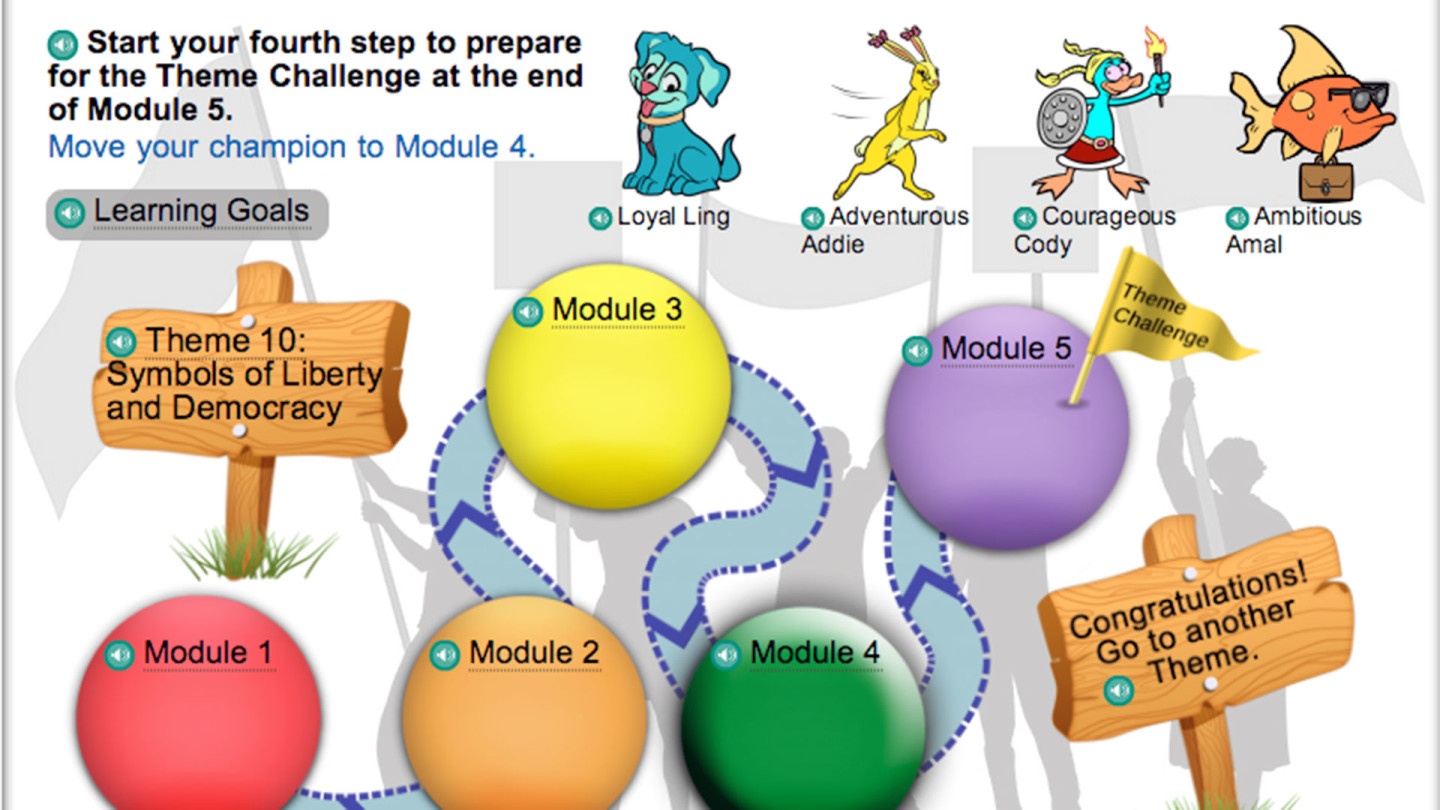
"content": "\u003cp>The English language learner population in the United States is growing quickly, posing a challenge for cash-strapped schools struggling to balance the diverse needs of learners. And while technology is becoming a more ubiquitous part of the school experience, it hasn’t always been used effectively to improve the language skills of English learners. A new curriculum using both online modules and teacher-led instruction developed by \u003ca href=\"https://www.middleburyinteractive.com/\" target=\"_blank\">Middlebury Interactive Languages\u003c/a> in partnership with \u003ca href=\"http://www.hartfordschools.org/\" target=\"_blank\">Hartford Public Schools\u003c/a> is showing promise as an engaging way for students working on their English skills to also access challenging content.\u003c/p>\n\u003cp>Middlebury Interactive Languages is known for its online world languages program, but the partnership with Hartford marks the company’s entry into developing a blended-learning program meant for students learning English. Middlebury used research showing that English language learners need to develop academic English to succeed in school, as well as motivation to learn a new language through challenging and interesting work. To that end, the ESL curriculum uses content from science, math, social studies and English language arts curriculum as the basis for building up language skills.\u003c/p>\n\u003caside class=\"pullquote alignright\">\"None of the curricular components are watered down; we were able to take grade-level appropriate content and scaffold it so they can access it.\"\u003ccite>Monica Quinones, Hartford Public Schools director of English Language Learner Services\u003c/cite>\u003c/aside>\n\u003cp>“The whole process and developing these courses has been extremely collaborative with the real users,” said Aline Germain-Rutherford, chief academic officer for Middlebury Interactive Languages. “We take [the teacher and student] feedback and integrate that into our design.” For example, the Middlebury designers had little understanding of how much language a level one ELL student has. After looking at an initial prototype, Hartford educators came back to the company explaining areas that needed more background, context and clues to scaffold a student's understanding of texts.\u003c/p>\n\u003cp>Hartford educators have been pleased with the progress their 4th-8th grade students are making using the blended learning curriculum and with the collaboration generally. They are currently piloting the program in the eight schools with the highest population of English language learners. “The curriculum is not static,” said Mary-Beth Russo, a Hartford ELL coach about the program's flexibility. “It’s online, but you can take parts of it and build out, and it’s theme based.”\u003c/p>\n\u003cp>Before, Hartford used a typical model that included both helping English learners within their subject area classes and pulling them out to work on language specifically. If a class was reading \u003cem>The House on Mango Street\u003c/em>, the ELL teacher might try to front-load important vocabulary with students so they would have some idea of what was going on in the book, but often limited language skills still kept those students from participating in discussions.\u003c/p>\n\u003cp>[ad fullwidth]\u003c/p>\n\u003cp>[contextly_sidebar id=\"vIvRpmNk8Nlb3210Hu6GtU4bJjGfYjn8\"]\u003c/p>\n\u003cp>In comparison, the Middlebury blended curriculum is grouped by overarching themes and subthemes. Each subtheme follows a predictable progression of modules that focus on vocabulary, reading, writing, listening and speaking. Students are working towards completing a project in each module. Since the curriculum is meant to be used as a supplement to in-person instruction, ESL teachers can build off the modules however they see fit, adding elements the connect explicitly back to curriculum in other classes or differentiating for individual students as they see fit.\u003c/p>\n\u003cp>\u003cstrong>RIGOROUS CONTENT\u003c/strong>\u003c/p>\n\u003cp>“None of the curricular components are watered down,” said Monica Quinones, director of English Language Learners Support Services for Hartford Public Schools. “That’s something we were very adamant about. We were able to take grade-level appropriate content and scaffold it so they can access it.”\u003c/p>\n\u003cp>That’s a big leap for a group of students who are often thought to be less smart because they don’t understand English as well. A big part of helping those students access their content coursework is to help them develop the academic English they will be expected to use throughout their school careers.\u003c/p>\n\u003cp>“A piece that’s really different is the rigor of the content,” Russo said. “We worked hard to align it to the Common Core.” For example, in sixth grade, Common Core State Standards recommend reading work by Frederick Douglass. Helping a student who only knows a few words of English understand this difficult text requires lots of supports.\u003c/p>\n\u003cp>The program does this by helping the learner deconstruct the text. Difficult words have pop-up boxes with visual, audio and written definitions. Activities are built in to help learners identify key words that signal an idea is being introduced or an example given. They work on identifying word roots, common prefixes and suffixes that give clues about whether the word is a noun or a verb and families of words.\u003c/p>\n\u003cp>The activities also use the well-worn practice of modeling by offering students examples of the written or oral statement they have been asked to produce. “We expect that at first the learner will model his sentence on the model,” Germain-Rutherford said. “And bit by bit, he will become more independent.”\u003c/p>\n\u003cp>Quinones and Russo said Hartford ESL teachers were wary of the pilot at first, believing the content would be too challenging for very new English speakers. “Now those teachers are coming back and saying they can’t believe the quality of work their students are producing,” Russo said.\u003c/p>\n\u003cp>\u003cstrong>GOOD INITIAL RESULTS\u003c/strong>\u003c/p>\n\u003cp>While Hartford won’t have real data for several more years, Russo and Quinones say students in the pilot courses are accelerating their reading, writing and speaking skills more quickly than those not in the course. They’ve shown improvement on benchmark tests and seem more engaged in their work. Teachers are reporting better attendance and, interestingly, more engagement from parents.\u003c/p>\n\u003cp>A big part of the curriculum is recognizing that students come with a culture and a set of skills from their first language that they can use to learn English. Rather than suppressing the first language, the curriculum celebrates it. “Research really shows that the more you help the students develop a multicultural and multilingual identity….the more students are engaged and motivated,” Germain-Rutherford said. The projects included in each module always connect back to the student’s culture. Students are encouraged to talk about who they are and where they come from in English. This celebration has in turn made parents feel more welcome at school.\u003c/p>\n\u003cp>“[Students are] so invested in learning,” Quinones said. “The discussions they have amongst each other, even if they aren’t in agreement, these are things we haven’t seen before.” Students even feel empowered to give direct feedback on the program to Middlebury. One student wrote to the Middlebury Interactive Languages CEO, Jane Swift, with some recommendations about the user interface and a complaint that his country’s flag wasn’t represented on the site.\u003c/p>\n\u003cp>[ad floatright]\u003c/p>\n\u003cp>“Districts have to know what the program is and understand that there’s no silver bullet that’s going to answer everybody’s needs to grow ELLs overnight,” Russo said. But, after 28 years as an ELL teacher and coach, she says the Middlebury program is the best technology tool she’s seen. It’s flexible enough for teachers to incorporate their own lessons, provides a predictable path for students and engages them in high level work. Russo says it takes five to seven years for a child to acquire language, but she’s hoping in a few years time, the bet her district made on Middlebury will pay off.\u003c/p>\n\n",
"disqusIdentifier": "40232 http://ww2.kqed.org/mindshift/?p=40232",
"disqusUrl": "https://ww2.kqed.org/mindshift/2015/07/10/the-key-to-boosting-english-learners-language-skills-challenging-content/",
"stats": {
"hasVideo": false,
"hasChartOrMap": false,
"hasAudio": false,
"hasPolis": false,
"wordCount": 1309,
"hasGoogleForm": false,
"hasGallery": false,
"hasHearkenModule": false,
"iframeSrcs": [],
"paragraphCount": 21
},
"modified": 1436537185,
"excerpt": "A blended learning curriculum meant to help English Language Learners pick up the academic vocabulary they'll need to succeed has been created through a partnership between Middlebury Interactive Languages and Hartford Public Schools.",
"headData": {
"twImgId": "",
"twTitle": "",
"ogTitle": "",
"ogImgId": "",
"twDescription": "",
"description": "A blended learning curriculum meant to help English Language Learners pick up the academic vocabulary they'll need to succeed has been created through a partnership between Middlebury Interactive Languages and Hartford Public Schools.",
"title": "The Key to Boosting English Learners' Language Skills? Challenging Content | KQED",
"ogDescription": "",
"schema": {
"@context": "https://schema.org",
"@type": "Article",
"headline": "The Key to Boosting English Learners' Language Skills? Challenging Content",
"datePublished": "2015-07-10T07:06:25-07:00",
"dateModified": "2015-07-10T07:06:25-07:00",
"image": "https://cdn.kqed.org/wp-content/uploads/2020/02/KQED-OG-Image@1x.png"
}
},
"guestAuthors": [],
"slug": "the-key-to-boosting-english-learners-language-skills-challenging-content",
"status": "publish",
"path": "/mindshift/40232/the-key-to-boosting-english-learners-language-skills-challenging-content",
"audioTrackLength": null,
"parsedContent": [
{
"type": "contentString",
"content": "\u003cdiv class=\"post-body\">\u003cp>\u003cp>The English language learner population in the United States is growing quickly, posing a challenge for cash-strapped schools struggling to balance the diverse needs of learners. And while technology is becoming a more ubiquitous part of the school experience, it hasn’t always been used effectively to improve the language skills of English learners. A new curriculum using both online modules and teacher-led instruction developed by \u003ca href=\"https://www.middleburyinteractive.com/\" target=\"_blank\">Middlebury Interactive Languages\u003c/a> in partnership with \u003ca href=\"http://www.hartfordschools.org/\" target=\"_blank\">Hartford Public Schools\u003c/a> is showing promise as an engaging way for students working on their English skills to also access challenging content.\u003c/p>\n\u003cp>Middlebury Interactive Languages is known for its online world languages program, but the partnership with Hartford marks the company’s entry into developing a blended-learning program meant for students learning English. Middlebury used research showing that English language learners need to develop academic English to succeed in school, as well as motivation to learn a new language through challenging and interesting work. To that end, the ESL curriculum uses content from science, math, social studies and English language arts curriculum as the basis for building up language skills.\u003c/p>\n\u003caside class=\"pullquote alignright\">\"None of the curricular components are watered down; we were able to take grade-level appropriate content and scaffold it so they can access it.\"\u003ccite>Monica Quinones, Hartford Public Schools director of English Language Learner Services\u003c/cite>\u003c/aside>\n\u003cp>“The whole process and developing these courses has been extremely collaborative with the real users,” said Aline Germain-Rutherford, chief academic officer for Middlebury Interactive Languages. “We take [the teacher and student] feedback and integrate that into our design.” For example, the Middlebury designers had little understanding of how much language a level one ELL student has. After looking at an initial prototype, Hartford educators came back to the company explaining areas that needed more background, context and clues to scaffold a student's understanding of texts.\u003c/p>\n\u003cp>Hartford educators have been pleased with the progress their 4th-8th grade students are making using the blended learning curriculum and with the collaboration generally. They are currently piloting the program in the eight schools with the highest population of English language learners. “The curriculum is not static,” said Mary-Beth Russo, a Hartford ELL coach about the program's flexibility. “It’s online, but you can take parts of it and build out, and it’s theme based.”\u003c/p>\n\u003cp>Before, Hartford used a typical model that included both helping English learners within their subject area classes and pulling them out to work on language specifically. If a class was reading \u003cem>The House on Mango Street\u003c/em>, the ELL teacher might try to front-load important vocabulary with students so they would have some idea of what was going on in the book, but often limited language skills still kept those students from participating in discussions.\u003c/p>\n\u003cp>\u003c/p>\u003c/div>",
"attributes": {
"named": {},
"numeric": []
}
},
{
"type": "component",
"content": "",
"name": "ad",
"attributes": {
"named": {
"label": "fullwidth"
},
"numeric": [
"fullwidth"
]
}
},
{
"type": "contentString",
"content": "\u003cdiv class=\"post-body\">\u003cp>\u003c/p>\n\u003cp>\u003c/p>\u003cp>\u003c/p>\u003cp>\u003c/p>\n\u003cp>In comparison, the Middlebury blended curriculum is grouped by overarching themes and subthemes. Each subtheme follows a predictable progression of modules that focus on vocabulary, reading, writing, listening and speaking. Students are working towards completing a project in each module. Since the curriculum is meant to be used as a supplement to in-person instruction, ESL teachers can build off the modules however they see fit, adding elements the connect explicitly back to curriculum in other classes or differentiating for individual students as they see fit.\u003c/p>\n\u003cp>\u003cstrong>RIGOROUS CONTENT\u003c/strong>\u003c/p>\n\u003cp>“None of the curricular components are watered down,” said Monica Quinones, director of English Language Learners Support Services for Hartford Public Schools. “That’s something we were very adamant about. We were able to take grade-level appropriate content and scaffold it so they can access it.”\u003c/p>\n\u003cp>That’s a big leap for a group of students who are often thought to be less smart because they don’t understand English as well. A big part of helping those students access their content coursework is to help them develop the academic English they will be expected to use throughout their school careers.\u003c/p>\n\u003cp>“A piece that’s really different is the rigor of the content,” Russo said. “We worked hard to align it to the Common Core.” For example, in sixth grade, Common Core State Standards recommend reading work by Frederick Douglass. Helping a student who only knows a few words of English understand this difficult text requires lots of supports.\u003c/p>\n\u003cp>The program does this by helping the learner deconstruct the text. Difficult words have pop-up boxes with visual, audio and written definitions. Activities are built in to help learners identify key words that signal an idea is being introduced or an example given. They work on identifying word roots, common prefixes and suffixes that give clues about whether the word is a noun or a verb and families of words.\u003c/p>\n\u003cp>The activities also use the well-worn practice of modeling by offering students examples of the written or oral statement they have been asked to produce. “We expect that at first the learner will model his sentence on the model,” Germain-Rutherford said. “And bit by bit, he will become more independent.”\u003c/p>\n\u003cp>Quinones and Russo said Hartford ESL teachers were wary of the pilot at first, believing the content would be too challenging for very new English speakers. “Now those teachers are coming back and saying they can’t believe the quality of work their students are producing,” Russo said.\u003c/p>\n\u003cp>\u003cstrong>GOOD INITIAL RESULTS\u003c/strong>\u003c/p>\n\u003cp>While Hartford won’t have real data for several more years, Russo and Quinones say students in the pilot courses are accelerating their reading, writing and speaking skills more quickly than those not in the course. They’ve shown improvement on benchmark tests and seem more engaged in their work. Teachers are reporting better attendance and, interestingly, more engagement from parents.\u003c/p>\n\u003cp>A big part of the curriculum is recognizing that students come with a culture and a set of skills from their first language that they can use to learn English. Rather than suppressing the first language, the curriculum celebrates it. “Research really shows that the more you help the students develop a multicultural and multilingual identity….the more students are engaged and motivated,” Germain-Rutherford said. The projects included in each module always connect back to the student’s culture. Students are encouraged to talk about who they are and where they come from in English. This celebration has in turn made parents feel more welcome at school.\u003c/p>\n\u003cp>“[Students are] so invested in learning,” Quinones said. “The discussions they have amongst each other, even if they aren’t in agreement, these are things we haven’t seen before.” Students even feel empowered to give direct feedback on the program to Middlebury. One student wrote to the Middlebury Interactive Languages CEO, Jane Swift, with some recommendations about the user interface and a complaint that his country’s flag wasn’t represented on the site.\u003c/p>\n\u003cp>\u003c/p>\u003c/div>",
"attributes": {
"named": {},
"numeric": []
}
},
{
"type": "component",
"content": "",
"name": "ad",
"attributes": {
"named": {
"label": "floatright"
},
"numeric": [
"floatright"
]
}
},
{
"type": "contentString",
"content": "\u003cdiv class=\"post-body\">\u003cp>\u003c/p>\n\u003cp>“Districts have to know what the program is and understand that there’s no silver bullet that’s going to answer everybody’s needs to grow ELLs overnight,” Russo said. But, after 28 years as an ELL teacher and coach, she says the Middlebury program is the best technology tool she’s seen. It’s flexible enough for teachers to incorporate their own lessons, provides a predictable path for students and engages them in high level work. Russo says it takes five to seven years for a child to acquire language, but she’s hoping in a few years time, the bet her district made on Middlebury will pay off.\u003c/p>\n\n\u003c/div>\u003c/p>",
"attributes": {
"named": {},
"numeric": []
}
}
],
"link": "/mindshift/40232/the-key-to-boosting-english-learners-language-skills-challenging-content",
"authors": [
"234"
],
"categories": [
"mindshift_20546",
"mindshift_195",
"mindshift_193"
],
"tags": [
"mindshift_399",
"mindshift_398",
"mindshift_20851",
"mindshift_20784",
"mindshift_1040",
"mindshift_287"
],
"featImg": "mindshift_40421",
"label": "mindshift"
},
"mindshift_41061": {
"type": "posts",
"id": "mindshift_41061",
"meta": {
"index": "posts_1716263798",
"site": "mindshift",
"id": "41061",
"score": null,
"sort": [
1436454861000
]
},
"parent": 0,
"labelTerm": {
"site": "mindshift"
},
"blocks": [],
"publishDate": 1436454861,
"format": "standard",
"disqusTitle": "Steps to Help Schools Transform to Competency-Based Learning",
"title": "Steps to Help Schools Transform to Competency-Based Learning",
"headTitle": "MindShift | KQED News",
"content": "\u003cp>It’s no longer a given that if a child spends twelve years in school, he or she will learn enough to succeed in higher education or a career. To address this issue, some educators are taking bold measures to help students. Traditionally, classes move forward, covering the curriculum according to schedule. Students are taught the same materials at the same pace. If a student fails to learn a skill, he or she accepts that result and moves on to the next topic with the rest of the class.\u003c/p>\n\u003cp>Competency-based learning, on the other hand, insists on mastery of subjects and provides students the time to learn; the students are not marched past failure. There are challenges to this \u003ca href=\"http://ww2.kqed.org/mindshift/tag/competency-based-education/\">methodology\u003c/a> as well, but it is slowly gaining acceptance and has been around long enough to develop some best practices. School districts that have seen success with this model carefully laid the groundwork for this fundamental change away from a traditional model of education. They also designed the infrastructure that supports it and learned some big lessons during implementation.\u003c/p>\n\u003cp>Competency-based learning, often called mastery-learning, at its core involves five elements:\u003c/p>\n\u003col>\n\u003cli>Students advance when they master the content and skills, not because they squeaked by with a C or a D grade.\u003c/li>\n\u003cli>Transparency about where students stand empowers them and enables educators to better tailor instruction to their individual needs.\u003c/li>\n\u003cli>Assessment is a continual part of the learning cycle, not a final judgment at a time when a student has no hope of changing the outcome.\u003c/li>\n\u003cli>Educators offer timely support, often daily, on any part of the required material.\u003c/li>\n\u003cli>Students must be able to demonstrate that they can transfer their knowledge to new contexts, applying skills to challenges they’ve never seen before. This often means developing life-long habits of learning.\u003c/li>\n\u003c/ol>\n\u003cp>“It’s not just about pacing,” said Chris Sturgis, author of the report \u003ca href=\"http://www.competencyworks.org/wp-content/uploads/2015/06/iNCL_CWIssueBrief_Implementing_v5_web.pdf\" target=\"_blank\">“Implementing Competency Education in K-12 Systems: Insights from Local Leaders”\u003c/a> by CompetencyWorks. “It’s much more about flexibility of resources, time and effort to make sure students are successful.” Competency education is often conflated with flexible pacing because in both models students in the same classroom are working on different aspects of the curriculum. However, competency education requires a much bigger revisioning of the school system beyond the traditional paradigm.\u003c/p>\n\u003cp>“What we are talking about here is a complete restructure,” said Virgil Hammonds, who just wrapped up a stint as superintendent of RSU2 in Maine and previously led competency efforts in \u003ca href=\"http://www.edweek.org/dd/articles/2012/10/17/01competency.h06.html\" target=\"_blank\">Lindsay, California\u003c/a>. He likened the process to a home-remodel where the whole building is knocked down to its foundation and built anew.\u003c/p>\n\u003cp>[ad fullwidth]\u003c/p>\n\u003cp>\u003cstrong>LAYING THE GROUNDWORK\u003c/strong>\u003c/p>\n\u003cp>To undertake this kind of big project a district needs to take a \u003ca href=\"http://ww2.kqed.org/mindshift/2015/07/06/beyond-academics-what-a-holistic-approach-to-learning-could-look-like/\" target=\"_blank\">systems approach to teaching and learning\u003c/a>, gathering input from all the stakeholders, listening carefully, incorporating those ideas in real ways into the plan and developing a strong shared vision and district culture.\u003c/p>\n\u003cp>[contextly_sidebar id=\"kYIcae4jvfSl6lM3ugvS6uYWsJyvpurL\"]\u003c/p>\n\u003cp>“I have come to firmly believe that if this part isn’t done well then districts may have difficulty implementing with fidelity since the culture of the traditional system remains intact,” said Robert Crumley, superintendent of \u003ca href=\"http://www.edutopia.org/chugach-school-district-reform\" target=\"_blank\">Chugach School District\u003c/a> in Alaska.\u003c/p>\n\u003cp>It took Chugach almost three years to complete this ramping up phase. Crumley and his staff held dozens of community meetings, inviting parents, students, educators, business leaders and community members to share their input for a new vision of school that put students at the center. The district already had a lot of unflattering data telling them they needed to try something new or else fall behind.\u003c/p>\n\u003cp>After the initial input-gathering period, the superintendent and the school board made a public five-year commitment to making changes based on that input. “That public commitment was instrumental in staff having confidence that we were going to continue with this,” Crumley said. He’s well aware of “initiative fatigue” that many educators feel when new education fads come and go. But the public commitment helped gain their trust, as did the obvious incorporation of their ideas into the new plan.\u003c/p>\n\u003cp>Crumley also took the time to empower the staff in his district, focusing on retention, not finding new teachers that already fit the mold. To do this, Crumley worked on helping his staff have a growth mindset about their efforts and \u003ca href=\"http://ww2.kqed.org/mindshift/2015/03/03/when-school-leaders-empower-teachers-better-ideas-emerge/\" target=\"_blank\">empowered them\u003c/a> with three simple motivators:\u003c/p>\n\u003col>\n\u003cli>Engage in complex work with a sense of mastery.\u003c/li>\n\u003cli>Engage with other people.\u003c/li>\n\u003cli>Give them some autonomy over what they do and how and when to do it.\u003c/li>\n\u003c/ol>\n\u003cp>“When you empower people you are actually giving up a little of your power and handing it to someone else,” Crumley said. “That can be a little scary for some people, but it generally garners greater results for the system in the long term.” Crumley even found that some of the loudest voices pushing back against the changes soon became his strongest allies. When they saw that their concerns were listened to and addressed, those vocal opponents who were often charismatic leaders in their school communities, saw their way toward the shared vision.\u003c/p>\n\u003cp>“Often times their concerns were valid concerns that we needed to address and they helped us address them,” Crumley said. If a teacher felt so misaligned with the new system that they didn’t want to work there, the district helped them find work elsewhere.\u003c/p>\n\u003cp>“We need to model the conditions of innovation and problem-solving as principals and district administrators,” Crumley said. That means not letting bureaucracy get in the way of innovation. It means creating the conditions where staff feel they are safe to experiment and tinker with their practice.\u003c/p>\n\u003cp>\u003cstrong>BUILD UP INFRASTRUCTURE\u003c/strong>\u003c/p>\n\u003cp>Many districts trying to implement a competency education don’t spend the necessary time ramping up to this kind of sweeping reform, instead jumping right into designing the infrastructure as though it is a technical problem. But without the buy-in of the community, school board, staff and students, the reform effort is likely to flop. The infrastructure must be built on a strong foundation.\u003c/p>\n\u003caside class=\"pullquote alignright\">“We need to model the conditions of innovation and problem-solving as principals and district administrators.\"\u003c/aside>\n\u003cp>When those shared values are in place it becomes imperative that the competencies students are expected to learn are completely transparent. “We’re no longer the teacher who is holding the secret of how to earn that top-level grade,” Hammonds said. “Instead we say, ‘here are the expectations for rigor and a clear scale for how to achieve it.’”\u003c/p>\n\u003cp>Teachers need to work together to clearly define the scale for how students will achieve mastery and what qualities will be included. While all students are held accountable for the same high expectations and the same competencies, they will each show their mastery in different ways. Teachers have to be ready for that variance, embrace it, and know what they are looking for to maintain rigorous standards.\u003c/p>\n\u003cp>\u003cstrong>TRANSITIONING INTO COMPETENCY EDUCATION\u003c/strong>\u003c/p>\n\u003cp>There’s no “right way” to transition into such a drastically different way of thinking about school because the unique factors of each district and community will play a big role. Asking the community what they want their graduates to look like is a good way to start. Preparing students for what the new system will be like and preparing them to take on more autonomy and agency is also crucial.\u003c/p>\n\u003caside class=\"alignleft long\">\n\u003ch3>Clarifying questions to help define pedagogical approach:\u003c/h3>\n\u003cp>ž\u003c/p>\n\u003cul>\n\u003cli>\u003cem>What do we know about the different ways to motivate and engage students? ž\u003c/em>\u003c/li>\n\u003cli>\u003cem>Where does student agency fit in learning?\u003c/em>\u003c/li>\n\u003cli>\u003cem>What role do habits of learning play, and how can they be developed in students?\u003c/em>\u003c/li>\n\u003cli>\u003cem>What does the research tell us about effective instructional practices?\u003c/em>\u003c/li>\n\u003cli>\u003cem>What are the types of assessment, and what role do they play in achievement?\u003c/em>\u003c/li>\n\u003cli>\u003cem>What types of learning experiences are needed to help students reach graduation goals?\u003c/em>\u003c/li>\n\u003cli>\u003cem>Given your current student population, their academic needs, and their life and learning experiences, how might this inform your school design or pedagogical approach?\u003c/em>\u003c/li>\n\u003cli>\u003cem>What challenges and educational needs can online and blended learning help you address?\u003c/em>\u003c/li>\n\u003cli>\u003cem>How do parents and the community at large think about these questions?\u003c/em>\u003c/li>\n\u003c/ul>\n\u003c/aside>\n\u003cp>Clearly defining the competences and the indicators is one step. Designing rubrics that clearly link back to those competencies is another equally important step that often gets overlooked. In hindsight, Hammonds wishes his team had spent more time designing the assessment rubrics. “When assessment goes beyond the level of retrieval (the goal of this kind of system), it is extra important to define things like what reflection looks like,” he said.\u003c/p>\n\u003cp>\u003ca href=\"http://pittsfield-nh.com/sau/\" target=\"_blank\">Pittsfield School District\u003c/a> in New Hampshire had a slightly easier journey to competency than Alaska or Maine because the state passed a law requiring high schools to implement competency education by 2008. That law has been ignored or implemented with \u003ca href=\"http://ww2.kqed.org/mindshift/2014/06/16/going-all-in-how-to-make-competency-based-learning-work/\" target=\"_blank\">varying degrees of effectiveness\u003c/a> in different parts of the state, but it did help provide some support as schools began to define indicators of competencies.\u003c/p>\n\u003cp>For two years Pittsfield educators did research, visited other schools and began identifying teacher leaders who would pilot ideas in their classrooms. Those teacher-leaders eventually put together “Do’s and Don’ts” for peers based on early experimentation. In the first year, the district devoted a lot of resources to writing the competencies, checking them against a rigor tool the state provided and training teachers, said Derek Hamilton, dean of operations for Pittsfield School District.\u003c/p>\n\u003cp>A panel of excited teachers who deeply understood competency education dug into the district’s current grading practices and policies, revising them to fit the competency model. They wanted to be sure teachers felt they could be consistent from class-to-class and grade-to-grade. Teachers got student feedback on whether the competencies were clear.\u003c/p>\n\u003cp>In the second year, the district presented the competencies they’d developed to the community. While parents had been clear about the general skills and dispositions they wanted students to graduate with, they hadn’t participated in the nitty-gritty competency writing and they needed to be brought up to speed.\u003c/p>\n\u003cp>In the third year, Pittsfield implemented the system throughout their 7-12th grade classes. It was bumpy at first, but Hamilton said when students led conferences with their parents and teachers, it all started to become clear. The parents could see how their child’s work connected to the rubric. This stage helped solidify support.\u003c/p>\n\u003cp>“We understood that in order to make this transformation we needed to find time to do it,” Hamilton said. School starts late once a week so teachers can have professional development time that's crucial to working out the kinks in the new system.\u003c/p>\n\u003cp>The first several years gave teachers and administrators a lot to reflect on, and in the fourth year teachers saw the need to better support students moving ahead or behind pace. They also implemented a support block on Wednesdays entirely dedicated to one-on-one support. They recognized that if time were truly flexible for students, then educator resources needed to be available in the summer too. Teachers began holding office hours, for which the district paid them, to support students who were still working on competencies.\u003c/p>\n\u003cp>These early adopters are continuously engaged in a process of reflection and fine-tuning to improve the education they are offering. Just as the competency education model acknowledges that learners are individuals with unique interests and learning needs, so too educators need space to figure out this new style of teaching. While the concept of only moving a student forward when they can clearly demonstrate mastery of content and skills sounds simple, it’s a big departure from the traditional model and requires a period of adjustment in a supportive environment.\u003c/p>\n\u003cp>[ad floatright]\u003c/p>\n\u003cp>\u003cem>Read the full report, \u003ca href=\"http://www.competencyworks.org/wp-content/uploads/2015/06/iNCL_CWIssueBrief_Implementing_v5_web.pdf\" target=\"_blank\">\"Implementing Competency Education in K-12 Systems: Insights from Local Leaders\" \u003c/a>for many more details and examples of how to implement a competency-based approach.\u003c/em>\u003c/p>\n\n",
"disqusIdentifier": "41061 http://ww2.kqed.org/mindshift/?p=41061",
"disqusUrl": "https://ww2.kqed.org/mindshift/2015/07/09/steps-to-help-schools-transform-to-competency-based-learning/",
"stats": {
"hasVideo": false,
"hasChartOrMap": false,
"hasAudio": false,
"hasPolis": false,
"wordCount": 2056,
"hasGoogleForm": false,
"hasGallery": false,
"hasHearkenModule": false,
"iframeSrcs": [],
"paragraphCount": 34
},
"modified": 1436454861,
"excerpt": "Some best practices around implementing competency-based learning are beginning to emerge, especially for schools looking to make the leap from traditional structures. ",
"headData": {
"twImgId": "",
"twTitle": "",
"ogTitle": "",
"ogImgId": "",
"twDescription": "",
"description": "Some best practices around implementing competency-based learning are beginning to emerge, especially for schools looking to make the leap from traditional structures. ",
"title": "Steps to Help Schools Transform to Competency-Based Learning | KQED",
"ogDescription": "",
"schema": {
"@context": "https://schema.org",
"@type": "Article",
"headline": "Steps to Help Schools Transform to Competency-Based Learning",
"datePublished": "2015-07-09T08:14:21-07:00",
"dateModified": "2015-07-09T08:14:21-07:00",
"image": "https://cdn.kqed.org/wp-content/uploads/2020/02/KQED-OG-Image@1x.png"
}
},
"guestAuthors": [],
"slug": "steps-to-help-schools-transform-to-competency-based-learning",
"status": "publish",
"path": "/mindshift/41061/steps-to-help-schools-transform-to-competency-based-learning",
"audioTrackLength": null,
"parsedContent": [
{
"type": "contentString",
"content": "\u003cdiv class=\"post-body\">\u003cp>\u003cp>It’s no longer a given that if a child spends twelve years in school, he or she will learn enough to succeed in higher education or a career. To address this issue, some educators are taking bold measures to help students. Traditionally, classes move forward, covering the curriculum according to schedule. Students are taught the same materials at the same pace. If a student fails to learn a skill, he or she accepts that result and moves on to the next topic with the rest of the class.\u003c/p>\n\u003cp>Competency-based learning, on the other hand, insists on mastery of subjects and provides students the time to learn; the students are not marched past failure. There are challenges to this \u003ca href=\"http://ww2.kqed.org/mindshift/tag/competency-based-education/\">methodology\u003c/a> as well, but it is slowly gaining acceptance and has been around long enough to develop some best practices. School districts that have seen success with this model carefully laid the groundwork for this fundamental change away from a traditional model of education. They also designed the infrastructure that supports it and learned some big lessons during implementation.\u003c/p>\n\u003cp>Competency-based learning, often called mastery-learning, at its core involves five elements:\u003c/p>\n\u003col>\n\u003cli>Students advance when they master the content and skills, not because they squeaked by with a C or a D grade.\u003c/li>\n\u003cli>Transparency about where students stand empowers them and enables educators to better tailor instruction to their individual needs.\u003c/li>\n\u003cli>Assessment is a continual part of the learning cycle, not a final judgment at a time when a student has no hope of changing the outcome.\u003c/li>\n\u003cli>Educators offer timely support, often daily, on any part of the required material.\u003c/li>\n\u003cli>Students must be able to demonstrate that they can transfer their knowledge to new contexts, applying skills to challenges they’ve never seen before. This often means developing life-long habits of learning.\u003c/li>\n\u003c/ol>\n\u003cp>“It’s not just about pacing,” said Chris Sturgis, author of the report \u003ca href=\"http://www.competencyworks.org/wp-content/uploads/2015/06/iNCL_CWIssueBrief_Implementing_v5_web.pdf\" target=\"_blank\">“Implementing Competency Education in K-12 Systems: Insights from Local Leaders”\u003c/a> by CompetencyWorks. “It’s much more about flexibility of resources, time and effort to make sure students are successful.” Competency education is often conflated with flexible pacing because in both models students in the same classroom are working on different aspects of the curriculum. However, competency education requires a much bigger revisioning of the school system beyond the traditional paradigm.\u003c/p>\n\u003cp>“What we are talking about here is a complete restructure,” said Virgil Hammonds, who just wrapped up a stint as superintendent of RSU2 in Maine and previously led competency efforts in \u003ca href=\"http://www.edweek.org/dd/articles/2012/10/17/01competency.h06.html\" target=\"_blank\">Lindsay, California\u003c/a>. He likened the process to a home-remodel where the whole building is knocked down to its foundation and built anew.\u003c/p>\n\u003cp>\u003c/p>\u003c/div>",
"attributes": {
"named": {},
"numeric": []
}
},
{
"type": "component",
"content": "",
"name": "ad",
"attributes": {
"named": {
"label": "fullwidth"
},
"numeric": [
"fullwidth"
]
}
},
{
"type": "contentString",
"content": "\u003cdiv class=\"post-body\">\u003cp>\u003c/p>\n\u003cp>\u003cstrong>LAYING THE GROUNDWORK\u003c/strong>\u003c/p>\n\u003cp>To undertake this kind of big project a district needs to take a \u003ca href=\"http://ww2.kqed.org/mindshift/2015/07/06/beyond-academics-what-a-holistic-approach-to-learning-could-look-like/\" target=\"_blank\">systems approach to teaching and learning\u003c/a>, gathering input from all the stakeholders, listening carefully, incorporating those ideas in real ways into the plan and developing a strong shared vision and district culture.\u003c/p>\n\u003cp>\u003c/p>\u003cp>\u003c/p>\u003cp>\u003c/p>\n\u003cp>“I have come to firmly believe that if this part isn’t done well then districts may have difficulty implementing with fidelity since the culture of the traditional system remains intact,” said Robert Crumley, superintendent of \u003ca href=\"http://www.edutopia.org/chugach-school-district-reform\" target=\"_blank\">Chugach School District\u003c/a> in Alaska.\u003c/p>\n\u003cp>It took Chugach almost three years to complete this ramping up phase. Crumley and his staff held dozens of community meetings, inviting parents, students, educators, business leaders and community members to share their input for a new vision of school that put students at the center. The district already had a lot of unflattering data telling them they needed to try something new or else fall behind.\u003c/p>\n\u003cp>After the initial input-gathering period, the superintendent and the school board made a public five-year commitment to making changes based on that input. “That public commitment was instrumental in staff having confidence that we were going to continue with this,” Crumley said. He’s well aware of “initiative fatigue” that many educators feel when new education fads come and go. But the public commitment helped gain their trust, as did the obvious incorporation of their ideas into the new plan.\u003c/p>\n\u003cp>Crumley also took the time to empower the staff in his district, focusing on retention, not finding new teachers that already fit the mold. To do this, Crumley worked on helping his staff have a growth mindset about their efforts and \u003ca href=\"http://ww2.kqed.org/mindshift/2015/03/03/when-school-leaders-empower-teachers-better-ideas-emerge/\" target=\"_blank\">empowered them\u003c/a> with three simple motivators:\u003c/p>\n\u003col>\n\u003cli>Engage in complex work with a sense of mastery.\u003c/li>\n\u003cli>Engage with other people.\u003c/li>\n\u003cli>Give them some autonomy over what they do and how and when to do it.\u003c/li>\n\u003c/ol>\n\u003cp>“When you empower people you are actually giving up a little of your power and handing it to someone else,” Crumley said. “That can be a little scary for some people, but it generally garners greater results for the system in the long term.” Crumley even found that some of the loudest voices pushing back against the changes soon became his strongest allies. When they saw that their concerns were listened to and addressed, those vocal opponents who were often charismatic leaders in their school communities, saw their way toward the shared vision.\u003c/p>\n\u003cp>“Often times their concerns were valid concerns that we needed to address and they helped us address them,” Crumley said. If a teacher felt so misaligned with the new system that they didn’t want to work there, the district helped them find work elsewhere.\u003c/p>\n\u003cp>“We need to model the conditions of innovation and problem-solving as principals and district administrators,” Crumley said. That means not letting bureaucracy get in the way of innovation. It means creating the conditions where staff feel they are safe to experiment and tinker with their practice.\u003c/p>\n\u003cp>\u003cstrong>BUILD UP INFRASTRUCTURE\u003c/strong>\u003c/p>\n\u003cp>Many districts trying to implement a competency education don’t spend the necessary time ramping up to this kind of sweeping reform, instead jumping right into designing the infrastructure as though it is a technical problem. But without the buy-in of the community, school board, staff and students, the reform effort is likely to flop. The infrastructure must be built on a strong foundation.\u003c/p>\n\u003caside class=\"pullquote alignright\">“We need to model the conditions of innovation and problem-solving as principals and district administrators.\"\u003c/aside>\n\u003cp>When those shared values are in place it becomes imperative that the competencies students are expected to learn are completely transparent. “We’re no longer the teacher who is holding the secret of how to earn that top-level grade,” Hammonds said. “Instead we say, ‘here are the expectations for rigor and a clear scale for how to achieve it.’”\u003c/p>\n\u003cp>Teachers need to work together to clearly define the scale for how students will achieve mastery and what qualities will be included. While all students are held accountable for the same high expectations and the same competencies, they will each show their mastery in different ways. Teachers have to be ready for that variance, embrace it, and know what they are looking for to maintain rigorous standards.\u003c/p>\n\u003cp>\u003cstrong>TRANSITIONING INTO COMPETENCY EDUCATION\u003c/strong>\u003c/p>\n\u003cp>There’s no “right way” to transition into such a drastically different way of thinking about school because the unique factors of each district and community will play a big role. Asking the community what they want their graduates to look like is a good way to start. Preparing students for what the new system will be like and preparing them to take on more autonomy and agency is also crucial.\u003c/p>\n\u003caside class=\"alignleft long\">\n\u003ch3>Clarifying questions to help define pedagogical approach:\u003c/h3>\n\u003cp>ž\u003c/p>\n\u003cul>\n\u003cli>\u003cem>What do we know about the different ways to motivate and engage students? ž\u003c/em>\u003c/li>\n\u003cli>\u003cem>Where does student agency fit in learning?\u003c/em>\u003c/li>\n\u003cli>\u003cem>What role do habits of learning play, and how can they be developed in students?\u003c/em>\u003c/li>\n\u003cli>\u003cem>What does the research tell us about effective instructional practices?\u003c/em>\u003c/li>\n\u003cli>\u003cem>What are the types of assessment, and what role do they play in achievement?\u003c/em>\u003c/li>\n\u003cli>\u003cem>What types of learning experiences are needed to help students reach graduation goals?\u003c/em>\u003c/li>\n\u003cli>\u003cem>Given your current student population, their academic needs, and their life and learning experiences, how might this inform your school design or pedagogical approach?\u003c/em>\u003c/li>\n\u003cli>\u003cem>What challenges and educational needs can online and blended learning help you address?\u003c/em>\u003c/li>\n\u003cli>\u003cem>How do parents and the community at large think about these questions?\u003c/em>\u003c/li>\n\u003c/ul>\n\u003c/aside>\n\u003cp>Clearly defining the competences and the indicators is one step. Designing rubrics that clearly link back to those competencies is another equally important step that often gets overlooked. In hindsight, Hammonds wishes his team had spent more time designing the assessment rubrics. “When assessment goes beyond the level of retrieval (the goal of this kind of system), it is extra important to define things like what reflection looks like,” he said.\u003c/p>\n\u003cp>\u003ca href=\"http://pittsfield-nh.com/sau/\" target=\"_blank\">Pittsfield School District\u003c/a> in New Hampshire had a slightly easier journey to competency than Alaska or Maine because the state passed a law requiring high schools to implement competency education by 2008. That law has been ignored or implemented with \u003ca href=\"http://ww2.kqed.org/mindshift/2014/06/16/going-all-in-how-to-make-competency-based-learning-work/\" target=\"_blank\">varying degrees of effectiveness\u003c/a> in different parts of the state, but it did help provide some support as schools began to define indicators of competencies.\u003c/p>\n\u003cp>For two years Pittsfield educators did research, visited other schools and began identifying teacher leaders who would pilot ideas in their classrooms. Those teacher-leaders eventually put together “Do’s and Don’ts” for peers based on early experimentation. In the first year, the district devoted a lot of resources to writing the competencies, checking them against a rigor tool the state provided and training teachers, said Derek Hamilton, dean of operations for Pittsfield School District.\u003c/p>\n\u003cp>A panel of excited teachers who deeply understood competency education dug into the district’s current grading practices and policies, revising them to fit the competency model. They wanted to be sure teachers felt they could be consistent from class-to-class and grade-to-grade. Teachers got student feedback on whether the competencies were clear.\u003c/p>\n\u003cp>In the second year, the district presented the competencies they’d developed to the community. While parents had been clear about the general skills and dispositions they wanted students to graduate with, they hadn’t participated in the nitty-gritty competency writing and they needed to be brought up to speed.\u003c/p>\n\u003cp>In the third year, Pittsfield implemented the system throughout their 7-12th grade classes. It was bumpy at first, but Hamilton said when students led conferences with their parents and teachers, it all started to become clear. The parents could see how their child’s work connected to the rubric. This stage helped solidify support.\u003c/p>\n\u003cp>“We understood that in order to make this transformation we needed to find time to do it,” Hamilton said. School starts late once a week so teachers can have professional development time that's crucial to working out the kinks in the new system.\u003c/p>\n\u003cp>The first several years gave teachers and administrators a lot to reflect on, and in the fourth year teachers saw the need to better support students moving ahead or behind pace. They also implemented a support block on Wednesdays entirely dedicated to one-on-one support. They recognized that if time were truly flexible for students, then educator resources needed to be available in the summer too. Teachers began holding office hours, for which the district paid them, to support students who were still working on competencies.\u003c/p>\n\u003cp>These early adopters are continuously engaged in a process of reflection and fine-tuning to improve the education they are offering. Just as the competency education model acknowledges that learners are individuals with unique interests and learning needs, so too educators need space to figure out this new style of teaching. While the concept of only moving a student forward when they can clearly demonstrate mastery of content and skills sounds simple, it’s a big departure from the traditional model and requires a period of adjustment in a supportive environment.\u003c/p>\n\u003cp>\u003c/p>\u003c/div>",
"attributes": {
"named": {},
"numeric": []
}
},
{
"type": "component",
"content": "",
"name": "ad",
"attributes": {
"named": {
"label": "floatright"
},
"numeric": [
"floatright"
]
}
},
{
"type": "contentString",
"content": "\u003cdiv class=\"post-body\">\u003cp>\u003c/p>\n\u003cp>\u003cem>Read the full report, \u003ca href=\"http://www.competencyworks.org/wp-content/uploads/2015/06/iNCL_CWIssueBrief_Implementing_v5_web.pdf\" target=\"_blank\">\"Implementing Competency Education in K-12 Systems: Insights from Local Leaders\" \u003c/a>for many more details and examples of how to implement a competency-based approach.\u003c/em>\u003c/p>\n\n\u003c/div>\u003c/p>",
"attributes": {
"named": {},
"numeric": []
}
}
],
"link": "/mindshift/41061/steps-to-help-schools-transform-to-competency-based-learning",
"authors": [
"234"
],
"categories": [
"mindshift_192",
"mindshift_193"
],
"tags": [
"mindshift_1021",
"mindshift_20876",
"mindshift_20784",
"mindshift_1040",
"mindshift_873"
],
"featImg": "mindshift_41097",
"label": "mindshift"
},
"mindshift_40465": {
"type": "posts",
"id": "mindshift_40465",
"meta": {
"index": "posts_1716263798",
"site": "mindshift",
"id": "40465",
"score": null,
"sort": [
1435163988000
]
},
"parent": 0,
"labelTerm": {
"site": "mindshift"
},
"blocks": [],
"publishDate": 1435163988,
"format": "standard",
"disqusTitle": "Steps to Help Low-Income Students Direct Their Own Learning",
"title": "Steps to Help Low-Income Students Direct Their Own Learning",
"headTitle": "MindShift | KQED News",
"content": "\u003cp>When Susan Wolfe, an elementary school teacher in Boise, Idaho, asks her class the qualities of a good student, kids often list things like: taking responsibility for themselves, doing homework, being good communicators. By focusing on the what the students believe -- instead of what she could dictate to them -- Wolfe applies techniques of student-centered learning, which she has embraced throughout her 18-year teaching career working almost exclusively in Title I schools.\u003c/p>\n\u003cp>“The kids need to believe that they’re not here to have learning crammed down their throats,” she said. She says it is fundamental for teachers to take the time to build a class culture for which students take ownership. And contrary to many stereotypes about disadvantaged kids, in her experience, every child, no matter their background, wants that learning autonomy.\u003c/p>\n\u003cp>To build that type of environment, Wolfe first asks students to list the qualities they think make a good student. Then they list the qualities of a good teacher. Finally they describe what makes a \u003ca href=\"http://ww2.kqed.org/mindshift/2015/05/06/how-to-create-the-learning-community-project-based-learning-demands/\" target=\"_blank\">good learning environment\u003c/a>.\u003c/p>\n\u003cp>“If you get them to reflect back on previous learning experiences, then they get what you’re trying to get from them,” Wolfe said.\u003c/p>\n\u003cp>[contextly_sidebar id=\"NaO6aqan7KfwR6OzZVG4fY5i1IA4clZw\"]\u003c/p>\n\u003cp>Even if the lists get long, Wolfe has students group the qualities until there are four basic “critical factors” for good students, teachers and learning environments. Boiling it down to four keeps the “rules” simple, and the process ensures students take ownership over what they developed.\u003c/p>\n\u003cp>[ad fullwidth]\u003c/p>\n\u003cp>“Students have the ownership of the critical factors, so I’m no longer the ‘heavy,’ ” Wolfe said. “They designed this so they have to hold their own feet to the fire, and I’m just here to help them out.”\u003c/p>\n\u003cp>It’s true that at first students don’t always understand how to do what Wolfe is asking of them. But as she pushes them to reflect back and gives them space to generate their own answers without jumping in to prompt them, they begin to produce lists and the excitement grows.\u003c/p>\n\u003cp>“I start off with a lot of modeling and guiding and then it leads more to an open model,” Wolfe said. “Once they understand how to design a good open-ended question they get it -- it’s just that no one has asked them or trained them.”\u003c/p>\n\u003cp>\u003cstrong>GROWING PAINS\u003c/strong>\u003c/p>\n\u003cp>A common objection to approaches like Wolfe’s is that it takes a lot of time to co-create a list of guiding class rules, to model open-ended questions and to let kids be heard. But Wolfe insists that when students feel they are at the heart of the learning experience, the depth of work increases dramatically.\u003c/p>\n\u003caside class=\"pullquote alignright\">'I've got kids doing parts of projects that I don't think I could have ever talked them into doing if it hadn't come from them.'\u003c/aside>\n\u003cp>But, as with everything, she starts slow, modeling and training students on how to ask “essential questions,” ones that aren’t answerable with Google. First, every student will read the same book together and they will discuss topics by creating an inner and outer circle. In pairs, kids are encouraged to look for connections to themselves in the text, to pose essential questions to one another, and then to close-read the text for main ideas and vocabulary.\u003c/p>\n\u003cp>“I slowly step back and I give the kids more and more of the responsibility,” Wolfe said.\u003c/p>\n\u003cp>\u003cstrong>STEPPING INTO ROLES\u003c/strong>\u003c/p>\n\u003cp>Another way Wolfe helps kids take ownership over their learning space is to give everyone a job -- class president, secretary, plant-waterer, paper-passer, etc. Students rotate into different roles every two to three weeks so there’s no fighting over roles.\u003c/p>\n\u003cp>“I’ve set up this environment where they feel needed,” Wolfe said. “They eat that up. They want to be needed.” Some parents even report that when their children are home sick, they worry about who will do their classroom job.\u003c/p>\n\u003cp>To make sure all students are participating, the class “maps” their discussions, with one student drawing lines between question asker and answerer, creating a network of communication that visually indicates if someone has been left out. Wolfe says as a class they analyze and discuss these maps, brainstorming reasons why some classmates aren’t ready to speak up.\u003c/p>\n\u003cp>“The kids know they can’t hide anymore because there’s that mapping going on,” said Wolfe, “and they’ve found out because of the language and communication skills that have been built up that it’s safe to disagree.”\u003c/p>\n\u003cp>\u003cstrong>GENIUS HOUR\u003c/strong>\u003c/p>\n\u003cp>Increasingly, schools are making time for students to \u003ca href=\"http://ww2.kqed.org/mindshift/2014/02/10/think-big-how-to-jumpstart-tech-use-in-low-income-schools/\" target=\"_blank\">learn about whatever excites them\u003c/a>, inspired by Google’s 20 percent time when employees get to tinker on passion projects unrelated to their jobs. Wolfe finds this model a natural fit with both Common Core standards and her interest in making sure students are individually connected and passionate about the topics they are discovering.\u003c/p>\n\u003cp>\u003c!-- iframe plugin v.4.3 wordpress.org/plugins/iframe/ -->\u003cbr>\n\u003ciframe width=\"640\" height=\"360\" src=\"https://www.youtube.com/embed/fpCTRzP-9yg\" frameborder=\"0\" scrolling=\"yes\" class=\"iframe-class\">\u003c/iframe>\u003c/p>\n\u003cp>“I’ve got kids doing parts of projects that I don’t think I could have ever talked them into doing if it hadn’t come from them,” Wolfe said.\u003c/p>\n\u003cp>For example, a group of students wanted to be outside more, so they are working to build an outdoor classroom. They teamed up with a group of parents who were interested in the same concept, connected with the Bureau of Land Management and eventually designed and began clearing the way for a native plant garden.\u003c/p>\n\u003cp>They’re working with the community, learning to fundraise, using Excel spreadsheets and building websites. But there’s no grumbling because students are invested in the end goal of the project.\u003c/p>\n\u003cp>Wolfe treats Genius Hour as a pass/fail class. Students are required to set a goal each week, blog about how they went about achieving that goal and what obstacles may have come in the way. This may sound scary to teachers concerned that they aren’t ticking off all the standards required by their districts and Wolfe understands this fear, but says the core skills of research, writing, communicating and collaborating, emphasized in all areas of the Common Core, become part of Genius Hour projects.\u003c/p>\n\u003caside class=\"pullquote alignright\">'I slowly step back and I give the kids more and more of the responsibility.'\u003c/aside>\n\u003cp>“A lot of teachers spend a lot of time trying to motivate kids, but if they can tie it into students’ passions, you can tap into a lot of energy,” Wolfe said.\u003c/p>\n\u003cp>She said student-centered learning works for low-income students especially well because it helps them build the non-cognitive skills, like effective communication, that they may not be learning outside the classroom. At \u003ca href=\"http://whitney.school.boiseschools.org/\" target=\"_blank\">Whitney Elementary\u003c/a>, a school where 85-90 percent of students qualify for free and reduced priced lunch, Wolfe knows she had an impact on her students.\u003c/p>\n\u003cp>“I had a student that I could just not connect with,” Wolfe said. “I could not get this kid to do anything.” But she knew he loved skateboarding, so she suggested he research and become the expert on \u003ca href=\"http://tonyhawk.com/\" target=\"_blank\">Tony Hawk\u003c/a> and skateboarding. The principal even agreed to let him do a skateboarding demonstration at the end of the project.\u003c/p>\n\u003cp>The student made a total switch. He was staying in at recess to work on his report, asking for help and doing a great job on his work. Recently Wolfe bumped into him around town and he still remembered that project. He’s in college now, getting straight “A”s.\u003c/p>\n\u003cp>\u003cstrong>RIGHT CONDITIONS\u003c/strong>\u003c/p>\n\u003cp>Often educators cite large class sizes as an impediment to implementing this kind of student-centered learning. Wolfe agrees it’s much harder with more kids, but she still thinks with careful planning it can be done.\u003c/p>\n\u003cp>“If you can integrate skills into one really fantastic project, that’s half the battle,” Wolfe said. “You have to unpack those Common Core standards and build them into the units and project-based learning being designed.” She finds that teaching skills and concepts together as one unit saves a lot of time.\u003c/p>\n\u003cp>Support from other teachers is another important condition for this work. “Finding a group of individuals who are interested in that same type of teaching and getting support from them is really important,” Wolfe said. At her current school, \u003ca href=\"http://hawthorne.school.boiseschools.org/\" target=\"_blank\">Hawthorne Elementary\u003c/a>, Wolfe helps lead a book group focused on inquiry and student-centered learning.\u003c/p>\n\u003cp>One teacher in the group is slowly trying out some of the ideas. She started small, giving her students a little choice in their history of Boise projects. Rather than assigning topics, she told them she needed them to become experts and teach her. At first students didn’t know what to make of that, but soon they were charting out ideas and doing independent research on the computers for 30 minutes without help.\u003c/p>\n\u003cp>“She had never experienced that before and she’s probably got one of the lowest-skilled classes in the school,” Wolfe said.\u003c/p>\n\u003cp>The book group has helped convince educators of the rationale behind this pedagogy. After discussing books like \"\u003ca href=\"http://www.heinemann.com/products/E01230.aspx\" target=\"_blank\">Inquiry Circles Illuminated\u003c/a>\" by Stephanie Harvey and Harvey Daniels, they are more ready to try some approaches in their own classrooms. And, Wolfe always encourages teachers to start slow and look for what they will stop doing in exchange. It’s not realistic to keep piling on new things without stripping something away.\u003c/p>\n\u003cp>[ad floatright]\u003c/p>\n\u003cp>“Kids want that ownership, they want to be in charge of their learning,” Wolfe said. “We just have to give them little pieces at a time to be in charge of and give them a space where it is safe to do so.”\u003c/p>\n\n",
"disqusIdentifier": "40465 http://ww2.kqed.org/mindshift/?p=40465",
"disqusUrl": "https://ww2.kqed.org/mindshift/2015/06/24/steps-to-help-low-income-students-direct-their-own-learning/",
"stats": {
"hasVideo": true,
"hasChartOrMap": true,
"hasAudio": false,
"hasPolis": false,
"wordCount": 1684,
"hasGoogleForm": false,
"hasGallery": false,
"hasHearkenModule": false,
"iframeSrcs": [
"https://www.youtube.com/embed/fpCTRzP-9yg"
],
"paragraphCount": 39
},
"modified": 1435696100,
"excerpt": "All kids can benefit from self-directed learning, but students need to learn how to communicate, disagree and create a caring community to make it work.",
"headData": {
"twImgId": "",
"twTitle": "",
"ogTitle": "",
"ogImgId": "",
"twDescription": "",
"description": "All kids can benefit from self-directed learning, but students need to learn how to communicate, disagree and create a caring community to make it work.",
"title": "Steps to Help Low-Income Students Direct Their Own Learning | KQED",
"ogDescription": "",
"schema": {
"@context": "https://schema.org",
"@type": "Article",
"headline": "Steps to Help Low-Income Students Direct Their Own Learning",
"datePublished": "2015-06-24T09:39:48-07:00",
"dateModified": "2015-06-30T13:28:20-07:00",
"image": "https://cdn.kqed.org/wp-content/uploads/2020/02/KQED-OG-Image@1x.png"
}
},
"guestAuthors": [],
"slug": "steps-to-help-low-income-students-direct-their-own-learning",
"status": "publish",
"path": "/mindshift/40465/steps-to-help-low-income-students-direct-their-own-learning",
"audioTrackLength": null,
"parsedContent": [
{
"type": "contentString",
"content": "\u003cdiv class=\"post-body\">\u003cp>\u003cp>When Susan Wolfe, an elementary school teacher in Boise, Idaho, asks her class the qualities of a good student, kids often list things like: taking responsibility for themselves, doing homework, being good communicators. By focusing on the what the students believe -- instead of what she could dictate to them -- Wolfe applies techniques of student-centered learning, which she has embraced throughout her 18-year teaching career working almost exclusively in Title I schools.\u003c/p>\n\u003cp>“The kids need to believe that they’re not here to have learning crammed down their throats,” she said. She says it is fundamental for teachers to take the time to build a class culture for which students take ownership. And contrary to many stereotypes about disadvantaged kids, in her experience, every child, no matter their background, wants that learning autonomy.\u003c/p>\n\u003cp>To build that type of environment, Wolfe first asks students to list the qualities they think make a good student. Then they list the qualities of a good teacher. Finally they describe what makes a \u003ca href=\"http://ww2.kqed.org/mindshift/2015/05/06/how-to-create-the-learning-community-project-based-learning-demands/\" target=\"_blank\">good learning environment\u003c/a>.\u003c/p>\n\u003cp>“If you get them to reflect back on previous learning experiences, then they get what you’re trying to get from them,” Wolfe said.\u003c/p>\n\u003cp>\u003c/p>\u003cp>\u003c/p>\u003cp>\u003c/p>\n\u003cp>Even if the lists get long, Wolfe has students group the qualities until there are four basic “critical factors” for good students, teachers and learning environments. Boiling it down to four keeps the “rules” simple, and the process ensures students take ownership over what they developed.\u003c/p>\n\u003cp>\u003c/p>\u003c/div>",
"attributes": {
"named": {},
"numeric": []
}
},
{
"type": "component",
"content": "",
"name": "ad",
"attributes": {
"named": {
"label": "fullwidth"
},
"numeric": [
"fullwidth"
]
}
},
{
"type": "contentString",
"content": "\u003cdiv class=\"post-body\">\u003cp>\u003c/p>\n\u003cp>“Students have the ownership of the critical factors, so I’m no longer the ‘heavy,’ ” Wolfe said. “They designed this so they have to hold their own feet to the fire, and I’m just here to help them out.”\u003c/p>\n\u003cp>It’s true that at first students don’t always understand how to do what Wolfe is asking of them. But as she pushes them to reflect back and gives them space to generate their own answers without jumping in to prompt them, they begin to produce lists and the excitement grows.\u003c/p>\n\u003cp>“I start off with a lot of modeling and guiding and then it leads more to an open model,” Wolfe said. “Once they understand how to design a good open-ended question they get it -- it’s just that no one has asked them or trained them.”\u003c/p>\n\u003cp>\u003cstrong>GROWING PAINS\u003c/strong>\u003c/p>\n\u003cp>A common objection to approaches like Wolfe’s is that it takes a lot of time to co-create a list of guiding class rules, to model open-ended questions and to let kids be heard. But Wolfe insists that when students feel they are at the heart of the learning experience, the depth of work increases dramatically.\u003c/p>\n\u003caside class=\"pullquote alignright\">'I've got kids doing parts of projects that I don't think I could have ever talked them into doing if it hadn't come from them.'\u003c/aside>\n\u003cp>But, as with everything, she starts slow, modeling and training students on how to ask “essential questions,” ones that aren’t answerable with Google. First, every student will read the same book together and they will discuss topics by creating an inner and outer circle. In pairs, kids are encouraged to look for connections to themselves in the text, to pose essential questions to one another, and then to close-read the text for main ideas and vocabulary.\u003c/p>\n\u003cp>“I slowly step back and I give the kids more and more of the responsibility,” Wolfe said.\u003c/p>\n\u003cp>\u003cstrong>STEPPING INTO ROLES\u003c/strong>\u003c/p>\n\u003cp>Another way Wolfe helps kids take ownership over their learning space is to give everyone a job -- class president, secretary, plant-waterer, paper-passer, etc. Students rotate into different roles every two to three weeks so there’s no fighting over roles.\u003c/p>\n\u003cp>“I’ve set up this environment where they feel needed,” Wolfe said. “They eat that up. They want to be needed.” Some parents even report that when their children are home sick, they worry about who will do their classroom job.\u003c/p>\n\u003cp>To make sure all students are participating, the class “maps” their discussions, with one student drawing lines between question asker and answerer, creating a network of communication that visually indicates if someone has been left out. Wolfe says as a class they analyze and discuss these maps, brainstorming reasons why some classmates aren’t ready to speak up.\u003c/p>\n\u003cp>“The kids know they can’t hide anymore because there’s that mapping going on,” said Wolfe, “and they’ve found out because of the language and communication skills that have been built up that it’s safe to disagree.”\u003c/p>\n\u003cp>\u003cstrong>GENIUS HOUR\u003c/strong>\u003c/p>\n\u003cp>Increasingly, schools are making time for students to \u003ca href=\"http://ww2.kqed.org/mindshift/2014/02/10/think-big-how-to-jumpstart-tech-use-in-low-income-schools/\" target=\"_blank\">learn about whatever excites them\u003c/a>, inspired by Google’s 20 percent time when employees get to tinker on passion projects unrelated to their jobs. Wolfe finds this model a natural fit with both Common Core standards and her interest in making sure students are individually connected and passionate about the topics they are discovering.\u003c/p>\n\u003cp>\u003c!-- iframe plugin v.4.3 wordpress.org/plugins/iframe/ -->\u003cbr>\n\u003ciframe width=\"640\" height=\"360\" src=\"https://www.youtube.com/embed/fpCTRzP-9yg\" frameborder=\"0\" scrolling=\"yes\" class=\"iframe-class\">\u003c/iframe>\u003c/p>\n\u003cp>“I’ve got kids doing parts of projects that I don’t think I could have ever talked them into doing if it hadn’t come from them,” Wolfe said.\u003c/p>\n\u003cp>For example, a group of students wanted to be outside more, so they are working to build an outdoor classroom. They teamed up with a group of parents who were interested in the same concept, connected with the Bureau of Land Management and eventually designed and began clearing the way for a native plant garden.\u003c/p>\n\u003cp>They’re working with the community, learning to fundraise, using Excel spreadsheets and building websites. But there’s no grumbling because students are invested in the end goal of the project.\u003c/p>\n\u003cp>Wolfe treats Genius Hour as a pass/fail class. Students are required to set a goal each week, blog about how they went about achieving that goal and what obstacles may have come in the way. This may sound scary to teachers concerned that they aren’t ticking off all the standards required by their districts and Wolfe understands this fear, but says the core skills of research, writing, communicating and collaborating, emphasized in all areas of the Common Core, become part of Genius Hour projects.\u003c/p>\n\u003caside class=\"pullquote alignright\">'I slowly step back and I give the kids more and more of the responsibility.'\u003c/aside>\n\u003cp>“A lot of teachers spend a lot of time trying to motivate kids, but if they can tie it into students’ passions, you can tap into a lot of energy,” Wolfe said.\u003c/p>\n\u003cp>She said student-centered learning works for low-income students especially well because it helps them build the non-cognitive skills, like effective communication, that they may not be learning outside the classroom. At \u003ca href=\"http://whitney.school.boiseschools.org/\" target=\"_blank\">Whitney Elementary\u003c/a>, a school where 85-90 percent of students qualify for free and reduced priced lunch, Wolfe knows she had an impact on her students.\u003c/p>\n\u003cp>“I had a student that I could just not connect with,” Wolfe said. “I could not get this kid to do anything.” But she knew he loved skateboarding, so she suggested he research and become the expert on \u003ca href=\"http://tonyhawk.com/\" target=\"_blank\">Tony Hawk\u003c/a> and skateboarding. The principal even agreed to let him do a skateboarding demonstration at the end of the project.\u003c/p>\n\u003cp>The student made a total switch. He was staying in at recess to work on his report, asking for help and doing a great job on his work. Recently Wolfe bumped into him around town and he still remembered that project. He’s in college now, getting straight “A”s.\u003c/p>\n\u003cp>\u003cstrong>RIGHT CONDITIONS\u003c/strong>\u003c/p>\n\u003cp>Often educators cite large class sizes as an impediment to implementing this kind of student-centered learning. Wolfe agrees it’s much harder with more kids, but she still thinks with careful planning it can be done.\u003c/p>\n\u003cp>“If you can integrate skills into one really fantastic project, that’s half the battle,” Wolfe said. “You have to unpack those Common Core standards and build them into the units and project-based learning being designed.” She finds that teaching skills and concepts together as one unit saves a lot of time.\u003c/p>\n\u003cp>Support from other teachers is another important condition for this work. “Finding a group of individuals who are interested in that same type of teaching and getting support from them is really important,” Wolfe said. At her current school, \u003ca href=\"http://hawthorne.school.boiseschools.org/\" target=\"_blank\">Hawthorne Elementary\u003c/a>, Wolfe helps lead a book group focused on inquiry and student-centered learning.\u003c/p>\n\u003cp>One teacher in the group is slowly trying out some of the ideas. She started small, giving her students a little choice in their history of Boise projects. Rather than assigning topics, she told them she needed them to become experts and teach her. At first students didn’t know what to make of that, but soon they were charting out ideas and doing independent research on the computers for 30 minutes without help.\u003c/p>\n\u003cp>“She had never experienced that before and she’s probably got one of the lowest-skilled classes in the school,” Wolfe said.\u003c/p>\n\u003cp>The book group has helped convince educators of the rationale behind this pedagogy. After discussing books like \"\u003ca href=\"http://www.heinemann.com/products/E01230.aspx\" target=\"_blank\">Inquiry Circles Illuminated\u003c/a>\" by Stephanie Harvey and Harvey Daniels, they are more ready to try some approaches in their own classrooms. And, Wolfe always encourages teachers to start slow and look for what they will stop doing in exchange. It’s not realistic to keep piling on new things without stripping something away.\u003c/p>\n\u003cp>\u003c/p>\u003c/div>",
"attributes": {
"named": {},
"numeric": []
}
},
{
"type": "component",
"content": "",
"name": "ad",
"attributes": {
"named": {
"label": "floatright"
},
"numeric": [
"floatright"
]
}
},
{
"type": "contentString",
"content": "\u003cdiv class=\"post-body\">\u003cp>\u003c/p>\n\u003cp>“Kids want that ownership, they want to be in charge of their learning,” Wolfe said. “We just have to give them little pieces at a time to be in charge of and give them a space where it is safe to do so.”\u003c/p>\n\n\u003c/div>\u003c/p>",
"attributes": {
"named": {},
"numeric": []
}
}
],
"link": "/mindshift/40465/steps-to-help-low-income-students-direct-their-own-learning",
"authors": [
"234"
],
"categories": [
"mindshift_193"
],
"tags": [
"mindshift_20784",
"mindshift_1040",
"mindshift_20861",
"mindshift_256",
"mindshift_20852"
],
"featImg": "mindshift_40927",
"label": "mindshift"
},
"mindshift_40880": {
"type": "posts",
"id": "mindshift_40880",
"meta": {
"index": "posts_1716263798",
"site": "mindshift",
"id": "40880",
"score": null,
"sort": [
1434976951000
]
},
"parent": 0,
"labelTerm": {
"site": "mindshift"
},
"blocks": [],
"publishDate": 1434976951,
"format": "standard",
"disqusTitle": "A Simple Exercise to Strengthen Emotional Intelligence in Teams",
"title": "A Simple Exercise to Strengthen Emotional Intelligence in Teams",
"headTitle": "MindShift | KQED News",
"content": "\u003cp>By Gayle Allen\u003c/p>\n\u003cp>“She needs every detail before we start, and it slows us down.”\u003c/p>\n\u003cp>“He acts before we agree on a plan, so we make a lot of mistakes.”\u003c/p>\n\u003cp>Sound familiar? These are just some of the frustrations participants share when asked to give feedback on a team experience. And they’re the reasons people often prefer to work alone.\u003c/p>\n\u003cp>Yet it’s been shown that working as a member of an effective team\u003ca href=\"http://www.forbes.com/sites/quora/2013/01/23/why-and-where-is-teamwork-important/\"> can boost morale and performance.\u003c/a> Team members get more feedback and they get it earlier. They also report learning more and feeling more motivated to work through project challenges. With \u003ca href=\"http://aim-strategies.com/AIMVTTrendsReport.pdf\">virtual teamwork on the rise\u003c/a>, the potential for ongoing learning and feedback is greater than ever before.\u003c/p>\n\u003cp>[ad fullwidth]\u003c/p>\n\u003cp>What that means for educators is that emotional intelligence in the form of skills like empathy and collaboration is more important than ever. That’s where a simple team-building exercise, like the one below, that can help folks get started.\u003c/p>\n\u003cp>\u003cstrong>Quick Preparation\u003c/strong>\u003c/p>\n\u003cp>This activity is based on the \u003ca href=\"http://www.nsrfharmony.org/system/files/protocols/north_south_0.pdf\">Compass Points\u003c/a> protocol developed by members of the \u003ca href=\"http://www.nsrfharmony.org/\">National School Reform Faculty\u003c/a>, a non-profit professional development site for educators. This activity works well with students and with adults.\u003c/p>\n\u003cp>To prepare, you’ll want to create the four signs – North, South, East and West – in advance and post them on room walls before you begin. Be sure to have enough newsprint-size paper and markers for each of the four groups. Under each point, write out the traits associated with each sign, as directed by the Compass Points game:\u003c/p>\n\u003cblockquote>\u003cp>\u003cstrong>North:\u003c/strong> Acting – “Let’s do it;” Likes to act, try things, plunge in.\u003cbr>\n\u003cstrong>East\u003c/strong>: Speculating – likes to look at the big picture and the possibilities before acting.\u003cbr>\n\u003cstrong>South:\u003c/strong> Caring – likes to know that everyone’s feelings have been taken into consideration and that their voices have been heard before acting.\u003cbr>\n\u003cstrong>West:\u003c/strong> Paying attention to detail —likes to know the who, what, when, where and why before acting.\u003c/p>\u003c/blockquote>\n\u003cp>\u003cstrong>The Activity (Level 1: 20 minutes)\u003c/strong>\u003c/p>\n\u003cp>If you have only 20 minutes, you’ll want to stick to the protocol and also allow 2-3 minutes at the end for a takeaway wrap up. To start, draw everyone’s attention to the four compass points posted around the room. Ask them to read each one and then select the one that most accurately captures how they work with others on teams. They should stand at that point and remain there throughout the activity. Once everyone has decided, ask participants to observe who has ended up in which group. There may be some a-ha moments.\u003c/p>\n\u003cp>Next, ask each to select individuals for the following roles:\u003cbr>\nRecorder – record responses of the group\u003cbr>\nTimekeeper – keeps the group members on task\u003cbr>\nSpokesperson -- shares out on behalf of the group when time is called\u003c/p>\n\u003cp>Once selected, each group will have 5-8 minutes to respond to the following questions:\u003c/p>\n\u003cblockquote>\u003cp>1. What are the strengths of your style? (3-4 adjectives)\u003cbr>\n2. What are the limitations of your style? (3-4 adjectives)\u003cbr>\n3. What style do you find most difficult to work with and why?\u003cbr>\n4. What do people from other \"directions\" or styles need to know about you so you can work together effectively?\u003cbr>\n5. What's one thing you value about each of the other three styles?\u003c/p>\u003c/blockquote>\n\u003cp>Provide time for group members to share out their responses. Don’t be surprised if you hear:\u003c/p>\n\u003cul>\n\u003cli>North gets impatient with West’s need for details\u003c/li>\n\u003cli>West gets frustrated by North’s tendency to act before planning\u003c/li>\n\u003cli>South group members crave personal connections and get uncomfortable when team members’ emotional needs aren’t met\u003c/li>\n\u003cli>East group members get bored when West gets mired in details; East gets frustrated when North dives in before agreeing on big goals\u003c/li>\n\u003c/ul>\n\u003cp>Finally, provide at least 2 minutes at the end of the activity for all participants to share out key takeaways. If any of the following don’t come up, be sure to include them as part of the wrap up:\u003c/p>\n\u003cul>\n\u003cli>This activity increases our awareness of our own and others’ preferences\u003c/li>\n\u003cli>Increased awareness opens the door to empathy\u003c/li>\n\u003cli>Our preferences have their strengths and their limitations\u003c/li>\n\u003cli>A diversity of preferences is what makes for better team work and results\u003c/li>\n\u003c/ul>\n\u003cp>\u003cstrong>Deepen the Learning (Level 2: 30 minutes)\u003c/strong>\u003c/p>\n\u003cp>If you have 30 minutes for this activity, consider adding a step to the Level 1 exercise to make it personally relevant: after participants have chosen a preference compass point, but before they’ve responded to activity questions, ask them to recall a personal past team experience that was either very positive or very negative. They should keep this experience to themselves for now. Let them know that they’ll be talking about it later in the exercise, so that they select one they feel comfortable sharing.\u003c/p>\n\u003cp>Once the groups have worked through the activity and shared out responses, ask participants to recall their personal positive or negative team experience. Direct them to take a moment to reflect on whether there was anything they learned from this exercise that now helps them better understand why this past team experience was either very negative or very positive. The goal in this step is to encourage them to apply what they’ve been learning. There may be some a-ha moments. Provide several minutes for sharing out and then shift into key takeaways (see above).\u003c/p>\n\u003cp>\u003cstrong>Activity Enrichment (Level 3: 45 minutes)\u003c/strong>\u003c/p>\n\u003cp>If you have 45 minutes for this activity, consider adding a starting warm-up and some preferences background information before shifting into the “deepen the learning” level listed above.\u003c/p>\n\u003cp>For the warm up, begin by projecting an image of team members working together to achieve a goal. For example, there’s a terrific image of Universal Picture’s \u003ca href=\"http://i.ytimg.com/vi/C8MJUox3Llg/hqdefault.jpg\">minions working together to screw in a light bulb\u003c/a>. Ask participants to pair up and discuss what they notice about the team – their interactions, their facial expressions, and their progress. This can be a lighthearted yet focused way to kick off the exercise.\u003c/p>\n\u003cp>Next, take a few minutes to emphasize what preferences are. Share that they are our natural inclinations or tendencies. In this case, they’re how we tend to behave in teams. Also share what they are not, that is, that they are not ways to label, categorize or judge us. They are also not good or bad. Some history here can also be helpful. Talking briefly about psychiatrist \u003ca href=\"http://en.wikipedia.org/wiki/Psychological_Types\">Carl Jung’s\u003c/a> work on psychology types, specifically extraversion and introversion and how Myers-Briggs’ personality types research is based on Jung’s work and resulted in what we now know as the \u003ca href=\"http://en.wikipedia.org/wiki/Myers%E2%80%93Briggs_Type_Indicator\">Myers-Briggs Personality Type Indicator\u003c/a> can be useful background information.\u003c/p>\n\u003cp>Then dive into the activity. Be sure to allow time for participants to decide on and then share out on a personal team experience. After groups share responses and individuals share some reflections on ways what they’ve learned applies to past team experiences, provide a few minutes for key takeaways.\u003c/p>\n\u003cp>\u003cstrong>Useful at Any Stage\u003c/strong>\u003c/p>\n\u003cp>If possible, use this activity with teams before their work begins. It’s a great way to prime them for the work ahead. If teams have already begun their work or have been working together for a while, it can still be a useful tool for mid-process reflection and course corrections. Finally, if the team has completed their work, this activity still serves a useful purpose: it allows team members to reflect on interpersonal skills and what they might consider for next time. No matter when you use it, it will serve as a handy reference for ongoing discussions. If you’re looking for an interactive and engaging way to strengthen team members’ emotional intelligence, then this one’s a winner.\u003c/p>\n\u003cp>[ad floatright]\u003c/p>\n\u003cp>\u003cem>Gayle Allen spent nearly two decades as a teacher, school leader and founder of two professional development institutes. She holds an Ed.D. from Teachers College, Columbia University, where she focused her research on teacher learning. Gayle currently serves on the advisory board for \u003ca href=\"http://biobuilder.org/\">BioBuilder Educational Foundation\u003c/a> and is an edupreneur at BrightBytes. She blogs at\u003ca href=\"http://www.gayleallen.net/\">Connecting the Thoughts\u003c/a> and tweets \u003ca href=\"https://twitter.com/GAllenTC\">@GAllenTC\u003c/a>.\u003c/em>\u003c/p>\n\n",
"disqusIdentifier": "40880 http://ww2.kqed.org/mindshift/?p=40880",
"disqusUrl": "https://ww2.kqed.org/mindshift/2015/06/22/a-simple-exercise-to-strengthen-emotional-intelligence-in-teams/",
"stats": {
"hasVideo": false,
"hasChartOrMap": false,
"hasAudio": false,
"hasPolis": false,
"wordCount": 1408,
"hasGoogleForm": false,
"hasGallery": false,
"hasHearkenModule": false,
"iframeSrcs": [],
"paragraphCount": 30
},
"modified": 1434977226,
"excerpt": "By having a better understanding of oneself, individuals can learn to better empathize with others, especially on teams. ",
"headData": {
"twImgId": "",
"twTitle": "",
"ogTitle": "",
"ogImgId": "",
"twDescription": "",
"description": "By having a better understanding of oneself, individuals can learn to better empathize with others, especially on teams. ",
"title": "A Simple Exercise to Strengthen Emotional Intelligence in Teams | KQED",
"ogDescription": "",
"schema": {
"@context": "https://schema.org",
"@type": "Article",
"headline": "A Simple Exercise to Strengthen Emotional Intelligence in Teams",
"datePublished": "2015-06-22T05:42:31-07:00",
"dateModified": "2015-06-22T05:47:06-07:00",
"image": "https://cdn.kqed.org/wp-content/uploads/2020/02/KQED-OG-Image@1x.png"
}
},
"guestAuthors": [],
"slug": "a-simple-exercise-to-strengthen-emotional-intelligence-in-teams",
"status": "publish",
"path": "/mindshift/40880/a-simple-exercise-to-strengthen-emotional-intelligence-in-teams",
"audioTrackLength": null,
"parsedContent": [
{
"type": "contentString",
"content": "\u003cdiv class=\"post-body\">\u003cp>\u003cp>By Gayle Allen\u003c/p>\n\u003cp>“She needs every detail before we start, and it slows us down.”\u003c/p>\n\u003cp>“He acts before we agree on a plan, so we make a lot of mistakes.”\u003c/p>\n\u003cp>Sound familiar? These are just some of the frustrations participants share when asked to give feedback on a team experience. And they’re the reasons people often prefer to work alone.\u003c/p>\n\u003cp>Yet it’s been shown that working as a member of an effective team\u003ca href=\"http://www.forbes.com/sites/quora/2013/01/23/why-and-where-is-teamwork-important/\"> can boost morale and performance.\u003c/a> Team members get more feedback and they get it earlier. They also report learning more and feeling more motivated to work through project challenges. With \u003ca href=\"http://aim-strategies.com/AIMVTTrendsReport.pdf\">virtual teamwork on the rise\u003c/a>, the potential for ongoing learning and feedback is greater than ever before.\u003c/p>\n\u003cp>\u003c/p>\u003c/div>",
"attributes": {
"named": {},
"numeric": []
}
},
{
"type": "component",
"content": "",
"name": "ad",
"attributes": {
"named": {
"label": "fullwidth"
},
"numeric": [
"fullwidth"
]
}
},
{
"type": "contentString",
"content": "\u003cdiv class=\"post-body\">\u003cp>\u003c/p>\n\u003cp>What that means for educators is that emotional intelligence in the form of skills like empathy and collaboration is more important than ever. That’s where a simple team-building exercise, like the one below, that can help folks get started.\u003c/p>\n\u003cp>\u003cstrong>Quick Preparation\u003c/strong>\u003c/p>\n\u003cp>This activity is based on the \u003ca href=\"http://www.nsrfharmony.org/system/files/protocols/north_south_0.pdf\">Compass Points\u003c/a> protocol developed by members of the \u003ca href=\"http://www.nsrfharmony.org/\">National School Reform Faculty\u003c/a>, a non-profit professional development site for educators. This activity works well with students and with adults.\u003c/p>\n\u003cp>To prepare, you’ll want to create the four signs – North, South, East and West – in advance and post them on room walls before you begin. Be sure to have enough newsprint-size paper and markers for each of the four groups. Under each point, write out the traits associated with each sign, as directed by the Compass Points game:\u003c/p>\n\u003cblockquote>\u003cp>\u003cstrong>North:\u003c/strong> Acting – “Let’s do it;” Likes to act, try things, plunge in.\u003cbr>\n\u003cstrong>East\u003c/strong>: Speculating – likes to look at the big picture and the possibilities before acting.\u003cbr>\n\u003cstrong>South:\u003c/strong> Caring – likes to know that everyone’s feelings have been taken into consideration and that their voices have been heard before acting.\u003cbr>\n\u003cstrong>West:\u003c/strong> Paying attention to detail —likes to know the who, what, when, where and why before acting.\u003c/p>\u003c/blockquote>\n\u003cp>\u003cstrong>The Activity (Level 1: 20 minutes)\u003c/strong>\u003c/p>\n\u003cp>If you have only 20 minutes, you’ll want to stick to the protocol and also allow 2-3 minutes at the end for a takeaway wrap up. To start, draw everyone’s attention to the four compass points posted around the room. Ask them to read each one and then select the one that most accurately captures how they work with others on teams. They should stand at that point and remain there throughout the activity. Once everyone has decided, ask participants to observe who has ended up in which group. There may be some a-ha moments.\u003c/p>\n\u003cp>Next, ask each to select individuals for the following roles:\u003cbr>\nRecorder – record responses of the group\u003cbr>\nTimekeeper – keeps the group members on task\u003cbr>\nSpokesperson -- shares out on behalf of the group when time is called\u003c/p>\n\u003cp>Once selected, each group will have 5-8 minutes to respond to the following questions:\u003c/p>\n\u003cblockquote>\u003cp>1. What are the strengths of your style? (3-4 adjectives)\u003cbr>\n2. What are the limitations of your style? (3-4 adjectives)\u003cbr>\n3. What style do you find most difficult to work with and why?\u003cbr>\n4. What do people from other \"directions\" or styles need to know about you so you can work together effectively?\u003cbr>\n5. What's one thing you value about each of the other three styles?\u003c/p>\u003c/blockquote>\n\u003cp>Provide time for group members to share out their responses. Don’t be surprised if you hear:\u003c/p>\n\u003cul>\n\u003cli>North gets impatient with West’s need for details\u003c/li>\n\u003cli>West gets frustrated by North’s tendency to act before planning\u003c/li>\n\u003cli>South group members crave personal connections and get uncomfortable when team members’ emotional needs aren’t met\u003c/li>\n\u003cli>East group members get bored when West gets mired in details; East gets frustrated when North dives in before agreeing on big goals\u003c/li>\n\u003c/ul>\n\u003cp>Finally, provide at least 2 minutes at the end of the activity for all participants to share out key takeaways. If any of the following don’t come up, be sure to include them as part of the wrap up:\u003c/p>\n\u003cul>\n\u003cli>This activity increases our awareness of our own and others’ preferences\u003c/li>\n\u003cli>Increased awareness opens the door to empathy\u003c/li>\n\u003cli>Our preferences have their strengths and their limitations\u003c/li>\n\u003cli>A diversity of preferences is what makes for better team work and results\u003c/li>\n\u003c/ul>\n\u003cp>\u003cstrong>Deepen the Learning (Level 2: 30 minutes)\u003c/strong>\u003c/p>\n\u003cp>If you have 30 minutes for this activity, consider adding a step to the Level 1 exercise to make it personally relevant: after participants have chosen a preference compass point, but before they’ve responded to activity questions, ask them to recall a personal past team experience that was either very positive or very negative. They should keep this experience to themselves for now. Let them know that they’ll be talking about it later in the exercise, so that they select one they feel comfortable sharing.\u003c/p>\n\u003cp>Once the groups have worked through the activity and shared out responses, ask participants to recall their personal positive or negative team experience. Direct them to take a moment to reflect on whether there was anything they learned from this exercise that now helps them better understand why this past team experience was either very negative or very positive. The goal in this step is to encourage them to apply what they’ve been learning. There may be some a-ha moments. Provide several minutes for sharing out and then shift into key takeaways (see above).\u003c/p>\n\u003cp>\u003cstrong>Activity Enrichment (Level 3: 45 minutes)\u003c/strong>\u003c/p>\n\u003cp>If you have 45 minutes for this activity, consider adding a starting warm-up and some preferences background information before shifting into the “deepen the learning” level listed above.\u003c/p>\n\u003cp>For the warm up, begin by projecting an image of team members working together to achieve a goal. For example, there’s a terrific image of Universal Picture’s \u003ca href=\"http://i.ytimg.com/vi/C8MJUox3Llg/hqdefault.jpg\">minions working together to screw in a light bulb\u003c/a>. Ask participants to pair up and discuss what they notice about the team – their interactions, their facial expressions, and their progress. This can be a lighthearted yet focused way to kick off the exercise.\u003c/p>\n\u003cp>Next, take a few minutes to emphasize what preferences are. Share that they are our natural inclinations or tendencies. In this case, they’re how we tend to behave in teams. Also share what they are not, that is, that they are not ways to label, categorize or judge us. They are also not good or bad. Some history here can also be helpful. Talking briefly about psychiatrist \u003ca href=\"http://en.wikipedia.org/wiki/Psychological_Types\">Carl Jung’s\u003c/a> work on psychology types, specifically extraversion and introversion and how Myers-Briggs’ personality types research is based on Jung’s work and resulted in what we now know as the \u003ca href=\"http://en.wikipedia.org/wiki/Myers%E2%80%93Briggs_Type_Indicator\">Myers-Briggs Personality Type Indicator\u003c/a> can be useful background information.\u003c/p>\n\u003cp>Then dive into the activity. Be sure to allow time for participants to decide on and then share out on a personal team experience. After groups share responses and individuals share some reflections on ways what they’ve learned applies to past team experiences, provide a few minutes for key takeaways.\u003c/p>\n\u003cp>\u003cstrong>Useful at Any Stage\u003c/strong>\u003c/p>\n\u003cp>If possible, use this activity with teams before their work begins. It’s a great way to prime them for the work ahead. If teams have already begun their work or have been working together for a while, it can still be a useful tool for mid-process reflection and course corrections. Finally, if the team has completed their work, this activity still serves a useful purpose: it allows team members to reflect on interpersonal skills and what they might consider for next time. No matter when you use it, it will serve as a handy reference for ongoing discussions. If you’re looking for an interactive and engaging way to strengthen team members’ emotional intelligence, then this one’s a winner.\u003c/p>\n\u003cp>\u003c/p>\u003c/div>",
"attributes": {
"named": {},
"numeric": []
}
},
{
"type": "component",
"content": "",
"name": "ad",
"attributes": {
"named": {
"label": "floatright"
},
"numeric": [
"floatright"
]
}
},
{
"type": "contentString",
"content": "\u003cdiv class=\"post-body\">\u003cp>\u003c/p>\n\u003cp>\u003cem>Gayle Allen spent nearly two decades as a teacher, school leader and founder of two professional development institutes. She holds an Ed.D. from Teachers College, Columbia University, where she focused her research on teacher learning. Gayle currently serves on the advisory board for \u003ca href=\"http://biobuilder.org/\">BioBuilder Educational Foundation\u003c/a> and is an edupreneur at BrightBytes. She blogs at\u003ca href=\"http://www.gayleallen.net/\">Connecting the Thoughts\u003c/a> and tweets \u003ca href=\"https://twitter.com/GAllenTC\">@GAllenTC\u003c/a>.\u003c/em>\u003c/p>\n\n\u003c/div>\u003c/p>",
"attributes": {
"named": {},
"numeric": []
}
}
],
"link": "/mindshift/40880/a-simple-exercise-to-strengthen-emotional-intelligence-in-teams",
"authors": [
"4354"
],
"categories": [
"mindshift_193"
],
"tags": [
"mindshift_20699",
"mindshift_20784",
"mindshift_1040",
"mindshift_20744"
],
"featImg": "mindshift_40883",
"label": "mindshift"
},
"mindshift_40841": {
"type": "posts",
"id": "mindshift_40841",
"meta": {
"index": "posts_1716263798",
"site": "mindshift",
"id": "40841",
"score": null,
"sort": [
1434630368000
]
},
"parent": 0,
"labelTerm": {
"site": "mindshift"
},
"blocks": [],
"publishDate": 1434630368,
"format": "standard",
"disqusTitle": "Inspired By Serial, Teens Create Podcasts As A Final Exam",
"title": "Inspired By Serial, Teens Create Podcasts As A Final Exam",
"headTitle": "MindShift | KQED News",
"content": "\u003cp>In the months leading up to the final exam, 10\u003csup>th\u003c/sup> grade teacher Alexa Schlechter struggled. She’s an English teacher -- an educator of stories told through the written word. But instead of focusing solely on classic books read in the 10\u003csup>th\u003c/sup> grade, she and her students at Norwalk High School in Connecticut were immersed in a teenage story about murder, set in the 1990s, detailed in blog \u003ca href=\"http://serialpodcast.org/maps\">posts\u003c/a>, communicated in audio: \u003cem>\u003ca href=\"http://serialpodcast.org/\">Serial\u003c/a>\u003c/em>, the hit podcast from the producers of \u003cem>\u003ca href=\"http://www.thisamericanlife.org/\">This American Life\u003c/a>\u003c/em>.\u003c/p>\n\u003cp>After spending months \u003ca href=\"http://ww2.kqed.org/mindshift/2015/03/11/what-teens-are-learning-from-serial-and-other-podcasts/\">listening to \u003cem>Serial\u003c/em>\u003c/a> and talking about it as a class, a two-hour sit-down final seemed pointless, irrelevant and an inaccurate gauge of all the learning that had taken place throughout the year. But learning as we know it in schools must be assessed. How else would adults know what kids have learned? So Alexa pursued an end-of-year assessment, possibly worthy of MailChimp (Mail \u003cem>Khimp\u003c/em>?), in the form of a podcast.\u003c/p>\n\u003cp>While driving to school one day, thinking about \u003cem>Serial\u003c/em> host Sarah Koenig’s frustrating evolution over the course of the series, Schlechter had what she calls an “aha moment.” Her students would draw on the skills they learned while listening to and studying \u003cem>Serial\u003c/em>. They would work in groups (imagine Koenig, Dana Chivvis, Julie Snyder, the engineer who came up with their theme song, Ira Glass). Students would create a series of podcasts told from the point of view of a memoirist they’d read earlier in the year, such as Alice Sebold.\u003c/p>\n\u003cp>\u003cspan style=\"line-height: 1.5\">[contextly_sidebar id=\"C9AtbDusb2erIFiF9H0bDXLjRMa7nkri\"]\u003c/span>\u003c/p>\n\u003cp>\u003cspan style=\"line-height: 1.5\">“’You’ve lost your mind,’” Schlechter recalls her students saying when she introduced the assignment. But by breaking the project into discrete steps, and emphasizing the particular skills the students needed to demonstrate, Schlechter made the assignment come alive in her classes.\u003c/span>Each group would discuss a central idea from Harper Lee’s\u003cem> To Kill a Mockingbird\u003c/em>, which the classes had recently analyzed, and ponder that theme as if they were the author of the previously-read memoir. Throughout, students were to integrate the priority standards from the Common Core into their work, including analysis, writing, collaboration and logical reasoning.\u003c/p>\n\u003cp>[ad fullwidth]\u003c/p>\n\u003cp>Already, the students had spent months discussing themes and central ideas in literature; this part of the project would be easy. But the final assignment forced them to consider literary themes from another’s viewpoint and work together to present these findings in a thoughtful podcast. And how to find common ground among memoirists as diverse as Elie Wiesel, Piper Kerman, Michael Vick and Dave Eggers? “Once they found what their memoirs had in common, I helped them figure out how that connected to a central idea in \u003cem>To Kill a Mockingbird\u003c/em>, and then it was up to them to develop an idea for a podcast,” she says. “The sky was the limit in terms of creativity,” she adds.\u003c/p>\n\u003cfigure id=\"attachment_40850\" class=\"wp-caption alignnone\" style=\"max-width: 1920px\">\u003ca href=\"http://ww2.kqed.org/mindshift/wp-content/uploads/sites/23/2015/06/Podcast-Alexa-2.jpg\">\u003cimg class=\"wp-image-40850 size-full\" src=\"http://ww2.kqed.org/mindshift/wp-content/uploads/sites/23/2015/06/Podcast-Alexa-2.jpg\" alt=\"Two students from Norwalk High School record their memoir author's biographical information for their podcast final.\" width=\"1920\" height=\"1080\" srcset=\"https://ww2.kqed.org/app/uploads/sites/23/2015/06/Podcast-Alexa-2.jpg 1920w, https://ww2.kqed.org/app/uploads/sites/23/2015/06/Podcast-Alexa-2-400x225.jpg 400w, https://ww2.kqed.org/app/uploads/sites/23/2015/06/Podcast-Alexa-2-800x450.jpg 800w, https://ww2.kqed.org/app/uploads/sites/23/2015/06/Podcast-Alexa-2-1440x810.jpg 1440w, https://ww2.kqed.org/app/uploads/sites/23/2015/06/Podcast-Alexa-2-1180x664.jpg 1180w, https://ww2.kqed.org/app/uploads/sites/23/2015/06/Podcast-Alexa-2-960x540.jpg 960w\" sizes=\"(max-width: 1920px) 100vw, 1920px\">\u003c/a>\u003cfigcaption class=\"wp-caption-text\">Two students from Norwalk High School record their memoir author's biographical information for their podcast final. \u003ccite>(Alexa Schlechter)\u003c/cite>\u003c/figcaption>\u003c/figure>\n\u003cp>The podcasts the students created varied widely in style and tone. One group of students named their podcast “The Silent Struggle,” referring to women’s repression in history. Memoir “authors” Al Michaels, Jeannette Walls, Cupcake Brown, Farrah Abraham, and \u003cem>Go Ask Alice\u003c/em> diarist Alice Smith \u003ca href=\"http://thesilentstruggle.podomatic.com/entry/2015-06-10T07_43_43-07_00\">discussed their own troubles\u003c/a> with drugs and drinking, and interviewed \u003cem>To Kill a Mockingbird\u003c/em> character Mayella Ewell about her alcoholic father.\u003c/p>\n\u003cp>In “\u003ca href=\"https://maycombzone.wordpress.com/\">The Maycomb Zone: A Twist on the Twilight Zone\u003c/a>,” another group analyzed the human tendency to make sense of the unknown by resorting to prejudice and bullying; some of the participants included Drew Brees, Muhammad Ali and Augusten Burroughs.\u003c/p>\n\u003cp>Other students aimed at humor. In studying the long-term impact of youthful friendships, “memoirists” in one group recounted a funny story from their childhoods, and then discussed revelatory experiences of \u003cem>Mockingbird\u003c/em> children Dill, Scout and Jem. Reflecting the creativity the assignment inspired, another collection of 10\u003csup>th\u003c/sup> graders turned their podcast into a radio call-in show, featuring \u003ca href=\"http://tommybenincaso.podbean.com/e/real-life-radio-show-episode-2/\">Nelson Mandela\u003c/a> and “\u003ca href=\"http://tommybenincaso.podbean.com/e/real-life-radio-show-episode-1/\">Ron Burgundy\u003c/a>.”\u003c/p>\n\u003cfigure id=\"attachment_40870\" class=\"wp-caption alignnone\" style=\"max-width: 1920px\">\u003ca href=\"http://ww2.kqed.org/mindshift/wp-content/uploads/sites/23/2015/06/Podcast-Alexa-3.jpg\">\u003cimg class=\"size-full wp-image-40870\" src=\"http://ww2.kqed.org/mindshift/wp-content/uploads/sites/23/2015/06/Podcast-Alexa-3.jpg\" alt=\"Students discuss ideas for their final presentation.\" width=\"1920\" height=\"1080\" srcset=\"https://ww2.kqed.org/app/uploads/sites/23/2015/06/Podcast-Alexa-3.jpg 1920w, https://ww2.kqed.org/app/uploads/sites/23/2015/06/Podcast-Alexa-3-400x225.jpg 400w, https://ww2.kqed.org/app/uploads/sites/23/2015/06/Podcast-Alexa-3-800x450.jpg 800w, https://ww2.kqed.org/app/uploads/sites/23/2015/06/Podcast-Alexa-3-1440x810.jpg 1440w, https://ww2.kqed.org/app/uploads/sites/23/2015/06/Podcast-Alexa-3-1180x664.jpg 1180w, https://ww2.kqed.org/app/uploads/sites/23/2015/06/Podcast-Alexa-3-960x540.jpg 960w\" sizes=\"(max-width: 1920px) 100vw, 1920px\">\u003c/a>\u003cfigcaption class=\"wp-caption-text\">Students discuss ideas for their final presentation. \u003ccite>(Alexa Schlechter )\u003c/cite>\u003c/figcaption>\u003c/figure>\n\u003cp>As demanding as it was, the assignment involved more than group podcast presentations. To stay on top of daily assignments, every student was required to write a paragraph assessing how she and her group performed that day. Before sharing their podcasts in class, students also needed to come up with a five-minute biographical presentation on their memoir author, using any kind of medium they preferred; some kids recorded raps, while others produced short movies and commercials. And on the last day of class, every pupil had to hand in a two-page reflection paper on the experience.\u003c/p>\n\u003cp>Adding to the students’ challenge, they all needed to be proficient in Google Classroom, Google Forms, Edublogs, and Soundtrap.com, an online site that allows students to record and create their own music.\u003c/p>\n\u003cp>Schlechter read every update and tried to resolve brewing conflicts before they became unmanageable. “Almost every problem has had to do with communication,” she says, adding that she talks often with students about finding better ways to stay connected. And the daily feedback has been surprisingly positive, Schlechter says. Rather than complain about a classmate not doing his or her fair share, many students use the regular assessment to acknowledge a group member’s great idea or hilarious delivery.\u003c/p>\n\u003cp>\u003c/p>\n\u003cp>“They’ve really done it,” Schlechter says about her students, who are presenting their podcasts in class during the time carved-out for finals. She’d had doubts at the early stages of the project, wondering if she’d been too ambitious in assigning such complex and time-consuming work to scads of teenagers so close to the start of summer. Support from a school administrator and her own determination to press forward kept her going. “I wanted to push them beyond their comfort level and push myself beyond my own,” she adds. “How can I expect to have rigor in my classroom if it’s not rigorous?” Schlechter asks.\u003c/p>\n\n",
"disqusIdentifier": "40841 http://ww2.kqed.org/mindshift/?p=40841",
"disqusUrl": "https://ww2.kqed.org/mindshift/2015/06/18/inspired-by-serial-teens-create-podcasts-as-a-final-exam/",
"stats": {
"hasVideo": false,
"hasChartOrMap": false,
"hasAudio": false,
"hasPolis": false,
"wordCount": 1038,
"hasGoogleForm": false,
"hasGallery": false,
"hasHearkenModule": false,
"iframeSrcs": [],
"paragraphCount": 15
},
"modified": 1434658211,
"excerpt": "An English teacher became so compelled with podcasts, she assigned the creation of one as a final exam to replace the traditional seated test. ",
"headData": {
"twImgId": "",
"twTitle": "",
"ogTitle": "",
"ogImgId": "",
"twDescription": "",
"description": "An English teacher became so compelled with podcasts, she assigned the creation of one as a final exam to replace the traditional seated test. ",
"title": "Inspired By Serial, Teens Create Podcasts As A Final Exam | KQED",
"ogDescription": "",
"schema": {
"@context": "https://schema.org",
"@type": "Article",
"headline": "Inspired By Serial, Teens Create Podcasts As A Final Exam",
"datePublished": "2015-06-18T05:26:08-07:00",
"dateModified": "2015-06-18T13:10:11-07:00",
"image": "https://cdn.kqed.org/wp-content/uploads/2020/02/KQED-OG-Image@1x.png"
}
},
"guestAuthors": [],
"slug": "inspired-by-serial-teens-create-podcasts-as-a-final-exam",
"status": "publish",
"path": "/mindshift/40841/inspired-by-serial-teens-create-podcasts-as-a-final-exam",
"audioTrackLength": null,
"parsedContent": [
{
"type": "contentString",
"content": "\u003cdiv class=\"post-body\">\u003cp>\u003cp>In the months leading up to the final exam, 10\u003csup>th\u003c/sup> grade teacher Alexa Schlechter struggled. She’s an English teacher -- an educator of stories told through the written word. But instead of focusing solely on classic books read in the 10\u003csup>th\u003c/sup> grade, she and her students at Norwalk High School in Connecticut were immersed in a teenage story about murder, set in the 1990s, detailed in blog \u003ca href=\"http://serialpodcast.org/maps\">posts\u003c/a>, communicated in audio: \u003cem>\u003ca href=\"http://serialpodcast.org/\">Serial\u003c/a>\u003c/em>, the hit podcast from the producers of \u003cem>\u003ca href=\"http://www.thisamericanlife.org/\">This American Life\u003c/a>\u003c/em>.\u003c/p>\n\u003cp>After spending months \u003ca href=\"http://ww2.kqed.org/mindshift/2015/03/11/what-teens-are-learning-from-serial-and-other-podcasts/\">listening to \u003cem>Serial\u003c/em>\u003c/a> and talking about it as a class, a two-hour sit-down final seemed pointless, irrelevant and an inaccurate gauge of all the learning that had taken place throughout the year. But learning as we know it in schools must be assessed. How else would adults know what kids have learned? So Alexa pursued an end-of-year assessment, possibly worthy of MailChimp (Mail \u003cem>Khimp\u003c/em>?), in the form of a podcast.\u003c/p>\n\u003cp>While driving to school one day, thinking about \u003cem>Serial\u003c/em> host Sarah Koenig’s frustrating evolution over the course of the series, Schlechter had what she calls an “aha moment.” Her students would draw on the skills they learned while listening to and studying \u003cem>Serial\u003c/em>. They would work in groups (imagine Koenig, Dana Chivvis, Julie Snyder, the engineer who came up with their theme song, Ira Glass). Students would create a series of podcasts told from the point of view of a memoirist they’d read earlier in the year, such as Alice Sebold.\u003c/p>\n\u003cp>\u003cspan style=\"line-height: 1.5\">\u003c/p>\u003cp>\u003c/p>\u003cp>\u003c/span>\u003c/p>\n\u003cp>\u003cspan style=\"line-height: 1.5\">“’You’ve lost your mind,’” Schlechter recalls her students saying when she introduced the assignment. But by breaking the project into discrete steps, and emphasizing the particular skills the students needed to demonstrate, Schlechter made the assignment come alive in her classes.\u003c/span>Each group would discuss a central idea from Harper Lee’s\u003cem> To Kill a Mockingbird\u003c/em>, which the classes had recently analyzed, and ponder that theme as if they were the author of the previously-read memoir. Throughout, students were to integrate the priority standards from the Common Core into their work, including analysis, writing, collaboration and logical reasoning.\u003c/p>\n\u003cp>\u003c/p>\u003c/div>",
"attributes": {
"named": {},
"numeric": []
}
},
{
"type": "component",
"content": "",
"name": "ad",
"attributes": {
"named": {
"label": "fullwidth"
},
"numeric": [
"fullwidth"
]
}
},
{
"type": "contentString",
"content": "\u003cdiv class=\"post-body\">\u003cp>\u003c/p>\n\u003cp>Already, the students had spent months discussing themes and central ideas in literature; this part of the project would be easy. But the final assignment forced them to consider literary themes from another’s viewpoint and work together to present these findings in a thoughtful podcast. And how to find common ground among memoirists as diverse as Elie Wiesel, Piper Kerman, Michael Vick and Dave Eggers? “Once they found what their memoirs had in common, I helped them figure out how that connected to a central idea in \u003cem>To Kill a Mockingbird\u003c/em>, and then it was up to them to develop an idea for a podcast,” she says. “The sky was the limit in terms of creativity,” she adds.\u003c/p>\n\u003cfigure id=\"attachment_40850\" class=\"wp-caption alignnone\" style=\"max-width: 1920px\">\u003ca href=\"http://ww2.kqed.org/mindshift/wp-content/uploads/sites/23/2015/06/Podcast-Alexa-2.jpg\">\u003cimg class=\"wp-image-40850 size-full\" src=\"http://ww2.kqed.org/mindshift/wp-content/uploads/sites/23/2015/06/Podcast-Alexa-2.jpg\" alt=\"Two students from Norwalk High School record their memoir author's biographical information for their podcast final.\" width=\"1920\" height=\"1080\" srcset=\"https://ww2.kqed.org/app/uploads/sites/23/2015/06/Podcast-Alexa-2.jpg 1920w, https://ww2.kqed.org/app/uploads/sites/23/2015/06/Podcast-Alexa-2-400x225.jpg 400w, https://ww2.kqed.org/app/uploads/sites/23/2015/06/Podcast-Alexa-2-800x450.jpg 800w, https://ww2.kqed.org/app/uploads/sites/23/2015/06/Podcast-Alexa-2-1440x810.jpg 1440w, https://ww2.kqed.org/app/uploads/sites/23/2015/06/Podcast-Alexa-2-1180x664.jpg 1180w, https://ww2.kqed.org/app/uploads/sites/23/2015/06/Podcast-Alexa-2-960x540.jpg 960w\" sizes=\"(max-width: 1920px) 100vw, 1920px\">\u003c/a>\u003cfigcaption class=\"wp-caption-text\">Two students from Norwalk High School record their memoir author's biographical information for their podcast final. \u003ccite>(Alexa Schlechter)\u003c/cite>\u003c/figcaption>\u003c/figure>\n\u003cp>The podcasts the students created varied widely in style and tone. One group of students named their podcast “The Silent Struggle,” referring to women’s repression in history. Memoir “authors” Al Michaels, Jeannette Walls, Cupcake Brown, Farrah Abraham, and \u003cem>Go Ask Alice\u003c/em> diarist Alice Smith \u003ca href=\"http://thesilentstruggle.podomatic.com/entry/2015-06-10T07_43_43-07_00\">discussed their own troubles\u003c/a> with drugs and drinking, and interviewed \u003cem>To Kill a Mockingbird\u003c/em> character Mayella Ewell about her alcoholic father.\u003c/p>\n\u003cp>In “\u003ca href=\"https://maycombzone.wordpress.com/\">The Maycomb Zone: A Twist on the Twilight Zone\u003c/a>,” another group analyzed the human tendency to make sense of the unknown by resorting to prejudice and bullying; some of the participants included Drew Brees, Muhammad Ali and Augusten Burroughs.\u003c/p>\n\u003cp>Other students aimed at humor. In studying the long-term impact of youthful friendships, “memoirists” in one group recounted a funny story from their childhoods, and then discussed revelatory experiences of \u003cem>Mockingbird\u003c/em> children Dill, Scout and Jem. Reflecting the creativity the assignment inspired, another collection of 10\u003csup>th\u003c/sup> graders turned their podcast into a radio call-in show, featuring \u003ca href=\"http://tommybenincaso.podbean.com/e/real-life-radio-show-episode-2/\">Nelson Mandela\u003c/a> and “\u003ca href=\"http://tommybenincaso.podbean.com/e/real-life-radio-show-episode-1/\">Ron Burgundy\u003c/a>.”\u003c/p>\n\u003cfigure id=\"attachment_40870\" class=\"wp-caption alignnone\" style=\"max-width: 1920px\">\u003ca href=\"http://ww2.kqed.org/mindshift/wp-content/uploads/sites/23/2015/06/Podcast-Alexa-3.jpg\">\u003cimg class=\"size-full wp-image-40870\" src=\"http://ww2.kqed.org/mindshift/wp-content/uploads/sites/23/2015/06/Podcast-Alexa-3.jpg\" alt=\"Students discuss ideas for their final presentation.\" width=\"1920\" height=\"1080\" srcset=\"https://ww2.kqed.org/app/uploads/sites/23/2015/06/Podcast-Alexa-3.jpg 1920w, https://ww2.kqed.org/app/uploads/sites/23/2015/06/Podcast-Alexa-3-400x225.jpg 400w, https://ww2.kqed.org/app/uploads/sites/23/2015/06/Podcast-Alexa-3-800x450.jpg 800w, https://ww2.kqed.org/app/uploads/sites/23/2015/06/Podcast-Alexa-3-1440x810.jpg 1440w, https://ww2.kqed.org/app/uploads/sites/23/2015/06/Podcast-Alexa-3-1180x664.jpg 1180w, https://ww2.kqed.org/app/uploads/sites/23/2015/06/Podcast-Alexa-3-960x540.jpg 960w\" sizes=\"(max-width: 1920px) 100vw, 1920px\">\u003c/a>\u003cfigcaption class=\"wp-caption-text\">Students discuss ideas for their final presentation. \u003ccite>(Alexa Schlechter )\u003c/cite>\u003c/figcaption>\u003c/figure>\n\u003cp>As demanding as it was, the assignment involved more than group podcast presentations. To stay on top of daily assignments, every student was required to write a paragraph assessing how she and her group performed that day. Before sharing their podcasts in class, students also needed to come up with a five-minute biographical presentation on their memoir author, using any kind of medium they preferred; some kids recorded raps, while others produced short movies and commercials. And on the last day of class, every pupil had to hand in a two-page reflection paper on the experience.\u003c/p>\n\u003cp>Adding to the students’ challenge, they all needed to be proficient in Google Classroom, Google Forms, Edublogs, and Soundtrap.com, an online site that allows students to record and create their own music.\u003c/p>\n\u003cp>Schlechter read every update and tried to resolve brewing conflicts before they became unmanageable. “Almost every problem has had to do with communication,” she says, adding that she talks often with students about finding better ways to stay connected. And the daily feedback has been surprisingly positive, Schlechter says. Rather than complain about a classmate not doing his or her fair share, many students use the regular assessment to acknowledge a group member’s great idea or hilarious delivery.\u003c/p>\n\u003cp>\u003c/p>\n\u003cp>“They’ve really done it,” Schlechter says about her students, who are presenting their podcasts in class during the time carved-out for finals. She’d had doubts at the early stages of the project, wondering if she’d been too ambitious in assigning such complex and time-consuming work to scads of teenagers so close to the start of summer. Support from a school administrator and her own determination to press forward kept her going. “I wanted to push them beyond their comfort level and push myself beyond my own,” she adds. “How can I expect to have rigor in my classroom if it’s not rigorous?” Schlechter asks.\u003c/p>\n\n\u003c/div>\u003c/p>",
"attributes": {
"named": {},
"numeric": []
}
}
],
"link": "/mindshift/40841/inspired-by-serial-teens-create-podcasts-as-a-final-exam",
"authors": [
"4613"
],
"categories": [
"mindshift_195",
"mindshift_193"
],
"tags": [
"mindshift_1004",
"mindshift_20646",
"mindshift_20784",
"mindshift_1040",
"mindshift_20821",
"mindshift_74"
],
"featImg": "mindshift_40849",
"label": "mindshift"
},
"mindshift_40229": {
"type": "posts",
"id": "mindshift_40229",
"meta": {
"index": "posts_1716263798",
"site": "mindshift",
"id": "40229",
"score": null,
"sort": [
1434462455000
]
},
"parent": 0,
"labelTerm": {
"site": "mindshift"
},
"blocks": [],
"publishDate": 1434462455,
"format": "standard",
"disqusTitle": "How to Turn Digital Games Into a Fun Physical Learning Experience at School",
"title": "How to Turn Digital Games Into a Fun Physical Learning Experience at School",
"headTitle": "MindShift | KQED News",
"content": "\u003cp>In order to take learning to the next level, there's an experiment in Pittsburgh that brings game designers closer to the educators who want games for learning. The hope is that by working together, within the school, game designers can create products that more directly meet teachers’ needs. For example, when English Language Arts teachers at \u003ca href=\"http://www.edlinesites.net/pages/EF_MiddleSchool\" target=\"_blank\">Elizabeth Forward Middle School\u003c/a> were asked to identify an area of the curriculum kids loathe, they named grammar. The teachers then worked with graduate students at the \u003ca href=\"http://www.etc.cmu.edu/\" target=\"_blank\">Entertainment Technology Center\u003c/a> at Carnegie Mellon University (CMU) to develop learning games.\u003c/p>\n\u003cp>The graduate students designed games for a \u003ca href=\"http://centerforcreativity.net/2012/09/17/smalllab-elizabeth-forward-school-district/\" target=\"_blank\">Situated Media and Learning Lab\u003c/a> (SMALLab), which allows kids to have an embodied learning experience while interacting with different scenarios projected onto the floor. The sensors pick up on the movement of wands students carry, interacting with them as students manipulate pieces and scenes.\u003c/p>\n\u003cp>To address the struggles around grammar, the team designed a space race game in which students choose pronouns from meteors at the bottom of the mat and put them into their own spaceship. Groups race against one another to launch a rocket into space first. Students are moving, discussing their answers and physically choosing words to add to their spaceships. “It almost feels like they’re inside the game,” said Rachael Egan, a sixth grade language arts teacher.\u003c/p>\n\u003cp>[youtube http://www.youtube.com/watch?v=C7SXuSqWtKA&w=640&h=360]\u003c/p>\n\u003cp>The game also facilitates collaborative learning. There are only three wands, so students often work in groups, discussing strategy, what answers are correct and how to win. “When you step into the SMALLab, it’s not a classroom, it’s a total shift,” Egan said. “They get to do more than sit at a desk and take notes.”\u003c/p>\n\u003cp>[ad fullwidth]\u003c/p>\n\u003cp>Egan says she’s seeing results in her students. “I’ve seen a big shift in ability level,” she said. “It doesn’t matter who you are in there with, they all step up to the challenge and take things on.\"\u003c/p>\n\u003cp>The CMU students have the complicated job of designing products that are both intrinsically fun for kids and that meet learning goals. “These are great creative challenges in and of themselves,” said Drew Davidson, director of CMU’s Entertainment Technology Center. These games are competing with what students do at home for fun, not with a lecture. “You want your educational game to be something they choose to do,” he said.\u003c/p>\n\u003cp>[contextly_sidebar id=\"OFNcYfopUKyFixb9dQK7XR1IzR6jOGqr\"]\u003c/p>\n\u003cp>Elizabeth Forward and CMU are two of the many schools, universities, museums and organizations that make up the \u003ca href=\"http://remakelearning.org/collection/kcn/\" target=\"_blank\">Kids and Creativity Network, now known as the Remake Learning Network\u003c/a>, which is focused on finding ways to bring hands-on learning to more Pittsburgh children. With the leadership of assistant superintendent Dr. Todd Keruskin, Elizabeth Forward has seized on an opportunity to expand the types of learning opportunities the school offers to its mostly low-income population.\u003c/p>\n\u003cp>Partnerships are becoming an increasingly important vehicle for innovation in the modern education landscape. Public-private partnerships like the ones behind \u003ca href=\"http://www.mc2stemhighschool.org/\" target=\"_blank\">MC2 STEM High School\u003c/a> in Cleveland and the many grants supporting innovative teaching practices are just some examples of how institutions with similar interests are working together to improve the kind of education offered to all kids.\u003c/p>\n\u003cp>\u003cstrong>THE ENERGY LAB\u003c/strong>\u003c/p>\n\u003cp>Learning in the SMALLab has become so popular that the room is almost always booked. With a grant from Chevron, a big employer in the Pittsburgh area, Elizabeth Forward is now trying a similar embodied learning approach around \u003ca href=\"http://www.edlinesites.net/pages/EF_MiddleSchool/Important_Links/Energy_Lab\" target=\"_blank\">science curriculum and energy issues\u003c/a> in particular. In the fall semester, CMU students designed and built a dome with interactive panels that students can manipulate as they learn about solar energy. An app serves up an imaginary world onto the walls and students have to move solar panels around to produce the most energy. As they experiment and get the hang of it, the game levels them up, giving them a new QR code that allows them to access harder problems.\u003c/p>\n\u003cfigure id=\"attachment_40440\" class=\"wp-caption alignleft\" style=\"max-width: 800px\">\u003ca href=\"http://ww2.kqed.org/mindshift/wp-content/uploads/sites/23/2015/05/kiosk.jpg\">\u003cimg class=\"size-medium wp-image-40440\" src=\"http://ww2.kqed.org/mindshift/wp-content/uploads/sites/23/2015/05/kiosk-800x450.jpg\" alt=\"In this game about natural resources students are trying to find enough fuel to light up Pittsburgh's skyline.\" width=\"800\" height=\"450\" srcset=\"https://ww2.kqed.org/app/uploads/sites/23/2015/05/kiosk-800x450.jpg 800w, https://ww2.kqed.org/app/uploads/sites/23/2015/05/kiosk-400x225.jpg 400w, https://ww2.kqed.org/app/uploads/sites/23/2015/05/kiosk.jpg 960w\" sizes=\"(max-width: 800px) 100vw, 800px\">\u003c/a>\u003cfigcaption class=\"wp-caption-text\">In this game about natural resources students are trying to find enough fuel to light up Pittsburgh's skyline. \u003ccite>(\u003ca href=\"http://www.etc.cmu.edu/projects/vis-viva/?page_id=13\">Vis Viva\u003c/a>)\u003c/cite>\u003c/figcaption>\u003c/figure>\n\u003cp>CMU students included a discussion board in the app so students can reflect on their experiences in the dome and connect it back to other aspects of what they’re learning. “We all learn from experience and that’s the real crux to my classes,” said Paul Callaghan, a seventh grade science teacher at Elizabeth Forward. He often posts articles or videos to the discussion board, asking students to make connections between their physical experiences in the dome and the more complex reading assignments.\u003c/p>\n\u003cp>Another tool Callaghan uses is the augmented reality sandbox. The tool uses a Kinect and a PC to read the contours of the sand and render it as a three-dimensional image. Callaghan has used the sandbox to help his students understand how land divides create watersheds and tributaries.\u003c/p>\n\u003cp>“This is the kind of technology that I think really helps us because it gives kids a quick look and they understand what’s going on,” Callaghan said. In one assignment, he asks his students to shape a mountain in the sand that could be considered a divide. They have to show the distinct watersheds and tributaries created by that land structure. He then switches on the projectors and the class can see if they’ve achieved the effect they desired. They can make corrections on the fly and discuss where and why they went wrong. He even uses it as an alternative assessment, asking students to create the concepts they’ve studied, explaining along the way using the scientific vocabulary when applicable.\u003c/p>\n\u003cp>This semester the graduate students have taken on the challenge of making geology fun with a game meant to simulate resource discovery. Students send a seismic wave into the rock using their voices and calculate the kind of resources they might discover in different locations based on the density and permeability of the rock. They learn about the different geological properties of resources like coal, natural gas and oil. Based on the results they can discover from the seismic wave test, students simulate taking a core sample of the earth, comparing it to other rock formations, calculating depth and making a guess about the percentage-chance of hitting a resource there.\u003c/p>\n\u003cp>[youtube http://www.youtube.com/watch?v=24lLOf-K7fo&w=640&h=360]\u003c/p>\n\u003cp>At the end, the energy students find is put into a battery and used to literally light up part of the Pittsburgh skyline that CMU students built into the game. This final part isn’t just for fun; it helps reinforce the idea that all this drilling simulation is connected to human energy use.\u003c/p>\n\u003cp>The energy resource game has been difficult to design, according to Lisa Elkin, a CMU graduate student working on the project. Her team came up with a list of concrete learning goals after listening to teachers' priorities. Those elements were non-negotiable, but other aspects could change. For example, a main goal of the resource game is for students to understand that the frequency* of the wave is what determines its depth. And, when students drill for core samples, the main point is to see the layers of earth and compare them to other kinds or rock. When designing with those learning goals top of mind, other details like the angle of the drill aren’t as important.\u003c/p>\n\u003cp>“We’ve worked very hard to make sure that education is central to the fun,” Elkin said. She says game designers never want to create “chocolate covered broccoli,” the worksheet in disguise that students sniff out and dismiss immediately. Instead, the games should be fun precisely because they are educational.\u003c/p>\n\u003cp>“Our success depends on us meeting their goals,” Elkin said. The resource game is an example of how crucial feedback from students and teachers is to getting it right. “We went out and we tested it and no one liked it,” Elkin said. Some of the game mechanics were confusing to students and CMU students had added elements meant to increase collaboration and communication that detracted from the central educational goals. After watching kids interact with the game they went back to the lab to make some major changes.\u003c/p>\n\u003cp>“They’re the best clients,” Elkin said. “They give lots of great feedback; they’re enthusiastic; they’re responsive, and they really believe what they’re doing and that’s so fun.” And there’s the added benefit of taking a difficult learning concept, turning it into a fun and engaging game and knowing students learned along the way.\u003c/p>\n\u003cp>\u003cstrong>A BENEFICIAL RELATIONSHIP\u003c/strong>\u003c/p>\n\u003cp>The partnership between CMU’s Entertainment Technology Center and Elizabeth Forward has been fruitful for both parties. CMU students get the experience of working with real clients on real problems that will have an impact on education. They have to be creative to take the content knowledge of teachers and makes games students will choose over any other activity. “You either do the boring obvious thing or you do your job,” Elkin said of coming up with great games based on general teacher needs.\u003c/p>\n\u003cp>Elizabeth Forward has gained several interesting embodied learning games and simulations to help them teach the most difficult parts of their curriculum. Middle school students get the experience of giving their feedback and advice as co-creators in the project. And, best of all the school benefits from an infusion of outside energy and expertise no teacher is expected to have. Teachers are content area experts, not game designers, but when the two team up really useful resources can be developed.\u003c/p>\n\u003cp>[ad floatright]\u003c/p>\n\u003cp>*This article has been changed to reflect the fact that frequency, not amplitude, determines the depth of the sound wave. We regret the error.\u003c/p>\n\n",
"disqusIdentifier": "40229 http://ww2.kqed.org/mindshift/?p=40229",
"disqusUrl": "https://ww2.kqed.org/mindshift/2015/06/16/how-to-turn-digital-games-into-a-fun-physical-learning-experience-at-school/",
"stats": {
"hasVideo": true,
"hasChartOrMap": false,
"hasAudio": false,
"hasPolis": false,
"wordCount": 1716,
"hasGoogleForm": false,
"hasGallery": false,
"hasHearkenModule": false,
"iframeSrcs": [],
"paragraphCount": 28
},
"modified": 1434737473,
"excerpt": "Digital games grounded in body movements bring learning to life, thanks to close collaboration between teachers and game designers. ",
"headData": {
"twImgId": "",
"twTitle": "",
"ogTitle": "",
"ogImgId": "",
"twDescription": "",
"description": "Digital games grounded in body movements bring learning to life, thanks to close collaboration between teachers and game designers. ",
"title": "How to Turn Digital Games Into a Fun Physical Learning Experience at School | KQED",
"ogDescription": "",
"schema": {
"@context": "https://schema.org",
"@type": "Article",
"headline": "How to Turn Digital Games Into a Fun Physical Learning Experience at School",
"datePublished": "2015-06-16T06:47:35-07:00",
"dateModified": "2015-06-19T11:11:13-07:00",
"image": "https://cdn.kqed.org/wp-content/uploads/2020/02/KQED-OG-Image@1x.png"
}
},
"guestAuthors": [],
"slug": "how-to-turn-digital-games-into-a-fun-physical-learning-experience-at-school",
"status": "publish",
"path": "/mindshift/40229/how-to-turn-digital-games-into-a-fun-physical-learning-experience-at-school",
"audioTrackLength": null,
"parsedContent": [
{
"type": "contentString",
"content": "\u003cdiv class=\"post-body\">\u003cp>\u003cp>In order to take learning to the next level, there's an experiment in Pittsburgh that brings game designers closer to the educators who want games for learning. The hope is that by working together, within the school, game designers can create products that more directly meet teachers’ needs. For example, when English Language Arts teachers at \u003ca href=\"http://www.edlinesites.net/pages/EF_MiddleSchool\" target=\"_blank\">Elizabeth Forward Middle School\u003c/a> were asked to identify an area of the curriculum kids loathe, they named grammar. The teachers then worked with graduate students at the \u003ca href=\"http://www.etc.cmu.edu/\" target=\"_blank\">Entertainment Technology Center\u003c/a> at Carnegie Mellon University (CMU) to develop learning games.\u003c/p>\n\u003cp>The graduate students designed games for a \u003ca href=\"http://centerforcreativity.net/2012/09/17/smalllab-elizabeth-forward-school-district/\" target=\"_blank\">Situated Media and Learning Lab\u003c/a> (SMALLab), which allows kids to have an embodied learning experience while interacting with different scenarios projected onto the floor. The sensors pick up on the movement of wands students carry, interacting with them as students manipulate pieces and scenes.\u003c/p>\n\u003cp>To address the struggles around grammar, the team designed a space race game in which students choose pronouns from meteors at the bottom of the mat and put them into their own spaceship. Groups race against one another to launch a rocket into space first. Students are moving, discussing their answers and physically choosing words to add to their spaceships. “It almost feels like they’re inside the game,” said Rachael Egan, a sixth grade language arts teacher.\u003c/p>\n\u003cp>\u003c/p>\u003cp>\u003cspan class='utils-parseShortcode-shortcodes-__youtubeShortcode__embedYoutube'>\n \u003cspan class='utils-parseShortcode-shortcodes-__youtubeShortcode__embedYoutubeInside'>\n \u003ciframe\n loading='lazy'\n class='utils-parseShortcode-shortcodes-__youtubeShortcode__youtubePlayer'\n type='text/html'\n src='//www.youtube.com/embed/C7SXuSqWtKA'\n title='//www.youtube.com/embed/C7SXuSqWtKA'\n allowfullscreen='true'\n style='border:0;'>\u003c/iframe>\n \u003c/span>\n \u003c/span>\u003c/p>\u003cp>\u003c/p>\n\u003cp>The game also facilitates collaborative learning. There are only three wands, so students often work in groups, discussing strategy, what answers are correct and how to win. “When you step into the SMALLab, it’s not a classroom, it’s a total shift,” Egan said. “They get to do more than sit at a desk and take notes.”\u003c/p>\n\u003cp>\u003c/p>\u003c/div>",
"attributes": {
"named": {},
"numeric": []
}
},
{
"type": "component",
"content": "",
"name": "ad",
"attributes": {
"named": {
"label": "fullwidth"
},
"numeric": [
"fullwidth"
]
}
},
{
"type": "contentString",
"content": "\u003cdiv class=\"post-body\">\u003cp>\u003c/p>\n\u003cp>Egan says she’s seeing results in her students. “I’ve seen a big shift in ability level,” she said. “It doesn’t matter who you are in there with, they all step up to the challenge and take things on.\"\u003c/p>\n\u003cp>The CMU students have the complicated job of designing products that are both intrinsically fun for kids and that meet learning goals. “These are great creative challenges in and of themselves,” said Drew Davidson, director of CMU’s Entertainment Technology Center. These games are competing with what students do at home for fun, not with a lecture. “You want your educational game to be something they choose to do,” he said.\u003c/p>\n\u003cp>\u003c/p>\u003cp>\u003c/p>\u003cp>\u003c/p>\n\u003cp>Elizabeth Forward and CMU are two of the many schools, universities, museums and organizations that make up the \u003ca href=\"http://remakelearning.org/collection/kcn/\" target=\"_blank\">Kids and Creativity Network, now known as the Remake Learning Network\u003c/a>, which is focused on finding ways to bring hands-on learning to more Pittsburgh children. With the leadership of assistant superintendent Dr. Todd Keruskin, Elizabeth Forward has seized on an opportunity to expand the types of learning opportunities the school offers to its mostly low-income population.\u003c/p>\n\u003cp>Partnerships are becoming an increasingly important vehicle for innovation in the modern education landscape. Public-private partnerships like the ones behind \u003ca href=\"http://www.mc2stemhighschool.org/\" target=\"_blank\">MC2 STEM High School\u003c/a> in Cleveland and the many grants supporting innovative teaching practices are just some examples of how institutions with similar interests are working together to improve the kind of education offered to all kids.\u003c/p>\n\u003cp>\u003cstrong>THE ENERGY LAB\u003c/strong>\u003c/p>\n\u003cp>Learning in the SMALLab has become so popular that the room is almost always booked. With a grant from Chevron, a big employer in the Pittsburgh area, Elizabeth Forward is now trying a similar embodied learning approach around \u003ca href=\"http://www.edlinesites.net/pages/EF_MiddleSchool/Important_Links/Energy_Lab\" target=\"_blank\">science curriculum and energy issues\u003c/a> in particular. In the fall semester, CMU students designed and built a dome with interactive panels that students can manipulate as they learn about solar energy. An app serves up an imaginary world onto the walls and students have to move solar panels around to produce the most energy. As they experiment and get the hang of it, the game levels them up, giving them a new QR code that allows them to access harder problems.\u003c/p>\n\u003cfigure id=\"attachment_40440\" class=\"wp-caption alignleft\" style=\"max-width: 800px\">\u003ca href=\"http://ww2.kqed.org/mindshift/wp-content/uploads/sites/23/2015/05/kiosk.jpg\">\u003cimg class=\"size-medium wp-image-40440\" src=\"http://ww2.kqed.org/mindshift/wp-content/uploads/sites/23/2015/05/kiosk-800x450.jpg\" alt=\"In this game about natural resources students are trying to find enough fuel to light up Pittsburgh's skyline.\" width=\"800\" height=\"450\" srcset=\"https://ww2.kqed.org/app/uploads/sites/23/2015/05/kiosk-800x450.jpg 800w, https://ww2.kqed.org/app/uploads/sites/23/2015/05/kiosk-400x225.jpg 400w, https://ww2.kqed.org/app/uploads/sites/23/2015/05/kiosk.jpg 960w\" sizes=\"(max-width: 800px) 100vw, 800px\">\u003c/a>\u003cfigcaption class=\"wp-caption-text\">In this game about natural resources students are trying to find enough fuel to light up Pittsburgh's skyline. \u003ccite>(\u003ca href=\"http://www.etc.cmu.edu/projects/vis-viva/?page_id=13\">Vis Viva\u003c/a>)\u003c/cite>\u003c/figcaption>\u003c/figure>\n\u003cp>CMU students included a discussion board in the app so students can reflect on their experiences in the dome and connect it back to other aspects of what they’re learning. “We all learn from experience and that’s the real crux to my classes,” said Paul Callaghan, a seventh grade science teacher at Elizabeth Forward. He often posts articles or videos to the discussion board, asking students to make connections between their physical experiences in the dome and the more complex reading assignments.\u003c/p>\n\u003cp>Another tool Callaghan uses is the augmented reality sandbox. The tool uses a Kinect and a PC to read the contours of the sand and render it as a three-dimensional image. Callaghan has used the sandbox to help his students understand how land divides create watersheds and tributaries.\u003c/p>\n\u003cp>“This is the kind of technology that I think really helps us because it gives kids a quick look and they understand what’s going on,” Callaghan said. In one assignment, he asks his students to shape a mountain in the sand that could be considered a divide. They have to show the distinct watersheds and tributaries created by that land structure. He then switches on the projectors and the class can see if they’ve achieved the effect they desired. They can make corrections on the fly and discuss where and why they went wrong. He even uses it as an alternative assessment, asking students to create the concepts they’ve studied, explaining along the way using the scientific vocabulary when applicable.\u003c/p>\n\u003cp>This semester the graduate students have taken on the challenge of making geology fun with a game meant to simulate resource discovery. Students send a seismic wave into the rock using their voices and calculate the kind of resources they might discover in different locations based on the density and permeability of the rock. They learn about the different geological properties of resources like coal, natural gas and oil. Based on the results they can discover from the seismic wave test, students simulate taking a core sample of the earth, comparing it to other rock formations, calculating depth and making a guess about the percentage-chance of hitting a resource there.\u003c/p>\n\u003cp>\u003c/p>\u003cp>\u003cspan class='utils-parseShortcode-shortcodes-__youtubeShortcode__embedYoutube'>\n \u003cspan class='utils-parseShortcode-shortcodes-__youtubeShortcode__embedYoutubeInside'>\n \u003ciframe\n loading='lazy'\n class='utils-parseShortcode-shortcodes-__youtubeShortcode__youtubePlayer'\n type='text/html'\n src='//www.youtube.com/embed/24lLOf-K7fo'\n title='//www.youtube.com/embed/24lLOf-K7fo'\n allowfullscreen='true'\n style='border:0;'>\u003c/iframe>\n \u003c/span>\n \u003c/span>\u003c/p>\u003cp>\u003c/p>\n\u003cp>At the end, the energy students find is put into a battery and used to literally light up part of the Pittsburgh skyline that CMU students built into the game. This final part isn’t just for fun; it helps reinforce the idea that all this drilling simulation is connected to human energy use.\u003c/p>\n\u003cp>The energy resource game has been difficult to design, according to Lisa Elkin, a CMU graduate student working on the project. Her team came up with a list of concrete learning goals after listening to teachers' priorities. Those elements were non-negotiable, but other aspects could change. For example, a main goal of the resource game is for students to understand that the frequency* of the wave is what determines its depth. And, when students drill for core samples, the main point is to see the layers of earth and compare them to other kinds or rock. When designing with those learning goals top of mind, other details like the angle of the drill aren’t as important.\u003c/p>\n\u003cp>“We’ve worked very hard to make sure that education is central to the fun,” Elkin said. She says game designers never want to create “chocolate covered broccoli,” the worksheet in disguise that students sniff out and dismiss immediately. Instead, the games should be fun precisely because they are educational.\u003c/p>\n\u003cp>“Our success depends on us meeting their goals,” Elkin said. The resource game is an example of how crucial feedback from students and teachers is to getting it right. “We went out and we tested it and no one liked it,” Elkin said. Some of the game mechanics were confusing to students and CMU students had added elements meant to increase collaboration and communication that detracted from the central educational goals. After watching kids interact with the game they went back to the lab to make some major changes.\u003c/p>\n\u003cp>“They’re the best clients,” Elkin said. “They give lots of great feedback; they’re enthusiastic; they’re responsive, and they really believe what they’re doing and that’s so fun.” And there’s the added benefit of taking a difficult learning concept, turning it into a fun and engaging game and knowing students learned along the way.\u003c/p>\n\u003cp>\u003cstrong>A BENEFICIAL RELATIONSHIP\u003c/strong>\u003c/p>\n\u003cp>The partnership between CMU’s Entertainment Technology Center and Elizabeth Forward has been fruitful for both parties. CMU students get the experience of working with real clients on real problems that will have an impact on education. They have to be creative to take the content knowledge of teachers and makes games students will choose over any other activity. “You either do the boring obvious thing or you do your job,” Elkin said of coming up with great games based on general teacher needs.\u003c/p>\n\u003cp>Elizabeth Forward has gained several interesting embodied learning games and simulations to help them teach the most difficult parts of their curriculum. Middle school students get the experience of giving their feedback and advice as co-creators in the project. And, best of all the school benefits from an infusion of outside energy and expertise no teacher is expected to have. Teachers are content area experts, not game designers, but when the two team up really useful resources can be developed.\u003c/p>\n\u003cp>\u003c/p>\u003c/div>",
"attributes": {
"named": {},
"numeric": []
}
},
{
"type": "component",
"content": "",
"name": "ad",
"attributes": {
"named": {
"label": "floatright"
},
"numeric": [
"floatright"
]
}
},
{
"type": "contentString",
"content": "\u003cdiv class=\"post-body\">\u003cp>\u003c/p>\n\u003cp>*This article has been changed to reflect the fact that frequency, not amplitude, determines the depth of the sound wave. We regret the error.\u003c/p>\n\n\u003c/div>\u003c/p>",
"attributes": {
"named": {},
"numeric": []
}
}
],
"link": "/mindshift/40229/how-to-turn-digital-games-into-a-fun-physical-learning-experience-at-school",
"authors": [
"234"
],
"categories": [
"mindshift_195",
"mindshift_193"
],
"tags": [
"mindshift_20711",
"mindshift_20784",
"mindshift_1040",
"mindshift_548",
"mindshift_973"
],
"featImg": "mindshift_40437",
"label": "mindshift"
},
"mindshift_39949": {
"type": "posts",
"id": "mindshift_39949",
"meta": {
"index": "posts_1716263798",
"site": "mindshift",
"id": "39949",
"score": null,
"sort": [
1433514662000
]
},
"parent": 0,
"labelTerm": {
"site": "mindshift"
},
"blocks": [],
"publishDate": 1433514662,
"format": "standard",
"disqusTitle": "Could Storytelling Be the Secret Sauce to STEM Education?",
"title": "Could Storytelling Be the Secret Sauce to STEM Education?",
"headTitle": "MindShift | KQED News",
"content": "\u003cp>In the short story \u003ca href=\"http://engl210-deykute.wikispaces.umb.edu/file/view/omelas.pdf\" target=\"_blank\">“The Ones Who Walk Away from Omelas,”\u003c/a> author Ursula Le Guin describes a utopian city that has everything people want or need -- beauty, religion, happiness -- but it’s all possible because one child is kept in the dark, separated from all joy and light. Citizens of the city have to go and see this boy, but some can’t take the guilt and walk away.\u003c/p>\n\u003cp>After reading the story, Lev Fruchter and his class talk about what elements make up utopia and use the conversation as a jumping-off point to talk about equations. They talk about adding good things and multiplying them if they’re really great or, inversely, subtracting things that make people unhappy and dividing the really bad elements. This is all a way of thinking about the math that will eventually run a computer program.\u003c/p>\n\u003cp>“It’s a way to make equations meaningful, which is, of course, what they are in the programs when you write them,” said Fruchter, a computer science teacher at \u003ca href=\"http://www.nestmk12.net/\" target=\"_blank\">NYC Nest+m\u003c/a>, a public K-12 school in New York City for gifted and talented students. “They are much more than a sheet of homework exercises because they make the program go.”\u003c/p>\n\u003cp>Using literature in this way has allowed Fruchter to make his computer science math classes entirely project-based, which in turn draws the interest of kids who might not have otherwise liked computer programming. “They’re very happy to be in a math or computer science class where they’re not having tests or doing quizzes or being asked to do sheets and sheets of problems,” Fruchter said.\u003c/p>\n\u003cp>Fruchter loves words, but is comfortable enough with math and science that he was called upon to teach them. Along the way, he discovered stories are a great way to make science, technology, engineering and math ideas accessible and concrete to learners who might not think those kind of technical studies are for them. He’s convinced literature is a great way to excite learners about STEM.\u003c/p>\n\u003cp>[ad fullwidth]\u003c/p>\n\u003cp>“I’m a narrative learner,” said Fruchter. “I nail down concepts by aligning them to stories or making up stories about them,” he said.\u003c/p>\n\u003cp>Fruchter used to teach English, but in the 1990s, while working at School for a Physical City -- one of New York City’s New Vision schools -- he was asked to step in and teach math. He ended up teaching a double period of English and math, but rather than splitting the two subjects up, he used one to support the other.\u003c/p>\n\u003cp>“I chose books that I knew would give us the mathematical framework to jump off from,” Fruchter said. “Instead of talking about the math concepts from completely abstract or theoretical concepts, I’d say, ‘Hey we’re reading this book.’ ”\u003c/p>\n\u003caside class=\"pullquote alignright\">'This is a live literary experience in which the story itself is embodying the concepts.'\u003ccite>Lev Fruchter, computer science teacher\u003c/cite>\u003c/aside>\n\u003cp>On the flip side, he has also taught students who love math and science the way it has traditionally been taught, and who don’t see the value in reading. He’s found that attitude to be more prevalent in the gifted and talented program than at other schools. But he insists kids who excel at calculating can still learn from the human life lessons in books, and may even understand them at a more fundamental level if the abstract ideas can be connected to the numbers and equations they love.\u003c/p>\n\u003cp>“They may not appreciate it now, but I know that the concepts and themes that are embedded in this fiction I’m having them read are important for this field,” Fruchter said.\u003c/p>\n\u003cp>When he talks to professional engineers, he often hears them lament the lack of communication skills among colleagues.\u003c/p>\n\u003cp>“One guy said engineers are lousy communicators because their education includes no training in fiction,” Fruchter said. “He was quite vocal about the need for people who study technical subjects to have some experience in some artistically crafted communication.”\u003c/p>\n\u003cp>\u003cstrong>THE LADY, OR THE TIGER?\u003c/strong>\u003c/p>\n\u003cp>One of Fruchter’s \u003ca href=\"http://www.storycode.info/sample-lesson\" target=\"_blank\">favorite stories to teach in computer science\u003c/a> is Frank Stockton’s short story, \u003ca href=\"http://www.english-literature.uni-bayreuth.de/en/teaching/documents/courses/Stockton1.pdf\" target=\"_blank\">“The Lady, or the Tiger?”\u003c/a> The story is about a mythical kingdom ruled by a whimsical king whose system of justice includes dropping lawbreakers into an arena where they must choose one of two doors. Behind one door is a man-eating tiger. Behind the other, a beautiful woman whom he must marry.\u003c/p>\n\u003cp>One day the king discovers his daughter is having an affair. He throws her lover into the pit. The lover looks up at the princess and sees that she knows which door contains the tiger. She indicates which door the man should choose, but the story ends before the reader discovers what was behind the door. The reader also learns that the princess is just as feisty as her father, so there’s a possibility she’s sending her lover to death so he won’t marry another woman.\u003c/p>\n\u003cp>“It’s an old-fashioned sexist story where the end comes down to the princess’ psychology,” Fruchter said. But he appreciates it for the way it beautifully mimics binary code. In computer language, this is a “one bit” story, meaning there are two possible versions and two possible endings. In a computer, the two endings would be expressed with either a one or a zero.\u003c/p>\n\u003cp>[contextly_sidebar id=\"siL1RVTlOH2QZxXHTn5RQKP3aT7GiuQS\"]\u003c/p>\n\u003cp>When teaching, Fruchter changes the story’s ending to give the lover agency. Now the story is a “two bit” problem. The lover can either trust or mistrust the princess, and the princess can either save or doom her lover. Now there are four possible endings to the story. Fruchter then adds another character to the story: the man holding the tiger behind the door. Presumably, the princess talked to this man to find out what door he would be behind. But what if he’s been in love with the princess his whole life and can either choose to tell her the truth or a lie? Now the story is a “three bit” problem.\u003c/p>\n\u003cp>“Instead of doing it abstractly with ones and zeros, this is a live literary experience in which the story itself is embodying the concepts,” Fruchter said. And to be clear, while he’s spinning this story, there’s no discussion of ones and zeros, or bits. The class is focused on discussing the possible outcomes of the characters, their motivations and conclusions.\u003c/p>\n\u003cp>Fruchter often asks students to write their own versions of the story, making sure to be clear about what each character chooses. Later they talk about other possible endings and calculate the versions. Fruchter says there are three main ways to solve the problem: brute force, using a tree diagram to show branching possibilities, and recognizing that the situation represents the function of the number of options raised to the number of choices. So this “three bit” problem has eight solutions (two options raised to the power of three characters equals eight.)\u003c/p>\n\u003cp>In this one combination of literature and math, Fruchter has hit on many learning standards. Students are reading and interpreting literature, writing creatively, interpreting a math problem in multiple ways, showing solutions in various ways, using functions and factoring.\u003c/p>\n\u003cp>“It touches so many standards that it’s a real challenge to come up with a way to list them all,” Fruchter said.\u003c/p>\n\u003cp>This approach to teaching computer science probably wouldn’t work for the most sophisticated students, Fruchter admits. But for kids who aren’t sure they’re even interested in STEM subjects, teaching through fiction is the \u003ca href=\"http://ww2.kqed.org/mindshift/2015/03/23/tossing-out-teaching-by-subject-as-part-of-a-modern-high-school-education/\" target=\"_blank\">interdisciplinary connector\u003c/a> that could make it all make sense.\u003c/p>\n\u003cp>The students in his classes pass or fail based on the strength of the programs they write. But he finds that many kids with learning difficulties or who have struggled in other classes stay in the game longer when they have a narrative entry point. They can use their understanding of the story to try to puzzle their way through the math.\u003c/p>\n\u003cp>\u003cstrong>STEM FICTION IDEAS\u003c/strong>\u003c/p>\n\u003cp>Fruchter has worked to put what's he has learned about teaching computer programming with fiction into a curriculum called \u003ca href=\"http://www.storycode.info/\" target=\"_blank\">StoryCode\u003c/a>. He classifies STEM fiction into three categories: explicit, science fiction and implicit STEM texts.\u003c/p>\n\u003cp>\u003cstrong>Explicit STEM texts\u003c/strong> are novels like \"Moby Dick,\" where there’s a lot to learn about marine biology and ecology already embedded in the story. For younger students, \"Little House on the Prairie\" might fall into this category, with all its descriptions of practical engineering projects. Fruchter finds these useful, but a lot of reading without much STEM payoff.\u003c/p>\n\u003cp>\u003cstrong>Science Fiction texts\u003c/strong> are fertile ground for discussion because they usually involve a mostly rationale world with one irrational scientific change upon which the whole future of humanity rests. For example, Madeleine L’Engle’s book, \"A Wind in the Door,\" takes the reader inside the mitochondria of a character to battle a microscopic plague. Along the way, readers learn a lot about what mitochondria really do in the body.\u003c/p>\n\u003cp>\u003cstrong>Implicit STEM texts\u003c/strong> are ones where the literary action is a metaphor for the operation of scientific principle, like binary and “The Lady, or the Tiger?” Fruchter teaches Ursula Le Guin’s \"A Wizard of Earthsea\" because magic functions in the book in almost identical ways to the how CSS and HTML work. He also likes Dashiell Hammett's famous detective novel \"The Maltese Falcon\" and \"Mind of My Mind\" by Octavia Butler, a book where psychics take over the world. Fruchter says Butler’s book is an embodiment of the proper way to write an object-oriented program.\u003c/p>\n\u003cp>[ad floatright]\u003c/p>\n\u003cp>“When you can call a line of code a spell, then you are getting somewhere,” Fruchter said. After all, isn't computer code basically modern magic?\u003c/p>\n\n",
"disqusIdentifier": "39949 http://ww2.kqed.org/mindshift/?p=39949",
"disqusUrl": "https://ww2.kqed.org/mindshift/2015/06/05/could-storytelling-be-the-secret-sauce-to-stem-education/",
"stats": {
"hasVideo": false,
"hasChartOrMap": false,
"hasAudio": false,
"hasPolis": false,
"wordCount": 1711,
"hasGoogleForm": false,
"hasGallery": false,
"hasHearkenModule": false,
"iframeSrcs": [],
"paragraphCount": 32
},
"modified": 1433514662,
"excerpt": "By exploring stories, learners can acquire a deeper understanding and appreciation of STEM. ",
"headData": {
"twImgId": "",
"twTitle": "",
"ogTitle": "",
"ogImgId": "",
"twDescription": "",
"description": "By exploring stories, learners can acquire a deeper understanding and appreciation of STEM. ",
"title": "Could Storytelling Be the Secret Sauce to STEM Education? | KQED",
"ogDescription": "",
"schema": {
"@context": "https://schema.org",
"@type": "Article",
"headline": "Could Storytelling Be the Secret Sauce to STEM Education?",
"datePublished": "2015-06-05T07:31:02-07:00",
"dateModified": "2015-06-05T07:31:02-07:00",
"image": "https://cdn.kqed.org/wp-content/uploads/2020/02/KQED-OG-Image@1x.png"
}
},
"guestAuthors": [],
"slug": "could-storytelling-be-the-secret-sauce-to-stem-education",
"status": "publish",
"path": "/mindshift/39949/could-storytelling-be-the-secret-sauce-to-stem-education",
"audioTrackLength": null,
"parsedContent": [
{
"type": "contentString",
"content": "\u003cdiv class=\"post-body\">\u003cp>\u003cp>In the short story \u003ca href=\"http://engl210-deykute.wikispaces.umb.edu/file/view/omelas.pdf\" target=\"_blank\">“The Ones Who Walk Away from Omelas,”\u003c/a> author Ursula Le Guin describes a utopian city that has everything people want or need -- beauty, religion, happiness -- but it’s all possible because one child is kept in the dark, separated from all joy and light. Citizens of the city have to go and see this boy, but some can’t take the guilt and walk away.\u003c/p>\n\u003cp>After reading the story, Lev Fruchter and his class talk about what elements make up utopia and use the conversation as a jumping-off point to talk about equations. They talk about adding good things and multiplying them if they’re really great or, inversely, subtracting things that make people unhappy and dividing the really bad elements. This is all a way of thinking about the math that will eventually run a computer program.\u003c/p>\n\u003cp>“It’s a way to make equations meaningful, which is, of course, what they are in the programs when you write them,” said Fruchter, a computer science teacher at \u003ca href=\"http://www.nestmk12.net/\" target=\"_blank\">NYC Nest+m\u003c/a>, a public K-12 school in New York City for gifted and talented students. “They are much more than a sheet of homework exercises because they make the program go.”\u003c/p>\n\u003cp>Using literature in this way has allowed Fruchter to make his computer science math classes entirely project-based, which in turn draws the interest of kids who might not have otherwise liked computer programming. “They’re very happy to be in a math or computer science class where they’re not having tests or doing quizzes or being asked to do sheets and sheets of problems,” Fruchter said.\u003c/p>\n\u003cp>Fruchter loves words, but is comfortable enough with math and science that he was called upon to teach them. Along the way, he discovered stories are a great way to make science, technology, engineering and math ideas accessible and concrete to learners who might not think those kind of technical studies are for them. He’s convinced literature is a great way to excite learners about STEM.\u003c/p>\n\u003cp>\u003c/p>\u003c/div>",
"attributes": {
"named": {},
"numeric": []
}
},
{
"type": "component",
"content": "",
"name": "ad",
"attributes": {
"named": {
"label": "fullwidth"
},
"numeric": [
"fullwidth"
]
}
},
{
"type": "contentString",
"content": "\u003cdiv class=\"post-body\">\u003cp>\u003c/p>\n\u003cp>“I’m a narrative learner,” said Fruchter. “I nail down concepts by aligning them to stories or making up stories about them,” he said.\u003c/p>\n\u003cp>Fruchter used to teach English, but in the 1990s, while working at School for a Physical City -- one of New York City’s New Vision schools -- he was asked to step in and teach math. He ended up teaching a double period of English and math, but rather than splitting the two subjects up, he used one to support the other.\u003c/p>\n\u003cp>“I chose books that I knew would give us the mathematical framework to jump off from,” Fruchter said. “Instead of talking about the math concepts from completely abstract or theoretical concepts, I’d say, ‘Hey we’re reading this book.’ ”\u003c/p>\n\u003caside class=\"pullquote alignright\">'This is a live literary experience in which the story itself is embodying the concepts.'\u003ccite>Lev Fruchter, computer science teacher\u003c/cite>\u003c/aside>\n\u003cp>On the flip side, he has also taught students who love math and science the way it has traditionally been taught, and who don’t see the value in reading. He’s found that attitude to be more prevalent in the gifted and talented program than at other schools. But he insists kids who excel at calculating can still learn from the human life lessons in books, and may even understand them at a more fundamental level if the abstract ideas can be connected to the numbers and equations they love.\u003c/p>\n\u003cp>“They may not appreciate it now, but I know that the concepts and themes that are embedded in this fiction I’m having them read are important for this field,” Fruchter said.\u003c/p>\n\u003cp>When he talks to professional engineers, he often hears them lament the lack of communication skills among colleagues.\u003c/p>\n\u003cp>“One guy said engineers are lousy communicators because their education includes no training in fiction,” Fruchter said. “He was quite vocal about the need for people who study technical subjects to have some experience in some artistically crafted communication.”\u003c/p>\n\u003cp>\u003cstrong>THE LADY, OR THE TIGER?\u003c/strong>\u003c/p>\n\u003cp>One of Fruchter’s \u003ca href=\"http://www.storycode.info/sample-lesson\" target=\"_blank\">favorite stories to teach in computer science\u003c/a> is Frank Stockton’s short story, \u003ca href=\"http://www.english-literature.uni-bayreuth.de/en/teaching/documents/courses/Stockton1.pdf\" target=\"_blank\">“The Lady, or the Tiger?”\u003c/a> The story is about a mythical kingdom ruled by a whimsical king whose system of justice includes dropping lawbreakers into an arena where they must choose one of two doors. Behind one door is a man-eating tiger. Behind the other, a beautiful woman whom he must marry.\u003c/p>\n\u003cp>One day the king discovers his daughter is having an affair. He throws her lover into the pit. The lover looks up at the princess and sees that she knows which door contains the tiger. She indicates which door the man should choose, but the story ends before the reader discovers what was behind the door. The reader also learns that the princess is just as feisty as her father, so there’s a possibility she’s sending her lover to death so he won’t marry another woman.\u003c/p>\n\u003cp>“It’s an old-fashioned sexist story where the end comes down to the princess’ psychology,” Fruchter said. But he appreciates it for the way it beautifully mimics binary code. In computer language, this is a “one bit” story, meaning there are two possible versions and two possible endings. In a computer, the two endings would be expressed with either a one or a zero.\u003c/p>\n\u003cp>\u003c/p>\u003cp>\u003c/p>\u003cp>\u003c/p>\n\u003cp>When teaching, Fruchter changes the story’s ending to give the lover agency. Now the story is a “two bit” problem. The lover can either trust or mistrust the princess, and the princess can either save or doom her lover. Now there are four possible endings to the story. Fruchter then adds another character to the story: the man holding the tiger behind the door. Presumably, the princess talked to this man to find out what door he would be behind. But what if he’s been in love with the princess his whole life and can either choose to tell her the truth or a lie? Now the story is a “three bit” problem.\u003c/p>\n\u003cp>“Instead of doing it abstractly with ones and zeros, this is a live literary experience in which the story itself is embodying the concepts,” Fruchter said. And to be clear, while he’s spinning this story, there’s no discussion of ones and zeros, or bits. The class is focused on discussing the possible outcomes of the characters, their motivations and conclusions.\u003c/p>\n\u003cp>Fruchter often asks students to write their own versions of the story, making sure to be clear about what each character chooses. Later they talk about other possible endings and calculate the versions. Fruchter says there are three main ways to solve the problem: brute force, using a tree diagram to show branching possibilities, and recognizing that the situation represents the function of the number of options raised to the number of choices. So this “three bit” problem has eight solutions (two options raised to the power of three characters equals eight.)\u003c/p>\n\u003cp>In this one combination of literature and math, Fruchter has hit on many learning standards. Students are reading and interpreting literature, writing creatively, interpreting a math problem in multiple ways, showing solutions in various ways, using functions and factoring.\u003c/p>\n\u003cp>“It touches so many standards that it’s a real challenge to come up with a way to list them all,” Fruchter said.\u003c/p>\n\u003cp>This approach to teaching computer science probably wouldn’t work for the most sophisticated students, Fruchter admits. But for kids who aren’t sure they’re even interested in STEM subjects, teaching through fiction is the \u003ca href=\"http://ww2.kqed.org/mindshift/2015/03/23/tossing-out-teaching-by-subject-as-part-of-a-modern-high-school-education/\" target=\"_blank\">interdisciplinary connector\u003c/a> that could make it all make sense.\u003c/p>\n\u003cp>The students in his classes pass or fail based on the strength of the programs they write. But he finds that many kids with learning difficulties or who have struggled in other classes stay in the game longer when they have a narrative entry point. They can use their understanding of the story to try to puzzle their way through the math.\u003c/p>\n\u003cp>\u003cstrong>STEM FICTION IDEAS\u003c/strong>\u003c/p>\n\u003cp>Fruchter has worked to put what's he has learned about teaching computer programming with fiction into a curriculum called \u003ca href=\"http://www.storycode.info/\" target=\"_blank\">StoryCode\u003c/a>. He classifies STEM fiction into three categories: explicit, science fiction and implicit STEM texts.\u003c/p>\n\u003cp>\u003cstrong>Explicit STEM texts\u003c/strong> are novels like \"Moby Dick,\" where there’s a lot to learn about marine biology and ecology already embedded in the story. For younger students, \"Little House on the Prairie\" might fall into this category, with all its descriptions of practical engineering projects. Fruchter finds these useful, but a lot of reading without much STEM payoff.\u003c/p>\n\u003cp>\u003cstrong>Science Fiction texts\u003c/strong> are fertile ground for discussion because they usually involve a mostly rationale world with one irrational scientific change upon which the whole future of humanity rests. For example, Madeleine L’Engle’s book, \"A Wind in the Door,\" takes the reader inside the mitochondria of a character to battle a microscopic plague. Along the way, readers learn a lot about what mitochondria really do in the body.\u003c/p>\n\u003cp>\u003cstrong>Implicit STEM texts\u003c/strong> are ones where the literary action is a metaphor for the operation of scientific principle, like binary and “The Lady, or the Tiger?” Fruchter teaches Ursula Le Guin’s \"A Wizard of Earthsea\" because magic functions in the book in almost identical ways to the how CSS and HTML work. He also likes Dashiell Hammett's famous detective novel \"The Maltese Falcon\" and \"Mind of My Mind\" by Octavia Butler, a book where psychics take over the world. Fruchter says Butler’s book is an embodiment of the proper way to write an object-oriented program.\u003c/p>\n\u003cp>\u003c/p>\u003c/div>",
"attributes": {
"named": {},
"numeric": []
}
},
{
"type": "component",
"content": "",
"name": "ad",
"attributes": {
"named": {
"label": "floatright"
},
"numeric": [
"floatright"
]
}
},
{
"type": "contentString",
"content": "\u003cdiv class=\"post-body\">\u003cp>\u003c/p>\n\u003cp>“When you can call a line of code a spell, then you are getting somewhere,” Fruchter said. After all, isn't computer code basically modern magic?\u003c/p>\n\n\u003c/div>\u003c/p>",
"attributes": {
"named": {},
"numeric": []
}
}
],
"link": "/mindshift/39949/could-storytelling-be-the-secret-sauce-to-stem-education",
"authors": [
"234"
],
"categories": [
"mindshift_193"
],
"tags": [
"mindshift_557",
"mindshift_20646",
"mindshift_20784",
"mindshift_20516",
"mindshift_1040",
"mindshift_499",
"mindshift_391"
],
"featImg": "mindshift_39951",
"label": "mindshift"
},
"mindshift_40250": {
"type": "posts",
"id": "mindshift_40250",
"meta": {
"index": "posts_1716263798",
"site": "mindshift",
"id": "40250",
"score": null,
"sort": [
1433163009000
]
},
"parent": 0,
"labelTerm": {
"site": "mindshift"
},
"blocks": [],
"publishDate": 1433163009,
"format": "standard",
"disqusTitle": "How Students Uncovered Lingering Hurt From LAUSD iPad Rollout",
"title": "How Students Uncovered Lingering Hurt From LAUSD iPad Rollout",
"headTitle": "MindShift | KQED News",
"content": "\u003cp>It started with a move by resourceful students who were able to unlock security settings on their iPads.\u003c/p>\n\u003cp>The disastrous $1 billion \u003ca href=\"http://articles.latimes.com/2013/sep/25/local/la-me-ln-lausd-ipad-hack-20130925\" target=\"_blank\">iPad rollout by the Los Angeles\u003c/a> Unified School District in September 2013 provided a cautionary tale to districts looking to spend public dollars on technology and digital curriculum. But below the surface of the news stories were thousands of kids feeling hurt by the way they were portrayed by the media and the school district's lack of trust in them.\u003c/p>\n\u003cp>To explore the aftermath of the scandal that put them front and center of that cautionary education technology tale, students at Theodore Roosevelt High School in Boyle Heights conducted their own research on how the rollout was handled, talking to peers and family members and ultimately painting a very different picture of the lasting consequences.\u003c/p>\n\u003cp>Many students at Roosevelt felt the news media had mischaracterized their school and its students as criminals for figuring out how to get around the iPad’s security features, often to access educational information.\u003c/p>\n\u003caside class=\"pullquote alignright\">'They have to trust us more; we could surprise them and they could see that we are good kids.'\u003ccite>Mariela Bravo, former Roosevelt student\u003c/cite>\u003c/aside>\n\u003cp>“We were really caught up in how they kept calling Roosevelt ‘hackers,’” said Daniela Carrasco, a former student.\u003c/p>\n\u003cp>[ad fullwidth]\u003c/p>\n\u003cp>Teens noticed their school was continually picked out as the focal point of news articles, even though several other schools, such as Westchester High and the Valley Academy of Arts and Sciences in Granada Hills, experienced the same problems.\u003c/p>\n\u003cp>Roosevelt students chose to investigate the lingering effects of the iPad rollout as part of a program called \u003ca href=\"http://idea.gseis.ucla.edu/projects/the-council-of-youth-research\" target=\"_blank\">Council of Youth Research\u003c/a>, a participatory research project started by two UCLA professors. The \u003ca href=\"http://ww2.kqed.org/mindshift/2014/01/22/for-more-authentic-research-about-learning-enlist-students-as-partners/\" target=\"_blank\">participatory research model \u003c/a>recognizes that people living within a context have just as much to add to research as outside academics. Researchers train young people on social theories during the summer and help them apply research methodologies to their school communities to investigate aspects of education that matter to their lives.\u003c/p>\n\u003cp>“Having young people break down these social theories and applying it to what’s going on today … their analysis blew me away,” said Elexia Reyes McGovern, who encountered the project as a doctoral student and volunteers as a mentor. McGovern helped facilitate the research and discussion that Roosevelt students conducted on the iPad rollout.\u003c/p>\n\u003cp>[contextly_sidebar id=\"ZDGbGlGyBHdKZAUXw0LUbCae5upr1YEi\"]\u003c/p>\n\u003cp>Originally students considered researching how the school schedule might shift to better suit students’ needs, but “the theme of the iPads just kept coming up,” McGovern said. It was clearly a topic of conversation between students and their teachers, loaded with unexplored feelings.\u003c/p>\n\u003cp>“We were hoping to get students’ insights, not just the newscasts and what LAUSD was saying,” said Carrasco, one of the young women who conducted the research as a high school senior last year. Now she’s in college on the East Coast. She and her co-researchers wanted to find out how students felt about the way the media portrayed their school and what they felt could have been done differently.\u003c/p>\n\u003cp>“In the \u003ca href=\"http://www.latimes.com/local/lanow/la-me-ln-lausd-ipad-hack-20130925-story.html\" target=\"_blank\">L.A. Times they did an article\u003c/a> about us and about how the iPads were hacked,” said Mariela Bravo, another student-researcher. “The \u003ca href=\"http://rriderlausd.org/blog2/?p=11752\">comments hurt\u003c/a>. I have pride in my school and it was really bad. We were the example of why they shouldn’t give [the iPads] to us.”\u003c/p>\n\u003cp>Bravo doesn’t understand why the district would give students iPads with so many limitations. Her peers were looking up homework help on YouTube -- and yes, checking Facebook, too -- but that’s part of life.\u003c/p>\n\u003cp>“They have to trust us more,” Bravo said. “We could surprise them and they could see that we are good kids.”\u003c/p>\n\u003cp>Students were frustrated that the district couldn’t see that negotiating distractions on the Internet is part of life now. “We should have been trusted with those websites,” Carrasco said. “Instead of blocking them, there should have been emphasis on how to use those websites for good.”\u003c/p>\n\u003cp>The mishandled rollout, the backlash and the media coverage all added up to make Roosevelt students feel like they didn’t matter.\u003c/p>\n\u003cp>“A lot of the young people felt like they were an experiment,” McGovern said, “and that happens a lot in urban schools.”\u003c/p>\n\u003cp>Students could see the rollout was being handled poorly and that teachers didn’t know what to do with the iPads. Carrasco even noted that students were supposed to fill out paperwork before getting their iPads, but teachers started handing out the devices before anything had been signed. “There was a real authenticity to their research,” McGovern said. “It impacted them and hit close to home.”\u003c/p>\n\u003caside class=\"pullquote alignright\">'We were hoping to get students' insights, not just the newscasts and what LAUSD was saying.'\u003ccite>Daniela Carrasco, former Roosevelt student\u003c/cite>\u003c/aside>\n\u003cp>Even worse than the botched rollout, students were hurt by how the public reacted to the news. “When they were researching this, they were very affected by the comments [on news articles],” McGovern said. The teens found hateful comments about “poor Mexicans girls getting pregnant young,” who don’t deserve iPads. The comments are no longer visible on the website because they weren’t archived or became inaccessible, according to Deirdre Edgar, Readers’ Representative for the L.A. Times. But Roosevelt students were keeping track. A blog kept by the Roosevelt High School newspaper \u003ca href=\"http://rriderlausd.org/blog2/?p=11752\" target=\"_blank\">highlights some of the most offensive comments\u003c/a>, like this one posted by \"PowerfulPeace\" on October 1, 2013:\u003c/p>\n\u003cblockquote>\u003cp>\"What on God's green earth would posses some liberal school board numbskull to OKay handing out the stewardship of such valuables to ghetto urchins? Of COURSE they will never see the “missing” (STOLEN!) iPads again! And, forcing those kids to learn in a world where they are bombarded with “entitlement not responsibility” and “you’re gonna be ‘young money’ like some rich rapper or NBA star” BS attitudes. They WANT social media and entertainment all day long in class, not to learn. You really couldn’t see that coming?! I’ll bet there is hacked movies and porn on those iPads they did get back too…. STUPID STUPID STUPID.\"\u003c/p>\u003c/blockquote>\n\u003cp>Or this comment from \"wtf2013lol\" also posted on October 1, 2013:\u003c/p>\n\u003cblockquote>\u003cp>\"sold their iPads for meth and weed.\"\u003c/p>\u003c/blockquote>\n\u003cp>“People have been stuck in the past, in the ‘90s when test scores were really low,” Carrasco said about the stereotypes of Roosevelt. “But we have been seeing a lot of improvement and our graduation rates have gone up. There’s a lot of really good things within the school that get overlooked.”\u003c/p>\n\u003cp>She says she’s proud to be from Boyle Heights and to have attended Roosevelt, and she found many of her peers felt the same way. They often cited teachers who had been influential in their lives and after-school activities they loved. The research around this project and the conversations about stereotypes and racism helped Carrasco feel more connected to her peers and proud of her identity.\u003c/p>\n\u003cp>“It teaches you about your community. And by learning about your community you learn about yourself, a self you never knew was there,” Carrasco said.\u003c/p>\n\u003cp>The student-researchers eventually presented their findings, based on dozens of interviews, in a bilingual presentation that included the larger community. They were interested to learn that many adults in the community echoed their feelings of alienation. Adults noted that movie studios use the streets of their neighborhood to film gang and drug scenes, enforcing negative images of their neighborhood.\u003c/p>\n\u003cp>“I saw a lot of leadership skills being developed, even in how they were talking about their community, going from a deficit mindset, really negative things, to focusing on the rich history and resistance,” McGovern said.\u003c/p>\n\u003cp>Students also had plenty of ideas about how the district could have brought more technology into classrooms without spending $1 billion on iPads and curriculum.\u003c/p>\n\u003cp>“Students felt like there were better ways to spend the money,” McGovern said.\u003c/p>\n\u003cp>Like fixing the broken technology already sitting in schools or making it possible for students to \u003ca href=\"http://ww2.kqed.org/mindshift/2013/06/25/students-speak-up-trust-us-with-devices/\" target=\"_blank\">access the Internet with their phones\u003c/a>. The participatory research project served to help students talk about the underlying feelings the iPad rollout elicited, and helped the student-researchers see themselves as academics with something to add to the discourse.\u003c/p>\n\u003cp>“When students do research they know what they’re looking for,” Carrasco said. “With people on the outside there are a lot of little things that get missed. If a student and a researcher did the same research, they’d get very different answers.”\u003c/p>\n\u003cp>[ad floatright]\u003c/p>\n\u003cp> \u003c/p>\n\n",
"disqusIdentifier": "40250 http://ww2.kqed.org/mindshift/?p=40250",
"disqusUrl": "https://ww2.kqed.org/mindshift/2015/06/01/how-students-uncovered-lingering-hurt-from-lausd-ipad-rollout/",
"stats": {
"hasVideo": false,
"hasChartOrMap": false,
"hasAudio": false,
"hasPolis": false,
"wordCount": 1508,
"hasGoogleForm": false,
"hasGallery": false,
"hasHearkenModule": false,
"iframeSrcs": [],
"paragraphCount": 33
},
"modified": 1433163045,
"excerpt": "Los Angeles' iPad program was a debacle for many reasons, but one that's less talked about is the effect on students.",
"headData": {
"twImgId": "",
"twTitle": "",
"ogTitle": "",
"ogImgId": "",
"twDescription": "",
"description": "Los Angeles' iPad program was a debacle for many reasons, but one that's less talked about is the effect on students.",
"title": "How Students Uncovered Lingering Hurt From LAUSD iPad Rollout | KQED",
"ogDescription": "",
"schema": {
"@context": "https://schema.org",
"@type": "Article",
"headline": "How Students Uncovered Lingering Hurt From LAUSD iPad Rollout",
"datePublished": "2015-06-01T05:50:09-07:00",
"dateModified": "2015-06-01T05:50:45-07:00",
"image": "https://cdn.kqed.org/wp-content/uploads/2020/02/KQED-OG-Image@1x.png"
}
},
"guestAuthors": [],
"slug": "how-students-uncovered-lingering-hurt-from-lausd-ipad-rollout",
"status": "publish",
"path": "/mindshift/40250/how-students-uncovered-lingering-hurt-from-lausd-ipad-rollout",
"audioTrackLength": null,
"parsedContent": [
{
"type": "contentString",
"content": "\u003cdiv class=\"post-body\">\u003cp>\u003cp>It started with a move by resourceful students who were able to unlock security settings on their iPads.\u003c/p>\n\u003cp>The disastrous $1 billion \u003ca href=\"http://articles.latimes.com/2013/sep/25/local/la-me-ln-lausd-ipad-hack-20130925\" target=\"_blank\">iPad rollout by the Los Angeles\u003c/a> Unified School District in September 2013 provided a cautionary tale to districts looking to spend public dollars on technology and digital curriculum. But below the surface of the news stories were thousands of kids feeling hurt by the way they were portrayed by the media and the school district's lack of trust in them.\u003c/p>\n\u003cp>To explore the aftermath of the scandal that put them front and center of that cautionary education technology tale, students at Theodore Roosevelt High School in Boyle Heights conducted their own research on how the rollout was handled, talking to peers and family members and ultimately painting a very different picture of the lasting consequences.\u003c/p>\n\u003cp>Many students at Roosevelt felt the news media had mischaracterized their school and its students as criminals for figuring out how to get around the iPad’s security features, often to access educational information.\u003c/p>\n\u003caside class=\"pullquote alignright\">'They have to trust us more; we could surprise them and they could see that we are good kids.'\u003ccite>Mariela Bravo, former Roosevelt student\u003c/cite>\u003c/aside>\n\u003cp>“We were really caught up in how they kept calling Roosevelt ‘hackers,’” said Daniela Carrasco, a former student.\u003c/p>\n\u003cp>\u003c/p>\u003c/div>",
"attributes": {
"named": {},
"numeric": []
}
},
{
"type": "component",
"content": "",
"name": "ad",
"attributes": {
"named": {
"label": "fullwidth"
},
"numeric": [
"fullwidth"
]
}
},
{
"type": "contentString",
"content": "\u003cdiv class=\"post-body\">\u003cp>\u003c/p>\n\u003cp>Teens noticed their school was continually picked out as the focal point of news articles, even though several other schools, such as Westchester High and the Valley Academy of Arts and Sciences in Granada Hills, experienced the same problems.\u003c/p>\n\u003cp>Roosevelt students chose to investigate the lingering effects of the iPad rollout as part of a program called \u003ca href=\"http://idea.gseis.ucla.edu/projects/the-council-of-youth-research\" target=\"_blank\">Council of Youth Research\u003c/a>, a participatory research project started by two UCLA professors. The \u003ca href=\"http://ww2.kqed.org/mindshift/2014/01/22/for-more-authentic-research-about-learning-enlist-students-as-partners/\" target=\"_blank\">participatory research model \u003c/a>recognizes that people living within a context have just as much to add to research as outside academics. Researchers train young people on social theories during the summer and help them apply research methodologies to their school communities to investigate aspects of education that matter to their lives.\u003c/p>\n\u003cp>“Having young people break down these social theories and applying it to what’s going on today … their analysis blew me away,” said Elexia Reyes McGovern, who encountered the project as a doctoral student and volunteers as a mentor. McGovern helped facilitate the research and discussion that Roosevelt students conducted on the iPad rollout.\u003c/p>\n\u003cp>\u003c/p>\u003cp>\u003c/p>\u003cp>\u003c/p>\n\u003cp>Originally students considered researching how the school schedule might shift to better suit students’ needs, but “the theme of the iPads just kept coming up,” McGovern said. It was clearly a topic of conversation between students and their teachers, loaded with unexplored feelings.\u003c/p>\n\u003cp>“We were hoping to get students’ insights, not just the newscasts and what LAUSD was saying,” said Carrasco, one of the young women who conducted the research as a high school senior last year. Now she’s in college on the East Coast. She and her co-researchers wanted to find out how students felt about the way the media portrayed their school and what they felt could have been done differently.\u003c/p>\n\u003cp>“In the \u003ca href=\"http://www.latimes.com/local/lanow/la-me-ln-lausd-ipad-hack-20130925-story.html\" target=\"_blank\">L.A. Times they did an article\u003c/a> about us and about how the iPads were hacked,” said Mariela Bravo, another student-researcher. “The \u003ca href=\"http://rriderlausd.org/blog2/?p=11752\">comments hurt\u003c/a>. I have pride in my school and it was really bad. We were the example of why they shouldn’t give [the iPads] to us.”\u003c/p>\n\u003cp>Bravo doesn’t understand why the district would give students iPads with so many limitations. Her peers were looking up homework help on YouTube -- and yes, checking Facebook, too -- but that’s part of life.\u003c/p>\n\u003cp>“They have to trust us more,” Bravo said. “We could surprise them and they could see that we are good kids.”\u003c/p>\n\u003cp>Students were frustrated that the district couldn’t see that negotiating distractions on the Internet is part of life now. “We should have been trusted with those websites,” Carrasco said. “Instead of blocking them, there should have been emphasis on how to use those websites for good.”\u003c/p>\n\u003cp>The mishandled rollout, the backlash and the media coverage all added up to make Roosevelt students feel like they didn’t matter.\u003c/p>\n\u003cp>“A lot of the young people felt like they were an experiment,” McGovern said, “and that happens a lot in urban schools.”\u003c/p>\n\u003cp>Students could see the rollout was being handled poorly and that teachers didn’t know what to do with the iPads. Carrasco even noted that students were supposed to fill out paperwork before getting their iPads, but teachers started handing out the devices before anything had been signed. “There was a real authenticity to their research,” McGovern said. “It impacted them and hit close to home.”\u003c/p>\n\u003caside class=\"pullquote alignright\">'We were hoping to get students' insights, not just the newscasts and what LAUSD was saying.'\u003ccite>Daniela Carrasco, former Roosevelt student\u003c/cite>\u003c/aside>\n\u003cp>Even worse than the botched rollout, students were hurt by how the public reacted to the news. “When they were researching this, they were very affected by the comments [on news articles],” McGovern said. The teens found hateful comments about “poor Mexicans girls getting pregnant young,” who don’t deserve iPads. The comments are no longer visible on the website because they weren’t archived or became inaccessible, according to Deirdre Edgar, Readers’ Representative for the L.A. Times. But Roosevelt students were keeping track. A blog kept by the Roosevelt High School newspaper \u003ca href=\"http://rriderlausd.org/blog2/?p=11752\" target=\"_blank\">highlights some of the most offensive comments\u003c/a>, like this one posted by \"PowerfulPeace\" on October 1, 2013:\u003c/p>\n\u003cblockquote>\u003cp>\"What on God's green earth would posses some liberal school board numbskull to OKay handing out the stewardship of such valuables to ghetto urchins? Of COURSE they will never see the “missing” (STOLEN!) iPads again! And, forcing those kids to learn in a world where they are bombarded with “entitlement not responsibility” and “you’re gonna be ‘young money’ like some rich rapper or NBA star” BS attitudes. They WANT social media and entertainment all day long in class, not to learn. You really couldn’t see that coming?! I’ll bet there is hacked movies and porn on those iPads they did get back too…. STUPID STUPID STUPID.\"\u003c/p>\u003c/blockquote>\n\u003cp>Or this comment from \"wtf2013lol\" also posted on October 1, 2013:\u003c/p>\n\u003cblockquote>\u003cp>\"sold their iPads for meth and weed.\"\u003c/p>\u003c/blockquote>\n\u003cp>“People have been stuck in the past, in the ‘90s when test scores were really low,” Carrasco said about the stereotypes of Roosevelt. “But we have been seeing a lot of improvement and our graduation rates have gone up. There’s a lot of really good things within the school that get overlooked.”\u003c/p>\n\u003cp>She says she’s proud to be from Boyle Heights and to have attended Roosevelt, and she found many of her peers felt the same way. They often cited teachers who had been influential in their lives and after-school activities they loved. The research around this project and the conversations about stereotypes and racism helped Carrasco feel more connected to her peers and proud of her identity.\u003c/p>\n\u003cp>“It teaches you about your community. And by learning about your community you learn about yourself, a self you never knew was there,” Carrasco said.\u003c/p>\n\u003cp>The student-researchers eventually presented their findings, based on dozens of interviews, in a bilingual presentation that included the larger community. They were interested to learn that many adults in the community echoed their feelings of alienation. Adults noted that movie studios use the streets of their neighborhood to film gang and drug scenes, enforcing negative images of their neighborhood.\u003c/p>\n\u003cp>“I saw a lot of leadership skills being developed, even in how they were talking about their community, going from a deficit mindset, really negative things, to focusing on the rich history and resistance,” McGovern said.\u003c/p>\n\u003cp>Students also had plenty of ideas about how the district could have brought more technology into classrooms without spending $1 billion on iPads and curriculum.\u003c/p>\n\u003cp>“Students felt like there were better ways to spend the money,” McGovern said.\u003c/p>\n\u003cp>Like fixing the broken technology already sitting in schools or making it possible for students to \u003ca href=\"http://ww2.kqed.org/mindshift/2013/06/25/students-speak-up-trust-us-with-devices/\" target=\"_blank\">access the Internet with their phones\u003c/a>. The participatory research project served to help students talk about the underlying feelings the iPad rollout elicited, and helped the student-researchers see themselves as academics with something to add to the discourse.\u003c/p>\n\u003cp>“When students do research they know what they’re looking for,” Carrasco said. “With people on the outside there are a lot of little things that get missed. If a student and a researcher did the same research, they’d get very different answers.”\u003c/p>\n\u003cp>\u003c/p>\u003c/div>",
"attributes": {
"named": {},
"numeric": []
}
},
{
"type": "component",
"content": "",
"name": "ad",
"attributes": {
"named": {
"label": "floatright"
},
"numeric": [
"floatright"
]
}
},
{
"type": "contentString",
"content": "\u003cdiv class=\"post-body\">\u003cp>\u003c/p>\n\u003cp> \u003c/p>\n\n\u003c/div>\u003c/p>",
"attributes": {
"named": {},
"numeric": []
}
}
],
"link": "/mindshift/40250/how-students-uncovered-lingering-hurt-from-lausd-ipad-rollout",
"authors": [
"234"
],
"categories": [
"mindshift_192",
"mindshift_193"
],
"tags": [
"mindshift_20784",
"mindshift_1040",
"mindshift_20548",
"mindshift_20853",
"mindshift_20624"
],
"featImg": "mindshift_40251",
"label": "mindshift"
},
"mindshift_40082": {
"type": "posts",
"id": "mindshift_40082",
"meta": {
"index": "posts_1716263798",
"site": "mindshift",
"id": "40082",
"score": null,
"sort": [
1430915611000
]
},
"parent": 0,
"labelTerm": {
"site": "mindshift"
},
"blocks": [],
"publishDate": 1430915611,
"format": "standard",
"disqusTitle": "How to Create the Learning Community Vital to Project-Based Learning's Success",
"title": "How to Create the Learning Community Vital to Project-Based Learning's Success",
"headTitle": "MindShift | KQED News",
"content": "\u003cp>Project-based learning has become a hot topic as educators look for ways to effectively get students solving problems, working collaboratively and producing evidence of their learning. But as educators turn to this \u003ca href=\"http://ww2.kqed.org/mindshift/tag/project-based-learning/\" target=\"_blank\">long-standing pedagogy\u003c/a> for content delivery, it’s easy to forget to build up the learning skills and dispositions that make the approach successful.\u003c/p>\n\u003cp>“We don’t need more individual ways of teaching that only do one small thing,” said Laura Thomas, director of the \u003ca href=\"http://www.antiochne.edu/acsr/\" target=\"_blank\">Antioch Center for School Renewal\u003c/a>. “Good project-based learning pedagogy has all the stuff we are supposed to be doing embedded in it and we just have to be articulate and point to it.”\u003c/p>\n\u003cp>\u003cstrong>A COMMUNITY OF LEARNERS\u003c/strong>\u003c/p>\n\u003cp>Effective project-based learning is grounded in a strong learning community, one teachers create and must regularly foster. “Project-based learning requires kids to take risks and they aren’t going to take risks if they don’t trust you or each other,” Thomas said. She suggests teachers co-create a social contract with the class at the beginning of the year and make sure it is a living document that can grow and change. Every joke or put-down is a test of the teacher and she should stop everything to revisit the social contract and discuss violations. When kids are resisting a new kind of learning, it's often because they feel unsafe.\u003c/p>\n\u003caside class=\"pullquote alignright\">\"When we focus on the skills and dispositions at the beginning, the depth of the work is much greater. And [students] internalize the skills much more than when it's a separate unit because it's contextualized.\"\u003c/aside>\n\u003cp>“A lot of teachers don’t understand how important it is to build a learning community,” Thomas said. One of the best ways to do this is through meaningful work, but it’s also important at times to take a break from academics and just play together. A short game outside can refocus students and build trust and teamwork at the same time.\u003c/p>\n\u003cp>[ad fullwidth]\u003c/p>\n\u003cp>Building a community of learners starts by getting to know one another. Talk as a class about who each student is outside of school. It’s not unheard of for kids get to the end of the school year and not even know one another’s names.\u003c/p>\n\u003cp>It’s equally important to have good communication with and between students. To do that, students have to be involved in creating the definition of what it means to communicate well. “Instead of telling kids what good communication looks like, you have conversations about what it means to be a good community member, a good friend, a good learning partner or even an organized person,” Thomas said. She’s aware that adults often assume students understand the expectations around softer skills like communication and collaboration without spelling it out. “If it doesn’t have concrete, observable language, the teacher can’t really know if the kids are doing it and the kids won’t know what the teacher is looking for,” Thomas said.\u003c/p>\n\u003cp>[contextly_sidebar id=\"tHqraBiNOmD3aNXLwL1jrTRvfKFxo4fz\"]\u003c/p>\n\u003cp>\u003cstrong>COOPERATION vs. COLLABORATION\u003c/strong>\u003c/p>\n\u003cp>The next step in building a community of learners is collaboration, but first, students have to cooperate. When students cooperate, they are acting under a tacit agreement not to get in one another’s way. Collaboration, on the other hand, is about getting to the final goal together. It’s the understanding that the individual can’t succeed unless every member in the group succeeds. And every member is invested in the project being worked on together.\u003c/p>\n\u003cp>Thomas says you get from cooperation to collaboration through meaningful work. And she doesn’t pretend it’s always easy. But she advises teachers to stay in the conflict together with students when they arise. If one student is refusing to engage, sit down with the group and talk out the problem. Maybe that student felt his idea was rejected and is now refusing to participate. Whatever it is, talk it out. “It feels like it’s time consuming, but it doesn’t happen very often,” Thomas said. And, if teachers take the time do this important conflict resolution early and whenever necessary, other students notice and realize they won’t be able to get away with slacking off.\u003c/p>\n\u003cp>Paying attention to these underlying structures of the classroom will result in big payoffs in the depth and quality of the project-based learning students do, Thomas said. It changes the classroom culture. But, it also must be maintained. Teachers have to keep their eyes open for signs of trouble. One way to do this is to have students write down who they want to work with on the next project. Take notice of who is always chosen and who is never chosen as a partner. That will provide clues to the state of the learning community.\u003c/p>\n\u003cp>\u003cstrong>PACE YOURSELF\u003c/strong>\u003c/p>\n\u003cp>Building a learning community is a fundamental step to creating the kind of classroom culture that supports engaged students exploring a real world problem resulting in a created demonstration of knowledge gained. But it’s also important to recognize where the learners are in their school careers. Middle and high school educators are teaching students who have often been taught for more than six years with a more traditional style. Many don’t know how to do project-based learning, are scared by autonomy in learning and will resist.\u003c/p>\n\u003cp>“The biggest challenge is figuring out how far and how fast you can implement,” Thomas said, “And recognizing that it still counts if it’s a teeny tiny thing that the kids are doing.”\u003c/p>\n\u003cp>New teachers sometimes start their careers energized to bring progressive, constructivist, project-based approaches to underserved kids, particularly in disadvantaged communities, only to find \u003ca href=\"http://ww2.kqed.org/mindshift/2014/07/07/the-struggles-and-realities-of-student-driven-learning-and-byod/\" target=\"_blank\">kids and parents dislike it\u003c/a>. But, Thomas says they often resist because it’s unfamiliar, or they believe wealthier kids are getting something different, or it requires more of them. They aren’t ready to be thrown into the deep end of student-centered learning without a lot of scaffolding to help them see they can do it.\u003c/p>\n\u003cp>Thomas had an experience similar to this as a new teacher. She taught 11th grade English and didn’t have much success implementing project-based learning. But she didn’t have any of the tools she now has to build a community of learners, to unpack her own biases, to listen to her students’ experiences of \u003ca href=\"http://ww2.kqed.org/mindshift/2014/04/04/how-can-teachers-address-race-issues-in-class-ask-students/\" target=\"_blank\">institutional racism and educational violence\u003c/a>.\u003c/p>\n\u003cp>“If I had been willing to get to know their contexts; if I had talked less and listened more, then I think I could have been very successful,” Thomas said. Too often, teachers hold constructivist approaches hostage to lower level learning. Students don’t get to do a project until they pass a vocabulary quiz, for example.\u003c/p>\n\u003cp>“Give kids the benefit of the doubt on that,” Thomas said. Often when teachers give students an interesting challenge, kids will end up discovering much of the content the teacher had set aside time to cover. They help one another and discover they knew more than they realized. It’s easy to assume students aren’t ready to solve a problem because they approach it differently from the teacher. But they may be coming from a different context and often the hoops they’re asked to jump through in a more traditional classroom come off as demoralizing.\u003c/p>\n\u003cp>“When they refuse to engage in our insulting pedagogy, we assume that they don’t want to learn,” Thomas said. This is where she thinks it’s important that teachers examine their own biases. It's natural to be suspicious of things that are different from ourselves, that instinct evolved to protect us from danger, but humans are capable of activating higher-order thinking to overcome those basic instincts. Over time, educators can develop themselves to be the kind of educators they want to be.\u003c/p>\n\u003cp>Ultimately, Thomas is convinced project-based learning is how humans are meant to learn. Other methods developed to cram a bunch of information into students’ brains in a short amount of time just don’t work.\u003c/p>\n\u003cp>Too often, skills are segmented in school, with a separate curricula for each subject, for social and emotional learning, for study skills. Teaching through discovery and requiring students to use skills and dispositions whose definitions have been co-constructed is much more effective. “When we focus on the skills and dispositions at the beginning, the depth of the work is much greater,” Thomas said. “And [students] internalize the skills much more than when it’s a separate unit because it’s contextualized.”\u003c/p>\n\u003cp>[ad floatright]\u003c/p>\n\u003cp>Along the way, students gain the tools to learn how to learn, the most valuable skill of them all.\u003c/p>\n\n",
"disqusIdentifier": "40082 http://ww2.kqed.org/mindshift/?p=40082",
"disqusUrl": "https://ww2.kqed.org/mindshift/2015/05/06/how-to-create-the-learning-community-project-based-learning-demands/",
"stats": {
"hasVideo": false,
"hasChartOrMap": false,
"hasAudio": false,
"hasPolis": false,
"wordCount": 1519,
"hasGoogleForm": false,
"hasGallery": false,
"hasHearkenModule": false,
"iframeSrcs": [],
"paragraphCount": 25
},
"modified": 1430916188,
"excerpt": "An under-appreciated element of effective project-based learning is a community of learners who trust one another.",
"headData": {
"twImgId": "",
"twTitle": "",
"ogTitle": "",
"ogImgId": "",
"twDescription": "",
"description": "An under-appreciated element of effective project-based learning is a community of learners who trust one another.",
"title": "How to Create the Learning Community Vital to Project-Based Learning's Success | KQED",
"ogDescription": "",
"schema": {
"@context": "https://schema.org",
"@type": "Article",
"headline": "How to Create the Learning Community Vital to Project-Based Learning's Success",
"datePublished": "2015-05-06T05:33:31-07:00",
"dateModified": "2015-05-06T05:43:08-07:00",
"image": "https://cdn.kqed.org/wp-content/uploads/2020/02/KQED-OG-Image@1x.png"
}
},
"guestAuthors": [],
"slug": "how-to-create-the-learning-community-project-based-learning-demands",
"status": "publish",
"path": "/mindshift/40082/how-to-create-the-learning-community-project-based-learning-demands",
"audioTrackLength": null,
"parsedContent": [
{
"type": "contentString",
"content": "\u003cdiv class=\"post-body\">\u003cp>\u003cp>Project-based learning has become a hot topic as educators look for ways to effectively get students solving problems, working collaboratively and producing evidence of their learning. But as educators turn to this \u003ca href=\"http://ww2.kqed.org/mindshift/tag/project-based-learning/\" target=\"_blank\">long-standing pedagogy\u003c/a> for content delivery, it’s easy to forget to build up the learning skills and dispositions that make the approach successful.\u003c/p>\n\u003cp>“We don’t need more individual ways of teaching that only do one small thing,” said Laura Thomas, director of the \u003ca href=\"http://www.antiochne.edu/acsr/\" target=\"_blank\">Antioch Center for School Renewal\u003c/a>. “Good project-based learning pedagogy has all the stuff we are supposed to be doing embedded in it and we just have to be articulate and point to it.”\u003c/p>\n\u003cp>\u003cstrong>A COMMUNITY OF LEARNERS\u003c/strong>\u003c/p>\n\u003cp>Effective project-based learning is grounded in a strong learning community, one teachers create and must regularly foster. “Project-based learning requires kids to take risks and they aren’t going to take risks if they don’t trust you or each other,” Thomas said. She suggests teachers co-create a social contract with the class at the beginning of the year and make sure it is a living document that can grow and change. Every joke or put-down is a test of the teacher and she should stop everything to revisit the social contract and discuss violations. When kids are resisting a new kind of learning, it's often because they feel unsafe.\u003c/p>\n\u003caside class=\"pullquote alignright\">\"When we focus on the skills and dispositions at the beginning, the depth of the work is much greater. And [students] internalize the skills much more than when it's a separate unit because it's contextualized.\"\u003c/aside>\n\u003cp>“A lot of teachers don’t understand how important it is to build a learning community,” Thomas said. One of the best ways to do this is through meaningful work, but it’s also important at times to take a break from academics and just play together. A short game outside can refocus students and build trust and teamwork at the same time.\u003c/p>\n\u003cp>\u003c/p>\u003c/div>",
"attributes": {
"named": {},
"numeric": []
}
},
{
"type": "component",
"content": "",
"name": "ad",
"attributes": {
"named": {
"label": "fullwidth"
},
"numeric": [
"fullwidth"
]
}
},
{
"type": "contentString",
"content": "\u003cdiv class=\"post-body\">\u003cp>\u003c/p>\n\u003cp>Building a community of learners starts by getting to know one another. Talk as a class about who each student is outside of school. It’s not unheard of for kids get to the end of the school year and not even know one another’s names.\u003c/p>\n\u003cp>It’s equally important to have good communication with and between students. To do that, students have to be involved in creating the definition of what it means to communicate well. “Instead of telling kids what good communication looks like, you have conversations about what it means to be a good community member, a good friend, a good learning partner or even an organized person,” Thomas said. She’s aware that adults often assume students understand the expectations around softer skills like communication and collaboration without spelling it out. “If it doesn’t have concrete, observable language, the teacher can’t really know if the kids are doing it and the kids won’t know what the teacher is looking for,” Thomas said.\u003c/p>\n\u003cp>\u003c/p>\u003cp>\u003c/p>\u003cp>\u003c/p>\n\u003cp>\u003cstrong>COOPERATION vs. COLLABORATION\u003c/strong>\u003c/p>\n\u003cp>The next step in building a community of learners is collaboration, but first, students have to cooperate. When students cooperate, they are acting under a tacit agreement not to get in one another’s way. Collaboration, on the other hand, is about getting to the final goal together. It’s the understanding that the individual can’t succeed unless every member in the group succeeds. And every member is invested in the project being worked on together.\u003c/p>\n\u003cp>Thomas says you get from cooperation to collaboration through meaningful work. And she doesn’t pretend it’s always easy. But she advises teachers to stay in the conflict together with students when they arise. If one student is refusing to engage, sit down with the group and talk out the problem. Maybe that student felt his idea was rejected and is now refusing to participate. Whatever it is, talk it out. “It feels like it’s time consuming, but it doesn’t happen very often,” Thomas said. And, if teachers take the time do this important conflict resolution early and whenever necessary, other students notice and realize they won’t be able to get away with slacking off.\u003c/p>\n\u003cp>Paying attention to these underlying structures of the classroom will result in big payoffs in the depth and quality of the project-based learning students do, Thomas said. It changes the classroom culture. But, it also must be maintained. Teachers have to keep their eyes open for signs of trouble. One way to do this is to have students write down who they want to work with on the next project. Take notice of who is always chosen and who is never chosen as a partner. That will provide clues to the state of the learning community.\u003c/p>\n\u003cp>\u003cstrong>PACE YOURSELF\u003c/strong>\u003c/p>\n\u003cp>Building a learning community is a fundamental step to creating the kind of classroom culture that supports engaged students exploring a real world problem resulting in a created demonstration of knowledge gained. But it’s also important to recognize where the learners are in their school careers. Middle and high school educators are teaching students who have often been taught for more than six years with a more traditional style. Many don’t know how to do project-based learning, are scared by autonomy in learning and will resist.\u003c/p>\n\u003cp>“The biggest challenge is figuring out how far and how fast you can implement,” Thomas said, “And recognizing that it still counts if it’s a teeny tiny thing that the kids are doing.”\u003c/p>\n\u003cp>New teachers sometimes start their careers energized to bring progressive, constructivist, project-based approaches to underserved kids, particularly in disadvantaged communities, only to find \u003ca href=\"http://ww2.kqed.org/mindshift/2014/07/07/the-struggles-and-realities-of-student-driven-learning-and-byod/\" target=\"_blank\">kids and parents dislike it\u003c/a>. But, Thomas says they often resist because it’s unfamiliar, or they believe wealthier kids are getting something different, or it requires more of them. They aren’t ready to be thrown into the deep end of student-centered learning without a lot of scaffolding to help them see they can do it.\u003c/p>\n\u003cp>Thomas had an experience similar to this as a new teacher. She taught 11th grade English and didn’t have much success implementing project-based learning. But she didn’t have any of the tools she now has to build a community of learners, to unpack her own biases, to listen to her students’ experiences of \u003ca href=\"http://ww2.kqed.org/mindshift/2014/04/04/how-can-teachers-address-race-issues-in-class-ask-students/\" target=\"_blank\">institutional racism and educational violence\u003c/a>.\u003c/p>\n\u003cp>“If I had been willing to get to know their contexts; if I had talked less and listened more, then I think I could have been very successful,” Thomas said. Too often, teachers hold constructivist approaches hostage to lower level learning. Students don’t get to do a project until they pass a vocabulary quiz, for example.\u003c/p>\n\u003cp>“Give kids the benefit of the doubt on that,” Thomas said. Often when teachers give students an interesting challenge, kids will end up discovering much of the content the teacher had set aside time to cover. They help one another and discover they knew more than they realized. It’s easy to assume students aren’t ready to solve a problem because they approach it differently from the teacher. But they may be coming from a different context and often the hoops they’re asked to jump through in a more traditional classroom come off as demoralizing.\u003c/p>\n\u003cp>“When they refuse to engage in our insulting pedagogy, we assume that they don’t want to learn,” Thomas said. This is where she thinks it’s important that teachers examine their own biases. It's natural to be suspicious of things that are different from ourselves, that instinct evolved to protect us from danger, but humans are capable of activating higher-order thinking to overcome those basic instincts. Over time, educators can develop themselves to be the kind of educators they want to be.\u003c/p>\n\u003cp>Ultimately, Thomas is convinced project-based learning is how humans are meant to learn. Other methods developed to cram a bunch of information into students’ brains in a short amount of time just don’t work.\u003c/p>\n\u003cp>Too often, skills are segmented in school, with a separate curricula for each subject, for social and emotional learning, for study skills. Teaching through discovery and requiring students to use skills and dispositions whose definitions have been co-constructed is much more effective. “When we focus on the skills and dispositions at the beginning, the depth of the work is much greater,” Thomas said. “And [students] internalize the skills much more than when it’s a separate unit because it’s contextualized.”\u003c/p>\n\u003cp>\u003c/p>\u003c/div>",
"attributes": {
"named": {},
"numeric": []
}
},
{
"type": "component",
"content": "",
"name": "ad",
"attributes": {
"named": {
"label": "floatright"
},
"numeric": [
"floatright"
]
}
},
{
"type": "contentString",
"content": "\u003cdiv class=\"post-body\">\u003cp>\u003c/p>\n\u003cp>Along the way, students gain the tools to learn how to learn, the most valuable skill of them all.\u003c/p>\n\n\u003c/div>\u003c/p>",
"attributes": {
"named": {},
"numeric": []
}
}
],
"link": "/mindshift/40082/how-to-create-the-learning-community-project-based-learning-demands",
"authors": [
"234"
],
"categories": [
"mindshift_193"
],
"tags": [
"mindshift_20784",
"mindshift_1040",
"mindshift_20846",
"mindshift_256",
"mindshift_944",
"mindshift_20764",
"mindshift_943"
],
"featImg": "mindshift_36102",
"label": "mindshift"
},
"mindshift_39816": {
"type": "posts",
"id": "mindshift_39816",
"meta": {
"index": "posts_1716263798",
"site": "mindshift",
"id": "39816",
"score": null,
"sort": [
1430140132000
]
},
"parent": 0,
"labelTerm": {
"site": "mindshift"
},
"blocks": [],
"publishDate": 1430140132,
"format": "standard",
"disqusTitle": "Does Common Core Ask Too Much of Kindergarten Readers?",
"title": "Does Common Core Ask Too Much of Kindergarten Readers?",
"headTitle": "MindShift | KQED News",
"content": "\u003cp class=\"p1\">\u003cspan class=\"s1\">Sandwiched between preschool and first grade, kindergarteners often start school at very different stages of development depending on their exposure to preschool, home environments and biology. For states adopting Common Core, the standards apply to kindergarten, laying out what students should be able to do by the end of the grade.* Kindergartners are expected to know basic phonics and word recognition as well as read beginner texts, skills some childhood development experts argue are developmentally inappropriate.\u003c/span>\u003c/p>\n\u003cp>“There’s a wide age range for learning to read,” said Nancy Carlsson-Paige on \u003ca href=\"http://www.kqed.org/a/forum/R201501300900\" target=\"_blank\">KQED’s Forum program\u003c/a>. Carlsson-Paige is professor emerita of education at Lesley University and co-author of the study \u003ca href=\"https://deyproject.files.wordpress.com/2015/01/readinginkindergarten_online-1.pdf\" target=\"_blank\">\"Reading Instruction in Kindergarten: Little to Gain and Much to Lose,”\u003c/a> which criticizes the Common Core standards for kindergarten.\u003c/p>\n\u003caside class=\"pullquote alignleft\">\"If we make students feel pressure so that they shut down, then that light bulb is not going to be as likely to come on and they aren't going to develop the confidence that they need to become successful readers later.\"\u003c/aside>\n\u003cp>“Most five-year-old children are not really ready to learn to read,” Carlsson-Paige said. “There are many experiences in the classroom that are beneficial for building the foundation for learning to read that will come later.” She favors a play-based classroom that gives students hands-on experiences, helping them to develop the symbolic thinking necessary to later recognize letters and numbers.\u003c/p>\n\u003cp>“Research shows on a national scale there’s less play and experiential based curriculum happening over all, and much more didactic instruction, even though we have research that shows long term there are greater gains from play-based programs than academically focused ones,” Carlsson-Paige said.\u003c/p>\n\u003cp>While Common Core aligned assessments don’t kick in until third grade, many teachers feel pressure to make sure kids are meeting the specified standards before they move on to first grade. That pressure can mean more focus on academics, at the sacrifice of play time.\u003c/p>\n\u003cp>[ad fullwidth]\u003c/p>\n\u003cp>Kindergarten teachers try to interpret the standards and translate them into developmentally appropriate activities. But they struggle when kids still don’t meet \u003ca href=\"http://www.pasd.k12.pa.us/cms/lib02/pa01001354/centricity/domain/34/dra_summary.pdf\" target=\"_blank\">Developmental Reading Assessment\u003c/a> benchmarks. “Teachers start to question themselves and waver even though they believe in doing what’s developmentally appropriate,” said Colleen Rau, a reading intervention specialist at \u003ca href=\"http://aspirepublicschools.org/schools/regions/california-schools/aspire-berkley-maynard-academy\" target=\"_blank\">Aspire Berkley Maynard Academy\u003c/a>. “So I think we really need to think about taking the pressure away and looking at student growth.”\u003c/p>\n\u003cp>Rau says under Common Core she’s seen positive shifts at her school towards more thematic units and more hands-on learning, but she agrees with Carlsson-Paige that pushing young children into skills they aren’t developmentally ready for can have poor results. Students can develop coping mechanisms that don’t serve them well later when they are confronted with more advanced texts.\u003c/p>\n\u003cp>[contextly_sidebar id=\"9RIm9dlebcN7JP9Cfcd748shiL2HL99W\"]\u003c/p>\n\u003cp>“The lightbulb goes on for students at different times,” Rau said, “But if we make students feel pressure so that they shut down, then that light bulb is not going to be as likely to come on and they aren’t going to develop the confidence that they need to become successful readers later.”\u003c/p>\n\u003cp>There are plenty of children who do learn to read in kindergarten or even before, so for many parents the argument that young children aren’t developmentally ready to read rings false. But not all learners are the same, and what’s true for one child won’t necessarily be true for the child sitting next to her. Young children learn differently from older children, adolescents and adults, Carlsson-Paige said. Early childhood educators have documented the progression of increasingly complex symbolic thinking that leads to understanding letters make sounds and sounds make words.\u003c/p>\n\u003cp>“If you present children with information that’s too disparate from what they know then they give up or feel confused, or cry, or get turned off,” Carlsson-Paige said. “Part of the art of teaching is to understand where a child is in developing concepts and then be able to present information in ways that are new and interesting, but will cause a little bit of struggle on the part of the child to try to understand them.”\u003c/p>\n\u003cp>\u003cstrong>AN IMPLEMENTATION PROBLEM\u003c/strong>\u003c/p>\n\u003cp>Advocates for the kindergarten Common Core standards agree that kindergarteners should not be sitting still all day doing reading drills. But they are clear that the standards in no way require that sort of teaching and were written with help and input from early childhood educators around the country. They are meant to offer challenging opportunities to advanced learners while supporting learners who may be coming into kindergarten with very little literacy exposure.\u003c/p>\n\u003cp>“What we set out in the Common Core are those skills and concepts that will help students learn to read in first and second grade,\" said Susan Pimentel, lead writer of the English Language Arts Common Core standards. She says early childhood educators were adamant that the language \"with prompting and support\" be used throughout the kindergarten standards in recognition that young learners will be new to school and won't be left to answer dozens of questions on their own.\u003c/p>\n\u003cp>\"So much of the concern is about the implementation,\" Pimentel said. And while she agrees that educators need to be vigilant about pointing out poor implementation and working to fix it, the problem is not new. Education standards have always been implemented in a variety of ways. \"What we're talking about is teachers who have maybe not been trained and some attention on that would be important,\" she said.\u003c/p>\n\u003cp>Other advocates of the Common Core standards see them as an important step towards education equity. \"The strongest argument in favor of reading by the end of kindergarten and Common Core's vision for early literacy is simply to ensure that children—especially the disadvantaged among them—don't get sucked into the vortex of academic distress associated with early reading failure,\" \u003ca href=\"http://edexcellence.net/articles/is-common-core-too-hard-for-kindergarten\" target=\"_blank\">writes Robert Pondiscio\u003c/a>, senior fellow at the Thomas B. Fordham Institute.\u003c/p>\n\u003cp>Many children start kindergarten able to identify short words or aware of the difference between lowercase and uppercase letters, two of the kindergarten standards. Pondiscio and others believe it is completely appropriate to begin introducing these ideas in kindergarten, albeit in fun play-based ways.\u003c/p>\n\u003cp>“If teachers are turning their kindergarten classrooms into joyless grinding mills and claiming they are forced to do so under Common Core (as the report’s authors allege), something has clearly gone wrong,” Pondiscio writes. “Common Core demands no such thing, and research as well as good sense supports exposing children to early reading concepts through games and songs.”\u003c/p>\n\u003cp>Another literacy researcher says the critique that the standards are developmentally inappropriate may be a misinterpretation of what the standards require. For example, one standard says children should be able to read emergent texts with purpose and understanding.\u003c/p>\n\u003cp>“The emergent-reader text is first modeled by the teacher for the students, then joyfully read over and over with the students until eventually the easy book is independently read by the students with great joy and confidence,” \u003ca href=\"http://edexcellence.net/articles/an-ode-to-common-core-kindergarten-standards\" target=\"_blank\">writes J. Richard Gentry\u003c/a>, author of “Raising Confident Readers: How to Teach Your Child to Read and Write — From Baby to Age 7,” and a former professor and elementary school teacher. Gentry says this process emulates “lap reading” which some children get with their parents at home and which helps students gain confidence in their reading.\u003c/p>\n\u003cp>All of these educators agree that it can be difficult to teach the kindergarten standards in developmentally appropriate ways when teachers are worried about how kids will do on standardized tests. While Carlsson-Paige and others believe the standards are inappropriate and should be thrown out, Pondiscio, Gentry and Pimentel are among those who believe the standards are important to make sure reading gaps don't start young. They favor the idea that implementation is the real problem and that more energy should be put into helping early childhood educators interpret the standards and integrate them into class in fun, approachable and developmentally appropriate ways.\u003c/p>\n\u003cp>[ad floatright]\u003c/p>\n\u003cp>*\u003cem>An earlier version of this story suggested that Common Core was the first time academic standards were set for kindergarteners. We regret any confusion.\u003c/em>\u003c/p>\n\n",
"disqusIdentifier": "39816 http://blogs.kqed.org/mindshift/?p=39816",
"disqusUrl": "https://ww2.kqed.org/mindshift/2015/04/27/does-common-core-ask-too-much-of-kindergarten-readers/",
"stats": {
"hasVideo": false,
"hasChartOrMap": false,
"hasAudio": false,
"hasPolis": false,
"wordCount": 1416,
"hasGoogleForm": false,
"hasGallery": false,
"hasHearkenModule": false,
"iframeSrcs": [],
"paragraphCount": 23
},
"modified": 1430780632,
"excerpt": "Some early childhood educators worry that pushing young learners to read in kindergarten will jeopardize their fluency down the road. Others say setting expectations prevents disadvantaged children from developing a reading gap early.",
"headData": {
"twImgId": "",
"twTitle": "",
"ogTitle": "",
"ogImgId": "",
"twDescription": "",
"description": "Some early childhood educators worry that pushing young learners to read in kindergarten will jeopardize their fluency down the road. Others say setting expectations prevents disadvantaged children from developing a reading gap early.",
"title": "Does Common Core Ask Too Much of Kindergarten Readers? | KQED",
"ogDescription": "",
"schema": {
"@context": "https://schema.org",
"@type": "Article",
"headline": "Does Common Core Ask Too Much of Kindergarten Readers?",
"datePublished": "2015-04-27T06:08:52-07:00",
"dateModified": "2015-05-04T16:03:52-07:00",
"image": "https://cdn.kqed.org/wp-content/uploads/2020/02/KQED-OG-Image@1x.png"
}
},
"guestAuthors": [],
"slug": "does-common-core-ask-too-much-of-kindergarten-readers",
"status": "publish",
"path": "/mindshift/39816/does-common-core-ask-too-much-of-kindergarten-readers",
"audioTrackLength": null,
"parsedContent": [
{
"type": "contentString",
"content": "\u003cdiv class=\"post-body\">\u003cp>\u003cp class=\"p1\">\u003cspan class=\"s1\">Sandwiched between preschool and first grade, kindergarteners often start school at very different stages of development depending on their exposure to preschool, home environments and biology. For states adopting Common Core, the standards apply to kindergarten, laying out what students should be able to do by the end of the grade.* Kindergartners are expected to know basic phonics and word recognition as well as read beginner texts, skills some childhood development experts argue are developmentally inappropriate.\u003c/span>\u003c/p>\n\u003cp>“There’s a wide age range for learning to read,” said Nancy Carlsson-Paige on \u003ca href=\"http://www.kqed.org/a/forum/R201501300900\" target=\"_blank\">KQED’s Forum program\u003c/a>. Carlsson-Paige is professor emerita of education at Lesley University and co-author of the study \u003ca href=\"https://deyproject.files.wordpress.com/2015/01/readinginkindergarten_online-1.pdf\" target=\"_blank\">\"Reading Instruction in Kindergarten: Little to Gain and Much to Lose,”\u003c/a> which criticizes the Common Core standards for kindergarten.\u003c/p>\n\u003caside class=\"pullquote alignleft\">\"If we make students feel pressure so that they shut down, then that light bulb is not going to be as likely to come on and they aren't going to develop the confidence that they need to become successful readers later.\"\u003c/aside>\n\u003cp>“Most five-year-old children are not really ready to learn to read,” Carlsson-Paige said. “There are many experiences in the classroom that are beneficial for building the foundation for learning to read that will come later.” She favors a play-based classroom that gives students hands-on experiences, helping them to develop the symbolic thinking necessary to later recognize letters and numbers.\u003c/p>\n\u003cp>“Research shows on a national scale there’s less play and experiential based curriculum happening over all, and much more didactic instruction, even though we have research that shows long term there are greater gains from play-based programs than academically focused ones,” Carlsson-Paige said.\u003c/p>\n\u003cp>While Common Core aligned assessments don’t kick in until third grade, many teachers feel pressure to make sure kids are meeting the specified standards before they move on to first grade. That pressure can mean more focus on academics, at the sacrifice of play time.\u003c/p>\n\u003cp>\u003c/p>\u003c/div>",
"attributes": {
"named": {},
"numeric": []
}
},
{
"type": "component",
"content": "",
"name": "ad",
"attributes": {
"named": {
"label": "fullwidth"
},
"numeric": [
"fullwidth"
]
}
},
{
"type": "contentString",
"content": "\u003cdiv class=\"post-body\">\u003cp>\u003c/p>\n\u003cp>Kindergarten teachers try to interpret the standards and translate them into developmentally appropriate activities. But they struggle when kids still don’t meet \u003ca href=\"http://www.pasd.k12.pa.us/cms/lib02/pa01001354/centricity/domain/34/dra_summary.pdf\" target=\"_blank\">Developmental Reading Assessment\u003c/a> benchmarks. “Teachers start to question themselves and waver even though they believe in doing what’s developmentally appropriate,” said Colleen Rau, a reading intervention specialist at \u003ca href=\"http://aspirepublicschools.org/schools/regions/california-schools/aspire-berkley-maynard-academy\" target=\"_blank\">Aspire Berkley Maynard Academy\u003c/a>. “So I think we really need to think about taking the pressure away and looking at student growth.”\u003c/p>\n\u003cp>Rau says under Common Core she’s seen positive shifts at her school towards more thematic units and more hands-on learning, but she agrees with Carlsson-Paige that pushing young children into skills they aren’t developmentally ready for can have poor results. Students can develop coping mechanisms that don’t serve them well later when they are confronted with more advanced texts.\u003c/p>\n\u003cp>\u003c/p>\u003cp>\u003c/p>\u003cp>\u003c/p>\n\u003cp>“The lightbulb goes on for students at different times,” Rau said, “But if we make students feel pressure so that they shut down, then that light bulb is not going to be as likely to come on and they aren’t going to develop the confidence that they need to become successful readers later.”\u003c/p>\n\u003cp>There are plenty of children who do learn to read in kindergarten or even before, so for many parents the argument that young children aren’t developmentally ready to read rings false. But not all learners are the same, and what’s true for one child won’t necessarily be true for the child sitting next to her. Young children learn differently from older children, adolescents and adults, Carlsson-Paige said. Early childhood educators have documented the progression of increasingly complex symbolic thinking that leads to understanding letters make sounds and sounds make words.\u003c/p>\n\u003cp>“If you present children with information that’s too disparate from what they know then they give up or feel confused, or cry, or get turned off,” Carlsson-Paige said. “Part of the art of teaching is to understand where a child is in developing concepts and then be able to present information in ways that are new and interesting, but will cause a little bit of struggle on the part of the child to try to understand them.”\u003c/p>\n\u003cp>\u003cstrong>AN IMPLEMENTATION PROBLEM\u003c/strong>\u003c/p>\n\u003cp>Advocates for the kindergarten Common Core standards agree that kindergarteners should not be sitting still all day doing reading drills. But they are clear that the standards in no way require that sort of teaching and were written with help and input from early childhood educators around the country. They are meant to offer challenging opportunities to advanced learners while supporting learners who may be coming into kindergarten with very little literacy exposure.\u003c/p>\n\u003cp>“What we set out in the Common Core are those skills and concepts that will help students learn to read in first and second grade,\" said Susan Pimentel, lead writer of the English Language Arts Common Core standards. She says early childhood educators were adamant that the language \"with prompting and support\" be used throughout the kindergarten standards in recognition that young learners will be new to school and won't be left to answer dozens of questions on their own.\u003c/p>\n\u003cp>\"So much of the concern is about the implementation,\" Pimentel said. And while she agrees that educators need to be vigilant about pointing out poor implementation and working to fix it, the problem is not new. Education standards have always been implemented in a variety of ways. \"What we're talking about is teachers who have maybe not been trained and some attention on that would be important,\" she said.\u003c/p>\n\u003cp>Other advocates of the Common Core standards see them as an important step towards education equity. \"The strongest argument in favor of reading by the end of kindergarten and Common Core's vision for early literacy is simply to ensure that children—especially the disadvantaged among them—don't get sucked into the vortex of academic distress associated with early reading failure,\" \u003ca href=\"http://edexcellence.net/articles/is-common-core-too-hard-for-kindergarten\" target=\"_blank\">writes Robert Pondiscio\u003c/a>, senior fellow at the Thomas B. Fordham Institute.\u003c/p>\n\u003cp>Many children start kindergarten able to identify short words or aware of the difference between lowercase and uppercase letters, two of the kindergarten standards. Pondiscio and others believe it is completely appropriate to begin introducing these ideas in kindergarten, albeit in fun play-based ways.\u003c/p>\n\u003cp>“If teachers are turning their kindergarten classrooms into joyless grinding mills and claiming they are forced to do so under Common Core (as the report’s authors allege), something has clearly gone wrong,” Pondiscio writes. “Common Core demands no such thing, and research as well as good sense supports exposing children to early reading concepts through games and songs.”\u003c/p>\n\u003cp>Another literacy researcher says the critique that the standards are developmentally inappropriate may be a misinterpretation of what the standards require. For example, one standard says children should be able to read emergent texts with purpose and understanding.\u003c/p>\n\u003cp>“The emergent-reader text is first modeled by the teacher for the students, then joyfully read over and over with the students until eventually the easy book is independently read by the students with great joy and confidence,” \u003ca href=\"http://edexcellence.net/articles/an-ode-to-common-core-kindergarten-standards\" target=\"_blank\">writes J. Richard Gentry\u003c/a>, author of “Raising Confident Readers: How to Teach Your Child to Read and Write — From Baby to Age 7,” and a former professor and elementary school teacher. Gentry says this process emulates “lap reading” which some children get with their parents at home and which helps students gain confidence in their reading.\u003c/p>\n\u003cp>All of these educators agree that it can be difficult to teach the kindergarten standards in developmentally appropriate ways when teachers are worried about how kids will do on standardized tests. While Carlsson-Paige and others believe the standards are inappropriate and should be thrown out, Pondiscio, Gentry and Pimentel are among those who believe the standards are important to make sure reading gaps don't start young. They favor the idea that implementation is the real problem and that more energy should be put into helping early childhood educators interpret the standards and integrate them into class in fun, approachable and developmentally appropriate ways.\u003c/p>\n\u003cp>\u003c/p>\u003c/div>",
"attributes": {
"named": {},
"numeric": []
}
},
{
"type": "component",
"content": "",
"name": "ad",
"attributes": {
"named": {
"label": "floatright"
},
"numeric": [
"floatright"
]
}
},
{
"type": "contentString",
"content": "\u003cdiv class=\"post-body\">\u003cp>\u003c/p>\n\u003cp>*\u003cem>An earlier version of this story suggested that Common Core was the first time academic standards were set for kindergarteners. We regret any confusion.\u003c/em>\u003c/p>\n\n\u003c/div>\u003c/p>",
"attributes": {
"named": {},
"numeric": []
}
}
],
"link": "/mindshift/39816/does-common-core-ask-too-much-of-kindergarten-readers",
"authors": [
"234"
],
"categories": [
"mindshift_193"
],
"tags": [
"mindshift_1004",
"mindshift_20784",
"mindshift_1040",
"mindshift_790",
"mindshift_550"
],
"featImg": "mindshift_39818",
"label": "mindshift"
},
"mindshift_40102": {
"type": "posts",
"id": "mindshift_40102",
"meta": {
"index": "posts_1716263798",
"site": "mindshift",
"id": "40102",
"score": null,
"sort": [
1429623185000
]
},
"parent": 0,
"labelTerm": {
"site": "mindshift"
},
"blocks": [],
"publishDate": 1429623185,
"format": "standard",
"disqusTitle": "Can Foreign Language Immersion Be Taught Effectively Online?",
"title": "Can Foreign Language Immersion Be Taught Effectively Online?",
"headTitle": "MindShift | KQED News",
"content": "\u003cp class=\"p1\">Learning to speak a second language often starts with memorizing words and phrases like colors, numbers and salutations. Soon teachers introduce present-tense verbs and students work to build simple sentences like, “I go to the store.” In the classroom, students practice dialogue with one another and the teacher, hoping that by slowly adding conjugations and more vocabulary, they’ll be able to apply the language in real life.\u003c/p>\n\u003cp class=\"p1\">Middlebury Interactive Languages is trying to flip that model on its head with an online program that expects a lot from beginners. Based in pedagogy developed at Middlebury College’s immersive summer language programs in collaboration with the technical expertise of K12 Inc., the program is trying to redefine how language has been taught for years both online and in brick-and-mortar classrooms.\u003c/p>\n\u003cp>One of the basic principles behind Middlebury’s pedagogy is that students must interact with authentic language as it is spoken in reality. To do this, course developers traveled all over the world filming real conversations between people in different countries speaking the language. For the Spanish curriculum, they might have conversations from Spain, Venezuela, Cuba, Guatemala and Argentina, demonstrating the various accents, dialects and cultures associated with the Spanish language.\u003c/p>\n\u003cp>Culture and language are inseparable in this model, which currently includes instruction in French, Spanish and Chinese.\u003c/p>\n\u003cp>The videos are the basis of all the activities in the online program. “It’s really taking what’s truly happening in an immersive situation,” said \u003ca href=\"https://www.middleburyinteractive.com/about-us/our-expertise-history/leadership-aline-germain-rutherford\" target=\"_blank\">Aline Germain-Rutherford\u003c/a>, chief academic officer of Middlebury Interactive Languages and linguistics professor at Middlebury College.\u003c/p>\n\u003caside class=\"pullquote alignright\">'We activate the normal skills that anybody has in a new situation. We really try to use everything we know in context to make sense [of the language].'\u003ccite>Aline Germain-Rutherford, Chief academic officer of Middlebury Interactive Languages\u003c/cite>\u003c/aside>\n\u003cp>These real-world interactions are not simplified or slowed down for beginner language learners. Germain-Rutherford says initially teachers often push back against the Middlebury curriculum, arguing students must learn basic building blocks of language before they can be exposed to more complicated, authentic forms of speaking. Middlebury’s program takes the opposite approach.\u003c/p>\n\u003cp>[ad fullwidth]\u003c/p>\n\u003cp>“We present the language first, and then help the student to develop learning strategies and reading and listening skills to identify key words and make sense of it,” Germain-Rutherford said. Using immersion as the point of departure, the program’s activities scaffold strategies to find meaning. And often learners have more skills to unravel language than teachers give them credit for -- after all, they learned their primary language without any trouble.\u003c/p>\n\u003cp>“We forget all the prior knowledge of the learner, all the skills we have in our first language,” Germain-Rutherford said. “We need to remember that there’s a lot of resemblance between families of languages. And when we are new to a language, we rely a lot on the resemblances. We don’t need to understand every single word in order to make sense of a situation.”\u003c/p>\n\u003cp>Teachers often think of students beginning a new language as empty vessels that need to be slowly and carefully filled with words and structures, Germain-Rutherford said. But that’s not how people learn, and there are a lot of contextual clues in a video that can help learners decipher a conversation and begin to make meaning for themselves.\u003c/p>\n\u003cp>At level one, the Middlebury curriculum has students watch a conversation between native speakers with the sound off the first time. Students are prompted to hypothesize about the conversation based on body language and other locational clues. “We activate the normal skills that anybody has in a new situation,” Germain-Rutherford said, “We really try to use everything we know in context to make sense [of the language].”\u003c/p>\n\u003cp>While the videos are never simplified or artificial, the tasks asked of students are level-appropriate. Beginners might be asked to count how many times they hear a certain word or to answer whether they think a speaker is angry or not. The tasks become progressively harder as the learner moves through the course, but the base material always features native speakers engaged in authentic conversations.\u003c/p>\n\u003cp>\u003cstrong>DO SOMETHING WITH INFORMATION\u003c/strong>\u003c/p>\n\u003cp>“We learn not just by receiving something, but by doing something with it,” Germain-Rutherford said. “So a lot of our activities are task-based.” The program tries to simulate project-based learning, which research shows both helps students internalize what they’ve learned and gets them thinking about themselves as learners.\u003c/p>\n\u003cp>A student might be asked to create an itinerary for a monthlong group visit to a country where the target language is spoken. Students must research the country on websites using that language to learn about its transportation, tourist attractions, lodging and food. Just as they would when researching in English, students have to make choices about what information is both useful and reliable.\u003c/p>\n\u003cp>[contextly_sidebar id=\"pc4q7yulLOuY5NsQV5NwYFaWtHQv7kxN\"]\u003c/p>\n\u003cp>“We have at different moments self-assessment rubrics or self-reflective rubrics, where students look at what they’ve done,” Germain-Rutherford said. These activities are intended to prompt students to think about strengths and weaknesses and find strategies to fill in gaps.\u003c/p>\n\u003cp>“The more a student is apt to monitor his learning, the more engaged he is,” she said. It’s also important to help online learners become autonomous and self-directed, as they don’t have the structure of a physical class to keep them on track.\u003c/p>\n\u003cp>One of the most difficult parts of a language class to transfer online is practice speaking. Germain-Rutherford says there’s really no substitute for engaging in real conversations with other people, which is one of the reasons she is fond of the districts that are using the Middlebury curriculum in blended learning classrooms. Still, the program tries to give students speaking practice with exercises that require students to record themselves and submit audio to their online instructor. The teacher can then send written or oral feedback on those audio clips.\u003c/p>\n\u003cp>Grammar can be a tedious part of learning a second language for many students, but Germain-Rutherford says she and the other course designers have done their best to embed grammar in interesting ways that require critical thinking, not just rote memorization. For example, the program might present a student with a transcript of a conversation with some parts highlighted. The student is asked to identify patterns in the highlighted text and make a hypothesis about a grammar rule. The program then serves up practice activities to test that hypothesis, which are immediately graded. After the student has had this chance to engage with the material, the program offers the actual grammar rule and asks the student to complete practice activities to solidify the rule. Finally, the student is asked to use the rule in relation to the authentic text or video.\u003c/p>\n\u003cfigure id=\"attachment_40144\" class=\"wp-caption alignright\" style=\"max-width: 640px\">\u003ca href=\"http://ww2.kqed.org/mindshift/wp-content/uploads/sites/23/2015/04/ELEM-French.jpg\">\u003cimg class=\"size-large wp-image-40144\" src=\"http://ww2.kqed.org/mindshift/wp-content/uploads/sites/23/2015/04/ELEM-French-1440x810.jpg\" alt=\"The elementary school curriculum consists of animated fairy tales from target language countries.\" width=\"640\" height=\"360\" srcset=\"https://ww2.kqed.org/app/uploads/sites/23/2015/04/ELEM-French-1440x810.jpg 1440w, https://ww2.kqed.org/app/uploads/sites/23/2015/04/ELEM-French-400x225.jpg 400w, https://ww2.kqed.org/app/uploads/sites/23/2015/04/ELEM-French-800x450.jpg 800w, https://ww2.kqed.org/app/uploads/sites/23/2015/04/ELEM-French-1180x664.jpg 1180w, https://ww2.kqed.org/app/uploads/sites/23/2015/04/ELEM-French-768x432.jpg 768w, https://ww2.kqed.org/app/uploads/sites/23/2015/04/ELEM-French-320x180.jpg 320w\" sizes=\"(max-width: 640px) 100vw, 640px\">\u003c/a>\u003cfigcaption class=\"wp-caption-text\">The elementary school curriculum consists of animated fairy tales from target language countries. \u003ccite>(Courtesy Middlebury Interactive Languages)\u003c/cite>\u003c/figcaption>\u003c/figure>\n\u003cp>“It is quickly put back into the reality of the context, so we never look at the language as just a combination of structures and words,” Germain-Rutherford said. “It’s a way of engaging the reasoning of the students. If it’s just receiving the explanation of the rule, the retention won’t be as great as if we have been participating in making that rule.”\u003c/p>\n\u003cp>She is adamant that if a student hasn’t helped create an understanding of the language or made something with it, then they haven’t learned it.\u003c/p>\n\u003cp>\u003cstrong>WHAT DO SCHOOLS THINK?\u003c/strong>\u003c/p>\n\u003cp>Baltimore County Public Schools are using Middlebury Interactive Languages to pilot a Spanish-language program in fourth and fifth grade. The district is making a big push to graduate students proficient in a second language by the end of high school, so they are starting language instruction earlier. As a brand-new program in just 10 pilot schools, the curriculum has been developed in tandem with Middlebury’s online content, so that two teachers can move between the 10 schools supporting students who are doing much of their learning online.\u003c/p>\n\u003cp>\u003c!-- iframe plugin v.4.3 wordpress.org/plugins/iframe/ -->\u003cbr>\n\u003ciframe src=\"https://player.vimeo.com/video/111540238?byline=0&portrait=0\" width=\"640\" height=\"360\" frameborder=\"0\" scrolling=\"yes\" class=\"iframe-class\">\u003c/iframe>\u003c/p>\n\u003cp>“Middlebury did the best job at providing opportunities for students to speak,” said Brian Schiffer, director of social studies, fine arts and world languages for the district. “Teachers can go in and hear them as they’re recording words.” The elementary school curriculum, which is new to Middlebury’s portfolio this year, is based on fairy tales from target-language countries. The stories are animated, but the speakers are still native. Schiffer said he and his colleagues like the fact that the program is both a cultural and lingual immersion.\u003c/p>\n\u003cp>In Baltimore’s blended model, students complete the Middlebury curriculum in the computer lab with another teacher there to help with any technical problems. When the language teacher is present one day a week, the focus is on speaking with one another and group work.\u003c/p>\n\u003cp>While Middlebury’s program was developed to stand alone, the company has found that increasingly districts are choosing to use the curriculum in a blended environment. “Some activities are best when you do them in class, in groups, and the teacher can go from one to another and guide the students,” Germain-Rutherford said. “However, there are other learning moments when you can individually work on it and go deep on it either in class or at home.”\u003c/p>\n\u003cp>Middlebury also contracted \u003ca href=\"https://www.middleburyinteractive.com/research-resources/research/johns-hopkins-university-center-for-research-and-reform-in-education\" target=\"_blank\">Johns Hopkins researchers to conduct a third-party evaluation \u003c/a>of the program's effectiveness, which was published in 2013. Overall, the Johns Hopkins team found that students and teachers liked the program, felt it aligned with curriculum standards and provided an engaging way to develop language competency, although it's worth noting the study was limited, based on interviews at one Kentucky school.\u003c/p>\n\u003cp>\u003cstrong>CRITICISMS\u003c/strong>\u003c/p>\n\u003cp>Language teachers use Middlebury’s pedagogy for its engaging videos, opportunities to practice speech and immersive qualities. But some are less enamored of the technology itself. Jason Noble, a high school Spanish teacher, has been using Middlebury for three years, first through a partnership with \u003ca href=\"http://www.csionline.org/home\" target=\"_blank\">Christian Schools International\u003c/a>, where he was an online teacher, and now through \u003ca href=\"http://www.iowalearningonline.org/\">Iowa Learning Online\u003c/a>, the state-supported online learning platform. He has been complaining about a glitch when students submit assignments to the program that are supposed to be auto-graded and added to the grade book, but instead disappear. It happens only to a few students and is easy for a teacher to miss.\u003c/p>\n\u003cp>“You don’t know that something didn’t get submitted until a student emails you and says it’s not showing up in the gradebook -- if the student is conscientious enough to do that,” Noble said. He complained that Middlebury’s customer support has been poor and the problem has persisted for three years.\u003c/p>\n\u003cp>\u003ca href=\"http://www.csionline.org/home\" target=\"_blank\">Christian Schools International\u003c/a> (CSI) ended up dropping Middlebury in part because of problems connecting their learning management system to the program. Teachers found grading difficult, and when Middlebury tried to improve that aspect, CSI lost some of the flexibility to change content that they liked about Middlebury in the first place, said Marita Damghani, a consultant to CSI. In the end, the consortium moved over to \u003ca href=\"http://www.sevenstar.org/\" target=\"_blank\">Sevenstar\u003c/a>, an online learning company that had the Christian content they wanted, teachers and materials all rolled into one.\u003c/p>\n\u003cp>“I am concerned if they reached out with a phone call or a chat, and they weren't told the solution,” said \u003ca href=\"https://www.middleburyinteractive.com/about-us/our-expertise-history/leadership-jane-swift\" target=\"_blank\">Jane Swift\u003c/a>, CEO of Middlebury Interactive Languages. Over the past two years, she says, the company has been adding more and better qualified customer service people to try to address complaints like Noble’s. The company has also hired regional implementation leaders with education backgrounds that make school visits to identify and solve common issues.\u003c/p>\n\u003caside class=\"pullquote alignright\">'In a perfect world, all schools in the U.S. would have perfect connectivity and modern hardware and software that could connect to ours.'\u003ccite>Reinhold Lange, Senior director of digital strategy\u003c/cite>\u003c/aside>\n\u003cp>The auto-grading problem that has so frustrated Noble is a loading issue, according to Swift. If a student clicks to another screen while an assignment is in the process of being submitted, it never gets saved. That processing time is a little longer than students expect because big audio files are bouncing between the school’s \u003ca href=\"http://ww2.kqed.org/mindshift/2015/02/13/techniques-for-unleashing-student-work-from-learning-management-systems/\" target=\"_blank\">learning management system\u003c/a>, like Blackboard or Moodle, back to Middlebury and then back to the school again. Swift says Middlebury is working to integrate more features like “the spinning wheel of death,” which gives students clues that if they move on they’ll lose their work.\u003c/p>\n\u003cp>“We’ve been monitoring our support statistics for the past two years and have seen significant improvement, both in the time it takes us to resolve a concern and being able to provide an acceptable resolution for a client,” Swift said. That’s come from a lot of hard work, and basic tech support for schools.\u003c/p>\n\u003cp>Most problems arise when the school's learning management system tries to integrate Middlebury’s platform. The company’s tech team has found that schools have different versions of software and very little technological support. While some problems originate at Middlebury, many are either a function of how the program is being used or slow Internet at the school sites. Middlebury’s program is bandwidth-intensive because of the video and audio elements, making it difficult for many schools to support it.\u003c/p>\n\u003cp>“In a perfect world, all schools in the U.S. would have perfect connectivity and modern hardware and software that could connect to ours,” said Reinhold Lange, senior director of digital strategy. “But what we have found more often than not is that there are problems downstream from our system.”\u003c/p>\n\u003cp>“If students and teachers are having challenges, we are going to be forefront in the industry to address those challenges,” Swift said.\u003c/p>\n\u003cp>[ad floatright]\u003c/p>\n\u003cp>She’s clear the mission of the company is to provide strong language pedagogy to students who might not otherwise have access. In today’s reality, that means providing a lot of tech support that could be more efficiently offered by school districts themselves.\u003c/p>\n\n",
"disqusIdentifier": "40102 http://ww2.kqed.org/mindshift/?p=40102",
"disqusUrl": "https://ww2.kqed.org/mindshift/2015/04/21/can-foreign-language-immersion-be-taught-effectively-online/",
"stats": {
"hasVideo": true,
"hasChartOrMap": true,
"hasAudio": false,
"hasPolis": false,
"wordCount": 2437,
"hasGoogleForm": false,
"hasGallery": false,
"hasHearkenModule": false,
"iframeSrcs": [
"https://player.vimeo.com/video/111540238"
],
"paragraphCount": 39
},
"modified": 1429623185,
"excerpt": "Imagine learning how to speak a language by observing body language and trying to guess what's being said. An innovative online language course is rethinking how we learn. ",
"headData": {
"twImgId": "",
"twTitle": "",
"ogTitle": "",
"ogImgId": "",
"twDescription": "",
"description": "Imagine learning how to speak a language by observing body language and trying to guess what's being said. An innovative online language course is rethinking how we learn. ",
"title": "Can Foreign Language Immersion Be Taught Effectively Online? | KQED",
"ogDescription": "",
"schema": {
"@context": "https://schema.org",
"@type": "Article",
"headline": "Can Foreign Language Immersion Be Taught Effectively Online?",
"datePublished": "2015-04-21T06:33:05-07:00",
"dateModified": "2015-04-21T06:33:05-07:00",
"image": "https://cdn.kqed.org/wp-content/uploads/2020/02/KQED-OG-Image@1x.png"
}
},
"guestAuthors": [],
"slug": "can-foreign-language-immersion-be-taught-effectively-online",
"status": "publish",
"path": "/mindshift/40102/can-foreign-language-immersion-be-taught-effectively-online",
"audioTrackLength": null,
"parsedContent": [
{
"type": "contentString",
"content": "\u003cdiv class=\"post-body\">\u003cp>\u003cp class=\"p1\">Learning to speak a second language often starts with memorizing words and phrases like colors, numbers and salutations. Soon teachers introduce present-tense verbs and students work to build simple sentences like, “I go to the store.” In the classroom, students practice dialogue with one another and the teacher, hoping that by slowly adding conjugations and more vocabulary, they’ll be able to apply the language in real life.\u003c/p>\n\u003cp class=\"p1\">Middlebury Interactive Languages is trying to flip that model on its head with an online program that expects a lot from beginners. Based in pedagogy developed at Middlebury College’s immersive summer language programs in collaboration with the technical expertise of K12 Inc., the program is trying to redefine how language has been taught for years both online and in brick-and-mortar classrooms.\u003c/p>\n\u003cp>One of the basic principles behind Middlebury’s pedagogy is that students must interact with authentic language as it is spoken in reality. To do this, course developers traveled all over the world filming real conversations between people in different countries speaking the language. For the Spanish curriculum, they might have conversations from Spain, Venezuela, Cuba, Guatemala and Argentina, demonstrating the various accents, dialects and cultures associated with the Spanish language.\u003c/p>\n\u003cp>Culture and language are inseparable in this model, which currently includes instruction in French, Spanish and Chinese.\u003c/p>\n\u003cp>The videos are the basis of all the activities in the online program. “It’s really taking what’s truly happening in an immersive situation,” said \u003ca href=\"https://www.middleburyinteractive.com/about-us/our-expertise-history/leadership-aline-germain-rutherford\" target=\"_blank\">Aline Germain-Rutherford\u003c/a>, chief academic officer of Middlebury Interactive Languages and linguistics professor at Middlebury College.\u003c/p>\n\u003caside class=\"pullquote alignright\">'We activate the normal skills that anybody has in a new situation. We really try to use everything we know in context to make sense [of the language].'\u003ccite>Aline Germain-Rutherford, Chief academic officer of Middlebury Interactive Languages\u003c/cite>\u003c/aside>\n\u003cp>These real-world interactions are not simplified or slowed down for beginner language learners. Germain-Rutherford says initially teachers often push back against the Middlebury curriculum, arguing students must learn basic building blocks of language before they can be exposed to more complicated, authentic forms of speaking. Middlebury’s program takes the opposite approach.\u003c/p>\n\u003cp>\u003c/p>\u003c/div>",
"attributes": {
"named": {},
"numeric": []
}
},
{
"type": "component",
"content": "",
"name": "ad",
"attributes": {
"named": {
"label": "fullwidth"
},
"numeric": [
"fullwidth"
]
}
},
{
"type": "contentString",
"content": "\u003cdiv class=\"post-body\">\u003cp>\u003c/p>\n\u003cp>“We present the language first, and then help the student to develop learning strategies and reading and listening skills to identify key words and make sense of it,” Germain-Rutherford said. Using immersion as the point of departure, the program’s activities scaffold strategies to find meaning. And often learners have more skills to unravel language than teachers give them credit for -- after all, they learned their primary language without any trouble.\u003c/p>\n\u003cp>“We forget all the prior knowledge of the learner, all the skills we have in our first language,” Germain-Rutherford said. “We need to remember that there’s a lot of resemblance between families of languages. And when we are new to a language, we rely a lot on the resemblances. We don’t need to understand every single word in order to make sense of a situation.”\u003c/p>\n\u003cp>Teachers often think of students beginning a new language as empty vessels that need to be slowly and carefully filled with words and structures, Germain-Rutherford said. But that’s not how people learn, and there are a lot of contextual clues in a video that can help learners decipher a conversation and begin to make meaning for themselves.\u003c/p>\n\u003cp>At level one, the Middlebury curriculum has students watch a conversation between native speakers with the sound off the first time. Students are prompted to hypothesize about the conversation based on body language and other locational clues. “We activate the normal skills that anybody has in a new situation,” Germain-Rutherford said, “We really try to use everything we know in context to make sense [of the language].”\u003c/p>\n\u003cp>While the videos are never simplified or artificial, the tasks asked of students are level-appropriate. Beginners might be asked to count how many times they hear a certain word or to answer whether they think a speaker is angry or not. The tasks become progressively harder as the learner moves through the course, but the base material always features native speakers engaged in authentic conversations.\u003c/p>\n\u003cp>\u003cstrong>DO SOMETHING WITH INFORMATION\u003c/strong>\u003c/p>\n\u003cp>“We learn not just by receiving something, but by doing something with it,” Germain-Rutherford said. “So a lot of our activities are task-based.” The program tries to simulate project-based learning, which research shows both helps students internalize what they’ve learned and gets them thinking about themselves as learners.\u003c/p>\n\u003cp>A student might be asked to create an itinerary for a monthlong group visit to a country where the target language is spoken. Students must research the country on websites using that language to learn about its transportation, tourist attractions, lodging and food. Just as they would when researching in English, students have to make choices about what information is both useful and reliable.\u003c/p>\n\u003cp>\u003c/p>\u003cp>\u003c/p>\u003cp>\u003c/p>\n\u003cp>“We have at different moments self-assessment rubrics or self-reflective rubrics, where students look at what they’ve done,” Germain-Rutherford said. These activities are intended to prompt students to think about strengths and weaknesses and find strategies to fill in gaps.\u003c/p>\n\u003cp>“The more a student is apt to monitor his learning, the more engaged he is,” she said. It’s also important to help online learners become autonomous and self-directed, as they don’t have the structure of a physical class to keep them on track.\u003c/p>\n\u003cp>One of the most difficult parts of a language class to transfer online is practice speaking. Germain-Rutherford says there’s really no substitute for engaging in real conversations with other people, which is one of the reasons she is fond of the districts that are using the Middlebury curriculum in blended learning classrooms. Still, the program tries to give students speaking practice with exercises that require students to record themselves and submit audio to their online instructor. The teacher can then send written or oral feedback on those audio clips.\u003c/p>\n\u003cp>Grammar can be a tedious part of learning a second language for many students, but Germain-Rutherford says she and the other course designers have done their best to embed grammar in interesting ways that require critical thinking, not just rote memorization. For example, the program might present a student with a transcript of a conversation with some parts highlighted. The student is asked to identify patterns in the highlighted text and make a hypothesis about a grammar rule. The program then serves up practice activities to test that hypothesis, which are immediately graded. After the student has had this chance to engage with the material, the program offers the actual grammar rule and asks the student to complete practice activities to solidify the rule. Finally, the student is asked to use the rule in relation to the authentic text or video.\u003c/p>\n\u003cfigure id=\"attachment_40144\" class=\"wp-caption alignright\" style=\"max-width: 640px\">\u003ca href=\"http://ww2.kqed.org/mindshift/wp-content/uploads/sites/23/2015/04/ELEM-French.jpg\">\u003cimg class=\"size-large wp-image-40144\" src=\"http://ww2.kqed.org/mindshift/wp-content/uploads/sites/23/2015/04/ELEM-French-1440x810.jpg\" alt=\"The elementary school curriculum consists of animated fairy tales from target language countries.\" width=\"640\" height=\"360\" srcset=\"https://ww2.kqed.org/app/uploads/sites/23/2015/04/ELEM-French-1440x810.jpg 1440w, https://ww2.kqed.org/app/uploads/sites/23/2015/04/ELEM-French-400x225.jpg 400w, https://ww2.kqed.org/app/uploads/sites/23/2015/04/ELEM-French-800x450.jpg 800w, https://ww2.kqed.org/app/uploads/sites/23/2015/04/ELEM-French-1180x664.jpg 1180w, https://ww2.kqed.org/app/uploads/sites/23/2015/04/ELEM-French-768x432.jpg 768w, https://ww2.kqed.org/app/uploads/sites/23/2015/04/ELEM-French-320x180.jpg 320w\" sizes=\"(max-width: 640px) 100vw, 640px\">\u003c/a>\u003cfigcaption class=\"wp-caption-text\">The elementary school curriculum consists of animated fairy tales from target language countries. \u003ccite>(Courtesy Middlebury Interactive Languages)\u003c/cite>\u003c/figcaption>\u003c/figure>\n\u003cp>“It is quickly put back into the reality of the context, so we never look at the language as just a combination of structures and words,” Germain-Rutherford said. “It’s a way of engaging the reasoning of the students. If it’s just receiving the explanation of the rule, the retention won’t be as great as if we have been participating in making that rule.”\u003c/p>\n\u003cp>She is adamant that if a student hasn’t helped create an understanding of the language or made something with it, then they haven’t learned it.\u003c/p>\n\u003cp>\u003cstrong>WHAT DO SCHOOLS THINK?\u003c/strong>\u003c/p>\n\u003cp>Baltimore County Public Schools are using Middlebury Interactive Languages to pilot a Spanish-language program in fourth and fifth grade. The district is making a big push to graduate students proficient in a second language by the end of high school, so they are starting language instruction earlier. As a brand-new program in just 10 pilot schools, the curriculum has been developed in tandem with Middlebury’s online content, so that two teachers can move between the 10 schools supporting students who are doing much of their learning online.\u003c/p>\n\u003cp>\u003c!-- iframe plugin v.4.3 wordpress.org/plugins/iframe/ -->\u003cbr>\n\u003ciframe src=\"https://player.vimeo.com/video/111540238?byline=0&portrait=0\" width=\"640\" height=\"360\" frameborder=\"0\" scrolling=\"yes\" class=\"iframe-class\">\u003c/iframe>\u003c/p>\n\u003cp>“Middlebury did the best job at providing opportunities for students to speak,” said Brian Schiffer, director of social studies, fine arts and world languages for the district. “Teachers can go in and hear them as they’re recording words.” The elementary school curriculum, which is new to Middlebury’s portfolio this year, is based on fairy tales from target-language countries. The stories are animated, but the speakers are still native. Schiffer said he and his colleagues like the fact that the program is both a cultural and lingual immersion.\u003c/p>\n\u003cp>In Baltimore’s blended model, students complete the Middlebury curriculum in the computer lab with another teacher there to help with any technical problems. When the language teacher is present one day a week, the focus is on speaking with one another and group work.\u003c/p>\n\u003cp>While Middlebury’s program was developed to stand alone, the company has found that increasingly districts are choosing to use the curriculum in a blended environment. “Some activities are best when you do them in class, in groups, and the teacher can go from one to another and guide the students,” Germain-Rutherford said. “However, there are other learning moments when you can individually work on it and go deep on it either in class or at home.”\u003c/p>\n\u003cp>Middlebury also contracted \u003ca href=\"https://www.middleburyinteractive.com/research-resources/research/johns-hopkins-university-center-for-research-and-reform-in-education\" target=\"_blank\">Johns Hopkins researchers to conduct a third-party evaluation \u003c/a>of the program's effectiveness, which was published in 2013. Overall, the Johns Hopkins team found that students and teachers liked the program, felt it aligned with curriculum standards and provided an engaging way to develop language competency, although it's worth noting the study was limited, based on interviews at one Kentucky school.\u003c/p>\n\u003cp>\u003cstrong>CRITICISMS\u003c/strong>\u003c/p>\n\u003cp>Language teachers use Middlebury’s pedagogy for its engaging videos, opportunities to practice speech and immersive qualities. But some are less enamored of the technology itself. Jason Noble, a high school Spanish teacher, has been using Middlebury for three years, first through a partnership with \u003ca href=\"http://www.csionline.org/home\" target=\"_blank\">Christian Schools International\u003c/a>, where he was an online teacher, and now through \u003ca href=\"http://www.iowalearningonline.org/\">Iowa Learning Online\u003c/a>, the state-supported online learning platform. He has been complaining about a glitch when students submit assignments to the program that are supposed to be auto-graded and added to the grade book, but instead disappear. It happens only to a few students and is easy for a teacher to miss.\u003c/p>\n\u003cp>“You don’t know that something didn’t get submitted until a student emails you and says it’s not showing up in the gradebook -- if the student is conscientious enough to do that,” Noble said. He complained that Middlebury’s customer support has been poor and the problem has persisted for three years.\u003c/p>\n\u003cp>\u003ca href=\"http://www.csionline.org/home\" target=\"_blank\">Christian Schools International\u003c/a> (CSI) ended up dropping Middlebury in part because of problems connecting their learning management system to the program. Teachers found grading difficult, and when Middlebury tried to improve that aspect, CSI lost some of the flexibility to change content that they liked about Middlebury in the first place, said Marita Damghani, a consultant to CSI. In the end, the consortium moved over to \u003ca href=\"http://www.sevenstar.org/\" target=\"_blank\">Sevenstar\u003c/a>, an online learning company that had the Christian content they wanted, teachers and materials all rolled into one.\u003c/p>\n\u003cp>“I am concerned if they reached out with a phone call or a chat, and they weren't told the solution,” said \u003ca href=\"https://www.middleburyinteractive.com/about-us/our-expertise-history/leadership-jane-swift\" target=\"_blank\">Jane Swift\u003c/a>, CEO of Middlebury Interactive Languages. Over the past two years, she says, the company has been adding more and better qualified customer service people to try to address complaints like Noble’s. The company has also hired regional implementation leaders with education backgrounds that make school visits to identify and solve common issues.\u003c/p>\n\u003caside class=\"pullquote alignright\">'In a perfect world, all schools in the U.S. would have perfect connectivity and modern hardware and software that could connect to ours.'\u003ccite>Reinhold Lange, Senior director of digital strategy\u003c/cite>\u003c/aside>\n\u003cp>The auto-grading problem that has so frustrated Noble is a loading issue, according to Swift. If a student clicks to another screen while an assignment is in the process of being submitted, it never gets saved. That processing time is a little longer than students expect because big audio files are bouncing between the school’s \u003ca href=\"http://ww2.kqed.org/mindshift/2015/02/13/techniques-for-unleashing-student-work-from-learning-management-systems/\" target=\"_blank\">learning management system\u003c/a>, like Blackboard or Moodle, back to Middlebury and then back to the school again. Swift says Middlebury is working to integrate more features like “the spinning wheel of death,” which gives students clues that if they move on they’ll lose their work.\u003c/p>\n\u003cp>“We’ve been monitoring our support statistics for the past two years and have seen significant improvement, both in the time it takes us to resolve a concern and being able to provide an acceptable resolution for a client,” Swift said. That’s come from a lot of hard work, and basic tech support for schools.\u003c/p>\n\u003cp>Most problems arise when the school's learning management system tries to integrate Middlebury’s platform. The company’s tech team has found that schools have different versions of software and very little technological support. While some problems originate at Middlebury, many are either a function of how the program is being used or slow Internet at the school sites. Middlebury’s program is bandwidth-intensive because of the video and audio elements, making it difficult for many schools to support it.\u003c/p>\n\u003cp>“In a perfect world, all schools in the U.S. would have perfect connectivity and modern hardware and software that could connect to ours,” said Reinhold Lange, senior director of digital strategy. “But what we have found more often than not is that there are problems downstream from our system.”\u003c/p>\n\u003cp>“If students and teachers are having challenges, we are going to be forefront in the industry to address those challenges,” Swift said.\u003c/p>\n\u003cp>\u003c/p>\u003c/div>",
"attributes": {
"named": {},
"numeric": []
}
},
{
"type": "component",
"content": "",
"name": "ad",
"attributes": {
"named": {
"label": "floatright"
},
"numeric": [
"floatright"
]
}
},
{
"type": "contentString",
"content": "\u003cdiv class=\"post-body\">\u003cp>\u003c/p>\n\u003cp>She’s clear the mission of the company is to provide strong language pedagogy to students who might not otherwise have access. In today’s reality, that means providing a lot of tech support that could be more efficiently offered by school districts themselves.\u003c/p>\n\n\u003c/div>\u003c/p>",
"attributes": {
"named": {},
"numeric": []
}
}
],
"link": "/mindshift/40102/can-foreign-language-immersion-be-taught-effectively-online",
"authors": [
"234"
],
"categories": [
"mindshift_195",
"mindshift_193"
],
"tags": [
"mindshift_399",
"mindshift_20784",
"mindshift_373",
"mindshift_1040",
"mindshift_20849",
"mindshift_122"
],
"featImg": "mindshift_40142",
"label": "mindshift"
},
"mindshift_40104": {
"type": "posts",
"id": "mindshift_40104",
"meta": {
"index": "posts_1716263798",
"site": "mindshift",
"id": "40104",
"score": null,
"sort": [
1429132802000
]
},
"parent": 0,
"labelTerm": {
"site": "mindshift"
},
"blocks": [],
"publishDate": 1429132802,
"format": "standard",
"disqusTitle": "Teens Try Out \"Real Life\" With Internships For Academic Credit",
"title": "Teens Try Out \"Real Life\" With Internships For Academic Credit",
"headTitle": "MindShift | KQED News",
"content": "\u003cp>Extended-learning opportunities are finding favor in more U.S. high schools as educators look for ways to give teenagers avenues to explore what they might like to do with their lives. By thinking outside of the classroom, kids who may not have thrived in traditional academic settings can find opportunities in the field. In this \u003ca href=\"http://www.theatlantic.com/education/archive/2015/04/where-kids-learn-more-outside-their-classrooms-than-in-them/390297/\" target=\"_blank\">Atlantic article\u003c/a>, Emily Richmond describes a school in Pittsfield, New Hampshire where students get class credit for completing internships in the community. Richmond writes:\u003c/p>\n\u003cp>\"Before digging into what extended learning is, it’s important to understand what it is not. Pittsfield’s educators emphasize their program isn’t a shortcut toward earning course credit or a means of removing students from classrooms or a substitute for school teachers. And the learning doesn't always take place during the regular academic day. Students are expected to fulfill rigorous guidelines to demonstrate what they’ve learned: They must maintain a journal detailing their activities, complete assignments, undergo multiple assessments, and create a final project and presentation.\u003c/p>\n\u003cp>While the program is voluntary, it’s become an increasingly popular option. To date, 264 students have participated in their own projects over the past five years. Ward estimated that 75 percent of them are currently working in or pursuing postsecondary studies in related fields. She’s been able to find matches for just about every career field students have requested, from dental hygiene to graphic design, though some students have had to travel to bigger cities or do some of their activities via videoconferencing.\"\u003c/p>\n\u003cp>http://www.theatlantic.com/education/archive/2015/04/where-kids-learn-more-outside-their-classrooms-than-in-them/390297/\u003c/p>\n\u003cp>[ad fullwidth]\u003c/p>\u003cp>\u003c/p>\n",
"disqusIdentifier": "40104 http://ww2.kqed.org/mindshift/?p=40104",
"disqusUrl": "https://ww2.kqed.org/mindshift/2015/04/15/teens-try-out-real-life-with-internships-for-academic-credit/",
"stats": {
"hasVideo": false,
"hasChartOrMap": false,
"hasAudio": false,
"hasPolis": false,
"wordCount": 282,
"hasGoogleForm": false,
"hasGallery": false,
"hasHearkenModule": false,
"iframeSrcs": [],
"paragraphCount": 5
},
"modified": 1456262114,
"excerpt": "When kids get a chance to explore careers in high school, they often find motivation and direction.",
"headData": {
"twImgId": "",
"twTitle": "",
"ogTitle": "",
"ogImgId": "",
"twDescription": "",
"description": "When kids get a chance to explore careers in high school, they often find motivation and direction.",
"title": "Teens Try Out \"Real Life\" With Internships For Academic Credit | KQED",
"ogDescription": "",
"schema": {
"@context": "https://schema.org",
"@type": "Article",
"headline": "Teens Try Out \"Real Life\" With Internships For Academic Credit",
"datePublished": "2015-04-15T14:20:02-07:00",
"dateModified": "2016-02-23T13:15:14-08:00",
"image": "https://cdn.kqed.org/wp-content/uploads/2020/02/KQED-OG-Image@1x.png"
}
},
"guestAuthors": [],
"slug": "teens-try-out-real-life-with-internships-for-academic-credit",
"status": "publish",
"path": "/mindshift/40104/teens-try-out-real-life-with-internships-for-academic-credit",
"audioTrackLength": null,
"parsedContent": [
{
"type": "contentString",
"content": "\u003cdiv class=\"post-body\">\u003cp>\u003cp>Extended-learning opportunities are finding favor in more U.S. high schools as educators look for ways to give teenagers avenues to explore what they might like to do with their lives. By thinking outside of the classroom, kids who may not have thrived in traditional academic settings can find opportunities in the field. In this \u003ca href=\"http://www.theatlantic.com/education/archive/2015/04/where-kids-learn-more-outside-their-classrooms-than-in-them/390297/\" target=\"_blank\">Atlantic article\u003c/a>, Emily Richmond describes a school in Pittsfield, New Hampshire where students get class credit for completing internships in the community. Richmond writes:\u003c/p>\n\u003cp>\"Before digging into what extended learning is, it’s important to understand what it is not. Pittsfield’s educators emphasize their program isn’t a shortcut toward earning course credit or a means of removing students from classrooms or a substitute for school teachers. And the learning doesn't always take place during the regular academic day. Students are expected to fulfill rigorous guidelines to demonstrate what they’ve learned: They must maintain a journal detailing their activities, complete assignments, undergo multiple assessments, and create a final project and presentation.\u003c/p>\n\u003cp>While the program is voluntary, it’s become an increasingly popular option. To date, 264 students have participated in their own projects over the past five years. Ward estimated that 75 percent of them are currently working in or pursuing postsecondary studies in related fields. She’s been able to find matches for just about every career field students have requested, from dental hygiene to graphic design, though some students have had to travel to bigger cities or do some of their activities via videoconferencing.\"\u003c/p>\n\u003cp>http://www.theatlantic.com/education/archive/2015/04/where-kids-learn-more-outside-their-classrooms-than-in-them/390297/\u003c/p>\n\u003cp>\u003c/p>\u003c/div>",
"attributes": {
"named": {},
"numeric": []
}
},
{
"type": "component",
"content": "",
"name": "ad",
"attributes": {
"named": {
"label": "fullwidth"
},
"numeric": [
"fullwidth"
]
}
},
{
"type": "contentString",
"content": "\u003cdiv class=\"post-body\">\u003cp>\u003c/p>\u003cp>\u003c/p>\n\u003c/div>\u003c/p>",
"attributes": {
"named": {},
"numeric": []
}
}
],
"link": "/mindshift/40104/teens-try-out-real-life-with-internships-for-academic-credit",
"authors": [
"4354"
],
"categories": [
"mindshift_193"
],
"tags": [
"mindshift_20848"
],
"featImg": "mindshift_34381",
"label": "mindshift"
}
},
"podcastsReducer": {
"isFetching": false,
"fetchFailed": false,
"hasFetched": false,
"podcasts": {}
},
"radioProgramsReducer": {
"isFetching": false,
"fetchFailed": false,
"hasFetched": false,
"radioPrograms": {}
},
"radioSearchSegmentsReducer": {},
"programsReducer": {
"all-things-considered": {
"id": "all-things-considered",
"title": "All Things Considered",
"info": "Every weekday, \u003cem>All Things Considered\u003c/em> hosts Robert Siegel, Audie Cornish, Ari Shapiro, and Kelly McEvers present the program's trademark mix of news, interviews, commentaries, reviews, and offbeat features. Michel Martin hosts on the weekends.",
"airtime": "MON-FRI 1pm-2pm, 4:30pm-6:30pm\u003cbr />SAT-SUN 5pm-6pm",
"imageSrc": "https://cdn.kqed.org/wp-content/uploads/2024/04/All-Things-Considered-Podcast-Tile-360x360-1.jpg",
"officialWebsiteLink": "https://www.npr.org/programs/all-things-considered/",
"meta": {
"site": "news",
"source": "npr"
},
"link": "/radio/program/all-things-considered"
},
"american-suburb-podcast": {
"id": "american-suburb-podcast",
"title": "American Suburb: The Podcast",
"tagline": "The flip side of gentrification, told through one town",
"info": "Gentrification is changing cities across America, forcing people from neighborhoods they have long called home. Call them the displaced. Now those priced out of the Bay Area are looking for a better life in an unlikely place. American Suburb follows this migration to one California town along the Delta, 45 miles from San Francisco. But is this once sleepy suburb ready for them?",
"imageSrc": "https://cdn.kqed.org/wp-content/uploads/2024/04/American-Suburb-Podcast-Tile-703x703-1.jpg",
"officialWebsiteLink": "/news/series/american-suburb-podcast",
"meta": {
"site": "news",
"source": "kqed",
"order": 19
},
"link": "/news/series/american-suburb-podcast/",
"subscribe": {
"npr": "https://rpb3r.app.goo.gl/RBrW",
"apple": "https://itunes.apple.com/WebObjects/MZStore.woa/wa/viewPodcast?mt=2&id=1287748328",
"tuneIn": "https://tunein.com/radio/American-Suburb-p1086805/",
"rss": "https://ww2.kqed.org/news/series/american-suburb-podcast/feed/podcast",
"google": "https://podcasts.google.com/feed/aHR0cHM6Ly9mZWVkcy5tZWdhcGhvbmUuZm0vS1FJTkMzMDExODgxNjA5"
}
},
"baycurious": {
"id": "baycurious",
"title": "Bay Curious",
"tagline": "Exploring the Bay Area, one question at a time",
"info": "KQED’s new podcast, Bay Curious, gets to the bottom of the mysteries — both profound and peculiar — that give the Bay Area its unique identity. And we’ll do it with your help! You ask the questions. You decide what Bay Curious investigates. And you join us on the journey to find the answers.",
"imageSrc": "https://cdn.kqed.org/wp-content/uploads/2024/04/Bay-Curious-Podcast-Tile-703x703-1.jpg",
"imageAlt": "KQED Bay Curious",
"officialWebsiteLink": "/news/series/baycurious",
"meta": {
"site": "news",
"source": "kqed",
"order": 3
},
"link": "/podcasts/baycurious",
"subscribe": {
"apple": "https://podcasts.apple.com/us/podcast/bay-curious/id1172473406",
"npr": "https://www.npr.org/podcasts/500557090/bay-curious",
"rss": "https://ww2.kqed.org/news/category/bay-curious-podcast/feed/podcast",
"amazon": "https://music.amazon.com/podcasts/9a90d476-aa04-455d-9a4c-0871ed6216d4/bay-curious",
"stitcher": "https://www.stitcher.com/podcast/kqed/bay-curious",
"spotify": "https://open.spotify.com/show/6O76IdmhixfijmhTZLIJ8k"
}
},
"bbc-world-service": {
"id": "bbc-world-service",
"title": "BBC World Service",
"info": "The day's top stories from BBC News compiled twice daily in the week, once at weekends.",
"airtime": "MON-FRI 9pm-10pm, TUE-FRI 1am-2am",
"imageSrc": "https://cdn.kqed.org/wp-content/uploads/2024/04/BBC-World-Service-Podcast-Tile-360x360-1.jpg",
"officialWebsiteLink": "https://www.bbc.co.uk/sounds/play/live:bbc_world_service",
"meta": {
"site": "news",
"source": "BBC World Service"
},
"link": "/radio/program/bbc-world-service",
"subscribe": {
"apple": "https://itunes.apple.com/us/podcast/global-news-podcast/id135067274?mt=2",
"tuneIn": "https://tunein.com/radio/BBC-World-Service-p455581/",
"rss": "https://podcasts.files.bbci.co.uk/p02nq0gn.rss"
}
},
"californiareport": {
"id": "californiareport",
"title": "The California Report",
"tagline": "California, day by day",
"info": "KQED’s statewide radio news program providing daily coverage of issues, trends and public policy decisions.",
"imageSrc": "https://cdn.kqed.org/wp-content/uploads/2024/04/The-California-Report-Podcast-Tile-703x703-1.jpg",
"imageAlt": "KQED The California Report",
"officialWebsiteLink": "/californiareport",
"meta": {
"site": "news",
"source": "kqed",
"order": 8
},
"link": "/californiareport",
"subscribe": {
"apple": "https://podcasts.apple.com/us/podcast/kqeds-the-california-report/id79681292",
"amazon": "https://music.amazon.com/podcasts/26099305-72af-4542-9dde-ac1807fe36d5/kqed-s-the-california-report",
"npr": "https://www.npr.org/podcasts/432285393/the-california-report",
"stitcher": "https://www.stitcher.com/podcast/kqedfm-kqeds-the-california-report-podcast-8838",
"rss": "https://ww2.kqed.org/news/tag/tcram/feed/podcast"
}
},
"californiareportmagazine": {
"id": "californiareportmagazine",
"title": "The California Report Magazine",
"tagline": "Your state, your stories",
"info": "Every week, The California Report Magazine takes you on a road trip for the ears: to visit the places and meet the people who make California unique. The in-depth storytelling podcast from the California Report.",
"airtime": "FRI 4:30pm-5pm, 6:30pm-7pm, 11pm-11:30pm",
"imageSrc": "https://cdn.kqed.org/wp-content/uploads/2024/04/The-California-Report-Magazine-Podcast-Tile-703x703-1.jpg",
"imageAlt": "KQED The California Report Magazine",
"officialWebsiteLink": "/californiareportmagazine",
"meta": {
"site": "news",
"source": "kqed",
"order": 10
},
"link": "/californiareportmagazine",
"subscribe": {
"apple": "https://podcasts.apple.com/us/podcast/the-california-report-magazine/id1314750545",
"google": "https://podcasts.google.com/feed/aHR0cHM6Ly9mZWVkcy5tZWdhcGhvbmUuZm0vS1FJTkM3NjkwNjk1OTAz",
"npr": "https://www.npr.org/podcasts/564733126/the-california-report-magazine",
"stitcher": "https://www.stitcher.com/podcast/kqed/the-california-report-magazine",
"rss": "https://ww2.kqed.org/news/tag/tcrmag/feed/podcast"
}
},
"city-arts": {
"id": "city-arts",
"title": "City Arts & Lectures",
"info": "A one-hour radio program to hear celebrated writers, artists and thinkers address contemporary ideas and values, often discussing the creative process. Please note: tapes or transcripts are not available",
"imageSrc": "https://ww2.kqed.org/radio/wp-content/uploads/sites/50/2018/05/cityartsandlecture-300x300.jpg",
"officialWebsiteLink": "https://www.cityarts.net/",
"airtime": "SUN 1pm-2pm, TUE 10pm, WED 1am",
"meta": {
"site": "news",
"source": "City Arts & Lectures"
},
"link": "https://www.cityarts.net",
"subscribe": {
"tuneIn": "https://tunein.com/radio/City-Arts-and-Lectures-p692/",
"rss": "https://www.cityarts.net/feed/"
}
},
"closealltabs": {
"id": "closealltabs",
"title": "Close All Tabs",
"tagline": "Your irreverent guide to the trends redefining our world",
"info": "Close All Tabs breaks down how digital culture shapes our world through thoughtful insights and irreverent humor.",
"imageSrc": "https://cdn.kqed.org/wp-content/uploads/2025/02/CAT_2_Tile-scaled.jpg",
"imageAlt": "KQED Close All Tabs",
"officialWebsiteLink": "/podcasts/closealltabs",
"meta": {
"site": "news",
"source": "kqed",
"order": 1
},
"link": "/podcasts/closealltabs",
"subscribe": {
"apple": "https://podcasts.apple.com/us/podcast/close-all-tabs/id214663465",
"rss": "https://feeds.megaphone.fm/KQINC6993880386",
"amazon": "https://music.amazon.com/podcasts/92d9d4ac-67a3-4eed-b10a-fb45d45b1ef2/close-all-tabs",
"spotify": "https://open.spotify.com/show/6LAJFHnGK1pYXYzv6SIol6?si=deb0cae19813417c"
}
},
"code-switch-life-kit": {
"id": "code-switch-life-kit",
"title": "Code Switch / Life Kit",
"info": "\u003cem>Code Switch\u003c/em>, which listeners will hear in the first part of the hour, has fearless and much-needed conversations about race. Hosted by journalists of color, the show tackles the subject of race head-on, exploring how it impacts every part of society — from politics and pop culture to history, sports and more.\u003cbr />\u003cbr />\u003cem>Life Kit\u003c/em>, which will be in the second part of the hour, guides you through spaces and feelings no one prepares you for — from finances to mental health, from workplace microaggressions to imposter syndrome, from relationships to parenting. The show features experts with real world experience and shares their knowledge. Because everyone needs a little help being human.\u003cbr />\u003cbr />\u003ca href=\"https://www.npr.org/podcasts/510312/codeswitch\">\u003cem>Code Switch\u003c/em> offical site and podcast\u003c/a>\u003cbr />\u003ca href=\"https://www.npr.org/lifekit\">\u003cem>Life Kit\u003c/em> offical site and podcast\u003c/a>\u003cbr />",
"airtime": "SUN 9pm-10pm",
"imageSrc": "https://cdn.kqed.org/wp-content/uploads/2024/04/Code-Switch-Life-Kit-Podcast-Tile-360x360-1.jpg",
"meta": {
"site": "radio",
"source": "npr"
},
"link": "/radio/program/code-switch-life-kit",
"subscribe": {
"apple": "https://podcasts.apple.com/podcast/1112190608?mt=2&at=11l79Y&ct=nprdirectory",
"google": "https://podcasts.google.com/feed/aHR0cHM6Ly93d3cubnByLm9yZy9yc3MvcG9kY2FzdC5waHA_aWQ9NTEwMzEy",
"spotify": "https://open.spotify.com/show/3bExJ9JQpkwNhoHvaIIuyV",
"rss": "https://feeds.npr.org/510312/podcast.xml"
}
},
"commonwealth-club": {
"id": "commonwealth-club",
"title": "Commonwealth Club of California Podcast",
"info": "The Commonwealth Club of California is the nation's oldest and largest public affairs forum. As a non-partisan forum, The Club brings to the public airwaves diverse viewpoints on important topics. The Club's weekly radio broadcast - the oldest in the U.S., dating back to 1924 - is carried across the nation on public radio stations and is now podcasting. Our website archive features audio of our recent programs, as well as selected speeches from our long and distinguished history. This podcast feed is usually updated twice a week and is always un-edited.",
"airtime": "THU 10pm, FRI 1am",
"imageSrc": "https://cdn.kqed.org/wp-content/uploads/2024/04/Commonwealth-Club-Podcast-Tile-360x360-1.jpg",
"officialWebsiteLink": "https://www.commonwealthclub.org/podcasts",
"meta": {
"site": "news",
"source": "Commonwealth Club of California"
},
"link": "/radio/program/commonwealth-club",
"subscribe": {
"apple": "https://itunes.apple.com/us/podcast/commonwealth-club-of-california-podcast/id976334034?mt=2",
"google": "https://podcasts.google.com/feed/aHR0cDovL3d3dy5jb21tb253ZWFsdGhjbHViLm9yZy9hdWRpby9wb2RjYXN0L3dlZWtseS54bWw",
"tuneIn": "https://tunein.com/radio/Commonwealth-Club-of-California-p1060/"
}
},
"forum": {
"id": "forum",
"title": "Forum",
"tagline": "The conversation starts here",
"info": "KQED’s live call-in program discussing local, state, national and international issues, as well as in-depth interviews.",
"airtime": "MON-FRI 9am-11am, 10pm-11pm",
"imageSrc": "https://cdn.kqed.org/wp-content/uploads/2024/04/Forum-Podcast-Tile-703x703-1.jpg",
"imageAlt": "KQED Forum with Mina Kim and Alexis Madrigal",
"officialWebsiteLink": "/forum",
"meta": {
"site": "news",
"source": "kqed",
"order": 9
},
"link": "/forum",
"subscribe": {
"apple": "https://podcasts.apple.com/us/podcast/kqeds-forum/id73329719",
"google": "https://podcasts.google.com/feed/aHR0cHM6Ly9mZWVkcy5tZWdhcGhvbmUuZm0vS1FJTkM5NTU3MzgxNjMz",
"npr": "https://www.npr.org/podcasts/432307980/forum",
"stitcher": "https://www.stitcher.com/podcast/kqedfm-kqeds-forum-podcast",
"rss": "https://feeds.megaphone.fm/KQINC9557381633"
}
},
"freakonomics-radio": {
"id": "freakonomics-radio",
"title": "Freakonomics Radio",
"info": "Freakonomics Radio is a one-hour award-winning podcast and public-radio project hosted by Stephen Dubner, with co-author Steve Levitt as a regular guest. It is produced in partnership with WNYC.",
"imageSrc": "https://ww2.kqed.org/news/wp-content/uploads/sites/10/2018/05/freakonomicsRadio.png",
"officialWebsiteLink": "http://freakonomics.com/",
"airtime": "SUN 1am-2am, SAT 3pm-4pm",
"meta": {
"site": "radio",
"source": "WNYC"
},
"link": "/radio/program/freakonomics-radio",
"subscribe": {
"npr": "https://rpb3r.app.goo.gl/4s8b",
"apple": "https://itunes.apple.com/us/podcast/freakonomics-radio/id354668519",
"tuneIn": "https://tunein.com/podcasts/WNYC-Podcasts/Freakonomics-Radio-p272293/",
"rss": "https://feeds.feedburner.com/freakonomicsradio"
}
},
"fresh-air": {
"id": "fresh-air",
"title": "Fresh Air",
"info": "Hosted by Terry Gross, \u003cem>Fresh Air from WHYY\u003c/em> is the Peabody Award-winning weekday magazine of contemporary arts and issues. One of public radio's most popular programs, Fresh Air features intimate conversations with today's biggest luminaries.",
"airtime": "MON-FRI 7pm-8pm",
"imageSrc": "https://cdn.kqed.org/wp-content/uploads/2024/04/Fresh-Air-Podcast-Tile-360x360-1.jpg",
"officialWebsiteLink": "https://www.npr.org/programs/fresh-air/",
"meta": {
"site": "radio",
"source": "npr"
},
"link": "/radio/program/fresh-air",
"subscribe": {
"npr": "https://rpb3r.app.goo.gl/4s8b",
"apple": "https://itunes.apple.com/WebObjects/MZStore.woa/wa/viewPodcast?s=143441&mt=2&id=214089682&at=11l79Y&ct=nprdirectory",
"tuneIn": "https://tunein.com/radio/Fresh-Air-p17/",
"rss": "https://feeds.npr.org/381444908/podcast.xml"
}
},
"here-and-now": {
"id": "here-and-now",
"title": "Here & Now",
"info": "A live production of NPR and WBUR Boston, in collaboration with stations across the country, Here & Now reflects the fluid world of news as it's happening in the middle of the day, with timely, in-depth news, interviews and conversation. Hosted by Robin Young, Jeremy Hobson and Tonya Mosley.",
"airtime": "MON-THU 11am-12pm",
"imageSrc": "https://cdn.kqed.org/wp-content/uploads/2024/04/Here-And-Now-Podcast-Tile-360x360-1.jpg",
"officialWebsiteLink": "http://www.wbur.org/hereandnow",
"meta": {
"site": "news",
"source": "npr"
},
"link": "/radio/program/here-and-now",
"subsdcribe": {
"apple": "https://itunes.apple.com/WebObjects/MZStore.woa/wa/viewPodcast?mt=2&id=426698661",
"tuneIn": "https://tunein.com/radio/Here--Now-p211/",
"rss": "https://feeds.npr.org/510051/podcast.xml"
}
},
"hidden-brain": {
"id": "hidden-brain",
"title": "Hidden Brain",
"info": "Shankar Vedantam uses science and storytelling to reveal the unconscious patterns that drive human behavior, shape our choices and direct our relationships.",
"imageSrc": "https://ww2.kqed.org/radio/wp-content/uploads/sites/50/2018/05/hiddenbrain.jpg",
"officialWebsiteLink": "https://www.npr.org/series/423302056/hidden-brain",
"airtime": "SUN 7pm-8pm",
"meta": {
"site": "news",
"source": "NPR"
},
"link": "/radio/program/hidden-brain",
"subscribe": {
"apple": "https://itunes.apple.com/us/podcast/hidden-brain/id1028908750?mt=2",
"tuneIn": "https://tunein.com/podcasts/Science-Podcasts/Hidden-Brain-p787503/",
"rss": "https://feeds.npr.org/510308/podcast.xml"
}
},
"how-i-built-this": {
"id": "how-i-built-this",
"title": "How I Built This with Guy Raz",
"info": "Guy Raz dives into the stories behind some of the world's best known companies. How I Built This weaves a narrative journey about innovators, entrepreneurs and idealists—and the movements they built.",
"imageSrc": "https://ww2.kqed.org/news/wp-content/uploads/sites/10/2018/05/howIBuiltThis.png",
"officialWebsiteLink": "https://www.npr.org/podcasts/510313/how-i-built-this",
"airtime": "SUN 7:30pm-8pm",
"meta": {
"site": "news",
"source": "npr"
},
"link": "/radio/program/how-i-built-this",
"subscribe": {
"npr": "https://rpb3r.app.goo.gl/3zxy",
"apple": "https://itunes.apple.com/us/podcast/how-i-built-this-with-guy-raz/id1150510297?mt=2",
"tuneIn": "https://tunein.com/podcasts/Arts--Culture-Podcasts/How-I-Built-This-p910896/",
"rss": "https://feeds.npr.org/510313/podcast.xml"
}
},
"hyphenacion": {
"id": "hyphenacion",
"title": "Hyphenación",
"tagline": "Where conversation and cultura meet",
"info": "What kind of no sabo word is Hyphenación? For us, it’s about living within a hyphenation. Like being a third-gen Mexican-American from the Texas border now living that Bay Area Chicano life. Like Xorje! Each week we bring together a couple of hyphenated Latinos to talk all about personal life choices: family, careers, relationships, belonging … everything is on the table. ",
"imageSrc": "https://cdn.kqed.org/wp-content/uploads/2025/03/Hyphenacion_FinalAssets_PodcastTile.png",
"imageAlt": "KQED Hyphenación",
"officialWebsiteLink": "/podcasts/hyphenacion",
"meta": {
"site": "news",
"source": "kqed",
"order": 15
},
"link": "/podcasts/hyphenacion",
"subscribe": {
"apple": "https://podcasts.apple.com/us/podcast/hyphenaci%C3%B3n/id1191591838",
"spotify": "https://open.spotify.com/show/2p3Fifq96nw9BPcmFdIq0o?si=39209f7b25774f38",
"youtube": "https://www.youtube.com/c/kqedarts",
"amazon": "https://music.amazon.com/podcasts/6c3dd23c-93fb-4aab-97ba-1725fa6315f1/hyphenaci%C3%B3n",
"rss": "https://feeds.megaphone.fm/KQINC2275451163"
}
},
"jerrybrown": {
"id": "jerrybrown",
"title": "The Political Mind of Jerry Brown",
"tagline": "Lessons from a lifetime in politics",
"info": "The Political Mind of Jerry Brown brings listeners the wisdom of the former Governor, Mayor, and presidential candidate. Scott Shafer interviewed Brown for more than 40 hours, covering the former governor's life and half-century in the political game – and Brown has some lessons he'd like to share. ",
"imageSrc": "https://cdn.kqed.org/wp-content/uploads/2024/04/The-Political-Mind-of-Jerry-Brown-Podcast-Tile-703x703-1.jpg",
"imageAlt": "KQED The Political Mind of Jerry Brown",
"officialWebsiteLink": "/podcasts/jerrybrown",
"meta": {
"site": "news",
"source": "kqed",
"order": 18
},
"link": "/podcasts/jerrybrown",
"subscribe": {
"npr": "https://www.npr.org/podcasts/790253322/the-political-mind-of-jerry-brown",
"apple": "https://itunes.apple.com/us/podcast/id1492194549",
"rss": "https://ww2.kqed.org/news/series/jerrybrown/feed/podcast/",
"tuneIn": "http://tun.in/pjGcK",
"stitcher": "https://www.stitcher.com/podcast/kqed/the-political-mind-of-jerry-brown",
"spotify": "https://open.spotify.com/show/54C1dmuyFyKMFttY6X2j6r?si=K8SgRCoISNK6ZbjpXrX5-w",
"amazon": "https://music.amazon.com/podcasts/44420f75-3b0e-4301-ab3b-16da6b09e543/the-political-mind-of-jerry-brown"
}
},
"latino-usa": {
"id": "latino-usa",
"title": "Latino USA",
"airtime": "MON 1am-2am, SUN 6pm-7pm",
"info": "Latino USA, the radio journal of news and culture, is the only national, English-language radio program produced from a Latino perspective.",
"imageSrc": "https://ww2.kqed.org/radio/wp-content/uploads/sites/50/2018/04/latinoUsa.jpg",
"officialWebsiteLink": "http://latinousa.org/",
"meta": {
"site": "news",
"source": "npr"
},
"link": "/radio/program/latino-usa",
"subscribe": {
"npr": "https://rpb3r.app.goo.gl/xtTd",
"apple": "https://itunes.apple.com/WebObjects/MZStore.woa/wa/viewPodcast?s=143441&mt=2&id=79681317&at=11l79Y&ct=nprdirectory",
"tuneIn": "https://tunein.com/radio/Latino-USA-p621/",
"rss": "https://feeds.npr.org/510016/podcast.xml"
}
},
"marketplace": {
"id": "marketplace",
"title": "Marketplace",
"info": "Our flagship program, helmed by Kai Ryssdal, examines what the day in money delivered, through stories, conversations, newsworthy numbers and more. Updated Monday through Friday at about 3:30 p.m. PT.",
"airtime": "MON-FRI 4pm-4:30pm, MON-WED 6:30pm-7pm",
"imageSrc": "https://cdn.kqed.org/wp-content/uploads/2024/04/Marketplace-Podcast-Tile-360x360-1.jpg",
"officialWebsiteLink": "https://www.marketplace.org/",
"meta": {
"site": "news",
"source": "American Public Media"
},
"link": "/radio/program/marketplace",
"subscribe": {
"apple": "https://itunes.apple.com/WebObjects/MZStore.woa/wa/viewPodcast?s=143441&mt=2&id=201853034&at=11l79Y&ct=nprdirectory",
"tuneIn": "https://tunein.com/radio/APM-Marketplace-p88/",
"rss": "https://feeds.publicradio.org/public_feeds/marketplace-pm/rss/rss"
}
},
"masters-of-scale": {
"id": "masters-of-scale",
"title": "Masters of Scale",
"info": "Masters of Scale is an original podcast in which LinkedIn co-founder and Greylock Partner Reid Hoffman sets out to describe and prove theories that explain how great entrepreneurs take their companies from zero to a gazillion in ingenious fashion.",
"airtime": "Every other Wednesday June 12 through October 16 at 8pm (repeats Thursdays at 2am)",
"imageSrc": "https://cdn.kqed.org/wp-content/uploads/2024/04/Masters-of-Scale-Podcast-Tile-360x360-1.jpg",
"officialWebsiteLink": "https://mastersofscale.com/",
"meta": {
"site": "radio",
"source": "WaitWhat"
},
"link": "/radio/program/masters-of-scale",
"subscribe": {
"apple": "http://mastersofscale.app.link/",
"rss": "https://rss.art19.com/masters-of-scale"
}
},
"mindshift": {
"id": "mindshift",
"title": "MindShift",
"tagline": "A podcast about the future of learning and how we raise our kids",
"info": "The MindShift podcast explores the innovations in education that are shaping how kids learn. Hosts Ki Sung and Katrina Schwartz introduce listeners to educators, researchers, parents and students who are developing effective ways to improve how kids learn. We cover topics like how fed-up administrators are developing surprising tactics to deal with classroom disruptions; how listening to podcasts are helping kids develop reading skills; the consequences of overparenting; and why interdisciplinary learning can engage students on all ends of the traditional achievement spectrum. This podcast is part of the MindShift education site, a division of KQED News. KQED is an NPR/PBS member station based in San Francisco. You can also visit the MindShift website for episodes and supplemental blog posts or tweet us \u003ca href=\"https://twitter.com/MindShiftKQED\">@MindShiftKQED\u003c/a> or visit us at \u003ca href=\"/mindshift\">MindShift.KQED.org\u003c/a>",
"imageSrc": "https://cdn.kqed.org/wp-content/uploads/2024/04/Mindshift-Podcast-Tile-703x703-1.jpg",
"imageAlt": "KQED MindShift: How We Will Learn",
"officialWebsiteLink": "/mindshift/",
"meta": {
"site": "news",
"source": "kqed",
"order": 12
},
"link": "/podcasts/mindshift",
"subscribe": {
"apple": "https://podcasts.apple.com/us/podcast/mindshift-podcast/id1078765985",
"google": "https://podcasts.google.com/feed/aHR0cHM6Ly9mZWVkcy5tZWdhcGhvbmUuZm0vS1FJTkM1NzY0NjAwNDI5",
"npr": "https://www.npr.org/podcasts/464615685/mind-shift-podcast",
"stitcher": "https://www.stitcher.com/podcast/kqed/stories-teachers-share",
"spotify": "https://open.spotify.com/show/0MxSpNYZKNprFLCl7eEtyx"
}
},
"morning-edition": {
"id": "morning-edition",
"title": "Morning Edition",
"info": "\u003cem>Morning Edition\u003c/em> takes listeners around the country and the world with multi-faceted stories and commentaries every weekday. Hosts Steve Inskeep, David Greene and Rachel Martin bring you the latest breaking news and features to prepare you for the day.",
"airtime": "MON-FRI 3am-9am",
"imageSrc": "https://cdn.kqed.org/wp-content/uploads/2024/04/Morning-Edition-Podcast-Tile-360x360-1.jpg",
"officialWebsiteLink": "https://www.npr.org/programs/morning-edition/",
"meta": {
"site": "news",
"source": "npr"
},
"link": "/radio/program/morning-edition"
},
"onourwatch": {
"id": "onourwatch",
"title": "On Our Watch",
"tagline": "Deeply-reported investigative journalism",
"info": "For decades, the process for how police police themselves has been inconsistent – if not opaque. In some states, like California, these proceedings were completely hidden. After a new police transparency law unsealed scores of internal affairs files, our reporters set out to examine these cases and the shadow world of police discipline. On Our Watch brings listeners into the rooms where officers are questioned and witnesses are interrogated to find out who this system is really protecting. Is it the officers, or the public they've sworn to serve?",
"imageSrc": "https://cdn.kqed.org/wp-content/uploads/2024/04/On-Our-Watch-Podcast-Tile-703x703-1.jpg",
"imageAlt": "On Our Watch from NPR and KQED",
"officialWebsiteLink": "/podcasts/onourwatch",
"meta": {
"site": "news",
"source": "kqed",
"order": 11
},
"link": "/podcasts/onourwatch",
"subscribe": {
"apple": "https://podcasts.apple.com/podcast/id1567098962",
"google": "https://podcasts.google.com/feed/aHR0cHM6Ly9mZWVkcy5ucHIub3JnLzUxMDM2MC9wb2RjYXN0LnhtbD9zYz1nb29nbGVwb2RjYXN0cw",
"npr": "https://rpb3r.app.goo.gl/onourwatch",
"spotify": "https://open.spotify.com/show/0OLWoyizopu6tY1XiuX70x",
"tuneIn": "https://tunein.com/radio/On-Our-Watch-p1436229/",
"stitcher": "https://www.stitcher.com/show/on-our-watch",
"rss": "https://feeds.npr.org/510360/podcast.xml"
}
},
"on-the-media": {
"id": "on-the-media",
"title": "On The Media",
"info": "Our weekly podcast explores how the media 'sausage' is made, casts an incisive eye on fluctuations in the marketplace of ideas, and examines threats to the freedom of information and expression in America and abroad. For one hour a week, the show tries to lift the veil from the process of \"making media,\" especially news media, because it's through that lens that we see the world and the world sees us",
"airtime": "SUN 2pm-3pm, MON 12am-1am",
"imageSrc": "https://ww2.kqed.org/radio/wp-content/uploads/sites/50/2018/04/onTheMedia.png",
"officialWebsiteLink": "https://www.wnycstudios.org/shows/otm",
"meta": {
"site": "news",
"source": "wnyc"
},
"link": "/radio/program/on-the-media",
"subscribe": {
"apple": "https://itunes.apple.com/us/podcast/on-the-media/id73330715?mt=2",
"tuneIn": "https://tunein.com/radio/On-the-Media-p69/",
"rss": "http://feeds.wnyc.org/onthemedia"
}
},
"pbs-newshour": {
"id": "pbs-newshour",
"title": "PBS NewsHour",
"info": "Analysis, background reports and updates from the PBS NewsHour putting today's news in context.",
"airtime": "MON-FRI 3pm-4pm",
"imageSrc": "https://cdn.kqed.org/wp-content/uploads/2024/04/PBS-News-Hour-Podcast-Tile-360x360-1.jpg",
"officialWebsiteLink": "https://www.pbs.org/newshour/",
"meta": {
"site": "news",
"source": "pbs"
},
"link": "/radio/program/pbs-newshour",
"subscribe": {
"apple": "https://itunes.apple.com/us/podcast/pbs-newshour-full-show/id394432287?mt=2",
"tuneIn": "https://tunein.com/radio/PBS-NewsHour---Full-Show-p425698/",
"rss": "https://www.pbs.org/newshour/feeds/rss/podcasts/show"
}
},
"perspectives": {
"id": "perspectives",
"title": "Perspectives",
"tagline": "KQED's series of daily listener commentaries since 1991",
"info": "KQED's series of daily listener commentaries since 1991.",
"imageSrc": "https://cdn.kqed.org/wp-content/uploads/2025/01/Perspectives_Tile_Final.jpg",
"imageAlt": "KQED Perspectives",
"officialWebsiteLink": "/perspectives/",
"meta": {
"site": "radio",
"source": "kqed",
"order": 14
},
"link": "/perspectives",
"subscribe": {
"apple": "https://podcasts.apple.com/us/podcast/id73801135",
"npr": "https://www.npr.org/podcasts/432309616/perspectives",
"rss": "https://ww2.kqed.org/perspectives/category/perspectives/feed/",
"google": "https://podcasts.google.com/feed/aHR0cHM6Ly93dzIua3FlZC5vcmcvcGVyc3BlY3RpdmVzL2NhdGVnb3J5L3BlcnNwZWN0aXZlcy9mZWVkLw"
}
},
"planet-money": {
"id": "planet-money",
"title": "Planet Money",
"info": "The economy explained. Imagine you could call up a friend and say, Meet me at the bar and tell me what's going on with the economy. Now imagine that's actually a fun evening.",
"airtime": "SUN 3pm-4pm",
"imageSrc": "https://ww2.kqed.org/radio/wp-content/uploads/sites/50/2018/04/planetmoney.jpg",
"officialWebsiteLink": "https://www.npr.org/sections/money/",
"meta": {
"site": "news",
"source": "npr"
},
"link": "/radio/program/planet-money",
"subscribe": {
"npr": "https://rpb3r.app.goo.gl/M4f5",
"apple": "https://itunes.apple.com/us/podcast/planet-money/id290783428?mt=2",
"tuneIn": "https://tunein.com/podcasts/Business--Economics-Podcasts/Planet-Money-p164680/",
"rss": "https://feeds.npr.org/510289/podcast.xml"
}
},
"politicalbreakdown": {
"id": "politicalbreakdown",
"title": "Political Breakdown",
"tagline": "Politics from a personal perspective",
"info": "Political Breakdown is a new series that explores the political intersection of California and the nation. Each week hosts Scott Shafer and Marisa Lagos are joined with a new special guest to unpack politics -- with personality — and offer an insider’s glimpse at how politics happens.",
"airtime": "THU 6:30pm-7pm",
"imageSrc": "https://cdn.kqed.org/wp-content/uploads/2024/04/Political-Breakdown-2024-Podcast-Tile-703x703-1.jpg",
"imageAlt": "KQED Political Breakdown",
"officialWebsiteLink": "/podcasts/politicalbreakdown",
"meta": {
"site": "radio",
"source": "kqed",
"order": 5
},
"link": "/podcasts/politicalbreakdown",
"subscribe": {
"apple": "https://podcasts.apple.com/us/podcast/political-breakdown/id1327641087",
"amazon": "https://music.amazon.com/podcasts/e0c2d153-ad36-4c8d-901d-f1da6a724824/political-breakdown",
"npr": "https://www.npr.org/podcasts/572155894/political-breakdown",
"stitcher": "https://www.stitcher.com/podcast/kqed/political-breakdown",
"spotify": "https://open.spotify.com/show/07RVyIjIdk2WDuVehvBMoN",
"rss": "https://ww2.kqed.org/news/tag/political-breakdown/feed/podcast"
}
},
"possible": {
"id": "possible",
"title": "Possible",
"info": "Possible is hosted by entrepreneur Reid Hoffman and writer Aria Finger. Together in Possible, Hoffman and Finger lead enlightening discussions about building a brighter collective future. The show features interviews with visionary guests like Trevor Noah, Sam Altman and Janette Sadik-Khan. Possible paints an optimistic portrait of the world we can create through science, policy, business, art and our shared humanity. It asks: What if everything goes right for once? How can we get there? Each episode also includes a short fiction story generated by advanced AI GPT-4, serving as a thought-provoking springboard to speculate how humanity could leverage technology for good.",
"airtime": "SUN 2pm",
"imageSrc": "https://cdn.kqed.org/wp-content/uploads/2024/04/Possible-Podcast-Tile-360x360-1.jpg",
"officialWebsiteLink": "https://www.possible.fm/",
"meta": {
"site": "news",
"source": "Possible"
},
"link": "/radio/program/possible",
"subscribe": {
"apple": "https://podcasts.apple.com/us/podcast/possible/id1677184070",
"spotify": "https://open.spotify.com/show/730YpdUSNlMyPQwNnyjp4k"
}
},
"pri-the-world": {
"id": "pri-the-world",
"title": "PRI's The World: Latest Edition",
"info": "Each weekday, host Marco Werman and his team of producers bring you the world's most interesting stories in an hour of radio that reminds us just how small our planet really is.",
"airtime": "MON-FRI 2pm-3pm",
"imageSrc": "https://cdn.kqed.org/wp-content/uploads/2024/04/The-World-Podcast-Tile-360x360-1.jpg",
"officialWebsiteLink": "https://www.pri.org/programs/the-world",
"meta": {
"site": "news",
"source": "PRI"
},
"link": "/radio/program/pri-the-world",
"subscribe": {
"apple": "https://itunes.apple.com/us/podcast/pris-the-world-latest-edition/id278196007?mt=2",
"tuneIn": "https://tunein.com/podcasts/News--Politics-Podcasts/PRIs-The-World-p24/",
"rss": "http://feeds.feedburner.com/pri/theworld"
}
},
"radiolab": {
"id": "radiolab",
"title": "Radiolab",
"info": "A two-time Peabody Award-winner, Radiolab is an investigation told through sounds and stories, and centered around one big idea. In the Radiolab world, information sounds like music and science and culture collide. Hosted by Jad Abumrad and Robert Krulwich, the show is designed for listeners who demand skepticism, but appreciate wonder. WNYC Studios is the producer of other leading podcasts including Freakonomics Radio, Death, Sex & Money, On the Media and many more.",
"airtime": "SUN 12am-1am, SAT 2pm-3pm",
"imageSrc": "https://ww2.kqed.org/radio/wp-content/uploads/sites/50/2018/04/radiolab1400.png",
"officialWebsiteLink": "https://www.wnycstudios.org/shows/radiolab/",
"meta": {
"site": "science",
"source": "WNYC"
},
"link": "/radio/program/radiolab",
"subscribe": {
"apple": "https://itunes.apple.com/us/podcast/radiolab/id152249110?mt=2",
"tuneIn": "https://tunein.com/radio/RadioLab-p68032/",
"rss": "https://feeds.wnyc.org/radiolab"
}
},
"reveal": {
"id": "reveal",
"title": "Reveal",
"info": "Created by The Center for Investigative Reporting and PRX, Reveal is public radios first one-hour weekly radio show and podcast dedicated to investigative reporting. Credible, fact based and without a partisan agenda, Reveal combines the power and artistry of driveway moment storytelling with data-rich reporting on critically important issues. The result is stories that inform and inspire, arming our listeners with information to right injustices, hold the powerful accountable and improve lives.Reveal is hosted by Al Letson and showcases the award-winning work of CIR and newsrooms large and small across the nation. In a radio and podcast market crowded with choices, Reveal focuses on important and often surprising stories that illuminate the world for our listeners.",
"airtime": "SAT 4pm-5pm",
"imageSrc": "https://ww2.kqed.org/radio/wp-content/uploads/sites/50/2018/04/reveal300px.png",
"officialWebsiteLink": "https://www.revealnews.org/episodes/",
"meta": {
"site": "news",
"source": "npr"
},
"link": "/radio/program/reveal",
"subscribe": {
"apple": "https://itunes.apple.com/us/podcast/reveal/id886009669",
"tuneIn": "https://tunein.com/radio/Reveal-p679597/",
"rss": "http://feeds.revealradio.org/revealpodcast"
}
},
"rightnowish": {
"id": "rightnowish",
"title": "Rightnowish",
"tagline": "Art is where you find it",
"info": "Rightnowish digs into life in the Bay Area right now… ish. Journalist Pendarvis Harshaw takes us to galleries painted on the sides of liquor stores in West Oakland. We'll dance in warehouses in the Bayview, make smoothies with kids in South Berkeley, and listen to classical music in a 1984 Cutlass Supreme in Richmond. Every week, Pen talks to movers and shakers about how the Bay Area shapes what they create, and how they shape the place we call home.",
"imageSrc": "https://cdn.kqed.org/wp-content/uploads/2024/04/Rightnowish-Podcast-Tile-500x500-1.jpg",
"imageAlt": "KQED Rightnowish with Pendarvis Harshaw",
"officialWebsiteLink": "/podcasts/rightnowish",
"meta": {
"site": "arts",
"source": "kqed",
"order": 16
},
"link": "/podcasts/rightnowish",
"subscribe": {
"npr": "https://www.npr.org/podcasts/721590300/rightnowish",
"rss": "https://ww2.kqed.org/arts/programs/rightnowish/feed/podcast",
"apple": "https://podcasts.apple.com/us/podcast/rightnowish/id1482187648",
"stitcher": "https://www.stitcher.com/podcast/kqed/rightnowish",
"google": "https://podcasts.google.com/feed/aHR0cHM6Ly9mZWVkcy5tZWdhcGhvbmUuZm0vS1FJTkMxMjU5MTY3NDc4",
"spotify": "https://open.spotify.com/show/7kEJuafTzTVan7B78ttz1I"
}
},
"science-friday": {
"id": "science-friday",
"title": "Science Friday",
"info": "Science Friday is a weekly science talk show, broadcast live over public radio stations nationwide. Each week, the show focuses on science topics that are in the news and tries to bring an educated, balanced discussion to bear on the scientific issues at hand. Panels of expert guests join host Ira Flatow, a veteran science journalist, to discuss science and to take questions from listeners during the call-in portion of the program.",
"airtime": "FRI 11am-1pm",
"imageSrc": "https://cdn.kqed.org/wp-content/uploads/2024/04/Science-Friday-Podcast-Tile-360x360-1.jpg",
"officialWebsiteLink": "https://www.wnycstudios.org/shows/science-friday",
"meta": {
"site": "news",
"source": "npr"
},
"link": "/radio/program/science-friday",
"subscribe": {
"apple": "https://itunes.apple.com/WebObjects/MZStore.woa/wa/viewPodcast?s=143441&mt=2&id=73329284&at=11l79Y&ct=nprdirectory",
"tuneIn": "https://tunein.com/radio/Science-Friday-p394/",
"rss": "http://feeds.wnyc.org/science-friday"
}
},
"snap-judgment": {
"id": "snap-judgment",
"title": "Snap Judgment",
"tagline": "Real stories with killer beats",
"info": "The Snap Judgment radio show and podcast mixes real stories with killer beats to produce cinematic, dramatic radio. Snap's musical brand of storytelling dares listeners to see the world through the eyes of another. This is storytelling... with a BEAT!! Snap first aired on public radio stations nationwide in July 2010. Today, Snap Judgment airs on over 450 public radio stations and is brought to the airwaves by KQED & PRX.",
"airtime": "SAT 1pm-2pm, 9pm-10pm",
"imageSrc": "https://cdn.kqed.org/wp-content/uploads/2024/05/Snap-Judgment-Podcast-Tile-703x703-1.jpg",
"imageAlt": "KQED Snap Judgment",
"officialWebsiteLink": "https://snapjudgment.org",
"meta": {
"site": "arts",
"source": "kqed",
"order": 4
},
"link": "https://snapjudgment.org",
"subscribe": {
"apple": "https://podcasts.apple.com/us/podcast/snap-judgment/id283657561",
"npr": "https://www.npr.org/podcasts/449018144/snap-judgment",
"stitcher": "https://www.pandora.com/podcast/snap-judgment/PC:241?source=stitcher-sunset",
"spotify": "https://open.spotify.com/show/3Cct7ZWmxHNAtLgBTqjC5v",
"rss": "https://snap.feed.snapjudgment.org/"
}
},
"soldout": {
"id": "soldout",
"title": "SOLD OUT: Rethinking Housing in America",
"tagline": "A new future for housing",
"info": "Sold Out: Rethinking Housing in America",
"imageSrc": "https://cdn.kqed.org/wp-content/uploads/2024/04/Sold-Out-Podcast-Tile-703x703-1.jpg",
"imageAlt": "KQED Sold Out: Rethinking Housing in America",
"officialWebsiteLink": "/podcasts/soldout",
"meta": {
"site": "news",
"source": "kqed",
"order": 13
},
"link": "/podcasts/soldout",
"subscribe": {
"npr": "https://www.npr.org/podcasts/911586047/s-o-l-d-o-u-t-a-new-future-for-housing",
"apple": "https://podcasts.apple.com/us/podcast/introducing-sold-out-rethinking-housing-in-america/id1531354937",
"rss": "https://feeds.megaphone.fm/soldout",
"spotify": "https://open.spotify.com/show/38dTBSk2ISFoPiyYNoKn1X",
"stitcher": "https://www.stitcher.com/podcast/kqed/sold-out-rethinking-housing-in-america",
"tunein": "https://tunein.com/radio/SOLD-OUT-Rethinking-Housing-in-America-p1365871/"
}
},
"spooked": {
"id": "spooked",
"title": "Spooked",
"tagline": "True-life supernatural stories",
"info": "",
"imageSrc": "https://cdn.kqed.org/wp-content/uploads/2024/10/Spooked-Podcast-Tile-703x703-1.jpg",
"imageAlt": "KQED Spooked",
"officialWebsiteLink": "https://spookedpodcast.org/",
"meta": {
"site": "news",
"source": "kqed",
"order": 7
},
"link": "https://spookedpodcast.org/",
"subscribe": {
"apple": "https://podcasts.apple.com/us/podcast/spooked/id1279361017",
"npr": "https://www.npr.org/podcasts/549547848/snap-judgment-presents-spooked",
"spotify": "https://open.spotify.com/show/76571Rfl3m7PLJQZKQIGCT",
"rss": "https://feeds.simplecast.com/TBotaapn"
}
},
"tech-nation": {
"id": "tech-nation",
"title": "Tech Nation Radio Podcast",
"info": "Tech Nation is a weekly public radio program, hosted by Dr. Moira Gunn. Founded in 1993, it has grown from a simple interview show to a multi-faceted production, featuring conversations with noted technology and science leaders, and a weekly science and technology-related commentary.",
"airtime": "FRI 10pm",
"imageSrc": "https://cdn.kqed.org/wp-content/uploads/2024/04/Tech-Nation-Radio-Podcast-Tile-360x360-1.jpg",
"officialWebsiteLink": "http://technation.podomatic.com/",
"meta": {
"site": "science",
"source": "Tech Nation Media"
},
"link": "/radio/program/tech-nation",
"subscribe": {
"rss": "https://technation.podomatic.com/rss2.xml"
}
},
"ted-radio-hour": {
"id": "ted-radio-hour",
"title": "TED Radio Hour",
"info": "The TED Radio Hour is a journey through fascinating ideas, astonishing inventions, fresh approaches to old problems, and new ways to think and create.",
"airtime": "SUN 3pm-4pm, SAT 10pm-11pm",
"imageSrc": "https://ww2.kqed.org/radio/wp-content/uploads/sites/50/2018/04/tedRadioHour.jpg",
"officialWebsiteLink": "https://www.npr.org/programs/ted-radio-hour/?showDate=2018-06-22",
"meta": {
"site": "news",
"source": "npr"
},
"link": "/radio/program/ted-radio-hour",
"subscribe": {
"npr": "https://rpb3r.app.goo.gl/8vsS",
"apple": "https://itunes.apple.com/WebObjects/MZStore.woa/wa/viewPodcast?s=143441&mt=2&id=523121474&at=11l79Y&ct=nprdirectory",
"tuneIn": "https://tunein.com/radio/TED-Radio-Hour-p418021/",
"rss": "https://feeds.npr.org/510298/podcast.xml"
}
},
"thebay": {
"id": "thebay",
"title": "The Bay",
"tagline": "Local news to keep you rooted",
"info": "Host Devin Katayama walks you through the biggest story of the day with reporters and newsmakers.",
"imageSrc": "https://cdn.kqed.org/wp-content/uploads/2024/04/The-Bay-Podcast-Tile-703x703-1.jpg",
"imageAlt": "KQED The Bay",
"officialWebsiteLink": "/podcasts/thebay",
"meta": {
"site": "radio",
"source": "kqed",
"order": 2
},
"link": "/podcasts/thebay",
"subscribe": {
"apple": "https://podcasts.apple.com/us/podcast/the-bay/id1350043452",
"amazon": "https://music.amazon.com/podcasts/d800ea4c-7a2c-42f2-b861-edaf78a5db0b/the-bay",
"npr": "https://www.npr.org/podcasts/586725995/the-bay",
"stitcher": "https://www.stitcher.com/podcast/kqed/the-bay",
"spotify": "https://open.spotify.com/show/4BIKBKIujizLHlIlBNaAqQ",
"rss": "https://feeds.megaphone.fm/KQINC8259786327"
}
},
"thelatest": {
"id": "thelatest",
"title": "The Latest",
"tagline": "Trusted local news in real time",
"info": "",
"imageSrc": "https://cdn.kqed.org/wp-content/uploads/2025/05/The-Latest-2025-Podcast-Tile-703x703-1.jpg",
"imageAlt": "KQED The Latest",
"officialWebsiteLink": "/thelatest",
"meta": {
"site": "news",
"source": "kqed",
"order": 6
},
"link": "/thelatest",
"subscribe": {
"apple": "https://podcasts.apple.com/us/podcast/the-latest-from-kqed/id1197721799",
"npr": "https://www.npr.org/podcasts/1257949365/the-latest-from-k-q-e-d",
"spotify": "https://open.spotify.com/show/5KIIXMgM9GTi5AepwOYvIZ?si=bd3053fec7244dba",
"rss": "https://feeds.megaphone.fm/KQINC9137121918"
}
},
"theleap": {
"id": "theleap",
"title": "The Leap",
"tagline": "What if you closed your eyes, and jumped?",
"info": "Stories about people making dramatic, risky changes, told by award-winning public radio reporter Judy Campbell.",
"imageSrc": "https://cdn.kqed.org/wp-content/uploads/2024/04/The-Leap-Podcast-Tile-703x703-1.jpg",
"imageAlt": "KQED The Leap",
"officialWebsiteLink": "/podcasts/theleap",
"meta": {
"site": "news",
"source": "kqed",
"order": 17
},
"link": "/podcasts/theleap",
"subscribe": {
"apple": "https://podcasts.apple.com/us/podcast/the-leap/id1046668171",
"npr": "https://www.npr.org/podcasts/447248267/the-leap",
"stitcher": "https://www.stitcher.com/podcast/kqed/the-leap",
"spotify": "https://open.spotify.com/show/3sSlVHHzU0ytLwuGs1SD1U",
"rss": "https://ww2.kqed.org/news/programs/the-leap/feed/podcast"
}
},
"the-moth-radio-hour": {
"id": "the-moth-radio-hour",
"title": "The Moth Radio Hour",
"info": "Since its launch in 1997, The Moth has presented thousands of true stories, told live and without notes, to standing-room-only crowds worldwide. Moth storytellers stand alone, under a spotlight, with only a microphone and a roomful of strangers. The storyteller and the audience embark on a high-wire act of shared experience which is both terrifying and exhilarating. Since 2008, The Moth podcast has featured many of our favorite stories told live on Moth stages around the country. For information on all of our programs and live events, visit themoth.org.",
"airtime": "SAT 8pm-9pm and SUN 11am-12pm",
"imageSrc": "https://ww2.kqed.org/radio/wp-content/uploads/sites/50/2018/04/theMoth.jpg",
"officialWebsiteLink": "https://themoth.org/",
"meta": {
"site": "arts",
"source": "prx"
},
"link": "/radio/program/the-moth-radio-hour",
"subscribe": {
"apple": "https://itunes.apple.com/us/podcast/the-moth-podcast/id275699983?mt=2",
"tuneIn": "https://tunein.com/radio/The-Moth-p273888/",
"rss": "http://feeds.themoth.org/themothpodcast"
}
},
"the-new-yorker-radio-hour": {
"id": "the-new-yorker-radio-hour",
"title": "The New Yorker Radio Hour",
"info": "The New Yorker Radio Hour is a weekly program presented by the magazine's editor, David Remnick, and produced by WNYC Studios and The New Yorker. Each episode features a diverse mix of interviews, profiles, storytelling, and an occasional burst of humor inspired by the magazine, and shaped by its writers, artists, and editors. This isn't a radio version of a magazine, but something all its own, reflecting the rich possibilities of audio storytelling and conversation. Theme music for the show was composed and performed by Merrill Garbus of tUnE-YArDs.",
"airtime": "SAT 10am-11am",
"imageSrc": "https://cdn.kqed.org/wp-content/uploads/2024/04/The-New-Yorker-Podcast-Tile-360x360-1.jpg",
"officialWebsiteLink": "https://www.wnycstudios.org/shows/tnyradiohour",
"meta": {
"site": "arts",
"source": "WNYC"
},
"link": "/radio/program/the-new-yorker-radio-hour",
"subscribe": {
"apple": "https://itunes.apple.com/us/podcast/id1050430296",
"tuneIn": "https://tunein.com/podcasts/WNYC-Podcasts/New-Yorker-Radio-Hour-p803804/",
"rss": "https://feeds.feedburner.com/newyorkerradiohour"
}
},
"the-sam-sanders-show": {
"id": "the-sam-sanders-show",
"title": "The Sam Sanders Show",
"info": "One of public radio's most dynamic voices, Sam Sanders helped launch The NPR Politics Podcast and hosted NPR's hit show It's Been A Minute. Now, the award-winning host returns with something brand new, The Sam Sanders Show. Every week, Sam Sanders and friends dig into the culture that shapes our lives: what's driving the biggest trends, how artists really think, and even the memes you can't stop scrolling past. Sam is beloved for his way of unpacking the world and bringing you up close to fresh currents and engaging conversations. The Sam Sanders Show is smart, funny and always a good time.",
"airtime": "FRI 12-1pm AND SAT 11am-12pm",
"imageSrc": "https://cdn.kqed.org/wp-content/uploads/2025/11/The-Sam-Sanders-Show-Podcast-Tile-400x400-1.jpg",
"officialWebsiteLink": "https://www.kcrw.com/shows/the-sam-sanders-show/latest",
"meta": {
"site": "arts",
"source": "KCRW"
},
"link": "https://www.kcrw.com/shows/the-sam-sanders-show/latest",
"subscribe": {
"rss": "https://feed.cdnstream1.com/zjb/feed/download/ac/28/59/ac28594c-e1d0-4231-8728-61865cdc80e8.xml"
}
},
"the-splendid-table": {
"id": "the-splendid-table",
"title": "The Splendid Table",
"info": "\u003cem>The Splendid Table\u003c/em> hosts our nation's conversations about cooking, sustainability and food culture.",
"imageSrc": "https://cdn.kqed.org/wp-content/uploads/2024/04/The-Splendid-Table-Podcast-Tile-360x360-1.jpg",
"officialWebsiteLink": "https://www.splendidtable.org/",
"airtime": "SUN 10-11 pm",
"meta": {
"site": "radio",
"source": "npr"
},
"link": "/radio/program/the-splendid-table"
},
"this-american-life": {
"id": "this-american-life",
"title": "This American Life",
"info": "This American Life is a weekly public radio show, heard by 2.2 million people on more than 500 stations. Another 2.5 million people download the weekly podcast. It is hosted by Ira Glass, produced in collaboration with Chicago Public Media, delivered to stations by PRX The Public Radio Exchange, and has won all of the major broadcasting awards.",
"airtime": "SAT 12pm-1pm, 7pm-8pm",
"imageSrc": "https://ww2.kqed.org/radio/wp-content/uploads/sites/50/2018/04/thisAmericanLife.png",
"officialWebsiteLink": "https://www.thisamericanlife.org/",
"meta": {
"site": "news",
"source": "wbez"
},
"link": "/radio/program/this-american-life",
"subscribe": {
"apple": "https://itunes.apple.com/WebObjects/MZStore.woa/wa/viewPodcast?s=143441&mt=2&id=201671138&at=11l79Y&ct=nprdirectory",
"rss": "https://www.thisamericanlife.org/podcast/rss.xml"
}
},
"tinydeskradio": {
"id": "tinydeskradio",
"title": "Tiny Desk Radio",
"info": "We're bringing the best of Tiny Desk to the airwaves, only on public radio.",
"airtime": "SUN 8pm and SAT 9pm",
"imageSrc": "https://cdn.kqed.org/wp-content/uploads/2025/04/300x300-For-Member-Station-Logo-Tiny-Desk-Radio-@2x.png",
"officialWebsiteLink": "https://www.npr.org/series/g-s1-52030/tiny-desk-radio",
"meta": {
"site": "news",
"source": "npr"
},
"link": "/radio/program/tinydeskradio",
"subscribe": {
"rss": "https://feeds.npr.org/g-s1-52030/rss.xml"
}
},
"wait-wait-dont-tell-me": {
"id": "wait-wait-dont-tell-me",
"title": "Wait Wait... Don't Tell Me!",
"info": "Peter Sagal and Bill Kurtis host the weekly NPR News quiz show alongside some of the best and brightest news and entertainment personalities.",
"airtime": "SUN 10am-11am, SAT 11am-12pm, SAT 6pm-7pm",
"imageSrc": "https://cdn.kqed.org/wp-content/uploads/2024/04/Wait-Wait-Podcast-Tile-300x300-1.jpg",
"officialWebsiteLink": "https://www.npr.org/programs/wait-wait-dont-tell-me/",
"meta": {
"site": "news",
"source": "npr"
},
"link": "/radio/program/wait-wait-dont-tell-me",
"subscribe": {
"npr": "https://rpb3r.app.goo.gl/Xogv",
"apple": "https://itunes.apple.com/WebObjects/MZStore.woa/wa/viewPodcast?s=143441&mt=2&id=121493804&at=11l79Y&ct=nprdirectory",
"tuneIn": "https://tunein.com/radio/Wait-Wait-Dont-Tell-Me-p46/",
"rss": "https://feeds.npr.org/344098539/podcast.xml"
}
},
"weekend-edition-saturday": {
"id": "weekend-edition-saturday",
"title": "Weekend Edition Saturday",
"info": "Weekend Edition Saturday wraps up the week's news and offers a mix of analysis and features on a wide range of topics, including arts, sports, entertainment, and human interest stories. The two-hour program is hosted by NPR's Peabody Award-winning Scott Simon.",
"airtime": "SAT 5am-10am",
"imageSrc": "https://cdn.kqed.org/wp-content/uploads/2024/04/Weekend-Edition-Podcast-Tile-360x360-1.jpg",
"officialWebsiteLink": "https://www.npr.org/programs/weekend-edition-saturday/",
"meta": {
"site": "news",
"source": "npr"
},
"link": "/radio/program/weekend-edition-saturday"
},
"weekend-edition-sunday": {
"id": "weekend-edition-sunday",
"title": "Weekend Edition Sunday",
"info": "Weekend Edition Sunday features interviews with newsmakers, artists, scientists, politicians, musicians, writers, theologians and historians. The program has covered news events from Nelson Mandela's 1990 release from a South African prison to the capture of Saddam Hussein.",
"airtime": "SUN 5am-10am",
"imageSrc": "https://cdn.kqed.org/wp-content/uploads/2024/04/Weekend-Edition-Podcast-Tile-360x360-1.jpg",
"officialWebsiteLink": "https://www.npr.org/programs/weekend-edition-sunday/",
"meta": {
"site": "news",
"source": "npr"
},
"link": "/radio/program/weekend-edition-sunday"
}
},
"racesReducer": {},
"racesGenElectionReducer": {},
"racesGenElection2026Reducer": {},
"racesGenElection2026PresidentialReducer": {},
"radioSchedulesReducer": {},
"listsReducer": {
"posts/mindshift?category=teaching-strategies": {
"isFetching": false,
"latestQuery": {
"from": 480,
"size": 12
},
"vitalsOnly": false,
"totalRequested": 12,
"isLoading": false,
"isLoadingMore": true,
"total": {
"value": 1188,
"relation": "eq"
},
"items": [
"mindshift_40232",
"mindshift_41061",
"mindshift_40465",
"mindshift_40880",
"mindshift_40841",
"mindshift_40229",
"mindshift_39949",
"mindshift_40250",
"mindshift_40082",
"mindshift_39816",
"mindshift_40102",
"mindshift_40104"
],
"complete": true
}
},
"recallGuideReducer": {
"intros": {},
"policy": {},
"candidates": {}
},
"savedArticleReducer": {
"articles": [],
"status": {}
},
"newslettersReducer": {
"isFetching": false,
"fetchFailed": false,
"hasFetched": false,
"newsletters": {},
"isSubscribing": false,
"isUnsubscribing": false,
"subscribedNewsletters": {}
},
"termsReducer": {
"about": {
"name": "About",
"type": "terms",
"id": "about",
"slug": "about",
"link": "/about",
"taxonomy": "site"
},
"arts": {
"name": "Arts & Culture",
"grouping": [
"arts",
"pop",
"trulyca"
],
"description": "KQED Arts provides daily in-depth coverage of the Bay Area's music, art, film, performing arts, literature and arts news, as well as cultural commentary and criticism.",
"type": "terms",
"id": "arts",
"slug": "arts",
"link": "/arts",
"taxonomy": "site"
},
"artschool": {
"name": "Art School",
"parent": "arts",
"type": "terms",
"id": "artschool",
"slug": "artschool",
"link": "/artschool",
"taxonomy": "site"
},
"bayareabites": {
"name": "KQED food",
"grouping": [
"food",
"bayareabites",
"checkplease"
],
"parent": "food",
"type": "terms",
"id": "bayareabites",
"slug": "bayareabites",
"link": "/food",
"taxonomy": "site"
},
"bayareahiphop": {
"name": "Bay Area Hiphop",
"type": "terms",
"id": "bayareahiphop",
"slug": "bayareahiphop",
"link": "/bayareahiphop",
"taxonomy": "site"
},
"campaign21": {
"name": "Campaign 21",
"type": "terms",
"id": "campaign21",
"slug": "campaign21",
"link": "/campaign21",
"taxonomy": "site"
},
"careers": {
"name": "Careers",
"type": "terms",
"id": "careers",
"slug": "careers",
"link": "/careers",
"taxonomy": "site"
},
"checkplease": {
"name": "KQED food",
"grouping": [
"food",
"bayareabites",
"checkplease"
],
"parent": "food",
"type": "terms",
"id": "checkplease",
"slug": "checkplease",
"link": "/food",
"taxonomy": "site"
},
"education": {
"name": "Education",
"grouping": [
"education"
],
"type": "terms",
"id": "education",
"slug": "education",
"link": "/education",
"taxonomy": "site"
},
"elections": {
"name": "Elections",
"type": "terms",
"id": "elections",
"slug": "elections",
"link": "/elections",
"taxonomy": "site"
},
"events": {
"name": "Events",
"type": "terms",
"id": "events",
"slug": "events",
"link": "/events",
"taxonomy": "site"
},
"event": {
"name": "Event",
"alias": "events",
"type": "terms",
"id": "event",
"slug": "event",
"link": "/event",
"taxonomy": "site"
},
"filmschoolshorts": {
"name": "Film School Shorts",
"type": "terms",
"id": "filmschoolshorts",
"slug": "filmschoolshorts",
"link": "/filmschoolshorts",
"taxonomy": "site"
},
"food": {
"name": "KQED food",
"grouping": [
"food",
"bayareabites",
"checkplease"
],
"type": "terms",
"id": "food",
"slug": "food",
"link": "/food",
"taxonomy": "site"
},
"forum": {
"name": "Forum",
"relatedContentQuery": "posts/forum?",
"parent": "news",
"type": "terms",
"id": "forum",
"slug": "forum",
"link": "/forum",
"taxonomy": "site"
},
"futureofyou": {
"name": "Future of You",
"grouping": [
"science",
"futureofyou"
],
"parent": "science",
"type": "terms",
"id": "futureofyou",
"slug": "futureofyou",
"link": "/futureofyou",
"taxonomy": "site"
},
"jpepinheart": {
"name": "KQED food",
"relatedContentQuery": "posts/food,bayareabites,checkplease",
"parent": "food",
"type": "terms",
"id": "jpepinheart",
"slug": "jpepinheart",
"link": "/food",
"taxonomy": "site"
},
"liveblog": {
"name": "Live Blog",
"type": "terms",
"id": "liveblog",
"slug": "liveblog",
"link": "/liveblog",
"taxonomy": "site"
},
"livetv": {
"name": "Live TV",
"parent": "tv",
"type": "terms",
"id": "livetv",
"slug": "livetv",
"link": "/livetv",
"taxonomy": "site"
},
"lowdown": {
"name": "The Lowdown",
"relatedContentQuery": "posts/lowdown?",
"parent": "news",
"type": "terms",
"id": "lowdown",
"slug": "lowdown",
"link": "/lowdown",
"taxonomy": "site"
},
"mindshift": {
"name": "Mindshift",
"parent": "news",
"description": "MindShift explores the future of education by highlighting the innovative – and sometimes counterintuitive – ways educators and parents are helping all children succeed.",
"type": "terms",
"id": "mindshift",
"slug": "mindshift",
"link": "/mindshift",
"taxonomy": "site"
},
"news": {
"name": "News",
"grouping": [
"news",
"forum"
],
"type": "terms",
"id": "news",
"slug": "news",
"link": "/news",
"taxonomy": "site"
},
"newsletters": {
"name": "newsletters",
"type": "terms",
"id": "newsletters",
"slug": "newsletters",
"link": "/newsletters",
"taxonomy": "site"
},
"perspectives": {
"name": "Perspectives",
"parent": "radio",
"type": "terms",
"id": "perspectives",
"slug": "perspectives",
"link": "/perspectives",
"taxonomy": "site"
},
"podcasts": {
"name": "Podcasts",
"type": "terms",
"id": "podcasts",
"slug": "podcasts",
"link": "/podcasts",
"taxonomy": "site"
},
"pop": {
"name": "Pop",
"parent": "arts",
"type": "terms",
"id": "pop",
"slug": "pop",
"link": "/pop",
"taxonomy": "site"
},
"pressroom": {
"name": "Pressroom",
"type": "terms",
"id": "pressroom",
"slug": "pressroom",
"link": "/pressroom",
"taxonomy": "site"
},
"quest": {
"name": "Quest",
"parent": "science",
"type": "terms",
"id": "quest",
"slug": "quest",
"link": "/quest",
"taxonomy": "site"
},
"radio": {
"name": "Radio",
"grouping": [
"forum",
"perspectives"
],
"description": "Listen to KQED Public Radio – home of Forum and The California Report – on 88.5 FM in San Francisco, 89.3 FM in Sacramento, 88.3 FM in Santa Rosa and 88.1 FM in Martinez.",
"type": "terms",
"id": "radio",
"slug": "radio",
"link": "/radio",
"taxonomy": "site"
},
"root": {
"name": "KQED",
"image": "https://ww2.kqed.org/app/uploads/2020/02/KQED-OG-Image@1x.png",
"imageWidth": 1200,
"imageHeight": 630,
"headData": {
"title": "KQED | News, Radio, Podcasts, TV | Public Media for Northern California",
"description": "KQED provides public radio, television, and independent reporting on issues that matter to the Bay Area. We’re the NPR and PBS member station for Northern California."
},
"type": "terms",
"id": "root",
"slug": "root",
"link": "/root",
"taxonomy": "site"
},
"science": {
"name": "Science",
"grouping": [
"science",
"futureofyou"
],
"description": "KQED Science brings you award-winning science and environment coverage from the Bay Area and beyond.",
"type": "terms",
"id": "science",
"slug": "science",
"link": "/science",
"taxonomy": "site"
},
"stateofhealth": {
"name": "State of Health",
"parent": "science",
"type": "terms",
"id": "stateofhealth",
"slug": "stateofhealth",
"link": "/stateofhealth",
"taxonomy": "site"
},
"support": {
"name": "Support",
"type": "terms",
"id": "support",
"slug": "support",
"link": "/support",
"taxonomy": "site"
},
"thedolist": {
"name": "The Do List",
"parent": "arts",
"type": "terms",
"id": "thedolist",
"slug": "thedolist",
"link": "/thedolist",
"taxonomy": "site"
},
"trulyca": {
"name": "Truly CA",
"grouping": [
"arts",
"pop",
"trulyca"
],
"parent": "arts",
"type": "terms",
"id": "trulyca",
"slug": "trulyca",
"link": "/trulyca",
"taxonomy": "site"
},
"tv": {
"name": "TV",
"type": "terms",
"id": "tv",
"slug": "tv",
"link": "/tv",
"taxonomy": "site"
},
"voterguide": {
"name": "Voter Guide",
"parent": "elections",
"alias": "elections",
"type": "terms",
"id": "voterguide",
"slug": "voterguide",
"link": "/voterguide",
"taxonomy": "site"
},
"guiaelectoral": {
"name": "Guia Electoral",
"parent": "elections",
"alias": "elections",
"type": "terms",
"id": "guiaelectoral",
"slug": "guiaelectoral",
"link": "/guiaelectoral",
"taxonomy": "site"
},
"mindshift_category_teaching-strategies": {
"isLoading": true
},
"mindshift_193": {
"type": "terms",
"id": "mindshift_193",
"meta": {
"index": "terms_1716263798",
"site": "mindshift",
"id": "193",
"found": true
},
"relationships": {},
"featImg": null,
"name": "Teaching Strategies",
"description": "Innovative ideas - projects, processes, curricula, and more - that are transforming how we teach and learn.",
"taxonomy": "category",
"headData": {
"twImgId": null,
"twTitle": null,
"ogTitle": null,
"ogImgId": null,
"twDescription": null,
"description": "Innovative ideas - projects, processes, curricula, and more - that are transforming how we teach and learn.",
"title": "Teaching Strategies Archives | KQED Mindshift",
"ogDescription": null
},
"ttid": 193,
"slug": "teaching-strategies",
"isLoading": false,
"link": "/mindshift/category/teaching-strategies"
},
"mindshift_20546": {
"type": "terms",
"id": "mindshift_20546",
"meta": {
"index": "terms_1716263798",
"site": "mindshift",
"id": "20546",
"found": true
},
"relationships": {},
"featImg": null,
"name": "Blended Learning",
"description": null,
"taxonomy": "category",
"headData": {
"twImgId": null,
"twTitle": null,
"ogTitle": null,
"ogImgId": null,
"twDescription": null,
"description": null,
"title": "Blended Learning Archives | KQED Mindshift",
"ogDescription": null
},
"ttid": 19823,
"slug": "blended-learning-2",
"isLoading": false,
"link": "/mindshift/category/blended-learning-2"
},
"mindshift_195": {
"type": "terms",
"id": "mindshift_195",
"meta": {
"index": "terms_1716263798",
"site": "mindshift",
"id": "195",
"found": true
},
"relationships": {},
"featImg": null,
"name": "Digital Tools",
"description": "How devices, software, and the Internet are changing the classroom dynamic.",
"taxonomy": "category",
"headData": {
"twImgId": null,
"twTitle": null,
"ogTitle": null,
"ogImgId": null,
"twDescription": null,
"description": "How devices, software, and the Internet are changing the classroom dynamic.",
"title": "Digital Tools Archives | KQED Mindshift",
"ogDescription": null
},
"ttid": 195,
"slug": "digital-tools",
"isLoading": false,
"link": "/mindshift/category/digital-tools"
},
"mindshift_399": {
"type": "terms",
"id": "mindshift_399",
"meta": {
"index": "terms_1716263798",
"site": "mindshift",
"id": "399",
"found": true
},
"relationships": {},
"featImg": null,
"name": "blended learning",
"description": null,
"taxonomy": "tag",
"headData": {
"twImgId": null,
"twTitle": null,
"ogTitle": null,
"ogImgId": null,
"twDescription": null,
"description": null,
"title": "blended learning Archives | KQED Mindshift",
"ogDescription": null
},
"ttid": 400,
"slug": "blended-learning",
"isLoading": false,
"link": "/mindshift/tag/blended-learning"
},
"mindshift_398": {
"type": "terms",
"id": "mindshift_398",
"meta": {
"index": "terms_1716263798",
"site": "mindshift",
"id": "398",
"found": true
},
"relationships": {},
"featImg": null,
"name": "ELL",
"description": null,
"taxonomy": "tag",
"headData": {
"twImgId": null,
"twTitle": null,
"ogTitle": null,
"ogImgId": null,
"twDescription": null,
"description": null,
"title": "ELL Archives | KQED Mindshift",
"ogDescription": null
},
"ttid": 399,
"slug": "ell",
"isLoading": false,
"link": "/mindshift/tag/ell"
},
"mindshift_20851": {
"type": "terms",
"id": "mindshift_20851",
"meta": {
"index": "terms_1716263798",
"site": "mindshift",
"id": "20851",
"found": true
},
"relationships": {},
"featImg": null,
"name": "English Language Learners",
"description": null,
"taxonomy": "tag",
"headData": {
"twImgId": null,
"twTitle": null,
"ogTitle": null,
"ogImgId": null,
"twDescription": null,
"description": null,
"title": "English Language Learners Archives | KQED Mindshift",
"ogDescription": null
},
"ttid": 20129,
"slug": "english-language-learners",
"isLoading": false,
"link": "/mindshift/tag/english-language-learners"
},
"mindshift_20784": {
"type": "terms",
"id": "mindshift_20784",
"meta": {
"index": "terms_1716263798",
"site": "mindshift",
"id": "20784",
"found": true
},
"relationships": {},
"featImg": null,
"name": "featured",
"description": null,
"taxonomy": "tag",
"headData": {
"twImgId": null,
"twTitle": null,
"ogTitle": null,
"ogImgId": null,
"twDescription": null,
"description": null,
"title": "featured Archives | KQED Mindshift",
"ogDescription": null
},
"ttid": 20061,
"slug": "featured",
"isLoading": false,
"link": "/mindshift/tag/featured"
},
"mindshift_1040": {
"type": "terms",
"id": "mindshift_1040",
"meta": {
"index": "terms_1716263798",
"site": "mindshift",
"id": "1040",
"found": true
},
"relationships": {},
"featImg": null,
"name": "full-image",
"description": null,
"taxonomy": "tag",
"headData": {
"twImgId": null,
"twTitle": null,
"ogTitle": null,
"ogImgId": null,
"twDescription": null,
"description": null,
"title": "full-image Archives | KQED Mindshift",
"ogDescription": null
},
"ttid": 1045,
"slug": "full-image",
"isLoading": false,
"link": "/mindshift/tag/full-image"
},
"mindshift_287": {
"type": "terms",
"id": "mindshift_287",
"meta": {
"index": "terms_1716263798",
"site": "mindshift",
"id": "287",
"found": true
},
"relationships": {},
"featImg": null,
"name": "online educational resources",
"description": null,
"taxonomy": "tag",
"headData": {
"twImgId": null,
"twTitle": null,
"ogTitle": null,
"ogImgId": null,
"twDescription": null,
"description": null,
"title": "online educational resources Archives | KQED Mindshift",
"ogDescription": null
},
"ttid": 288,
"slug": "online-educational-resources",
"isLoading": false,
"link": "/mindshift/tag/online-educational-resources"
},
"mindshift_192": {
"type": "terms",
"id": "mindshift_192",
"meta": {
"index": "terms_1716263798",
"site": "mindshift",
"id": "192",
"found": true
},
"relationships": {},
"featImg": null,
"name": "Big Ideas",
"description": "The latest findings from experts in the field related to the future of learning.",
"taxonomy": "category",
"headData": {
"twImgId": null,
"twTitle": null,
"ogTitle": null,
"ogImgId": null,
"twDescription": null,
"description": "The latest findings from experts in the field related to the future of learning.",
"title": "Big Ideas Archives | KQED Mindshift",
"ogDescription": null
},
"ttid": 192,
"slug": "big-ideas",
"isLoading": false,
"link": "/mindshift/category/big-ideas"
},
"mindshift_1021": {
"type": "terms",
"id": "mindshift_1021",
"meta": {
"index": "terms_1716263798",
"site": "mindshift",
"id": "1021",
"found": true
},
"relationships": {},
"featImg": null,
"name": "competency-based education",
"description": null,
"taxonomy": "tag",
"headData": {
"twImgId": null,
"twTitle": null,
"ogTitle": null,
"ogImgId": null,
"twDescription": null,
"description": null,
"title": "competency-based education Archives | KQED Mindshift",
"ogDescription": null
},
"ttid": 1026,
"slug": "competency-based-education",
"isLoading": false,
"link": "/mindshift/tag/competency-based-education"
},
"mindshift_20876": {
"type": "terms",
"id": "mindshift_20876",
"meta": {
"index": "terms_1716263798",
"site": "mindshift",
"id": "20876",
"found": true
},
"relationships": {},
"featImg": null,
"name": "CompetencyWorks",
"description": null,
"taxonomy": "tag",
"headData": {
"twImgId": null,
"twTitle": null,
"ogTitle": null,
"ogImgId": null,
"twDescription": null,
"description": null,
"title": "CompetencyWorks Archives | KQED Mindshift",
"ogDescription": null
},
"ttid": 20154,
"slug": "competencyworks",
"isLoading": false,
"link": "/mindshift/tag/competencyworks"
},
"mindshift_873": {
"type": "terms",
"id": "mindshift_873",
"meta": {
"index": "terms_1716263798",
"site": "mindshift",
"id": "873",
"found": true
},
"relationships": {},
"featImg": null,
"name": "mastery",
"description": null,
"taxonomy": "tag",
"headData": {
"twImgId": null,
"twTitle": null,
"ogTitle": null,
"ogImgId": null,
"twDescription": null,
"description": null,
"title": "mastery Archives | KQED Mindshift",
"ogDescription": null
},
"ttid": 876,
"slug": "mastery",
"isLoading": false,
"link": "/mindshift/tag/mastery"
},
"mindshift_20861": {
"type": "terms",
"id": "mindshift_20861",
"meta": {
"index": "terms_1716263798",
"site": "mindshift",
"id": "20861",
"found": true
},
"relationships": {},
"featImg": null,
"name": "genius hour",
"description": null,
"taxonomy": "tag",
"headData": {
"twImgId": null,
"twTitle": null,
"ogTitle": null,
"ogImgId": null,
"twDescription": null,
"description": null,
"title": "genius hour Archives | KQED Mindshift",
"ogDescription": null
},
"ttid": 20139,
"slug": "genius-hour",
"isLoading": false,
"link": "/mindshift/tag/genius-hour"
},
"mindshift_256": {
"type": "terms",
"id": "mindshift_256",
"meta": {
"index": "terms_1716263798",
"site": "mindshift",
"id": "256",
"found": true
},
"relationships": {},
"featImg": null,
"name": "Project Based Learning",
"description": "Educators use Project Based Learning to allow students to make projects as they learn certain subjects.",
"taxonomy": "tag",
"headData": {
"twImgId": null,
"twTitle": null,
"ogTitle": null,
"ogImgId": null,
"twDescription": null,
"description": "Educators use Project Based Learning to allow students to make projects as they learn certain subjects.",
"title": "Project Based Learning Archives - KQED Mindshift",
"ogDescription": null
},
"ttid": 256,
"slug": "project-based-learning",
"isLoading": false,
"link": "/mindshift/tag/project-based-learning"
},
"mindshift_20852": {
"type": "terms",
"id": "mindshift_20852",
"meta": {
"index": "terms_1716263798",
"site": "mindshift",
"id": "20852",
"found": true
},
"relationships": {},
"featImg": null,
"name": "student-centered learning",
"description": null,
"taxonomy": "tag",
"headData": {
"twImgId": null,
"twTitle": null,
"ogTitle": null,
"ogImgId": null,
"twDescription": null,
"description": null,
"title": "student-centered learning Archives | KQED Mindshift",
"ogDescription": null
},
"ttid": 20130,
"slug": "student-centered-learning",
"isLoading": false,
"link": "/mindshift/tag/student-centered-learning"
},
"mindshift_20699": {
"type": "terms",
"id": "mindshift_20699",
"meta": {
"index": "terms_1716263798",
"site": "mindshift",
"id": "20699",
"found": true
},
"relationships": {},
"featImg": null,
"name": "empathy",
"description": null,
"taxonomy": "tag",
"headData": {
"twImgId": null,
"twTitle": null,
"ogTitle": null,
"ogImgId": null,
"twDescription": null,
"description": null,
"title": "empathy Archives | KQED Mindshift",
"ogDescription": null
},
"ttid": 19976,
"slug": "empathy",
"isLoading": false,
"link": "/mindshift/tag/empathy"
},
"mindshift_20744": {
"type": "terms",
"id": "mindshift_20744",
"meta": {
"index": "terms_1716263798",
"site": "mindshift",
"id": "20744",
"found": true
},
"relationships": {},
"featImg": null,
"name": "teamwork",
"description": null,
"taxonomy": "tag",
"headData": {
"twImgId": null,
"twTitle": null,
"ogTitle": null,
"ogImgId": null,
"twDescription": null,
"description": null,
"title": "teamwork Archives | KQED Mindshift",
"ogDescription": null
},
"ttid": 20021,
"slug": "teamwork",
"isLoading": false,
"link": "/mindshift/tag/teamwork"
},
"mindshift_1004": {
"type": "terms",
"id": "mindshift_1004",
"meta": {
"index": "terms_1716263798",
"site": "mindshift",
"id": "1004",
"found": true
},
"relationships": {},
"featImg": null,
"name": "Common Core State Standards",
"description": null,
"taxonomy": "tag",
"headData": {
"twImgId": null,
"twTitle": null,
"ogTitle": null,
"ogImgId": null,
"twDescription": null,
"description": null,
"title": "Common Core State Standards Archives | KQED Mindshift",
"ogDescription": null
},
"ttid": 1009,
"slug": "common-core",
"isLoading": false,
"link": "/mindshift/tag/common-core"
},
"mindshift_20646": {
"type": "terms",
"id": "mindshift_20646",
"meta": {
"index": "terms_1716263798",
"site": "mindshift",
"id": "20646",
"found": true
},
"relationships": {},
"featImg": null,
"name": "English Language Arts",
"description": null,
"taxonomy": "tag",
"headData": {
"twImgId": null,
"twTitle": null,
"ogTitle": null,
"ogImgId": null,
"twDescription": null,
"description": null,
"title": "English Language Arts Archives | KQED Mindshift",
"ogDescription": null
},
"ttid": 19923,
"slug": "english-language-arts",
"isLoading": false,
"link": "/mindshift/tag/english-language-arts"
},
"mindshift_20821": {
"type": "terms",
"id": "mindshift_20821",
"meta": {
"index": "terms_1716263798",
"site": "mindshift",
"id": "20821",
"found": true
},
"relationships": {},
"featImg": null,
"name": "listening and learning",
"description": null,
"taxonomy": "tag",
"headData": {
"twImgId": null,
"twTitle": null,
"ogTitle": null,
"ogImgId": null,
"twDescription": null,
"description": null,
"title": "listening and learning Archives | KQED Mindshift",
"ogDescription": null
},
"ttid": 20098,
"slug": "listening-and-learning",
"isLoading": false,
"link": "/mindshift/tag/listening-and-learning"
},
"mindshift_74": {
"type": "terms",
"id": "mindshift_74",
"meta": {
"index": "terms_1716263798",
"site": "mindshift",
"id": "74",
"found": true
},
"relationships": {},
"featImg": null,
"name": "Podcasts",
"description": null,
"taxonomy": "tag",
"headData": {
"twImgId": null,
"twTitle": null,
"ogTitle": null,
"ogImgId": null,
"twDescription": null,
"description": null,
"title": "Podcasts Archives | KQED Mindshift",
"ogDescription": null
},
"ttid": 74,
"slug": "podcasts",
"isLoading": false,
"link": "/mindshift/tag/podcasts"
},
"mindshift_20711": {
"type": "terms",
"id": "mindshift_20711",
"meta": {
"index": "terms_1716263798",
"site": "mindshift",
"id": "20711",
"found": true
},
"relationships": {},
"featImg": null,
"name": "embodied learning",
"description": null,
"taxonomy": "tag",
"headData": {
"twImgId": null,
"twTitle": null,
"ogTitle": null,
"ogImgId": null,
"twDescription": null,
"description": null,
"title": "embodied learning Archives | KQED Mindshift",
"ogDescription": null
},
"ttid": 19988,
"slug": "embodied-learning",
"isLoading": false,
"link": "/mindshift/tag/embodied-learning"
},
"mindshift_548": {
"type": "terms",
"id": "mindshift_548",
"meta": {
"index": "terms_1716263798",
"site": "mindshift",
"id": "548",
"found": true
},
"relationships": {},
"featImg": null,
"name": "game-based learning",
"description": null,
"taxonomy": "tag",
"headData": {
"twImgId": null,
"twTitle": null,
"ogTitle": null,
"ogImgId": null,
"twDescription": null,
"description": null,
"title": "game-based learning Archives | KQED Mindshift",
"ogDescription": null
},
"ttid": 551,
"slug": "game-based-learning",
"isLoading": false,
"link": "/mindshift/tag/game-based-learning"
},
"mindshift_973": {
"type": "terms",
"id": "mindshift_973",
"meta": {
"index": "terms_1716263798",
"site": "mindshift",
"id": "973",
"found": true
},
"relationships": {},
"featImg": null,
"name": "SMALLab",
"description": null,
"taxonomy": "tag",
"headData": {
"twImgId": null,
"twTitle": null,
"ogTitle": null,
"ogImgId": null,
"twDescription": null,
"description": null,
"title": "SMALLab Archives | KQED Mindshift",
"ogDescription": null
},
"ttid": 978,
"slug": "smallab",
"isLoading": false,
"link": "/mindshift/tag/smallab"
},
"mindshift_557": {
"type": "terms",
"id": "mindshift_557",
"meta": {
"index": "terms_1716263798",
"site": "mindshift",
"id": "557",
"found": true
},
"relationships": {},
"featImg": null,
"name": "computer science",
"description": null,
"taxonomy": "tag",
"headData": {
"twImgId": null,
"twTitle": null,
"ogTitle": null,
"ogImgId": null,
"twDescription": null,
"description": null,
"title": "computer science Archives | KQED Mindshift",
"ogDescription": null
},
"ttid": 560,
"slug": "computer-science",
"isLoading": false,
"link": "/mindshift/tag/computer-science"
},
"mindshift_20516": {
"type": "terms",
"id": "mindshift_20516",
"meta": {
"index": "terms_1716263798",
"site": "mindshift",
"id": "20516",
"found": true
},
"relationships": {},
"featImg": null,
"name": "fiction",
"description": null,
"taxonomy": "tag",
"headData": {
"twImgId": null,
"twTitle": null,
"ogTitle": null,
"ogImgId": null,
"twDescription": null,
"description": null,
"title": "fiction Archives | KQED Mindshift",
"ogDescription": null
},
"ttid": 19793,
"slug": "fiction",
"isLoading": false,
"link": "/mindshift/tag/fiction"
},
"mindshift_499": {
"type": "terms",
"id": "mindshift_499",
"meta": {
"index": "terms_1716263798",
"site": "mindshift",
"id": "499",
"found": true
},
"relationships": {},
"featImg": null,
"name": "programming",
"description": null,
"taxonomy": "tag",
"headData": {
"twImgId": null,
"twTitle": null,
"ogTitle": null,
"ogImgId": null,
"twDescription": null,
"description": null,
"title": "programming Archives | KQED Mindshift",
"ogDescription": null
},
"ttid": 502,
"slug": "programming",
"isLoading": false,
"link": "/mindshift/tag/programming"
},
"mindshift_391": {
"type": "terms",
"id": "mindshift_391",
"meta": {
"index": "terms_1716263798",
"site": "mindshift",
"id": "391",
"found": true
},
"relationships": {},
"featImg": null,
"name": "STEM education",
"description": null,
"taxonomy": "tag",
"headData": {
"twImgId": null,
"twTitle": null,
"ogTitle": null,
"ogImgId": null,
"twDescription": null,
"description": null,
"title": "STEM education Archives | KQED Mindshift",
"ogDescription": null
},
"ttid": 392,
"slug": "stem-education",
"isLoading": false,
"link": "/mindshift/tag/stem-education"
},
"mindshift_20548": {
"type": "terms",
"id": "mindshift_20548",
"meta": {
"index": "terms_1716263798",
"site": "mindshift",
"id": "20548",
"found": true
},
"relationships": {},
"featImg": null,
"name": "iPads",
"description": null,
"taxonomy": "tag",
"headData": {
"twImgId": null,
"twTitle": null,
"ogTitle": null,
"ogImgId": null,
"twDescription": null,
"description": null,
"title": "iPads Archives | KQED Mindshift",
"ogDescription": null
},
"ttid": 19825,
"slug": "ipads",
"isLoading": false,
"link": "/mindshift/tag/ipads"
},
"mindshift_20853": {
"type": "terms",
"id": "mindshift_20853",
"meta": {
"index": "terms_1716263798",
"site": "mindshift",
"id": "20853",
"found": true
},
"relationships": {},
"featImg": null,
"name": "participatory research",
"description": null,
"taxonomy": "tag",
"headData": {
"twImgId": null,
"twTitle": null,
"ogTitle": null,
"ogImgId": null,
"twDescription": null,
"description": null,
"title": "participatory research Archives | KQED Mindshift",
"ogDescription": null
},
"ttid": 20131,
"slug": "participatory-research",
"isLoading": false,
"link": "/mindshift/tag/participatory-research"
},
"mindshift_20624": {
"type": "terms",
"id": "mindshift_20624",
"meta": {
"index": "terms_1716263798",
"site": "mindshift",
"id": "20624",
"found": true
},
"relationships": {},
"featImg": null,
"name": "student voices",
"description": null,
"taxonomy": "tag",
"headData": {
"twImgId": null,
"twTitle": null,
"ogTitle": null,
"ogImgId": null,
"twDescription": null,
"description": null,
"title": "student voices Archives | KQED Mindshift",
"ogDescription": null
},
"ttid": 19901,
"slug": "student-voices",
"isLoading": false,
"link": "/mindshift/tag/student-voices"
},
"mindshift_20846": {
"type": "terms",
"id": "mindshift_20846",
"meta": {
"index": "terms_1716263798",
"site": "mindshift",
"id": "20846",
"found": true
},
"relationships": {},
"featImg": null,
"name": "learning dispositions",
"description": null,
"taxonomy": "tag",
"headData": {
"twImgId": null,
"twTitle": null,
"ogTitle": null,
"ogImgId": null,
"twDescription": null,
"description": null,
"title": "learning dispositions Archives | KQED Mindshift",
"ogDescription": null
},
"ttid": 20124,
"slug": "learning-dispositions",
"isLoading": false,
"link": "/mindshift/tag/learning-dispositions"
},
"mindshift_944": {
"type": "terms",
"id": "mindshift_944",
"meta": {
"index": "terms_1716263798",
"site": "mindshift",
"id": "944",
"found": true
},
"relationships": {},
"featImg": null,
"name": "SEL",
"description": null,
"taxonomy": "tag",
"headData": {
"twImgId": null,
"twTitle": null,
"ogTitle": null,
"ogImgId": null,
"twDescription": null,
"description": null,
"title": "SEL Archives | KQED Mindshift",
"ogDescription": null
},
"ttid": 949,
"slug": "sel",
"isLoading": false,
"link": "/mindshift/tag/sel"
},
"mindshift_20764": {
"type": "terms",
"id": "mindshift_20764",
"meta": {
"index": "terms_1716263798",
"site": "mindshift",
"id": "20764",
"found": true
},
"relationships": {},
"featImg": null,
"name": "self-directed learning",
"description": null,
"taxonomy": "tag",
"headData": {
"twImgId": null,
"twTitle": null,
"ogTitle": null,
"ogImgId": null,
"twDescription": null,
"description": null,
"title": "self-directed learning Archives | KQED Mindshift",
"ogDescription": null
},
"ttid": 20041,
"slug": "self-directed-learning",
"isLoading": false,
"link": "/mindshift/tag/self-directed-learning"
},
"mindshift_943": {
"type": "terms",
"id": "mindshift_943",
"meta": {
"index": "terms_1716263798",
"site": "mindshift",
"id": "943",
"found": true
},
"relationships": {},
"featImg": null,
"name": "social emotional learning",
"description": null,
"taxonomy": "tag",
"headData": {
"twImgId": null,
"twTitle": null,
"ogTitle": null,
"ogImgId": null,
"twDescription": null,
"description": null,
"title": "social emotional learning Archives - KQED Mindshift",
"ogDescription": null
},
"ttid": 948,
"slug": "social-emotional-learning",
"isLoading": false,
"link": "/mindshift/tag/social-emotional-learning"
},
"mindshift_790": {
"type": "terms",
"id": "mindshift_790",
"meta": {
"index": "terms_1716263798",
"site": "mindshift",
"id": "790",
"found": true
},
"relationships": {},
"featImg": null,
"name": "Kindergarten",
"description": null,
"taxonomy": "tag",
"headData": {
"twImgId": null,
"twTitle": null,
"ogTitle": null,
"ogImgId": null,
"twDescription": null,
"description": null,
"title": "Kindergarten Archives | KQED Mindshift",
"ogDescription": null
},
"ttid": 793,
"slug": "kindergarten",
"isLoading": false,
"link": "/mindshift/tag/kindergarten"
},
"mindshift_550": {
"type": "terms",
"id": "mindshift_550",
"meta": {
"index": "terms_1716263798",
"site": "mindshift",
"id": "550",
"found": true
},
"relationships": {},
"featImg": null,
"name": "Reading",
"description": null,
"taxonomy": "tag",
"headData": {
"twImgId": null,
"twTitle": null,
"ogTitle": null,
"ogImgId": null,
"twDescription": null,
"description": null,
"title": "Reading Archives | KQED Mindshift",
"ogDescription": null
},
"ttid": 553,
"slug": "reading",
"isLoading": false,
"link": "/mindshift/tag/reading"
},
"mindshift_373": {
"type": "terms",
"id": "mindshift_373",
"meta": {
"index": "terms_1716263798",
"site": "mindshift",
"id": "373",
"found": true
},
"relationships": {},
"featImg": null,
"name": "foreign language",
"description": null,
"taxonomy": "tag",
"headData": {
"twImgId": null,
"twTitle": null,
"ogTitle": null,
"ogImgId": null,
"twDescription": null,
"description": null,
"title": "foreign language Archives | KQED Mindshift",
"ogDescription": null
},
"ttid": 374,
"slug": "foreign-language",
"isLoading": false,
"link": "/mindshift/tag/foreign-language"
},
"mindshift_20849": {
"type": "terms",
"id": "mindshift_20849",
"meta": {
"index": "terms_1716263798",
"site": "mindshift",
"id": "20849",
"found": true
},
"relationships": {},
"featImg": null,
"name": "Middlebury Interactive Languages",
"description": null,
"taxonomy": "tag",
"headData": {
"twImgId": null,
"twTitle": null,
"ogTitle": null,
"ogImgId": null,
"twDescription": null,
"description": null,
"title": "Middlebury Interactive Languages Archives | KQED Mindshift",
"ogDescription": null
},
"ttid": 20127,
"slug": "middlebury-interactive-languages",
"isLoading": false,
"link": "/mindshift/tag/middlebury-interactive-languages"
},
"mindshift_122": {
"type": "terms",
"id": "mindshift_122",
"meta": {
"index": "terms_1716263798",
"site": "mindshift",
"id": "122",
"found": true
},
"relationships": {},
"featImg": null,
"name": "online learning",
"description": null,
"taxonomy": "tag",
"headData": {
"twImgId": null,
"twTitle": null,
"ogTitle": null,
"ogImgId": null,
"twDescription": null,
"description": null,
"title": "online learning Archives | KQED Mindshift",
"ogDescription": null
},
"ttid": 122,
"slug": "online-learning",
"isLoading": false,
"link": "/mindshift/tag/online-learning"
},
"mindshift_20848": {
"type": "terms",
"id": "mindshift_20848",
"meta": {
"index": "terms_1716263798",
"site": "mindshift",
"id": "20848",
"found": true
},
"relationships": {},
"featImg": null,
"name": "internship",
"description": null,
"taxonomy": "tag",
"headData": {
"twImgId": null,
"twTitle": null,
"ogTitle": null,
"ogImgId": null,
"twDescription": null,
"description": null,
"title": "internship Archives | KQED Mindshift",
"ogDescription": null
},
"ttid": 20126,
"slug": "internship",
"isLoading": false,
"link": "/mindshift/tag/internship"
}
},
"userPermissionsReducer": {
"wpLoggedIn": false
},
"eventsReducer": {},
"fssReducer": {},
"tvDailyScheduleReducer": {},
"tvWeeklyScheduleReducer": {},
"tvPrimetimeScheduleReducer": {},
"tvMonthlyScheduleReducer": {},
"userAccountReducer": {
"user": {
"email": null,
"emailStatus": "EMAIL_UNVALIDATED",
"loggedStatus": "LOGGED_OUT",
"loggingChecked": false,
"articles": [],
"firstName": null,
"lastName": null,
"phoneNumber": null,
"fetchingMembership": false,
"membershipError": false,
"memberships": [
{
"id": null,
"startDate": null,
"firstName": null,
"lastName": null,
"familyNumber": null,
"memberNumber": null,
"memberSince": null,
"expirationDate": null,
"pfsEligible": false,
"isSustaining": false,
"membershipLevel": "Prospect",
"membershipStatus": "Non Member",
"lastGiftDate": null,
"renewalDate": null,
"lastDonationAmount": null
}
]
},
"authModal": {
"isOpen": false,
"view": "LANDING_VIEW"
},
"error": null
},
"youthMediaReducer": {},
"checkPleaseReducer": {
"filterData": {
"region": {
"key": "Restaurant Region",
"filters": [
"Any Region"
]
},
"cuisine": {
"key": "Restaurant Cuisine",
"filters": [
"Any Cuisine"
]
}
},
"restaurantDataById": {},
"restaurantIdsSorted": [],
"error": null
},
"userAgentReducer": {
"userAgent": "Mozilla/5.0 AppleWebKit/537.36 (KHTML, like Gecko; compatible; ClaudeBot/1.0; +claudebot@anthropic.com)",
"isBot": true
},
"requestOutcomesReducer": {
"notFound": []
}
}